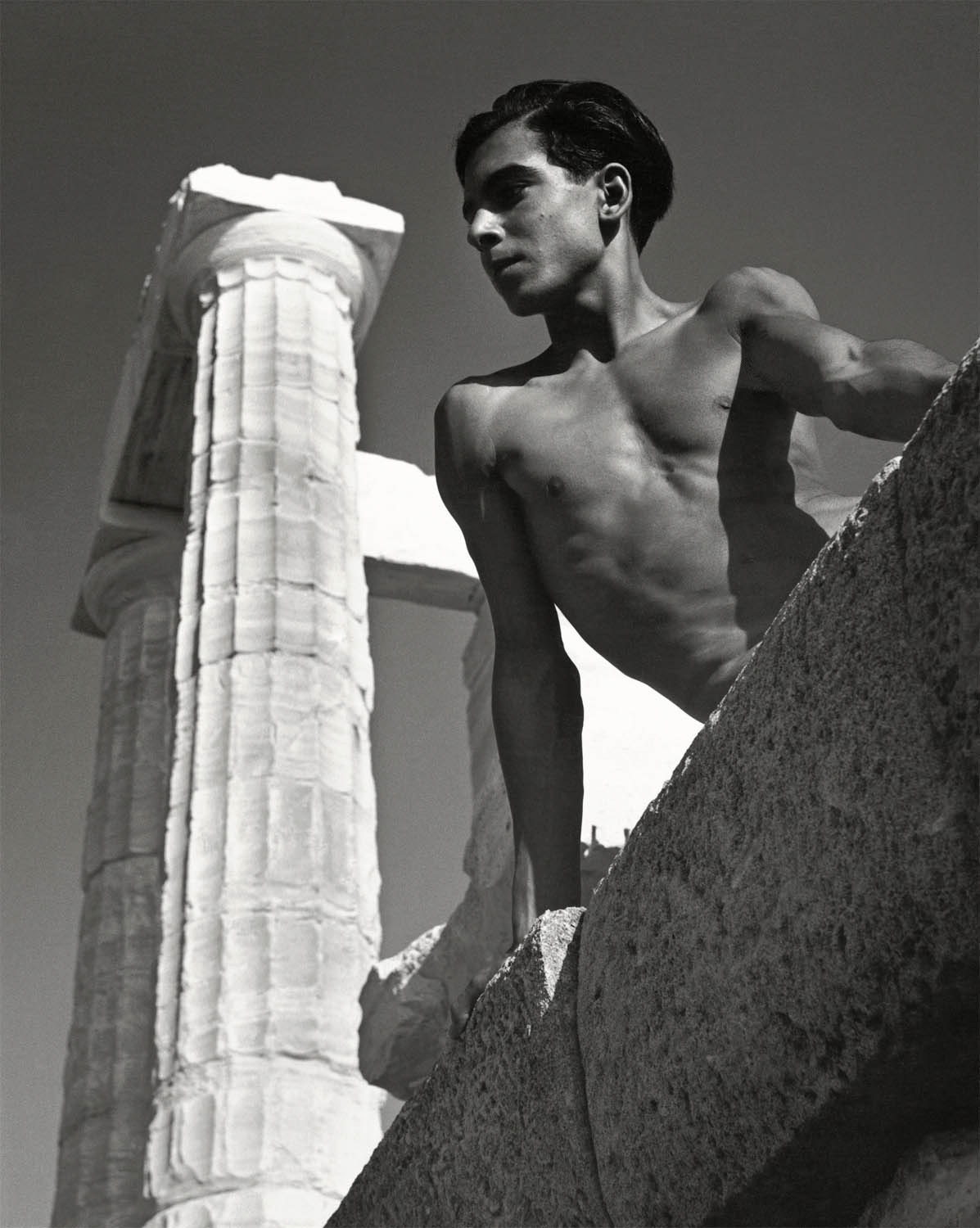
Catalogue essay: ‘Aspects of the Self (Revealed)’ by Dr Marcus Bunyan for the exhibition ‘Hidden Talents’ at the Faculty of the Victorian College of the Arts (VCA) and Melbourne Conservatorium of Music (MCM), The University of Melbourne, Australia

Exhibition dates: August 2014


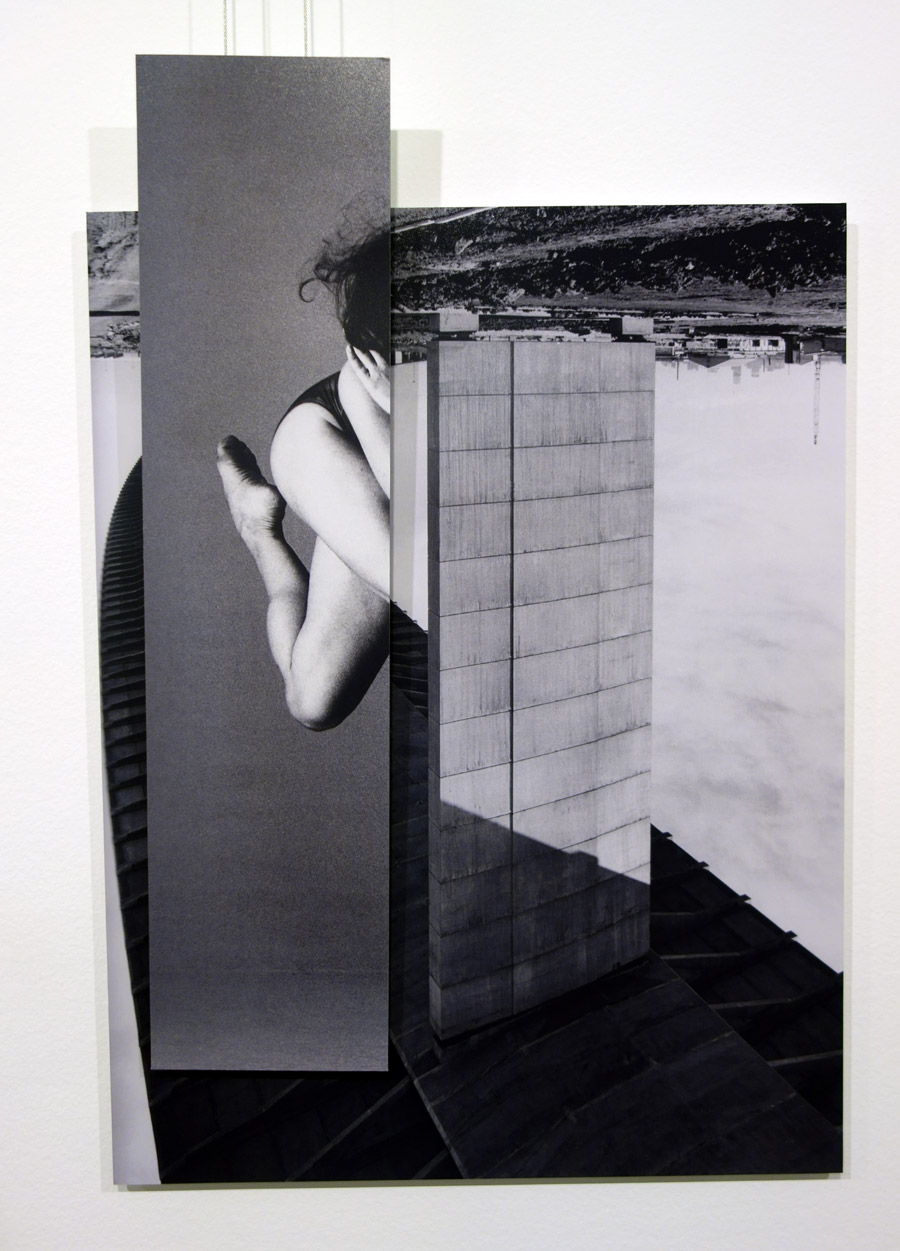
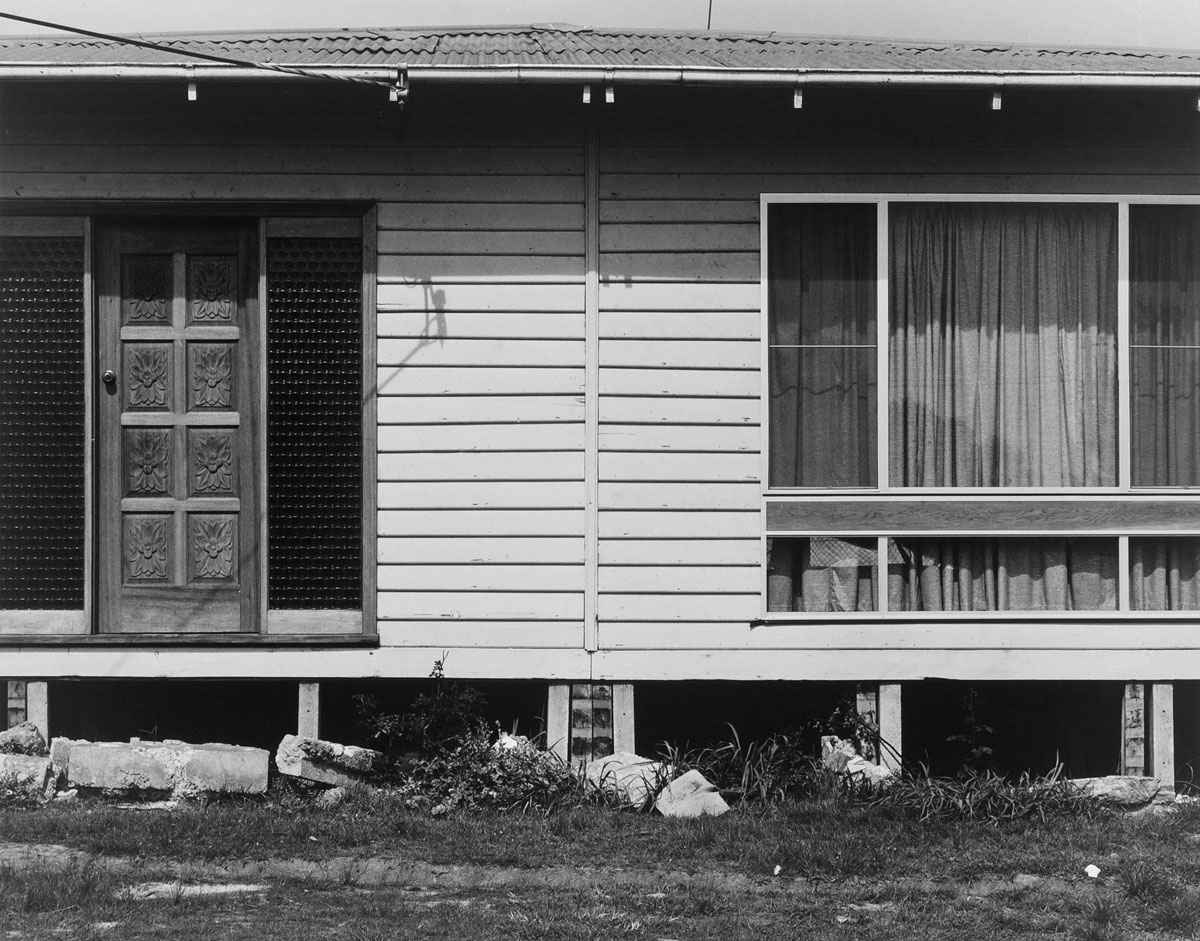
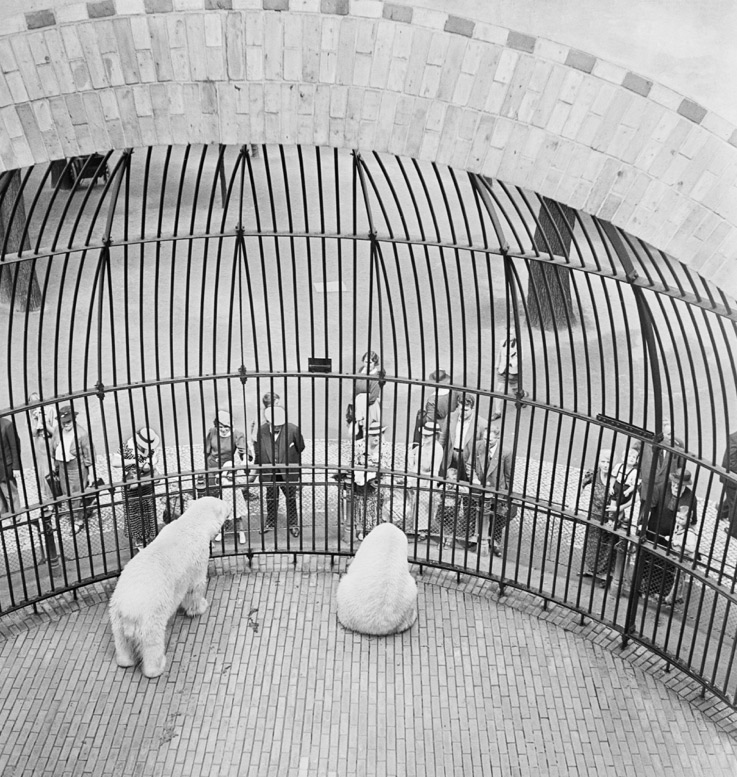
Marcus Bunyan (Australian, b. 1958) 'Zen' 1984


Marcus Bunyan (Australian, b. 1958)
Zen
1984
From the series First experiments
Silver gelatin print
© Marcus Bunyan


This is the catalogue essay for the exhibition Hidden Talents, an exhibition of the hidden talents of professional staff at the Faculty of the VCA & MCM, The University of Melbourne, Australia. The exhibition has been postponed until a later date but I did not want the catalogue essay to metaphorically sit under the bed with no one reading it.

The essay was written without seeing any of the art work for the exhibition (which is going to consist of knitting, performance, video, sculpture, painting, etc…). I have used my imagination to write about the subject matter, asking why it is important to reveal hidden aspects of the self.

Curator Tracey Claire observes, “Practicing artists are as likely to be found behind a desk as in front of a class at the VCA & MCM… Be it dancing, cycling, sailing, knitting, painting, writing, film making or performing, all the individuals in this exhibition are creative artists thriving in a melting hot pot of creativity… Professional staff tend to go about their business quietly, excelling in the dark arts of spreadsheet wizardry and effortless administration but in their private lives, conjuring mysterious creations. Toiling endlessly in the hours beyond their professional lives, yet inspired and nurtured by precisely this environment, they distill these experiences and produce magic.

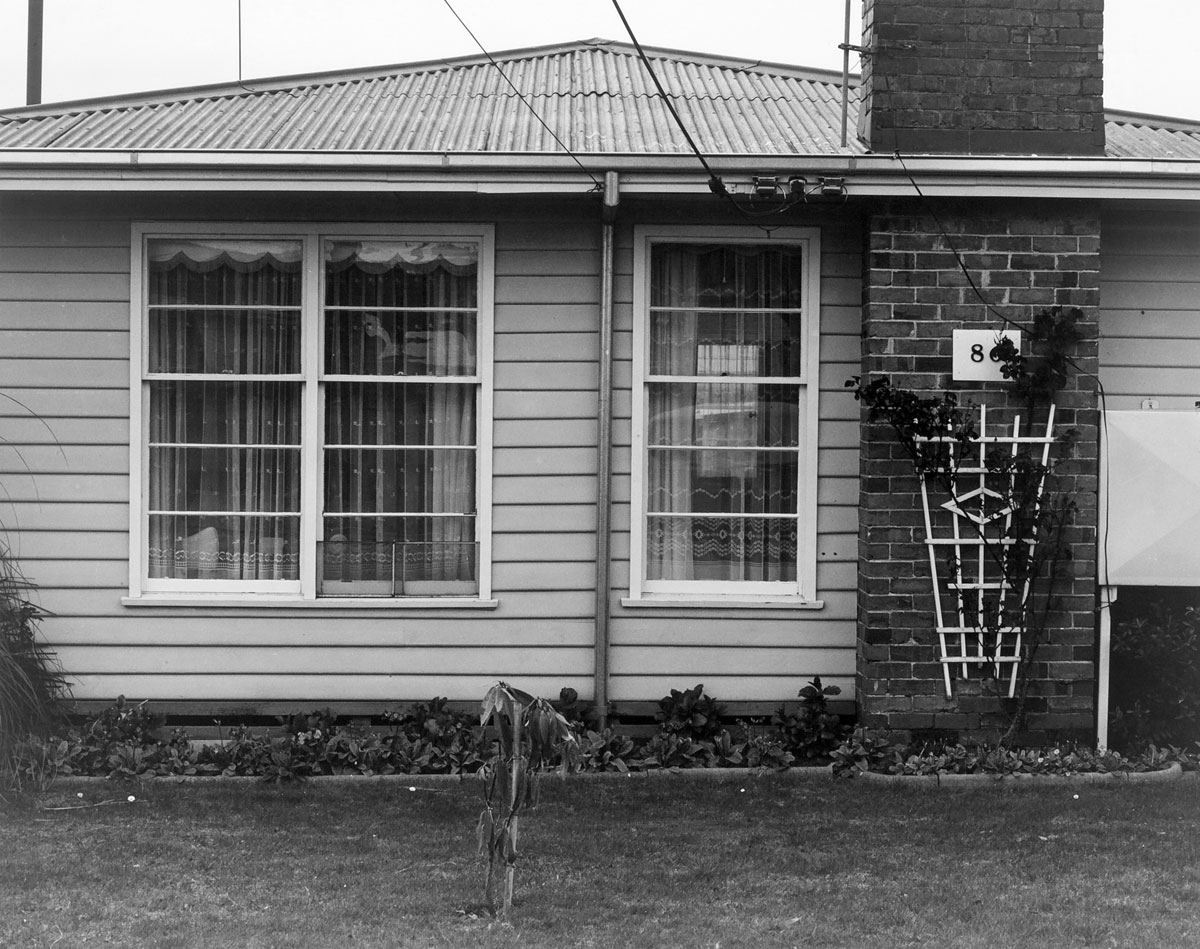
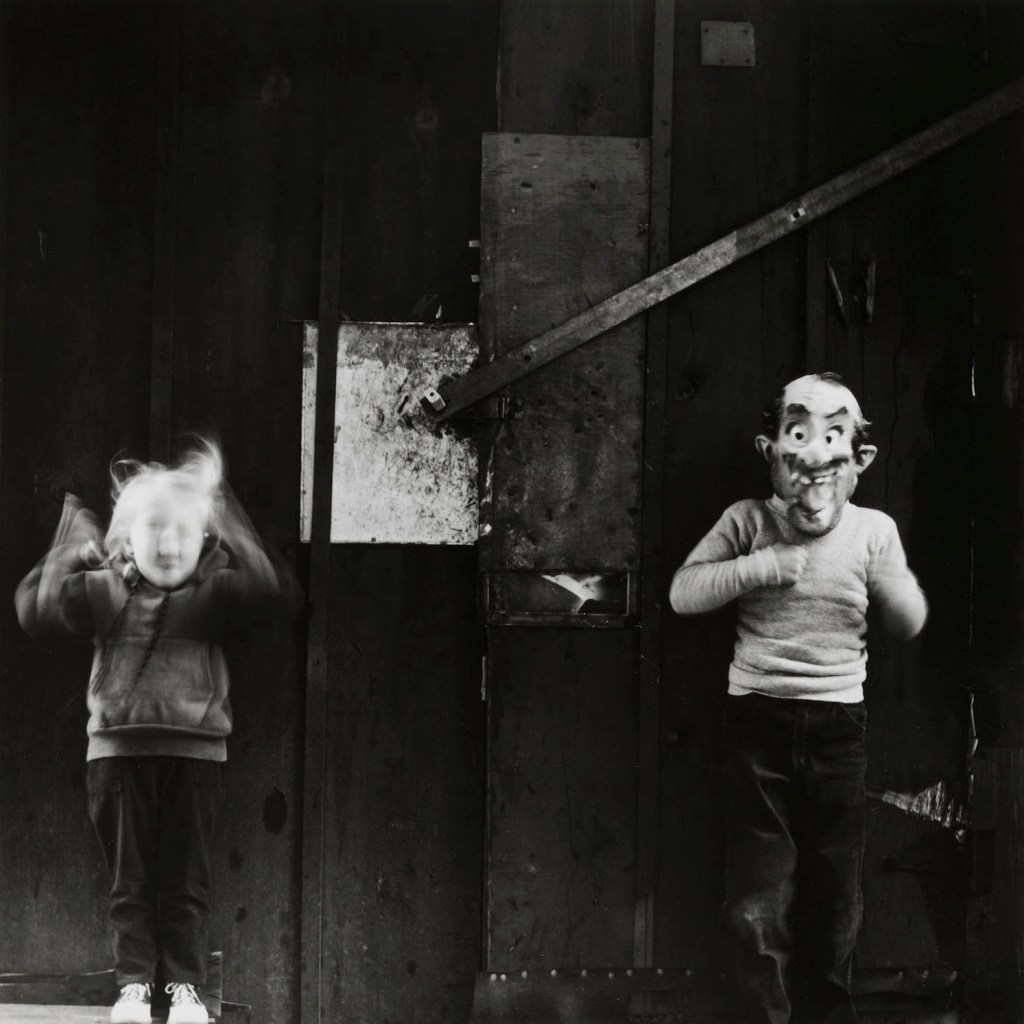
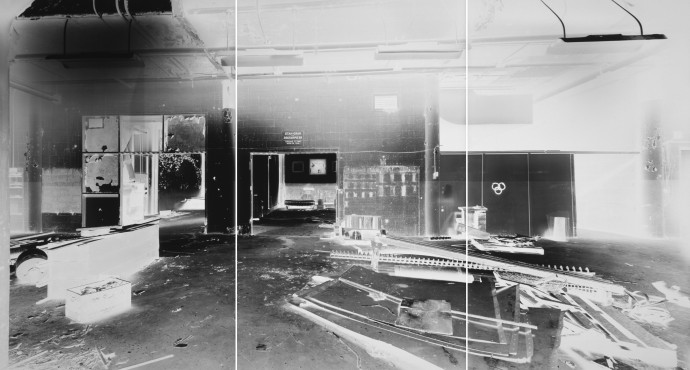
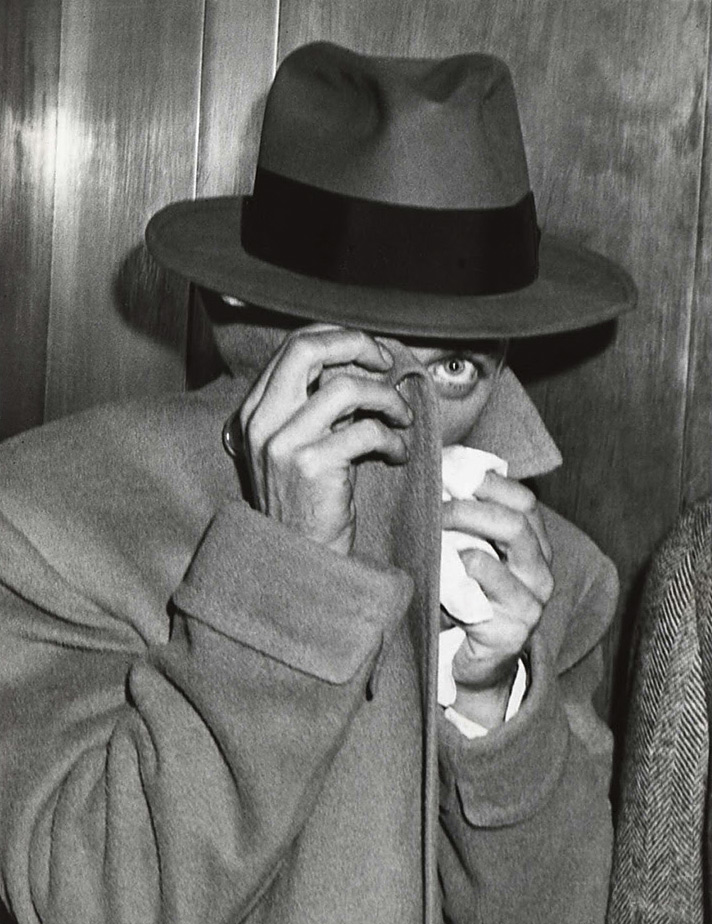
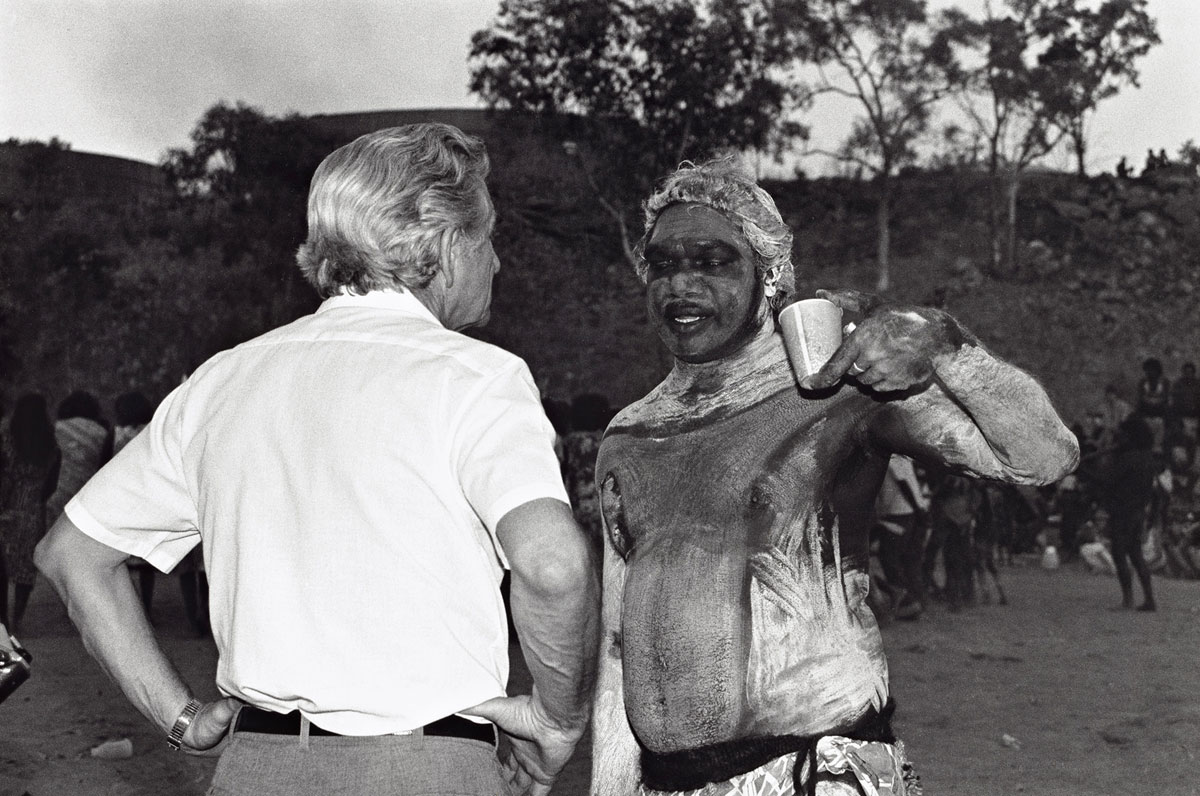
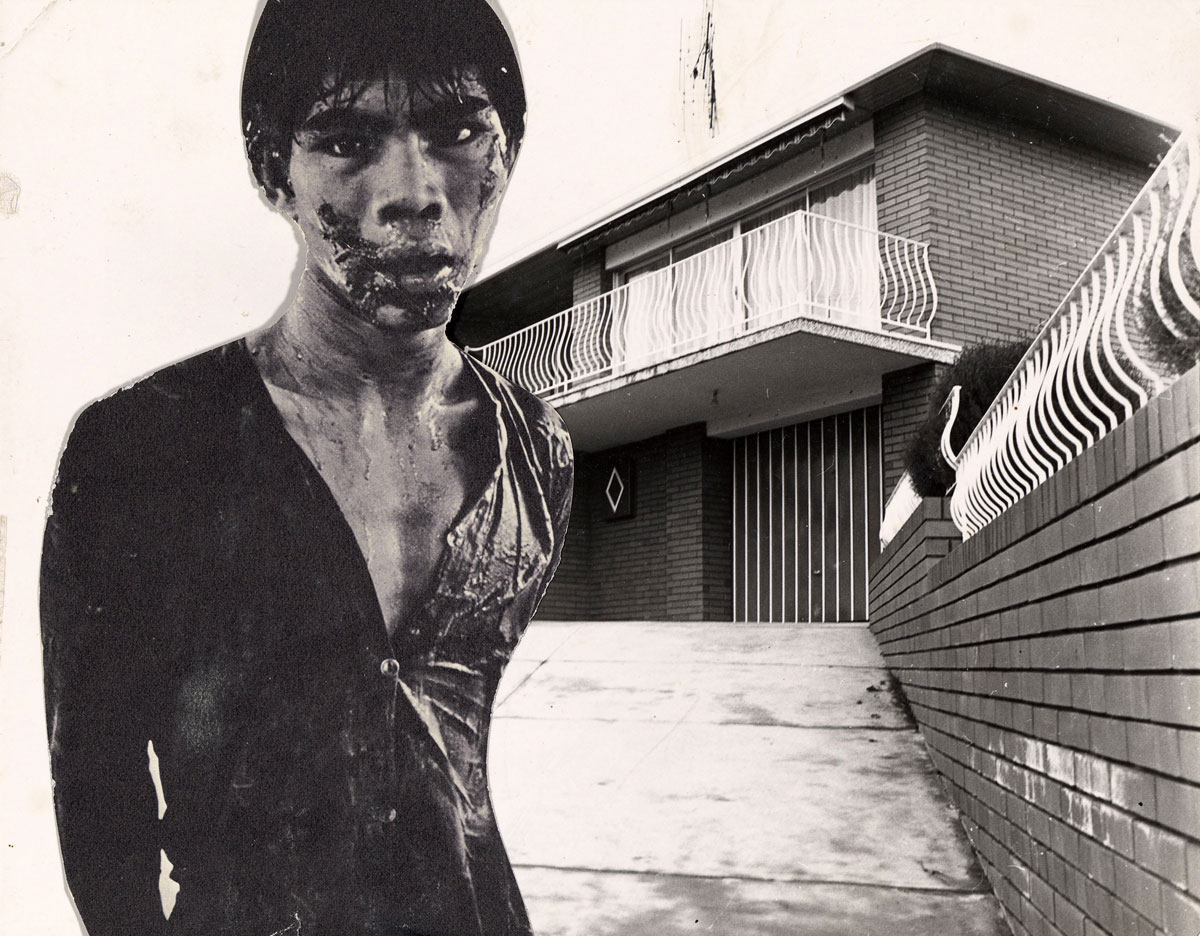
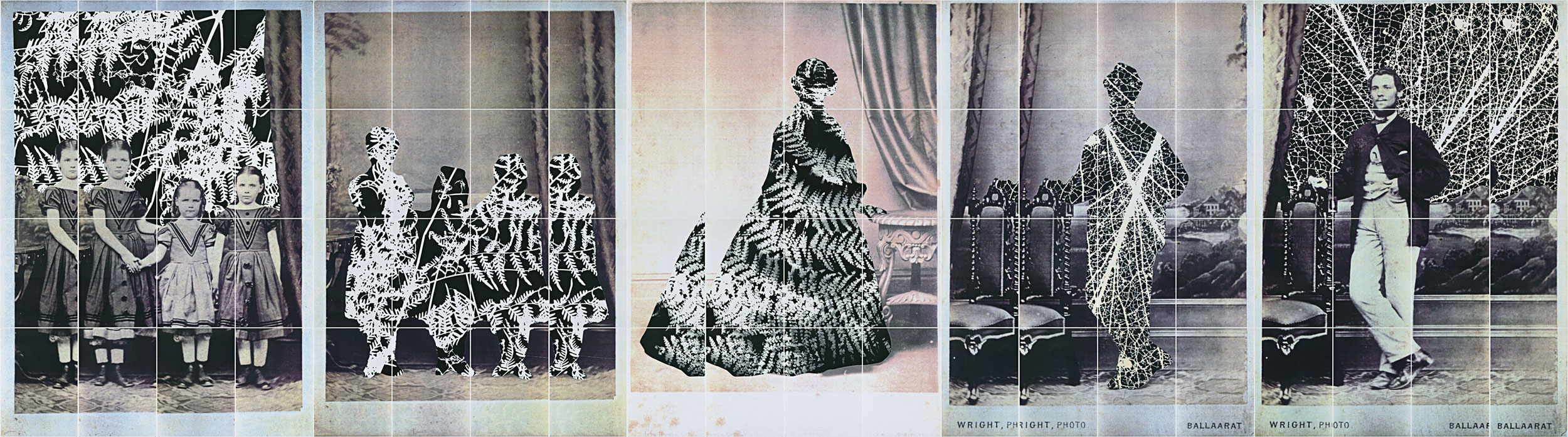
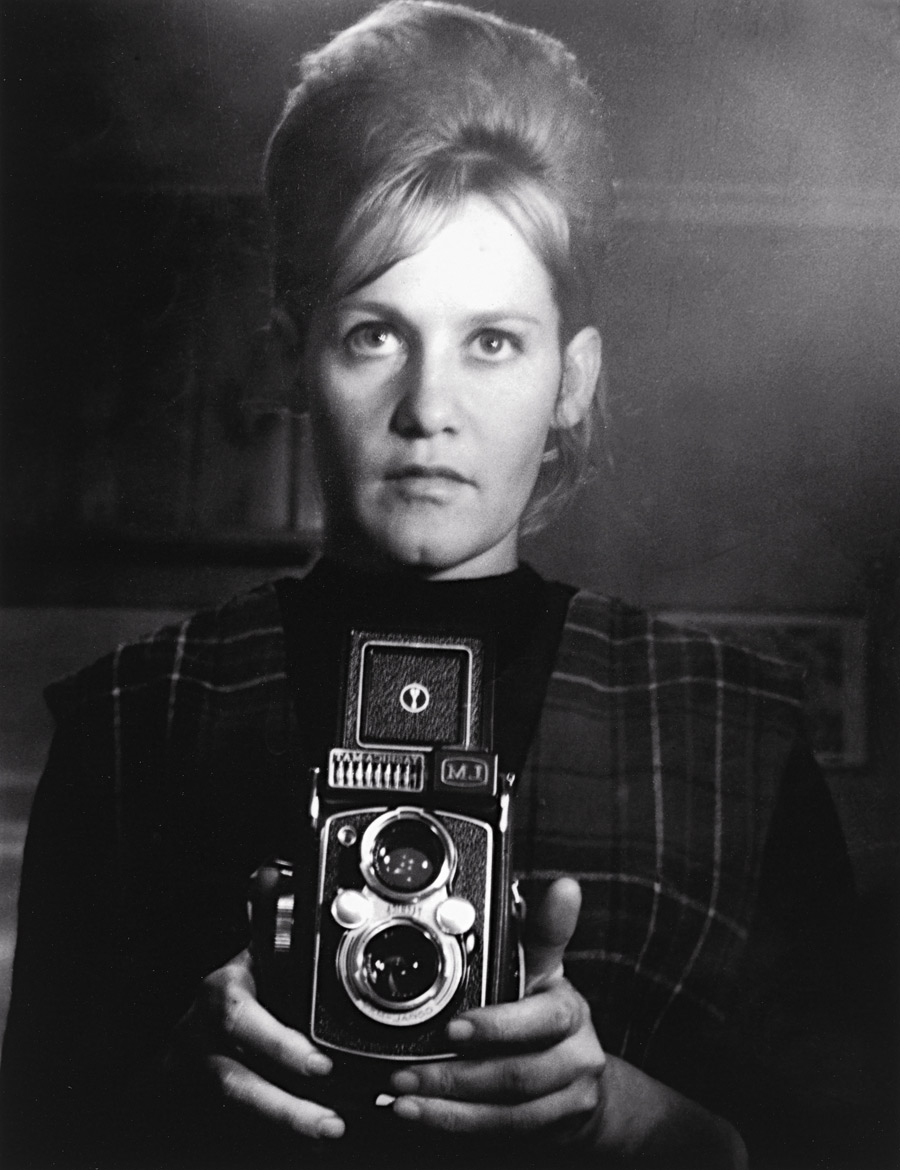
This catalogue essay examines the significance of these activities and is accompanied by 5 of the very first black and white images that I ever took, long before I ever started studying photography in 1989.

Dr Marcus Bunyan


Keywords

Hidden Talents, The Self, Aspects of the Self, self-expression, image man, essence man, actual self, networked society, perfomative self, citational self, cosmopolitanism, hybridity, visibility, bricolage, Goethe, hybrid identities, identity formation, self actualisation, social transparency, The University of Melbourne, Australia, Victorian College of the Arts, Melbourne Conservatorium of Music, VCA.

Download the Aspects of the Self (Revealed) catalogue essay (2.6Mb pdf). Please click on the photographs for a larger version of the image.


Marcus Bunyan (Australian, b. 1958) 'Brighton Pier (horizontal)' 1984


Marcus Bunyan (Australian, b. 1958)
Brighton Pier (horizontal)
1984
From the series First experiments
Silver gelatin print
© Marcus Bunyan


Aspects of the Self (Revealed)

Dr Marcus Bunyan


“In our era of internet ubiquity, the line that separates our selves from the media with which we self-express has dissolved, and the distinction between medium and maker is confused. As we publicise our private stories, and perpetually alter, rebrand, and repaint ourselves to the world, performances of self are status quo and everyone is an artist.”


Josephine Skinner 1


We are all performance artists. And this text is a performance piece, an aspect of myself as I choose to express it in this place and time. An aspect – appearance, look, character, view, interpretation, phase, countenance2 – which, like the word itself, is both stable and fluid, and will change at any time: perhaps even now; or in the future.

Having noted the amorphous nature of the wor(l)d, what I will do in this performance is examine the truths and separate them from the platitudes of Josephine Skinner’s quotation (above) in order to understand not only that the private be made public but also why the hidden should be revealed. Of course, our sense of self changes when the private becomes open, public and possibly universal. I will ask why this is important and how it affects our sense of connection to other human beings. To do this I will examine my own private story, not to rebrand or repaint myself to the world, far from it, but because every life path has important lessons for us all.

In the beginning, I grew up on a farm. My parents were impoverished. It was subsistence living and we were the working poor. We had no running hot water and my mother used to have to boil water on a stove and fill a bathtub on the kitchen floor so that we could be cleaned. I used to explore the remote reaches of the land, out behind the pond at the front of the farmhouse and up the cart path into the forests, creating fantasy worlds to escape what was going on at home. There, fantasies became a form of escapism, for my imagination, for action,3 a place where I could create new worlds of magic, light and freedom.

My mother was a piano teacher and my father was a part-time singer. I started to study piano at the age of 5 years old under my mother’s tutelage. I had a natural gift and became a child prodigy, the youngest person at that time to attain a distinction in Associated Board Grade 8 examination, at age 11. I was sent to boarding school on a music scholarship at the age of 12, leaving all my school friends behind. There, in that upper class boarding school, I was ostracised because they found out I was gay (just as I was discovering it myself), and because I was a music scholar. My parent’s adage to life was what I would come to call Protestant work ethic: ‘you never work hard enough, you’ll never be good enough, you’ll never make anything of yourself.” This damnation has stuck with me and I have struggled against its prophecy, working hard to make something of myself, something I can be proud of. Even now my mother (I don’t see my father) still fails to recognise my achievements, my life path.

At boarding school I developed what I was told was depression but which was actually bipolar disorder, undiagnosed until I was in my forties. At the age of 16, I was one of the youngest people to go to the Royal Academy of Music and at 17 I went to the Royal College of Music full time. I moved away from home, which was a blessing, and started living on my own. It was a tough initiation into adult life but I was determined not to be dependent on anyone else. My parents finally divorced when I was 17 and, at the same age, the stress of my hidden sexuality leading me to have a nervous breakdown. After nearly a year recovering I came out as a gay man. I graduated with my degree at 21 and gave up being a concert pianist the same year. The time to start living my own life had begun.

I worked in pubs around London for years. I hated classical music (a rejection of the past) and was really into the funk scene. I was a dilettante, a person without real commitment or knowledge. Not once did I ever think of myself as intelligent or creative, it just wasn’t in my vocabulary. I enjoyed partying, holidays, friends and motor racing and started taking a few photographs. That was it until I was about 28 when I returned to Year 12 and university to study, study, study, to read Carlos Castaneda, Robert Johnson and Joseph Campbell, to devour Borges, Jung and Foucault – not the usual university curriculum for an artist, but I was searching for a spiritual way in life. These authors offered wisdom and learning, and a network to other authors and artists investigating similar subject matter. The start of a path had been found and an inquiring mind slowly emerged. I tell you all of this simply as a statement of fact – this was my beginning, this is what I went through, and this journey and learning informs my being and relation to other people and to the world.

Today, we need to understand our own paradigm of sharing, what we are prepared to reveal of ourselves now that we live in a networked society. In a networked society the private and the public self are no longer two endpoints of a linear dichotomy for the boundaries have well and truly been breached: mobile technologies, computers and social media bring the outside world into our home and we willingly promote our point of view to others. Our interior thoughts are advertised through our exterior relations and appearance – on videos, on mobile phones, through millions of images and informational flows that surround us everyday. Our performative self, our citational self constantly performs and citationally quotes our relations of our self to others through different nodal points, or contexts of connection. But our interiority is still different from our exteriority, even as we perform the self.

Yet, while it is correct that in our era of internet ubiquity, the line that separates our selves from the media with which we self-express has dissolved – we are still not yet fully immersed in this system. Critically, we still have a choice about what we reveal of ourselves to others. My degree as a concert pianist may appear at the bottom of my CV, and I may not tell many people about it, but how I imagine my art, how I write my words and my worlds, is inherently related to the line and ‘magic’ of music. How I relate to other people is based on my core values (strong moral code, loyalty, love of helping people) developed during childhood, core values that have remained stable but whose context may have changed over the journey from youth to adulthood. And because of our class (our position in the world and our contexts), we inhabit the privilege of that disclosure. In this moment, we can still prioritise what other people know of us. What we should not do is divest this choice from our whole selves, partitioning ourselves off in different contexts. We cannot act within our core values in one situation and not in another – unless we want to deceive ourselves and those around us – AND YET WE DO!

While our fundamental values remain consistent (the actual self) what is rapidly changing is the environment in which our social self operates.4 As Sally Shaw notes, “We are experiencing an important cultural moment: the next generation will not be able to recall a time without smartphones, the internet or other enhanced means of communication.”5 Globalised mass media, technological advances in communications, future generations’ normalising of the constant barrage of information and the endless pursuit of “stuff”6 (materialism gone mad) means that “image man” takes precedence over “essence man.”7 But all is not lost if we are prepared to be open to possibilities, to be brave in our choice of engagement with others, and be accepting in our attitude and perspective on life. As the artist Bill Henson observes, “Of course, we live with each other and get along using “civilisational logic” – go at a green light, stop at a red light. But there is a deeper logic – no less exacting or emphatic.”8

This deeper logic, a logic that opens up spaces of inquiry, has links to creative, moderate cosmopolitanism,9 hybridity,10 bricolage and visibility. It is how creativity is changing how our talents are recognised by our friendship networks, our work colleagues or students, without having to justify or hide their existence. It is how the networked personality extends along a horizontal consciousness (not a vertical hierarchy), in which interior / exterior, self / other, is re/formed. Through respect, authenticity (and not anxiety about it!) and openness, we can embed the self into naturalised flows of increasingly open (media) systems. We have a new freedom to construct social relations across time and space for the horizon of social relationship – my body, the social body, the actual self – can become open constellations. Here there is fluidity in identity representation in which stable dimensions, persistent appearances and secure meanings are disavowed. This is coupled, however, with a paradoxical insecurity of those in power, evidenced by the proliferation of borders, walls, security cameras and protected areas.11

This new process of self actualisation enables a creative context, the context for understanding creativity, intelligence, self and what you bring to an encounter, what you are prepared to reveal of your self during that encounter – whether it be baking cakes, knitting scarves, making a video, documenting the self or creating, as I did in my childhood and still do in my art, imaginative worlds to express inner self. Through the lived practice of social transformation we, as social actors, have to rethink our hybrid identities and the function of our imagination as a world-making process.12 This process is about the exposure of the hidden; it is about social transparency; and it is about the emergence of something new.13

Finally, we can say it is neither about the roles we play nor the destination that many seek, but it is about the journey that we take and about rejoicing in that journey. It’s about the moment before ecstasy, the anticipation: of company, of environment, of friends, places, being human, that joy of being human. It’s an inquiring instability that leads, as in Beethoven, to the resolution of stability, a love of the human being and our existence. It’s about understanding the personality and possibility of being.

Instead of the byte sized tweet (in which we understand everything, in an instant), we understand our hybrid being only by moving mentally and physically through heterogenous spaces via flows, nodes and lexias, accessing different perspectives and viewpoints. If we are attentive and aware of these viewpoints, we can open up lines of inquiry and access spaces of plurality which may allow us to be better informed as to the value of self and others. Through an understanding of difference. Through an understanding of the obligation of all human beings to each other.

This challenge to established rhythms, institutions and boundaries – the polity of the state, the indifference of the masses, and the speed of informational flows – can be accomplished by both stepping back and contemplating but also by moving forward and engaging in acts of informed choice, thinking, believing, and relating to other people. This is where I disagree with Josephine Skinner’s quote at the beginning of this aspect of myself: performances of self should never become just so, status quo – for we must not be afraid to reveal aspects of our self and expose the hidden to light. In the day-to-day world, the roles we play and the masks we wear must never come to define who we really are. As Lou Benson observes, “If people begin to see their roles as their true selves and deny thoughts and feelings that are really present, they become estranged from themselves.”14

By not being secret but secreting wisdom and seeking creation we may ultimately find better paths through life. This journey is about being extra/ordinary, however that may be. It is about the ‘making present’ of our imagination in the moment we are in, being consciously aware of that moment, being happy in that moment without ego. It’s about what you do and who you are, not cowering behind the bulkheads.


“O God, how the world and heaven shrink together when our heart cowers in its barriers.”


Johann Wolfgang von Goethe


© Dr Marcus Bunyan
August 2014

Word count: 2,164


Marcus Bunyan (Australian, b. 1958) 'Craig in his Docs' 1984


Marcus Bunyan (Australian, b. 1958)
Craig in his Docs
1984
From the series First experiments
Silver gelatin print
© Marcus Bunyan


Endnotes

1/ Skinner, Josephine. “Totally Looks Like.” Exhibition catalogue. Stills Gallery, Sydney, June 2014.

2/ as·pect [as-pekt]
noun

~ Appearance to the eye or mind; look: the physical aspect of the country.
~
Nature; quality; character: the superficial aspect of the situation.
~ A way in which a thing may be viewed or regarded; interpretation; view: both aspects of a decision.
~ Part; feature; phase: That is the aspect of the problem that interests me most.
~ Facial expression; countenance: He wore an aspect of gloom. Hers was an aspect of happy optimism.

Aspect as defined on the Dictionary.com website [Online] Cited 22/06/2014 http://dictionary.reference.com/browse/aspect

3/ “The ubiquity of images and the constant enhancement of the modes for public participation have not only disrupted the conventional division between the agency of the artist and collective authorship but also underscore the necessity to rethink the function of the imagination as world-making process. Arjun Appadurai stated it most succinctly: ‘the imagination is today a staging ground for action, and not only escape’.”

Appadurai, Arjun. Modernity at Large. Minneapolis: University of Minnesota Press, 1996, p. 7 quoted in Papastergiadis, Nikos. Cosmopolitanism and Culture. Cambridge: Polity Press, 2012, p. 95.

4/ “A natural extension of social comparison theory is the development of the self-concept. Self-concept is a person’s perceptions and perceptual organization of his/her own characteristics, roles, abilities and appearance. One’s self-concept is based in part on how one compares to other individuals with regards to traits, opinions and abilities … Self concept can have a number of dimensions which evolve from social comparisons and evaluations. The self-concept consists of:

~ the actual self (how a person perceives him/herself),
~ the ideal self (how a person would like to perceive him/herself), and
~ the social self (how a person presents him/herself to others).

Sproles, George and Burns, Leslie Davis. Changing Appearances: Understanding Dress in Contemporary Society. New York: Fairchild Publications, 1994, pp. 208-209.

5/ Shaw, Sally quoted in Beesley, Ruby. “Challenging Normality,” in Aesthetica, Issue 59, June/July 2014, p. 52.

6/ Ibid.,

7/ “Essence man approaches life from the standpoint of being who he is without concern for the way he is perceived by others. Image man, on the other hand, focuses on what he wishes to appear to be. In reality, Buber admits, we are all a combination of both. But the tendency is to develop a life-style that is dominated by one pole of this duality.”

Benson, Lou. Images, Heroes and Self-Perceptions. New Jersey: Prentice-Hall, 1974, pp. 26-29.

8/ Henson, Bill. “Unfinished Symphony,” in the Weekend Australian Review, June 14-15, 2014, p. 5.

9/ “The more moderate [cosmopolitan] alternative “is to say that, in addition one to one’s relationships and affiliations with particular individuals and groups, one also stands in an ethically significant relation to other human beings in general” … This second approach starts with rights rather than obligations, and holds that wherever people are joined in significant social relations they have a collective right to share in control of these.”

Calhoun, Craig. “‘Belonging’ in the cosmopolitan imaginary,” in Ethnicities, 3 (4), 2003, pp. 531-553.

10/ “At the first level, hybridity refers to the visible effects of difference within identity as a consequence of the incorporation of foreign elements… Recognition of the second level refers to the process by which cultural differences are either naturalized or neutralized within the body of the host culture… The third level of hybridity is linked to aesthetic processes and can be thematized through the early modernist techniques of juxtaposition, collage, montage and bricolage.”

Papastergiadis, Op. cit., p. 117.

11/ For these ideas I am indebted to the “Introduction: The Uncanny Home,” in McQuire, Scott. The Media City: Media, Architecture and Urban Space. London: Sage Publications, 2008, pp. 22-24.

12/ Papastergiadis, Op. cit., p. 95.

13/ “Hybridity refers not only to the ambivalent consequences of mixture but also to the shift in the mode of consciousness. By mixing thing that were previously kept apart there is both a stimulus for the emergence of something new and a shift in position that can offer a perspective for seeing newness as it emerges.”

Papastergiadis, Op. cit., p. 131.

14/ “This is not to say that it is possible or even desirable to try to live in the day-to-day world without playing certain roles and wearing certain masks. Societies function through the role play of their inhabitants. But if people begin to see their roles as their true selves and deny thoughts and feelings that are really present, they become estranged from themselves.”

Benson, Lou. Images, Heroes and Self-Perceptions. New Jersey: Prentice-Hall, 1974, pp. 26-29.


Marcus Bunyan (Australian, b. 1958) 'Craig with halo' 1984


Marcus Bunyan (Australian, b. 1958)
Craig with halo
1984
From the series First experiments
Silver gelatin print
© Marcus Bunyan


Marcus Bunyan (Australian, b. 1958) 'Brighton Pier (vertical)' 1984


Marcus Bunyan (Australian, b. 1958)
Brighton Pier (vertical)
1984
From the series First experiments
Silver gelatin print
© Marcus Bunyan


Hidden Talents website

LIKE ART BLART ON FACEBOOK

Back to top

Exhibition: ‘Knud Lonberg-Holm: The Invisible Architect’ at Ubu Gallery, New York Part 2

Exhibition dates: 6th May – 30th September 2014


Knud Lonberg-Holm (Danish, 1895-1972) 'Design for the Chicago Tribune Tower Competition' West elevation 1922


Knud Lonberg-Holm (Danish, 1895-1972)
Design for the Chicago Tribune Tower Competition
West elevation
1922
Vintage photograph mounted on board
9 1/8 x 3 5/8 inches (23.2 x 9.2cm)
The Knud Lonberg-Holm Archive from the Marc Dessauce Collection; Courtesy Ubu Gallery, New York


The second part of this posting about the work of architect Knud Lonberg-Holm. “Backside-views of buildings and fire escapes, rather than historicist ornamental facades, are presented in their “unselfconscious beauty” in opposition to traditional, pictorialist architectural photography.” You only have to look at the photographs of the city by Alfred Stieglitz or Berenice Abbott taken at around the same time to notice the difference – less romantic, more “modern” in their geometry and form.

If it weren’t for the shock of seeing 1920s cars at the bottom of some of the images (for example, Detroit, Rear Façade of a Hotel, 1924 below) you could almost believe that they had been made 40 years later, around the time of Bernd and Hilla Becher. These photographs are monumental, industrial, but are tinged with humanity – the billboards, cars, people and advertising signs that hover at the bottom or in the deep shadows of the image. Then look at the tonality and atmosphere of the images, including the vibration of light in the two Dazzlescapes (New York, Madison Square and New York, Times Square, both 1923 below).

I don’t think I have ever seen a better collection of images of city architecture.

Dr Marcus Bunyan


Many thankx to Ubu Gallery for allowing me to publish the photographs in the posting. Please click on the photographs for a larger version of the image.


“I’ve always been annoyed by rummaging through the past; the future interests me much more.”


Knud Lonberg-Holm


Knud Lonberg-Holm (Danish, 1895-1972) 'Design for the Chicago Tribune Tower Competition' West view axonometric 1922
 

Knud Lonberg-Holm (Danish, 1895-1972)
Design for the Chicago Tribune Tower Competition
West view axonometric
1922
Vintage photograph mounted on board
8 7/8 x 4 5/8 inches (22.5 x 11.7cm)
The Knud Lonberg-Holm Archive from the Marc Dessauce Collection; Courtesy Ubu Gallery, New York


Knud Lonberg-Holm (Danish, 1895-1972) 'Equity Trust Building – Oblique View' 1923


Knud Lonberg-Holm (Danish, 1895-1972)
Equity Trust Building – Oblique View
1923
Reproduced in Erich Mendelsohn’s Amerika, p. 41
Vintage gelatin silver print
4 3/8 x 3 1/4 inches (11.1 x 8.3cm)
The Knud Lonberg-Holm Archive from the Marc Dessauce Collection; Courtesy Ubu Gallery, New York


Knud Lonberg-Holm (Danish, 1895-1972) 'Woolworth Building – Oblique View' 1923


Knud Lonberg-Holm (Danish, 1895-1972)
Woolworth Building – Oblique View
1923
Reproduced in Erich Mendelsohn’s Amerika, p. 40
Vintage gelatin silver print
4 1/4 x 3 1/4 inches (10.8 x 8.3cm)
The Knud Lonberg-Holm Archive from the Marc Dessauce Collection; Courtesy Ubu Gallery, New York


Knud Lonberg-Holm (Danish, 1895-1972) 'Design for the Chicago Tribune Tower Competition' Side elevation with Tribune sign visible 1922


Knud Lonberg-Holm (Danish, 1895-1972)
Design for the Chicago Tribune Tower Competition
Side elevation with Tribune sign visible
1922
Vintage photograph mounted on board
9 1/8 x 4 7/8 inches (23.2 x 12.4cm)
The Knud Lonberg-Holm Archive from the Marc Dessauce Collection; Courtesy Ubu Gallery, New York


Knud Lonberg-Holm (Danish, 1895-1972) 'Design for the Chicago Tribune Tower Competition' Preliminary side elevation 1922


Knud Lonberg-Holm (Danish, 1895-1972)
Design for the Chicago Tribune Tower Competition
Preliminary side elevation
1922
Photograph mounted on board
9 x 4 5/8 inches (22.9 x 11.7cm)
The Knud Lonberg-Holm Archive from the Marc Dessauce Collection; Courtesy Ubu Gallery, New York


Throughout the 1920s, he traveled to other American cities like Chicago and New York City, where, with a 35-millimetre handheld Leica, he took worm’s-eye views and extreme close-ups of skyscrapers, the back sides of buildings, fire escapes, billboards, and dazzling “lightscapes,” ignoring – for the most part – the facades of the buildings. Some of these images would appear, uncredited, in Erich Mendelsohn’s 1926 publication Amerika: Bilderbuch eines Architekten, the first book on the “International Style” in American architecture. (Only in an expanded, later edition from 1928 is Lonberg-Holm credited for 17 of the images.)

Soon the photographs cropped up in design and architecture journals in Holland, Germany, and Russia. “They received acclaim for being progressive and dynamic presentations of technology, commerce, and urbanisation,” says Adam Boxer, founder and owner of Ubu Gallery. “To expose Lonberg-Holm’s role as photographer means one can situate him in his deserved role – a pioneer of New Photography.” As a correspondent for the avant-garde, having his images and writings appear in radical European Modernist reviews – such as the Functionalist-Constructivist Swiss bulletin ABC Beitrage zum Bauen (Contributions on Building) and the Dutch i10 – were of crucial importance, since they circulated amongst members of the European vanguard. By the 1930s, however, Lonberg-Holm had given up architecture for marketing research, and his photographs, never signed or dated, no longer circulated. …

Lonberg-Holm also questioned how architecture was practiced and he pioneered the idea of the life cycle of a building. Decades before William McDonough discovered cradle-to-cradle thinking, Lonberg-Holm had been trying to put across the concept that all buildings, like all organisms, are subject to a life cycle, as predictable and as inevitable as the cycles in nature. “The building cycle involves research, design, construction, use, and elimination – and repeat,” wrote an editor in the January 1960 issue of Architectural Forum. “One of Lonberg-Holm’s chief contentions is that design that anticipates the cycle as a whole makes each succeeding step more rational and easier… Lonberg-Holm’s principle, ‘Anticipate remodelling in the initial design’, carries a corollary, which might be put this way, in keeping with the very important principle of design articulation: ‘Design each “system” in the building – the structural system, the heating or the air-conditioning system, the wiring, the plumbing, etc. – to be self-contained for easy assembly, with interconnections to other systems held to a minimum and made easy to alter’.

Extract from Paul Makovsky. “The Invisible Architect of Invisible Architecture,” on the Metropolis website [Online] Cited 18/07/2014. No longer available online.


Knud Lonberg-Holm (Danish, 1895-1972) 'Detroit' 1924


Knud Lonberg-Holm (Danish, 1895-1972)
Detroit
1924
Reproduced in Erich Mendelsohn’s Amerika, p. 67
Vintage gelatin silver print
4 1/4 x 3 1/4 inches (10.8 x 8.3cm)
The Knud Lonberg-Holm Archive from the Marc Dessauce Collection; Courtesy Ubu Gallery, New York


Knud Lonberg-Holm (Danish, 1895-1972) 'Detroit, Rear Areaway' 1924


Knud Lonberg-Holm (Danish, 1895-1972)
Detroit, Rear Areaway
1924
Reproduced in Erich Mendelsohn’s Amerika, p. 91
Vintage gelatin silver print
4 1/2 x 3 1/2 inches (11.4 x 8.9cm)
The Knud Lonberg-Holm Archive from the Marc Dessauce Collection; Courtesy Ubu Gallery, New York


During the 1920s, Lonberg-Holm traveled to American cities like Detroit, Chicago, and New York. With his 35-millimetre Leica camera, he took extreme close-ups of skyscrapers (such as this rear view Detroit Hotel, above), the back sides of buildings, fire escapes, billboards, and dazzling nighttime views.


Knud Lonberg-Holm (Danish, 1895-1972) 'Detroit' 1924


Knud Lonberg-Holm (Danish, 1895-1972)
Detroit
1924
variant cropping reproduced in Erich Mendelsohn’s Amerika, p. 21
Vintage gelatin silver print
4 3/8 x 3 3/8 inches (11.1 x 8.6cm)
The Knud Lonberg-Holm Archive from the Marc Dessauce Collection; Courtesy Ubu Gallery, New York


Knud Lonberg-Holm (Danish, 1895-1972) 'Detroit, Rear Façade of a Hotel' 1924


Knud Lonberg-Holm (Danish, 1895-1972)
Detroit, Rear Façade of a Hotel
1924
Reproduced in Erich Mendelsohn’s Amerika, p. 89
Vintage gelatin silver print
4 1/2 x 3 3/8 inches (11.4 x 8.6cm)
The Knud Lonberg-Holm Archive from the Marc Dessauce Collection; Courtesy Ubu Gallery, New York


Knud Lonberg-Holm (Danish, 1895-1972) 'Chicago, Skyscraper of the Second Period' c. prior to 1926


Knud Lonberg-Holm (Danish, 1895-1972)
Chicago, Skyscraper of the Second Period
c. prior to 1926
Reproduced in Erich Mendelsohn’s Amerika, p. 77 (right)
Vintage gelatin silver print
4 3/8 x 3 3/8 inches (11.1 x 8.6cm)
The Knud Lonberg-Holm Archive from the Marc Dessauce Collection; Courtesy Ubu Gallery, New York


Knud Lonberg-Holm (Danish, 1895-1972) 'Chicago, 2 Skyscrapers' c. prior to 1926


Knud Lonberg-Holm (Danish, 1895-1972)
Chicago, 2 Skyscrapers
c. prior to 1926
Reproduced in Erich Mendelsohn’s Amerika, p. 75
Vintage gelatin silver print
4 1/2 x 3 1/2 inches (11.4 x 8.9cm)
The Knud Lonberg-Holm Archive from the Marc Dessauce Collection; Courtesy Ubu Gallery, New York


Knud Lonberg-Holm: The Invisible Architect

“Lonberg-Holm was the first architect in my knowledge to talk about the ultimately invisible architecture. In 1929, when I first met him, he said the greatest architect in history would be the one who finally developed the capability to give humanity completely effective environmental control without any visible structure and machinery. Thus we have in our day an unsung Leonardo of the building industry, whose scientific foresight and design competence are largely responsible for the present world-around state of advancement of the building arts.”


Buckminster Fuller, 1968


The historical documents in this collection represent a hitherto unexplored aspect of the influence of European modernist architects – specifically, those who emigrated to the United States early and voluntarily, before the rise of fascism necessitated the wholesale evacuation of the European avant-garde. The seemingly disparate archive of photographs, drawings, diagrams and correspondence can be grouped around a unifying theme: the realisation of the avant-garde ambition of integration and control of architectural production through industrialisation; and around a central figure: the architect Knud Lonberg-Holm. The documents bear witness to a complex history that is not easily tracked elsewhere. This is due, in part, to the fact that they bridge two continents, and in part because they unveil processes of reform, such as the scientific conversion of the institutions of architectural practice and the transformation of the project, that were aimed at the most mundane level of building, not at exceptional structures. Moreover, the documents show this professional and anonymous destiny together in line with inversely artistic and revolutionary origins. Thus, the archive documents a phenomenon of cultural disappearance, bringing missing substance to the link between the Americanism of the European avant-garde and the history of modern architecture in the United States.

A native of Denmark, which he leaves in 1923 for the United States, Knud Lonberg-Holm (1895-1972) is the emblematic figure of this disappearance. Initially considered a “pioneer of modern architecture” by the anthropologists of the 1920s, and even held representative of “the space-time conception” by Henry Russell Hitchcock, his true contributions will be ever more unacknowledged as they become more fundamental. First of the modernist émigrés in the United States, he becomes the obliged correspondent for the European avant-garde, in particular for the De Stijl group and also the Berlin Constructivists, with whom he was closest. He was a contributor to both ABC and i10, a member of ASNOVA, a collaborator of Buckminster Fuller, and also the American delegate to CIAM with Richard Neutra. His experiments with photography in the early 1920s (diffused widely by J.J.P. Oud, Moholy-Nagy, Erich Mendelsohn, and others) were received with critical success in Europe and the USSR. This is due as much to the revolutionary use of extreme viewpoints from below and above, as to the renewal of the iconographic sources of modernism: the substitution of the imagery of the grain elevators and the “balancing of the masses,” for an aesthetic of structure and tension gleaned from the metallic skeletons of unfinished skyscrapers. In Lonberg-Holm, this aesthetic schism is accompanied by a renouncement of the project – a sort of Duchampian abandonment of the traditional identity of the architect, which intervenes at the moment he arrives in his work at a controlled resolution of the opposing influences of rationalism and neo-plasticism, for example in the McBride Residence project of 1926.

Lonberg-Holm’s institutional itinerary begins at the University of Michigan, Ann Arbor, in 1924-1925, where he introduces a basic design course similar to that of the Soviet Vkhutemas. Moving to New York in 1929, he enters the organisation of the F.W. Dodge publishing corporation, initially at the journal The Architectural Record, where he devises both content and format, and then as the head of the research department of Sweet’s Catalog Service, the indispensable architect’s handbook of building products. The reorganisation of Sweet’s Catalog, perhaps Lonberg-Holm’s most tangible contribution to modern architectural production in America, gives substance to his doctrinaire activity of the 1930s, concerned with urban obsolescence, cycles of production, and information theory. In collaboration with Czech designer Ladislav Sutnar, Sweet’s Catalog becomes a complete oeuvre of industrial and plastic organisation. Its critical and enduring importance in the process of architectural production makes it an implemented avant-garde project, at an appreciable scale, and testament to Lonberg-Holm’s heretofore-unacknowledged influence on the development of a truly modern American architecture.

Marc Dessauce, 2003


Marc Dessauce (1962-2004) was an architectural historian who lived and worked in NYC and Paris. His research, exhibitions, and writings focused on the foundations of both American and European avant-garde architecture in the twentieth century. Marc assembled this archive between 1986 and 1995 when he was a PhD candidate at Columbia University in the department of Art History. His book The Inflatable Moment: Pneumatics and Protest in ’68, was published by Princeton Architectural Press in 1999.


Knud Lonberg-Holm (Danish, 1895-1972) 'New York, Madison Square' 1923


Knud Lonberg-Holm (Danish, 1895-1972)
New York, Madison Square
1923
Reproduced in Erich Mendelsohn’s Amerika, p. 31
Vintage gelatin silver print
4 1/8 x 3 1/4 inches (10.5 x 8.3cm)
The Knud Lonberg-Holm Archive from the Marc Dessauce Collection; Courtesy Ubu Gallery, New York


Knud Lonberg-Holm (Danish, 1895-1972) 'New York, Times Square' 1923


Knud Lonberg-Holm (Danish, 1895-1972)
New York, Times Square
1923
Reproduced in Erich Mendelsohn’s Amerika, p. 6
Vintage gelatin silver print
4 1/4 x 3 3/8 inches (10.8 x 8.6cm)
The Knud Lonberg-Holm Archive from the Marc Dessauce Collection; Courtesy Ubu Gallery, New York


Amerika: Bilderbuch eines Architekten

Seventeen of Lonberg-Holm’s photographs appeared uncredited in Erich Mendelsohn’s 1926 book, a very influential volume on modern American architecture. Only in a later, expanded edition was Lonberg-Holm given credit. El Lissitzky was so impressed with Amerika that he said the volume “thrills us like a dramatic film. Before our eyes move pictures that are absolutely unique. In order to understand some of the photographs you must lift the book over your head and rotate it.”


Knud Lonberg-Holm (Danish, 1895-1972) 'Sweet's Display, Exposition des Techniques Américianes de l’Habitation et de l'Ubranisme (Information 1, 2, 3)' Paris, Grand Palais, June 14-July 21, 1946


Knud Lonberg-Holm (Danish, 1895-1972)
Sweet’s Display
Exposition des Techniques Américianes de l’Habitation et de l’Ubranisme
(Information 1, 2, 3)
Paris, Grand Palais, June 14-July 21, 1946
Vintage gelatin silver print
7 1/8 x 7 1/4 inches (18.1 x 18.4cm)
The Knud Lonberg-Holm Archive from the Marc Dessauce Collection; Courtesy Ubu Gallery, New York


Knud Lonberg-Holm (Danish, 1895-1972) 'Sweet's Display, Exposition des Techniques Américianes de l'Habitation et de l'Ubranisme (Biblioteque SS)' Paris, Grand Palais, June 14-July 21, 1946


Knud Lonberg-Holm (Danish, 1895-1972)
Sweet’s Display
Exposition des Techniques Américianes de l’Habitation et de l’Ubranisme
(Biblioteque SS)
Paris, Grand Palais, June 14-July 21, 1946
Vintage gelatin silver print
7 1/8 x 7 1/8 inches (18.1 x 18.1cm)
The Knud Lonberg-Holm Archive from the Marc Dessauce Collection; Courtesy Ubu Gallery, New York


A diagram from Development Index


A diagram from Development Index illustrating the interrelations of cultural and social factors, which Lonberg-Holm and Larson considered necessary to the practice of design. The index was a screening system intended to manage incoming and outgoing streams of data.

Larson and Knud Lonberg-Holm later collaborated on the idea of a “Development Index” – a systems-thinking approach and research tool that studied the interaction of human activity, environmental relations, and communications with the idea to improve the built environment. It was an attempt to manage information flow and, in a pre-Internet sort of way, provide relevant data through a centralised system, using what was then state-of-the-art media such as microfilm, microfiche, and electronics.


Wendingen. "Skyscraper as a solution of the Housing Problem" No. 3, 1923


Wendingen
“Skyscraper as a solution of the Housing Problem”
No. 3, 1923
Paperbound volume
12 7/8 x 13 inches (32.7 x 33cm)
The Knud Lonberg-Holm Archive from the Marc Dessauce Collection; Courtesy Ubu Gallery, New York


'Shelter' Cover design by Knud Lonberg-Holm April 1938


Shelter
Cover design by Knud Lonberg-Holm
April 1938
Magazine cover
11 x 9 inches (27.9 x 22.9cm)
The Knud Lonberg-Holm Archive from the Marc Dessauce Collection; Courtesy Ubu Gallery, New York


'Shelter now' Cover design by Knud Lonberg-Holm Vol. 2, No. 4, May 1932


Shelter now
Cover design by Knud Lonberg-Holm
Vol. 2, No. 4, May 1932
Magazine cover
12 x 9 inches (30.5 x 22.9cm)
The Knud Lonberg-Holm Archive from the Marc Dessauce Collection; Courtesy Ubu Gallery, New York


Knud Lonberg-Holm with Latislav Sutnar. 'Multi-Measure (MM) Metal Enclosures' catalog cover c. 1942-1944


Knud Lonberg-Holm with Latislav Sutnar
Multi-Measure (MM) Metal Enclosures
c. 1942-1944
Cover of catalog
11 x 8 1/2 inches (27.9 x 21.6cm)
The Knud Lonberg-Holm Archive from the Marc Dessauce Collection; Courtesy Ubu Gallery, New York


The cover of a catalog for Multi-Measure Metal Enclosures, Inc., designed with Ladislav Sutnar between 1942 and 1944. Lonberg-Holm collaborated with architect C. Theodore Larson at F.W. Dodge Corporation’s Sweet’s Catalog division to develop a systematic approach to organising the information needed by the building industry. When graphic designer Ladislav Sutnar later joined him, they radically altered the way business information was streamlined, designed, and packaged, becoming pioneers of “information design” along the way.


i10 "America, Reflections" (by Knud Lonberg-Holm) No. 15, October 20, 1928


i10
“America, Reflections” (by Knud Lonberg-Holm)
No. 15, October 20, 1928
Paperbound volume
11 3/4 x 8 1/4 inches (29.8 x 21cm)
The Knud Lonberg-Holm Archive from the Marc Dessauce Collection; Courtesy Ubu Gallery, New York


Lonberg-Holm’s 1928 essay on America for i10 – focused on the country’s obsession with time and efficiency – shows that the fields of communications, the car industry, elevators, railways, and the movie industry were more important to him. He wrote: “Time-study is a profession. And a highly paid profession. What the [Saint] Peters church was for the European Renaissance, Henry Ford’s assembly line is for America of today. The most perfect expression for a civilisation whose god is efficiency. Detroit is the Mecca of this civilisation. And the pilgrims come from all over the world to meditate before this always-moving line.”


Knud Lonberg-Holm (Danish, 1895-1972) 'Photograph of "Modern Architecture" at Fifth Avenue' c. 1923-1924


Knud Lonberg-Holm (Danish, 1895-1972)
Photograph of “Modern Architecture” at Fifth Avenue
c. 1923-1924
Vintage gelatin silver print
4 1/2 x 2 3/4 inches (11.4 x 7cm)
The Knud Lonberg-Holm Archive from the Marc Dessauce Collection; Courtesy Ubu Gallery, New York


Knud Lonberg-Holm (Danish, 1895-1972) 'Automobile Plant Detroit' 1931


Knud Lonberg-Holm (Danish, 1895-1972)
Automobile Plant
Detroit, 1931
Vintage gelatin silver print
5 1/4 x 4 1/4 inches (13.3 x 10.8cm)
Titled on verso
The Knud Lonberg-Holm Archive from the Marc Dessauce Collection; Courtesy Ubu Gallery, New York


Knud Lonberg-Holm (Danish, 1895-1972) 'Photograph of Longberg-Holm' c. 1923-1924


Knud Lonberg-Holm (Danish, 1895-1972)
Photograph of Longberg-Holm
c. 1923-1924
Vintage gelatin silver print
4 1/2 x 2 3/4 inches (11.4 x 7cm)
The Knud Lonberg-Holm Archive from the Marc Dessauce Collection; Courtesy Ubu Gallery, New York


Knud Lonberg-Holm (Danish, 1895-1972) '48th Street/St. Nicholas Church scaffolding' c. 1923-1924


Knud Lonberg-Holm (Danish, 1895-1972)
48th Street/St. Nicholas Church scaffolding
c. 1923-1924
Vintage gelatin silver print
4 1/2 x 2 3/4 inches (11.4 x 7cm)
The Knud Lonberg-Holm Archive from the Marc Dessauce Collection; Courtesy Ubu Gallery, New York


Knud Lonberg-Holm (Danish, 1895-1972) 'Photograph of Antenna' c. 1923-1924


Knud Lonberg-Holm (Danish, 1895-1972)
Photograph of Antenna
c. 1923-1924
Vintage gelatin silver print
4 1/2 x 3 1/2 inches (11.4 x 8.9cm)
The Knud Lonberg-Holm Archive from the Marc Dessauce Collection; Courtesy Ubu Gallery, New York


Note from Iwao Yamawaki to Knud Lonberg-Holm Dessau, July 9, 1931


Note from Iwao Yamawaki to Knud Lonberg-Holm
Dessau, July 9, 1931
The Knud Lonberg-Holm Archive from the Marc Dessauce Collection; Courtesy Ubu Gallery, New York


Knud Lonberg-Holm (Danish, 1895-1972) and Iwao Yamawaki (Japanese, 1898-1987) (attributed) 'Knud & his wife Ethel outside of Bauhaus' 1931


Knud Lonberg-Holm (Danish, 1895-1972)
Iwao Yamawaki
(Japanese, 1898-1987) (attributed)
Knud & his wife Ethel outside of Bauhaus
1931
Vintage gelatin silver print
4 3/8 x 3 3/8 inches (11.1 x 8.6cm)
Dated & inscribed on verso
The Knud Lonberg-Holm Archive from the Marc Dessauce Collection; Courtesy Ubu Gallery, New York


This photo, attributed to the Japanese Bauhaus-trained photographer Iwao Yamawaki, shows Lonberg-Holm and his wife, Ethel (who later became an art director for J. Walter Thompson advertising agency), at the Bauhaus in 1931. A friend of Bauhaus instructors László Moholy-Nagy, Josef Albers, Hannes Meyer, Walter Gropius, and Mies van der Rohe, Lonberg-Holm taught the first foundational course based on the Bauhaus model at the University of Michigan in 1924.


Knud Lonberg-Holm (1895-1972), an overlooked but highly influential Modernist architect, photographer, and pioneer of information design


Knud Lonberg-Holm (1895-1972), an overlooked but highly influential Modernist architect, photographer, and pioneer of information design
The Knud Lonberg-Holm Archive from the Marc Dessauce Collection; Courtesy Ubu Gallery, New York


Ubu Gallery
416 East 59th Street
New York 10022
Phone: 212 753 4444

Opening hour:
Monday – Friday 11am – 6pm

Ubu Gallery website

LIKE ART BLART ON FACEBOOK

Back to top

Exhibition: ‘Jeff Wall: Tableaux, Pictures, Photographs, 1996-2013’ at Stedelijk Museum Amsterdam

Exhibition dates: 1st March – 3rd August 2014

Curator: Hripsimé Visser


Installation view of 'Jeff Wall: Tableaux, Pictures, Photographs, 1996-2013' at Stedelijk Museum Amsterdam

Installation view of 'Jeff Wall: Tableaux, Pictures, Photographs, 1996-2013' at Stedelijk Museum Amsterdam

Installation view of 'Jeff Wall: Tableaux, Pictures, Photographs, 1996-2013' at Stedelijk Museum Amsterdam

Installation view of 'Jeff Wall: Tableaux, Pictures, Photographs, 1996-2013' at Stedelijk Museum Amsterdam


Installation views of Jeff Wall: Tableaux, Pictures, Photographs, 1996-2013 at Stedelijk Museum Amsterdam
Photos: Gert Jan van Rooij


What an absolutely beautiful space to show your work. Can you just imagine what you would create if you had the chance!

Dr Marcus Bunyan


Many thankx to the Stedelijk Museum for allowing me to publish the photographs in the posting. Please click on the photographs for a larger version of the image.


Jeff Wall (Canadian, b. 1946) 'Volunteer' 1996


Jeff Wall (Canadian, b. 1946)
Volunteer
1996
Gelatine silver print
221.5 x 313cm
Courtesy of the artist


Jeff Wall (Canadian, b. 1946) 'The Flooded Grave' 1998-2000


Jeff Wall (Canadian, b. 1946)
The Flooded Grave
1998-2000
Transparency in lightbox
225.5 x 282 x 25cm
Courtesy of the artist


Jeff Wall (Canadian, b. 1946) 'Invisible man by Ralp Ellison, The Prologue' 1999-2000


Jeff Wall (Canadian, b. 1946)
Invisible man by Ralp Ellison, The Prologue
1999-2000
Transparency in lightbox
174 x 250 x 25cm
Courtesy of the artist


Jeff Wall: Tableaux, Pictures, Photographs, 1996-2013 presents recent work in colour and black and white, and features the new, previously unseen diptych Summer Afternoons (2013). It is the first major photography exhibition to be presented at the Stedelijk following its reopening in 2012.

Since the 1980s, Wall has produced critically acclaimed work in the form of colour transparencies backlit by fluorescent light strips and presented in lightboxes. He was one of the first artists to make photographs on a large scale. The standard lightbox was created for the primary purpose of outdoor advertising. In Wall’s work, this medium became a platform for his figurative tableaux, street scenes and interiors, landscapes and cityscapes. Wall explores themes such as the relationships between men and women and the boundary between metropolis and nature. He offers social commentary on violence and cultural miscommunication, and conjures seductive nightmarish fantasies and personal memories. These scenes provide the basis for photographic reconstructions of Wall’s experience. They derive their inherent suspense from a combination of extreme realism and sometimes elaborate artifice.

The exhibition hinges on the year 1996, which marked a turning point in Wall’s production: It was the first year that he produced black-and-white prints on paper. More immediately than the lightboxes, the black-and-white photographs suggest new relations of his work to documentary themes and aesthetics. But Wall also orchestrates the content of these images, employing tools borrowed from filmmaking. Wall sees photographs as autonomous, independent images and, strictly speaking, all his works are created using photographic means. At the same time, he analyses and expands the visual language of photography by adding elements from painting, cinema, theatre. In choosing his themes, Wall deconstructs common ideas and assumptions, including those relating to his own work. He has, for instance, also shot many “unstaged” images.

Curator Hripsimé Visser said: “Jeff Wall is first and foremost an ‘artist’s artist,’ he is well- known and much loved by other artists, as well as critics. With this exhibition, the Stedelijk hopes to create broader public awareness of Jeff Wall as one of the artists who uniquely and enduringly defined photography as a fine art medium. Wall’s work is classic, yet entirely contemporary at the same time. His themes are both commonplace and tension-filled. What at first seems straightforward and intelligible is also complex and enigmatic. Wall carefully selects his mode of display to be produced with an incredible eye for detail. The large scale of the images is a natural, integral feature of the work.”

Jeff Wall himself chose the title of this exhibition. It is a reference to the layers that can be found in his work. He says, “‘Tableau’ refers to the free-standing, autonomous object we look at from a distance, often when it is hanging on the wall in front of us. ‘Picture’ relates to that special and isolated image within the entire spectrum of image production available in a culture. And ‘photograph’ identifies it in the technical sense, and as medium, distinct from other ways of making tableaux or pictures.” Wall aims to present each photo as an independent, unique image, intended to be seen hanging on a wall, not as reproductions in a book. As such, Wall arranged this presentation to give each individual artwork the space it needs. The monumental scale of the work encourages viewers to experience the space that is evoked in the images. At the same time, the themes and formal and stylistic qualities of the different images prompt viewers to draw comparisons between them.

The exhibition will fan out across the Stedelijk’s former Hall of Honor, two adjacent gallery spaces in the historic building, and the Van den Ende Foundation Gallery in the new wing of the museum. Jeff Wall: Tableaux Pictures Photographs 1996-2013 was curated by Hripsimé Visser, in close collaboration with the artist and in collaboration with Kunsthaus Bregenz, Austria, and the Louisiana Museum of Modern Art, Humlebaeck, Denmark. The exhibition will travel to both museums.

Jeff Wall grew up in Vancouver and studied at the University of British Columbia and at the Courtauld Institute of Art in London. Since the late 1970s, he has been considered one of the art world’s most innovative contemporary photographers. His work has been the subject of recent solo exhibitions at the Pinakothek der Moderne, Munich (2013), the Museum of Modern Art, New York (2007), and Tate Modern, London (2005), among others. The Stedelijk Museum first presented Wall’s work in 1985.

Press release from the Stedelijk Museum Amsterdam website


Jeff Wall (Canadian, b. 1946) 'Overpass' 2001


Jeff Wall (Canadian, b. 1946)
Overpass
2001
Transparency in lightbox
214 x 273.5 x 25cm
Courtesy of the artist


Jeff Wall (Canadian, b. 1946) 'In Front of a Nightclub' 2006


Jeff Wall (Canadian, b. 1946)
In Front of a Nightclub
2006
Transparency in lightbox
226 x 360 x 30cm
Courtesy of the artist


Jeff Wall (Canadian, b. 1946) 'Knife Throw' 2008


Jeff Wall (Canadian, b. 1946)
Knife Throw
2008
Inkjet print
195 x 267cm
Courtesy of the artist


Jeff Wall (Canadian, b. 1946) 'Boy Falls From Tree' 2010


Jeff Wall (Canadian, b. 1946)
Boy Falls From Tree
2010
Colour photograph
234.3 x 313.7cm
Courtesy of the artist


Jeff Wall (Canadian, b. 1946) 'Boxing' 2011


Jeff Wall (Canadian, b. 1946)
Boxing
2011
Colour photograph
222.9 x 303.5cm
Courtesy of the artist


Forum: Jeff Wall – Artist Talk – 01-03-14

As part of the Public Program in conjunction with Jeff Wall: Tableaux Pictures Photographs 1996-2013 exhibition, the Stedelijk Museum is honoured to present a new stedelijk|forum afternoon with an artist talk by Jeff Wall, introduced by Hripsimé Visser (curator Photography, Stedelijk Museum Amsterdam).


Stedelijk Museum Amsterdam
Museumplein 10

Opening hours:
Daily 10am – 6pm
Thursday 10am – 10pm

Stedelijk Museum Amsterdam website

LIKE ART BLART ON FACEBOOK

Back to top

Exhibition: ‘Knud Lonberg-Holm: The Invisible Architect’ at Ubu Gallery, New York Part 1

Exhibition dates: 6th May – 30th September 2014


Knud Lonberg-Holm (Danish, 1895-1972) 'The New – The Coming, Detroit, Streetcars' 1924


Knud Lonberg-Holm (Danish, 1895-1972)
The New – The Coming, Detroit, Streetcars
1924
Reproduced in Erich Mendelsohn’s Amerika, p. 73
Vintage gelatin silver print
3 1/4 x 4 1/4 inches (8.3 x 10.8cm)
The Knud Lonberg-Holm Archive from the Marc Dessauce Collection; Courtesy Ubu Gallery, New York


I am so excited by this monster two-part posting about the work of architect Knud Lonberg-Holm. Not only are his drawings and models incredible but his photographs of industry and skyscrapers, taken mainly between 1924-26, are a revelation. The textures and inky blackness of his Dazzlescapes and the New Photography images of skyscrapers (both in Part 2) mark these images as the greatest collection of photographs of skyscrapers that I have ever seen. More comment tomorrow but for now just look at the dark Gotham-esque photograph The New – The Coming, Detroit, Streetcars (1924, below). The streetcar reminds me of the armoured trains so popular during the inter-war years and during World War II. And what a title: The New – The Coming…

Dr Marcus Bunyan


Many thankx to Ubu Gallery for allowing me to publish the photographs in the posting. Please click on the photographs for a larger version of the image.


“Lonberg-Holm was the first architect in my knowledge ever to talk about the ultimately invisible architecture. In 1929, when I first met him, he said the greatest architect in history would be the one who finally developed the capability to give humanity completely effective environmental control without any visible structure and machinery.”


Buckminster Fuller


Knud Lonberg-Holm (Danish, 1895-1972) 'View from the roof' Detroit, 1924


Knud Lonberg-Holm (Danish, 1895-1972)
View from the roof
Detroit, 1924
Vintage gelatin silver print
2 3/4 x 4 1/2 inches (7 x 11.4cm) approx.
The Knud Lonberg-Holm Archive from the Marc Dessauce Collection; Courtesy Ubu Gallery, New York


Knud Lonberg-Holm (Danish, 1895-1972) 'Detroit' 1924


Knud Lonberg-Holm (Danish, 1895-1972)
Detroit
1924
reproduced in Erich Mendelsohn’s Amerika, p. 71 (top)
Vintage gelatin silver print
3 3/8 x 4 3/8 inches (8.6 x 11.1cm)
The Knud Lonberg-Holm Archive from the Marc Dessauce Collection; Courtesy Ubu Gallery, New York


Knud Lonberg-Holm (Danish, 1895-1972) 'Detroit, A New Street' 1924


Knud Lonberg-Holm (Danish, 1895-1972)
Detroit, A New Street
1924
reproduced in Erich Mendelsohn’s Amerika, p. 71 (bottom)
Vintage gelatin silver print
3 3/8 x 4 3/8 inches (8.6 x 11.1cm)
The Knud Lonberg-Holm Archive from the Marc Dessauce Collection; Courtesy Ubu Gallery, New York


Ubu Gallery is pleased to present Knud Lonberg-Holm: The Invisible Architect, a debut exhibition devoted to this overlooked, yet highly influential, 20th Century modernist. Never-before-seen photographs, architectural drawings, letters, graphic design, and ephemera from Lonberg-Holm’s remarkably diverse career will be on view through August 1, 2014. The exhibition, which consists of selections from the extensive archive assembled by architectural historian Marc Dessauce, will solidify the importance of this emblematic figure in early 20th Century cultural and architectural history. Metropolis Magazine, the national publication of architecture and design, will publish an article on Knud Lonberg-Holm to coincide with this groundbreaking exhibition.

Born in Denmark, Knud Lonberg-Holm (January 15, 1895 – January 2, 1972), was an architect, photographer, author, designer, researcher, and teacher. Lonberg-Holm’s early work in Denmark and Germany initially associated him with the Berlin Constructivist and Dutch De Stijl groups. An émigré to America in 1923, Lonberg-Holm was a fundamental correspondent with prominent European architects and their modernist counterparts in the U.S. The exhibition will feature a selection of letters to Lonberg-Holm from a pantheon of the European avant-garde including László Moholy-Nagy, Walter Gropius, Theo Van Doesburg, Buckminster Fuller, Hannes Meyer, J.J.P. Oud, El Lissitzky, and Richard Neutra.

From 1924–1925, Lonberg-Holm was a colleague of Eliel Saarinen at the University of Michigan at Ann Arbor, where he taught a course in basic design modeled on the famed Bauhaus Vorkurs, the first-ever introduced in U.S. design schools. An agent of inter-continental communication, his reports on the state of American architecture appeared abroad. Lonberg-Holm’s 1928 article, Amerika: Reflections, featured buildings on the University of Michigan campus and appeared in the Dutch avant-garde publication i10, which employed Moholy-Nagy as its photo editor. The article not only contributed to international discourse on the building industry, but also touched on the “time-space convention,” a subject Lonberg-Holm would explore throughout his career. This publication, among others, will be on display.

Lonberg-Holm’s interest in American industry is best viewed in his collection of photographs taken between 1924-1926. These works document his pioneering views of industry and technology in burgeoning, jazz-age New York, Detroit, and Chicago; they would appear later, un-credited, in Erich Mendelsohn’s seminal 1926 publication Amerika, the first book on the ‘International Style’ in American architecture. Thirteen vintage photographs reproduced in Amerika will be on exhibit, as well as additional early photographs depicting technological advancements, such as cable cars and radio antennae, American culture in mass crowds and billboards, and the commercial architecture of skyscrapers and factories. Backside-views of buildings and fire escapes, rather than historicist ornamental facades, are presented in their “unselfconscious beauty” in opposition to traditional, pictorialist architectural photography. The content of the works coupled with progressive view points, like worm’s eye perspectives and extreme close-ups, align them squarely within the then emerging ‘New Photography’. El Lissitzky wrote that the dynamic photos “grip us like a dramatic film.”1 Mendelsohn’s publication, featuring Lonberg-Holm’s dynamic photography, received immediate acclaim, domestically and abroad.

While still in Germany, Lonberg-Holm created a submission for the Chicago Tribune Tower competition of 1922. Although never officially submitted, the project was published widely in magazines and newspapers, alongside other prominent architects’ designs. From his office in the historically designed Donner Schloss in Altona, Germany, Lonberg-Holm envisioned a modern construction for Chicago that incorporated references to American mass culture, specifically the automobile. The West elevations on view show the Chicago Tribune sign, which includes circular signage reminiscent of headlights. The Side elevation exhibited clearly demonstrates how the printing plant function of the ground floors of the building, rendered in black, are visually distinct from the offices of the higher floors, rendered in white with black accents for visual continuity throughout the building. Lonberg-Holm’s proposed construction, whose outward visual design distinguished its internal functions, was reproduced in L’Architecture vivante, La Cite, Le Courbusier’s Almanach d’architecture in France and Walter Gropius’ Internationale Architektur in Munich; the Berliner Illustrirte Zeitung displayed his building next to that of Mies van der Rohe and a full spread devoted to the skyscraper, featuring Lonberg-Holm’s Chicago design adjacent to plans by Walter Gropius, Saarinen and van der Rohe, appeared in H. Th. Wijdeveld’s November / December 1923 issue of the innovative publication Wendingen.

The drawings Lonberg-Holm created during this first decade as an émigré are striking for their early use of European modernist, particularly Neo-plastic, influences. He was close with the DeStijl movement in Holland, and corresponded with both Theo van Doesburg and J.J.P. Oud, with whom he would continue to work within CIAM, the Congrès Internationaux d’Architecture Modern. Early renderings done by Lonberg-Holm in the U.S. demonstrate an affinity for DeStijl principles. His plans for the 1926 MacBride residence in Ann Arbor are dynamic and asymmetrical, with intersecting planes in simple primary colors. Surely the first American allusion to Gerrit Rietvel’s iconic 1924 Schröder House in Utrecht, Holland, the MacBride residence is one of the first ‘International Style’ modernist houses designed in the Western hemisphere.

Lonberg-Holm’s importance to and knowledge of European architectural trends resulted in an invitation by Jane Heap to participate in the 1927 landmark New York exhibition, Machine Age, which was heralded as “the first international exposition of architecture held in America.” This exhibition, held at the New York Scientific American Building, May 16-28, stressed the new mechanical world and its key player, the Engineer. Lonberg-Holm’s 1925 Detroit project, Radio Broadcasting Station, was featured. The New York’s review of the exhibition explicitly referenced Lonberg-Holm’s project, noting its “delicacy and exquisite technique of execution.”

Lonberg-Holm worked with the F.W. Dodge corporation for 30 years, first in the division responsible for The Architectural Record (1930-1932), and then as head of the research department of Sweet’s Catalog Service (1932-1960.) At The Architectural Record, Lonberg-Holm acted as research editor and wrote technical news, a precursor to his lifelong interest in data-driven analytics. During his New York based employment, Lonberg-Holm’s involvement with international architectural trends did not diminish. In addition to prolonged correspondence with the various directors of the Bauhaus, including Hannes Meyer, he and his wife Ethel would visit the Bauhaus at Dessau in 1931. In 1946, Lonberg-Holm was also ultimately a candidate to replace Moholy-Nagy as director of the Institute of Design in Chicago.

At the same time, Lonberg-Holm was involved in domestic architecture and building theory. Richard Neutra would reach out to Lonberg-Holm in 1928 for illustrations and photographs to include in his account of the modern architecture movement in the US; he would approach him again in 1932 to lecture on the West Coast. Lonberg-Holm and Neutra were the “American” representatives to CIAM. It was Lonberg-Holm who nominated Buckminster Fuller and Theodore Larson for membership into CIAM in 1932.

What little scholarship exists about Knud Lonberg-Holm briefly examines his nearly twenty-year relationship with the Czech pioneering graphic designer Ladislav Sutnar, with whom Lonberg-Holm worked at Sweet’s Catalog Service. From 1942 through 1960 at the research department of Sweet’s, the bible for all the building trades, Lonberg-Holm and Sutnar revolutionized the catalog by standardizing information techniques. They presented systemised communication through a simple, modern, and intelligible visual language that influenced all areas of architectural and graphic design. Together, Lonberg-Holm and Sutnar co-authored Catalog Design (1944), Designing Information (1947), and Catalog Design Progress (1950).

The vital roles and communication between city planning, architecture, and civil productivity where important to Lonberg-Holm and would be explored throughout his career. In A. Lawerence Kocher’s letter to Lonberg-Holm, the article “Architecture-or organized space” is referenced. This 1929 essay, published in Detroit, addressed the “building problem” in the US – the “an-organic structure of its cities” – and proposed “a new conception of city-planning based on a clearer understanding of the organic functions of a community.” Lonberg-Holm would be an important participant in the city planning survey of Detroit, one of CIAM’s analytical initiatives in 1932-1933. Field Patterns and Fields of Activity, a visual diagram further illustrating the interconnectivity of intelligence, welfare, production, and control in a community, graphically illustrates these early principles.

Collaboration was critical to Lonberg-Holm, who would work with Theodore Larson to improve information indexing and the production cycle. Field Patterns, as well as the visuals for Planning for Productivity (1940), were components of Lonberg-Holm’s collaboration with Theodore Larson. Lonberg-Holm sought to apply some of the theories set forth in Development Index. This collaborative project with Larson was published by the University of Michigan in 1953 and focused on the relationship between community, industry, and education, analytical theories that were proposed by Lonberg-Holm during the formation of the University’s Laboratory of Architectural Research. Lonberg-Holm’s 1949 visual diagram of the relationship between the university, the building industry, and the community, is on view, as well as the Sutnar-designed steps of Planning for Productivity. Lonberg-Holm had returned to the University as a guest lecturer and professor in the late 1940s and early 1950s. At the suggestion of Lonberg-Holm, Theordore Larson was among the new faculty hired at the University in 1948, along with Walter Sanders and William Muschenheim, whom Lonberg-Holm had worked with in the Detroit survey.

In 1949, Lonberg-Holm was issued a Dymaxion License and became a trustee to the Fuller Institute/Research Foundation; among the trustees are his contemporaries George Nelson and Charles Eames. Initially meeting Buckminster Fuller in c. 1929, he and Fuller would correspond throughout Lonberg-Holm’s life. Lonberg-Holm was a member of the Structural Studies Associates (SSA), a short-lived group of architects in the 1930s surrounding Fuller and his briefly published architectural magazine Shelter. A number of Shelter issues are on view, many of which have contributions by Lonberg-Holm; the cover of the May 1932 issue was designed by Lonberg-Holm. Planning for Productivity and Development Index were later data-driven projects that furthered the SSA’s and Fuller’s principles – that the evolution of science and technology would influence social progress and could be beneficial to the community only through research, analysis and macroapplication.

Arriving to the US a decade before his European contemporaries, Lonberg-Holm occupied a unique position as a cultural bridge, communicating between the US and Europe in a period when the state of art and architecture was radically changing. He exposed his students and colleagues to European protagonists of avant-garde architecture theory while enthusiastically exploring American industry and building. Exclusively through collaboration, Lonberg-Holm worked to modernise both architecture and design. Integral to Lonberg-Holm’s principles was that technology alone could not suffice as the sole perpetuator of architecture – advancements in building and new designs needed to promote human culture in an ever-evolving manner where new information was continuously integrated into design theory. Throughout his career, Lonberg-Holm embodied the antithesis of the stereotype architect, egocentric and insulated from the community in which his designs were to exist. From his beginnings at The Architectural Record to his final project, Plan for Europe 2000: Role of the Mass Media in Information and Communication, Lonberg-Holm held to the belief that a collective approach, with applied research, could form a generative knowledge base that could be cultivated for altruistic means.

Text from the Ubu Gallery website

1/ Beaumont Newhall, The History of Photography from 1839 to the Present, London, Seeker & Warburg, 1982, p. 1.


'Portrait of Knud Lonberg-Holm' New York, 1950s (prior to 1960)


Portrait of Knud Lonberg-Holm
New York, 1950s (prior to 1960)
Vintage gelatin silver print
6 7/8 x 10 inches (17.5 x 25.4cm)
The Knud Lonberg-Holm Archive from the Marc Dessauce Collection; Courtesy Ubu Gallery, New York


'Portrait of Knud Lonberg-Holm' New York, 1950s (prior to 1960)


Portrait of Knud Lonberg-Holm
New York, 1950s (prior to 1960)
Vintage gelatin silver print
7 7/8 x 9 1/2 inches (20 x 24.1cm)
The Knud Lonberg-Holm Archive from the Marc Dessauce Collection; Courtesy Ubu Gallery, New York


Knud Lonberg-Holm (Danish, 1895-1972) 'Le Corbusier at CIAM Conference' c. 1954-1964


Knud Lonberg-Holm (Danish, 1895-1972)
Le Corbusier at CIAM Conference
c. 1954-1964
Vintage gelatin silver print
5 5/8 x 8 3/8 inches (14.3 x 21.3cm)
The Knud Lonberg-Holm Archive from the Marc Dessauce Collection; Courtesy Ubu Gallery, New York


Knud Lonberg-Holm (Danish, 1895-1972) 'Buckminster Fuller, Lonberg-Holm and other' Bayside, New York Nd


Knud Lonberg-Holm (Danish, 1895-1972)
Buckminster Fuller, Lonberg-Holm and other
Bayside, New York
Nd
Vintage gelatin silver print
3 x 4 1/4 inches (7.6 x 10.8cm)
The Knud Lonberg-Holm Archive from the Marc Dessauce Collection; Courtesy Ubu Gallery, New York


Knud Lonberg-Holm (Danish, 1895-1972) 'Photograph of the Dymaxion Car' Bridgeport, Connecticut, July 21, 1933


Knud Lonberg-Holm (Danish, 1895-1972)
Photograph of the Dymaxion Car
Bridgeport, Connecticut, July 21, 1933
Vintage gelatin silver print
7 5/8 x 9 3/4 inches (19.4 x 24.8cm)
Stamped on verso
The Knud Lonberg-Holm Archive from the Marc Dessauce Collection; Courtesy Ubu Gallery, New York


In July of 1933, the Dymaxion car was introduced in Bridgeport, Connecticut, where it caused a great stir. Lonberg-Holm can be seen holding the car door open while the artist Diego Rivera (who was in attendance with his wife and artist Frida Kahlo) looks on, coat on his arm.


Knud Lonberg-Holm (Danish, 1895-1972) 'Diego Rivera and Frida Kahlo' Bridgeport, Connecticut, July 21, 1933


Knud Lonberg-Holm (Danish, 1895-1972)
Diego Rivera and Frida Kahlo
Bridgeport, Connecticut, July 21, 1933
Vintage gelatin silver print
The Knud Lonberg-Holm Archive from the Marc Dessauce Collection; Courtesy Ubu Gallery, New York


Knud Lonberg-Holm (Danish, 1895-1972) 'Radio Broadcasting Station' Photograph of Model Detroit, 1925


Knud Lonberg-Holm (Danish, 1895-1972)
Radio Broadcasting Station
Photograph of Model
Detroit, 1925
Vintage gelatin silver print
4 7/8 x 6 7/8 inches (12.4 x 17.5cm)
The Knud Lonberg-Holm Archive from the Marc Dessauce Collection; Courtesy Ubu Gallery, New York


Knud Lonberg-Holm (Danish, 1895-1972) 'Radio Broadcasting Station' Photograph of Model Detroit, 1925


Knud Lonberg-Holm (Danish, 1895-1972)
Radio Broadcasting Station

Photograph of Model
Detroit, 1925
Vintage gelatin silver print
5 3/8 x 7 1/2 inches (13.7 x 19.1cm)
The Knud Lonberg-Holm Archive from the Marc Dessauce Collection; Courtesy Ubu Gallery, New York


Knud Lonberg-Holm (Danish, 1895-1972) 'Photograph of Chicago's new skyline North of Randolph Street All new since 1926 except Wrigley and Tribune buildings' May 1929


Knud Lonberg-Holm (Danish, 1895-1972)
Photograph of Chicago’s new skyline
North of Randolph Street
All new since 1926 except Wrigley and Tribune buildings
May 1929
Vintage gelatin silver print
2 1/4 x 4 1/2 inches (5.7 x 11.4cm)
Titled on verso
The Knud Lonberg-Holm Archive from the Marc Dessauce Collection; Courtesy Ubu Gallery, New York


Ubu Gallery
416 East 59th Street
New York 10022
Phone: 212 753 4444

Opening hours:
Monday – Friday 11am – 6pm

Ubu Gallery website

LIKE ART BLART ON FACEBOOK

Back to top

Exhibition: ‘Out of the closets, into the streets: gay liberation photography 1971-73’ at Edmund Pearce Gallery, Melbourne

Exhibition dates: Tuesday 22nd July – Saturday 26th July, 2014

Artists represented: Philip Potter, John Storey, John Englart, Barbara Creed, Ponch Hawkes, Rennie Ellis

Curators: Dr Marcus Bunyan and Nicholas Henderson


LAST DAY TOMORROW = MAKE SURE YOU DON’T MISS IT IF YOU ARE IN MELBOURNE!

Dr Marcus Bunyan


Many thankx to all the artists for allowing me to publish the photographs in the posting. Please click on the photographs for a larger version of the image.


Curator Dr Marcus Bunyan talks about the exhibition Out of the closets, into the streets: Gay Liberation photography 1971-73 at Edmund Pearce Gallery, Melbourne July 2014


Phillip Potter. 'Gay is Good' 1971, printed 2014


Phillip Potter
Gay is Good
1971, printed 2014
Digital C type print on Kodak Endura Matte
© Phillip Potter


Phillip Potter. 'Queens' 1971, printed 2014


Phillip Potter
Queens
1971, printed 2014
Digital C type print on Kodak Endura Matte
© Phillip Potter


John Storey (Australian, 1950-2019) 'Homosexual Law Reform' 1971, printed 2014


John Storey (Australian, 1950-2019)
Homosexual Law Reform
1971, printed 2014
Digital C type print on Kodak Endura Matte
© John Storey


John Storey was a self-taught photographer who ran his own commercial photography business from 1979 until his move into academia in 1985. As a free-lance photographer, he documented the Gay Liberation Movement in Sydney as well as contributing photography to several publications including Peter Spearitt’s Sydney since the Twenties (1978); Waterfront Sydney 1860-1920, (1984, 1991) co-authored with Graeme Applin; and Anne Richter’s 1994 publication, Arts and Crafts of Indonesia, (1994). Photographs by John Storey are also included in Peter Spearitt’s history: The Sydney Harbour Bridge: a life (2007, 2011).

John took-up a part-time lecturer’s position in Photography at Charles Sturt University, Wagga Wagga in 1985 where he also established a film society and camera club. In 1986 he accepted a position as Lecturer in Photography at RMIT, where he worked until 2004, by which time he was Associate Professor and Post Graduate Coordinator in the School of Creative Arts. John’s commitment to practice based PhDs and the intersection between the creative and the scholarly was critical to the establishment of that programme. His Doctorate of Creative Arts from the University of Wollongong in 2992 entitled Journals of a Stranger: documents of a life, brings together image and text in a discontinuous narrative using photography, creative and exegetical writing.

As an artist, John’s work was exhibited both nationally and internationally, and he curated a number of exhibitions that reflected his interests in social justice, urban landscape, gender and intimacy for hospitals and old people’s homes. He was a member of the Stills Art Co-operative Melbourne and sat on the Board of Directors at Melbourne’s Centre of Contemporary Photography.

Dogged by ill health for many years, Dr John Storey is remembered as a committed, tenacious and caring teacher, artist and researcher. Charming, witty and a rigorous and progressive thinker, he is greatly missed by his family, friends and colleagues.

Anonymous text. “Obituary: Dr John Storey (1950-2019),” on the Non | Traditional Research Outcomes website April 18, 2019 [Online] Cited 02/11/2022. No longer available online


Phillip Potter. 'I am a Lesbian and Beautiful' 1971, printed 2014


Phillip Potter
I am a Lesbian and Beautiful
1971, printed 2014
Digital C type print on Kodak Endura Matte
© Phillip Potter


Ponch Hawkes (Australian, b. 1946) 'Gay Liberation march, Russell Street, Melbourne' Melbourne, 1973


Ponch Hawkes (Australian, b. 1946)
Gay Liberation march, Russell Street, Melbourne
Melbourne, 1973
Digital C type print on Kodak Endura Matte
© Ponch Hawkes


Ponch Hawkes (Australian, b. 1946) 'Gay Liberation march, Elizabeth Street, Melbourne' Melbourne, 1973


Ponch Hawkes (Australian, b. 1946)
Gay Liberation march, Elizabeth Street, Melbourne
Melbourne, 1973
Digital C type print on Kodak Endura Matte
© Ponch Hawkes


Photographer Rennie Ellis front and centre as always…


Rennie Ellis (Australian, 1940-2003) 'The Kiss, Gay Pride Week, Melbourne' 1973


Rennie Ellis (Australian, 1940-2003)
The Kiss, Gay Pride Week, Melbourne 1973
1973, printed 2014
Silver gelatin photograph
© Rennie Ellis


Gays held a picnic in the Botannical Gardens, Melbourne during Gay Pride Week. They decided to play spin the bottle after forming a circle – the bottle can be seen at bottom left – and much kissing ensued. Lots of straights stopped to watch and laugh. Someone called the cops and the confrontation occurred that can be seen in the photograph below. Apparently, they were breaking some council by law about not playing games in the gardens, even though families were kicking footballs right next to them on the lawn.


Rennie Ellis (Australian, 1940-2003) 'Confrontation, Gay Pride Week Picnic, Botanical Gardens' 1973


Rennie Ellis (Australian, 1940-2003)
Confrontation, Gay Pride Week Picnic, Botanical Gardens 1973
1973, printed 2014
Silver gelatin photograph
© Rennie Ellis


Barbara Creed (Australian, b. 1943) 'Julian Desaily and Peter McEwan in the back of a VW Combi van, Melbourne' Melbourne, c. 1971-1973


Barbara Creed (Australian, b. 1943)
Julian Desaily and Peter McEwan in the back of a VW Combi van, Melbourne
Melbourne, c. 1971-1973
Digital C type print on Kodak Endura Matte
© Barbara Creed


Barbara Creed (Australian, b. 1943) 'Julian Desaily and Peter McEwan in the back of a VW Combi van, Melbourne' Melbourne, c. 1971-1973


Barbara Creed (Australian, b. 1943)
Julian Desaily and Peter McEwan in the back of a VW Combi van, Melbourne
Melbourne, c. 1971-1973
Digital C type print on Kodak Endura Matte
© Barbara Creed


Barbara Creed (Australian, b. 1943) 'Stills from a Super 8mm film of a Women’s Liberation march' Melbourne, 1973, printed 2014

Barbara Creed (Australian, b. 1943) 'Stills from a Super 8mm film of a Women’s Liberation march' Melbourne, 1973, printed 2014

Barbara Creed (Australian, b. 1943) 'Stills from a Super 8mm film of a Women’s Liberation march' Melbourne, 1973, printed 2014

Barbara Creed (Australian, b. 1943) 'Stills from a Super 8mm film of a Women’s Liberation march' Melbourne, 1973, printed 2014

Barbara Creed (Australian, b. 1943) 'Stills from a Super 8mm film of a Women’s Liberation march' Melbourne, 1973, printed 2014


Barbara Creed (Australian, b. 1943)
Stills from a Super 8mm film of a Women’s Liberation march
Melbourne, 1973, printed 2014
Still from a Super 8mm film
Digital C type print on Kodak Endura Matte
© Barbara Creed


Anonymous photographer. 'Photographs from Gay Pride Week, Adelaide, 1973'

Anonymous photographer. 'Photographs from Gay Pride Week, Adelaide, 1973'

Anonymous photographer. 'Photographs from Gay Pride Week, Adelaide, 1973'

Anonymous photographer. 'Photographs from Gay Pride Week, Adelaide, 1973'


Anonymous photographers
Photographs from Gay Pride Week, Adelaide, 1973
Adelaide, 1973
Digital C type print on Kodak Endura Matte
© Australian Lesbian and Gay Archives


John Englart (Australian, b. 1955) 'Sit down protest in Martin Place in protest at Council Officers preventing us handing out material' Sydney, 1973


John Englart (Australian, b. 1955)
Sit down protest in Martin Place in protest at Council Officers preventing us handing out material
Sydney, 1973
Digital C type print on Kodak Endura Matte
© John Englart


John Englart (Australian, b. 1955) 'Gay Pride Week poster, outside the Town Hall Hotel, Sydney Town Hall' Sydney, 1973


John Englart (Australian, b. 1955)
Gay Pride Week poster, outside the Town Hall Hotel, Sydney Town Hall
Sydney, 1973
Digital C type print on Kodak Endura Matte
© John Englart


John Englart (Australian, b. 1955) 'Dancing with the Hare Krishnas in the Sydney Domain' Sydney, 1973


John Englart (Australian, b. 1955)
Dancing with the Hare Krishnas in the Sydney Domain
Sydney, 1973
Digital C type print on Kodak Endura Matte
© John Englart


Anonymous photographer. 'Graffiti on Melbourne streets' 1971-1973

Anonymous photographer. 'Graffiti on Melbourne streets' 1971-1973

Anonymous photographer. 'Graffiti on Melbourne streets' 1971-1973


Anonymous photographers
Graffiti on Melbourne streets
1971-73


Phillip Potter. 'Portraits for CAMP Ink magazine' 1973

Phillip Potter. 'Portraits for CAMP Ink magazine' 1973

Phillip Potter. 'Portraits for CAMP Ink magazine' 1973

Phillip Potter. 'Portraits for CAMP Ink magazine' 1973 (Lex Watson)


Phillip Potter
Portraits for CAMP Ink magazine
1973


Gay activist Lex Watson is the person in the bottom photograph. Lex sadly died very recently.


Installation photographs

Around the room, surrounded by colour and movement with elements of stillness


Installation photograph of the exhibition 'Out of the closets, onto the streets: Gay Liberation photography 1971-73' at Edmund Pearce Gallery, Melbourne, July 2014

Installation photograph of the exhibition 'Out of the closets, onto the streets: Gay Liberation photography 1971-73' at Edmund Pearce Gallery, Melbourne, July 2014

Installation photograph of the exhibition 'Out of the closets, onto the streets: Gay Liberation photography 1971-73' at Edmund Pearce Gallery, Melbourne, July 2014

Installation photograph of the exhibition 'Out of the closets, onto the streets: Gay Liberation photography 1971-73' at Edmund Pearce Gallery, Melbourne, July 2014

Installation photograph of the exhibition 'Out of the closets, onto the streets: Gay Liberation photography 1971-73' at Edmund Pearce Gallery, Melbourne, July 2014


Title of the exhibition and opening images


Title of the exhibition with Barbara Creed's three 35mm black and white photographs


Title of the exhibition with Barbara Creed’s three 35mm black and white photographs


Phillip Potter and John Storey photographs of the first ever Gay Liberation protest in Sydney in 1971 to the right; then Ponch Hawkes four photographs followed by three photographs by Rennie Ellis


Phillip Potter and John Storey photographs of the first ever Gay Liberation protest in Sydney in 1971 to the right; then Ponch Hawkes four photographs followed by three photographs by Rennie Ellis


Phillip Potter and John Storey photographs of the first ever Gay Liberation protest in Sydney in 1971


Phillip Potter and John Storey photographs of the first ever Gay Liberation protest in Sydney in 1971.

From a series of photographs of the very first gay rights demonstration which attracts 70 people outside NSW Liberal Party headquarters in support of the pre-selection of Tom Hughes against a right wing challenge following his support for homosexual law reform.


Installation photograph of the exhibition 'Out of the closets, onto the streets: Gay Liberation photography 1971-73' at Edmund Pearce Gallery, Melbourne, July 2014

John Englart's five photographs of Sydney Gay Pride Week march 1973 in the centre with Rennie Ellis at right of these


John Englart’s five photographs of Sydney Gay Pride Week march 1973 in the centre with Rennie Ellis at right of these


Phillip Potter portraits for CAMP Ink magazine 1973 at left with Graffiti in Melbourne 1971-73 at right


Phillip Potter portraits for CAMP Ink magazine 1973 at left with Graffiti in Melbourne 1971-73 at right


Graffiti in Melbourne 1971-73


Graffiti in Melbourne 1971-73


Stills from a super 8mm Women's Liberation march by Barbara Creed, 1973, at left with Phillip Potter portraits for CAMP Ink magazine 1973 at right


Stills from a super 8mm Women’s Liberation march by Barbara Creed, 1973, at left with Phillip Potter portraits for CAMP Ink magazine 1973 at right


Barbara Creed (Australian, b. 1943) 'Stills from a Super 8mm film of a Women’s Liberation march' Melbourne, 1973, printed 2014

Barbara Creed (Australian, b. 1943) 'Stills from a Super 8mm film of a Women’s Liberation march' Melbourne, 1973, printed 2014


Barbara Creed (Australian, b. 1943)
Stills from a Super 8mm film of a Women’s Liberation march
Melbourne, 1973, printed 2014


Sponsored by

CPL Digital logo
For photographic services in Australia, Art Blart highly recommends CPL Digital (03) 8376 8376 cpldigital.com.au
Art Blart logo
Dr Marcus Bunyan and the best photography archive in Australia sponsor this event artblart.com
ALGA logo
The Archives actively collects and preserves lesbian and gay material from across Australia queerarchives.org.au

Supported by

Rennie Ellis logo
Rennie Ellis is an award winning photographer and writer (03) 9525 3862 www.rennieellis.com.au


Edmund Pearce Gallery

This gallery has now closed.

LIKE ART BLART ON FACEBOOK

Back to top

Exhibition: ‘Moriendo renascor: 19th century photography’ at the State Library of South Australia, Adelaide

Exhibition dates: 21st May – 31st July 2014


G.B. Goodman (English, ? - 1851) 'Daguerreotype of a group of actors' c. 1850


G.B. Goodman (English, ? – 1851)
Daguerreotype of a group of actors
c. 1850
Daguerreotype of a group of men, possibly actors associated with the Adelaide stage
135mm x 185mm (image); 23cm x 18cm x 2.5cm (case)
B 46371


South Australian photography in the 19th century – daguerreotypes, ambrotypes, tintypes, glass plates and photographic equipment. A fascinating look at our visual past. Moriendo renascor is a latin phrase meaning In death I am reborn. The exhibition runs at the State Library of South Australia till the end of July.

Dr Marcus Bunyan


Many thankx to the State Library of South Australia for allowing me to publish the photographs in the posting. Please click on the photographs for a larger version of the image.


In January 1846, travelling daguerreotype photographer, G.B. Goodman took up a 40 day residency at the rear of Adelaide auctioneer, Emanuel Solomon’s home. Here he created 50 daguerreotype images for Adelaide patrons (Register 21 January 1846). At this time, it had become increasingly common to set up temporary studios at the rear of a building.

According to Jane Messenger in A century in focus: South Australian photography, 1840s-1940s, this daguerreotype differs from others of the period due to its informal nature and the way it flaunts contemporary social and pictorial conventions. Portraits of multiple figures were unusual at the time and usually reserved for family groups. This was due to technical complications related to focal distance, plate sizes and exposure times. Messenger suggests that this image is largely experimental in its composition, and is designed to reveal the photographers sophisticated image creation skills (p. 30). It is also suggested that the man second from right is George Selth Coppin – the father of Australian theatre who lived in Adelaide from 1846 to the end of 1851.

Developed in 1839 by Louis-Jacques-Mande Daguerre and given to the world by the French government, the Daguerreotype was the first photographic method of capturing a scene or a likeness. Despite the difficulty and expense of the Daguerreotype, the process spread rapidly around the world, being first demonstrated in Sydney in 1842 and Adelaide in 1845.


Captain Samuel White Sweet (Australian born England, 1825-1886) 'Planting the first pole of the Overland telegraph at Darwin on the 15th September, 1870' 1870


Captain Samuel White Sweet (Australian born England, 1825-1886)
Planting the first pole of the Overland telegraph at Darwin on the 15th September, 1870
1870
From glass plate negative
B 4638


John W. Butler (publisher) 'Advertisement for Townsend Duryea's studios' Photographic Gallery of Townsend Duryea, south-east corner of Grenfell Street and King William Street National directory of South Australia for 1867-68' 1867


John W. Butler (publisher)
Advertisement for Townsend Duryea’s studios
Photographic Gallery of Townsend Duryea, south-east corner of Grenfell Street and King William Street National directory of South Australia for 1867-68
1867
Created in Melbourne
Object Source: The national directory of South Australia for 1867-68: including a squatters’ directory also a new and correct map of the Colony


In 1867 Townsend Duryea had his photographic gallery on the south-east corner of Grenfell Street and King William Street.

Born in 1823, New Yorker, Townsend Duryea, arrived in South Australia in 1855 and set up a studio on the corner of Grenfell Street and King William Street. He and his brother Sanford were the first photographers known to have worked outside of Adelaide. In a disaster for both the photographer and South Australia his studio caught fire in the early hours of 18 April 1875. Duryea’s entire collection of 60,000 negatives was destroyed.

The Register, reporting on the investigation into the cause of the fire wrote:

“Mr. J. M. Solomon, J.P., on Monday, April 19, held an investigation into the cause of the fire. As the Coroner remarked in summing up, the matter is involved in mystery, and it is just possible that the fire might have resulted from the spontaneous combustion of chemicals used by Mr. Duryea in the prosecution of his business. During the course of the proceedings the Coroner several times checked spectators eager to put questions to witnesses, and stated his view of their position. The Jury returned the following verdict:- “That the premises of Townsend Duryea were destroyed by fire, but that there is not sufficient evidence to show what was its origin.”

South Australian Register April 1875, p. 5.

After the fire he moved to New South Wales where he died in 1888.


Photographer unknown. 'Henry Ayers' c. 1848


Photographer unknown
Henry Ayers
c. 1848
Daguerreotype
PRG 67/48


The oldest known photograph in the State Library’s collection.

This example shows former South Australian Premier Henry Ayers, approximately ten years before he entered parliament. Born in England in 1821, he arrived in South Australia in 1840. He was elected to the first Legislative Council in 1857 and held several positions including chief secretary, premier, and president of the council during his 36 years as a member of parliament. Ayers died on 11 June 1897. Sir Henry Ayers was Premier of South Australia five times between the years 1863 and 1873.

This portrait was accompanied by a note signed by Ayers. It explained that the photo was taken a few years after his appointment as Secretary of the Burra Burra mines in 1845: This was taken by a travelling Artist at the Burra sometime in 1847 or 1848 when I was 26 or 27 years old. It was greatly esteemed by my Dear Wife as a capital likeness of H.A.

The daguerreotype is part of a collection of papers of Sir Henry Ayers, former Premier of South Australia, and of his granddaughter, Lucy Lockett Ayers.


Hammer and Co. 'Bust of a young woman' Rundle Street, c. 1895


Hammer and Co.
Bust of a young woman
Rundle Street, c. 1895
Albumen photograph, cabinet card
B58331/26


Saul Solomon (Australian born England, 1836-1929) 'Man dressed as Robinson Crusoe' 1888


Saul Solomon (Australian born England, 1836-1929)
Published by the Adelaide School of Photography
Man dressed as Robinson Crusoe
1888
Albumen photograph, cabinet card
99mm x 146mm
B 32878


On Monday 30 July 1888 a carnival was held at the Columbia Roller Skating Rink in the Jubilee Exhibition Building, North Terrace, Adelaide. The South Australia Weekly Chronicle, 4 August 1888, reported that over 2,000 persons attended and the floor was reserved for ladies and gentlemen in fancy costume or evening dress and that among the most successful gentlemen’s costumes was a “Robinson Crusoe with a gun and umbrella”.

Cabinet cards were a popular form of family photograph. They often featured the photographer’s details on the front and further description of their services on the reverse.


Photographer unknown. 'Leslie Quinn and W. Dunk' c. 1890


Photographer unknown
Leslie Quinn and W. Dunk
c. 1890
Tintype
B 47091


I just love how the jacket of the lad on the right is about two sizes too small for him. As though he is growing so fast into adulthood, his arms elongating so quickly, that he has outrun the life of his jacket ~ Marcus


Photographer unknown. 'Leslie Quinn and W. Dunk' c. 1890 (detail)


Photographer unknown
Leslie Quinn and W. Dunk (detail)
c. 1890
Tintype
B 47091


Unknown photographer. 'Tom Thumb' c. 1880


Unknown photographer
Tom Thumb
c. 1880
From a glass plate negative


Michael Pynn was born at Baker’s Flat in 1860. In his obituary, the Kapunda Herald (July 5 1929, p. 2), reported that Mickey was known from the late 1870s as the Australian Tom Thumb.

“It was toward the late seventies that General Tom Thumb, of England, visited Australia, and the tour of his little company included Kapunda. It was this circumstance that brought Micky Pynn into prominence, and later into almost world-wide notoriety. He made a career as a circus clown and travelled the world.”

Michael Pynn died in Sydney on 22 June 1929.


Frederick Charles Krichauff (Australian, 1861-1954) 'From the Adelaide Town Hall' c. 1880


Frederick Charles Krichauff (Australian, 1861-1954)
From the Adelaide Town Hall
c. 1880
Photograph


View of the General Post Office (GPO) from the Albert Tower of the Adelaide Town Hall, showing Victoria Square with horse drawn cabs, and the GPO clock showing 1.23 pm.

The State Library holds many thousands of glass plate negatives including a number by amateur photographer Frederick Krichauff (1861-1954). We also hold three of his photograph albums and these may be viewed online via the Library’s catalogue. Krichauff was an architect and a keen member of the Royal Philatelic Society. He lived at Portrush Road, Toorak Gardens.


State Library of South Australia
Kintore Ave, Adelaide SA 5000
Phone: (08) 8207 7250

State Library of South Australia website

Opening hours

LIKE ART BLART ON FACEBOOK

Back to top

Catalogue essay: ‘Being (t)here: Gay liberation photography in Australia 1971-73’ from the exhibition ‘Out of the closets, onto the streets’

Exhibition dates: Tuesday 22nd July – Saturday 26th July, 2014

Artists represented: Philip Potter, John Storey, John Englart, Barbara Creed, Ponch Hawkes, Rennie Ellis

Curators: Dr Marcus Bunyan and Nicholas Henderson


Photographer unknown. 'The original eight hour day banner' 1856


Figure 1
Photographer unknown
The original eight hour day banner
1856


This is my catalogue essay that accompanies the exhibition Out of the closets, into the streets: gay liberation photography 1971-73 at Edmund Pearce Gallery, Melbourne. It’s a bit of a read (3,000 words) but stick with it. I hope you like the insights into the background of the images and the people in the exhibition.

Dr Marcus Bunyan


Many thankx to all the artists for allowing me to publish the photographs in the posting. Please click on the photographs for a larger version of the image. Download the Being (t)here catalogue essay (2.2Mb pdf)


Being (t)here: Gay liberation photography in Australia 1971-73


“For the colour and the soundtrack to be part of the politics, even a central part of the politics… meant something new by way of embodiment. Much of the political action was about being there, about putting one’s body on the line. A demonstration, sit-in or blockade is centrally about occupying space. A nonviolent movement tried to occupy space with bodies, not bullets.

It was a key feature of the new left that this embodied politics couldn’t stop in the streets: that is, the public arena as conventionally understood. ‘Being there’ politically also applied to households, classrooms, sexual relations, workplaces and the natural environment.”1


I came out as a gay man in 1975, six years after Stonewall and only a few short years after the photographs in this exhibition were taken. The first open acknowledgement of my nascent sexuality was to walk into a newsagent in Notting Hill Gate, London, head down, red as a beetroot and pick up a copy of Gay Times. I literally flung the money at the person behind the counter and ran out. I was so embarrassed. I was seventeen.

From the gay rag I found the name of the local convenor of the Campaign for Homosexual Equality (CHE) and went to meet him at his home. John was the very first openly gay man that I had ever met. We became lifelong friends. He used to hold coffee evenings a couple of times a week in his flat so that the local gay men had somewhere safe and secure to meet – to chat and laugh, to talk about love and life. Once a month there was a pub that we all went to in the country for a bit of a dance night, but that was it unless you went up to London to a nightclub.

None of us were very active politically, although we kept an eye on the papers and we all understood the discrimination and persecution we faced. But by the very act of being openly gay, as most of us were, we were making a political statement. I was openly gay at college in London and stopped “passing” as something I was not (a straight man) by coming out to my family and friends. I placed my being – there, there and there, in different contexts, so that my family, friends and the community could not ignore my sexuality. I never lived in fear but there was a great deal of self-loathing going on behind the scenes. In those days you were always thought of as “abnormal” and defective if you were a poofter. And there was the guilt of that association. As James Nichols observes, “To be gay or lesbian meant belonging to a genealogy of suffering, to have a dramatic, if not a tragic, destiny. Despite the many battles and certain victories that ensued, the homosexual remained a victim in the collective consciousness; a hidden man.”2  William Leonard continues the theme: “If concealment is a psychic wounding that divides each gay man against himself, it is also a collective division that precludes the forms of public association and political affiliation on which gay liberation depends. As gay men confront their own internalised feelings of self-recrimination, if not disgust, they begin to rattle the closet door and seek out, in public, others of their own kind.”3 And rattle the closet door I did. I flaunted my hi-vis identity for all to see. If the liberation movement meant putting your body on the line – not so much by consciously protesting on the streets but by being visible in whatever setting as a gay man – then I certainly did that.

Photography documented this Gay Liberation thing, the emergence in public and private of gay people. It not only documented this visibility but also represented it in very aesthetic and artistic ways that up until now have not really been recognised as such. This is where the photographs in this exhibition make their presence known. As gay people found their voice in the early 1970s artists, often at the very beginning of their careers, were there to capture meetings in lounge rooms, consciousness raising groups and street protests. The photographer as artist was not just a witness to these events but actively participated in these actions, which they envisioned in a subjective way. Unlike earlier images of protest marches where there is an observational distance between the photographer / event which allowed for the depiction of environment and numbers (for example in the 8 hour day marches, see figures 1-4) – from the mid-1960s onwards there is a seismic shift in how photographs represent social change and observed history. Now the photographer marches with the inmates and becomes an intimate participant in the proceedings (see figures 5-6).

In this revolutionary era, the artist evidences an empathy with the events being photographed, an up close and personal point of view. Whatever meeting or protest they were there to record was important to them, be it anti-Vietnam war, anti-Apartheid, pro abortion, nuclear disarmament, Gay Liberation, Women’s Liberation, Aboriginal rights, anti-fascist marches and student protests from around the world. And it didn’t matter whether the photographers were gay, straight or whatever. People appropriated public and private space as a form of collective activism, using social movement cultures to re-make the world. The ways of imagining life and transformation, of imaging life and transformation were enabled by the photographer actively participating in these events. The photographer’s “second sight” did not consist in “seeing” but in being there.

As Professor Barbara Creed states of her interest in artistically documenting these actions, “I was very keen on the slogan – ‘The personal is political’. I was in favour of political action of all kinds – direct action, demonstrations, marches, meetings, consciousness raising groups, media publicity, television appearances, coming out at work, talks to schools etc. I was also very interested in the possibility of using artistic practices (film, photography, poetry, fiction, art) to build solidarity among gay people and to help change public opinion.”4

While “the early demonstrations illustrated in this exhibition did often include sympathetic “straights” – a term that seems to have disappeared from the language – for whom gay liberation was part of a wider set of cultural issues,”5 for gay men pictured in the photographs these meetings and marches could be seen as a form of “coming out”, or a place to find solidarity, friendship or sex.6 Gay Pride Week in 1973, for example, was seen as a chance to target, “all the institutions of our oppression: the police courts, job discrimination, the bigoted churchmen and politicians, the media, the psychiatrists, the aversion therapists, the military, the schools, the universities, the work-places … It will also seek to change the mind of the prejudiced, the fearful, the conditioned, the sexually repressed, all those who in oppressing us, oppress themselves.”7 It was also intended to say to gay and straight alike, “gay is good, gay is proud, gay is aggressively fighting for liberation. It will say to gays: come out and stand up. Only you can win your own liberation. Come out of the ghettos, the bars and beats, from your closets in suburbia and in your own minds and join the struggle for your own liberation.”8

For photographers it was a chance to picture a changing world. As Sydney photographer Roger Scott has observed, “I knew I could make a point with my camera. It was exciting. The old conservative world was ending and a new Australia was beginning.”9 With the birth of a new Australia came the end of the White Australia policy when the Whitlam Government passed laws to ensure that race would be totally disregarded as a component for immigration to Australia in 1973; with it came the presence of gay people on the streets shouting ‘come out, come out, wherever you are’ – but certainly not in the newspapers or on television for there was, essentially, the suppression of any reference to, or reportage of ‘homosexuals’ in the mainstream press in Australia.10 If they were pictured, gay people still usually turned away from the camera or had their faces blacked out for fear of discrimination and abuse. As artist John Storey notes, “Conservatism flooded the media, government and all the rest. Homophobia was everywhere but was not a term used in public.”11

As for what prompted artists to document organisations and events, Professor Creed remarks, “I loved to film life around me. I had access to good equipment. I thought it was important to have a visual record of the emergence of Gay Liberation. I believed that films and photos would help to create a sense of community for everyone involved in Gay Liberation. Many members of Gay Lib had been ‘closeted’ all of their lives and so it was a new experience for them to join what is best described as an alternative family. In those days, the Gay Lib group was relatively small – perhaps 30-40 members, so we all knew each other. We held regular meetings, joined CR groups, took part in demonstrations, went away for weekend group events, held dances etc. I also wanted to capture the way we looked, couples together, friends, what we wore, our fashions and styles. Some of the guys had a fantastic sense of style – much more than many of the women who were in revolt against ‘feminine’ fashion. I hoped my films and photos would give support to the gay community and to our emerging sense of forming a new identity.”12

By their very embodiment, the art and politics of these photographs awakens what Roland Barthes calls the “intractable reality” of the image 13 – that prick of consciousness (the punctum), that madness that documents activism and freedom from persecution as both aesthetic and ethical, performative and political. Here, the idea of “being there” – being fully present, in mind and body; being there at the marches; being in the images; being in front of the image looking at it; coupled with the physical presence of the photograph, manifests itself most strongly. Even today, the photographs shock the viewer with their intractable reality. You can just feel the passion of these people, the police presence, the fear, and the authenticity of the photographers’ voice – raw, in your face, people really standing up to be counted.

There is also another side to these photographs – the documentation of the more private moments (meetings, consciousness raising groups, friends in the car etc) and the portrayal of gays one on one, close up and personal with the camera in mugshots used in a grid for the cover of CAMP Ink magazine in 1972. Only today can we truly appreciate the intimacy and beauty of these photographs: the photographs of two young gay men in the back of a VW Kombi van that exists only as a 35mm contact print, now scanned and rescued from oblivion; or the presence of gays posing for the camera against a neutral backdrop, every pore of their skin able to be seen (a precursor to the large colour portraits of Thomas Ruff). As Professor Creed states of her desire to capture these intimate moments, “In the 70s film, media and television rarely if ever depicted us at all – let alone our public or private lives. I have always been drawn to the aesthetic power of film and photography to represent the inner world and inner lives of people. The visual image is a great leveller – it reveals the commonality of living things, the need for affection, companionship, community. Contrary to popular myths of the time, gays and lesbians also have a need for intimacy, as does everyone else. When I made my documentary, Homosexuality A Film For Discussion, I included a segment of intimate moments between couples before the commencement of the documentary street interviews, to link the two (private and public together) and to show that many of the negative comments from the general public about loneliness did not match the actual lives of gay people.”14

So where did the photographs that were taken by these artists end up? Often they were collectively passed from hand to hand and used in newsletters, pamphlets and magazines such as CAMP Ink. As Jill Matthews, who compiled the album of Adelaide photographs observes, “The groups and events were very collective enterprises. In those days anyone who had a camera took photos. If people took photos of you, you asked for copies or they gave you prints. There were many prints made and various people had copies. At the time the use of the photos was personal and collective. The newsletters were collective enterprises with everyone chipping in, using whatever was to hand. There was no editor, although some efforts were made to achieve a sense of continuity. Making the newsletters were always fun group events, with a lot of different things you could do, they were basically parties really.”15

Eventually the photographs settled in personal archives and were largely forgotten or were donated to institutions such as the Australian Lesbian and Gay Archives (now the Australian Queer Archives). And then they all but disappeared from view.

A second (but different) “coming out”

With this exhibition these eclectic photographs re-emerge in a kind of second “coming out.” Having been put away for so many years they appear in the clear light of day, in the clear light of new thinking about their artistic merit and how they act as memory aids to feelings and relationships, events and politics.

While analogue photographic images carry Roland Barthes imprint ‘this has been’ – in other words, a photograph is a depiction of something that has already happened, that is already dead – images do not have fixed or settled meanings. As Scott McQuire insightfully observes, meaning in images “is always transactive: it is the result of complex and dynamic processes of interpretation, contestation and translation. Evidence and testimony is always to be actively produced in the complex present… the photograph’s combination of unprecedented visual detail, which seems to anchor the image in a particular time and place, [is] coupled to the endless capacity for images to travel into new times and places.”16 He goes on to say that photographic history is littered with images that have their meaning altered by entry into a new setting. The images in this exhibition are a case in point for I am examining them as artworks as much as they can be seen as documentary evidence of things that have been.

We should not be afraid of this new interpretation for, as McQuire notes, “Too often when we talk about ‘context’ in relation to a photograph, it is as if there is a finite set of connections that might be fully reproduced, if only we had the time or resources. In other words, the polysemy of the image is given a cursory and limited acknowledgement, in the hope that it can be thereby tamed. Rather than this partial, rather defensive acknowledgement of the fragility of meaning, I am arguing that we need to begin with acceptance of the irreducible openness of technological images. This quality is integrally related to the capacity of any image to circulate and appear in new situations.”17 In other words there is no definitive context for any image and we should not be afraid to approach new interpretations of the work or the coexistence of many possible meanings within that work. This process can be seen as analogous in a contextual sense to the construction of what the French philosopher Henri Bergson (1859-1941) called the ‘composite’ in the physical sense, which he defined as, “construction / model where things different in kind are reconciled through our experience over time. Differences are reconciled not unified. The composite embraces ideas of complexity and multiplicity, allowing different conventions, materials and contents to coexist in an artwork. It therefore permits complexities and relationships of readings to coexist. The viewer becomes aware of new and shifting layers of content revealed over the time of viewing, and of our role in constructing, interpreting and experiencing content(s). This is not just theoretical, it is the way we experience and negotiate the world everyday, as complexity in the continuum of time and space.”18 The viewer thus creates a composite view of these images in the here and now.

The images importance, then, lies in the interplay between the historical and the contemporary, between self-representation and imposed representation, and the relationship between subject and photographer. Their residence in the Australian Lesbian and Gay Archives (ALGA) archive (now the Australian Queer Archives (AQuA), which undoubtedly preserves them, marks this institutional passage, this transition of marginalised histories from private to public, “which does not always mean from the secret to the non-secret.” Under the privileged topology of ALGA they are classified and ordered and made available for study and research, but we must also acknowledge that archives give shape to and regulate cultural memory. They influence our perception of the past and present. As Jacques Derrida writes in Archive Fever: “”There is no political power without control of the archive, if not of memory.” He indicates that the stakes are high over the memorialisation and excavation of sites and people’s histories.”19 This does not mean that ALGA does not promote an active engagement with the works it holds in safe keeping, far from it. They encourage the use of the archive by artists and the recontextualisation and renarrativisation of the images in this exhibition, from documentary objects to visual art works and back again, could not have occurred without their forthright help. But as Mathias Danbolt notes in his excellent article Not Not Now: Archival Engagements in Queer Feminist Art, archives will always be sites of contestation: “The conversations on archives in queer and feminist contexts tend to center on ways to break with the strictures and structures of archival logics, in order to give room for alternative forms of historical (and herstorical) transmissions. But even though archival logics tend to be a continual object of critique in feminist and queer work, the desire for archives is still present… If the process of archivisation is fundamentally about conferring historical status upon material, how to avoid that the status as archival disconnect the queer feminist “past” from the “present” – the “then” from the “now”?”20 Danbolt goes on to suggest that this process is a balancing act, “between the desire for having a history, and the anxiety for being historicised, in the sense of being cut off – metaphorically, practically, systemically – from the present.”21

For me, then, this exhibition is as much about freeing these images from the guardianship of the archive, if ever so briefly, to let them live again in the real world, to let them speak for themselves, as those first gay protesters did all those years ago. To free them of the shackles of being seen as “historical” documentary photographs, the official history of gay liberation in Australia and for them to be seen works of art in their own right. It is about the representation of queer identity through the evidence of photography – from that place, in that time, now breathing in a different era, these people fighting for their liberty. It is about these images and the people in them being (t)here.

In contemporary society, where we are flooded with a maelstrom of images, I believe it is important to contemplate these images for more than just a few seconds in order to understand their history and importance not just for the past, but also for the present and the future. Today, we compose our stories and our histories out of fragments and alterations of spaces. We gather together our sources (in archives, for example) and try and make sense of the past in the present for the future. This process of understanding is about an acknowledgement of the past in the present for the future. Again I say, it is about being (t)here.

In an era of ubiquitous media images, the photographs in this exhibition deserve our attention and contemplation for they are survivors – images that perceptively visualise the initial stages of Gay Liberation in Australia, images that are still alive in the present. Their contemporary re-emergence may lead the community to finally have some iconographic images of the early stages of gay resistance and visibility – intimate representations of protests, meetings and events that ultimately changed the lives of many GLBTI people. They may also have some damn good art upon which to feast their eyes.


Dr Marcus Bunyan
July 2014

Word count: 3,423


Endnotes

1/ Connell, Raewyn. “Ours is in colour: the new left of the 1960s,” in Carolyn D’Cruz and Mark Pendleton (eds.,). After Homosexual: The Legacies of Gay Liberation. Perth: UWA Publishing, 2013, p. 43.

2/ Nichols, James. “Sébastien Lifshitz Releasing ‘The Invisibles: Vintage Portraits of Love and Pride’,” on The Huffington Post website 05/01/2014 [Online] cited 02/05/2014.

3/ Leonard, William. “Altman on Halperin: politics versus aesthetics in the constitution of the male homosexual,” in Carolyn D’Cruz and Mark Pendleton (eds.,). After Homosexual: The Legacies of Gay Liberation. Perth: UWA Publishing, 2013, p. 197.

4/ Email text in response to the question ‘What were your politics during your involvement with Gay Liberation/events (Gay Pride Week etc)’ to co-curator Nicholas Henderson 01/06/2014.

5/ Altman, Dennis. “Out of the closets, into the streets.” Catalogue essay. Melbourne, 2014, p. 2.

6/ Ibid.,

7/ Anon. “Gay Pride Week,” in Melbourne Gay Liberation Newsletter, 1973 quoted in Ritale, Jo and Willett, Graham. “Rennie Ellis at Gay Pride Week, September 1973,” in The La Trobe Journal No. 87, May 2011, pp. 87-88 [Online] Cited 11/07/2014.

8/ Ibid., p. 88.

9/ Scott, Roger quoted in Scott, Roger; McFarlane, Robert and Hock, Peter. Roger Scott: from the street. Neutral Bay, N.S.W.: Chapter & Verse, 2001, p. 13.

10/ Email text from co-curator Nicholas Henderson 12/03/2014.

11/ Email text from John Storey to co-curator Nicholas Henderson 17/05/2014.

12/ Email text in response to the question ‘What prompted you to document the organisations/events?’ to co-curator Nicholas Henderson 01/06/2014.

13/ Barthes, Roland. Camera lucida: Reflections on photography. Hill and Wang, 1st American edition, 1981.

14/ Email text in response to the question ‘One of the aspects of your photographs that I am quite intrigued by is the documentation of the more private moments (meetings, consciousness raising groups, friends in the car etc), what brought you to photograph these subjects?’ to co-curator Nicholas Henderson 01/06/2014.

15/ Jill Matthews notes from telephone conversation to Nicholas Henderson, Tuesday 22 April 2014.

16/ McQuire, Scott. “Photography’s afterlife: Documentary images and the operational archive,” in Journal of Material Culture 18(3) 2013, p. 227.

17/ Ibid.,

18/ Thomas, David. “Composite Realities Amid Time and Space: Recent Art and Photograph,” on the Centre for Contemporary Photography website [Online] Cited 12/07/2014. No longer available online

19/ Derrida, Jacques. Archive Fever. Chicago: University of Chicago Press, 1996, 4, note 1 quoted in Eckersall, Peter. “The Site is a Stage/The Stage is a Site,” on the Archaeology and Narration blog, Saturday, April 9, 2011 [Online] Cited 05/07/2014.

20/ Danbolt, Mathias. “Not Not Now: Archival Engagements in Queer Feminist Art,” in Imhoff, Aliocha and Quiros, Kantuta (eds.,). Make an effort to remember. Or, failing that, invent. Bétonsalon No. 14, 2013, p. 4. ISSN: 2114-155X.

21/ Ibid., p. 5.


John F. Shale (Australian, 1855-1924) 'Mounted police assembled in the square during the General Strike, Brisbane' 1912


Figure 2
John F. Shale (Australian, 1855-1924)
Mounted police assembled in the square during the General Strike, Brisbane
1912


Photographer unknown. 'Eight Hour Day parade in Brisbane' 1912


Figure 3
Photographer unknown
Eight Hour Day parade in Brisbane
1912


Photographer unknown. 'Women evening students' float on Park Street in the 1940s' Photo, Mitchell Library, State Library of NSW


Figure 4
Photographer unknown
Women evening students’ float on Park Street in the 1940s
Photo, Mitchell Library, State Library of NSW


Ponch Hawkes (Australian, b. 1946) 'Poofters!' 1973, printed 2014


Figure 5
Ponch Hawkes (Australian, b. 1946)
Poofters!
1973, printed 2014
Digital C type print on Kodak Endura Matte
© Ponch Hawkes


John Englart (Australian, b. 1955) 'Gay Pride Week poster, Gay Pride march outside the Town Hall Hotel, Sydney Town Hall' Sydney, 1973


Figure 6
John Englart
(Australian, b. 1955)
Gay Pride Week poster, Gay Pride march outside the Town Hall Hotel, Sydney Town Hall
Sydney, 1973
Digital C type print on Kodak Endura Matte
© John Englart


LIKE ART BLART ON FACEBOOK

Back to top

Exhibition: ‘Posing Beauty in African American Culture’ at the Virginia Museum of Fine Arts, Richmond, Virginia

Exhibition dates: 26th April – 27th July 2014


Bruce Davidson (American, b. 1933) 'Body Builder on Venice Beach, California' 1964


Bruce Davidson (American, b. 1933)
Body Builder on Venice Beach, California
1964
Gelatin silver print
8 1/4 x 12 1/4 in.
Courtesy of Howard Greenberg Gallery, New York


An exhibition that questions the ways in which our contemporary understanding of beauty has been constructed and framed through the body and invites a deeper reading of beauty, its impact on mass culture and individuals and how the display of beauty affects the ways in which we see and interpret the world and ourselves. According to author and historian Barbara Summers: “Beauty is power. And the struggle to have the entire range of Black beauty recognised and respected is a serious one.”

If beauty is only skin deep, and colour deep, why the need to differentiate? Surely it doesn’t matter what colour your skin, beauty just is. You know it when you see it, regardless of colour. Not everything is about power; not everything is a site of contestation… to me, recognising true beauty is an acknowledgement of the light that shines from within, not something that is imposed from without. When you see true beauty, you know it instinctively. Intuitively. Enough of this posing – are you image or essence?

Dr Marcus Bunyan


Many thankx to the Virginia Museum of Fine Arts for allowing me to publish the photographs in the posting. Please click on the photographs for a larger version of the image.


“That there are so few images of African-American women circulating in popular culture or in fine art is disturbing; the pathology behind it is dangerous … We got a sistah in the White House, and yet mediated culture excludes us, denies us, erases us. But in the face of refusal, I insist on making work that includes us as part of the greater whole,” said Carrie Mae Weems in a 2009 interview conducted by Dawoud Bey for ‘BOMB Magazine’.


Edward Curtis (American, 1868-1952) 'A Desert Queen' 1898 (printed 2009)


Edward Curtis (American, 1868-1952)
A Desert Queen
1898 (printed 2009)
Modern digital print
20 x 16 inches
Special Collections, University of Washington Libraries


Theodore Fonville Winans (American, 1911-1992) 'Dixie Belles, Central Louisiana' 1938


Theodore Fonville Winans (American, 1911-1992)
Dixie Belles, Central Louisiana
1938
Courtesy of the Ogden Museum of Southern Art and Bob Winans


Charles "Teenie" Harris (American, 1908-1998) 'Mary Louise Harris on Mulford Street, Homewood, Pittsburgh, Pennsylvania' c. 1930-1939


Charles “Teenie” Harris (American, 1908-1998)
Mary Louise Harris on Mulford Street, Homewood, Pittsburgh, Pennsylvania
c. 1930-1939
Gelatin silver print
20 x 16cm
© 2004 Carnegie Museum of Art, Charles “Teenie” Harris Archive


Dave Heath (American, 1931-2016) 'Washington Square, New York City' 1960


Dave Heath (American, 1931-2016)
Washington Square, New York City
1960
Silver gelatin print


Malick Sidibé (Malian, 1935-2016) 'Regardez-moi!' 1962


Malick Sidibé (Malian, 1935-2016)
Regardez-moi!
1962
Gelatin silver print
50 x 60cm – 19.5 x 23.5 inches
© Malick Sidibé


Leonard Freed (American, 1929-2006) 'Harlem Fashion Show, Harlem' 1963


Leonard Freed (American, 1929-2006)
Harlem Fashion Show, Harlem
1963
Gelatin silver print
17 x 21 1/4 inches
Magnum Photos


Anthony Barboza (African-American, b. 1944) 'Pat Evans' c. 1970s


Anthony Barboza (African-American, b. 1944)
Pat Evans
c. 1970s
Digital print
24 1/2 x 24 inches
Courtesy of the photographer


Anthony Barboza (African-American, b. 1944) ''Marvelous' Marvin Hagler, boxer' 1981


Anthony Barboza (African-American, b. 1944)
‘Marvelous’ Marvin Hagler, boxer
1981
Gelatin silver print


Exploring contemporary understandings of beauty, Posing Beauty in African American Culture frames the notion of aesthetics, race, class, and gender within art, popular culture, and political contexts. The exhibition – and its companion, Identity Shifts – will be on view April 26 – July 27, 2014.

Posing Beauty in African American Culture examines the contested ways in which African and African American beauty has been represented in historical and contemporary contexts through a diverse range of media including photography, film, video, fashion, advertising, and other forms of popular culture such as music and the Internet. The exhibition explores contemporary understandings of beauty by framing the notion of aesthetics, race, class, and gender within art, popular culture, and political contexts. The exhibition is organised by the Department of Photography & Imaging at New York University, Tisch School of the Arts, traveled by Curatorial Assistance Traveling Exhibitions, and curated by Dr. Deborah Willis. The touring exhibition is made possible in part by the JP Morgan Chase Foundation. Additional support has been provided by grants from the Tisch School of the Arts Office of the Dean’s Faculty Development Fund, Visual Arts Initiative Award from the NYU Coordinating Council for Visual Arts, and NYU’s Advanced Media Studio. Drawn from public and private collections, Posing Beauty features approximately 85 works by artists such as Carrie Mae Weems, Charles “Teenie” Harris, Eve Arnold, Gary Winogrand, Sheila Pree Bright, Leonard Freed, Renee Cox, Anthony Barboza, Bruce Davidson, Mickalene Thomas, and Jeanne Moutoussamy-Ashe.

Posing Beauty is divided into three thematic sections. The first theme, Constructing a Pose, considers the interplay between the historical and the contemporary, between self-representation and imposed representation, and the relationship between subject and photographer. The second theme, Body and Image, questions the ways in which our contemporary understanding of beauty has been constructed and framed through the body. The last section, Modeling Beauty and Beauty Contests, invites a deeper reading of beauty, its impact on mass culture and individuals and how the display of beauty affects the ways in which we see and interpret the world and ourselves.

According to author and historian Barbara Summers: “Beauty is power. And the struggle to have the entire range of Black beauty recognised and respected is a serious one.”

Press release from the Virginia Museum of Fine Arts website


John W. Mosley (American, 1907-1969) 'Atlantic City, Four Women' c. 1960s


John W. Mosley (American, 1907-1969)
Atlantic City, Four Women
c. 1960s
Gelatin silver print
20 x 16 inches
Charles L. Blockson Afro-American Collection, Temple University


Stephen Shames (American, b. 1947) 'Huey P Newton holds a Bob Dylan album at home after he was released from jail' c. 1967


Stephen Shames (American, b. 1947)
Huey P Newton holds a Bob Dylan album at home after he was released from jail
c. 1967
Photograph
© Stephen Shames


Huey Percy Newton (February 17, 1942 – August 22, 1989) was an African-American political and urban activist who, along with Bobby Seale, co-founded the Black Panther Party in 1966. Newton had a long series of confrontations with law enforcement, including several convictions, while he participated in political activism. He continued to pursue an education, eventually earning a Ph.D. in Social Science. Newton spent time in prison for manslaughter and was involved in a shooting that killed a police officer, for which he was later acquitted. In 1989 he was shot and killed in Oakland, California by Tyrone “Double R” Robinson, a member of the Black Guerrilla Family.

Text from Wikipedia website


Ken Ramsay (Jamaican, 1935-2008) 'Susan Taylor, as Model' c. 1970s


Ken Ramsay (Jamaican, 1935-2008)
Susan Taylor, as Model
c. 1970s
Gelatin silver print
26.5 x 20 inches
Courtesy of the photographer


Jeffrey Henson Scales (American, b. 1954) 'Denzel Washington, Los Angeles' 1990s


Jeffrey Henson Scales (American, b. 1954)
Denzel Washington, Los Angeles
1990s


Jeffrey Henson Scales (American, b. 1954) 'Young Man in Plaid, New York City' 1992


Jeffrey Henson Scales (American, b. 1954)
Young Man in Plaid, New York City
1992
Digital print
44.5 x 44 inches
Courtesy of the photographer


Renee Cox (American, b. 1960) 'Baby Back', from the series 'American Family' 2001


Renee Cox (American, b. 1960)
Baby Back,
from the series American Family
2001
Archival digital print
30 x 40 in.
Courtesy of the artist


Lauren Kelley (American, b. 1975) 'Pickin'' 2007


Lauren Kelley (American, b. 1975)
Pickin’
2007
Colour-coupler print
23 x 23 1/8 inches
Courtesy of the photographer


Virginia Museum of Fine Arts
200 N. Boulevard
Richmond, Virginia USA

Opening hours:
Saturday – Tuesday: 10am – 5pm
Wednesday – Friday: 10am – 9pm

Virginia Museum of Fine Arts website

LIKE ART BLART ON FACEBOOK

Back to top

Exhibition: ‘Out of the closets, into the streets: gay liberation photography 1971-73’ at Edmund Pearce Gallery, Melbourne

Exhibition dates: Tuesday 22nd July – Saturday 26th July, 2014

Opening: Tuesday 22nd July 6-8pm

Nite Art: Wednesday 23rd July until 11pm
Artists represented: Philip Potter, John Storey, John Englart, Barbara Creed, Ponch Hawkes, Rennie Ellis
Curators: Dr Marcus Bunyan and Nicholas Henderson
Catalogue essay by Professor Dennis Altman (below)


Barbara Creed (Australian, b. 1943) 'Julian Desaily and Peter McEwan in the back of a VW Combi van, Melbourne' Melbourne, c. 1971-1973


Barbara Creed (Australian, b. 1943)
Julian Desaily and Peter McEwan in the back of a VW Combi van, Melbourne
Melbourne, c. 1971-1973
Digital C type print on Kodak Endura Matte
© Barbara Creed


Five days, that’s all you’ve got! Just five days to see this fabulous exhibition. COME ALONG TO THE OPENING (Tuesday 22nd July 6-8pm) or NITE ART, the following night!

The exhibition Out of the closets, into the streets: gay liberation photography 1971-73 pictures the very beginning of the gay liberation movement in Australia through the work of Philip Potter, John Storey, John Englart, Barbara Creed, Ponch Hawkes and Rennie Ellis. The exhibition examines for the first time images from the period as works of art as much as social documents. The title of the exhibition is a slogan from the period.

As gay people found their voice in the early 1970s artists, often at the very beginning of their careers, were there to capture meetings in lounge rooms, consciousness raising groups and street protests. The liberation movement meant ‘being there’, putting your body on the line. “It was a key feature of the new left that this embodied politics couldn’t stop in the streets: that is, the public arena as conventionally understood. ‘Being there’ politically also applied to households, classrooms, sexual relations, workplaces and the natural environment.”1

Curated by Dr Marcus Bunyan and Nicholas Henderson and with a catalogue essay by Professor Dennis Altman (see below), the show is a stimulating experience for those who want to be inspired by the history and art of the early gay liberation movement in Australia.

The exhibition coincides with AIDS 2014: 20th International AIDS Conference (20-25 July 2014) and Nite Art which occurs on the Wednesday night (23rd July 2014). The exhibition will travel to Sydney to coincide with the 14th Australia’s Homosexual Histories Conference in November at a venue yet to be confirmed.

Dr Marcus Bunyan


1/ Connell, Raewyn. “Ours is in colour: the new left of the 1960s,” in Carolyn D’Cruz and Mark Pendleton (eds.,). After Homosexual: The Legacies of Gay Liberation. Perth: UWA Publishing, 2013, p. 43.


Many thankx to all the artists for allowing me to publish the photographs in the posting. Please click on the photographs for a larger version of the image.


Ponch Hawkes (Australian, b. 1946) 'Gay Liberation march, Russell Street, Melbourne' Melbourne, 1973


Ponch Hawkes (Australian, b. 1946)
Gay Liberation march, Russell Street, Melbourne
Melbourne, 1973
Digital C type print on Kodak Endura Matte
© Ponch Hawkes


John Englart (Australian, b. 1955) 'Gay Pride Week poster, outside the Town Hall Hotel, Sydney Town Hall' Sydney, 1973


John Englart (Australian, b. 1955)
Gay Pride Week poster, outside the Town Hall Hotel, Sydney Town Hall
Sydney, 1973
Digital C type print on Kodak Endura Matte
© John Englart


Out of the closets, onto the streets

Professor Dennis Altman


This exhibition chronicles a very specific time in several Australian cities, the period when lesbians and gay men first started demonstrating publicly in a demand to be accorded the basic rights of recognition and citizenship. Forty years ago to be homosexual was almost invariably to lead a double life; the great achievement of gay liberation was that a generation – although only a tiny proportion of us were ever Gay Liberationists – discovered that was no longer necessary.

The Archives have collected an extraordinary range of materials illustrating the richness of earlier lesbian and gay life in Australia, but this does not deny the reality that most people regarded homosexuality as an illness, a perversion, or a sin, and one for which people should be either punished or cured. It is revealing to read the first avowedly gay Australian novel, Neville Jackson’s No End to the Way [published in 1965 – in Britain – and under a pseudonym] to be reminded of how much has changed in the past half century.

Gay Liberation had both local and imported roots; the Stonewall riots in New York City, which sparked off a new phase of radical gay politics – when ‘gay’ was a term understood to embrace women, men and possibly transgender – took place in June 1969. They were barely noticed at the time in Australia, where a few people in the civil liberties world, most of them not homosexual, had started discussing the need to repeal anti-sodomy laws.

Small law reform and lesbian groups had already existed, but the real foundation of an Australian gay movement came in September 1970 when Christabel Pol and John Ware announced publicly the formation of CAMP, an acronym that stood for the Campaign Against Moral Persecution but also picked up on the most used Australian term for ‘homosexual’. Within two years there were both CAMP branches in most Australian capital cities, as well as small gay liberation groups that organised most of the demonstrations illustrated in this exhibition.

The differences between gay liberation and CAMP were in practice small, but those of us in Gay Liberation prided ourselves on our radical critique, and our commitment to radical social change. CAMP, with its rather daggy social events and its stress on law reform – at a time in history when homosexual conduct between men was illegal across the country – seemed to us too bourgeois, though ironically it was CAMP which organised the first open gay political protest in Australia [immediately identified by the balloons in the Exhibition photos].

It is now a cliché to say “the sixties” came to Australia in the early 1970s, but a number of forces came together in the few years between the federal election of 1969, when Gough Whitlam positioned the Labor Party as a serious contender for power, and 1972, the “It’s Time” election, when the ALP took office for the first time in 23 years. We cannot understand how a gay movement developed in Australia without understanding the larger social and cultural changes of the time, which saw fundamental shifts in the nature of Australian society and politics.

The decision of the Menzies government in 1965 to commit Australian troops to the long, and ultimately futile war in Vietnam, led to the emergence of a large anti-war movement, capable of mobilising several hundred thousand people to demonstrate by the end of the decade. Already under the last few years of Liberal government the traditional White Australia Policy was beginning to crumble, as it became increasingly indefensible, and awareness of the brutal realities of dispossession and discrimination against indigenous Australians was developing. Perhaps most significant for a movement based on sexuality, the second wave feminist movement, already active in the United States and Britain, began challenging the deeply entrenched sexist structures of society.

To quote myself, this at least reduces charges of plagiarism: “Anyone over fifty in Australia has lived through extraordinary changes in how we imagine the basic rules of sex and gender. We remember the first time we saw women bank tellers, heard a woman’s voice announce that she was our pilot for a flight, watched the first woman read the news on television. Women are now a majority of the paid workforce; in 1966 they made up twenty-nine per cent. When I was growing up in Hobart it was vaguely shocking to hear of an unmarried heterosexual couple living together and women in hats and gloves rode in the back of the trams (now long since disappeared). As I look back, it seems to me that some of the unmarried female teachers at my school were almost certainly lesbians, although even they would have been shocked had the word been uttered.”

In Australia Germaine Greer’s book The Female Eunuch became a major best seller, and Germaine appeared [together with Liz Fell, Gillian Leahy and myself] at the initial Gay Liberation forum at Sydney University in early 1972; looking back it is ironic that a woman who has been somewhat ambivalent in her attitudes to homosexuality was part of the public establishment of the gay movement.

But the early demonstrations illustrated in this exhibition did often include sympathetic “straights” – a term that seems to have disappeared from the language – for whom gay liberation was part of a wider set of cultural issues. It is essential to recognise that while political demonstrations may seem to assert certain claims they play widely different roles for those who participate. For some of us a public protest is a form of “coming out”; indeed many people had never been public about their sexuality before they attended their first demonstration. For others a demonstration is primarily a place to find solidarity, friendship, and, if lucky, sex.

For the gay movement more than any other just to declare oneself as gay was to take an enormous step, a step that some found remarkably easy while others had to wait until late in life to discover that actually almost everyone knew anyway. I remember the now dead Sydney playwright, Nick Enright, who was one of the first people to be open about his homosexuality, and was so without any sense of difficulty; at the same time there are still people who go to great lengths to hide their sexuality even while acknowledging they would face little risk of discrimination were they not to do so

Maybe there is a parallel for people who now declare their lost Aboriginal heritage, unsure how they will be regarded but aware that this is crucial to their sense of self. Every generation has its own version of coming out stories, this exhibition hones in on that time in our national history when everything seemed in flux, and gay liberation seemed a small part of creating a brave new world in which old hierarchies and restraints would disappear.

Looking back at the photos creates a certain nostalgia – we all look so young, so sure that we were changing the world, though in reality most of us were putting on a brave front. The oddest thing is that in some ways we did change the world. Forty years ago we looked at the police as threatening, symbolised in the photograph from Melbourne Gay Pride 1973 where the policeman is clearly telling people to move on. Today openly lesbian and gay cops march with us in the streets, and the very idea that homosexuality could be criminalised, as it still is in many parts of the world, has largely disappeared from historical memory. Indeed to many people attending this exhibition that may be the first time they confront the reality that being gay in Australia in the early 1970s was to live in a world of silence, evasion and fear.

Professor Dennis Altman
July 2014

© Dennis Altman
Reproduced with permission


Anonymous photographer. 'I am a Lesbian, Gay Pride Week' Adelaide, 1973


Anonymous photographer
I am a Lesbian, Gay Pride Week
Adelaide, 1973
Digital C type print on Kodak Endura Matte
© Australian Lesbian and Gay Archives


Anonymous photographer. 'Man in black hat and red shirt, Gay Pride Week' Adelaide, 1973


Anonymous photographer
Man in black hat and red shirt, Gay Pride Week
Adelaide, 1973
Digital C type print on Kodak Endura Matte
© Australian Lesbian and Gay Archives


Sponsored by

CPL Digital logo

For photographic services in Australia, Art Blart highly recommends CPL Digital (03) 8376 8376 cpldigital.com.au

Art Blart logo

Dr Marcus Bunyan and the best photography archive sponsor this event artblart.com

Australian Queer Archives

The Archives actively collects and preserves lesbian and gay material from across Australia queerarchives.org.au/

Supported by

Rennie Ellis logo

Rennie Ellis is an award winning photographer and writer (03) 9525 3862 www.rennieellis.com.au


AIDS 2014: 20th International AIDS Conference
20 July – 25 July 2014
Melbourne, Australia

Edmund Pearce Gallery

This gallery has now closed.

LIKE ART BLART ON FACEBOOK

Back to top

Exhibition: ‘In the Looking Glass: Recent Daguerreotype Acquistions’ at the Nelson-Atkins Museum of Art, Kansas City

Exhibition dates: 25th January – 20th July 2014


Attributed to: Tsukamoto, Japanese. 'Portrait of a man in samurai armor' mid 1870s


Attributed to:
Tsukamoto (Japanese)
Portrait of a man in samurai armour
mid 1870s
Ambrotype
5 x 3 1/2 inches
Gift of the Hall Family Foundation
© Nelson Gallery Foundation


OMG some of these images are SO beautiful and others SO bizarre. Please enlarge the detailed shots of Lady in Costume (c. 1850, below) and Traveling Minstrels – banjo and bones (c. 1850, below) – my two favourites – so you can see the costumes and the people. The clothes of the bones player are incredible… I wonder what they did with their lives, where they went and how they lived. How old do you think they are? And what is that on the front of his hat, a watch?

Dr Marcus Bunyan


Many thankx to The Nelson-Atkins Museum of Art for allowing me to publish the photographs in the posting. Please click on the photographs for a larger version of the image.


Unknown maker (American) 'Woman telegrapher' c. 1850


Unknown maker (American)
Woman telegrapher
c. 1850
Daguerreotype, quarter plate
image size: 4 1/4 x 3 1/4 inches
Gift of the Hall Family Foundation
© Nelson Gallery Foundation


Augustus Washington (American, 1820-1875) 'John Brown' c. 1846-1847


Augustus Washington (American, 1820-1875)
John Brown
c. 1846-1847
Quarter plate daguerreotype
4 x 3 3/16 inches
Gift of the Hall Family Foundation
© Nelson Gallery Foundation


John Brown (May 9, 1800 – December 2, 1859) was a white American abolitionist who believed armed insurrection was the only way to overthrow the institution of slavery in the United States. During the 1856 conflict in Kansas, Brown commanded forces at the Battle of Black Jack and the Battle of Osawatomie. Brown’s followers also killed five slavery supporters at Pottawatomie. In 1859, Brown led an unsuccessful raid on the federal armoury at Harpers Ferry that ended with his capture. Brown’s trial resulted in his conviction and a sentence of death by hanging.

Brown’s attempt in 1859 to start a liberation movement among enslaved African Americans in Harpers Ferry, Virginia, electrified the nation. He was tried for treason against the Commonwealth of Virginia, the murder of five men and inciting a slave insurrection. He was found guilty on all counts and was hanged. Southerners alleged that his rebellion was the tip of the abolitionist iceberg and represented the wishes of the Republican Party to end slavery. Historians agree that the Harpers Ferry raid in 1859 escalated tensions that, a year later, led to secession and the American Civil War.

Text from Wikipedia website


(Pierre) Victor Plumier (French, active 1840s-1850s) 'Lady in Costume' c. 1850


(Pierre) Victor Plumier (French, active 1840s-1850s)
Lady in Costume
c. 1850
Daguerreotype, half-plate
Plate: 5 1/2 x 4 1/2 inches (13.97 x 11.43cm)
Mount (open): 8 1/8 x 6 5/8 inches (20.64 x 16.83cm)
Gift of the Hall Family Foundation
© Nelson Gallery Foundation


(Pierre) Victor Plumier, French, active 1840s-1850s 'Lady in Costume' c. 1850 (detail)


(Pierre) Victor Plumier, French, active 1840s-1850s
Lady in Costume (detail)
c. 1850
Daguerreotype, half-plate
Plate: 5 1/2 x 4 1/2 inches (13.97 x 11.43cm)
Mount (open): 8 1/8 x 6 5/8 inches (20.64 x 16.83cm)
Gift of the Hall Family Foundation
© Nelson Gallery Foundation


Unknown photographer. 'Traveling Minstrels – banjo and bones' c. 1850


Unknown photographer
Traveling Minstrels – banjo and bones
c. 1850
Daguerreotype, sixth plate
Plate: 3 1/4 x 2 3/4 inches (8.26 x 6.99cm)
Case: 3 3/4 x 3 3/8 x 5/8 inches (9.53 x 8.59 x 1.6cm)
Gift of the Hall Family Foundation
© Nelson Gallery Foundation


The bones are a musical instrument (more specifically, a folk instrument) which, at the simplest, consists of a pair of animal bones, or pieces of wood or a similar material. Sections of large rib bones and lower leg bones are the most commonly used true bones, although wooden sticks shaped like the earlier true bones are now more often used…

They have contributed to many music genres, including 19th century minstrel shows, traditional Irish music, the blues, bluegrass, zydeco, French-Canadian music, and music from Cape Breton in Nova Scotia…

They are typically about 5″ to 7″ in length, but can be much longer, and they are often curved, roughly resembling miniature barrel staves. Bones can also be flat, for example by the cutting of a yardstick. They are played by holding them between one’s fingers, convex surfaces facing one another, and moving one’s wrist in such a way that they knock against each other…

While North American players are typically two-handed, the Irish tradition finds the vast majority of bones players using only one hand, a distinction in method that has a strong impact on musical articulation. The comparison of the function of banjo rolls with that of bones within an ensemble suggests that stereotypically a subdivided accompaniment pattern is played on the bones.

Text from Wikipedia website


Unknown photographer. 'Traveling Minstrels – banjo and bones' c. 1850 (detail)


Unknown photographer
Traveling Minstrels – banjo and bones (detail)
c. 1850
Daguerreotype, sixth plate
Plate: 3 1/4 x 2 3/4 inches (8.26 x 6.99cm)
Case: 3 3/4 x 3 3/8 x 5/8 inches (9.53 x 8.59 x 1.6cm)
Gift of the Hall Family Foundation
© Nelson Gallery Foundation


David C. Collins (American, 1825-1909) 
Thomas P. Collins (American, 1823-1873) 'Portrait of Frances Amelia Collins Mitchell' c. 1850


David C. Collins (American, 1825-1909)

Thomas P. Collins (American, 1823-1873)
Portrait of Frances Amelia Collins Mitchell
c. 1850
Daguerreotype, half plate
Plate: 5 1/2 x 4 1/2 inches (13.97 x 11.43cm)
Case: 6 x 4 7/8 x 3/4 inches (15.24 x 12.37 x 1.91cm)
Gift of the Hall Family Foundation
© Nelson Gallery Foundation


David C. Collins (American, 1825-1909) 
Thomas P. Collins (American, 1823-1873) 'Portrait of Frances Amelia Collins Mitchell' c. 1850 (detail)


David C. Collins (American, 1825-1909)

Thomas P. Collins (American, 1823-1873)
Portrait of Frances Amelia Collins Mitchell (detail)
c. 1850
Daguerreotype, half plate
Plate: 5 1/2 x 4 1/2 inches (13.97 x 11.43cm)
Case: 6 x 4 7/8 x 3/4 inches (15.24 x 12.37 x 1.91cm)
Gift of the Hall Family Foundation
© Nelson Gallery Foundation


Unknown photographer. 'Portrait of Three Girls' c. 1850s


Unknown photographer
Portrait of Three Girls
c. 1850s
Daguerreotype, half plate
Plate: 5 1/2 x 4 1/2 inches (13.97 x 11.43cm)
Gift of the Hall Family Foundation
© Nelson Gallery Foundation


An exhibition featuring more than 50 daguerreotypes acquired by The Nelson-Atkins Museum of Art since 2007 opened on Jan. 24. In the Looking Glass: Recent Daguerreotype Acquisitions is a fascinating look at an early photographic process that was introduced in 1839. “In the 19th century, daguerreotypes seemed to be magical bits of reality,” says Jane Aspinwall, associate curator of Photography. “Now, more than a century later, they still hold that kind of wonder and appeal.”

A precursor of printed photography, the daguerreotype image is formed on a highly polished silver surface that is exposed to iodine fumes. The fumes produce a light sensitive coating. The plate is then covered with a protective dark slide and placed into a camera. An image is projected through the lens and onto the plate; the image is then developed using heated mercury. The distinguishing visual characteristics of a daguerreotype are that the image is on a bright, mirror-like surface of metallic silver and it appears either positive or negative depending on the lighting conditions and whether a light or dark background is being reflected in the metal.

Important additions to the Nelson-Atkins American collection include portraits by major makers, including possibly the earliest of only six known daguerreotypes of noted abolitionist John Brown. In the French holding, lively portraits, cityscapes, and archaeological images are highlighted. A 170-year-old daguerreotype from Egypt transports viewers to the shimmering banks of the Nile River, a place few would have been able to travel to at the time. British pieces are distinguished by elaborate hand-colouring.

Small, intimate American daguerreotypes, most housed in jewel-like velvet or silk-lined cases, were made to be held close and scrutinised. Because they are reflective, the Nelson-Atkins designed more than two dozen cases with special lighting features to provide optimal viewing conditions, bringing each detailed image to life. A daguerreotype of a young girl clutching a shawl around her bare shoulders seems to float; another sharply detailed, rare Gold Rush image [second image, below] depicts a small group of men standing in front of their grocery store located in a California frontier town.

“It’s an amazing experience to view these precious, one-of-a-kind daguerreotypes,” said Aspinwall. “Once you see one, you never forget it. It takes you back in time to share a mid-19­th century moment with the sitter.”

The Nelson-Atkins is recognised as having one of the top five American daguerreotype collections in the U.S. and loaned more than 80 to the Taft Museum in Cincinnati for the 2013 exhibition Photographic Wonders. Daguerreotypes are an internationally significant cornerstone of the museum’s photography holdings.”

Press release from the  Nelson-Atkins Museum of Art website


Unknown photographer. 'St. Anthony Falls' c. 1852


Unknown photographer
St. Anthony Falls
c. 1852
Daguerreotype, half plate
Plate: 5 1/2 x 4 1/2 inches (13.97 x 11.43cm)
Case: 6 x 4 3/4 x 1/2 inches (15.24 x 12.07 x 1.27cm)
Gift of the Hall Family Foundation
© Nelson Gallery Foundation


Unknown maker, American. 'Bond & Mollyneaux Groceries and Provisions' c. 1850


Unknown maker, American
Bond & Mollyneaux Groceries and Provisions
c. 1850
Daguerreotype, whole plate
Image size: 8 1/2 x 6 1/2 inches
© Nelson Gallery Foundation


Unknown photographer. 'Three carpenters in their workshop' c. 1848-1850


Unknown photographer
Three carpenters in their workshop
c. 1848-1850
Daguerreotype, quarter plate
Plate: 4 1/4 x 3 1/4 inches (10.8 x 8.26cm)
Case (open): 4 3/4 x 7 1/2 inches (12.07 x 19.05cm)
Gift of the Hall Family Foundation
© Nelson Gallery Foundation


David C. Collins (American, 1825-1909) Thomas P. Collins (American, 1823-1873) 'Portrait of Annie M. Collins' c. 1847


David C. Collins (American, 1825-1909)
Thomas P. Collins (American, 1823-1873)
Portrait of Annie M. Collins
c. 1847
Daguerreotype, quarter plate
Plate: 4 1/4 x 3 1/4 inches (10.8 x 8.26cm)
Case: 4 5/8 x 3 3/4 inches (11.76 x 9.53cm)
Gift of the Hall Family Foundation
© Nelson Gallery Foundation


Unknown photographer. 'Genushe (animal post-mortem)' c. 1845-1846


Unknown photographer
Genushe (animal post-mortem)
c. 1845-1846
Daguerreotype, sixth plate
Plate: 3 1/4 x 2 3/4 inches (8.26 x 6.99cm)
Case: 3 3/4 x 3 1/4 x 1/4 inches (9.53 x 8.26 x 0.64cm)
Gift of the Hall Family Foundation
© Nelson Gallery Foundation


Unknown photographer. 'Untitled (eagle facing left)' c. 1850


Unknown photographer
Untitled (eagle facing left)
c. 1850
Daguerreotype, sixth plate
Case: 3 3/4 x 3 3/4 x 3/4 inches (9.53 x 9.53 x 1.91cm)
Gift of the Hall Family Foundation
© Nelson Gallery Foundation


The Nelson-Atkins Museum of Art
4525 Oak Street
Kansas City, MO 64111

Opening hours:
Thursday – Monday 10am – 5pm
Closed Tuesdays and Wednesdays

The Nelson-Atkins Museum of Art website

LIKE ART BLART ON FACEBOOK

Back to top