Exhibition: ‘Robert Gober: The Heart Is Not a Metaphor’ at the Museum of Modern Art (MoMA), New York

Exhibition dates: 4th October, 2014 – 18th January, 2015

Curators: Ann Temkin, The Marie-Josée and Henry Kravis Chief Curator of Painting and Sculpture, and Paulina Pobocha, Assistant Curator, Department of Painting and Sculpture


Many thankx to MoMA for allowing me to publish the photographs in the posting. Please click on the photographs for a larger version of the image.


Robert Gober (American, b. 1954)
 'X Playpen' 1987 from the exhibition 'Robert Gober: The Heart Is Not a Metaphor' at the Museum of Modern Art (MoMA), New York, October 2014 - January 2015


Robert Gober (American, b. 1954)
X Playpen
1987
Wood and enamel paint
27 x 37 x 37″ (68.6 x 94 x 94cm)
Batsheva and Ronald Ostrow
Image credit: D. James Dee, courtesy the artist and Paula Cooper Gallery
© 2014 Robert Gober


“Begun in 1984, the sink series appeared during the darkest period of the AIDS epidemic. Gober, who is gay, responded to the tragedy with poetic indirection: the sinks’ cold air of clinical hygiene. The Times critic John Russell nailed the artistic effect: “Minimal forms with maximum content.” The fact that the content must be intuited by the viewer, who is free to regard the sinks as just cleverly manufactured found objects, typifies Gober’s circumspection. His works are enigmatic but not coy, morally driven but not aggrieved. They radiate a quality that is as rare in life as it is in art: character. …

The heart is an excitable physical organ that registers sensations of fight or flight and of love or aversion: the first and last unimpeachable witness to what can’t help but matter, for good and for ill, in every life.”


Peter Schjeldahl. “Found Meanings: A Robert Gober Retrospective,” October 6, 2014 in ‘The Art World’ October 13, 2014 Issue on ‘The New Yorker’ website [Online] Cited 09/07/2021. Used under fair use conditions for the purposes of education and research


Robert Gober (American, b. 1954)
 'The Ascending Sink' 1985 from the exhibition 'Robert Gober: The Heart Is Not a Metaphor' at the Museum of Modern Art (MoMA), New York, October 2014 - January 2015


Robert Gober (American, b. 1954)
The Ascending Sink
1985
Plaster, wood, steel, wire lath, and semi-gloss enamel paint
Two components, each: 30 x 33 x 27″ (76.2 x 83.8 x 68.6cm); floor to top: 92″ (233.7cm)
Installed in the artist’s studio on Mulberry Street in Little Italy, Manhattan
Collection of Thea Westreich Wagner and Ethan Wagner, New York
Promised gift to the Whitney Museum of American Art
Image credit: John Kramer, courtesy the artist
© 2014 Robert Gober


Robert Gober (American, b. 1954) 'Untitled' 1984


Robert Gober (American, b. 1954)
Untitled
1984
Plaster, wood, wire lath, aluminium, watercolour, semi-gloss enamel paint
28 x 33 x 22 1/2″ (71.1 x 83.8 x 57.2cm)
Rubell Family Collection
Courtesy the artist and Matthew Marks Gallery
© 2014 Robert Gober


Robert Gober (American, b. 1954) 'Two Partially Buried Sinks' 1986-1987


Robert Gober (American, b. 1954)
Two Partially Buried Sinks
1986-1987
Cast iron and enamel paint
Right: 39 x 25 1/2 x 2 1/2″ (99.1 x 64.8 x 6.4cm)
Left: 39 x 24 1/2 x 2 3/4″ (99.1 x 62.2 x 7cm)
Private collection
Image credit: Andrew Moore, courtesy the artist
© 2014 Robert Gober


Robert Gober (American, b. 1954)
 '
Untitled Closet' 1989


Robert Gober (American, b. 1954)
Untitled Closet
1989
Wood, plaster, enamel paint
84 x 52 x 28″ (213.4 x 132.1 x 71.1cm)
Private collection
Courtesy the artist and Matthew Marks Gallery
© 2014 Robert Gober


Robert Gober (American, b. 1954)
 'Untitled' 1991


Robert Gober (American, b. 1954)
Untitled
1991
Wood, beeswax, human hair, fabric, paint, shoes
9 x 16 1/2 x 45″ (22.9 x 41.9 x 114.3cm)
Collection the artist
Image credit: Andrew Moore, courtesy the artist
© 2014 Robert Gober


Robert Gober (American, b. 1954)
 'Untitled' 1994-1995


Robert Gober (American, b. 1954)
Untitled
1994-1995
Wood, beeswax, brick, plaster, plastic, leather, iron, charcoal, cotton socks, electric light and motor
47 3/8 × 47 × 34″ (120.3 × 119.4 × 86.4cm)
Emanuel Hoffmann Foundation, on permanent loan to the Öffentliche Kunstsammlung Basel
Image credit: D. James Dee, courtesy the artist and Matthew Marks Gallery
© 2014 Robert Gober


Chronicling a 40-year career, Robert Gober: The Heart Is Not a Metaphor is the first large-scale survey of Robert Gober’s (American, b. 1954) work to take place in the United States. The exhibition is on view from October 4, 2014 to January 18, 2015, and features approximately 130 works across several mediums, including individual sculptures, immersive sculptural environments, and a distinctive selection of drawings and prints. Robert Gober: The Heart Is Not a Metaphor is organised by Ann Temkin, The Marie-Josée and Henry Kravis Chief Curator, and Paulina Pobocha, Assistant Curator, Department of Painting and Sculpture, MoMA, working in close collaboration with the artist.

Early on, Gober’s sculptures declared themselves an indispensable part of the landscape of late-twentieth century art; since then they have continued to evolve while remaining tightly bound to the principles outlined by the artist almost four decades ago. Gober places narrative at the centre of his endeavour, embedding themes of sexuality, religion, and politics into work drawn from everyday life. Spare in its use of images and motifs while protean in its capacity to generate meaning, Gober’s work is an art of contradictions: intimate yet assertive, straightforward yet enigmatic. Taking imagery familiar to anyone – doors, sinks, legs – Gober dislocates, alters, and estranges what we think we know. Although a first glance might suggest otherwise, all of Gober’s objects are entirely handmade, by the artist and by collaborators with the necessary expertise.

The earliest works in the exhibition date from the mid-to-late 1970s when Gober was largely working in two dimensions. A painting of the house he grew up in Connecticut hangs at the entrance to the galleries. The first room of the exhibition offers an introduction to Gober’s career, as told through five works: a sculpture of a paint can, a man’s leg, and a closet, as well as a drawing and a small print.

Between 1983 and 1986, Gober created more than 50 sculptures of sinks and scores of related drawings. Based on real sinks, including one in the artist’s childhood home, Gober built them from wood, plaster, and wire lath, and finished them with multiple coats of paint to mimic the appearance of enamel. But, crucially, they lack faucets and plumbing. The sinks’ appearance coincided with the early years of the AIDS epidemic, and their uselessness spoke to the impossibility of cleansing oneself. The sculptures on view in the second gallery of the exhibition were featured in Gober’s first show of sinks, held at the Daniel Weinberg Gallery, Los Angeles, in 1985.

Gober’s early and straightforward sink sculptures gave way in 1985 to a group of distorted sinks whose bodies are variably stretched, bent, multiplied, and divided. The evolution of form registers in the works’ titles: self-evident descriptions become increasingly expressive (eg. The Sink Inside of Me). By the mid-1980s, the artist’s preoccupation with domestic objects expanded to include sculptures of furniture such as beds and playpens, as well as an armchair, on view in the third gallery. Between 1986 and 1987, Gober created Two-Partially Buried Sinks, among the last sink sculptures of the decade. This work is positioned outside the walls of the Museum on a scaffold, and can be viewed through the gallery’s window.

In 1989 at the Paula Cooper Gallery, Gober exhibited his first room-sized installations. Each is framed by wallpapers: a pattern pairing a sleeping white man and a lynched black man in one, and line drawings of male and female genitalia in the other, both of which are on view in the following galleries. These backdrops powerfully inflect the sculptures contained within: a freestanding bridal gown and hand-painted plaster cat litter bags in the first room and a bag of donuts with cast-pewter drains inset into the walls in the second. With characteristic concision, Gober sets off a complex swirl of questions about the unease surrounding issues to everyday life in America.

Gober made Slides of a Changing Painting between 1982 and 1983. During this year, he painted on a small Masonite board and photographed the imagery as it changed over time. Eventually, he had accumulated more than 1,000 slides, which he edited down and organised into a slide projection that he showed in 1984. After the exhibition, Gober put the slides away. When he revisited the project around 1990, he realised that he had unknowingly employed many of the same images in his subsequent sculptures. Slides of a Changing Painting has continued to be generative; it provides a nearly complete index of Gober’s visual themes and vocabulary. The work is on view in a gallery centrally located within the exhibition.

The human figure was absent from Gober’s sculptural repertoire until 1989, when he made his first sculpture of a man’s leg, a breakthrough that ushered in many related works. Single legs wearing trousers and shoes and truncated at mid-shin were followed by pairs of legs that Gober left whole to the waist. He showed these surreal sculptures in a 1991 exhibition in Paris, recreated in the following gallery. Three pairs of legs, augmented by candles, drains, and a musical score, are positioned around the perimeter of a room wallpapered with a kaleidoscopic landscape of a beech forest in autumn. In the centre of the gallery sits a human-sized cigar composed of tobacco sheafs purchased from a Pennsylvania supplier. To learn how to preserve this organic material as it aged, Gober consulted an expert at the American Museum of Natural History. Seeking out specialists’ advice on complicated projects is a hallmark of the artist’s craft based practice.

The works on view in the following gallery were made by artists Anni Albers, Robert Beck, Cady Noland, and Joan Semmel; photographs by Nancy Shaver hang in the adjoining space. Gober brought these objects together for the first time in an exhibition he organised at the Matthew Marks Gallery, New York in 1999. Gober has been curating exhibitions since the mid-1980s, most recently focusing on monographic presentations of the works by American artists Charles Burchfield and Forrest Bess. The contemporary artists included in this gallery share with Gober daring approaches to the representation of sexuality, violence, and American culture.

The immersive installation Gober conceived for a 1992 exhibition at the Dia Center for the Arts, New York is on view nearby. All three rooms of that original presentation are reconstructed: an antechamber, a central gallery, and a dark cul-de-sac. The main space features a hand-painted mural, executed in a paint-by-number method by scenic painters, depicting a forest inspired by the landscape of Long Island’s North Fork. Barred prison windows, through which a blue sky is visible, interrupt the verdant panorama. Placed throughout the gallery are hand-painted plaster sculptures of boxes of rat bait and bundles of newspapers – actually photolithographic facsimiles of newspapers featuring real and invented content. After a six-year absence from Gober’s work, sinks reappeared in the installation at Dia, water now running freely from their faucets.

Following the introduction of mens’ legs into his sculptural vocabulary, Gober cast the leg of a young boy and used that mould as the basis for several subsequent works, including a fireplace where legs take the place of firewood, a vision invoking childhood nightmares and uncensored fairy tales. Also on view is a sculpture of a suitcase that occupies space below ground as well as above. Its lid opens to reveal a sewer grate and a brick shaft that leads to a subterranean tidal pool complete with seaweed, mussel shells, and starfish. Visible through the depths of the water, amid the marine life, are the legs of a man and baby, one holding the other in a manner suggestive of baptism. While primarily a sculptor, Gober has worked across a range of media throughout his career including drawing and printmaking. Drawings sit the closest to his work in three dimensions; most of his sculptures and installations are preceded by preparatory drawings. A selection of Gober’s works on paper is also on view in this gallery.

The final installation included in the exhibition was made in response to the attacks of September 11, 2001, and results from Gober’s desire to create a space of refuge and reflection. The overall structure evokes the interior of a church: a central aisle separating rows of pews leads to an altar-like area flanked by two chapels. From the nipples of a headless Christ, regenerative “living water” flows into a large hole jackhammered into the floor. In the pastel drawings hanging on the side walls, the power of human embrace confronts the harrowing news contained within the photo-lithographed pages of the September 12, 2001, issue of The New York Times. In this installation, the overt references to Catholicism explore the vitality of such symbolism in the wake of contemporary tragedy.

Over the past decade, Gober’s sculptures have become increasingly complex, both technically and iconographically. The artist sometimes uses casts of existing sculptures and combines them to create hybrid objects, as in the conjunction of a chest, a stool, and a twisted network of children’s legs. Elsewhere, Gober pushes recognisable imagery into unpredictable terrain: a sink’s backsplash morphs into gnarled planks of wood interwoven with casts of fragmented arms. New motifs, such as a surrealistically melting rifle, also have entered the artist’s visual universe. The strangeness of these new sculptures is presaged by Prayers Are Answered (1980-1981), an early work loosely based on a Catholic church on 7th Street and Avenue B in the East Village. Rather than the traditional religious scenes to be found in paintings lining the walls, Gober has furnished the church with murals depicting the harshness of daily life in the city.

The exhibition’s final gallery presents works made as early as 1979 and as recently as this past spring. Images of domestic objects and architecture and themes of childhood and the body reverberates across the decades. The dollhouse placed on the floor is one of several that Gober designed and built during his first years in New York City, as one way of earning a living. The sculpture and installations that would follow may be considered life-size realisations of the imaginative potential contained within these small structures.

Published in conjunction with the exhibition and prepared in close collaboration with the artist, Robert Gober: The Heart Is Not a Metaphor traces the development of his work, highlighting themes and motifs to which he has returned throughout the decades. The book features an essay by Hilton Als – a text both wide-ranging and personal – and an in-depth narrative of Gober’s life. The rich selection of images illustrates every phase of the artist’s career, and includes previously unpublished photographs from his own archive. Hardcover. 6.5″w x 9.75″h; 272 pages; 169 illustrations. ISBN: 978-0-87070-946-3. $45.

Ann Temkin

The Marie-Josée and Henry Kravis Chief Curator of Painting and Sculpture
The Museum of Modern Art

Ms. Temkin assumed the role of Chief Curator of Painting and Sculpture in 2008, after joining The Museum of Modern Art in 2003 as Curator. During her tenure, Ms. Temkin has worked extensively with her colleagues on reimagining the Painting and Sculpture collection galleries at the Museum. Along with Robert Gober: The Heart Is Not A Metaphor, her exhibitions at MoMA include Ileana Sonnabend: Ambassador for the New (2013); Abstract Expressionist New York (2010); Gabriel Orozco (2009); and Color Chart: Reinventing Color, 1950 to Today (2008). Prior to MoMA, Ms. Temkin was the curator of modern and contemporary art at the Philadelphia Museum of Art from 1990 to 2003, where she organised such exhibitions as Barnett Newman (2002), Constantin Brancusi (1995), and Thinking is Form: The Drawings of Joseph Beuys (1994).

Paulina Pobocha

Assistant Curator, Department of Painting and Sculpture
The Museum of Modern Art

Ms. Pobocha is an assistant curator in the Department of Painting and Sculpture at The Museum of Modern Art. She joined the Museum in 2008 and has worked on the exhibitions Gabriel Orozco (2009) and Abstract Expressionist New York (2010). In 2013 she co-organised Claes Oldenburg: The Street and The Store. She has also worked extensively with the Museum’s collection. Prior to MoMA, Ms. Pobocha was a Joan Tisch Fellow at the Whitney Museum of American Art, where she lectured on a broad range of subjects in contemporary and modern art. In 2011, she was appointed Critic at the Yale University School of Art.

Press release from the MoMA website


Installation view of 'Robert Gober: The Heart Is Not a Metaphor', The Museum of Modern Art, October 4, 2014 - January 18, 2015


Robert Gober (American, b. 1954)
X Pipe Playpen
2013-14
Wood and bronze
26 1/8 x 55 x 55″ (66.4 x 139.7 x 139.7cm)
Collection the artist
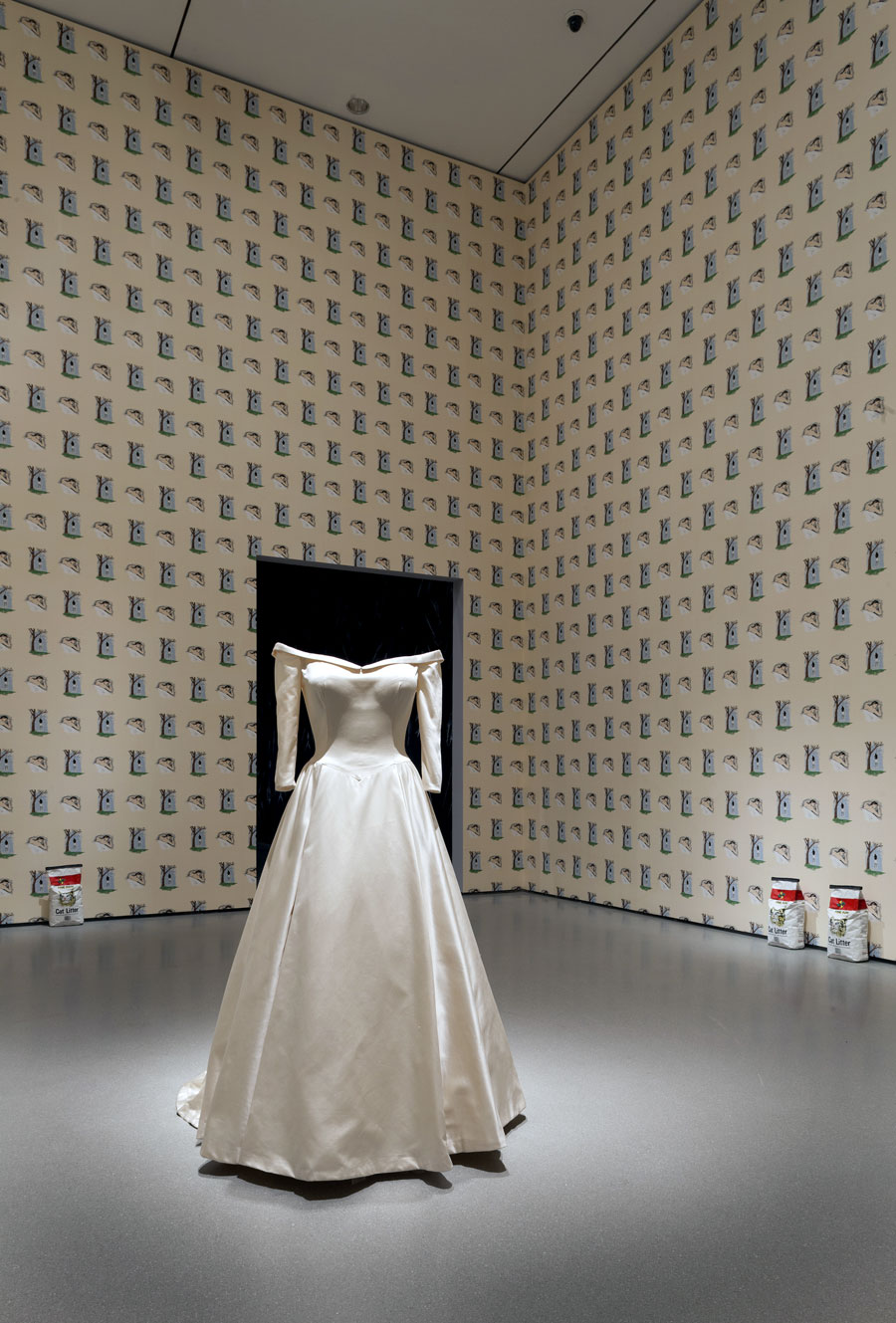
 

Installation view of 'Robert Gober: The Heart Is Not a Metaphor', The Museum of Modern Art, October 4, 2014 - January 18, 2015 showing Gober's 'Untitled' 1989-1996


Robert Gober (American, b. 1954)
Untitled
 (installation view)
1989-1996
Silk satin, muslin, linen, tulle, welded steel, hand-printed silkscreen on paper, cast hydrostone plaster, vinyl acrylic paint, ink, and graphite
Dimensions variable, approximately 800 square feet installed
The Art Institute of Chicago, restricted gift of Stefan T. Edlis and H. Gael Neeson Foundation; through prior gifts of Mr. and Mrs. Joel Starrels and Fowler McCormick
© 2014 Robert Gober


Robert Gober (American, b. 1954) 'Bag of Donuts' 1989


Robert Gober (American, b. 1954)
Bag of Donuts
1989
paper, dough and rhoplex (12 donuts)
© 2014 Robert Gober
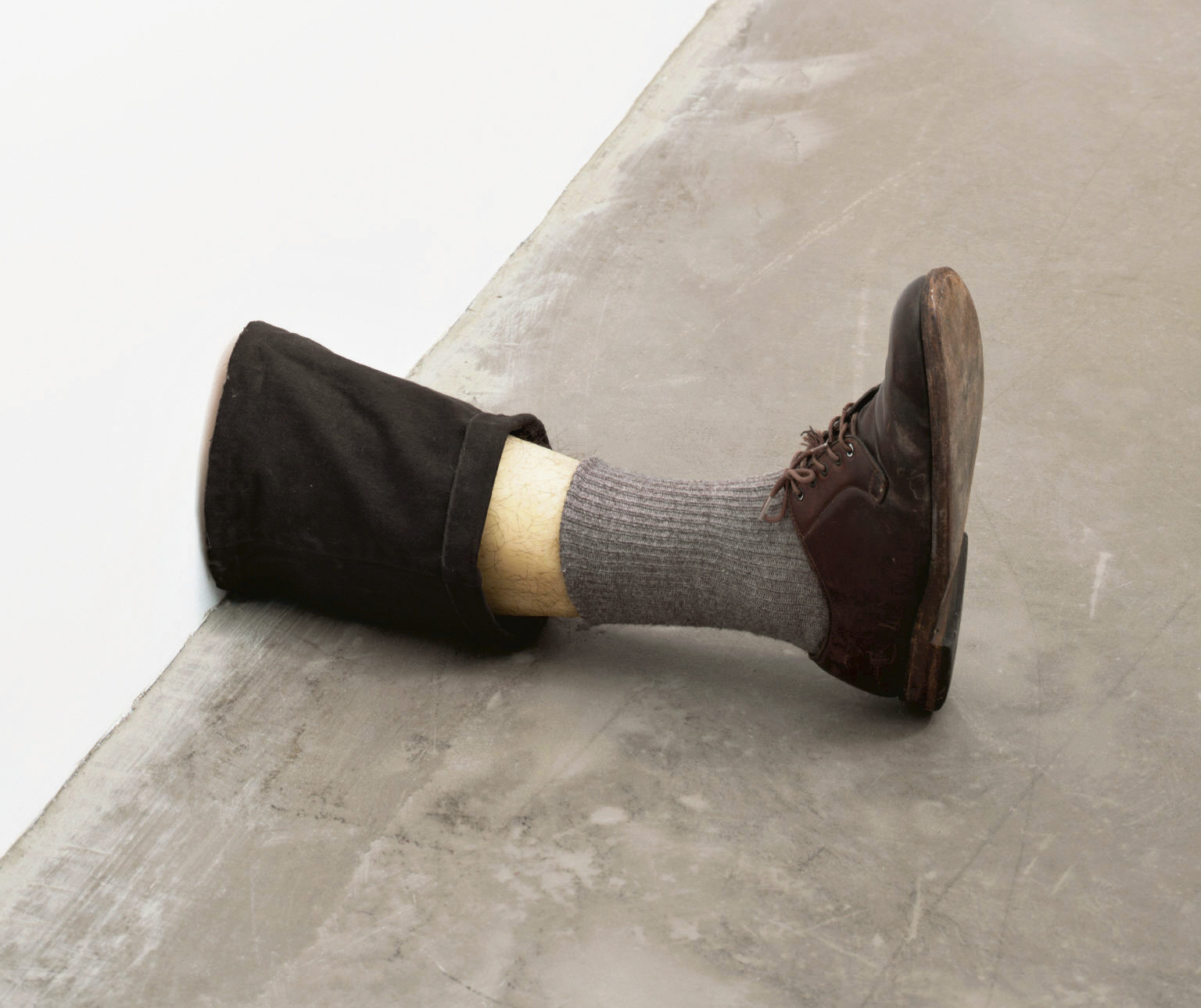
 

Robert Gober (American, b. 1954)
 'Untitled Leg' 1989-1990


Robert Gober (American, b. 1954)
Untitled Leg
1989-1990
Beeswax, cotton, wood, leather, human hair
11 3/8 x 7 3/4 x 20″ (28.9 x 19.7 x 50.8 cm)
The Museum of Modern Art, New York. Gift of the Dannheisser Foundation
© 2014 Robert Gober


Installation view of 'Robert Gober: The Heart Is Not a Metaphor', The Museum of Modern Art, October 4, 2014 - January 18, 2015 showing on the floor, Gober's 'Cigar' 1991


Robert Gober (American, b. 1954)
Cigar (installation view)
1991
Wood, paint, paper, tobacco
15 3/4 x 15 3/4 x 70 7/8″ (40 x 40 x 180cm)
The Museum of Contemporary Art, Los Angeles. Purchased with funds provided by the Collectors Committee in honour of Marcia Simon Weisman
© 2014 Robert Gober

Robert Gober (American, b. 1954)
Forest
1991
Hand-printed silkscreen on paper
180″ x 124″ (457.2 x 315cm)
Courtesy the artist
© 2014 Robert Gober
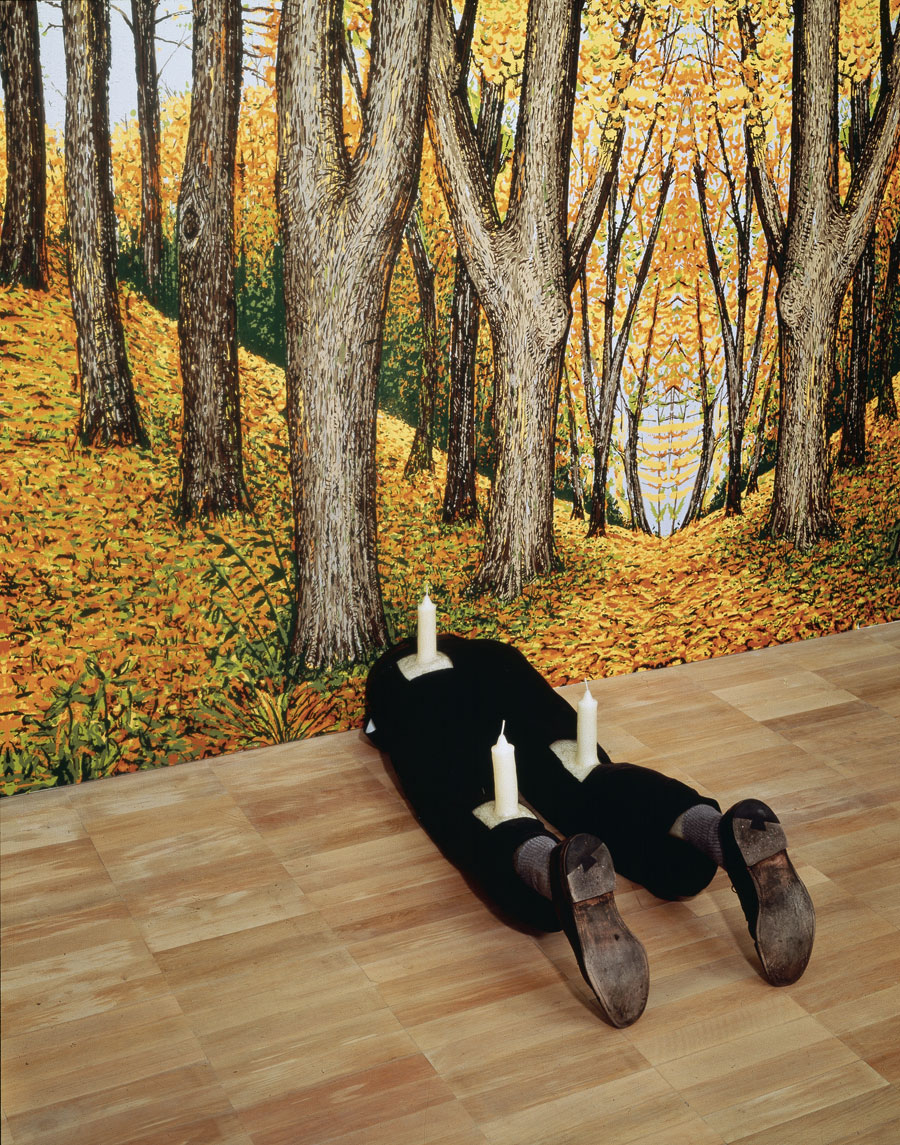
 

Robert Gober (American, b. 1954) '
Untitled' 1991


Robert Gober (American, b. 1954)
Untitled
1991
Wood, beeswax, leather, fabric, and human hair
13 1/4 x 16 1/2 x 46 1/8″ (33.6 x 41.9 x 117.2cm)
The Museum of Modern Art, New York. Gift of Werner and Elaine Dannheisser
Background: Forest, 1991
Hand-painted silkscreen on paper
Image credit: K. Ignatiadis, courtesy the artist and Matthew Marks Gallery
© 2014 Robert Gober


Installation view of 'Robert Gober: The Heart Is Not a Metaphor', The Museum of Modern Art, October 4, 2014 - January 18, 2015 showing Gober's 'Untitled' 1992


Robert Gober (American, b. 1954)
Untitled (installation view)
1992
Paper, twine, metal, light bulbs, cast plaster with casein and silkscreen ink, stainless steel, painted cast bronze and water, plywood, forged iron, plaster, latex paint and lights, photolithography on archival (Mohawk Superfine) paper, twine, hand-painted forest mural
511 3/4 × 363 3/16 × 177 3/16″ (1300 × 922.5 × 450.1cm)
Glenstone
© 2014 Robert Gober


Robert Gober (American, b. 1954) '
Untitled' 1992


Robert Gober (American, b. 1954)
Untitled
1992
Paper, twine, metal, light bulbs, cast plaster with casein and silkscreen ink, stainless steel, painted cast bronze and water, plywood, forged iron, plaster, latex paint and lights, photolithography on archival (Mohawk Superfine) paper, twine, hand-painted forest mural
511 3/4 × 363 3/16 × 177 3/16″ (1300 × 922.5 × 450.1cm)
Glenstone
Image credit: Russell Kaye, courtesy the artist and Matthew Marks Gallery
© 2014 Robert Gober
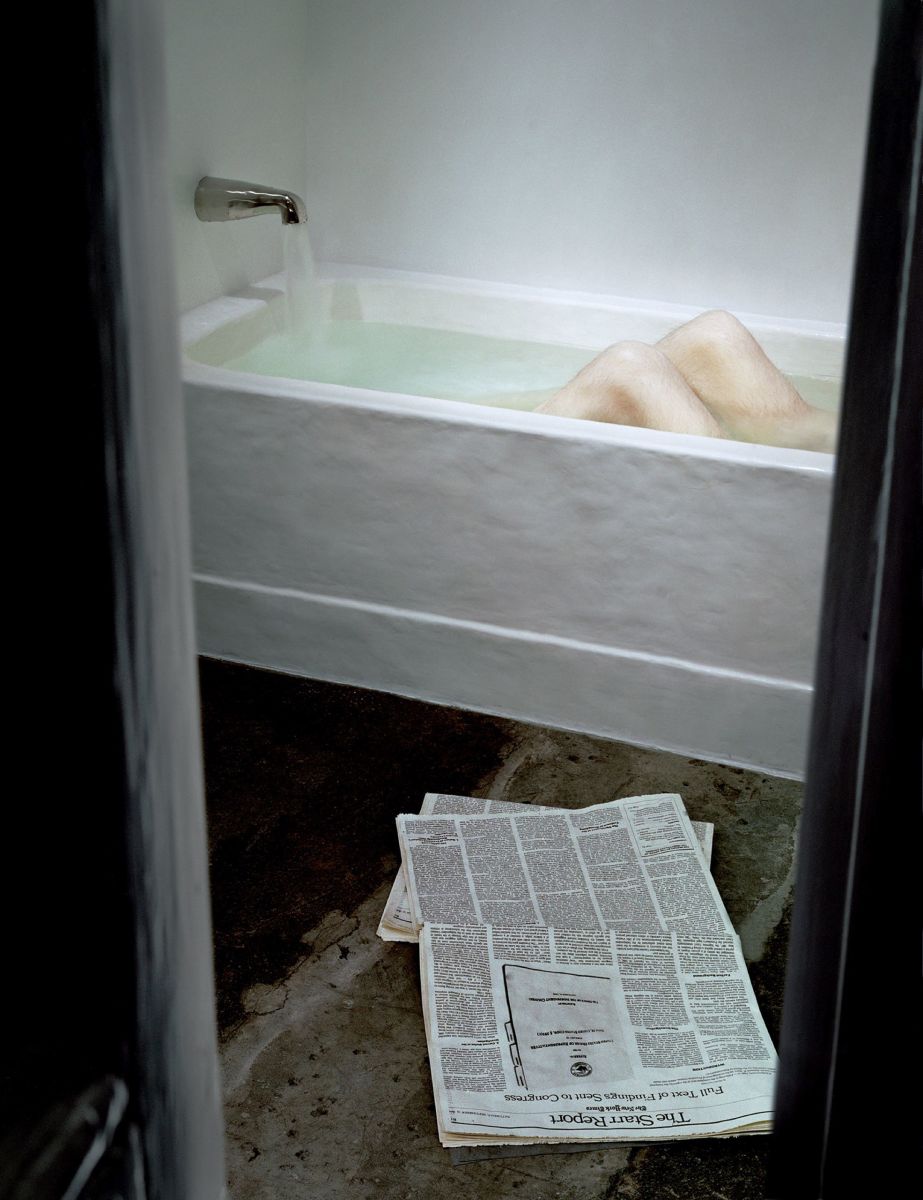
 

Robert Gober (American, b. 1954) 'Untitled' 2003-2005


Robert Gober (American, b. 1954)
Untitled
2003-2005
Courtesy MoMA and Matthew Marks Gallery
Image credit: Russel Kaye
© 2014 Robert Gober


Installation view of 'Robert Gober: The Heart Is Not a Metaphor', The Museum of Modern Art, October 4, 2014 - January 18, 2015 showing Gober's 'Untitled' 2003-2005 (detail)


Robert Gober (American, b. 1954)
Untitled (detail)
2003-2005
© 2014 Robert Gober


Robert Gober (American, b. 1954) 'Untitled' 1980-1981


Robert Gober (American, b. 1954)
Untitled
1980-1981
Oil on wood panel
8 x 5 3/4″ (20.3 x 14.6cm)
Collection the artist
Image credit: Ron Amstutz, courtesy the artist and Matthew Marks Gallery
© 2014 Robert Gober


Robert Gober (American, b. 1954) '
Slip Covered Armchair' 1986-1987


Robert Gober (American, b. 1954)
Slip Covered Armchair
1986-1987
Plaster, wood, linen, and fabric paint
31 1/2 x 30 1/2 x 29″ (80 x 77.5 x 73.7cm)
Collection the artist
Image credit: D. James Dee, courtesy the artist
© 2014 Robert Gober


Installation view of 'Robert Gober: The Heart Is Not a Metaphor', The Museum of Modern Art, October 4, 2014 - January 18, 2015 showing Gober's 'Untitled Door and Door Frame' 1987-1988


Robert Gober (American, b. 1954)
Untitled Door and Door Frame (installation view)
1987-1988
Wood, enamel paint
Door: 84 x 34 x 1 1/2″ (213.4 x 86.4 x 3.8cm)
Doorframe: 90 x 43 x 5 1/2″ (228.6 x 109.2 x 14cm)
Collection Walker Art Center, Minneapolis. Gift of the John and Mary Pappajohn Art Foundation, 2004
© 2014 Robert Gober

Installation views of Robert Gober: The Heart Is Not a Metaphor, The Museum of Modern Art, October 4, 2014 – January 18, 2015
All works by Robert Gober © 2014 Robert Gober © 2014 The Museum of Modern Art
Photos: Jonathan Muzikar


Robert Gober (American, b. 1954) 'Untitled' 2005-2006


Robert Gober (American, b. 1954)
Untitled
2005-2006
Aluminium-leaf, oil and enamel paint on cast lead crystal
4 3/4″ high × 4 1/4″ diameter (12.1 × 10.8cm)
Collection the artist
Image credit: Bill Orcutt, courtesy the artist and Matthew Marks Gallery
© 2014 Robert Gober


Robert Gober (American, b. 1954) '
Untitled' 2008


Robert Gober (American, b. 1954)
Untitled
2008
Cast gypsum polymer
14 1/2 x 10 3/4 x 6″ (36.8 x 27.3 x 15.2cm)
Edition of 4, with 1 AP
Collection the artist
Image credit: Fredrik Nilsen, courtesy the artist and Matthew Marks Gallery
© 2014 Robert Gober


Robert Gober (American, b. 1954) 'Leg with Anchor' 2008


Robert Gober (American, b. 1954)
Leg with Anchor
2008
Forged iron and steel, beeswax, cotton, leather, and human hair
28 × 18 × 20″ (71.1 × 45.7 × 50.8cm)
Glenstone
Image credit: Bill Orcutt, courtesy the artist and Matthew Marks Gallery
© 2014 Robert Gober


The Museum of Modern Art
11 West 53 Street
New York, NY 10019
Phone: (212) 708-9400

Opening hours:
10.30 am – 5.30 pm
Open seven days a week

MoMA website

LIKE ART BLART ON FACEBOOK

Back to top

Exhibition: ‘Robert Heinecken: Object Matter’ at The Museum of Modern Art (MoMA), New York

Exhibition dates: 15th March – 7th September 2014

Curators: Eva Respini, Curator, with Drew Sawyer, Beaumont and Nancy Newhall Curatorial Fellow, Department of Photography, The Museum of Modern Art

*PLEASE NOTE THIS POSTING CONTAINS ART PHOTOGRAPHS OF FEMALE NUDITY – IF YOU DO NOT LIKE PLEASE DO NOT LOOK, FAIR WARNING HAS BEEN GIVEN*


Robert Heinecken (American, 1931-2006) 'Figure Horizon #1' 1971


Robert Heinecken (American, 1931-2006)
Figure Horizon #1
1971
Ten canvas panels with photographic emulsion
Each 11 13/16 x 11 13/16″ (30 x 30cm)
The Museum of Modern Art, New York. Gift of Shirley C. Burden, by exchange


A bumper posting on probably the most important photo-media artist who has ever lived. This is how to successfully make conceptual photo-art.

A revolutionary artist, this para-photographer’s photo puzzles are just amazing!

Dr Marcus Bunyan


Many thank to MoMA for allowing me to publish the photographs in the posting. Please click on the photographs for a larger version of the image.


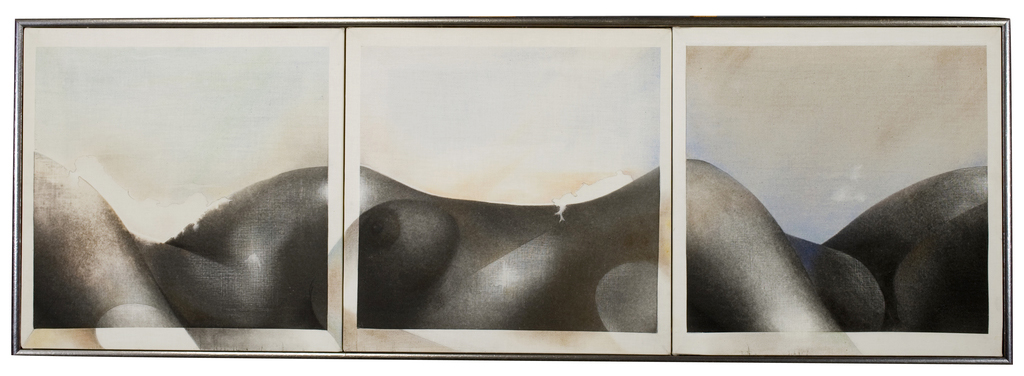
Robert Heinecken (American, 1931-2006) 'Le Voyeur / Robbe-Grillet #2' 1972


Robert Heinecken (American, 1931-2006)
Le Voyeur / Robbe-Grillet #2
1972
Three canvas panels with bleached photographic emulsion and pastel chalk
14 x 40″ (35.6 x 101.6cm)
George Eastman House, Rochester, New York. Museum Purchase with National Endowment for the Arts support


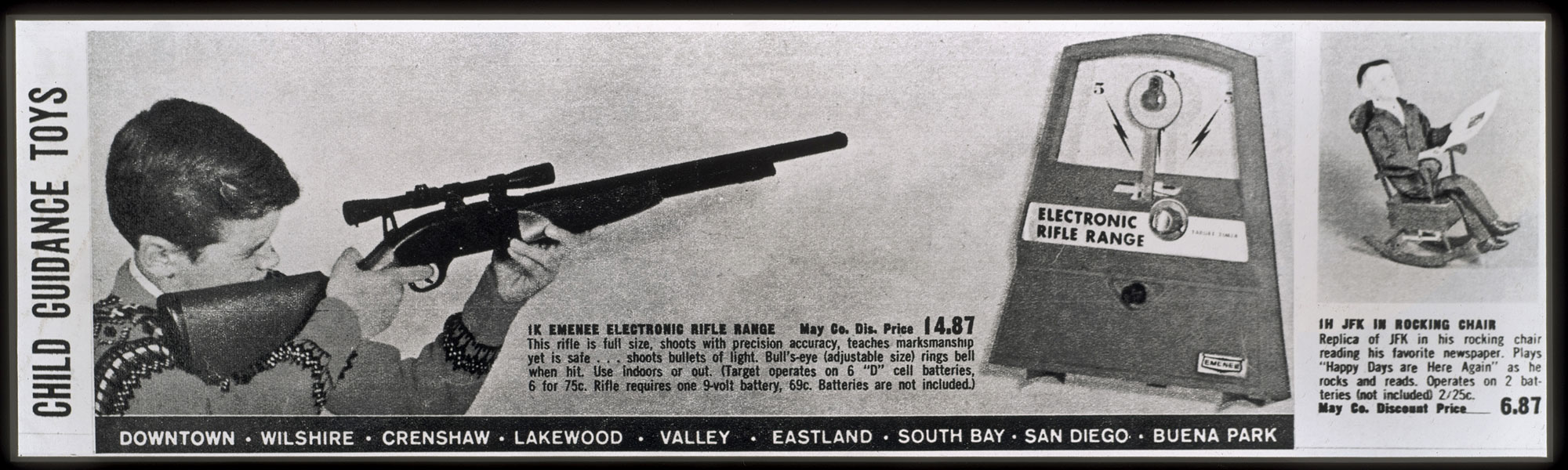
Robert Heinecken (American, 1931-2006) 'Child Guidance Toys' 1965


Robert Heinecken (American, 1931-2006)
Child Guidance Toys
1965
Black-and-white film transparency
5 x 18 1/16″ (12.7 x 45.8cm)
The Art Institute of Chicago. Gift of Boardroom, Inc.


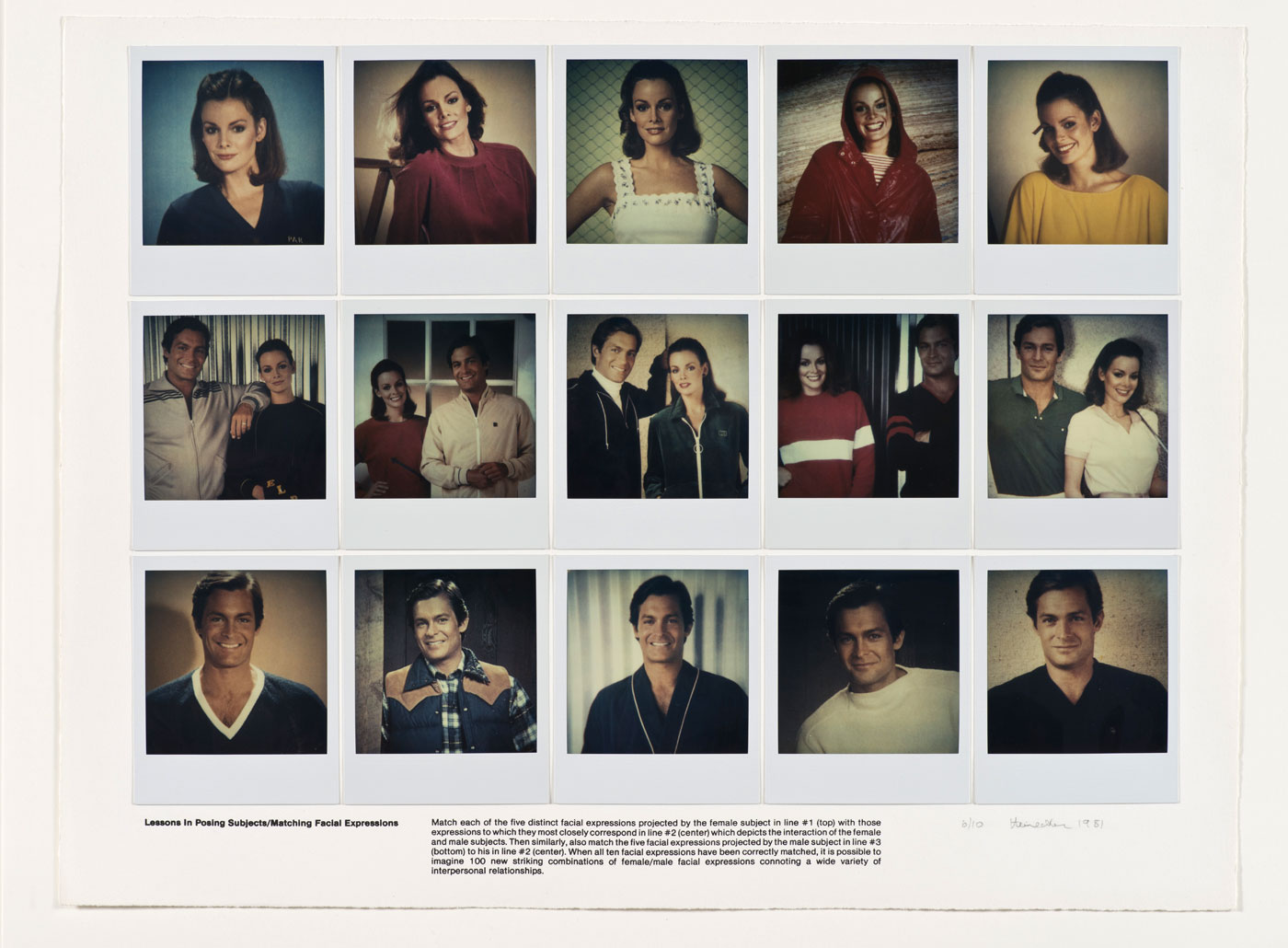
Robert Heinecken (American, 1931-2006) 'Lessons in Posing Subjects / Matching Facial Expressions' 1981


Robert Heinecken (American, 1931-2006)
Lessons in Posing Subjects / Matching Facial Expressions
1981
Fifteen internal dye diffusion transfer prints (SX-70 Polaroid) and lithographic text on Rives BFK paper
15 x 20″ (38.1 x 50.8cm)
Collection UCLA Grunwald Center for Graphic Art, Hammer Museum, Los Angeles. Gift of Dean Valentine and Amy Adelson


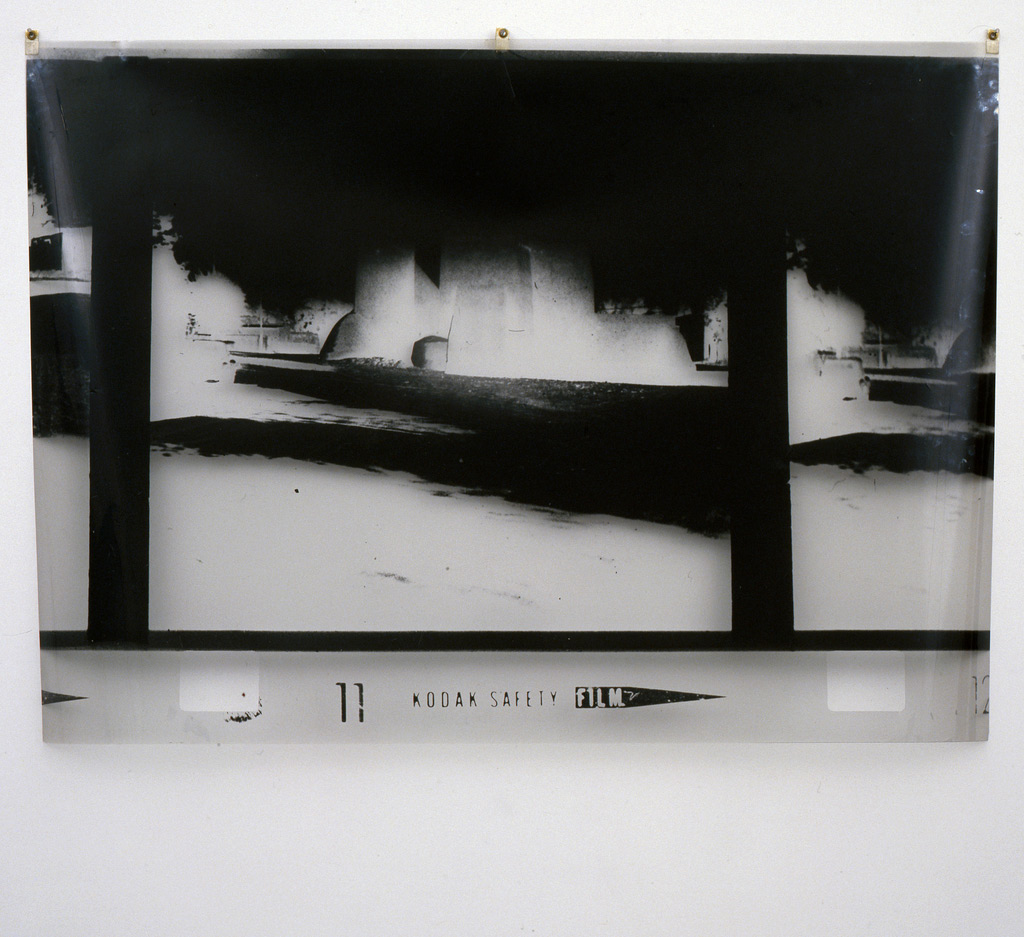
Robert Heinecken (American, 1931-2006) 'Kodak Safety Film / Taos Church' 1972


Robert Heinecken (American, 1931-2006)
Kodak Safety Film / Taos Church
1972
Black-and-white film transparency
40 x 56″ (101.6 x 142.2cm)
The Museum of Modern Art, New York. Committee on Photography Fund


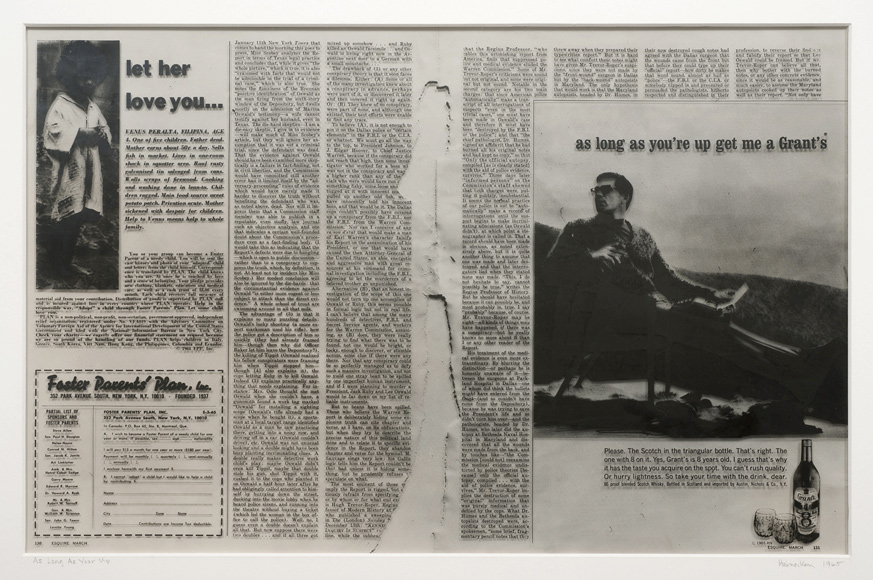
Robert Heinecken (American, 1931-2006) 'As Long As Your Up' 1965


Robert Heinecken (American, 1931-2006)
As Long As Your Up
1965
Black-and-white film transparency
15 1/2 x 19 5/8″ (39.4 x 49.8cm)
The Robert Heinecken Trust, Chicago. Courtesy Petzel Gallery, New York


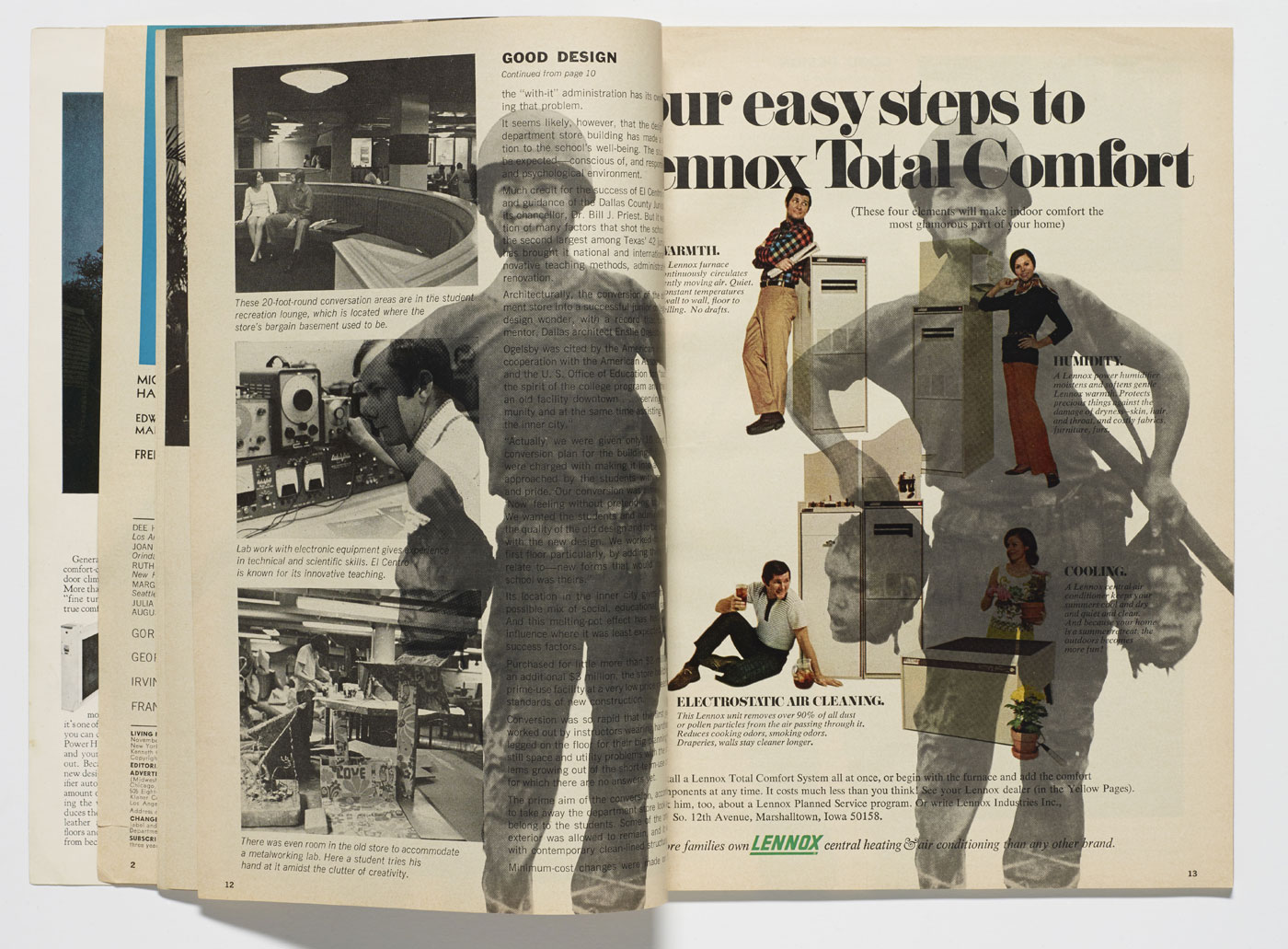
Robert Heinecken (American, 1931-2006) 'Periodical #5' 1971


Robert Heinecken (American, 1931-2006)
Periodical #5
1971
Offset lithography on found magazine
12 1/4 x 9″ (31.1 x 22.9cm)
Collection Philip Aarons and Shelley Fox Aarons, New York


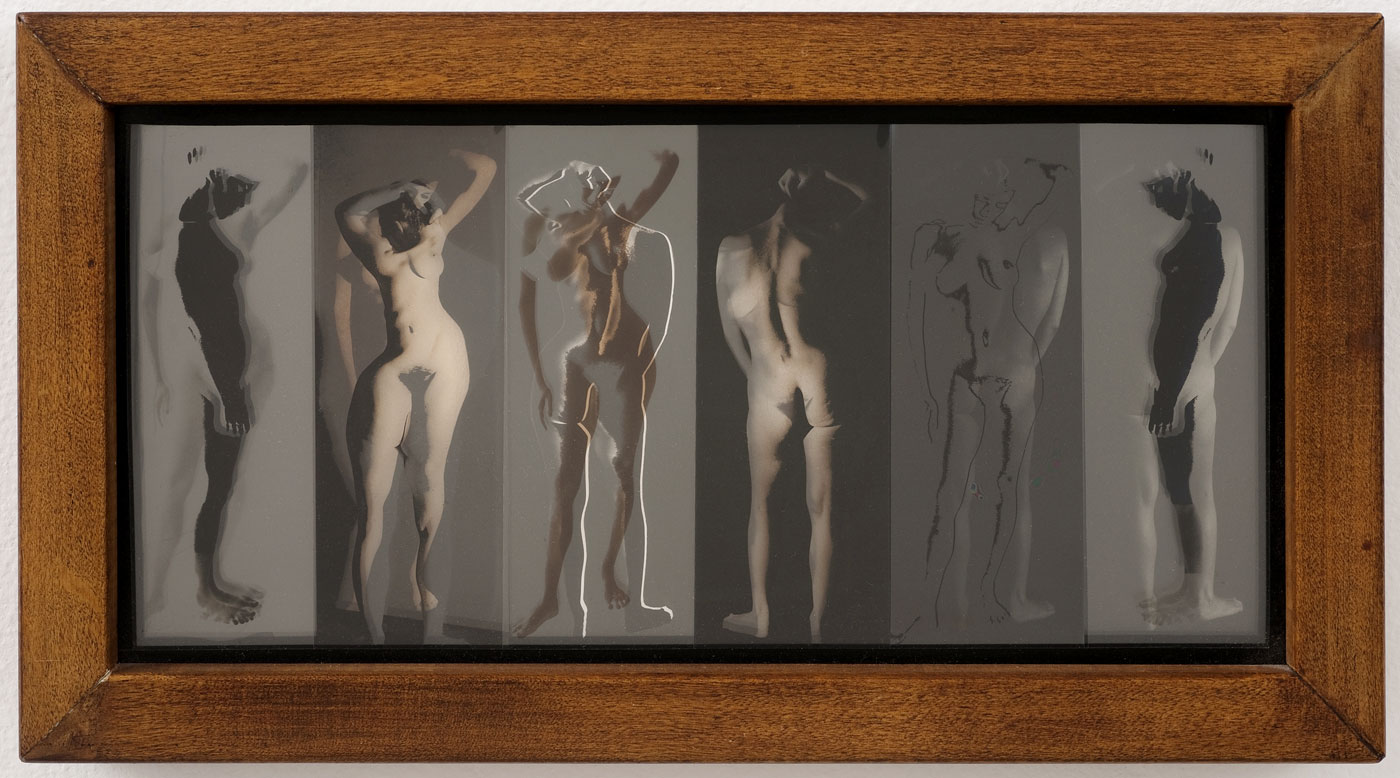
Robert Heinecken (American, 1931-2006) 'Six Figures/Mixed' 1968


Robert Heinecken (American, 1931-2006)
Six Figures/Mixed
1968
Layered Plexiglas and black-and-white film transparencies
5.75 x 9.75 x 1.5″ (14.61 x 24.77 x 3.81cm)
Collection Darryl Curran, Los Angeles


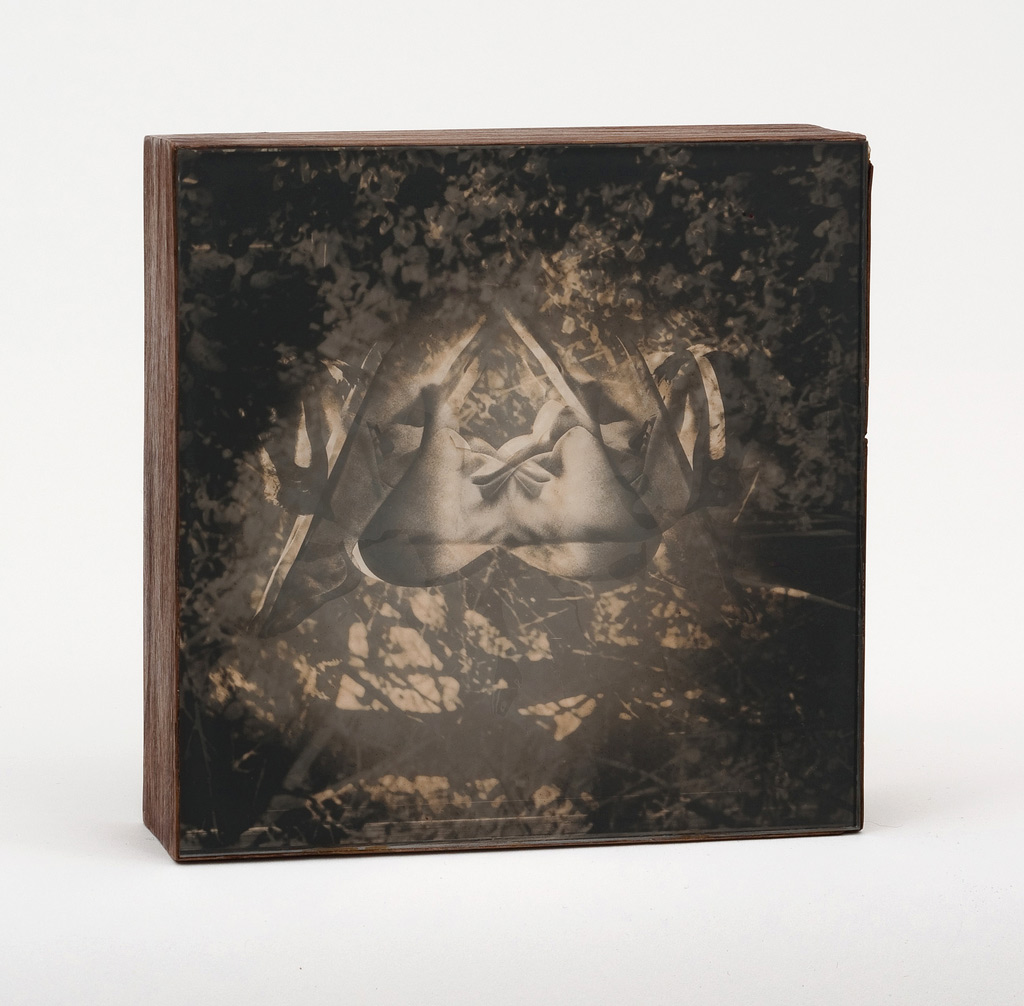
Robert Heinecken (American, 1931-2006) 'Figure / Foliage #2' 1969


Robert Heinecken (American, 1931-2006)
Figure / Foliage #2
1969
Layered Plexiglas and black-and-white film transparencies
5 x 5 x 1 1/4″ (12.7 x 12.7 x 3.2cm)
Collection Anton D. Segerstrom, Corona del Mar, California


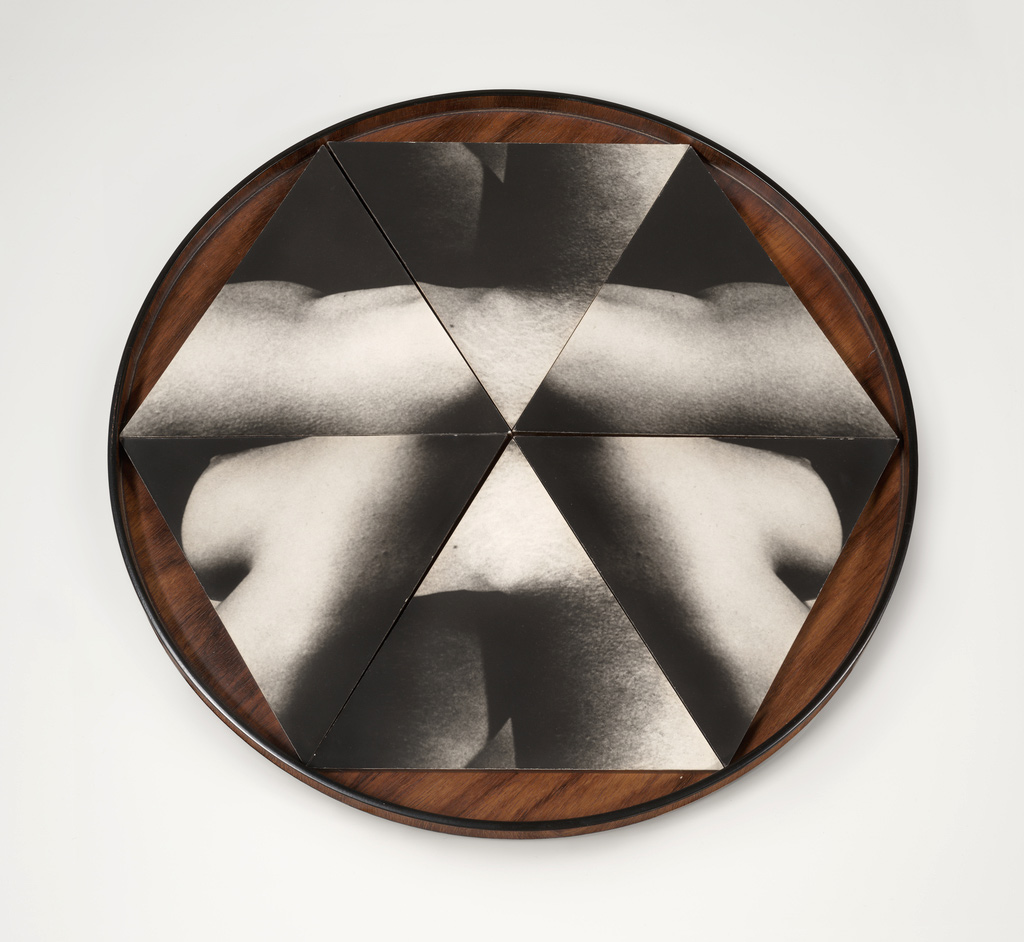
Robert Heinecken (American, 1931-2006) 'Kaleidoscopic Hexagon #2' 1965


Robert Heinecken (American, 1931-2006)
Kaleidoscopic Hexagon #2
1965
Six gelatin silver prints on wood
Diameter: 14″ (35.6cm)
Black Dog Collection. Promised gift to San Francisco Museum of Modern Art


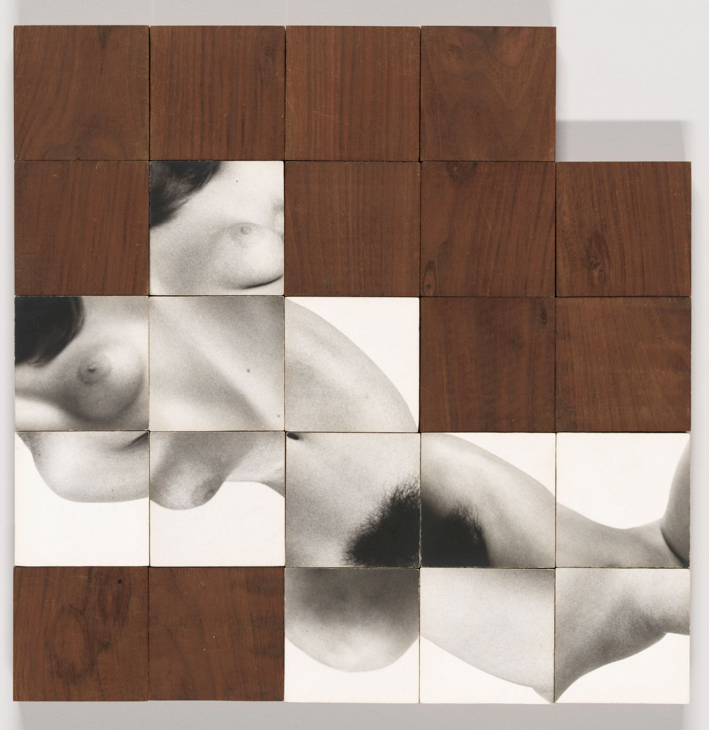
Robert Heinecken (American, 1931-2006) '24 Figure Blocks' 1966


Robert Heinecken (American, 1931-2006)
24 Figure Blocks
1966
Twelve gelatin silver prints on wood blocks, and twelve additional wood blocks
14 1/16 x 14 1/16 x 13/16″ (35.7 x 35.7 x 2.1cm)
Whitney Museum of American Art, New York. Gift of Jeanne and Richard S. Press


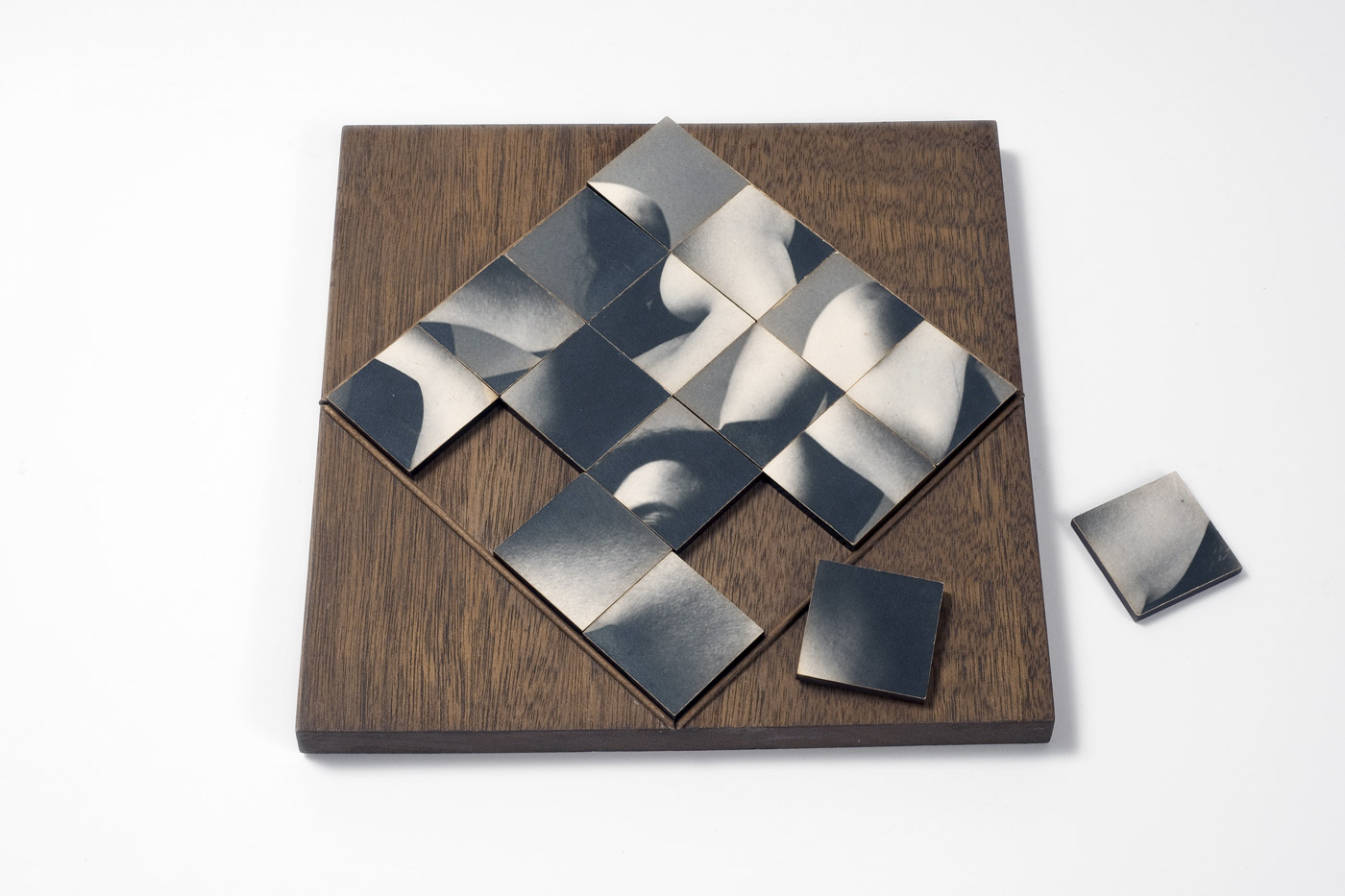
Robert Heinecken (American, 1931-2006) 'Multiple Solution Puzzle' 1965


Robert Heinecken (American, 1931-2006)
Multiple Solution Puzzle
1965
Sixteen gelatin silver prints on wood
11 1/4 x 11 1/4 x 1″ (28.6 x 28.6 x 2.5cm)
Collection Maja Hoffmann/LUMA Foundation


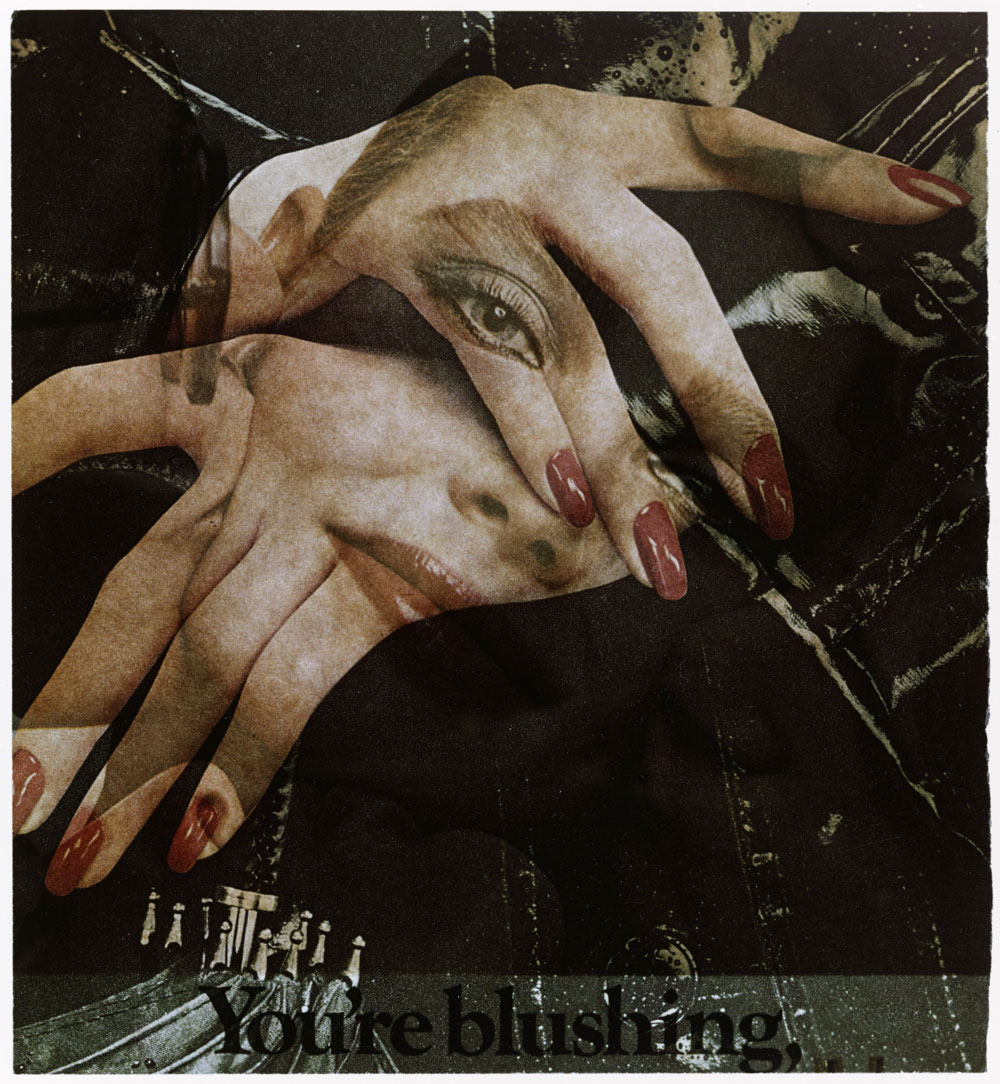
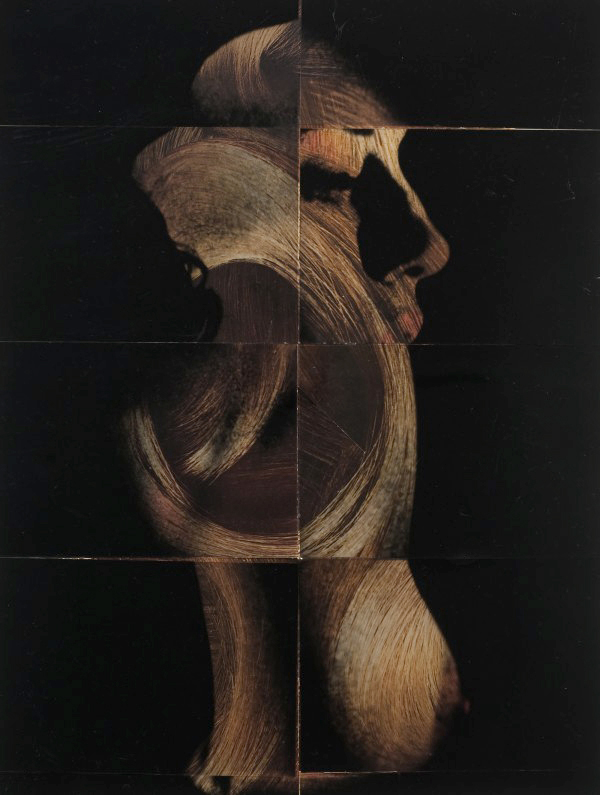
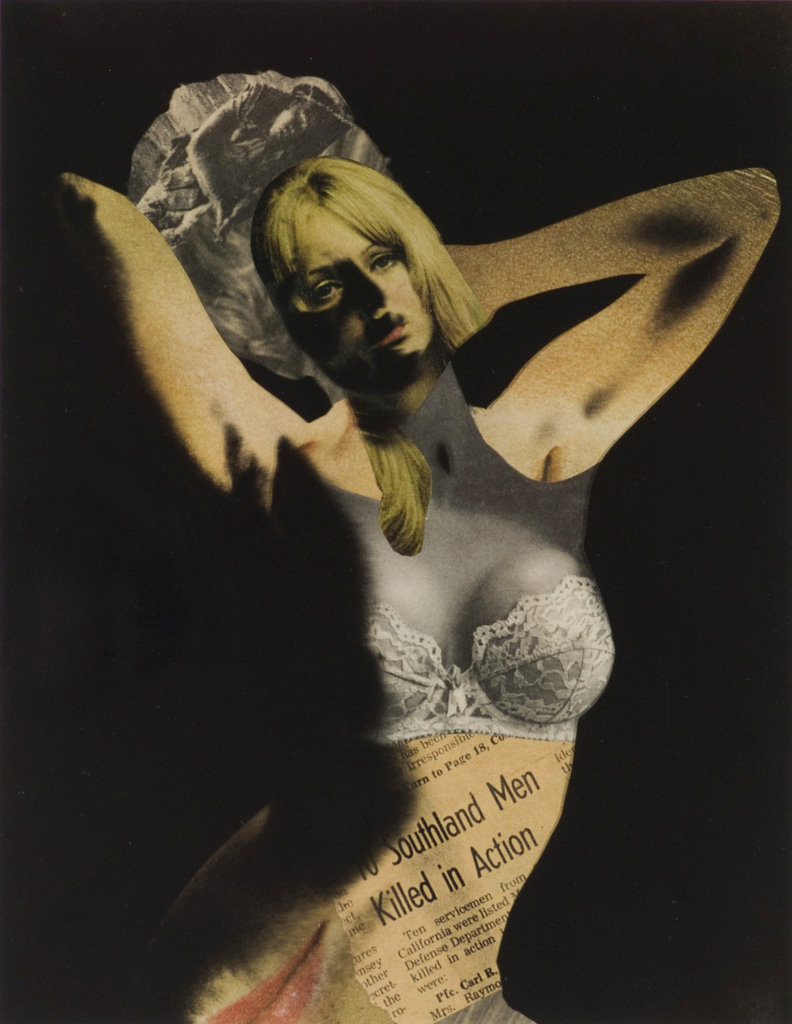
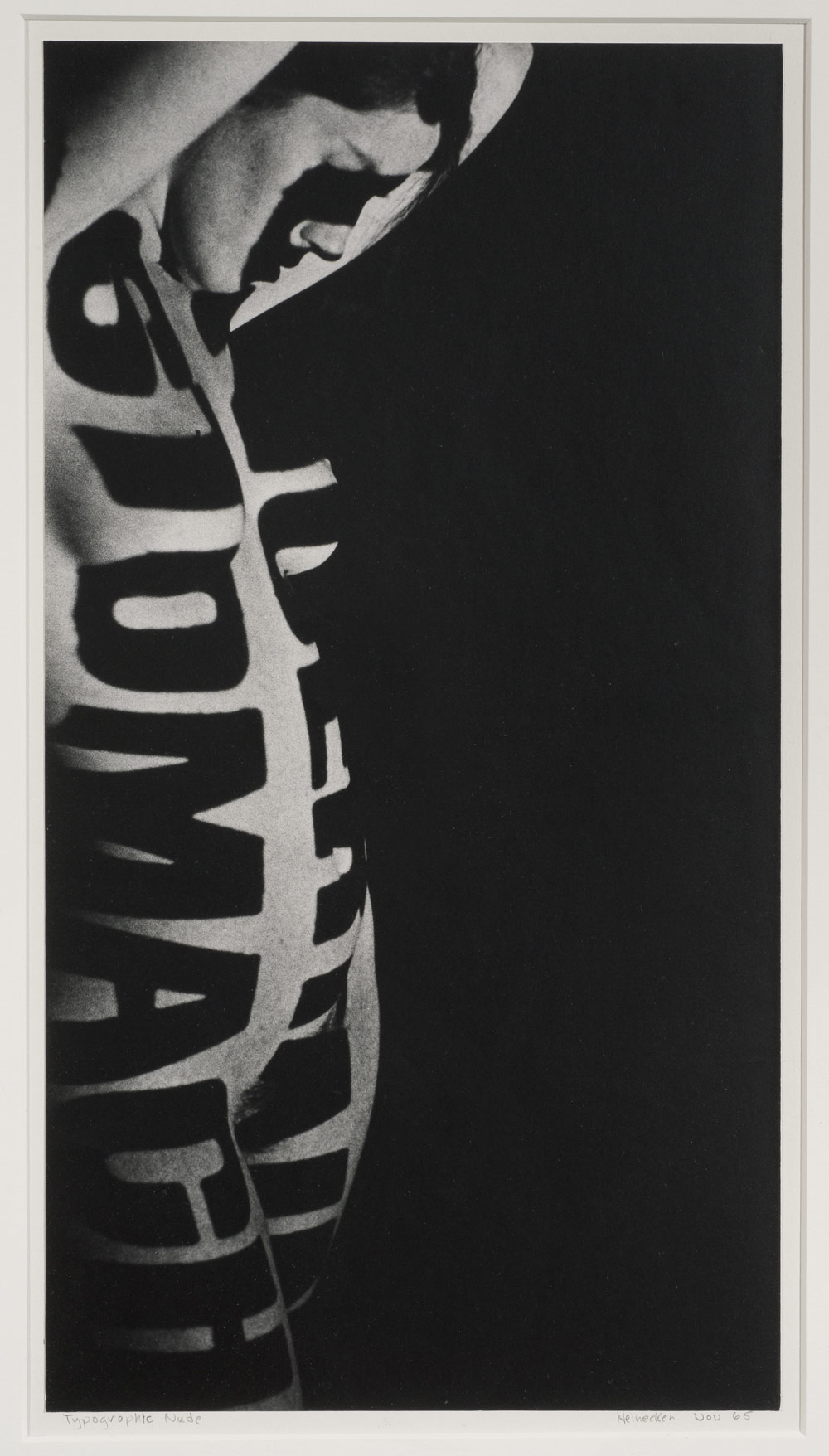
The Museum of Modern Art presents Robert Heinecken: Object Matter, the first retrospective of the work of Robert Heinecken since his death in 2006 and the first exhibition on the East Coast to cover four decades of the artist’s unique practice, from the early 1960s through the late 1990s, on view from March 15 to September 7, 2014. Describing himself as a “para-photographer,” because his work stood “beside” or “beyond” traditional ideas associated with photography, Heinecken worked across multiple mediums, including photography, sculpture, printmaking, and collage. Culling images from newspapers, magazines, pornography, and television, he recontextualized them through collage and assemblage, photograms, darkroom experimentation, and rephotography. His works explore themes of commercialism, Americana, kitsch, sex, the body, and gender. In doing so, the works in this exhibition expose his obsession with popular culture and its effects on society, and with the relationship between the original and the copy. Robert Heinecken: Object Matter is organised by Eva Respini, Curator, with Drew Sawyer, Beaumont and Nancy Newhall Curatorial Fellow, Department of Photography, The Museum of Modern Art. The exhibition will travel to the Hammer Museum, and will be on view there from October 5, 2014 through January 17, 2015.

Heinecken dedicated his life to making art and teaching, establishing the photography program at UCLA in 1964, where he taught until 1991. He began making photographs in the early 1960s. The antithesis of the fine-print tradition exemplified by West Coast photographers Ansel Adams and Edward Weston, who photographed landscapes and objects in sharp focus and with objective clarity, Heinecken’s early work is marked by high contrast, blur, and under- or overexposure, as seen in Shadow Figure (1962) and Strip of Light (1964). In the mid-1960s he began combining and sequencing disparate pictures, as in Visual Poem/About the Sexual Education of a Young Girl (1965), which comprises seven black-and-white photographs of dolls with a portrait of his then-five-year-old daughter Karol at the centre.

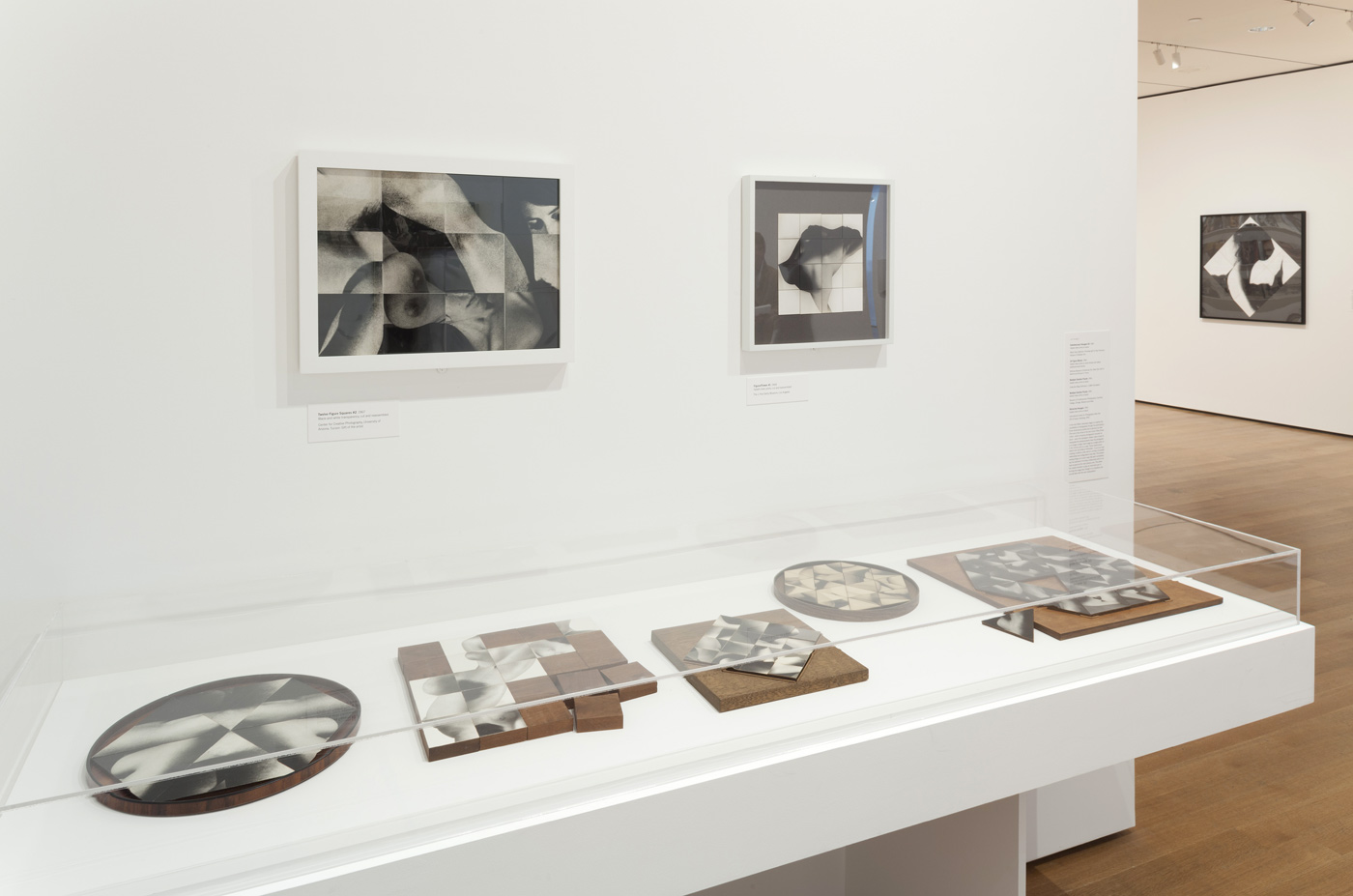
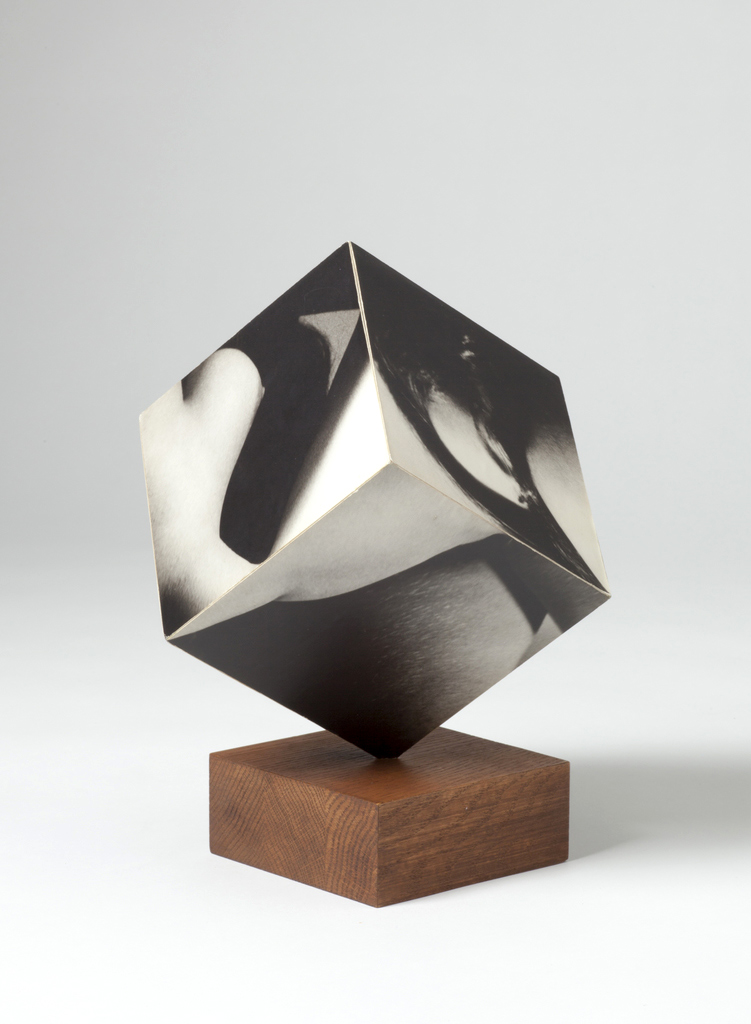
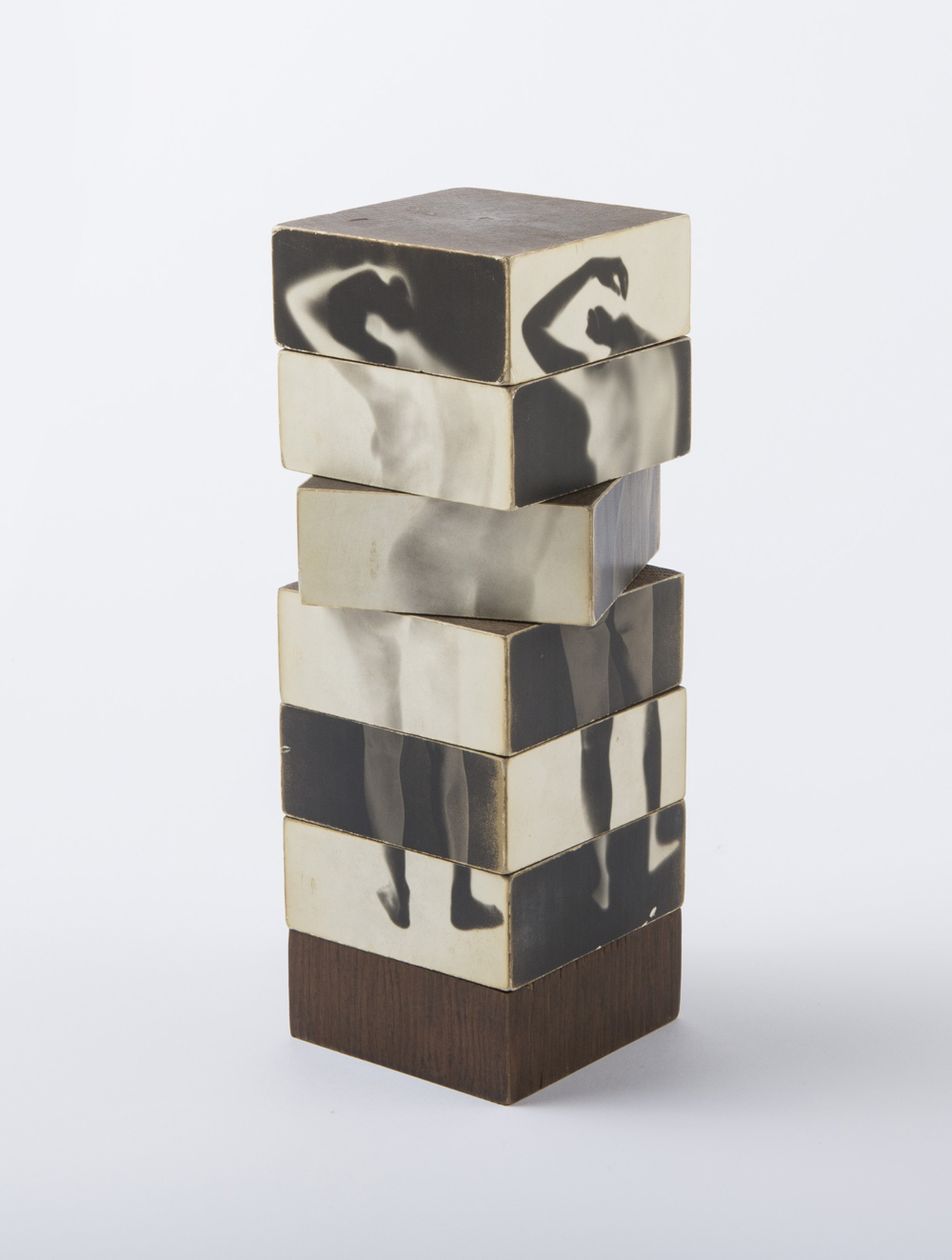
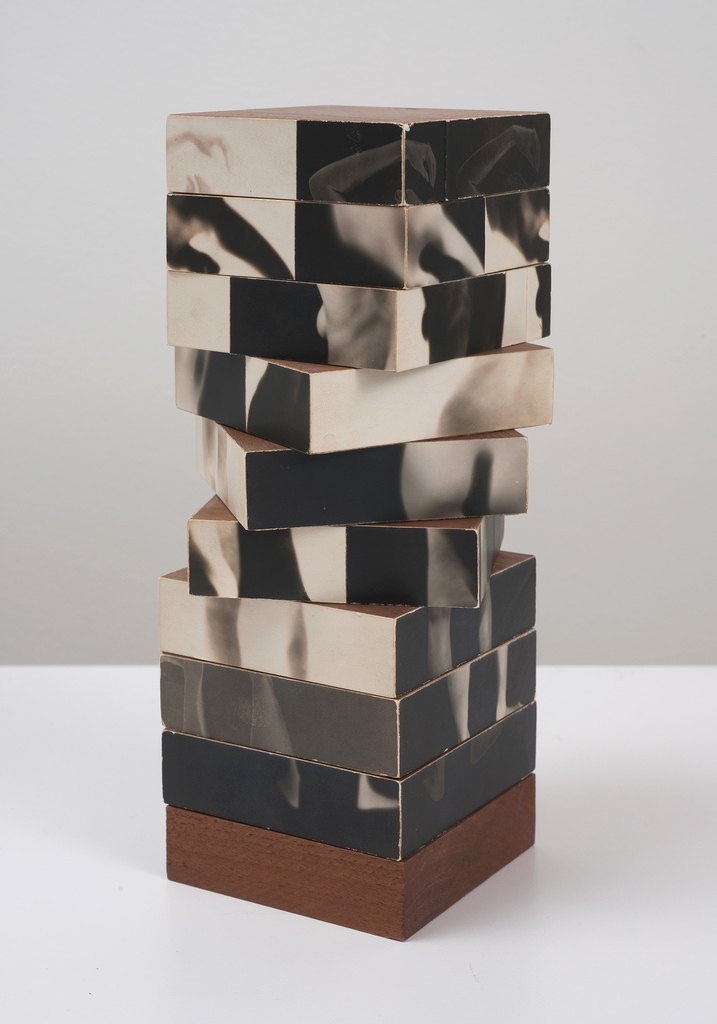
The female nude is a recurring motif, featured in Refractive Hexagon (1965), one of several “photopuzzles” composed of photographs of female body parts mounted onto 24 individual “puzzle” pieces. Other three-dimensional sculptures – geometric volumes ranging in height from five to 22 inches – consist of photographs mounted onto individual blocks, which rotate independently around a central axis. In Fractured Figure Sections (1967), as in Refractive Hexagon, the female figure is never resolved as a single image – the body is always truncated, never contiguous. In contrast, a complete female figure can be reconstituted in his largest photo-object, Transitional Figure Sculpture (1965), a towering 26-layer octagon composed from photographs of a nude that have been altered using various printing techniques. At the time, viewer engagement was key to creating random configurations and relationships in the work; any number of possibilities may exist, only to be altered with the next manipulation. Today, due to the fragility of the works, these objects are displayed in Plexiglas-covered vitrines. However, the number of sculptures and puzzles gathered here offer the viewer a sense of this diversity.

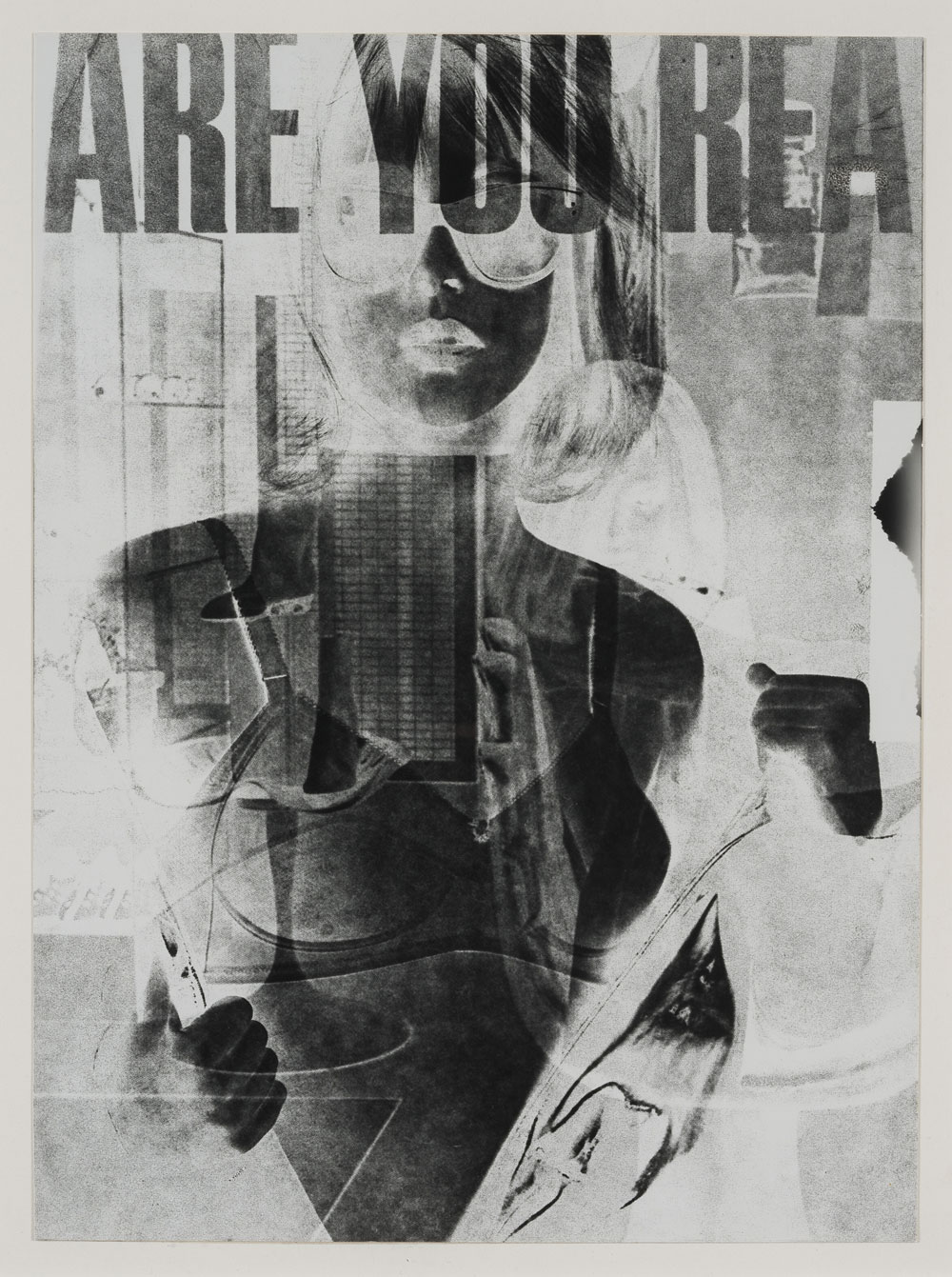
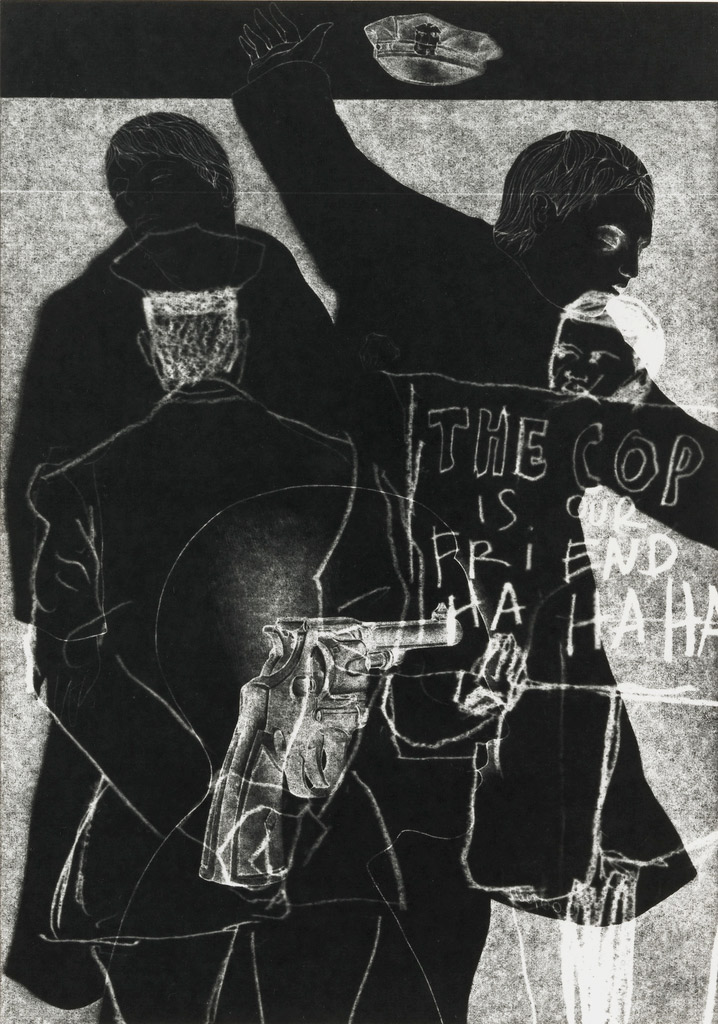
Heinecken’s groundbreaking suite Are You Rea (1964-68) is a series of 25 photograms made directly from magazine pages. Representative of a culture that was increasingly commercialised, technologically mediated, and suspicious of established truths, Are You Rea cemented Heinecken’s interest in the multiplicity of meanings inherent in existing images and situations. Culled from more than 2000 magazine pages, the work includes pictures from publications such as Life, Time, and Woman’s Day, contact-printed so that both sides are superimposed in a single image. Heinecken’s choice of pages and imagery are calculated to reveal specific relationships and meanings – ads for Coppertone juxtaposed with ads for spaghetti dinners and an article about John F. Kennedy superimposed on an ad for Wessex carpets – the portfolio’s narrative moves from relatively commonplace and alluring images of women to representations of violence and the male body.

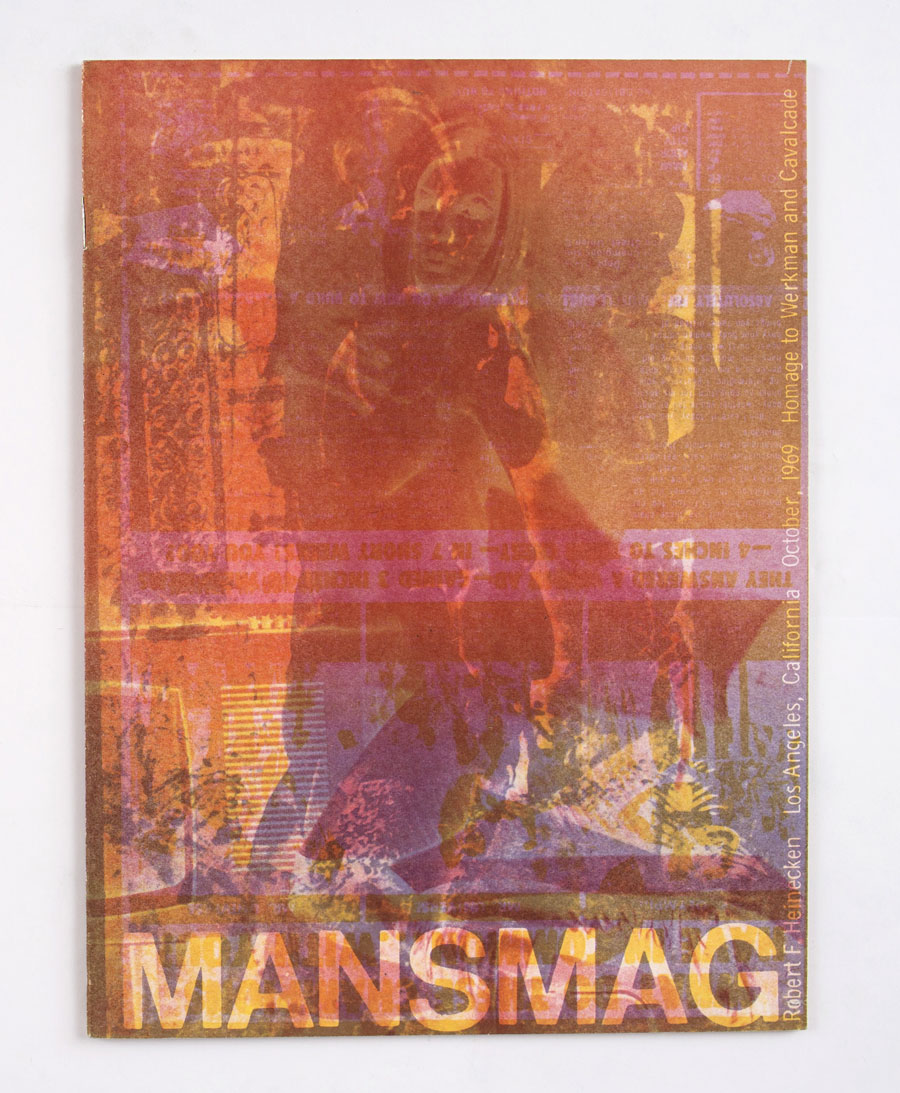
Heinecken began altering magazines in 1969 with a series of 120 periodicals titled MANSMAG: Homage to Werkman and Cavalcade. He used the erotic men’s magazine Cavalcade as source material, making plates of every page, and randomly printing them on pages that were then reassembled into a magazine, now scrambled. In the same year, he disassembled numerous Time magazines, imprinting pornographic images taken from Cavalcade on every page, and reassembled them with the original Time covers. He circulated these reconstituted magazines by leaving them in waiting rooms or slipping them onto newsstands, allowing the work to come full circle – the source material returning to its point of origin after modification. He reprised this technique in 1989 with an altered issue of Time titled 150 Years of Photojournalism, a greatest hits of historical events seen through the lens of photography.


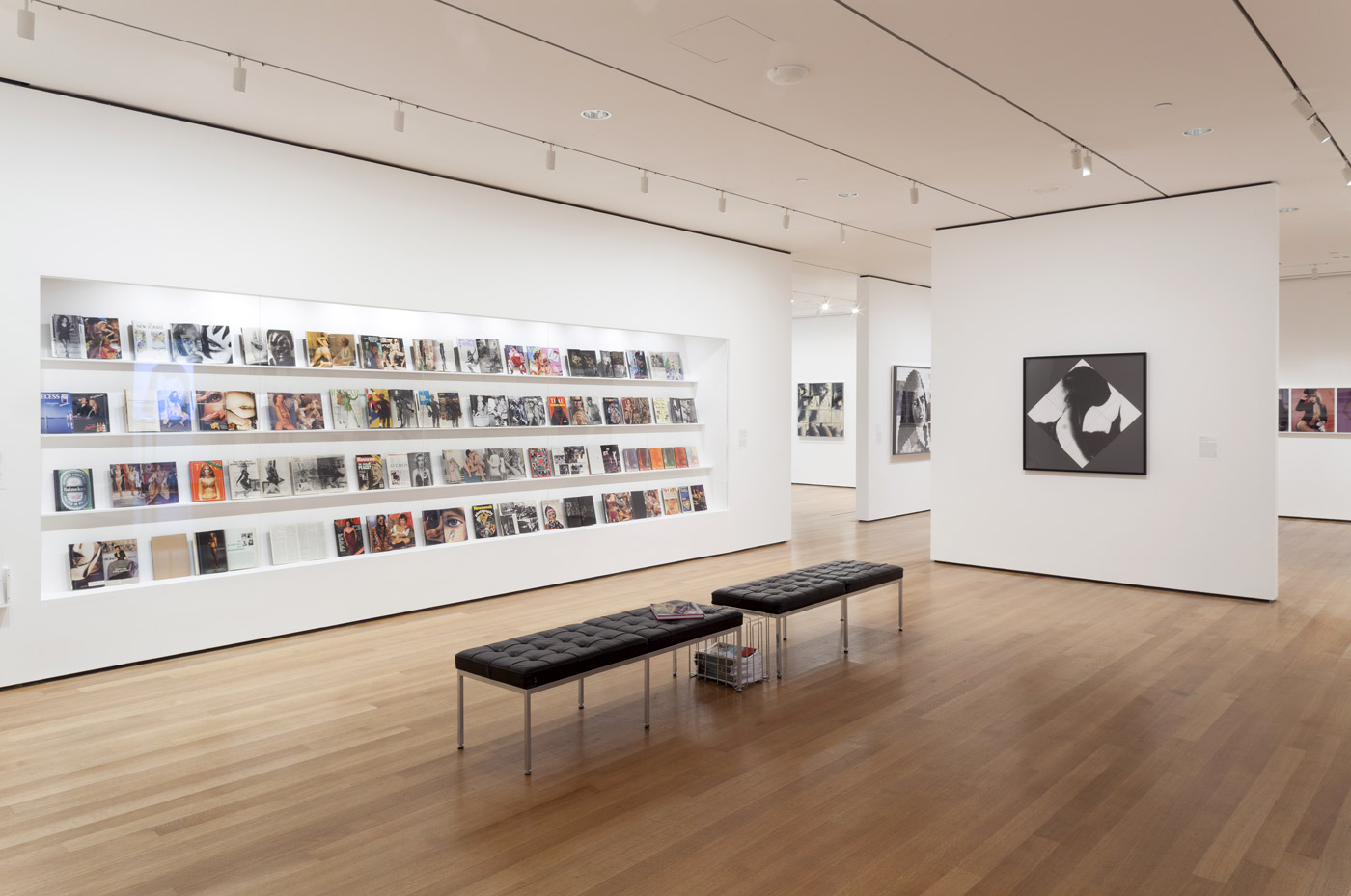
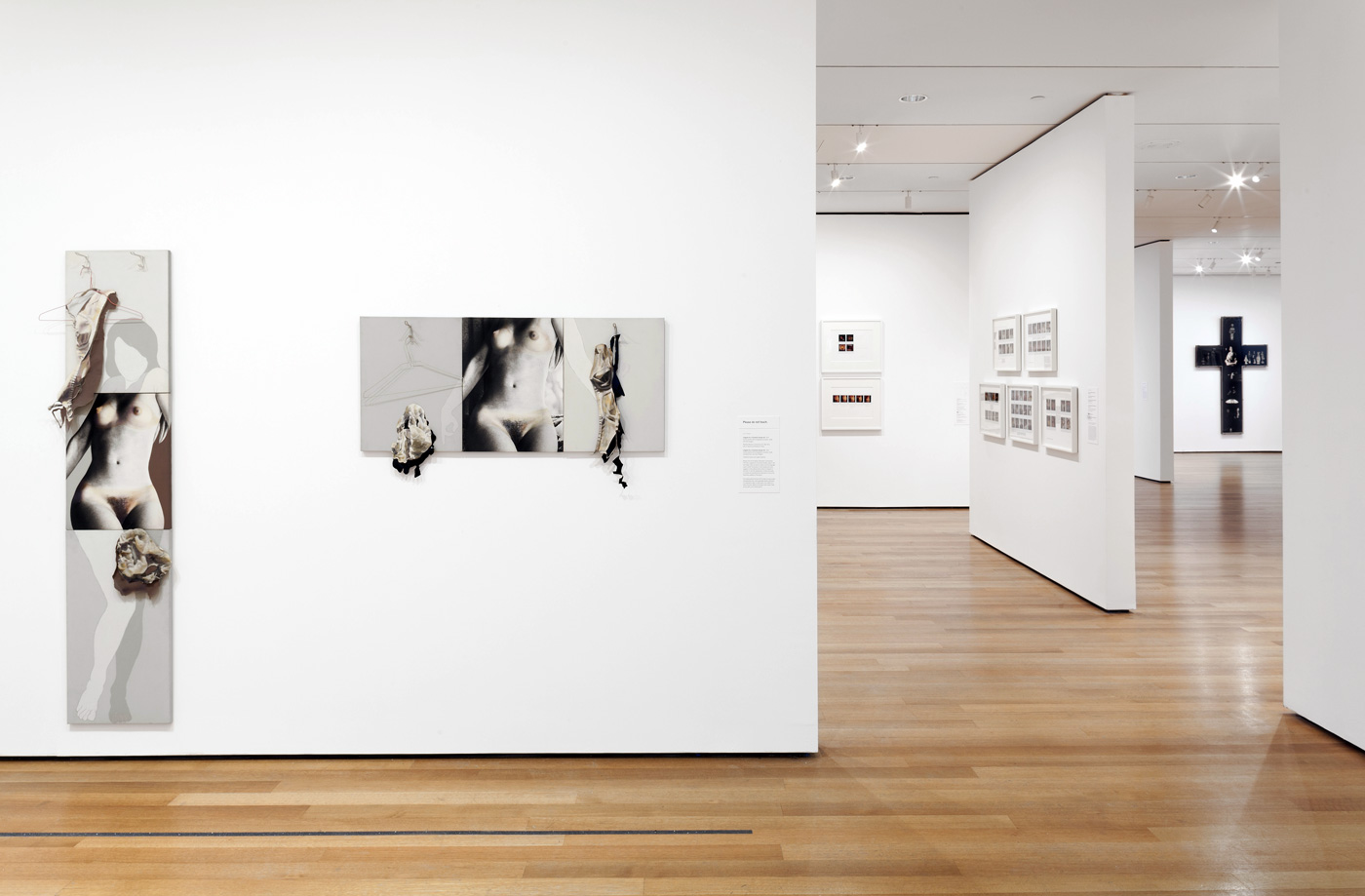
Installation view of 'Robert Heinecken: Object Matter' at The Museum of Modern Art (MoMA)

Installation view of 'Robert Heinecken: Object Matter' at The Museum of Modern Art (MoMA)

Installation view of 'Robert Heinecken: Object Matter' at The Museum of Modern Art (MoMA)

Installation view of 'Robert Heinecken: Object Matter' at The Museum of Modern Art (MoMA)


Installation views of Robert Heinecken: Object Matter at The Museum of Modern Art (MoMA)
Photos by Jonathan Muzikar
© The Museum of Modern Art


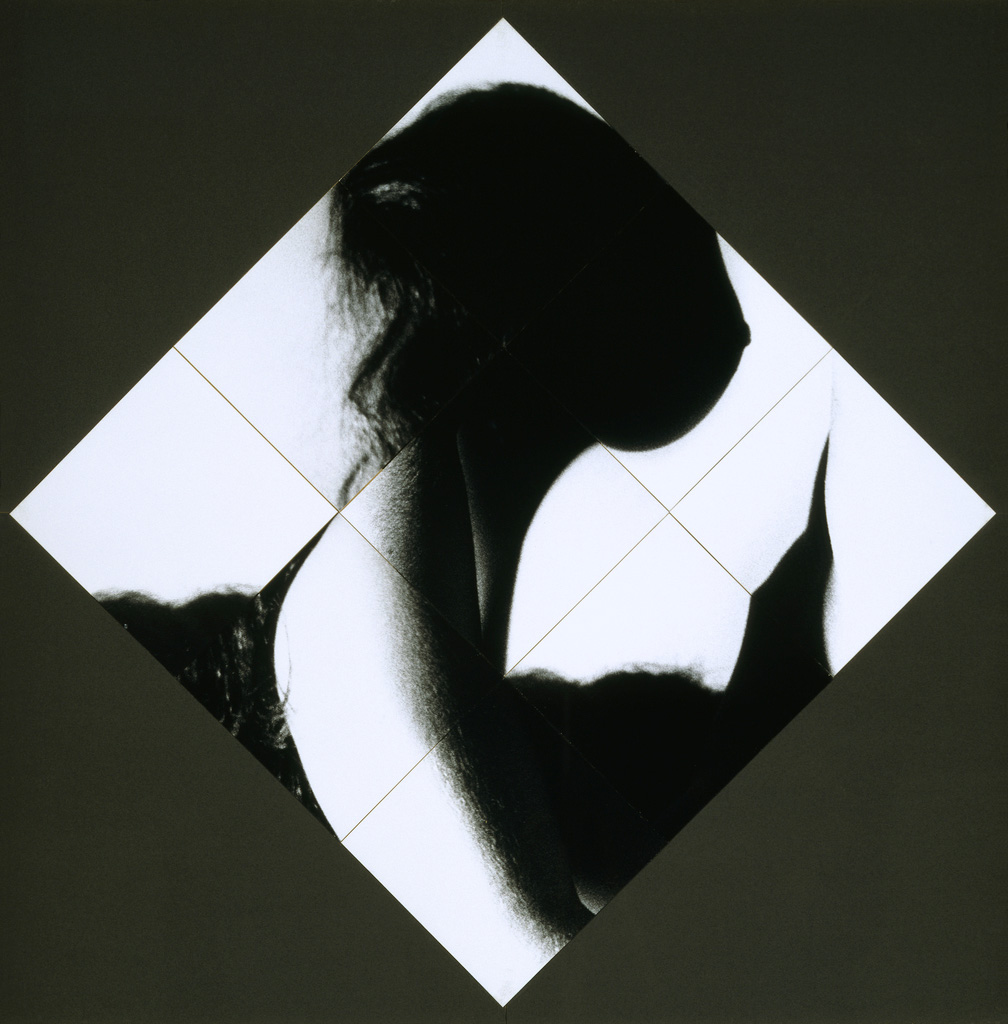
Robert Heinecken (American, 1931-2006) 'Breast / Bomb #5' 1967


Robert Heinecken (American, 1931-2006)
Breast / Bomb #5
1967
Gelatin silver prints, cut and reassembled
38 1/2 x 38 1/4″ (97.8 x 97.2cm)
Denver Art Museum. Funds From 1992 Alliance For Contemporary Art Auction


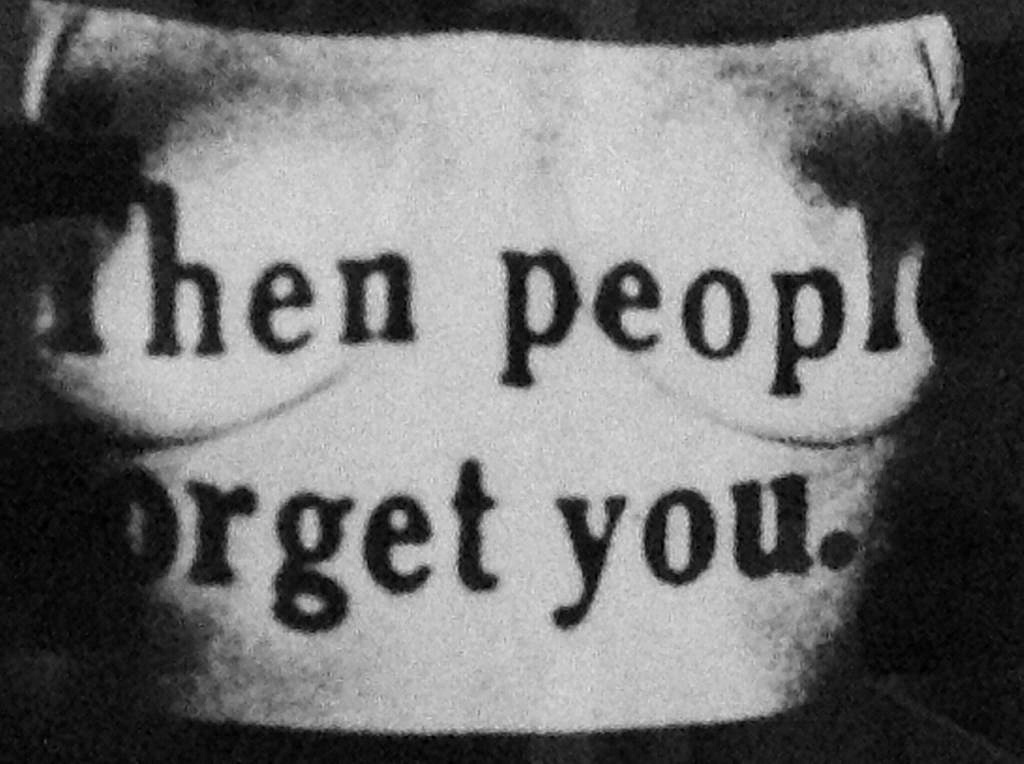
Robert Heinecken (American, 1931-2006) 'Then People Forget You' 1965


Robert Heinecken (American, 1931-2006)
Then People Forget You
1965
Gelatin silver print
10 3/8 x 12 15/16″ (26.3 x 32.8cm)
The Art Institute of Chicago. Gift of Boardroom, Inc.


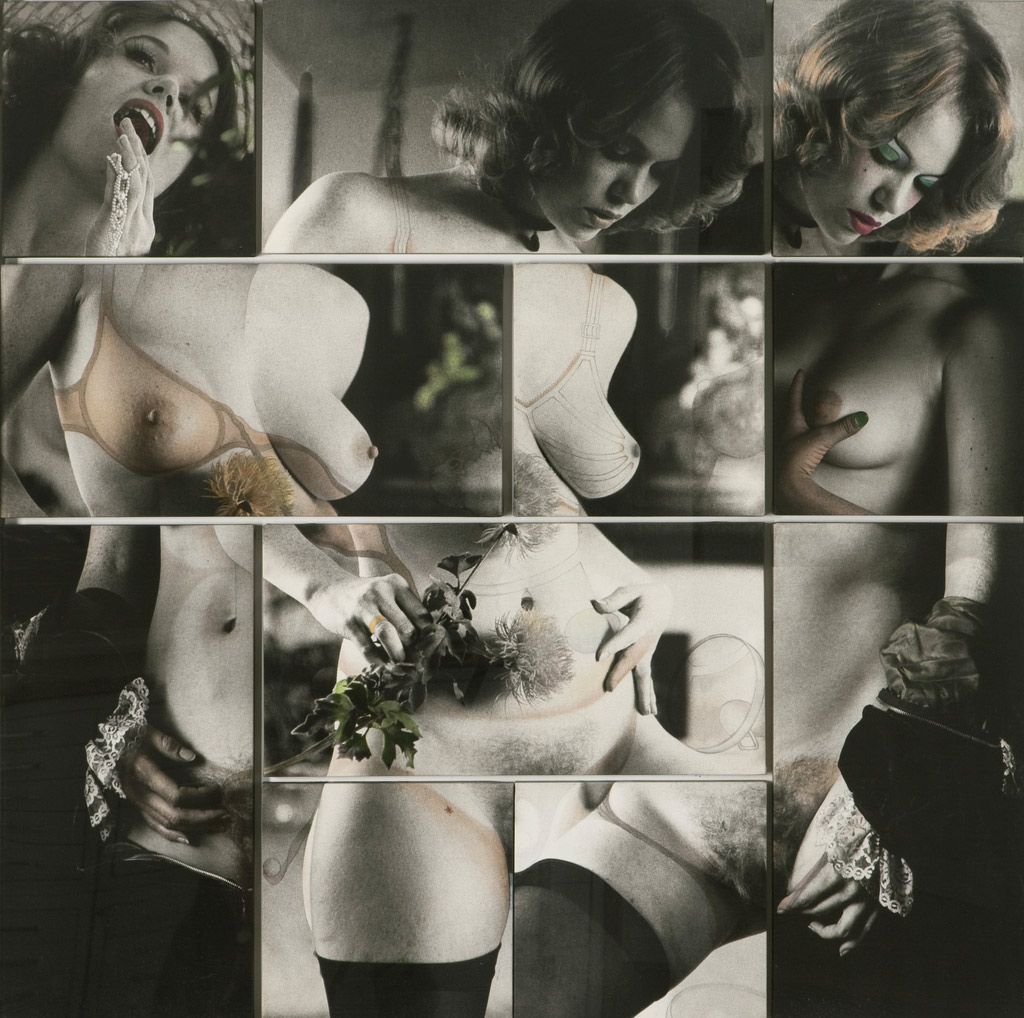
Robert Heinecken (American, 1931-2006) 'Cliche Vary / Autoeroticism' 1974


Robert Heinecken (American, 1931-2006)
Cliche Vary / Autoeroticism
1974
Eleven canvas panels with photographic emulsion and pastel chalk
39 1/2 x 39 1/2 in. (100.3 x 100.3cm)
Collection Susan and Peter MacGill, New York


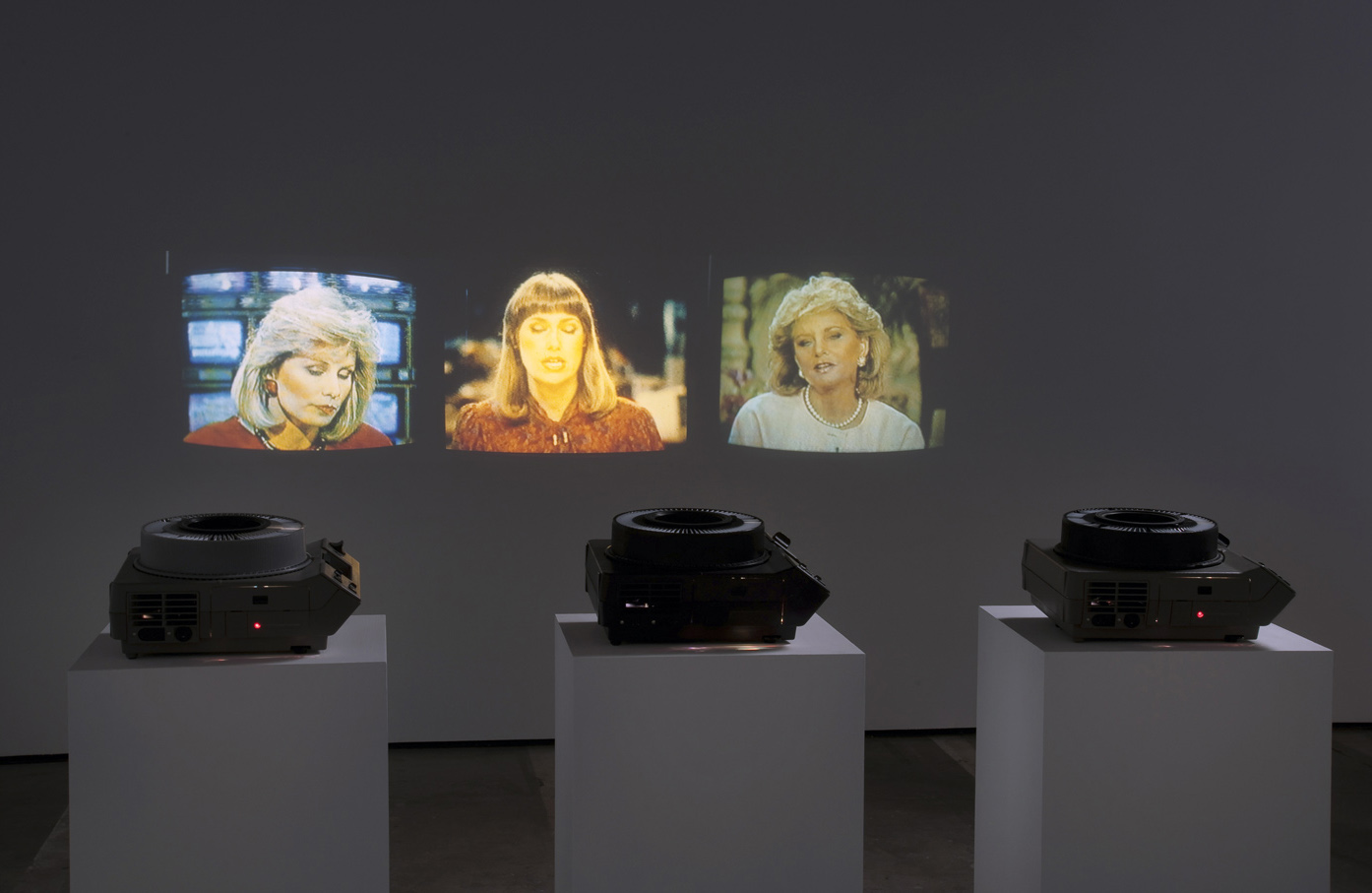
Robert Heinecken (American, 1931-2006) 'Surrealism on TV' 1986


Robert Heinecken (American, 1931-2006)
Surrealism on TV
1986
216 35 mm colour slides, slide-show time variable
The Robert Heinecken Trust, Chicago; courtesy Cherry and Martin Gallery, Los Angeles
© 2013 The Robert Heinecken Trust.


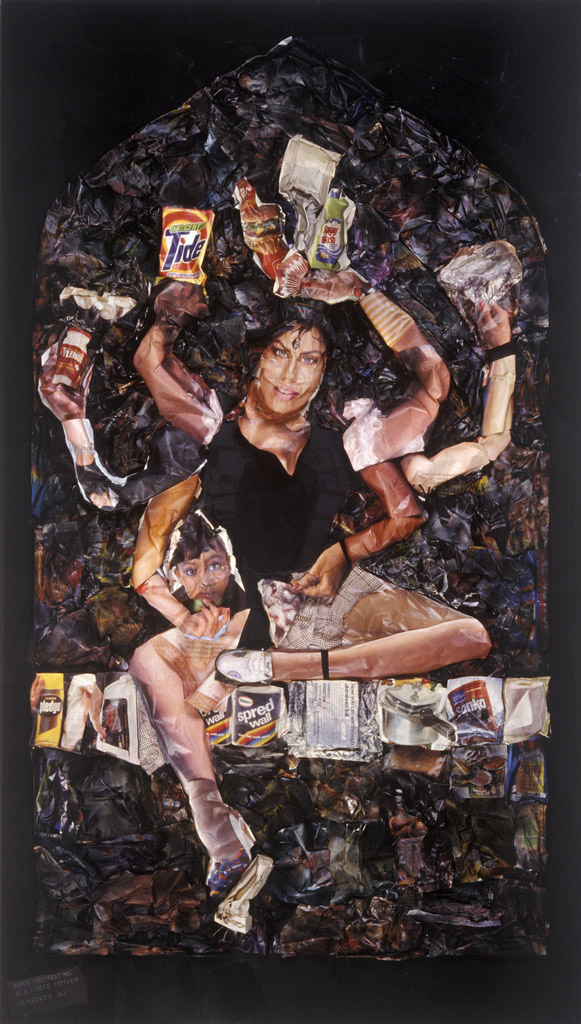
Robert Heinecken (American, 1931-2006) 'Shiva Manifesting as a Single Mother' 1989


Robert Heinecken (American, 1931-2006)
Shiva Manifesting as a Single Mother
1989
Magazine paper, paint and varnish
Collection Philip F. Denny, Chicago
© 2014 The Robert Heinecken Trust


Transparent film is also used in many of Heinecken’s works to explore different kinds of juxtapositions. In Kodak Safety Film / Christmas Mistake (1971), pornographic images are superimposed on a Christmas snapshot of Heinecken’s children with the suggestion in the title that somehow two rolls of film were mixed up at the photo lab. Kodak Safety Film / Taos Church (1972) takes photography itself as a subject, picturing an adobe church in New Mexico that was famously photographed by Ansel Adams and Paul Strand, and painted by Georgia O’Keeffe and John Marin. Presented as a negative, Heinecken’s version transforms an icon of modernism into a murky structure flanked by a pickup truck, telephone wires, and other modern-day debris.

Heinecken’s hybrid photographic paintings, created by applying photographic emulsion on canvas, are well represented in the exhibition. In Figure Horizon #1(1971), Heinecken reprised the cut-and-reassemble techniques from his puzzles and photo-sculptures, sequencing images of sections of the nude female body, to create impossible undulating landscapes. Cliché Vary, a pun on the 19th-century cliché verre process, is comprised of three large-scale modular works, all from 1974: Autoeroticism, Fetishism, and Lesbianism. The works are comprised of separately stretched canvas panels with considerable hand-applied colour on the photographic image, invoking clichés associated with autoeroticism, fetishism, and lesbianism. Reminiscent of his cut-and-reassembled pieces, each panel features disjointed views of bodies and fetish objects that never make a whole, and increase in complexity, culminating with Lesbianism, which is made with seven or eight different negatives.

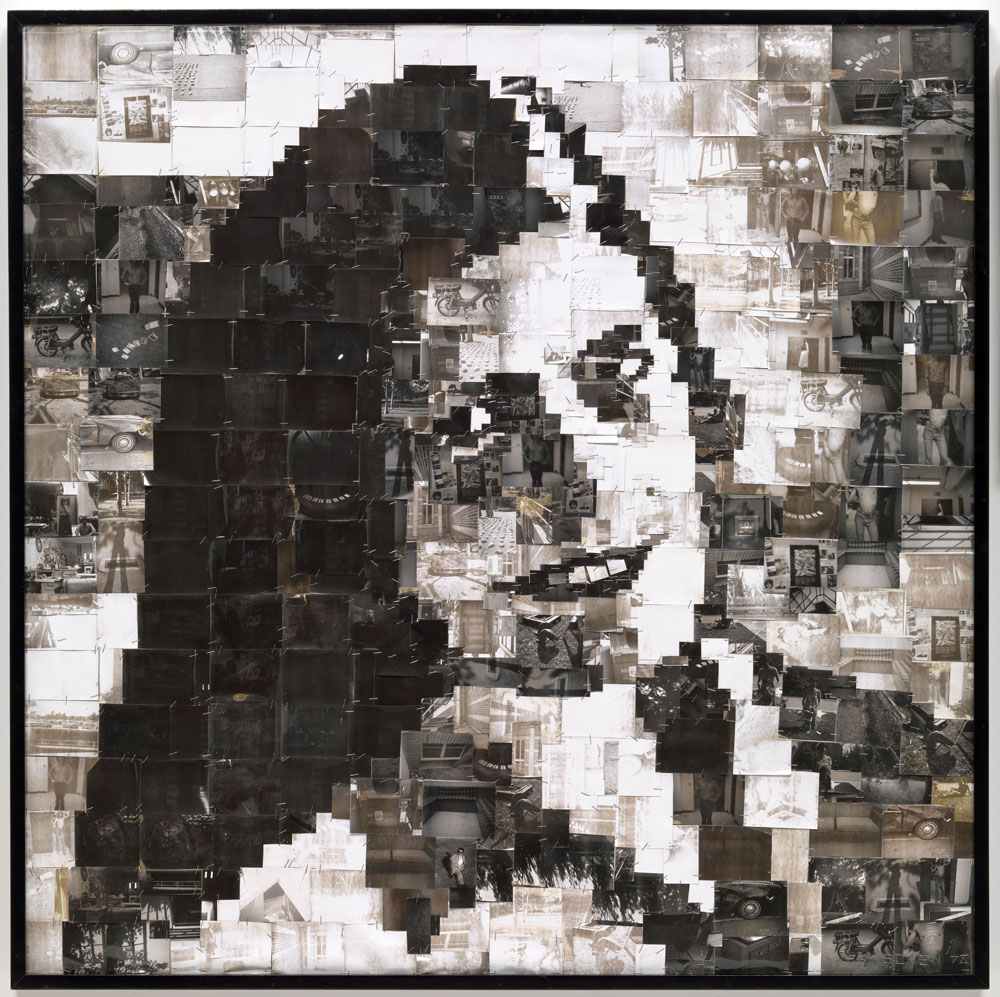
In the mid-1970s, Heinecken experimented with new materials introduced by Polaroid – specifically the SX-70 camera (which required no darkroom or technical know-how) – to produce the series He/She (1975-1980) and, later, Lessons in Posing Subjects (1981-82). Heinecken experimented with different types of instant prints, including the impressive two-panel S.S. Copyright Project: “On Photography” (1978), made the year after the publication of Susan Sontag’s collection of essays On Photography (1977). The S.S. Copyright Project consists of a magnified and doubled picture of Sontag, derived from the book’s dustcover portrait (taken by Jill Krementz). The work equates legibility with physical proximity – from afar, the portraits appear to be grainy enlargements from a negative (or, to contemporary eyes, pixilated low-resolution images), but at close range, it is apparent that the panels are composed of hundreds of small photographic scraps stapled together. The portrait on the left is composed of photographs of Sontag’’ text; the right features random images taken around Heinecken’s studio by his assistant.

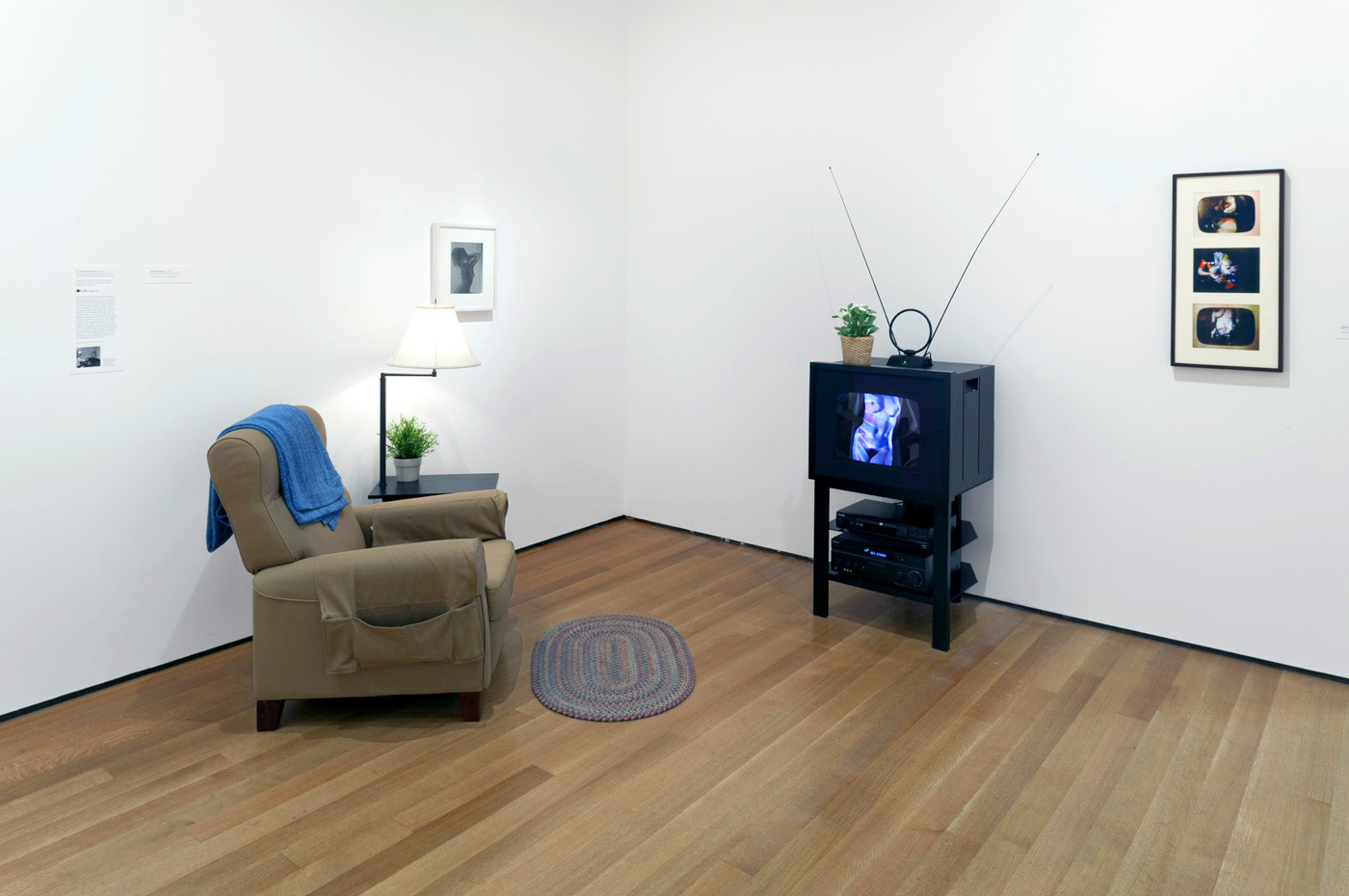
Heinecken’s first large-scale sculptural installation, TV/Time Environment (1970), is the earliest in a series of works that address the increasingly dominant presence of television in American culture. In the installation, a positive film transparency of a female nude is placed in front of a functioning television set in an environment that evokes a living room, complete with recliner chair, plastic plant, and rug. Continuing his work with television, Heinecken created videograms – direct captures from the television that were produced by pressing Cibachrome paper onto the screen to expose the sensitized paper. Inaugural Excerpt Videograms (1981) features a composite from the live television broadcast of Ronald Reagan’s inauguration speech and the surrounding celebrations. The work, originally in 27 parts, now in 24, includes randomly chosen excerpts of the oration and news reports of it. Surrealism on TV (1986) explores the idea of transparency and layering using found media images to produce new readings. It features a slide show comprised of more than 200 images loaded into three slide projectors and projected in random order. The images generally fit into broad categories, which include newscasters, animals, TV evangelists, aerobics, and explosions.

Text from the MoMA press release


Robert Heinecken (American, 1931-2006) 'Figure Cube' 1965


Robert Heinecken (American, 1931-2006)
Figure Cube
1965
Gelatin silver prints on Masonite
5 7/8 x 5 7/8″ (15 x 15cm)
The Robert Heinecken Trust. Courtesy Center for Creative Photography, University of Arizona, Tucson


Robert Heinecken (American, 1931-2006) 'Figure in Six Sections' 1965


Robert Heinecken (American, 1931-2006)
Figure in Six Sections
1965
Gelatin silver prints on wood blocks
8 1/2 x 3 x 3″ (21.6 x 7.6 x 7.6cm)
Collection Kathe Heinecken. Courtesy The Robert Heinecken Trust, Chicago


Robert Heinecken (American, 1931-2006) 'Fractured Figure Sections' 1967


Robert Heinecken (American, 1931-2006)
Fractured Figure Sections
1967
Gelatin silver prints on wood blocks
8 1/4 x 3 x 3″ (21 x 7.6 x 7.6cm)
The Museum of Modern Art, New York. The Photography Council Fund and Committee on Photography Fund


Robert Heinecken (American, 1931-2006) 'The S.S. Copyright Project: "On Photography"' (Part 1 of 2) 1978


Robert Heinecken (American, 1931-2006)
The S.S. Copyright Project: “On Photography” (Part 1 of 2)
1978
Collage of black and white instant prints attached to composite board with staples
b 47 13/16 x 47 13/16″ (121.5 x 121.5cm)
The Museum of Modern Art, New York. Purchased as the partial gift of Celeste Bartos


Robert Heinecken (American, 1931-2006) 'Recto/Verso #2' 1988


Robert Heinecken (American, 1931-2006)
Recto/Verso #2
1988
Silver dye bleach print
8 5/8 x 7 7/8″ (21.9 x 20cm)
The Museum of Modern Art, New York. Mr. and Mrs. Clark Winter Fund


Robert Heinecken (American, 1931-2006) 'Figure Parts / Hair' 1967


Robert Heinecken (American, 1931-2006)
Figure Parts / Hair
1967
Black-and-whtie film transparencies over magazine-page collage
16 x 12″ (40.6 x 30.5cm)
Collection Karol Heinecken Mora, Los Angeles


Robert Heinecken (American, 1931-2006) 'V.N. Pin Up' 1968


Robert Heinecken (American, 1931-2006)
V.N. Pin Up
1968
Black-and-white film transparency over magazine-page collage
12 1/2 x 10″ (31.8 x 25.4cm)
Museum of Contemporary Art, Chicago. Gift of Daryl Gerber Stokols


Robert Heinecken (American, 1931-2006) 'Typographic Nude' 1965


Robert Heinecken (American, 1931-2006)
Typographic Nude
1965
Gelatin silver print
14 1/2 x 7″ (36.8 x 17.8cm)
Collection Geofrey and and Laura Wyatt, Santa Barbara, California


Robert Heinecken (American, 1931-2006) 'Are You Rea #1' 1968


Robert Heinecken (American, 1931-2006)
Are You Rea #1
1968
Twenty-five gelatin silver prints
Various dimensions
Collection Jeffrey Leifer, San Francisco


Robert Heinecken (American, 1931-2006) 'Are You Rea #25' 1968


Robert Heinecken (American, 1931-2006)
Are You Rea #25
1968
Twenty-five gelatin silver prints
Various dimensions
Collection Jeffrey Leifer, San Francisco


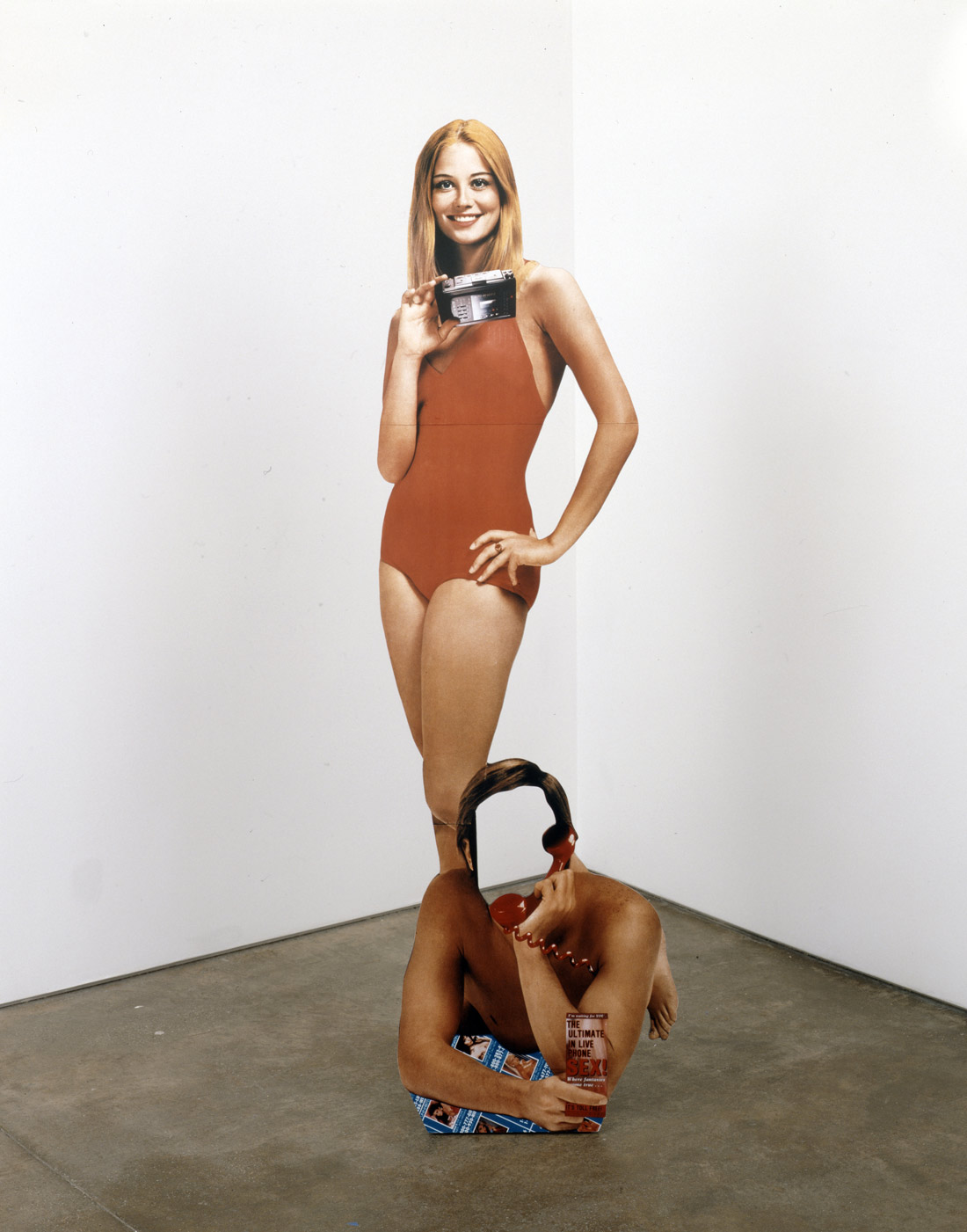
Robert Heinecken (American, 1931–2006) 'Cybill Shepherd / Phone Sex' 1992


Robert Heinecken (American, 1931–2006)
Cybill Shepherd / Phone Sex
1992
Silver dye bleach print on foamcore
63 x 17″ (160 x 43.2cm)
The Robert Heinecken Trust, Courtesy of Petzel Gallery, New York


Robert Heinecken (American, 1931-2006) 'MANSMAG: Homage to Werkman and Cavalcade' 1969


Robert Heinecken (American, 1931-2006)
MANSMAG: Homage to Werkman and Cavalcade
1969
Offset lithography on bound paper
8 3/4 x 6 5/8″ (22.2 x 16.8cm)
The Robert Heinecken Trust, Chicago


The Museum of Modern Art
11 West 53 Street
New York, NY 10019
Phone: (212) 708-9400

Opening hours:
Sunday – Friday, 10.30am – 5.30pm
Saturday, 10.30am – 7.00pm

MOMA website

LIKE ART BLART ON FACEBOOK

Back to top

Exhibition: ‘Italian Futurism, 1909-1944: Reconstructing the Universe’ at the Solomon R. Guggenheim Museum, New York

Exhibition dates: 21st February – 1st September 2014

Many thankx to the Solomon R. Guggenheim Museum for allowing me to publish the art work in the posting. Please click on the photographs for a larger version of the art.


Giacomo Balla (Italian, 1871-1958) 'The Hand of the Violinist (The Rhythms of the Bow)' (La mano del violinista [I ritmi dell’archetto]) 1912


Giacomo Balla (Italian, 1871-1958)
The Hand of the Violinist (The Rhythms of the Bow) (La mano del violinista [I ritmi dell’archetto])
1912
Oil on canvas
56 x 78.3cm
Estorick Collection, London
© 2014 Artists Rights Society (ARS), New York / SIAE, Rome


Giacomo Balla

Around 1902, [Balla] taught Divisionist techniques to Umberto Boccioni and Gino Severini. Influenced by Filippo Tommaso Marinetti, Giacomo Balla adopted the Futurism style, creating a pictorial depiction of light, movement and speed. He was a signatory of the Futurist Manifesto in 1910. Typical for his new style of painting is Dynamism of a Dog on a Leash (1912) and his 1914 work Abstract Speed + Sound (Velocità astratta + rumore) (below). In 1914, he began to design Futurist furniture, as well as so-called Futurist “antineutral” clothing. Balla also began working as a sculptor, creating, in 1915, the well-known work titled Boccioni’s Fist, based on ‘lines of force’ (Linee di forza del pugno di Boccioni).

During World War I, Balla’s studio became a meeting place for young artists.

Balla’s most famous works, such as his 1912 Dynamism of a Dog on a Leash where efforts to express movement – and thus the passage of time – through the medium of painting. One of Balla’s main inspirations was the chronophotography of Étienne-Jules Marey. Balla’s 1912 The Hand of the Violinist (above) depicts the frenetic motion of a musician playing, and draws on inspiration from Cubism and the photographic experiments of Marey and Eadweard Muybridge.

In his abstract 1912-1914 series Iridescent Interpenetration, Balla attempts to separate the experience of light from the perception of objects as such. Abstract Speed + Sound (1913-14, below) is a study of speed symbolised by the automobile. Originally, it may have been part of a triptych.

Text from the Wikipedia website


Giacomo Balla (Italian, 1871-1958) 'Abstract Speed + Sound' (Velocità astratta + rumore) 1913-1914


Giacomo Balla (Italian, 1871-1958)
Abstract Speed + Sound (Velocità astratta + rumore)
1913-1914
Oil on unvarnished millboard in artist’s painted frame
54.5 x 76.5cm
The Solomon R. Guggenheim Foundation, Peggy Guggenheim Collection, Venice 76.2553.31
© 2014 Artists Rights Society (ARS), New York / SIAE, Rome
Photo: Courtesy Solomon R. Guggenheim Foundation, New York


Francesco Cangiullo (italian, 1884-1977) 'Large Crowd in the Piazza del Popolo' (Grande folla in Piazza del Popolo) 1914


Francesco Cangiullo (italian, 1884-1977)
Large Crowd in the Piazza del Popolo (Grande folla in Piazza del Popolo)
1914
Watercolor, gouache, and pencil on paper
58 x 74cm
Private collection
© 2014 Artists Rights Society (ARS), New York / SIAE, Rome


Francesco Cangiullo

Neapolitan writer and painter who made an important contribution to Futurism’s experiments in poetry and drama.

The Napolitano artist was born on January 27th, 1884 and was largely self-taught. He joined the Futurist movement in 1910 and took part in the important Futurist exhibition in Rome in 1914, creating art collaboratively with both Filippo Tommaso Marinetti and Giacomo Balla. Cangiullo created his best-known artwork in 1915; in Café-Concert: Unexpected Alphabet he playfully portrays a lively evening at the theatre in his hometown of Naples in which the singers, dancers, acrobats, and comedians are composed of letters, numbers, and mathematical sings. In 1924 he distanced himself form the Futurists, but still continued a friendship with Marinetti. Fondly reminiscing on his experiences with the art movement, Cangiullo published Futurist Evenings recounting his memories with the group.


Filippo Masoero (Italian, 1894-1969) 'Descending over Saint Peter' (Scendendo su San Pietro) c. 1927-1937 (possibly 1930-1933)


Filippo Masoero (Italian, 1894-1969)
Descending over Saint Peter (Scendendo su San Pietro)
c. 1927-1937 (possibly 1930-1933)
Gelatin silver print
24 x 31.5cm
Touring Club Italiano Archive


Ivo Pannaggi (Italian, 1901-1981) 'Speeding Train' (Treno in corsa) 1922


Ivo Pannaggi (Italian, 1901-1981)
Speeding Train (Treno in corsa)
1922
Oil on canvas
100 x 120cm
Fondazione Carima – Museo Palazzo Ricci, Macerata, Italy
Photo: Courtesy Fondazione Cassa di risparmio della Provincia di Macerata


Ivo Pannaggi

Futurism

Pannaggi joined the Futurist movement in 1918, but left soon after because of disagreements with Fillippo Marinetti. In 1922, he and Vinicio Paladini [it] published their “Manifesto of Futurist Mechanical Art.” The manifesto emphasised the importance of machine aesthetics (arte meccanica), which became one of the dominant strands of Futurism in the 1920s. He and Paladini also staged the Mechanical Futurist Ballet (Ballo meccano futurista) at Anton Giulio Bragaglia’s Casa d’Arte.

Around the same time he painted Speeding Train (Treno in corsa), perhaps his most famous work (above). He also created many photomontage works. In Postal Collages (1925), Pannaggi created a series of unfinished photomontages that would be completed through the inevitable addition of stamps and seals by postal workers – an early instance of mail art.

Germany and the Bauhaus

In 1927, Pannaggi traveled to Berlin, where he would live until 1929. He became friends with Kurt Schwitters and Walter Benjamin and published photomontage works in German newspapers. Between 1932 and 1933, Pannaggi attended the Bauhaus, the only Futurist other than Nicolaj Diugheroff to do so.

Text from the Wikipedia website


Bruno Munari (Italian, 1907-1998) and Torido Mazzotti (Italian, 1895-1988) 'Antipasti Service' (Piatti Servizio Antipasti) 1929-1930


Bruno Munari (Italian, 1907-1998) and Torido Mazzotti (Italian, 1895-1988)
Antipasti Service (Piatti Servizio Antipasti)
1929-1930
Glazed earthenware (manufactured by Casa Giuseppe Mazzotti, Albisola Marina)
Six plates: 21.6 x 21.6cm diameter each; one vase: 11.7 x 7.6cm
The Wolfsonian-Florida International University, Miami Beach, The Mitchell Wolfson, Jr. Collection
© Bruno Munari, courtesy Corraini Edizioni
Photo: Lynton Gardiner


From February 21 through September 1, 2014, the Solomon R. Guggenheim Museum presents Italian Futurism, 1909-1944: Reconstructing the Universe, the first comprehensive overview in the United States of one of Europe’s most important 20th-century avant-garde movements. Featuring over 360 works by more than 80 artists, architects, designers, photographers, and writers, this multidisciplinary exhibition examines the full historical breadth of Futurism, from its 1909 inception with the publication of Filippo Tommaso Marinetti’s first Futurist manifesto through its demise at the end of World War II. The exhibition includes many rarely seen works, some of which have never traveled outside of Italy. It encompasses not only painting and sculpture, but also the advertising, architecture, ceramics, design, fashion, film, free-form poetry, photography, performance, publications, music, and theatre of this dynamic and often contentious movement that championed modernity and insurgency.

About Futurism

Futurism was launched in 1909 against a background of growing economic and social upheaval. In Marinetti’s “The Founding and Manifesto of Futurism,” published in Le Figaro, he outlined the movement’s key aims, among them: to abolish the past, to champion modernisation, and to extol aggression. Although it began as a literary movement, Futurism soon embraced the visual arts as well as advertising, fashion, music and theatre, and it spread throughout Italy and beyond. The Futurists rejected stasis and tradition and drew inspiration from the emerging industry, machinery, and speed of the modern metropolis. The first generation of artists created works characterised by dynamic movement and fractured forms, aspiring to break with existing notions of space and time to place the viewer at the centre of the artwork. Extending into many mediums, Futurism was intended to be not just an artistic idiom but an entirely new way of life. Central to the movement was the concept of the opera d’arte totale or “total work of art,” in which the viewer is surrounded by a completely Futurist environment.

More than two thousand individuals were associated with the movement over its duration. In addition to Marinetti, central figures include: artists Giacomo Balla, Benedetta (Benedetta Cappa Marinetti), Umberto Boccioni, Carlo Carrà, Fortunato Depero, and Enrico Prampolini; poets and writers Francesco Cangiullo and Rosa Rosà; architect Antonio Sant’Elia; composer Luigi Russolo; photographers Anton Giulio Bragaglia and Tato (Guglielmo Sansoni); dancer Giannina Censi; and ceramicist Tullio d’Albisola. These figures and other lesser-known ones are represented in the exhibition.

Futurism is commonly understood to have had two phases: “heroic” Futurism, which lasted until around 1916, and a later incarnation that arose after World War I and remained active until the early 1940s. Investigations of “heroic” Futurism have predominated and comparatively few exhibitions have explored the subsequent life of the movement; until now, a comprehensive overview of Italian Futurism had yet to be presented in the U.S. Italian art of the 1920s and ’30s is little known outside of its home country, due in part to a taint from Futurism’s sometime association with Fascism. This association complicates the narrative of this avant-garde and makes it all the more necessary to delve into and clarify its full history.

Exhibition overview

Italian Futurism unfolds chronologically, juxtaposing works in different mediums as it traces the myriad artistic languages the Futurists employed as their practice evolved over a 35-year period. The exhibition begins with an exploration of the manifesto as an art form, and proceeds to the Futurists’ catalytic encounter with Cubism in 1911, their exploration of near-abstract compositions, and their early efforts in photography. Ascending the rotunda levels of the museum, visitors follow the movement’s progression as it expanded to include architecture, clothing, design, dinnerware, experimental poetry, and toys.

Along the way, it gained new practitioners and underwent several stylistic evolutions – shifting from the fractured spaces of the 1910s to the machine aesthetics (or arte meccanica) of the ’20s, and then to the softer, lyrical forms of the ’30s. Aviation’s popularity and nationalist significance in 1930s Italy led to the swirling, often abstracted, aerial imagery of Futurism’s final incarnation, aeropittura. This novel painting approach united the Futurist interest in nationalism, speed, technology, and war with new and dizzying visual perspectives. The fascination with the aerial spread to other mediums, including ceramics, dance, and experimental aerial photography.

The exhibition is enlivened by three films commissioned from documentary filmmaker Jen Sachs, which use archival film footage, documentary photographs, printed matter, writings, recorded declamations, and musical compositions to represent the Futurists’ more ephemeral work and to bring to life their words-in-freedom poems. One film addresses the Futurists’ evening performances and events, called serate, which merged “high” and “low” culture in radical ways and broke down barriers between spectator and performer. Mise-en-scène installations evoke the Futurists’ opera d’arte totale interior ensembles, from those executed for the private sphere to those realized under Fascism.

Italian Futurism concludes with the five monumental canvases that compose the Syntheses of Communications (1933-1934) by Benedetta (Benedetta Cappa Marinetti), which are being shown for the first time outside of their original location. One of few public commissions awarded to a Futurist in the 1930s, the series of paintings was created for the Palazzo delle Poste (Post Office) in Palermo, Sicily. The paintings celebrate multiple modes of communication, many enabled by technological innovations, and correspond with the themes of modernity and the “total work of art” concept that underpinned the Futurist ethos.

Text from the Solomon R. Guggenheim Museum website


Tullio Crali (Italian, 1910-2000) 'Before the Parachute Opens' (Prima che si apra il paracadute) 1939


Tullio Crali (Italian, 1910-2000)
Before the Parachute Opens (Prima che si apra il paracadute)
1939
Oil on panel
141 x 151cm
Casa Cavazzini, Museo d’Arte Moderna e Contemporanea, Udine, Italy
© 2014 Artists Rights Society (ARS), New York/SIAE, Rome
Photo: Claudio Marcon, Udine, Civici Musei e Gallerie di Storia e Arte


Tullio Crali

Aeropittura

In 1928 Crali flew for the first time. His enthusiasm for flying and his experience as a pilot influenced his art. In 1929, through Sofronio Pocarini, he made contact with Marinetti, the founder of Futurism, and joined the movement. In the same year aeropittura was launched in the manifesto, Perspectives of Flight, signed by Benedetta, Depero, Dottori, Fillia, Marinetti, Prampolini, Somenzi and Guglielmo Sansoni (Tato). The manifesto stated that “The changing perspectives of flight constitute an absolutely new reality that has nothing in common with the reality traditionally constituted by a terrestrial perspective” and that “Painting from this new reality requires a profound contempt for detail and a need to synthesise and transfigure everything.”

Despite his relative youth, Crali played a significant part in aeropittura. His earliest aeropitture represent military planes, Aerial Squadron and Aerial Duel (both 1929). In the 1930s, his paintings became realistic, intending to communicate the experience of flight to the viewer. His best-known work, Nose Dive on the City (1939), shows an aerial dive from the pilot’s point of view, the buildings below drawn in dizzying perspective.

Crali exhibited in Trieste and Padua. In 1932 Marinetti invited him to exhibit in Paris in the first aeropittura exhibition there. He participated in the Rome Quadrennial in 1935, 1939 and 1943 and the Venice Biennale of 1940. At that time Crali was researching signs and scenery, leading in 1933 to his participation in the film exhibition Futuristi Scenotecnica in Rome. In 1936 he exhibited with Dottori and Prampolini in the International Exhibition of Sports Art at the Berlin Olympics.

Crali’s declamatory abilities and his friendship with Marinetti led him to organise Futurist evenings at Gorizia, Udine and Trieste, where he read the manifesto Plastic Illusionism of War and Protecting the Earth which he had co-authored with Marinetti. He also published a Manifesto of Musical Words – Alphabet in Freedom.

After the Second World War

Crali lived in Turin after the war, where he continued to promote Futurist events. Despite the ending of the Futurist movement with the death of Marinetti in 1944 and its Fascist reputation, Crali remained attached to its ideals and aesthetic.

Between 1950 and 1958 he lived in Paris, making occasional visits to Britain. He moved to Milan in 1958 where he remained (apart from a five-year period teaching at the Italian Academy of Fine Arts, Cairo) for the rest of his life. In Milan he began to collect and catalogue documents relating to his life and work. He donated his archive and several of his works to the Museo di arte moderna e contemporanea di Trento e Rovereto.

Text from the Wikipedia website


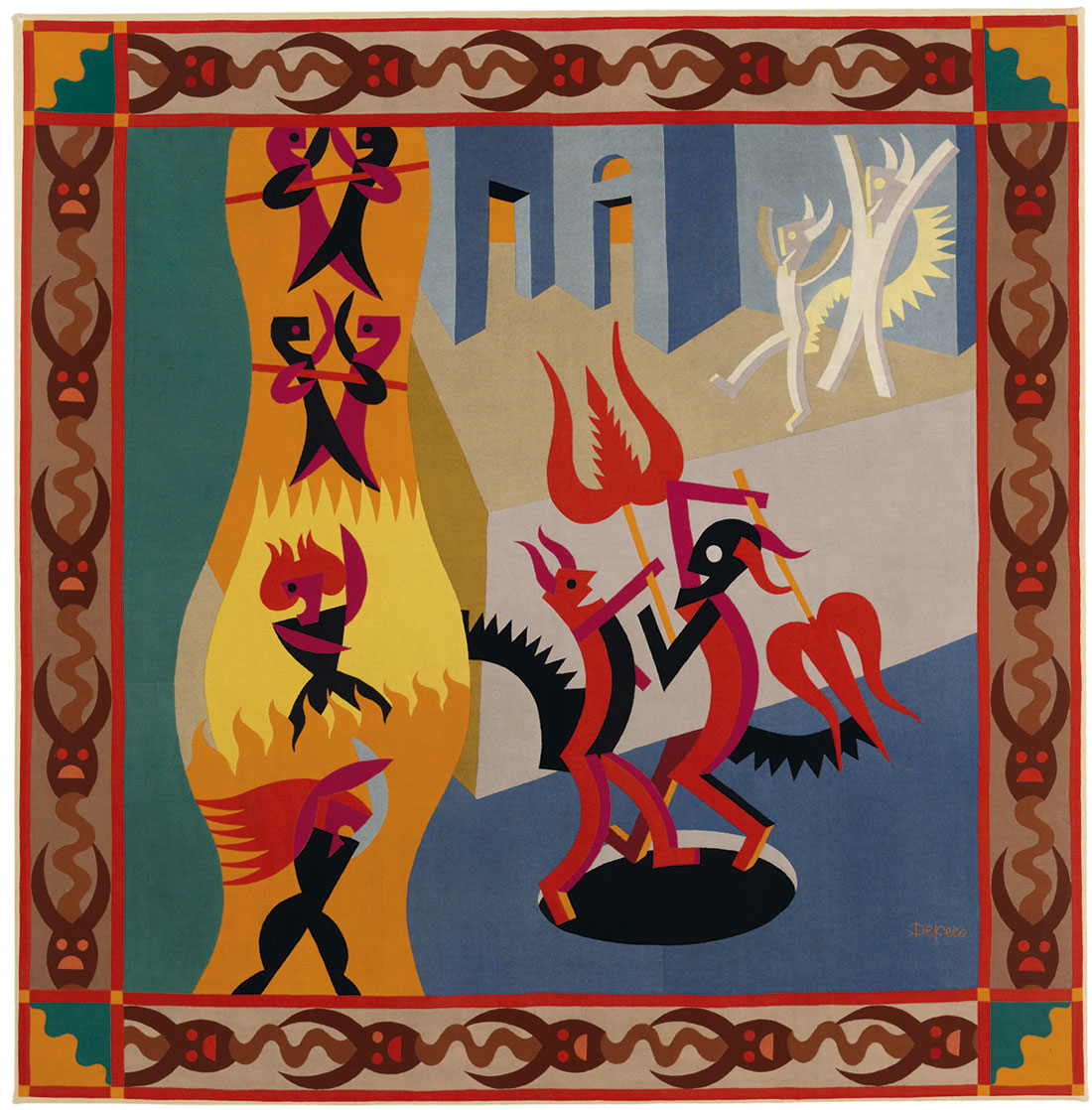
Fortunato Depero (Italian, 1892-1960) 'Little Black and White Devils, Dance of Devils' (Diavoletti neri e bianchi, Danza di diavoli) 1922-1923


Fortunato Depero (Italian, 1892-1960)
Little Black and White Devils, Dance of Devils (Diavoletti neri e bianchi, Danza di diavoli)
1922-1923
Pieced wool on cotton backing
184 x 181cm
MART, Museo di arte moderna e contemporanea di Trento e Rovereto, Italy
© 2014 Artists Rights Society (ARS), New York / SIAE, Rome
Photo: © MART, Archivio fotografico


Gerardo Dottori (Italian, 1884-1977) 'Cimino Home Dining Room Set' (Sala da pranzo di casa Cimino) early 1930s


Gerardo Dottori (Italian, 1884-1977)
Cimino Home Dining Room Set (Sala da pranzo di casa Cimino)
early 1930s
Table, chairs, buffet, lamp, and sideboard; wood, glass, crystal, copper with chrome plating, leather, dimensions variable
Private collection
© 2014 Artists Rights Society (ARS), New York / SIAE, Rome the Peggy Guggenheim Collection, Venice
Photo: Daniele Paparelli, courtesy Archivi Gerardo Dottori, Perugia, Italy


Gerardo Dottori

Gerardo Dottori (11 November 1884 – 13 June 1977) was an Italian Futurist painter. He signed the Futurist Manifesto of Aeropainting in 1929. He was associated with the city of Perugia most of his life, living in Milan for six months as a student and in Rome from 1926-39. Dottori’s’ principal output was the representation of landscapes and visions of Umbria, mostly viewed from a great height. Among the most famous of these are Umbrian Spring and Fire in the City, both from the early 1920s; this last one is now housed in the Museo civico di Palazzo della Penna in Perugia, with many of Dottori’s other works. His work was part of the art competitions at the 1932 Summer Olympics and the 1936 Summer Olympics.

Text from the Wikipedia website


Umberto Boccioni (Italian, 1882-1916) 'Elasticity (Elasticità)' 1912


Umberto Boccioni (Italian, 1882-1916)
Elasticity (Elasticità)
1912
Oil on canvas
100 x 100cm
Museo del Novecento, Milan
© Museo del Novecento, Comune di Milano (all legal rights reserved)
Photo: Luca Carrà


Umberto Boccioni

Umberto Boccioni (19 October 1882 – 17 August 1916) was an influential Italian painter and sculptor. He helped shape the revolutionary aesthetic of the Futurism movement as one of its principal figures. Despite his short life, his approach to the dynamism of form and the deconstruction of solid mass guided artists long after his death. His works are held by many public art museums, and in 1988 the Metropolitan Museum of Art in New York City organised a major retrospective of 100 pieces. …

Boccioni moved to Milan in 1907. There, early in 1908, he met the Divisionist painter Gaetano Previati. In early 1910 he met Filippo Tommaso Marinetti, who had already published his Manifesto del Futurismo (“Manifesto of Futurism”) in the previous year. On 11 February 1910 Boccioni, with Balla, Carlo Carrà, Luigi Russolo and Severini, signed the Manifesto dei pittori futuristi (“Manifesto of Futurist painters”), and on 8 March he read the manifesto at the Politeama Chiarella theatre in Turin.

Boccioni became the main theorist of the artistic movement. “Only when Boccioni, Balla, Severini and a few other Futurists traveled to Paris toward the end of 1911 and saw what Braque and Picasso had been doing did the movement begin to take real shape.” He also decided to be a sculptor after he visited various studios in Paris, in 1912, including those of Georges Braque, Alexander Archipenko, Constantin Brâncuși, Raymond Duchamp-Villon, August Agero and, probably, Medardo Rosso. In 1912 he exhibited some paintings together with other Italian futurists at the Galerie Bernheim-Jeune, and the following year returned to show his sculptures at the Galerie La Boétie: all related to the elaboration of what Boccioni had seen in Paris, where he had visited the studios of Cubist sculptors, including those of Constantin Brâncuși, Raymond Duchamp-Villon and Alexander Archipenko to further his knowledge of avant-garde sculpture.

In 1914 he published Pittura e scultura futuriste (dinamismo plastico) explaining the aesthetics of the group:

“While the impressionists paint a picture to give one particular moment and subordinate the life of the picture to its resemblance to this moment, we synthesise every moment (time, place, form, colour-tone) and thus paint the picture.”

Development of Futurism

Boccioni worked for nearly a year on La città sale or The City Rises, 1910, a huge (2m by 3m) painting, which is considered his turning point into Futurism. “I attempted a great synthesis of labor, light and movement” he wrote to a friend. Upon its exhibition in Milan in May 1911, the painting attracted numerous reviews, mostly admiring. By 1912 it had become a headline painting for the exhibition traveling Europe, the introduction to Futurism. It was sold to the great pianist, Ferruccio Busoni for 4,000 lire that year, and today is frequently on prominent display at the Museum of Modern Art in New York, at the entrance to the paintings department.

La risata (1911, The Laugh) is considered Boccioni’s first truly Futurist work. He had fully parted with Divisionism, and now focused on the sensations derived from his observation of modern life. Its public reception was quite negative, compared unfavourably with Three Women, and it was defaced by a visitor, running his fingers through the still fresh paint. Subsequent criticism became more positive, with some considering the painting a response to Cubism. It was purchased by Albert Borchardt, a German collector who acquired 20 Futurist works exhibited in Berlin, including The Street Enters the House (1911) which depicts a woman on a balcony overlooking a busy street. Today the former also is owned by the Museum of Modern Art, and the latter by the Sprengel Museum in Hanover.

Boccioni spent much of 1911 working on a trilogy of paintings titled “Stati d’animo” (“States of Mind”), which he said expressed departure and arrival at a railroad station – The Farewells, Those Who Go, and Those Who Stay. All three paintings were originally purchased by Marinetti, until Nelson Rockefeller acquired them from his widow and later donated them to the Museum of Modern Art in New York.

Beginning in 1912, with Elasticità or Elasticity (above), depicting the pure energy of a horse, captured with intense chromaticism, he completed a series of Dynamist paintings: Dinamismo di un corpo umano (Human Body), ciclista (Cyclist), Foot-baller, and by 1914 Dinamismo plastico: cavallo + caseggiato (Plastic Dynamism: Horse + Houses). While continuing this focus, he revived his previous interest in portraiture. Beginning with L’antigrazioso (The antigraceful) in 1912 and continuing with I selciatori (The Street Pavers) and Il bevitore (The Drinker) both in 1914.

In 1914 Boccioni published his book, Pittura, scultura futuriste (Futurist Painting and Sculpture), which caused a rift between himself and some of his Futurist comrades. As a result, perhaps, he abandoned his exploration of Dynamism, and instead sought further decomposition of a subject by means of colour. With Horizontal Volumes in 1915 and the Portrait of Ferruccio Busoni in 1916, he completed a full return to figurative painting. Perhaps fittingly, this last painting was a portrait of the maestro who purchased his first Futurist work, The City Rises.

Text from the Wikipedia website


Enrico Prampolini and Maria Ricotti, with cover by Enrico Prampolini. 'Program for the Theater of Futurist Pantomime' (Théâtre de la Pantomine Futuriste) Illustrated leaflet (Paris: M. et J. De Brunn, 1927)


Enrico Prampolini and Maria Ricotti, with cover by Enrico Prampolini
Program for the Theater of Futurist Pantomime (Théâtre de la Pantomine Futuriste)
Illustrated leaflet (Paris: M. et J. De Brunn, 1927)
27.5 x 22.7cm
Fonds Alberto Sartoris, Archives de la Construction Moderne-Ecole polytechnique fédérale de Lausanne (EPFL), Switzerland
By permission of heirs of the artist
Photo: Jean-Daniel Chavan


Carlo Carrà (Italian, 1881-1966) 'Interventionist Demonstration' (Manifestazione Interventista) 1914


Carlo Carrà (Italian, 1881-1966)
Interventionist Demonstration (Manifestazione Interventista)
1914
Tempera, pen, mica powder, paper glued on cardboard
38.5 x 30cm
Gianni Mattioli Collection, on long-term loan to the Peggy Guggenheim Collection, Venice
© 2014 Artists Rights Society (ARS), New York / SIAE, Rome
Photo: Courtesy Solomon R. Guggenheim Foundation, New York


Carlo Carrà

Carlo Carrà (Italian, February 11, 1881 – April 13, 1966) was an Italian painter and a leading figure of the Futurist movement that flourished in Italy during the beginning of the 20th century. In addition to his many paintings, he wrote a number of books concerning art. He taught for many years in the city of Milan.

In 1899-1900, Carrà was in Paris decorating pavilions at the Exposition Universelle, where he became acquainted with contemporary French art. He then spent a few months in London in contact with exiled Italian anarchists, and returned to Milan in 1901. In 1906, he enrolled at Brera Academy (Accademia di Brera) in the city, and studied under Cesare Tallone. In 1910 he signed, along with Umberto Boccioni, Luigi Russolo and Giacomo Balla the Manifesto of Futurist Painters, and began a phase of painting that became his most popular and influential.

Text from the Wikipedia website


Luigi Russolo (Italian, 1885-1947) "The Art of Noises: Futurist Manifesto" ("L'arte dei rumori: Manifesto futurista") Leaflet (Milan: Direzione del Movimento Futurista, 1913)
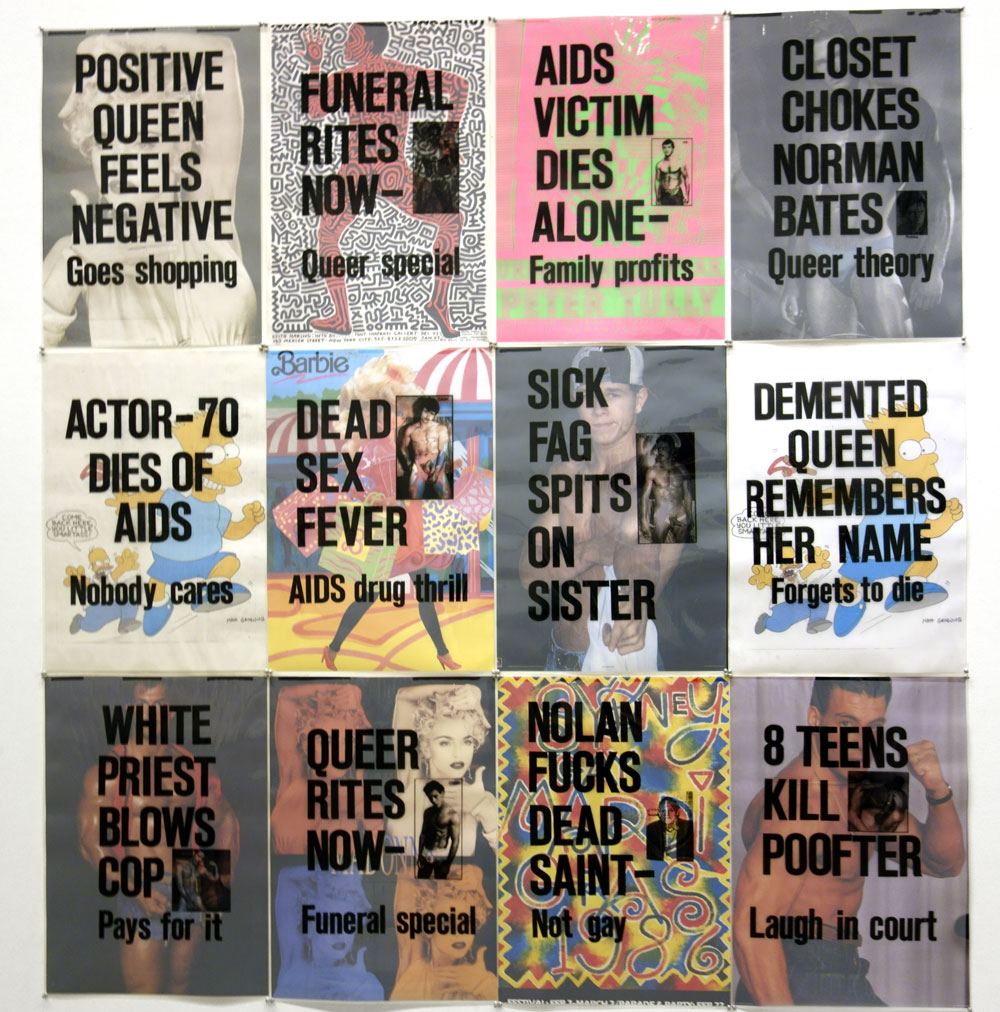
 

Luigi Russolo (Italian, 1885-1947)
“The Art of Noises: Futurist Manifesto” (“L’arte dei rumori: Manifesto futurista”)
Leaflet (Milan: Direzione del Movimento Futurista, 1913)
29.2 x 23cm
Wolfsoniana – Fondazione regionale per la Cultura e lo Spettacolo, Genoa
By permission of heirs of the artist
Photo: Courtesy Wolfsoniana – Fondazione regionale per la Cultura e lo Spettacolo, Genoa


Luigi Russolo

Luigi Carlo Filippo Russolo (30 April 1885 – 6 February 1947) was an Italian Futurist painter, composer, builder of experimental musical instruments, and the author of the manifesto The Art of Noises (1913). He is often regarded as one of the first noise music experimental composers with his performances of noise music concerts in 1913–14 and then again after World War I, notably in Paris in 1921. He designed and constructed a number of noise-generating devices called Intonarumori.

Luigi Russolo was perhaps the first noise artist. His 1913 manifesto, L’Arte dei Rumori (The Art of Noises), stated that the industrial revolution had given modern men a greater capacity to appreciate more complex sounds. Russolo found traditional melodic music confining, and he envisioned noise music as its future replacement.

Russolo designed and constructed a number of noise-generating devices called Intonarumori, and assembled a noise orchestra to perform with them. A performance of his Gran Concerto Futuristico (1917) was met with strong disapproval and violence from the audience, as Russolo himself had predicted.

Text from the Wikipedia website


Mino Somenzi, ed., with words-in-freedom image Airplanes (Aeroplani) by Pino Masnata. 'Futurismo 2, no. 32' (Apr. 16, 1933) Journal (Rome, 1933)


Mino Somenzi, ed., with words-in-freedom image Airplanes (Aeroplani) by Pino Masnata
Futurismo 2, no. 32 (Apr. 16, 1933)
Journal (Rome, 1933)
64 x 44cm
Fonds Alberto Sartoris, Archives de la Construction Moderne–Ecole polytechnique fédérale de Lausanne EPFL), Switzerland
Photo: Jean-Daniel Chavan


Fortunato Depero (Italian, 1892-1960) 'Heart Eaters' (Mangiatori di cuori) 1923


Fortunato Depero (Italian, 1892-1960)
Heart Eaters (Mangiatori di cuori)
1923
Painted wood
36.5 x 23 x 10cm
Private collection
© 2014 Artists Rights Society (ARS), New York / SIAE, Rome
Photo: Vittorio Calore


Umberto Boccioni (Italian, 1882-1916) 'Unique Forms of Continuity in Space' (Forme uniche della continuità nello spazio) 1913 (cast 1949)


Umberto Boccioni (Italian, 1882-1916)
Unique Forms of Continuity in Space (Forme uniche della continuità nello spazio)
1913 (cast 1949)
Bronze
121.3 x 88.9 x 40cm
The Metropolitan Museum of Art, New York, Bequest of Lydia Winston Malbin, 1989
© The Metropolitan Museum of Art
Image Source: Art Resource, New York


Benedetta (Cappa Marinetti) (Italian, 1897-1977) 'Synthesis of Aerial Communications' (Sintesi delle comunicazioni aeree) 1933-1934


Benedetta (Cappa Marinetti) (Italian, 1897-1977)
Synthesis of Aerial Communications (Sintesi delle comunicazioni aeree)
1933-34
Tempera and encaustic on canvas
324.5 x 199cm
Il Palazzo delle Poste di Palermo, Sicily, Poste Italiane
© Benedetta Cappa Marinetti, used by permission of Vittoria Marinetti and Luce Marinetti’s heirs
Photo: AGR/Riccardi/Paoloni


Benedetta Cappa

Benedetta Cappa (14 August 1897 – 15 May 1977) was an Italian futurist artist who has had retrospectives at the Walker Art Center and the Solomon R. Guggenheim Museum. Her work fits within the second phase of Italian Futurism.

Though she was an artist active in Futurist circles, Cappa felt labels were restrictive and initially rejected the designation. In a 1918 correspondence with F.T. Marinetti she writes, “I am too free and rebellious – I do not want to be restricted. I want only to be me.” Despite entering her marriage with such determined independence, the considerable contributions made by Cappa are often overshadowed by the figure of Marinetti and the vociferous manner with which he directed the movement. Cappa’s body of work spanned a range of media that included pen, paper, paint, metal and textiles. She wrote poetry and prose, signed, and spoke as an individual, but only recently has she garnered independent recognition.

In 1919, Cappa published Spicologia di 1 Uomo, a collection of poetry which incorporates “unusual word placement, typographic experimentation, and visual and auditory correspondences.” Subsequently published in 1924, Le Forze Umane: Romanzo Astratto con Sintesi Grafiche (Human Forces: Abstract Novel with Graphic Synthesis), has a similar structure presented in an extrapolated form. Two images from this novel provide an interesting conceptual contrast. The first, Forze Feminile: Spirale di Dolcezza + Serpe di Fascino (Feminine Forces: Spiral of Sweetness + Serpent of Charm) consists simply of three curved lines, one of which provides a central axis for the other two. The linear composition of the second drawing, Forze Maschili: Armi e Piume (Masculine Forces: Weapons and Feathers), has numerous straight lines and arcs arranged in an impenetrable tangle.

Cappa’s publication of Le Forze Umane was one of three books she has written. The release of her book made many futurists question her allegiance with Futurism, for her book seemed to align more with Neo-Plasticism at the time by many male Futurists who have written reviews on Cappa’s book. Cappa collected all of the reviews in her Librone which can be found at the Getty Research Institute. It was a decision made from many reviewers that Cappa’s first book represents the unwillingness from the reviewers to accept a women’s work as part of Futurism.

The action and aesthetic of the machine age is a trope within Futurism that appears frequently in Cappa’s artwork. One early abstract painting, Velocità di Motoscafo, (Velocity of a Motorboat), (1923-24), contains many of the elements that would come to mark Cappa’s painting style. Well defined, curvilinear shapes, painted in gradient tones are compositionally arranged to imply objects in motion: “… the interplay of ‘force lines,’ become the subject.” The artist’s exploration of the machine continued with Luci + Rumori di un Treno Notturno, (Lights + Sounds of a Night Train), (c. 1924) and with Aeropittura (1925). A trip to Latin America in 1926 was followed by a series of abstract paintings done in gouache on paper.

As Cappa developed her artistic practice, her influence within the Futurist Movement expanded. Between the end of World War I and the early 1930s, there was an ideological transformation which led to the period commonly known as Second Wave Futurism. The notably misogynistic tone of the foundation texts was largely muted as the number of female Futurists increased. Several other themes, such as Technology, Speed, and Mechanisation carried over into this new incarnation of Futurism. For this reason, Cappa’s oil painting Il Grande X (1931) is considered the culmination of one era and the prelude to another. In the two decades since F.T. Marinetti’s manifesto, the brash avant-garde movement had largely become the establishment.

It was the Futurists’ affiliation with the state establishment that would lead to one of Cappa’s most recognisable paintings, her mural series for the Conference Room at the Palazzo delle Poste in Palermo, Sicily. The building is an amalgam of works by several Futurist artists. Designed by the Rationalist architect, Angiolo Mazzoni, the Poste Italiane houses tile wall mosaics by Luigi Colombo Filìa and Enrico Prampolini in addition to the murals by Benendetta. The shared themes of synthesis and communication are critical to the aesthetic program of the Futurist structure. Completed between 1933 and 1934, each painting depicts a form of information transfer, including terrestrial, maritime, aerial, radio, telegraphic and telephonic communication. The pale blue and green colour palette, along with the use of tempera and encaustic media, were designed to invoke resonances with Pompeian frescos. The collection represents the idealised speed and efficiency of message delivery in the modern world.

Text from the Wikipedia website


Solomon R. Guggenheim Museum
1071 5th Avenue (at 89th Street)
New York

Opening hours:
Sunday – Monday 11am – 6pm
Wednesday – Friday 11am – 6pm
Saturday 11am – 8pm
Closed Tuesday

Solomon R. Guggenheim Museum website

LIKE ART BLART ON FACEBOOK

Back to top

Review / Interview: Simon Maidment, co-curator of the exhibition ‘David McDiarmid: When This You See Remember Me’ at NGV Australia, Melbourne

Exhibition dates: 9th May – 31st August 2014


Unidentified photographer. 'David McDiarmid at his first one-man show 'Secret Love', Hogarth Gallery, Sydney, 1976' 1976


Unidentified photographer
David McDiarmid at his first one-man show ‘Secret Love’, Hogarth Gallery, Sydney, 1976
1976
Silver gelatin photograph
Dennis Altman Collection, Australian Lesbian and Gay Archives (ALGA)


Here’s winking at you, sweetie…

My apologies for the slightly out of focus nature of some of the installation photographs, but I had to take them quickly as I walked through the gallery with co-curator Simon Maidment. If you relied on the nine press images supplied by the NGV (bottom of the posting), you would have no idea of the complexity of this artists work nor would you possess an understanding of the scale, intimacy, brashness, beauty and confrontational visibility of the art. You would also have no idea what a stunning installation the NGV has produced to display the work.

Simply put, this is the best exhibition I have seen in Melbourne this year.


David McDiarmid (1952-1995) – activist (the first gay person ever to be arrested in Australia) and multi-dimensional artist – proves the personal IS political AND influential. His work moves from early personal narratives through decorative to visually commanding and confrontational art. As homosexual identity transits from camp to gay to queer, McDiarmid deconstructs and redefines this identity using context as a FOIL for his art making. As Robert Nelson in his excellent review of the exhibition in The Age newspaper observes, “McDiarmid’s expression of the erotic is an act of protest as well as festivity. When McDiarmid began in full fervour, gay sex was not only reviled but illegal; and as he ended his career, homosexuality seemed to pass from the police to the undertaker. He began his expose of gay eroticism in the spirit of a demonstration and ended it as an act of compassion.”1

Well said. Homosexuality was illegal were McDairmid started making art and was deathly when he himself succumbed to the Grim Reaper. But during the journey that he took the key thing to remember is that McDiarmid never “passed” as something he was not. He was always up front, out there, doing his thing since he was first arrested in 1971. He was always pushing the boundaries, offering a wider perspective on social histories and political contexts. He questioned the marginalisation of minorities (Secret Love, 1976), the boundaries of self and society and examined taboo and transgression in a conservative society. He lived at the cutting edge of culture. Later, he waged a life and death struggle for HIV/AIDS funding, awareness and compassion with a fierce determination combined with sparkling wit, humour and sardonic aphorisms. Sexual politics and safe sex campaigns went hand in hand.

Of course, sexuality and sexual identity were at the core of his creativity. He explored the urban gay male world and the struggle for gay rights, sexual and emotional sensibilities and the cultural politics of HIV/AIDS. Early work was influenced by time spent in New York (where he knew Keith Haring) and San Francisco, where he experienced the development of the clone scene and the music of the clubs. His mode of construction has a lot in common with folk and women’s art (in particular patchwork and quilting) coupled with the use of contemporary materials (such as holographic foil).

McDiarmid’s later work becomes more symbolic and universal but still contains that cutting edge of the personal (DEMENTED QUEEN REMEMBERS HER NAME – forgets to die; POSITIVE QUEEN FEELS NEGATIVE – goes shopping). In the most amazing room of art I have seen this year, McDiarmid uses reflective cut and tiled holographic foils to create moving tribute and biting comment on the HIV/AIDS epidemic. In this darkened room the viewer is surrounded by tiles that “scintillate in spectral transience, changing their colours holographically according to your movement. The image is blunt and horny but also melancholy and scary; and similarly the medium impenetrable, deflecting the gaze and forcing you to change perspective.” (Robert Nelson)

But it’s more than that. You are surrounded by metallic flesh and embedded amongst the iridescence is both love and hate, life and death, winking eyes and holographic rainbow coloured skulls. Body language (1990, below) contains the names of McDairmid’s dead lovers woven into its fabric, a Swastika with the word AIDS for a head and the desire for the anus as a man pulls his arse cheeks apart. But here’s the rub – the tiny, puckered hole contains a holographic image of a winking eye, inviting you in, sharing the death/life joke with you. It’s a classic. In this room it feels as though you are surrounded by the fires of hell as the opalescence of the work changes from footstep to footstep, from positive to negative, from love to hate – and the pure beauty of the work is overwhelming. These are absolutely stunning works of art by any mark of the imagination, up there with the very best art ever made in Australia. His famous Rainbow Aphorisms series 1994 (below) are strong but they are are not a patch on the silver foil works. Less successful are the textile and costume designs, the weakest part of the exhibition.

One question springs to mind. Would his art have been as strong without the impetus of “death art” behind it? What would it have looked like?

I wonder which direction his art would have taken after his initial investigation of gay male identity had he not contracted HIV / AIDS and started making art about the disease. This strong focus gives the work the impetus and grunt it needed to move from the purely decorative and graphic, ney camp in some cases, to work with serious gravitas. In these later works McDiarmid lays it all on the line and just goes for it. I am so glad he did. They are powerful, concise, confrontational, beautiful, shimmering renditions of a soul living life to the full while he still had time.

It’s a pity the NGV has not advertised and promoted this exhibition more extensively. With a stunning catalogue, insightful research, amazing installation and world class art this is one exhibition you shouldn’t miss in Melbourne this winter.

Dr Marcus Bunyan

ART BLART: THE ONLY PLACE TO SEE INSTALLATION PHOTOGRAPHS OF THIS EXHIBITION ON THE WEB.


Many thankx to Simon for allowing me to take the installation photographs during our discussion and to the NGV for allowing me to publish them, along with the nine press images at the bottom of the posting. All installation photographs © Marcus Bunyan and the National Gallery of Victoria. Please click on the photographs for a larger version of the image.


Installation photograph of early works by David McDiarmid in the exhibition 'David McDiarmid: When This You See Remember Me' at NGV Australia, Melbourne

Installation photograph of early works by David McDiarmid in the exhibition 'David McDiarmid: When This You See Remember Me' at NGV Australia, Melbourne


David McDiarmid (Australian 1952-1995, worked in United States 1979-1987)
Installation photograph of early works including, in the case, Vest (c. 1972), hand-embroidered by McDiarmid with the words ‘sydney gay liberation’ as a gift for John Lee with photographs of McDiarmid and artist Peter Tully used as a wallpaper on the wall behind at the exhibition David McDiarmid: When This You See Remember Me at NGV Australia, Melbourne


Installation photograph of early works including 'Secret Love art show, poster' (1976, far left), 'Secret Love' (1976, top centre left), 'Ken's Karate Klub' (1976, centre below left) and 'Tube of joy' (1976, above right) - all from the 'Secret Love' series, 1976 except KKK by David McDiarmid in the exhibition 'David McDiarmid: When This You See Remember Me' at NGV Australia, Melbourne


David McDiarmid (Australian 1952-1995, worked in United States 1979-1987)
Installation photograph of early works including Secret Love art show, poster (1976, far left), Secret Love (1976, top centre left), Ken’s Karate Klub (1976, centre below left) and Tube of joy (1976, above right) – all from the Secret Love series, 1976 except KKK – at the exhibition David McDiarmid: When This You See Remember Me at NGV Australia, Melbourne


David McDiarmid. 'Secret Love' 1976 (installation view)


David McDiarmid (Australian 1952-1995, worked in United States 1979-1987)
Secret Love (installation view)
1976
From the Secret Love series, 1976
Metallic paint, red fibre-tipped pen, coloured pencil, collage of cut photo-offset lithograph and red and black ink on graph paper
78 x 66cm
Collection of Paul Menotti and Bryce Kerr, Sydney


David McDiarmid. 'Secret Love' 1978 (installation view)


David McDiarmid (Australian 1952-1995, worked in United States 1979-1987)
Secret Love (installation view)
1978
Collage of cut colour photo-offset lithographs on plastic, metal and plastic
135 x 142.8cm
Collection of Bernard Fitzgerald, Sydney


David McDiarmid. 'Secret Love' 1978 (installation view detail)


David McDiarmid (Australian 1952-1995, worked in United States 1979-1987)
Secret Love (installation view detail)
1978
Collage of cut colour photo-offset lithographs on plastic, metal and plastic
135 x 142.8cm
Collection of Bernard Fitzgerald, Sydney


Various artworks by David McDiarmid from 1978 (installation view) in the exhibition 'David McDiarmid: When This You See Remember Me' at NGV Australia, Melbourne


David McDiarmid (Australian 1952-1995, worked in United States 1979-1987)
Installation view of various artworks from 1978 including Strangers in the night (top second left), Mardi Gras (top fourth left), Juicy fruit (top second right) and Real confessions (bottom second left)
All National Gallery of Victoria


Bush Couture, Sydney (fashion house) Linda Jackson (designer) David McDiarmid (painter) 'Paua kimono' 1984 (installation view)


Bush Couture, Sydney (fashion house) (front)
Linda Jackson (designer)
David McDiarmid (Australian 1952-1995, worked in United States 1979-1987) (painter)
Paua kimono (installation view)
1984
National Gallery of Victoria, Melbourne


Interview with co-curator Simon Maidment

MB: First of all Simon, can I ask how long have you been at the National Gallery of Victoria and what brought you to the institution?

SM: I’ve been at the NGV since June 2013 and I joined because of a new vision for the gallery which is making contemporary art a priority, both in collecting practices in the exhibitions that the NGV holds. Recently, there has been a real push for change, precipitated by the appointment of Max Delany who is a friend and colleague I respect a lot and who has been really supportive of my career.

MB: So what was your background in terms of training?

SM: I studied as an artist and immediately before coming to the NGV I was undertaking my PhD at The University of Melbourne’s Victorian College of the Arts Centre for Ideas with Elizabeth Presa as one of my supervisors.

MB: And what new knowledge was your PhD based around?

SM: It investigated curatorial practices that could be thought of as context responsive, looking at artists who seek to enact some sort of social and/or political change.

MB: So this exhibition would be perfect to fit into that…

SM: Yes, indeed… so largely my background has been working with living artists. I have done a few shows in which I have worked with existing bodies of work, but I have done a lot of shows where I have been facilitating artists works. I started as an artist working in media arts – sound, video, projection and digital technologies – and often worked as a studio assistant for more senior artists, people like Sue Ford, Susan Fereday, Ian de Gruchy and my role with them became more and more about facilitation. Then the directorship of Westspace came up and I got that, and my focus turned more from collaboration and working as a studio assistant to facilitation. I became a curator because basically that is what I was doing.

MB: So can you tell me Simon, what was the lead in time for this exhibition? I know it was postponed and delayed at various times, what were the reasons for that?

SM: It was kind of before my time so I am not really sure, but there have been different curators at different times from the NGV involved with the project. So Ted Gott was involved with the exhibition, even before he began work at the NGV. Ted was involved with David’s estate with Sally Gray, my co-curator, right from the start, so he’s been an advisor to Sally right from the start of this long journey. I think the initial discussion about the show was with Ted, and then when Jason Smith was in my position he was involved in this project. When I was talking with Sally the very first discussions about holding the exhibition at the NGV was maybe 15 years ago…

MB: So to finally get it here and up on the walls…

SM: So when I started 11 months ago there was really very little in place. So Max Delany and Sally started a conversation about working towards this show probably about 14 months ago. When Tony Ellwood started he was like, “We’re doing this show.” He’s a big fan of David McDiarmid. He was very familiar with his work so I think that helped speed things along and he really facilitated getting this exhibition done. It was scheduled for 2011.

MB: To get it together from start to finish in 14 months is pretty amazing really…

SM: It was a lot of work but bearing in mind how familiar Sally is with the material we kind of had a real head start.

MB: But then you have to pull it all together from lenders and institutions that hold works and that would have been very intensive. Then to design it all and to make it look like it does. It looks fantastic! Everyone at the opening was just smiling and having a good time, looking at the work, remembering.

SM: I knew the work en masse would blow people away.

MB: Reading the catalogue, you can see that David comes from a period where there was a ground swell of social movements, which was almost like one movement. Everybody went to everyone else’s rallies and they all protested together. David McDiarmid was the very first gay person to get arrested in Australia and at the moment I am digitally restoring the image of him being marched away by two policemen at the ABC protest in Sydney. It is so degraded it will take a long time to restore but it is a really important image. Out of that there comes a real social conscience, fighting for your rights and freedom. So leading on from that, when you think about having this exhibition here now (after Ted Gott’s seminal exhibition Don’t Leave Me This Way: Art in the Age of AIDS at the National Gallery of Australia in 1994), you observe that marginalised voices rarely enter institutional centres of art, rarely enter the mainstream art. It’s usually ARI’s or small public galleries. Not that the artist is gay (because they are just artists) but that the CONTENT addresses gay issues – which is why it’s so fantastic to see this exhibition here at the NGV.

So were there any barriers here to doing David’s show?

SM: No, not really. I think one of the really important things to note is that they show would not have really happened without the large gift from the estate. Becoming the key holder and custodian of David McDiarmid’s work added extra emphasis and responsibility about doing the right thing. At that point the organisation is implicated in that legacy and somehow we have to disseminate the work out into the community.

MB: It is quite a confronting show, how do you think the general public will respond to it?

SM: I have done a couple of tours of people through the exhibition, members and other, and one of the things that has been surprising to me, in a way, which has only become apparent when I have been describing the show in which David makes work in response to particular social and political conditions and contexts… is how different things are. AIDS is now not a terminal illness. To speak to a younger generation than even myself, they have no idea about dying from lack of a viable treatment, of AIDS being a death sentence.

MB: Last night I had a cry for all the people I had loved and lost. But it’s not just the public coming in to see this exhibition, it’s young gay men who don’t ever see anybody ill, don’t understand about the side effects of taking the medication, about what living with HIV is like. They don’t understand the struggle that went on for them to live as they do now. Do you think they will engage with that?

SM: We have structured the show in a way that teases those things out. One of the aspects of McDiarmid as a figure that I find very interesting is that, in 20 short years of practice, he spanned incredible key moments and periods of change in broader society and also within gay society. The legal, medical, institutional change… and really looking at that 20 years is looking at a period of immense social change. The narrative of the exhibition is then to reflect on that broader cultural shift through the biography of one person.

MB: It’s interesting when I looked at the show, when you start making work as an artist it’s always about personal narratives – lovers, friends, places – which then widens out into more universal concerns. You can see in David’s early work him scribbling, writing and really intimately notating his world, investigating his self and his relations to the world around him. And then to take that insight and then to mould it into these reflective images into the Rainbow Aphorisms at the end is an incredible journey. Stephen Alkins was saying to be last night that even the last works were still grounded in this humorous, ironic look at life. He as a really important multimedia artist when you actually study the work.

SM: Just to pick up on one aspect that you are mentioning, and going back into my own background, one of things that Max Delany and I have been talking about that has in some ways illuminated this project is that, in the 1970s and 80s that saying ‘The personal is political’, is very important. David’s work is talking very much about the political as his own biography. Perhaps there is a shift in his later work to a more symbolic realm, and I would argue that nowadays artists working in a political and social context and to affect social change is not so much now as a personal identity – a woman, a black man, a gay man – it’s not necessarily about individual identities anymore, in some ways those battles seem to have been won within Western society. Actually for artists now in this context it’s more about neo-liberalism or capitalism. So it tends to be more on an institutional level and people tackling that in a much more symbolic realm. For instance I am thinking of such people as Jeremy Deller, an English artist who engages with British history and in particular his Battle of Orgreave, a reenactment of the actual Battle of Orgreave which occurred during the UK miners’ strike in 1984.

MB: People like Tom Nicholson in Australia, then, who did the Monument for the flooding of Royal Park (2008-2010), a proposition for the scattering of nardoo sporocarp throughout Royal Park, a vast Park in Melbourne’s inner north which was Burke and Wills departure point, now commemorated by a small cairn.

SM: Exactly. Artists like Tom are working in very propositional ways about memory, social imagination, monuments and memorialisation. All those kind of things are very much within a symbolic realm now. McDiarmid’s work fills the personal and then moves into the symbolic.

MB: But then Stephen Alkins said it was always personal to David, still based in the personal. He was very loyal to his friends, he was a very quiet person, very loving person with great energy. But he didn’t suffer fools gladly, and I think that this comes out of that culture of standing up for yourself and being strong because of the stuff we had to go through to where we are today. Seeing this exhibition actually shows you that difference and what we had to fight for.

SM: There’s a real drive there in that last room. He made so much work, across so much media, at the end of his life – that impending death drive was the source of so much creativity.

MB: McDiarmid was heavily influenced by international artists such as Keith Haring but he never really showed overseas. What do you think about that diaspora, that going overseas and then returning home to then begin exhibiting?

SM: Well the earlier work is, as you say, heavily influenced by the New York scene, the clone scene that was prevalent in the 80s – San Francisco, New York – so he’s definitely channelling those places… Interestingly, unlike many other artists, his art practice is nearly all Australian.

MB: Finally, what do you think is is his legacy in terms of his standing as an artist?

SM: In the last ten years of his life he was heavily involved as a community artist. He was incredibly busy and incredibly involved with things like the organisation of the Sydney Gay Mardi Gras and the design of the posters and floats. He was director of Mardi Gras from 1988-90 and he worked up float designs for various groups. You really get a sense of, as you said, of the solitary work of an artist and a real commitment to that work. In terms of his legacy as an artist, I don’t think that we will know until the exhibition is over. His work, such as the Rainbow Aphorisms, has been distributed widely but not really in an art context, and certainly not in a museum show such as this. People have not had the opportunity to visualise his work as a whole body of work until now.

MB: That brings me to the international context. The Keith Haring Foundation relentlessly promotes his work through books, exhibitions and conferences throughout the world. Do you think that you will start promoting his work overseas to other galleries and getting it into international exhibitions?

SM: I think the book will open a lot of doors. Because his work reproduces so well, because his writing is so interesting there is a broad range of voices for the scholars to investigate. But I think because the work reproduces so beautifully that will be hugely important. One of the aspects that the book will hopefully communicate to a younger audience is that of an infected muscular, sexually active, virile man not an emaciated artist… but to understand that and where that came from, and how radical that was at the time. I think that is one of the legacies that people will take away from David’s work. He is one of the artists that has been really instrumental in redefining that imaginary representation of a dying gay man.

MB: I remember seeing those + and – posters in gay sex venues, and thinking to myself, wow those are so amazing, who did those!

SM: Yes, those posters are about not closing down, about always been open to possibilities.

MB: Thank you so much Simon for taking the time to talk to me, it’s been great.

SM: Always a pleasure.


Dr Marcus Bunyan with Simon Maidment for Art Blart, June 2014

Simon Maidment is Curator of Contemporary Art at the NGV.


Installation view by David McDiarmid of various Sydney party posters with a black and white background wallpaper of David and the HIV Living group's 'Day of the dead skeleton for the Sydney Gay and Lesbian Mardi Gras, 1992' in the exhibition 'David McDiarmid: When This You See Remember Me' at NGV Australia, Melbourne

Installation view by David McDiarmid of various Sydney party posters with a black and white background wallpaper of David and the HIV Living group's 'Day of the dead skeleton for the Sydney Gay and Lesbian Mardi Gras, 1992' in the exhibition 'David McDiarmid: When This You See Remember Me' at NGV Australia, Melbourne


David McDiarmid (Australian 1952-1995, worked in United States 1979-1987)
Installation views of various Sydney party posters with a black and white background wallpaper of David and the HIV Living group’s Day of the dead skeleton for the Sydney Gay and Lesbian Mardi Gras, 1992 (commissioned by the AIDS Council of NSW) at the exhibition David McDiarmid: When This You See Remember Me at NGV Australia, Melbourne


David McDiarmid (Australian 1952-1995, worked in United States 1979-1987) 'Sleaze Ball, Horden Pavilion, 12 October 1985' 1985 (installation view)


David McDiarmid (Australian 1952-1995, worked in United States 1979-1987)
Sleaze Ball, Horden Pavilion, 12 October 1985 (installation view)
1985
Screenprint printed in black and gold ink
91.2 x 65cm (sheet)
National Gallery of Australia, Canberra
Gift of the artist, 1991


David McDiarmid (Australian 1952-1995, worked in United States 1979-1987) 'So I walked into the theatre' 1984-1985 (installation view)


David McDiarmid (Australian 1952-1995, worked in United States 1979-1987)
So I walked into the theatre (installation view)
1984-1985
Synthetic polymer paint, iron-on transfer, and cotton thread on cotton
Heide Museum of Modern Art, Melbourne
Gift of the Estate of David McDiarmid, 1998


David McDiarmid (Australian 1952-1995, worked in United States 1979-1987) 'So I walked into the theatre' 1984-1985 (installation view detail)


David McDiarmid (Australian 1952-1995, worked in United States 1979-1987)
So I walked into the theatre (installation view detail)
1984-1985
Synthetic polymer paint, iron-on transfer, and cotton thread on cotton
Heide Museum of Modern Art, Melbourne
Gift of the Estate of David McDiarmid, 1998


So I walked into the

theatre and lit a cigarette

I looked around. Then I

saw Tony. He lives in

Brooklyn and has a nice

beard and greasy hair.

He didn’t acknowledge

me, but I expected that.

I’d already made it with

him several times before

and each time, he pretended

was the first. He had

even told me his name

once, and that he lived

with a lover. We always

have great sex, but he doesn’t

want me to do anything

but stand there. He has

an incredible mouth…


David McDiarmid (Australian 1952-1995, worked in United States 1979-1987) 'Disco kwilt' c. 1980 (installation view)


David McDiarmid (Australian 1952-1995, worked in United States 1979-1987)
Disco kwilt (installation view)
c. 1980
Artbank collection


Installation view of works by David McDiarmid, mainly from the series 'Kiss of Light', 1990-1992 including at left 'Mighty real' 1991 from the exhibition 'David McDiarmid: When This You See Remember Me' at NGV Australia, Melbourne


David McDiarmid (Australian 1952-1995, worked in United States 1979-1987)
Installation view of works from the series Kiss of Light, 1990-92 including at left Mighty real 1991 with Kiss of Light 1990 right at the exhibition David McDiarmid: When This You See Remember Me at NGV Australia, Melbourne
Collage of cut self-adhesive holographic film on enamel paint on plywood


David McDiarmid (Australian 1952-1995, worked in United States 1979-1987) 'Mighty real' (detail) 1991 (installation view detail)


David McDiarmid (Australian 1952-1995, worked in United States 1979-1987)
Mighty real (installation view detail)
1991
From the Kiss of light series 1990-1992
Collage of cut self-adhesive holographic film on enamel paint on plywood
144.5 x 123.6cm
Collection of Bernard Fitzgerald, Sydney


Detail of one of David McDiarmid's holographic film art works showing the winking eyes


Detail of one of David McDiarmid’s holographic film art works showing the winking eyes


David McDiarmid (Australian 1952-1995, worked in United States 1979-1987) 'Body language' 1990 (installation view)


David McDiarmid (Australian 1952-1995, worked in United States 1979-1987)
Body language (installation view)
1990
From the Kiss of light series 1990-1992
Collage of cut self-adhesive holographic film on enamel paint on plywood
152.4 x 121.8cm
National Gallery of Victoria, Melbourne


There is a holographic winking eye in the arsehole of this work


David McDiarmid (Australian 1952-1995, worked in United States 1979-1987) 'Thinking of you' 1990 (installation view detail)


David McDiarmid (Australian 1952-1995, worked in United States 1979-1987)
Thinking of you (installation view detail)
1990
Collage of cut self-adhesive holographic film on enamel paint on plywood
140 x 120cm
Collection of Steven Alkins, Mullumbimby, New South Wales


Installation photograph of the last room in the exhibition 'David McDiarmid: When This You See Remember Me' at NGV Australia, Melbourne showing, at left on the wall, work from the 'Rainbow Aphorisms' series 1994 with in front 'Totem works' 1992-1995


Installation photograph of the last room showing, at left on the wall, work from the Rainbow Aphorisms series 1994 with in front Totem works 1992-1995 at the exhibition David McDiarmid: When This You See Remember Me at NGV Australia, Melbourne


David McDiarmid (Australian 1952-1995, worked in United States 1979-1987) 'Standard bold condensed' 1994 (installation view)


David McDiarmid (Australian 1952-1995, worked in United States 1979-1987)
Standard bold condensed (installation view)
1994
Screenprint on mylar on colour laser print
255.7 x 242.3cm (overall)
National Gallery of Victoria, Melbourne
Gift of the Estate of David McDiarmid, 1998


Peter Tully (Australian, 1947-1992), David McDiarmid (Australian 1952-1995, worked in United States 1979-1987), Ron Smith (Australian, b. 1950s) 'Totem works' 1992-1995 (installation view)

Peter Tully (Australian, 1947-1992), David McDiarmid (Australian 1952-1995, worked in United States 1979-1987), Ron Smith (Australian, b. 1950s) 'Totem works' 1992-1995 (installation view)


David McDiarmid (Australian 1952-1995, worked in United States 1979-1987)
Works from the Rainbow Aphorisms series (installation views)
1994, printed 2014
Computer generated colour inkjet prints
149.1 x 110cm (image and sheet each)
Collection of the McDiarmid Estate, Sydney


Peter Tully (Australian, 1947-1992)

David McDiarmid (Australian 1952-1995, worked in United States 1979-1987)
Lived in United States 1979-1987

Ron Smith (Australian, b. 1950s)
Totem works
1992-1995
Anodised aluminium, found objects (installation)
Dimensions variable
Collection of Ron Smith, Woonona, New South Wales


Installation photograph of the last room in the exhibition 'David McDiarmid: When This You See Remember Me' at NGV Australia, Melbourne showing, at right on the wall, work from the 'Rainbow Aphorisms' series 1994 with in front 'Totem works' 1992-1995, then at left on the wall 'Pictograms' 1995


Installation photograph of the last room showing, at right on the wall, work from the Rainbow Aphorisms series 1994 with in front Totem works 1992-95, then at left on the wall Pictograms 1995 at the exhibition David McDiarmid: When This You See Remember Me at NGV Australia, Melbourne


David McDiarmid (Australian 1952-1995, worked in United States 1979-1987) 'Pictograms' 1995 (installation view)


David McDiarmid (Australian 1952-1995, worked in United States 1979-1987)
Pictograms
1995
Vinyl and reflective plastic on aluminium


“I never saw art as being a safe thing. I know that exists but that’s not something that involves me.”

David McDiarmid, 1993


The vibrant, provocative and pioneering work of leading Australian artist, designer and gay activist David McDiarmid will be presented in a retrospective exhibition at the National Gallery of Victoria. Defying classification, McDiarmid’s work encompasses the complex and interconnected histories of art, craft, fashion, music, sex, gay liberation and identity politics.

David McDiarmid: When This You See Remember Mewill bring together more than 200 works, including the artist’s early gay liberation work; New York graffiti and disco quilts; fashion collaborations with Linda Jackson; his pioneering Rainbow aphorisms andGothic aphorisms digital work; material he produced as Sydney Mardi Gras Artistic Director; posters created for the AIDS Council of NSW; and, his significant and highly influential international campaigns developed in the context of AIDS, sexual politics and safe sex in the 1990s.

Tony Ellwood, Director, NGV, said, “The NGV is pleased to be staging this retrospective of an artist whose work had enormous impact on both the gay liberation movement and the international dialogue around AIDS, and whose clear messages of liberation, equality and emancipation continue to resonate today. David McDiarmid: When This You See Remember Me explores the social history, as well as political and art historical context, that informed McDiarmid’s work, which inspires through its courage, poetry, exuberance and cultural impact.”

Defying classification, the work of David McDiarmid encompasses the complex and interconnected histories of art, craft, fashion, music, sex, gay liberation and identity politics; happily residing in the spaces between high and low art, popular culture and community engagement. At once kaleidoscopic, celebratory and darkly humorous in tone, the artist’s idiosyncratic, highly personal and at times, confessional work highlights the redefinition and deconstruction of identities – “from camp to gay to queer” – drawing on the experiences of a life intensely lived in Melbourne, Sydney and New York. Charting the shifts in politics and individual and community expression that unfold across the decades of the 1970s, 80s and 90s, this exhibition also reveals McDiarmid’s artistic and grassroots political response to the impact of HIV/AIDS during the 1980s and beyond, for which he is best known internationally.

Recognising the cultural climate in which the artist worked, including the burgeoning of the gay rights movement, and a decade later, the advent of the AIDS crisis, the playful and provocative nature of McDiarmid’s work was critically related to changes that were occurring throughout this time to sexual identity and politics in Australia.

Dr Sally Gray, Guest Curator, said, “McDiarmid’s work speaks so eloquently of its time yet its importance and relevance endures today. David McDiarmid: When This You See Remember Me is the first exhibition in which the full scope of McDiarmid’s creative oeuvre is on display and is the culmination of painstaking research, with the support of many of his collaborators, friends and fans.”

David McDiarmid: When This You See Remember Me will coincide with the 20th International AIDS Conference in Melbourne in July 2014.

This exhibition includes coarse language and sexual content. Press release from the NGV website


William Yang (Australian, b. 1943) 'Artist David McDiarmid' May 1995


William Yang (Australian, b. 1943)
Artist David McDiarmid photographed at the Art Gallery of New South Wales adjacent to his giant artwork on the gallery’s facade for Perspecta May, 1995
1995
© Reproduced with permission of William Yang


David McDiarmid (Australian 1952-1995, worked in United States 1979-1987) 'Judy' 1976


David McDiarmid (Australian 1952-1995, worked in United States 1979-1987)
Judy
1976
From the Secret love series 1976
Metallic paint, red fibre-tipped pen, cut photo-offset lithograph and red and black ink on graph paper
78.0 x 66.0cm
Collection of Paul Menotti and Bryce Kerr, Sydney
© Reproduced with the permission of the David McDiarmid estate


David McDiarmid (Australian 1952-1995, worked in United States 1979-1987) 'Strangers in the night' 1978 (installation view)


David McDiarmid (Australian 1952-1995, worked in United States 1979-1987)
Strangers in the night (installation view)
1978
Collage of cut coloured paper and photocopy on mulberry paper
62.6 x 50.7cm
National Gallery of Victoria, Melbourne
Proposed acquisition
© Reproduced with the permission of the David McDiarmid estate


David McDiarmid (Australian 1952-1995, worked in United States 1979-1987) 'Hand and heart' 1984


David McDiarmid (Australian 1952-1995, worked in United States 1979-1987)
Hand and heart
1984
Synthetic polymer paint on cotton
250.0 x 230.0cm
Powerhouse Museum, Sydney
Gift of the Estate of the late David McDiarmid, 1998
© Reproduced with the permission of the David McDiarmid estate


David McDiarmid (Australian 1952-1995, worked in United States 1979-1987) 'Sydney Gay and Lesbian Mardi Gras, poster' 1989-1990


David McDiarmid (Australian 1952-1995, worked in United States 1979-1987)
Sydney Gay and Lesbian Mardi Gras, poster
1989-1990
Colour photo-offset lithograph
69 x 49cm
Powerhouse Museum, Sydney
Gift of Sydney Gay & Lesbian Mardi Gras Limited, 1995
© Reproduced with the permission of the David McDiarmid estate


David McDiarmid (Australian 1952-1995, worked in United States 1979-1987) 'Untitled' 1990-1995


David McDiarmid (Australian 1952-1995, worked in United States 1979-1987)
Untitled
1990-1995
Self-adhesive holographic film and self-adhesive colour plastic on plastic
122.7 x 122.7cm
Collection of Bernard Fitzgerald, Sydney
© Reproduced with the permission of the David McDiarmid estate


David McDiarmid (Australian 1952-1995, worked in United States 1979-1987) 'Discard after use' 1990


David McDiarmid (Australian 1952-1995, worked in United States 1979-1987)
Discard after use
1990
From the Kiss of light series 1990-1992
Collage of self-adhesive holographic film on enamel paint on plywood
61.2 x 61.2cm
National Gallery of Victoria, Melbourne
Gift from the Estate of David McDiarmid, 1998
© Reproduced with the permission of the David McDiarmid estate


David McDiarmid (Australian 1952-1995, worked in United States 1979-1987) 'I want a future that lives up to my past' From the 'Rainbow aphorisms' series 1994, printed 2014


David McDiarmid (Australian 1952-1995, worked in United States 1979-1987)
I want a future that lives up to my past
From the Rainbow aphorisms series 1994, printed 2014
Computer generated colour inkjet prints
149.1 x 110.0cm
Collection of the McDiarmid Estate, Sydney
© Reproduced with the permission of the David McDiarmid estate


David McDiarmid (Australian 1952-1995, worked in United States 1979-1987) 'Q' From the 'Rainbow aphorisms' series 1994, printed 2014


David McDiarmid (Australian 1952-1995, worked in United States 1979-1987)
Q
From the Rainbow aphorisms series 1994, printed 2014
Computer generated colour inkjet prints
149.1 x 110.0cm
Collection of the McDiarmid Estate, Sydney
© Reproduced with the permission of the David McDiarmid estate


The Ian Potter Centre: NGV Australia
Federation Square
Corner of Russell and 
Flinders Streets, Melbourne

Opening hours:
Daily 10am – 5pm

National Gallery of Victoria website

LIKE ART BLART ON FACEBOOK

Back to top

Exhibition: ‘Knud Lonberg-Holm: The Invisible Architect’ at Ubu Gallery, New York Part 1

Exhibition dates: 6th May – 30th September 2014


Knud Lonberg-Holm (Danish, 1895-1972) 'The New – The Coming, Detroit, Streetcars' 1924


Knud Lonberg-Holm (Danish, 1895-1972)
The New – The Coming, Detroit, Streetcars
1924
Reproduced in Erich Mendelsohn’s Amerika, p. 73
Vintage gelatin silver print
3 1/4 x 4 1/4 inches (8.3 x 10.8cm)
The Knud Lonberg-Holm Archive from the Marc Dessauce Collection; Courtesy Ubu Gallery, New York


I am so excited by this monster two-part posting about the work of architect Knud Lonberg-Holm. Not only are his drawings and models incredible but his photographs of industry and skyscrapers, taken mainly between 1924-26, are a revelation. The textures and inky blackness of his Dazzlescapes and the New Photography images of skyscrapers (both in Part 2) mark these images as the greatest collection of photographs of skyscrapers that I have ever seen. More comment tomorrow but for now just look at the dark Gotham-esque photograph The New – The Coming, Detroit, Streetcars (1924, below). The streetcar reminds me of the armoured trains so popular during the inter-war years and during World War II. And what a title: The New – The Coming…

Dr Marcus Bunyan


Many thankx to Ubu Gallery for allowing me to publish the photographs in the posting. Please click on the photographs for a larger version of the image.


“Lonberg-Holm was the first architect in my knowledge ever to talk about the ultimately invisible architecture. In 1929, when I first met him, he said the greatest architect in history would be the one who finally developed the capability to give humanity completely effective environmental control without any visible structure and machinery.”


Buckminster Fuller


Knud Lonberg-Holm (Danish, 1895-1972) 'View from the roof' Detroit, 1924


Knud Lonberg-Holm (Danish, 1895-1972)
View from the roof
Detroit, 1924
Vintage gelatin silver print
2 3/4 x 4 1/2 inches (7 x 11.4cm) approx.
The Knud Lonberg-Holm Archive from the Marc Dessauce Collection; Courtesy Ubu Gallery, New York


Knud Lonberg-Holm (Danish, 1895-1972) 'Detroit' 1924


Knud Lonberg-Holm (Danish, 1895-1972)
Detroit
1924
reproduced in Erich Mendelsohn’s Amerika, p. 71 (top)
Vintage gelatin silver print
3 3/8 x 4 3/8 inches (8.6 x 11.1cm)
The Knud Lonberg-Holm Archive from the Marc Dessauce Collection; Courtesy Ubu Gallery, New York


Knud Lonberg-Holm (Danish, 1895-1972) 'Detroit, A New Street' 1924


Knud Lonberg-Holm (Danish, 1895-1972)
Detroit, A New Street
1924
reproduced in Erich Mendelsohn’s Amerika, p. 71 (bottom)
Vintage gelatin silver print
3 3/8 x 4 3/8 inches (8.6 x 11.1cm)
The Knud Lonberg-Holm Archive from the Marc Dessauce Collection; Courtesy Ubu Gallery, New York


Ubu Gallery is pleased to present Knud Lonberg-Holm: The Invisible Architect, a debut exhibition devoted to this overlooked, yet highly influential, 20th Century modernist. Never-before-seen photographs, architectural drawings, letters, graphic design, and ephemera from Lonberg-Holm’s remarkably diverse career will be on view through August 1, 2014. The exhibition, which consists of selections from the extensive archive assembled by architectural historian Marc Dessauce, will solidify the importance of this emblematic figure in early 20th Century cultural and architectural history. Metropolis Magazine, the national publication of architecture and design, will publish an article on Knud Lonberg-Holm to coincide with this groundbreaking exhibition.

Born in Denmark, Knud Lonberg-Holm (January 15, 1895 – January 2, 1972), was an architect, photographer, author, designer, researcher, and teacher. Lonberg-Holm’s early work in Denmark and Germany initially associated him with the Berlin Constructivist and Dutch De Stijl groups. An émigré to America in 1923, Lonberg-Holm was a fundamental correspondent with prominent European architects and their modernist counterparts in the U.S. The exhibition will feature a selection of letters to Lonberg-Holm from a pantheon of the European avant-garde including László Moholy-Nagy, Walter Gropius, Theo Van Doesburg, Buckminster Fuller, Hannes Meyer, J.J.P. Oud, El Lissitzky, and Richard Neutra.

From 1924–1925, Lonberg-Holm was a colleague of Eliel Saarinen at the University of Michigan at Ann Arbor, where he taught a course in basic design modeled on the famed Bauhaus Vorkurs, the first-ever introduced in U.S. design schools. An agent of inter-continental communication, his reports on the state of American architecture appeared abroad. Lonberg-Holm’s 1928 article, Amerika: Reflections, featured buildings on the University of Michigan campus and appeared in the Dutch avant-garde publication i10, which employed Moholy-Nagy as its photo editor. The article not only contributed to international discourse on the building industry, but also touched on the “time-space convention,” a subject Lonberg-Holm would explore throughout his career. This publication, among others, will be on display.

Lonberg-Holm’s interest in American industry is best viewed in his collection of photographs taken between 1924-1926. These works document his pioneering views of industry and technology in burgeoning, jazz-age New York, Detroit, and Chicago; they would appear later, un-credited, in Erich Mendelsohn’s seminal 1926 publication Amerika, the first book on the ‘International Style’ in American architecture. Thirteen vintage photographs reproduced in Amerika will be on exhibit, as well as additional early photographs depicting technological advancements, such as cable cars and radio antennae, American culture in mass crowds and billboards, and the commercial architecture of skyscrapers and factories. Backside-views of buildings and fire escapes, rather than historicist ornamental facades, are presented in their “unselfconscious beauty” in opposition to traditional, pictorialist architectural photography. The content of the works coupled with progressive view points, like worm’s eye perspectives and extreme close-ups, align them squarely within the then emerging ‘New Photography’. El Lissitzky wrote that the dynamic photos “grip us like a dramatic film.”1 Mendelsohn’s publication, featuring Lonberg-Holm’s dynamic photography, received immediate acclaim, domestically and abroad.

While still in Germany, Lonberg-Holm created a submission for the Chicago Tribune Tower competition of 1922. Although never officially submitted, the project was published widely in magazines and newspapers, alongside other prominent architects’ designs. From his office in the historically designed Donner Schloss in Altona, Germany, Lonberg-Holm envisioned a modern construction for Chicago that incorporated references to American mass culture, specifically the automobile. The West elevations on view show the Chicago Tribune sign, which includes circular signage reminiscent of headlights. The Side elevation exhibited clearly demonstrates how the printing plant function of the ground floors of the building, rendered in black, are visually distinct from the offices of the higher floors, rendered in white with black accents for visual continuity throughout the building. Lonberg-Holm’s proposed construction, whose outward visual design distinguished its internal functions, was reproduced in L’Architecture vivante, La Cite, Le Courbusier’s Almanach d’architecture in France and Walter Gropius’ Internationale Architektur in Munich; the Berliner Illustrirte Zeitung displayed his building next to that of Mies van der Rohe and a full spread devoted to the skyscraper, featuring Lonberg-Holm’s Chicago design adjacent to plans by Walter Gropius, Saarinen and van der Rohe, appeared in H. Th. Wijdeveld’s November / December 1923 issue of the innovative publication Wendingen.

The drawings Lonberg-Holm created during this first decade as an émigré are striking for their early use of European modernist, particularly Neo-plastic, influences. He was close with the DeStijl movement in Holland, and corresponded with both Theo van Doesburg and J.J.P. Oud, with whom he would continue to work within CIAM, the Congrès Internationaux d’Architecture Modern. Early renderings done by Lonberg-Holm in the U.S. demonstrate an affinity for DeStijl principles. His plans for the 1926 MacBride residence in Ann Arbor are dynamic and asymmetrical, with intersecting planes in simple primary colors. Surely the first American allusion to Gerrit Rietvel’s iconic 1924 Schröder House in Utrecht, Holland, the MacBride residence is one of the first ‘International Style’ modernist houses designed in the Western hemisphere.

Lonberg-Holm’s importance to and knowledge of European architectural trends resulted in an invitation by Jane Heap to participate in the 1927 landmark New York exhibition, Machine Age, which was heralded as “the first international exposition of architecture held in America.” This exhibition, held at the New York Scientific American Building, May 16-28, stressed the new mechanical world and its key player, the Engineer. Lonberg-Holm’s 1925 Detroit project, Radio Broadcasting Station, was featured. The New York’s review of the exhibition explicitly referenced Lonberg-Holm’s project, noting its “delicacy and exquisite technique of execution.”

Lonberg-Holm worked with the F.W. Dodge corporation for 30 years, first in the division responsible for The Architectural Record (1930-1932), and then as head of the research department of Sweet’s Catalog Service (1932-1960.) At The Architectural Record, Lonberg-Holm acted as research editor and wrote technical news, a precursor to his lifelong interest in data-driven analytics. During his New York based employment, Lonberg-Holm’s involvement with international architectural trends did not diminish. In addition to prolonged correspondence with the various directors of the Bauhaus, including Hannes Meyer, he and his wife Ethel would visit the Bauhaus at Dessau in 1931. In 1946, Lonberg-Holm was also ultimately a candidate to replace Moholy-Nagy as director of the Institute of Design in Chicago.

At the same time, Lonberg-Holm was involved in domestic architecture and building theory. Richard Neutra would reach out to Lonberg-Holm in 1928 for illustrations and photographs to include in his account of the modern architecture movement in the US; he would approach him again in 1932 to lecture on the West Coast. Lonberg-Holm and Neutra were the “American” representatives to CIAM. It was Lonberg-Holm who nominated Buckminster Fuller and Theodore Larson for membership into CIAM in 1932.

What little scholarship exists about Knud Lonberg-Holm briefly examines his nearly twenty-year relationship with the Czech pioneering graphic designer Ladislav Sutnar, with whom Lonberg-Holm worked at Sweet’s Catalog Service. From 1942 through 1960 at the research department of Sweet’s, the bible for all the building trades, Lonberg-Holm and Sutnar revolutionized the catalog by standardizing information techniques. They presented systemised communication through a simple, modern, and intelligible visual language that influenced all areas of architectural and graphic design. Together, Lonberg-Holm and Sutnar co-authored Catalog Design (1944), Designing Information (1947), and Catalog Design Progress (1950).

The vital roles and communication between city planning, architecture, and civil productivity where important to Lonberg-Holm and would be explored throughout his career. In A. Lawerence Kocher’s letter to Lonberg-Holm, the article “Architecture-or organized space” is referenced. This 1929 essay, published in Detroit, addressed the “building problem” in the US – the “an-organic structure of its cities” – and proposed “a new conception of city-planning based on a clearer understanding of the organic functions of a community.” Lonberg-Holm would be an important participant in the city planning survey of Detroit, one of CIAM’s analytical initiatives in 1932-1933. Field Patterns and Fields of Activity, a visual diagram further illustrating the interconnectivity of intelligence, welfare, production, and control in a community, graphically illustrates these early principles.

Collaboration was critical to Lonberg-Holm, who would work with Theodore Larson to improve information indexing and the production cycle. Field Patterns, as well as the visuals for Planning for Productivity (1940), were components of Lonberg-Holm’s collaboration with Theodore Larson. Lonberg-Holm sought to apply some of the theories set forth in Development Index. This collaborative project with Larson was published by the University of Michigan in 1953 and focused on the relationship between community, industry, and education, analytical theories that were proposed by Lonberg-Holm during the formation of the University’s Laboratory of Architectural Research. Lonberg-Holm’s 1949 visual diagram of the relationship between the university, the building industry, and the community, is on view, as well as the Sutnar-designed steps of Planning for Productivity. Lonberg-Holm had returned to the University as a guest lecturer and professor in the late 1940s and early 1950s. At the suggestion of Lonberg-Holm, Theordore Larson was among the new faculty hired at the University in 1948, along with Walter Sanders and William Muschenheim, whom Lonberg-Holm had worked with in the Detroit survey.

In 1949, Lonberg-Holm was issued a Dymaxion License and became a trustee to the Fuller Institute/Research Foundation; among the trustees are his contemporaries George Nelson and Charles Eames. Initially meeting Buckminster Fuller in c. 1929, he and Fuller would correspond throughout Lonberg-Holm’s life. Lonberg-Holm was a member of the Structural Studies Associates (SSA), a short-lived group of architects in the 1930s surrounding Fuller and his briefly published architectural magazine Shelter. A number of Shelter issues are on view, many of which have contributions by Lonberg-Holm; the cover of the May 1932 issue was designed by Lonberg-Holm. Planning for Productivity and Development Index were later data-driven projects that furthered the SSA’s and Fuller’s principles – that the evolution of science and technology would influence social progress and could be beneficial to the community only through research, analysis and macroapplication.

Arriving to the US a decade before his European contemporaries, Lonberg-Holm occupied a unique position as a cultural bridge, communicating between the US and Europe in a period when the state of art and architecture was radically changing. He exposed his students and colleagues to European protagonists of avant-garde architecture theory while enthusiastically exploring American industry and building. Exclusively through collaboration, Lonberg-Holm worked to modernise both architecture and design. Integral to Lonberg-Holm’s principles was that technology alone could not suffice as the sole perpetuator of architecture – advancements in building and new designs needed to promote human culture in an ever-evolving manner where new information was continuously integrated into design theory. Throughout his career, Lonberg-Holm embodied the antithesis of the stereotype architect, egocentric and insulated from the community in which his designs were to exist. From his beginnings at The Architectural Record to his final project, Plan for Europe 2000: Role of the Mass Media in Information and Communication, Lonberg-Holm held to the belief that a collective approach, with applied research, could form a generative knowledge base that could be cultivated for altruistic means.

Text from the Ubu Gallery website

1/ Beaumont Newhall, The History of Photography from 1839 to the Present, London, Seeker & Warburg, 1982, p. 1.


'Portrait of Knud Lonberg-Holm' New York, 1950s (prior to 1960)


Portrait of Knud Lonberg-Holm
New York, 1950s (prior to 1960)
Vintage gelatin silver print
6 7/8 x 10 inches (17.5 x 25.4cm)
The Knud Lonberg-Holm Archive from the Marc Dessauce Collection; Courtesy Ubu Gallery, New York


'Portrait of Knud Lonberg-Holm' New York, 1950s (prior to 1960)


Portrait of Knud Lonberg-Holm
New York, 1950s (prior to 1960)
Vintage gelatin silver print
7 7/8 x 9 1/2 inches (20 x 24.1cm)
The Knud Lonberg-Holm Archive from the Marc Dessauce Collection; Courtesy Ubu Gallery, New York


Knud Lonberg-Holm (Danish, 1895-1972) 'Le Corbusier at CIAM Conference' c. 1954-1964


Knud Lonberg-Holm (Danish, 1895-1972)
Le Corbusier at CIAM Conference
c. 1954-1964
Vintage gelatin silver print
5 5/8 x 8 3/8 inches (14.3 x 21.3cm)
The Knud Lonberg-Holm Archive from the Marc Dessauce Collection; Courtesy Ubu Gallery, New York


Knud Lonberg-Holm (Danish, 1895-1972) 'Buckminster Fuller, Lonberg-Holm and other' Bayside, New York Nd


Knud Lonberg-Holm (Danish, 1895-1972)
Buckminster Fuller, Lonberg-Holm and other
Bayside, New York
Nd
Vintage gelatin silver print
3 x 4 1/4 inches (7.6 x 10.8cm)
The Knud Lonberg-Holm Archive from the Marc Dessauce Collection; Courtesy Ubu Gallery, New York


Knud Lonberg-Holm (Danish, 1895-1972) 'Photograph of the Dymaxion Car' Bridgeport, Connecticut, July 21, 1933


Knud Lonberg-Holm (Danish, 1895-1972)
Photograph of the Dymaxion Car
Bridgeport, Connecticut, July 21, 1933
Vintage gelatin silver print
7 5/8 x 9 3/4 inches (19.4 x 24.8cm)
Stamped on verso
The Knud Lonberg-Holm Archive from the Marc Dessauce Collection; Courtesy Ubu Gallery, New York


In July of 1933, the Dymaxion car was introduced in Bridgeport, Connecticut, where it caused a great stir. Lonberg-Holm can be seen holding the car door open while the artist Diego Rivera (who was in attendance with his wife and artist Frida Kahlo) looks on, coat on his arm.


Knud Lonberg-Holm (Danish, 1895-1972) 'Diego Rivera and Frida Kahlo' Bridgeport, Connecticut, July 21, 1933


Knud Lonberg-Holm (Danish, 1895-1972)
Diego Rivera and Frida Kahlo
Bridgeport, Connecticut, July 21, 1933
Vintage gelatin silver print
The Knud Lonberg-Holm Archive from the Marc Dessauce Collection; Courtesy Ubu Gallery, New York


Knud Lonberg-Holm (Danish, 1895-1972) 'Radio Broadcasting Station' Photograph of Model Detroit, 1925


Knud Lonberg-Holm (Danish, 1895-1972)
Radio Broadcasting Station
Photograph of Model
Detroit, 1925
Vintage gelatin silver print
4 7/8 x 6 7/8 inches (12.4 x 17.5cm)
The Knud Lonberg-Holm Archive from the Marc Dessauce Collection; Courtesy Ubu Gallery, New York


Knud Lonberg-Holm (Danish, 1895-1972) 'Radio Broadcasting Station' Photograph of Model Detroit, 1925


Knud Lonberg-Holm (Danish, 1895-1972)
Radio Broadcasting Station

Photograph of Model
Detroit, 1925
Vintage gelatin silver print
5 3/8 x 7 1/2 inches (13.7 x 19.1cm)
The Knud Lonberg-Holm Archive from the Marc Dessauce Collection; Courtesy Ubu Gallery, New York


Knud Lonberg-Holm (Danish, 1895-1972) 'Photograph of Chicago's new skyline North of Randolph Street All new since 1926 except Wrigley and Tribune buildings' May 1929


Knud Lonberg-Holm (Danish, 1895-1972)
Photograph of Chicago’s new skyline
North of Randolph Street
All new since 1926 except Wrigley and Tribune buildings
May 1929
Vintage gelatin silver print
2 1/4 x 4 1/2 inches (5.7 x 11.4cm)
Titled on verso
The Knud Lonberg-Holm Archive from the Marc Dessauce Collection; Courtesy Ubu Gallery, New York


Ubu Gallery
416 East 59th Street
New York 10022
Phone: 212 753 4444

Opening hours:
Monday – Friday 11am – 6pm

Ubu Gallery website

LIKE ART BLART ON FACEBOOK

Back to top

Exhibition: ‘Hans Richter: Encounters – “From Dada till today”‘ at Martin-Gropius-Bau, Berlin

Exhibition dates: 27th March – 30th June 2014


Hans Richter (German, 1888-1976) 'Blue Man' 1917


Hans Richter (German, 1888-1976)
Blue Man
1917
Oil on canvas
61 x 48.5cm
© Kunsthaus Zürich, Geschenk Frida Richter, 1977
© Estate Hans Richter


Many thankx to Martin-Gropius-Bau, Berlin for allowing me to publish the art work in the posting. Please click on the photographs for a larger version of the image.

Marcus


“One can also pursue politics with art.
Everything that intervenes in the processes of life, and transforms them, is politics.”


Hans Richter


The oeuvre of Hans Richter (1888-1976) spanned nearly seven decades. Born in Berlin, he was one of the most significant champions of modernism. Berlin, Paris, Munich, Zurich, Moscow and New York were the major stations of his life. He was a painter and draughtsman, a Dadaist and a Constructivist, a film maker and a theoretician, as well as a great teacher. His great scroll collages remain icons of art history to this day. His work is characterised by a virtually unparalleled interpenetration of different artistic disciplines. The link between film and art was his major theme. Many of the most famous artists of the first half of the twentieth century were among his friends.


Hans Richter (German, 1888-1976) 'Ghosts Before Breakfast' 1928


Hans Richter (German, 1888-1976)
Ghosts Before Breakfast (Vormittagsspuk)
1928
B/W, 35mm
Approx. 7 minutes
© Estate Hans Richter


Hans Richter Ghosts Before Breakfast – 1929 German DaDa silent film


Hans Richter created the film Ghosts Before Breakfast (Vormittagsspuk) in 1928. This was a silent experimental avant-garde film and it was the fifth film that he had made. The film is considered to be one of the first surrealist films ever made. Richter’s interest in Dadaism is shown directly in this work as he challenges the art standards of the time by presenting a theme of obscurity and fantasy. Clocks, legs, ladders, hats, and people undergo total irrational happenings in unusual settings. Men have beards magically appear and disappear before the viewer’s eyes. All strange manner of things are brought together by associative logic. The flying hats perform this function by continually reappearing in the sequence of shots to tie the film together. Richter tries to increase the viewer’s knowledge of reality of showing them surrealist fantasy. He accomplished this through his use of rhythm, and his use of the camera.

Rhythm is a very important element in all of Richter’s works. In this film rhythm is shown in the use of movement in the characters. All of the characters seem to move at the same space distance from one another and at the same speed. This clarifies a sense of rhythm and intensifies a sense of stability within the frame. The same number of characters or items also seems to preserve rhythm… if there are three hats then in the next shot there are three men. The numbers do fluctuate, but a number would remain constant throughout a couple of shots. Shapes in the film also preserve rhythm. This can be seen in Richter’s bulls-eye scene, where the circles of the bulls-eye fill the screen and are spaced equally apart from one another. The target then breaks up and the circles the spread out in the frame to relocate in different areas continuing the rhythm.

The original score, attributed to Paul Hindemith, was destroyed in the Nazi purge of ‘degenerate art’.


Unknown artist. 'Hans Richter, Sergei Eisenstein and Man Ray, Paris' 1929


Unknown artist
Hans Richter, Sergei Eisenstein and Man Ray, Paris
1929
© Estate Hans Richter
© 2013 Man Ray Trust / Artists Rights Society (ARS), New York / ADAGP, Paris


Dreams That Money Can Buy (1947) by Hans Richter, Clip: [Case Number 1: Desire] – Mr A 


Dreams That Money Can Buy excerpt – John Cage dream sequence 


Joe/Narcissus (Jack Bittner) is an ordinary man who has recently signed a complicated lease on a room. As he wonders how to pay the rent, he discovers that he can see the contents of his mind unfolding whilst looking into his eyes in the mirror. He realises that he can apply his gift to others (“If you can look inside yourself, you can look inside anyone!”), and sets up a business in his room, selling tailor-made dreams to a variety of frustrated and neurotic clients. Each of the seven surreal dream sequences in the diegesis is in fact the creation of a contemporary avant-garde and / or surrealist artist (such as Marcel Duchamp, Alexander Calder, Max Ernst et al). Joe’s waiting room is full within minutes of his first day of operation, “the first instalment of the 2 billion clients” according to the male narrator in voiceover, whose voice is the only one we hear in the non-dream sequences.


Hans Richter (German, 1888-1976) 'Dreams That Money Can Buy' 1944-1947


Hans Richter (German, 1888-1976)
Dreams That Money Can Buy
1944-1947
Color, 16mm
Approx. 83 minutes
© Estate Hans Richter


HR Productions. Production still of 'Dreams That Money Can Buy' 1944-1947


HR Productions
Production still of Dreams That Money Can Buy
1944-1947
Left: Jack Bittner, Middle: Hans Richter
© Estate Hans Richter
Foto: HR Productions


Hans Richter (1888-1976) life’s work spans nearly 70 years. Born in Berlin, he is one of the most important protagonists of modernity. Berlin, Paris, Munich, Zurich, Moscow and New York are stages of his life. He was a painter and draftsman, Dadaist and Constructivist, filmmakers and theorists, and also a great teacher. His great scroll collages remain icons of art history to this day. His work is characterised by a virtually unparalleled interpenetration of different artistic disciplines. The link between film and art was his major theme. Many of the most famous artists of the first half of the 20th Century were his friends.

Hans Richter: Encounters from Dada to the Present is the title of one of his books, published in the 1970s. By that time in the West in postwar Germany there had been a rediscovery of this important artist, outlawed by the Nazis, whose work was shown in 1937 in the infamous exhibition “Degenerate Art”. For the first time since the 1980s, this big Berlin artist has a dedicated exhibition in his home town, with over 140 works, including his important films and about 50 works of those artists who were influenced by Hans Richter. Hans Richter worked with multimedia in an era when this term hadn’t even been invented. The movie he saw as part of Modern Art: “Film absolutely opens your eyes to what the camera is and what it can and wants to do.”

The Los Angeles County Museum of Art has developed the exhibition with the Martin-Gropius-Bau and the Centre Pompidou Metz. Timothy Benson has curated it. The program explains how Richter understood his cross-disciplinary work and what effect his work had on the art of the 20th century. In ten chapters, the exhibition describes the extensive work of the artist: Early Portraits / War and Revolution / Dada / Richter and Eggeling / Magazine “G” / Malevich and Richter / Film and Photo (FIFO) / Painting / Series / Confronting the Object. Important works of the avant-garde as well as films, photographs, and extensive documentary material make this exhibition an important artistic event.

Hans Richter was active in the broad field of the European avant-garde beginning in the 1910s. Not only art, but also the new medium of film interested him from the very start of his artistic career. In 1908 Hans Richter began his studies at the School of Fine Arts in Berlin. He switched to Weimar the following year. In 1910 he studied at the Académie Julian in Paris. Starting in 1913 he was associated with Herwarth Walden’s gallery Der Sturm and became acquainted with the artists of the “Brücke” and the “Blauer Reiter”. He distributed Marinetti’s “Futurist Manifesto” to hackney drivers in Berlin. In 1914 he also drew for Franz Pfemfert’s magazine Die Aktion and was called up to military service in the summer of that year. In 1916, having suffered severe wounds, he travelled to Zurich (“an island in a sea of fire, steel and blood”) where, together with Tristan Tzara, Hugo Ball and others, he founded the Dada movement, about which he would one day write: ” … it was a storm that broke over the art of that time just as the war broke over the peoples.”

In 1918 he met Viking Eggeling, with whom he conducted his first film experiments as precursors of “abstract film”. Both dreamt of discovering a universal language within film which could promote peace among human beings. In 1919 Richter served as chairman of the “Action Committee for Revolutionary Artists” in the Munich Soviet Republic. He was arrested shortly after the entry of Reichswehr troops. His mother Ida secured his release.

Richter’s first film, Rythmus 21 in 1921 [see below], was a scandal – the audience attempted to beat up the pianist. Moholy-Nagy regarded it as “an approach to the visual realisation of a light-space-continuum in the movement thesis”. The film, which is now recognised as a classic, also attracted the attention of Theo van Doesburg, who invited Richter to work on his magazine De Stijl. In 1922 Richter attended two famous congresses where many of the most significant avant-gardists of the era assembled: The Congress of International Progressive Artists in Düsseldorf and the International Congress of Constructivists and Dadaists – the Dada movement was dismissed on this occasion. In 1923 Richter and other artists founded the short-lived but celebrated Magazine G: Material zur Elementaren Gestaltung (G: Materials for Elemental Form-Creation) (G for “Gestaltung”, i.e. design), which sought to build a bridge between Dadaism and Constructivism. Prominent contributors included Arp, Malevich, El Lissitzky, Mies van der Rohe, Schwitters and van Doesburg.

In 1927 Richter worked with Malevich, who was then visiting Berlin for his first large exhibition, on a – naturally, “suprematist” – film, which, however, was never completed due to the political situation.


Rhythmus 21 is a film from 1921 by the German artist Hans Richter. It is the first experiment of Abstract Cinema. It is a non-narrative-based film, the first of Richter’s “Rhythm” series, developed through the placing of abstract images in a specific order. The film is conceived as a piece of music composed of images instead of sounds.


Hans Richter’s first truly surrealist film was Rhythmus 21. Richter broke from conventions of the time when rather than attempting to visually orchestrate formal patterns, he focused instead on the temporality of the cinematic viewing experience. He emphasised movement and the shifting relationship of form elements in time. His major creative breakthrough, in other words, was the discovery of cinematic rhythm…

For Richter, rhythm, “as the essence of emotional expression”, was connected to a Bergsonian life force:

Rhythm expresses something different from thought. The meaning of both is incommensurable. Rhythm cannot be explained completely by thought nor can thought be put in terms of rhythm, or converted or reproduced. They both find their connection and identity in common and universal human life, the life principle, from which they spring and upon which they can build further. (Richter, Hans. “Rhythm,” in Little Review, Winter 1926, p. 21)


Completed by using stop motion and forward and backward printing in addition to an animation table, the film consists of a continuous flow of rectangular and square shapes that “move” forward, backward, vertically, and horizontally across the screen (Gideon Bachmann and Jonas Mekas. “From Interviews With Hans Richter during the Last Ten Years,” in Film Culture, No. 31, Winter 1963-1964, p. 29). Syncopated by an uneven rhythm, forms grow, break apart and are fused together in a variety of configurations for just over three minutes (at silent speed). The constantly shifting forms render the spatial situation of the film ambivalent, an idea that is reinforced when Richter reverses the figure-background relationship by switching, on two occasions, from positive to negative film. In so doing, Richter draws attention to the flat rectangular surface of the screen, destroying the perspectival spatial illusion assumed to be integral to film’s photographic base, and emphasising instead the kinetic play of contrasts of position, proportion and light distribution. By restricting himself to the use of square shapes and thus simplifying his compositions, Richter was able to concentrate on the arrangement of the essential elements of cinema: movement, time and light. Disavowing the beauty of “form” for its own sake, Rhythmus ’21 instead expresses emotional content through the mutual interaction of forms moving in contrast and relation to one another. Nowhere is this more evident than in the final “crescendo” of the film, in which all of the disparate shapes of the film briefly coalesce into a Mondrian-like spatial grid before decomposing into a field of pure light.

Suchenski, Richard. “Hans Richter” on the Senses of Cinema website [Online] Cited 19/06/2014.


Hans Richter (German, 1888-1976) 'Neither Hand nor Foot' 1955/56


Hans Richter (German, 1888-1976)
Neither Hand nor Foot
1955-56
Paint and collages on board (with doorbell)
16 1/2 x 18 1/4 in. (41.9 x 46.4cm)
Private collection
© Estate Hans Richter


Hans Richter (German, 1888-1976) 'Justitia Minor' 1917/1960s


Hans Richter (German, 1888-1976)
Justitia Minor
1917/1960s
Assemblage (wood, copper, plastic, iron file and string, Christmas decoration)
24 x 18 x 10 in (61 x 45.7 x 25.4cm)
Private Collection
© Estate Hans Richter
Foto © 2013 Museum Associates/LACMA


Hans Richter (German, 1888-1976) 'Houses' 1917


Hans Richter (German, 1888-1976)
Houses
1917
Ink wash on paper
8 1/4 x 6 1/2 in. (20.9 x 16.5cm)
Private collection
© Estate Hans Richter Foto
Foto © 2013 Museum Associates/LACMA


“Influenced by cubism and its search for structure, but not satisfied with what it offered, I found myself between 1913-1918 increasingly faced with the conflict of suppressing spontaneous expression in order to gain an objective understanding of a fundamental principle with which I could control the ‘heap of fragments’ inherited from the cubists. Thus I gradually lost interest in the subject – in any subject – and focused instead on the positive-negative (white-black) opposition, which at least gave me a working hypothesis whereby I could organise the relationship of one part of a painting to the other.”

Richter, Hans. “Easel-Scroll-Film,” in Magazine of Art, No. 45 (February 1952), p. 82.


Unknown artist. 'Hans Arp, Tristan Tzara and Hans Richter, Zurich' 1918


Unknown artist
Hans Arp, Tristan Tzara and Hans Richter, Zurich
1918
© Estate Hans Richter


In 1929 Richter curated the film section of the famous FiFo exhibition (Film und Foto), a milestone in the history of the cinematic and photographic arts. More than 1,000 photos were presented – curated by, among others, Edward Weston and Edward Steichen for the USA and El Lissitzky for the USSR. More than sixty silent films were shown, including works by Duchamp, Egeling, Léger, Man Ray and Chaplin. This important exhibition, initiated by the German Werkbund (which was founded in 1907), was also shown in the Martin-Gropius-Bau, which in those days was called “the former Museum of Applied Arts” – a fact that is rarely mentioned in current photographic histories. On this occasion, Richter published his first film book: Film Enemies of Today, Film Friends of Tomorrow.

That same year, the first Congress of Independent Film was held in the remote Swiss castle of “La Sarraz”: Hans Richter was invited along with Sergei Eisenstein, Bela Balazs, Walter Ruttmann and others. He made a film with Eisenstein, which has since been lost. The Congress is still regarded as the first festival dedicated solely to film. Back then, the still young art of film-making had to struggle for recognition. Also in 1929 the SA (“Sturmabteilung” or Nazi “Brown Shirts”) declares him the first time a “Kulturbolschewisten” – a “cultural Bolshevik”.

In 1930 he travelled to Moscow to make the film Metal. But objections by the Soviet government prevented its completion. In 1933, when the Nazis seized power and Richter was living in Moscow, storm troopers sacked his Berlin flat and made off with his art collection. Fearing for his life, he was soon forced to flee Moscow without a penny to his name. In the Netherlands he made advertising films for Philips. He also worked for a number of chemical companies that were eager to invest in film as an advertising medium. He sought permanent residency in France and Switzerland. In Switzerland, he and Anna Seghers cooperated on a script, and in 1939 Jean Renoir arranged for him to create a major film project in Paris. But the outbreak of war prevented this film as well.

When the Swiss Foreign Police ask him to leave the country he succeeds in 1941, with emigration to the United States. Hilla Rebay, artist and once a member of Ricther’s famous Berlin “November Group” is at this time advisor to the New York art patron Solomon Guggenheim. With his help they can implement their idea of ​​a “Temple of Non-Objectivity” – the Museum of Non-Objective Painting (1939), later the Guggenheim. The museum provided Richter with the necessary invitation and a Jewish support fund for refugees sponsored his long journey. In 1942 Richter became a teacher for film – and later director – at the Institute of Film Techniques at the College of the City of New York. Until 1956 he trained students who were later counted among the great figures of American independent film, including Stan Brackhage, Shirley Clarke, Maya Deren and Jonas Mekas.

In 1940s America, after a fifteen-year pause, Richter began painting again. In 1943/44 he created his great scroll paintings and collages about the war: Stalingrad, Invasion and Liberation of Paris. After the war he made the episodic film Dreams That Money Can Buy, working alongside five of the most famous artists of the twentieth century: Léger, Ernst, Calder, Ray and Duchamp. In 1946 he presented his first great American art exhibition in Peggy Guggenheim’s Art of This Century gallery.

In the 1950s, Richter returned to Europe for the first time following his emigration to deliver lectures. Portions of his art collection, which he had left behind in Germany following his move to Moscow, were returned to him. Numerous exhibitions led to the rediscovery of Hans Richter’s works in Western Europe as well. He worked in Connecticut during the summers and spent his winters in Ascona near his artist friends. Richter experienced an extraordinarily prolific creative phase during which – after he set aside his painting utensils in the late 1960s – many works appeared using special collage techniques. In 1971 he became a member of the Berlin Academy of the Arts. By the time of his death in Switzerland in 1976, his work was shown and appreciated in many exhibitions in Western Europe. Now, for the first time in over thirty years, Hans Richter can be rediscovered in an exhibition from Los Angeles.

Press release from the Martin-Gropius-Bau website


Hans Richter (German, 1888-1976) 'Visionary Portrait' 1917


Hans Richter (German, 1888-1976)
Visionary Portrait
1917
Oil on canvas
53 x 38cm
© Estate Hans Richter
Foto: Galerie Berinson


Hans Richter (German, 1888-1976) 'Triptych in Gray, Red, and Green' 1959 (detail)


Hans Richter (German, 1888-1976)
Triptych in Gray, Red, and Green (detail)
1959
Oil on canvas on boards
Three parts, each: 15 1/2 x 19 1/2 in. (39.4 x 49.5cm); all: 20 1/2 x 49 1/2 in. (52 x 125.7cm)
Private collection
© Estate Hans Richter
Foto © 2013 Museum Associates/LACMA


Hans Richter (German, 1888-1976) 'Dragonfly (Counterpoint in Red, Black,Gray, and White)' 1943


Hans Richter (German, 1888-1976)
Dragonfly (Counterpoint in Red, Black,Gray, and White)
1943
Oil on canvas
29 1/2 x 15 1/2 in. (74.9 x 39.4cm)
Private collection
© Estate Hans Richter
Foto © 2013 Museum Associates/LACMA


Hans Richter (German, 1888-1976) 'Orchestration of Colors' 1923/1970


Hans Richter (German, 1888-1976)
Orchestration of Colors
1923/1970
Serigraph on linen
54 x 16 in. (137.2 x 40.6cm)
Private collection
© Estate Hans Richter Foto
Foto © 2013 Museum Associates/LACMA


Martin-Gropius-Bau Berlin
Niederkirchnerstraße 7
Corner Stresemannstr. 110
10963 Berlin
Phone: +49 (0)30 254 86-0

Opening hours:
Wednesday to Monday 10 – 19 hrs
Tuesday closed

Martin-Gropius-Bau website

LIKE ART BLART ON FACEBOOK

Back to top

Exhibition: ‘Melbourne Now’ at the National Gallery of Victoria, Melbourne, Part 1

Exhibition dates: 22nd November 2013 – 23rd March 2014


Ross Coulter (Australian, b. 1972) '10,000 paper planes – aftermath (1)' 2011 (installation view)


Ross Coulter (Australian, b. 1972)
10,000 paper planes – aftermath (1) (installation view)
2011
National Gallery of Victoria, Melbourne
Photo: © Marcus Bunyan


This is the first of a two-part posting on the huge Melbourne Now exhibition at the National Gallery of Victoria, Melbourne. The photographs in this posting are from the NGV International venue in St Kilda Road. The second part of the posting features photographs of work at NGV Australia: The Ian Potter Centre at Federation Square. Melbourne Now celebrates the latest art, architecture, design, performance and cultural practice to reflect the complex cultural landscape of creative Melbourne.

Keywords

Place, memory, anxiety, democracy, death, cultural identity, spatial relationships.

The best

Daniel Crooks An embroidery of voids 2013 video.

Highlights

Patricia Piccinini The Carrier 2012 sculpture; Mark Hilton dontworry 2013 sculpture.

Honourable mentions

Stephen Benwell Statues various dates sculpture; Rick Amor mobile call 2012 painting; Destiny Deacon and Virginia Fraser Melbourne Noir 2013 installation.

Disappointing

The weakness of the photography. With a couple of notable exceptions, I can hardly recall a memorable photographic image. Some of it was Year 12 standard.

Low points

~ The lack of visually interesting and beautiful art work – it was mostly all so ho hum in terms of pleasure for the eye
~ The preponderance of installation / design / architectural projects that took up huge areas of space with innumerable objects
~ The balance between craft, form and concept
~ Too much low-fi art
~ Too much collective art
~ Little glass art
~ Weak third floor at NGV International
~ Two terrible installations on the ground floor of NGVA

Verdict

As with any group exhibition there are highs and lows, successes and failures. Totally over this fad for participatory art spread throughout the galleries. Too much deconstructed / performance / collective design art that takes the viewer nowhere. Good effort by the NGV but the curators were, in some cases, far too clever for their own (and the exhibitions), good. 7/10

Dr Marcus Bunyan


Many thankx to the NGV for allowing me to publish the photographs in the posting. All photographs © Dr Marcus Bunyan unless otherwise stated. Please click on the photographs for a larger version of the image.

Please note: All text below the images is from the guide book.


“Although the word “new” recurs like an incantation in the catalogue essays many exhibits are variations on well-worn themes. The trump cards of Melbourne Now are bulk and variety… It’s astonishing that curators still seem to assume that art which proclaims its own radicality must be intrinsically superior to more personal expressions. Yet mediocrity recognises no such distinctions. Most of this show’s avant-garde gestures are no better than clichés.”


John Macdonald. “Review of Melbourne Now,” in the Sydney Morning Herald, Saturday 11 January, 2014 [Online] Cited 03/10/2022


“A rich, inspiring critical context prevails within Melbourne’s contemporary art community, reflecting the complexity of multiple situations and the engaging reality of a culture that is always in the process of becoming. Local knowledge is of course specific and resists generalisation – communities are protean things, which elide neat definition and representation. Notwithstanding the inevitable sampling and partial account which large-scale survey exhibitions unavoidably present, we hope that Melbourne Now retains a sense of semantic density, sensory intensity and conceptual complexity, harnessing the vision and energy that lie within our midst. Perhaps most importantly, the contributors to Melbourne Now highlight the countless ways in which art is able to change, alter and invigorate the senses, adding new perspectives and modes of perceiving the world in which we live.”


Max Delany. “Metro-cosmo-polis: Melbourne now” 2013


Ross Coulter (Australian, b. 1972) '10,000 paper planes – aftermath (1)' 2011 (detail)

Ross Coulter (Australian, b. 1972) '10,000 paper planes – aftermath (1)' 2011 (installation view)


Ross Coulter (Australian, b. 1972)
10,000 paper planes – aftermath (1)
2011
Type C photograph
156 x 200cm
National Gallery of Victoria, Melbourne
Purchased NGV Foundation, 2012
© Ross Coulter
Photo: © Marcus Bunyan
Last photo: © National Gallery of Victoria


With 10,000 paper planes – aftermath (1), 2011, Coulter encountered Melbourne’s intellectual heart, the State Library of Victoria (SLV). Being awarded the Georges Mora Foundation Fellowship in 2010 allowed Coulter to realise a concept he had been developing since he worked at the SLV in the late 1990s. The result is a playful intervention into what is usually a serious place of contemplation. Coulter’s paper planes, launched by 165 volunteers into the volume of the Latrobe Reading Room, give physical form to the notion of ideas flying through the building and the mind. This astute work investigates the striking contrast between the strict discipline of the library space and its categorisation system and the free flow of creativity that its holdings inspire in the visitor.


Laith McGregor (Australian, b. 1977) 'Pong ping paradise' 2011 (installation view)


Laith McGregor (Australian, b. 1977)
Pong ping paradise (installation view)
2011
Private collection, United States of America
Photo: © Marcus Bunyan


The drawings OK and KO, both 2013, which decorate the horizontal surfaces of two table-tennis tables and contain four large self-portraits portraying unease and concern, are more restrained. The hirsute beards of McGregor’s earlier works have evolved into all enveloping geometric grids, their hand-drawn asymmetry creating a subtle sense of distortion that contradicts the inherently flat surface of the tables.


Rick Amor (Australian, b. 1948) 'Mobile call' 2012 (installation view)


Rick Amor (Australian, b. 1948)
Mobile call (installation view)
2012
Private collection, Melbourne
Photo: © Marcus Bunyan


Best known for his brooding urban landscapes, Amor’s work in Melbourne NowMobile call, 2012, stays true to this theme. The painting speaks to the heart of urban living in its depiction of a darkened city alleyway, with dim, foreboding lighting. A security camera on the wall surveys the scene, a lone, austere figure just within its watch. The camera represents the omnipresent surveillance of our modern lives, and an uneasy air of suspicion permeates the painting’s subdued, grey landscape. Amor’s reflections on the urban landscape are solemn, restrained and often melancholic. Quietly powerful, his work alludes to a mystery in the banality of daily existence. Mobile call is a realistic portrayal of a metropolitan landscape that opens our eyes to a strange and complex world.


Steaphan Paton (Australian, Gunai and Monero Nations, b. 1985) 'Cloaked combat' 2013 (installation view detail)


Steaphan Paton (Australian, Gunai and Monero Nations, b. 1985)
Cloaked combat (installation view detail)
2013
National Gallery of Victoria, Melbourne
Photo: © Marcus Bunyan


Cloaked combat, 2013, is a visual exploration of the material and technological conflicts between cultures, and how these differences enable one culture to assert dominance over another. Five Aboriginal bark shields, customarily used in combat to deflect spears, repel psychedelic arrows shot from a foreign weapon. Fired by an unseen intruder cloaked in contemporary European camouflage, the psychedelic arrows rupture the bark shields and their diamond designs of identity and place, violating Aboriginal nationhood and traditional culture. The jarring clash of weapons not only illustrates a material conflict between these two cultures, but also suggests a deeper struggle between old and new. In its juxtaposition of prehistoric and modern technologies, Cloaked combat highlights an uneven match between Indigenous and European cultures and discloses the brutality of Australia’s colonisation.


Zoom project team. 'Zoom' 2013 (installation view detail)

Zoom project team. 'Zoom' 2013 (installation view detail)


Zoom project team
Curator: Ewan McEoin / Studio Propeller; Data visualisation: Greg More / OOM Creative; Graphic design: Matthew Angel; Exhibition design: Design Office; Sound installation: Marco Cher-Gibard; Data research: Serryn Eagleson / EDG Research; Digital survey design: Policy Booth
Zoom (installation view details)
2013
Photos: © Marcus Bunyan


Anchored around a dynamic tapestry of data by Melbourne data artist Greg More, this exhibit offers a window into the ‘system of systems’ that makes up the modern city, peeling back the layers to reveal a sea of information beneath us. Data ebbs and flows, creating patterns normally inaccessible to the naked eye. Set against this morphing data field, an analogue human survey asks the audience to guide the future design of Melbourne through choice and opinion. ZOOM proposes that every citizen influences the future of the city, and that the city in turn influences everyone within it. Accepting this co-dependent relationship empowers us all to imagine the city we want to create together.


Installation view of Jon Campbell. 'DUNNO (T. Towels)' 2012 (left) and Reko Rennie 'Initiation', 2013 (right) (installation view)


Installation view of Jon Campbell DUNNO (T. Towels) 2012 (left) and Reko Rennie Initiation, 2013 (right)
Photo: © Marcus Bunyan


Jon Campbell (Australian born Northern Ireland, b. 1961) 'DUNNO (T. Towels)' 2012 (installation view detail)

Jon Campbell (Australian born Northern Ireland, b. 1961) 'DUNNO (T. Towels)' 2012 (installation view detail)


Jon Campbell (Australian born Northern Ireland, b. 1961)
DUNNO (T. Towels) (installation view details)
2012
Photos: © Marcus Bunyan


For Melbourne Now Campbell presents DUNNO (T. Towels), 2012, a work that continues his fascination with the vernacular culture of suburban Australia. Comprising eighty-five tea towels, some in their original condition and others that Campbell has modified through the addition of ‘choice’ snippets of Australian slang and cultural signifiers, this seemingly quotidian assortment of kitsch ‘kitchenalia’ is transformed into a mock heroic frieze in which we can discover the values and dramas of our present age.


Reko Rennie (Australian, Gamilaraay (Kamilaroi) b. 1974) 'Initiation' 2013 (installation view)


Reko Rennie (Australian, Gamilaraay (Kamilaroi) b. 1974)
Initiation (installation view)
2013
Synthetic polymer paint on plywood (1-40)
300.0 x 520.0cm (overall)
Collection of the artist
© Reko Rennie, courtesy Karen Woodbury Gallery, Melbourne
Supported by Esther and David Frenkiel
Photo: © Marcus Bunyan


Initiation, 2013, a mural-scale, multi-panelled hoarding that subverts the negative stereotyping of Indigenous people living in contemporary Australian cities. This declarative, renegade installation work is a psychedelic farrago of street art, native flora and fauna, Kamilaroi patterns, X-ray images and text that addresses what it means to be an urban Aboriginal person. By yoking together contrary elements of graffiti, advertising, bling, street slogans and Kamilaroi diamond geometry, Rennie creates a monumental spectacle of resistance.


Installation view of Reko Rennie 'Initiation', 2013 (installation view)


Installation view of Reko Rennie Initiation, 2013
Photo: Marcus Bunyan


Janet Burchill (Australian, b. 1955) and Jennifer McCamley (Australian, b. 1957) 'The Belief' 2004-2013 (installation view)


Janet Burchill (Australian, b. 1955)
Jennifer McCamley (Australian, b. 1957)
The Belief (installation view)
2004-2013
Photo: © Marcus Bunyan


Shields from Papua New Guinea held in the National Gallery of Victoria’s collection provided an aesthetic catalyst for the artists to develop an open-ended series of their own ‘shields’. The Belief includes shields made by Burchill and McCamley between 2004 and 2013. In part, this installation meditates on the form and function of shields from the perspective of a type of reverse ethnography. As the artists explain:

“The shield is an emblematic form ghosted by the functions of attack and defence and characterised by the aggressive display of insignia … We treat the shield as a perverse type of modular unit. While working with repetition, each shield acts as a carrier or container for different types and registers of content, motifs, emblems and aesthetic strategies. The series as a whole, then, becomes a large sculptural collage which allows us to incorporate a wide range of responses to making art and being alive now.”


Janet Burchill (Australian, b. 1955) and Jennifer McCamley (Australian, b. 1957) 'The Belief' 2004-2013 (installation view)


Janet Burchill (Australian, b. 1955)
Jennifer McCamley (Australian, b. 1957)
The Belief (detail)
2004-2013
Photo: © Marcus Bunyan


Melbourne Now is an exhibition unlike any other we have mounted at the National Gallery of Victoria. It takes as its premise the idea that a city is significantly shaped by the artists, designers, architects, choreographers, intellectuals and community groups that live and work in its midst. With this in mind, we have set out to explore how Melbourne’s visual artists and creative practitioners contribute to the dynamic cultural identity of this city. The result is an exhibition that celebrates what is unique about Melbourne’s art, design and architecture communities.

When we began the process of creating Melbourne Now we envisaged using several gallery spaces within The Ian Potter Centre: NGV Australia; soon, however, we recognised that the number of outstanding Melbourne practitioners required us to greatly expand our commitment. Now spreading over both The Ian Potter Centre: NGV Australia and NGV International, Melbourne Now encompasses more than 8000 square metres of exhibition space, making it the largest single show ever presented by the Gallery.

Melbourne Now represents a new way of working for the NGV. We have adopted a collaborative curatorial approach which has seen twenty of our curators work closely with both external design curators and many other members of the NGV team. Committing to this degree of research and development has provided a great opportunity to meet with artists in their studios and to engage with colleagues across the city as a platform not only for this exhibition, but also for long-term engagement.

A primary aim throughout the planning process has been to create an exhibition that offers dynamic engagement with our audiences. From the minute visitors enter NGV International they are invited to participate through the exhibition’s Community Hall project, which offers a diverse program of performances and displays that showcase a broad concept of creativity across all art forms, from egg decorating to choral performances. Entering the galleries, visitors discover that Melbourne Now includes ambitious and exciting contemporary art and design commissions in a wide range of media by emerging and established artists. We are especially proud of the design and architectural components of this exhibition which, for the first time, place these important areas of practice in the context of a wider survey of contemporary art. We have designed the exhibition in terms of a series of curated, interconnected installations and ‘exhibitions within the exhibition’ to offer an immersive, inclusive and sometimes participatory experience.

Viewers will find many new art commissions featured as keynote projects of Melbourne Now. One special element is a series of commissions developed specifically for children and young audiences – these works encourage participatory learning for kids and families. Artistic commissions extend from the visual arts to architecture, dance and choreography to reflect Melbourne’s diverse artistic expression. Many of the new visual arts and design commissions will be acquired for the Gallery’s permanent collections, leaving the people of Victoria a lasting legacy of Melbourne Now.

The intention of this exhibition is to encourage and inspire everyone to discover some of the best of Melbourne’s culture. To help achieve this, family-friendly activities, dance and music performances, inspiring talks from creative practitioners, city walks and ephemeral installations and events make up our public programs. Whatever your creative interests, there will be a lot to learn and enjoy in Melbourne NowMelbourne Now is a major project for the NGV which we hope will have a profound and lasting impact on our audiences, our engagement with the art communities in our city and on the NGV collection. We invite you to join us in enjoying some of the best of Melbourne’s creative art, design and architecture in this landmark exhibition.

Tony Ellwood
Director, National Gallery of Victoria

Foreword from the Melbourne Now exhibition guide book


Destiny Deacon (Australian, K'ua K'ua and Erub/Mer peoples 1957-2024) Virginia Fraser (Australian) 'Melbourne Noir' 2013 (installation view)

Destiny Deacon (Australian, K'ua K'ua and Erub/Mer peoples 1957-2024) Virginia Fraser (Australian) 'Melbourne Noir' 2013 (installation view)

Destiny Deacon (Australian, K'ua K'ua and Erub/Mer peoples 1957-2024) Virginia Fraser (Australian) 'Melbourne Noir' 2013 (installation view)

Destiny Deacon (Australian, K'ua K'ua and Erub/Mer peoples 1957-2024) Virginia Fraser (Australian) 'Melbourne Noir' 2013 (installation view)


Destiny Deacon (Australian, K’ua K’ua and Erub/Mer peoples 1957-2024)
Virginia Fraser (Australian)
Melbourne Noir (installation view details)
2013
Installation comprising photography, video, sculptural diorama dimensions (variable) (installation)
Collection of the artists
© Destiny Deacon and Virginia Fraser, courtesy Roslyn Oxley9 Gallery, Sydney
Photos: © Marcus Bunyan


Adapting the quotidian formats of snapshot photography, home videos, community TV and performance modes drawn from vaudeville and minstrel shows, Deacon’s artistic practice is marked by a wicked yet melancholy comedic and satirical disposition. In decidedly lo-fi vignettes, friends, family and members of Melbourne’s Indigenous community appear in mischievous narratives that amplify and deconstruct stereotypes of Indigenous identity and national history. For Melbourne Now, Deacon and Fraser present a trailer for a film noir that does not exist, a suite of photographs and a carnivalesque diorama. The pair’s playful political critiques underscore a prevailing sense of postcolonial unease, while connecting their work to wider global discourses concerned with racial struggle and cultural identity.


Darren Sylvester (Australian, b. 1974) 'For you' 2013 (installation view detail)

Darren Sylvester (Australian, b. 1974) 'For you' 2013 (installation view detail)

Darren Sylvester (Australian, b. 1974) 'For you' 2013 (installation view detail)

Darren Sylvester (Australian, b. 1974) 'For you' 2013 (installation view detail)


Darren Sylvester (Australian, b. 1974)
For you (installation view details)
2013
Based on Yves Saint Laurent Les Essentials rouge pur couture, La laque couture and Rouge pur couture range revolution lipsticks, Marrakesh sunset palette, Palette city drive, Ombres 5 lumiéres, Pure chromatic eyeshadows and Blush radiance
Illuminated dance floor, sound system
605 x 1500 x 198cm
Supported by VicHealth; assisted by the Australian Government through the Australia Council for the Arts, its arts funding and advisory body
Photos: © Marcus Bunyan


For Melbourne Now Sylvester presents For you, 2013, an illuminated dance floor utilising the current palette of colours of an international make-up brand. By tapping into commonly felt fears of embarrassment and the desire to show off in front of others, For you provides a gentle push onto a dance floor flush in colours already proven by market research to appear flattering on the widest cross-section of people. It is a work that plays on viewers’ vanity while acting as their support. In Sylvester’s own words, this work ‘will make you look good whilst enjoying it. It is for you’.


Assembling over 250 outstanding commissions, acquired and loaned works and installations, Melbourne Now explores the idea that a city is significantly shaped by the artists, designers and architects who live and work in its midst. It reflects the complexity of Melbourne and its unique and dynamic cultural identity, considering a diverse range of creative practice as well as the cross-disciplinary work occurring in Melbourne today.

Melbourne Now is an ambitious project that represents a new direction for the National Gallery of Victoria in terms of its scope and its relationship with audiences. Drawing on the talents of more than 400 artists and designers from across a wide variety of art forms, Melbourne Now will offer an experience unprecedented in this city; from video, sound and light installations, to interactive community exhibitions and artworks, to gallery spaces housing working design and architectural practices. The exhibition will be an immersive, inclusive and participatory exhibition experience, providing a rich and compelling insight into Melbourne’s art, design and cultural practice at this moment. Melbourne Now aims to engage and reflect the inspiring range of activities that drive contemporary art and creative practice in Melbourne, and is the first of many steps to activate new models of art and interdisciplinary exhibition practice and participatory modes of audience engagement at the NGV.

The collaborative curatorial structure of Melbourne Now has seen more than twenty NGV curators working across disciplinary and departmental areas in collaboration with exhibition designers, public programs and education departments, among others. The project also involves a number of guest curators contributing to specific contexts, including architecture and design, performance and sound, as well as artist-curators invited to create ‘exhibitions within the exhibition’, develop off-site projects and to work with the NGV’s collection. Examples of these include Sampling the City: Architecture in Melbourne Now, curated by Fleur Watson; Drawing Now, curated by artist John Nixon, bringing together the work of forty-two artists; ZOOM, an immersive data visualisation of cultural demographics related to the future of the city, convened by Ewan McEoin; Melbourne Design Now, which explores creative intelligence in the fields of industrial, product, furniture and object design, curated by Simone LeAmon; and un Retrospective, curated by un Magazine. Other special projects present recent developments in jewellery design, choreography and sound.

Numerous special projects have been developed by NGV curators, including Designer Thinking, focusing on the culture of bespoke fashion design studios in Melbourne, and a suite of new commissions and works by Indigenous artists from across Victoria which reflect upon the history and legacies of colonial and postcolonial Melbourne. The NGV collection is also the subject of artistic reflection, reinterpretation and repositioning, with artists Arlo Mountford, Patrick Pound and The Telepathy Project and design practice MaterialByProduct bringing new insights to it through a suite of exhibitions, videos and performative installations.

In our Community Hall we will be hosting 600 events over the four months of Melbourne Now offering a daily rotating program of free workshops, talks, catwalks and show’n’tells run by leaders in their fields. And over summer, the NGV will present a range of programs and events, including a Children’s Festival, dance program, late-night music events and unique food and beverage offerings.

The exhibition covers 8000 square metres of space, covering much of the two campuses of the National Gallery of Victoria, and moves into the streets of Melbourne with initiatives such as the Flags for Melbourne project, ALLOURWALLS at Hosier Lane, walking and bike tours, open studios and other programs that will help to connect the wider community with the creative riches that Melbourne has to offer.

Melbourne Now Introduction


Alan Constable (Australian, b. 1956) 'No title (teal SLR with flash)' 2013


Alan Constable (Australian, b. 1956)
No title (teal SLR with flash)
2013
Earthenware
15.5 x 24 x 11cm
Collection of the artist
© Alan Constable, courtesy Arts Project Australia, Melbourne
Photo: © National Gallery of Victoria


A camera’s ability to act as an extension of our eyes and to capture and preserve images renders it a potent instrument. In the case of Constable, this power has particular resonance and added poignancy. The artist lives with profound vision impairment and his compelling, hand-modelled ceramic reinterpretations of the camera – itself sometimes referred to as the ‘invented eye’ – possess an altogether more moving presence. For Melbourne Now, Constable has created a special group of his very personal cameras.


Linda Marrinon (Australian, b. 1959) Installation view of works including 'Debutante' (centre) 2009


Linda Marrinon (Australian, b. 1959)
Installation view of works including Debutante (centre)
2009
Tinted plaster, muslin
Collection of the artist
© Linda Marrinon, courtesy Roslyn Oxley9 Gallery, Sydney
Supported by Fiona and Sidney Myer AM, Yulgilbar Foundation and the Myer Foundation
Photo: © Marcus Bunyan


Marrinon’s art lingers romantically somewhere between the past and present. Her figures engage with notions of formal classical sculpture, with references to Hellenistic and Roman periods, yet remain quietly contemporary in their poise, scale, adornments and subject matter. Each work has a sophisticated and nonchalant air of awareness, as if posing for the audience. Informed by feminism and a keen sense of humour, Marrinon’s work is anti-heroic and anti-monumental. The figures featured in Melbourne Now range from two young siblings, Twins with skipping rope, New York, 1973, 2013, and a young woman, Debutante, 2009, to a soldier, Patriot in uniform, 2013, presented as a pantheon of unlikely types.


Brook Andrew (Australian, b. 1970) 'Vox: Beyond Tasmania' 2013 (installation view)


Brook Andrew (Australian, b. 1970)
Vox: Beyond Tasmania (installation view)
2013
Wood, cardboard, paper, books, colour slides, glass slides, 8mm film, glass, stone, plastic, bone, gelatin silver photographs, metal, feather
267 x 370 x 271cm
Collection of the artist
© Brook Andrew, courtesy Tolarno Galleries, Melbourne
Photo: © National Gallery of Victoria


Andrew’s Vox: Beyond Tasmania, 2013, renders palpable as contemporary art a central preoccupation of his humanist practice – the legacy of historical trauma on the present. Inspired by a rare volume of drawings of fifty-two Tasmanian Aboriginal crania, Andrew has created a vast wunderkammer containing a severed human skeleton, anthropological literature and artefacts. The focal point of this assemblage of decontextualised exotica is a skull, which lays bare the practice of desecrating sacred burial sites in order to snatch Aboriginal skeletal remains as scientific trophies, amassed as specimens to be studied in support of taxonomic theories of evolution and eugenics. Andrew’s profound and humbling memorial to genocide was supported in its first presentation by fifty-two portraits and a commissioned requiem by composer Stéphanie Kabanyana Kanyandekwe.


Brook Andrew (Australian, b. 1970) 'Vox: Beyond Tasmania' 2013 (installation view detail)

Brook Andrew (Australian, b. 1970) 'Vox: Beyond Tasmania' 2013 (installation view detail)


Brook Andrew (Australian, b. 1970)
Vox: Beyond Tasmania (details)
2013
Photos: © Marcus Bunyan


Daniel Crooks (New Zealand, b. 1973) 'An embroidery of voids' 2013 (still)

Daniel Crooks (New Zealand, b. 1973) 'An embroidery of voids' 2013 (still)


Daniel Crooks (New Zealand, b. 1973)
An embroidery of voids (stills)
2013
Colour single-channel digital video, sound, looped
Collection of the artist
© Daniel Crooks, courtesy Anna Schwartz Gallery, Melbourne and Sydney
Supported by Julie, Michael and Silvia Kantor
Photos: © National Gallery of Victoria


Commissioned for Melbourne Now, Crooks’s most recent video work focuses his ‘time-slice’ treatment on the city’s famous laneways. As the camera traces a direct, Hamiltonian pathway through these lanes, familiar surroundings are captured in seamless temporal shifts. Cobblestones, signs, concrete, street art, shadows and people gracefully pan, stretch and distort across our vision, swept up in what the artist describes as a ‘dance of energy’. Exposing the underlying kinetic rhythm of all we see, Crooks’s work highlights each moment once, gloriously, before moving on, always forward, transforming Melbourne’s gritty and often inhospitable laneways into hypnotic and alluring sites.


Jan Senbergs (Australian, 1939-2024) 'Extended Melbourne labyrinth' 2013 (installation view)


Jan Senbergs (Australian, 1939-2024)
Extended Melbourne labyrinth
2013
Oil stick, synthetic polymer paint wash (1-4)
158 x 120cm (each)
Collection of the artist
© Jan Senbergs, courtesy Niagara Galleries
Photo: © Marcus Bunyan


Senbergs’s significance as a contemporary artist and his understanding of the places he depicts and their meanings make his contribution to Melbourne Now essential. Drawing inspiration from Scottish poet Edwin Muir’s collection The labyrinth (1949), Senbergs’s Extended Melbourne labyrinth, 2013, takes us on a journey through the myriad streets and topography that make up our sprawling city. His characteristic graphic style and closely cropped rendering of the city’s urban thoroughfares is at once enthralling and unsettling. While the artist neither overtly celebrates nor condemns his subject, there is a strong sense of Muir’s ‘roads that run and run and never reach an end’.


Patrick Pound (Australian, b. 1962) 'The gallery of air' 2013 (installation view detail)

Patrick Pound (Australian, b. 1962) 'The gallery of air' 2013 (installation view detail)


Patrick Pound (Australian, b. 1962)
The gallery of air (installation view details)
2013
Photos: © Marcus Bunyan


For Melbourne Now Pound has created The gallery of air, 2013, a contemporary wunderkammer of works of art and objects from across the range of the NGV collection. There are Old Master paintings depicting the effect of the wind, and everything from an exquisite painted fan to an ancient flute and photographs of a woman sighing. When taken as a group these disparate objects hold the idea of air. Added to works from the Gallery’s collection is an intriguing array of objects and pictures from Pound’s personal collection. On entering his installation, visitors will be drawn into a game of thinking and rethinking about the significance of the objects and how they might be activated by air. Some are obvious, some are obscure, but all are interesting.


Marco Fusinato (Australian, b. 1964) 'Aetheric plexus (Broken X)' 2013 (installation view)


Marco Fusinato (Australian, b. 1964)
Aetheric plexus (Broken X) (installation view)
2013
Alloy tubing, lights, double couplers, Lanbox LCM DMX controller, dimmer rack, DMX MP3 player, powered speaker, sensor, extension leads, shot bags
880 x 410 x 230cm
Collection of the artist
© Marco Fusinato, courtesy Anna Schwartz Gallery, Melbourne and Sydney
Supported by Joan Clemenger and Peter Clemenger AM
Photo: © National Gallery of Victoria


For Melbourne Now, Fusinato presents Aetheric plexus (Broken X), 2013, a dispersed sculpture comprising deconstructed stage equipment that is activated by the presence of the viewer, triggering a sensory onslaught with a resonating orphic haze. The work responds to the wider context of galleries, in the artist’s words, ‘changing from places of reflection to palaces of entertainment’ by turning the engulfed audience member into a spectacle.


Installation view of Susan Jacobs 'Wood flour for pig iron (vessel for mixing metaphors)' 2013 with Mark Hilton 'dontworry' 2013 in the background (installation view)


Installation view of Susan Jacobs Wood flour for pig iron (vessel for mixing metaphors) 2013 with Mark Hilton dontworry 2013 in the background
Photo: © Marcus Bunyan


In her most recent project, Jacobs fabricates a rudimentary version of the material Hemacite (also known as Bois Durci) – made from the blood of slaughtered animals and wood flour – which originated in the late nineteenth century and was moulded with hydraulic pressure and heat to form everyday objects, such as handles, buttons and small domestic and decorative items. The attempt to re-create this outmoded material highlights philosophical, economic and ethical implications of manufacturing and considers how elemental materials are reconstituted. Wood flour for pig iron (vessel for mixing metaphors), 2013, included in Melbourne Now, explores properties, physical forces and processes disparately linked across various periods of history.


Mark Hilton (Australian, b. 1976) 'dontworry' 2013 (installation view)


Mark Hilton (Australian, b. 1976)
dontworry (installation view)
2013
Cast resin, powder
The Michael Buxton Collection, Melbourne
© Mark Hilton, courtesy Darren Knight Gallery, Sydney
Photo: © National Gallery of Victoria


dontworry, 2013, included in Melbourne Now, is the most ambitious and personal work Hilton has made to date. A dark representation of events the artist witnessed growing up in suburban Melbourne, this wall-based installation presents an unnerving picture of adolescent mayhem and bad behaviour. Extending across nine intricately detailed panels, each corresponding to a formative event in the artist’s life, dontworry can be understood as a deeply personal memoir that explores the transition from childhood to adulthood, and all the complications of this experience. Detailing moments of violence committed by groups or mobs of people, the installation revolves around Hilton’s continuing fascination with the often indistinguishable divide between truth and myth.


Mark Hilton (Australian, b. 1976) 'dontworry' 2013 (installation view detail)

Mark Hilton (Australian, b. 1976) 'dontworry' 2013 (installation view detail)


Mark Hilton (Australian, b. 1976)
dontworry (installation view details)
2013
Cast resin, powder
The Michael Buxton Collection, Melbourne
© Mark Hilton, courtesy Darren Knight Gallery, Sydney
Photos: © Marcus Bunyan


NGV International
180 St Kilda Road

Opening hours
Daily 10am – 5pm

National Gallery of Victoria website

LIKE ART BLART ON FACEBOOK

Back to top

Exhibition: ‘Nude in Public: Sascha Schneider, Homoeroticism and the Male Form circa 1900’ at The Leslie-Lohman Museum of Gay and Lesbian Art, New York City

Exhibition dates: 20th September – 8th December 2013

Curator: Jonathan David Katz

PLEASE NOTE: THIS POSTING CONTAINS ART WORK OF MALE NUDITY – IF YOU DO NOT LIKE PLEASE DO NOT LOOK, FAIR WARNING HAS BEEN GIVEN


Sascha Schneider (German, 1870-1927) 'Mammon and his Slave' c. 1896


Sascha Schneider (German, 1870-1927)
Mammon and his Slave
c. 1896
Wood engraving, published by J. J. Weber, Leipzig
9.44 x 12.59 in.
Collection of Hans-Gerd Röder


Many thankx to The Leslie-Lohman Museum of Gay and Lesbian Art for allowing me to publish the art work in the posting. Please click on the photographs for a larger version of the image.


“Schneider was born in Saint Petersburg in 1870. During his childhood his family lived in Zürich, but following the death of his father, Schneider, moved to Dresden, where in 1889 he became a student at the Dresden Academy of Fine Arts (Kreuzgymnasium). In 1903 he met best-selling author Karl May, and subsequently became the cover illustrator of a number of May’s books including WinnetouOld SurehandAm Rio de la Plata. A year later in 1904, Schneider was appointed professor at the Großherzoglich-Sächsische Kunstschule Weimar.

During this period Schneider lived together with painter Hellmuth Jahn. Jahn began blackmailing Schneider by threatening to expose his homosexuality, which was punishable under §175 of the penal code. Schneider fled to Italy, where homosexuality was not criminalised at that time. In Italy, Schneider met painter Robert Spies, with whom he travelled through the Caucasus Mountains. He then traveled back to Germany, where he lived for six months in Leipzig before returning to Italy, where he resided in Florence. When the First World War started, Schneider returned to Germany again, taking up residence in Hellerau (near Leipzig). After 1918, he co-founded an institute called Kraft-Kunst for body building. Some of the models for his art works trained here.

Schneider, who suffered from diabetes mellitus, suffered a diabetic seizure during a ship voyage in the vicinity of Swinemünde. As a result he collapsed and died in 1927 in Swinemünde. He was buried in Loschwitz Cemetery, Germany.”

Text from Wikipedia, where a good gallery of further work by Schneider can be found.


Sascha Schneider (German, 1870-1927) 'Patriarch' 1895


Sascha Schneider (German, 1870-1927)
Patriarch
1895
Oil on canvas
40.15 x 58.26 in.
Collection of Hans-Gerd Röder


Images of rulers, emperors, and patriarchs [are] a reminder that Schneider was born into an imperial political system. But like the Babylonian figure of Growing Stronger, this large patriarch isn’t a figure of contemporary life, but an echo of a resurgent classicism. Schneider’s fascination with authoritarian masculinity bookends his interest in male youth, a parallel itself rooted in classical ideals.

Text from the exhibition web page


Sascha Schneider (German, 1870-1927) 'Triumph of Darkness' 1896


Sascha Schneider (German, 1870-1927)
Triumph of Darkness [Der Fürst der Verdammten (Prince of the Damned)]
1896
Mixed media
62.99 x 106.29 in.
Collection of Hans-Gerd Röder


Sascha Schneider (German, 1870-1927) 'Untitled (study of a reclining male nude with tucked up legs)' 1894


Sascha Schneider (German, 1870-1927)
Untitled (study of a reclining male nude with tucked up legs)
1894
Pencil and charcoal with white highlights on grey paper
20.07 x 15.74 in.
Collection of Hans-Gerd Röder


Sascha Schneider (German, 1870-1927) 'War Cry' 1915


Sascha Schneider (German, 1870-1927)
War Cry
1915
Charcoal on paper
19.68 x 17.17 in.
Collection of Hans-Gerd Röder


The Leslie-Lohman Museum of Gay and Lesbian Art will kick off its autumn 2013 season by exploring the German painter Sascha Schneider (1870-1927). At the beginning of the 20th Century, Schneider was elevated to a prestigious post at a German university and was one of the most well-known and well-respected public artists of his time. Only a generation later, he was largely relegated to obscurity. This exhibit examines not only Schneider’s art, but the strange cultural phenomenon that caused his dramatic rise and fall. Curated by Jonathan David Katz, this will not only be the single most extensive one-person exhibition of Sascha Schneider’s art ever mounted since his premature death, but the very first exhibition of Sascha Schneider’s art in the U.S.

A Strange Historical Interval

While the history of art is overwhelmingly a history of imaging the female nude, for a brief moment – and in Germany above all – it is instead a history of the male nude. Sascha Schneider was product and beneficiary of this unusual historical moment, one of the most fraught, contradictory and unresolved periods in the modern history of sexual regulation.

This strange historical interval, more developed in Germany in the early 20th century than anywhere else, goes by the English name of the Health and Hygiene Movement. In part a response to rapid industrialisation, urban crowding, and the fear that modern life was weakening the inherent strength and drive of Germany’s youth, this reformist movement proposed a bold solution, at once forward and backward looking: it advocated a return to a classical conception of the gymnasium – of training the body as well as the mind through youthful exercise outdoors, preferably in the nude, all in pursuit of a natural health and vitality. Conjoining an idealised youthful beauty, sport and bold nudity, Freikörperkultur (which literally means free body culture) made paintings, photographs, sculptures, and especially public murals that today look strikingly homoerotic, merely part of the visual landscape of early twentieth-century Germany.

Adherents of the movement claimed that only through the confident and shameless exposure of strong, beautiful, male bodies, would young German men throw off the enervating effects of modern life and return to their natural vitality. The emphasis on male nudity had a simple rationale: not only had modern life ostensibly put the German ideal of “manliness” under pressure – a dynamic that would have tragic repercussions with the rise of the Nazis – but since the erotic dimension of female nudity was widely acknowledged, male nudity was paradoxically framed as inherently purer and untainted by eros, as an image of German manhood and its strength and power without any admixture of desire.

The Cultural Conflict

Yet at the same exact moment that Freikörperkultur made the sight of handsome nude young men ubiquitous in public spaces as diverse as stadiums and opera houses, another movement was brewing – the very first modern gay-rights movement. Led by such pioneering figures as Magnus Hirschfeld, founder of the Institute for Sexual Research (which was destroyed by the Nazis in 1933), this new political movement sought to make same-sex relationships entirely legal, in part through claiming that gay people were born gay, that same-sex desire was as natural to some as heterosexuality was to others. But whereas Freikörperkultur sought to generalise an (unacknowledged) homoerotic sensibility across all of German culture, this new politics essentially set up the first self-described homosexual minority in history. Thus a collision was set in motion between those who worked to make homosexuality more tolerable by generalising a gay aesthetic (though distinctly not a gay politics) across the culture at large and those who named their homosexuality, who specifically sought civil rights under the guise of inborn and natural difference.

Caught in the Conflict

Schneider, who emblematised Freikörperkultur in almost every work he ever did, nonetheless came to understand the limits of a social world that accepted homoeroticism but not homosexuals. He was forced to resign from his prestigious post at Weimar University and flee to Italy.

Schneider’s fortunes as an artist were so intimately bound up with this historical interlude and its inherent contradictions that his career couldn’t survive its passing. When he died at age 57 in 1927, of complications from diabetes, his star was already dimming. By the end of World War II, he was largely forgotten. But through the efforts of one man, the German collector Hans-Gerd Röder, who became fascinated by this unknown figure while still in his twenties and began to seek out every work by Schneider he could find, a tattered reputation in modern art history has been painstakingly restored. Mr. and Mrs. Röder and their family have generously agreed to lend their collection of masterworks to the Leslie-Lohman Museum.

.
The Leslie-Lohman Museum of Gay and Lesbian Art is the first and only dedicated gay and lesbian art museum in the world with a mission to exhibit and preserve gay and lesbian art, and foster the artists who create it. The Museum has a permanent collection of over 22,000 objects, 6-8 major exhibitions annually, artist talks, film screenings, readings, THE ARCHIVE – a quarterly art newsletter, a membership program, and a research library. The Leslie-Lohman Museum is operated by the Leslie-Lohman Gay Art Foundation, a non-profit founded in 1987 by Charles W. Leslie and Fritz Lohman who have supported gay and lesbian artists for over 30 years. The Leslie-Lohman Museum embraces the rich creative history of the gay and lesbian art community by informing, inspiring, entertaining and challenging all who enter its doors.

Press release from The Leslie-Lohman Museum of Gay and Lesbian Art


Sascha Schneider (German, 1870-1927) 'Hypnotism' 1904


Sascha Schneider (German, 1870-1927)
Hypnotism
1904
Lithograph, published Breitkopf and Hartel, Leipzig
19.68 x 15.74 in.
Collection of Hans-Gerd Röder


Sascha Schneider (German, 1870-1927) 'The Anarchist' 1894


Sascha Schneider (German, 1870-1927)
The Anarchist
1894
Lithograph on paper
19.68 x 15.74 in.
Collection of Hans-Gerd Röder


Sascha Schneider (German, 1870-1927) 'Feeling of Dependency' 1894


Sascha Schneider (German, 1870-1927)
Gefühl der Abhängigkeit (Feeling of Dependency)
1894
Chalk, charcoal and paints on cardboard
27.55 x 19.09 in.
Collection of Hans-Gerd Röder


Sascha Schneider (1870-1927) was an artist who achieved mainstream critical and commercial success in turn-of-the-century Germany despite its striking homoeroticism. Appointed painting chair at the Weimar-Saxon Grand Ducal Art School, and a recipient of prestigious aristocratic commissions, Schneider was once a celebrated painter. Today he is practically unknown, even in Germany. If his name is mentioned at all, it usually is only as the illustrator of the hugely successful Karl May novels, a German adventure series set in the American West. This exhibition seeks to do more than resurrect a forgotten career. It asks why his art was less controversial a hundred years ago than it is today.

Turn-of-the-century Germany was a culture modelled on the classical past, reinvigorating classical ideals in art, architecture, and education. The Greek notion of the gymnasium, where young men developed both mind and body together, continues to be the German word for “high school” even today. Schneider, who actually built a body-building studio in his atelier, was an adherent of this classical ideal. And since this attitude toward mental and physical development was by no means an exclusively homosexual one, it was Schneider’s frank depiction of male beauty that made his art, paradoxically, so mainstream. This exhibition is dedicated to Hans-Gerd Röder, who has almost single-handedly safeguarded Schneider’s work. The art shown is from his collection.

Growing Stronger is a distillation of several of Schneider’s key themes. It features a bearded man whose face and pose are likely drawn from ancient Babylonian relief sculptures excavated by the Germans in the late 19th century and relocated to Germany. This quasi-Babylonian figure is depicted as warmly encouraging the strength of a nude youth. In its original early 20th century context, the image would have been seen as an example of the classical ideal of the gymnasium, where naked youth competed for glory. The paternalism evoked in the image, a celebration of masculine achievement, would have made it in no way controversial in Schneider’s time, when countless such images were painted and sculpted in public settings across the country.

In 1919 Schneider convinced the owner of a Dresden department store to let him have the top floor as a combined atelier and bodybuilding studio. Thus was born Schneider’s Kraft-Kunst-Institut (literally, strength-art-institute). The studio contained a complete gymnasium and some of the participants became models for his art. Privately, Schneider complained that the Institute’s recruits who could afford tuition were not the youthful types he desired.

From the spooky Oak Forest on Ruegen Island to the explicit War Cry, Schneider’s work reflects the tumultuous times in which he lived. Born a year before the unification of Germany in 1871, he saw its defeat in World War I and the onerous peace treaty Germany was forced to sign. Images of death, war, and foreboding are constant throughout his long career.

The image of an ephebic youth, poised at the brink of manhood, as the ideal figure of the classical past, became familiar throughout Germany in the early 20th century. This image of youth was also more broadly associated with modernity and change – the German variant of Art Nouveau. Strong and healthy, lifting weights, these youths were available as a virile, nationalistic metaphor for Germany itself carrying a range of associations, not all of them erotic.

Young men had been familiar subjects in Western art, ranging from Renaissance putti to revellers splashing at beaches or swimming holes in the early 20th century, and as such Schneider’s art reflects a much less guarded ethic governing the representation of youth than we see today. But notably, his subjects are not the realist nudes of an earlier era. Simplified, made over into a repetitious pattern, the body here is an exercise in modernity, in formal patterning and aestheticised contours. Whereas French modernism was generally built over the figure of the nude female, German modernity tended to instead invoke the body of a young man.

Text from the exhibition web page


Sascha Schneider (German, 1870-1927) 'Athlete in Basic Position' 1907


Sascha Schneider (German, 1870-1927)
Athlete in Basic Position
1907
Chalk on paper relined on canvas
83.85 x 42.91 in.
Collection of Hans-Gerd Röder


Sascha Schneider (German, 1870-1927) 'Rear View of Nude with Towel' c. 1920


Sascha Schneider (German, 1870-1927)
Rear View of Nude with Towel
c. 1920
Oil on canvas
40.15 x 14.56 in
Collection of Hans-Gerd Röder


The Leslie-Lohman Museum of Gay and Lesbian Art
26 Wooster Street, Soho, New York City
Phone: 212-431-2609

Opening hours:
Wednesday 12 – 5pm
Thursday – Sunday 12 – 6pm
The Museum is closed Monday, Tuesday and all major holidays.
Admission is free.

Leslie-Lohman Museum of Gay and Lesbian Art website

LIKE ART BLART ON FACEBOOK

Back to top

Exhibition: ‘Alexander Rodchenko: 
Revolution in Photography’ at WestLicht Museum for Photography, Vienna

Exhibition dates: 11th June – 25th August 2013


Alexander Rodchenko (Russian, 1891-1956) 'Radio listeners' 1929


Alexander Rodchenko (Russian, 1891-1956)
Radio listeners
1929
Vintage print on Silver gelatin paper
Collection Museum Moscow House of Photography / Multimedia Art Museum, Moscow
© A. Rodchenko – W. Stepanova Archive
© Museum Moscow House of Photography


“The modern city with its multi-storey buildings, plants, factories […], all this […] has changed the psychology of the traditional perception to a great extent. It seems as if only a camera is able to illustrate modern life.”


“Photography – the new, fast and real reflection of the world – should make it possible to map the world from all points of view […]. In order to educate man to a new vision, everyday familiar objects must be shown to him with totally unexpected perspectives and in unexpected situations. New objects should be depicted from different sides in order to provide a complete impression of the object.”


“We must revolutionise our optical perception. We must remove the veil from our eyes.”


“Contradictions of perspective. Contrasts of light. Contrasts of form. Points of view impossible to achieve in drawing and painting. Foreshortenings with a strong distortion of the objects, with a crude handling of matter. Moments altogether new, never seen before… compositions whose boldness outstrips the imagination of painters… Then the creation of those instants which do not exist, contrived by means of photomontage. The negative transmits altogether new stimuli to the sentient mind and eye.”


Alexander Rodchenko


What an impression (on the sentient mind) this artist makes!

Dr Marcus Bunyan


Many thankx to the WestLicht Gallery for allowing me to publish the photographs in the posting. Please click on the photographs for a larger version of the image.


Alexander Rodchenko (Russian, 1891-1956) 'Marching column of the Dynamo Sports Club' 1932


Alexander Rodchenko (Russian, 1891-1956)
Marching column of the Dynamo Sports Club
1932
Vintage gelatin silver print on paper
Collection Museum Moscow House of Photography / Multimedia Art Museum, Moscow
© A. Rodchenko – W. Stepanova Archive
© Museum Moscow House of Photography


Alexander Rodchenko (Russian, 1891-1956) 'Levels' 1929


Alexander Rodchenko (Russian, 1891-1956)
Levels
1929
Vintage print on Silver gelatin paper
Collection Museum Moscow House of Photography / Multimedia Art Museum, Moscow
© A. Rodchenko – W. Stepanova Archive
© Museum Moscow House of Photography


Alexander Rodchenko (Russian, 1891-1956) 'Sportsmen on Red Square' 1935


Alexander Rodchenko (Russian, 1891-1956)
Sportsmen on Red Square
1935
Vintage print on Silver gelatin paper
Collection Museum Moscow House of Photography / Multimedia Art Museum, Moscow
© A. Rodchenko – W. Stepanova Archive
© Museum Moscow House of Photography


Alexander Rodchenko (Russian, 1891-1956) 'Horse racing' 1935


Alexander Rodchenko (Russian, 1891-1956)
Horse racing
1935
Vintage gelatin silver print on paper
Collection Museum Moscow House of Photography / Multimedia Art Museum, Moscow
© A. Rodchenko – W. Stepanova Archive
© Museum Moscow House of Photography


Alexander Rodchenko (Russian, 1891-1956) 'Sports parade. Girl with towels' 1935


Alexander Rodchenko (Russian, 1891-1956)
Sports parade. Girl with towels
1935
Vintage print on Silver gelatin paper
Collection Museum Moscow House of Photography / Multimedia Art Museum, Moscow
© A. Rodchenko – W. Stepanova Archive
© Museum Moscow House of Photography


Alexander Rodchenko (1891-1956) was a driving force in the Russian avant-garde and is considered one of the great innovators of photography in the first half of the 20th century. In 1924, already well-known as a painter, sculptor and graphic artist, he conquered traditional photography with the slogan “Our duty is to experiment!” Dynamic compositions, stark contrasts, unconventional angles and the use of photomontage are the defining characteristics of his photographic language.

Rodchenko’s visual compositions and constructivist manifestos have been highly influential in the development of modern photography. With more than 200 photographs on display, the exhibition explores Rodchenko’s dynamic vision and the extraordinary range of his work. Alongside renowned, iconic images like Portrait of the Artist’s Mother (1924), Steps (1929) or Girl with a Leica (1934) WestLicht presents many rare vintage prints, which are complemented by a selection of Rodchenko’s posters, publications and typographic works.

As a prominent figure of constructivism, Rodchenko significantly shaped the development of Russian art in the early years of the Revolution. He was also a catalyst of a photography movement, similar to the New Objectivity pioneered by Albert Renger-Patzsch in Germany and the Group f/64 in the USA. “New, unexpected foreshortenings, unusual perspectives, bold light and shadow combinations reproduce fragments of the social reality that are as sharp and clear as possible” (Catalogue for Film and Photo Exhibition, Stuttgart, 1929).

The development of this new reality involved a radical departure from traditional perspectives. As Rodchenko pointed out in an essay on Ways of Contemporary Photography, in 1928: “The modern city with its multi-storey buildings, plants, factories […], all this […] has changed the psychology of the traditional perception to a great extent. It seems as if only a camera is able to illustrate modern life.” Central to Rodenchko’s argumentation was the belief that the camera could act as an active eye of contemporaries, destroying the primacy of the normal view – the navel perspective – established by painting. For Rodchenko the camera lens was “the pupil of the educated person in socialist society.”

Just as the revolution created the new socialist man and swept away the old order, photography should overcome the outdated perception and allow a modern outlook. “Photography – the new, fast and real reflection of the world – should make it possible to map the world from all points of view […]. In order to educate man to a new vision, everyday familiar objects must be shown to him with totally unexpected perspectives and in unexpected situations. New objects should be depicted from different sides in order to provide a complete impression of the object.” According to Rodchenko’s significant and much-quoted claim: “We must revolutionise our optical perception. We must remove the veil from our eyes.”

Curated by Olga Sviblova, Director of the Moscow House of Photography Museum.”

Press release from the WestLicht Gallery website


Alexander Rodchenko (Russian, 1891-1956) 'Girl with Leica' 1934


Alexander Rodchenko (Russian, 1891-1956)
Girl with Leica
1934
Vintage print on Silver gelatin paper
Collection Museum Moscow House of Photography / Multimedia Art Museum, Moscow
© A. Rodchenko – W. Stepanova Archive
© Museum Moscow House of Photography


Alexander Rodchenko (Russian, 1891-1956) 'Balconies. Corner of the house' 1925


Alexander Rodchenko (Russian, 1891-1956)
Balconies. Corner of the house
1925
Vintage print on Silver gelatin paper
Collection Museum Moscow House of Photography / Multimedia Art Museum, Moscow
© A. Rodchenko – W. Stepanova Archive
© Museum Moscow House of Photography


Alexander Rodchenko (Russian, 1891-1956) 'Guard at the Shukhov Tower' 1929


Alexander Rodchenko (Russian, 1891-1956)
Guard at the Shukhov Tower
1929
Vintage print on Silver gelatin paper
Collection Museum Moscow House of Photography / Multimedia Art Museum, Moscow
© A. Rodchenko – W. Stepanova Archive
© Museum Moscow House of Photography


Alexander Rodchenko (Russian, 1891-1956) 'Pines. Puschkino' 1927


Alexander Rodchenko (Russian, 1891-1956)
Pines. Puschkino
1927
Vintage print on Silver gelatin paper
Collection Museum Moscow House of Photography / Multimedia Art Museum, Moscow
© A. Rodchenko – W. Stepanova Archive
© Museum Moscow House of Photography


Alexander Rodchenko (Russian, 1891-1956) 'Fire escape' 1925


Alexander Rodchenko (Russian, 1891-1956)
Fire escape
1925
Deduction on Silver gelatin paper
Collection Museum Moscow House of Photography / Multimedia Art Museum, Moscow
© A. Rodchenko – W. Stepanova Archive
© Museum Moscow House of Photography


Alexander Rodchenko (Russian, 1891-1956) 'Trumpeting pioneer' 1930


Alexander Rodchenko (Russian, 1891-1956)
Trumpeting pioneer
1930
Vintage print on Silver gelatin paper
Collection Museum Moscow House of Photography / Multimedia Art Museum, Moscow
© A. Rodchenko – W. Stepanova Archive
© Museum Moscow House of Photography


Alexander Rodchenko (Russian, 1891-1956) 'They gathered for the demonstration' 1928


Alexander Rodchenko (Russian, 1891-1956)
They gathered for the demonstration
1928
Vintage print on Silver gelatin paper
Collection Museum Moscow House of Photography / Multimedia Art Museum, Moscow
© A. Rodchenko – W. Stepanova Archive
© Museum Moscow House of Photography


Alexander Rodchenko (Russian, 1891-1956) 'Varvara Stepanova on a balcony' 1928


Alexander Rodchenko (Russian, 1891-1956)
Varvara Stepanova on a balcony
1928
Vintage print on Silver gelatin paper
Collection Museum Moscow House of Photography / Multimedia Art Museum, Moscow
© A. Rodchenko – W. Stepanova Archive
© Museum Moscow House of Photography


Alexander Rodchenko (Russian, 1891-1956) 'Portrait of the Artist's Mother' 1924


Alexander Rodchenko (Russian, 1891-1956)
Portrait of the Artist’s Mother
1924
Vintage print on Silver gelatin paper
Collection Museum Moscow House of Photography / Multimedia Art Museum, Moscow
© A. Rodchenko – W. Stepanova Archive


Alexander Rodchenko (Russian, 1891-1956) 'Pioneer' 1930


Alexander Rodchenko (Russian, 1891-1956)
Pioneer
1930
Vintage print on Silver gelatin paper
Collection Museum Moscow House of Photography / Multimedia Art Museum, Moscow
© A. Rodchenko – W. Stepanova Archive
© Museum Moscow House of Photography


Alexander Rodchenko (Russian, 1891-1956) 'Envelope for Vladimir Mayakovsky's poem "Pro eto" (Darüber)' 1923


Alexander Rodchenko (Russian, 1891-1956)
Envelope for Vladimir Mayakovsky’s poem “Pro eto” (Darüber)
1923
Reprint
Collection Museum Moscow House of Photography / Multimedia Art Museum, Moscow
© A. Rodchenko – W. Stepanova Archive
© Museum Moscow House of Photography


Alexander Rodchenko (Russian, 1891-1956) 'Lilya Brik. Portrait of the advertising poster "Knigi"' 1924


Alexander Rodchenko (Russian, 1891-1956)
Lilya Brik. Portrait of the advertising poster “Knigi”
1924
Vintage print on Silver gelatin paper, cut out and glued on pink paper.
Collection Museum Moscow House of Photography / Multimedia Art Museum, Moscow
© A. Rodchenko – W. Stepanova Archive
© Museum Moscow House of Photography


WestLicht Museum for Photography
Westbahnstraße 40,
1070 Vienna
Phone: +43 (0)1 522 66 36 -60

Opening hours:
Daily 11am – 7pm

WestLicht Gallery website

LIKE ART BLART ON FACEBOOK

Back to top

Exhibition: ‘Hilma af Klint – A Pioneer of Abstraction’ at Moderna Museet, Stockholm

Exhibition dates: 16th February – 26th May 2013


Hilma af Klint (Swedish, 1862-1944) 'Untitled' Nd


Hilma af Klint (Swedish, 1862-1944)
Untitled
Nd


I don’t often say this about an artist but OMG, I am in love!

Five years before Wassily Kandinsky (he of the book Concerning the Spiritual In Art 1910), before Piet Mondrian and Kazimir Malevich, the images of Carl Jung (The Red Book) and Rudolf Steiner (Blackboard Drawings 1919-1924) – who dismissed her ideas as wrong – was this revolutionary artist and abstractionist, Hilma af Klint, possibly the first purely abstract painter to produced non-objective works in the early 1900’s. While her more conventional painting became the source of her financial income her ‘life’s work’ remained a quite separate practice and hidden from view. She worked in isolation with little knowledge of the Avant-garde movement in Europe and requested that her complex and articulate paintings not be shown until 20 years after her death.

“Through her work with the group “the Five” af Klint created experimental automatic drawing as early as 1896, leading her towards an inventive geometric visual language capable of conceptualising invisible forces both of the inner and outer worlds. Quite apart from their diagrammatic purpose the paintings have a freshness and a modern aesthetic of tentative line and hastily captured image: a segmented circle, a helix bisected and divided into a spectrum of lightly painted colours. She continued prolifically to add to the body of work amounting to over 1000 pieces until 1941. She requested that it should not be shown until 20 years after the end of her life. In 1970 her paintings were offered as a gift to Moderna Museet in Stockholm, which declined the donation.” (Text from Wikipedia)

Ironic then is it not, that this first major exhibition of Hilma af Klint’s life’s work is at Moderna Museet in Stockholm. How times and attitudes change. And yes, I have ordered the catalogue…

Dr Marcus Bunyan


Many thankx to Moderna Museet for allowing me to publish the artwork in the posting. Please click on the photographs for a larger version of the image.


Photographer unknown. 'Portrait of Hilma af Klint' Nd


Photographer unknown
Portrait of Hilma af Klint
Nd


“Negotiating around the masculine domain of art making by working through automatism and spiritual séances, Hilma af Klint appears to allow herself more freedom and reverence by working directly through ‘High Masters’ in their masculine form; through instructed spiritualist experience. Influenced heavily by the infamous Madame Blavatsky, the co-founder of The Theosophical Society and writer of ‘The Secret Doctrine’, af Klint’s ‘High Masters’ guided her hand in an attempt to gain spiritual knowledge of the self and of the universe…

Her occult diaries containing symbols of crosses, mystical vowels, dead sea scrolls, astral and metaphysical planes, mystical initials, strange vowels cross over to the larger works, continuing to make the viewer work hard at understanding what message is being sent. It is then that you notice the rest of the space with painting after painting hung mainly in series, working their way with fluidity around the many walls contained within the exhibiting space. Cubicles of watercolours denoting The Tree of Life, Studies of world religions, paintings for the temple, they are all there. It is clear that af Klint was prolific in her secretive world but it is hard to imagine how she managed to keep all these vast works hidden from view.

It is clear that Klint has some understanding of scientific breakthroughs in her time however her occult physics, chemistry and mathematical understanding appears ahead of its time. Her provocative nature appears to ask questions of sexuality, suggests male and female equality and is probably through this enquiry, still seen as revolutionary. In light of this, af Klint experienced continuous dismissal of her working practices and ideas linked to the scientific and mathematical study of spiritual knowledge. Her friends describe her work as ‘inappropriate’ and her contemporary Rudolph Steiner, founder of The Anthroposophical Society dismissed her ideas as wrong when asked by personal invitation to view them, claiming that she couldn’t have contact with spirits in that way although he doesn’t appear to state clearly for what reason.”

Open College for the Arts tutor Hayley Lock on the We Are OCA website [Online] Cited 20/05/2013


Hilma af Klint – A Pioneer of Abstraction | Introduction

In the spring of 2013, the Moderna Museet is showing Hilma af Klint (1862-1944) in a large format with many works that have never been shown before. This retrospective exhibition presents Hilma af Klint as one of the greatest Swedish artists.

Hilma af Klint was a pioneer in abstract art, as early as 1906 she left a representational painting behind. Between 1906 and 1915, nearly 200 abstract paintings of partly monumental formats were added. Similar to Wassily Kandinsky, Piet Mondrian and Kazimir Malevich, who until now have been regarded as the foreground figures of abstraction, Hilma af Klint was interested in spiritual currents of her time such as spiritualism, theosophy and later anthroposophy. Hilma af Klint’s art is about the consciousness of a spiritual dimension, something that was marginalized in an increasingly materialistically oriented world.

Moderna Museet’s retrospective exhibition presents Hilma af Klint’s most important abstract works as well as paintings and works on paper that have never been shown before.


Installation view of 'Hilma af Klint – A Pioneer of Abstraction' at at Moderna Museet, Stockholm 2013

Installation view of 'Hilma af Klint – A Pioneer of Abstraction' at at Moderna Museet, Stockholm 2013

Installation view of 'Hilma af Klint – A Pioneer of Abstraction' at at Moderna Museet, Stockholm 2013


Installation views of Hilma af Klint – A Pioneer of Abstraction, 2013
© Photo: Åsa Lundén/ Moderna Museet


In Spring 2013 Moderna Museet is dedicating a major exhibition to Hilma af Klint (1862-1944), featuring many works that have never before been shown in public. This retrospective exhibition of a Swedish pioneer of abstract art is Moderna Museet’s tribute to Hilma af Klint as one of the greatest Swedish artists. A woman artist whose work is still far too unknown to a wider public, Hilma af Klint eschewed representational painting as early as 1906. Between 1906 and 1915, she produced nearly 200 abstract paintings, some of which are in monumental formats.

Like Vassily Kandinsky, Piet Mondrian and Kazimir Malevich, who have previously been regarded as the main protagonists of abstract art, Hilma af Klint was influenced by contemporary spiritual movements, such as spiritism, theosophy and, later, anthroposophy. Hilma af Klint’s oeuvre builds on the awareness of a spiritual dimension of consciousness, an aspect that was being marginalised in an increasingly materialistic world. When she painted, she believed that a higher consciousness was speaking through her. In her astonishing works she combines geometric shapes and symbols with ornamentation. Her multifaceted imagery strives to give insights into the different dimensions of existence, where microcosm and macrocosm reflect one another.

Hilma af Klint’s groundbreaking images were created in the early years of the 20th century – before the dawn of abstract art in Russia and Europe. Her works are not concerned with abstraction of colour and shapes for its own sake, but are an attempt to portray that which is not visible. Kandinsky, Malevich and Mondrian also explored a spiritual dimension. Kandinsky moved away from Expressionism and gradually left visible reality behind. He had a great interest in the occult and published On the Spiritual in Art in 1911. Malevich arrived via Cubism and Futurism at his suprematist, abstract and exceedingly spiritual images. Mondrian successively turned his back on figurative portrayals of that which the eye can see, reducing his compositions to a play of vertical and horizontal lines, and to the primary colours red, yellow and blue, with white and black. As a theosophist, he was striving for a purely spiritual expression of the eternal ideas beyond the visible world. Spiritual searching was thus an essential element to many of the modernists who moved towards an abstract imagery. Unlike Hilma af Klint, Kandinsky, Malevich and Mondrian did not claim to be acting as mediums in their creative process. This was an experience, however, that she had in common with artists such as the artists František Kupka (1871-1957), Emma Kunz (1892-1963) and the writer Victor Hugo (1802-1885).

Hilma af Klint left more than 1,000 paintings, watercolours and sketches. Although she exhibited her early, representational works, she refused to show her abstract paintings during her lifetime. In her will, she stipulated that these groundbreaking works must not be shown publicly until 20 years after her death. She was convinced that only then would the world be fully and completely ready to understand their significance.

Moderna Museet’s retrospective exhibition presents Hilma af Klint’s most important abstract works, as well as paintings and works on paper that have never before been presented publicly, enhancing our understanding of her oeuvre. Her extensive diaries and notebooks have been included in the research for this exhibition, which comprises some 200 paintings and works on paper and will tour internationally in 2013-2015.

About the artist

Hilma af Klint (1862-1944) was a pioneer of art that turned away from visible reality. By 1906, she had developed an abstract imagery. This was several years before Wassily Kandinsky (1866-1944), Piet Mondrian (1872-1944) and Kazimir Malevich (1878-1935), who are still regarded as the pioneers of abstract 20th-century art. Hilma af Klint assumed that there was a spiritual dimension to life and aimed at visualising contexts beyond what the eye can see. When painting, she believed that she was in contact with a higher consciousness that spoke and conveyed messages through her. Like many of her contemporaries, she was influenced by spiritual movements, especially spiritualism, theosophy and later anthroposophy. Through her paintings, she sought to understand and communicate the various dimensions of human existence.

In her will, Hilma af Klint wrote that her abstract works must not be made accessible to the public until at least twenty years after her death. She was convinced that their full meaning could not be understood until then. One hundred years ago, Hilma af Klint painted pictures for the future.

A Woman Artist at the Turn of the Century

Hilma af Klint began her art studies at Tekniska Skolan in Stockholm and also had lessons in portrait painting. Between 1882 and 1887, she was a student at the Royal Academy of the Fine Arts. After graduating and until 1908, she had a studio at Kungsträdgården in central Stockholm. She painted and exhibited portraits and landscapes in a naturalist style. In the late 1870s, Hilma af Klint attended séances, where a medium contacted the dead. There was a great fascination for invisible phenomena at the time. This can be seen in relation to scientific discoveries, such as x-rays that could reveal internal human organs, and electromagnetic waves that led to the development of radio and telephony.

In 1896, Hilma af Klint and four other women formed the group “De Fem” [The Five]. They made contact with “high masters” from another dimension, and made meticulous notes on their séances. This led to a definite change in Hilma af Klint’s art. She began practising automatic writing, which involves writing without consciously guiding the movement of the pen on the paper. She developed a form of automatic drawing, predating the surrealists by decades. Gradually, she eschewed her naturalist imagery, in an effort to free herself from her academic training. She embarked on an inward journey, into a world that is hidden from most people.

Press release from the Moderna Museet website


Hilma af Klint (Swedish, 1862-1944) 'From A Work on Flowers, Mosses and Lichen, July 2 1919' 1919


Hilma af Klint (Swedish, 1862-1944)
From A Work on Flowers, Mosses and Lichen, July 2 1919
1919
© Stiftelsen Hilma af Klints Verk
Photo: Moderna Museet, Albin Dahlström


Hilma af Klint (Swedish, 1862-1944) 'Evolution, No. 7, Group VI, The WUS/Seven-Pointed Star Series' 1908


Hilma af Klint (Swedish, 1862-1944)
Evolution, No. 7, Group VI, The WUS/Seven-Pointed Star Series
1908
© Stiftelsen Hilma af Klints Verk
Photo: Albin Dahlström/Moderna Museet


Hilma af Klint (Swedish, 1862-1944) 'The Swan, No. 17, Group IX/SUW, The SUW/UW Series' 1915


Hilma af Klint (Swedish, 1862-1944)
The Swan, No. 17, Group IX/SUW, The SUW/UW Series
1915
© Courtesy Stiftelsen Hilma af Klints Verk
Photo: Albin Dahlström/Moderna Museet


Hilma af Klint (Swedish, 1862-1944) 'The Swan, No. 1, Group IX/SUW, The SUW/UW Series' 1915


Hilma af Klint (Swedish, 1862-1944)
The Swan, No. 1, Group IX/SUW, The SUW/UW Series
1915
© Stiftelsen Hilma af Klints Verk
Photo: Moderna Museet, Albin Dahlström


Hilma af Klint (Swedish, 1862-1944) 'The Swan' 1914


Hilma af Klint (Swedish, 1862-1944)
The Swan
1914


Symbols

Hilma af Klint’s imagery is full of symbols, letters and words. Symbols are like doors into another dimension. For Hilma af Klint, her entire work was about conveying the messages she received, and to shed light on the great existential issues.

It would be pointless to translate the symbols and letters in Hilma af Klint’s works into definite, unambiguous terms. They must always be seen in relation to the entire context. In her notebook Symboler, Bokstäver och Ord tillhörande Hilma af Klints målningar [Notes on Letters and Words pertaining to Works by Hilma af Klint] she attempts to clarify the complex meanings of the various signs. Here are a few general explanations:

The snail or spiral represents development or evolution. The eyelet and the hook,blue and yellow, and the lily and the rose represent femininity and masculinity respectively. W stands for matter, while U stands for spirit. The almond shape arising when two circles overlap is called the vesica piscis and is an ancient symbol for the development towards unity and completion. The swan represents the ethereal in many mythologies and religions and stands for completion in the alchemical tradition. In Christianity, the dove represents the holy spirit and love.

Terminology

Esoteric and occult denote “the science of the hidden dimensions”. Western esotericism is a mixture of Neoplatonism, Hermeticism, Jewish kabbalah and the three occult “sciences” of astrology, magic and alchemy.

Spiritualism shares the conviction that it is possible to make contact with the spirits of the deceased. Modern spiritism was spread thanks to the Fox sisters in the USA in 1848.

Theosophy is a general doctrine incorporating inspiration from various religions and spiritism. The religions are regarded as different expressions of one fundamental truth. Theosophy teaches that the origin of everything, divinity, is inherent in every being. The Theosophical Society was founded in New York in 1875 by Helena Blavatsky and others. There is also an older form of theosophy that is significantly different to the newer version.

Anthroposophy is a life philosophy that originated in theosophy. Rudolf Steiner, who was the leader of the German branch of the Theosophical Society, left theosophy in 1913 to set up the anthroposophical movement. The two philosophies have a great deal in common, but anthroposophy in general has a stronger Christian element.

According to legend, the Rosicrucians were an esoteric society in Germany who engaged in alchemy in the early 17th century. Today, there are many secret orders that claim to uphold the Rosicrucian traditions.


Hilma af Klint (Swedish, 1862-1944) 'Tree of Knowledge' 1913


Hilma af Klint (Swedish, 1862-1944)
Tree of Knowledge
1913


Hilma af Klint (Swedish, 1862-1944) 'Primordial Chaos, No. 16, Group I, The WU/Rose Series' 1906-1907


Hilma af Klint (Swedish, 1862-1944)
Primordial Chaos, No. 16, Group I, The WU/Rose Series
1906-1907
© Courtesy Stiftelsen Hilma af Klints Verk
Photo: Albin Dahlström/Moderna Museet


Hilma af Klint (Swedish, 1862-1944) 'The Large Figure Paintings, No. 5, Group III, The Key to All Works to Date, The WU/Rose Series' 1907


Hilma af Klint (Swedish, 1862-1944)
The Large Figure Paintings, No. 5, Group III, The Key to All Works to Date, The WU/Rose Series
1907
© Stiftelsen Hilma af Klints Verk
Photo: Moderna Museet, Albin Dahlström


Hilma af Klint (Swedish, 1862-1944) 'The Ten Largest, No. 3, Youth, Group IV' 1907


Hilma af Klint (Swedish, 1862-1944)
The Ten Largest, No. 3, Youth, Group IV
1907
© Courtesy Stiftelsen Hilma af Klints Verk
Photo: Albin Dahlström/Moderna Museet


Hilma af Klint (Swedish, 1862-1944) 'The Ten Largest, No. 1' 1907


Hilma af Klint (Swedish, 1862-1944)
The Ten Largest, No. 1
1907


Hilma af Klint (Swedish, 1862-1944) 'The Dove, No. 3, Group IX/ UW, The SUW/UW Series' 1915


Hilma af Klint (Swedish, 1862-1944)
The Dove, No. 3, Group IX/ UW, The SUW/UW Series
1915
© Stiftelsen Hilma af Klints Verk
Photo: Moderna Museet, Albin Dahlström


Hilma af Klint (Swedish, 1862-1944) 'Altarpiece, No. 1, Group X, Altarpiece Series' 1915


Hilma af Klint (Swedish, 1862-1944)
Altarpiece, No. 1, Group X, Altarpiece Series
1915
© Stiftelsen Hilma af Klints Verk
Photo: Albin Dahlström/Moderna Museet


Moderna Museet, Stockholm

Moderna Museet is ten minutes away from Kungsträdgården, and twenty minutes from T-Centralen or Gamla Stan. Walk past Grand Hotel and Nationalmuseum on Blasieholmen, opposite the Royal Palace. After crossing the bridge to Skeppsholmen, continue up the hill. The entrance to Moderna Museet and Arkitekturmuseet is on the left-hand side.

Opening hours:
Tuesday – Sunday 10 – 18
Monday closed

Moderna Museet website

LIKE ART BLART ON FACEBOOK

Back to top