Curators: Stephanie D’Alessandro, Leonard A. Lauder Curator of Modern Art and Senior Research Coordinator in Modern and Contemporary Art at The Met, and Stephen C. Pinson, Curator in the Department of Photographs at The Met, with the assistance of Micayla Bransfield, Research Associate, Modern and Contemporary Art.
“Like the undisturbed ashes of an object consumed by flames these images are oxidized residues fixed by light and chemical elements of an experience, an adventure, not an experiment. They are the result of curiosity, inspiration, and these words do not pretend to convey any information.”
Man Ray1
The rayographs
Although not the inventor of the photogram, a photograph made without the use of a camera by placing objects directly onto sensitised photographic paper and then exposing the paper to light, Man Ray’s rayographs have become the most recognisable and famous form that photograms have taken. This is because of their inventiveness, their subliminal connection to the psyche, and the use of “objects from the real world to make ambiguous dreamscapes.”7
It is interesting that Man Ray called his images rayographs, for a graph implies a topographical mapping, a laying out of statistics, whereas Lucia Moholy and László Moholy-Nagy’s photograms imply in the title of their technique the transmission of some form of message, like a telegram. The paradox is that, as the quotation above states, Man Ray always insisted that his rayographs imparted no information at all; perhaps they are only dreams made (un)stable. Contrary to this the other two artists believed that, “photographic images – cameraless and other – should not deal with conventional sentiments or personal feelings but should be concerned with light and form,”8 quite the reverse of the title of their technique.
After his arrival in Paris Man Ray started experimenting in his darkroom and discovered the technique for his rayographs by accident. With the help of his friend the Surrealist poet Tristan Tzara, he published a portfolio of twelve Rayographs in 1922 called Les champs délicieux (The delicious fields). “This title is a reference to ‘Les champs magnétiques’, a collection of writings by André Breton and Philippe Soupault composed from purportedly random thought fragments recorded by the two authors.”9 The rayographs are visual representations of random thought fragments, “photographic equivalents for the Surrealist sensibility that glorified randomness and disjunction.”10
Man Ray, “denied the camera its simplest joy: the ability to capture everything, all the distant details, all the ephemeral lights and shadows of the world”11 but, paradoxically, the rayographs are the most ephemeral of creatures, only being able to be created once, the result not being known until after the photographic paper has been developed. In fact, for Man Ray to create his portfolio Les champs délicieux (The delicious fields), he had to rephotograph the rayographs in order to make multiple copies.12
Man Ray “insisted in nearly every interview that the rayograph was not a photogram in the traditional sense. He did something that a photogram didn’t; he introduced depth into the images,”13 which denied the images their photographic objectivity by depicting an internal landscape rather than an external one.14 What the rayographs do not deny, however, is the subjectivity of the artist, his skill at placing the objects on the photographic paper, expressed in their dream-like nature, both a subjective ephemerality (because they could only be produced once) and an ephemeral subjectivity (because they were expressions of Man Ray’s fantasies, and therefore had little substance).
Through an alchemical process the latent images emerge from the photographic paper, representations of Man Ray’s fantasies as embodied in the ‘presence’ of the objects themselves, in the surface of the paper. Perhaps these objects offer, in Heidegger’s terms, ‘a releasement towards things’,15 “a coexistence between a conscious and unconscious way of perceiving which sustains the mystery of the object confusing the distinction between real time and sensual time, between inside and outside, input and output becoming neither here nor there.”16
Finally, within their depth of field the rayographs can be seen as both dangerous and delicious, for somehow they are both beautiful and unsettling at one and the same time. As Surrealism revels in randomness and chance these images enact the titles of other Man Ray photographs: Danger-Dancer, Anxiety, Dust Raising, Distorted House. The rayographs revel in chance and risk; Man Ray brings his fantasies to the surface, an interior landscape represented externally that can be (re)produced only once – those dangerous delicious fields.
1/ Man Ray quoted in Janus (trans. Murtha Baca). Man Ray: The Photographic Image. London: Gordon Fraser, 1980, p. 213
7/ Mark Greenberg (ed.,). In Focus: Man Ray: Photographs from the J. Paul Getty Museum. Los Angeles, The J. Paul Getty Museum, 1998, p. 38
8/ Naomi Rosenblum. A World History of Photography. New York: Abbeville Press, 1997, 394
9/ Greenberg, op. cit., p. 28
10/ Jed Perl (ed.,). Man Ray: Aperture Masters of Photography. New York: Aperture, 1997 pp. 11-12
11/ Perl, op. cit., pp. 5-6
12/ Greenberg, op. cit., p. 28
13/ Greenberg, op. cit., p. 112
14/ Greenberg, op. cit., p. 28
15/ “We stand at once within the realm of that which hides itself from us, and hides itself just in approaching us. That which shows itself and at the same time withdraws is the essential trait of what we call the mystery … Releasement towards things and openness to the mystery belong together. They grant us the possibility of dwelling in the world in a totally different way…”
Martin Heidegger. Discourse on Thinking. New York: Harper & Row, 1966, pp. 55-56 quoted in Mauro Baracco. “Completed Yet Unconcluded: The Poetic Resistance of Some Melbourne Architecture,” in Leon van Schaik (ed.,). Architectural Design Vol. 72. No. 2 (‘Poetics in Architecture’). London: John Wiley and Sons, 2002, 74, Footnote 6.
Many thankx to The Metropolitan Museum of Art for allowing me to publish the photographs in the posting. Please click on the photographs for a larger version of the image.
“Stepping into the exhibition Man Ray: When Objects Dream at The Metropolitan Museum of Art feels like entering the bellows of an old camera. Through a rectangular frame cut into the entry, the darkened walls unfold, accordion-like, to reveal a visual feast of the artist’s work, as Man Ray’s earliest film, “Retour à la raison (Return to Reason)” (1923), flickers across the screen opposite. Although the exhibition brings together approximately 160 works from an impressive array of lenders, it reveals itself gradually, taking the viewer through several turns before one can grasp its sheer enormity. When Objects Dream proves, thrillingly, that anyone left feeling jaded from the many, many recent exhibitions surrounding Surrealism’s centennial in 2024 can still see the movement’s key photographer with a fresh set of eyes.”
“Objects to touch, to eat, to crunch, to apply to the eye, to the skin, to press, to lick, to break, to grind, objects to lie, to flee from, to honor, things cold or hot, feminine or masculine, objects of day or night which absorb through your pores the greater part of our life. … These are the projections surprised in transparence, by the light of tenderness, of objects that dream and talk in their sleep.”
. Tristan Tzara, “When Objects Dream,” 1934
“One sheet of paper got into the developing tray – a sheet unexposed that had been mixed with those already exposed under the negatives. … Regretting the waste of paper, I mechanically placed a small glass funnel, the graduate, and the thermometer in the tray on the wetted paper. I turned on the light; before my eyes an image began to form, not quite a simple silhouette of the objects as in a straight photograph, but distorted and refracted by the glass more or less in contact with the paper and standing out against a black background. … I remembered when I was a boy, placing fern leaves in a printing frame with proof paper, exposing it to sunlight, and obtaining a white negative of the leaves. This was the same idea, but with an added three-dimensional quality and tone graduation. I made a few more prints … taking whatever came to hand; my hotel-room key, a handkerchief, some pencils, a brush, a candle, a piece of twine … excitedly, enjoying myself immensely. In the morning I examined the results. … They looked startlingly new and mysterious.”
American artist Man Ray (1890-1976) was a visionary known for his radical experiments that pushed the limits of photography, painting, sculpture, and film. In the winter of 1921, he pioneered the rayograph, a new twist on a technique used to make photographs without a camera. By placing objects on or near a sheet of light-sensitive paper, which he exposed to light and developed, Man Ray turned recognisable subjects into wonderfully mysterious compositions. Introduced in the period between Dada and Surrealism, the rayographs’ transformative, magical qualities led the poet Tristan Tzara to describe them as capturing the moments “when objects dream.”
The exhibition will be the first to situate this signature accomplishment in relation to Man Ray’s larger body of work of the 1910s and 1920s. Drawing from the collections of The Met and more than 50 U.S. and international lenders, the exhibition will feature approximately 60 rayographs and 100 paintings, objects, prints, drawings, films, and photographs – including some of the artist’s most iconic works – to highlight the central role of the rayograph in Man Ray’s boundary-breaking practice.
“Before my eyes an image began to form, not quite a simple silhouette of the objects as in a straight photograph, but distorted and refracted … In the morning I examined the results, pinning a couple of the rayographs – as I decided to call them – on the wall. They looked startlingly new and mysterious.” ~ Man Ray
Text from The Metropolitan Museum of Art website
Installation views of the exhibition Man Ray: When Objects Dream at The Metropolitan Museum of Art, New York, September 2025 – February 2026
In the 1923 silent short of the same title, Man Ray filmed barely discernible scenes of Paris at night along with his own enigmatic photograms and conglomerations of spiraling or gyrating objects. The resulting sequence of near-total abstractions seems devoid of sense or purpose. The “return to reason” in the film comes finally in the form of a woman’s torso – modelled by cabaret personality Kiki de Montparnasse – turning to and fro beside a rain-covered windowpane. Man Ray reproduced the seductive finale, as well as other moments from the film, as photographs, singly and in strips. A still from Man Ray’s film, this particular photograph appeared on its own in the first issue of the key avant-garde journal La Révolution surréaliste, in 1924.
Le retour à la raison (Return to Reason), Man Ray, 1923
Emak-Bakia (1926) – directed by Man Ray
Emak-Bakia (Basque for Leave me alone) is a 1926 film directed by Man Ray. Subtitled as a cinépoéme, it features many techniques Man Ray used in his still photography (for which he is better known), including rayographs, double exposure, soft focus and ambiguous features.
Emak-Bakia shows elements of fluid mechanical motion in parts, rotating artifacts showing his ideas of everyday objects being extended and rendered useless. Kiki of Montparnasse (Alice Prin) is shown driving a car in a scene through a town. Towards the middle of the film Jacques Rigaut appears dressed in female clothing and make-up. Later in the film a caption appears: “La raison de cette extravagance” (the reason for this extravagance). The film then cuts to a car arriving and a passenger leaving with briefcase entering a building, opening the case revealing men’s shirt collars which he proceeds to tear in half. The collars are then used as a focus for the film, rotating through double exposures.
The film features sculptures by Pablo Picasso, and some of Man Ray’s mathematical objects both still and animated using a stop motion technique.
Originally a silent film, recent copies have been dubbed using music taken from Man Ray’s personal record collection of the time. The musical reconstruction was by Jacques Guillot.
When the film was first exhibited, a man in the audience stood up to complain it was giving him a headache and hurting his eyes. Another man told him to shut up, and they both started to fight. The theatre turned into a frenzy, the fighting ended up out in the street, and the police were called in to stop the riot.
Emak bakia can also mean “give peace” (“emak” is the imperative form of the verb “eman”, which means “give”) in Basque.
The film was based on Robert Desnon’s surrealist poem L’Étoile de mer.
The Met Presents First Major Exhibition on Man Ray’s Radical Reinvention of Art through the rayograph
Featuring 160 rayographs, paintings, objects, prints, drawings, films, and photographs, Man Ray: When Objects Dream highlights the principal place of the rayograph – a type of cameraless photograph – within the context of many of the artist’s most important works
This exhibition includes thirty-five works by Man Ray which are part of the major promised gift of nearly 200 works of Dada and Surrealist art from Trustee John Pritkzer
Man Ray: When Objects Dream at The Metropolitan Museum of Art is the first major exhibition to examine the radical experimentation of American artist Man Ray (1890-1976) through one of his most significant bodies of work, the rayograph. Man Ray coined the term rayograph to name his version of the 19th-century technique of making photographs without a camera. He created them by placing objects on or near a sheet of light-sensitive paper, which he then exposed to light and developed. These photograms – as they are also called – appear as reversed silhouettes, or negative versions, of their subjects. They often feature recognisable items that become wonderfully mysterious in the artist’s hands. Their transformative nature led the Dada poet Tristan Tzara to describe rayographs as capturing the moments “when objects dream.” While Man Ray acknowledged the photographic origins of his new works, he did not think of them as strictly bound by medium. Taking Man Ray’s lead, this presentation is the first – more than a century since he introduced the rayograph – to situate this signature accomplishment in relation to his larger artistic output. The exhibition is on view September 14, 2025, through February 1, 2026.
“As one of the most fascinating and multi-faceted artists in the avant-garde movements of the early 20th century, Man Ray challenged traditional narratives of modernism through his daring experimentation with diverse artistic mediums,” said Max Hollein, The Met’s Marina Kellen French Director and Chief Executive Officer. “Anchored by Man Ray’s innovative and mesmerising rayographs along with new research and discoveries, this exhibition invites visitors to explore his ground-breaking manipulation of objects, light, and media, which profoundly reframed his artistic practice and impacted countless other artists. We’re so thrilled to include thirty-five works by Man Ray in this exhibition as part of John’s incredible promised gift.”
Drawing from the collections of The Met and more than 50 U.S. and international lenders, the presentation includes more than 60 rayographs, many of which were featured in important publications and exhibitions at the time of their making, and 100 paintings, objects, prints, drawings, collages, films, and photographs to highlight the central role of the rayograph in Man Ray’s boundary-breaking practice. The exhibition marks a collaboration with the recently closed Lens Media Lab, Yale University, under the direction of Paul Messier, and with photography conservators and curators at various lending institutions, to study more than fifty rayographs.
In the winter of 1921, while working late in his Paris darkroom, Man Ray inadvertently produced a photogram by placing some of his glass equipment on top of an unexposed sheet of photographic paper he found among the prints in his developing tray. As he wrote in his 1963 autobiography, “Before my eyes an image began to form, not quite a simple silhouette of the objects as in a straight photograph, but distorted and refracted … In the morning I examined the results, pinning a couple of the rayographs – as I decided to call them – on the wall. They looked startlingly new and mysterious.” This supposed accident, now the stuff of legend, has obscured the fact that rayographs might be seen as the culmination of Man Ray’s work up to 1921 as well as the frame through which he would redefine his work thereafter. They harnessed his interests in working between dimensions, media, and artistic traditions, fittingly at the moment between Dada and Surrealism, which writer Louis Aragon once called the mouvement flou (flou means “hazy, blurry, or out of focus” in French).
Unfolding in a series of spaces that intersect with a central, dramatic presentation of rayographs, the exhibition illuminates their connections with Man Ray’s work in other media, including assemblage, painting, photography, and film. In approaching the rayograph in this expansive way, the exhibition also offers a reappraisal of the most productive and creatively significant period of his long career, beginning in New York around 1915 with his ambitious paintings and concluding in Paris in 1929 with his fine-tuning of the solarization process with Lee Miller. A critical factor across the exhibition is the central role of objects for Man Ray’s career, both in the creation of many of the rayographs and in his work more generally.
At its core, Man Ray: When Objects Dream focuses new attention on some of the artist’s most recognised, but little-studied, works, most particularly the rayograph. The exhibition opens with Champs délicieux (Delicious Fields) (1922), a portfolio of 12 rayographs which marks the first time Man Ray presented his photograms to the public. Critics hailed them for putting photography on the same plane as original pictorial works. The presentation concludes with the working copy of Champs délicieux, which the artist canceled and dedicated to his friend, Dada artist Tristan Tzara, in 1959.
Between these two works, twelve thematic sections of the exhibition explore such concepts as the silhouette, the dream, the body, the object, and the game, which are inspired by Man Ray’s experimentation with the rayograph. Other groupings will focus on specific media and techniques, and the artist’s studio, as well as watershed moments in the artist’s production, such as the years of 1923 and 1929, when Man Ray unexpectedly returned to painting. Three of his newly restored films, Retour à la raison (Return to Reason) (1923), Emak Bakia (1926), and L’étoile de mer (The Starfish) (1928), will be screened within the exhibition.
Highlights include such iconic objects like Man Ray’s iron studded with tacks, known as Cadeau (Gift) (1921), and his metronome, Object to be Destroyed (1923), that keeps time with the swinging eye of his companion, the photographer Lee Miller. Celebrated photographs, including his landmark Le violon d’Ingres (1924), in which the torso of the artist and performer Kiki de Montparnasse (Alice Prin) is depicted as a musical instrument, are also featured. The exhibition brings together some of his boldest but most refined experimental works – compositions like Aerograph (1919), a painting made with an airbrush and pigment sprayed through and around items from his studio. For Man Ray, objects could function as metaphors for the body, as demonstrated in works such as Catherine Barometer (1920) and L’homme (Man). Rarely seen paintings in the exhibition, including Paysage suédois (Swedish Landscape) (1926) record the artist’s great experimentation, working paint without a brush and in an almost sculptural way, building up and scraping down the surface that reflects his experiments in the darkroom.
Man Ray: When Objects Dream is curated by Stephanie D’Alessandro, Leonard A. Lauder Curator of Modern Art and Senior Research Coordinator in Modern and Contemporary Art at The Met, and Stephen C. Pinson, Curator in the Department of Photographs at The Met, with the assistance of Micayla Bransfield, Research Associate, Modern and Contemporary Art.
Installation view of the exhibition Man Ray: When Objects Dream at The Metropolitan Museum of Art, New York, September 2025 – February 2026 showing at centre, Man Ray’s photograph Le violon d’Ingres 1924 (below)
American artist Man Ray (1890-1976) was a visionary known for his radical experimentation that pushed the limits of art. His most iconic works – an iron studded with sharp tacks, a woman’s back reimagined as a violin – combine this boundary-breaking attitude with a singular belief in the transformative potential of everyday things.
In the 1920s, the most significant of Man Ray’s investigations – and the thing that connected much of his work – was what he called the rayograph, a new twist on an old technique for making photographs without a camera. By placing objects on or near a sheet of sensitised paper, which he then exposed to light and developed, he turned recognisable subjects into wonderfully mysterious compositions. This radical art form, inextricably linked to the era’s Dada and Surrealist movements, grew out of his early work in New York and redefined his groundbreaking career in Paris.
Introduction
This exhibition’s subtitle, When Objects Dream, comes from a phrase by Tristan Tzara, a poet, artist, and early champion of Man Ray. Witness to some of the earliest rayographs, Tzara understood perhaps better than anyone else their physical and metaphorical link to objects reimagined through art. In a similar spirit, the current presentation reconsiders the role of the rayograph within Man Ray’s practice, especially its ability to extend his ideas across diverse media. The loosely chronological installation unfolds across a series of interconnected galleries organized around ideas that motivated the artist; to that end, visitors are invited to explore it in any number of ways.
All works in the exhibition are by Man Ray (American, 1890-1976).
Champs délicieux
In April 1922, readers of a French literary journal discovered a curious announcement for an album titled Champs délicieux (Delicious Fields). Its twelve “original photographs” by Man Ray feature objects from his studio – tongs, a comb, string, a hotel room key – composed in groupings. The images are ordered without clear logic or narrative. Instead, as advertised, they mark a “state of mind,” the artist’s free play, alone at night and without work obligations, in his studio darkroom.
Man Ray introduced Champs délicieux in the period between two revolutionary movements that arose in the wake of World War I: Dada and Surrealism. Both challenged conventional art and society by upending traditional subjects, techniques, and expectations. Inspired in part by a collection of unconsciously driven, automatic writings by poets André Breton and Philippe Soupault, Man Ray sought to render everyday objects unfamiliar. As early subscriptions attest, the album found an enthusiastic audience who appreciated the language of the rayograph and its ability to open up a new visual world.
A New Art
Before Man Ray first picked up a camera in 1915, he was focused on painting. He set out to stake his claim in the exhilarating avant-garde scene, his interest fueled by cutting-edge exhibitions at Alfred Stieglitz’s gallery, 291, and thrilling examples of Cubism, Expressionism, Fauvism, and Futurism at the modern art presentation known as The Armory Show in 1913. Unexpectedly, photography offered Man Ray a path forward. Noting the way a camera lens could compress and flatten space, he determined to endow art with a similar “concentration of life” while simultaneously freeing it from the burden of illusionism. “The creative force and the expressiveness of painting,” he wrote at the time, “reside materially in the colour and texture of pigment, in the possibilities of form invention and organisation, and in the flat plane on which these elements are brought to play.” He made paintings using palette knives and other tools instead of brushes and employed patterns, cutouts, and collage to create a self-proclaimed “new art of two dimensions.”
Objects At Hand
NOT RESPONSIBLE FOR GOODS LEFT OVER THIRTY DAYS. So reads a sign in a photo, displayed nearby, of Man Ray’s West Eighth Street studio in New York. It was one of several items the artist discovered in the trash heap at his apartment building and brought up to his top-floor space. He considered retooling the sign to read LEFT OVER GOODS NOT RESPONSIBLE FOR THIRTY DAYS but decided it was perfect as is. This act – of elevating junk to art – is a familiar one in histories of the avant-garde, especially for the Dada movement. Art did not have to be painted or modelled or made with traditional materials and tools; it could be found in the everyday world and appreciated for the idea that it introduced, not for its beauty.
As Man Ray developed his “new art,” he came to see the latent potential of all the objects within his studio. This spurred further investigations that likewise tested the limits of two and three dimensions and blurred the boundaries between media. At the same time, he continued to explore how the camera could be used not only to document his work but to open new perspectives onto ordinary objects and their creative possibilities.
Clichés-verre
While the rayograph is often described as Man Ray’s first experiment with cameraless photography, that moment occurred years earlier. Around 1917 he explored several photographically based techniques, including the cliché-verre, or “glass-plate” print. A nineteenth-century reproductive process that incorporates both photography and printmaking, a cliché-verre is traditionally made by covering a plate of glass with a darkened medium and drawing into it to produce clear lines. When set onto sensitised paper and exposed to a light source, the plate transmits the scratched away areas as dark lines. Man Ray chose to incise directly into the emulsion of an exposed photographic plate, which he then subjected to light again with paper below it to make a contact print.
Photography
Man Ray first picked up a camera in 1915, to document his art. Through this experience, he discovered that the works acquired new qualities when reproduced in black and white. He made photographic portraits, too, which in Paris would become a dependable source of income. Revelling in the camera’s transformative optical abilities, Man Ray soon used it as a tool to facilitate his self-appointed role as a “marvellous explorer of those aspects that our retinas will never record.” He sought to reveal the creative potential of objects in his studio and in 1918 began a series of photographs using specifically arranged everyday items.
Aerographs
Still grappling with how to paint without a brush, Man Ray found inspiration at his day job working for an advertising agency, where he was introduced to an airbrush. He later brought the equipment back to his attic studio and began to experiment. Using an air compressor, the artist directed pigment through stencils and around masked areas and objects, which he rested on the composition board and repositioned as he worked. “It was thrilling,” he would later recount, “to paint a picture, hardly touching the surface – a purely cerebral act.” These works, which he termed “aerographs” were made, in effect, before they hit the paper. Objects were carved, shaped, and modeled in the air. Voids register as substance, and what we see on the paper is residue fused to the surface. “I tried above all,” Man Ray explained, “to create three-dimensional paintings on two-dimensional surfaces.”
Flou
Man Ray introduced his rayographs during a transitional period between the Dada and Surrealism movements that the French writer Louis Aragon called the mouvement flou – flou translating to “blurry” or “out of focus.” The term also suits these works, which viewers initially deemed curious and captivating but difficult to pin down. Rayographs, as cameraless photographs, exist in an indistinct place between photography and painting, the mechanical and the handmade, documentation and dream.
During the 1920s Man Ray also explored blurriness in his camera images. Even as technical improvements facilitated increased focus and detail, and the preference for sharp photographs grew, he generally pursued a flattering, soft-focus technique in his growing business of portrait commissions. At other times, he sought more radical effects, which the director Claude Heymann described as “strange, troubling blurs” produced “through distortions, prolonged poses or special focusing techniques.” The anomalies in the resulting photographs are visible signs of the effort and time Man Ray spent to realise the images – even if he later called them unplanned or accidental.
A New Field of Gravity
In his preface introducing the album Champs délicieux (Delicious Fields), Tristan Tzara remarked that rayographs “present to space an image that exceeds it, and the air, with its clenched fists and superior intelligence, seizes it and holds it next to its heart.” Indeed, objects in Man Ray’s images beckon us in but keep us thrillingly at the edge – or put another way, they test our senses of proximity and location. His experiments in New York expanded the bounds of the photograph, object, painting, and installation, and he developed a novel relationship between object and viewer. These works demonstrate in their construction what the French writer Georges Ribemont-Dessaignes would identify in the artist’s rayographs as a “new field of gravity.”
The rayograph
The term rayograph designates Man Ray’s version of a technique for making photographs without a camera: by setting objects on or near sensitised paper and exposing it to light. In his autobiography, the artist described happening upon the process by chance, late one night, while developing prints in his makeshift darkroom. For subjects, he looked no further than the things in his studio. When exposed to a directed flash of light, they appear as reversed silhouettes – but in Man Ray’s hands they also gained new life. The nature of the image depended on the items’ translucency, reflectivity, density, placement, and distance from the sheet, as well as the source and location of the illumination and the number of exposures. Surfaces could cast unexpected reflections or eclipse elements in darkness. Forms might multiply or transform. Sometimes Man Ray’s objects and the space between them acquired an insistent, compressed volume that registered on the paper. The resulting works present what writer Pierre Migennes described as a “metamorphosis of the most vulgar utensils.” Everyday things became wonderfully unfamiliar as Man Ray wielded light in the darkroom like a brush in paint.
As he prepared to launch his rayographs in Champs délicieux, Man Ray also considered how to disseminate them for reproduction in magazines. On November 1, 1922, he wrote to Harold Loeb, editor of Broom: “Each print is an original, no plate or duplicate exists, as the process is manipulated directly on the paper, like a drawing. If you could assure me that the … originals would be safely handled and returned, I shall gladly send them on [to Berlin]. If, however, you cannot guarantee their safe return, I can re-photograph them … which, while not having the intensity and contrast of the originals, would nevertheless reproduce well.” Loeb offered to transport them personally and published these four in Broom the following March.
Man Ray transformed and energised ordinary objects in his rayographs by tapping their powers of translucency or reflectance. Bodies and their proxies, however, remain stubbornly recognisable. Hands reach out, hold things, and interact with objects; heads turn to kiss and drink, even if the action might be staged. The artist’s rayographs tie the body to a kind of specificity that his objects do not experience; this might explain why there are fewer of these works with bodies than without. As Tristan Tzara explained in his appreciation of the rayographs in 1934, Man Ray approached objects in a manner that allowed them to be free “to dream.”
Dangerous Games
Reactions to Man Ray’s cameraless photographs consistently identified them with the realm of play. The first to comment on the rayograph was French poet Jean Cocteau, who wrote in an open letter, “You, my dear Man Ray, will nourish our minds with those dangerous games it craves.” He was soon joined by Tristan Tzara, who likened the rayograph to a “game of chess with the sun.”
Man Ray had a strong sense of the game as a strategy for producing art. For him, play was a state of readiness to engage. This comes through in the provocative humour of his objects and collages and in the invitation to chance embedded in the rayograph process – the “discovery” of which, he recounted, entailed real amusement. Marcel Duchamp once playfully defined his friend as synonymous with the joy of the game: “MAN RAY, n.m. synon. de joie, jouer, jouir” (joy, to play, to enjoy).
Chemical Paintings
In April 1922, the same month that the Champs délicieux album was announced, Man Ray proudly reported to friends and patrons that he had freed himself “from the sticky medium of paint.” His rayographs claimed a rebellious position aimed at the traditional hierarchy of fine art – and particularly its apex, painting. Critics asserted they had equal status, and New York’s Little Review even called them “chemical paintings.”
Just a year later, however, while his rayograph production remained steady, Man Ray quietly returned to painting. The works here show how his practice had changed. Abstract and relatively small, they were made on commercially available boards, wood, sandpaper, or metal supports. With their overlapping pictorial elements and dramatic contrasts of luminosity and shadow, angled and geometric forms, the compositions emulate aspects of rayographs. Each is a thorough exploration of depth on a flat surface and a bid to make paint reflect its own material reality.
Objects and Bodies
Man Ray’s experience of making rayographs informed his consideration of the human body, which he handled, at times, like an object, devoid of personhood and open for manipulation. Writing about the artist’s portraits and rayographs, André Breton noted that Man Ray considered the bodies of women in his work no different from the objects at hand in his darkroom:
The very elegant, very beautiful women who expose their tresses night and day to the fierce lights in Man Ray’s studios are certainly not aware that they are taking part in any kind of demonstration. How astonished they would be if I told them that they are participating for exactly the same reasons as a quartz gun, a bunch of keys, hoar-frost or fern!
For Man Ray, a body could function as a kind of concentrated equivalence, like the essence represented by an object. This attitude is visible in some of the most iconic works of his career, in which his presentation of female models such as the artist and performer Kiki de Montparnasse (Alice Prin) also involved darkroom manipulation. While his approach to men’s bodies was notably less sexualised, they too were posed and set up like the objects in his rayographs.
Darkroom Manoeuvres
Like other pictures of Kiki de Montparnasse in this gallery, Le violon d’Ingres involved multiple darkroom campaigns. For the version published in Littérature, Man Ray worked on a print to sharpen the contours and smooth the forms; he added f-shaped sound holes directly onto it with dark ink.
The version here, larger than the first, is the result of further experimentation. Man Ray covered the entire print with a mask from which he hand cut two f-shaped forms. He then made a second exposure, which turned the exposed spaces black. Instead of ink shapes that disrupt the surface, these marks read as deep, dark space compressed within the flat surface of the photograph. Man Ray described this version as “a combination of a photo and a rayograph.” As such, the f-holes are eerily – seamlessly – part of the woman’s body. She appears as a kind of dreamlike human-instrument hybrid, a whole object to be visually taken in and possessed.
Dreams
Even before the Surrealist manifesto of 1924 claimed the fertile ground of the unconscious, many poets and artists in Man Ray’s circle focused on dreams. The same group, two years earlier, had followed André Breton’s experiments with hypnosis and trance states. They practiced séances and so‑called sleeping fits, writing down or drawing what came to them in order to reveal hidden desires. The poet Louis Aragon wrote of these slumberous escapades: “Dreams, dreams, dreams, the domain of dreams expands with every step.”
Apart from photographing the sleep sessions, Man Ray remained an independent supporter of the group, explaining, “It has never been my object to record my dreams, just the determination to realise them.” Even so, Aragon included him in his multipage inventory of dreamers, with a nod to the rayographs: “Man Ray … dreams in his own way with knife rests and salt cellars: he gives meaning to light, which now knows how to speak.” The artist found great support among the Surrealist circle in Paris, whose members acquired his work and included him in exhibitions and publications.
Dream Objects
Man Ray’s dreamlike rayographs have counterparts in the new kinds of hybrid objects he began to make at the same time. These mysterious works seize upon unexpected transformations: a fragile soap bubble rendered solid; the taut strings on a musical instrument’s neck turned loose and sensuous; or a budding plant metamorphosed into a pudgy hand.
The strange bundle wrapped with string has long been associated with the power of objects to stir the unconscious. In 1920 Man Ray assembled, photographed, and deconstructed the original object. The Untitled photograph appeared in the first issue of La revolution surréaliste, in 1924, with the text “Surrealism opens the door of the dream to all those for whom night is miserly.” Over the next decade, the image came to embody another phrase popular among the Paris Surrealist group, by the poet Isidore Ducasse: “as beautiful … as the chance encounter of a sewing machine and an umbrella on a dissecting table.”
“Objects to touch, to eat, to crunch, to apply to the eye, to the skin, to press, to lick, to break, to grind, objects to lie, to flee from, to honor, things cold or hot, feminine or masculine, objects of day or night which absorb through your pores the greater part of our life. … These are the projections surprised in transparence, by the light of tenderness, of objects that dream and talk in their sleep.” (Tristan Tzara, “When Objects Dream,” 1934)
Returns
In 1929 Man Ray found himself “longing to touch paint again.” By the fall, he had taken a second Paris studio, near the Luxembourg Gardens, where he painted in the mornings before returning home to oversee photographic portraits and magazine work. In his new compositions, he let paint drip across a canvas from a poured line and squeezed pigment directly from the tube onto a support in a loose, calligraphic manner. Trading on narratives of chance and automatism, he later called these paintings “unpremeditated.”
Another return accompanied the arrival in Paris of Lee Miller, who became Man Ray’s apprentice in photography and then his personal and professional partner. As a result, he again embraced the camera as his primary tool of photographic experimentation, after years of making rayographs without one. Together, Miller and Man Ray discovered a creative synergy that led to their joint development of the solarization process. The same year signalled the near culmination of Man Ray’s exploration of the rayograph: by some accounts, he made one hundred in 1922, but just one in 1929.
Solarization
Together with Lee Miller, Man Ray developed a darkroom technique that complemented his return to painting. Like the rayograph, solarization was not entirely new, and both he and Miller claimed that it similarly resulted from an accident. The process involves exposing a negative a second time during development, which causes a reversal of the expected tonalities. Honed by Miller and Man Ray and applied to their portraits and nudes beginning in fall 1929, the process often endowed subjects with subtly glowing black contours that Miller called “halos.” This feature became so well-known – largely through reproductions of the solarized portrait of Miller shown nearby – that a 1932 article called it both “the beacon and despair of experimenters.” Like the drips and skeins in Man Ray’s 1929 paintings, these lines create a friction between the subject and surface of the image – a noted departure from the artist’s earlier approach to the flat plane.
Revisiting Champs délicieux
Man Ray completed his Champs délicieux project nearly forty years after its debut. A handwritten inscription to Tristan Tzara in the final copy (number 41, displayed here) refers to the sparks set off by their initial exploration of the rayograph; he added an almost identical inscription in his 1922 working copy. This suggests a Dada game between the two artists: the announcement laid out the rules and the inscriptions signified its end.
As promised in the 1922 first announcement of the album, the last copy features the canceled proofs (a practice meant to show that no further prints can be made from the originals). A canceled print edition is not unusual. In this case, however, a purposeful ambiguity was in play from the beginning of the project – when it was presented as an album of “original photographs” copied from unique rayographs – to the end. Only the negatives used to produce the album were canceled, meaning that the primary rayographs might still exist. Ever the prankster, Man Ray ensured that the game continues.
Man Ray (American, 1890-1976) Catherine Barometer 1920 Glass, metal, felt, washboard, tube, wire, wood, steel wool, gouache on paper, and paper stamp 48 1/8 × 12 × 2 1/8 in. (122.2 × 30.5 × 5.4cm) The Metropolitan Museum of Art, New York, Bluff Collection, Promised Gift of John A. Pritzker Photo courtesy of The Bluff Collection, photo by Ian Reeves
I know and greatly admire the presence and directness of legendary American photographer Lee Friedlander’s photographs containing fractured planes within the image construction.
I know and appreciate (if not admire) the immediacy and in your face obstinacy (shoot at all costs!) of American photographer Garry Winogrand’s photographs.
What I didn’t know was the excellent 1980s social documentary and humanist work of the American photographer Joseph Rodríguez – for me, the unexpected hero of this exhibition.
Rodríguez’s moody, high contrast photographs of humanity and street scenes pictured from behind the wheel of his taxi in New York proffer an intuitive, empathetic and subjective view of the city and its people at a time of great economic and social upheaval.
“The photographs in the Taxi series are a significant document of the 1980s in New York, a period marked by economic and social upheaval and the AIDS crisis. On his journeys crisscrossing the city, Rodríguez does not depict despair, but rather shows people maintaining their dignity in the face of difficult and uncertain times.” (Text from Museum Ludwig)
Uncertain times, uncertain angles and perspectives, uncertain light give rise to a powerful body of work made certain by the talent of an impressive photographer. Glorious work.
Dr Marcus Bunyan
Many thankx to Museum Ludwig for allowing me to publish the photographs in the posting. Please click on the photographs for a larger version of the image.
(*1934 in Aberdeen, Washington, lives and works in New York City, New York)
Lee Friedlander began photographing at the age of fourteen and studied under Edward Kaminski at the Art Center School in Los Angeles until 1955. In 1956, he moved to New York, where he met Diane Arbus, Robert Frank, and Garry Winogrand. As early as the end of the 1950s, he made his first photographic forays into the streets of New York. His often humorous photographs reveal the complexity of American society, which he documented in thoughtful compositions.
In 1962, Friedlander photographed a parade in which American President John F. Kennedy also participated. His interest, however, was not in the event itself, but in the fleeting moments on the sidelines. One of the photographs taken that day shows a waiter and a boy attentively gazing out the window of a café. Upon closer inspection, it becomes clear that the crowd behind them is actually a reflection of the audience gathered outside for the parade. Due to the reflection, the café’s advertising signs also appear to be on the same plane as the signs on the opposite side of the street. Such interweaving of perspectives through reflections, as well as picture-in-picture constructions and unusual cropping, characterize Friedlander’s work of the 1960s. By focusing his camera on the often unnoticed details of daily life, capturing them with precise focus and exposure, he found a new way to depict contemporary America. His own presence, as a reflection or a shadow, in many of these images draws attention to the process of photography itself.
Friedlander does not create complete series. Each shot stands on its own as a “sharp and crudely amusing, bitterly comic observation” (Walker Evans). He initially used a Leica 35mm, whose wide angle he valued. In the early 1990s, he discovered the depth of field of the Hasselblad camera, which he also used to photograph the suburban towns of San Angelo, Texas. His subjects remained the same, only he continually reinvented them. In the 1990s, Friedlander created his photographs of flower stems trapped in glass containers and surrounded by a veil of condensation, transforming a sober detail of everyday life into a contemporary memento mori – a reminder of transience. The self-portraits, which unvarnishedly depict his ageing body, date from the same period.
Text from Museum Ludwig translated by Google Translate
The street life of cities has always been a fascinating subject for photographers, who have approached it in a variety of ways, from candid images documenting urban unrest to portraits that shine a spotlight on individuals. Since the nineteenth century, cities and photography have been directly linked through the idea of modernity. With the introduction of compact cameras such as the Leica, street photography developed into its own genre in the mid-twentieth century. Small-format cameras gave photographers greater flexibility and enabled them to respond quickly while remaining discrete. They explored public space without obtruding and, in contrast to staged photography, captured candid and spontaneous moments that had previously been considered unworthy photographic subjects. Influenced by Henri Cartier-Bresson’s concept of the “decisive moment,” these photographers sought to capture the fleeting instant when light, composition, and subject aligned to convey the significance of an event.
This exhibition in the Photography Rooms at the Museum Ludwig is dedicated to three protagonists from two generations of street photography: Garry Winogrand (b. 1928 in New York, d. 1984), Lee Friedlander (b. 1934 in Aberdeen, Washington, based in New York), and Joseph Rodríguez (b. 1951 in Brooklyn, based in New York). Despite all three photographers sharing the same subject matter, each one pursues a singular approach that produces distinct results. Iconic photographs from the 1960s to the 1980s are displayed alongside lesser-known examples from each photographer’s oeuvre. All of the works on display were included in donations made by the Bartenbach Family in 2015 and Volker Heinen in 2018, or have been acquired by the Museum Ludwig since 2001.
The landmark exhibition New Documents at the Museum of Modern Art in New York in 1967 helped launch the careers of Winogrand and Friedlander. Their striking photographs broke with visual conventions, such as a level horizon line or a centred main subject. Winogrand frequently tilted his viewfinder, producing skewed horizon lines that offer a new view of reality and make his images appear spontaneous, as does his purposeful use of blurriness, overexposure, underexposure, and backlighting. Friedlander, in turn, created compositions in which the viewer’s gaze is hindered by obstructions, such as shadows, signs, architectural elements, and streetlights, or is disoriented by reflections.
Winogrand and Friedlander, who are represented in the exhibition with twenty images each, both use photography in a self-reflective way that brings the formal aspects of photography to the fore. This encourages an analytical gaze, producing an emotional distance between the viewer and the subject, which often results in ambivalent images where the intention of the photographer remains unclear. Winogrand and Friedlander each developed their own distinct style, embracing originality and authorship by merging documentary photography and personal expression. While they attempted to distance themselves from photojournalism and social documentary photography, eschewing event-based, narrative-focused, and emotionally charged imagery, Rodriguez’s work deliberately engages with these genres. He aspires to give visibility to marginalised people by communicating with his subjects and attempting to tell their stories. Many of his photographs are accompanied by short commentaries that provide information about the context in which each image was created. Rodríguez’s pictures employ unusual perspectives and surprising compositions, and his use of reflections emphasises the subjectivity of the photographer’s empathic gaze beyond the momentariness of the shot. The exhibition features around twenty photographs from his Taxi series.
This is the first exhibition in the new Photography Rooms at the Museum Ludwig, centrally located on the second floor.
Text / press release from the Museum Ludwig website
Installation views of the exhibition Street Photography. Lee Friedlander, Joseph Rodríguez, Garry Winogrand at Museum Ludwig, Cologne, May – October, 2025 Photo: Historisches Archiv mit Rheinischem Bildarchiv/Vincent Quack
For many years, Garry Winogrand found his subjects right on his doorstep, on the streets of his birthplace and longtime home, New York. Whether they depict individuals or groups of people, his photographs are characterised by a special dynamism, which is also the result of the unusual perspectives of his shots. Often chaotic, sometimes surreal, the images tell stories from everyday life in the big city, but also from mass events such as sporting events or political demonstrations.
Winogrand distanced himself from both the social documentary photography popular in the 1930s and 1940s and from photojournalism, with which he himself earned his living for a long time. He was concerned with shifting the perspective from the object of the photograph to the camera: “I photograph to find out what things look like when photographed.” In his photographs, Winogrand found a formal equivalent for the diverging social forces of the 1960s. He captured passersby on the streets and public squares with a wide-angle lens in such a way that the horizons tilted and a clear center of gravity was missing. His photographs of women in public often deviated from this principle. He dedicated the book Women are Beautiful to this motif, which he returned to repeatedly throughout his career, in 1975. In another project, beginning in 1969, he focused on the media world in order to – as he put it – “study the events produced in the news.” With a distanced perspective, Winogrand captured press conferences, demonstrations, open-air festivals, and the hustle and bustle of the art world – the spectacles and pseudo-events of a society in transition.
Text from Museum Ludwig translated by Google Translate
“When I drove a cab, my taxi cab was a rolling psychology office. Everybody had something to say. Sometimes it’s just light conversation like the weather or kids. Baseball. But then you get all kinds of incredible stories. I was learning the foundations of humanism in my cab.”
Joseph Rodríguez
“To drive a cab back then, you either had to have a death wish or come to the job with a biography that inured you to the danger or graced you with such intuitive empathy/curiosity that to see and hear and sometimes engage with the cavalcade of humanity sliding in and out of your backseat trumped the nightly game of Russian roulette.”
Richard Price penned these poignant words that open photographer Joseph Rodríguez’s book, Taxi: Journey Through My Windows 1977-1987
Joseph Rodríguez
(*1951 in Brooklyn, New York City, New York, lives and works there)
Joseph Rodríguez was a teenager when street photography was celebrated in New York with exhibitions such as New Documents at the Museum of Modern Art, which also brought Friedlander and Winogrand to the fore. Rodríguez studied graphic design and photography at the School of Visual Arts in New York and the New York City Technical College. In 1985, he graduated with a degree in photojournalism and documentary photography from the International Center for Photography in New York. During his studies, he worked as a taxi driver, photographing his passengers and street scenes from behind the wheel. The exhibited works are from the Taxi series. They document, on the one hand, Rodríguez’s work as a taxi driver, who has to try to secure well-paid long-distance rides to earn a living and cover the costs of his hired taxi. During his twelve-hour shifts, Rodríguez captures city life in the various neighborhoods at different times of day, from nightlife to the busy hours of the day. His shots of passersby in the rearview mirror, of a sunrise, or of someone urinating in public who believes they are unobserved, testify to the fleeting nature of the moment. Rodríguez also engages directly with his passengers. His portraits convey the openness and respect with which he treats them. Rodríguez sees himself in the tradition of social documentary photography. He advocates the goal of giving visibility to those who are overlooked. He often adds short comments to his images that shed light on what is being photographed. He also uses unusual perspectives, surprising crops, and reflections. However, these emphasize the subjectivity of his empathetic gaze beyond the momentary nature of the moment.
The photographs in the Taxi series are a significant document of the 1980s in New York, a period marked by economic and social upheaval and the AIDS crisis. On his journeys crisscrossing the city, Rodríguez does not depict despair, but rather shows people maintaining their dignity in the face of difficult and uncertain times.
Text from Museum Ludwig translated by Google Translate
“14th Street & West Side Highway. That’s the back of the Anvil. These guys would come outside to take a leak. And of course they’re having a conversation, so who knows what happened after that.” ~ Joseph Rodríguez
The Anvil was a gay BDSM after-hours sex club located at 500 West 14th Street, Manhattan, New York City, that operated from 1974 to 1985.
Edward Weston (American, 1886-1958) Surf, Bodega 1937 19 x 24cm Gelatin silver print Center for Creative Photography, The University of Arizona. Edward Weston Archive
Three week’s to the day since my hip replacement operation and I’m still in pain. I know, slowly slowly but it’s very frustrating…
Thus, I just have two words for you about this exhibition –
GREAT WESTERN!
Dr Marcus Bunyan
Many thankx to the Fundación MAPFRE for allowing me to publish the photographs in the posting. Please click on the photographs for a larger version of the image.
“Not I, nor anyone else can travel that road for you, You must travel it for yourself.
It is not far, It is within reach, Perhaps you have been on it since you were born, and did not know, Perhaps it is every where on water and land.”
Walt Whitman. Part of Song of Myself from Leaves of Grass. 1855
I never try to limit myself by theories, I do not question right or wrong approach when I am interested or amazed – impelled to work. I do not fear logic, I dare to be irrational, or really never consider whether I am or not. This keeps me fluid, open to fresh impulse, free from formulae; and precisely because I have no formulae – the public who know my work is often surprised, the critics, who all, or most of them, have their pet formulae are disturbed. And my friends distressed.
I would say to any artist – don’t be repressed in your work – dare to experiment – Consider any urge – if in a new direction all the better – as a gift from the Gods not to be lightly denied by convention or a priori concept. Our time is becoming more and more bound by logic, absolute rationalism; this is a straitjacket I – it is the boredom and narrowness which rises directly from mediocre mass thinking.
The great scientist dares to differ from accepted ‘facts’ -think irrationally – let the artist do likewise.
Edward Weston 28 January, 1932 from The Daybooks of Edward Weston. Vol. ll Horizon Press, New York 1966
Edward Weston (American, 1886-1958) Guadalupe Marín de Rivera 1924 20.8 x 17.9cm Gelatin silver print Center for Creative Photography, The University of Arizona. Gift of Ansel and Virginia Adams
Strongly linked to the landscape and to North American cultural history, Edward Weston’s work, in its extreme simplicity and originality, allows us to appreciate a unique perspective on the process of consolidation of photography as an artistic medium and its relevant role in the context of modernity in the visual arts. The exhibition Edward Weston. La matèria de les formes (Edward Weston. The Matter of Forms) is conceived as an anthology that covers the different phases of the artist’s photographic production.
A pioneer in the use of a modern photographic style, his use of the large-format camera gives rise to richly detailed black and white images of extraordinary clarity. His technical expertise and his affection for nature and form led to the development of a body of work in which iconic images of still lifes, nudes, landscapes and portraits stand out. His images are essential for understanding the new aesthetic and new American lifestyle that emerged in the United States between the wars.
The exhibition, curated by Sergio Mah, consists of around two hundred photographs grouped into seven sections. The exhibition tour is completed with numerous documentary material and is conceived from a European perspective on the legacy of modern American photography. An aesthetic and conceptual counterpoint to the photographic modernism in Europe that emerged with the first avant-garde of the 20th century.
The emancipation of photography
Edward Weston was one of the pioneers, along with Alfred Stieglitz and Paul Strand, in defending the emancipation of photography from other artistic disciplines. In this sense, his work contributed decisively to demonstrating, in this early period of photography, the aesthetic and perceptual dimension of the medium, the capacity to express aesthetic qualities in the same way as painting or sculpture.
Figuration and abstraction
The technical mastery of the photographic medium leads Weston to a formalism in which framing becomes one of the most relevant elements of his work. Weston eliminates any anecdotal aspect and focuses on the motif that interests him, and does so with such realism and exaltation of the two-dimensional nature of photography, which often results in an abstract image. In this way, the artist shows that figuration and abstraction do not exempt one from the other, but are perfectly compatible.
Exhibition organised with the support of the Center for Creative Photography at the University of Arizona, Tucson.
Text from the Fundación MAPFRE website translated from the Spanish by Google Translate
Edward Weston (American, 1886-1958) Two Shells 1927, print about 1933 24.1 x 18.4cm Gelatin silver print The J. Paul Getty Museum, Los Angeles
Edward Weston (American, 1886-1958) Pepper No. 30 1930 22.8 x 17.7cm Gelatin silver print Courtesy by Trockmorton Fine Art
Highlights
Fundación MAPFRE presents the exhibition Edward Weston. The Matter of Forms, dedicated to the five decades of the career of this North American artist, one of the most important figures in modern photography. In addition, through the work of the artist himself, the exhibition aims to offer a pedagogical reflection on the history of the medium and its relevance as an aesthetic and perceptive discipline, apart from the more traditional plastic arts; specifically, painting.
Key points
The emancipation of photography
Edward Weston was one of the pioneers, along with Alfred Stieglitz and Paul Strand, in defending the emancipation of photography from other artistic disciplines. In this sense, his work is essential to understanding the aesthetic and perceptive capacity of the medium in its beginnings. This capacity allows photography to express aesthetic qualities such as beauty, pain or ugliness at the same level as painting or sculpture.
Figuration and abstraction
The technical mastery of the photographic medium leads Weston to a formalism where framing becomes one of the most relevant elements of his work. In this sense, he eliminates any anecdotal aspect and focuses on the motif that interests him, and he does so with such realism and with such exaltation of the two-dimensional character of photography that he ends up obtaining an abstract image as a result. In this way, the artist shows that figuration and abstraction do not exclude each other, but are perfectly compatible.
Pepper No. 30
Edward Weston took this photograph, one of the most representative of his entire career, at the beginning of August 1930. It was not the first time he had photographed a vegetable, nor a pepper. The artist himself spoke about this image: “It is a fully satisfactory classic: a pepper, but more than a pepper. It is abstract, in the sense that it exists completely outside the subject. It has no psychological attributes, it does not awaken human emotions: this new pepper takes us beyond the world we know in the conscious mind.” In the light of this photograph and the artist’s words, the innovative character of his work can be distinguished, which transcended not only modern American photography, but also European photography.
The exhibition
Weston’s work, strongly linked to the landscape and to North American cultural history, in its extreme simplicity and originality, reveals a unique perspective on the process of consolidation of photography as an artistic medium and its relevant role in the context of modernity in the visual arts. The exhibition Edward Weston. The Matter of Forms is conceived as an anthology that covers the different phases of the artist’s photographic production. From his initial interest in Pictorialist approaches to his consolidation as one of the central figures in the affirmation of the poetic and speculative value of direct photography. A pioneer in the use of a modern photographic style, his work is characterised by the use of a large-format camera, which allows him to offer richly detailed black and white images of extraordinary clarity. His mastery of technique, together with his love of nature and form, led him to develop a photographic production in which iconic images of still lifes, nudes, landscapes and portraits stand out. As a co-founder of the photography collective Group f/64, his images are key to understanding the new North American aesthetic and lifestyle that emerged in the United States between the wars.
The exhibition, grouped into seven sections and curated by Sérgio Mah, consists of around 200 photographs and a large amount of documentary material. The exhibition is conceived as a European look at the legacy of modern North American photography. An aesthetic and conceptual counterpoint to the modern photography that emerged in Europe with the first avant-garde of the 20th century.
Edward Weston (American, 1886-1958) Prologue to a Sad Spring 1920 23.8 x 18.7cm Platinum print Center for Creative Photography, The University of Arizona. Johan Hagemeyer Collection/Purchase
1 /
Edward Weston began photography very early, thanks to a Kodak Bulls-Eye No. 2 camera that his father gave him when he was just sixteen. Although he was practically self-taught, in 1911 he opened his first photographic establishment in a suburb of Los Angeles. His early works reveal the influence of the Pictorialist atmosphere of the time: impressionistic views and pastoral subjects with soft or slightly blurred focus, scenography and expressive poses.
Edward Weston (American, 1886-1958) Janitzio, Mexico 1926 20.4 x 25.2cm Gelatin silver print Center for Creative Photography, The University of Arizona. Edward Weston Archive/Gift of the Heirs of Edward Weston
2 /
Weston’s dissatisfaction with this artistic approach to photography, which sought to assimilate itself to painting, coincided with the appearance of other photographers with similar ideas, such as Alfred Stieglitz and Paul Strand, whom he met in New York in 1922. In 1923 he set sail for Mexico accompanied by one of his sons and the photographer Tina Modotti. There he found a true renaissance of the arts and culture, and he came into contact with artists such as Diego Rivera, Frida Kahlo and Rafael Sala. He expanded his visual horizon and tackled new themes, photographing objects, figures and motifs far from their original context, turning them into suggestive and extraordinary elements. It was then that he realised that true photographic art is intuitive and immediate, that the elimination of everything that is accessory constitutes the essence of his creative talent.
Edward Weston (American, 1886-1958) Excusado, Mexico October 1925 24.1 x 19.1cm Gelatin silver print Center for Creative Photography, The University of Arizona. Edward Weston Archive
3 /
From 1927, influenced by the humanism of Walt Whitman and his work Leaves of Grass, he felt attracted, in the words of Sérgio Mah, by “the extraordinariness of banality”. Fruits, shells and vegetables became the protagonists of his works, and he made one of his most famous photographs: a toilet, an unusual object as an artistic subject, with the title Excused. In these images, Weston accentuated the two-dimensionality of the motifs, since it was one of the characteristics of photography that interested him. He looked for details as a way of fragmenting, isolating and approximating the photographed object, eliminating the sense of depth, a technique particularly notable in still lifes with dark backgrounds, as is the case with his photographs of peppers.
Edward Weston (American, 1886-1958) Floating Nude 1939 19.3 x 24.2cm Gelatin silver print Center for Creative Photography, The University of Arizona. Edward Weston Archive
4 /
From 1926, after leaving Mexico, Weston photographed several sets of nudes. In these nudes, the photographer’s gaze varies depending on the model. In some cases, the frame is wide and even shows the face, while in others the gaze is more segmented and focuses on parts of the body as a way of cutting out and accentuating the shapes within the frame. It must be recognized that eroticism is a quality present in some of these photographs. However, it is incorrect to conclude that this type of gaze prevails in most of the nudes he photographed. Above all, Weston observes the body as a formal reality. The beauty and sensuality that these bodies suggest is reflected in the play of lines, shadows and contours they offer.
Edward Weston (American, 1886-1958) Clouds, Death Valley 1939 20.4 x 25.2cm Gelatin silver print Center for Creative Photography, The University of Arizona. Edward Weston Archive
5 /
From the late 1920s and into the following decades, landscape became a central element in Weston’s work. The artist photographed in the desert near Palm Springs, California, as well as in New Mexico, Arizona, and other Californian areas near his home in Carmel. In these works, the horizon and the depth of the background become a structural part of his works: the panoramic shots highlight the sublime character of the landscape. It was also during this period that Weston began to be interested in meteorological phenomena such as rain, the configuration of clouds, and the aridity of the territory.
Edward Weston (American, 1886-1958) Crescent Beach, North Coast 1939 24.3 x 19.2cm Silver print mounted on board The Huntington Library, Art Museum, and Botanical Gardens
6 /
Over the years, Weston’s work increasingly acquired a “dense and melancholic” patina, an aspect that is accentuated by the tones that the images acquire. This characteristic is particularly evident in the photographs he took in 1941 to illustrate Leaves of Grass, a project for which he traveled throughout much of the United States for nearly two years. The images he captured in cemeteries in Louisiana and Georgia stand out, as well as those of abandoned, destroyed and burned buildings where the interest in formal aspects predominates and in which a critical and disillusioned commentary on reality and American society can already be seen.
Edward Weston (American, 1886-1958) Drift Stump, Crescent Beach 1937 20.3 x 25.2cm Gelatin silver print Center for Creative Photography, The University of Arizona. Edward Weston Archive
7 /
In the vicinity of Point Lobos, California, was the log cabin built by his son Neil on Wildcat Hill, where Weston moved in 1938. In this area of California, the artist found the wild nature that he had sought in distant places. His images from this period denote less compositional and formal rigidity and show the cycles of nature in the territory, the wild beauty, the trees, stones and rocky landscapes that seem to arise and remain in a time that is stopped. These images express a certain melancholy and solitude, while allowing the viewer to rediscover nature in all its splendour.
Edward Weston (American, 1886-1958) Dunes, Death Valley 1938 20.4 x 25.1cm Gelatin silver print Center for Creative Photography, The University of Arizona. Edward Weston Archive
Catalogue
The catalogue accompanying this exhibition reproduces all the photographs on display. In addition, it includes essays by Sérgio Mah, its curator, by Rebecca Senf, who discusses the artist’s relationship with Mexico, and by Jason Weems, who focuses on Weston’s landscapes and vegetable photographs. It also includes a series of reflections by the artist himself on photography taken from his diaries.
The publication of the catalogue, published in Spanish and Catalan by Fundación MAPFRE, also has a co-edition in Italian published by Dario Cimorelli Editore.
Text from Fundación MAPFRE translated from the Spanish by Google Translate
Edward Weston (American, 1886-1958) Nude 1936 23.4 x 19.1cm Gelatin silver print Center for Creative Photography, The University of Arizona. Gift of the Estate of A.Richard Diebold, Jr.
Author of a vast and diverse body of work spanning five and a half decades, Edward Weston (1886-1958) is one of the great figures in the history of modern photography, partly because his work allows us to reflect on the distinctive qualities of photography as a technical, aesthetic and perceptual category.
His first creative experiments reveal a momentary adherence to the pictorialist tendencies of the time, but he would later stand out as one of the protagonists of a new generation of American photographers who sought to refocus the artistic axis of photography based on its exceptional capacity to represent the most diverse subjects in the world with rigor, clarity and sobriety.
With their extreme simplicity and originality, the exceptional quality of Weston’s images also lies in the way in which he was able to rethink and articulate the extraordinary realistic and objective capacity of photography with its aesthetic, poetic and phenomenological potential, contributing to expanding the horizon of the subjective experience of the image. In this way, Weston enunciated the unique role of photography in the panorama of the visual arts of his time.
Weston was an immensely prolific photographer and his work brings together a whole series of photographic themes, types and genres: portraits, nudes, still lifes, natural and urban landscapes, object photography, architecture… This anthological exhibition aims to cover the entirety of Weston’s photographic career, which began at the beginning of the 20th century and was uninterrupted until the end of the 1940s. The selection of works aims to go well beyond the period in which Weston took most of the images that gave him wide critical and institutional recognition. The truth is that a more complete and heterogeneous approach to his work allows us to summon other layers of aesthetic appreciation, broadening the understanding of the depth and articulations that Weston developed in the various fields he explored. Furthermore, it offers the opportunity to point out the aspects and affinities (in the gaze, in the construction of the image or in its peculiar relationship with certain themes) present throughout his career, emphasizing the coherence of his imagery, as well as the nuances and moments of transition that occurred in it.
Sérgio Mah Curator
Text from Fundación MAPFRE translated from the Spanish by Google Translate
Edward Weston (American, 1886-1958) Dunes, Oceano 1936 24.1 x 18.9cm Silver print mounted on board The Huntington Library, Art Museum, and Botanical Gardens
From an early age, Edward Weston showed an interest in developing a creative side of photography apart from his commercial work. His early experiments show the influence of painting and reveal his attention and attachment to the pictorialist atmosphere of the time. These photographs include impressionistic views, pastoral subjects with soft or slightly blurred focus, numerous staged portraits that explore expressive poses and combinations with shadows and graphic elements of the environment.
The two periods he spent in Mexico, between 1923 and 1924 and then between 1925 and 1926, were decisive in Edward Weston’s creative career. There he began to explore new themes and genres and his visual horizon expanded significantly. He covered a wide variety of subjects, types of places, figures and things, parts of things, appropriate objects, motifs taken from their original context and repositioned in another interpretative framework. At the same time, his visual style completely sheds any reminiscence of the Pictorialist phase. A photography of great technical, formal and compositional rigour was consolidated. Weston realised that he had the capacity to transform trivial things into suggestive and extraordinary. He was clear that the art of photography lies fundamentally in the moment of making the image, in the way in which the photographer contemplates the subject and makes decisions according to the variables inherent in the photographic device. For him, the process is instinctive. This way of seeing – intuitive, intense and immediate – which seeks to isolate the subject, eliminating the accessory, the unnecessary, anything that could divert or attenuate the intensity of the photographic vision, constitutes the essence of Weston’s creative talent.
From 1927, Weston began a series of still life photographs. In these images he fully reveals the principles and characteristics of his work: the desire to represent the timeless essence of a natural object and, correlatively, to emphasise the duplicative and perceptive capacities of the photographic medium.
The compositions are carefully conceived. In the space of the image, there is a calculated conformity between the dimension of the forms and the format of the image. Here it is important to reiterate the focus on detail as a defining aspect of Weston’s imagery, evident in these still lifes and also in other aspects of his work. Weston understands the vision of detail as a way of fragmenting, isolating and bringing our gaze closer to certain things, accentuating the two-dimensional character of the image, its closed and opaque nature, without depth or horizon, evident above all in still lifes with dark backgrounds, such as photographs of peppers, but also in the various images of plants, trees, rocks and stones that he has been making since the early 1930s.
Weston left Mexico in 1926. In the following years, he made several series of nudes. This is not a new subject. He had already made some important ones before, including one of Anita Brenner’s back and another of her son Neil, whose torso is cut out in an image that evokes ancient Greek statues. In the nudes, the photographer’s gaze varies depending on the model. In some cases, the framing is wide and even shows the face, while in others the gaze is more segmented and focuses on parts of the body as a way of cutting out and accentuating the shapes within the frame. We can recognise that eroticism is a quality present in some of these photographs. It is incorrect, however, to conclude that this gaze prevails in most of his nudes. Weston observes the body mainly as a formal reality. The beauty and sensuality that these bodies suggest are based above all on the play of lines, shadows and contours that they provide.
From the late 1920s, and with greater intensity in the following decades, the landscape genre occupies a central place in Weston’s photographic production. In 1927, the artist takes photos in the Californian desert near Palm Springs. In the following years, he travels through New Mexico, Arizona and other areas of California, such as Oceano, Death Valley, Yosemite, the Mojave Desert and Point Lobos, near his home in Carmel. In these various places, he captures wide views of inhospitable territories in which there are no signs of human presence or intervention. The horizon line and the breadth of the territory become structuring motifs in his work. The impetus for these images is a feeling of admiration for the epic and immeasurable nature of these natural landscapes. Beyond his choice of panoramic shots, the images reveal other aspects and elements of nature, such as meteorological phenomena, rain, cloud formations and variations in sunlight, often in conjunction with their visual effect on the arid land or the vegetation and unique morphology of these territories. It is a vision sensitive to the transformative nature of the landscape, subject to environmental and geological changes.
Gradually, and with greater intensity from the 1940s onwards, Edward Weston’s imagery became denser and more melancholic, not only in terms of the selection of subjects, but also in the tonalities of the images. This tendency is particularly evident in the photographs he takes for an edition of Leaves of Grass, the masterpiece of the poet Walt Whitman. He travels throughout the United States for two years. He revisits many of the recurring themes in his work, but the large number of images he takes of cemeteries in Louisiana and Georgia stand out. These are photographs in which his interest in formal aspects, texture and light predominates. All the subjects are seen as an integral part of a geography that is at once physical, social and mental. On the other hand, there are a lot of images of abandoned, destroyed and burnt buildings, of rubbish and things destined to disappear. We can identify that the themes of finitude and death contribute to an imagery increasingly characterised by loneliness, melancholy, and decadence. For the first time in his work, the images suggest a disillusioned and critical commentary on American reality, on the relationship between nature and culture, continuity and change, alienation and social tension.
In 1938, Weston moved with Charis Wilson to the wooden house built by his son Neil on Wildcat Hill, near Point Lobos, California. The artist spent long periods taking photos in this coastal region. He wandered through areas that he knew well. The images show a nature permeated with cycles, rhythms and forces, a macrocosm where Weston found the material to continue his work. At Point Lobos, Weston encountered a wild, dazzling and ineffable beauty that he had always sought in distant places. In the trees, forests, stones and rocky landscapes, the photographer found a vital energy that led perception towards a diffuse time, contrary to the linearity of history, alien to modernity. Nature then emerged as a theme and setting that allowed him to think and experience a renewed gaze (spontaneous, intuitive, aesthetic), a gaze that was both concrete and metaphysical that allowed him to rediscover nature.
Text from Fundación MAPFRE translated from the Spanish by Google Translate
Edward Weston (American, 1886-1958) Charis, Lake Ediza 1937 19.1 x 24.1cm Silver print mounted on board The Huntington Library, Art Museum, and Botanical Gardens
KBr Fundación MAPFRE Av. del Litoral, 30 08005 Barcelona Phone: +34 932 723 180
“Typology remains a highly challenging and complex notion. It operates in a paradoxical regime: on the one hand, this approach can lead to a systematic recording of people and objects based on extreme objectivity; on the other hand, typology corresponds to an individual and arbitrary choice, revealing itself as a disturbing and potentially subversive act.” (Press release)
Every photo within a Becher grid contains its own difference.
Dr Marcus Bunyan
Many thankx to the Fondazione Prada for allowing me to publish the photographs in the posting. Please click on the photographs for a larger version of the image.
Let’s not beat around the bush. Despite protestations to the contrary (appeals to the objectivity of the image, eschewing entirely the aspects of beauty, emotion and opinion; the rigorous frontality of the individual images giving them the simplicity of diagrams, while their density of detail offers encyclopaedic richness) these are subjective images for all their objective desire. The paradox is the more a photographer strives for objectivity, the more ego drops away, the more the work becomes their own: subjective, beautiful, emotive.
“What happens in the case of mutation? Consider the example of the genetic code. Mutation normally occurs when some random event (for example, a burst of radiation or a coding error) disrupts an existing pattern and something else is put in its place instead. Although mutation disrupts pattern, it also presupposes a morphological standard against which it can be measured and understood as mutation. We have seen that in electronic textuality, the possibility for mutation within the text are enhanced and heightened by long coding chains. We can now understand mutation in more fundamental terms. Mutation is critical because it names the bifurcation point at which the interplay between pattern and randomness causes the system to evolve in a new direction. It reveals the productive potential of randomness that is also recognized within information theory when uncertainty is seen as both antagonistic and intrinsic to information.
We are now in a position to understand mutation as a decisive event in the psycholinguistics of information. Mutation is the catastrophe in the pattern / randomness dialectic analogous to castration in the presence / absence dialectic. It marks a rupture of pattern so extreme that the expectation of continuous replication can in longer be sustained. But as with castration, this only appears to be a disruption located at a specific moment. The randomness to which mutation testifies is implicit in the very idea of pattern, for only against the background of nonpattern can pattern emerge. Randomness is the contrasting term that allows pattern to be understood as such.”
Hayles, Katherine. How We Became Posthuman: Virtual Bodies in Cybernetics, Literature, and Informatics. Chicago: University of Chicago Press, 1999, pp. 30-33
In the series Menschen Im Fahrstuhl, 20.11.1969 (People in the elevator, 20.11.1969) shot in 1969, Heinrich Riebesehl conceptualised his interest in the photographic portrait. The portraits of the workers of the Hannoversche Presse (a daily newspaper in Hanover) – taken inside an elevator with a remotely operated small-format camera – are dated and numbered in sequential order: Riebesehl dispensed with a title or a more detailed description of the subjects portrayed. By omitting distinctive elements from the images, such as the profession or age of the subjects, he made the situation the key factor in the shots. In fact, the images are studies of the behaviors of people in that particular space, their body languages and gazes. Riebesehl knew that environment very well, because he had worked for a long time as a photojournalist, before turning to conceptual art photography.
Exhibition text from the Fondazione Prada by Cord Riechelmann
Installation view of the exhibition Typologien: Photography in 20th-century Germany at Fondazione Prada, Milan showing at left Bernd and Hiller Becher’s Hochöfen (Blast furnaces) 1970-1989; and at right, Candida Höfer’s Bibliotheque Nationale de France XXIII 1997
In the photographs of libraries in London, Paris, and New York, which at first glance appear to be technically scientific records, Candida Höfer manages to capture something that is not visible: ingenuity. The libraries’ rooms have high ceilings, and the rows of seats are neatly arranged. In their impressiveness, they reflect the architecture of the 19th-century conception of knowledge and science, typical of the dominant nations of the time because of their commercial and colonial power. The objective nature of the deserted spaces, precisely in how they seem to be neutral to the individual needs of the students, suggests something in the image that could hardly be less objective: the possibility for intellectual exchange that these spaces promise and deliver in Höfer’s photographs.
Exhibition text from the Fondazione Prada by Cord Riechelmann
In Candida Höfer’s photographs shot in zoos, the animals document a specific form of loneliness in modern times. In these images, the lines of development of two disciplines collide. Not only in the photographs, but also in reality, they function independently of each other: modern architecture and behavioural research. Modern architecture has become established in zoological gardens but has never considered the animal and its needs. Based on the knowledge gained from behavioural research, by choosing to portray iconic large mammals such as giraffes, lions, and polar bears, Höfer has represented the dilemma of a world in which entire species are threatened with extinction and in which zoos see themselves as a kind of ‘Noah’s Ark.’
Exhibition text from the Fondazione Prada by Cord Riechelmann
Installation view of the exhibition Typologien: Photography in 20th-century Germany at Fondazione Prada, Milan showing Bernd and Hilla Becher’s Wassertürme (Water towers) 1966-1986
Installation view of the exhibition Typologien: Photography in 20th-century Germany at Fondazione Prada, Milan showing the work of Thomas Struth
Installation view of the exhibition Typologien: Photography in 20th-century Germany at Fondazione Prada, Milan showing the work of Thomas Struth with at left, Musée du Louvre IV Paris, 1989
In his practice, Thomas Struth demonstrates meticulous attention to the architectural environment, as well as to people and objects. In his large-format colour series Museum Photographs (1989-1992), Struth captures anonymous individuals and crowds gazing at artworks in museums. A significant example is Louvre 4, Paris 1989, in which the artist photographs from behind a group of viewers standing in front of Théodore Géricault’s The Raft of the Medusa (1819). Often made with a large-format camera, his images reflect what Struth calls “exact vision”: the framing must not conceal anything or suggest secret content, thus resulting in an enigmatic outcome.
Exhibition text from the Fondazione Prada by Cord Riechelmann
Installation view of the exhibition Typologien: Photography in 20th-century Germany at Fondazione Prada, Milan showing Andreas Gursky’s Paris, Montparnasse 1993
Andreas Gursky’s large-format work, Paris, Montparnasse (1993) has become an iconic example of his work. It depicts the Maine-Montparnasse II block of flats, located on Rue Commandant-Mouchotte in Paris and built between 1959 and 1964 on a design by French architect Jean Dubuisson. This is one of the first images that Gursky created using digital post-production. In real life, the building does not look the way it appears in the image: using a digital editing process, Gursky transformed the façade into a game of differences and repetitions by processing the windows. In fact, by reiterating forms that are always identical, he produced a seemingly infinite number of them, with colour variations that are activated by a calculated dynamic.
Exhibition text from the Fondazione Prada by Cord Riechelmann
Installation view of the exhibition Typologien: Photography in 20th-century Germany at Fondazione Prada, Milan showing Andreas Gursky’s 99 Cent 1999
In 99 Cent (1999), Andreas Gursky photographed supermarket shelves using the same formal scheme used in Paris, Montparnasse (1993). The shelves crammed with everyday products such as detergents represent the inexhaustible flow of goods in the global system of production and distribution. Gursky’s work conveys a feeling of disorientation generated by the excessive stimuli and details typical of a shelf in a hypermarket.
Exhibition text from the Fondazione Prada by Cord Riechelmann
Andreas Gursky (German, b. 1955) 99 Cent 1999 (remastered 2009) Inkjet print
“Typologien” is an extensive study dedicated to 20th-century German photography. The exhibition, hosted within Podium, the central building of the Milan headquarters, is curated by Susanne Pfeffer, art historian and director of the MUSEUM MMK FÜR MODERNE KUNST, Frankfurt.
The project attempts to apply the principle of “typology,” which originated in 17th- and 18th-century botany to categorise and study plants, and appeared in photography in the early 1900s, affirming itself in Germany throughout the 20th century. Paradoxically, the given formal principle allows for unexpected convergences of German artists spanning different generations and the manifestation of their individual approaches.
The exhibition path will follow a typological rather than a chronological order, bringing together more than 600 photographic works by 25 established and lesser-known artists essential for recounting a century of German photography, including Bernd and Hilla Becher, Sibylle Bergemann, Karl Blossfeldt, Ursula Böhmer, Christian Borchert, Margit Emmrich, Hans-Peter Feldmann, Isa Genzken, Andreas Gursky, Candida Höfer, Lotte Jacobi, Jochen Lempert, Simone Nieweg, Sigmar Polke, Gerhard Richter, Heinrich Riebesehl, Thomas Ruff, August Sander, Ursula Schulz-Dornburg, Thomas Struth, Wolfgang Tillmans, Rosemarie Trockel, Umbo (Otto Umbehr), and Marianne Wex. A system of suspended walls will create geometric partitions in the exhibition space, forming unexpected connections between artistic practices that differ from each other, but are united by a common principle or intention of classification.
As stated by Susanne Pfeffer, “Only through juxtaposition and direct comparison is it possible to find out what is individual and what is universal, what is normative or real. Differences are evidence of the abundance of nature and the imagination of humans: the fern, the cow, the human being, the ear; the bus stop, the water tower, the stereo system, the museum. The typological comparison allows differences and similarities to emerge and the specifics to be grasped. Unknown or previously unperceived things about nature, the animal, or the object, about place and time become visible and recognisable.”
In photography, employing typologies means affirming an equivalence between images and the absence of hierarchies in terms of represented subjects, motifs, genres, and sources. Despite this, typology remains a highly challenging and complex notion. It operates in a paradoxical regime: on the one hand, this approach can lead to a systematic recording of people and objects based on extreme objectivity; on the other hand, typology corresponds to an individual and arbitrary choice, revealing itself as a disturbing and potentially subversive act.
The hypothesis that photography plays a key role not only in fixing distinctive phenomena but also in organising and classifying a plurality of visible manifestations remains a vital force in today’s artistic efforts to navigate the complexity of our social and cultural realities. With the spread of digital imagery and practices, the concept of typology continues to be questioned and re-defined by contemporary photographers and artists.
As underlined by Susanne Pfeffer, “The unique, the individual, seems to have been absorbed into a global mass, the universality of things is omnipresent. The Internet allows typologies to be created in a matter of seconds. And yet this is precisely when it seems important – to artists – to take a closer look.” As further explained by Pfeffer, “When the present seems to have abandoned the future, we need to observe the past more closely. When everything seems to be shouting at you and becoming increasingly brutal, it is important to take a quiet pause and use the silence to see and think clearly. When differences are not seen as something other, but turned into something that divides us, it is crucial to notice what we have in common. Typologies allow us to identify remarkable similarities and subtle differences.”
Text from the Fondazione Prada website
Typologien | Fondazione Prada Milano
An extensive study dedicated to 20th-century German photography. “Typologien” attempts to apply the principle of “typology,” which originated in 17th- and 18th-century botany to categorise and study plants, and appeared in photography in the early 1900s, affirming itself in Germany throughout the 20th century.
The exhibition, hosted within Podium, the central building of the Milan headquarters, is curated by Susanne Pfeffer, art historian and director of the MUSEUM MMK FÜR MODERNE KUNST, Frankfurt.
Installation view of the exhibition Typologien: Photography in 20th-century Germany at Fondazione Prada, Milan showing the work of Ursula Schulz-Dornburg
Ursula Schulz-Dornburg was visiting convents and monasteries in Armenia when she happened to come across one of these unique bus stops, partly futuristic and partly surreal. From 1997 to 2011, she portrayed numerous bus stops, often in very remote locations. In a country that was experiencing a dramatic transition, from being part of the Soviet Union to its new status as an independent republic, these bus stops look like the remnants of a utopian socialism, which in Schulz-Dornburg’s images are kept alive mainly by women and children. The photographer said she was so impressed by the dignity of those women waiting at the bus stop, who even in the most extreme poverty looked as though they were on their way to the Opera, that she asked their permission to photograph them. What emerged was a document of a quiet life that manages with dignity to deal with even the harshest adversity.
Exhibition text from the Fondazione Prada by Cord Riechelmann
Installation view of the exhibition ‘Typologien: Photography in 20th-century Germany’ at Fondazione Prada, Milan showing at left, flower photographs by Thomas Struth; and at right, Andreas Gursky’s Untitled XVIII 2015 (below)
Andreas Gursky (German, b. 1955) Untitled XVIII 2015 Inkjet print Atelier Andreas Gursky
Unlike works such as Paris, Montparnasse (1993), in the Untitled series he produced between 2015 and 2016, Andreas Gursky depicted rows of tulips without providing a title or location for the pictures. Viewed from a distance, the photographs are reminiscent of Abstract Expressionist paintings, but even looking at them at close range, the lushly blooming flowers are undiscernible. Living in Düsseldorf, close to the Dutch border, Gursky is familiar with the intensively cultivated Dutch tulip crops, where no unwanted insect or worm would possibly be allowed to spoil the bulbs. The sterility of industrial flower production, far from being harmless and healthy, is captured by Gursky in images that, in turn, are neither reassuring nor pleasant.
Exhibition text from the Fondazione Prada by Cord Riechelmann
Installation view of the exhibition Typologien: Photography in 20th-century Germany at Fondazione Prada, Milan showing the flower photographs of Thomas Struth with at left, Small Closed Sunflower, No. 18, Winterthur 1992 (below); and at third left, Single Red Lily – No. 51, Düsseldorf (Botanischer Garten) 1993 (below)
A student of the artist Gerhard Richter and later of the photographer Bernd Becher at the Art Düsseldorf Academy from 1973 to 1980, Thomas Struth habitually works in thematic cycles centered around museums, flowers, and portraits of families and passers-by. The “exact vision” – the intention underpinning Struth’s photography – can be seen in both the portraits of two cornflowers shoot in Düsseldorf and the image of a red lily in the city’s Botanical Garden. Struth notes down the name or address of the site where he took the photograph, as in the case of the flower of a hollyhock portrayed in Düsseldorf’s Nordpark. This is to evoke the poetry of the place and provide an exact account of the plants’ origin, preserving the authenticity of the shots without digitally altering them.
Exhibition text from the Fondazione Prada by Cord Riechelmann
Installation view of the exhibition Typologien: Photography in 20th-century Germany at Fondazione Prada, Milan showing the work of Hiller Becher
In terms of the objectivity of the approach, Hilla Becher’s 1965 photographic studies of an oak leaf, a cypress branch, and a ginkgo leaf are in keeping with the series on types of industrial buildings that she made with her husband Bernd Becher. Thematically, however, these studies represent a sort of return to the studies of branches and shoots made years earlier by Karl Blossfeldt. Unlike Blossfeldt’s images, the leaves, particularly the poplar leaves, are not uniformly lit. The shadowy areas cannot be clearly seen with the naked eye even on close and objective observation. One could say that nature has penetrated the technique, disappearing.
Exhibition text from the Fondazione Prada by Cord Riechelmann
Installation view of the exhibition Typologien: Photography in 20th-century Germany at Fondazione Prada, Milan showing the work of Karl Blossfeldt
Karl Blossfeldt (German, 1865-1932) Adiantum pedatum, haarfarn, junge, noch eingerollte Wedel [Maidenhair fern, young, still curled fronds] Nd Gelatin silver print Courtesy Berlin University of Arts, Archive – Karl Blossfeldt Collection in cooperation with Die Photographische Sammlung/SK Stiftung Kultur, Cologne
The young, still curling fronds of an ‘Unspecified fern’ are a kind of introduction to the themes that Karl Blossfeldt explored, and his working methods. Faced with a seemingly infinite variety of natural forms, the photographer tried to find an order by using tools borrowed from scientific botany. Blossfeldt collected plant samples tirelessly in and around Berlin, dried them, and enlarged those details not visible to the naked eye. However, the photographer was seeking something different from the aims of botanical research. This is already revealed by the title of the first volume, a publication of his photographs of plants – Urformen der Kunst (Art Forms in Plants, 1928). Right from the title, he explicitly refers to the model he used for the book’s conception: Ernst Haeckel’s Kunstformen in der Natur (Art Forms in Nature), published in 1924 and now a classic. Therefore, Blossfeldt sought archetypal formal models in nature, such as the fronds of the fern.
In his search for a primal form of nature that could then be shaped into art according to the natural model – as in the case of the curled fronds of the fern – Karl Blossfeldt applied the systematic method specific to botany with a kind of exterior mimicry. He moved from the frond of an unidentified fern, in other words, not yet classified according to an order, to a fern that could at least be identified within a botanical classification. The frond of the order Polypodiales certainly has typological similarities to all the fronds photographed by Blossfeldt, but it remains a case apart in that it cannot be classified in any of the orders in which the other ferns are classified. However, this level of identification is a relevant indication: these very diverse plants in fact number about 9000 known species, and probably many more yet to be identified. Moreover, identifying their species is often only possible for a few specialists, and is even more difficult given the variety of forms that ferns take during their development.
The curled fronds of some ferns from the Osmundaceae family, royal ferns, with their botanical classification, confirm one of the fundamental intentions of Karl Blossfeldt’s studies: only by carefully analyzing the structure of a plant can one fully understand its natural form. He developed his approach opposite to that of the Jugendstil, the artistic movement – a variation of French Art Nouveau and Italian Liberty – that stylized plant forms and conceived of them primarily as ornamental elements. Blossfeldt was not interested in criticism or rejection of the ornamental, but in a radical reconfiguration of it. This could only be achieved by thoroughly studying natural forms.
Three still-curled fronds of a specimen of bracken fern – scientific name Hypolepidaceae – on the one hand, appear denaturalised, because Karl Blossfeldt focused his lens on the detail, leaving out the natural context. But on the other hand, they reveal a scrupulous observation of the plant world. By nature, in fact, fronds develop according to a strict formal principle – no natural form is purely random – and yet they eventually differ from one another. The fronds of ferns could appear as decalcomanias, given that in Blossfeldt’s representation they take on an almost mechanical quality for the observer. The emphasis on differences in resemblance, which Blossfeldt achieved more or less consciously by repeating the leaf motif in differently shaped ferns, can be considered one of the main aesthetic innovations of his photography.
Exhibition text from the Fondazione Prada by Cord Riechelmann
Installation view of the exhibition Typologien: Photography in 20th-century Germany at Fondazione Prada, Milan showing the work of Marianne Wex with at left, Let’s Take Back Our Space: ‘Female’ and ‘Male’ Body Language as a Result of Patriarchal Structures 1977-2018 (below); and at right, Arm and Leg Positions, Lying on the Ground 1977/2018
With the photographic project Let’s Take Back our Space, which resulted in a book published in 1979 with the subtitle “‘Female’ and ‘Male’ Body Language as a Result of Patriarchal Structures,” Marianne Wex produced one of the seminal works in 1970s feminist art studies. Starting with a scrupulous observation of the body influenced by the method of structuralism, a scientific approach that studies a whole by breaking it down into elements and units, Wex took hundreds of photographs arranged in specific thematic sections devoted, for example, to specific leg and arm positions. Wex succeeded in showing how apparently natural body postures are actually the result of centuries of social and cultural structures, not a ‘natural’ or genetic predisposition. Her photographs capture movements, postures, and gestures, documenting habits of the body that have been taught and passed down for generations, shaping the behaviour of men and women according to patriarchal expectations.
Exhibition text from the Fondazione Prada by Cord Riechelmann
Marianne Wex (German, 1937-2020) Let’s Take Back Our Space: ‘Female’ and ‘Male’ Body Language as a Result of Patriarchal Structures 1977-2018 Inkjet print
Installation view of the exhibition Typologien: Photography in 20th-century Germany at Fondazione Prada, Milan showing photographs from Wolfgang Tillmans’ series Concorde 1997
In 1997, Wolfgang Tillmans photographed the Concorde, a supersonic passenger plane, in flight during landing and take-off. For him, the plane represented one of the last remaining inventions of the 1960s technological utopia. With its futuristic shape, supersonic speed, and the formidable roar it made during take-off and landing, the plane fascinated generations of technology enthusiasts. Today, the Concorde is a thing of the past and, together with the Titanic, epitomises more of a technological shock than a promise in the history of technology. These photographs reveal one of the aspects that Tillmans wants to highlight: they are symbols of “a super-modern anachronism” that ultimately left nothing behind but air pollution and environmental destruction.
Exhibition text from the Fondazione Prada by Cord Riechelmann
Wolfgang Tillmans (German, b. 1968) Concorde L449-21 1997 Inkjet print Courtesy of Galerie Buchholz
Fondazione Prada presents Typologien: Photography in 20th-century Germany, an extensive study dedicated to 20-century German photography, at its Milan venue from 3 April to 14 July 2025. The exhibition, hosted within Podium, the central building of the Milan headquarters, is curated by Susanne Pfeffer, art historian and director of the MUSEUM MMK FÜR MODERNE KUNST, Frankfurt.
The exhibition attempts to apply the principle of “typology,” which originated in 17th- and 18th-century botany to categorise and study plants, and appeared in photography in the early 1900s, affirming itself in Germany throughout the 20th century. Paradoxically, the given formal principle allows for unexpected convergences of German artists spanning different generations and the manifestation of their individual approaches.
The exhibition path follows a typological rather than a chronological order, bringing together more than 600 photographic works by 25 artists essential for recounting over a century of German photography. The exhibition features photographs by Bernd and Hilla Becher, Sibylle Bergemann, Karl Blossfeldt, Ursula Böhmer, Christian Borchert, Margit Emmrich, Hans-Peter Feldmann, Isa Genzken, Andreas Gursky, Candida Höfer, Lotte Jacobi, Jochen Lempert, Simone Nieweg, Sigmar Polke, Gerhard Richter, Heinrich Riebesehl, Thomas Ruff, August Sander, Ursula Schulz-Dornburg, Thomas Struth, Wolfgang Tillmans, Rosemarie Trockel, Umbo (Otto Umbehr), and Marianne Wex. The project forms unexpected connections between artistic practices that differ from each other but are united by a common principle or intention of classification.
As stated by Susanne Pfeffer, “Only through juxtaposition and direct comparison is it possible to find out what is individual and what is universal, what is normative or real. Differences are evidence of the abundance of nature and the imagination of humans: the fern, the cow, the human being, the ear; the bus stop, the water tower, the stereo system, the museum. The typological comparison allows differences and similarities to emerge and the specifics to be grasped. Unknown or previously unperceived things about nature, the animal, or the object, about place and time become visible and recognizable.”
In photography, employing typologies means affirming an equivalence between images and the absence of hierarchies in terms of represented subjects, motifs, genres, and sources.
Despite this, typology remains a highly challenging and complex notion. It operates in a paradoxical regime: on the one hand, this approach can lead to a systematic recording of people and objects based on extreme objectivity; on the other hand, typology corresponds to an individual and arbitrary choice, revealing itself as a disturbing and potentially subversive act.
The hypothesis that photography plays a key role not only in fixing distinctive phenomena but also in organizing and classifying a plurality of visible manifestations remains a vital force in today’s artistic efforts to navigate the complexity of our social and cultural realities. With the spread of digital imagery and practices, the concept of typology continues to be questioned and re-defined by contemporary photographers and artists.
As underlined by Susanne Pfeffer, “The unique, the individual, seems to have been absorbed into a global mass, the universality of things is omnipresent. The Internet allows typologies to be created in a matter of seconds. In this very precise moment – it seems even more important to follow the artists’ gaze and look closely.” As further explained by Pfeffer, “When the present seems to have abandoned the future, we need to look closer at the past. When everything seems to be shouting at you and becoming increasingly brutal, it is important to take a quiet pause and use the silence to see and think clearly. When differences are no longer perceived seen as something other but are transformed into elements of division, we have to recognize what we have in common. Typologies allow us to identify undeniable similarities and subtle differences.”
In the early 20th century, Karl Blossfeldt (1865-1932) was one of the first artists to transfer the classification system used in botanical studies to photography. His vast and detailed plant atlas represented a foundational moment for German Neue Sachlichkeit (New Objectivity). This artistic and photographic movement emerged in the 1920s during the Weimar Republic and promoted the importance of categories and distinctions and the remarkable ability of photography as a medium to explore the very idea of typology.
Another pioneering figure was August Sander (1876-1964), who published his photo book Antlitz der Zeit (Face of Our Time) in 1929, at the time excerpted from his landmark project Menschen des 20. Jahrhunderts (People of the 20th Century). Described by Walter Benjamin as a “training atlas” of physiognomic perception, Antlitz der Zeit was an ambitious attempt to portray the diversity and the structure of German society using class, gender, age, occupation, and social background as distinct categories of a rigid and neutral classification system.
Both Karl Blossfeldt’s and August Sander’s typologies were fundamental for Bernd Becher (1931-2007) and Hilla Becher (1934-2015) when, at the end of the fifties, they began an enormous and lifelong documentation and preservation project of industrial architecture. In 1971, they described the “industrial constructions” as “objects, not motifs”. They stated that “the information we want to provide is only created through the sequence, through the juxtaposition of similar or different objects with the same function”. Their black-and-white monuments, or “anonymous sculptures”, isolated against a monochromatic sky, centered, framed in the same format and arranged in a block, became an essential reference for American and European Post-Minimalist and Conceptual artists. They also represented a rich heritage for younger generations of German artists and photographers, such as Andreas Gursky (b. 1955), Candida Höfer (b. 1944), Simone Nieweg (b. 1962), Thomas Ruff (b. 1958) and Thomas Struth (b. 1954), who studied at the Academy in Düsseldorf in the class led by Bernd and Hilla Becher from 1976.
Hans-Peter Feldmann (1941-2023), internationally recognised for his fundamental contribution to conceptual art, traced a complementary trajectory in German photography. In his works, he documented everyday objects and historical events and combined deadpan humor with a systematic approach to accumulating, cataloguing, and rearranging elements of contemporary visual culture. In his series, he invented personal yet very political typologies and adopted a deliberate snapshot approach with a commercial aesthetic. For his work Alle Kleider einer Frau (All the Clothes of a Woman, 1975), he took 35mm-format photographs of underwear, hosiery, T-shirts, dresses, trousers, skirts, socks, and shoes, all hanging on hangers on the wall or laid on dark fabric. With his project Die Toten 1967-1993 (The Dead 1967-1993, 1996-1998), he paid homage to individuals murdered in the context of the political and terroristic movements in Post-War Germany. As pointed out by Susanne Pfeffer, “With his typologies, he emphasised the equal value of all photographs, their image sources and motifs, and underscored the de-hierarchisation inherent in every typology.”
In his apparently random collection of found, personal or pornographic images, press clippings, and historical photos of Nazi concentration camps, the Red Army Faction and German reunification, a “private album” named Atlas (1962 – present), Gerhard Richter (b. 1932) seemed to deny or challenge the very idea of typology. Instead, he took the principle of equivalence between images and their trivialization process to the limits, creating a jarring contrast and an acute awareness of a repressed collective memory.
In the seventies and eighties, in a dialectic relationship with the artistic lessons of the Bechers, Gursky, Höfer, Ruff, and Struth progressively abandoned the radicalism and black- and-white purism of their professors. They explored the colorful dominance of banality in their series of individual or family portraits, monumental and detailed city views, and spectacular documentation of cultural or tourist sites, generating a plethora of contemporary and conflicting typologies.
In the late seventies and early eighties, multimedia artist Isa Genzken (b. 1948) engaged in a direct dialogue with the photographic medium. In 1979, she created a series entitled Hi-Fi that featured advertisements of avant-garde Japanese stereo equipment, organising them in an imaginary commercial catalog. The second series entitled Ohr (Ear) (1980) depicted, in large-scale colour close-ups, the ears of random women Genzken photographed on the streets of New York City. She transferred the traditional portrait genre to physiognomic detail and ironically investigating the absolute singularity and infinite individual differentiation the photographic portrait can record.
An illustrated book, published by Fondazione Prada and designed by Zak Group, accompanies the exhibition “Typologien: Photography in 20th-century Germany”. It includes an introduction by Miuccia Prada, President and Director of Fondazione Prada, a text by the exhibition curator Susanne Pfeffer and three essays by renowned international art historians and curators Benjamin Buchloh, Tom Holert, and Renée Mussai.
Press release from Fondazione Prada
Installation view of the exhibition Typologien: Photography in 20th-century Germany at Fondazione Prada, Milan showing the work of August Sander
The series that August Sander dedicated to women is perhaps where the idea of categorising an archetype or social type shows the cracks most visibly. Whether it is an architect’s companion, an industrialist’s wife, or a high society lady, in Sander’s images the individuality of the female subject, in dress and posture, always prevails over type. And even when the subjects display characteristics that could be traced back to their class, origin, or occupation – such as the secretary who smokes – all the women depicted, from the sculptor to the photographer or the gym teacher, express ‘their own’ individuality. This is most evident when comparing the portraits of women with those of civil servants, whose gazes already show a serial uniformity associated with their positions.
Exhibition text from the Fondazione Prada by Cord Riechelmann
In 1935, Erich Sander, August Sander’s son, was sensationally put on trial and sentenced to ten years’ imprisonment for subversive activities. He served most of his sentence in Siegburg Prison, where he worked as the prison’s photographer. Determined to continue his resistance activities even in prison, he did not limit himself to taking ‘official’ photographs. He convinced his fellow prisoners to show him the scars of torture and have their portraits taken. Those photographs seemed to him to be in line with his father’s work. He had learned his trade from his father and worked with him before his imprisonment. He stayed in close contact with his parents during his ten years of imprisonment, and through them, managed to get many of those images out of the prison, leaving a valuable record of Nazi atrocities. Due to a misdiagnosis and lack of medical treatment during his imprisonment, Erich Sander died in 1944, six months before the end of his sentence.
Exhibition text from the Fondazione Prada by Cord Riechelmann
Installation view of the exhibition Typologien: Photography in 20th-century Germany at Fondazione Prada, Milan showing photographs by Thomas Struth with at left, The Richter Family 1, Cologne 2002; and at right, The Consolandi Family, Milan 1996
Thomas Struth (German, b. 1954) The Richter Family 1, Cologne (installation view) 2002 C-print Courtesy of the artist
Thomas Struth (German, b. 1954) The Richter Family 1, Cologne 2002 C-print Courtesy of the artist
Thomas Struth (German, b. 1954) The Consolandi Family, Milan (installation view) 1996 C-print Courtesy of the artist
Installation view of the exhibition Typologien: Photography in 20th-century Germany at Fondazione Prada, Milan showing Thomas Ruff portraits
Between 1977 and 1985, Thomas Ruff studied with Bernd Becher at the Art Academy in Düsseldorf, where he himself has been teaching photography since 2000. During the 1980s, he photographed people from his circle of acquaintances in a series of identically framed shots. With the subjects portrayed in a half-length pose against a neutral background, the images are striking for their unusually large size. Every detail, every pore, and every imperfection in the skin is visible in the faces of the subjects, whose names Ruff also provides. The strictness of the composition, the uniform lighting, and the impassive gaze of the people portrayed give the images an objective and neutral atmosphere. What formally appears detached and unemotional immediately raises questions about the subject portrayed: who is this person? What does he or she do in life? With this series, Ruff challenges the conventions of the traditional portrait, encouraging the viewer to question not only the identity of the subject, but also the role of the photographer and the meaning of the portrait itself.
Exhibition text from the Fondazione Prada by Cord Riechelmann
Installation view of the exhibition Typologien: Photography in 20th-century Germany at Fondazione Prada, Milan showing at left, Jochen Lempert’s The Skins of Alca Impennis 1992-2022; and at right, Thomas Ruff’s Portrait of Pia Stadtbäumer and Portrait of Simone Buch both 1988
Jochen Lempert (German, b. 1958) The Skins of Alca Impennis (detail) 1992-2022 Gelatin silver prints on Bartya paper 54 parts Courtesy of Jochen Lempert, BQ, Berlin, and ProjecteSD, Barcelona
The fifty-four profiles of the Alca impennis (the great auk), a large flightless bird that became extinct after its last sighting in 1852, are part of a project that took Jochen Lempert more than a decade to complete. Using the same methods, Lempert photographed the profiles of many of the seventy-eight specimens of the Alca impennis preserved in natural history collections. Having become increasingly rare due to hunting, the Alca impennis was increasingly coveted by collectors, so the skins of this species fetched very high prices. The presence of such a large number of stuffed specimens in collections was therefore one of the causes of this species’ extinction.
Lempert’s portraits also hint at a more significant phenomenon. Very marked individual variations can be found in the appearance of individual specimens of a species, testifying to the great degree of differentiation within the species. Therefore, the concept of species, or its depiction in a scientific classification book, provides something akin to an ‘ideal type,’ rather than a true representation of the actual variety found in real life.
Exhibition text from the Fondazione Prada by Cord Riechelmann
Installation view of the exhibition Typologien: Photography in 20th-century Germany at Fondazione Prada, Milan showing the work of Rosemarie Trockel, Elena I & II, 1993/2025, Maculata I & II, 1993/2025, Mela I & II, 1993/2025
The portraits of the dogs Mela, Elena, and Maculata grew out of Rosemarie Trockel’s interest in animals and the relationship between animals and humans, a subject she has been working with for a long time. From the drawings of monkeys, which represent a kind of monument to the profound melancholy of primates kept in captivity by humans, to A House for Pigs and People / Ein Haus føur Schweine und Menschen created with Carsten Höller for documenta X in 1997, Trockel’s exploration of the relationship between humans and animals involves various forms of expression and themes. However, in this case, the double portraits of the three dogs, photographed frontally and in profile, indicate a further correlation. If “every animal is an artist,” as Trockel has stated, these portraits seem to call these roles into question: who directs and who stages who? Does the artist portray the dogs or do the dogs direct the artist?
Exhibition text from the Fondazione Prada by Cord Riechelmann
Installation view of the exhibition Typologien: Photography in 20th-century Germany at Fondazione Prada, Milan showing at left, the work of Ursula Böhmer and her series All Ladies – Cows in Europe, 1998-2011; and at right, the work of Isa Genzken and her series Ohr, 1980
Getting a cow to stand still in a frontal pose and look towards the camera, as Ursula Böhmer managed to do with a Highlander in the Grampian Mountains, is certainly not an easy task, but one that requires patience and trust, one of the prerequisites for this project. Between 1998 and 2011, Böhmer visited 25 European countries to photograph specimens of cattle breeds in the places where their breeding history began. These breeds, many of them at risk of extinction, had to be portrayed in their own environments in order to illustrate how these environments had influenced their appearance. What emerged was a series of images of docile animals portrayed in often harsh landscapes, which at the same time document the ongoing conditioning by the environment on the forms of life also in breeding conditions.
Exhibition text from the Fondazione Prada by Cord Riechelmann
In 1980, Isa Genzken took a series of close-ups of the ears of women she encountered on the streets of New York. The typical portraiture approach used in the photographs exalts and enhances the characteristics of the represented subject, on the one hand, but at the same time, with the anonymity of the immortalized figure, creates a contrast. In the course of the evolution of the human species, the ear has lost its value in terms of expressive power. While in many animal species ears still play an important role in expressing emotions, in the human being they are stiffly positioned at the sides of the head and no longer react to emotional states along with the facial muscles. Georg Simmel, a sociologist of the senses, sees the ear as merely a passive appendage in the human appearance. For Simmel, the ear is the selfish organ par excellence, which simply takes without giving. Genzken contradicts this verdict, because the ears she photographs, with all the ornaments attached, eloquently express individual differences.
Exhibition text from the Fondazione Prada by Cord Riechelmann
In her first institutional exhibition, presented at the Museum Haus Lange in Krefeld in 1979, alongside sculptures and drawings, Isa Genzken exhibited a photography series dedicated to the latest and most expensive Hi-Fi systems. She created it by cutting out ads for turntables and amplifiers from international magazines and then photographing them. As she told photographer Wolfgang Tillmans in an interview, those advertisements showcased some of the most advanced technology of the time, highlighting cutting-edge design. Genzken also stated that a sculpture should be at least as modern as those devices. Her photography series dedicated to Hi-Fi systems can therefore be interpreted as a conceptual and aesthetic investigation of whether or not her sculptures and works could be compared to the everyday beauty of a stereo system.
Exhibition text from the Fondazione Prada by Cord Riechelmann
Sigmar Polke (German, 1941-2010) Handschuhpalme (Glove palm tree) 1966 From the series … Höhere Wesen Befehlen, 1968 (… Higher beings Command, 1968) 13 stampe offset su carta artistica / 13 offset prints on art paper MUSEUM MMK FÜR MODERNE KUNST, Frankfurt am Main
Lotte Jacobi, known for her portraits of intellectuals including Martin Buber and W.E.B du Bois, artists such as Marc Chagall, and poets including Robert Frost and Vladimir Mayakovsky, created a series of plant portraits in 1930. Apart from the individual flowers of the Orchis latifolia, the broad-leaved helleborine or orchid, and Neottia nidus avis, the bird’s nest, she photographed an orchid in its entirety. The names of the plants, which Jacobi, like Karl Blossfeldt, makes explicit in the titles of the photographs, are an integral part of the unique poetics of the subjects. With her plant portraits, Jacobi followed in the tradition of the 1920s workers’ movement’s vision of nature. In fact, Jacobi was a member of the Vereinigung der Arbeiterfotografen Deutschlands (Union of German Labor Photographers), an organisation of photographers who documented the social life and struggles of the German working class.
Exhibition text from the Fondazione Prada by Cord Riechelmann
In his photography, Thomas Struth has always been interested in the streets, squares, and houses of cities that consciously or unconsciously shape our experience, as well as that of the passers-by who walk through them. The study People on the Street, Düsseldorf 1974-78 explores the movements and figures of individuals passing in front of the camera lens. The subjects are never shot at close range. While some facial features are blurred in movement, others are clearly visible. Even if they are differentiated by their jackets, coats, or bags, all the subjects have a directional gait in common. No one is simply ‘here’: they all have an intention, which each person pursues in their own way.
Exhibition text from the Fondazione Prada by Cord Riechelmann
Umbo (Otto Umbehr) (German, 1902-1980) Untitled (Kindergarten) 1928 Gelatin silver print Berlinische Galerie – Museum of Modern Art, Photography and Architecture, Berlin Permanent loan from the Federal Republic of Germany represented by the Government Commissioner for Culture and the Media
Umbo – born Otto Umbehr – found his expressive tool in the camera in 1926. In the early 1920s he studied at the Bauhaus with the intention of becoming a painter, until Walter Gropius, the director of the Institute, expelled him from the school for improper conduct. He then found in photography the medium that allowed him to work with his distinctive play of light and shadow. Photographs such as Unheimliche Straße (Eerie Street, 1928), Am Strand (auch Strandleben) (On the beach [also beach life], 1930) and Ohne Titel (Kindergarten) (Untitled [Kindergarten], 1930) epitomize his artistic innovations. There is nothing random in these images: everything has been composed. Umbo’s photographs are the opposite of snapshots or shots that capture the emotion of a moment; they express a formal intent without overpowering reality. Therefore, with all their poetry, they retain an abstract component. What clearly surfaces in this primacy of composition is his connection to the Bauhaus philosophy, which emphasised design and structure over emotion or spontaneity.
Exhibition text from the Fondazione Prada by Cord Riechelmann
Fondazione Prada Milan Largo Isarco 2, within the Podium spaces 20139 MILAN Phone: +39 02 5666 2611
Exhibiting artists: Colin Abbott, Robert Ashton, Con Aslanis, Polly Borland, Peter Bowes, John Brash, Peter Burgess, Nanette Carter, John Cato, Andrew Chapman, Lyn Cheong, Jon Conte, Kim Corbel, Paul Cox, Mimmo Cozzolino, Christina de Water, Duncan Frost, Rob Gale, Sandra Graham, Bill Henson, Julie Higginbotham, Graham Howe, Carol Jerrems, Moira Joseph, Peter Kelly, Christopher Köller, Johann Krix, Paul Lambeth, Derrick Lee, Peter Leiss, Carolyn Lewens, Steven Lojewski, Ian Macrae, James McArdle, Jim McFarlane, Rod McNicol, Julie Millowick, Peter Milne, Jacqueline Mitelman, Richard Muggleton, Martin Munz, Nicholas Nedelkopoulos, Greg Neville, Glen O’Malley, Viki Petherbridge, Ross Powell, Philip Quirk, Leonie Reisberg, Susan Russell, Stella Sallman, Athol Shmith, Geoff Strong, Ian Tippett, George Volakos, Stephen Wickham, Andrew Wittner, Ken Wright, Lynette Zeeng
Andrew Chapman (Australian, b. 1954) Lest we forget 1980 Gelatin silver print Museum of Australian Photography, City of Monash Collection donated 2024
Nurture
A world of creativity and transformation
This is a magnificent exhibition at the Museum of Australian Photography which showcases the work of students and teachers at Prahran College between 1958-1981.
People more eminent than myself have commented on the exhibition.
Gael Newton AM – formerly curator of photography at the Art Gallery of New South Wales, and the Senior Curator of Australian and International Photography at the National Gallery of Australia (NGA) in Canberra – “highlights the diverse and passionate nature of the Prahran College community, where an unstructured curriculum and open debates encouraged multiple approaches – from documentary and still life to collage and staged tableau – while the influence of European cinematic sensibilities and the local film and music scenes added depth to the artistic expression.”1
Daniel Palmer – Professor in the School of Art at RMIT University, his research and professional practice focuses on contemporary art and cultural theory, with a particular emphasis on photography and digital media – commenting on the era “frames the 1970s as a transformative era for Australian society and photography, characterised by social activism.”1
Helen Ennis – formerly Curator of Photography at the National Gallery of Australia and outstanding writer on Australian photography and photographers – emphasises “productive intergenerational exchanges between students and their older educators Prahran represented a space of creative possibility and hope” while acknowledging Prahran’s limitations including gender imbalance, “noting examination records from 1974 showing only five of twenty students were female, with the first woman (Julie Millowick) not appointed to teach until 1983.”1
“Ennis’s address brings to light from The Basement a critical reassessment of how we understand and present 1970s Australian photography. She advocated for approaches that preserve the complexity, contradictions, and energy of this formative period rather than imposing retrospective order that might simplify or misrepresent it. Her reflections bridge historical understanding with contemporary curatorial practice, suggesting ways to engage more authentically with photography’s rich past.”2
Bill Henson AO – former student and internationally acclaimed photographer – acknowledges that “that political movements such as feminism were present among Prahran’s students in the 1970s – “there were the feminists; there were little groups doing their social diligence” – he noted that these stances did not overshadow the college’s overarching emphasis on beauty and creative exploration. “There wasn’t this righteousness, this indignation, this kind of territorial thing about issues,” he said. In contrast there was an openness and enthusiasm that defined Prahran during his time there – a place where beauty and creativity were paramount.”3
On reflection
What struck me most about this exhibition was the creative strength of the STUDENT work … and that is something nobody mentions. This was student work.
These were artists finding their personal voice, exploring the world, being creative, learning how to envision the world in their photographs – through social documentary or conceptual, experimental photographs that challenged how Australian viewed itself. As Assoc. Professor James McArdle, a former student and one of the many driving forces behind this exhibition, insightfully observes:
“Prahran, at this time, was a nexus for the ‘New Photography’ movement in Australia, bringing to our country international developments from the 1960s, the candid, loosely structured photographic language that contrasted sharply with the rigid narratives of photojournalism and the increasingly commercial aesthetics of colour photography.
Prahran College itself played a critical role in the legitimisation of photography as an art form within Australia. It spearheaded the integration of art photography into tertiary education curricula, fostering an environment where young artists … could experiment formally and conceptually.”4
Indeed, Melbourne in the late 1960s and early 1970s could be seen as the nurturing centre of photography in Australia.
As my friend Ian Lobb said to me before he died, “In 1970 where did you go to see a fine art photograph on exhibition in a non-institutional gallery in Melbourne? The only place was the doorway to the John Cato / Athol Shmith / Peter Barr studio in Collins Street. You would never know which of the three photographers would have a print placed in that doorway.”5
But then things changed.
Variously, Melbourne had Jenny Boddington appointed curator of photography in 1972 at the National Gallery of Victoria, becoming the first such curator in Australia and perhaps only the third in the world.
Melbourne also had three commercial art photography galleries that supported local and international exhibitions, exposing major international photographers to local artists. These included Brummels Gallery of Photography reopened in the early 1970s by that wonderful photographer Rennie Ellis and deputy director Robert Ashton (Prahran), the first privately run art gallery in the country to be devoted specifically to photography; The Photographers’ Gallery and Workshop founded in 1973 by Paul Cox (Prahran), Ingeborg Tyssen, John F. Williams and Rod McNicol (Prahran), taken over by Ian Lobb in 1974 and joined by co-director Bill Heimerman in 1976 showcasing mostly American and some European original fine prints from major artists which were influential on Australian audiences and practitioners; and Church Street Photographic Centre opened by Joyce Evans OAM in 1976, the third commercial photographic gallery in 1970s Melbourne which exhibited international 19th and 20th Century photography
Prahran College was closely followed by Phillip Institute of Technology (PIT) which was a tertiary college in Bundoora which had an art photography course run by Ian Lobb and Les Walkling, from 6 January 1982 to 30 June 1992 at which time the school integrated as part of RMIT University. I attended PIT in 1991 and then RMIT University where I completed by doctorate, after having undertaken two years at Brighton Technical College completing two years on the basics of photography, a grounding for many budding photographers in those years under the direction of Peter Barker.
I remember at RMIT fine art photography course we would have reviews of student work every 4 weeks, where over 2 days students put up new work and we all sat together with the lecturers and discussed the ideas contained in the work. The atmosphere was electric, the disparate work, the in-depth conversations, the passion. Look at Greg Neville’s photograph Tutorial: lecturers and students [back row L–R Derrick Lee, Bryan Gracey, Athol Shmith, Paul Cox, Elizabeth Tainsh] (c. 1971, below) and you can feel a similar energy…
So Melbourne has been particularly blessed – I dislike that word but there is no other that really conveys what I mean – by this confluence of events, people and places that supported the rigorous investigation of photography and life that Prahran College was a part of. At Prahran there was optimism, social conscience, and an engagement with the street and with life, there was “creative rebellion and intellectual engagement”. I asked James McArdle at an artist’s talk about this: how exciting this would have been, the bouncing of ideas one off another, the sense of community and camaraderie, and yes they were all there … encouraging an “atmosphere” of creativity which has produced a generation of outstanding photographers who will leave a lasting legacy in the history of Australian photography.
As an artist who arrived as a “second generation” photographer after Prahran College I have a great affection for the people and the work produced in the exhibition.
I knew John Cato and his delightful wife Dawn Cato well and went down to their house for afternoon tea to discuss photography and life; together with Bill Heimerman I co-curated his retrospective at The Photographers’ Galley and Workshop in 2002, the text ‘and his forms were without number’ used in the book accompanying the exhibition John Cato Retrospective at the Ballarat International Foto Biennale in 2013 where Paul Cox and I made opening speeches. Both were good friends.
Joyce Evans was my substitute mother in Australia. What a wonderful, bohemian, creative, intelligent woman she was. I wrote “Nothing emerges from nothing,” foreword to her book We Had Such High Hopes: Student Activism and the Peace Movement 1949-1952, A Photographic Memoir by Joyce Evans 2019 published before she died, a book that instils the social conscience ethos emerging in postwar Australia which leads into the work of the Prahran College photographers. I still her miss greatly.
As I do both Ian Lobb and Bill Heimerman (pictured below in Peter Leiss’ Untitled [Bill Heimerman (right) and Ian Lobb (left) at the rear of The Photographers’ Gallery] c. 1975-1980), both good friends. Ian Lobb was my first photography lecturer at PIT and became my mentor and friend for over 30 years; Bill gave me three solo exhibitions at The Photographer’s Gallery and Workshop in my early days as an artist, and much excellent advice, for which I am forever grateful.
James McArdle and Gael Newton remain valued friends, both amazing fonts of knowledge in all aspects of photography and photographic research.
In conclusion, congratulations to all who have been involved in bringing this exhibition to fruition: artists, writers and curators. It is a magnificent achievement and a testament to the creativity and passion of the times, both theatre and document reflecting an era that sadly can no longer be repeated.
Prahran College photographers followed their heart and their eye, they possessed a curiosity which “evokes the care one takes for what exists or could exist; an acute sense of the real which, however, never becomes fixed; a readiness to find our surroundings strange and singular; a certain restlessness in ridding ourselves of our familiarities and looking at things otherwise; a passion for seizing what is happening now and what is passing away; a lack of respect for traditional hierarchies of the important and the essential.”6
However long I live, it has always been a privilege to be part of this community, to be part of the Melbourne photographic community.
Dr Marcus Bunyan
1/ James McArdle. “Launched!,” on the On This Date in Photography website, 6th April 2025 [Online] Cited 06/04/2025
2/ Helen Ennis quoted in James McArdle. “Unfixing,” on the On This Date in Photography website, 29th March 2025 [Online] Cited 06/04/2025
3/ Bill Henson opening speech summarised in James McArdle. “Opening!” on the On This Date in Photography website, 1st March, 2025 [Online] Cited 18/04/2025
4/ James McArdle. “Epoch,” on the On This Date in Photography website, 25th April, 2025 [Online] Cited 28/04/2025
5/ “Steve Lojewski [in the year ahead of me at PCAE] and I job shared at Shmith / Cato / Barr. A fantastic opportunity to work mainly in the darkroom, occasionally assisting in the studio and as they gained confidence in me sent out on [mickey mouse] jobs when they were double booked. A HUGE break and when Peter Barr bought out John and Athol and established Peter Barr & Associates he invited me to freelance out of his new studio. That offer would not have happened without the prior experience of the darkroom & studio work. My first job on the Monday morning of my 2 week trial for Athol, John and Peter was 250 prints [on fibre paper] of Malcom Fraser by 11.00 am [ie the wet deadline was 11.00. Dry and out the door was, from memory, 12.noon].”
Julie Millowick in conversation with Marcus Bunyan via Facebook, 20th May 2025
6/ Michel Foucault, “The Masked Philosopher” in Politics, philosophy, culture: interviews and other writings, 1977-1984. London: Routledge, 1988, p. 328
Apologies if a couple of the photographs are slightly out of focus, these were digital RAW files shot on a Sony rx100 handheld at 1000ASA with low depth of field.
For more information please see The Prahran Photography website which upholds the legacy of Prahran College 1970s photography through posts on profiles of the alumni and lecturers (an ongoing project).
“Curiosity is a vice that has been stigmatized in turn by Christianity, by philosophy and even by a certain conception of science. Curiosity, futility. I like the word however. To me it suggests something all together different: it evokes concern; it evokes the care one takes for what exists or could exist; an acute sense of the real which, however, never becomes fixed; a readiness to find our surroundings strange and singular; a certain restlessness in ridding ourselves of our familiarities and looking at things otherwise; a passion for seizing what is happening now and what is passing away; a lack of respect for traditional hierarchies of the important and the essential.”
Michel Foucault, “The Masked Philosopher” in Politics, philosophy, culture: interviews and other writings, 1977-1984. London: Routledge, 1988, p. 328
Gallery One (clockwise)
Installation views of the exhibition The basement: photography from Prahran College (1968-1981) at the Museum of Australian Photography, Wheelers Hill, Melbourne Photos: Marcus Bunyan
In May 1968 the newly formed photography department of Prahran Technical School (known as Prahran College of Advanced Education (PCAE) from 1973) moved into the basement of a freshly completed art and design building on the corner of High Street and Thomas Street in Melbourne’s inner southeastern suburb of Prahran. Here, for the first time in Australia, photography was taught as an artform.
Featuring the work of approximately 60 artists, The basement brings to light rare vintage prints from the 1960s through to the early 1980s, key archival ephemera and folio work – from students and teachers of the College’s Diploma of Art & Design (Photography). It was a period where new discussions developed quickly around the possibilities of what photography could be. These students and teachers were part of a progressive, edgy wave of image-makers excited about the medium’s potential.
Under the vanguard of influential photographers such as John Cato, Paul Cox and Athol Shmith, the school became a breeding ground for some of this country’s most important art photographers: Carol Jerrems, Bill Henson, Nanette Carter, Rod McNicol, Polly Borland, Peter Milne, Robert Ashton, Philip Quirk, Peter Leiss, Jacqueline Mitelman, Mimmo Cozzolino, Graham Howe and Julie Millowick, among many others.
The exhibition’s accompanying publication elucidates the experience from several perspectives. As we hear from the curators, students, colleagues and academics, it’s clear that this course, in this time, was of great consequence to our photographic ecosystem and its development.
Curated by Angela Connor, MAPh Senior Curator, and Stella Loftus-Hills, MAPh Curator, The basement gathers works from close to 60 artists, traversing over 13 years of image-making and adjacent subcultures in music, protest, fashion and art criticism. This landmark exhibition will deliver new research into the canon of Australia’s cultural history through its assembled works and attendant publication.
Text from the Museum of Australian Photography website
Installation view of the reverse of the opening wall of the exhibition The basement: photography from Prahran College (1968-1981) at the Museum of Australian Photography, Wheelers Hill, Melbourne Photo: Marcus Bunyan
Moira Joseph (Australian, b. 1955) Jack with a cigarette sitting in the church garden, St Kilda (installation view) 1974 Gelatin silver print Museum of Australian Photography, City of Monash Collection Acquired 2024 Photo: Marcus Bunyan
Moira Joseph (Australian, b. 1955) Herald boys, Fitzroy Street, St Kilda (installation view) 1975 Gelatin silver print Museum of Australian Photography, City of Monash Collection Acquired 2024 Photo: Marcus Bunyan
Moira Joseph is a Melbourne-based professional photographer, filmmaker and teacher. She studied photography at Prahran College from 1974 to 1977. Joseph created the works on display here while she was a student. Armed with her Mamiya 220 medium-format camera, Joesph often walked between the College and her home in St Kilda, affectionately documenting the characters she regularly encountered. Jack with a cigarette sitting in the church garden, St Kilda (1974), for example, shows an elderly gentleman from a nearby men’s refuge sitting alone in Acland Street’s church square. Children regularly feature in Joseph’s student work, and she spent time photographing at luna park, as well as Prahran Primary School.
Moira Joseph (Australian, b. 1955) Three Herald boys, Acland Street, St Kilda (installation view) 1975 Gelatin silver print Museum of Australian Photography, City of Monash Collection Acquired 2024 Photo: Marcus Bunyan
Installation view of the first gallery of the exhibition The basement: photography from Prahran College (1968-1981) at the Museum of Australian Photography, Wheelers Hill, Melbourne showing Julie Millowick ‘s photographs from clockwise: ANZAC woman alone, draped in leopard skin coat, 1975; Carlisle Street shopping, 1975; Luna Park, St Kilda, 1975; Mother and child from 46 Blanche Street, St Kilda, 1977 from the series Portraits of women Photo: Marcus Bunyan
Julie Millowick studied photography at Prahran College from 1974 to 1976 and gained early experience working in the darkroom of Athol Shmith, John Cato and Peter Bart. She is widely known for her work as a commercial photographer and photojournalist as well as her personal documentary projects.
1975 was Millowick’s second year at Prahran College, and also International Women’s Year, as designated by the United Nations. With the spotlight set firmly on women’s rights, Millowick made an extensive series of photographs entitled Portraits of women, which she continued in subsequent years. This human-centred series with feminist undertones, sympathetically captured women in a variety of locations and depicted moments of motherhood, friendship, loneliness, old-age and youth.
Wall text from the exhibition
Read my review “Down with Earth,” on the exhibition Julie Millowick: Surrounding at the Castlemaine Art Museum, June 2024
Julie Millowick (Australian, b. 1948) Mother and child from 46 Blanche Street, St Kilda 1977 Gelatin silver print 15.9 x 23.7cm Museum of Australian Photography, City of Monash Collection donated by Julie Millowick 2024
Wall text from the exhibition The basement: photography from Prahran College (1968-1981) at the Museum of Australian Photography, Wheelers Hill, Melbourne Photo: Marcus Bunyan
Installation views of the first gallery of the exhibition The basement: photography from Prahran College (1968-1981) at the Museum of Australian Photography, Wheelers Hill, Melbourne Photos: Marcus Bunyan
Installation view of the first gallery of the exhibition The basement: photography from Prahran College (1968-1981) at the Museum of Australian Photography, Wheelers Hill, Melbourne showing at left, George Volakos’ photograph Vietnam moratorium 1 1970; at top centre, Graham Howe’s photograph Protester, moratorium to end the war in Vietnam 1970 followed by two photographs Moratorium to end the war in Vietnam 1970 (below) Photo: Marcus Bunyan
As a student at Prahran College in the early 1970s, Graham Howe embraced photography’s ability to document social change. For Howe, photography was the perfect medium for observing the world around him and expressing a point of view. This is evident in his images of a Vietnam War moratorium in Melbourne in September 1970. Immersed in a sea of people, placards and peace signs, Howe made a series of tightly framed and often close-up views of the protesters, showing the event from his perspective as an impassioned participant rather than an objective observer. Other Prahran College students, such as Johann Kris and George Volvos, also took photographs at these demonstrations, documenting the intensity of the activist movement
Graham Howe (Australian, b. 1950) Moratorium to end the war in Vietnam (installation view) 1970, printed 2024 Pigment inkjet print Collection of the artist Photo: Marcus Bunyan
Graham Howe (Australian, b. 1950) Moratorium to end the war in Vietnam (installation view) 1970, printed 2024 Pigment inkjet print Collection of the artist Photo: Marcus Bunyan
Installation view of the first gallery of the exhibition The basement: photography from Prahran College (1968-1981) at the Museum of Australian Photography, Wheelers Hill, Melbourne showing from left clockwise, Ken Wright’s Rally for Gough 1975; Andrew Chapman’s Street protest, November 11th 1975; Richard Muggleton’s Untitled (F19 protest) c. 1977; and Andrew Chapman’s Lest we forget 1980 Photo: Marcus Bunyan
Ken Wright (Australian/New Zealand, 1948-1998) Rally for Gough (installation view) 1975 Gelatin silver print Private collection Photo: Marcus Bunyan
Andrew Chapman (Australian, b. 1954) Lest we forget (installation view) 1980 Gelatin silver print Museum of Australian Photography, City of Monash Collection donated 2024 Photo: Marcus Bunyan
Andrew Chapman studied photography at Prahran College from 1974 to 1976 and then again in 1980. His Street protest, November 11th (1975) documents a politically motivated rally. It was taken on the corner of Albert Street and moray Street in South Melbourne. Chapman was in his second year at Prahran College and had been listening to parliament on the radio in the office of the then photography technician Murray White. When the news broke of the Whitlam Government’s dismissal, Chapman was quick to join the rallies that broke out in the streets. Later, in 1980, the streets were still politically charged when Chapman returned to Prahran to complete his course. His image, Lest we forget (1980) was made in City Square on Swanston Street at an anti-Fraser demonstration in the lead-up to the 1980 federal election. Described by Julie Millowick as the student who never stopped photographing, even during class, Chapman always has his Leica camera ready. Throughout his career Chapman has photographed much of Australia’s social and political landscape, working both personally and for clients, including as a photojournalist for major Australian newspapers and magazines.
Wall text from the exhibition The basement: photography from Prahran College (1968-1981) at the Museum of Australian Photography, Wheelers Hill, Melbourne Photo: Marcus Bunyan
Installation view of the first gallery of the exhibition The basement: photography from Prahran College (1968-1981) at the Museum of Australian Photography, Wheelers Hill, Melbourne showing from top left clockwise photographs by Julie Higginbotham: Greville Street Market, 1975; Catching butterflies, Prahran Park, 1974; and Greville Street, 1976 Photo: Marcus Bunyan
Julie Higginbotham practiced a style of unobtrusive street photography in the mid-1970s, making candid expressive images such as ‘Catching butterflies, Prahran Park’ (1974), which records a moment of human interaction with a keen eye for composition and synchronicity. Higginbotham recalls being offered a bohemian, European-inspired style of education at Prahran College while she was there from 1971 to 1974, particularly by Cox whose emphasis on freedom of expression and personal choice resonated. Through her street photography, Higginbotham was interested in recording the cultural changes that were taking place in Melbourne at the time. Living above a shop in the heart of Greville Street in 1975, she was part of a lively hippie community in Prahran. While living conditions were squalid, the cheap rents attracted artists, musicians and alternative thinkers to the area. Greville Street at this time was one of Melbourne’s key counterculture locations, known for live music, organic food and second-hand clothes shops. Higginbotham produced several images that document the vibrancy of this movement, including a series of street photographs she made at the Greville Street Market on Saturday in 1975.
Installation view of the first gallery of the exhibition The basement: photography from Prahran College (1968-1981) at the Museum of Australian Photography, Wheelers Hill, Melbourne showing from left, Andrew Chapman’s photographs Anti Fraser demonstrator, Collins Street Melbourne 1979; Tribune newspaper seller, Melbourne 1980; Party supporter, Liberal Party campaign launch, Moorabbin Town Hall 1980 Photo: Marcus Bunyan
Andrew Chapman (Australian, b. 1954) Tribune newspaper seller, Melbourne (installation view) 1980 Gelatin silver print Museum of Australian Photography, City of Monash Collection donated 2024 Photo: Marcus Bunyan
Andrew Chapman (Australian, b. 1954) Tribune newspaper seller, Melbourne (installation view) 1980 Gelatin silver print Museum of Australian Photography, City of Monash Collection donated 2024
Andrew Chapman (Australian, b. 1954) Party supporter, Liberal Party campaign launch, Moorabbin Town Hall (installation view) 1980 Gelatin silver print Museum of Australian Photography, City of Monash Collection donated 2024 Photo: Marcus Bunyan
Installation view of the exhibition The basement: photography from Prahran College (1968-1981) at the Museum of Australian Photography, Wheelers Hill, Melbourne showing at left, George Volakos’ Flinders Street Station 1972; and at right, Graham Howe’s Man on tram, Melbourne 1970 Photo: Marcus Bunyan
Installation view of the exhibition The basement: photography from Prahran College (1968-1981) at the Museum of Australian Photography, Wheelers Hill, Melbourne showing photographs by Rob Gale from his Dogs and their humans (1978) and Swanston Street 5pm (1978) series Photo: Marcus Bunyan
Rob Gale (Australian, b. 1953) Untitled 01 (installation view) 1978 From the series Swanston Street 5pm Pigment ink-jet print, printed 2024 Collection of the artist Photo: Marcus Bunyan
Rob Gale studied photography at Prahran Collect from 1976 to 1978. For his series, Swanston Street, 5pm (1978), Gale took inspiration from an iconic painting by the Australian artist John Brack, Collins Street, 5pm (1955). Gale’s photographic exploration of Brack’s stylised view of Melbourne’s office workers was made during peak hour at a busy tram stop near Flinders Street Station. Influenced by American street photographers such as Bruce Golden and Weegee, Gale used a hand-held flash to illuminate his subjects. In a nod to Brack’s painting, this technique allowed Gale to create harsh, stylised views of impatient commuters. The flash also seems to have induced grimaces and sideways stares which, along with the harsh lighting, shadows and unusual camera angles, served to accentuate the strange and surreal atmosphere in the photographs.
Rob Gale (Australian, b. 1953) Untitled 12 1978 From the series Swanston Street 5pm Pigment ink-jet print, printed 2024 Collection of the artist
Installation view of the exhibition The basement: photography from Prahran College (1968-1981) at the Museum of Australian Photography, Wheelers Hill, Melbourne showing photographs from left clockwise, Steven Lojewsi’s Man with umbrella near curb, Melbourne 1975; Johann Krix’s Proud moment, Moomba c. 1971; and Andrew Wittner’s Where’s my car, Melbourne 1973 Photo: Marcus Bunyan
Andrew Wittner (Australian, b. 1955) Where’s My Car? 1973, printed 2024 Gelatin silver print Collection of the artist
Steven Lojewsi (Australian born England, b. 1952) Man with umbrella near curb, Melbourne (installation view) 1975 Gelatin silver print Museum of Australian Photography, City of Monash Collection donated 2025 Photo: Marcus Bunyan
Steven Lojewski was born in London and grea up in Canada before arriving in Australian in 1969. He studied photography at Prahran College from 1974 to 1976 and later at Sydney College of the Arts. While studying at Prahran, Lojewski made a number of photographs on the streets of Melbourne. Sparsely populated, these early-career vintage prints demonstrate Lojewski’s highly defined, formal approach to documenting the urban landscape and illustrate his ability to produce a subtle range of silvery mid-tones and carefully styled compositions.
Steven Lojewsi (Australian born England, b. 1952) Man with umbrella near curb, Melbourne 1975 Gelatin silver print Museum of Australian Photography, City of Monash Collection donated 2025
Installation view of the exhibition The basement: photography from Prahran College (1968-1981) at the Museum of Australian Photography, Wheelers Hill, Melbourne showing at left, John Conte’s Telephone, Prahran 1971; at centre top, Philip Quirk’s Lone ranger (Prahran resident with Royal Show souvenirs) 1973; at centre bottom, Philip Quirk’s The headmistress, sports day, Como Park 1975; and at right, Johann Krix’s Toorak Road, South Yarra 1972 Photo: Marcus Bunyan
Philip Quirk (Australian, b. 1948) Lone ranger (Prahran resident with Royal Show souvenirs) (installation view) 1973 Gelatin silver print 15.9 x 23.8cm Museum of Australian Photography, City of Monash Collection acquired 2024 Photo: Marcus Bunyan
Based in Sydney, Philip Quirk has been a practising documentary photographer since the 1970s. He studied photography at Prahran College from 1971 to 1973 and has frequently used his camera to capture endearing images of humanity. Influenced by international photographers such as Henri Cartier-Bresson and Diane Arbus, Quirk’s images feature unusual characters and situations, often incorporating humour and incongruity. His work, Lone ranger (Prahran resident with Royal Show souvenirs) (1973) formed part of his final portfolio assessment at Prahran College. Walking through the streets of Prahran, Quirk stopped to talk to this elderly resident and photographed him in the afternoon sunlight. With its emphasis on light and composition combined with an interest in Australian culture, this photograph is a precursor to the street and social documentary work Quirk produced in the years immediately following his time at Prahran College.
Johann Krix (Australian born Austria, b. 1948) Toorak Road, South Yarra (installation view) 1972 Gelatin silver print Collection of the artist Photo: Marcus Bunyan
Installation view of the exhibition The basement: photography from Prahran College (1968-1981) at the Museum of Australian Photography, Wheelers Hill, Melbourne showing Robert Ashton’s photographs, Champion Jackpot 1974; Builders Arms Hotel 1974; Family 1974 from the series Fitzroy Photo: Marcus Bunyan
Robert Ashton (Australian, b. 1950) Champion Jackpot (installation view) 1974, printed 2008 Pigment inkjet print Museum of Australian Photography, City of Monash Collection acquired 2010 Photo: Marcus Bunyan
Robert Ashton studied photography at Prahran college from 1968 to 1970 and first exhibited his work at Brummels Gallery of Photography in 1973. As a student at Prahran, Ashton recalls being taught to follow his heart and his eye in a way that was free of constraints, developing a visual language influenced by the style of European black-and-white photography that he was introduced to by Paul Cox. His early documentary work concentrated on inner-city subjects, and he is widely known for his acclaimed series Fitzroy, which warmly documents the people of Fitzroy, focusing on human life and community connection. This series was originally published as a photobook, Into the hollow mountains a portrait of Fitzroy, in 1974.
Installation view of the exhibition The basement: photography from Prahran College (1968-1981) at the Museum of Australian Photography, Wheelers Hill, Melbourne showing from left clockwise, Geoff Strong’s Bald man enjoying the sun, St Kilda 1975; Steven Lojewski’s Man with hat and lighthouse, St Kilda 1975; Glen O’Malley’s St Kilda 1973; and Steven Lojewski’s Man on bench, Stardust St Kilda 1975 Photo: Marcus Bunyan
Geoff Strong (Australian, b. 1950) Bald man enjoying the sun, St Kilda 1975 Gelatin silver print 19.1 x 26.3cm Museum of Australian Photography, City of Monash Collection donated 2025
Geoff Strong moved to Melbourne from Brisbane for the photography course at Prahran College, which he began in 1975 after already having established himself as a political journalist. Strong’s image, Bald man enjoying the sun, St Kilda (1975) showcases his acute interest in the qualities of Melbourne’s sunlight. The human element, a man’s bald head, becomes a formal, compositional device, which appears more like a bronze ball than a human form. Strong’s depiction of harsh light in this sparse composition accentuates the photograph’s formal elements and calls to mind the surreal paintings of Georgio de Chirico.
Text from the Museum of Australian Photography website
Steven Lojewsi (Australian born England, b. 1952) Man with hat and lighthouse, St Kilda (installation view) 1975 Gelatin silver print Museum of Australian Photography, City of Monash Collection donated 2025 Photo: Marcus Bunyan
James McArdle (Australian, b. 1950) Couple, Luna Park (installation view) 1976 Gelatin silver print Museum of Australian Photography, City of Monash Collection donated 2025 Photo: Marcus Bunyan
James McArdle (Australian, b. 1950) Conscript, Luna Park (installation view) 1976 Gelatin silver print Museum of Australian Photography, City of Monash Collection donated 2025 Photo: Marcus Bunyan
James McArdle is a photographic artist, curator, writer and educator based in Castlemaine, Victoria. While studying photography at Prahran College from 1974 to 1976, McArdle took his camera out onto the streets of Melbourne. He made several social documentary images as well as more playful, abstract compositions, which highlight his interest in shadow and form. The vintage silver gelatin prints on display here come mostly from McArdle’s first-and second-year street photography folios. They were made during long walks around St Kilda and Elwood. Conscript, Luna Park (1976) formed part of McArdle’s third-year major project on Luna Park, which included portraits taken in the Penny Arcade. Created using a Linhof 4 x 5 inch press camera and flash, this folio was assessed by Wolfgang Sievers.
Installation view of the exhibition The basement: photography from Prahran College (1968-1981) at the Museum of Australian Photography, Wheelers Hill, Melbourne Photo: Marcus Bunyan
Installation view of the exhibition The basement: photography from Prahran College (1968-1981) at the Museum of Australian Photography, Wheelers Hill, Melbourne showing from left clockwise, James McArdle’s Hungry puddle, Elwood 1975 and St Kilda Courthouse 1974; Martin Munz’s Man at crossing, Lower Esplanade St Kilda 1979; and Greg Neville’s Man and shadow 1971 Photo: Marcus Bunyan
James McArdle (Australian, b. 1950) Hungry puddle, Elwood 1975 Gelatin silver print 27.0 x 18.5cm Museum of Australian Photography, City of Monash Collection donated by James McArdle in honour of John Cato 2025
Greg Neville (Australian, b. 1950) Man and shadow (installation view) 1971 Gelatin silver print Collection of the artist Photo: Marcus Bunyan
Installation view of the exhibition The basement: photography from Prahran College (1968-1981) at the Museum of Australian Photography, Wheelers Hill, Melbourne showing Sandra Graham’s photographs Walls 3 (Joseph) and Walls 2 (cloak 1) 1976 from the series Walls (left); and Backstage, Chapel street bridge, Prahran 1976 (right) Photo: Marcus Bunyan
Sandra Graham (Australian, b. 1947) Walls 3 (Joseph) (installation view) 1976 Gelatin silver print Collection of the artist Photo: Marcus Bunyan
Formal concerns permeate the street portraits by Sandra Graham who studied photography at Prahran college fromollege from 1974-1975. In her series Walls, Graham relates the human forms of her subjects to the textured walls behind them. For instance, in Walls 3 (Joseph) (1976), the weathered face and stained clothes of a painter are shown in front of a mottled wall that he is about to paint white. Graham blends figure and ground in this image, playing with tonal relationships in black and white. She creates a painterly style of flatness through this series, which was made on streets around St Kilda and Albert Park.
Sandra Graham (Australian, b. 1947) Walls 3 (Joseph) 1976 Gelatin silver print Collection of the artist
Gallery two section one (clockwise)
Installation views of the second gallery part A of the exhibition The basement: photography from Prahran College (1968-1981) at the Museum of Australian Photography, Wheelers Hill, Melbourne Photos: Marcus Bunyan
Wall text from the exhibition The basement: photography from Prahran College (1968-1981) at the Museum of Australian Photography, Wheelers Hill, Melbourne Photo: Marcus Bunyan
Lyn Cheong (Australian, b. 1954) Self-portrait (installation view) 1977 Self-portrait (installation view) 1977 Dye diffusion transfer prints Collection of the artist Photo: Marcus Bunyan
Nicholas Nedelkopoulos (Australian, b. 1955) Shrunken head (installation view) 1978-1991 Dark wedding (installation view) 1978-1990 Chromogenic prints Museum of Australian Photography, City of Monash Collection acquired 1992 Photo: Marcus Bunyan
Nicholas Nedelkopoulos (Australian, b. 1955) Shrunken head (installation view) 1978-1991 Chromogenic print Museum of Australian Photography, City of Monash Collection acquired 1992 Photo: Marcus Bunyan
Leonie Reisberg (Australian, b. 1955) Portrait of Peggy Silinski, Merimbula, NSW (installation view) 1974 Gelatin silver print Museum of Australian Photography, City of Monash Collection donated by Janice Hinderaker through the Australian Government’s Cultural Gifts Program 2023 Photo: Marcus Bunyan
Leonie Reisberg attended Prahran College between 1974 and 1975, where she developed her photographic practice. Her work from this period is often associated with a growing interest in experimental and documentary photography that emerged in Melbourne during the 1970s.
Reisberg’s approach blends real-life moments with a more composed and conceptual style, often exploring themes of intimacy, femininity and social dynamics. She is part of a cohort of photographers that helped shape the trajectory of contemporary Australian photography, particularly within the context feminist and documentary practices.
Leonie Reisberg (Australian, b. 1955) Portrait of Peggy Silinski, Merimbula, NSW 1974 Gelatin silver print Museum of Australian Photography, City of Monash Collection donated by Janice Hinderaker through the Australian Government’s Cultural Gifts Program 2023
Installation view of the exhibition The basement: photography from Prahran College (1968-1981) at the Museum of Australian Photography, Wheelers Hill, Melbourne showing at centre, Andrew Chapman’s Self-portrait in bath 1975; and at right, Viki Petherbridge’s Frames 10-18 1975 from the series Frames Photo: Marcus Bunyan
Viki Petherbridge (Australian, b. 1954) Frames 10-18 (installation view) 1975 from the series Frames Gelatin silver print Collection of the artist Photo: Marcus Bunyan
Wall text from the exhibition The basement: photography from Prahran College (1968-1981) at the Museum of Australian Photography, Wheelers Hill, Melbourne Photo: Marcus Bunyan
Installation view of the exhibition The basement: photography from Prahran College (1968-1981) at the Museum of Australian Photography, Wheelers Hill, Melbourne showing Peter Milne’s photographs from top clockwise, Rowland S Howard 1977; Polly Borland 1979; and Rowland S Howard, Nick Cave, Ollie Olsen, Megan Bannister, Anita Lane, Bronwyn Adams 1977 Photo: Marcus Bunyan
Peter Milne (Australian, b. 1960) Rowland S Howard (installation view) 1977 Pigment inkjet print Museum of Australian Photography, City of Monash Collection donated by Helen Frajman 2023 Photo: Marcus Bunyan
Peter Milne began his studies at Prahran College in 1980. Prior to this, he had already begun photographing his friends, family, and the Melbourne punk scene in the mid-to late 1970s. Over the following decades, Milne captured a range of cultural icons, including Nick Cave, Rowland S Howard and Polly Borland. Known for his intimate and warm portraiture, Milne uses dramatic lighting to create strong compositions. His images of Rowland S Howard, in particular, highlight these techniques, with some photographs featuring Howard in striking light or set against brutalist architecture.
Wall text from the exhibition
See the exhibition Juvenilia: Peter Milne at Strange Neighbour, Fitzroy, Melbourne February – March 2015
Peter Milne (Australian, b. 1960) Polly Borland 1979 Pigment ink-jet print 48 x 32cm Museum of Australian Photography, City of Monash Collection donated by Helen Frajman 2021
Installation view of the exhibition The basement: photography from Prahran College (1968-1981) at the Museum of Australian Photography, Wheelers Hill, Melbourne showing portraits by Polly Borland from 1983 Photo: Marcus Bunyan
Polly Borland (Australian, b. 1959) Dave (installation view) 1983, printed 2025 Silver dye bleach print Collection of the artist Photo: Marcus Bunyan
Polly Borland attended Prahran College between 1980 and 1983. Borland shot most of her student work, featured here, on Kodachrome. She shot the works in her Camberwell apartment with direct sunlight pouring through the window. Pieces of carefully placed cellophane on the window created coloured shadows across the subjects’ faces. …
Borland and Cave first began working together in the early 1980s after they met at a party in St Kilda in 1979. The image of Borland at the St Kilda party is documented by fellow friend Peter Milne. Borland’s formative photographs in the early 1980s were part of a new wave of experimental images that departed from renderings of ordinary life.
Wall text from the exhibition
Polly Borland (Australian, b. 1959) Nick (installation view) 1983, printed 2025 Silver dye bleach print Museum of Australian Photography, City of Monash Collection acquired 2025 Photo: Marcus Bunyan
Polly Borland (Australian, b. 1959) Nick 1983, printed 2025 Silver dye bleach print Museum of Australian Photography, City of Monash Collection acquired 2025
Polly Borland made this work during her student days at Prahran College where she studied between 1980 and 1983. Borland shot most of her student work on Kodachrome. Shot on Kodachrome, this work forms part of a series of portraits Borland made in her Camberwell apartment with direct sunlight pouring through the window. Pieces of carefully placed cellophane on the window created coloured shadows across the subjects’ faces.
Borland’s images of Nick Cave from the 1980s and 1990s have become legendary. Often described as raw and intense, these images highlight the tension between the public persona of the famous musician and the more vulnerable, human side of the singer and artist. Borland and Cave first began working together in the early 1980s after they met at a party in St Kilda in 1979.
Text from the Museum of Australian Photography website
Installation view of the exhibition The basement: photography from Prahran College (1968-1981) at the Museum of Australian Photography, Wheelers Hill, Melbourne showing from top left clockwise, Christopher Köller’s photographs Past self portrait 1980; Philip and Maria 1981; Joe as a Russian soldier 1980; and Bauhausler (homage to Oscar Schlemmer and August Sander) 1980 Photo: Marcus Bunyan
Christopher Köller (Australian born England, b. 1943) Past self-portrait 1980 Gelatin silver print 23.0 x 24.0cm Museum of Australian Photography, City of Monash Collection acquired 2024
Christopher Köller trained as a silk-screen printer before travelling extensively throughout the late 1960s and 1970s. Upon his return to Australia, Köller studied photography at Prahran college fromollege, graduating in 1980. Köller enrolled in Prahran with the intention of doing an expose on the conditions experienced by the miners of Bolivia as he had learnt about their plight while travelling in South America.
In his second year Köller stopped looking at photography books and started poring over the pages of art book, influenced by his now partner and historian Nanette Carter and lecturer Norbert Loeffler. Inspired by these teachings, Köller started to set up his images. His first self-portrait titled Past self portrait (1980) is an image of a young artist arriving at Station Pier, Melbourne with his passport in hand. It was part of a series of self-portraits that were shown at The Photographers’ Gallery and Workshop. Other works in this period were influenced by Russian Constructivism – particularly Vladimir Mayakovsky – and 1930s German avant-garde art. In another image, Köller’s subject, dressed in a shirt and tie, stand in front of an Oskar Schlemmer drawing, made by the artist.
Christopher Köller (Australian born England, b. 1943) Joe as a Russian soldier (installation view) 1980 Gelatin silver print Museum of Australian Photography, City of Monash Collection acquired 2024 Photo: Marcus Bunyan
Christopher Köller (Australian born England, b. 1943) Joe as a Russian soldier 1980 Gelatin silver print Museum of Australian Photography, City of Monash Collection acquired 2024
Installation view of the exhibition The basement: photography from Prahran College (1968-1981) at the Museum of Australian Photography, Wheelers Hill, Melbourne showing Nanette Carter’s photographs Proof 1979 and Newspaper 1980 Photo: Marcus Bunyan
Nanette Carter (Australian, b. 1954) Proof (installation view) 1979 Gelatin silver print Museum of Australian Photography, City of Monash Collection acquired 1981 Photo: Marcus Bunyan
Nanette Carter studied first-year photography at Prahran College in 1974 and then completed a diploma (1977) and post graduate diploma (1980) in fine art at the Phillip Institute of Technology, majoring in photography. Her practice explored feminist issues with autobiographical overtones, and she exhibited her work widely between 1981 and 1995. She ceased practising as a Photographer in the early 1990s to pursue her career as a lecturer in design history.
Carter’s image Proof (1979) is a striking self-portrait that reflects on the concept of identity and addresses the idea of photographic ‘proof’ in a multifaceted way. The word written across her face explores the proof of identity and the assertion of existence that photography claims. Newspaper (1980) utilities her partner Christopher Köller as subject. From early on in their relationship, Carter and Köller used each other as models.
Nanette Carter (Australian, b. 1954) Proof 1979 Gelatin silver print Museum of Australian Photography, City of Monash Collection acquired 1981
Installation view of the exhibition The basement: photography from Prahran College (1968-1981) at the Museum of Australian Photography, Wheelers Hill, Melbourne showing from left clockwise, Rod McNicol’s photographs Nanette 1978; Stewart 1978; and Kent 1978 from the series Permanent mirrors Photo: Marcus Bunyan
Rod McNicol (Australian, b. 1946) Nanette (installation view) 1978 From the series Permanent mirrors Gelatin silver print Museum of Australian Photography, City of Monash Collection donated 2024 Photo: Marcus Bunyan
Rod McNicol (Australian, b. 1946) Nanette 1978 From the series Permanent mirrors Gelatin silver print Museum of Australian Photography, City of Monash Collection donated 2024
Rod McNicol has been drawn to portraiture ever since he attended Prahran College in 1974. His fellow classmates included Nanette Carter and Bill Henson, and he formed a close connection with Athol Shmith, who would become, in McNicol’s words, ‘a lifelong mentor and friend’. McNicol held his first exhibition and Brummels Gallery of Photography with Carol Jerrems, where he exhibited works from his Permanent mirrors series. This exhibition marked a transition to what McNicol would call his structured approach to portraiture. In the image Nanette, McNicol made a makeshift studio on Paul Cox’s front veranda and placed Carter against a neutral backdrop.
In late 1978, McNicol moved into his warehouse apartment on Smith Street, Fitzroy. Since this move, he has incorporated this space into his work and it has become an important component, both as a location and as an aesthetic context.
Rod McNicol (Australian, b. 1946) Kent (installation view) 1978 From the series Permanent mirrors Gelatin silver print Museum of Australian Photography, City of Monash Collection acquired 2013 Photo: Marcus Bunyan
Rod McNicol’s series of portraits Permanent mirrors grew out of his interest in nineteenth-century photographic portraiture, whereby the slow exposure times necessitated what he calls a ‘gauche, self-conscious, fatalist stare’. For McNicol, these portraits carried the ‘spectre of mortality itself’. The environmental portraits that make up his Permanent mirrors series embody many of the formal attributes of nineteenth-century portraiture that appealed to him, insofar as the sitters are seated in highly static poses, staring directly and blankly at the camera. Soon after, McNicol introduced a range of highly significant formal changes to his portraits, whereby sitters were photographed on a kitchen chair against a plain, neutral background in the artist’s Fitzroy studio. McNicol continues to photograph people from his neighbourhood in this way.
Text from the Museum of Australian Photography website
Installation view of the exhibition The basement: photography from Prahran College (1968-1981) at the Museum of Australian Photography, Wheelers Hill, Melbourne showing from left top to bottom, Stella Sallman’s photographs Sue at the mirror 1977; Sue on the bed 1977; Sue and Carmen 1978; Sue, Simon and Carmen 1977; Beautiful transvestite 1975 Photo: Marcus Bunyan
Stella Sallman (Australian, b. 1956) Sue and Carmen (installation view) 1978 Chromogenic print Museum of Australian Photography, City of Monash Collection acquired 2025 Photo: Marcus Bunyan
Stella Sallman attended Prahran College from 1976 to 1978. She had originally planned to study fashion design at RMIT, but she was unable pursue the course because she didn’t have a folio. Instead, after completing the preliminary year in Art and Design at Prahran College, she discovered a deep fascination with photography.
Sallman was invited by Rennie Ellis to exhibit her series of glam punks, which she started in her second year, at Brummels Gallery of Photography in 1978, as a support for fellow photographer Jon Rhodes. She said, ‘Rennie came and did some lectures at Prahran. I found him very inspiring because he wasn’t about things looking technically correct.’ He was also brimming with ‘exuberant enthusiastic positive energy.’ The 13 works exhibited at Brummels were portraits of people that Sallman had encountered. Sallman had seen Sue whilst travelling on a train and asked if she could take her portrait. ‘I was very curious about people that didn’t conform.’ In Sallman’s images, she uses colour to emphasise the personality and mood of her subjects, challenging the more traditional, formal portraiture that had prevailed at the time.
Installation view of the exhibition The basement: photography from Prahran College (1968-1981) at the Museum of Australian Photography, Wheelers Hill, Melbourne showing at left, Carol Jerrems Alphabet folio 1968 dated 1969 Photos: Marcus Bunyan
Carol Jerrems (Australian, 1949-1980) Letters from the Alphabet folio (installation views) 1968 dated 1969 Gelatin silver print National Gallery of Victoria, Melbourne Purchased 1971 Photos: Marcus Bunyan
Carol Jerrem’s Alphabet folio is one of her most celebrated and iconic works, and it holds an important place in the history of Australian photography, Created as an assignment during her time as a student at Prahran College, the Alphabet folio consists of 25 letters, with the letter ‘S’ deliberately omitted by Jerrems. The assignment left a lasting impression on Jerrems, as she regularly set this assignment for her own students when she was teaching at the Heidelberg Technical School and the Tasmania School of Art.
Wall text from the exhibition
Carol Jerrems studied at Prahran College between 1967-1969 and graduated in 1970, studying under lecturers McKenzie, Cox, and Lee.
Installation view of the exhibition The basement: photography from Prahran College (1968-1981) at the Museum of Australian Photography, Wheelers Hill, Melbourne showing Carol Jerrems’ No title photographs 1968/1969 Photos: Marcus Bunyan
These photographs of the model Lynn Allen and her then boyfriend are part of a set of assignment images from the late 1960s, when Jerrems was studying at Prahran College. Jerrems and Allen met at High School (Jerrems was one year ahead) and they lived one street apart from each other when these images were taken. Allen modelled for Jerrems for two years.
Wall text from the exhibition
Carol Jerrems (Australian, 1949-1980) No title (installation view) 1969 No title (installation view) 1969 Gelatin silver print Museum of Australian Photography, City of Monash Collection donated 2024 Photo: Marcus Bunyan
Carol Jerrems (Australian, 1949-1980) No title (installation view) 1969 Gelatin silver print Museum of Australian Photography, City of Monash Collection donated 2024 Photo: Marcus Bunyan
Installation view of the exhibition The basement: photography from Prahran College (1968-1981) at the Museum of Australian Photography, Wheelers Hill, Melbourne showing photographs by Carol Jerrems Photo: Marcus Bunyan
Installation view of the exhibition The basement: photography from Prahran College (1968-1981) at the Museum of Australian Photography, Wheelers Hill, Melbourne showing Carol Jerrems’ photographs at left top, Kath Walker 1974; at bottom left, Thancouple (Gloria Fletcher) and Carole Johnson 1974; and at right, Ron Johnson 1974 Photo: Marcus Bunyan
Carol Jerrems (Australian, 1949-1980) Thancouple (Gloria Fletcher) and Carole Johnson (installation view) 1974 Gelatin silver print National Gallery of Australia, Canberra Gift of Mrs Joy Jerrems 1981 Photo: Marcus Bunyan
Carol Jerrems (Australian, 1949-1980) Ron Johnson 1974 Gelatin silver print Museum of Australia Photography, City of Monash Collection donated through the Australian Government’s Cultural Gifts Program 2015 Photo: Marcus Bunyan
Installation view of the exhibition The basement: photography from Prahran College (1968-1981) at the Museum of Australian Photography, Wheelers Hill, Melbourne showing Carol Jerrem’s photographs at left, Esoteric personal (mini) recent exhibition 1976; at top right, Vale Street 1975; at bottom right, Juliet holding ‘Vale Street’ at Murray Road 1976 Photo: Marcus Bunyan
Carol Jerrems (Australian, 1949-1980) Esoteric personal (mini) recent exhibition (installation view) 1976 Gelatin silver prints Private collection Photo: Marcus Bunyan
Carol Jerrems (Australian, 1949-1980) Vale Street (installation view) 1975 Gelatin silver print Museum of Australia Photography, City of Monash Collection donated through the Australian Government’s Cultural Gifts Program by Susan Hesse 2012 Photo: Marcus Bunyan
Carol Jerrems (Australian, 1949-1980) Vale Street 1975 Gelatin silver print Museum of Australia Photography, City of Monash Collection donated through the Australian Government’s Cultural Gifts Program by Susan Hesse 2012
In 1975, Carol Jerrems made what would become her most famous photograph. Vale Street shows Jerrem’s friend Catriona Brown standing in front of Mark Lean and Jon Bourke, teenage boys from Heidelberg Technical School where Jerrems was teaching at the time. The photograph, taken in the back yard of a house at 52 Vale Street, St Kilda, comes from a series of pictures that show the three subjects socialising, smoking and, under the direction of Jerrems, gradually disrobing. Jerrems carefully set up and managed this no-iconic image, which quickly came to personify the optimism and ambitions of countercultural and feminist politics at the time
Wall text from the exhibition
Installation view of the exhibition The basement: photography from Prahran College (1968-1981) at the Museum of Australian Photography, Wheelers Hill, Melbourne showing photographs by Carol Jerrems (left) and Paul Cox (centre) Photo: Marcus Bunyan
Installation view of the exhibition The basement: photography from Prahran College (1968-1981) at the Museum of Australian Photography, Wheelers Hill, Melbourne showing Paul Cox’s photographs with at left, Age of Aquarius (Carol Jerrems, Jan Hurrell) 1970; at centre top, Elizabeth 1 1972; at centre bottom, Fantasy of divine illusion 1972; and at right, Prahran 2 1974 Photo: Marcus Bunyan
Paul Cox (Australian born Netherlands, 1940-2016) Age of Aquarius (Carol Jerrems, Jan Hurrell) 1970 Gelatin silver print Museum of Australia Photography, City of Monash Collection donated by the artist through the Australian Government’s Cultural Gifts Program Photo: Marcus Bunyan
Paul Cox played a pivotal role in the Photography Department at Prharan College, initially appointed part-time in February 1968, he transitioned to full-time position in 1970 and continued teaching photography and filmmaking until his departure in 1982. Younger than colleagues such as Cato and Shmith, Cox’s age helped him forge strong, personal connections with his students. Many alumni attribute their exposure to international photography luminaries to Cox’s influence. However, it was Cox’s own distinctive approach to photography that left a lasting impact on his students. Cox moved to Australia from the Netherlands in 1965 and although he was not formally trained as a teacher, he brought with him a European sensibility.
In 1973, Cox founded The Photographers’ Gallery and Workshop, alongside Ingeborg Tyssen, John F William and Rod McNicol, a groundbreaking space that played a crucial role in establishing photography as a respected art form in Australia and provided a vital platform for contemporary photographers.
Paul Cox (Australian born Netherlands, 1940-2016) Age of Aquarius (Carol Jerrems, Jan Hurrell) 1970 Gelatin silver print Museum of Australia Photography, City of Monash Collection donated by the artist through the Australian Government’s Cultural Gifts Program
Paul Cox (Australian born Netherlands, 1940-2016) Fantasy of divine illusion (installation view) 1972 Gelatin silver print Museum of Australia Photography, City of Monash Collection donated by the artist through the Australian Government’s Cultural Gifts Program Photo: Marcus Bunyan
Paul Cox (Australian born Netherlands, 1940-2016) Prahran 2 (installation view) 1974 Gelatin silver print Museum of Australia Photography, City of Monash Collection donated by the artist through the Australian Government’s Cultural Gifts Program Photo: Marcus Bunyan
Wall text from the exhibition The basement: photography from Prahran College (1968-1981) at the Museum of Australian Photography, Wheelers Hill, Melbourne Photo: Marcus Bunyan
Installation views of the exhibition The basement: photography from Prahran College (1968-1981) at the Museum of Australian Photography, Wheelers Hill, Melbourne with artefacts in a vitrine, showing a poster for an exhibition by Tod McNicol and Carol Jerrems at Brummels Gallery of Photography, August – September 1978; two letters from Carol Jerrems including at bottom a letter to William (Bill) Heimerman (1950-2017) co-director at the time of The Photographers’ Gallery and Workshop; and two gelatin silver prints by Carol Jerrems Photos: Marcus Bunyan
Installation view of the exhibition The basement: photography from Prahran College (1968-1981) at the Museum of Australian Photography, Wheelers Hill, Melbourne showing at far left a photograph by Paul Cox, at second and third left photographs by Athol Shmith and at centre, photographs by John Cato Photo: Marcus Bunyan
Installation view of the exhibition The basement: photography from Prahran College (1968-1981) at the Museum of Australian Photography, Wheelers Hill, Melbourne showing at left, Paul Cox’s Portrait of Athol Shmith 2 1983; and at right, Athol Shmith’s Anamorphic image No. 17 and Anamorphic image No. 1 both 1973 Photo: Marcus Bunyan
Athol Shmith is widely known for his commercial portraiture and fashion photography. His style became emblematic of an era that was transitioning from the more formal rigid photographic style of the early 20th century to something more dramatic. His portraits are highly polished, sophisticated and capture the essence of the post-war era’s glamour.
Shmith’s sale was characterised by a strong focus on lighting and composition, often using dramatic lighting setups to create bold, striking images. As Head of the Photography Department from 1972 to 1979 Art Prahran College, Shmith brought a high level of technical expertise.
Shmith created his Anamorphic series while teaching at Prahran College, and exhibited the series at Realities Gallery in 1973. Student Suzanne Budds recalls being a model for one of the images in this series.
Paul Cox (Australian born Netherlands, 1940-2016) Portrait of Athol Shmith 2 (installation view) 1983 Gelatin silver print Museum of Australia Photography, City of Monash Collection donated by the artist through the Australian Government’s Cultural Gifts Program 2000 Photo: Marcus Bunyan
Installation view of the exhibition The basement: photography from Prahran College (1968-1981) at the Museum of Australian Photography, Wheelers Hill, Melbourne showing from left, John Cato’s photographs Seawind 1871-1975; Tree – a journey 1971-1973; and Tree – a journey #13 1971-1973 from the series Essay I: landscape in a figure 1971-1979 Photo: Marcus Bunyan
John Cato (Australian, 1926-2011) Tree – a journey (installation views) 1971-1973 Gelatin silver print Museum of Australian Photography, City of Monash Collection donated by the Cato Estate 2021
John Cato (Australian, 1926-2011) Tree – a journey 1971-1973 Gelatin silver print Museum of Australian Photography, City of Monash Collection donated by the Cato Estate 2021
John Cato began his informal studies in photography with his father, the photographer Jack Cato, in 1938. He worked as a commercial photographer from 1947 to 1974, including a notable stint as a press photographer for The Argus from 1947 to 1950. Over the course of his career, Cato collaborated with Athol Shmith for more than two decades, before shifting away from commercial photography in 1974 to focus on his own fine art practice. That same year, Cato also embarked on his career as a photography educator, taking a teaching position at Prahran College, eventually succeeding Shmith as Head of the Photography Department in 1980.
Cato was known for his mystical and spiritual approach to photography, a philosophy that deeply influenced both his teaching style and his own photographic work. His method was unconventional, emphasising not just technical skill, but the creation of images with a deeper, almost transcendent resonance. Many of Cato’s works are minimalist, capturing quiet, still moments in nature, where form and texture take precedence over literal representation. These images often have an abstract quality, inviting the viewer to engage with the landscape on a more introspective, emotional level. Cato’s photography was not just about capturing a scene, it was about evoking a deeper connection to the transformative power of the natural world.
John Cato (Australian, 1926-2011) Tree – a journey #13 (installation views) 1971-1973 Gelatin silver print Museum of Australian Photography, City of Monash Collection donated by the artist Acquired 1981
John Cato (Australian, 1926-2011) Tree – a journey #13 1971-1973 Gelatin silver print Museum of Australian Photography, City of Monash Collection donated by the artist Acquired 1981
“Thanks are due to…. Phil Quirk, Peter Leiss, and the now deceased Jon Conte, who started finding alumni (starting with those of 1968-1972) in 2012; Colin Abbott who encouraged Photonet gallery (now MAGNET) in 2014 to put on a show of 1 sample each of student-era and contemporary work of most of the 1974-1976 cohort; Colin has generously part-funded the book that MAPh has produced; designer and archivist Mimmo Cozzolino has contributed beautifully preserved ephemera from his College years, as well as donating his design skills to the ongoing project. Peter Leiss, assisted by Nicholas Nedelkopoulos, produced fine video interviews with alumni… a labour of love!
James McArdle joined the project in 2017. Merle Hathaway, who accepted an invitation to work with the team in 2021, has been an invaluable and key driver of the project in getting this exhibition (and future showings). Merle has secured upcoming shows of contemporary work by 1968-1991 alumni for MAGNET (through May 2025), the BIFB (August 2025) and elsewhere…
Above all, MAPh curators, Angela Connor and Stella-Loftus-Hills, have been extraordinary in their enthusiasm for the concept, and their realisation of it through their expertise and hard work and is beyond our wildest expectations. To have contributing writers of the calibre of Gael Newton, Helen Ennis, Daniel Palmer, Adrian Danks et al. is an honour and a further tribute to MAPh organisation and thoroughness.”
Associate Professor James McArdle
For more information please see The Prahran Photography website which upholds the legacy of Prahran College 1970s photography through posts on profiles of the alumni (an ongoing project). The site was initiated by James McArdle, who graduated in 1977 with a Diploma of Art and Design from Prahran College and Merle Hathaway, who coined the title, and who joins James in writing some of the posts.
Making film
Required to collaborate on a class film or create one of their own, photography students often took on multiple roles in each other’s projects. Paul Cox frequently cast his students as actors in his films, forging relationships that continued long after they graduated from college. In Cox’s productions, students also filled essential technical roles such as stills photographer and cinematographer. As well as developing their skills, this collaborative environment fostered a sense of community among aspiring filmmakers.
Paul Cox is known for his distinctive, often introspective films that explore human relationships, emotions, and existential themes. His work, while not always mainstream, is highly regarded in the Australian film industry and internationally for its emotional depth and unique storytelling style.
Mirka is a short film that features French-Australian visual artist Mirka Mora, a key figure in the Melbourne art scene. Mora gained recognition for her distinctive and colourful works, and her blend of surrealism, fantasy and personal experiences. The film explores her journey as an artist and her personal life, showcasing her experiences and her unique approach to art. The film offers a personal perspective into her world and is a rare glimpse into the life of one of Australia’s most beloved and influential artists.
Mirka was a collaborative project, directed by Paul Cox with the assistance of several Prahran students.
Student life
The students at Prahran College were part of a vibrant and dynamic environment that nurtured creativity, experimentation and community. Many drew inspiration from their immediate circles – friends and acquaintances – for their class assignments. They actively participated in exhibitions, showcasing their work to the public and their peers. Students presented their works in critique sessions that played a vital role in the learning process, providing a forum for discussion, debate and critical feedback.
Assignments often revolved around chosen topics such as fashion, portraiture or family, and sometimes involved field trips out into the landscape or excursions to places like hospitals, factories and the beach. Taking advantage of a ‘free assignment’ in 1976 a group of rebellious students got together to produce images of themselves dressed as revolutionaries, wearing clothes sourced from local opportunity shops and carrying real guns.
The images of students from Prahran College in the 1970s serve as visual documents of the bohemian spirit and encapsulate the idealism of the time. The way students were photographed, often in unposed and relaxed settings, captures the free-spirited nature of the College, with the camera becoming a tool for exploring vulnerability and personal expression, rather than just recording events or situations.
The legacy of the bohemian spirit that was cultivated at Prahran College during the 1970s is still evident in the work of contemporary Australian artists today, many of whom continue to embrace self-expression, individuality and alternative narratives.
Text from the Museum of Australian Photography website
Gallery three
Installation view of the exhibition The basement: photography from Prahran College (1968-1981) at the Museum of Australian Photography, Wheelers Hill, Melbourne Photo: Marcus Bunyan
Installation view of the exhibition The basement: photography from Prahran College (1968-1981) at the Museum of Australian Photography, Wheelers Hill, Melbourne showing at left, Andrew Wittner’s photograph John Cato leading a group on a photographic expedition, Steve Lojewski using a film camera 1975; and at right, George Volakos’ Rye back beach 1 1972 Photo: Marcus Bunyan
Andrew Wittner (Australian, b. 1955) John Cato leading a group on a photographic expedition, Steve Lojewski using a film camera (installation view) 1975, printed 2024 Gelatin silver print Collection of the artist Photo: Marcus Bunyan
George Volakos (Australian born Greece, b. 1948) Rye back beach 1 (installation view) 1972, printed 2024 Gelatin silver print Collection of the artist Photo: Marcus Bunyan
Installation view of the exhibition The basement: photography from Prahran College (1968-1981) at the Museum of Australian Photography, Wheelers Hill, Melbourne showing photographs by Richard Muggleton, George Volakos, Colin Abbott, Graham Howe, Philip Quirk, Jim McFarlane, Greg Neville, Andrew Wittner, Peter Bowes, and an unknown photographer Photo: Marcus Bunyan
Installation view of the exhibition The basement: photography from Prahran College (1968-1981) at the Museum of Australian Photography, Wheelers Hill, Melbourne showing photographs by Philip Quirk, Jim McFarlane, Peter Bowes, and Peter Leiss Photo: Marcus Bunyan
Installation view of the exhibition The basement: photography from Prahran College (1968-1981) at the Museum of Australian Photography, Wheelers Hill, Melbourne showing photographs by Julie Higginbotham, Andrew Wittner, and Colin Abbott Photo: Marcus Bunyan
Julie Higginbotham (Australian, b. 1953) Mirka film 1973 Pigment ink-jet print Courtesy of the artist
Installation view of the exhibition The basement: photography from Prahran College (1968-1981) at the Museum of Australian Photography, Wheelers Hill, Melbourne showing photographs by Philip Quirk, Peter Leiss, and Peter Bowes including at centre left, Peter Leiss’ Untitled [Bill Heimerman (right) and Ian Lobb (left) at the rear of The Photographers’ Gallery] c. 1975-1980 (below); and at centre Peter Leiss’ Jean-Marc Le Pechoux 1976 Photo: Marcus Bunyan
Peter Leiss (Australian born England, b. 1951) Untitled [Bill Heimerman and Ian Lobb at the rear of the Photographers’ Gallery] c. 1975-1980 Silver gelatin print
Greg Neville (Australian, b. 1950) Tutorial: lecturers and students [back row L–R Derrick Lee, Bryan Gracey, Athol Shmith, Paul Cox, Elizabeth Tainsh] (installation view) c. 1971 Pigment ink-jet print Collection of the artist Photo: Marcus Bunyan
Greg Neville (Australian, b. 1950) Tutorial: lecturers and students [back row L–R Derrick Lee, Bryan Gracey, Athol Shmith, Paul Cox, Elizabeth Tainsh] c. 1971 Pigment ink-jet print Collection of the artist
Unidentified students with lecturers editing 35mm transparencies on a light box.
Summary of Bill Henson’s opening speech for The basement exhibition, 1st March, 2025
Internationally acclaimed photographer Bill Henson delivered a characteristically personal, challenging and reflective speech to mark the opening of The Basement.
He began his address by reminiscing about his time at Prahran in the mid-1970s – a period he remembered as unconventional and formative, despite his own intermittent attendance. “The only catch in my experience there is that I never went,” he quipped to rising laughter from the audience. Henson recalled how his interactions with lecturers such as John Cato and Athol Shmith shaped his artistic philosophy more than technical instruction ever could. “They were setting a moral example, an ethical example, an example of empathy,” he said, emphasising the profound impact their mentorship had on him.
Henson fondly and colourfully described Shmith, a glamorous portraitist who photographed Hollywood stars, and Cato, a figure of quiet wisdom, conjuring their style as an “imperious insouciance” – a blend of grandeur and carefree independence. He emphasised that, unlike today’s art educators who have to navigate academic formalities, these lecturers were practicing artists who brought hard-won experience into the classroom.
“They hadn’t gone through a professional teaching career,” Henson explained. “They weren’t like the kind of lecturer that I seem to see in art schools now, who have to go and get a ‘doctorate of painting’ to keep their job,” but were decidedly “outlandish” and unorthodox.
Their focus was not on rigid curricula but on fostering creativity and curiosity. “They were very generous with their comments,” Henson noted, recalling how they encouraged him to pursue his own path. He would disappear for months at a time, working on his own projects before returning with a bundle of photographs to share with his lecturers; “John would turn around and say, ‘Fuck, we thought you’d left!'” Despite his absences, they were formative in shaping his artistic independence, Shmith advised him to “just piss off and do your own work.”
Henson also shared anecdotes that highlighted the camaraderie and spontaneity of those years. One memorable moment was when Shmith surprised Henson by arranging for his work to be shown at the National Gallery of Victoria – a gesture that underscored his pride in his students’ potential. “That was as big a shock for me as anyone else,” Henson admitted.
Henson advised aspiring young artists to “try to be true to yourself, and don’t… stop… working!” Also important was intergenerational dialogue in art; he urged young people to seek wisdom from older artists before their insights are lost. Drawing on his own friendships with figures like Barry Humphries, Leo Schofield and Marc Newson, he highlighted how such exchanges enrich both parties through shared experiences and perspectives.
Beyond personal anecdotes, Henson used his speech to reflect on broader themes in art education and practice. He lamented what he sees as the increasing politicisation of contemporary art, which he believes has shifted focus away from aesthetics toward “box-ticking exercises” driven by ideology. While acknowledging that political movements such as feminism were present among Prahran’s students in the 1970s – “there were the feminists; there were little groups doing their social diligence” – he noted that these stances did not overshadow the college’s overarching emphasis on beauty and creative exploration. “There wasn’t this righteousness, this indignation, this kind of territorial thing about issues,” he said. In contrast was an openness and enthusiasm that defined Prahran during his time there – a place where beauty and creativity were paramount. Quoting Plato, he remarked, “Beauty is the splendour of truth,” positioning this ideal as central to artistic endeavour.
In opening The Basement exhibition Henson’s speech served not only as a tribute to Prahran College’s legacy – the enduring influence of its educators and alumni on Australia’s photographic landscape – but also as a call to preserve the values of curiosity, independence, and beauty in art.
Bill Henson opening speech summarised in James McArdle. “Opening!” on the On This Date in Photography website, 1st March, 2025 [Online] Cited 18/04/2025
Many thankx to James McArdle for allowing me to reproduce this text.
Julie Millowick (Australian, b. 1948) John Cato, PCAE basement, Prahran (installation view) 1976 Gelatin silver print Museum of Australian Photography, City of Monash Collection donated by Julie Millowick 2024 Photo: Marcus Bunyan
Julie Millowick (Australian, b. 1948) John Cato, PCAE basement, Prahran 1976 Gelatin silver print Museum of Australian Photography, City of Monash Collection donated by Julie Millowick 2024 Photo: Marcus Bunyan
Peter Leiss (Australian born United Kingdom, b. 1951) Robert Besanko and Nanette Carter at The Photographers’ Gallery, Punt Road (installation view) 1976 Gelatin silver print Collection of the artist Photo: Marcus Bunyan
Stella Sallman (Australian, b. 1956) Peter Leiss (installation view) 1976 Gelatin silver print Private collection Photo: Marcus Bunyan
Carol Jerrems (Australian, 1949-1980) Rennie Ellis and Robert Ashton (installation view) 1976 Gelatin silver print Private collection Photo: Marcus Bunyan
In the early 1970s, advertising photographer and photojournalist Rennie Ellis with deputy director Robert Ashton reopened the space as Brummels Gallery of Photography. Assisted with two Arts Council grants, it was non-profit, and the first privately run art gallery in the country to be devoted specifically to photography…
The gallery closed in January 1980, the month before the premature death of its inaugural exhibitor, Carol Jerrems. Having run for eight years, the gallery had advanced the standing of photography as art and the careers of many Australian photographers including Warren Breninger, Godwin Bradbeer, Ponch Hawkes, David Moore, Gerard Groeneveld, Peter Leiss, Steven Lojewski, Rod McNicol, Wesley Stacey, Robert Ashton, Ian Dodd, Sue Ford, George Gittoes, Ashe Venn, John Williams, Jon Rhodes, Geoff Strong, Jean-Marc Le Pechoux and Henry Talbot.
Exhibition dates: 21st November, 2024 – 5th May, 2025
Curators: Yasufumi Nakamori, former Senior Curator of International Art (Photography) Tate Modern, Helen Little, Curator, British Art, Tate Britain and Jasmine Chohan, Assistant Curator, Contemporary British Art, Tate Britain with additional curatorial support from Bilal Akkouche, Assistant Curator, International Art, Tate Modern; Sade Sarumi, Curatorial Assistant, Contemporary British Art, Tate Britain and Bethany Husband, Exhibitions Assistant, Tate Britain
List of artists: Keith Arnatt; Zarina Bhimji; Derek Bishton; Sutapa Biswas; Tessa Boffin; Marc Boothe; Victor Burgin; Vanley Burke; Pogus Caesar; Thomas Joshua Cooper; John Davies; Poulomi Desai; Al-An deSouza; Willie Doherty; Jason Evans; Rotimi Fani-Kayode; Anna Fox; Simon Foxton; Armet Francis; Peter Fraser; Melanie Friend; Paul Graham; Ken Grant; Joy Gregory; Sunil Gupta; John Harris; Lyle Ashton Harris; David Hoffman; Brian Homer; Colin Jones; Mumtaz Karimjee; Roshini Kempadoo; Peter Kennard; Chris Killip; Karen Knorr; Sirkka-Liisa Konttinen; Grace Lau; Dave Lewis; Markéta Luskačová; David Mansell; Jenny Matthews; Don McCullin; Roy Mehta; Peter Mitchell; Dennis Morris; Maggie Murray; Tish Murtha; Joanne O’Brien; Zak Ové; Martin Parr; Ingrid Pollard; Brenda Prince; Samena Rana; John Reardon; Paul Reas; Olivier Richon; Suzanne Roden; Franklyn Rodgers; Paul Seawright; Syd Shelton; Jem Southam; Jo Spence; John Sturrock; Maud Sulter; Homer Sykes; Mitra Tabrizian; Wolfgang Tillmans; Paul Trevor; Maxine Walker; Albert Watson; Tom Wood; Ajamu X.
A humungous posting that, much like the exhibition itself, cannot do justice to the photographs and issues of an entire decade – the flow on effects of which are still being felt today.
From distant Australia and having not seen the exhibition myself, I cannot do justice – now there is an apposite word for the decade – to the flow of the exhibition, the many included or neglected artists involved or not, the bodies of work displayed or their commentary on the many disparate, competing and complex political, economic and social cataclysms (def: a sudden violent political or social upheaval) of the decade: including but not limited to, race, gender, identity, representation, activism, neoliberalism, Thatcher, The Miners’ Strike, Clause 28, HIV/AIDS, feminism, racism, class, patriarchy, money, greed, hedonism, humanism, subcultures, unemployment, strikes, poverty, luxury, consumer culture, war (Falklands) and riots, for example the Brixton riots of 1981.
I lived those years in the UK before emigrating to Australia in 1986. What I remember is the terrible weather, the cold and the damp, the vile Thatcher, and the poor quality of living. I lived in Stockwell (or Saint Ockwell as we used to call it) near Brixton in the early 80s before moving to Shepherd’s Bush were all the Mods gathered on their scooters on the roundabout as part of the mod revival.
I worked at a fish and chip restaurant called Geales just off Notting Hill Gate working double shifts, 10.30 – 3pm, 5.30 – 12, five days a week. The restaurant served fish and chips with French champagne and wines. The mostly gay floor staff were paid a pittance but we earnt our money off the tips we received from the celebrities that inhabited the place, people such as Bill Connolly, John Cleese, Divine and Kenny Everett. They loved us gay boys.
We worked hard and partied harder, often going out from Friday night to Sunday night to the clubs with a rest day on Monday. We were young. We ran from place to place living at a hundred miles an hour, not realising the ruts in London are very deep and you were spending as much as you made just to pay the rent, to eat at dive cafe (I lived on Mars bars, fish and chips, braised heart, mashed potatoes and bullet peas to name a few and I was as thin as a rake), and to go out partying, to have fun, visiting the alternative clubs in Kings Cross, Vauxhall, Brixton and the East End.
And then there was the spectre of HIV/AIDS raising its ugly head. I had my first HIV test in 1983. I had my blood taken and I went back 2 weeks later for the result. I sat outside the doctor’s room and if they called you in and said you had it, you were dead. To look death in the face at 25. The was no treatment. I survived but many of my friends, both here and in Australia, didn’t. We partied harder.
There are so many perspectives on the 80s that it is an impossible task for one exhibition to cover all of the issues. Reviews have noted that the exhibition is “a meandering look at pomp, protest” (Guardian); “exhaustive and exhausting… [the exhibition] makes for a dogged viewing experience that confuses as much as it enlightens” (Guardian); “a sense of fatigue and depletion as it went on and on … it could have been more engaging, more pleasurable” (1000 Words); and “the critical reception of the show has been rather lukewarm” (The Brooklyn Rail).
Most writer’s observe that the exhibition illuminates the way photography shifts “from monochrome to colour, from photojournalism to a more detached style of documentary” featuring “constructed, studio-based and appropriationist work.” The exhibition distils “the curatorial thrust of this sprawling exhibition, which, as its subtitle suggests, is more about photography’s often conceptually based responses to the 1980s than the turbulent nature of the decade itself.”1
Further, Bartolomeo Sala observes that the meandering view of the 1980s is consistent with the curatorial approach to the exhibition, “that is, to present eighties Britain not as a ossified relic but rather a container of multitudes, a country animated by competing, clashing energies and defying coherent description in a way that feels very reminiscent of today. A neoliberal hellhole, a nightmare of petit bourgeois conformity and cheapness, and at the same time an increasingly tolerant, multicultural, and open society, which finds its motor and pride in diversity and the endless project of self-fashioning.”2
Forty plus years on we are still paying the price for Thatcher’s neoliberal hellhole, with the loss of community, and the lack of compassion and empathy for others. I often think it was a more vibrant, more alive time in the 1980s despite all of its inherent problems. While we may have become a more tolerant, multicultural society, fascism and the right, disenfranchisement and loss of rights lurk ever closer to the surface. While we have pride we also have arrogance and self-aggrandisement, self-entitlement. While then we seemingly had freedom and love we now have surveillance and control. In some ways then I disagree with today being a more “open” society.
What social documentary and conceptual photography pictured so strongly and conscientiously in 1980s Britain was the vibrant madness of the age. The passions and the prejudices. Half your luck that you go and see this exhibition in London, that you have a chance to breathe in these photographs, for in Australia the chance of seeing such an exhibition of photographs from the 1980s by a state or national gallery would be zero.
Many thankx to Tate Britain for allowing me to publish the photographs in the posting. Please click on the photographs for a larger version of the image.
Installation view of the exhibition The 80s: Photographing Britain at Tate Britain, London showing at left, the work of Jason Evans and Simon Foxton from the series Strictly 1991 (below); and at centre left top, Wolfgang Tillmans’ Love (Hands in Air) 1989 (below) Courtesy of Tate Britain
Installation view of the exhibition The 80s: Photographing Britain at Tate Britain, London showing at rear, photographs from Maud Sulter’s series Zabat 1989 Courtesy of Tate Britain
Maud Sulter produced the Zabat series for Rochdale Art Gallery in 1989, the 150th anniversary of the invention of photography. It was a direct response to the lack of a black presence at other celebratory events and exhibitions. Here we see the conventions of Victorian portrait photography under the command of a black woman photographer. The backdrop, props and pose are all retained but the image is transformed with African clothes, non-European objects and, most importantly, by the resolute black woman at its centre.
The title ‘Zabat’ also signifies Maud Sulter’s call for a repositioning of black women in the history of photography: the word describes an ancient ritual dance performed by women on occasions of power.
Installation view of the exhibition The 80s: Photographing Britain at Tate Britain, London showing at left the work of Paul Graham Courtesy of Tate Britain
Installation view of the exhibition The 80s: Photographing Britain at Tate Britain, London Courtesy of Tate Britain
Wolfgang Tillmans (German, b. 1968) Love (Hands in Air) 1989
“Depending on where you stood in terms of race, gender, or class, the 1980s would seem a time of unprecedented economic expansion, an era defined by the triumph of consumerism and a particularly brass form of hedonism, or else an era of widening disparities, rising unemployment, and generalized economic crisis; a time defined by the booming of the housing market or the return of homelessness; a time of general disaffection and disillusionment toward the prospects of organized politics or an era defined by political activism and struggle, often hyperlocal in nature, as well as successive waves of discontent that at different points rocked the nation. …
In general, the critical reception of the show has been rather lukewarm. Many broadsheet commentators have lamented the meandering nature of the exhibition, while one critic noted the programmatic downplaying of the decade’s heavy-hitters. (Don McCullin and Chris Killip get a handful of photographs each, while virtuoso of political photomontage Peter Kennard is relegated to display cases.) Such assessments feel a little unfair and condescending to the excellent artists who do get a good showing, and in any case this curatorial approach is consistent with the intention of the exhibition – that is, to present eighties Britain not as a ossified relic but rather a container of multitudes, a country animated by competing, clashing energies and defying coherent description in a way that feels very reminiscent of today. A neoliberal hellhole, a nightmare of petit bourgeois conformity and cheapness, and at the same time an increasingly tolerant, multicultural, and open society, which finds its motor and pride in diversity and the endless project of self-fashioning.”
Syd Shelton (British, b. 1947) Skinheads, Petticoat Lane, East London 1979, printed 2012 Gelatin silver print on paper 417 x 281 mm Tate Gift Eric and Louise Franck London Collection 2016
Skinheads, known for their shaved heads and heavy boots, emerged as a working-class subculture in the 1960s. Initially non-political, some became associated with extreme nationalism. Others took an anti-racist position aligned with two-tone, a musical movement blending Jamaican ska and British punk. One of Syd Shelton’s photographs shows two members of Skins Against the Nazis proudly displaying a Rock Against Racism badge. The other was taken after an argument about racism. ‘I saw the guy at the front clenching his fists’, notes Shelton, ‘so I took the shot, said thanks and legged it as fast as I could.’
Wall text from the exhibition
Syd Shelton (British, b. 1947) Anti-racist Skinheads, Hackney, London 1979, printed 2012 Gelatin silver print on paper 417 x 282 mm Tate Gift Eric and Louise Franck London Collection 2016
In 1977, 500 National Front (NF) members attempted to march through Lewisham, an area in southeast London with a significant Black population. Thousands ignored a police blockade to hold a peaceful counter-demonstration that led to the NF abandoning their march. Protestors clashed with police and were met by riot shields, baton charges and mounted officers. The events became known as the Battle of Lewisham. Shelton’s photographs contrast the chaos of the streets with the resolve of the protestors. ‘Politics was one of the reasons that I became a photographer’, notes Shelton, ‘the idea of the objective photographer is nonsense.’
Explore one of the UK’s most critical decades, the 1980s. This exhibition traces the work of a diverse community of photographers, collectives and publications – creating radical responses to the turbulent Thatcher years. Set against the backdrop of race uprisings, the miner strikes, section 28, the AIDS pandemic and gentrification – be inspired by stories of protest and change.
At the time, photography was used as a tool for social change, political activism, and artistic and photographic experiments. See powerful images that gave voice and visibility to underrepresented groups in society. This includes work depicting the Black arts movement, queer experience, South Asian diaspora and the representation of women in photography.
This exhibition examines how photography collectives and publications highlighted these often-unseen stories, featured in innovative photography journals such as Ten.8 and Cameraworks. It will also look at the development of Autograph ABP, Half Moon Photography Workshop, and Hackney Flashers.
Visitors will go behind the lens to trace the remarkable transformation of photography in Britain and its impact on art and the world.
Text from the Tate Britain website
The 80s: Photographing Britain
David Preshaah and Helen Little curator of The 80s: Photographing Britain at Tate Britian discuss the show running 21st November, 2024 – 5th May, 2025. See powerful images that gave voice and visibility to underrepresented groups in society. This includes work depicting the Black arts movement, queer experience, South Asian diaspora and the representation of women in photography
On 4 May 1978, Altab Ali, a 24-year-old Bangladeshi textile worker, was murdered in a racially motivated attack. During police interviews, the three teenagers responsible casually described the regularity of their racist violence. The Bangladeshi community in east London mobilised in response. 7,000 people marched from Bethnal Green’s Brick Lane to Downing Street, following a vehicle carrying Ali’s coffin. Protestors rallied in Hyde Park chanting, ‘Who killed Altab Ali? Racism, racism!’
Paul Trevor was a member of Half Moon Photography Workshop and helped produce Camerawork magazine. He contributed to an issue on the 1978 Battle of Lewisham in southeast London. While photographing the violent clashes between police and anti-fascist protestors, Trevor recalls, ‘A woman – appealing for help – shouted at me in desperation “What are you taking pictures for?” Good question, impossible to answer in that melee.’ The special issue of Camerawork, ‘What are you taking pictures for?’ was devoted to that question.
Wall text from the exhibition
Don McCullin (British, b. 1935) Jean, Whitechapel, London Late 1970s Gelatin silver print Tate Gift Eric and Louise Franck London Collection 2011
Photojournalist and war photographer Don McCullin spent nearly twenty years photographing people living on the streets of Aldgate and Whitechapel in east London. He documented people living at the edge of the city’s wealthy financial centre. In the late 1970s, unprofitable psychiatric institutions in the area had begun to close, leaving many residents homeless. These photographs of Jean show how closely McCullin worked with the people he photographed. Of his British social documentary work, McCullin notes: ‘Many people send me letters in England saying “I want to be a war photographer”, and I say, go out into the community you live in. There’s wars going on out there, you don’t have to go halfway around the world.’
Wall text from the exhibition
This autumn, Tate Britain will present The 80s: Photographing Britain, a landmark survey which will consider the decade as a pivotal moment for the medium of photography. Bringing together nearly 350 images and archive materials from the period, the exhibition will explore how photographers used the camera to respond to the seismic social, political, and economic shifts around them. Through their lenses, the show will consider how the medium became a tool for social representation, cultural celebration and artistic expression throughout this significant and highly creative period for photography.
This exhibition will be the largest to survey photography’s development in the UK in the 1980s to date. Featuring over 70 lens-based artists and collectives, it will spotlight a generation who engaged with new ideas of photographic practice, from well-known names to those whose work is increasingly being recognised, including Maud Sulter, Mumtaz Karimjee and Mitra Tabrizian. It will feature images taken across the UK, from John Davies’ post-industrial Welsh landscape to Tish Murtha’s portraits of youth unemployment in Newcastle. Important developments will be explored, from technical advancements in colour photography to the impact of cultural theory by scholars like Stuart Hall and Victor Burgin, and influential publications like Ten.8 and Camerawork in which new debates about photography emerged.
The 80s will introduce Thatcher’s Britain through documentary photography illustrating some of the tumultuous political events of the decade. History will be brought to life with powerful images of the miners’ strikes by John Harris and Brenda Prince; anti-racism demonstrations by Syd Shelton and Paul Trevor; images of Greenham Common by Format Photographers and projects responding to the conflict in Northern Ireland by Willie Doherty and Paul Seawright. Photography recording a changing Britain and its widening disparities will also be presented through Anna Fox’s images of corporate excess, Paul Graham’s observations of social security offices, and Martin Parr’s absurdist depictions of Middle England, displayed alongside Markéta Luskačová and Don McCullin’s portraits of London’s disappearing East End and Chris Killip’s transient ‘sea-coalers’ in Northumberland.
A series of thematic displays will explore how photography became a compelling tool for representation. For Roy Mehta and Vanley Burke, who portray their multicultural communities, photography offers a voice to the people around them, whilst John Reardon, Derek Bishton and Brian Homer’s Handsworth Self Portrait Project 1979, gives a community a joyous space to express themselves. Many Black and South Asian photographers use portraiture to overcome marginalisation against a backdrop of discrimination. The exhibition will spotlight lens-based artists including Roshini Kempadoo, Sutapa Biswas and Al-An deSouza who experiment with images to think about diasporic identities, and the likes of Joy Gregory and Maxine Walker who employ self-portraiture to celebrate ideas of Black beauty and femininity.
Against the backdrop of Section 28 and the AIDS epidemic, photographers also employ the camera to assert the presence and visibility of the LGBTQ+ community. Tessa Boffin subversively reimagines literary characters as lesbians, whilst Sunil Gupta’s ‘Pretended’ Family Relationships 1988, juxtaposes portraits of queer couples with the legislative wording of Section 28. For some, their work reclaims sex-positivity during a period of fear. The exhibition will spotlight photographers Ajamu X, Lyle Ashton Harris and Rotimi Fani-Kayode who each centre Black queer experiences and contest stereotypes through powerful nude studies and intimate portraits. It will also reveal how photographers from outside the queer community including Grace Lau were invited to portray them. Known for documenting fetishist sub-cultures, Lau’s series Him and Her at Home 1986 and Series Interiors 1986, tenderly records this underground community defiantly continuing to exist.
The exhibition will close with a series of works that celebrate countercultural movements throughout the 80s, such as Ingrid Pollard and Franklyn Rodgers’s energetic documentation of underground performances and club culture. The show will spotlight the emergence of i-D magazine and its impact on a new generation of photographers like Wolfgang Tillmans and Jason Evans, who with stylist Simon Foxton pioneer a cutting-edge style of fashion photography inspired by this alternative and exciting wave of youth culture, reflective of a new vision of Britain at the dawn of the 1990s.
Markéta Luskačová’s London Street Musicians series includes photographs taken between 1975 and 1990. They document the lives of street musicians performing at London markets. Her photographs reveal the humanity and resilience of these often-solitary musicians. ‘The street musicians themselves were often quite lonely men, yet their music lessened the loneliness of the street, the people in it and my own loneliness’, she recalls. For Luskačová, photography is ‘a tool for trying to understand life … to remember the people and things that I photograph. I want them to be remembered.’
Chris Killip first visited the seacoaling community at Lynemouth Beach in Northumberland in 1976. ‘The beach beneath me was full of activity with horses and carts backed into the sea’, Killip recalls. ‘Men were standing in the sea next to the carts, using small wire nets attached to poles to fish out the coal from the water beneath them. The place confounded time.’ In 1982, Killip started photographing the community, living alongside them from 1983 to 1984. ‘I wasn’t getting close enough, so I bought a caravan and moved into the place and that made a very big difference.’
Killip used a large format plate camera to capture his subjects. ‘It’s not a casual thing’, he notes. ‘I think it works to your advantage. They know this is going to live after this moment. It’s not ephemeral.’
These images are from Remodelling Photo History, a collaboration between Jo Spence and Terry Dennett. The work was originally published as a sequence of 13 photographs in which Spence and Dennett both act as photographer and photographic subject. The series was devised as a critique of standard histories of photography and particularly the depiction of women in art. It employs a practice Spence called ‘photo-theatre’. Each photograph emphasises its staging and construction in order to challenge and ‘make strange’ the assumed ‘naturalism’ of photography. Spence commented ‘it is obvious that a vast amount of work still needs to be done on the so-called history of photography, and on the practices, institutions and apparatuses of photography itself, and the function they have had in constructing and encouraging particular ways of viewing and telling about the world.’
Joy Gregory’s early interest in colour photography began as student at Manchester Polytechnic. The university was known for its emphasis on the technical and chemical aspects of photography. Gregory’s education taught her the craft of commercial photography but she set out to use these skills like a painter. Her early experiments informed an ongoing interest in stillness, space and light. This series of colour transparencies presents models and still lifes in a painted studio interior. By using multiple exposures and layering images, Gregory suggests a spectral presence in the works. Her focus on the painterly qualities of colour and light here are typical of her practice. She employs languages of beauty and seduction in small textured prints that invite close inspection.
Wall text from the exhibition
John Harris (British, b. 1958) Mounted Policeman attacking Lesley Boulton at the Battle of Orgreave 1984, printed 2024
John Harris’s photographs from the 1984 Battle of Orgreave challenged government portrayals of miners as aggressors. In 1984, the National Union of Miners identified Orgreave coking plant in South Yorkshire as a key site for picketing. From May to June, strikers attempting to disrupt deliveries were met by growing police presence. Tensions came to a head on 22 June when an estimated 6,000 officers clashed with pickets. One of Harris’s images captures Lesley Boulton cowering beneath the truncheon of a mounted officer. It became an emblem of the strike, appearing on badges, banners and posters.
From 1984 to 1986, Paul Graham documented Northern Irish locations featured in news reports of the Troubles. During his first visit, Graham was stopped by a British military patrol suspicious of his camera. As they left, he took a shot with his camera hanging from his neck. The photograph became a ‘gateway’ for Graham’s Troubled Land series. He felt his other images of rioting, murals and destruction, ‘weakly echoed what I saw in the newspapers. This one image did not’. ‘There were people walking to shops and driving cars – simply going about their day, but then there was a soldier in full camouflage, running across the roundabout.’ For Graham, the image ‘reintegrated the conflict into the landscape … it was a conflict photograph masquerading as a landscape photograph.’
Wall text from the exhibition
Pogus Caesar (British born St. Kitts, b. 1953) Handsworth Riots: Birmingham, United Kingdom September 1985, printed 2020 Gelatin silver print Martin Parr Foundation Collection
These photographs capture two days of uprisings in Handsworth, Birmingham, following the arrest of a Black man over a parking violation and a police raid on a pub on the Lozells Road. The photographer, Handsworth resident Pogus Caesar, notes: ‘Where possible it was vital to document.’ He explains: ‘The media has a way of portraying these type of events, I needed to document my truth.’ Caesar’s insider perspective allowed him to capture a range of images, such as artist John Akomfrah reading a sensationalist newspaper account of the two days of violence between the police and local communities.
The 80s: Photographing Britain explores a critical decade for photography in the UK. It highlights the work of artists who were radically reconsidering the possibilities of the medium and its role in society.
The exhibition traces developments in photographic art from 1976 to 1993. It follows artists working against a backdrop of high unemployment, industrial action and civil rights activism. Many were part of local photographic communities that developed around key photography schools and collectives. Yet, through innovative publications and independent galleries, they reached national and international audiences.
The artists included in the exhibition expanded photographic practice in Britain. They often collaborated, shared ideas and debated theory. Some were inspired by the activism of the period’s protest movements, using their cameras to provide new ways of looking at society. Others embraced technical developments to push the boundaries of fine art photography. Their work highlights the medium’s range, from landscapes to self-portraiture, and social documentary to conceptual photography.
The 80s: Photographing Britain invites us to reflect on photography’s political and artistic potential. It acknowledges that the diversity of contemporary photographic practice is indebted to the groundbreaking photographers of the 1980s.
Room 1
Documenting the decade
This room documents a period of significant social and political upheaval in the UK. It features protests, uprisings and acts of violence photographed through an activist lens. These photographers challenged dominant narratives and amplified marginalised voices. Some photographed their own communities, giving them access an outsider might not be granted. Others, free from the violence and oppression their subjects faced, turned to photography as an act of solidarity.
The exhibition begins in 1976, the year Jayaben Desai walked out of Grunwick Film Processing Laboratories in London, starting a two-year strike for the right to union representation. The Grunwick dispute typifies the events explored in this room. It was led by an activist whose intersecting identities were the root of her cause. When thousands took to the streets in solidarity it revealed the power of collective action. But it is also an example of failed industrial action, hardline policing and racist media coverage.
In 1979, following months of industrial disputes during the so-called ‘Winter of Discontent’, James Callaghan’s Labour government lost the general election. When Conservative prime minister Margaret Thatcher took office, she promised to reverse the country’s ‘decline’. The answer, she argued, was free markets, traditional values and British nationalism. Her political philosophy became known as Thatcherism. It helped UK financial markets thrive but led to growing class division and inequalities.
Within this context, socially engaged photographers joined the fight for change. They documented protests and the hardline police tactics designed to silence them. Their images reveal a range of documentary practices and photography’s ability to uncover events that might otherwise remain hidden.
Anti-racist movements
The 1948 British Nationality Act allowed everyone born in Britain or its Empire to become a ‘Citizen of the United Kingdom and Colonies’. The act encouraged people from Britain’s current and former colonies to move to the UK to address labour shortages, help facilitate post-war reconstruction and build the welfare state. Yet, on arrival, citizens of colour faced hostility and racial discrimination. It marked the beginning of decades of racist rhetoric, rioting and civil rights activism.
In 1968, Conservative MP Enoch Powell delivered his ‘Rivers of Blood’ speech in Birmingham, criticising immigration and emboldening the far-right. That same year, writer Obi Egbuna founded the British Black Panthers to defend Black communities against racism and discrimination. By the mid-1970s, the far-right, anti-immigration National Front was England’s fourth largest political party. They capitalised on the perception that white workers were losing jobs to immigrants rather than government failures to address unemployment levels. Their far-right ideology was opposed by anti-fascist and anti-racist campaign groups whose members vastly outnumbered the National Front. Throughout the 1980s, high-profile uprisings in Bristol, Leeds, London, Manchester, Liverpool and Birmingham revealed the strength of anti-racist feeling across the country.
The Miners’ Strike
Following the First World War, there were 1 million miners in the UK. By the beginning of the 1980s, there were 200,000. In March 1984, the National Coal Board announced plans to close 20 collieries, putting 20,000 jobs at risk. The National Union of Mineworkers, led by Arthur Scargill, responded with a series of year-long strikes. Observed across England, Scotland and Wales, the strikes were a national issue.
Determined to disable labour movements across the UK, Margaret Thatcher took steps to break the miners’ union and limit their power. The government stockpiled coal, mobilised police forces, brought legal challenges, and made media statements heavily criticising the union and striking workers.
Journalists challenged the government’s portrayal of miners as aggressors and agitators. Photographers helped evidence instances of excessive and often unprovoked violence by law enforcement. But the government’s plans to take down miners, one of the strongest unionised workforces in the country, had worked. On 3 March 1985, after 362 days, the National Union of Mineworkers accepted defeat. Union members voted to end the strike. The strike put industrial issues and workers’ rights on the national agenda and had a profound impact on the politics of the period.
Brenda Prince was a member of Format Photographers Agency. Started by Maggie Murray and Val Wilmer in 1983, Format was set up as an agency for women. Prince joined in 1984. ‘We were all documentary photographers’, Prince notes. ‘We would work on our own stories and my miners’ strike images came out of that.’ ‘The miners’ strike gave me the opportunity to document working class people who were really struggling to keep their jobs and keep their communities alive’, Prince explains. She spent eighteen months in Nottinghamshire’s mining communities. Her works highlight the vital role women played in sustaining the strike.
On 5 September 1981, a group of women marched from Cardiff to the Royal Air Force base at Greenham Common in Berkshire. The site was common land, loaned to the US Air Force by the British Government during the Second World War and never returned. The group called themselves Women for Life on Earth. They were challenging the decision to house 96 nuclear missiles at the site. On arrival, they delivered a letter to the base commander stating: ‘We fear for the future of all our children and for the future of the living world which is the basis of all life.’ When their request for a debate was ignored, they set up camp. Others joined and the site became a women-only space.
Over the next 19 years, Greenham Common Women’s Peace Camp became a site of protest and home to thousands of women. Some stayed for months, others for years, and many visited multiple times. Greenham women saw their anti-nuclear position as a feminist one. They used their identities as mothers and carers to fight for the protection of future generations and inspired protest movements across the world.
In 1987, Soviet President Mikhail Gorbachev and US President Ronald Reagan signed a treaty which paved the way for the removal of cruise missiles from Greenham. Gorbachev has since paid tribute to the role ‘Greenham women and peace movements’ played in this historic agreement. By 1992, all missiles sited at Greenham had been removed and the US Air Force had left the base. The Peace Camp remained until 2000 as a protest against nuclear weapons.
Format Photographers Agency (1983-2003), featuring Maggie Murray, Melanie Friend, Brenda Prince and Jenny Matthews, played a crucial role in documenting social movements. Their photographs of the Greenham Common Women’s Peace Camp capture this landmark protest against nuclear missiles. They record the activism, daily life and personal stories of the women involved, highlighting their strength and creativity. They also reveal contrast between the women’s camp and their non-violent resistance and the militarised environment they were protesting.
The Gay Rights Movement
In 1967, the Sexual Offences Act partially decriminalised sexual acts between two men. It was the result of decades of campaigning but the act did nothing to address the discrimination LGBTQ+ communities faced. In 1970, the first meeting of the Gay Liberation Front took place. They wrote a manifesto outlining how gay people were oppressed and mapped out a route to liberation through activism and consciousness-raising. In the 1980s, the Gay Rights movement continued to grow. Queer communities came together in opposition to homophobia fuelled by Conservative ‘family values’ campaigns and fear of the HIV/ AIDS epidemic.
The first cases of Gay-Related Immune Deficiency (GRID) in the UK were identified in 1981. In 1982, GRID was renamed Acquired Immune Deficiency Syndrome (AIDS) and Britain saw its first deaths from the disease. By 1987, AIDS was a worldwide epidemic, with around 1,000 recorded cases in the UK. The public focus was largely on gay men, who were being infected in much greater numbers, fuelling anti-gay rhetoric in politics and the press.
In 1988, the government passed Section (formerly Clause) 28 of the Local Government Act. The legislation stated local authorities ‘shall not intentionally promote homosexuality’ or ‘promote the teaching in any maintained school of the acceptability of homosexuality as a pretended family relationship’. Section 28 forced many LGBT groups to disband and saw literature depicting gay life removed from schools and libraries. But it also galvanised the Gay Rights movement. People took to the streets in a series of marches and protests, and set up organisations to lobby for change.
Poll Tax
The community charge, commonly known as the ‘poll tax’, was introduced by Margaret Thatcher’s Conservative government in 1989 in Scotland, and 1990 in England and Wales. This flat-rate tax on every adult replaced previous taxation based on property value. The tax was accused of benefitting the rich and unfairly targeting the poor.
The national anti-poll tax movement began on the streets of Glasgow and led to a series of anti-poll tax actions across the UK. Many demonstrations saw clashes between police and protestors, and resulted in rioting. The fallout from the tax triggered leadership challenges against the prime minister and, in 1990, Thatcher resigned. In 1991, following vehement national opposition, John Major’s Conservative government announced the poll tax would be replaced by council tax.
The Troubles
The Troubles was a 30-year conflict in Northern Ireland between Protestant Ulster loyalists, who believe Northern Ireland should remain part of the United Kingdom, and Catholic Irish republicans, who believe in an independent united Ireland. The roots of the conflict date back to the twelfth century, when English settlers displaced Irish landholders and colonised areas of Ireland. In the seventeenth century, in an attempt strengthen British rule over the Catholic population, Britain moved protestants from Scotland and England to the north of Ireland. This caused sectarian divisions that continue to this day.
During the 1920 Irish War of Independence against British rule, a treaty was signed dividing the island into two self-governing areas. The majority Catholic counties, primarily in the south, formed the Irish Free State. The six majority Protestant counties in the north became a region of the United Kingdom. Catholics living in Northern Ireland faced discrimination and police harassment and, in the late 1960s, they organised civil rights marches challenging their treatment. Activists were met by counter-demonstrators and violent suppression by the almost exclusively Protestant police force. Riots ensued and the Troubles began. In 1969, the British Army was deployed to restore order in the region, but instead violence escalated. Paramilitary organisations on both sides took up arms and employed guerrilla tactics. More than 3,500 people had been killed by the time the Good Friday Agreement was signed in 1998, ending 30 years of violence.
Room 2
The cost of living
These photographs spotlight UK class dynamics in the 1980s. Images of social security waiting rooms and people living on the streets, sit alongside office workers, Conservative Party functions and gallery private views.
Margaret Thatcher believed, ‘whatever your background, you have a chance to climb to the top’. She presented social mobility as the reward for those who worked hard enough. The government encouraged people to become part of the property-owning middle classes. The 1980 Housing Act gave 5 million council house tenants the right to buy at discounted prices. But Thatcherism also advocated for limited government controls, privatisation of industry, low taxes and free markets. Conservative economic philosophy made the wealthiest in society richer. While young urban professional ‘yuppies’ in financial centres thrived, the gap between classes increased.
In the 1970s, a global economic recession and increased mechanisation had led to deindustrialisation. By the 1980s, working-class communities centred around heavy industries were greatly affected. Specialised machines replaced workers and manufacturing moved to countries where wages were lower. The government introduced legislation to limit the influence of trade unions and allow employers to sack striking workers. Thousands were left unemployed. The foundations of working-class identity were being eroded while the prospect of middle-class affluence remained out of reach for many.
The photographers in this room produced work that highlights these class dynamics. Some revealed the human stories behind the policies and statistics, others helped cement stereotypes.
Room 3
Landscape
The photographs in this room highlight different political and social narratives embedded in the landscape of the British Isles. They reveal the impact of human endeavour on the land and the effect of the land and its borders on people.
While these photographs depict a particular part of the world, they also explore how landscapes are constructed in our imaginations. As artist Jem Southam notes, ‘When we look at a photograph of a landscape, we’re looking as much at a projection of the cultural, social, historical, literary connections we have with that place, as we are with an actual physical landscape.’ Southam describes his work as ‘a description of a culture, and of a place, but also an investigation of how we carry imagery in our minds’.
Some of the featured photographers drew on the history of British landscape painting to produce nostalgic images of sublime natural vistas. Others parodied or subverted the romantic notion of a green and pleasant land, revealing British landscapes as sites of decay, conflict, deindustrialisation and racism. Several artists produced photographs that immerse us in their chosen scenes, treating industrial ruins with the same careful attention as natural phenomena. Those working with large format cameras and slow exposure times gave their chosen scenes a painterly quality. Others utilised photography’s ability to record the everyday. They embraced a medium some didn’t consider high art to capture landscapes many didn’t consider worthy of documenting.
Room 4
Image and text
Conceptual art prioritises the idea (or concept) behind an artwork. The photographs in this room focus on photography’s ability to carry ideas. They challenge the notion of the photograph as a window on the world and use text to complicate the medium’s relationship with reality.
Artist and academic, Victor Burgin wrote that our most common encounters with photographs – in advertisements, newspapers and magazines – are all mediated by text. Informed by semiotics, the study of signs and symbols, Burgin highlighted our reliance on existing systems of codes and social meanings to ‘read’ photographs. By making work that combines image and text he was ‘turning away from concerns inherited from “art” and towards everyday life and its languages, which are invariably composed of image/text relations’. Burgin used image and text to ‘dismantle existing communication codes’ and ‘generate new pictures of the world.’
Burgin’s art and ideas influenced the photographers in this room, several of whom he taught. They used text borrowed from literature, film, parliamentary speeches and journalism to expose hidden meanings, heighten emotion and confuse. The resulting artworks expanded contemporary photographic practice while offering new ways of viewing the world.
Room 5
Remodelling history
The personal and intimate photographs of Jo Spence and Maud Sulter remodel the history of representation. Their artworks and writings challenge photography’s sexist and colonial past, and its relationship to class politics. Rather than using the camera to stereotype, categorise, objectify or commodify, they used it to reclaim agency.
For both artists, their collaborative approach to image-making was key to the politics of their practice. Sulter and Spence worked closely with other artists and their subjects. Through collaboration, they discovered new ways of seeing and being seen.
For Spence, this meant ‘putting myself in the picture’. She recognised the power of having control over her representation and, together with artist Rosy Martin, developed photo-therapy. Spence noted: ‘I began to use the camera to explore links that I had never approached before, links between myself, my identity, the body, history and memory’. Known for her unflinching gaze and use of satire, Spence challenged social expectations. She questioned common visual representations of beauty, health and womanhood, as well as women’s place in society.
Sulter’s photography explores absence and presence. She was interested in the ways that ‘Black women’s experience and Black women’s contribution to culture is so often erased and marginalised’. Whether rephotographing personal family photographs or producing portraits, Sulter ‘put Black women back in the centre of the frame – both literally within the photographic image, but also within the cultural institutions where our work operates’. Sulter saw her practice as a contribution to ‘archival permanence’. As she noted: ‘Survival is visibility.’
Room 6
Reflections on the Black experience
This room examines the influence of Reflections of the Black Experience, which opened at Brixton Art Gallery in south London in 1986. The exhibition was organised by the Greater London Council’s Race Equality Unit. It invited artists ‘from a diversity of cultural/political backgrounds’ to collectively ‘challenge the existing and inadequate visual histories of the black experience’. In the 1980s, the term ‘political blackness’ was used as an organising tool to encourage people of colour to come together in the fight against racism. Reviews noted the range of practices on display and that the exhibition set ‘a new agenda where black people can begin to trace a history of representation of ourselves by ourselves’. Yet they also warned: ‘If seen as definitive representations / reflections in photographic imagery the exhibition becomes very limited.’
D-MAX: A Photographic Exhibition was a response to this possible containment of Black photographic practice. Three of the photographers featured had exhibited work in Reflections of the Black Experience. The exhibition opened at Watershed in Bristol in 1987 and toured to the Photographers’ Gallery in London and Chapter Arts Centre in Cardiff. It attempted to free Black photographers from the burden of representation and the restrictions of documentary practice.
Both exhibitions played an important role in the development of the Association of Black Photographers, now Autograph ABP. Established in 1988, its mission was to advocate for the inclusion of historically marginalised photographic practices. Working from a small office in Brixton, the agency delivered an ambitious programme of exhibitions, publications and events. Autograph ABP developed alternative models of producing and sharing photography without defining Black photographic practice or the Black experience.
Although the focus of Reflections of the Black Experience was on young photographers, the exhibition also included a tribute to Armet Francis, who was already well-established. Francis’s photographs focus on the areas of Notting Hill and Brent in west London, documenting the lives of people in the African and Caribbean diasporas. His images capture elements of everyday life, like school and church, as well as shining a light on Black community activism. Francis provided a crucial early articulation of Black identity and political presence in British photography.
Room 7
Self-portraiture
Whether putting themselves in the frame or handing the shutter release to their subjects, the photographers in this room understood the importance of people of colour having control over their image.
In the nineteenth century, photography was a valuable tool for colonial powers. Ethnographic images of Indigenous Peoples and landscapes were distributed through postcards and magazines. They ‘othered’ subjects and created racist stereotypes that legitimised the mission of empire. The photographs on display here challenge this colonial gaze. They present nuanced, multi-dimensional representations of Black and Asian British selfhood.
These artists used different photographic and post-production techniques to complicate the idea of representation and identity. The diversity of their images enhances our understanding of what it means to capture the ‘self’. By adding text, highlighting objects and layering images through projection and photomontage, they remind us that identity isn’t a fixed entity.
Three of the photographers shown here took part in Autoportraits, Autograph ABP’s first exhibition, held at Camerawork in east London in 1990. The exhibition took self-portraiture as its theme. Cultural theorist, Stuart Hall, wrote an essay for the catalogue. In ‘Black Narcissus’, he defended the use of ‘self-images’ by contemporary Black photographers. Far from ‘a narcissistic retreat to the safe zone of an already constituted “self”‘, Hall notes that self-portraiture presents a ‘strategy … of putting the self-image, as it were, for the first time, “in the frame”, on the line, up for grabs. This is a significant move in the politics and strategies of black representation.’
Room 8
Community
The photographs in this room are contributions to a people’s history. They focus on communities whose stories were often absent from the visual arts of the period. To tell these stories with integrity, photographers attempted to document communities from within. Some formed collectives, brought together by shared interests and common goals. They encouraged photographers to move to live alongside their subjects and to build relationships with local people to better represent them. Others documented their own lives and those of their local communities. Their images challenged prevailing narratives and aimed to bring about social change.
Here, photographs of everyday life are presented through a different lens. By the 1970s, most people expected to be photographed in colour, using roll film in point-and-shoot cameras. By producing black-and-white prints, these photographers appear to reference fine art and documentary practice. They invite us to view their subjects as part of the history of photography.
These photographers recorded different social pressures: inadequate housing, disproportionate unemployment, aggressive policing and stereotypical framing in the media. They also highlighted the joy, pride and humour within these communities. By working with their subjects and photographing their own experiences, they produced works that provide insight, build connections and encourage empathy.
Room 9
Colour
These photographers challenged the expectation that ‘art’ photography had to be black and white. At a time when the market for colour photography was still young, they subverted and appropriated colour’s associations with the commercial worlds of fashion and snapshot photography. They used burgeoning colour technologies to create a new visual language that became emblematic of the period. Their images offered new ways of seeing British life and culture.
Britain’s first exhibition of photography taken on colour film was Peter Mitchell’s 1979 show at Impressions Gallery in York. By this time, colour had almost entirely replaced black-and-white film in amateur photography. But many professional photographers were looking for greater nuance than the saturated results of commercially available film stock.
Across the decade, small technical leaps allowed for greater creativity in colour image-making. Kodachrome, the first commercially available colour negative film, was the most commonly used of the period. It provided rich and naturalistic colours, remarkable contrast and extraordinary sharpness. New papers such as Cibachrome II allowed artists to produce high-quality colour prints with greater permanence. Around 1984, Fuji introduced a new colour negative film offering even punchier, brighter saturation. Used with new cameras such as the Plaubel Makina 67 and daytime flash, photographers could produce detailed images in vivid colour.
Photographers exploited these technical advances. They used the camera like a painter, highlighted the garish excesses of consumer society and invented new forms of documentary. By December 1985, Creative Camera journal had announced ‘from today, black and white is dead’.
Room 10
Black Bodyscapes
The photographs of Rotimi Fani-Kayode, Ajamu X and Lyle Ashton Harris explore masculinity, sexuality and Blackness. Their staged portraits highlight the artists’ technical skills while challenging essentialist ideas of identity.
Fani-Kayode was described by Ajamu X as ‘the most visible, out, Black, queer photographer’ of the 1980s. His photographs interrogate a perceived tension between his heritage, spirituality and gay identity. Fani-Kayode commented: ‘On three counts I am an outsider: in terms of sexuality; in terms of geographical and cultural dislocation; and in the sense of not having become the sort of respectably married professional my parents might have hoped for.’ For Fani-Kayode the position of ‘outsider’ produced ‘a sense of freedom’ that he felt opened up ‘areas of creative enquiry which might otherwise have remained forbidden’.
Ajamu X’s desire to document ‘the whole of Black queer Britain’ has been dubbed ‘Pleasure Activism’. ‘There is a reluctance to talk about sex and pleasure’, he notes. ‘To me, the act of pleasure has to … be part of the conversation around making work.’ For Ajamu X, the materiality of his photography is as important as his subject. ‘I still get excited by the magic alchemy of being in the darkroom’, he reflects. ‘Process is key to my practice – in some cases, much more than the photographic image itself.’
Harris, a US photographer, was included in Autograph ABP’s first exhibition, 1990’s Autoportraits. He describes his photographs as a celebration of ‘Black beauty and sensuality’. Harris notes: ‘I think it’s important to understand that my work is not so much about trying to unpack identity as it is about relationally exploring my positionality to what has gone before and to what is unfolding in our present day lives, as a way to imagine a future to come.’
Room 11
Celebrating subculture
By the end of the decade, previous distinctions between commercial and art photography had begun to break down. Launched in 1980, popular magazines like The Face and i-D brought together fashion, art and advertising. They employed cutting-edge photographers to capture the youth movements that set trends and defined contemporary culture.
Many of the photographs in this final room of the exhibition document subcultures. They feature young people resisting dominant values and beliefs, and challenging the policies and rhetoric that informed them. Section 28 of the Local Government Act was one such policy. Passed in 1988, it prohibited local authorities from ‘promoting homosexuality’. Schools and libraries banned literature, plays and films referencing same-sex relationships and arts organisations faced censorship. Yet, in the face of discrimination, gay and lesbian communities mobilised. The government had put queer culture in the spotlight and, with great courage, many gay and lesbian photographers produced work that changed public discourse.
These artists embraced a range of photographic practices. They combined street photography with saturated colour to challenge stereotypes. They produced highly staged portraits exploring social justice issues, and they captured underground club scenes using the principles of community photography.
The photographs in this room offered a new vision of the UK. One that is both politically engaged and celebratory. They highlight the importance of self-expression, give agency to the photographic subject and make overlooked perspectives visible. Across style, format and subject, these artists asserted photography’s role in society: to document, interrogate and celebrate.
Martin Parr took his first colour photographs as a student at Manchester Polytechnic in 1971 and has worked exclusively in colour since 1982. These photographs are from his series The Last Resort. They document the Merseyside seaside resort of New Brighton at a time of economic decline. The series features Parr’s characteristic use of daytime flash and saturated colour to produce satirical images exploring leisure and consumption. Parr was ‘interested in showing how British society is decaying; how this once great society is falling apart.’ Of the series’ reception, Parr notes, ‘People thought it was exploitation, you know – middle-class guy photographing a working-class community, that sort of stuff. The thing is, it was shown first in Liverpool and no one batted an eyelid … middle-class people [in London] don’t know what the north of England’s like.’
“Deregulation of the banking system meant credit was easy to come by and consumer spending rose fast. Shopping malls were the new cathedrals of consumption and retail parks with supermarkets and furniture stores the parish churches. Shopping became leisure”
~ Paul Reas
Inspired by the use of colour in advertising, Paul Reas dedicated his first series of colour photographs to the post- industrial consumer boom in the UK in the 1980s. These works, taken with a medium-format camera and a large flashgun, present everyday scenes at US-style retail parks, supermarkets and the new housing estates fast becoming a feature of British towns and villages. Reas’s images consider the impact of these ‘new cathedrals of consumption’. Reas has described how Margaret Thatcher’s belief in a free-market economy and individualism moved British society from a ‘we’ to a ‘me’ mentality. As he explains: ‘Although I was photographing people, I never really think about my photographs as being totally about people. They’re about the systems that we’re all subjected to.’
“Thatcher was a powermonger and her favourite phrase, ‘there is no such thing as society, just individuals’ saw the end of a culture of community support and a rise in the pursuit of wealth for individuals – primarily white men. Compared to now, things in some ways were more straightforward, and as artists we knew what we were making work about – there was a positive sense that we could change things; we criticised society with hope fueling us…
I made two key bodies of work in this period, including Work Stations – a study of London office life with found texts, creating satirical commentary on a very conservative Britain. I was interested in how consumerism was sweeping the floor with us and how money ruled. There were hardly any documentary images made of office life, it wasn’t considered a valid subject and this interested me. All documentary images change as time passes – design and style become more fascinating as they age – and I am so pleased these images have stayed in people’s imagination. They are a significant record of a particular time and they bring up a lot of memories of what it was like to live and work in it.”
In her Work Stations series, Anna Fox captures London office life in the late 1980s. ‘I was attracted to it because it’s such an ordinary subject and hardly anyone had ever photographed office life’, she says. The photographs combine colour, on-camera flash and snapshot style compositions to create hard shadows and emphasise the immediacy of each scene. The unusual framing and off-kilter camera angles give them a spontaneous and humorous feel. Fox repurposed text from business articles and magazines to loosely pair with each image in the series. They reveal the intense competition, stress and absurdities of corporate culture in Thatcher-era Britain.
While working on her 1987-1988 series Work Stations exploring office life, Anna Fox came across the phenomenon of paintballing. Learning that corporate sales teams often took part in outdoor paintball games to encourage team spirit and competitiveness, she wanted to capture these ‘weekend wargames’ in action. In her series Friendly Fire, Fox plays the role of war photographer just as the participants play at being soldiers. This image depicts a paint-splattered cardboard cutout of Margaret Thatcher used for target practice. Taken in the aftermath of the Falklands War, Fox’s work explores the connections and contrasts between these sites of simulated conflict and the experiences of military personnel.
Grace Lau employs colour to explore fetish subcultures from a feminist perspective. This series was produced following an invitation to document a London cross-dressing community. Lau’s portraits are often set in private, domestic spaces where fantasies and alternative lifestyles could be acted out more openly. As the artist explains: ‘When I started making portraits of cross-dressers, many projected their alter-identities with such joyous style that I felt black-and-white could not do justice to their vibrant characters. Colour seemed to express their proud desire to project subliminal identities and these images with their saturated, bright colours, reflect my subjects’ multi-layered personalities; their bright red lipstick, glamorous dresses and jewellery blazing into life in colour transparency film.’
Did the 80s really last from 1976-94? This exhibition thinks it did – resulting in a show replete with gems, but in need of a tight edit…
The exhibition starts out along thematic lines. The opening room is dedicated to protest, from the Grunwick strike led by British/South Asian workers in Brent, through clashes between pickets and the police at the Orgreave coking plant, and marches opposing the homophobic Section 28 legislation. In a gallery dedicated to money and the growing divide between haves and have-nots, Paul Graham’s grimly atmospheric pictures of DHSS waiting rooms face off against Martin Parr’s snarky snaps of garden parties and gallery openings. In the next section, the lens is turned on the landscape, and the transformations wrought both by industry and its removal. …
The closing section Celebrating Subcultures bypasses those usually associated with the 1980s (punks, goths, rude boys, new age travellers) but includes an entire wall of 1990s photographs by Wolfgang Tillmans, most of which were shot in Germany and Greece…
The art world of the 1980s speaks strongly to our own, in particular, the shared interest in identity and representation. In short supply here is the punky irreverence of an era in which taking the piss was practically a national hobby.
For all that, I left this show feeling slightly beleaguered by the overload of images and attendant theory. The foregrounding of emerging visual strategies, from activist reportage to nascent conceptualism to identity-driven self-portraiture, is brave but often bewildering rather than enlightening. The final room, Celebrating Subculture, is a case in point, being a cursory nod to a decade that saw the emergence of the style-conscious youth culture that echoes through fashion, music and indeed everyday life until this day.
If your image of the 80s is predicated on memories of The Face magazine, or the blossoming of extravagant tribal subcultures such as goths and New Romantics in clubs such as the Batcave and Blitz, you may be as baffled as I was not to encounter a single image by the likes of Juergen Teller, Nigel Shafran or Derek Ridgers. Instead, there are four street portraits of stylish young men by Jason Evans and a recreation of Wolfgang Tillmans’s first photo installation, which mainly comprises images first published in i-D magazine. A portrait of the 80s, then, but one that at times seems determinedly out of focus.
Roy Mehta (British, b. 1968) From the series Revival, London 1989-1993 C-print on paper Courtesy of the artist and LA
Roy Mehta’s Revival, London, series focusses on Caribbean and Irish communities in Brent northwest London, where he lived in the 1980s. Much of Mehta’s practice engages with the complexity of identity and belonging.
Mehta invites us ‘to share in the atmosphere of the subject’s internal world by illustrating the gentle essence of our shared humanity through images of empathy, faith and tenderness’. He notes: ‘I wanted the work to depict compassion and solidarity, along with reflections of the everyday. I felt these were absent from some mainstream representations of diasporic identities at that time in the 1980s.’
Ajamu X (British, b. 1963) Body Builder in Bra 1990 Gelatin silver print on paper Tate Presented by Tate Members 2020
When asked about the photoshoot for this image, Ajamu said: ‘we went to the local market here in Brixton, bought a bra and played around with it. This was one of the first shots.’ This spontaneity is contrasted with the carefully framed close-up of the sitter’s back. Bodybuilding has long been an area of interest for Ajamu. Although it represents ‘an archetypal image of the male body’, he describes how his practice is ‘a consistent attempt to subvert, re-think, play with these limited modes of representations around particular bodies in a multi-dimensional way.’
“This work was made in collaboration with Simon Foxton. It takes the head-to-toe ‘straight up’ documentary approach to street style as a point of departure, however they’re entirely constructed. We saw fashion photography as a political space where we could create something that pushed back at the media stereotypes of young Black men. This is a Trojan horse exercise, intended to disrupt the white supremacist media project. For many, it may be hard to imagine how racist the UK felt then, which, especially with hindsight, makes today’s politics all the harder to witness.”
Al-An deSouza (Kenyan, b. 1958) Junglee, Indian Aphorisms series 1992/2024 Courtesy Al-An deSouza and Talwar Gallery, New York and New Delhi
In Indian Aphorisms, Al-An deSouza combines self-portraits with introspective reflections. Through the series, the artist attempts to reclaim and redefine their identity. Each work portrays the tension between public perception and private reality, illustrating the ways in which personal identity is continually negotiated and reshaped. DeSouza’s photographs reveal their struggle to separate reality from yearning and imagining. ‘I don’t know which of my memories are my own remembrance, which are tales whispered to me secretly as I lay in my bed, or which are ghostly after images, effigies petrified between the tissue leaves of photo albums’, the artist explains.
Wall text from the exhibition
Related publications
The 80s: Photographing Britain
Edited by Yasufumi Nakamori, Helen Little and Jasmine Chohan
Featuring contributions by Bilal Akkouche, Geoffrey Batchen, Derek Bishton, Jasmine Chohan, Taous Dahmani, Helen Little, Yasufumi Nakamori, Mark Sealy, Noni Stacey
Suburbia. Building the American Dream exhibition poster
An offer you can’t refuse
“The “American dream” can be summed up in a mental image that seems frozen in time: a home of one’s own, surrounded by lawns, with a pool in the back garden and a couple of cars slumbering in the garage… Suburbia. Building the American Dream draws us into the imaginary of the idyllic family home and shows how this lifestyle has been sold and promoted by fiction and the entertainment industry.” (Text from the CCCB website)
To me, there has always be something slightly askew, slightly out of kilter about the “American dream”. It promotes a generalised simulation of a imaginary reality, sold as a lifestyle, more fiction than fact. It is the ghost of desire that haunts the everyday reality of life, entirely on the side of demand: I want therefore I must have.
This desire must be satiated in the nuclear family, the white picket fence, the idyllic family home, the loveable children – as much a surface that reflects the approbation of others as for the sustenance of the self. As Anthony Giddens observes we are inescapably involved in a
“‘reflexive project of the self’: this project is reflexive because it involves unremitting self-monitoring, self-scrutiny, planning and ordering of all elements of our lives appearances and performances in order to marshal them into a coherent narrative called ‘the self’. We have to interpret the past and plan the future in relation to an identity we are attempting to constitute in a particularly immediate and transient social present. Consumerism is central to this self-obsession. This is partly because we not only have to choose a self, but (as Foucault’s line of argument also indicates) have to constitute ourselves as a self who choses, a consumer.”1
The American Dream endeavours to direct the identity we are attempting to constitute (through consumerism), so that it fits into a particularly conformist idea of a wholesome life: patriarchal, hegemonic, puritan (most important in America), god fearing, white – a particularly hyperreal simulation of a world that never existed in the first place. An imaginary construction.2
Photographs reinforce this “imaginary” state of being, this desire for the American Dream. As the wonderful Victor Burgin observes,
“The structure of presentation – point-of-view and frame – is intimately implicated in the reproduction of ideology (the ‘frame of mind’ of our ‘points-of-view’). More than any other textual system, the photograph presents itself as ‘an offer you can’t refuse’. The characteristics of the photographic apparatus position the subject in such a way that the object photographed serves to conceal the textuality of the photograph itself – substituting passive receptivity for active (critical) reading. … With most photographs we see, […] decoding and investiture takes place instantaneously, unselfconsciously, ‘naturally’; but it does take place – the wholeness, coherence, identity, which we attribute to the depicted scene is a projection, a refusal of an impoverished reality in favour of an imaginary plenitude. The imaginary object here, however, is not ‘imaginary’ [as in fictive] in the usual sense of the word, it is seen, it has a projected image.”3 (My bold and italics)
The photographs of the American Dream, then, deny an impoverished reality in favour of a desired imaginary plenitude. You too can live the dream, because you have seen the evidence of the projected image, and this imaginary identification can have very real effects.
In the desire for the dream we witness (elsewhere in the world) the egocentric obsession of some of the builders in the British series “Grand Designs” where people mortgage themselves up to the hilt, become sick, have marriage breakdowns and can’t finish the project, because of a dream… to build huge houses with 7 bedrooms and 4 bathrooms that no one in their right mind needs to build for 2 people. Or the case of the Australian Melissa Caddick who, in a Ponzi scheme stole A$30 million from investors, including her friends and family, in order to appear a successful business woman. “Caddick used the proceeds of her crimes to acquire “all the trappings of wealth” and that her “success was all a façade and the financial services business was an elaborate front for Ms. Caddick’s Ponzi scheme”.”4
Ego is reinforced by the image reflected back to us by the photograph.
Christopher Lasch comments that, “The proliferation of recorded images undermines our sense of reality. As Susan Sontag observes in her study of photography, “Reality has come to seem more and more like what we are shown by cameras.” We distrust our perceptions until the camera verifies them. Photographic images provide us with the proof of our existence, without which we would find it difficult even to reconstruct a personal history…”5
Photographs posit a reality that promotes the dream, that verifies the dream, as ‘an offer you can’t refuse’.
Thankfully, some of the contemporary artists in this posting (I particularly like the work of Weronika Gęsicka) undermine the utopian ideal through wit, humour and critical inquiry.
Dr Marcus Bunyan
1/ Anthony Giddens. Modernity and Self-Identity: Self and Society in the Late Modern Age. Polity Press, Cambridge, 1991
2/ “In sociology, the imaginary as a Lacanian term refers to an illusion and fascination with an image of the body as coherent unity, deriving from the dual relationship between the ego and the specular or mirror image… “The term ‘imaginary’ is obviously cognate with ‘fictive’ but in its Lacanian sense it is not simply synonymous with fictional or unreal; on the contrary, imaginary identifications can have very real effects.””
David Macey, “Introduction”, Jacques Lacan, The Four Fundamental Concepts of Psycho-Analysis. London, 1994, p. xxi quoted in “Imaginary (sociology)” on the Wikipedia website [Online] Cited 01/09/2024
3/ Victor Burgin (ed.,). Thinking Photography. Macmillan, Basingstoke, 1982, pp. 146-148.
4/ Farid Assaf SC quoted in Kate McClymont. “Melissa Caddick’s ‘trappings of wealth’ a front for her Ponzi scheme”. The Sydney Morning Herald 29 June 2021 in “Melissa Caddick,” on the Wikipedia website [Online] Cited 01/09/2024
5/ Christopher Lasch. The Culture of Narcissism. W.W.Norton and Company, New York, 1978, p. 48.
Many thankx to the Centre de Cultura Contemporània de Barcelona for allowing me to publish the photographs in the posting. Please click on the photographs for a larger version of the image.
Inside the exhibition: Suburbia. Building the American Dream
Philipp Engel, curator of the exhibition “Suburbia”, examines the origin and vast expansion of residential neighbourhoods in the United States, an urban model centred on constructing large swathes of single-family homes on the outskirts of cities. Engel reflects on the allure that suburban landscapes have stirred in Western culture while highlighting the main issues and contradictions of the model, including segregation, safety paranoia and unsustainable consumption of water and energy.
Introduction
Greg Stimac (American, b. 1976) Chandler, Arizona
2006
From Mowing the Lawn portfolio
Impressió digital Museum of Contemporary Photography, Columbia College Chicago
Who hasn’t longed for the American dream? A big house with a garden, a swimming pool and a couple of cars in the garage. A quiet, safe place to live as a family, close to nature in a people-friendly neighbourhood. This exhibition traces the cultural history of a lifestyle ideal that has been endlessly reproduced on television, in advertising and in cinema, and analyses the validity and the most controversial aspects of its urban planning model.
Suburbia. Building the American Dream draws us into the imaginary of the idyllic family home and shows how this lifestyle has been sold and promoted by fiction and the entertainment industry. The exhibition goes back to the origins of residential neighbourhoods in the early nineteenth century, explains how they developed massively in the 1950s, and reviews the economic, political and social context of their relentless expansion across the United States.
Now, when more and more families are pursuing their own version of the dream on the outskirts of cities, it is a good moment to analyse the contradictions of an urban planning model based on social, ethnic and gender segregation.
The dream of living in a house with a swimming pool is still very much alive today and has been exported all over the world. The exhibition shows the impact of this highly unsustainable model, based on constant car use, with examples of developments around Barcelona and Madrid.
With abundant historical material, period documentaries, photographs, paintings, films and series, novels and magazines, works of art and everyday objects, the exhibition places us in the mental paradise of the suburb and invites us to rethink the value of the city and public space today.
Suburbia. Building the American Dream presents the work of foremost creators who, from different points of view, help us to take a critical look at the famed American way of life: Jessica Chou, Gregory Crewdson, Thomas Doyle, Gerard Freixes, Rodrigo Fresán, Gabriele Galimberti, Weronika Gesicka, Benjamin Grant, Todd Hido, Joel Meyerowitz, Matthias Müller, Blanca Munt, Alberto Ortega, Bill Owens, Sheila Pree Bright, León Siminiani, Todd Solondz, Amy Stein, Greg Stimac, Angela Strassheim, Deborah Stratman, Ed & Deanna Templeton, Kate Wagner and Christopher Willan.
Text from the CCCB website
Joel Meyerowitz (American, b. 1938) Land. Provincetown
1976
Archival pigment print
Collecció Pancho Saula i Michelle Ferrara / Galeria Alta, Andorra
Joel Meyerowitz (American, b. 1938) Dusk. New Jersey
1978
Archival pigment print
Collecció Pancho Saula i Michelle Ferrara / Galeria Alta, Andorra
The “American dream” can be summed up in a mental image that seems frozen in time: a home of one’s own, surrounded by lawns, with a pool in the back garden and a couple of cars slumbering in the garage. Suburbia. Building the American Dream traces the cultural history of a lifestyle ideal shared far and wide by literature, television, advertising and cinema, and analyses the most controversial aspects of an urban planning model that has spread beyond US territory and reached our shores. Journalist Philipp Engel curates this exhibition with geographer Francesc Muñoz collaborating as adviser on the model in the local context.
Suburbia. Building the American Dream draws us into the imaginary of the idyllic family home and shows how this lifestyle has been sold and promoted by fiction and the entertainment industry. The exhibition goes back to the origins of residential neighbourhoods in the early nineteenth century, explains how they developed massively in the 1950s, and reviews the economic, political and social context of their relentless expansion across the United States.
Since the 1990s most of the American population has lived in this sprawling urban mass that has continued to spread, even beyond US borders. At a time when more and more families are pursuing their own version of the dream on city outskirts, the exhibition analyses the contradictions of an urban planning model based on social, ethnic and gender segregation. It also shows the impact of this highly unsustainable model, based on constant car use, with examples of developments around Barcelona and Madrid. With abundant historical material, photographs, paintings, audiovisuals, literature, works of art and everyday objects, the exhibition situates us in the mental paradise of the model of residential development inspired by American suburbia, and invites us to rethink the value of the city and public space today.
Suburbia. Building the American Dream decodes an almost abstract landscape that is still valid in pop culture. It does so through the work of foremost creators who help us take a critical look at the famed American way of life. It includes works by Jessica Chou, Gregory Crewdson, Thomas Doyle, Gerard Freixes, Gabriele Galimberti, Weronicka Gęsicka, Benjamin Grant, Todd Hido, Joel Meyerowitz, Matthias Müller, Blanca Munt, Alberto Ortega, Bill Owens, Sheila Pree Bright, León Siminiani, Amy Stein, Greg Stimac, Angela Strassheim, Deborah Stratman, Ed & Deanna Templeton, Kate Wagner and Christopher Willan, among others.
Charlotte Brooks (American, 1918-2014) [Image from LOOK – Job 57-7621 titled Myers family]
20th December 1957
Film negative
Look magazine photograph collection (Library of Congress)
Library of Congress Prints and Photographs Division Washington, D.C.
Installation view of the exhibition Suburbia. Building the American Dream at the Centre de Cultura Contemporània de Barcelona | CCCB showing photographs by Gregory Crewdson (below)
Gregory Crewdson (American, b. 1962) Untitled (Dream House)
2002
Digital C-print
29 x 44 inches
American photographer Gregory Crewdson is best known for his uncanny images of deceptively serene suburban life. Using Hollywood film techniques and elaborate sets, Crewdson creates what he calls “frozen moments”: meticulously staged scenes whose narrative meaning remains a mystery. Throughout this series, special attention is paid to light. The twilight setting favoured by the photographer functions as a metaphor, an eerie evocation of the darkness on the edge of town.
Crewdson created this twelve-part portfolio, Dream House, as a commission for The New York Times Magazine in 2002. The cinematic character of these frozen vignettes is underscored by the use of Hollywood actors (Gwyneth Paltrow, Tilda Swinton, and Philip Seymour Hoffman among others) whose celebrity contrasts with the “Anytown” anonymity of their environments.
Gregory Crewdson (American, b. 1962) Julianne Moore (Dream House)
2002
Digital C-print
29 x 44 inches
Sections of the exhibition
Planning A Dream
When the Industrial Revolution reached the USA in the first half of the 19th century, big cities became engines of progress, but they were also seen as dangerous places, in contrast with the opulent nature of the New World. With the emergence of the railway, the tram and the automobile, the mobility revolution prompted the gradual colonisation of city outskirts, transforming the countryside into residential neighbourhoods.
From Llewellyn Park (New Jersey) to Tuxedo Park (New York), throughout the 19th century the first gated communities began to pop up across the United States. At the end of the century, after the West was won, the appearance of the tram gave the middle classes access to the periphery, giving rise to a new type of housing that led to an orderly arrangement of city grids. But it wasn’t until the popularisation of the famous Ford Model T that the US landscape was radically transformed, crisscrossed by roads that became freeways. The automobile became a symbol of freedom, marking the birth of the suburbs that were to spring up everywhere.
This first section includes historical material like the original lithograph View of New York by John William Hill (1836); The American Woman’s Home by Catharine Beecher, the bible of “domestic feminism”; a Ford T Touring (1923) produced by General Motors, and films like The Suburbanite (1908), among other Harold Lloyd and Buster Keaton classics.
Alexander Jackson Davis (American, 1803–1892) Villa for David Codwise, near New Rochelle, NY (project; elevation and four plans)
1835
Pen and ink, watercolour, graphite Sheet: 14 5/16 x 9 in. (36.4 x 22.9 cm)
Metropolitan Museum of Art, New York
Harris Brisbane Dick Fund, 1924
Public domain
Alexander Jackson Davis (American, 1803–1892) Ericstan, for John J. Herrick, Tarrytown, New York (perspective)
1855
Watercolour, ink, and graphite on paper
25 5/16 x 30in. (64.3 x 76.2cm)
Metropolitan Museum of Art, New York
Harris Brisbane Dick Fund, 1924
Public domain
Davis’ most successful castellated villa was built for dry-goods merchant John J. Herrick. The design was dominated by an enormous three-story circular tower facing west over the Hudson River. The tower housed an extraordinary circular parlor that had an intricately vaulted ceiling springing from a massive central cluster of delicate Gothic columns. Ericstan was demolished in 1944.
After Alexander Jackson Davis (American, 1803-1892) Friend & Aub (Publisher Philadelphia, Pennsylvania) Map of Llewellyn Park and Villa Sites, on Eagle Ridge in Orange & West Bloomfield
1857
Lithograph
14 7/16 x 23 7/16 in. (36.7 x 59.6cm)
Metropolitan Museum of Art, New York
Harris Brisbane Dick Fund, 1924
Public domain
Morse & Fronti (Charles W. Morse and J. Fronti) Residence of Mr. E. Hooker, Fremont Ave., Orange, N.J.
1860
The Miriam and Ira D. Wallach Division of Art, Prints and Photographs: Photography Collection
The New York Public Library
Public domain
Currier & Ives (Publisher, New York active between 1856-1907) Sunnyside on the Hudson
1856-1871
Hand coloured lithograph
Library of Congress Prints and Photographs Division Washington, D.C.
Public domain
Currier & Ives (Publisher, New York active between 1856-1907) Sunnyside on the Hudson (detail)
1856-1871
Hand coloured lithograph
Library of Congress Prints and Photographs Division Washington, D.C.
Public domain
Currier & Ives (Publisher, New York active between 1856-1907) American railroad scene: lightning express trains leaving the junction
1874
Hand coloured lithograph
Library of Congress Prints and Photographs Division Washington, D.C.
Public domain
Advertising by Samuel. E. Gross. August Gast & Co. New York
c. 1900
Lithography
Library of Congress
Advertising by Samuel. E. Gross. August Gast & Co. New York (detail)
c. 1900
Lithography
Library of Congress
Anonymous photographer
Bain News Service (publisher) Skaters on the lake at Tuxedo Park
1910
Glass negative
Library of Congress Prints and Photographs Division Washington, D.C.
Public domain
Anonymous photographer Thomas Edison in the garden of his residence in Glenmont
1917
Thomas Edison National Historical Park, West Orange, New Jersey
Anonymous photographer General Motors Pavilion: Futurama, Norman Bel Geddes. New York World’s Fair. General Motors – Crowds leading into Futurama
1939
New York World’s Fair 1939-1940 records
Manuscripts and Archives Division, The New York Public Library
Public domain
Catalog of the Aladdin company selling houses by mail
1950
Courtesy Historic New England
Federal Housing Administration, Minneapolis and St. Paul, Minnesota
c. 1950
Courtesy Minnesota Streetcar Museum, Minneapolis
The advertisement reads, “With a small down payment your rent money will buy a home. Consult your architect, builder, material dealer or any participating financial institution. Federal Housing Administration.”
The Suburban Room
The suburban explosion was first and foremost demographic, occurring as World War II soldiers returned, eager to set up home. There was no room for them in the crowded cities. With the support of the state, which offered generous loans, suburbs were built using the Fordist assembly-line production logic. It was the “American way of life”, the start of a collective dream that fascinated the whole world.
And so the baby boom took place in 11 million single-family homes fitted with all kinds of electrical domestic appliances, presided over by a brand new television set on which the new suburbanites watched idealised versions of themselves with identical skin colour and the same war experiences, age, mortgage and feeling of uprootedness. The media echoed this phenomenon, and cinema and literature reflected this standardised landscape in which a wife waited at home for her husband with a drink for him in her hand, children went everywhere by bicycle, and everyone had barbecues on Sundays.
Sponsored by the state, Suburbia became a paradise that excluded racial minorities. But little by little, by the sixties, the gates of paradise were opened to African Americans and other minorities, giving rise to a white exodus, the white flight.
As well as a variety of historical material, this section reviews sitcoms portraying the suburbs, from the 1940s to the present day. It also includes the famous illustration New Kids in the Neighborhood by Norman Rockwell and a broad selection of the photographs that make up Bill Owens’ Suburbia (1972), the first book of photographs about this American urban planning model.
Arthur S. Siegel (American, 1913-1978) Detroit, Michigan. Riot at the Sojourner Truth homes, a new U.S. federal housing project, caused by white neighbours’ attempt to prevent Negro tenants from moving in. Mounted police and whites
Detroit 1942
Library of Congress
Public domain
General Electric advertisement It’s a promise
1945
Private collection, Barcelona
Anonymous photographer Aerial view of Levittown
1949
Courtesy Levittown Public Library
Mural of household appliance advertisements published in different American magazines
1947-1962
Mural of household appliance advertisements published in different American magazines (details)
1947-1962
Getting to Work. The Trials to U.S. commuters Time, January 18, 1960
Library of Catalonia, Barcelona
John Cheever Time, March 27, 1964
Library of Catalonia, Barcelona
Norman Rockwell (American, 1894-1978) New Kids in the Neighbourhood
1967
Lithograph
Norman Rockwell Museum Collection
Bill Owens (American, b. 1938) Suburbia, Cul de sac, Pleseanton, California
1972
Gelatin silver
Bill Owens Archive, Milan
Bill Owens (American, b. 1938) I don’t feel that Richie playing with guns will have a negative effect on his personality. (He already wants to be a policeman.)
1972
Gelatin silver
Bill Owens Archive, Milan
The Residential Nightmare
And night fell on Suburbia. What had been a dream became a nightmare. The idea of a safe, healthy, happy place was gradually contaminated with fears, terrors and paranoias. Doors were bolted and alarms installed. After all, in the American Gothic tradition, the house, often haunted, had always been a source of horror – evil lurked there. With the appearance of mass-produced housing, a new sub genre called Suburban Gothic was consolidated, and began to manifest itself both in literature and in cinema. Unlike the traditional Gothic, in this new landscape the family residence was no longer tied to a specific territory, as it had been in New England; now, with its white picket fence and green lawn, it could be anywhere in the country. And evil came from outside, it threatened to invade the home and even undermine it. Under the guise of shiny normality, American suburbs always conceal cracks through which terror creeps.
To illustrate this residential nightmare, we take in historical materials of the atomic age, photographs of the dark side of suburbia by Amy Stein, Todd Hido, Gregory Crewdson, Angela Strassheim and Gabriele Galimberti, and Kate Wagner’s installation, McMansionHell. Alberto Ortega, an artist from Seville resident in the US who has devoted himself to painting the suburbs at night, presents two works for the first time at the CCCB.
Todd Hido (American, b. 1968) Untitled #2214
1998
From the series House Hunting
Angela Strassheim (American, b. 1969) Untitled (Elsa)
2005 Left Behind series
Courtesy of the artist
Gabriele Galimberti (Italian, b. 1977) Joel, Lynne, Paige and Joshua (44, 43, 5 and 11 years old) – central Texas
2021
Digital printing
Courtesy of the artist
Gabriele Galimberti (Italian, b. 1977) Avery Skipalis (33) – Tampa, Florida
2021
Digital printing
Courtesy of the artist
Avery Skipalis (33) stands with her firearms in front of her house in Tampa, Florida, USA. Her son looks on from a window. Avery joined the US Air Force when she was 17, and after serving in the UAE, Japan and Germany, left to start a company that offers firearms safety classes to adults and children.
Alberto Ortega (American born Spain, b. 1976) Annunciation
2023
Oil on aluminium panel
Courtesy of the artist
Alberto Ortega (Sevilla, Spain 1976) creates oil paintings made after miniature sets that he builds as references. The small-scale sets enable him to recreate suburban scenes using details that recall the 1950s. Since he’s able to control the angle and point of view, the lighting, the location of every element, much like a film director would do, his works have a strong cinematic feel.
As an immigrant to the United States, Alberto is intrigued by American suburban life as depicted in film, literature, and visual art. Through these images of American homes, buildings, and neighbourhoods, he portrays society and some of its contradictions. These scenes represent hopes and dreams, the threat of their failure, and alienation.
Text from the Alberto Ortega website
Kate Wagner (American, b. 1993) Observations from McMansion Hell
2023
Digital print on palboard
Courtesy of the artist
McMansion Hell is a blog that humorously critiques McMansions, large suburban homes typically built from the 1980s to 2008 and known for their stylistic attempt to create the appearance of affluence using mass-produced architecture. The website is run by Kate Wagner, an architectural writer. …
The blog uses Wagner’s commentary atop images of the interiors and exteriors of McMansions, using arrows to note features she finds questionable or in poor taste. Besides critiquing the homes themselves, the website also criticises the perceived material culture of wastefulness McMansions can represent, gives anecdotes of situations when McMansions have been a poor financial investment, and provides other essays on urban planning and architectural history. The blog offers subscriptions with bonus content, generating sufficient funding for Wagner to work on the blog full-time.
The appearance of New Urbanism in the 1990s began to herald the inevitable death of Suburbia due to the announced depletion of oil that has not yet occurred. Meanwhile, Suburbia continues to spread, transform and diversify. Today, 8 out of 10 Americans live in sprawl and single-family homes, representing 75% of the residential areas where new generations continue to dream of living. This is a new suburbia that is more open but also more unequal.
This suburb is made up of very diverse communities, as captured by the cameras of the photographers Sheila Pree Bright (who portrays African American life around Atlanta) and Jessica Chou (who immortalises the Asian community in Monterrey Park, California). New lifestyles also proliferate there, like at Huntington Beach, a “contemporary suburb” and surfing capital featured in the works of artist and skateboarder Ed Templeton.
This section also focuses on the environmental impact of this highly polluting city model, through the apocalyptic bonsai of artist Thomas Doyle and the satellite photographs of Benjamin Grant, a lethal panorama of the effects of the sprawling city.
Thomas Doyle (American, b. 1976) Proxy (Haven Ln.)
2012
Mixed media
Courtesy of the artist
Thomas Doyle work mines the debris of memory through the creation of intricate worlds sculpted in 1:43 scale and smaller. Often sealed under glass, the works depict the remnants of things past – whether major, transformational experiences, or the quieter moments that resonate loudly throughout a life. In much the way the mind recalls events through the fog of time, the works distort reality through a warped and dreamlike lens.
Weronika Gęsicka (Polish, b. 1984) Untitled #16
2015-2017
From the series Traces
Digital printing
Courtesy of the artist and Jednostka Gallery, Warsaw
For her series “Traces”, Polish artist Weronika Gęsicka searched through various online image databases for photographs from the 1940s to the 1960s that in her eyes reflect the American way of life at that time. Many of these scenes are full of clichés, showing happy-looking people in an apparently perfect world. The exact origin of the pictures is not verifiable. As a result, they are a mixture of advertisements and private photos. Gęsicka manipulates the idyllic scenes in a playful way by digitally distorting the images. In doing so, she does not follow a strict pattern, but instead decides intuitively what detail she finds fascinating and will edit. In this way, the rather stereotypical scenes of suburban American life are transformed into a humorous, but also uncomfortable reality. Covered faces, deformed bodies and peculiar superimpositions create a distorted version of the American dream. Gęsicka’s photos are characterised by a discomforting, almost oppressive mood that sometimes only reveals itself at second glance: young men at a tea dance, whose heads are submerged in the cleavages of their oversized female partners, family members hidden behind a curtain at the dinner table, or a father coming home from work, separated by a trench from his children, who are running towards him.
In “Traces”, Weronika Gęsicka questions how we perceive images. In doing so, she makes us aware that even the medium of photography, which allegedly reflects reality, is not objective. Each photograph merely satisfies a perception of what is happening and, in the photographer’s eye, remains a subjective likeness. By modifying the images, she is playing with the observer, who is initially confident that he can quickly classify and identify the scene – until he notices that nothing in these pictures is as it seems at first glance.
Weronika Gęsicka (Polish, b. 1984) Untitled #52
2015-2017
From the series Traces
Digital printing
Courtesy of the artist and Jednostka Gallery, Warsaw
Ed Templeton (American, b. 1972) Contemporary Suburbium
2017
Digital printing on baryta paper
Courtesy of Roberts Projects, Los Angeles
Jessica Chou (American born Taiwan, b. 1985) The Mark Keppel High School Dance Team at the 2019 Miss Dance Drill Team USA National Dance Competition
2019
Digital printing
Courtesy of the artist
Overview takes its inspiration from Daily Overview – an Instagram account established by author Benjamin Grant. Since he began the project in December 2013, his daily posts have both delighted and challenged his audience from all corners of the globe. For Overview, Grant has curated and created more than 200 original images by stitching together numerous high-resolution satellite photographs. With each Overview, Grant aims to not only inspire a fresh perspective of our planet but also encourage a new understanding of what human impact looks like. He lives and rides his bike in New York City.
The formation of Suburbia as a cultural phenomenon in Catalonia is a reality historically ignored by narratives about the Catalan process of urbanisation, too focused on city growth and the ideological differentiation between an urban, Barcelona-based Catalonia and an “inner” Catalonia, the birthplace of what still today we call the “countryside”.
Suburban Catalonia shows how, in many territories, urban growth no longer corresponds to the well-known metaphor of city growth as an “oil stain”. In fact, an endless mass of oil stains has spread across the territory, giving rise to the same cloned reality everywhere: regional urban sprawl. The sprawl that is so commonplace today developed with the motorisation of society starting in the latter half of the 20th century as part and parcel of a very heterogeneous cultural discourse: the ideological propaganda of the American way of life mixed with local traditions derived from criticism of the built-up, crowded industrial city popularly disseminated in expressions such as “la caseta i l’hortet” (a little house and a garden) that idealised rural life. The path leading from those initial suburban choices to today’s regional urban sprawl is not a straight one, making the Catalan suburb a world yet to be discovered.
Christopher Willan has made a photographic reportage about the Catalan suburban world specially for the exhibition, which also includes Blanca Munt’s installation Mira-Sol Alert about the neighbourhood’s paranoid state of alert and an audiovisual piece by filmmaker León Siminiani that closes the exhibition.
Pere Torné Esquius (Spanish, 1879-1936) The rocking chair (El balancí)
1913
Oil on canvas
National Art Museum of Catalonia, Barcelona
For different reasons, the singular work of the painter, illustrator and cartoonist Pere Torné Esquius (Barcelona 1879 – Flavancourt, France, 1936) doesn’t fit in with either the modernist proposals or the noucentista style (turn of the century), even though the latter considered him to be one of theirs.
Settled in Paris from 1905 onwards, although he would often return to Barcelona to regularly exhibit there, his work, of apparent simplicity, responded to a certain primitivism which was somewhat naive and with a strong French influence. His painting, highly singular, maintained pictorial and atmospheric values which provided the whole production with a sense of unity.
The favourite topics of Torné Esquius were interior or secluded spaces, such as gardens or living rooms, humble or of artisan extraction. It is worth highlighting, very often, the absence of the human figure and the main presence of inanimate elements that on occasions would cause a disturbing or even alarming effect. He also produced other genres such as landscapes or portraits.
Despite the fact that he was a painter, his professional work was based on illustration, focused on three main lines: children’s literature, the illustration of literary texts and the collaboration in magazines and periodical publications, often satirical, such as Papitu, Picarol or Le Rire, amongst others.
XXIII Barcelona International Exhibition Fair, 1955. USA Pavilion. OITF: Office of International Trade Fair. Single-family house model: “house beautiful prefabricated”
1955
Historical Archive of the College of Architects of Catalonia
Barcelona Metropolitan Area Orthophoto. Dispersed urbanisation in the municipality of Corbera de Llobregat
2015
Blanca Munt (Spanish, b. 1997) Mira-sol alert
2023
Digital printing
Courtesy of the artist
In 2019, photographer Blanca Munt engaged in a neighbourhood chat group created to surveil her own neighbourhood and alert to any potential home burglaries or other suspicious activity. What is initially presented as an effective tool for the neighbours soon becomes a source of speculation, suspicion and paranoia. The seemingly quiet community life in a neighbourhood of well-lit streets and conventional homes founders due to the actual burglaries, but also due to the disintegration of the idea of community when personal security is at stake: mistrust, typically based on suspicious appearance or behaviour, now extends to any neighbours who fail to rigorously conform to the group’s purpose.
With a clean and sober design reminiscent of a real estate or security company brochure, the dispassionate pictures portrayed in Mira-sol Alert intertwine with the mental images stemming from an inflamed rhetoric, which gradually take shape as we learn the self-interested views of the different actors in this landscape – neighbours, suspects, police officers, local authorities – and which appeal strongly to our fears and contradictions. In her own words, Blanca Munt calls for a “reflection on the tension between the privilege of living in a peaceful place and the constant sense of lurking threat encouraged by our current culture of fear.”
Christopher Willan (British lives Spain) Sant Quirze del Vallès
2023
Digital printing
Courtesy of the artist
Christopher Willan (British lives Spain) Els Trullols Park-1
2023
Digital printing
Courtesy of the artist
The Curators
Philipp Engel: Graduate in Modern Literature from the University of Toulouse, with a thesis on Bret Easton Ellis. After ten years in the music sales and distribution business, he started to work as a cultural journalist, specializing in cinema and literature. He is currently a contributor to various periodicals, such as Cultura(s), El Mundo, Cinemanía, Sofilm and Coolt.
Francesc Muñoz: Lecturer in Urban Geography, director of the Observatory of Urban Planning at the Universitat Autònoma de Barcelona, and professor at the Università IUAV di Venezia. He has received prizes such as the Prize for the Best Doctoral Thesis Attending to Human Values in Engineering (UPC, 2004) and the Bonaplata Award for the exhibition The Light Factory, about the power station in Sant Adrià de Besòs (2014). He has curated shows such as the commemorative exhibition of 30 years of democratic town councils, Local, Local! The City to Come (CCCB, 2010), and the exhibition Architectures on the Waterfront (Fundació Mies van der Rohe, 2019), and was a member of the Cerdà Year Advisory Board (2010).
Press release from the CCCB
Centre de Cultura Contemporània de Barcelona | CCCB
Montalegre, 5 – 08001 Barcelona Phone: (+34) 933 064 100
Opening hours:
From Tuesday to Sunday and bank holidays 11.00 – 20.00
Closed Monday
What a fascinating and inspired concept for an exhibition!
In order to understand the myth and construction of the femme fatale stereotype the exhibition investigates, through art and representation, concepts such as sexuality and its demonisation, the male and female gaze, white ideals of beauty, racism, Orientalism, anti-Semitism, power relations, hate, non-binary gaze, gender roles, myth and religion and black feminism. Such areas of breath are needed to examine the myth of the femme fatale.
I just wish the media images had included some photographs from the interwar avant-garde period by photographers such as Claude Cahun, Dora Maar, Eva Besnyö, Ilse Bing, Lotte Jacobi, Yva, Grete Stern, Ellen Auerbach, Aenne Biermann and Florence Henri for example – all of whom photographed the “New Woman” of the 1920s, an image which embodied an ideal of female empowerment based on real women making revolutionary changes in life and art. I hope the exhibition contains images by some of these photographers.
“The femme fatale is a myth, a projection, a construction. She symbolises a visually coded female stereotype: the sensual, erotic and seductive woman whose allegedly demonic nature reveals itself in her ability to lure and enchant men – often leading to fatal results. It is this likewise dazzling and clichéd image, long dominated by a male and binary gaze, that is in the focus of the exhibition Femme Fatale. Gaze – Power – Gender at the Hamburger Kunsthalle. Beyond exploring a range of artistic approaches to the theme from the early 19th century to the present, the show aims to critically examine the myth of the femme fatale in its genesis and historical transformation.” (Text from the Hamburger Kunsthalle website)
Dr Marcus Bunyan
PS. I have added further images and bibliographic information about the artists to the posting.
Many thankx to the Hamburger Kunsthalle for allowing me to publish the photographs in the posting. Please click on the photographs for a larger version of the image.
The male gaze places women in the context of male desire, essentially portraying the female body as eye candy for the heterosexual man. By valuing the desires of the male audience, the male gaze supports the self-objectification of women.
According to the Theory of Gender and Power (Robert Connell), the sexual division of power reproduces inequities in power between men and women which are maintained by social mechanisms such as the abuse of authority and control in relationships.
Pages from Doing Feminism – With Art! booklet to the exhibition Femme Fatale. Gaze – Power – Gender showing in the bottom posting, the room layout with sections to the exhibition
The femme fatale is a myth, a projection, a construction. She symbolises a visually coded female stereotype: the sensual, erotic and seductive woman whose allegedly demonic nature reveals itself in her ability to lure and enchant men – often leading to fatal results. It is this likewise dazzling and clichéd image, long dominated by a male and binary gaze, that is in the focus of the exhibition Femme Fatale. Gaze – Power – Gender at the Hamburger Kunsthalle. Beyond exploring a range of artistic approaches to the theme from the early 19th century to the present, the show aims to critically examine the myth of the femme fatale in its genesis and historical transformation.
The “classical” image of the femme fatale feeds above all on biblical and mythological female figures such as Judith, Salome, Medusa or the Sirens, who were widely portrayed as calamitous women in art and literature between 1860 and 1920. Characteristic of the femme fatale figure is the demonisation of female sexuality associated with these narratives. Around 1900, the femme fatale image was frequently projected onto real people, mainly actors, dancers or artists such as Sarah Bernhardt, Alma Mahler or Anita Berber. What is striking here is the simultaneity of important achievements of women’s emancipation and the increased appearance of this male-dominated image of women. In the sense of a counter-image that playfully picks up on aspects of the femme fatale figure, the New Woman, an ideal emerging well into the 1920s, also becomes important for the exhibition. A decisive caesura was set in the 1960s by feminist artists concerned with deconstructing the myth of the femme fatale – along with the corresponding viewing habits and pictorial traditions. Current artistic positions, in turn, deal with traces and appropriations of the archetypic image or establish explicit counter-narratives – often with reference to the #MeToo movement, questions of gender identities, female corporeality and sexuality, and by addressing the topic of the male gaze.
To investigate the constellations of gaze, power and gender that are constitutive for the image of the femme fatale and its transformations over time, the exhibition has assembled around 200 exhibits spanning a broad range of media and periods. On display will be paintings by Pre-Raphaelite artists (including Evelyn de Morgan, Dante Gabriel Rossetti, John William Waterhouse) alongside Symbolist works (such as Fernand Khnopff, Gustave Moreau, Edvard Munch and Franz von Stuck), works of Impressionism (including Lovis Corinth, Max Liebermann, Édouard Manet, Max Slevogt), of Expressionism and New Objectivity (Dodo, Jeanne Mammen, Gerda Wegener, among others). The featured positions of the early feminist avant-garde (including VALIE EXPORT, Birgit Jürgenssen, Ketty La Rocca, Maria Lassnig, Betty Tompkins) along with current works based on queer and intersectional feminist perspectives (Nan Goldin, Mickalene Thomas, Zandile Tshabalala, among others), build a bridge all the way to the present.
Dangerous waters – Lorelei and her ‘fatal’ sisters
During the Romantic era, the element of water was often associated with the idea of dangerous femininity. The figure of Lorelei, in particular, was widely and diversely interpreted in numerous works of art, music and literature. Clemens Brentano laid the foundation for the legend of Lorelei with his ballad Zu Bacharach am Rheine…, written in 1801. Here, for the first time, a female figure was linked to the Lorelei – a large slate rock on the bank of the river Rhine that was known for producing an unusual echo. The broad popular appeal of this legend began with the publication of Heinrich Heine’s poem Die Lore-Ley in 1824 and continued to grow throughout the century. Although neither Brentano nor Heine stylised Lorelei as a femme fatale, many 19th-century artistic representations of this myth reduced the female figure to her siren-like, demonic qualities. The legend of Lorelei also has a remarkable resonance in contemporary art: in her video work “das Schöne muss sterben!”, for example, Gloria Zein transfers the narrative into the urban present, giving it an ironic twist and reflecting critically on the power of beauty; Aloys Rump traces the myth that surrounds this famous rock in the Rhine back to its material origins, exposing the Lorelei legend as pure invention and projection.
Aestheticized, demonized, sexualized: the femme fatale in the Victorian age
The 19th-century image of the femme fatale was largely shaped by the Pre-Raphaelite Brotherhood. This group of English artists around Dante Gabriel Rossetti and Edward Burne-Jones was founded in 1848. Drawing on ancient myths and works of English literature, the Pre-Raphaelites (as they were later known) established a very specific ideal of beauty. Their depictions above all featured female figures to whom destructive or even fatal qualities had traditionally been attributed, such as Lilith, Medea, Circe and Helen of Troy. The Pre-Raphaelites deliberately emphasised the contrast between the subjects’ mythological demonisation and their visualisation as sensual beings of ethereal beauty. Later artists who were influenced by the Pre-Raphaelites created increasingly eroticised depictions of women, portraying them as both an ideal and a vision of fear. John William Waterhouse’s painting of Circe, for example, explicitly links her power to her both enchantingly and threateningly seductive nature. John Collier’s highly sexualised interpretation of Lilith, meanwhile, presents the mythic figure primarily as an object of male desire. This white, Victorian ideal of femininity and beauty, along with its (re-)presentation in a museum context, is reflected by Sonia Boyce in her video installation Six Acts. This work emerged from a critical intervention she performed at Manchester Art Gallery in 2018.
Sexuality & Demonisation
The term femme fatale originally describes a sensual, erotically seductive woman who puts men in danger and plunges them into their misfortune – not seldom with deadly consequences. In his painting Lilith, John Collier also illustrated such a prototype of a femme fatale. Here, the woman’s body is excessively sexualised and her sexuality demonised. This narrative also suggests: a woman’s lust is something dangerous. Even today, women are often morally condemned when they live out their sexuality openly. How can that be? Female lust is declared taboo, while male lust is celebrated? That is indeed problematic. However: the figure of the femme fatale is by now often appropriated by women as an instrument for self-empowerment.
Doing Feminism – With Art! booklet to the exhibition
John William Waterhouse RA (6 April 1849 – 10 February 1917) was an English painter known for working first in the Academic style and for then embracing the Pre-Raphaelite Brotherhood’s style and subject matter. His artworks were known for their depictions of women from both ancient Greek mythology and Arthurian legend.
Born in Rome to English parents who were both painters, Waterhouse later moved to London, where he enrolled in the Royal Academy of Art. He soon began exhibiting at their annual summer exhibitions, focusing on the creation of large canvas works depicting scenes from the daily life and mythology of ancient Greece. Many of his paintings are based on authors such as Homer, Ovid, Shakespeare, Tennyson, or Keats. Waterhouse’s work is displayed in many major art museums and galleries, and the Royal Academy of Art organised a major retrospective of his work in 2009.
The male gaze refers to the concept of a predominant masculine perspective; it represents the systematic use of male control in our society and its impact on us. The term was coined by feminist film theorist Laura Mulvey who in the 1970s drew attention to how women in films were mostly portrayed as objects catering to the fantasies of heterosexual males. It was soon applied to other genres such as fashion, literature, music and art – and widely adopted in the everyday world. Whether in film, advertising, in novels, on the street, at school, during training or at university: the male gaze is omnipresent. It condemns, objectifies, defines standards and ideals, oppresses and classifies: male= active, female=passive. We all grew up with the phenomenon and are confronted with it on an everyday basis. As a result, all of us, including women and non-binary people, have more or less internalised it. Whether consciously or unconsciously, especially these groups tend to see themselves through a kind of mirror, anticipating the male gaze. But: understanding the male gaze also means being able to unlearn it.
Doing Feminism – With Art! booklet to the exhibition
Lilith is an 1889 painting by English artist John Collier, who worked in the style of the Pre-Raphaelite Brotherhood. The painting of the Jewish mythic figure Lilith is held in the Atkinson Art Gallery in Southport, England. It was transferred from Bootle Art Gallery in the 1970s.
Collier portrayed Lilith as a golden-haired, porcelain-skinned beautiful nude woman who fondles on her shoulder the head of a serpent, coiled around her body in a passionate embrace. Against the background of a dark, brown-green jungle, stands a naked female figure, whose pale skin and long blond hair falling down her back form a stark contrast with the forest. The head position and gaze of Lilith are turned away from the viewer, concentrating on the snake’s head resting on her shoulder. The snake encircles her body in several coils, starting around its closely spaced ankles, past the knee, to her lower abdomen, where it thereby conceals. Lilith supports the snake’s body with her hands in the area of her upper body, so that the snake’s head can lie over her right shoulder up to her throat. Lilith’s head is bent towards the snake, her cheek nestles against the animal. The brown tones of the snake’s body stand out in contrast with the pale woman’s body, but take up the colour scheme of the surrounding jungle. Collier presented his painting inspired by fellow painter and poet Dante Gabriel Rossetti’s 1868 poem Lilith, or Body’s Beauty, which describes Lilith as the witch who loved Adam before Eve. Her magnificent tresses gave the world “its first gold,” but her beauty was a weapon and her charms deadly.
The magazine The British Architect described the work in 1887: “Here is a nude woman, whose voluptuous, round form is most gracefully represented, surrounded by a great serpent, the thickest part of which crosses it horizontally and cuts it in half; her head slides down her chest and she seems to be pulling it in tighter coils. The background is a coarse kind of green, repulsive and abominable.”
Fascinated by women’s physical allure, Rossetti here imagines a legendary femme fatale as a self-absorbed nineteenth-century beauty who combs her hair and seductively exposes her shoulders. Nearby flowers symbolise different kinds of love. In Jewish literature, the enchantress Lilith is described as Adam’s first wife, and her character is underscored by lines from Goethe’s Faust attached by Rossetti to the original frame, “Beware … for she excels all women in the magic of her locks, and when she twines them round a young man’s neck, she will not ever set him free again.” The artist’s mistress, Fanny Cornforth, is the sitter in this watercolour, which Rossetti and his assistant Dunn based on an oil of 1866 (Delaware Art Museum).
Lady Lilith is an oil painting by Dante Gabriel Rossetti first painted in 1866-1868 using his mistress Fanny Cornforth as the model, then altered in 1872-1873 to show the face of Alexa Wilding. The subject is Lilith, who was, according to ancient Judaic myth, “the first wife of Adam” and is associated with the seduction of men and the murder of children. She is shown as a “powerful and evil temptress” and as “an iconic, Amazon-like female with long, flowing hair.” …
A large 1867 replica of Lady Lilith, painted by Rossetti in watercolour, which shows the face of Cornforth, is now owned by New York’s Metropolitan Museum of Art. It has a verse from Goethe’s Faust as translated by Shelley on a label attached by Rossetti to its frame:
“Beware of her fair hair, for she excels All women in the magic of her locks, And when she twines them round a young man’s neck she will not ever set him free again.”
Apparently, the ideal is the white woman. She is thought to be pure, innocent and therefore endearing. This racist idea reaches from colonial times all the way to the present day. In 2022 alone, it can be found in several social media trends. One of them is the clean girl look on TikTok.
But what is behind all this and who is the trend actually for? The clean girl aesthetic gone viral is rather minimalistic: simple clothes, subtle make-up with delicate lip gloss and small gold creole earrings. With this look, young women want to represent themselves as so-called “girl bosses”, meaning women who have everything under control. This, however, is no more than a male fantasy. It has nothing to do with real people. The clean girl image also reinforces perceptions of which kind of women are more socially accepted. Namely, those who, like the clean girl, have “smooth and porcelain-like skin”. This Eurocentric ideal of beauty can already be detected in the nineteenth-century work Lady Lilith by Dante Gabriel Rossetti. Lady Lilith‘s skin is ivory white; she is combing her hair smooth, which is still wavy at the hairline. In the clean girl look hair is also straight, usually tied into a tight braid or chignon. Curly hair is excluded – and along with it especially Black people with Afro hair. Their natural appearance is thus portrayed as dirty in contrast to the allegedly pure clean girl look – a racist narrative that continues to try to position Black women in particular as inferior in society. Whereas, some of those characteristics appearing in the clean girl look originally were appropriated from Black Culture and then minimised: big gold creoles and gel-combed hairdos are just two of many examples. The clean girls with the most TikTok views represent this kind of standard beauty: thin, white and wearing expensive clothes. On the social media schoolyard, they are the ones who are considered as cool. But what they are doing while they are at it is bowing to racist, classist ideals that need to be made visible and discussed.
Doing Feminism – With Art! booklet to the exhibition
Evelyn De Morgan (30 August 1855 – 2 May 1919), née Pickering, was an English painter associated early in her career with the later phase of the Pre-Raphaelite Movement, and working in a range of styles including Aestheticism and Symbolism. Her paintings are figural, foregrounding the female body through the use of spiritual, mythological, and allegorical themes. They rely on a range of metaphors (such as light and darkness, transformation, and bondage) to express what several scholars have identified as spiritualist and feminist content.
De Morgan boycotted the Royal Academy and signed the Declaration in Favour of Women’s Suffrage in 1889. Her later works also deal with the themes of war from a pacifist perspective, engaging with conflicts like the Second Boer War and World War I.
Racism means that people are subjected to depreciation exclusion or even to experiencing violence due to their origin, skin colour or religion. Racism comes in many forms. There is, for example, anti-Muslim, anti-Black or anti-Asian racism which is particularly directed against these groups. While such group based hostility was formerly justified above all by the “wrong” religious affiliation, from the 16th century on, allegedly scientific explanations became established. People were divided into different “races” from the time white people started enslaving Black people to then exploit them for economic profit in the new colonies. Today, most people are aware that there is no such thing as different “human races”. Instead, it is the different “social background” or “culture” that now is often used as an argument to racially stigmatise people. The ‘others’ may be described as ‘primitive’ and ‘uncultivated’, sometimes exoticised or sexualised. Men are portrayed as libidinous, women as erotic and, quite often, as their victims. The Indian postcolonialism theorist Gayatri Chakravorty Spivak critically pinpointed this colonial perspective with the sentence: “White men are saving brown women from brown men.” This ironic statement emphasises the sense of civilisational superiority of white colonisers who saw themselves as “saviours”, but often came to the country as rapists and, on top of that, oppressed the female population in their countries of origin.
Doing Feminism – With Art! booklet to the exhibition
Jean Delville (Belgian, 1867-1953) The Idol of Perversity (L’idole de la perversite) 1891
Jean Delville, The Idol of Perversity (L’idole de la perversite), 1891. Delville was a Belgian symbolist painter, author, poet and Theosophist, studying mystical and occultist philosophies. Such philosophies concentrate mainly on seeking the true origins of the universe, specifically of the divine and natural kind, believing that knowledge of ancient pasts offers a path to true enlightenment and salvation. Delville was the leading patron of Belgian Idealist movement, specifically in art circa the 1890s, having a belief system that upheld art to higher standards of substance, believing that it should express higher spiritual truth, based on principles of Ideal, or spiritual Beauty. …
The goal of the living body is to spiritualise itself and to refine our material selves, meaning to elevate ourselves to the level of not requiring or wanting things that are just of material value. Without a spiritual path or goal, men and women that walk the earth become slaves to their material possessions, forever destined to succumb to the desires, passions, greed, and egotistic need to always seek power over one another. Under this belief, the physical world we live in becomes the land of Satan, and those without a spiritual goal become merely his slaves. According to Delville, the first step to true enlightenment is to gain power over earthly temptations, such as promiscuity and erotic temptation. Truly enlightened soul is one that can use the power of his mind to rise above the temptations of, what was believed “unquenched bestial desires of a woman”. In late nineteenth century femme fatale embodied the kind of misogynistic idea that women were lower on the evolutionary scale, and female sex was that of animalistic, monstrous and aggressive, hence, the femme fatale characterisation, meaning that women’s grotesque sexual desires led men away from their spiritual goals, and thus driving them to live a life in sin, forever slaves to the Devil. In this painting Delville portrays the femme fatale as an almost demonic entity, with the bellow angel as to show her looming over the viewer, with an almost phallic snake, reminiscent of Franz von Stuck’s Sin, slithering between her pointed breasts. This image is a direct representation of Delville’s esoteric ideologies of material versus spiritual.
Enigmatic images – the femme fatale in Symbolist art
Fantastical scenarios, imaginary dream worlds and psychological depths are the defining characteristics of Symbolism, a cultural movement that flourished throughout Europe from the 1880s onwards. The image of the femme fatale is also omnipresent in Symbolist art, but in these depictions, the female subjects often have an enigmatic, other-worldly appearance and their meaning is ambiguous. As the epitome of the cliché of ‘female mystery’, the sphinx is a prominent motif in Symbolist art. The image of this malevolent creature – a hybrid of woman, lion and bird – was strongly influenced by Gustave Moreau’s Oedipus and the Sphinx, an important early work by the painter. Moreau’s orientalised and eroticised interpretation of Salome as an ornamental figure also shaped the perception of her as a femme fatale. A similar composition featuring a vision of John the Baptist’s floating head is found in Odilon Redon’s Apparition. His figures, however, are even further removed from objective representation and concrete corporeality. These kinds of mystifying depictions were also interpreted and elaborated by other Symbolist artists, above all in Belgium and the Netherlands. In Fernand Khnopff’s subtle drawings, the femme fatale appears as a mysterious, ambiguous projection, addressing the themes of stereotypical femininity and androgyny.
Focussing on the body – interpretations of the femme fatale in Munich
In contrast to the enigmatic dream worlds of French and Belgian Symbolism, the depictions of femmes fatales by artists of the Munich School focus more explicitly on women’s bodies. Carl Strathmann’s large-format interpretations of Gustave Flaubert’s historical novel Salammbô, which was frequently adapted in France, place the titular female figure in an ornamental Art Nouveau setting that is typical of the period. Franz von Stuck and Franz von Lenbach, on the other hand, focus on concrete physical realities; while their paintings are set in mythological and biblical contexts, they are mainly aimed at representing nudity. In Stuck’s interpretation of the Sphinx, for example, the subject is no longer depicted as a hybrid creature, but is a purely human, naked woman. Only the posture of the nude, who is reduced to her physicality and sensuality, recalls a sphinx. This kind of sexualization in images of femmes fatales often involves constructing a supposed ‘otherness’ of the depicted subject. Through the incorporation of orientalising elements and antisemitic attributions such as the stereotype of the ‘beautiful Jewess’, female subjects – above all Judith and Salome – are presented as alluring and desirable, but are at the same denigrated as ‘other’.
Orientalism
Turbans, veils, sabres, teacups, palm trees, colourful carpets and nude women in harems – this cliché-ridden image of the ‘Orient’ was spread in the West and was a major theme especially in nineteenth-century painting. In 1978, the Palestinian-American literature professor Edward Said published a book entitled Orientalism in which he characterised this image as a Western invention. By describing the ‘Orient’, meaning roughly those regions now called North Africa and the Near and Middle East, as ‘alien’ and ‘backward’, the West was able to present itself as culturally superior. This, at the same time, made it easier to justify imperialist ambitions to subjugate and exploit these regions. Orientalism has been typified by rejection and attraction alike: the people and customs of the region are portrayed as irrational, lazy and dishonest just as much as sensual, pleasure-oriented and seductive. A widespread symbol of this in painting was the figure of the “Odalisque”, a white slave girl, preferably drawn naked in the bath. She strikingly exemplifies the kind of fantasies that (mainly) white European men would live out in their depictions of the Orient: at once a ‘chaste’ victim of ‘Oriental’ tyrants and a ‘sinful’ seductress of Western conquerors. Many of these Orientalist clichés have survived to this day and can also be found, in anti-Muslim racisms, for example.
Doing Feminism – With Art! booklet to the exhibition
The term anti-Semitism describes a hostile attitude towards Jews. It manifests itself in various forms, from prejudice, to insults, to violence. Anti-Semitism, which has existed for thousands of years, is the oldest known form of group-specific hatred of people, regardless of gender. Its worst manifestation was during German National Socialism under Adolf Hitler when over six million Jewish people were murdered between 1933 and 1945 in Europe. What distinguishes anti-Semitism from other forms of discrimination is the idea of a cultural and economic superiority of the group being attacked, unlike, for example, racism or Islamophobia, where the counterpart is usually devalued. Instead of labelling Jews as backward, in stereotypes they often appear as representatives of a modern and sophisticated worldview, which is, however, portrayed as ‘decadent’ and ‘threatening’. Conspiracy theories also often contain anti-Semitic elements, as it is imagined that all Jewish people are wealthy, influential and well-connected and thus able to act as secret ‘string-pullers’ in international affairs. Anti-Semitic prejudices often refer to categories such as wealth and power, sexuality or external characteristics.
Visually, anti-Semitic body stereotypes are sometimes expressed through the depiction of large, crooked noses (‘hooknose’), bulging lips, narrow eyes, hunched posture, bowlegs and flat feet. Somewhat more subtle, but no less problematic, is the stereotype of the “beautiful Jewess”. This cliché image from art and literature around 1900 often showed Jewish women as smart, beautiful and seductive, but at the same time marked them as ‘foreign’ and ‘different’, for example, based on orientalising elements such as jewellery, etc.
Doing Feminism – With Art! booklet to the exhibition
Antonin Idrac (French, 1849-1884) Salammbô 1882 Plaster Height: 182cm (71.6 in); width: 53 cm (20.8 in); depth: 71cm (27.9 in) Musée des Augustins Public domain
Carl Strathmann (German, 1866-1939) Salammbô 1894 Mixed media on canvas 187.5 x 287cm
Strathmann’s curious work occupies an intermediate position between the art of painting and the crafts. His paintings are strange concoctions studded with colored glass and artificial gems, foreshadowing similar extravagances by the Viennese Jugendstil painter Gustav Klimt. In Strathmann’s painting Salammbô, inspired by Flaubert’s novel, the Carthaginian temptress reclines on a carpet spread out on a flower-strewn meadow. Swathed in veils whose design is as complex as that of the harp beside her head, she submits to the kiss of the mighty snake that encircles her. Lovis Corinth described how Strathmann, while working on the large picture, gradually covered the originally nude model with “carpets and fantastic garments of his own invention so that in the end only a mystical profile and the fingers of one hand protruded from a jumble of embellished textiles. … coloured stones are sparkling everywhere; the harp especially is aglitter with fake jewels.” According to Corinth, Strathmann knew “how to glue and sew” these on the canvas “with admirable skill.”
Anonymous. “Carl Strathmann, Salammbô,” on the Dark Classics website 12/05/2011 [Online] Cited 01/03/2023
Arnold Böcklin (Swiss, 1827-1901) Sirens 1875 Tempera on canvas Height: 46cm (18.1 in); width: 31cm (12.2 in) Alte Nationalgalerie Public domain
Arnold Böcklin (16 October 1827 – 16 January 1901) was a Swiss symbolist painter. …
Influenced by Romanticism, Böcklin’s symbolist use of imagery derived from mythology and legend often overlapped with the aesthetic of the Pre-Raphaelites. Many of his paintings are imaginative interpretations of the classical world, or portray mythological subjects in settings involving classical architecture, often allegorically exploring death and mortality in the context of a strange, fantasy world.
Böcklin is best known for his five versions (painted 1880 to 1886) of the Isle of the Dead, which partly evokes the English Cemetery, Florence, which was close to his studio and where his baby daughter Maria had been buried. An early version of the painting was commissioned by a Madame Berna, a widow who wanted a painting with a dreamlike atmosphere.
Clement Greenberg wrote in 1947 that Böcklin’s work “is one of the most consummate expressions of all that is now disliked about the latter half of the nineteenth century.”
Franz Ritter von Stuck (February 23, 1863 – August 30, 1928), born Franz Stuck, was a German painter, sculptor, printmaker, and architect. Stuck was best known for his paintings of ancient mythology, receiving substantial critical acclaim with The Sin in 1892. In 1906, Stuck was awarded the Order of Merit of the Bavarian Crown and was henceforth known as Ritter von Stuck. …
Stuck’s subject matter was primarily from mythology, inspired by the work of Arnold Böcklin. Large forms dominate most of his paintings and indicate his proclivities for sculpture. His seductive female nudes are a prime example of popular Symbolist content. Stuck paid much attention to the frames for his paintings and generally designed them himself with such careful use of panels, gilt carving and inscriptions that the frames must be considered as an integral part of the overall piece.
Gustav-Adolf Mossa (28 January 1883 – 25 May 1971) was a French illustrator, playwright, essayist, curator and late Symbolist painter. …
Symbolist paintings
Mossa’s decade long Symbolist period (1900-1911) was his most prolific and began as a reaction to the recent boom of socialite leisure activity on the French Rivera, his works comically satirising or condemning what was viewed as an increasingly materialistic society and the perceived danger of the emerging New Woman at the turn of the century, whom Mossa appears to consider perverse by nature.
His most common subjects were femme fatale figures, some from Biblical sources, such as modernised versions of Judith, Delilah and Salome, mythological creatures such as Harpies or more contemporary and urban figures, such as his towering and dominant bourgeoise woman in Woman of Fashion and Jockey. (1906). His 1905 work Elle, the logo for the 2017 Geschlechterkampf exhibition on representations of gender in art, is an explicit example of Mossa’s interpretation of malevolent female sexuality, with a nude giantess sitting atop a pile of bloodied corpses, a fanged cat sitting over her crotch, and wearing an elaborate headress inscribed with the Latin hoc volo, sic jubeo, sit pro ratione voluntas (What I want, I order, my will is reason enough).
Many aspects of Mossa’s paintings of this period were also indictive of the decadent movement, with his references to Diabolism, depictions of lesbianism (such as his two paintings of Sappho), or an emphasis on violent, sadistic or morbid scenes.
Though these paintings are the subject of most present day exhibitions, scholarly articles and books on the artist, they were not released to the public until after Mossa’s death in 1971.
Inverted images – the femme fatale turns grotesque
In the late 19th century, artists began using exaggeration and caricature to highlight the grotesque, bizarre and absurd qualities of the femme fatale motif, suggesting that the traditional image of the wickedly seductive enchantress had become redundant. While these inverted images of the femme fatale illustrate the constructed nature of this concept, they in turn employ clichés of demonic femininity. Arnold Böcklin gives an ironic, grotesque twist to a popular artistic motif in his painting Sirens, where the typically emphasised seductiveness of the hybrid creatures appears to have the opposite effect. In Gustav-Adolf Mossa’s The Satiated Siren, meanwhile, the siren’s outstanding feature is her bloodthirsty instinct. In Carl Strathmann’s almost humorously exaggerated depiction of the Head of Medusa, on the other hand, Medusa’s petrifying gaze is no longer intended to shock the viewer. Although ancient myths still provided the subject matter for these interpretations, they were increasingly losing their exemplary function and could often only be transposed to the present in a grotesque guise. Aubrey Beardsley’s illustrations after Oscar Wilde’s play Salome (1893) were highly influential; while these also contained some vividly macabre motifs, the unmistakable ornamental aesthetic of defined lines and flat spatial planes made them appear less frightening.
Carl Strathmann (German, 1866-1939) Head of Medusa c. 1897 Watercolour and ink 69.8 cm x 69.5cm Münchner Stadtmuseum, Sammlung CC BY-SA 4.0
Carl Strathmann (11 September 1866, Düsseldorf – 29 July 1939, Munich) was a German painter in the Art Nouveau and Symbolist styles.
His father, also named Carl Strathmann, was a merchant and manufacturer, who later served as consul in Chile. His mother, Alice, was originally from Huddersfield, England, and was an art enthusiast. From 1882 to 1886, he studied at the Kunstakademie Düsseldorf, with Hugo Crola, Heinrich Lauenstein and Adolf Schill. After being dismissed for a “lack of talent”, he enrolled at the Grand-Ducal Saxon Art School, Weimar where, from 1888 to 1889, he studied in the master class taught by Leopold von Kalckreuth.
When Kalckreuth left, he did as well; moving to Munich, where he lived a Bohemian lifestyle as a free-lance artist, and met the painter Lovis Corinth, who became a lifelong friend and associate. In 1894, he painted one of his best known works: “Salammbô”, inspired by a novel of the same name by Gustave Flaubert. In this monumental painting (6 x 9 feet) Salammbô, a high priestess of the Carthaginians, is shown caressing a snake, as part of a ritual sacrifice. Many were horrified, calling it a “sadistic fantasy”. The scandal made him immediately famous.
Femme fatale, saint and vampire – the elevation and denigration of women in the art of Edvard Munch
Among the many images of the femme fatale that were created around 1900, Edvard Munch’s ambiguous, both positively and negatively connoted female figures occupy a place of their own. Existential questions and universal themes such as life, death, love, loss and grief are central to Munch’s art. Women are omnipresent in his compositions, appearing in a variety of roles and stereotypical depictions; at the same time, they are inseparably linked to the artist’s personal experience of life and love. The transfiguration of this experience often leads to the opposite extreme. Munch’s painting Madonna illustrates the contradictory aspects of his image of women: the depicted subject can be interpreted as a lustful femme fatale or as a saintly figure. The relationship and tension between the sexes is another leitmotif in Munch’s art. This is illustrated by his painting Vampire in the Forest, which leaves the viewer in doubt as to whether the depicted female figure is a loving woman or a bloodthirsty creature. Demonisations of femininity and female sexuality that threaten male existence appear throughout Munch’s oeuvre. They are as much an expression of his fears as of his self-stylisation as a victim – and once again reveal Munch’s image of the femme fatale to be a misogynistic projection.
Impressionist digressions – staged presentations from the theatrical to the nude
The theme of the femme fatale is even addressed in Impressionist art, which aimed to create immediate and realistic depictions rather than idealised representations. Here, however, the image was presented in very different ways. Lovis Corinth’s stage-like scenario shows a dramatically made-up, bare-breasted Salome bending over the head of John the Baptist. The abysmal aspect of her power is visualised above all through the sexualization of her body. The female figures in Max Liebermann’s interpretations of the biblical theme of Samson and Delilah, on the other hand, are far less eroticised. The choice of this subject – an unusual one for the artist – reveals his awareness of the popularity of the femme fatale motif. The lack of historicising details and focus on the strength of the austere-looking female figures, however, situate Liebermann’s stark images more decisively in the present than those of Corinth. The French sculptor Auguste Rodin also portrayed a femme fatale figure – but was evidently using this theme as a justification for an explicit nude. In his drawing, which takes its title from Gustave Flaubert’s novel Salammbô, the female subject is reduced to her sex: the reference to the fictional character is, therefore, merely a pretext.
Power Relations
Smash the Patriarchy! Free the Nipple!
Women and many non-binary people are confronted with various dress codes and rules of conduct in their everyday lives. The skirt should not be too short. Breastfeeding in public is taboo. A woman has to wear a bra in the office, otherwise there may be professional consequences. Above all, bodies perceived as female are being eroticised. The Free the Nipple movement is fighting against this. It’s a matter of choice: whether it’s a long or short skirt, bra or not – everyone decides for themselves. The breast perceived as female is also censored in social media.
The Free the Nipple movement has been criticised for not paying enough attention to the nuances concerning Black people and People of colour, for not pursuing an intersectional approach, but rather for primarily reflecting a white feminism.
Fighting for Female Freedom
In Spain, it was decided in May 2022 that catcalling should be banned. Catcalling? Many women experience obtrusive looks, being whistled at or hearing disrespectful comments about their appearance on the streets every day. Verbal sexual harassment is harmful and leaves its mark. Yet it still is often presented as an alleged compliment, also in films. In the 1968 performance Tapp- und Tastkino (Tap and Touch Cinema), VALIE EXPORT strapped a ‘scaled-down cinema’ in front of her bare chest. Passers-by had ‘public access’ for thirty seconds at a time during which they were allowed to touch her breasts. Interestingly, it was not VALIE EXPORT and her (upper) body that were thus exposed, but rather the passers-by who accepted this offer in public. Who is being embarrassed here and who is a voyeur? How are power and gaze relationships reversed here?
The Bechdel Test was introduced in 1985 by writer and cartoonist Alison Bechdel, namely with her comic dykes to watch out for. The test focuses on the stereotyping of women in film has only three rules:
1/ The movie has to have at least two women in it, 2/ Who talk to each other, 3/ About something other than a man.
Pretty simple criteria that don’t say much about whether a film is sexist!? Yet many films do not fulfil the criteria of the Bechdel Test.
Doing Feminism – With Art! booklet to the exhibition
Otto Greiner (16 December 1869 – 24 September 1916) was a German painter and graphic artist. He was born in Leipzig and began his career there as a lithographer and engraver. He relocated to Munich around 1888 and studied there under Alexander Liezen-Mayer. Greiner’s mature style – characterised by unexpected spatial juxtapositions and a sharply focused, photographic naturalism – was strongly influenced by the work of Max Klinger, whom he met in 1891 while visiting Rome.
Where Does All the Hate Come From?
Hatecore
Misogyny is an attitude that refers to hatred of women (Ancient Greek: misos = hate, gyne = woman). It has existed for thousands of years all over the world. It can be seen in many historical works of art, in the extermination fantasies of Otto Greiner, for example, but also in our modern times. Since the emergence of the internet, misogyny has also increasingly manifested itself in the digital space, where people perceived as female are many times more likely than people perceived as male to be targeted, sexualised and threatened.
Doing Feminism – With Art! booklet to the exhibition
Lovis Corinth (21 July 1858 – 17 July 1925) was a German artist and writer whose mature work as a painter and printmaker realised a synthesis of impressionism and expressionism.
Corinth studied in Paris and Munich, joined the Berlin Secession group, later succeeding Max Liebermann as the group’s president. His early work was naturalistic in approach. Corinth was initially antagonistic towards the expressionist movement, but after a stroke in 1911 his style loosened and took on many expressionistic qualities. His use of colour became more vibrant, and he created portraits and landscapes of extraordinary vitality and power. Corinth’s subject matter also included nudes and biblical scenes.
Max Liebermann (20 July 1847 – 8 February 1935) was a German painter and printmaker, and one of the leading proponents of Impressionism in Germany and continental Europe. In addition to his activity as an artist, he also assembled an important collection of French Impressionist works.
The son of a Jewish banker, Liebermann studied art in Weimar, Paris, and the Netherlands. After living and working for some time in Munich, he returned to Berlin in 1884, where he remained for the rest of his life. He later chose scenes of the bourgeoisie, as well as aspects of his garden near Lake Wannsee, as motifs for his paintings. Noted for his portraits, he did more than 200 commissioned ones over the years, including of Albert Einstein and Paul von Hindenburg.
Becoming femme fatale: between projection and self-presentation
In the period around 1900, the image of the femme fatale was increasingly projected onto real people. A cult of female actors, dancers and artists emerged, above all in cities such as Paris, Vienna and Berlin. Femmes fatales were now also situated in the realm of theatre, cinema and variety entertainment. Male projection and active self-presentation both played their part in this development, and particular modern media served to disseminate corresponding depictions of women: Alfons Mucha’s posters of Sarah Bernhardt contributed significantly to the fact that in public perception, the image of Bernhardt as a person gradually merged with her theatrical roles – although the actress herself also cultivated her reputation as an eccentric figure. In the same way, many people in the public eye used the medium of photography to increase their popularity. Portrait photographs taken by Madame d’Ora, for example, were used to publicise Anita Berber and Sebastian Droste’s scandal-ridden show Dances of Vice, Horror and Ecstasy. The composer Alma Mahler was also among those who had their portraits taken at Atelier d’Ora. Her reputation as a femme fatale was, however, mainly shaped by Oskar Kokoschka. The painter developed an obsessive desire for Mahler during their affair and at the same time stylised her as a disastrous, destructive force – a demonisation that reached its climax in the destruction of a life-size fetish doll he had commissioned in his ex-lover’s likeness.
Madame d’Ora (Atelier d’Ora) Anita Berber and Sebastian Droste 1922 From “The Dances of Vice, Horror and Ecstasy”
Dora Kallmus (Madame d’Ora) (Austrian, 1881-1963), Arthur Benda (German, 1885-1969) Anita Berber and Sebastian Droste in their dance Märtyrer [Martyrs] 1922 Gelatin silver print Albertina, Vienna
Dora Philippine Kallmus (20 March 1881 – 28 October 1963), also known as Madame D’Ora or Madame d’Ora, was an Austrian fashion and portrait photographer.
In 1907, she established her own studio with Arthur Benda in Vienna called the Atelier d’Ora or Madame D’Ora-Benda. The name was based on the pseudonym “Madame d’Ora”, which she used professionally. D’ora and Benda operated a summer studio from 1921 to 1926 in Karlsbad, Germany, and opened another gallery in Paris in 1925. She was represented by Schostal Photo Agency (Agentur Schostal) and it was her intervention that saved the agency’s owner after his arrest by the Nazis, enabling him to flee to Paris from Vienna.
Her subjects included Josephine Baker, Coco Chanel, Tamara de Lempicka, Alban Berg, Maurice Chevalier, Colette, and other dancers, actors, painters, and writers.
Arthur Benda (23 March 1885, in Berlin – 7 September 1969, in Vienna) was a German photographer. From 1907 to 1938 he worked in the photo studio d’Ora in Vienna, from 1921 as a partner of Dora Kallmus and from 1927 under the name d’Ora-Benda as the sole owner. …
In 1906, Arthur Benda met photographer Dora Kallmus, who also trained with Perscheid. When she opened the Atelier d’Ora on Wipplingerstrasse in Vienna in 1907, Benda became her assistant. The Atelier d’Ora specialised in portrait and fashion photography. Kallmus and Benda quickly made a name for themselves and soon supplied the most important magazines. The peak of renown was reached when Madame d’Ora photographed the present nobility in 1916 on the occasion of the coronation of Emperor Charles I as King of Hungary.
In 1921, Arthur Benda became a partner in Atelier d’Ora, which also ran a branch in Karlovy Vary during the season. In 1927 Arthur Benda took over the studio of Dora Kallmus, who had run a second studio in Paris since 1925, and continued it under the name d’Ora-Benda together with his wife Hanny Mittler. In addition to portraits, he mainly photographed nudes that made the new company name known in men’s magazines worldwide. A major order from the King of Albania Zogu I, who had himself and his family photographed in 1937 for three weeks by Arthur Benda in Tirana secured Arthur Benda financially. In 1938 he opened a new studio at the Kärntnerring in Vienna, which he continued to operate under his own name after the Second World War.
Anita Berber (10 June 1899 – 10 November 1928) was a German dancer, actress, and writer who was the subject of an Otto Dix painting. She lived during the time of the Weimar Republic. …
Her hair was cut fashionably into a short bob and was frequently bright red, as in 1925 when the German painter Otto Dix painted a portrait of her, titled “The Dancer Anita Berber”. Her dancer friend and sometime lover Sebastian Droste, who performed in the film Algol (1920), was skinny and had black hair with gelled up curls much like sideburns. Neither of them wore much more than low slung loincloths and Anita occasionally a corsage worn well below her small breasts.
Her performances broke boundaries with their androgyny and total nudity, but it was her public appearances that really challenged taboos. Berber’s overt drug addiction and bisexuality were matters of public chatter. In addition to her addiction to cocaine, opium and morphine, one of Berber’s favourites was chloroform and ether mixed in a bowl. This would be stirred with a white rose, the petals of which she would then eat.
Aside from her addiction to narcotic drugs, she was also a heavy alcoholic. In 1928, at the age of 29, she suddenly gave up alcohol completely, but died later the same year. She was said to be surrounded by empty morphine syringes.
Anita Berber (1899-1928), and to a lesser extent her husband / dance partner Sebastian Droste (1892-1927), have come to epitomise the decadence within Weimar era Berlin, their colourful personal lives overshadowing to a large extent their careers in dance, film and literature. Yet the couple’s daring and provocative performances are being re-assessed within the history of the development of expressive dance, and their extraordinary book ‘Tänze des Lasters, des Grauens und der Ekstase’ (‘Dances of Vice, Horror and Ecstasy’-1922), is a ‘gesamkunstwerk’ (total work of art) of Expressionist ideology largely unrecognised outside a devoted cult following.
The book
Berber and Droste chose to express themselves almost exclusively through the Expressionist / Modernist ethos, which was in itself filtered through the angst of Germany during the Weimar period.
Expressionism had been in existence before Weimar and, like many art movements, it had no formal beginnings, as opposed to a ‘school’ of artists who might band together under a common technique. It was fundamentally a reaction against the Impressionists who were seen by the Modernists as merely portrayers of ‘reality’ but who had failed to add anything of the artists own interior processes such as intuition, imagination and dream. This new wave of artists found inspiration in painters such as Van Gogh and Matisse but also drew from writers such as Rimbaud, Baudelaire, and the Symbolists, together with the philosophy of Nietzsche and Freudian psychology.
Expressionists believed the artist should utilise “what he perceives with his innermost senses, it is the expression of his being; all that is transitory for him is only a symbolic image; his own life is his most important consideration. What the outside world imprints on him, he expresses within himself. He conveys his visions, his inner landscape and is conveyed by them”. Herwert Walden: Erster Deutscher Herbstsalaon (1913).
The image is the poem as portrayed in the book by D’Ora. Interestingly, it is doubted whether the dance was performed (at least in Vienna) topless. Once again, this would indicate that the book is to be considered as its own specific entity. The poems cite their inspirations: artists Wassily Kandinsky, Marc Chagall, Pablo Picasso and Matthias Grünewald and authors lsuch as Villiers De L’Isle Adam, Edgar Allan Poe, Paul Verlaine, E.T.A. Hoffman and Hanns Heinz Ewers.
The New Woman – a counter-image to the femme fatale?
Strongly influenced by their experiences during the First World War, the artists associated with the New Objectivity (Neue Sachlichkeit) movement focused on present-day themes and realities. Their works reflected a changing society and a new relationship between the sexes: women were no longer only active in the domestic roles of wife and mother, but were now also participating in political and social life outside the home, wearing clothes that would traditionally be read as masculine, and pursuing careers – as artists and office workers, but also as revue dancers, waitresses or sex workers. With their bobbed hair, painted red lips, trouser suits, hats and cigarettes, they represented a new ideal: the New Woman. The image of the New Woman was omnipresent in illustrated women’s magazines and satirical journals of the time. The artist Jeanne Mammen, whose early work was greatly inspired by Symbolism, articulated women’s growing self-awareness and a new understanding of sexuality and gender in her paintings, while Gerda Wegener’s portraits of Lili Elbe drew attention to the existence of gender identities beyond the binarism of male and female. The motif of the femme fatale was now countered by a contemporary, emancipated ideal of womanhood that replaced traditional gender roles and stereotypes.
Black top hat slanting one way, cigarette slanting the other, red lips, short hair, men’s suit, challenging pose: this is how Berlin artist Jeanne Mammen saw the “New Woman” in the wild 1920s, the “garçonne” (feminine form of the French “garçon”, boy). She got rid of the corset, and with it the expectations of how women should dress or behave.
Snakes
Snakes are the perfect accessory to signal danger and seduction at the same time. Pure sex appeal! Remember: in the Bible, it is the nasty snake that persuades Eve to nibble from the tree of knowledge, and afterwards Adam and Eve are suddenly ashamed of being naked but also find it somehow exciting … Women are called snakes when they are considered manipulative and use their sex appeal to seduce men who supposedly don’t really want that. The combination of the naked female figure and snakes is particularly popular in the 19th century, when women had hardly any social power or status, but started rebelling against that. Strange coincidence, isn’t it?
Long flowing hair
Long Flowing Hair is considered a symbol of absolute femininity and seduction par excellence in nineteenth-century paintings. If it is shaggy or even made of snakes (beware: Medusa head!), this is supposed to indicate that its wearer is morally depraved. Conversely, in the twentieth century, short hair usually stands for emancipation from outdated gender images and for a free, sometimes queer sexuality.
Mirrors
“Women see themselves being looked at,” wrote the English art critic John Berger. Women looking at themselves (narcissistically) in the mirror in paintings are meant to prove the vanity of the female sex. Yet these paintings rather prove the dominance of the male gaze that turns women into objects through its constant scrutiny or even surveillance. Some say that the mirror in the paintings has now been replaced by computer or smartphone screens, in which especially women are reflected for the male gaze on social media. Do you see it that way too?
Doing Feminism – With Art! booklet to the exhibition
The non-binary gaze does not exist! As long as we are living in a society dominated by men, there can be no non-binary gaze. Because it is not our own gender identity that decides how we look at others, but the system in which we live. And that, all over the world, is still patriarchy. So as long as we are living in social structures in which humanity is divided binarily into male and female, we cannot escape this gaze. For this, it does not matter where on the gender scale we locate ourselves, whether we characterise ourselves as male, female, non-binary or whatever. To have a female gaze, we would have to live in matriarchy. Therefore, under the global domination of male capitalist structures, there can be no queer, no trans (siehe LGBTQIA), no Black Gaze, because all these identities continue to be marginalised and discriminated against. Gazes, especially in art, are always connected with power, with external determinations, with conditioning. There can be no non-binary gaze for the sole reason that it would not classify living beings into different sexes, would not categorise them. In the required non-binary form of society – which would be interested in the equality of the different – this form of exercising power would not even exist.
But there would still be gazing wouldn’t there? Or does it mean that for that reason alone there can be no non-binary gaze?
The non-binary gaze is the future!
The male gaze divides people into men and women, into those who look and those who are looked at, into the active and the passive, into subjects and objects. The non-binary gaze abolishes “gender” as a distinguishing feature altogether because it has no interest in this type of category. Neither living beings nor anything else like colours, styles or smells are assigned to a single gender, but exist only for and from themselves. Individual features such as lipstick, stubble or breasts are not read as indicators of gender, but are perceived impartially and without this filter in their specific properties, such as shape, colour, structure etc. Therefore, this gaze does not exert any power, because it does not classify and evaluate what is being looked at into any existing categories. It does not look from top to bottom, not from bottom to top, not at individual parts or the overall view, but it does all this simultaneously with everyone, the gazers as well as those gazed at. The non-binary gaze has the power to destabilise our entire world order, because qualities and characteristics can now be perceived in a completely new way, without prejudices and evaluations. For this concerns not only human bodies but all forms of being that we can imagine.
Actually, it is interesting that we not only classify people, but also, for example, shapes – angular vs round – or smells – tart vs sweet – according to gender.
Doing Feminism – With Art! booklet to the exhibition
Deconstructing, appropriating and retelling: abolishing the image of the femme fatale
The fight against the traditional image of the femme fatale began at the latest with the emergence of feminist art in the 1960s: feminist avant-garde artists challenged such outdated notions of women and began creating their own new narratives of femininity, sexuality and physicality. Self-portraiture and self-presentation, especially in the medium of photography, takes on a particular significance in the creation of self-empowering images of one’s own body. Female artists find many different ways to deal with the clichéd image of the femme fatale. Deconstructive approaches by artists such as Ketty La Rocca have contributed a great deal to dismantling this image, as have ironic and subversive appropriations by the likes of Birgit Jürgenssen. Other female artists reimagine the mythological figures who were long depicted as femmes fatales, presenting them, as Francesca Woodman did, in subtly restaged scenarios; depicting them as powerful goddesses – as seen, for example, in the works of Mary Beth Edelson; or, like Sylvia Sleigh, situating them outside the boundary of binary gender. Arresting representations of female corporeality, meanwhile, such as those created by Maria Lassnig and Dorothy Iannone, provide positive images that leave the narrative of demonic, deadly female sexuality far behind them.
Gender & Role Clichés
What does gender mean?
Gender describes the social, lived, perceived sex of a person. Gender is an English term, but is also used in German, precisely when it comes to social characteristics and gender identity. Gender is not limited to what is assigned to us at birth on the basis of physical characteristics (sex) but rather refers to socially constructed attributes, opportunities and relationships.
The teacher who says to you: “Well, your handwriting doesn’t look like that of a girl.” The colour pink is for girls and women, just like dresses and skirts; the colour blue and trousers are for boys and men. The latter should not cry, that would be weak. So, better for them to suppress their feelings? But then there is the saying “Boys will be boys”, meaning that’s just the way they all are. Boys are seen as wild and rebellious, girls as calm and understanding. But these are not biological traits; it’s the way we were brought up in a system of patriarchy. So, boys are allowed to get away with more, while girls are expected to put up with a lot of things. Role stereotypes hurt and reduce us all and press us into categories. Because they say: all people in a group should behave in the same way – which is pretty absurd.
Doing Feminism – With Art! booklet to the exhibition
The varied afterlife of the femme fatale: contemporary (counter-)images
Nowadays there is no single, unambiguous vision of the femme fatale, and the counter-images are equally multifaceted. Artists examine traces of the clichéd concept, explore representations and adaptations of the femme fatale trope, reflect on the male gaze in art history, and consider gender identity, female physicality and sexuality from intersectional and queer feminist perspectives. In Jenevieve Aken’s work, for example, the ‘super femme fatale’ is a positively connoted, liberated (identificatory) figure who defies the constraints of a patriarchal society. Nan Goldin’s photographs show drag queens appropriating iconic figures who have long been stylised as femmes fatales, such as Marilyn Monroe or Madonna. In a similar way, Goldin’s video works place the mythological figures of Salome and the Sirens in new contexts. Betty Tompkins’ series of images highlight the fact that female sexuality is still being demonised today; her complex combinations of words and images reveal the continuities in a violently patriarchal art field, up to and including the #MeToo movement. Important counterpoints are also provided by artists such as Mickalene Thomas and Zandile Tshabalala, who deal with female beauty, physicality and sexuality through critical engagement with a white art canon.
Text from the Hamburger Kunsthalle website
Insectionality / Black Feminisms
Black women who are simply portrayed leading their everyday lives, without being reduced to their suffering or racial trauma experiences – unfortunately, this is a rarely shown image. The woman in the painting Lounging 1: G fabulous [below] is unmistakably depicted as Black. Next to her is a soft bathrobe. She is relaxing in a room with pompous wallpaper, on a fluffy carpet in front of a glamorous couch. Her material possessions, together with the fact that she is resting, are markers of luxury. For in the system of white supremacy, Black women are expected to live in a “hustle and grind culture”, where they continually have to prove themselves and try twice as hard as their white counterparts. Resting as a form of resistance is thus understood as a counter-movement and a radical political practice against social injustice. The slogan “rest is resistance” became famous on social media through the organisation The Nap Ministry. Though the woman in Lounging 1: G fabulous is nude, she is not depicted in a voyeuristic or sexist way – as Black women are in many works of European and American art history. The power of the gaze no longer lies with a voyeur, but in this case emanates from the sitter. Despite her nakedness, the image is in no way about conforming to a male gaze. The woman in the work simply shows herself as she is.
Likewise, Jenevieve Aken’s series The Masked Woman [below] is about self-fulfilment. Her self-portrayals show everyday scenes from the life of a woman in Nigeria who has decided against the role of the subordinate housewife. Instead, she leads a contented solo life as a “super femme fatale” – as she writes herself. A decision for a lifestyle that is not nearly as socially prestigious as living in a bourgeois nuclear family. Both works create new self-designations and show how extensive and multi-layered Black female identities are.
Doing Feminism – With Art! booklet to the exhibition
The Masked Woman is a self-portrait series that explores representation of gender in Nigeria society through a performative lens. It attempts to avert the overarching male gaze by facing it head on with the artist’s own actions and choices. The images portray the solitary lifestyle of the “super femme fatale” character, choosing to achieve pleasure and contentment through self-fulfilment that not dictated by the subservient role as a house wife or defined through a man’s affection. While depicting a confident and sexually free woman, the subject’s mask and body language also suggest a nuanced tone of isolation which speaks to her stigmatization in a society that has limiting and strictly defined roles of what the proper woman should be. By diverting the status-quo and exercising freedom of choice, such women are perceived as extreme, eccentric, and outside of polite society in Nigeria. The series personifies a growing number of independent, professional women in Nigeria who at once assert their autonomy while also being ostracized by cultural norms. Rather than waiting for the narrative to be told from the outside, I choose to give birth to my own freedom, in hope that it will inspires other women in Nigeria to express their independence and free-will.
Jenevieve Aken. “The Masked Woman,” on the Jenevieve Aken website Nd [Online] Cited 04/03/2023
Jenevieve Aken (born 1989) is a Nigerian documentary, self-portrait and urban portrait photographer, focusing on cultural and social issues. Her work often revolves around her personal experiences and social issues surrounding gender roles. …
The Masked Woman
This is a black and white, self-portrait series meant to depict women and their social roles in Nigerian culture. The images depict the peace and self-fulfilment of a woman without the stigmatised overarching views of women in a Nigerian culture. The images also explore how women can feel constrained by the stereotypes of what a “proper women” should act like in society. These photos are meant to exemplify women who have broken these stigmas but feel isolated by the norms of the society. In this series Aken hopes to inspire Nigerian women to practice their freedom regardless of external stereotypes.
Lilith was the first in various respects. Apparently, not only the Adam’s first wife who lived equally with him in the Garden of Eden, but also the first feminist, because she simply flew away when he demanded submission from her. Conveniently, as recorded in older Babylonian accounts, she was a hybrid being and had wings. Others imagined her as a hybrid between a woman and a serpent. Unfortunately, as a woman who was sexually independent, she evidently did not have a good image among the patriarchy, for she was said to bring sickness and death, to seduce and kill men, be infertile and kill newborn babies with the poisonous milk from her breast. In Jewish feminist theology, however, she stands for wisdom and strength because she was the first being to convince God to tell her his name – granting her unlimited power.
Judith
Judith is described in the Old Testament as a beautiful, wealthy and, besides this, pious widow who defended her Jewish homeland against the seizure by the Assyrian general Holofernes. She saved her mountain village of Bethulia by trusting in God completely and impressing Holofernes with her charm and wise speeches, so that she was able to sneak into his confidence. On the 40th day of the occupation, there was a celebration in Judith’s honour at which Holofernes got so drunk that Judith was able to cut off his head with her sword. The Assyrians left in horror and Judith retired to her quiet widowhood. Thanks to her deed, the overall trust in God was so great that no one could shake the Israeli community for a long time. In the Western world, the figure of Judith was often used as a motif in art, from the nineteenth century onwards with an increasingly eroticising, orientalising and anti-Semitic undertone. Judy Chicago, on the other hand, showed her as a feminist icon in her famous installation Dinner Party in the 1970s.
Medusa
Today, Medusa is mainly known for her extravagant hairstyle consisting exclusively of live snakes. How did this come about? There exist several variants of her story in Greek mythology, but the best known says that Pallas Athena happened to witness her husband Poseidon raping the beautiful Medusa. Instead of helping her and imprisoning him, she disfigured the rape victim forever by conjuring up: snakes on her head, pigs’ teeth, scaly skin, arms made of bronze and a tongue hanging out. Anyone who caught sight of her would henceforth turn to stone in horror. The artistic representation of the terrifying snake’s head has fascinated artists since ancient times, and even today it plays a role in films, games or even the logo of the Versace fashion label. It appears to be the perfect antithesis to the Western ideal of women – evil, tough and ugly – and, according to some research, could represent the transition from matriarchy to patriarchy, which went hand in hand with the demonisation of female strength.
Salome
Salome, who features prominently in the New Testament, albeit without being named, became famous for a dance: she danced so impressively and seductively at a feast that her powerful stepfather Herod assured her that he would grant her any wish in return. Her mother Herodias whispered in her ear what she wanted: the head of her adversary John the Baptist, who had publicly criticised the illegitimate marriage between her and Herod and thus humiliated her. The cut-off head was presented on a platter. In the nineteenth century, art was obsessed with this female figure, generally depicted as a lightly to barely clothed vamp who, because of her enthralling sex appeal, could only cost men their lives.
Madonna
When it comes to the idealisation of femininity, nearly everything conceivable in Christian societies comes together in the image of the Madonna figure. Since the first appearance of Madonna portraits from the second century onwards, the Mother of God has been painted as an absolute symbol of a pure, innocent and self-sacrificing femininity, typically one including and suggesting motherliness. Mostly, she is shown in these pictures with the little Child Jesus in her arms or lap. The figure Mater dolorosa, meaning Mother of Sorrows, refers to the pain of childbirth and the lifelong care of a child (particularly a divine one). But there are also other, sometimes surprising expressions and variations of these representations: for example, the Madonna lactans, a nursing Madonna with visible breast, the Black Madonnas or Madonnas with a body-encompassing, almond-shaped corona shaped like a vulva.
However, a Madonna is not always staged in a supernatural, maternal manner. She can also be depicted somewhere between the extremes of ‘saint’ or ‘whore’.
Doing Feminism – With Art! booklet to the exhibition
Birgit Jürgenssen (1949-2003) was an Austrian photographer, painter, graphic artist, curator and teacher who specialised in feminine body art with self-portraits and photo series, which have revealed a sequence of events related to the daily social life of a woman in its various forms including an atmosphere of shocking fear and common prejudices. She was acclaimed as one of the “outstanding international representatives of the feminist avant-garde”. She lived in Vienna. Apart from holding solo exhibitions of her photographic and other art works, she also taught at the University of Applied Arts Vienna and the Academy of Fine Arts Vienna.
With the epoch-spanning exhibition Femme Fatale: Gaze – Power – Gender, the Hamburger Kunsthalle is dedicating itself for the first time to diverse artistic treat-ments of the dazzling and clichéd image of the femme fatale. The stereotype of the erotic and seductive woman who holds men in her thrall, ultimately leading them to their downfall, has long been shaped by the male gaze and by a binary understanding of gender. The show will focus on various artistic manifestations of this theme dating from the early nineteenth century to the present while critically examining its origins and transformations: What historical changes and subsequent appropriation processes has the image of the femme fatale undergone? What role does it still play today? How do contemporary artists negotiate the gaze, power and gender constellations this image evokes in an effort to shift our perspective? The exhibition explores these questions based on some 200 exhibits across diverse media. On display are paintings by Pre-Raphaelite artists (Evelyn de Morgan, Dante Gabriel Rossetti, John William Waterhouse) as well as works of Symbolism (Fernand Khnopff, Gustave Moreau, Franz von Stuck), Impressionism (Lovis Corinth, Max Liebermann), Expressionism and New Objectivity (Dodo, Oskar Kokoschka, Jeanne Mammen, Edvard Munch, Gerda Wegener). Early feminist avant-garde artists (VALIE EXPORT, Birgit Jürgenssen, Maria Lassnig, Betty Tompkins), alongside recent works taking intersectional and (queer) feminist approaches (Jenevieve Aken – Philipp Otto Runge Foundation Fellow, Nan Goldin, Mickalene Thomas, Zandile Tshabalala) build a bridge to the present day. Among the paintings, drawings, prints, photographs, sculptures, installations and video works on view are a wealth of high-ranking international loans as well as major works from the collection of the Hamburger Kunsthalle. Highlights include Gustave Moreau’s major Symbolist work Oedipus and the Sphinx (1864), Edvard Munch’s painting Vampire in the Forest (1916-1918), Sonia Boyce’s much-discussed video installation Six Acts (2018), and Nan Goldin’s recent video works Sirens (2019-2021) and Salome (2019).
The “classical” image of the femme fatale was inspired mainly by biblical, mythological and literary figures (such as Judith, Salome, Medusa, Salambo and the Sirens) that were associated in art between 1860 and 1920 with the notion of mortal danger. Combining the feminine ideal with ominous portents, these pictures, often featuring stylised protagonists, convey a demonisation of female sexuality. Around 1900, this female image was increasingly projected onto real people, in particular actors, dancers and artists (such as Sarah Bernhardt, Alma Mahler and Anita Berber). Striking in this context is the simultaneous advancement of women’s emancipation and an upsurge in images of the femme fatale. The exhibition therefore also takes a look at the ideal of the New Woman that emerged in the 1920s as a counter-image that subtly takes up aspects of the femme fatale. Equally telling is the caesura that feminist artists brought about starting in the 1960s by radically deconstructing the myth and, with it, entrenched points of view and pictorial traditions. Contemporary artistic positions in turn address questions of gender identity, female corporeality and sexuality as well as the #MeToo movement and the male gaze. They track the traces and transformations of the image of the femme fatale or in other cases establish explicit counter-narratives.
The exhibition is accompanied by a particularly extensive art education programme: In addition to a diverse range of guided tours including livestreams of curator talks, a chatbot module will debut that lets visitors enter into a dialogue with six femme fatale figures from the art-works on view. A text-based dialogue system using artificial intelligence playfully tells background stories about the works and their artists. Developed jointly with the Stadtteilschule am Hafen, this module specifically addresses a younger target group. The Hamburger Kunsthalle is also offering audio descriptions for the first time. For selected exhibits, supplementary tactile copies are provided, which give people with visual impairments a way of accessing the exhibition independently by feeling contours. More audio tours are available in the Hamburger Kunsthalle app: for adults in German and English, for children from 8 years and older, and in simple language (both German). On the 4th Thursday of each month, a Salon fatal will dedicate itself to socially relevant topics that tie into the exhibition such as sexuality and the construction of beauty ideals. The salon will take the form of a reading, performance, panel discussion, concert or workshop, featuring changing guests. In cooperation with the Hamburger Kunsthalle, the Metropolis Kino is showing a film series on the theme of the femme fatale – from silent films to recent productions.
A free companion booklet, produced in collaboration with Missy Magazine, opens up intersectional and (queer) feminist perspectives on the show. The exhibition theme will also be explored in interdisciplinary depth in the accompanying catalogue (Kerber Verlag), scheduled for publication in early 2023. The catalogue will be available for 39 euros in the museum shop or for the bookstore price of 50 euros at http://www.freunde-der-kunsthalle.de.
Press release from Hamburger Kunsthalle
Birgit Jürgenssen (Austrian, 1949-2003) Untitled (Self with pelts) 1974/1977
Blickmacht
The exhibition Femme Fatale: Gaze – Power – Gender is dedicated to the myth of seductive, ominous femininity – and its deconstruction. This is an extract from Ina Hildburg-Schneider in conversation with the exhibition organisers Markus Bertsch and Ruth Stamm translated from the German by Google Translate:
Do the artists of the time deal with their fears of the early emancipatory movements in the 19th century by depicting the femme fatale?
Stamm: I believe that the picture has something to do with a growing women’s movement in the 19th century, which became more and more institutionalised from 1865 – right up to women’s suffrage. This is exactly the time when the classic femme fatale images are created. But that’s not all. There are also a number of other aspects, further emancipation movements, but also associated fears and projections. Orientalism and anti-Semitism in particular play a role in the femme fatale image.
Bertsch: And the self-perception of the man has also been very different over time. This is often overlooked. There is the age of decadence in France, in which the male artist sees himself as frail and in this way stylises himself as the victim of the apparently overpowering women. Whether this is a firm conviction or a staging remains to be seen. The structure was immensely complex and allowed very different, sometimes contradictory readings of the femme fatale.
At the beginning of the 20th century, the role models for depicting the femme fatale changed. Now the works of art show “real” women. Who do you think of first?
Bertsch: I’m thinking of Sarah Bernhardt, Alma Mahler, Anita Berber. Suddenly living people were referred to as “femmes fatales”. They sometimes even adopted the characteristics of a femme fatale themselves – or, as in the case of Alma Mahler, they were the product of an obsession. Yes, Oskar Kokoschka went particularly far with his admiration for Alma Mahler. This is documented by a photo series in the exhibition.
Stamm: Kokoschka had a fetish doll made by the doll maker Hermine Moos after Alma Mahler, according to his very specific, sometimes explicitly physical ideas. However, his wish for a doll that was as lifelike as possible was not fulfilled – the result disappointed him greatly. The photos in our exhibition show the doll, which served as his model many times, draped in various poses. After Kokoschka had created a number of paintings and drawings based on the doll, some of which brought life to life, the story ended with its violent destruction. Ultimately, in this way, Kokoschka got rid of the figure of Mahler, which he stylised, obsessively sought out and at the same time demonised.
Is the First World War a turning point in the history of the motif?
Bertsch: I think so. Everything that was previously present as a mythical reference dissolves, and art faces the current political and social realities more strongly. Certain images of femininity are being phased out. The classic type of femme fatale is eroding and disappearing.
The “New Woman” developed in the interwar period – is she the female interpretation of the femme fatale?
Stamm: The New Woman was not a concrete antithesis to the femme fatale, but a new, quite stylised, emancipated image of women that developed with the growing women’s movement. In fact, this ideal was only lived by very few women from rather elitist circles who could afford it. The “type of woman” with bob haircuts and cigarettes that accompanies this has been reflected all the more in art and of course offers a completely different narrative than the femme fatale.
Jeanne Mammen is one of the early 20th century artists on display. She was educated in Paris and Brussels. Some of the sheets shown were created there. Can she create a “Homme fatale” with the heart stabber (Herzensstecher)?
Bertsch: She definitely does. The Herzensstecher is a figure that already fascinated me in the 2016 exhibition in Frankfurt, and that can be read as a counterpart to the overpowering femme fatale motif. Mammen is a very independent artist who brought together many spheres of influence in her work and had important teachers in Brussels in Jean Delville and Fernand Khnopff, both of whom are represented in our exhibition. Both of them addressed the relationship between the sexes in their art and in some cases already created androgynous figures. Mammen dealt productively with this symbolist heritage, but created independent, deviating images of masculinity and, above all, of femininity.
Markus Bertsch heads the 19th Century Collection at the Hamburger Kunsthalle and is curator.
Ruth Stamm is project assistant for the exhibition Femme Fatale: Gaze – Power – Gender.
Ina Hildburg-Schneider is an art historian and has been an editor at the Friends of the Kunsthalle since 2022.
Ina Hildburg-Schneider. “Blickmacht,” on the Freunde Der Kunsthalle website Nd [Online] Cited 03/03/2023
Dorothy Iannone (American, 1933-2022) The Statue Of Liberty 1977 ColoUr silkscreen on paper 32 9/10 × 23 3/5 in (83.5 × 60cm)
Dorothy Iannone (August 9, 1933 – December 26, 2022) was an American visual artist. Her autobiographical texts, films, and paintings explicitly depict female sexuality and “ecstatic unity.” She lived and worked in Berlin, Germany. …
The majority of Iannone’s paintings, texts, and visual narratives depict themes of erotic love. Her explicit renderings of the human body draw heavily from the artist’s travels and from Japanese woodcuts, Greek vases, and visual motifs from Eastern religions, including Tibetan Buddhism, Indian Tantrism, and Christian ecstatic traditions like those of the seventeenth-century Baroque. Her small wooden statues of celebrities with visible genitals, including Charlie Chaplin and Jacqueline Kennedy, especially display with the artist’s interest in African tribal statues.
The term is derived from the English word “able” and denotes discrimination based on physical abilities. People whose bodies are deemed less “able” due to a disability or impairment, are socially and spatially excluded and devalued. An ableist society adopts a ‘healthy’ body as the norm and sees all others as (negative) aberrations. Ableism is, for example, when a person in a wheelchair is dependent on the help of others because buildings aren’t constructed barrier-free. Or when blind students at universities or educational institutions don’t have full access to all teaching materials.
Antisemitism
Hostile attitude toward Jews. It presents in various forms – from prejudice and verbal abuse to violence and murder. The gravest manifestation of antisemitism was German Nazism under Adolf Hitler, when between 1933 and 1945 more than six million Jewish people were murdered.
BIPoC
BIPoC is a political self-designation and short form for Black, Indigenous and People of Color. The short form BIPoC combines the communities referred to but also underlines their different experiences. Because of this, the term is sometimes used as an alternative for the term People of Color, to make Black people and indigenous identities explicitly visible and to emphasise that not all People of Color have the same experiences.
Black
Black is capitalised and is the politically correct and self-chosen term for Black people. The capital B emphasises social-political positioning within a society principally dominated by white people. The term Black is therefore not about biological characteristics but about socio-political affiliations. Black people are diverse and have completely diverse skin tones. As such, the term is more about highlighting the collective experiences that Black people have in this system and to emphasise their ongoing resistance.
Black Culture
The term Black Culture describes Black popular culture which deals mainly with entertainment, pleasure as well as knowledge and which is expressed via aesthetic codes and genres. It represents the identity and politics of Black cultures according to their beliefs, experiences and values. Although Black Culture encompasses all Black people worldwide, US-American Black pop culture is given the most attention.
Cis- and Transgenderism
Cis and trans are Latin words. Trans means “across” or “beyond” and, in relation to gender, refers to a person who does not identify with the sex assigned to them at birth and who experience themselves “beyond” it. Cis is, in a sense, the opposite. It can be translated as “on this side of” and indicates that someone lives within the boundaries of their assigned sex.
Classism
When recipients of state benefits are depicted as unwilling to work and unintelligent, this is an example of classism. Or when a working-class child is laughed at in university for not knowing certain trends or foreign words. Because people are not only discriminated against due to their gender and skin colour, but also because of the social and economic class they were brought up in. The term classism is even older than sexism and racism, the terms often associated with it: it was already in use in the 19th Century. Those who are poor and / or have less education due to a lack of resources are devalued in a classist society and have more difficulty accessing institutions seen as elitist.
Colonialism
Colonialism refers to a process of subjugation: one group of people goes to another group of people and imposes on it its rules, laws, language, customs, or religions in order to exploit it economically and culturally. When we speak of colonialism today, we mostly mean the process which began with the colonisation of the American continent by Europe’s ruling classes from the 15th century onwards and its negative consequences (such as racism, slavery, and exploitation) which can be still felt today.
Discrimination
Discrimination means the use of supposedly unambiguous distinctions to justify and rationalise unequal treatment. As a result of this unequal treatment, the persons discriminated against experience social disadvantages. Discrimination is an extensive system of social relationships, in which the discriminatory distinctions operate. Discrimination can therefore not be understood as a consequence of individual qualities. A by now very well known example for discrimination on a structural level is the Gender Pay Gap. This is the gap between the salaries of men and women as well as non-binary people for equal work. In 2022, women in Germany are still paid 18 percent less in terms of (gross) hourly wage than men.
Drag
The best-known examples are drag queens. A drag queen portrays, in a performative and artistic way, the appearance and behaviour of women, or rather femininity, a drag king the demeanour and outward appearance of men. This play with (exaggerated) femininity or masculinity is hence a show which is independent from the gender of the performer. The most famous drag practice is the embodiment of drag queens. These are often performed by queer men.
Empowerment
Mostly used as self-empowerment, it means to turn a disempowered situation into a more empowered one through certain actions. Often, this is a group process, for example, racially and sexually discriminated people who unite and fight for their cause and thus gain more confidence and, at best, more rights. This process may also take place symbolically, for example when young girls feel “empowered” by the encouraging writings of a feminist.
Eurocentrism
Eurocentrism means a view of the world that renders European history and so-called European principles as the primary measure of value. The term eurocentrism consequently makes evident global power relations and colonial historical thinking.
Feminism
Feminism is a social movement, which has already undergone several waves with different priorities, for example the achievement of women’s suffrage in the first wave or the legal equality of men and women in the second wave. While in the past many feminists assumed essentialist gender conceptions, meaning a clear distinction between only two genders – female and male – contemporary feminism is more inclusive. Often it no longer speaks of women but uses the term FLINTA*, which encompasses Female, Lesbian, Intersex, Trans and Agender and, with the asterisk, all others who identify as feminine. Earlier feminists had often focused on the concerns of middle-class, white, western women. But as part of an intersectional consideration of feminism, queer, PoC, trans and many more feminist voices have gained influence in recent decades. Initially, feminism was understood as the liberation of women from the patriarchy, but today it ideally refers to engagement for a world in which all forms of oppression, discrimination and exploitation will be abolished.
Gender and sex
Gender describes the social, lived, perceived sex of a person. Gender is an English term, but is also used in German, precisely when it comes to social characteristics and gender identity. Gender is not limited to what is assigned to us at birth on the basis of physical characteristics but rather refers to socially constructed attributes, opportunities and relationships.
Heteronormativity
When at day care little girls and boys, who are friends, are asked if they want one day to marry each other, this is an example of heteronormativity: a worldview in which heterosexuality is seen as the norm, as ‘normal’ and so what is desirable for everyone. A heteronormative society divides people into the binary categories of men and women, values men as more important and tends to be hostile towards queerness.
Hustle-Culture/Grind-Culture
Hustle-Culture/Grind-Culture describes a lifestyle, in which an aspiration to success and high-performance take priority. Long working hours and little rest are seen as the benchmarks of success.
Imperialism
Derived from the Latin word “imperium”, it means to pursue extended political and economic power outside one’s own (national) borders. By means of military or economic strategies, but also with the aid of culture and education, it is attempted to gain control over other countries or regions.
Intersectionality
The term intersectionality was coined in 1989 by lawyer, scholar and civil rights activist Kimberlé Williams Crenshaw. It is about the intersection and interaction of social identities and connected systems of oppression. Intersectionality focuses on the fact that people are often disadvantaged or benefit from several characteristics at once. Social, ethnic background, social and economic status as well as gender can be examples of such interconnected categories. A person may be Black and a woman, hence experiences racism and sexism. A white woman, on the other hand, experiences sexism too but benefits from her white privileges. Intersectional feminism therefore aims to recognise and make visible the multi-layered perspectives of people who experience overlapping forms of oppression.
LGBTQIA*
LGBTQIA* is an English-language collective term for ways of living and loving outside the heterosexual norm, which is now being used around the world. It is short form for Lesbian, Gay, Bi, Trans, Queer, Inter and Asexual. The asterisk stands for further identities that are perhaps not or not completely included therein, to leave no one out.
The male gaze
The male gaze is the concept of the male stare and stands for how systematically male control is applied and functions in our society. The term was coined by the feminist film theorist Laura Mulvey, who in the 1970s, brought attention to the fact that women in films were mostly represented as objects of male heterosexual fantasy.
Misogyny
Misogyny literally means “hatred of women” (from the ancient Greek: “misos” = “hate”, “gyne” = “woman”) and has been prevalent around the globe for thousands of years as a derogatory to murderous attitude towards about 50% of the world’s population.
(Non-) Binarity
If something is binary, it functions like a two-part system: there is always only the one and the other, like the two sides of a coin. Both mutually define each other. A binary gender system assumes that there are only men and women, and that everyone must belong to one of these two categories. Non-Binarity (NB) breaks up this rigid structure. Non-binary people, sometimes also called enbies (from NB), identify neither as man nor woman.
Objectification
Objectification describes the dehumanising treatment of certain people as things, hence as objects. The most common example is sexist objectification by men, who reduce women to sex-objects.
Orientalism
The term Orientalism exposes how the world has been divided into two parts: on the one side there is the supposedly modern, enlightened West, the ‘Occident’, which sees itself as the centre and protagonist of world events. The ‘Orient’ finds itself on the other side, depicted by the West as ‘backward’ and ‘unmodern’, yet at the same time as ‘exotic’ and ‘sensual’. According to the Palestinian-American literary scholar Edward Said, who published his influential book titled Orientalism in 1978, the ‘Orient’ was invented by Europeans in order to better dominate and exploit these regions.
Othering
With othering, a usually more powerful group, or individual, dissociates itself from another group characterising it as ‘alien’ and ‘different’, thus devaluing it and connoting it negatively. The group higher up in the power structure thus discriminates against the people described as ‘different’ who cannot defend themselves against these attributions.
Patriarchy
Patriarchy is a social system predominantly controlled and shaped by hetero-cis men. This means men determine the gender roles within society. Everything in the patriarchy is geared towards cis-men and they profit highly from such a system. Patriarchal structures are firmly established everywhere in our society. For example, for many in a heterosexual relationship it is still a given that the woman takes parental leave after a pregnancy to take care of the child while the father continues to work. Another example of patriarchal structures: the man is supposed to propose marriage. And after the wedding, the woman takes his name. A man’s power is thus always paramount, though emotions are denied to men. To cry, to be shy or insecure, or to take parental leave after the birth of a child – according to the patriarchy this is not how ‘real’ men behave. In this way men too are restricted by the patriarchy’s toxic masculinity.
People of Color
The term People of Color, PoC for short, is a self-designation and does not describe, like the terms Black and white, any particular skin tones. It is a matter of a position in society and an umbrella term for communities that experience marginalisation due to racism. The experienced racist discriminations vary and are far-reaching. To be asked every day “where are you from?” or be told “but your English is very good” are examples of this, as well as not being invited for a job interview because of one’s name or being threatened or attacked on the train.
Queer
If something is “queer” in English, it is actually peculiar or odd. Since the end of the 19th Century the word has been used derogatively for people who felt sexually attracted to their own gender. From the 1980s, this negative meaning was consciously and provocatively reversed by activists and the term was used positively. Today, many people who do not love heterosexually and / or live cisgendered, describe themselves as queer.
Racism
If people have to endure marginalisation or even violence because of their origin or their appearance, for example because of their skin colour or their religion, that is racism. Racism can take on many forms – for example anti- Muslim, anti-Black, or anti-Asian racism, that particularly targets these groups.
Sexism
Sexism is the discrimination against people because of their sex. “Blonde jokes”, unequal pay for equal work or unwanted wolf-whistles on the street – these are all examples of sexism. Since we still live in patriarchal societies in which men dominate, sexism affects people perceived as female. But men too can be restricted by patriarchal gender stereotypes such as “boys don’t cry” or “men don’t know about babies.”
Stereotyping
Stereotyping is the generalisation of a group of people. In the process, individuals and the differences between them are not considered. Instead, all people in this group are reduced to the same, often negative, characteristics.
Stigmatisation
Stigmatisation is a distinctly negative demarcation from other individuals or groups within a society. This may happen in interpersonal relationships, such as bullying in school, or on a structural level, when for example People of Color repeatedly experience rejection when searching for apartments, or when people with specific therapy experience are denied civil servant status. In this last case, derogatory characteristics are attributed to a mentally ill person by large sections of society, denying them full social acceptance.
White
White is the socio-politically correct description for white people. It is not a biological term, rather a position in society. The terms Black, PoC and BIPoC are capitalised because they are self-chosen terms. The term white, on the other hand, is written in lower case and often in italics. The call for concrete labelling of white, hence white people and white privileges, became louder through antiracist movements. Because being white, from a white perspective, is generally the norm. In this way, being white is often made invisible, while all non-white people are made visible and portrayed as supposedly ‘different’.
White Supremacy
White Supremacy is the ideology that white people, and all their ideas, actions and opinions are superior to those of BIPoC. White Supremacy is a self-sustaining system in that it marginalises People of Color though colonialism, exploitation and repression and so guarantees white people a continuous position of power.
This accompanying glossary is a cooperation between Missy Magazine and Hamburger Kunsthalle. It is published on the occasion of the exhibition.
Glossary
Concept and Realisation: Sonja Eismann, Melanie Fahden, Selvi Göktepe, Josephine Papke, Ruth Stamm, Andrea Weniger Authors: Sonja Eismann, Josephine Papke Editors: Nanda Bröckling, Melanie Fahden, Selvi Göktepe, Ruth Stamm, Andrea Weniger English translation: Matthew Burbridge
The young artist gazes defiantly over his shoulder at the viewer. His white shirt, painted with bold brushstrokes, glows against the dark background; in his right hand he holds a palette with traces of paint which, together with the lively orange and yellow in his cravat and face, create marked contrasts. The aspiring artist produced this self-portrait for his first exhibition at Ambroise Vollard’s gallery in Paris. Picasso painted himself here in a style reminiscent of Henri de Toulouse-Lautrec or Vincent van Gogh. The palette alone identifies the subject as an artist. The expressively applied colours, their brushstrokes clearly visible, carry significance: here the painter is not portrayed working, but through his work itself. The painting is a bold statement by the artist newly arrived in Paris – something that Picasso underscores with the inscription ‘Yo’ (Engl.: I) besides his signature in the upper left corner of the canvas. From this point on, he would sign his works simply ‘Picasso’ – his mother’s surname.
And now for something completely different…
My favourite periods of Picasso, probably because her tries to depict the feelings of the people he is portraying.
I love the painting’s disrupted humanism, the monumental, twisted, isolated figures placed against a colourful, pictorially flattened, sometimes contextless ground. The spirit these paintings call forth – the intense gaze in the 1901 self-portrait; the sad introspection, depression of the Melancholy Women (1901); the existential themes of death, suffering and love in La Vie (Life) (1903) – show a 21 year old artist mature beyond his years, wizened in wisdom and understanding through the death of his sister and his friend Casagemas: “poverty, dejection, creative anguish, and grief for those lost.”
“In the most emotional, emotionally expressive pictures of this phase, the artist looks into the depths of human misery and relies on expressive topics such as life, love, sexuality and death.”
The circus and acrobat paintings continue the theme of melancholy, disenchanted figures of the commedia dell’arte intertwined in the transformation of bodies in space (Henri Lefebvre).
Call me an old romantic, but the attitude and the touch of the emaciated blind man’s hand as he reaches for his flagon of wine totally does it for me in a way that the more brutish, primitivist paintings of his later raw style never can.
Dr Marcus Bunyan
Many thankx to the Fondation Beyeler for allowing me to publish the images in the posting. Please click on the images for a larger version of the art.
“I was a painter and became Picasso.”
“The Blue Period was not a question of light and colour. It was an inner necessity to paint like that.
Pablo Picasso
At the age of just twenty, the aspiring genius Picasso (1881-1973) was already engaged in a restless search for new themes and forms of expression, which he immediately brought to perfection. One artistic revolution followed another, in a rapid succession of changing styles and visual worlds. The exhibition at the Fondation Beyeler places the focus on the Blue and Rose periods (1901-1906), and thus on a central phase in Picasso’s work. It also sheds fresh light on the emergence, from 1907 onward, of Cubism, as an epochal new movement that was nevertheless rooted in the art of the preceding period.
In these poignant and magical works, realised in Spain and France, Picasso – the artist of the century – creates images that have a universal evocative power. Matters of existential significance, such as life, love, sexuality, fate, and death, find their embodiment in the delicate beauty of young women and men, but also in depictions of children and old people who carry within them happiness and joy, accompanied by sadness.
Text from the Fondation Beyeler website [Online] Cited 19/04/2019
Pablo Picasso (Spanish, 1881-1973) Buveuse d’absinthe (The Absinthe Drinker) 1901 Oil on canvas 73 x 54cm The State Hermitage Museum, St. Petersburg
Room 2
In his early years, Picasso reused his canvases multiple times, mostly due to a lack of money. He often overpainted his own pictures or – as in Femme dans la loge and Buveuse d’absinthe – used both the front and back sides. Femme dans la loge was done at the time of Picasso’s first exhibition at Ambroise Vollard’s gallery. While the figure of the ageing dancer or courtesan, along with the setting, showcase a colouristic firework, the woman’s face is carefully modelled, revealing individualised features. The work Buveuse d’absinthe, today known as the front side, was created only shortly thereafter, and marks the transition from Picasso’s early pictures to those of the Blue Period. Here, flat, opaquely applied colours extend over large areas, with individual fields of colour clearly delineated from one another by dark contours. The absinthe drinker sits away from the small table, alone, her gaze blank, self-absorbed. The scene emanates an atmosphere of melancholy and other-worldliness that would later come to typify the works of the Blue Period.
“… the images created by the young artist are sharply dramatic. For example, in this painting, the most striking detail is a giant right hand of a woman, who is absorbed in her thoughts and tries to embrace and protect herself with this hand.”
Arlequin assis is one of the earliest Harlequin depictions in Picasso’s oeuvre. In an unnaturally twisted pose, the Harlequin sits at a table and turns his head in the opposite direction to the rest of his body. The table jutting diagonally into the picture space offers him a support on which to rest his elbow. As in Picasso’s female portraits of 1901, here, too, the hands attract the viewer’s attention due to their large size and elongated shape. Surprisingly, the Harlequin with his melancholy posture in fact bears the facial features of Pierrot. Although Picasso was perfectly familiar with the differences between Harlequin and Pierrot, he often mixed up their distinguishing features. At that time, the two commedia dell’arte figures were part of popular culture, be it in magazine illustrations, the circus or in the opera.
Introduction of the exhibition
Pablo Picasso’s pioneering works of the Blue and Rose Periods, which characterise his oeuvre from 1901 to 1906, ushered in the art of the twentieth-century and at the same time constitute one of its outstanding achievements. In fact, Picasso’s pictures from these years include some of the subtlest examples of modern painting and are now among the most valuable and sought-after art treasures of all.
Extensive presentations of these works are accordingly rare. The exhibition “The Young Picasso: Blue and Rose Periods” at the Fondation Beyeler thus represents a milestone in the history of the museum. The show traces the unparalleled artistic development that began with the works of the early months of 1901, when Picasso was not yet twenty, and continued until 1907. In the course of these six years, the young Pablo Ruiz Picasso developed his own personal style and became “Picasso,” as he began to sign his works in 1901. The compelling images of the Blue and Rose Periods, characterised by a unique emotional power and depth, show the artist from an exceptionally sensitive side and thus offer a nuanced picture of his work and personality.
The exhibition begins with works from the early months of 1901, created initially in Madrid and then above all during Picasso’s second stay in Paris. These exuberantly colourful paintings, which clearly exhibit the influence of Vincent van Gogh and Henri de Toulouse-Lautrec, reveal Picasso’s personal view of Paris and the elegant world of the Belle Époque. From the late summer of 1901 onward, following the tragic suicide of his artist-friend Carles Casagemas, who had accompanied him during his first visit to Paris, in 1900, Picasso began work on a series of pictures in which the colour blue became the dominant expressive element, announcing the start of the so-called Blue Period. He created these works, pervaded by an atmosphere of melancholy and spirituality, in the following years, up to 1904, as he moved back and forth between Paris and Barcelona. They owe at least part of their inspiration to Symbolism and the singular Mannerist style of El Greco and show Picasso engaging with existential questions of life, love, sexuality, fate, and death, movingly embodied by fragile, introverted figures of all ages. The pictures of the Blue Period are mainly concerned with marginalised victims of society, in situations of extreme vulnerability – beggars, people with disabilities, prostitutes, and prisoners, living in poverty and misery, whose despair is mitigated, however, by an aura of dignity and grace. This also reflects Picasso’s own precarious circumstances before his breakthrough as an artist.
His final relocation to Paris, in 1904, when he set up his studio at the Bateau-Lavoir, marked the beginning of a new phase in his life and work. It is at this point that Picasso met Fernande Olivier, his first longer-term companion and muse. The pictures gradually break free from the limited palette dominated by blue, which gives way to warmer rose and ochre tones, although the underlying mood of melancholy still persists. Picasso’s works are increasingly populated by jugglers, performers, and acrobats, in group or family configurations, personifying the anti-bourgeois, bohemian life of the circus and the art world. In 1906 the artist achieved his first major commercial success, when the dealer Ambroise Vollard bought nearly the entire stock of new pictures in his studio. This enabled Picasso, with Olivier, to leave Paris and spend several weeks in the Catalonian mountain village of Gósol. Under the impression of the rugged landscape and the villagers’ simple way of life, Picasso painted mainly pictures of human figures in idyllic, primordial settings, combining classical and archaic elements.
In the fall of 1906, after his return to Paris, he spent some time absorbing the impressions from his recent encounters with ancient Iberian sculpture and the visual world of Paul Gauguin, and began, in his quest for a new artistic authenticity, to formulate a Primitivist pictorial language. This found expression in an innovative reduction and simplification of the human figure. In sharp contrast to the fine-limbed creatures of the circus world, Picasso’s figures from this phase are bulky and heavy, with impressive female nudes whose bodies take on almost geometric form. This new conception of the figure took a further, radical turn in 1907, in the works that would lead – also under the growing influence of African and Oceanic art – to Picasso’s revolutionary painting Les Demoiselles d’Avignon, proclaiming the advent of Cubism.
The development of the Blue and Rose Periods makes it clear that the young Picasso managed, within just six years, to achieve a preternaturally early aesthetic perfection, incorporating artistic mannerisms and archaisms into the articulation of new principles for the depiction of the human body through deformation and deconstruction. In a process that only appears contradictory, Picasso’s striving for new aesthetic possibilities advanced through several forms of refinement, and in a gradual emancipation from classical ideals of beauty, to the realisation of a groundbreaking form of artistic authenticity and autonomy. Cubism, in this light, no longer appears as a radical hiatus in Picasso’s oeuvre, but rather as the logical extension of the artistic ideas of the Blue and Rose Periods.
The exhibition at the Fondation Beyeler, which has been organised in collaboration with the Musées d’Orsay et de l’Orangerie and the Musée national Picasso-Paris, differs from the first presentation in Paris in one important respect: its prospective extension of the view of Picasso’s Blue and Rose Periods by the inclusion of the artist’s first proto-Cubist pictures from 1907, created in the context of Les Demoiselles d’Avignon. One of the preliminary studies for the latter work, titled Femme (époque des “Demoiselles d’Avignon”), forms the spectacular starting point of the Fondation Beyeler’s extensive Picasso collection, and at the same time marks the finale of this exhibition. Whereas the presentation in Paris supplemented the finished works with numerous preliminary studies and copious archive material, the exhibition at the Fondation Beyeler places the focus firmly on Picasso’s painting and sculpture in the period concerned. With some seventy-five masterpieces from renowned museums and outstanding private collections across the globe, the show presents the quintessence of Picasso’s oeuvre from 1901 to 1907, illuminating a chief phase of transition in the multifaceted work of the young artist. Many central works from this period now count among the major attractions in the collections of leading international museums. Yet, several key works are still in private hands – a number of which are on public display in Riehen for the first time in many decades.
Text from the Fondation Beyeler website [Online] Cited 19/04/2019
Pablo Picasso (Spanish, 1881-1973) Casagemas dans cercueil (Casagemas in His Coffin) 1901 Oil on cardboard 72.5 x 57.8cm Private collection
Room 3
This impressive work was one of a series of paintings with which Picasso dealt with the tragic loss of his artist-friend Carles Casagemas, who committed suicide on 17 February 1901. In the vertical-format picture only part of the lifeless figure is depicted. The body, diagonally fixed into the composition, is cropped by the coffin and the picture edge. Rendered in profile, the face with its yellow-green colouration and prominent facial contours stands out against the blue-white shroud. The image represents a variation of the painting La Mort de Casagemas (below) from the same period, which is also on view in the present exhibition. In it, the subject’s head has been moved close to the viewer and a huge candle emits multicoloured light. By contrast, most of the other works in the Casagemas cycle are rendered in a range of mainly blue tones. Picasso retrospectively remarked: ‘The thought that Casagemas was dead led to me painting in blue’.
Picasso painted this self-portrait at the end of his second stay in Paris. Compared with the work Yo Picasso, exhibited at the Galerie Vollard in the summer of 1901, a clear shift has taken place the following winter. The artist portrays himself bearded and pale-faced, with hollow cheeks, aged and wrapped in a heavy overcoat, making his body appear like a dense mass. The imposing, self-assured pose of the first portrait has given way to a posture conveying uncertainty. Yet here, too, Picasso’s intense gaze casts its spell on the viewer. The self-portrait is one of Picasso’s first works that emphasise the rich variety of his range of blue tones. As a means to express melancholy, blue pervades the entire composition, which is divided into blue-green and midnight blue fields of colour. Picasso kept the painting throughout his life.
Femme assise au fichu presents a seated woman in profile, introspectively withdrawn, her arms folded and legs crossed. Her brightly illuminated face lends her an appearance both profound and monumental. She is situated in a bare room, probably a cell in the Saint-Lazare women’s prison in Paris, which Picasso visited several times in the autumn and winter of 1901-02 to make drawings for his portraits of women. The prison also housed numerous prostitutes, many of whom suffered from sexually transmitted diseases. In paintings such as this one, Picasso found a universal means of representing the social themes of poverty, misery and isolation.
View of the installation of the painting La Vie (1903) for the exhibition The young Picasso – Blue and Rose Periods at Fondation Beyeler, Riehen, Switzerland
In La Vie, the allegorical masterpiece of the Blue Period, Picasso brings together existential themes such as death, suffering and love in a complexity suffused with melancholy. When the then twenty-one-year-old artist began with the preparatory drawings for this monumental painting in Barcelona in May 1903, he had already been painting primarily blue pictures for over two years. Although Picasso had originally planned the work as a self-portrait, his deceased friend Carles Casagemas appears here once again (and for the final time). Accompanied by a naked woman who nestles against his body, he stands in the left half of the picture, wearing only a white loincloth. He points his index finger at a clad woman, who carries an infant swaddled in a cloth. Appearing in the background as pictures within a picture are further figures, cowering. They lend the work an additional symbolic and enigmatic dimension.
In Picasso’s most celebrated painting from the Blue Period, however, he returns to the plight of the artist. La Vie (Life) (1903) brings us into an artist’s studio. While earlier versions of the painting, locked beneath the final work and revealed by X-rays, show Picasso as the central figure, in the end he depicted Casagemas as his subject. He is naked except for a loincloth as a nude woman clutches him, and the two look over at a mother and child. Behind them sit two canvases covered with crouching bodies.
Every element of the scene conveys vulnerability. The artist brings different facets of his troubles into a single canvas: poverty, dejection, creative anguish, and grief for those lost, like Casagemas. Interestingly, those X-rays have also revealed that the painting was executed on top of an earlier work called Last Moments, inspired by his sister’s death.
Perhaps, in bringing these various instances of heartbreak together, Picasso was also in the final stages of processing his grief. Indeed, soon after the artist finished La Vie, he moved to Paris and emerged from his Blue Period – into a palette of soft, joyful pinks. “Colours, like features, follow the changes of the emotions,” Picasso later explained.
Painted in Barcelona in 1903, the picture Le Repas de l’aveugle depicts an emaciated blind man sitting before a frugal meal. The man’s whole suffering is conveyed by the exaggeration of his body with his bony shoulders, hollow-cheeked face and thin fingers. He is one of those miserable and solitary figures that appear like modern martyrs in Picasso’s pictures. The depicted provisions – the bread and wine – could be interpreted as Christian symbols. The starkly reduced range of colours and the dramatic effect of the scene created by the light lend the image a mystical quality. Here we feel the influence of El Greco’s paintings and Spanish religious art of the sixteenth and seventeenth centuries.
This exhibition, the most ambitious ever staged by the Fondation Beyeler, is devoted to the paintings and sculptures of the young Pablo Picasso from the so-called Blue and Rose periods, between 1901 and 1906. For the first time in Europe, the masterpieces of these crucial years, most of them a milestone on Picasso’s path to preeminence as the twentieth century’s most famous artist, are presented together, in a concentration and quality that are unparalleled. Picasso’s pictures from this phase of creative ferment are some of the finest and most emotionally compelling examples of modern painting, and are counted among the most valuable and sought-after works in the entire history of art. It is unlikely that they will be seen again in such a selection in a single place.
At the age of just twenty, the rising genius Picasso (1881-1973) embarked on a quest for new themes and forms of expression, which he immediately refined to a pitch of perfection. One artistic revolution followed another, in a rapid succession of changing styles and visual worlds. The focus of the exhibition is on the Blue and Rose periods, and thus on the six years in the life of the young Picasso that can be considered central to his entire oeuvre, paving the way for the epochal emergence of Cubism, which developed from Picasso’s previous work, in 1907. Here, the exhibition converges with the Fondation Beyeler’s permanent collection, whose earliest picture by Picasso is a study, dating from this pivotal year, for the Demoiselles d’Avignon.
In the chronologically structured exhibition, Picasso’s early painting career is explored through examples of his treatment of human subjects. Journeying back and forth between Paris and Barcelona, he addressed the human figure in a series of different approaches. In the phase dominated by the colour blue, from 1901, he observed the material deprivation and the psychological suffering of people on the margins of society, before turning – in 1905, when he had settled in Paris – to the themes of the Rose period, conferring the dignity of art on the hopes and yearnings of circus performers: jugglers, acrobats and harlequins. In his search for a new artistic authenticity, Picasso stayed for several weeks in mid-1906 in the village of Gósol, in the Spanish Pyrenees, and created a profusion of paintings and sculptures uniting classical and archaic ideals of the body. Finally, the increasing deformation and fragmentation of the figure, apparent in the “primitivist” pictures, especially of the female nude, which were painted subsequently in Paris, heralds the emergence of the new pictorial language of Cubism.
Press release from Fondation Beyeler website [Online] Cited 19/04/2019
A young woman, depicted in profile, stands isolated in an empty, dark-blue space. Her slender body is draped in a white blouse. Her left breast, its curve emphasised, is simultaneously concealed and revealed by the flimsily thin cloth. The woman’s pale skin and distinct facial features, as well as the delicately defined contours of her body, set her apart from the background. The colour scheme, suffused with light and depth, hints at Picasso’s gradual turn to warm pink and brown tones. The identity of the model long remained unclear because Picasso had overpainted the figure of a boy here with the slender silhouette of his first muse and lover, Madeleine. The artist first met Madeleine in 1904, after moving into his studio at the Bateau-Lavoir in Paris. She posed repeatedly for Picasso’s paintings in the transitional phase from the Blue to the Rose Period, until the spring of 1905.
Pablo Picasso (Spanish, 1881-1973) Fillette nue au panier de fleurs (Le panier fleuri) (Girl with a Basket of Flowers) 1905 Oil on canvas 155 x 66 cm Private collection, New York
The painting Fillette au panier de fleurs is surprising in many respects. First of all, because of the extended vertical format, which also makes the girl appear elongated. The adolescent stands quite naked before us, with her body turned to the side and a serious expression on her face. A slight counter-movement is suggested in the transition from her feet to her torso. The girl’s face is turned towards the viewer and carefully modelled in the manner of a portrait. The body, by contrast, appears somewhat withdrawn, almost unreal. The radiant red flowers in the woven basket create a strong accent against the pale skin, black hair and light blue background. The art dealer Clovis Sagot purchased the picture from Picasso for the modest sum of seventy-five francs. It was one of the first works that the American writer and art collector Gertrude Stein acquired together with her brother Leo, as early as 1905. The Stein siblings subsequently built up a significant Picasso collection
With an empathetic eye, Picasso concentrates here on the representation of two poverty-stricken people who together go about their hard, daily work – the selling of mistletoe. The wrinkled yet gentle face of the bearded old man contrasts with the smooth, fresh, yet serious visage of the boy, for whom the companion is at once antithesis and role model. While the two figures do not look at one another, their physical closeness and the old man’s affectionate gesture nevertheless suggest the greatest tenderness. With the subtle play of colours, Picasso succeeds in generating a mystical atmosphere. In his dignified appearance, the mistletoe vendor with the child comes here to symbolise a life of poverty endured without resignation and at the same time the hope of happiness.
Une vie pas tout à fait en rose: A life not quite in pink
Regarding the pink period, Apollinaire preferred to call it the “period of acrobats”, which would be more accurate as the works are not only pink. In 1905, without actually adopting this colour, Picasso moved away from cold nocturnal tonalities for a semblance of serenity, as if the colours corresponded indeed to a state of mind. The tones are earthy, pastels. The unit is more likely to come from the circus theme and in particular from the Circus Medrano, not far from the Bateau-Lavoir, which Picasso frequents as many painters and poets of his time. It’s less about the circus, like Seurat’s, than about his backstage, like a family of acrobats with a monkey. The characters of the commedia dell’arte are intertwined, the figure of the buffoon and the figure of the madman who will be the subject of a sculpture. This one, exposed to the Foundation, was the portrait of the poet Max Jacob, to whom Picasso then added the cap which completed the analogy between the madman and the artist. Picasso liked to be assimilated to this strange, wandering, unattached, somewhat marginalised person who, like the artist, can afford a critical look at the world. There is still a lot of blue and melancholy. The same misery permeates the scene of the couple watching an empty plate, the clumsy and lonely pink acrobat or the sickly Harlequin. No acrobatic scenes under the applause of the public. Here we find the same disenchantment. Apollinaire always speaks of “pulmonary” rose. The blue / pink partition therefore remains relative.
Extract from Geneviève Nevejan. “Picasso jeune et mélancolique,” on the Choisir website 31 January 2019 [Online] Cited 19/04/2019. No longer available online
Acrobate et jeune arlequin is among Picasso’s most impressive pictures from the world of the circus. Two performers of delicate appearance sit in front of a tattered looking blue backdrop. On the left is an androgynous boy in Harlequin costume with a chalk-white face, gazing to the right, towards the young man in acrobat’s clothing. The latter is depicted with arms clasped and eyes closed. At the transition point between the worlds of blue and pink, both the space and the figures seem to be in a state of transformation. Can the diamond pattern of the Harlequin’s costume and the geometric shape of the acrobat’s arms be seen as anticipating a ‘Cubification’ of the body? As the first-ever museum purchase of a work by Picasso, Acrobate et jeune arlequin was acquired for the municipal museum in Elberfeld near Wuppertal in 1911; today it is privately owned.
Picasso never presents his Harlequins as tricksters or buffoons entertaining the audience with wild leaps, but rather as passive, melancholy figures. In Arlequin assis au fond rouge the Harlequin sits, motionless, his mouth closed. His naked, slightly splayed legs dangle from a wall. He appears bare, exposed, even though he wears a thin, washed-out costume and a hat. Despite his conspicuously frontal pose, his gaze is not directed exactly at the viewer. Picasso aims at capturing the essence of the figure, his great solitude, which is further accentuated by the vibrant, pulsating red background. The Harlequin figure may also embody the creative, sensitive artist, who must stand his ground in modern society
Installation view of the exhibition The young Picasso – Blue and Rose Periods at Fondation Beyeler, Riehen, Switzerland showing at left, La toilette (1906) and at right, Les Deux Frères (The Two Brothers) (1906)
Room 7
In Deux Frères a boy carries his younger brother on his back; the two appear to merge together. The elder boy’s facial features are finely modelled, whereas those of the younger one are somewhat blurred and reduced to a few shapes. Both figures are naked, and place and time are uncertain. Only the edge of the floor and dark shadows indicate the room in which they are located. The artist makes it seem here that the figures are made of the same material as the space surrounding them. The painting was produced in Gósol, a Catalan mountain village in the eastern Pyrenees, where Picasso retreated for several weeks in the early summer of 1906. Far from urban life, he began developing a new pictorial language characterised by simplicity and earthiness. Here, Picasso drew inspiration notably from the naked body, initially from the male and then the female one.
In the summer of 1904 Picasso met Fernande Olivier, who would become his most important model and was also his companion until 1912. She shared with him a desperately poor life at the run-down Bateau-Lavoir studio building, in Montmartre, Paris. In 1906 she accompanied him to the Pyrenean village of Gósol in Spain. Olivier posed for Picasso, and to an extent her figure became a field for artistic experimentation. In La Toilette, Picasso’s search for a new archaic formal language still manifests itself in predominantly classical figures. In a bare interior, a naked young woman stands to the left, turned towards the viewer, arranging her hair in a mirror held by a black-haired woman dressed in blue and seen in profile. It is possible that the depictions of both women are portraits of Olivier, highlighting different, contrasting facets of the same person.
In his early years Picasso frequently portrayed himself. Although not identified by obvious attributes, this image is also a self-portrait of the artist in which he illustrates his most recent achievements as a painter. The stocky man’s solid torso, his greyish skin tone and mask-like face exemplify the Primitivist pictorial language that Picasso developed in 1906. The artist was seeking new means of expression, painting almost exclusively nudes and in the process moving noticeably away from his earlier work. He was no longer interested in depicting feelings, wanting rather to experiment with new forms and render his subjects with new pictorial means. Picasso’s facial features in this painting appear formulaic, stereotypical – and he has moved quite some distance from the aesthetic of the Blue and Rose Periods.
Pablo Picasso (Spanish, 1881-1973) Femme nue assise, les jambes croisées (Seated Female Nude with Crossed Legs) 1906 Oil on canvas
Room 8
Picasso’s discovery of centuries-old Iberian sculpture flowed, in the autumn of 1906, into numerous female nudes in which a new, raw style emerged. Among them is this imposing representation of a seated woman in which the artist limited himself to brown and grey tones. The schematically rendered robust body composed of geometric volumes and the ossified, mask-like face with its empty eyes are typical of Picasso’s Primitivism in this period. Thus, the artist introduced here, within a classical picture theme, a new image of the body, aimed at reduction. This was to prove seminal for his artistic development in subsequent years culminating in the painting Les Demoiselles d’Avignon.
Femme, from 1907, also originated in the context of Picasso’s seminal picture Les Demoiselles d’Avignon and is the earliest work in the extensive Picasso collection assembled by Ernst and Hildy Beyeler. The sketch-like painting shows a naked female figure with raised arms, depicted in a pose that remains ambivalent. Wearing the cap of a sailor or ship’s captain (perhaps her hair is also set in a chignon), she is presented next to a yellow curtain drawn to the side and in front of a blue and green background. The face, whose features recall those of African masks, clearly reveals the great influence that non-European sculpture had on Picasso in this phase of his career. Whereas the figure’s face, arms and breasts are fully painted and bordered with clear contours, the lower body is sketched with just a few lines. In Femme Picasso seems to be deliberately playing with an aesthetic of incompletion – yet in light of its expressive power and manner of composition, the work is unquestionably finished.
Anonymous photographer Pablo Picasso on Place Ravignan, Montmartre, Paris 1904 Silver gelatin print on paper 12 x 8.9cm Musée national Picasso-Paris
Fondation Beyeler Beyeler Museum AG Baselstrasse 77, CH-4125 Riehen, Switzerland
Opening hours: 10am – 6pm daily, Wednesdays until 8pm
The empty yet altered landscape takes on different moods with Rosemary Laing’s, One Dozen Considerations Totem 1 – Emu (2013) monument marking the site of an weapon’s test with a British flag flying behind it. Both look like conqueror’s claims to territory, powerful images of the attempts to colonise Indigenous space, to write a colonial history through markers of significance, to write out the Indigenous voice but at the same time to appropriate Indigenous ideas and language.
Larissa Behrendt. “Black Mist Burnt Country,” on the Artlink website 12 October 2016 [Online] Cited 07/11/2018
Field of thunder ~ big devil spirit ~ colonial fireworks
a/atom
late 15th century: from Old French atome, via Latin from Greek atomos ‘indivisible’, based on a- ‘not’ + temnein ‘to cut’.
a/secret
something that is not properly understood; a mystery
a/secretion
from French sécrétion or Latin secretio(n- ) ‘separation’, from secret- ‘moved apart’, from the verb secernere
a/desecration
late 17th century: from de- (expressing reversal) + a shortened form of consecrate
a/segregation
the enforced separation of different racial groups in a country, community, or establishment
Lest we forget what was bequeathed the land, Traditional Owners and servicemen by the British and Australian governments. Death, disease, displacement from Country and radioactivity so they can never return. Literally sickening.
Shame, shame and more shame.
Dr Marcus Bunyan
Many thankx to the National Museum of Australia for allowing me to publish the art work in the posting. Please click on the photographs for a larger version of the image.
There was also a lot of tearing down of Aboriginal sites according to what I’ve heard and just sort of this blinkered vision, and I think it’s a horrible education to learn that’s the way Aboriginal in those areas were perceived… and then you look at the ramifications of the health of both the people and the land and how that has been totally compromised…
Whether it came to treatment of Aboriginal people or whether it came to treatment of the environment. Hopefully [the exhibition will] engender something that people will fight, fight for their rights and fight for their land.
Yami Lester, Walatinna Station, South Australia, 2006 – In 1953, Yami, a Yankunytjatjara man, was ten years old, living at Wallatinna Station when Totem One went off, it was part of a series of atmospheric atomic bombs that the British and Australian governments were testing during the 50’s and 60’s at Emu Field and Maralinga in South Australia and the Monte Bello Islands off the West Australian coast. He was blinded not long after the fallout.
Jessie Boylan
Yami Lester (Boylan) Yunkunytjatjara man Yami Lester talks about the mysterious poisonous ‘black mist’ that badly affected Aboriginal area after the Totem 1 atomic test in 1952
At Maralinga, the tests caused adverse effects on both the local people and military personnel, but in many cases it was difficult to determine the extent to which people had been affected. But for Yankunytjatjara Elder Tjamu Yami Lester it was devastating. He was blinded at 10 years old as a result of the ‘black mist’ that descended onto his country.
He died last year at the age of 75.
Much of his life was spent fighting for people affected by nuclear testing, subsequently becoming the public face of a tireless campaign. He led the push for the 1984 Royal Commission into British Nuclear Tests in Australia, which resulted in a clean-up of the testing ground and compensation for the Anangu people. While reparations can never repair the damage inflicted upon Yami Lester, his people and country, his remarkable legacy lives on.
The burnt, barren trees in Blak Douglas’s Tjarutja Tragedy are bent, leaning to one side with their branches split in two representing the letter Y.
“That’s because I’m asking why did this happened to us people?”
The Dunghutti artist’s work captures a land destroyed by atomic testing in Australia and speaks to the deep displacement of its Traditional Owners.
“I wanted to create a piece that really encapsulated the return of blackfellas to their country when your country has been blasted. It’s metaphoric for a lot of blackfellas… [And] effectively it’s a metaphor for the continent en masse, and how much of us can’t return to our tribal homelands including myself.”
“Whole peoples were dispossessed from their country and this was done complicity on behalf of the British government and the Australian people really had no say in it.” …
Blak Douglas says his own work was inspired by Mr Lester’s spirited crusade [see above].
“I remember seeing images of him and I googled Maralinga on YouTube a long time ago and I saw Uncle Yami as he was blinded as result of the atomic tests,” he said.
“I’ve dedicated this painting to that mob and I’m proud of that and I’m sure that Uncle Yami, or that mob there when I meet them in due time, will be embracing of it.”
He says Maralinga was one of the “worst atrocities any blackfella has suffered.”
“To blow bombs like that on country and to name them gammin white names or code names that’s just the epitome of colonial fireworks,” he says.
An award-winning national touring exhibition of artworks by over 30 Indigenous and non-Indigenous artists, commemorating the British atomic tests in Australia in the 1950s, opens today at the National Museum of Australia in Canberra.
Black Mist Burnt Country features artworks from the past seven decades, selected from public and private collections, including works by Sidney Nolan, Arthur Boyd, Pam Debenham, Toni Robertson, Rosemary Laing, Jonathan Kumintjarra Brown, Judy Watson, Hilda Moodoo and Yvonne Edwards.
Developed by the Burrinja Dandenong Ranges Cultural Centre, Black Mist Burnt Country revisits the history of the British atomic test program at Maralinga, Emu Field and Montebello Islands and examines the impact on people and land, as well as its on-going legacies.
It presents works across the mediums of painting, printmaking, sculpture, photography, new media and music, while exploring the varied perspectives and creative approaches of artists from post-Second World War modernists to contemporary artists.
A variety of interactive elements enable visitors to gain insights into the social, political and environmental dimensions, while placing the Australian atomic tests in the context of the nuclear arms race and its present-day realities.
Margo Neale, Head of the National Museum’s Indigenous Knowledge Centre and Advisor to the Director, said, ‘This potent exhibition by a cast of great artists broaches a number of thresholds in the telling of Australian history through art, and the role of museums in bringing these relatively little-known stories to life. These visual stories penetrate the heart while revealing little-known truths of human consequence about a tragic event in our shared history.’
Burrinja exhibition curator JD Mittmann said, ‘It is surprising how few people are aware that atomic bombs were exploded in Australia, and how little they know about the dislocation of Aboriginal people, the exposure of Australian servicemen and the contamination of the land. This exhibition offers some remarkable insights into a chapter of our history that has long-lasting consequences, while it poses some important questions in relation to contemporary nuclear issues’.
The project has been produced by Burrinja Dandenong Ranges Cultural Centre, Upwey, Victoria and has been on tour nationally since September 2016, when it marked the 60th anniversary of the first British test at Maralinga. The project has been assisted by the Australian Government’s Visions of Australia program and developed through the Exhibition Development Fund of National Exhibition Touring Support (NETS) Victoria. The project has also received financial assistance from the Gordon Darling Foundation.
Black Mist Burnt Country received the 2017 Museums Australia Victoria Archival Survival Award (Small Museums) and a Highly Commended at the Museums Australia National Conference (Touring and Temporary Exhibitions).
Press release from the National Museum of Australia
Adam Norton Sydney-based artist Adam Norton talks about his work Prohibited Area, which is part of a series of reproduced signs he encountered in “nuclear badlands”.
Maralinga Prohibited Area sign on Emu/Nawa Road 1974 National Archives of Australia NAA: A6457, P042
British nuclear tests at Maralinga
Historical context
On 3 October 1952, the United Kingdom tested its first nuclear weapon, named “Hurricane”, at the Monte Bello Islands off the coast of Western Australia. A year later the first nuclear test on the Australian mainland was Totem 1 (9.1 kilotonnes of TNT (38 TJ)) at Emu Field in the Great Victoria Desert, South Australia, on 15 October 1953. Totem 2 (7.1 kilotonnes of TNT (30 TJ)) followed two weeks later on 27 October. The Supply Minister, Howard Beale, stated in 1955 that “England has the know how; we have the open spaces, much technical skill and a great willingness to help the Motherland. Between us we should help to build the defences of the free world, and make historic advances in harnessing the forces of nature.”
The British government formally requested a permanent test facility on 30 October 1953. Due to concerns about nuclear fallout from the previous tests at Emu Field and the site’s inadequate infrastructure and water supply, the recently surveyed Maralinga site was selected for this purpose. The new site was announced in May 1955. It was developed as a joint, co-funded facility between the British and Australian governments.
Prior to selection, the Maralinga site was inhabited by the Pitjantjatjara and Yankunytjatjara Aboriginal people, for whom it had a great spiritual significance. Many were relocated to a new settlement at Yalata, and attempts were made to curtail access to the Maralinga site. These were often unsuccessful. (My emphasis) …
A Department of Veterans’ Affairs study concluded that “Overall, the doses received by Australian participants were small. … Only 2% of participants received more than the current Australian annual dose limit for occupationally exposed persons (20 mSv).” However, such findings are contested. Australian servicemen were ordered to: repeatedly fly through the mushroom clouds from atomic explosions, without protection; and to march into ground zero immediately after bomb detonation. Airborne drifts of radioactive material resulted in “radioactive rain” being dropped on Brisbane and Queensland country areas. A 1999 study for the British Nuclear Test Veterans Association found that 30 per cent of involved veterans had died, mostly in their fifties, from cancers.
Successive Australian governments failed to compensate servicemen who contracted cancers following exposure to radiation at Maralinga. However, after a British decision in 1988 to compensate its own servicemen, the Australian Government negotiated compensation for several Australian servicemen suffering from two specific conditions, leukaemia (except lymphatic leukaemia) and the rare blood disorder multiple myeloma.
One author suggests that the resettlement and denial of aboriginal access to their homelands “contributed significantly to the social disintegration which characterises the community to this day. Petrol sniffing, juvenile crime, alcoholism and chronic friction between residents and the South Australian police have become facts of life.” In 1994, the Australian Government reached a compensation settlement with Maralinga Tjarutja, which resulted in the payment of $13.5 million in settlement of all claims in relation to the nuclear testing. (My emphasis)
Media coverage
According to Liz Tynan from James Cook University, the Maralinga tests were a striking example of what can happen when the popular media are unable to report on activities that the government may be trying to hide. Maralinga was an example of extreme secrecy, but by the late 1970s there was a marked change in how the Australian media covered the British nuclear tests. Some resourceful investigative journalists emerged, whistle-blowers such as Avon Hudson [see photograph below] spoke out and political scrutiny became more intense. The investigative journalist Brian Toohey ran a series of stories in the Australian Financial Review in October 1978, based in part on a leaked Cabinet submission.
In June 1993, New Scientist journalist Ian Anderson wrote an article entitled “Britain’s dirty deeds at Maralinga” and several related articles. They are a detailed analysis of the legacy of Vixen B and the Australian government’s prolonged negotiations with the United Kingdom on cleaning up Maralinga and sharing the cost of “safe-sealing” waste plutonium. Previously, much of this highly toxic nuclear waste had simply been lightly bulldozed into the soil rather than buried in deep, secure, purpose-built, concrete bunkers. In 1993, Anderson won two Michael Daley Awards for his Maralinga articles.
Maralinga: Australia’s Nuclear Waste Cover-up is a book by Alan Parkinson about the clean-up following the British nuclear tests at Maralinga, published in 2007. Parkinson, a nuclear engineer, explains that the clean-up of Maralinga in the late 1990s was compromised by cost-cutting and simply involved dumping hazardous radioactive debris in shallow holes in the ground. Parkinson states that “What was done at Maralinga was a cheap and nasty solution that wouldn’t be adopted on white-fellas land.”
Australian servicemen and nomadic Aboriginals reveal the devastating effects of atomic weapons testing carried out in Australia by the British during the 1950s. For the first time, members of the Royal Australian Army, Air Force and Navy describe former top secret aspects of those tests. With the use of rare archival film and photographs, as well as eye witness accounts, Australian Atomic Confessions chronicles the hidden history and exposes previously hidden Government cover-ups. The consequences of nuclear testing imposed on the Australian people and land are not just skeletons of the past. Sydney’s new nuclear reactor continues to pose a threat to the environment and civilians, and the problem of removing and disposing of the old nuclear reactor remains an unanswered question. Prominent Aboriginal Elders also warn that an imminent catastrophe may occur in Central Australia as a result of two uranium mines. Australian Atomic Confessions is a chilling expose of nuclear testing and its damaging legacy, one that continues to this day.
Jessie Boylan (Australian, b. 1986) Portrait of a whistleblower: Avon Hudson was a leading aircraftman for the RAAF during the nuclear tests in Maralinga 2011-2015 Image: Burrinja Cultural Centre
This series chronicles Avon Hudson’s life, from early years growing up in regional South Australia, to service in the Royal Australian Air Force as a Leading Aircraftman, through the experience of British atomic bomb tests, to his “whistle blower” act of revealing Maralinga’s deadly legacy.
What Avon knew, and was prepared to tell publically about Maralinga, contributed to the establishment of the Royal Commission into British Nuclear Tests in Australia (1984-1985). His motivation was to put a halt to government plans to return Maralinga to its traditional owners, pending a full clean-up of land still contaminated by radioactive debris.
The story of nuclear testing is unknown to most Australians. Between 1952 and 1963, after a decision made by Prime Minister Menzies alone, nine atomic bombs were exploded and hundreds of ‘minor’ experiments were conducted at the British-run testing ranges at Emu and Maralinga in South Australia. Three bombs were also exploded at Monte Bello Islands in Western Australia.
The impacts of these experiments continue to play out in the ill health and changed lives of both Aboriginal and non-Aboriginal communities, who were exposed to or involved in the tests, over multiple generations. The tests have also left a deep-future legacy of environmental contamination.
It is a portrait of someone with a photographic memory, capable of grasping and articulating every detail of the atomic age as he experienced it.
It depicts a committed citizen and serviceman, husband and father, always an advocate and an activist, who in civilian life became a Wakefield councillor for over 20 years. It shows a practical man – mechanic, wood-turner and furniture maker; and portrays a nature-enthusiast and an educator on environmental and social issues.
It is also a portrait of someone who has invariably lived by his convictions – as that’s what whistleblowers do. Since the 1970s, Avon has campaigned for recognition of nuclear veterans and civilian personnel. As his co-authored book “Beyond Belief” records, “His life has been deeply affected by a sense of injustice and by the callousness of successive Australian and British governments ignoring the plight of those caught up in ‘the grand game’.”
This series is a recognition and celebration of the significant role Avon has played South Australia’s unfolding atomic history. His life as an activist seems to belong to the present, as the future of nuclear science and technology is considered anew.
Boylan is a photomedia artist who explores issues relating to human impacts on the land and communities in relation to environmental and social devastation – nuclear testing, mining and war. Through her work Boylan’s has expressed ideas of history and place in relation to contemporary Australian identity, community and activism. She recently completed her MFA on the topic of photography, the campsite and the anti-nuclear movement in Australia.
Jessie Boylan is a key member of the Atomic Photographers Guild, an international group who aim to render visible all aspects of the nuclear age. She won first place in Images of Justice at Adelaide University 2015 and has been a finalist for the Josephine Ulrick and Win Schubert Photography Award in 2007, 2009 & 2012, the Spirit of Youth Award in 2009, the Head On Alternative Portrait Awards, ACP, Sydney in 2009 & 2010.
Taranaki test site-and cleanup-area (image source: Google Earth)
Jonathan Kumintjarra Brown
Pitjantjatjara artist Jonathan Kumintjarra Brown talks about his country and the effects the atomic tests had on it.
Jonathan Brown was removed from his parents at Ooldea and grew up with foster parents in Melbourne and Sydney. At a later stage of his life he located his parents at Yalata and learnt about the atomic tests, the removal of his people from their traditional lands and the destruction of country. Jonathan first came to recognition as artist when he worked with Lin Onus for the 1990 exhibition Balance at the Queensland Art Gallery. His later paintings were heavily influenced by the experiences of the Pitjantjatjara / Anangu which became the focus of his work.
Text from the Black Mist Burnt Country website
Jonathan Kumintjarra Brown (Australian, 1960-1997) Maralinga before the Atomic Test 1994 Ochres, sand and kapok on linen 227 x 205cm Yarra Ranges McLeod Gift Collection
Much of the exhibition centres on the story of artist Jonathan Kumintjara Brown who was removed from his family at Ooldea Mission, located on the transcontinental railway near Watson about 250 kilometres west of Ceduna.
Three of his works feature in the exhibition, and grainy textures bring his pieces to life. One in particular, Black Rain, powerfully illustrates the destruction of country through a black sky punctured by white thick stripes of rain and cloud.
“He did it with such a great sense of power and visual impact,” says Burrinja Executive Director Ross Farnell.
“He would depict the landscape and then basically throw a whole heap of ochre, sand and glue over the top of it and then just obliterate most of the painting and then go that’s Maralinga after the test, ‘that’s what happened to my country’,” Mr Farnell told NITV News.
One of the central stories of Black Mist Burnt Country is the story of artist Jonathan Kumintjarra Brown. Jonathan was removed from his parents at Ooldea mission station at very early age and grew up with in a foster family in Melbourne and Sydney. At a later stage of his life he located his parents at Yalata and went back to be reunited with them.
The return to his people was traumatic. Neither could he speak Pitjantjatjara, nor did he know he had a brother. He learned about the removal of his people from their country and the destruction of country through atomic testing.
Fabian Peel, who worked as a nurse in the community at the time and is now director of Tullawon Health Clinic in Yalata, took Jonathan around the country. He remembers: “It was very painful. Jonathan cried all the way.”
Jonathan went on to make several paintings depicting the impacts of the nuclear testing program on Anangu and the land, some of which will be included in the exhibition.
Kate studied graphic design at Newcastle-upon-Tyne College of Art and worked in London during the 1970s as an illustrator and layout artist in various publishing houses. In the 1980s she studied painting at Exeter College of Art, graduating with a BA in Fine Art and Literature and concentrated on her purely abstract paintings in the tradition of the St. Ives School of painters with whom she trained. In the mid 1990s her working style changed dramatically and abstraction became a background element in new works where a variety of figurative styles and painting techniques were used within the same image. Since then she has worked to combine both painterly and graphic imagery to narrative effect. A life-long interest in textiles, quilting and the language of stitching is also evident in her work.
Since emigrating to Australia Kate has been concentrating on a series of paintings whose theme is the fragmentary and personal nature of memory and the process of memorialisation, as with the paintings she presents in this exhibition. Here she is using the naive imagery of rural community quilting to bring together varied scraps of information and family anecdotes about the British Australian nuclear tests. Kate’s father was a seismologist for the Atomic Weapons Research Institute and he was closely involved in the development and testing of the H Bomb during the 1950s. Her work here is a deeply personal response to historical events.
Text from the Black Mist Burnt Country website
Kate Downhill Kate Downhill talks about her father’s involvement in the British atomic test program as a seismologist and explains her painting’s reference to quilting.
Tjariya Stanley was a Pitjantjatara woman, born in Wingellina (Irrunytju) in 1939. Until recently, she went by her birth name Nungalka, but changed to Tjariya following a death in the community. She lived and worked in Ernabella and had two daughters, one of whom (Renata) is also a senior artist at Ernabella. Tjariya has been involved in the art centre for a long time and mastered several different media.
Initially she assisted in making floor rugs, painting moccasins and knitting jumpers, the first enterprise undertaken by the Ernabella craft room. In the 1970’s she learnt batik from Daisy Baker following her visit to Indonesia, and developed into one of Ernabella’s most accomplished batik artists. She also taught herself weaving with grass and raffia (tjanpi) and crocheting mukata (beanies) with the sheep wool that she still hand spun. Stanley also developed as a painter and ceramic designer, and used these mediums to tell tjukurpa (creation stories) of her country and family, or used designs of the landscape such as tjukula (rockholes) and flowers.
Tjariya was a stalwart of the community and the heart of the art centre. Her traditional knowledge was strong and deep and she was also a ngankari (traditional healer). She was an excellent story teller, and delighted in telling stories of when she was a young girl growing up in Ernabella mission. Her grandson Ngunytjima is also an accomplished potter. Tjariya’s works are in a number of public collections including the Queen Victoria Museum & Art Gallery of Tasmania, the National Museum of Australia, the National Museum of Scotland, the National Gallery of Australia and Artbank.
Hilda Moodoo (Australian, b. 1952) and Jeffrey Quema (Pitjantjatjara/Australian, 1947-2009) Destruction II 2002 Synthetic polymer paint on canvas 101 x 122cm Santos Fund for Aboriginal Art 2002, Art Gallery of South Australia, Adelaide Courtesy of the artists
Hilda Moodoo painting began at Oak Valley in December 2001 when Victorian Yorta Yorta artist Lance Atkinson spent two months in the community teaching the technical skills for painting on canvas. Hilda Moodoo and Kunmanara Queama’s collaborative paintings Destruction I and II were included in the resulting Desert Oaks exhibition at the Adelaide Festival Centre in March 2002 and are now in the collection of the Art Gallery of South Australia. The Desert Oaks project was a deliberate expression of identity and an opportunity to pass on knowledge through painting.
Text from the Black Mist Burnt Country website
Queama, a Pitjantjatjara man, was born at Ooldea, on the eastern edge of the Nullabor Plain. With the dispersal of residents after the closure of the United Aborigines Mission (UAM) at Ooldea in 1952, he was sent to the Lutheran mission school at Koonibba, near Ceduna. He worked for many years on land conservation and management boards, and lobbied tirelessly for the return of the Maralinga-Tjarutja lands to the traditional owners. In 1984 the lands were been returned, and he and his wife Hilda Moodoo among others founded Oak Valley community, 150 kilometres northwest of Maralinga.
In Arthur Boyd’s Jonah on the Shoalhaven – Outside the City (1976), the iconic cloud sits on the horizon, almost like a puff of dust rising off the white sand. Boyd had been conscripted into the army and became a pacifist. For him, the threat of nuclear destruction sits in the backdrop, no less menacing than Nolan’s apocalyptic response two decades earlier.
Larissa Behrendt. “Black Mist Burnt Country,” on the Artlink website 12 October 2016 [Online] Cited 07/11/2018
Sidney Nolan (Australian, 1917-1992) Central Desert Atomic Test 1952-1957 Oil on canvas
Nolan’s landscape sits harsh and red under a blue sky and the mushroom cloud of the bomb. Nolan was living in London at the time but news of the tests started appearing in the media. The cloud and dust were added to one of Nolan’s desert paintings as an act of protest over the events taken place back in Australia and the addition turns a rugged landscape into an image that seethes with anger at the act of destruction. In Nolan’s landscape, the bomb looms large.
Larissa Behrendt. “Black Mist Burnt Country,” on the Artlink website 12 October 2016 [Online] Cited 07/11/2018
Toni Robertson (Australian, b. 1953) The Royal Nuclear Show – 6 1981 Screen print on paper (set of 6 screenprints) Prints, screenprints, printed in colour inks, each from four hand-cut and three photo-stencils Flinders University Art Museum Collection Image courtesy of National Gallery of Australia, Canberra
Toni Robertson studied fine arts at the University of Sydney in the 1970s and was a founding member of the influential Earthworks Poster Collective (1971-1980) at the University’s Tin Sheds. Robertson’s work has appeared in many group exhibitions in the 1970s and 1980s, and along with Chips Mackinolty and others she is recognised as a leading figure in Australian political printmaking. Her work is held in many public collections, including the National Gallery of Australia, the Art Gallery of New South Wales, the National Gallery of Victoria, the Australian War Memorial, Artbank and the Museum of Contemporary Art, Sydney as well as tertiary, state library and union collections.
The political poster movement in Australia was at its height in the 1970s, supporting anti-war, anti-uranium, pro-land rights and pro-feminist causes. Members of the Earthworks Poster Collective, opposed to the egotism of individual artistic fame, worked from the Tin Sheds (University of Sydney Art Workshop). In Daddy what did you do in the nuclear war? Toni Robertson and Chips Mackinolty appropriated a British recruiting poster from the First World War, adapting the children’s bodies to reflect the genetic consequences of radiation.
Christine Dixon
Victorian-born artist Chips Mackinolty was involved in the campaigns against the war in Vietnam by producing protest posters. He was a key figure in the radical poster movement and was introduced to screen printing in Goulburn Street, Sydney. During the 1970s posters became an art form artists using the cheap posters as a political tool. The Earthworks Poster Collective, established in 1971, was the most active and well-known of these groups. Earthworks operated from the Sydney University Art Workshop, commonly known as the Tin Sheds, finally demolished in 2007. Mackinolty used sharp, flat colours and increasingly professional techniques to produce posters such as “For the man who said life wasn’t meant to be easy – make life impossible.” The poster is a multi-imaged send-up of former Australian Prime Minister Malcolm Fraser. It was posted up at night around Sydney, helping to politicise a generation. His work is held in major national and international institutions.
Text from the Black Mist Burnt Country website
Pam Debenham (Launceston, Tasmania, Australia, b. 1955) Tin Sheds Posters (Sydney, New South Wales, Australia | commenced 1984 (organisation)) Tin Sheds Art Workshop (commenced 1969 | print workshop (organisation)) No nukes in the Pacific 1984 Prints, posters, screenprint, printed in colour inks, from multiple stencils Printed image: 88.0 h x 62.0 w cm Sheet: 91.0 h x 65.0 w cm National Gallery of Australia, purchased 1990

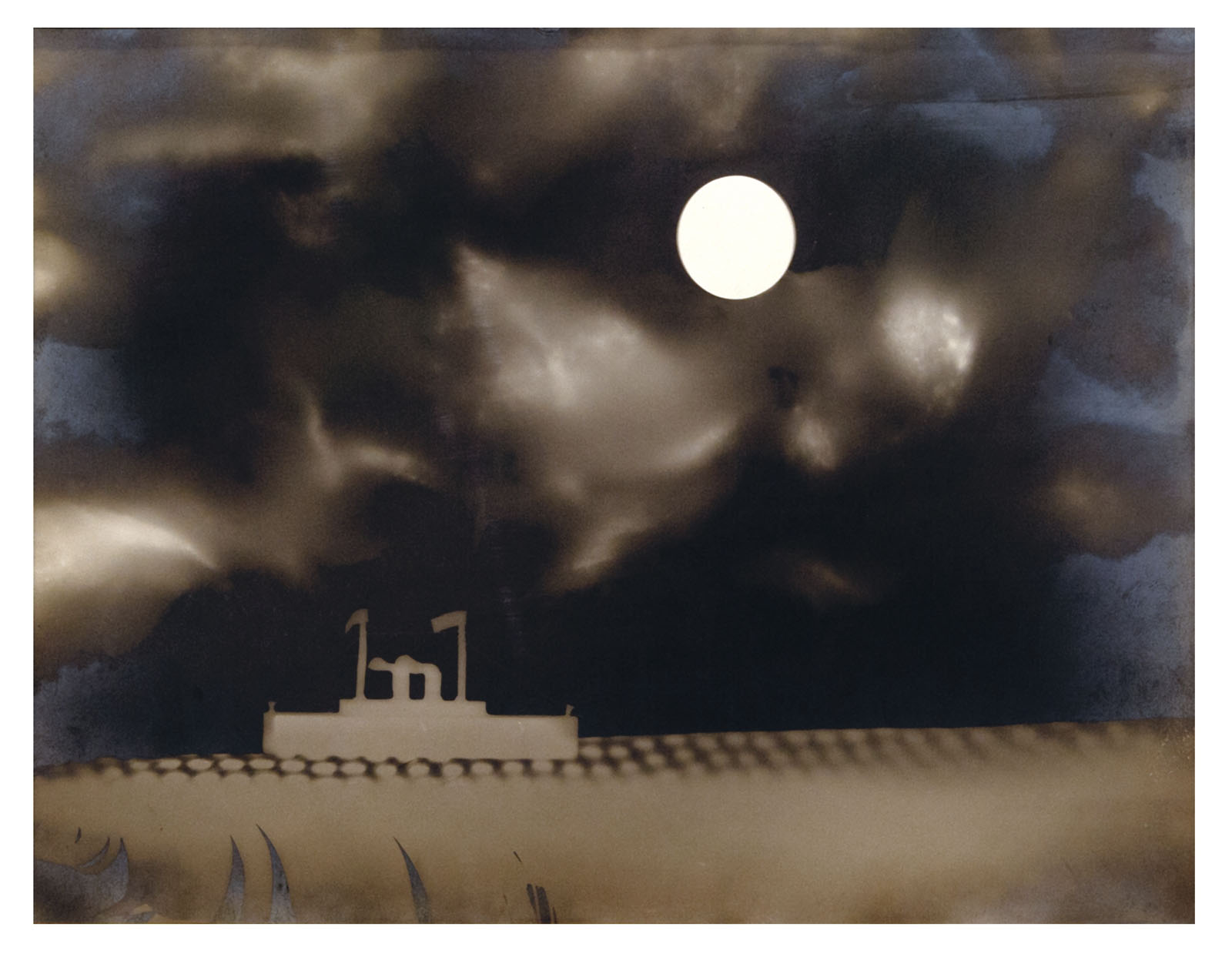
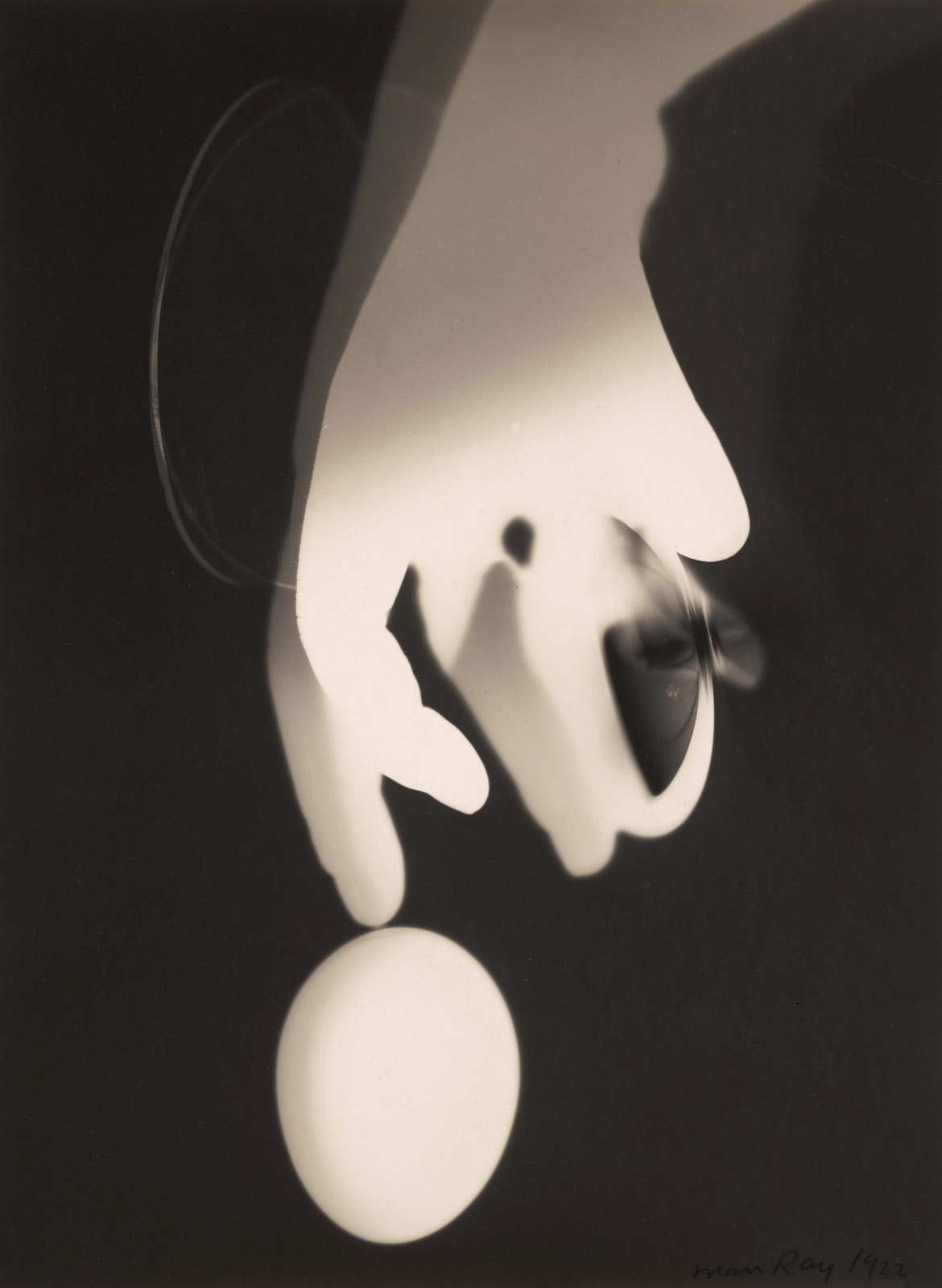
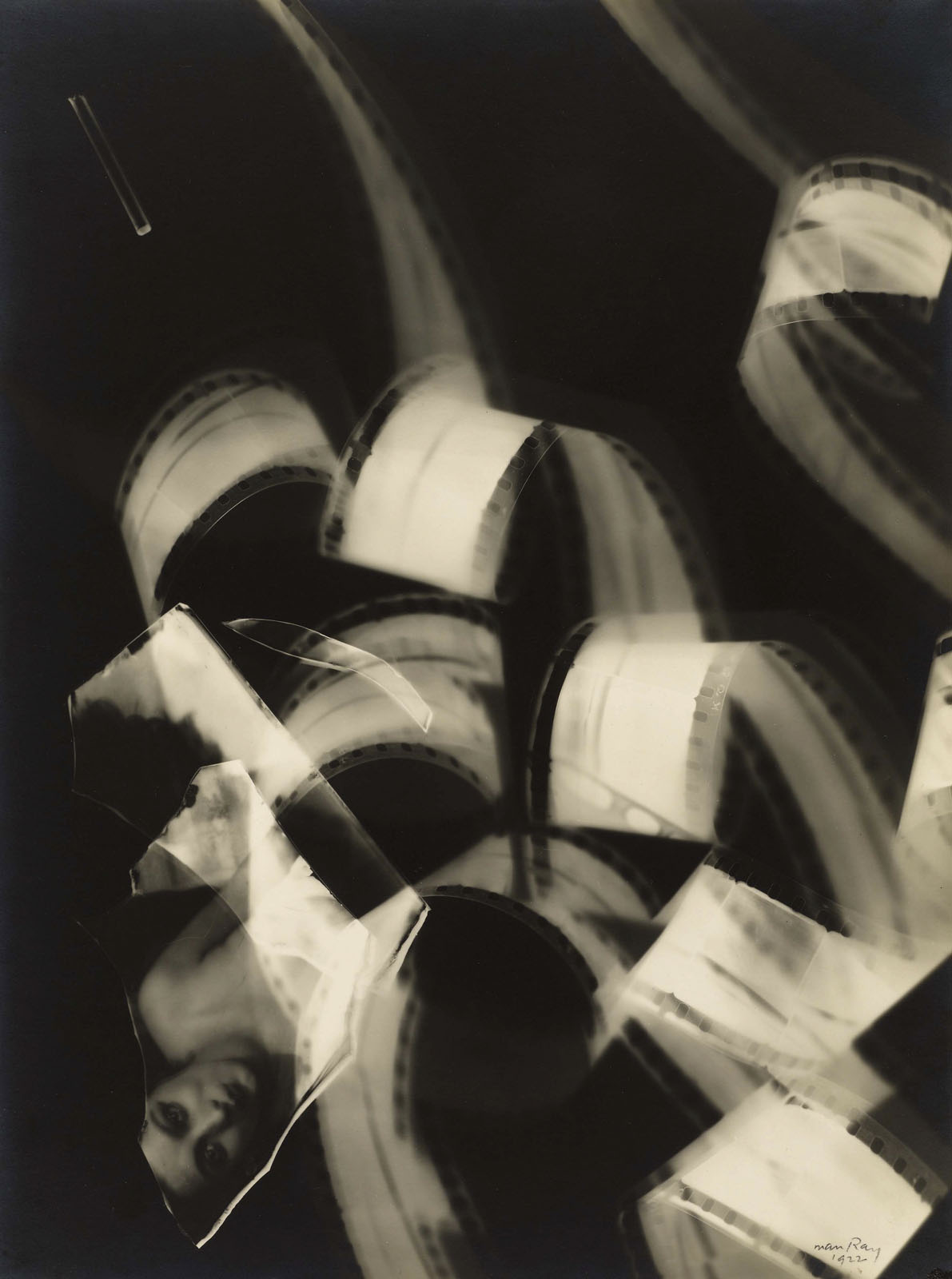

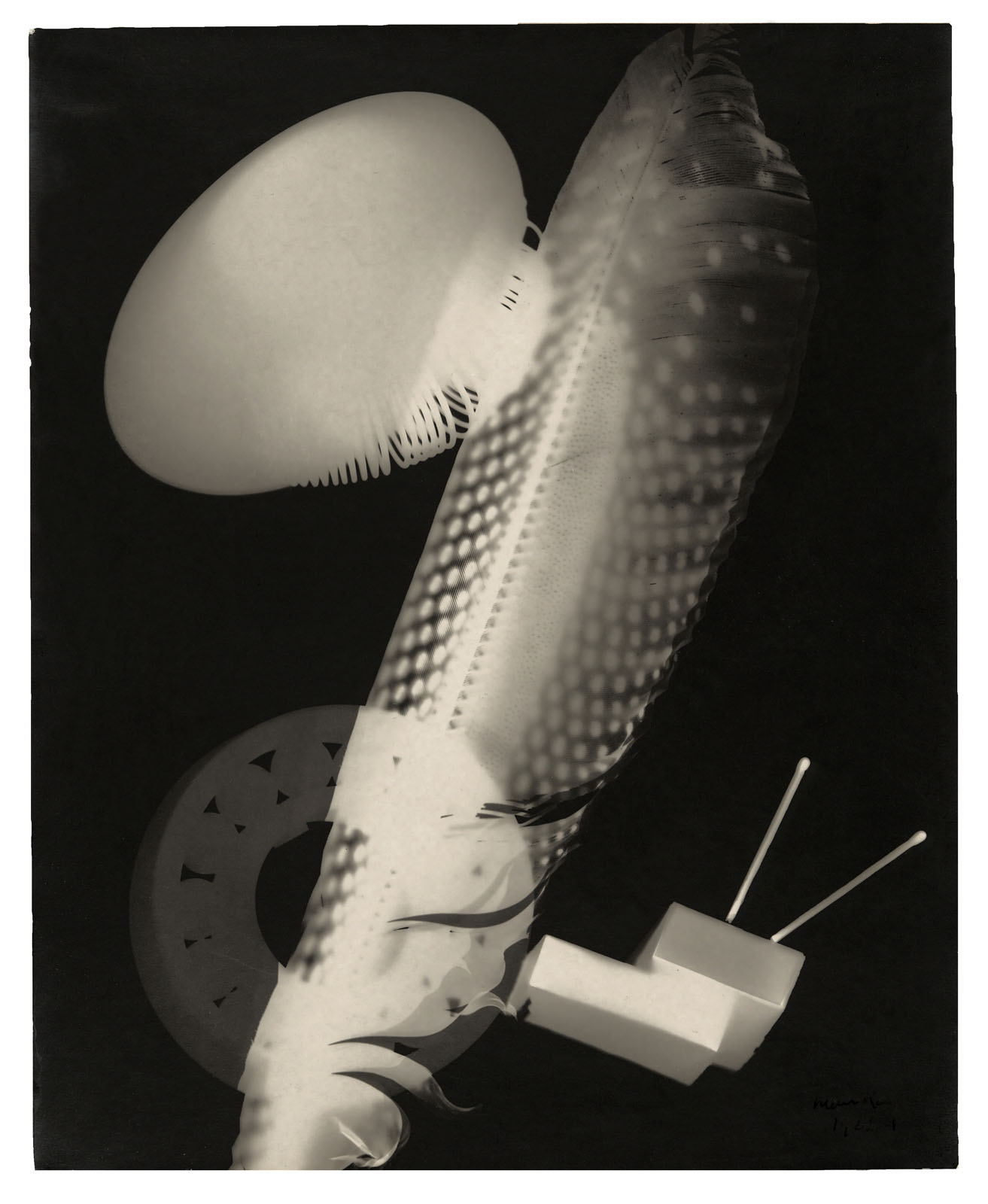
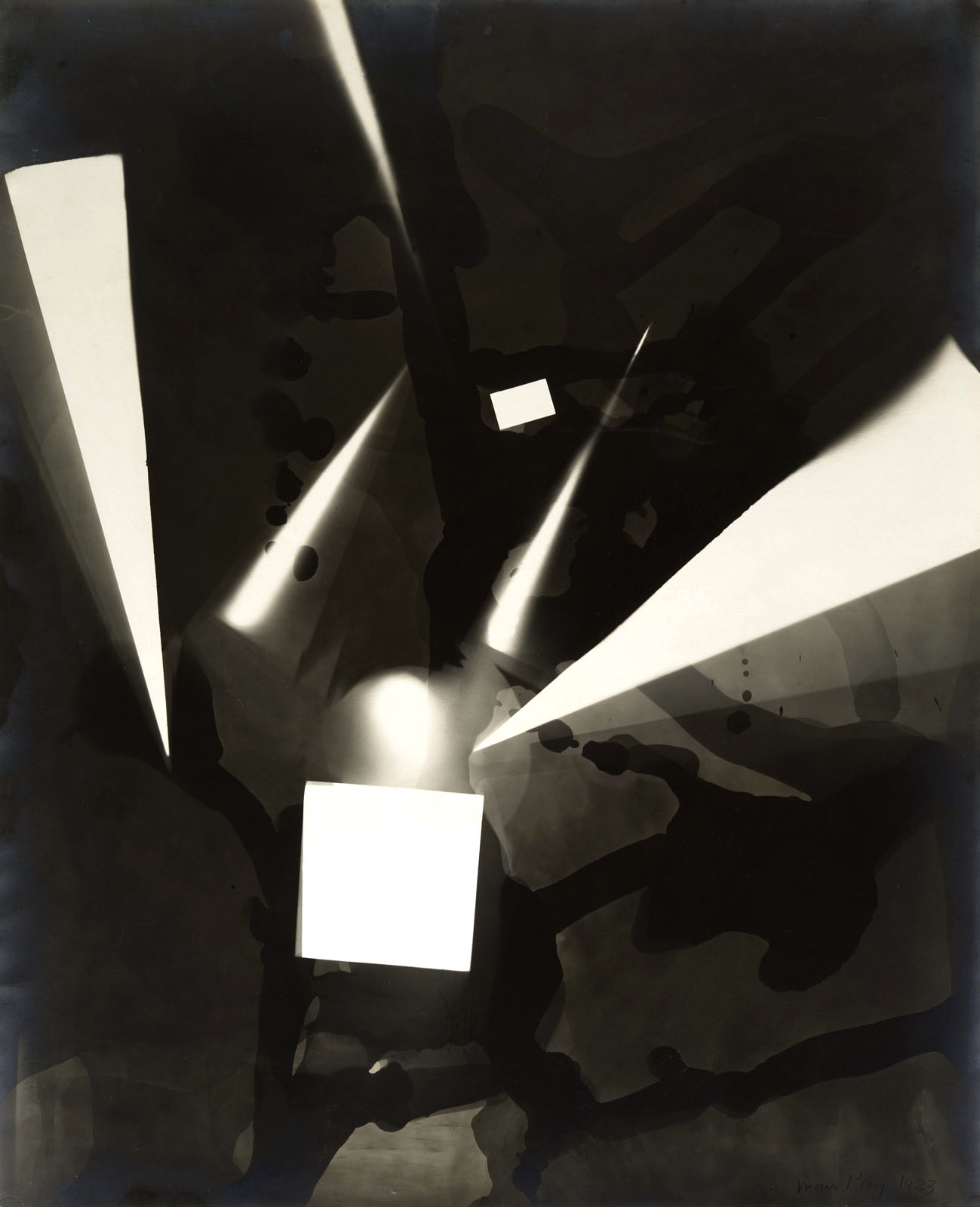
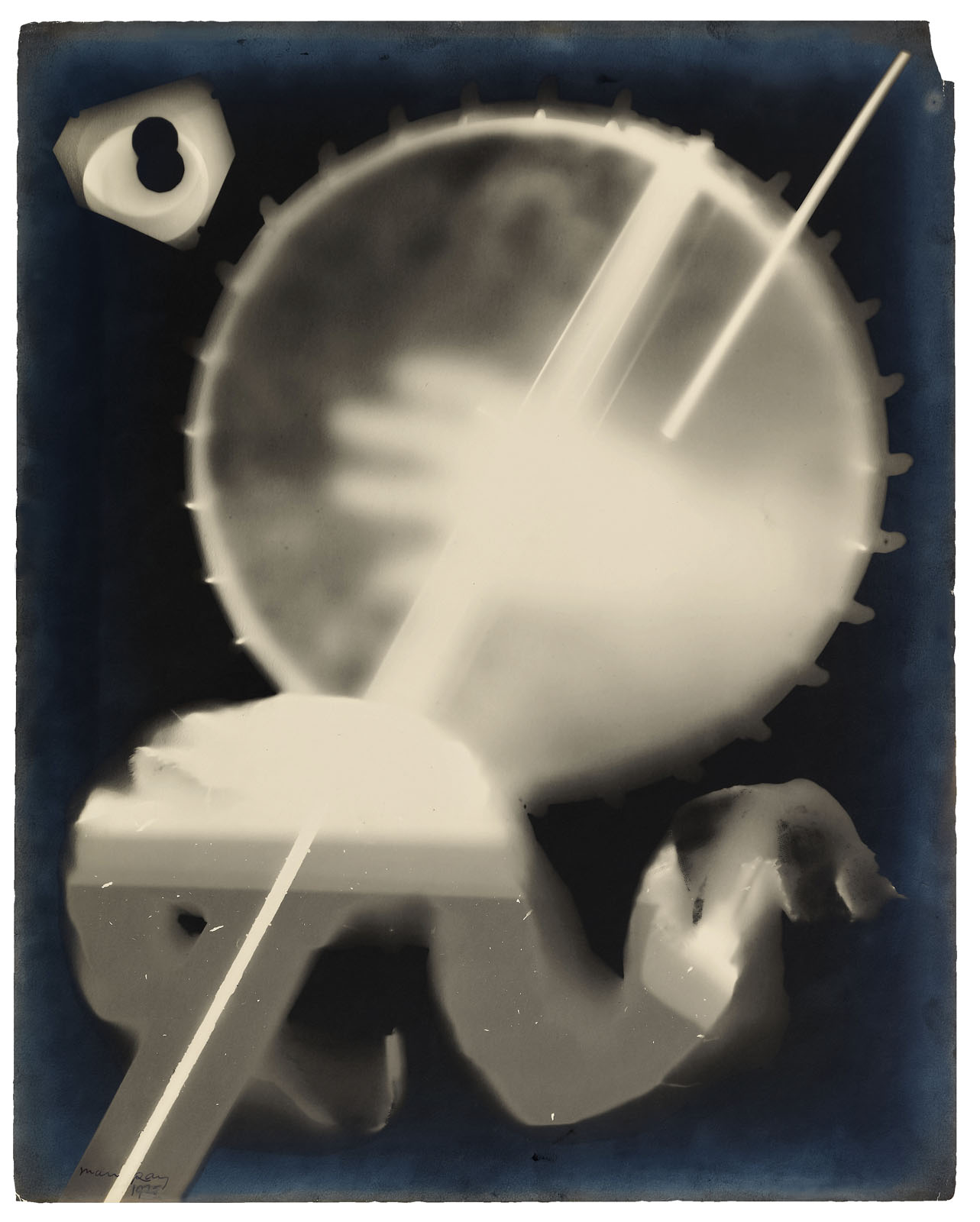
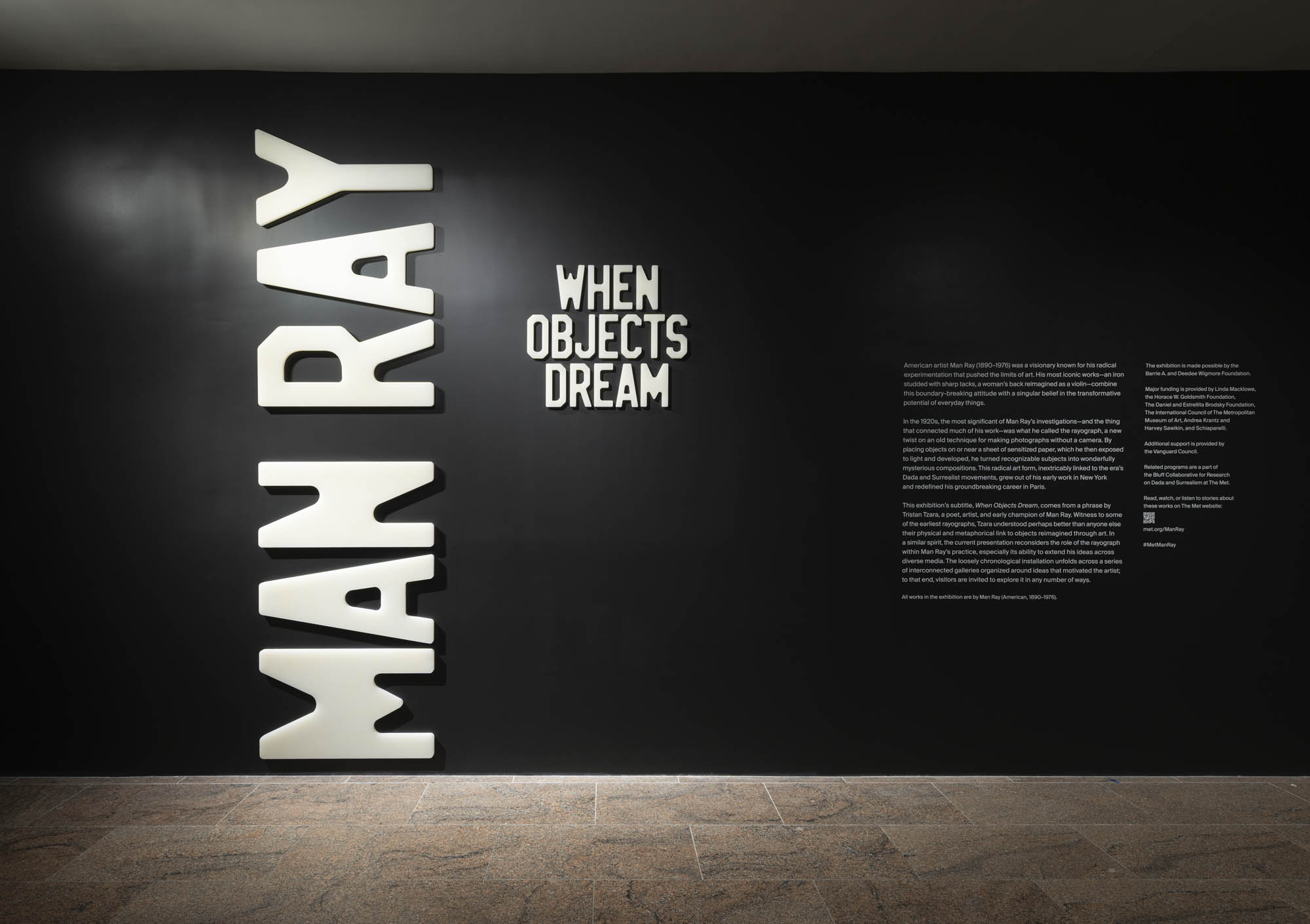

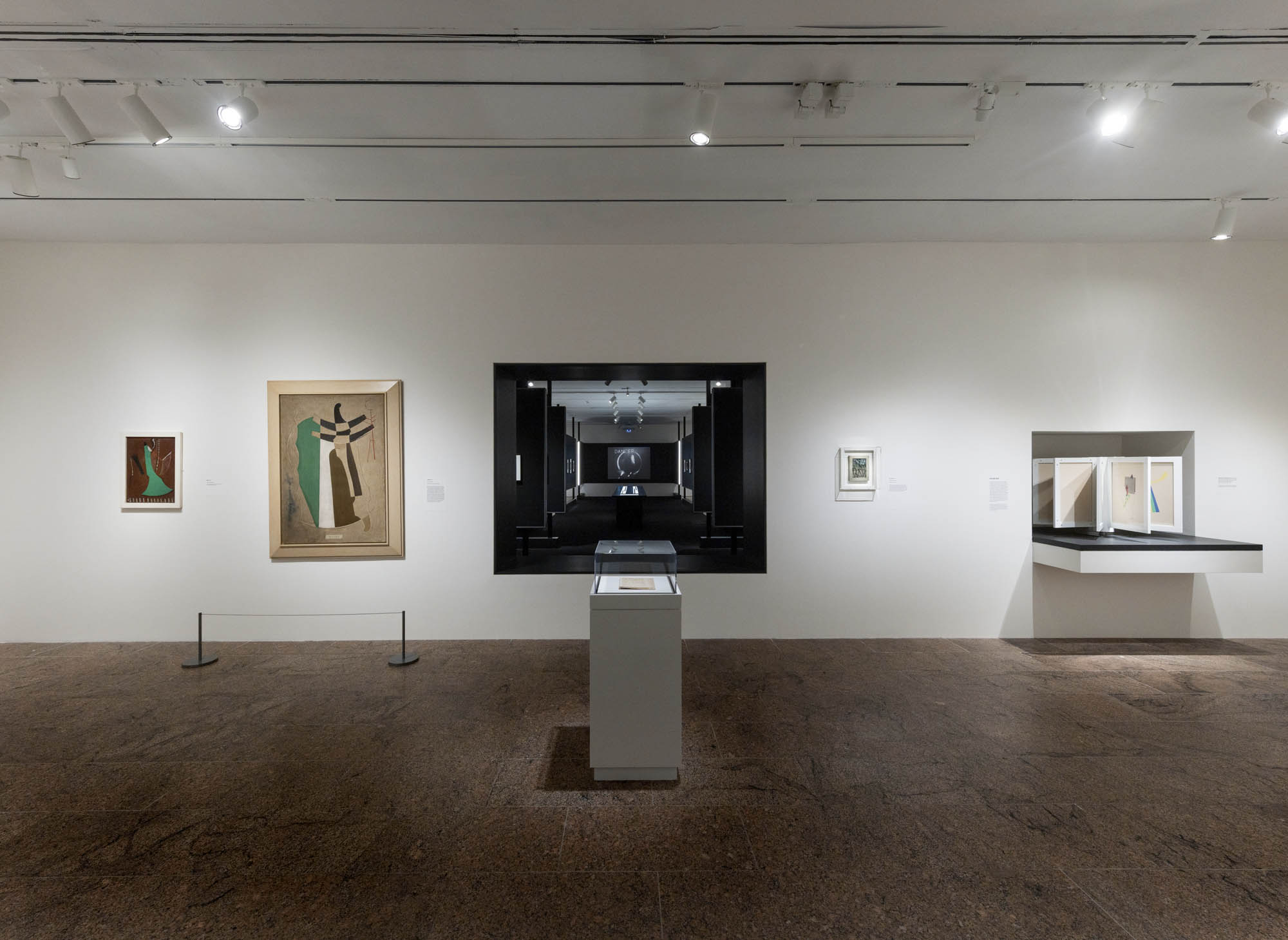
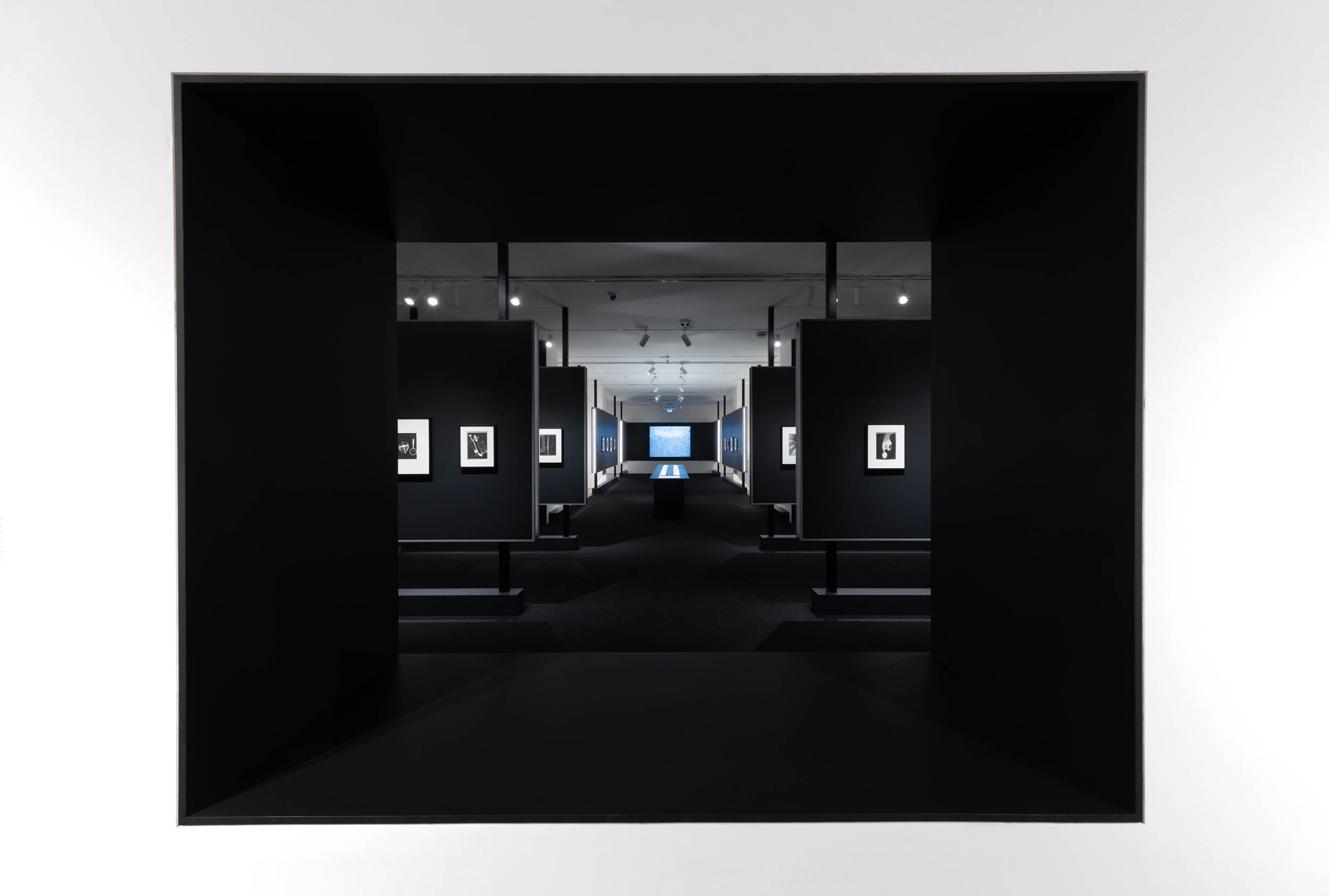

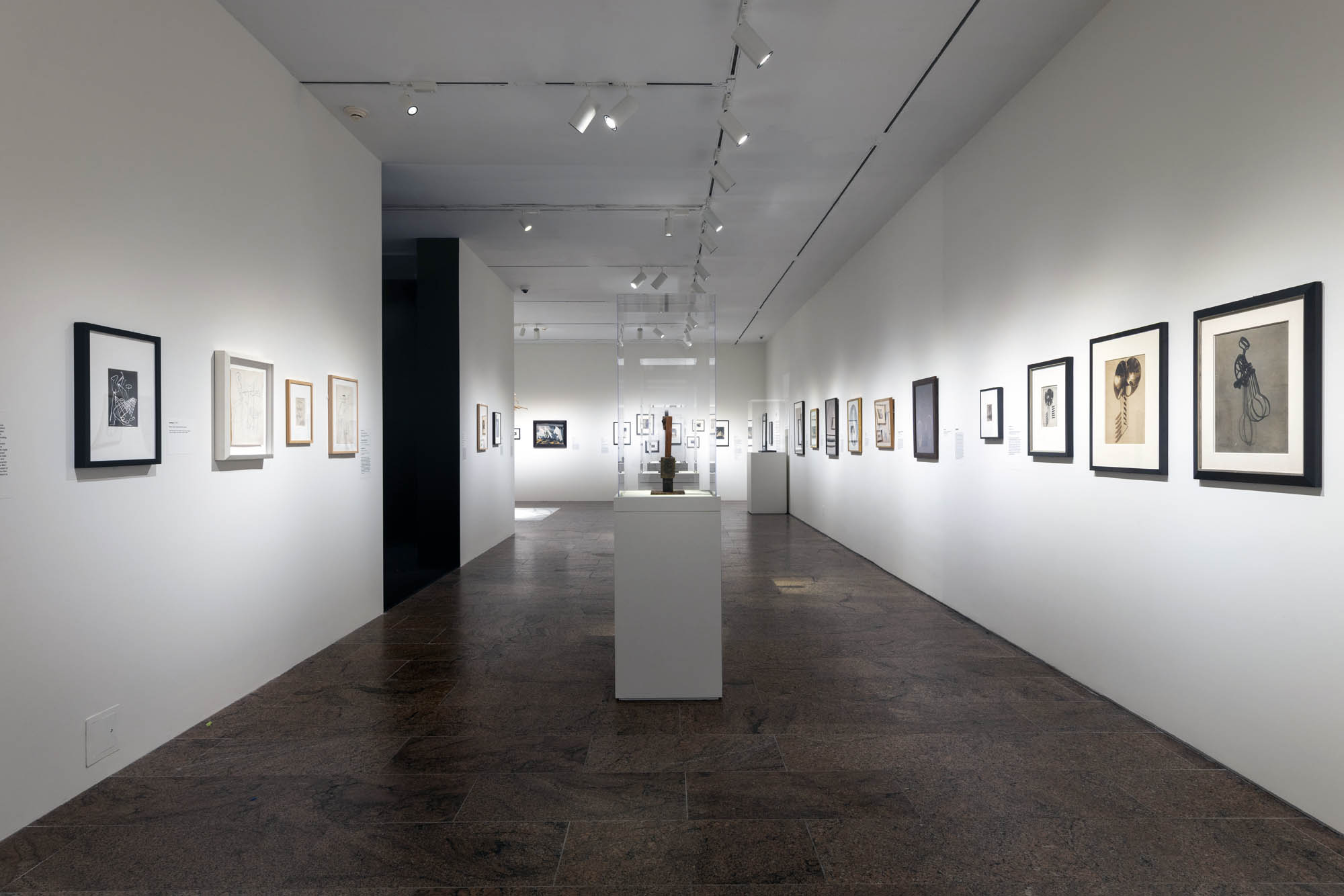
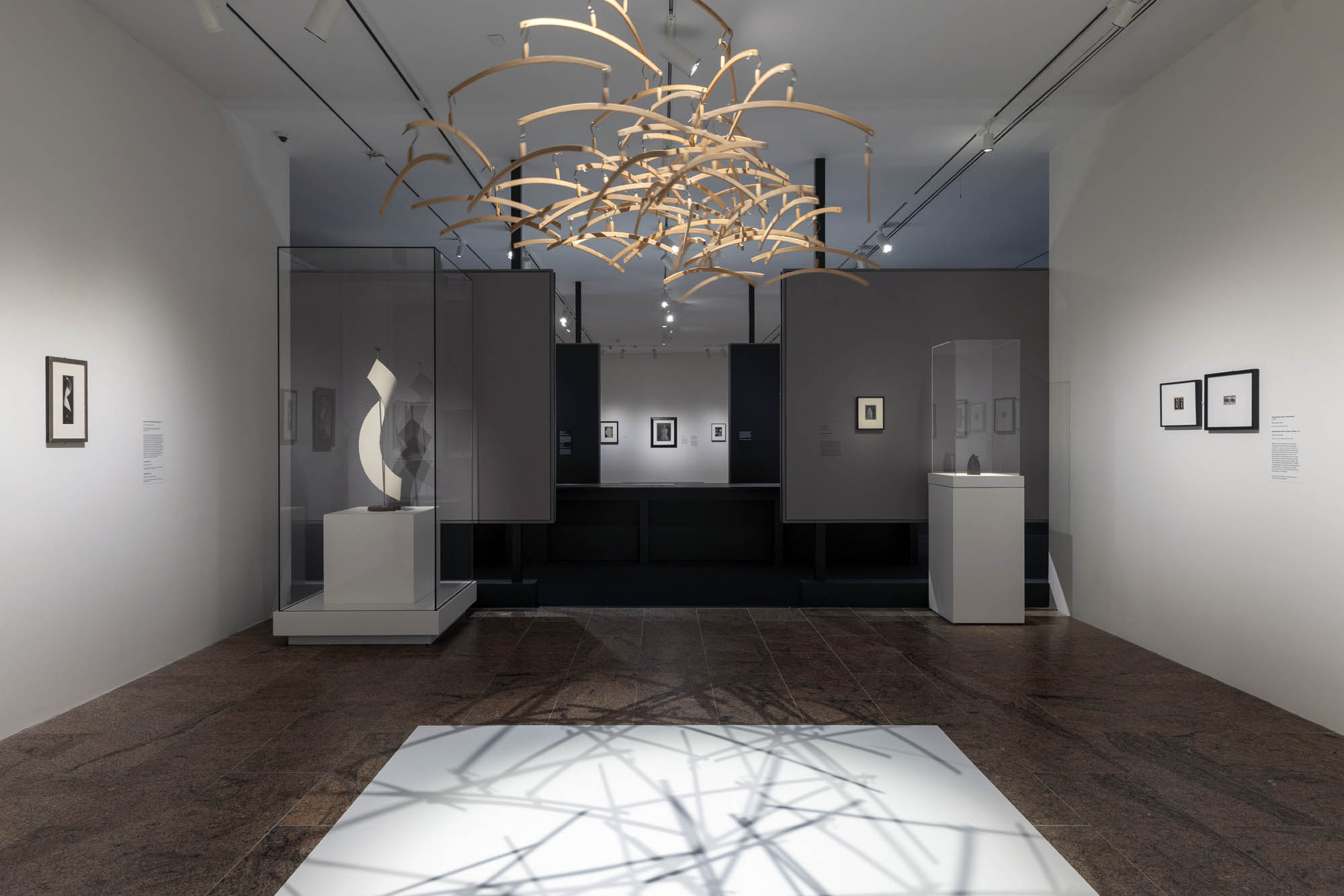
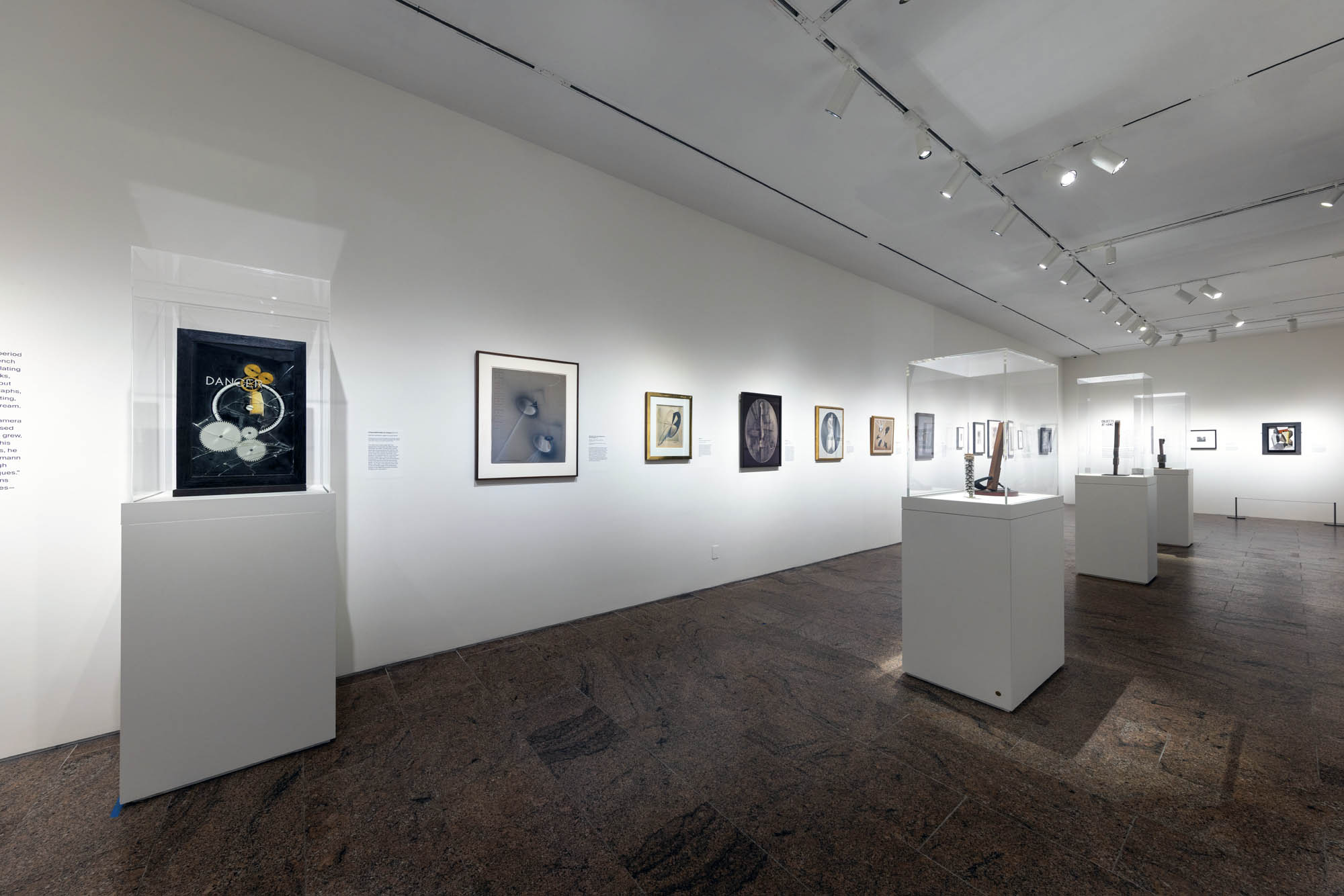


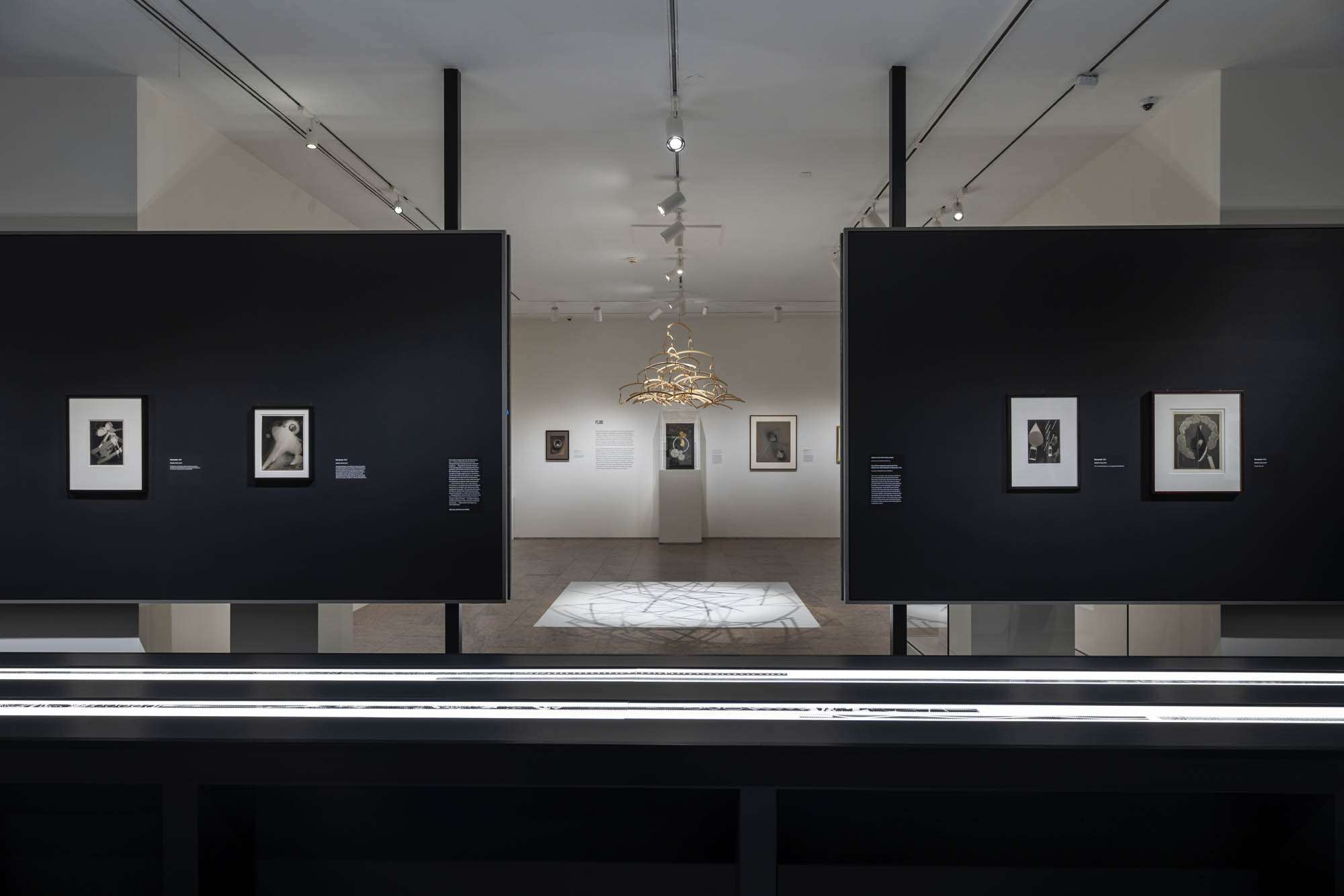
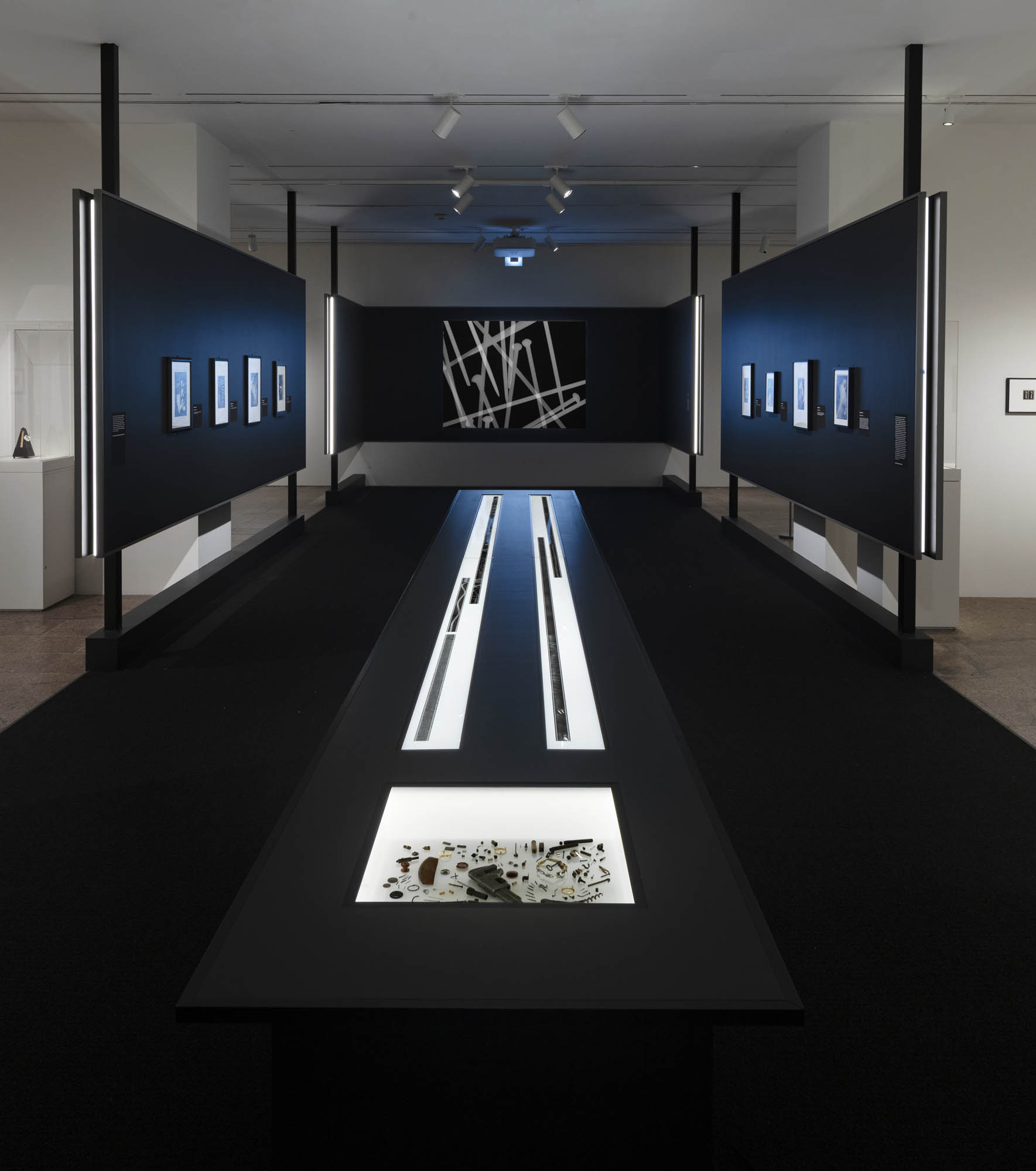
![Man Ray (American, 1890-1976)
'Torse (Retour à la raison)' (Torso [Return to Reason]) 1923, printed c. 1935](https://artblart.com/wp-content/uploads/2014/09/man-ray-retour-c3a0-la-raison-web.jpg "Man Ray (American, 1890-1976) 'Torse (Retour à la raison)' (Torso [Return to Reason]) 1923, printed c. 1935")
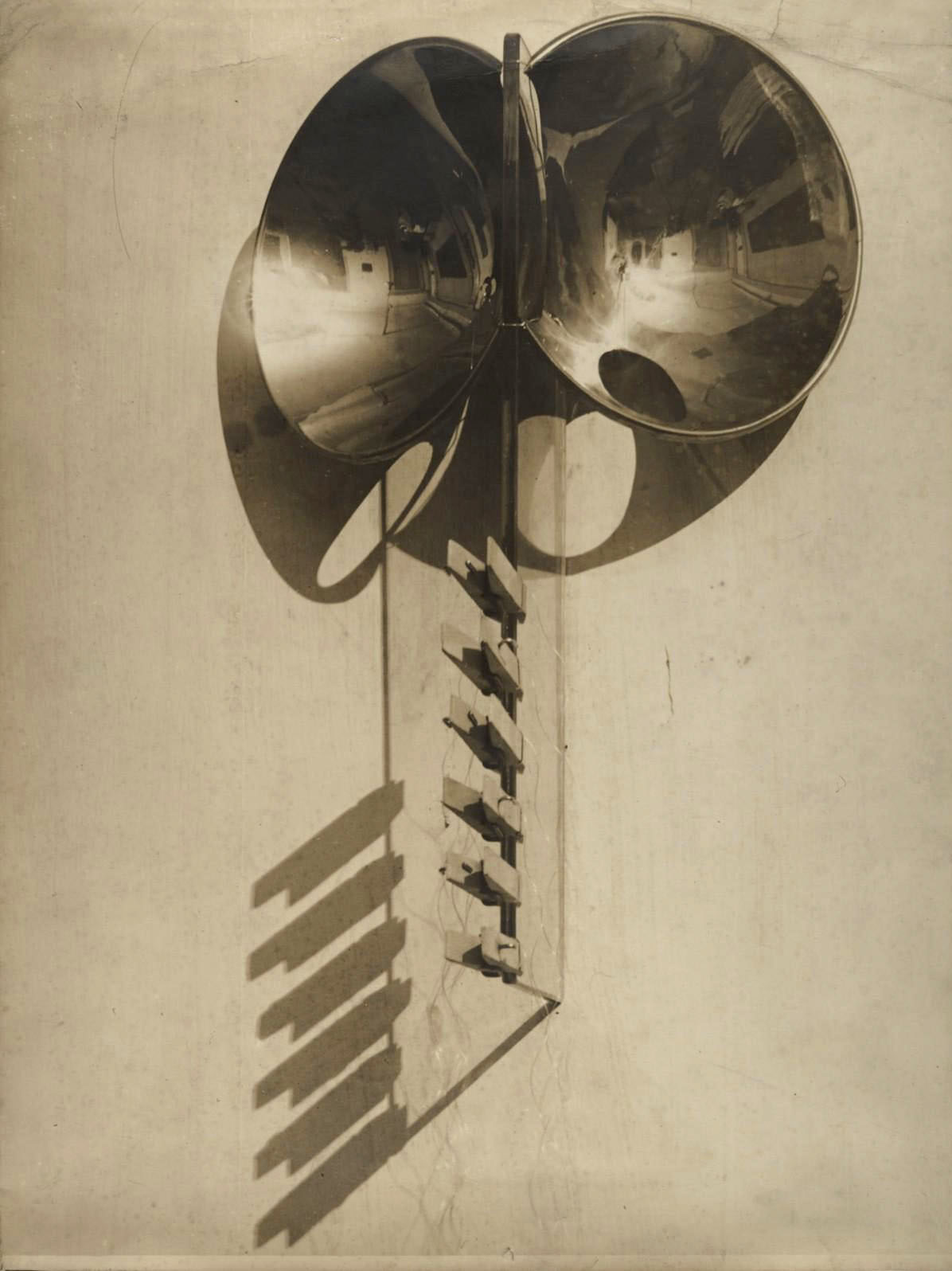
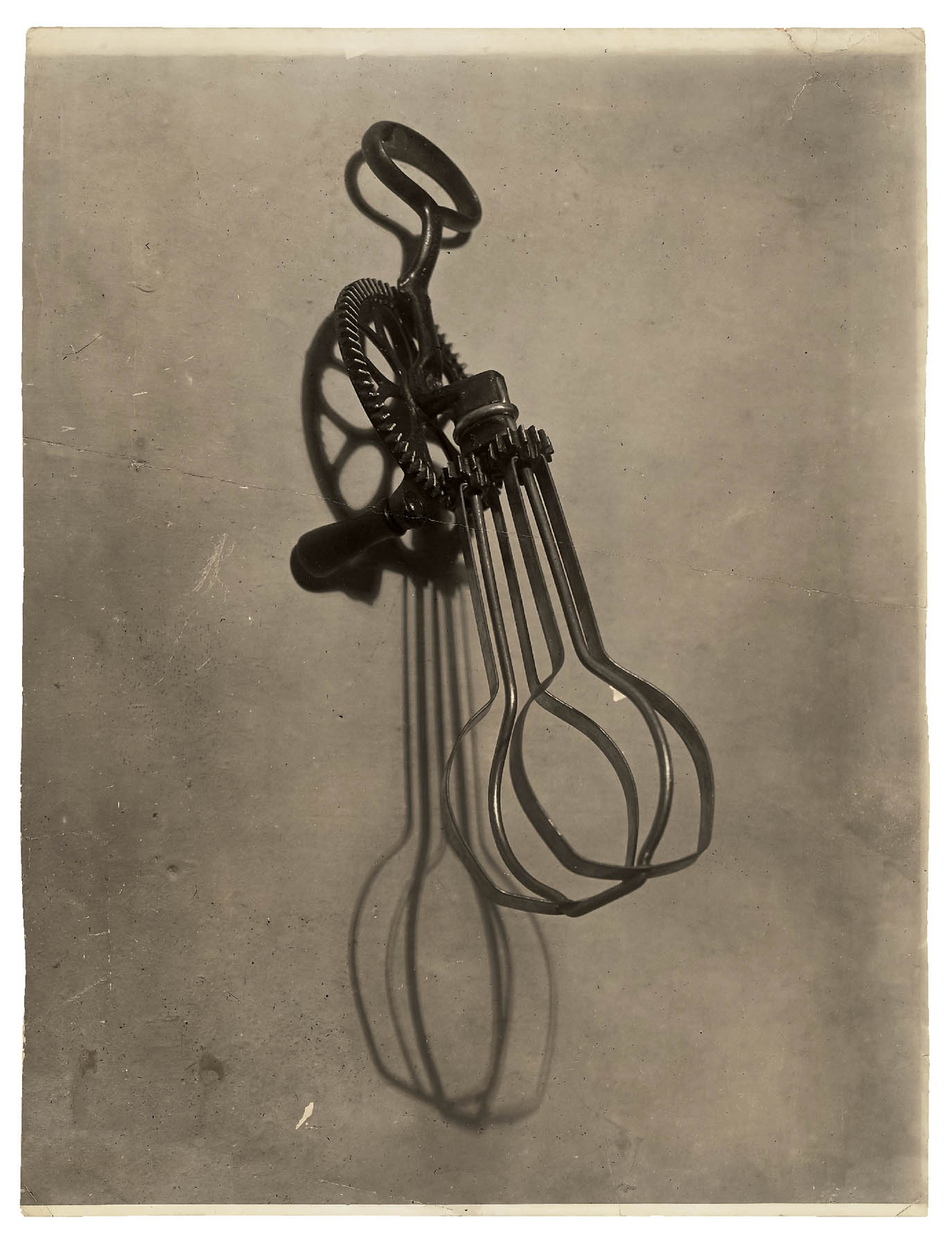

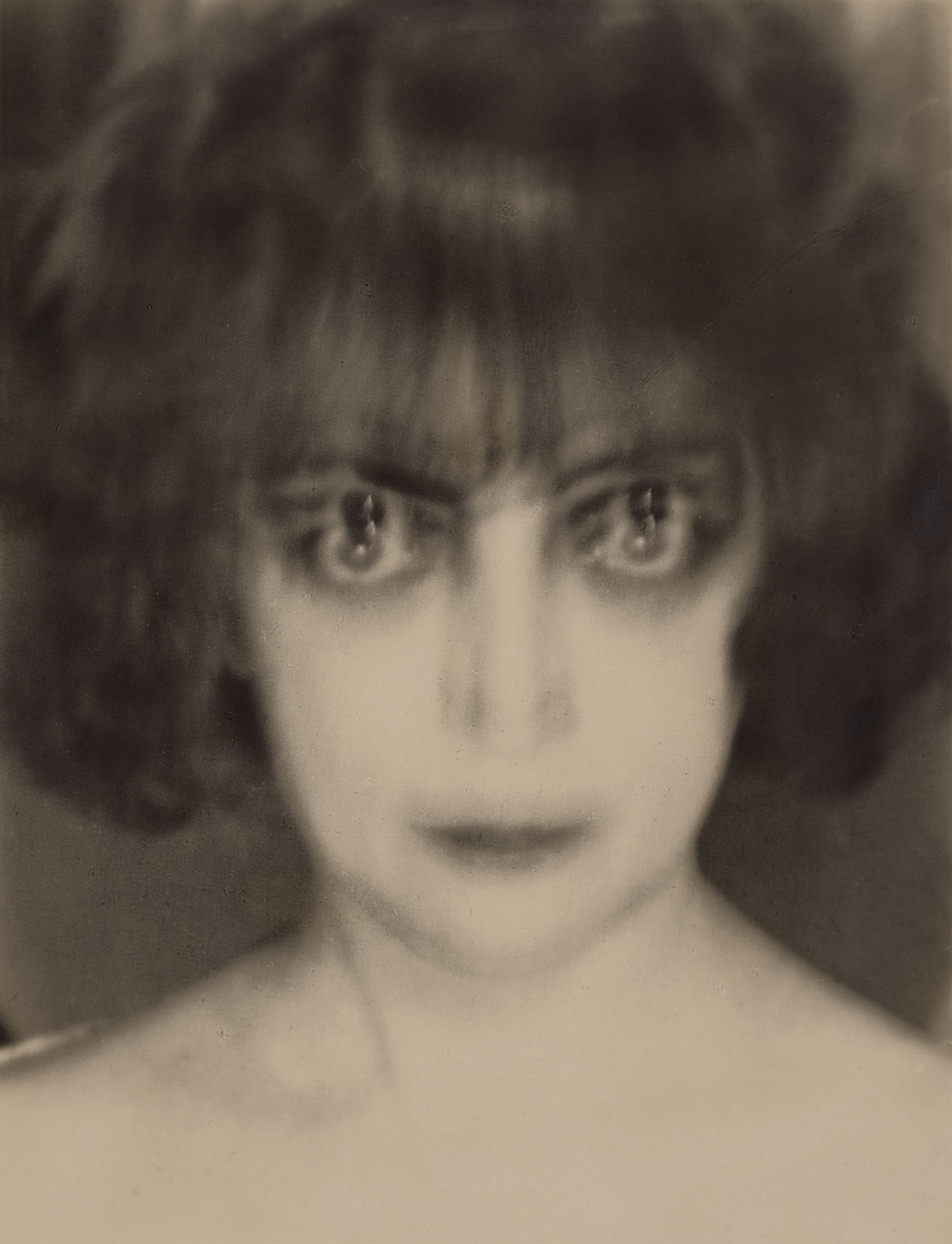
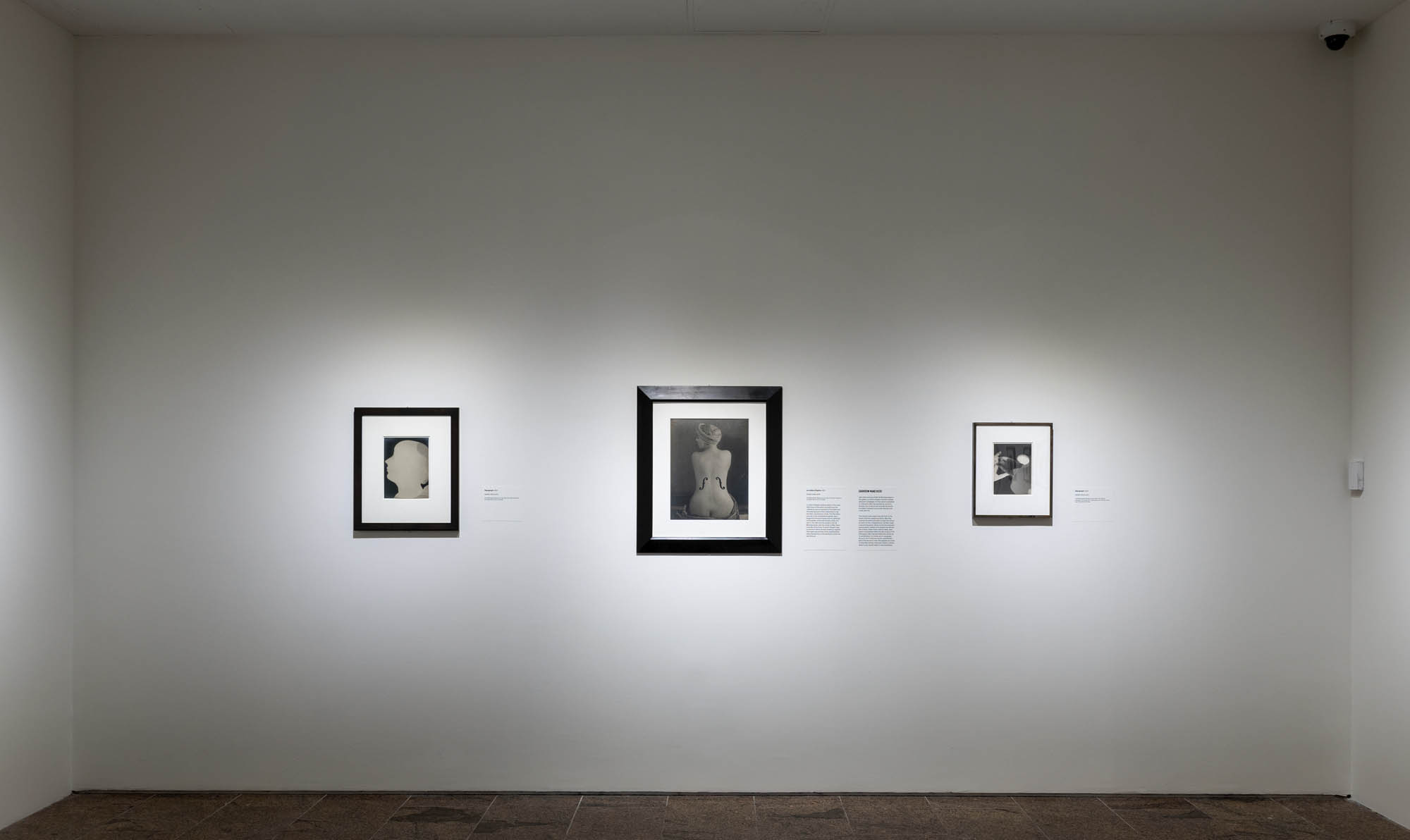
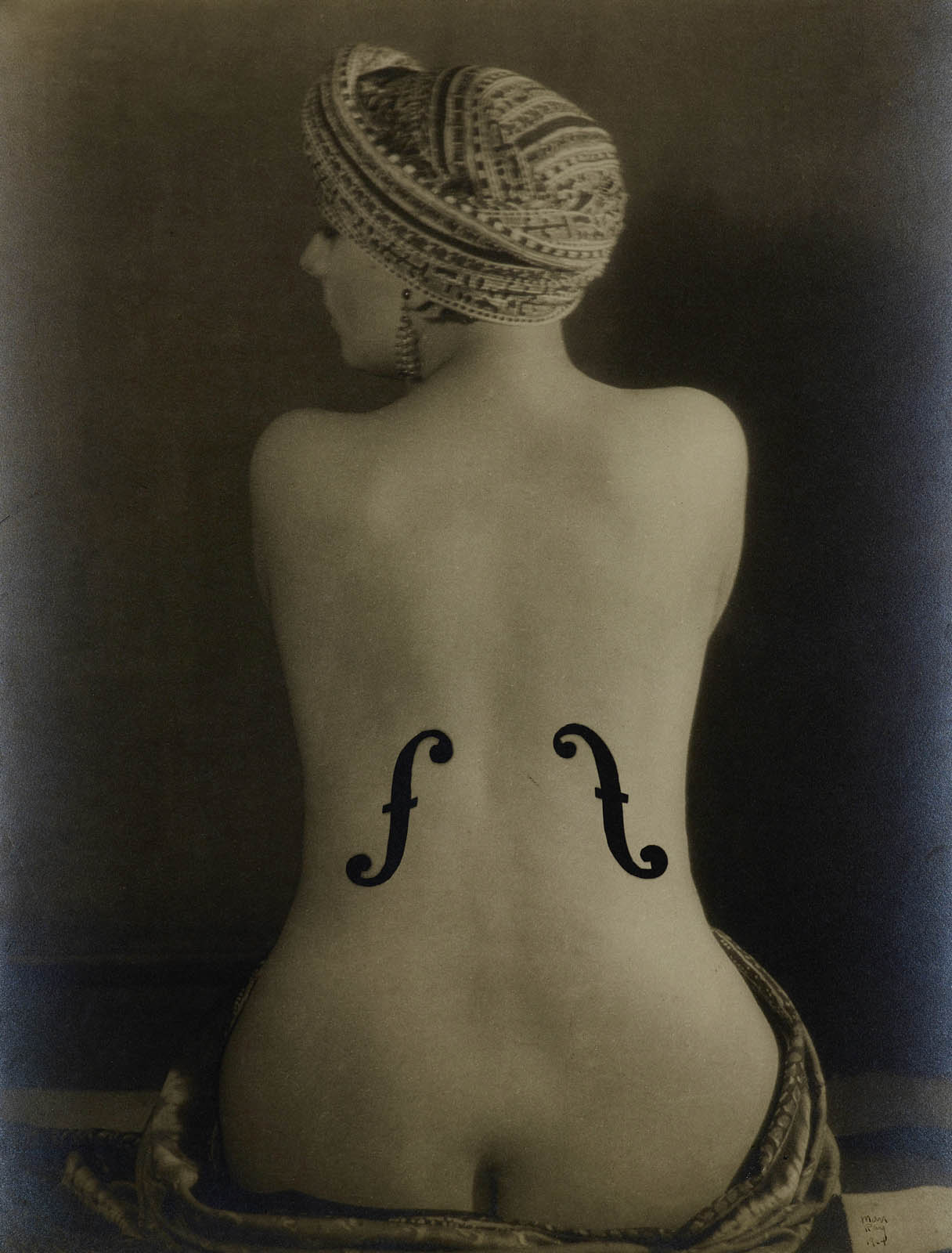
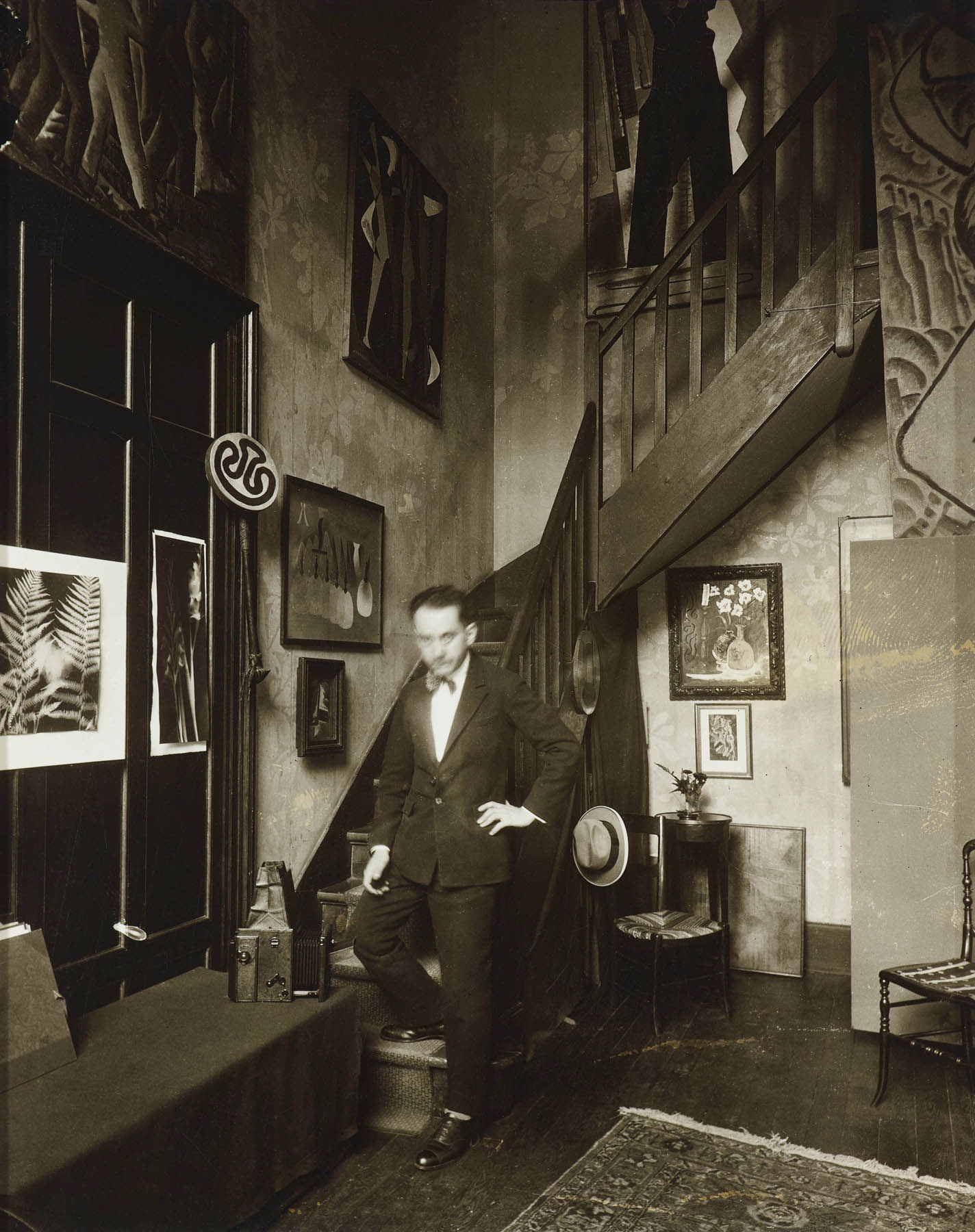

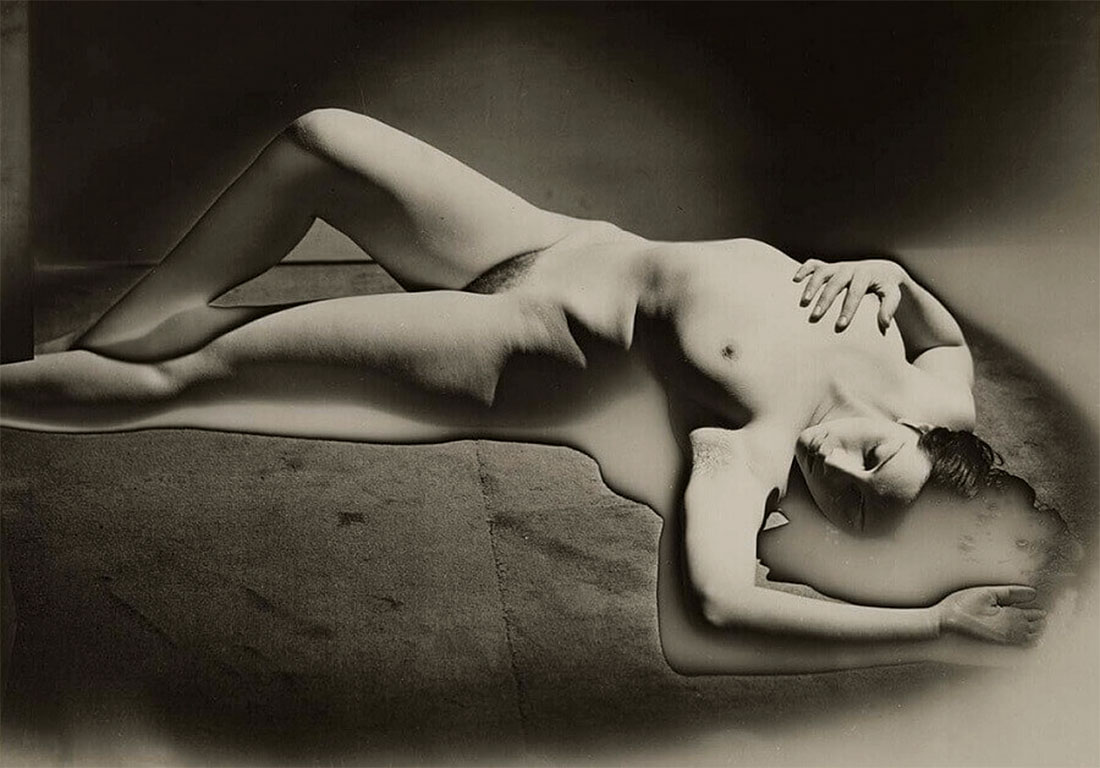
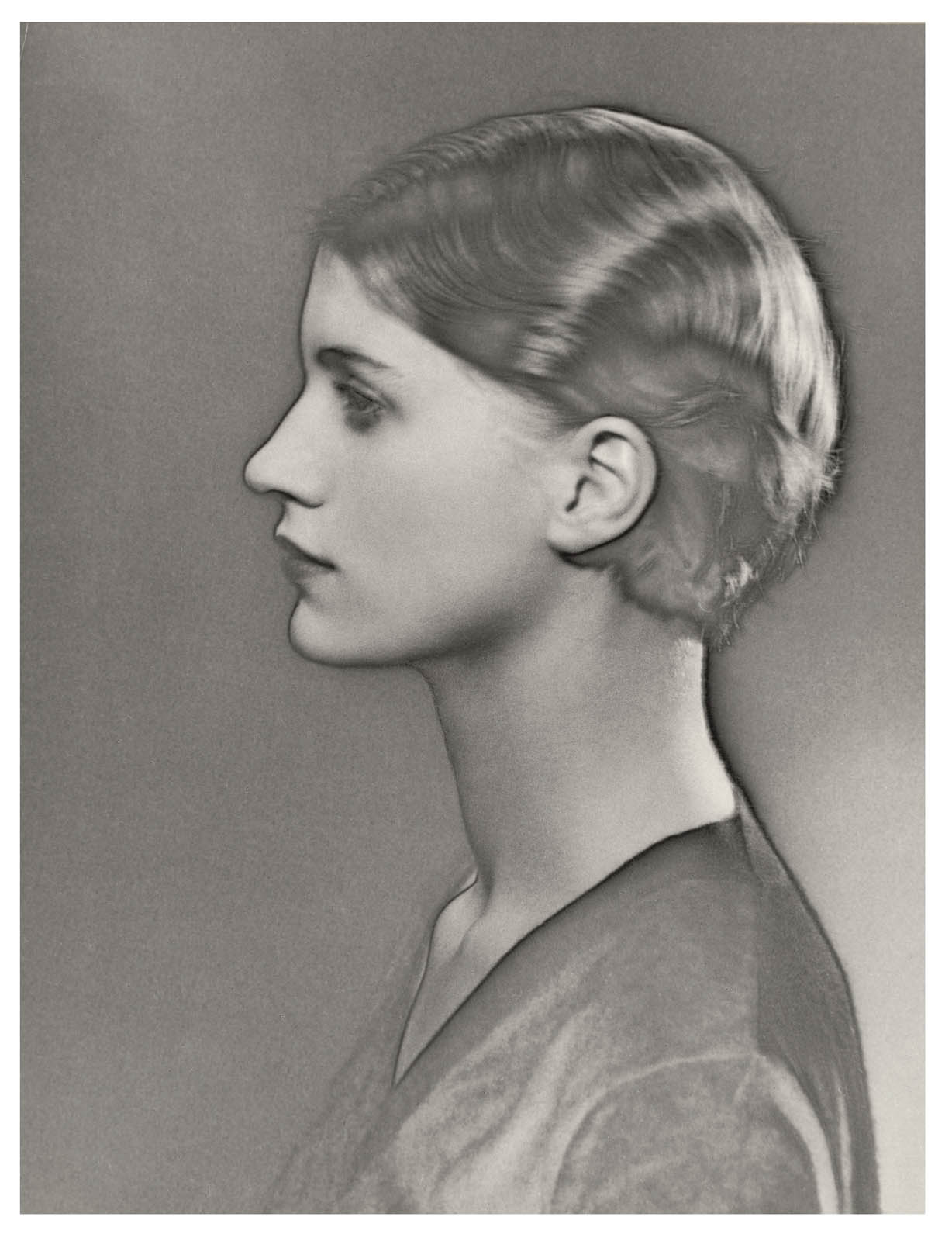

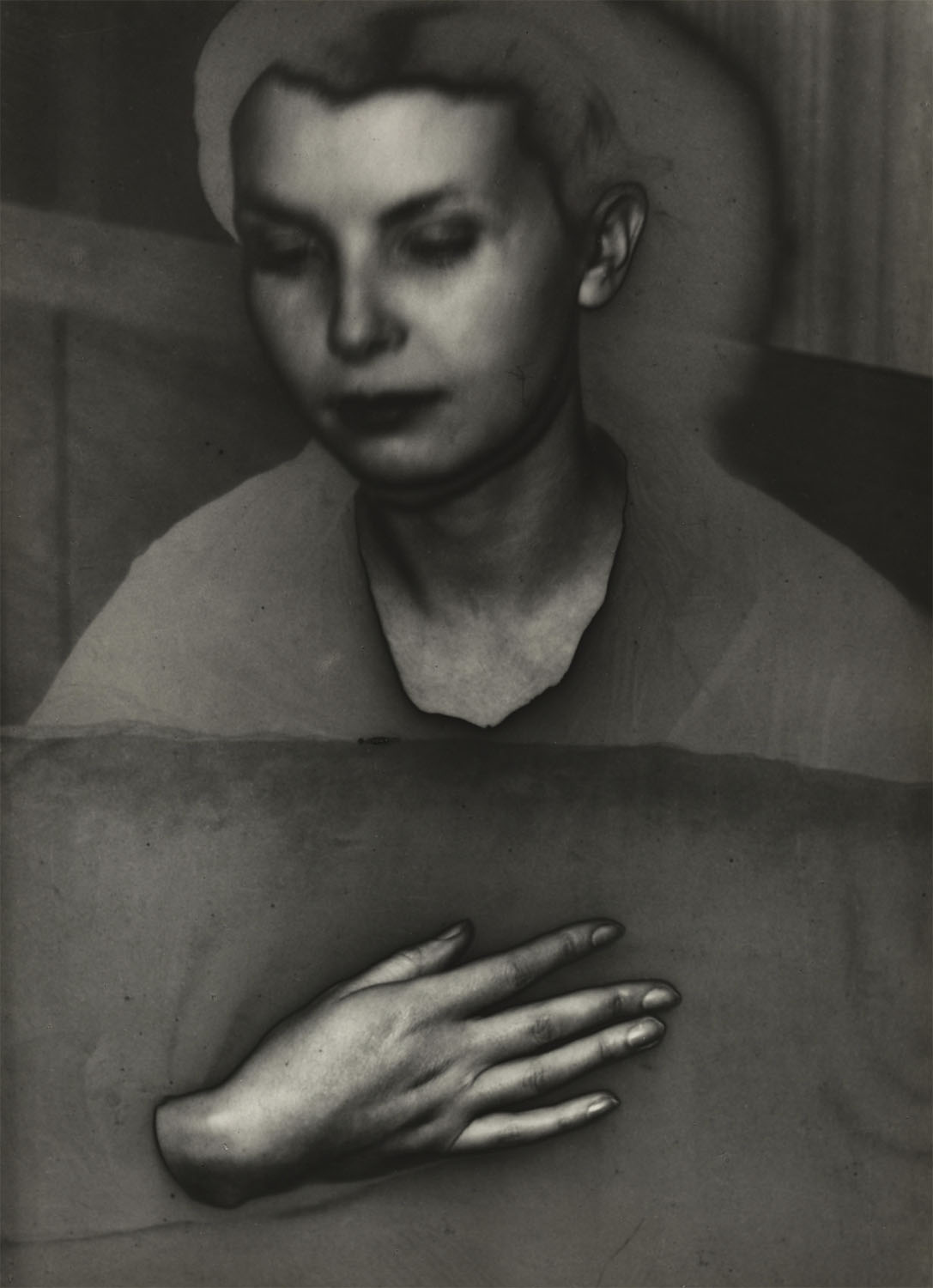

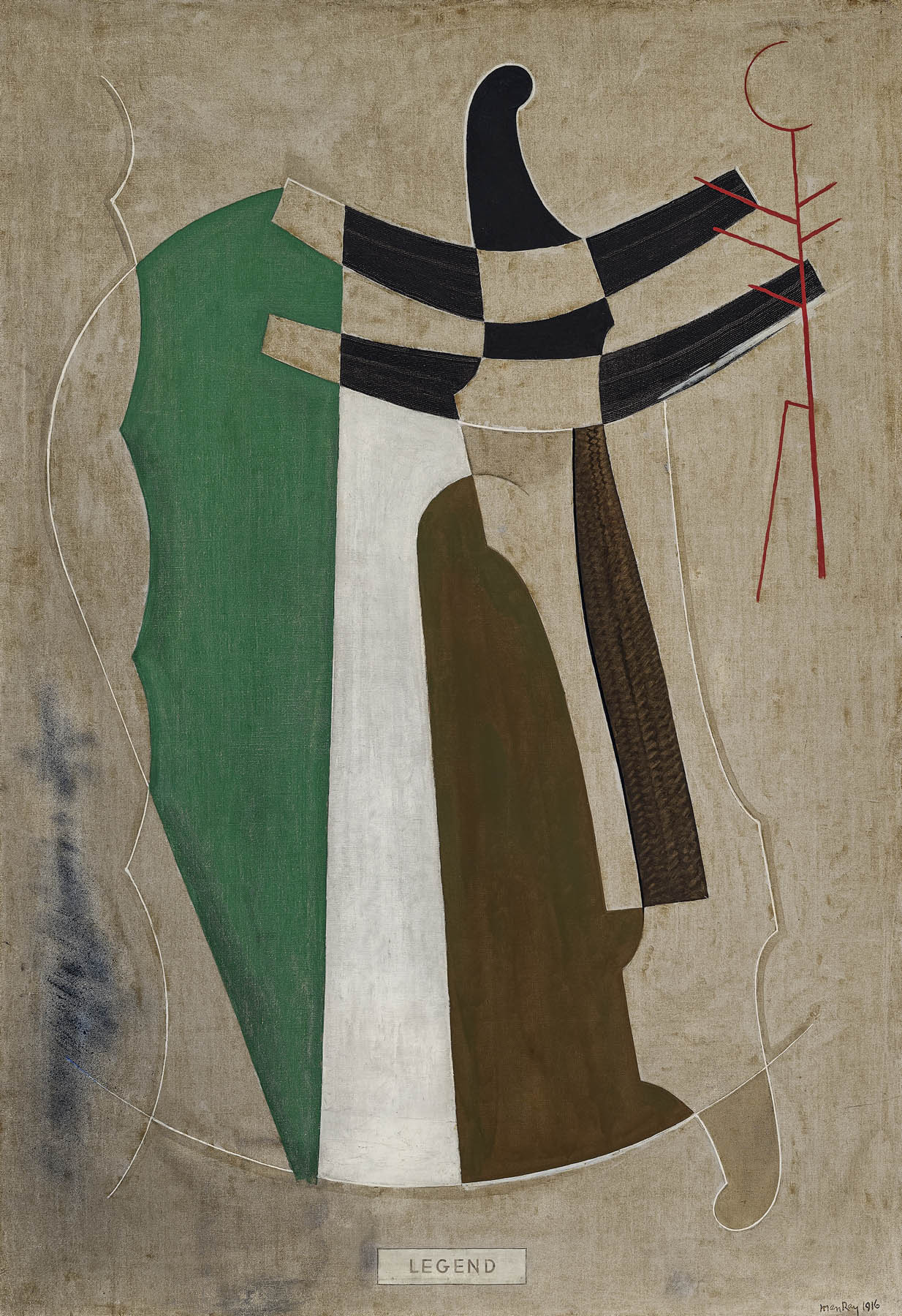
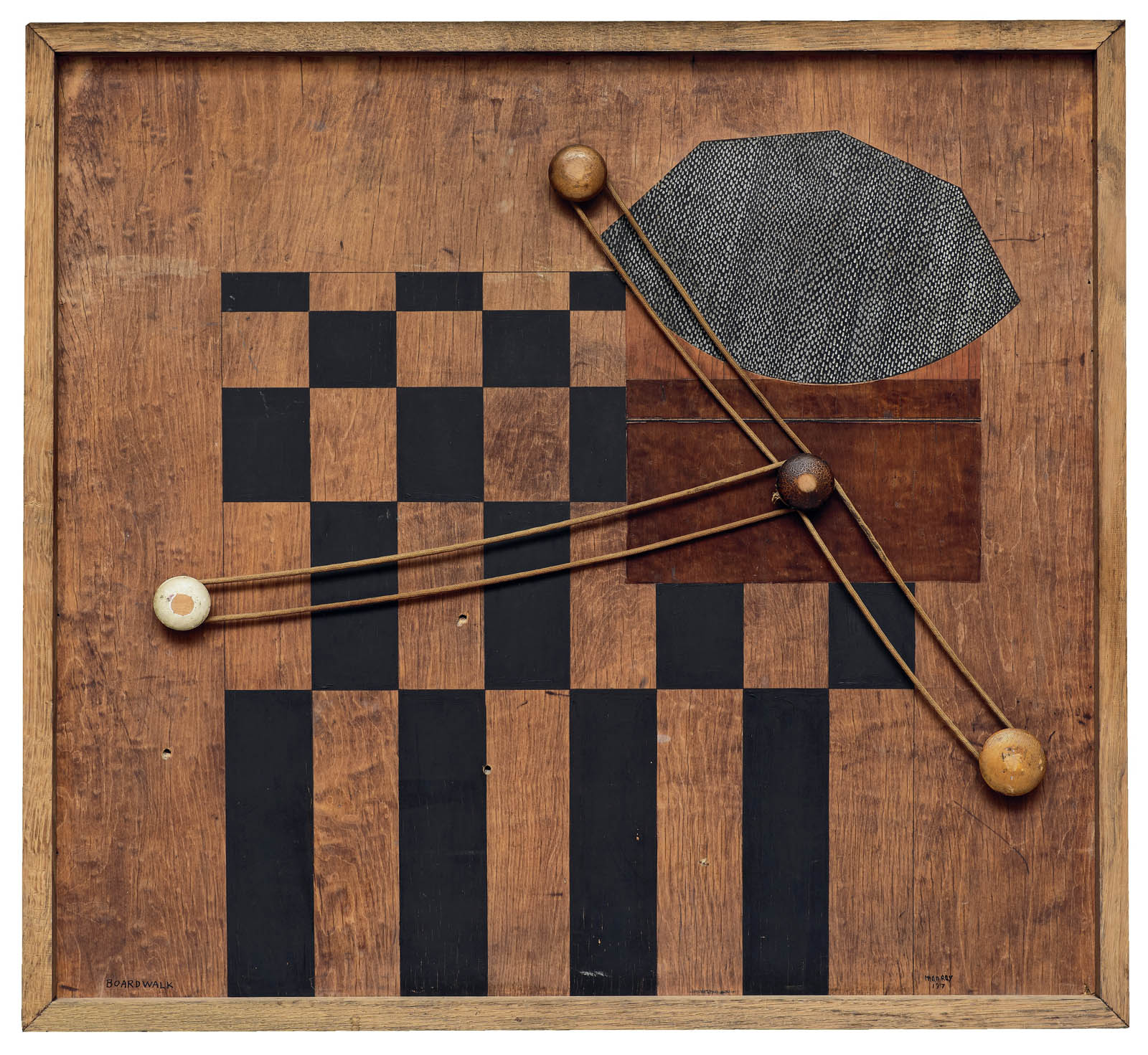
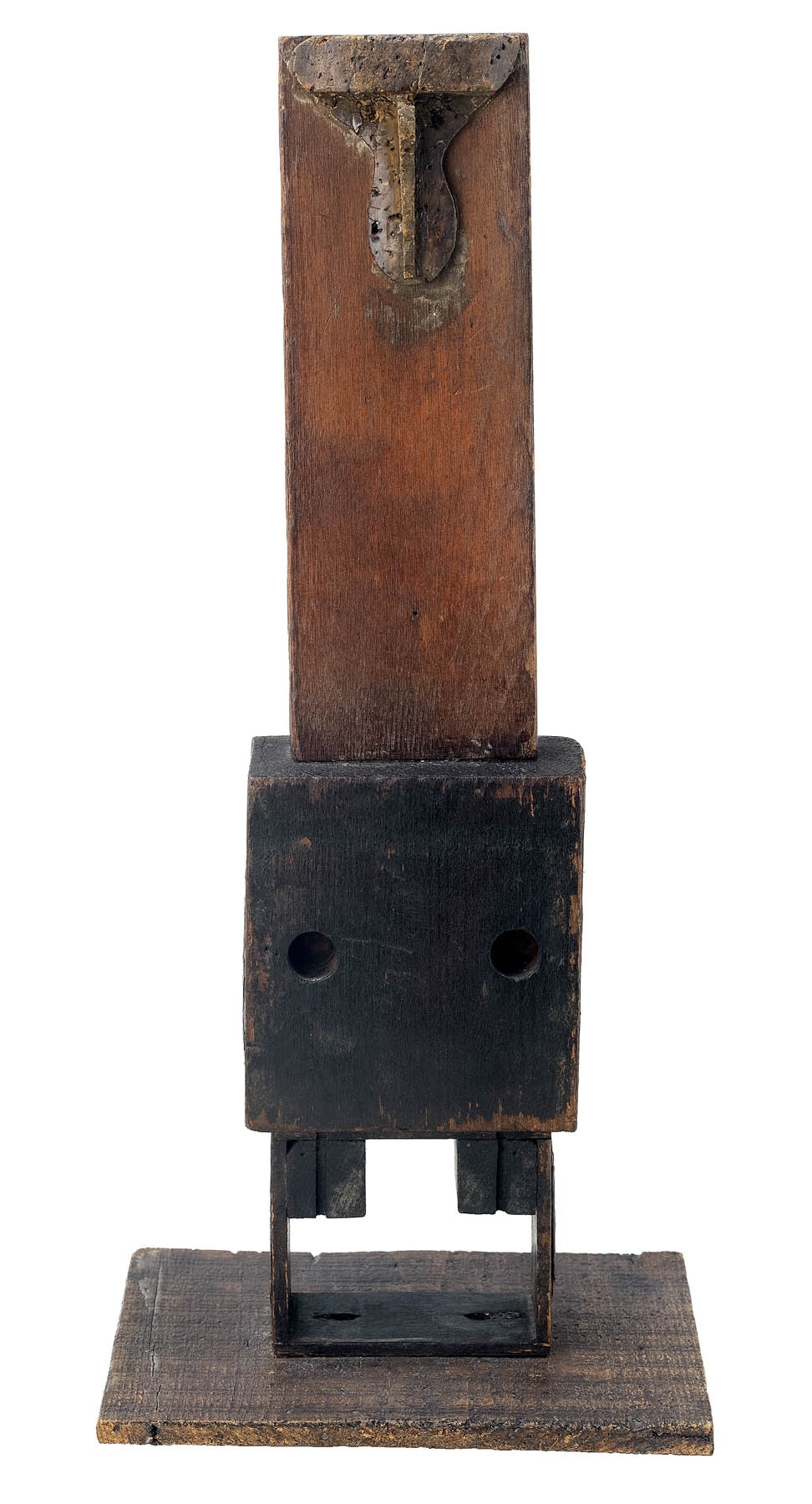
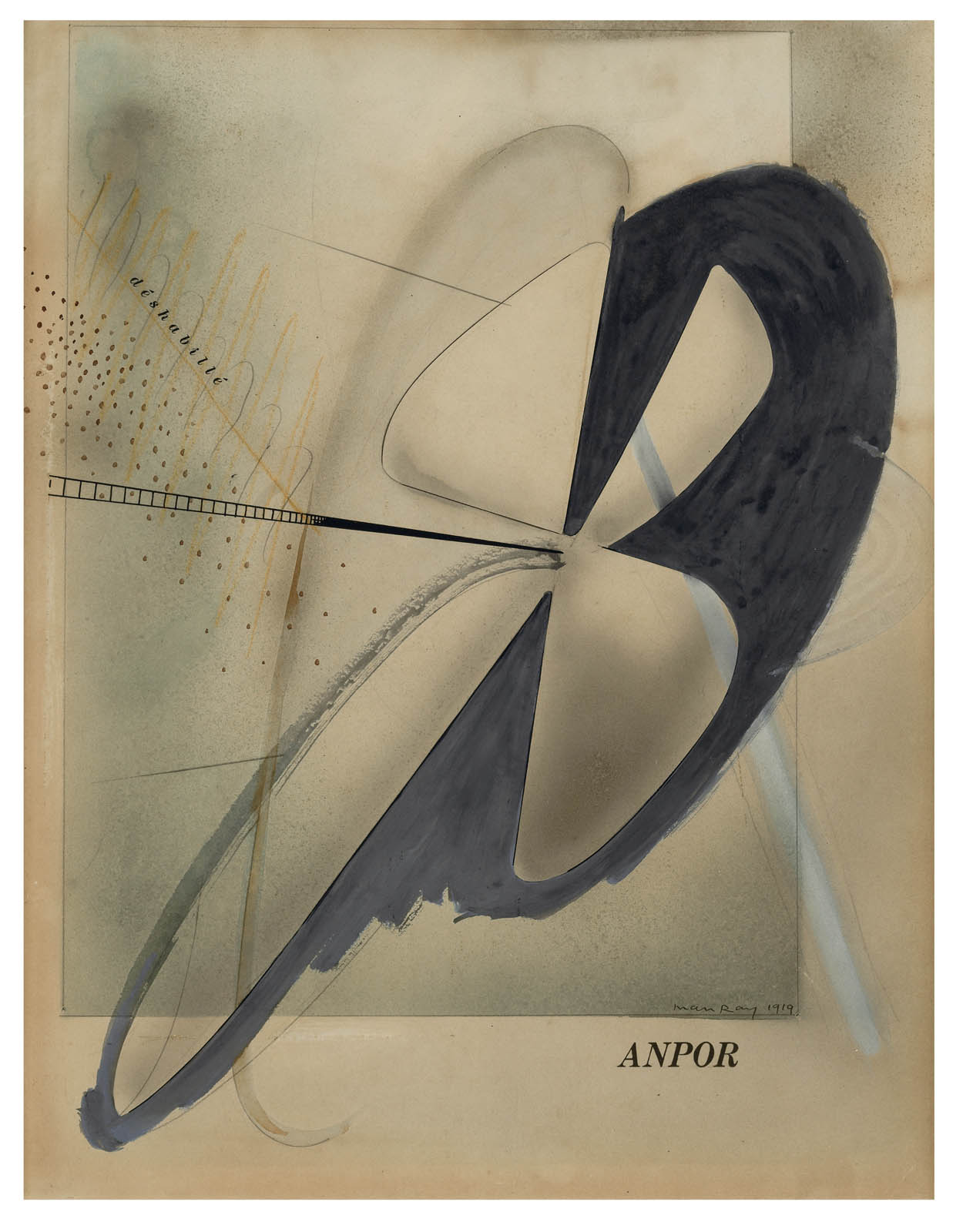
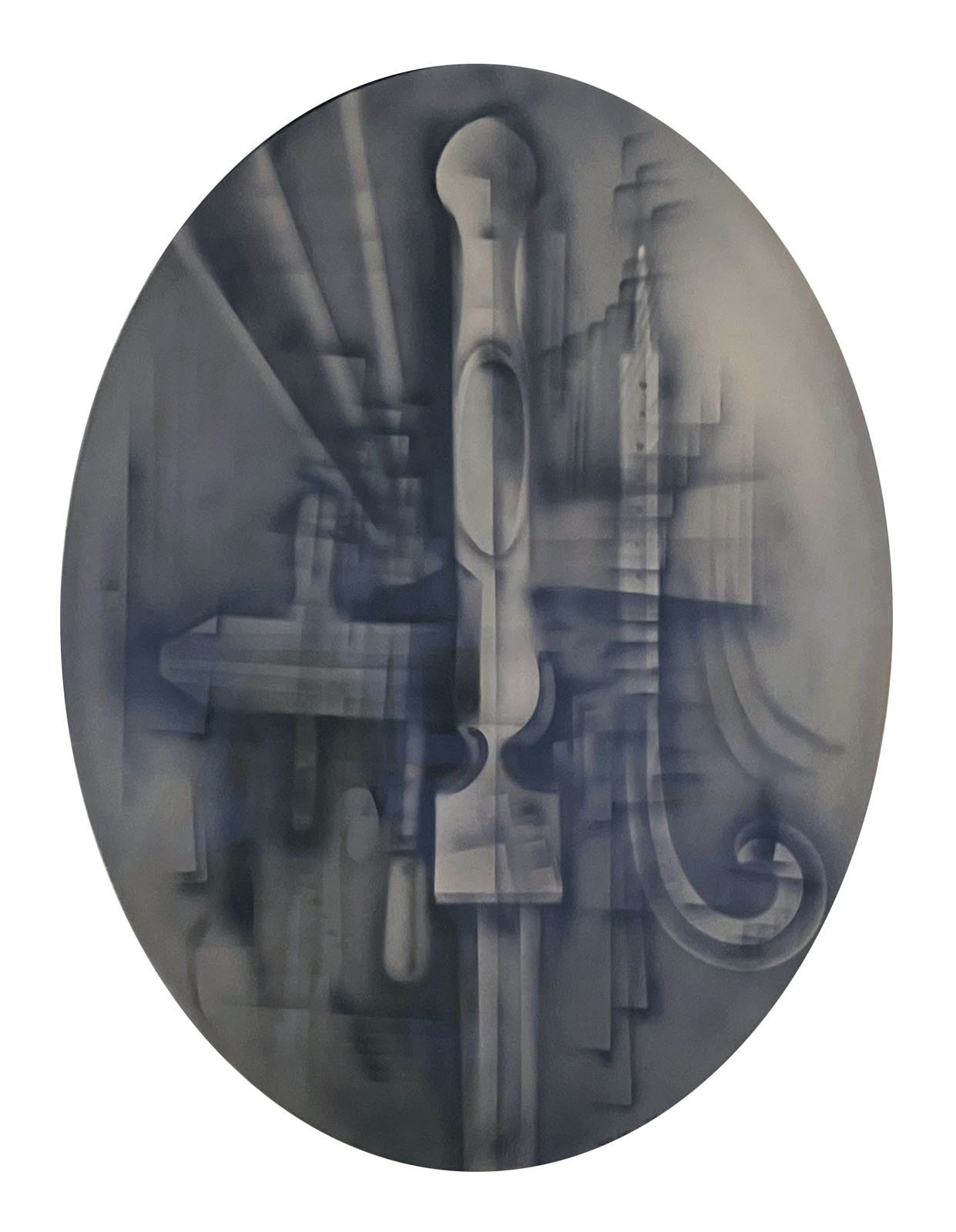
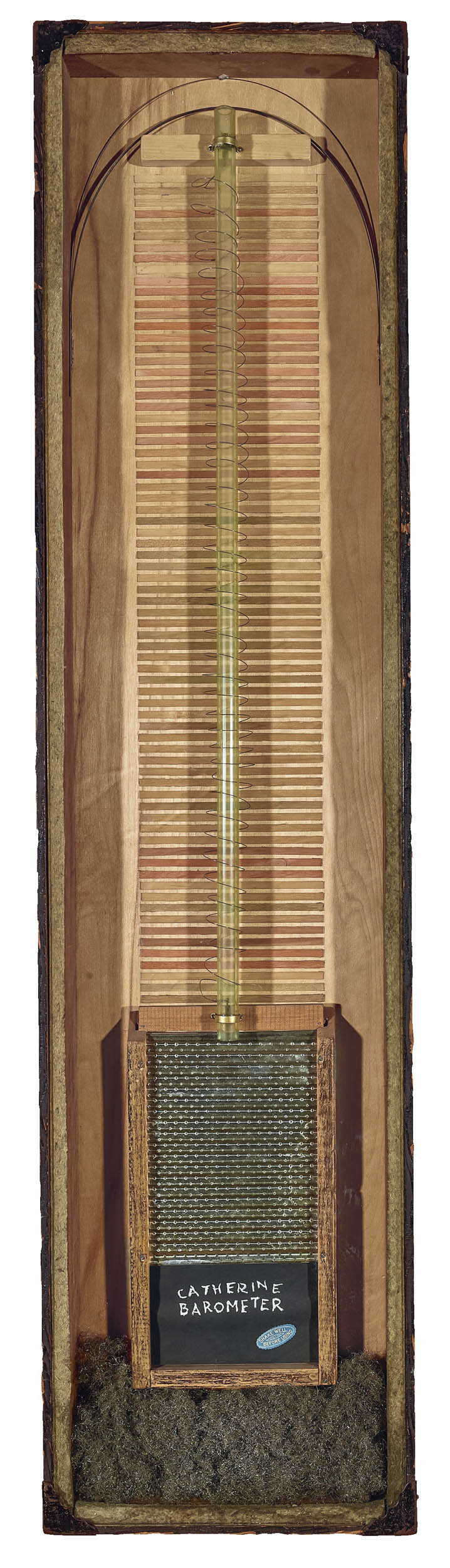

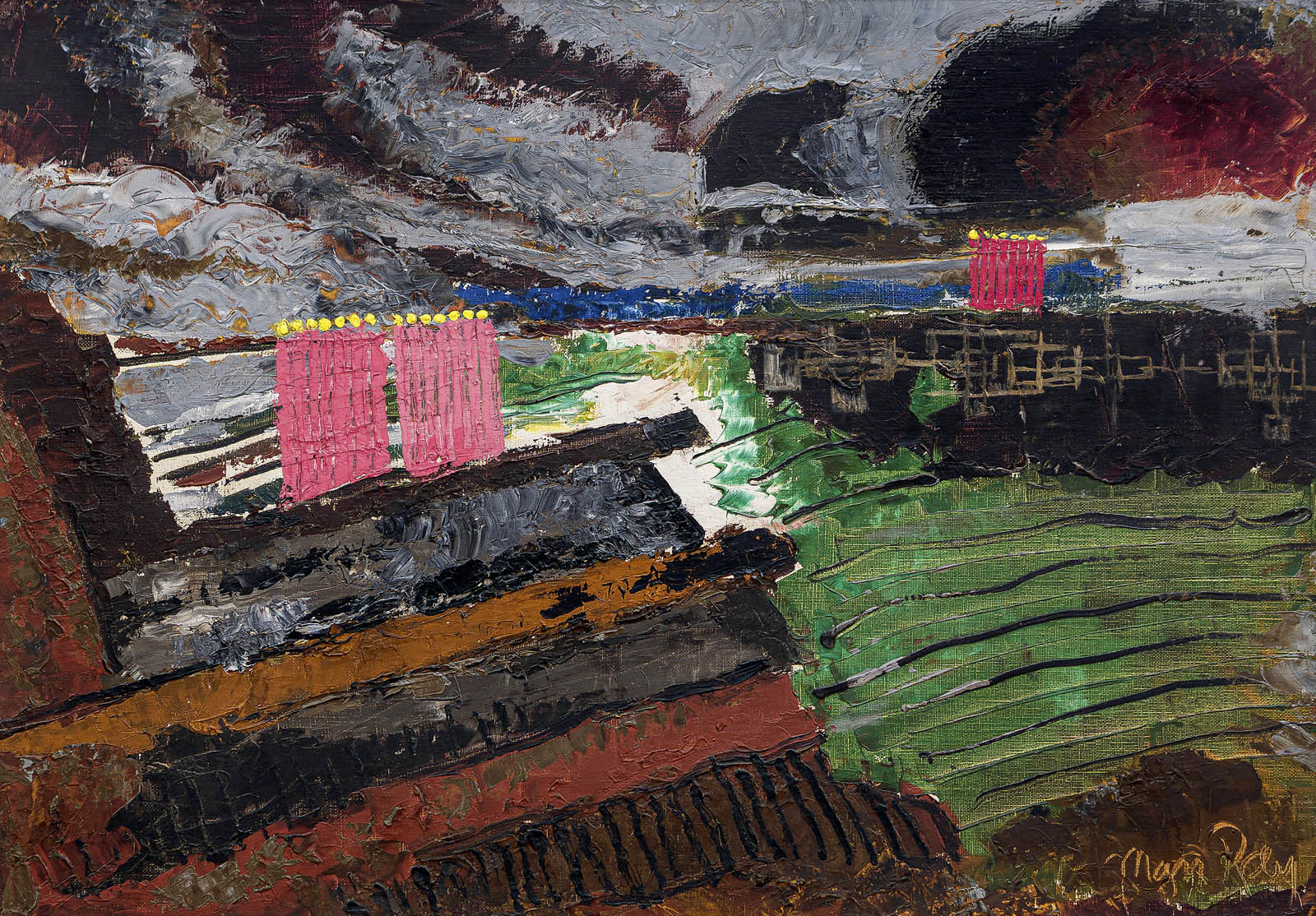
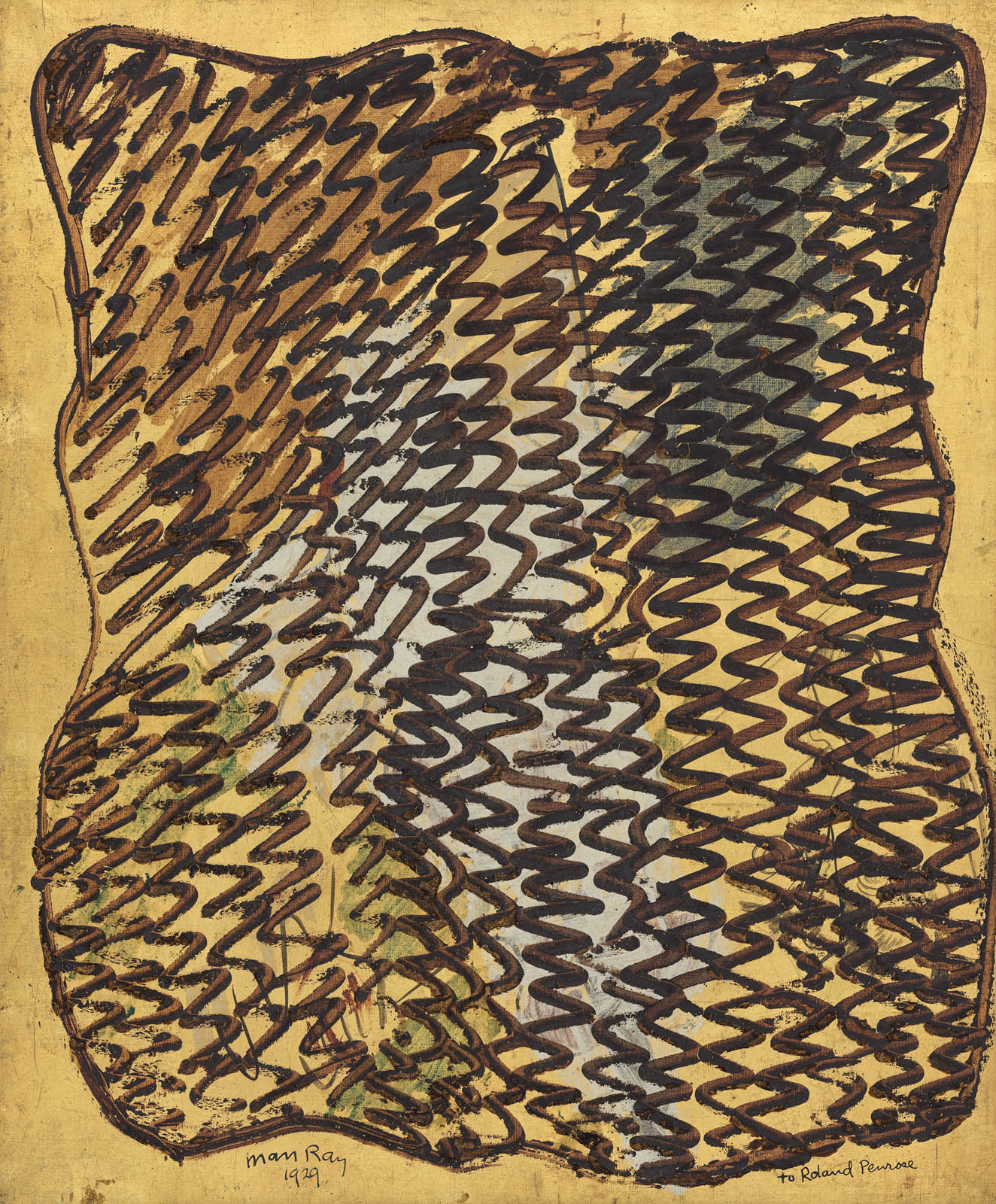

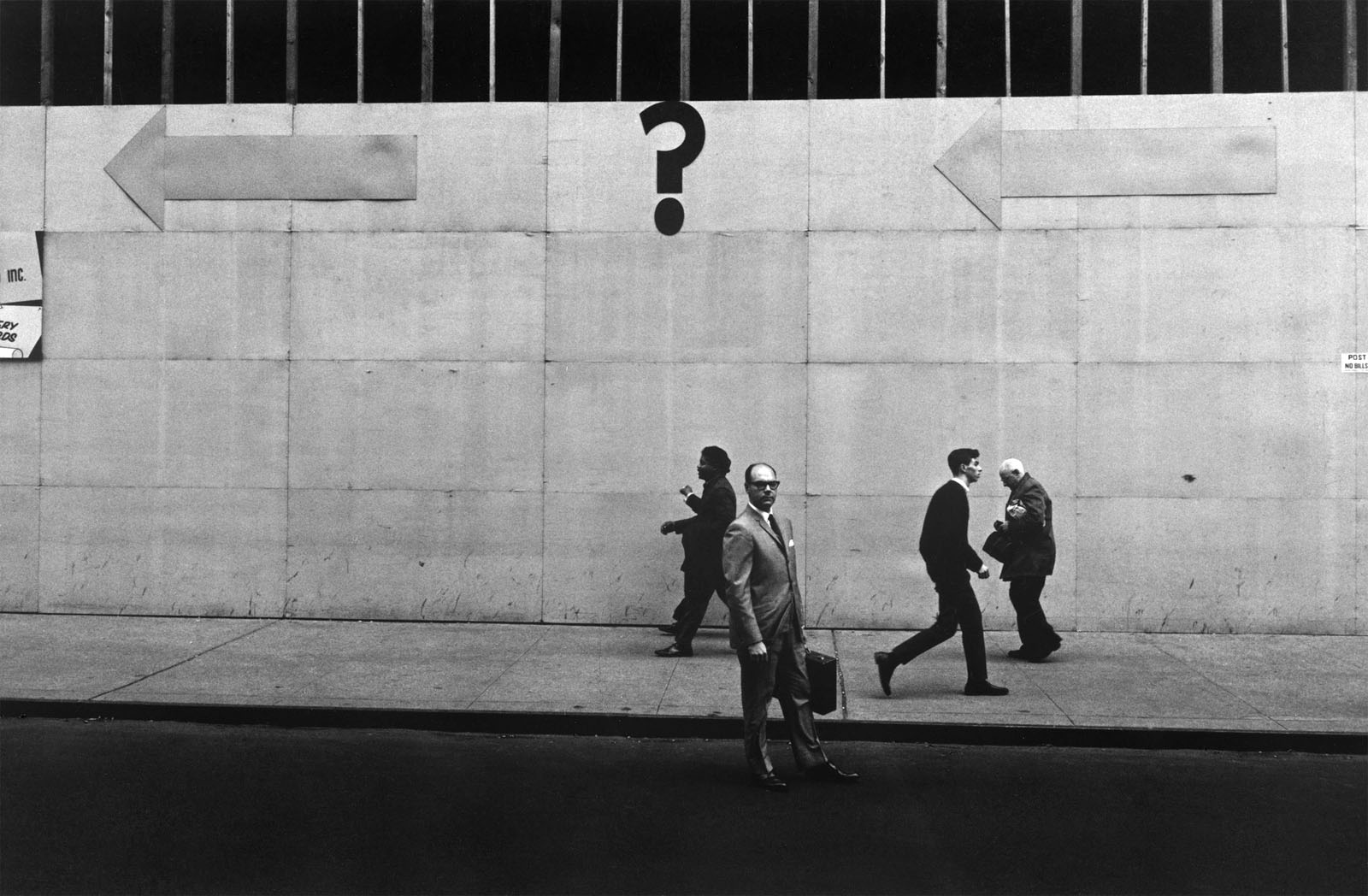

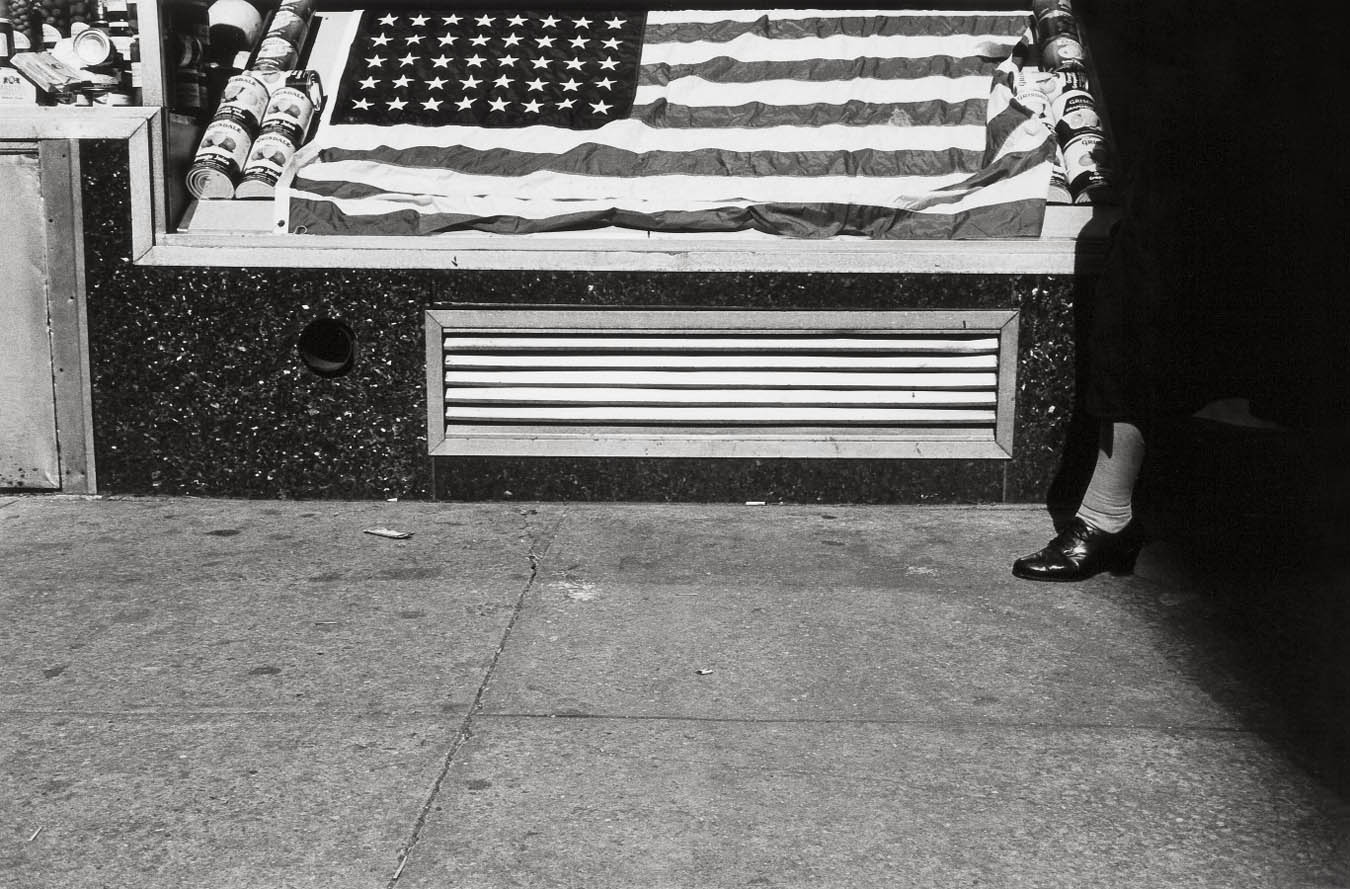

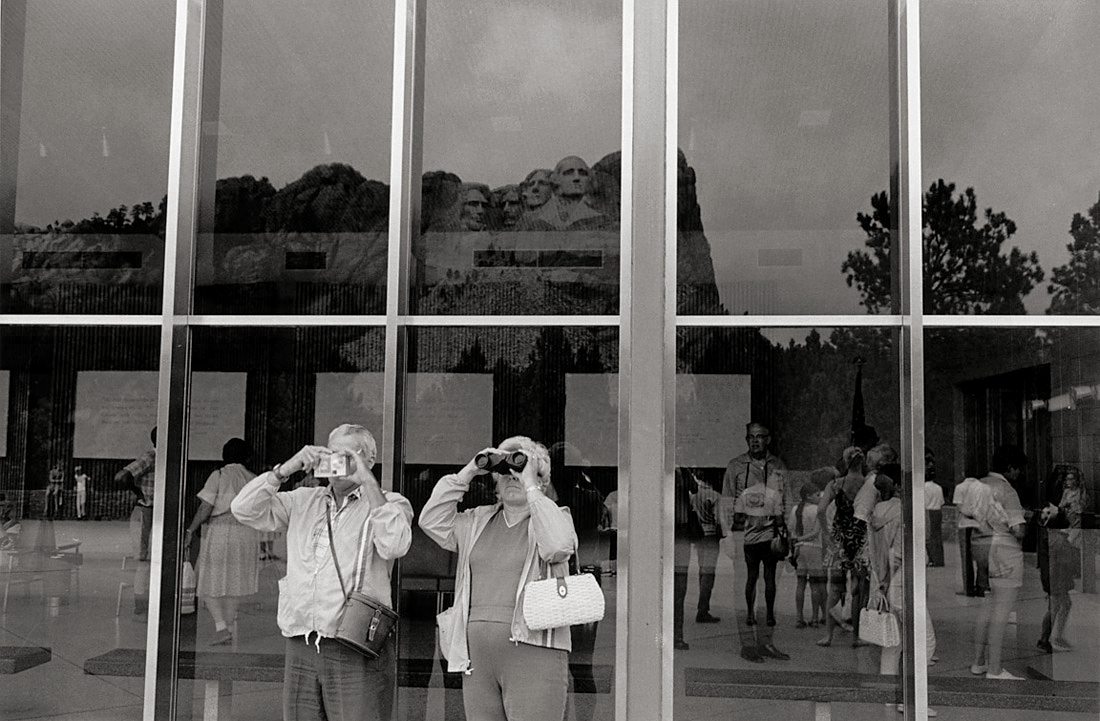
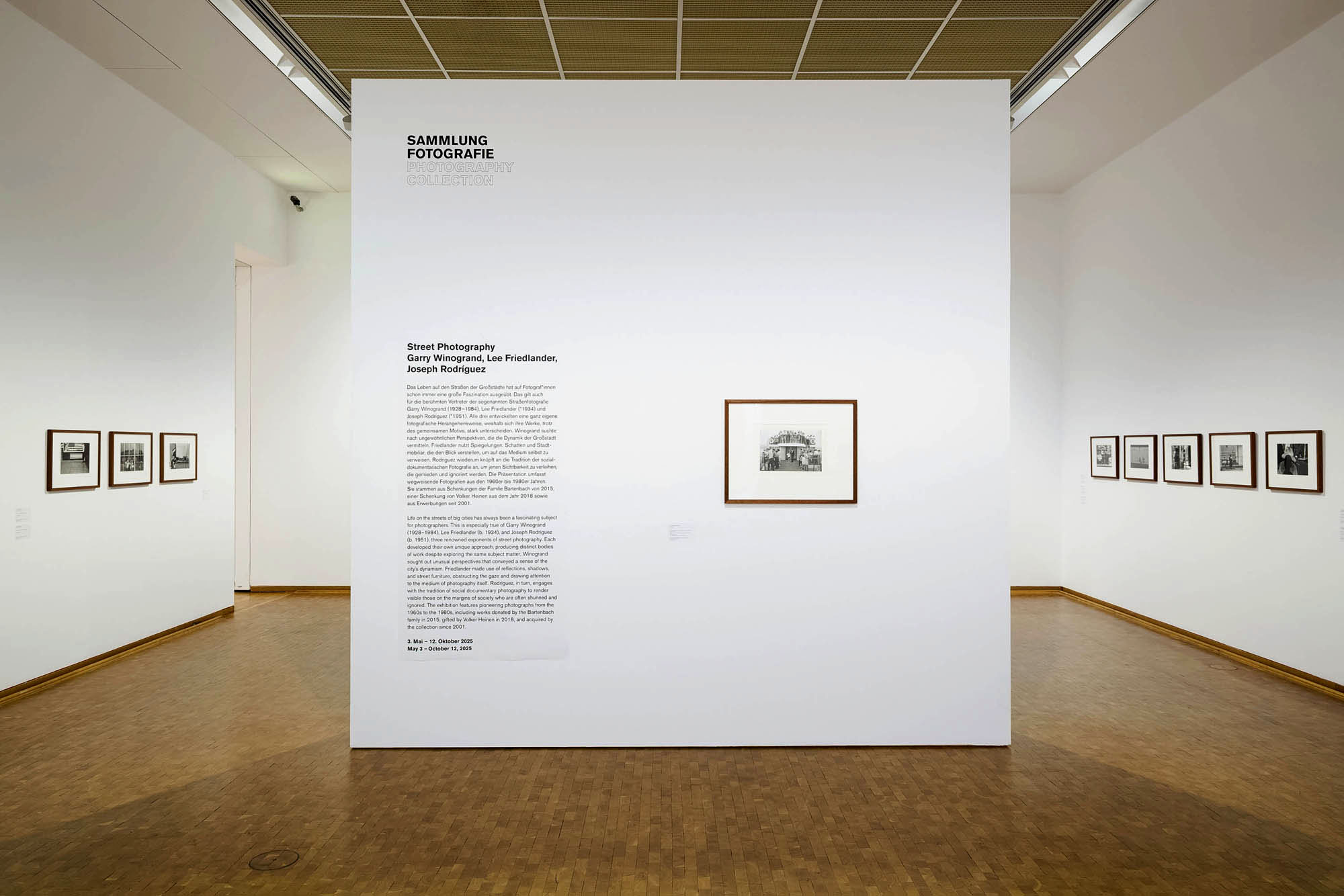
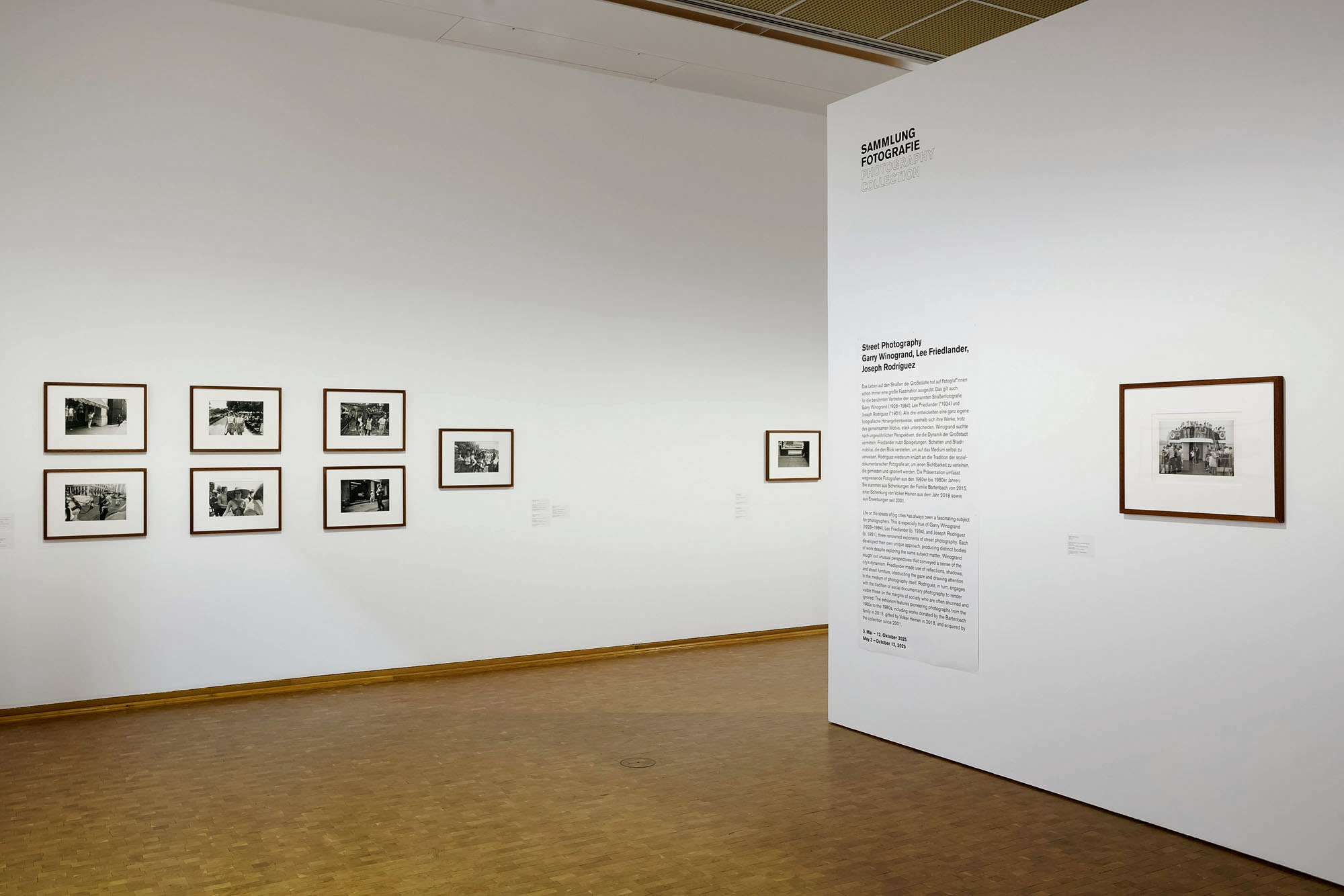
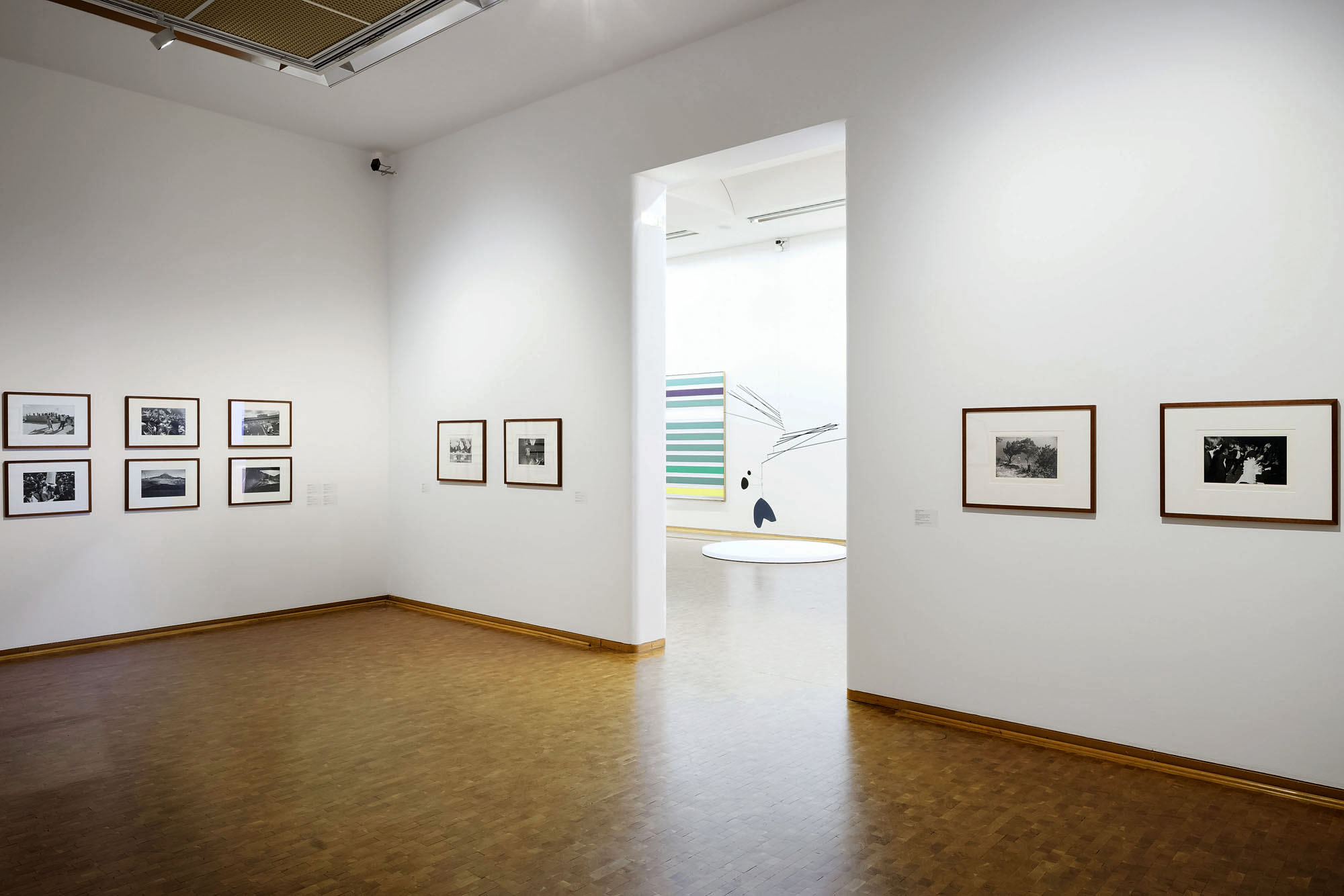
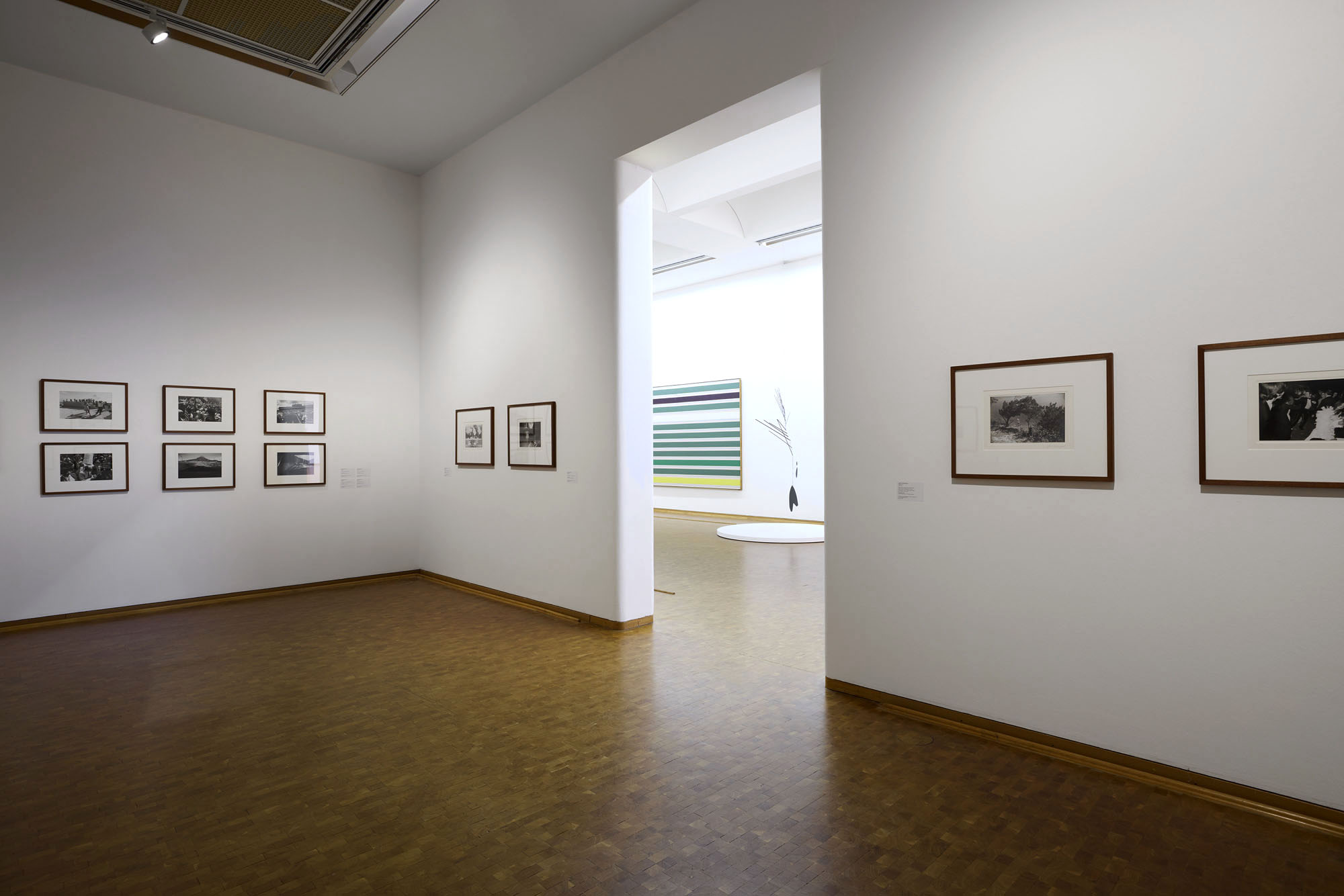
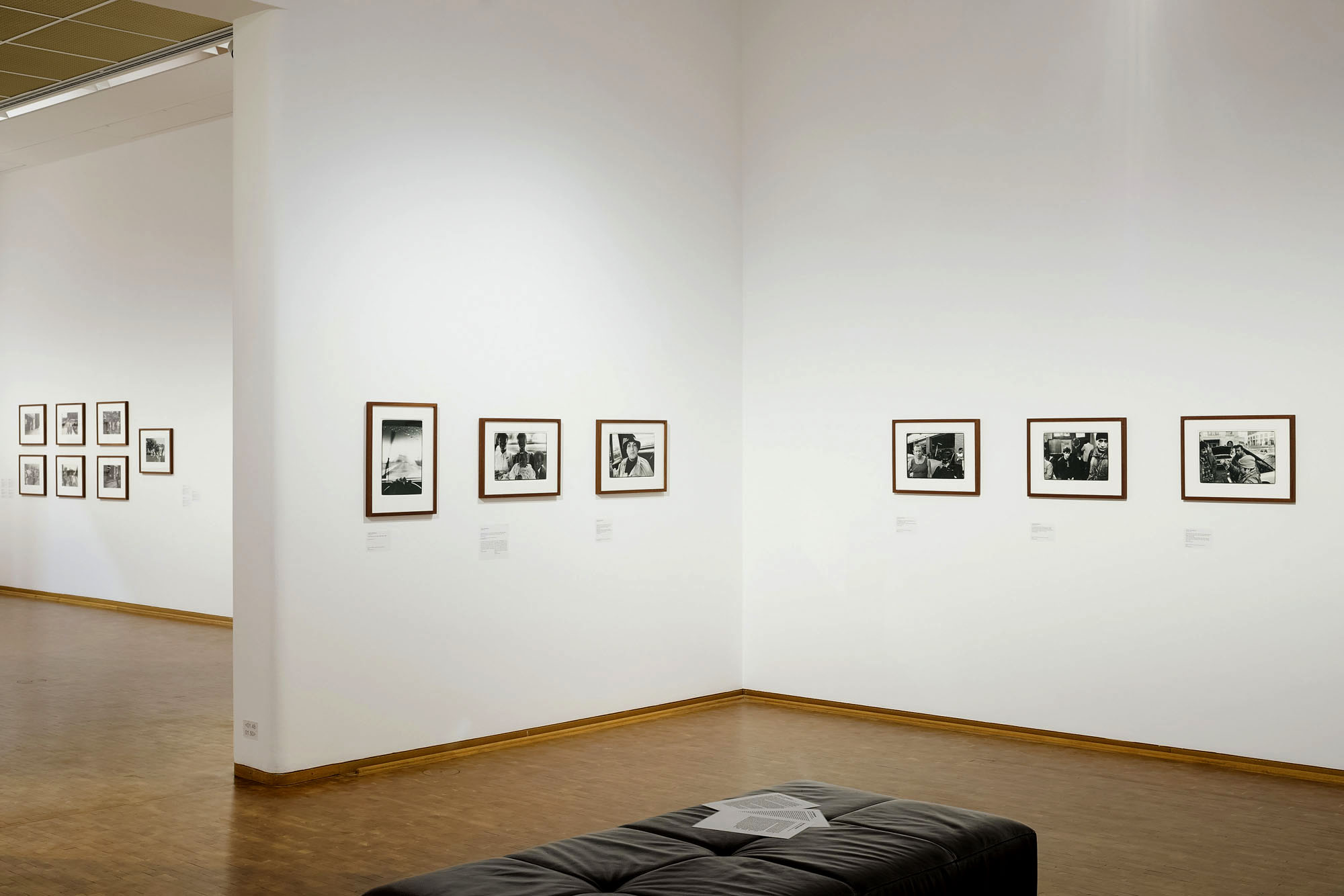
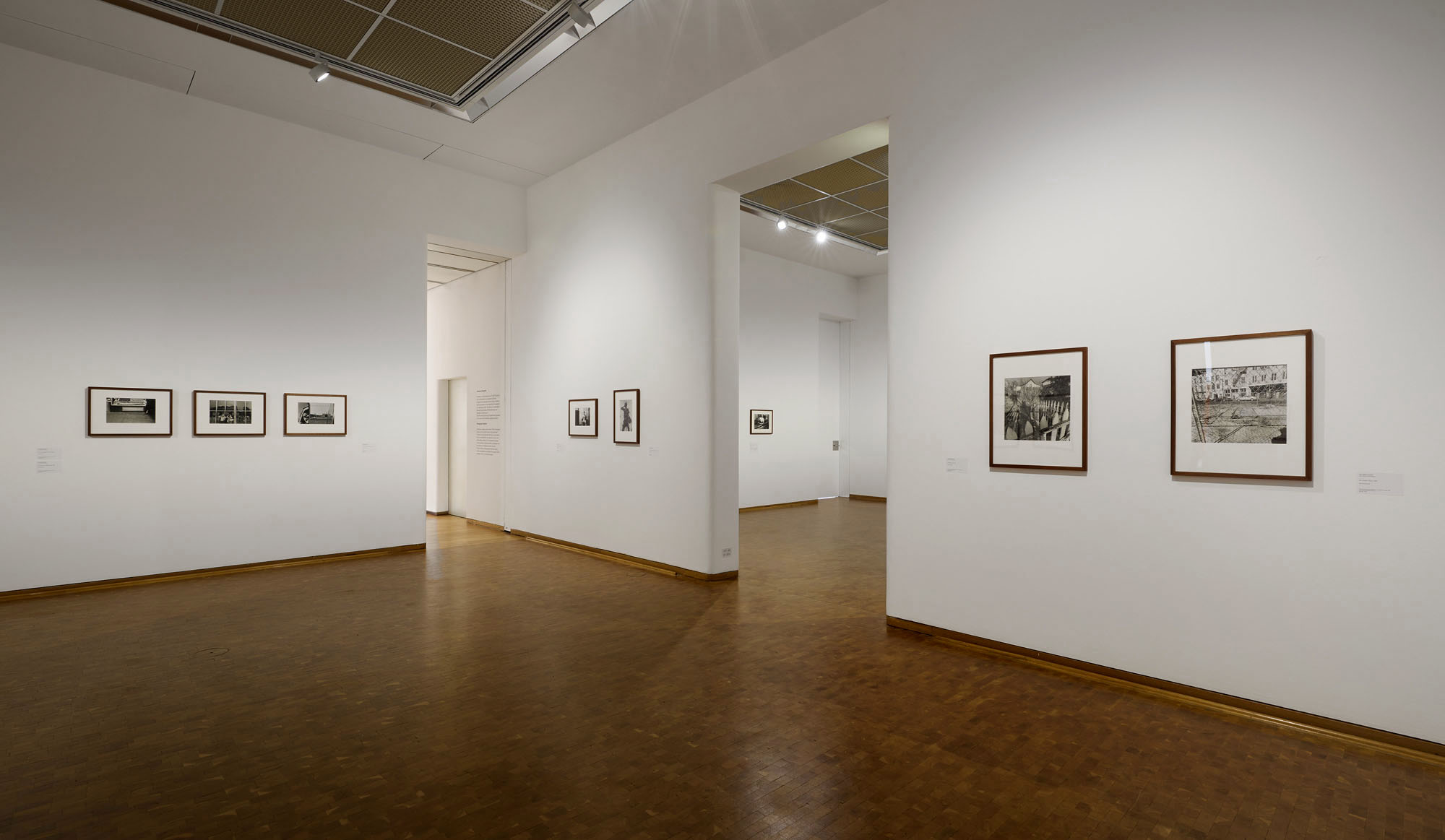
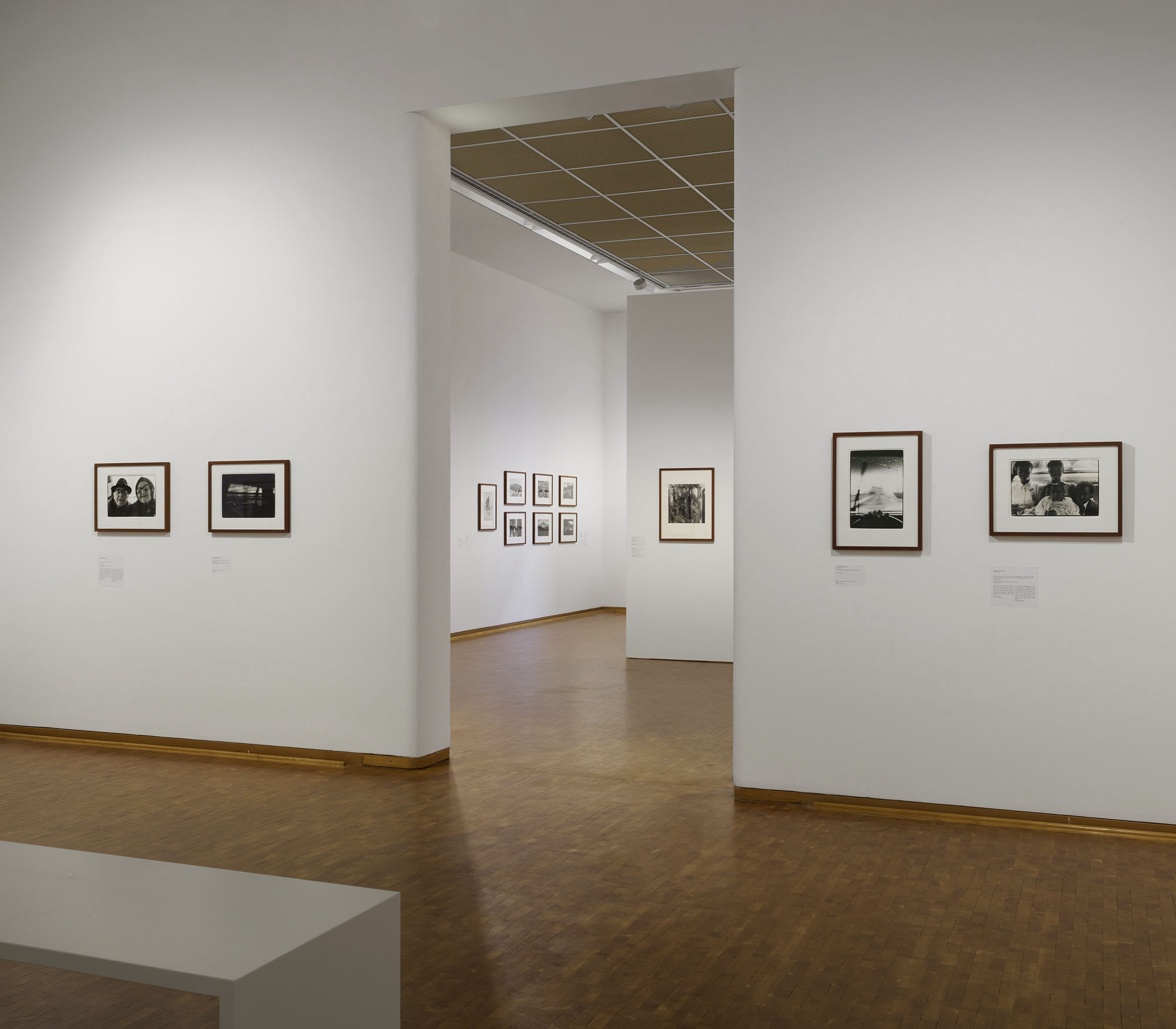
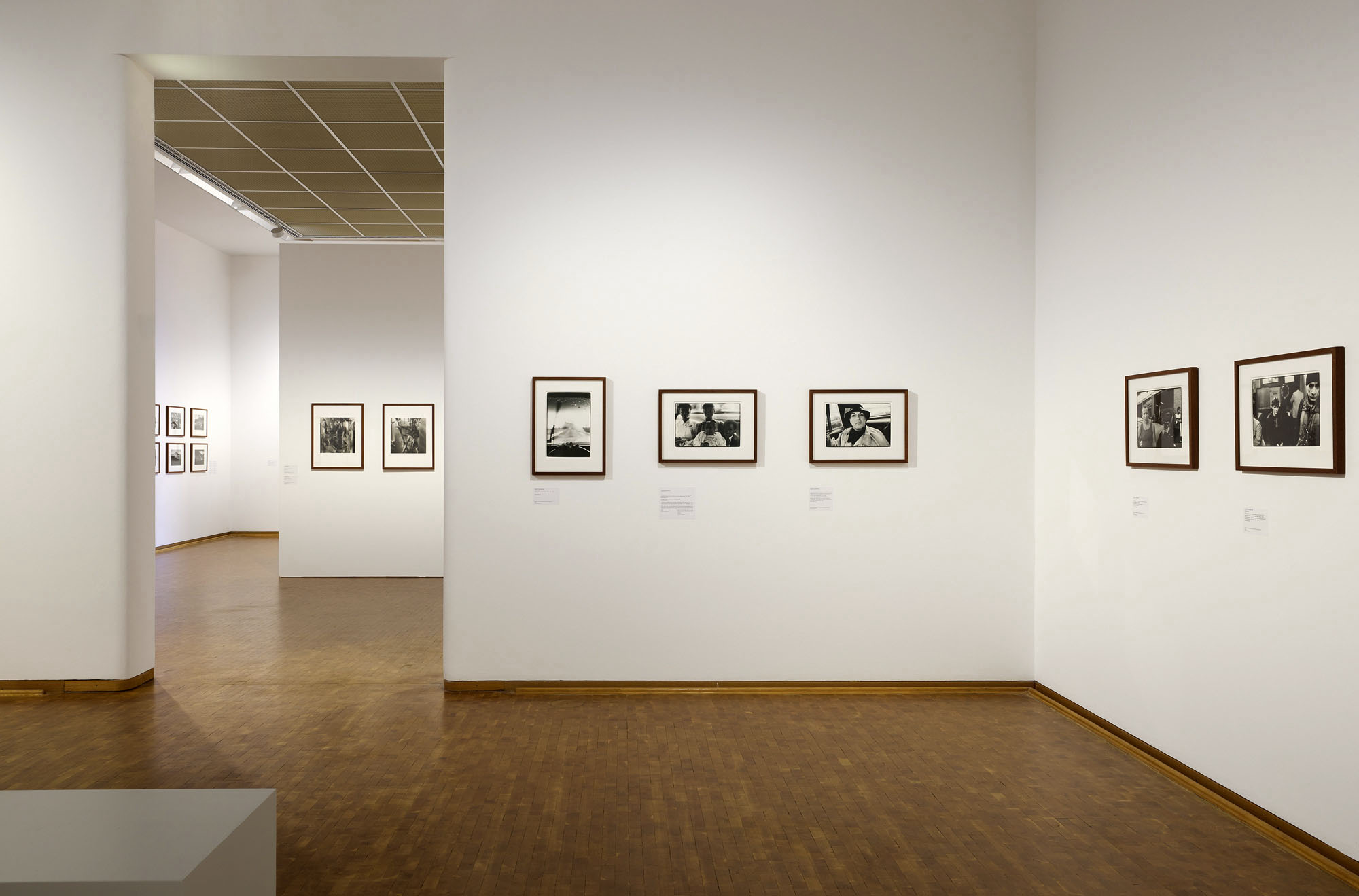
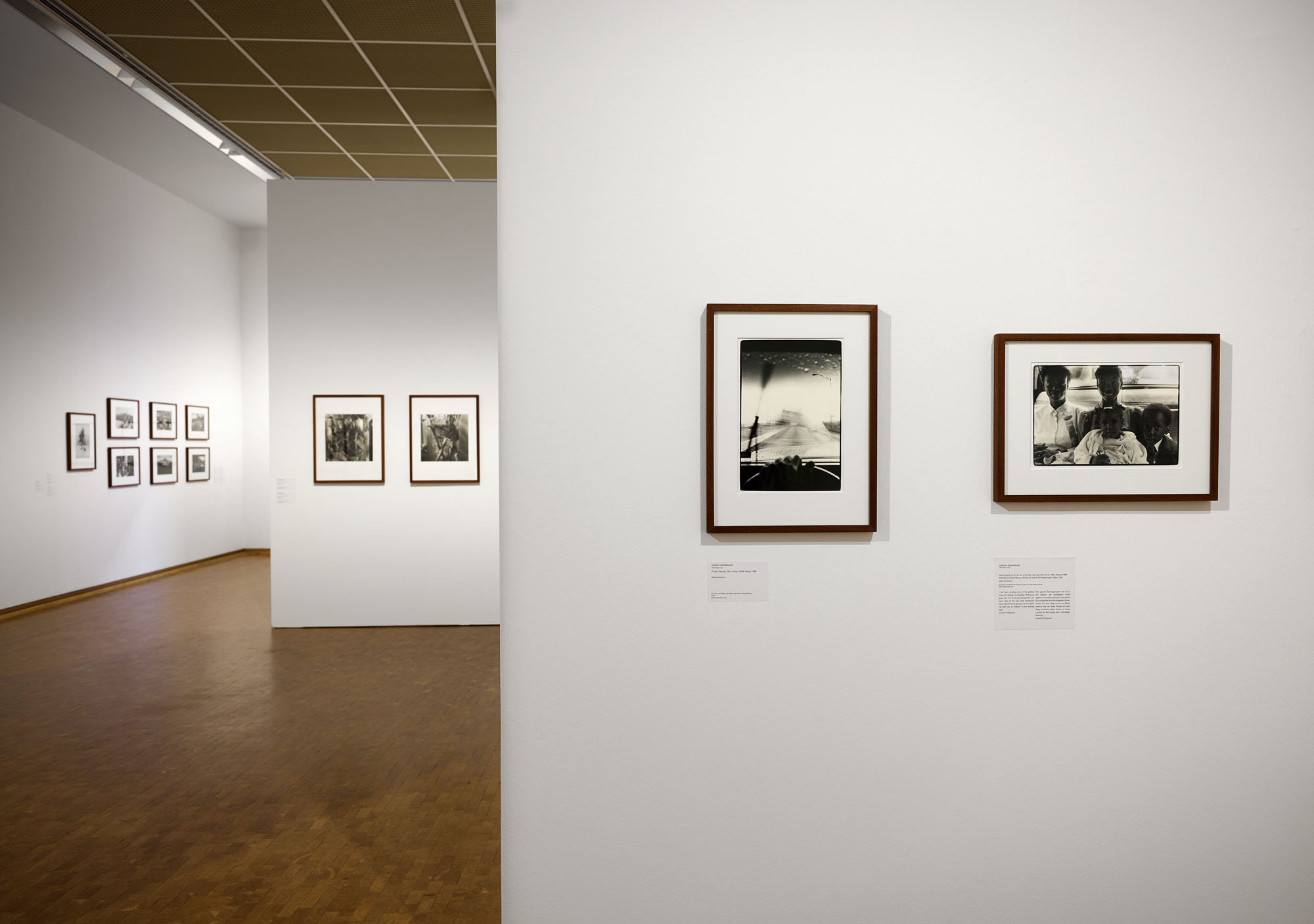
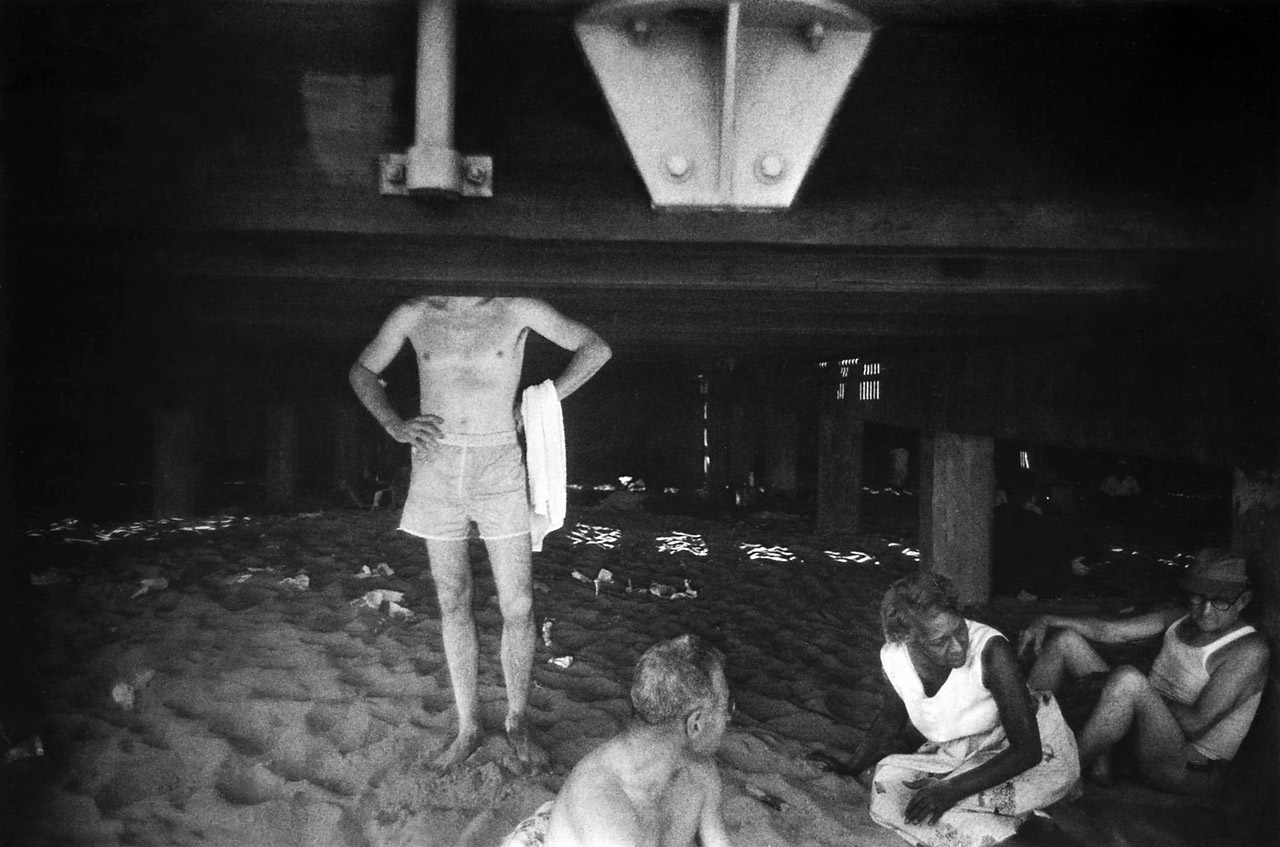

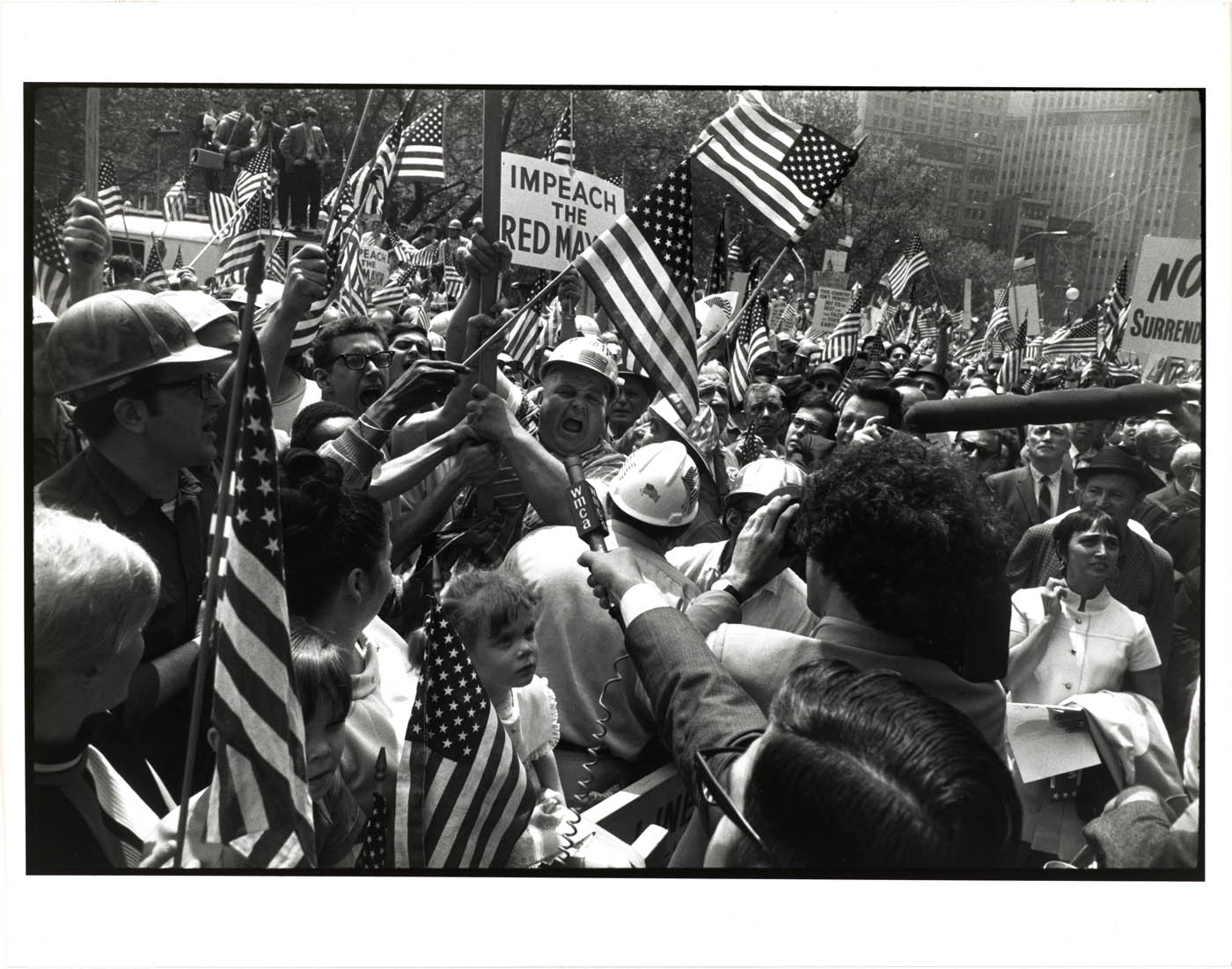
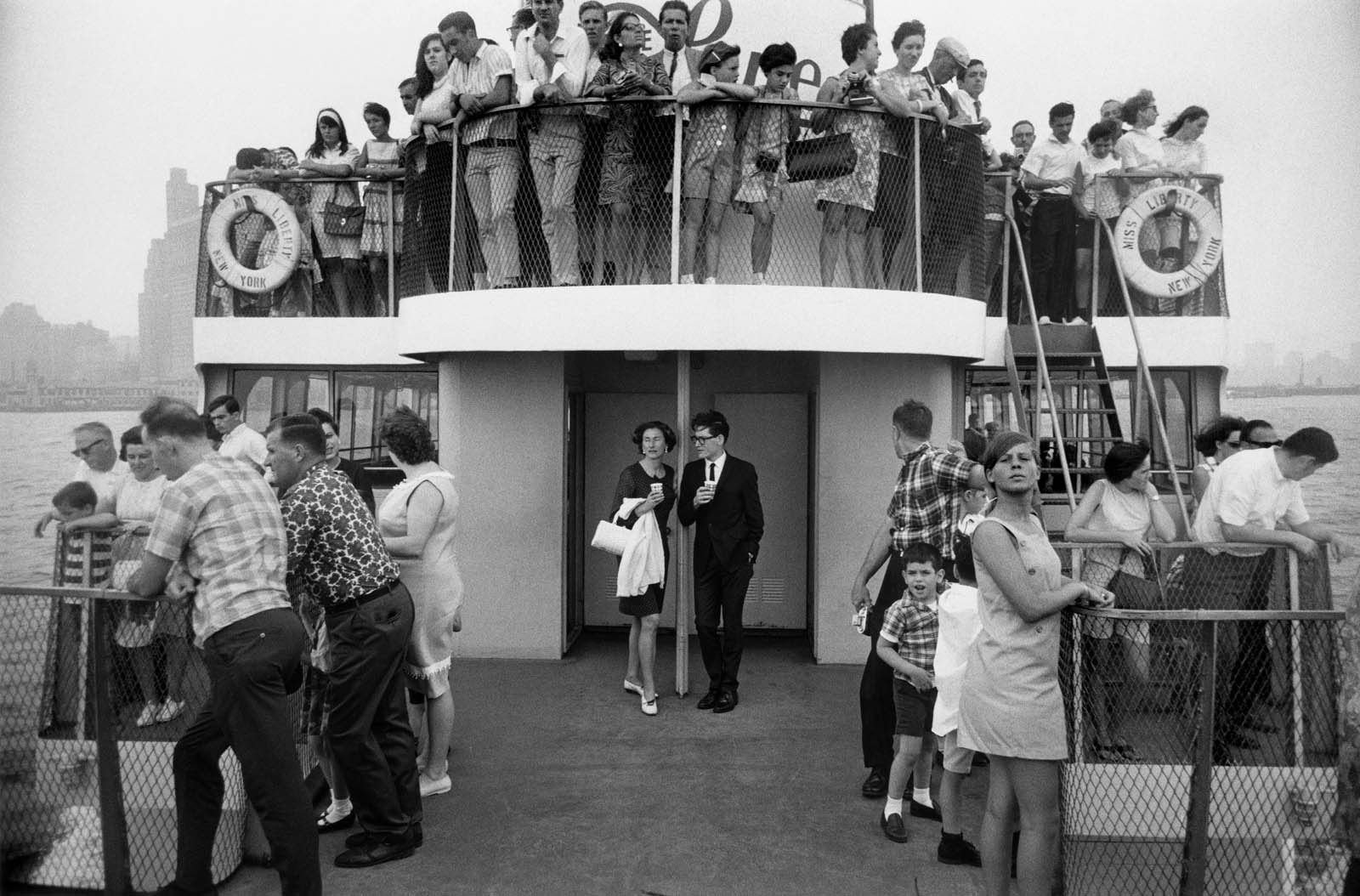
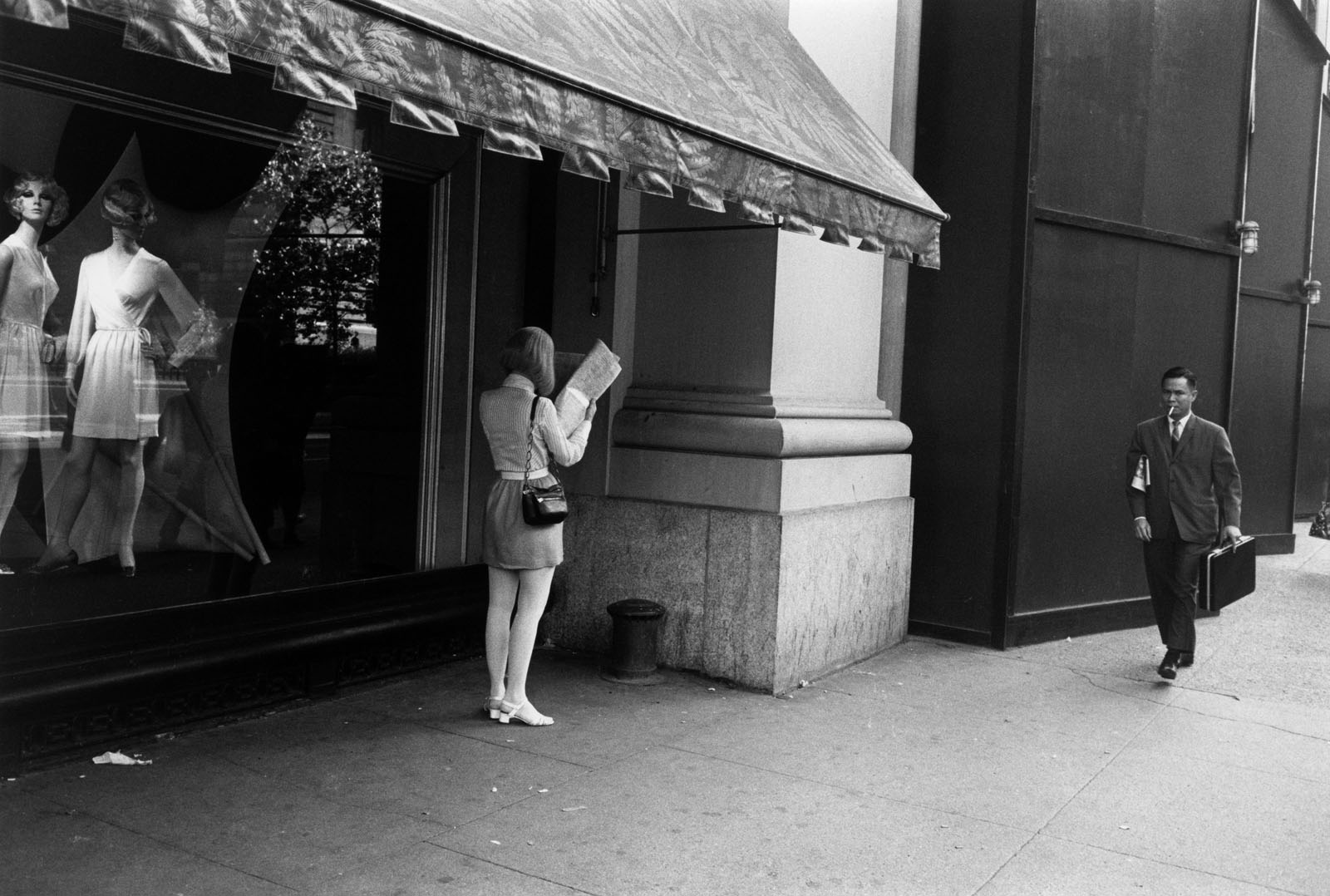
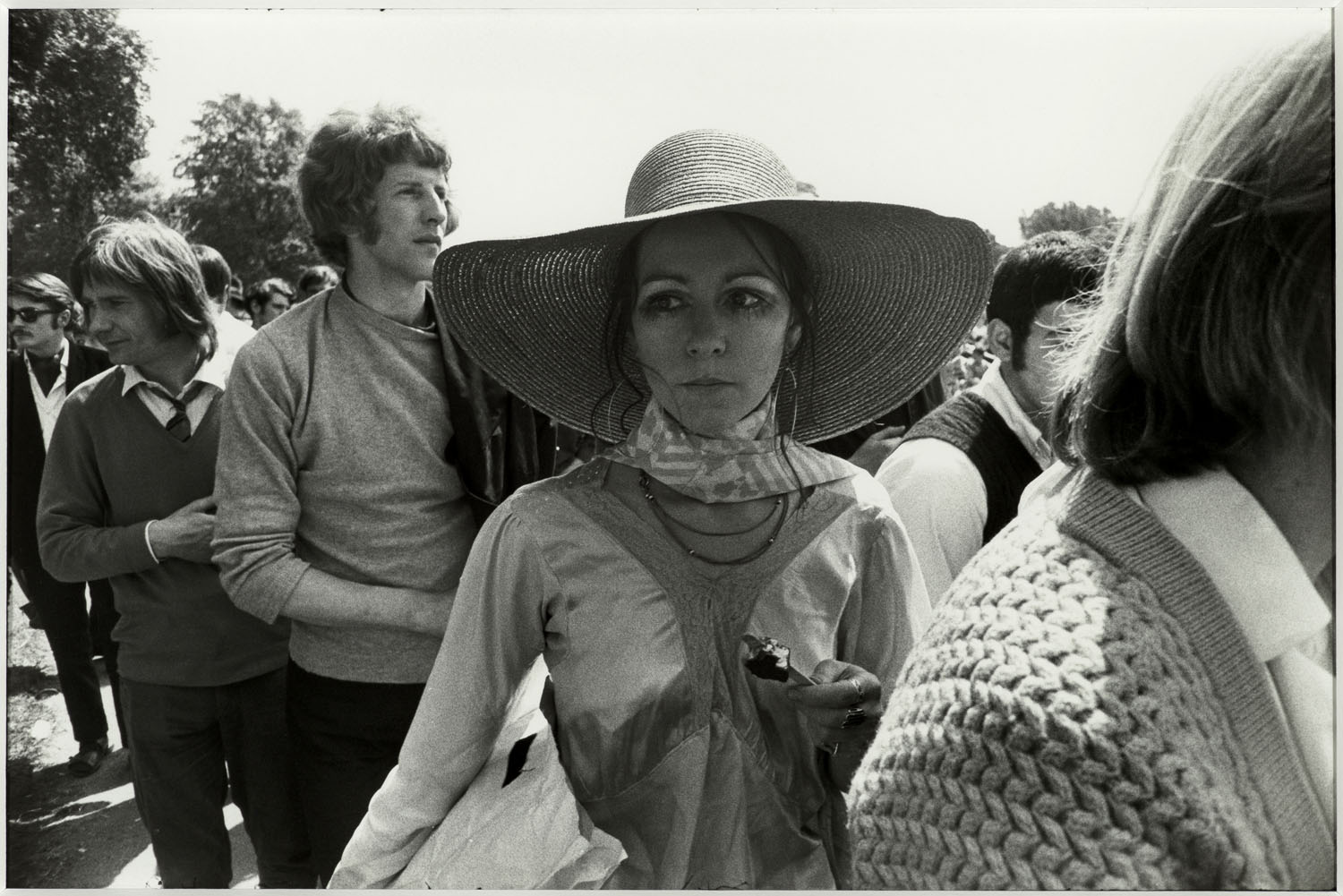
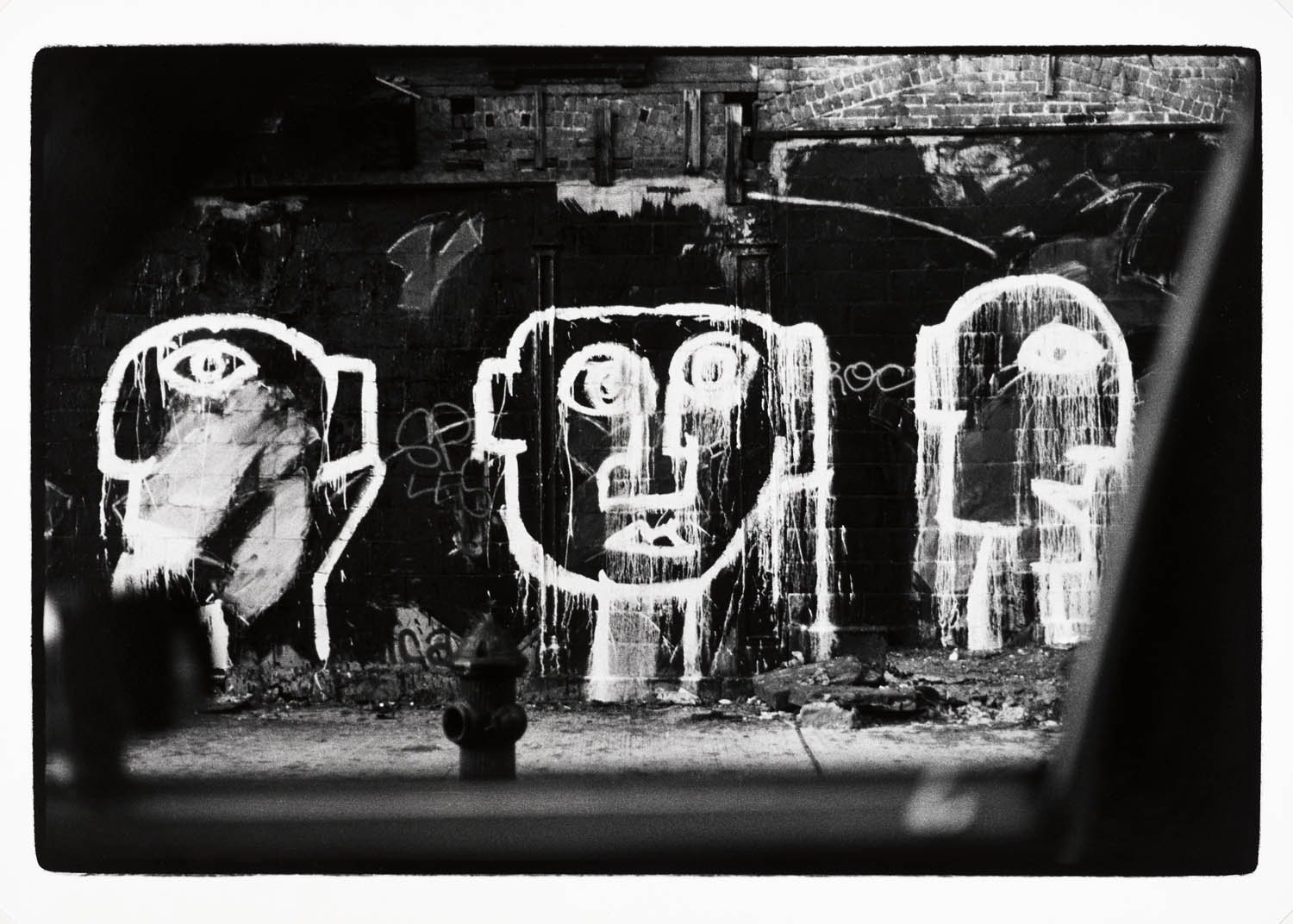
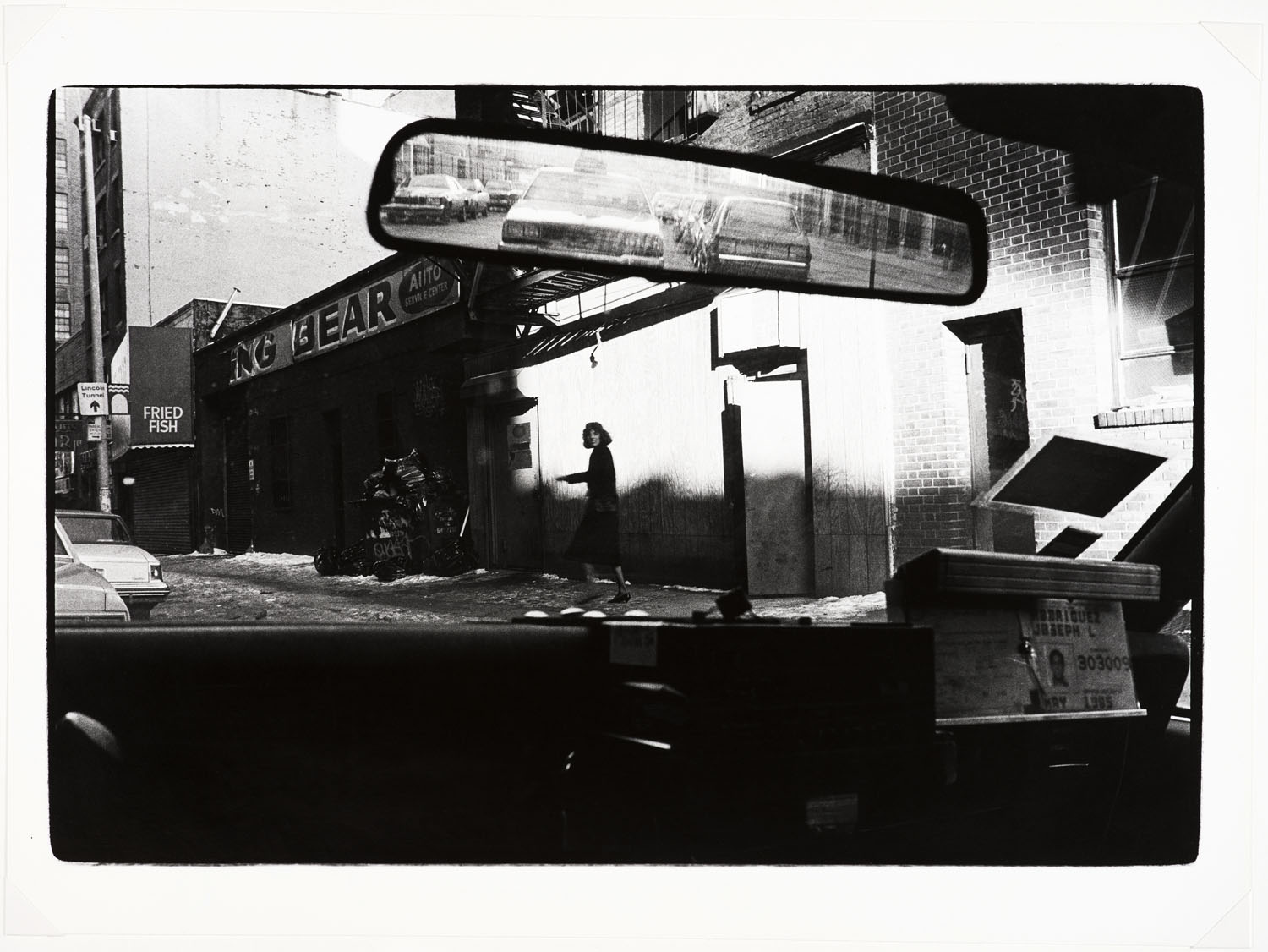
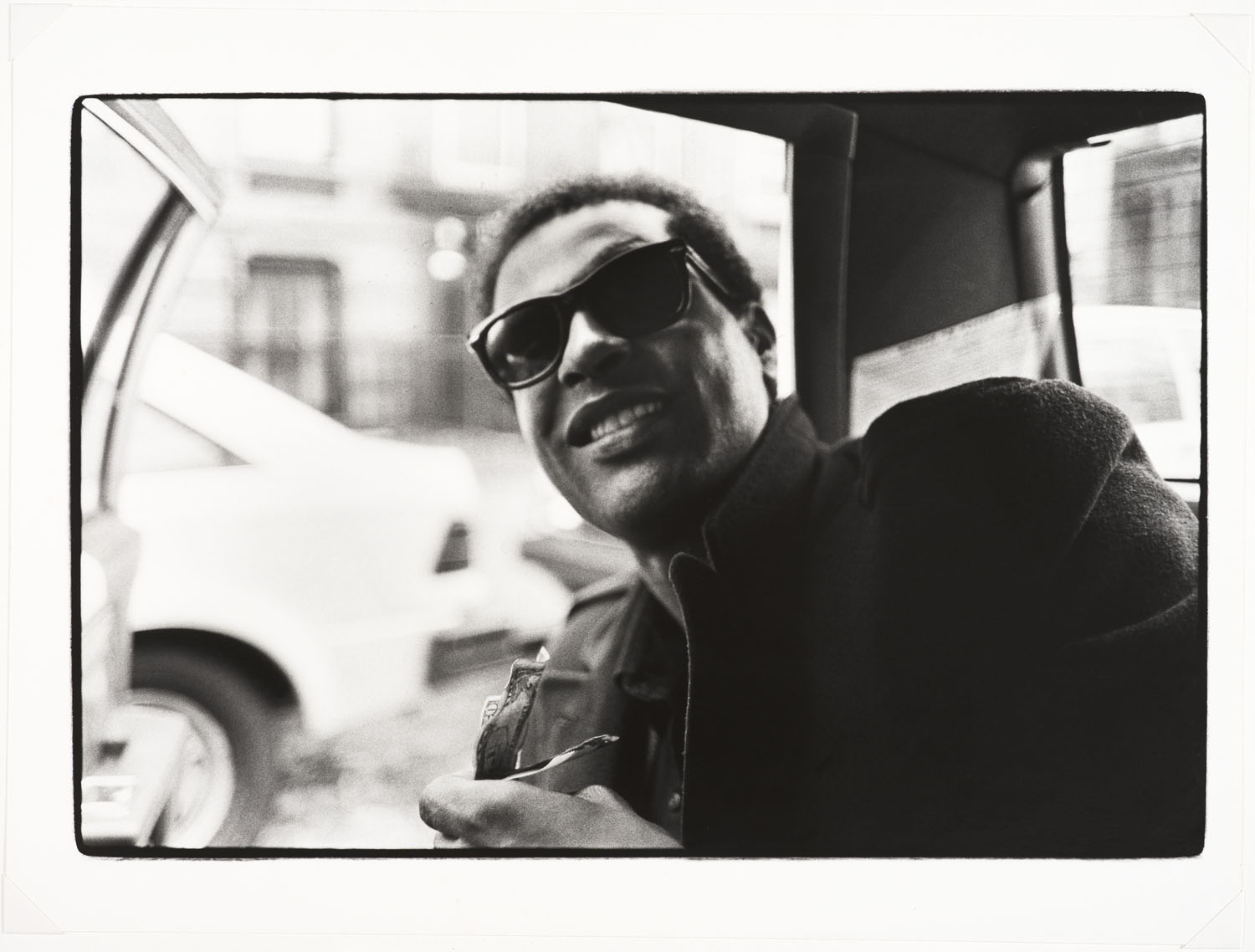

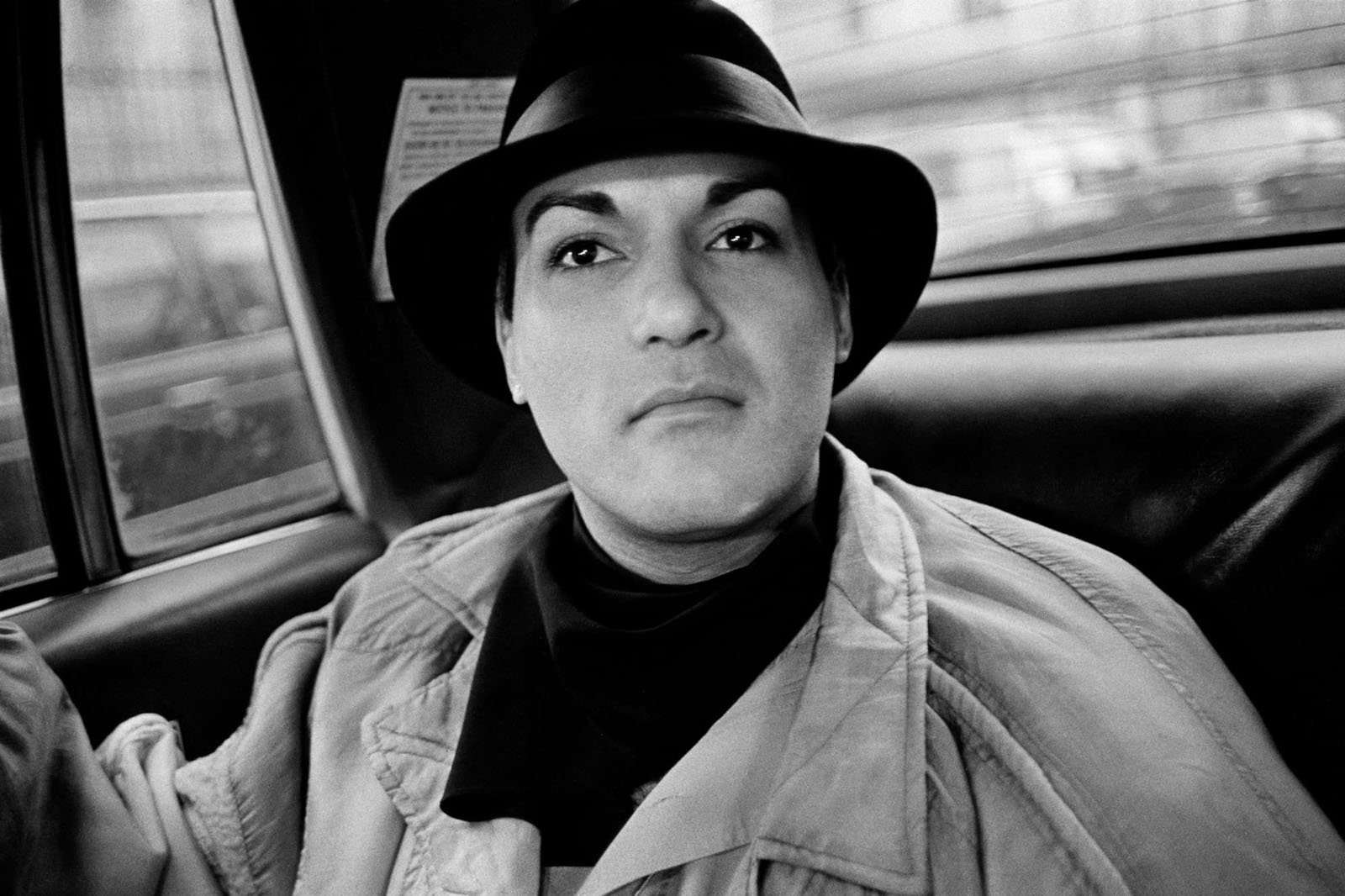
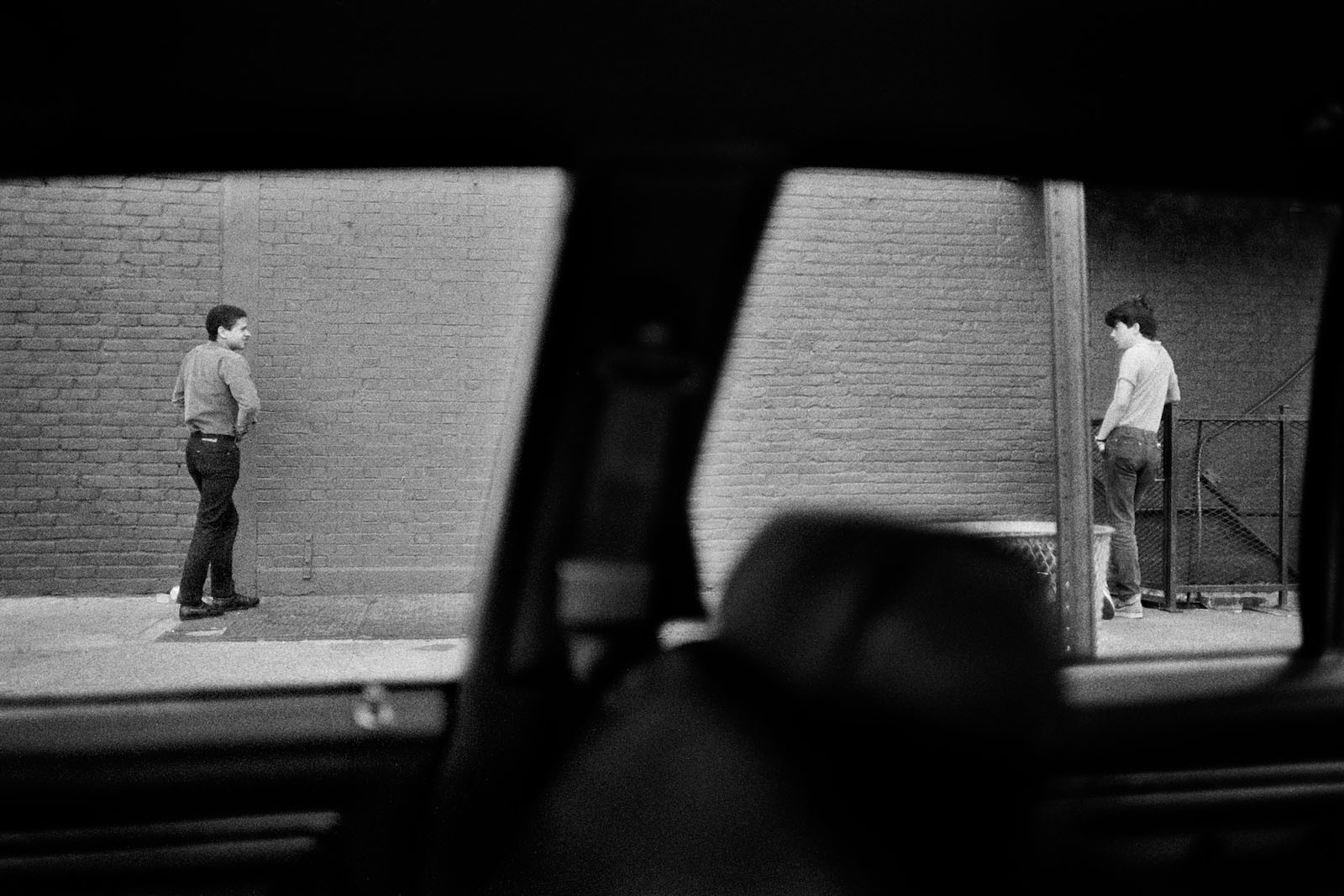

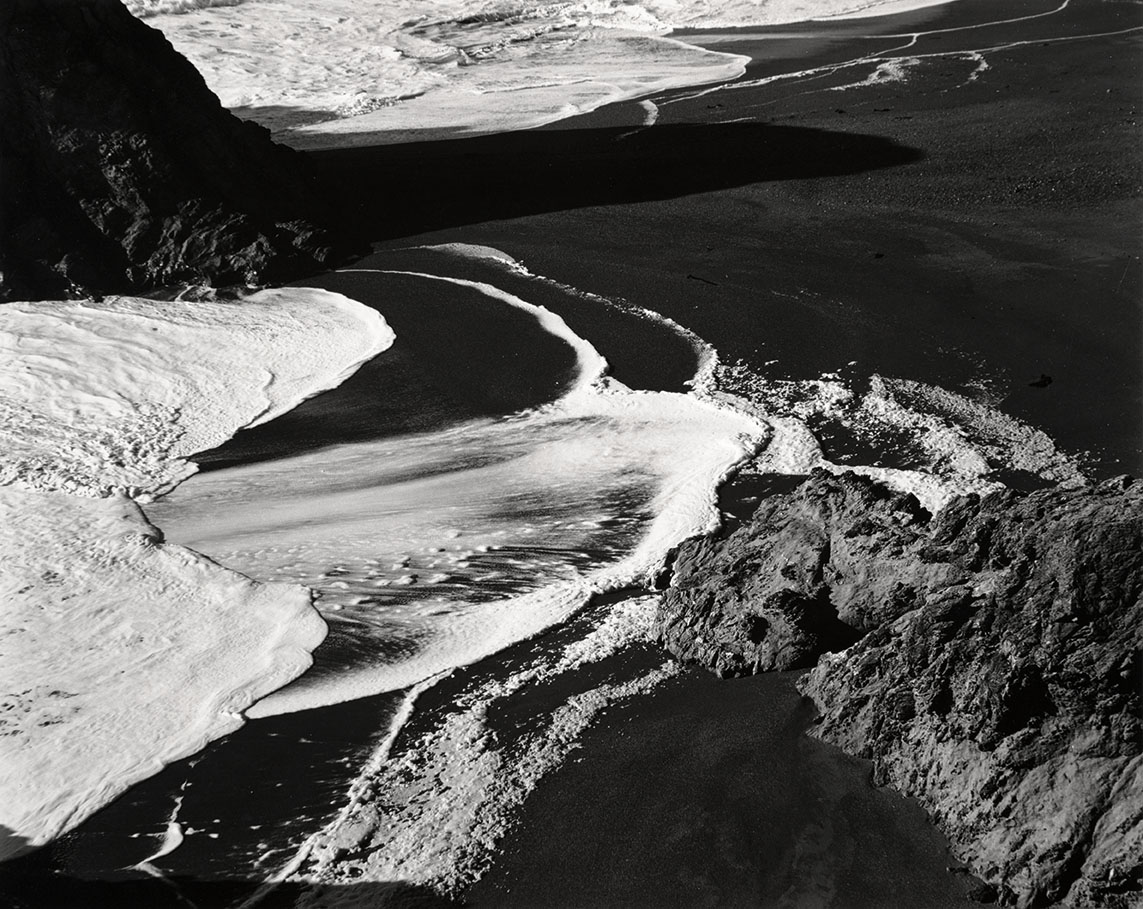
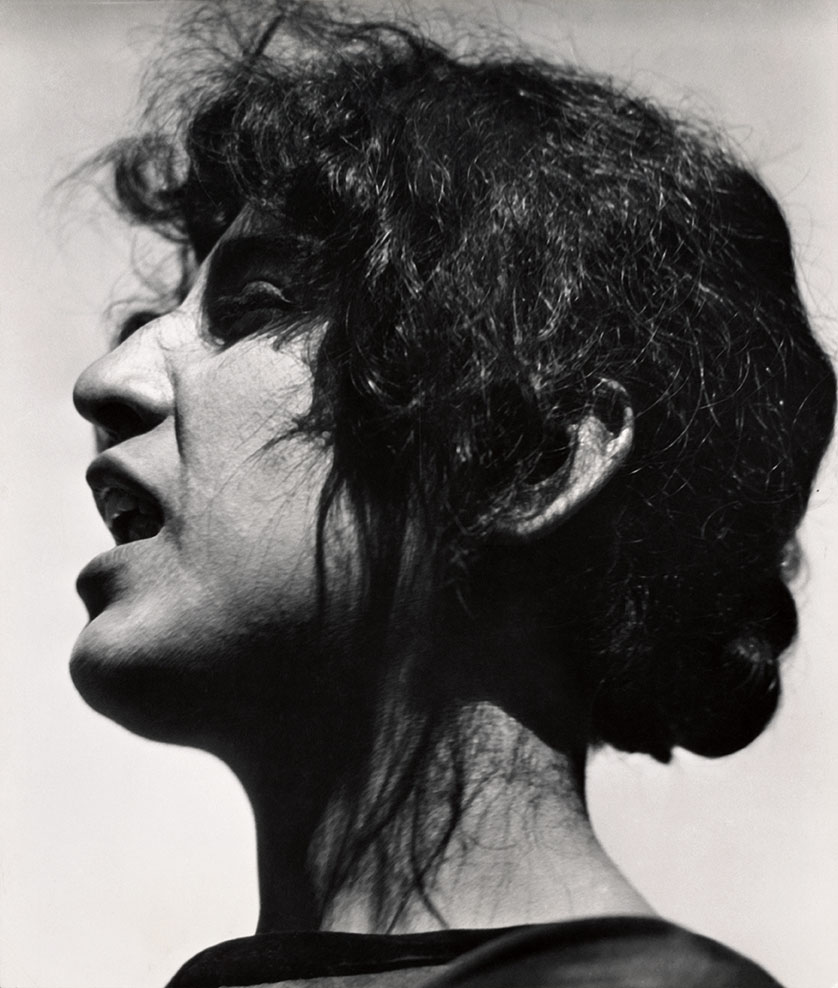
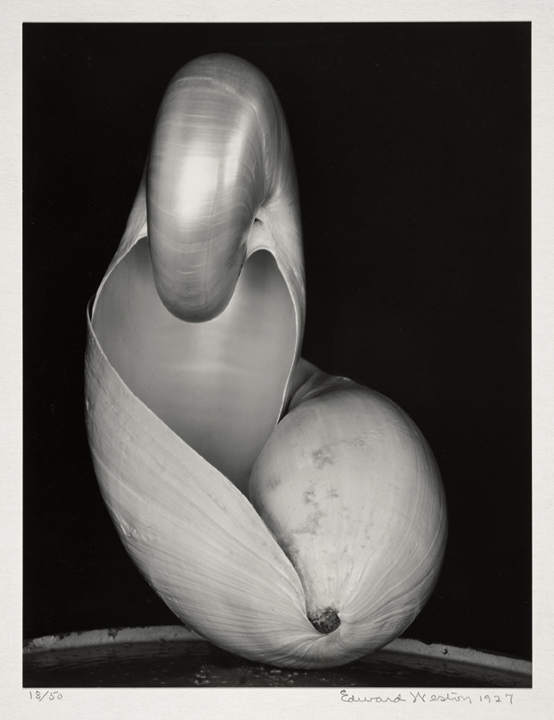

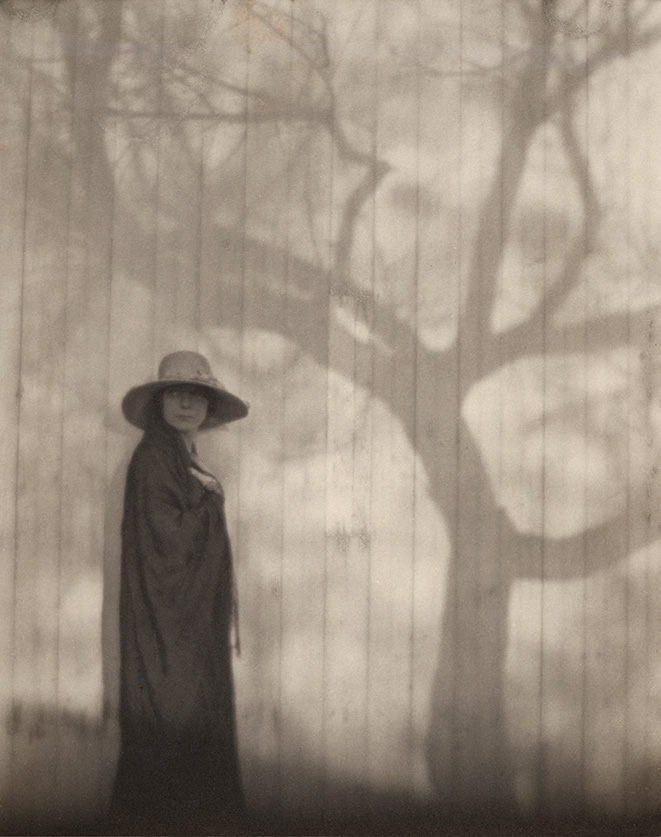
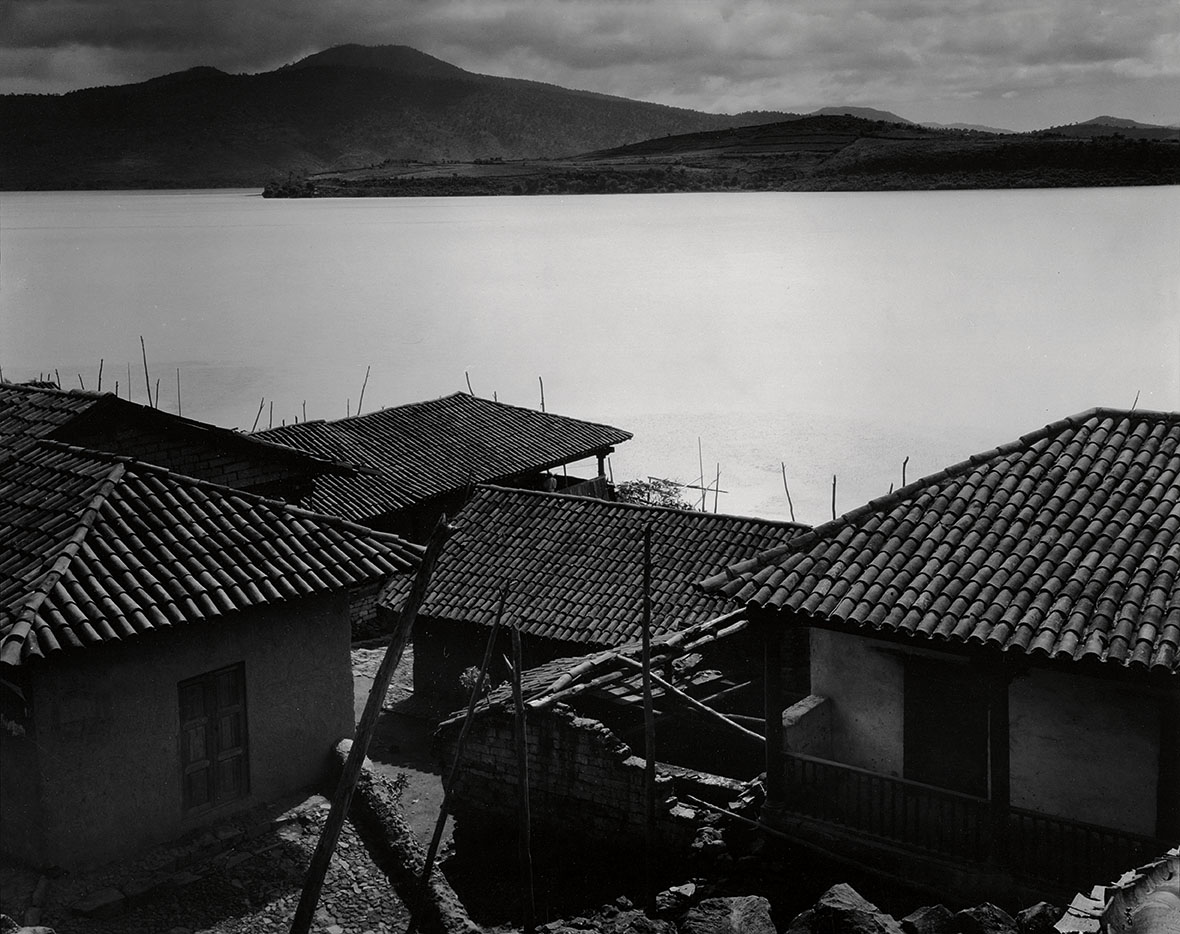
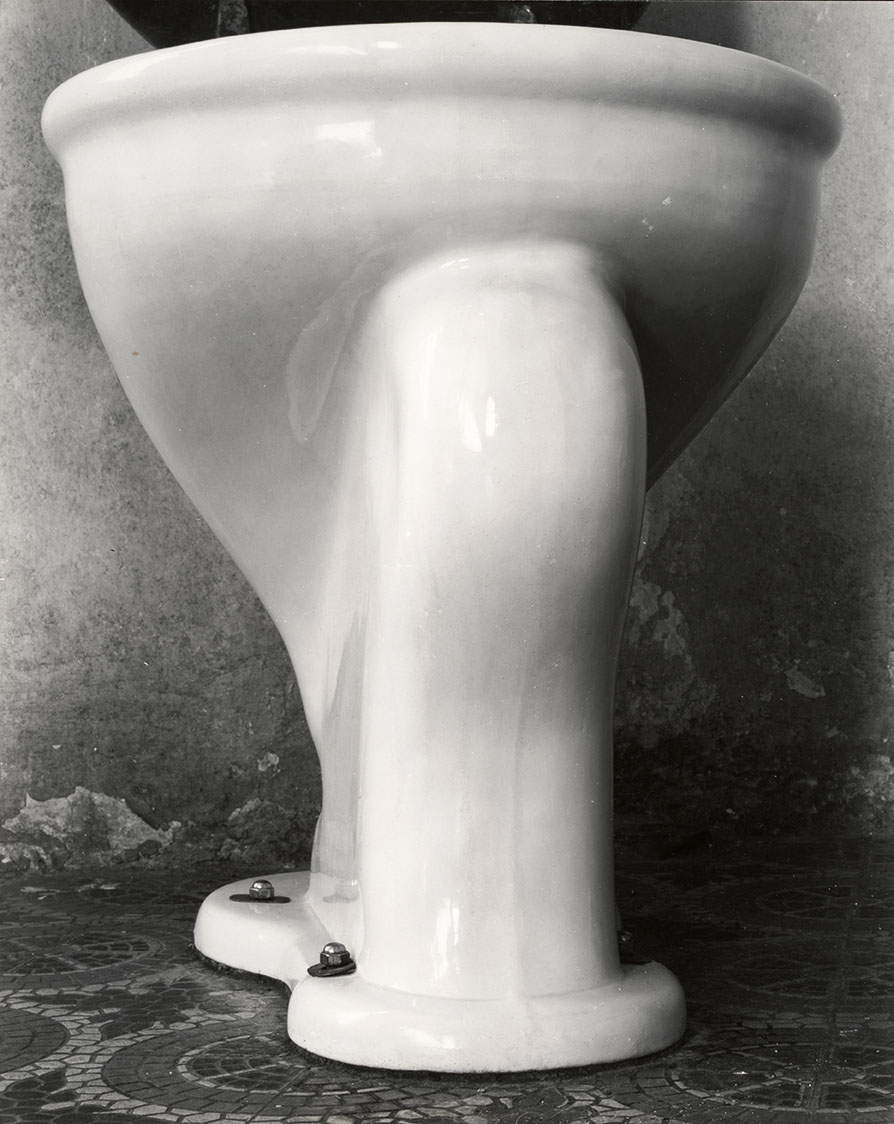
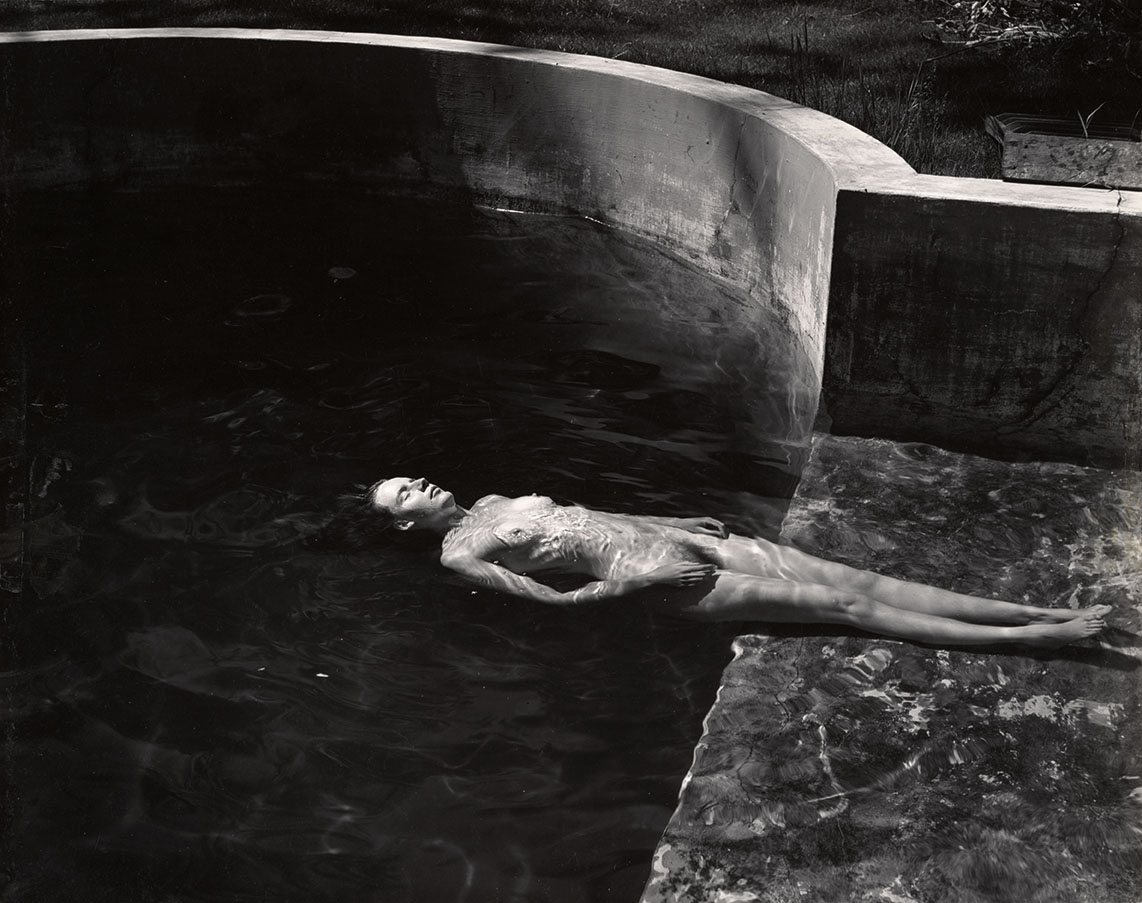
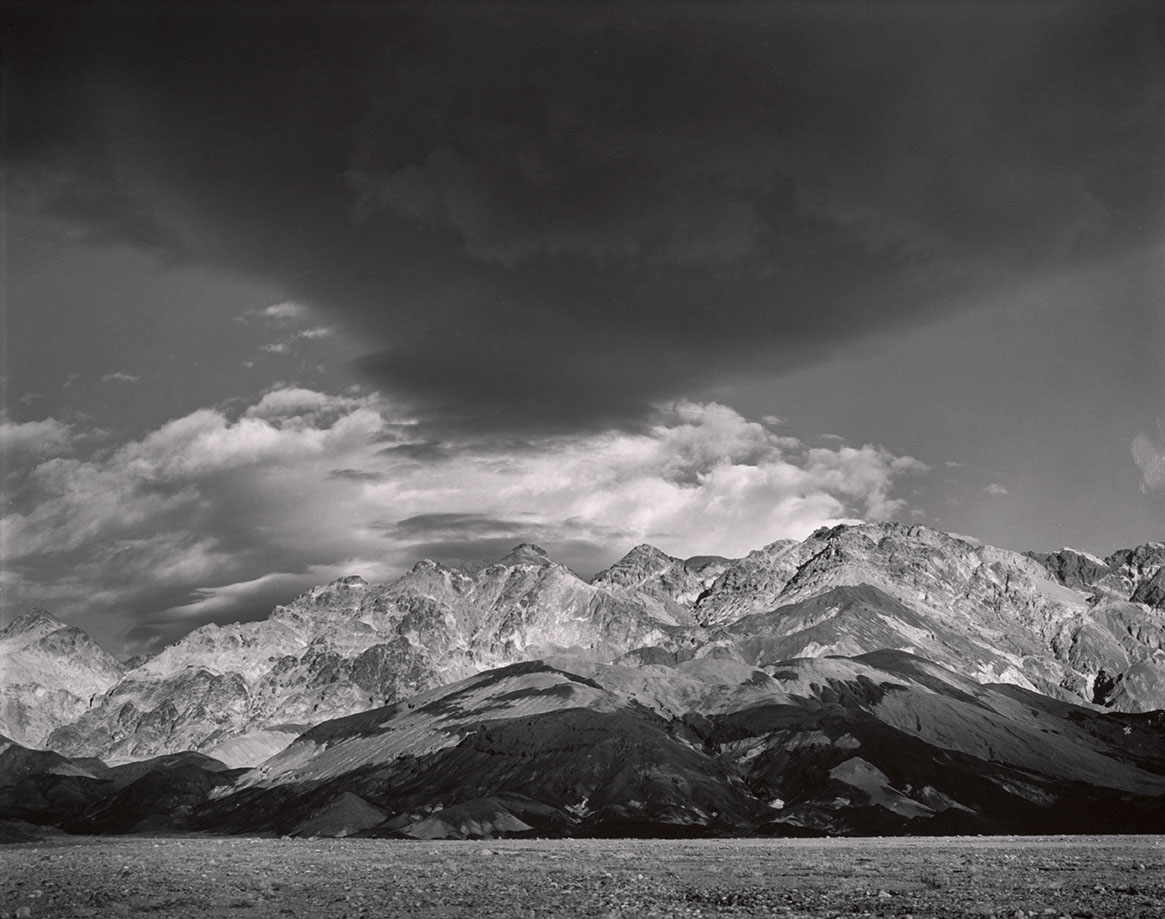
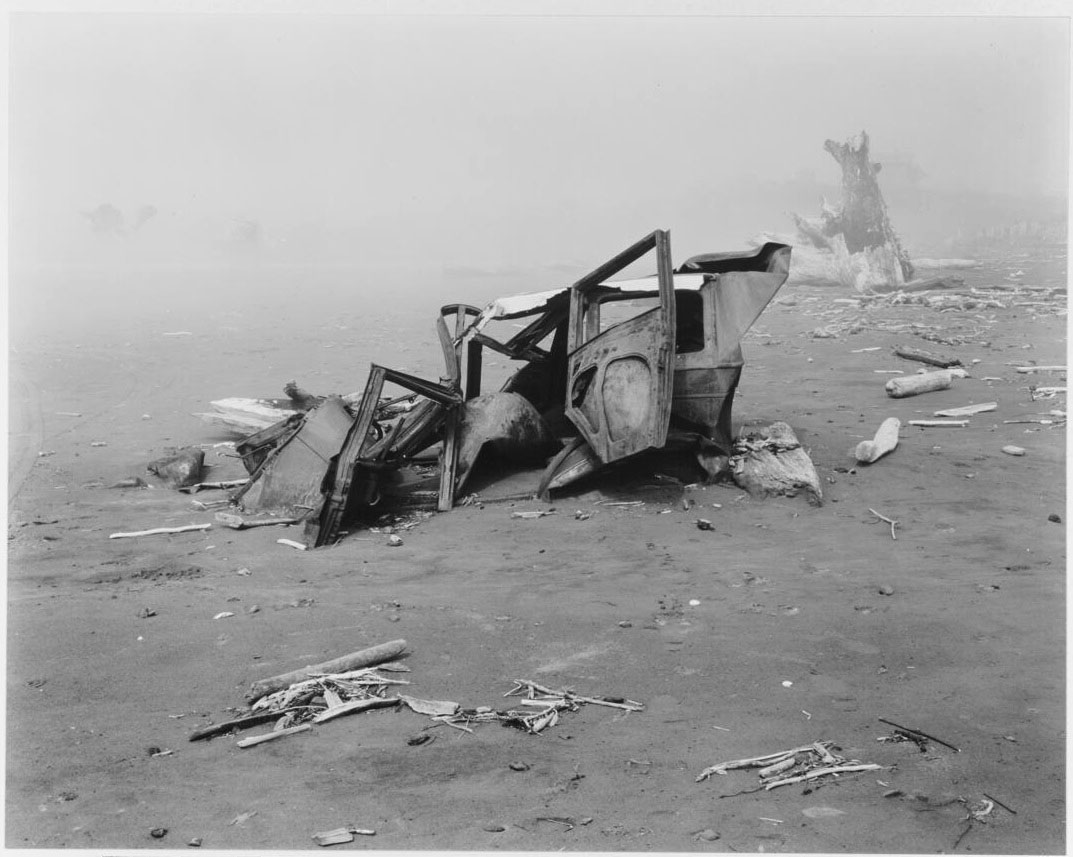
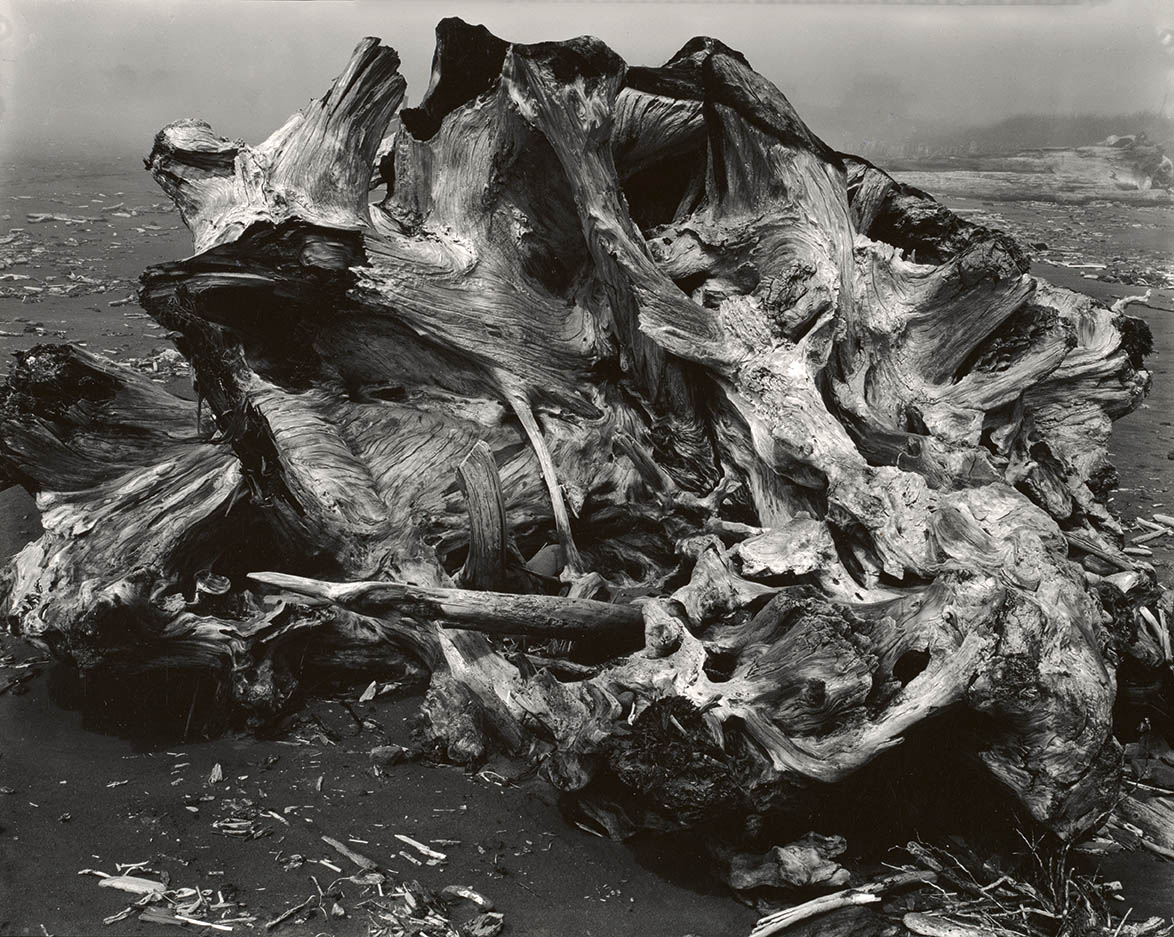

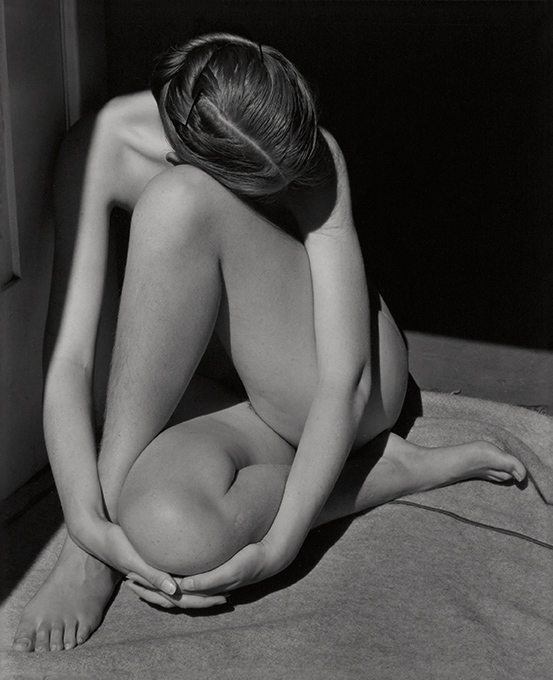
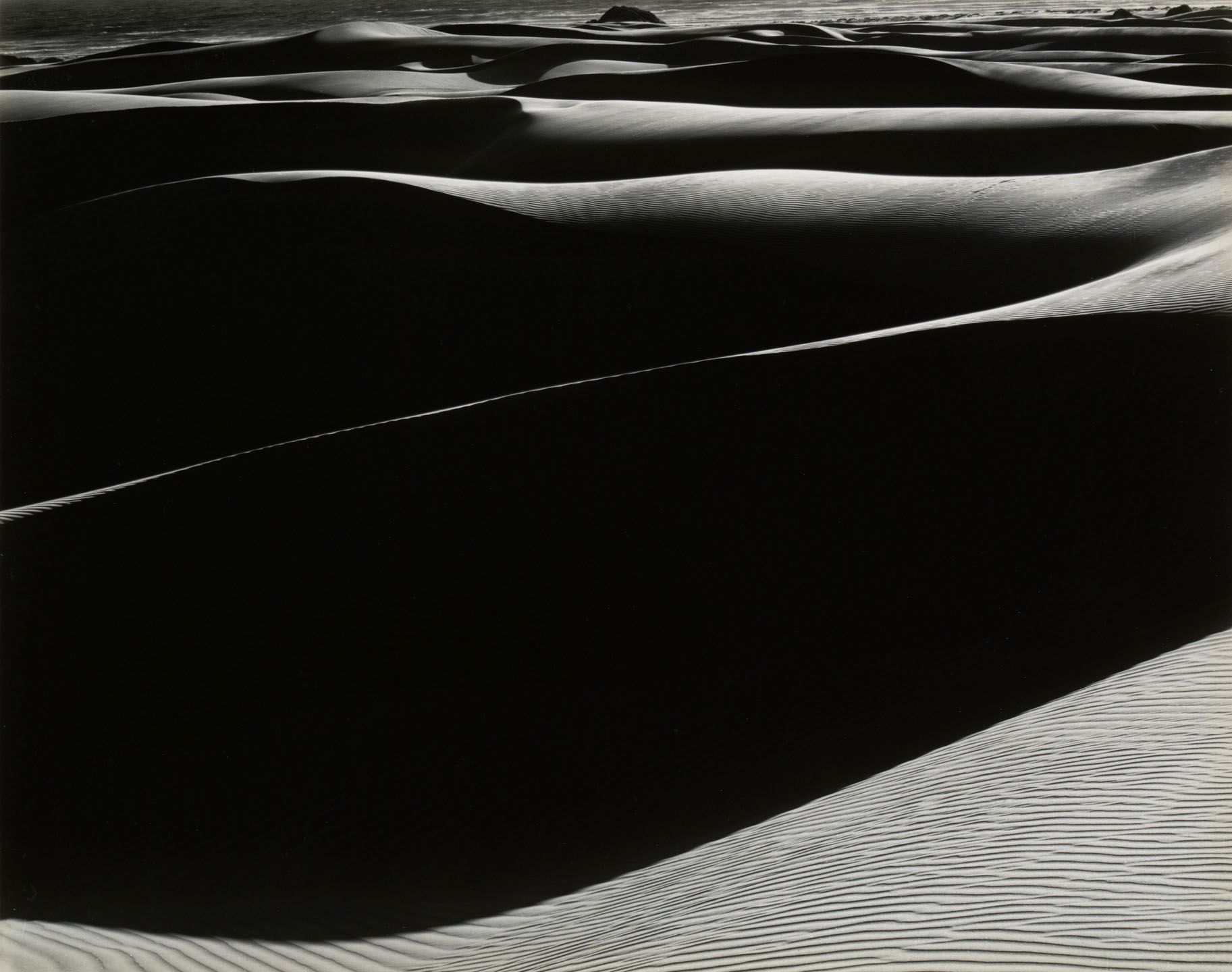

![Heinrich Riebesehl (German, 1938-2010) 'Menschen Im Fahrstuhl, 20.11.1969' [People in the Elevator, 20.11.1969] 1969 from the exhibition 'Typologien: Photography in 20th-century Germany' at Fondazione Prada, Milan, April - July, 2025](https://artblart.com/wp-content/uploads/2025/06/2-typologien_heinrich-riebesehl_siae_sm.jpg "Heinrich Riebesehl (German, 1938-2010) 'Menschen Im Fahrstuhl, 20.11.1969' [People in the Elevator, 20.11.1969] 1969 from the exhibition 'Typologien: Photography in 20th-century Germany' at Fondazione Prada, Milan, April - July, 2025")
![Heinrich Riebesehl (German, 1938-2010) 'Menschen Im Fahrstuhl, 20.11.1969' [People in the Elevator, 20.11.1969] 1969](https://artblart.com/wp-content/uploads/2025/06/1-typologien_heinrich-riebesehl_siae_sm.jpg "Heinrich Riebesehl (German, 1938-2010) 'Menschen Im Fahrstuhl, 20.11.1969' [People in the Elevator, 20.11.1969] 1969")



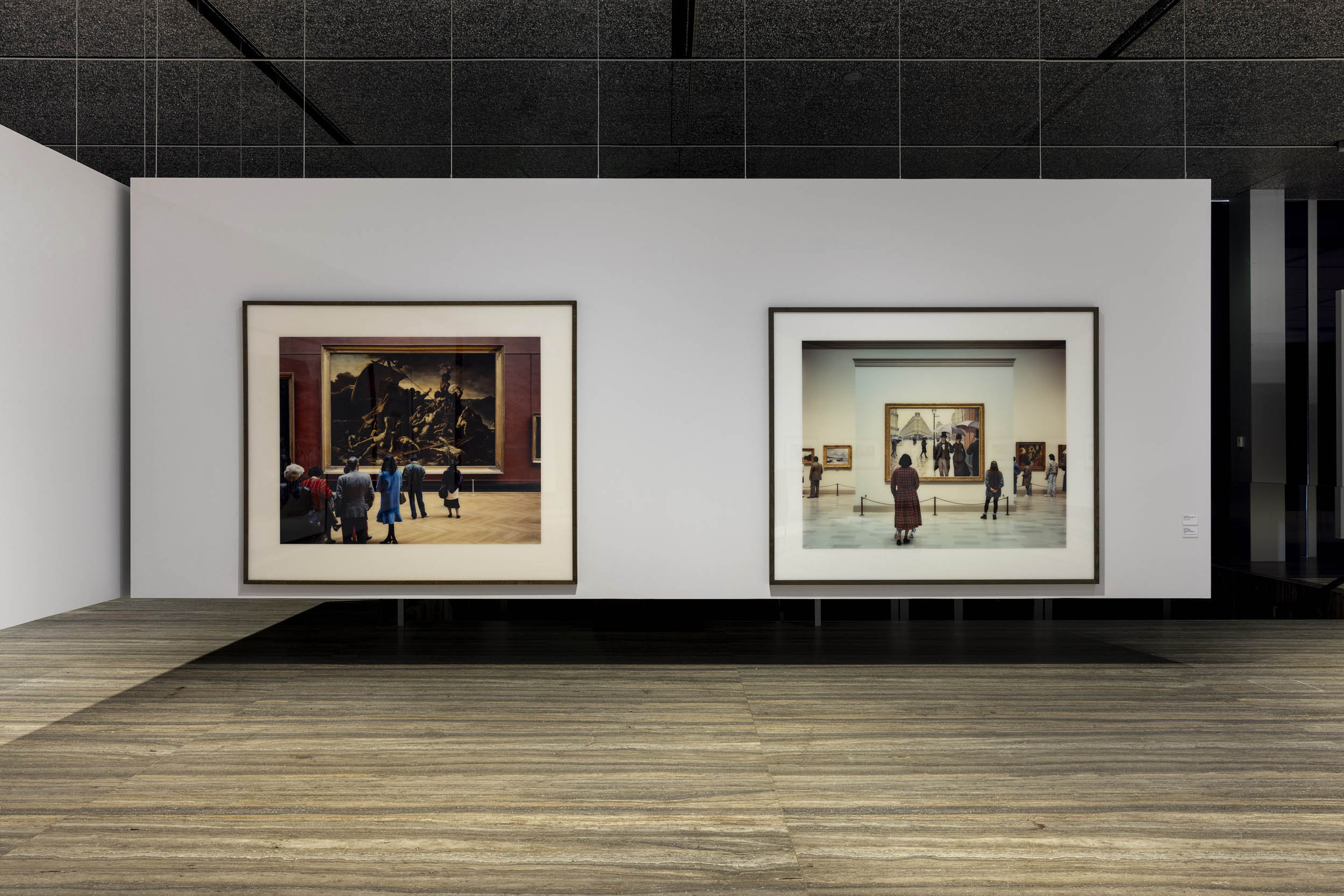
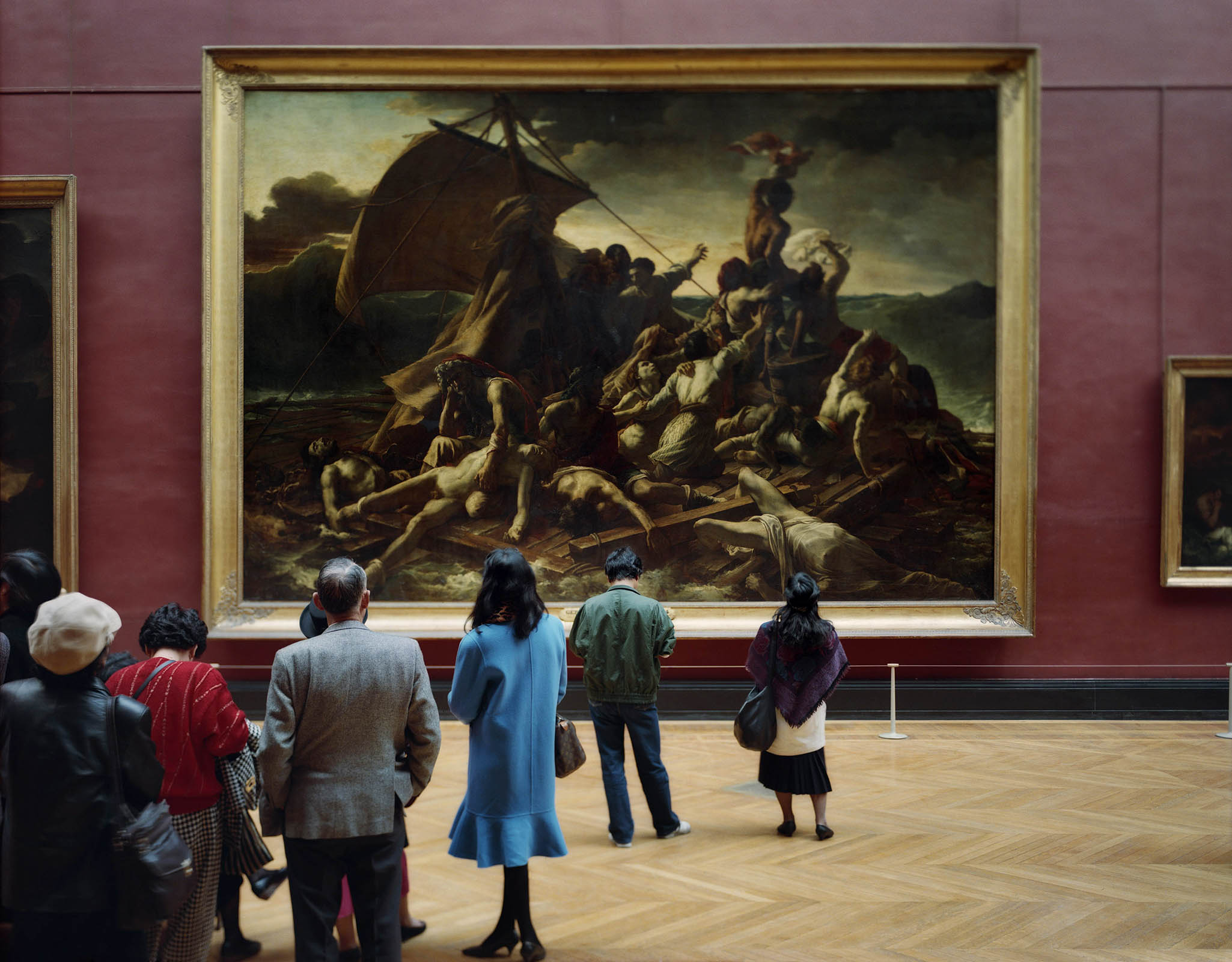

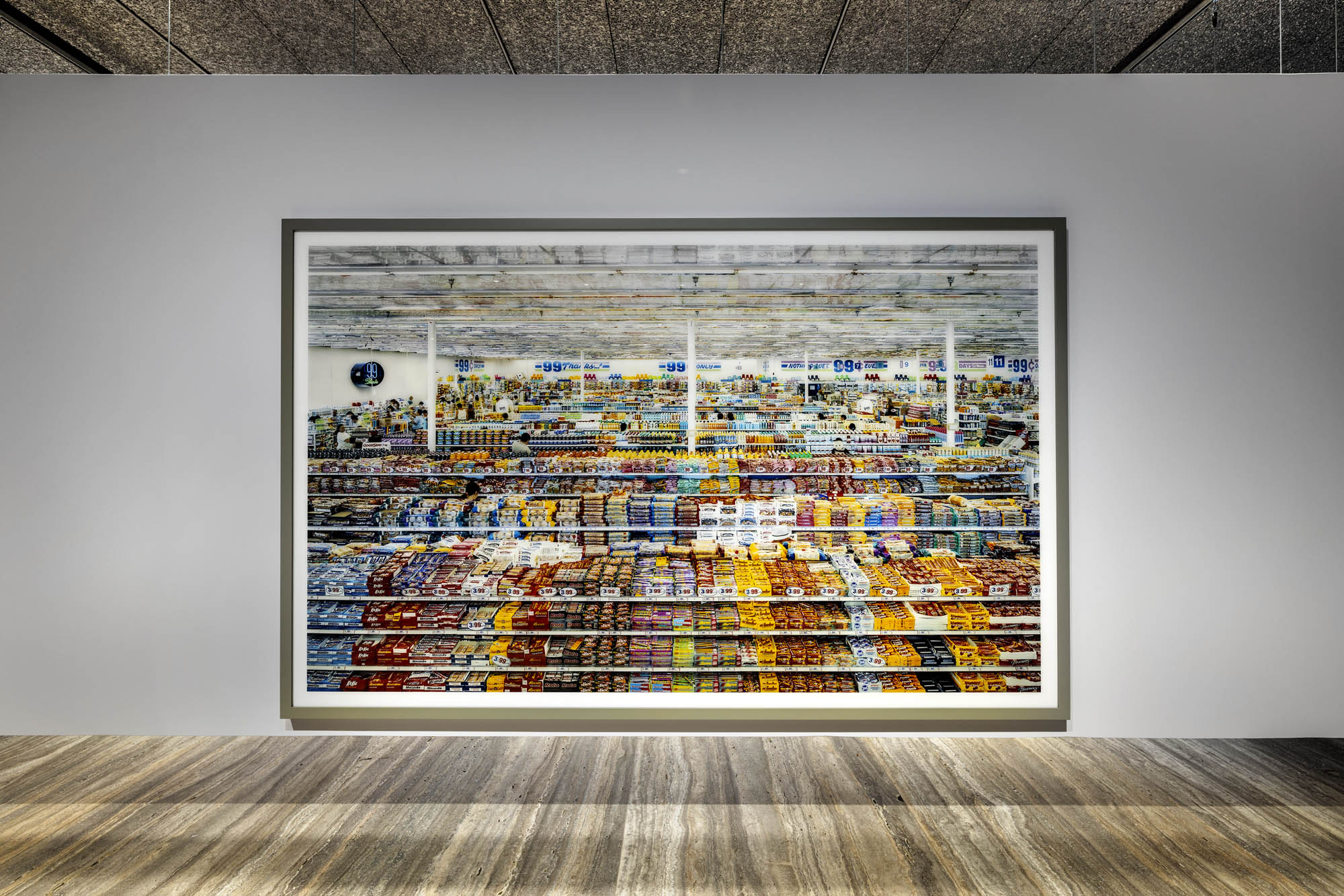
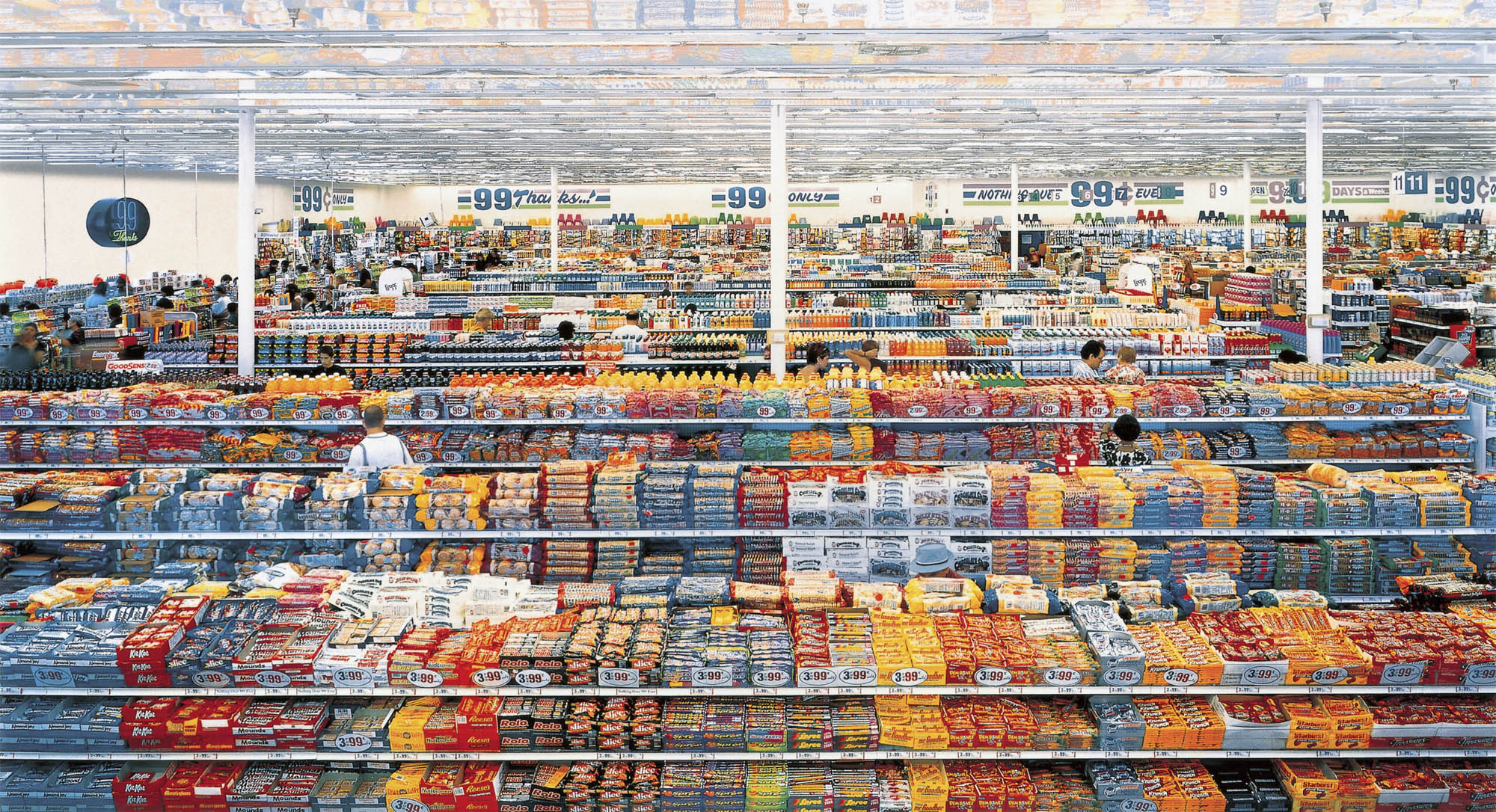



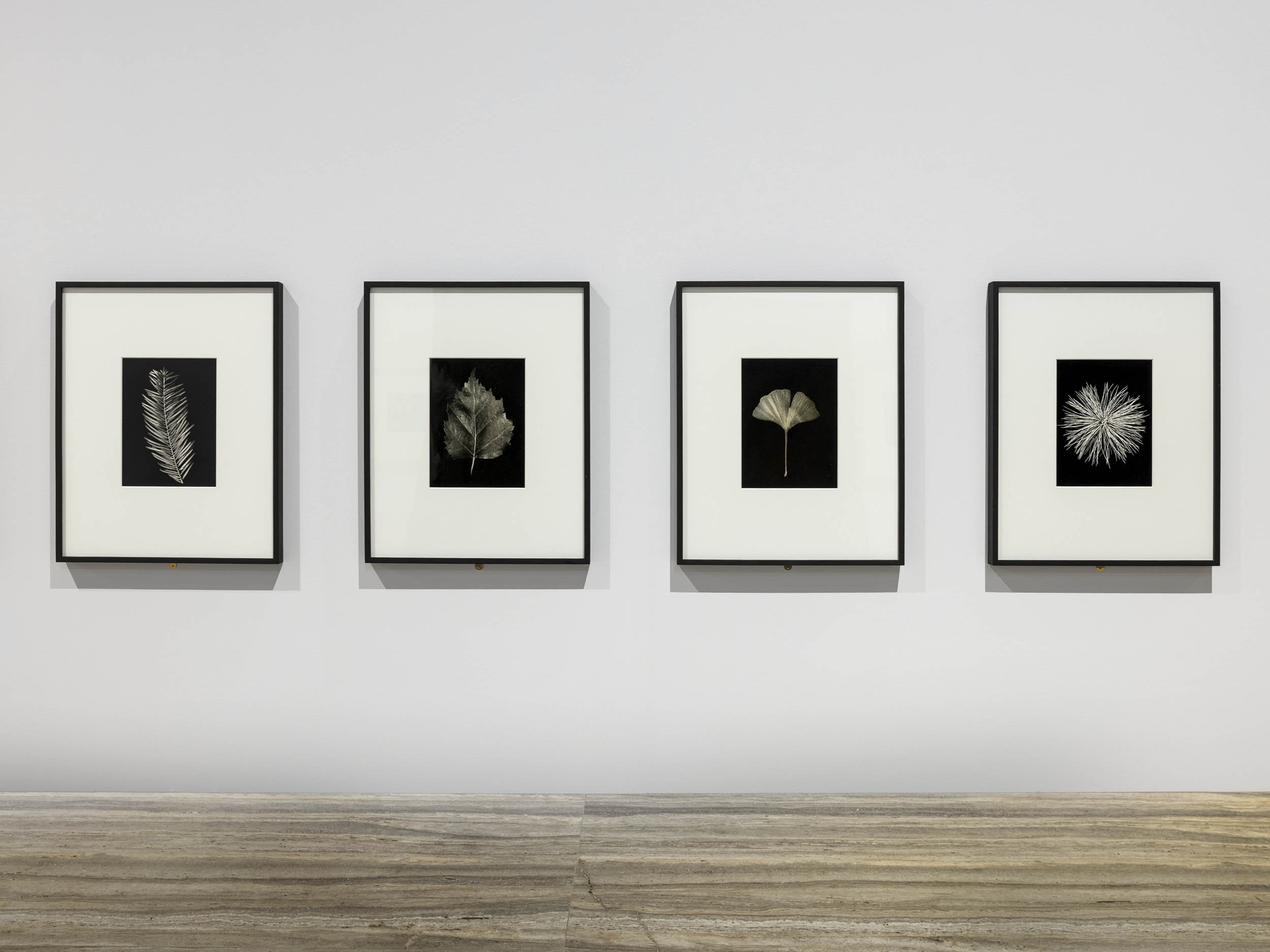
![Hilla Becher (German, 1934-2015) 'Eichenblatt [Oak Leaf]' 1965](https://artblart.com/wp-content/uploads/2025/06/8-typologien_hilla-becher_sm.jpg "Hilla Becher (German, 1934-2015) 'Eichenblatt [Oak Leaf]' 1965")
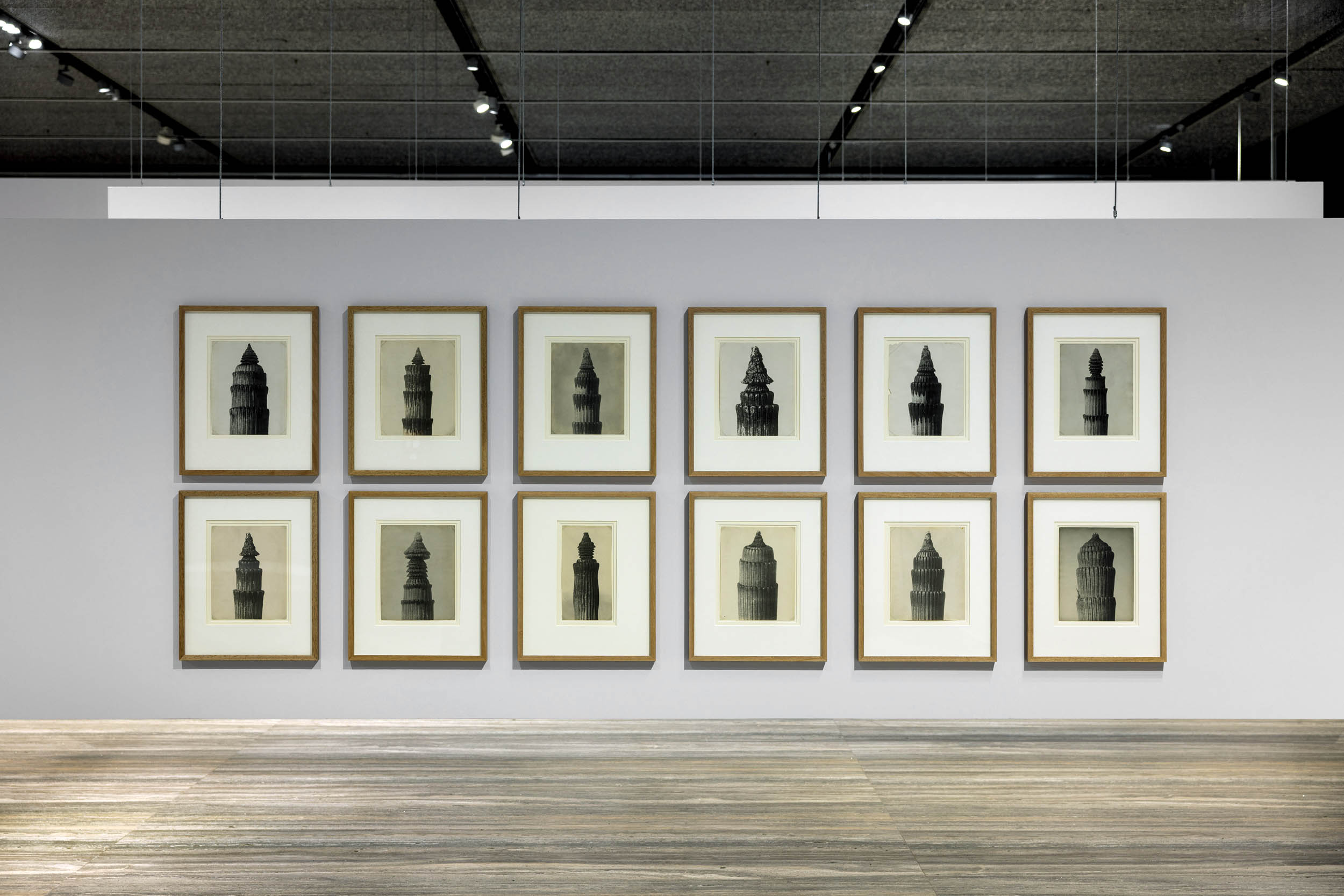
![Karl Blossfeldt (German, 1865-1932) 'Adiantum pedatum, haarfarn, junge, noch eingerollte Wedel' [Maidenhair fern, young, still curled fronds] Nd](https://artblart.com/wp-content/uploads/2025/06/5-typologien_karl-blossfeldt_sm.jpg "Karl Blossfeldt (German, 1865-1932) 'Adiantum pedatum, haarfarn, junge, noch eingerollte Wedel' [Maidenhair fern, young, still curled fronds] Nd")


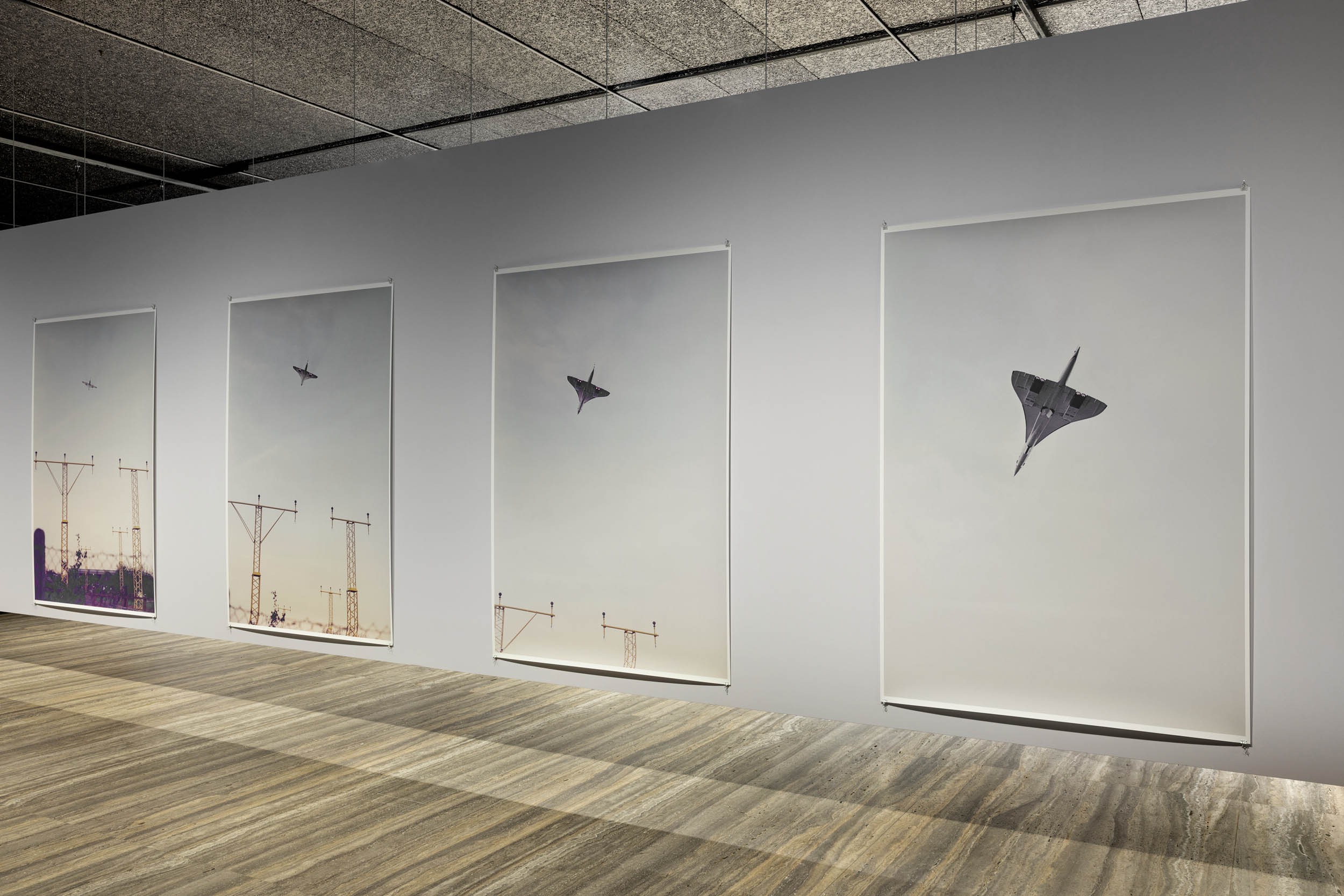
![August Sander (German, 1876-1964) 'Sekretärin beim Westdeutschen Rundfunk in Köln' [Secretary at West German Radio in Cologne] 1931-1950s](https://artblart.com/wp-content/uploads/2025/06/6-typologien_august-sander_siae_sm.jpg "August Sander (German, 1876-1964) 'Sekretärin beim Westdeutschen Rundfunk in Köln' [Secretary at West German Radio in Cologne] 1931-1950s")
![Erich Sander for August Sander's studio. 'Politischer Häftling' [Political Prisoner] 1941-1944 (print date late 1940s)](https://artblart.com/wp-content/uploads/2025/06/7-typologien_august-sander_siae_sm.jpg "Erich Sander for August Sander's studio. 'Politischer Häftling' [Political Prisoner] 1941-1944 (print date late 1940s)")



![Ursula Böhmer (German, b. 1965) 'Highland Grampians / Scotland [All Ladies – Cows in Europe]' 2011](https://artblart.com/wp-content/uploads/2025/06/21-typologien_ursula-bohmer_sm.jpg "Ursula Böhmer (German, b. 1965) 'Highland Grampians / Scotland [All Ladies – Cows in Europe]' 2011")
![Lotte Jacobi (American born Poland, 1896-1990) 'Folkwang-Auriga-Verlag, Orch 152. Neottia nidus avis. Vogel-Nestwurz, einzelne Blüte' [Bird's-nest orchid, single flower] c. 1930](https://artblart.com/wp-content/uploads/2025/06/4-typologien_lotte-jacobi_sm.jpg "Lotte Jacobi (American born Poland, 1896-1990) 'Folkwang-Auriga-Verlag, Orch 152. Neottia nidus avis. Vogel-Nestwurz, einzelne Blüte' [Bird's-nest orchid, single flower] c. 1930")
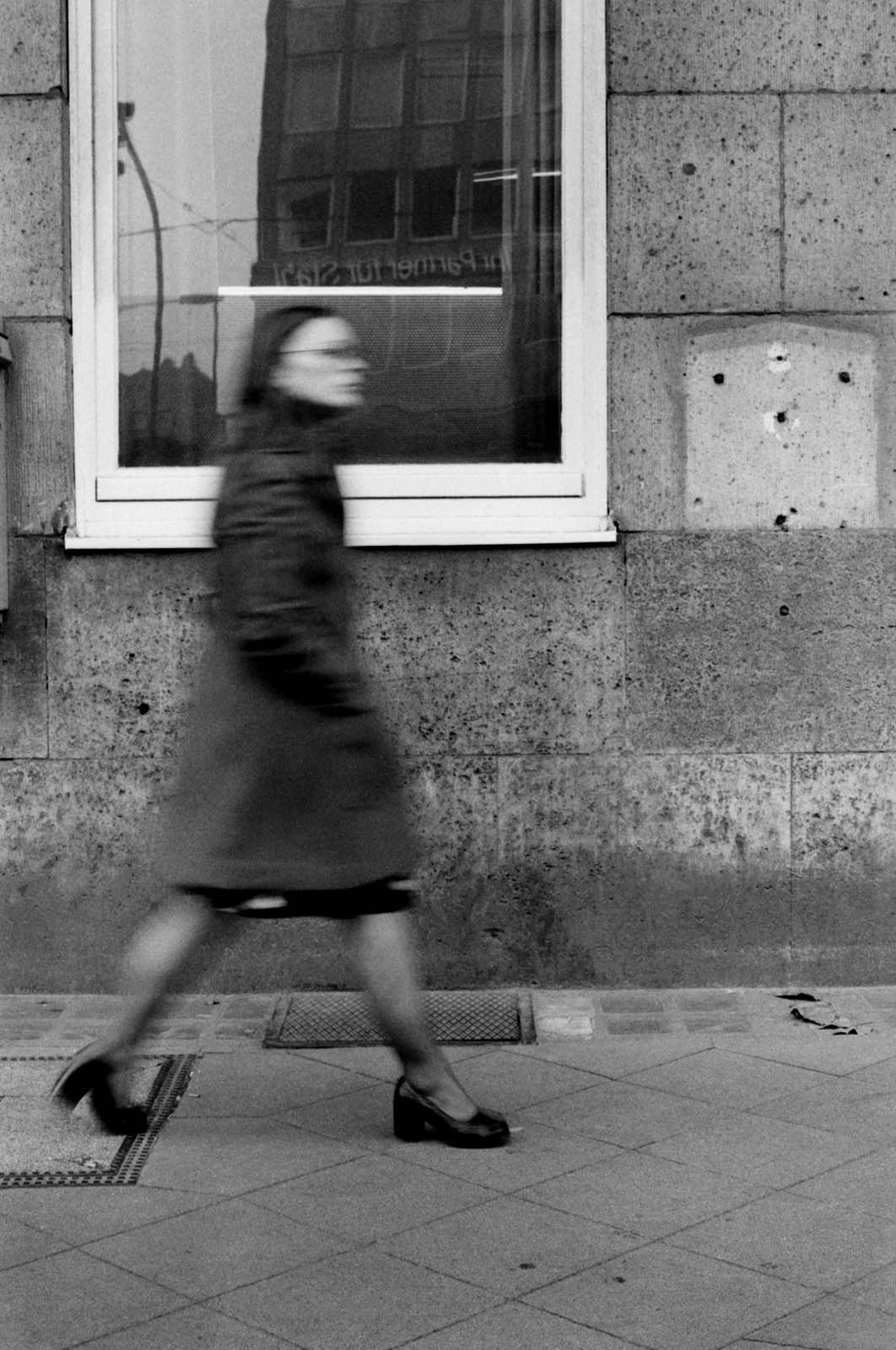
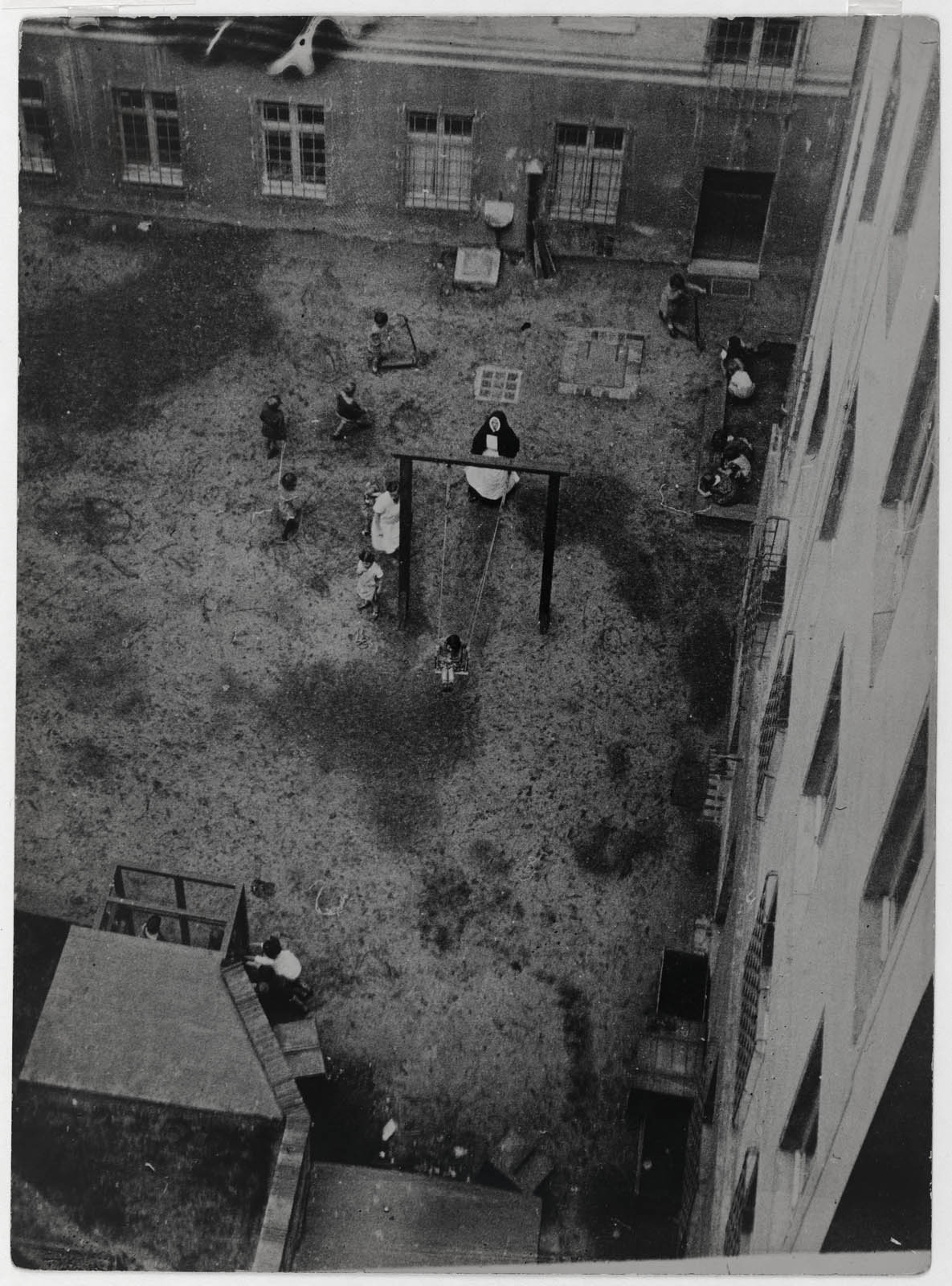
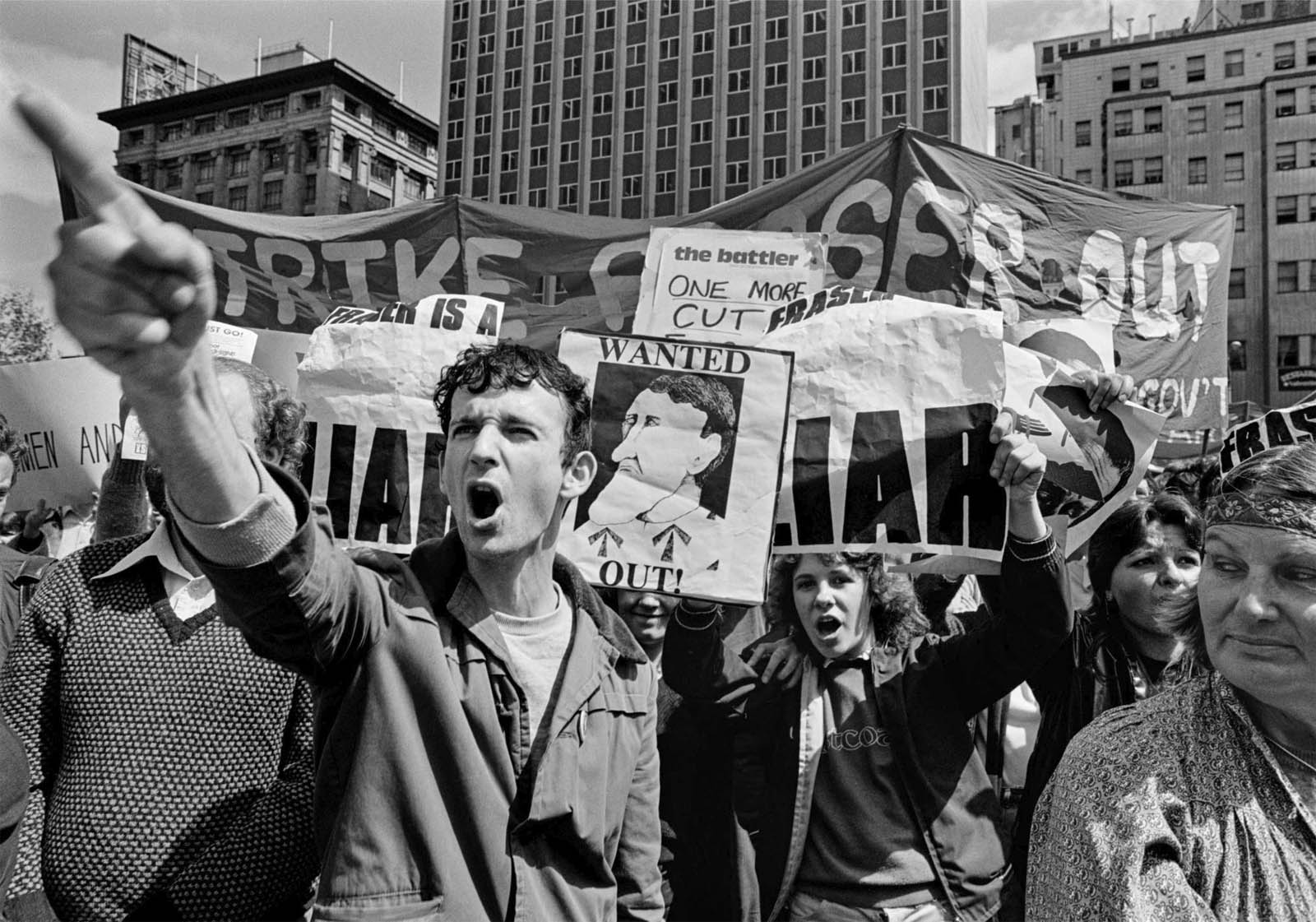


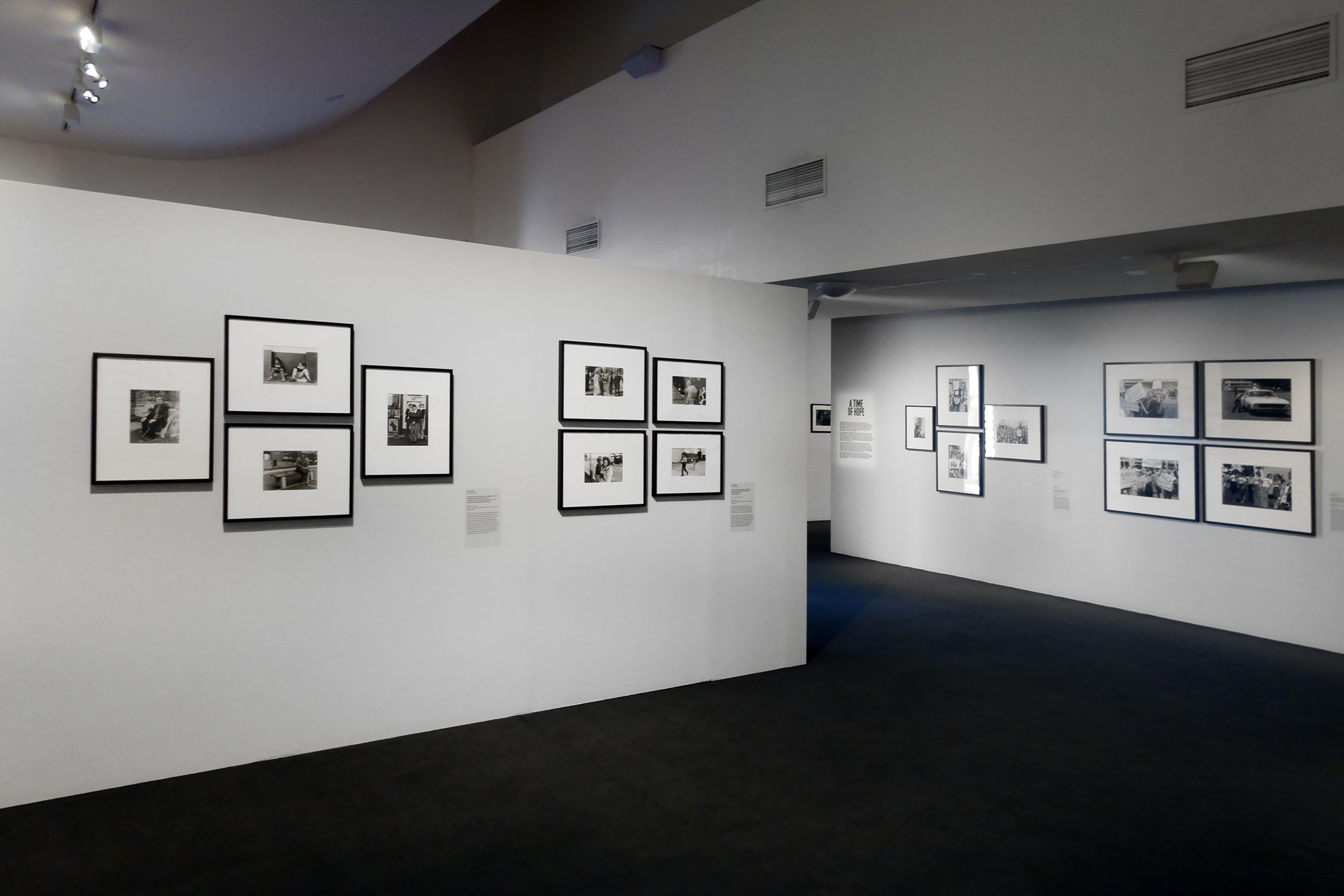








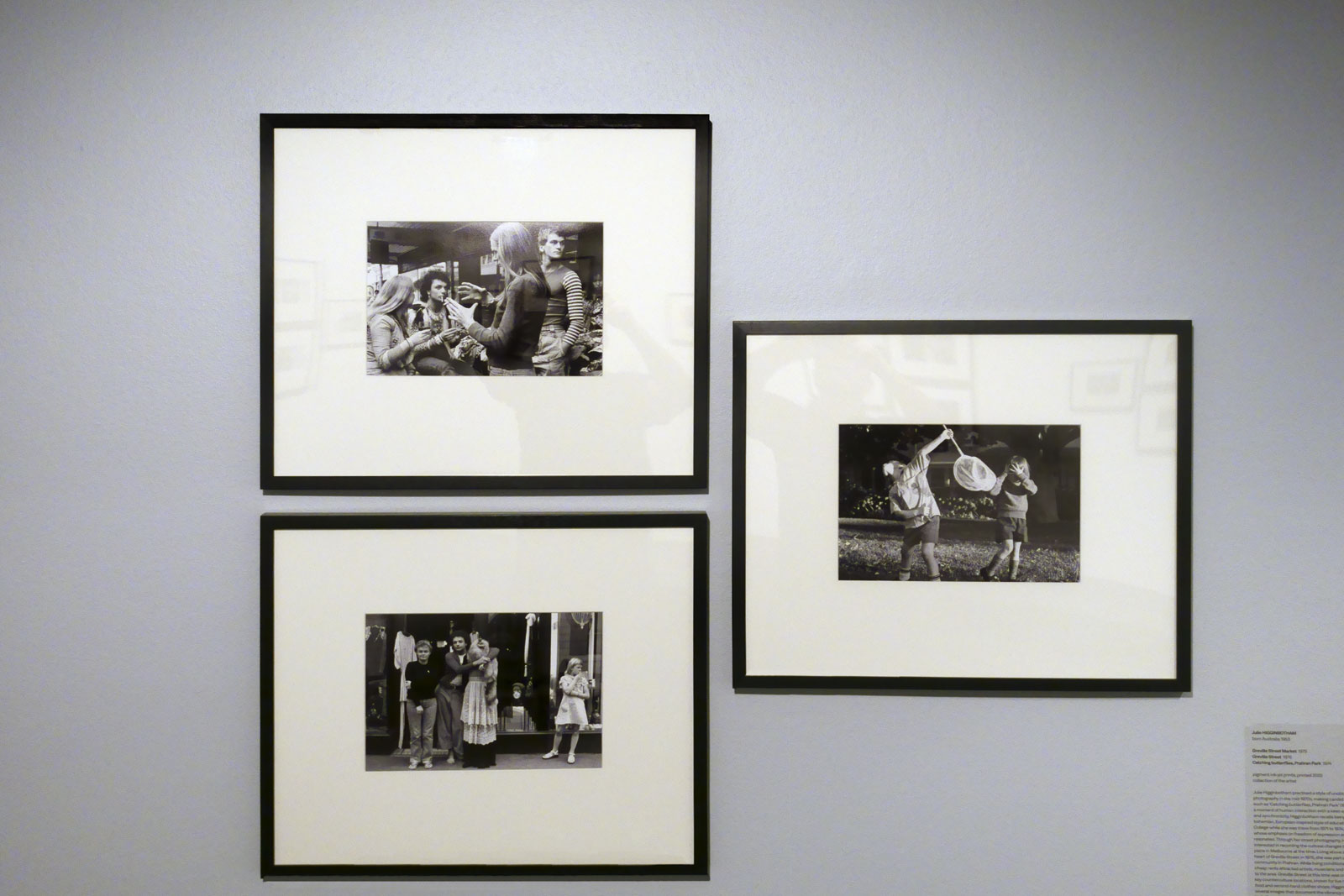
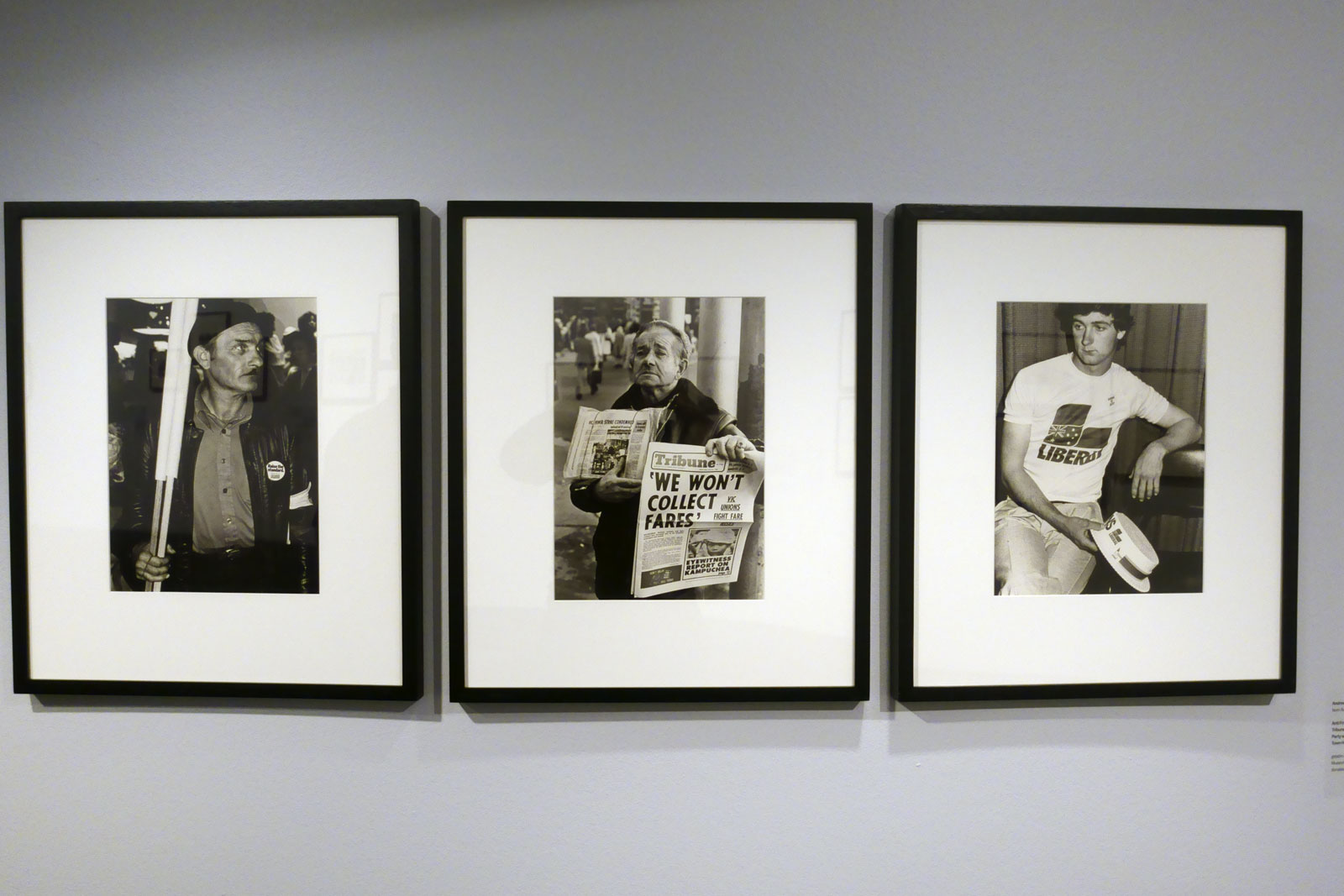


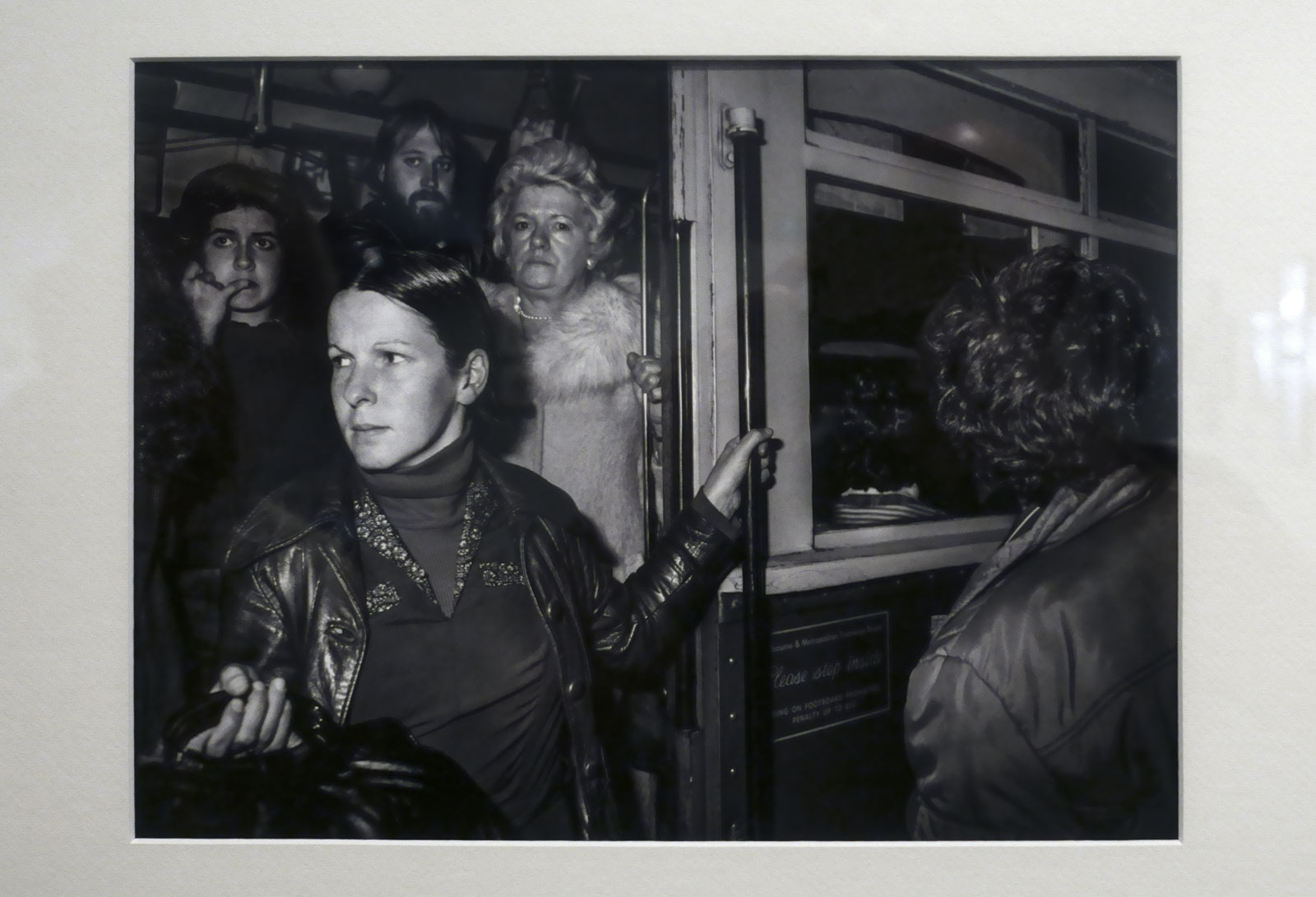


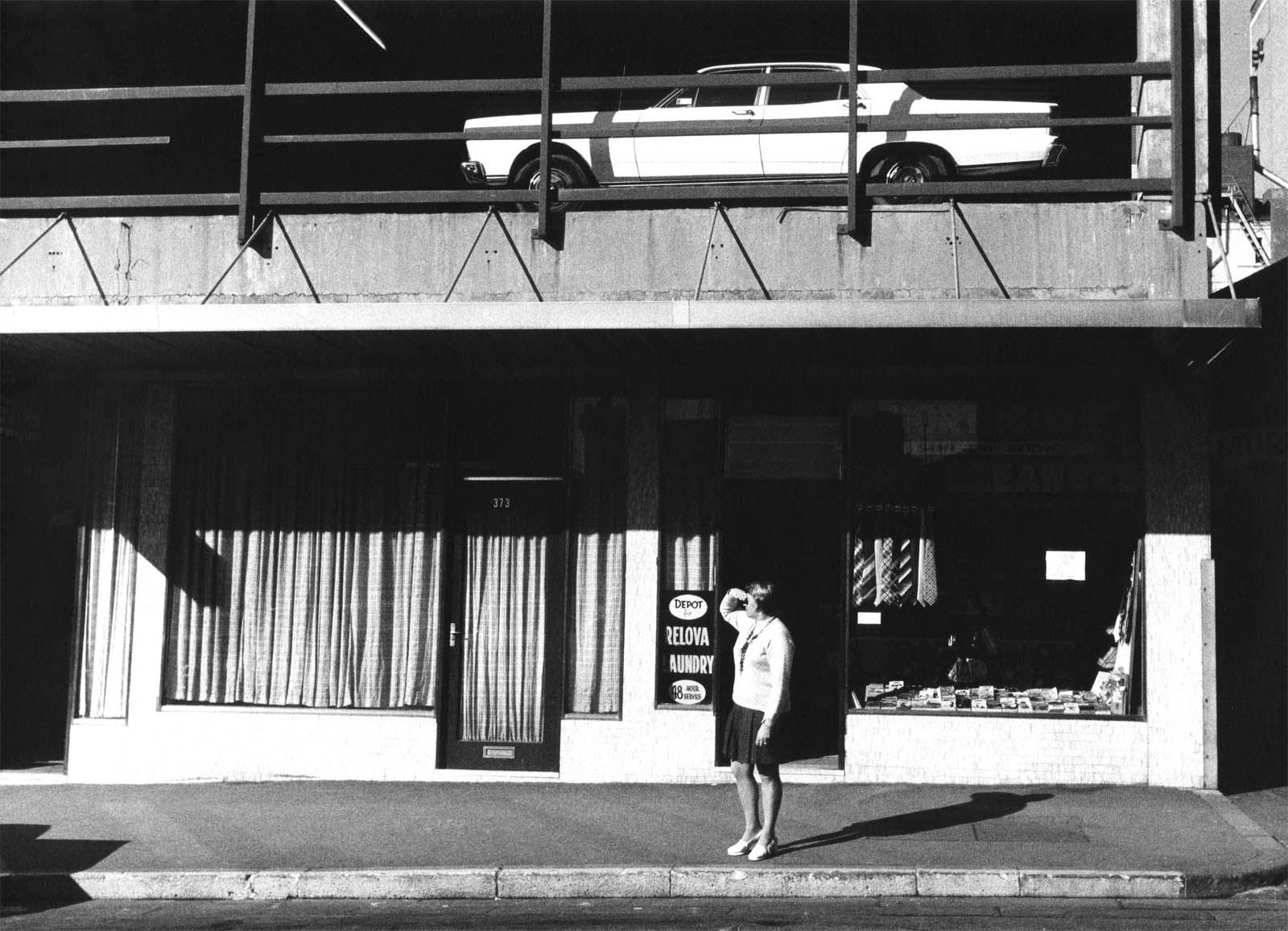


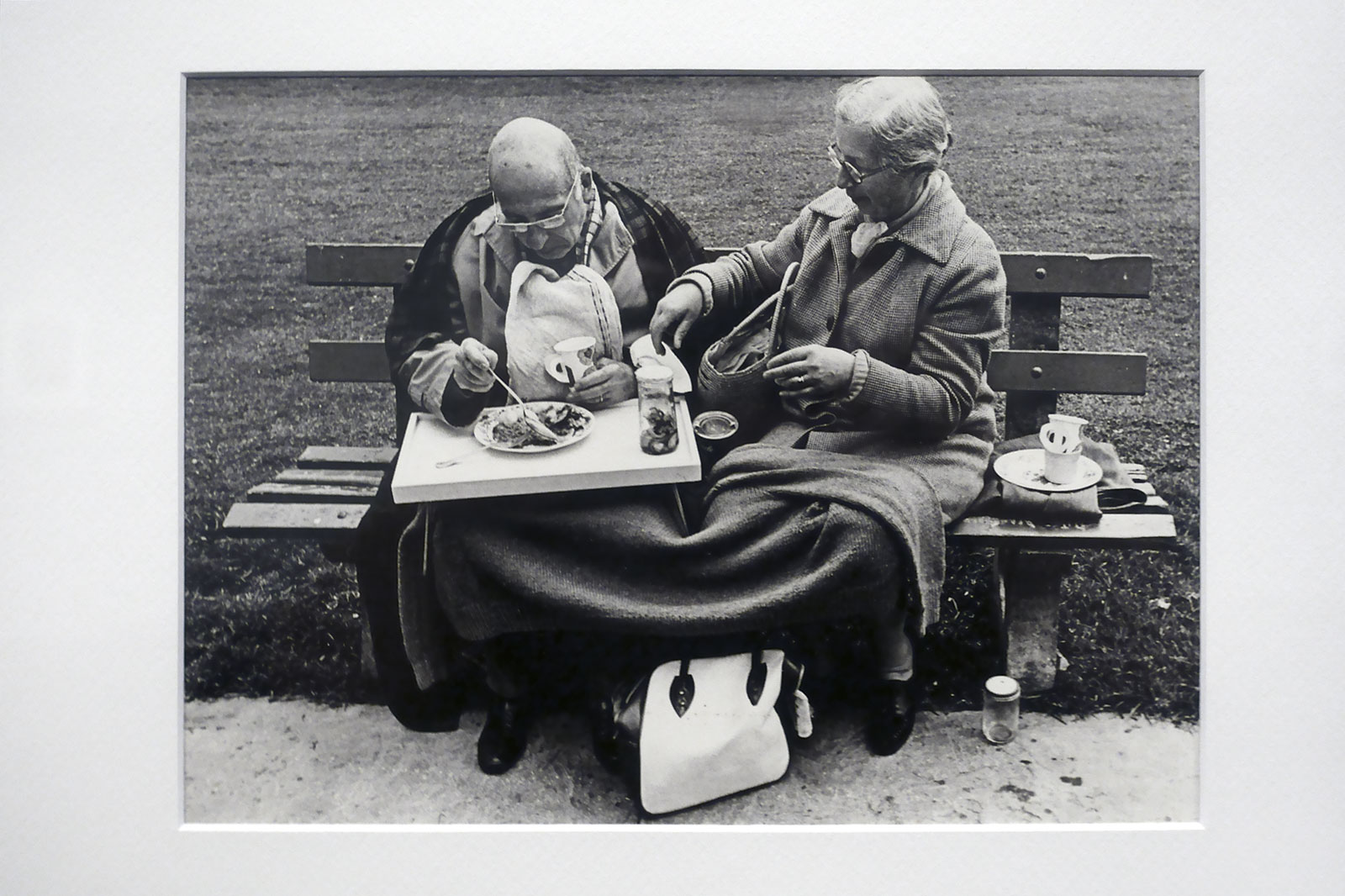
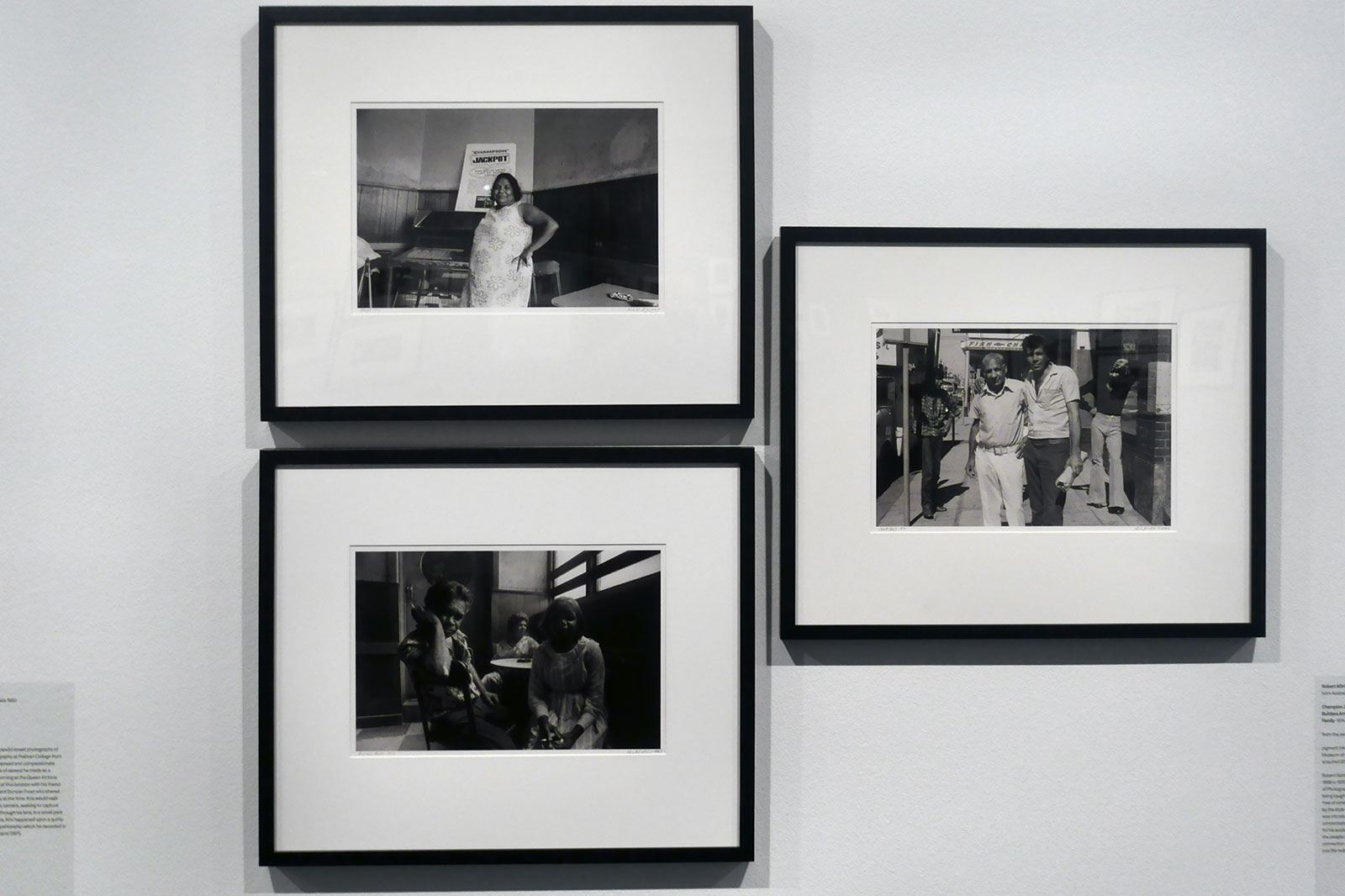


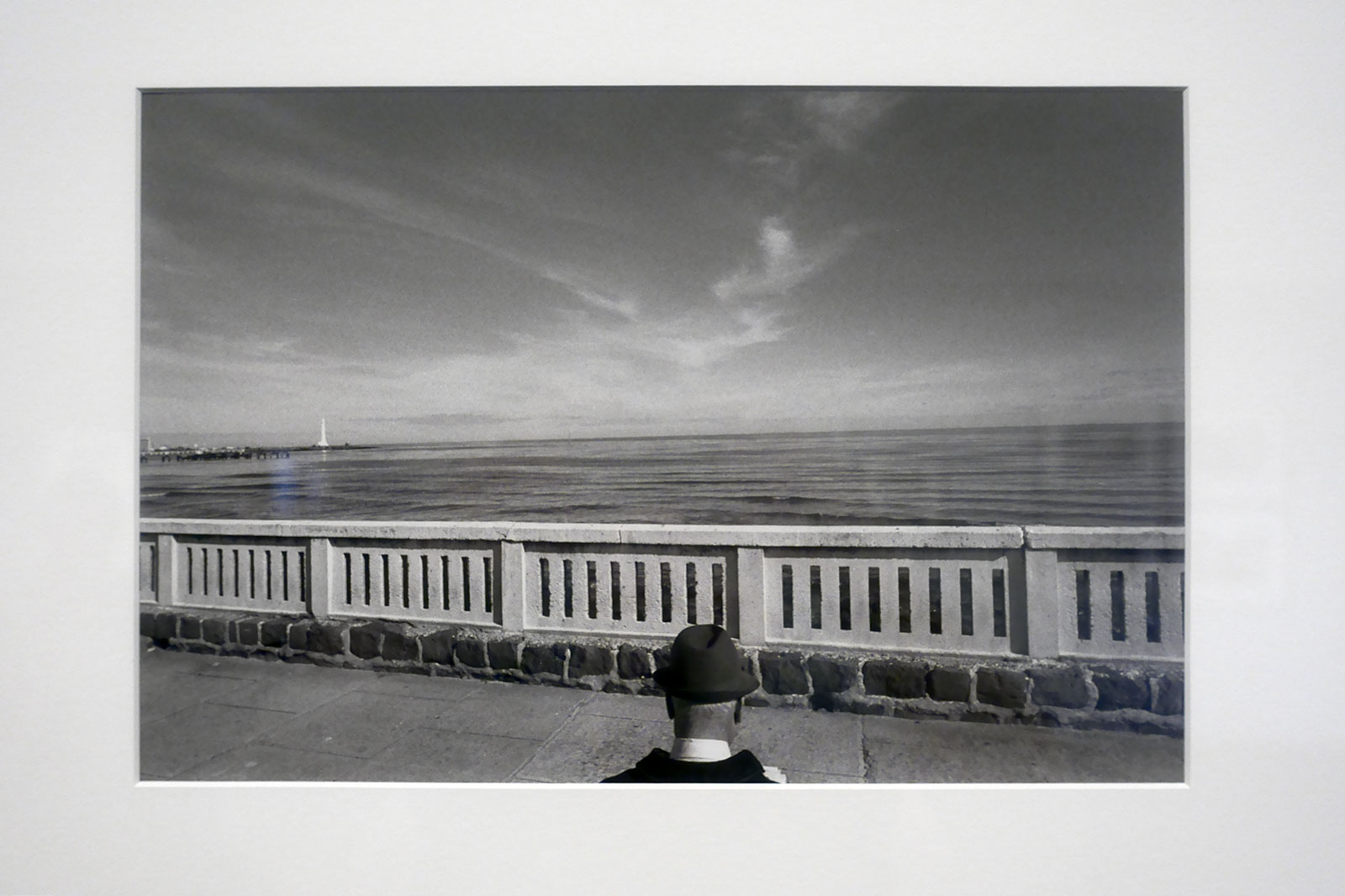


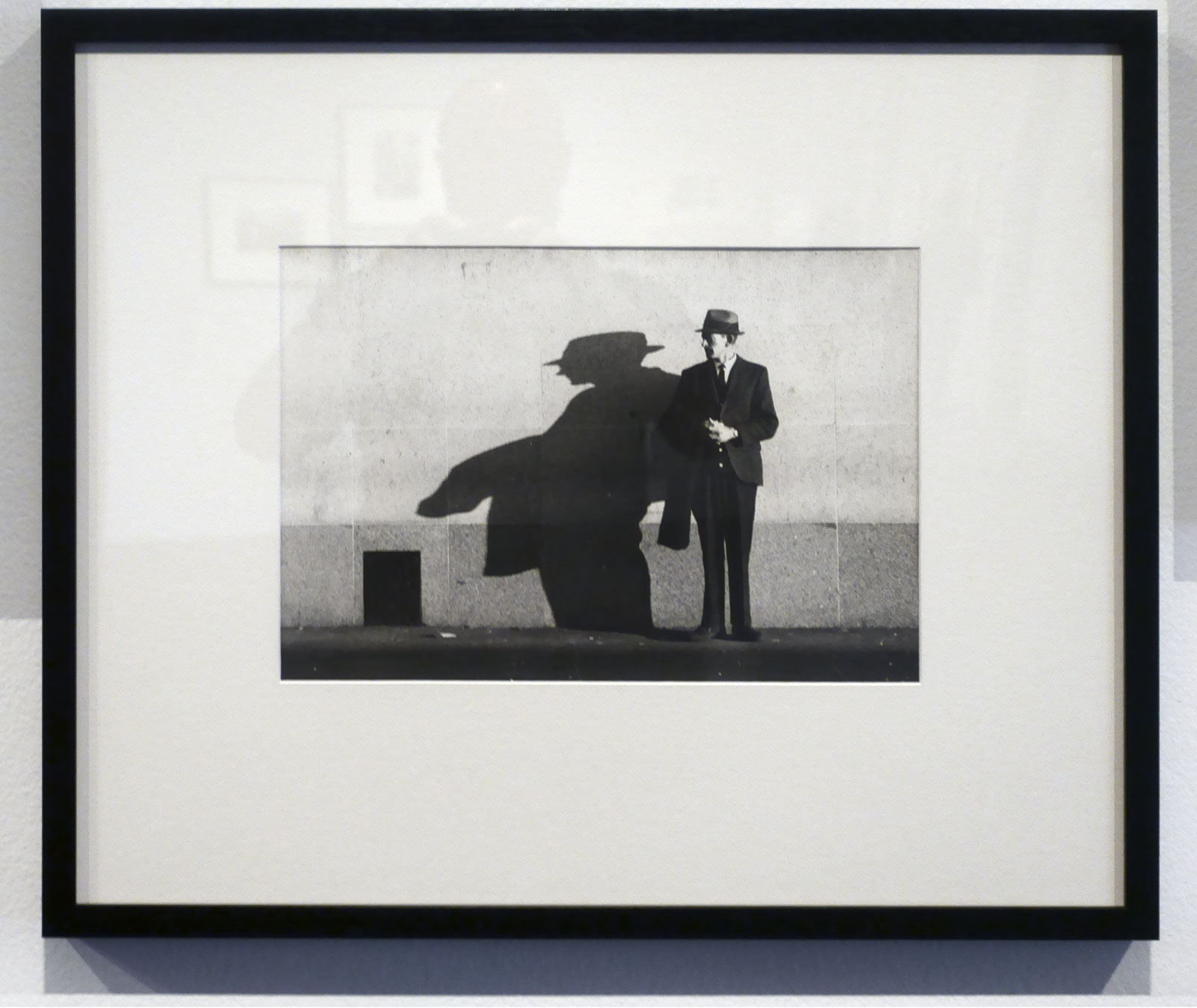


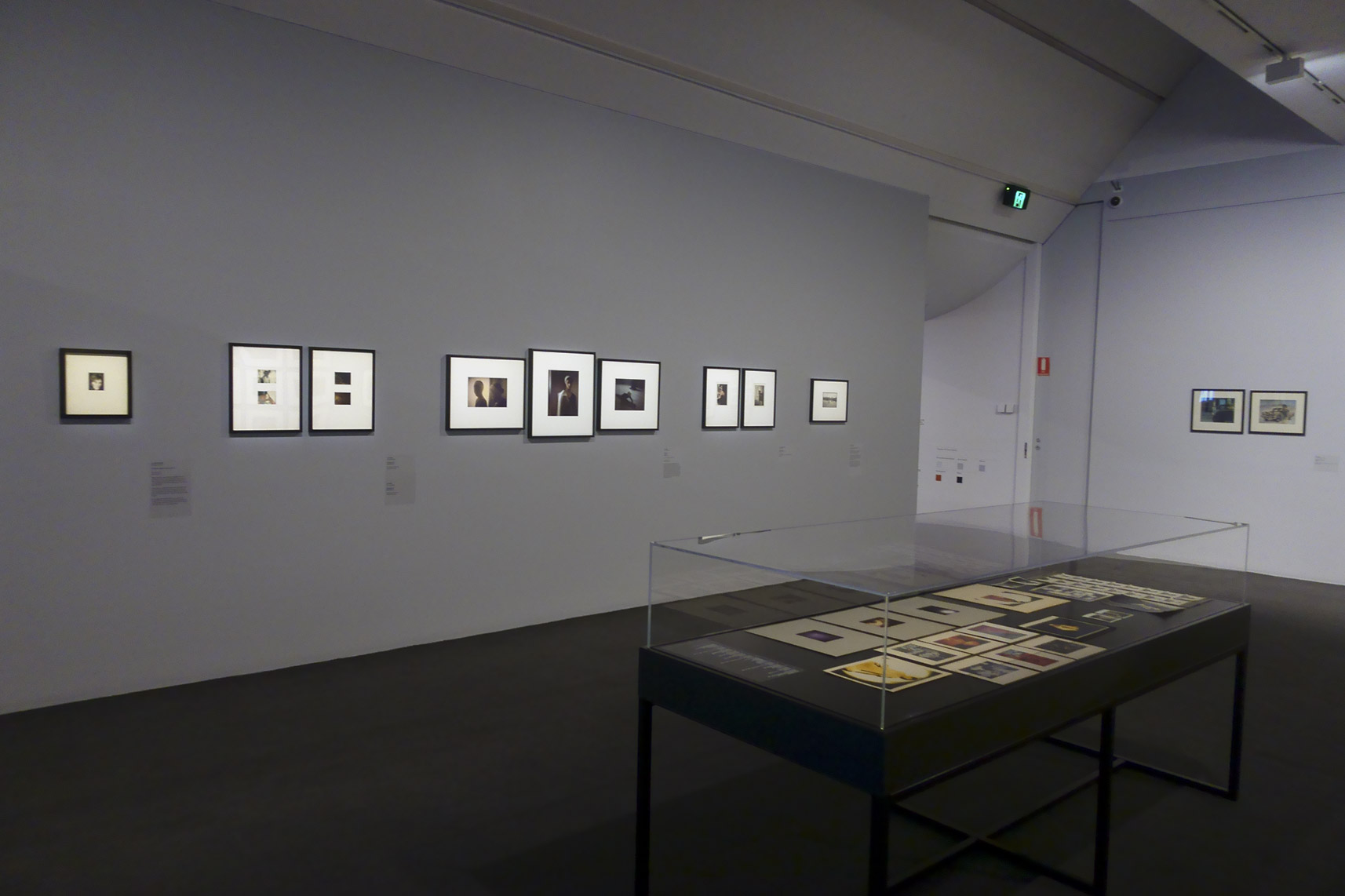
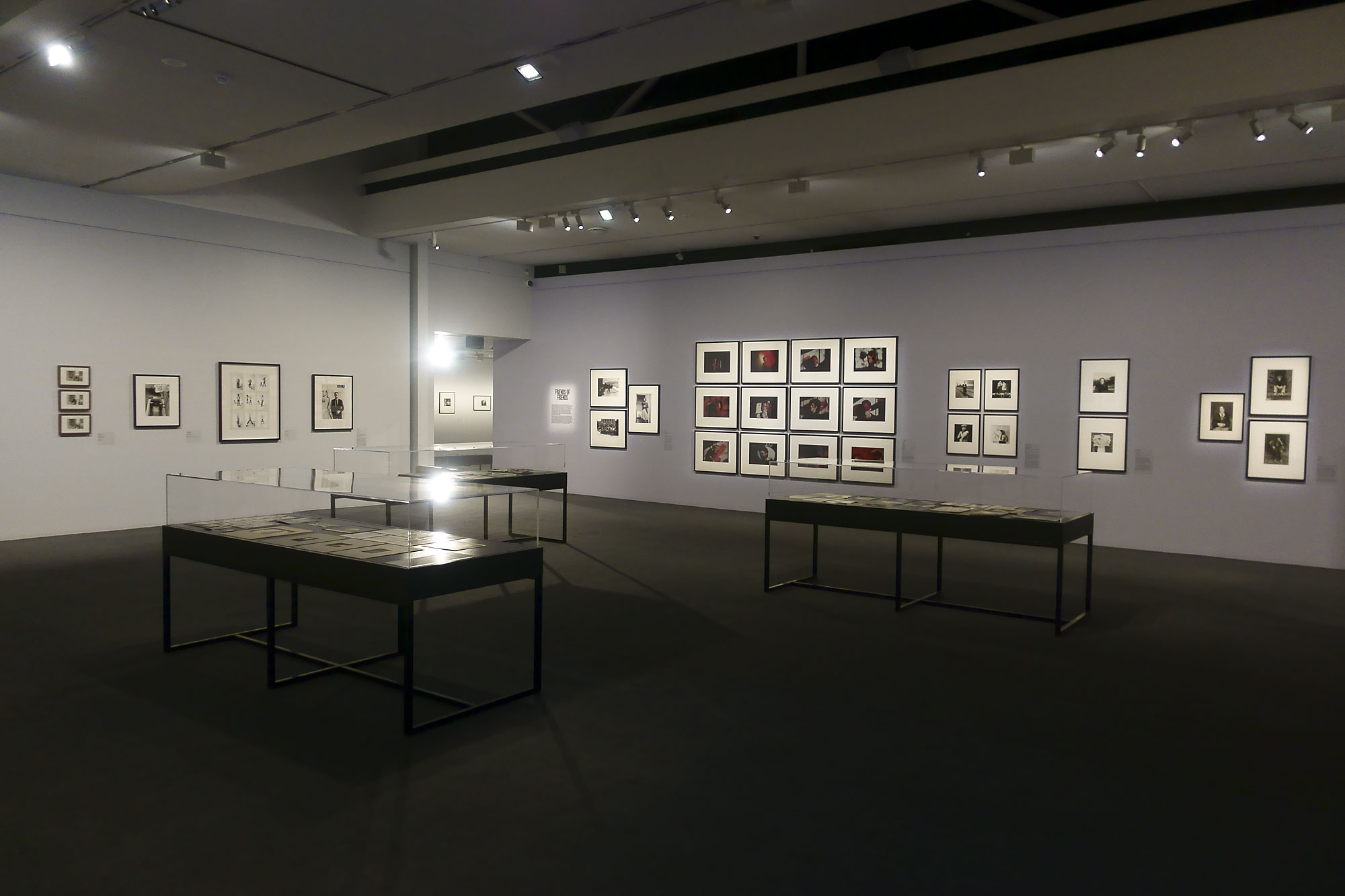

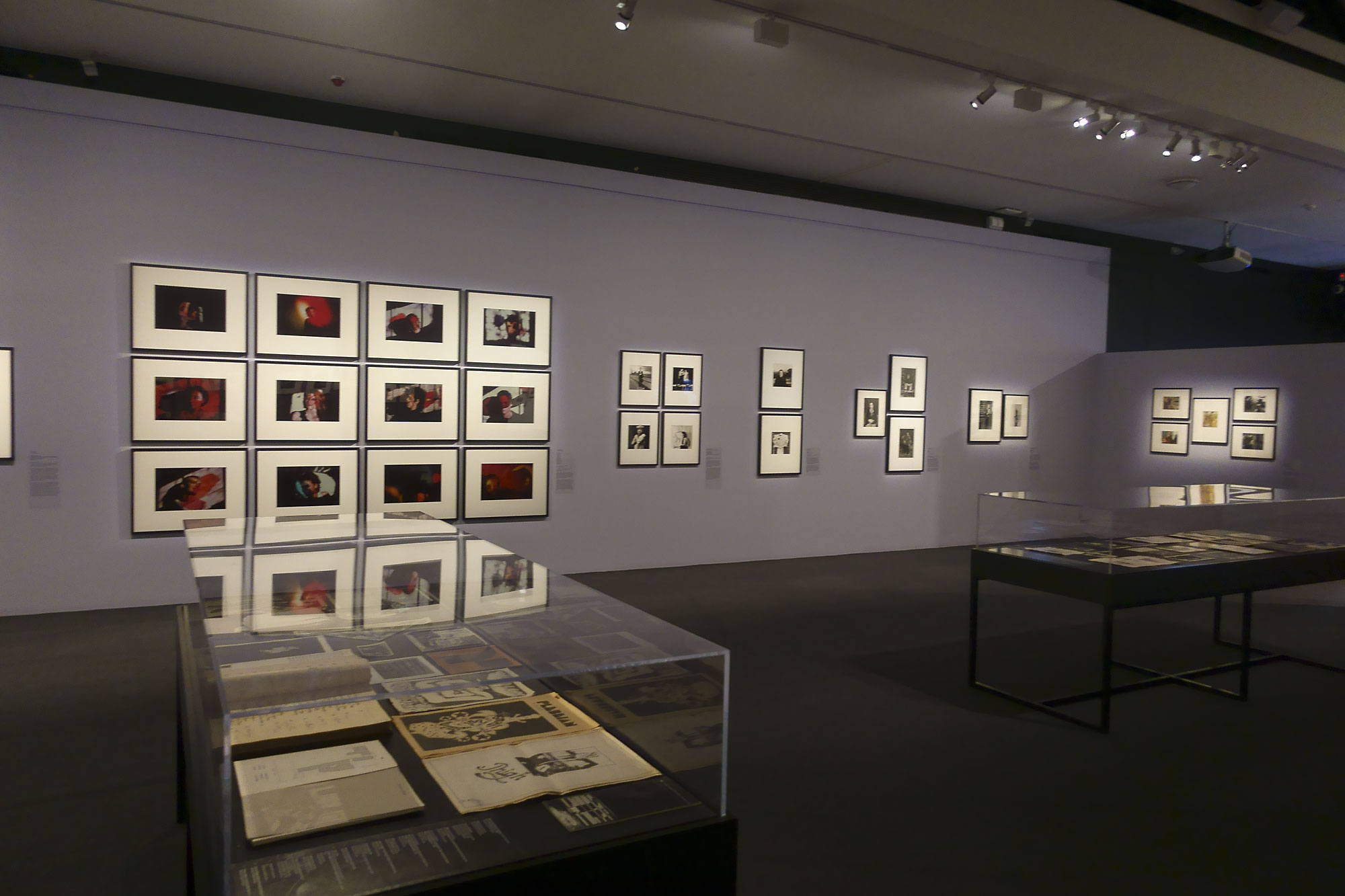
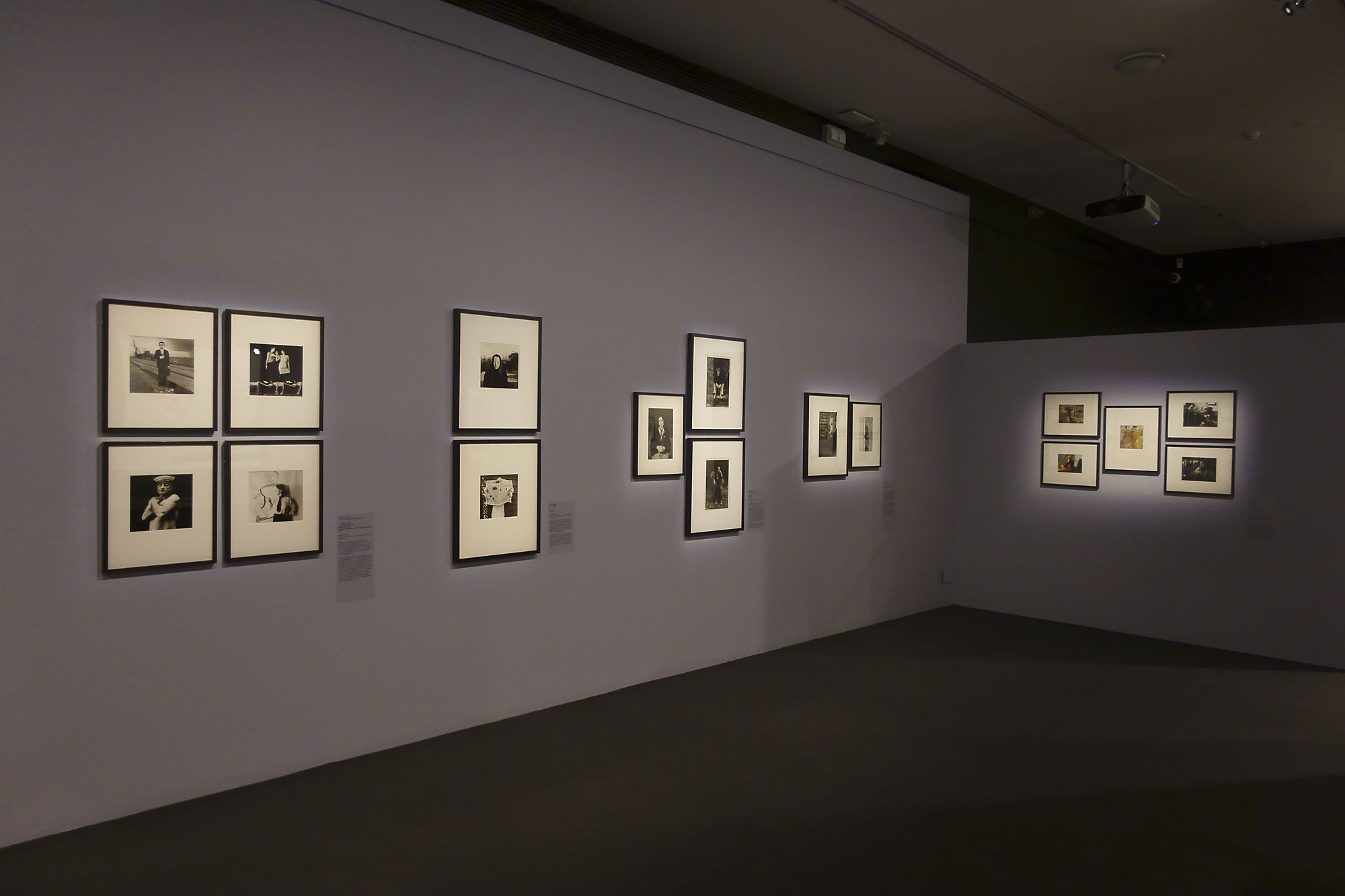


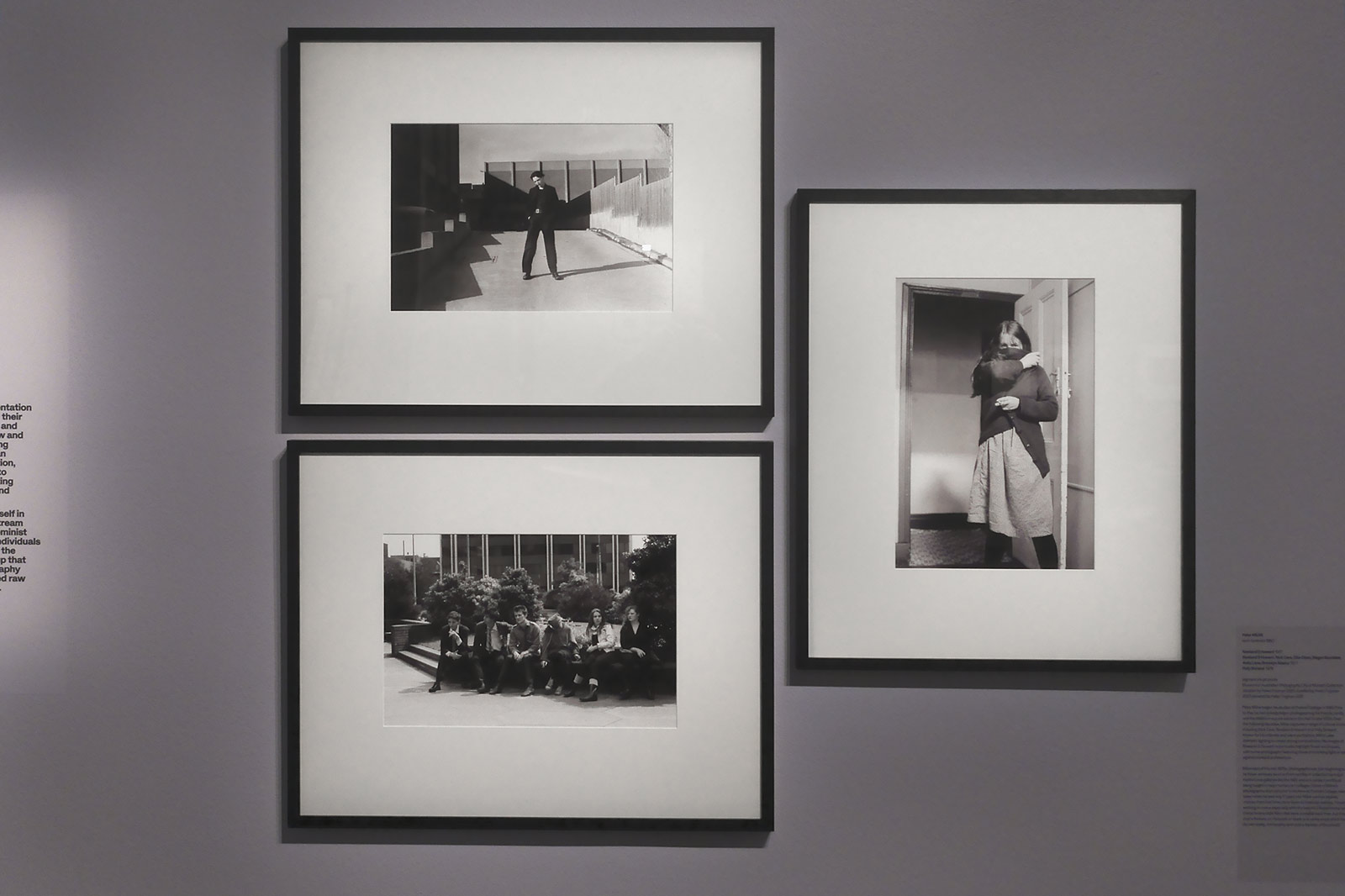


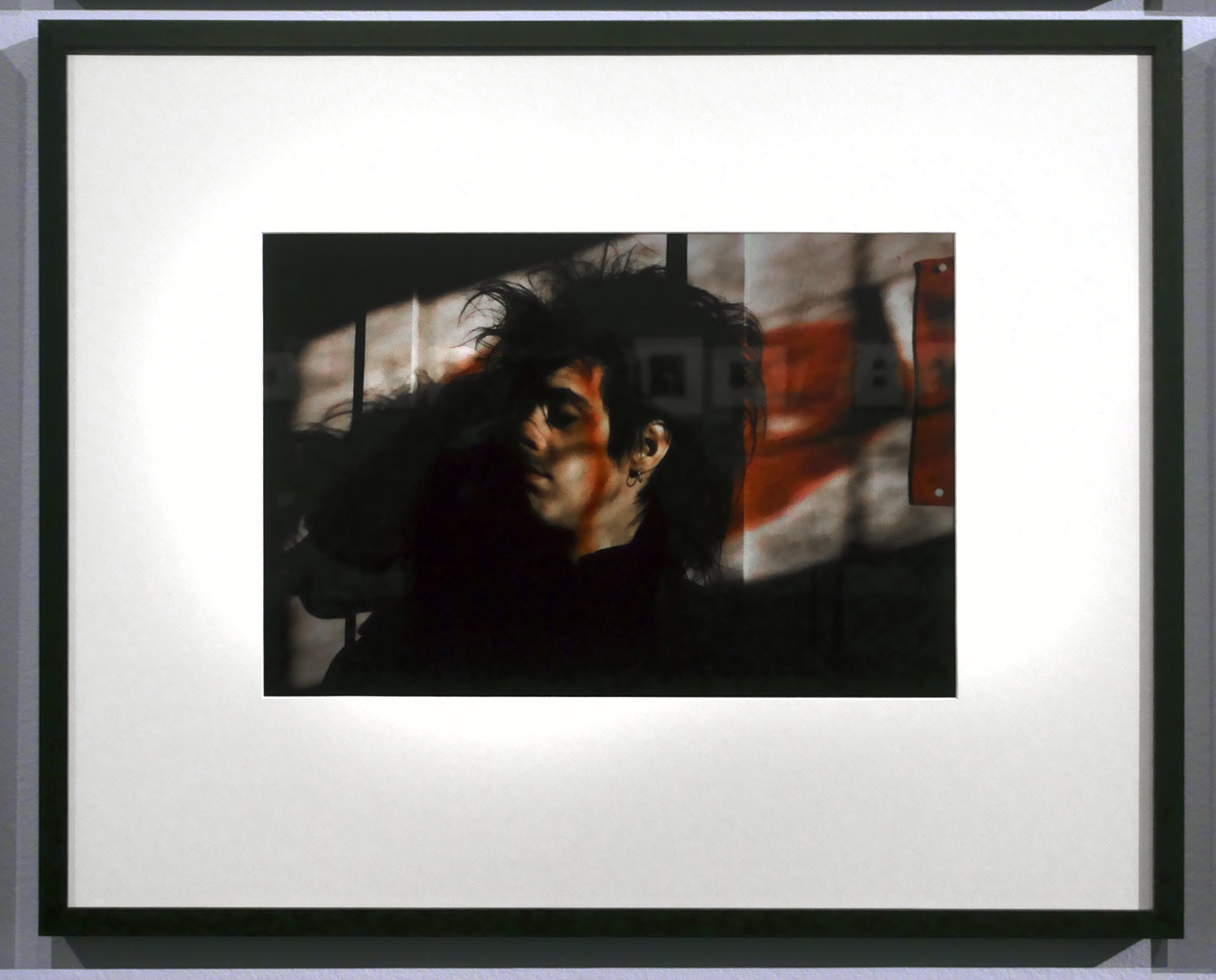
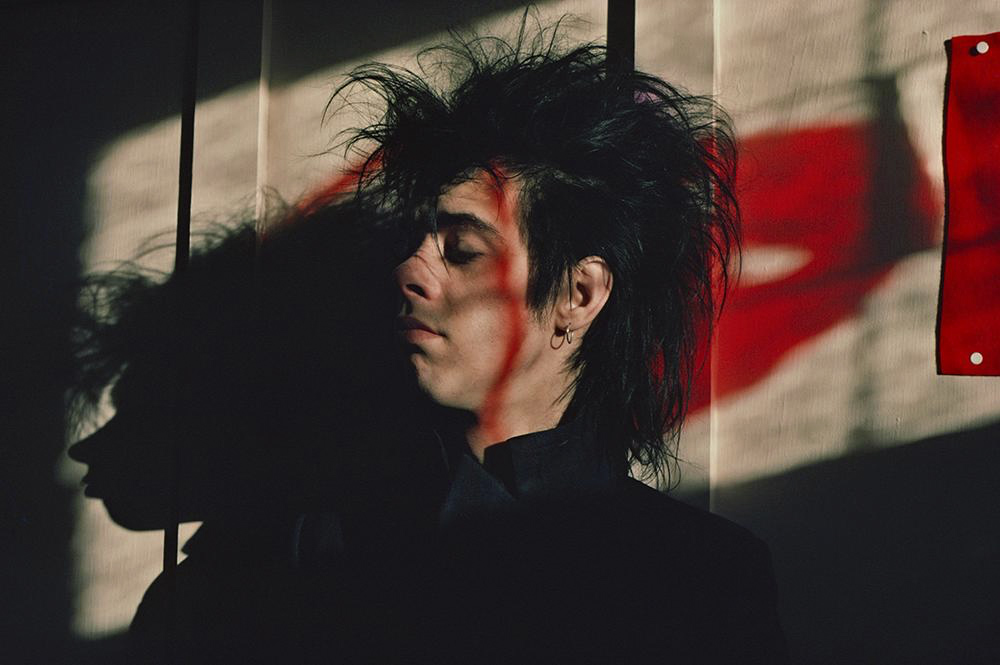


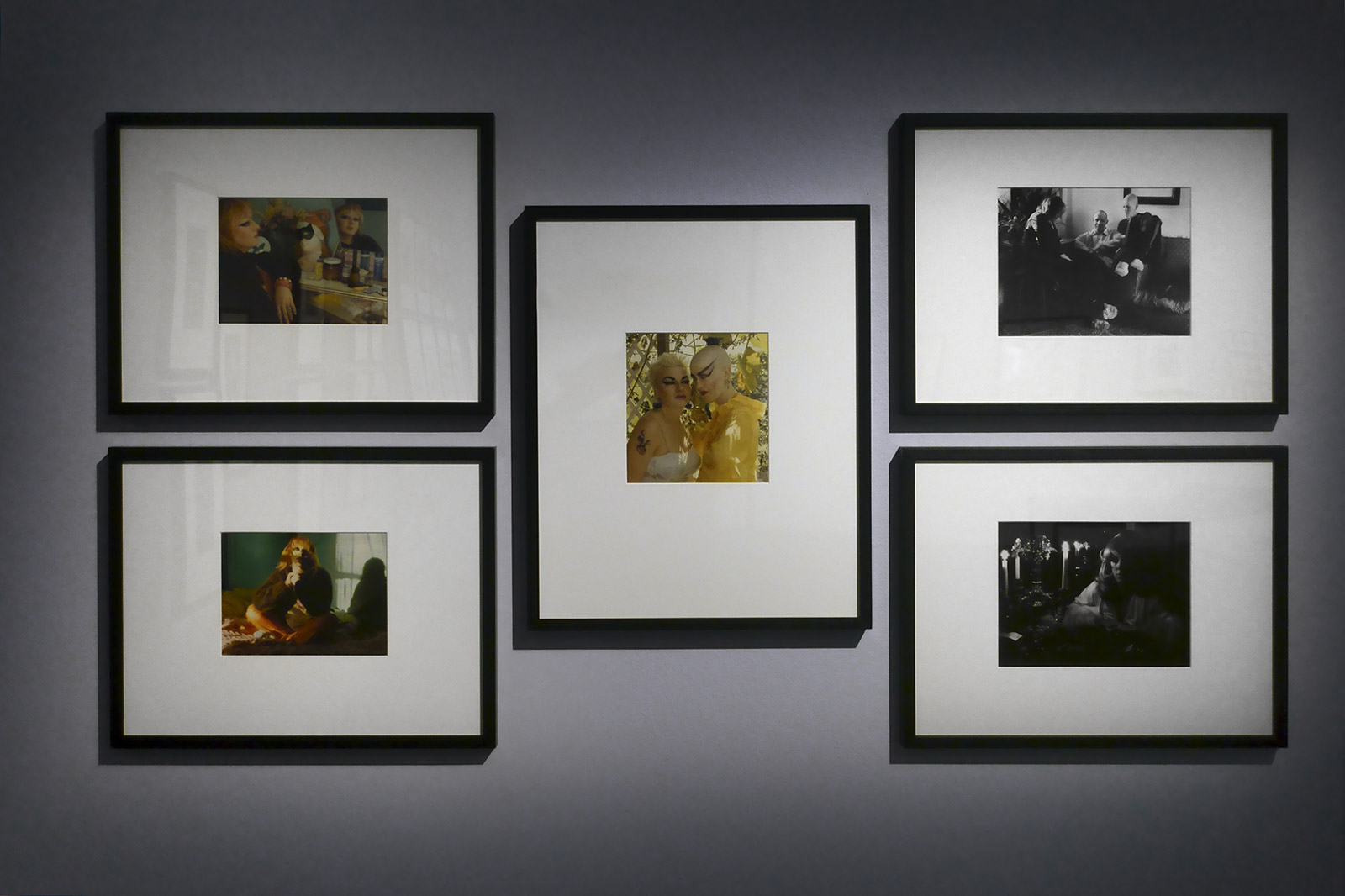








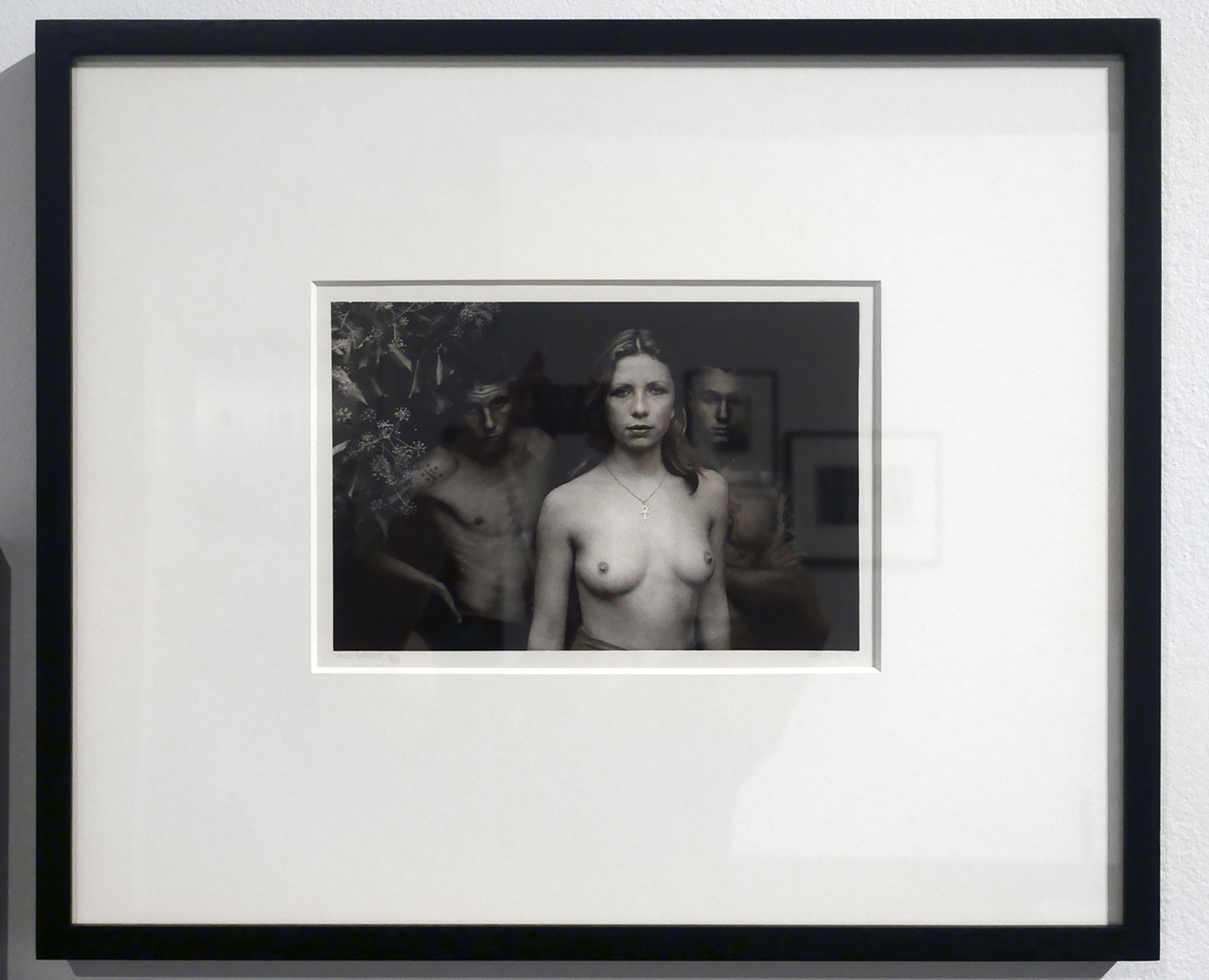


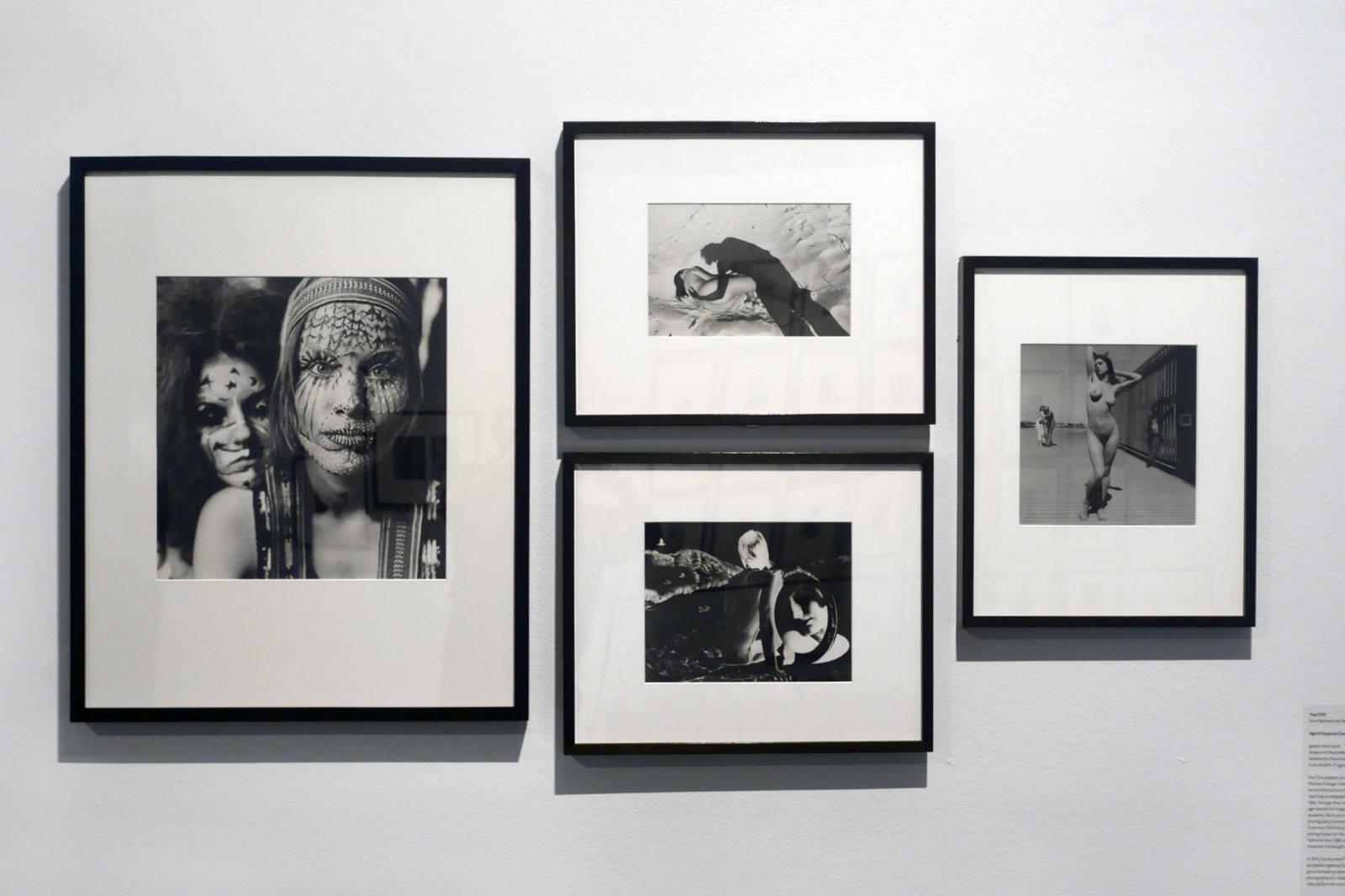


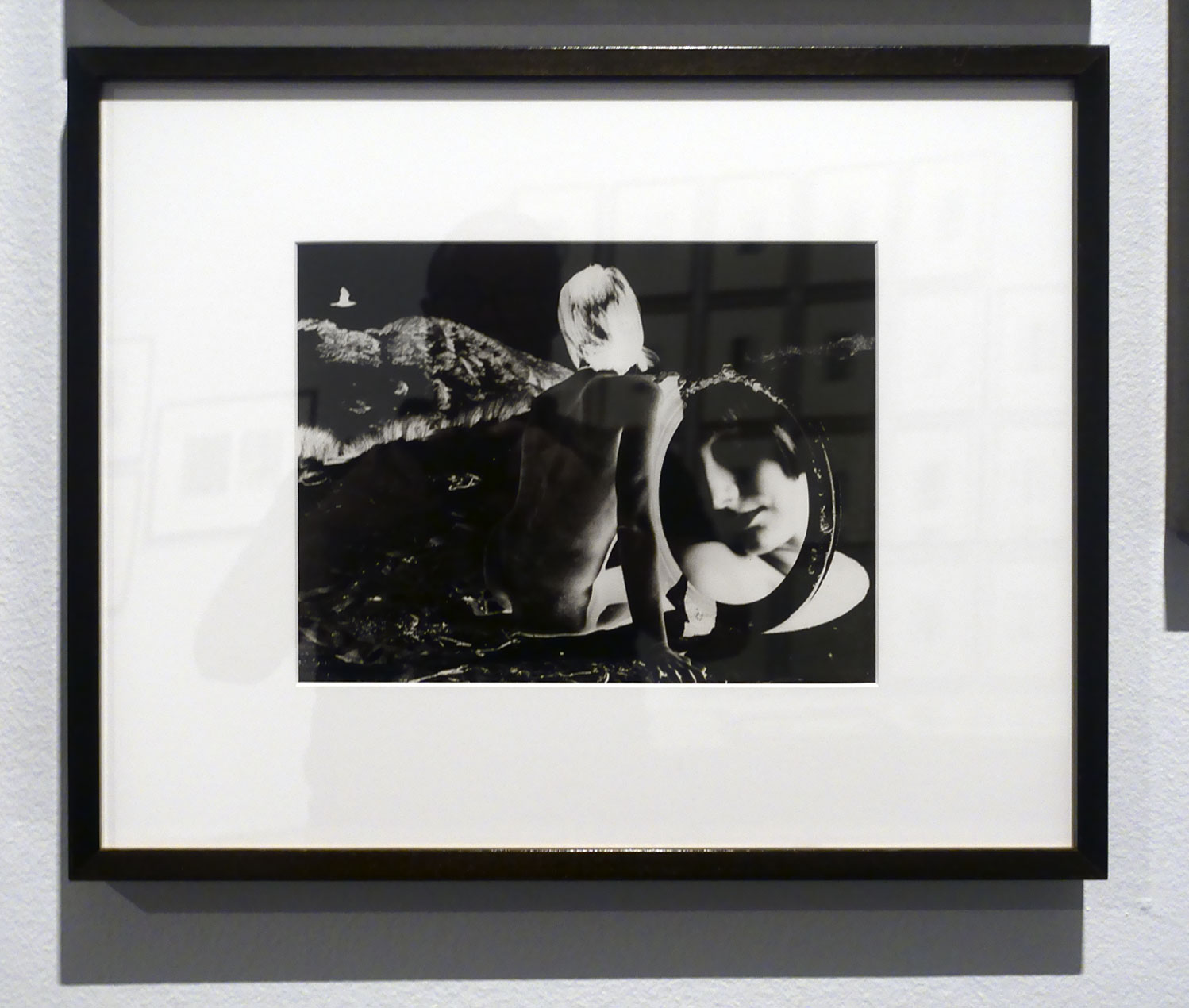


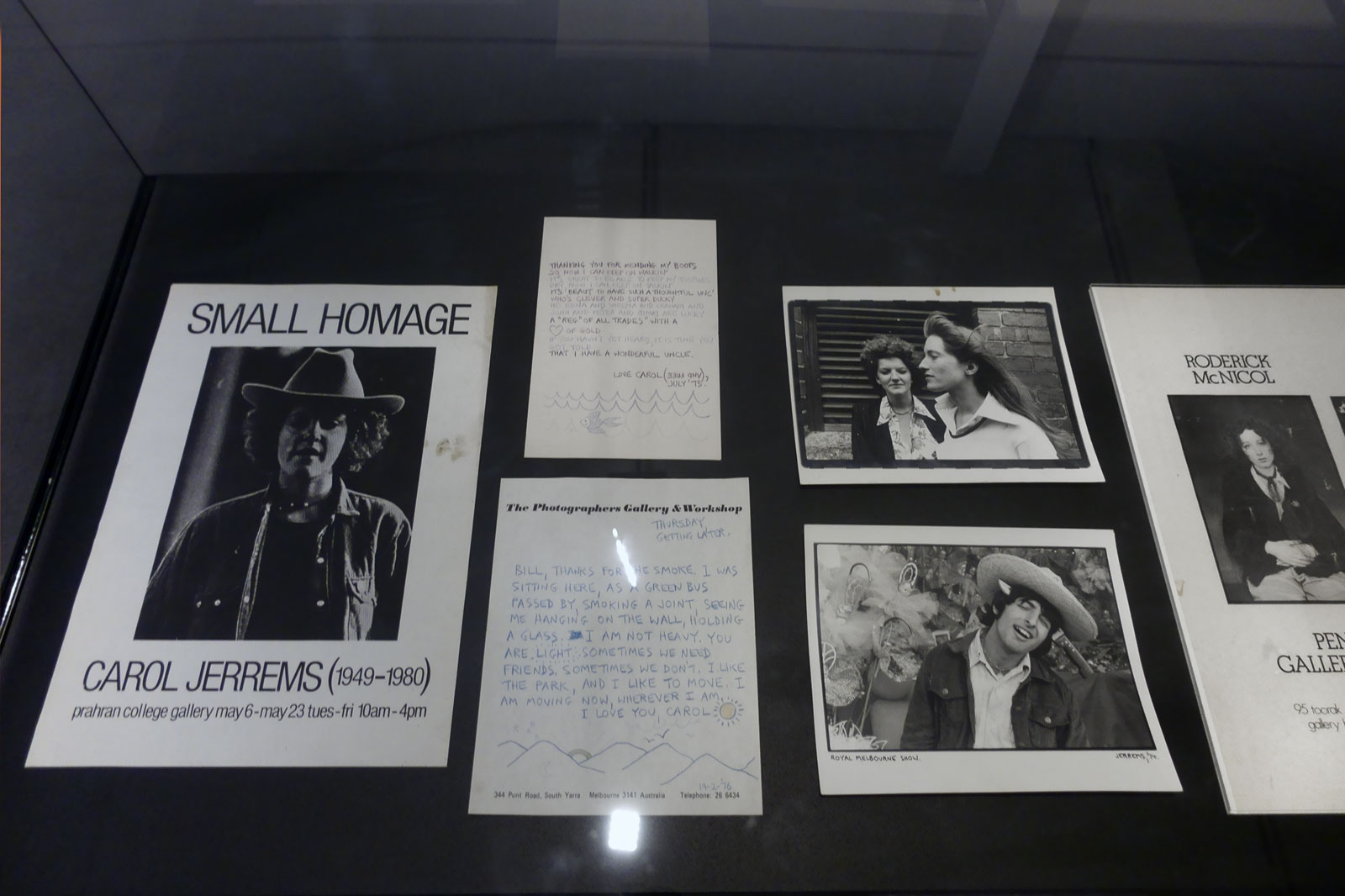
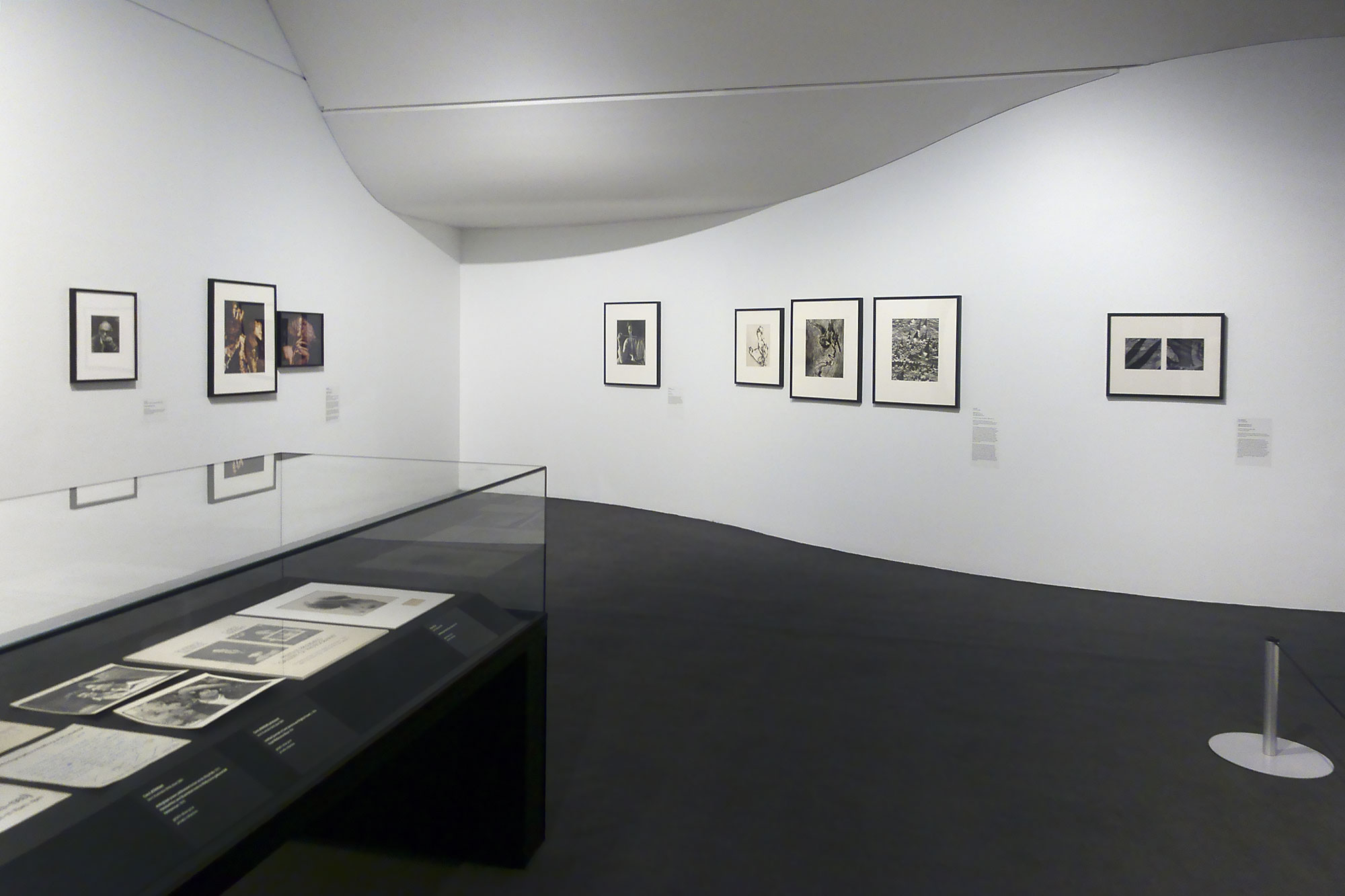


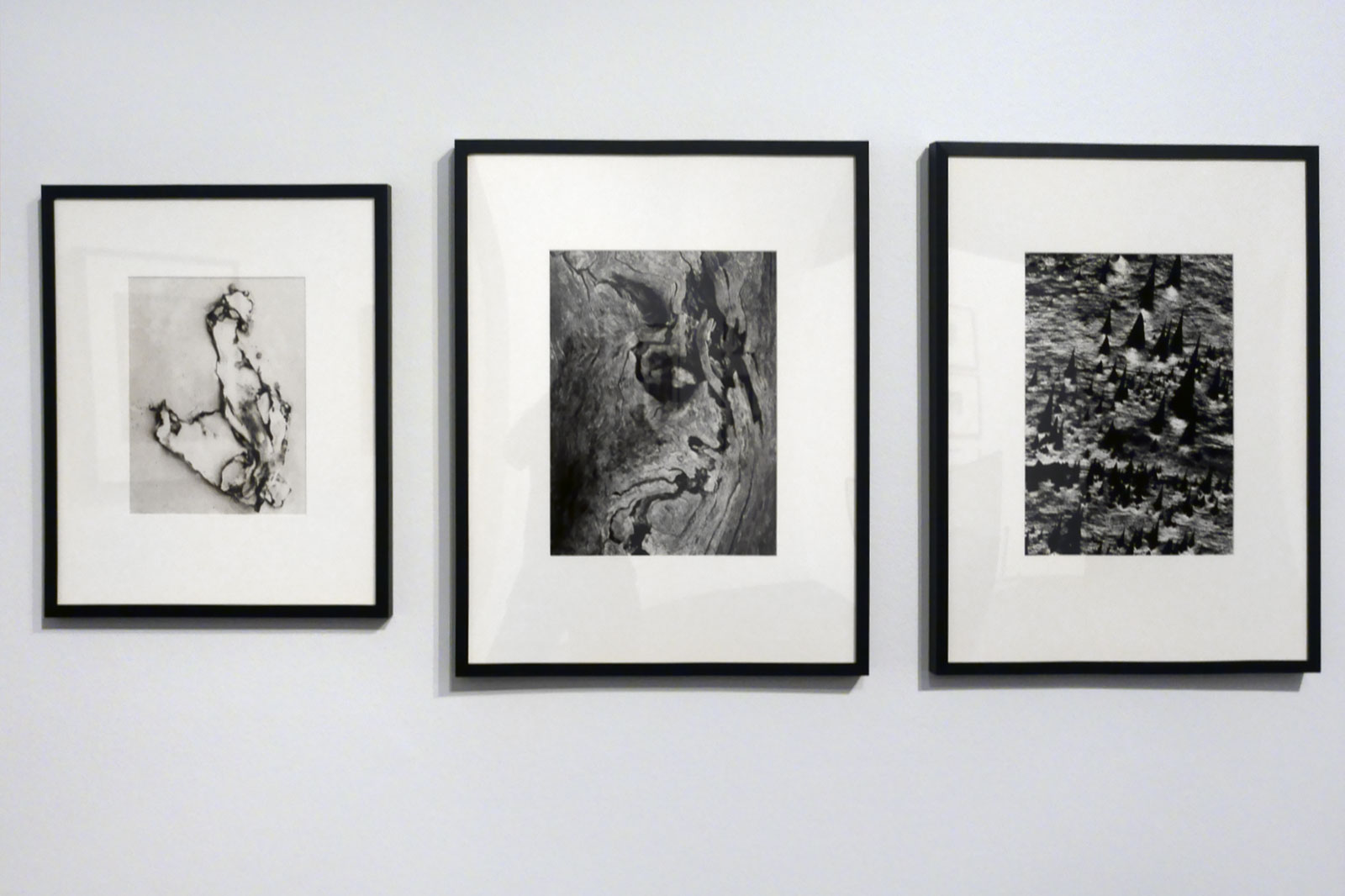




![Peter Leiss (Australian born England, b. 1951) 'Untitled [Bill Heimerman and Ian Lobb at the rear of the Photographers' Gallery]' c. 1975-1980](https://artblart.com/wp-content/uploads/2017/10/leiss-william-heimerman2-web.jpg "Peter Leiss (Australian born England, b. 1951) 'Untitled [Bill Heimerman and Ian Lobb at the rear of the Photographers' Gallery]' c. 1975-1980")
![Greg Neville (Australian, b. 1950)
'Tutorial: lecturers and students [back row L–R Derrick Lee, Bryan Gracey, Athol Shmith, Paul Cox, Elizabeth Tainsh]' c. 1971 (installation view)](https://artblart.com/wp-content/uploads/2025/03/vb.jpg "Greg Neville (Australian, b. 1950) 'Tutorial: lecturers and students [back row L–R Derrick Lee, Bryan Gracey, Athol Shmith, Paul Cox, Elizabeth Tainsh]' c. 1971 (installation view)")
![Greg Neville (Australian, b. 1950)
'Tutorial: lecturers and students [back row L–R Derrick Lee, Bryan Gracey, Athol Shmith, Paul Cox, Elizabeth Tainsh]' c. 1971](https://artblart.com/wp-content/uploads/2025/04/greg-neville-tutorial.jpg "Greg Neville (Australian, b. 1950) 'Tutorial: lecturers and students [back row L–R Derrick Lee, Bryan Gracey, Athol Shmith, Paul Cox, Elizabeth Tainsh]' c. 1971")






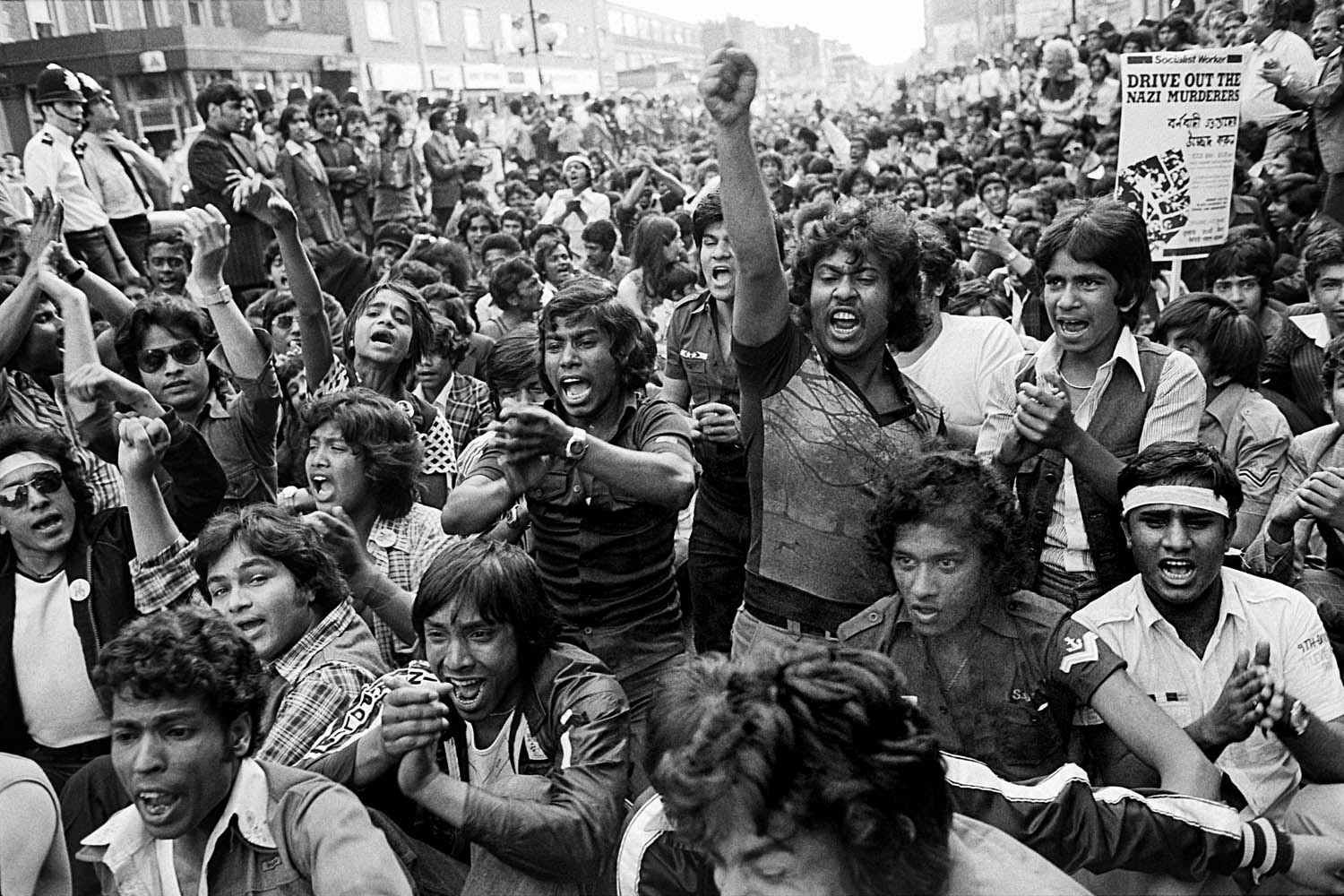







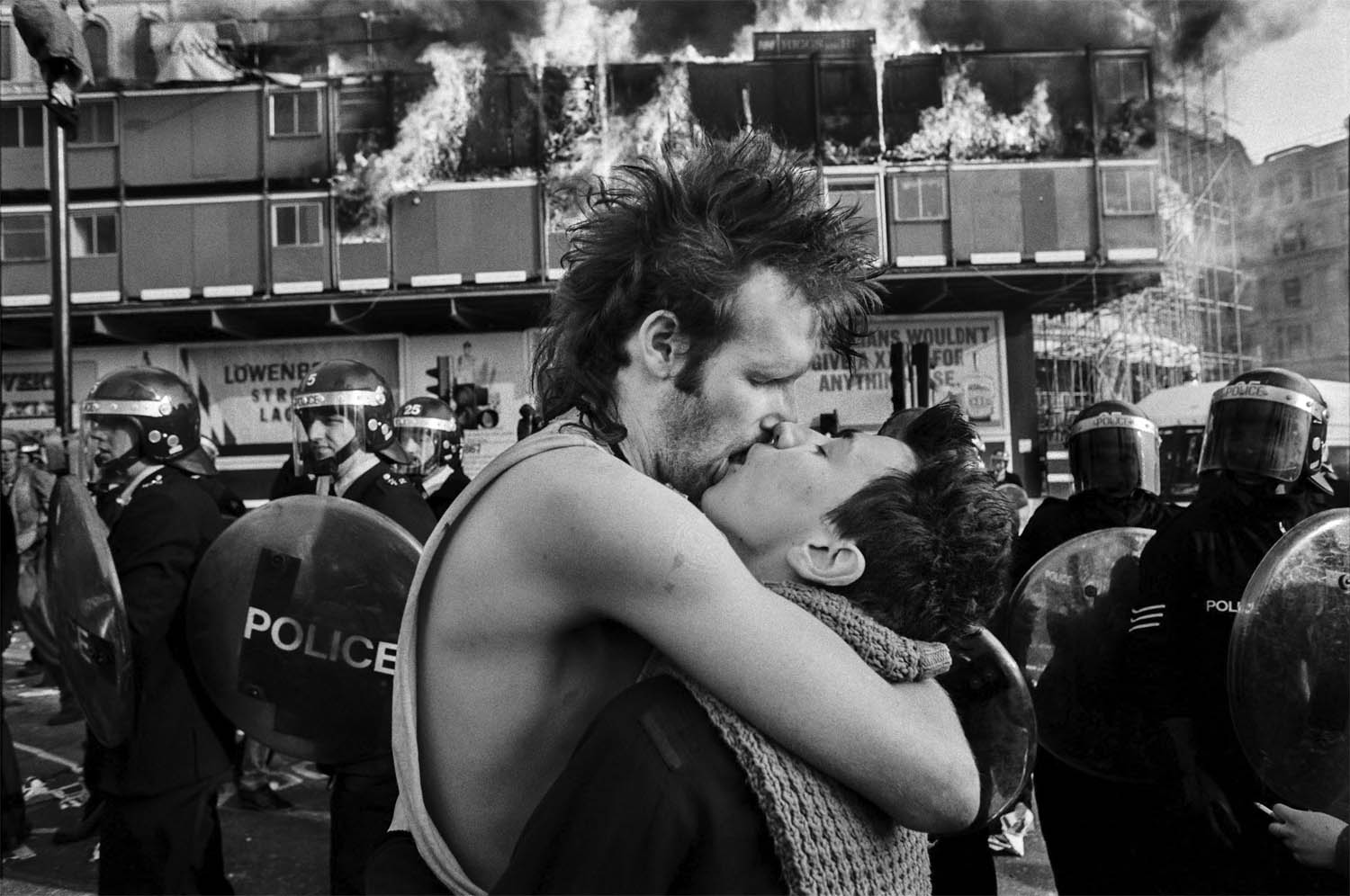
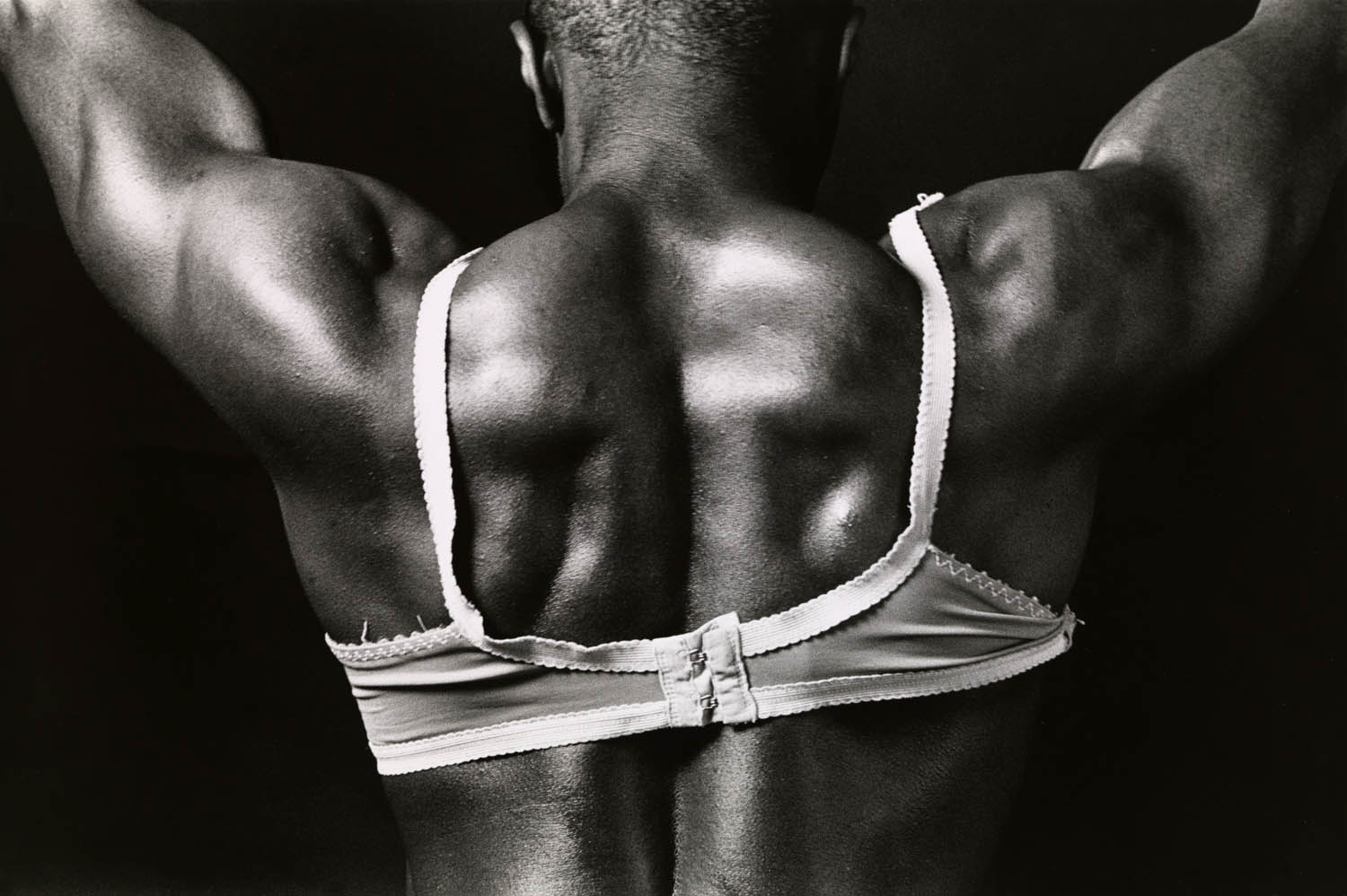


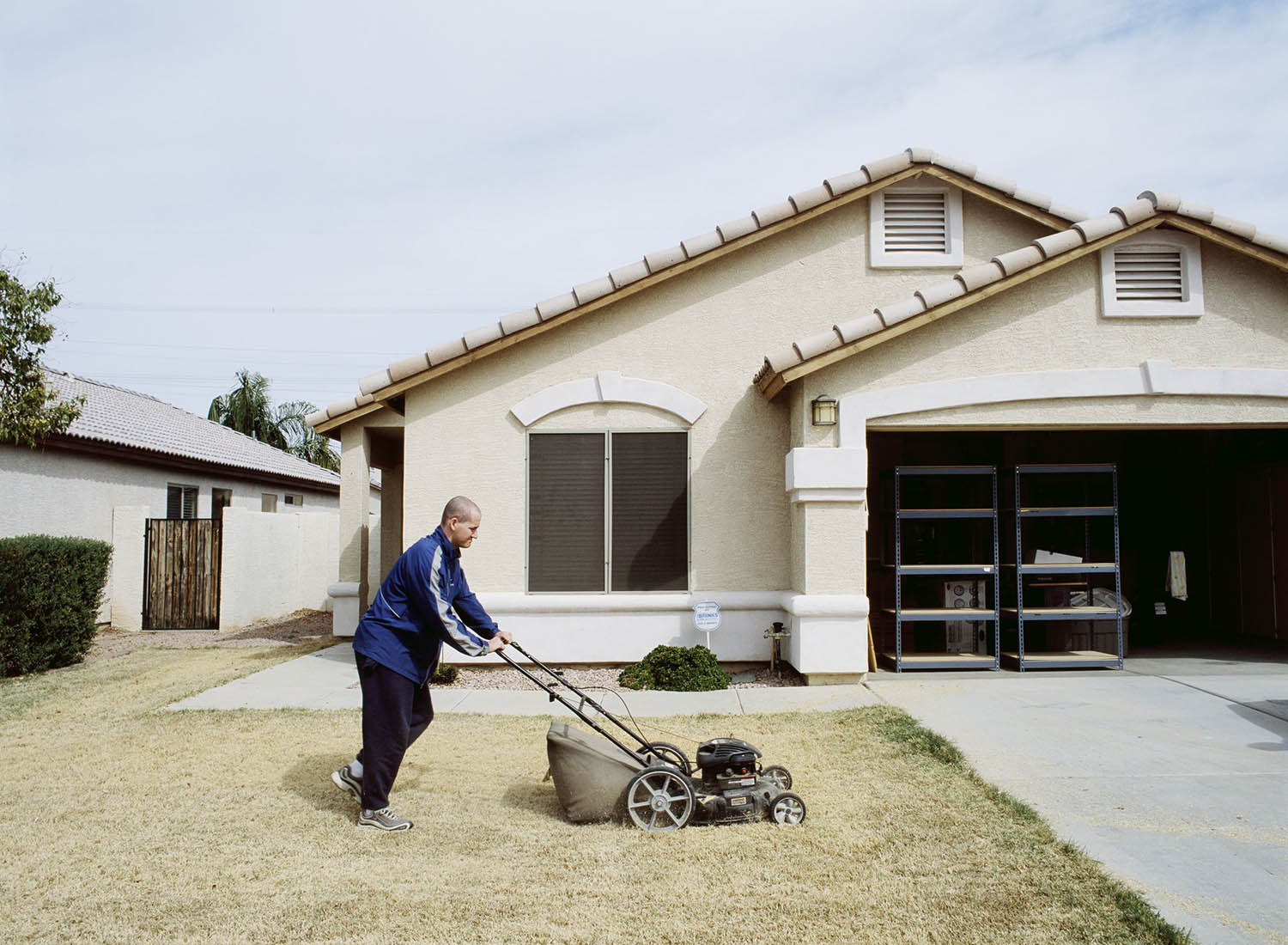
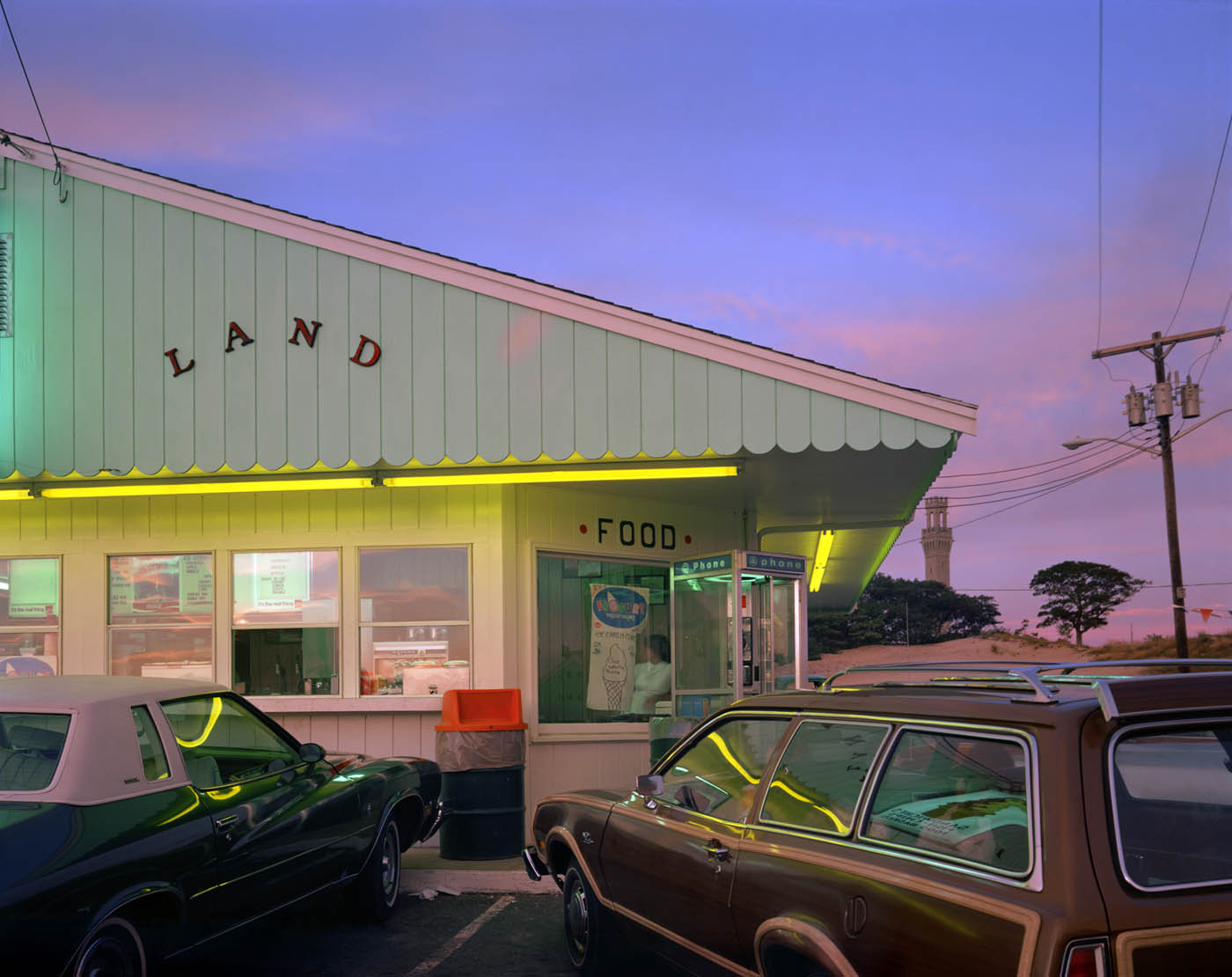


![Charlotte Brooks (American, 1918-2014) '[Image from LOOK - Job 57-7621 titled Myers family]' 20th December 1957](https://artblart.com/wp-content/uploads/2024/08/brooks-image-from-look-a.jpg "Charlotte Brooks (American, 1918-2014) '[Image from LOOK - Job 57-7621 titled Myers family]' 20th December 1957")











































 Art Blart _ art and cultural memory archive
You must be logged in to post a comment.