Exhibition: ‘Bernd and Hilla Becher: Mines and Mills – Industrial Landscapes’ at Fotomuseum Winterthur, Zurich

Exhibition dates: 26th November, 2011 – 12th February, 2012
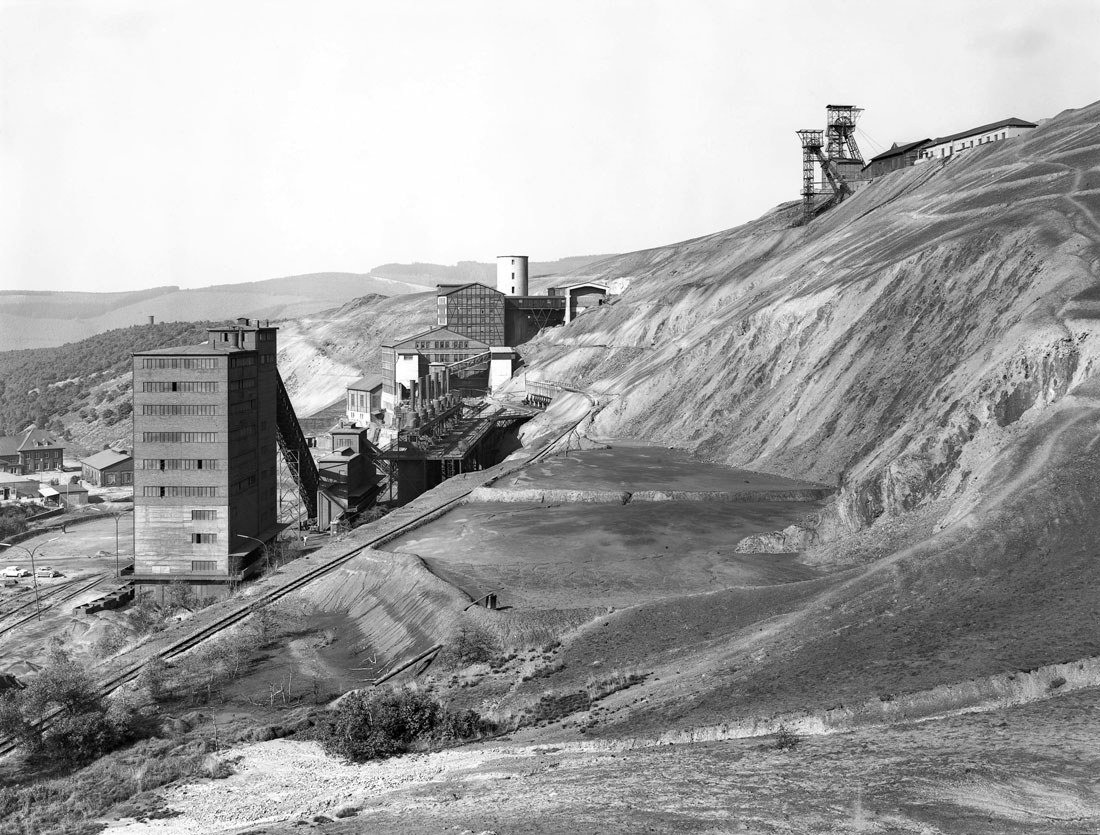


Bernd and Hilla Becher (German, active 1959-2007) Bernd Becher (German, 1931-2007) Hilla Becher (German, 1934-2015)
 'Grube San Fernando, Herdorf, D' 1961 from the exhibition 'Bernd and Hilla Becher: Mines and Mills - Industrial Landscapes' at Fotomuseum Winterthur, Zurich, Nov 2011 - Feb 2012


Bernd and Hilla Becher (German, active 1959-2007) Bernd Becher (German, 1931-2007) Hilla Becher (German, 1934-2015)
Grube San Fernando, Herdorf, D
1961
Gelatin silver print
50 x 60cm
© Bernd and Hilla Becher / Courtesy of Schirmer/Mosel


Let’s not beat around the bush. Despite protestations to the contrary (appeals to the objectivity of the image, eschewing entirely the aspects of beauty, emotion and opinion; the rigorous frontality of the individual images giving them the simplicity of diagrams, while their density of detail offers encyclopaedic richness) these are subjective images for all their objective desire. The paradox is the more a photographer strives for objectivity, the more ego drops away, the more the work becomes their own: subjective, beautiful, emotive.

Even though the Bechers’ demonstrate great photographic restraint with regard to documenting the object, the documentary gaze is always corrupted / mutated / distorted by personal interpretation: where to position the camera, what to include or exclude, how to interpret the context of place, how to crop or print the image, and how to display the image, in grids, sequences or singularly. In other words there are always multiple (con)texts to which artists conform or transgress. What makes great photographers, such as Eugène Atget, Walker Evans, August Sander and the Bechers, is the idiosyncratic “nature” of their vision: how Atget places his large view camera – at that particular height and angle to the subject – leaves an indelible feeling that only he could have made that image, to reveal the magic of that space in a photograph. It is their personal, unique thumbprint, recognisable in an instant. So it is with the Bechers.

These are intimate images, a personal reaction to space and place, to being. They make my heart ache for their stillness and ethereal beauty. Bravo!

Dr Marcus Bunyan


Many thankx to the Fotomuseum Winterthur, Zurich for allowing me to publish the photographs in the posting. Please click on the photographs for a larger version of the image.


“The pictures were stripped of any artistic frills and reduced to an essentially topographic state, conveying substantial amounts of visual information but eschewing entirely the aspects of beauty, emotion and opinion.”


William Jenkins, Curator of the ‘New Topographics’ exhibition, 1975


“The Ruhr Valley, where Becher’s family had worked in the steel and mining industries, was their initial focus. They were fascinated by the similar shapes in which certain buildings were designed. In addition, they were intrigued by the fact that so many of these industrial buildings seemed to have been built with a great deal of attention toward design. Together, the Bechers went out with a large 8 x 10-inch view camera and photographed these buildings from a number of different angles, but always with a straightforward “objective” point of view. They shot only on overcast days, so as to avoid shadows, and early in the morning during the seasons of spring and fall. Objects included barns, water towers, oal tipples, cooling towers, grain elevators, coal bunkers, coke ovens, oil refineries, blast furnaces, gas tanks, storage silos, and warehouses. At each site the Bechers also created overall landscape views of the entire plant, which set the structures in their context and show how they relate to each other.”


Wikipedia entry for Bernd and Hilla Becher


“The German artists Bernd and Hilla Becher, who began working together in 1959 and married in 1961, are best known for their “typologies” – grids of black-and-white photographs of variant examples of a single type of industrial structure. To create these works, the artists traveled to large mines and steel mills, and systematically photographed the major structures, such as the winding towers that haul coal and iron ore to the surface and the blast furnaces that transform the ore into metal. The rigorous frontality of the individual images gives them the simplicity of diagrams, while their density of detail offers encyclopaedic richness. At each site the Bechers also created overall landscape views of the entire plant, which set the structures in their context and show how they relate to each other. The typologies emulate the clarity of an engineer’s drawing, while the landscapes evoke the experience of a particular place.”


Peter Galassi, Chief Curator of Photography, MoMA
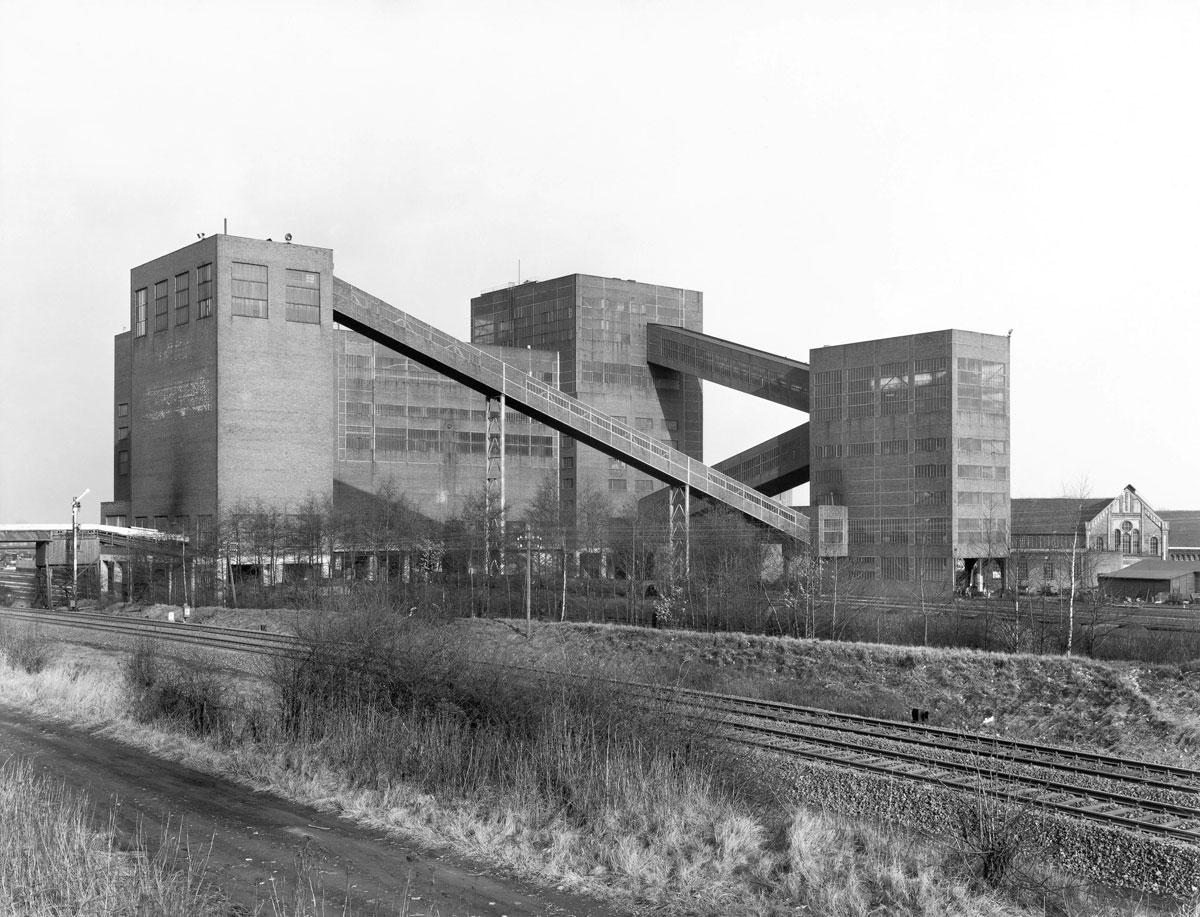


Bernd and Hilla Becher (German, active 1959-2007) Bernd Becher (German, 1931-2007) Hilla Becher (German, 1934-2015)
 'Becher 
Zeche Germania, Dortmund, D' 1971
 rom the exhibition 'Bernd and Hilla Becher: Mines and Mills - Industrial Landscapes' at Fotomuseum Winterthur, Zurich, Nov 2011 - Feb 2012


Bernd and Hilla Becher (German, active 1959-2007) Bernd Becher (German, 1931-2007) Hilla Becher (German, 1934-2015)

Zeche Germania, Dortmund, D
1971
Gelatin silver print
50 x 60cm
© Bernd and Hilla Becher / Courtesy of Schirmer/Mosel


For more than forty years, the photographer couple Bernd (1931-2007) and Hilla Becher (1934-2015) worked on creating an inventory of industrial architecture. Warehouses, shaft towers, gas tanks, blast furnaces as well as half-timbered houses are among the subjects they photographed throughout Germany, England, France, Central Europe, and the USA. Calling these buildings “anonymous sculptures,” they refer to the artistic quality of the constructions, which played no role for the buildings’ largely unknown builders and users. Their photographs attempt to draw attention to these hidden sculptural qualities and to document them historically as a building tradition in decline.

Bernd and Hilla Becher have always held particular interest for the industrial architecture in the Ruhr region. The exhibition Mines and Mills – Industrial Landscapes systematically examines this aspect of their work for the first time. Even today, names such as the Concordia and Hannibal collieries or Gutehoffnungshütte stand for the industrial history of the Ruhr region. Instead of concentrating on individual buildings, the exhibition approaches the mining facilities (where coal was produced for the smelting works) as a whole and in the context of their urban or natural surroundings. This typology, which the Bechers described as “industrial landscape,” compares the Ruhr region with similar complexes elsewhere in Europe and the USA.

As with their typological multiple and serial views of buildings, Bernd and Hilla Becher strive for a comparative perspective in their industrial landscapes. Demonstrating great photographic restraint in their approach and in the name of a “New Objectivity” dedicated solely to the object, they stand in a long tradition of proponents of the documentary gaze that includes Eugène Atget, Karl Blossfeldt, Walker Evans, Albert Renger-Patzsch and August Sander. Their influence on the history of photography extends from the establishment of the “Dusseldorf School” into the present.

“The main aim of our work is to show that the forms of our time are technical forms, although they did not develop from formal considerations. Just as medieval thought is manifested in the gothic cathedral, our era is revealed in technical buildings and apparatuses,” Bernd and Hilla Becher stated in a conversation from 2005.

The industrial landscapes can be read from historical and social perspectives, to an even greater extent than the familiar photographs of simple building typologies. Next to the monumental, industrial buildings one often sees residential constructions, gardens, and allotment gardens, which convey how intertwined the organisation of life and work was at the time and how deeply rooted people were in this city-like structure. Photographed at waist-height, the broad, open views of the horizontally composed photographs have an aesthetic that is almost atypical of the Bechers. However, the images adhere systematically to the archival thinking of the artist couple.

Press release from the Fotomuseum Winterthur, Zurich website
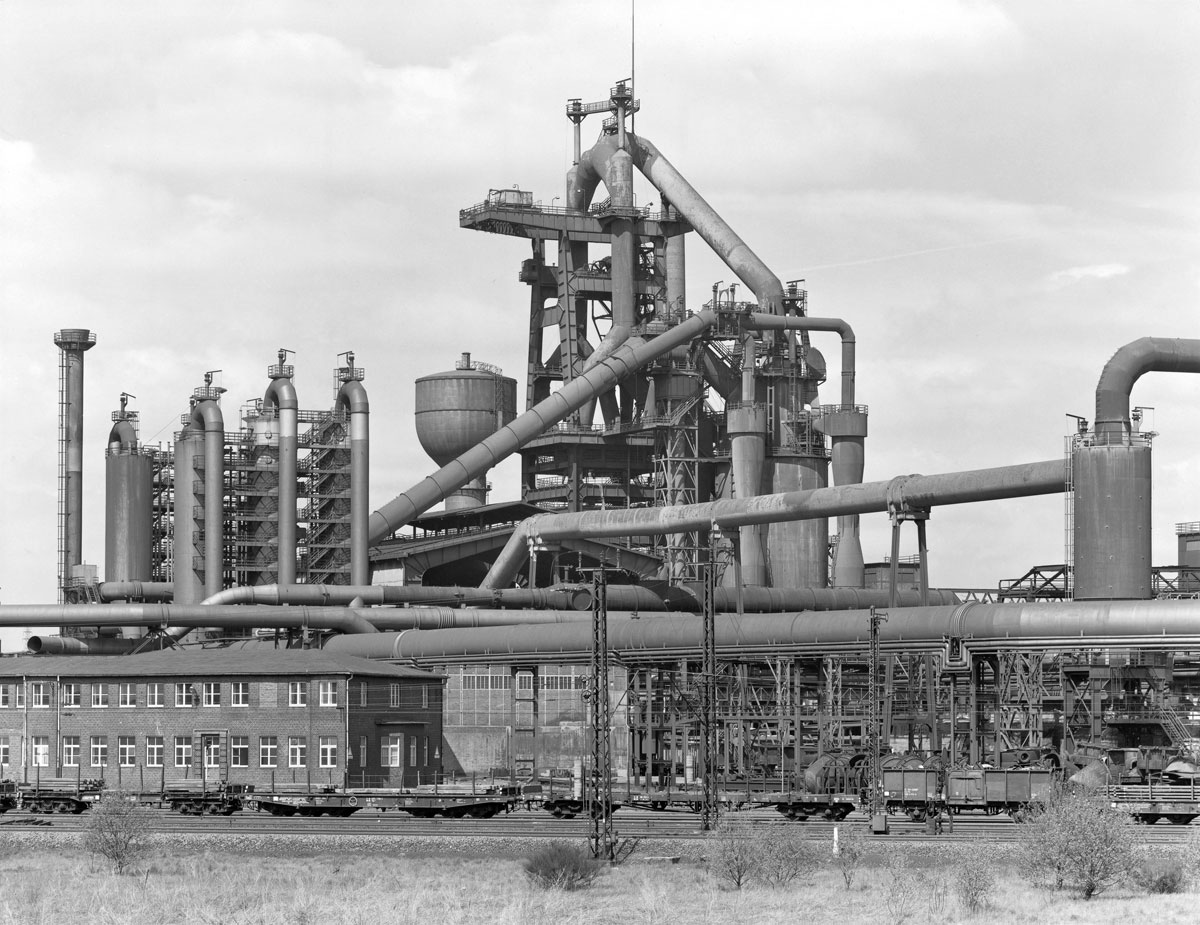
 

Bernd and Hilla Becher (German, active 1959-2007) Bernd Becher (German, 1931-2007) Hilla Becher (German, 1934-2015)
 'Gutehoffnungshütte, Oberhausen, D' 1963


Bernd and Hilla Becher (German, active 1959-2007) Bernd Becher (German, 1931-2007) Hilla Becher (German, 1934-2015)
Gutehoffnungshütte, Oberhausen, D
1963
Gelatin silver print
50 x 60cm
© Bernd and Hilla Becher / Courtesy of Schirmer/Mosel


Bernd and Hilla Becher (German, active 1959-2007) Bernd Becher (German, 1931-2007) Hilla Becher (German, 1934-2015)
 'Charleroi-Montignies, B' 1971


Bernd and Hilla Becher (German, active 1959-2007) Bernd Becher (German, 1931-2007) Hilla Becher (German, 1934-2015)
Charleroi-Montignies, B
1971
Gelatin silver print
50 x 60cm
© Bernd and Hilla Becher / Courtesy of Schirmer/Mosel
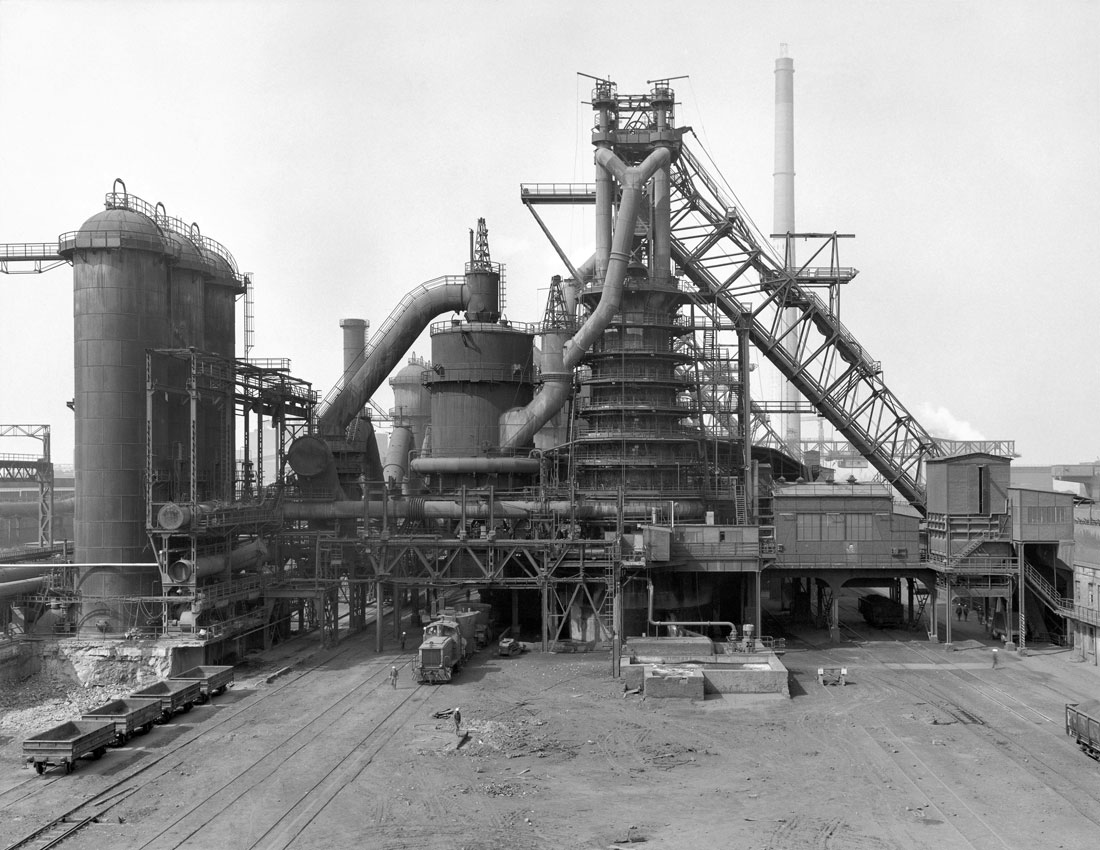
 

Bernd and Hilla Becher (German, active 1959-2007) Bernd Becher (German, 1931-2007) Hilla Becher (German, 1934-2015)
 'Duisburg-Huckingen, D' 1970


Bernd and Hilla Becher (German, active 1959-2007) Bernd Becher (German, 1931-2007) Hilla Becher (German, 1934-2015)
Duisburg-Huckingen, D
1970
Gelatin silver print
50 x 60cm
© Bernd and Hilla Becher / Courtesy of Schirmer/Mosel
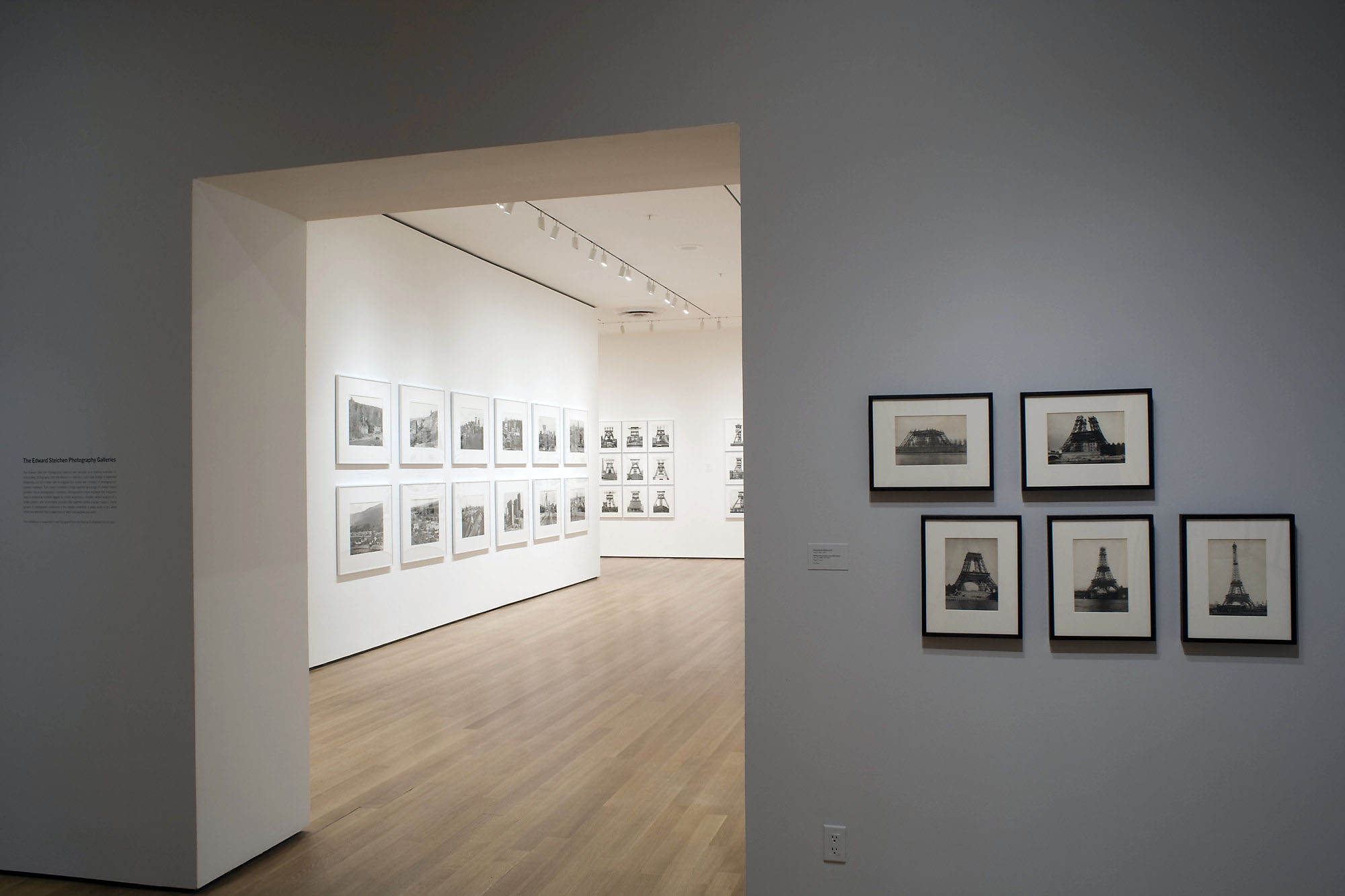
 

Installation view of the exhibition 'Bernd and Hilla Becher: Landscape/Typology' at the Museum of Modern Art, New York


Installation view of the exhibition Bernd and Hilla Becher: Landscape / Typology at the Museum of Modern Art, New York, May 21, 2008 – August 25, 2008 showing top row at right, Hippolyte Blancard’s Untitled (1888, below)
Photograph by John Wronn
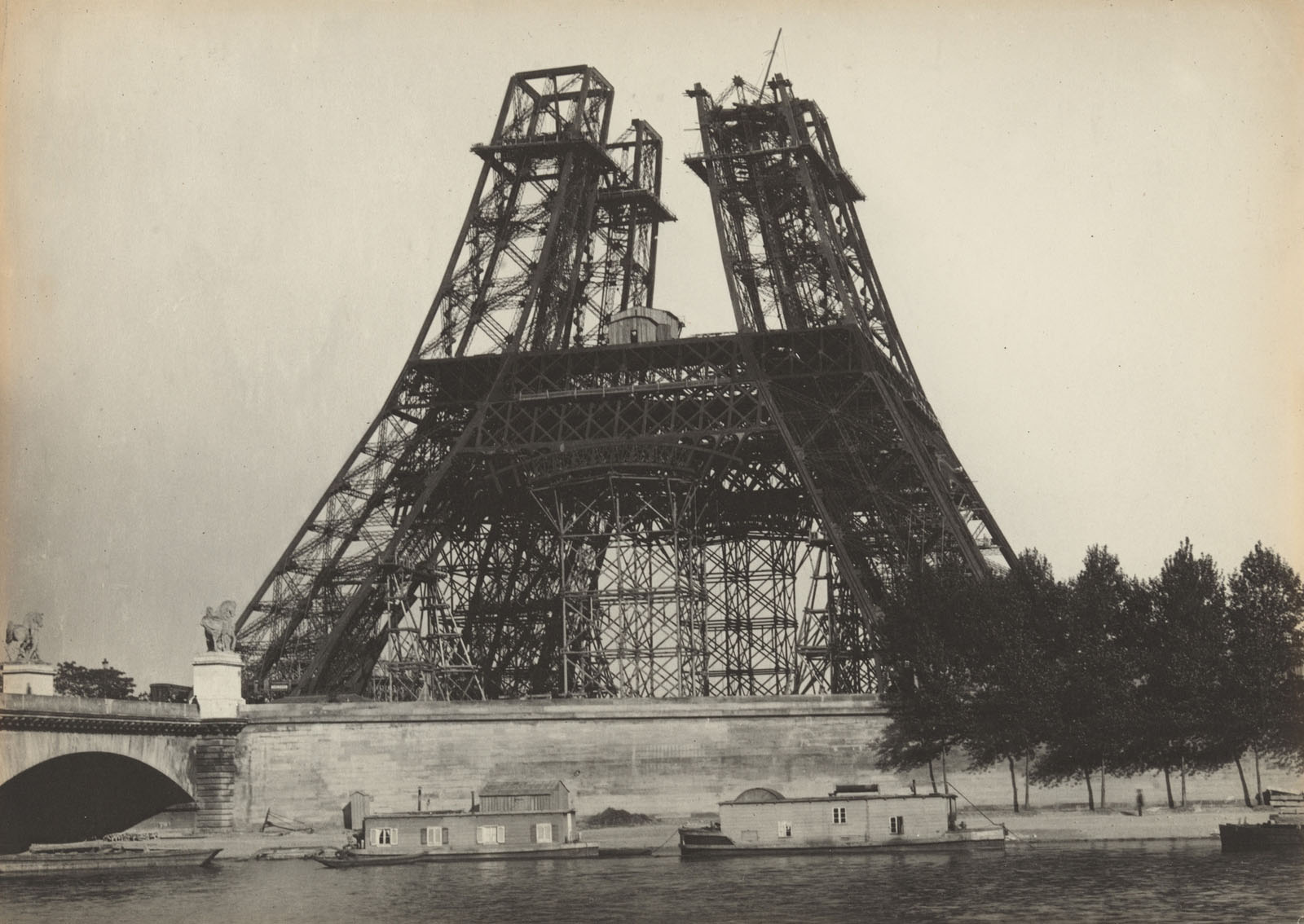
 

Hippolyte Blancard (French, 1843-1924) 'Untitled' April 1888


Hippolyte Blancard (French, 1843-1924)
Untitled
April 1888
Platinum print
8 13/16 × 6 1/8″ (22.4 × 15.6cm)
Museum of Modern Art, New York
Purchase


Hippolyte Blancard, a pharmacist and amateur photographer, documented Parisian architecture leading up to the 1889 Exposition Universelle, or World’s Fair, an international event held in Paris to showcase new innovations, geographic and scientific discoveries, and works of art. His series of photographs shows the construction of the Eiffel Tower, which was conceived as the entrance to the World’s Fair. Blancard’s photographs document the tower’s progression, from July 1887 to April 1889.

Text from the MoMA website
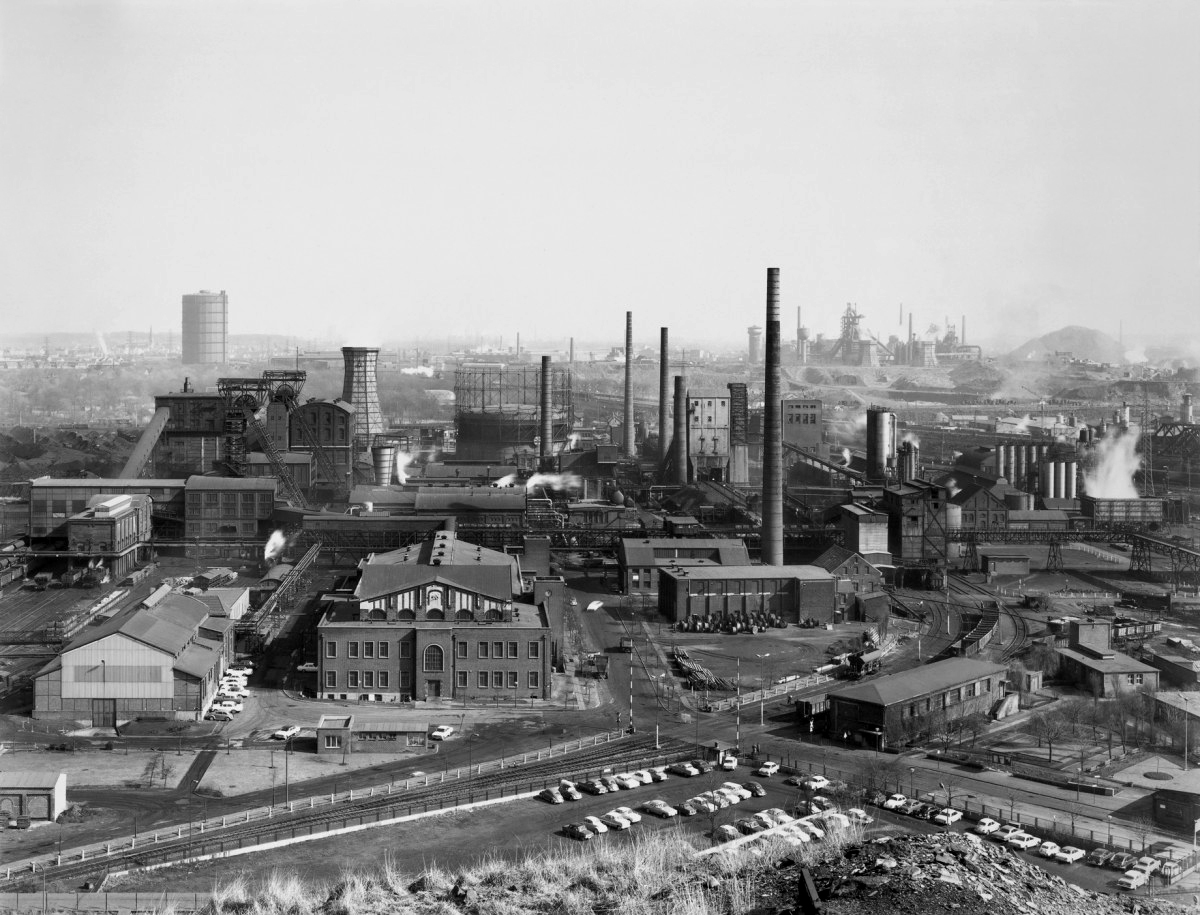
 

Bernd and Hilla Becher (German, active 1959-2007) Bernd Becher (German, 1931-2007) Hilla Becher (German, 1934-2015)
 'Zeche Concordia, Oberhausen, D' 1967


Bernd and Hilla Becher (German, active 1959-2007) Bernd Becher (German, 1931-2007) Hilla Becher (German, 1934-2015)
Zeche Concordia, Oberhausen, D
1967
Gelatin silver print
50 x 60cm
© Bernd und Hilla Becher – Courtesy of Schirmer/Mosel
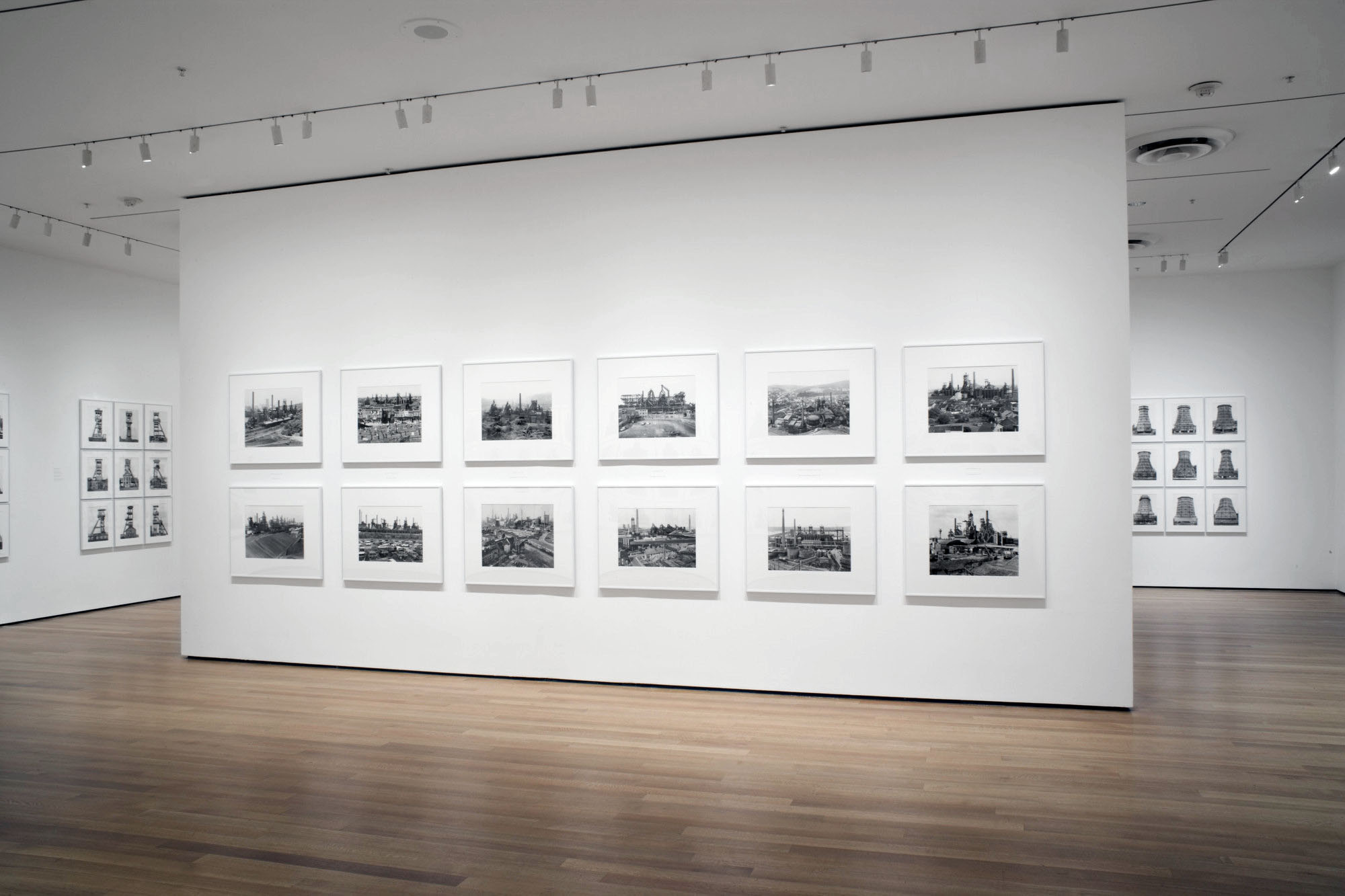
 

Installation view of the exhibition 'Bernd and Hilla Becher: Landscape/Typology' at the Museum of Modern Art, New York


Installation view of the exhibition Bernd and Hilla Becher: Landscape / Typology at the Museum of Modern Art, New York, May 21, 2008 – August 25, 2008 showing the three images directly below – Duisburg-Bruckhausen (1999); Ensley, Alabama, USA (1982); and Knutange, Lorraine, France (1971)
Photograph by John Wronn


Bernd and Hilla Becher (German, active 1959-2007) Bernd Becher (German, 1931-2007) Hilla Becher (German, 1934-2015)
 'Duisburg-Bruckhausen' 1999


Bernd and Hilla Becher (German, active 1959-2007) Bernd Becher (German, 1931-2007) Hilla Becher (German, 1934-2015)
Duisburg-Bruckhausen
1999
Gelatin silver print
50 x 60cm
© Bernd und Hilla Becher – Courtesy of Schirmer/Mosel
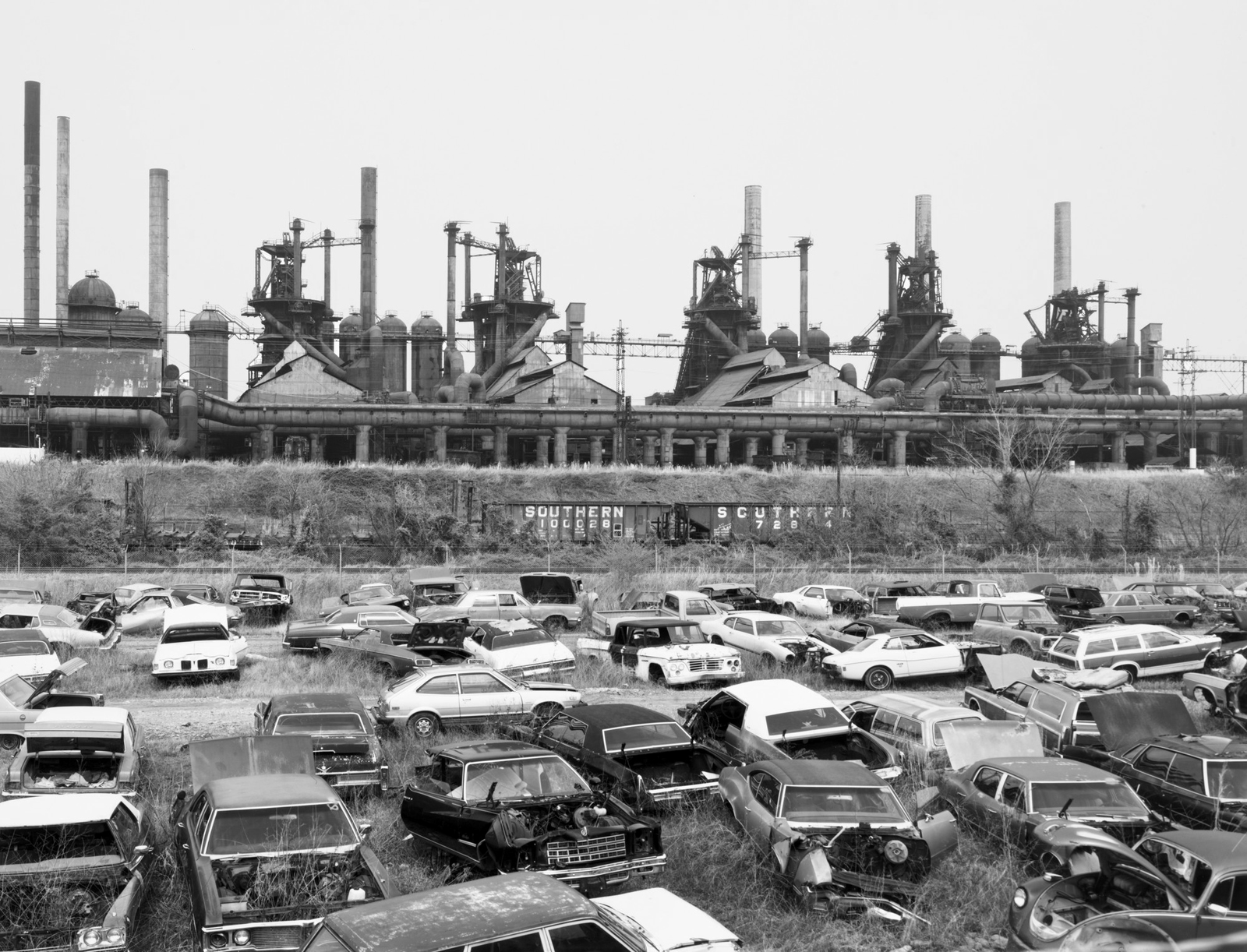
 

Bernd and Hilla Becher (German, active 1959-2007) Bernd Becher (German, 1931-2007) Hilla Becher (German, 1934-2015)
 'Ensley, Alabama, USA' 1982


Bernd and Hilla Becher (German, active 1959-2007) Bernd Becher (German, 1931-2007) Hilla Becher (German, 1934-2015)
Ensley, Alabama, USA
1982
Gelatin silver print
50 x 60cm
© Bernd und Hilla Becher – Courtesy of Schirmer/Mosel
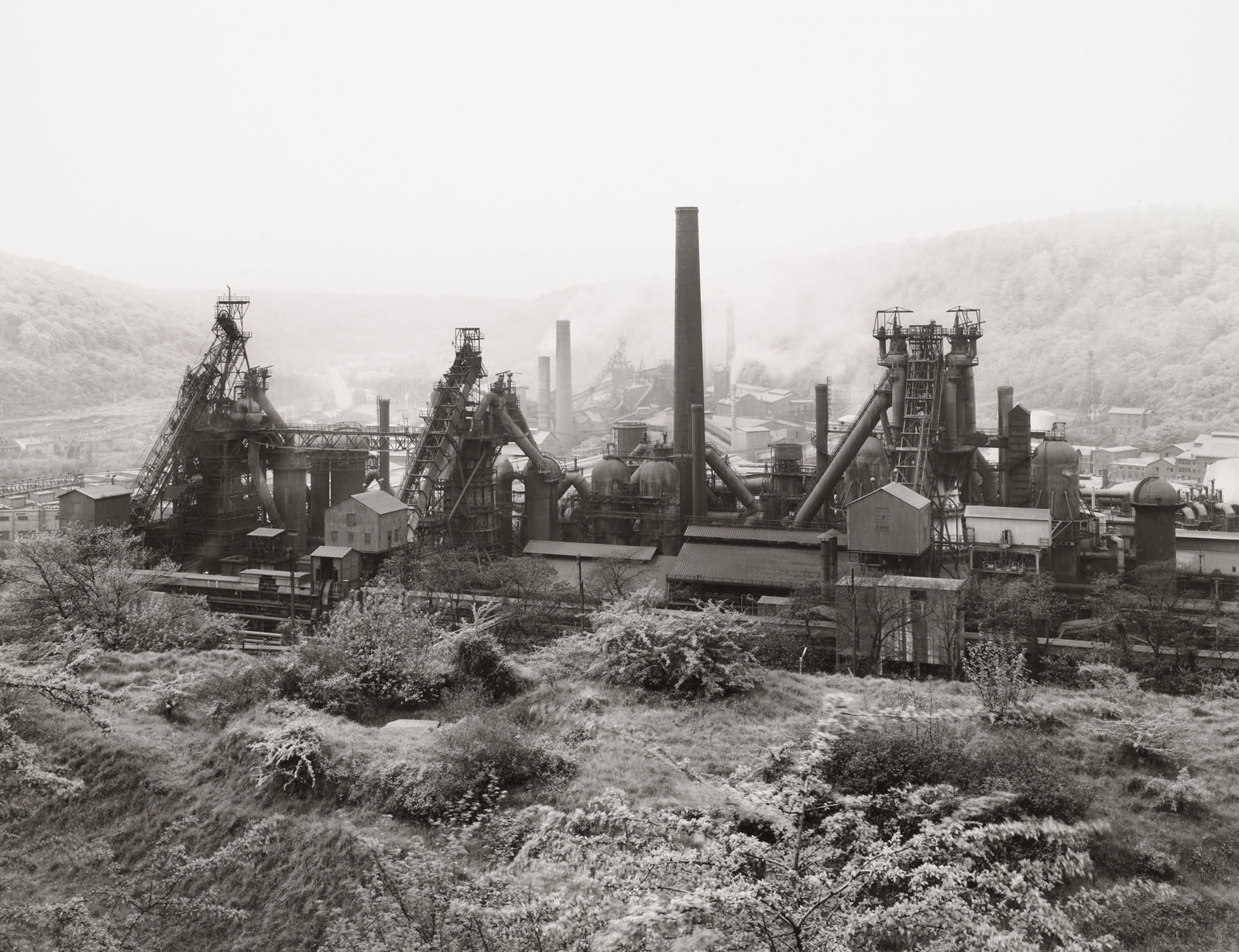
 

Bernd and Hilla Becher (German, active 1959-2007) Bernd Becher (German, 1931-2007) Hilla Becher (German, 1934-2015) 'Knutange, Lorraine, France' 1971


Bernd and Hilla Becher (German, active 1959-2007) Bernd Becher (German, 1931-2007) Hilla Becher (German, 1934-2015)
Knutange, Lorraine, France
1971
Gelatin silver print
17 7/8 × 23 9/16″ (45.4 × 59.9cm)
Horace W. Goldsmith Fund through Robert B. Menschel
© 2022 Estate of Bernd Becher and Hilla Becher
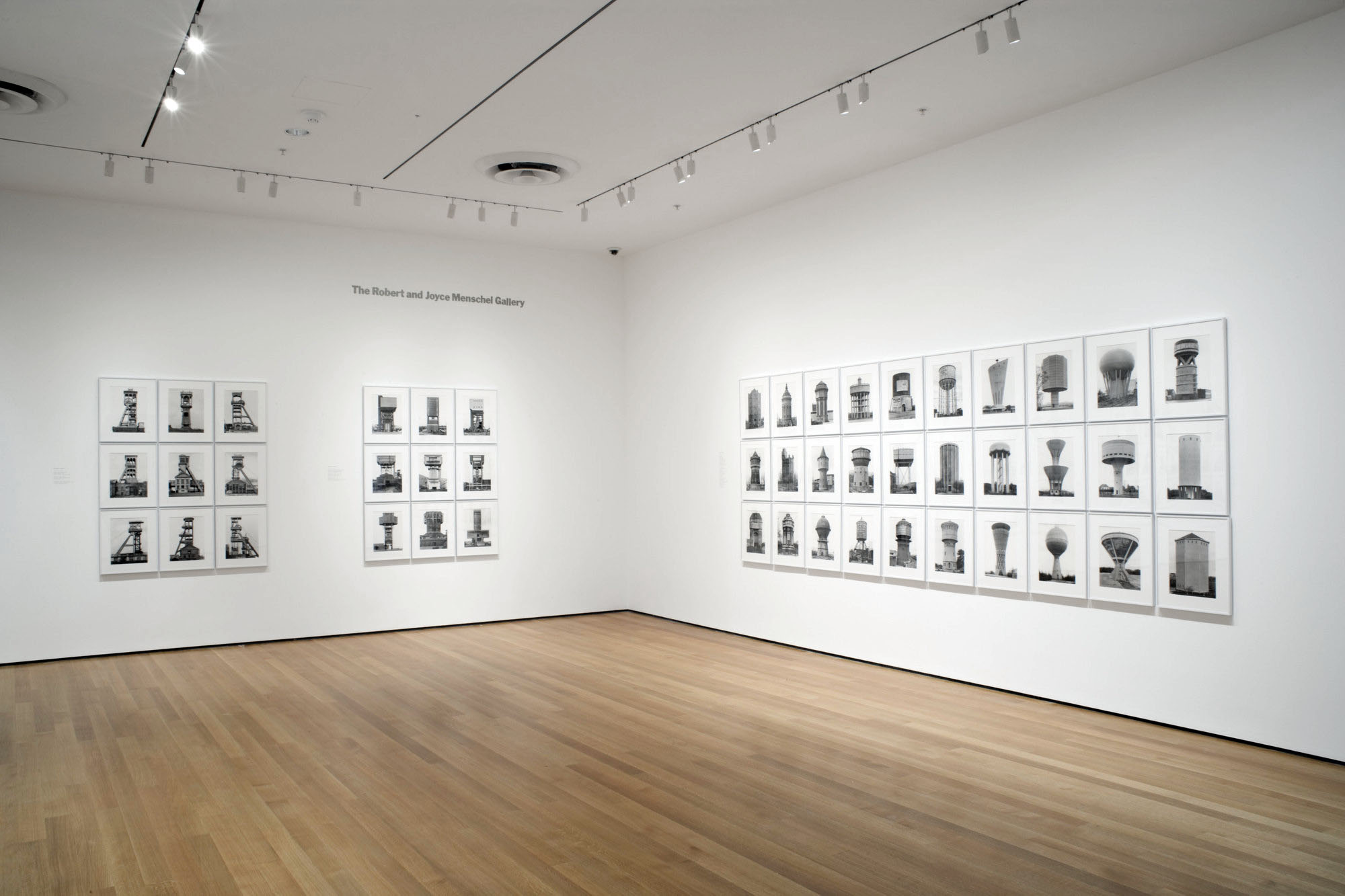
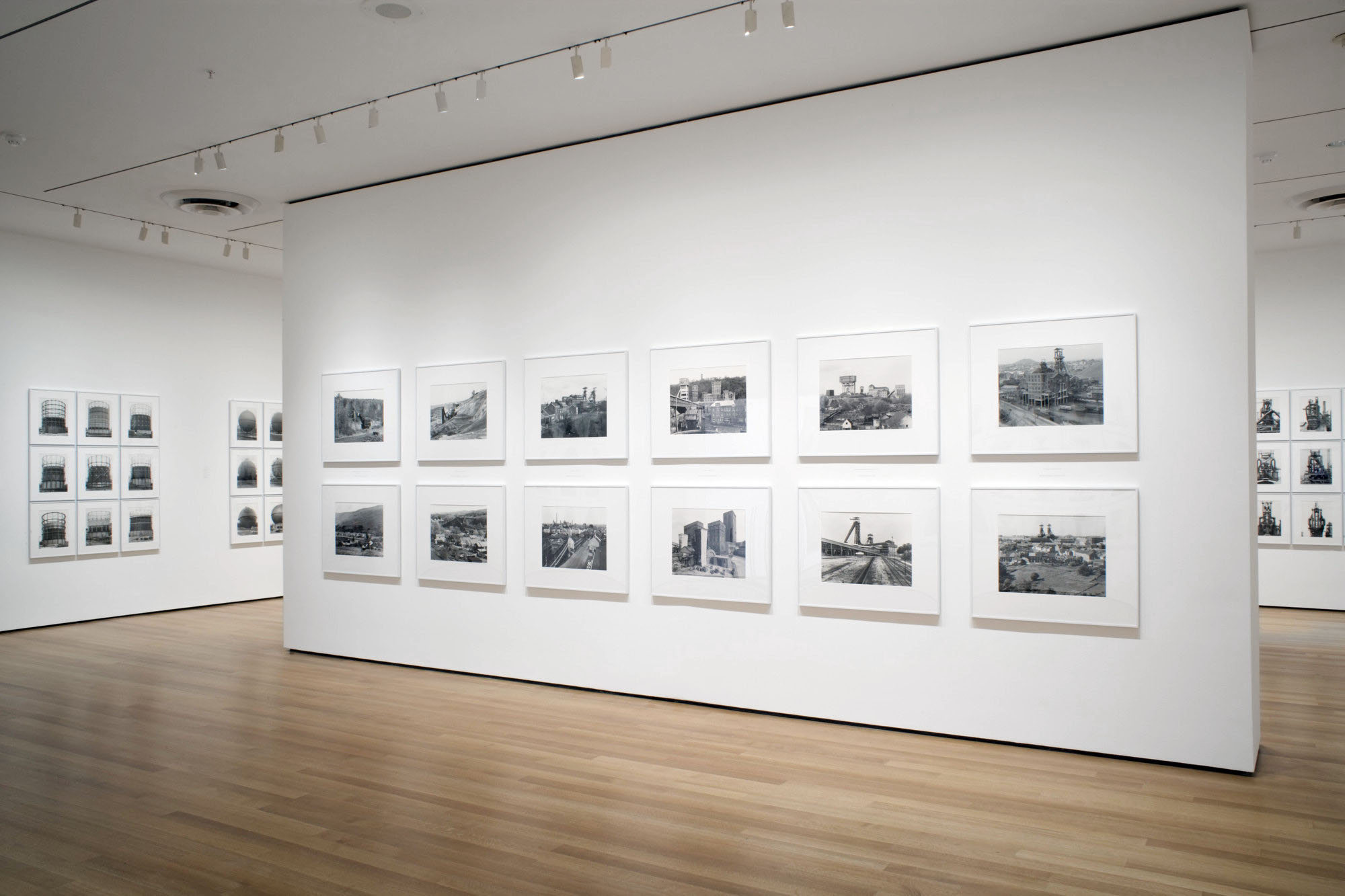
 

Installation view of the exhibition 'Bernd and Hilla Becher: Landscape/Typology' at the Museum of Modern Art, New York

Installation view of the exhibition 'Bernd and Hilla Becher: Landscape/Typology' at the Museum of Modern Art, New York


Installation views of the exhibition Bernd and Hilla Becher: Landscape / Typology at the Museum of Modern Art, New York, May 21, 2008 – August 25, 2008
Photographs by John Wronn
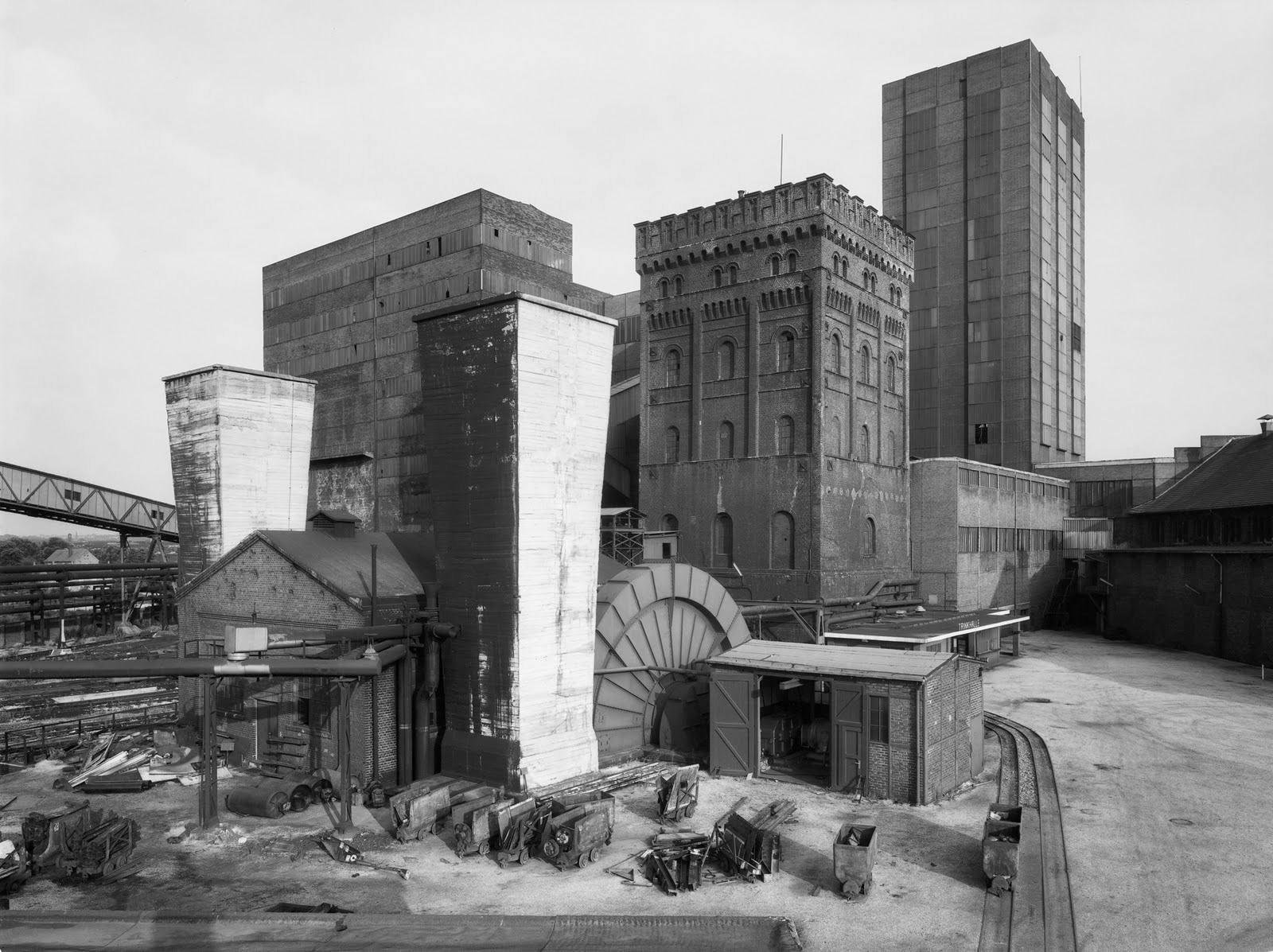
 

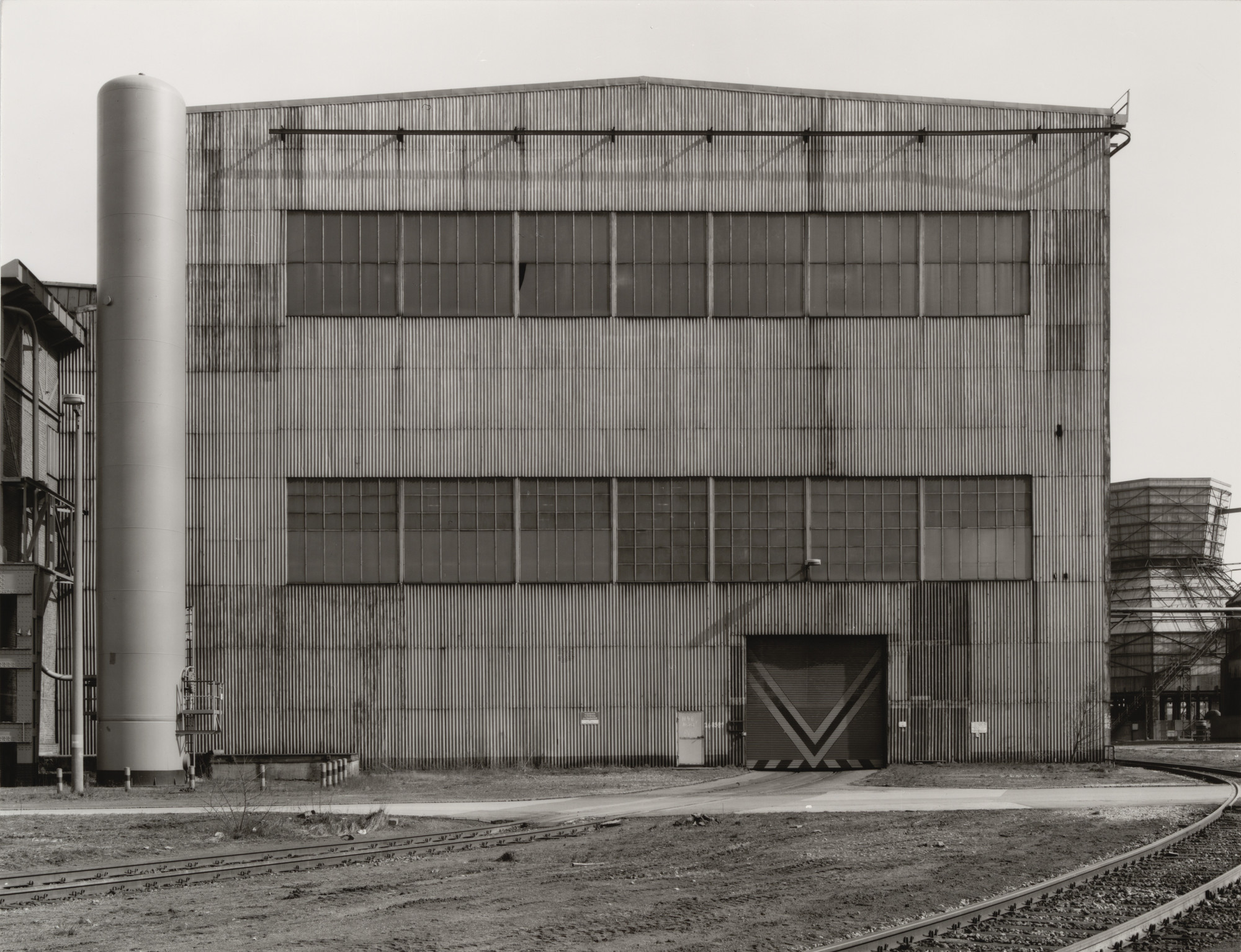
Bernd and Hilla Becher (German, active 1959-2007) Bernd Becher (German, 1931-2007) Hilla Becher (German, 1934-2015) 'Hannover Mine 1/2/5, Bochum-Hordel, Ruhr Region, Germany' 1973


Bernd and Hilla Becher (German, active 1959-2007) Bernd Becher (German, 1931-2007) Hilla Becher (German, 1934-2015)
Hannover Mine 1/2/5, Bochum-Hordel, Ruhr Region, Germany
1973
Gelatin silver print
50 x 60cm
© Bernd und Hilla Becher – Courtesy of Schirmer/Mosel
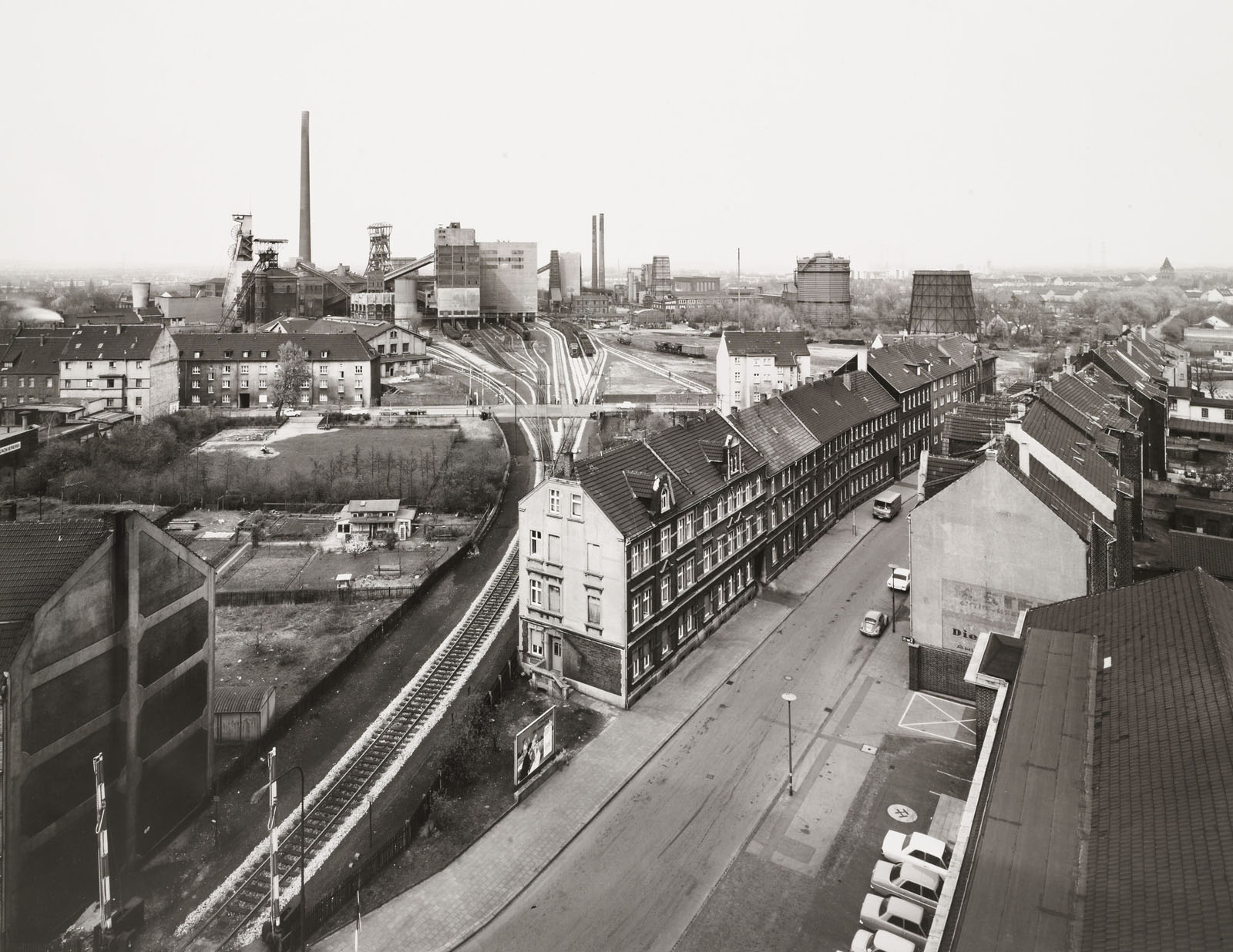
 

Bernd and Hilla Becher (German, active 1959-2007) Bernd Becher (German, 1931-2007) Hilla Becher (German, 1934-2015) 'Consolidation Mine, Gelsenkirchen, Ruhr Region, Germany' 1974


Bernd and Hilla Becher (German, active 1959-2007) Bernd Becher (German, 1931-2007) Hilla Becher (German, 1934-2015)
Consolidation Mine, Gelsenkirchen, Ruhr Region, Germany
1974
Gelatin silver print
18 1/4 × 23 7/16″ (46.3 × 59.5cm)
Horace W. Goldsmith Fund through Robert B. Menschel
© 2022 Estate of Bernd Becher and Hilla Becher
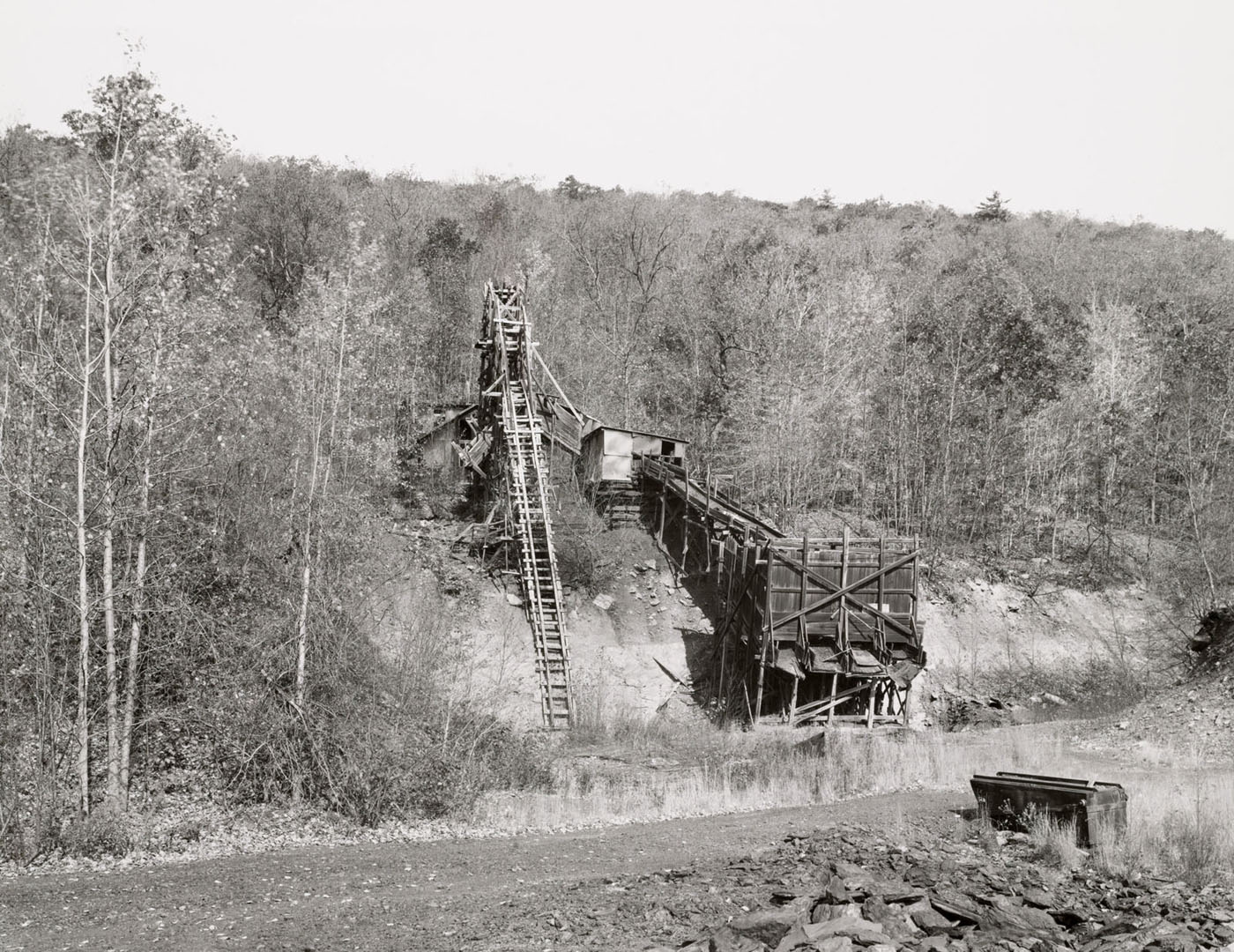
 

Bernd and Hilla Becher (German, active 1959-2007) Bernd Becher (German, 1931-2007) Hilla Becher (German, 1934-2015) 'Coal Mine, Bear Valley, Schuylkill County, Pennsylvania, United States' 1974


Bernd and Hilla Becher (German, active 1959-2007) Bernd Becher (German, 1931-2007) Hilla Becher (German, 1934-2015)
Coal Mine, Bear Valley, Schuylkill County, Pennsylvania, United States
1974
Gelatin silver print
17 5/8 × 23 1/2″ (44.7 × 59.7cm)
Horace W. Goldsmith Fund through Robert B. Menschel
© 2022 Estate of Bernd Becher and Hilla Becher
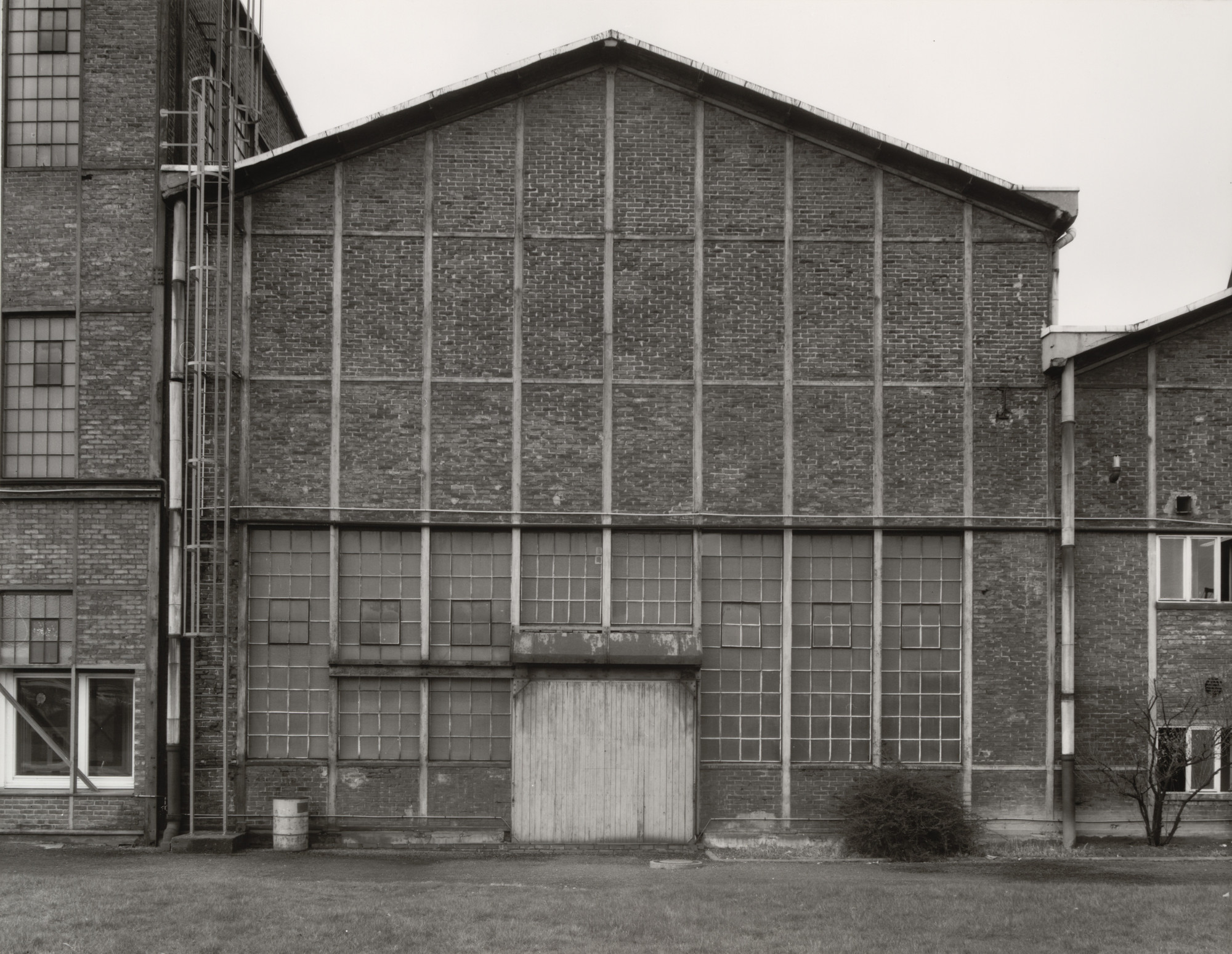
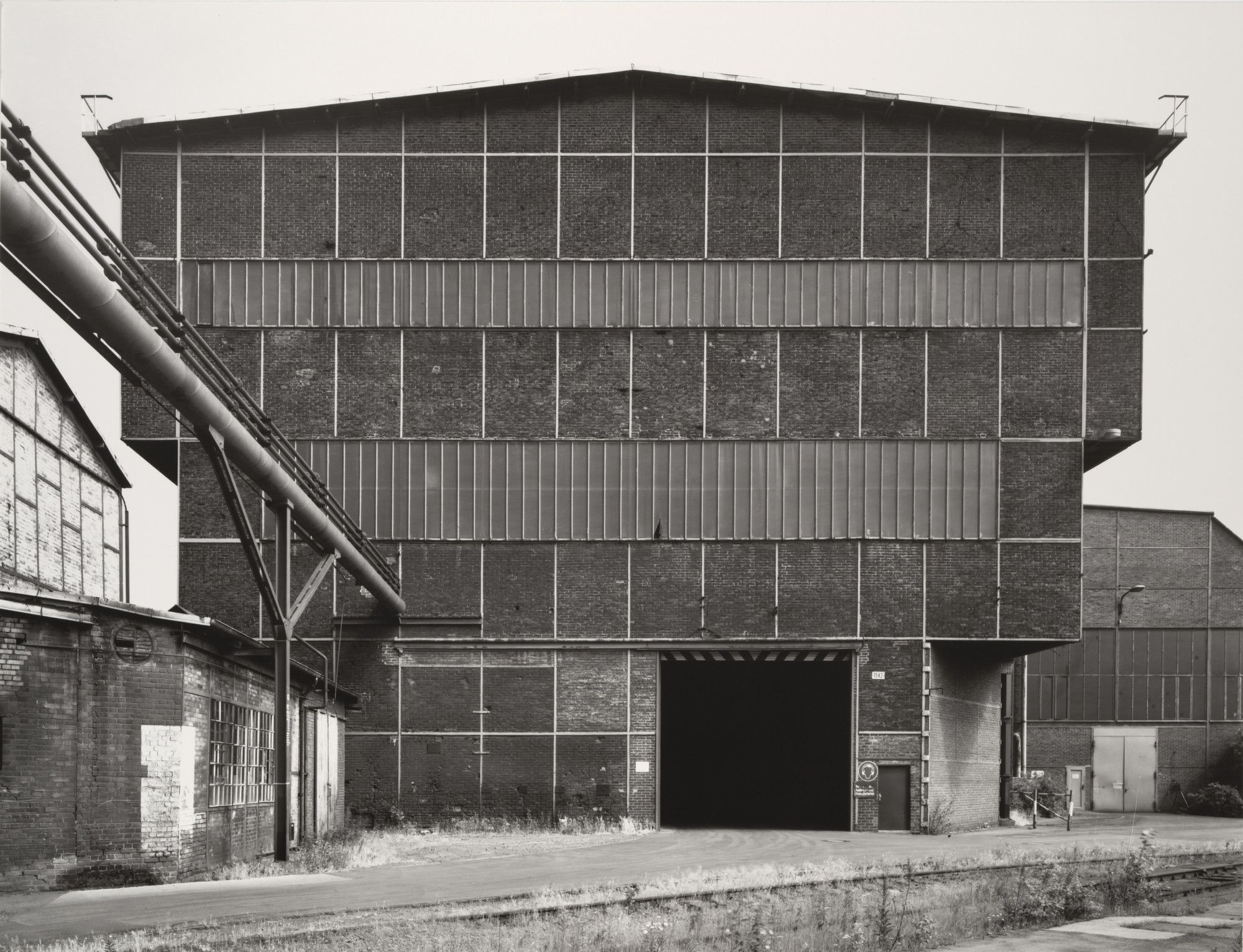
 

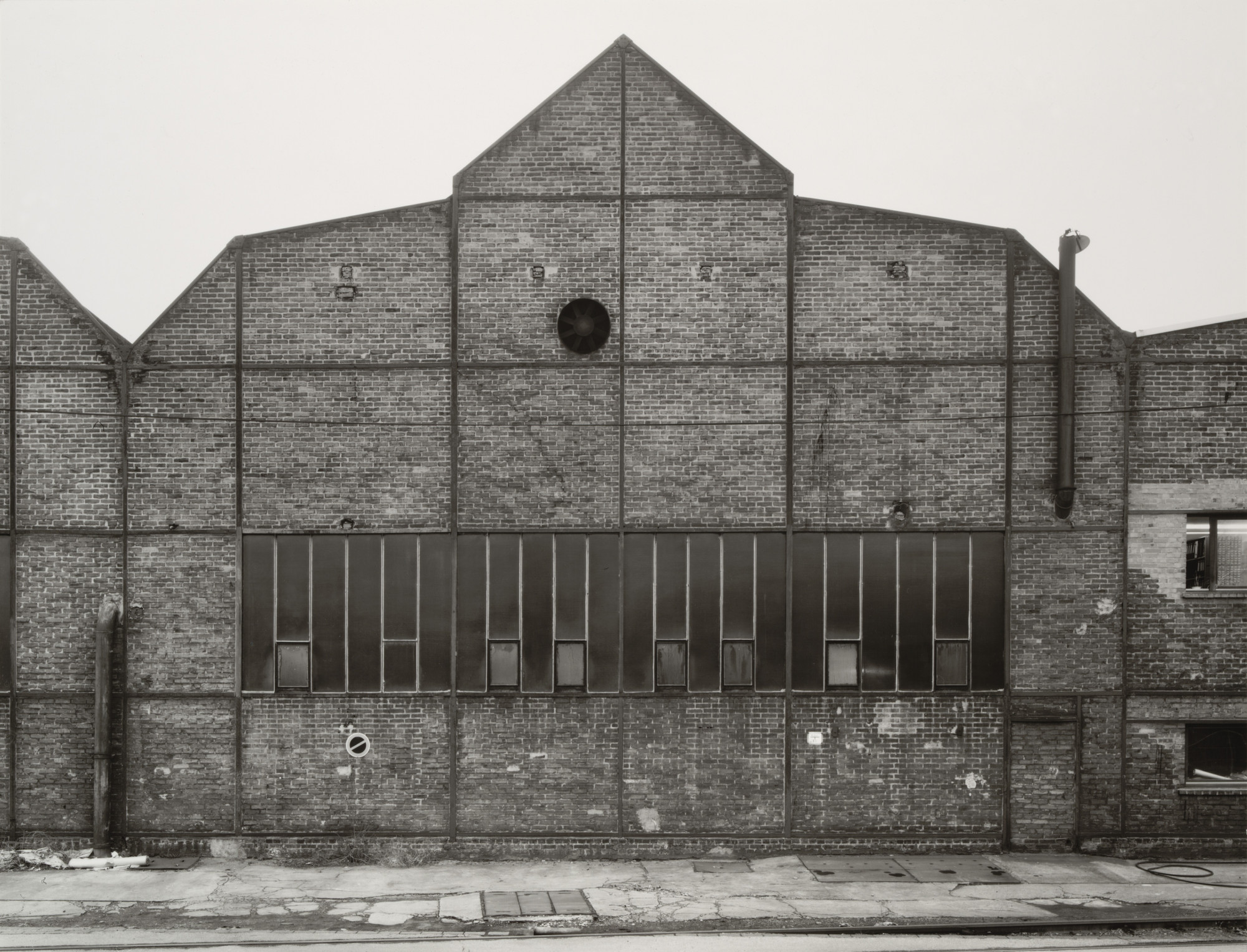
Bernd and Hilla Becher (German, active 1959-2007) Bernd Becher (German, 1931-2007) Hilla Becher (German, 1934-2015) 'Industrial Façades' 1978-1992

Bernd and Hilla Becher (German, active 1959-2007) Bernd Becher (German, 1931-2007) Hilla Becher (German, 1934-2015) 'Industrial Façades' 1978-1992

Bernd and Hilla Becher (German, active 1959-2007) Bernd Becher (German, 1931-2007) Hilla Becher (German, 1934-2015) 'Industrial Façades' 1978-1992

Bernd and Hilla Becher (German, active 1959-2007) Bernd Becher (German, 1931-2007) Hilla Becher (German, 1934-2015) 'Industrial Façades' 1978-1992

Bernd and Hilla Becher (German, active 1959-2007) Bernd Becher (German, 1931-2007) Hilla Becher (German, 1934-2015) 'Industrial Façades' 1978-1992


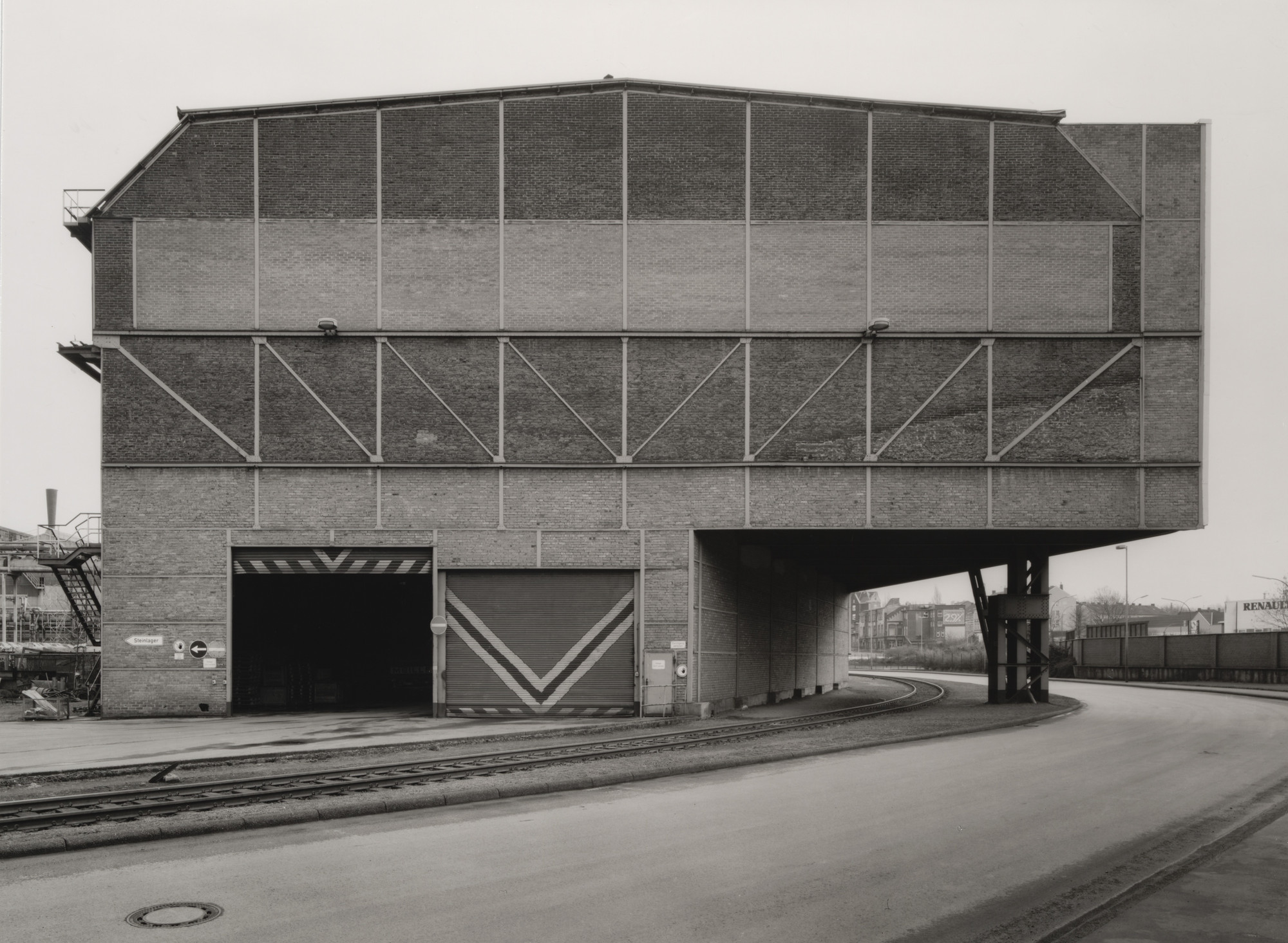
Bernd and Hilla Becher (German, active 1959-2007) Bernd Becher (German, 1931-2007) Hilla Becher (German, 1934-2015)
Industrial Façades (detail)
1978-1992
21 Gelatin silver prints
Each 12 3/16 × 15 15/16″ (31 × 40.5cm)
Acquired through the Gerald S. Elliot Bequest


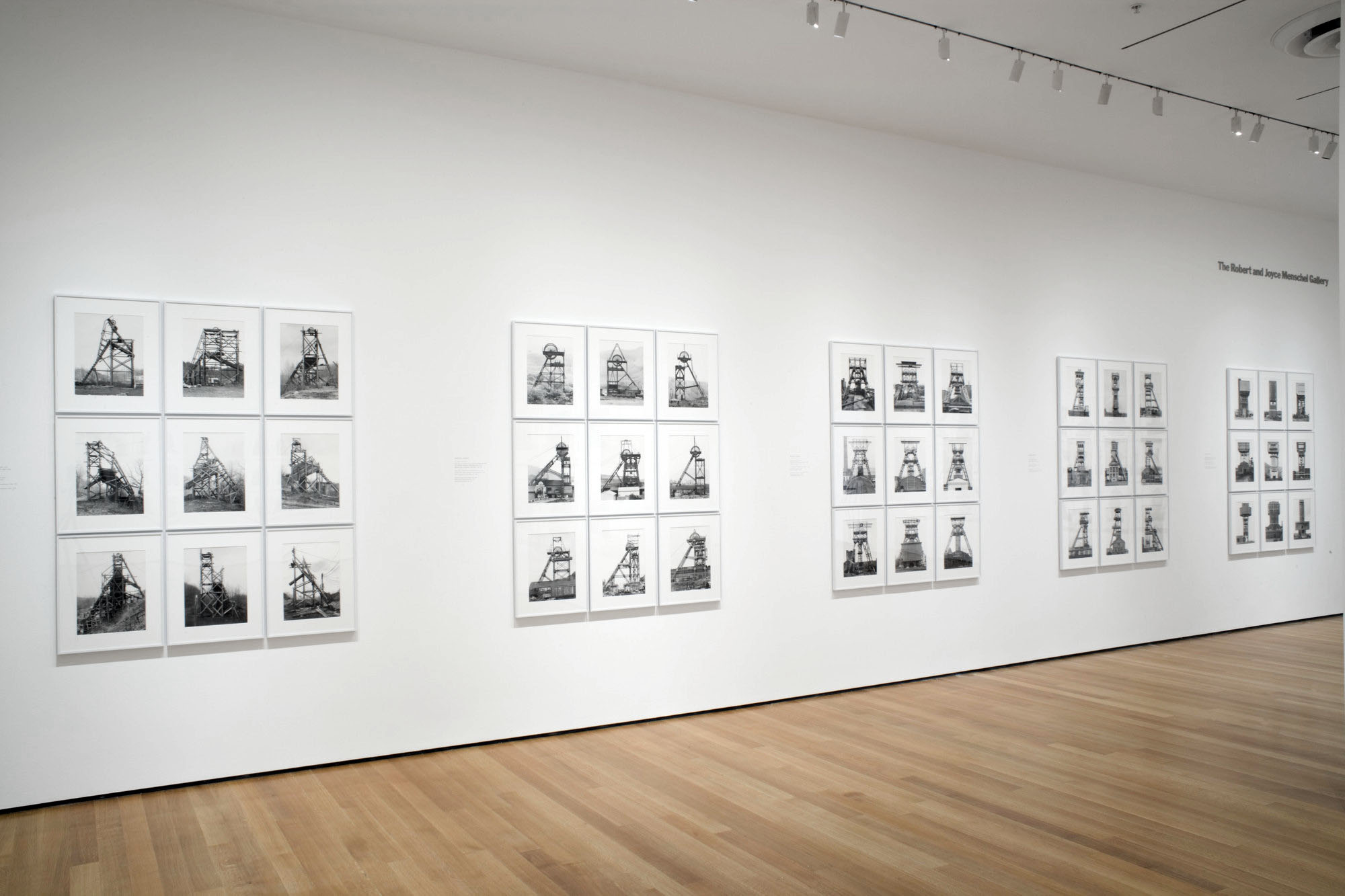
Installation view of the exhibition 'Bernd and Hilla Becher: Landscape/Typology' at the Museum of Modern Art, New York


Installation view of the exhibition Bernd and Hilla Becher: Landscape / Typology at the Museum of Modern Art, New York, May 21, 2008 – August 25, 2008 showing at second left, Winding Towers (1966-1997, below)
Photograph by John Wronn


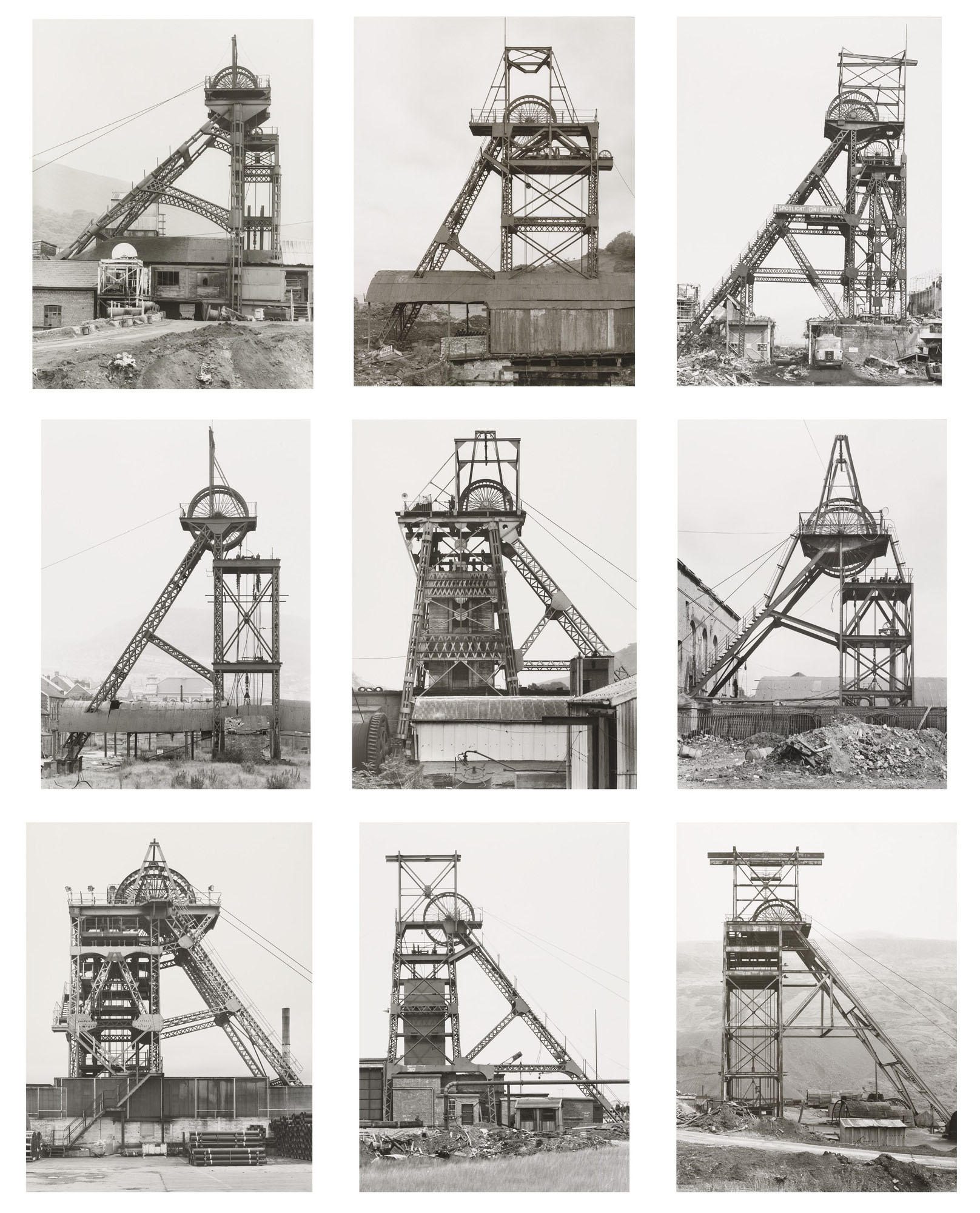
Bernd and Hilla Becher (German, active 1959-2007) Bernd Becher (German, 1931-2007) Hilla Becher (German, 1934-2015) 'Winding Towers' 1966-1997


Bernd and Hilla Becher (German, active 1959-2007) Bernd Becher (German, 1931-2007) Hilla Becher (German, 1934-2015)
Winding Towers
1966-1997
Nine gelatin silver prints
Dimensions
68 1/4 × 56 1/4″ (173.4 × 142.9cm)
Acquired in honour of Marie-Josée Kravis through the generosity of Robert B. Menschel
© 2022 Estate of Bernd Becher and Hilla Becher
 

For more than forty years, the Bechers photographed winding towers, blast furnaces, silos, cooling towers, gas tanks, grain elevators, oil refineries, and the like – all examples of the European and American industrial architecture that had begun to disappear in the transition from an industrial society to an information society. Their works typically present each structure frontally against flat, evenly grey backgrounds. By using large-format cameras and finely grained black-and-white film, they ensured that the motifs they photographed were rendered with a high degree of precision and clarity.

The Bechers organised the images into groupings assembled in grids, classified by function into types. In this strict layout, each structure may easily be compared with the others. The nine separate pictures in Winding Towers together transform the specificity of the individual towers into variations on an ideal form and, conversely, preserve their individual characteristics within a typology.

Publication excerpt from MoMA Highlights: 375 Works from The Museum of Modern Art, New York (New York: The Museum of Modern Art, 2019)
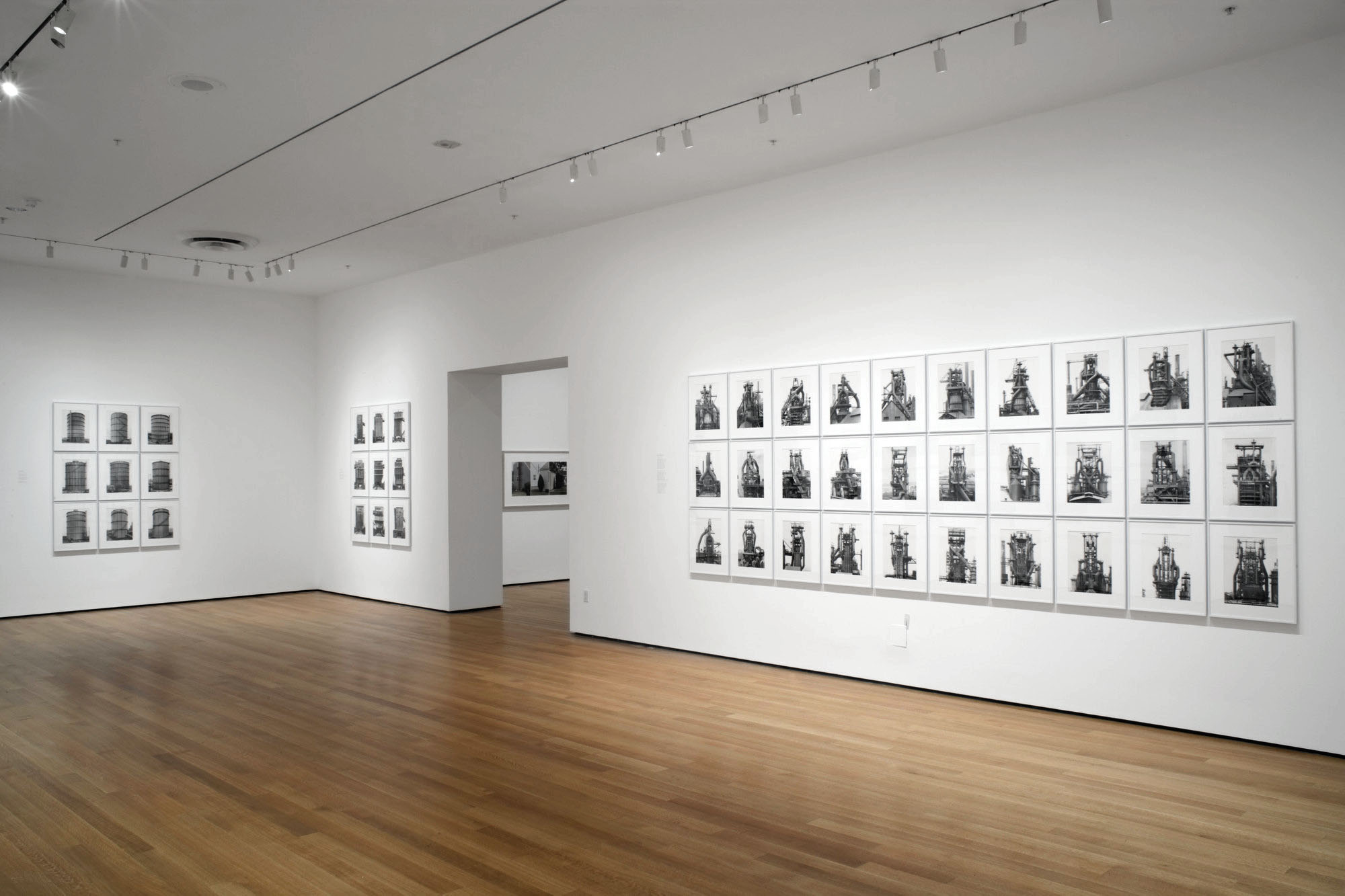
 

Installation view of the exhibition 'Bernd and Hilla Becher: Landscape/Typology' at the Museum of Modern Art, New York


Installation view of the exhibition Bernd and Hilla Becher: Landscape / Typology at the Museum of Modern Art, New York, May 21, 2008 – August 25, 2008
Photograph by John Wronn


Fotomuseum Winterthur
Grüzenstrasse 44 + 45
CH-8400
Winterthur (Zürich)

Opening hours:
Tuesday to Sunday 11am – 6pm
Wednesday 11am – 8pm
Closed on Mondays
Fotomuseum Winterthur website

LIKE ART BLART ON FACEBOOK

Back to top

Exhibition: ‘CLOUD STUDIES – The Scientific View of the Sky’ at Fotomuseum Winterthur, Zurich

Exhibition dates: 26th November 2011 – 12th February 2012


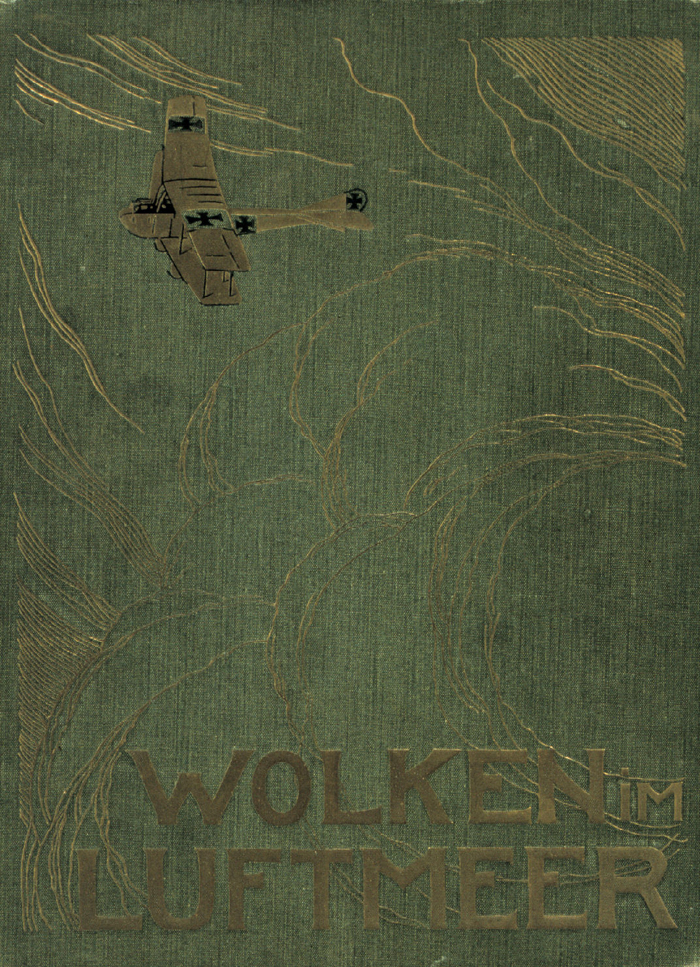
'Wolken im Luftmeer' book cover


Wolken im Luftmeer (Clouds in a sea of air) (cover)
1917


I desire (I feel that is the correct word) to own a copy of the above book. Has anyone got a one for sale?

Please let me know as I would love to own one!

Update: I now own a copy of Wolken im Luftmeer purchased from a lovely person in Germany 🙂

Dr Marcus Bunyan


Many thankx to the Fotomuseum Winterthur, Zurich for allowing me to publish the photographs in the posting. Please click on the photographs for a larger version of the image.


Unknown photographer.
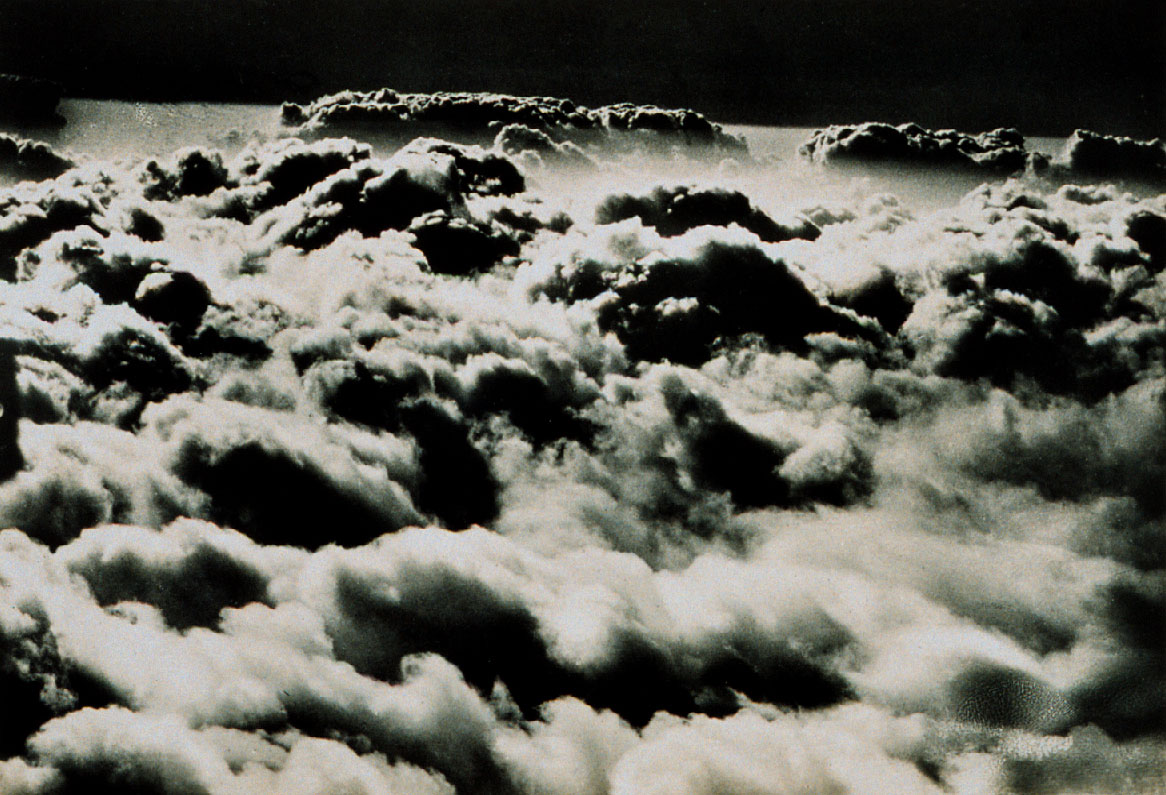
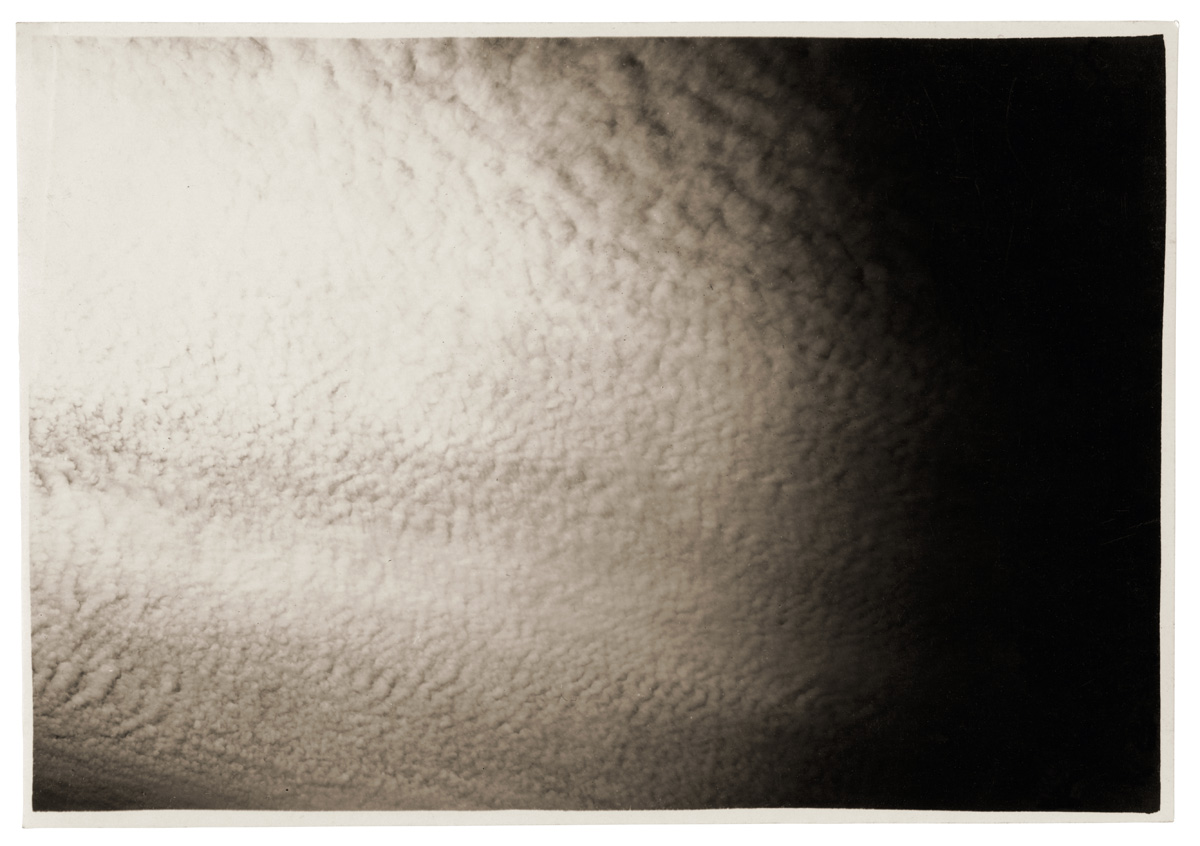
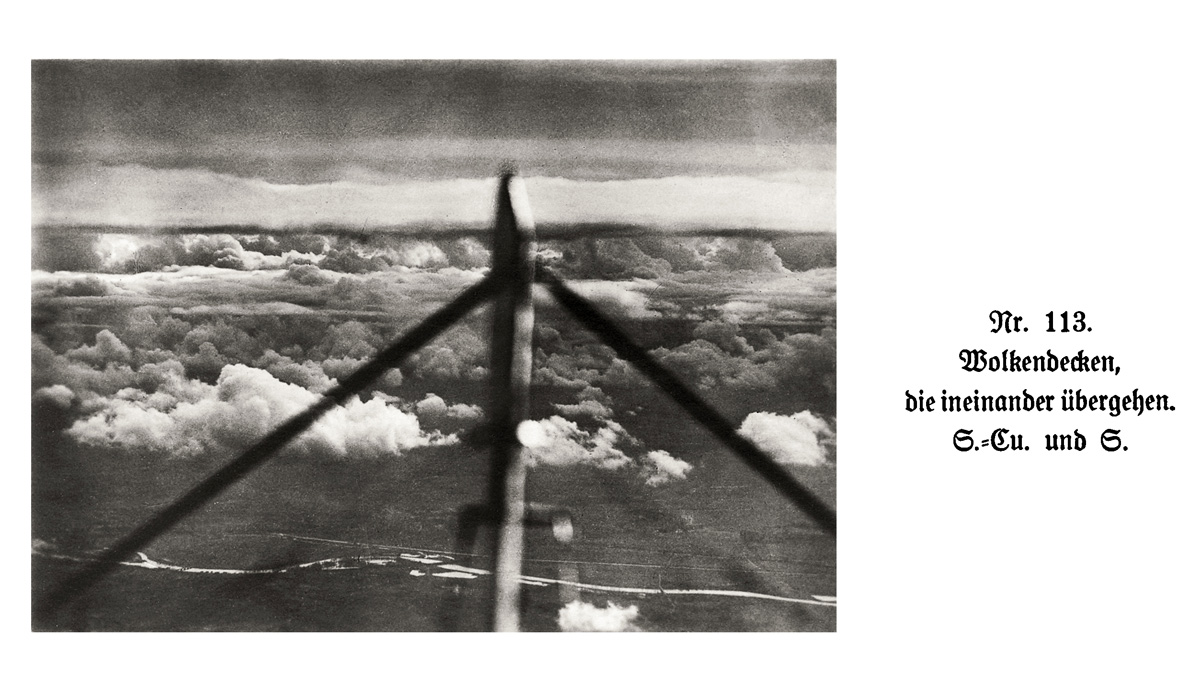
 'Wolkendecken, die ineinander übergehen. S.-Cu. und S., from: Wolken im Luftmeer' (Merging cloud covers. S.-Cu. and S., from: Clouds in a sea of air)
 Photographs taken by German fighter pilots during WW1, Berlin, 1917


Unknown photographer
Wolkendecken, die ineinander übergehen. S.-Cu. und S., from: Wolken im Luftmeer (Merging cloud covers. S.-Cu. and S., from: Clouds in a sea of air)
Photographs taken by German fighter pilots during WW1, Berlin, 1917


Unknown photographer.
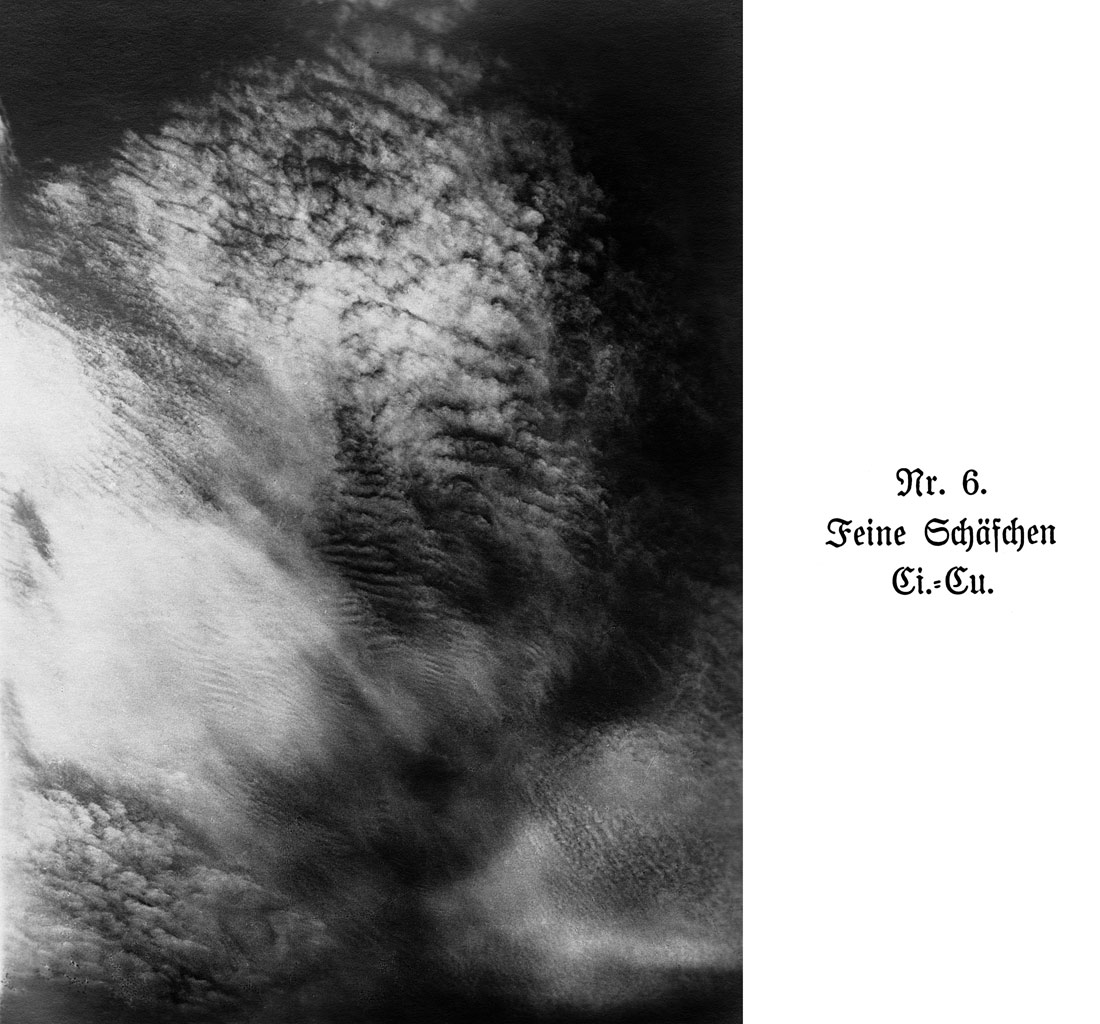
 'Feine Schäfchen. Ci.-Cu, from: Wolken im Luftmeer' (Delicate fluffy clouds. Ci.-Cu, from: Clouds in a sea of air)
 Photographs taken by German fighter pilots during WW1, Berlin, 1917


Unknown photographer
Feine Schäfchen. Ci.-Cu, from: Wolken im Luftmeer (Delicate fluffy clouds. Ci.-Cu, from: Clouds in a sea of air)
Photographs taken by German fighter pilots during WW1, Berlin, 1917


Unknown photographer Flying above a sea of clouds - altostratus from an aircraft (Plate Nr. 103 from: Wolken im Luftmeer / Clouds in a sea of air)


Unknown photographer
Flying above a sea of clouds – altostratus from an aircraft (Plate Nr. 103 from: Wolken im LuftmeerClouds in a sea of air)
Photographs taken by German fighter pilots during WW1, Berlin, 1917


Unknown photographer (Plate Nr. 90 from: Wolken im Luftmeer / Clouds in a sea of air)


Unknown photographer
(Plate Nr. 90 from: Wolken im Luftmeer / Clouds in a sea of air)
Photographs taken by German fighter pilots during WW1, Berlin, 1917


The English pharmacist and meteorologist Luke Howard wrote in 1802 in the preface to his manuscript On the Modification of Clouds: “Clouds are subject to certain distinct modifications, produced by the general causes which affect all the variations of the atmosphere; they are commonly as good visible indicators of the operation of these causes, as is the countenance of the state of a person’s mind or body.” Eighty years later, meteorologists had still not reached a consensus on how to classify, label, and read the forms of clouds. It was during this time that scientists first began using photography to record and measure clouds. With its help, they attempted to gain precise and accurate images that would provide insight on the interplay between clouds and the atmosphere and which could be used to create and convey a classification of cloud forms.

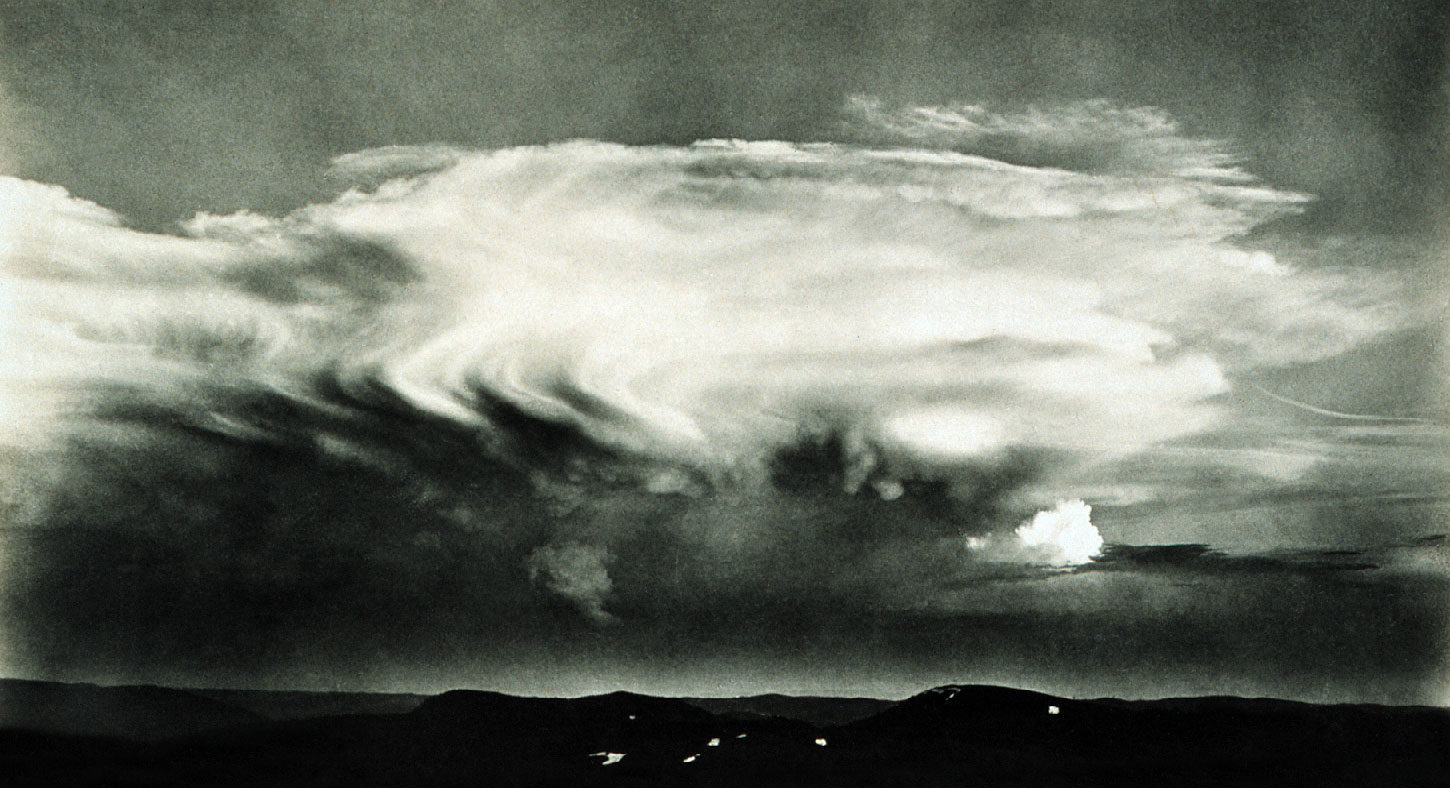
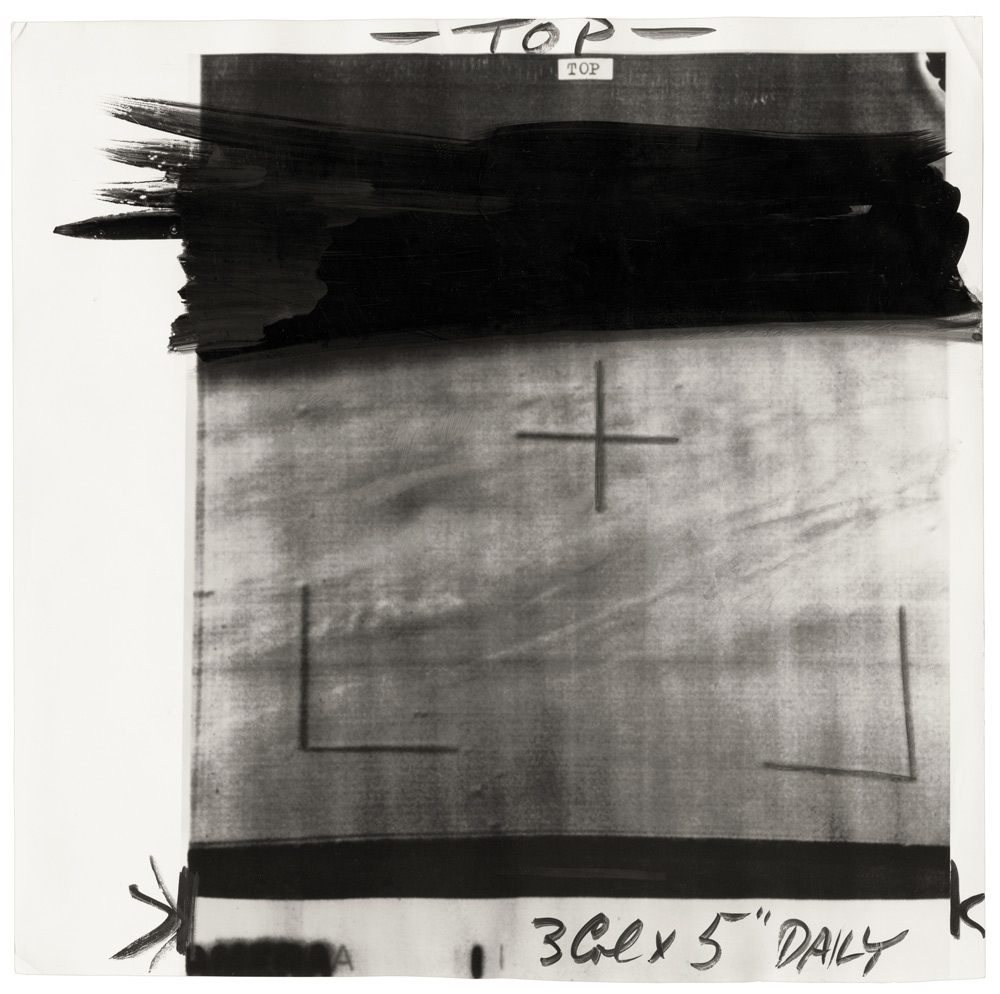
The exhibition CLOUD STUDIES – The Scientific View of the Sky presents six stages of meteorological cloud photography, from its infancy in the 1880s – in Switzerland with the first images by Albert Riggenbach photographed from Mount Säntis – up to the newspaper images in the United States that were captured by the first weather satellites in the 1960s. At the beginning of the 20th century, cloud formations and cloud systems were investigated foremost by the military and led to fundamental insights into interrelated weather situations.

CLOUD STUDIES – The Scientific View of the Sky is a rich collection of photographs, notes, records and atlases from diverse research sources and depicts the origins of contemporary weather forecasting. Each of the six parts of the exhibition represents a different scientific and photographic view of clouds while reflecting on the “history of the gaze” as well as the history of the medium with its various photographic mechanisms and reproductive technologies.

An additional theme running throughout the exhibition is the development of science and its varying ideas about clouds. The protagonists and working methods change over time – from the ambitious, wealthy amateur Ralph Abercromby to the anonymous teams of weather satellite technicians. Whereas Riggenbach still wished to capture images of ideal cloud types, the view of the cloud constellations and their chaotic systems expands with the introduction of film, at the latest, and with the constant recording and measuring capacities of digital cameras, which transmit images to earth, where they are evaluated and publicised.

Conceived by curator Helmut Völter (Leipzig), the exhibition CLOUD STUDIES – The Scientific View of the Sky explores the question as to how all these changes influenced the intentions, concepts, and technical developments associated with images of the clouds. It shows how similar or dissimilar photographs of clouds can be, when photographed according to individual specifications. Ultimately it is left to the viewer to decide if and how scientific cloud photography differs from related and frequently published motifs from the history of art and photography.

Press release from the Fotomuseum Winterthur, Zurich website


Masanao Abe (Japanese, 1891-1966)
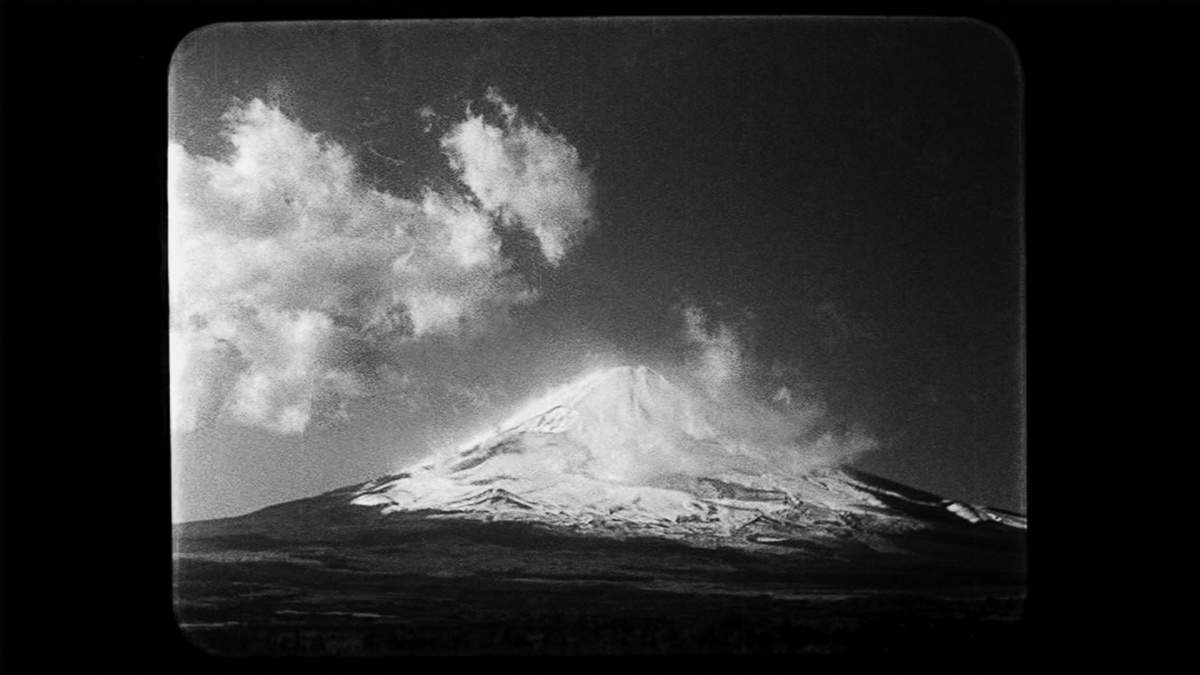
 'Cloud Film No. 116 b' Gotemba, Japan, 1932


Masanao Abe (Japanese, 1891-1966)
Cloud Film No. 116 b
Gotemba, Japan, 1932
Filmstill
© Archive Masanao Abe


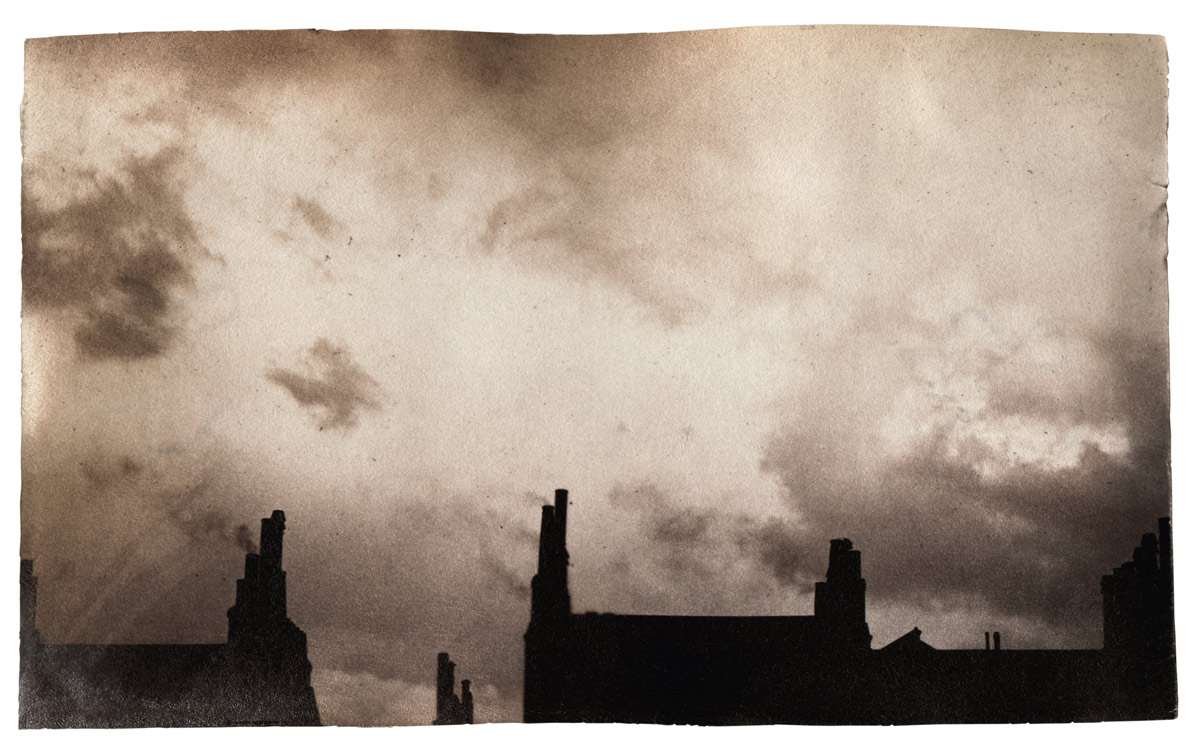
Ralph Abercromby (Scottish, 1842-1897) '
Raggy, Inky Cloud' London, 1884


Ralph Abercromby (Scottish, 1842-1897)
Raggy, Inky Cloud
London, 1884
Gelatin-silver print
© Met Office National Meteorological Archive


Albert Riggenbach (Swiss, 1854-1921) 'Cumulus, Basle' Around 1895


Albert Riggenbach (Swiss, 1854-1921)
Cumulus, Basle
Around 1895
Gelatin silver print
© Swiss National Museum, Zurich


Ferdinand Quénisset (French, 1872-1951) 'Alto-Cumulus et Cirro-Cumulus' Dugny near Paris, 1916


Ferdinand Quénisset (French, 1872-1951)
Alto-Cumulus et Cirro-Cumulus
Dugny near Paris, 1916
Gelatin-silver print
© Société Astronomique de France


'Cloud photo over north midwest United States by Tiros II' 1960


Cloud photo over north midwest United States by Tiros II
1960
Gelatin-silver print
© Collection Günter Karl Bose


Fotomuseum Winterthur
Grüzenstrasse 44 + 45
CH-8400
Winterthur (Zürich)

Opening hours:
Tuesday to Sunday 11am – 6pm
Wednesday 11am – 8pm
Closed on Mondays
Fotomuseum Winterthur website

LIKE ART BLART ON FACEBOOK

Back to top

Exhibition: ‘Alexander Rodchenko – Revolution in Photography’ at Fotomuseum Winterthur, Zurich

Exhibition dates: 28th May – 14th August 2011


Many thankx to Fotomuseum Winterthur for allowing me to publish the photographs in the posting. Please click on the photographs for a larger version of the image.


Alexander Rodchenko (Russian, 1891-1956) 'Boats' 1926


Alexander Rodchenko (Russian, 1891-1956)
Boats
1926
Vintage print on silver gelatin paper
© A. Rodchenko – W. Stepanova Archive


Alexander Rodchenko (Russian, 1891-1956) '
Pine trees, Pushkino', 1927


Alexander Rodchenko (Russian, 1891-1956)
Pine trees, Pushkino
1927
Vintage print on silver gelatin paper
© A. Rodchenko – W. Stepanova Archive


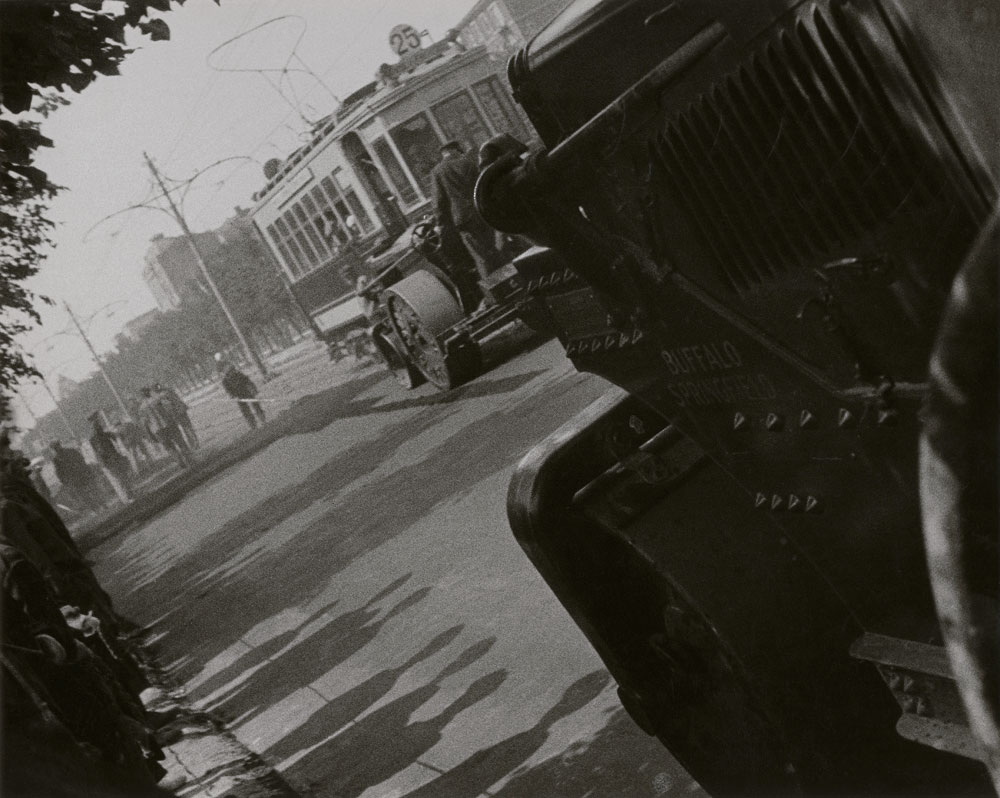
Alexander Rodchenko (Russian, 1891-1956) 'Laying Asphalt, Leningrad Highway' 1929


Alexander Rodchenko (Russian, 1891-1956)
Laying Asphalt, Leningrad Highway
1929
Vintage print on silver gelatin paper
Collection of Moscow House of Photography Museum / Multimedia Art Museum Moscow
© A. Rodchenko – W. Stepanova Archive


Alexander Rodchenko (Russian, 1891-1956) 'Radio listeners' 1929


Alexander Rodchenko (Russian, 1891-1956)
Radio listeners
1929
Vintage print on silver gelatin paper
Collection Museum Moscow House of Photography / Multimedia Art Museum, Moscow
© A. Rodchenko – W. Stepanova Archive


Alexander Rodchenko (Russian, 1891-1956) '
Shukhov Tower' 1929


Alexander Rodchenko (Russian, 1891-1956)
Shukhov Tower
1929
Vintage print on silver gelatin paper
21.6 x 29.5cm
Private collection
© Rodchenko’s Archive /
 2011, ProLitteris, Zurich


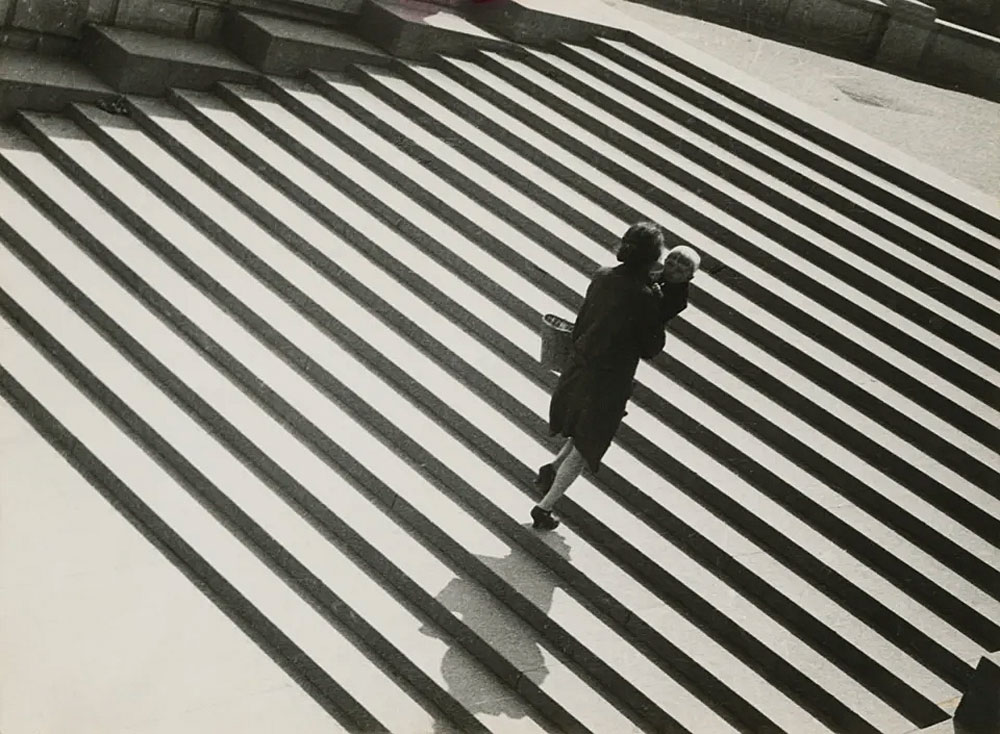
Alexander Rodchenko (Russian, 1891-1956) 'Stairs' 1930


Alexander Rodchenko (Russian, 1891-1956)
Stairs
1930
Vintage print on silver gelatin paper
Collection of Moscow House of Photography Museum / Multimedia Art Museum Moscow
© Rodchenko’s Archive /
 2011, ProLitteris, Zurich


Alexander Rodchenko (Russian, 1891-1956) 'Bus' 1932


Alexander Rodchenko (Russian, 1891-1956)
Bus
1932
Vintage print on silver gelatin paper
© Rodchenko’s Archive /
 2011, ProLitteris, Zurich


Alexander Rodchenko (Russian, 1891-1956) 'Morning exercises, Student Campus in Lefortovo' 1932


Alexander Rodchenko (Russian, 1891-1956)
Morning exercises, Student Campus in Lefortovo
1932
Vintage print on silver gelatin paper
22.8 x 29.5cm
Private collection
© Rodchenko’s Archive /
 2011, ProLitteris, Zurich


Alexander Rodchenko (Russian, 1891-1956) / Warwara Stepanowa (Russian, 1894-1958) 'Young Gliders' 1933 Sketch of a double page for the magazine 'USSR under Construction'


Alexander Rodchenko (Russian, 1891-1956) / Warwara Stepanowa (Russian, 1894-1958)
Young Gliders
1933
Sketch of a double page for the magazine USSR under Construction
Gelatin silver print, Vintage print, Photomontage
41.2 x 60.5cm
Moscow House of Photography Museum
© Rodchenko’s Archive / 
2011, ProLitteris, Zurich


Modernism made photography what it is. It gave it self-confidence and made it trust itself. Self confident because photography in the 1920s recognised and developed its own possibilities and qualities: a probing vision of the world, an investigation of the visible reality from various perspectives, direct, clear, from above, below, behind, from the front, but without references to the pool of art history. Russian Constructivism is an important part of this great shift. In 1924, Alexander Rodchenko (1891-1956), already known as a painter, sculptor, and designer, conquered traditional photography with the slogan “Our duty is to experiment!” This resulted in a reconsideration of the concept and role of photography. Conceptual work entered the stage. Instead of being an illustration of reality, photography became a means to visually represent intellectual constructs, and the artist became an “artist-engineer”.

Yet Rodchenko was much more than a dynamic image maker. He wrote manifestos to accompany almost every one of his picture series, tirelessly promoting his concept of Russian Constructivism to the world. Destabilising diagonals, harsh contrasts, tilted views, and picture and text collages are design elements found in his photographs. To this day they form, together with his texts, a unique document of the indefatigable artistic energy that is also manifest in Alexander Rodchenko’s posters, invitation cards, and publications.

At the beginning of the 1920s, Rodchenko worked together with his friend the poet Vladimir Mayakovsky on bold, photographic illustrations for Mayakovsky’s volume of poems Pro Eto. Rodchenko soon became coeditor, with Mayakovsky, of the magazine LEV (Left Front of the Arts), and was responsible for its cover designs in the years 1923-24. He designed posters for Sergei Eisenstein’s film Battleship Potemkin and was commissioned to design the Soviet pavilion to the world exhibition in Paris in 1925. The experimental and innovative “new vision” was celebrated across Europe. Rodchencko took part in the pioneering exhibition Film und Foto (Film and Photo) of the Stuttgart Werkbund in 1929. Yet already at the beginning of the 1930s, the mood had shifted in Russia; photography was increasingly being instrumentalised by the state in the interests of socialism. Rodchenko was repeatedly forced to defend himself against accusations of formalism made over his photograph Pioneer with Trumpet, and, in the end, he was expelled from the October artists group, which he himself had cofounded in 1928, for refusing to adapt his style of working to the new times.

Press release from the Fotomuseum Winterthur website


Alexander Rodchenko (Russian, 1891-1956) 'Lilia Brik. Portrait for the poster "Knigi"' 1924


Alexander Rodchenko (Russian, 1891-1956)
Lilia Brik. Portrait for the poster “Knigi”
1924
Vintage print
Collection of Moscow House of Photography Museum / Multimedia Art Museum Moscow
© Rodchenko’s Archive /
 2011, ProLitteris, Zurich


Alexander Rodchenko (Russian, 1891-1956) '
Caricature Showing Osip Brik, variant of a cover for LEF Magazine' 1924


Alexander Rodchenko (Russian, 1891-1956)

Caricature Showing Osip Brik, variant of a cover for LEF Magazine
1924
Gelatin silver print
24.2 x 17.9cm
Private collection
© Rodchenko’s Archive /
 2011, ProLitteris, Zurich


Alexander Rodchenko (Russian, 1891-1956) 'Portrait of Mother' 1924


Alexander Rodchenko (Russian, 1891-1956)
Portrait of Mother
1924
Vintage print on silver gelatin paper
22.7 x 16.5cm
Private collection
© Rodchenko’s Archive /
 2011, ProLitteris, Zurich


Alexander Rodchenko (Russian, 1891-1956) 'Vladimir Mayakovsky' 1924


Alexander Rodchenko (Russian, 1891-1956)
Vladimir Mayakovsky
1924
Vintage print on silver gelatin paper
© Rodchenko’s Archive /
 2011, ProLitteris, Zurich


Alexander Rodchenko (Russian, 1891-1956) 'Mosselprom Building' 1926


Alexander Rodchenko (Russian, 1891-1956)
Mosselprom Building
1926
Vintage print on silver gelatin paper
29 x 23.3cm
Private collection
© Rodchenko’s Archive /
 2011, ProLitteris, Zurich


Alexander Rodchenko (Russian, 1891-1956) 'Varvara Stepanova' 1928


Alexander Rodchenko (Russian, 1891-1956)
Varvara Stepanova
1928
Vintage print on silver gelatin paper
Collection of Moscow House of Photography Museum / Multimedia Art Museum Moscow
© Rodchenko’s Archive /
 2011, ProLitteris, Zurich


Varvara Fyodorovna Stepanova (1894-1958) was a Russian artist. With her husband Alexander Rodchenko, she was associated with the Constructivist branch of the Russian avant-garde, which rejected aesthetic values in favour of revolutionary ones. Her activities extended into propaganda, poetry, stage scenery and textile designs.


Alexander Rodchenko (Russian, 1891-1956) 'Gears' 1929


Alexander Rodchenko (Russian, 1891-1956)
Gears
1929
Vintage print on silver gelatin paper
28.8 x 23cm
Private collection
© Rodchenko’s Archive /
 2011, ProLitteris, Zurich


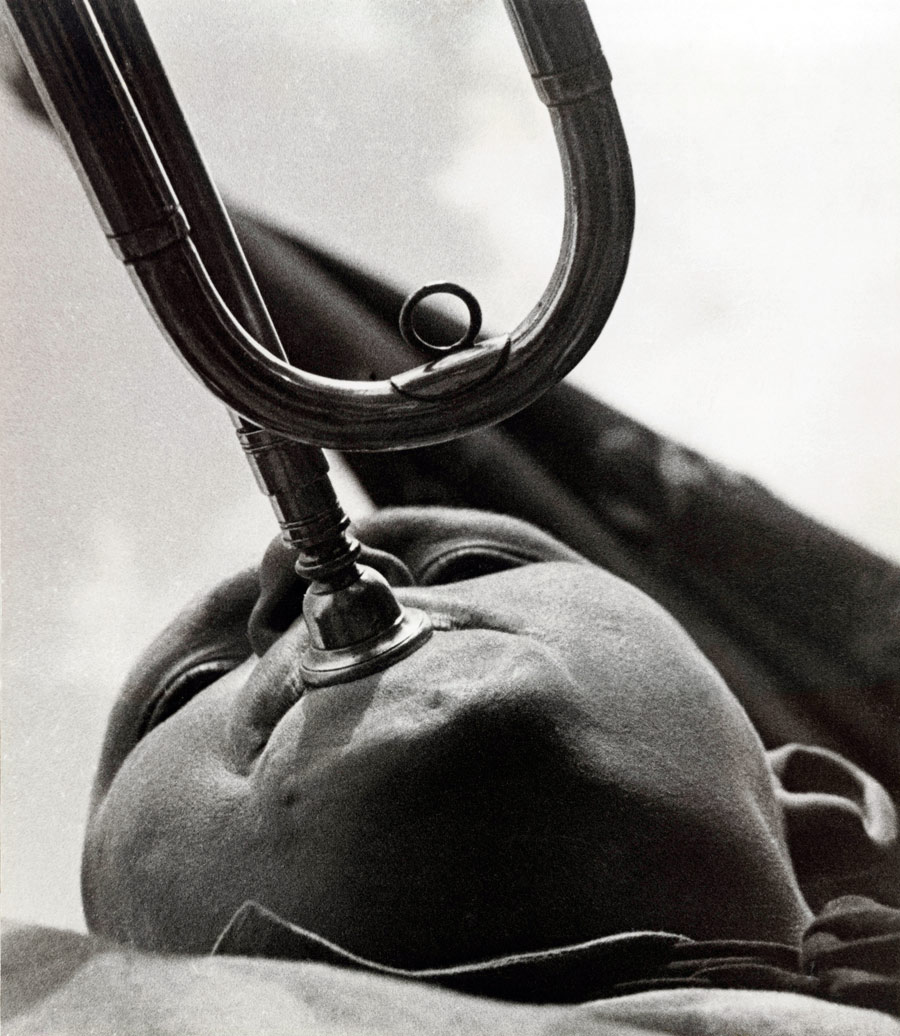
Alexander Rodchenko (Russian, 1891-1956) 'Pioneer with a trumpet' 1930


Alexander Rodchenko (Russian, 1891-1956)
Pioneer with a trumpet
1930
Vintage print on silver gelatin paper
44.5 x 38.5cm
Moscow House of Photography Museum
© Rodchenko’s Archive / 
2011, ProLitteris, Zurich


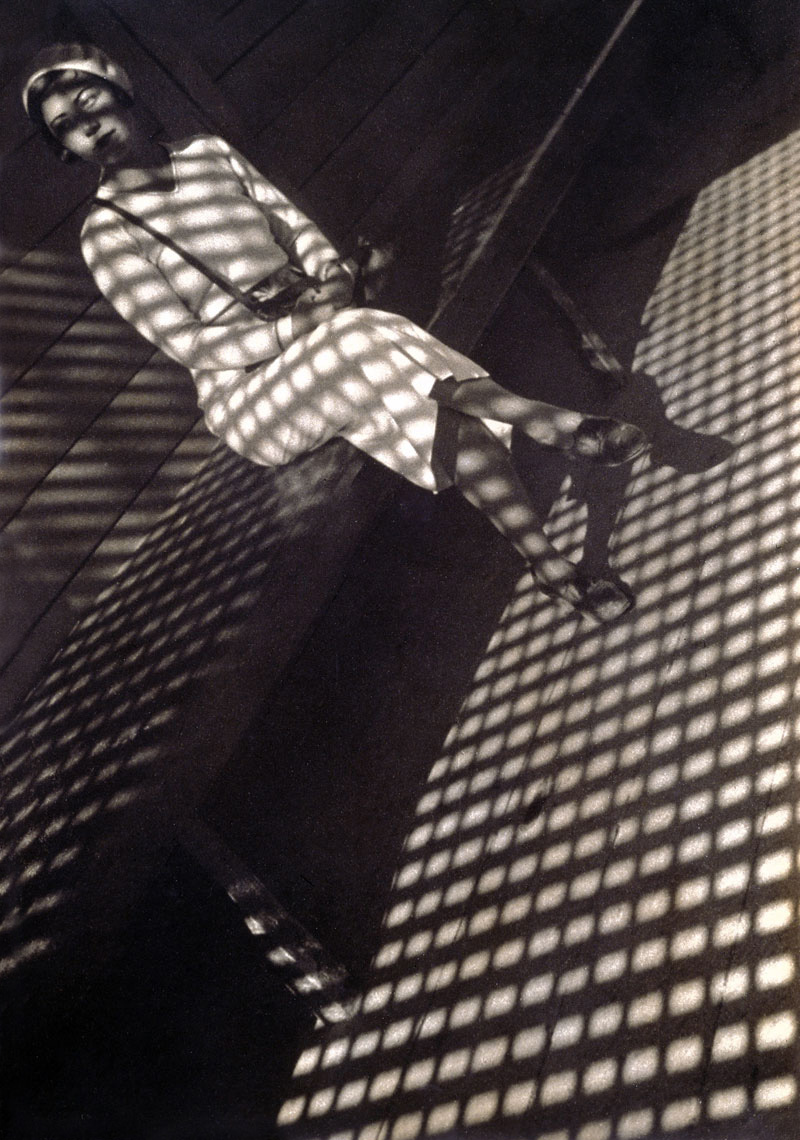
Alexander Rodchenko (Russian, 1891-1956) 'Girl with Leica' 1934


Alexander Rodchenko (Russian, 1891-1956)
Girl with a Leica
1934
Vintage print on silver gelatin paper
45 x 29.5cm
Private collection
© Rodchenko’s Archive / 
2011, ProLitteris, Zurich


Fotomuseum Winterthur
Grüzenstrasse 44 + 45
CH-8400
Winterthur (Zürich)

Opening hours:
Tuesday to Sunday 11am – 6pm
Wednesday 11am – 8pm
Closed on Mondays
Fotomuseum Winterthur website

LIKE ART BLART ON FACEBOOK

Back to top

Exhibition: ‘Ai Weiwei – Interlacing’ at Fotomuseum Winterthur, Zurich

Exhibition dates: 28th May – 21st August 2011


Many thankx to Fotomuseum Winterthur for allowing me to publish the text and the photographs in the posting. Please click on the photographs for another version of the image.


Ai Weiwei (Chinese, b. 1957) '
Dropping a Han-Dynasty Urn' 1995


Ai Weiwei (Chinese, b. 1957)
Dropping a Han-Dynasty Urn
1995
Triptych
C-prints
150 x 166cm each
© Ai Weiwei


Ai Weiwei (Chinese, b. 1957) '
Profile of Duchamp, Sunflower Seeds' 1983


Ai Weiwei (Chinese, b. 1957)
Profile of Duchamp, Sunflower Seeds
1983
From New York Photographs, 1983-1993
C-print
20 x 28.5cm
© Ai Weiwei


Ai Weiwei (Chinese, b. 1957) 'June 1994' 1994


Ai Weiwei (Chinese, b. 1957)
June 1994
1994
C-print
117.5 x 152cm
© Ai Weiwei


Ai Weiwei – Interlacing is the first major exhibition of photographs and videos by Ai Weiwei. It foregrounds Ai Weiwei the communicator – the documenting, analysing, interweaving artist who communicates via many channels. Ai Weiwei already used photography in his New York years, but especially since his return to Beijing, he has incessantly documented the everyday urban and social realities in China, discussing it over blogs and Twitter. Photographs of radical urban transformation, of the search for earthquake victims, and the destruction of his Shanghai studio are presented together with his art photography projects, the Documenta project Fairytale, the countless blog and cell phone photographs. A comprehensive book accompanies this exhibition.

Ai Weiwei is a generalist, a conceptual, socially critical artist dedicated to creating friction with, and forming reality. As an architect, conceptual artist, sculptor, photographer, blogger, Twitterer, interview artist, and cultural critic, he is a sensitive observer of current topics and social problems: a great communicator and networker who brings life into art and art into life.

Ai Weiwei was born in 1957, the son of the poet Ai Qing. Following his studies at the Beijing Film Academy, he cofounded in 1978 the artists’ collective The Stars, which rejected Social Realism and advocated artistic individualism and experimentation in art. In 1981 Ai Weiwei went to the USA and 1983 to New York, where he studied at Parsons School for Design in the class of the painter Sean Scully. In New York he discovered artists like Allen Ginsberg, Jasper Johns, Andy Warhol, and, above all, Marcel Duchamp. Duchamp is important for him because he understood art as part of life. At this time, Ai Weiwei produced his first ready-mades and thousands of photographs documenting his life and friends in the Chinese art community in New York. After his father fell ill, he returned to Beijing in 1993. In 1997 he cofounded the China Art Archives & Warehouse (CAAW) and began from then on to deal with architecture as well. Ai Weiwei opened his own studio in 1999 in Caochangdi and set up the architecture studio FAKE Design in 2003. In the same year, he played a major role, together with the Swiss architects Herzog & de Meuron, in the construction of the Olympic stadium, the so-called Bird’s Nest. Following its completion, it became a new symbol of Beijing. In 2007, 1001 Chinese visitors traveled, at his instigation, to Documenta 12 in Kassel (Fairytale). In 2010 the world marvelled at his large, yet formally minimal carpet of millions of hand-painted porcelain sunflower seeds at the Tate Modern.

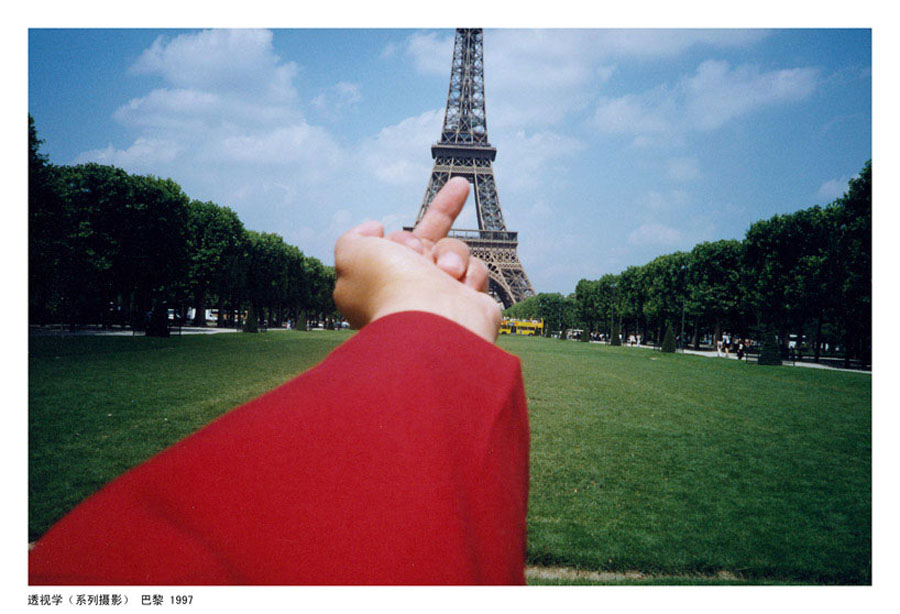
Ai Weiwei deliberately confronts social conditions in China and in the world: Through photographically documenting the architectonic clear-cutting of Beijing in the name of progress, with provocative measurements of the world, his personal positionings in the Study of Perspective, with radical cuts in the past (made to found pieces of furniture) in order to create possibilities for the present and the future, and with his tens of thousands of blog entries, blog photographs, and cell phone photographs (along with many other artistic declarations). This first, large exhibition and book project of his photography and videos focuses on Ai Weiwei’s diversity, complexity, and connectedness, his “interlacing” and “networking” with hundreds of photographs, blogs, and explanatory essays.

The artist as network, as company, as activist, as political voice, as social container, as agent provocateur: at every moment – in the past, present, and future – every society on Earth needs outstanding unique figures like Ai Weiwei in order to stay awake, to be shaken awake, to be made to recognise their own obstinacy, and to be able to avoid tunnel vision. We are therefore deeply saddened that the completion of this book coincides with Ai Weiwei’s arrest which we deplore. We are extremely concerned about the artist. And we wish that this great thinker, designer, and fighter will remain a resistant public voice for all of us – and especially for China.

The exhibition and book were developed in close collaboration with Ai Weiwei. For reasons already mentioned, however, he was unable to be involved in completing the book. We continue to hope that he will be personally present for the installation of the exhibition.

Press release from the Fotomuseum Winterthur website [Online] Cited 06/07/2011 no longer available online


Ai Weiwei (Chinese, b. 1957) 'Provisional Landscapes' 2002-2008


Ai Weiwei (Chinese, b. 1957)
Provisional Landscapes
2002-2008
Diptych
Inkjet prints
66 x 84cm each
© Ai Weiwei


Ai Weiwei (Chinese, b. 1957) '10/29/04, Hebei Carpet Factory, China'
 c. 2005-2009


Ai Weiwei (Chinese, b. 1957)
10/29/04, Hebei Carpet Factory, China
c. 2005-2009
From Blog Photographs
© Ai Weiwei


Ai Weiwei (Chinese, b. 1957) '6/1/08, Wenchuan, China'
 c. 2005-2009


Ai Weiwei (Chinese, b. 1957)
6/1/08, Wenchuan, China
c. 2005-2009
From Blog Photographs
© Ai Weiwei


Ai Weiwei (Chinese, b. 1957) 'Study of Perspective - Tiananmen' 1995-2010


Ai Weiwei (Chinese, b. 1957)
Study of Perspective – Tiananmen
1995-2010
C-print
32.5 x 43.5cm
© Ai Weiwei


Ai Weiwei (Chinese, b. 1957) 'Study of Perspective - The Eiffel Tower' 1995-2010


Ai Weiwei (Chinese, b. 1957)
Study of Perspective – The Eiffel Tower
1995-2010
C-print
32.5 x 43.5cm
© Ai Weiwei


Ai Weiwei (Chinese, b. 1957) from 'Bird's Nest' 2005-2008


Ai Weiwei (Chinese, b. 1957)
From Bird’s Nest
2005-2008
C-print
46.5 x 60cm
© Ai Weiwei


Ai Weiwei (Chinese, b. 1957) 'Fairytale 1' 2007


Ai Weiwei (Chinese, b. 1957)
Fairytale 1
2007
From Fairytale
Inkjet-print
92.5 x 92.5cm
© Ai Weiwei


Ai Weiwei (Chinese, b. 1957)
 'Ai Weiwei. Williamsburg, Brooklyn' 1983


Ai Weiwei (Chinese, b. 1957)
Ai Weiwei. Williamsburg, Brooklyn
1983
From New York Photographs 1983-1993
C-print
29.2 x 20cm
© Ai Weiwei


Fotomuseum Winterthur
Grüzenstrasse 44 + 45
CH-8400
Winterthur (Zürich)

Opening hours:
Tuesday – Sunday 11am – 6pm
Wednesday 11am – 8pm
Monday closed

Fotomuseum Winterthur website

LIKE ART BLART ON FACEBOOK

Back to top

Exhibition: ‘André Kertész – Retrospective’ at Fotomuseum Winterthur, Zurich

Exhibition dates: 26th February – 15th May 2011


Many thankx to the Fotomuseum Winterthur, Zurich for allowing me to publish the photographs in the posting. Please click on the photographs for a larger version of the image.


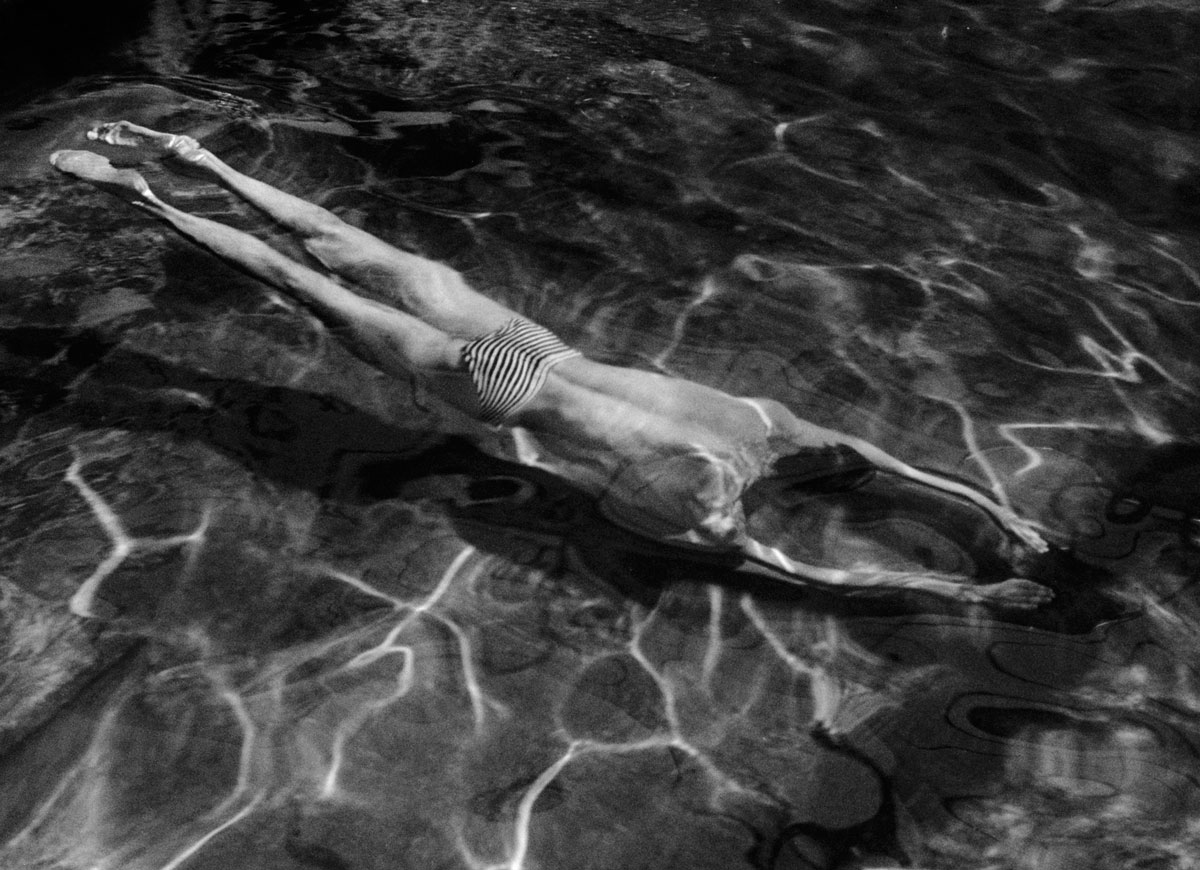
André Kertész (Hungarian, 1894-1985) 'Underwater Swimmer, Esztergom' 1917


André Kertész (Hungarian, 1894-1985)
Underwater Swimmer, Esztergom
1917
Gelatin silver print


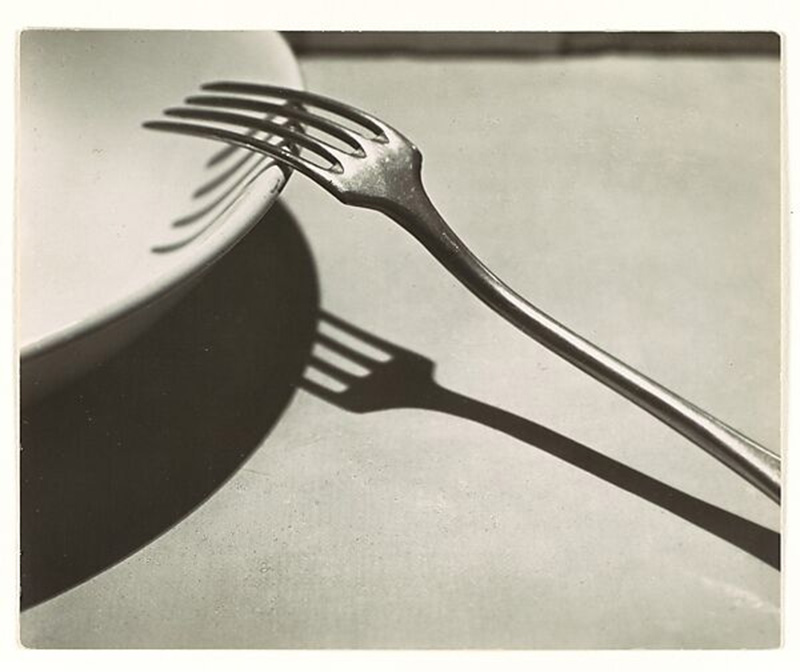
André Kertész (American born Hungary, 1894-1985) 'Fork' 1928


André Kertész (Hungarian, 1894-1985)
Fork
1928
Gelatin silver print


André Kertész. 
'Elizabeth and I' 1933


André Kertész (Hungarian, 1894-1985)

Elizabeth and I
1933, printed in the 1960s
Gelatin silver print
25.3 x 17.5cm
Collection of Sarah Morthland, New York


André Kertész.
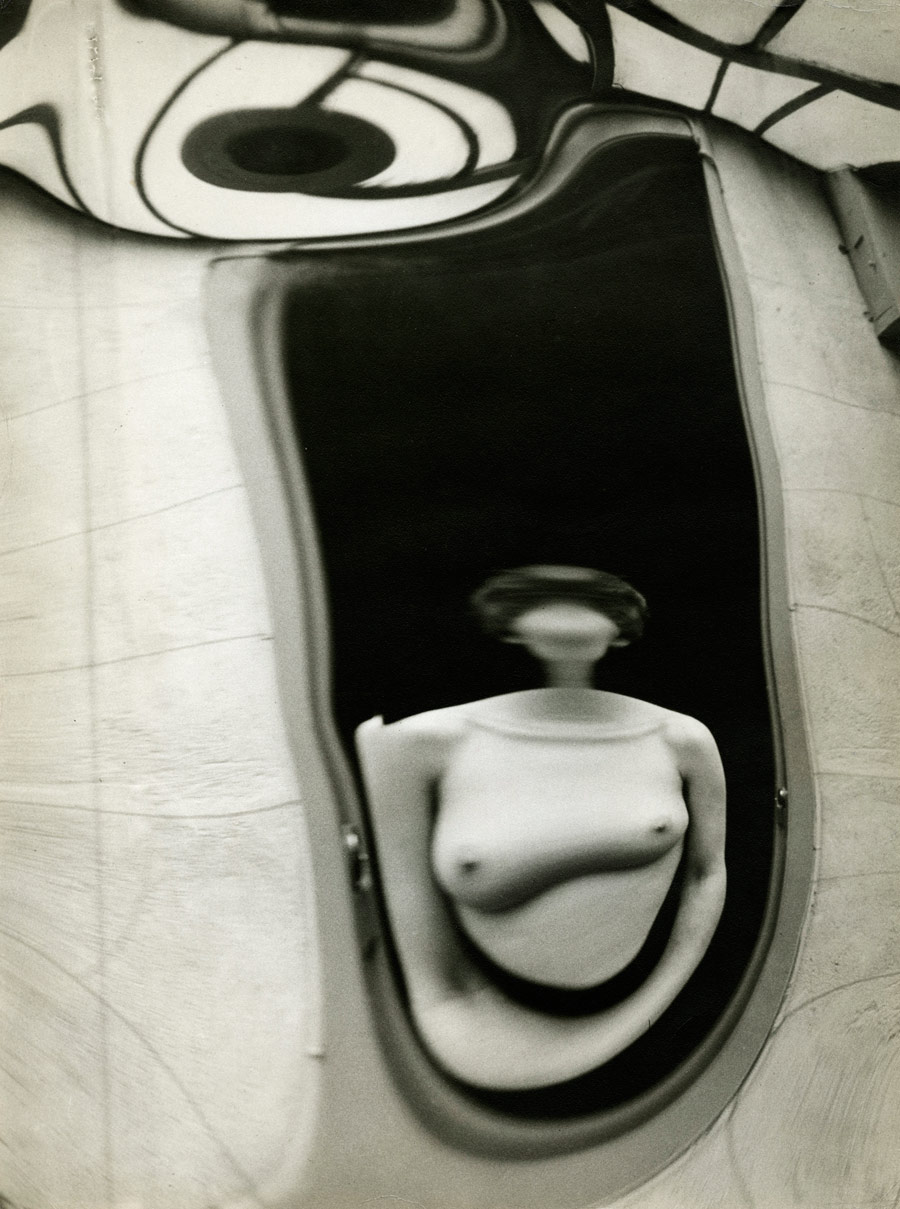
 'Distortion No. 200' 1933


André Kertész (Hungarian, 1894-1985)
Distortion No. 200
1933, printed c. 1938/1939
Gelatin silver print
34.4 x 25.7cm
Courtesy of Klever Holdings


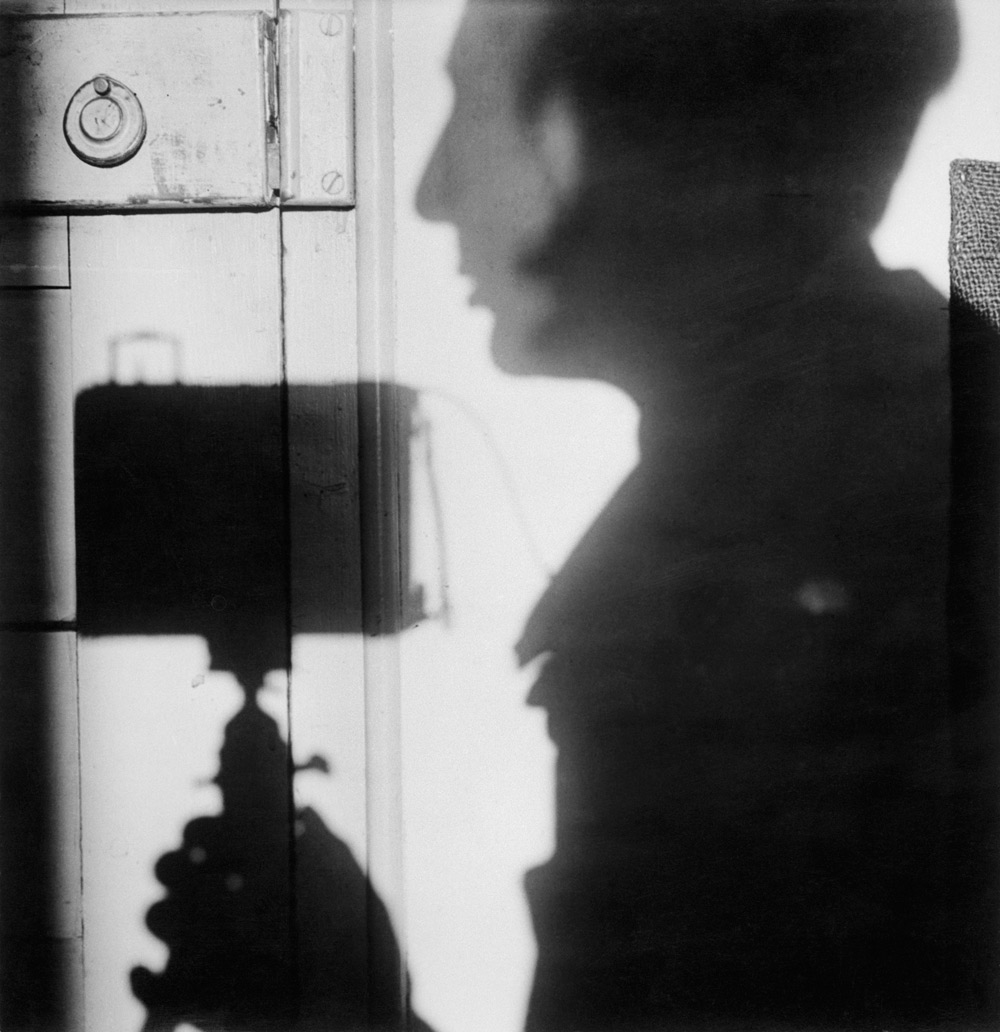
André Kertész is possibly the most photographic of all photographers: he sought out the play of light and shadow; he liked the concentration and overlapping of forms, of moments; and in the everyday, in banality, he recognised poetry, beauty, and even, for all his innate modesty, the “sublime.” Kertész is a photographic poet and seer, for whom it was long difficult to break into the market precisely because of his rich, chiseled iconography.

André Kertész (Budapest 1894 – 1985 New York) supported Brassaï, inspired Henri Cartier-Bresson, is considered one of the founders of photojournalism, and introduced stylistic elements into photography that can still be found in works by contemporary photographers. At heart, he was a photographer and artist in equal measure, poetic, probing, vital, independent in thought and actions. In a word, he was a master of photography, whose long period of production was very influential. Nevertheless, it took a remarkably long time for his special abilities, his poetic experimental version of photography, to find recognition in the history of photography. The three locations where he lived (Budapest, Paris, New York), his freedom, his form of “contemplative photography,” as Roland Barthes characterised it, made quick reception and categorisation of his work impossible. Today, more than twenty-five years after his death, he is recognised and considered to be a central photographer of the twentieth century who crucially enriched the language of photography.

With around 250 photographs and countless magazine contributions, the retrospective at Fotomuseum Winterthur on view until May 15, 2011, allows a comprehensive view of his work. The chronological order and the major themes show what it is that makes up his photographic practice: his unique methods (in photographic postcards, in distortions), his editorial engagement (for example, in the volume Paris vu par Kertész, 1934), his passion for experimentation (with light and shadow), and the evocation of emotions, above all of melancholy and loneliness. Periods that have remained neglected or unexplored until today (his life as a soldier from 1914-1918, for example) are reassessed, and juxtaposed with the development of photojournalism in Paris and the distribution of his pictures in the media, with which he earned his living.

André Kertész liked to characterise himself as an “eternal amateur.” But what a virtuosic “amateur” he was; what virtuosic visual language he employed his entire life to capture the poetry of the everyday! His photographic production was closely connected to his life and psyche. Even when he seemed to be documenting something, he let himself be guided almost exclusively by feeling, by instinct, from his soul. This resulted in a body of work that he liked to compare to a “visual journal”, and about which he said, “I have never just ‘made photos’. I express myself photographically.”

Text from the Fotomuseum Winterthur website


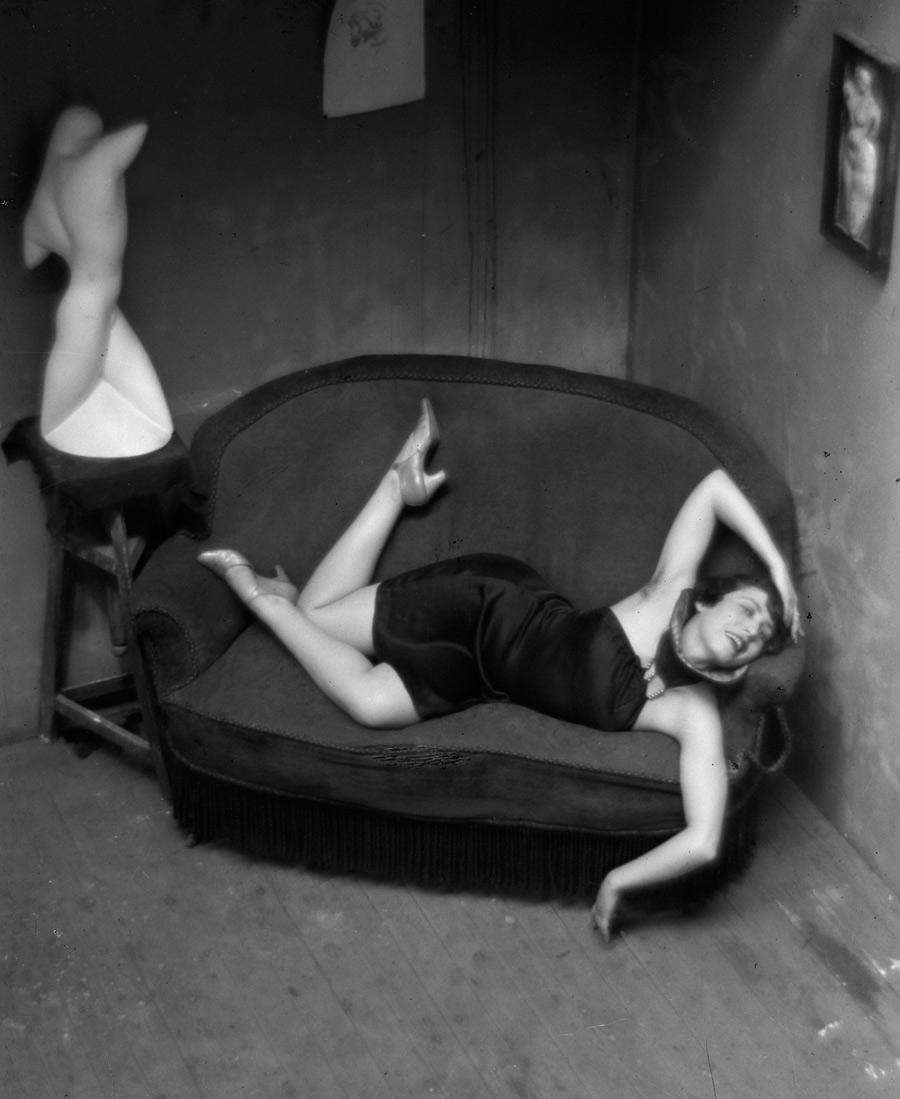
André Kertész. 'Satiric Dancer' 1926


André Kertész (Hungarian, 1894-1985)
Satiric Dancer
1926
Gelatin silver print


André Kertész (Hungarian, 1894-1985) 'Peintre d'ombre, Paris' (Shadow painter, Paris) 1926


André Kertész (Hungarian, 1894-1985)
Peintre d’ombre, Paris (Shadow painter, Paris)
1926
Gelatin silver print
© ministère de la Culture / Médiathèque de l’architecture et du patrimoine / Donation André Kertész


André Kertész (Hungarian, 1894-1985) 'Bastille, Rue de Lappe, Paris' 1926


André Kertész (Hungarian, 1894-1985)
Bastille, Rue de Lappe, Paris
1926
Gelatin silver print
© ministère de la Culture / Médiathèque de l’architecture et du patrimoine / Donation André Kertész


André Kertész. '
Self-Portrait' Paris, 1927


André Kertész (Hungarian, 1894-1985)

Self-Portrait
Paris, 1927, printed in the 1970s
Gelatin silver print
25.4 x 20.3cm
Courtesy of Estate of André Kertész, New York


André Kertész. 
'Arm and Ventilator' 1937


André Kertész (Hungarian, 1894-1985)

Arm and Ventilator
1937, printed in the 1940s-1950s
Gelatin silver print
30.5 x 26.7cm
Collection of Eric Cepotis and David Williams


André Kertész.
 'Washington Square' New York, January 9, 1954


André Kertész (Hungarian, 1894-1985)
Washington Square
New York, January 9, 1954
Vintage gelatin silver print
12.7 x 9.2cm
Collection of Leslie, Judith and Gabrielle Schreyer


André Kertész.
 'July 3, 1979'
 1979


André Kertész (Hungarian, 1894-1985)
July 3, 1979

1979
Polaroid SX-70 original
7.9 x 7.9cm
Courtesy of Stephen Bulger Gallery


Fotomuseum Winterthur
Grüzenstrasse 44 + 45
CH-8400
Winterthur (Zürich)

Opening hours:
Tues – Sun 11am – 6pm
Wed 11am – 8pm
Monday closed

Fotomuseum Winterthur website

LIKE ART BLART ON FACEBOOK

Back to top

Exhibition: ‘Mark Morrisroe’ at Fotomuseum Winterthur, Zurich

Exhibition dates: 27th November 2010 – 13th February, 2011


Mark Morrisroe (American, 1959-1989) 'Untitled [Self-Portrait]' 1979 from the exhibition 'Mark Morrisroe' at Fotomuseum Winterthur


Mark Morrisroe (American, 1959-1989)
Untitled [Self-Portrait]
1979
T-108 Polaroid
8.5 x 10.7cm
Sammlung Matthew Marks
© Nachlass Mark Morrisroe (Sammlung Ringier) im Fotomuseum Winterthur


This is an emotional posting for me. I came out as a gay man in 1975, six short years after the Stonewall Riots in New York City that were the touchstone of the gay liberation movement. I partied hard in my youth in London and didn’t have my first HIV test until 1982/1983. We just didn’t know about the disease at all. Those two weeks waiting for the result of that first test, for that is how long it took to get the test results back in those days, seemed terribly long. Even worse was the time spent sitting outside the doctor’s office waiting to be called in to get the test results – literally life and death as there was no treatment, no drugs to help, no hope.

I lost many friends over the years to this terrible disease that continues to decimate human beings all around the world. It was only by pure luck that I survived. This posting shows the work of one artist who didn’t survive. He as experimenting with his sexuality (and documenting it) in Boston at much the same time that I was in London and so I feel an affinity with this beautiful and gifted man. What great images he made! How much poorer is the world without his presence and indeed the presence of all human beings who have succumbed to the disease.

Dr Marcus Bunyan


Many thankx to the Fotomuseum Winterthur, Zurich for allowing me to publish the photographs in the posting. Please click on the photographs for a larger version of the image.


“You know, I’m going to be really famous, so you’re lucky to be meeting me.”


Mark Morrisroe, as quoted by Jack Pierson


Mark Morrisroe (American, 1959-1989) '
After the Laone (In the Home of a London Rubber Fetishist, Dec 82)' 1982 from the exhibition 'Mark Morrisroe' at Fotomuseum Winterthur


Mark Morrisroe (American, 1959-1989)
After the Laone (In the Home of a London Rubber Fetishist, Dec 82)
1982
C-Print von Sandwich-Negativ, bearbeitet mit Retuschefarben und Marker
39.5 x 50.6cm
© Nachlass Mark Morrisroe (Sammlung Ringier) im Fotomuseum Winterthur


Mark Morrisroe (American, 1959-1989) '
La Môme Piaf [Pat and Thierry]' 1982 from the exhibition 'Mark Morrisroe' at Fotomuseum Winterthur


Mark Morrisroe (American, 1959-1989)
La Môme Piaf [Pat and Thierry]
1982
C-Print von Sandwich-Negativ, bearbeitet mit Retuschefarben und Marker
50.7 x 40.5cm
© Nachlass Mark Morrisroe (Sammlung Ringier) im Fotomuseum Winterthur


Mark Morrisroe (American, 1959-1989) 'Pat as Kiki, fall 81 Paris' 1985 from the exhibition 'Mark Morrisroe' at Fotomuseum Winterthur


Mark Morrisroe (American, 1959-1989)
Pat as Kiki, fall 81 Paris
1985
Silbergelatine-Abzug von T-665 Polaroid Negativ, bearbeitet mit Retuschefarbe
25.2 x 20.2cm
© Nachlass Mark Morrisroe (Sammlung Ringier) im Fotomuseum Winterthur


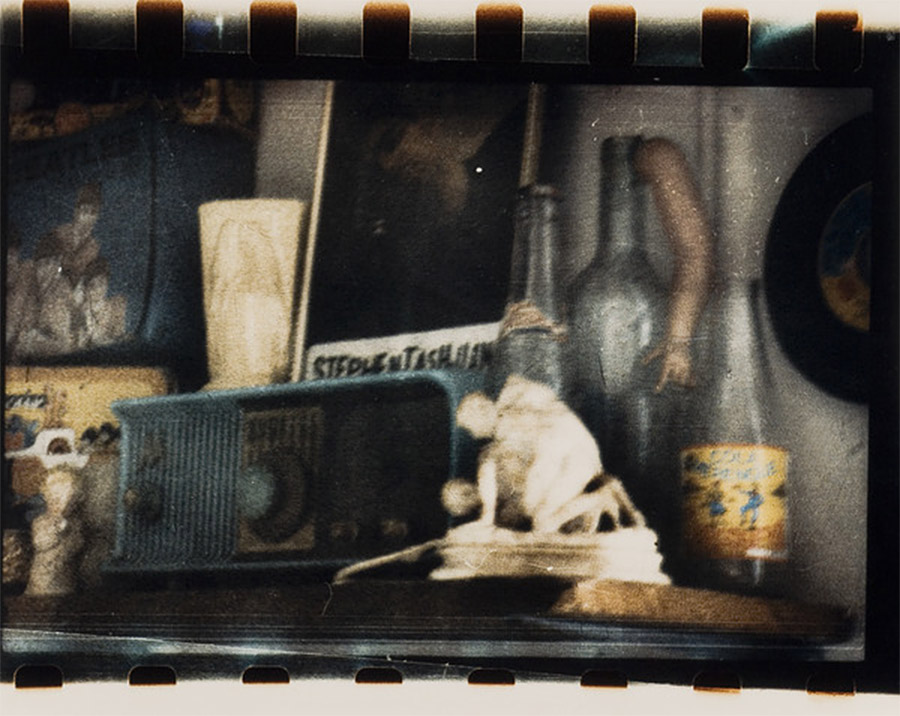
Mark Morrisroe (American, 1959-1989) 'Still Life with Marble Figures (in the Home of Stephen Tashjian NYC)' 1985 from the exhibition 'Mark Morrisroe' at Fotomuseum Winterthur


Mark Morrisroe (American, 1959-1989)
Still Life with Marble Figures (in the Home of Stephen Tashjian NYC)
1985
Negative sandwich
40 x 50cm
© Nachlass Mark Morrisroe (Sammlung Ringier) im Fotomuseum Winterthur


Mark Morrisroe (American, 1959-1989) '
Blow Both of Us, Gail Thacker and Me, Summer 1978' 1986 from the exhibition 'Mark Morrisroe' at Fotomuseum Winterthur


Mark Morrisroe (American, 1959-1989)
Blow Both of Us, Gail Thacker and Me, Summer 1978
1986
C-Print, bearbeitet mit Marker
40.5 x 40.5cm
© Nachlass Mark Morrisroe (Sammlung Ringier) im Fotomuseum Winterthur


More than twenty years after Mark Morrisroe’s early death, Fotomuseum Winterthur is presenting the first comprehensive survey exhibition on his work – an extraordinarily diverse body of works that has usually been shown in group shows, mostly in connection with his famous Boston colleagues Nan Goldin and David Armstrong. The exhibition, curated by Beatrix Ruf and Thomas Seelig, is a collaboration between Fotomuseum Winterthur and the Estate of Mark Morrisroe (Ringier Collection).

In the Boston of the early 1980s, Mark Morrisroe was a well-known, charismatic figure, who often appeared in drag together with the artist friends he had met while studying and who performed in bars and clubs with Stephen Tashjian (alias Tabboo!) as the “Clam Twins.” As an artist and photographer he was also at the center of the lively Boston punk scene, whose most important protagonists were known well beyond the city. Like Nan Goldin and David Armstrong before him, Mark Morrisroe moved to New York in the mid-1980s to try his luck there. He died – far too early – in July 1989, at the age of just 30, from the consequences of AIDS.

References to Morrisroe’s origins and past are surrounded by a dense mist that makes it impossible to differentiate between truth and fantasy. By continually inventing and varying scenarios about himself, the settings for which extended from the past to the future, Morrisroe always understood how to collaborate actively in shaping his own myth, feeding it with fanciful layers of lies, or indeed letting it float into the void. His public presence could be engaging, and sometimes loud and disturbing, too, but silence fell after his death – both around the artist and his photography.

In retrospect, Morrisroe’s art studies in Boston and his years in the punk and art world of that city can in fact be seen as his most content and productive period. There he discovered a positive approach to his sexuality, and in the person of Jonathan “Jack” Pierson, who appears in many of his photographs and Polaroids, found his first great love. The first intimate portraits of close friends such as Lynelle White (with whom he published five editions of the collaged, photocopied and coloured-in Dirt fanzine in 1975-1976) were produced there, as were many of his first narcissistic self-scenarios in front of the camera. There Morrisroe shot the low-budget trash film Nymph-O-Maniac in the style of his idol John Waters, with Pia Howard as the main performer.

Mark Morrisroe’s short creative period, of barely ten years, was characterized by an amazing output of photographic experiments, and stands out for its constantly searching, inquisitive, and always individual aesthetic, as a glance at the photographer’s extensive estate reveals. The estate was acquired by the Ringier Collection in 2004 and was placed in the care of the Fotomuseum Winterthur in 2006. The estate comprises around 600 colour prints – a few of them duplicates – approximately as many gelatin silver prints, about 800 of the 2,000 known Polaroid shots by Morrisroe, all the negatives, contact prints, and some of his personal papers, giving some idea of the unbridled enjoyment and energy with which Mark Morrisroe threw himself into his life and work.

The exhibition will feature early colour and black-and-white prints, Polaroids, and Polaroid negatives from which it was possible to make enlargements, as well as the early and late photograms he processed by hand. During his art studies at the School of the Museum of Fine Arts Boston (1978-1982) Morrisroe was already experimenting with various interpretations of reprography, trying to understand the possibilities of the medium and its inherent limitations, and using different ingenious printing processes for his photographic prints. Within his close circle of friends he soon laid claim to the “invention” of what are called “sandwich” prints – enlargements of double negatives of the same subject mounted on top of one another – which yielded an elaborate pictorial quality, producing a very iconic impression in the final result, which over time Morrisroe learned to use in an increasingly controlled way. Early on, the artist recognised the intrinsic value of prints – irrespective of the medium used to produce them – as pictorial objects that he could manipulate, colour, paint, and write on at will.

By all accounts, Mark Morrisroe was a man driven to achieve fame and recognition. Restless and demanding – of himself as well as of others – he always wanted more, and from this inner restlessness he derived enormous resources of artistic energy. Right to the very end, his life and work, down to the photograms feverishly produced in the makeshift darkroom in his hospital, which have hardly ever been publicly shown until today, attest to an unlimited and ecstatic search for a sensual, aesthetic, and always ambivalently charged pictorial world.

The Estate of Mark Morrisroe (Collection Ringier) at the Fotomuseum Winterthur


Following Pat Hearn’s untimely death in 2000, there was a break in exhibition activities focusing on Mark Morrisroe. From 1998 the Ringier Collection had been continuously in contact with Pat Hearn about Mark Morrisroe’s work and they continued the discussion with Pat Hearn’s husband, Colin de Land of American Fine Arts, who had inherited the Mark Morrisroe estate. In 2002 Colin de Land approached Michael Ringier and Beatrix Ruf to discuss options for the future of the Morrisroe estate because he had also fallen ill and was very aware that he was going to die soon himself. In their conversations, the main concern was how responsibility for this important artist could be taken on by keeping the oeuvre together as a comprehensive group of works and making it accessible to a broad audience internationally as well. The Ringier Collection proposed to Colin de Land that they secure the estate by acquiring it and placing it in the Fotomuseum Winterthur. Furthermore, the decision was made to form a foundation for the Morrisroe estate, which would be the home to a comprehensive group of works and would keep the estate together, provide conversational and curatorial continuity, and act as the leading force in communicating and distributing the work through exhibitions and publications.”

Press release from Fotomuseum Winterthur website


Mark Morrisroe (American, 1959-1989) 'Untitled [Self-Portrait with Jonathan]' c. 1978 from the exhibition 'Mark Morrisroe' at Fotomuseum Winterthur


Mark Morrisroe (American, 1959-1989)
Untitled [Self-Portrait with Jonathan]
c. 1978
T-665 Polaroid
10.7 x 8.5cm
© Nachlass Mark Morrisroe (Sammlung Ringier) im Fotomuseum Winterthur


Mark Morrisroe (American, 1959-1989) '
Self-Portrait (to Brent)' 1982
 from the exhibition 'Mark Morrisroe' at Fotomuseum Winterthur


Mark Morrisroe (American, 1959-1989)
Self-Portrait (to Brent)
1982
C-Print von Sandwich-Negativ, bearbeitet mit Retuschefarben und Marker
50.5 x 40.5cm
Privatsammlung Brent Sikkema
© Nachlass Mark Morrisroe (Sammlung Ringier) im Fotomuseum Winterthur


Mark Morrisroe (American, 1959-1989) 'Untitled (Lynelle)' c. 1985 from the exhibition 'Mark Morrisroe' at Fotomuseum Winterthur


Mark Morrisroe (American, 1959-1989)
Untitled [Lynelle]
c. 1985
T-665 Polaroid
10.7 x 8.5cm
© Nachlass Mark Morrisroe (Sammlung Ringier) im Fotomuseum Winterthur


Mark Morrisroe (American, 1959-1989) 'Baby Steffenelli [John S.]' 1985 from the exhibition 'Mark Morrisroe' at Fotomuseum Winterthur


Mark Morrisroe (American, 1959-1989)
Baby Steffenelli [John S.]
1985
Negative sandwich, retouched with ink and inscribed with marker
31 x 44cm
© Nachlass Mark Morrisroe (Sammlung Ringier) im Fotomuseum Winterthur


The portrait of Baby Steffenelli, captured by the provocative photographer Mark Morrisroe, offers a glimpse into the bold, rebellious spirit of the 1980s underground art scene. Morrisroe, known for his raw and unflinching style, frequently blurred the lines between art and performance, creating images that were both intimate and confrontational. This photograph of Steffenelli, a figure often associated with the New York City art world of the time, reflects the vibrant energy of a subculture that thrived on pushing societal boundaries. Steffenelli, much like Morrisroe, embraced unconventional identities, and their collaboration in this photo serves as a visual statement of individuality and defiance, characteristic of the era’s exploration of gender, sexuality, and self-expression.

The 1980s were a transformative time for the art world, particularly in New York, where artists like Morrisroe, Robert Mapplethorpe, and David Wojnarowicz were redefining the possibilities of photography, painting, and performance. Morrisroe, who was also a member of the artistic collective called “The Factory” and part of the East Village art scene, used his camera as a tool to document the subversive lifestyles of his peers. His work, often marked by a sense of urgency and intimacy, captured the raw emotions and complexities of those living on the fringes of society. This photo of Steffenelli, taken in 1985, is a prime example of how Morrisroe’s photographs served as a historical document, reflecting the ongoing dialogues surrounding identity and the body in the context of the post-punk, pre-AIDS crisis era.

For Steffenelli, this image became an emblem of the intersection between personal expression and the broader cultural shifts taking place in the 1980s. The vibrant, sometimes jarring energy of Morrisroe’s photography mirrored the boldness with which people like Steffenelli navigated their place in an increasingly complex world. The photo not only immortalises Steffenelli’s individuality but also serves as a testament to the powerful and often controversial art scene that defined this period. In this single frame, Morrisroe captures not only a person but the essence of a moment in time – a snapshot of defiance, liberation, and transformation in the face of societal norms.

Text from the Old Historical Facebook page


Mark Morrisroe (American, 1959-1989) 'Untitled [Self-Portrait]' 1986
 from the exhibition 'Mark Morrisroe' at Fotomuseum Winterthur


Mark Morrisroe (American, 1959-1989)
Untitled [Self-Portrait]
1986
Silbergelatine-Abzug
42.5 x 29.8cm
© Nachlass Mark Morrisroe (Sammlung Ringier) im Fotomuseum Winterthur


Mark Morrisroe (American, 1959-1989) '
Untitled' 1987 from the exhibition 'Mark Morrisroe' at Fotomuseum Winterthur


Mark Morrisroe (American, 1959-1989)
Untitled
1987
Silbergelatine-Abzug, Fotogramm von Drucksache
50.4 x 40.3cm
© Nachlass Mark Morrisroe (Sammlung Ringier) im Fotomuseum Winterthur


Mark Morrisroe (American, 1959-1989) '
Untitled' c. 1988 from the exhibition 'Mark Morrisroe' at Fotomuseum Winterthur


Mark Morrisroe (American, 1959-1989)
Untitled
c. 1988
C-Print von Sandwich-Negativ
50.7 x 40.5cm
© Nachlass Mark Morrisroe (Sammlung Ringier) im Fotomuseum Winterthur


Fotomuseum Winterthur
Grüzenstrasse 44 + 45
CH-8400 Winterthur (Zurich)

Opening hours:
Tuesday to Sunday 11am – 6pm
Wednesday 11am to 8pm
Closed on Mondays

Fotomuseum Winterthur website

LIKE ART BLART ON FACEBOOK

Back to top

Exhibition: ‘The Monstropolous Beast’ by Will Steacy at Christophe Guye Galerie, Zurich

Exhibition dates: 17th November 2010 – 15th January, 2011


Many thankx to Christophe Guye Galerie for allowing me to publish the photographs in the posting. Please click on the photographs for a larger version of the image.


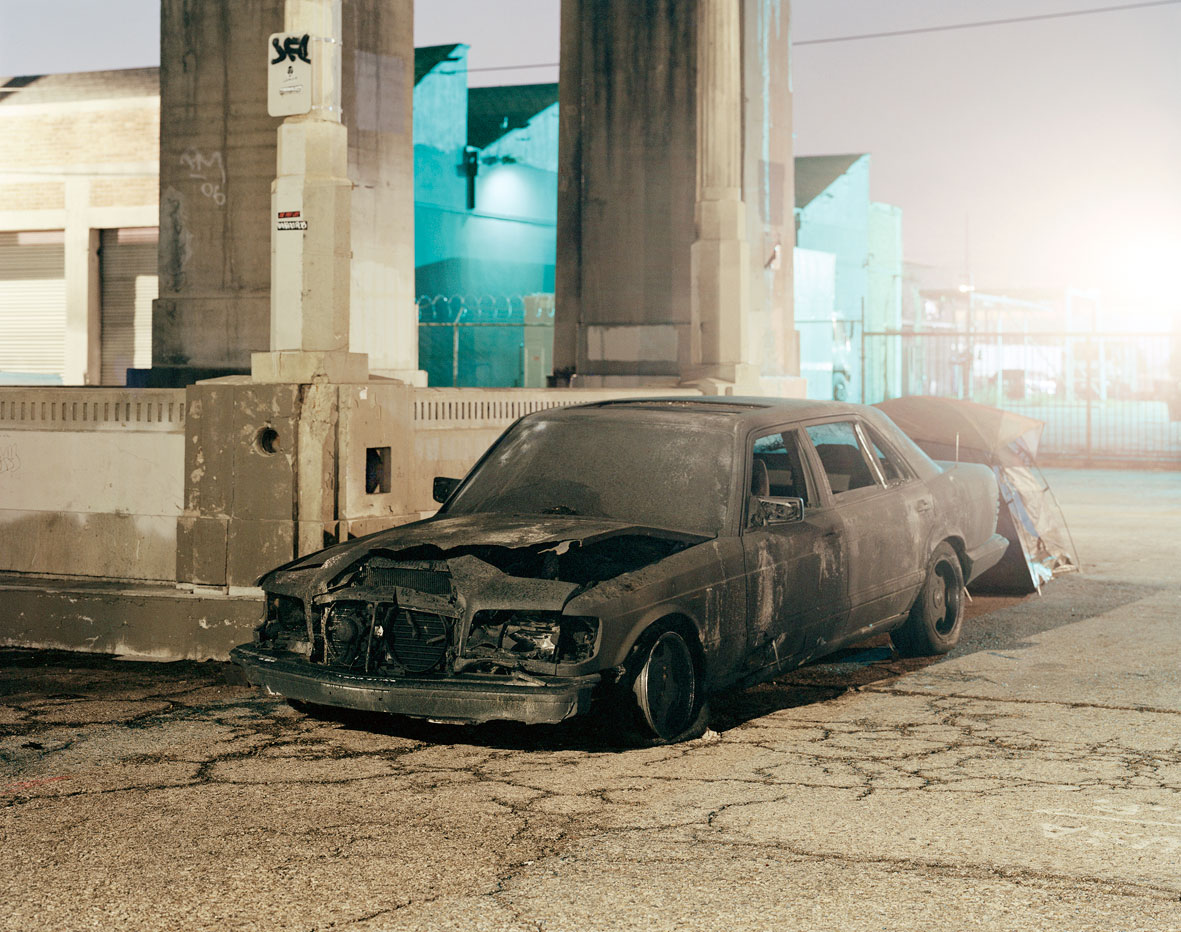
Will Steacy (American, b. 1980) 'Burned Car, Los Angeles' 2009 from the exhibition 'The Monstropolous Beast' by Will Steacy at Christophe Guye Galerie, Zurich


Will Steacy (American, b. 1980)
Burned Car, Los Angeles
2009
from Down these Main Streets, 2009
Archival pigment prints
61 x 76.2cm (24 x 30 in)


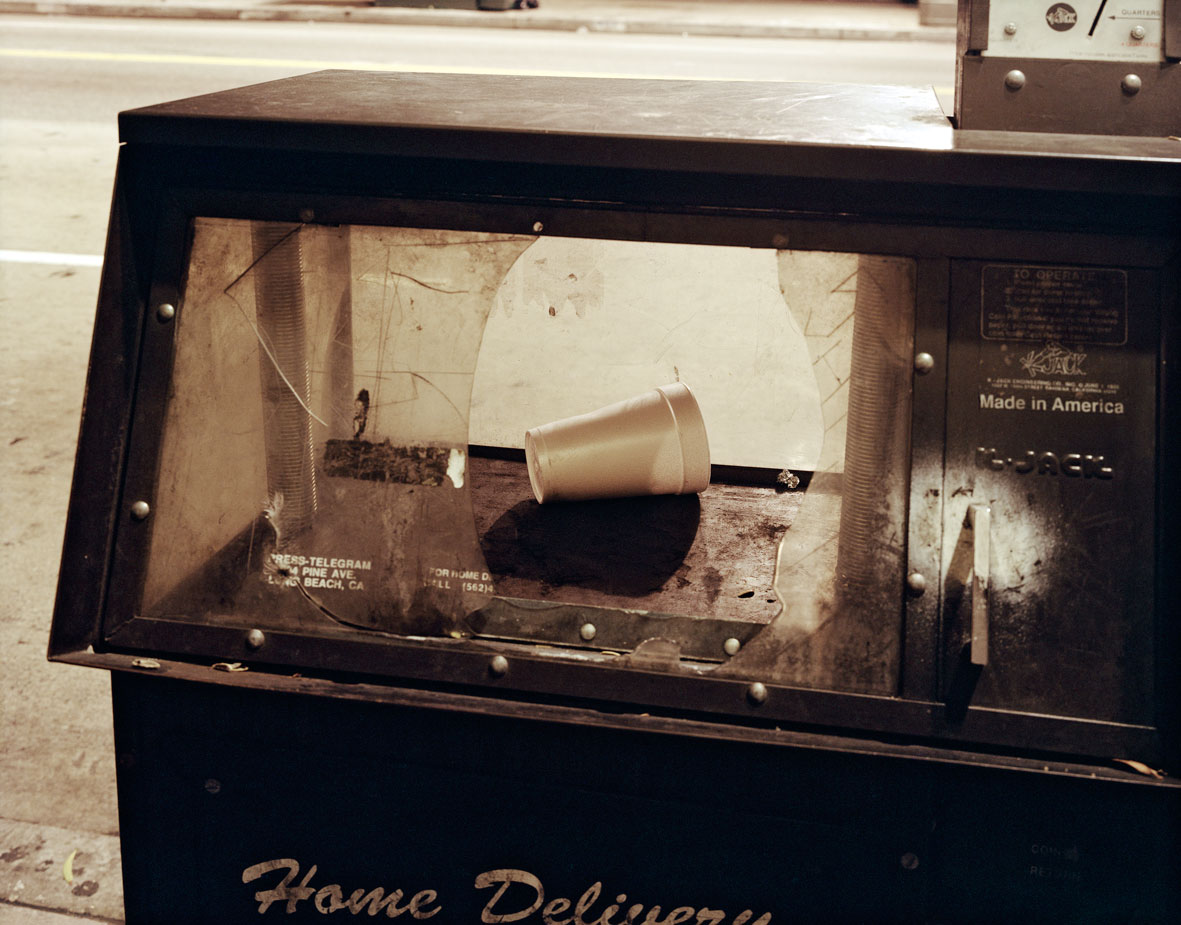
Will Steacy (American, b. 1980) 'Home Delivery, Los Angeles' 2009 from the exhibition 'The Monstropolous Beast' by Will Steacy at Christophe Guye Galerie, Zurich


Will Steacy (American, b. 1980)
Home Delivery, Los Angeles
2009
from Down these Main Streets, 2009
Archival pigment prints
61 x 76.2cm (24 x 30 in)


Will Steacy (American, b. 1980) 'Lovers, New Branford' 2007 from the exhibition 'The Monstropolous Beast' by Will Steacy at Christophe Guye Galerie, Zurich


Will Steacy (American, b. 1980)
Lovers, New Branford
2007
from All my Life I have the same Dream, 2007
Archival pigment prints
61 x 76.2cm (24 x 30 in)


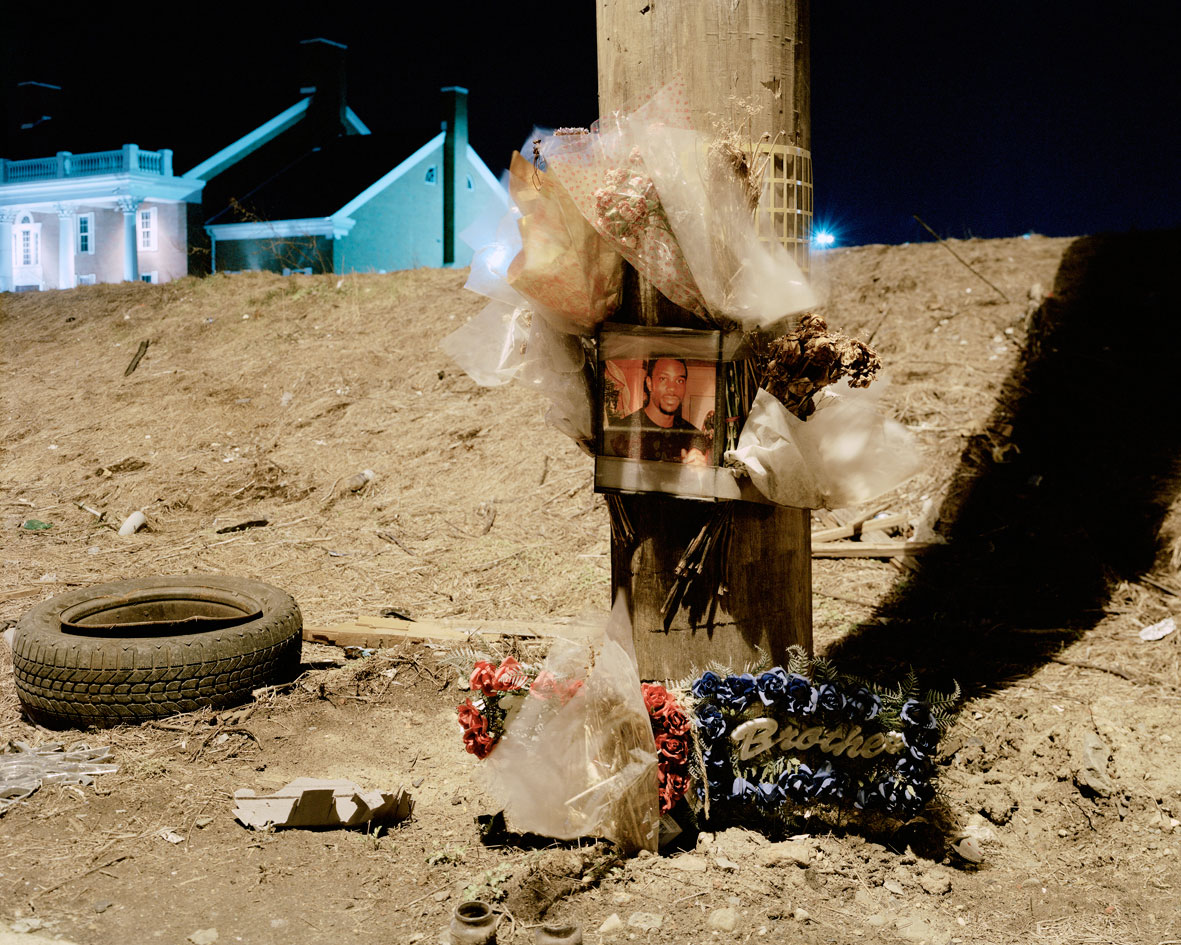
Will Steacy (American, b. 1980) 'Memorial, Philadelphia' 2009 from the exhibition 'The Monstropolous Beast' by Will Steacy at Christophe Guye Galerie, Zurich


Will Steacy (American, b. 1980)
Memorial, Philadelphia
2009
from Down these Main Streets, 2009
Archival pigment prints
61 x 76.2cm (24 x 30 in)


“The monstropolous beast had left his bed. Two hundred miles an hour wind had loosed his chains. He seized hold of his dikes and ran forward until he met the quarters; uprooted them like grass and rushed on after his supposed-to-be conquerors, rolling the dikes, rolling the houses, rolling the people in the houses along with other timbers. The sea was walking the earth with a heavy heel.”


From Zola Neale Hurston’s Their Eyes Were Watching God


Christophe Guye Galerie is pleased to present The Monstropolous Beast, Will Steacy’s (American, b. 1980) first solo exhibition outside the United States.

For his first solo exhibition at the Christophe Guye Galerie, Will Steacy is showing a cross-section of his past years of creative working. Showing 28 new and recent photographs, The Monstropolous Beast is the first exhibition to comprehensively portray Steacy’s whole body of work to date. Once named “the lovechild of Charles Bukowski and Dorothea Lange” Steacy’s work is poetic and confrontational alike, at once evoking photojournalist documentation and romanticised realism.

Steacy’s imaginary stems from his experiences, encounters and the desire to awaken. His work quietly observes, holding on to moments of apparent silence that would pass unnoticed had he not been there to click the shutter. Breathtaking and touching, the emotional force of the artist’s work allows the viewer to intimately connect with the subject. Deeply philosophical, the camera permits him to ask questions, to truly see and think. It is for Steacy a tool with which to understand the world; an understanding he wants to convey to his viewers.

His method of inquiry is a large format film camera. Photographing the depleted city centres and rural suburbs of America, Steacy has spent the last years travelling his country to create a body of work that through its social connotations goes beyond simple photography. As a former Union Labourer, one can sense the humanistic approach to Steacy’s art. While deeply personal, Steacy works with the intention to create awareness, challenging people to look inward.

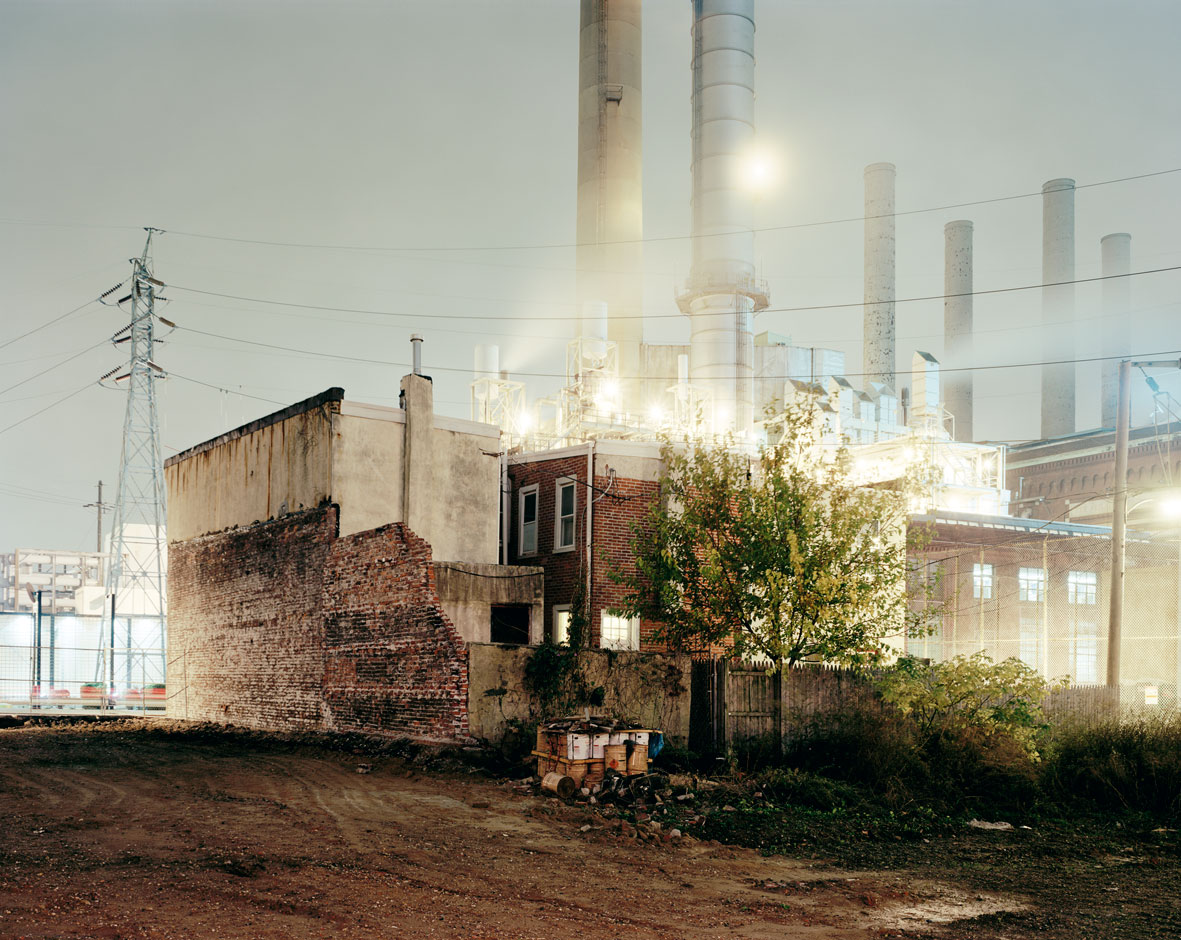
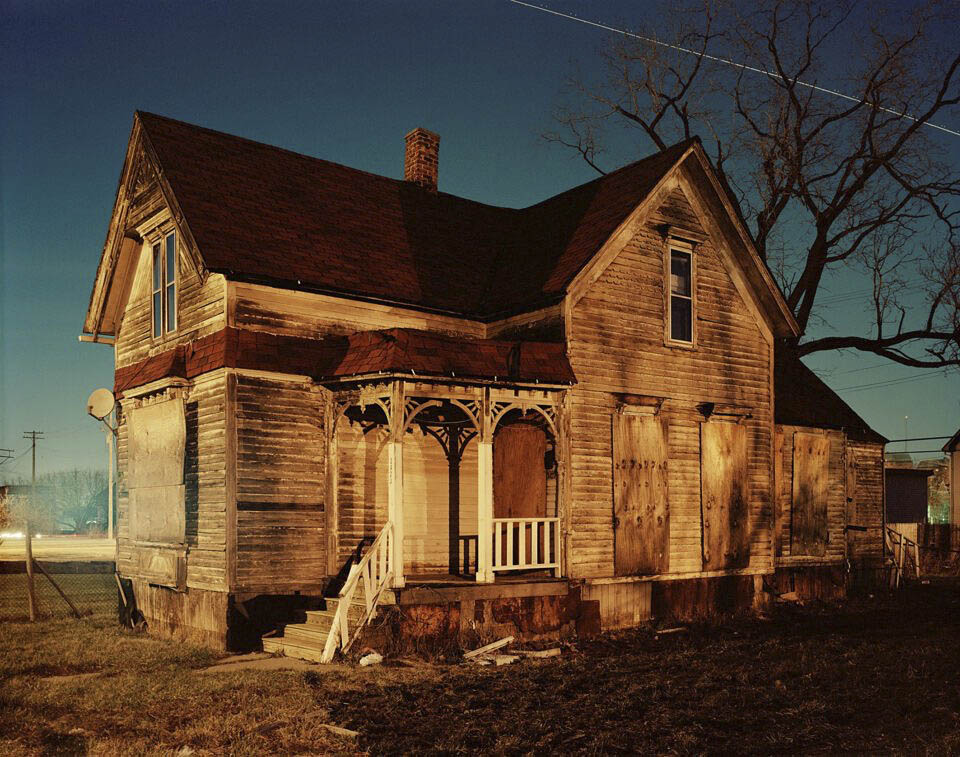
A key series in the exhibition is Down These Mean Streets, for which the artist examined fear and abandonment of America’s inner cities. The reality experienced at night on the streets is so haunting it becomes a hyper reality; laden with emotional and mental attachment, in works such as Memorial or Home Delivery the energy and courage that spark the artist’s work is intensely apparent. Factories, deserted streets and inhabitants of neglected neighbourhoods are his subjects. By addressing the loss and despair that reign in US metropolitan communities, his aim is to reveal a modern day portrait of the reality in American urban centres.

Though still early in his career, the almost ordinary or unspectacular subject matters depicted in the works shown bring to mind the works of William Eggleston or Martin Parr. Demonstrating a distinctive ability to find beauty or fascination in commonplace scenes, and illustrating them with vivid displays of colour and luminosity, Steacy’s works take a critical look at modern society and human conditions, bring viewers uncomfortably close to an often sombre reality.

What at first glance appears like a simple capturing of ordinary people, everyday situations and mundane settings or situations, unravels into a multifaceted portrayal of society, its people, places, race, class, and boundaries. Through a life-changing experience, Steacy turned to art, devoting “everything I have to my art, this gift, this thing that is the reason I am alive… Coming that close to death will change a man. Life has had a new meaning since then, and I wake up every day happy to be alive, happy to chase this dream.” Frank and profound alike, unostentatious and similarly intense Steacy’s work is about life: life today in 21st century America, where layers of seeming simplicity unfolds before our eyes.”

Press release from the Christophe Guye Galerie website


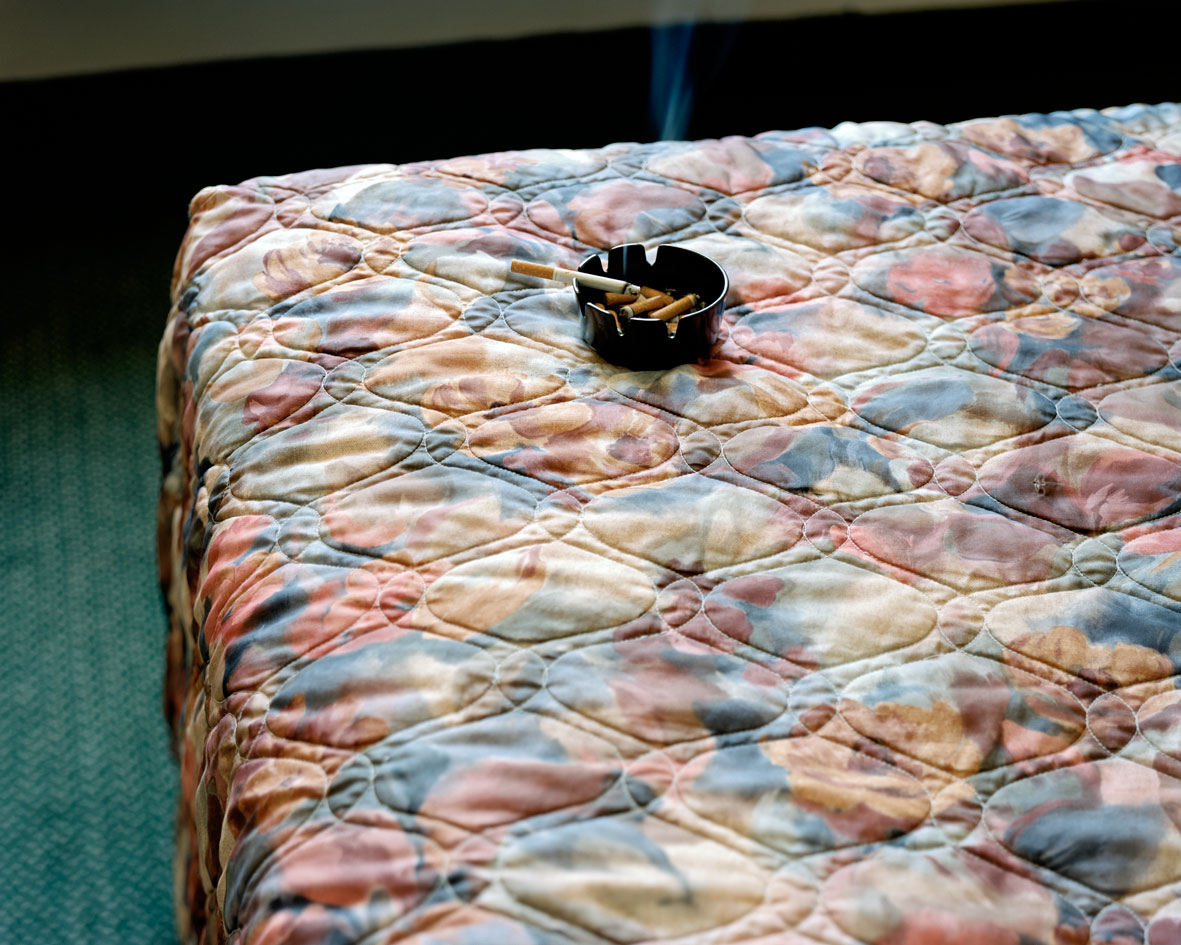
Will Steacy (American, b. 1980) 'Motel Room' 2007 from the exhibition 'The Monstropolous Beast' by Will Steacy at Christophe Guye Galerie, Zurich


Will Steacy (American, b. 1980)
Motel Room
2007
from We are all in this Together, 2007
Archival pigment prints
61 x 76.2cm (24 x 30 in)


Will Steacy (American, b. 1980) 'Pawn Shop, Memphis' 2007 from the exhibition 'The Monstropolous Beast' by Will Steacy at Christophe Guye Galerie, Zurich


Will Steacy (American, b. 1980)
Pawn Shop, Memphis
2007
from All my Life I have the same Dream, 2007
Archival pigment prints
61 x 76.2cm ( 24 x 30 in)


Will Steacy (American, b. 1980) 'Power Plant, Philadelphia' 2008


Will Steacy (American, b. 1980)
Power Plant, Philadelphia
2008
from Down these Main Streets, 2009
Archival pigment prints
61 x 76.2cm (24 x 30 in)


Will Steacy (American, b. 1980)
'Satellite Dish, Detroit' 2009


Will Steacy (American, b. 1980)
Satellite Dish, Detroit
2009
from Down these Main Streets, 2009
Archival pigment prints
61 x 76.2cm (24 x 30 in)


Will Steacy (American, b. 1980) 'Liz, Philadelphia' 2007 from the exhibition 'The Monstropolous Beast' by Will Steacy at Christophe Guye Galerie, Zurich


Will Steacy (American, b. 1980)
Liz, Philadelphia
2007
from All my Life I have the same Dream, 2007
Archival pigment prints
61 x 76.2cm (24 x 30 in)


Christophe Guye Galerie
Dufourstrassse 31
8008 Zurich, Switzerland
Phone: +41 44 252 01 11

Opening hours:
Monday – Friday 10am – 6pm
Saturday 11am – 4pm

Christophe Guye Galerie website

LIKE ART BLART ON FACEBOOK

Back to top

Exhibition: ‘Walker Evans’ retrospective at Fotomuseum Winterthur, Zurich

Exhibition dates: 30th May – 23rd August, 2009

Curators: Jeff L. Rosenheim and Carlos Gollonet


Walker Evans (American, 1903-1975) 'West Virginia Living Room' 1935 from the exhibition 'Walker Evans' retrospective at Fotomuseum Winterthur, Zurich, May - Aug, 2009


Walker Evans (American, 1903-1975)
West Virginia Living Room
1935
Gelatin silver print
© Walker Evans archive


Many thankx to the Fotomuseum Winterthur for allowing me to publish the photographs in the posting. Please click on the photographs for a larger version of the image.


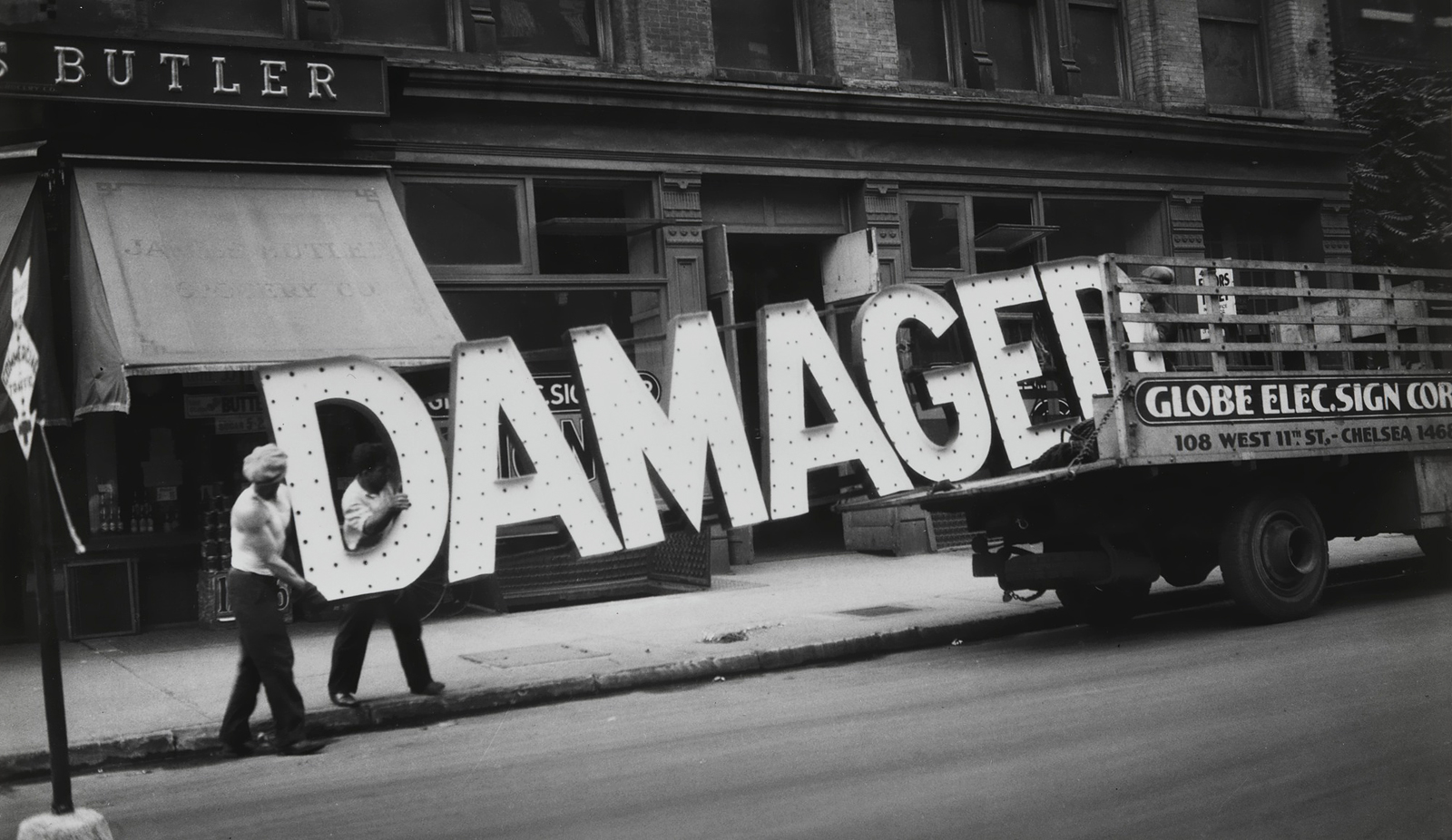
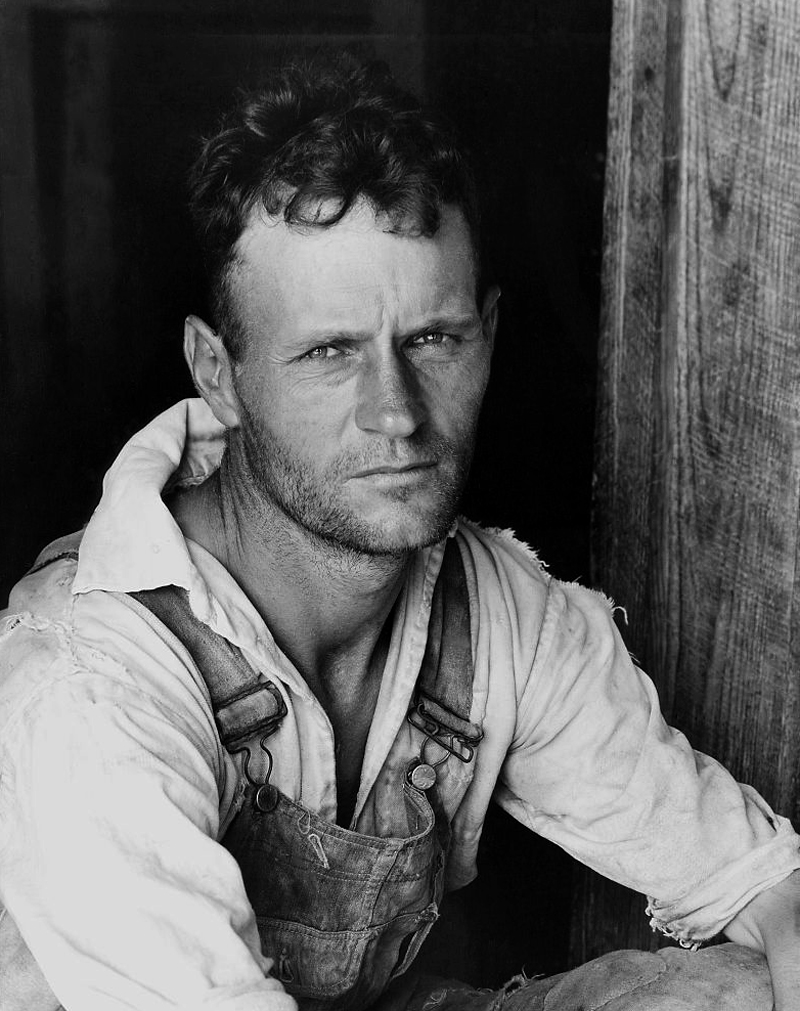
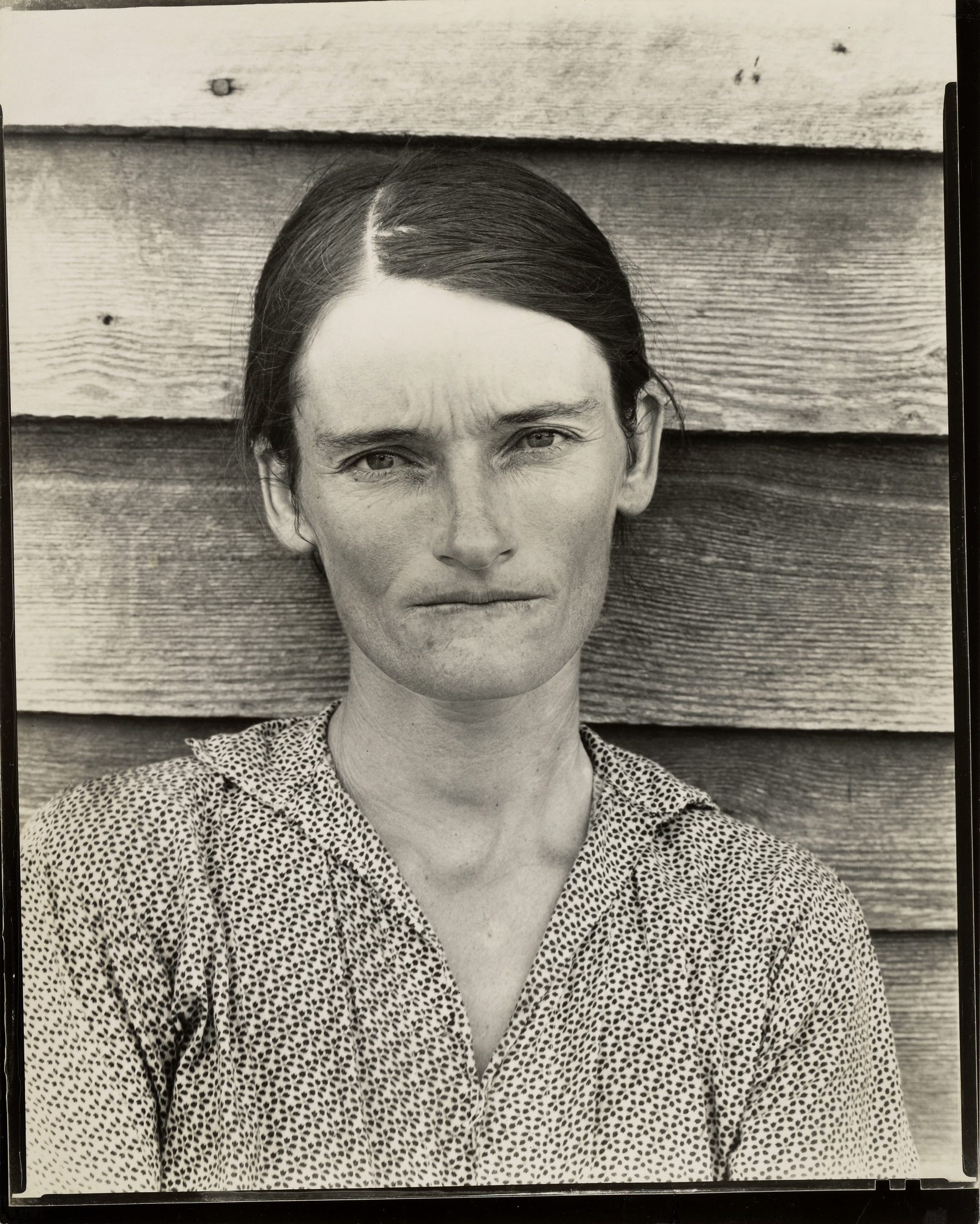
With this retrospective of the work of Walker Evans (1903-1975) Fotomuseum Winterthur presents one of the twentieth century’s pre-eminent photographers. His lucid and detailed portrayals of American life, especially his images of rural poverty during the Great Depression, made photographic history and went on to influence countless photographers. Walker Evans took an extremely innovative approach, capturing the very essence of the American way of life.

The exhibition, featuring some 120 works (the majority of which are from the most important private collection of Walker Evans’ works) represents every phase of his career: his early street photographs of the 1920s, his poignant documentation of 1930s America and pre-revolutionary Cuba, his landscapes and architectural photography, his subway portraits, storefronts, signage, the later colour Polaroids and more besides. As early as the 1930s, Walker Evans, in a departure from conventional notions of art and style, sought a new direct approach to reality. It is this that makes him a truly modern photographer.

The exhibition was curated by Jeff L. Rosenheim and Carlos Gollonet. Realisation in Winterthur: Urs Stahel. A cooperation with the Fundación MAPFRE, Madrid.

Text from the Fotomuseum Winterthur website


Walker Evans (American, 1903-1975) 'Negro Barbershop Interior, Atlanta' 1936 from the exhibition 'Walker Evans' retrospective at Fotomuseum Winterthur, Zurich, May - Aug, 2009


Walker Evans (American, 1903-1975)
Negro Barbershop Interior, Atlanta
1936
Gelatin silver print
7 7/16 x 9 1/8″ (18.9 x 23.2cm)
© Walker Evans archive


With this major retrospective of the work of Walker Evans (1903-1975) Fotomuseum Winterthur pays homage to one of the twentieth century’s pre-eminent photographers. His insightful and detailed portrayals of American life, especially his images of rural poverty during the Great Depression, made photographic history and went on to influence countless photographers. The 130 works in this retrospective exhibition represent every phase of his career: his early street photographs of the 1920s, his poignant documentation of 1930s America and pre-revolutionary Cuba, his landscapes and architectural photography, his subway portraits, storefronts, signage, and more besides.

On his return from France, where he had tried unsuccessfully to launch a literary career inspired by his love of Flaubert and Baudelaire, Walker Evans turned to photography. From the very start, with his keen eye for street life and the visual freshness of his unexpected slant on what he saw, his work spoke the language of European Modernism. But it was not long before Evans found his true voice – and it was at once profoundly personal and unequivocally American.

Some years before, the direct, undistorted and innovative gaze of Eugène Atget (1857-1927), whose work Evans knew and admired, had quietly paved the way for the split between documentary auteur photography and the purely descriptive photographic tradition. Atget’s unconventional angles, his de-centralised view and his focus on the seemingly trivial all had a major impact on Evans.

Walker Evans’ work is a far remove from what had, until then, been accepted as art photography. He was not interested in superficial beauty, but in a new objectivity. He subscribed to a style that observed undistorted facts and sought to capture things precisely as they were, seemingly without intervention, emotion or idealisation. For the first time in art photography, there were such unusual subjects as a pair of old boots or a subway passenger lost in thought. The artistic quality was based solely on the clarity, intelligence and authenticity of the photographer’s gaze. In this, Walker Evans’ oeuvre represents both a high point and a turning point in the formal and visual evolution of photography.

As the creator of this new, direct style, often referred to as straight photography, which drew upon scenes of sometimes blatant banality and rolled back the boundaries between the ‘important’ and the ‘trivial’, Walker Evans introduced the aesthetics of Modernism into American photography. This seemingly cold detachment spawned a style rich in expressive substance that was not only capable of embracing the lyricism and complexity of the American tradition, but of doing so without a trace of false romanticism, sentimentality or nostalgia. At long last, there was a forward-looking and enduring alternative to the traditional conventions of photography.

Press release from the Fotomuseum Winterthur website [Online] Cited 05/06/2009. No longer available online


Walker Evans (American, 1903-1975) 'Traffic Arrow' between 1973-1974


Walker Evans (American, 1903-1975)
Traffic Arrow
between 1973-1974
Polaroid
7.9 x 7.9cm (3 1/8 x 3 1/8 in.)
© Walker Evans archive


Walker Evans (American, 1903-1975) '[Detail of Stencilled Lettering on Yellow Railroad Car: "DO NOT HUMP"]' September 16, 1974


Walker Evans (American, 1903-1975)
[Detail of Stencilled Lettering on Yellow Railroad Car: “DO NOT HUMP”]
September 16, 1974
Polaroid
7.9 x 7.9cm (3 1/8 x 3 1/8 in.)
© Walker Evans archive


Installation view of the exhibition 'Walker Evans' at Fotomuseum Winterthur, Zurich showing some of his Polaroid photographs


Installation view of the exhibition Walker Evans at Fotomuseum Winterthur, Zurich showing some of his Polaroid photographs


Installation view of the exhibition 'Walker Evans' at Fotomuseum Winterthur, Zurich

Installation view of the exhibition Walker Evans at Fotomuseum Winterthur, Zurich

Installation view of the exhibition Walker Evans at Fotomuseum Winterthur, Zurich

Installation view of the exhibition Walker Evans at Fotomuseum Winterthur, Zurich


Installation views of the exhibition Walker Evans at Fotomuseum Winterthur, Zurich


Walker Evans (1903-1975) 'Penny Picture Display, Savannah' 1936


Walker Evans (American, 1903-1975)
Penny Picture Display, Savannah
1936
Gelatin silver print
© Walker Evans archive


Walker Evans (American, 1903-1975) 'Subway Passengers, New York' 1938


Walker Evans (American, 1903-1975)
Subway Passengers, New York
1938
Gelatin silver print
© Walker Evans archive


Walker Evans (American, 1903-1975) 'Truck and Sign' 1928-1930


Walker Evans (American, 1903-1975)
Truck and Sign
1928-1930
Gelatin silver print
© Walker Evans archive


Walker Evans (American, 1903-1975) 'Excavation for Lincoln Building, East 42nd Street and Park Avenue' 1929


Walker Evans (American, 1903-1975)
Excavation for Lincoln Building, East 42nd Street and Park Avenue
1929
Gelatin silver print
© Walker Evans archive


Walker Evans (American, 1903-1975) '[Fireplace in Floyd Burrroughs's Bedroom with Bedpost in Foreground, Hale County, Alabama]' 1936


Walker Evans (American, 1903-1975)
[Fireplace in Floyd Burrroughs’s Bedroom with Bedpost in Foreground, Hale County, Alabama]
1936
Gelatin silver print
8 x 10 in.
© Walker Evans archive


Walker Evans (American, 1903-1975) 'Main Street, Saratoga Springs, New York' 1931


Walker Evans (American, 1903-1975)
Main Street, Saratoga Springs, New York
1931
Gelatin silver print
© Walker Evans archive


Walker Evans (American, 1903-1975) 'Floyde Burroughs, a cotton sharecropper, Hale County, Alabama' 1936


Walker Evans (American, 1903-1975)
Floyde Burroughs, a cotton sharecropper, Hale County, Alabama
1936
Gelatin silver print
© Walker Evans archive


Walker Evans (American, 1903-1975) 'Allie Mae Burroughs, Hale County, Alabama' 1936


Walker Evans (American, 1903-1975)
Allie Mae Burroughs, Hale County, Alabama
1936
Gelatin silver print
© Walker Evans archive


Fotomuseum Winterthur
Grüzenstrasse 44 + 45
CH-8400
Winterthur (Zürich)
Phone: +41 52 234 10 60

Opening hours:
Tuesday – Sunday 11.00 – 18.00
Wednesday 11.00 – 20.00
Monday closed

Fotomuseum Winterthur website

LIKE ART BLART ON FACEBOOK

Back to top