Exhibition: ‘Photo-Secession: Painterly Masterworks of Turn-of-the-Century Photography’ at the Utah Museum of Fine Arts, Salt Lake City

Exhibition dates: 24th August – 29th December 2024


Peter Henry Emerson (British born Cuba, 1856-1936) 'Poling the Marsh Hay' c. 1885 from the exhibition 'Photo-Secession: Painterly Masterworks of Turn-of-the-Century Photography' at the Utah Museum of Fine Arts, Salt Lake City, August - December 2024


Peter Henry Emerson (British born Cuba, 1856-1936)
Poling the Marsh Hay
c. 1885
Platinum print on paper


Id est / that is

Voluptuous = relating to or characterised by luxury or sensual pleasure

Sensual = late Middle English (in the sense ‘sensory’): from late Latin sensualis, from sensus (see sense)

Sense = various; including:

~ a reasonable or comprehensible rationale i.e. the latent and emerging Modernism inherent in Photo-Secession photographs

~ the way in which a situation [in this case the “reading” of a photograph] can be interpreted i.e. the interpretation of Photo-Secession photographs as either Pictorialist, Modernist or a combination of both

~ a keen intuitive awareness of or sensitivity to the presence or importance of something i.e. the feeling of the photographer towards the object of their attention, revealed in the print, whether that be a nude, a building, pears and an apple or the side of a white barn

~ to be aware of (something) without being able to define exactly how one knows i.e. to be able to detect, recognise, and feel that ineffable “something” that emanates from the object of (y)our attention… in the act of creativity, in the act of seeing

Bringing something to our senses

Thus, the older I get the more I appreciate the faculty of feeling, thought and meaning that is revealed in these revolutionary photographs.

Dr Marcus Bunyan


Many thankx to the Utah Museum of Fine Arts for allowing me to publish the photographs in the posting. Please click on the photographs for a larger version of the image.


Quotes on Walls

“Why, Mr. Stieglitz, you won’t insist that a photograph can possibly be a work of art – you are a fanatic!”


Luigi Palma de Cesnola, Director of the Metropolitan Museum of Art, reportedly said to Alfred Stieglitz, 1902


“The painter need not always paint with brushes, he can paint with light itself. Modern photography has brought light under control and made it as truly art-material as pigment or clay. … The photographer has demonstrated that his work need not be mechanical imitation. He can control the quality of his lines, the spacing of his masses, the depth of his tones and the harmony of his gradations. He can eliminate detail, keeping only the significant. More than this, he can reveal the secrets of personality. What is this but Art?”


Arthur Wesley Dow, 1921


“The photographer’s problem therefore, is to see clearly the limitations and at the same time the potential qualities of his medium… without tricks of process or manipulation, through the use of straight photographic methods. … Photography is only a new road from a different direction but moving toward the common goal, which is Life.”


Paul Strand, 1917


“Pictorial photography owes its birth to the universal dissatisfaction of artist photographers in front of the photographic errors of the straight print. Its false values, its lack of accents, its equal delineation of things important and useless, were universally recognised and deplored by a host of malcontents… I consider that, from an art point of view, the straight print of today is not a whit better than the straight print of fifteen years ago. If it was faulty then it is still faulty now.”


Robert Demachy, 1907


“Gum, diffused lenses, (ultra) glycerining, were of experimental interest once. … Most of these are of more value historically than artistically. The prints are neither painting (or its equivalents) nor photographs. Let the photographer make a perfect photograph. It will be straight and beautiful – a true photograph.”


Alfred Stieglitz, 1919


Photo-Secession: Painterly Masterworks of Turn-of-the-Century Photography celebrates an intrepid group of photographers, led by preeminent photographer Alfred Stieglitz, who fought to establish photography as fine art, coequal with painting and sculpture at the turn of the 20th century. The Photo-Secession movement took cues from European modernists – who seceded from centuries-old academic traditions – to demonstrate photographic pictures’ aesthetic, creative, and skilful value as art. An homage to Stieglitz, Photo-Secession includes some of the very images that established the appreciation of photography’s artistic merits.

The UMFA will present this exhibition concurrently with Blue Grass, Green Skies: American Impressionism and Realism from the Los Angeles County Museum of Art to draw attention to the cyclical dialogue between painting and photography in the late 19th and early 20th centuries. During this period, photographers manipulated their images at various stages of production to imitate painterly effects, while painters worked and reworked their oils to imitate the immediacy of photography, demonstrating a remarkable reciprocity between these two art forms.

Text from the Utah Museum of Fine Arts website


Installation view of the exhibition 'Photo-Secession: Painterly Masterworks of Turn-of-the-Century Photography' at the Utah Museum of Fine Arts showing the work of Heinrich Kühn

Installation view of the exhibition 'Photo-Secession: Painterly Masterworks of Turn-of-the-Century Photography' at the Utah Museum of Fine Arts showing the work of Heinrich Kühn


Installation view of the exhibition Photo-Secession: Painterly Masterworks of Turn-of-the-Century Photography at the Utah Museum of Fine Arts showing the work of Heinrich Kühn
Image courtesy of the Utah Museum of Fine Arts


Installation view of the exhibition 'Photo-Secession: Painterly Masterworks of Turn-of-the-Century Photography' at the Utah Museum of Fine Arts showing at centre from left to right, Bernard Shea Horne 'Doorway Abstraction'; Drahomir Josef Ruzicka 'The Arch, Pennysylvannia Station' c. 1920; Arnold Genthe 'Acoma Pueblo, New Mexico' c. 1920; William E. Dassonville 'The Great Highway, San Francisco' c. 1905


Installation view of the exhibition Photo-Secession: Painterly Masterworks of Turn-of-the-Century Photography at the Utah Museum of Fine Arts showing at centre from left to right, Bernard Shea Horne Doorway Abstraction; Drahomir Josef Ruzicka The Arch, Pennysylvannia Station c. 1920; Arnold Genthe Acoma Pueblo, New Mexico c. 1920; William E. Dassonville The Great Highway, San Francisco c. 1905


Installation view of the exhibition 'Photo-Secession: Painterly Masterworks of Turn-of-the-Century Photography' at the Utah Museum of Fine Arts showing from top left to right, Edward Steichen 'Lotus, Mount Kisco' 1915; Edward Steichen 'Calla Lily' c. 1921; Edward Steichen 'Three pears and an apple' c. 1921; Edward Steichen 'Blossom of White Fingers' c. 1923


Installation view of the exhibition Photo-Secession: Painterly Masterworks of Turn-of-the-Century Photography at the Utah Museum of Fine Arts showing from top left to right, Edward Steichen Lotus, Mount Kisco 1915; Edward Steichen Calla Lily c. 1921; Edward Steichen Three pears and an apple c. 1921; Edward Steichen Blossom of White Fingers c. 1923


Installation view of the exhibition 'Photo-Secession: Painterly Masterworks of Turn-of-the-Century Photography' at the Utah Museum of Fine Arts

Installation view of the exhibition 'Photo-Secession: Painterly Masterworks of Turn-of-the-Century Photography' at the Utah Museum of Fine Arts


Installation view of the exhibition Photo-Secession: Painterly Masterworks of Turn-of-the-Century Photography at the Utah Museum of Fine Arts


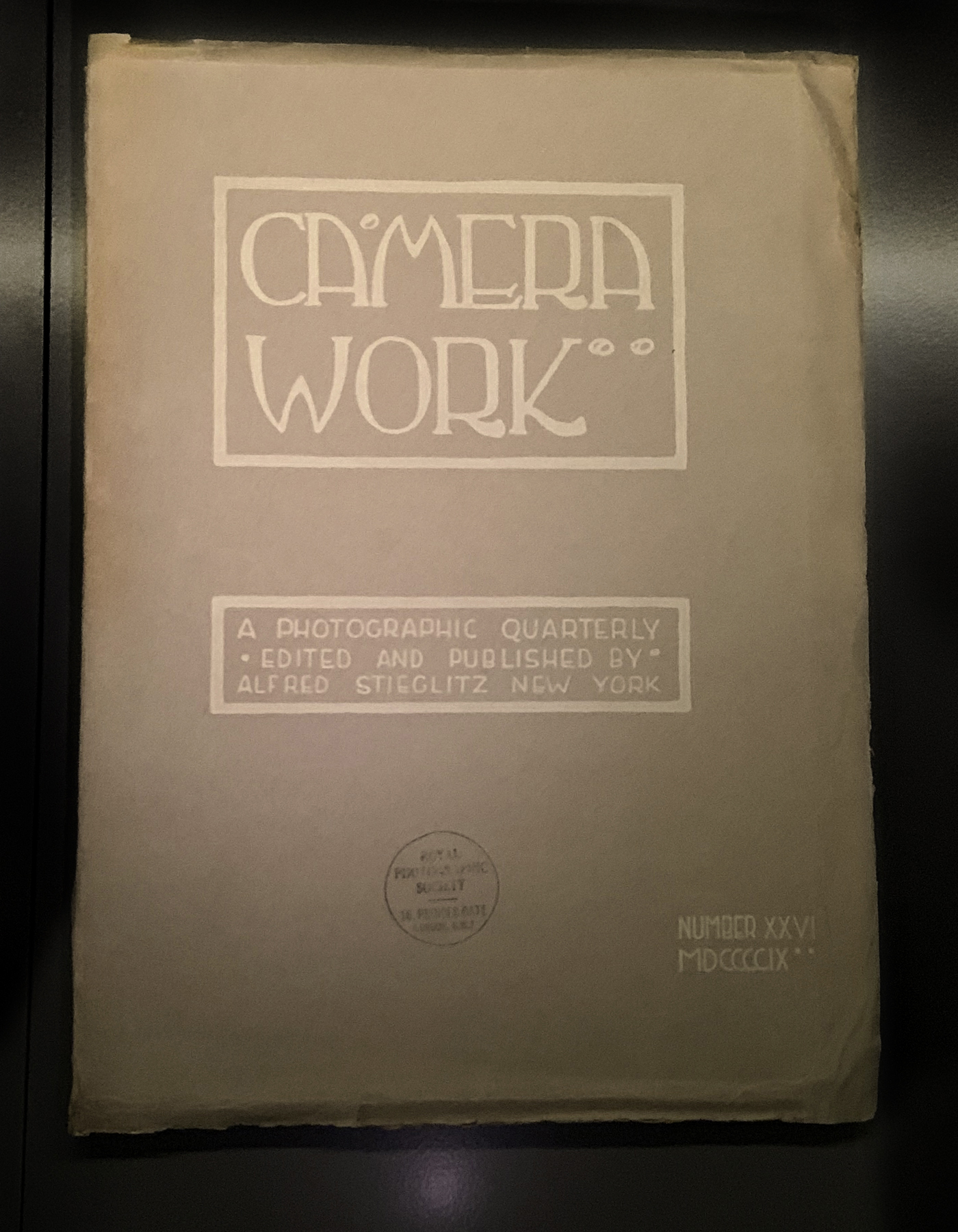
Installation view of the exhibition 'Photo-Secession: Painterly Masterworks of Turn-of-the-Century Photography' at the Utah Museum of Fine Arts showing in the display cabinet issues of the magazine 'Camera Work', 1903-1917. Edited by Alfred Stieglitz and Edward Steichen


Installation view of the exhibition Photo-Secession: Painterly Masterworks of Turn-of-the-Century Photography at the Utah Museum of Fine Arts showing in the display cabinet issues of the magazine Camera Work, 1903-1917. Edited by Alfred Stieglitz and Edward Steichen


The Role of Camera Work

One of the key platforms for the Photo-Secession movement was the influential journal Camera Work, edited by Stieglitz and Steichen. Published from 1903 to 1917, Camera Work featured the work of Photo-Secessionists alongside essays and critiques that championed the artistic potential of photography. The journal played a crucial role in shaping public and critical perceptions of photography, providing a space for photographers to showcase their work and engage in intellectual discourse.

Adelaide Ryder. “The Photo-Secession Movement: Pioneering Artistry in Early Photography,” on the UMFA website Nd [Online] Cited 22/10/2024


Introduction

This exhibition celebrates 26 intrepid artists at the turn of the 20th century who sought to establish photography as a fine art equal to long-established media like painting, sculpture, drawing, and printmaking. This movement in the United States centred on the group dubbed the Photo-Secession. While each of the Photo-Secessionists had their distinctive approaches, their works are hand-crafted photographic prints of traditional artistic subjects, such as landscape, portraiture, figure study, and still life. This combination of painterly imagery and printmaking is also known as Pictorialism.

The passionate leader and tenacious advocate of the Photo-Secession was Alfred Stieglitz, who advanced the visions of the most ambitious photographers of the time, including Heinrich Kühn, Gertrude Käsebier, Edward Steichen, Paul Strand, and Clarence White. Stieglitz tirelessly promoted art photography through his exhibition space in New York City – the Little Galleries of the Photo-Secession and later called simply 291 – as well as through the journals he edited – Camera Notes (1897-1903) and Camera Work (1903-1917).

This exhibition also covers the breakup of the Photo-Secession, as some photographers rejected Pictorialism while others remained staunchly committed to it. The Photo-Secession itself irrevocably split apart around 1917. Artists led by Stieglitz, Steichen, and Strand switched to Straight Photography, an approach involving sharp focus and direct printing of the original shot. Artists led by Käsebier and White continued to innovate through painterly approaches using soft focus and manipulated prints.

The works in this exhibition represent some of the most influential artists and iconic images of the period as well as superb examples of a variety of photographic printing techniques, including platinum, gum-bichromate, carbon, cyanotype, and bromoil.

All works of art this exhibition are from the private collection of Michael Mattis and Judith Hochberg. This exhibition is organised by art2art Circulating Exhibitions.

The Rebirth of Art Photography in Europe

In the first few decades after the invention of photography in 1839, painters played an instrumental role in the development of this new medium. Artist-photographers like D.O. Hill in Edinburgh and Gustave Le Gray in Paris exhibited their photographs alongside paintings, drawings, and prints. The novelty of the photograph led to the proliferation of portrait studios and mass-produced views of famous monuments or exotic locales for the tourist trade. By the 1860s photography was considered a bourgeois technical profession. The Kodak camera, first issued in 1888, further popularised photography with its roll film, simple controls, and reasonable cost of one dollar (about $33 today).

Even as more and more individuals could access the means to make photos, artist-photographers advocated for the status of their medium and demanded a differentiation between their work and the products of point-and-shoot cameras. In 1889 Peter Henry Emerson published the book Naturalistic Photography for Students of the Art, which proposed a role for landscape photographers equal to esteemed painters like Camille Corot and Jean-François Millet. Emerson’s publication was a clarion call for a new generation of artistic photographers, and Pictorialism was born.

Pictorialist photographers enthusiastically pursued their new movement, pioneering soft-focus lenses and manipulatable printing methods. Soon they were forming regional clubs across Europe and resumed exhibiting their prints as art. The photographers that formed the t in London were particularly active and influential, and Pictorialism spread to other cultural centres like Paris, Berlin, and Vienna.

Alfred Stieglitz and the American Pictorialist Movement

Born in Hoboken, New Jersey, but educated largely in Germany, Alfred Stieglitz (1864-1946) watched the flowering of European Pictorialism with a mixture of aesthetic appreciation and fierce competitiveness, writing in 1892:

“Every unbiased critic will grant that we [American photographers] are still many lengths in the rear, apparently content to remain there, inasmuch as we seem to lack the energy to strive forward – to push ahead with that American will-power which is so greatly admired by the whole civilised world.”

Energised by European Pictorialism, Stieglitz championed juried photographic salons in Boston, New York, and Philadelphia. He also edited a series of increasingly ambitious journals about Pictorialist photography, starting with The American Amateur Photographer in 1893, then Camera Notes in 1897, and finally Camera Work starting in 1903. He inaugurated and named the Photo-Secession movement through the landmark exhibition he curated in 1903 at the National Arts Club in New York, which comprised 162 works by 32 artists. The name “Photo-Secession” referred to European avant-garde artistic movements, and in his own words, “Photo-Secession actually means a seceding from the accepted idea of what constitutes a photograph.” Eventually European artists would also be invited to join the Photo-Secession.

In 1905 Stieglitz opened a space at 291 Fifth Avenue in New York, the Little Galleries of the Photo-Secession, later simply called 291. It was the first retail gallery devoted to photography. He supported the venture with his own resources and generous assistance from others, and Edward Steichen was his steadfast associate. By 1915 Stieglitz was also showing avant-garde painting and sculpture at 291, including works by Pablo Picasso, Henri Matisse, and Constantin Brâncuși. Thus, he sought to demonstrate the idea that all art forms were on par with and informed one another.

Close Collaborations and the Sudden End of the Photo-Secession

From 1907 to 1910 Alfred Stieglitz and Clarence White closely collaborated on photographs and a landmark photography exhibition. In 1907 they made a series of 60 nudes, Stieglitz posing the models and White focusing the camera and making most of the prints. The following year, Stieglitz devoted an entire issue of Camera Work to White. In 1910 Stieglitz and White co-curated the International Exhibition of Pictorial Photography at Buffalo’s Albright Gallery (now Albright Knox Gallery). This historic project that included over 600 prints is now regarded as the apex of the Photo-Secession. It was also the final monument of the movement, as each of the major Pictorialists, White included, broke away from Stieglitz in the years that followed.

Significant reasons for the end of the Photo-Secession were Stieglitz’s authoritarian personality and disdain for photographers who needed to earn a living rather than exclusively pursue art for art’s sake. Philosophical differences also explain the rupture. Stieglitz had come to believe that Pictorialism had run its course. The irony was that the Photo-Secession had established photography as fine art through images that imitated other art forms by manipulation at every stage of the process – from lens to negative to print. Their pictures to varying degrees used methods that denied the very essence of photography. Stieglitz asserted that it was time to abandon the “painterly photograph” and to champion photography as fine art with compelling pictures that were truly photographic.

Late Pictorialism and the Clarence White School

As the artist Georgia O’Keeffe, Alfred Stieglitz’s partner for 30 years, acknowledged, “He was either loved or hated – there wasn’t much in between.” For reasons both personal and professional, most of the leading Photo-Secessionists chose not to follow Stieglitz and Paul Strand into Straight Photography. Many clustered instead around Clarence White, who in his gentle and encouraging manner was the antithesis of Stieglitz. In 1914 White founded the Clarence White School of Photography in New York City. In 1916 White along with Gertrude Käsebier and Alvin Langdon Coburn co-founded Pictorial Photographers of America; this new society welcomed members of all backgrounds and published the new journal Photo-Graphic Art.

The Clarence White School continued to be a locus for the training of new photographers until 1940, under the guidance of White’s widow Jane White after his death in 1925. Among the most prominent students of Clarence White are Karl Struss, Anne Brigman, Laura Gilpin, and Doris Ulmann, all of whom are represented in this exhibition. Other notable pupils of White include Margaret Bourke-White, Anton Bruehl, Paul Outerbridge, and Dorothea Lange.

Straight Photography, Edward Steichen, and Paul Strand

The final section of this exhibition focuses on Straight Photography and two of Alfred Stieglitz’s most notable protégés, Edward Steichen and Paul Strand. Between them, they pioneered leading branches of 20th-century American photography.

With the entry of the United States into World War I, both Steichen and Strand were drafted into the U.S. Army. Steichen was a photographer for the Army Air Service Signal Corps in Europe, and Strand was an X-ray technician in the Army Medical Corps. In the years immediately after WWI, they each turned their attention to photographing the natural world: flowers and fruit in Steichen’s case, and toadstools, grasses, and ferns in Strand’s. Both would return to photographing their gardens in the final years of their lives.

Outside the naturalist realm, Steichen and Strand’s paths diverged.

Steichen, an extrovert, pioneered modern fashion and advertising photography for the Condé Nast magazines Vogue and Vanity Fair. Later he was named Director of the Department of Photography at the Museum of Modern Art in New York, where he organised the landmark exhibition, Family of Man, which traveled to 37 countries on six continents and was seen by an estimated nine million people.

Strand, an introvert, traveled to remote places around the world, documenting the landscape, architecture, and people, his work exuding a respect for the dignity of the labouring class, which he absorbed from his mentor, Lewis Hine. Overall, Strand’s profoundly humanist scenes of everyday life influenced a generation of socially conscious photographers who documented the 20th-century crises of the Dust Bowl, the Great Depression, World War II, and more.

Heinrich Kühn

In the late 19th century, European Pictorialism was divided into two camps. On the one side were the purist photographers who, aside from a softening of the lens, opposed extensive manipulation of the negative or the print for artistic effect. On the other side were those who derided “button-pushers” and viewed the “straight” photograph as merely the raw material from which to create an artistic print through elaborate handiwork.

The leader of this latter camp was Heinrich Kühn (1866-1944). Eschewing Modernist tendencies, he chose traditional subject matter of painting from the 17th through 19th centuries: still life, figural studies, and genre scenes. His preference for gum-bichromate and bromoil printmaking techniques, which allowed for extensive manipulation, were intended to provoke the reaction in the viewer: is that really a photograph?

Born in Dresden, Kühn moved to Innsbruck, Austria, after youthful studies in science and medicine. Thanks to a sizeable inheritance, he could devote himself to artistic photography, joining both the Linked Ring in London and Stieglitz’s Photo-Secession in the United States. A trans-Atlantic correspondence with Stieglitz began in 1899 and lasted three decades. They congratulated one another on their latest triumphs and encouraged each other through professional and personal disappointments. In 1909, with Stieglitz’s assistance, Kühn organised the International Photographic Exhibition in Dresden, one of the high points of Pictorialism.

Later in life, Kühn filed multiple patents in photochemistry and camera technology related to Pictorialist photography, but none earned him any money. Tastes had changed, and the painterly photograph had become a quaint curiosity.

Gertrude Käsebier

Gertrude Käsebier (1852-1934) was 37 years old, married, and had three children by the time she began studying art at the Pratt Institute. She had originally purchased a camera to make portraits of her children, but Pratt encouraged its women students to earn a living in the arts. By 1897 she opened a one-room commercial portrait studio in New York City. Her ambition was to make “not maps of faces, but likenesses that are biographies, to bring out in each photograph the essential personality that is variously called temperament, soul, humanity.”

Recognition for Käsebier’s talent and ability came swiftly. In 1898 the painter William Merritt Chase, judging the Philadelphia Photographic Salon, called her work “as fine as anything that [Anthony] Van Dyck has ever done.” For Stieglitz, who organised her first solo show in 1899 at the Camera Club of New York, Käsebier was “beyond dispute the leading portrait photographer in this country.” That year, she sold one of her photographs for the unheard-of sum of $100 (almost $3,800 today).

However, by the time that the Brooklyn Museum honoured Käsebier with a career retrospective in 1929, Pictorialist photography had fallen so far out of fashion that the exhibition was not even reviewed in major journals.

Clarence Hudson White

Clarence Hudson White (1871-1925) was a modest, soft-spoken, entirely self-taught genius from America’s heartland. Raised in the small town of Newark, Ohio, he eked out a living as a bookkeeper for a wholesale grocer; each week he saved enough to purchase two glass plates for his camera. He specialised in gorgeously back-lit domestic interior scenes featuring his friends and members of his close-knit extended family.

White’s contributions to the 1898 Philadelphia Photographic Salon were so highly praised that, like Gertrude Käsebier, he was appointed a judge for the following year. The annual salons of the Newark Camera Club that he organised featured the nation’s preeminent Pictorialists and were the direct precursor to Stieglitz’s Photo-Secession. Indeed, the 1900 salon featured his friend and latest discovery, Edward Steichen of Milwaukee.

From 1907 onwards, both in New York City and during summers in rural Maine, White was also America’s foremost teacher of photography. Many of the leading American photographers of the 20th century studied at the Clarence White School.

Paul Strand

In 1915 Alfred Stieglitz found in the young Paul Strand (1890-1976) the leader of a remarkable new direction in photography. Strand had been a senior at the Ethical Culture High School in 1907 when he first visited Gallery 291 on a class trip with his photography teacher, Lewis Hine, whose poignant documents of immigrants and child labor were staples of the Progressive Movement. Eight years later, after thousands of hours in the darkroom at the New York Camera Club, Strand returned to 291 with a portfolio of platinum prints that pointed the way to a new era. Stieglitz deemed them “brutally direct, devoid of all flim-flam, devoid of trickery and of any ‘ism’. These photographs are the direct expression of today.” Stieglitz not only offered Strand an exhibition at 291, but also devoted the final two issues of Camera Work exclusively to him.

What was so compelling and inspiring to Stieglitz in Strand’s photography? His portfolio contained pictures of urban street life and architecture, as well as powerful close-ups of weathered New York faces (influenced by Lewis Hine), boldly composed still lifes, and shadow abstractions taken on a porch in Twin Lakes, Connecticut.

As for photography’s future, Strand and Stieglitz saw eye to eye. In his essay in Camera Work, Strand called for the universal adoption of Straight Photography “without tricks of process or manipulation.” In a provocative lecture at the Clarence White School, Strand condemned “this so-called pictorial photography, which is nothing but an evasion of everything photographic.”


Works by Emerson, Post, Evans, and Sutcliffe
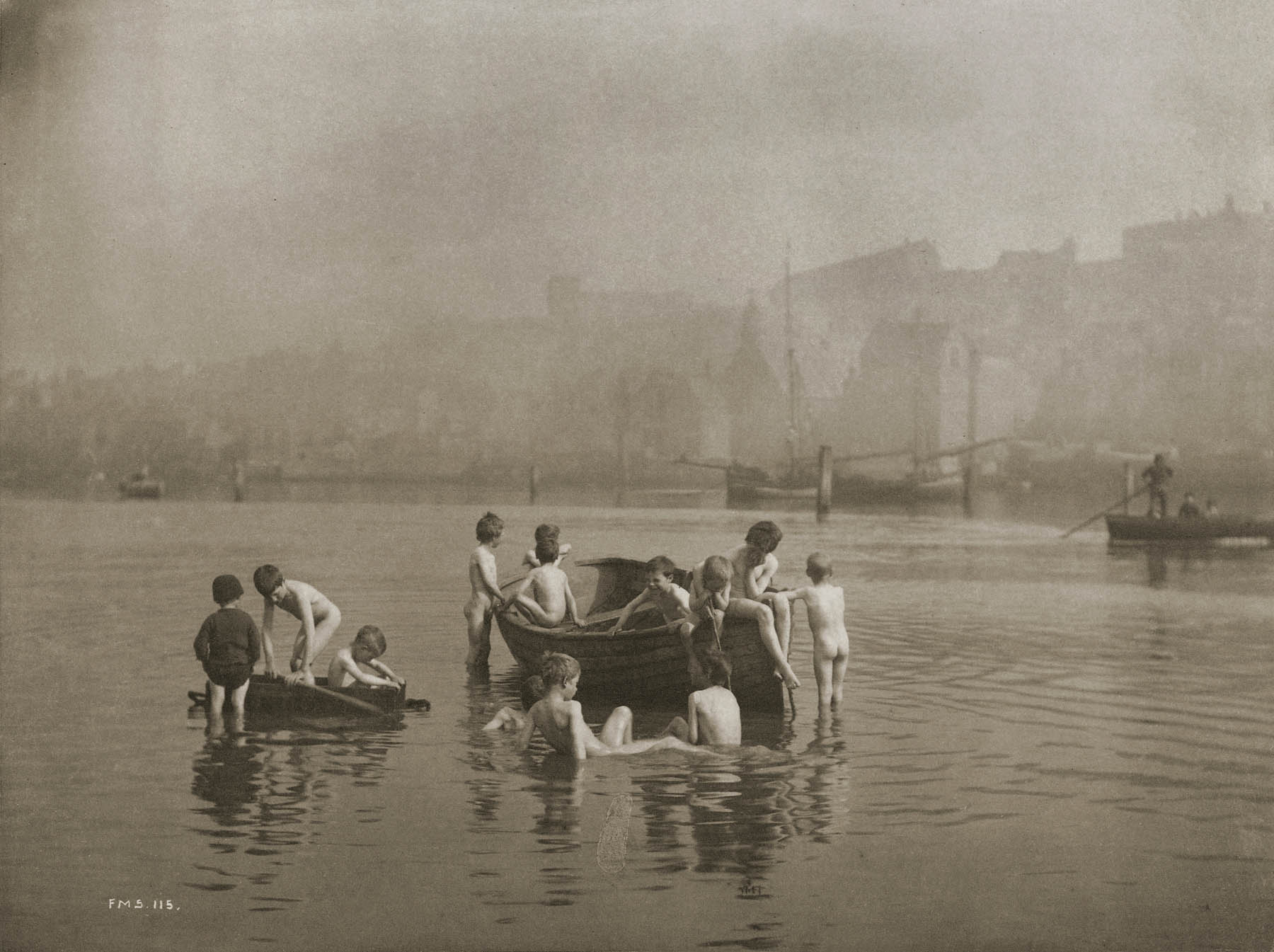
 

Frank Meadow Sutcliffe (British, 1853-1941) 'The Water Rats' 1886 from the exhibition 'Photo-Secession: Painterly Masterworks of Turn-of-the-Century Photography' at the Utah Museum of Fine Arts, Salt Lake City, August - December 2024


Frank Meadow Sutcliffe (British, 1853-1941)
The Water Rats
1886
Platinum print on paper


Sutcliffe was a member of the British photographic society the Linked Ring, which sought to make their work recognised as fine art. He operated a portrait studio in the seaside town of Whitby in North Yorkshire but is remembered for his charming, naturalistic depictions of local life. This photograph resulted in his excommunication by local clergy for its “corrupting” effects. Today this is his best-known photograph, regarded as a study of pure childhood joy.
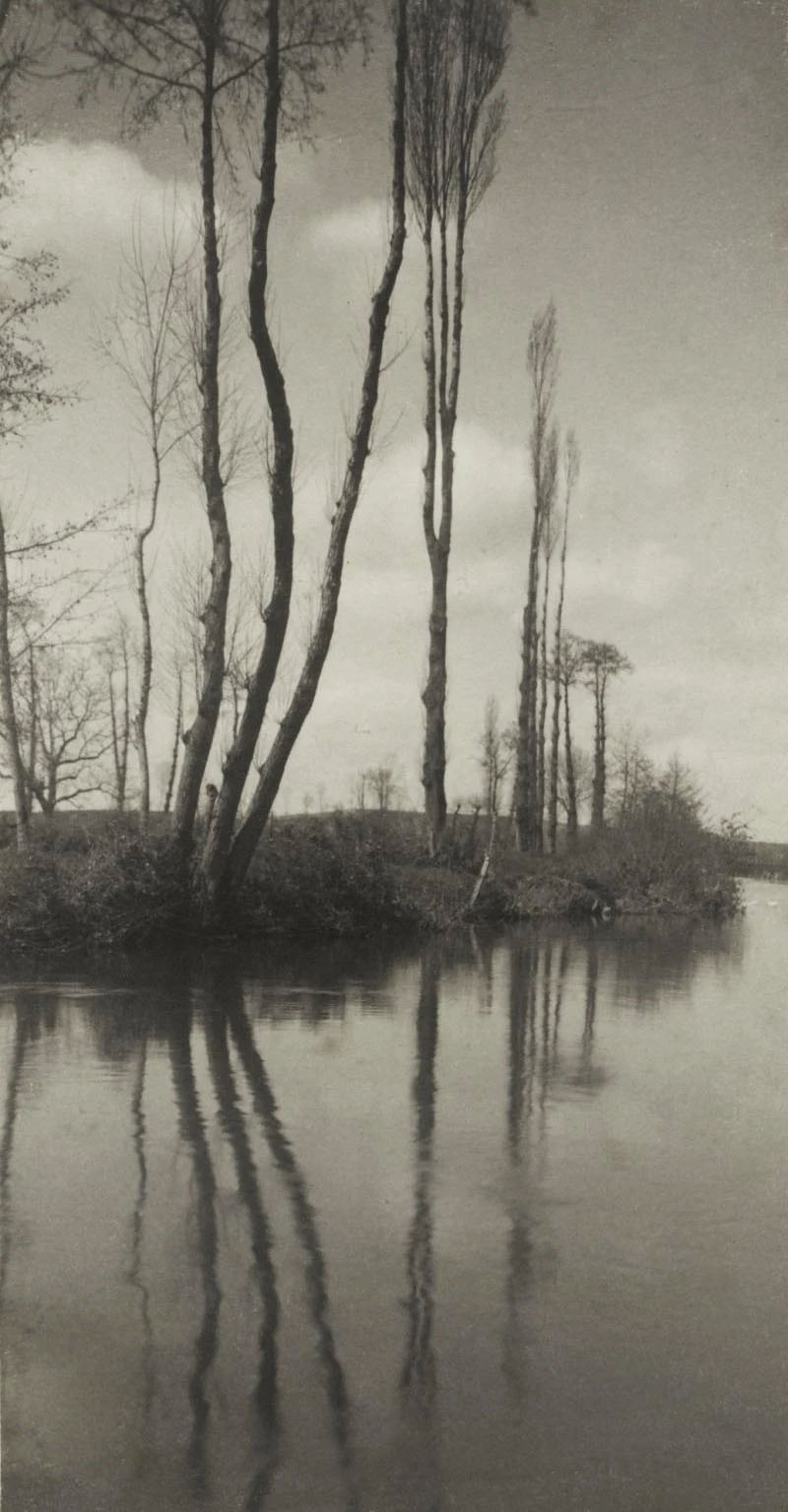
 

Frederick H. Evans (British, 1853-1943) 'Poplars on a French River' c. 1900


Frederick H. Evans (British, 1853-1943)
Poplars on a French River
c. 1900
Platinum print on paper
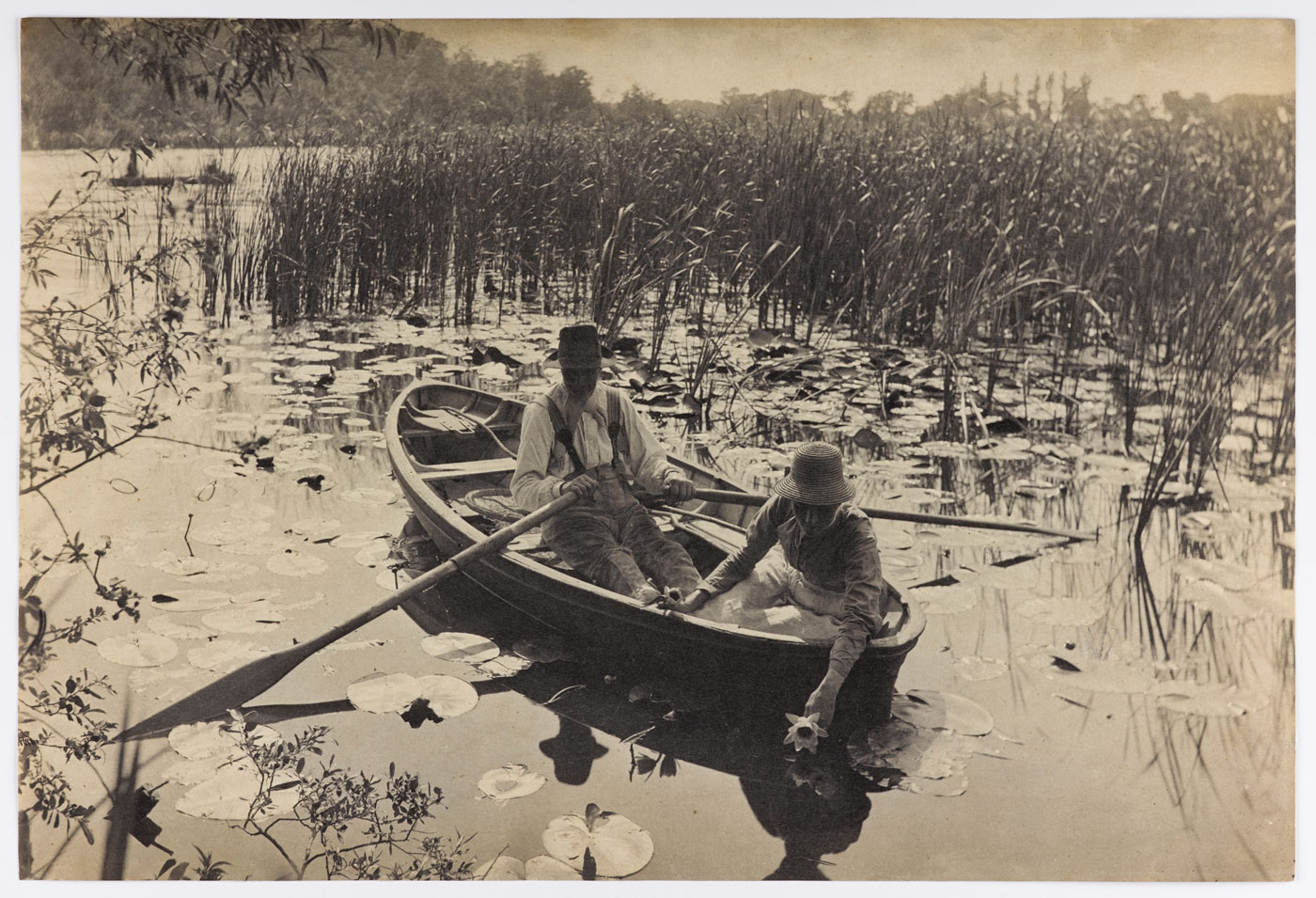
 

Peter Henry Emerson (British born Cuba, 1856-1936) 'Gathering Water Lilies' c. 1885


Peter Henry Emerson (British born Cuba, 1856-1936)
Gathering Water Lilies
c. 1885
Platinum print on paper


In addition to his photographic work, Emerson wrote persuasively that photography could match – and even surpass – painting as an emotive art form. His writings were influential to the young Alfred Stieglitz, with whom he corresponded over four decades.

All from the Collection of Michael Mattis and Judith Hochberg


Works by Thiollier
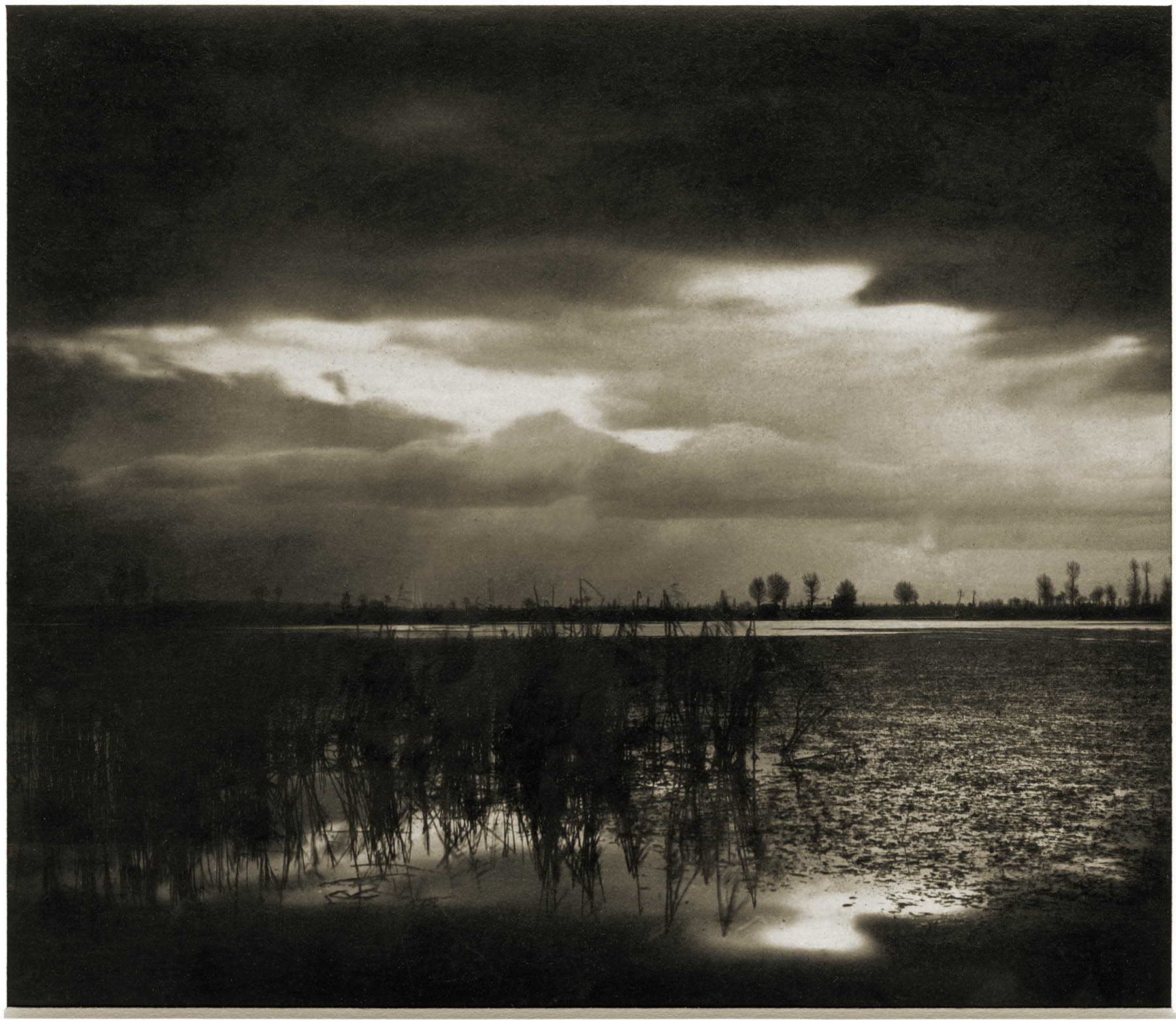
 

Félix Thiollier (French, 1842-1914) 'Landscape in Bugey' c. 1885


Félix Thiollier (French, 1842-1914)
Landscape in Bugey
c. 1885
Carbon print on paper


Thiollier’s photographic career is a fairly recent discovery, highlighted in the first ever retrospective of his career at the Musée d’Orsay in Paris in 2012.

From the Collection of Michael Mattis and Judith Hochberg


Works by Kühn


Heinrich Kühn (Austrian born Germany, 1866-1944) 'Nude in Morning Sun' c. 1920


Heinrich Kühn (Austrian born Germany, 1866-1944)
Nude in Morning Sun
c. 1920
Multiple bromoil transfer print on Japanese tissue paper


Heinrich Kühn (Austrian born Germany, 1866-1944) 'Female torso in sunlight' c. 1920


Heinrich Kühn (Austrian born Germany, 1866-1944)
Female torso in sunlight
c. 1920
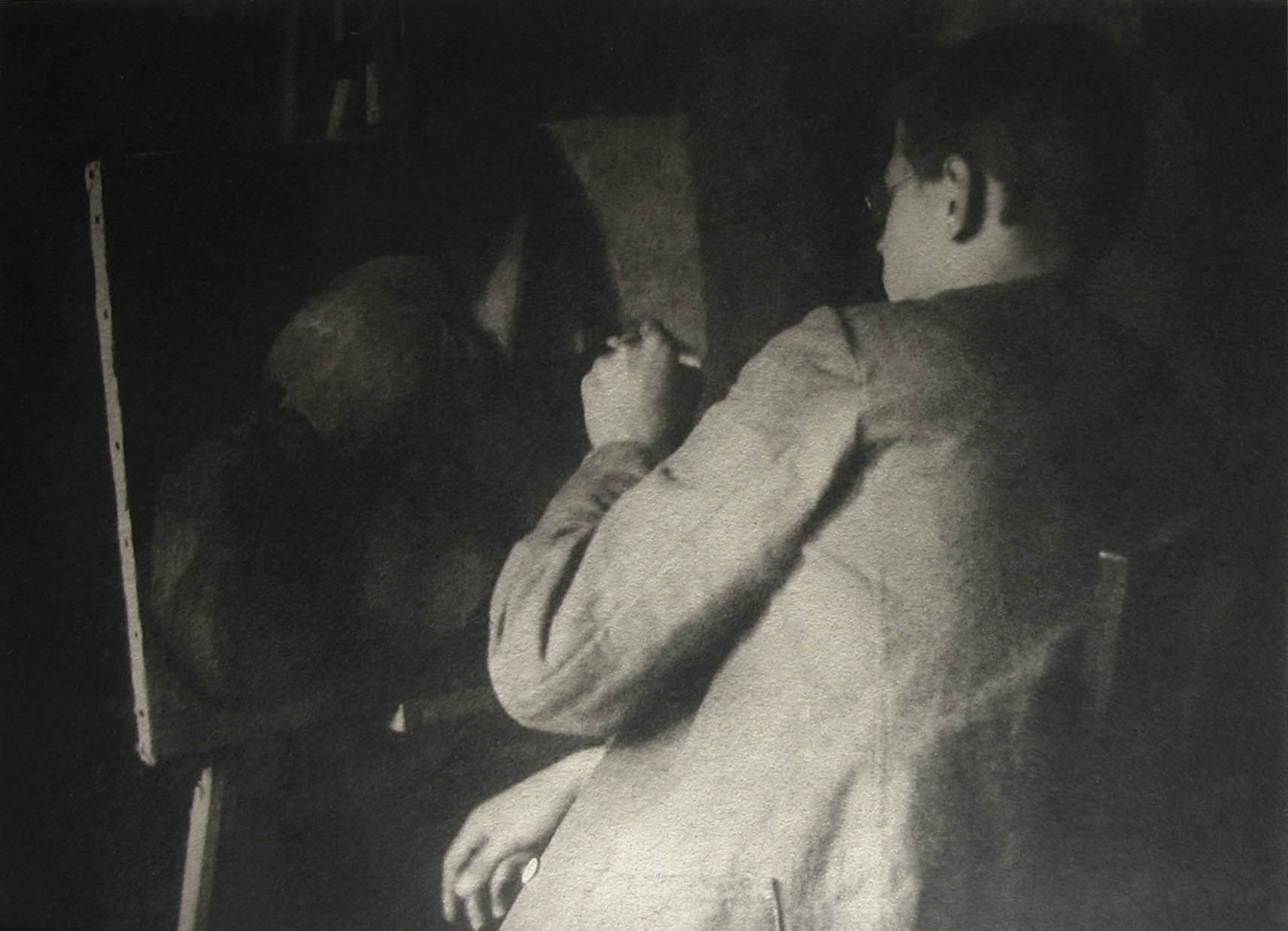
 

Heinrich Kühn (Austrian born Germany, 1866-1944) 'Walter at Easel' c. 1909


Heinrich Kühn (Austrian born Germany, 1866-1944)
Walter at Easel
c. 1909
Gum-bichromate print on paper


Heinrich Kühn (Austrian born Germany, 1866-1944) 'Still Life with Fruit and Pottery' c. 1896


Heinrich Kühn (Austrian born Germany, 1866-1944)
Still Life with Fruit and Pottery
c. 1896
Gum-bichromate print on paper with an applied watercolour wash


Kühn’s still lifes deliberately recall paintings from earlier centuries. This scene – his first published image – contains similar elements to 17th-century still-life compositions. He even included insects, which are traditional references to mortality called memento mori (reminders of death). Can you spot the housefly?

All from the Collection of Michael Mattis and Judith Hochberg


Portraits by Steichen


Edward Steichen (American born Luxembourg, 1879-1973) 'George Frederic Watts, London' 1901


Edward Steichen (American born Luxembourg, 1879-1973)
George Frederic Watts, London
1901
Varnished platinum print on paper


This dramatic profile portrait of the English Pre-Raphaelite painter was the first in what Steichen termed his “Great Men” series. Steichen wrote about his approach to portraiture, “I aim for the expression of something psychological. I am not satisfied with the mere reproduction of features and expression.”

Published in Camera Work, 14, 1906
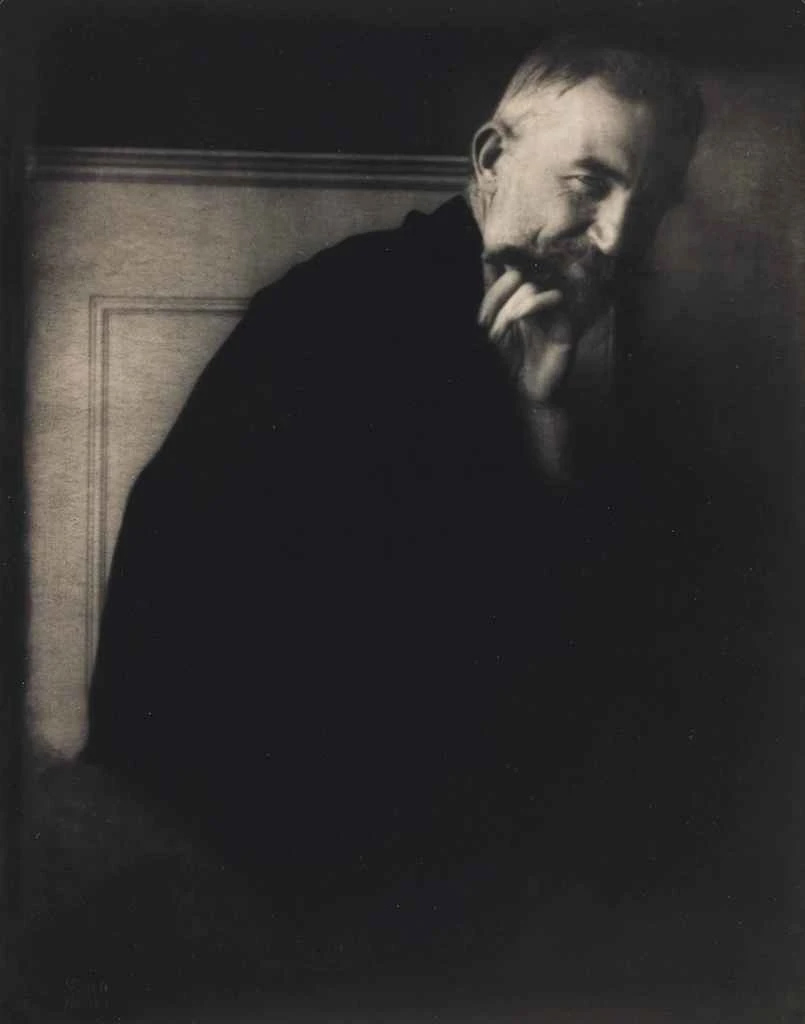
 

Edward Steichen (American born Luxembourg, 1879-1973) 'The Photographer's Best Model: George Bernard Shaw, London' 1907


Edward Steichen (American born Luxembourg, 1879-1973)
The Photographer’s Best Model: George Bernard Shaw, London
1907
Platinum print on paper


Steichen was elated after his photographic sitting with Shaw, writing to Stieglitz: “Well I’ve seen and done Shaw (photographically of course). He’s the nicest kind of fellow imaginable – genial and boyish – there is a little of the sardonic about him as you see him but when you get the camera at him you are tempted with possibilities in that way. He seems to know a lot about photography and certainly skilfully bluffs you into believing he knows it all.”

Published in Camera Work, 42/43, 1913

All from the Collection of Michael Mattis and Judith Hochberg


Glossary of Photographic Printing Methods and Terms from the History of Photography

Gelatin Silver Print

For over a century, from the 1880s until the digital era, the gelatin silver print was the most common technique for producing black-and-white photographs. The paper is coated with a binder layer of gelatin incorporating light-sensitive silver chloride or silver bromide. The paper is exposed under a negative, either by contact-printing or through an enlarger, then chemically developed, stopped, fixed, and dried. In the process, the silver salts are reduced to metallic silver, which carries the image. The overall color of the print can be altered through toning.

Cyanotype

A sheet of paper is sensitised in a solution of potassium ferricyanide and ferric ammonium citrate. After contact-printing under a negative, the iron compounds form an insoluble blue (“cyan”) dye known as Prussian blue. Apart from its occasional artistic use, the only regular use of the cyanotype was in copying architectural plans, thus called “blueprints.”

Platinum or Palladium Print

A platinum print is produced by sensitising a sheet of paper with platinum and iron salts. The sheet is then contact-printed under a negative until a faint image is visible. The print is developed in a potassium oxalate solution that dissolves unexposed iron salts and transforms the platinum salts into metallic platinum, which intensifies the image. Mercury chloride can be added to the solution to give a warmer tone. Unlike a silver print, where the image lives in a gelatin binder layer on top of the paper (akin to a watercolour), the image in a platinum print is embedded in the paper fibres (akin to an oil painting). The rich mid-tone range and matte surface made the platinum print the favoured medium for the Pictorialist photographers, from P.H. Emerson onward. When the price of platinum spiked during World War I, palladium was introduced as a more affordable (and generally warmer-toned) substitute.

Pigment Prints

The following processes are known as pigment prints, because the photographic image is carried by inks or pigments, rather than by metallic particles like silver, iron, or platinum.

Gum Bichromate Print

A sheet of paper is coated with diluted gum-arabic mixed with coloured pigment and light-sensitive potassium bichromate. During exposure under a negative, the bichromate causes the coloured gum-arabic to harden in proportion to the amount of light received. The areas not exposed to light remain soluble in water, and the print is developed by washing away the soluble areas, leaving a positive image on the paper. The prints can be exposed and reprinted numerous times with different coloured pigments, as well as manipulated by brushing away more pigmented gum during the washing stage.

Bromoil (Transfer) Print

This process does not begin with a negative, but rather with a gelatin silver print that is bleached in a solution of potassium bromide. The bleaching removes the silver-based image and selectively hardens the underlying gelatin in proportion to the image density. The sheet is then hand-coloured with an oil-based ink, which is selectively absorbed depending on the hardness of the gelatin: the softer areas contain more water, which repels the oil-based ink. An inked print is sometimes used as a kind of printing plate for transferring the image to another sheet of paper (a bromoil transfer print).

Photogravure

This is a sophisticated photomechanical process used for reproducing photographs in ink in a large edition. It is a form of intaglio printing, in which a photographic image is acid-etched into a copper plate. The relief image is then inked and printed. Alfred Stieglitz’s magazine Camera Work was largely printed in photogravure.

The Photo-Secession

This was the brief but influential artistic movement led by American Alfred Stieglitz during the years 1902–1915 that championed photography as an art form that was as aesthetic, creative, and skilful as traditional media like painting, drawing, watercolour, and printmaking. The European artistic movement Secessionism inspired the name Photo-Secession, and both movements were committed to Modernism by seceding from centuries-old academic traditions.

Pictorialism / Pictorialist

The approach to photography in which artists sought to make images that imitated the tradition of paintings through photographic prints. Pictorialist photographers used soft focus lenses and manipulated both their negatives and printing media to create their prints.

The Linked Ring

Also known as the Brotherhood of the Linked Ring, this photographic society founded in 1892 in London promoted photography as a form of art and was influential for the American society of the Photo-Secession.

Straight Photography

The approach to photography in which artists use sharp focus and print directly from their negatives with minimal or no manipulation.

Camera Notes

Camera Notes was the journal of the Camera Club of New York, edited by Alfred Stieglitz from 1897 to 1902. Under Stieglitz’s editorship, the purposes of Camera Notes were “to take cognisance also of what is going on in the photographic world at large, to review new processes and consider new instruments and agents as they come into notice; in short to keep our members in touch with everything connected with the progress and elevation of photography.”

Camera Work

Camera Work was the journal about contemporary photography that Alfred Stieglitz edited and published with the assistance of Edward Steichen from 1903 to 1917. The goal of this journal “devoted largely to the interests of pictorial photography” was “to issue quarterly an illustrated publication which will appeal to the ever-increasing ranks of those who have faith in photography as a medium of individual expression, and, in addition, to make converts of many at present ignorant of its possibilities.”

This glossary has been edited from primary sources and text by Ina Schmidt-Runke, Meike Harder, and Andreas Gruber.


The Photo-Secession Movement: Pioneering Artistry in Early Photography

By Adelaide Ryder, head photographer and digital assets manager at the UMFA

The Birth of the Photo-Secession Movement

This fall the Utah Museum of Fine Arts will exhibit Photo-Secession: Painterly Masterworks of Turn-of-the-Century Photography. This exhibition of art photography from the early 20th century will be on view from August 24 to December 29, 2024. Who were the Photo-Secessionists and why was their work so pivotal to the advancement of photography as an art form?

In the mid-19th century photography was regarded as a complex technical field that only a trained professional could do. By the 1880s, however, the hand-held camera had become affordable and easy to use, and the “snapshot” became commonplace. Smaller, easier-to-use cameras and the ability to send the film off to a lab for development gave the public accessibility to the medium in a new way. This technological advancement greatly affected the professional photography business, as people began to question the skills needed to make a photograph when “anyone could push a button.”

How did photographers respond to this shift in aesthetics and business? Many searched for ways to use photography to express abstract ideas or subjective points of view, shifting from using photography to document objective likeness to illustrating subjective conditions or the subject’s inner state. This helped elevate the photographer’s status, as the expressive ability of the person behind the camera became as important as the subject. Photographers embraced symbolism and started printing with complex techniques like gum bichromate to elevate their craft above the basic snapshot. Two significant movements were born from this struggle to gain recognition as a legitimate form of artistic expression rather than simply a means of mechanical documentation: Pictorialism and the Photo-Secession.

The camera was seen as a tool, and many felt that photographs visually lacked the “artist’s hand,” an essential factor in calling something “art.” The Photo-Secession movement, founded by Alfred Stieglitz in 1902, aimed to change this perception. Stieglitz and his contemporaries believed photography deserved the same artistic consideration as painting and sculpture. They aimed to elevate photography to fine art, emphasizing the photographer’s vision and creativity over mere technical skill. Stieglitz said the Photo-Secession was founded “loosely to hold together those Americans devoted to pictorial photography in their endeavour to compel its recognition, not as a handmaiden of art, but as a distinctive medium of individual expression.” (Camera Work, no. 6, April 1904.)

The Photo-Secession movement emerged from the broader Pictorialist movement, which dominated photographic art in the late 19th and early 20th centuries. While both movements sought to establish photography as an art form, the Photo-Secessionists emerged with their own philosophy.

Similarities

Artistic Expression: The Photo-Secession and Pictorialism emphasized the photographer’s role as an artist rather than a mere technician. They believed that photography should convey the photographer’s vision and emotional intent.

Aesthetic Quality: Both movements valued the aesthetic quality of photographs. They often employed techniques like soft focus, manipulation of light, and careful composition to create visually striking images.

Influence of Painting: Both were heavily influenced by the aesthetics of painting, particularly Impressionism and Symbolism. They sought to create images that were painterly in style, blurring the lines between photography and traditional fine arts.

Differences

Philosophical Focus: Pictorialism focused on creating images that looked like paintings, often using elaborate darkroom techniques to achieve a painterly effect. Photo-Secession, while also influenced by painting, emphasised the photographer’s personal expression and the inherent qualities of the photographic medium, sometimes even embracing the “snapshot” aesthetic if it helped to illustrate more hidden ideas and thoughts.

Technical Innovation: The Photo-Secessionists were more open to embracing the amateur artist and experimentation in techniques and technologies, whereas the Pictorialists held on to the traditional hierarchy of the European artistic schools of the time. Photo-Secessionists saw innovation as a means to expand photography’s artistic potential.

Subject Matter: Pictorialists focused on romanticized and idealized subjects, such as landscapes, portraits, and allegorical scenes. The Photo-Secessionists, on the other hand, explored a wider range of subjects, including urban scenes, modern life, and abstract forms. They embraced art movements like Cubism and Futurism, reflecting a broader and more progressive vision of art.

Exhibition and Display: The Photo-Secessionists were disenchanted with the outdated salons and gate-keeping ways of many photo schools commonly practiced in Europe. They began publications like The American Amateur Photographer, Camera Notes, and Camera Work to help give a platform to young photographers and people practicing these new ways of image making.

Adelaide Ryder. “The Photo-Secession Movement: Pioneering Artistry in Early Photography,” on the UMFA website Nd [Online] Cited 22/10/2024
 

Who were the Photo-Secessionists?

Works by Stieglitz

Alfred Stieglitz: The Visionary Leader

Alfred Stieglitz was a driving force behind the Photo-Secession movement. His passion for photography galvanized his dedication to promoting it as an art form. He saw photography as a means of personal expression. He helped catapult the idea that image-making can happen in the darkroom, during the printing process, as much as in the camera.

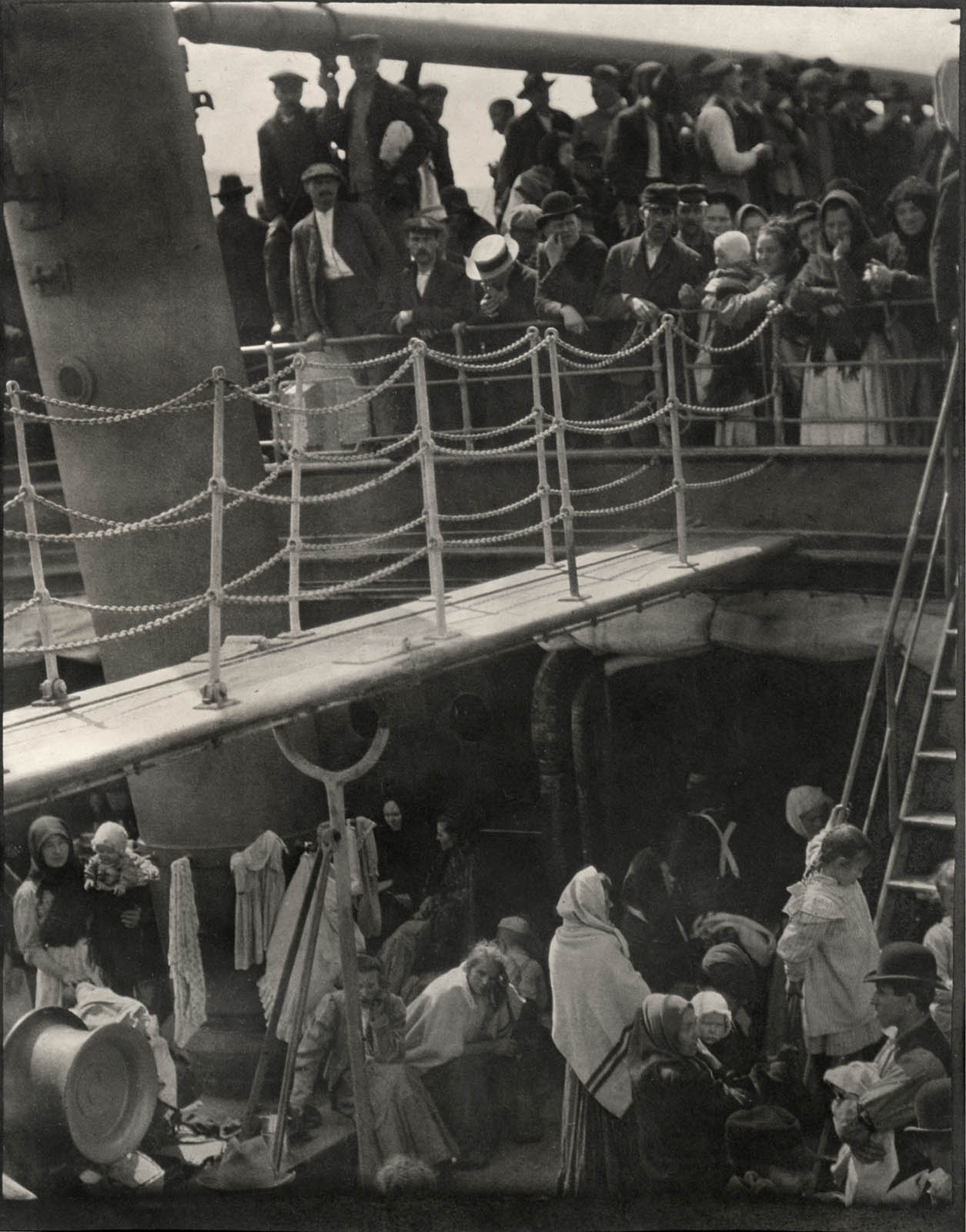
Stieglitz’s photograph The Steerage (1907, below) is one of the most iconic images in the history of photography. This powerful image captures the crowded lower deck of a transatlantic steamer, where people traveled in steerage class, the part of the ship with accommodations for those with the cheapest tickets. The Steerage is celebrated for its striking composition, which combines geometric shapes and human forms to create a dynamic and balanced visual narrative. Stieglitz considered this photograph one of his most outstanding achievements, as it encapsulated his transition to straight photography, which embraced photographs looking like photographs rather than the painterly qualities of Pictorialism. This photograph shows his ability to convey the complexity and depth of human experience through a single image. The photograph is a masterpiece of visual artistry and a compelling social document, reflecting the conditions and aspirations of early 20th century immigrants.

Adelaide Ryder. “The Photo-Secession Movement: Pioneering Artistry in Early Photography,” on the UMFA website Nd [Online] Cited 22/10/2024


Alfred Stieglitz (American, 1864-1946) 'The Steerage' 1907


Alfred Stieglitz (American, 1864-1946)
The Steerage
1907
Hand-pulled photogravure on paper


This photograph has become the iconic image of the Photo-Secession and has legendary status. In June 1907 he sailed to Europe to visit family and booked a first-class cabin. On a stroll around the ship, he encountered a bustling scene of labourers and their families traveling in steerage class, the part of the ship with accommodations for those with the cheapest tickets. With a single four-by-five-inch glass plate left in his camera, Stieglitz shot what would be regarded as a definitive masterpiece of both photography and Modernism.

About making this picture Stieglitz recalled: “There were men and women and children on the lower deck of the steerage. There was a narrow stairway leading to the upper deck of the steerage, a small deck right on the bow of the steamer. To the left was an inclining funnel and from the upper steerage deck there was fastened a gangway bridge that was glistening in its freshly painted state. It was rather long, white, and during the trip remained untouched by anyone. On the upper deck, looking over the railing, there was a young man with a straw hat. The shape of the hat was round. He was watching the men and women and children on the lower steerage deck. A round straw hat, the funnel leaning left, the stairway leaning right, the white drawbridge with its railing made of circular chains – white suspenders crossing on the back of a man in the steerage below, round shapes of iron machinery, a mast cutting into the sky, making a triangular shape. I saw shapes related to each other. I saw a picture of shapes and underlying that the feeling I had about life.”


Alfred Stieglitz (American, 1864-1946) 'The Hand of Man' 1902


Alfred Stieglitz (American, 1864-1946)
The Hand of Man
1902
Hand-pulled photogravure on paper

All from the Collection of Michael Mattis and Judith Hochberg


Works by Käsebier

Gertrude Käsebier: The Master of Portraiture

Gertrude Käsebier was known for her compelling portraits and allegorical imagery. Käsebier’s work transcended traditional portrait photography by infusing her images with a deep sense of intimacy and character. She believed that a photograph should reveal the inner essence of its subject, and her portraits are renowned for capturing the personality and spirit of the people she photographed.

Käsebier’s approach to portraiture was both innovative and empathetic. This image from the UMFA’s permanent collection is a perfect example of how she photographed women and children, presenting them with dignity and respect at a time when they were not the usual subjects of portraiture. Her work challenged conventional representations and highlighted her subjects’ emotional depth and individuality.

Adelaide Ryder. “The Photo-Secession Movement: Pioneering Artistry in Early Photography,” on the UMFA website Nd [Online] Cited 22/10/2024
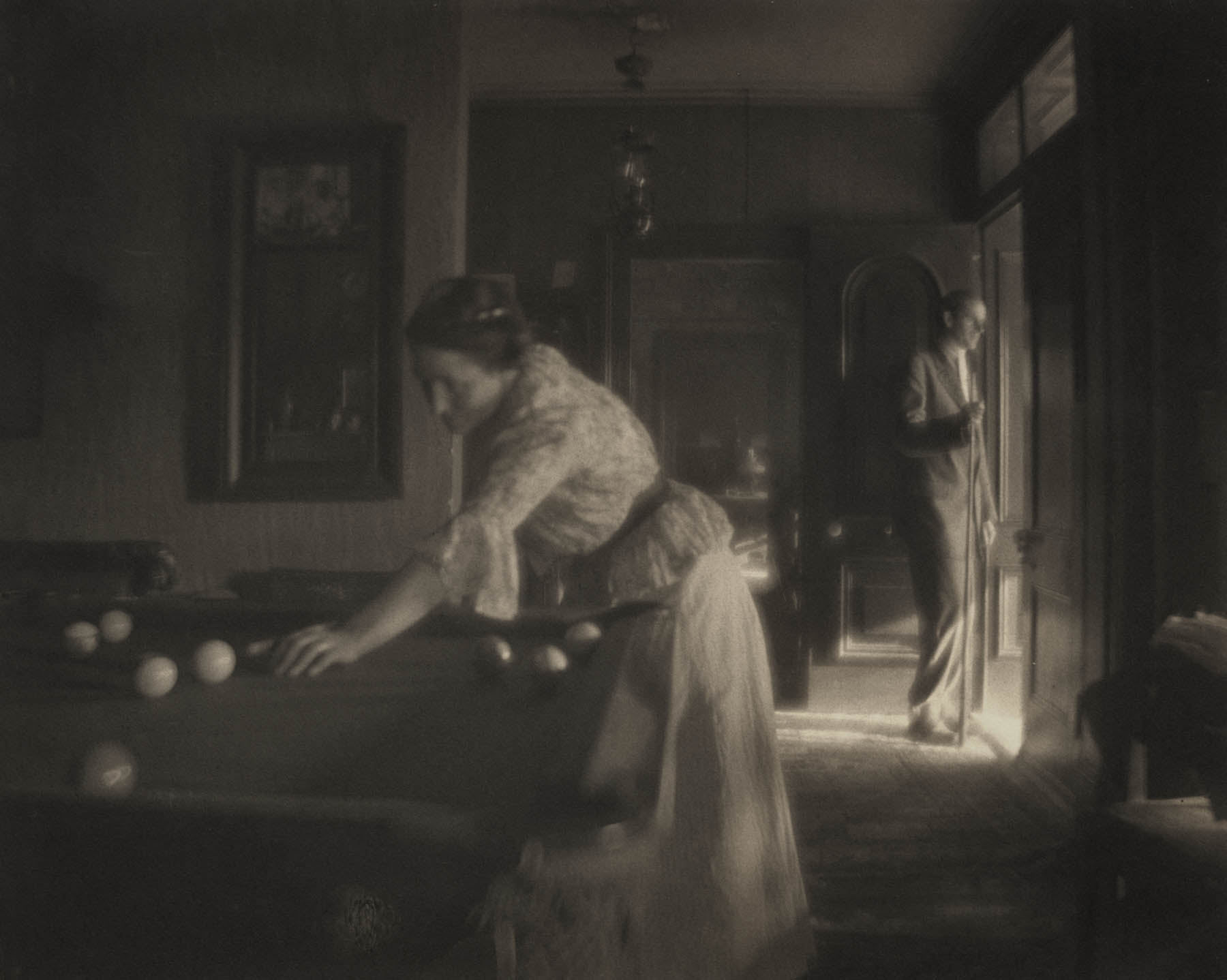
 

Gertrude Käsebier (American, 1852-1934) 'Untitled (Billiard Game)' c. 1909


Gertrude Käsebier (American, 1852-1934)
Untitled (Billiard Game)
c. 1909
Platinum print on paper
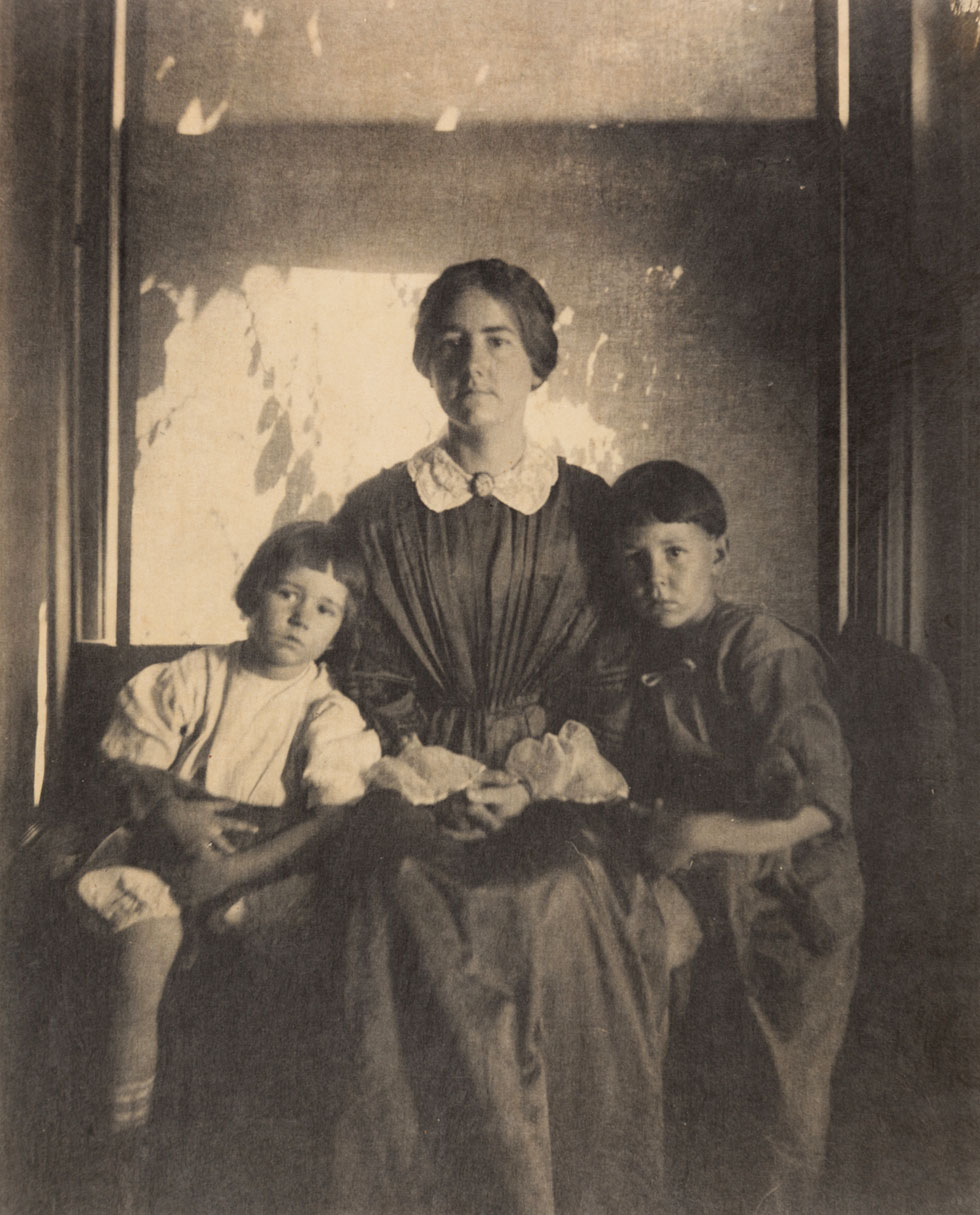
 

Gertrude Käsebier (American, 1852-1934) 'Mother and Two Children' 1899


Gertrude Käsebier (American, 1852-1934)
Mother and Two Children
1899
Platinum print on paper


Gertrude Käsebier (American, 1852-1934) 'Serbonne (A Day in France)' 1901


Gertrude Käsebier (American, 1852-1934)
Serbonne (A Day in France)
1901
Platinum print on paper


Both Pumpkin Pie, Voulangis and Serbonne (A Day in France) were set in France in 1901, when the artist was chaperoning art students. The young man in both scenes is Edward Steichen at age 22, whose interest in photography was then budding.

Serbonne is Käsebier’s chaste reference to Édouard Manet’s famous painting Le Déjeuner sur l’herbe (The Luncheon on the Grass) of 1863. An example of ultra-soft focus, this photo was reproduced in the inaugural issue of Camera Work, which was devoted to Käsebier.

Published in Camera Work, 1, 1903
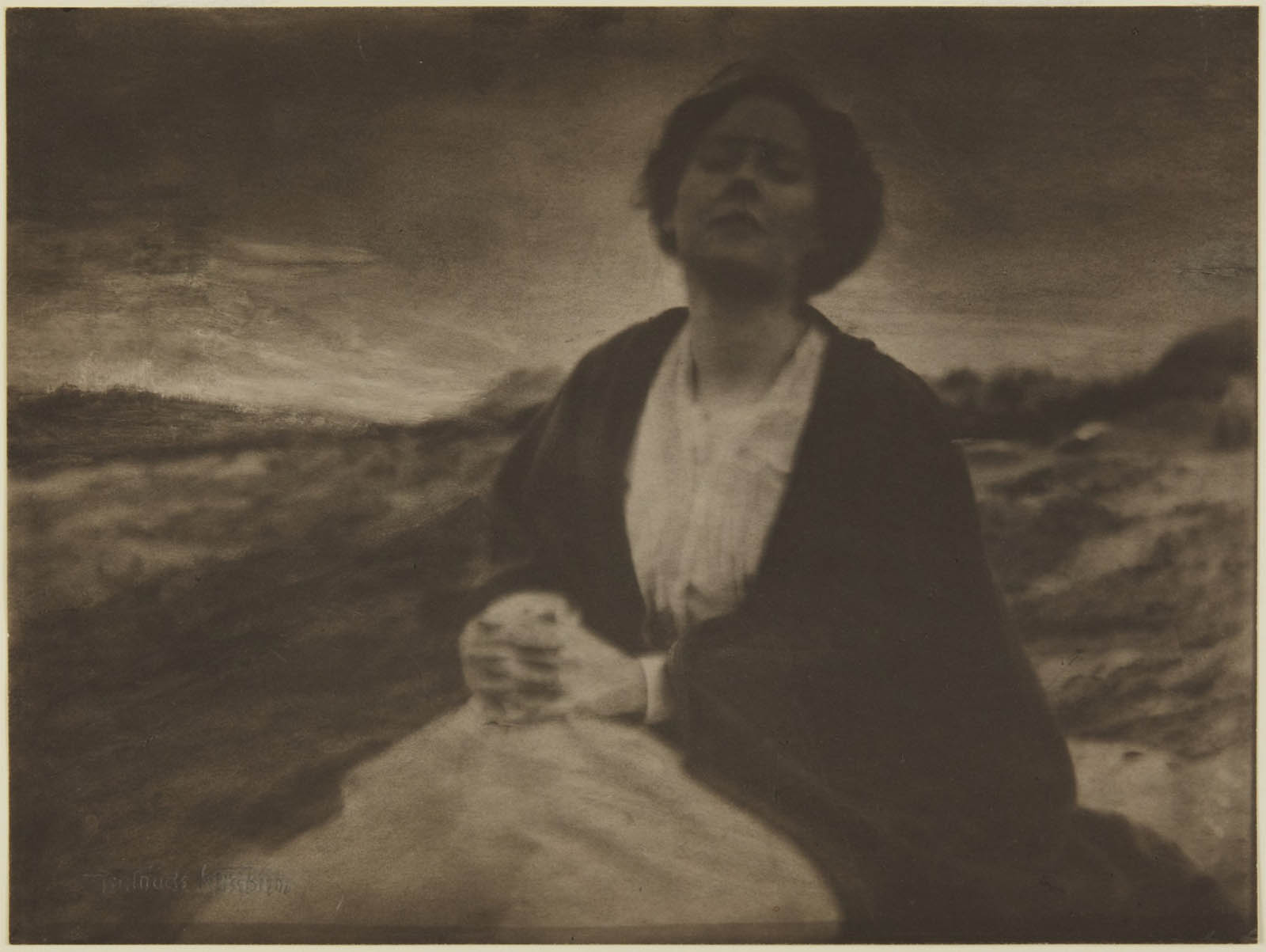
 

Gertrude Käsebier (American, 1852-1934) 'The Heritage of Motherhood' 1904


Gertrude Käsebier (American, 1852-1934)
The Heritage of Motherhood
1904
Gum-bichromate print on paper


This portrays the children’s book author Agnes Rand Lee in mourning after the sudden death of her daughter from illness. A contemporary photographer and critic deemed this image “one of the strongest things that Käsebier has ever done, and one of the saddest and most touching that I have ever seen.” Käsebier extensively manipulated the gum-bichromate process to make this print appear like a charcoal drawing.
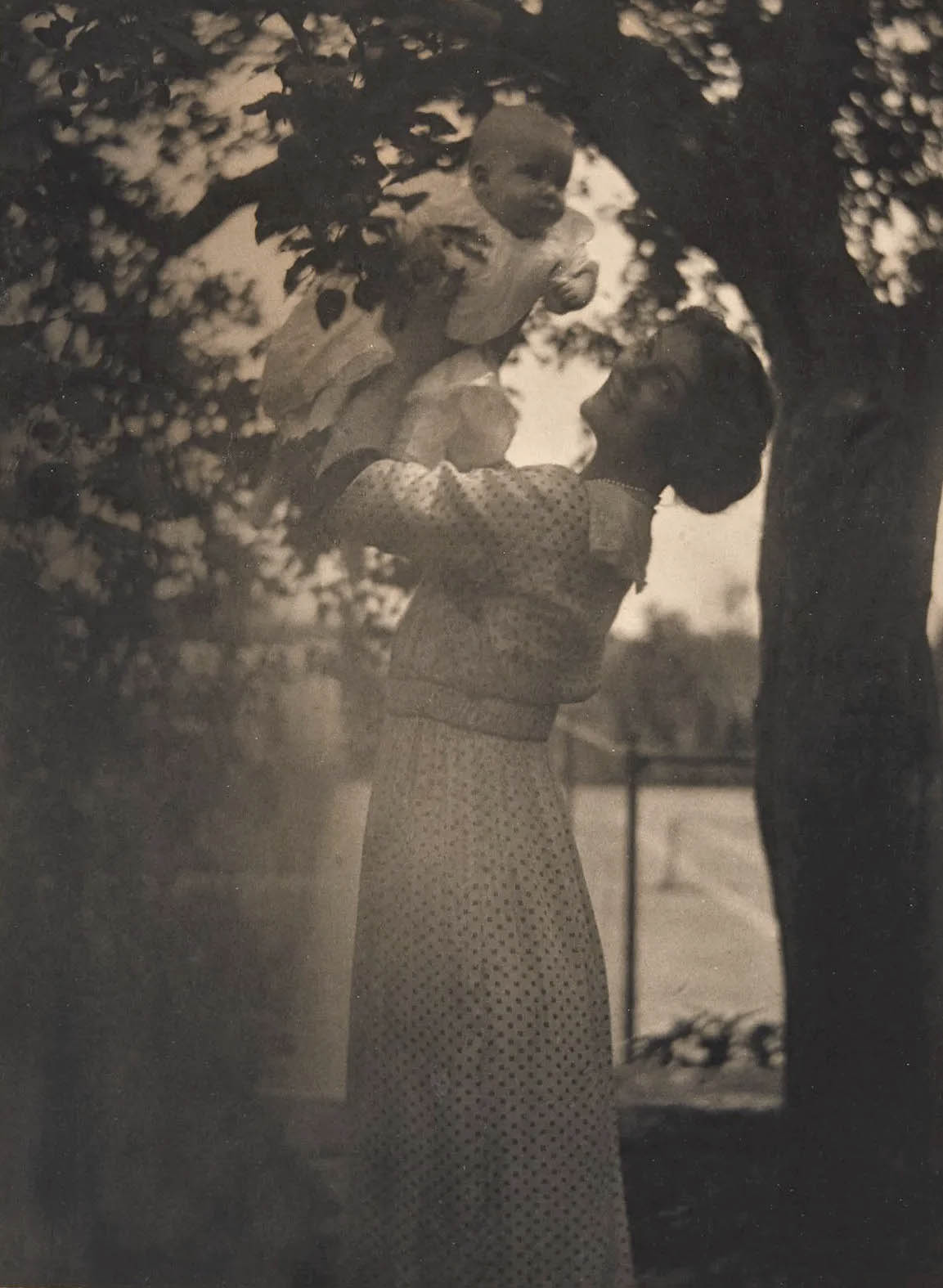
 

Gertrude Käsebier (American, 1852-1934) 'Mother and Child' c. 1900


Gertrude Käsebier (American, 1852-1934)
Mother and Child
c. 1900
Multiple gum-bichromate print on paper


The subject of mother and child was a frequent one for Pictorialists, especially Käsebier and Clarence White. The contrast between the tiny infant and the mighty tree gives this image additional symbolic meaning.


Gertrude Käsebier (American, 1852-1934) 'The Picture Book' 1903


Gertrude Käsebier (American, 1852-1934)
The Picture Book
1903
Platinum print on paper


Alfred Stieglitz had a print of this photograph in his personal collection, which he bequeathed to the Metropolitan Museum of Art in New York.

Published in Camera Work, 10, 1905

All from the Collection of Michael Mattis and Judith Hochberg


Works by Evans


Frederick Evans (British, 1853-1943) 'Aubrey Beardsley' 1893


Frederick H. Evans (British, 1853-1943)
Aubrey Beardsley
1893
Platinum print on paper


Evans, a member of the British art photography group the Linked Ring, was close friends with prominent authors and artists, such as George Bernard Shaw and Aubrey Beardsley. Portrayed here around age 20, Beardsley was a talented artist, designer, and illustrator, whose promising career was cut short by tuberculosis just five years after this photo was made.
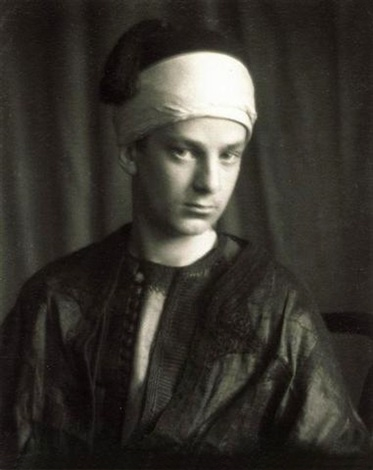
 

Frederick H. Evans (British, 1853-1943) 'Alvin Langdon Coburn in Eastern Clothing' 1901


Frederick H. Evans (British, 1853-1943)
Alvin Langdon Coburn in Eastern Clothing
1901
Platinum print on paper


Coburn was a precocious young American artist. An eighth birthday gift of a Kodak camera sparked his interest in photography. By age 16 Coburn had moved to London to work with his cousin the photographer F. Holland Day, whose portrait by Gertrude Käsebier is in this exhibition. After being included in a landmark exhibition at the Royal Photographic Society, Coburn returned to New York and apprenticed with Käsebier. By the tender age of 20, he became a founding member of the Photo-Secession and launched an international career dividing his time between New York, London, and Paris.

All from the Collection of Michael Mattis and Judith Hochberg


Works by Dow


Arthur Wesley Dow (American, 1857-1922) 'Silhouetted Trees' c. 1910


Arthur Wesley Dow (American, 1857-1922)
Silhouetted Trees
c. 1910
Cyanotype print on paper


A painter, printmaker, and photographer, Dow is mainly remembered today as a pioneering educator who taught in New York at the Pratt Institute, Art Students League, and Teacher’s College of Columbia University. Among Dow’s students were Gertrude Käsebier, Alvin Langdon Coburn, Charles Sheeler, and Georgia O’Keeffe. Dow also hired Clarence White to teach photography at Columbia, thereby launching White’s important teaching career.

From the Collection of Michael Mattis and Judith Hochberg


Works by Haviland
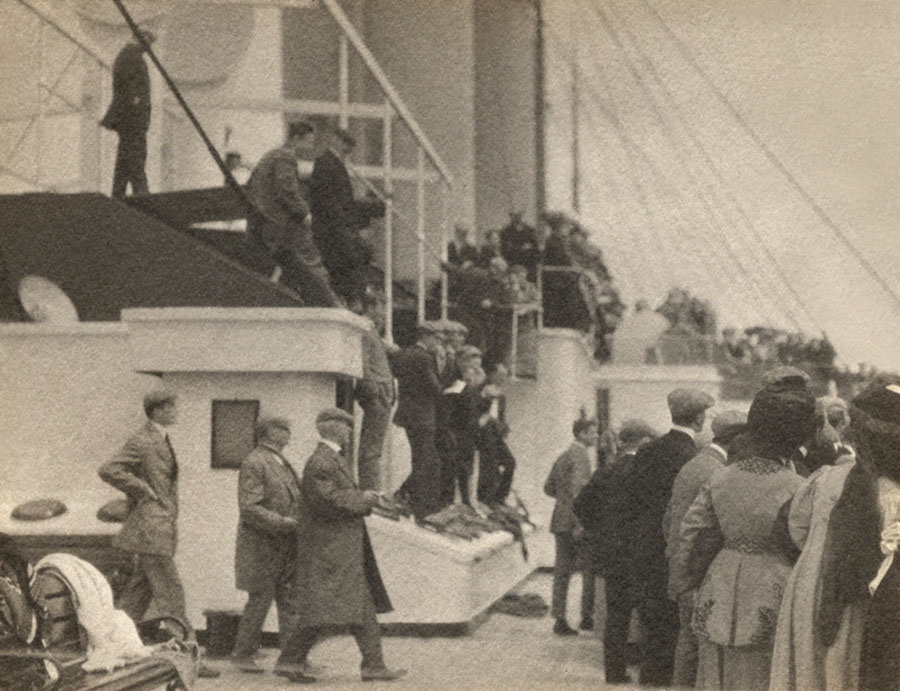
 

Paul Burty Haviland (American, 1880-1950) 'Ship Deck' 1910


Paul Burty Haviland (American, 1880-1950)
Ship Deck
1910
Platinum print on paper


Haviland was an amateur photographer from a young age and grew up immersed in the arts. His grandfather was an early photography critic in Paris, and his father owned Haviland porcelain factory in Limoges, France. As the New York representative of the family business, Haviland happened to meet Alfred Stieglitz in 1908. Just two years later he became associate editor of Camera Work and helped financially support Stieglitz’s gallery 291.

All from the Collection of Michael Mattis and Judith Hochberg


Works by Struss
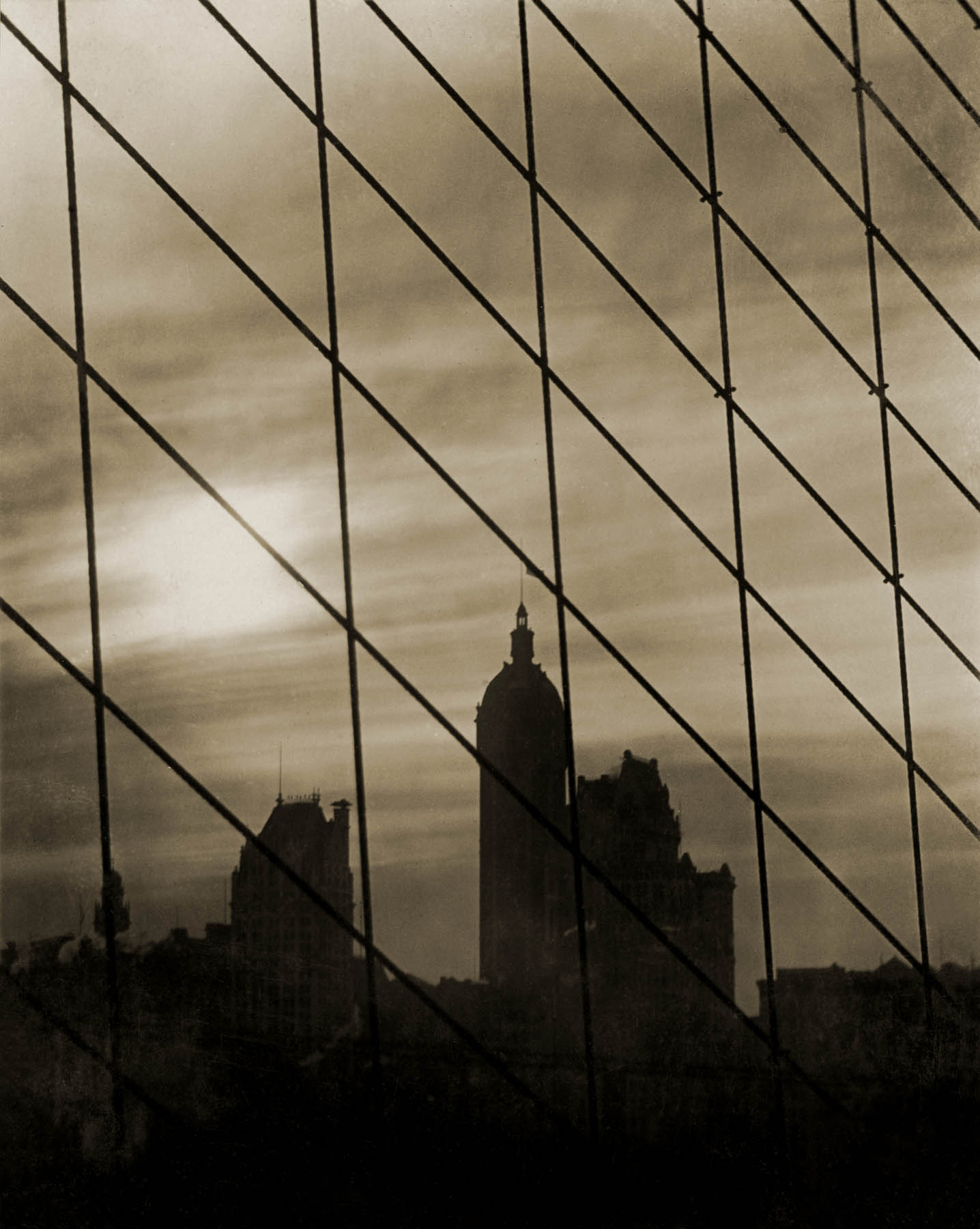
 

Karl Struss (American, 1886-1981) 'Cables' 1912


Karl Struss (American, 1886-1981)
Cables
1912
Gelatin silver print on paper


Struss was a star pupil of Clarence White and became a favourite of Alfred Stieglitz and the youngest member of the Photo-Secession. He is best known for his compelling cityscapes of New York, including the view of the Singer Building through the cables of the Brooklyn Bridge and the dramatic Flatiron Building, Twilight.


Karl Struss (American, 1886-1981) 'Flatiron Building, Twilight' c. 1915


Karl Struss (American, 1886-1981)
Flatiron Building, Twilight
c. 1915
Gelatin silver print on paper


Struss eventually broke away from Stieglitz and cofounded the society of the Pictorial Photographers of America along with Clarence White and Gertrude Käsebier in 1916. He … accepted a job as a cameraman for filmmaker Cecil B. DeMille. Struss would become one of the most prolific Hollywood cinematographers with 150 films, an Academy Award, and three Academy nominations to his credit.

All from the Collection of Michael Mattis and Judith Hochberg


Nudes by Stieglitz and White


Clarence Hudson White (American, 1871-1925) 'Reflected Nude' 1909


Clarence Hudson White (American, 1871-1925)
Reflected Nude
1909
Platinum print on paper
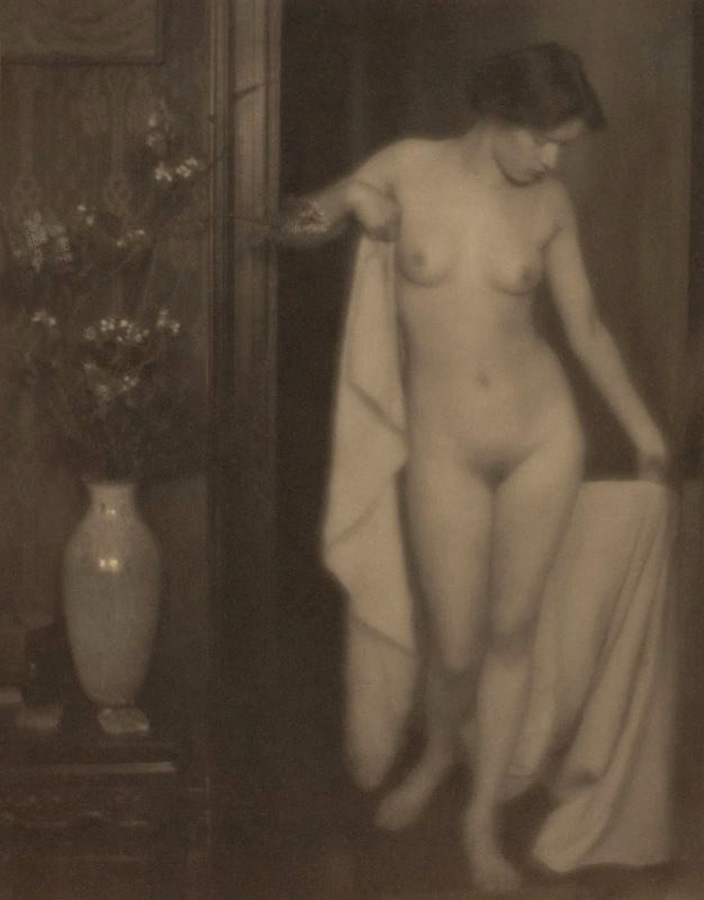
 

Alfred Stieglitz (American, 1864-1946) and Clarence Hudson White (American, 1871-1925) 'Nude Posed in Doorway (Miss Thompson)' 1907


Alfred Stieglitz (American, 1864-1946) and Clarence Hudson White (American, 1871-1925)
Nude Posed in Doorway (Miss Thompson)
1907
Platinum print on paper


Alfred Stieglitz (American, 1864-1946) and Clarence Hudson White (American, 1871-1925) 'The Torso' 1907


Alfred Stieglitz (American, 1864-1946) and Clarence Hudson White (American, 1871-1925)
The Torso
1907
Palladium print on paper


This is likely the most widely reproduced nude by Photo-Secession artists.

After their personal and professional rupture, Stieglitz wrote White a letter that specifically referred to their collaboration in 1907. Stieglitz insisted “that my name be not mentioned by you in connection with either the prints or the negatives” and further instructed White to erase his name from any prints they had jointly signed. Despite this vitriol, Stieglitz retained in his personal collection two prints of The Torso, one of them jointly signed in pencil.

Published in Camera Work, 27, 1909

All from the Collection of Michael Mattis and Judith Hochberg


Images of O’Keeffe by Stieglitz
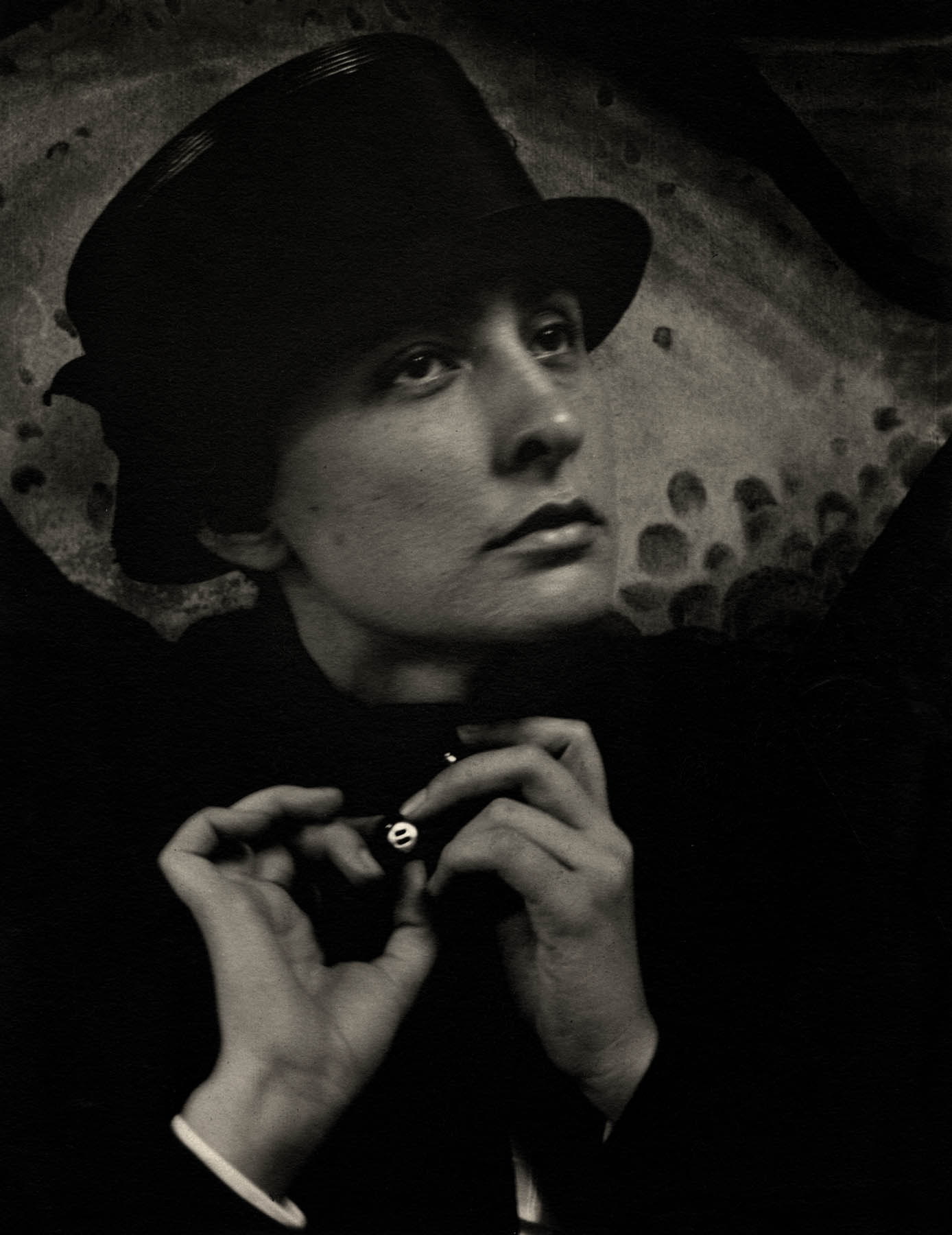
 

Alfred Stieglitz (American, 1864-1946) 'Georgia O'Keeffe' 1918


Alfred Stieglitz (American, 1864-1946)
Georgia O’Keeffe
1918
Palladium print on paper
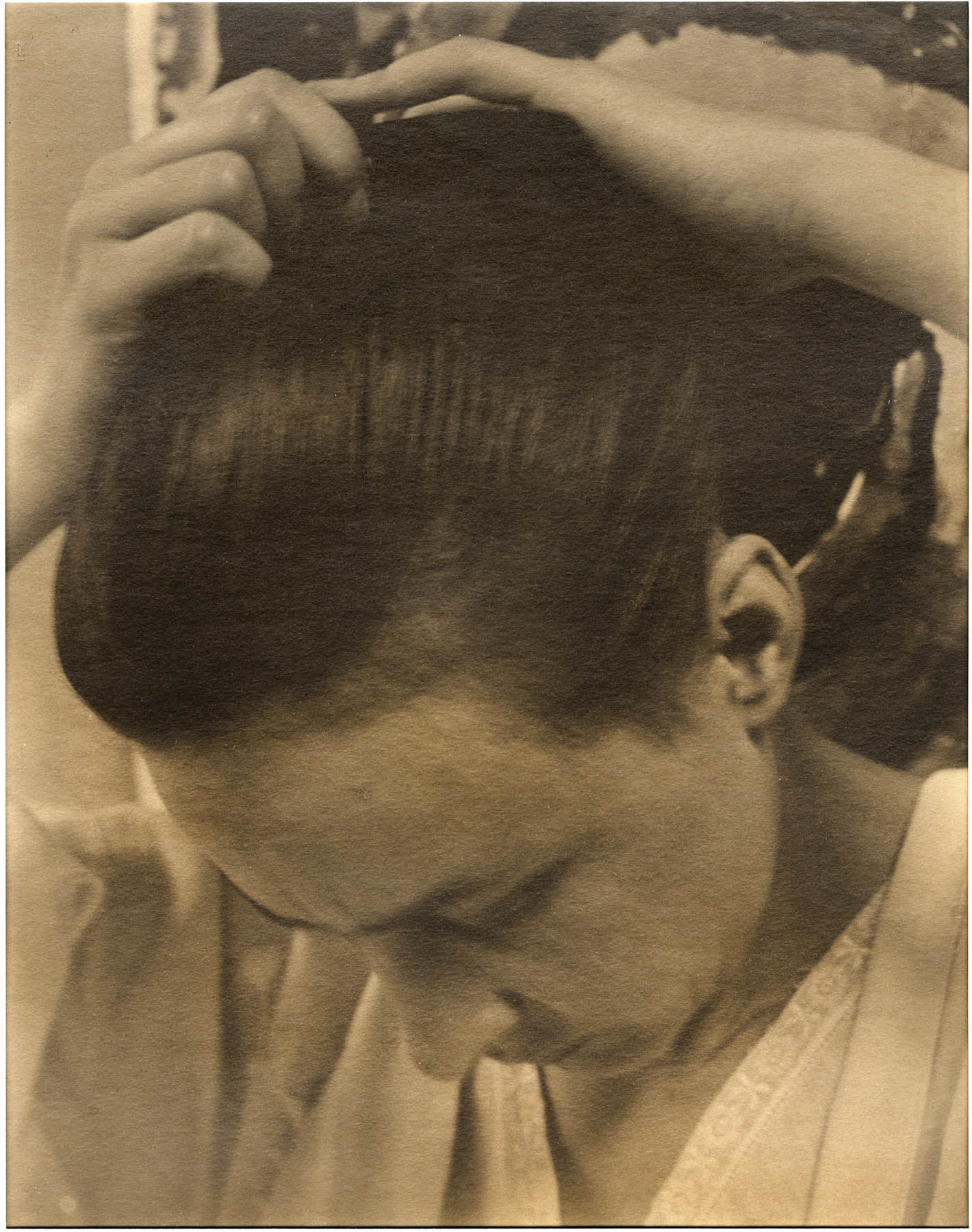
 

Alfred Stieglitz (American, 1864-1946) 'Georgia O'Keeffe (Fixing Hair)' 1919-1921


Alfred Stieglitz (American, 1864-1946)
Georgia O’Keeffe (Fixing Hair)
1919-1921
Palladium print on paper


Over two decades, Stieglitz made over 300 photos of O’Keeffe, producing an extraordinary and candid portrait of the artist. She recalled, “I was photographed with a kind of heat and excitement and in a way wondered what it was all about.” The directness and intimacy of this series of photos differ from the idealised nudes that Stieglitz and White made together during the heyday of the Photo-Secession.

All from the Collection of Michael Mattis and Judith Hochberg


Works by White

Clarence Hudson White: The Romantic

Clarence Hudson White was celebrated for his romanticised and intimate approach to photography. His 1904 image The Kiss perfectly illustrates his unique style. This platinum print on paper captures a tender moment with a soft focus and gentle lighting. The Kiss portrays an intimate scene imbued with a sense of emotional depth. White’s use of the platinum printing process, which provides a broad tonal range and exquisite detail, enhances the image’s delicate and dreamlike quality. His work reflects the movement’s early emphasis on creating photographs that evoke the emotional and aesthetic qualities of fine art while also paving the way for future explorations in photographic expression.

Adelaide Ryder. “The Photo-Secession Movement: Pioneering Artistry in Early Photography,” on the UMFA website Nd [Online] Cited 22/10/2024


Clarence H. White (American, 1871-1925) 'The Bubble' 1898, printed 1905


Clarence Hudson White (American, 1871-1925)
The Bubble
1898
Platinum print on paper


This image was exhibited at the 1898 Philadelphia Photographic Salon to great acclaim. Fellow photographer and critic Joseph Keiley commented, “Like most of Mr. White’s pictures, it is a well nigh perfect piece of composition whose subject with subtle poetry stimulates and leaves much to the imagination.”


Clarence Hudson White (American, 1871-1925) 'The Mirror' 1912


Clarence Hudson White (American, 1871-1925)
The Mirror
1912
Platinum print on paper
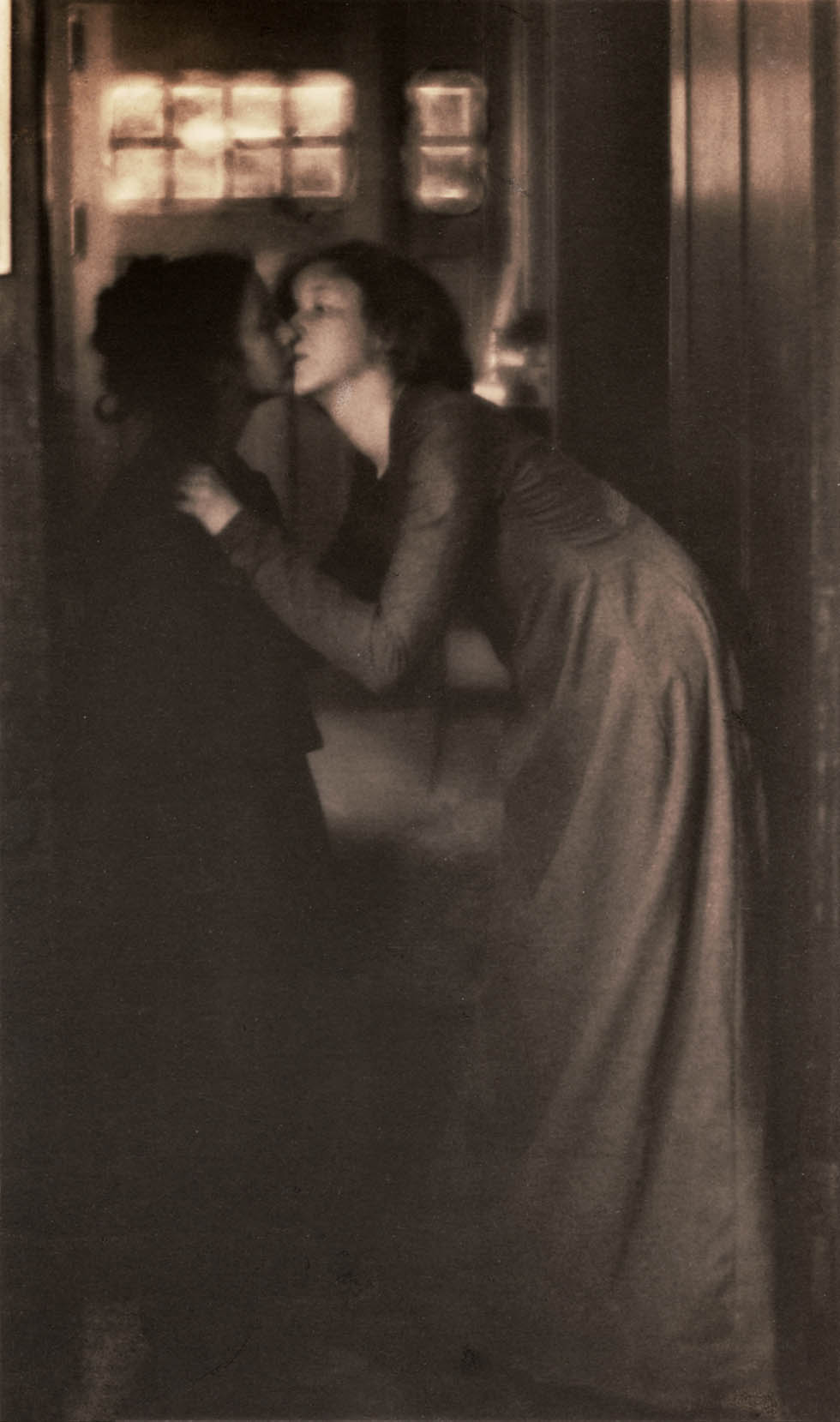
 

Clarence Hudson White (American, 1871-1925) 'The Kiss' 1904


Clarence Hudson White (American, 1871-1925)
The Kiss
1904
Platinum print on paper


This is one of White’s best known photographs. Despite his separation from White, Stieglitz kept prints of both The Kiss and The Bubble in his personal collection throughout his life.

All from the Collection of Michael Mattis and Judith Hochberg


Works by followers of White

Anne Brigman: The Feminine Mystic of Photo-Secession

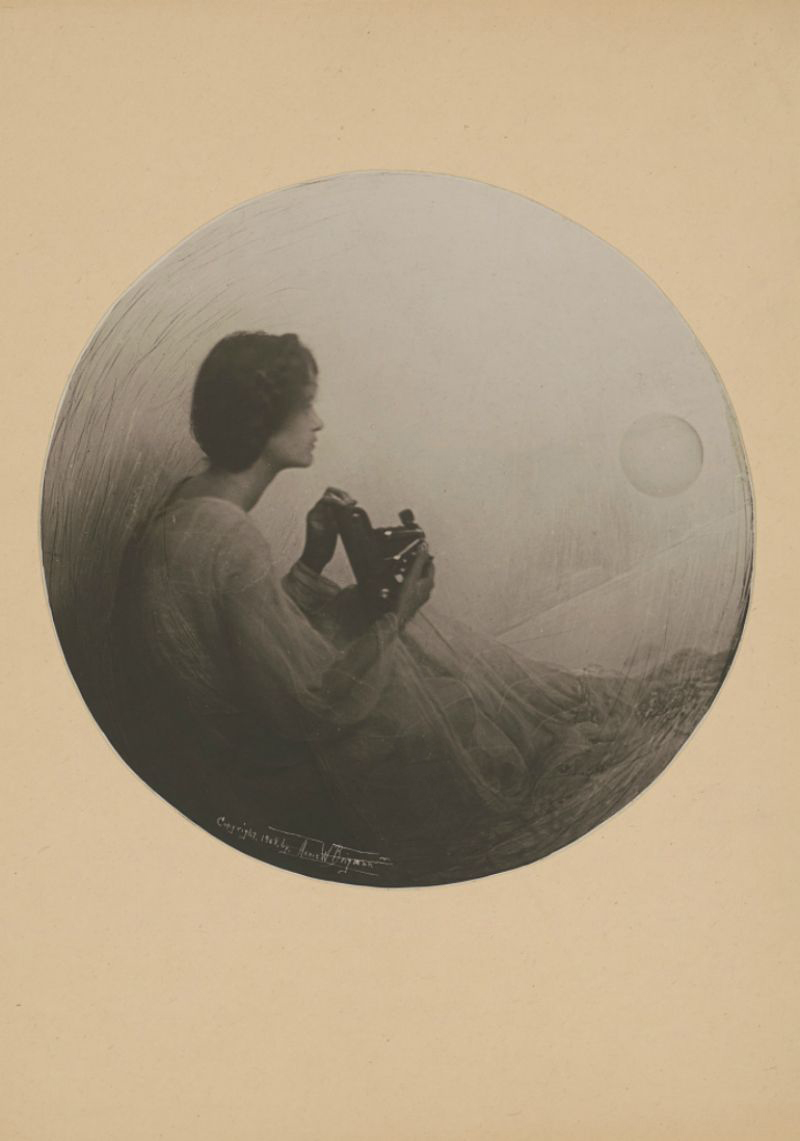
Anne Brigman was known for her evocative and mystical imagery. She often placed herself within her compositions, challenging traditional gender roles and expectations. Her connection to the Photo-Secession movement was cemented through her association with Alfred Stieglitz, who published her work in Camera Work and admired her innovative spirit.

Brigman’s 1911 photograph The Pine Sprite exemplifies her distinctive style. The image features a nude female figure intertwined with the natural landscape, blending the human form seamlessly with the rugged environment. This work reflects Brigman’s themes of femininity, nature, and freedom, aligning with the Photo-Secessionist emphasis on personal expression and artistic experimentation. Brigman’s contributions highlighted the movement’s inclusive spirit, showcasing how female photographers could assert their voices and artistic visions in a male-dominated field.

Adelaide Ryder. “The Photo-Secession Movement: Pioneering Artistry in Early Photography,” on the UMFA website Nd [Online] Cited 22/10/2024
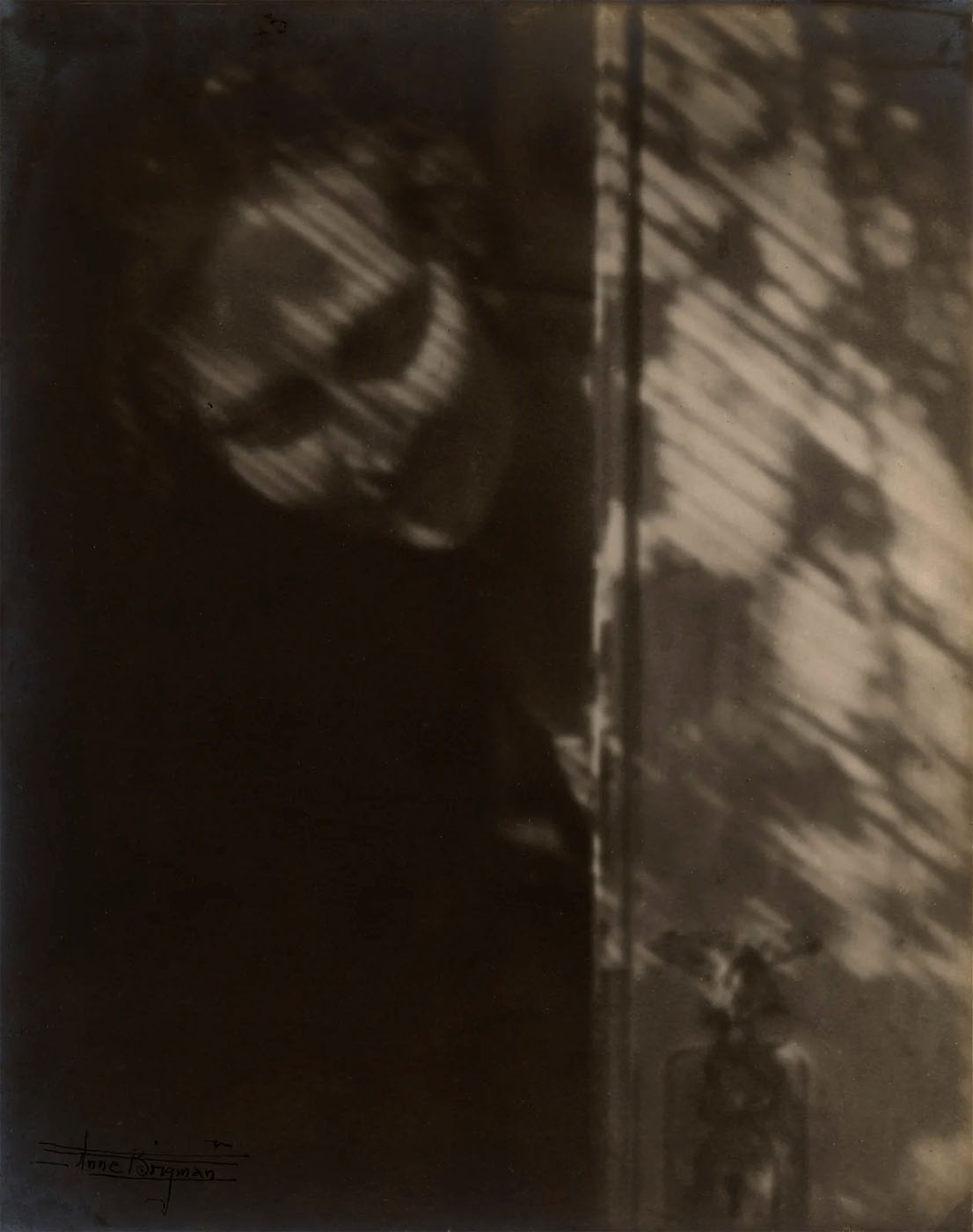
 

Anne Brigman (American, 1869-1950) 'The Shadow on My Door (Self Portrait)' 1921


Anne Brigman (American, 1869-1950)
The Shadow on My Door (Self Portrait)
1921
Gelatin silver print on paper
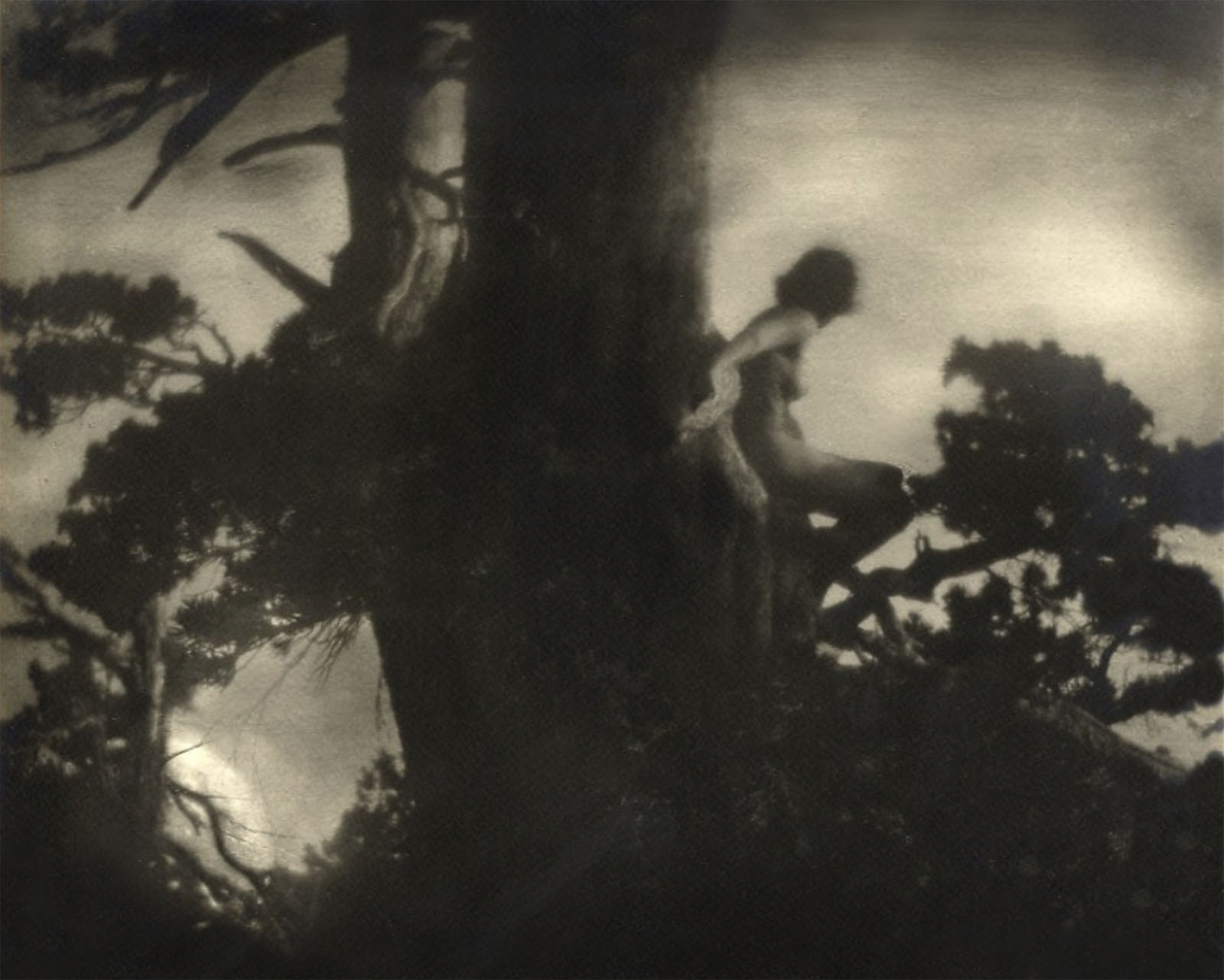
 

Anne Brigman (American, 1869-1950) 'The Pine Sprite' 1911 from the exhibition 'Photo-Secession: Painterly Masterworks of Turn-of-the-Century Photography' at the Utah Museum of Fine Arts, Salt Lake City, August - December 2024


Anne Brigman (American, 1869-1950)
The Pine Sprite
1911
Gelatin silver print on paper


Brigman was for a long time the only Californian member of the Photo-Secession. She was a free spirit and pagan whose woodsy nudes inspired by fantasy and folklore were frequently reproduced in Camera Work.


Laura Gilpin (American, 1891-1979) 'Ghost Rock, Garden of the Gods, Colorado' 1919


Laura Gilpin (American, 1891-1979)
Ghost Rock, Garden of the Gods, Colorado
1919
Palladium print on paper


An amateur photographer from Colorado Springs, Gilpin moved to New York to study with Clarence White in 1916. This photograph was one of Gilpin’s first successes after returning home in 1919, the beginning of her decades-long career as one of the most notable photographers of the West and Southwest.

All from the Collection of Michael Mattis and Judith Hochberg


In 1916 Gilpin enrolled at the Clarence H. White School of Photography in New York. Two years later, she returned to her native Colorado Springs and became one of the few women to pursue landscape photography.

This is her depiction of the Garden of the Gods, a scenic rock formation in Colorado Springs. It captures the stillness and otherworldly quality of the area. The photograph also reflects an emphasis on the evocation of mood rather than on descriptive detail.

Text from the National Gallery of Art Facebook page


Edward Steichen

Edward J. Steichen: The Innovator

Edward J. Steichen, a close associate of Stieglitz, brought a unique perspective to the Photo-Secession movement. Steichen was not only a photographer but also a painter, which influenced his photographic style. He experimented with various techniques, including soft focus and manipulation of light, to create both ethereal and visually striking images.

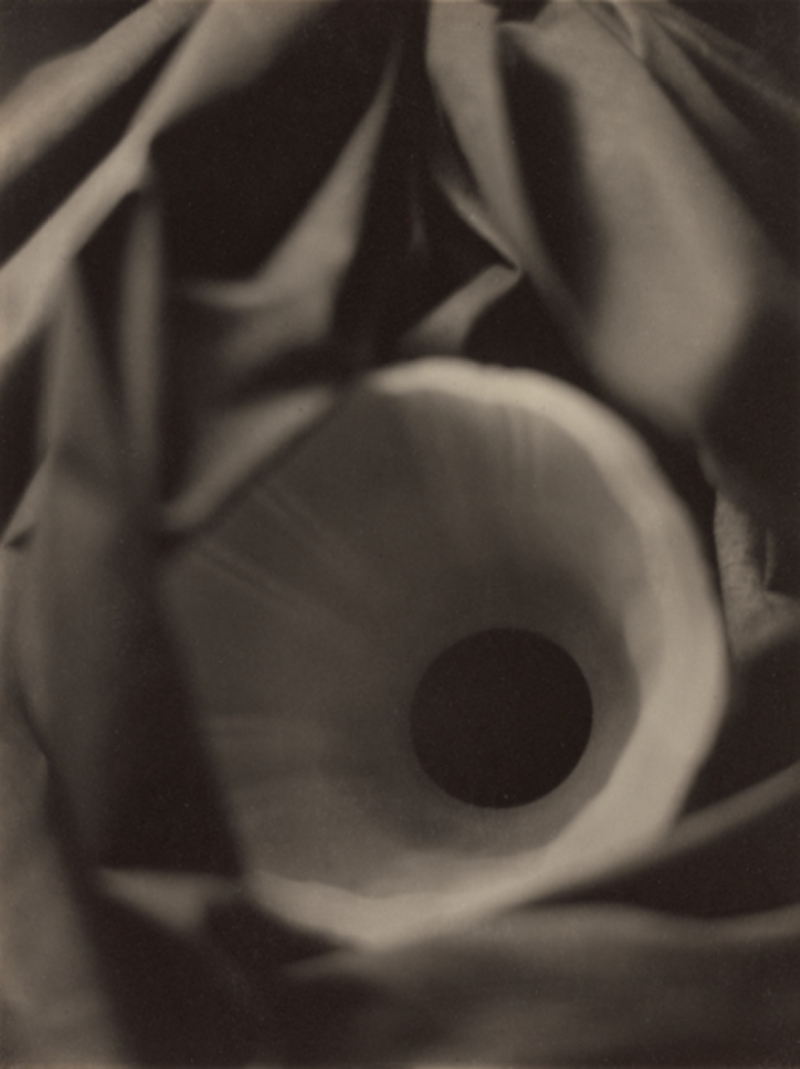
An avid gardener, Steichen propagated and grew a bountiful garden at his French country house. This image of a calla lily is rendered with exquisite detail and tonal richness. Steichen’s botanical images showcase his ability to find harmony between nature and art. His meticulous composition and sensitivity to light transform a simple flower into a work of art, reflecting his painterly approach to photography. His botanical works contributed to the Photo-Secession movement by highlighting the artistic potential of natural forms.

Adelaide Ryder. “The Photo-Secession Movement: Pioneering Artistry in Early Photography,” on the UMFA website Nd [Online] Cited 22/10/2024
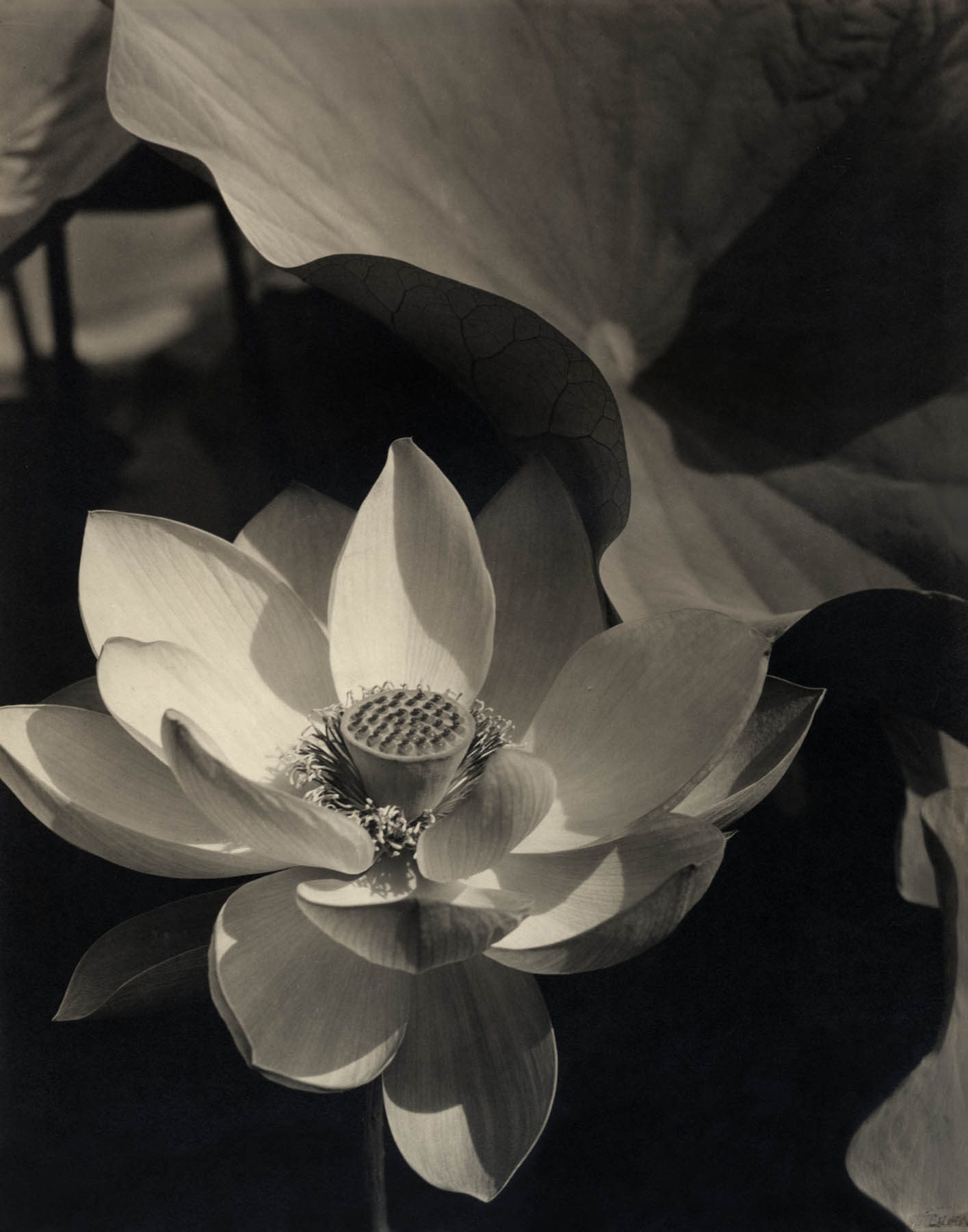
 

Edward Steichen (American born Luxembourg, 1879-1973) 'Lotus, Mount Kisco' 1915 from the exhibition 'Photo-Secession: Painterly Masterworks of Turn-of-the-Century Photography' at the Utah Museum of Fine Arts, Salt Lake City, August - December 2024


Edward Steichen (American born Luxembourg, 1879-1973)
Lotus, Mount Kisco
1915
Gelatin silver print on paper


Edward Steichen (American born Luxembourg, 1879-1973) 'Calla Lily' c. 1921


Edward Steichen (American born Luxembourg, 1879-1973)
Calla Lily
c. 1921
Platinum print on paper


Steichen had previously photographed flowers in compositions that placed delicate floral arrangements next to women figured as ideals of feminine beauty. In contrast, here he presents the lotus and calla lily in sharp focus and as singular subjects without overt metaphorical meaning.


Edward Steichen (American born Luxembourg, 1879-1973) 'Three Pears and an Apple' 1921


Edward Steichen (American born Luxembourg, 1879-1973)
Three Pears and an Apple
1921
Gelatin silver print on paper


On making this picture Steichen wrote: “I was particularly interested in a method of representing volume, scale, and a sense of weight. In my small greenhouse I constructed a tent of opaque blankets. From a tiny opening, I directed light against one side of the covering blanket, and this light, reflected from the blanket, was all. I made a series of exposures that lasted more than two days and one night. As the nights were cool, everything, including the camera, contracted and the next day expanded. Instead of producing one meticulously sharp picture, the infinitesimal movement produced a succession of slightly different sharp images, which optically fused as one. Here for the first time in a photograph, I was able to sense volume as well as form.”


Edward Steichen (American born Luxembourg, 1879-1973) 'Blossom of White Fingers' c. 1923


Edward Steichen (American born Luxembourg, 1879-1973)
Blossom of White Fingers
c. 1923
Gold-toned gelatin silver print on paper


This study of the graceful hands of Steichen’s wife with ultra-soft focus and high-key lighting and printed on gold-toned gelatin paper is one of the rare instances of Steichen using Pictorialist methods after the end of the Photo-Secession.
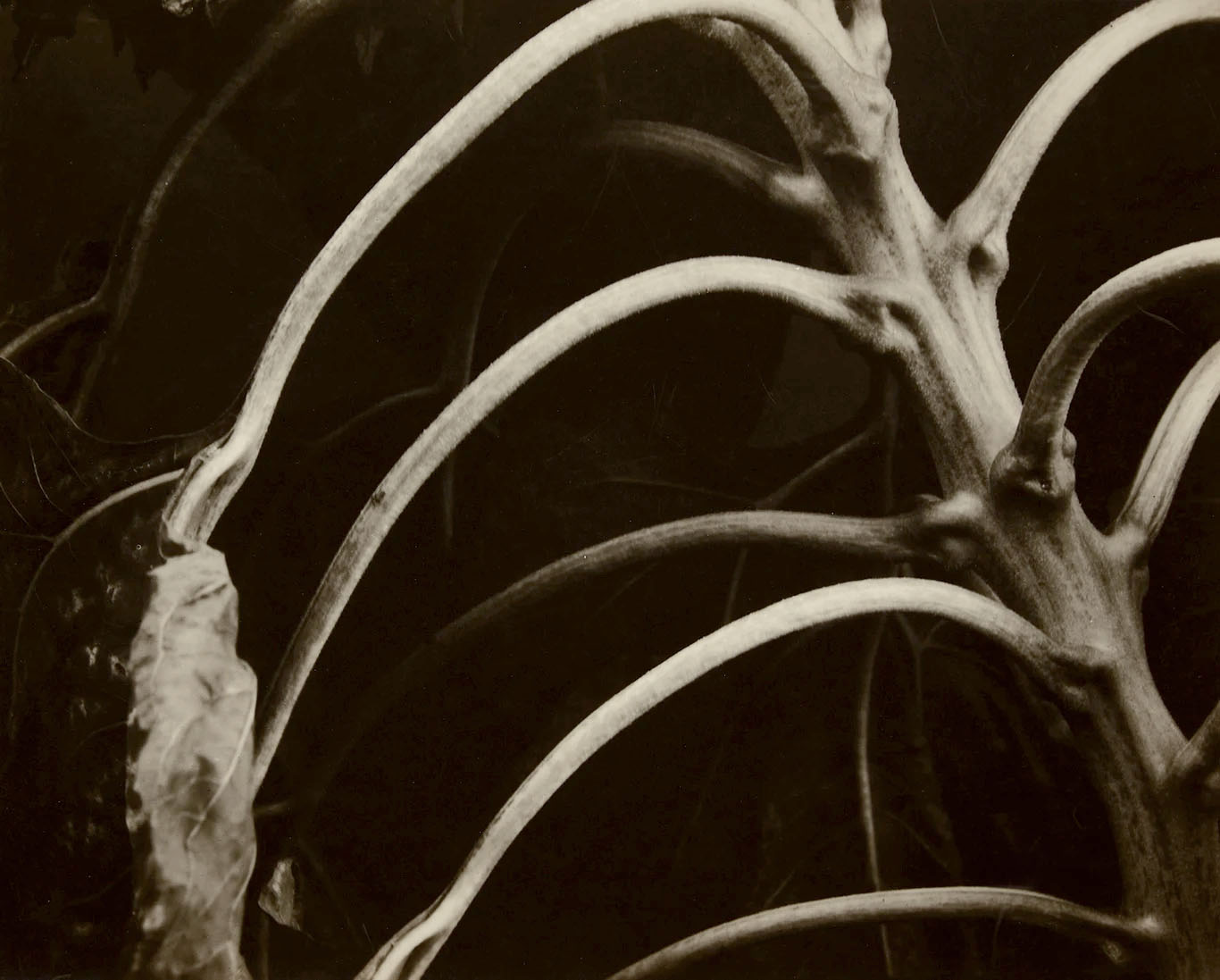
 

Edward Steichen (American born Luxembourg, 1879-1973) 'Backbone and Ribs of a Sunflower' c. 1920


Edward Steichen (American born Luxembourg, 1879-1973)
Backbone and Ribs of a Sunflower
c. 1920
Gelatin silver print on paper


Steichen was a knowledgeable botanist and spent five decades photographing the life cycle of sunflowers. This is one of his earliest studies of the plant. He became fascinated with spirals in nature, writing, “I found some form of the spiral in most succulent plants and in certain flowers, particularly in the seed pods of the sunflower.”


Edward Steichen (American born Luxembourg, 1879-1973) 'Advertising Study for Coty Lipstick' 1929


Edward Steichen (American born Luxembourg, 1879-1973)
Advertising Study for Coty Lipstick
1929
Gelatin silver print on paper


Steichen is credited as a founding figure of modern advertising and fashion photography. From 1923 to 1938, he served as chief photographer for the Condé Nast magazines Vogue and Vanity Fair. He had extensive experience in graphic design and advertising from his youth and earlier career. He had designed posters as a young man for a lithographic printer in Milwaukee. As Alfred Stieglitz’s associate on Camera Work from 1903 to 1917, Steichen produced the logo, typeface, and page layouts.

All from the Collection of Michael Mattis and Judith Hochberg


Works by Strand
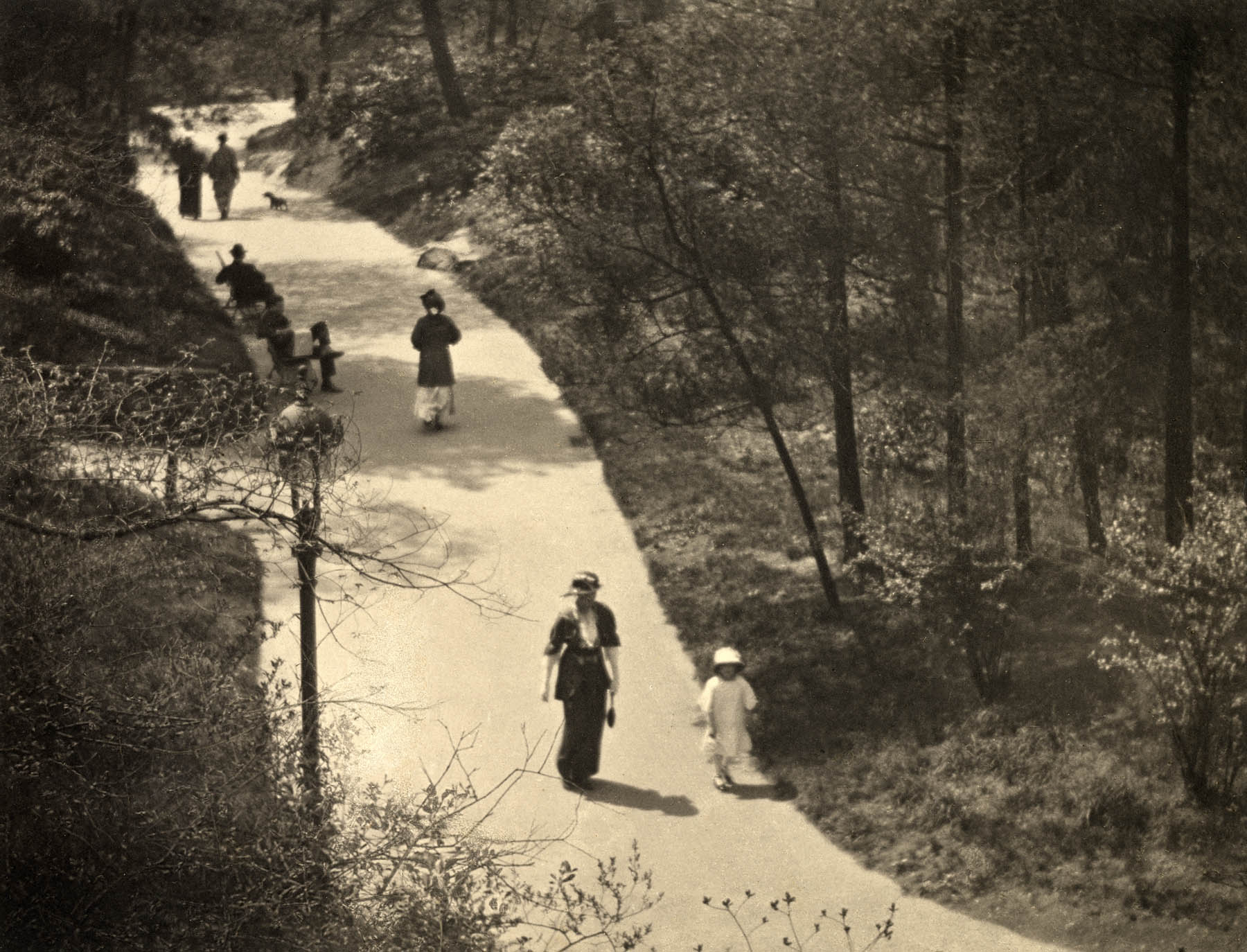
 

Paul Strand (American, 1890-1976) 'Central Park' 1915-1916 from the exhibition 'Photo-Secession: Painterly Masterworks of Turn-of-the-Century Photography' at the Utah Museum of Fine Arts, Salt Lake City, August - December 2024


Paul Strand (American, 1890-1976)
Central Park
1915-1916
Platinum print on paper


Urban life preoccupied Strand and in the 1920s would become a central subject of Modernist photographers around the world. From a Central Park overpass Strand identified this interesting composition with the bright, sinuous path dividing the picture plane. The decisive moment to snap the shutter occurred with the appearance of the two advancing figures and their angular shadows.
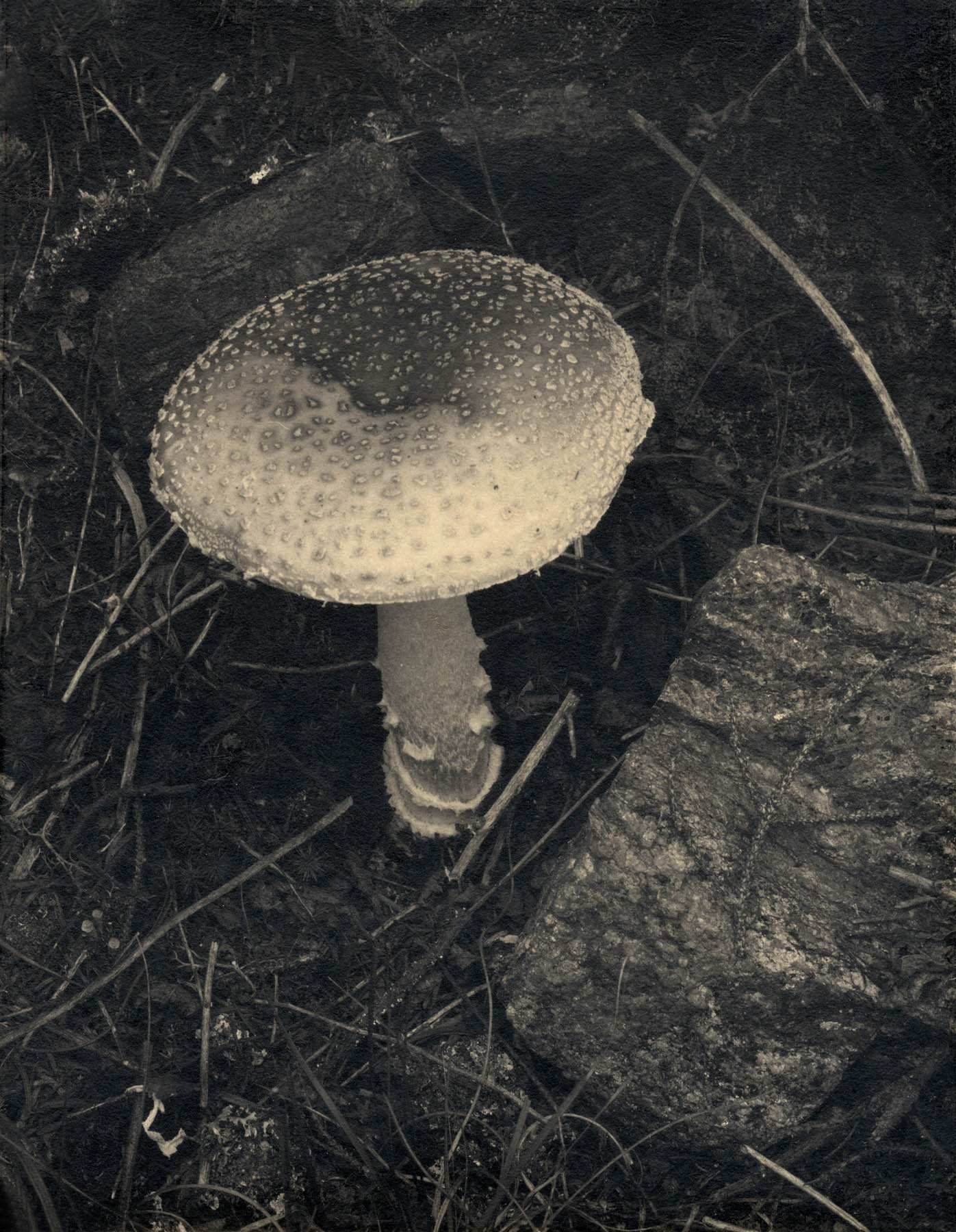
 

Paul Strand (American, 1890-1976) 'Speckled Toadstool, Georgetown, Maine' 1927


Paul Strand (American, 1890-1976)
Speckled Toadstool, Georgetown, Maine
1927
Waxed platinum print on paper


Strand continued to use platinum printing long after most other photographers adopted gelatin silver papers, which were more efficient and versatile and had a glossier surface. His prints in platinum are highly regarded for capturing minute detail and a wide range of tonal values.
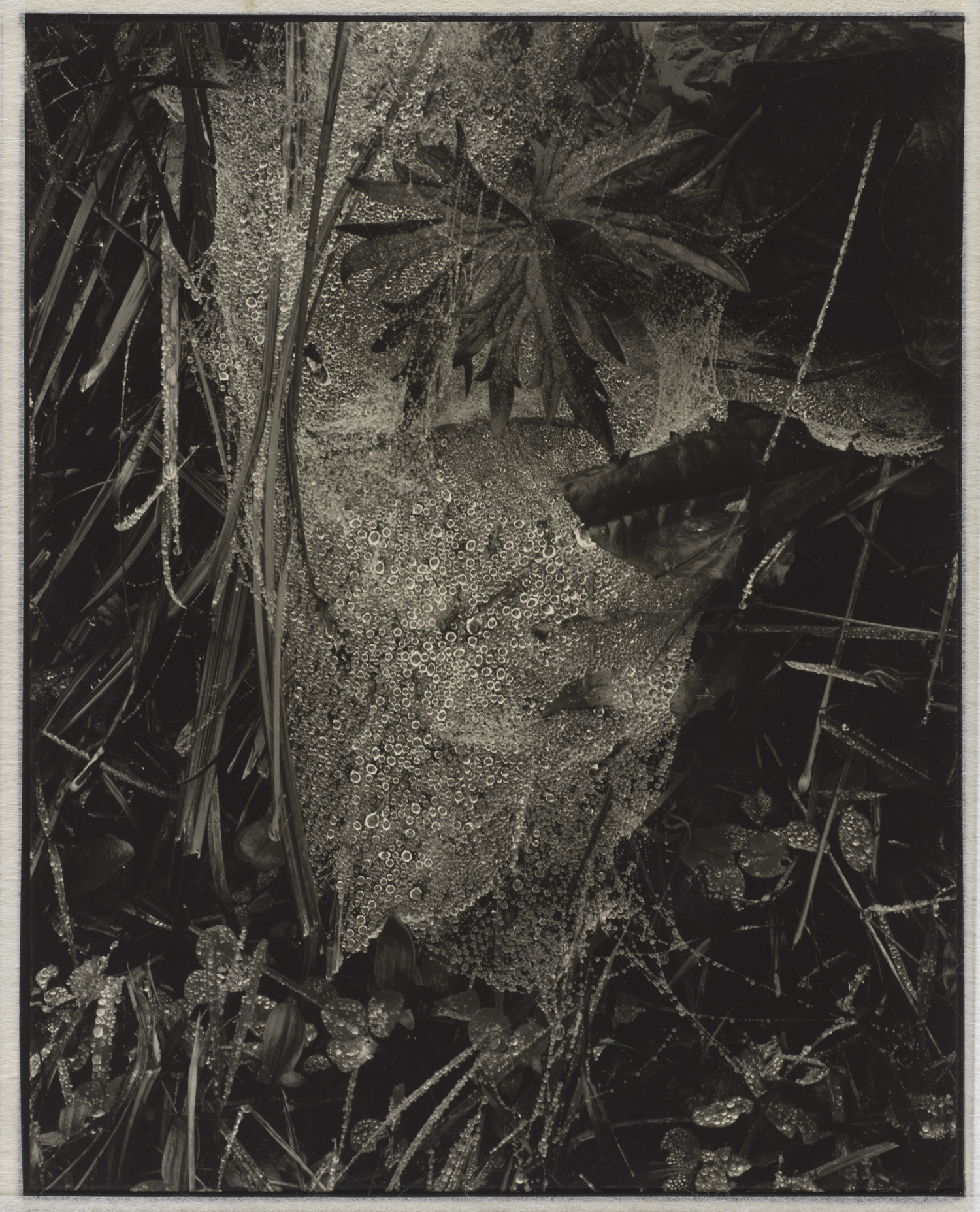
 

Paul Strand (American, 1890-1976) 'Cobweb in the Rain, Georgetown, Maine' 1928


Paul Strand (American, 1890-1976)
Cobweb in the Rain, Georgetown, Maine
1928
Gelatin silver print on paper

All from the Collection of Michael Mattis and Judith Hochberg


Works of Straight photography
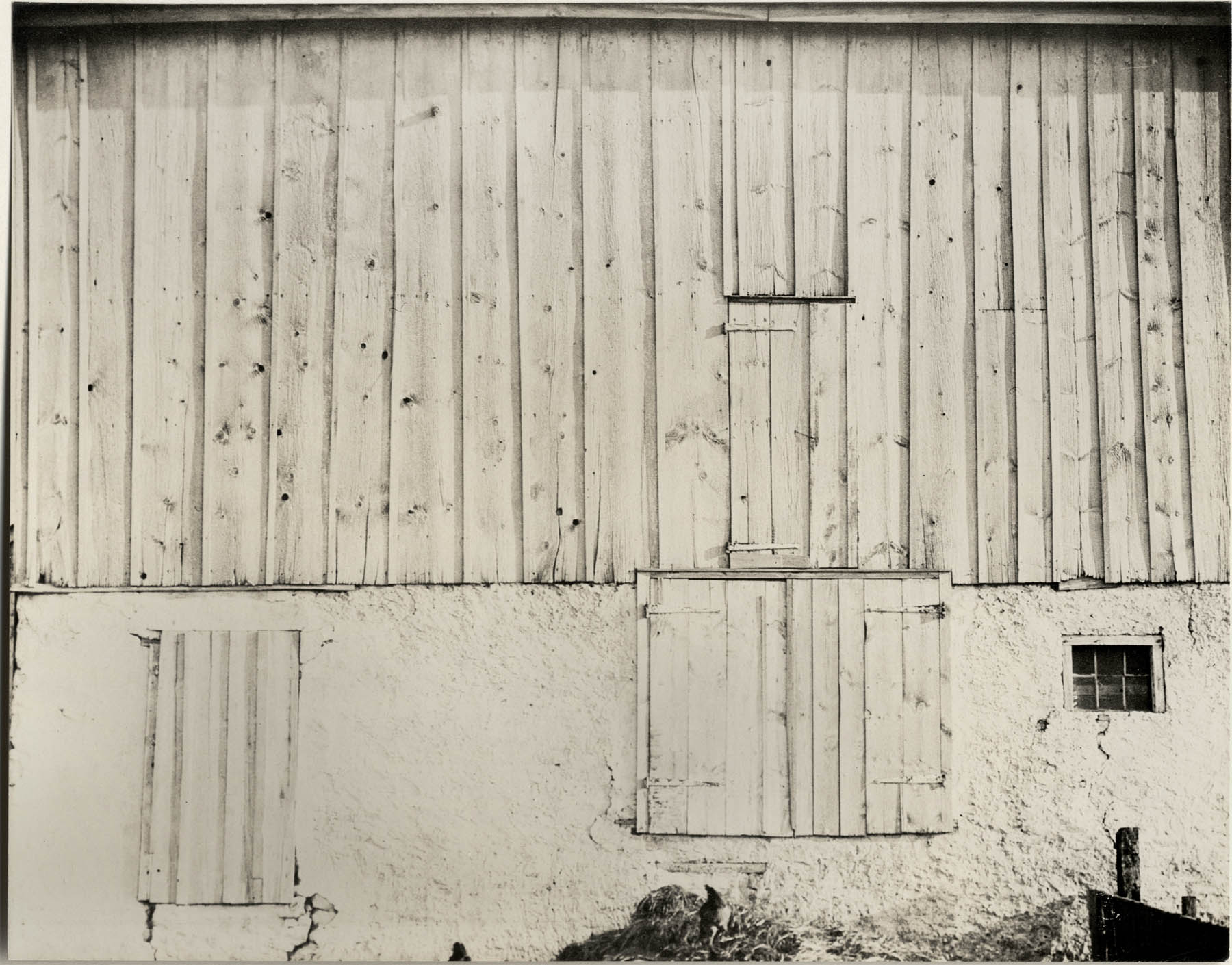
 

Charles Sheeler (American, 1883-1965) 'Side of White Barn, Bucks County' 1917


Charles Sheeler (American, 1883-1965)
Side of White Barn, Bucks County
1917
Gelatin silver print on paper


A painter and photographer, Sheeler became a close friend of Alfred Stieglitz as the Photo-Secession dissolved. This photographic study of line, shape, and tone recalls the hard-edged style of Sheeler’s paintings. Only the chickens appearing at the bottom edge give a sense of scale to the barn.


Alvin Langdon Coburn: The Avant-Garde Creator

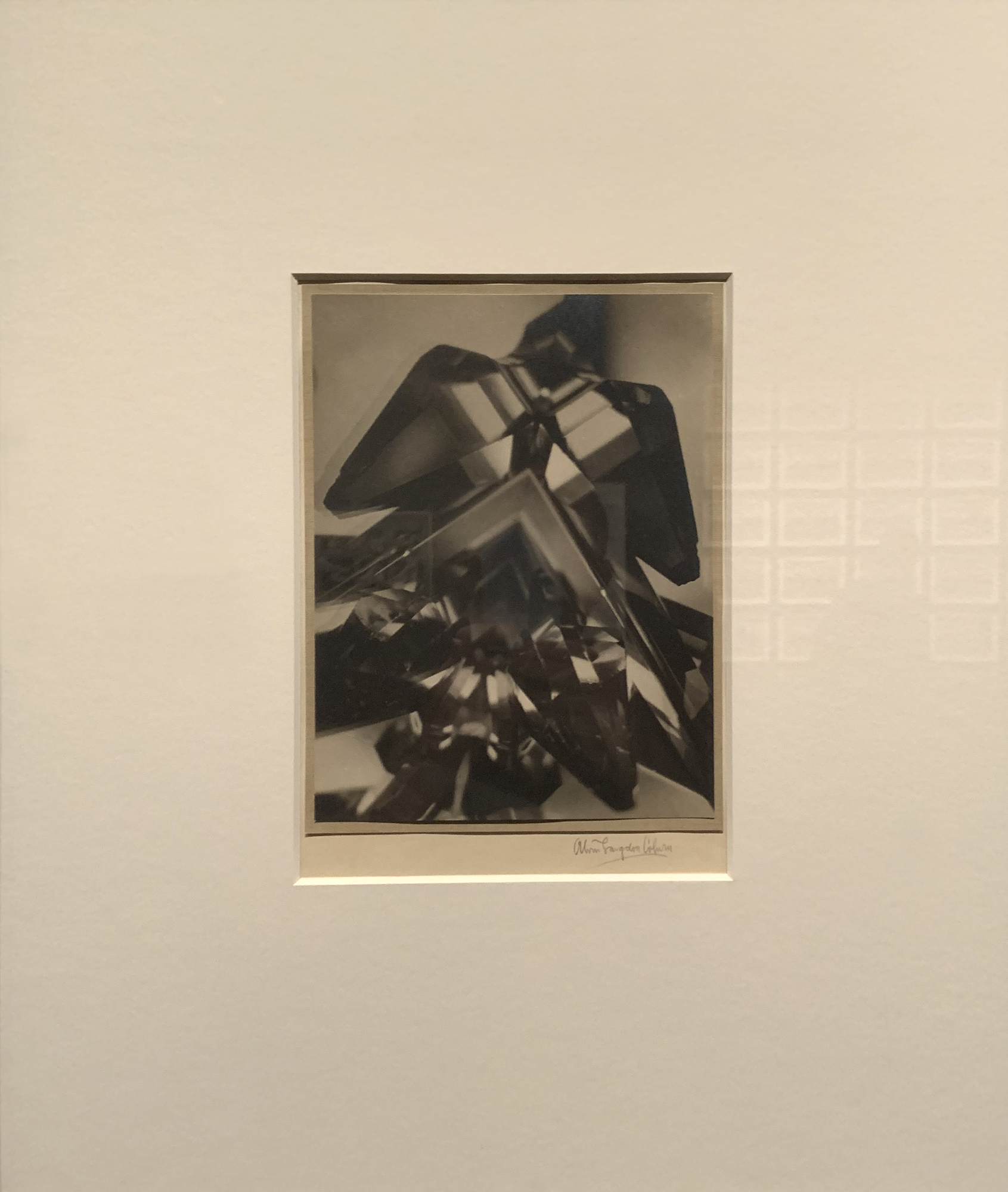
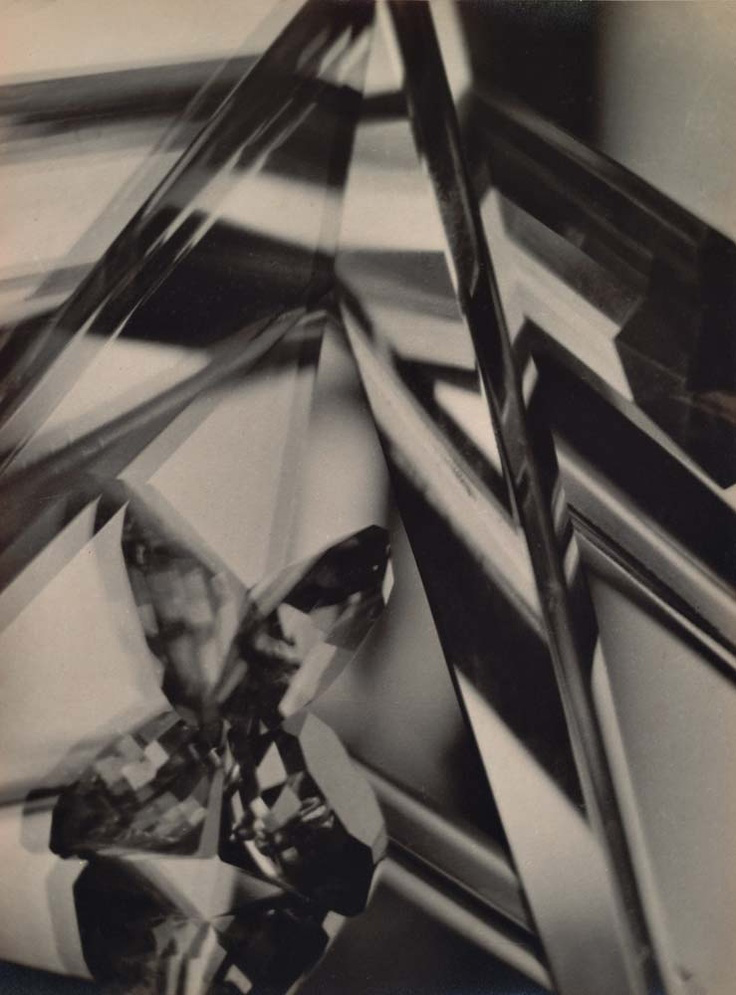
Alvin Langdon Coburn pushed the boundaries of photography with his innovative Vortographs, created in 1916-1917. These images are considered some of the first abstract photographs, born from Coburn’s desire to create art that combined the physical with the spiritual. By placing a vortoscope, a triangular arrangement of mirrors and prisms, over a camera’s lens, Coburn created complex images of kaleidoscopic and geometric patterns that simplify the photograph to the essential elements of light and form. This technique broke away from traditional photographic representation, emphasising form, structure, and abstraction. The Vortographs were influenced by the Vorticist movement, which celebrated dynamic and abstract art. Coburn’s pioneering work with these images marked a significant departure from Pictorialism, embracing modernist principles and demonstrating the artistic potential of photography beyond mere depiction. The Vortographs stand as a testament to Coburn’s visionary approach and contributions to the evolution of photographic art.

Adelaide Ryder. “The Photo-Secession Movement: Pioneering Artistry in Early Photography,” on the UMFA website Nd [Online] Cited 22/10/2024
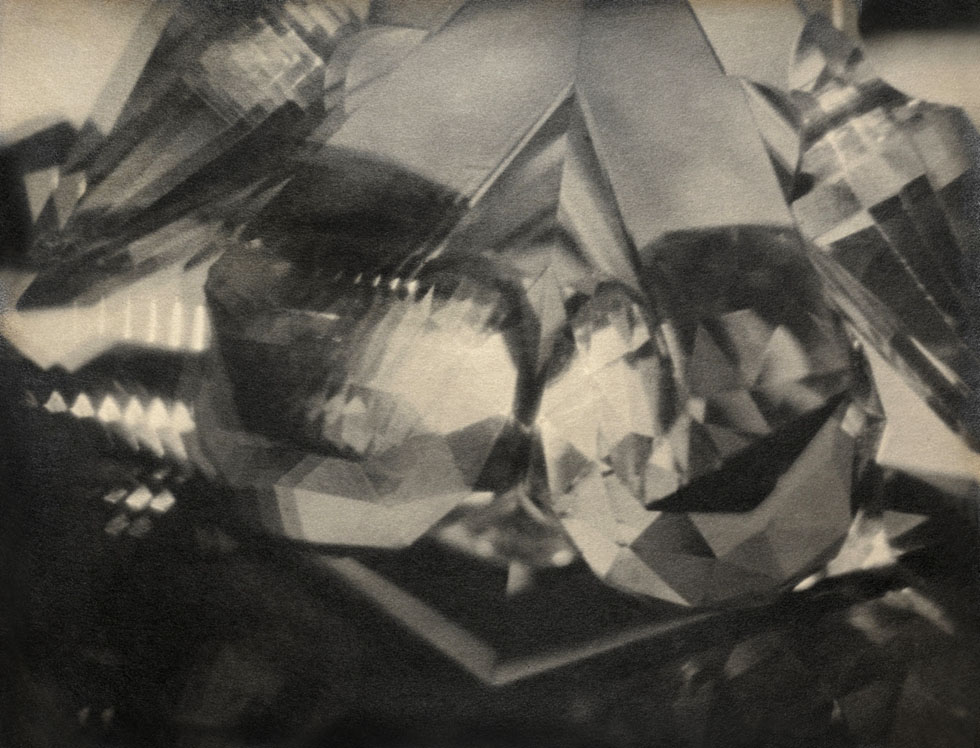
 

Alvin Langdon Coburn (British American, 1882-1966) 'Vortograph' 1917


Alvin Langdon Coburn (British American, 1882-1966)
Vortograph
1917
Gelatin silver print on paper


Coburn was one of the Photo-Secessionists who rejected Pictorialism. In his 1916 essay “The Future of Pictorial Photography,” he called for abstraction in photography, concluding, “it is my hope that photography may fall in line with all the other arts, and with her infinite possibilities, do things stranger and more fascinating than the most fantastic dreams.” Coburn created vortographs like this by placing a devise with three mirrors between his camera and subject. When he exhibited them to great fanfare in London in 1917, Ezra Pound proclaimed: “The Camera is freed from Reality!”

All from the Collection of Michael Mattis and Judith Hochberg


Utah Museum of Fine Arts
University of Utah campus
Marcia and John Price Museum Building
410 Campus Center Drive

Opening hours:
Tuesday – Sunday 10am – 5pm
Closed Mondays

Utah Museum of Fine Arts website

LIKE ART BLART ON FACEBOOK

Back to top

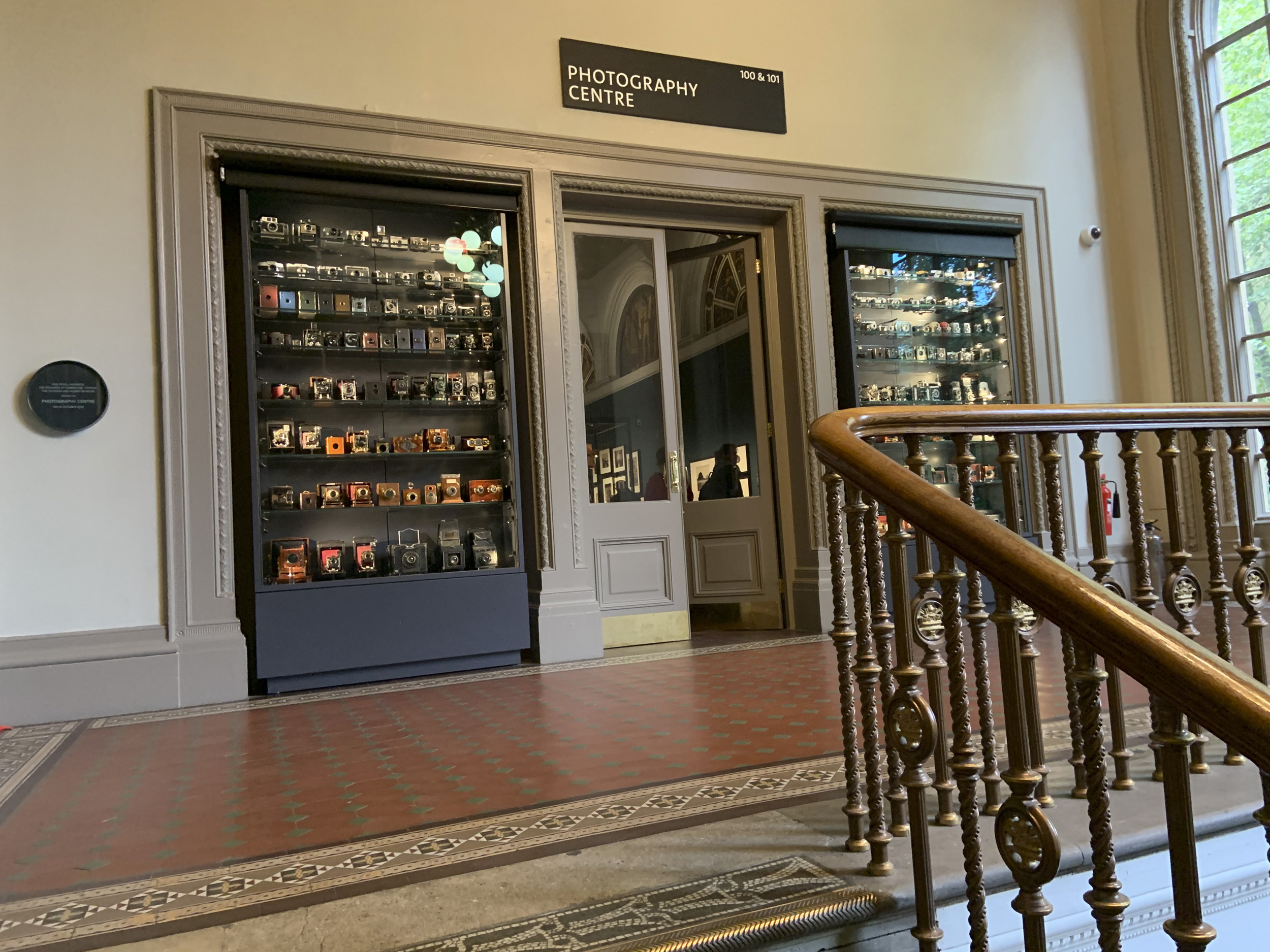
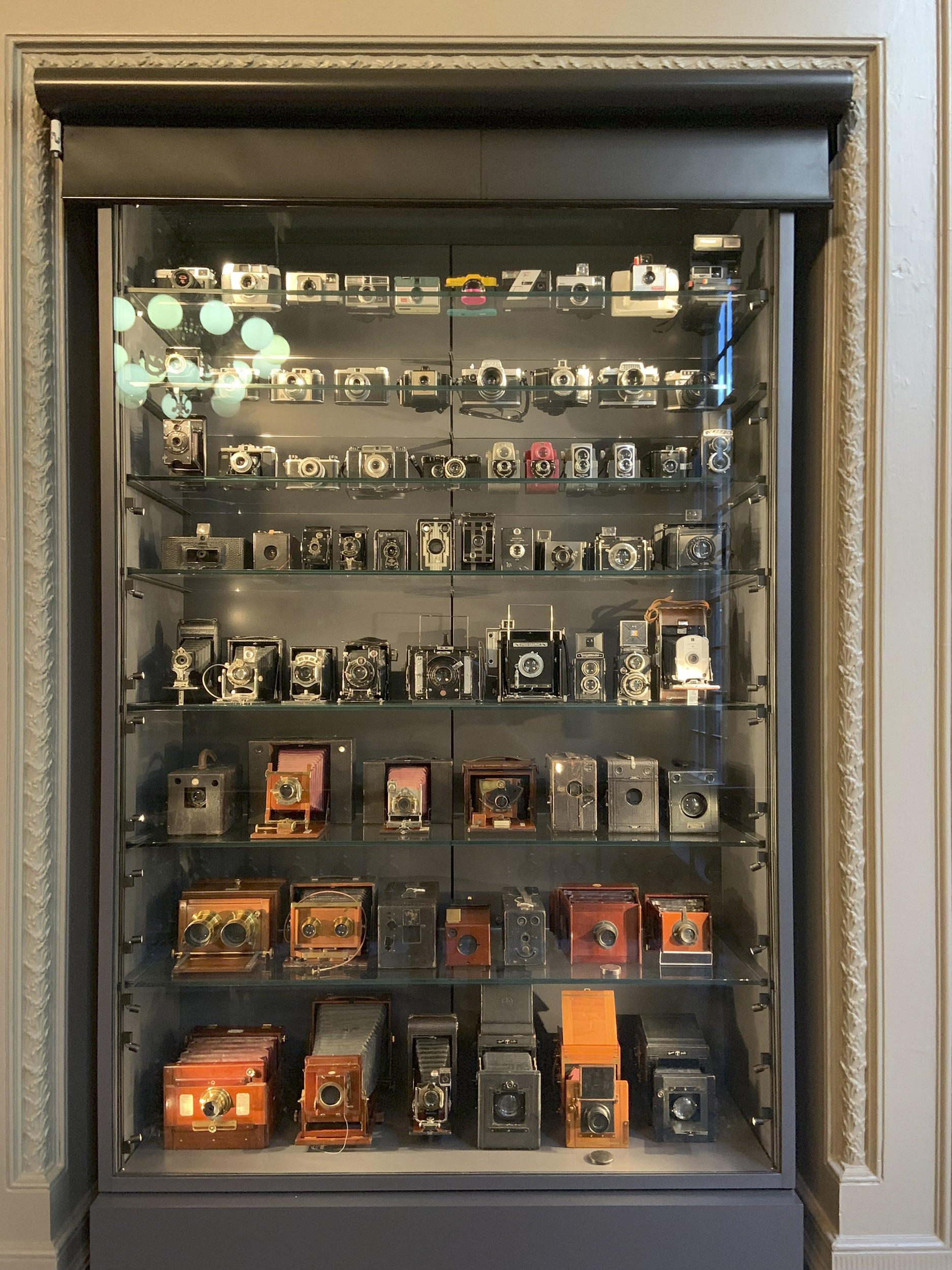
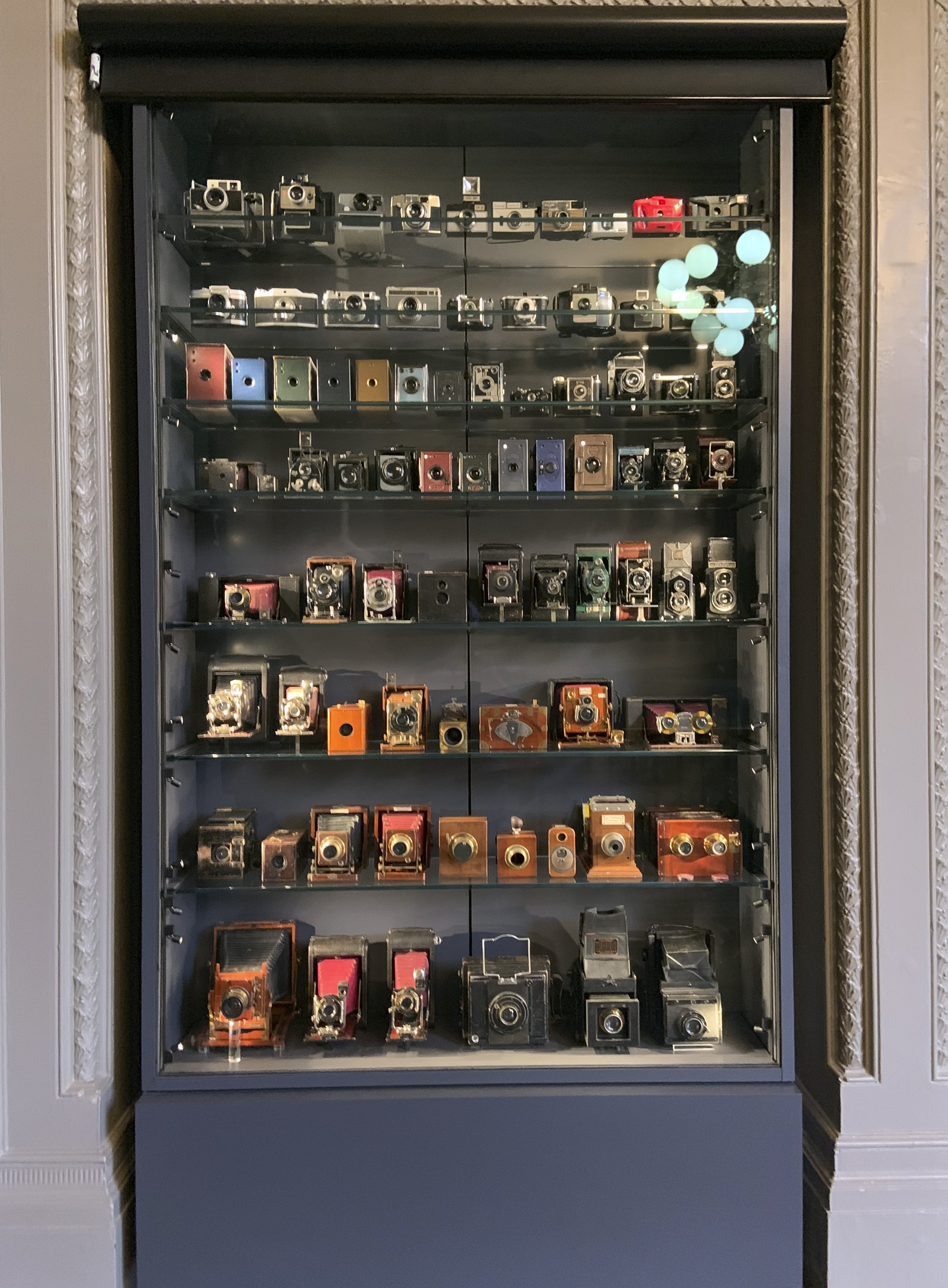
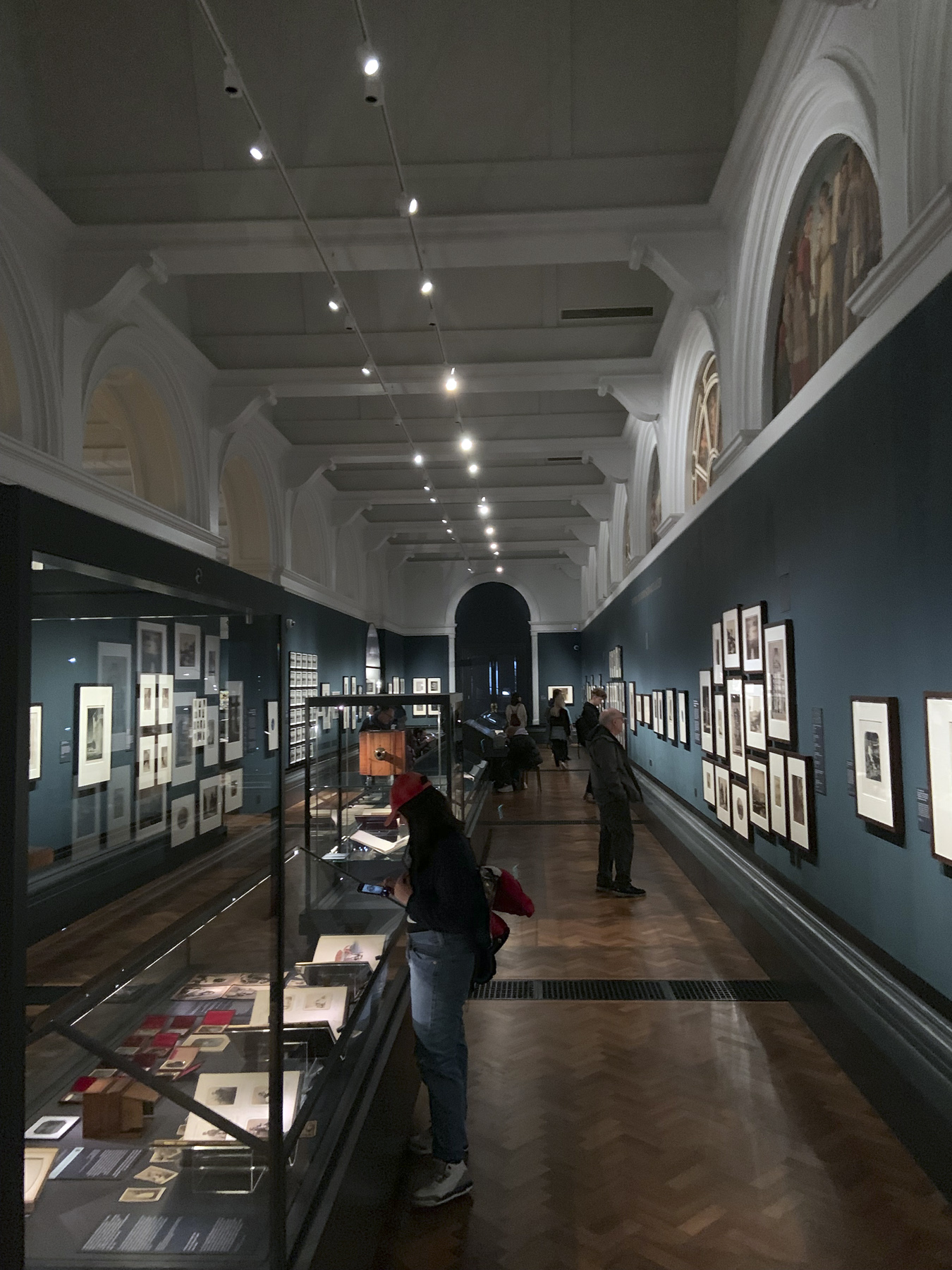
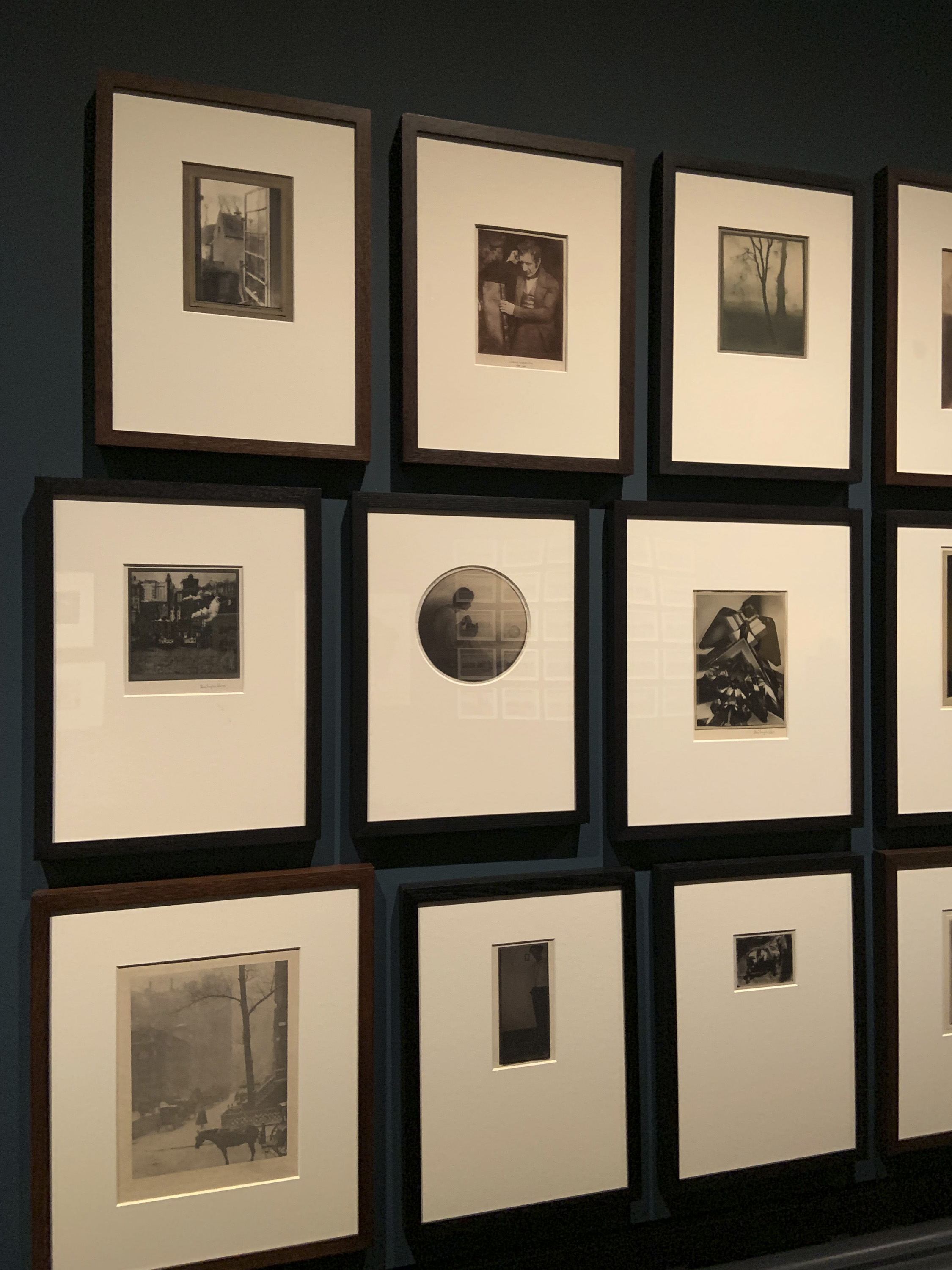
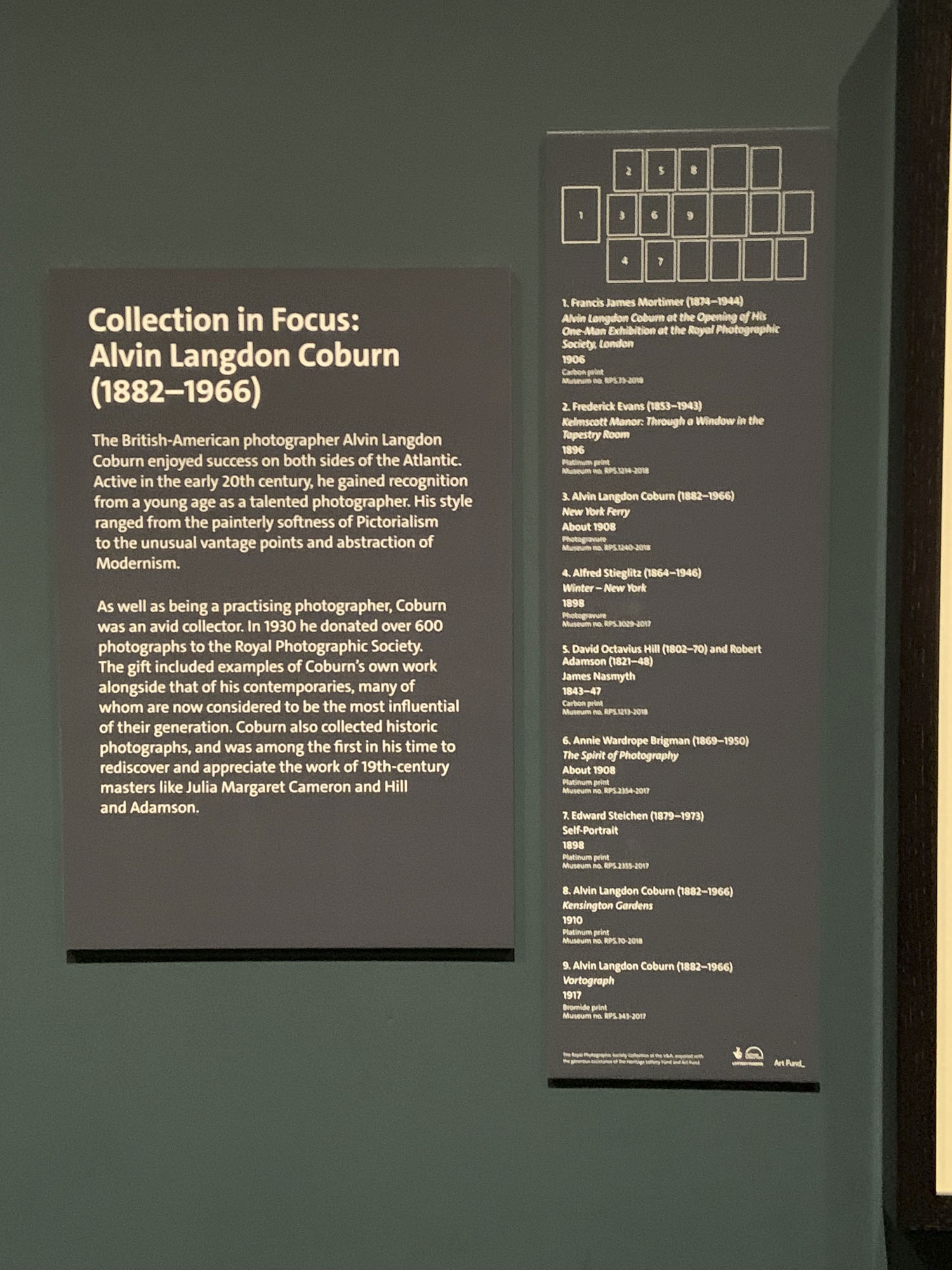
European photographic research tour: V&A Photography Centre, London

Visited October 2019 posted May 2020


Unknown photographer. 'Photograph of Allied War exhibition, Serbian Section, V&A' 1917 (installation view)
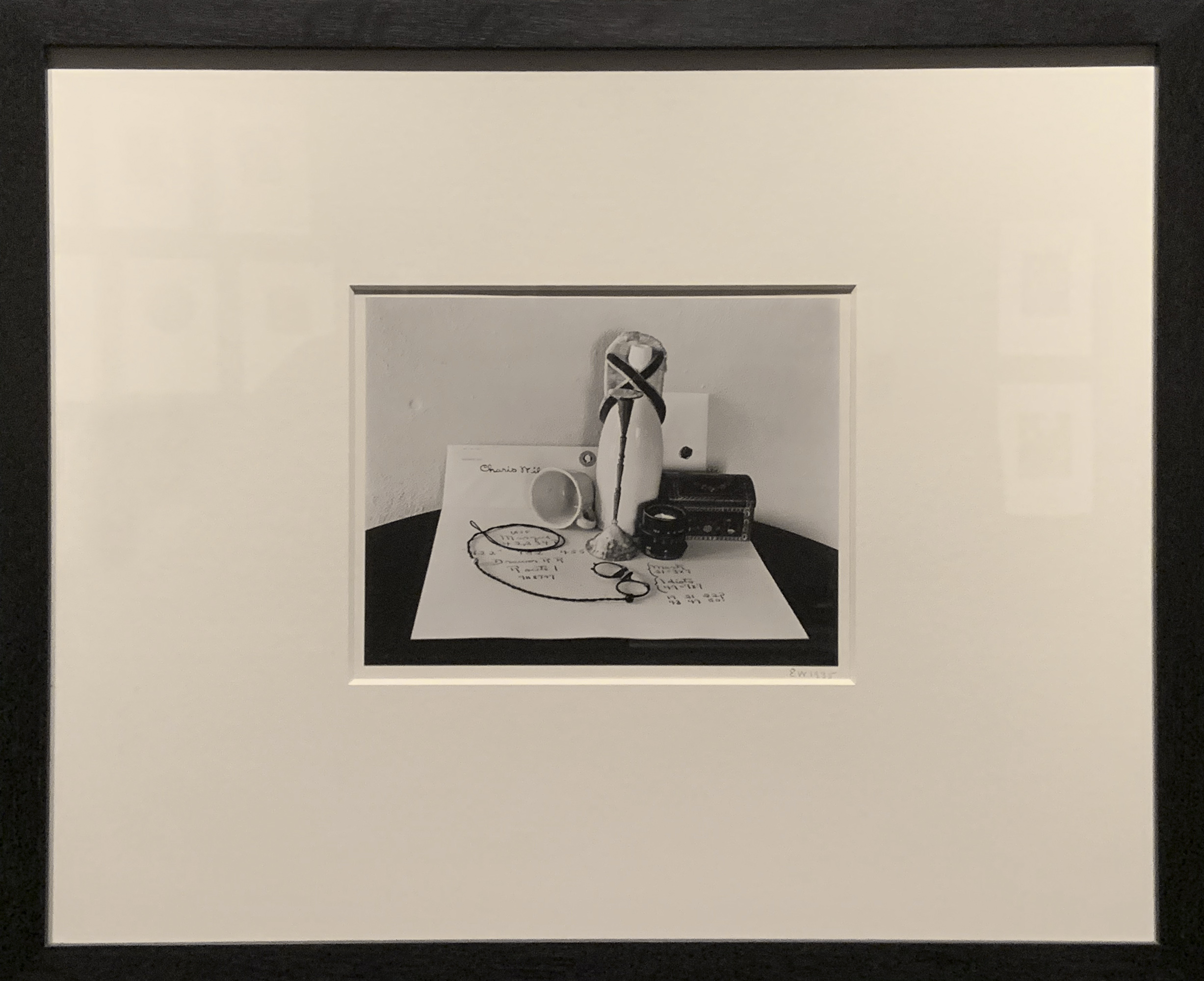
 

Unknown photographer
Photograph of Allied War exhibition, Serbian Section, V&A (installation view)
1917
Gelatin silver print
The Royal Photographic Society Collection at the V&A Museum
Photo: Marcus Bunyan


The older I grow, the more exponentially I appreciate and love these early photographs. Imagine having a collection like this!

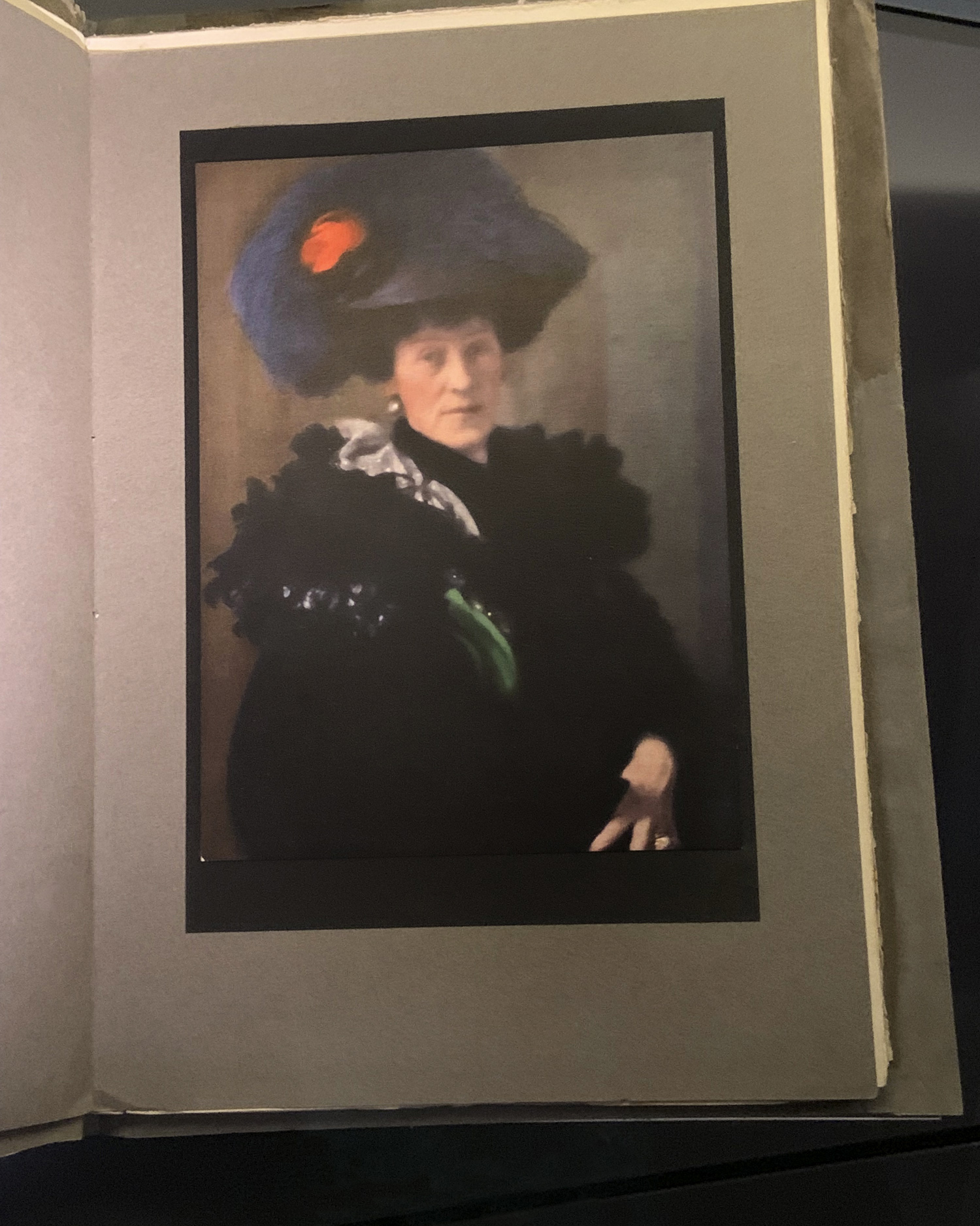
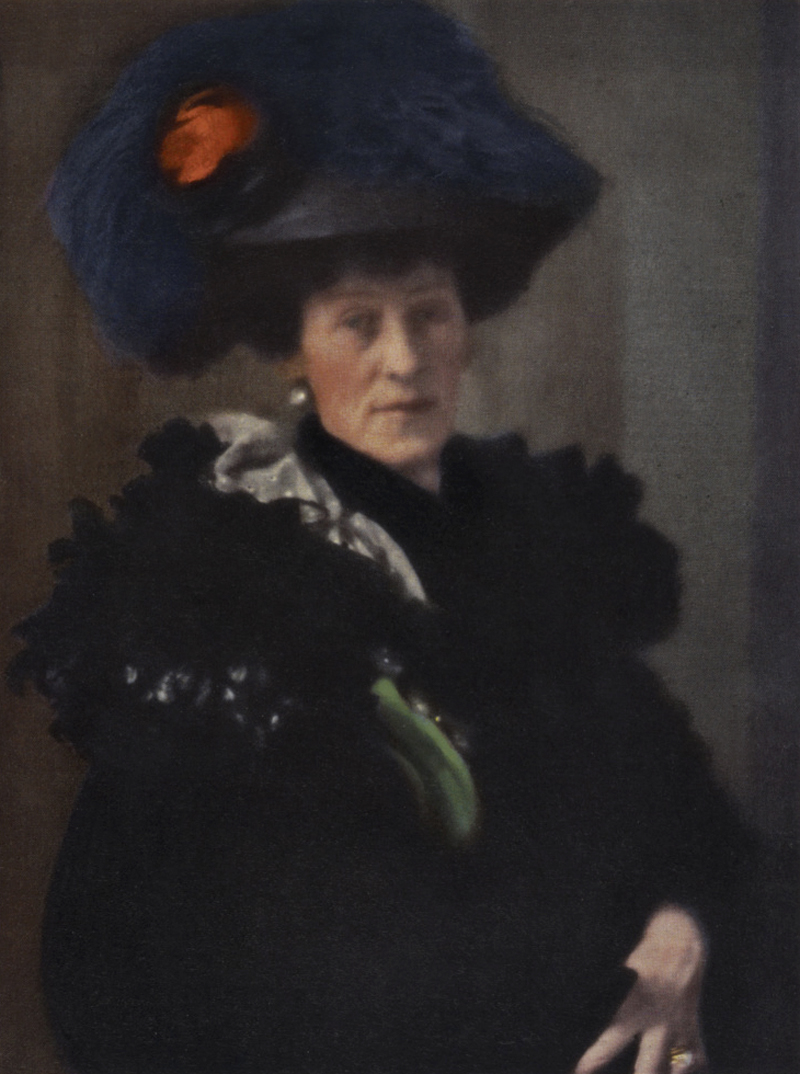
Wonderful to see Edward Steichen’s Portrait – Lady H (1908, below) as I have a copy of Camera Work 22 in my collection.

Dr Marcus Bunyan


All iPhone images © Dr Marcus Bunyan. Please click on the photographs for a larger version of the image.


The V&A has been collecting photographs since 1856, the year the Museum was founded, and it was one of the first museums to present photography exhibitions. Since then the collection has grown to be one of the largest and most important in the world, comprising around 500,000 images. The V&A is now honoured to have added the Royal Photographic Society (RPS) collection to its holdings, which contains around 270,000 photographs, an extensive library, and 6,000 cameras and pieces of equipment associated with leading artists and photographic pioneers.

Take a behind-the-scenes look at our world class photography collection following the transfer of the Royal Photographic Society (RPS) Collection, which has enabled a dramatic reimagining of the way photography is presented at the V&A. The photographs curators introduce a series of five highlights that are on display in the new Photography Centre, which opened on 12th October 2018. The first phase of the centre will more than double the space dedicated to photography at the Museum.

Text from the V&A and YouTube websites


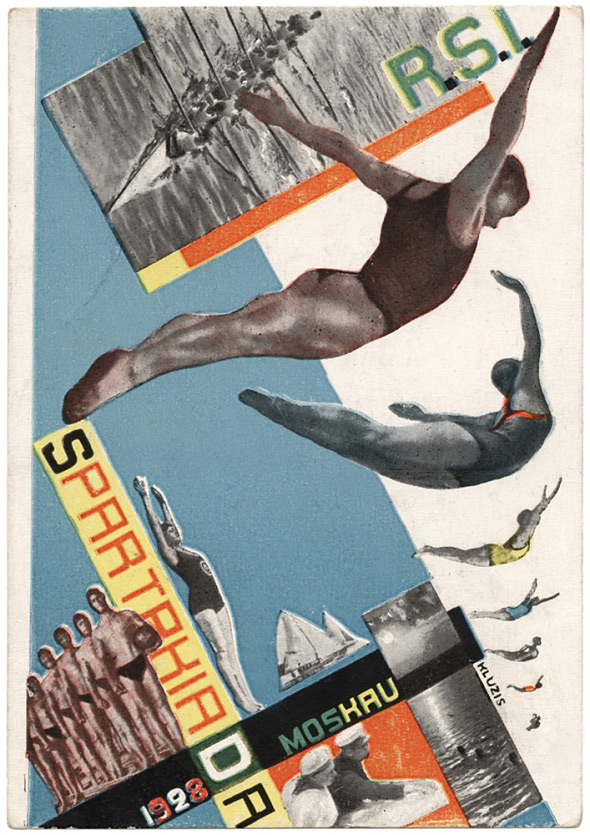
Unknown photographer. 'Photograph of Allied War exhibition, Serbian Section, V&A' 1917


Unknown photographer
Photograph of Allied War exhibition, Serbian Section, V&A (installation view)
1917
Gelatin silver print
The Royal Photographic Society Collection at the V&A Museum
Photo: Marcus Bunyan


The V&A has been collecting and exhibiting photographs since the 1850s. This image shows part o a photographic exhibition held over 100 years ago in the same galleries you are standing in today. The exhibition presented a densely packed display of images depicting the Allied Powers during the First World War.


Installation view of the V&A Photography Centre, London

Installation view of the V&A Photography Centre, London

Installation view of the V&A Photography Centre, London

Installation view of the V&A Photography Centre, London

Wall text from the V&A Photography Centre, London

Installation view of the V&A Photography Centre, London


Installation views of the V&A Photography Centre, London
Photos: Marcus Bunyan


Joseph Nicéphore Niépce (French, 1765-1833) 'Christ Carrying his Cross' 1827 (installation view)

Joseph Nicéphore Niépce (French, 1765-1833) 'Christ Carrying his Cross' 1827 (installation view)


Joseph Nicéphore Niépce (French, 1765-1833)
Christ Carrying his Cross (installation views)
1827
Heliograph on pewter plate
The Royal Photographic Society Collection at the V&A Museum
Photos: Marcus Bunyan


The French inventor Niépce made the earliest surviving photographic images, which he called ‘heliographs’ or ‘sun-writing’. Only 16 are thought to still exist. Although Niépce experimented with light-sensitive plates inside a camera, he made most of his images, including this one, by placing engravings of works by other artists directly onto a metal plate. He would probably have had the resulting heliographs coated in ink and printed.


Joseph Nicéphore Niépce (French, 1765-1833) 'Christ Carrying his Cross' 1827 (installation view)


Joseph Nicéphore Niépce (French, 1765-1833)
Christ Carrying his Cross (installation view)
1827
Heliograph on pewter plate
The Royal Photographic Society Collection at the V&A Museum
Photo: Marcus Bunyan


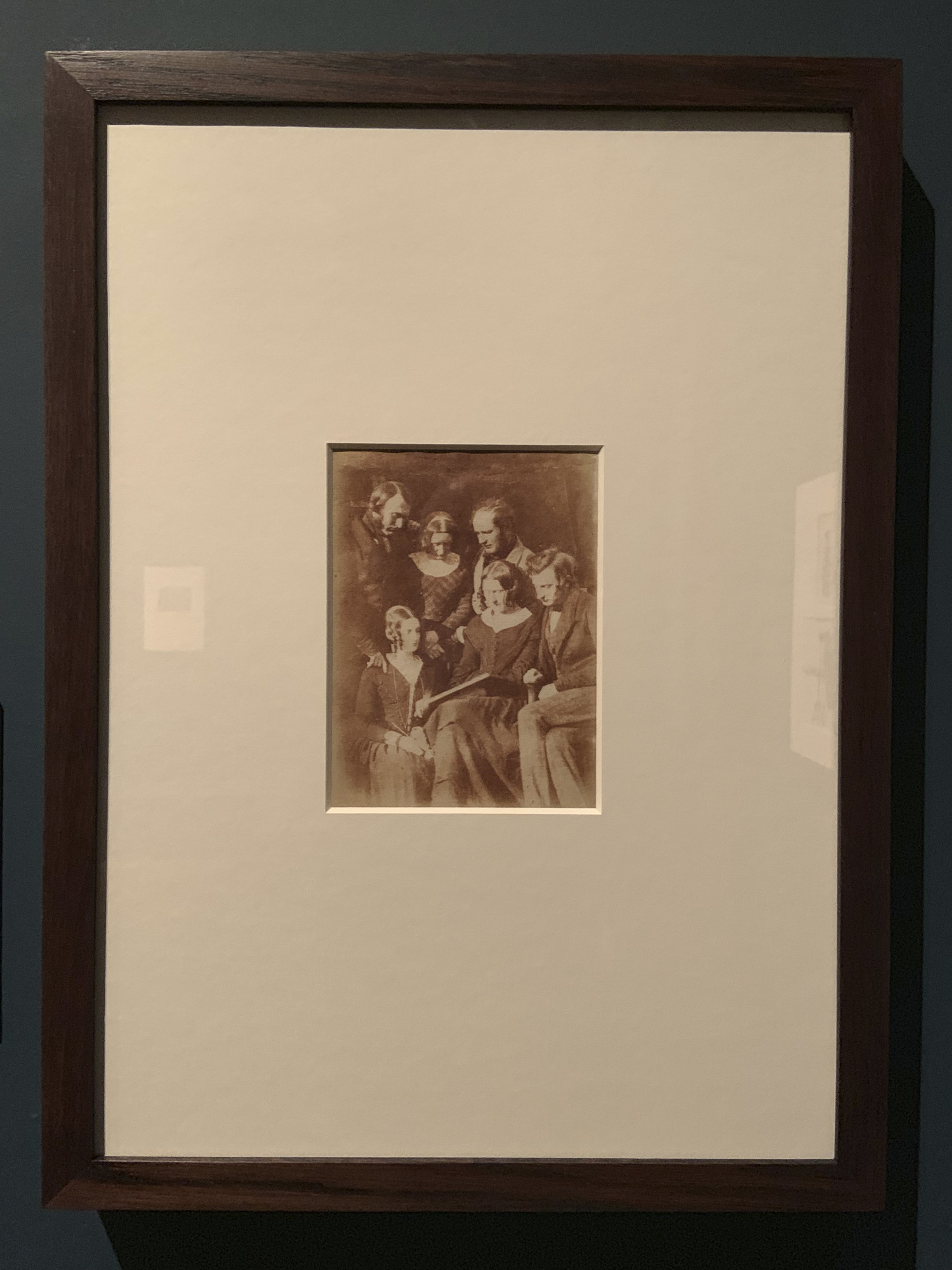
David Octavius Hill (Scottish, 1802-70) and Robert Adamson (Scottish, 1821-48) 'The Adamson Family' 1843-1845 (installation view)


David Octavius Hill (Scottish, 1802-1870) and Robert Adamson (Scottish, 1821-1848)
The Adamson Family (installation view)
1843-1845
Salted paper print
The Royal Photographic Society Collection at the V&A Museum
Photo: Marcus Bunyan


The partnership between Scottish painter Hill and chemist Adamson merged the art and science of photography. The pair initially intended to create preliminary studies for Hill’s paintings, but soon recognised photography’s artistic potential. With Hill’s knowledge of composition and lighting, and Adamson’s considerable sensitivity and dexterity in handling the camera, together they produced some of the most accomplished photographic portraits of their time.


William Henry Fox Talbot (British, 1800-77) 'The Haystack' 1844 from  the V&A Photography Centre, London 2019


William Henry Fox Talbot (British, 1800-1877)
The Haystack
1844
From The Pencil of Nature
Salted paper print
The Royal Photographic Society Collection at the V&A Museum


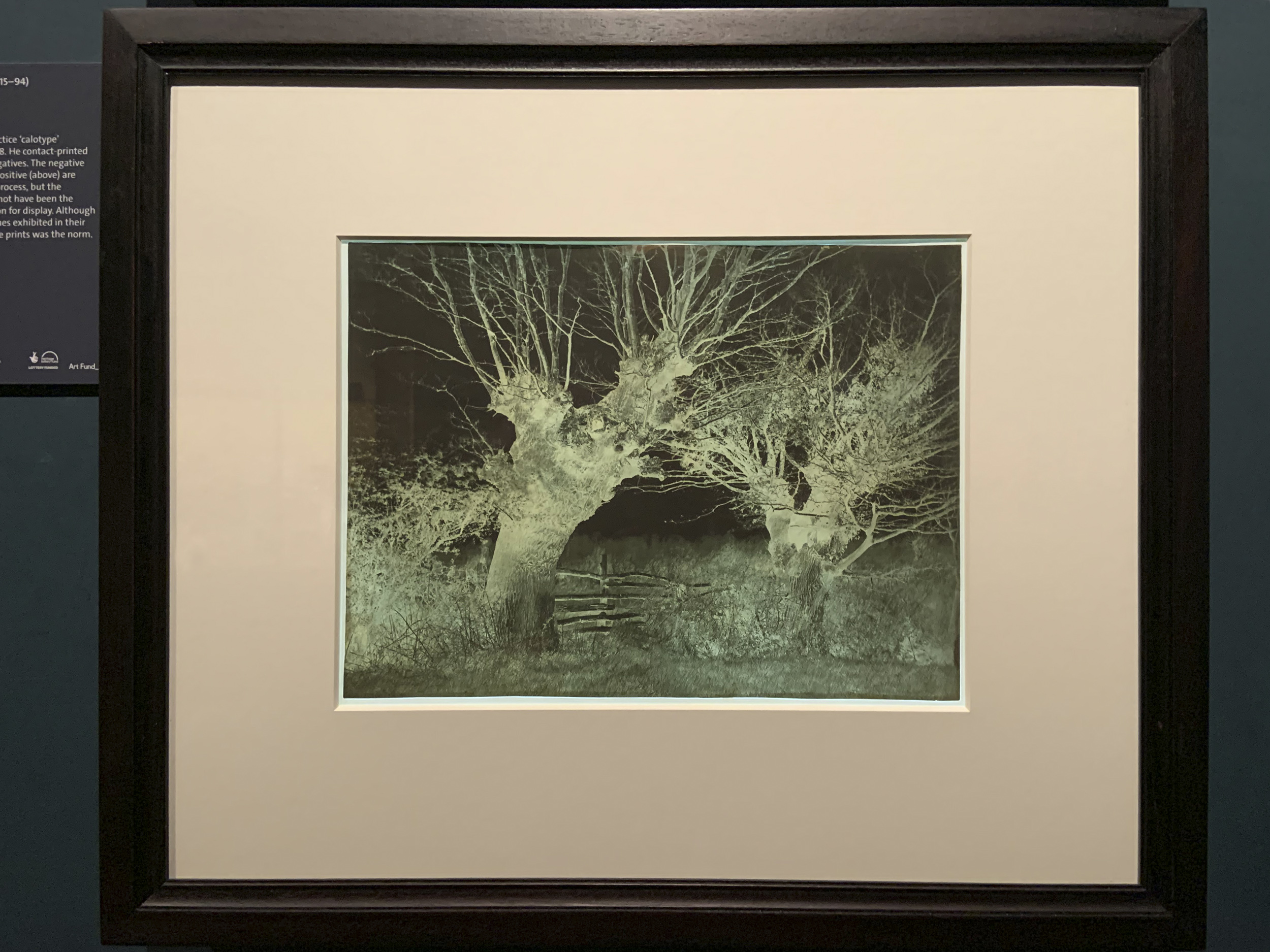
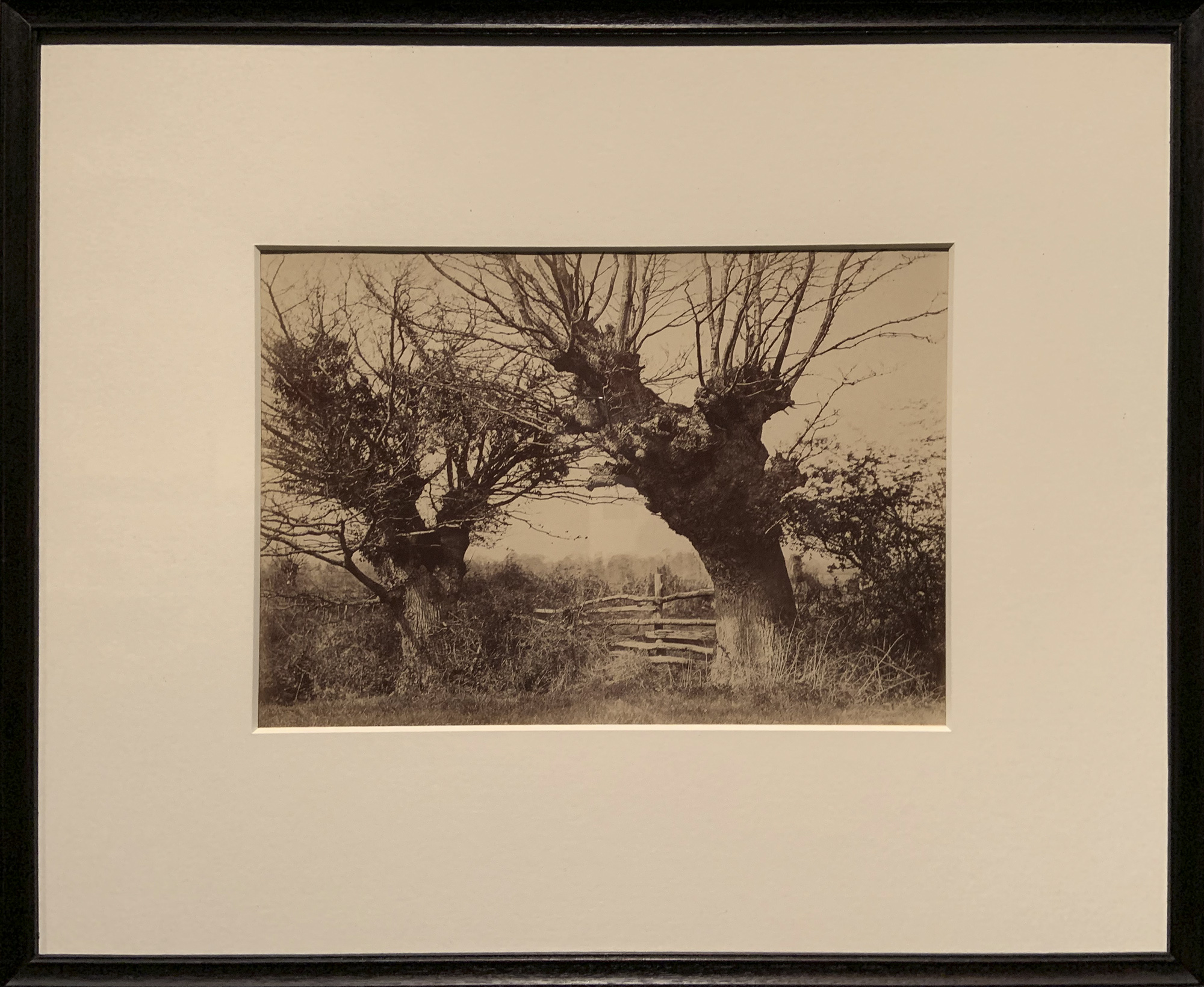
Benjamin Brecknell Turner (British, 1815-94) 'Hedgerow Trees, Clerkenleap' 1852-1854 (installation view)

Benjamin Brecknell Turner (British, 1815-94) 'Hedgerow Trees, Clerkenleap' 1852-1854 (installation view)


Benjamin Brecknell Turner (British, 1815-1894)
Hedgerow Trees, Clerkenleap (installation views)
1852-1854
Albumen print; Calotype negative
The Royal Photographic Society Collection at the V&A Museum
Photos: Marcus Bunyan


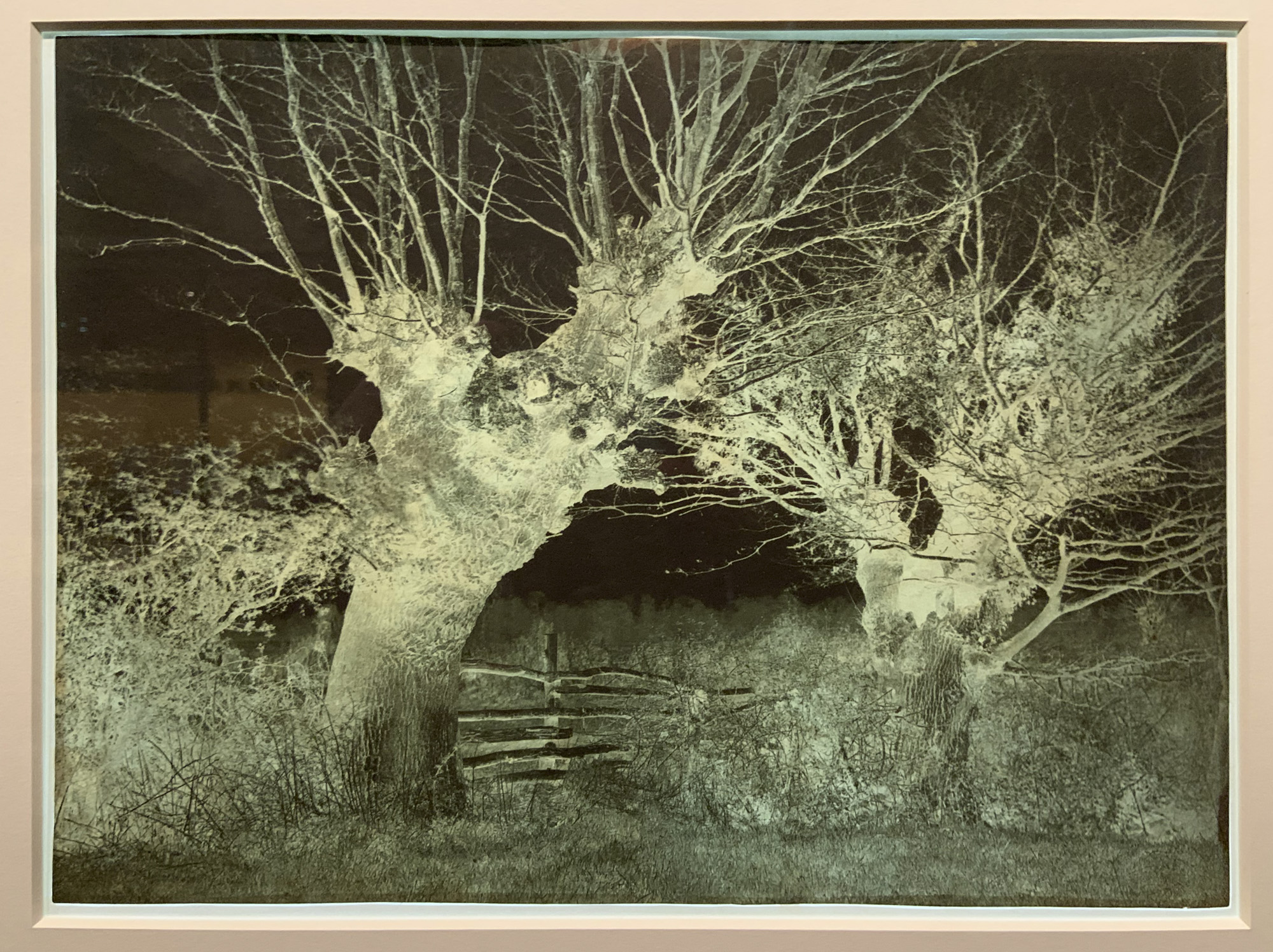
Turner took out a licence to practice ‘calotype’ photography from Talbot in 1848. He contact-printed positive images from paper negatives. The negative (below) and its corresponding positive (above) are reunited here to illustrate this process, but the pairing as you see them would not have been the photographer’s original intention for display. Although unique negatives were sometimes exhibited in their own right, only showing positive prints was the norm.


Benjamin Brecknell Turner (British, 1815-94) 'Hedgerow Trees, Clerkenleap' 1852-1854 (installation view)


Benjamin Brecknell Turner (British, 1815-1894)
Hedgerow Trees, Clerkenleap (installation view)
1852-1854
Albumen print; Calotype negative
The Royal Photographic Society Collection at the V&A Museum
Photo: Marcus Bunyan


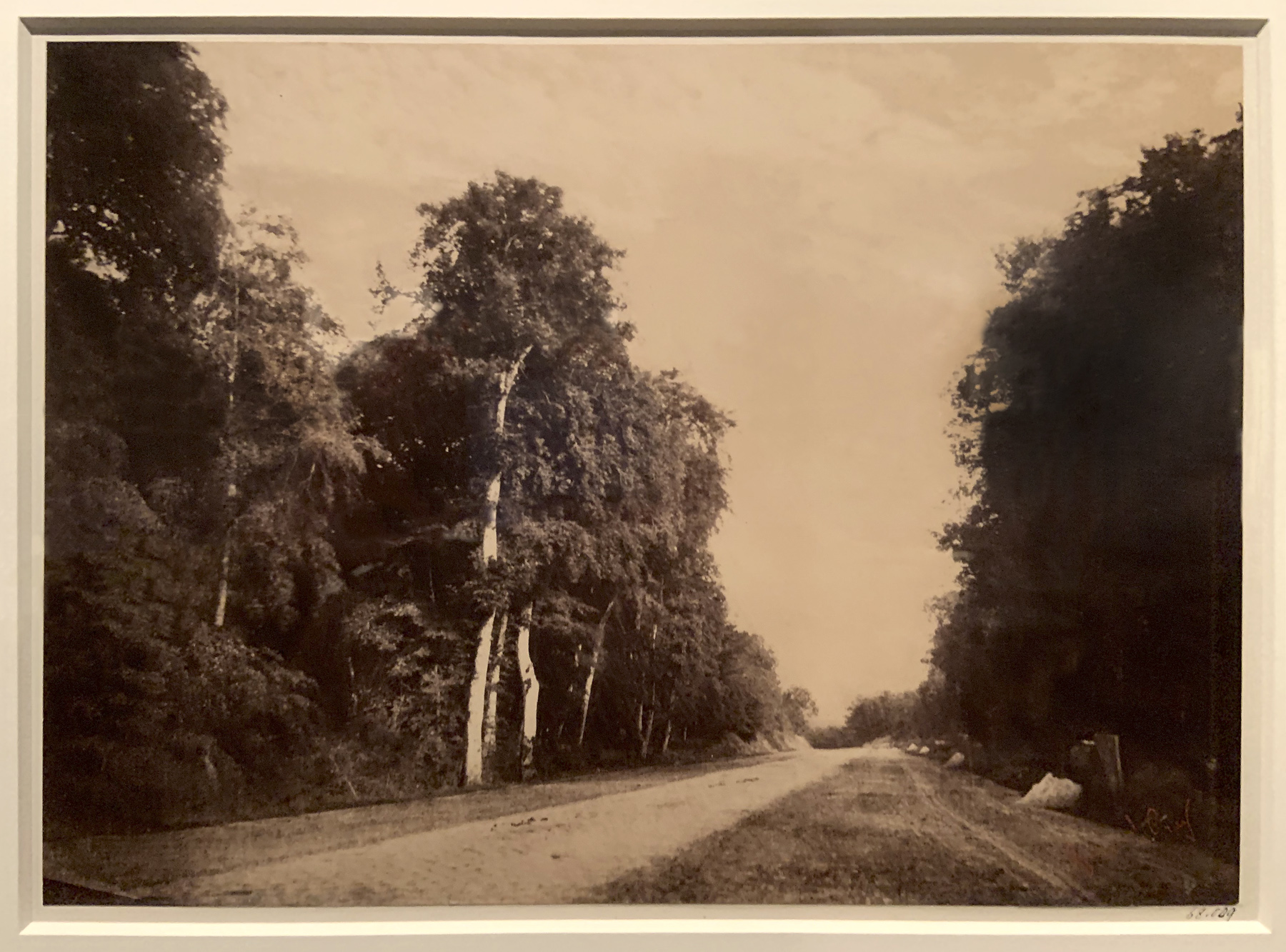
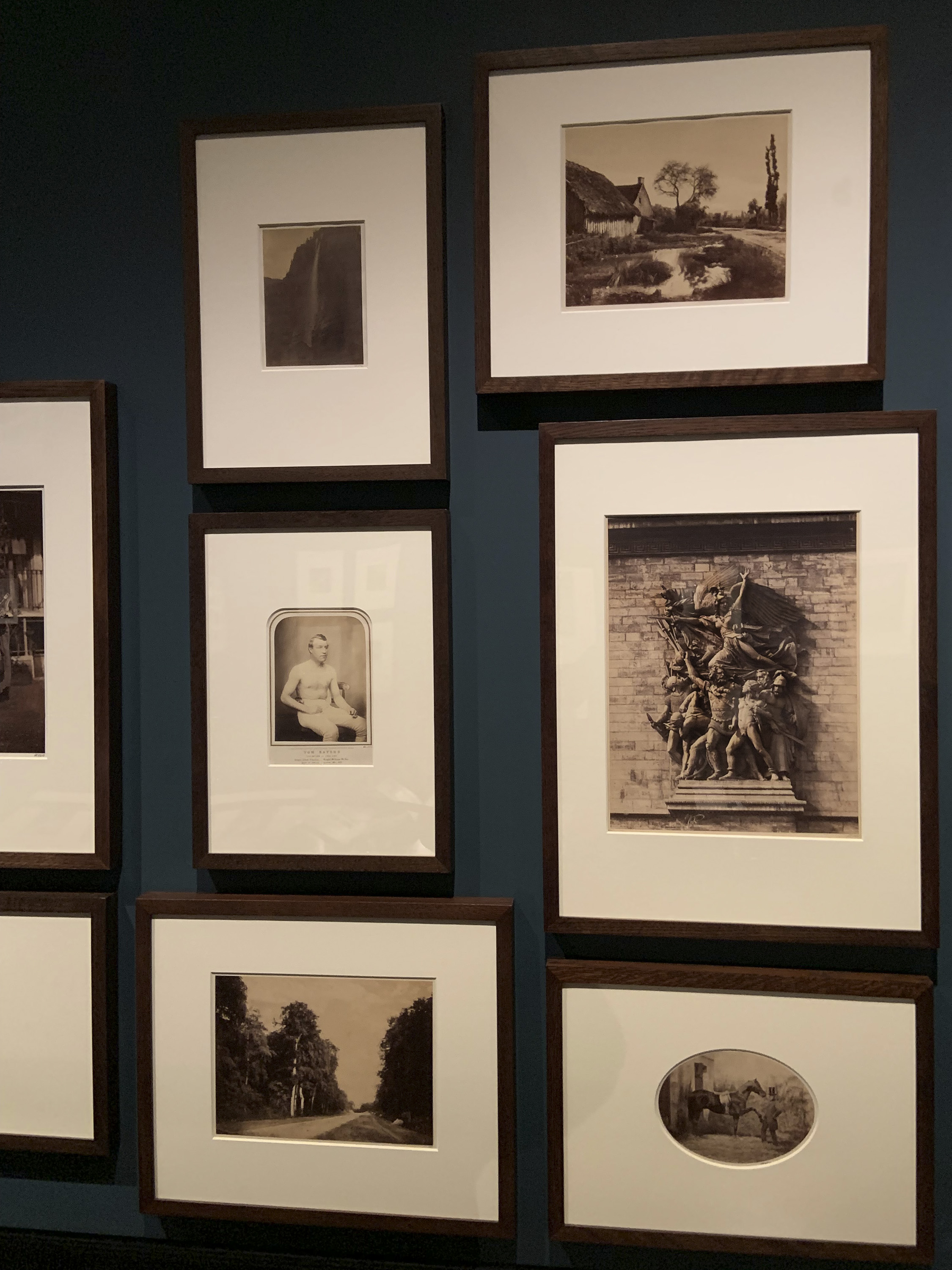
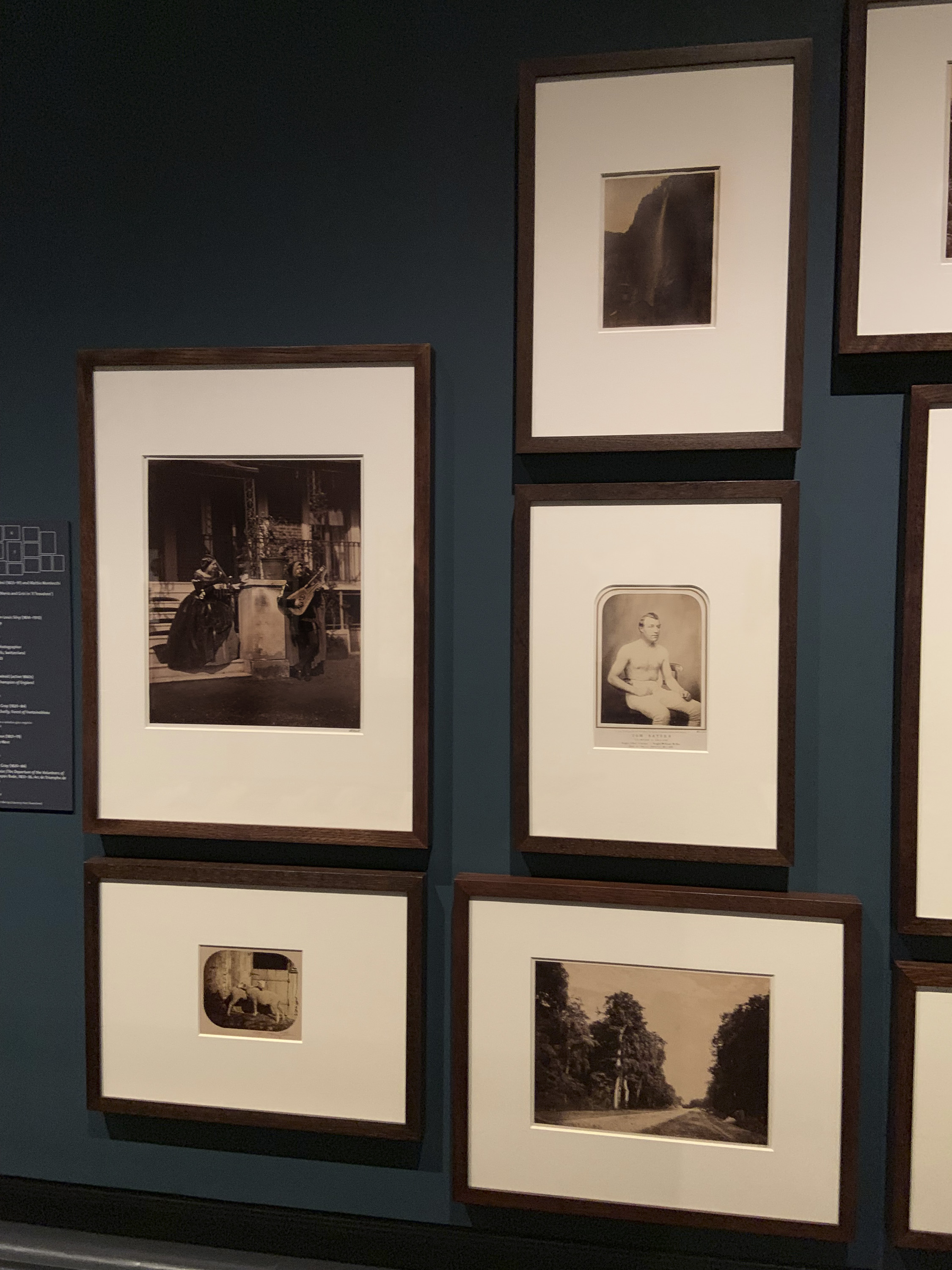
Gustave Le Gray (French, 1820-84) 'The Road to Chailly, Forest of Fontainebleau' 1852 (installation view)


Gustave Le Gray (French, 1820-1884)
The Road to Chailly, Forest of Fontainebleau (installation view)
1852
Albumen print from a collodion glass negative
Bequeathed to the V&A by Chauncey Hare Townshend
Photo: Marcus Bunyan


Installation view of the V&A Photography Centre, London

Installation view of the V&A Photography Centre, London

Wall text from the V&A Photography Centre, London


Installation views of the V&A Photography Centre, London
Photos: Marcus Bunyan


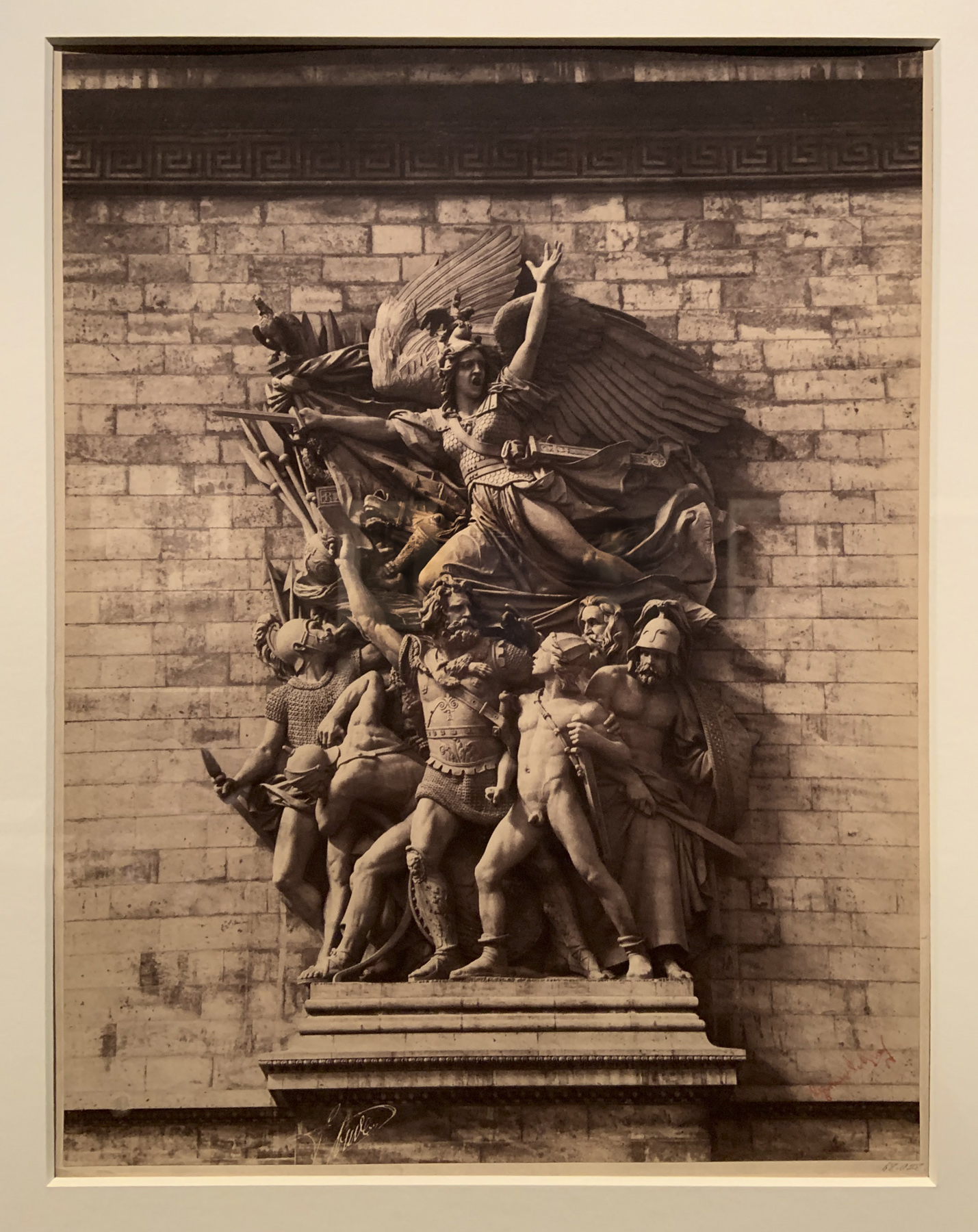
Gustave Le Gray (French, 1820-84) 'The Marseillaise (The Departure of the Volunteers of 1792), by Francois Rude, 1833-35, Arc de Triomphe de l’Etoile, Paris' 1852 (installation view)


Gustave Le Gray (French, 1820-1884)
The Marseillaise (The Departure of the Volunteers of 1792), by Francois Rude, 1833-35, Arc de Triomphe de l’Etoile, Paris (installation view)
1852
Albumen print
Bequeathed to the V&A by Chauncey Hare Townshend
Photo: Marcus Bunyan


Gustave Le Gray (French, 1820-1884) 'The Marseillaise (The Departure of the Volunteers of 1792), by Francois Rude, 1833-1835, Arc de Triomphe de l’Etoile, Paris' 1852 (installation view)


Gustave Le Gray (French, 1820-1884)
The Marseillaise (The Departure of the Volunteers of 1792), by Francois Rude, 1833-35, Arc de Triomphe de l’Etoile, Paris (installation view)
1852
Albumen print
Bequeathed to the V&A by Chauncey Hare Townshend
Photo: Marcus Bunyan


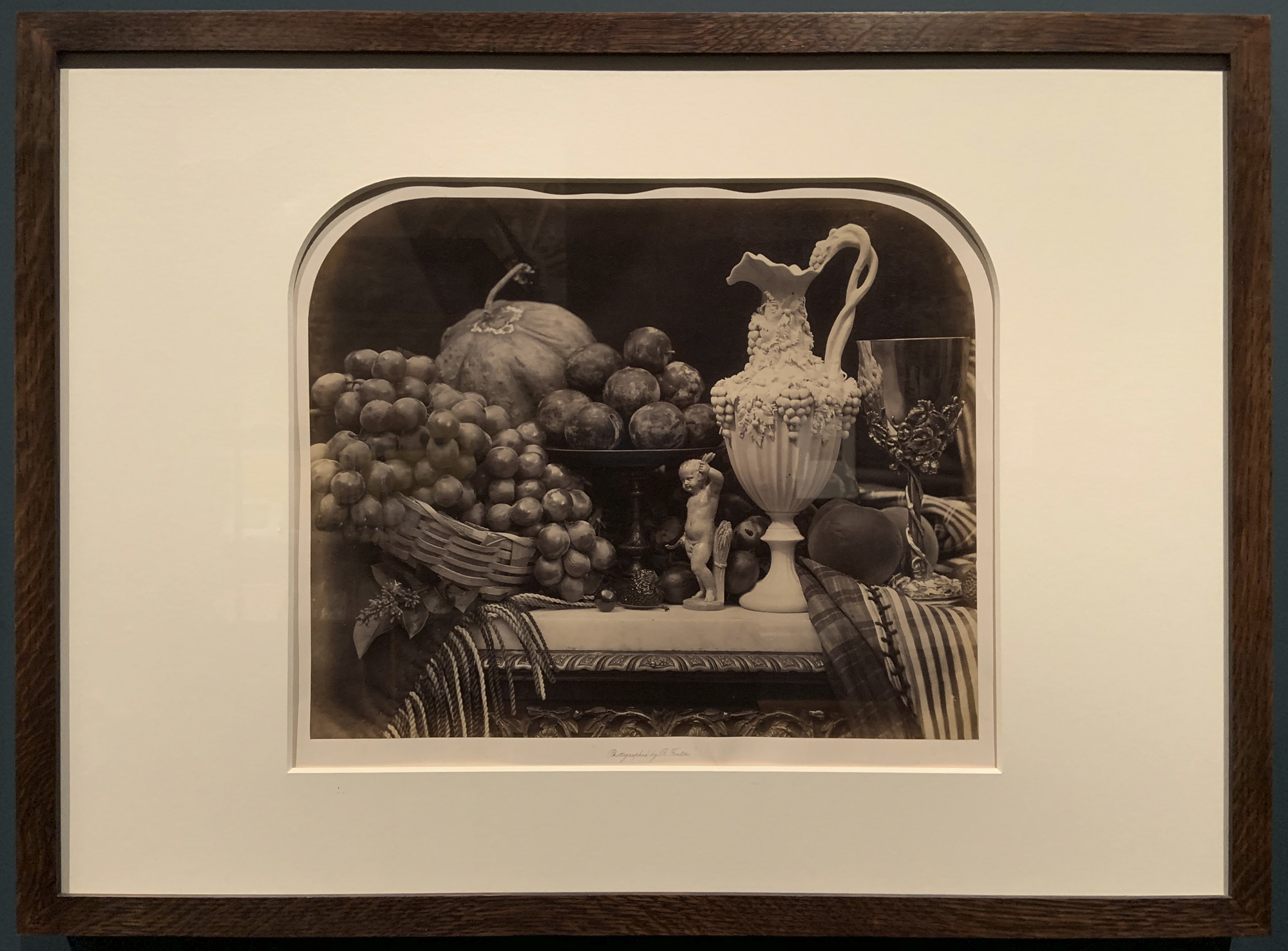
Roger Fenton (British, 1819-1869) 'Parian Vase, Grapes and Silver Cup' 1860 (installation view)


Roger Fenton (British, 1819-1869)
Parian Vase, Grapes and Silver Cup (installation view)
1860
Albumen print
The Royal Photographic Society Collection at the V&A Museum
Photo: Marcus Bunyan


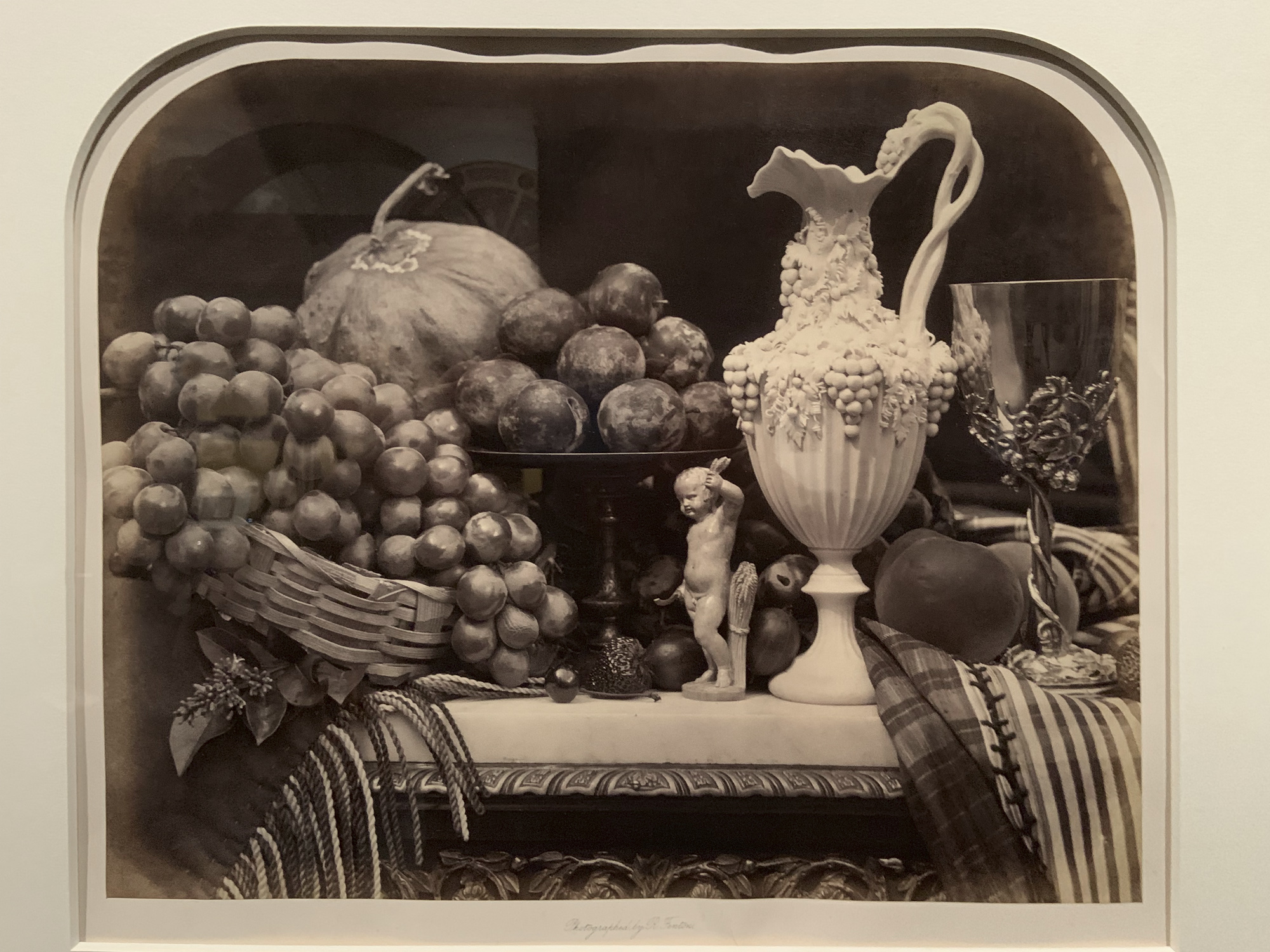
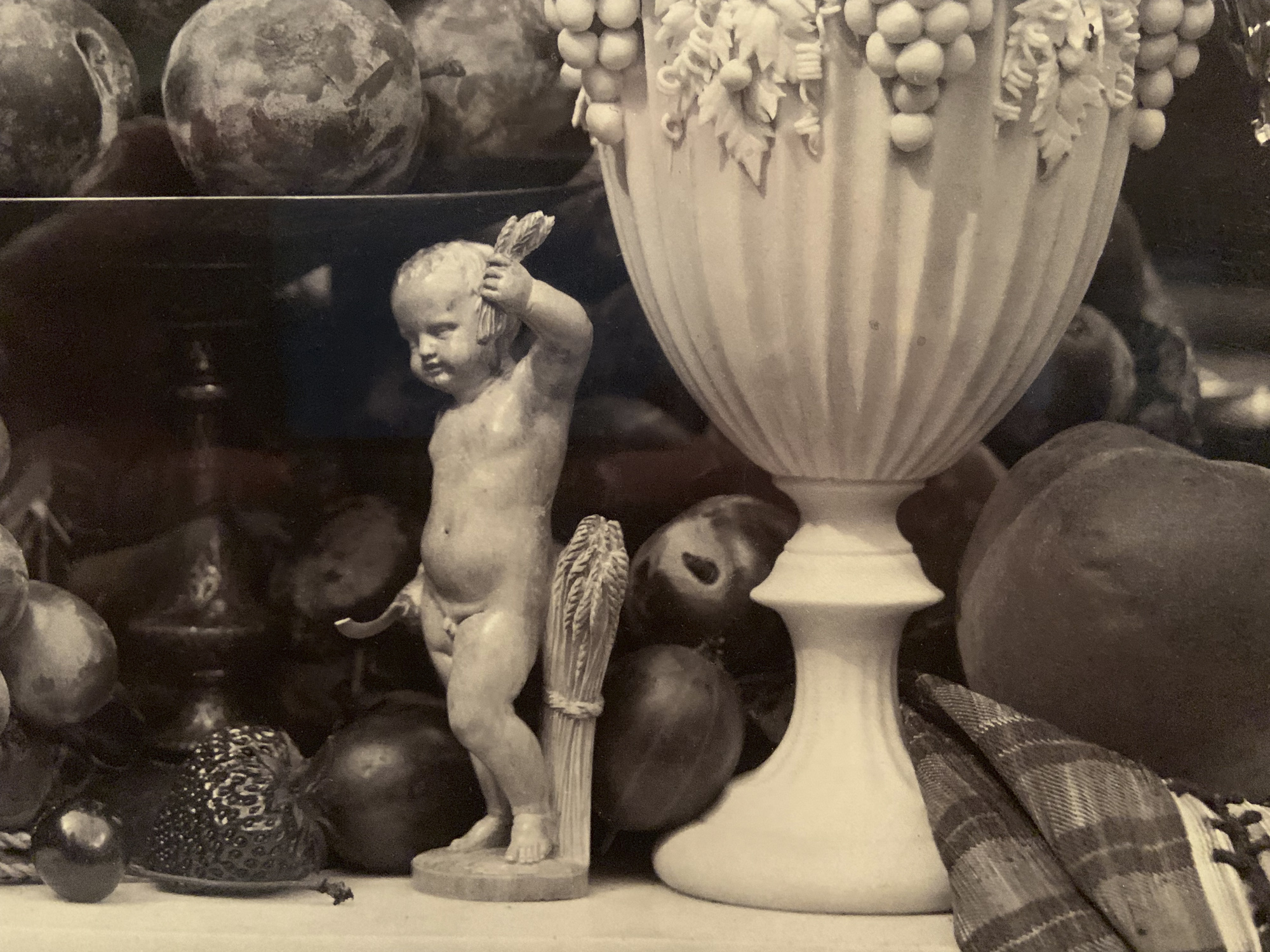
Fenton was one of the most versatile and technically brilliant photographers of the 19th century. He excelled at many subjects, including war photography, portraiture, architecture and landscape. He also made a series of lush still lives. Here, grapes, plums and peaches are rendered in exquisite detail, and the silver cup on the right reflects a camera tripod.


Roger Fenton (British, 1819-1869) 'Parian Vase, Grapes and Silver Cup' 1860 (installation view)


Roger Fenton (British, 1819-1869)
Parian Vase, Grapes and Silver Cup (installation view)
1860
Albumen print
The Royal Photographic Society Collection at the V&A Museum
Photo: Marcus Bunyan


Roger Fenton (British, 1819-1869) 'Parian Vase, Grapes and Silver Cup' 1860 (installation view)


Roger Fenton (British, 1819-1869)
Parian Vase, Grapes and Silver Cup (installation view)
1860
Albumen print
The Royal Photographic Society Collection at the V&A Museum
Photo: Marcus Bunyan


Roger Fenton (British, 1819-1869) 'Parian Vase, Grapes and Silver Cup' 1860 (installation view detail)


Roger Fenton (British, 1819-1869)
Parian Vase, Grapes and Silver Cup (installation view detail)
1860
Albumen print
The Royal Photographic Society Collection at the V&A Museum
Photo: Marcus Bunyan


Roger Fenton (British, 1819-1869) 'Still Life with Fruit and Decanter' 1860 from the V&A Photography Centre, London 2019


Roger Fenton (British, 1819-1869)
Still Life with Fruit and Decanter
1860
Albumen print
The Royal Photographic Society Collection at the V&A Museum


Oscar Gustaf Rejlander (British born Sweden, 1813-1875) 'Head of St John the Baptist on a Charger' c. 1856 (installation view)


Oscar Gustaf Rejlander (British born Sweden, 1813-1875)
Head of St John the Baptist on a Charger (installation view)
c. 1856
Albumen print
The Royal Photographic Society Collection at the V&A Museum
Photo: Marcus Bunyan


Rejlander probably intended this photograph to be part of a larger composition telling the biblical story of Salome, in which the severed head of John the Baptist was presented to her on a plate. Rejlander never made the full picture, however, and instead produced multiple prints of the head alone.


Oscar Gustaf Rejlander (British born Sweden, 1813-75) 'Head of St John the Baptist on a Charger' c. 1856 (installation view)


Oscar Gustaf Rejlander (British born Sweden, 1813-1875)
Head of St John the Baptist on a Charger (installation view)
c. 1856
Albumen print
The Royal Photographic Society Collection at the V&A Museum


Francis Frith (British, 1822-1898) 'Th', from Egypt, Sinai, and Jerusalem: A Series of Twenty Photographic Views by Francis Frith 1858 (published 1860 or 1862) (installation view)


Francis Frith (British, 1822-1898)
The Pyramids of Dahshoor [Dahshur], from the East, from Egypt, Sinai, and Jerusalem: A Series of Twenty Photographic Views by Francis Frith (installation view)
1858 (published 1860 or 1862)
Albumen print
The Royal Photographic Society Collection at the V&A Museum
Photo: Marcus Bunyan


Frith’s photographs were popular and circulated widely, both because of their architectural interest and because they often featured sites mentioned in the Bible. Photographs of places described in biblical stories brought a new level of realism to a Christian Victorian audience, previously only available through the interpretations of a painter or illustrator.


Francis Frith (British, 1822-1898) 'Th', from Egypt, Sinai, and Jerusalem: A Series of Twenty Photographic Views by Francis Frith 1858 (published 1860 or 1862) (installation view)


Francis Frith (British, 1822-1898)
The Pyramids of Dahshoor [Dahshur], from the East, from Egypt, Sinai, and Jerusalem: A Series of Twenty Photographic Views by Francis Frith (installation view)
1858 (published 1860 or 1862)
Albumen print
The Royal Photographic Society Collection at the V&A Museum
Photo: Marcus Bunyan


Francis Frith (British, 1822-98) 'The Pyramids of Dahshoor [Dahshur], from the East, from Egypt, Sinai, and Jerusalem: A Series of Twenty Photographic Views by Francis Frith' 1858 (published 1860 or 1862) from the V&A Photography Centre, London 2019


Francis Frith (British, 1822-1898)
The Pyramids of Dahshoor [Dahshur], from the East, from Egypt, Sinai, and Jerusalem: A Series of Twenty Photographic Views by Francis Frith
1858 (published 1860 or 1862)
Albumen print
The Royal Photographic Society Collection at the V&A Museum
Photo: Marcus Bunyan


Installation view of the V&A Photography Centre, London


Installation view of the V&A Photography Centre, London
Photo: Marcus Bunyan


Gustave Le Gray (French, 1820-1884) 'Solar Effect in the Clouds – Ocean' 1856-1859 (installation view)


Gustave Le Gray (French, 1820-1884)
Solar Effect in the Clouds – Ocean (installation view)
1856-1859
Albumen Print
Bequeathed to the V&A by Chauncey Hare Townshend
Photo: Marcus Bunyan


Gustave Le Gray (French, 1820-1884) 'Solar Effect in the Clouds – Ocean' 1856-1859


Gustave Le Gray (French, 1820-1884)
Solar Effect in the Clouds – Ocean
1856-1859
Albumen Print
Art Institute of Chicago
Creative Commons Zero (CC0)


Gustave Le Gray (French, 1820-1884) 'The Imperial Yacht, La Reine Hortense, Le Havre' 1856-1857 (installation view)


Gustave Le Gray (French, 1820-1884)
The Imperial Yacht, La Reine Hortense, Le Havre (installation view)
1856-1857
Albumen print
Bequeathed to the V&A by Chauncey Hare Townshend
Photo: Marcus Bunyan


Gustave Le Gray (French, 1820-1884) 'The Imperial Yacht, La Reine Hortense, Le Havre' 1856-1857 (installation view)


Gustave Le Gray (French, 1820-1884)
The Imperial Yacht, La Reine Hortense, Le Havre (installation view)
1856-1857
Albumen print
Bequeathed to the V&A by Chauncey Hare Townshend
Photo: Marcus Bunyan


Gustave Le Gray (French, 1820-1884) 'The Imperial Yacht, La Reine Hortense, Le Havre' 1856-1857


Gustave Le Gray (French, 1820-1884)
The Imperial Yacht, La Reine Hortense, Le Havre
1856-1857
Albumen print
The Metropolitan Museum of Art
Public domain


Gustave Le Gray (French, 1820-1884) 'Pavilion Richelieu, Louvre, Paris' 1857-1859 (installation view)


Gustave Le Gray (French, 1820-1884)
Pavilion Richelieu, Louvre, Paris (installation view)
1857-1859
Albumen print
Bequeathed to the V&A by Chauncey Hare Townshend
Photo: Marcus Bunyan


Gustave Le Gray (French, 1820-1884) 'Pavilion Richelieu, Louvre, Paris' 1857-1859 (installation view)


Gustave Le Gray (French, 1820-1884)
Pavilion Richelieu, Louvre, Paris (installation view)
1857-1859
Albumen print
Bequeathed to the V&A by Chauncey Hare Townshend
Photo: Marcus Bunyan


Roger Fenton (British, 1819-1869) 'Balaclava from Guard’s Hill, the Crimea' 1855 (installation view)


Roger Fenton (British, 1819-1869)
Balaclava from Guard’s Hill, the Crimea (installation view)
1855
Albumen print
Bequeathed to the V&A by Chauncey Hare Townshend
Photo: Marcus Bunyan


Roger Fenton (British, 1819-1869) 'Balaclava from Guard’s Hill, the Crimea' 1855 (installation view)


Roger Fenton (British, 1819-69)
Balaclava from Guard’s Hill, the Crimea (installation view)
1855
Albumen print
Bequeathed to the V&A by Chauncey Hare Townshend
Photo: Marcus Bunyan


Julia Margaret Cameron (British born India, 1815-1879) 'Lucia' 1864-1865 (installation view)


Julia Margaret Cameron (British, born India, 1815-1879)
Lucia (installation view)
1864-1865
Albumen print
The Royal Photographic Society Collection at the V&A Museum
Photo: Marcus Bunyan


Charles Lutwide Dodgson (also known as Lewis Carroll)(British, 1832-1898) 'Tea Merchant (On Duty)' and 'Tea Merchant (Off Duty)' 1873 (installation view)


Charles Lutwide Dodgson (also known as Lewis Carroll)(British, 1832-1898)
Tea Merchant (On Duty) and Tea Merchant (Off Duty) (installation view)
1873
Albumen prints
The Royal Photographic Society Collection at the V&A Museum
Photo: Marcus Bunyan


Lewis Carroll is best known as the author of Alice’s Adventures in Wonderland, but he was also an accomplished amateur photographer. Approximately half of his photographs are portraits of children, sometimes wearing foreign costumes or acting out scenes. Here, Alexandra ‘Xie’ Kitchen, his most frequent child sitter, poses in Chinese dress on a stack of tea chests.


Charles Lutwide Dodgson (also known as Lewis Carroll)(British, 1832-1898) 'Tea Merchant (On Duty)' 1873 (installation view)


Charles Lutwide Dodgson (also known as Lewis Carroll)(British, 1832-1898)
Tea Merchant (On Duty) (installation view)
1873
Albumen prints
The Royal Photographic Society Collection at the V&A Museum
Photo: Marcus Bunyan


Charles Lutwide Dodgson (also known as Lewis Carroll)(British, 1832-1898) 'Tea Merchant (Off Duty)' 1873 (installation view)


Charles Lutwide Dodgson (also known as Lewis Carroll)(British, 1832-1898)
Tea Merchant (Off Duty) (installation view)
1873
Albumen prints
The Royal Photographic Society Collection at the V&A Museum
Photo: Marcus Bunyan


Julia Margaret Cameron (British, born India, 1815-1879) 'Pomona' 1887 (installation view)


Julia Margaret Cameron (British, born India, 1815-1879)
Pomona (installation view)
1887
Albumen print
The Royal Photographic Society Collection at the V&A Museum
Photo: Marcus Bunyan


The South Kensington museum (now the V&A) was the only museum to collect and exhibit Julia Margaret Cameron’s during her lifetime. This is one of several studies she made of Alice Liddell, who as a child had modelled for the author and photographer Lewis Carroll and inspired his novel Alice’s Adventures in Wonderland. Cameron, Carroll and Liddell moved in overlapping artistic and intellectual circles. Here, surrounded by foliage, a grown-up Alice poses as the Roman goddess of orchards and gardens.


Julia Margaret Cameron (British, born India, 1815-1879) 'Pomona' 1887 (installation view)


Julia Margaret Cameron (British, born India, 1815-1879)
Pomona (installation view)
1887
Albumen print
The Royal Photographic Society Collection at the V&A Museum
Photo: Marcus Bunyan


Installation view of the V&A Photography Centre, London


Installation view of the V&A Photography Centre, London
Photo: Marcus Bunyan


Alvin Langdon Coburn (American 1882-1966) 'Frederick Holland Day' 1900 (installation view)


Alvin Langdon Coburn (American 1882-1966)
Frederick Holland Day (installation view)
1900
Gum platinum print
The Royal Photographic Society Collection at the V&A Museum
Photo: Marcus Bunyan


The British-American photographer Alvin Langdon Coburn enjoyed success on both sides of the Atlantic. Active in the early 20th century, he gained recognition from a young age as a talented photographer. His style ranged from the painterly softness of Pictorialism to the unusual vantage points and abstraction of Modernism. As well as being a practising photographer, Coburn was an avid collector. In 1930 he donated over 600 photographs to the Royal Photographic Society. The gift included examples of Coburn’s own work alongside that of his contemporaries, many of whom are now considered to be the most influential of their generation. Coburn also collected historic photographs, and was among the first in his time to rediscover and appreciate the work of 19th-century masters like Julia Margaret Cameron and Hill and Adamson.


Fredrick Holland Day (American, 1864-1933) 'Head of a Girl, Hampton, Virginia' 1905 (installation view)


Fredrick Holland Day (American, 1864-1933)
Head of a Girl, Hampton, Virginia (installation view)
1905
Gum platinum print
The Royal Photographic Society Collection at the V&A Museum
Photo: Marcus Bunyan


Day made this portrait when he visited the Hampton Institute in Virginia, which was founded after the American Civil War as a teacher-training school for freed slaves. The institute’s camera club invited Day to visit the school and critique the work of its students. Day’s friend and fellow photographer, Frederick Evans, donated this strikingly modern composition to the Royal Photographic Society in 1937.


Fredrick Holland Day (American, 1864-1933) 'Head of a Girl, Hampton, Virginia' 1905 (installation view)


Fredrick Holland Day (American, 1864-1933)
Head of a Girl, Hampton, Virginia (installation view)
1905
Gum platinum print
The Royal Photographic Society Collection at the V&A Museum
Photo: Marcus Bunyan


Fredrick Holland Day (American, 1864-1933) 'Head of a Girl, Hampton, Virginia' 1905 (installation view)


Fredrick Holland Day (American, 1864-1933)
Head of a Girl, Hampton, Virginia (installation view)
1905
Gum platinum print
The Royal Photographic Society Collection at the V&A Museum
Photo: Marcus Bunyan


Fredrick Holland Day (American, 1864-1933) 'Head of a Girl, Hampton, Virginia' 1905


Fredrick Holland Day (American, 1864-1933)
Head of a Girl, Hampton, Virginia
1905
Gum platinum print
The Royal Photographic Society Collection at the V&A Museum


Gertrude Käsebier (American, 1852-1934) 'The Letter' 1906


Gertrude Käsebier (American, 1852-1934)
The Letter
1906
Platinum print
The Royal Photographic Society Collection at the V&A Museum


Käsebier studied painting before opening a photography studio in New York. Her Pictorialist photographs often combine soft focus with experimental printing techniques. These sisters were dressed in historic costume for a ball, but their pose transforms a society portrait into a narrative picture. In a variant image, they turn to look at the framed silhouette on the wall.


Installation view of the V&A Photography Centre, London

Wall text from the V&A Photography Centre, London


Installation views of the V&A Photography Centre, London
Photo: Marcus Bunyan


Francis James Mortimer (British, 1874-1944) 'Alvin Langdon Coburn at the Opening of His One-Man Exhibition the Royal Photographic Society, London' 1906 (installation view)


Francis James Mortimer (British, 1874-1944)
Alvin Langdon Coburn at the Opening of His One-Man Exhibition the Royal Photographic Society, London (installation view)
1906
Carbon print
The Royal Photographic Society Collection at the V&A Museum
Photo: Marcus Bunyan


Annie Wardrope Brigman (American, 1869-1950) 'The Spirit of Photography' c. 1908


Annie Wardrope Brigman (American, 1869-1950)
The Spirit of Photography
c. 1908
Platinum print
The Royal Photographic Society Collection at the V&A Museum


Alvin Langdon Coburn (American 1882-1966) 'Kensington Gardens' 1910 (installation view)


Alvin Langdon Coburn (American 1882-1966)
Kensington Gardens (installation view)
1910
Platinum print
The Royal Photographic Society Collection at the V&A Museum
Photo: Marcus Bunyan


Cover of 'Camera Work'


Cover of Camera Work Number XXVI (installation view)
Photo: Marcus Bunyan


Edward Steichen (American, 1879-1973) 'Portrait – Lady H' 1908 from 'Camerwork 22'


Edward Steichen (American, 1879-1973)
Portrait – Lady H (installation view)
1908
Camera Work 22
1908
Photogravure
The Royal Photographic Society Collection at the V&A Museum
Photo: Marcus Bunyan


Edward Steichen (American, 1879-1973) 'Portrait – Lady H' 1908 from 'Camerwork 22'


Edward Steichen (American, 1879-1973)
Portrait – Lady H
1908
Camera Work 22
1908
Photogravure
The Royal Photographic Society Collection at the V&A Museum


Paul Strand (American, 1890-1976) 'New York' 1916 from 'Camerwork 48' (installation view)


Paul Strand (American, 1890-1976)
New York (installation view)
1916
Camera Work 48
1916
Photogravure
The Royal Photographic Society Collection at the V&A Museum
Photo: Marcus Bunyan


Alfred Stieglitz (American, 1864-1946) was an American photographer, publisher, writer and gallery owner. From 1903-1917, he published the quarterly journal Camera Work, which featured portfolios of exquisitely printed photogravures (a type of photograph printed in ink), alongside essays and reviews. Camera Work promoted photography as an art form, publishing the work of Pictorialist photographers who drew inspiration from painting, and reproducing 19th-century photographs. It also helped to introduce modern art to American audiences, including works by radical European painters such as Matisse and Picasso.


Alvin Langdon Coburn (American 1882-1966) 'Vortograph' 1917 (installation view)


Alvin Langdon Coburn (American 1882-1966)
Vortograph (installation view)
1917
Bromide print
The Royal Photographic Society Collection at the V&A Museum
Photo: Marcus Bunyan


Rudolph Koppitz. 'Movement Study' 1925


Rudolph Koppitz (American, 1884-1936)
Bewegungsstudie (Movement Study)
1926
Carbon print
The Royal Photographic Society Collection at the V&A Museum


Koppitz was a leading art photographer in Vienna between the two World Wars, as well as a master of complex printing processes, including the pigment, gum and broccoli process of transfer printing. Tis dynamic and sensual composition captures dancers from the Vienna State Opera Ballet frozen mid-movement.


Herbert Bayer (Austrian American, 1900-1985) 'Shortly Before Dawn' 1932-1939 (installation view)


Herbert Bayer (Austrian American, 1900-85)
Shortly Before Dawn (installation view)
1932-39
Gelatin silver print
The Royal Photographic Society Collection at the V&A Museum
Photo: Marcus Bunyan


Bayer had a varied and influential career as a designer, painter, photographer, sculptor, art director and architect. He taught at the Bauhaus school in Dessau, Germany, and later began to use photomontage, both in his artistic and advertising work. Using this process, he combined his photographs with found imagery, producing surreal or dreamlike pictures.


Herbert Bayer (Austrian American, 1900-1985) 'Shortly Before Dawn' 1932-1939 (installation view)


Herbert Bayer (Austrian American, 1900-85)
Shortly Before Dawn (installation view)
1932-39
Gelatin silver print
The Royal Photographic Society Collection at the V&A Museum
Photo: Marcus Bunyan


Bernard Eilers (Dutch, 1878-1951) 'Reguliersbreestraat, Amsterdam' 1934 (installation view)


Bernard Eilers (Dutch, 1878-1951)
Reguliersbreestraat, Amsterdam (installation view)
1934
Foto-choma Eilers
Given by Joan Luckhurst Eilers
Photo: Marcus Bunyan


In the 1930s, the Dutch photographer Bernard Eilers developed an experimental new photographic colour separation process known as ‘Foto-chroma Eilers’. Although the process was short-lived, Eilers successfully used this technique to produce prints like this of great intensity and depth of colour. Here, the misty reflections and neon lights create an atmospheric but modern view of a rain-soaked Amsterdam at night.


Bernard Eilers (Dutch, 1878-1951) 'Reguliersbreestraat, Amsterdam' 1934 (installation view)


Bernard Eilers (Dutch, 1878-1951)
Reguliersbreestraat, Amsterdam (installation view)
1934
Foto-choma Eilers
Given by Joan Luckhurst Eilers
Photo: Marcus Bunyan


Edward Weston (American, 1886-1958) 'Valentine to Charis' 1935 (installation view)


Edward Weston (American, 1886-1958)
Valentine to Charis (installation view)
1935
Gelatin silver print
The Royal Photographic Society Collection at the V&A Museum
Photo: Marcus Bunyan


When Weston met the model and writer Charis Wilson in 1934, he was immediately besotted. This valentine to her contains a cluster of objects arranged as a still life, including the photographer’s camera lens and spectacles. Some of the objects seem to hold a special significance that only the lovers could understand. The numbers on the right possibly refer to their ages – there were almost thirty years between them.


Horst P. Horst (German-American, 1906-1999) 'Portrait of Gabrielle ('Coco') Chanel' 1937 (installation view)


Horst P. Horst (German-American, 1906-1999)
Portrait of Gabrielle (‘Coco’) Chanel
1937
Gelatin silver print
The Royal Photographic Society Collection at the V&A Museum

Variant, American Vogue, 1 December 1937, p. 86: ‘Fashion: Mid-Season Prophecies’

Caption reads: Chanel in her fitted, three-quarters coat / Mademoiselle Chanel, in one of her new coats that are making the news – a three quarters coat buttoned tightly and trimmed with astrakham like her cap. 01/12/1937


Nickolas Muray (American, 1892-1965) 'Women with headscarf, 'McCall’s' Cover, July 1938' 1938 (installation view)


Nickolas Muray (American, 1892-1965)
Women with headscarf, McCall’s Cover, July 1938 (installation view)
1938
Tricolour carbro print
The Royal Photographic Society Collection at the V&A Museum


Berenice Abbott (American, 1898-1991) 'Hardware Store' 1938 (installation view)


Berenice Abbott (American, 1898-1991)
Hardware Store (installation view)
1938
Gelatin silver print
The Royal Photographic Society Collection at the V&A Museum
Photo: Marcus Bunyan


Between 1935 and 1939, the Federal Art Project emptied Abbott to make a series of photographs entitled Changing New York, documenting the rapid development and urban transformation of the city. This picture shows the facade of a downtown hardware store, its wares arranged in a densely-packed window display with extend onto the pavement.


Berenice Abbott (American, 1898-1991) 'Hardware Store' 1938 (installation view)


Berenice Abbott (American, 1898-1991)
Hardware Store (installation view)
1938
Gelatin silver print
The Royal Photographic Society Collection at the V&A Museum
Photo: Marcus Bunyan


Berenice Abbott (American, 1898-1991) 'Hardware Store' 1938


Berenice Abbott (American, 1898-1991)
Hardware Store
1938
Gelatin silver print
The Royal Photographic Society Collection at the V&A Museum


Walker Evans (American, 1903-1975) 'Photographs of African masks, from an exhibition entitled African Negro Art at the Museum of Modern Art, New York' 1935 (installation view)


Walker Evans (American, 1903-75)
Photographs of African masks, from an exhibition entitled African Negro Art at the Museum of Modern Art, New York (installation view)
1935
Gelatin silver prints
The Royal Photographic Society Collection at the V&A Museum
Photo: Marcus Bunyan


In 1935, the Museum of Modern Art commissioned Evans to photograph objects in its major exhibition of African art. Using his 8 x 10 inch view camera, he highlighted the artistry and detail of the objects, alternating between front, side and rear views. In total, Evans produced 477 images, and 17 complete sets of them were printed. Several of these sets were donated to colleges and libraries in America, and the V&A bought one set in 1936 to better represent African art in its collection.

The term ‘negro’ is given here in its original historical context.


Walker Evans (American, 1903-1975) 'Photograph of African mask, from an exhibition entitled African Negro Art at the Museum of Modern Art, New York' 1935 (installation view)


Walker Evans (American, 1903-75)
Photograph of African mask, from an exhibition entitled African Negro Art at the Museum of Modern Art, New York (installation view)
1935
Gelatin silver prints
The Royal Photographic Society Collection at the V&A Museum
Photo: Marcus Bunyan


Walker Evans (American, 1903-1975) 'Photograph of African mask, from an exhibition entitled African Negro Art at the Museum of Modern Art, New York' 1935 (installation view)


Walker Evans (American, 1903-75)
Photograph of African mask, from an exhibition entitled African Negro Art at the Museum of Modern Art, New York (installation view)
1935
Gelatin silver prints
The Royal Photographic Society Collection at the V&A Museum
Photo: Marcus Bunyan


Walker Evans (American, 1903-1975) 'Photograph of African mask, from an exhibition entitled African Negro Art at the Museum of Modern Art, New York' 1935 (installation view)


Walker Evans (American, 1903-75)
Photograph of African mask, from an exhibition entitled African Negro Art at the Museum of Modern Art, New York (installation view)
1935
Gelatin silver prints
The Royal Photographic Society Collection at the V&A Museum
Photo: Marcus Bunyan


Bill Brandt (British, 1904-1983) 'Dubuffet’s Right Eye, Alberto Giacometti’s Left Eye, Louise Nevelson’s Eye, Max Ernst’s Left Eye' 1960-1963 (installation view)


Bill Brandt (British, 1904-1983)
Dubuffet’s Right Eye
Alberto Giacometti’s Left Eye
Louise Nevelson’s Eye
Max Ernst’s Left Eye (installation view)
1960-1963
Gelatin silver print
The Royal Photographic Society Collection at the V&A Museum
Photo: Marcus Bunyan


Bill Brandt (British, 1904-1983) 'Dubuffet’s Right Eye' 1960-1963 (installation view)


Bill Brandt (British, 1904-83)
Dubuffet’s Right Eye (installation view)
1960-1963
Gelatin silver print
The Royal Photographic Society Collection at the V&A Museum
Photo: Marcus Bunyan


German-born Brandt moved to London in the 1930s. In his long and varied career, he made many compelling portraits of people including Ezra Pound, Dylan Thomas, the Sitwell family, Robert Graves and E.M. Forster. For this series he photographed the eyes of well-known artists over several years, creating a substantial collection of intense and unique portraits. The pictures play upon ideas of artistic vision and the camera lens, which acts as a photographer’s ‘mechanical eye’.


Josef Sudek (Czech, 1896-1976) 'Simple Still Life, Egg' 1950 (installation view)


Josef Sudek (Czech, 1896-1976)
Simple Still Life, Egg (installation view)
1950
Gelatin silver print
The Royal Photographic Society Collection at the V&A Museum
Photo: Marcus Bunyan


Throughout his career, Sudek used various photographic styles but always conveyed an intensely lyrical vision of the world. Here, his formal approach to a simple still life presents a poetic statement, and evokes an atmosphere of contemplation. Sudek’s motto and advice to his students – ‘hurry slowly’ – encapsulates his legendary patience and the sense of meditative stillness in his photographs.


Otto Steiner (German, 1915-1978) 'Luminogram' 1952 (installation view)


Otto Steiner (German, 1915-1978)
Luminogram (installation view)
1952
Gelatin silver print
The Royal Photographic Society Collection at the V&A Museum
Photo: Marcus Bunyan


Otto Steiner (German, 1915-1978) 'Luminogram' 1952 (installation view)


Otto Steiner (German, 1915-1978)
Luminogram (installation view)
1952
Gelatin silver print
The Royal Photographic Society Collection at the V&A Museum
Photo: Marcus Bunyan


Mark Cohen (American, b. 1943) 'True Color' 1974-1987 (installation view)

Mark Cohen (American, b. 1943) 'True Color' 1974-1987 (installation view)


Mark Cohen (American, b. 1943)
True Color (installation views)
1974-1987
Portfolio of thirty dye transfer prints, printed in 2007
American Friends of the V&A through the generosity of The Michael G. and C. Jane Wilson 2007 Trust
Photos: Marcus Bunyan


Known for his dynamic street photography, Cohen’s work presents a fragmented, sensory image of his hometown of Wiles-Barre, Pennsylvania. This set of pictures was taken at a time when colour photography was just beginning to be recognised as a fine art. Until the 1970s, colour had largely been associated with other advertising or family snapshots, and was not thought of as a legitimate medium for artists. Cohen and other photographers like William Eggleston transferred this perception using the dye-transfer printing process. Although complicated and time-consuming, the technique results in vibrant and high quality colour prints.


Mark Cohen (American, b. 1943) 'True Color' 1974-1987 (installation view detail)


Mark Cohen (American, b. 1943)
True Color (installation view detail)
1974-1987
Portfolio of thirty dye transfer prints, printed in 2007
American Friends of the V&A through the generosity of The Michael G. and C. Jane Wilson 2007 Trust
Photo: Marcus Bunyan


Mark Cohen (American, b. 1943) 'True Color' 1974-1987 (installation view detail)


Mark Cohen (American, b. 1943)
True Color (installation view detail)
1974-1987
Portfolio of thirty dye transfer prints, printed in 2007
American Friends of the V&A through the generosity of The Michael G. and C. Jane Wilson 2007 Trust
Photo: Marcus Bunyan


Graham Smith (British, b. 1947) 'What she wanted & who she got' 1982  (installation view)


Graham Smith (British, b. 1947)
What she wanted & who she got (installation view)
1982
Gelatin silver print
The Royal Photographic Society Collection at the V&A Museum
Photo: Marcus Bunyan


Since the 1980s, Graham Smith has been photographing his hometown of South Bank near Middlesbrough. His images convey his deep sensitivity towards the effects of changing working conditions on the former industrial north-east. In this photograph, despite the suggested humour of the title, we are left wondering who the couple are and what the nature of their relationship might be.


Jan Kempenaers (b. 1968) 'Spomenik #3' 2006


Jan Kempenaers (Belgian, b. 1968)
Spomenik #3
2006
C-type print


The Kosmaj monument in Serbia is dedicated to soldiers of the Kosmaj Partisan detachment from World War II.


Jan Kempenaers (b. 1968) 'Spomenik #4' 2007


Jan Kempenaers (Belgian, b. 1968)
Spomenik #4
2007
C-type print


This monument, authored by sculptor Miodrag Živković, commemorates the Battle of Sutjeska, one of the bloodiest battles of World War II in the former Yugoslavia.


Kempenaers toured the balkans photographing ‘Spomeniks’ – monuments built in former Yugoslavia in the 1960s and ’70s on the sites of Second World War battles and concentration camps. Some have been vandalised in outpourings of anger against the former regime, while others are well maintained. In Kempenaers’ photographs, the monuments appear otherworldly, as if dropped from outer space into a pristine landscape.


Installation view of the V&A Photography Centre, London


Installation view of the V&A Photography Centre, London
Photo: Marcus Bunyan


Victoria and Albert Museum
Cromwell Road
London
SW7 2RL
Phone: +44 (0)20 7942 2000

Opening hours:
Daily 10.00 – 17.45
Friday 10.00 – 22.00

V&A website

V&A Photography Centre website

LIKE ART BLART ON FACEBOOK

Back to top

Exhibition: ‘Shape of Light: 100 Years of Photography and Abstract Art’ at Tate Modern, London

Exhibition dates: 2nd May – 14th October, 2018

Curators: Simon Baker, Senior Curator, International Art (Photography) and Shoair Mavlian, Assistant Curator, Tate Modern, with Emmanuelle de l’Ecotais, Curator for Photographs


Pierre Dubreuil (French, 1872-1944) 'Interpretation of Picasso, The Railway' 1911 from the exhibition 'Shape of Light: 100 Years of Photography and Abstract Art' at Tate Modern, London, May - Oct, 2018


Pierre Dubreuil (French, 1872-1944)
Interpretation Picasso, The Railway
1911
Gelatin silver print on paper
238 x 194mm
Centre Pompidou, Paris
Musée National d’Art Moderne / Centre de Création Industrielle
Purchased, 1987


An interesting premise –

“a premise is an assumption that something is true. In logic, an argument requires a set of (at least) two declarative sentences (or “propositions”) known as the premises or premisses along with another declarative sentence (or “proposition”) known as the conclusion” (Wikipedia)

– that the stories (the declarative sentences) of abstract art and abstract photography are intertwined (the conclusion). The two premises and one conclusion forms the basic argumentative structure of the exhibition.

Unfortunately in this exhibition, the abstract art and abstract photographs (declarations), seem to add up to less than the sum of its parts (conclusion).

Why is this so?


The reason these two bedfellows sit so uncomfortably together is that they are of a completely different order, one to the other.

Take painting for example. There is that ultimate linkage between brain, eye and hand as the artist “reaches out” into the unknown, and conjures an abstract representation from his imagination. This has a quality beyond my recognition. The closest that photography gets to this intuition is the cameraless Photogram, as the artist paints with light, from his imagination, onto the paper surface, the physical presence of the print.

Conversely, we grapple with the dual nature of photography, its relation to reality, to the real, and its interpretation of that reality through a physical, mechanical process – light entering a camera (metal, glass, digital chips, plastic film) to be developed in chemicals or on the computer, stored as a physical piece of paper or in binary code – but then we LOOK and FEEL what else a photograph can be. What it is, and what else it can be.

Initially, to take a photograph is to recognise something physical in the world which can then be abstracted. Here is a tree, a Platonic ideal, now here is the bark of the tree, or cracks in dried mud, or Aaron Siskind’s Pleasures and Terrors of Levitation in which, in our imagination, the body is no longer human. This archaeology of photography is a learnt behaviour (from the world, from abstract paintings) where ones learns to turn over the truth to something else, a recognition of something else. Where one digs a clod of earth, inspects it, and then turns it over to see what else it can be.

We can look at something in the world just for what it is and take a photograph of it, but then we can look at the same object for what else it can be (for example, Man Ray’s image Dust Breeding (1920), which is actually dust motes on the top of Duchamp’s Large Glass). Photographers love these possibilities within the physicality of the medium, its processes and outcomes. Photographers love changing scale, perspective, distortion using their intuition to perhaps uncover spiritual truths. Here I are not talking about making doodles – whoopee look what I can make as a photographer! it’s important because I can do it and show it and I said it’s important because I am an artist! the problem with lots of contemporary photography – it is something entirely different. It is the integrity of the emotional and intellectual process.

Not a reaching out through the arm and hand, but an unearthing (a reaching in?) of the possibilities of what else photography can be (other than a recording process). As Stieglitz understood in his Equivalents, and so Minor White espoused through his art and in one of his three canons:

When the image mirrors the man
And the man mirrors the subject
Something might take over


And that revelation is something completely different from the revelation of abstract art.

Dr Marcus Bunyan


Many thankx to the Tate Modern for allowing me to publish the art work in the posting. Please click on the photographs for a larger version of the image.


“Despite its roll call of stellar names, the show’s adrenaline soon slumps. A rhythm sets in, as each gallery offers perhaps a single non photographic work and dozens of medium format black and white abstracts arranged on an allied theme: extreme close ups, engineered structures, worms’ and birds’ eye views, moving light, the human body, urban fabric.

Individually each photograph is quite wonderful, but they echo each other so closely in their authors’ attraction to diagonal arrangements, rich surface textures, dramatic shadows, odd perspectives and close cropping, that the same ‘point’ is being made a dozen times with little to distinguish between the variants. …

By the present day, abstract photography has given in to its already Ouroboros-like tendencies, and swallowed itself whole, offering abstract photographs about the process of photography, and the action of light on its materials. This is a gesture I relished in Wolfgang Tillmans’s show in the same space this time last year, when it was broken up by a plethora of other ideas and perspectives on photography. Here it feels like another level of earnest self-absorption with a century-long backstory.”


Hettie Judah. “By halfway round I actually felt faint,” on the iNews website May 5th 2018 [Online] Cited 14/07/2018. No longer available online


For the first time, Tate Modern tells the intertwined stories of photography and abstract art. The birth of abstract art and the invention of photography were both defining moments in modern visual culture, but these two stories are often told separately.

Shape of Light is the first major exhibition to explore the relationship between the two, spanning the century from the 1910s to the present day. It brings to life the innovation and originality of photographers over this period, and shows how they responded and contributed to the development of abstraction.

Key photographs are brought together from pioneers including Man Ray and Alfred Stieglitz, major contemporary artists such as Barbara Kasten and Thomas Ruff, right up to exciting new work by Antony Cairns, Maya Rochat and Daisuke Yokota, made especially for the exhibition.


Shape of Light | First Look

Tate Curator, Simon Baker, meets Caroline von Courten from leading photography Magazine, Foam. Together they explore the exhibition Shape of Light: 100 Years of Photography and Abstract Art at Tate Modern.


Exhibition Review – Shape of Light: 100 years of Photography and Abstract Art at Tate Modern


Wyndham Lewis (British, 1882-1957) 'Workshop' c. 1914-1915 (installation view)


Wyndham Lewis (British, 1882-1957)
Workshop (installation view)
c. 1914-1915
Tate
Purchased 1974
© Wyndham Lewis and the estate of Mrs G A Wyndham Lewis by kind permission of the Wyndham Lewis Memorial Trust (a registered charity)


Percy Wyndham Lewis (18 November 1882 – 7 March 1957) was a British writer, painter, and critic. He was a co-founder of the Vorticist movement in art and edited BLAST, the literary magazine of the Vorticists.

His novels include Tarr (1918) and The Human Age trilogy, composed of The Childermass (1928), Monstre Gai (1955) and Malign Fiesta (1955). A fourth volume, titled The Trial of Man, was unfinished at the time of his death. He also wrote two autobiographical volumes: Blasting and Bombardiering (1937) and Rude Assignment: A Narrative of my Career Up-to-Date (1950).


Paul Strand (American, 1890-1976) 'Abstraction Bowls, Twin Lakes, Connecticut' 1916 from the exhibition 'Shape of Light: 100 Years of Photography and Abstract Art' at Tate Modern, London, May - Oct, 2018


Paul Strand (American, 1890-1976)
Abstraction Bowls, Twin Lakes, Connecticut
1916
Silver gelatin print


Alvin Langdon Coburn (American, 1882-1966) 'Vortograph' 1917


Alvin Langdon Coburn (American, 1882-1966)
Vortograph
1917
Gelatin silver print on paper
283 x 214mm
Courtesy of the George Eastman Museum NY
© The Universal Order


Installation view of the exhibition 'Shape of Light: 100 Years of Photography and Abstract Art' at Tate Modern, London showing László Moholy-Nagy's 'K VII' at centre


Installation view of the exhibition Shape of Light: 100 Years of Photography and Abstract Art at Tate Modern, London showing László Moholy-Nagy’s K VII at centre
Photo: © Tate / Andrew Dunkley


László Moholy-Nagy (Hungarian, 1895-1946) 'K VII' 1922


László Moholy-Nagy (Hungarian, 1895-1946)
K VII
1922
Oil paint and graphite on canvas
Frame: 1308 x 1512 x 80mm
Tate
Purchased 1961


The ‘K’ in the title of K VII stands for the German word Konstruktion (‘construction’), and the painting’s ordered, geometrical forms are typical of Moholy-Nagy’s technocratic Utopianism. The year after it was painted, he was appointed to teach the one year-preliminary course at the recently founded Bauhaus in Weimar. Moholy-Nagy’s appointment signalled a major shift in the school’s philosophy away from its earlier crafts ethos towards a closer alignment with the demands of modern industry, and a programme of simple design and unadorned functionalism.

Gallery label, April 2012


Man Ray (American, 1890-1976) 'Rayograph' 1922


Man Ray (American, 1890-1976)
Rayograph
1922
Gelatin silver print on paper
Private Collection
© Man Ray Trust/ADAGP, Paris and DACS, London 2018


El Lissitzky (Russian, 1890-1941) 'Proun in Material (Proun 83)' 1924


El Lissitzky (Russian, 1890-1941)
Proun in Material (Proun 83)
1924
Gelatin silver print on paper
140 x 102mm
© Imogen Cunningham Trust. All rights reserved


László Moholy-Nagy (Hungarian, 1895-1946) 'Photogram' c. 1925


László Moholy-Nagy (Hungarian, 1895-1946)
Photogram
c. 1925
Gelatin silver print on paper
Photo: Jack Kirkland Collection, Nottingham


Wassily Kandinsky (Russian, 1866-1944) 'Swinging' 1925


Wassily Kandinsky (Russian, 1866-1944)
Swinging
1925
Oil paint on board
705 x 502mm
Tate


Edward Steichen (American, 1879-1973) 'Bird in Space' [L'Oiseau dans l'espace] 1926


Edward Steichen (American, 1879-1973)
Bird in Space (L’Oiseau dans l’espace)
1926
Gelatin silver print on paper
253 x 202mm
Bequest of Constantin Brancusi, 1957
Centre Pompidou, Paris
Musée National d’Art Moderne / Centre de Création Industrielle


Installation view of the exhibition 'Shape of Light: 100 Years of Photography and Abstract Art' at Tate Modern, London showing at centre, Constantin Brancusi's bronze and stone sculpture 'Maiastra' (1911)


Installation view of the exhibition Shape of Light: 100 Years of Photography and Abstract Art at Tate Modern, London showing at centre, Constantin Brancusi’s bronze and stone sculpture Maiastra (1911)
Photo: © Tate / Andrew Dunkley


Imogen Cunningham (American, 1883-1976) 'Triangles' 1928


Imogen Cunningham (American, 1883-1976)
Triangles
1928, printed 1947-1960
Gelatin silver print on paper
119 x 93mm
Pierre Brahm
© Imogen Cunningham Trust. All rights reserved


Joan Miró (Spanish, 1893-1983) 'Painting' 1927


Joan Miró (Spanish, 1893-1983)
Painting
1927
Tempera and oil paint on canvas
972 x 1302mm
Tate
© Succession Miro/ADAGP, Paris and DACS, London 2018


Man Ray (American, 1890-1976) 'Anatomies' 1930


Man Ray (American, 1890-1976)
Anatomies
1930
Photo: © Man Ray Trust/ADAGP, Paris and DACS, London 2016


Aleksandr Rodchenko (Russian, 1891-1956) 'Radio Station Power' 1929


Aleksandr Rodchenko (Russian, 1891-1956)
Radio Station Power
1929
Gelatin silver print on paper
Lent by Jack Kirkland Collection, Nottingham
© A. Rodchenko and V. Stepanova Archive. DACS, RAO 2018


László Moholy-Nagy (Hungarian, 1895-1946) 'Xanti Schawinsky on the balcony of the Bauhaus' 1929


László Moholy-Nagy (Hungarian, 1895-1946)
Xanti Schawinsky on the balcony of the Bauhaus
1929
Gelatin silver print on paper


Luo Bonian (Chinese, 1911-2002) 'Untitled' 1930s


Luo Bonian (Chinese, 1911-2002)
Untitled
1930s
Gelatin silver print on paper
Courtesy The Three Shadows Photography Art Centre, Beijing
© Luo Bonian


Marta Hoepffner (German, 1912-2000) 'Homage to de Falla' 1937


Marta Hoepffner (German, 1912-2000)
Homage to de Falla
1937
Gelatin silver print on paper
387 x 278mm
Stadtmuseum Hofheim am Taunus
© Estate Marta Hoepffner


Nathan Lerner (American, 1913-1997) 'Light Tapestry' 1939


Nathan Lerner (American, 1913-1997)
Light Tapestry
1939
Gelatin silver print on paper
401 x 504mm
Musée d’Art Moderne de la Ville de Paris
Gift of Mrs Kiyoko Lerner, 2014
Photo: Nathan Lerner/© ARS, NY and DACS, London


Luigi Veronesi (Italian, 1908-1998) 'Construction' 1938


Luigi Veronesi (Italian, 1908-1998)
Construction
1938
Gelatin silver print on paper
286 x 388mm
Tate
Accepted under the Cultural Gifts Scheme by HM Government from Massimo Prelz Oltramonti and allocated to Tate 2015


Luigi Veronesi (Italian, 1908-1998) 'Photo n.145' 1940, printed 1970s


Luigi Veronesi (Italian, 1908-1998)
Photo n.145
1940, printed 1970s
Gelatin silver print on paper
310 x 280mm
Tate
Accepted under the Cultural Gifts Scheme by HM Government from Massimo Prelz Oltramonti and allocated to Tate 2015


Luigi Veronesi (Italian, 1908-1998) 'Photo n.152' 1940, printed 1970s


Luigi Veronesi (Italian, 1908-1998)
Photo n.152
1940, printed 1970s
Gelatin silver print on paper
320 x 298mm
Tate
Accepted under the Cultural Gifts Scheme by HM Government from Massimo Prelz Oltramonti and allocated to Tate 2015


A major new exhibition at Tate Modern will reveal the intertwined stories of photography and abstract art. Shape of Light: 100 Years of Photography and Abstract Art will be the first show of this scale to explore photography in relation to the development of abstraction, from the early experiments of the 1910s to the digital innovations of the 21st century. Featuring over 300 works by more than 100 artists, the exhibition will explore the history of abstract photography side-by-side with iconic paintings and sculptures.

Shape of Light will place moments of radical innovation in photography within the wider context of abstract art, such as Alvin Langdon Coburn’s pioneering ‘vortographs’ from 1917. This relationship between media will be explored through the juxtaposition of works by painters and photographers, such as cubist works by George Braque and Pierre Dubreuil or the abstract expressionism of Jackson Pollock and Otto Steinert’s ‘luminograms’. Abstractions from the human body associated with surrealism will include André Kertesz’s Distorsions, Imogen Cunningham’s Triangles and Bill Brandt’s Baie des Anges, Frances 1958, exhibited together with a major painting by Joan Miró. Elsewhere the focus will be on artists whose practice spans diverse media, such as László Moholy-Nagy and Man Ray.

The exhibition will also acknowledge the impact of MoMA’s landmark photography exhibition of 1960, The Sense of Abstraction. Installation photographs of this pioneering show will be displayed with some of the works originally featured in the exhibition, including important works by Edward Weston, Aaron Siskind and a series by Man Ray that has not been exhibited since the MoMA show, 58 years ago.

The connections between breakthroughs in photography and new techniques in painting will be examined, with rooms devoted to Op Art and Kinetic Art from the 1960s, featuring striking paintings by Bridget Riley and installations of key photographic works from the era by artists including Floris Neussis and Gottfried Jaeger. Rooms will also be dedicated to the minimal and conceptual practices of the 1970s and 80s. The exhibition will culminate in a series of new works by contemporary artists, Tony Cairns, Maya Rochat and Daisuke Yokota, exploring photography and abstraction today.

Shape of Light is curated by Simon Baker, Senior Curator, International Art (Photography) and Shoair Mavlian, Assistant Curator, Tate Modern, with Emmanuelle de l’Ecotais, Curator for Photographs, Musée d’Art Moderne de la Ville de Paris. The exhibition will be accompanied by a fully illustrated catalogue from Tate Publishing and a programme of talks and events in the gallery.

Press release from Tate Modern


Otto Steinert (German, 1915-1978) 'Composition of Forms' 1949


Otto Steinert (German, 1915-1978)
Composition of Forms
1949
Gelatin silver print on paper
290 x 227mm
Jack Kirkland Collection, Nottingham


Guy Bourdin (French, 1928-1991) 'Untitled' 1952


Guy Bourdin (French, 1928-1991)
Untitled
1952
Gelatin silver print on paper
277 x 164mm
Purchased with funds provided by the Photography Acquisitions Committee 2015
© The Guy Bourdin Estate


Guy Bourdin (French, 1928-1991) 'Untitled' 1952


Guy Bourdin (French, 1928-1991)
Untitled
1952
Gelatin silver print on paper
232 x 169mm
Purchased with funds provided by the Photography Acquisitions Committee 2015
© The Guy Bourdin Estate


Guy Bourdin (French, 1928-1991) 'Untitled' c. 1950s


Guy Bourdin (French, 1928-1991)
Untitled
c. 1950s
Gelatin silver print on paper
239 x 179mm
Purchased with funds provided by the Photography Acquisitions Committee 2015
© The Guy Bourdin Estate


Untitled c.1950s is a black and white photograph by the French photographer Guy Bourdin. The entirety of the frame is taken up by a close-up of peeling paint. The paint sections fragment the image into uneven geometric shapes, which are interrupted by a strip of the dark surface beneath that winds from the top to the bottom of the frame. There is little sense of scale or contextual detail, resulting in a near-abstract composition.

Bourdin is best known for his experimental colour fashion photography produced while working for French Vogue between 1955 and 1977. This photograph belongs to an earlier period of experimentation, before he began to use colour and work in fashion. Taken outside the studio, it shows Bourdin’s sensitivity to the natural world and his attempt to transform the everyday into abstract compositions, bridging the gap between surrealism and subjective photography. Bourdin’s early work was heavily influenced by surrealism, as well as by pioneers of photography as a fine art such as Edward Weston, Paul Strand and Bill Brandt. His surrealist aesthetic can be attributed to his close relationship with Man Ray, who wrote the foreword to the catalogue for Bourdin’s first solo exhibition of black and white photographs at Galerie 29, Paris, in 1952.

This and other early works in Tate’s collection (such as Untitled (Sotteville, Normandy) c. 1950s, Tate P81205, and Solange 1957, Tate P81216) are typical of Subjektive Fotografie (‘subjective photography’), a tendency in the medium in the late 1940s and early 1950s. Led by the German photographer and teacher Otto Steinert, who organised three exhibitions under the title Subjektive Fotografie in 1951, 1954 and 1958, the movement advocated artistic self-expression – in the form of the artist’s creative approach to composition, processing and developing – above factual representation. Subjektive Fotografie’s emphasis on, and encouragement of, individual perspectives invited both the photographer and the viewer to interpret and reflect on the world through images. Bourdin’s interest in this can be seen in his early use of texture and abstraction, evident in close-up studies of cracked paint peeling off an external wall or a piece of torn fabric. These still lives were often dark in subject matter and tone, highlighting Bourdin’s interest in surrealist compositions and the intersection between death and sexuality. The works made use of the photographer’s urban environment, with deep black and high contrast printing techniques employed to create a sombre mood.

This approach was also important for Bourdin’s early portraiture, which anticipated his subsequent work in fashion. The subject of his portraits – often Solange Gèze, to whom the artist was married from 1961 until her death in 1971 – is usually framed subtly, rarely appearing in the centre or as the main focus of the image. In these works the figure is secondary, showing how Bourdin let the natural or urban environment frame the subject and integrate the body into its immediate surroundings. Bourdin was meticulous about the creative process from start to finish, sketching out images on paper and then recreating them in the landscape, using the natural environment as a stage set for his work.

Shoair Mavlian
August 2014


Jackson Pollock (American, 1912-1956) 'Number 23' 1948


Jackson Pollock (American, 1912-1956)
Number 23
1948
Enamel on gesso on paper
575 x 784mm
Tate: Presented by the Friends of the Tate Gallery (purchased out of funds provided by Mr and Mrs H.J. Heinz II and H.J. Heinz Co. Ltd) 1960
© ARS, NY and DACS, London 2018


Installation view of the exhibition 'Shape of Light: 100 Years of Photography and Abstract Art' at Tate Modern, London showing  at left Jackson Pollock's 'Number 23' (1948)


Installation view of the exhibition Shape of Light: 100 Years of Photography and Abstract Art at Tate Modern, London showing  at left Jackson Pollock’s Number 23 (1948, above)
Photo: © Tate / Sepharina Neville


Installation view of the exhibition 'Shape of Light: 100 Years of Photography and Abstract Art' at Tate Modern, London showing at top left, Nathan Lerner's 'Light Tapestry'; and at centre right, Otto Steinert's 'Luminogram II' (1952)


Installation view of the exhibition Shape of Light: 100 Years of Photography and Abstract Art at Tate Modern, London showing at top left, Nathan Lerner’s Light Tapestry; and at centre right, Otto Steinert’s Luminogram II (1952, below)
Photo: © Tate / Sepharina Neville


Otto Steinert (German, 1915-1978) 'Luminogram II' 1952


Otto Steinert (German, 1915-1978)
Luminogram II
1952
Gelatin silver print on paper
302 x 401mm
Jack Kirkland Collection Nottingham
© Estate Otto Steinert, Museum Folkwang, Essen


Brett Weston (American, 1911-1993) 'Mud Cracks' 1955


Brett Weston (American, 1911-1993)
Mud Cracks
1955
Silver gelatin print
203 x 254mm
Lent by the Tate Americas Foundation, courtesy of Christian Keesee Collection 2013
© The Brett Weston Archive/CORBIS


Peter Keetman (German, 1916-2005) 'Steel Pipes, Maximilian Smelter' 1958


Peter Keetman (German, 1916-2005)
Steel Pipes, Maximilian Smelter
1958
Gelatin silver print on paper
508 x 427mm
F.C. Gundlach Foundation


Man Ray (American, 1890-1976) 'Unconcerned Photograph' 1959


Man Ray (American, 1890-1976)
Unconcerned Photograph
1959
Museum of Modern Art, New York
© Man Ray Trust/ADAGP, Paris and DACS, London 2018


Jacques Mahé de la Villeglé (French, 1926-2022) 'Jazzmen' 1961


Jacques Mahé de la Villeglé (French, 1926-2022)
Jazzmen
1961
Printed papers on canvas
2170 x 1770mm
Presented by the Friends of the Tate Gallery 2000
© Jacques Mahé de la Villeglé


The Jazzmen is a section of what Jacques Villeglé termed affiches lacérées, posters torn down from the walls of Paris. These particular ones were taken on 10 December 1961. Following his established practice, Villeglé removed the section from a billboard and, having mounted it on canvas, presented it as a work of art. In ‘Des Réalités collectives’ of 1958 (‘Collective Realities’, reprinted in 1960: Les Nouveaux Réalistes, pp. 259-60) he acknowledged that he occasionally tore the surface of the posters himself, although he subsequently restricted interventions to repairs during the mounting process. The large blue and green advertisements for Radinola (at the top right and lower left) provide the main visible surface for The Jazzmen. These establish a compositional unity for the accumulated layers. Overlaid are fragmentary music posters and fly-posters, some dated to September 1961, including the images of the red guitarists that lend the work its title. The artist’s records give the source as rue de Tolbiac, a thoroughfare in the 13th arrondissement in south-east Paris. Villeglé usually uses the street as his title, but has suggested (interview with the author, February 2000) that the title The Jazzmen may have been invented for the work’s inclusion in the exhibition L’Art du jazz (Musée Galliera, Paris 1967).

Villeglé worked together with Raymond Hains (b. 1926) in presenting torn posters as works of art. They collaborated on such works as Ach Alma Manetro, 1949 (Musée nationale d’art moderne, Centre Georges Pompidou, Paris), in which typography dominates the composition. They first showed their affiches lacérées in May 1957 at the Galerie Colette Allendy, Paris, in a joint exhibition named Loi du 29 juillet 1881 ou le lyrisme à la sauvette (The Law of 29 July 1881 or Lyricism through Salvage) in reference to the law forbidding fly-posting. Villeglé sees a social complexity in the developments in the style, typography and subject of the source posters. He also considers the processes of the overlaying and the pealing of the posters by passers-by to be a manifestation of a liberated art of the street. Both aspects are implicitly political. As Villeglé points out, anonymity differentiates the torn posters from the collages of the Cubists or of the German artist Kurt Schwitters. In ‘Des Réalités collectives’ Villeglé wrote: ‘To collages, which originate in the interplay of many possible attitudes, the affiches lacérées, as a spontaneous manifestation, oppose their immediate vivacity’. He saw the results as extending the conceptual basis of Marcel Duchamp’s readymades, whereby an object selected by an artist is declared as art. However, this reduction of the artist’s traditional role brought an end to Villeglé’s collaboration with Hains, who held more orthodox views of creative invention.

In 1960 Villeglé, Hains and François Dufrêne (1930-1982), who also used torn posters, joined the Nouveaux Réalistes group gathered by the critic Pierre Restany (b.1930). Distinguished by the use of very disparate materials and techniques, the Nouveaux Réalistes – who also included Arman (b.1928), Yves Klein (1928-1962) and Jean Tinguely (1925-1991) – were united by what Villeglé has called their ‘distance from the act of painting’ as characterised by the dominant abstraction of the period (interview February 2000). In this way, Klein’s monochrome paintings (see Tate T01513) and Villeglé’s affiches lacérées (lacerated posters) conform to the group’s joint declaration of 27 October 1960: ‘The Nouveaux Réalistes have become aware of their collective singularity. Nouveau Réalisme = new perceptual approaches to reality.’ The Jazzmen, of the following year, embodies Villeglé’s understanding of his ‘singularity’ as a conduit for anonymous public expression.

Matthew Gale
June 2000


Edward Ruscha (American, b. 1937) 'Gilmore Drive-In Theater - 6201 W. Third St.' 1967, printed 2013


Edward Ruscha (American, b. 1937)
Gilmore Drive-In Theater – 6201 W. Third St.
1967, printed 2013
Gelatin silver prints on paper
356 x 279mm
Courtesy Ed Ruscha and Gagosian Gallery
© Ed Ruscha


Installation view of the exhibition 'Shape of Light: 100 Years of Photography and Abstract Art' at Tate Modern, London


Installation view of the exhibition Shape of Light: 100 Years of Photography and Abstract Art at Tate Modern, London
Photo: © Tate / Andrew Dunkley


Installation view of the exhibition 'Shape of Light: 100 Years of Photography and Abstract Art' at Tate Modern, London showing Gregorio Vardanega's 'Circular Chromatic Spaces' 1967


Installation view of the exhibition Shape of Light: 100 Years of Photography and Abstract Art at Tate Modern, London showing Gregorio Vardanega’s Circular Chromatic Spaces 1967. Musée d’Art moderne de la Ville de Paris
Photo: © Tate / Andrew Dunkley


John Divola (American, b. 1949) '74V11' 1974


John Divola (American, b. 1949)
74V11
1974
Silver gelatin print
Jack Kirkland Collection, Nottingham
© John Divola


Barbara Kasten (American, b. 1936) 'Photogenic Painting, Untitled 74/13' (ID187) 1974


Barbara Kasten (American, b. 1936)
Photogenic Painting, Untitled 74/13 (ID187)
1974
Salted paper print
558 x 762mm
Courtesy the artist, Thomas Dane Gallery and Bortolami Gallery, New York
© Barbara Kasten


James Welling (American, b. 1951) 'Untitled' 1986


James Welling (American, b. 1951)
Untitled
1986
C-print on paper
254 x 203mm
Jack Kirkland Collection, Nottingham
© James Welling. Courtesy the artist and David Zwirner, New York/London/Hong Kong and Maureen Paley, London


Installation view of the exhibition 'Shape of Light: 100 Years of Photography and Abstract Art' at Tate Modern, London showing Sigmar Polke's 'Untitled (Uranium Green)' 1992


Installation view of the exhibition Shape of Light: 100 Years of Photography and Abstract Art at Tate Modern, London showing Sigmar Polke’s Untitled (Uranium Green) 1992. Hans Georg Näder © The Estate of Sigmar Polke / VG Bild-Kunst Bonn and DACS London, 2018
Photo: © Tate / Seraphina Neville


Sigmar Polke (German, 1941-1910) 'Untitled (Uranium Green)' 1992


Sigmar Polke (German, 1941-1910)
Untitled (Uranium Green) (detail)
1992
10 Photographs, C-print on paper
Image, each: 610 x 508mm
The Estate of Sigmar Polke / VG Bild-Kunst Bonn 2017
Photo: Adam Reich/The Estate of Sigmar Polke / VG Bild-Kunst Bonn and DACS London, 2018


Daisuke Yokota (Japanese, b. 1983) 'Untitled' 2014


Daisuke Yokota (Japanese, b. 1983)
Untitled
2014
from Abstracts series
© Daisuke Yokota
Courtesy of the artist and Jean-Kenta Gauthier Gallery


Process is at the core of Yokota’s photographs. For his black-and-white work, such as the series Linger or Site/Cloud, Yokota sifts through an archive of more than 10 years of photographs in his Tokyo apartment. When he finds something that speaks to him – a nude figure, a chair, a building, a grove of trees – he makes a digital image of it, develops it, and rephotographs the image up to 15 times, until it becomes increasingly degraded. He develops the film in ways that are intentionally “incorrect,” allowing light to leak in, or singeing the negatives, using boiling water, or acetic acid. The purported subject fades, and shadows, textures, spots and other sorts of visual noise emerge. For his recent colour work, trippy, sensual abstractions, the process is similar, except that it is cameraless; he doesn’t start with a preexisting image. “I wanted to focus on the emulsion, on the different textures, more than on a subject being photographed,” says Yokota.

IN THE STUDIO
Daisuke Yokota
By Jean Dykstra

November – December 2015. No longer available online


Antony Cairns (British, b. 1980) 'LDN5_051' 2017


Antony Cairns (British, b. 1980)
LDN5_051
2017
Courtesy of the artist
© Antony Cairns


Installation view of the exhibition 'Shape of Light: 100 Years of Photography and Abstract Art' at Tate Modern, London showing the installation 'A Rock Is A River', 2018 by the artist Maya Rochat


Installation view of the exhibition Shape of Light: 100 Years of Photography and Abstract Art at Tate Modern, London showing the installation A Rock Is A River, 2018 by the artist Maya Rochat. Courtesy Lily Robert and VITRINE, London | Basel © Maya Rochat
Photo: © Tate / Sepharina Neville


Maya Rochat (German, b. 1985) 'A Rock is a River (META CARROTS)' 2017


Maya Rochat (German, b. 1985)
A Rock is a River (META CARROTS)
2017
Courtesy Lily Robert
© Maya Rochat


Maya Rochat (German, b. 1985) 'A Rock is a River (META RIVER)' 2017


Maya Rochat (German, b. 1985)
A Rock is a River (META RIVER)
2017
Courtesy Lily Robert
© Maya Rochat


Tate Modern
Bankside
London SE1 9TG
United Kingdom

Opening hours:
Daily 10am – 5pm

Tate Modern website

LIKE ART BLART ON FACEBOOK

Back to top

Exhibition: ‘Modern Photographs from the Thomas Walther Collection, 1909-1949’ at the Museum of Modern Art (MoMA), New York

Exhibition dates: 13th December 2014 – 19th April 2015

Exhibition coincides with the culmination of the Thomas Walther Collection Project, a four-year research collaboration between MoMA’s curatorial and conservation staff

The Edward Steichen Photography Galleries, third floor


Unknown photographer. 'British 'Chute Jumpers' 1937


Unknown photographer
British ‘Chute Jumpers
1937
Gelatin silver print
5 15/16 x 6 15/16″ (15.1 x 17.6cm)
The Museum of Modern Art, New York
Thomas Walther Collection. Gift of Thomas Walther


OMG, OMG, OMG if we had tele-transportation to travel around the world, I would be at this exhibition in an instant. Please MoMA, fly me to New York so that I can do a proper review of the exhibition!

Not only are there photographs from well known artists that I have never seen before – for example, the brooding mass of Boat, San Francisco (1925) by Edward Weston with the name of the boat… wait for it… ‘DAYLIGHT’ – there are also outstanding photographs from artists that I have never heard of before.

There is so much to like in this monster posting, from the glorious choreography of British ‘Chute Jumpers (1937) to the muscular symmetry and abstraction of Rodchenko’s Dive (1934); from the absolutely stunning light and movement of Riefenstahl’s Nocturnal Start of Decathlon 1,500m Race (August 1936) to the ecstatic, ghost-like swimming in mud apparitions of Kate Steinitz’s Backstroke (1930) – an artist who I knew nothing about (Kate Steinitz was a German-American artist and art historian affiliated with the European Bauhaus and Dadaist movements in the early 20th century. She is best known for her collaborative work with the artist Kurt Schwitters, and, in later life, her scholarship on Leonardo da Vinci). Another artist to flee Germany in the mid-1930s to evade the persecution of the Nazis.

In fact, when you look through the checklist for this exhibition I look at the country of origin of the artist, and the date of their death. There are a lot of artists from Germany and France. Either they lived through the maelstrom of the Second World War and survived, escaped to America or England, or died during the war and their archive was lost (such as the artist Robert Petschow (German, 1888-1945). For some artists surviving the war was not enough either… trapped behind the Iron Curtain after repatriation, artists such as Edmund Kesting went unacknowledged in their lifetime. What a tough time it must have been. To have created this wonderful avant-garde art and then to have seen it dashed against the rocks of violence, prejudice and bigotry – firstly degenerate, then non-conforming to Communist ideals.

Out of the six sections of the exhibition (The Modern World, Purisms, Reinventing Photography, The Artist’s Life, Between Surrealism and Magic Realism, and Dynamics of the City) it would seem that the section ‘Reinventing Photography’ is the weakest – going from the checklist – with a lack of really memorable images for this section, hence only illustrated in this posting by one image. But this is a minor quibble. When you have images such as Anne W. Brigman’s A Study in Radiation (1924) or Edmund Kesting’s magnificent Glance to the Sun (Blick zur Sonne) (1928) who cares! I just want to see them all and soak up their atmosphere.

Dr Marcus Bunyan

PS. There is an excellent website titled Object: Photo to accompany the exhibition. It contains sections that map and compare photographs, connect and map artists’ lives along with many more images from the collection, conservation analysis and essays about the works. Well worth a look.


Many thankx to the MoMA for allowing me to publish the photographs and text in the posting. Please click on the photographs for a larger version of the image. All images © The Museum of Modern Art

Note: Images below correspond to their sections in the exhibition.


Gustav Klutsis. 'Postcard for the All Union Spartakiada Sporting Event' 1928


Gustav Klutsis (Latvian, 1895-1938)
Postcard for the All Union Spartakiada Sporting Event
1928
Offset lithograph
5 3/4 x 4 1/8″ (14.1 x 10.5cm)
The Museum of Modern Art, New York


Gustav Klutsis (Latvian, 1895-1938) 'Postcard for the All Union Spartakiada Sporting Event' 1928


Gustav Klutsis (Latvian, 1895-1938)
Postcard for the All Union Spartakiada Sporting Event
1928
Offset lithograph
5 3/4 x 4 1/8″ (14.1 x 10.5cm)
The Museum of Modern Art, New York


Gustav Klutsis (Latvian, 1895-1938) 'Postcard for the All Union Spartakiada Sporting Event' 1928


Gustav Klutsis (Latvian, 1895-1938)
Postcard for the All Union Spartakiada Sporting Event
1928
Offset lithograph
5 3/4 x 4 1/8″ (14.1 x 10.5cm)
The Museum of Modern Art, New York


Gustav Klutsis (Latvian, 1895-1938)

Latvian painter, sculptor, graphic artist, designer and teacher, active in Russia. He was an important exponent of Russian Constructivism. He studied in Riga and Petrograd (now St Petersburg), but in the 1917 October Revolution joined the Latvian Rifle Regiment to defend the Bolshevik government; his sketches of Lenin and his fellow soldiers show Cubist influence. In 1918 he designed posters and decorations for the May Day celebrations and he entered the Free Art Studios (Svomas) in Moscow, where he studied with Malevich and Antoine Pevsner. Dynamic City (1919; Athens, George Costakis priv. col., see Rudenstine, no. 339) illustrates his adoption of the Suprematist style. In 1920 Klucis exhibited with Pevsner and Naum Gabo on Tver’skoy Boulevard in Moscow; in the same year Klucis joined the Communist Party. In 1920-21 he started experimenting with materials, making constructions from wood and paper that combined the geometry of Suprematism with a more Constructivist concern with actual volumes in space. In 1922 Klucis applied these experiments to utilitarian ends when he designed a series of agitprop stands based on various combinations of loudspeakers, speakers’ platforms, display units, film projectors and screens. He taught a course on colour in the Woodwork and Metalwork Faculty of the Vkhutemas (Higher Artistic and Technical Workshops) from 1924 to 1930, and in 1925 helped to organise the Soviet section at the Exposition Internationale des Arts Décoratifs et Industriels Modernes in Paris. During the 1920s he became increasingly interested in photomontage, using it in such agitprop posters as ‘We will repay the coal debt to the country’ (1928; e.g. New York, MoMA). During the 1930s he worked on graphic and typographical design for periodicals and official publications. He was arrested and died during the purges in World War II.

From Grove Art Online
© 2009 Oxford University Press


Gustav Klutsis (Latvian, 1895-1938) 'Postcard for the All Union Spartakiada Sporting Event' 1928


Gustav Klutsis (Latvian, 1895-1938)
Postcard for the All Union Spartakiada Sporting Event
1928
Offset lithograph
5 3/4 x 4 1/8″ (14.1 x 10.5cm)
The Museum of Modern Art, New York


Modern Photographs from the Thomas Walther Collection, 1909-1949, on view from December 13, 2014, to April 19, 2015, explores photography between the First and Second World Wars, when creative possibilities were never richer or more varied, and when photographers approached figuration, abstraction, and architecture with unmatched imaginative fervour. This vital moment is dramatically captured in the photographs that constitute the Thomas Walther Collection, a remarkable group of works presented together for the first time through nearly 300 photographs. Made on the street and in the studio, intended for avant-garde exhibitions or the printed page, these objects provide unique insight into the radical intentions of their creators. Iconic works by such towering figures as Berenice Abbott, Karl Blossfeldt, Alvin Langdon Coburn, El Lissitzky, Lucia Moholy, László Moholy-Nagy, Aleksandr Rodchenko, and Paul Strand are featured alongside lesser-known treasures by more than 100 other practitioners. The exhibition is organised by Quentin Bajac, the Joel and Anne Ehrenkranz Chief Curator of Photography, and Sarah Hermanson Meister, Curator, Department of Photography, MoMA.

The exhibition coincides with Object: Photo. Modern Photographs: The Thomas Walther Collection 1909-1949, the result of a four-year collaborative project between the Museum’s departments of Photography and Conservation, with the participation of over two dozen leading international photography scholars and conservators, making it the most extensive effort to integrate conservation, curatorial, and scholarly research efforts on photography to date. That project is composed of multiple parts including a website that features a suite of digital-visualisation research tools that allow visitors to explore the collection, a hard-bound paper catalogue of the entire Thomas Walther collection, and an interdisciplinary symposium focusing on ways in which the digital age is changing our engagement with historic photographs.

Modern Photographs from the Thomas Walther Collection, 1909-1949, is organised thematically into six sections, suggesting networks between artists, regions, and objects, and highlighting the figures whose work Walther collected in depth, including André Kertész, Germaine Krull, Franz Roh, Willi Ruge, Maurice Tabard, Umbo, and Edward Weston. Enriched by key works in other mediums from MoMA’s collection, this exhibition presents the exhilarating story of a landmark chapter in photography’s history.”

Press release from the MoMA website


The Collection

In the 1920s and ’30s photography underwent a period of exploration, experimentation, technical innovation, and graphic discovery so dramatic that it generated repeated claims that the true age of discovery was not when photography was invented but when it came of age, in this era, as a dynamic, infinitely flexible, and easily transmissible medium. The Thomas Walther Collection concentrates on that second moment of growth. The Walther Collection’s 341 photographs by almost 150 artists, most of them European, together convey a period of collective innovation that is now celebrated as one of the major episodes of modern art.

The Project

Our research is based on the premise that photographs of this period were not born as disembodied images; they are physical things – discrete objects made by certain individuals at particular moments using specific techniques and materials. Shaped by its origin and creation, the photographic print harbours clues to its maker and making, to the causes it may have served, and to the treatment it has received, and these bits of information, gathered through close examination of the print, offer fresh perspectives on the history of the era. “Object: Photo” – the title of this study – reflects this approach.

In 2010, the Andrew W. Mellon Foundation gave the Museum a grant to encourage deep scholarly study of the Walther Collection and to support publication of the results. Led by the Museum’s Departments of Photography and Conservation, the project elicited productive collaborations among scholars, curators, conservators, and scientists, who investigated all of the factors involved in the making, appearance, condition, and history of each of the 341 photographs in the collection. The broadening of narrow specialisations and the cross-fertilisation between fields heightened appreciation of the singularity of each object and of its position within the history of its moment. Creating new standards for the consideration of photographs as original objects and of photography as an art form of unusually rich historical dimensions, the project affords both experts and those less familiar with its history new avenues for the appreciation of the medium. The results of the project are presented in multiple parts: on the website, in a hard-bound paper catalogue of the entire Thomas Walther Collection (also titled Object: Photo), and through an interdisciplinary symposium focusing on the ways in which the digital age is changing our engagement with historic photographs.

Historical Context

The Walther Collection is particularly suited to such a study because its photographs are so various in technique, geography, genre, and materials as to make it a mine of diverse data. The revolutions in technology that made the photography of this period so flexible and responsive to the impulse of the operator threw open the field to all comers. The introduction of the handheld Leica
 in 1925 (a small camera using strips of 35mm motion-picture film), of enlargers to make positive prints from the Leica’s little negatives, and of easy-to-use photographic papers – each of these was respectively a watershed event. Immediately sensing the potential of these tools, artists began to explore the medium; without any specialised training, painters such as László Moholy-Nagy and Aleksandr Rodchenko could become photographers and teachers almost overnight. Excitedly and with an open sense of possibility, they freely experimented in the darkroom and in the studio, producing negative prints, collages and photomontages, photograms, solarisations, and combinations of these. Legions of serious amateurs also began to photograph, and manufacturers produced more types of cameras with different dimensions and capacities: besides the Leica, there was the Ermanox, which could function in low light, motion-picture cameras that could follow and stop action, and many varieties of medium- and larger-format cameras that could be adapted for easy transport. The industry responded to the expanding range of users and equipment with a bonanza of photographic papers in an assortment of textures, colours, and sizes. Multiple purposes also generated many kinds of prints: best for reproduction in books or newspapers were slick, ferrotyped glossies, unmounted and small enough to mail, while photographs for exhibition were generally larger and mounted to stiff boards. Made by practitioners ranging from amateurs to professional portraitists, journalists, illustrators, designers, critics, and artists of all stripes, the pictures in the Walther Collection are a true representation of the kaleidoscopic multiplicity of photography in this period of diversification.

Text from the MoMA website


Willi Ruge (German, 1882-1961) 'Photo of Myself at the Moment of My Jump' (Selbstfoto im Moment des Abspringens) 1931


Willi Ruge (German, 1882-1961)
Photo of Myself at the Moment of My Jump (Selbstfoto im Moment des Abspringens)
1931
Gelatin silver print
5 9/16 × 8 1/16″ (14.2 × 20.4cm)
The Museum of Modern Art, New York
Thomas Walther Collection. Gift of Thomas Walther


Willi Ruge (German, 1882-1961) 'With My Head Hanging Down before the Parachute Opened...' (Mit dem Kopf nach unten hängend, bei ungeöffnetem Fallschirm...) 1931


Willi Ruge (German, 1882-1961)
With My Head Hanging Down before the Parachute Opened . . .
(Mit dem Kopf nach unten hängend, bei ungeöffnetem Fallschirm . . .)
1931
Gelatin silver print
5 1/2 × 8″ (14 × 20.3cm)
The Museum of Modern Art, New York
Thomas Walther Collection. Gift of Thomas Walther


Willi Ruge (German, 1882-1961) 'Seconds before Landing' (Sekunden vor der Landung) 1931


Willi Ruge (German, 1882-1961)
Seconds before Landing (Sekunden vor der Landung)
From the series I Photograph Myself during a Parachute Jump (Ich fotografiere mich beim Absturz mit dem Fallschirm)
1931
Gelatin silver print
8 1/16 × 5 9/16″ (20.4 × 14.1cm) (irreg.)
The Museum of Modern Art, New York
Thomas Walther Collection. Gift of Thomas Walther


Willi Ruge (German, 1882-1961) 'Seconds before Landing' (Sekunden vor der Landung) 1931 (detail)


Willi Ruge (German, 1882-1961)
Seconds before Landing (Sekunden vor der Landung) (detail)
From the series I Photograph Myself during a Parachute Jump (Ich fotografiere mich beim Absturz mit dem Fallschirm)
1931
Gelatin silver print
8 1/16 × 5 9/16″ (20.4 × 14.1cm) (irreg.)
The Museum of Modern Art, New York
Thomas Walther Collection. Gift of Thomas Walther


Robert Petschow (German, 1888-1945) 'Lines of Modern Industry: Cooling Tower' (Linien der modernen Industrie: Kühlturmanlage) 1920-1929


Robert Petschow (German, 1888-1945)
Lines of Modern Industry: Cooling Tower (Linien der modernen Industrie: Kühlturmanlage)
1920-29
Gelatin silver print
3 3/8 × 4 1/2″ (8.5 × 11.5cm)
The Museum of Modern Art, New York
Thomas Walther Collection. Gift of Albert Renger-Patzsch, by exchange


Robert Petschow (German, 1888-1945) 'The Course of the Mulde with Sand Deposits in the Curves' (Der Lauf der Mulde mit Versandungen in den Windungen) 1920-1933


Robert Petschow (German, 1888-1945)
The Course of the Mulde with Sand Deposits in the Curves (Der Lauf der Mulde mit Versandungen in den Windungen)
1920-33
Gelatin silver print
3 3/8 × 4 1/2″ (8.5 × 11.5cm)
The Museum of Modern Art, New York
Thomas Walther Collection. Gift of Albert Renger-Patzsch, by exchange


Robert Petschow (German, 1888-1945)

Robert Petschow was studying in Danzig as a free balloon pilot in the West Prussian air force. During the First World War Petschow was a balloon observer with the rank of lieutenant in Poland, France and Belgium. Maybe it was the work of a balloon observer which led him to photography, in which he was worked freelance from 1920. His images appeared in the prestigious photographic yearbook The German photograph in which he was presented with photographers such as Karl Blossfeldt, Albert Renger-Patzsch Chargesheimer and Erich Salomon. The book Land of the Germans, which was published in 1931 by Robert Diesel and includes many photographs of Petschow went on to be published in four editions. In 1931 he journeyed with the airship LZ 127, the “Graf Zeppelin” to Egypt. He participated as an unofficial member of the crew to document the trip photographically. In 1936, at the age of 48 years, Petschow joined the rank of captain in the Air Force and ended his work as a senior editor at the daily newspaper The West, a position he held from 1930. For the following years, there is no information to Petschow.

Robert Petschow died at the age of 57 years on 17 October 1945 in Haldensleben after he had to leave his apartment in Berlin-Steglitz due to the war. He left there a picture archive with about 30,000 aerial photographs, which fell victim of the war. His contemporaries describe Petschow as a humorous person and a great raconteur.

Translated from the German Wikipedia website


Aleksandr Rodchenko (Russian, 1891-1956) 'Dive' (Pryzhok v vodu) 1934


Aleksandr Rodchenko (Russian, 1891-1956)
Dive (Pryzhok v vodu)
1934
Gelatin silver print
11 11/16 x 9 3/8″ (29.7 x 23.8cm)
The Museum of Modern Art, New York
Thomas Walther Collection. Gift of Shirley C. Burden, by exchange


Aleksandr Rodchenko (Russian, 1891-1956) 'Dive' (Pryzhok v vodu) 1934


Aleksandr Rodchenko (Russian, 1891-1956)
Dive (Pryzhok v vodu)
1934
Gelatin silver print
11 3/4 × 9 5/16″ (29.9 × 23.6cm)
The Museum of Modern Art, New York
Thomas Walther Collection. Gift of Shirley C. Burden, by exchange


Leni Riefenstahl (German, 1902-2003) 'Nocturnal Start of Decathlon 1,500m Race' (Nächtlicher Start zum 1500-m-Lauf des Zehnkampfes) August 1936


Leni Riefenstahl (German, 1902-2003)
Nocturnal Start of Decathlon 1,500m Race
(Nächtlicher Start zum 1500-m-Lauf des Zehnkampfes)

August 1936
Gelatin silver print 9 5/16 x 11 3/4″ (23.7 x 29.8cm)
The Museum of Modern Art, New York
Thomas Walther Collection. Abbott-Levy Collection funds, by exchange


Leni Riefenstahl (German, 1902-2003) 'Untitled' 1936


Leni Riefenstahl (German, 1902-2003)
Untitled
1936
Gelatin silver print
9 3/16 x 11 5/8″ (23.4 x 29.5cm)
The Museum of Modern Art, New York
Thomas Walther Collection. Abbott-Levy Collection funds, by exchange


Kate Steinitz (American born Germany, 1889-1975) 'Backstroke' (Rückenschwimmerinnen) 1930


Kate Steinitz (American born Germany, 1889-1975)
Backstroke (Rückenschwimmerinnen)
1930
Gelatin silver print
10 1/2 × 13 7/16″ (26.6 × 34.1cm)
The Museum of Modern Art, New York
Thomas Walther Collection. Gift of Thomas Walther


The Modern World

Even before the introduction of the handheld Leica camera in 1925, photographers were avidly exploring fresh perspectives, shaped by the unique experience of capturing the world through a lens and ideally suited to express the tenor of modern life in the wake of World War I. Looking up and down, these photographers found unfamiliar points of view that suggested a new, dynamic visual language freed from convention. Improvements in the light sensitivity of photographic films and papers meant that photographers could capture motion as never before. At the same time, technological advances in printing resulted in an explosion of opportunities for photographers to present their work to ever-widening audiences. From inexpensive weekly magazines to extravagantly produced journals, periodicals exploited the potential of photographs and imaginative layouts, not text, to tell stories. Among the photographers on view in this section are Martin Munkácsi (American, born Hungary, 1896-1963), Leni Riefenstahl (German, 1902-2003), Aleksandr Rodchenko (Russian, 1891-1956), and Willi Ruge (German, 1882-1961).


Anne W. Brigman (American born Hawaii, 1869-1950) 'A Study in Radiation' 1924


Anne W. Brigman (American born Hawaii, 1869-1950)
A Study in Radiation
1924
Gelatin silver print
7 11/16 × 9 3/4″ (19.6 × 24.8cm)
The Museum of Modern Art, New York
Thomas Walther Collection. Gift of Mrs. B. S. Sexton and Mina Turner, by exchange


Bernard Shea Horne (American, 1867-1933) 'Untitled' 1916-1917


Bernard Shea Horne (American, 1867-1933)
Untitled
1916-17
Platinum print
8 1/16 × 6 1/8″ (20.5 × 15.5cm)
The Museum of Modern Art, New York
Thomas Walther Collection. Gift of Thomas Walther


Bernard Shea Horne (American, 1867-1933) 'Design' 1916-1917


Bernard Shea Horne (American, 1867-1933)
Design
1916-1917
Platinum print
7 15/16 x 6 1/8″ (20.2 x 15.5cm)
The Museum of Modern Art, New York
Thomas Walther Collection. Gift of Thomas Walther


Bernard Shea Horne (American, 1867-1933)

Bernard Shea Horne was the son of Joseph Horne, who built a legendary department store in Pittsburgh. The younger Horne retired from the family business when he was in his thirties and moved to northern Virginia to pursue his interests in golf and photography. In 1916 he enrolled at the Clarence H. White School of Photography, in New York, and became friends with one of its teachers, the avant-garde painter Max Weber. Horne produced numerous Weber-inspired design exercises, which he compiled into albums of twenty Platinum prints each. The four prints in the Thomas Walther Collection belonged to an album that he gave to Weber.

In 1917 Horne was elected president of the White School’s alumni association, a post he retained until 1925. In 1918 instructor Paul L. Anderson left the school, and Horne took his place as teacher of the technique class, a job he held until 1926. That a middle-aged man of independent means commuted to the school several days a week from Princeton, New Jersey, where he then lived with his two sons, suggests Horne’s devotion to White and his Pictorialist aims. During these years, Horne played a major role in the White School’s activities. In 1920 he was given a one-person show in the exhibition room of the school’s new building, a show that the alumni bulletin described as “interesting and varied in subject and technique, rich in bromoils, strong in design.” Supportive of the practical applications of artistic photography, in 1920 White joined his school to other institutions, including the American Institute of Graphic Arts and the Art Directors Club, to form The Art Center in New York. In 1926 Horne was given a one-person show at The Art Center, which marked the end of his active association with the school.

Abbaspour, Mitra, Lee Ann Daffner, and Maria Morris Hambourg


Jarislav Rössler (Czech, 1902-1990) 'Untitled' 1924


Jarislav Rössler (Czech, 1902-1990)
Untitled
1924
Pigment print
9 1/16 × 9 1/16″ (23 × 23 cm)
The Museum of Modern Art, New York
Thomas Walther Collection. Horace W. Goldsmith Fund through Robert B. Menschel


Jarislav Rössler (Czech, 1902-1990)

Jaroslav Rössler (1902-1990) was one of the Czech avant-garde photographers of the first half of the twentieth century whose work has only recently become known outside Eastern Europe. Czech photography in the twenties and thirties produced radical modernist works that incorporated principles of abstract art and constructivism; Jaroslav Rossler was one of the most important and distinctive artists of the period. He became known for his fusing of different styles, bringing together elements of Symbolism, Pictorialism, Expressionism, Cubism, Futurism, Constructivism, New Objectivity, and abstract art. His photographs often reduced images to elementary lines and shapes that seemed to form a new reality; he would photograph simple objects against a stark background of black and white, or use long exposures to picture hazy cones and spheres of light. From 1927 to 1935 he lived and worked in Paris, producing work influenced by constructivism and new objectivity. He used the photographic techniques and compositional approaches of the avant-garde, including photograms, large details, diagonal composition, photomontage, and double exposures, and experimented with colour advertising photographs and still lifes produced with the carbro print process. After his return to Prague, he was relatively inactive until the late 1950s, when he reconnected with Czech artistic and photographic trends of that period, including informalism. This book documents each stage of Rossler’s career with a generous selection of duotone images, some of which have never been published before. The photographs are accompanied by texts by Vladimir Birgus, Jan Mlcoch, Robert Silverio, Karel Srp, and Matthew Witkovsky.

Text from the Amazon website


Manuel Álvarez Bravo (Mexican, 1902-2002) 'A Fish Called Sierra' (Un pez que llaman sierra) 1944


Manuel Álvarez Bravo (Mexican, 1902-2002)
A Fish Called Sierra (Un pez que llaman sierra)
1944
Gelatin silver print
9 1/2 x 7 1/4″ (24.1 x 18.4cm)
The Museum of Modern Art, New York
Thomas Walther Collection
Edward Steichen Estate and gift of Mrs. Flora S. Straus, by exchange


Manuel Alvarez Bravo (Mexican, 1902-2002) 'Somewhat Gay and Graceful' (Un poco alegre y graciosa) 1942


Manuel Alvarez Bravo (Mexican, 1902-2002)
Somewhat Gay and Graceful (Un poco alegre y graciosa)
1942
Gelatin silver print
6 5/8 × 9 1/2″ (16.9 × 24.2cm)
The Museum of Modern Art, New York
Thomas Walther Collection. Grace M. Mayer Fund


Manuel Alvarez Bravo (Mexican, 1902-2002) 'Day of Glory' (Día de gloria) 1940s


Manuel Alvarez Bravo (Mexican, 1902-2002)
Day of Glory (Día de gloria)
1940s
Gelatin silver print
6 3/4 × 9 1/2″ (17.2 × 24.2cm)
The Museum of Modern Art, New York
Thomas Walther Collection. Grace M. Mayer Fund


Edward Weston (American, 1886-1958) 'Steel: Armco, Middletown, Ohio' October 1922


Edward Weston (American, 1886-1958)
Steel: Armco, Middletown, Ohio
October 1922
Palladium print
9 1/16 × 6 7/8″ (23 × 17.4cm)
The Museum of Modern Art, New York
Thomas Walther Collection. Gift of Thomas Walther


In Edward Weston’s journals, which he began on his trip to Ohio and New York in fall 1922, the artist wrote of the exhilaration he felt while photographing the “great plant and giant stacks of the American Rolling Mill Company” in Middletown, Ohio. He then went to see the great photographer and tastemaker Alfred Stieglitz. Were he still publishing the magazine Camera Work, Stieglitz told him, he would have reproduced some of Weston’s recent images in it, including, in particular, one of his smokestacks. The photograph’s clarity and the photographer’s frank awe at the beauty of the brute industrial subject seemed clear signs of advanced modernist tendencies.

In moving away from the soft focus and geometric stylisation of his recent images, such as Attic of 1921 (MoMA 1902.2001), Weston was discovering a more straightforward approach, one of considered confrontation with the facts of the larger world much like that of his close friend Johan Hagemeyer, who was photographing such modern subjects as smokestacks, telephone wires, and advertisements. Shortly before his trip east, Weston had met R. M. Schindler, the Austrian architect, and had been excited by his unapologetically spare, modern house and its implications for art and design. Weston was also reading avant-garde European art magazines full of images and essays extolling machines and construction. Stimulated by these currents, Weston saw that by the time he got to Ohio he was “ripe to change, was changing, yes changed.”

The visit to Armco was the critical pivot, the hinge between Weston’s Pictorialist past and his modernist future. It marked a clear leave-taking from his bohemian circle in Los Angeles and the first step toward the cosmopolitan connections he made in New York and in Mexico City, where he moved a few months later to live with the Italian actress and artist Tina Modotti. The Armco photographs went with him and became talismans of the sea change, emblematic works that decorated his studio in Mexico, along with a Japanese print and a print by Picasso. When he sent a representation of his best work to the Film und Foto exhibition in Stuttgart in 1929, one of the smokestacks was included.

In the midst of such transformation, Weston maintained tried-and-true darkroom procedures. He had used an enlarger in earlier years but had abandoned the technique because he felt that too much information was lost in the projection. Instead he increasingly favoured contact printing. To make the smokestack print, Weston enlarged his 3 ¼ by 4 ¼ inch (8.3 by 10.8 centimetre) original negative onto an 8 by 10 inch (20.3 by 25.4 centimetre) interpositive transparency, which he contact printed to a second sheet of film in the usual way, creating the final 8 by 10 inch negative. Weston was frugal; he was known to economise by purchasing platinum and palladium paper by the roll from Willis and Clements in England and trimming it to size. He exposed a sheet of palladium paper to the sun through the negative and, after processing the print, finished it by applying aqueous retouching media to any flaws. The fragile balance of the photograph’s chemistry, however, is evinced in a bubble-shaped area of cooler tonality hovering over the central stacks. The print was in Modotti’s possession at the time of her death in Mexico City, in 1942.

Lee Ann Daffner, Maria Morris Hambourg


Edward Weston (American, 1886-1958) 'Boat, San Francisco' 1925


Edward Weston (American, 1886-1958)
Boat, San Francisco
1925
Gelatin silver print
9 5/16 x 7 9/16″ (23.7 x 19.2cm)
The Museum of Modern Art, New York
Thomas Walther Collection. Grace M. Mayer Fund


Edward Weston (American, 1886-1958) 'Tina' January 30, 1924


Edward Weston (American, 1886-1958)
Tina
January 30, 1924
Gelatin silver print
9 1/16 x 6 7/8″ (23 x 17.5cm)
The Museum of Modern Art, New York
Thomas Walther Collection. Grace M. Mayer Fund and The Fellows of Photography Fund, by exchange


Karl Blossfeldt (German, 1865-1932) 'Acanthus mollis' (Acanthus mollis [Akanthus, Bärenklau. Deckblätter, die Blüten sind entfernt, in 4facher Vergrößerung]) 1898-1928


Karl Blossfeldt (German, 1865-1932)
Acanthus mollis (Acanthus mollis [Akanthus, Bärenklau. Deckblätter, die Blüten sind entfernt, in 4facher Vergrößerung])
1898-1928
Gelatin silver print
11 3/4 × 9 3/8″ (29.8 × 23.8cm)
The Museum of Modern Art, New York
Thomas Walther Collection. Gift of Thomas Walther


Purisms

The question of whether photography ought to be considered a fine art was hotly contested from its invention in 1839 into the 20th century. Beginning in the 1890s, in an attempt to distinguish their efforts from hoards of Kodak-wielding amateurs and masses of professionals, “artistic” photographers referred to themselves as Pictorialists. They embraced soft focus and painstakingly wrought prints so as to emulate contemporary prints and drawings, and chose subjects that underscored the ethereal effects of their methods. Before long, however, most avant-garde photographers had come to celebrate precise and distinctly photographic qualities as virtues. On both sides of the Atlantic, photographers were making this transition from Pictorialism to modernism, while occasionally blurring the distinction. Exhibition prints could be made with precious platinum or palladium, or matte surfaces that mimicked those materials. Perhaps nowhere is this variety more clearly evidenced than in the work of Edward Weston, whose suite of prints in this section suggests the range of appearances achievable with unadulterated contact prints from his large-format negatives. Other photographers on view include Karl Blossfeldt (German, 1865-1932), Manuel Álvarez Bravo (Mexican, 1902-2002), Jaromír Funke (Czech, 1896-1945), Bernard Shea Horne (American, 1867-1933), and Alfred Stieglitz (American, 1864-1946).


Alvin Langdon Coburn (American, 1882-1966) 'Vortograph' 1916-1917


Alvin Langdon Coburn (American, 1882-1966)
Vortograph
1916-17
Gelatin silver print
11 1/8 x 8 3/8″ (28.2 x 21.2cm)
The Museum of Modern Art, New York
Thomas Walther Collection. Grace M. Mayer Fund


Vortograph

The intricate patterns of light and line in this photograph, and the cascading tiers of crystalline shapes, were generated through the use of a kaleidoscopic contraption invented by the American / British photographer Alvin Langdon Coburn, a member of London’s Vorticist group. To refute the idea that photography, in its helplessly accurate capture of scenes in the real world, was antithetical to abstraction, Coburn devised for his camera lens an attachment made up of three mirrors, clamped together in a triangle, through which he photographed a variety of surfaces to produce the results in these images. The poet and Vorticist Ezra Pound coined the term “vortographs” to describe Coburn’s experiments. Although Pound went on to criticise these images as lesser expressions than Vorticist paintings, Coburn’s work would remain influential.

Reinventing Photography – Here Comes New Photographer 

In 1925, László Moholy-Nagy articulated an idea that became central to the New Vision movement: although photography had been invented 100 years earlier, it was only now being discovered by the avant-garde circles for all its aesthetic possibilities. As products of technological culture, with short histories and no connection to the old fine-art disciplines – which many contemporary artists considered discredited – photography and cinema were seen as truly modern instruments that offered the greatest potential for transforming visual habits. From the photogram to solarisation, from negative prints to double exposures, the New Vision photographers explored the medium in countless ways, rediscovering known techniques and inventing new ones. Echoing the cinematic experiments of the same period, this emerging photographic vocabulary was rapidly adopted by the advertising industry, which appreciated the visual efficiency of its bold simplicity. Florence Henri (Swiss, born America, 1893-1982), Edward Quigley (American, 1898-1977), Franz Roh (German, 1890-1965), Franciszka Themerson and Stefan Themerson (British, born Poland, 1907-1988 and 1910-1988), and František Vobecký (Czech, 1902-1991) are among the numerous photographers represented here.


André Kertész (American born Hungary, 1894-1985) 'Magda, Mme Beöthy, M. Beöthy, and Unknown Guest, Paris' 1926-1929


André Kertész (American born Hungary, 1894-1985)
Magda, Mme Beöthy, M. Beöthy, and Unknown Guest, Paris
1926-1929
Gelatin silver print
3 1/8 × 3 7/8″ (7.9 × 9.8cm)
The Museum of Modern Art, New York
Thomas Walther Collection. Gift of Thomas Walther


André Kertész (American born Hungary, 1894-1985) 'Mondrian's Glasses and Pipe' 1926


André Kertész (American born Hungary, 1894-1985)
Mondrian’s Glasses and Pipe
1926
Gelatin silver print
3 1/8 × 3 11/16″ (7.9 × 9.3cm)
The Museum of Modern Art, New York
Thomas Walther Collection. Grace M. Mayer Fund


Unknown Photographer. 'White Party, Dessau' (Weißes Fest, Dessau) March 20, 1926


Unknown Photographer
White Party, Dessau (Weißes Fest, Dessau)
March 20, 1926
Gelatin silver print
3 x 1 15/16″ (7.6 x 5cm)
The Museum of Modern Art, New York
Thomas Walther Collection. Acquired through the generosity of Howard Stein


Iwao Yamawaki (Japanese, 1898-1987) 'Lunch (12-2 p.m.)' (Mittagessen [12-2 Uhr]) 1931


Iwao Yamawaki (Japanese, 1898-1987)
Lunch (12-2 p.m.) (Mittagessen [12-2 Uhr])
1931
Gelatin silver print
6 7/16 × 4 5/8″ (16.3 × 11.7cm)
The Museum of Modern Art, New York
Thomas Walther Collection. Abbott-Levy Collection funds, by exchange


Gertrud Arndt (German, 1903-2000) 'At the Masters' Houses' (An den Meisterhäusern) 1929-1930


Gertrud Arndt (German, 1903-2000)
At the Masters’ Houses (An den Meisterhäusern)
1929-1930
Gelatin silver print
8 7/8 x 6 1/4″ (22.6 x 15.8cm)
The Museum of Modern Art, New York
Thomas Walther Collection. Gift of Thomas Walther


Gertrud Arndt (German, 1903-2000)

Gertrud Arndt (née Hantschk; 20 September 1903 – 10 July 2000) was a photographer associated with the Bauhaus movement. She is remembered for her pioneering series of self-portraits from around 1930.

Arndt’s photography, forgotten until the 1980s, has been compared to that of her contemporaries Marta Astfalck-Vietz and Claude Cahun. Over the five years when she took an active interest in photography, she captured herself and her friends in various styles, costumes and settings in the series known as Masked Portraits. Writing for Berlin Art Link, Angela Connor describes the images as “ranging from severe to absurd to playful.” Today Arndt is considered to be a pioneer of female self-portraiture, long predating Cindy Sherman and Sophie Calle.

Text from the Wikipedia website


Iwao Yamawaki (Japanese, 1898-1987) 'Untitled' 1931


Iwao Yamawaki (Japanese, 1898-1987)
Untitled
1931
Gelatin silver print
8 11/16 x 6 1/2″ (22 x 16.5cm)
The Museum of Modern Art, New York
Thomas Walther Collection. Abbott-Levy Collection funds, by exchange


Hajo Rose (German, 1910-1989) 'Untitled (Self-Portrait)' 1931


Hajo Rose (German, 1910-1989)
Untitled (Self-Portrait)
1931
Gelatin silver print
9 7/16 × 7 1/16″ (23.9 × 17.9cm)
The Museum of Modern Art, New York
Thomas Walther Collection. Gift of Thomas Walther


Hajo Rose (German, 1910-1989)

‘Finally – a house made of steel and glass!’ This was the enthusiastic reaction of Hajo Rose (1910-1989) to the Bauhaus building in Dessau when he began his studies there in 1930. Rose promoted the methods of the Bauhaus throughout his lifetime: as a lecturer at universities in Amsterdam, Dresden and Leipzig, and also as an artist and photographer.

Hajo Rose experimented with a wide variety of materials and techniques. The photomontage of his self-portrait combined with the Dessau Bauhaus building (c. 1930), the surrealism of his photograph Seemannsbraut (Sailor’s Bride, 1934), and the textile print designs that he created with a typewriter (1932) are examples of the extraordinary creativity of this artist. He also contributed to an advertising campaign for the Jena Glass Company: the first heat-resistant household glassware stood for modern product design and is still regarded as a kitchen classic today.

Shortly before the Bauhaus was closed, Hajo Rose was one of the last students to receive his diploma. Subsequent periods in various cities shaped his biography, which is a special example of the migratory experience shared by many Bauhaus members after 1933. After one year as an assistant in the Berlin office of László Moholy-Nagy, Hajo Rose immigrated to The Netherlands together with Paul Guermonprez, a Bauhaus colleague, in 1934. He worked there as a commercial artist and taught at the Nieuwe Kunstschool in Amsterdam. At the 1937 World Exposition in Paris, he won an award for his poster ‘Amsterdam’. After the Second World War, Rose worked as a graphic designer, photographer and teacher in Dresden and Leipzig. He continued to advocate Bauhaus ideas in the GDR, even though the Bauhaus was regarded in East Germany as bourgeois and formalistic well into the 1960s. Rose resigned from the Socialist Unity Party (SED) – in spite of the loss of his teaching position as a consequence. From that time, he worked as one of the few freelance graphic designers in the GDR. Hajo Rose died at the age of 79 – shortly before the fall of the Berlin Wall.


Edward Steichen (American born Luxembourg, 1879-1973) 'Gertrude Lawrence' 1928


Edward Steichen (American born Luxembourg, 1879-1973)
Gertrude Lawrence
1928
Gelatin silver print
9 7/16 × 7 9/16″ (24 × 19.2cm)
The Museum of Modern Art, New York
Thomas Walther Collection. Edward Steichen Estate and gift of Mrs. Flora S. Straus, by exchange


The Artist’s Life

Photography is particularly well suited to capturing the distinctive nuances of the human face, and photographers delighted in and pushed the boundaries of portraiture throughout the 20th century. The Thomas Walther Collection features a great number of portraits of artists and self-portraits as varied as the individuals portrayed. Additionally, the collection conveys a free-spirited sense of community and daily life, highlighted here with photographs made by André Kertész and by students and faculty at the Bauhaus. When the Hungarian-born Kertész moved to Paris in 1925, he couldn’t afford to purchase photographic paper, so he would print on less expensive postcard stock. These prints, whose small scale requires that the viewer engage with them intimately, function as miniature windows into the lives of Kertész’s bohemian circle of friends. The group of photographs made at the Bauhaus in the mid-1920s, before the medium was formally integrated into the school’s curriculum, similarly expresses friendships and everyday life captured and printed in an informal manner. Portraits by Claude Cahun (French, 1894-1954), Lotte Jacobi (American, born Germany, 1896-1990), Lucia Moholy (British, born Czechoslovakia, 1894-1989), Man Ray (American, 1890-1976), August Sander (German, 1876-1964) and Edward Steichen (American, born Luxembourg, 1879-1973) are among the highlights of this gallery.


Aenne Biermann (German, 1898-1933) 'Summer Swimming' (Sommerbad) 1925-1930


Aenne Biermann (German, 1898-1933)
Summer Swimming (Sommerbad)
1925-1930
Gelatin silver print
7 x 7 7/8″ (17.8 x 20cm)
The Museum of Modern Art, New York
Thomas Walther Collection. Bequest of Ilse Bing, by exchange


Aenne Biermann (German, 1898-1933)

Aenne Biermann (March 8, 1898 – January 14, 1933), born Anna Sibilla Sternfeld, was a German photographer of Ashkenazi origin. She was one of the major proponents of New Objectivity, a significant art movement that developed in Germany in the 1920s.

Biermann was a self-taught photographer. Her first subjects were her two children, Helga and Gershon. The majority of Biermann’s photographs were shot between 1925 and 1933. Gradually she became one of the major proponents of New Objectivity, an important art movement in the Weimar Republic. Her work became internationally known in the late 1920s, when it was part of every major exhibition of German photography.

Major exhibitions of her work include the Munich Kunstkabinett, the Deutscher Werkbund and the exhibition of Folkwang Museum in 1929. Other important exhibitions include the exhibition entitled Das Lichtbild held in Munich in 1930 and the 1931 exhibition at the Palace of Fine Arts (French: Palais des Beaux Arts) in Brussels. Since 1992 the Museum of Gera has held an annual contest for the Aenne Biermann Prize for Contemporary German Photography, which is one of the most important events of its kind in Germany.

Text from the Wikipedia website


Helmar Lerski (Swiss born Germany, 1871-1956) 'Metamorphosis 601' (Metamorphose 601) 1936


Helmar Lerski (Swiss born Germany, 1871-1956)
Metamorphosis 601 (Metamorphose 601)
1936
Gelatin silver print
11 7/16 × 9 1/16″ (29 × 23cm)
The Museum of Modern Art, New York
Thomas Walther Collection. The Family of Man Fund


Helmar Lerski (Swiss, born Germany 1871-1956)

There can hardly be another name in the international history of photography whose work has been so frequently misunderstood and so controversially evaluated as that of Helmar Lerski (1871-1956). “In every human being there is everything; the question is only what the light falls on”. Guided by this conviction, Lerski took portraits that did not primarily strive for likeness but which left scope for the viewer’s imagination, thus laying himself open to the criticism of betraying the veracity of the photographic image.

… Lerski’s pictures were only partly in line with the maxims of the New Photography, and they questioned the validity of pure objectivity. The distinguishing characteristics of his portraits included a theatrical-expressionistic, sometimes dramatic use of lighting inspired by the silent film. Although his close-up photographs captured the essential features of a face – eyes, nose and mouth –, his primary concern was not individual appearance or superficial likeness but the deeper inner potential: he emphasised the changeability, the different faces of an individual. Lerski, who sympathised with the political left wing, thereby infiltrated the photography of types that was practised  (and not infrequently misused for racist purposes) by many of Lerski’s contemporaries.

… Helmar Lerski’s attitude was at its most radical in his work entitled Metamorphosis. This was completed within a few months at the beginning of 1936 in Palestine, to where Lerski and his second wife Anneliese had immigrated in 1932. In Verwandlungen durch Licht (this is the second title for this work), Lerski carried his theatrical talent to extremes. With the help of up to 16 mirrors and filters, he directed the natural light of the sun in constant new variations and refractions onto his model, the Bernese-born, at the time out-of-work structural draughtsman and light athlete Leo Uschatz. Thus he achieved, in a series of over 140 close-ups “hundreds of different faces, including that of a hero, a prophet, a peasant, a dying soldier, an old woman and a monk from one single original face” (Siegfried Kracauer). According to Lerski, these pictures were intended to provide proof “that the lens does not have to be objective, that the photographer can, with the help of light, work freely, characterise freely, according to his inner face.” Contrary to the conventional idea of the portrait as an expression of human identity, Lerski used the human face as a projection surface for the figures of his imagination. We are only just becoming aware of the modernity of this provocative series of photographs.

Peter Pfrunder
Fotostiftung Schweiz


Max Burchartz (German, 1887-1961) 'Lotte (Eye)' (Lotte [Auge]) 1928


Max Burchartz (German, 1887-1961)
Lotte (Eye) (Lotte [Auge])
1928
Gelatin silver print
11 7/8 x 15 3/4″ (30.2 x 40cm)
The Museum of Modern Art, New York
Thomas Walther Collection. Acquired through the generosity of Peter Norton


Stanisław Ignacy Witkiewicz (Polish, 1885-1939) 'Anna Oderfeld, Zakopane' 1911-1912


Stanisław Ignacy Witkiewicz (Polish, 1885-1939)
Anna Oderfeld, Zakopane
1911-1912
Gelatin silver print 6 11/16 × 4 3/4″ (17 × 12.1cm)
The Museum of Modern Art, New York
Thomas Walther Collection. Gift of Mrs. Willard Helburn, by exchange


Edmund Kesting (German, 1892-1970) 'Glance to the Sun' (Blick zur Sonne) 1928


Edmund Kesting (German, 1892-1970)
Glance to the Sun (Blick zur Sonne)
1928
Gelatin silver print
13 1/16 x 14 1/2″ (33.2 x 36.8cm)
The Museum of Modern Art, New York
Thomas Walther Collection. Gift of Thomas Walther


Edmund Kesting (German, 1892-1970)

Edmund Kesting (27 July 1892, Dresden – 21 October 1970, Birkenwerder) was a German photographer, painter and art professor. He studied until 1916 at the Dresden Academy of Fine Arts before participating as a soldier in the First World War, upon returning his painting teachers were Richard Müller and Otto Gussmann and in 1919 he began to teach as a professor at the private school Der Weg. In 1923 he had his first exposition in the gallery Der Sturm in which he showed photograms. When Der Weg opened a new academy in Berlin in 1927, he moved to the capital.

He formed relations with other vanguardists in Berlin and practiced various experimental techniques such as solarisation, multiple images and photograms, for which reason twelve of his works were considered degenerate art by the Nazi regime and were prohibited. Among the artists with whom he interacted are Kurt Schwitters, László Moholy-Nagy, El Lissitzky and Alexander Archipenko. At the end of World War II he formed part of a Dresden artistic group known as Künstlergruppe der ruf – befreite Kunst (Call to an art in freedom) along with Karl von Appen, Helmut Schmidt-Kirstein and Christoph Hans, among others. In this city he made an experimental report named Dresdner Totentanz (Dance of death in Dresden) as a condemnation of the bombing of the city. In 1946 he was named a member of the Academy of Art in the city.

He participated in the controversy between socialist realism and formalism that took place in the German Democratic Republic, therefore his work was not realist and could not be shown in the country between 1949 and 1959. In 1955 he began to experiment with chemical painting, making photographs without the use of a camera and only with the use of chemical products such as the developer and the fixer and photographic paper, for which he made exposures to light using masks and templates. Between 1956 and 1967 he was a professor at the Academy of Cinema and Television of Potsdam.

His artistic work was not recognised by the authorities of the German Democratic Republic until 1980, ten years after his death.

Text from the Wikipedia website


Maurice Tabard (French, 1897-1984) 'Am I Beautiful?' (Suis-je belle?) 1929


Maurice Tabard (French, 1897-1984)
Am I Beautiful? (Suis-je belle?)
1929
Gelatin silver print
9 5/16 × 6 15/16″ (23.6 × 17.7cm)
The Museum of Modern Art, New York
Thomas Walther Collection. Gift of Shirley C. Burden, by exchange


Between Surrealism and Magic Realism

In the mid-1920s, European artistic movements ranging from Surrealism to New Objectivity moved away from a realist approach by highlighting the strange in the familiar or trying to reconcile dreams and reality. Echoes of these concerns, centred on the human figure, can be found in this gallery. Some photographers used anti-naturalistic methods – capturing hyperreal, close-up details; playing with scale; and rendering the body as landscape – to challenge the viewer’s perception. Others, in line with Sigmund Freud’s definition of “the uncanny” as an effect that results from the blurring of distinctions between the real and the fantastic, offered visual plays on life and the lifeless, the animate and the inanimate, confronting the human body with surrogates in the form of dolls, mannequins, and masks. Photographers influenced by Surrealism, such as Maurice Tabard, subjected the human figure to distortions and transformations by experimenting with photographic techniques either while capturing the image or while developing it in the darkroom. Additional photographers on view include Aenne Biermann (German, 1898-1933), Jacques-André Boiffard (French, 1902-1961), Max Burchartz (German, 1887-1961), Helmar Lerski (Swiss, 1871-1956), and Stanisław Ignacy Witkiewicz (Polish, 1885-1939)


Berenice Abbott (American, 1898-1991) 'Daily News Building, 220 East 42nd Street, Manhattan' November 21, 1935


Berenice Abbott (American, 1898-1991)
Daily News Building, 220 East 42nd Street, Manhattan
November 21, 1935
Gelatin silver print
9 5/8 × 7 1/2″ (24.4 × 19.1cm)
The Museum of Modern Art, New York
Thomas Walther Collection. Abbott-Levy Collection funds, by exchange


Marjorie Content (American, 1895-1984) 'Steamship Pipes, Paris' Winter 1931


Marjorie Content (American, 1895-1984)
Steamship Pipes, Paris
Winter 1931
Gelatin silver print
3 13/16 × 2 11/16″ (9.7 × 6.8cm)
The Museum of Modern Art, New York
Thomas Walther Collection. Gift of Andreas Feininger, by exchange


Marjorie Content (American, 1895-1984)

Marjorie Content (1895-1984) was an American photographer active in modernist social and artistic circles. Her photographs were rarely published and never exhibited in her lifetime, but have become of interest to collectors and art historians. Her work has been collected by the Metropolitan Museum of Art and the Chrysler Museum of Art; it has been the subject of several solo exhibitions. (Wikipedia)

Marjorie Content (1895-1984) was a modest and unpretentious photographer who kept her work largely to herself, never published or exhibited. Overshadowed by such close friends as Georgia O’Keefe and Alfred Stieglitz, she was more comfortable as a muse and source of encouragement for others, including her fourth husband, poet Jean Toomer. This text presents her beautiful, varied photographs and provides a glimpse into her life. Her pictures portray a variety of images including: New York’s frenetic cityscape distilled to essential patterns and rhythms; the Southwestern light and heat along with the strength and dignity of the Taos pueblo culture; and cigarettes and other everyday items arranged in jewel-like compositions. The discovery of the quality and extent of her work is proof that an artist’s determination can surmount a lack of recognition in her lifetime.

Text from the Amazon website


Walker Evans (American, 1903-1975) 'Votive Candles, New York City' 1929-1930


Walker Evans (American, 1903-1975)
Votive Candles, New York City
1929-1930
Gelatin silver print
8 1/2 x 6 15/16″ (21.6 x 17.7cm)
The Museum of Modern Art, New York
Thomas Walther Collection. Gift of Willard Van Dyke and Mr. and Mrs. Alfred H. Barr, Jr., by exchange


Georgii Zimin (Russian, 1900-1985) 'Untitled' 1926


Georgii Zimin (Russian, 1900-1985)
Untitled
1926
Gelatin silver print
3 11/16 x 3 1/4″ (9.4 x 8.3cm)
The Museum of Modern Art, New York
Thomas Walther Collection. Gift of Thomas Walther


Georgii Zimin (Russian, 1900-1985)

Georgii Zimin was born in Moscow in 1900, where he lived and worked for his entire life. Before the Russian Revolution he enrolled as a student at the Artistic-Industrial Stroganov Institute, known after 1918 as SVOMAS (Free state art studios). Zimin continued his studies at VKhUTEMAS (Higher state artistic and technical studios), which replaced SVOMAS in 1920. It was during his time at the school that he published the portfolio Skrjabin in Lukins Tanz (Scriabin in Lukin’s dance), in an edition of one hundred. This set of Cubo-Futurist lithographs from 1922 features costumed dancers in erotic poses, complementing a ballet choreographed by Lev Lukin. This work garnered Zimin acknowledgment by the Academy of Arts and Sciences and marked his affiliation with the Russian Art of Movement group. Throughout the 1920s he showed regularly at Art of Movement exhibitions at GAKhN (State academy for artistic sciences), in Moscow. Zimin also experimented with photography in the late 1920s and early 1930s, producing photograms akin to those made by László Moholy-Nagy and others at the time. Later in life, he served as Art Director of Exhibitions at the Department of Trade and held a post at the All-Union Agricultural Exhibition.

~ Ksenia Nouril


Umbo (Otto Umbehr) (German, 1902-1980) 'Mystery of the Street' (Mysterium der Strasse) 1928


Umbo (Otto Umbehr) (German, 1902-1980)
Mystery of the Street (Mysterium der Strasse)
1928
Gelatin silver print
11 7/16 x 9 1/4″ (29 x 23.5cm)
The Museum of Modern Art, New York
Thomas Walther Collection. Gift of Shirley C. Burden, by exchange


Umbo (Otto Umbehr) (German, 1902-1980)

Trained at the Bauhaus under Johannes Itten, a master of expressivity, Berlin-based photographer Umbo (born Otto Umbehr) believed that intuition was the source of creativity. To this belief, he added Constructivist structural strategies absorbed from Theo Van Doesburg, El Lissitzky, and others in Berlin in the early twenties. Their influence is evident in this picture’s diagonal, abstract construction and its spatial disorientation. It is also classic Umbo, encapsulating his intuitive vision of the world as a resource of poetic, often funny, ironic, or dark bulletins from the social unconscious.

After he left the Bauhaus, Umbo worked as assistant to Walther Ruttmann on his film Berlin, Symphony of a Great City 1926. In 1928, photographing from his window either very early or very late in the day and either waiting for his “actors” to achieve a balanced composition or, perhaps, positioning them as a movie director would, Umbo exposed three negatives. He had an old 5 by 7 inch (12.7 by 17.8 centimetre) stand camera and a 9 by 12 centimetre (3 9/16 by 4 3/4 inch) Deckrullo Contessa-Nettle camera, but which he used for these overhead views is not known, as he lost all his prints and most negatives in the 1943 bombing of Berlin. The resulting images present a world in which the shadows take the active role. Umbo made the insubstantial rule the corporeal and the dark dominate the light through a simple but inspired inversion: he mounted the pictures upside down (note the signature in ink in the lower right) .

In 1928-29, Umbo was a founding photographer at Dephot (Deutscher Photodienst), a seminal photography agency in Berlin dedicated to creating socially relevant and visually fascinating photoessays, an idea originated by Erich Solomon. Simon Guttmann, who directed the business, hired creative nonconformists, foremost among them the bohemian Umbo, who slept in the darkroom; Umbo in turn drew the brothers Lore Feininger and Lyonel Feininger to the agency, which soon also boasted Robert Capa and Felix H. Man. Dephot hired Dott, the best printer in Berlin, and it was he who made the large exhibition prints, such as this one, ordered by New York gallerist Julien Levy when he visited the agency in 1931. Umbo showed thirty-nine works, perhaps also printed by Dott, in the 1929 exhibition Film und Foto, and he put Guttmann in touch with the Berlin organizer of the show; accordingly, Dephot was the source for some images in the accompanying book, Es kommt der neue Fotograf! (Here comes the new photographer!). Levy introduced Umbo’s photographs to New York in Surréalisme (January 1932) and showcased them again at the Julien Levy Gallery, together with images by Herbert Bayer, Jacques-André Boiffard, Roger Parry, and Maurice Tabard, in his 1932 exhibition Modern European Photography.

Maria Morris Hambourg, Hanako Murata


Umbo (Otto Umbehr) (German, 1902-1980) 'Six at the Beach' (Sechs am Strand) 1930


Umbo (Otto Umbehr) (German, 1902-1980)
Six at the Beach (Sechs am Strand)
1930
Gelatin silver print
9 3/8 × 7 1/8″ (23.8 × 18.1cm)
The Museum of Modern Art, New York
Thomas Walther Collection. Gift of Shirley C. Burden, by exchange


Alvin Langdon Coburn (American, 1882-1966) 'The Octopus' 1909


Alvin Langdon Coburn (American, 1882-1966)
The Octopus
1909
Gelatin silver print
22 1/8 × 16 3/4″ (56.2 × 42.6cm)
The Museum of Modern Art, New York
Thomas Walther Collection. Gift of Thomas Walther


Dynamics of the City – Symphony of a Great City 

In his 1928 manifesto “The Paths of Contemporary Photography,” Aleksandr Rodchenko advocated for a new photographic vocabulary that would be more in step with the pace of modern urban life and the changes in perception it implied. Rodchenko was not alone in this quest: most of the avant-garde photographers of the 1920s and 1930s were city dwellers, striving to translate the novel and shocking experience of everyday life into photographic images. Equipped with newly invented handheld cameras, they used unusual vantage points and took photos as they moved, struggling to re-create the constant flux of images that confronted the pedestrian. Reflections in windows and vitrines, blurry images of quick motions, double exposures, and fragmentary views portray the visual cacophony of the metropolis. The work of Berenice Abbott (American, 1898- 1991), Alvin Langdon Coburn (American, 1882-1966), Germanie Krull (Dutch, born Germany, 1897-1985), Alexander Hackenschmied (Czech, 1907-2004), Umbo (German, 1902-1980), and Imre Kinszki (Hungarian, 1901-1945) is featured in this final gallery.


The Museum of Modern Art
11 West 53 Street
New York, NY 10019
Phone: (212) 708-9400

Opening hours:
10.30 am – 5.30 pm
Open seven days a week

MoMA website

LIKE ART BLART ON FACEBOOK

Back to top

Exhibition: ‘Licht-Bilder (Light images). Fritz Winter and Abstract Photography’ at the Pinakothek der Moderne, Munich

Exhibition dates: 9th November 2012 – 17th February 2013


Fritz Winter (German, 1905-1976) 'K 35' 1934


Fritz Winter (German, 1905-1976)
K 35
1934
Oil on paper on canvas
110 x 75cm
Bayerische Staatsgemäldesammlungen Pinakothek der Moderne, München
© VG Bild-Kunst, Bonn 2012


The glorious paintings of Fritz Winter show a beautiful synergy with the abstract photographs. The relationship between painting and photography has always been a symbiotic one, a close mutualist relationship that has benefited both art forms. This is fully evidenced in this outstanding posting, where I have tried to sequence the artworks to reflect the nature of their individuality and their interdependence. Great blessings on the curators that assembled this exhibition: an inspired concept!

Dr Marcus Bunyan


Many thankx to the Pinakothek der Moderne, Munich for allowing me to publish the photographs in the posting. Please click on the photographs for a larger version of the image.


Alvin Langdon Coburn (American, 1882-1966) 'Vortograph' 1917 (1962)


Alvin Langdon Coburn (American, 1882-1966)
Vortograph
1917 (1962)
Gelatin silver print
30.6 x 25.5cm
George Eastman House, Rochester, New York
© Courtesy of George Eastman House, International Museum of Photography and Film


Francis Bruguière (American, 1879-1945) 'Abstract Study' c. 1926


Francis Bruguière (American, 1879-1945)
Abstract Study
c. 1926
Gelatin silver print
24.3 x 19.3cm
George Eastman House, Rochester, New York
© Courtesy of George Eastman House, International Museum of Photography and Film


Fritz Winter (German, 1905-1976) 'Einfallendes Licht II' 1935


Fritz Winter (German, 1905-1976)
Einfallendes Licht II (Incident Light II)
1935
Oil on paper on canvas
44.2 x 33.4cm
Konrad Knöpfel-Stiftung Fritz Winter im Kunstmuseum Stuttgart
© VG Bild-Kunst, Bonn 2012


Laszlo Moholy-Nagy (Hungarian, 1895-1946) 'Untitled (Photogram)' c. 1939-1941


Laszlo Moholy-Nagy (Hungarian, 1895-1946)
Untitled (Photogram)
c. 1939-1941
Gelatin Silver Print
40 x 47.8cm
George Eastman House, Rochester, New York
© Artists Rights Society (ARS), New York / VG Bild-Kunst, Bonn 2012 Museum Folkwang, Essen, Fotografische Sammlung
© VG Bild-Kunst, Bonn 2012


In his lesser ­known early work, the German painter Fritz Winter (1905-1976) made an obsessive analysis of the aesthetic aspects of light. As a Bauhaus student he was influenced by the international avant­-garde’s boundless euphoria for light between Expressionism and Constructivism. The light of large cities with headlights, cinemas and illuminated advertisements gave a new impulse to aesthetics; x-­rays, radioactivity and microphotography made it possible to perceive previously unknown sources of energy and natural phenomena.

In his pictures of light beams and crystals created in 1934-1936, Winter devoted himself with virtuosity to aspects such as the reflection, radiation and refraction of light. His virtually monochrome paintings incorporate crystal shapes and bundles of rays; they focus on the earth’s interior and the infinite expanse of the cosmos; they block the pictorial space with dark grids or lend it a glass-­like transparency.

For the first time, 25 Licht-­Bilder by Fritz Winter will be juxtaposed with an international selection of 40 of the earliest abstract photographs in history of art. In the 1910s to 1930s artists experimented with the most varied of photographic techniques to ascertain the genuine qualities of photography beyond the merely representative. The New Vision in photography and abstract painting become immediately obvious through the display of vintage prints and paintings side by side.

The exhibition combines 25 exceptional paintings by Fritz Winter from German museums and private collections as well as 40 international lenders of photographic works including Centre Pompidou, Paris, George Eastman House in Rochester, New York, Museum Folkwang, Essen, Museum für Kunst und Gewerbe, Hamburg, Neue Galerie Kassel, Kunsthalle Mannheim, Ann and Jürgen Wilde Foundation, Munich and Kunstmuseum Stuttgart.

Press release from the Pinakothek der Moderne website


Fritz Winter (German, 1905-1976) 'Stufungen [Gradations]' 1934


Fritz Winter (German, 1905-1976)
Stufungen (Gradations)
1934
Oil on paper on canvas
100.5 x 75.5cm
Konrad Knöpfel-Stiftung Fritz Winter im Kunstmuseum Stuttgart
© VG Bild-Kunst, Bonn 2012


Alfred Ehrhardt (German, 1901-1984) 'Adular, Maderanertal, Schweiz' 1938-39


Alfred Ehrhardt (German, 1901-1984)
Adular, Maderanertal, Schweiz
1938-1939
Gelatin silver print
49.5 x 30cm
Stiftung Ann und Jürgen Wilde, Pinakothek der Moderne, München
© Alfred Ehrhardt Stiftung
© Courtesy of George Eastman House, International Museum of Photography and Film


Fritz Winter (German, 1905-1976) 'Weiß in Schwarz [White in Black]' 1934


Fritz Winter (German, 1905-1976)
Weiß in Schwarz (White in Black)
1934
Oil on paper on canvas
100.5 x 75.5cm
Museumslandschaft Hessen Kassel, Neue Galerie
© VG Bild-Kunst, Bonn 2012


Fritz Winter (German, 1905-1976) 'Licht, A 1' 1934


Fritz Winter (German, 1905-1976)
Licht, A 1
1934
Oil on paper on canvas
59 x 45cm
Private Collection
© VG Bild-Kunst, Bonn 2012


Laszlo Moholy-Nagy (Hungarian, 1895-1946) 'Untitled (Photogram)' 1925


Laszlo Moholy-Nagy (Hungarian, 1895-1946)
Untitled (Photogram)
1925
Gelatin silver print
23.7 x 17.8cm
Museum Folkwang, Essen, Fotografische Sammlung
© VG Bild-Kunst, Bonn 2012 Museum Folkwang, Essen, Fotografische Sammlung
© VG Bild-Kunst, Bonn 2012


Alfred Ehrhardt (German, 1901-1984) 'Beryll, Minas Geraes, Brasilien' 1938-39


Alfred Ehrhardt (German, 1901-1984)
Beryll, Minas Geraes, Brasilien
1938/1939
Gelatin silver print
49.7 x 29.9cm
Stiftung Ann und Jürgen Wilde, Pinakothek der Moderne, München
© bpk, Alfred Ehrhardt Stiftung
© Courtesy of George Eastman House, International Museum of Photography and Film


Pinakothek Der Moderne
Barer Strasse 40
Munich

Opening hours:
Daily except Monday 10am – 6pm
Thursday 10am – 8pm

Pinakothek der Moderne website

LIKE ART BLART ON FACEBOOK

Back to top

Exhibition: ‘Made in America 1900-1950. Photographs from the National Gallery of Canada’, Ottawa, Ontario

Exhibition dates: 9th December 2011 – 1st April 2012


Edward Steichen
 (American, 1879-1973) 'Nocturne – Orangery Staircase, Versailles' 1908


Edward Steichen
 (American, 1879-1973)
Nocturne – Orangery Staircase, Versailles
1908
Purchased 1976
National Gallery of Canada, Ottawa


Stunning photographs in this posting: Steichen’s
 Nocturne – Orangery Staircase, Versailles (1908) is just sublime; Sheeler’s Side of a White Barn (1917) is early Modernist perfection, rivalling Paul Strand’s The White Fence, Port Kent (1916); Barbara Morgan’s photograph of dancer Martha Graham (1940) portraying, radiantly, her divine dissatisfaction; and the most beautiful portrait by Imogen Cunningham of Frida Kahlo (1931). Every time I see this portrait I nearly burst into tears – the light falling from the right and from the left onto the boards behind her, the texture of her cloak, the languorous nature of her hands, her absolute poise and beauty – looking straight into the camera, looking straight into your soul. What a beautiful women, such strength and vulnerability. A stunning photograph of an amazing women. The photograph just takes your breath away…

Dr Marcus Bunyan

Many thankx to the National Gallery of Canada for allowing me to publish the photographs in the posting. Please click on the photographs for a larger version of the image.


Arthur Leipzig
 (American, 1918-2014) 'Opening Night at the Opera, New York' 1945


Arthur Leipzig
 (American, 1918-2014)
Opening Night at the Opera, New York
1945
Gelatin silver print
27 x 34.1cm
National Gallery of Canada, Ottawa
© Arthur Leipzig/Courtesy Howard Greenberg Gallery


Charles Sheeler (American, 1883-1965) 'Side of a White Barn, Pennsylvania' 1917


Charles Sheeler (American, 1883-1965)
Side of a White Barn, Pennsylvania
1917
Gelatin silver print
7 5/8 x 9 5/8 in.
The J. Paul Getty Museum


“Lines and texture define this view of the side of a white barn. In the photographic rendering, the white barn is a soft gray, punctuated by knots in the wood and shadows cast by the uneven boards. In the lower right corner of the image, a small window, a fence, and a chicken standing atop a pile of hay add visual weight yet surrender to the repetitive, vertical domination of the structure. Like every other line, the horizontal line dividing the areas of wood and plaster is drawn without a straight edge.”

Text from the Getty Museum website


Jerome Liebling (American, 1924-2011) 'Butterfly Boy, New York City' 1949


Jerome Liebling (American, 1924-2011)
Butterfly Boy, New York City
1949
Gelatin silver print
National Gallery of Canada, Ottawa


Andreas Feininger (American, 1906-1999) 'Reflection on a Car' 1980


Andreas Feininger (American, 1906-1999)
Reflection on a Car
1980
Gelatin silver print
38 x 48.2cm
National Gallery of Canada, Ottawa


Alfred Stiegitz (American, 1864-1946) 'The Steerage' 1907


Alfred Steiglitz (American, 1864-1946)
The Steerage
1907
Gelatin silver print


Walker Evans (American, 1903-1975)  'Corner of State and Randolph Streets, Chicago' c. 1946-1947


Walker Evans (American, 1903-1975)
Corner of State and Randolph Streets, Chicago
c. 1946-1947
Gelatin silver print
Image: 26.1 x 25cm
National Gallery of Canada, Ottawa
Gift of Benjamin Greenberg, Ottawa, 1981
© Walker Evans Archive, The Metropolitan Museum of Art


Barbara Morgan
 (American, 1900-1992)
 'Martha Graham, Letter to the World, "Kick"' 1940, printed c. 1945


Barbara Morgan
 (American, 1900-1992)
Martha Graham, Letter to the World, “Kick”
1940, printed c. 1945
Gelatin silver print
38.6 x 48.2cm
National Gallery of Canada, Ottawa


“There is a vitality, a life force, a quickening that is translated through you into action, and because there is only one of you in all time, this expression is unique. And if you block it, it will never exist through any other medium and be lost. The world will not have it. It is not your business to determine how good it is, nor how valuable it is, nor how it compares with other expressions. It is your business to keep it yours clearly and directly, to keep the channel open. You do not even have to believe in yourself or your work. You have to keep open and aware directly to the urges that motivate YOU. Keep the channel open… No artist is pleased… There is no satisfaction whatever at any time. There is only a queer, divine dissatisfaction; a blessed unrest that keeps us marching and makes us more alive than the others.”


Martha Graham to Agnes DeMille


In the first five decades of the 20th century photography came into its own – both as an art form and as a tool to document social and political change. American photographers were exploring both the poetic and transformative expressiveness of the medium, as well as recording the growth and change of the country in its various phases of industrial development. On view until April 1, 2012, Made in America 1900-1950: Photographs from the National Gallery of Canada looks at both approaches, and the divisions between the two, as they are necessarily porous and somewhat arbitrary.

“The Gallery’s collection is so rich in 20th century American photographs that it needs an exhibition in two parts and a catalogue in two volumes. This first presentation focuses on the period between 1900 and 1950,” noted NGC director Marc Mayer. “This comprehensive collection has been amassed in large part through the generosity of brilliant collectors.”

“Each of [the decades] is characterised by tremendous growth, change, and creative thought about the medium and its reception in the United States,” noted curator Ann Thomas in the catalogue, American Photographs 1900-1950.

It was a period of great technical and technological change: such as the introduction of the personal 35mm camera in the early 1920s, following the German model developed by Leica, and Ansel Adams’ and Fred Archer’s creation of the zone system to determine optimal film exposure and development.

Composed of over 130 photographs, two issues of Camera Work, one issue of Manuscripts, and several period cameras, the exhibition Made in America celebrates the exceptional contribution that American photographers made to the history of art in the 20th century. Made been 1900-1950, these photographs represent an extraordinarily fertile period in the evolution of photography. They include stunning works by Alfred Stieglitz, Edward Steichen, Clarence White, Paul Strand, Walker Evans, Margaret Bourke-White, Dorothea Lange, Berenice Abbott, Ansel Adams, Lisette Model, Weegee, and members of New York’s Photo League.

Made in America is the fourth in a series of exhibitions and catalogues presenting the Gallery’s outstanding collection of international photographs. It follows Modernist Photographs (2007), 19th Century French Photographs (2010), and 19th Century British Photographs (2011).

Made in America 1900-1950: Photographs from the National Gallery of Canada explores a dynamic period in the history of photography when the medium was emerging as both an art form and a tool for documenting social change. Presenting 134 works from the National Gallery’s extraordinary collection of American photographs, this exhibition chronicles the evolution of the medium, beginning with Pictorialism and moving through modernism, straight photography and documentary work. On the walls are some truly magnificent, iconic works by the most influential photographers, among them Alfred Stieglitz’s The Steerage, Edward Steichen’s Nocturne – Orangerie Staircase, Versailles, Ansel Adams’ Moonrise, Hernandez, New Mexico and Barbara Morgan’s Martha Graham, Letter to the World (Kick).

At the turn of the 20th century, American photographers were fully engaged in the Pictorialist aesthetic, creating pastoral landscapes, foggy street scenes and idealised portraits of women and children. With their soft focus and gentle lighting, the images convey a romantic moodiness. Pictorialist photographers often manipulated their negatives and prints to achieve painterly effects. Gertrude Käsebier’s Serbonne, for instance, is reminiscent of an Impressionist painting.

Around the mid-teens, artists such as Stieglitz, Paul Strand and Walker Evans came to reject the notion of photography imitating painting, and instead sought to take advantage of the medium’s inherent, unique characteristics, especially its ability to achieve sharp definition, even lighting and smooth surfaces. The result was ground-breaking modernist work such as Stieglitz’s Equivalent series, Alvin Langdon Coburn’s Vortograph and Charles Sheeler’s Side of White Barn.

Out on the west coast in the early 1930s, Group f.64 was committed to the ideal of pure, un-manipulated, or “straight” photography. Edward Weston’s nudes and juniper trees, and Imogen Cunningham’s portrait of Frida Kahlo demonstrate the hallmarks of f.64: crisp detail, sharp focus, and often a sensual minimalism.

The first decades of the 20th century also provided rich subject matter for documentary photographers, as social and economic changes dramatically transformed daily life. Lewis Hine’s photographs of immigrants and child labourers tell fascinating stories, as do images of the Depression by Dorothea Lange and Walker Evans. The Photo League sent its members out into New York’s streets to capture ordinary people on film. Helen Levitt, Jerome Liebling and Sol Libsohn chronicled small dramas unfolding on sidewalks.

Visitors familiar with Ansel Adams’ grand, sublime landscapes might be surprised by his more contemplative series of foaming Pacific waves, titled Surf Sequence. Sharing the gallery space is Minor White’s poetic series Song Without Words, made along the same coast. Both demonstrate an almost cinematic approach to photograph-making and plunge the viewer into seaside reverie.

Press release from the National Gallery of Canada website


Alvin Coburn (American, 1882-1966) 'Vortograph' 1917


Alvin Coburn (American, 1882-1966)
Vortograph
1917
Gelatin silver print
11 1/8 × 8 3/8″ (28.2 × 21.2cm)
Courtesy of George Eastman House, International Museum of Photography and Film


The intricate patterns of light and line in this photograph, and the cascading tiers of crystalline shapes, were generated through the use of a kaleidoscopic contraption invented by the American / British photographer Alvin Langdon Coburn, a member of London’s Vorticist group. To refute the idea that photography, in its helplessly accurate capture of scenes in the real world, was antithetical to abstraction, Coburn devised for his camera lens an attachment made up of three mirrors, clamped together in a triangle, through which he photographed a variety of surfaces to produce the results in these images. The poet and Vorticist Ezra Pound coined the term “vortographs” to describe Coburn’s experiments. Although Pound went on to criticise these images as lesser expressions than Vorticist paintings, Coburn’s work would remain influential.

Gallery label from Inventing Abstraction, 1910-1925, December 23, 2012 – April 15, 2013.


Gertrude Kasebier (American, 1852-1934) 'Serbonne' 1902, printed 1903


Gertrude Kasebier (American, 1852-1934)
Serbonne
1902, printed 1903
From Camera Work, January 1903
Gum bichromate, halftone
National Gallery of Canada, Ottawa


Imogen Cunningham (American, 1883-1976) 'Frida Kahlo' 1931


Imogen Cunningham (American, 1883-1976)
Frida Kahlo
1931
Gelatin silver print
National Gallery of Canada, Ottawa


Ralph Steiner
 (American, 1899-1986)
 'Model T' 1929


Ralph Steiner
 (American, 1899-1986)
Model T
1929, printed later
Gelatin silver print
Image: 24.2 x 19.7cm
National Gallery of Canada, Ottawa


Walker Evans (American, 1903-1975) 'Citizen in Downtown Havana' 1933


Walker Evans (American, 1903-1975)
Citizen in Downtown Havana
1933
Gelatin silver print
25.1 x 20.1cm
National Gallery of Canada, Ottawa
Gift of Phyllis Lambert, Montreal, 1982
© Walker Evans Archive, The Metropolitan Museum of Art


National Gallery of Canada
380 Sussex Drive
P.O. Box 427, Station A
Ottawa, Ontario
Canada 
K1N 9N4

Opening hours:
Daily 9.30am – 5pm
Thursday 9.30am – 8pm

National Gallery of Canada website

LIKE ART BLART ON FACEBOOK

Back to top