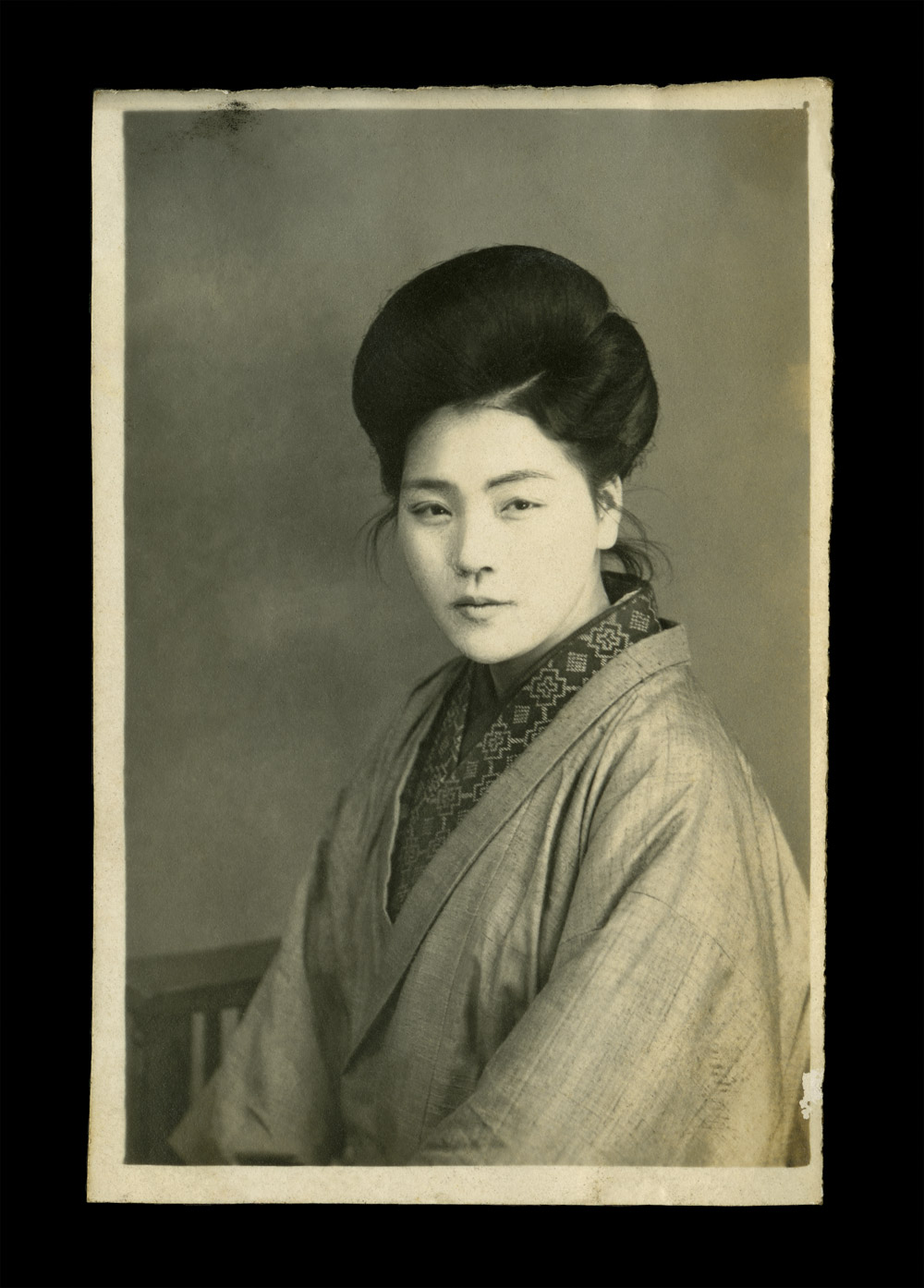
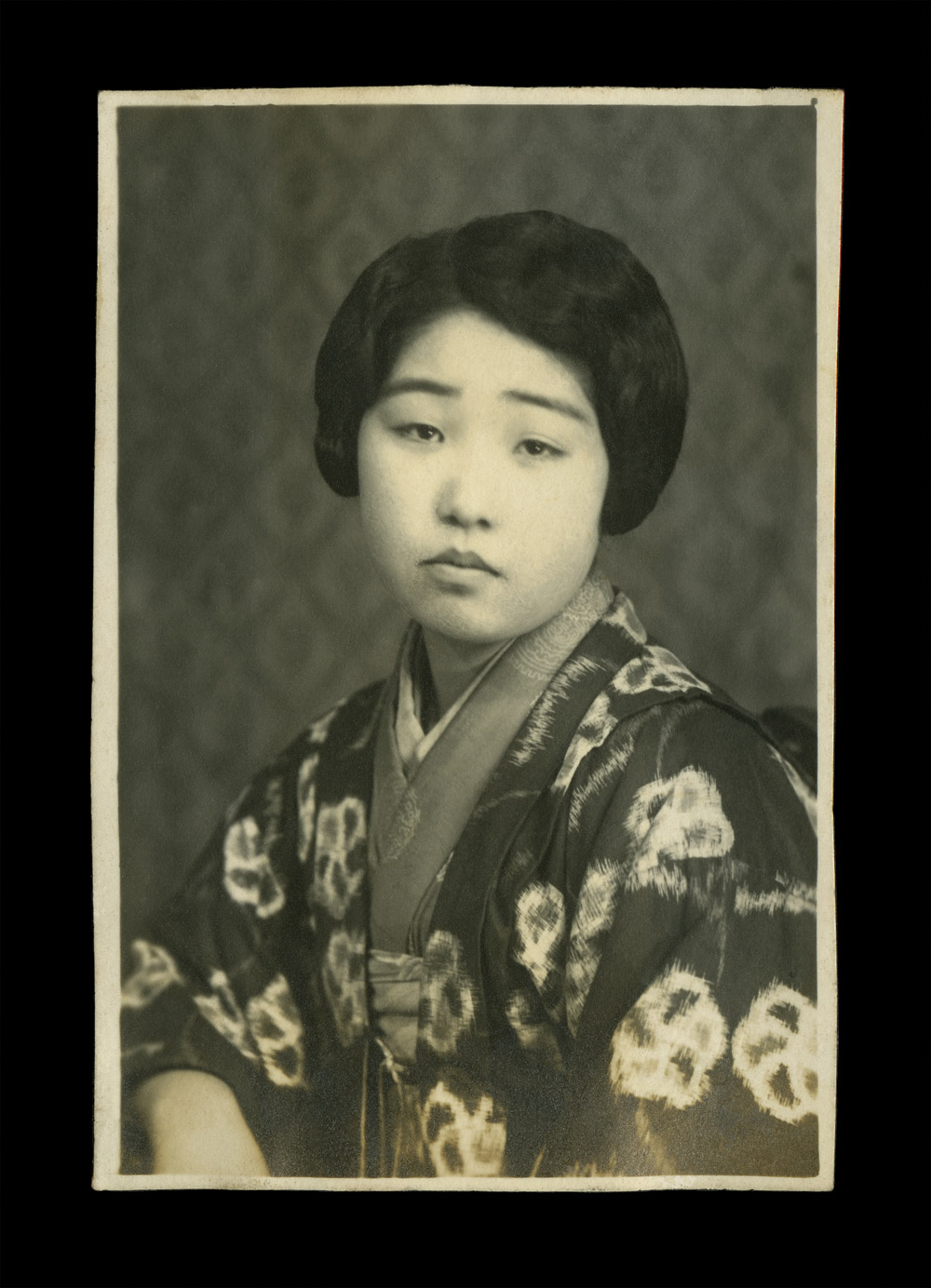
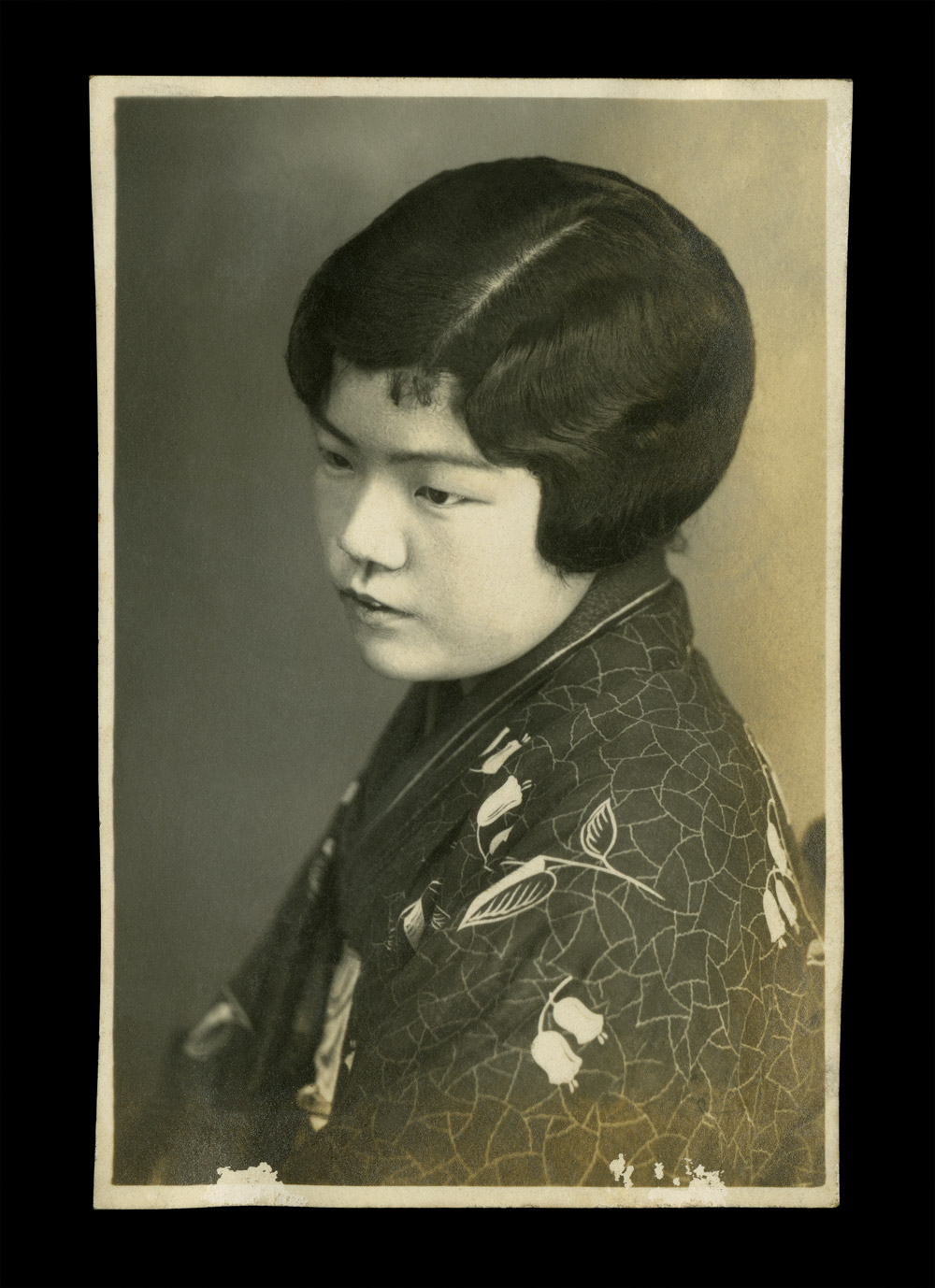
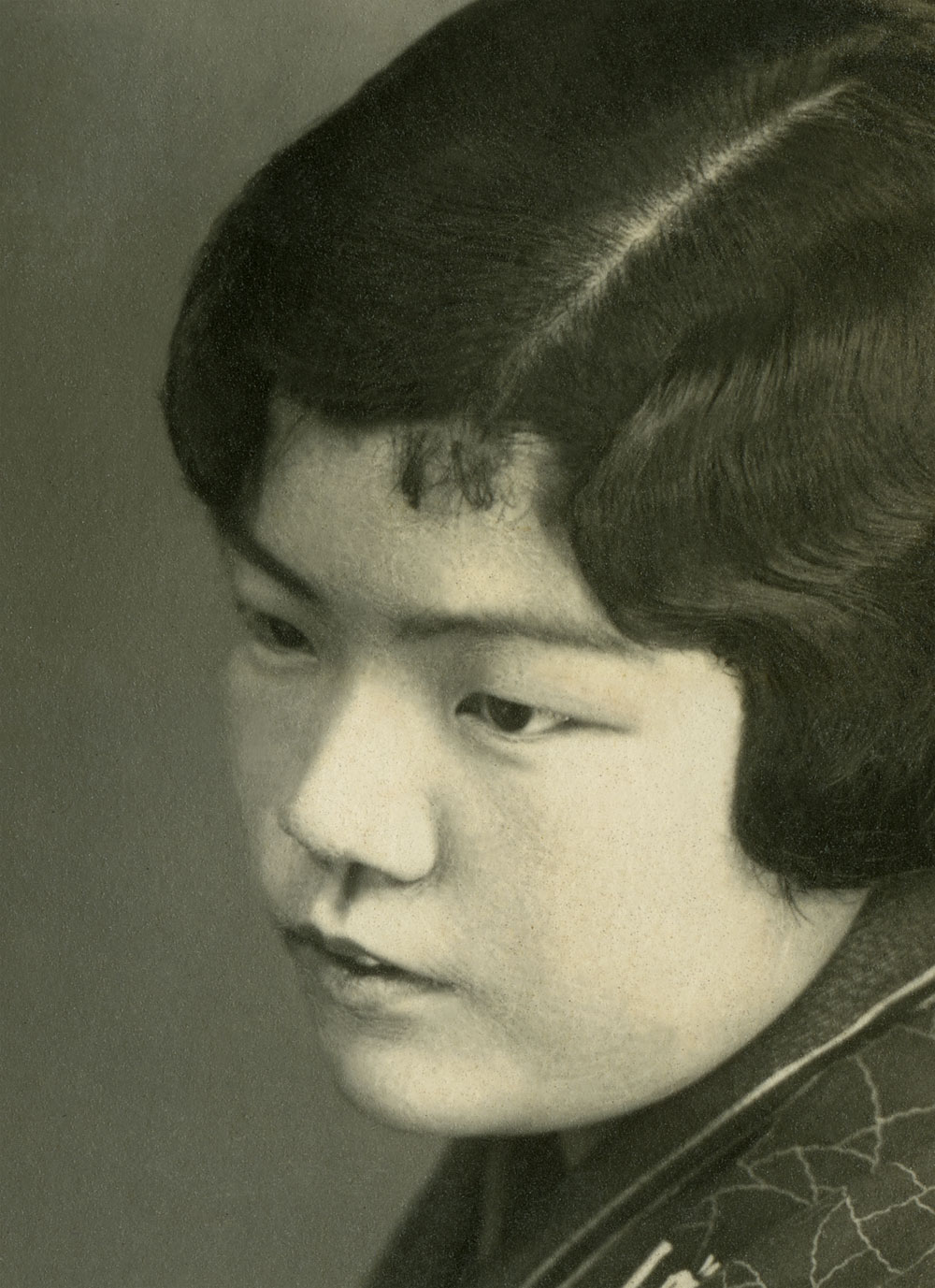
Exhibition: ‘The Camera Exposed’ at the Victoria and Albert Museum, London

Exhibition dates: 23rd July, 2016 – 5th March, 2017
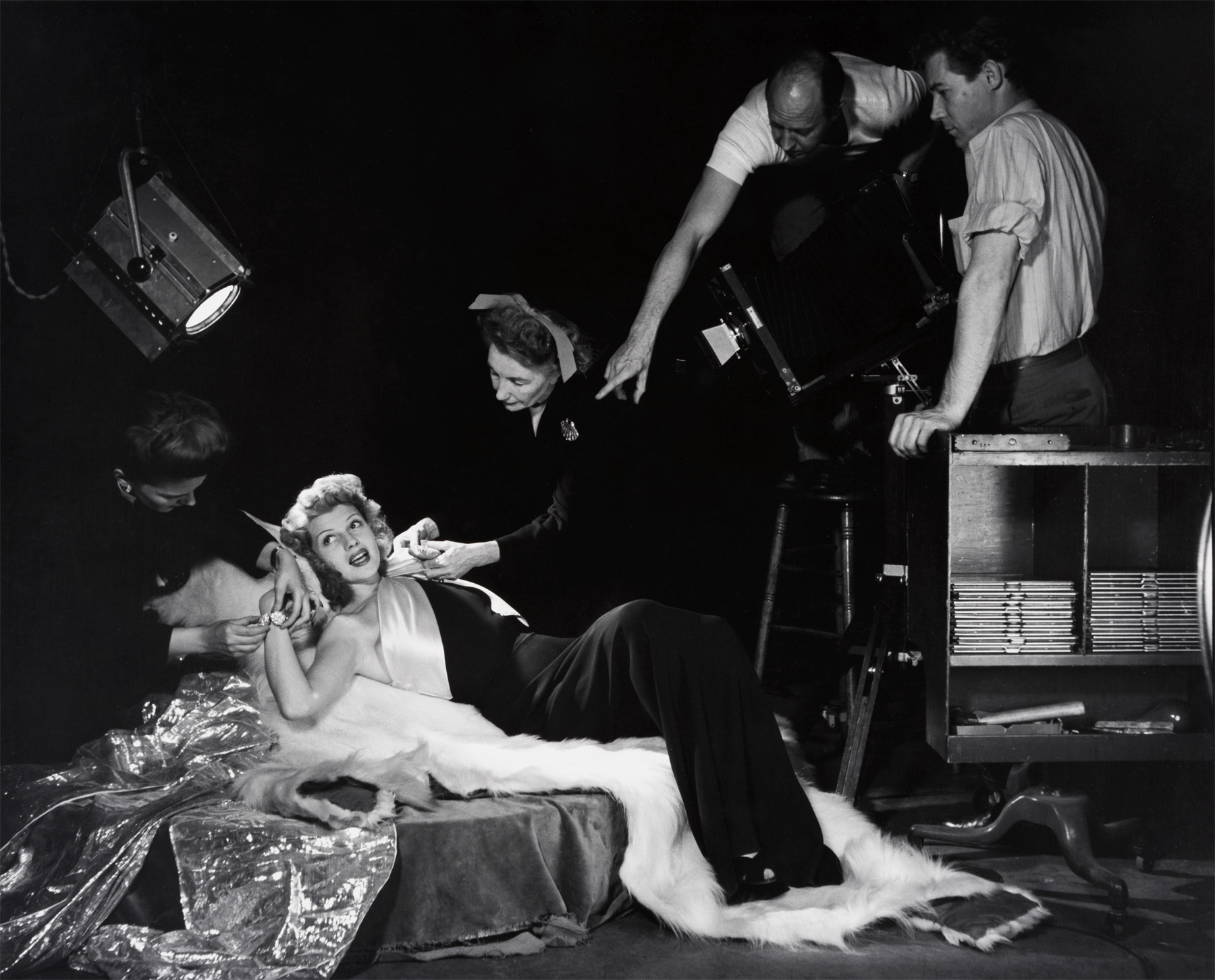


Philippe Halsman (American, 1906-1979) '"Rita Hayworth," Harper's Bazaar Studio' 1943 from the exhibition 'The Camera Exposed' at the Victoria and Albert Museum, London, July 2016 - March 2017


Philippe Halsman (American, 1906-1979)
“Rita Hayworth,” Harper’s Bazaar Studio
1943
© Philippe Halsman Archive


There’s not much to say about this exhibition from afar, except to observe it seems pretty standard fare, with no outstanding revelations or insights into the conditions of the camera’s “becoming” in photographic images or an exploration of the limits of the lens’ seeing. As the Centre for Contemporary Photography notes in their current exhibition, An elegy to apertures, “The camera receives and frames the world through the lens. This aperture is a threshold that demarcates the distinction between the scene and its photographic echo. It is both an entrance and a point of departure.”

So what happens to this threshold when we fuse the photographer’s eye with the “oculus artificialis” of the camera? When we examine the way apertures, shadows and ghosts haunt photographic images long after the shutter has closed? If, as the text for this exhibition states, “Voyeurism is a recurring motif in photography, as the practice often involves observing and recording others,” what does this voyeurism say about the recording of the self as subject and the camera together – the self actualised, self-reflexive selfie?

An insightful text on the Based on truth (and lies) website (December 17, 2011) observes of a 1925 self-portrait by photographer Germaine Krull (1897-1985) (below):

“In 1925, Germaine Krull photographed herself in a mirror with a hand-held camera which half-covered her face. The camera is focused on the foreground of the image, such that the lens and the two hands holding the camera are sharp, while the face behind the camera is blurred. This self-portrait has given rise to many a feminist or professionally critical interpretation, ranging from the female domestication “of the masculinity of technical apparatus” through to the analogy of the camera with a weapon used by the photographer to “reduce the person opposite her […] to an impotent object”. However, if we attempt to interpret the photograph not so much in a figurative sense as in a concrete, phenomenal sense, we arrive at a completely opposite conclusion. By selecting the depth of field in such a way that only the camera and the hands are sharp, Germaine Krull has isolated her act of photographing from her subjectivity and individuality as the photographer. It is the technical apparatus, the camera, which is the focal point of the image and behind which the photographer’s face is blurred beyond recognition. We may assume that this physiognomical retreat behind the camera is less a typical feminine gesture of shyness and reticence than the characteristically ideological approach of a modernist photographer. There is one critical point in Krull’s portrait of herself as a photographer which gives us good reason to make this assumption, namely the fusion of the photographer’s eye with the “oculus artificialis” of the camera. The notion that the camera lens could not only replace the human eye as a means of capturing the world visually but also improve upon its ability to penetrate reality to its invisible depths was paradigmatic of the new, basically positivist photographic aesthetic of the 1920s. It is an aesthetic defined by the Bauhaus theorist László Moholy-Nagy in his manifesto “Painting Photography Film” in 1925 and visualised by countless collages, posters and book covers of the 1920s and 1930s depicting the camera lens as a substitute for the human eye. Germaine Krull’s self-portrait wholly identifies with this new photographic aesthetic, too. Indeed, her influential work “Métal”, a photographic eulogy of modern technology published in 1928, is its embodiment.”1


The highlight for me is that always transcendent image by Judy Dater, Imogen and Twinka at Yosemite (1974, below). I would hope in the exhibition there would be images by Diane Arbus, Edward Weston, Vivian Maier, Man Ray, Rodchenko and others. But you never know.

Dr Marcus Bunyan

1/ sgtr. “Germaine Krull, Selbstporträt mit Ikarette, 1925,” on the Based on truth (and lies) website December 17, 2011 [Online] Cited 01/03/2023


Many thankx to the V&A for allowing me to publish the photographs in the posting. Please click on the photographs for a larger version of the image.
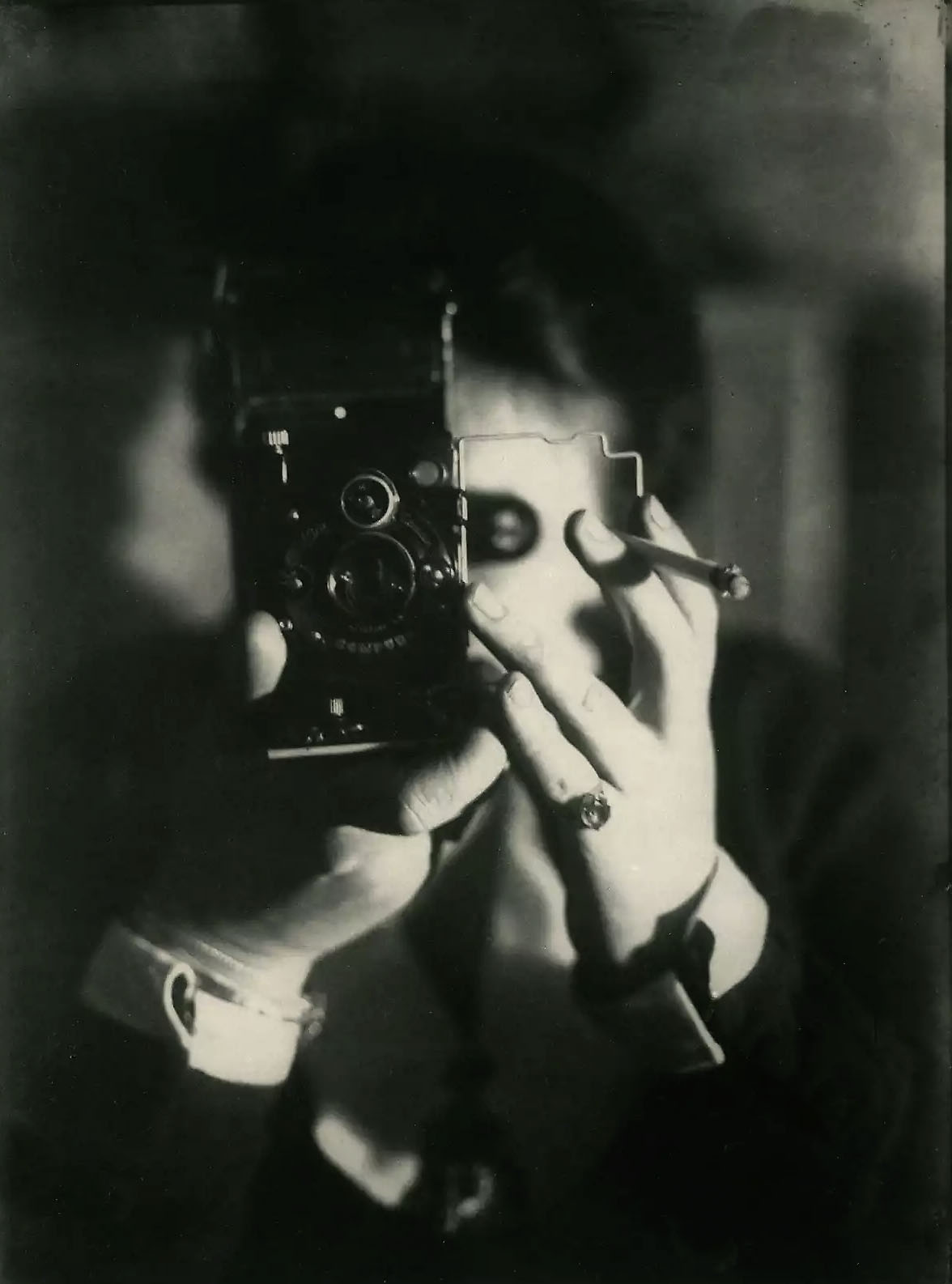


Germaine Krull (German, 1897-1985) 'Self-portrait' 1925


Germaine Krull (German, 1897-1985)
Self-portrait
1925
Gelatin silver print

This photograph is not in the exhibition. It is used under “fair use” conditions for the purposes of education and research.


In the age of the mobile phone, the camera as a stand-alone device is disappearing from sight. Yet generations of photographers have captured the tools of their trade, sometimes inadvertently as reflections or shadows, and sometimes as objects in their own right.

Throughout the history of photography the camera has often made an appearance in its own image, from the glint of Eugène Atget’s camera in a Parisian shop window from the 1900s, to the camera that serves as an eye in Calum Colvin’s 1980s photograph of a painted assemblage of objects.

Many images of cameras exploit the instrument’s anthropomorphic qualities. Held up to the face, as in Richard Sadler’s portrait of Weegee, it becomes a mask, the lens a mechanical eye. It conceals the photographer’s features yet reinforces his or her identity. Set on a tripod, it can take on human form, appearing like a body supported by legs, and can stand in for the photographer.

Photographs that include cameras often draw attention to the inherent voyeurism of the medium by turning the instrument towards the viewer. Such images confront the viewer’s gaze, returning it with the cool, mechanical look of the lens. The viewer cannot help but be aware not only of seeing, but of being seen.

Anonymous text. “The camera as star,” on the V&A website Nd [Online] Cited 24/11/2021


Lady Clementina Hawarden (Viscountess, British 1822-1865) 'Clementina Maude, 5 Princes Gardens; Photographic Study' c. 1862-1863 from the exhibition 'The Camera Exposed' at the Victoria and Albert Museum, London, July 2016 - March 2017


Lady Clementina Hawarden (Viscountess, British 1822-1865)
Clementina Maude, 5 Princes Gardens; Photographic Study
c. 1862-1863
Albumen print; Sepia photograph mounted on green card
21.6 x 23.2cm
© Victoria and Albert Museum, London


Lady Clementina Hawarden, a noted amateur photographer of the 1860s, frequently photographed her children. Here, her second-eldest daughter Clementina Maude poses next to a mirror, in  which a bulky camera is reflected. The camera  seems to stand in for the photographer, making  this a mother-daughter portrait of sorts.

This photograph gives a good idea of Lady Hawarden’s studio and the way she used it. It was situated on the second floor of her house at 5 Princes Gardens in the South Kensington area of London. Here her daughter Clementina poses beside a mirror. A movable screen has been placed behind it, across the opening into the next room. A side table at the left balances a desk at the right. The figure of the young girl is partially balanced and echoed by the camera reflected in the mirror and the embroidery resting on the table beside it.

Hawarden appears to have worked with seven different cameras. The one seen in the mirror is the largest. Possibly there is a slight suggestion of a hand in the act of removing and/or replacing the lens cap to begin and end the exposure.

Anonymous. “Clementina Maude, 5 Princes Gardens,” on the V&A website Nd [Online] Cited 01/03/2023


Lady Clementina Hawarden (Viscountess, British 1822-1865) 'Clementina Maude, 5 Princes Gardens; Photographic Study' c. 1862-1863 (detail)


Lady Clementina Hawarden (Viscountess, British 1822-1865)
Clementina Maude, 5 Princes Gardens; Photographic Study (detail)
c. 1862-1863
© Victoria and Albert Museum, London


Laelia Goehr (British born Russia, 1908-2002) 'Bill Brandt with his Kodak Wide-Angle Camera' 1945


Laelia Goehr (British born Russia, 1908-2002)
Bill Brandt with his Kodak Wide-Angle Camera
1945
© Alexander Goehr


Laelia Goehr (1908-2002), learned photography from Bill Brandt, who poses for this portrait with his newly-acquired Wide-Angle Kodak. This model was originally used by police to photograph crime scenes – the lens provides 110 degrees angle of view, equating approximately to a 14/15mm lens on a 35mm camera. Brandt experimented with it to produce his series Perspectives on Nudes, the same year as this portrait was taken. Brandt’s camera, which was made of mahogany and brass with removable bellows, was sold by Christie’s in 1997 for £3450.

Anonymous. “The camera as star: produced as part of The Camera Exposed, on the V&A website Nd [Online] Cited 01/03/2023
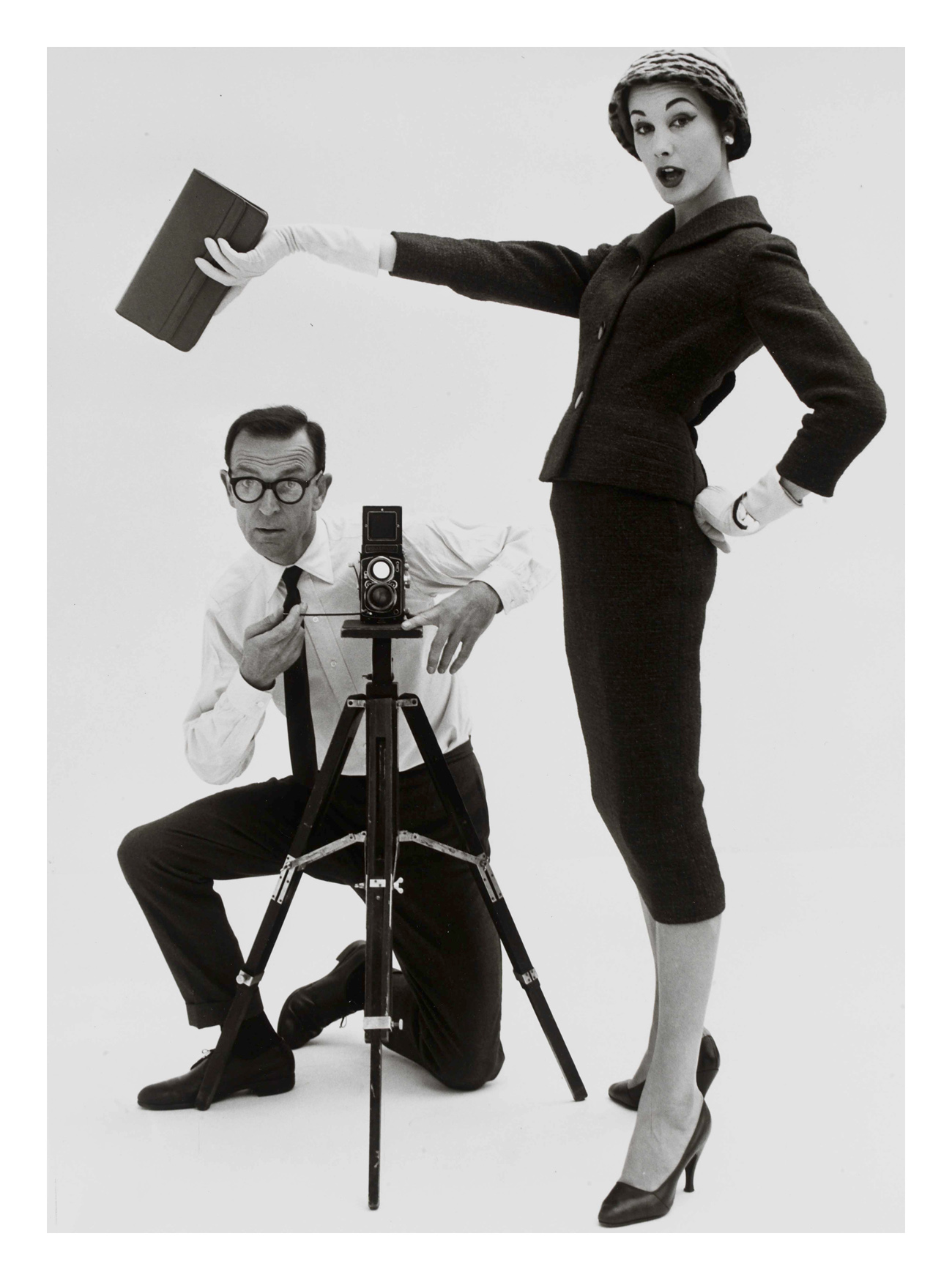
 

John French (English, 1907-1966) 'John French and Daphne Abrams in a tailored suit' 1957


John French (English, 1907-1966)
John French and Daphne Abrams in a tailored suit
1957, printed October 2009; print made by Jerry Jack
Gelatin silver print
27.8 x 38cm
Published in the TV Times, 1957
© Victoria and Albert Museum, London


French often left the actual release of the shutter to his assistants. On this occasion however, he inserted himself into the picture, kneeling behind a tripod-mounted Rolleiflex with the shutter release cable in his hand. His crouched, slightly rumpled presence gives a sense of behind-the scenes studio work and contrasts playfully with the polished elegance of the model beside him.
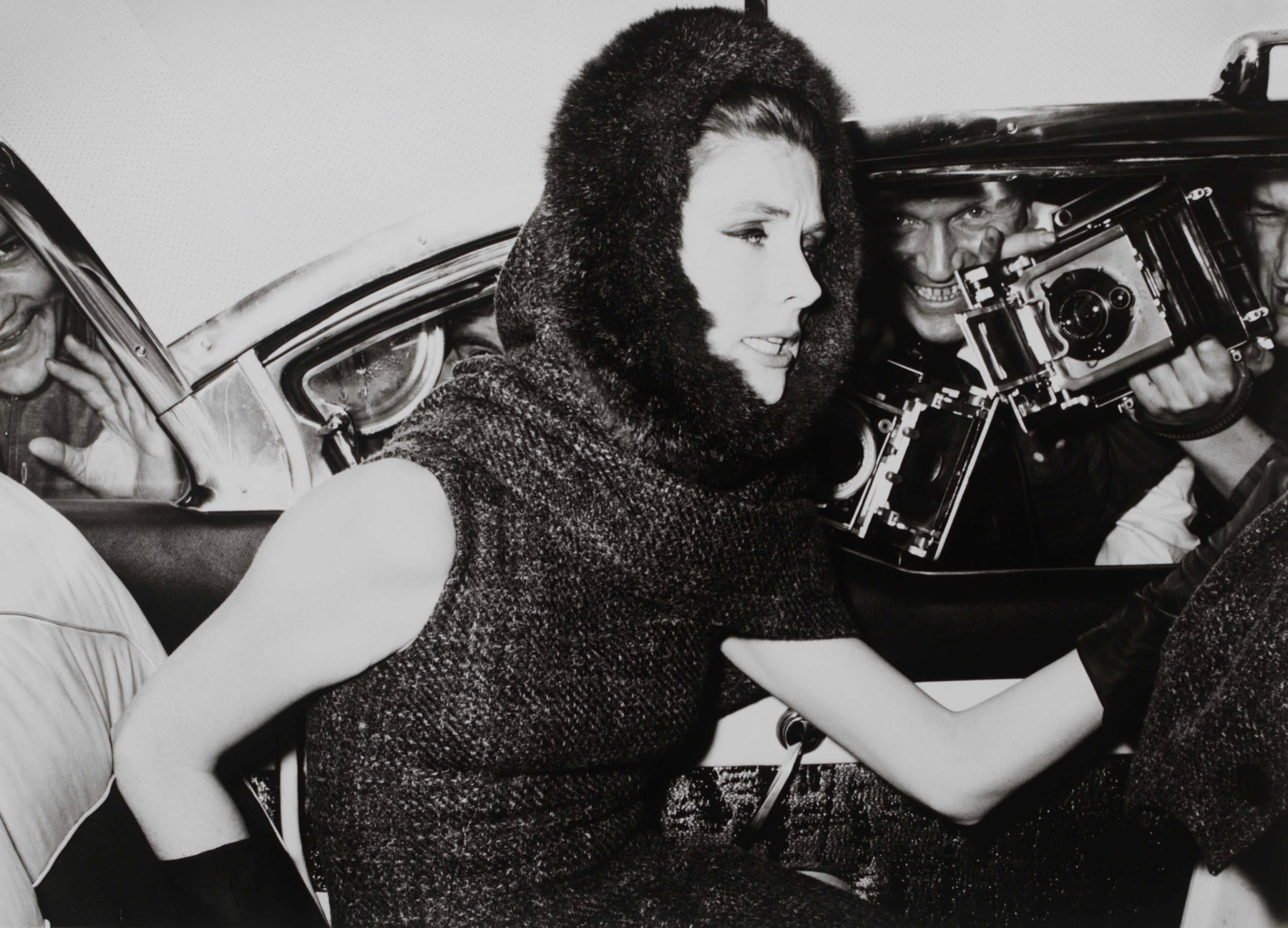
 

Richard Avedon (American, 1923-2004) 'Suzy Parker, dress by Nina Ricci, Champs-Elysée, Paris' 1962


Richard Avedon (American, 1923-2004)
Suzy Parker, dress by Nina Ricci, Champs-Elysée, Paris
1962
© Richard Avedon Foundation


Richard Sadler (British, 1927-2020) "Weegee the Famous" 1963


Richard Sadler (British, 1927-2020)
“Weegee the Famous”
1963
© Richard Sadler FRPS


Coventry-based portrait photographer Richard Sadler (b. 1927) photographed the self-proclaimed ‘Weegee the Famous’ in 1963. Weegee was a New York press photographer who gained his nickname – a phonetic spelling of Ouija, the fortune-telling board game – for his reputation for arriving at crime scenes before the police. His fame was international by the time this portrait was taken. Weegee’s visit to Coventry coincided with ‘Russian Camera Week’ at the city’s Owen Owen department store. The camera Weegee holds up to his eye here is the Zenit 3M, a newly-introduced Russian model made by the Krasnogorsk Mechanic Factory between 1962 and 1970.

A few years later Weegee made a comparable self-portrait in which the camera (this time a recent Nikon model) obscures his right eye.

Anonymous. “The camera as star: produced as part of The Camera Exposed, on the V&A website Nd [Online] Cited 01/03/2023


Photographer unknown. 'Camera on black cloth' Date unknown


Photographer unknown
Camera on black cloth
Date unknown
© Victoria and Albert Museum, London


The camera pictured here is a Super Ikonta C 521/2 camera, produced by the German company Zeiss Ikon from about 1936 to 1960. It has been carefully lit and arranged on a velvet cloth as if it were a still-life subject, by an unknown photographer.

Anonymous. “The camera as star: produced as part of The Camera Exposed, on the V&A website Nd [Online] Cited 01/03/2023


Tim Walker (British, b. 1970) 'Lily Cole with Giant Camera' 2004


Tim Walker (British, b. 1970)
Lily Cole with Giant Camera
2004
© Tim Walker


British fashion photographer Tim Walker (born 1970) has collaborated with the art director and set designer Simon Costin for over a decade, and Costin’s oversized props feature in many of Walker’s sparkling, magical scenes. Costin based the giant camera on Walker’s 35mm Pentax K1000. Walker found inspiration for this shoot in a 1924 fashion illustration by Vogue artist Benito. Benito depicted girls reading a magazine from which the models appear to be coming alive.

Anonymous. “The camera as star: produced as part of The Camera Exposed, on the V&A website Nd [Online] Cited 01/03/2023


Every photograph in this display features at least one camera. From formal portraits to casual snapshots, still-lifes to collages, they appear as reflections or shadows, and sometimes as objects in their own right. This summer the V&A displays of over 120 photographs that explore the camera as subject. People are taking more photographs today than ever before, but as they increasingly rely on smartphones, the traditional device is disappearing from sight.

The Camera Exposed showcases works by over 57 known artists as well as many unidentified amateur photographers. From formal portraits to casual snapshots, and from still-lifes to cityscapes, each work features at least one camera. Portraits of photographers such as Bill Brandt, Paul Strand and Weegee, posed with their cameras, are on display alongside self-portraits by Eve Arnold, Lee Friedlander and André Kertész, in which the camera appears as a reflection or a shadow. Other works depict cameras without their operators. In the earliest photograph included in the display, from 1853, Charles Thurston Thompson captures himself and his camera reflected in a Venetian mirror. The most recent works are a pair of 2014 photomontages by Simon Moretti, created by placing fragments of images on a scanner.

The display showcases several new acquisitions, including a recent gift of nine 20th-century photographs. Amongst these are a Christmas card by portrait photographer Philippe Halsman, an image of photojournalist W. Eugene Smith testing cameras and a self-portrait in the mirror by the French photojournalist Pierre Jahan. On display also is a recently donated collection of 50 20th-century snapshots of people holding cameras or in the act of taking photographs. These anonymous photographs attest to the broad social appeal of the camera.

Many of the photographs in the display highlight the anthropomorphic qualities of the camera. Held up to the face like a mask, as in Richard Sadler’s Weegee the Famous, the lens becomes an artificial eye. In Lady Hawarden’s portrait of her daughter, a mirror reflection of the camera on a tripod takes on a human form, a body supported by legs.

Cameras in photographs can also emphasise the inherent voyeurism of the medium. Judy Dater explores this theme in her well-known image of the fully clothed photographer Imogen Cunningham posed as if about to snap nude model Twinka Thiebaud. In other photographs on display, the camera confronts the viewer with its mechanical gaze, drawing attention to the experience not only of seeing, but of being seen.

Press release from the V&A


Charles Thurston Thompson (British, 1816-1868) 'Thompson Venetian mirror circa 1700' 1853


Charles Thurston Thompson (British, 1816-1868)
Venetian mirror circa 1700
1853
Albumen print from wet collodion-on-glass negative
22.8 x 16.3cm
© Victoria and Albert Museum, London


As early as 1853, Charles Thurston Thompson (1816-1868), the first official photographer to the South Kensington Museum (as the V&A was then called), recorded his reflection, along with that of his camera, in the glass of an ornate Venetian mirror. Loan objects such as the mirror were photographed so that photographic copies could be sold to designers, craftsmen and students, and also filed in the Museum’s library for study. By recording not only the frame’s intricate carvings but also his reflection and that of his box form camera and tripod, Thompson showed the very process by which he made the image. It gives us a vivid glimpse of a photographer at work outdoors in the early days of the Museum and the profession of Museum Photography.

Anonymous. “The camera as star: produced as part of The Camera Exposed, on the V&A website Nd [Online] Cited 01/03/2023


Eugène Atget (French, 1857-1927) 'Shopfront, Quai Bourbon, Paris, France' c. 1900


Eugène Atget (French, 1857-1927)
Shopfront, Quai Bourbon, Paris, France
c. 1900
Albumen print from gelatin dry plate negative
21 x 17.5cm
© Victoria and Albert Museum, London


The reflection of Eugène Atget’s (1857-1927) camera is an appealing detail in this photographic record of Parisian architecture from the turn of the century. Atget’s photographs had a primarily documentary role – this image was purchased by the V&A in 1903 as an illustration of Parisian ironwork. Yet it carries a strangeness which has fascinated 20th-century photographers. His photographs acquired artistic status in the mid-1920s when they were ‘discovered’ by artists associated with Surrealism.

Anonymous. “The camera as star: produced as part of The Camera Exposed, on the V&A website Nd [Online] Cited 01/03/2023


This photograph is an albumen print, contact printed by Atget from a 24 x 18 glass negative. The dark shapes of two clips which held the negative in place on the right edge of the image are visible. This image was one of many photographs bought by the V&A directly from Atget, in this case, in 1903. This photograph would have been bought as simply an illustration of ironwork in Paris.

The albumen process was almost never used by the early 1900s, so the image can be dated to the 19th century. The use of this developing process also supports the non-art status intended for the photograph. There is, however, an ambiguity in the reading of this image and most strongly in the reflection in the door of the street and Atget with his camera. This is one of a number of Atget images where it is possible to see why his photographs have fascinated 20th-century photographers; it carries, whether intended or not, a strangeness which invests the image with potential meaning beyond its primarily documentary role.

Anonymous. “Shopfront, Quai Bourbon, Paris, France,” on the V&A website Nd [Online] Cited 01/03/2023


Pierre Jahan (French, 1909-2003) 'Autoportrait à Velo ('Self-portrait on bike') ' 1935


Pierre Jahan (French, 1909-2003)
Autoportrait à Velo (‘Self-portrait on bike’)
June 1944
Gelatin silver print
© Victoria and Albert Museum, London


Here, Jahan seems to have paused while cycling through the streets of Paris to snap himself in a mirror. His dangling cigarette and precarious perch on the bicycle suggest spontaneity, but the design of his camera demanded a deliberate approach. A Reflex-Korelle, manufactured in Dresden, it usually required the operator to hold it at waist level and look down into the viewfinder.


Pierre Jahan (French, 1909-2003)

Pierre Jahan (9 September 1909 – 21 February 2003) was a French photographer who often worked in a Surrealist style.

Born in Amboise and introduced to photography by his family at a very early age, Jahan received his first professional commission when he moved to Paris in 1933, through a meeting with ad-man Raymond Gid. In 1936 he joined the Rectangle group of photographers. This group, founded by Emmanuel Sougez, among others, encouraged him in his career as a photographer.

During the Occupation, he worked for the magazine Images de France, making portraits of celebrity figures such as Colette, and he produced large series of pictures such as “La mort et les statues,” published in 1946 with a text by Jean Cocteau. They also co-published a book in which Cocteau’s poem “Plain Chant” is illustrated by photographed nudes (1947).

A passionate experimenter with a strong interest in Surrealism, Jahan produced many collages and photomontages, which he used freely for the many advertising commissions that came his way after the end of World War II.

A committed activist for photographers’ rights, he helped to found the French federation of art photographers (FAPC), of which he became vice-chairman. In 1949 he joined the professional photographers’ association Le Groupe des XV alongside Robert Doisneau, Willy Ronis, and others, to lobby for the conservation of France’s photographic heritage. He took part in their exhibitions and in those held by the Salon National de la Photographie.

Text from the Wikipedia website


Unknown photographer. 'Vernacular photograph' c. 1940s


Unknown photographer
Vernacular photograph
c. 1940s
Gelatin silver print
71mm x 98mm
© Victoria and Albert Museum, London


Vernacular portrait photograph of a woman in front of a fence, using a camera held at chest height. Photographer unknown, c. 1940s. Gelatin silver print, from the collection of Peter Cohen, given as part of a group of 50 photographs featuring cameras.


Elsbeth Juda (British born Germany, 1911-2014) 'Mediterranean Fortnight' 1953


Elsbeth Juda (British born Germany, 1911-2014)
Mediterranean Fortnight
1953
© Siobhan Davies


Elsbeth Juda (British born Germany, 1911-2014)

Elsbeth Juda (1911-2014) was a British fashion photographer who worked for more than 20 years as photographer and editor on The Ambassador magazine. This image was shot at an archaeological site in Cyprus for a story on British fashion abroad. The model appears to pose for a local tintype photographer with a homemade looking camera. Tintype, also called ferrotype, was an early photographic process which produced an underexposed negative using a thin metal plate. Tintype photography was around 100 years old when Juda took this shot.

Anonymous. “The camera as star: produced as part of The Camera Exposed, on the V&A website Nd [Online] Cited 01/03/2023


Elsbeth Ruth Juda (née Goldstein) and known professionally as Jay (2 May 1911 – 5 July 2014), was a British photographer most notable for her pioneering fashion photographs and work as associate editor and photographer for The Ambassador magazine between 1940 and 1965.

The Ambassador

Hans and Elsbeth Juda originally opened a London satellite office for the Dutch trade magazine International Textiles. After 1940, however, when Amsterdam came under control of the Germany army, the magazine proved too difficult to continue. In March 1946 the Judas changed the name of the publication to The Ambassador and changed its focus to British industry, trade and exports. The magazine was influential from its inception and encouraged by the British Government, who helped by ensuring a continual supply of paper during the war. Indeed, The Ambassador, The British Export Magazine became the voice of British manufacturing for export when the nation’s trade was struggling to emerge after 1945. It was published monthly in four languages (English, German, French and Portuguese), had subscribers in over ninety countries, and a circulation of 23,000 copies.

Juda’s husband, Hans, coined the official motto “Export or Die” for The Ambassador. Later, as the magazine became an essential marketing and press journal for a Britain desperate to reestablish itself as a global exporter in the post-war era, the phrase would become a mantra for the national manufacturing industry. Throughout their work during the 1940s, 1950s and 1960s, Juda and her husband became two of the United Kingdom’s greatest champions for export, constantly promoting every facet of British manufacturing, culture and the arts and, in the process, coming into close contact with a host of distinguished artists, writers, designers and photographers. The critic Robert Melville described Ambassador as “the most daring and enterprising trade journal ever conceived… no other magazine… has so consistently and brilliantly demonstrated the relevance of works of art to the problems of industrial design.”

Juda’s shoots for The Ambassador combined elements of fashion, modernism and trade. Her series of photos of the famed British model Barbara Goalen modelling Scottish textiles among the heavy machinery of working textile factory are especially representative of her unique visual aesthetics. Together they built a considerable art collection from the many artists that they came in contact with at The Ambassador. It is a much wider circle of friends, however, which would allow Jay to capture every facet of a reemerging post-war Britain through the lens of her camera. The magazine was bought by Thomson Publications in 1961 and continued to be published until 1972.

Text from the Wikipedia website


Armet Francis (British born Jamaica, b. 1945) 'Self-portrait in Mirror' 1964


Armet Francis (British born Jamaica, b. 1945)
Self-portrait in Mirror
1964
© Armet Francis


Armet Francis was born in Jamaica in 1945 and moved to London at the age of ten. His photographic career began in his mid-teens when he worked as an assistant for a West End photographic studio. His early photographs show him experimenting with the camera as a technical device and a tool for self-representation. The camera in this self-portrait is a Yashica-Mat LM twin lens reflex, an all-mechanical model introduced in 1958, with an inbuilt light meter. It records his identity as a professional photographer, while the surrounding scene offers an intimate glimpse into his personal life.

Anonymous. “The camera as star: produced as part of The Camera Exposed, on the V&A website Nd [Online] Cited 01/03/2023


Armet Francis is a Jamaican-born photographer and publisher who has lived in London since the 1950s. He has been documenting and chronicling the lives of people of the African diaspora for more than 40 years and his assignments have included work for The Times Magazine, The Sunday Times Supplement, BBC and Channel 4.

He has exhibited worldwide and his work is in collections including those of the Victoria & Albert Museum and the Museum of London. One of his best known photographs is 1964’s “Self Portrait in Mirror”.

Read a fuller biography on the Wikipedia website


Judy Dater (American, b. 1941) 'Imogen and Twinka at Yosemite' 1974


Judy Dater (American, b. 1941)
Imogen and Twinka at Yosemite
1974
© Judy Dater


Cameras in photographs can also emphasise the inherent voyeurism of the medium. Judy Dater explores this theme in her well-known image of the fully clothed photographer Imogen Cunningham posed as if about to snap nude model Twinka Thiebaud.

Dater met Imogen Cunningham, a prominent American photographer, in 1964. Cunningham acted as a mentor to Dater, and the two became close friends. This image is from Dater’s larger series addressing the theme of voyeurism, in particular the idea of someone clothed watching someone nude. Voyeurism is a recurring motif in photography, as the practice often involves observing and recording others.


Judy Dater (American, b. 1941)

Judith Rose Dater (née Lichtenfeld; June 21, 1941) is an American photographer and feminist. She is perhaps best known for her 1974 photograph, Imogen and Twinka at Yosemite, featuring an elderly Imogen Cunningham, one of America’s first woman photographers, encountering a nymph in the woods of Yosemite. The nymph is the model Twinka Thiebaud. The photo was published in Life magazine in its 1976 issue about the first 200 years of American women. Her photographs, such as her Self-Portraiture sequence, were also exhibited in the Getty Museum. …

Photography

Judy Dater uses photography as an instrument for challenging traditional conceptions of the female body. Her early work paralleled the emergence of the feminist movement and her work became strongly associated with it. At a time when female frontal nudity was considered risqué Dater pushed the boundaries by taking pictures of the naked female body. However, she did so in a way which did not objectify her subject which was in many cases, herself. Dater began taking photographs in the 1960s and she is still taking photographs today. Mark Johnstone, an Idaho resident whom Dater photographed in the early 80’s remarked that “During this time, she never got swayed by or indulged in trends, but moved with her own vision. She’s one of the few successful women in the art world, especially photography, who never depended on ongoing academic support to fuel and expand her artistic exploration.”

While her subject and message remained relatively constant throughout her career, Dater experimented with a variety of compositions as her career developed. Her photographs, and in particular, her portraits (which she specialises in) are taken in both black and white, and in colour. She has taken portraits in the Southwestern desert and also posed as female stereotypes in a more obvious display of activism. Her 1982 portrait “Ms. Clingfree” demonstrated the latter as Dater posed with an assortment of cleaning supplies.

She was influenced by the vital cultural intersection of photography and feminism, and the second wave of feminism which started in the 1960s and lasted up till the 1980s. In the 1980s, much has changed and the country as a whole became more conservative in areas of political life. The gains of the women’s movement began to slow, and many feminists became discouraged with the continuation of sexist attitudes and behaviour. Through her powerful photography and personal sense of style, Dater was able to surpass these conservative values and was able to effectively convey her views to her audience.

One of her famous photograph sequences taken in the 1980s, known as the Self-Portraiture sequence, exploited themes such as identity, feminism, and the human connection with nature. She effectively conveyed these themes and delivered, through her photography, the stories of women’s lives, relationships, and personal emotions. For example, in her photograph titled, My Hands, Death Valley, Dater presents the theme of feminism through the placement of the artist’s hands on the car’s glass window; her hands are crinkled, which is a sign of ageing. The theme of personal identity is explored in connection with the theme of feminism. The background is of the hazy Death Valley, the grounds are dry, her hands are weathered, and she’s trying to force open a car window. The theme of human’s connection with nature is exploited by taking the photograph in a natural landscape setting, and putting herself out there.

Read a fuller biography on the Wikipedia website


Victoria and Albert Museum
Cromwell Road
London
SW7 2RL
Phone: +44 (0)20 7942 2000

Opening hours:
Daily 10 – 17.45
Friday 10 – 22
V&A website

LIKE ART BLART ON FACEBOOK

Back to top

Exhibition: ‘An Anonymous Art: American Snapshots from the Peter J. Cohen Gift’ at The Nelson-Atkins Museum of Art, Kansas City

Exhibition dates: 15th April – 4th September, 2016

Curator: Keith F. Davis, Senior Curator, Photography at The Nelson-Atkins Museum of Art


Unknown maker (American). 'Group at pond' c. 1910s from the exhibition 'An Anonymous Art: American Snapshots from the Peter J. Cohen Gift' at The Nelson-Atkins Museum of Art, Kansas City, April - September, 2016


Unknown maker (American)
Group at pond
c. 1910s
Gelatin silver print
3 × 4 inches
The Nelson-Atkins Museum of Art, Kansas City, Missouri
Gift of Peter J. Cohen


Dis/membering the snapshot

To say that I dislike the term “snapshot” is an understatement. The term snap/shot implies a lack of consideration in the physical act of taking the photograph. In a snap it was shot – like a snap of the fingers or a bolt out of the blue. But if we think about the photographs in this posting … and we then think about the photographs of Henri Lartigue, or Robert Frank and his travels across 1950s America, I would argue that the only difference between Lartigue, Frank and the former “Unknown makers” is that they were embarked upon a photographic project, and, latterly, were decreed artists.

I believe, and I have always believed, that the taking of photographs is a matter of intention on the part of the photographer.

If you look at these photographs from Unknown makers was it their intention to take this photograph, did they think about what they were doing before they pressed the shutter. And the answer is unequivocally, yes they did. Their aim, their purpose, was that they had the intention to take the photograph they did, they determined of their own free will how to frame these photos and at what split second to press the shutter so as to suit their aim, their thought about what they wanted to capture in the image. This is not a “snap” shot in contemporary parlance, but a considered action and intention.

To say, as Keith F. Davis, Senior Curator, Photography does in the press release, that “Snapshots represent a collective visual unconsciousness of 20th-century American culture,” could not be farther from the truth. They may represent a form of collective subconscious, where these images hover in collective memories and dreams waiting to be visualised, but a collective visual unconsciousness? I don’t think so.

Vernacular photography is about a conscious decision to take a photograph and, at its most poignant, it is about a collective movement that emerges from the subconscious of people all the way around the world – in order (a taxonomic state) to document the world around them.

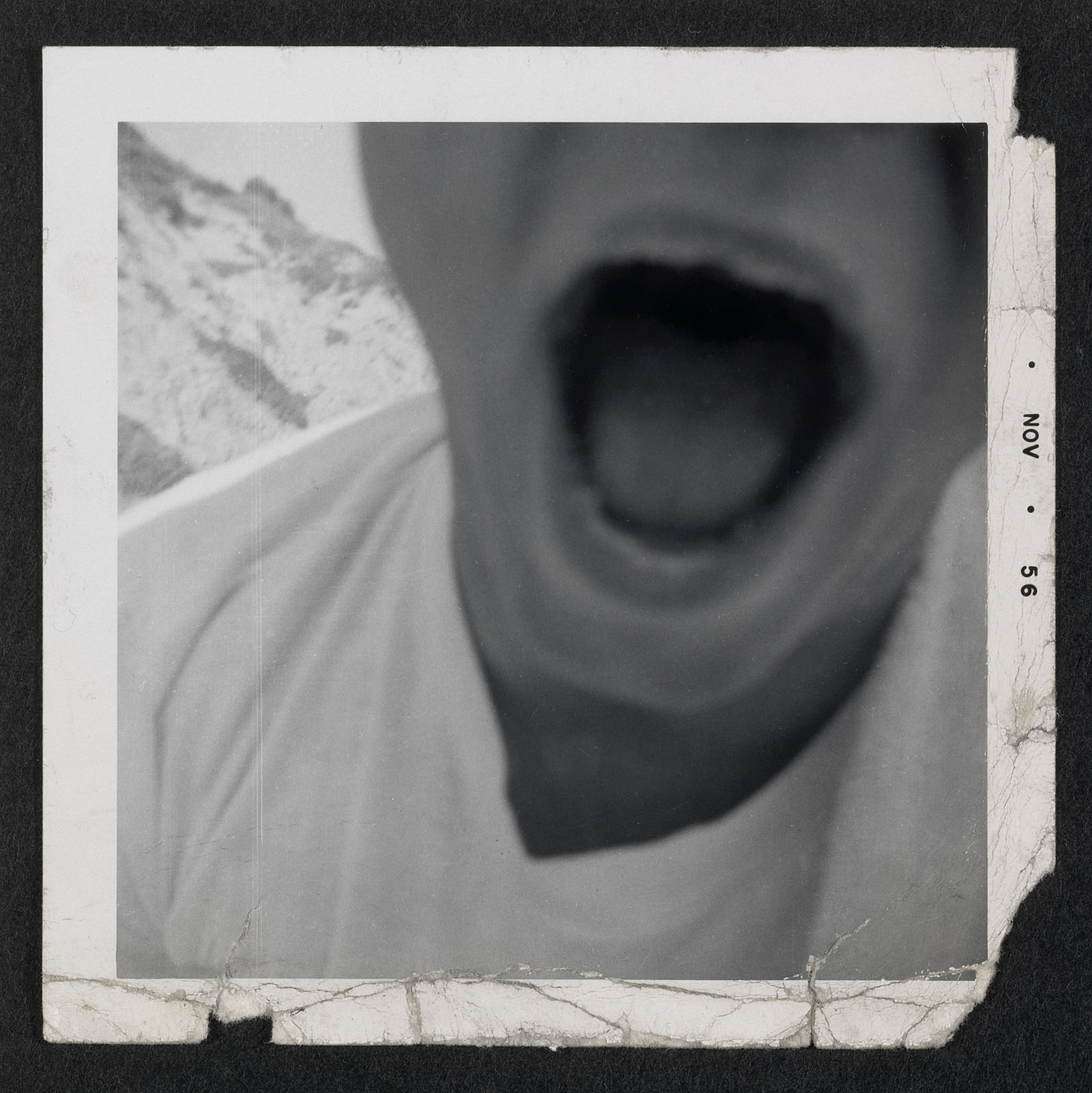
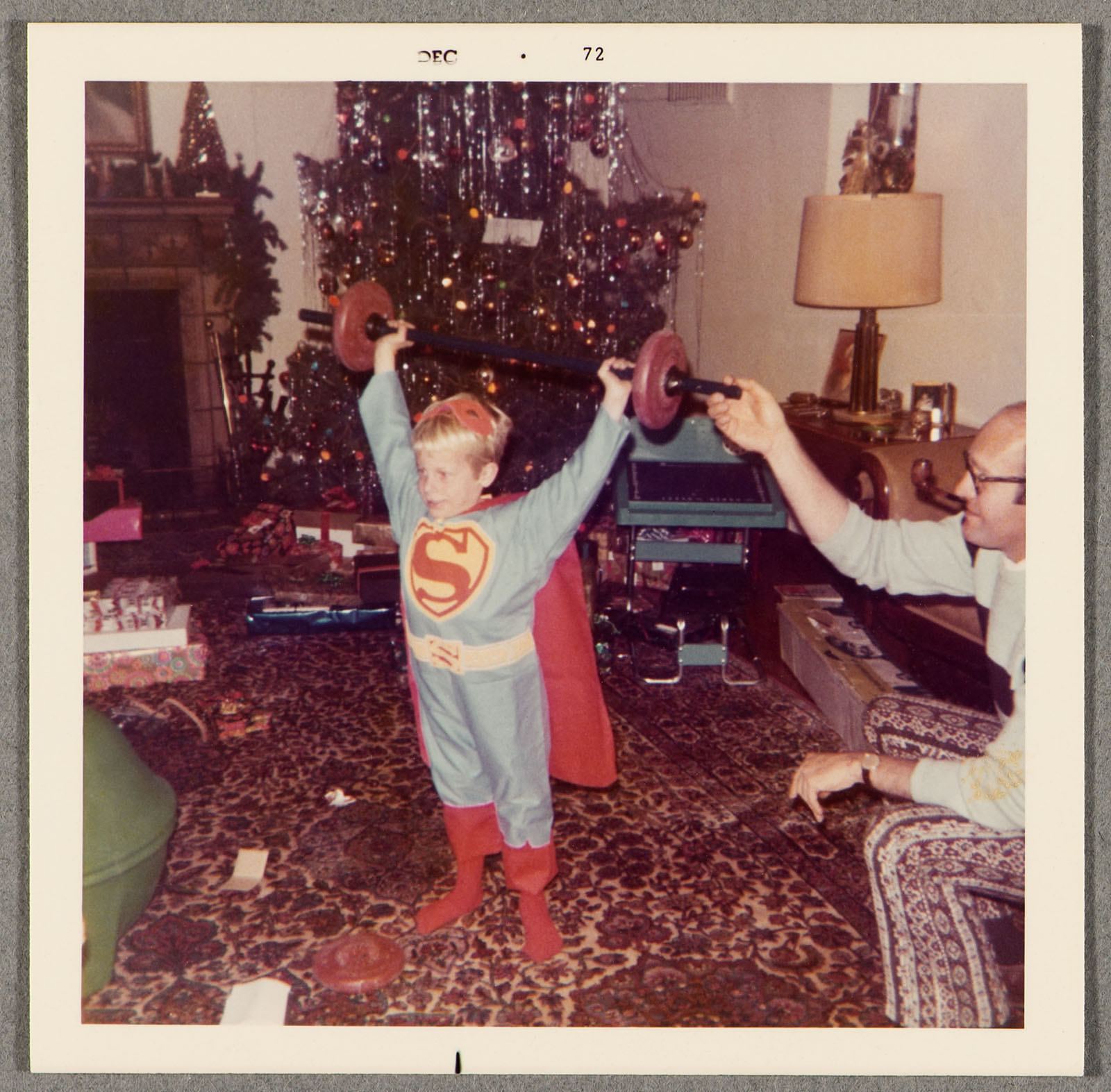
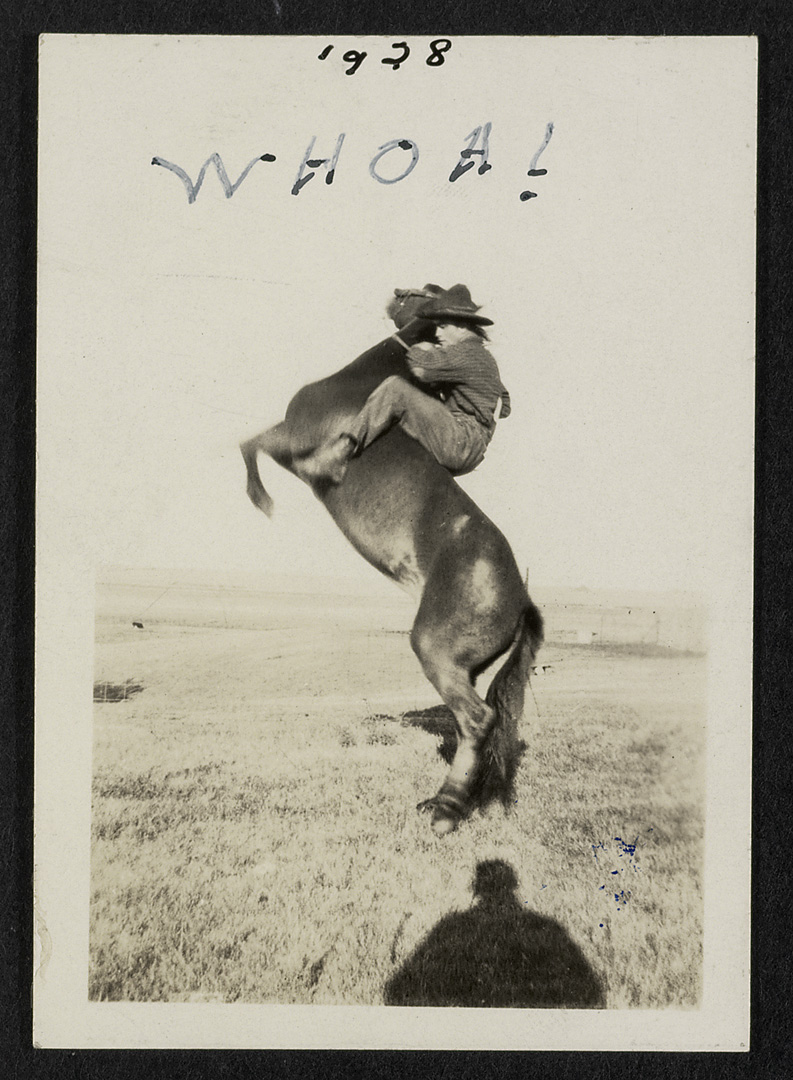
The joy of the women on the bed, the man and women in the cornfield, the couple in love with the Christmas tree, the man riding the bucking horse bareback, even the close-up of child’s mouth – all of the photographs were taken with an inquiring mind, with an intention to look and see, to feel the memory of that event, that time and space – not as a snap/shot but as an expression of (everlasting) life.

“To see a world in a grain of sand and heaven in a wild flower
Hold infinity in the palms of your hand and eternity in an hour.

William Blake


Dr Marcus Bunyan


Many thankx to the The Nelson-Atkins Museum of Art for allowing me to publish the photographs in the posting. Please click on the photographs for a larger version of the image.


Unknown maker (American). 'Man and woman in corn' c. 1930s from the exhibition 'An Anonymous Art: American Snapshots from the Peter J. Cohen Gift' at The Nelson-Atkins Museum of Art, Kansas City, April - September, 2016


Unknown maker (American)
Man and woman in corn
c. 1930s
Gelatin silver print
3 × 4 1/8 inches
The Nelson-Atkins Museum of Art, Kansas City, Missouri
Gift of Peter J. Cohen


Unknown maker (American). 'Couple with Christmas tree' c 1940s


Unknown maker (American)
Couple with Christmas tree
c. 1940s
Gelatin silver print
3 × 3 inches
The Nelson-Atkins Museum of Art, Kansas City, Missouri
Gift of Peter J. Cohen


Unknown maker (American). 'Woman with drink on bed' 1950s


Unknown maker (American)
Woman with drink on bed
1950s
Gelatin silver print
3 1/8 x 4 inches
Gift of Peter J. Cohen


Unknown maker (American). 'Close-up of child's mouth' 1956


Unknown maker (American)
Close-up of child’s mouth
1956
Gelatin silver print
3 × 3 inches
The Nelson-Atkins Museum of Art, Kansas City, Missouri
Gift of Peter J. Cohen


Unknown maker (American). 'Superman with dumbbell' 1972
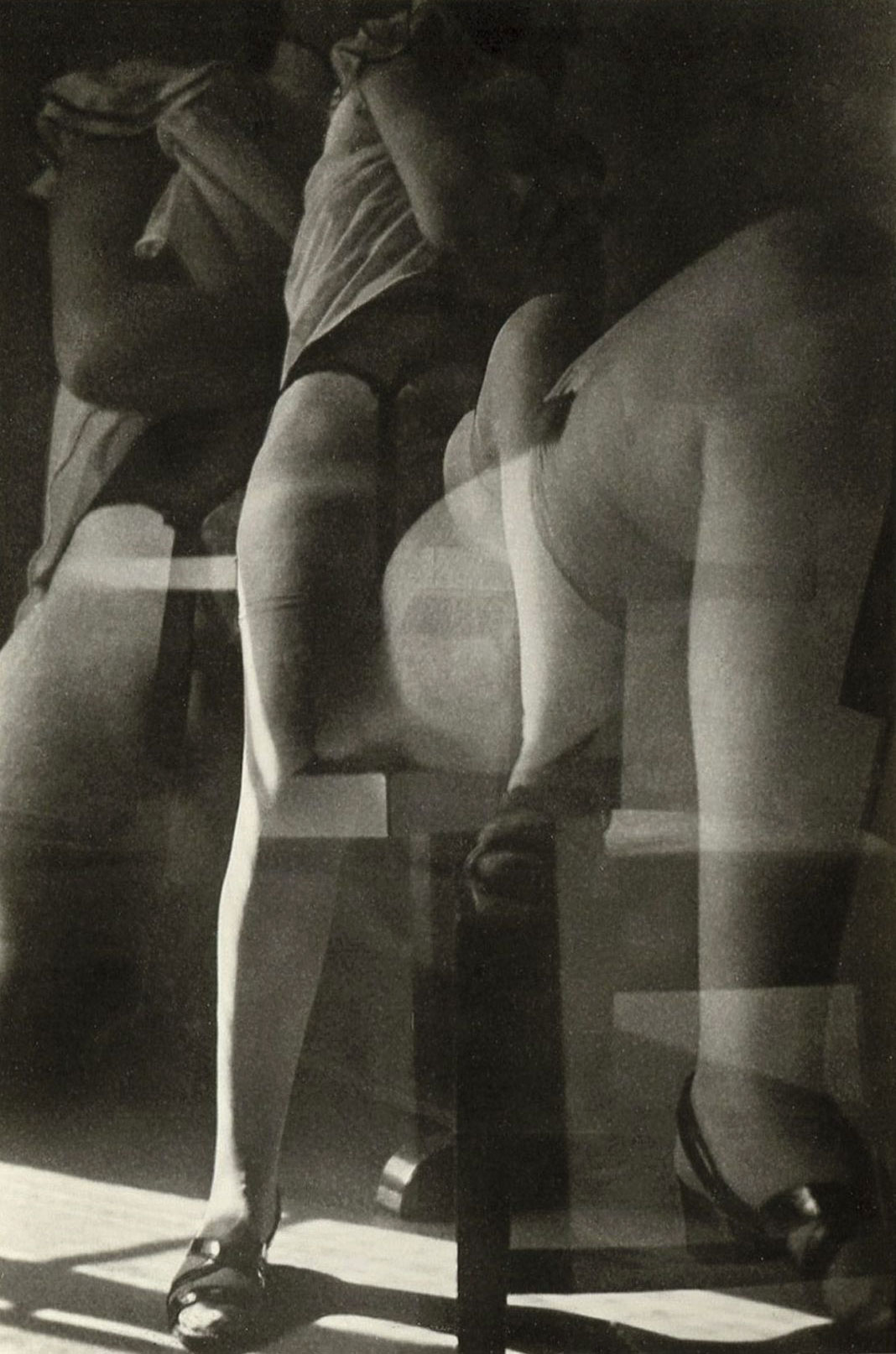
 

Unknown maker (American)
Superman with dumbbell
1972
Ektacolor print
3 1/8 × 3 1/8 inches
The Nelson-Atkins Museum of Art, Kansas City, Missouri
Gift of Peter J. Cohen


When photography was introduced in 1839, the making of even a single picture was difficult and painstaking. The medium was transformed in the 1880s with the introduction of easier processes and the simple Kodak camera. Amateur photography was born: images became casual and spontaneous, and they were called “snapshots.”

Amateur snapshots are highlighted in An Anonymous Art: American Snapshots from the Peter J. Cohen Gift, which opens at The Nelson-Atkins Museum of Art in Kansas City April 15. The Chicago-born Cohen, an investment manager who now lives in New York, bought his first snapshots at a flea market in 1991. Within 20 years he had amassed more than 50,000 of them, and has given away as many as 12,000 snapshots. Cohen gifted the Nelson-Atkins with 350 photos.

“This incredible exhibition of amateur snapshots depicts broadly shared aspects of everyday life,” said Julián Zugazagoitia, Menefee D. and Mary Louise Blackwell CEO and Director of the Nelson-Atkins. “It highlights the deep cultural importance of photography, a visual tradition that flourishes today in images that are made and shared in a variety of ways.”

There are snapshots of pets, baseball games, Christmas trees, amateur plays, vacation fun – and even subjects snapping themselves in mirrors, which could be considered the original selfies.

“The large themes of this exhibition have tremendous continuity,” said Keith F. Davis, Senior Curator, Photography. “Snapshots represent a collective visual unconsciousness of 20th-century American culture – a connection to basic human concerns that is both direct and mysterious.”

Each of the 238 snapshots in An Anonymous Art was hand-selected by Davis himself from an extensive survey of the Cohen collection. The exhibition suggests the medium’s profound social importance as well as its quirky and surprising nature. It features groupings of works illustrating key visual traits and cultural motifs, ranging from accidental multiple exposures to comic and play-acting images. An Anonymous Art runs through Sept 4.

Press release from The Nelson-Atkins Museum of Art


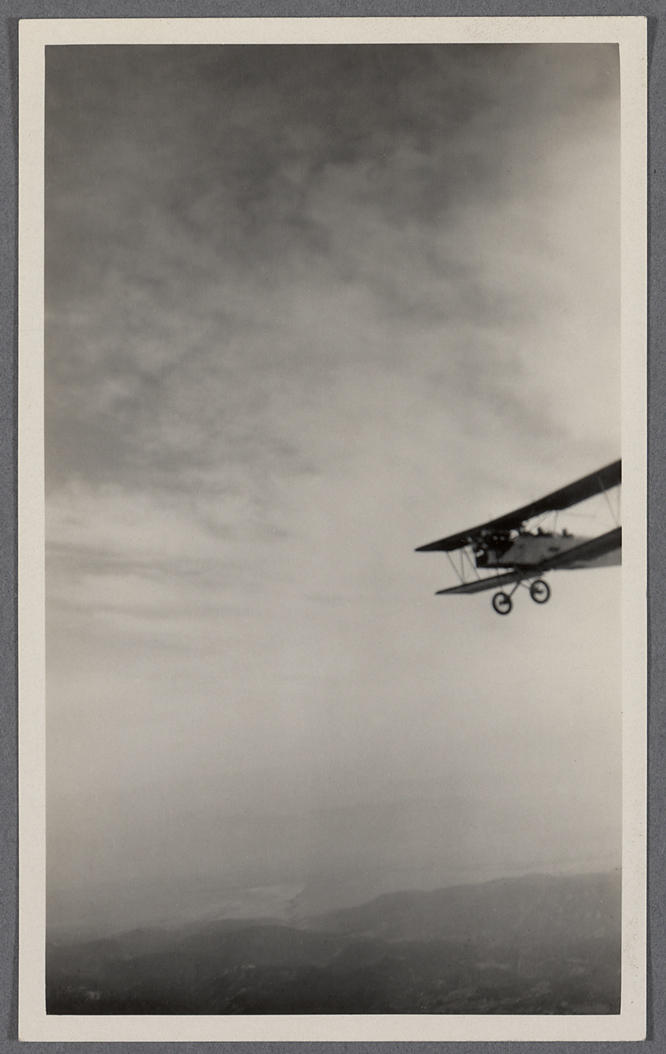
Unknown maker (American). Flying bi-plane' c. 1920s


Unknown maker (American)
Flying bi-plane
c. 1920s
Gelatin silver print
5 3/8 × 3 3/16 inches
The Nelson-Atkins Museum of Art, Kansas City, Missouri
Gift of Peter J. Cohen


Unknown maker (American). 'Whoa!' 1928


Unknown maker (American)
Whoa!
1928
Gelatin silver print
3 3/16 × 2 1/8 inches
The Nelson-Atkins Museum of Art, Kansas City, Missouri
Gift of Peter J. Cohen


“Especially poignant are the images captioned “Me,” depicting both adults and children. We may imagine a grown woman writing “me” at the bottom of her childhood photograph as a reminder that she was once a small, vulnerable girl.  In Camera Lucida: Reflections on Photography, French theoretician Roland Barthes writes, “In front of the photograph of my mother as a child, I tell myself: she is going to die: I shudder … over a catastrophe which has already occurred.  Whether or not the subject is already dead, every photograph is this catastrophe.”

And yet, despite Barthes’ melancholy, or our own sadness over images of loved ones who have died, each photograph exclaims and reclaims existence – that we have been here.  The snapshot embodies an emotion that existed at the time as an agreement between the photographer and the photographed, and that experience bridges time’s distance. And while that may sound simplistic, it is part of the deeper social meaning of the photographic image as a souvenir of experience – a small, visual (auto)biography.

Barthes goes on to discuss his mother’s photograph, writing, “… [the] photograph was indeed essential, it achieved for me, utopically, the impossible science of the unique being.”  The image of his mother as a child evinced for Barthes his mother’s true nature – kindness. Similarly, these anonymous photos perhaps reveal the essence of the subjects depicted … daredevil brothers, goofy friends and sisters, sedate parents, and so on.”

Dana Self. ‘”An Anonymous Art: American Snapshots from the Peter J. Cohen Gift,” Nelson-Atkins Museum of Art,’ on the KC Studio website July 8, 2016 [Online] Cited 16/12/2025


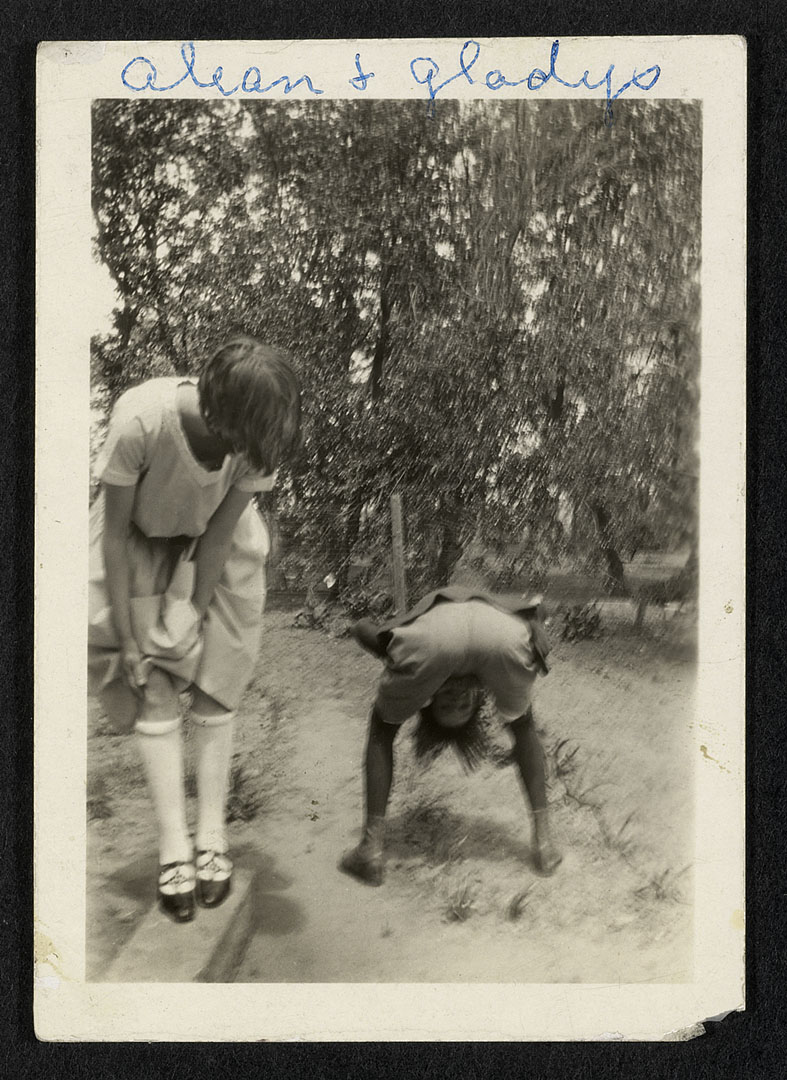
Unknown maker (American) 'Allen and Gladys' c. 1930s


Unknown maker (American)
Allen and Gladys
c. 1930s
Gelatin silver print
3 1/8 × 2 1/8 inches
The Nelson-Atkins Museum of Art, Kansas City, Missouri
Gift of Peter J. Cohen


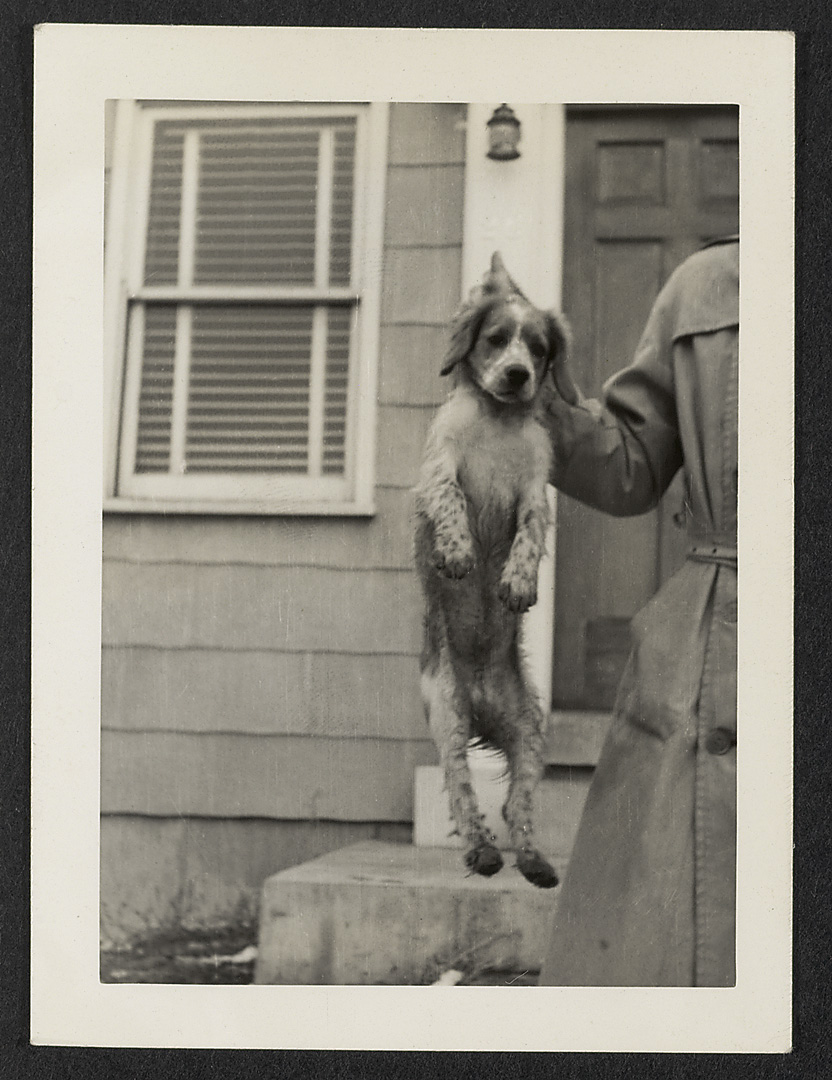
Unknown maker (American) 'Dog being held by neck' c. 1940


Unknown maker (American)
Dog being held by neck
c. 1940
Gelatin silver print
3 1/2 × 2 1/2 inches
The Nelson-Atkins Museum of Art, Kansas City, Missouri
Gift of Peter J. Cohen


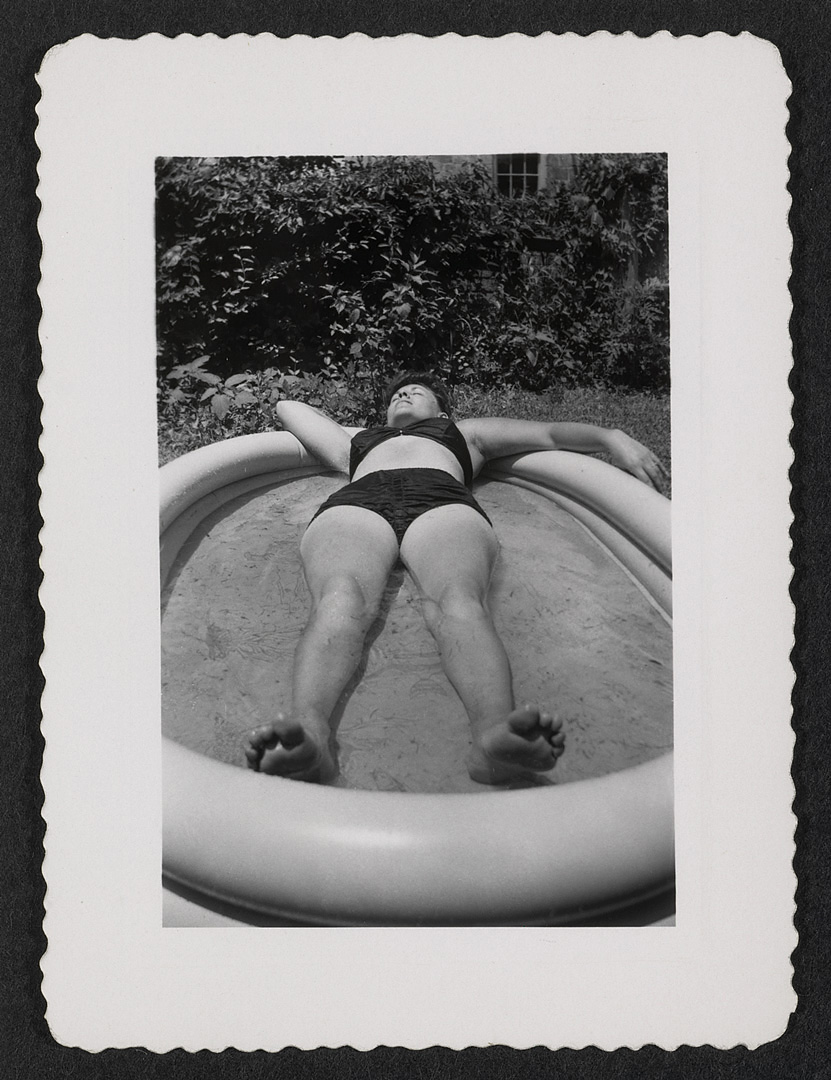
Unknown maker (American) 'Doris' 1949


Unknown maker (American)
Doris
1949
Gelatin silver print
3 1/8 × 2 1/8 inches
The Nelson-Atkins Museum of Art, Kansas City, Missouri
Gift of Peter J. Cohen


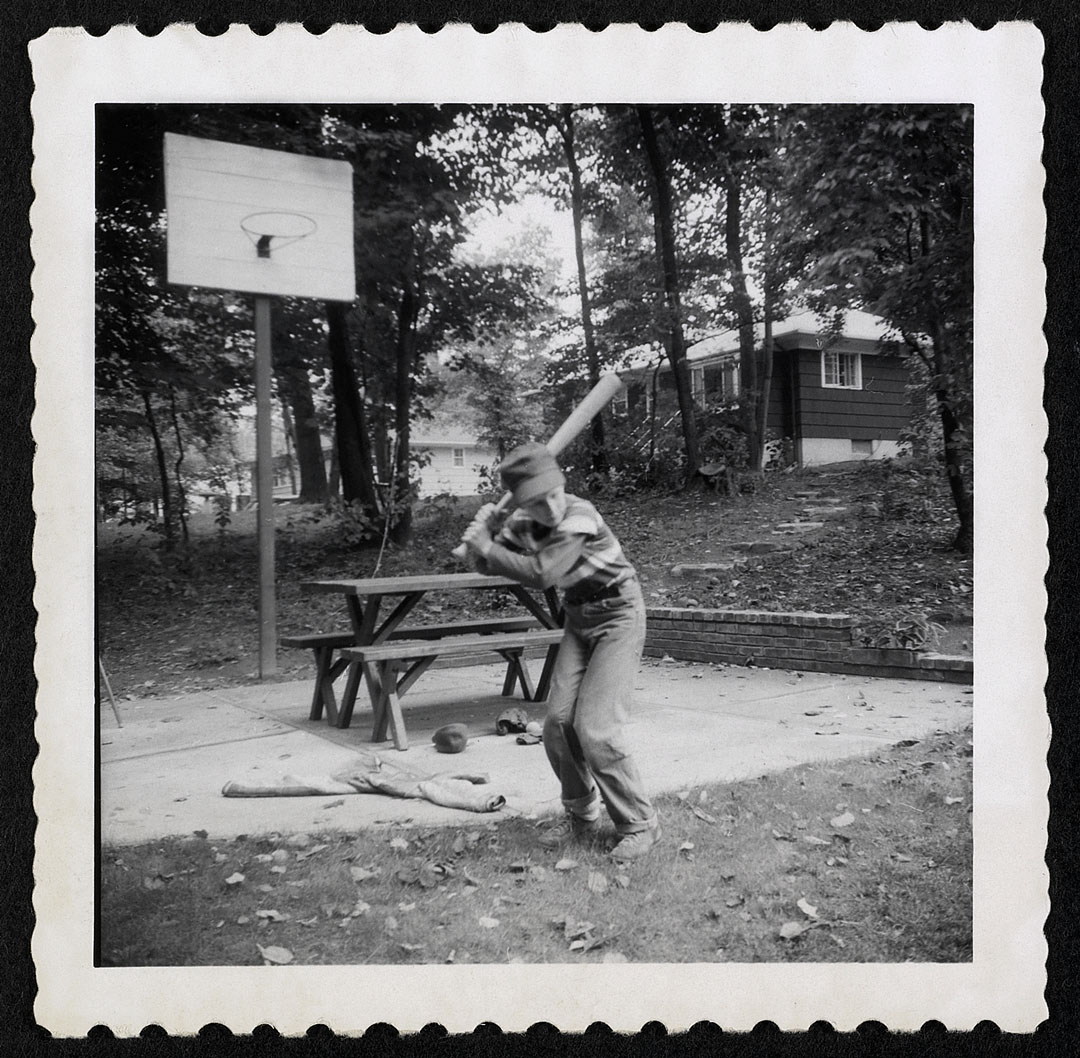
Unknown maker (American) 'Boy with bat' c. 1950s


Unknown maker (American)
Boy with bat
c. 1950s
Gelatin silver print
3 × 3 1/16 inches
The Nelson-Atkins Museum of Art, Kansas City, Missouri
Gift of Peter J. Cohen


The Nelson-Atkins Museum of Art
4525 Oak Street
Kansas City, MO 64111

Opening hours:
Thursday – Monday 10am – 5pm
Closed Tuesday and Wednesday

The Nelson-Atkins Museum of Art website

LIKE ART BLART ON FACEBOOK

Back to top

Text/Exhibition: ‘The multiple singularities of photography’ on the exhibition ‘Every Photograph is an Enigma’ at Fotomuseum Winterthur, Zurich

Exhibition dates: 24th October, 2015 – 14th February, 2016

 Curator: Michel Frizot


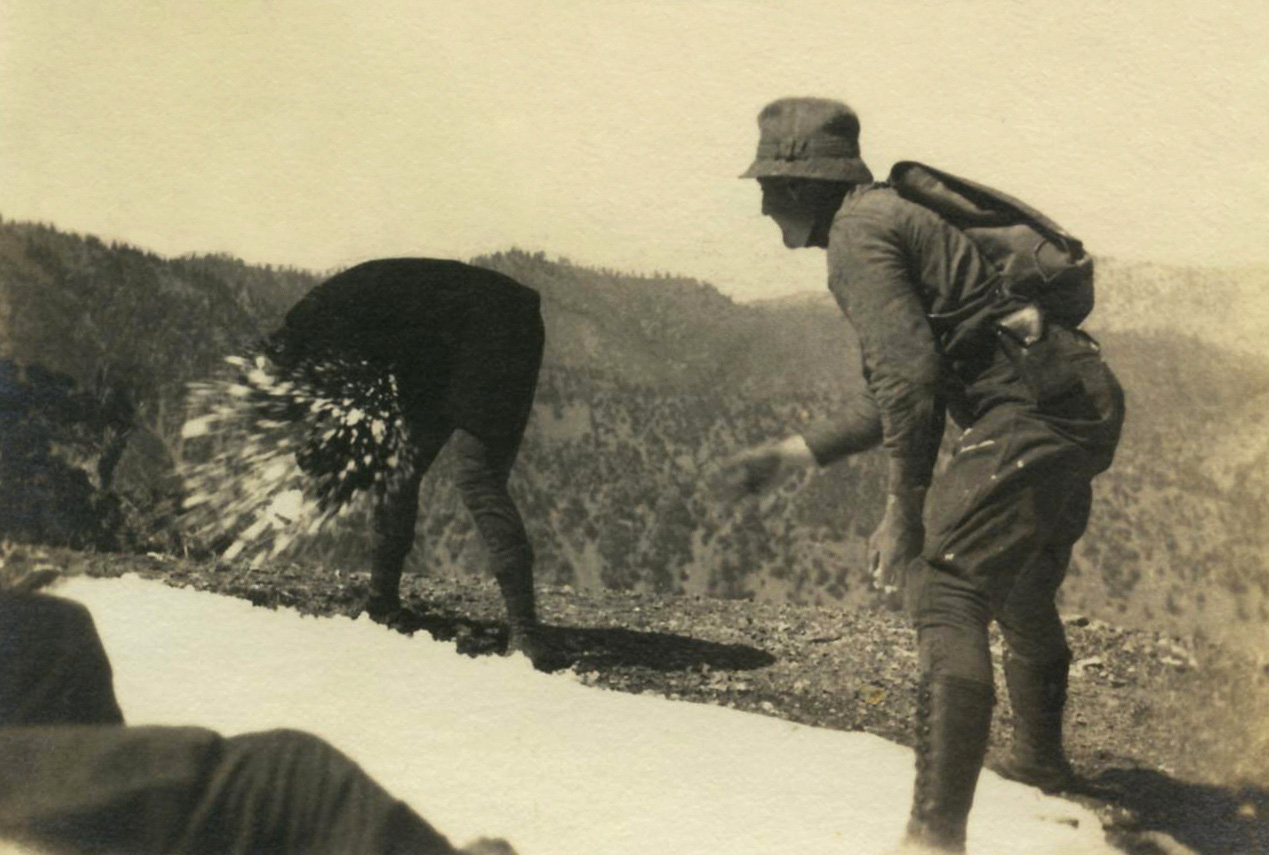
Anonymous photographer. 'Untitled' c. 1930 from the exhibition 'Every Photograph is an Enigma' at Fotomuseum Winterthur, Zurich, October 2015 - February 2016


Anonymous photographer
Untitled
c. 1930
Silver gelatin print
13 x 18cm
© Private collection


The multiple singularities of photography

Photograph, photographer, negative, print


I have never thought of photography as a “singularity” – the singularity of photography. For me, photography has always been about possibilities, multiplicities rather than singularities.

In Kathrin Yacavone’s text below, the “singularity of photography” is defined as the relationship – the hierarchy – among valuable, perceptual and imaginative relations between the beholder and the image. It is the singularity of the individual and their response at any time to a photograph, but these responses cannot be systematically codified, in the sense that no response can ever be relied upon… certainly, no response to a photograph of a mother could be more singular than the response of a son (as claimed by Barthes Camera Lucida).

In other words, the singularity of photography is how the viewer engages and reads a photograph in a singular way at one point in time, from one “point of view.”

While this point of view is singular, it changes from moment to moment, from context to context, from different points of view. Hence, we have a multiplicity of singularities or, if you like, a multiple singularity of photography. Hasn’t it always seemed false to you in Camera Lucida where Barthes talks about his response to an image (for example, the supposed “lost” image of his mother*), he allows it to freeze in his text? Surely he would feel different later (another singularity). And yet the freezing is necessary for the arguments Barthes makes.

It continues to haunt me – much as photographs haunt our memory – why Barthes stuck with the singularity of a photograph, when at the same time he was pushing the multiplicity of readings in his other texts eg. S/Z (1970). Are we missing something really basic here? Why should a photograph be frozen and a text not?

In this exhibition, Michel Frizot defines a series of classifications (or themes, see below) that seek to organise the ambiguity and perplexity of vernacular and surprising photography. As Frizot himself puts it, “the photograph is not in its essence a transparency through which we gain access to a known reality but, on the contrary, a source of ambiguity and often, perplexity. The photographic image is a constellation of questions for the eye because it offers viewers forms and signs they have never perceived as such and which conflict with their natural vision”.

Frizot suggests questions for the eye offered through forms and signs that are in conflict with natural vision. Barthes pushes further, suggesting that it is not the forms and signs of the photograph that challenge natural vision, but a shift away from a semiology of photography to a phenomenology of photography. From guided message (forms/signs) to emotive response (imagination). Umberto Eco comments that, “Semiology shows us the universe of ideologies, arranged in codes and sub-codes, within the universe of signs, and these ideologies are reflected in our pre-constituted ways of using the language,”1 but Barthes, in works such as S/Z, stresses the multiplicity of a reading (its intertextuality). He contends that there can be no originating anchor of meaning in the possible intentions of the author, and that meaning must be actively created by the reader through a process of textual analysis.

An emotive response to a photograph is an “encounter with the represented other [is] a dialectical relationship between the specific and the general, between the personal and the universal, where the dialectic is seen in the psychologically unsettling potential of photographic images, the status of the photographic referent and the poignancy of the relation between time and image.” Thus the photograph can have a capacity for plurality of meaning which is not restrictive.

This response is based on an individuated, ‘feeling’ viewer whose encounter with the photograph is guided by desire and emotion, grounded in his or her unique experience and life history. It is to engage with the photograph in imaginative, affective, and emotional ways. Here, the codified reading is subsumed? by the emotive reading of an enlightened and fully “conscious” reader in the phenomenology of photography. Phenomenology is the study of structures of consciousness as experienced from the first-person point of view. The central structure of an experience is its intentionality, its being directed toward something, as it is an experience of or about some object – a photograph for example – by the imagination, by thought. Phenomenology requires a bit to grasp – to read a phenomenologial text like Gaston Bachelard’s Poetics of Space as its author intended requires a cultivated mindset – but a prepared reader has many pleasures.

This is one possible response by the viewer to unsettling photographs. But what of the photographer?

Les Walking (my lecturer at RMIT University for many years), used to ask “what are you pointing your camera at?”… so this would permit an imaginative journey on his part as he imagined the subject matter, what he knew of the person, and all possibilities. Sometimes everything happens at once (in photography), and sometimes we recognise the richness of where we are in photography’s ability to generate many singularities within us at rapid fire.

As a photographer we go on an imaginative journey when we take a photograph – we previsualise, snap, extend the “point” of exposure (long time exposure), double expose or do away with the camera altogether. Taking a photograph is a multiplicity before the moment of the pushing of the shutter (decisions, angles, camera, film, light, place etc..), and a multiplicity afterwards… but for that split second it is a singularity, “an encounter with the represented other” as Walter Benjamin puts it… as though time, history and memory are all focused through the lens (of the camera, of the enlarger, of the scanner) at the object – like a funnel – which then expands afterwards. At the point of “exposure” there is only ever one singularity. Multiple contexts before and after, multiple phenomena if you like, but only one outcome when the negative is exposed. Being aware of all that happens around us leads to that one singularity – the negative. That’s what photographers do, they focus that energy into a singularity.

But the resulting negative is NOT singular!

Of course, there are some things that are forever predetermined in the analogue negative, eg the depth of field, the focus, the grain. Even in the digital negative these determinations apply. But then you think, if I push this film or pull it back in development “other” things may appear. Probably the Leica manual is as good as any for what come after that – they say that when shooting a roll of film with a variety of tonal scales the exposure should be more than the meter indicated, and the development time less. In the Zone System this would be N-1. And a negative like this is what gives the greatest options with graded papers. Multiple options for printing, multiple options for interpreting a negative. I feel these multiple options have been more or less forgotten in the era of the digital print. What you see on the screen is what you aim to see in the print, which negates the multiplicity of the (digital) negative, often leading to bland and underwhelming digital prints. The pre-determination of the screen leads to an over-determination of the print.

While Minor White observed that there was a dragon in the negative that could be reached by careful printing, this locks you into looking for the “one road” in the negative. One person who didn’t was the English photographer Bill Brandt who printed first in a straight documentary style before “unlocking” the surrealist elements of his negs with very contrasty work. He was open to the multiple contexts of the point of exposure of the negative, and it is his later reprinting of his earlier work for which he has become famous.

While it comes down to only several elements when talking about the phenomena of the negative, it is our direct experience of it IN OUR IMAGINATION that, perhaps, gives the negative presence and transcendence. It is the direction of our thought towards the object of our being. And that is what makes us truly human.

Dr Marcus Bunyan

* Of course, the photograph of his mother did exist, it was just necessary for his argument that we never see it, and that he said that it did not exist.


Word count: 1,400.

1/ Eco, U. (1970). “Articulations of the Cinematic Code,” in Cinematics, 1(1), pp. 590-605


Many thankx to my mentor for his advice and thoughts on this text. Many thankx to the Fotomuseum Winterthur for allowing me to publish the photographs in the posting. Please click on the photographs for a larger version of the image.


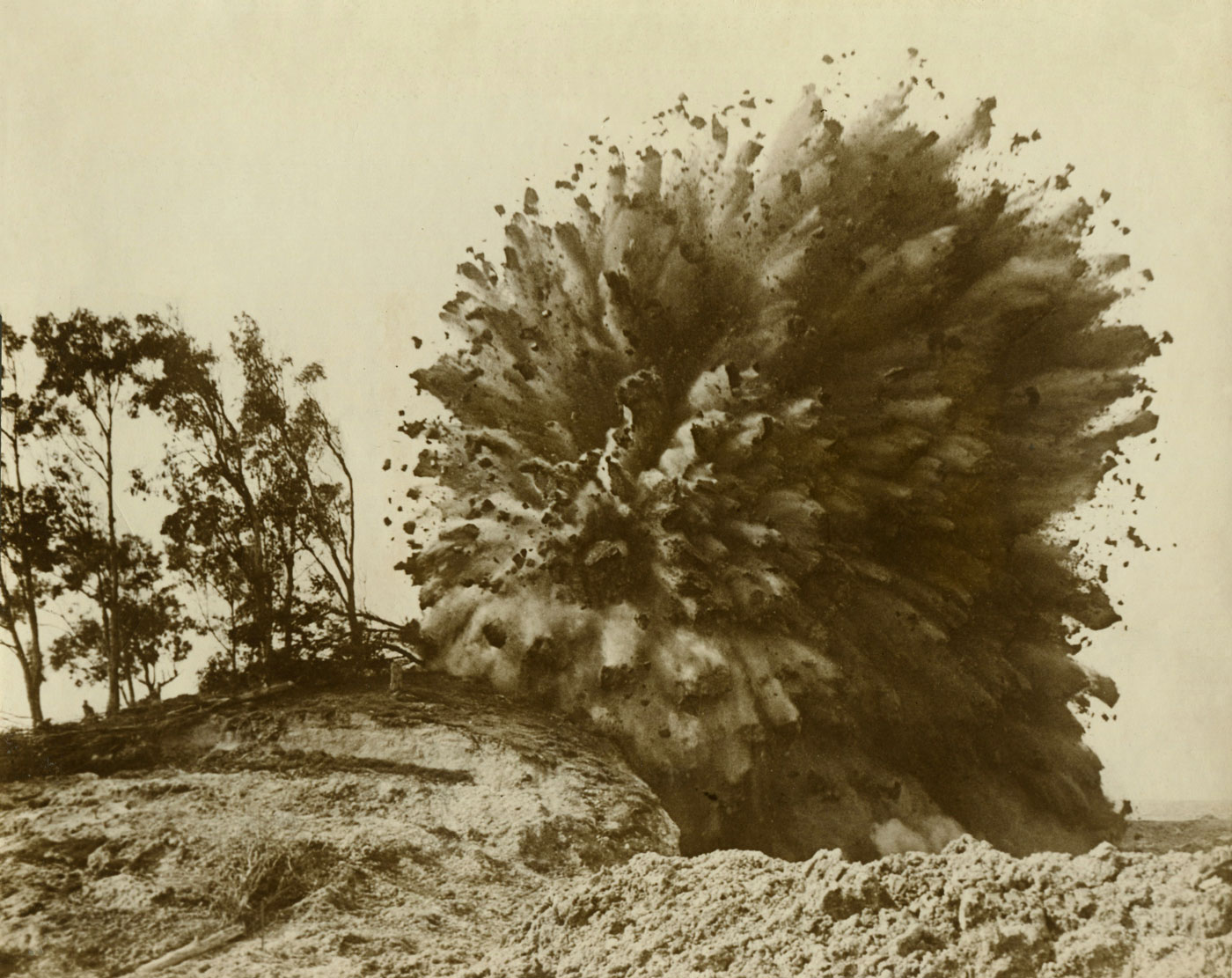
Anonymous (Press Photo) 'Rock and Mud 'Grand Finale',' California, c. 1930 from the exhibition 'Every Photograph is an Enigma' at Fotomuseum Winterthur, Zurich, October 2015 - February 2016


Anonymous (Press Photo)
Rock and Mud ‘Grand Finale’
California, c. 1930
Silver gelatin print
19.7 x 24.7cm
© Private collection


Photographs often seem familiar and understandable, a visual common sense intimately related to our daily lives. But they can also provoke a spark of amazement or generate a more sustained perplexity and inquiry. Curated by the renowned French photo historian, Michel Frizot, Every Photograph is an Enigma interrogates this paradox. Drawing exclusively from photographs in his private collection, many of them anonymous, he presents a selection of photographic moments at once ordinary and marvellous. Frizot develops a system of classification that explores the strangeness generated by the camera lens. Taken by family members, lovers, or unheralded professional and amateur photographers, the assembled images amount to nothing less than a phenomenology of photography.

The exhibition and book are divided into eleven themes, such as:

Ambiguous assemblages
The enigma of relationship
The enigma of context
The enigma of attentiveness
Challenging the figurative order
The aesthetic solution
Original configurations
The photographer’s options
The space of the gaze
The spirit of the place


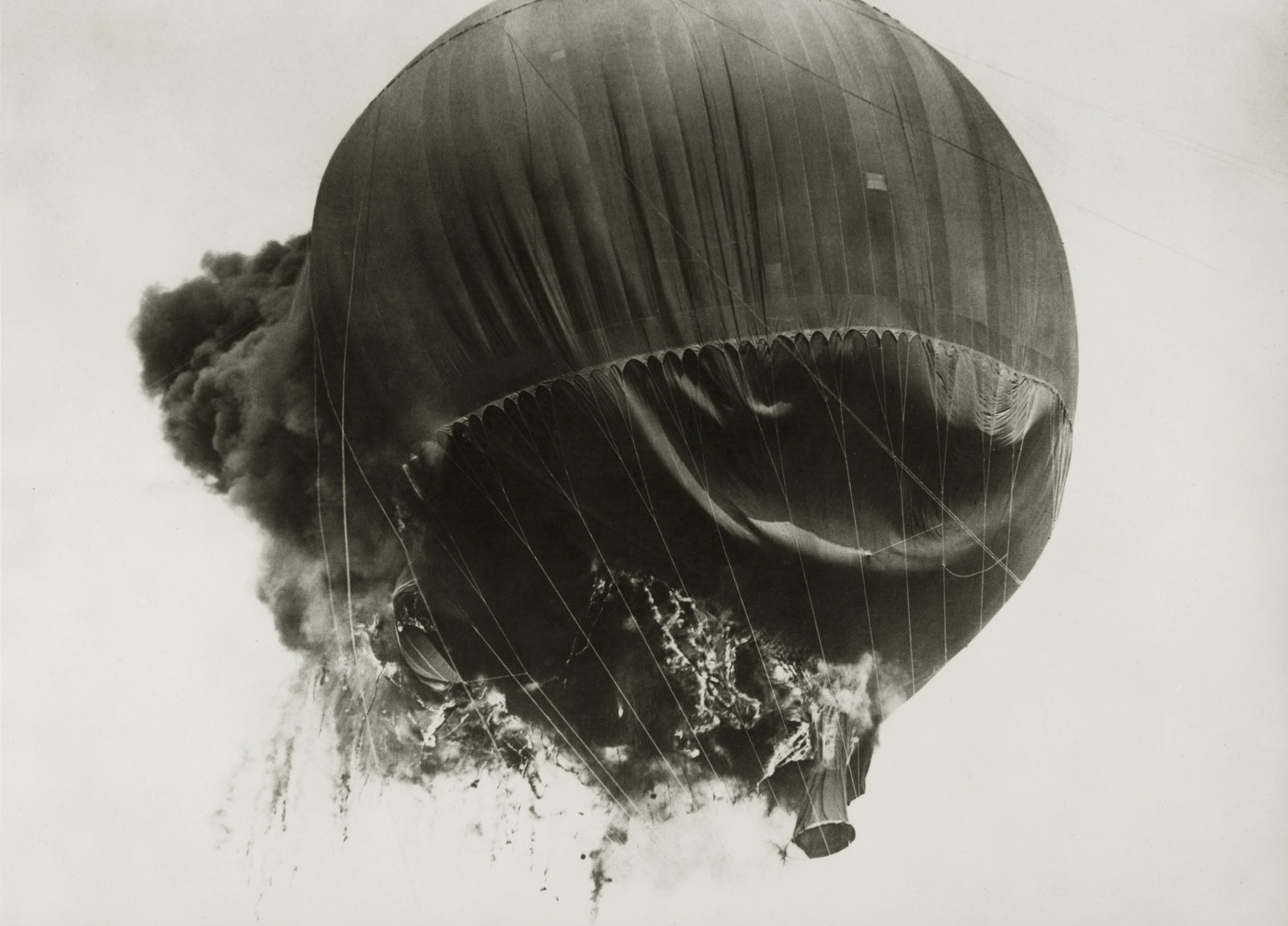
Anonymous (Keystone) 'Professor Piccards Balloon' c. 1930


Anonymous (Keystone)
Professor Piccard’s Balloon Destroyed by Flames
25th May 1937
Silver gelatin print
13.4 x 18.5cm
© Private collection


The stratosphere balloon of Professor Piccard catches fire in the moment of ascending over the area of Brussels, Belgium.

Auguste Antoine Piccard (28 January 1884 – 24 March 1962) was a Swiss physicist, inventor and explorer known for his record-breaking helium-filled balloon flights, with which he studied the Earth’s upper atmosphere. Piccard was also known for his invention of the first bathyscaphe, FNRS-2, with which he made a number of unmanned dives in 1948 to explore the ocean’s depths.


“Every photograph is an enigma for the gaze: for the enigma is part of the photographic act itself. It ensues from the distance between the natural vision and the camera’s photosensitive capture process. By widening this gap, the modes of capture, the photographer’s intentions, and the reactions and involvement of the “photographer” together create new forms and perceptual requirements specific to photography. It is a question, above all, of understanding how much photographs, by transcending our visual capacities and going beyond our intuitions, also give rise to empathy and the need to project personal concerns. The element of enigma in photography bears witness, in fact, to what it is to “be human”.”

“The answer to the Sphinx’s riddle, it should be remembered, is humankind. And looking at a photograph means discovering oneself and the human species. Through the disparity and the dissonance between what it shows and what we experience, photography testifies above all, and at every moment, to what “being human” means. And the riddle, the enigma inherent in looking at a photograph is that of our presence in the world.”


Michel Frizot


Kathrin Yacavone. "Photography and Subjectivity," in 'Benjamin, Barthes and the Singularity of Photography'. Bloomsbury Academic, 2012, pp. 123-124


Kathrin Yacavone. Benjamin, Barthes and the Singularity of Photography. Bloomsbury Academic, 2012, pp. 123-124


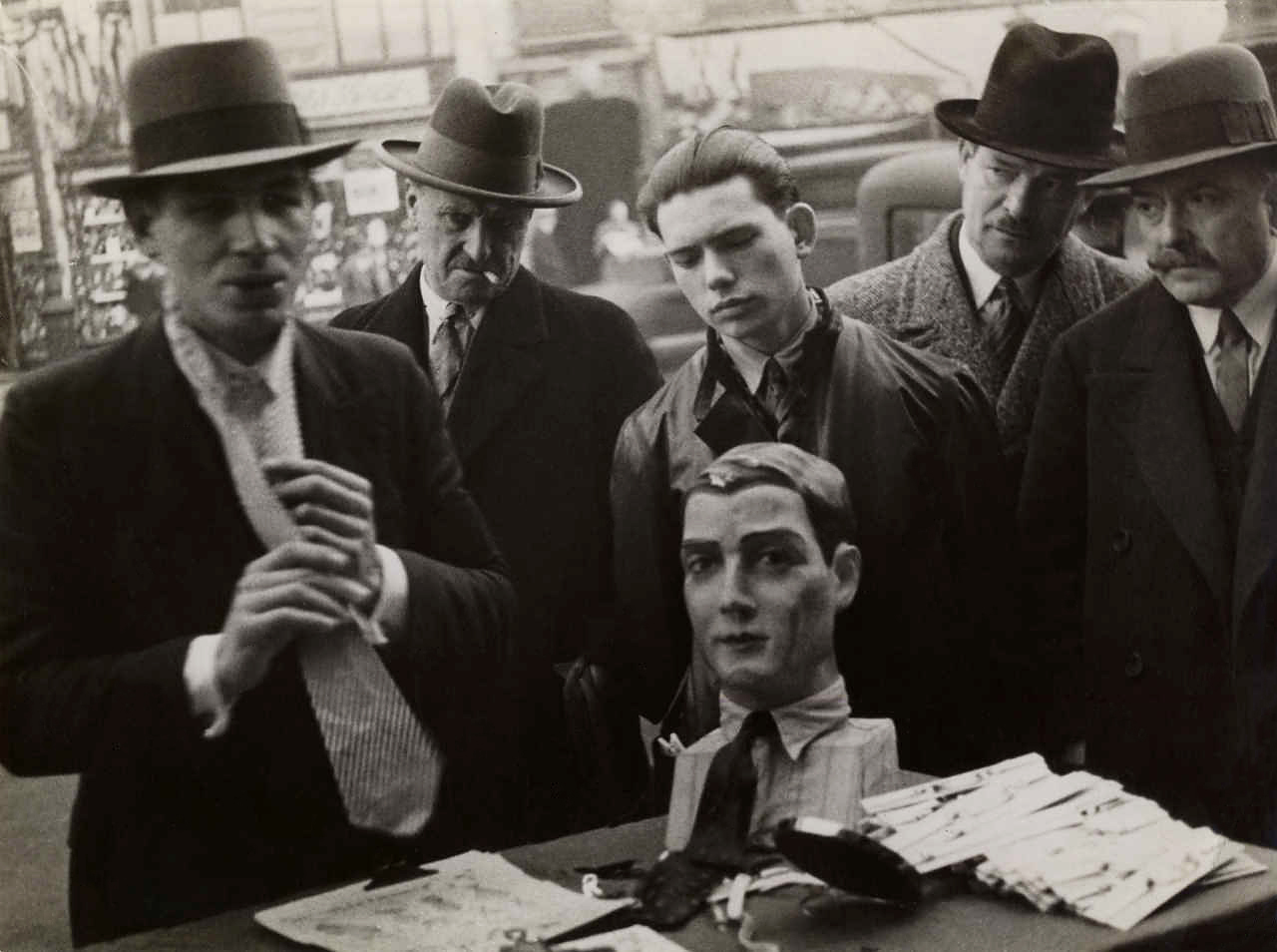
Mr. Brodsky. 'Marchand ties, Paris' 1935


Mr. Brodsky
Marchand ties, Paris
1935
Silver gelatin print
© Private collection


Anonymous photographer. 'Untitled' c. 1930


Anonymous photographer
Untitled
c. 1930
Silver gelatin print
5.9 x 8.1cm
© Private collection


Anonymous photographer. 'Untitled' c. 1950


Anonymous photographer
Untitled
c. 1950
Silver gelatin print
6.5 x 9cm
© Private collection


Anonymous photographer (Hollywood Press photo) 'The Photographer set on by His "Victim",' Hollywood Press photo 1938


Anonymous photographer (Hollywood Press photo)
The Photographer set on by His “Victim”
1938
Silver gelatin photograph
16.9 x 22cm
© Private collection


Anonymous photographer (International News Photos). 'Untitled' Nd


Anonymous photographer (International News Photos)
Untitled
Nd
Silver gelatin print
16.5 x 21.5cm
© Private collection


Anonymous photographer (International News Photos). 'Untitled' Nd (detail)


Anonymous photographer (International News Photos)
Untitled (detail)
Nd
Silver gelatin print
16.5 x 21.5cm
© Private collection


France-Presse. 'C’est demain mardi-gras', 5 mars 1935


France-Presse
C’est demain mardi-gras / Tomorrow is Shrove Tuesday
March 5, 1935
Silver gelatin photograph
© Private collection


Interpress. 'Avant l’ouverture du Salon des Surindépendants' Paris, 1952


Interpress
Avant l’ouverture du Salon des Surindépendants / Prior to the opening of Superintendent’s Fair
Paris, 1952
Silver gelatin photograph
© Private collection


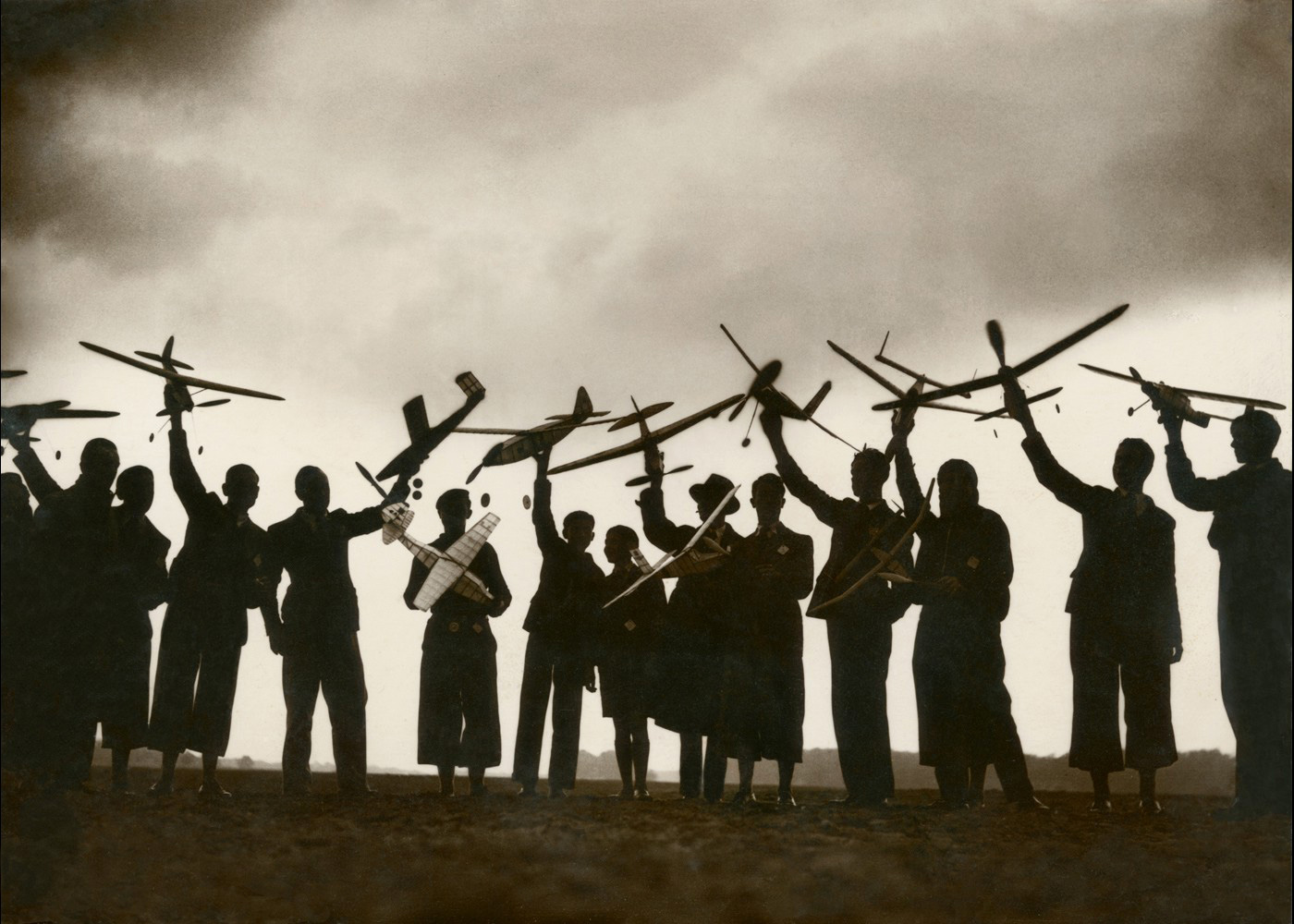
Mondial Photo-Presse. 'Réunion de modélistes' c. 1930


Mondial Photo-Presse
Réunion de modélistes
c. 1930
Silver gelatin photograph
12.8 × 17.6cm
© Private collection


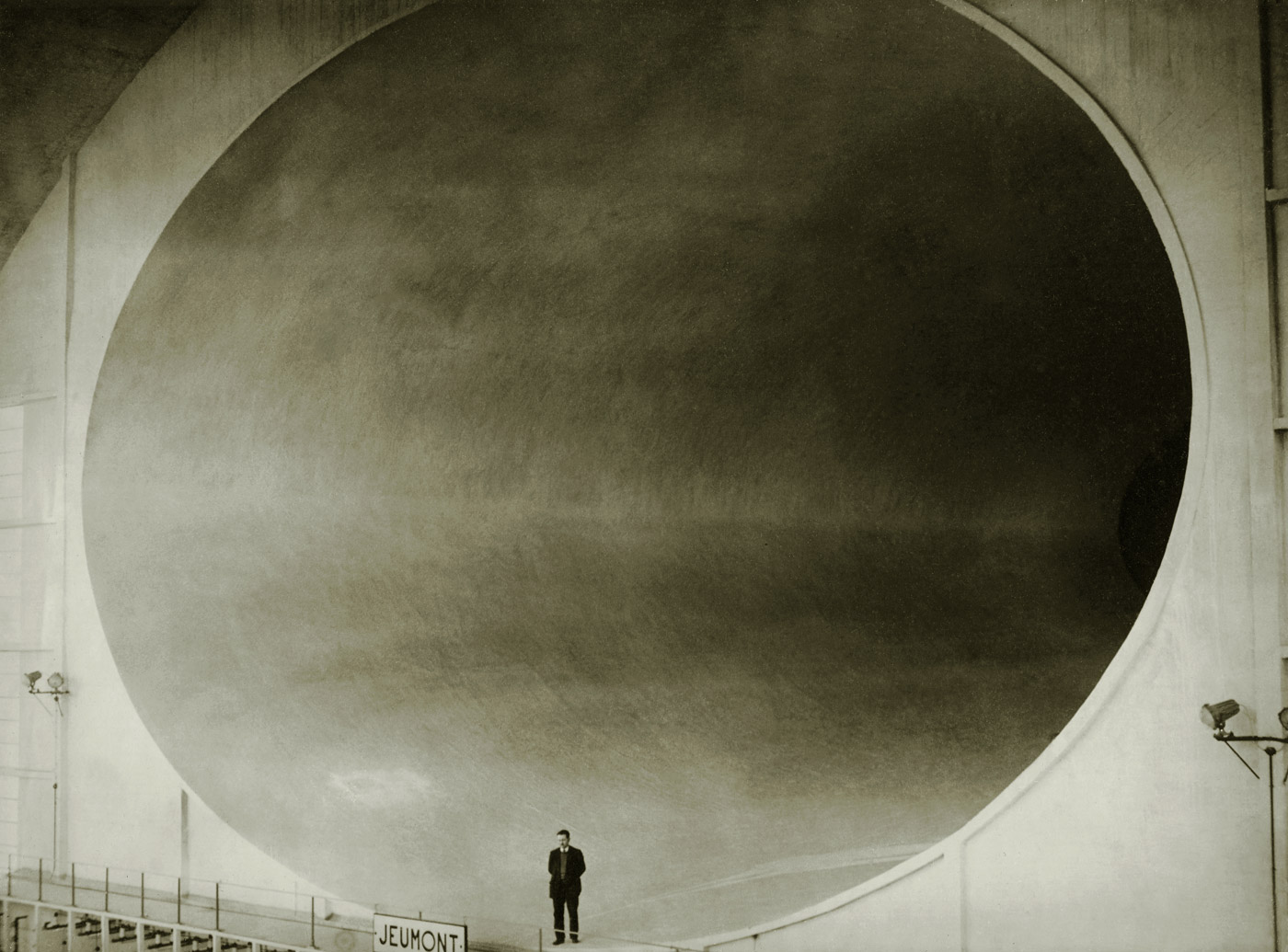
NYT Photo. 'Wind Tunnel in Chalais Meudon' 1935


NYT Photo
Wind Tunnel in Chalais Meudon
1935
Silver gelatin print
18 x 24cm
© Private collection


Photographs often seem familiar and understandable, a visual common sense intimately related to our daily lives. But they can also provoke a spark of amazement or generate a more sustained perplexity and inquiry. Curated by the renowned French photo historian, Michel Frizot, Every Photograph is an Enigma interrogates this paradox. Drawing exclusively from photographs in his private collection, many of them anonymous, he presents a selection of photographic moments at once ordinary and marvellous. Frizot develops a system of classification that explores the strangeness generated by the camera lens. Taken by family members, lovers, or unheralded professional and amateur photographers, the assembled images amount to nothing less than a phenomenology of photography.

Immediately a photograph is taken it generates a distance between what the image reveals and what we have seen for ourselves only seconds before. This observation of disparity is central to the phenomenon of photography, creating a sense of indeterminacy that we might describe as the singularity of the photographic. As Frizot himself puts it, “the photograph is not in its essence a transparency through which we gain access to a known reality but, on the contrary, a source of ambiguity and often, perplexity. The photographic image is a constellation of questions for the eye because it offers viewers forms and signs they have never perceived as such and which conflict with their natural vision”. Every Photograph is an Enigma draws out the full implications of this disparity, everything which constitutes the singularity of the photographic process. This begins with the selection procedure itself: Frizot has collected the photographs over many years, with no predetermined objective, finding scraps and castoffs at flea markets and jumble sales. Abandoned photographs escape traditional standards of classification and judgement and are often the work of anonymous photographers. For Frizot, this artlessness offers ‘an extra touch of photographic naturalness which is not shrouded in conventions’. It is the work of the exhibition to reveal, and the role of the visitor to discover, this photographic supplement.

The exhibition explores the modalities of photographic capture and the out-distancing of the senses that results, above all in the relationship between photographer, subject photographed and the operations of the camera, a technical device. Recording different intensities of light on a photosensitive surface, photography is an index of states of light rather than the reality perceived by the eye. The formal consequences of photographic technique are considerable, whether determined by exposure time, framing, exhaustive detail, or the projection of three-dimensional space onto a two-dimensional surface. At the same time, what are fundamentally physical processes are also determined by the split-second decisions taken by the camera operator. It is precisely this that gives rise to the puzzle of photography: the contradictions between the precision of a physical world and the decision-making of the photographer.

Every Photograph is an Enigma explores other aspects of the riddle of photography, including the complexity of the exchange with the subject of the photograph, embodied by a reciprocal glance. The ability of the camera to record human form and gesture is what lends it its quasi-magical vocation. However, that act of recording is dependent on a vast array of potentialities and constraints, including perhaps the demeanour of the participants. The photographic act transforms emotionally-charged, interpersonal experience into uncertain, interpretable signs, a distillation of affect. At the same time, those signs are also dependent on the astuteness of the eyes that scrutinise the photograph, igniting, perhaps, an empathy with others. A photograph is a fragmentary capture and the gaze of the viewer operates in similarly fragmentary bursts. A viewer’s optical capacities are decisive, interpreting, for example, the photograph’s excess of data. The enigma of photography also emerges from the inadequacies and impasses of the energetic viewer’s scrutiny. These, and many other riddles, are explored across eleven separate chapters in the exhibition, which together provide a method for specifically photographic viewing. They probe the way the photographic device is used to celebrate the subject, or the way that processes unique to photography and the photographer’s command of his or her equipment help determine the final image. A further theme investigates the way that viewers are involved in a perceptual relationship which ordinary vision has not accustomed them to, including a display of stereo images. We encounter the myriad ways that photography overwhelms our senses and the many puzzles it presents.

Every Photograph is an Enigma brings together a remarkable selection of everyday photographs, selected over many years by one of the sharpest eyes in the history photography. It offers us the opportunity of a liberated escape into a ‘pure’ photographic act stripped of artistic pretension or historical portent. As Frizot proposes, there are no hierarchies in photography – it is the activity of the gaze that reveals the richness of the image. For the eye, every photograph is an enigma.

Catalogue

The exhibition is accompanied by the fully-illustrated catalogue Toute photographie fait énigme/Every photography is an enigma, by Michel Frizot, in collaboration with Cédric de Veigy. Published by Éditions Hazan. English/French with a German translation of the main texts. Price 45 CHF.

Credits

The exhibition is curated by Michel Frizot and organised by the Maison Européenne de la Photographie, Paris and the Musée Nicéphore Niépce, Chalon-sur-Saône in collaboration with Fotomuseum Winterthur.”

Text from the Fotomuseum Winterthur website


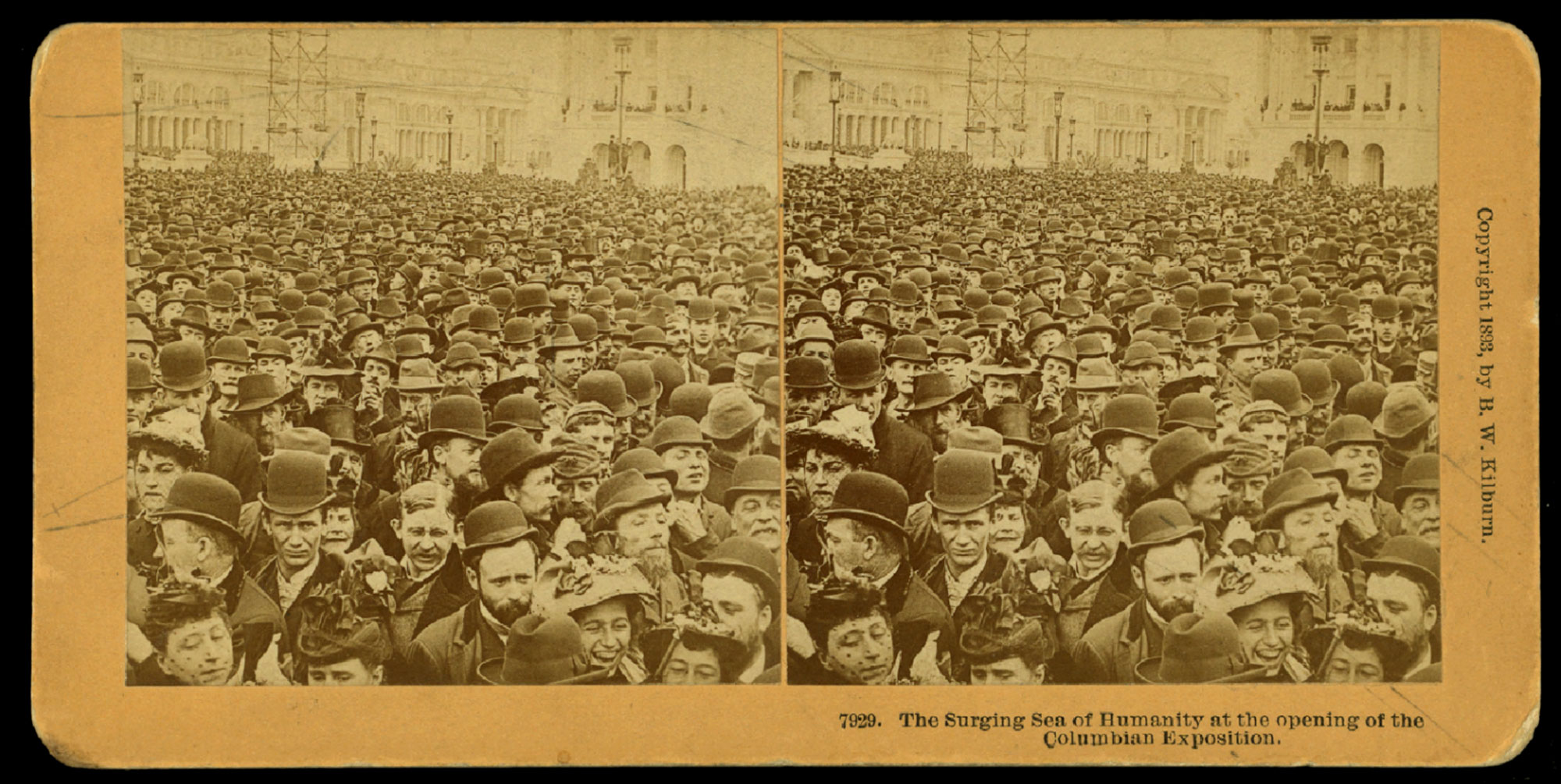
B.W. Kilburn (American, 1827-1909) 'The Surging Sea of Humanity at the Opening of the Columbian Exposition, Chicago' 1893


B.W. Kilburn (American, 1827-1909)
The Surging Sea of Humanity at the Opening of the Columbian Exposition, Chicago
1893
Stereocard
Albumen photographs
© Private collection


B.W. Kilburn (American, 1827-1909) 'The Surging Sea of Humanity at the Opening of the Columbian Exposition, Chicago' 1893 (detail)


B.W. Kilburn (American, 1827-1909)
The Surging Sea of Humanity at the Opening of the Columbian Exposition, Chicago (detail)
1893
Stereocard
Albumen photograph
© Private collection


Anonymous photographer. 'Untitled' c. 1900


Anonymous photographer
Untitled
c. 1900
© Private collection


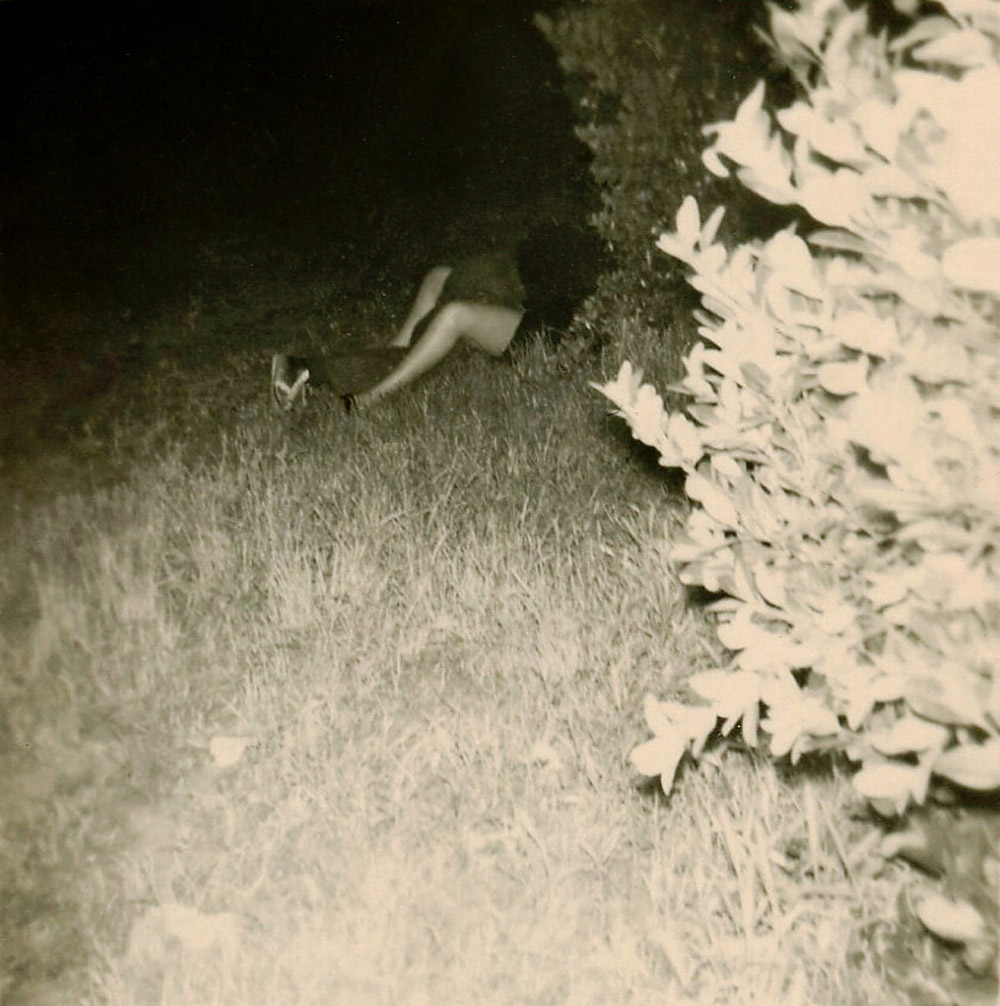
Anonymous photographer. 'Untitled' c. 1955


Anonymous photographer
Untitled (Flagrants délits / Egregious crimes)
c. 1955
Silver gelatin print
5.5 x 5.5cm
© Private collection


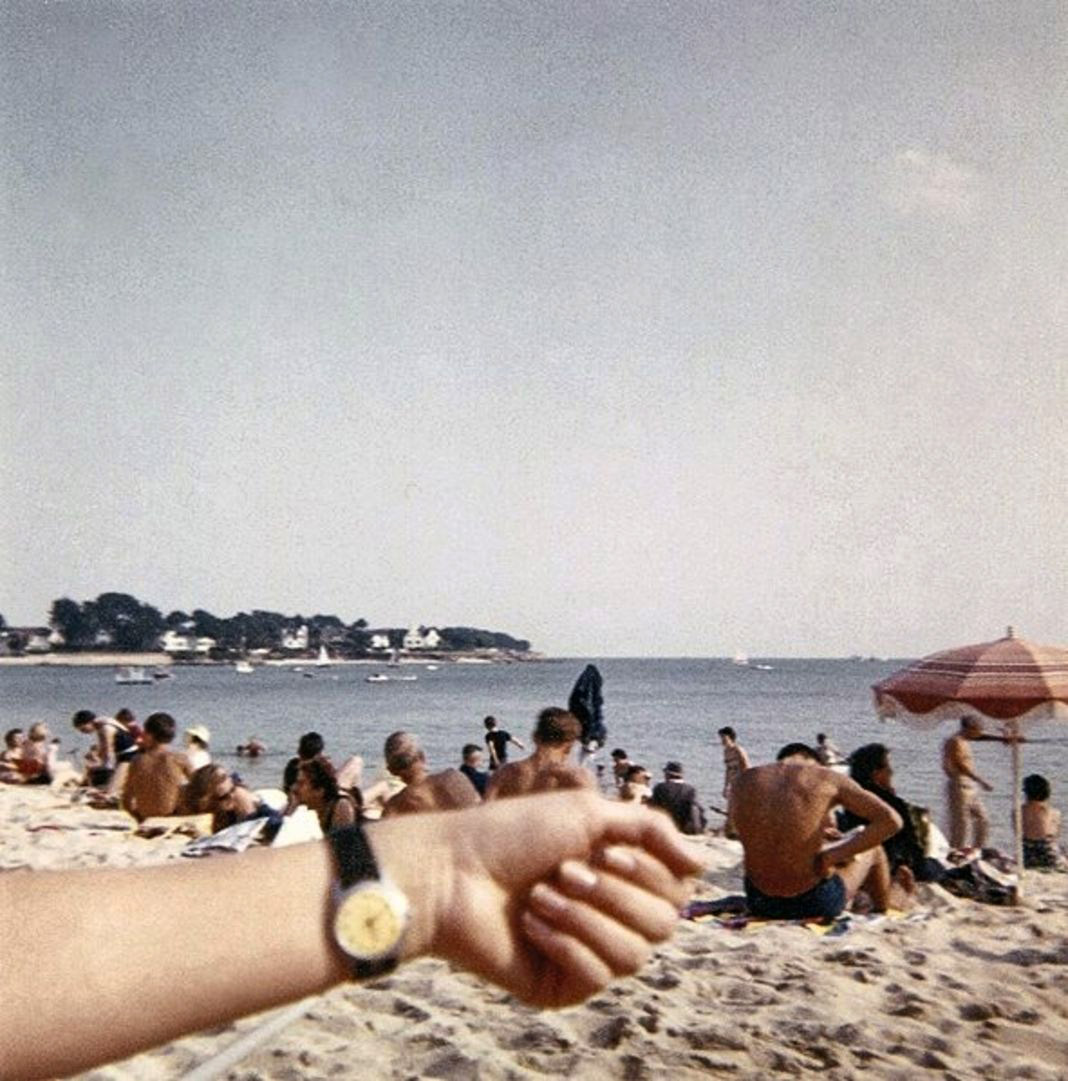
Anonymous photographer. 'Untitled' c. 1970


Anonymous photographer
Untitled
Instamatic Kodak
c. 1970
© Private collection


Anonymous photographer. 'Children Watching the Apollo 12 Flight on Television' 1969


Anonymous photographer
Children Watching the Apollo 12 Flight on Television
1969
Silver gelatin photograph
© Private collection


For many years, Michel Frizot the historian and theorist has been collecting neglected photographs which have been overlooked because they were taken by anonymous, unknown photographers, unheard-of or non-celebrated artists, throughout the entire history of photography. Avoiding “museumification” and classification, selected first of all for their capacity for surprise, these photographs are no less generous, moving and perhaps “photographic” than others. This exhibition reflects on the element of mystery in all photography.

“Because they are so familiar to us, because they are part of our visual space, photographic images seem to be immediately accessible and understandable. But everyone has experienced that sudden burst of amazement they can set off through suspended movements, the rendering of colours, unexpected coincidences or abruptly frozen expressions. If we pay attention to such features, they provoke the feeling that we are faced at once with something obvious and with a question. When we can look at a photograph as soon as we have “taken” it, we immediately, moreover, sense the distance between what the image tells us and what we have been able to see for ourselves only seconds before. The observation of this disparity, recognisable at every moment, is proper to the photographic phenomenon. We grant each photograph an element of truth but suspect its indeterminacy and sense its contradictions.

The photographic image is a constellation of questions for the eye because it offers viewers forms and signs they have never perceived as such and which conflict with their natural vision.

The enigma, the riddle, the puzzle would thus be fundamental to the photographic act itself.

Inherent in the photographic process, it results from the irreducible distance between the human senses and the camera’s light-sensitive capture: it arises from the split between visual perception and the photographic process.

For the eye, every photograph is an enigma.

Whether they are kept in archives, family albums or agencies, or dumped in the street, photographs are virtual objects which only begin to exist when they find a viewer. The selective collecting process is thus carried out “by eye” and not the eye of the connoisseur or the historian, but the paradoxical eye which goes against the tide of the canonically “good” photograph, it is a slow eye which opens itself to the pleasure of choice. The pursuit of irreplaceable strangeness. A determined eye, in search of what it does not yet know and yet perceives as the baring of the “photographic”, the liberated escape into a “pure” photographic act stripped of its eloquence. By repeating the selections, the eye discovers the unknown properties of the photographic image: it spots the elements of a puzzle to be savoured without anticipation of any solution. As a kind of practical application, when we look closely, these photographs seem more “photographic” than so many other images with more conventional features that quickly lose their interest. They reveal what escapes us in the recognition of the world, what lies beyond its photographic figures repeated over and over again.

The answer to the Sphinx’s riddle, it should be remembered, is humankind. And looking at a photograph means discovering oneself and the human species. Through the disparity and the dissonance between what it shows and what we experience, photography testifies above all, and at every moment, to what “being human” means. And the riddle, the enigma inherent in looking at a photograph is that of our presence in the world.”

Michel Frizot
Extract from the book Toute photographie fait énigme  / Every photograph is an enigma, Hazan, 2014

Michel Frizot quoted in “Every Photograph is an enigma,” on the Musée Nicéphore Niépce website [Online] Cited 07/20/2021


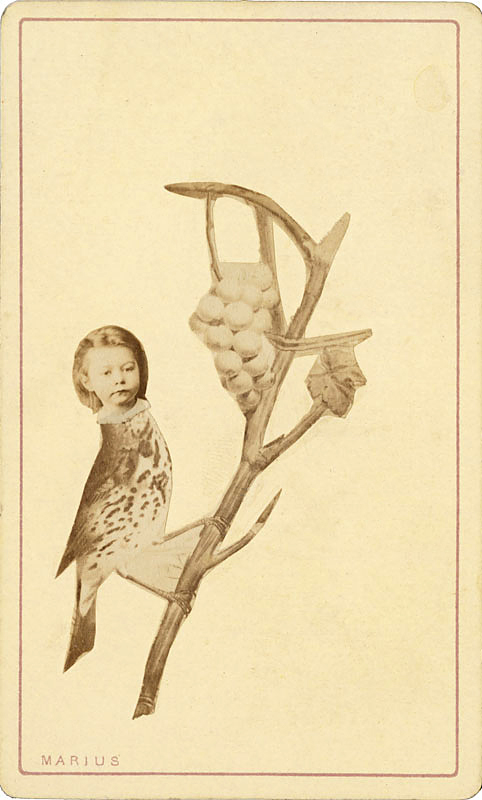
Marius, Paris. 'Photomontage' c. 1865


Marius, Paris
Photomontage
c. 1865
Albumen print
© Private collection


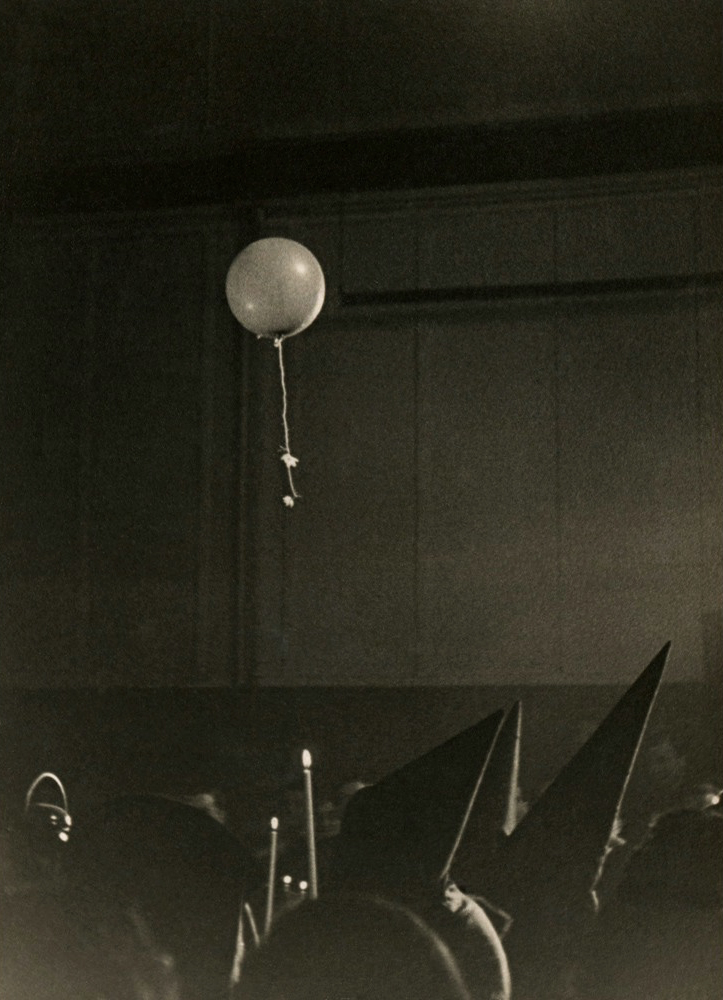
Anonymous photographer. 'Untitled' c. 1910


Anonymous photographer
Untitled
c. 1910
© Private collection


Anonymous photographer. 'Photomontage' (photographic postcard), c. 1920


Anonymous photographer
Photomontage (photographic postcard)
c. 1920
Silver gelatin print
© Private collection


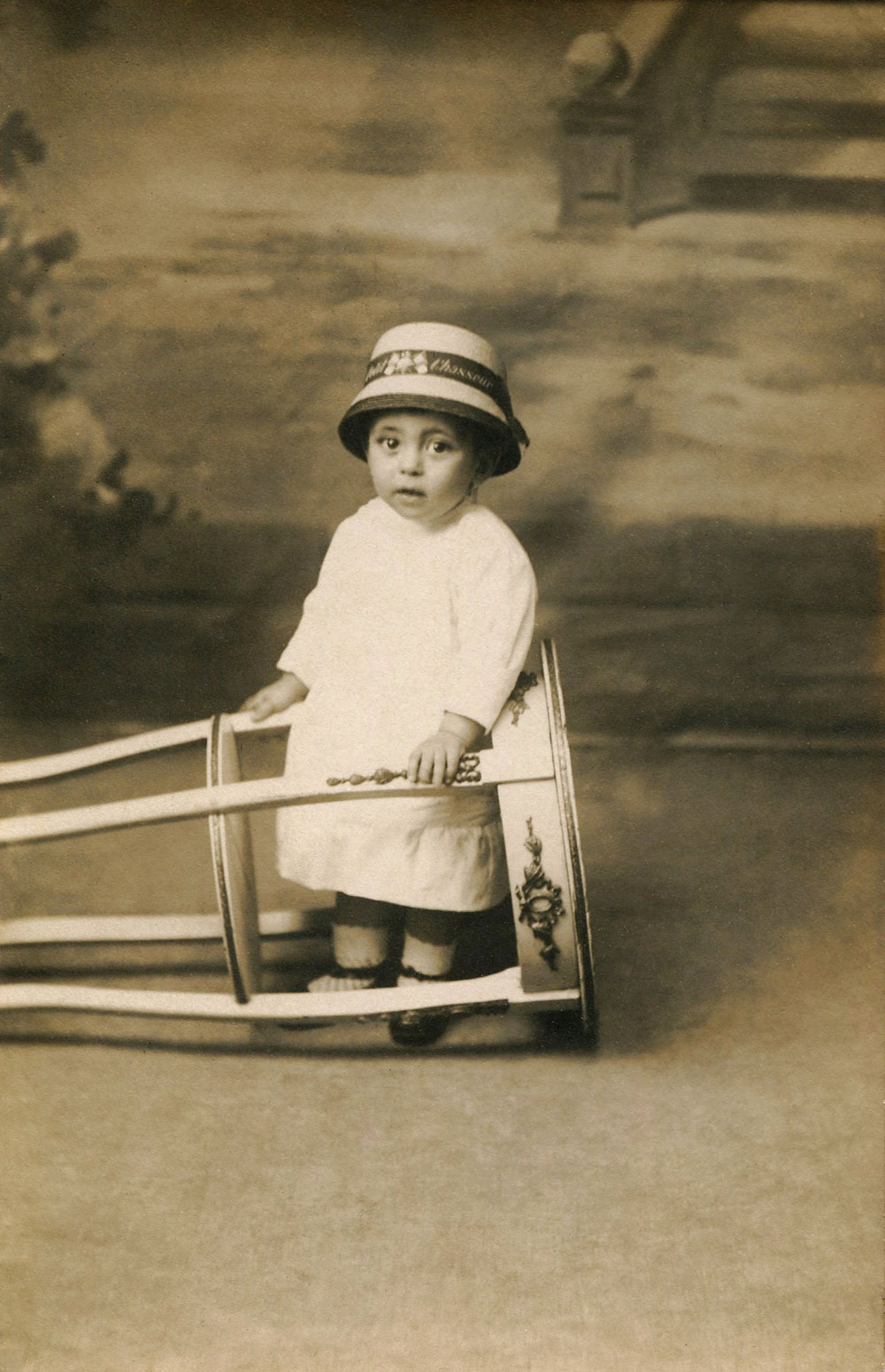
Anonymous photographer. 'Studio Portrait' (Photographic postcard), c. 1910


Anonymous photographer
Studio Portrait (Photographic postcard)
c. 1910
Silver gelatin print
9 x 14cm
© Private collection


Anonymous photographer. 'Untitled' c. 1930


Anonymous photographer
Untitled
c. 1930
Silver gelatin print
© Private collection


Anonymous photographer. 'Transcendental photography with faces of ectoplasm' 1939


Anonymous photographer
Photographie transcendetale avec visages d’ectoplasms / Transcendental photography with faces of ectoplasm
1939
Silver gelatin print
© Private collection


Anonymous photographer. 'Untitled' c. 1935


Anonymous photographer
Untitled (Surimpression)
c. 1935
Silver gelatin photograph
8.2 × 5.4cm
© Private collection


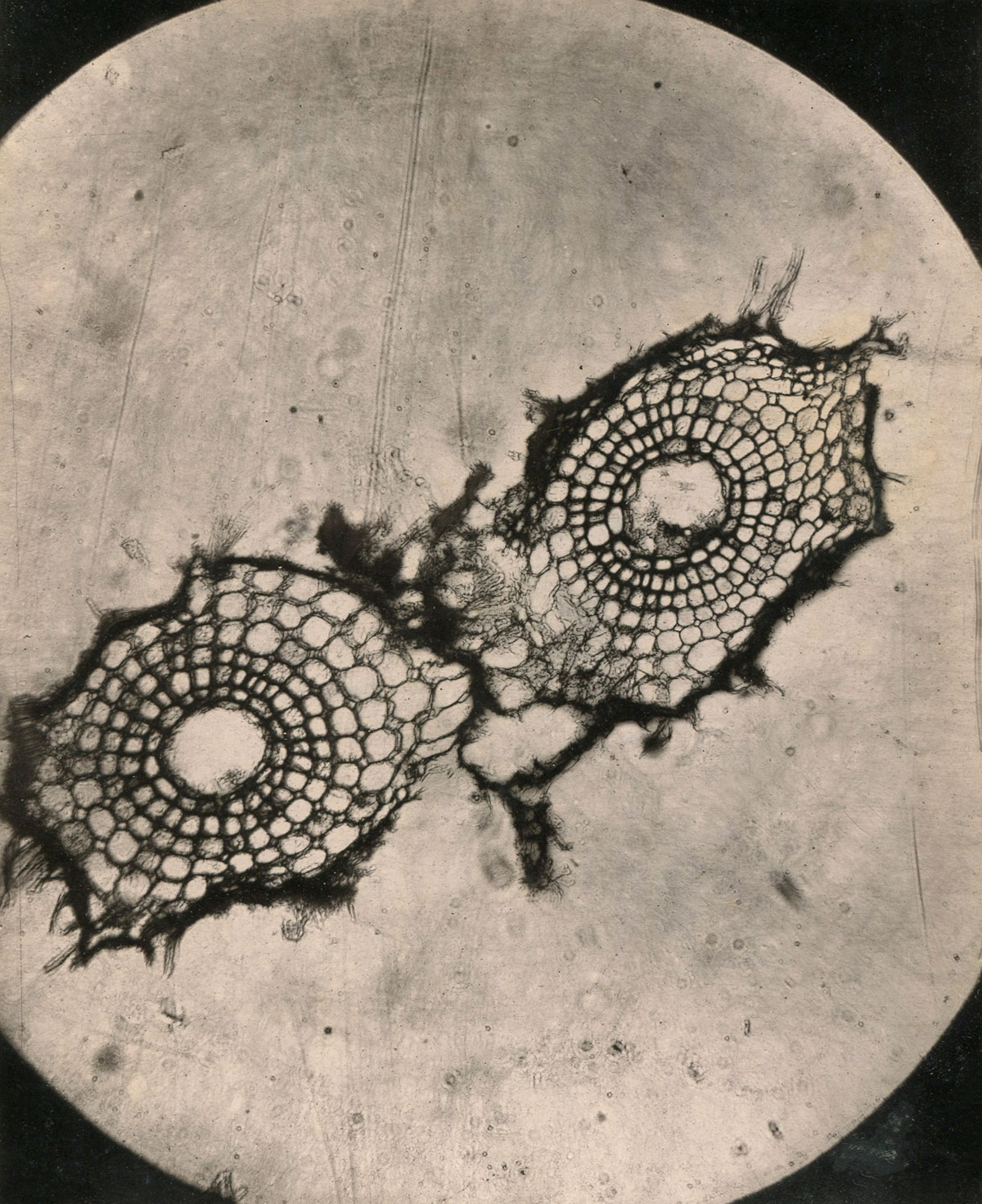
L. Olivier. 'Recherches sur l'appareil tégumentaire des racines Marsilea Quadrifolia' (Photomicrographic plate), 1881


L. Olivier 
Recherches sur l’appareil tégumentaire des racines Marsilea Quadrifolia 
(Photomicrographic plate)
1881
© Private collection


Anonymous photographer (Press photo). 'Patriot Missile Warheads Promoters' 1991


Anonymous photographer (Press photo)
Patriot Missile Warheads Promoters
1991
Gelatin silver print
25.3 x 20.2cm
© Private collection


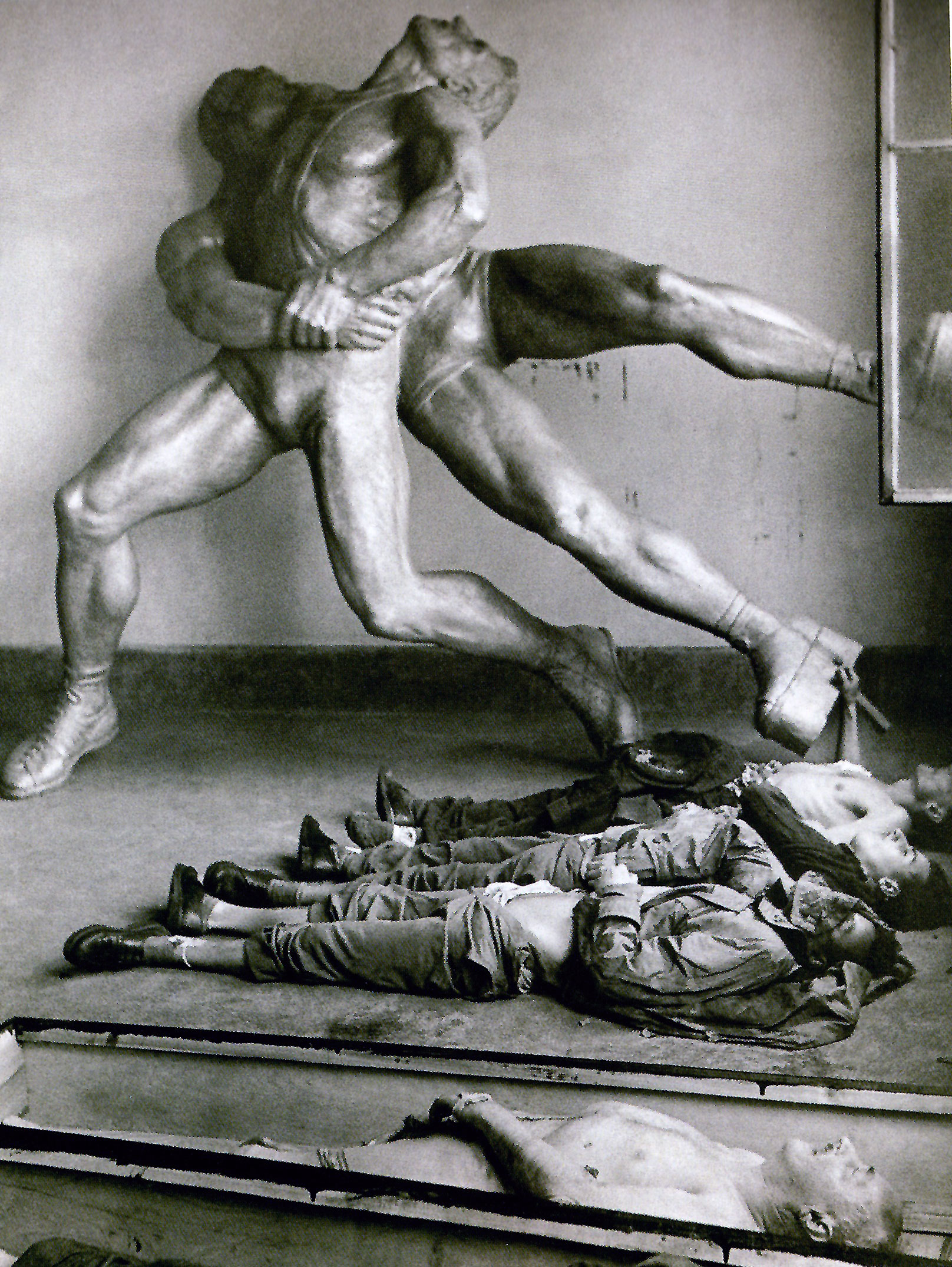
Anonymous photographer. 'Members of the State Protection Authority, ÁVH', Budapest, 1956


Anonymous photographer
Dans un local désaffecté de Budapest, les corps de patriotes hongrois voisinent avec une statue déboulonnée à la gloire du sport soviétique
In some abandoned premises in Budapest, the bodies of Hungarian patriots lie beside a statue removed from its base [dedicated] to the glory of Soviet sports
Members of the State Protection Authority, ÁVH
Budapest, 1956
Gelatin silver print
29.8 × 22.6cm
© Private collection


Victims of the Hungarian Revolution of 1956 brutally put down by the Russians.

Addendum

According to the experts at Fortepan, an open access public resource of the Hungarian audio-visual culture, the dead men in the photograph above are very likely (~99%) not patriots, but members of the State Protection Authority, ÁVH- Államvédelmi Hatóság. The State Protection Authority was the secret police of the People’s Republic of Hungary from 1945 until 1956.

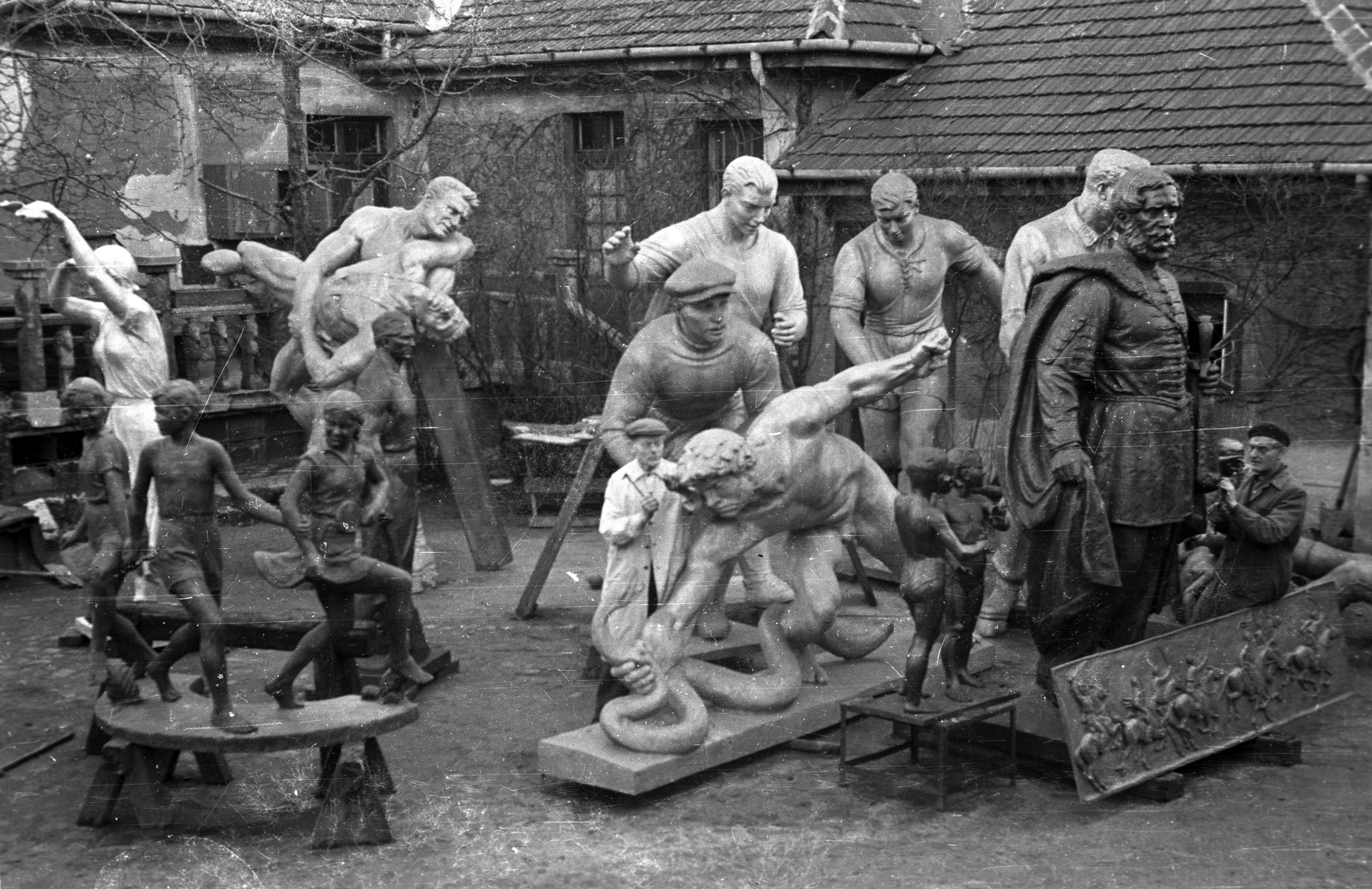
The photograph below recently found on the Fortepan website showing the above sculpture at second back left of the image.


Unknown photographer. 1956 Hungary, Budapest XIII. Jász utca 74, the yard of the sculptural foundry of the Fine Art Designer and Industrial Company


Ismeretlen fotós. 1956. Magyarország, Budapest XIII. Jász utca 74., a Képzőművészeti Kivitelező és Iparvállalat szoboröntödéjének udvara. Sóváry János Táncoló gyerekek alkotása és a mögötte lévő Pátzay Pál Integető című alkotása Budapesten, Antal Károly Birkózók és Mikus Sándor Labdarúgók szobra a Népstadion szoborkertjében, Szomor László Kígyóölő szobra Szolnokon a vérellátónál, Kisfaludi Strobl Zsigmond Kossuth Lajost ábrázoló szobra a Hősök terén került később felállításra.

Unknown photographer. 1956 Hungary, Budapest XIII. Jász utca 74, the yard of the sculptural foundry of the Fine Art Designer and Industrial Company. János Sóváry Creation of Dancing Children and the Pátzay Pál Integető, behind the Antal Károly Birkozók and Mikus Sándor Football Sculpture in the Népstadion Sculpture Garden, The Statue of László Szomor, The Snake Statue in Szolnok, The statue of Kisfaludi Strobl Zsigmond Kossuth Lajost was later erected in the Heroes’ Square.


The Hungarian Revolution of 1956 or the Hungarian Uprising of 1956 (Hungarian: 1956-os forradalom or felkelés) was a nationwide revolt against the government of the Hungarian People’s Republic and its Soviet-imposed policies, lasting from 23 October until 10 November 1956. Though leaderless when it first began, it was the first major threat to Soviet control since the USSR’s forces drove out Nazi Germany from its territory at the end of World War II and broke into Central and Eastern Europe.

The revolt began as a student demonstration, which attracted thousands as they marched through central Budapest to the Parliament building, calling out on the streets using a van with loudspeakers via Radio Free Europe. A student delegation, entering the radio building to try to broadcast the students’ demands, was detained. When the delegation’s release was demanded by the demonstrators outside, they were fired upon by the State Security Police (ÁVH) from within the building. One student died and was wrapped in a flag and held above the crowd. This was the start of the revolution. As the news spread, disorder and violence erupted throughout the capital.

The revolt spread quickly across Hungary and the government collapsed. Thousands organised into militias, battling the ÁVH and Soviet troops. Pro-Soviet communists and ÁVH members were often executed or imprisoned and former political prisoners were released and armed. Radical impromptu workers’ councils wrested municipal control from the ruling Hungarian Working People’s Party and demanded political changes. A new government formally disbanded the ÁVH, declared its intention to withdraw from the Warsaw Pact, and pledged to re-establish free elections. By the end of October, fighting had almost stopped and a sense of normality began to return.

After announcing a willingness to negotiate a withdrawal of Soviet forces, the Politburo changed its mind and moved to crush the revolution. On 4 November, a large Soviet force invaded Budapest and other regions of the country. The Hungarian resistance continued until 10 November. Over 2,500 Hungarians and 700 Soviet troops were killed in the conflict, and 200,000 Hungarians fled as refugees. Mass arrests and denunciations continued for months thereafter. By January 1957, the new Soviet-installed government had suppressed all public opposition. These Soviet actions, while strengthening control over the Eastern Bloc, alienated many Western Marxists, leading to splits and/or considerable losses of membership for Communist Parties in the West.

Text from the Wikipedia website


International Newsreel Photo. 'Governor of Alabama Arrested for Breaking Prohibition Laws' 24 november 1926


International Newsreel Photo
Governor of Alabama Arrested for Breaking Prohibition Laws
24th November 1926
Gelatin silver print
20 x 15cm
© Private collection


Anonymous photographer. 'Untitled' c. 1950


Anonymous photographer
Untitled
c. 1950
Gelatin silver print
7 x 4.5cm
© Private collection


Fotomuseum Winterthur
Grüzenstrasse 44 + 45
CH-8400
Winterthur (Zürich)

Opening hours:
Tuesday to Sunday 11am – 6pm
Wednesday 11am – 8pm
Closed on Mondays

Fotomuseum Winterthur website

LIKE ART BLART ON FACEBOOK

Back to top

Japanese photographic album c.1920-1930s Part 2

April 2015


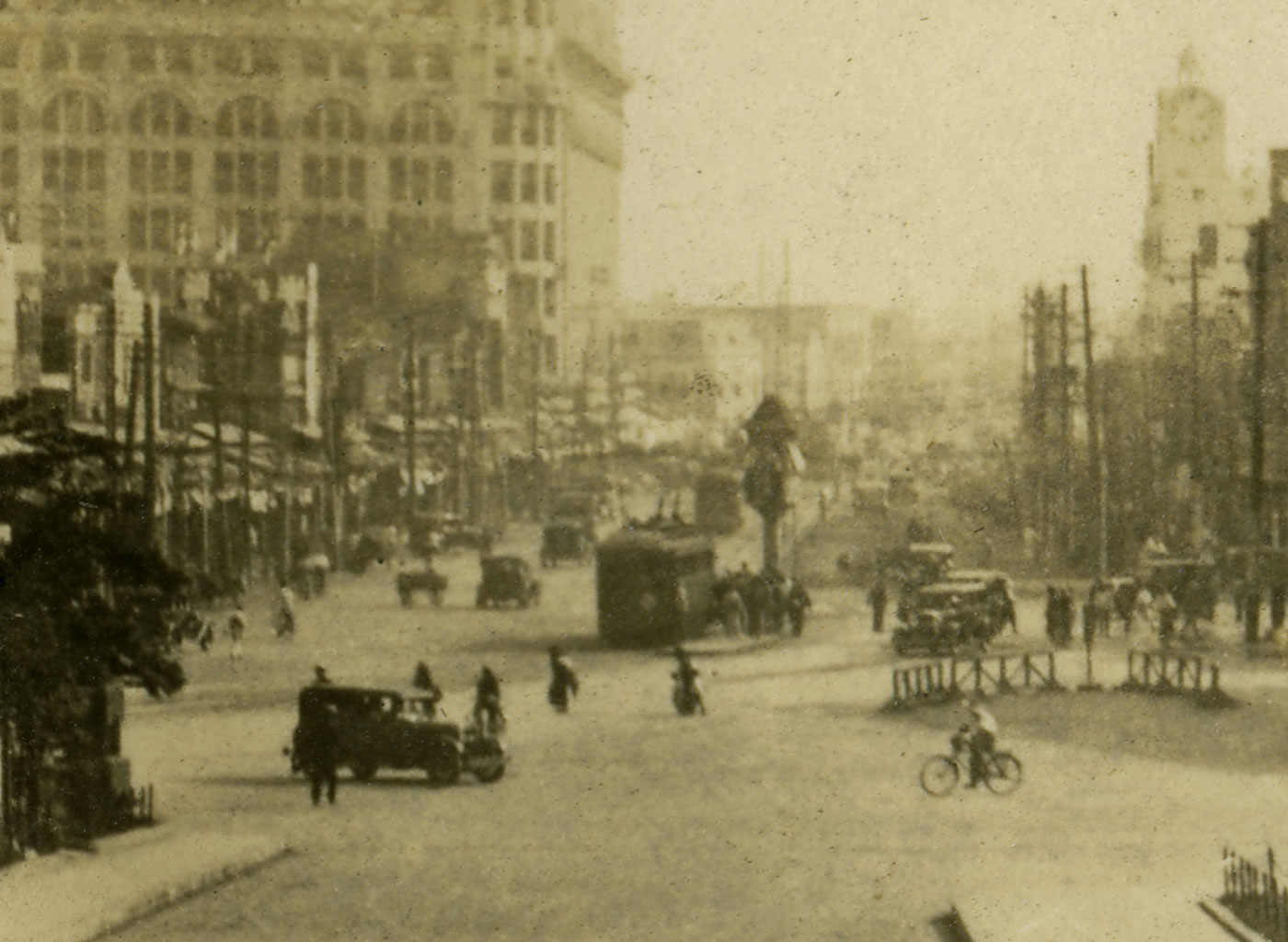
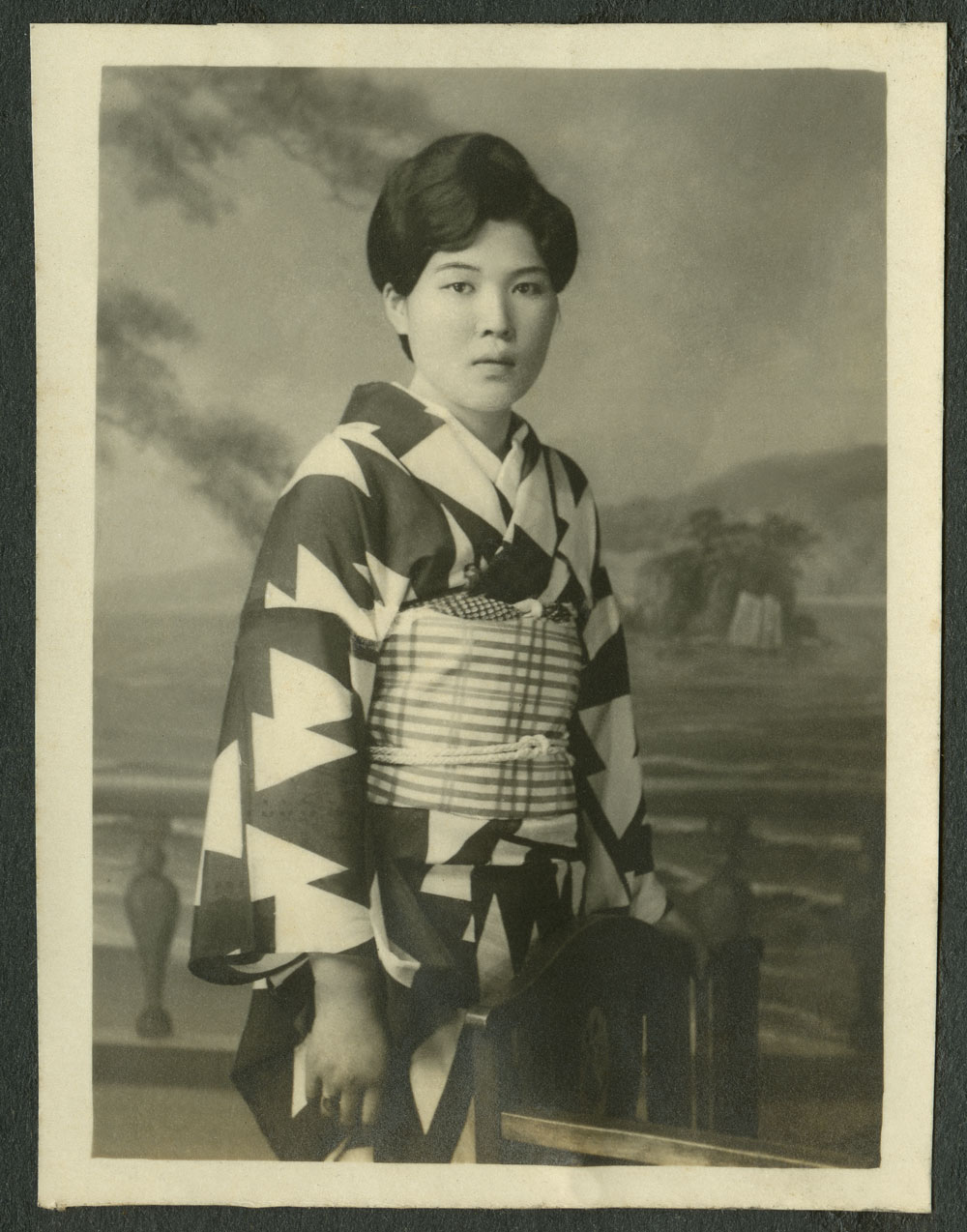
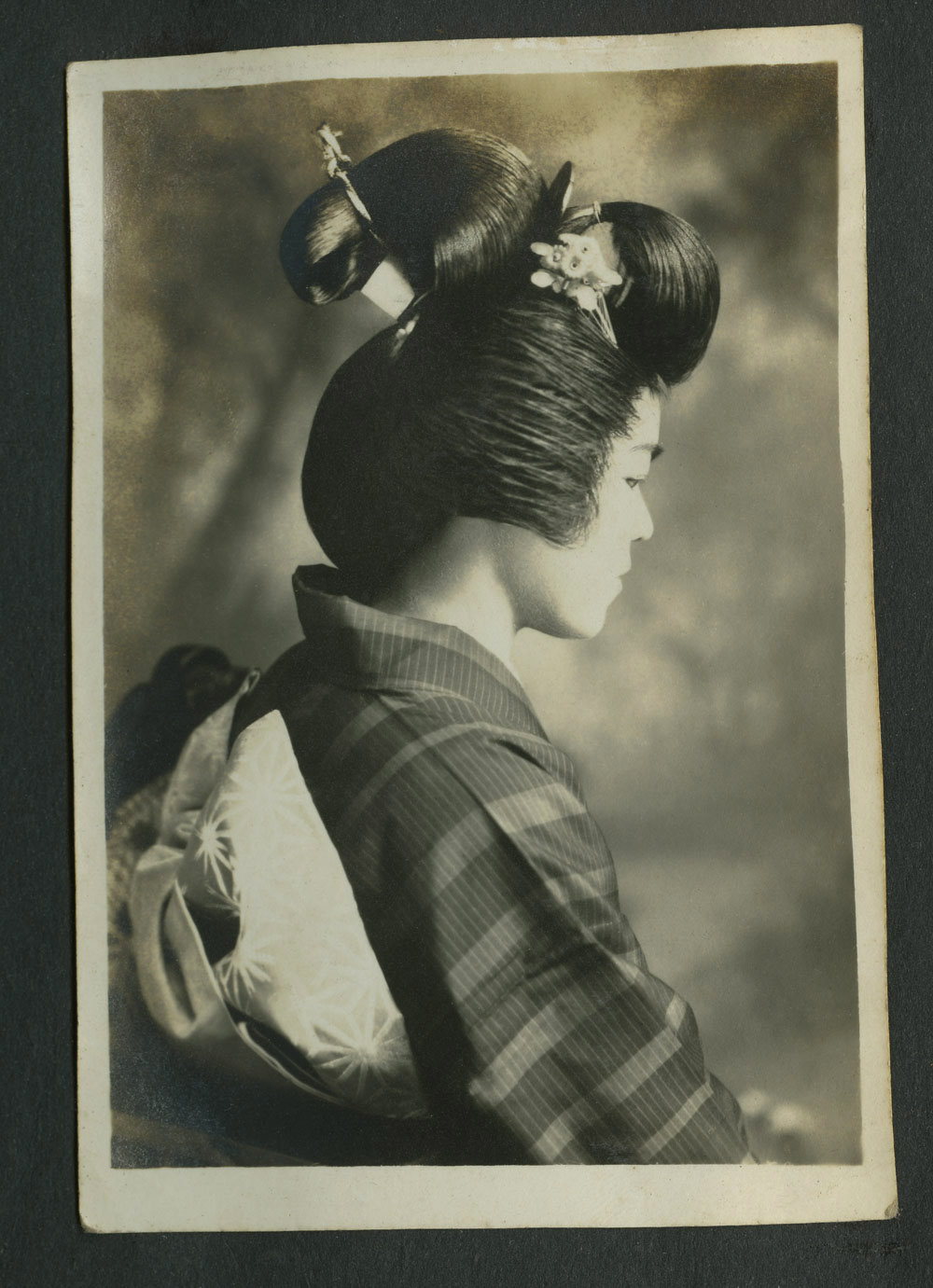
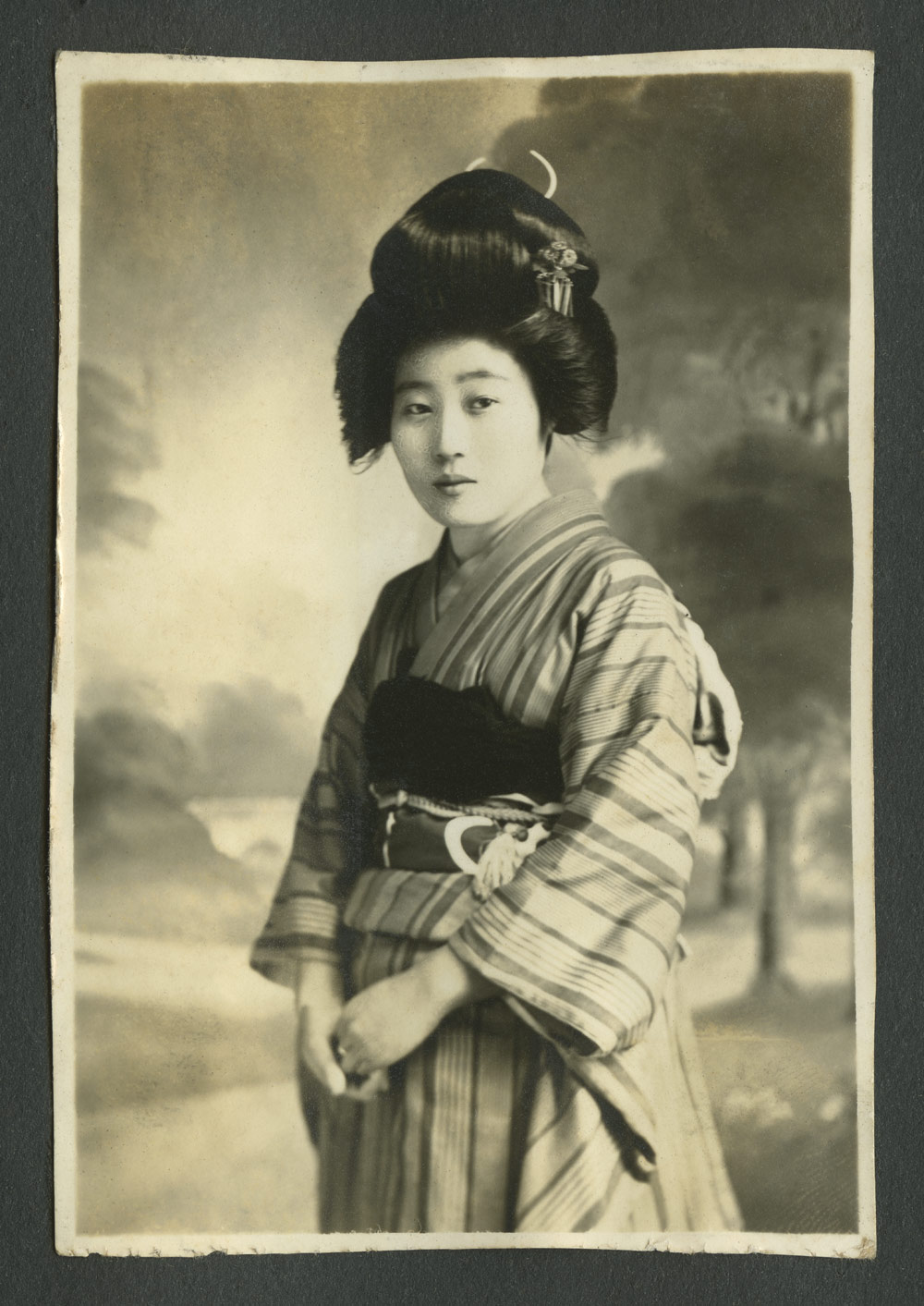
Anonymous photographer. 'Untitled' from a Japanese family photography album c. 1920-1930s


Anonymous photographer
Untitled
from a Japanese family photography album
c. 1920-1930s


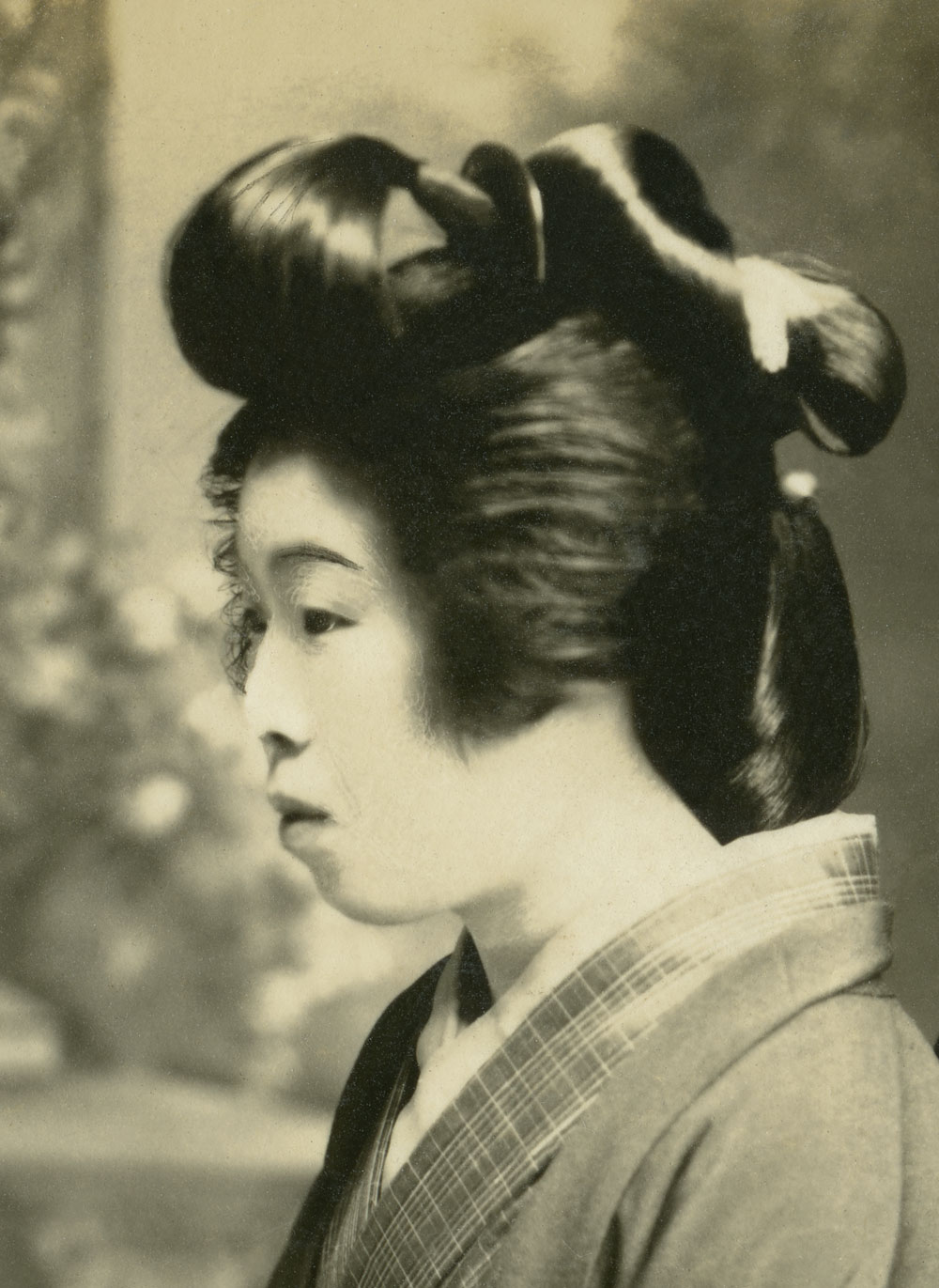
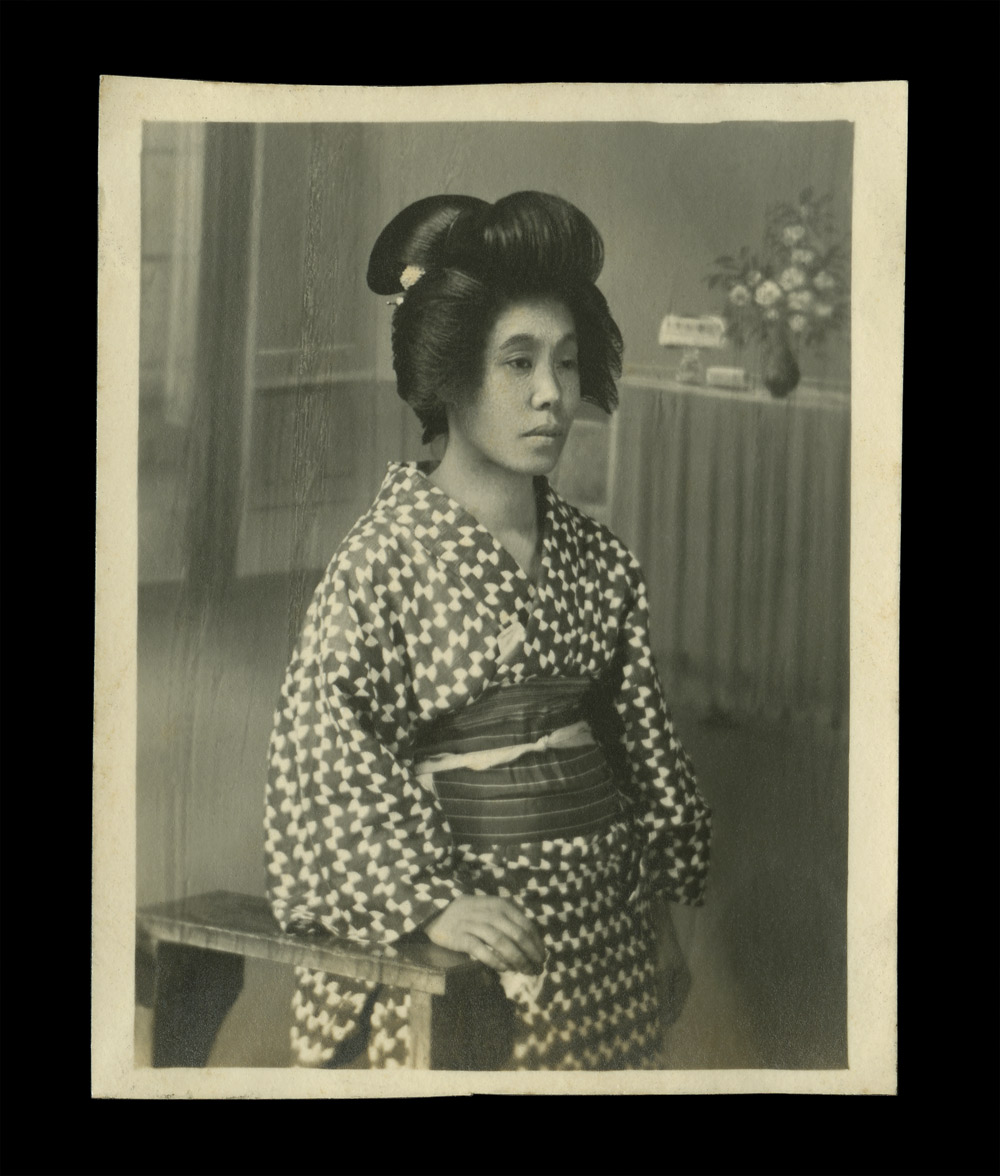
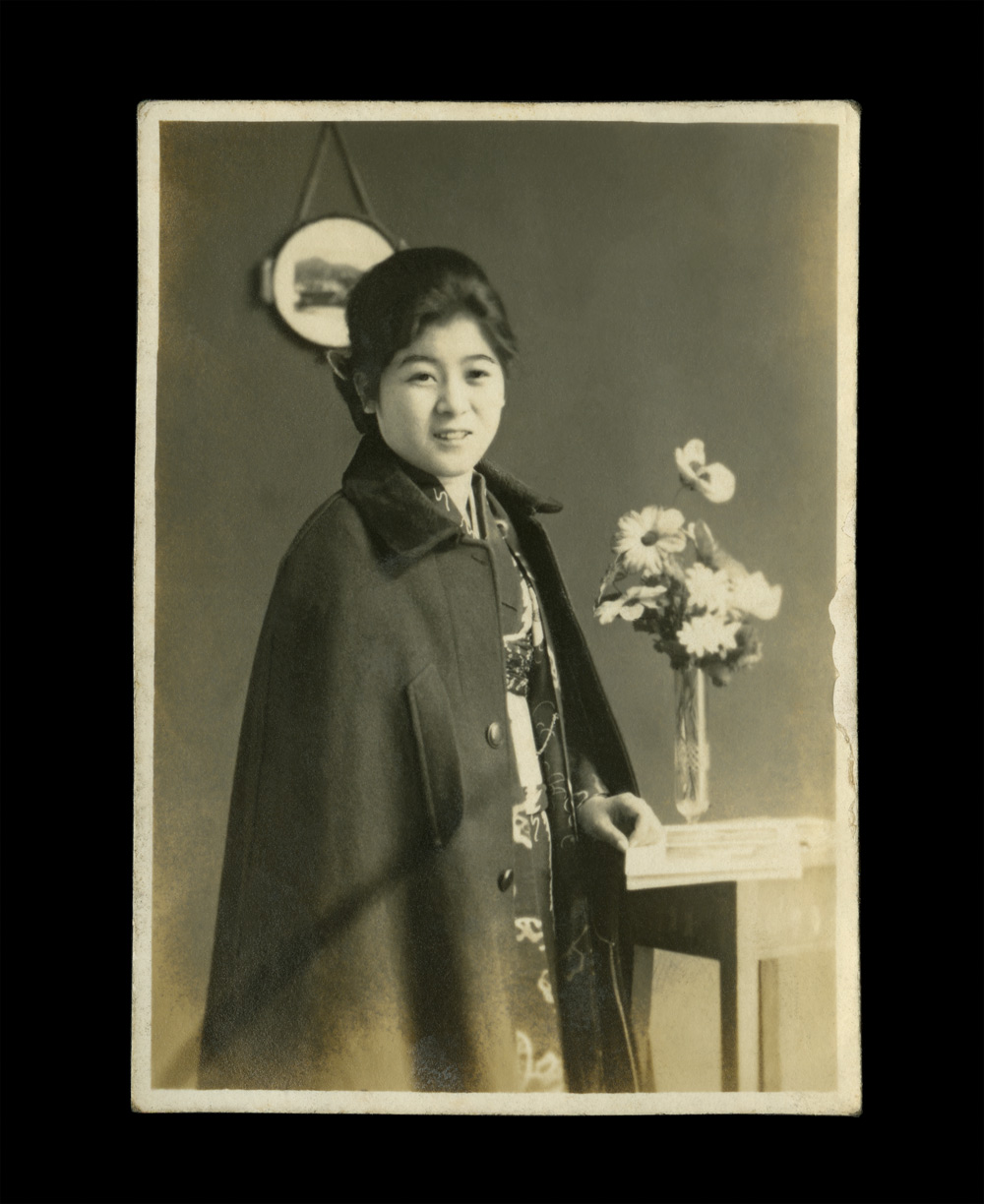
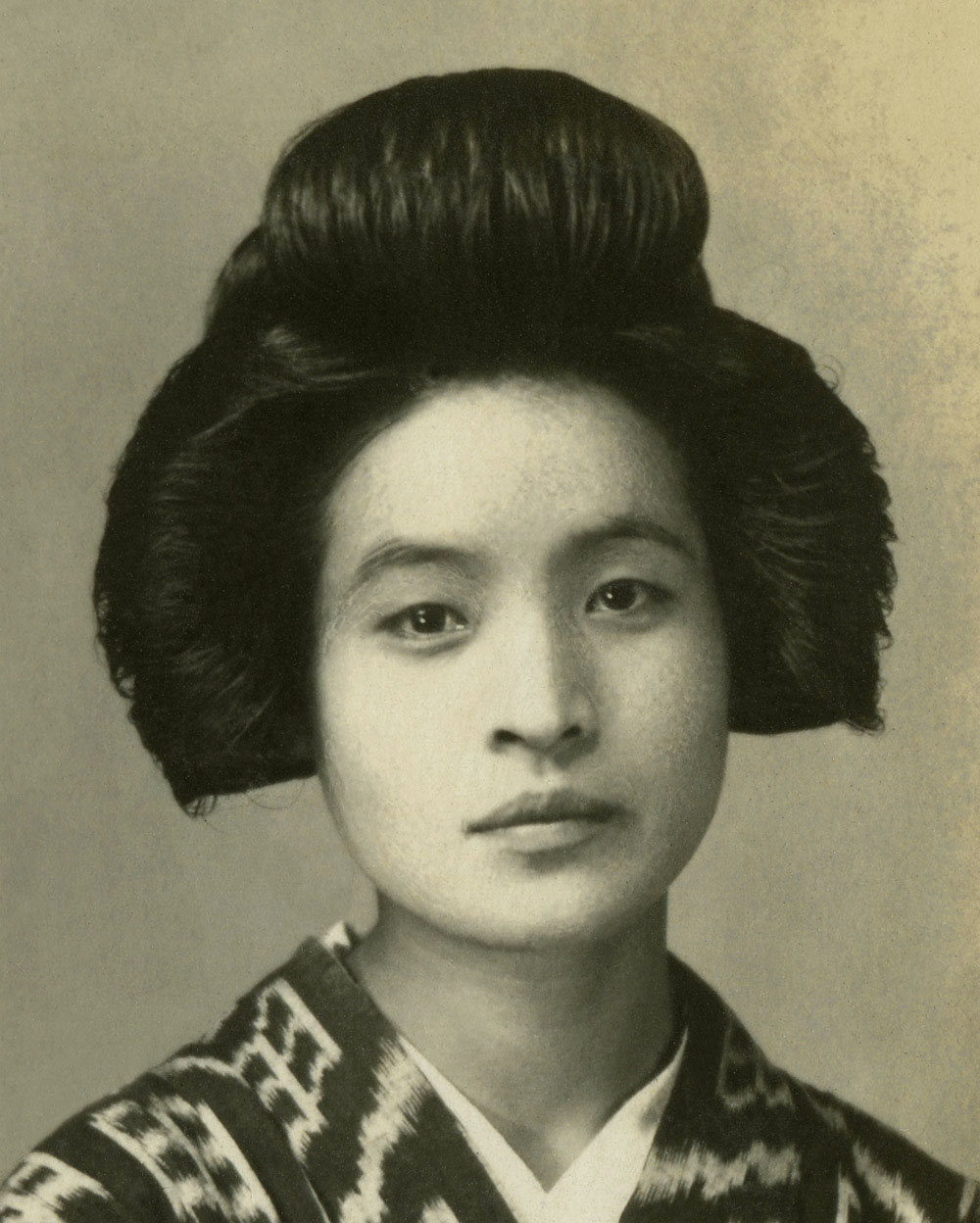
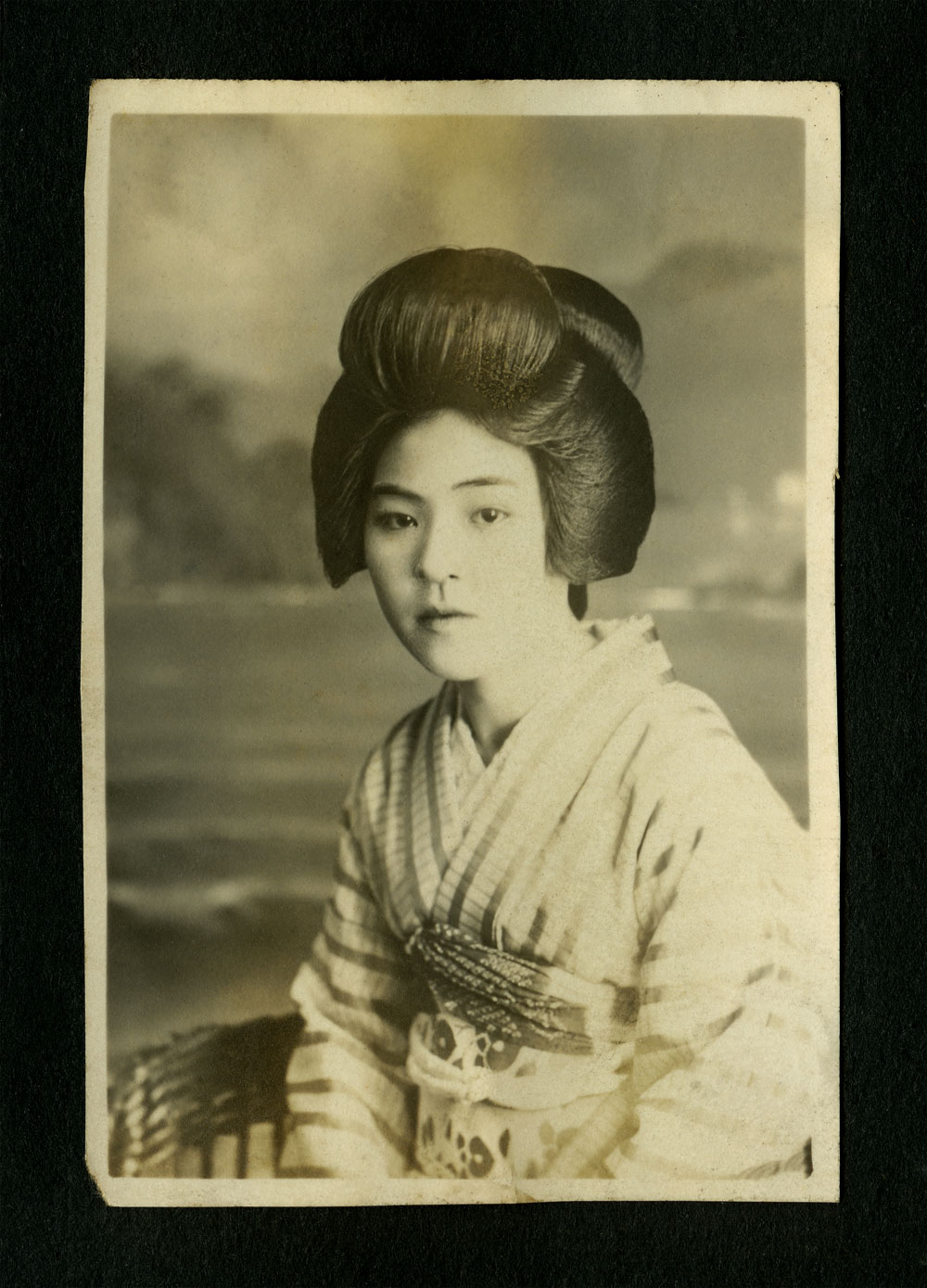
After the blockbuster Tattoo posting, here is a more still, quiet posting. Another nine images rescued from the dustbin of history…

I bought an anonymous Japanese family photographic album from Daylesford in country Victoria recently for $25 (US$35). There were many images missing, but the thirty that were present are just stunning. I have been scanning them and gently digitally cleaning them since, and this is the second of three postings on the images. I love their immediacy, their vernacular language and intimate feel and the irregular shape and cut of the prints. Some of the photographs are very small in size.

The serenity, the beauty and the attention to the form of the hair is quite captivating. They have me entranced. Just delightful.

Dr Marcus Bunyan


All photographs have been digitally restored. Please click on the photographs for a larger version of the image.


Anonymous photographer. 'Untitled' from a Japanese family photography album c. 1920-1930s


Anonymous photographer
Untitled
from a Japanese family photography album
c. 1920-1930s


Anonymous photographer. 'Untitled' from a Japanese family photography album c. 1920-1930s


Anonymous photographer
Untitled
from a Japanese family photography album
c. 1920-1930s


Anonymous photographer. 'Untitled' from a Japanese family photography album c. 1920-1930s (detail)


Anonymous photographer
Untitled (detail)
from a Japanese family photography album
c. 1920-1930s


Anonymous photographer. 'Untitled' from a Japanese family photography album c. 1920-1930s


Anonymous photographer
Untitled
from a Japanese family photography album
c. 1920-1930s


Anonymous photographer. 'Untitled' from a Japanese family photography album c. 1920-1930s (detail)


Anonymous photographer
Untitled (detail)
from a Japanese family photography album
c. 1920-1930s


Anonymous photographer. 'Untitled' from a Japanese family photography album c. 1920-1930s


Anonymous photographer
Untitled
from a Japanese family photography album
c. 1920-1930s


Anonymous photographer. 'Untitled' from a Japanese family photography album c. 1920-1930s


Anonymous photographer
Untitled
from a Japanese family photography album
c. 1920-1930s


Anonymous photographer. 'Untitled' from a Japanese family photography album c. 1920-1930s


Anonymous photographer
Untitled (detail)
from a Japanese family photography album
c. 1920-1930s


Anonymous photographer. 'Untitled [Four women in traditional Japanese dress]' from a Japanese family photography album c. 1920-1930s


Anonymous photographer
Untitled [Four women in traditional Japanese dress]
from a Japanese family photography album
c. 1920-1930s


Anonymous photographer. 'Untitled' from a Japanese family photography album c. 1920-1930s


Anonymous photographer
Untitled
from a Japanese family photography album
c. 1920-1930s


Anonymous photographer. 'Untitled' from a Japanese family photography album c. 1920-1930s (detail)


Anonymous photographer
Untitled (detail)
from a Japanese family photography album
c. 1920-1930s


Anonymous photographer. 'Untitled' from a Japanese family photography album c. 1920-1930s


Anonymous photographer
Untitled
from a Japanese family photography album
c. 1920-1930s


LIKE ART BLART ON FACEBOOK

Back to top

Photographs: ‘Japanese photographic album’ c. 1920-1930s Part 1

November 2014


Anonymous photographer (Japanese). 'Untitled' from a Japanese family photography album c. 1920-1930s


Anonymous photographer (Japanese)
Untitled
From a Japanese family photography album
c. 1920-1930s


I bought an anonymous Japanese family photographic album from Daylesford in country Victoria recently for $25 (US$20). There were many images missing, but the thirty that were present are just stunning. I have been scanning them and gently digitally cleaning them since, and this is the first of three postings on the images. I love their immediacy, their vernacular language and intimate feel and the irregular shape and cut of the prints. Some of the photographs are very small in size.

The serenity, the beauty and the attention to the form of the hair is quite captivating. They have me entranced. Just delightful…

Dr Marcus Bunyan


Please click on the photographs for a larger version of the image.


Anonymous photographer (Japanese). 'Untitled [City scene]' from a Japanese family photography album c. 1920-1930s


Anonymous photographer (Japanese)
Untitled [City scene]
From a Japanese family photography album
c. 1920-1930s


Anonymous photographer (Japanese). 'Untitled' from a Japanese family photography album c. 1920-1930s (detail)


Anonymous photographer (Japanese)
Untitled [City scene] (detail)
From a Japanese family photography album
c. 1920-1930s


Anonymous photographer (Japanese). 'Untitled' from a Japanese family photography album c. 1920-1930s


Anonymous photographer (Japanese)
Untitled
From a Japanese family photography album
c. 1920-1930s


Anonymous photographer (Japanese). 'Untitled [Father with his daughter]' from a Japanese family photography album c. 1920-1930s


Anonymous photographer (Japanese)
Untitled [Father with his daughter]
From a Japanese family photography album
c. 1920-1930s


Anonymous photographer (Japanese). 'Untitled [Father with his daughter]' from a Japanese family photography album c. 1920-1930s (detail)


Anonymous photographer (Japanese)
Untitled [Father with his daughter] (detail)
From a Japanese family photography album
c. 1920-1930s


Anonymous photographer (Japanese). 'Untitled' from a Japanese family photography album c. 1920-1930s


Anonymous photographer (Japanese)
Untitled
From a Japanese family photography album
c. 1920-1930s


Anonymous photographer (Japanese). 'Untitled' from a Japanese family photography album c. 1920-1930s


Anonymous photographer (Japanese)
Untitled
From a Japanese family photography album
c. 1920-1930s


Anonymous photographer (Japanese). 'Untitled' from a Japanese family photography album c. 1920-1930s


Anonymous photographer (Japanese)
Untitled
From a Japanese family photography album
c. 1920-1930s


Anonymous photographer (Japanese). 'Untitled' from a Japanese family photography album c. 1920-1930s


Anonymous photographer (Japanese)
Untitled
From a Japanese family photography album
c. 1920-1930s


Anonymous photographer (Japanese). 'Untitled [Three women and an umbrella]' (restored) from a Japanese family photography album c. 1920-1930s


Anonymous photographer
Untitled [Three women and an umbrella] (restored)
From a Japanese family photography album
c. 1920-1930s


Anonymous photographer (Japanese). 'Untitled [Three women and an umbrella]' (umrestored) from a Japanese family photography album c. 1920-1930s


Anonymous photographer
Untitled [Three women and an umbrella] (unrestored)
From a Japanese family photography album
c. 1920-130s


Anonymous photographer (Japanese). 'Untitled' from a Japanese family photography album c. 1920-1930s


Anonymous photographer (Japanese)
Untitled
From a Japanese family photography album
c. 1920-1930s


LIKE ART BLART ON FACEBOOK

Back to top

Exhibition / text: ‘From Steam to Diesel’ at the Portobello Library, Edinburgh

Exhibition dates: 20th October – 7th November 2014


Anonymous photographer. 'Four men with loco 55210' mid-1950s to the early 1960s


Anonymous photographer
Four men with loco 55210
mid-1950s to the early 1960s
© Archie Foley and Peter Ross


This is a great project. The photographs are wonderful. At one time they could have almost been made here in Victoria, Australia.

Archie Foley who found the 500 or so railway related negatives taken by, at this stage, an anonymous British Railways engine driver was quite taken aback to get an email from half way around the world asking for some press images – but this is what this blog does, promote eclectic exhibitions of interesting photography from around the world, no matter how small they are.

I have always loved trains and the photographs of them (including the ones by Winston O. Link). Once I saw the images I think I shed a tear at the beauty of them. Archie informs me that the negatives are a mixture of 127; 6cm square and a larger 6cm x 8cm. There are notes of the cameras the photographer used and his favourite appears to have been an Isolette 11 (see below). However he also used Ikonta; Suprima; Isola and Super Isolette. These cameras have reasonable optical quality (not as good as a Rollei twin lens for example) with the advantage that they have a large negative and can be folded up and put in a jacket pocket, to be taken out when needed.

As a good friend of mine Ian Lobb observed,

“I nearly said 6×8 cm last night – I know its difficult to believe after the event, and the Isolette has the same basic shape as the Voigtlander I suspected. The Voigtlander was like some of the Rolleis and you could put in a metal mask that would allow 6 x 8, 6 x 6, 6 x 4.5 as well the full 6 x 9. I suspect the Voigtlander was a bit upmarket from the Isolette: the Agfa cameras at the time of these pictures were good cameras and (obviously) with German lenses. I don’t know if they had those masks but I am guessing you could do the same with the Isolette. One claim I have seen is that the lenses were more matched to emulsions of the 50’s and were contrasty with later emulsions. I would have to know a lot more to verify that. The pictures look optically good to me. There were some extraordinary European films in 120 stock – I caught the end of them – 12 ISO and wooden spools – and SENSATIONAL tonal scales.

Of all cameras (even 35mm), the drop front cameras like the Isolette had the best connection to the people you were photographing. I don’t mean through the viewfinder – I mean that the viewfinder was just for checking the composition – you really had to do a lot of looking over the camera. Probably the old Stieglitz Graflex was just as communicative. With the bellows extension there would be a scale on the focussing track that would tell you the distance the camera was focussed to – no other way to check!

As a kid I played with Marklin toy trains and they published a book that I still have called “The Marklin Miniature Railway and its Prototype”. It is old and faded now, but there were sections on how to do signalling etc. on your train set so that it matched the real thing etc…”


What interests me most about these stunning images is the use of space by the photographer. These railway photographs with their beautiful but naive space have an almost mythic quality to them. I know a little about photography and from my knowledge I cannot think of anyone else that handles space like this in a photograph (save for perhaps Thomas Struth and the space around the people in his museum photographs or his group portraits of people in Japan, and even then he blocks the exit for the eye behind his tableaux vivant).

I have been racking my brains but these are really unique, especially the square format portrait shots. Look at the first photograph Four men with loco 55210 (below) and notice the expanse of platform and line of the train that leads the eye into the depiction of the four men. The light that falls on them is superlative but notice how the photographer keeps a respectful distance for this is not portrait photography which attempts to capture a fleeting, revealing moment or expression. The photographer places them as though to “encourage contemplation and investigation, inviting the viewer to reflect upon the limits of his or her knowledge of other people.” The eye scans the image for clues, giving the viewer pause to take in the scene: and low and behold what opens up behind the four men is this most magnificent space with the curve of the platform, the girders and the silence of the dark train in the distance.

As in Thomas Struth’s photographs of architectural East Berlin these photographs bring about ‘a move to investigative viewing’ which is also a ‘call to interact’. But these photographs don’t possess the base objectivity of Struth for they are a little too engaging of their space (their antithesis being the photographs by Alec Soth from his series Niagara).

Further evidence of the sophistication of the composition of these images can be found in the two photographs Shotts Iron Work’s Signalbox and Man on platform in front of signal array (below). In the first photograph the man is embedded in the landscape, his weight shifting slightly to his right foot as his shadow falls on the fence beside him, the fence line and train tracks lead the eye into the image and off into an amorphous, infinite distance. Again, in the second photograph the figure is not front and centre but part of an ensemble as the eye is led this time by a massive horizontal plane into the image. He stands on the platform as if on the deck of an aircraft carrier. And then there are the two close up portraits, Jackie Collett at Beattock and A smiling fireman (below) where the photographer has climbed up into the intimate space of the drivers cab and got them to be comfortable enough to reveal themselves to the camera – in that light! – with those backgrounds!


The use of lenses today is proof of how difficult it is to think and feel space while taking a picture. These days everyone has a zoom lens but it is nearly always used by people to fill the frame with the main subject. But with a zoom there are infinite relationships between foreground and background if the photographer is free to move in relation to the main subject… and sometimes we are. Or to put it another way, we are able to control the degree of flattening of space with a zoom lens infinitely. If we have 2 fixed lenses we have 2 controls of space. This anonymous photographer and the German photographer Thomas Struth in particular seem to have the ability to think about this space control, and resolve it in different ways. Sometimes for Struth the quality of the space in the city streets or in a museum announces these places as pictures.

Struth is someone who has an affinity with the railway group photographs for his photographs, like these, resist immediate consumption. They make the viewer pause and think. “Discussing Struth’s work, the critic Richard Sennett has written: ‘We relate to these images as we might appreciate strangers in a crowd; we feel their presence without the need to transgress boundaries by demanding intimacy or revelation … people guard their separateness even as they present themselves directly to us.’ (Sennett p. 94.) Struth’s portraits encourage contemplation and investigation, inviting the viewer to reflect upon the limits of his or her knowledge of other people.”1 And, sotto voce, so do these photographs… The speaker gives the impression of uttering a truth which may surprise and delight.

As Archie has noted in his correspondence with me, the exhibition has been done on a shoestring budget but from small beginnings – and acorns – mighty oaks grow. All power to both Archie Foley and Peter Ross for arranging it. A book and larger exhibition would be a wonderful representation of this work. All I can say is this: that I hope this posting helps that process along for these photographs have a magnificent soul. Simply put, they are great.

Dr Marcus Bunyan


Footnotes

1/ Richard Sennett, Thomas Struth: Strangers and Friends, exhibition catalogue, Institute of Contemporary Art, London 1994 quoted in “Thomas Struth: The Shimada Family, Yamaguchi, Japan 1986” Text summary on the Tate website [Online] Cited 04/11/2014


Many thankx to Archie Foley and Peter Ross for allowing me to publish the photographs in the posting. Please click on the photographs for a larger version of the image. All images © Archie Foley and Peter Ross and may not be used without permission.

Acknowledgement: Thank you to John of Print Vision (0131 661 8855) for his advice during the preparation and for producing such excellent prints.


Anonymous photographer. 'Women workers in front of posters' mid-1950s to the early 1960s


Anonymous photographer
Women workers in front of posters
mid-1950s to the early 1960s
© Archie Foley and Peter Ross


Anonymous photographer. 'Shotts Iron Work’s Signalbox' mid-1950s to the early 1960s


Anonymous photographer
Shotts Iron Work’s Signalbox
mid-1950s to the early 1960s
© Archie Foley and Peter Ross


Anonymous photographer. 'Man on platform in front of signal array' mid-1950s to the early 1960s


Anonymous photographer
Man on platform in front of signal array
mid-1950s to the early 1960s
© Archie Foley and Peter Ross


Anonymous photographer. 'Jackie Collett at Beattock' mid-1950s to the early 1960s


Anonymous photographer
Jackie Collett at Beattock
mid-1950s to the early 1960s
© Archie Foley and Peter Ross


Anonymous photographer. 'A smiling fireman' mid-1950s to the early 1960s


Anonymous photographer
A smiling fireman
mid-1950s to the early 1960s
© Archie Foley and Peter Ross


This exhibition has been compiled from a collection of photo negatives found by Archie Foley in a collector’s fair in Portobello. As he went through the collection he was able to extract 100s of railway related negatives dating from the mid-1950s to the early 1960s that showed that the photographer must have been a British Railways engine driver. A chance meeting and conversation with local photographer and video producer, Peter E. Ross, on a bus going into Edinburgh led to the decision to mount an exhibition of photographs made from selected negatives.

As a colleague the driver/photographer was able to snap drivers, shunters, platelayers, signalmen, cleaners and others at work in locations in and around Edinburgh and, occasionally, a bit further afield. The photographs are a unique behind the scenes record of the men and women who worked on the railway and how it looked before diesel power finally replaced steam in 1968.

This is the first time that the photographs have been on public show and Archie and Peter feel privileged to be able to display, and pay tribute to, the dedication and skill of the, as yet unidentified, photographer. Neither Archie nor Peter is an expert on railways and invite visitors to use the Visitors’ Book to suggest possible locations for photographs where these are not given. Please also suggest amendments if you believe any of the captions are incorrect.

The exhibition is at Portobello Library, Rosefield Avenue from Monday, 20th October to Friday, 7th November.

Archie Foley and Peter Ross


Anonymous photographer. 'The game's a bogie' mid-1950s to the early 1960s


Anonymous photographer
The game’s a bogie
mid-1950s to the early 1960s
© Archie Foley and Peter Ross


Anonymous photographer. 'Duchess of Buccleuch on turntable' mid-1950s to the early 1960s


Anonymous photographer
Duchess of Buccleuch on turntable
mid-1950s to the early 1960s
© Archie Foley and Peter Ross


Anonymous photographer. 'Duchess of Buccleuch bearing "Royal Scot" headboard' mid-1950s to the early 1960s


Anonymous photographer
Duchess of Buccleuch bearing “Royal Scot” headboard
mid-1950s to the early 1960s
© Archie Foley and Peter Ross


The two photographs above were obviously taken at the same time as each other (look at the tall trees in the background). I love how the photographer has moved across the tracks from the distance shot onto an oblique angle with the twin arches of the bridge in the background for the closer photograph. You can seen some unevenness in the development of the film in the foreground of both images but no matter, these images give real insight into how this artist was operating, what his thinking was when photographing their behemoths.


Anonymous photographer. 'The photographer in working clothes' mid-1950s to the early 1960s


Anonymous photographer
The photographer in working clothes
mid-1950s to the early 1960s
© Archie Foley and Peter Ross


Anonymous photographer. 'Six cleaners, one man and three buckets' mid-1950s to the early 1960s


Anonymous photographer
Six cleaners, one man and three buckets
mid-1950s to the early 1960s
© Archie Foley and Peter Ross


Anonymous photographer. 'Colinton Station with guard on loco' mid-1950s to the early 1960s


Anonymous photographer
Colinton Station with guard on loco
mid-1950s to the early 1960s
© Archie Foley and Peter Ross


Anonymous photographer. 'Diesel unit with guard' mid-1950s to the early 1960s


Anonymous photographer
Diesel unit with guard
mid-1950s to the early 1960s
© Archie Foley and Peter Ross


Agfa Isolette II camera 1960s


Agfa Isolette II (1950-60), showing the characteristic wide raised centre of its top housing. The thick knurled disc on the right (of the picture) is a film-type reminder dial.


Isolette II

The Isolette II (1950-1960) was sold alongside the ‘I’; it is an alternative model offering higher specification than the ‘I’, not a successor to it. The camera was available (for at least some time) with coated 85 mm f/4.5 Agnar or Apotar or 75 mm f/3.5 Solinar lenses; however, most examples seen have the Apotar. McKeown gives a very wide range of shutters (Vario, Pronto, Prontor-S and SV, Compur Rapid and Synchro-Compur). This reflects changes in the specification over the period the camera was made (i.e. not all of these shutters were available at the same time): for example, a user’s manual (of unknown date) only lists the Pronto and Prontor SVS. The range of shutter speeds is therefore variable between examples. Some of the shutters have a delayed action. Most are synchronised (some have switchable M and X-synchronisation). On some examples of the camera, there is a shutter locking lever on the back of the top housing, to provide ‘T’ shutter by locking the release button down, where the shutter itself does not have a ‘T’ setting.

Unlike the Isolette I and all the preceding models, the film advance knob is on the right. The camera still has a swing-out spool-holder on the supply side of the film chamber. There is a double-exposure prevention interlock; this engages after releasing the shutter, and is disengaged by advancing the film. It has a red (locked) or silver (unlocked) indicator in a hole in the top-plate, next to the advance knob. Like the ‘T’ lock, this interlock acts on the body release button, so if the lock engages accidentally, or a double exposure is desired, it is still possible to release the shutter by pressing the linkage on the shutter itself (or with a cable release, on versions of the camera on which the cable attaches directly to the shutter, not the body release; they vary in this respect).

Like the Isolette I, early versions of the II have a disc-type depth-of-field indicator on the left of the top plate. On later cameras this is replaced with a film-type reminder, and the DOF scale, if any, is on the shutter face-plate.

Text from the Camera-wiki.org website


Installation photograph of the exhibition 'From Steam to Diesel' at the Portobello Library, Edinburgh


Installation photograph of one half of the exhibition From Steam to Diesel at the Portobello Library, Edinburgh. The other half of the exhibition is off camera to the right.


Portobello Library
14 Rosefield Avenue, Edinburgh,
Midlothian, EH15 1AU

Opening hours
Monday 10.00 – 20.00
Tuesday 10.00 – 20.00
Wednesday 10.00 – 20.00
Thursday 10.00 – 20.00
Friday 10.00 – 17.00
Saturday 09.00 – 17.00
Sunday 13.00 – 17.00

LIKE ART BLART ON FACEBOOK

Back to top

Review: ‘The Rennie Ellis Show’ at Monash Gallery of Art, Wheelers Hill, Melbourne

Exhibition dates: 3rd April – 8th June 2014


Ponch Hawkes (Australian, b. 1946) 'Rennie Ellis photographing at the Gay Liberation march, Elizabeth Street, Melbourne, 1973' 1973


Ponch Hawkes (Australian, b. 1946)
Rennie Ellis photographing at the Gay Liberation march, Elizabeth Street, Melbourne, 1973
1973
Silver gelatin photograph
© Ponch Hawkes


In researching photographs for the upcoming exhibition Out of the closets, onto the streets: Gay Liberation photography 1971-73 I came across this photograph taken by Ponch Hawkes of the Gay Liberation march that was part of Gay Pride week in 1973. Ponch had never seen this image before until I scanned the negative. And there, front and centre as always, is Rennie Ellis capturing the action… What a special find and a wonderful photograph by Ponch!


We Are Family

This is FAB, one of the best experiences I have had this year at an exhibition in Melbourne. You know you are having a good time when you laugh out loud at so many photographs, sharing the experience of the artist as though you had been there. As indeed I had, for in many cases the clubs pictured in Rennie Ellis’ photographs are the ones I went to.

I remember: Wednesday nights at Inflation in the late 80s, where to satisfy licensing restrictions you had to be served a “meal” so that you could drink alcohol (Dining Out, Inflation, 1980 below). The famous Razor Club (1986-1992), based at the Light Car Club of Australia’s clubrooms on the corner of Queens Road and Roy Street, opposite the Albert Park Lake and golf course. “It was Melbourne’s version of Studio 54, the hedonistic, off-the-wall New York disco of the late ’70s – both places notoriously hard to get into but once inside a wonderland of celebrities, freaks, transvestites and fantastic music free from the tyranny of genre.” Once on a big party night the gang of us tried to get in but the queue was so long it was impossible – so I went down the side, climbed up the drain pipes past the ladies loo, and up to the first floor balcony where someone pulled me over – completely off my face, just to get my friends in. Zu Zu’s, Cadillac Bar, 397, Commerce Club, Tasty, Freakazoid, Dome, Baseline, Hardware Club, The Peel and so many parties you could poke a stick at – what a time we had!

There to capture it all – affectionately, non-judgementally – was Rennie Ellis. He wasn’t like Diane Arbus, who thrust her camera as an outsider at people, waiting for a reaction. He was always part of the action because he was part of the family. He was a humanist photographer in the true sense of the word, for he loved photographing human beings, their social relations and their habitats, whatever that might be – sunning, partying, boozing, smoking, picking up. He referred to himself as a “people perv.”

Ellis had an eloquently clumsy eye, and for the type of baroque photographs he took this is a great thing. No perfect framing, no perfect tension points within the image, no regular alignment of horizontals, verticals or diagonals – just instinctual images taken in a split second, with his own particular brand of humour embedded in them. And always with this slight eccentricity in his vision. Look at the image of Dancing People, Razor Club (1991, below) and notice the odd hand poking in at the left hand side and the attitude of the dancers, or Fully equipped, Albert Park Beach (c. 1981, below), with the angle of the three cigarettes, the drink and the bottle of sun tan lotion strapped to the hip – FIERCE!

But he was not averse to understanding the structure of his images either, as can be seen by my comparison between the tight, formal structure of Paul Strand’s The Family, Luzzara, Italy (1953, below) and the looser, more natural gathering in Ellis’ The Gang, Windsor (1976, below); or the influence of other artists on his work, for example Norman Lindsay in his My Bare Lady, The Ritz, St Kilda (1977, below). Ellis also liked to push and pull at the pictorial plane; he liked to use pairs of people; he was not afraid of out of focus elements in the foreground of his images; he used chiaroscuro; and his use of light is always excellent. Above all, there is a consistency to his vision that never falters – a concatenation of images that is his style?

This is not just nostalgia. These are bloody good images, and Ellis takes these insightful type of images over and over again – the excesses of hedonism, the influences of wealth, the see-and-be-seen syndrome, things erotic and bizarre and, most importantly, enduring friendships. He photographs what he sees with a love and affection for his subject matter. None of this “staged” vernacular photography that I recently featured in an exhibition at the Art Gallery of New South Wales. This is the real deal. A friend said to me recently, “Ah, but you know, he never did in depth photo-essays like Mary Ellen Mark did of the circus, for example.” To which I have a one word reply: BULLSHIT. His whole oeuvre is a huge photo-essay on the human race, specifically the construction of Australian identity as evidenced in sections like portraits, gangs, sharpies, Aboriginals, Kings Cross, Social Documentary, Decadence, Graffiti, Life’s a Parade, Life’s a Beach etc…

When you look at his photography it would seem to me that his images dissolve the barriers between image / subject / viewer. It’s a strange phenomena to feel so connected to a person’s work. It’s the journey that he takes us on, that we went on too – not so much the destination but the rejoicing in this journey… of company, of environment, friends, places – the joy of being human. He was allowed entry into these public/private spaces because he earned our trust. He lived with the people, and they allowed him to take a bit of their life with him – as a photographic memory, to be retold and relived in the present, allowing us all to relive those times and places. It’s the love, trust, humour and anticipation of the journey that make Ellis’ images truly unique in the history of Australian photography.

Dr Marcus Bunyan


Many thankx to Manuela Furci, Rennie Ellis Photographic Archive and the Monash Gallery of Art for allowing me to publish the photographs in the posting. Please click on the photographs for a larger version of the image.


Rennie Ellis (Australian, 1940-2003) 'Dancing People, Razor Club' 1991


Rennie Ellis (Australian, 1940-2003)
Dancing People, Razor Club
1991
Selenium-toned gelatin silver print
26.7 x 40.7cm
Courtesy of the Rennie Ellis Photographic Archive


Robyn Dean (Australian) 'Marcus dancing at an unknown club, Melbourne' c. 1991-1992


Robyn Dean (Australian)
Marcus dancing at an unknown club, Melbourne
c. 1991-1992


Rennie Ellis (Australian, 1940-2003) 'Dining Out, Inflation' 1980


Rennie Ellis (Australian, 1940-2003)
Dining Out, Inflation
1980
Selenium-toned gelatin silver print
26.7 x 40.7cm
Courtesy of the Rennie Ellis Photographic Archive


SISTER SLEDGE – WE ARE FAMILY (1979) OFFICIAL VIDEO


Rennie Ellis (Australian, 1940-2003) 'Fitzroy extrovert' 1974


Rennie Ellis (Australian, 1940-2003)
Fitzroy extrovert
1974
Selenium-toned gelatin silver print
40.5 x 50.8cm
Courtesy of the Rennie Ellis Photographic Archive


Rennie Ellis (Australian, 1940-2003) 'Dino Ferrari, Toorak Road' 1976


Rennie Ellis (Australian, 1940-2003)
Dino Ferrari, Toorak Road
1976
Selenium-toned gelatin silver print
26.7 x 40.7cm
Courtesy of the Rennie Ellis Photographic Archive


Rennie Ellis (Australian, 1940-2003) 'Bon Scott and Angus Young, Atlanta, Georgia' 1978


Rennie Ellis (Australian, 1940-2003)
Bon Scott and Angus Young, Atlanta, Georgia
1978
Selenium-toned gelatin silver print
26.7 x 40.7cm
Courtesy of the Rennie Ellis Photographic Archive


Ronald Belford “Bon” Scott (9 July 1946 – 19 February 1980) was a Scottish-born Australian rock musician, best known for being the lead singer and lyricist of Australian hard rock band AC/DC from 1974 until his death in 1980.

Angus McKinnon Young (born 31 March 1955) is a Scottish-born Australian guitarist best known as a co-founder, lead guitarist, and songwriter of the Australian hard rock band, AC/DC. Known for his energetic performances, schoolboy-uniform stage outfits, and popularisation of Chuck Berry’s duckwalk, Rolling Stone magazine ranked Young as the 24th greatest guitarist of all time.

AC/DC’s popularity grew throughout the 1970s, initially in Australia, and then internationally. Their 1979 album Highway to Hell reached the top twenty in the United States, and the band seemed on the verge of a commercial breakthrough. However, on 19 February 1980, Scott died after a night out in London. AC/DC briefly considered disbanding, but the group quickly recruited vocalist Brian Johnsonof the British glam rock band Geordie. AC/DC’s subsequent album, Back in Black, was released only five months later, and was a tribute to Scott.

Text from the Wikipedia website


AC/DC – Highways to Hell (Official Video)


Rennie Ellis (Australian, 1940-2003) 'At the Pub, Brisbane' 1982


Rennie Ellis (Australian, 1940-2003)
At the Pub, Brisbane
1982
Selenium-toned gelatin silver print
26.7 x 40.7cm
Courtesy of the Rennie Ellis Photographic Archive


Rennie Ellis (Australian, 1940-2003) 'The Gang, Windsor' 1976


Rennie Ellis (Australian, 1940-2003)
The Gang, Windsor
1976
Selenium-toned gelatin silver print
26.7 x 40.7cm
Courtesy of the Rennie Ellis Photographic Archive


Paul Strand (American, 1890-1976) 'The Family, Luzzara, Italy' 1953


Paul Strand (American, 1890-1976)
The Family, Luzzara, Italy
1953
Silver gelatin photograph


The photographer Rennie Ellis (1940-2003) is a key figure in Australian visual culture. Ellis is best remembered for his effervescent observations of Australian life during the 1970s-90s, including his now iconic book Life is a beach. Although invariably inflected with his own personality and wit, the thousands of social documentary photographs taken by Ellis during this period now form an important historical record.

The Rennie Ellis Show highlights some of the defining images of Australian life from the 1970s and ’80s. This is the period of Gough Whitlam and Malcolm Fraser, Paul Keating and Bob Hawke; AC/DC and punk rock; cheap petrol and coconut oil; Hare Krishnas and Hookers and Deviant balls.

This exhibition of over 100 photographs provides a personal account of what Ellis termed ‘a great period of change’. Photographs explore the cultures and subcultures of the period, and provide a strong sense of a place that now seems worlds away, a world free of risk, of affordable inner city housing, of social protest, of disco and pub rock, of youth and exuberance.

Text from the MGA website


Rennie Ellis (Australian, 1940-2003) 'My son Josh learns to swim' 1972


Rennie Ellis (Australian, 1940-2003)
My son Josh learns to swim
1972
Selenium-toned gelatin silver print
26.7 x 40.7cm
Courtesy of the Rennie Ellis Photographic Archive


Rennie Ellis (Australian, 1940-2003) 'My Bare Lady, The Ritz, St Kilda' 1977


Rennie Ellis (Australian, 1940-2003)
My Bare Lady, The Ritz, St Kilda
1977
Digital C Type photograph
Fuji Crystal Archive print
Courtesy of the Rennie Ellis Photographic Archive


Norman Lindsay (Australian, 1879-1969) 'The Olympians' Nd


Norman Lindsay (Australian, 1879-1969)
The Olympians
Nd
Oil on canvas
Collection of Hamilton Art Gallery


Rennie Ellis (Australian, 1940-2003) 'Richmond fans, Grand Final, MCG' 1974


Rennie Ellis (Australian, 1940-2003)
Richmond fans, Grand Final, MCG
1974
Chromogenic print
40.5 x 50.8 cm
Courtesy of the Rennie Ellis Photographic Archive


Interesting to note that Ellis must have been shooting both black and white and colour film during the VFL Grand Final of 1974. He must have had two cameras with him (this is more likely than swapping between films in the same 35mm camera) to shoot the photograph above in colour and the black and white image of Robbie McGhie (1974, below).


Rennie Ellis (Australian, 1940-2003) 'Mr Muscleman, Albert Park Beach' c. 1986


Rennie Ellis (Australian, 1940-2003)
Mr Muscleman, Albert Park Beach
c. 1986
Chromogenic print
26.7 x 40.7cm
Courtesy of the Rennie Ellis Photographic Archive


Rennie Ellis (Australian, 1940-2003) 'Fully equipped, Albert Park Beach' c. 1981


Rennie Ellis (Australian, 1940-2003)
Fully equipped, Albert Park Beach
c. 1981
Digital C Type photograph
Fuji Crystal Archive print
Courtesy of the Rennie Ellis Photographic Archive


Rennie Ellis (Australian, 1940-2003) 'Don and Patrizia, St Kilda Beach' 1985


Rennie Ellis (Australian, 1940-2003)
Don and Patrizia, St Kilda Beach
1985
Chromogenic print
40.5 x 50.8cm
Courtesy of the Rennie Ellis Photographic Archive


Rennie Ellis (Australian, 1940-2003) 'Berlin Party, Inflation, Melbourne' 1980


Rennie Ellis (Australian, 1940-2003)
Berlin Party, Inflation, Melbourne
1980
Digital C Type photograph
Fuji Crystal Archive print
Courtesy of the Rennie Ellis Photographic Archive


Rennie Ellis book covers: 'Decade, 1970-1980' (left) and 'Decadent, 1980-2000' (right)


Rennie Ellis book covers: Decade: 1970-1980 (left) and Decadent: 1980-2000 (right)


Decade: 1970-1980 is a photography book showcasing Rennie Ellis’ (1940-2003) contribution to photography and social history. With an introduction by film maker and Rennie contemporary Paul Cox and an essay by academic Susan Van Wyk, Decade highlights Ellis as one of Australia’s most important chroniclers of the 1970s. The photographs, predominantly black and white, are drawn from a core selection originally made by Rennie from his own unpublished book, supplemented by other significant and iconic images from 1970 to 1980 drawn from the Rennie Ellis Photographic Archive and the State Library of Victoria Rennie Ellis collection. Many of the photographs are accompanied by extended captions written by Rennie himself, published here for the first time. Decade explores the cultures and sub-cultures of the seventies: the political upheavals, alternative lifestyles and counter culture, the women’s movement, gay liberation, the new religions and cults, pop festivals, Vietnam and other protests, massage parlours, the disco scene, the blossoming of Australia’s film industry, the new sexual freedom, Aboriginal rights, street festivals, the new theatre, fashion, drugs and the emergence of a decadent and hedonistic society that would later characterise the 1980s.

Decadent: 1980-2000 is a photography book showcasing Rennie Ellis’ (1940-2003) contribution to photography and social history. It is a fascinating snapshot of the wild, opulent, sometimes tacky and always decadent 1980s in Australia by a true original. With an introduction by photographer and Rennie contemporary William Yang and an essay by photographer and art critic Robert McFarlane, Decadent highlights Ellis as one of Australia’s most important chroniclers of the 1980s. The photographs, both colour and black and white, are drawn from the Rennie Ellis Photographic Archive and the State Library of Victoria Rennie Ellis collection. Decadent explores the rise of the hedonism that we now associate with the 1980s. Ellis’ boundary-pushing, racy and sometimes voyeuristic works capture a society that seems to be revelling in its abandonment of the politically charged 1970s documented in Decade.

About the Author

No other photographer has documented – in such depth – the life and times in Australia, throughout the 1970s until his death in 2003, with such insight into the human condition as Rennie Ellis. His non-judgmental approach was his ‘access-to-all-areas’ pass. Ellis used his camera as a key to open the doors to the social arenas of the rich and famous and to enter the underbelly of the nightclubs, bearing witness to the indulgences and excesses. In today’s post-Henson era, these captured moments offer an intimate access to an Australia tantalisingly, but sadly, now almost out of reach.


Rennie Ellis (Australian, 1940-2003) 'Robert McGhie, Grand Final, MCG' 1974


Rennie Ellis (Australian, 1940-2003)
Robert McGhie, Grand Final, MCG
1974
Selenium-toned gelatin silver print
50.8 x 40.5cm
Courtesy of the Rennie Ellis Photographic Archive


Robert ‘Robbie’ McGhie is a former Australian rules football player who played in the VFL between 1969 and 1972 and again in 1979 for the Footscray Football Club, from 1973 to 1978 for the Richmond Football Club and in 1980 and 1981 for the South Melbourne Football Club. His height was 192 cm and he weighed 85.5 kg. He played 46 games for Footscray, 80 games for Richmond and 16 games for South Melbourne. He was a Richmond Premiership Player 1973, 1974 (the year this photograph by Rennie Ellis was taken at the Grand Final).


Rennie Ellis (Australian, 1940-2003) 'Property of Hells Angels, Kings Cross' 1970-1971


Rennie Ellis (Australian, 1940-2003)
Property of Hells Angels, Kings Cross
1970-1971
Selenium-toned gelatin silver print
50.8 x 40.5cm
Courtesy of the Rennie Ellis Photographic Archive


Invitation to The Rennie Ellis Show at the Monash Gallery of Art


Invitation to The Rennie Ellis Show at the Monash Gallery of Art


Monash Gallery of Art
860 Ferntree Gully Road, Wheelers Hill
Victoria 3150 Australia
Phone: + 61 3 8544 0500

Opening hours:
Tue – Fri: 10am – 5pm
Sat – Sun: 10pm – 4pm
Mon/public holidays: closed

Monash Gallery of Art website

Rennie Ellis Photographic Archive

LIKE ART BLART ON FACEBOOK

Back to top

Text / exhibition: ‘Australian vernacular photography’ at the Art Gallery of New South Wales (AGNSW), Sydney

Exhibition dates: 8th February – 18th May 2014


John F Williams (Australian, 1933-2016) 'The Rocks, Sydney' 1973


John F Williams (Australian, 1933-2016)
The Rocks, Sydney
1973
Gelatin silver photograph
22.6 x 34.1cm
Purchased 1989
© John F Williams


Australian vernacular photography. Such a large subject. Such a small exhibition.

With only 27 photographs from various artists (18 of which are shown in this posting), this exhibition can only ever be seen as the runt of the litter. I would have thought such a large area of photographic investigation needed a more expansive exposition than is offered here. There are no photobook, photo booth, Aboriginal, anonymous, authorless, family, gay or marginalised cultural photographs / snapshots. There are no light leaks, blur, fingers obstructing lenses, double exposures – all examples of serendipity and happenstance which could enter into an aesthetic arena.

Vernacular photography1 can be defined as the “creation of photographs, usually by amateur or unknown photographers both professional and amateur, who take everyday life and common things as subjects… Examples of vernacular photographs include travel and vacation photos, family snapshots, photos of friends, class portraits, identification photographs, and photo-booth images. Vernacular photographs are types of accidental art, in that they often are unintentionally artistic.”2 ‘Found photography’ is the recovery of a lost, unclaimed, or discarded vernacular photograph or snapshot.

While all of the photographs in the exhibition are unique images, some are definitely not vernacular in their construction – they are planned and staged photographs, what I would call planned happenstance (after John Krumboltz’s theory of career development). A perfect example of this are the photographs by Sue Ford (Sue Pike, 1963, printed 1988, below), Anne Zahalka (The girls #2, Cronulla beach, 2007, below) and Fiona Hall (Bondi Beach, Sydney, Australia, October 1975, below) which have an air of ceremonial seriousness that belies their classification as part of this exhibition. My favourites are the fantastic images by Glen Sloggett – witty, colourful, humorous with the photographer “acutely aware of the photographer and photograph’s role in pointedly constructing a narrative around Australian identity and history” – they are nevertheless self-deprecating enough that this does not impact on their innate “found” quality, as though the artist had just wandered along and captured the shot.

The route that the AGNSW has taken is similar to that of MoMA. Residing in the collection and shot by artists, these “vernacular” photographs are placed in a high art context. Their status as amateur or “authorless” photographs is undermined. This exhibit does not present vernacular photographs as just that. As the article on the One Street blog notes, what is being exhibited is as much about what has been collected by the AGNSW, its methodical and historicising classification, as it is about vernacular photographic form: chance, mistake and miscalculation. It is about creating a cliché from which to describe an ideal Australian identity, be it the beach, larrikinism, or the ANZAC / sporting “warrior”, and not about a true emotional resonance in the image that is created by, or come upon by, chance.

Dr Marcus Bunyan


Many thankx to the Art Gallery of New South Wales for allowing me to publish the photographs in the posting. Please click on the photographs for a larger version of the image.


1/ “Vernacular photography,” on One Way Street blog 20th October 2007 [Online] Cited 11/05/2014

“What is vernacular photography? Too broad to be understood as a genre per se, it can encompass anonymous snapshots, industrial photography, scientific photography, “authorless” photography, advertising, smut, as well as work that might be perceived as “other” than any of this random list. It could be understood as an oppositional photography – outside technical or artistic histories, yet, especially with the snapshot, it could also be entirely conventionalised, a manifestation of visual banalities, or an image so enigmatic that its meaning or genesis is entirely obscured. It is mistakes & failures as much as it may not be, & how we understand the images may or may not be separate from their initial intents. Is this a category we are making up?

The idea of the vernacular in photography is also an indication of photography as a medium informing the everyday, prevalent, “naturalised.””

2/ Szarkowski, John. “INTERVIEW: “Eyes Wide Open: Interview with John Szarkowski” (2006)” by Mark Durden, Art in America, May, 2006, cited in “Vernacular photography,” on Wikipedia website [Online] Cited 11/05/2014. No longer available online


Ed Douglas (United States of America, Australia, b. 6 May 1943) 'City-spaces #28, (John Williams), Sydney' 1976 printed 2012


Ed Douglas (United States of America, Australia, b. 6 May 1943)
City-spaces #28, (John Williams), Sydney
1976 printed 2012
From the series City-spaces 1975-78
Purchased with funds provided by the Photography Collection Benefactors’ Program 2012
© Ed Douglas


Words and Photos: Geoffrey Batchen’s Writing About Vernacular Photography

“At first, I was simply interested in bringing attention to a diverse range of photographic objects and practices that had not been much written about. But I soon recognised that these objects represented a significant challenge to the predominant history of photography. This history, dominated by the values ​​and tropes of art history, was not well-equipped to talk about photographs that were openly commercial, hybrid and mundane. Ie: the history of photography ignores most types of photography. My interest, therefore, has become more methodological and theoretical, in an effort to establish new ways to think of photography that could address the medium as a whole. I suggest that any substantial inclusion of vernacular photographs into a general history of photography will require a total transformation of the character of that history…

I suggest that any inclusion of vernacular photography in the larger story, will require a complete transformation of the character of that story; it will require a new kind of history altogether. My writings may have encouraged this idea, but I am just one of many scholars who have been pursuing this goal. Indeed, I would say that this idea is now the norm. The next step is to look beyond this and engage other parts of the history of photography that have been similarly neglected. For example, there are many researchers at the moment that are examining the photographs produced outside Europe and the United States, such as China, Indonesia, and Africa…

Snapshots are complicated objects. They are unique to each maker and almost always completely generic. They happily adopt the visual economy that mediates most photographic practices: same but different. You might say that every snapshot is an authentic copy of a prescribed set of middle-class values and familiar pictorial clichés. That does not make them any less fascinating, especially for people who treasure them. But it does make them difficult to write about…

It is certainly possible to recognise the existence of regional practices of photography. I wrote, for example, about the making of fotoescultura in Mexico, and about a specific form of ambrotype in Japan. No doubt one could claim to see some regional aspects of snapshots made in the United States that distinguish them from ones made in Australia or, say, Indonesia. But the more challenging task is to talk about those things that can’t be seen. For example, snapshots made in Australia and China may look exactly the same to my eye, but it stands to reason that they don’t mean the same thing (after all, access to the camera for personal photos is a fairly recent phenomenon in China). We must learn how to write these kind of differences.”

Interview by LG. “Words and Photos: Geoffrey Batchen’s Writing About Vernacular Photography,” on the LesPHOTOGRAPHES.com website Nd (translated from the French) [Online] Cited 04/05/2014. No longer available online


Ed Douglas (United States of America, Australia, b. 6 May 1943) 'City-spaces #40, Sydney' 1976 printed 2012


Ed Douglas (United States of America, Australia, b. 6 May 1943)
City-spaces #40, Sydney
1976 printed 2012
From the series City-spaces 1975-78
Gelatin silver photograph
23.6 x 30.7cm image
Purchased with funds provided by the Photography Collection Benefactors’ Program 2012
© Ed Douglas


After relocating from USA to Australia in 1973, Ed Douglas spent a few years living in the country prior to taking on a teaching position at Sydney College for the Arts in 1976. The series City-spaces was commenced in Sydney and then developed further when Douglas moved to Adelaide in 1977. Having been schooled in the formal traditions of American documentary photography, Douglas’s images appear like notations of an urban explorer attempting to locate himself in a new country. Seemingly fragmentary, they look at the specificities of the mundane and the ordinary. Close acquaintances such as photographers Ingeborg Tyssen and John F. Williams appear in City spaces #29 and City spaces #28, indicating the personal nature of the series.

Intimately scaled and tonally rich, the black and white images exalt the formal beauty which can be found in the random textures of daily existence. They are also permeated with gentle humour and a sense of quiet drama that unfolds in the strangely misplaced confluences of objects, figures and spaces. Douglas’s interest in the formal and emotional qualities of topography was emblematic of new approaches in documentary photography of the time. His 1983 series of colour photographs depicting the gypsum mine on Kangaroo Island (collection of AGNSW) developed this trajectory further by fusing the aesthetics of abstraction and objective documentation.


Gerrit Fokkema (Papua New Guinea, Australia, b. 1954) 'Woman hosing, Canberra' 1979


Gerrit Fokkema (Papua New Guinea, Australia, b. 1954)
Woman hosing, Canberra
1979
Gelatin silver photograph
34.9 x 46.5 cm image
© Gerrit Fokkema


Gerrit Fokkema’s photographs of everyday Sydney and Canberra in the early 1980s are examples of Australian photography becoming more self-aware. These decisive snapshots of suburban life reveal an irony and conjure Fokkema’s own history growing up in Queanbeyan. Though captured in seemingly banal settings, the images intrigue, pointing to issues beyond what is represented in the frame. The housewife watering the road and a young tattooed man in front of a car are both depicted alone within a sprawling suburban landscape, suggesting the isolation and boredom in the Australian dream of home ownership. The sense of strangeness in these images is consciously sought by Fokkema, aided by his embrace of the glaring and unforgiving ‘natural’ Australian light.

Gerrit Fokkema’s Woman hosing, Canberra is an affectionate and gently ironic portrait of suburban life in Canberra. Fokkema was familiar with his subject matter, raised as he was in the nearby township of Queanbeyan. After studying photography at Canberra Technical College 1974-77 he became the staff photographer for the Canberra Times in 1975. He held his first exhibition in the same year at the Australian Centre for Photography, Sydney. His career as a photo-journalist lead him to work with the Sydney Morning Herald in 1980 and participation with several international Day in the life of…. projects between 1986 and 1989.

Fokkema uses the ‘decisive moment’ of photo-journalism to reveal the incidental quirks of ordinary life in this image. The bland uniformity of the streetscape, with its identical archways and mundanely shuttered doors, is punctuated by the absurd proposition of a woman watering the street rather than the adjacent grass. Her presence is the only sign of life in an otherwise inanimate scene, and her actions suggest a kind of strangeness that lies within the normality of suburbia. Many of Fokkema’s images play with such chance incidences and odd juxtapositions, revealing his interest in surrealism and the notion of automatism. Indeed, the repeated archways and the lone figure inhabiting otherwise empty urban space of Woman hosing, Canberra recall the proto-typical surrealist painting, Mystery and melancholy of a street 1914, by Giorgio de Chirico. Fokkema’s image is, however, very much a product of Australia – of its bright ‘available’ light and of the dream of home-ownership. Fokkema has continued to document the Australian way of life. In 1986 he left newspapers to freelance as a commercial photographer and published Wilcannia, portrait of an Australian town. He has since exhibited works based on tender observations of his family members and of family life.

© Art Gallery of New South Wales Photography Collection Handbook, 2007


Gerrit Fokkema (Papua New Guinea, Australia, b. 1954) 'Blacktown man' 1983


Gerrit Fokkema (Papua New Guinea, Australia, b. 1954)
Blacktown man
1983
Gelatin silver photograph
30.6 x 40.6cm image
© Gerrit Fokkema


The work of Gerrit Fokkema exhibits a particular sensitivity to the uneasiness of people in Australian landscapes, both urban and rural. Fokkema was born in New Guinea in 1954, but raised in Canberra and worked as a press photographer before freelancing from 1986. Although his photographs demonstrate an interest in the formal qualities of landscape, the sense of rhythm his compositions generate also evoke the monotony of Australian space – sweeping terracotta roofs and long straight paths. This monotony is only interrupted by the presence of the human figure, usually isolated, alone and awkwardly out of place. In Blacktown Man 1983, the flat image of the man appears dramatically superimposed on the land and sky of the suburban street. By reminding us of our sometimes uncomfortable relationship with the spaces we inhabit, Fokkema’s work rejects any attempt to romanticise Australian life.


Trent Parke (Australian, b. 1971) 'Backyard swing set, QLD' 2003


Trent Parke (Australian, b. 1971)
Backyard swing set, QLD
2003
From the series Minutes to midnight
Type C photograph
109.9 x 164cm
Gift of Albie Thoms in memory of Linda Slutzkin, former Head of Public Programmes, Art Gallery of New South Wales 2006
© Trent Parke


Australian vernacular photography traces developments in photographic practice from the postwar period through to the present day, with images ranging from documentary or ‘straight’ photography (where the subjects are usually unaware of the camera), through to those that look self-reflexively at the constructed nature of the medium.

The increasing role of photography in the latter part of the 20th century attests to the rising need Australians felt to apprehend the nation, personal identity and society through images. Many of these photographs offer frank perspectives on Australian culture without the romanticising tendencies of earlier photographers. Photographing the everyday became a way of understanding how Australia saw (and sees) itself, with recurrent themes such as beach culture, suburbia, race relations, protest and the role of women among the central concerns of image-makers then and now.

By the 1960s Australian photographers were comparing their work with international peers, thanks to photographic publications and the watershed 1959 tour of The family of man exhibition organised by the Museum of Modern Art, New York. Institutional support for photography didn’t come until the 1970s; however those committed to the medium forged on, intent on capturing their visions of Australia photographically. The family of man exhibition toured Australia in 1959 and was enormously influential, with its themes of birth, love and death common to all humanity. However, possibilities for Australian photographers to be noticed were rare until the 1970s due to the lack of institutional support. Nonetheless, photographers from David Moore and Robert McFarlane to the young Sue Ford forged on, trying to find their own vision of Australian life and how it could be represented photographically. This exhibition looks at some of the photographers from then as well as those working more recently – such as Anne Zahalka, Trent Parke and Glenn Sloggett – to consider their various approaches to the depiction of modern Australian life.

In the Australian Photography Annual of 1947, photographer and director of the Art Gallery of NSW Hal Missingham wrote: “In a country supposedly occupied by people indulging in a vigorous outdoor life, where are the [photographic] records of beach and sport… where are the photographs of the four millions of people who live and work in our cities? What are they like – what do they do – what do they wear, and think?”

Text from the AGNSW website


Jeff Carter (Australia, 05 Aug 1928 - Oct 2010) 'The Sunbather' 1966


Jeff Carter (Australia, 05 Aug 1928 – Oct 2010)
The Sunbather
1966
Gelatin silver photograph
39.1 x 27.6cm image
© Jeff Carter


“I don’t regard photography as an art form, although I know it can be for others… To me the camera is simply an unrivalled reporter’s tool. It is an aid to getting the story “properly true,”” Jeff Carter said in 2006. Working mainly as a photojournalist, Carter wanted to make images that depicted social reality. He aimed to show the ‘unknown’, those people who are rarely seen. His approach resulted in frank, arguably even unflattering, images of Australian life, such as this of a beach-goer in the 1960s, heralding the changing social mores of the time.


John F. Williams (Australia, 1933-2016) 'Sydney' 1964, printed later


John F Williams (Australia, 1933-2016)
Sydney
1964, printed later
Gelatin silver photograph
24.3 x 24.3 cm image
© John F Williams


Sydney photographer, lecturer and historian John F. Williams has a long and personal interest in the ramifications of the Allies’ commitment to and sacrifice in the First World War which he later explored in his 1985 series From the flatlands. Williams became an amateur street photographer, inspired by Henri Cartier-Bresson and the photojournalist W. Eugene Smith. He read The family of man catalogue and saw the exhibition in 1959 but he rejected its “saccharine humanism and deliberate ahistoricism” choosing instead to socially document the raw character of Australia.1

When interviewed in 1994 Williams said: “After the [First World War] you had a range of societies which were pretty much exhausted, and they tended to turn inwards. In a society like Australia which had a poorly formed image of itself, where there was no intellectual underpinning, the image of the soldier replaced everything else as a national identity.”2

Sydney expresses the ‘Anzac spirit’ born in the battlefields of Gallipoli, the Somme and Flanders, a character study of an independent, introspective soldier. With an air of grit, determinedly smoking and wearing his badge, ribbons and rosemary as remembrance, Sydney stands apart from the crowd, not marching with his regiment. Williams embraced the ‘element of chance’ or the ‘decisive moment’ as he documented the soldier in a public place observing the procession. Taken from a low angle and very close up the man is unaware of the photographer at the moment the shot was taken, apparently lost in his own memories. The old soldier represents a generation now lost to history but portraits such as these continue to reinforce the myth of national identity.

1/ Jolly, M. “Faith sustained,” in Art Monthly, September 1989, pp. 18-19
2/ “John Williams – photographer and historian: profile,” in Sirius, winter, Macquarie University, Sydney, 1994, p. 5

© Art Gallery of New South Wales Photography Collection Handbook, 2007


Robert McFarlane (Australia, b. 1942) 'Happening Centennial Park, Sydney' c. 1968


Robert McFarlane (Australia, b. 1942)
Happening Centennial Park, Sydney
c. 1968
Gelatin silver photograph
25.9 x 17.6cm image
© Robert McFarlane


Hal Missingham (Australia, 08 Dec 1906 - 07 Apr 1994) 'Surf carnival, Cronulla' 1968, printed 1978


Hal Missingham (Australia, 08 Dec 1906 – 07 Apr 1994)
Surf carnival, Cronulla
1968, printed 1978
Media category
Gelatin silver photograph
38.1 x 26.3cm image
© Hal Missingham Estate


Photographer and former Art Gallery of NSW director, Hal Missingham wrote in the 1947 Australian Photography annual: “In a country supposedly occupied by people indulging in a vigorous outdoor life, where are the [photographic] records of beach and sport…? Where are the photographs of the four millions of people who live and work in our cities? What are they like – What do they do – What do they wear, and think?” This image points to Missingham’s own attempts to answer that question. An interesting counterpoint to the images taken at Cronulla around 40 years later, here Missingham shows a group of young women standing behind a fence watching as young men train to be lifesavers.

Hal Missingham often holidayed at his beach house at Garie in the Royal National Park south of Sydney, not far from Cronulla. In 1970 he published Close focus a book of photographic details of rocks, pools, sand and driftwood. As a beachcomber and observer of beach culture Missingham delighted in his immediate environment. Surf carnival, Cronulla is a quintessential Australian scene, one that frames an important aspect of national identity and culture. As passive observers, the 1960s was a time when many girls were still ‘minding the towels’ for the boys who surfed or competed in carnivals. Barricaded from the beach and its male activity the young women in bikinis are oblivious to the photographer who has foregrounded their relaxed tanned bodies behind the wire as they in turn observe and discuss the surf lifesavers in formation at the water’s edge. Although a beach is accessible for the majority of Australians and is now an accepted egalitarian space where women bodysurf, ride surfboards and compete along with beachgoers from diverse ethnic backgrounds, Surf carnival, Cronulla suggests a specific demography.

© Art Gallery of New South Wales Photography Collection Handbook, 2007


Fiona Hall (Australia, b. 1953) 'Bondi Beach, Sydney, Australia, October 1975' 1975


Fiona Hall (Australia, b. 1953)
Bondi Beach, Sydney, Australia, October 1975
1975
Gelatin silver photograph
28.2 x 27.9cm image
Hallmark Cards Australian Photography Collection Fund 1987
© Fiona Hall


Australian vernacular photography considers how photographers have used their cameras to depict Australian life, and how ideas of the nation have been constructed through photographic images.

Sixteen Australian photographers are represented by some 27 photographs taken from the 1960s to the 2000s. The photographs range from the more conventionally photo-documentary through to later works by photographers positioned more consciously in an art context. A selection of photography books of the period are also on display.

Artists include: Jeff Carter, Ed Douglas, Peter Elliston, Gerrit Fokkema, Sue Ford, Fiona Hall, Robert McFarlane, Hal Missingham, David Moore, Trent Parke, Roger Scott, Glenn Sloggett, Ingeborg Tyssen, John F Williams, William Yang and Anne Zahalka. Each of these artists in their own way interweave personal, documentary and fictional aspects through their images.

The works in Australian vernacular photography expose the sense of humour or larrikinism often seen as typical to Australia through showing aspects of beach and urban culture that hadn’t been imaged so bluntly before the 1960s. The characters that emerge range from leathery sunbathers, beer-drinking blokes and hippies, to beach babes, student protesters and suburban housewives, shedding light on the sense of liberation and self-recognition that arose during this period.

As photography struggled to gain recognition as an art form in the mid 20th century, the influence of exhibitions such as the Museum of Modern Art, New York’s Family of Man, which toured Australia in 1959, was vital in allowing Australian photographers to compare their work to that of their international peers.

Throughout the 1960s and ’70s, photographers such as Jeff Carter, Sue Ford, David Moore, Roger Scott and John F Williams worked in a photo-documentary mode that was less about staging a shot or creating formal harmony within the frame than about capturing a moment of lived reality. To this end, such photographs involved minimal intervention from the photographer, both before and after the shutter release. Subjects were often unaware of being photographed and extensive darkroom manipulation was frowned upon, the rawness of prints was supposed to signal authenticity.

This approach resulted in images that seemed to offer a frank perspective on Australian culture, without the romanticising tendencies of earlier photography, which had sought to construct ideals rather than document what was actually there. As artists began to realise what they could do with the camera, so too did the images evolve. By the 1980s and ’90s photographers were making images that showed the subject’s awareness of being photographed, as with Gerrit Fokkema, or presented a harsh, even aggressive perspective on the depicted situations by removing people altogether, as with Peter Elliston. This signalled the increasingly self-conscious role of photographers themselves in the equation, suggesting the influence of post-modern theories of subjectivity and their effect on the images produced.

By the time we reach the 2000s, artists such as William Yang, Anne Zahalka and Trent Parke are acutely aware of the photographer and photograph’s role in pointedly constructing a narrative around Australian identity and history. The exhibition maps out this history and offers unexpected insight into the construction of a particularly Australian vernacular within photographic practice.

Press release from the AGNSW


Sue Ford (Australia, 1943 - 06 Nov 2009) 'Sue Pike' 1963, printed 1988


Sue Ford (Australia, 1943 – 06 Nov 2009)
Sue Pike
1963, printed 1988
Media category
Gelatin silver photograph
34.2 x 34.2cm image
Gift of Tim Storrier 1989
© Estate of Sue Ford


Sue Ford’s photograph of her friend Sue Pike blow-drying her hair in the kitchen captures the young woman preparing for a night out. Ford often photographed those close to her as well as continually making self-portraits throughout her career. The photograph is domestic and intimate, showing a common aspect of life for young women in the 1960s. It suggests the procedure of preening necessary to go out and find ‘marriage and children’, while the alcohol and cigarette indicates the emerging movement for women’s liberation.

“My earliest “studio portraits” … were of my friends from school … These photo sessions were approached with a ceremonial seriousness, My friends usually brought different clothes with them and during the sessions we would change clothes and hairstyles.” Sue Ford 1987 1

Sue Ford took the majority of her photographs at this time with the camera set on a 1/60th of a second at f/11, a ‘recipe’ she wrote which had more chance of success. Poetic, fragmentary text relating to Ford’s 1961 photo-essay in “A sixtieth of a second: portraits of women 1961-1981” identify the young women’s recipe for flirtatious endeavour – ‘gossamer hairspray’, ‘peroxide’, ‘plucked eyebrows’, ‘big hair rollers to achieve “La Bouffant”‘, ‘Saturday nite’ and ‘Jive’. Sue Pike exemplifies the era of girls preparing for a night out with the boys in their ‘FJ Holdens and Hot Rods’. Staged in the kitchen, probably on a Saturday afternoon, Sue Pike, in a padded brunch coat with hair in rollers plugged into a portable hair dryer, will be a part of the action, the gossip and camaraderie. A further portrait taken in the same year shows Sue Pike metamorphosed as a beautiful bride, carefully coifed ash blonde hair under a white net veil, eyes momentarily shut, traditionally decorated with pearls and posy. Ford suggests in her prose and portraits that there are choices to be made – ‘marriage and children’ or mini-skirts and the Pill, as her old school friends go in different directions.

1/ Ford. S. “A sixtieth of a second: portraits of women 1961-1981,” Experimental Art Foundation, Adelaide, 1987, p. 4

© Art Gallery of New South Wales Photography Collection Handbook, 2007


Anne Zahalka (Australia, b. 1957) 'The girls #2, Cronulla beach' 2007


Anne Zahalka (Australia, b. 1957)
The girls #2, Cronulla beach
2007
Type C photograph
72.5 x 89.5cm image
Gift of the artist 2011. Donated through the Australian Government’s Cultural Gifts Program
© Anne Zahalka. Licensed by Viscopy, Sydney


As part of a generation of Australian women artists who came to the fore in the early 1980s, Anne Zahalka’s practice has always been concerned with questioning dominant myths and cultural constructs. The broad sweep of Zahalka’s oeuvre has often been underpinned by a common strategy: the world in her images appears as theatre where place, gender and national identity are questioned.

Many of Zahalka’s more recent works are located outside the studio though the natural environment can be seen to be equally constructed. In The girls #2, Cronulla beach, the photographer has returned to the seaside, which was the setting for one of her most iconic series, Bondi: playground of the Pacific 1989. The girls was made as a response to the Cronulla riots and after an introduction to Aheda Zanetti, the designer of the burqini. Zahalka “also knew of a documentary film being made following the recruiting of Lebanese men and women into the lifesaving club. It seemed like there was change adrift on the beachfront.”1 The permutations and post-modern anxiety about what constitutes Australian identity seen in the Bondi… series, have spilled out into the real world. But the image of these young Muslim women lifeguards seems to celebrate the potential to transgress accepted value systems.

Anne Zahalka said in 1995: “I am primarily concerned with… representations to do with place, identity and culture. Through the appropriation and reworking of familiar icons and styles I seek to question (and understand) their influence, meaning and value.” Twelve years later, Zahalka continues this line of inquiry with the series Scenes from the Shire. In this image, three Muslim girls wearing Burqinis (swimwear made for Muslim women conceived by Lebanese-Australian designer Aheda Zanetti) are standing cross-armed on Cronulla beach, a lifesaving raft is in the background. Zahalka made this work in response to the Cronulla riots of 2005. The image juxtaposes Muslim tradition with the Australian icon of the lifesaver, suggesting cultural overlap and changing national identity.

1. A. Zahalka et al, “Hall of mirrors: Anne Zahalka portraits 1987-2007,” Australian centre of photography, Sydney 2007, p. 43


William Yang (Australia, b. 1943) 'Ruby's kitchen Enngonia' 2000, printed 2002


William Yang (Australia, b. 1943)
Ruby’s kitchen Enngonia
2000, printed 2002
From the series miscellaneous obsessions
Type C photograph
35.5 x 53.5cm image
© William Yang


William Yang was born in North Queensland, a third generation Chinese-Australian. He is known both as a photographer and for his monologues with slides which he has presented around the world to great acclaim. One of these, Sadness 1992, was adapted for the screen by Tony Ayres and won AWGIEs amongst other awards. A major retrospective of Yang’s work, Diaries, was held at the State Library of NSW in 1998. Through April 24 – June 1, 2003 Yang presented all his monologues at Belvoir St Theatre, Sydney.

Yang has documented various subcultures over the last 30 years and this is reflected in his photographs as well as his monologues. A remarkable storyteller with a unique style, his current work is a synthesis of his ongoing concerns. While these concerns spring very much from his experiences growing up with a Chinese background in far north Queensland, through to his exploration of the gay community in Sydney, the work transcends the personal and becomes a meditation on the subtleties of the ordinary and everyday.

This series of images reflects Yang’s current life of travel and contact with his far flung friends and extended family. Though the subject, at its most superficial, is food, where, when and who is there at the time is of equal importance. Consequently each photograph in the series presents a web of connections and is underpinned with similar intentions to Yang’s other work, regardless of the subject.

“I don’t think I have a great technical attitude but I am interested in people,” William Yang said in 1998. Yang is known for his candid photographs of friends and situations he encounters. The images are usually accompanied by a story about his life, sometimes handwritten on the print itself, sometimes spoken aloud in performative contexts. He uses narrative as a way of locating his images in a particular moment in his personal history as well as social history at large. Yang explores themes around Australian and gay identity in a way that is frank and sometimes confronting. In this work, from a series about food, a chunk of kangaroo meat sits casually atop a laminate bench; other Australian icons such as Wonder White and Weet-Bix are also visible. The work allows for a multiplicity of signs to coexist: the slaughtered Australian mascot, the drab generic kitchen, the processed ‘white’ bread, with the Chinese-Australian photographer observing it all.


Glenn Sloggett (Australia, b. 1964) 'Cheaper & deeper' 1996


Glenn Sloggett (Australia, b. 1964)
Cheaper & deeper
1996
From the series Cheaper & deeper
Type C photograph
80.0 x 79.9cm image
Gift of Amanda Love 2011. Donated through the Australian Government’s Cultural Gifts Program
© Glenn Sloggett


Based in Melbourne, Glen Sloggett has exhibited extensively across Australia, including a touring exhibition with the Australian Centre for Photography, New Australiana 2001. Internationally, his work was included in the 11th Asian Art Biennale in Bangladesh, 2004 and the 9th Mois de la Photo ‘Image and Imagination’ in Montreal 2005.

Sloggett’s work depicts scenes from Australian suburbia with a startling mix of warmth and melancholy. Devoid of people, his photographs reflect the isolation and abandonment that afflicts the fringes of Australian urban centres. His images don’t flinch from the ugly, kitsch, and bleak. Sloggett says, “No matter where I go, I always find places and environments that are in the process of falling down. These are the images of Australia that resonate most strongly for me as an artist. I want to capture the last signs of optimism before inevitable disrepair.” (Glen Sloggett, quoted in A. Foster. Cheaper and deeper, ex. Bro. ACP 2005) His images of disrepair are infused with black humour and at the same time, affection for Australian suburbia.

From dumpy derelict flats to pavements graffitied with the words ‘mum killers’, Sloggett’s photographs capture an atmosphere of neglect. One classic image depicts a pink hearse, with the slogan Budget burials cheaper & deeper!! stencilled in vinyl on the side window. Another image shows an industrial barrel, on which is scrawled the evocative word ‘Empty’. In a third image, a dog rests on the pavement outside ‘Kong’s 1 hour dry cleaning’ – the bold red and yellow lettering on its window in stark contrast to the cracked paint of the exterior wall, and half-clean sheet that forms a makeshift curtain. These images have a profundity that is at once touching and surprising; as Alasdair Foster has commented, “In a world of rabid materialism and shallow sentiment, Sloggett’s photographs show us that life really is much cheaper and deeper.”

These five works by Glenn Sloggett serve as forms of photographic black humour. Devoid of people and always in colour, his photographs often take mundane elements from the world and make us notice their tragicomedy. This group is rooted in a play with text, where the tension between what is written and what we see is paramount. Sloggett makes comment on Australian life and culture, showing how the fringes of towns and the paraphernalia of the everyday give insight into the Australian psyche.


Glenn Sloggett (Australia, b. 1964) 'Hope Street' 2000


Glenn Sloggett (Australia, b. 1964)
Hope Street
2000
From the series Cheaper & deeper
Type C photograph
80.4 x 80.6cm image
Gift of Amanda Love 2011. Donated through the Australian Government’s Cultural Gifts Program
© Glenn Sloggett


Glenn Sloggett (Australia, b. 1964) 'Empty' 2000


Glenn Sloggett (Australia, b. 1964)
Empty
2000
From the series Cheaper & deeper
Type C photograph
80.4 x 80.6cm image
Gift of Amanda Love 2011. Donated through the Australian Government’s Cultural Gifts Program
© Glenn Sloggett


Glenn Sloggett (Australia, b. 1964) 'Kong's 1 hour dry cleaning' 1998


Glenn Sloggett (Australia, b. 1964)
Kong’s 1 hour dry cleaning
1998
From the series Cheaper & deeper
Type C photograph
80.2 x 80.0cm image
Gift of Amanda Love 2011. Donated through the Australian Government’s Cultural Gifts Program
© Glenn Sloggett


Art Gallery of New South Wales
Art Gallery Road, The Domain
Sydney NSW 2000, Australia

Opening hours:
Open every day 10am – 5pm
except Christmas Day and Good Friday

Art Gallery of New South Wales website

LIKE ART BLART ON FACEBOOK

Back to top

Exhibition: ‘In Focus: Architecture’ at the J. Paul Getty Museum, Getty Center, Los Angeles

Exhibition dates: 15th October 2013 – 2nd March 2014


William Henry Fox Talbot (English, 1800-1877) 'Boulevard des Italiens, Paris' 1843


William Henry Fox Talbot (English, 1800-1877)
Boulevard des Italiens, Paris
1843
Salted paper print from a Calotype negative
16.8 x 17.3cm
The J. Paul Getty Museum, Los Angeles


Another gem of a photography exhibition from the Getty. These In Focus exhibitions are just a treasure: from Making a Scene, Still Life and The Sky to Los Angeles, Picturing the Landscape and now Architecture. All fabulous. To have a photography collection such as the Getty possesses, and to use it. To put on these fantastic exhibitions…

I like observing the transition between epochs (or, in more architectural terms, ‘spans’ of time), photographers and their styles. From the directness and frontality of Fox Talbot’s Boulevard des Italiens, Paris (1843, below) to the atmospheric ethereality of Atget’s angular The Panthéon (1924, below) taken just three years before he died; from the lambent light imbued in Frederick Evans’ architectural study of the attic at Kelmscott Manor (1896, below) to the blocked, colour, geometric facade of William Christenberry’s Red Building in Forest, Hale County, Alabama (1964, below).

I love architecture, I love photography. Put the two together and I am in heaven.

Dr Marcus Bunyan


Many thankx to the J. Paul Getty Museum for allowing me to publish the photographs in the posting. Please click on the photographs for a larger version of the image.


Eugéne Atget (French, 1857-1927) 'The Panthéon' 1924


Eugéne Atget (French, 1857-1927)
The Panthéon
1924
Gelatin silver chloride print on printing-out paper
Image: 17.8 x 22.6cm
The J. Paul Getty Museum, Los Angeles


Eugène Atget made this atmospheric study across the place Sainte-Geneviève toward the back of the Panthéon, a church boldly designed to combine the splendour of Greece with the lightness of Gothic churches. The church’s powerful colonnaded dome, Atget’s primary point of interest, hovers in the background, truncated by the building in the left foreground.

In order to make the fog-veiled Panthéon visible when printing this negative, Atget had to expose the paper for a long period of time. As a consequence of the long printing, the two buildings in the foreground are overexposed, appearing largely as black silhouettes. Together they frame the Panthéon, rendered entirely in muted greys. This photograph exceeds documentation to become more a study of mood and atmospheric conditions than of architecture.


Frederick H. Evans (British, 1863-1943) 'Kelmscott Manor: In the Attics (No. 1)' 1896


Frederick H. Evans (British, 1863-1943)
Kelmscott Manor: In the Attics (No. 1)
1896
Platinum print
15.6 x 20.2cm
© Mrs Janet M. Stenner, sole granddaughter of Frederick H, Evans
The J. Paul Getty Museum, Los Angeles


Frederick Evans’s architectural study of the attic at Kelmscott Manor, a medieval house, part of which dates from 1280, is a visual geometry lesson. The composition is all angles and intersections, formed not only by the actual structure but also by the graphic definition of light within the space. Soft illumination bathes the area near the stairs, while the photograph’s foreground plunges into murky darkness. The sharp angles of intersecting planes are mediated by the rough-hewn craftsmanship of the beams and posts, almost sensuous in their sinewy imperfection and plainly wrought by hand. The platinum print medium favoured by Evans provides softened tonalities that further unify the triangles, squares, and diagonal lines of the dynamic composition.


William Christenberry (American, b. 1936) 'Red Building in Forest, Hale County, Alabama' 1964


William Christenberry (American, b. 1936)
Red Building in Forest, Hale County, Alabama
1964
44.5 x 55.9cm
© William Christenberry
The J. Paul Getty Museum, Los Angeles


William Christenberry began photographing this makeshift wooden structure in his native Alabama in 1974. Since that time, he has made nearly annual trips to document the facade of this isolated dwelling, located deep in the Talladega National Forest. Such vernacular structures were uncommon photographic subjects until Walker Evans, Ed Ruscha, William Eggleston, and other twentieth-century photographers elevated their stature. Like the edifices photographed by Eugène Atget, Bernd and HIlla Becher, and others, the buildings Christenberry recorded in the southern United States were often in disrepair and in danger of disappearing altogether.


Soon after its invention in 1839, photography surpassed drawing as the preferred artistic medium for recording and presenting architecture. Novel photographic techniques have kept pace with innovations in architecture, as both media continue to push artistic boundaries. In Focus: Architecture, on view October 15, 2013 – March 2, 2014 at the J. Paul Getty Museum, Getty Center, traces the long, interdependent relationship between architecture and photography through a selection of more than twenty works from the Museum’s permanent collection, including recently acquired photographs by Andreas Feininger, Ryuji Miyamoto, and Peter Wegner.

“Architectural photography was an integral part of the early days of the medium, with the construction of many of the world’s most important and magnificent structures documented from start to finish with the camera,” explains Timothy Potts, director of the J. Paul Getty Museum. “This exhibition demonstrates how architectural photography has grown from straightforward documentary style photographs in its early days to genre-bending works like those of Peter Wegner from 2009.”

Beginnings of Architectural Photography

Recognised for their accuracy and precision, photographs could render architectural details as never before and show the built environment during construction, after completion, or in ruin. Nineteenth-century photographers were eager to utilize the new medium to document historic sites and structures, as well as buildings that rose alongside them, or in their place. In 1859, Gustave Le Gray photographed the Mollien Pavilion, a structure that constituted part of the “New Louvre,” a museum expansion completed during the reign of Napoleon III. Le Gray’s picturesque composition highlighted the Pavilion’s ornamented façade and other intricate details that could inform the work of future architects. Louis-Auguste Bisson, a trained architect, worked with his brother Auguste-Rosalie to photograph grand architectural spaces such as Interior of Saint-Ouen Church in Rouen (1857). The Bisson brothers produced a monumental print, derived from a glass negative of the same size, to feature the nave of the structure in an interior view rarely depicted in 19th century photographs.

A burgeoning commercial market for tourist photographs emerged toward the end of the nineteenth century. Views of architectural landmarks and foreign ruins became popular souvenirs and tokens of the ancient world. Artists such as J.B. Greene, who ventured to exotic destinations, provided visions of historic sites in Egypt, while Louis-Émile Durandelle took a series of photographs that documented the construction of the Eiffel Tower in the years before it became a symbol of the modern era at the World’s Exposition of 1889. Durandelle’s frontal view of the structure underscored its perfect geometric form, and his photographs were the earliest of what became a popular motif for amateur and professional photographers. Other noted photographers of this period included Eugène Atget, who obsessively documented the streets and buildings of Paris before its modernisation, and Frederick H. Evans, who created poetic photographs of Romanesque and Gothic cathedrals.

The Rise of Modern Architectural Photography

As the commercial market for photographs expanded and technologies advanced, representations of architectural forms began to evolve as well. In the twentieth century, images of buildings developed in conjunction with the rise of avant-garde, experimental, documentary, and conceptual modes of photographic expression.

Andreas Feininger, who studied architecture in Weimar, followed what Bauhaus instructor László Moholy-Nagy called a “new vision” of photography as an autonomous artistic practice with its own laws of composition and lighting. In Portal in Greifswald (1928), Feininger created a negative print, or a photograph with reversed tonalities, resulting in a high contrast image that enhanced the mystery of the architectural subject and removed it from its ecclesiastical context.

“The experimental spirit that permeated photography in the first half of the twentieth century inspired new ways to look at architectural forms,” says Amanda Maddox, assistant curator of photographs at the J. Paul Getty Museum and curator of the exhibition. “As photographs could present buildings in abstracted, close-up, or fragmented views, they encouraged viewers to see the built environment around them as never before.”

At the same time the Bauhaus was influencing photographers throughout Europe, Walker Evans was at the forefront of vernacular photography in the United States, which elevated ordinary objects and events to photographic subjects. In keeping with this trend, architectural photography shifted its focus to ordinary domestic and functional buildings. Derelict and isolated dwellings feature prominently in the work of William Christenberry, whose photograph and “building construction” of Red Building in Forest, Hale County, Alabama (1994) will be on display in the exhibition.

Architecture as a photographic subject became more malleable at the end of the twentieth century, as artists continued to explore the symbolism and vitality of the modern cityscape. This transition is exemplified in Peter Wegner’s 32-part Building Made of Sky III (2009), in which the spaces between skyscrapers in New York, San Francisco and Chicago create buildings of their own. Wegner described the series as “the architecture of air, the space defined by the edges of everything else.” When presented as a grid, the works form a new, imaginary city.

Press release from the J. Paul Getty website


Gustave Le Gray (French, 1820 - 1884) 'Mollien Pavilion, the Louvre' 1859


Gustave Le Gray (French, 1820-1884)
Mollien Pavilion, the Louvre
1859
Albumen silver print
Image: 36.7 x 47.9cm
The J. Paul Getty Museum, Los Angeles


Standing opposite a newly built pavilion of the Louvre, Gustave Le Gray made this photograph when the sun’s position allowed him to best capture the details of the heavily ornamented facade, from the fluted columns on the ground level to the figurative group on the nearest gable. Paving stones lead the viewer’s eye directly to the corner of the pavilion, where the sunlit facade is further highlighted beside an area blanketed in shadow.

Though the extensive art collections of the Louvre had first been opened to the public in 1793, after the French Revolution, it was not until 1848 that the museum became the property of the state. Le Gray’s image shows the exuberance of the architecture undertaken shortly thereafter, during the reign of Napoléon III, when large sections of the building housed government offices.


Ryuji Miyamoto (Japanese, b. 1947) 'Kowloon Walled City' 1987


Ryuji Miyamoto (Japanese, b. 1947)
Kowloon Walled City
1987
Gelatin silver print
34.4 x 51.1cm
© Ryuji Miyamoto
The J. Paul Getty Museum, Los Angeles


Robert Adams (American, b. 1937) 'Longmont, Colorado' 1973


Robert Adams (American, b. 1937)
Longmont, Colorado
1973
Gelatin silver print
15.2 x 19.4cm
© Robert Adams
The J. Paul Getty Museum, Los Angeles


The long, interdependent relationship between photography and architecture is the subject of this survey drawn from the Getty Museum’s collection. Spanning the history of the medium, the exhibition features twenty-four works by such diverse practitioners as William Henry Fox Talbot, Eugène Atget, Walker Evans, Bernd and Hilla Becher, and Ryuji Miyamoto. Seen together, the varied photographic representations of secular and sacred structures on display reveal how the medium has impacted our understanding and perception of architecture.

In the nineteenth century, photography surpassed drawing as the preferred artistic medium for recording and presenting architecture. Recognised for their accuracy and precision, photographs could render architectural elements as never before. The intricate ornamented facade, the sprawling sunlit Napoléon Courtyard, and the classical design of the Louvre appear in magnificent detail in Gustave Le Gray’s picturesque image of the Mollien Pavilion, a structure completed in the 1850s during the reign of Napoléon III.

Photographers working in the nineteenth century documented historic structures on the verge of disappearance as well as contemporary buildings erected before their eyes. They also captured the built environment during construction, after completion, and in ruin. This photograph by Louis-Émile Durandelle shows the Eiffel Tower, the centrepiece of the 1889 World Exposition, in November 1888 when only its four columns, piers, and first two platforms were in place.

With the advancement of photographic technologies and the modernisation of the built environment around the turn of the twentieth century came innovative representations of architecture. Compositions and photographic processes began to reflect the avant-garde and modernist sensibilities of the time, and photographs of buildings, churches, homes, and other structures often showcased these developments. Andreas Feininger, who trained as an architect, utilised an experimental printing technique to depict gothic St. Nikolai cathedral in Greifswald in a nontraditional way.

Images of architecture by contemporary photographers Robert Adams, William Christenberry, and others working in the documentary tradition often underscore the temporality of buildings. Vernacular structures found in his native Alabama are among the subjects Christenberry has systematically recorded for the past six decades. By returning year-after-year to photograph the same places, such as the red building shown above, Christenberry chronicles the decay (and sometimes the ultimate disappearance) of stores, tenant houses, churches, juke joints, and other rural buildings.

Experimental and conceptual approaches toward the representation of architecture have been embraced by photographers. Peter Wegner used skyscrapers in New York, San Francisco, and Chicago as his framing devices to feature the spaces between high rises that form buildings of their own. By upending images of these canyons, he created buildings made of sky. When presented as a grid, they form a new, imaginary city.

Text from the J. Paul Getty website


Henri Le Secq (French, 1818 - 1882) 'Tour de Rois à Rheims' ('Tower of the Kings at Rheims Cathedral') 1851


Henri Le Secq (French, 1818-1882)
Tour de Rois à Rheims (Tower of the Kings at Rheims Cathedral)
1851
Salted paper print
35.1 x 25.9cm
The J. Paul Getty Museum, Los Angeles


Louis-Émille Durandelle (French, 1839 - 1917) 'The Eiffel Rower: State of Construction' 1888


Louis-Émille Durandelle (French, 1839-1917)
The Eiffel Rower: State of Construction
1888
Albumen silver print
43.2 x 34.6cm
The J. Paul Getty Museum, Los Angeles


The Centennial Exposition of 1889 was organised by the French government to commemorate the French Revolution. Bridge engineer Gustave Eiffel’s 984-foot (300-meter) tower of open-lattice wrought iron was selected in a competition to erect a memorial at the exposition. Twice as high as the dome of St. Peter’s in Rome or the Great Pyramid of Giza, nothing like it had ever been built before. This view was made about four months short of the tower’s completion. Louis-Émile Durandelle photographed the tower from a low vantage point to emphasise its monumentality. The massive building barely visible in the far distance is dwarfed under the tower’s arches. Incidentally, the tower’s innovative glass-cage elevators, engineered to ascend on a curve, were designed by the Otis Elevator Company of New York, the same company that designed the Getty Center’s diagonally ascending tram.


Andreas Feininger (American born France, 1906-1999) 'Portal in Greifswald' 1928


Andreas Feininger (American, born France, 1906-1999)
Portal in Greifswald
1928
Gelatin silver print
23.4 x 17.5cm
© Estate of Gertrud E. Feininger
The J. Paul Getty Museum, Los Angeles


William Eggleston (American, b. 1939) '(Untitled)' Negative about 1967-1974; print 1974


William Eggleston (American, b. 1939)
(Untitled)
Negative about 1967-1974; print 1974
Chromogenic print
Image: 22.2 x 15.2cm
© Eggleston Artistic Trust
The J. Paul Getty Museum, Los Angeles


The J. Paul Getty Museum
1200 Getty Center Drive
Los Angeles, California 90049

Opening hours:
Tues – Friday 10am – 5.30pm
Saturday 10am – 8pm
Sunday 10am – 5.30pm
Monday closed

The J. Paul Getty Museum website

LIKE ART BLART ON FACEBOOK

Back to top

Exhibition: ‘The Three Graces’ at The Art Institute of Chicago

Exhibition dates: 29th October 2011 – 22nd January 2012


Many thankx to The Art Institute of Chicago for allowing me to publish the photographs in the posting. Please click on the photographs for a larger version of the image.


Artist unknown (American). '[Three women]' c. 1930s


Artist unknown (American)
[Three women]
c. 1930s
Gelatin silver print
8.9 x 14.7cm
The Art Institute of Chicago, Gift of Peter J. Cohen


Artist unknown (American) 'The Three Graces' c. 1930s


Artist unknown (American)
The Three Graces
c. 1930s
Gelatin silver print
The Art Institute of Chicago, Gift of Peter J. Cohen


Artist unknown (American) 'Look Pleasant' c. 1910s


Artist unknown (American)
Look Pleasant
c. 1910s
Gelatin silver print
8.9 x 8.6cm
The Art Institute of Chicago, Gift of Peter J. Cohen


Artist unknown (American). '[Three women]' c. 1910s


Artist unknown (American)
[Three women]
c. 1910s
Gelatin silver print
11.6 x 6.8cm
The Art Institute of Chicago, Gift of Peter J. Cohen


Artist unknown (American) 'Untitled' 1910/1940


Artist unknown (American)
Untitled
1910/1940
Image: 7.7 × 5.2cm (3 1/16 × 2 1/16 in.)
Paper: 8.6 × 6.1 cm (3 7/16 × 2 7/16 in.)
The Art Institute of Chicago, Gift of Peter J. Cohen


After George Eastman introduced the handheld Kodak #1 camera in 1888, amateurs made millions of snapshots depicting friends and family, travels, and festive occasions such as weddings. Even while solidifying such thoroughly conventional behaviours, amateur photography developed a new pictorial language that privileged immediacy, spontaneity, and accident. Career photographers and art historians – but also antiques vendors and flea-market shoppers – have long recognised the value of the “snapshot aesthetic.” The rise of social media and smartphones in recent years has effectively ended the era of the snapshot as both a printed photograph and an image for a private audience.

Text from the Art Institute of Chicago website


Artist unknown (American) 'Untitled (Summer, Aug, 1920)' 1920


Artist unknown (American)
Untitled (Summer, Aug, 1920)
1920
Gelatin silver print
13.9 × 8.3cm (5 1/2 × 3 5/16 in.)
The Art Institute of Chicago, Gift of Peter J. Cohen


Artist unknown (American) 'Untitled' c. 1920-1929


Artist unknown (American)
Untitled
c. 1920-1929
Gelatin silver print
13.7 × 8.5cm (5 7/16 × 3 3/8 in.)
The Art Institute of Chicago, Gift of Peter J. Cohen


This exhibition explores the early years of vernacular photography through graceful snapshots of female trios. Displaying more than 500 “found” images the exhibition features photographs of celebrations, vacations, and gatherings of family and friends are taken and kept with the aim of preserving moments in life for future generations. What happens, however, when a snapshot becomes an image “type” – transferred into the hands of a collector and folded into a broader cultural history?

This subject is explored in the Art Institute of Chicago’s The Three Graces – on view October 29, 2011, through January 22, 2012, in the museum’s Photography Galleries 3 and 4. The exhibition, featuring a private collection of more than 500 anonymous images depicting female trios, spans nearly a century of female role-playing for the camera. These mostly American “found” photographs, spanning from the 1890s to the 1970s, collectively reveal a great deal about the evolving ritual of women’s self-presentation, a theme already idealised in Classical culture with depictions of “The Three Graces.”

New York collector Peter J. Cohen, who has spent decades scouring flea markets, shops, and galleries in search of rare amateur photographs, amassed this image collection and gave it its title. Cohen was struck by the frequency of images featuring female trios, and had the wit to identify in them a playful echo of the Greek muses Aglaia, Euphrosyne, and Thalia, who are said to personify beauty, charm, and grace in both nature and humanity. Cohen owns some 20,000 anonymous snapshots spanning from the late 19th century until the 1970s. He has organised his mountainous holdings according to many classifications, among them “Double Exposures,” “Up on The Roof,” and “Dangerous Women.”

For Art Institute exhibition coordinator Michal Raz-Russo, who also authored the accompanying book, the “three graces” theme serves as a frame through which to chart shifts and continuities in women’s self-understanding across nearly a century. The 1888 introduction of the Kodak #1 camera and the 1900 debut of the Kodak Brownie made photography immensely popular, with much of the marketing was directed at women. Modern life and leisure in the 1920s coincided with the arrival of smaller cameras, faster film speeds, and automatic exposures; women of the expanding middle class became practiced at self-portraiture while vacationing or camping on their own. Later, in the mid-20th century, a clear convergence can be seen between women’s self-portraits and ideals of womanhood promulgated in films and glossy magazines. Throughout this history, men are clearly at work too, convincing women to participate in erotic poses according to another set of visual models. While the varieties of picturing and self-picturing are complex, The Three Graces demonstrates that women worked to define themselves as social beings through photography.

Visitors to the exhibition can find information on individual snapshots – gleaned from inscriptions and the clues provided by clothing and setting – at a special computer kiosk located in the gallery.

Press release from The Art Institute of Chicago website


Artist unknown (American). '[Three Women]' c. 1920s


Artist unknown (American)
[Three Women]
c. 1920s
Gelatin silver print
13.5 x 8.3cm
The Art Institute of Chicago, Gift of Peter J. Cohen


Unknown Maker (American) 'Untitled (Stamped Clyde Banks Photo Services, Crystal Sheer, Aug 5 1932)' 1930-1939


Unknown Maker (American)
Untitled (Stamped Clyde Banks Photo Services, Crystal Sheer, Aug 5 1932)
1930-1939
Gelatin silver print
Paper: 11.7 × 7.1cm (4 5/8 × 2 13/16 in.)
The Art Institute of Chicago, Gift of Peter J. Cohen


Unknown Maker (American) 'Untitled (Stony Creek Dude Ranch, July 1939, stamped Certified, Master Photo Finishers of America, Fountain Photo Service, May 15 1940)' Made 1939


Unknown Maker (American)
Untitled (Stony Creek Dude Ranch, July 1939, stamped Certified, Master Photo Finishers of America, Fountain Photo Service, May 15 1940)
Made 1939
Gelatin silver print
Paper: 11.6 × 7cm (4 5/8 × 2 13/16 in.)
The Art Institute of Chicago, Gift of Peter J. Cohen


Unknown Maker (American) 'Untitled (Stamped Master Photo Finishers of America, Service and Quality, Kay Tone 10 Point Process, Certified Reg. U.S. Pat Off., Caton Photo Co., Detroit, Michigan, Sep 11 1939)' Printed 1939


Unknown Maker (American)
Untitled (Stamped Master Photo Finishers of America, Service and Quality, Kay Tone 10 Point Process, Certified Reg. U.S. Pat Off., Caton Photo Co., Detroit, Michigan, Sep 11 1939)
Printed 1939
Gelatin silver print
Paper: 10.7 × 7.9cm (4 1/4 × 3 1/8 in.)
The Art Institute of Chicago, Gift of Peter J. Cohen


Artist unknown (American). '[Three Women]' c. 1940s


Artist unknown (American)
[Three Women]
c. 1940s
Gelatin silver print
11.7 x 7cm
The Art Institute of Chicago, Gift of Peter J. Cohen


Artist unknown (American). '[Three Women and a photographer]' c. 1940s


Artist unknown (American)
[Three Women and a photographer]
c. 1940s
Gelatin silver print
12.2 x 7.6cm
The Art Institute of Chicago, Gift of Peter J. Cohen


Unknown Maker (American) 'Untitled (Gym Teachers Linda "Sissy" House, Sarah Beth Jordan, Seanne Livingston, 9th Grade)' Printed 1961


Unknown Maker (American)
Untitled (Gym Teachers Linda “Sissy” House, Sarah Beth Jordan, Seanne Livingston, 9th Grade)
Printed 1961
Gelatin silver print
Paper: 9 × 9 cm (3 9/16 × 3 9/16 in.)
The Art Institute of Chicago, Gift of Peter J. Cohen


Unknown Maker (American) 'Untitled' 1960-1969


Unknown Maker (American)
Untitled
1960-1969
Internal dye diffusion transfer print
Paper: 10.8 × 8.9cm (4 5/16 × 3 9/16 in.)
The Art Institute of Chicago, Gift of Peter J. Cohen


Martin M. Homburger (American, active mid-20th century) 'Untitled [Three women]' 1967


Martin M. Homburger (American, active mid-20th century)
Untitled [Three women]
1967
Chromogenic print
Image: 11.7 × 9.2cm (4 5/8 × 3 5/8 in.)
Paper: 12.7 × 10.2cm (5 × 4 1/16 in.)
The Art Institute of Chicago, Gift of Peter J. Cohen


Unknown Maker (American) 'Untitled' Printed 1968


Unknown Maker (American)
Untitled
Printed 1968
Chromogenic print
Paper: 9 × 8.6cm (3 9/16 × 3 7/16 in.)
The Art Institute of Chicago, Gift of Peter J. Cohen


Artist unknown (American). '[Three Women]' c. 1930s


Artist unknown (American)
[Three Women]
c. 1930s
Gelatin silver print
14.5 x 8.7cm
The Art Institute of Chicago, Gift of Peter J. Cohen


'The Three Graces: Snapshots of Twentieth-Century Women' book cover


The Three Graces: Snapshots of Twentieth-Century Women book cover
Hardcover – November 29, 2011

Featuring an amazing treasure trove of unpublished images, this intriguing and entertaining book looks at how women explored their identity through popular photography in the 20th century

Snapshots preserve more than individual likeness and memory. Photographs of celebrations, vacations, and gatherings of family and friends are collected with the aim of constructing and preserving a personal identity for future generations. What happens, however, when a snapshot is subsequently discarded or displaced and becomes merely an “anonymous” image? This and many other questions are discussed in this fascinating selection of anonymous images depicting three women. Presumably all taken by nonprofessionals, these snapshots were acquired over time by a private collector interested in their eclectic yet familiar details, who named the grouping after the iconic Greco-Roman motif.

In traditional western iconography, the Three Graces personify beauty, charm, and grace in both nature and humanity. In the 150 snapshots assembled here, the remarkable consistency of confidence and poise projected by the trios of women in varied settings, in various states of dress/undress, and over a period of more than fifty years reveals the formal and behavioral conventions that evolved as photography’s popularity skyrocketed among amateurs. To this end, the iconography of The Three Graces provides a framework for understanding the generational differences and cultural influences that shaped women’s self-presentation in front of the camera in the first half of the 20th century.

Text from the Amazon website


The Art Institute of Chicago
111 South Michigan Avenue
Chicago, Illinois 60603-6404
Phone: (312) 443-3600

Opening hours:
Thursday – Monday 11am – 5pm
Closed Tuesdays and Wednesdays

The Art Institute of Chicago website

LIKE ART BLART ON FACEBOOK

Back to top