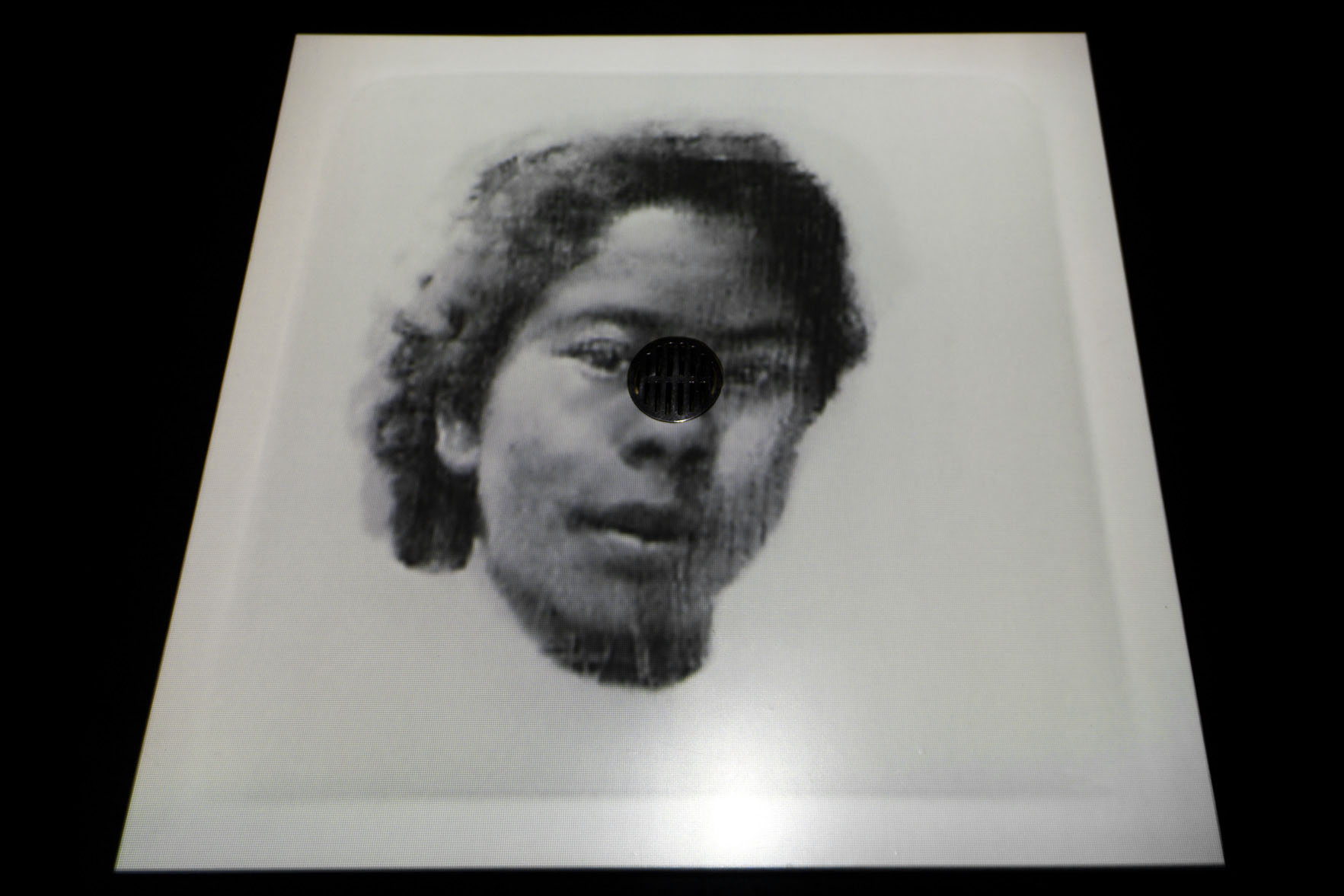
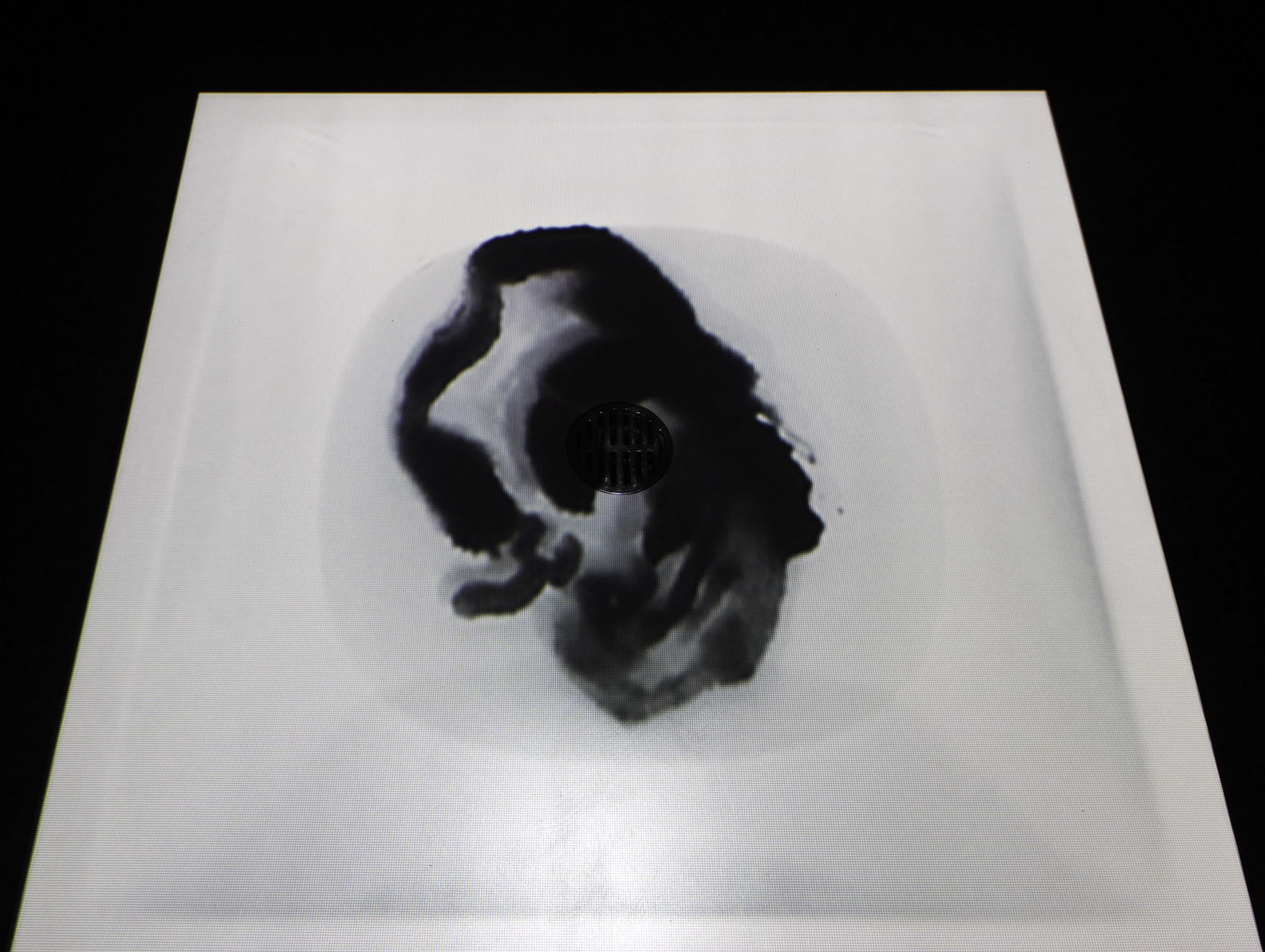
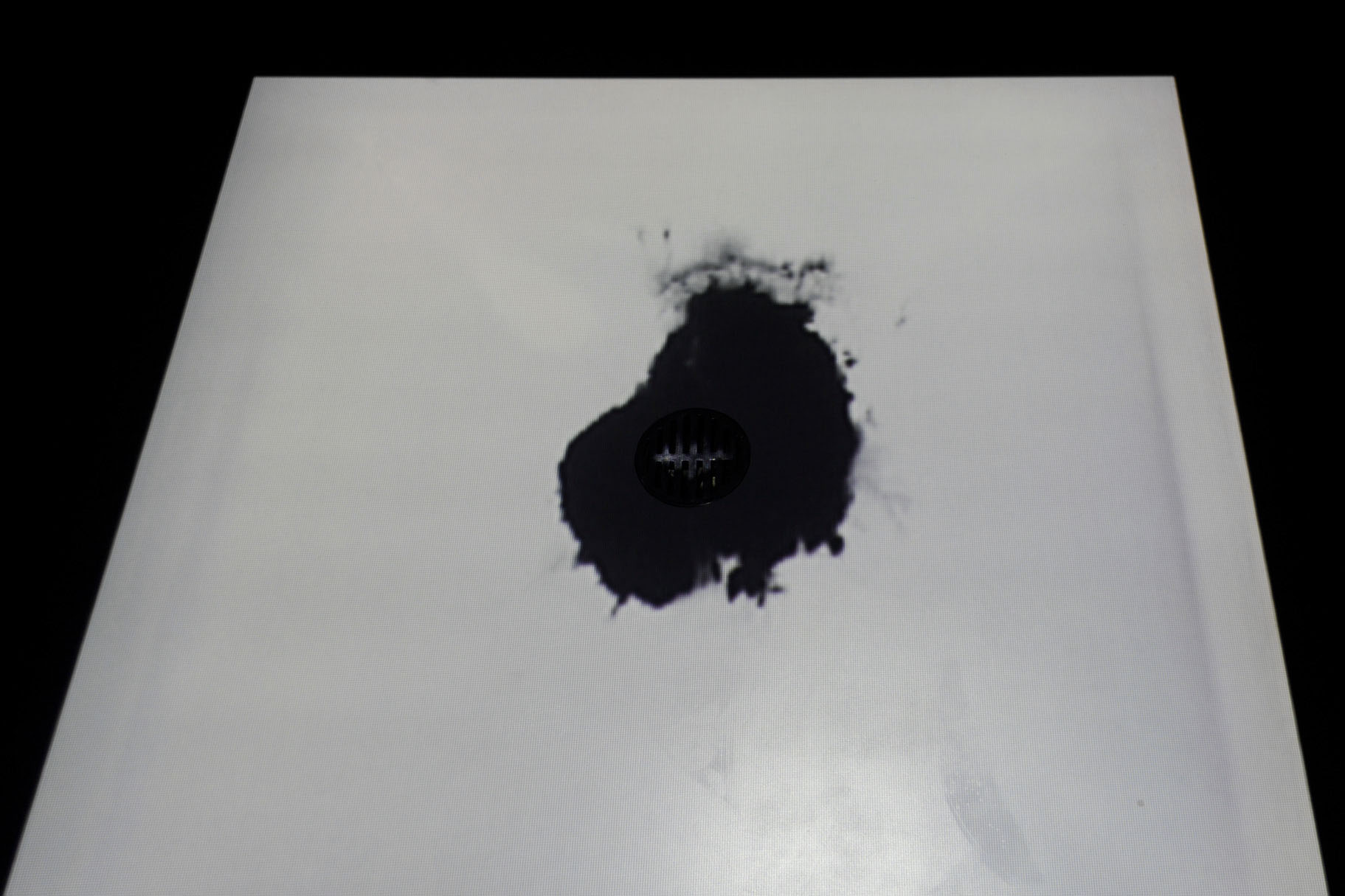
Exhibition: ‘Eikoh Hosoe – Theatre of Memory’ at the Art Gallery of New South Wales, Sydney

Exhibition dates: 12th May – 7th August 2011


Many thankx to Susanne Briggs for her help and for AGNSW for allowing me to publish the text and photographs in the posting. Please click on the photographs for a larger version of the image.
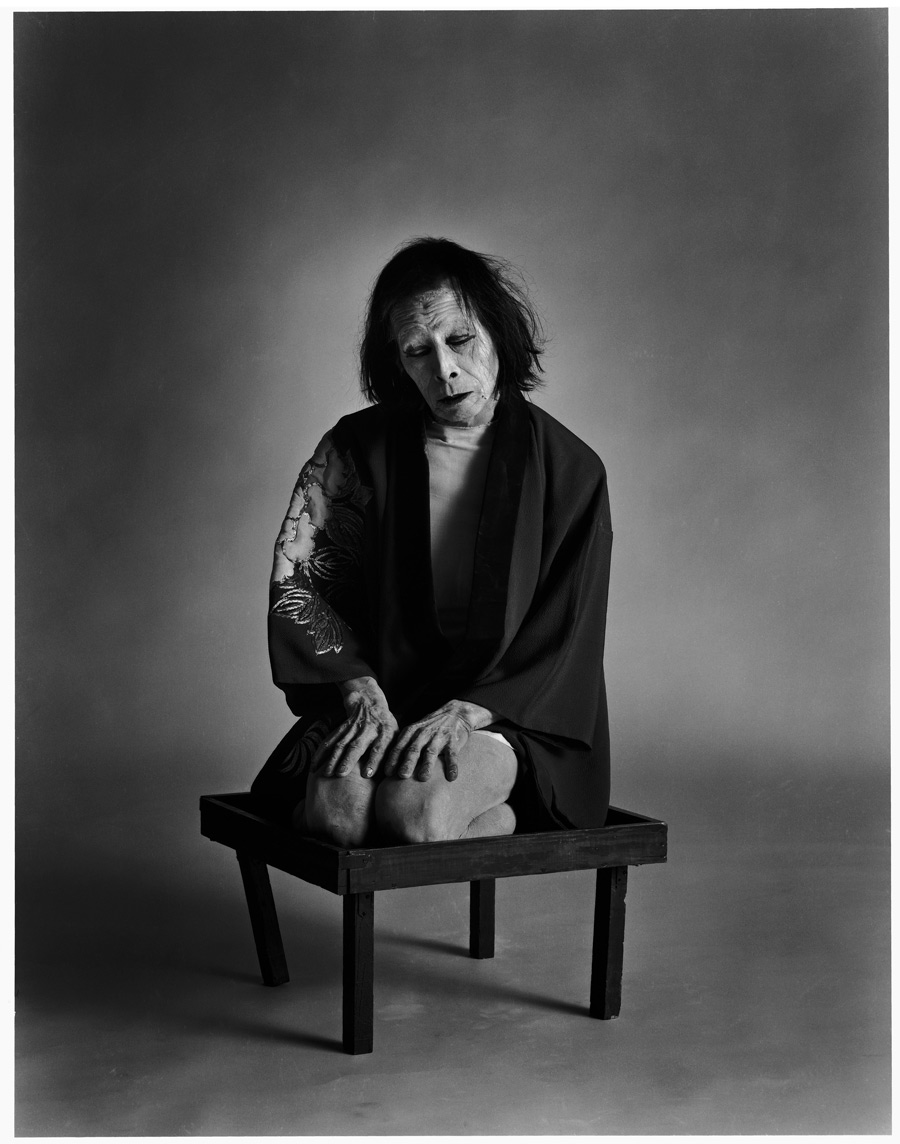
 

Eikoh Hosoe (Japanese, 1933-2024) 'Kazuo Ohno' 1980


Eikoh Hosoe (Japanese, 1933-2024)
Kazuo Ohno
1980
Gelatin silver print
© Eikoh Hosoe/Courtesy Studio Equis


“The camera is generally assumed to be unable to depict that which is not visible to the eye. And yet the photographer who wields it well can depict what lies unseen in his memory.”


Eikoh Hosoe


This exhibition brings together four seminal series by Eikoh Hosoe, a leading figure in modern Japanese photography. Taken over five decades, The butterfly dream 1960-2005, Kamaitachi 1965-1968 and Ukiyo-e projections 2002-2003 are driven by Hosoe’s longstanding fascination for the revolutionary dance movement butoh and for its charismatic founders, Tatsumi Hijikata and Kazuo Ohno. Together these series epitomise his unique style, which combines photography with elements of theatre, dance, film and traditional Japanese art, and uses mythology, metaphor and symbolism. Using the latest digital technology, Hosoe prints his photographs on washi paper, mounting them in the traditional Japanese manner as scrolls and folding screens, thereby suggesting a new way of ‘reading’ his series as a continuous narrative. Hosoe’s interest in examining the beauty and strength of the human body is best seen in his acclaimed series of extremely abstract nudes, Embrace 1969-1970. The models are butoh dancers associated with Hijikata.

For over fifty years, internationally acclaimed Japanese photographer Eikoh Hosoe has been producing cutting edge works demonstrating a unique mastery of the photographic medium. Early on in his career he abandoned the documentary style prevalent in the post-war years and produced photographs that breathed a sense of experimentation and freedom into photography. By calling on mythology, metaphor and symbolism he created images that broke the bounds of traditional photography. Hosoe developed a unique style situated at the crossroads of several different art forms, combining photography with elements of theatre, dance, film and traditional Japanese art.

From the early days of his career Hosoe’s destiny became linked to butoh, the revolutionary performance movement formed in post-war Japan. His close relationship to Tatsumi Hijikata and Kazuo Ohno, the two pivotal figures of butoh dance, forms the basis for his seminal series such as Kamaitachi, Embrace, The butterfly dream and Ukiyo-e projections, included in this exhibition.

This exhibition also highlights Hosoe’s extraordinary creativity and mastery of photographic printing techniques. Having experimented with both film-based and digital techniques to develop new methods of photographic expression, in recent years, he has started to use digital printing technologies on Japanese handmade paper (washi) and mounts his works in the form of traditional Japanese scrolls and screens. These ‘photo-scrolls’ provide a fascinating new reading of Hosoe’s work and underline his commitment to push the boundaries of photographic expression.

Hosoe gained recognition in the late 1950s when he began to develop his close-ups of the human body. Embrace, a series of black-and-white, abstract nude photographs, encapsulates Hosoe’s strive for originality in this photographic genre.

Through the novelist, Yukio Mishima, Hosoe was to meet Tatsumi Hijikata, one of the founders of Butoh dance. After seeing Hijikata’s performance, adapted from the novel Kinjiki (Forbidden Colours) by Mishima in a small Tokyo theatre, Hosoe was inspired and began photographing the Butoh dancer, a collaboration which continued for many years and culminated in the series Kamaitachi (1965-1968). This series, shot on various locations in the rural Tohoku region, integrated elements of dance, theatre and documentary into a cinematic work that aimed to recreate and dramatise Hosoe’s childhood memories.

Hosoe’s association with Butoh also led him to photograph the renowned Butoh performer, Kazuo Ohno. Released in 2006 in celebration of Ohno’s 100th birthday, the series The butterfly dream is a poignant visual documentary of Ohno’s artistic development over 46 years. While they retain the drama intrinsic to Butoh, Hosoe’s photographs of Ohno focus in on details of Ohno’s body, the curve of a wrist or a facial expression caught between agony and ecstasy.

Hosoe’s latest colour work, Ukiyo-e Projections, revisits his early work by linking it into ukiyo-e and Butoh dance. This series was born when he found out that the experimental Asbestos Dance Studio, founded by Hijikata and his wife, was to close in 2003 after forty years of activity. Upon hearing about the closure, Hosoe felt the need to pay a photographic tribute “to express gratitude for all that it had produced.” Ukiyo-e Projections was completed on stage at the Studio during a series of sessions in 2002 and 2003. For this series Hosoe created what he calls a “photographic theatre,” projecting a mixture of his own photographs with ukiyo-e prints on to the white-painted bodies of young Butoh dancers. The series explores many of the themes that recur in his work: sexuality, the human form and movement.

Eikoh Hosoe: Theatre of Memory highlights Hosoe’s mastery of photography through his four seminal series, Embrace, Kamaitachi, The Butterfly Dream and Ukiyo-e Projections, showing Hosoe’s sensibility for theatre, performance and the human body. It further demonstrates his creativity and mastery of photographic printing techniques. Throughout his career Hosoe, a master printer, has experimented with both film-based and digital techniques to develop new methods of photographic expression. In recent years, he has combined new printing technologies with Japanese washi paper to present his work on traditionally made silk screens and scrolls.

This is the first solo exhibition of Hosoe’s works in Australia. Hosoe, 77, is currently completing a new series of works on the sculpture of Auguste Rodin. The exhibition Eikoh Hosoe – Theatre of memory is realised in collaboration with Studio Equis, France.

Text from the Art Gallery of New South Wales website


Eikoh Hosoe – a leading figure in modern Japanese photography – came to the Art Gallery of New South Wales to launch the exhibition ‘Eikoh Hosoe: theatre of memory’. In this video he discusses his work and inspirations.


Eikoh Hosoe (Japanese, 1933-2024) 'Kazuo Ohno' 1994 from the series 'The butterfly dream' 1960-2005


Eikoh Hosoe (Japanese, 1933-2024)
Kazuo Ohno
1994
From the series The butterfly dream 1960-2005
Gelatin silver print
© Eikoh Hosoe/Courtesy Studio Equis
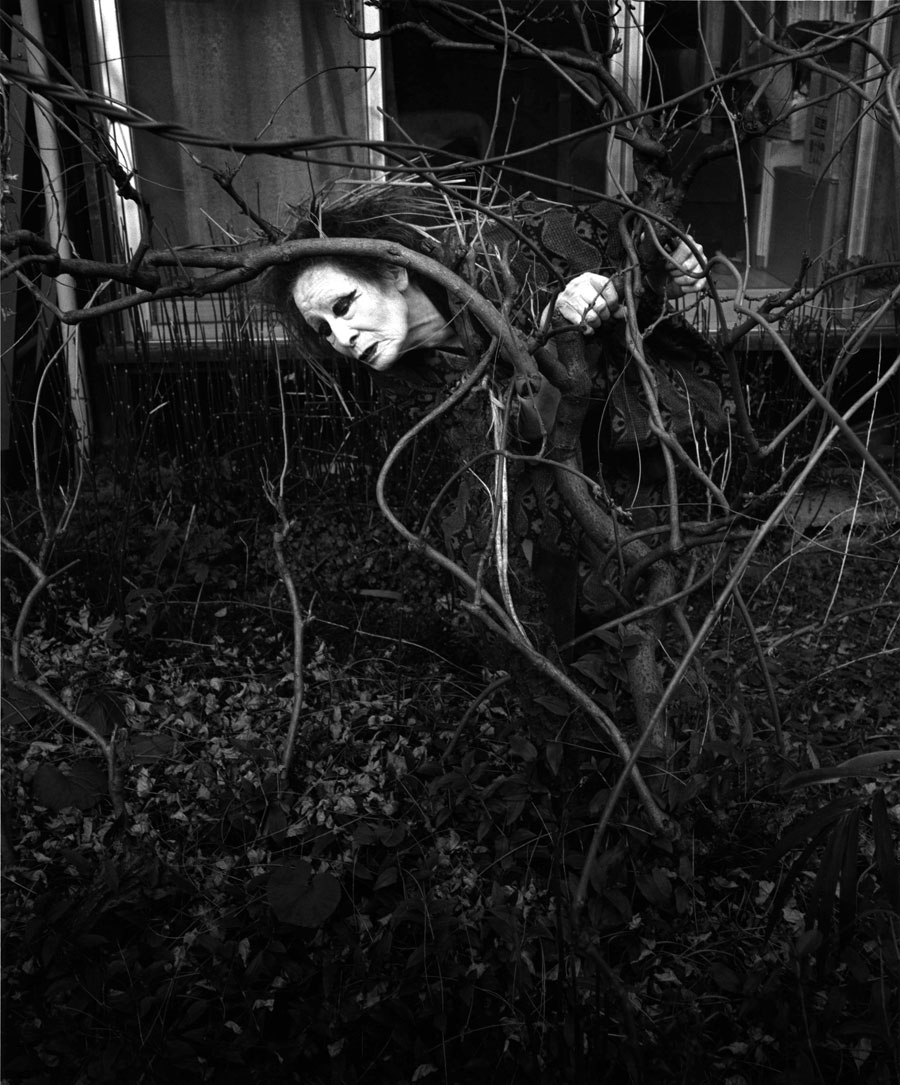
 

Eikoh Hosoe (Japanese, 1933-2024) 'Kazuo Ohno' 1996


Eikoh Hosoe (Japanese, 1933-2024)
Kazuo Ohno
1996
Gelatin silver print
© Eikoh Hosoe/Courtesy Studio Equis


The Butterfly Dream

The butterfly dream – a collection of photographs taken over a period of 46 years – represents Hosoe’s homage to the charismatic butoh dancer Kazuo Ohno. It was published as a book, which was released on 27 October 2006 in celebration of Ohno’s 100th birthday.

Originally an instructor in physical education and performer of modern dance, Ohno befriended Tatsumi Hijikata in the 1950s and became a pivotal fi gure in the development of the butoh performance movement. Ohno’s poetic dance style stems from his belief in the transcendental nature of human experience, that the human body has a memory of sensations and knows no limits of self-expression.

Following closely his friend’s extremely long and successful career – Ohno continued to perform late into his 90s – Hosoe has captured some of the most poignant and magical moments in the history of butoh. In honour of Ohno’s long-held conviction in the importance of achieving freedom of body and mind, Hosoe named his photographic exploration of Ohno’s unique art after the famous Daoist allegory in which the philosopher Zhuangzi dreamt he was a butterfly, but once awake, wondered if he was a man dreaming to be a butterfly or a butterfly dreaming to be Zhuangzi.
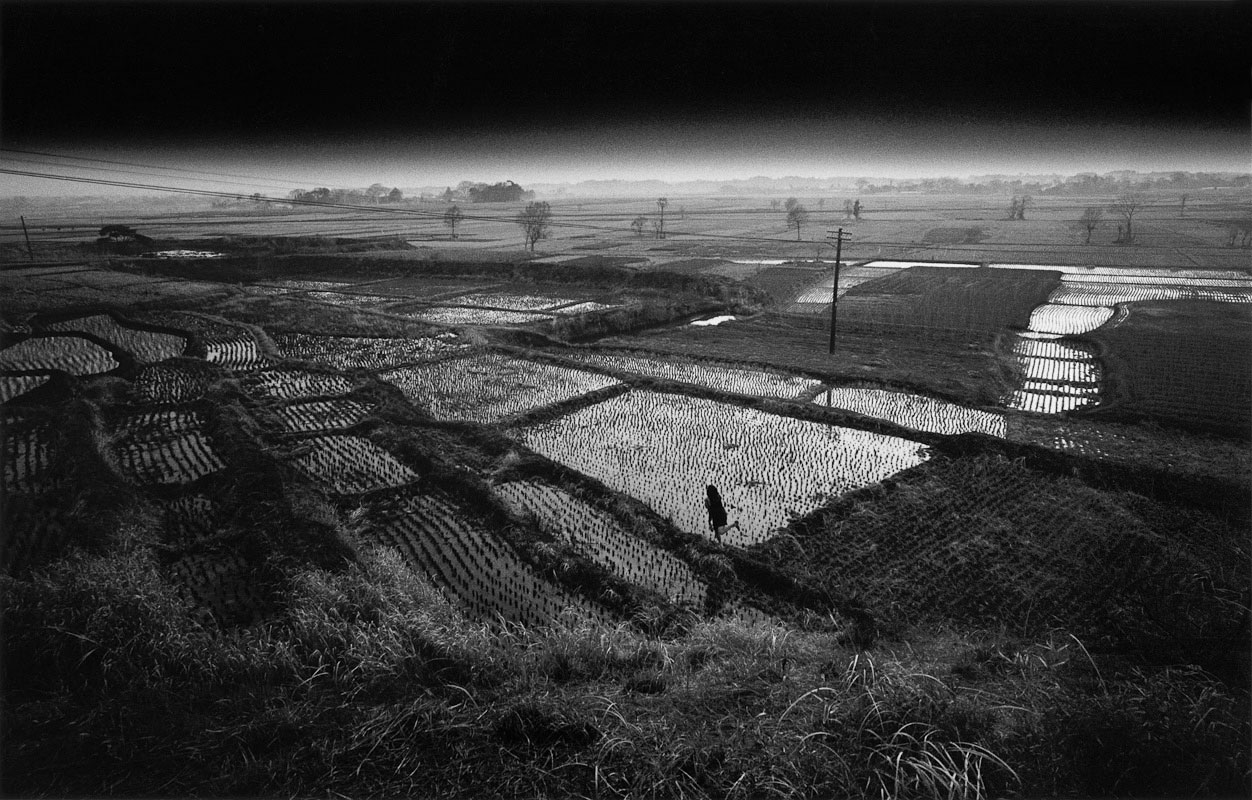
 

Eikoh Hosoe (Japanese, 1933-2024) 'Kamaitachi #12' 1968


Eikoh Hosoe (Japanese, 1933-2024)
Kamaitachi #12
1968
Gelatin silver print
© Eikoh Hosoe/Courtesy Studio Equis
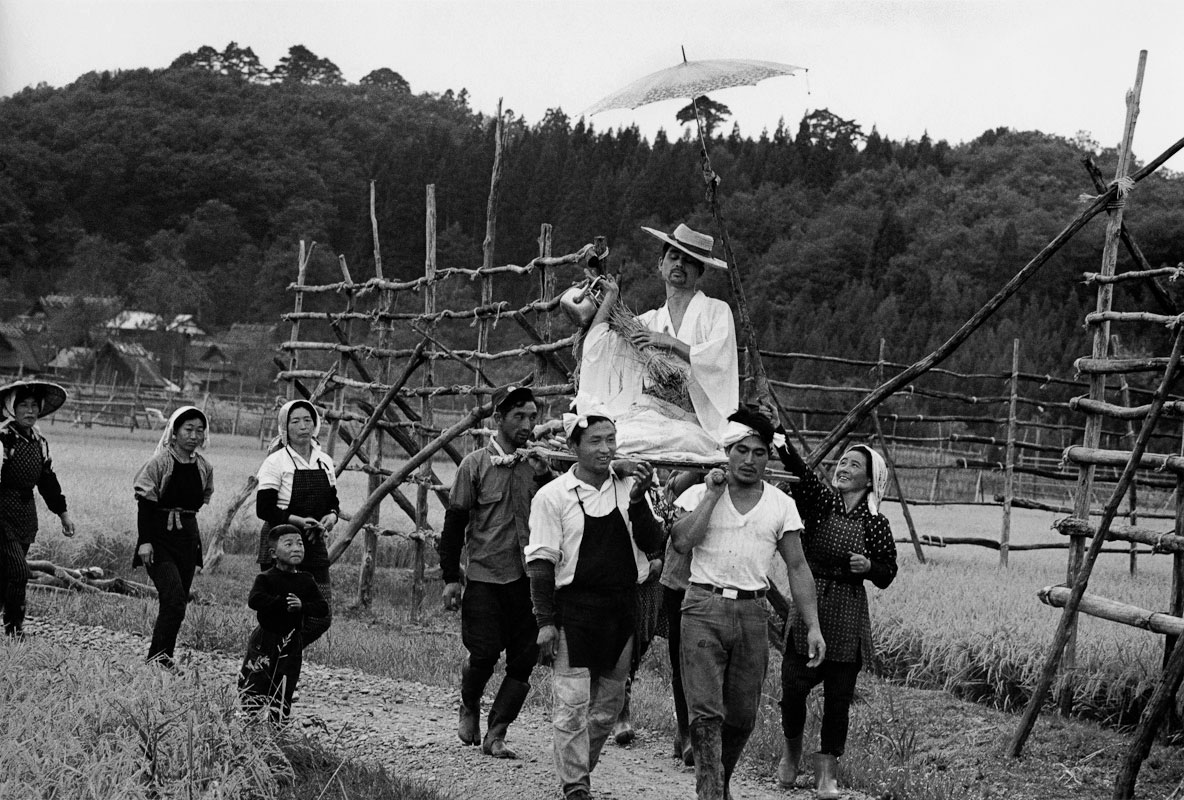
 

Eikoh Hosoe (Japanese, 1933-2024) 'Kamaitachi #14' 1965


Eikoh Hosoe (Japanese, 1933-2024)
Kamaitachi #14
1965
Gelatin silver print
© Eikoh Hosoe/Courtesy Studio Equis


Eikoh Hosoe (Japanese, 1933-2024) 'Kamaitachi #17' 1965


Eikoh Hosoe (Japanese, 1933-2024)
Kamaitachi #17
1965
Gelatin silver print
© Eikoh Hosoe/Courtesy Studio Equis


Centered on the Japanese myth of Kamaitatchi, a mythical folkloric monster believed to have existed in rural Japan, these photographs were created collaboratively by the photographer Eikoh Hosoe and the choreographer and dancer Tatsumi Hijikata (1928-86) over several years in the late 1960s. The famed choreographer, who established the abstract dance style of Butoh, performed in front of Hosoe’s camera, enacting the movement of the monster Kamaitachi.

Hosoe captured Hijikata’s transformation into Kamaitachi as they traveled from Tokyo to a small farming village in Yamagata in the Tohoku region of Japan. Often thought to be a weasel, Kamaitachi appears in a whirlwind to cut its victims with a sickle, but his cuts neither draw blood nor cause pain. In the village, Hijikata ran around in a rice field, interacted with villagers and farmers, and played with children. The artists stated that their collaboration in the rural Tohoku region (where the both artists were born) was their symbolic departure from the increasingly modernised capital city Tokyo while they had worked professionally.

Text from the Minneapolis Institute of Art website
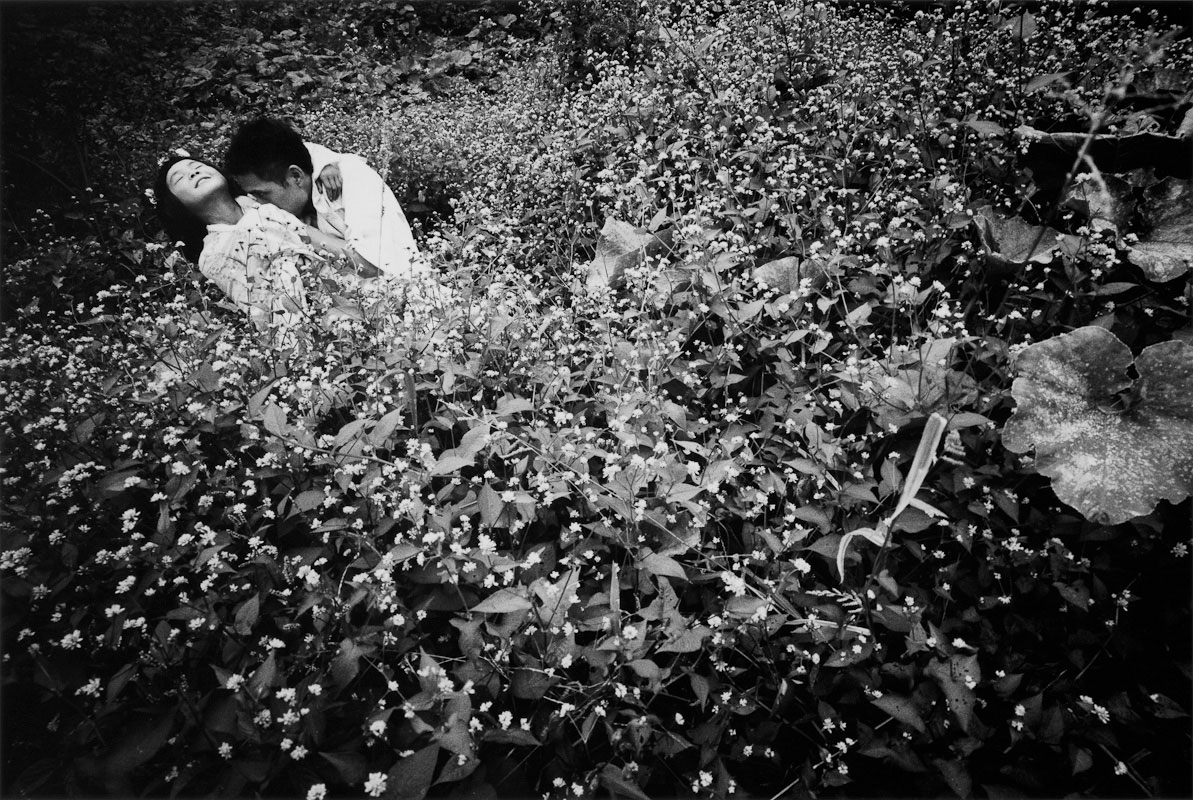
 

Eikoh Hosoe (Japanese, 1933-2024) 'Kamaitachi #23' 1965


Eikoh Hosoe (Japanese, 1933-2024)
Kamaitachi #23
1965
Gelatin silver print
© Eikoh Hosoe/Courtesy Studio Equis
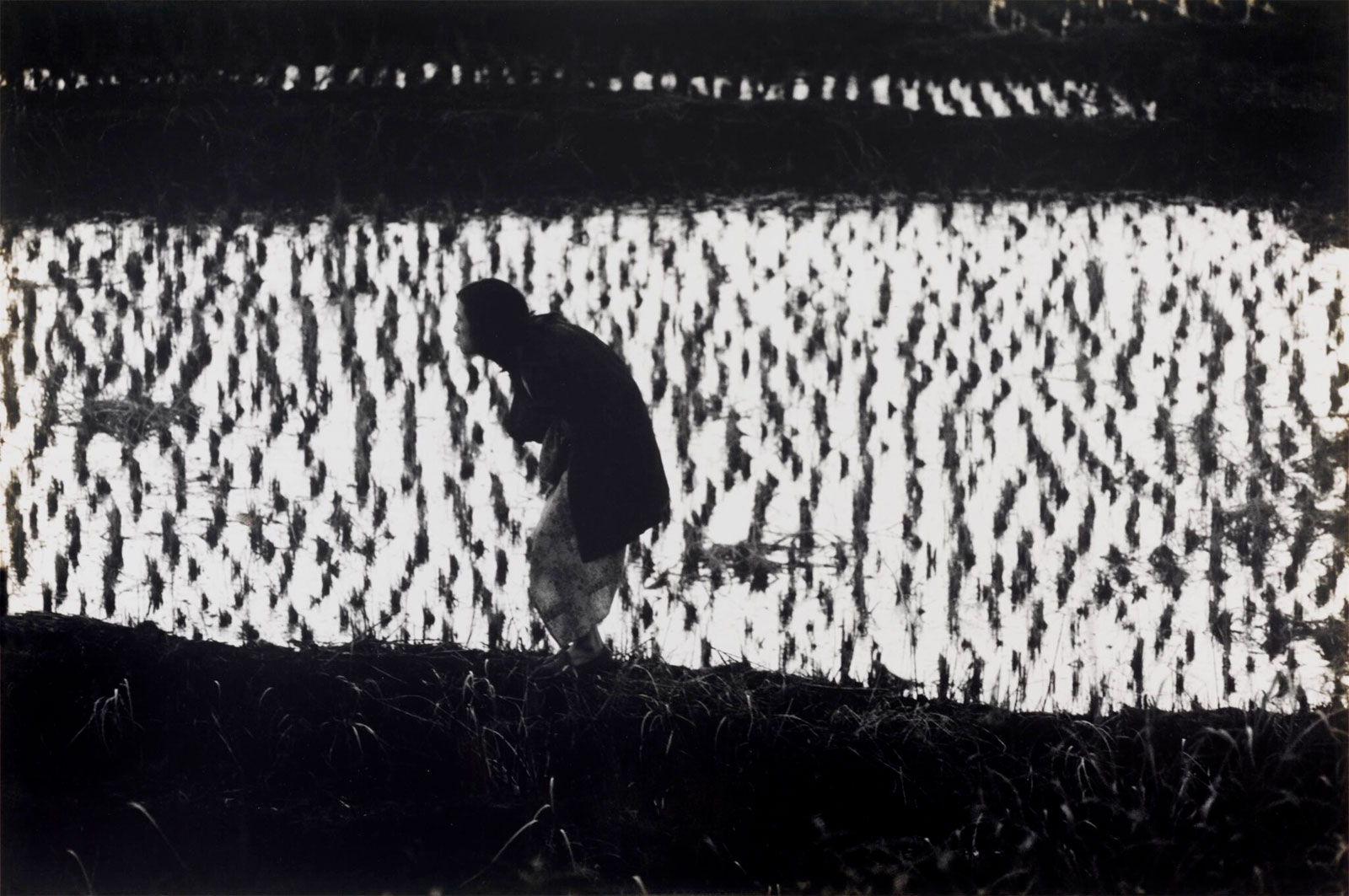
 

Eikoh Hosoe (Japanese, 1933-2024) 'Kamaitachi #35' 1968


Eikoh Hosoe (Japanese, 1933-2024)
Kamaitachi #35
1968
Gelatin silver print
© Eikoh Hosoe/Courtesy Studio Equis
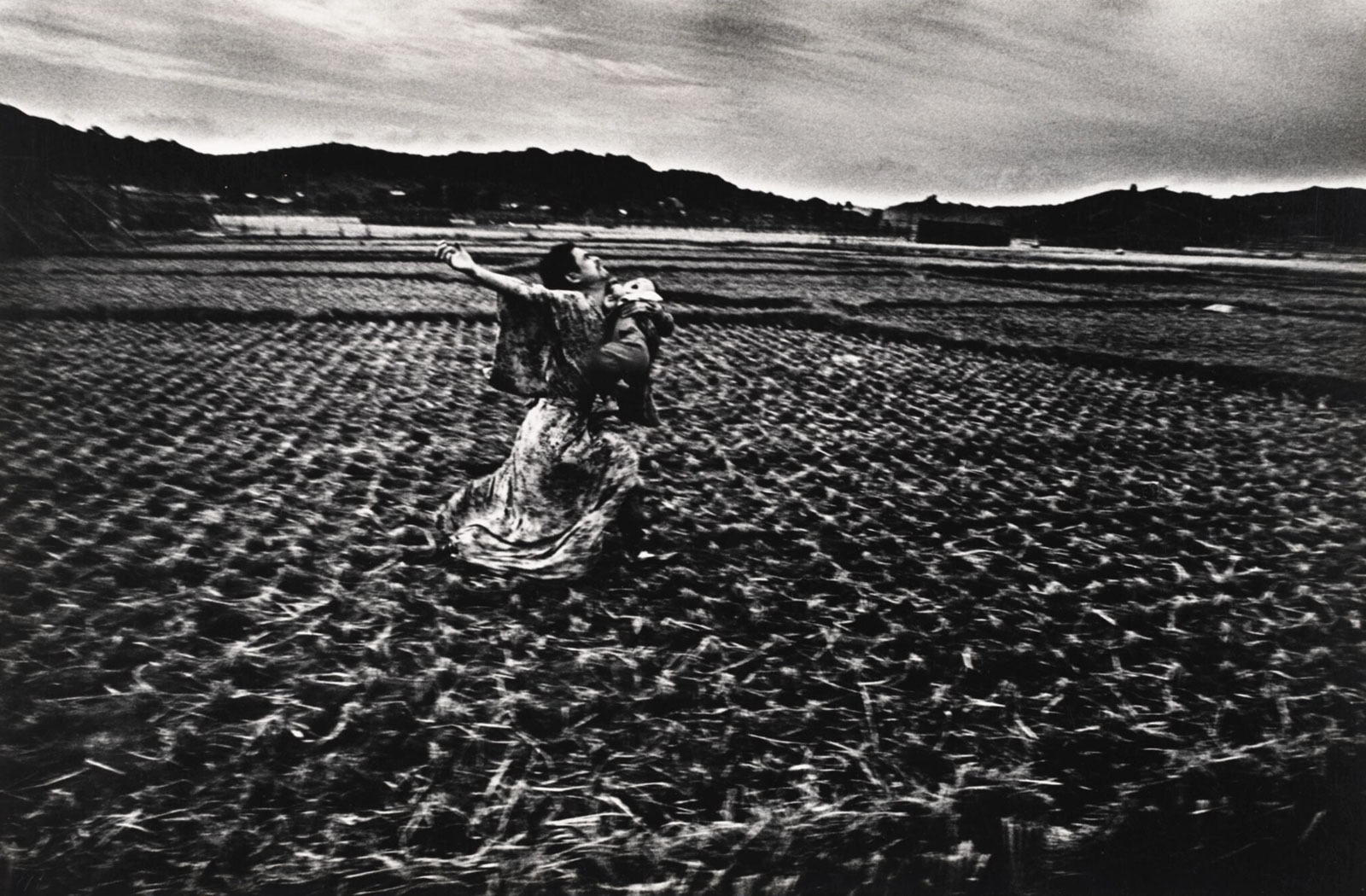
 

Eikoh Hosoe (Japanese, 1933-2024) 'Kamaitachi #37' 1965


Eikoh Hosoe (Japanese, 1933-2024)
Kamaitachi #37
1965
Gelatin silver print
© Eikoh Hosoe/Courtesy Studio Equis


Eikoh Hosoe (Japanese, 1933-2024) 'Kamaitachi #38' 1968


Eikoh Hosoe (Japanese, 1933-2024)
Kamaitachi #38
1968
Gelatin silver print
© Eikoh Hosoe/Courtesy Studio Equis


Kamaitachi

Eikoh Hosoe’s long association with the revolutionary performance movement butoh came about through his encounter in 1959 with one of its founders, Tatsumi Hijikata. Hosoe collaborated with Hijikata on several series including Kamaitachi, which is acknowledged as the finest illustration of Hosoe’s hybrid photographic style, combining performance and documentary with a dramatic, virile aesthetic that embodies the founding principles of Hijikata’s ankoku butoh or ‘dance of darkness’.

The dramatic and intense energy that Hijikata generated with his dance not only captured Hosoe’s imagination but also opened up new ways for the young photographer to approach themes such as sexuality, gender and the human body.

Driven by the desire to re-enact his childhood memories when he was evacuated from Tokyo during World War Two, Hosoe had Hijikata perform kamaitachi, the legendary weasel-like demon that haunted the rice paddies in the extremely sparse, rural landscape of the Tohoku region from where they both came. Fusing reality (Hijikata interacting with the landscape and village people) and performance, Hosoe’s ‘subjective documentary’ series opened new ground in Japanese post-war photography.
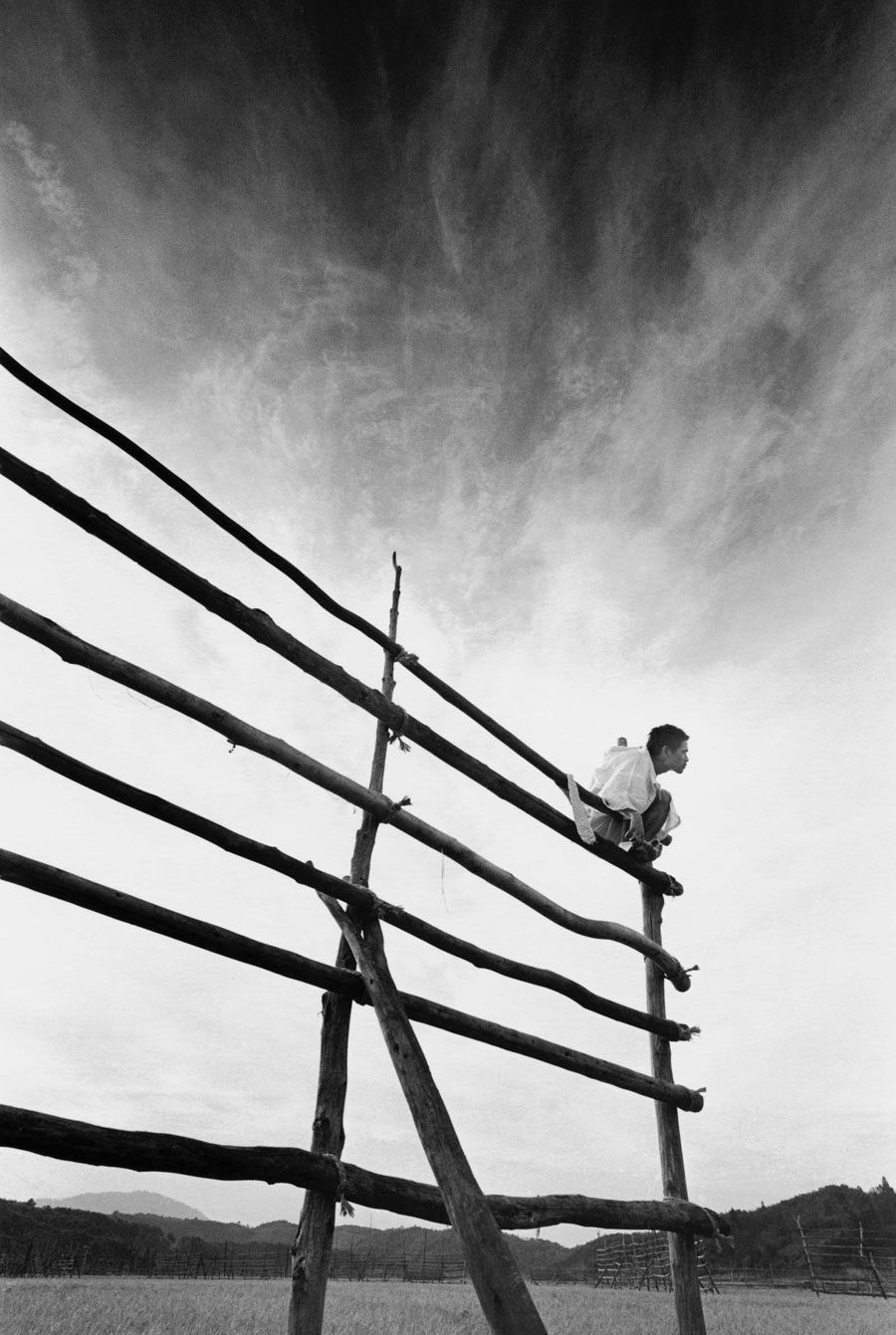
 

Eikoh Hosoe (Japanese, 1933-2024) 'Kamaitachi #8' 1965


Eikoh Hosoe (Japanese, 1933-2024)
Kamaitachi #8
1965
Gelatin silver print
© Eikoh Hosoe/Courtesy Studio Equis


Kamaitachi: Toward a Vacuum’s Nest

Shuzo Takiguchi

“When we are photographed, our bodies and souls become the victims of sacrifice in a ritual that strips our shadows away. The Eskimo, believed that their spirits resided in their shadows and that shamans had the power to steal them. Sir James George Frazer’s Golden Bough is not the only work to recount the dazzling drama of fate, or of life and death, that unfolds between man and his shadow.

Like life, death comes and goes – perhaps for a short time, perhaps longer. Narcissus’s story will continue to dominate our lives in ways that will become increasingly complicated over time; however, the camera (or, according to villagers in Sikkim, “the evil eye in a box”) seems to have reduced us, in one fell swoop, to the physics of light and shade. The objective lens seems opened to all of Nature, where all roads lead. The fact is, however, that it turns upside down once in the darkness and then is transformed into Nature.

To what extent were Katsu Kaishu,1 Baudelaire, and other luminaries of the early modern era who posed before the camera – tenuously sustained by their recognition of Nature amid a strange confusion of affectation and narcissism – aware of the evil lurking in the lens? Whatever the case, we will eventually see that, like the naked eye, the lens exists always “in its savage state.”2 We are seldom aware of the bizarre fact (or perhaps we just accept it as a self-evident truth) that both the thieves of shadows (photographers) and the thieves’ victims (subjects) are human beings.

I find it almost impossible to believe that the camera could truly capture, for example, the desire of a bird in flight at a certain moment or at any moment. All too often, the photographer unknowingly loses sight of reality, and the reality runs or rolls away, just outside the frame. Or, surprisingly, reality may be there in a corner of the image, invisible and therefore completely unnoticed. And so here I am reminded of Man Ray’s trenchant modern maxim: “Photography is not art.”

Before we even look at the Kamaitachi images, I want to stress the importance of distinguishing them from the generic concept referred to as staged photography. They are strictly, categorically, different from posed photographs of modern narcissists. If Hosoe had not met Tatsumi Hijikata, the phenomenal butoh master, he could not have created this extraordinary series. Hijikata is a man who – metaphorically speaking – can transmogrify in an instant into a phantasmagorical bird. This is not even theatrical photography, but rather a rare instance in which the camera obscura becomes a theater. And it is the paradoxical existence of the camera – which can photograph a vast void when we mean to capture a concrete object – that proves to be a stroke of luck for Hijikata, the master of movement.

Like the lens, Hijikata is a unique dancer, always aware that the “eye exists in its savage state.”3 His “dance experience” is never a matter of leaping across a stage, pretending to be a swan: if a bird is what he has in mind, Hijikata becomes a raven. The raven plunges to the ground far below the stage. Then it runs, if it wants to run, or flies, if it wants to fly. For Hijikata, hasn’t the paradoxical vacuum dwelling in the camera become a divine machine at a certain moment? Then, voluntarily or involuntarily, we may reach the lights of purgatory, for which we have yearned, beyond the millennia of human history.

At the very least, I see here an inevitable force striving to preserve the relationship between photographer and subject. In all likelihood, no other work approaches the original meaning of the term “happening” (however simplified it may be in this case) as closely as this one. Tatsumi Hijikata uses his dance artistry to abruptly penetrate the center of the vacuum between time and space, and he descends to the ground closest to the place where we were born.

He has arrived at the vacuum’s nest, the home of kamaitachi, the “sickle-weasel.”

Today it would seem that the kamaitachi belong to legend and mythology. What are kamaitachi? Memories from my childhood flood back to me: my father was a country doctor, and several times I saw farmers, claiming to have been bitten by a kamaitachi, carried to the threshold of our house. Those were frightening moments, smelling of blood, like the first bolt of lightning streaking across a dark sky. I heard the farmers say they were attacked out of the blue, under a rice-drying rack or an ancient persimmon tree. But no one bore a grudge against that invisible weasel. In fact, a family of actual weasels made their home in the loft of the thatched shed behind our house. Every once in a while, I would see them dart across a field, always taking the shortest path and then disappearing. They lived among people but avoided them. The rumour was that the disreputable little creatures were so wary and agile that they never took the same path twice. I wonder whatever happened to them. One book defines kamaitachi as a laceration from the localised vacuum created by a dust devil. No one really knows the truth. The days of kamaitachi are long gone.

Was kamaitachi a spirit of the soil, a phantom that appeared only to farmers? If so, that invisible flying blade must have been incredibly sharp to leap through the sky and pierce flesh.

It is hard to say whether Tatsumi Hijikata is a spirit of the soil or the air; however, even before we can contemplate the question, he approaches the ground almost vertically and rushes like a gale into a farming village. This village is in a rice-growing district, where Japan’s most inconsistent and absurd social reality anomalously persists. Hijikata appears suddenly, like a hawk diving to the ground – or a kidnapper from heaven.

The god of the rice fields smiles on this scene. A faint trace of that smile is on the kagura theatrical dance mask, but it isn’t the embarrassed smile replayed endlessly on television. It is a smile that could exist among demons, a smile that was present even on a footpath between barren rice fields during a terrible famine, a startling but comical smile from the realm of the unconscious.

At a precise moment, our dancer and photographer approach a timeworn village – their footsteps only faintly audible – and they capture a brief moment in the empty village, where zinnias and other flowers bloom, coated with white soil dust. The entire village, mesmerised like a haunted house, enthrals them.

Is he a hawk that has just landed – or a leaping weasel? It is foolish to ask. It is our dancer who would be wounded. The villagers gaze at him innocently, as though he reminds them of a long-forgotten priest. They smile, without knowing why, at the arrival of the oblivious fool. Their smiles become the same smile of the footpath between rice fields. It is a smile that borders on terror.

A girl smiles like a shrine maiden whom the gods have endowed with evil and innocence in perfect balance. Were the girls born fairies? Sooner or later they will experience the orgasm of life and death. Then they will depart. Will they return to the earth or to the sky? No one knows which path they will take.

In any case, two contradictory, endless journeys await them.

Hairy vacuum! Bloody vacuum! Biting vacuum! You must continue to exist on this earth!

The desire for the heavens will inexorably lead to a desire for the bowels of the earth. Then the excrescence will head for the huge void, and vice versa. The cosmic metamorphosis that this phenomenon seeks will occur, extremely and tangibly. The vacuum theater, too, is part of the evolution.

To arrive at the source of the phantom of ecstasy, we must dig deeper and deeper, day by day.

And the witness is an instantaneous flash.”

by Shuzo Takiguchi
Translated by Connie Prener


1/ Officer credited with the modernisation of Japan’s navy (1823-1899)
2/ Allusion to Andre Breton’s Le Surréalisme et la peinture
3/ Ibid.,
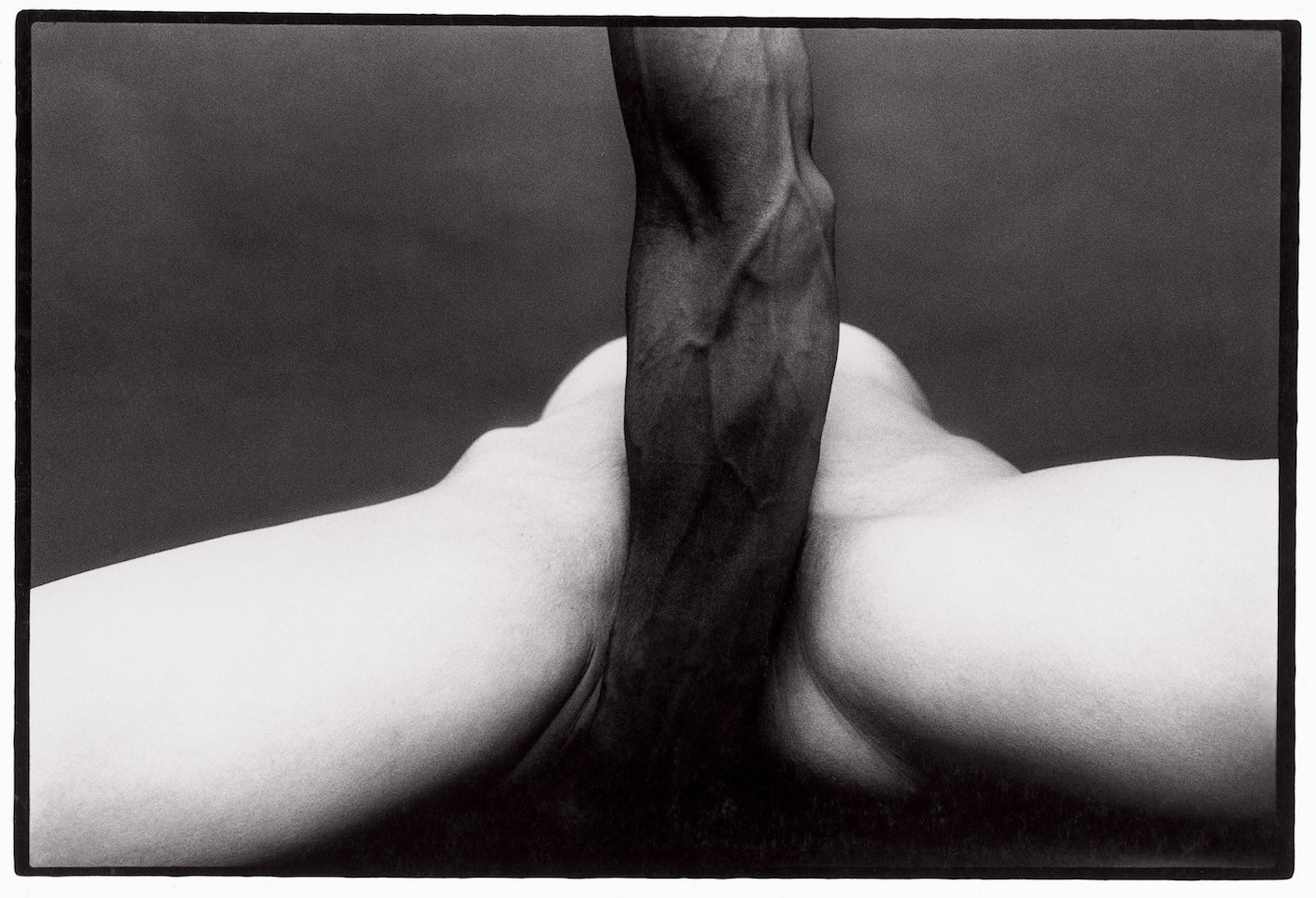
 

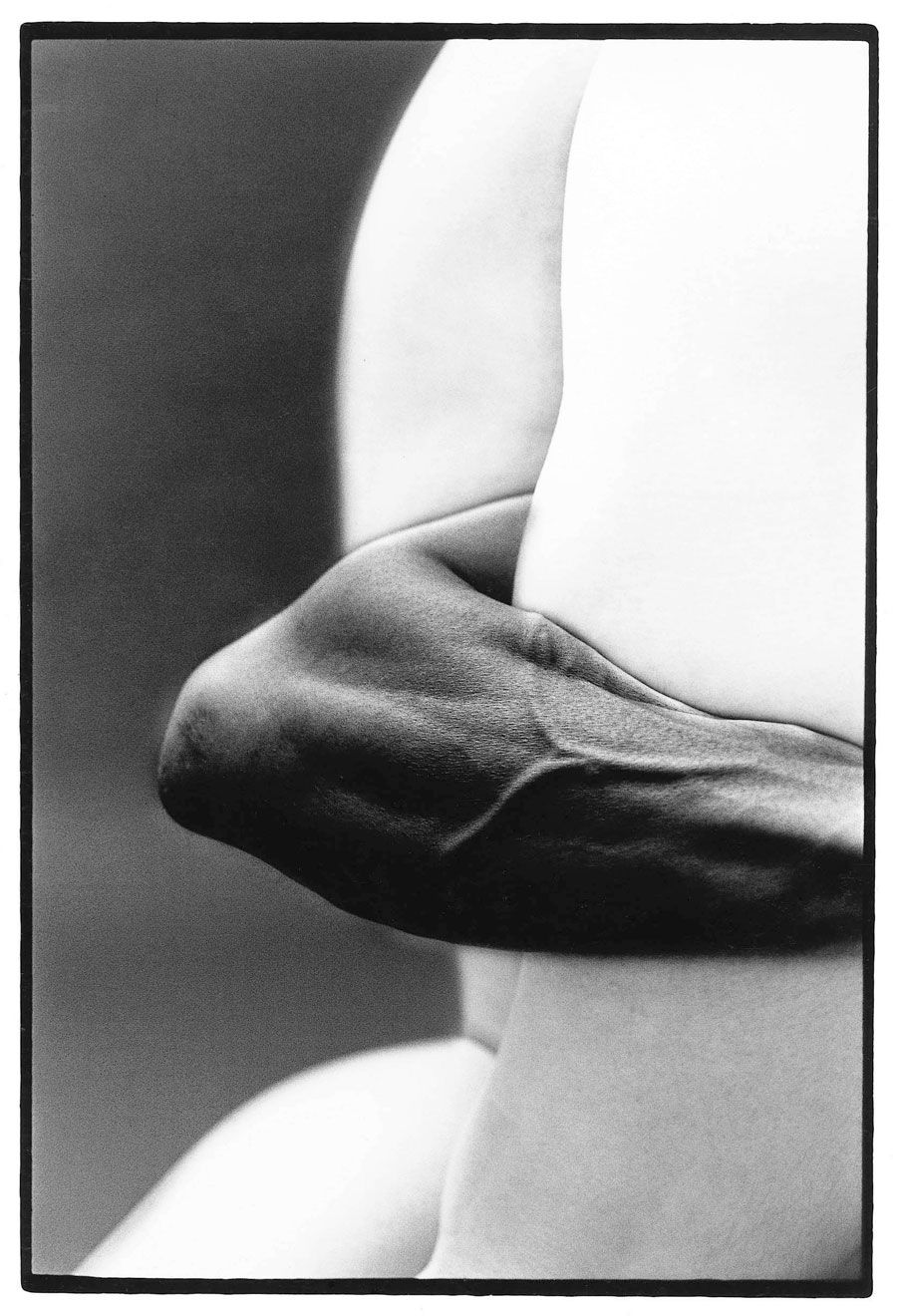
Eikoh Hosoe (Japanese, 1933-2024) 'Embrace #48' 1970


Eikoh Hosoe (Japanese, 1933-2024)
Embrace #48
1970
Gelatin silver print
© Eikoh Hosoe/Courtesy Studio Equis


Embrace

First published as a book in 1971, Embrace represents a return to the study of the human body that Hosoe undertook in earlier series such as Man and woman (1959) or Ordeal by roses (1963). In this new body of work, however, he abandoned the strong contrast and dramatic, baroque visual aesthetic in favour of the purity of the human form. Showing abstract fragments of male and female nudes in intimate placement, the series is not merely about eroticism or the dialogue of rivalry between the opposite sexes but is also a celebration of the pure beauty of the human body.

By depersonalising the bodies of his models, Hosoe attempted to reach a universal expression of corporeality. The extreme abstraction of these images focuses the attention on the flesh, which, according to Hosoe’s belief, is the essence of human beings.

The author Yukio Mishima comments on this series: ‘The viscosity which is associated with sex – those earthly odours and temperatures of soft and indeterminately formed internal organs – has been painstakingly removed from these photographs. To me this is a series filled with a hard, athletic beauty. First and foremost, it is about form.’
 

Eikoh Hosoe (Japanese, 1933-2024) 'Embrace #52' 1970


Eikoh Hosoe (Japanese, 1933-2024)
Embrace #52
1970
Gelatin silver print
© Eikoh Hosoe/Courtesy Studio Equis


Ukiyo-e Projections

When Hosoe heard the news that the Asbestos Dance Studio, founded by Tatsumi Hijikata and his wife Akiko Motofuji, was to close in April 2003 after 40 years of activity, he felt the need to pay tribute to the achievements of this experimental studio. With the help of Hijikata’s widow, he organised a series of performances in 2002 and 2003, in which the dancers were asked to coordinate their movements in accordance with images from his own work, as well as from 19th-century Japanese paintings and woodblock prints projected on their naked, white-painted bodies.

The result of this ‘photographic theatre’ was stunning: a mysterious four-dimensional space transcending ordinary space and time was created as the two-dimensional images were projected on the three-dimensional bodies. The idea to use shunga – the erotic woodblock prints by noted ukiyo-e artists such as Utamaro, Hokusai and others – stemmed from Hosoe’s conviction that Hijikata’s archaic, ecstatic dance style had its roots in this particular art genre of the Edo period (1603-1868).

Exploring many of the themes that recur in Hosoe’s work – sexuality, the human form, movement and the passage of time – this series epitomises his unique approach in synthesising photography with various forms of visual and performance arts.


Eikoh Hosoe (Japanese, 1933-2024) 'Ukiyo-e Projections #2-36' 2003


Eikoh Hosoe (Japanese, 1933-2024)
Ukiyo-e Projections #2-36
2003
© Eikoh Hosoe/Courtesy Studio Equis


Art Gallery of New South Wales
Art Gallery Road, The Domain
Sydney NSW 2000, Australia

Opening hours:
Open every day 10am – 5pm
except Christmas Day and Good Friday

Art Gallery of New South Wales website

LIKE ART BLART ON FACEBOOK

Back to top

Exhibition: ‘Photography & place: Australian landscape photography, 1970s until now’ at the Art Gallery of New South Wales, Sydney

Exhibition dates: 16th March – 29th May 2011


Debra Phillips (Australian, b. 1958) 'Untitled 7 (view from model plane launch area)' 2001


Debra Phillips (Australian, b. 1958)
Untitled 7 (view from model plane launch area)
2001
From the series The world as puzzle
Two Type C photographs
68 x 80cm each
Image courtesy the artist and BREENSPACE, Sydney
© Debra Phillips


Hot on the heels of my reviews of Stormy Weather: Contemporary Landscape Photography at NGV Australia and Sidney Nolan: Drought Photographs at Australian Galleries, Melbourne comes the exhibition Photography & place: Australian landscape photography, 1970s until now at the Art Gallery of New South Wales. An insightful, eloquent text by Vigen Galstyan (Assistant curator, photographs, AGNSW) accompanies the posting.

Dr Marcus Bunyan


Many thankx to Susanne Briggs for her help and to the Art Gallery of New South Wales for allowing me to publish the photographs and the text in the posting. Please click on the photographs for a larger version of the image.


Douglas Holleley (Australia, United States of America, b. 1949) 'Bottle-brush near Sleaford Bay, South Australia' 1979


Douglas Holleley (Australia, United States of America, b. 1949)
Bottle-brush near Sleaford Bay, South Australia
1979
Four SX-70 Polaroid photographs
61 x 76cm
AGNSW collection, purchased 1982
© Douglas Holleley


Australian born and American based photographer Douglas Holleley has experimented with many aberrant photographic techniques over the course of his career. Holleley received a Bachelor of Arts in Psychology in 1971 at Macquarie University before relocating to America to undertake a Master of Fine Arts, studying at the Visual Studies Workshop in Rochester, New York between 1974 and 1976. Founded by Nathan Lyons in 1969 and affiliated with important photographers including Minor White and Frederick Sommers, the Visual Studies Workshop was a bedrock institution that fostered innovative photographic practice from the 1970s onwards. It was here that Holleley received tutelage from Ansel Adams in 1975. His early photographic output includes hand coloured black and white photographs as well as photograms and gridded arrangements of Polaroids. He later began experimenting with digital photography, applying the same principles of the photogram to his experiments with a flatbed scanner.

During the time spent studying photography in America in the 1970s Holleley became interested in Polaroid technology. When he returned to Australia in 1979, before later relocating permanently to America, Holleley commenced an extensive photographic project of documenting the Australian bush with a Polaroid SX-70 camera, effectively becoming one of the first professional practitioners of the medium in the country. The resulting images were presented as a series and published as a book – Visions of Australia – in 1980. Employing a refined formalist vocabulary, Holleley produced photographic mosaics by arranging his Polaroids into gridded compositions.

Dissected, disassembled and then collated within the pictorial frame, the landscape in Holleley’s works becomes slightly unnatural and detached. These works negate linear single point perspective by focusing on the ground and reducing the scene to a formal composite. Here, the expanse of the view and the horizon does not dominate the space of the image. The tessellating images produce a ‘whole’ that is slightly misaligned and unsettled. In some works, the photographer’s shadow is visible. It asserts itself as an ambivalent presence that is not tethered to the scene. This spectral form heightens the sense of disquiet that pervades the images.

Text from the Art Gallery of New South Wales website [Online] Cited 16/01/2020


Ian North (New Zealand, b. 1945) 'Canberra suite no 2' 1980, printed c. 1984


Ian North (New Zealand, b. 1945)
Canberra suite no 2
1980, printed c. 1984
From the series Canberra suite 1980-81
Type C photograph
37 x 45.7cm
AGNSW collection, gift of the artist
© Ian North


Ian North (New Zealand, b. 1945) 'Canberra suite no 7' 1980, printed c. 1984


Ian North (New Zealand, b. 1945)
Canberra suite no 7
1980, printed c. 1984
From the series Canberra suite 1980-81
Type C photograph
37 x 45.7cm
AGNSW collection, gift of the artist
© Ian North


Ian North is an Adjunct Professor of Visual Arts at both the University of Adelaide and the University of South Australia. He is a photographer, painter and writer, and was the founding curator of photography at the National Gallery of Australia 1980-1984. Throughout his career, he has been concerned with the legacy of Australian landscape, the impact of colonial narratives and their established visual conventions and, as a consequence, the politics of representing the subject. …

North’s methodology is concerned with the processes of vision and interaction as they have shaped the landscape. In Canberra Suite North presents an encyclopaedic record of Walter Burley Griffin’s intricately designed city, exploring the spatial interface between nature and humanity. The works are absent of human life – reminiscent of Ed Ruscha’s Twenty-six Gasoline Stations. The emotional ambivalence of the images is reflected in their use of colour, like that of postcards. As one of the first instances of larger format colour art photography in Australia, the images topographically map space as a depersonalised, banal subject. Yet their colour, like that of landscape painting, highlights flora, revealing the number of non-native plants included in Canberra’s design. As such, these artefacts of North’s private wanderings and systemic mode of looking are able to subtly critique colonialism.

Text from the Art Gallery of New South Wales website [Online] Cited 16/01/2020


EARTH SCANS AND BUSH RELEVANCES: Photography & place in Australia, 1970s till now

For many of us, landscape is a noun. A view from the window or the balcony, a strange immaterial ‘thing’ that makes people exclaim in awe, point to in pride, recall nostalgically, pose in front of or be used to bump up real estate prices. If one is an urban dweller, which most Australians are, then the landscape exists essentially as a mirage, something to create in the backyard, occasionally look at on holidays or hang on the walls. However, noted American cultural theorist and art historian W. J. T. Mitchell has proposed that we should think of landscape as a verb: an act of creation on our part that engenders cultural constructs, national identities and shared mythologies.

Photography & place is an exhibition that investigates this process of ‘landscaping’ through the work of 18 Australian photographers between the 1970s and now. Their significant contribution to representation of landscape broke new ground in what has always been a confounding topic. Indeed, as Judy Annear has pointed out in a 2008 essay in Broadsheet magazine, the practice of documenting and interpreting the notion of ‘place’ in Australian photography has been fragmentary in comparison to traditions in America, Europe or New Zealand. This reluctance to focus on the natural environment is perhaps a residue of the ‘terra nullius’ polemic, which shifted the attention of many photographers on the building of colonial Australia. Photography from the mid 19th to the early 20th century by photographers such as Charles Bayliss and Nicholas Caire actively documented the conquest of nature by white settlers, or presented views of untouched wilderness as epitomes of the picturesque: endless waterfalls, lakes, forests in twilights, enigmatic caves and an occasional nymph like creature prancing. Despite Bayliss’ efforts to show the indigenous people on their land, they are, as Helen Ennis observed in her 2007 book Photography and Australia, conspicuous by their absence: the land that we see surrounding them in early Australian photography by the likes of J.W. Lindt is often a mass-produced painted studio backdrop.

The advent of modernism in the 1930s only served to entrench the photographers deeper into the urban space. ‘Place’ is the city and it is here that industry, progress and culture shapes the Australian identity. It is still difficult to dislodge the iconic images of Max Dupain and David Moore as epitomes of Australianness, promulgated as they were through countless renditions in mass media and consumer culture. But as post-modern anxiety started to seep through the patchwork of the Australian dream, it was landscape that many critically informed photographers turned to as a tool for analysis and revision.

A number of factors conflated in the mid 1970s, engendering a radical shift in perspectives. One of the primary forces that began to reshape the approaches to landscape in Australian photography was the awareness of new artistic movements taking place in USA and Europe. The enormously influential exhibition New Topographics: Photographs of a Man-Altered Landscape held in 1975 at the George Eastman House, Rochester, consolidated the spread of minimalist and conceptually informed photography which was avidly embraced by a younger generation of Australian photographers. One can also cite the rise of the Australian greens movement in Tasmania, the increasing awareness of Indigenous cultures and rights and not the least, the phenomenon of university-educated photographers as key milestones during this decade.

Lynn Silverman, Douglas Holleley, Jon Rhodes, Wes Stacey and Marion Marrison were among the practitioners who pointed their lenses out of the city, often exploring the fringes of human settlement and sometimes as in the case of Silverman, Stacey and Holleley, venturing into the desert. The element that collectively stamps their work is the ostensible fragmentation of the landscape. Instead of the holistic, positivist postcard views of Australia, we get something resembling a lunar vista. The palpable sense of alienation in American expatriate Lynn Silverman’s striking Horizons series from 1979 echoes in the disorienting grid-based Polaroid assemblages by Holleley conjuring up a space that appears hostile and to a degree indifferent to our presence. The foreignness of these landscapes is not necessarily a malevolent force as was customary to show in a slate of Australian New Wave films of the 70s and 80s. Rather a much more meditative stance is taken in regards to our relationship to a place which has been claimed without being understood or in many ways respected. Ingeborg Tyssen’s photographs hint at existing presences, forms and phenomena which are full of life and meaning that remain perpetually unresolved to an outsider. The imported paradigms of Western culture can not take root in this environment. One could easily define the landscape photography of this period in Lynn Silverman’s words as “an orienting experience” and a belated attempt at a proper reconnaissance of the land.

The coolly detached outlook that underlines the investigative drive of most of these photographers is magnified by their adoption of serial or multi-panel formats. It was certainly a way to expand and collapse the accepted faculties of the pictorial field, challenging and questioning the accepted notions of photographic ‘truth’. Jon Rhodes demonstrates the inherent power of this simple device in his cinematically sequential Gurkawey, Trial Bay, NT 1974, which transforms a seemingly wild and uninhabitable swamp into a joyful playground of an Aboriginal child.

In some instances the photographic approach is more concerned with elucidating the nature of the photographic image itself and the way it can influence and control our perception. As Arnold Hauser has lucidly described in his groundbreaking Social History of Art, images have always been used to secure and infer political power. As such, the metamorphosis of a visual representation into an iconographic one carries within it an element of danger as images begin to seduce the viewer away from objectivity. Indeed, images of Australia have been the most relentlessly and carefully used signifiers in promoting a (colonial) national consciousness by political, commercial and cultural institutions. In this light, it is not difficult to see the works of Wes Stacey and Ian North as acts of iconoclasm. Stacey’s droll and gently parodic series The road 1973-1975, charts a snapshot journey that goes nowhere. Seemingly random, half-glimpsed shots of empty dirt roads, sunburnt grass mounds and endless highways emanate a sense of rootlessness and displacement, negating any possibility of objectification or identification with the landscape. Instead of epic grandeur and jingoism we get something that is confronting, uncomfortably real and in no way ‘advertisable’.

‘The Real’ is even more startling in Ian North’s subversive Canberra suite 1980-81, where the utopian dream capital has been reduced to banal ‘documents’ of depopulated, custom-made suburbia. The hyperreal concreteness of North’s Canberra gives the city an aura of a De Chiricoesque waking nightmare. In line with the set practices of conceptual photography of the period, North has distilled his images from any sign of formal mediation, forcing the viewer to focus on the raw content. It is through this forensic directness that the strange incongruity of human intervention within the landscape becomes ostensible.

Daniel Palmer has noted that North’s images “are highly prescient of much photography produced by artists in Australia today”. Certainly by the 1980s photographers became more actively engaged in analysing the nature / culture median. Strongly influenced by feminist and post-colonial theory, a number of practitioners used photography as a medium to document ideas rather than objective reality. Anne Ferran and Simryn Gill are particularly notable in this regard. Both artists are concerned with the historical and political dimensions of the locations they chose to photograph, resulting in multi-layered and complex strategies that require more involved intellectual interaction from the audience. Gill’s ‘staged’ photographs relate to us the agency of nature and time upon the cultural environment. Synthesis and amalgamation of outwardly irreconcilable elements – imported plants, Australian bush, cotton shirts – slowly, but surely melt into new, as yet unknown entities in Rampant 1999. The force of inevitable decay is absolute yet imbued with generative power as well. Exploring the constantly shifting certainties of what constitutes a ‘place’ the artist draws the audience into questioning its own role in this transformative process.

Ferran takes a more archaeological position in relation to her subject matter. Her eerie surveys of rather ordinary grass mounds in the series Lost to worlds 2008 become evocative paeans to obliterated lives, once we learn that the mounds are all that remain of the factories where convict women were sent to work. Looking at these shimmering ghost worlds one is reminded of Walter Benjamin’s essay The Ruin where the writer analyses the capacity of ruins to reveal the “philosophical truth content”. It is through this allegorical device that Ferran achieves a degree of rehabilitation for the absent histories she photographs.

History, in its manifold and troubling guises, is directly ‘exposed’ in the landscapes of Ricky Maynard, Michael Riley and Rosemary Laing. As Indigenous photographers, Maynard and Riley have played an important role in translating the cultural and political status of Aboriginal peoples into a ‘language’ that is universally understood. Their work remains firmly rooted in the traditions of contemporary art, yet the heavily symbolical slant shows a more ardent and personal engagement with the Australian landscape. Riley’s expressionistic series flyblown 1998 sums up in a few strategically juxtaposed metaphors the spiritual dimension of the landscape, while simultaneously revealing the diverging connotations of Australia’s fundamentally divided identity. The colonial legacy is shown as one of conquest and domination that clashes with the artist’s engagement with country. Maynard’s Portrait of a distant land 2005, explores the same dichotomy in more site specific terms. After permanently settling in Flinders Island, Maynard decided to return to the portrayal of Tasmanian Aborigines, taking a more collaborative approach. He sees this as a way of bypassing the propensity of the photographic image “to subjugate its subjects”. The resulting series is a profoundly poetic treatment that rises above social documentation to suggest the wider implications of historical change and disclose the ability of people to overcome what the artist has described as victimisation through a deeply compassionate relationship with the land. Ultimately Maynard gives us an edifying testimony to the affirmative power of the landscape as collective memory.

Interest in the political aspects of landscape photography has continued unabated into the 21st century. Yet a more philosophically inclined thread has become evident in the last two decades. No longer is it enough to deconstruct and pull apart ideas about landscape’s relationship to identity and nationhood. What photographers like Bill Henson, David Stephenson, Simone Douglas and Rosemary Laing question is the very possibility (or impossibility) of seeing itself. If positioning oneself in relation to nature seems like a distinct, albeit problematic proposition in the 1970s and 80s, the later works in the exhibition are resolutely ambivalent on the subject.

What can one grab onto when faced with the endless expanses of white in Stephenson’s The ice 1992, the terrifying darkness of Henson’s night scenes or the infuriating haze of Douglas’s twilight worlds? Perhaps the only recourse is to dissolve into the beckoning ‘forever’ of the vanishing point in Laing’s To walk on a sea of salt 2004. This void is not a boundary point between nature and culture – it is where culture ends and an entirely new state of consciousness begins: the realm of the sublime and the imagination. As history seems no longer to be trustworthy, ‘place’ can only be constructed as a metaphysical entity. It is a curious turnabout in some ways that echoes some of the early, turn-of-the-century encounters with the Australian landscape by photographers such as John Paine and Norman C. Deck. The sense of fear and awe towards the unfamiliar environment permeates their images, transcending the merely investigative / didactic motives of most colonial photography. What has eventuated from walking into this environment? Subjugation? Destruction? Incomprehension? Indifference? By going back to the point zero of the void and the sublime, contemporary photography negotiates a second attempt at engagement with nature through a renewed and deeper understanding of humanity’s symbiotic relationship with this life-giving force.

Vigen Galstyan
Assistant curator, photographs1


1/ Galstyan, Vigen. “EARTH SCANS AND BUSH RELEVANCES: Photography & place in Australia, 1970s till now,” in Look gallery magazine. Sydney: Art Gallery Society of New South Wales, 2011, pp. 25-29.


Rosemary Laing (Australian, b. 1959) 'After Heysen' 2005


Rosemary Laing (Australian, b. 1959)
After Heysen
2005
Type C photograph
110 x 252cm
On loan from The Australian Club, Melbourne
Image courtesy of the arts & Tolarno Galleries, Melbourne
© Rosemary Laing


Rosemary Laing (Australian, b. 1959) 'to walk on a sea of salt' 2004


Rosemary Laing (Australian, b. 1959)
to walk on a sea of salt
2004
Type C photograph
110 x 226.7cm
Image courtesy of the arts & Tolarno Galleries, Melbourne
© Rosemary Laing


Jon Rhodes (Australian, b. 1947) 'Hobart, Tasmania' 1972-75 from the album 'Australia'


Jon Rhodes (Australian, b. 1947)
Hobart, Tasmania
1972-75
From the album Australia
1 of 53 gelatin silver photographs
11.9 x 17.7cm
Art Gallery of New South Wales, purchased 1980
© Jon Rhodes


Jon Rhodes (Australian, b. 1947) 'Tuncester, New South Wales' 1972-75 from the album 'Australia'


Jon Rhodes (Australian, b. 1947)
Tuncester, New South Wales
1972-75
From the album Australia
1 of 53 gelatin silver photographs
11.9 x 17.7cm
Art Gallery of New South Wales, purchased 1980
© Jon Rhodes


Michael Riley (Australian, 1960-2004) 'Untitled' 1998 from the series 'flyblown'


Michael Riley (Australian, 1960-2004)
Untitled
1998
From the series flyblown
Pigment print
82 x 107.8cm
Art Gallery of New South Wales, Sydney
Anonymous gift to the Aboriginal & Torres Strait Islander and Photography collections 2010
© Michael Riley Estate. Licensed by Viscopy, Sydney


Michael Riley (Australian, 1960-2004) 'Untitled' 1998 from the series 'flyblown'


Michael Riley (Australian, 1960-2004)
Untitled
1998
From the series flyblown
Pigment print
82 x 107.8cm
Art Gallery of New South Wales, Sydney
Anonymous gift to the Aboriginal & Torres Strait Islander and Photography collections 2010
© Michael Riley Estate. Licensed by Viscopy, Sydney


Michael Riley received his first introduction to photography through a workshop at the Tin Sheds Gallery in Sydney, 1982. A Wiradjuri / Kamilaroi man, the artist moved to Sydney from Dubbo in his late teens. He became part of a circle of young Indigenous artists drawn together in the city at that time. A founding member of the Boomalli Aboriginal Artists Co-operative Riley was also a key participant in the first exhibition of Indigenous photographers at the Aboriginal Artists Gallery, Sydney in 1986 (curator Ace Bourke). In 2003 Riley’s work was selected for the Istanbul Biennial, and in 2006 his work was permanently installed at Musée de quai Branly, Paris. A major retrospective toured nationally in 2006-2008.

Riley’s fine art photography began in black and white but he quickly progressed to large-scale colour, a format that also expanded the cinematic qualities of his images, no doubt reflecting the influence film and video were having upon the artist as he worked simultaneously with these media. He produced, for example, the documentaries Blacktracker and Tent boxers for ABC television in the late nineties.

The photographic series flyblown bears a close relationship to the film Empire which Riley created in 1997. Like the film, these photographs give expression to the artist’s concern with the impact of European culture upon that of Australia’s Indigenous population, specifically, as he described it, the ‘sacrifices Aboriginal people made to be Christian’ (Avril Quaill, ‘Marking our times: selected works of art from the Aboriginal and Torres Straight Islander Collection at the National Gallery of Australia’, National Gallery of Australia, Canberra 1996 p. 66).

Christian iconography looms large in the series, as it has across much of Riley’s work. In flyblown, an imposing reflective cross is raised in the sky. Repeated in red, gold and blue its presence is inescapable. A symbol capable of inspiring awe, fear, devotion, Riley also engages with its elegiac qualities so that it functions as memorial marker. Another image depicting a bible floating face down in water conceptualises the missionary deluge, perhaps; submersion and loss through baptism, definitely.

flyblown reverberates with a subtle ominous hum – the quiet tension that precedes a storm. The parched earth beneath a dead galah seems to ache for the rain and water promised in the other images of clouds and dark skies. The nourishment Christianity offered and the inadvertent drowning of traditional culture that often followed is implied.

Visually linking the natural environment with religious symbolism Riley articulates Indigenous spirituality’s connections to country and widens his examination beyond to examine the sustained environmental damage. The negative side effects of pastoralist Australia are indicated by contrasting images of the long grass of cattle pastures with that of drought and wildlife death.

Riley’s success in articulating these issues and complexities, incorporating religious iconography so laden by history and meaning is a testament to his sensitivity and subtlety. Allowing room for ambiguity, Riley provides space for the mixed emotions of the subject and its history.

Text from the Art Gallery of New South Wales website [Online] Cited 16/01/2020


Simryn Gill (Singapore, Malaysia, Australia, b. 1959) 'Untitled' 1999 from the series 'Rampant'


Simryn Gill (Singapore, Malaysia, Australia, b. 1959)
Untitled
1999
From the series Rampant
Gelatin silver photograph
25 x 24cm
AGNSW collection, gift of the artist, 2005
© Simryn Gill


In Rampant, Simryn Gill turned her eye once more on Australia ‘… to see if I could find friends among the local flora’. This series of photographs was shot in sub-tropical northern New South Wales and shows unnerving images of trees and plants dressed up in clothes. In the photographs these ghostly forms are seen lingering in groves of introduced plants such as bamboo, bananas, sugar cane and camphor laurels. The plants are dressed in lungis and sarongs, generic clothing from South and South- East Asia, where many of these plants originate. Rampant is a form of memento mori, a record of the aspirations that saw plants only too successfully introduced into a pristine terrain which was unable to offer any resistance to their feral ways.

French philosopher Gaston Bachelard condenses his complex thinking on creativity and the human imagination into the metaphor of a tree, with its living, evolving growth and the simultaneity of being earth bound and heaven reaching, symbolising both the real and ideal.1 However, what happens when that tree is a camphor laurel, an admirable thing in its native land but out of place and wrecking havoc along the creeks of rural New South Wales?

Many once-useful species are now noxious weeds and over-successful colonisers, despised for their commonness, their success, their over-familiarity, and for being where we feel they should not be. They disrupt the order we would like to impose and remind us of our fallibility when attempting to play god and create our own earthly Edens. The language of natural purity that we use to protect our landscape also resonates with the nationalist rhetoric used to police our borders and to decide who are acceptable new arrivals and who are illegal aliens, often determined through scales of economic and social usefulness.

Text from the Art Gallery of New South Wales website [Online] Cited 16/01/2020


1/ Gaston Bachelard, ‘The totality of the root image’, On poetic imagination and reverie, editor and translator Colette Graudin, Spring Publications, Quebec, 1987, p. 85.


    Anne Ferran (Australian, b. 1949) 'Untitled' 2008 from the series 'Lost to worlds'


    Anne Ferran (Australian, b. 1949)
    Untitled
    2008
    From the series Lost to worlds
    Gelatin silver print
    © Anne Ferran


    Anne Ferran (Australian, b. 1949) 'Untitled' 2008


    Anne Ferran (Australian, b. 1949)
    Untitled
    2008
    From the series Lost to worlds
    Gelatin silver print
    © Anne Ferran


    Wesley Stacey (Australia, b. 1941) 'The road: Outback to the city 3' 1973-1975


    Wesley Stacey (Australia, b. 1941)
    The road: Outback to the city 3
    1973-1975
    Folio 1 from “The Road” a portfolio of 280 photographs
    Fuji Colour machine print
    © Wesley Stacey


    Wesley Stacey (Australia, b. 1941) 'The road: Surfers to Hobart 15' 1973-1975


    Wesley Stacey (Australia, b. 1941)
    The road: Surfers to Hobart 15
    1973-1975
    Folio 16 from “The Road” a portfolio of 280 photographs
    Fuji Colour machine print
    © Wesley Stacey


    Wesley Stacey (Australia, b. 1941) 'The road: Port Hedland / Wittenoon / Roeburne, WA 14' 1973-1975


    Wesley Stacey (Australia, b. 1941)
    The road: Port Hedland/Wittenoon/Roeburne, WA 14
    1973-1975
    Folio 10 from “The Road” a portfolio of 280 photographs
    Fuji Colour machine print
    © Wesley Stacey


    Art Gallery of New South Wales
    Art Gallery Road, The Domain, Sydney NSW 2000, Australia

    Opening hours:
    Open every day 10am – 5pm
    except Christmas Day and Good Friday

    Art Gallery of New South Wales website

    LIKE ART BLART ON FACEBOOK

    Back to top

    Exhibition: ‘An Edwardian Summer: Sydney & beyond through the lens of Arthur Wigram Allen’ at the Museum of Sydney

    Exhibition dates: 11th December, 2010 – 25th April, 2011


    Many thankx to the Museum of Sydney for allowing me to publish the photographs in the posting. Please click on the photographs for a larger version of the image. All images © Arthur Wigram Allan, courtesy Mitchell Library, State Library of NSW.

    More photographs can be found on the An Edwardian Summer website.


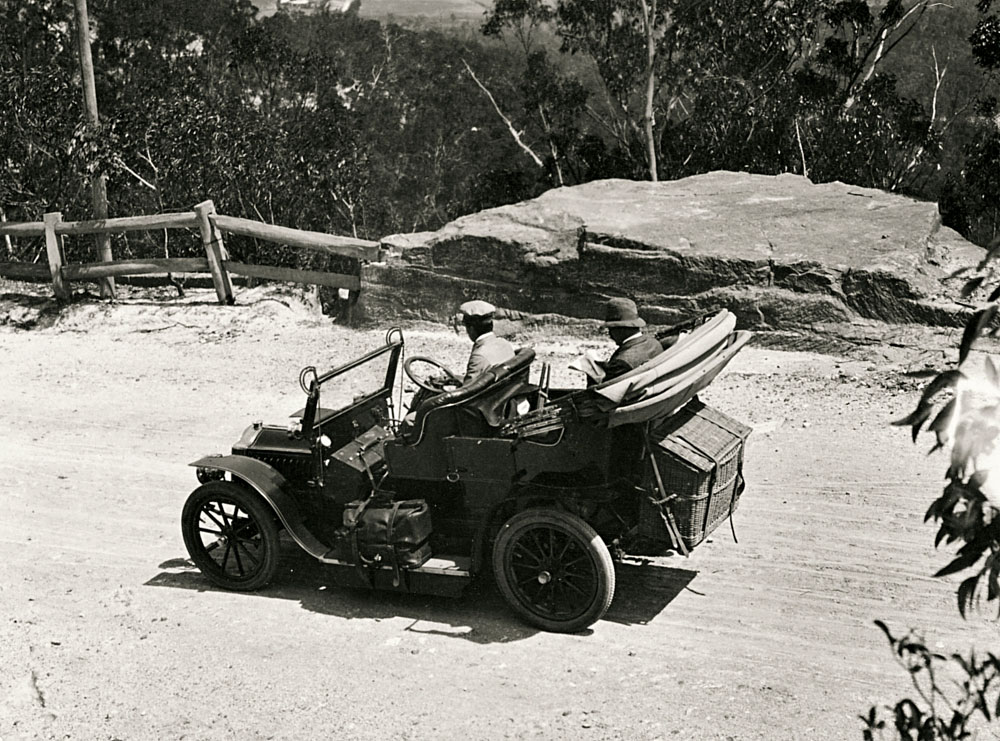
    Arthur Wigram Allen (Australian, 1894-1967) 'We left Medlow at 10.15 am & drove through Blackheath & Mt Victoria to Bathurst' Nd


    Arthur Wigram Allen (Australian, 1894-1967)
    We left Medlow at 10.15 am & drove through Blackheath & Mt Victoria to Bathurst
    Nd
    Mitchell Library, State Library of New South Wales


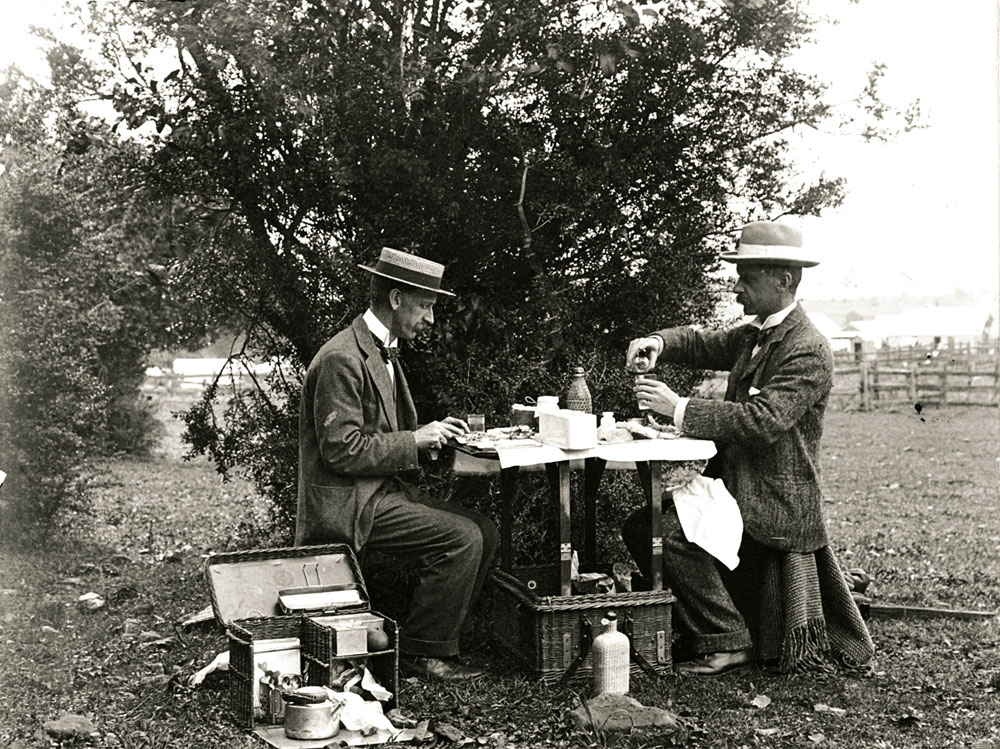
    Arthur Wigram Allen (Australian, 1894-1967) 'AWA & Boyce at lunch' Nd


    Arthur Wigram Allen (Australian, 1894-1967)
    AWA & Boyce at lunch
    Nd
    Mitchell Library, State Library of New South Wales


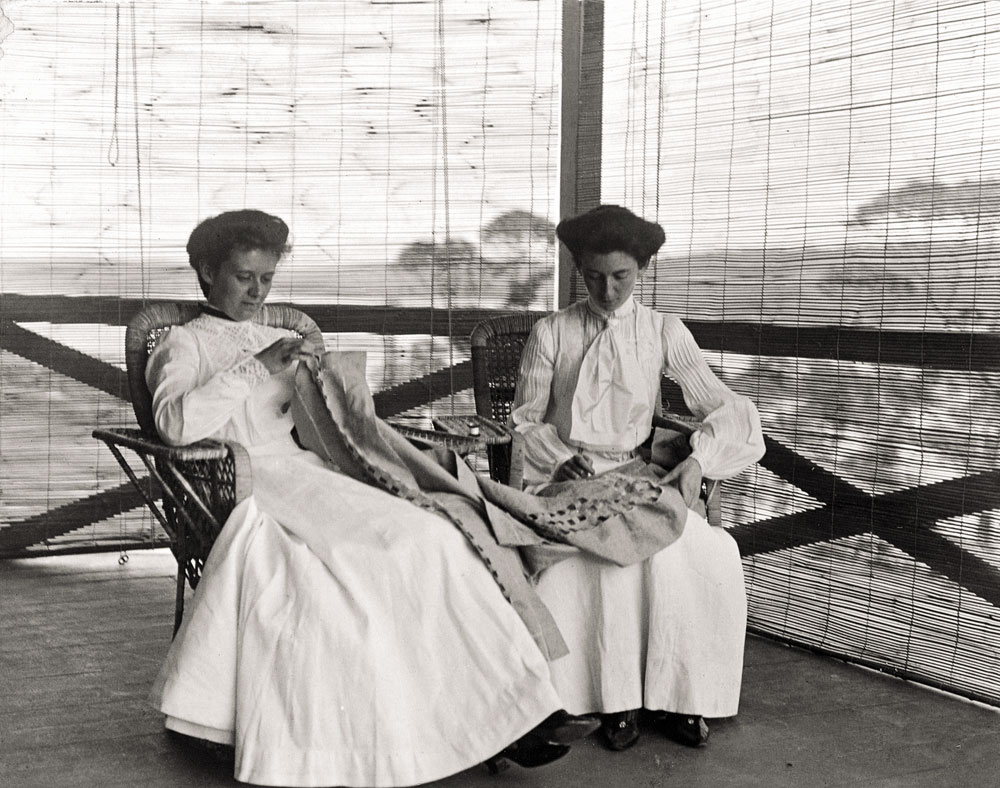
    Arthur Wigram Allen (Australian, 1894-1967) 'Kitty and Katha working at the drawn work' Nd


    Arthur Wigram Allen (Australian, 1894-1967)
    Kitty and Katha working at the drawn work
    Nd
    Mitchell Library, State Library of New South Wales


    Family and friends

    Arthur Allen spent many hours recording his home life and outings with family and friends. The Allens’ circle comprised a large extended family and a close-knit group of friends, who came and went as they liked and were always welcome at the various Allen households. They often stayed at the Allens’ properties on the coast and in country New South Wales, as did visiting celebrities, particularly those from the theatre.

    While the social and legal status of Australian women improved toward the end of the 19th century, the Allen girls, their cousins and a small group of friends were still taught by governesses. This in turn helped to foster close ties between the members of their social class.

    Sydney society among the wealthy classes was like a big, familiar club of relatives and friends, with a continual round of visiting, parties and picnics that also included, for example, visiting naval officers. There were also lively, large-scale social events organised to coincide with special occasions, such as the visit of the Duke of York in 1901, and charity fundraisers for causes in Australia and abroad, including annual Red Cross charity balls and local functions to support soldiers serving in the war.

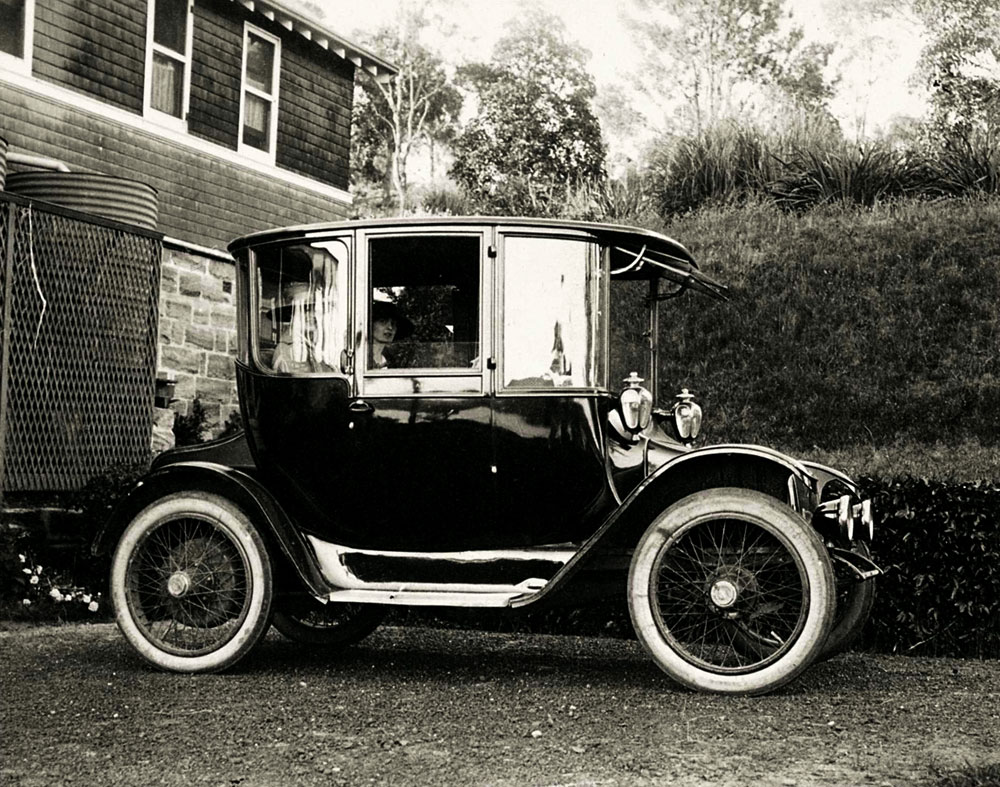
    Arthur Allen owned many cars but drove only one type – Detroit Electric broughams, one of which is now in the Powerhouse Museum, Sydney. Its batteries needed charging every 60 kilometres, but the recharging device was formidable.

    Text from the An Edwardian Summer website [Online] Cited 11/01/2020


    Arthur Wigram Allen (Australian, 1894-1967) 'Wedding Group at 'Merioola', Saturday 23rd December 1911. Wedding Group consisting of Lieutenant Knowles (best man), Joyce Pat and Kitty, Alex Leeper's two daughters Valentine and Molly [Kitty's half-sisters]' December 1911


    Arthur Wigram Allen (Australian, 1894-1967)
    Wedding Group at ‘Merioola’, Saturday 23rd December 1911. Wedding Group consisting of Lieutenant Knowles (best man), Joyce Pat and Kitty, Alex Leeper’s two daughters Valentine and Molly [Kitty’s half-sisters]
    December 1911
    PX*D596 Negative 240
    Mitchell Library, State Library of New South Wales


    Arthur Wigram Allen (Australian, 1894-1967) '11 November 1917 Mrs Frank Osborne and Miss Catterall wait in the back of one of Arthur Allens Detroit Electric broughams' 1917


    Arthur Wigram Allen (Australian, 1894-1967)
    11 November 1917 Mrs Frank Osborne and Miss Catterall wait in the back of one of Arthur Allens Detroit Electric broughams
    1917
    Mitchell Library, State Library of New South Wales


    An Edwardian Summer, a new book and an exhibition opening 11th December 2010 at the Museum of Sydney showcases for the first time an extraordinary collection of photographs that capture Sydney at the turn of the century at one of the most rapidly changing times in Australia’s history.

    A talented amateur photographer, lawyer and Sydney identity Arthur Wigram Allen was fascinated by the social and technological changes that occurred during his lifetime, 1862-1941. Allen created 51 albums now held by the State Library of NSW.

    In 1885 after the sudden death of his father and uncle and at the age of just 23, Allen was thrust into the role of heading up the family law firm founded by his grandfather George Allen, known internationally today as Allens Arthur Robinson. While Allen’s photographs span 1890-1934, the book and exhibition concentrate on the Edwardian years, 1890s-1915, a brief often overlooked but important period in Australia’s history that heralded a new century of significant inventions and social changes, including powered flight, the rise of the motorcar and a new federated Australia.

    Through Allen’s lens, we see the first mixed bathing on Sydney beaches, sporting events, pageants and processions, dramatic shipwrecks, the latest fashions as well as intimate family events such as motoring and harbour excursions and bush picnics. Meticulously captioned by Allen, his exquisitely personal and beautiful photographs capture a time of optimism and new ideas as Sydney emerged from the strict moral codes of the Victorian era.

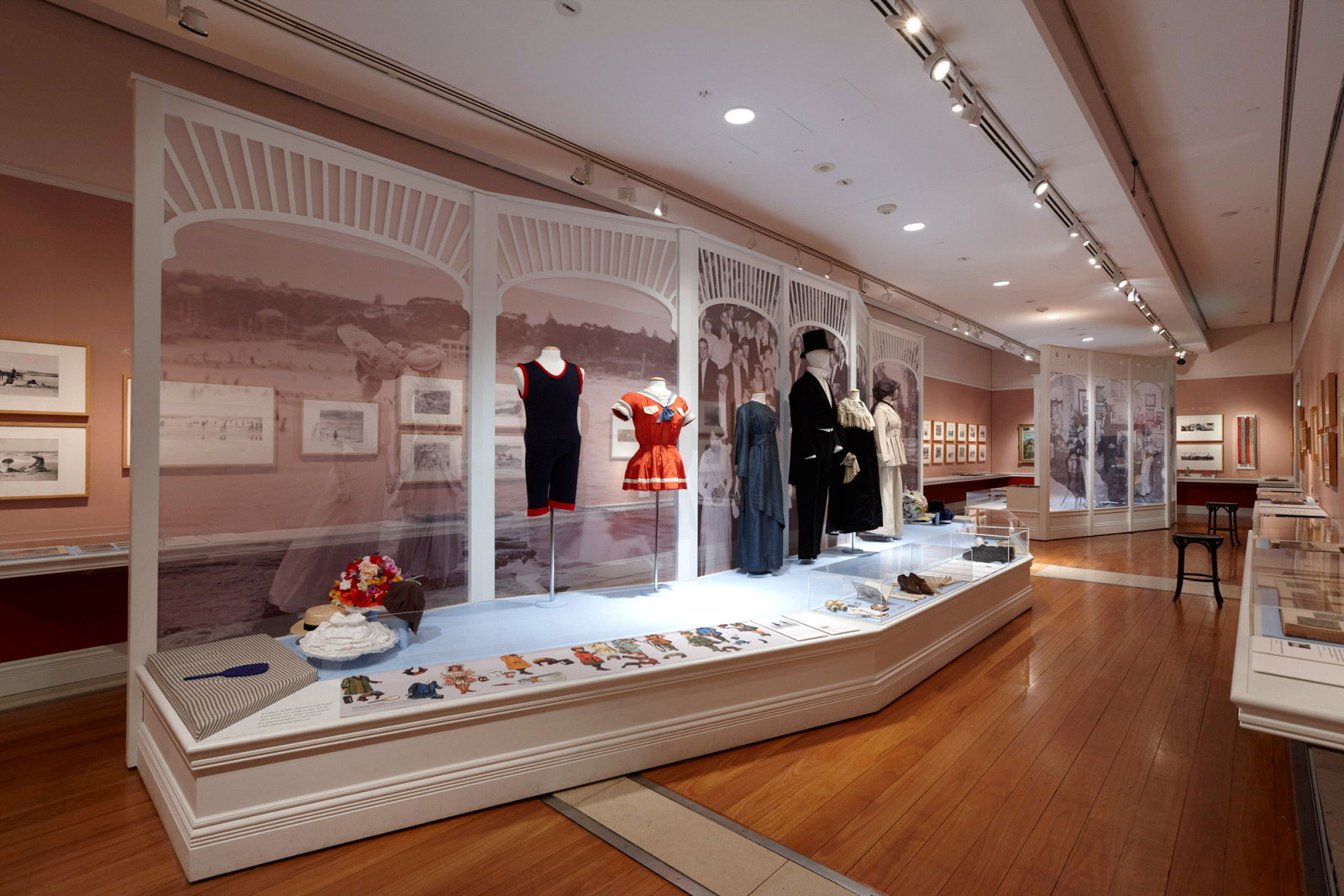
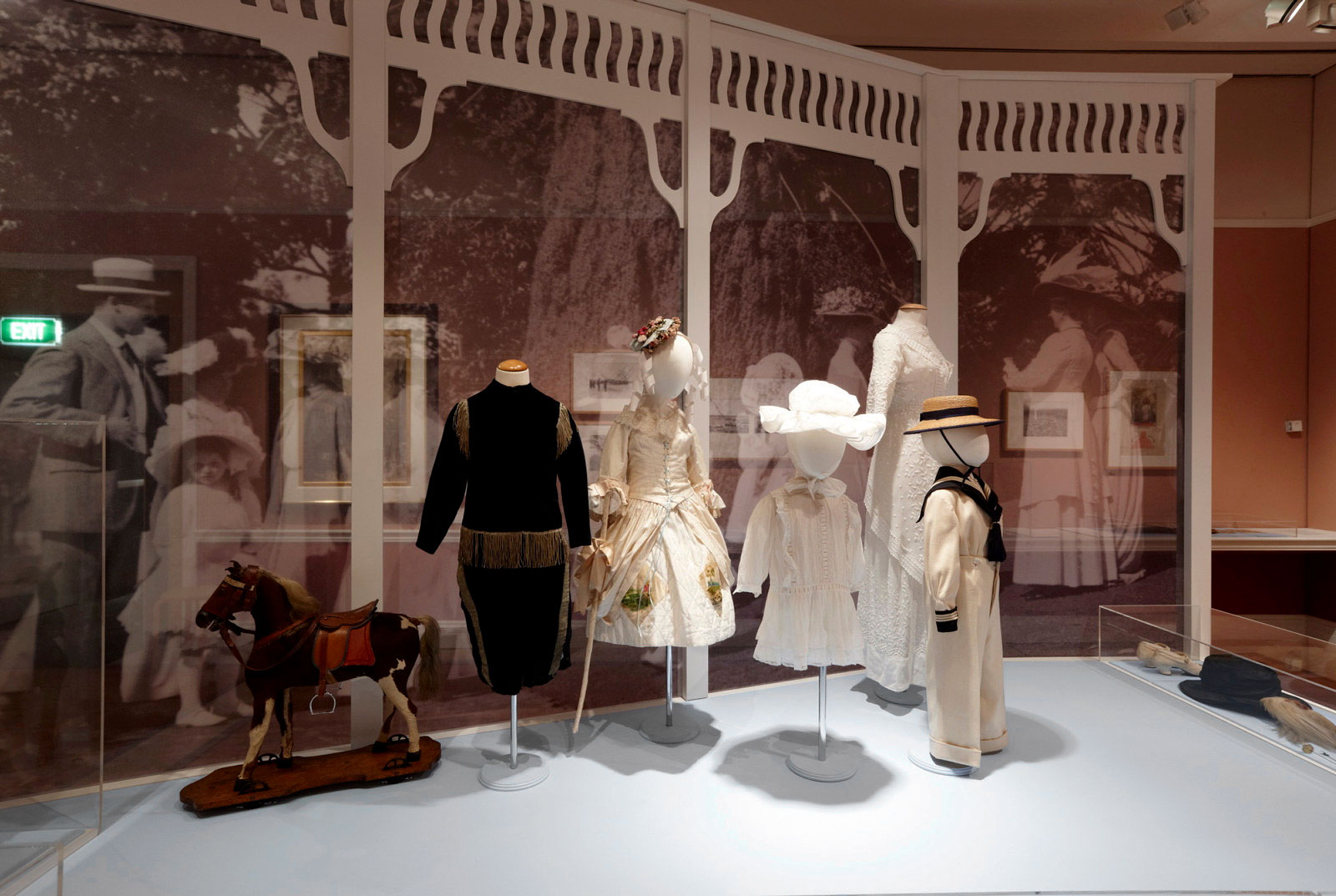
    Both the book and exhibition feature art works from the era by Australian artists including Arthur Streeton, Rupert Bunny, Grace Cossington Smith and Theodore Penleigh Boyd. The exhibition will also showcase items from the Historic Houses Trust collection and from the Powerhouse Museum, including examples of Edwardian fashion, children’s dress up costumes, jewellery and accessories and furniture.

    Text from the Sydney Museum website [Online] Cited 08/04/2011 no longer available online


     Sydney lawyer and identity Arthur Wigram Allen, a tirelessly enthusiastic photographer, was fascinated by the social and technological changes occurring during his lifetime. His talent for amateur photography produced extraordinary pictures that offer a fresh insight into the Edwardian years in Sydney.

    The Edwardian era was sandwiched between the great achievements of the Victorian age and the global catastrophe of World War I. The death of Queen Victoria in January 1901 heralded a new century of significant inventions and social changes, including powered flight, the rise of the motorcar and a new federated Australia.

    An Edwardian Summer will present a selection of Arthur Allen’s beautiful images, depicting intimate moments with family and friends, motoring and harbour excursions, theatrical celebrities, bush picnics, the introduction of surf bathing on Sydney beaches, processions, pageants and mass celebrations, and new freedoms in fashion. Most have never before been published, and they form an unrivalled personal pictorial record of these rapidly changing times.

    The exhibition will also include artworks by Rupert Bunny, Ethel Carrick Fox, Arthur Streeton and Grace Cossington Smith, examples of male and female fashion including evening and day wear, motoring ensembles and children’s dress-up costumes, jewellery and accessories, furniture and decorative embellishments characteristic of the Edwardian era.

    Text from the Sydney Museum website [Online] Cited 11/01/2020


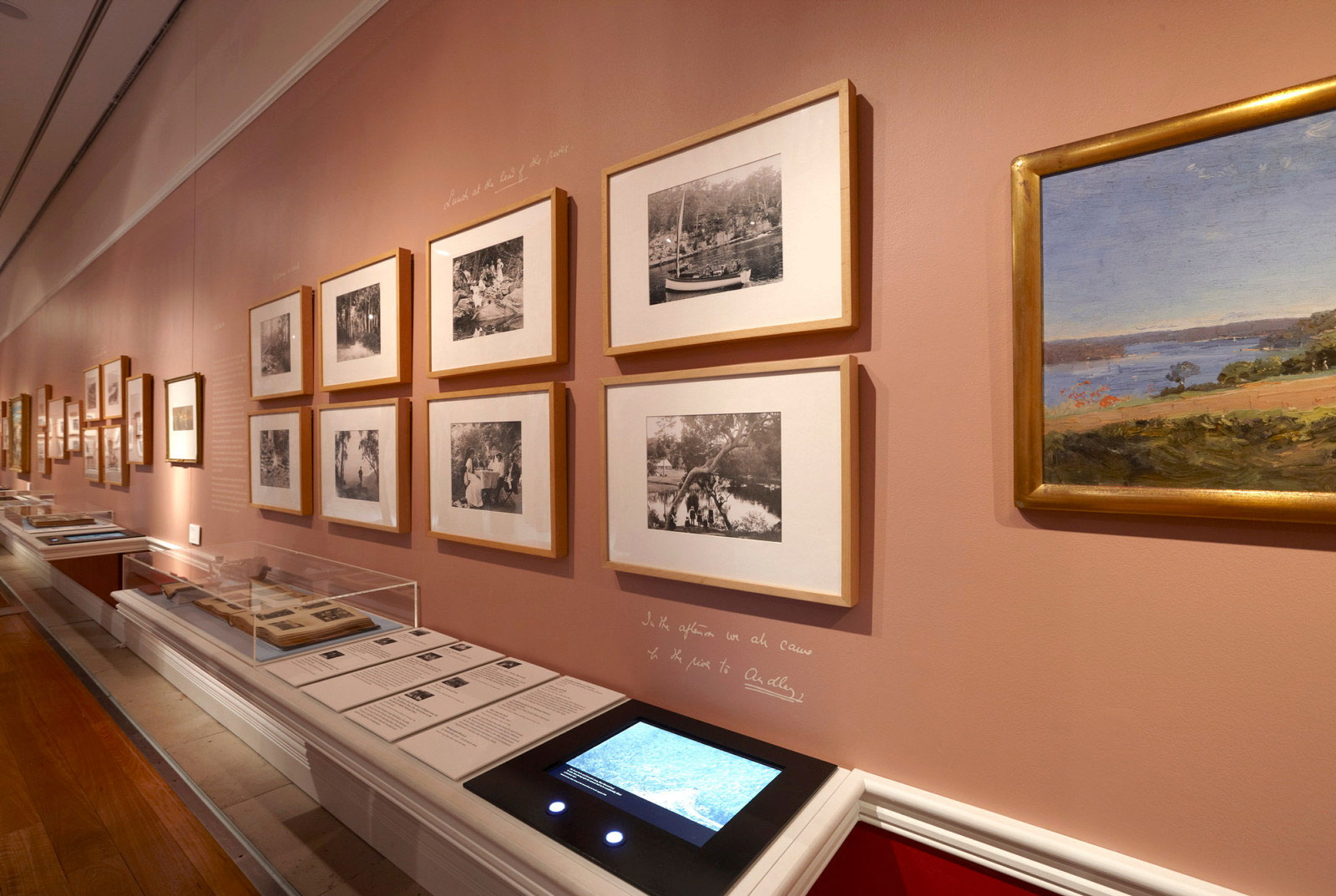
    Installation view of the exhibition 'An Edwardian Summer: Sydney & beyond through the lens of Arthur Wigram Allen' at the Museum of Sydney, December 2010 - April 2011
    Installation view of the exhibition 'An Edwardian Summer: Sydney & beyond through the lens of Arthur Wigram Allen' at the Museum of Sydney, December 2010 - April 2011
    Installation view of the exhibition 'An Edwardian Summer: Sydney & beyond through the lens of Arthur Wigram Allen' at the Museum of Sydney, December 2010 - April 2011


    Installation views of the exhibition An Edwardian Summer: Sydney & beyond through the lens of Arthur Wigram Allen at the Museum of Sydney, December 2010 – April 2011


    Arthur Wigram Allen

    Sydney lawyer and identity Arthur Wigram Allen, a tirelessly enthusiastic photographer, was fascinated by the social and technological changes occurring during his lifetime. His talent for amateur photography produced extraordinary pictures that offer a fresh insight into the Edwardian years in Sydney.

    Arthur Wigram Allen was born in 1862 into a large family of wealthy Sydney solicitors. One of 11 children and third in a line of six boys he attended Sydney Grammar School before moving to Melbourne in 1880 to study law at Trinity College at the University of Melbourne. In 1885 after the sudden death of his two elder brothers Arthur assumed control of the familíes Sydney firm and many business interests.

    Allen married Ethel Lamb in 1891 and they went on to have four children: Ethel Joyce, born in 1893, Arthur Denis Wigram in 1894, Ellice Margaret in 1896 and Marcia Maria in 1905.

    Fascinated by the new inventions of the era, he became interested in photography, purchasing the latest cameras. He soon proved to be a talented amateur photographer, capturing images of his family and friends, the city and its surrounds.

    Arthur died in 1941, aged 79; his photographs, taken from the 1890s through to 1934, provide a detailed photographic record of a changing society and the emergence of the great city of Sydney.

    A man of extraordinary vitality, Allen was fascinated by the times in which he lived, and tried to photograph everything he saw: family and friends; visiting ships and theatrical celebrities; bush picnics; the first mixed bathing on Sydney beaches; dramatic shipwrecks; processions, pageants and mass celebrations; coal miners; domestic life and fashion; house interiors; and sporting events. These photographs, contained in 51 albums, are now held by the Mitchell Library, State Library of New South Wales, and provide a view of the dramatic changes that took place in Edwardian Sydney.

    Arthur Allen’s photographs span 1890 to 1934, but the Edwardian Summer exhibition and book concentrate on those depicting the Edwardian years, a brief, often-overlooked but important period in Australia’s history. The photographs, most of them never published before, form an unrivalled personal pictorial record of these rapidly changing times.

    Text from the An Edwardian Summer website [Online] Cited 11/01/2020


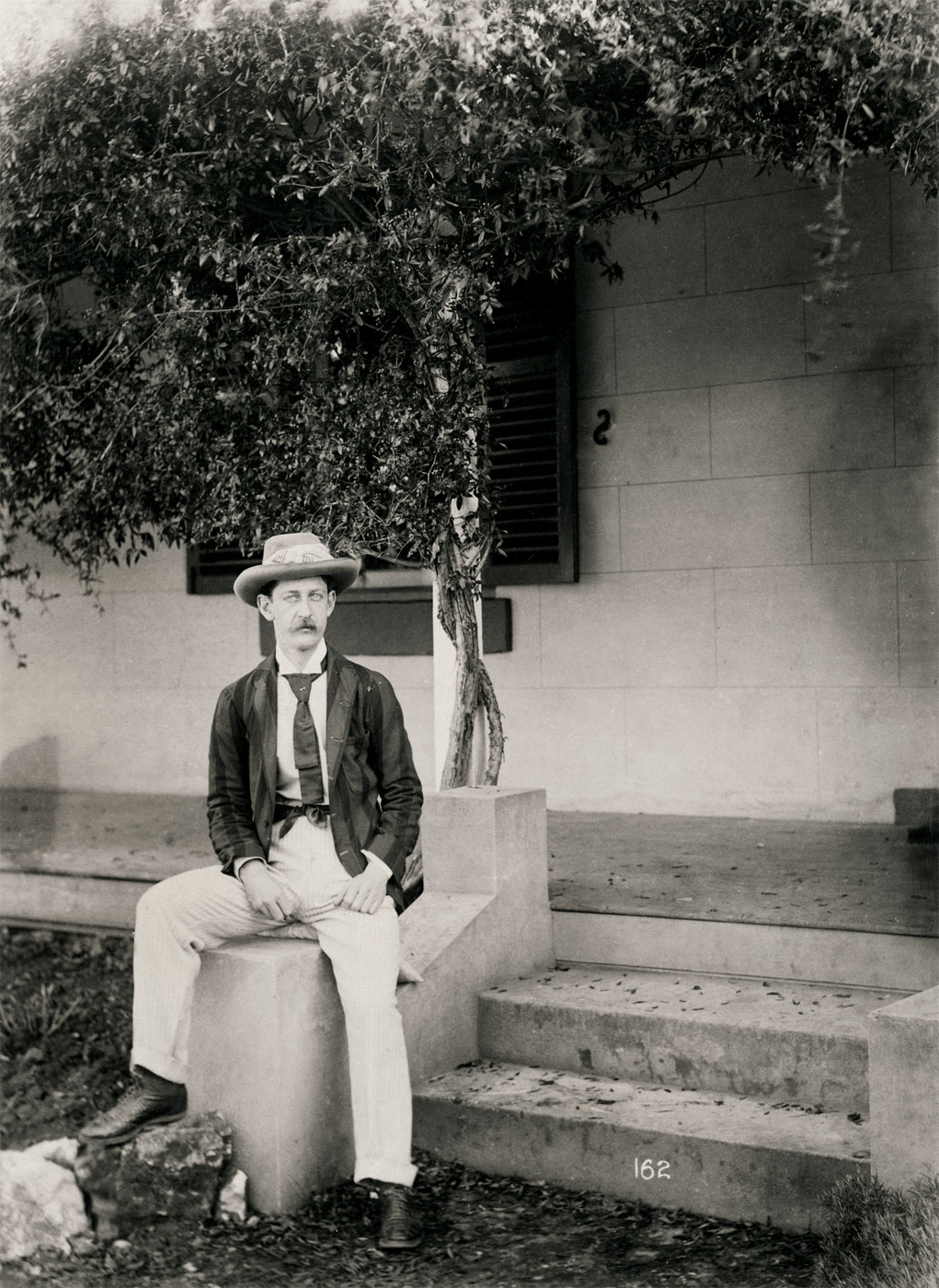
    Arthur Wigram Allen (Australian, 1894-1967) 'Self-portrait' August - October 1890


    Arthur Wigram Allen (Australian, 1894-1967)
    Self-portrait
    August – October 1890
    PX*D 562 negative 162​
    Mitchell Library, State Library of New South Wales


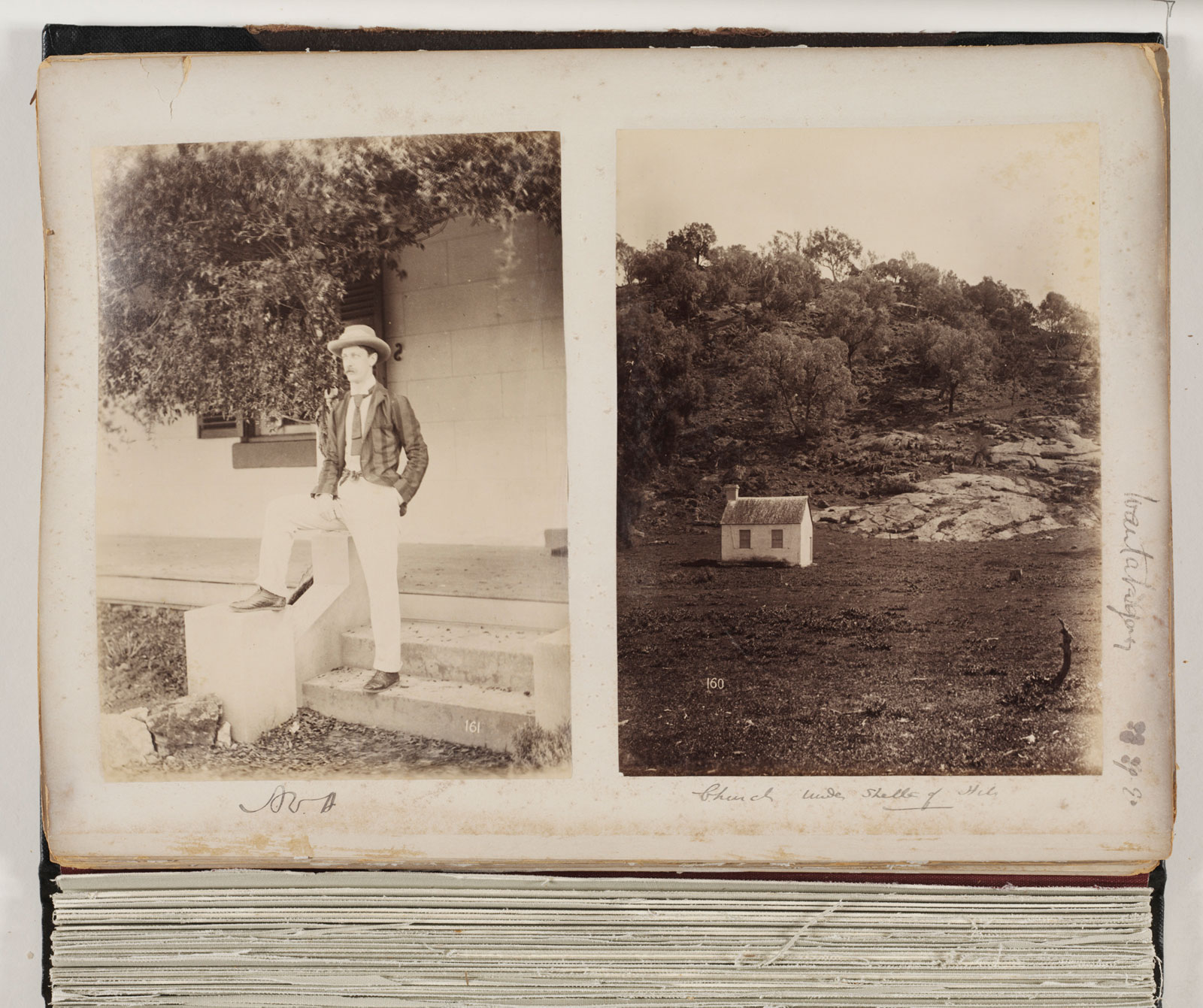
    Arthur Wigram Allen (or AWA as he often referred to himself) was a man of many interests and a talented amateur photographer, capturing images of family and friends, city and surrounds. He is seen here on the steps of Wantabadgery homestead, site of a famous siege in 1879 between police and the gang of bushranger Captain Moonlight.


    Arthur Wigram Allen (Australian, 1894-1967) 'Album 05: Photographs of the Allen family'
August 1890 - October 1890


    Arthur Wigram Allen (Australian, 1894-1967)
    Album 05: Photographs of the Allen family
    August 1890 – October 1890
    PX*D 562 FL576221 / FL576430
    Mitchell Library, State Library of New South Wales


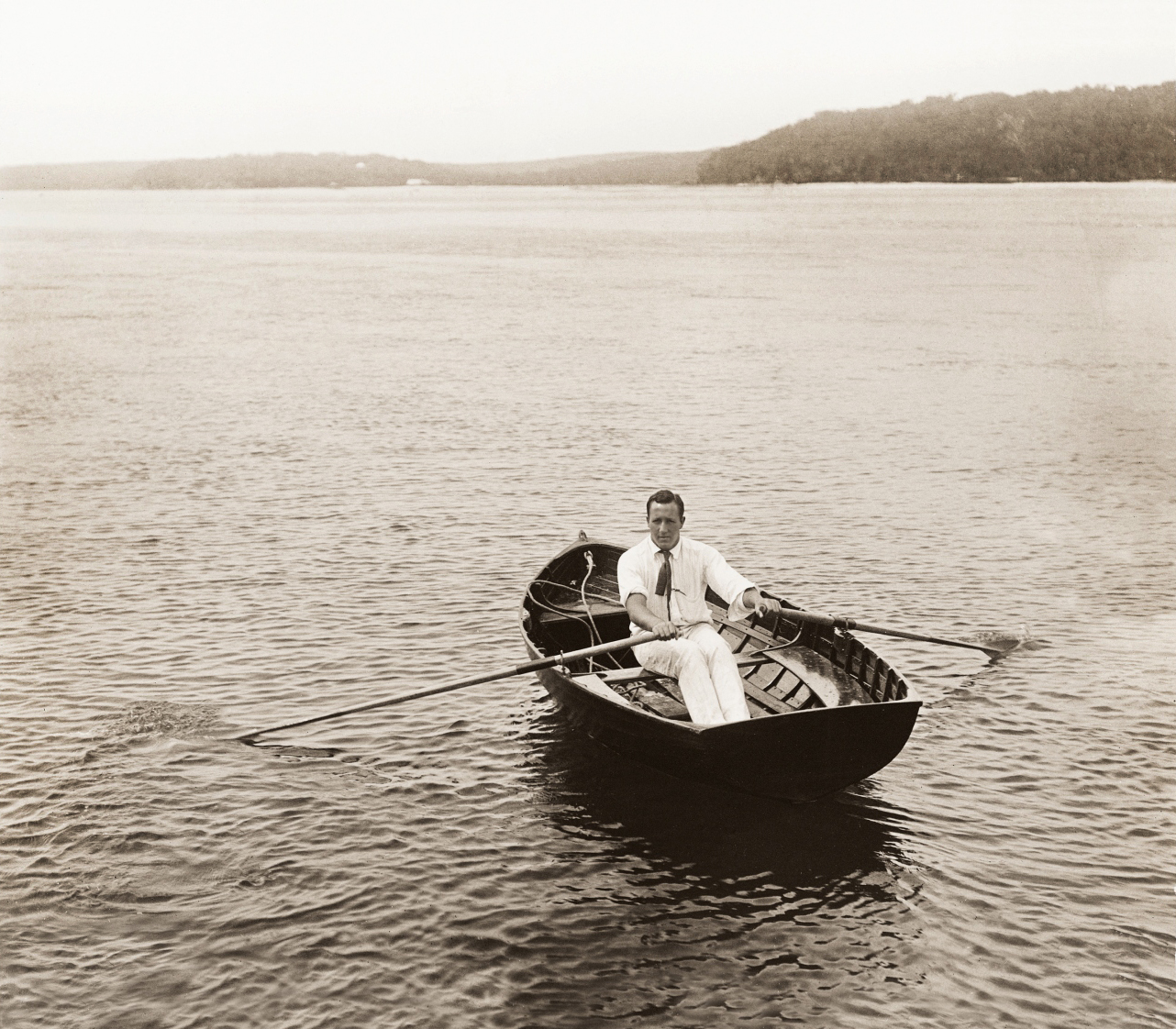
    Arthur Wigram Allen (Australian, 1894-1967) 'Cecil Healy in the dinghy, 'Port Hacking', October 16 1904' 1904


    Arthur Wigram Allen (Australian, 1894-1967)
    Cecil Healy in the dinghy, ‘Port Hacking’, October 16 1904
    1904
    PX*D 575 negative 858
    Mitchell Library, State Library of New South Wales


    Cecil Healy (1881-1918) found fame as the captain of Manly Surf Club and a champion swimmer; he won gold and silver medals in the 1912 Stockholm Olympics.

    Cecil Patrick Healy (28 November 1881 – 29 August 1918) was an Australian freestyle swimmer of the 1900s and 1910s, who won silver in the 100 m freestyle at the 1912 Summer Olympics in Stockholm. He also won gold in the 4 × 200 m freestyle relay. He was killed in the First World War at the Somme during an attack on a German trench. Healy was the second swimmer behind Frederick Lane to represent Australia in Swimming and has been allocated the number “2” by Swimming Australia on a list of all Australians who have represented Australia at an Open International Level.

    Text from the Wikipedia website


    Arthur Wigram Allen (Australian, 1894-1967) '[Roller skating on the verandah at Moombara]' Nd


    Arthur Wigram Allen (Australian, 1894-1967)
    [Roller skating on the verandah at Moombara]
    Nd
    PX*D575 negative 836
    Mitchell Library, State Library of New South Wales


    Roller skating on the verandah at Moombara, September 24, 1904. “Ethel and I and the children came down this afternoon for the Michaelmas holidays bringing Janet & Bob Rabete also. Immediately on arrival Joyce, Denis & Bob began to skate on the verandah and they used Janet & Margaret as horses to pull them along. Margaret also had some splendid rides on her tricycle”

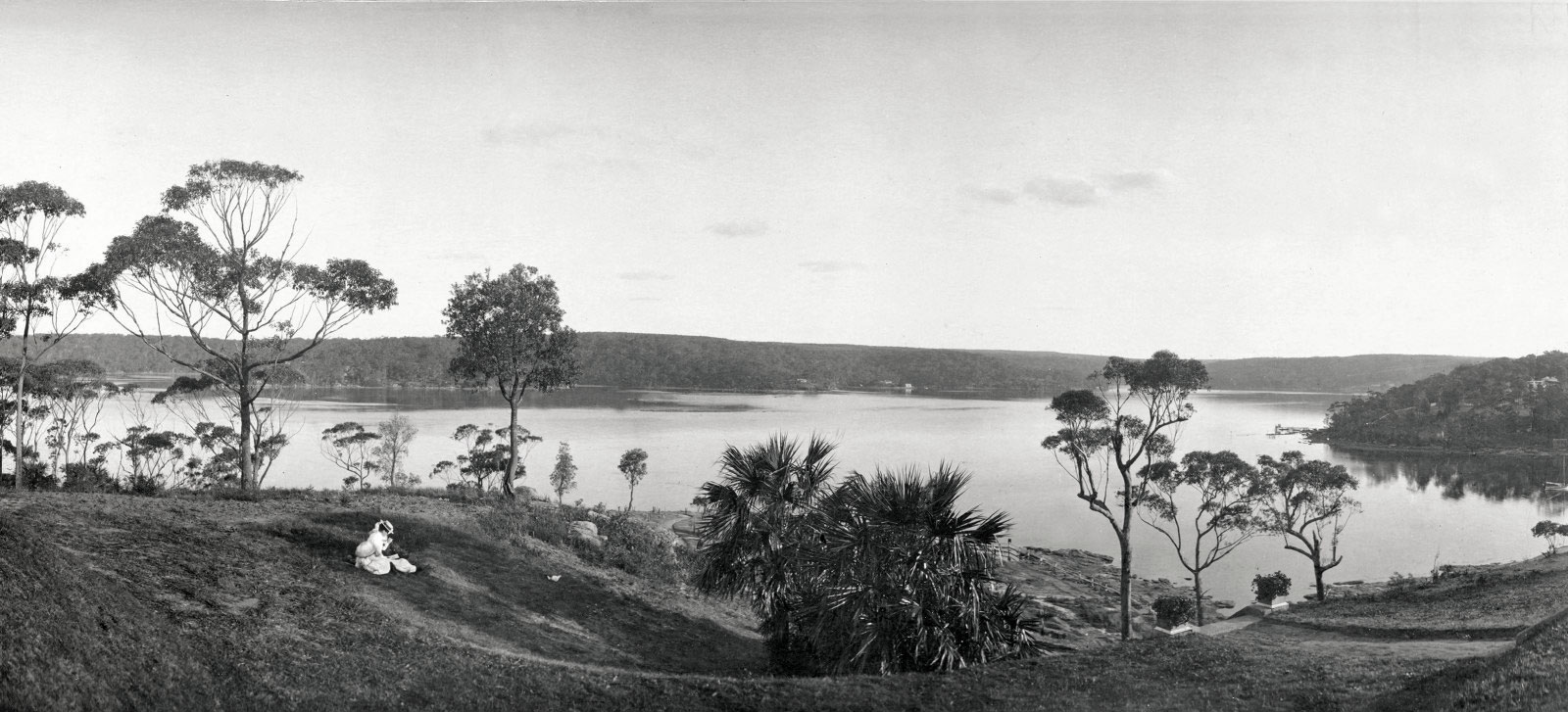
    Perhaps the greatest joy for the Allen children was the family’s waterfront holiday house, Moombara, where they played, swam, rode horses and roller skated around the verandah. Roller skating was a popular pastime of the era, with numerous rinks being built from the inner city to the beaches in the late 1880s. The Sydney Skating Club was formed in 1906 and skating displays were a common form of entertainment.

    Text from the An Edwardian Summer website


    Childhood

    The four Allen children had a happy home life. Their somewhat reserved Victorian mother was balanced by their gregarious father, and as in many affluent families of the era they had numerous domestic helpers, including a nurse, Florence, who remained with the family until the children were almost grown.

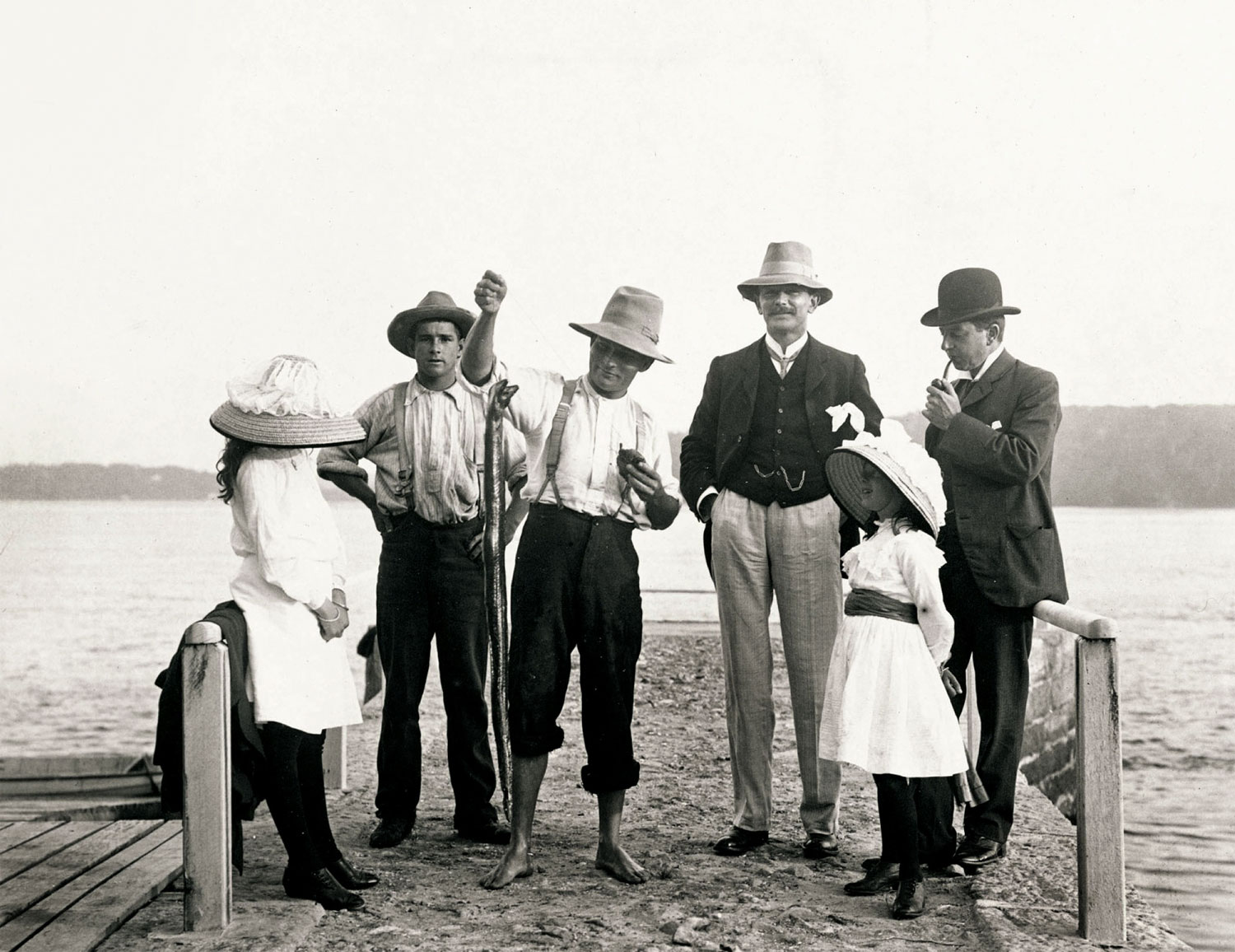
    The family enjoyed many excursions to local Sydney attractions as well as seaside visits, picnics and journeys further afield, including to their beach property at Port Hacking. The children celebrated birthdays with elaborate parties and were dressed in the latest fashions, which were still very much influenced by Britain. Little girls had to contend with layers of petticoats, profuse frills and, during the 1890s and 1900s, increasingly wide-brimmed hats; and neither boys nor girls could be seen in public without hats, gloves, coats and shoes.

    Public education in New South Wales, established in the 1860s, also grew steadily towards the century’s end. The three Allen girls, however, like many children from wealthier families, were tutored at home by a governess. The only boy, Denis, attended a private boarding school and was then sent to England to complete his schooling.

    Text from the An Edwardian Summer website


    Arthur Wigram Allen (Australian, 1894-1967) 'This afternoon Marcia Lamb [centre] and I took Lord Orford and Lady Dorothy Walpole [right], also Nell Knox [left] for a drive to South Head, Bondi and Coogee' February 22, 1911


    Arthur Wigram Allen (Australian, 1894-1967)
    This afternoon Marcia Lamb [centre] and I took Lord Orford and Lady Dorothy Walpole [right], also Nell Knox [left] for a drive to South Head, Bondi and Coogee
    February 22, 1911
    PX*D594 negative 4188
    Mitchell Library, State Library of New South Wales


    Brief stop on a drive to South Head, Bondi and Coogee, February 22, 1911. As Sydneysiders embraced the outdoors, they began picnicking at every opportunity, flocking to local beauty spots or favourite retreats such as Coogee Beach. Although the beach was thronged with bathers and spectators, Coogee’s headland provided a quieter spot for picnicking and, for Arthur Allen, taking photographs. Seen here is his camera equipment, including the box of his Guardia and Newman camera that took 5 x 4 inch (13 x 10 cm) photographic plates. The women are wearing elaborate motoring hats with scarves, which were also useful for securing their hats on a windy cliff to prevent their hair from blowing out of style.

    Text from the An Edwardian Summer website


    The beach

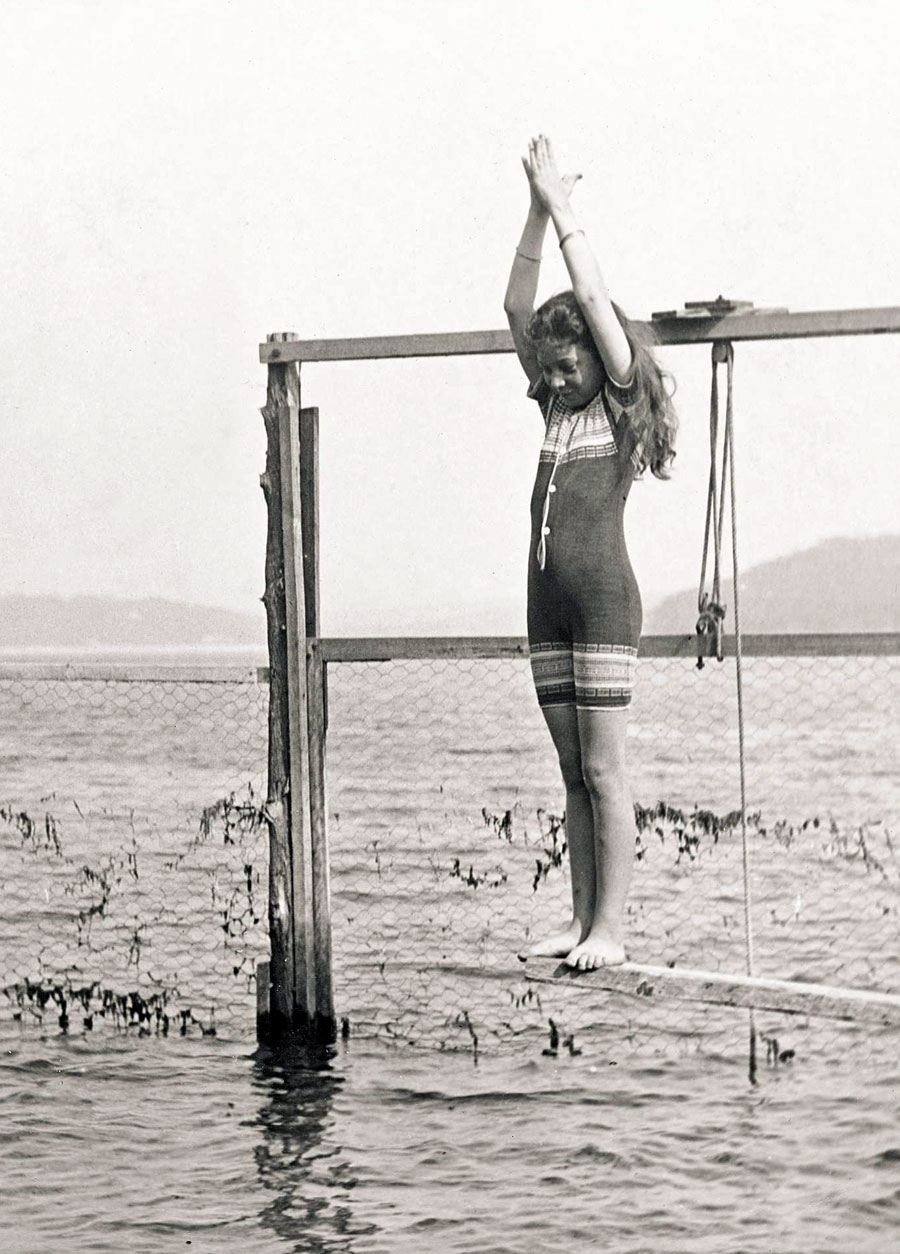
    The pleasures of sea-bathing had been discouraged in colonial Sydney on the grounds of both risk and indecency, and early laws prohibited bathing during daylight hours. People gradually defied the daylight bathing laws and by 1900 there were reports in the press of whole families bathing. In 1902, a male swimmer at Manly Beach entered the water at midday. Although arrested, he was not charged, and by 1903 new laws were introduced that permitted surf bathing but required neck-to-knee outfits and prohibited the sexes to mingle. Mixed bathing soon followed, but swimming attire continued to be stringently regulated for some years to come.

    Sydneysiders increasingly flocked to the coast to enjoy the cooling summer breezes and the glorious ocean views. The ‘pleasure palaces’ near many beaches provided popular entertainment for all ages. For picnics, families sought out Clark Island, quiet beaches around Middle Harbour or the popular Manly Beach.

    Bondi and Coogee beaches in Sydney’s east were connected to the city by public transport and provided the ideal day-trip for large crowds of visitors. With growing numbers of people taking to the surf, the dangers of beach bathing became apparent, and in 1906 the first surf lifesaving club in the world was founded at Bondi Beach.

    Text from the An Edwardian Summer website


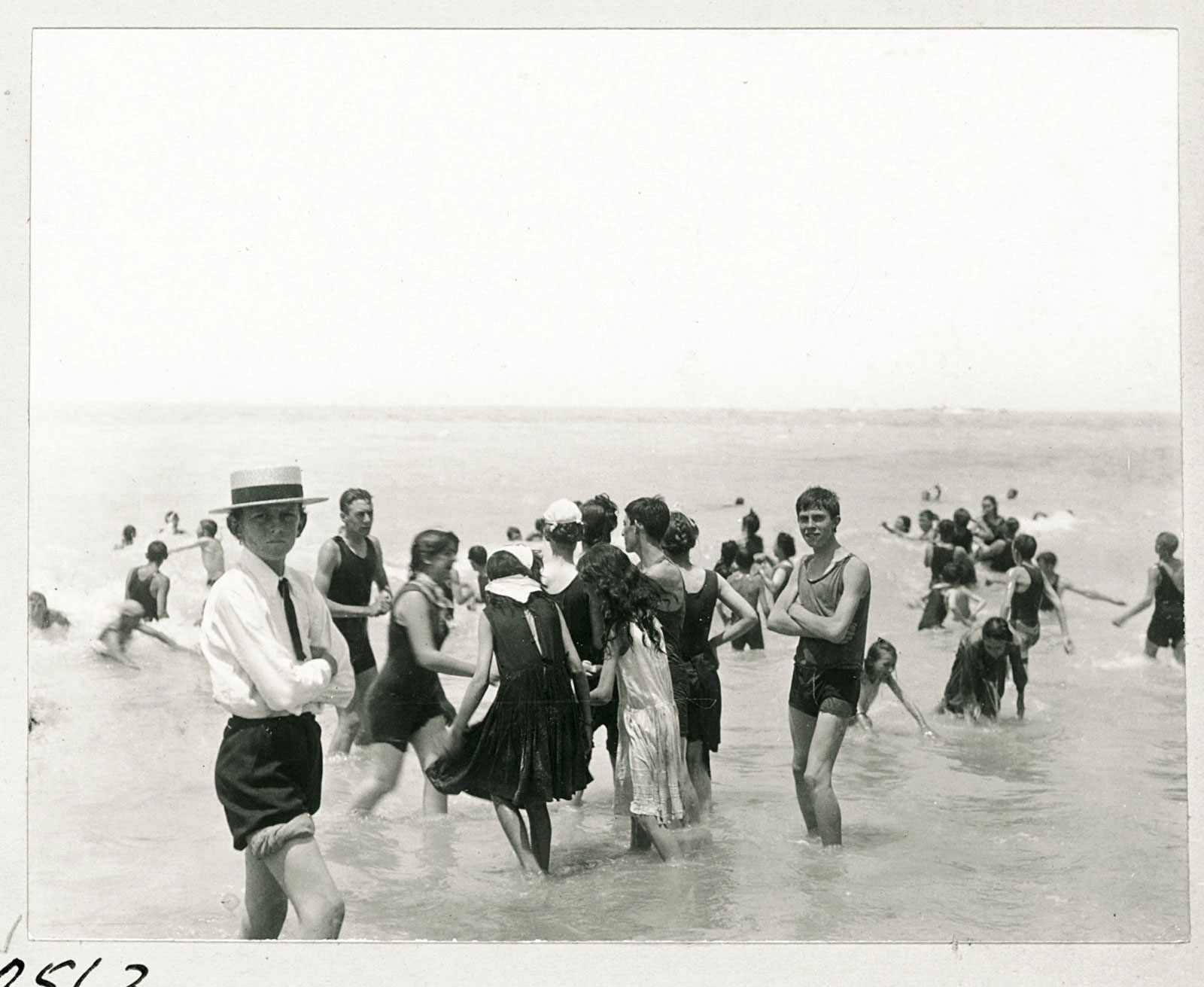
    Arthur Wigram Allen (Australian, 1894-1967) 'Sea bathing: Coogee'
January 27, 1900


    Arthur Wigram Allen (Australian, 1894-1967)
    Sea bathing: Coogee
    January 27, 1900
    PX*D 582 negative 2563
    Mitchell Library, State Library of New South Wales


    The immense and immediate popularity of sea bathing: Coogee Beach on a summer’s day. The boy in the tie and straw boater contrasts with the enthusiastic swimming groups clad in simple black singlets and shorts or cut-down dresses. In truth, most are just paddling, as few had learnt to swim properly.


    Arthur Wigram Allen (Australian, 1894-1967) 'Wonderland city near Bondi' December 26, 1906


    Arthur Wigram Allen (Australian, 1894-1967)
    Wonderland city near Bondi
    December 26, 1906
    PX*D580 negative 2002
    Mitchell Library, State Library of New South Wales


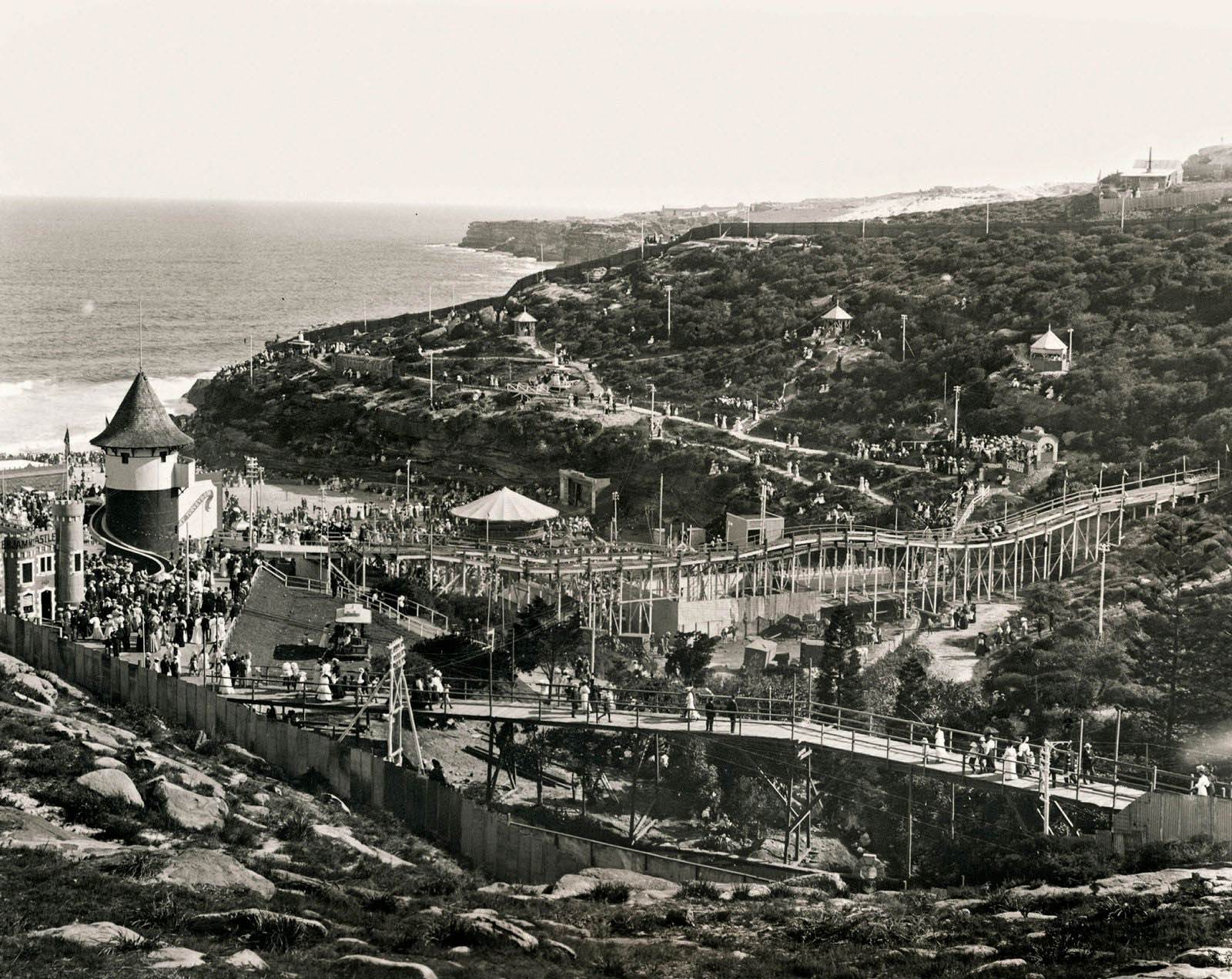
    Wonderland city near Bondi (there were 26 000 people there today). Wonderland city, a large amusement park, the Royal Aquarium and Pleasure Grounds at Tamarama near Bondi, December 26, 1906. By 1901, Bondi Beach was already a fashionable tourist destination. A tramline had been built to the beach in 1894, and a large amusement park, the Royal Aquarium and Pleasure Grounds, had opened at nearby Tamarama in 1887. Wonderland City – promoted as ‘Sydney’s Great Playground’ – opened in December 1906, also at Tamarama. Described as the Coney Island of Australia, its 50 major attractions were ‘designed by artists in architecture and landscape gardening’, with ‘no expense spared in achieving the highest standard of excellence’.1 The wooded slopes featured pleasure palaces, brightly coloured sideshows, a switchback (roller-coaster), scenic railway, slippery dips and underground rivers.

    1/ Caroline Mackaness (ed.), An Edwardian Summer: Sydney and Beyond through the Lens of Arthur Wigram Allen, Historic Houses Trust, Sydney, 2010

    Text from the An Edwardian Summer website


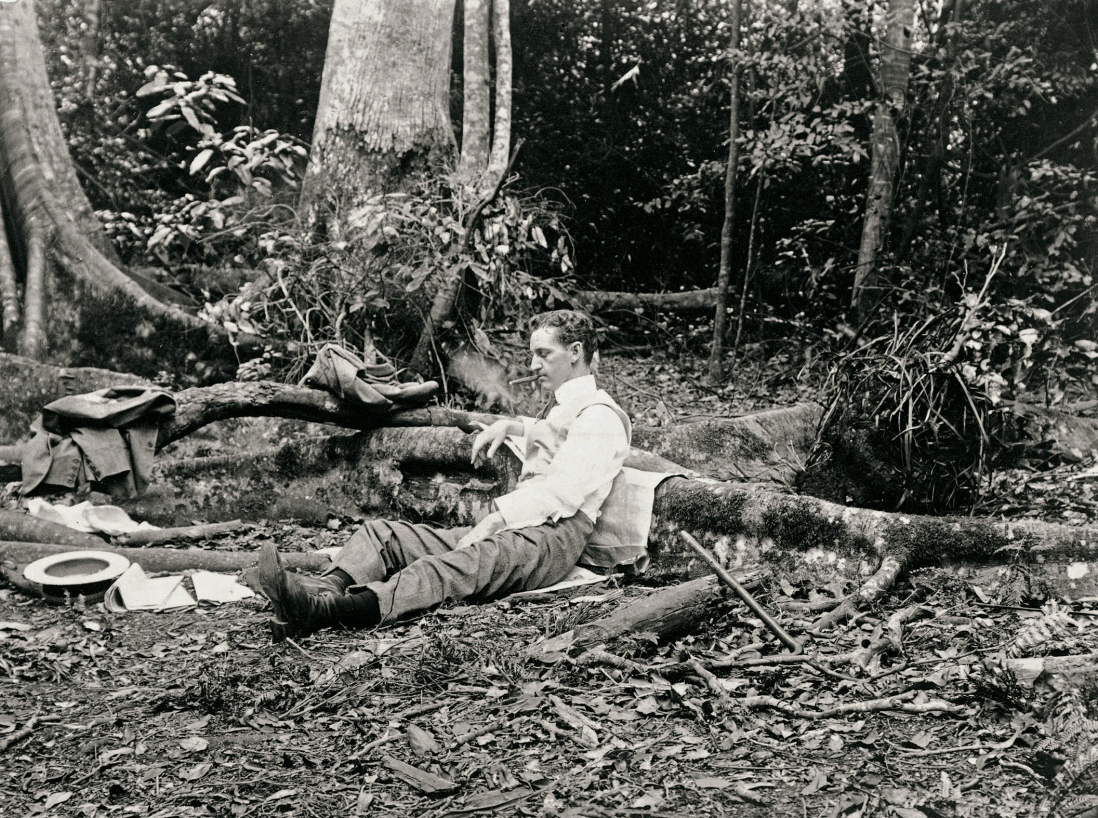
    Arthur Wigram Allen (Australian, 1894-1967) 'Walter resting after lunch' November 19, 1898


    Arthur Wigram Allen (Australian, 1894-1967)
    Walter resting after lunch
    November 19, 1898
    PX*D566 negative 3649
    Mitchell Library, State Library of New South Wales

    Rex Walter and I went to day to Bulli mainly to see some land which had been offered to us to purchase but also to show Walter (Who had never been to Illawarra) the scenery. We lunched at the fig tree not far from the Pass Road at the Bulli “B” pit.


    Renowned for its beauty, the Illawarra district was home to towering forests of turpentine and fig trees and tangled, dense stands of ferns and cabbage palms, tinted by the conspicuous red flowers of the Illawarra flame tree. Arthur Allen, his brother Walter and brother-in-law Rex travelled in a horsedrawn wagonette to Bulli, a small coal-mining town in the northern Illawarra, via the steep Bulli Pass road, which was built in 1867. The journey down the Bulli Pass afforded many spectacular views of the south coast.

    Text from the An Edwardian Summer website


    The bush

    In the later 19th century, city dwellers’ attitudes to the Australian bush changed. Formerly a foreign wilderness, it now became a place of Arcadian bliss, offering something peculiarly Australian and very different from the more familiar urban landscapes.

    Nationalism increased in the 1890s, and with it the Australian bush legend was born. Artists such as Tom Roberts and Frederick McCubbin created nostalgic bush scenes, depicting rural life as a simplistic and uniquely Australian ideal. Writers such as Banjo Paterson and Henry Lawson fashioned similar impressions in poetry and prose, strengthening the link between the bush and the Australian national identity.

    By the early 1900s, the attributes of bush life were seen as an intrinsic part of the nation’s greatness. Bush characters were imbued with the same pioneering qualities as the diggers on the goldfields. By World War I these characteristics would be identified as uniquely Australian traits in our soldiers.

    Expanded road and railway networks in the second half of the 19th century opened the bush to city visitors. Roads were cut to link sights of interest, and clear tracks were carved into the bush to allow access to vantage points. Swathes of descriptive tourist guides promoted the state’s many health, holiday and tourist resorts.

    Text from the An Edwardian Summer website


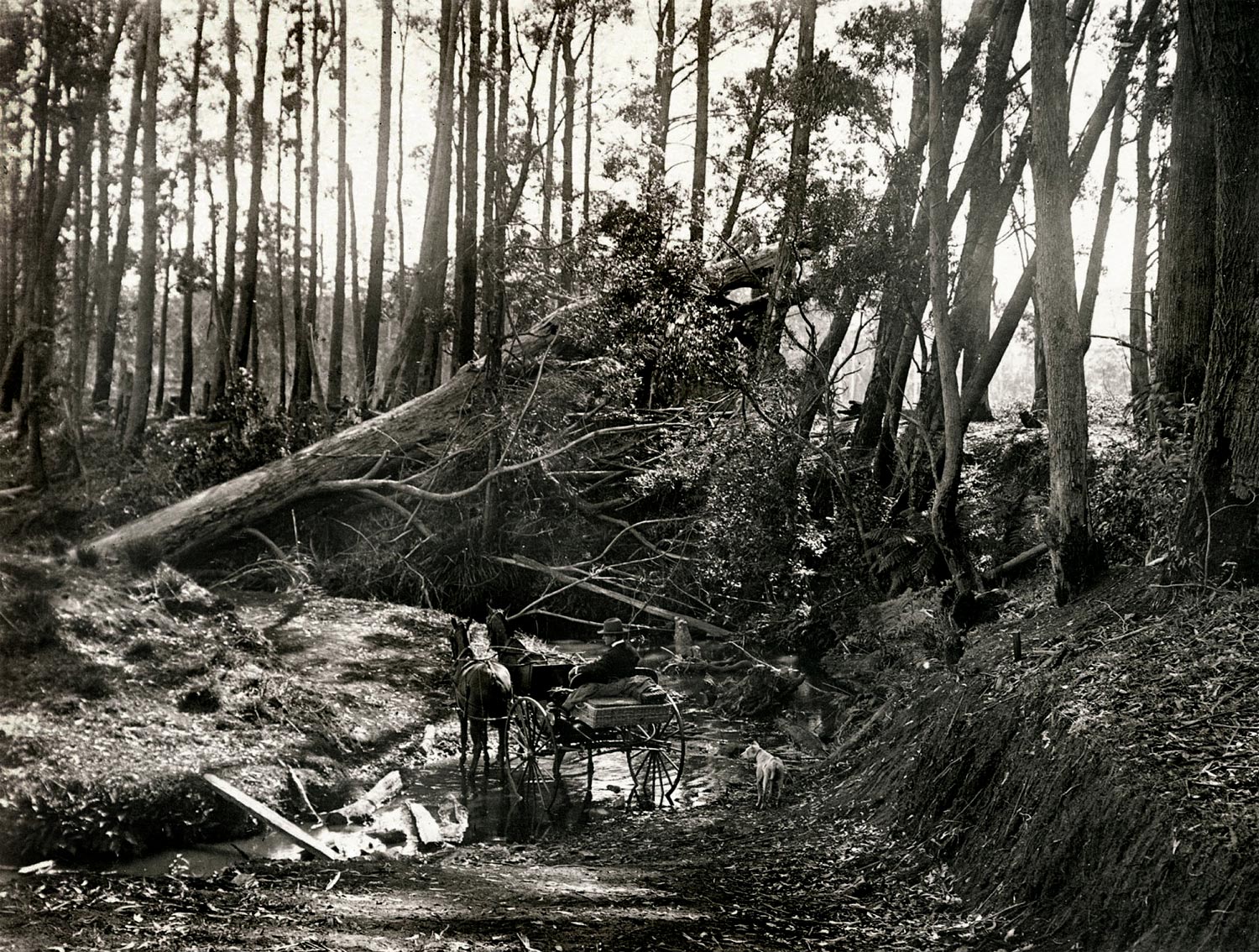
    Arthur Wigram Allen (Australian, 1894-1967) 'Crossing a creek, Belmore Falls, south of Robertson, on the edge of the Illawarra escarpment' February 13, 1899


    Arthur Wigram Allen (Australian, 1894-1967)
    Crossing a creek, Belmore Falls, south of Robertson, on the edge of the Illawarra escarpment
    February 13, 1899
    PX*D567 negative 3822
    Mitchell Library, State Library of New South Wales


    The Belmore Falls, south of Robertson, are on the edge of the Illawarra escarpment at the headwaters of Barrengarry Creek. They cascade into the Barrengarry Creek Valley, with the main fall dropping a spectacular 78 metres. A road from Robertson was cut through the scrub in 1887, making the falls accessible to tourists, who had been arriving in increasing numbers since the Southern Highlands railway to Mittagong was opened in 1867. The picturesque scenery and cooler climate of the Southern Highlands had made the region a popular summer holiday retreat for well-to-do Sydneysiders. Guesthouses and country homes were built from the 1870s, encouraging the expansion of road networks to connect various sights of interest.

    Text from the An Edwardian Summer website


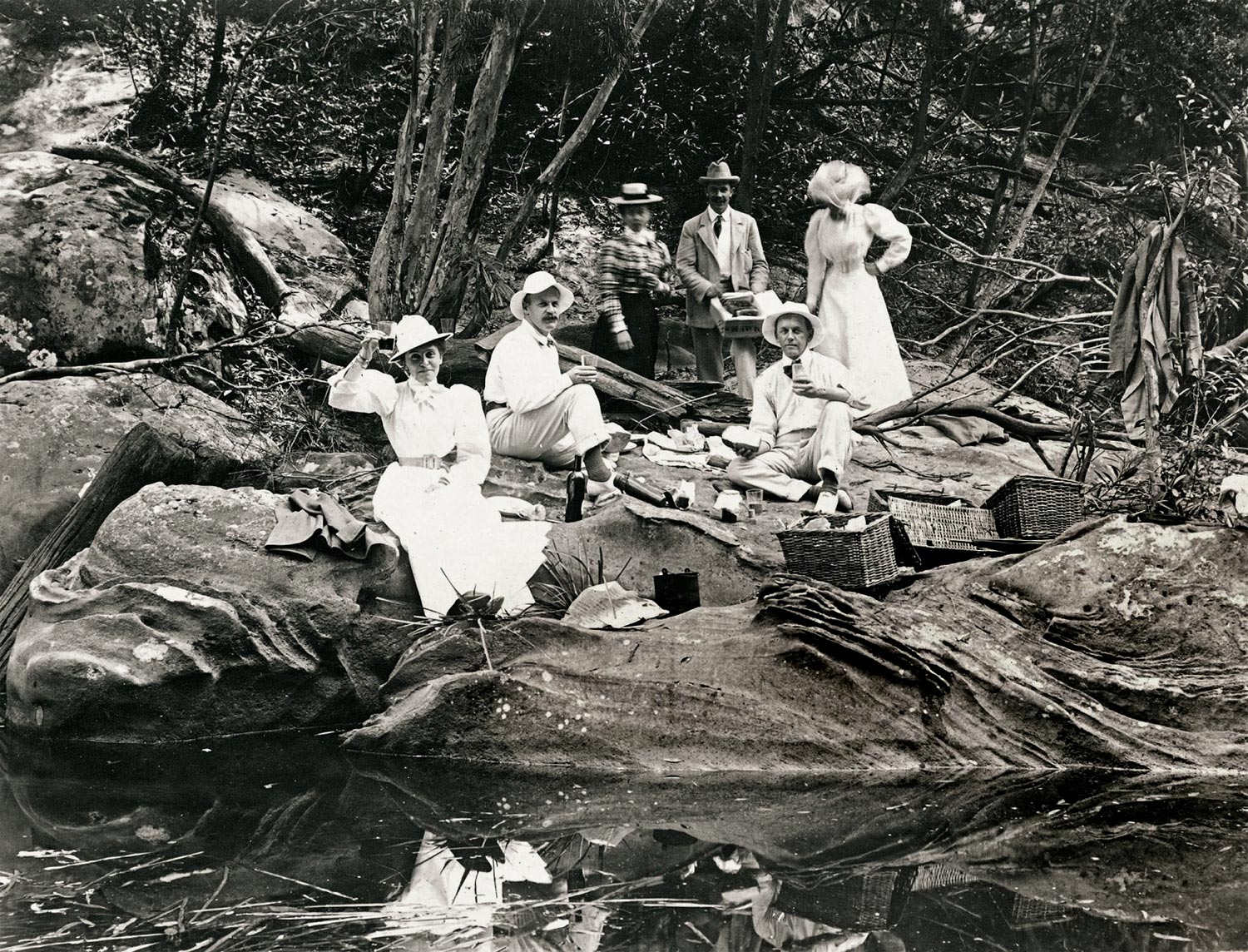
    Arthur Wigram Allen (Australian, 1894-1967) '"Lunch at the head of the river" Royal National Park. Frida, Herbert, Ethel, William Wate, Jack, Hilda' Nd


    Arthur Wigram Allen (Australian, 1894-1967)
    “Lunch at the head of the river” Royal National Park. Frida, Herbert, Ethel, William Wate, Jack, Hilda
    Nd
    PX*D566 negative 3656
    Mitchell Library, State Library of NSW, November 26, 1898


    In 1879, an area 32 kilometres south of Sydney was dedicated as Australia’s first national park. It could be reached by road or rail, and swiftly became ‘a national pleasure ground’1 and a popular destination for Sydneysiders on a day-trip. Picnic sites were fashioned throughout the park, rustic bridges and furniture decorated the landscape and imported flora and fauna enhanced the native scenery. By 1886 a boatshed and jetties had been established, enabling visitors to hire boats and explore the park via its waterways. Parties of ladies and gentlemen favoured the freshwater river above the dam, rowing to suitable locations for a relatively informal picnic on the rocky banks by the water.

    Text from the An Edwardian Summer website


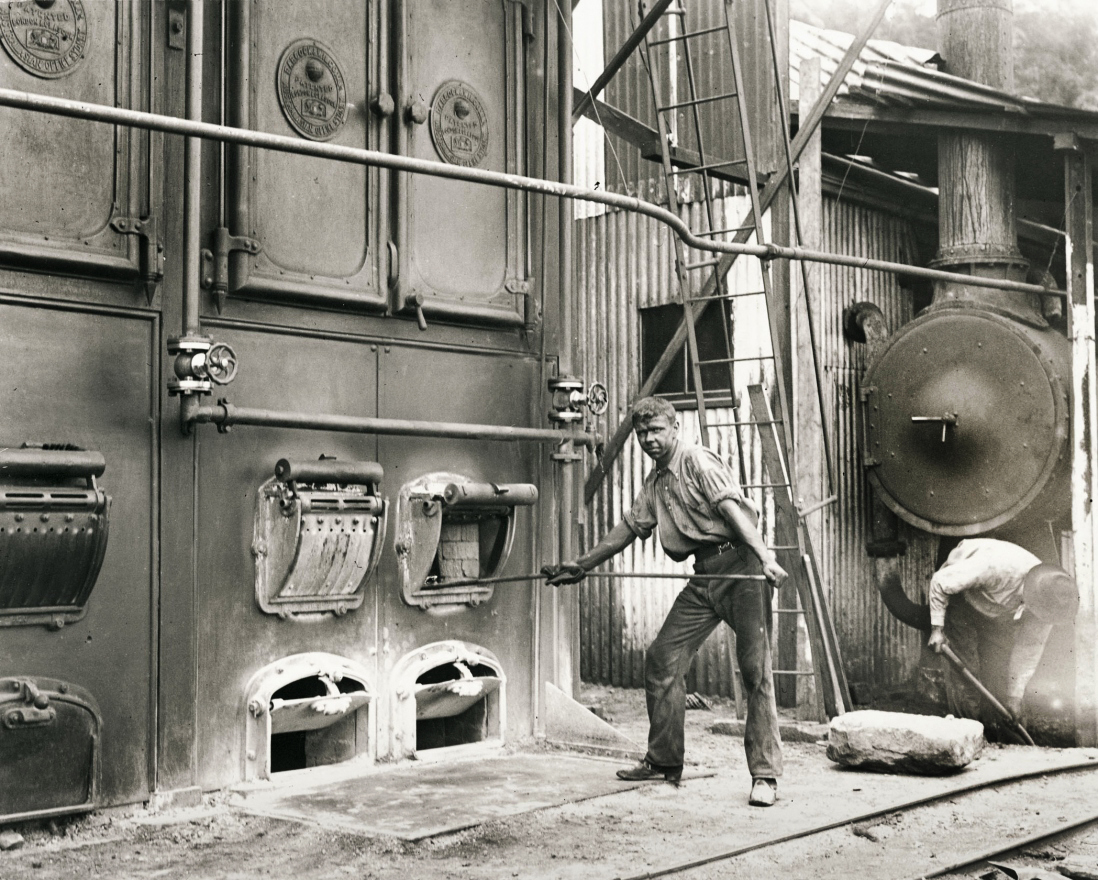
    Arthur Wigram Allen (Australian, 1894-1967) 'One of the new boilers just installed at the mine' November 22, 1907


    Arthur Wigram Allen (Australian, 1894-1967)
    One of the new boilers just installed at the mine
    November 22, 1907
    PX*D581 negative 2403
    Mitchell Library, State Library of New South Wales


    One of the new boilers just installed at the mine. November 22, 1907.

    Mt Kembla was one of a series of towns established in the Illawarra region in the mid 19th century after coal mining began at nearby Mt Keira in 1848. The first coal export from the Illawarra left Wollongong harbour in 1849 destined for Sydney. Coal was mined at Mt Kembla from 1865, and in 1880 the Mount Kembla Coal and Oil Company was formed, building a loading wharf at Port Kembla in 1883 and installing a rail link from Mount Kembla to Port Kembla in 1886. By 1900, the Illawarra mines employed 2300 men. In 1902 a disastrous gas explosion, caused by the naked flames of the miners’ torches, killed 94 men.

    Text from the An Edwardian Summer website


    Further afield

    During the Edwardian era, touring became immensely popular. With the introduction of better working conditions and shorter working hours many people had more leisure time, and took every opportunity to enjoy it. Even before the arrival of the motorcar, a growing love of the outdoors led the people of Sydney to flock to beauty spots in the Blue Mountains and Southern Highlands. Rural and waterside retreats around Sydney were as popular then as they are now, and the Allen family and their friends spent many weekends and vacations at their holiday houses at Port Hacking and Burradoo in the Southern Highlands.

    To escape the hectic and at times unhealthy city, Sydneysiders sought the more relaxed lifestyle offered in rural locations. People began to enjoy the physical pleasures of life outdoors and the benefits of sun and clean air, and this was reflected in the way they behaved and dressed away from the confines of the city.

    People who lacked their own transport could still enjoy tourism via the ever-expanding railway network. For those with private carriages and later motorcars, the ability to travel was only limited by the condition of the roads. The coming of the motorcar changed both the physical development of Sydney and the way people spent their leisure time, as they toured ever further.

    Text from the An Edwardian Summer website


    Arthur Wigram Allen (Australian, 1894-1967) 'Florence and the children on the lawn at Moombara'
July 1903


    Arthur Wigram Allen (Australian, 1894-1967)
    Florence and the children on the lawn at Moombara
    July 1903
    PX*D 572 negative 6
    Mitchell Library, State Library of New South Wales


    One of the most important people in the lives of the Allen children was their nurse, Florence, who remained with the family until the children were almost grown. She is shown here relaxing with her charges on the lawn at Moombara, the family holiday home that Arthur Allen purchased in 1903. Located between the unspoilt landscape of the Royal National Park and the beaches of Cronulla, it was built on a steep slope with a magnificent view over the river and pristine bushland. Soon after Allen bought the property, a second storey was added to accommodate the family and their many visitors. It was a popular place for family and friends to spend their honeymoon, and came to be nicknamed ‘Honeymoombara’.

    Text from the An Edwardian Summer website


    Arthur Wigram Allen (Australian, 1894-1967) ''Moombaha'. 5.45 pm on the wharf, Jacob having just caught a large conger eel, Little Turriell Bay at Port Hacking' December 7, 1904


    Arthur Wigram Allen (Australian, 1894-1967)
    ‘Moombaha’. 5.45 pm on the wharf, Jacob having just caught a large conger eel, Little Turriell Bay at Port Hacking
    December 7, 1904
    PX*D 575 negative 921
    Mitchell Library, State Library of New South Wales


    Moombara was located on Little Turriell Bay at Port Hacking. In 1901-02 nearly a third of a million tonnes of sand had been removed from the Simpsons Bay area of the estuary to create access to a fish hatchery in Cabbage Tree Basin. This helped to make the area more navigable for boating and better for fishing, both pastimes that the Allens and their friends enjoyed. With increasing numbers of residential subdivisions, the area’s waterways became popular for recreational use.

    Text from the An Edwardian Summer website


    Arthur Wigram Allen (Australian, 1894-1967) 'Joyce preparing to dive 15 January 1905' 1905


    Arthur Wigram Allen (Australian, 1894-1967)
    Joyce preparing to dive 15 January 1905
    1905
    Mitchell Library, State Library of New South Wales


    Out and about

    Edwardian Sydney offered entertainment for every taste. Apart from the large-scale parades, military displays and massed bands that accompanied public celebrations, annual events such as the Royal Easter Show and the Public Schools’ Amateur Athletics Association carnival drew crowds from all walks of life. Expanding tram and rail networks carried passengers to venues such as the Zoo (then at Moore Park), Sydney Stadium at Rushcutters Bay and the Glaciarium Skating Rink, which operated at Ultimo from 1907.

    Among the more popular leisure activities was horse racing, with racecourses as far afield as Randwick, Canterbury, Moorefield and Warwick Farm. The annual amateur picnic race held at Bong Bong, near Moss Vale, was as popular with Sydneysiders as with locals.

    The growth in international sporting competition also provided spectacles for large crowds. Due to Australia’s success in rowing, the world championship sculling contest was regularly held on the Parramatta River, while in 1909 the Davis Cup tennis tournament came to Rose Bay. Cricket, cycling, athletics and football were also popular, with the Sydney Cricket Ground a versatile venue.

    Text from the An Edwardian Summer website


    Arthur Wigram Allen (Australian, 1894-1967) 'Ladies double championship rowing race held on the Parramatta River between Abbotsford and Mortlake' Saturday 4 August 1906


    Arthur Wigram Allen (Australian, 1894-1967)
    Ladies double championship rowing race held on the Parramatta River between Abbotsford and Mortlake
    Saturday 4 August 1906
    PX*D 579 negative 1817
    Mitchell Library, State Library of New South Wales


    On Saturday 4 August 1906, eager onlookers crowded the banks of the Parramatta River and hundreds of launches, boats and steamers plied the water in anticipation of the veteran scullers’ handicap and the ladies’ double sculling championship, contested by a field of ten crews. One week earlier, Stanbury and Towns had competed for stakes of £500 each plus a lucrative share of the steamer takings, but on this day the ladies rowed for a more modest £20. On the 1.5-mile (2.4-km) course between Abbotsford and Mortlake, the Newcastle team of Mrs Hyde and Mrs Woodbridge narrowly beat Misses G and K Lewis of North Sydney for first place.


    Arthur Wigram Allen (Australian, 1894-1967) 'Joyce and Denis at the ostrich farm' 15 November 1903


    Arthur Wigram Allen (Australian, 1894-1967)
    Joyce and Denis at the ostrich farm
    15 November 1903
    PX*D 573 negative 580
    Mitchell Library, State Library of New South Wales


    Children hold baby Emus at Ostrich Farm at South Head, 15 November 1903. Joseph Barracluff’s Ostrich Farm at South Head was established in 1889, when ostrich feathers were a popular women’s fashion accessory for boas, hats and fans. Arriving in Australia from Lincolnshire in 1884, Barracluff originally established a small business selling feathers from a shop on Elizabeth Street, before setting up the farm with birds reportedly imported from South Africa and Morocco. A trip to Barracluff’s farm soon became a popular excursion, and patrons could select feathers to be cut directly from a flock of 100 birds. In 1901, as a memento of her visit, the women of Sydney presented the Duchess of Cornwall and York with a gold mirror and fan embellished with tortoiseshell and Barracluff’s feathers, grown and curled on site.


    Arthur Wigram Allen (Australian, 1894-1967) 'The 'Electra' … T. H. Kelly, Denis, Miss Kelly, Joyce, W. Kelly. The children's first experience of yachting Arthur Allen. The children's first experience of yachting' 14 April 1901


    Arthur Wigram Allen  (Australian, 1894-1967)
    The ‘Electra’ … T. H. Kelly, Denis, Miss Kelly, Joyce, W. Kelly. The children’s first experience of yachting Arthur Allen. The children’s first experience of yachting
    14 April 1901
    PX*D 571 negative 95
    Mitchell Library, State Library of New South Wales


    Yachting built up a strong following among the wealthy during the Edwardian years, with boats from the Royal Sydney Yacht Squadron regularly competing in organised races on the harbour. Joining Arthur Allen and his two elder children, Joyce and Denis, in this photo are members of the Kelly family: Thomas, William and their sister. Thomas Kelly was managing director of the family firm, the Sydney Smelting Company, and chairman of the Australian Alum Company; his brother William was a politician. Both brothers were considered dashing young men about town. The Kellys were keen yachtsmen and closely involved with Royal Sydney Yacht Squadron, founded in 1863.


    A day on the harbour

    Sydney’s waterways were the focus of both industry and pleasure in the Edwardian era. From its colonial foundations Sydney Cove had developed as the hub of a trading port and working harbour with a strong shipbuilding industry and other maritime trades.

    During the Edwardian years, full-rigged ships gradually disappeared from Sydney Harbour, and after the bubonic plague arrived in 1900, large areas of residential and commercial buildings around Darling Harbour, Millers Point and The Rocks were resumed by the government and rebuilt.

    By the early 1900s Circular Quay was dominated by ferry wharves and served as an interchange for all the traffic – pedestrian and vehicular – between Sydney and the north shore. This was the heyday of the harbour ferry, with commuter craft dominating the waters during peak hour. On weekends, the ‘great picnic trade’ ferried Sydney’s multitudes to the harbour’s pleasure destinations, many of which were owned and operated by the ferry companies.

    Other Sydneysiders preferred to spend a day on the water, enjoying a leisurely steamer excursion, messing about in a small boat or sailing a yacht. Sporting events provided a further form of entertainment, with annual yachting and rowing regattas held on the harbour.


    Arthur Wigram Allen (Australian, 1894-1967) 'Another who is not quite so sure' Nd


    Arthur Wigram Allen (Australian, 1894-1967)
    Another who is not quite so sure
    Nd
    Mitchell Library, State Library of New South Wales


    Arthur Wigram Allen (Australian, 1894-1967) 'The 'Euryalus' in dock' 17 August 1905


    Arthur Wigram Allen (Australian, 1894-1967)
    The ‘Euryalus’ in dock
    17 August 1905
    PX*D 577 negatives 1279
    Mitchell Library, State Library of New South Wales


    HMS Euryalus was the flagship of the Australian station of the Royal Navy between 1904 and 1905. The 144-metre armoured cruiser was built in England in 1901, and Arthur Allen photographed it in August 1905, while it was being overhauled in the Sutherland Dock at Cockatoo Island.[1] Soon afterwards the Euryalus was replaced by HMS Powerful, and in 1920 it was broken up in Germany. On its completion in 1890, the Sutherland Dock was the world’s largest dry dock. The island’s smaller Fitzroy Dock had been built by convicts between 1839 and 1847. Cockatoo Island became the Commonwealth Naval Dockyard in 1913 and shipbuilding continued there until the dockyard closed in 1991.


    Museum of Sydney
    cnr Bridge & Phillip Streets, Sydney

    Opening hours:
    Open daily 10am – 5pm

    Sydney Living Museums website

    An Edwardian Summer website

    LIKE ART BLART ON FACEBOOK

    Back to top

    Exhibition: ‘Alfred Stieglitz: the Lake George years’ at the Art Gallery of New South Wales, Sydney

    Exhibition dates: 17th June – 5th September, 2010


    Alfred Stieglitz (American, 1864-1946) 'Ford V-8' 1935 from the exhibition 'Alfred Stieglitz: the Lake George years' at the Art Gallery of New South Wales, Sydney, June - September, 2010


    Alfred Stieglitz (American, 1864-1946)
    Ford V-8
    1935
    Gelatin silver photograph
    19.5 x 24.3cm
    George Eastman House, part purchase and part gift from Georgia O’Keeffe


    Many thankx to Susanne Briggs and the Art Gallery of New South Wales for allowing me to publish the photographs in the posting. Please click on the photographs for a larger version of the image.


    “… much has happened in photography that is sensational, but very little that is comparable with what Stieglitz did. The body of his work, the key set – I think – is the most beautiful photographic document of our time.”


    Georgia O’Keeffe 1978


    The photographs Alfred Stieglitz (1864-1946) took around his summer house at Lake George, New York state, USA after 1915 are considered a major departure and dramatically influenced the course of photography. The desire to build a specifically ‘American’ art led Stieglitz to explore the essential nature of photography, released from contrivances and from intervention in print and negative. “Photography is my passion. The search for truth my obsession,” he would write in 1921.

    This major exhibition is the first in Australia of Stieglitz’s photographs. 150 are included and are amongst the very best Stieglitz ever printed. They are also the rarest. One third of the exhibition is being lent by the National Gallery of Art, Washington DC, which holds ‘the key set’ – selected by his lover, muse and wife, the artist Georgia O’Keeffe, and deposited there after Stieglitz’s death.


    Alfred Stieglitz (American, 1864-1946) ‘City of ambition’ 1911 from the exhibition 'Alfred Stieglitz: the Lake George years' at the Art Gallery of New South Wales, Sydney, June - September, 2010


    Alfred Stieglitz (American, 1864-1946)
    City of ambition
    1911
    Photogravure
    33.9 x 26.0cm
    George Eastman House, Museum purchase from Museum of Modern Art, New York


    Alfred Stieglitz (American, 1864-1946) 'Ellen Koeniger' 1916 from the exhibition 'Alfred Stieglitz: the Lake George years' at the Art Gallery of New South Wales, Sydney, June - September, 2010


    Alfred Stieglitz (American, 1864-1946)
    Ellen Koeniger
    1916
    Gelatin silver photograph
    11.1 x 9.1cm
    J Paul Getty Museum, Los Angeles


    Alfred Stieglitz (American, 1864-1946) 'Waldo Frank' 1920 from the exhibition 'Alfred Stieglitz: the Lake George years' at the Art Gallery of New South Wales, Sydney, June - September, 2010


    Alfred Stieglitz (American, 1864-1946)
    Waldo Frank
    1920
    Palladium photograph
    25.1 x 20.2cm
    Art Institute of Chicago, Alfred Stieglitz Collection


    Waldo David Frank was an American novelist, historian, political activist, and literary critic, who wrote extensively for The New Yorker and The New Republic during the 1920s and 1930s.


    Alfred Stieglitz (American, 1864-1946) 'Spiritual America' 1923


    Alfred Stieglitz (American, 1864-1946)
    Spiritual America
    1923
    Gelatin silver photograph
    11.7 x 9.2cm
    Philadelphia Museum of Art: the Alfred Stieglitz Collection 1949


    The photographs Alfred Stieglitz (1864-1946) took around his summer house at Lake George, New York state, USA after 1915 are considered a major departure and dramatically influenced the course of photography. The desire to build a specifically ‘American’ art led Stieglitz to explore the essential nature of photography, released from contrivances and from intervention in print and negative.

    ‘Stieglitz’s mature photographs from the 1910s onwards are free from any sense that photography must refer to something outside of itself in order to express meaning,’ said Judy Annear, senior curator photography, Art Gallery of New South Wales.

    This major exhibition is the first in Australia of Stieglitz’s photographs. 150 are included and are amongst the very best Stieglitz ever printed. They are also the rarest. One third of the exhibition is being lent by the National Gallery of Art, Washington DC, which holds ‘the key set’ – selected by his lover, muse and wife, the artist Georgia O’Keeffe, and deposited there after Stieglitz’s death.

    ‘Passionate and provocative; charismatic, verbose and intellectually voracious; a self described revolutionist and iconoclast with an unwavering belief in the efficacy of radical action; competitive, egotistical, narcissistic and at times duplicitous, but also endowed with a remarkable ability to establish a deep communion with those around him – these are but some of the adjectives that can be used to describe Alfred Stieglitz,’ said Sarah Greenough, senior curator of photographs, National Gallery of Art, Washington.

    Major loans are also coming from the J Paul Getty Museum, Los Angeles, Museum of Modern Art and Metropolitan Museum of Art, New York, Philadelphia Museum of Art, Art Institute of Chicago, and George Eastman House, Rochester amongst others.

    The exhibition begins with a selection of Stieglitz’s photographs from the 1910s including those that he took at his gallery 291 in New York City of artists and collaborators, including O’Keeffe. Stieglitz was a superb photographic printer and dedicated to aesthetics in publishing. A number of the later editions (from 1911-1917) of his publication Camera work – described as the most beautiful journal in the world – are included.

    Stieglitz’s portraits grew steadily in power in the 1910s and 20s, and continued to be a major part of his photographic practice. He would sometimes photograph his subjects over and over again and none more so than O’Keeffe, whom he met in 1916.

    Stieglitz photographed O’Keeffe for the first time in 1917. He continued to photograph her from every angle, clothed and unclothed, indoors and out until his last photographs from 1936/1937. In all there are more than 300 photographs of O’Keeffe which convey all the nuances of their relationship in that 20-year period. A selection is included.

    Stieglitz first visited Lake George in the 1870s with his parents. The visits slowed until the 1910s but from 1917 until his death he spent every summer there. Stieglitz’s ashes are buried at Lake George.

    The photographs of people, buildings, landscapes and skies that Stieglitz took at Lake George form a collective portrait of a place which has not been rivalled in the history of photography worldwide for its subtlety of feeling expressed in the simplest of terms.

    Stieglitz developed the idea for his cloud photographs in 1922 because he wanted to create images which carried the emotional impact of music and to disprove the idea being put about that he hypnotised his (human) subjects. The first title for the cloud photographs was simply Music: a sequence…; this was eventually superseded by Equivalent as Stieglitz believed that these photographs could exist as the visual equivalent to other forms of expression.

    Stieglitz changed the course of photography worldwide and has influenced major figures in photography from Minor White to Robert Mapplethorpe, Max Dupain to Tracey Moffatt and Bill Henson.”

    Press release from the Art Gallery of New South Wales website


    Alfred Stieglitz (American, 1864-1946) 'Georgia O'Keeffe: a portrait' 1918


    Alfred Stieglitz (American, 1864-1946)
    Georgia O’Keeffe: a portrait
    1918
    Platinum photograph
    24.6 x 19.7cm
    The J. Paul Getty Museum
    Copyright J. Paul Getty Trust


    Alfred Stieglitz (American, 1864-1946) 'Georgia O'Keeffe' 1920


    Alfred Stieglitz (American, 1864-1946)
    Georgia O’Keeffe
    1920
    Gelatin silver photograph
    23.5 x 19.69cm
    San Francisco Museum of Modern Art
    Alfred Stieglitz Collection. Gift of Georgia O’Keeffe


    “Stieglitz is too easily bundled in amongst a rush to the reductions of modernism and cubism, the time he inhabits and the new technology he is stretching make that almost inevitable. On looking at the images here it feels like a mistake to label him that simply. We can see hints of the abstract, the grids of Mondrian or the blocks of Braque, but his work is as human and as smudged as a fingerprint. It is this sense of flaw and serendipity is what makes him so different to photographers like Man Ray for Stieglitz seems to embrace the beauty of imperfection. The memorable works here inhabit a world of infinite shining gradations between black and white, they are expansive and open rather than reductive and finished, in doing this Stieglitz’s greatest innovation might be to take a static form and make it so intensely moving.”

    John Matthews on his Art Kritique blog Sunday 15 August 2010 [Online] Cited 22/12/2019


    Alfred Stieglitz (American, 1864-1946) 'Self-portrait' 1907, printed 1930


    Alfred Stieglitz (American, 1864-1946)
    Self-portrait
    1907, printed 1930
    Gelatin silver photograph
    24.8 x 18.4cm
    J. Paul Getty Museum, Los Angeles


    Alfred Stieglitz (American, 1864-1946) 'From the Back Window – 291' 1915


    Alfred Stieglitz (American, 1864-1946)
    From the Back Window – 291
    1915
    Platinum print
    25.1 x 20.2cm (9 7/8 x 7 15/16 in.)
    Metropolitan Museum of Art
    Alfred Stieglitz Collection, 1949


    From the Back Window – 291 is a black and white photograph taken by Alfred Stieglitz in 1915. The picture was taken at night from a back window of his 291 gallery in New York. Its one of the several that he took that year from that window, including at a snowy Winter.

    The night photograph depicts an urban cityscape of New York. The reigning darkness is leavened by several sources of artificial light. The background building is the 105 Madison Avenue, at the southeast corner of Madison and 30th Street, while the smaller building with the advertisements is 112 Madison Avenue.

    Stieglitz seems to have taken inspiration from a recent exhibition of Cubist painters Pablo Picasso and Georges Braque at the 291 gallery, which would explain his interest in the geometrical forms and lines, but also of the 19th century photographers, like David Octavius Hill. He wrote then to R. Child Bailey: “I have done quite some photography recently. It is intensely direct. Portraits. Buildings from my back window at 291, a whole series of them, a few landscapes and interiors. All interrelated. I know nothing outside of Hill’s work which I think is so direct, and quite so intensely honest.” The picture also seems still reminiscent of Pictorialism, while being more in the straight photography style.

    There are prints of this photograph at several public collections, including the Metropolitan Museum of Art, in New York, the National Gallery of Art, in Washington, D.C., the Museum of Fine Arts, Boston, and at the Williams College Museum of Art, in Williamstown, Massachusetts.

    Text from the Wikipedia website


    Alfred Stieglitz (American, 1864-1946) 'Georgia O'Keeffe: A Portrait (15)' 1930


    Alfred Stieglitz (American, 1864-1946)
    Georgia O’Keeffe: A Portrait (15)
    1930
    Gelatin silver print
    The Alfred Stieglitz Collection – Gift of the Georgia O’Keeffe Foundation and M. and M. Karolik Fund
    Photograph: © Museum of Fine Arts, Boston


    Alfred Stiegitz (American, 1864-1946) 'The Steerage' 1907


    Alfred Stieglitz (American, 1864-1946)
    The Steerage
    1907
    Gelatin silver print
    Gift of Miss Georgia O’Keeffe


    Alfred Stieglitz (American, 1864-1946) 'Hodge Kirnon' 1917


    Alfred Stieglitz (American, 1864-1946)
    Hodge Kirnon
    1917
    Palladium print
    9 11/15 x 7 13/16 in
    The Metropolitan Museum of Art
    Alfred Stieglitz Collection, 1949


    The noted West Indian scholar and historian Hodge Kirnon leaning against a doorframe.


    Alfred Stieglitz (American, 1864-1946) 'Georgia O'Keeffe – Torso' 1918


    Alfred Stieglitz (American, 1864-1946)
    Georgia O’Keeffe – Torso
    1918
    Gelatin silver print
    23.6 x 18.8cm (9 5/16 x 7 3/8 in.)
    Metropolitan Museum of Art
    Gift of Mrs. Alma Wertheim, 1928


    Stieglitz took dozens of pictures of O’Keeffe’s body, including her hands and her nude torso. The photograph depicts her naked torso, seen from below, with her arms only partially visible and without showing her head. The Torso, with its uplifted arms and muscular thighs, has a sculptoric quality that seems influenced by Auguste Rodin, whose work Stieglitz knew well and had shown at the Photo-Secession.

    The Torso was in the Stieglitz exhibition at the Anderson Galleries in New York, where he presented pictures of several parts of the body of O’Keeffe, and which had a particular impact. Herbert Seligmann wrote that “Hands, feet, hands and breasts, torsos, all parts and attitudes of the human body seen with a passion of revelation, produced an astonishing effect on the multitudes who wandered in and out of the rooms”.

    A print of this picture sold for $1,360,000 at Sotheby’s New York, on 14 February 2006, making it the second most expensive price reached by a Stieglitz photograph.

    There are prints of Torso at the Metropolitan Museum of Art, New York, the National Gallery of Art, Washington, D.C., The Art Institute of Chicago, the J. Paul Getty Museum, Los Angeles, and the Museé d’Orsay, in Paris.

    Text from the Wikipedia website


    Alfred Stieglitz (American, 1864-1946) 'Songs of the Sky' 1924


    Alfred Stieglitz (American, 1864-1946)
    Songs of the Sky
    1924
    Gelatin silver print
    9.2 x 11.8cm (3 5/8 x 4 5/8 in.)


    Art Gallery of New South Wales
    Art Gallery Road, The Domain, Sydney NSW 2000, Australia

    Opening hours:
    Open every day 10am – 5pm
    except Christmas Day and Good Friday

    Art Gallery of New South Wales website

    LIKE ART BLART ON FACEBOOK

    Back to top

    Exhibition: ‘Edward Burtynsky: Australian Minescapes’ at the Australian Centre for Photography, Sydney

    Exhibition dates: 17th July – 22nd August, 2009


    Edward Burtynsky (Canadian, b. 1955) 'Jubilee Operations #1, Kalgoorlie, Western Australia' 2007 from the exhibition Exhibition: 'Edward Burtynsky: Australian Minescapes' at the Australian Centre for Photography, Sydney, July - August, 2009


    Edward Burtynsky (Canadian, b. 1955)
    Jubilee Operations #1, Kalgoorlie, Western Australia
    2007
    Digital chromogenic colour photographic print
    1560mm x 1260mm
    Western Australian Museum


    All of these incredible, environmental aerial photographs – beauty, texture, pattern, fabric, scars, desecration, destruction, de / construction – are works in the exhibition. The effects of the Anthropocene era in full swing. I will be glad when I am not here to see the fateful outcome of all of this: the death of most of the animals, and the sickness of the planet.

    A travelling exhibition from the Western Australian Museum.

    Dr Marcus Bunyan


    Many thankx to the Australian Centre for Photography for allowing me to publish the photographs in the posting. Please click on the photographs for a larger version of the image.


    Edward Burtynsky (Canadian, b. 1955) 'Otter Juan Coronet Mine #1 Kalgoorlie, Western Australia' 2007 from the exhibition Exhibition: 'Edward Burtynsky: Australian Minescapes' at the Australian Centre for Photography, Sydney, July - August, 2009


    Edward Burtynsky (Canadian, b. 1955)
    Otter Juan Coronet Mine #1, Kalgoorlie, Western Australia
    2007
    Digital chromogenic colour photographic print
    1560mm x 1260mm
    Western Australian Museum


    Edward Burtynsky (Canadian, b. 1955) 'Silver Lake Operations #1, Lake Lefroy, Western Australia' 2007 from the exhibition Exhibition: 'Edward Burtynsky: Australian Minescapes' at the Australian Centre for Photography, Sydney, July - August, 2009


    Edward Burtynsky (Canadian, b. 1955)
    Silver Lake Operations #1, Lake Lefroy, Western Australia
    2007
    Digital chromogenic colour photographic print
    1560mm x 1260mm
    Western Australian Museum


    Edward Burtynsky (Canadian, b. 1955) 'Silver Lake Operations #2, Lake Lefroy, Western Australia' 2007


    Edward Burtynsky (Canadian, b. 1955)
    Silver Lake Operations #2, Lake Lefroy, Western Australia
    2007
    Digital chromogenic colour photographic print
    1560mm x 1260mm
    Western Australian Museum


    Edward Burtynsky (Canadian, b. 1955) 'Silver Lake Operations #3, Lake Lefroy, Western Australia' 2007


    Edward Burtynsky (Canadian, b. 1955)
    Silver Lake Operations #3, Lake Lefroy, Western Australia
    2007
    Digital chromogenic colour photographic print
    1560mm x 1260mm
    Western Australian Museum


    Edward Burtynsky (Canadian, b. 1955) 'Silver Lake Operations #5, Lake Lefroy, Western Australia' 2007


    Edward Burtynsky (Canadian, b. 1955)
    Silver Lake Operations #5, Lake Lefroy, Western Australia
    2007
    Digital chromogenic colour photographic print
    1560mm x 1260mm
    Western Australian Museum


    Edward Burtynsky (Canadian, b. 1955) 'Silver Lake Operations #11, Lake Lefroy, Western Australia' 2007


    Edward Burtynsky (Canadian, b. 1955)
    Silver Lake Operations #11, Lake Lefroy, Western Australia
    2007
    Digital chromogenic colour photographic print
    1560mm x 1260mm
    Western Australian Museum


    Edward Burtynsky (Canadian, b. 1955) 'Silver Lake Operations #12, Lake Lefroy, Western Australia' 2007


    Edward Burtynsky (Canadian, b. 1955)
    Silver Lake Operations #12, Lake Lefroy, Western Australia
    2007
    Digital chromogenic colour photographic print
    1560mm x 1260mm
    Western Australian Museum


    Edward Burtynsky (Canadian, b. 1955) 'Silver Lake Operations #14, Lake Lefroy, Western Australia' 2007


    Edward Burtynsky (Canadian, b. 1955)
    Silver Lake Operations #14, Lake Lefroy, Western Australia
    2007
    Digital chromogenic colour photographic print
    1560mm x 1260mm
    Western Australian Museum


    Edward Burtynsky (Canadian, b. 1955) 'Silver Lake Operations #15 Lake Lefroy, Western Australia' 2007


    Edward Burtynsky (Canadian, b. 1955)
    Silver Lake Operations #15, Lake Lefroy, Western Australia
    2007
    Digital chromogenic colour photographic print
    1560mm x 1260mm
    Western Australian Museum


    Edward Burtynsky (Canadian, b. 1955) 'Silver Lake Operations #16, Lake Lefroy, Western Australia' 2007


    Edward Burtynsky (Canadian, b. 1955)
    Silver Lake Operations #16, Lake Lefroy, Western Australia
    2007
    Digital chromogenic colour photographic print
    1560mm x 1260mm
    Western Australian Museum


    Edward Burtynsky is one of the world’s leading contemporary landscape photographers. His ‘manufactured landscapes’ have included stark images of recycling yards, mine tailings, quarries and refineries. This series of images, taken in the eastern goldfields and the Pilbara of Western Australia, continues Edward Burtynsky’s examination of natural landscapes modified by mankind in the pursuit of the raw materials required for our modern society.

    “Our dependence on nature to provide the materials for our consumption and our concern for the health of our planet sets us into an uneasy contradiction. For me, these images function as reflecting pools of our times.” ~ Edward Burtynsky

    Australian Minescapes is a new body of work by Burtynsky, commissioned for the FotoFreo 2008 Festival. For this exhibition a selection of images from his Shipyard images from China and Ship Breaking images from Bangladesh will be presented alongside his Australian Minescapes images.

    Text from the Australian Centre for Photography website [Online] Cited 01/08/2009. No longer available online


    Edward Burtynsky (Canadian, b. 1955) 'Super Pit #1, Kalgoorlie, Western Australia' 2007


    Edward Burtynsky (Canadian, b. 1955)
    Super Pit #1, Kalgoorlie, Western Australia
    2007
    Digital chromogenic colour photographic print
    1560mm x 1260mm
    Western Australian Museum


    Edward Burtynsky (Canadian, b. 1955) 'Super Pit #4 Kalgoorlie, Western Australia' 2007


    Edward Burtynsky (Canadian, b. 1955)
    Super Pit #4, Kalgoorlie, Western Australia
    2007
    Digital chromogenic colour photographic print
    1560mm x 1260mm
    Western Australian Museum


    Edward Burtynsky (Canadian, b. 1955) 'Tailings #1 Kalgoorlie, Western Australia' 2007


    Edward Burtynsky (Canadian, b. 1955)
    Tailings #1 Kalgoorlie, Western Australia
    2007
    Digital chromogenic colour photographic print
    1560mm x 1260mm
    Western Australian Museum


    Australian Centre for Photography

    This gallery has now closed.

    Edward Burtynsky website

    LIKE ART BLART ON FACEBOOK

    Back to top

    Exhibition: ‘Ricky Maynard: Portrait of a Distant Land’ at Museum of Contemporary Art (MCA), Sydney

    Exhibition dates: 4th June – 23rd August, 2009


    Many thankx to the MCA for allowing me to publish the photographs in the posting. Please click on the photographs for a larger version of the image.


    Ricky Maynard (Australian, b. 1953)
'Coming Home' 2005


    Ricky Maynard (Australian, b. 1953)
    Coming Home
    2005
    From the series Portrait of a Distant Land
    Gelatin silver photograph, selenium toned
    37.4 × 54.1cm
    © Ricky Maynard


    I can remember coming here as a boy in old wooden boats to be taught by my grandparents and my parents. I’ll be 57 this year and I have missed only one year when my daughter Leanne was born. Mutton birding is my life. To me it’s a gathering of our fellas where we sit and yarn, we remember and we honour all of those birders who have gone before us. Sometimes I just stand and look out across these beautiful islands remembering my people and I know I’m home. It makes me proud to be a strong Tasmanian black man. This is something that they can never take away from me.

    Murray Mansell, Big Dog Island, Bass Strait, 2005


    Ricky Maynard (Australian, b. 1953) 'The Healing Garden, Wybalenna, Flinders Island, Tasmania' 2005


    Ricky Maynard (Australian, b. 1953)
    The Healing Garden, Wybalenna, Flinders Island, Tasmania
    2005
    From the series Portrait of a Distant Land
    Gelatin silver photograph, selenium toned
    34.0 x 52.0 cm
    © Ricky Maynard


    This winter the Museum of Contemporary Art presents a major survey of photographic works by documentary photographer Ricky Maynard, encompassing more than two decades of the artist’s practice.

    Portrait of a Distant Land features more than 60 evocative and captivating photographic works, drawn from six bodies of work, which document the lives and culture of Maynard’s people, the Ben Lomond and Cape Portland peoples of Tasmania.

    The exhibition is curated by MCA Aboriginal and Torres Strait Islander Programs Keith Munro and is presented at the MCA from 4 June until 23 August 2009. Born in Launceston, Tasmania in 1953 Maynard is a self taught documentary photographer now based on Flinders Island in the Bass Strait between Tasmania and mainland Australia.

    Maynard first came to prominence in the late 1980s with a photographic essay about Aboriginal mutton bird farmers and he has continued to document physical and social landscapes which form a visual record and representation of Aboriginal and Torres Strait Islander people in Australia.

    “For me, photographs have always been personal and I hope to convey the intimacy of a diary. Photography has the ability to tell stories about the world and how the photograph has power to frame a culture,” said Maynard, describing his practice.

    The works presented in Portrait of a Distant Land survey a broad range of themes and issues facing Aboriginal and Torres Strait Islander people today. It includes photographs which document sites significant to Maynard’s people: ranging from serenely beautiful landscapes which follow the song lines, tribal movements and historical displacement routes of his ancestors, to the confrontational and emotionally-charged images of Indigenous people incarcerated in the South Australian prison system.

    The six photographic series by Maynard which are featured in the exhibition are The Moonbird People (1985-1988), No More Than What You See (1993), Urban Diary (1997), In The Footsteps of Others (2003), Returning To Places That Name Us (2000) and Portrait of a Distant Land (2005- ). Together these works create a form of visual diary of multiple landscapes derived from collective oral histories of Maynard’s people.”

    Press release from the MCA website [Online] Cited 05/07/2009. No longer available online


    Ricky Maynard (Australian, b. 1953) ‘Arthur, Wik elder’ from the series ‘Returning to places that name us’ 2000


    Ricky Maynard (Australian, b. 1953)
    Arthur, Wik Elder
    2000
    From the series Returning to Places that Name Us
    Gelatin silver photograph
    96.1 x 121.4cm
    © Ricky Maynard


    The owner of an enviable collection of antique cameras, Maynard is a lifelong student of the history of photography, particularly of the great American social reformers Jacob Riis, Lewis Hines, Dorothea Lange and Walker Evans. He is interested in the power of the uninflected image – of sheer veracity – as an agent of record and change. Maynard’s images cut through the layers of rhetoric and ideology that inevitably couch black history (particularly Tasmanian history) to present images of experience itself. ‘To know the meaning of a culture you must recognise the limits and meaning of your own,’ the artist explains. ‘You can see its facts but not its meaning. We share meaning by living it.’ Maynard’s photographs are, he says, about ‘leaving proof’ – about ‘… life in passing and in complicated times’.

    The word ‘Wik’ has come to denote a historic decision of the High Court of Australia rather than the name of the Indigenous peoples from the western Cape York Peninsula in northern Queensland. In his intimate portraits of elders from these communities, Maynard aims to unpick this abstraction. Etched on each face is the complexity of an unspoken life story, delineated, one imagines, by hardship, perseverance and the burden – and wealth – of an extraordinary living memory. As he wrote in his artist’s statement for the exhibition Returning to Places that Name Us in 2001, ‘… I wanted a presence and portraits that spoke, and through this process to present an idea, rather than preach messages’. In this series, Maynard achieves his aim of capturing meanings that no other medium could convey.

    Hannah Fink in ‘Tradition today: Indigenous art in Australia’, Art Gallery of New South Wales, Sydney, 2004

    © Art Gallery of New South Wales. Text from the Art Gallery of New South Wales website [Online] Cited 14/03/2019


    Ricky Maynard (Australian, b. 1953) 'Gladys Tybingoomba' 2001


    Ricky Maynard (Australian, b. 1953)
    Gladys Tybingoomba
    2001
    From the series Returning To Places That Name Us
    Gelatin silver photograph
    © Ricky Maynard


    Ricky Maynard (Australian, b. 1953) 'Custodians' from the series 'Portrait of a Distant Land' 2005


    Ricky Maynard (Australian, b. 1953)
    Custodians
    2005
    From the series Portrait of a Distant Land
    Gelatin silver photograph, selenium toned
    43.0 x 41.2cm
    © Ricky Maynard


    Ricky Maynard (Australian, b. 1953) 'Vansittart Island' from the series 'Portrait of a Distant Land' 2007


    Ricky Maynard (Australian, b. 1953)
    Vansittart Island
    2007
    From the series Portrait of a Distant Land
    Gelatin silver photograph, selenium toned
    33.9 x 52.1cm
    © Ricky Maynard


    Ricky Maynard (Australian, b. 1953) 'The Spit' from the series 'Portrait of a Distant Land' 2007


    Ricky Maynard (Australian, b. 1953)
    The Spit
    2007
    From the series Portrait of a Distant Land
    Gelatin silver photograph, selenium toned
    41.8 x 50.4cm
    © Ricky Maynard


    Ricky Maynard (Australian, b. 1953) 'The Mission' 2005 From the series 'Portrait of a Distant Land'


    Ricky Maynard (Australian, b. 1953)
    The Mission
    2005
    From the series Portrait of a Distant Land
    Gelatin silver photograph, selenium toned
    43.0 x 41.2cm
    © Ricky Maynard


    Maynard is a lifelong student of the history of photography, particularly of the great American social reformers Jacob Riis, Lewis Hines, Dorothea Lange and Walker Evans. Maynard’s images cut through the layers of rhetoric and ideology that inevitably couch black history (particularly Tasmanian history) to present images of experience itself. His visual histories question ownership; he claims that ‘the contest remains over who will image and own this history… we must define history, define whose history it is, and define its purpose as well as the tools used for the telling it’.

    In Portrait of a distant land Maynard addresses the emotional connection between history and place. He uses documentary style landscapes to illustrate group portraits of Aboriginal peoples’ experiences throughout Tasmania. Each work combines several specific historical events, creating a narrative of shared experience – for example The Mission relies on historical records of a small boy whom Europeans christened after both his parents died in the Risdon massacre. This work highlights the disparity between written, oral and visual histories, as Maynard attempts to create ‘a combination of a very specific oral history as well as an attempt to show a different way of looking at history in general’.

    Text from the Art Gallery of New South Wales website [Online] Cited 14/03/2019


    Museum of Contemporary Art (MCA)
    140 George Street
    The Rocks, Sydney, Australia

    Opening hours: 10am – 5pm daily

    MCA website

    LIKE ART BLART ON FACEBOOK

    Back to top

    Exhibition: ‘Inheritance’ at the Australian Centre for Photography, Sydney

    Exhibition dates: 1st May – 6th June, 2009

    Artists: Bindi Cole, Tamara Dean, Lee Grant, June Indrefjord, Bronek Kozka, Ka-Yin Kwok, Tracey Moffatt, Fiona Morris, Aaron Seeto, Martin Smith and Toni Wilkinson

    Installation photographs of the exhibition can be found on the Lee Grant – Photography blog website


    Many thankx to the ACP for allowing me to publish the photographs in the posting. Please click on some of the photographs for a larger version of the image.


    June Indrefjord. 'Piano' from the series 'Landaas' 2005


    June Indrefjord
    Piano
    2005
    From the series Landaas


    Aaron Seeto (Australian) 'Oblivion' 2006


    Aaron Seeto (Australian)
    Oblivion
    2006
    From the series Oblivion
    Daguerreotype


    Aaron Seeto makes alternate historical positions and experiences visible through an exploration of archives, family photo albums and photographic records. In recent bodies of work Fortress and Oblivion, Seeto has utilised the daguerreotype, one of the earliest and most primitive photographic techniques, to highlight the malleability of narratives within archive records. Not only is the chemical process itself highly toxic and temperamental but the daguerreotype’s mirrored surface means the image appears as both positive and negative, depending on the angle of view. For Seeto, this mutability captures the essence of our experience of history and memory, reflecting how images degrade, how stories are formed and privileged, how knowledge and history are written. …

    For his ongoing series Oblivion Seeto sourced details from images of the Cronulla riots – beachside riots around race and territory – of 2005 found on the internet. In reproducing these as daguerrotypes he seeks less to represent the incident than to look at how it was reported, understood and remembered. The instability of the virtual information found online is echoed in the photographic process.

    Text from the Stills Gallery website [Online] Cited 14/02/2019


    Tracey Moffatt (Australian, b. 1960) 'Useless 1974' 1994 from the exhibition 'Inheritance' at the Australian Centre for Photography, Sydney, May - June, 2009


    Tracey Moffatt (Australian, b. 1960)
    Useless 1974
    1994
    From the series Scarred for Life


    Useless, 1974 is a photo-lithograph by the Australian artist Tracey Moffatt. The work shows a girl stooping down to wash a car, with one hand wiping a headlight with a sponge and the other resting on the bonnet. She looks towards the camera rather than at the car, her face bearing a serious and potentially hurt or angry expression. The caption accompanying the photograph explains that ‘Her father’s nickname for her was “useless”‘. Despite this, it seems that in this picture she is being put to use, and perhaps the car she washes is her father’s. The caption, her expression and the direction of her gaze may suggest that the viewer occupies the position of the girl’s father looking down on and supervising his daughter while she carries out her chore. …

    The work’s title is a reference to the cruel nickname given to the girl in the photograph, and the date in the title, 1974, suggests the year according to which the photograph has been styled by Moffatt, who employs actors and constructed scenes to create her photographs. Curator Filippo Maggia has compared Moffatt’s photographic method to that of a film director, stating that she ‘often does not take the photographs herself but directs a sort of bona fide movie set that she organises and controls after having pictured it in her mind again and again, meticulously decomposing and recomposing it’ (Maggia 2006, p.12). As the artist has stated, ‘I often use technicians when I make my pictures. I more or less direct them. I stand back and call the shots.’ (Quoted in Maggia 2006, p.12.)

    Moffatt’s photographic series often deal with themes such as race, gender and the politics of identity. Drawing on memories from the artist’s childhood, the Scarred for Life series mimics photo spreads from the American magazine Life, with their explanatory captions and focus on the family environment. The captions’ terse descriptions hint at the traumatic stories behind the images. Moffatt has commented: ‘a person can make a passing comment to you when you are young and this can change you forever. You can be “scarred for life” but it isn’t necessarily a bad thing. The photographs can be read as both tragic and comic – there is a thin line between both.’ (Quoted in display caption, Tracey Moffatt, Birth Certificate 1994, Tate P78101, accessed 28 August 2015.) Furthermore, Maggia has argued that the Scarred for Life series ‘gives us life as it is, the harshness and aridity of human relations, adolescence with its fears of not being accepted’ (Maggia 2006, p.13).

    Louise Hughes
    August 2015

    Filippo Maggia, Tracey Moffatt: Between Dreams and Reality, exhibition catalogue, Spazio Oberdan, Milan 2006, p. 13, reproduced p. 117.

    Extract from Louise Hughes. “Useless, 1974,” on the Tate website [Online] Cited 14/02/2019


    Lee Grant (Korean-Australian, b. 1973) 'The Day Meg Wore a Dress '2007 from the exhibition 'Inheritance' at the Australian Centre for Photography, Sydney, May - June, 2009


    Lee Grant (Korean-Australian, b. 1973)
    The Day Meg Wore a Dress from the series Brothers and Sisters
    2007


    “You can choose your friends, but you can’t choose your family.”

    From the tight nuclear unit to the multi-generational extended family, from refuges for the homeless to middle class suburbia, Inheritance examines the way our families shape the person we become; for better or for worse.

    Taking Tracey Moffatt’s acclaimed series Scarred for Life as a starting point, the exhibition includes the work of eleven Australian artists who explore the modern family through a range of photographic disciplines, including documentary, portraiture and video. Sometimes serious and sometimes satirical, Inheritance is a family album that celebrates the skeletons and the psychodramas alongside the newborns and the nuptials.

    Text from the Australian Centre for Photography website [Online] Cited 20/05/2009. No longer available online


    Lee Grant (Australian, b. 1973) 'Nathan & Mac, BMX bros' 2009


    Lee Grant (Australian, b. 1973)
    Nathan & Mac, BMX bros
    2009
    Archival pigment print
    60 x 60cm
    Edition of 8 + 2 AP


    Bindi Cole Chocka (Australian / Wathaurung, b. 1975) 'Wathaurung Mob' 2008


    Bindi Cole Chocka (Australian / Wathaurung, b. 1975)
    Wathaurung Mob
    2008
    From the series Not really Aboriginal
    Pigment print on rag paper
    1035 x 1235cm


    Our Past Is Our Strength – Culture and Identity

    I’ve always been told that l was Aboriginal. I never questioned it because of the colour of my skin or where I lived. My Nan, one of the Stolen Generation, was staunchly proud and strong. She made me feel the same way. My traditional land takes in Ballarat, Geelong and Werribee and extends west past Cressy to Derrinallum. I’m from Victoria and I’ve always known this. All the descendants of traditional Victorian Aboriginal people are now of mixed heritage. I’m not black. I’m not from a remote community. Does that mean I’m not really Aboriginal? Or do Aboriginal people come in all shapes, sizes and colours and live in all areas of Australia, remote and urban?

    Bindi Cole Chocka, Wathaurung text from the Culture Victoria website [Online] Cited 14/02/2019


    Wathaurung Mob is a group portrait depicting members of Cole’s family sitting in their lounge room, their faces blackened with minstrel paint, and wearing red headbands traditionally worn by indigenous elders. The controversial practice of “blackfacing” refers to the populist minstrel shows of the 19th and 20th centuries in which a white actor put on blackface, then performed a racist caricature.

    As we stand before the work, Alessi says he finds it confronting and uncomfortable. “Wathaurung Mob is quite powerful because what stands out are the eyes of each sitter; they look directly at the viewer, so you can’t help but feel challenged by that,” he says.

    “There is also something quite uncomfortable about the work because, in some ways, you are being implicated in Andrew Bolt’s view, as white Australians having to own up to the broader history of the relationship between white and indigenous Australia.

    “And more broadly it is about coming to grips with what is still a major issue in Australia around reconciliation and the way that we treat indigenous people. In one single frame this photograph captures 200 years of history, and I think it is an area that people like Bindi Cole are really courageous to navigate through because they have been open to criticism by people like Andrew Bolt, which is completely unfounded.”

    Extract from Bronwyn Watson. “Facing up to the stereotypes,” on The Australian website November 16, 2013 [Online] Cited 14/02/2019


    Fiona Morris. 'Sean and Jade, Wesley Mission' 2006


    Fiona Morris (Australian)
    Sean and Jade, Wesley Mission
    2006


    Sean with his daughter Jade outside their tempoary accomodation provided by Wesley Mission. They can only stay their for a maximum of two months. Leah and Sean became homeless with their children after increasing rent rises in Sydney and the cost of living.


    Tamara Dean (Australian, b. 1976) 'Alex and Maeve' 2006


    Tamara Dean (Australian, b. 1976)
    Alex and Maeve
    2006


    Australian Centre for Photography

    This gallery has now closed.

    Lee Grant website

    Tracey Moffatt on the Rosyln Oxley9 Gallery website

    LIKE ART BLART ON FACEBOOK

    Back to top

    Exhibition: ‘Hyper’ by Denis Darzacq at Australian Centre for Photography (ACP), Sydney

    Exhibition dates: 13th March – 12th April, 2009


    Denis Darzacq (French, b. 1961) 'Hyper #4' 2007 from the exhibition 'Hyper' by Denis Darzacq at Australian Centre for Photography (ACP), Sydney, March - April, 2009


    Denis Darzacq (French, b. 1961)
    Hyper #4
    2007


    These images form an interesting body of work: levitating bodies suspended between heaven and earth, neither here nor there, form a hyper-real image grounded in the context of the fluorescent isles of French supermarkets. The mainly anonymous humans look like mannequins in their inertness, frozen at the moment of throwing themselves/being thrown into the consumer environment. After his brilliant series La Chute (The Fall) Darzacq has taken people gathered in a casting call from around the town of Rouen and made their frozen bodies complicit in the mass production of the supermarket and the mass consumption of the image as tableaux vivant: the mise en scène directed by the photographer to limited effect. There is something unsettling about these images but ultimately they are unrewarding, as surface as the environment the bodies are suspended in, and perhaps this is the point.

    Suspension of bodies is not a new idea in photography. Jacques Henri Lartigue used the freeze frame to good effect long before Henri Cartier-Bresson came up with his ‘decisive moment’: playing with the effect of speed and gravity in an era of Futurism, Lartigue used the arrested movement of instant photography then afforded by smaller cameras and faster film to capture the spirit of liberation in the ‘Belle Epoque’ period before the First World War.

    “All the jumping and flying in Lartigue’s photographs, it looks like the whole world at the turn of the century is on springs or something. There’s a kind of spirit of liberation that’s happening at the time and Lartigue matches that up with what stop action photography can do at the time, so you get these really dynamic pictures. And for Lartigue part of the joke, most of the time, is that these people look elegant but they are doing these crazy stunts.”1


    One of the greatest, if not the greatest ever, series of photographs of levitating bodies is that by American photographer Aaron Siskind. Called Pleasures and Terrors of Levitation (sometimes reversed as Terrors and Pleasures of Levitation as on the George Eastman House website) the images feature divers suspended in mid-air with the sky as their blank, background canvas. The images formal construction makes the viewer concentrate on the state of the body, its positioning in the air, and the look on the face of some of the divers caught between joy and fear.

    “Highly formal, yet concerned with their subject as well as the idea they communicate, the ‘Pleasures and Terrors of Levitation’ photographs depict the dark shapes of divers suspended mid-leap against a blank white sky. Shot with a hand-held twin-lens reflex camera at the edge of Lake Michigan in Chicago, the balance and conflict suggested by the series’ title is evident in the divers’ sublime contortions.”2


    Perhaps because of their air of balance and conflict we can return to these vibrant images again and again and they never loose their freshness, intensity and wonder. The same cannot be said of Denis Darzacq’s Hyper photographs. Slick and surface like the consumer society on which they comment the somnambulistic bodies are more like floating helium balloons, perhaps even tortured souls leaving the earth. Reminiscent of the magicians trick where the girl is suspended and a hoop passed around her body to prove the suspension is real these photographs really are more smoke and mirrors than any comment on the binary between being and having as some commentators (such as Amy Barrett-Lennard, Director Perth Institute of Contemporary Arts) have suggested. There is no spirit of liberation here, no sublime revelation as the seemingly lifeless bodies are trapped between the supermarket shelves, as oblivious to and as anonymous as the products that surround them. The well shot images perhaps possess a sense of fun, if I am being generous, as Darzacq plays with our understanding of reality… but are they more than that or is the Emperor just wearing very thin consumer clothing?

    Dr Marcus Bunyan


    1/ Kevin Moore (Lartigue biographer) quoted in “Genius of Photography,” on the BBC website [Online] Cited 15/03/2009

    2/ Text from the Museum of Contemporary Photography website [Online] Cited 15/03/2009 (no longer available)


    Many thankx to the Australian Centre for Photography for allowing me to publish the Darzacq photographs in the posting. Please click on the photographs for a larger version of the image. All other images are used under “fair use” for the purpose of education, research and critical discourse.


      Denis Darzacq (French, b. 1961) 'Hyper #8' 2007 from the exhibition 'Hyper' by Denis Darzacq at Australian Centre for Photography (ACP), Sydney, March - April, 2009


      Denis Darzacq (French, b. 1961)
      Hyper #8
      2007


      “The astonishing photographs that make up Hyper involve no digital manipulation, just close collaboration between young dancers and sportspeople as they jump for the camera to form strange, exaggerated poses and body gestures. Denis Darzacq was drawn to the trashy, consumerist nature of the French Hypermarkets (the equivalent of our supermarkets) and the hyper coloured backgrounds they provided. These supermarkets offered a sharp juxtaposition to the sublime, almost-spiritual bodies that appear to float in their aisles.

      Hyper is the latest series of works by French photographer Denis Darzacq, who continues to explore the place of the individual in society, a theme which has been crucial to his work in the last few years.”

      Text from the ACP website [Online] Cited 15/03/2009. No longer available online


      Jacques Henri Lartigue (French, 1894-1986) 'L'envol de Bichonnade' 1905


      Jacques Henri Lartigue (French, 1894-1986)
      Bichonnade, 40, Rue Cortambert, Paris
      1905
      Gelatin silver print


      Jacques Henri Lartigue (French, 1894-1986) 'Mr Folletete (Plitt) et Tupy, Paris, March 1912' 1912


      Jacques Henri Lartigue (French, 1894-1986)
      Mr Folletete (Plitt) et Tupy, Paris, March 1912
      1912
      Gelatin silver print


      Jacques Henri Lartigue (French, 1894-1986) 'Fuborg' 1929


      Jacques Henri Lartigue (French, 1894-1986)
      Fuborg
      1929
      Gelatin silver print


      Herni Cartier-Bresson (French, 1908-2004) 'Behind Saint Lazare Station, Paris, France' 1932


      Herni Cartier-Bresson (French, 1908-2004)
      Behind Saint Lazare Station, Paris, France
      1932
      Gelatin silver print


      Aaron Siskind (American, 1903-1991) 'Pleasures and Terrors of Levitation #37' 1954


      Aaron Siskind (American, 1903-1991)
      Pleasures and Terrors of Levitation #37
      1956
      Gelatin silver print


      Aaron Siskind (American, 1903-1991) 'Pleasures and Terrors of Levitation #47' 1954


      Aaron Siskind (American, 1903-1991)
      Pleasures and Terrors of Levitation #47
      1954
      Gelatin silver print


      Aaron Siskind (American, 1903-1991) 'Pleasures and Terrors of Levitation #93' 1961


      Aaron Siskind (American, 1903-1991)
      Pleasures and Terrors of Levitation #93
      1961
      Gelatin silver print


      Aaron Siskind (American, 1903-1991) 'Pleasures and Terrors of Levitation #99' 1953


      Aaron Siskind (American, 1903-1991)
      Pleasures and Terrors of Levitation #99
      1956
      Gelatin silver print


      Aaron Siskind (American, 1903-1991) 'Pleasures and Terrors of Levitation #491' 1954


      Aaron Siskind (American, 1903-1991)
      Pleasures and Terrors of Levitation #491
      1956
      Gelatin silver print


      Denis Darzacq (French, b. 1961) 'Hyper #3' 2007


      Denis Darzacq (French, b. 1961)
      Hyper #3
      2007


      Hyper picks up on La Chute while explicitly focusing the artist’s message on the consumerism which hovered in the background of several previous series. In Casques de Thouars Darzacq explored the connecting power and the limits of a consumer product; here the critique is more biting. Hyper opposes bodies in movement and the saturated, standardised space of mass distribution outlets. In this totally commercial setting, the body’s leap expresses the freedom and unhampered choice of its movement. It is a clear challenge to the marketing strategies which seek to control our behaviour. Some of the figures, glowing with an aura, impose glory and give off a sense of spirituality in total contrast with the temples of consumption in which they are found.

      “Hyper 1, 2007-2010,” on the Denis Darzacq website Nd [Online] Cited 13/06/2022


      Denis Darzacq (French, b. 1961) 'Hyper #14' 2007


      Denis Darzacq (French, b. 1961)
      Hyper #14
      2007


      Australian Centre for Photography

      This gallery has now closed

      Denis Darzacq website

      Denis Darzacq Hyper images

      LIKE ART BLART ON FACEBOOK

      Back to top

      Exhibition: ‘Yayoi Kusama: Mirrored Rooms’ at Museum of Contemporary Art (MCA), Sydney

      Exhibition dates: 24th February – 8th June, 2009

      Curators: Jaap Guldemond (Museum Boijmans Van Beuningen), Franck Gautherot & Seungduk Kim (Le Consortium, Dijon)

      MCA Curatorial Liaison: Judith Blackall


      “Discover the work of internationally acclaimed Japanese artist Yayoi Kusama with this major exhibition that spans decades of her artistic practice.

      Yayoi Kusama: Mirrored Years demonstrates the enduring force of Yayoi Kusama. Renowned early installations such as Infinity Mirror Room – Phalli’s Field (1965) along with recent immersive environments including Fireflies on the Water (2000) and Clouds (2008) provide insight into the creative energy of this extraordinary artist and her lifelong preoccupation with the perceptual, visual and physical worlds.

      Working across different media and forms that include painting, collage, sculpture, installation and film, as well as performance and its documentation, Kusama creates works that reveal a fixation with repetition, pattern and accumulation. Describing herself as an “obsessive artist”, her work is intensely sensual, infused with autobiographical, psychological and sexual content.”

      Text from the MCA website [Online] Cited 12/03/2009. No longer available online


      Many thanks to Ed Jansen for the use of his installation photographs of this exhibition at Museum Boijmans Van Beuningen, Rotterdam in 2008. See the whole set of his photographs on Flickr. Please click on the photographs for a larger version of the image.


      Yayoi Kusama (Japanese, b. 1929) 'Infinity Mirror Room - Phalli's Field' 1965 from the exhibition 'Yayoi Kusama: Mirrored Rooms' at Museum of Contemporary Art (MCA), Sydney, Feb - June, 2009


      Yayoi Kusama (Japanese, b. 1929)
      Infinity Mirror Room – Phalli’s Field
      1965


      Yayoi Kusama (Japanese, b. 1929) 'Infinity Mirror Room - Phalli's Field' 1965 from the exhibition 'Yayoi Kusama: Mirrored Rooms' at Museum of Contemporary Art (MCA), Sydney, Feb - June, 2009

      Yayoi Kusama (Japanese, b. 1929) 'Infinity Mirror Room - Phalli's Field' 1965


      Yayoi Kusama (Japanese, b. 1929)
      Infinity Mirror Room – Phalli’s Field
      1965
      Museum Boijmans Van Beuningen, Rotterdam, 2008
      Photo: Ed Jansen


      Rewind 1960

      Visual hallucinations of polka dots since childhood have inspired the most significant works of this avant-gardist, who says creating art “saved” her during her lifelong battle with mental illness.

      Interview by Natalie Reilly

      This photograph [see above, top, for the image of her in 1965] shows a creative work that I made in New York in 1960. I was 31 years old at the time and my inspiration was the inundation and proliferation of polka dots. The work represents the evolution of my original formative process. Of all the pieces I have made, I like this one the best. It was my intention to create an interminable image by using mirrors and multiplying red polka dots.

      I was born in Nagano Prefecture , a mountainous region in Japan. The youngest of four children, I have one sister and two brothers.

      Since childhood, I have loved to paint pictures and create art forms. [Kusama has suffered from obsessive thinking and visual hallucinations since early childhood. the hallucinations – often of polka dots, or “nets” as she calls them – have become the inspiration for much of her work.] I did many artworks in great numbers in my younger days.

      I went to Seattle in 1957 where I had my first solo exhibition in the US. I moved  to New York in 1958. Japan in those days was too conservative for avant-garde art to be accepted. [By 1961, Kusama was an active participant in the avant-garde movement in New York. Her art, which often included performance and controversial themes such as nudity and protests against the Vietnam War, drew acclaim for art critics and other artists such as Andy Warhol and Claes Oldenburg.]

      I was deeply moved by the efforts the artists in New York were making then to develop a new history for art. I owe what I am today to many people in the art circles in Japan, the US and Europe who enthusiastically supported my art and gave me a boost into the international art scene.

      Artists Georgia O’Keefe and Joseph Cornell were among the many friends who helped me, including Donald Judd and [writer and activist] Lucy Lippard who appreciated the originality of my art.  [In 1962 at the height of her success in New York, Kusama’s mental health began to suffer as she grew more paranoid about other artists copying her work. Late that year, she covered up all the windows in her studio in an attempt to “shut out the world”, and by November she was hospitalised after suffering a nervous breakdown.]

      I came back to Japan in 1973, because my health had deteriorated. I wanted to create art in a quiet atmosphere. I once said, “if it were not for art, I would have killed myself a long time ago” an that’s still true. I do art in order to pursue my philosophy of life seeking truth in art.

      Reilly, Natalie. “Rewind 1960,” in Boleyn, Alison (ed.,). Sunday Life: The Sunday Age Magazine. Melbourne: Fairfax Magazines. February 15th 2009, p. 30.


      Yayoi Kusama (Japanese, b. 1929) 'Clouds' 1999 and 'Love Forever' 2005 from the exhibition 'Yayoi Kusama: Mirrored Rooms' at Museum of Contemporary Art (MCA), Sydney, Feb - June, 2009


      Yayoi Kusama (Japanese, b. 1929)
      Clouds 1999 and Love Forever 2005
      Museum Boijmans Van Beuningen, Rotterdam, 2008
      Photo: Ed Jansen


      Yayoi Kusama (Japanese, b. 1929) 'Clouds' 2008 (installation view at MCA)


      Yayoi Kusama (Japanese, b. 1929)
      Clouds (installation view at MCA)
      2008
      Image courtesy the artist, Yayoi Kusama Studio, Victoria Miro Gallery, London and Ota Fine Arts, Tokyo and © the artist


      Yayoi Kusama (Japanese, b. 1929) 'Stars Infinity (A.B.C)' 2003 (installation view MCA)


      Yayoi Kusama (Japanese, b. 1929)
      Stars Infinity (A.B.C) (installation view at MCA)
      2003
      Image courtesy and © the artist


      This exhibition explored the extraordinary work of Japanese artist Yayoi Kusama. It revealed the coherence of her practice over many years and highlighted the freshness and innovation she brings to themes investigated throughout her life. Describing herself as an ‘obsessive artist’, her work is intensely sensual, infused with autobiographical, psychological and sexual content.

      Kusama was born in 1929, in Matsumoto City, Nagano Prefecture, Japan. She demonstrated a passion for art from an early age and went on to study Nihonga painting, a formal Japanese technique using ground pigment and animal glues. Excited by the promise of the post-war international art scene, Kusama moved to New York in 1958. Her first New York solo exhibition a year later was an outstanding success and she became renowned as an innovative and adventurous young artist with her large Infinity Net canvases; Accumulation sculptures of everyday objects completely covered with soft, sewn and stuffed protuberances; environments such as the Infinity Mirror Room-Phalli’s Field (1965) and performances and Happenings. In 1966 she exhibited Narcissus Garden, a field of mirrored spheres in the gardens of the Venice Biennale, creating a sensation with an extraordinarily beautiful and compelling new version of her accumulations.

      Kusama was energetic, talented, strategic and courageous at a time of fervent development in the art world, in a city that was exciting and notoriously competitive. During the ‘60s and ‘70s she was an active presence in Europe as well – in 1962 she was the only female artist to take part in the widely acclaimed Nul (Zero) international group exhibition at the Stedelijk Museum in Amsterdam. She returned to Tokyo in 1973.

      Yayoi Kusama: Mirrored Years juxtaposed seminal works from the 1960s with more recent installations, films, paintings, floor pieces and silkscreen prints on canvas, and included major new works. The exhibition reflected Kusama’s lifelong obsession with repetition, pattern and aggregation, and her perceptions – visual, physical and sensory. It demonstrated her originality, creativity and uncompromising vision across many different techniques. Her work has been highly influential to new generations of artists and designers and she remains one of the most respected artists working today.

      Organised by Museum Boijmans Van Beuningen, Rotterdam, Netherlands.
      Presented in association with City Gallery, Wellington, New Zealand.

      Anonymous. “Yayoi Kusama: Mirrored Years,” on the MCA website Nd [Online] Cited 13/06/2022


      Yayoi Kusama (Japanese, b. 1929) 'Fireflies on the Water' 2000

      Yayoi Kusama (Japanese, b. 1929) 'Fireflies on the Water' 2000


      Yayoi Kusama (Japanese, b. 1929)
      Fireflies on the Water
      2000


      Yayoi Kusama (Japanese, b. 1929) 'The Moment of Regeneration' 2004


      Yayoi Kusama (Japanese, b. 1929)
      The Moment of Regeneration
      2004


      Yayoi Kusama (Japanese, b. 1929) 'The Moment of Regeneration' 2004 (installation view at MCA)


      Yayoi Kusama (Japanese, b. 1929)
      The Moment of Regeneration (installation view at MCA)
      2004
      Image courtesy the artist, Yayoi Kusama Studio, Victoria Miro Gallery, London and Ota Fine Arts, Tokyo and © the artist


      Yayoi Kusama (Japanese, b. 1929) 'Walking on the Sea of Death' 1981 (installation view at MCA)


      Yayoi Kusama (Japanese, b. 1929)
      Walking on the Sea of Death (installation view at MCA)
      1981
      Image courtesy the artist, Yayoi Kusama Studio, Victoria Miro Gallery, London and Ota Fine Arts, Tokyo and © the artist


      Yayoi Kusama (Japanese, b. 1929) 'Narcissus Garden' 1966


      Yayoi Kusama (Japanese, b. 1929)
      Narcissus Garden (at the Venice Biennale, Italy)
      1966


      Yayoi Kusama (Japanese, b. 1929) 'The Earth in Late Summer' 2004 (installation view MCA)


      Yayoi Kusama (Japanese, b. 1929)
      The Earth in Late Summer (installation view MCA)
      2004
      Image courtesy the artist, Yayoi Kusama Studio, Victoria Miro Gallery, London and Ota Fine Arts, Tokyo and © the artist


      Yayoi Kusama (Japanese, b. 1929) 'I'm here but nothing' 2000- (installation view MCA)


      Yayoi Kusama (Japanese, b. 1929)
      I’m here but nothing (installation view MCA)
      2000-
      Image courtesy the artist, Yayoi Kusama Studio, Victoria Miro Gallery, London and Ota Fine Arts, Tokyo and © the artist


      Yayoi Kusama (Japanese, b. 1929) 'Invisible Life' 2000


      Yayoi Kusama (Japanese, b. 1929)
      Invisible Life
      2000


      Museum of Contemporary Art (MCA)
      140 George Street
      The Rocks, Sydney, Australia

      Opening hours:
      Daily 11am – 5pm

      Yayoi Kusama website

      Museum of Contemporary Art website

      LIKE ART BLART ON FACEBOOK

      Back to top

      Exhibition: ‘Biografías’ by Óscar Muñoz at Art Gallery of New South Wales, Sydney

      Exhibition dates: 19th February – 14th June, 2009


      Óscar Muñoz (Colombian, b. 1951) 'Biografías' 2002 (installation view)

      Óscar Muñoz (Colombian, b. 1951) 'Biografías' 2002 (installation view)


      Óscar Muñoz (Colombian, b. 1951)
      Biografías (installation views)
      2002
      5 video projections, 7 ‘, loop, without sound, DVD, mdf support, metal grids, variable dimensions


      “How can one construe a notion of time in this immemorial setting? How can one assimilate and articulate in one’s memory all these events that have been happening for so many years now?”

      “My work today … is based on my endeavour to understand the mechanism developed by a society which has ultimately suffered the routinisation of war… A past, a present and in all likelihood a future full of violent events on a daily basis, which are stubbornly repeated, in a practically identical fashion.”


      Óscar Muñoz


      Óscar Muñoz is something of a gentle magician. His ‘disappearing’ drawings are poignant and beautiful, combining consummate skill with conceptual subtlety and rigour.

      Muñoz is a senior Colombian artist. He plays an important role in mentoring younger artists but his own work is very focused on a personal language that is closely tied to the body and its disappearance. His work has always combined traditional drawing skills with video in a completely original and surprising way.

      Although Muñoz is not assertively political, his work is more about mortality than specific acts of violence but it is impossible not to look at it in the context of Colombian life. A common technique for social control has become the ‘disappearing’ of people. The work shown in this exhibition, Biografías 2002 is structured to reflect this pervasive theme of disappearance.

      Biografías is one of a series of works in which portraits slowly disappear, reflecting the disappearance of people on a regular basis in Colombia. Muñoz has made silk screen portraits of people but instead of forcing ink through the screen onto paper he has dusted fine coal dust through the screen onto a flat basin of water. The portrait in coal is then transferred to float on the surface of the water. After a while the water starts to drain out of a plug hole in the basin causing the image to begin to distort. Eventually the image is compressed becomes unrecognisable and finally disappears down the drain.

      Five such portraits are shown in Biografías by projecting video of the performed drawings onto screens on the floor complete with plug holes beneath which you hear the sound of water running down the drain.

      Text from the Art Gallery of New South Wales website [Online] Cited 22/02/2009 (no longer online)


      Many thankx to Art Gallery of New South Wales for allowing me to publish the art work in the posting. Please click on the art work for a larger version of the image.


      Óscar Muñoz (Colombian, b. 1951) 'Biografías' 2002 (still)

      Óscar Muñoz (Colombian, b. 1951) 'Biografías' 2002 (still)

      Óscar Muñoz (Colombian, b. 1951) 'Biografías' 2002 (still)


      Óscar Muñoz (Colombian, b. 1951)
      Biografías (stills)
      2002
      5 video projections, 7 ‘, loop, without sound, DVD, mdf support, metal grids, variable dimensions


      Óscar Muñoz Biografías

      The work refers to the idea of death, disappearance and transience of memory, linked to acts of violence.

      Muñoz is also known for his use of ephemeral materials, in poetic reflections upon memory and mortality.


      Art Gallery of New South Wales
      Art Gallery Road, The Domain
      Sydney NSW 2000, Australia

      Opening hours:
      Open every day 10am – 5pm
      except Christmas Day and Good Friday

      Art Gallery of New South Wales website

      LIKE ART BLART ON FACEBOOK

      Back to top