Exhibition: ‘Christian Lutz, Trilogy’ at The Musée de l’Elysée, Lausanne

Exhibition dates: 5th June – 1st September 2013


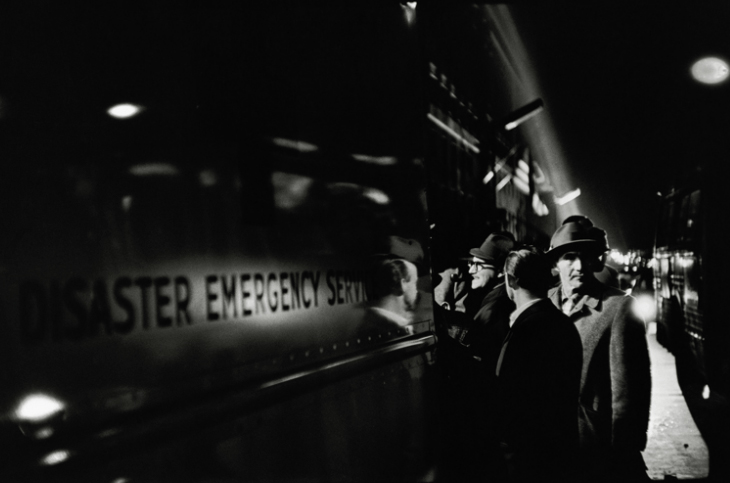
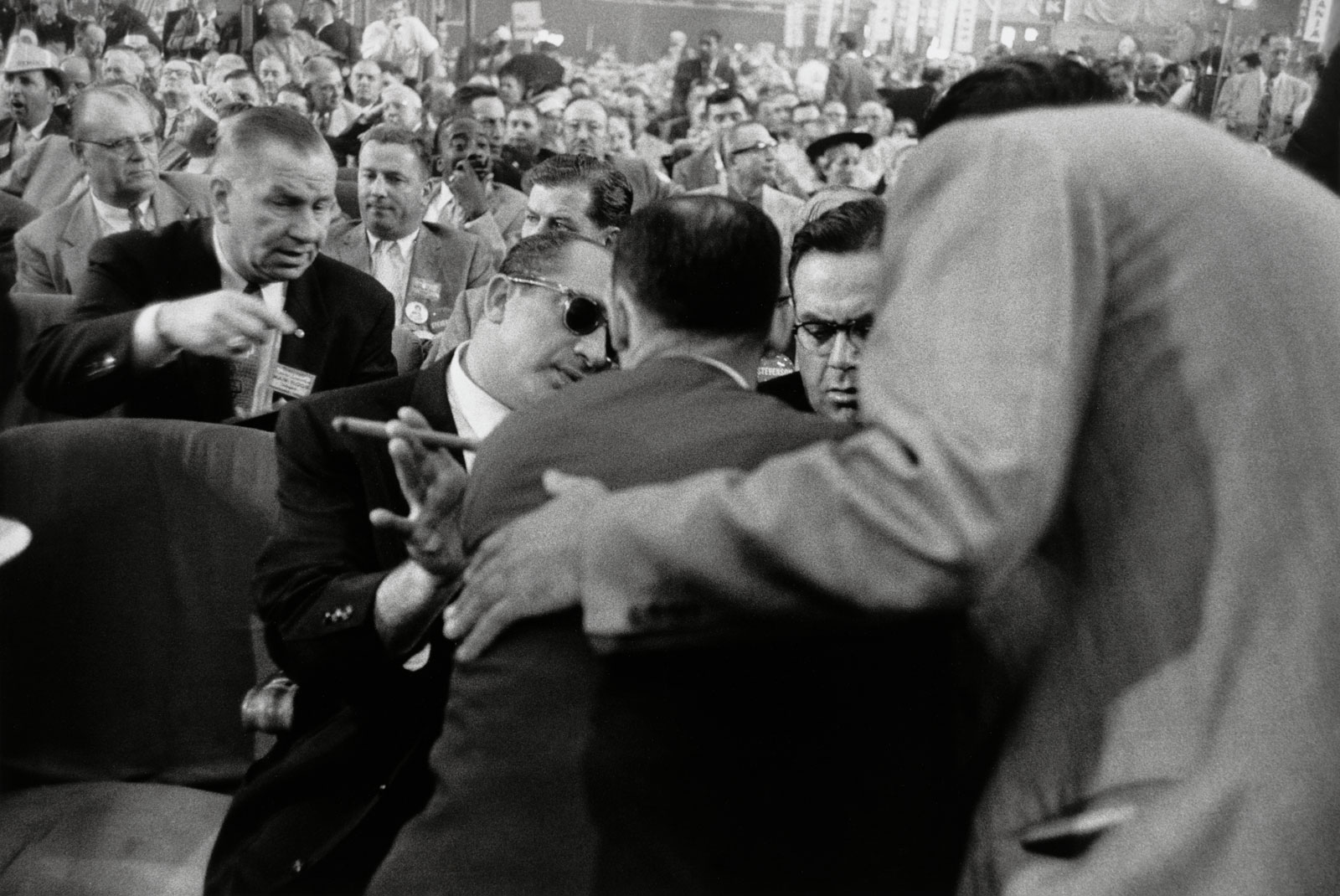
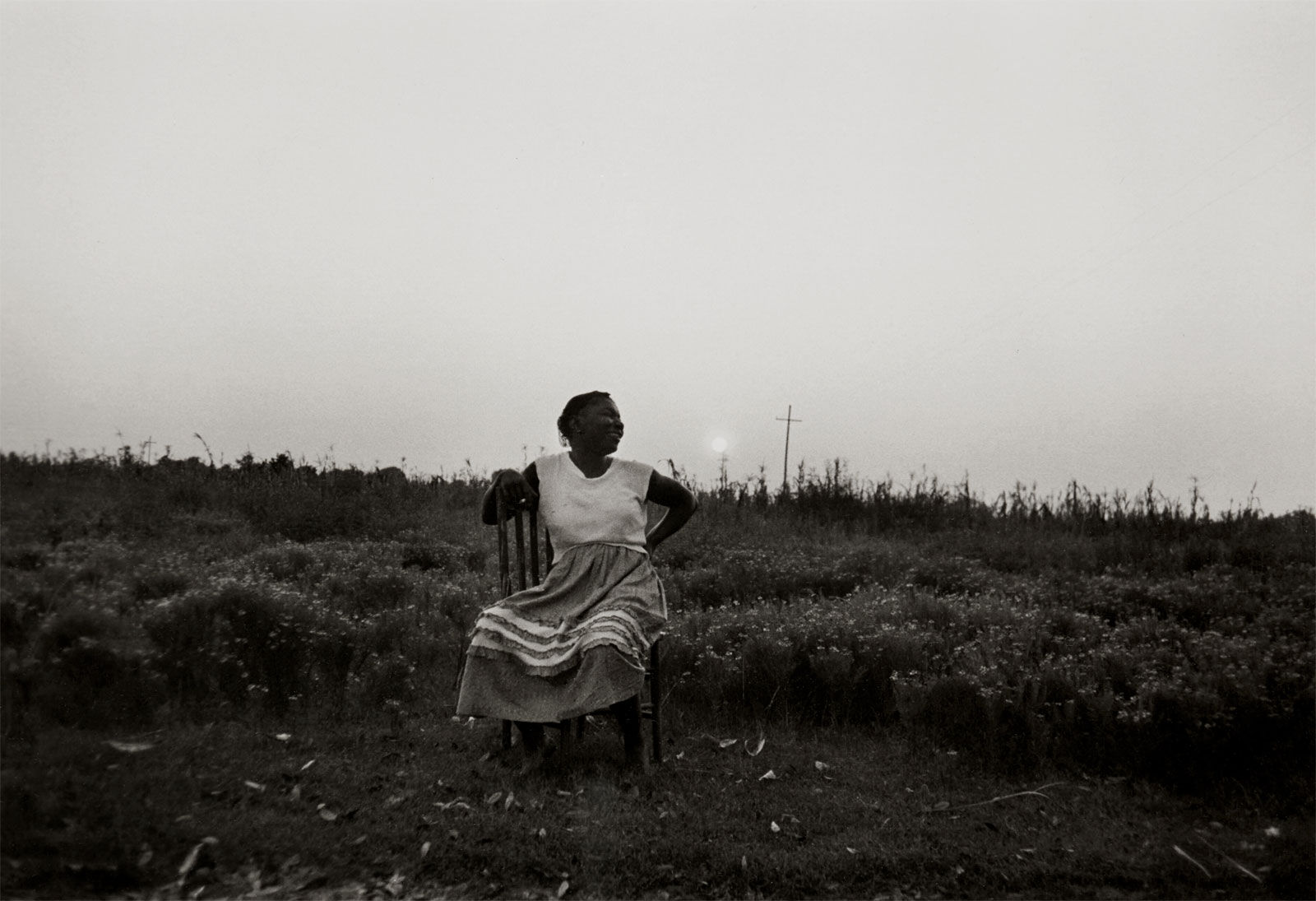
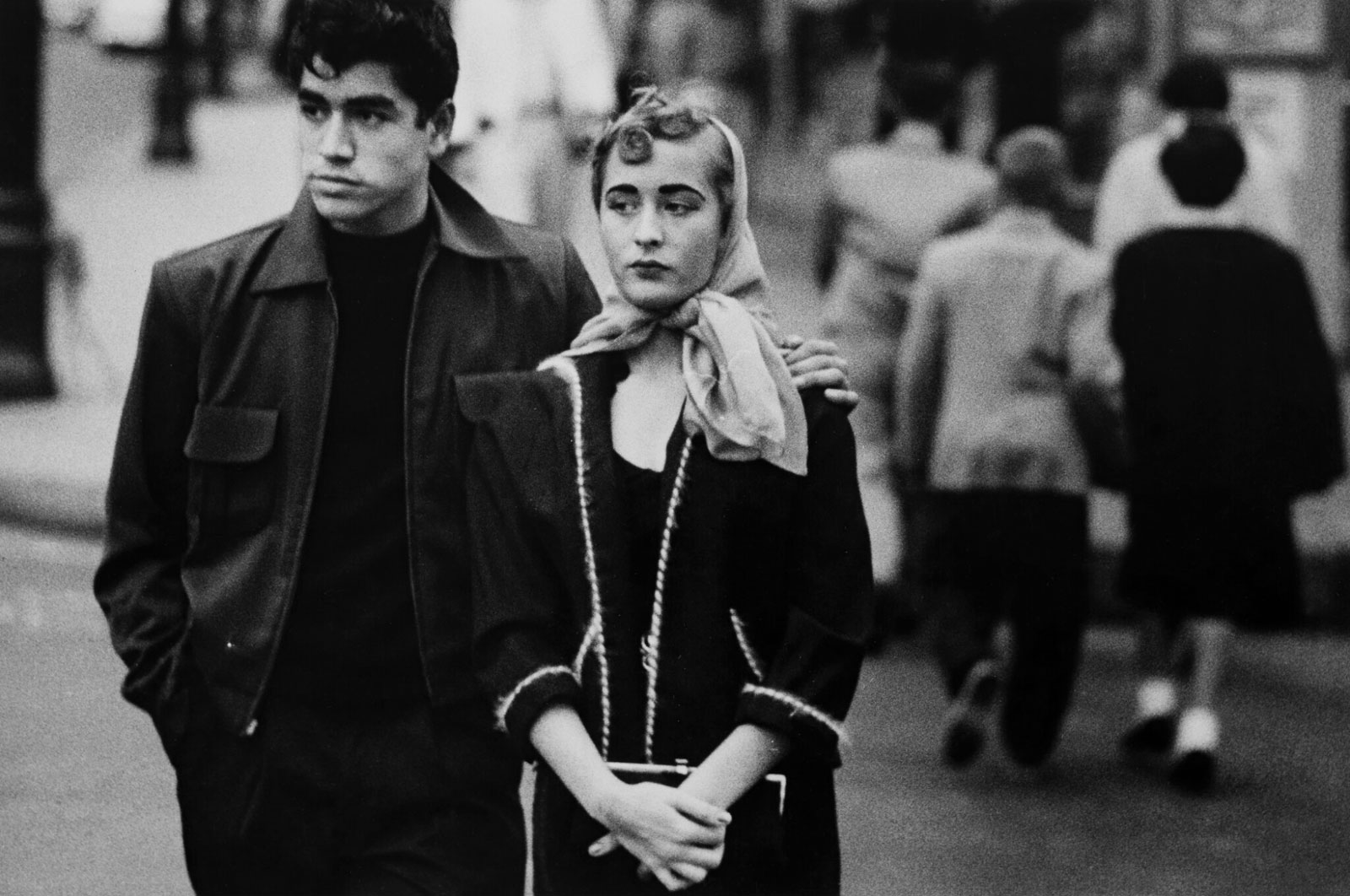
Christian Lutz (Swiss, b. 1973) From the series 'Protokoll' 2007


Christian Lutz (Swiss, b. 1973)
From the series Protokoll
2007
© Christian Lutz


Power: it will corrupt you, but if you don’t want it, it will be used against you.

PS. Some, if not all, of these people seem like marionettes!

Marcus


Many thankx to The Musée de l’Elysée for allowing me to publish the photographs in the posting. Please click on the photographs for a larger version of the image.
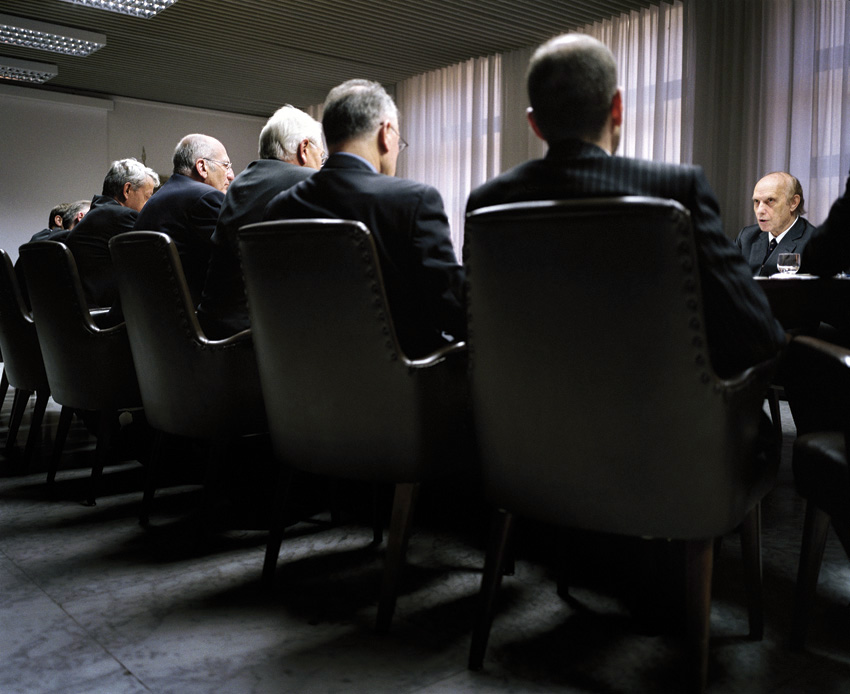


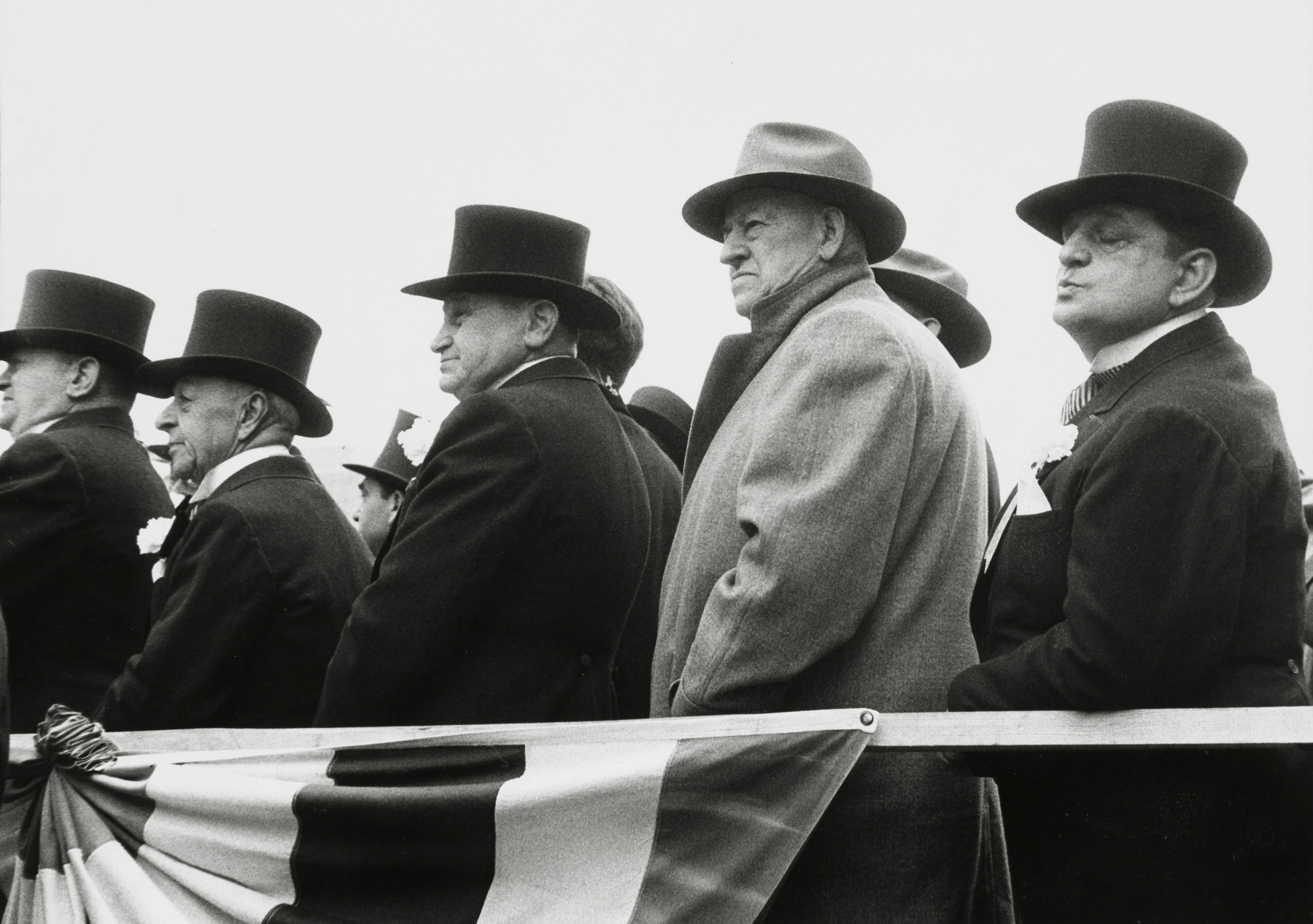
Christian Lutz (Swiss, b. 1973) From the series 'Protokoll' 2007


Christian Lutz (Swiss, b. 1973)
From the series Protokoll
2007
© Christian Lutz
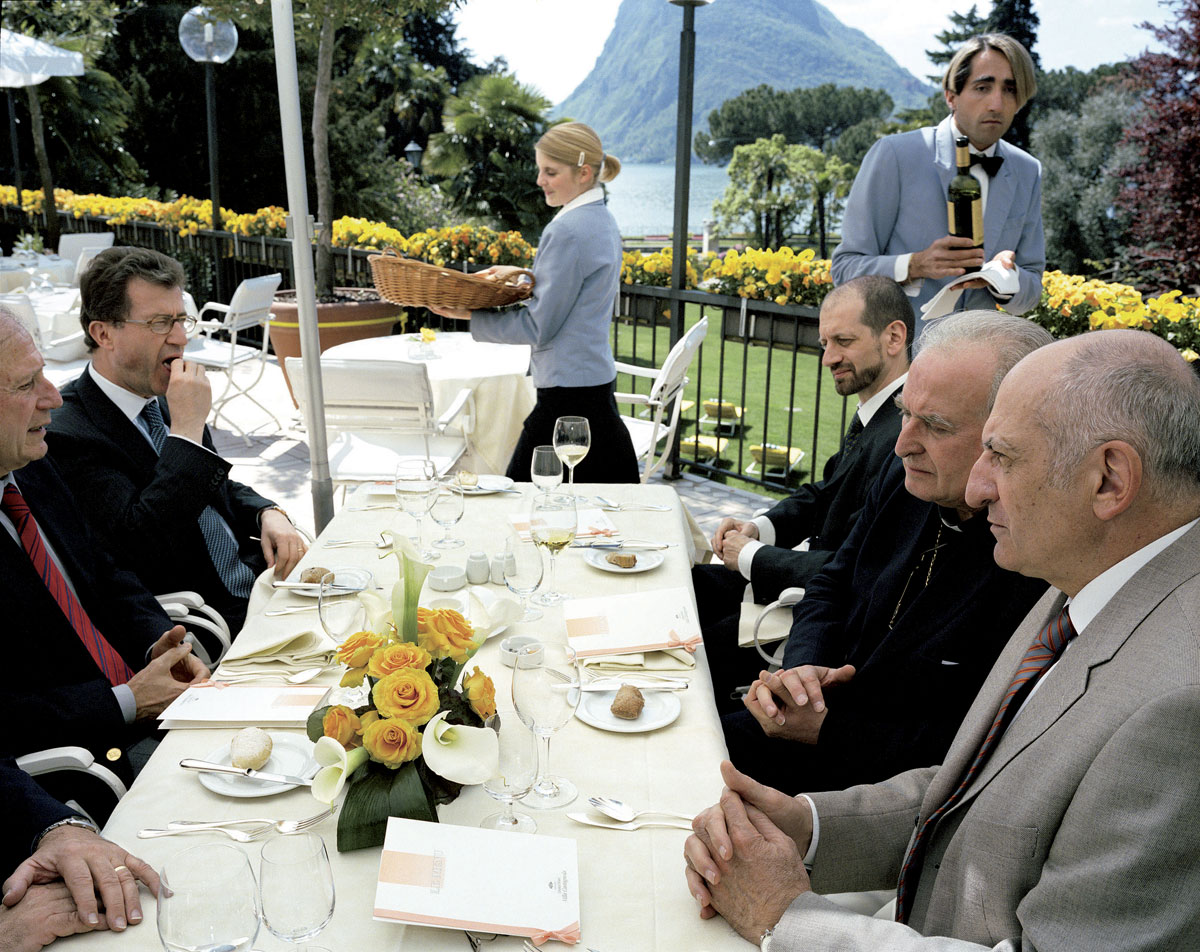
 

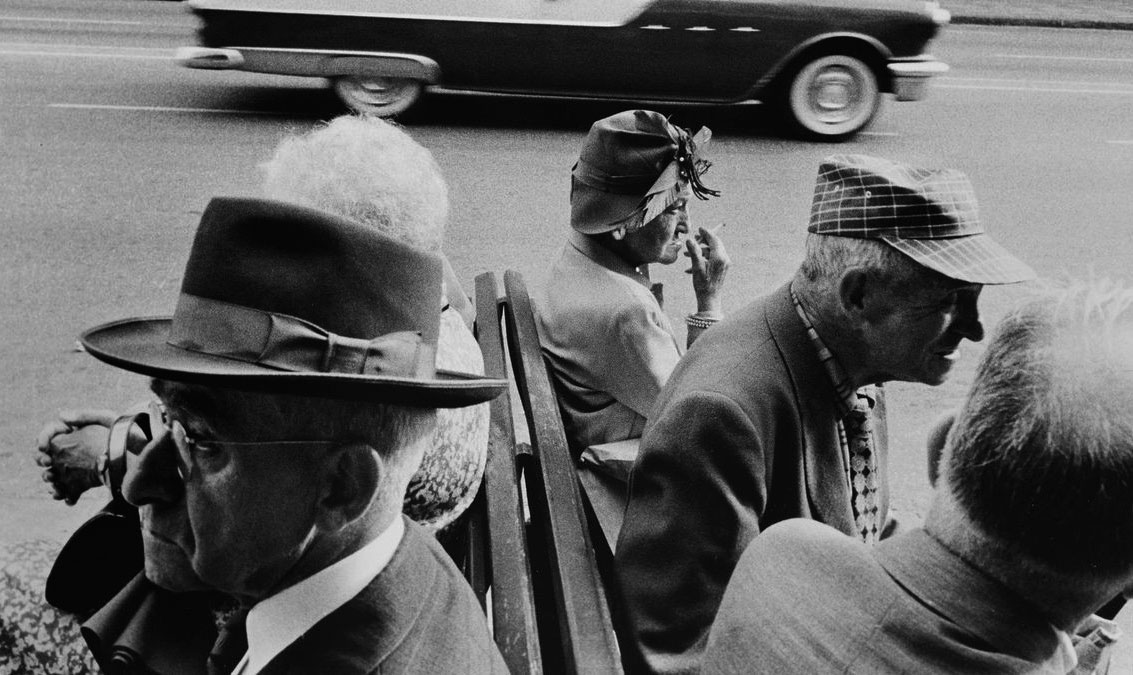
Christian Lutz (Swiss, b. 1973) From the series 'Protokoll' 2007


Christian Lutz (Swiss, b. 1973)
From the series Protokoll
2007
© Christian Lutz


New York, 2003: spectacular security frenzy around the President of the Swiss Confederation Pascal Couchepin – a striking image to the eye of the photographer who was present at the scene. Christian Lutz thus invited himself in the suitcases of the ministerial delegation and documented its various official activities during three years. The first volume of what will become a trilogy on the issue of power is published in 2007: Protokoll. Tropical Gift, dealing with the oil and gas trading in Nigeria, is released in 2010. After portraying the rigorously codified and staged political sphere, the photographer’s cutting eye unveils the malodorous traps of a deadly economic power, with troubling visual poetry. In his viewfinder, reality unnoticeably shifts into a heady thriller. The first two parts of his trilogy have been exhibited worldwide, establishing Christian Lutz as an eminent photographer.

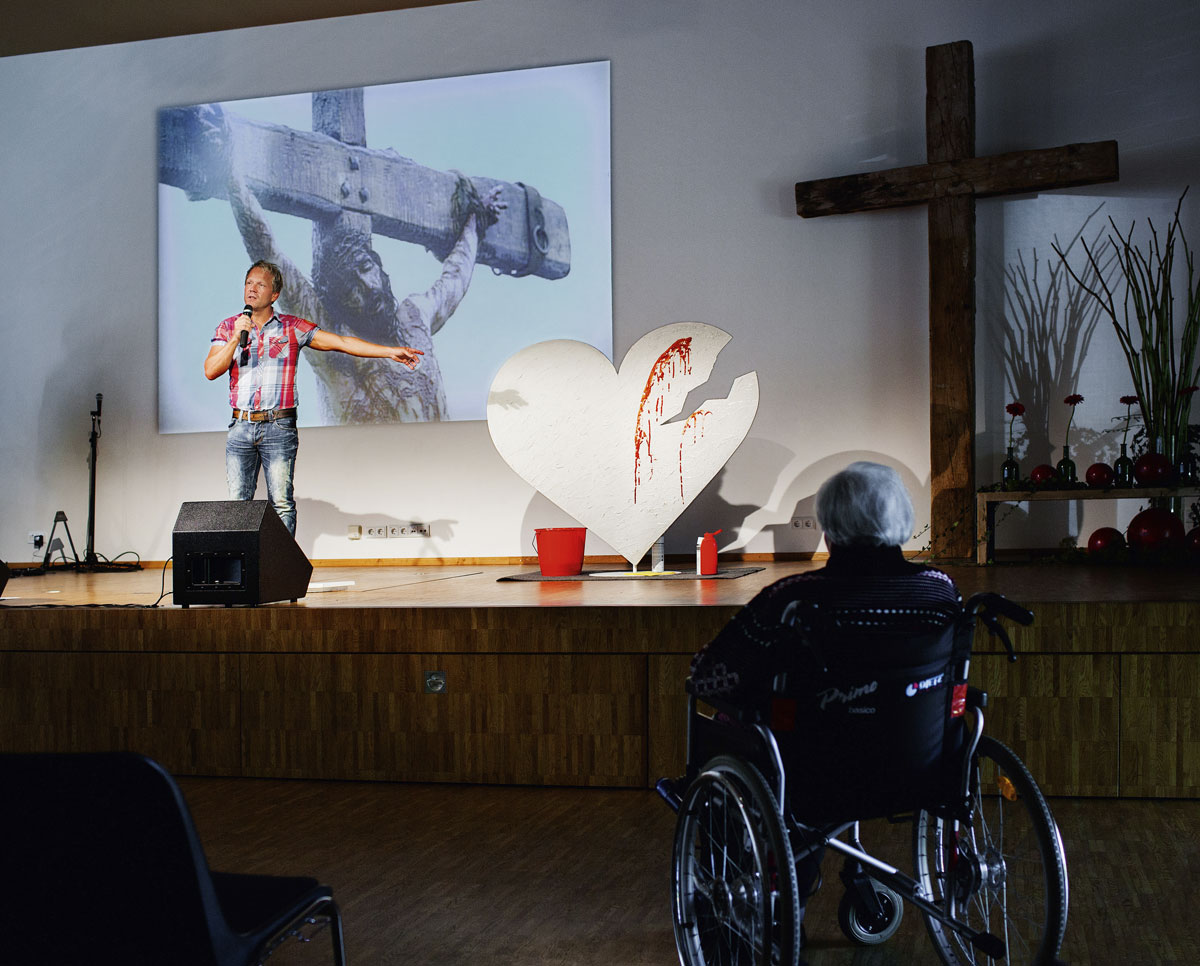
The fate of his yet unreleased third series, In Jesus’ Name, is quite different. Christian Lutz spent a year within a Zurich-based evangelical community. Celebrations and rock concerts, summer camps and blood donation rallies, he photographed all the events he was invited to attend. However, a Zurich Court of Justice banned the book immediately upon its release in November 2012 as 21 people appearing in the volume filed complaints to protect their image; complaints that were carefully orchestrated by the Church’s managers. With these provisional measures, the Court nonetheless ruled against the freedoms of expression and information.

The exhibition Trilogy is a three-fold investigation. Tropical Gift will be shown as a projection accompanied by the original score by Franz Treichler of the Young Gods. As for the latest series, In Jesus’ Name, it carries the marks of a new power, with which it is now inseparable: the judiciary. Troubling and destabilising, this fourth power questions democracy and artistic freedom. But as it pushes art into a corner, it seems to compel it to reconnect itself with its political dimension, to test established systems, by triggering debate.

Censorship of the book In Jesus’ Name

The photography book In Jesus’ Name, Christian Lutz’s third part of the series on the issue of power, was launched during Paris Photo on 17 November 2012, before disappearing from the bookstore shelves a couple of days later. The legal proceedings that followed this project raise issues about the artistic freedom as well as the freedom of expression.

The photographical project In Jesus’ Name

The Zurich-based evangelical community ICF (International Christian Fellowship) is one of the most important free churches in Switzerland. Its success and rapid expansion are a matter of public interest. Created according to the American model of mega-churches, it was initiated in Zurich at the end of the 90s, and has now spread throughout Roman Switzerland thanks to a solid establishment in Lausanne and Geneva. It manages a considerable budget and is characterised by the use of sophisticated and performing marketing and communication methods.

Christian Lutz met the pastor and founder of the Evangelical movement ICF, Leo Bigger, in May 2011. He then introduced him to the other church managers to whom the photographer also presented his project, his former books, his approach and the stakes involved in his Trilogy. He was subsequently granted express consent from the managers who welcomed him in the community.

The photographer nonetheless systematically kept on requesting specific authorisations to the organisers for each ICF’s activity which he wished to photograph. He joined several trips and summer camps organised by the church, and took part in all sorts of events: celebrations, baptisms, ladies lounge, blood donation, theatre show, workshop on the addiction to pornography, etc. He met members of the church, exchanged constantly with them, and freely discussed his reportage.

As for each of his series, Christian Lutz entirely immersed himself, photographing faces and individuals up close while fully respecting a rigorous deontology. He was given an ICF photo-reporter badge, and affiliates or organisers of activities regularly ordered images from him. He photographed openly, each one being aware of the project and accepting to be part of it.

Press release from the Musée de l’Elysée website
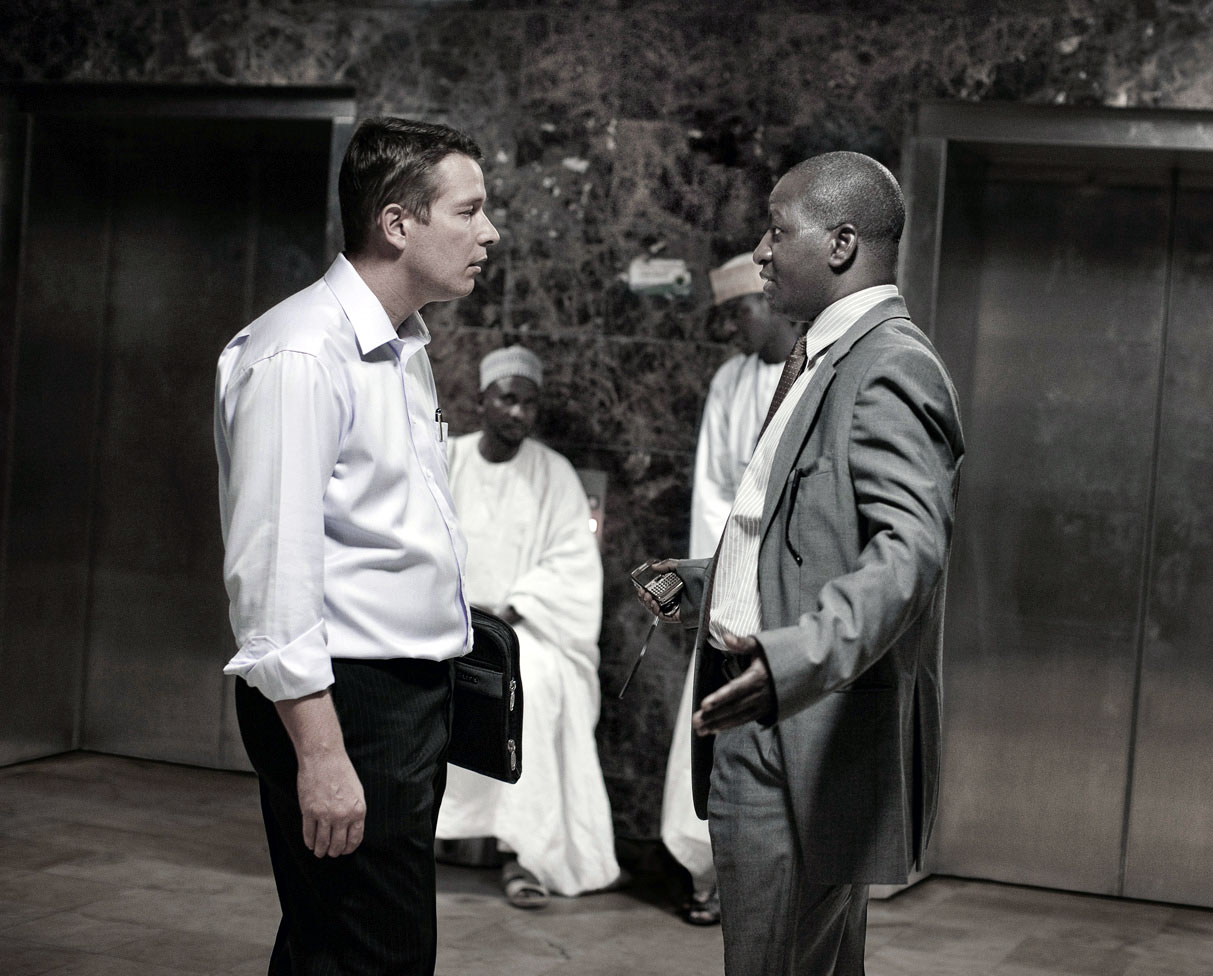
 

Christian Lutz (Swiss, b. 1973) From the series 'Tropical Gift' 2010


Christian Lutz (Swiss, b. 1973)
From the series Tropical Gift
2010
© Christian Lutz


Christian Lutz (Swiss, b. 1973) From the series 'Tropical Gift' 2010


Christian Lutz (Swiss, b. 1973)
From the series Tropical Gift
2010
© Christian Lutz


Christian Lutz (Swiss, b. 1973) From the series 'Tropical Gift' 2010


Christian Lutz (Swiss, b. 1973)
From the series Tropical Gift
2010
© Christian Lutz


Interview of Christian Lutz by Sam Stourdzé, Director of the Musée de l’Elysée

SYS: Protokoll, the first series in the project, started in 2003 when you started photographing the apparatus of federal politics. Ten years later, how would you assess your itinerary?

CL: Actually, I am the kind of person who prefers to look forward rather than backward. And I’ve come to realise that my work on the issue of power is not quite yet finished. It was initiated in 2003 by coincidence, without any real initial intention; I didn’t tell myself “well, how about working on the notion of power”! It is only with time, as my work asserted itself, that I realised why I was doing it and why I wanted to carry on. Power operates everywhere, in the private sphere, in human relations, between nations, among peoples; it is at the heart of countless processes in society. This is an issue that obsesses me and which is in fact an excuse to talk about our world and the interactions between individuals and systems. I thought I would come to terms with it through this trilogy, but I still have some way to go, as the issue of power opens up new fields of exploration.

SYS: All three components of the Trilogy – political, economic, and religious powers, are exhibited for the first time at the Musée de l’Elysée. What tensions or reflections do you intend to create by juxtaposing the series?

CL: My assumption is that power is always staged, as if power needed some form of theatricality to exist: protocol, representational codes, uniforms and role play, decorum, the forms of power that I have observed in the three series presented today all express themselves through external signs. But they are so obvious that they allow for breaches and give a glimpse of details, urging you to take a closer look, to reach beyond appearances. In all three series, there is this permanent tension between what is being observed and the grey areas, the hidden, the unspoken.

SYS: Several images in the series In Jesus’ Name have been censored. How do you intend to show the void of censorship?

CL: From my point of view, censorship did not create a void, it created a surplus. In other words, I consistently refuse to explain my images or to caption them, in order to avoid imposing a unique interpretation and a manipulation of the imagination. Captions freeze the poetical and suggestive space carried within a photograph; which does not mean that photographs can be made to say anything and everything, especially when we’re talking about a series or a book, as in this case. But an image must breathe, and leave some space to the beholder.

Yet, in order to achieve the ban on the book, the lawyer of the plaintiffs wrote out his own interpretation of my images. In doing so, he kills them in a way. So I had two options: either to let go and admit the defeat, or give a new impetus to the series In Jesus’ Name by foiling the situation, exploiting the new power that is being imposed on me, that is, the power of the judiciary.

SYS: You discovered the judiciary power though your appearance in court. Could this constitute a fourth component to your project?

CL: Yes, but I would not say that it would be a fourth component. It would rather be an outlet project, stemming from a situation I didn’t chose. This sequel will link together the three previous series and will probably shed a different light on them. It is likely to be a narrative rather than a photographic project. To tell the truth, I still don’t really precisely know; the legal proceedings are pending and I still have some difficulties figuring out what I could do with this. But what is certain is that as an artist, I cannot let things happen without finding an artistic outcome to this restriction on the freedom of speech.


Christian Lutz (Swiss, b. 1973) From the series 'In Jesus’ Name' 2010


Christian Lutz (Swiss, b. 1973)
From the series In Jesus’ Name
2010
© Christian Lutz


Christian Lutz (Swiss, b. 1973) From the series 'In Jesus’ Name' 2010


Christian Lutz (Swiss, b. 1973)
From the series In Jesus’ Name
2010
© Christian Lutz
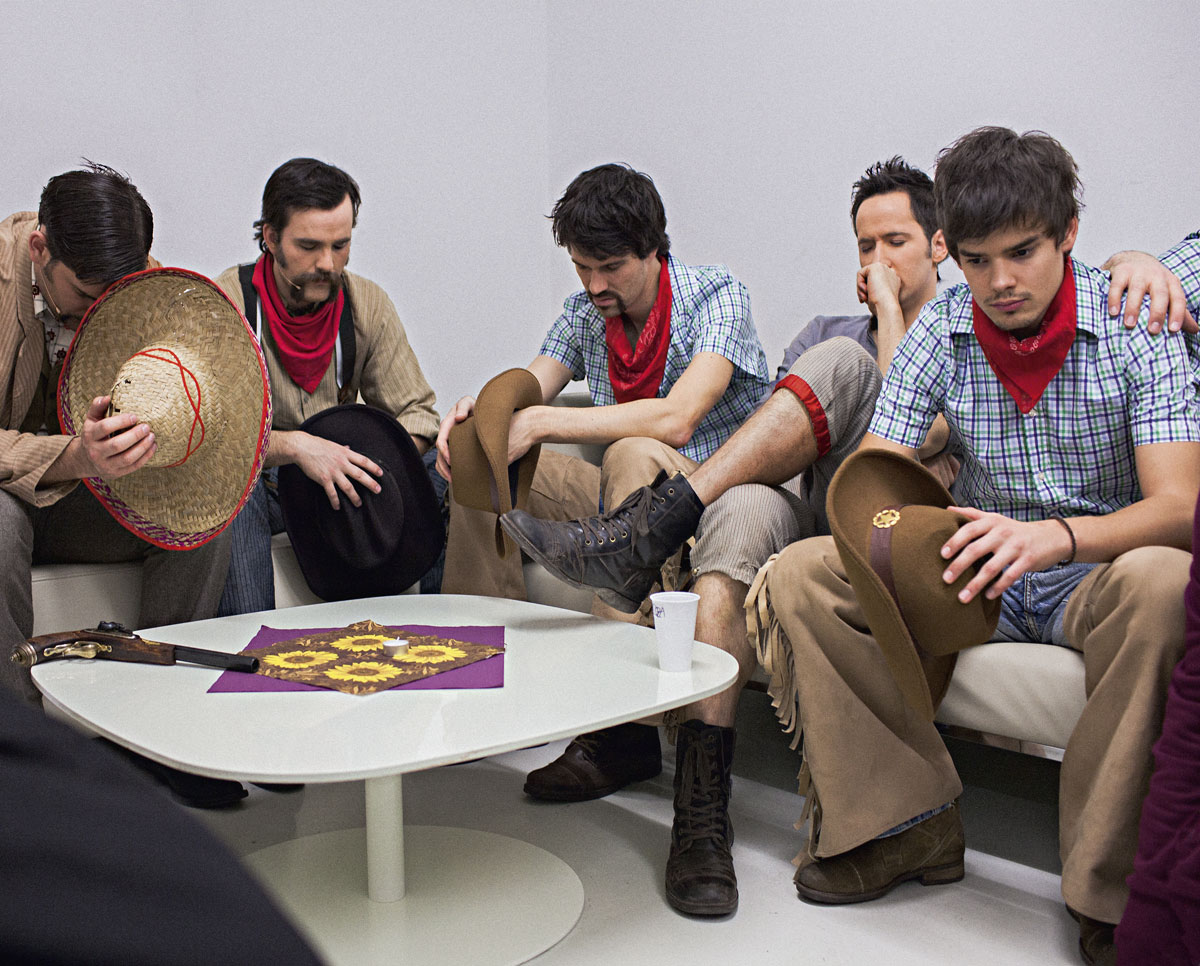
 

Christian Lutz (Swiss, b. 1973) From the series 'In Jesus’ Name' 2010


Christian Lutz (Swiss, b. 1973)
From the series In Jesus’ Name
2010
© Christian Lutz
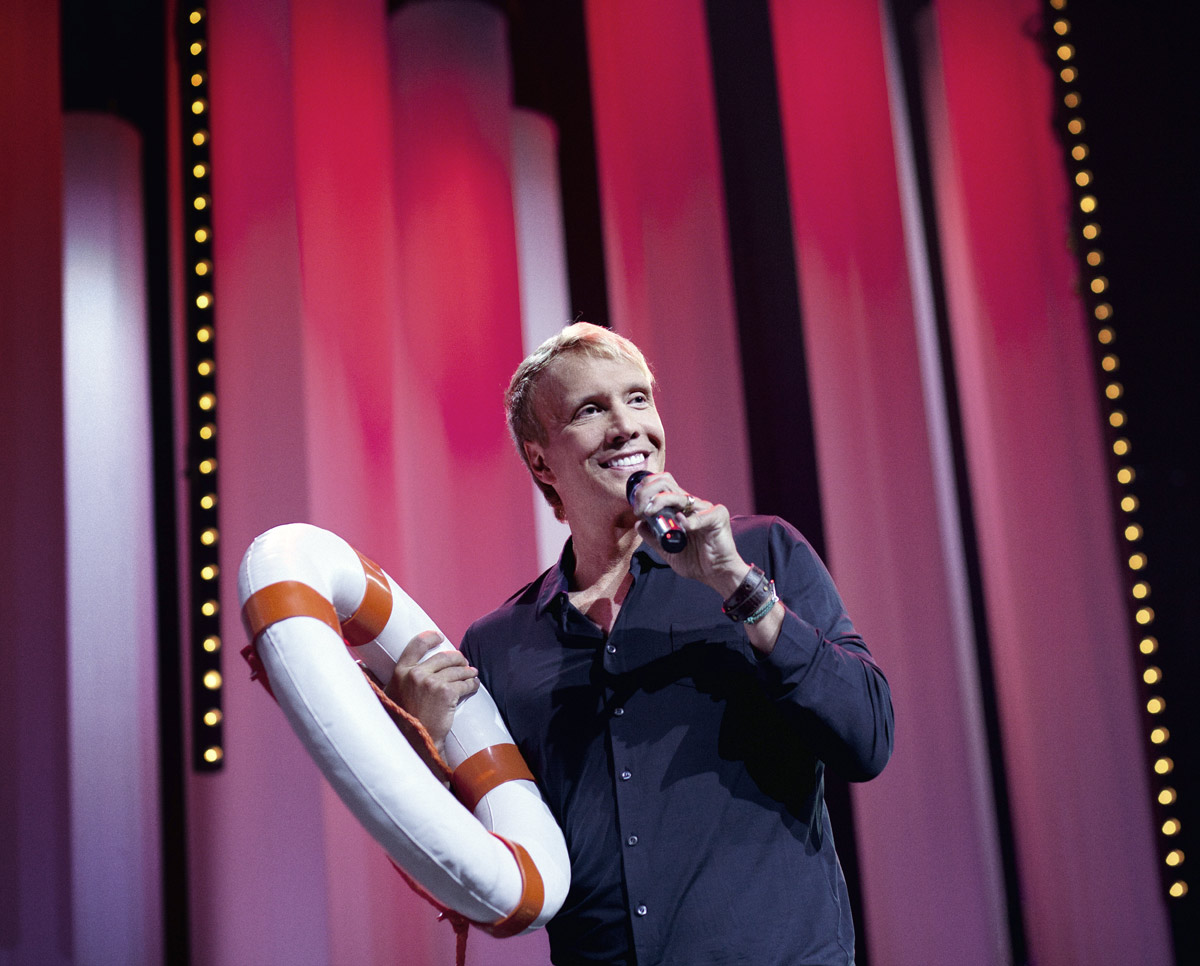
 

Christian Lutz (Swiss, b. 1973) From the series 'In Jesus’ Name' 2010


Christian Lutz (Swiss, b. 1973)
From the series In Jesus’ Name
2010
© Christian Lutz
 

Christian Lutz (Swiss, b. 1973) From the series 'In Jesus’ Name' 2010


Christian Lutz (Swiss, b. 1973)
From the series In Jesus’ Name
2010
© Christian Lutz


Portrait of Christian Lutz © Frédéric Choffat


Portrait of Christian Lutz
© Frédéric Choffat


The Musée de l’Elysée
18, avenue de l’Elysée
CH - 1014 Lausanne
Phone: + 41 21 316 99 11

Opening hours:
Wednesday – Monday, 11am – 6pm
Closed Tuesday, except for bank holidays

The Musée de l’Elysée website

LIKE ART BLART ON FACEBOOK

Back to top

Exhibition: ‘Concrete – Photography and Architecture’ at Fotomuseum Winterthur, Zurich

Exhibition dates: 2nd March – 20th May 2013


Anonymous photographer.
 'Hardstrasse with Hardbrücke in construction' 1972


Anonymous photographer
Hardstrasse with Hardbrücke in construction
1972
Gelatin silver print
8.8 x 12.6cm
Baugeschichtliches Archiv der Stadt Zürich


When creating this archive, so much of my time is spent cleaning up clearly inadequate media images, an example of which can be seen below. I have become very adept at this process and my thoughts are this: would you want to be the artist whose work is displayed to the public in a remarkably decomposed manner, one not up to a standard of any artist who cares about their prints and reputation? I certainly would not. It is a wonder to me that museums and galleries spend thousands of dollars staging exhibitions and producing costly catalogues and yet cannot spend a tiny proportion of time, money and care on their media images to promote artist and said exhibition. I had to spend a lot of time on over half of these images to bring them up to presentable standard.

Having said that, there are some cracking photographs in this posting. The Sugimoto is sublime, Walker Evans so muscular, Lucien Hervé a masterpiece of light and texture, and Moriz Nähr a symphony of light and tone, to name but a few. I hope you enjoy all the effort it takes to bring these images to you.

Dr Marcus Bunyan


Many thankx to the Fotomuseum Winterthur, Zurich for allowing me to publish the photographs in the posting. Please click on the photographs for a larger version of the image.


Michael Wesely (German, b. 1963)
 'Canadian Embassy, Leipziger Platz, Berlin (5.2.2003 – 28.4.2005)' 
C-print


Michael Wesely (German, b. 1963)
Canadian Embassy, Leipziger Platz, Berlin (5.2.2003 – 28.4.2005)

C-print
125 x 175cm
Galerie Fahnemann, Berlin
© Michael Wesely/Courtesy Galerie Fahnemann


Michael Wesely (born 1963 in Munich) is a German art photographer who is best known for his photos of cities, buildings, landscapes, and still lives of flowers taken with a special ultra-long exposure technique. …

Wesely’s works deal with the subject of time and the change that takes place over time. Due to the extremely long exposure and the special bulb he uses, those elements that move the least dominate his images, while those moving will later be seen as transparent figures or the outlines of newly erect buildings overlapping. The pictures “reveal the passage of time by showing the changing skyline, the skeletons of cranes. the rise of new buildings, and the disappearance of others. Beams of sunlight, the residue of the ever-changing positions (tithe earth and sun, are also evident, like a palimpsest of seasons”. Everything that ever happened on the scene during exposure (during weeks, months, or even up to two or three years) will be seen in one single picture. Wesely’s photographs have been described as a metaphor on the change of Berlin after 1989 because “at once strikingly energetic and ghostly and uninhabited. This formal paradox aptly describes Berlin, which had only been unified for ten years at the time the images were taken. In that way, the photographs offer a larger commentary on time’s passage.”

Text from the Wikipedia website


William Henry Fox Talbot (English, 1800-1877) 'The Bridge of Sighs, St. John’s College, 
Cambridge' 1845


William Henry Fox Talbot (English, 1800-1877)
The Bridge of Sighs, St. John’s College, 
Cambridge
1845
Salt print from calotype negative
16.4 x 20.6cm
Museum Folkwang Essen


Charles Marville (French, 1813-1879) '24, Rue Bièvre, Paris' 1865-1869


Charles Marville (French, 1813-1879)
24, Rue Bièvre, Paris
1865-1869
Albumin print
27.4 x 36.6cm
Collection Thomas Walther


Lucien Hervé (Hungarian, 1910-2007) 'Le Corbusier: Façade of the Secretariat Building, Chandigarh, 1961' 1961


Lucien Hervé (Hungarian, 1910-2007)
Le Corbusier: Façade of the Secretariat Building, Chandigarh, 1961
1961
Gelatin silver print
25.5 x 25.4cm
Canadian Centre for Architecture, Montréal
© Estate Lucien Hervé


Lucien Hervé is considered to be one of the great architectural photographers of the 20th century. He collaborated with Le Corbusier from 1949 until the architect’s death in 1965, developing a great rapport. Le Corbusier even once pronounced Hervé to have ‘the soul of an architect.’ In 1949, Hervé travelled from Paris to Marseille to see Le Corbusier’s recently designed housing complex, Unité d’Habitation. Awed by the groundbreaking modern design, Hervé took 650 photographs of it in a single day and it was from then onwards they worked closely with one another.

Through light and shadow, he defined the dialogue between substance and form. By delineating a strong contrast between the light and shadows in his subject as well as placing emphasis on building details, Hervé was able to communicate the depth of a room, the surface of a wall, or the strength of a building’s framework.

Born 1910 in Hungary, Hervé (born László Elkán) moved to Paris at the age of 19 and earned French citizenship in 1938. During World War II, he was captured by the Germans, escaped and became a member of the French Resistance under the name of Lucien Hervé, which he kept thereafter. After the war he left politics behind to write for art journals. It was one of his editors, in fact, who suggested he visit Unité d’Habitation. Hervé began experimenting with photography, over or underexposing images and often severely cropping them to attain unusual compositions following the work of avant-garde artists such as Piet Mondrian, László Moholy-Nagy, and Alexander Rodchenko.

Text from the Michael Hoppen Gallery website


F. C. Gundlach (German, 1926-2021) '"Op Art" bathing suit by Sinz, Vouliagmeni/Greece' 1966


F. C. Gundlach (German, 1926-2021)
“Op Art” bathing suit by Sinz, Vouliagmeni/Greece
1966
Gelatin silver print
50 x 50cm
F.C. Gundlach, Hamburg
© F.C. Gundlach


Laurence Bonvin (Swiss, b. 1967)
 'Blikkiesdorp, Cape Town, South Africa' 2009


Laurence Bonvin (Swiss, b. 1967)
Blikkiesdorp, Cape Town, South Africa
2009
Inkjet print
40 x 50cm
Courtesy the artist
© Laurence Bonvin


Laurence Bonvin (born 1967 in Sierre) is a Swiss photographer and director living between Berlin, Valais and Lisbon. Her documentary approach has for many years focused on the phenomena of transformation in urban and natural environments.


Architectures and cities are both volumes and images alike. We experience them directly, physically and sensually, as well as through pictures. Pictures speak a language of their own. They offer a discourse that is quite unlike the physical experience of architecture. They transform volume into surface; distil matter into forms and signs – rarely, if ever, leaving it as it is. That is probably why so many architects try to get involved in determining the image of their buildings. Concrete – Photography and Architecture seeks to approach the singular and complex relationship between architecture and photography in light-hearted, narrative and dialectical ways. The exhibition explores issues of history and ideology, as well as the specifics of form and material, in the photographic image.

The visual appeal of destroyed or dilapidated buildings is also addressed, as are their powerful demonstrations of power and exclusivity, fragility and beauty. To what extent does photography influence not only the way architecture is perceived, but also the way it is designed? How does an image bring architecture to life, and at what point does it become uncanny? How do settlements develop into cities? Or, in sociological terms: how do work and life interconnect differently in, say, Zurich and Winterthur, as opposed to, say, Calcutta? And how do skyscrapers and living spaces translate into the flat, two-dimensional world of photography?

Concrete – Photography and Architecture is not, however, chronologically arranged. Instead, it is based on compelling positions, counterpositions and thematic fields that connect various concrete, fundamental and historical aspects. Alongside everyday buildings and prestigious architecture, structured by horizontal and vertical axes, alongside homes and houses, utopian fantasies, design and reality, an important aspect of the exhibition is the compelling appeal of architectural decay due to the passage of time, through both natural and deliberate destruction. It is almost as though photography were providing a moral reminder even such magnificence and presence, whether hewn in stone or cast in concrete, has its weaknesses too.

Architecture has always been an important platform for the frequently heated discussion of ideas and views, zeitgeist and weltanschauung, everyday life and aesthetics. Architecture is the bold materialisation of private and public visions, functionality and avant-garde art alike. It is, as Slavoj Žižek puts it, ideology in stone. Photography and architecture both play an undisputed role in our everyday lives. They confront us on a daily basis, often without our even noticing, and they influence how we think, act and live in subliminal and lasting ways. Concrete – Photography and Architecture provides visual answers to the question of what it is that makes up the intimate yet complex relationship between architecture and photography, architect and photographer.

The exhibition presents more than 400 photographs and groups of works from the 19th, 20th and 21st centuries, including William Henry Fox Talbot, Domenico Bresolin and Charles Marville as well as Germaine Krull, Lucia Moholy and Julius Shulman, and spanning an arc to contemporary works by Georg Aerni, Iwan Baan, Luisa Lambri and Hiroshi Sugimoto. Projects such as the long-term observations of Schlieren photography or Wolfgang Scheppe’s Migropolis show how the art of photography is playing an increasingly important role as an instrument of research and knowledge. The exhibition is accompanied by a lavishly illustrated book published by Scheidegger & Spiess, with some 300 colour and black-and-white pictures, essays by Jochen Becker, Johannes Binotto, Verena Huber Nievergelt, Michael Jakob, Nicoletta Leonardi, Lorenzo Rocha, Caspar Schärer, Aveek Sen and Urs Stahel as well as a conversation with Annette Gigon, Meret Ernst and Armin Linke.

Press release from the Fotomuseum Winterthur website


Guido Guidi. '#1176 01 29 1997 3:30PM Looking Southeast' From 'Carlo Scarpa's Tomba Brion' 
1997


Guido Guidi (Italian, b. 1941)
#1176 01 29 1997 3:30PM Looking Southeast
From Carlo Scarpa’s Tomba Brion
1997
C print
19.5 x 24.6cm
Courtesy the artist
© Guido Guidi


Guido Guidi (born January 1, 1941) is an Italian photographer. His work, spanning over more than 40 years, has focused in particular on rural and suburban geographies in Italy and Europe. He photographs places that are normally overlooked. His published works include In Between Cities, Guardando a Est, A New Map of Italy and Veramente.

Guidi began experimenting in the late 1960s with pseudo-documentary images that interrogated photography’s objectivity. Influenced by neorealist film and conceptual art, in the 1970s he began investigating Italy’s man-altered landscape. Working in marginal and decayed spaces with an 8×10 large format camera, he creates dense sequences intended as meditations on the meaning of landscape, photography, and seeing. Later he investigated the life and death of modernist architecture, with projects on Scarpa, van der Rohe, and Le Corbusier. Photography for Guidi is something autobiographical. It is synonymous with inhabiting, and the camera is the instrument that allows him to observe, appropriate and collect what lies beyond his doorstep.

“Guidi was a leading voice in the resurgence of Italian photography of the 1970s and 1980s”. “Since then, working mostly in colour with a large-format camera, he has patiently returned to the same places – his native Romagna and the area around Venice – documenting the shift from a rural to a post-industrial landscape.”

Text from the Wikipedia website


Tobias Zielony (German, b. 1973)
 'Le Vele di Scampia' 2009


Tobias Zielony (German, b. 1973)
Le Vele di Scampia
2009
Blu Ray photoanimation
8.57 min
Courtesy Koch Oberhuber Wolff, Berlin
© Tobias Zielony/ KOW


Hiroshi Sugimoto (Japanese, b. 1948) 'Seagram Building, New York City' 1997


Hiroshi Sugimoto (Japanese, b. 1948)
Seagram Building, New York City
1997
Gelatin silver print
58.4 x 47cm
Canadian Centre for Architecture, Montreal
© Hiroshi Sugimoto/Courtesy of Gallery Koyanagi Tokyo


Aage Strüwing (Danish, 1913-1989) 'Arne Jacobsen: Rødovre Town Hall' 1955


Aage Strüwing (Danish, 1913-1989)
Arne Jacobsen: Rødovre Town Hall
1955
Gelatin silver print
23.7 x 17cm
EPFL Archives de la construction moderne, Lausanne
© Estate Strüwing


Moriz Nähr (Austrian, 1859-1945) 
'Stiegenhaus im Haus Stonborough-Wittgenstein' 1928 (composite cleaned)


Moriz Nähr (Austrian, 1859-1945)

Stiegenhaus im Haus Stonborough-Wittgenstein [Staircase in the house Stonborough-Wittgenstein] (composite cleaned)
1928


Moriz Nähr (Austrian, 1859-1945) '
Stiegenhaus im Haus Stonborough-Wittgenstein' 1928


Moriz Nähr (Austrian, 1859-1945)

Stiegenhaus im Haus Stonborough-Wittgenstein (Staircase in the house Stonborough-Wittgenstein)
1928
Silbergelatine Abzug
13.8 x 8.9cm
Albertina, Wien
© Estate Moriz Nähr


Moriz Nähr (1859-1945) is one of the most important innovators of photography in “Vienna around 1900”. His photographic oeuvre is mentioned today in the same breath as that of the famous Parisian photographer Eugène Atget. Nähr enjoyed a life-long artist’s friendship with Gustav Klimt and was connected with the artist through a special network of eminent personalities from the arts, culture and philosophy. Numerous portrait photographs of Klimt emphatically document the two artists’ bond. Klimt was also inspired by Nähr’s photographic motifs, as illustrated by the conformities in the photographer’s pictures and Klimt’s painting Beech Forest I created in 1902. The legends surrounding Moriz Nähr are based on the one hand on his close ties with Gustav Klimt and the Vienna Secession and on the other hand on his connections with the family of Ludwig Wittgenstein and the imperial Habsburg family, especially with the heir to the throne Archduke Franz Ferdinand, who appointed him court photographer in 1908. Owing to his work as a freelance photographer as well as to his various commissions, he has left behind a multi-faceted oeuvre comprising not only landscape-, architecture-, and portrait photography but also street photography (Scenes from the Naschmarkt, 1918) as well as photographs documenting exhibitions (Vienna Secession).

Anonymous. “Moriz Nähr: Photographer of Viennese Modernism,” on the Leopold Museum website 2018 [Online] Cited 14/07/2024


Haus Wittgenstein, also known as the Stonborough House and the Wittgenstein House) is a house in the modernist style designed and built on the Kundmanngasse, Vienna, by the Austrian architect Paul Engelmannand the Austrian philosopher Ludwig Wittgenstein.

In November 1925, Wittgenstein’s sister Margaret Stonborough-Wittgenstein commissioned Engelmann to design and build a large townhouse. Margaret also invited her brother to help with the design in part to distract him from an incident that had happened while he had been a primary school teacher: he had hit a boy for getting an answer wrong and the boy had collapsed. The architect was Paul Engelmann, someone Wittgenstein had come to know while training to be an Artillery Officer in Olmutz. Engelmann designed a spare modernist house after the style of Adolf Loos: three rectangular blocks. Wittgenstein showed a great interest in the project and in Engelmann’s plans and poured himself into the project for over two years. He focused on the windows, doors, door knobs, and radiators, demanding that every detail be exactly as he specified, to the point where everyone involved in the project was exhausted. One of the architects, Jacques Groag, wrote in a letter: “I come home very depressed with a headache after a day of the worst quarrels, disputes, vexations, and this happens often. Mostly between me and Wittgenstein.” When the house was nearly finished he had a ceiling raised 30mm so the room had the exact proportions he wanted.

Waugh writes that Margaret eventually refused to pay for the changes Wittgenstein kept demanding, so he bought himself a lottery ticket in the hope of paying for things that way. It took him a year to design the door handles, and another to design the radiators. Each window was covered by a metal screen that weighed 150 kg, moved by a pulley Wittgenstein designed. Bernhard Leitner, author of The Architecture of Ludwig Wittgenstein, said of it that there is barely anything comparable in the history of interior design: “It is as ingenious as it is expensive. A metal curtain that could be lowered into the floor.”

The house was finished by December 1928, and the family gathered there that Christmas to celebrate its completion. Describing the work, Ludwig’s eldest sister, Hermine, wrote: “Even though I admired the house very much, I always knew that I neither wanted to, nor could, live in it myself. It seemed indeed to be much more a dwelling for the gods than for a small mortal like me”. Paul Wittgenstein, Ludwig’s brother, disliked it, and when Margaret’s nephew came to sell it, he reportedly did so on the grounds that she had never liked it either. Wittgenstein himself found the house too austere, saying it had good manners, but no primordial life or health. He nevertheless seemed committed to the idea of becoming an architect: the Vienna City Directory listed him as “Dr Ludwig Wittgenstein, occupation: architect” between 1933 and 1938.

After World War II, the house became a barracks and stables for Russian soldiers. It was owned by Thomas Stonborough, son of Margaret until 1968 when it was sold to a developer for demolition. For two years after this the house was under threat of demolition. The Vienna Landmark Commission saved it – after a campaign by Bernhard Leitner – and made it a national monument in 1971, and since 1975 it has housed the cultural department of the Bulgarian Embassy.

Text from the Wikipedia website


Lala Aufsberg (German, 1907-1976) 'Cathedral of Light' c. 1937


Lala Aufsberg (German, 1907-1976)
Cathedral of Light
c. 1937
Gelatin silver print
24 x 18cm
Town Archive Nuremberg
© Photo Marburg


Lala Aufsberg (actually, Ida Louise Aufsberg, born 26 February 1907 in Sonthofen, May 18, 1976) was a well-known art photographer. After attending primary school and six years of school for Higher daughters in Immenstadt she began training for the 1932 photo dealer in Oberstdorf. After completion of the training Lala Aufsberg moved to Nuremberg, where she worked in the photographers’ studios of Seitz and Rosemary. In 1931 she joined the photo club of friends of photography in Nuremberg.

From April 1938 Lala Aufsberg attended the State School of Applied Arts and Crafts in Weimar, Department Lichtbildnerei at Walter Hege. In July 1938, she passed the exam for the master photographer’s craft, and in the same year returned to Sonthofen and opened a photographic studio. In the years 1937 and 1938 she documented the Nazi Party rallies in Nuremberg (see above photograph). She received her first artistic job in the years 1941-1942, in which she photographed the murals in churches and monasteries in Carinthia and Styria. Owned by the University of Marburg “German documentation center for art history” – Bildarchiv Foto Marburg (listed in UNESCO Archives Portal) acquired 1976/1977 and 1996, the Lala-Aufsberg archive with about 46,000 art history, black and white negatives in sizes 6 x 6 and 9 x 12 and 103,000 photos.


Walker Evans (American, 1903-1975) 
'Chrysler Building under construction, New York' 1929


Walker Evans (American, 1903-1975)

Chrysler Building under construction, New York
1929
Gelatin silver print
16.8 x 8.3cm
Canadian Centre for Architecture, Montréal
© Walker Evans Archive, The Metropolitan Museum of Art


Fotomuseum Winterthur
Grüzenstrasse 44 + 45
CH-8400
Winterthur (Zürich)

Opening hours:
Tuesday to Sunday 11am – 6pm
Wednesday 11am – 8pm
Closed on Mondays
Fotomuseum Winterthur website

LIKE ART BLART ON FACEBOOK

Back to top

Exhibition: ‘Light Sensitive: Photo Art from the Collection’ at Aargauer Kunsthaus, Aarau, Switzerland

Exhibition dates: 12th May – 12th August 2012


Many thankx to the Aargauer Kunsthaus for allowing me to publish the photographs in the posting. Please click on the photographs for a larger version of the image.


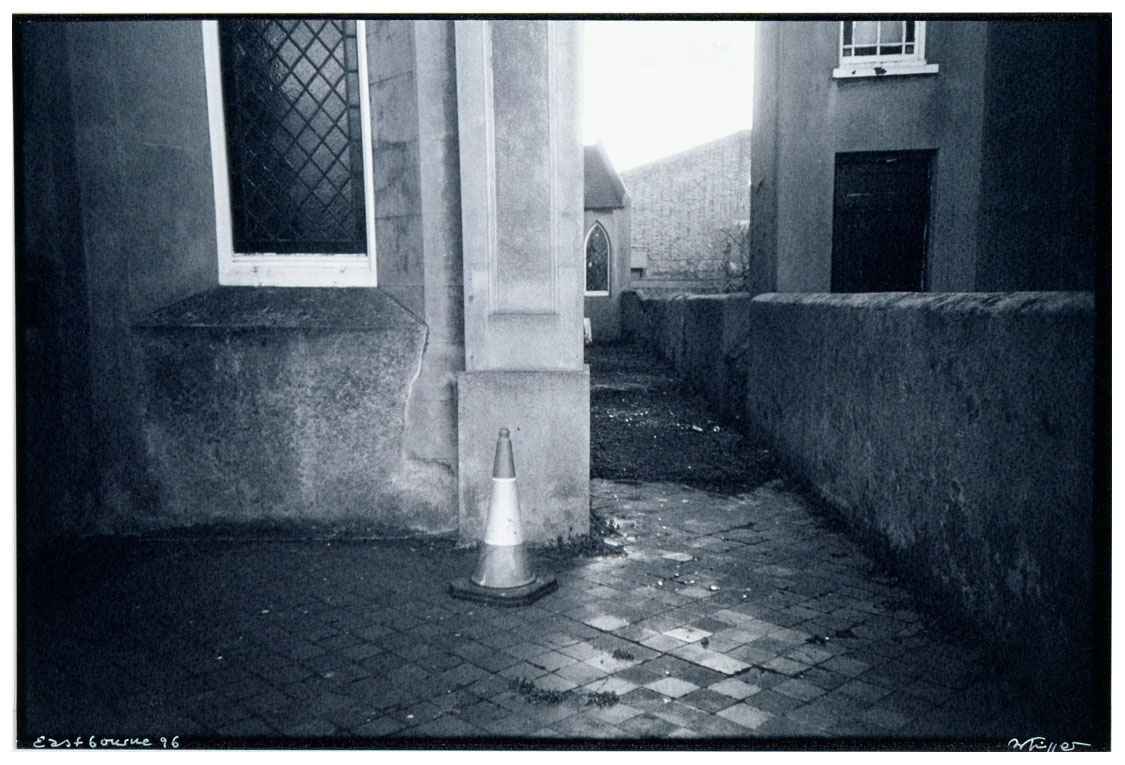
Art Ringger
 (Swiss, b. 1946) 'Eastbourne' 1996


Art Ringger
 (Swiss, b. 1946)
Eastbourne
1996
Black-and-white photograph on aluminium, embossed
20.3 x 30.3cm
Aargauer Kunsthaus Aarau / deposited by the Andreas Züst Collection


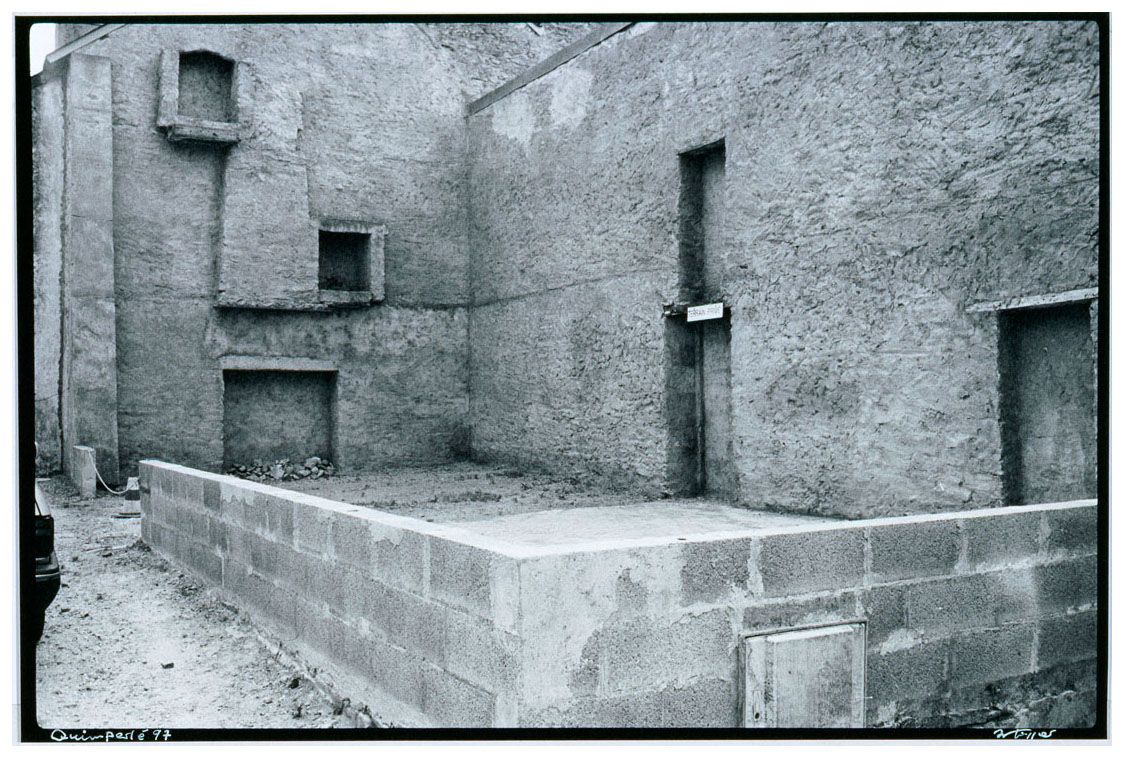
Art Ringger
 (Swiss, b. 1946) 'Quimperlé' 1997


Art Ringger
 (Swiss, b. 1946)
Quimperlé
1997
Black-and-white photograph on aluminium, embossed
19.9 x 29.7cm
Aargauer Kunsthaus Aarau / deposited by the Andreas Züst Collection


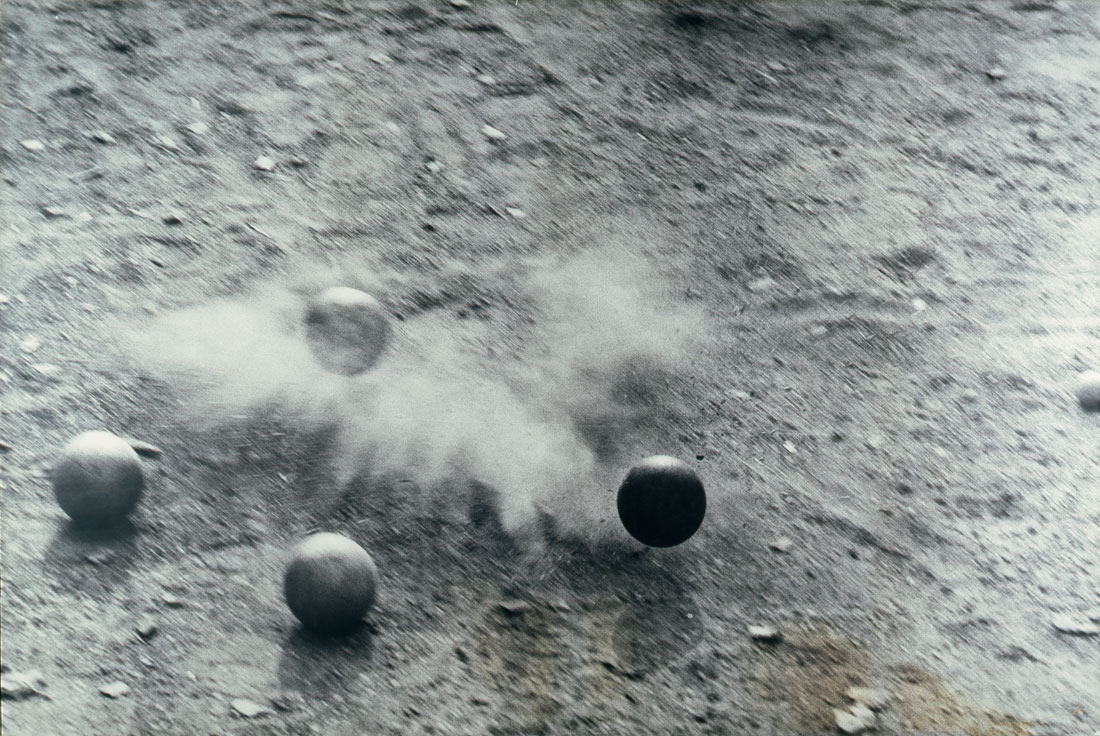
Hannah Villiger
 (Swiss, 1951-1997) 'Arbeit' 1979


Hannah Villiger
 (Swiss, 1951-1997)
Arbeit
1979
Black-and-white photograph on baryte paper, matt
125 x 189.5cm
Aargauer Kunsthaus Aarau / deposited by a private collection


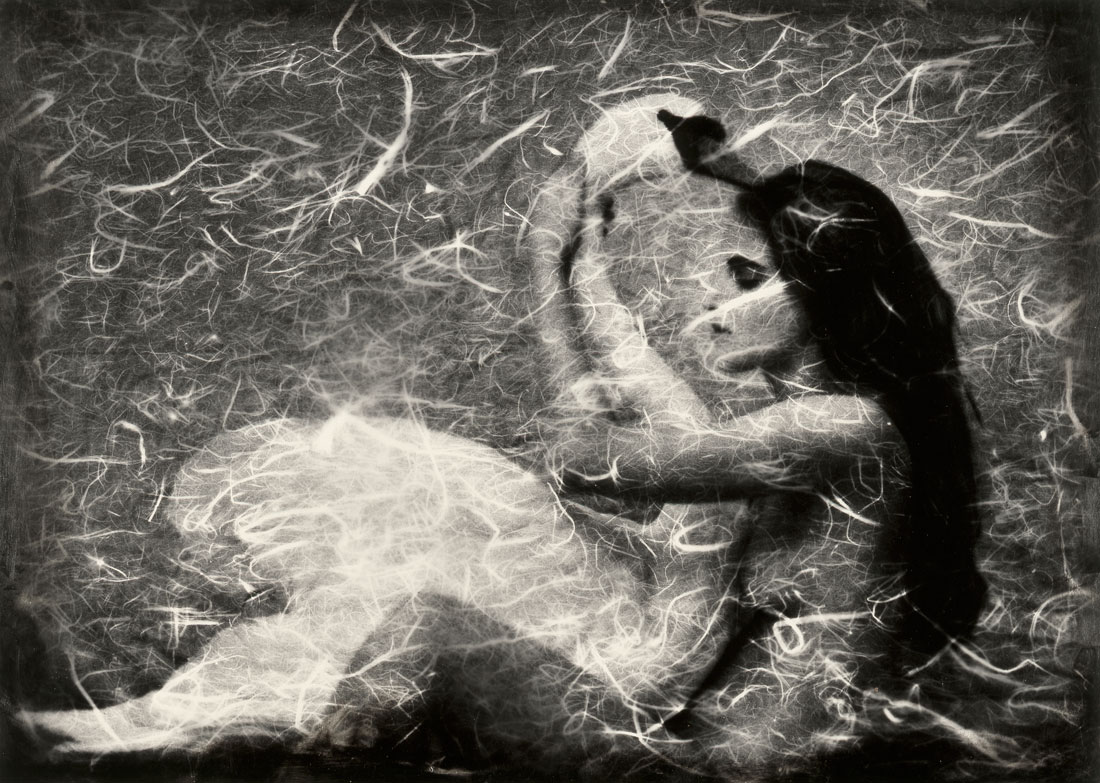
Claudia Böhm.
 'Leda' 1991


Claudia Böhm

Leda
1991
Black-and-white photograph with retouching colour on paper
40 x 56cm
Aargauer Kunsthaus Aarau / deposited by the Andreas Züst Collection


Installation view of the exhibition 
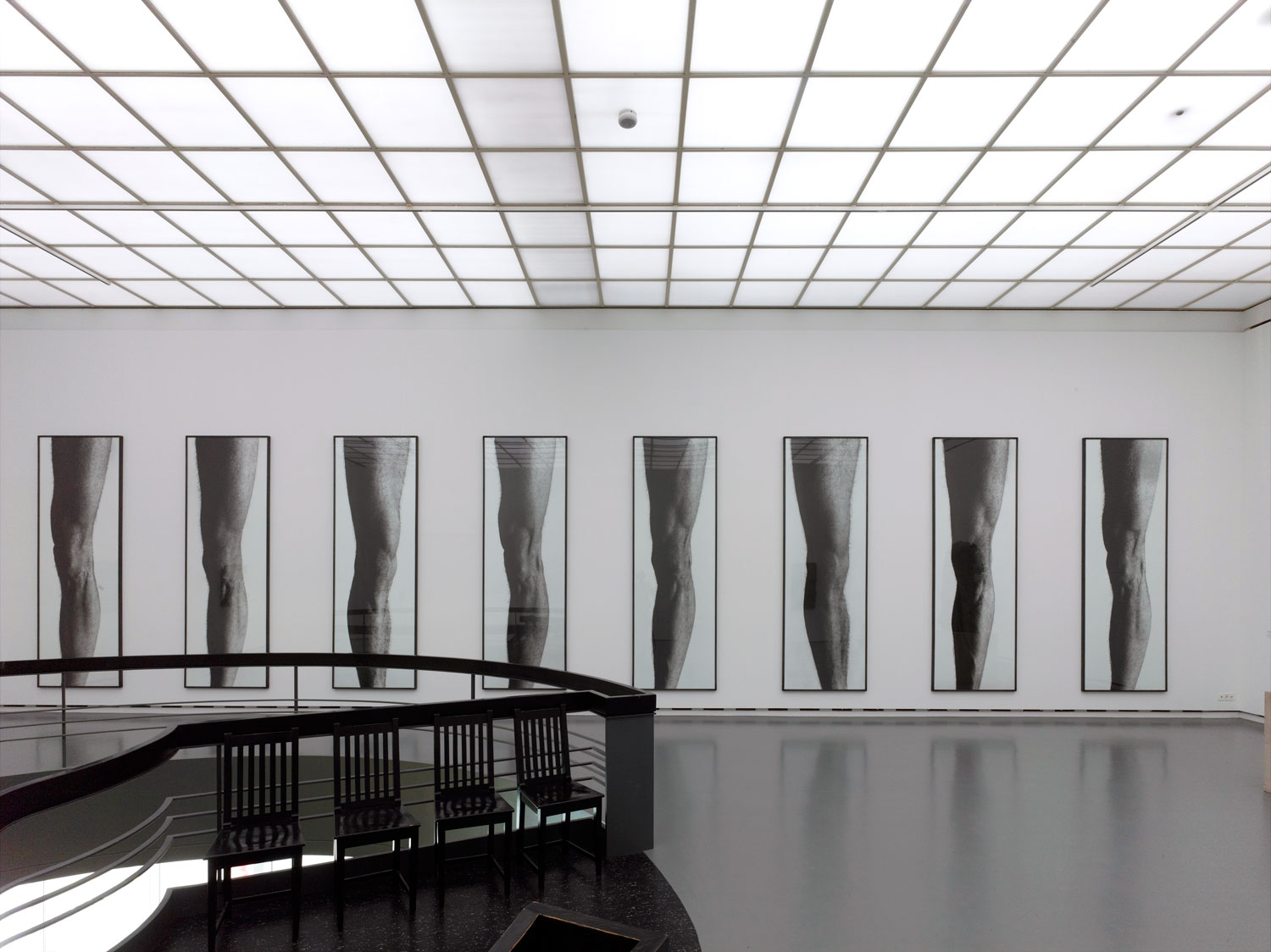
'Light Sensitive – Photo Art from the Collection' at Aargauer Kunsthaus showing photographs from Balthasar Burkhard's work 'Das Knie' (The Knee) 1983


Installation view of the exhibition 
Light Sensitive – Photo Art from the Collection at Aargauer Kunsthaus showing photographs from Balthasar Burkhard’s work Das Knie (The Knee) 1983
Photo: Dominic Büttner, Zurich


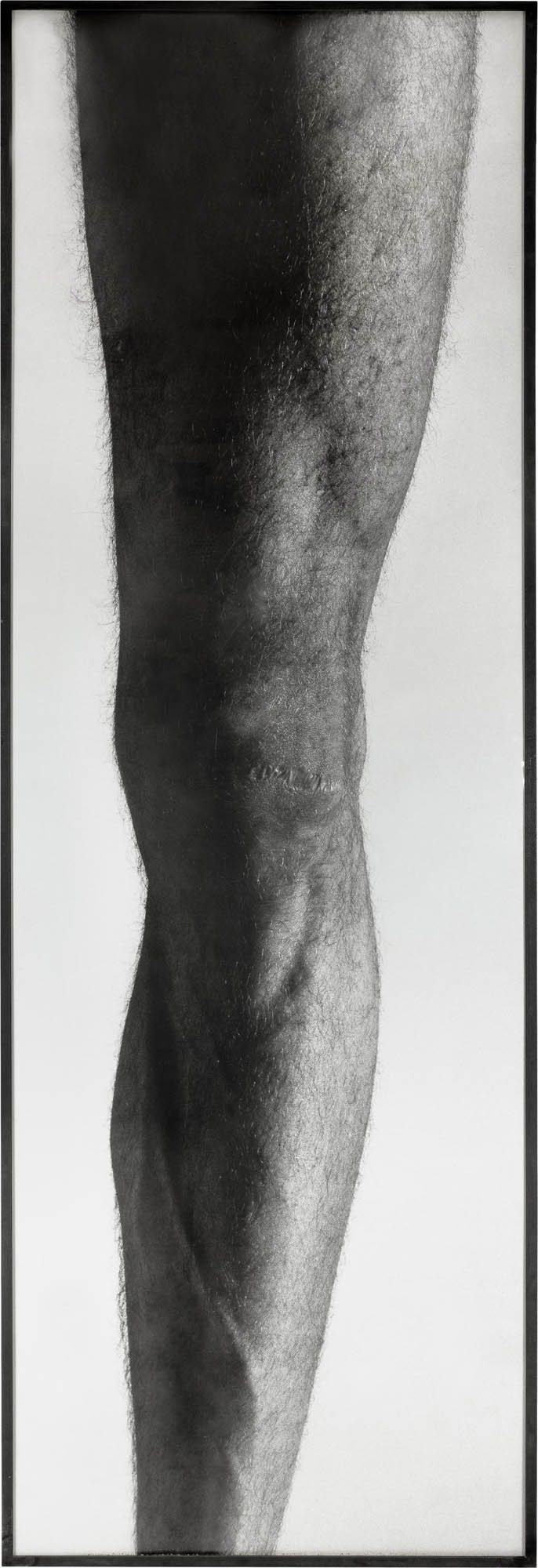
Balthasar Burkhard (Swiss, 1944-2010) 'Das Knie' (The Knee) 1983 (detail)


Balthasar Burkhard (Swiss, 1944-2010)
Das Knie (The Knee) (detail)
1983
Photography on baryta paper in original iron frame and on colour canvas
270 x 91cm, photography; 150.3 x 50.3cm, colour canvas


The exhibition Light Sensitive presents works from the rich photography holdings of the Aargauer Kunsthaus. In addition, it shows photographs of urban spaces by Andreas Tschersich and works by Bianca Dugaro.

Light Sensitive is a presentation of works from the collection of the Aargauer Kunsthaus that focuses on the medium of photography. The exhibition delves into the museum’s rich and quite substantial holdings of over 800 photographic works, sounding out core themes. In the process, two thematic focus areas come to the fore: on the one hand an exploration of the human body and on the other an examination of abstract, architectural or public space.

The 20th century has seen a major shift in the status of photography as an artistic medium, a change reflected by the holdings of the Aargauer Kunsthaus. Starting out with rather small-scale works of a documentary nature, photography graduated to photo art and today naturally takes its place among the wide range of artistic media. The exhibition Light Sensitive takes us on a journey of discovery through the collection, contrasting big names with unexpected work. A series of large-scale cityscapes by Berlin-based Swiss artist Andreas Tschersich as well as works by Swiss artist Bianca Dugaro complement the presentation.

Included in the exhibition are works by, among others Claudia Böhm, Balthasar Burkhard, Marie-Antoinette Chiarenza / Daniel Hauser, Hans Danuser, Silvie Defraoui, Achim Duchow, Olivia Etter, Nicolas Faure, Marc-Antoine Fehr, Peter Fischli / David Weiss, Katrin Freisager, Max Grüter / Patrick Rohner, Simone Hopferwieser, Markus Käch, Heiner Kielholz, Fred Knecht Engelbert, Rudolf Lichtsteiner, Urs Lüthi, Max Matter, Billy Eduard Albert Meier, Claudio Moser, Marianne Müller, Anita Niesz, Guido Nussbaum, Sigmar Polke, Markus Raetz, Ursina Rösch, Annelies Štrba, Beat Streuli, Hannah Villiger.

Press release from the Aargauer Kunsthaus website


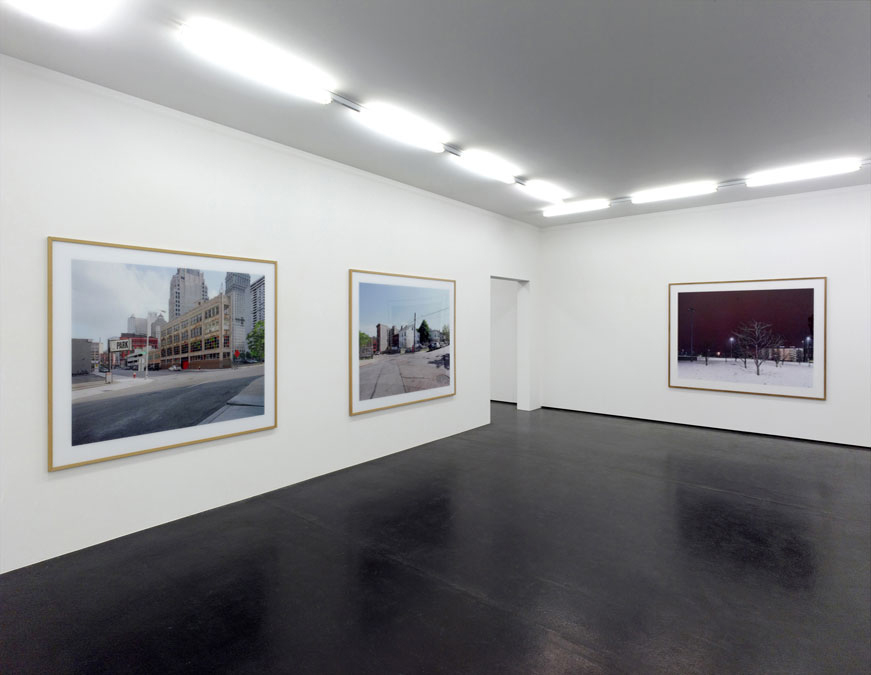
Installation view of the exhibition 'Light Sensitive: Photo Art from the Collection' at Aargauer Kunsthaus showing the work of Andreas Tschersich


Installation view of the exhibition Light Sensitive: Photo Art from the Collection at Aargauer Kunsthaus showing the work of Andreas Tschersich including at left, Peripher 1903 (Detroit) 2011 (below); and at second left, Peripher 1337 (New York City) Nd (below)
Photo: Dominic Büttner, Zurich


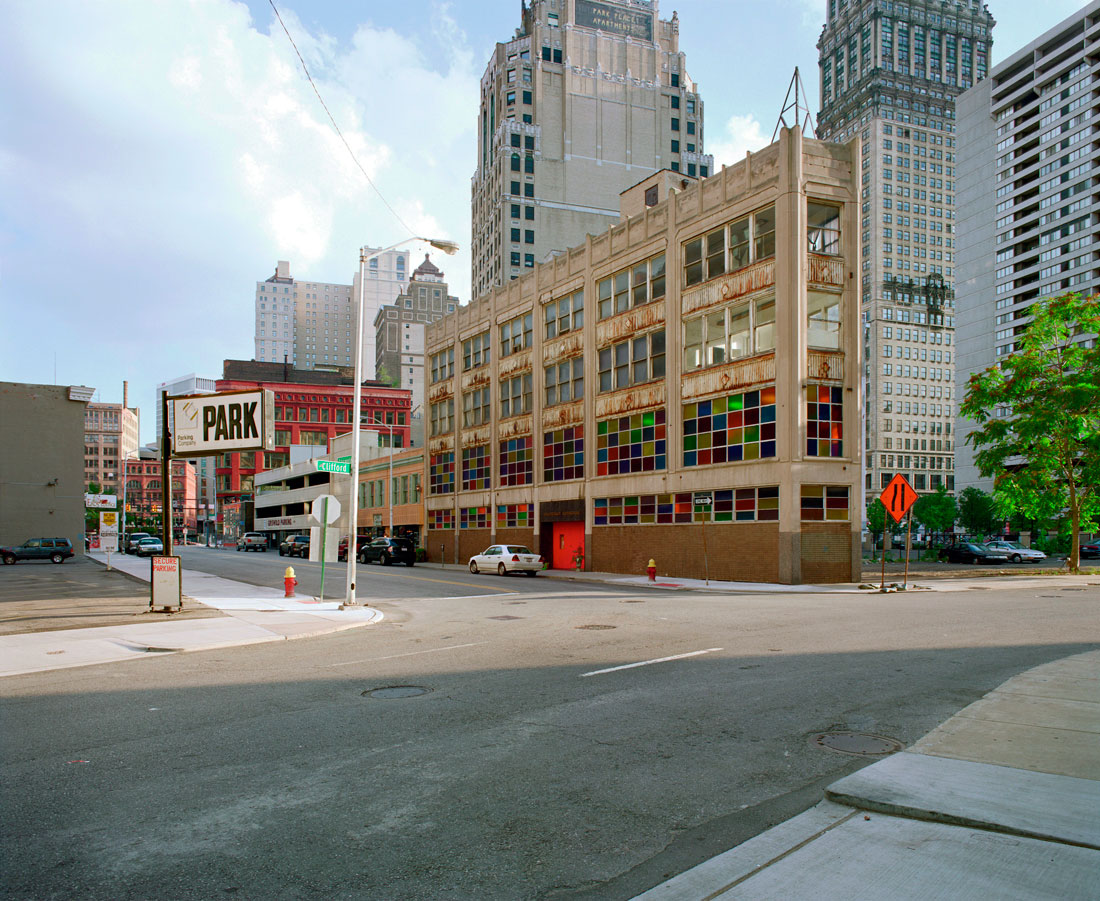
Andreas Tschersich
 (Swiss, b. 1971) 'Peripher 1903 (Detroit)' 2011


Andreas Tschersich
 (Swiss, b. 1971)
Peripher 1903 (Detroit)
2011
C-Print / Diasec
198 x 167cm


Andreas Tschersich
 (Swiss, b. 1971) 'Peripher 1337 (New York City)' Nd


Andreas Tschersich
 (Swiss, b. 1971)
Peripher 1337 (New York City)
Nd
C-Print / acrylic glass


Andreas Tschersich
 (Swiss, b. 1971) 'Peripher 1827 (Detroit)' Nd


Andreas Tschersich
 (Swiss, b. 1971)
Peripher 1827 (Detroit)
Nd
C-Print / acrylic glass


“This engagement with the place makes it become a part of me. They have kind of grown on me. This is the reason I try, whenever possible, to revisit them to see how they are going. Normally the places have become worse or are completely gone. I seem to have the right touch for disappearing places…”


~ Andreas Tschersich


Andreas Tschersich
 (Swiss, b. 1971) 'Peripher 130 (Berlin)' 2004


Andreas Tschersich
 (Swiss, b. 1971)
Peripher 130 (Berlin)
2004
C-Print / acrylic glass
219 x 170cm


Billy Eduard Albert Meier
 (Swiss, b. 1937) 'Ohne Titel' 1975


Billy Eduard Albert Meier
 (Swiss, b. 1937)
Ohne Titel
1975
Photograph on paper, 8 parts
18 x 26.5cm
Aargauer Kunsthaus Aarau / deposited by the Andreas Züst Collection


Nicolas Faure
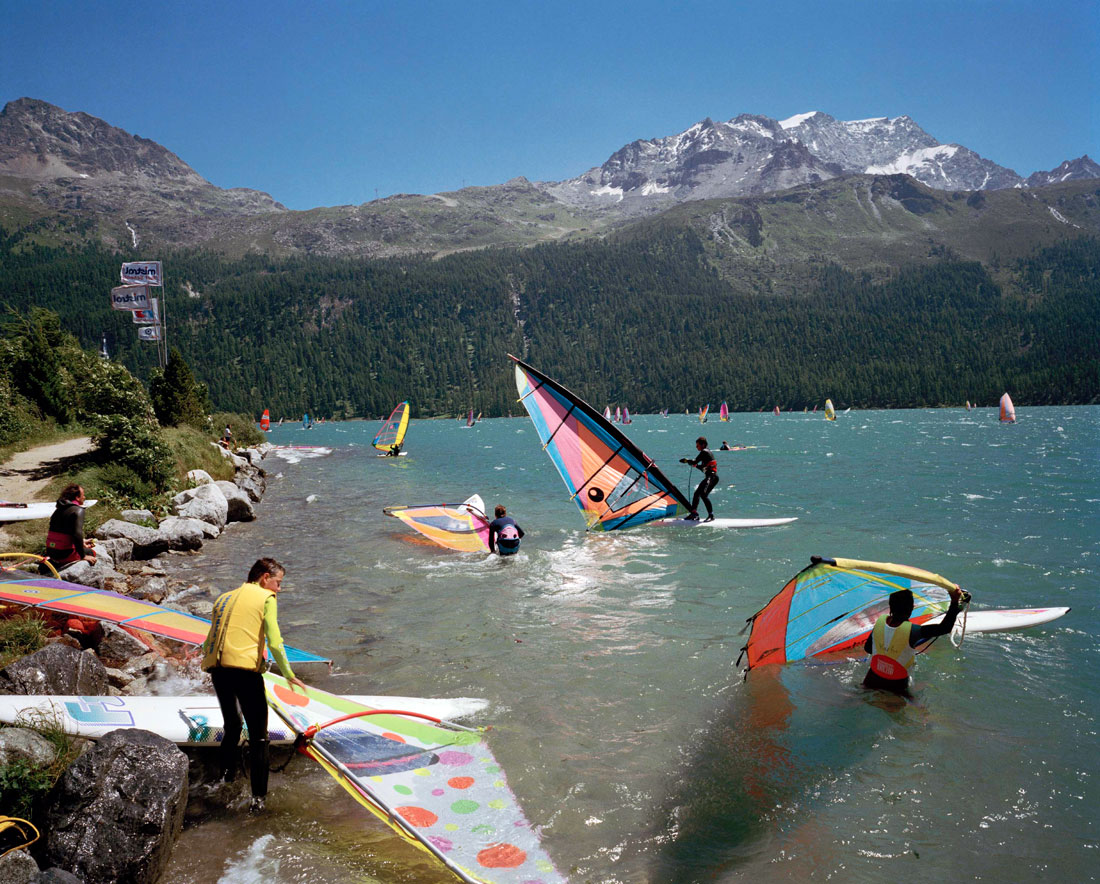
 (Swiss, b. 1949) 'Silvaplana (GR), Juli' 1988


Nicolas Faure
 (Swiss, b. 1949)
Silvaplana (GR), Juli
1988
Colour photograph on aluminium
63 x 80cm
Aargauer Kunsthaus Aarau


Nicolas Faure
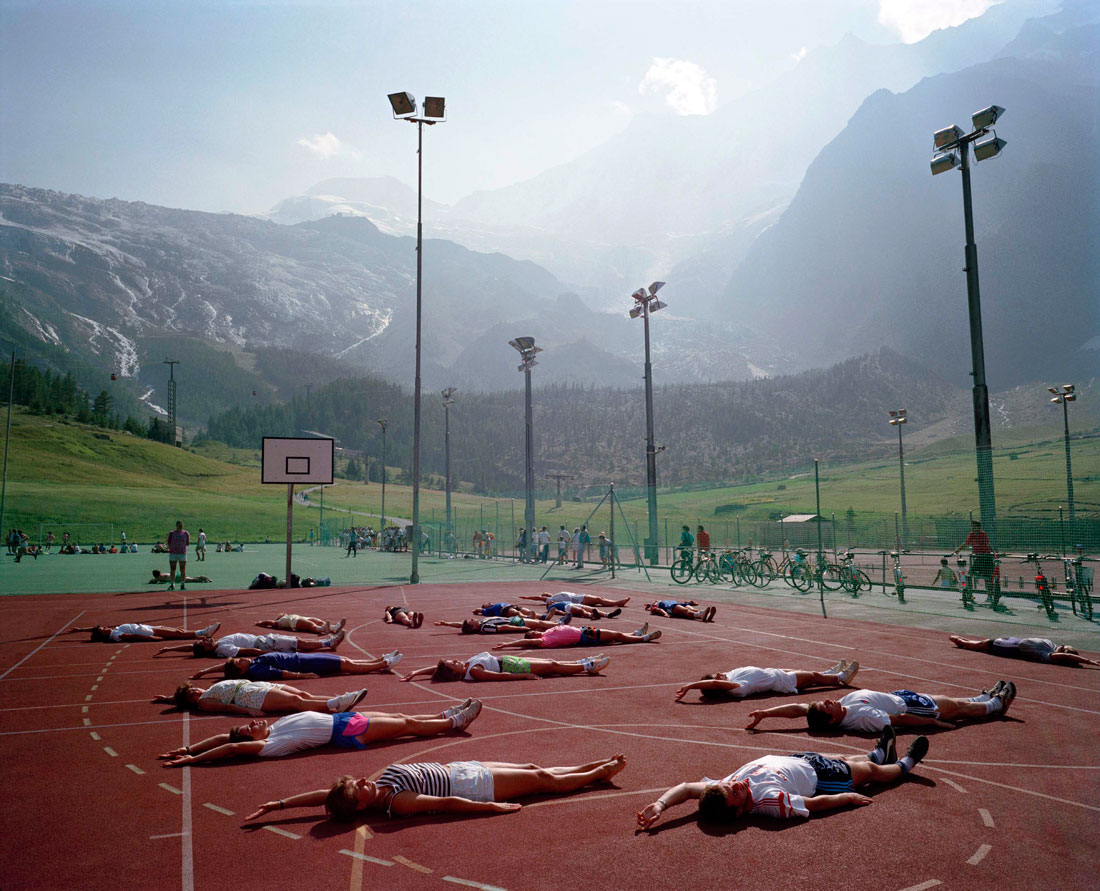
 (Swiss, b. 1949) 'Saas-Fee (VS), Juli' 1989


Nicolas Faure
 (Swiss, b. 1949)
Saas-Fee (VS), Juli
1989
Colour photograph on aluminium
63 x 80cm
Aargauer Kunsthaus Aarau


Nicolas Faure
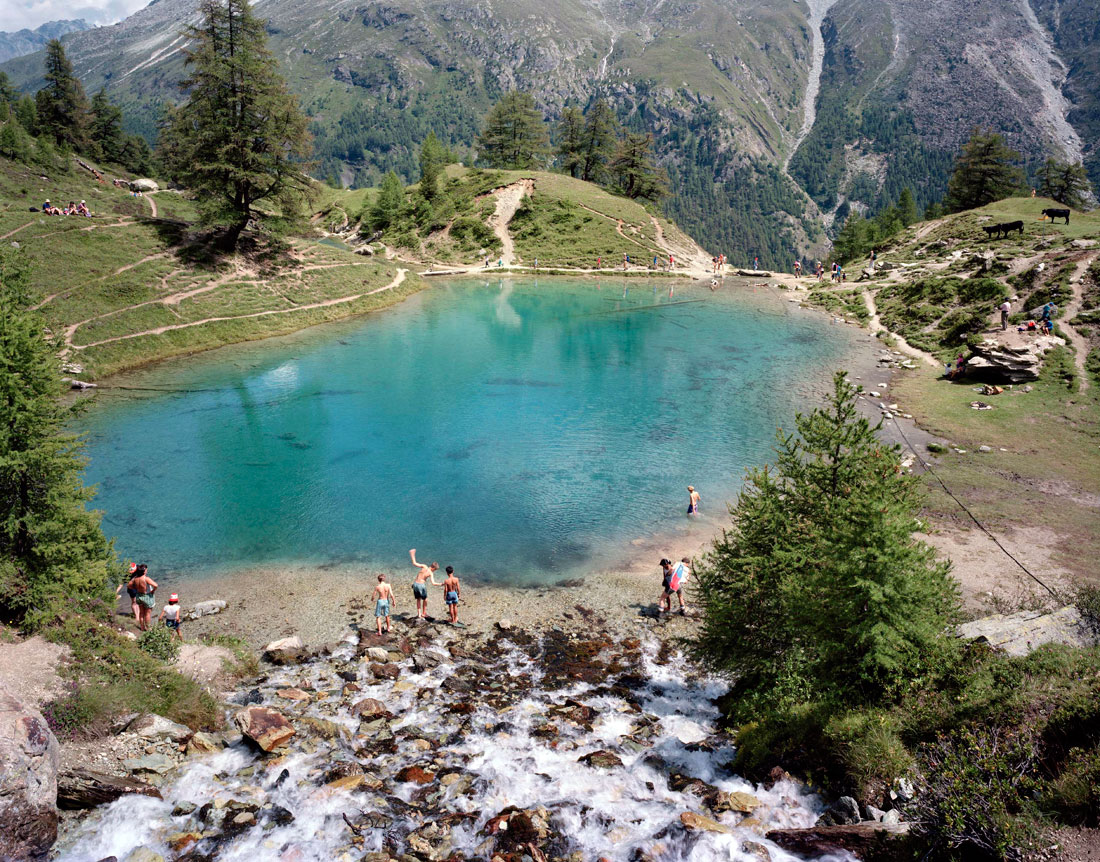
 (Swiss, b. 1949) 'Le Lac Bleu. Val d’Arolla (VS), August' 1997


Nicolas Faure
 (Swiss, b. 1949)
Le Lac Bleu. Val d’Arolla (VS), August
1997
Colour photograph on aluminium
63 x 80cm
Aargauer Kunsthaus Aarau


Born in Geneva in 1949, Nicolas Faure left his native city in 1976 to settle in New York and learn the technique of photography. Self-taught, he acquired his training by working in a lab and shooting documentary photos for publications like Time Life Books and GEO. After taking part in the 1978 group project American Vision, Faure returned to Switzerland in 1982.

Through group and individual portraits, he observed the relationship the Swiss have with clothing and popular forms of leisure (tennis, swimming pools, bicycles, etc.). In the early 1990s his art began to take shape around Swiss landscapes that had been refashioned by human beings and their activities. His body of photographic work now developed in three successive series, Pierres fétiches (fetish stones), Schweizer Autobahnen (Swiss motorways) and Paysage A (landscape A).

Text from the Collection Pictet website


Nicolas Faure
 (Swiss, b. 1949)
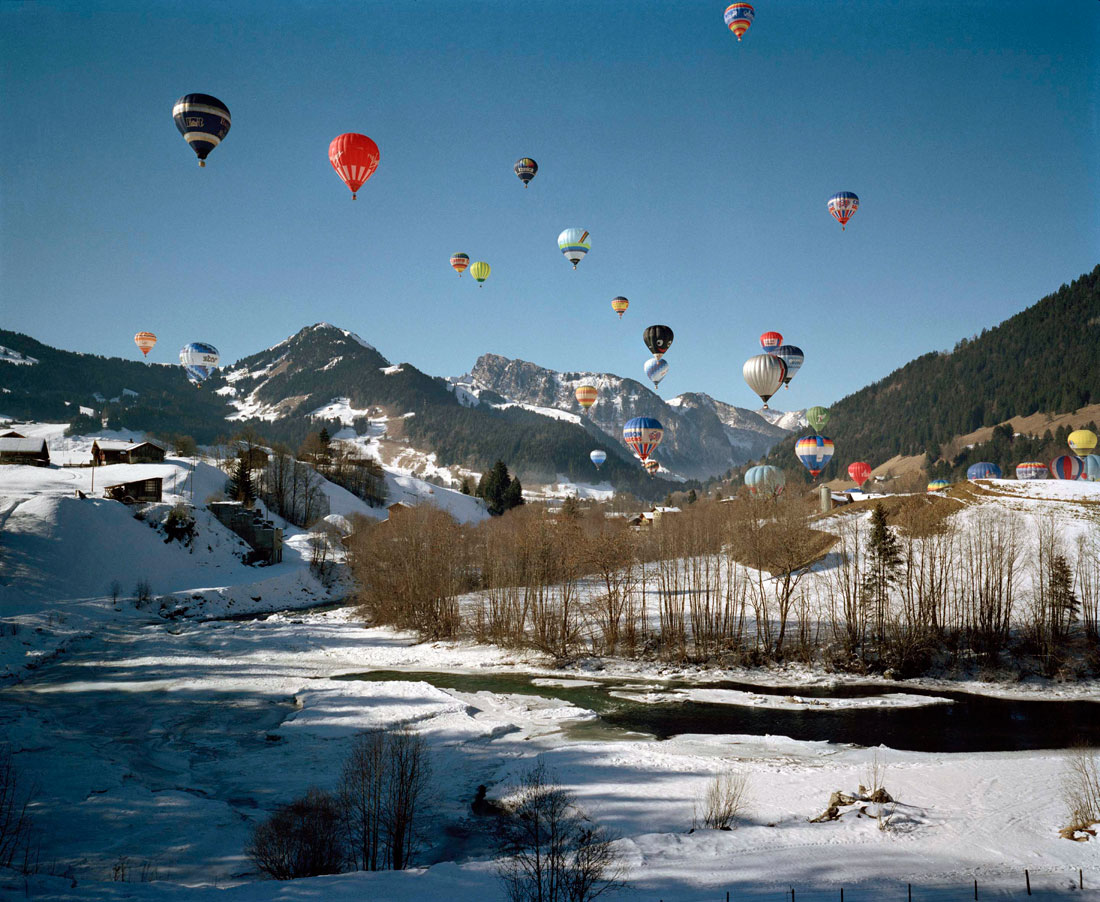
 'Château d’Oex (VD), Januar' 1989


Nicolas Faure
 (Swiss, b. 1949)
Château d’Oex (VD), Januar
1989
Colour photograph on aluminium
63 x 80cm
Aargauer Kunsthaus Aarau


Aargauer Kunsthaus
Aargauerplatz
CH-5001 Aarau
Switzerland
Phone: +41 (0) 62 835 23 30

Opening hours:
Tuesday – Sunday 10am – 5pm
Thursday 10am – 8pm
Closed Mondays
Aargauer Kunsthaus website

LIKE ART BLART ON FACEBOOK

Back to top

Exhibition: ‘Karlheinz Weinberger: Intimate Stranger’ at Kunstmuseum Basel, Museum for Gegenwartskunst

Exhibition dates: 21st January – 15th April 2012


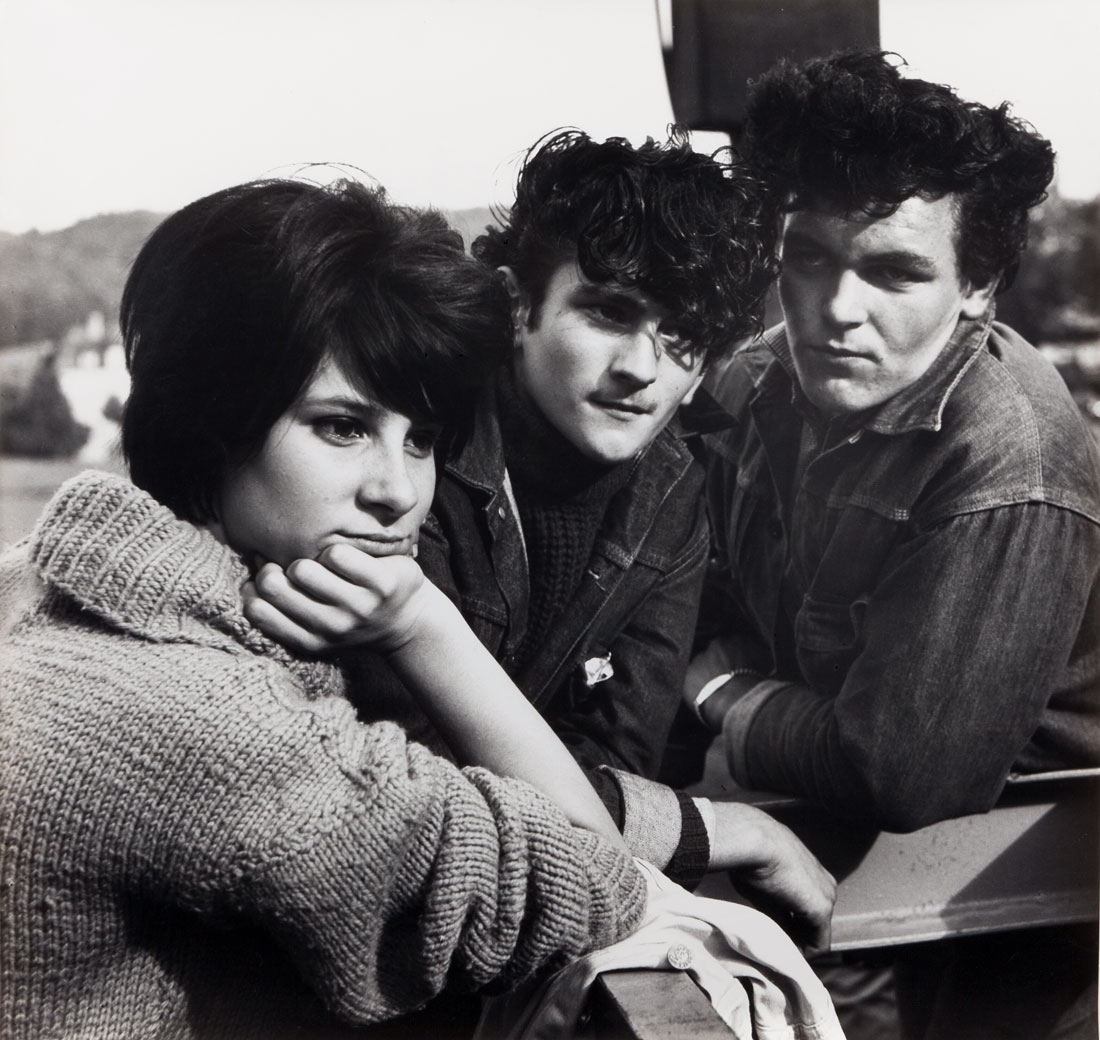
Karlheinz Weinberger (Swiss, 1921-2006) 'Hardau, Zürich' 1962


Karlheinz Weinberger (Swiss, 1921-2006)
Hardau, Zürich
1962
Schwarz-Weiss Fotografie
50.7 x 58cm
Courtesy The Estate of Karlheinz Weinberger in care of Patrik Schedler, Zürich


Another relatively unknown artist, people whose work I like promoting in this archive. I certainly had never heard of this photographer. A self-taught part-time photographer who worked as a warehouseman most of his life, Weinberger published photographs in the homosexual magazine “Der Kreis,” the same early gay magazine that George Platt Lynes submitted photographs to in the last stages of his life.

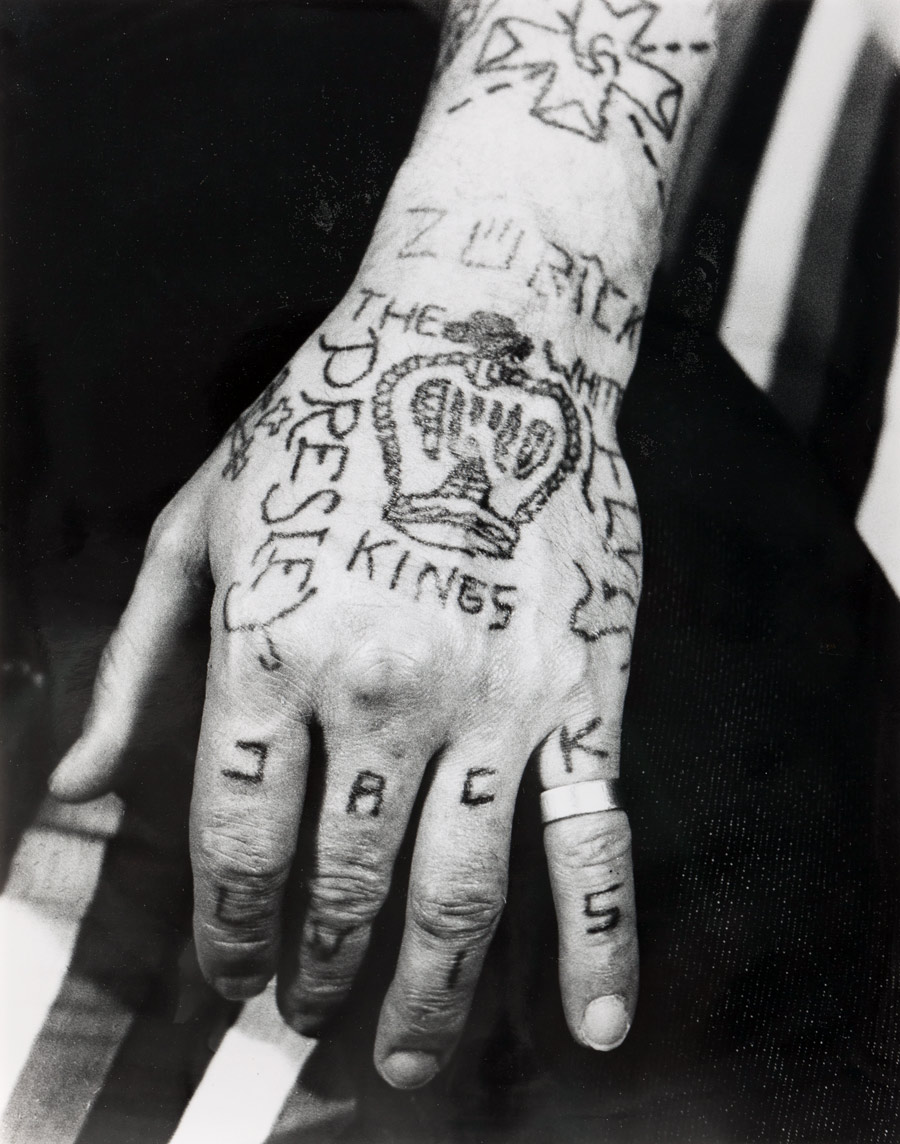
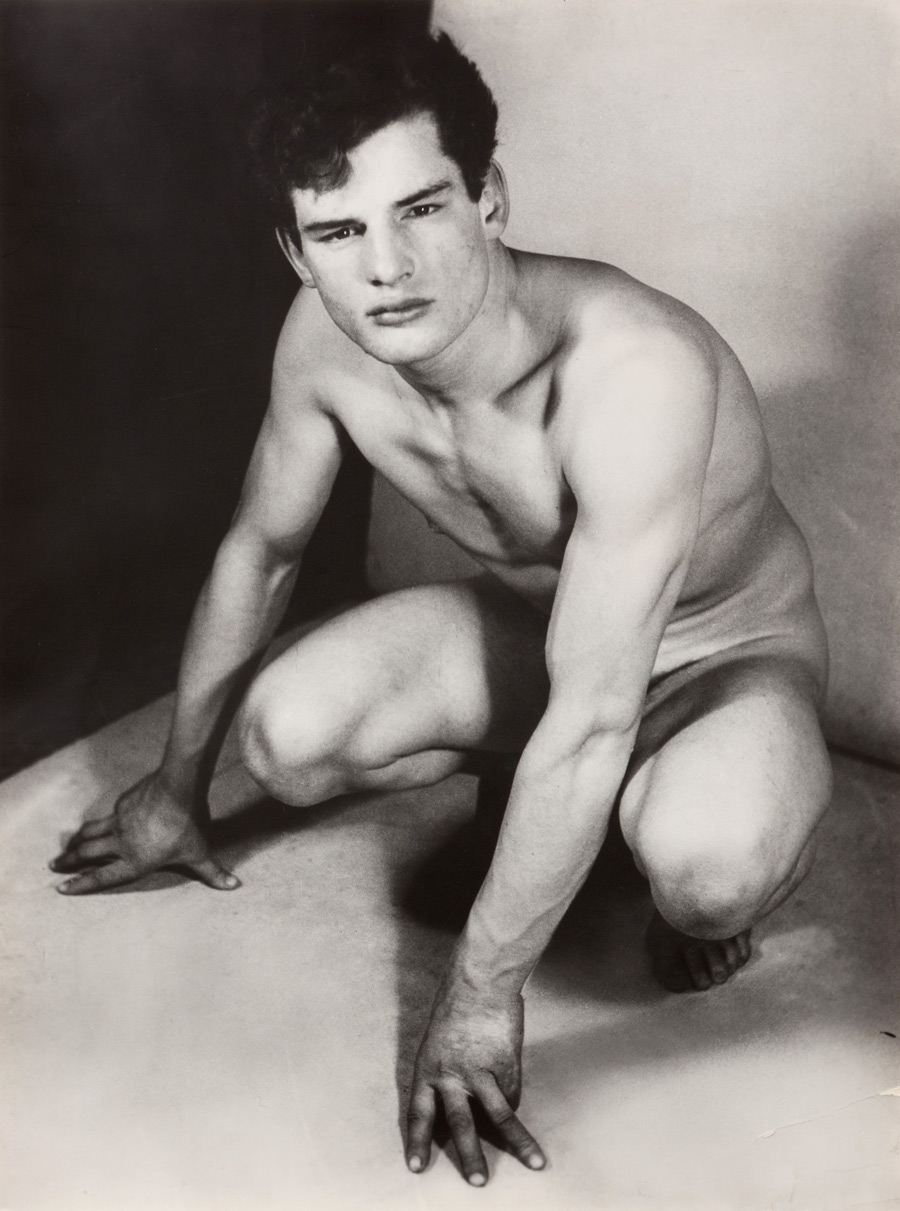
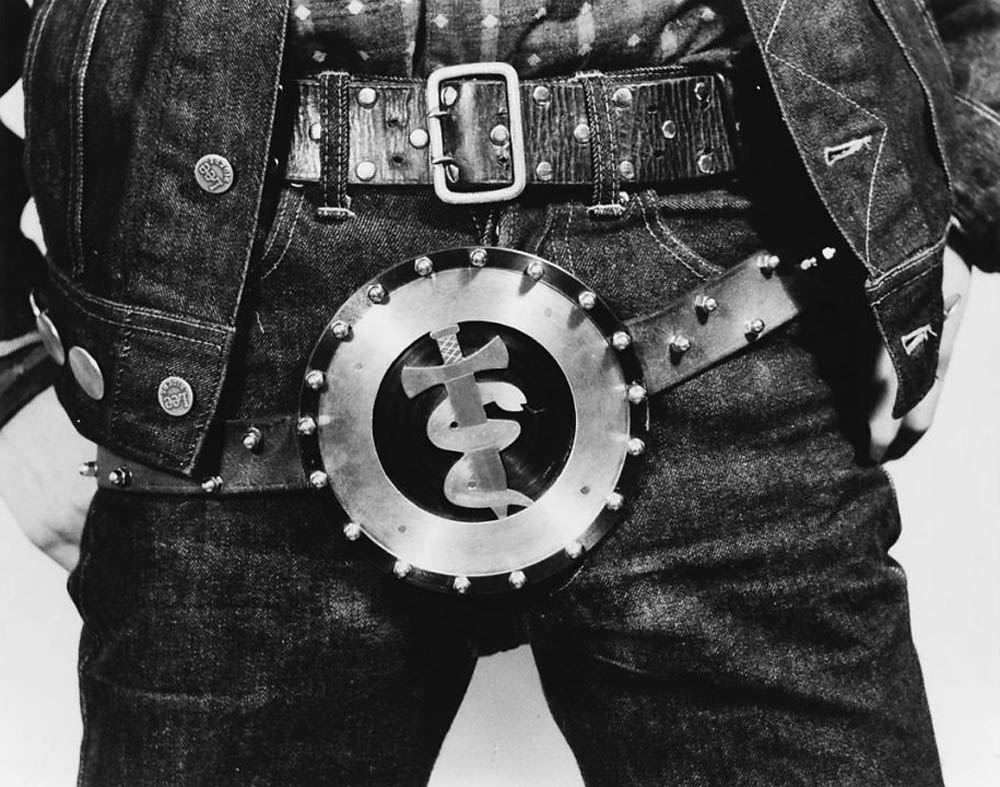
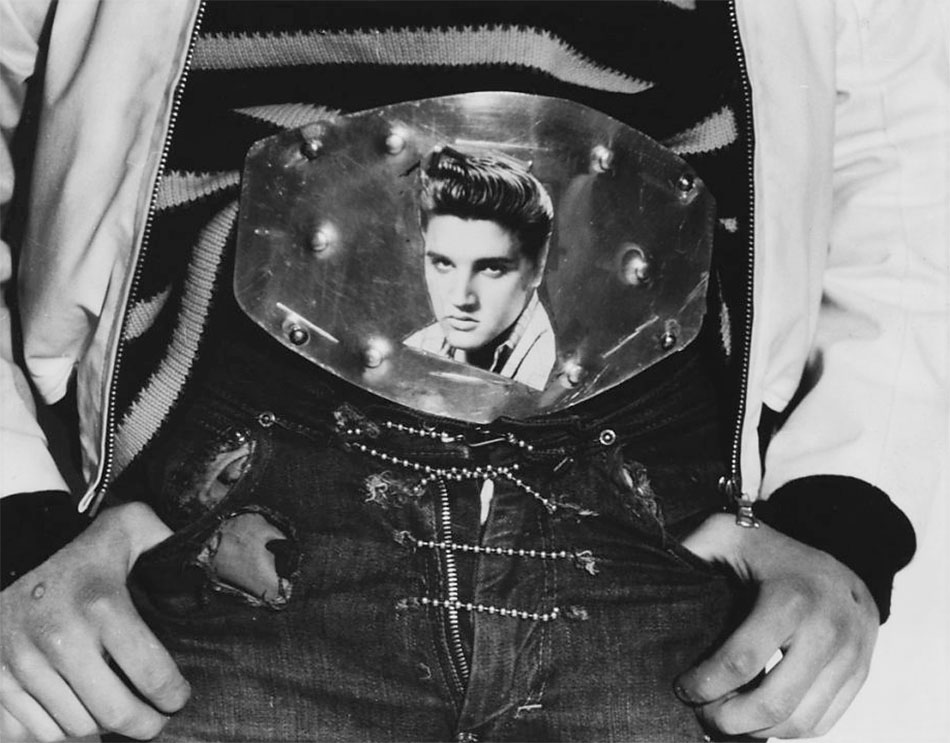
While their might seem to be a dichotomy between the desirous photographs of male youth and the city toughs and “rowdies”, gay men have always been drawn to rough trade: from Oscar Wilde who was more sexually drawn towards the swarthy young rough trade to contemporary iconography of gay skinheads and punks, still a prevalent culture in London for example. Tattoos, shaved heads, braces, Docs – in Weinberger’s case rockabillies. Notice how in the photograph of the male reclining with candlestick, the form of the candlestick mimics the spidery tattoo on the hand in the photograph above. Notice also how the crouching nude lad looks almost identical to the lad in the photograph below, with his hands thrust into his pockets emphasising the crutch area. And the earlier crutch photograph with the mating of Elvis and Vince over a skull and cross bones which has delicious, subversive homosocial overtones. Toughs or not, there is always the desire for the dangerous and different.
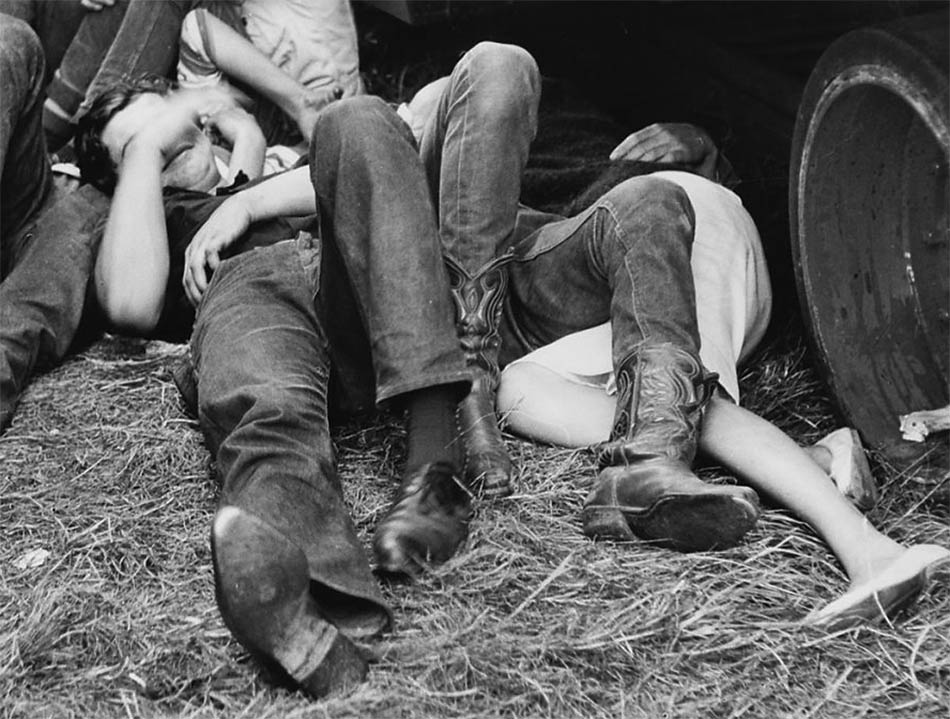
Dr Marcus Bunyan


Many thankx to the Kunstmuseum Basel for allowing me to publish the photographs in the posting. Please click on the photographs for a larger version of the image.


Karlheinz Weinberger (Swiss, 1921-2006) 'Knabenschiessen, Albisgütli, Zürich' 1961


Karlheinz Weinberger (Swiss, 1921-2006)
Knabenschiessen, Albisgütli, Zürich
1961
Schwarz-Weiss Fotografie
50.5 x 60.5cm
Courtesy The Estate of Karlheinz Weinberger in care of Patrik Schedler, Zürich


Karlheinz Weinberger (Swiss, 1921-2006) 'Fisherman with Hat, Sicily' c. 1960


Karlheinz Weinberger (Swiss, 1921-2006)
Fisherman with Hat, Sicily
c. 1960
Schwarz-Weiss Fotografie
18.5 x 24cm
Courtesy The Estate of Karlheinz Weinberger in care of Patrik Schedler, Zürich


Karlheinz Weinberger (Swiss, 1921-2006) 'Drei zusammen (three together)' c. 1965


Karlheinz Weinberger (Swiss, 1921-2006)
Drei zusammen (three together)
c. 1965
Schwarz-Weiss Fotografie
50 x 53.5cm
Courtesy The Estate of Karlheinz Weinberger in care of Patrik Schedler, Zürich


Karlheinz Weinberger (Swiss, 1921-2006) 'Untitled, Zürich' c. 1962


Karlheinz Weinberger (Swiss, 1921-2006)
Untitled, Zürich
c. 1962
Schwarz-Weiss Fotografie
23.8 x 30.4cm
Courtesy The Estate of Karlheinz Weinberger in care of Patrik Schedler, Zürich


Karlheinz Weinberger (Swiss, 1921-2006) 'Untitled, Zurich' c. 1962


Karlheinz Weinberger (Swiss, 1921-2006)
Untitled, Zurich
c. 1962
Schwarz-Weiss Fotografie
23.8 x 30.4cm
Courtesy The Estate of Karlheinz Weinberger in care of Patrik Schedler, Zürich


Karlheinz Weinberger (Swiss, 1921-2006) 'Untitled, Zurich' c. 1962


Karlheinz Weinberger (Swiss, 1921-2006)
Untitled, Zurich
c. 1962
Schwarz-Weiss Fotografie
23.8 x 30.4cm
Courtesy The Estate of Karlheinz Weinberger in care of Patrik Schedler, Zürich


Karlheinz Weinberger (Swiss, 1921-2006) 'Untitled, Zurich' c. 1962


Karlheinz Weinberger (Swiss, 1921-2006)
Untitled, Zurich
c. 1962
Schwarz-Weiss Fotografie
29.7 x 39.1cm
Courtesy The Estate of Karlheinz Weinberger in care of Patrik Schedler, Zürich


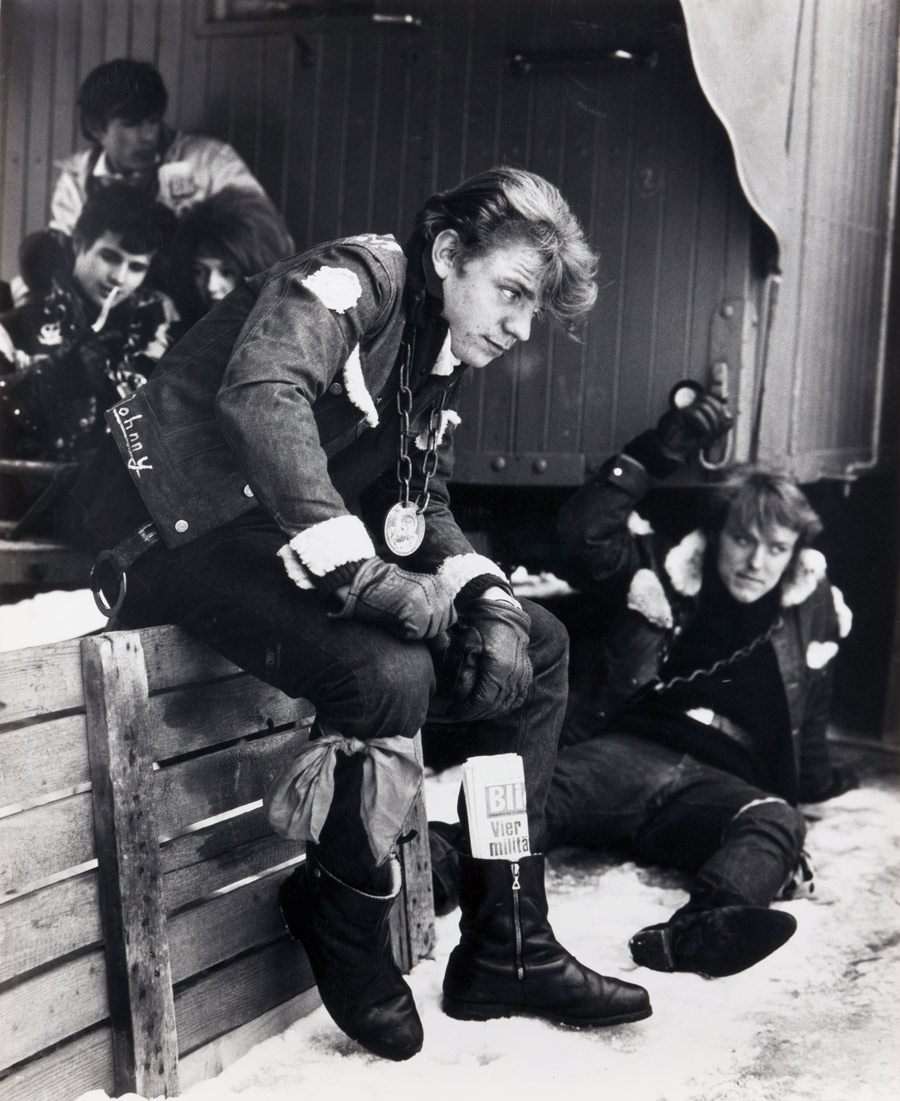
The exhibition presents the rarely shown work of the photographer Karlheinz Weinberger (1921-2006). Together with magazines and a selection of vintage apparel, the pictures document a youth culture in Zurich that emerged after World War II whose members sought to subvert contemporary notions of “Swiss correctness.”

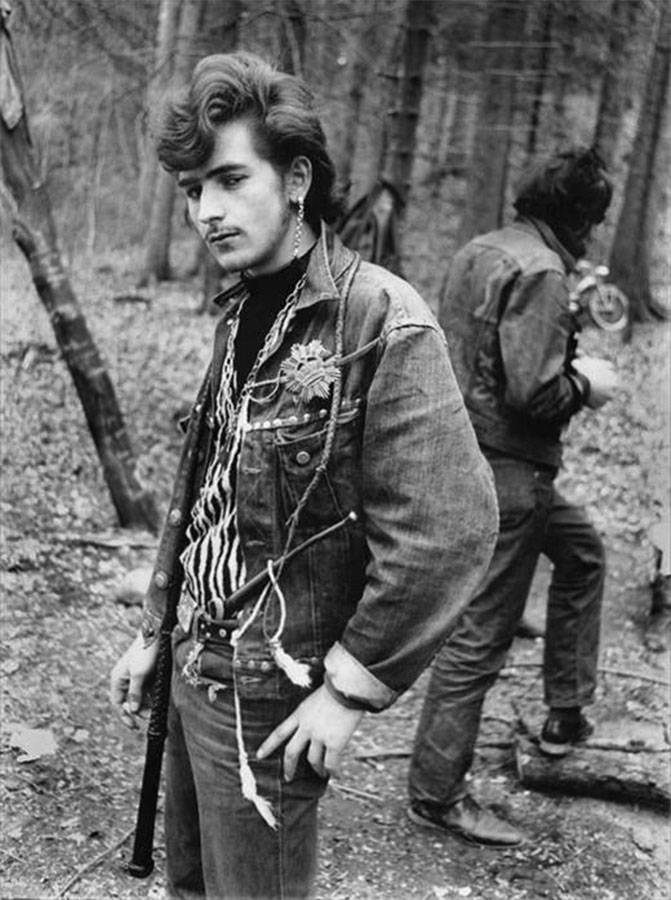
Weinberger spent the largest part of his life working as a warehouseman for Siemens-Albis in Zurich. In his free time, he was a self-taught photographer, portraying his lovers and people he met in the street. From the late 1940s on, he frequently published his pictures in “Der Kreis,” a homosexual magazine produced in Zurich from 1943 until 1967 that garnered international attention, pseudonymously signing his work as “Jim.” In 1958, he launched a major project for which he would photograph a group of teenagers, the city’s so-called “Halbstarke,” over an extended period of time. Weinberger’s unfailingly respectful approach allowed him to capture the non-conformism of these “rowdies” with regard to social convention and their play with stereotypes of masculinity and femininity, most readily evident in the way they dressed.

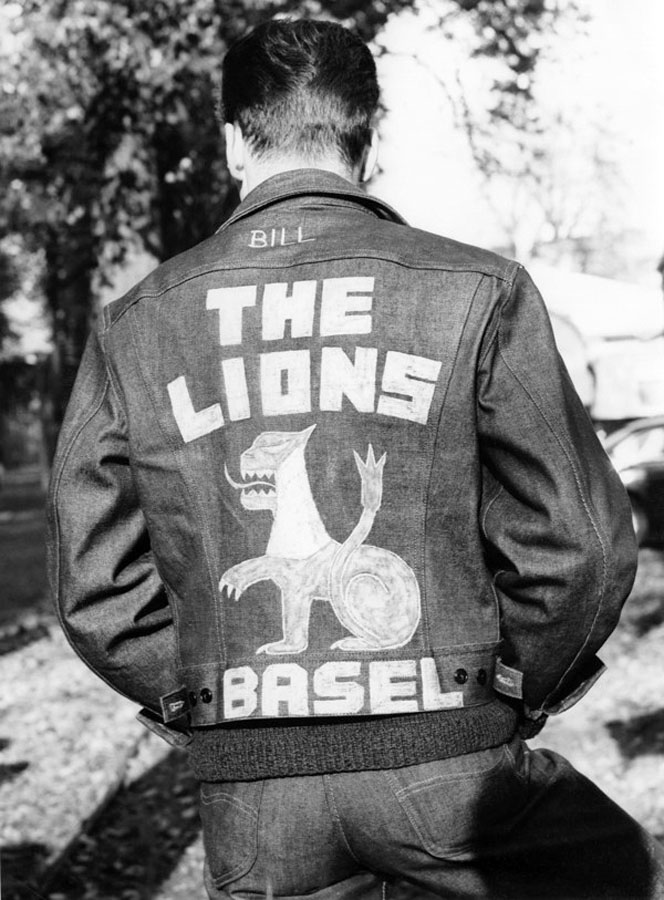
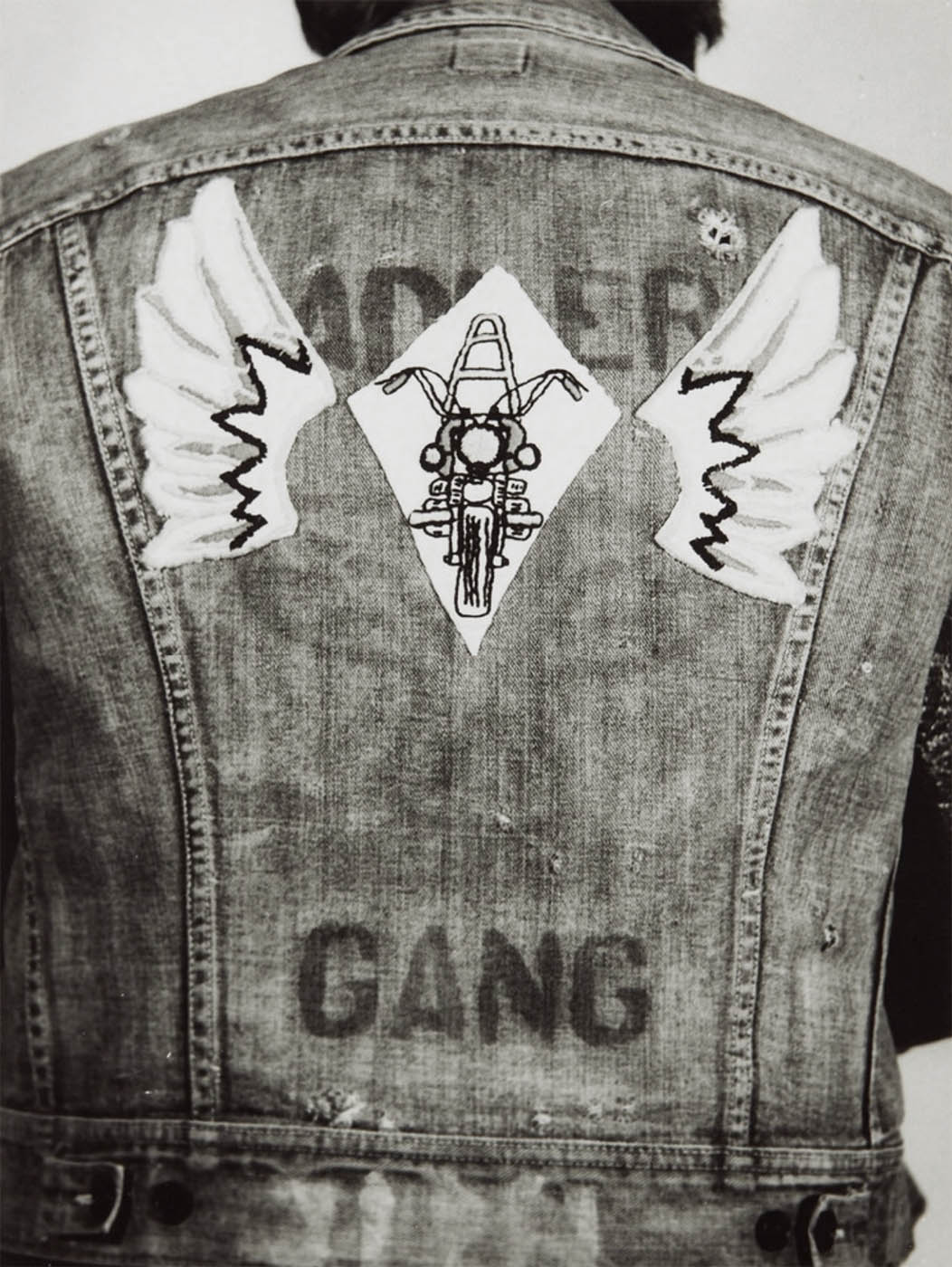
Wearing embroidered denim jackets and oversized belt buckles adorned with the likenesses of idols such as Elvis or James Dean, Weinberger’s adolescent subjects present themselves to his camera in public settings like members of a gang. Photographs such as those taken at the Knabenschiessen, a target shooting competition held at Zurich’s Albisgüetli, show them sprawling on the ground between fairground stalls and compact vans, illustrating the “Halbstarke”‘s refusal to fit in with the traditions surrounding this Zurich folk festival. In addition to the photographs in public settings, Weinberger also took pictures in the improvised studio in his living room. Scantily clad, some of his subjects, mostly young men, strike confident poses showing off their denim shorts and hats, while others cower, their eyes glancing at the camera with a vulnerable expression. Weinberger’s role is that of an Intimate Stranger: he records the attitudes of a generation and its marginal social position in unvarnished pictures and develops the photographs capturing the objects of his fascination in his own photo laboratory.

In an oeuvre that spanned many years, Weinberger portrayed what lay behind the curtains of 1960s bourgeois Switzerland, finding ways to document deviancy without ever putting his protagonists on display.

Press release from the Kunstmuseum Basel website


Karlheinz Weinberger (Swiss, 1921-2006) 'Untitled' c. 1969


Karlheinz Weinberger (Swiss, 1921-2006)
Untitled
c. 1969
Schwarz-Weiss Fotografie
30.4 x 23.8cm
Courtesy The Estate of Karlheinz Weinberger in care of Patrik Schedler, Zürich


Karlheinz Weinberger (Swiss, 1921-2006) 'Untitled' c. 1961


Karlheinz Weinberger (Swiss, 1921-2006)
Untitled
c. 1961
Schwarz-Weiss Fotografie
24 x 18cm
Courtesy The Estate of Karlheinz Weinberger in care of Patrik Schedler, Zürich


Karlheinz Weinberger (Swiss, 1921-2006) 'Untitled' c. 1960


Karlheinz Weinberger (Swiss, 1921-2006)
Untitled
c. 1960
Schwarz-Weiss Fotografie
39 x 29cm
Courtesy The Estate of Karlheinz Weinberger in care of Patrik Schedler, Zürich


What is the story behind Karlheinz Weinberger and his photographs?

Weinberger was totally fascinated with photography. From the day he received his first camera at a very young age, which was given to him by a lover, he felt the urge to take pictures. Although he had a day job as warehouseman and never really made money with his shots, he maintained this passion until the end of his life. Under the pseudonym Jim he began, in the mid 50s, to publish portraits in a gay magazine. Most of them were taken whilst travelling in Southern Italy. In 1958, he met a young rocker named Jimmy Oechslin in the streets of Zurich and asked him, excitedly, if he could take his portrait. Through him he was introduced to the burgeoning gang culture in Switzerland. Teenagers under the influence of American culture celebrated their own lifestyle by wearing customised jeans and by riding motorcycles. Eventually, in the 80s and 90s, Weinberger went on to photograph the Hell’s Angels in Switzerland.

How would you describe Weinberger’s aesthetic?

Rough, personal, artistic. He was at times very commanding during photo shoots and had an almost ethnographic interest in gangs and biker culture. At times, a buckle belt was more important than a face. Through his passion for photography he was part of gangs without adopting their lifestyle.

Who are the people in these images?

In Germany and Switzerland the German term ‘Halbstarker’ was created in the 50s. It literally means half strong. The ‘half strongs’ were gangs of young people who were looking for an identity of their own. They rejected society’s expectation and were pioneers in the establishment of youth culture through music, cloths and assimilation of American culture.

Ricky Lee. “Karlheinz Weinberger: Rebel Youth,” on the AnOther website February 7th, 2011 [Online] Cited 06/04/2012


Karlheinz Weinberger (Swiss, 1921-2006) 'The Jets, Basel' 1962


Karlheinz Weinberger (Swiss, 1921-2006)
The Jets, Basel
1962
Schwarz-Weiss Fotografie
Courtesy The Estate of Karlheinz Weinberger in care of Patrik Schedler, Zürich


Karlheinz Weinberger (Swiss, 1921-2006) 'The Lions, Basel' c. 1962


Karlheinz Weinberger (Swiss, 1921-2006)
The Lions, Basel
c. 1962
Schwarz-Weiss Fotografie
Courtesy The Estate of Karlheinz Weinberger in care of Patrik Schedler, Zürich


Karlheinz Weinberger (Swiss, 1921-2006) 'Zürich am Limmatquai' 1962


Karlheinz Weinberger (Swiss, 1921-2006)
Zürich am Limmatquai
1962
Schwarz-Weiss Fotografie
30 x 24cm
Courtesy The Estate of Karlheinz Weinberger in care of Patrik Schedler, Zürich


Karlheinz Weinberger (Swiss, 1921-2006) 'Milchbuck, Zürich' c. 1962


Karlheinz Weinberger (Swiss, 1921-2006)
Milchbuck, Zürich
c. 1962
Schwarz-Weiss Fotografie
60.5 x 49cm
Courtesy The Estate of Karlheinz Weinberger in care of Patrik Schedler, Zürich


Karlheinz Weinberger(Swiss, 1921-2006)

Career

Karlheinz Weinberger was a self-taught photographer spending over sixty years producing intimate, often homoerotic photographs of rebellious male youth, mostly working-class men. Weinberger worked in the warehouse at Zürich’s Siemens factory during the day and his nights he spent shooting portraits of construction workers, bikers, and athletes for the underground gay journal Der Kreis. Weinberger published his works under the pseudonym Jim. In 1958 he began focusing his camera on the Halbstarken, an edgy, antiauthoritarian teen subculture whose members styled themselves as bad boys à la James Dean in Rebel Without a Cause or Elvis Presley.

Work

As early as 1948, Weinberger made contact with the gay magazine Der Kreis, where he used the pseudonym “Jim”. At the parties of the district subscribers, he showed off his musical talent and was the “house photographer”. From September 1952 to 1965 his photographs were an integral part of the circle. With around 80 photos published, he had a significant impact on homosexual aesthetics until the end of the magazine in 1967 and its successor magazine Club68. The photographs, which Weinberger published under the pseudonym “Jim”, mainly show workers and evoke the homoeroticism of simple men.

From 1958 Weinberger began photographing the hooligan scene in Zürich. He was also interested in rockers and tattooed people. Weinberger was one of the first photographers to get permission to document the Hells Angels’ local offshoot. Between 1964 and 1976 Weinberger also worked as a freelancer for various sports magazines and specialised in sports reports.

Text from the Wikipedia website


Karlheinz Weinberger (Swiss, 1921-2006) 'Adler Gang, Zurich' c. 1966


Karlheinz Weinberger (Swiss, 1921-2006)
Adler Gang, Zurich
c. 1966
Schwarz-Weiss Fotografie
Courtesy The Estate of Karlheinz Weinberger in care of Patrik Schedler, Zürich


Karlheinz Weinberger (Swiss, 1921-2006) 'Lone Star Camp, Gossau' 1967


Karlheinz Weinberger (Swiss, 1921-2006)
Lone Star Camp, Gossau
1967
Schwarz-Weiss Fotografie
Courtesy The Estate of Karlheinz Weinberger in care of Patrik Schedler, Zürich


Kunstmuseum Basel
St. Alban-Graben 16
CH-4010 Basel
Phone: 0041 (0)61 206 62 62

Opening hours:
Tuesday – Sunday 10am – 6pm
Closed on Monday

Kunstmuseum Basel website

LIKE ART BLART ON FACEBOOK

Back to top

Exhibition: ‘Detroit Experiences: Robert Frank Photographs, 1955’ at Detroit Institute of Arts, Detroit

Exhibition dates: 3rd March – 4th July, 2010


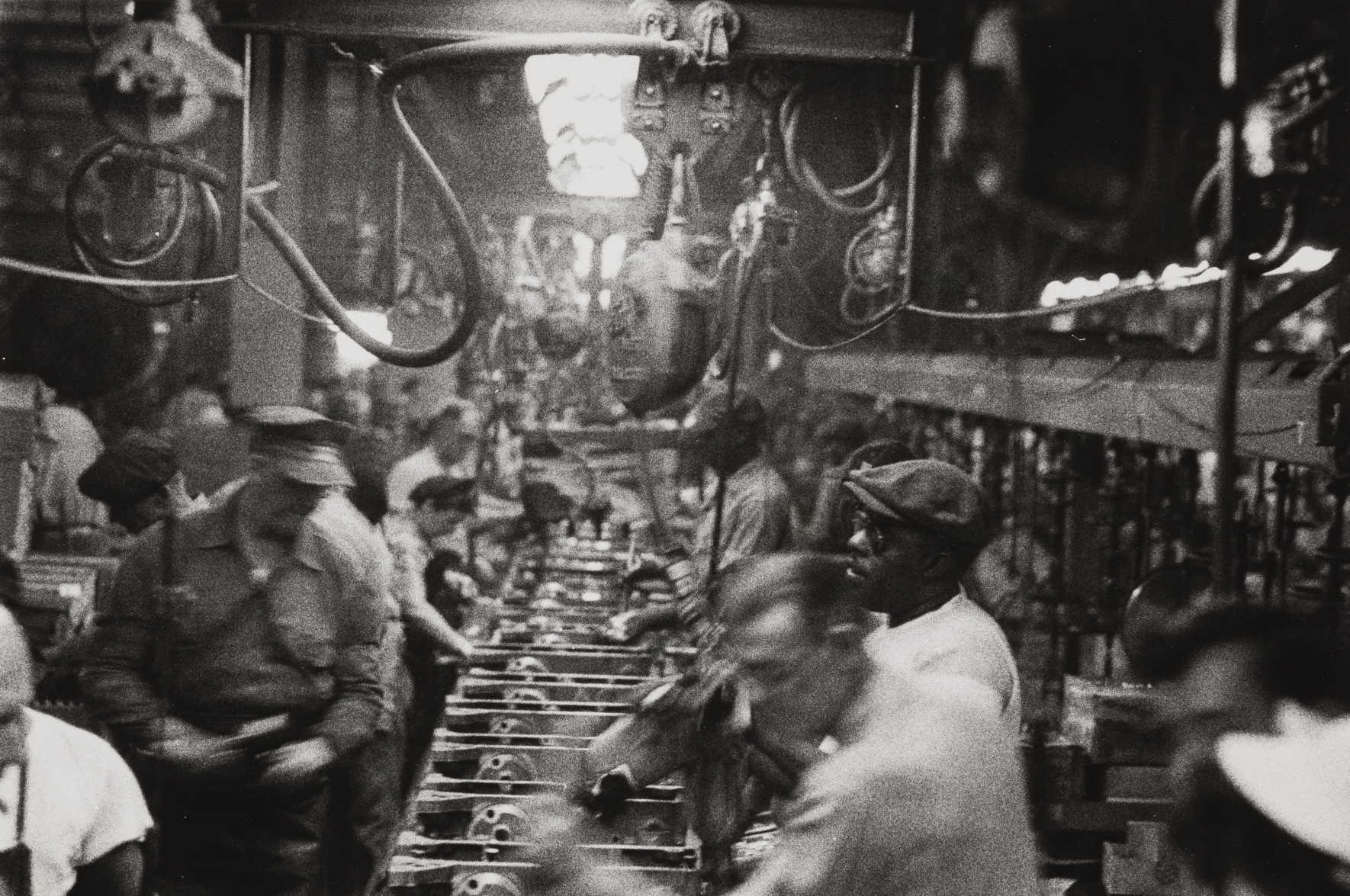
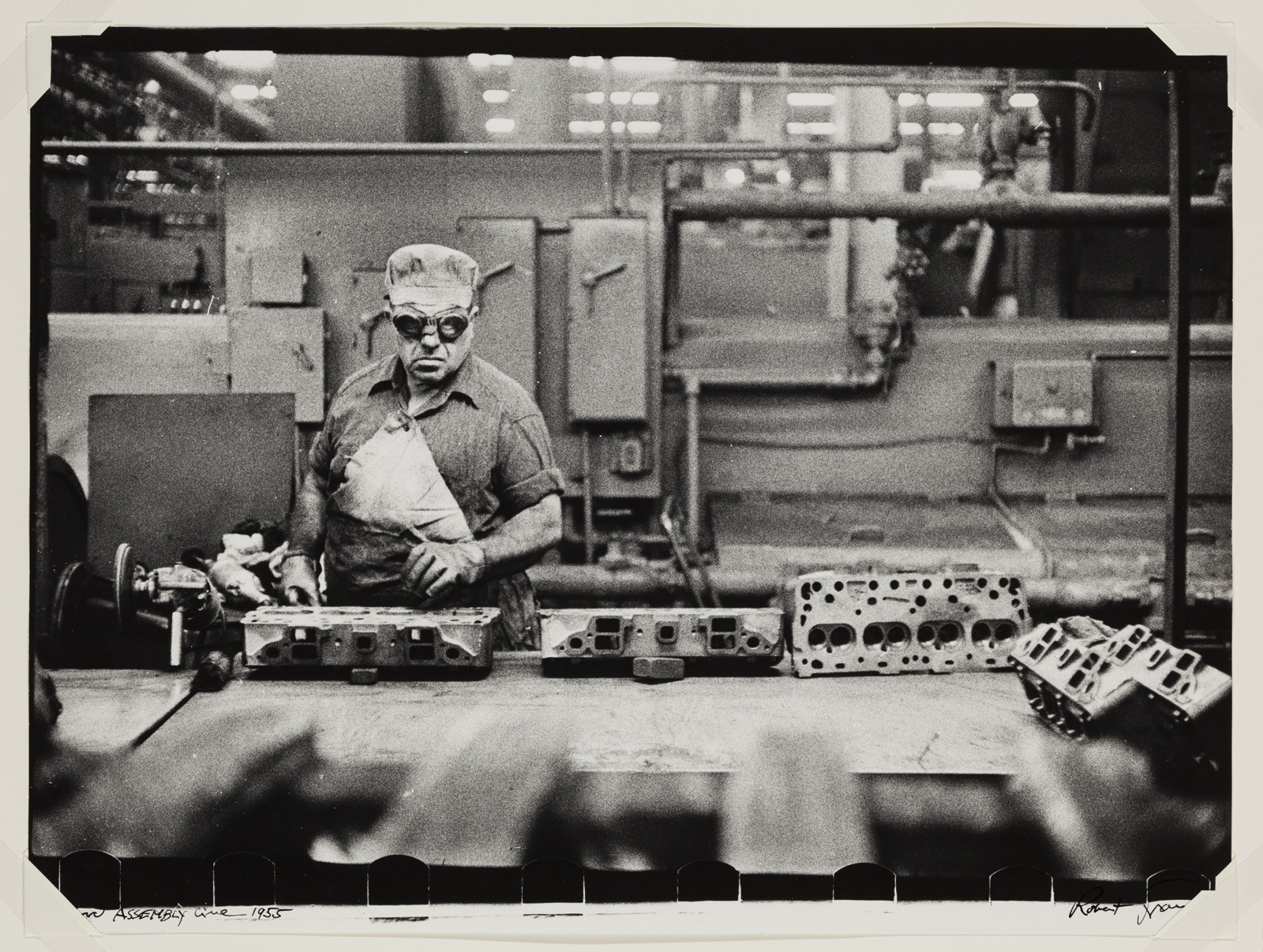
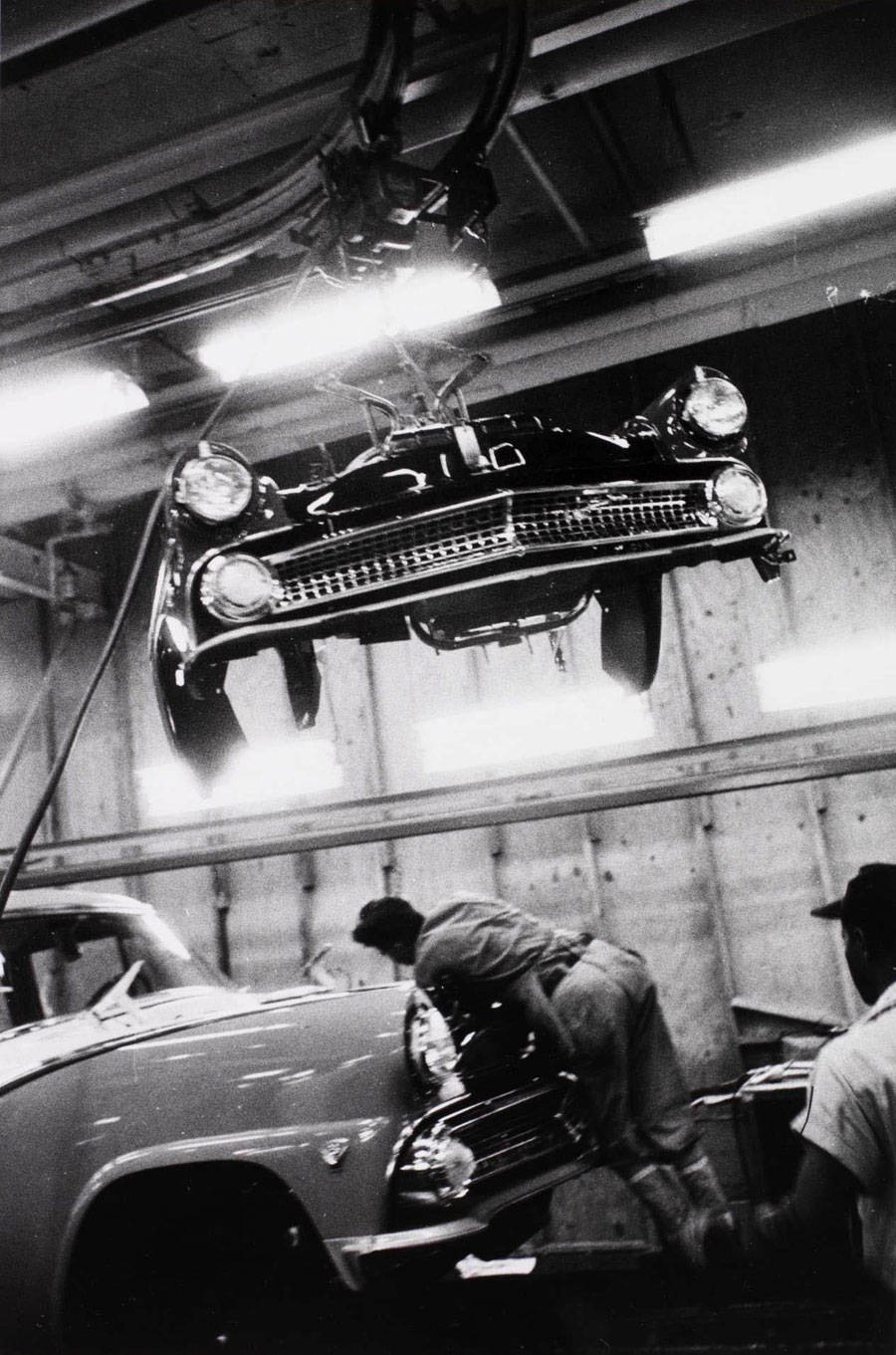
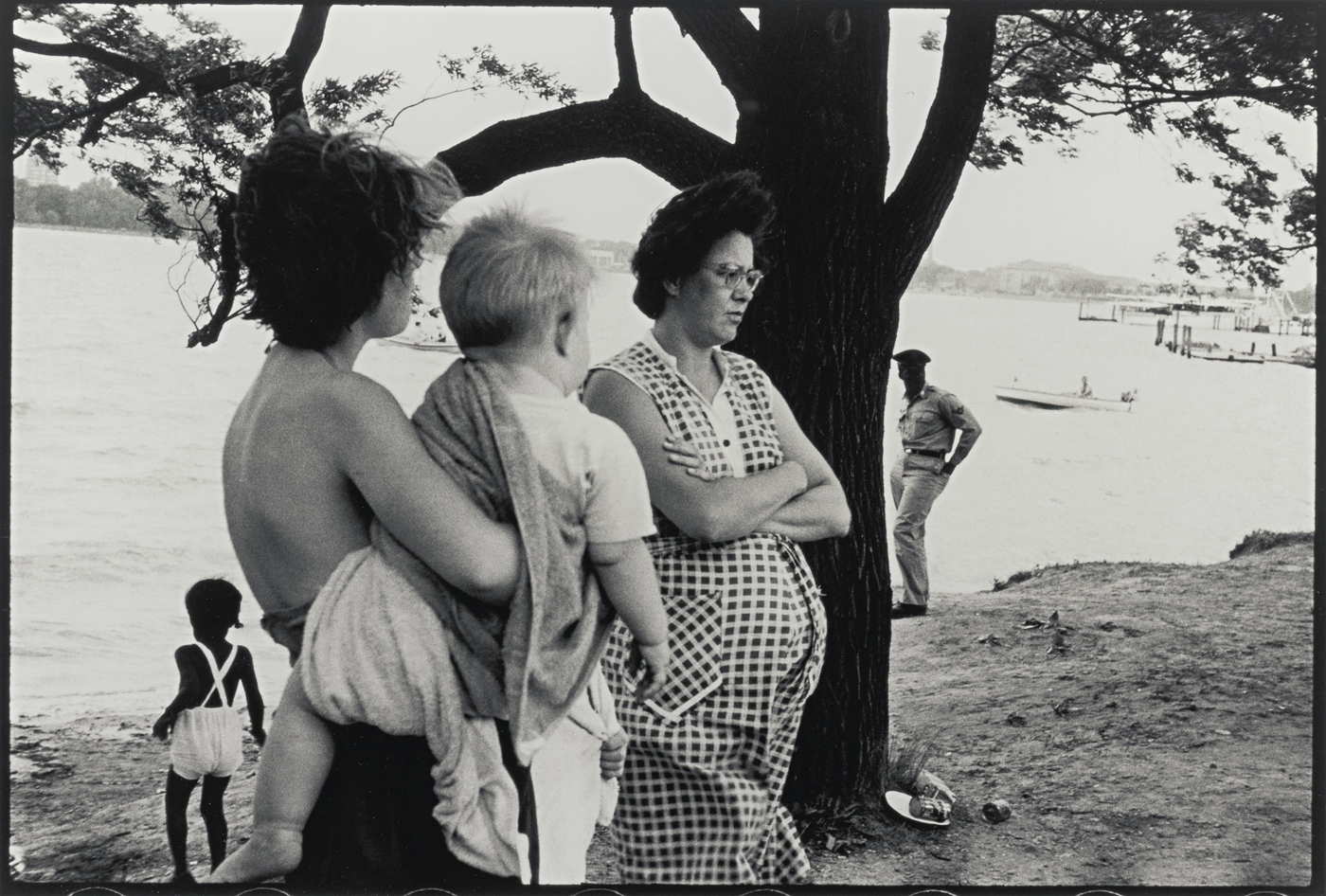
Robert Frank (Swiss-American, 1924-2019) 'Assembly Plant, Detroit' 1955 from the exhibition 'Detroit Experiences: Robert Frank Photographs, 1955' at Detroit Institute of Arts, Detroit, March - July, 2010


Robert Frank (Swiss-American, 1924-2019)
Assembly Plant, Detroit
1955
Gelatin silver print
8 7/8 × 13 1/8 inches (22.5 × 33.3cm)
Founders Society Purchase, Coville Photographic Fund
© Robert Frank, from The Americans. Detroit Institute of Arts


Many thankx to Pamela Marcil and the Detroit Institute of Arts for allowing me to reproduce the photographs in the posting. Please click on the photographs for a larger version of the image.

Marcus


“I am always looking outside, trying to look inside, trying to say something that is true. But maybe nothing is really true. Except what’s out there. And what’s out there is constantly changing.”


Robert Frank, 1985


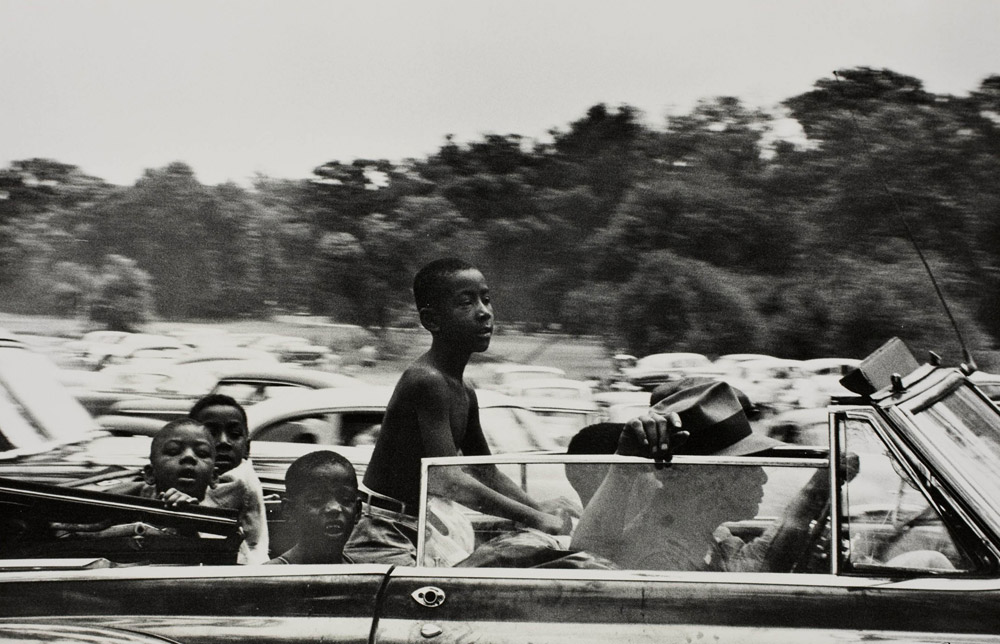
Robert Frank (Swiss-American, 1924-2019) 'Belle Isle' 1955 from the exhibition 'Detroit Experiences: Robert Frank Photographs, 1955' at Detroit Institute of Arts, Detroit, March - July, 2010


Robert Frank (Swiss-American, 1924-2019)
Belle Isle – Detroit
1955, printed between 1966-1968
Gelatin silver print
12 5/8 × 18 7/8 inches (32.1 × 47.9cm)
Museum Purchase, Ernest and Rosemarie Kanzler Foundation Fund, Forum for Prints, Drawings, and Photographs Purchase Fund, and General Art Purchase Fund
© Robert Frank, from The Americans. Detroit Institute of Arts


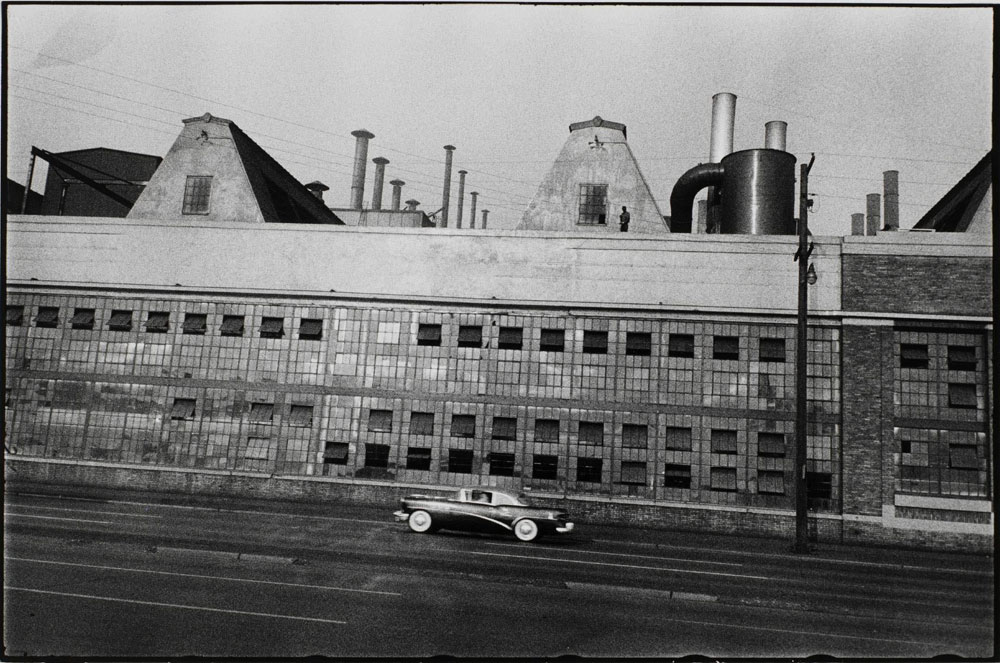
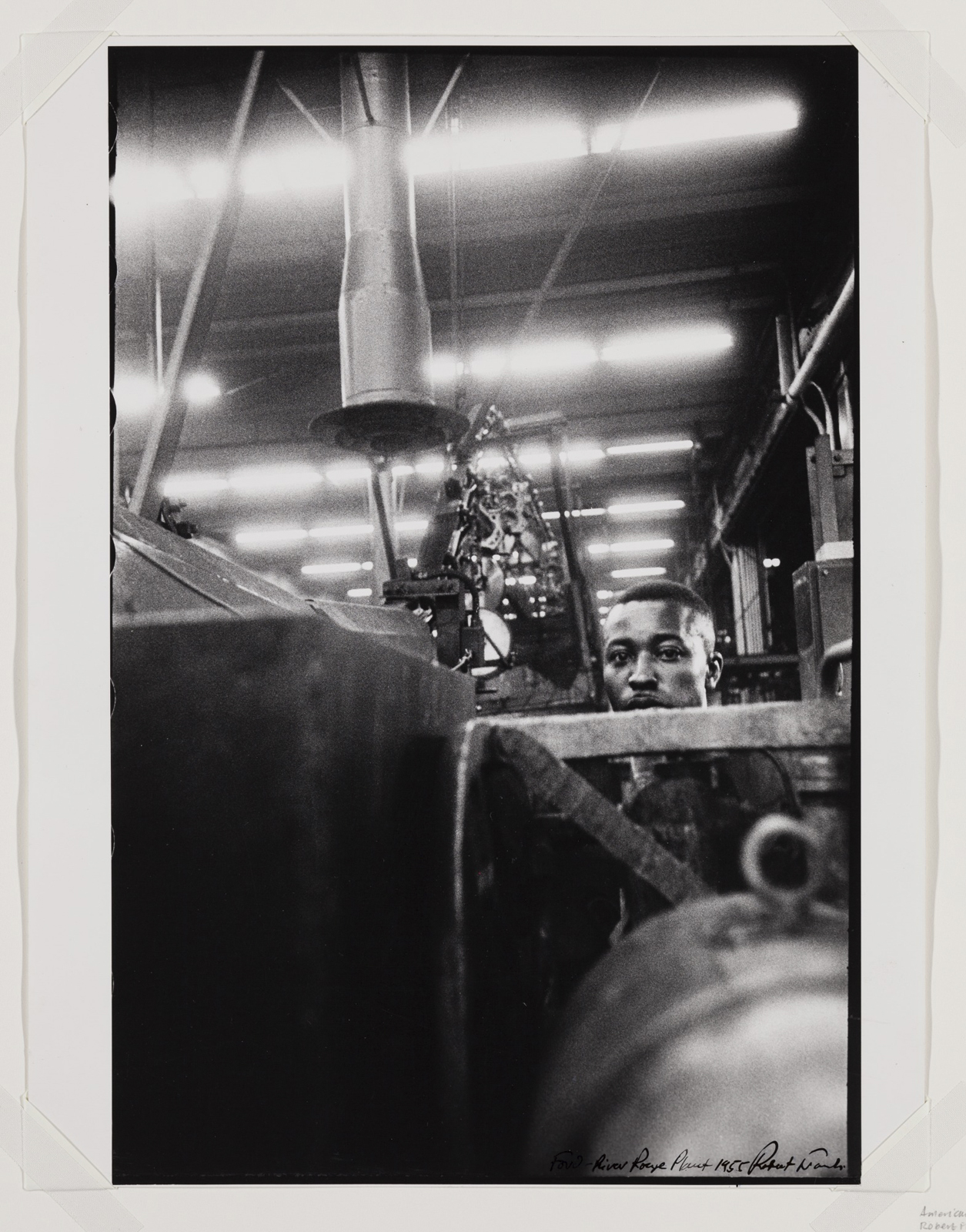
Robert Frank (Swiss-American, 1924-2019) 'Detroit River Rouge Plant' 1955 from the exhibition 'Detroit Experiences: Robert Frank Photographs, 1955' at Detroit Institute of Arts, Detroit, March - July, 2010


Robert Frank (Swiss-American, 1924-2019)
Detroit River Rouge Plant
1955, printed 1970s
Gelatin silver print
9 1/8 × 13 7/8 inches (23.2 × 35.2cm)
Founders Society Purchase, Coville Photographic Fund
© Robert Frank. Detroit Institute of Arts


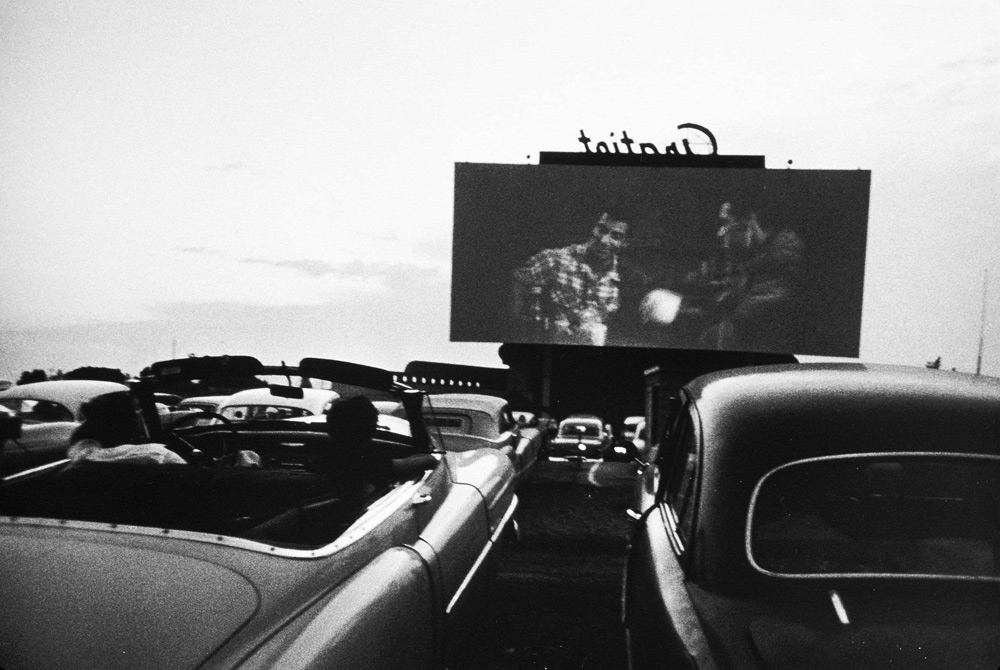
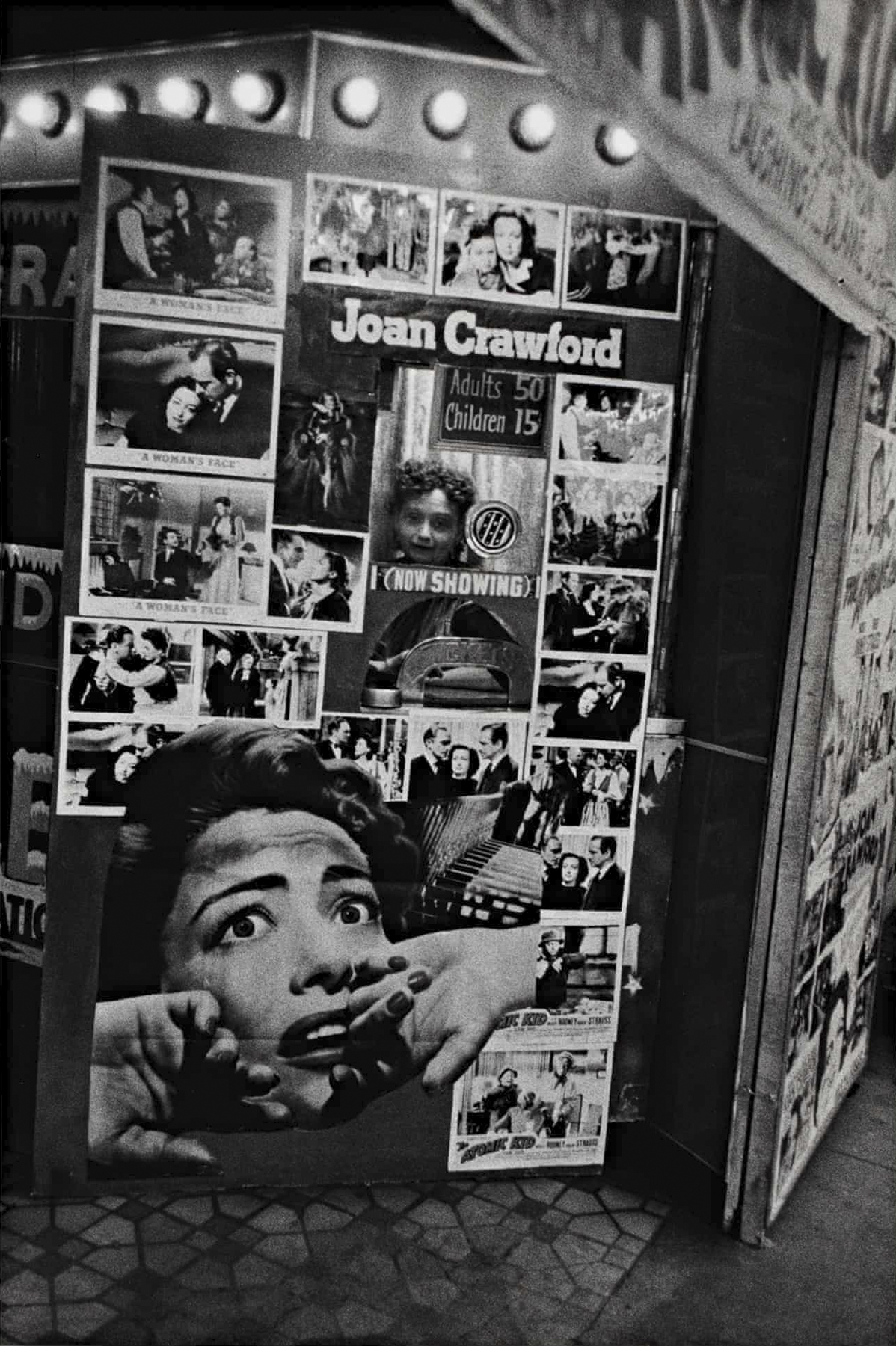
Robert Frank (Swiss-American, 1924-2019) 'Drive-In Movie, Detroit' 1955


Robert Frank (Swiss-American, 1924-2019)
Drive-In Movie, Detroit
1955, printed 1977
Gelatin silver print
8 1/4 × 12 1/2 inches (21 × 31.8cm)
Founders Society Purchase, Tina and Lee Hills Graphic Arts Fund
© Robert Frank, from The Americans. Detroit Institute of Arts.


Detroit Experiences: Robert Frank Photographs, 1955 showcases more than 50 rare and many never-before-seen black-and-white photographs taken in Detroit by legendary artist Robert Frank. The exhibition will be on view at the Detroit Institute of Arts (DIA) March 3 – July 4, 2010. The exhibition is free with museum admission.

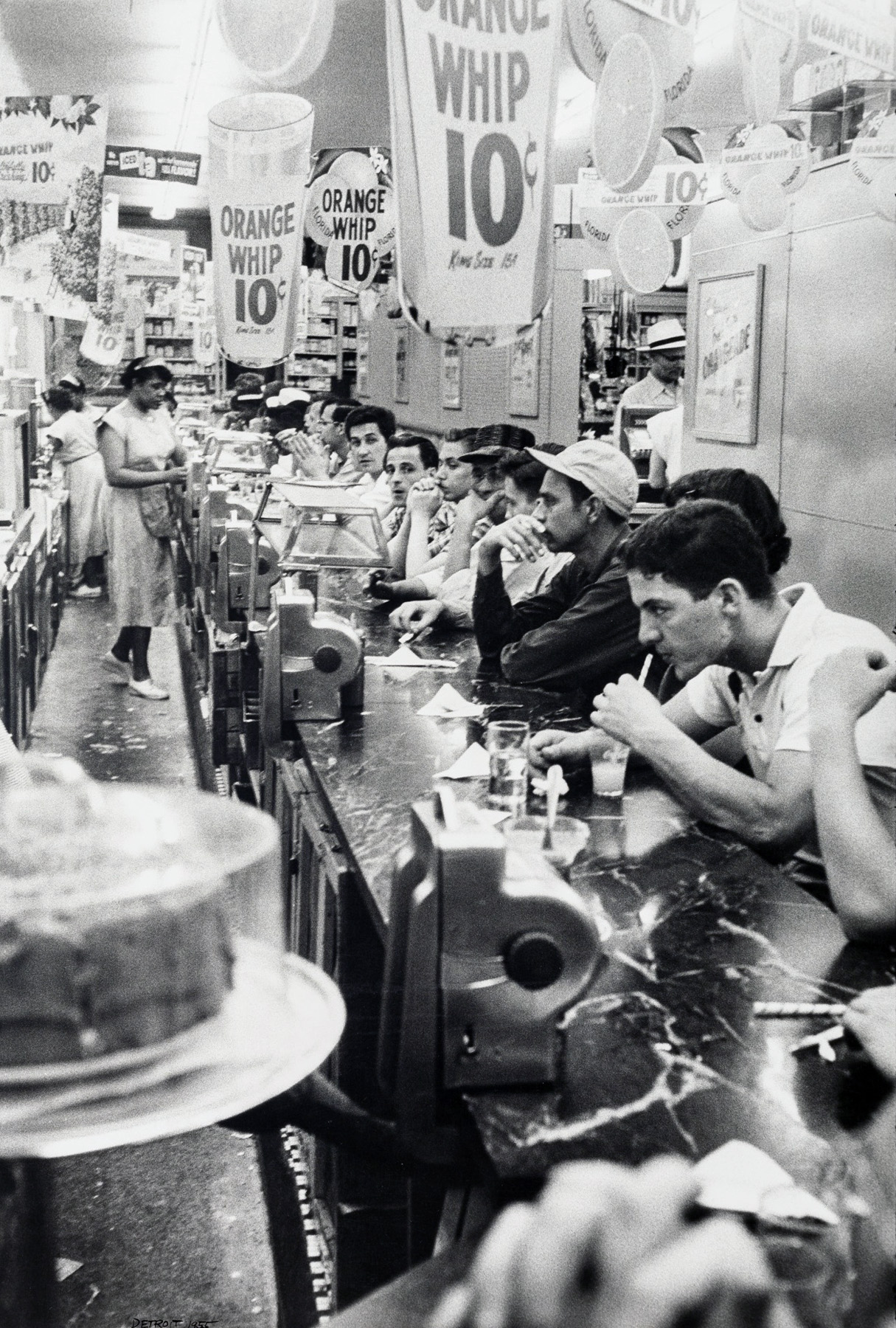
In 1955 and 1956 Robert Frank traveled the U.S. taking photographs for his groundbreaking book The Americans, published in 1958. With funding from a prestigious Guggenheim grant, he set out to create a large visual record of America, and Detroit was one of his early stops. Inspired by autoworkers, the cars they made, along with local lunch counters, drive-in movies and public parks such as Belle Isle, Frank transformed everyday experiences of Detroiters into an extraordinary visual statement about American life.

According to Frank, The Americans included “things that are there, anywhere, and everywhere … a town at night, a parking lot, the man who owns three cars and the man who owns none … the dream of grandeur, advertising, neon lights … gas tanks, post offices and backyards …” The exhibition includes nine Detroit images that were published in The Americans, as well as, for the first time, an in-depth body of work representative of Frank’s Detroit, its working-class culture and automotive industry.

Frank was drawn to Detroit partly by a personal fascination with the automobile, but also saw its presence and effect on American culture as essential to his series. Frank was one of the few photographers allowed to take photographs at the famous Ford Motor Company River Rouge factory, where he was amazed to witness the transformation of raw materials into fully assembled cars. In a letter to his wife he wrote, “Ford is an absolutely fantastic place … this one is God’s factory and if there is such a thing – I am sure that the devil gave him a helping hand to build what is called Ford’s River Rouge Plant.” Frank spent two days taking pictures at the Ford factory, photographing workers on the assembly lines and manning machines by day, and following them as they ventured into the city at night.

Whether in the disorienting surroundings of a massive factory or during the solitary and alienating moments of individuals in parks and on city streets, the Swiss-born photographer looked beneath the surface of life in the U.S. and found a culture that challenged his perceptions and popular notions of the American Dream. Further accentuating his view of America, Frank developed an unconventional photographic style innovative and controversial in its time. Photographing quickly, Frank sometimes tilted and blurred compositions, presenting people and their surroundings in fleeting and fragmentary moments with an unsentimental eye.

Beat poet Jack Kerouac expressed the complex nature of the artist and his work in a passage from his introduction to The Americans stating, “Robert Frank, Swiss, unobtrusive, nice, with that little camera that he raises and snaps with one hand he sucked a sad poem right out of America onto film, taking rank among the tragic poets of the world.”

Born in 1924 in Zurich, Switzerland, Frank emigrated to the U.S. in 1947. He worked on assignments for magazines from 1948–53, but his photographic books garnered the highest acclaim. After publishing The Americans, he began filmmaking and directed the early experimental masterpiece Pull My Daisy, in collaboration with Jack Kerouac in 1959. Frank continues to work in both film and photography and has been the subject of many traveling exhibitions in recent years. The National Gallery of Art, Washington, D.C. established Frank’s photographic archive in 1990 and organised his first traveling retrospective, “Moving Out, in 1995” as well as a 2009 exhibition “Looking In: Robert Frank’s “The Americans”.” Frank lived in Mabou, Nova Scotia, and New York City with his wife, artist June Leaf.

Press release from the Detroit Institute of Arts website [Online] Cited 24/06/2019 no longer available online


Robert Frank (Swiss-American, 1924-2019) 'Untitled' 1955


Robert Frank (Swiss-American, 1924-2019)
Untitled
1955, printed c. 1970s
Gelatin silver print
10 3/4 × 15 7/8 inches (27.3 × 40.3cm)
Founders Society Purchase with funds from Founders Junior Council
© Robert Frank, from The Americans. Detroit Institute of Arts


Robert Frank (Swiss-American, 1924-2019) 'Ford River Rouge Plant' 1955, printed c. 1970s


Robert Frank (Swiss-American, 1924-2019)
Ford River Rouge Plant
1955, printed c. 1970s
Gelatin silver print
13 13/16 × 9 1/8 inches (35.1 × 23.2cm)
Founders Society Purchase, Coville Photographic Fund
© Robert Frank. Detroit Institute of Arts


Robert Frank (Swiss-American, b. 1924) 'Assembly Plant, Ford, Detroit' 1955


Robert Frank  (Swiss-American, 1924-2019)
Assembly Plant, Ford, Detroit
1955, printed c. 1960s
Gelatin silver print
12 7/8 × 8 1/2 inches (32.7 × 21.6cm)
Founders Society Purchase, Coville Photographic Fund
© Robert Frank. Detroit Institute of Arts


Robert Frank (Swiss-American, 1924-2019) 'Drugstore, Detroit' 1955


Robert Frank (Swiss-American, 1924-2019)
Drugstore, Detroit
1955, printed c. 1960s
Gelatin silver print
23 1/4 × 15 3/4 inches (59.1 × 40cm)
Founders Society Purchase, with funds from the Founders Junior Council
© Robert Frank, from The Americans. Detroit Institute of Arts


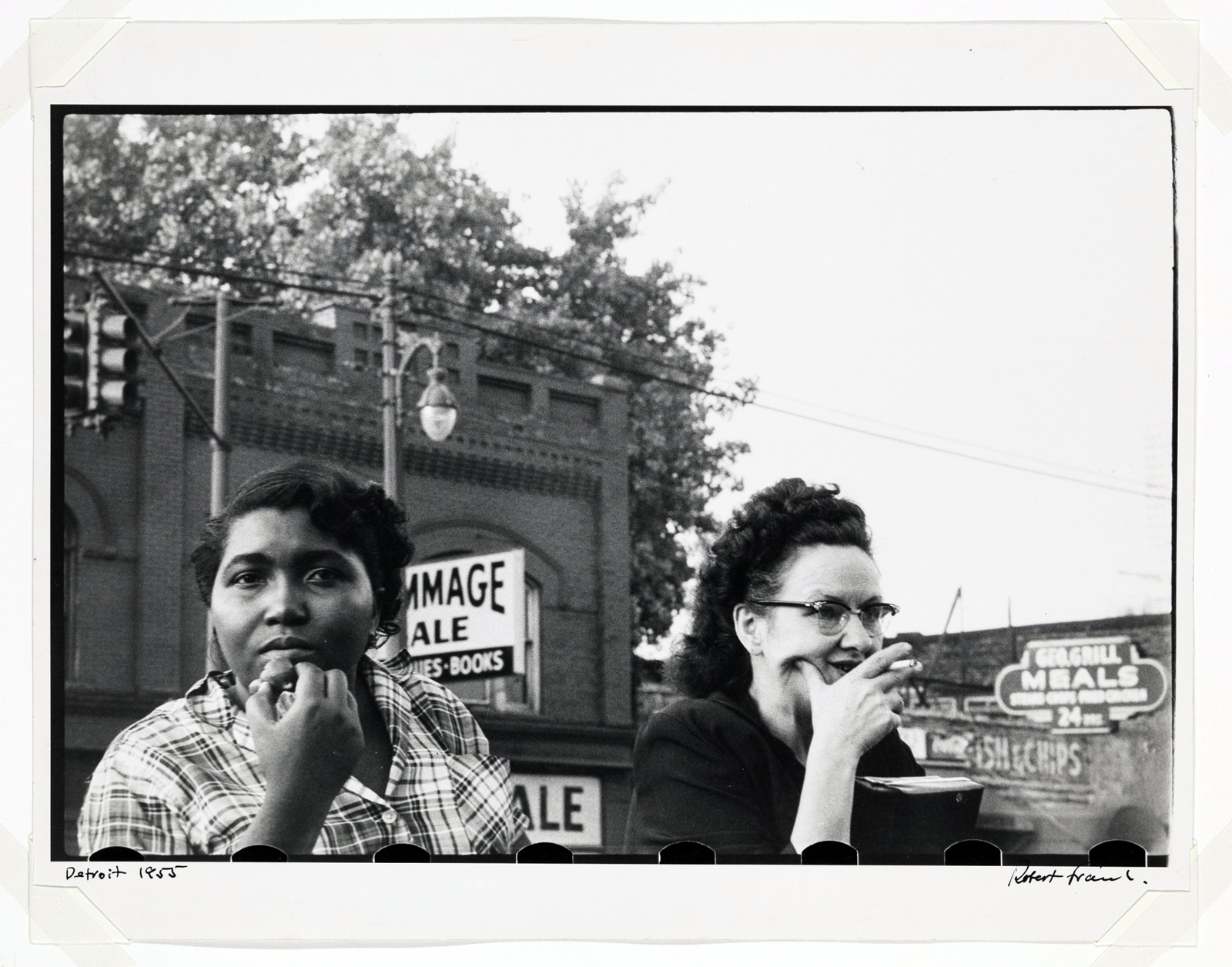
Robert Frank (Swiss-American, 1924-2019) 'Detroit' 1955


Robert Frank (Swiss-American, 1924-2019)
Detroit
1955, printed c. 1960s
Gelatin silver print
9 1/16 × 13 1/2 inches (23 × 34.3cm)
Founders Society Purchase, Coville Photographic Fund
© Robert Frank, from The Americans. Detroit Institute of Arts


Robert Frank (Swiss-American, 1924-2019) 'Detroit - Belle Isle' 1955


Robert Frank (Swiss-American, 1924-2019)
Belle Isle – Detroit
1955, printed between 1960 and 1979
Gelatin silver print
12 1/2 × 18 3/4 inches (31.8 × 47.6cm)
Museum Purchase, Ernest and Rosemarie Kanzler Foundation Fund, Forum for Prints, Drawings, and Photographs Purchase Fund, and General Art Purchase Fund
© Robert Frank, from The Americans. Detroit Institute of Arts


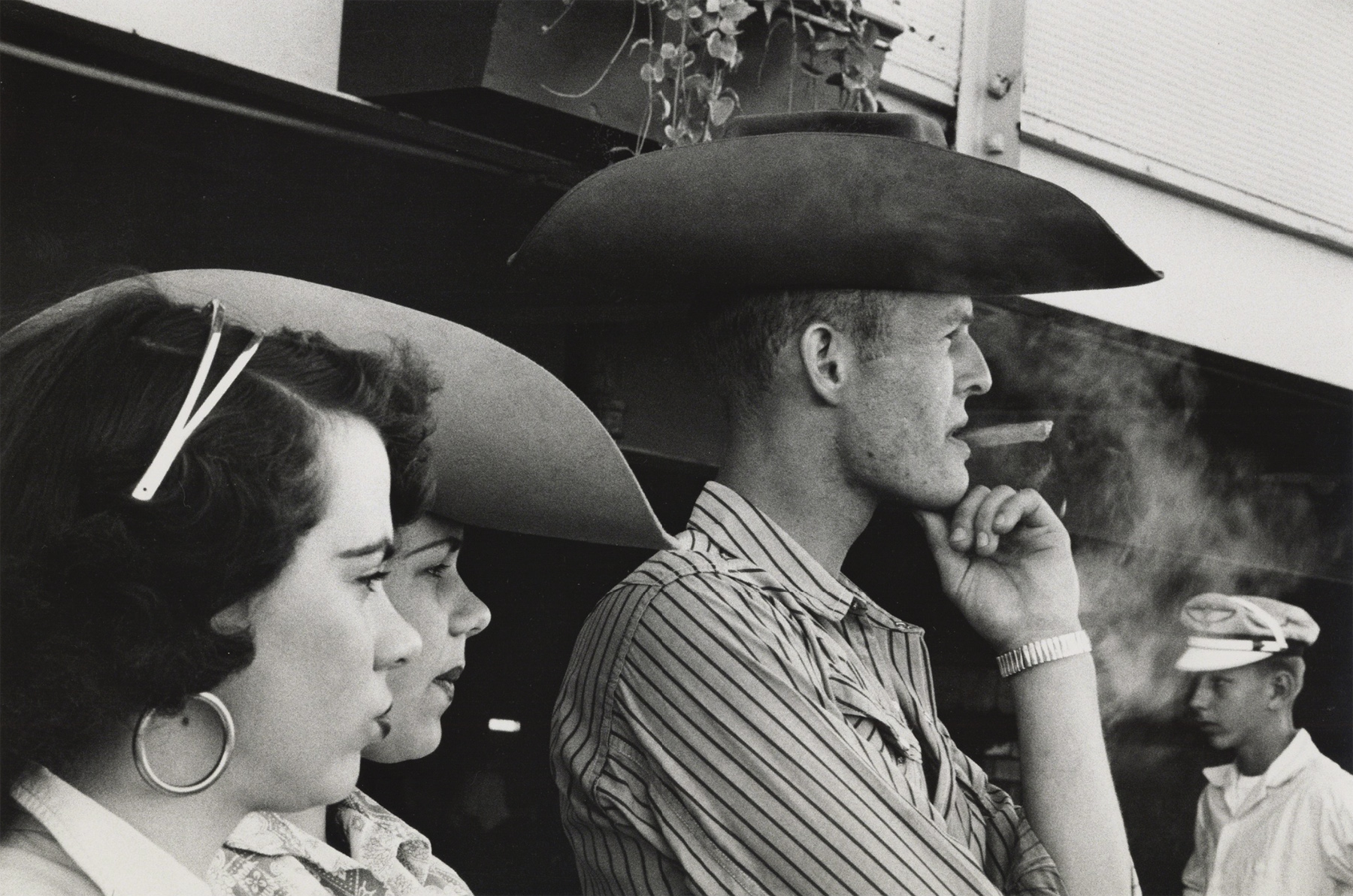
Robert Frank (Swiss-American, 1924-2019) 'Rodeo - Detroit' 1955


Robert Frank (Swiss-American, 1924-2019)
Rodeo – Detroit
1955, printed 1960s
Gelatin silver print
6 1/2 × 9 7/8 inches (16.5 × 25.1cm)
Museum Purchase, Ernest and Rosemarie Kanzler Foundation Fund, Forum for Prints, Drawings, and Photographs Purchase Fund, and General Art Purchase Fund
© Robert Frank, from The Americans. Detroit Institute of Arts


In 1955, Swiss-born photographer Robert Frank traveled across the United States photographing how Americans live, work, and spend their leisure time. Detroit was a critical stop on his itinerary, as the Motor City was world renowned for its automobiles along with its factories and labor force. Frank spent several days in Detroit at its legendary Ford Motor Company Rouge Plant and visited dime-store lunch counters, drive-ins, and public parks as well. He may have found Stetson-wearing spectators at a local rodeo an unlikely and uncharacteristic subject for Detroit – a large, industrial, midwestern city. Nonetheless he included Rodeo – Detroit, in addition to eight other photographs taken in the city, as part of the 83 images found in his ground-breaking photo book The Americans from 1958. The book brought Frank great acclaim for his critical commentary on America during the boom years following World War II.
From Bulletin of the Detroit Institute of Arts 89 (2015)


Robert Frank (Swiss-American, 1924-2019) 'Detroit' 1956


Robert Frank (Swiss-American, 1924-2019)
Detroit
1956
Gelatin silver print
© Robert Frank, from The Americans. Detroit Institute of Arts


Detroit Institute of Arts
5200 Woodward Avenue
Detroit, Michigan 48202
Main Line: 313.833.7900

Opening hours:
Monday Closed
Tuesday – Thursday 9am – 4pm
Friday 9am – 9pm
Saturday – Sunday 10am – 5pm

Detroit Institute of Arts website

LIKE ART BLART ON FACEBOOK

Back to top

Exhibition: ‘René Burri: A Retrospective’ at Flo Peters Gallery, Hamburg

Exhibition dates: 4th November, 2009 – 15th January, 2010


Many thankx to the Flo Peters Gallery for allowing me to publish the photographs in the posting. Please click on the photographs for a larger version of the image.

Dr Marcus Bunyan


René Burri (Swiss, 1933-2014) 'Tae Soe Dong, Sud Korea' 1961


René Burri (Swiss, 1933-2014)
Tae Soe Dong, Sud Korea
1961
Gelatin silver print


René Burri (Swiss, 1933-2014) 'Bilbao, Spain' 1957


René Burri (Swiss, 1933-2014)
Bilbao, Spain
1957
Gelatin silver print


René Burri (Swiss, 1933-2014)
'Training, Fort Lauderdale, Florida'
1966


René Burri (Swiss, 1933-2014)
Training, Fort Lauderdale, Florida
1966
Gelatin silver print


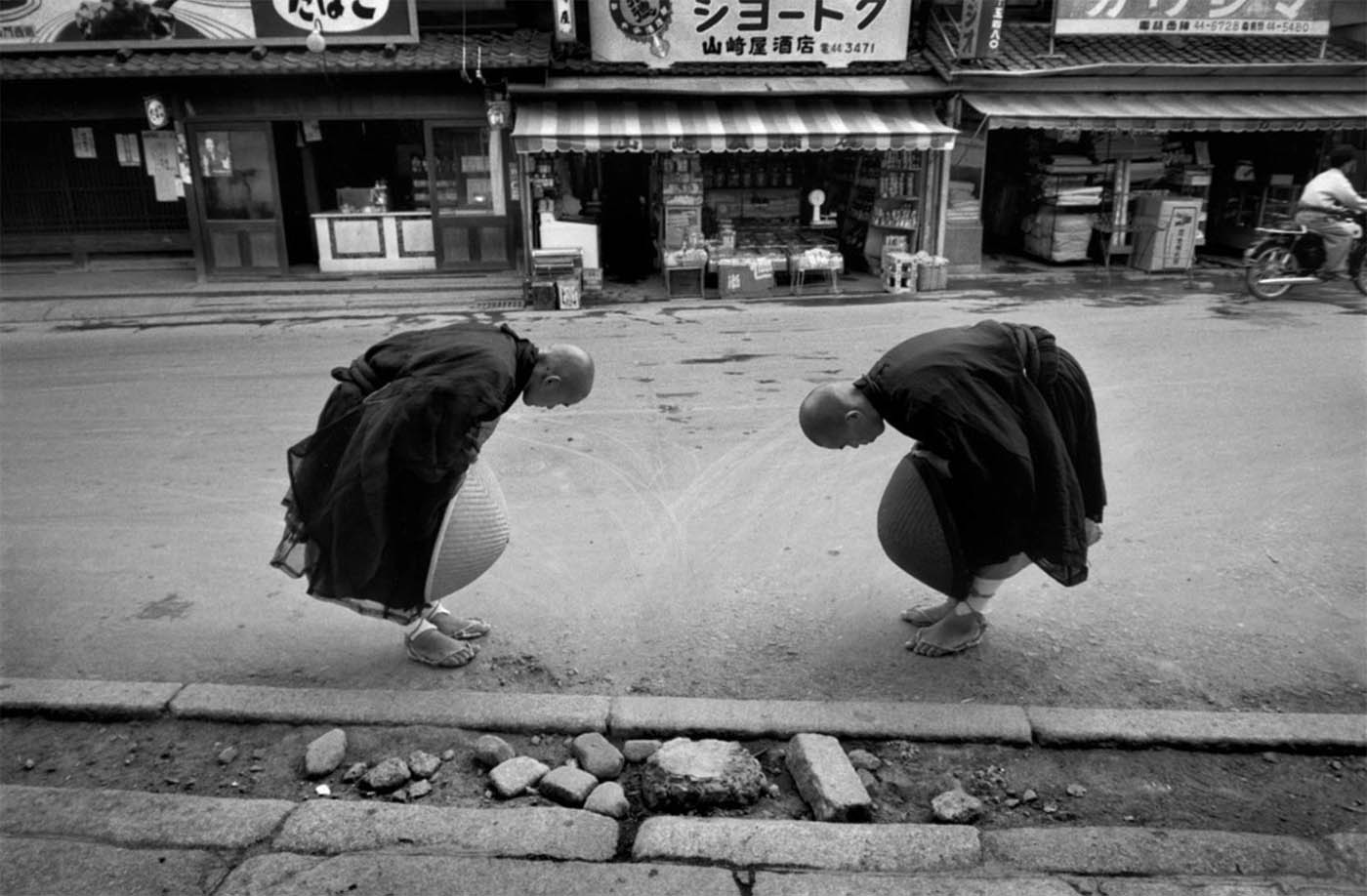
René Burri (Swiss, 1933-2014) 'Two Monks, Kyoto, Japan' 1961


René Burri (Swiss, 1933-2014)
Two Monks, Kyoto, Japan
1961
Gelatin silver print


René Burri (Swiss, 1933-2014) 'Che Guevara, Havana' 1963


René Burri (Swiss, 1933-2014)
Che Guevara, Havana
1963
Gelatin silver print


René Burri (Swiss, 1933-2014) 'Men On A Rooftop, Sao Paulo' 1960


René Burri (Swiss, 1933-2014)
Men On A Rooftop, Sao Paulo
1960
Gelatin silver print


René Burri likes to see his career as a series of happy accidents, which is often just another way of editing out all the downtime and boring bits, the months of no work. But you have to admit it did start with a bang. There he was, 24 years old, mooching around in northern Spain, when he read in a newspaper that Picasso was expected at a bullfight in Nimes the next day. He drove through the night, checked into a hotel early the next morning – and to his surprise was ushered straight into Picasso’s bedroom.

A party was in full swing, and the artist was sitting up in bed, directing a small group of musicians and friends. He nodded at Burri – yes, he could take pictures – and the result is a wonderfully vivid sequence of portraits, Picasso laughing and clapping and betraying not the tiniest sign that a private party has just been interrupted. Burri, of course, took it as a sign from God: with luck like this, he was a born photographer.

So, right from the start, he has had a knack for being in the right place at the right time – and for not making a nuisance of himself once he gets there. He photographed Che Guevara in Havana in 1963, just a few months before the revolutionary disappeared from public life. He got stuck in a lift with President Nasser of Egypt, and took a funny picture of him laughing while a bodyguard looks on murderously.

Of course, for every picture Burri took, there was another he didn’t. He is now 71 and semi-retired (photographers never stop), and says that you could fill volumes with the stories he didn’t get, the places he didn’t go.

The first time he was commissioned to go to Cuba, in 1958 at the height of the revolution, he got drunk the night before he was due to fly, cried off, and went skiing at home in Switzerland instead. He once saw Greta Garbo coming down the road towards him in New York, wearing dark glasses, and at the very last moment put away his camera; she was just too forbidding. In the desert in Egypt, he saw the blackened hand of a corpse reaching up through the sand, and he didn’t take that picture, either. Burri believes in a notion of tact, or what he calls dignity.

Other people might call it cowardice, but he feels strongly that there are some lines you just don’t cross. “I have incredible respect for [war photographers] Don McCullin and Larry Burrows, but you pay a price. What does Don photograph now? Landscapes, pictures of flowers.” This is partly a moral position – photographers can get addicted to war, he says, and he met a lot of them in Vietnam – but it is also a simple instinct for self-preservation. Three of Burri’s great mentors at Magnum – Robert Capa, Werner Bischof, Chim (David Seymour) – lived dangerously and died young, and he always felt it was a tremendous waste of their talent.

For all that, Burri has seen a lot of war. Since joining Magnum in 1959, he has covered conflicts in Cambodia, Korea, Vietnam, Egypt, Syria, Lebanon and China. He says he prefers to photograph the build-up to war, or its aftermath, rather than the violence itself. One of the first big projects he undertook was a portrait of postwar Germany, starting in the bleak mid-1950s and published in book form in 1962.

Of all his photographs, those that most nearly capture the atmosphere of combat are, in fact, of a training exercise in the Swiss Jura. Burri undertook compulsory military service in the 1950s, while still at art school, but with the permission of his training officer ended up shooting more film than anything else; he developed the pictures in his bath tub at the end of the day. At the age of 21, he came to see the camera as a way of removing himself from actual conflict; it also, he says, forced him to look for metaphors about battle, rather than relying on the action picture. (This is a rule of his – don’t be too literal. He once saw Castro standing in a doorway underneath a big exit sign, which was tempting for a second, but then just too obvious.)

Burri’s most powerful war pictures are the ones with no one in them. During the Six Day War between Egypt and Israel in 1967, he took a series of stark, graphic photographs, many of them from the air, which said something about the conflict that any single explosion or corpse might not have. In one, the wreckage of an Egyptian helicopter lies sprawled on a concrete landing pad, looking like a bug squashed on patio paving; in another, a burned-out convoy snakes through the desert like a collection of children’s toys left out in a sand pit.

A third photograph, an extreme close-up of a helmeted soldier with helicopters swarming at his shoulder like mosquitoes, taken in 1974, after the Yom Kippur war, has someone in it, it’s true, but he is silhouetted and faceless – an emblematic soldier, not a real one. In person, Burri is not a man given to big political statements, but on film he has captured the futility of war, the mess and wastefulness of human aggression.

Burri now lives in Paris, which is currently honouring him with a retrospective, and on the opening weekend he rushes around the gallery with his publisher, a TV director, several friends, his wife and 11-year-old son in tow. (He has grown-up children from his first marriage to Rosellina Bischof, who died in 1986.) He is every inch the European photojournalist – battered black fedora, cravat, a thick cloud of cigar smoke; when we move to a cafe to talk and the Americans at the next table complain about the cigar, he points out, in a very genial way, that the pollution is marginally worse outside.

At art school in Zurich, Burri was initially more interested in film. He had a rather off-putting photography teacher who started class with gymnastics and breathing exercises, and was a keen proponent of the “new objectivity” – there was an emphasis on still lifes and form, and what Burri refers to as “coffee cups in light.”

The American photographer Edward Steichen once came to the school looking for work he might include in an exhibition, The Family Of Man, at the Museum of Modern Art in New York – where were the pictures of people, he wanted to know, and left disappointed. It wasn’t until after he graduated that Burri felt free to pursue the more spontaneous, subjective kind of photography that Steichen had come looking for. “I suddenly had to chase after my pictures … Pictures are like taxis during rush hour – if you’re not fast enough, someone else will get there first.”

He started in Paris, as everyone did in the 1950s. Henri Cartier-Bresson had just published his influential book The Decisive Moment, and Robert Doisneau and Willy Ronis were photographing the city’s streets and cafes. At Magnum, they took an interest in a story Burri had published about a school for deaf-mute children, selling it on to Life magazine. He was in – Cartier-Bresson approved, Capa was enthusiastic, so Burri became a part of the greatest photographers’ cooperative in the world.

For the next two decades, he travelled almost incessantly, working on commissions for the New York Times, Vogue, Paris-Match, Time, Der Stern. He has kept every boarding card and press pass; a cabinet in the Paris exhibition is full of them. But although Burri worked constantly throughout the 1950s and 1960s, his photographs were always considered the lesser part of a story; as far as magazine editors were concerned, it was the words that mattered. After Burri accompanied an American journalist on a two-hour interview with Che Guevara, Look magazine ran pages of dense text, cropping his extraordinary portraits and running them very small at the bottom of the page.

One of the chief pleasures of this retrospective stage in life, says Burri, is being able to go back through all that work and decide for himself what was important and what was not. In Phaidon’s new monograph of his work, the portrait of Che is not 2in square but blown up across two pages. He has hung magazine stories in the new exhibition, signing the uncredited ones in red crayon. And as well as the reportage, there are hundreds of portraits of artists and writers and architects – Patricia Highsmith, Alberto Giacometti, Le Corbusier – and of cities: Tokyo, Havana, New York in a blackout, Rio de Janeiro, São Paolo, Brasilia.

Burri fell in love with modern architecture as a student and went on to form close friendships with Le Corbusier, Luis Barragan and Oscar Niemeyer. Some of his best work draws on this innate feel for the form and volume of a building, and of a person’s place within it. A photograph called In The Ministry Of Health, Rio de Janeiro 1960, is so full of light and shadow, it looks at first like a street scene, two young women striding through thick bars of sunlight; in fact, the photograph was taken indoors, in the lobby of a building designed by two of Burri’s favourite architects, Niemeyer and Le Corbusier. Burri’s best known photograph, of four suited men crossing a rooftop in São Paolo, captures all the drama, glamour and vertigo of life in a giant city: the flat roof floats high above the street, dotted with tiny, improbable people.

When Burri left Zurich in the 1950s, he set out to discover the world and some sense of man’s smallness within it. Switzerland was landlocked, bordered by mountains; a camera was a way out. Even then, he worried about what he could do that was new – “when shutters rattle from morning to night in every corner of the world … when every continent is lit with the flash of cameras.” His job, he believes, has been to “trace the enormous social changes taking place in our age, conveying my thoughts and images of them.” And, more poetically, “to put the intensity that you yourself have experienced into the picture – otherwise it is just a document.” He retired from reporting once that intensity, that sense of the bigness of the world, was gone. In 1989, he went to Moscow to photograph Ronald Reagan and Mikhail Gorbachev, but so did 6,500 others, and in the scrum it seemed impossible to take a meaningful picture. He now prefers to paint and take pictures of his wife and son. Of course, he’d start all over again if the world ever became less crowded – if you could walk into Picasso’s bedroom at six in the morning, and be welcome.

Saturday February 7, 2004
The Guardian
Text on the Art Daily website [Online] Cited 19/05/2019


René Burri (Swiss, 1933-2014) 'Blackout New York' November 9, 1965

René Burri (Swiss, 1933-2014) 'Blackout New York' November 9, 1965

René Burri (Swiss, 1933-2014) 'Blackout New York' November 9, 1965

René Burri (Swiss, 1933-2014) 'Blackout New York' November 9, 1965


René Burri (Swiss, 1933-2014)
Four photographs from the series Blackout New York
November 9, 1965
Gelatin silver print


Flo Peters Gallery
Burchardstraße 13
Chilehaus C
20095 Hamburg, Germany

Gallery hours:
Tuesday – Friday 12 – 4pm
Saturday 11 – 3pm

Flo Peters Gallery website

LIKE ART BLART ON FACEBOOK

Back to top

Exhibition: ‘Looking In: Robert Frank’s The Americans’ at The National Gallery of Art, Washington

Exhibition dates: National Gallery of Art, January 18 – April 26, 2009; San Francisco Museum of Modern Art, May 16 – August 23, 2009; Metropolitan Museum of Art, September 22 – December 27, 2009


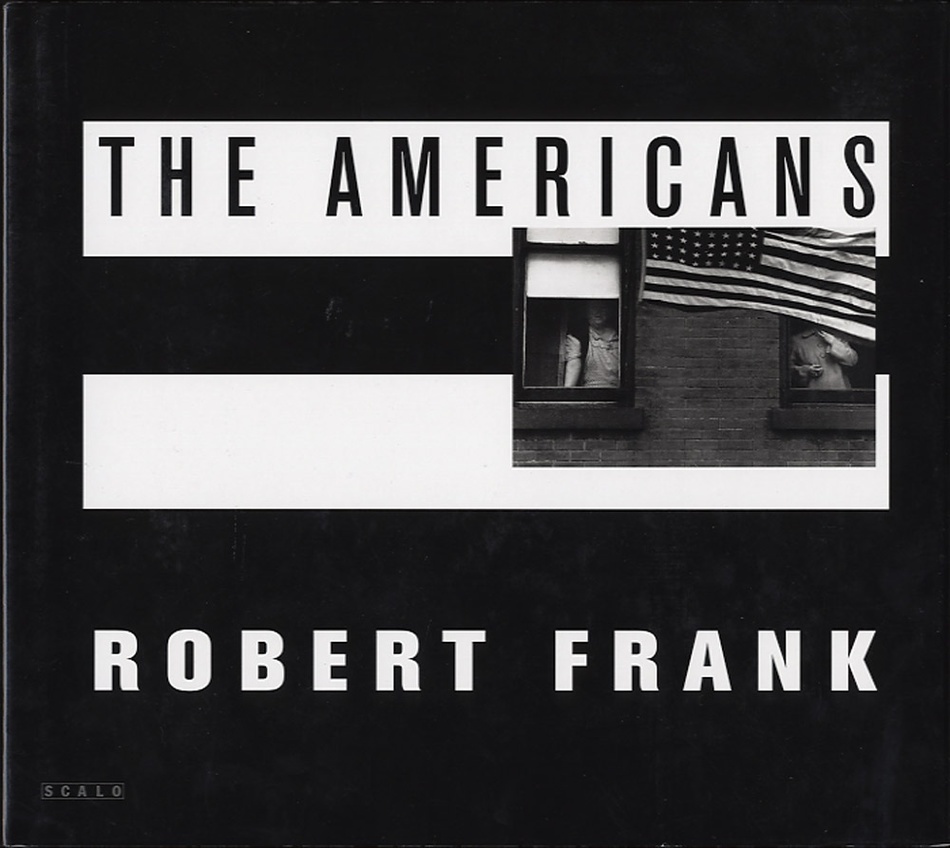
Robert Frank (Swiss-American, 1924-2019) 'The Americans' New York: Grove Press 1959 front cover from the exhibition Exhibition: 'Looking In: Robert Frank's The Americans' at The National Gallery of Art, Washington, Jan - April, 2009

Robert Frank (Swiss-American, 1924-2019) 'The Americans' New York: Grove Press 1959 back cover from the exhibition Exhibition: 'Looking In: Robert Frank's The Americans' at The National Gallery of Art, Washington, Jan - April, 2009


Robert Frank (Swiss-American, 1924-2019)
The Americans
New York: Grove Press
1959


One of the seminal photography books of the twentieth century, Robert Frank’s The Americans changed photography forever, changed how America saw itself and became a cult classic. Like Eugene Atget’s positioning of the camera in an earlier generation Frank’s use of camera position is unique; his grainy and contrasty images add to his outsider vision of a bleak America; his sequencing of the images, like the cadences of the greatest music, masterful. One of the easiest things for an artist to do is to create one memorable image, perhaps even a group of 4 or 5 images that ‘hang’ together – but to create a narrative of 83 images that radically alter the landscape of both photography and country is, undoubtedly, a magnificent achievement.

The photographs in the posting appear by number order that they appear in the book.

Dr Marcus Bunyan


Many thankx to the National Gallery of Art for allowing me to publish the photographs in the posting. Please click on the photographs for a larger version of the image.


Robert Frank (Swiss-American, 1924-2019) The Americans 1 'Parade - Hoboken, New Jersey' 1955


Robert Frank (Swiss-American, 1924-2019)
The Americans 1
Parade – Hoboken, New Jersey
1955
Gelatin silver print
Image: 21.3 x 32.4cm (8 3/8 x 12 3/4 in.)
Private collection, San Francisco
Photograph © Robert Frank, from The Americans


Released at the height of the Cold War, The Americans was initially reviled, even decried as anti-American. Yet during the 1960s, many of the issues that Frank had addressed – racism, dissatisfaction with political leaders, skepticism about a rising consumer culture – erupted into the collective consciousness. The book came to be regarded as both prescient and revolutionary and soon was embraced with a cult-like following.

First published in France in 1958 and in the United States in 1959, Robert Frank’s The Americans is widely celebrated as the most important photography book since World War II. Including 83 photographs made largely in 1955 and 1956 while Frank (1924-2019) travelled around the United States, the book looked beneath the surface of American life to reveal a profound sense of alienation, angst, and loneliness. With these prophetic photographs, Frank redefined the icons of America, noting that cars, jukeboxes, gas stations, diners, and even the road itself were telling symbols of contemporary life. Frank’s style – seemingly loose, casual compositions, with often rough, blurred, out-of-focus foregrounds and tilted horizons – was just as controversial and influential as his subject matter. The exhibition celebrates the 50th anniversary of the book’s publication by presenting all 83 photographs from The Americans in the order established by the book, and by providing a detailed examination of the book’s roots in Frank’s earlier work, its construction, and its impact on his later art.

Anonymous text from The National Gallery of Art website [Online] Cited 06/03/2009. No longer available online


Robert Frank (Swiss-American, 1924-2019) The Americans 2 'City fathers – Hoboken, New Jersey' 1955


Robert Frank (Swiss-American, 1924-2019)
The Americans 2
City fathers – Hoboken, New Jersey
1955
Gelatin silver print
Image: 41.9 x 57.8cm (16 1/2 x 22 3/4 in.)
Susan and Peter MacGill
Photograph © Robert Frank, from The Americans


Robert Frank (Swiss-American, 1924-2019) The Americans 3. 'Political Rally - Chicago' 1956


Robert Frank (Swiss-American, 1924-2019)
The Americans 3
Political Rally – Chicago
1956
Gelatin silver print
Image and sheet: 57.8 x 39.4cm (22 3/4 x 15 1/2 in.)
Susan and Peter MacGill
Photograph © Robert Frank, from The Americans


Robert Frank (Swiss-American, 1924-2019) The Americans 4 'Funeral, St. Helena, South Carolina' 1955-1956


Robert Frank (Swiss-American, 1924-2019)
The Americans 4
Funeral – St. Helena, South Carolina
1955
Gelatin silver print
Image and sheet: 39.7 x 58.1cm (15 5/8 x 22 7/8 in.)
Susan and Peter MacGill
Photograph © Robert Frank, from The Americans


“The photos revealed a bleaker, more dislocated view of America than Americans were used to (at least in photography). Frank’s “in-between moments” demonstrated that disequilibrium can seem more revealing, seeming to catch reality off-guard. In doing so the collection also announced to the world that photos with a completely objective reference / referent could be subjective, lyrical, reveal a state-of-mind. Looser framing, more forced or odd juxtapositions, “drive-by” photos and other elements offer a sense of the process that has produced the photos”

Lloyd Spencer on Discussing The Americans in Hardcore Street Photography

I couldn’t have put it better myself!


Robert Frank (Swiss-American, 1924-2019) The Americans 13 'Charleston, South Carolina' 1955


Robert Frank (Swiss-American, 1924-2019)
The Americans 13
Charleston, South Carolina
1955
Gelatin silver print
Image: 41.3 x 59.1cm (16 1/4 x 23 1/4 in.)
Susan and Peter MacGill
Photograph © Robert Frank, from The Americans


Robert Frank (Swiss-American, 1924-2019) The Americans 14 'Ranch Market, Hollywood' 1955-1956


Robert Frank (Swiss-American, 1924-2019)
The Americans 14
Ranch Market – Hollywood
1956
Gelatin silver print
Image: 31.4 x 48.3cm (12 3/8 x 19 in.)
Danielle and David Ganek
Photograph © Robert Frank, from The Americans


Robert Frank (Swiss-American, 1924-2019) The Americans 15 'Butte, Montana' 1956


Robert Frank (Swiss-American, 1924-2019)
The Americans 15
Butte, Montana
1956
Gelatin silver print
Overall: 20 x 30.2cm (7 7/8 x 11 7/8 in.)
The Museum of Modern Art, New York, Acquired through the generosity of the Young family in honour of Robert B. Menschel, 2003
Photograph © Robert Frank, from The Americans


Robert Frank (Swiss-American, 1924-2019) The Americans 18 'Trolley - New Orleans' 1955


Robert Frank (Swiss-American, 1924-2019)
The Americans 18
Trolley – New Orleans
1955
Gelatin silver print
Image: 40.6 x 57.8cm (16 x 22 3/4 in.)
Susan and Peter MacGill
Photograph © Robert Frank, from The Americans


Robert Frank (Swiss-American, 1924-2019) Contact sheets for 'The Americans'


Robert Frank (Swiss-American, 1924-2019)
Contact sheets for The Americans
Photograph © Robert Frank, from The Americans


“Frank’s contact sheets take us back to the moment he made the photographs for The Americans. They show us what he saw as he traveled around The United States and how he responded to it. These sheets are not carefully crafted objects; in his eagerness to see what he had captured, Frank did not bother to order his film strips numerically or even to orientate them all in the same direction.”


Robert Frank (Swiss-American, 1924-2019) Sequencing of 'The Americans' numbers 32-36


Robert Frank (Swiss-American, 1924-2019)
Sequencing of
The Americans numbers 32-36
Photograph © Robert Frank, from The Americans


“Almost halfway through the book Frank created a sequence united by the visual repetition of the car and the suggestion of its movement.”


Robert Frank (Swiss-American, 1924-2019) The Americans 32 'U.S. 91, Leaving Blackfoot, Idaho' 1956


Robert Frank (Swiss-American, 1924-2019)
The Americans 32
U.S. 91, Leaving Blackfoot, Idaho
1956
Gelatin silver print
Image: 28.9 x 42.2cm (11 3/8 x 16 5/8 in.)
Collection of Barbara and Eugene Schwartz
Photograph © Robert Frank, from The Americans


Robert Frank (Swiss-American, 1924-2019) The Americans 33 'St. Petersburg, Florida' 1955


Robert Frank (Swiss-American, 1924-2019)
The Americans 33
St. Petersburg, Florida
1955
Gelatin silver print
Sheet: 22.2 x 33.7cm (8 3/4 x 13 1/4 in.)
Collection of Barbara and Eugene Schwartz
Photograph © Robert Frank, from The Americans


Robert Frank (Swiss-American, 1924-2019) The Americans 34 'Covered Car - Long Beach, California' 1956


Robert Frank (Swiss-American, 1924-2019)
The Americans 34
Covered Car – Long Beach, California
1956
Gelatin silver print
Image: 21.4 x 32.7cm (8 7/16 x 12 7/8 in.)
Lent by The Metropolitan Museum of Art, Gilman Collection, Purchase, Ann Tenenbaum and Thomas H. Lee Gift, 2005
Photograph © Robert Frank, from The Americans


Robert Frank (Swiss-American, 1924-2019) The Americans 35 'Car accident, US 66 between Winslow and Flagstaff, Arizona' 1955-1956


Robert Frank (Swiss-American, 1924-2019)
The Americans 35
Car accident, US 66 between Winslow and Flagstaff, Arizona
1955-1956
Gelatin silver print
Image: 31 x 47.5cm (12 3/16 x 18 11/16 in.)
Philadelphia Museum of Art, Promised gift of Susan and Peter MacGill in honour of Anne d’Harnoncourt
Photograph © Robert Frank, from The Americans


Robert Frank (Swiss-American, 1924-2019) The Americans 36 'U.S. 285, New Mexico' 1955


Robert Frank (Swiss-American, 1924-2019)
The Americans 36
U.S. 285, New Mexico
1955
Gelatin silver print
Image: 33.7 x 21.9cm (13 1/4 x 8 5/8 in.)
Mark Kelman, New York
Photograph © Robert Frank, from The Americans


Robert Frank (Swiss-American, 1924-2019) The Americans 37 'Bar, Detroit' 1955-1956


Robert Frank (Swiss-American, 1924-2019)
The Americans 37
Bar – Detroit
1955
Gelatin silver print
Overall: 39.4 x 57.8cm (15 1/2 x 22 3/4 in.)
Sherry and Alan Koppel
Photograph © Robert Frank, from The Americans


The 50th anniversary of a groundbreaking publication will be celebrated in the nation’s capital with the exhibition Looking In: Robert Frank’s The Americans, premiering January 18 through April 26, 2009, in the National Gallery of Art’s West Building ground floor galleries. In 1955 and 1956, the Swiss-born American photographer Robert Frank (b. 1924) traveled across the United States to photograph, as he wrote, “the kind of civilisation born here and spreading elsewhere.” The result of his journey was The Americans, a book that looked beneath the surface of American life to reveal a culture on the brink of massive social upheaval and one that changed the course of 20th-century photography.

First published in France in 1958 and in the United States in 1959, The Americans remains the single most important book of photographs published since World War II. The exhibition will examine both Frank’s process in creating the photographs and the book by presenting 150 photographs, including all of the images from The Americans, as well as 17 books, 15 manuscripts, and 28 contact sheets. In honour of the exhibition, Frank has created a film and participated in selecting and assembling three large collages. The exhibition will travel to the San Francisco Museum of Modern Art from May 17 through August 23, 2009, and The Metropolitan Museum of Art from September 22 through December 27, 2009.

The Americans is as powerful and provocative today as it was 50 years ago,” said Earl A. Powell III, director, National Gallery of Art. “We are immensely grateful to Robert Frank and his wife, June Leaf, for their enthusiastic participation and assistance in all aspects of this exhibition and its equally ambitious catalogue. We also wish to thank Robert Frank for his donation of archival material related to The Americans, in addition to gifts of his photographs and other exhibition prints to the National Gallery of Art in 1990, 1994, and 1996, all of which formed the foundation of the project.”

Press release from the National Gallery of Art


Robert Frank (Swiss-Americans, 1924-2019) The Americans 44 'Elevator - Miami Beach' 1955


Robert Frank (Swiss-Americans, 1924-2019)
The Americans 44
Elevator – Miami Beach
1955
Gelatin silver print
Image: 31.4 x 47.8cm (12 3/8 x 18 13/16 in.)
Philadelphia Museum of Art, Purchased with funds contributed by Dorothy Norman, 1969
Photograph © Robert Frank, from The Americans


Robert Frank (Swiss-American, 1924-2019) The Americans 50 'Assembly line, Detroit' 1955-1956


Robert Frank (Swiss-American, 1924-2019)
The Americans 50
Assembly line – Detroit
1955
Gelatin silver print
21.4 x 32.1cm (8 7/16 x 12 5/8 in.)
The Museum of Modern Art, New York, Purchase, 1959
Photograph © Robert Frank, from The Americans


Robert Frank (Swiss-American, 1924-2019) The Americans 51 'Convention hall, Chicago' 1956


Robert Frank (Swiss-American, 1924-2019)
The Americans 51
Convention hall – Chicago
1956
Gelatin silver print
Image: 22.5 x 34.1cm (8 7/8 x 13 7/16 in.)
Addison Gallery of American Art, Phillips Academy, Andover, Museum Purchase
Photograph © Robert Frank, from The Americans


Robert Frank (Swiss-American, 1924-2019) The Americans 55 'Beaufort, South Carolina' 1955-1956


Robert Frank (Swiss-American, 1924-2019)
The Americans 55
Beaufort, South Carolina
1955
Gelatin silver print
Image and sheet: 31.1 x 47.6cm (12 1/4 x 18 3/4 in.)
Private collection
Photograph © Robert Frank, from The Americans


Robert Frank (Swiss-American, 1924-2019) The Americans 58 'Political rally – Chicago' 1956


Robert Frank (Swiss-American, 1924-2019)
The Americans 58
Political rally – Chicago
1956
Gelatin silver print
Image: 59.1 x 36.5cm (23 1/4 x 14 3/8 in.)
Betsy Karel
Photograph © Robert Frank, from The Americans


Robert Frank (Swiss-American, 1924-2019) The Americans 70 'Coffee shop, railway station – Indianapolis' 1956


Robert Frank (Swiss-American, 1924-2019)
The Americans 70
Coffee shop, railway station – Indianapolis
1956
Gelatin silver print
Overall (image): 22.9 x 34.6cm (9 x 13 5/8 in.)
The Museum of Modern Art, New York, Acquired through the generosity of Carol and David Appel, 2003
Photograph © Robert Frank, from The Americans


Robert Frank (Swiss, 1924-2019) The Americans 71 'Chattanooga, Tennessee' 1955


Robert Frank (Swiss, 1924-2019)
The Americans 71
Chattanooga, Tennessee
1955
Gelatin silver print
Image: 20.8 x 29.5cm (8 3/16 x 11 5/8 in.)
Private collection
Photograph © Robert Frank, from The Americans


“It’s hard to stress how different The Americans was. Over the course of those 83 pictures – shot from Detroit to San Francisco to Chattanooga, Tennessee – Frank captured the country in images that were intentionally unglamorous. On a technical level, he brazenly tossed out an adherence to traditional ideas of composition, framing, focus, and exposure.”

Sarah Greenough, Senior Curator of Photography at the National Gallery of Art in Washington


Robert Frank (Swiss-American, 1924-2019) The Americans 73 'Detroit - Belle Isle' 1955


Robert Frank (Swiss-American, 1924-2019)
The Americans 73
Belle Isle – Detroit
1955
Gelatin silver print
Sheet: 29.2 x 42.5cm (11 1/2 x 16 3/4 in.)
Collection of Barbara and Eugene Schwartz
Photograph © Robert Frank, from The Americans


Robert Frank (Swiss-American, 1924-2019) The Americans 81 'City Hall – Reno, Nevada' 1956


Robert Frank (Swiss-American, 1924-2019)
The Americans 81
City Hall – Reno, Nevada
1956
Gelatin silver print
Image: 20.3 x 32.4cm (8 x 12 3/4 in.)
Private collection
Photograph © Robert Frank, from The Americans


Robert Frank (Swiss-American, 1924-2019) The Americans 83 'US 90 on route to Del Rio, Texas' 1955-1956


Robert Frank (Swiss-American, 1924-2019)
The Americans 83
U.S. 90, en route to Del Rio, Texas
1955
Gelatin silver print
Image (and board): 47.6 x 31.1cm (18 3/4 x 12 1/4 in.)
Private collection, courtesy Hamiltons Gallery, London
Photograph © Robert Frank, from The Americans


National Gallery of Art
National Mall between 3rd and 7th Streets
Constitution Avenue NW, Washington

Opening hours:
Daily 10.00am – 5.00pm

National Gallery of Art website

LIKE ART BLART ON FACEBOOK

Back to top

Book: Robert Frank ‘The Americans’ (1st Scalo edition)

December 2008


'The Americans. Photographs by Robert Frank' Introduction by Jack Kerouac. Scalo, Zürich/D.A.P., New York, 1993 (1st Scalo edition)


The Americans. Photographs by Robert Frank. Introduction by Jack Kerouac. Scalo, Zürich/D.A.P., New York, 1993.
First Scalo edition. 179 pp. Oblong quarto. Hardbound in photo-illustrated dust jacket. Black-and-white reproductions.


WOW! One of the seminal books of photography and signed as well.

“It was Frank’s The Americans that made the photographic book into an art form in its own right. Frank was following a lead set by [Wright] Morris’ book (The Inhabitants) and, especially, by Evans’ American Photographs, both of which are designed to let pictures play off each other in a way that controls and reinforces their effect on the viewer. Even Klein’s New York book displays this tendency. But Frank’s goes much further, creating a denser, richer, deeper structure of images than any book before it.”

Colin Westerbeck in Michel Frizot, et. al., The New History of Photography.

Estimated: $1200-1400


photoeye auctions

LIKE ART BLART ON FACEBOOK

Back to top