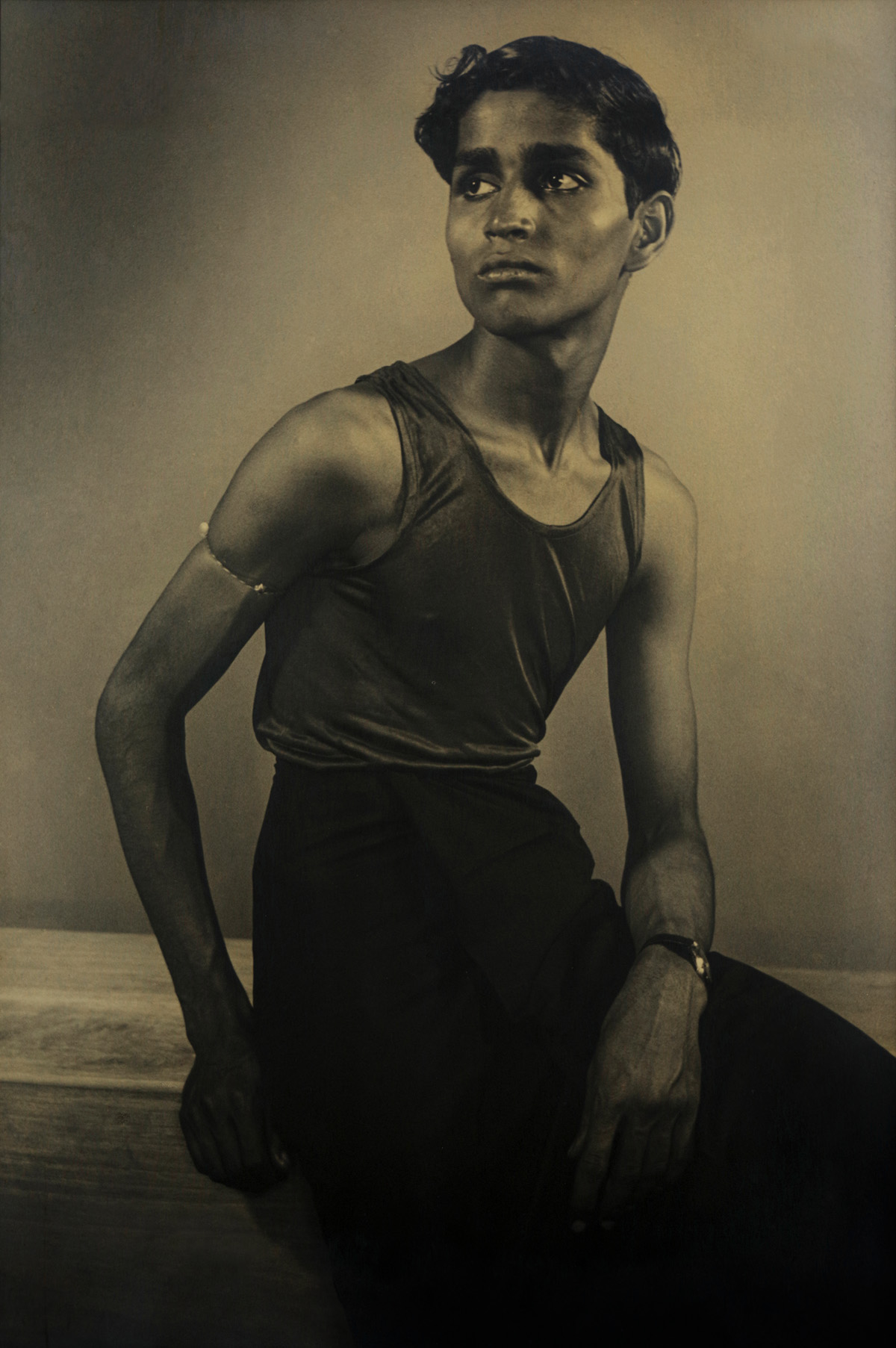
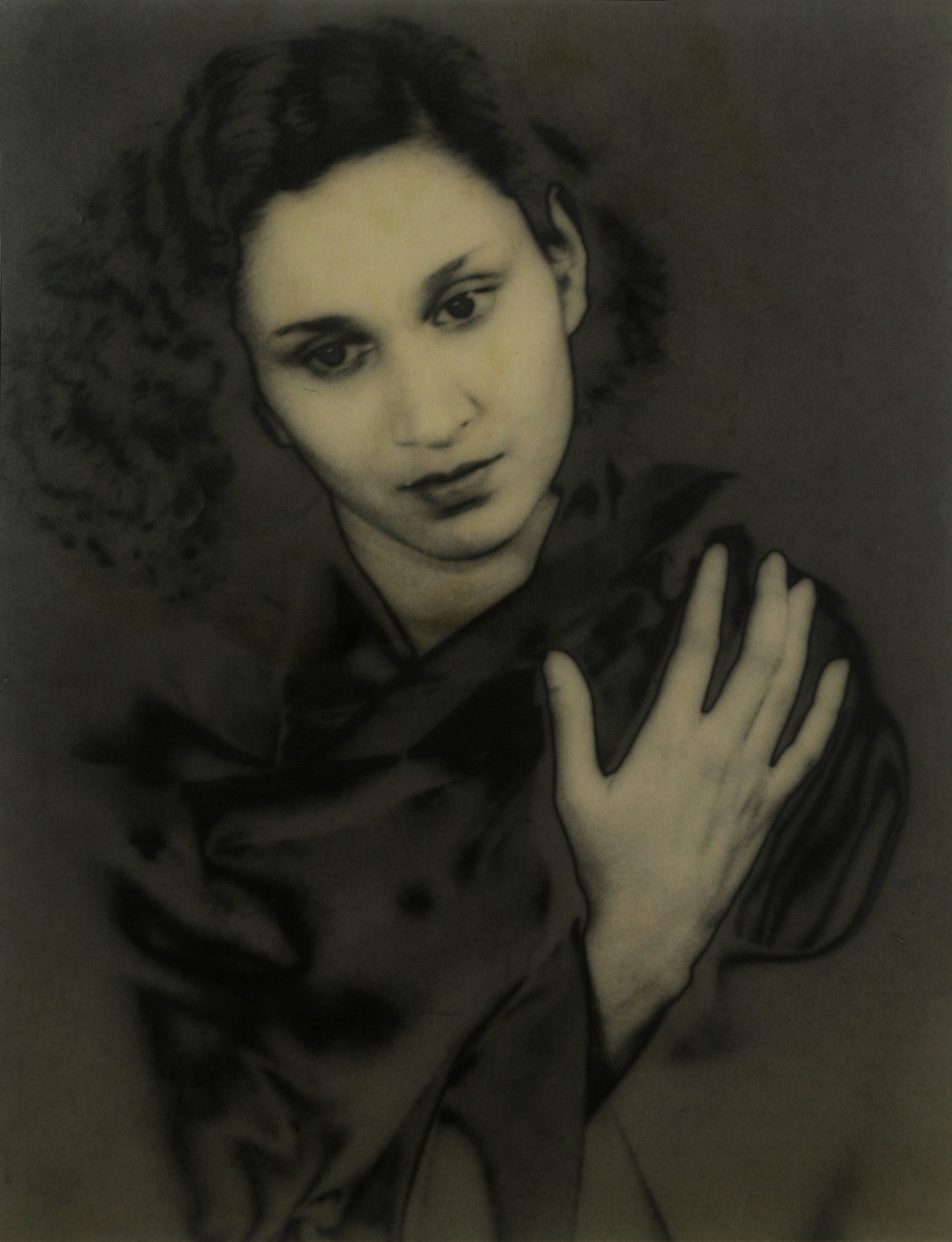
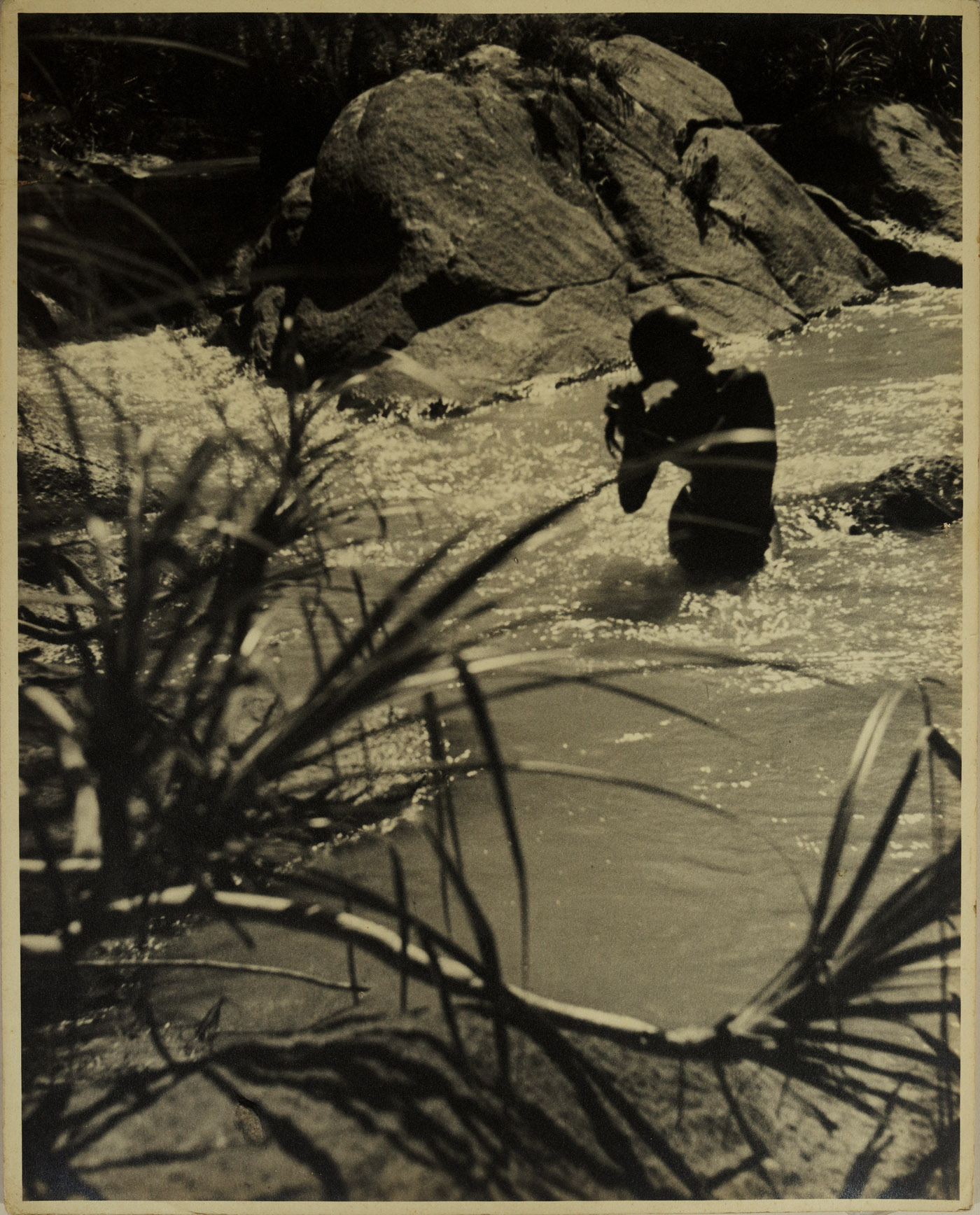
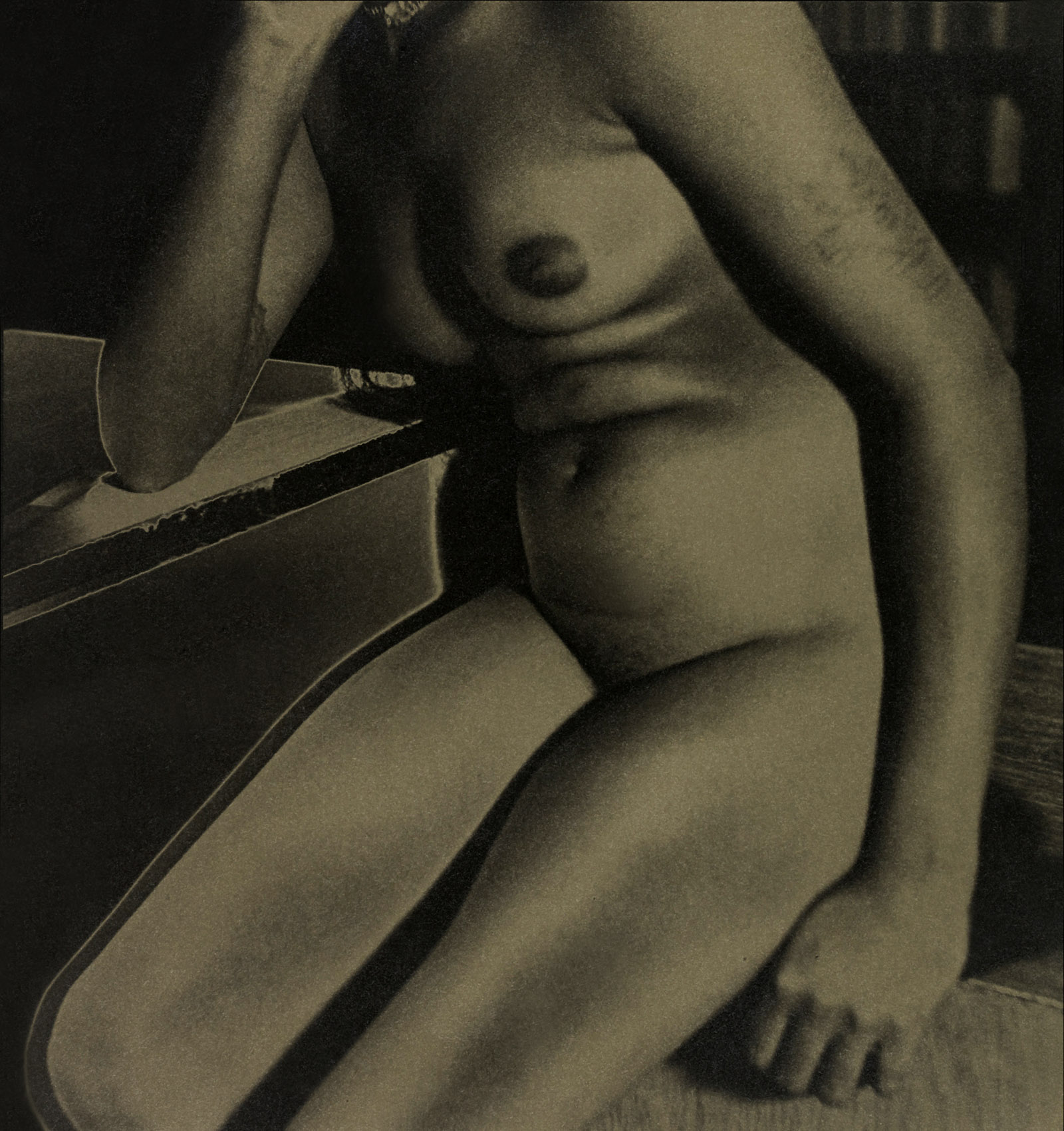
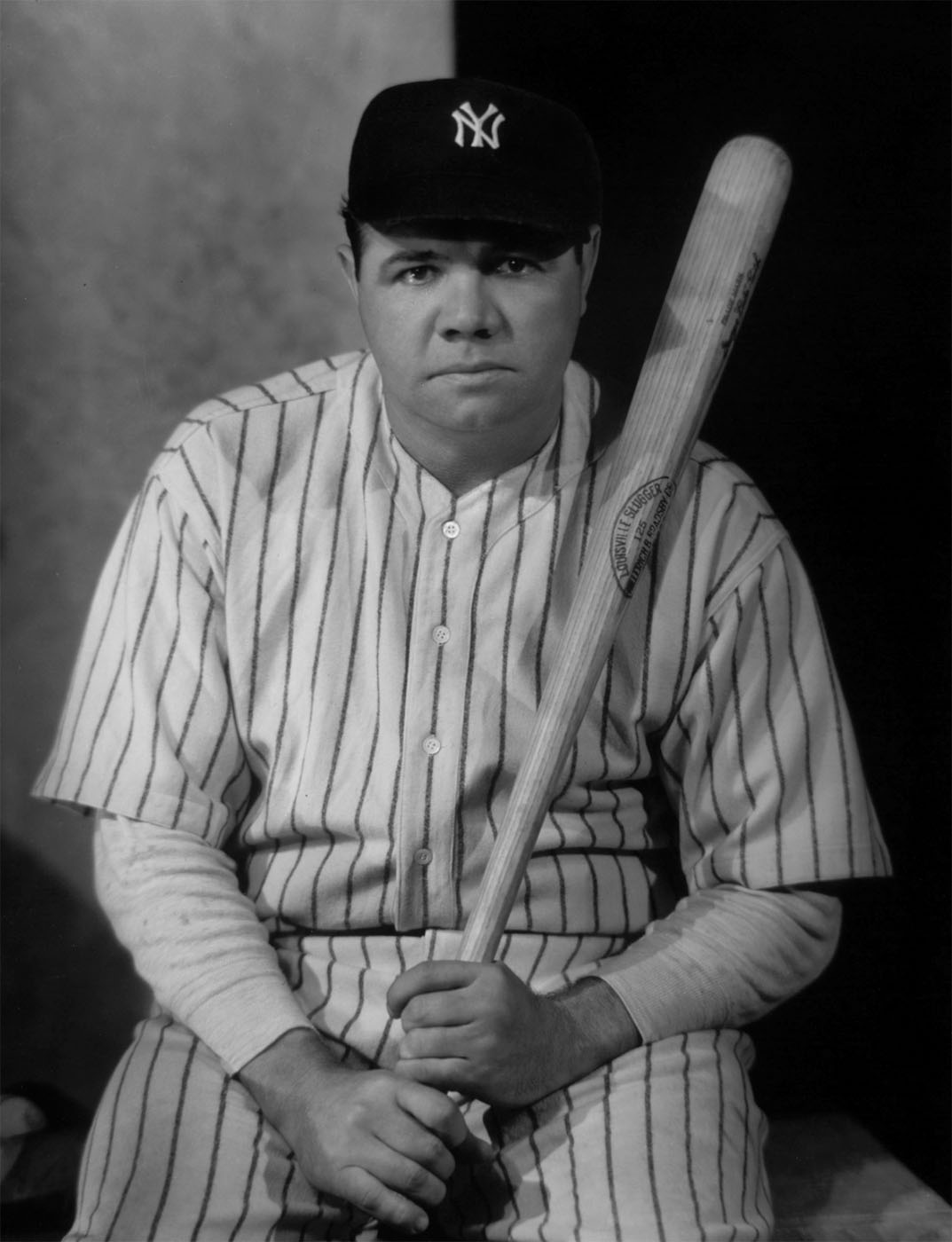
Exhibition: ‘Photo-Secession: Painterly Masterworks of Turn-of-the-Century Photography’ at the Utah Museum of Fine Arts, Salt Lake City

Exhibition dates: 24th August – 29th December 2024


Peter Henry Emerson (British born Cuba, 1856-1936) 'Poling the Marsh Hay' c. 1885 from the exhibition 'Photo-Secession: Painterly Masterworks of Turn-of-the-Century Photography' at the Utah Museum of Fine Arts, Salt Lake City, August - December 2024


Peter Henry Emerson (British born Cuba, 1856-1936)
Poling the Marsh Hay
c. 1885
Platinum print on paper


Id est / that is

Voluptuous = relating to or characterised by luxury or sensual pleasure

Sensual = late Middle English (in the sense ‘sensory’): from late Latin sensualis, from sensus (see sense)

Sense = various; including:

~ a reasonable or comprehensible rationale i.e. the latent and emerging Modernism inherent in Photo-Secession photographs

~ the way in which a situation [in this case the “reading” of a photograph] can be interpreted i.e. the interpretation of Photo-Secession photographs as either Pictorialist, Modernist or a combination of both

~ a keen intuitive awareness of or sensitivity to the presence or importance of something i.e. the feeling of the photographer towards the object of their attention, revealed in the print, whether that be a nude, a building, pears and an apple or the side of a white barn

~ to be aware of (something) without being able to define exactly how one knows i.e. to be able to detect, recognise, and feel that ineffable “something” that emanates from the object of (y)our attention… in the act of creativity, in the act of seeing

Bringing something to our senses

Thus, the older I get the more I appreciate the faculty of feeling, thought and meaning that is revealed in these revolutionary photographs.

Dr Marcus Bunyan


Many thankx to the Utah Museum of Fine Arts for allowing me to publish the photographs in the posting. Please click on the photographs for a larger version of the image.


Quotes on Walls

“Why, Mr. Stieglitz, you won’t insist that a photograph can possibly be a work of art – you are a fanatic!”


Luigi Palma de Cesnola, Director of the Metropolitan Museum of Art, reportedly said to Alfred Stieglitz, 1902


“The painter need not always paint with brushes, he can paint with light itself. Modern photography has brought light under control and made it as truly art-material as pigment or clay. … The photographer has demonstrated that his work need not be mechanical imitation. He can control the quality of his lines, the spacing of his masses, the depth of his tones and the harmony of his gradations. He can eliminate detail, keeping only the significant. More than this, he can reveal the secrets of personality. What is this but Art?”


Arthur Wesley Dow, 1921


“The photographer’s problem therefore, is to see clearly the limitations and at the same time the potential qualities of his medium… without tricks of process or manipulation, through the use of straight photographic methods. … Photography is only a new road from a different direction but moving toward the common goal, which is Life.”


Paul Strand, 1917


“Pictorial photography owes its birth to the universal dissatisfaction of artist photographers in front of the photographic errors of the straight print. Its false values, its lack of accents, its equal delineation of things important and useless, were universally recognised and deplored by a host of malcontents… I consider that, from an art point of view, the straight print of today is not a whit better than the straight print of fifteen years ago. If it was faulty then it is still faulty now.”


Robert Demachy, 1907


“Gum, diffused lenses, (ultra) glycerining, were of experimental interest once. … Most of these are of more value historically than artistically. The prints are neither painting (or its equivalents) nor photographs. Let the photographer make a perfect photograph. It will be straight and beautiful – a true photograph.”


Alfred Stieglitz, 1919


Photo-Secession: Painterly Masterworks of Turn-of-the-Century Photography celebrates an intrepid group of photographers, led by preeminent photographer Alfred Stieglitz, who fought to establish photography as fine art, coequal with painting and sculpture at the turn of the 20th century. The Photo-Secession movement took cues from European modernists – who seceded from centuries-old academic traditions – to demonstrate photographic pictures’ aesthetic, creative, and skilful value as art. An homage to Stieglitz, Photo-Secession includes some of the very images that established the appreciation of photography’s artistic merits.

The UMFA will present this exhibition concurrently with Blue Grass, Green Skies: American Impressionism and Realism from the Los Angeles County Museum of Art to draw attention to the cyclical dialogue between painting and photography in the late 19th and early 20th centuries. During this period, photographers manipulated their images at various stages of production to imitate painterly effects, while painters worked and reworked their oils to imitate the immediacy of photography, demonstrating a remarkable reciprocity between these two art forms.

Text from the Utah Museum of Fine Arts website


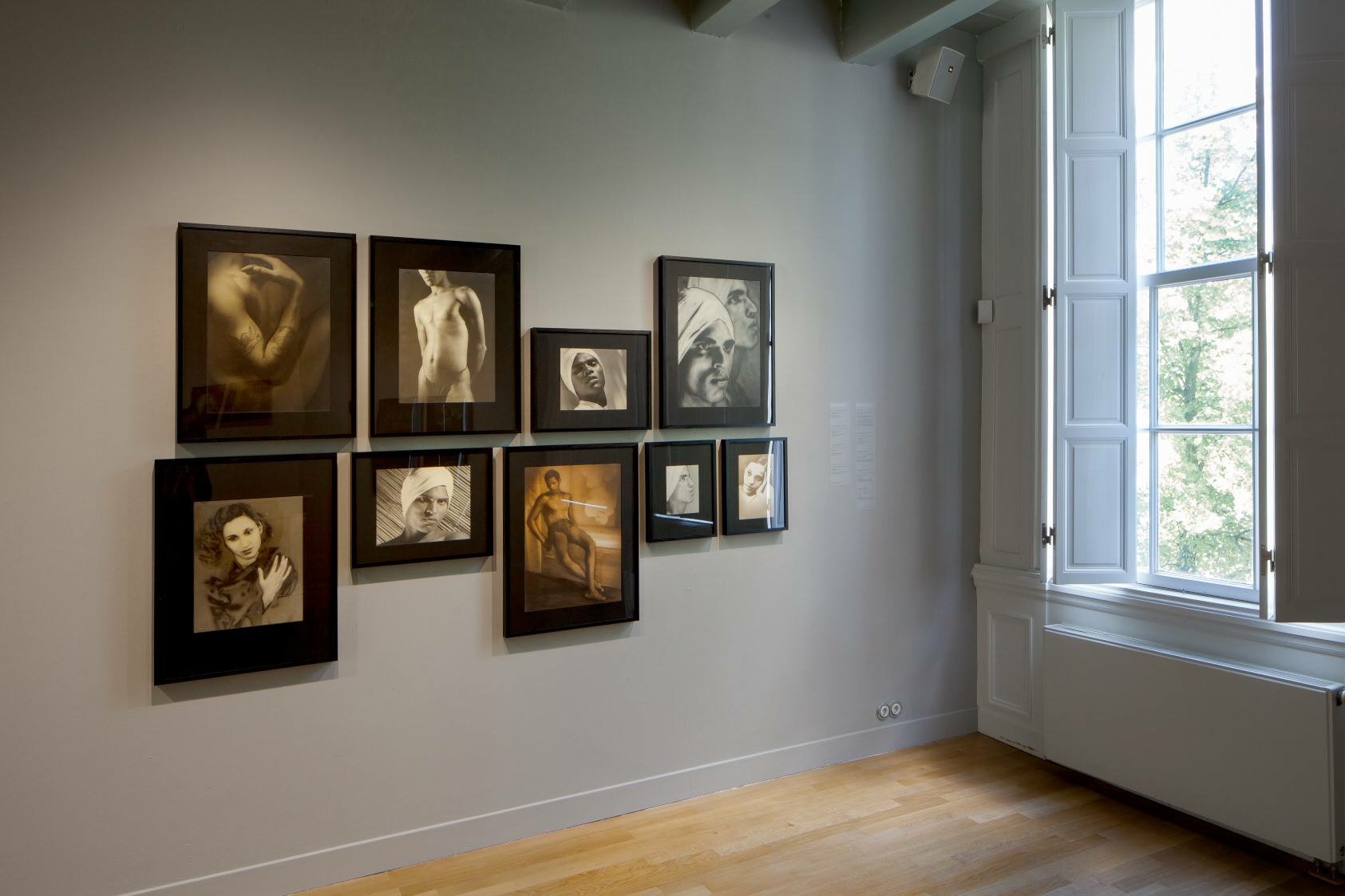
Installation view of the exhibition 'Photo-Secession: Painterly Masterworks of Turn-of-the-Century Photography' at the Utah Museum of Fine Arts showing the work of Heinrich Kühn

Installation view of the exhibition 'Photo-Secession: Painterly Masterworks of Turn-of-the-Century Photography' at the Utah Museum of Fine Arts showing the work of Heinrich Kühn


Installation view of the exhibition Photo-Secession: Painterly Masterworks of Turn-of-the-Century Photography at the Utah Museum of Fine Arts showing the work of Heinrich Kühn
Image courtesy of the Utah Museum of Fine Arts


Installation view of the exhibition 'Photo-Secession: Painterly Masterworks of Turn-of-the-Century Photography' at the Utah Museum of Fine Arts showing at centre from left to right, Bernard Shea Horne 'Doorway Abstraction'; Drahomir Josef Ruzicka 'The Arch, Pennysylvannia Station' c. 1920; Arnold Genthe 'Acoma Pueblo, New Mexico' c. 1920; William E. Dassonville 'The Great Highway, San Francisco' c. 1905


Installation view of the exhibition Photo-Secession: Painterly Masterworks of Turn-of-the-Century Photography at the Utah Museum of Fine Arts showing at centre from left to right, Bernard Shea Horne Doorway Abstraction; Drahomir Josef Ruzicka The Arch, Pennysylvannia Station c. 1920; Arnold Genthe Acoma Pueblo, New Mexico c. 1920; William E. Dassonville The Great Highway, San Francisco c. 1905


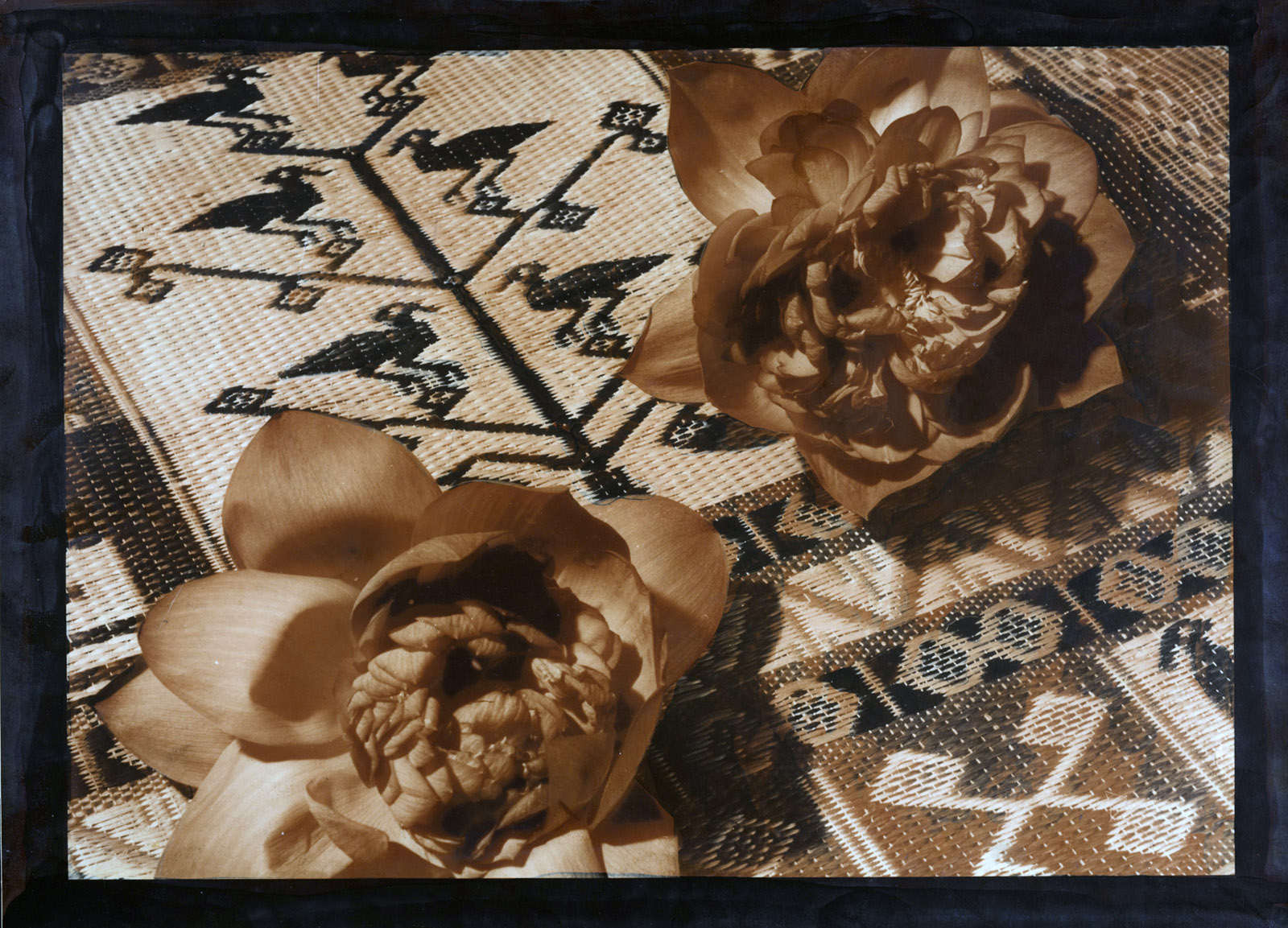
Installation view of the exhibition 'Photo-Secession: Painterly Masterworks of Turn-of-the-Century Photography' at the Utah Museum of Fine Arts showing from top left to right, Edward Steichen 'Lotus, Mount Kisco' 1915; Edward Steichen 'Calla Lily' c. 1921; Edward Steichen 'Three pears and an apple' c. 1921; Edward Steichen 'Blossom of White Fingers' c. 1923


Installation view of the exhibition Photo-Secession: Painterly Masterworks of Turn-of-the-Century Photography at the Utah Museum of Fine Arts showing from top left to right, Edward Steichen Lotus, Mount Kisco 1915; Edward Steichen Calla Lily c. 1921; Edward Steichen Three pears and an apple c. 1921; Edward Steichen Blossom of White Fingers c. 1923


Installation view of the exhibition 'Photo-Secession: Painterly Masterworks of Turn-of-the-Century Photography' at the Utah Museum of Fine Arts

Installation view of the exhibition 'Photo-Secession: Painterly Masterworks of Turn-of-the-Century Photography' at the Utah Museum of Fine Arts


Installation view of the exhibition Photo-Secession: Painterly Masterworks of Turn-of-the-Century Photography at the Utah Museum of Fine Arts


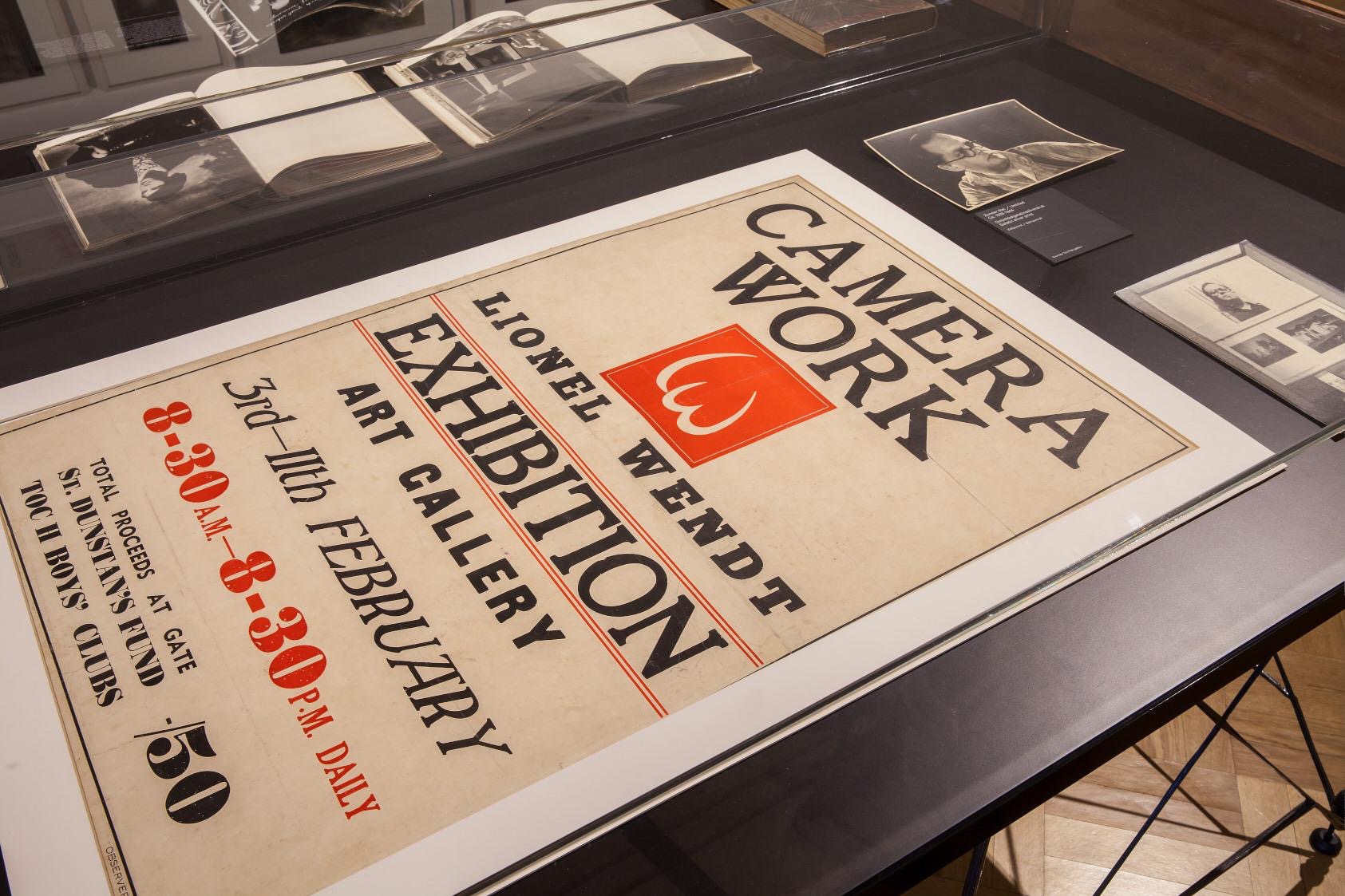
Installation view of the exhibition 'Photo-Secession: Painterly Masterworks of Turn-of-the-Century Photography' at the Utah Museum of Fine Arts showing in the display cabinet issues of the magazine 'Camera Work', 1903-1917. Edited by Alfred Stieglitz and Edward Steichen


Installation view of the exhibition Photo-Secession: Painterly Masterworks of Turn-of-the-Century Photography at the Utah Museum of Fine Arts showing in the display cabinet issues of the magazine Camera Work, 1903-1917. Edited by Alfred Stieglitz and Edward Steichen


The Role of Camera Work

One of the key platforms for the Photo-Secession movement was the influential journal Camera Work, edited by Stieglitz and Steichen. Published from 1903 to 1917, Camera Work featured the work of Photo-Secessionists alongside essays and critiques that championed the artistic potential of photography. The journal played a crucial role in shaping public and critical perceptions of photography, providing a space for photographers to showcase their work and engage in intellectual discourse.

Adelaide Ryder. “The Photo-Secession Movement: Pioneering Artistry in Early Photography,” on the UMFA website Nd [Online] Cited 22/10/2024


Introduction

This exhibition celebrates 26 intrepid artists at the turn of the 20th century who sought to establish photography as a fine art equal to long-established media like painting, sculpture, drawing, and printmaking. This movement in the United States centred on the group dubbed the Photo-Secession. While each of the Photo-Secessionists had their distinctive approaches, their works are hand-crafted photographic prints of traditional artistic subjects, such as landscape, portraiture, figure study, and still life. This combination of painterly imagery and printmaking is also known as Pictorialism.

The passionate leader and tenacious advocate of the Photo-Secession was Alfred Stieglitz, who advanced the visions of the most ambitious photographers of the time, including Heinrich Kühn, Gertrude Käsebier, Edward Steichen, Paul Strand, and Clarence White. Stieglitz tirelessly promoted art photography through his exhibition space in New York City – the Little Galleries of the Photo-Secession and later called simply 291 – as well as through the journals he edited – Camera Notes (1897-1903) and Camera Work (1903-1917).

This exhibition also covers the breakup of the Photo-Secession, as some photographers rejected Pictorialism while others remained staunchly committed to it. The Photo-Secession itself irrevocably split apart around 1917. Artists led by Stieglitz, Steichen, and Strand switched to Straight Photography, an approach involving sharp focus and direct printing of the original shot. Artists led by Käsebier and White continued to innovate through painterly approaches using soft focus and manipulated prints.

The works in this exhibition represent some of the most influential artists and iconic images of the period as well as superb examples of a variety of photographic printing techniques, including platinum, gum-bichromate, carbon, cyanotype, and bromoil.

All works of art this exhibition are from the private collection of Michael Mattis and Judith Hochberg. This exhibition is organised by art2art Circulating Exhibitions.

The Rebirth of Art Photography in Europe

In the first few decades after the invention of photography in 1839, painters played an instrumental role in the development of this new medium. Artist-photographers like D.O. Hill in Edinburgh and Gustave Le Gray in Paris exhibited their photographs alongside paintings, drawings, and prints. The novelty of the photograph led to the proliferation of portrait studios and mass-produced views of famous monuments or exotic locales for the tourist trade. By the 1860s photography was considered a bourgeois technical profession. The Kodak camera, first issued in 1888, further popularised photography with its roll film, simple controls, and reasonable cost of one dollar (about $33 today).

Even as more and more individuals could access the means to make photos, artist-photographers advocated for the status of their medium and demanded a differentiation between their work and the products of point-and-shoot cameras. In 1889 Peter Henry Emerson published the book Naturalistic Photography for Students of the Art, which proposed a role for landscape photographers equal to esteemed painters like Camille Corot and Jean-François Millet. Emerson’s publication was a clarion call for a new generation of artistic photographers, and Pictorialism was born.

Pictorialist photographers enthusiastically pursued their new movement, pioneering soft-focus lenses and manipulatable printing methods. Soon they were forming regional clubs across Europe and resumed exhibiting their prints as art. The photographers that formed the t in London were particularly active and influential, and Pictorialism spread to other cultural centres like Paris, Berlin, and Vienna.

Alfred Stieglitz and the American Pictorialist Movement

Born in Hoboken, New Jersey, but educated largely in Germany, Alfred Stieglitz (1864-1946) watched the flowering of European Pictorialism with a mixture of aesthetic appreciation and fierce competitiveness, writing in 1892:

“Every unbiased critic will grant that we [American photographers] are still many lengths in the rear, apparently content to remain there, inasmuch as we seem to lack the energy to strive forward – to push ahead with that American will-power which is so greatly admired by the whole civilised world.”

Energised by European Pictorialism, Stieglitz championed juried photographic salons in Boston, New York, and Philadelphia. He also edited a series of increasingly ambitious journals about Pictorialist photography, starting with The American Amateur Photographer in 1893, then Camera Notes in 1897, and finally Camera Work starting in 1903. He inaugurated and named the Photo-Secession movement through the landmark exhibition he curated in 1903 at the National Arts Club in New York, which comprised 162 works by 32 artists. The name “Photo-Secession” referred to European avant-garde artistic movements, and in his own words, “Photo-Secession actually means a seceding from the accepted idea of what constitutes a photograph.” Eventually European artists would also be invited to join the Photo-Secession.

In 1905 Stieglitz opened a space at 291 Fifth Avenue in New York, the Little Galleries of the Photo-Secession, later simply called 291. It was the first retail gallery devoted to photography. He supported the venture with his own resources and generous assistance from others, and Edward Steichen was his steadfast associate. By 1915 Stieglitz was also showing avant-garde painting and sculpture at 291, including works by Pablo Picasso, Henri Matisse, and Constantin Brâncuși. Thus, he sought to demonstrate the idea that all art forms were on par with and informed one another.

Close Collaborations and the Sudden End of the Photo-Secession

From 1907 to 1910 Alfred Stieglitz and Clarence White closely collaborated on photographs and a landmark photography exhibition. In 1907 they made a series of 60 nudes, Stieglitz posing the models and White focusing the camera and making most of the prints. The following year, Stieglitz devoted an entire issue of Camera Work to White. In 1910 Stieglitz and White co-curated the International Exhibition of Pictorial Photography at Buffalo’s Albright Gallery (now Albright Knox Gallery). This historic project that included over 600 prints is now regarded as the apex of the Photo-Secession. It was also the final monument of the movement, as each of the major Pictorialists, White included, broke away from Stieglitz in the years that followed.

Significant reasons for the end of the Photo-Secession were Stieglitz’s authoritarian personality and disdain for photographers who needed to earn a living rather than exclusively pursue art for art’s sake. Philosophical differences also explain the rupture. Stieglitz had come to believe that Pictorialism had run its course. The irony was that the Photo-Secession had established photography as fine art through images that imitated other art forms by manipulation at every stage of the process – from lens to negative to print. Their pictures to varying degrees used methods that denied the very essence of photography. Stieglitz asserted that it was time to abandon the “painterly photograph” and to champion photography as fine art with compelling pictures that were truly photographic.

Late Pictorialism and the Clarence White School

As the artist Georgia O’Keeffe, Alfred Stieglitz’s partner for 30 years, acknowledged, “He was either loved or hated – there wasn’t much in between.” For reasons both personal and professional, most of the leading Photo-Secessionists chose not to follow Stieglitz and Paul Strand into Straight Photography. Many clustered instead around Clarence White, who in his gentle and encouraging manner was the antithesis of Stieglitz. In 1914 White founded the Clarence White School of Photography in New York City. In 1916 White along with Gertrude Käsebier and Alvin Langdon Coburn co-founded Pictorial Photographers of America; this new society welcomed members of all backgrounds and published the new journal Photo-Graphic Art.

The Clarence White School continued to be a locus for the training of new photographers until 1940, under the guidance of White’s widow Jane White after his death in 1925. Among the most prominent students of Clarence White are Karl Struss, Anne Brigman, Laura Gilpin, and Doris Ulmann, all of whom are represented in this exhibition. Other notable pupils of White include Margaret Bourke-White, Anton Bruehl, Paul Outerbridge, and Dorothea Lange.

Straight Photography, Edward Steichen, and Paul Strand

The final section of this exhibition focuses on Straight Photography and two of Alfred Stieglitz’s most notable protégés, Edward Steichen and Paul Strand. Between them, they pioneered leading branches of 20th-century American photography.

With the entry of the United States into World War I, both Steichen and Strand were drafted into the U.S. Army. Steichen was a photographer for the Army Air Service Signal Corps in Europe, and Strand was an X-ray technician in the Army Medical Corps. In the years immediately after WWI, they each turned their attention to photographing the natural world: flowers and fruit in Steichen’s case, and toadstools, grasses, and ferns in Strand’s. Both would return to photographing their gardens in the final years of their lives.

Outside the naturalist realm, Steichen and Strand’s paths diverged.

Steichen, an extrovert, pioneered modern fashion and advertising photography for the Condé Nast magazines Vogue and Vanity Fair. Later he was named Director of the Department of Photography at the Museum of Modern Art in New York, where he organised the landmark exhibition, Family of Man, which traveled to 37 countries on six continents and was seen by an estimated nine million people.

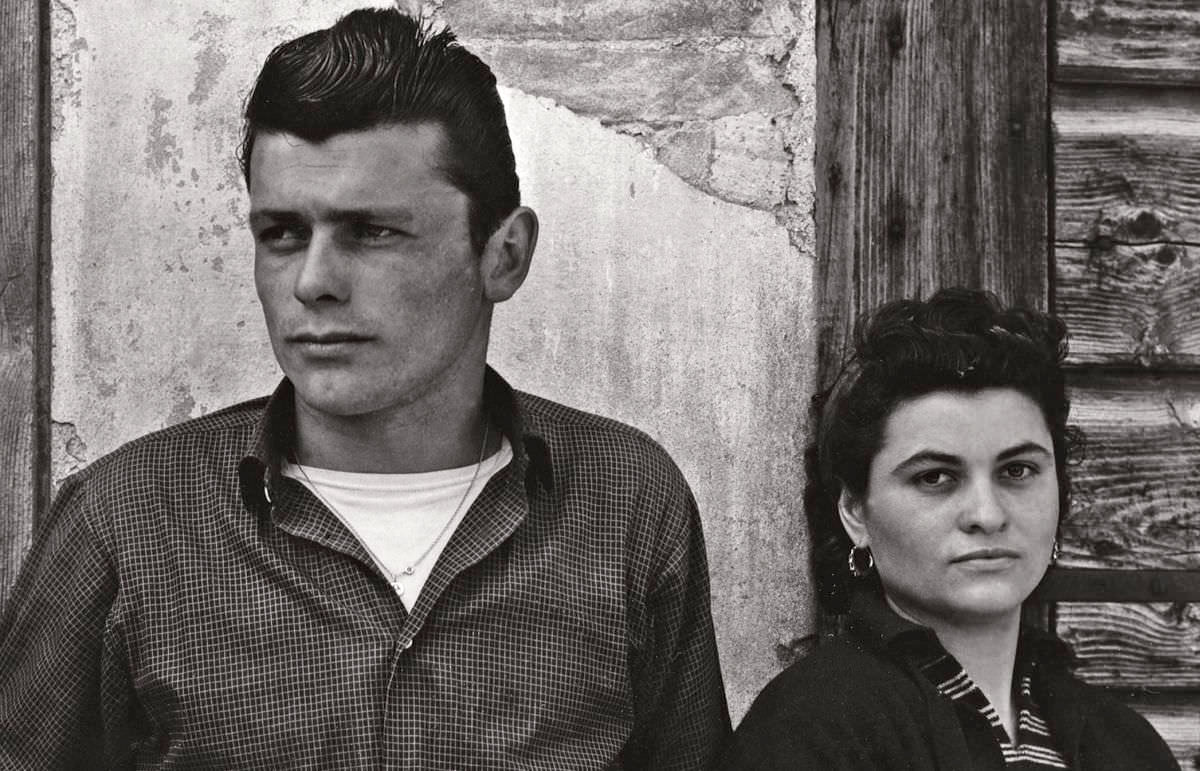
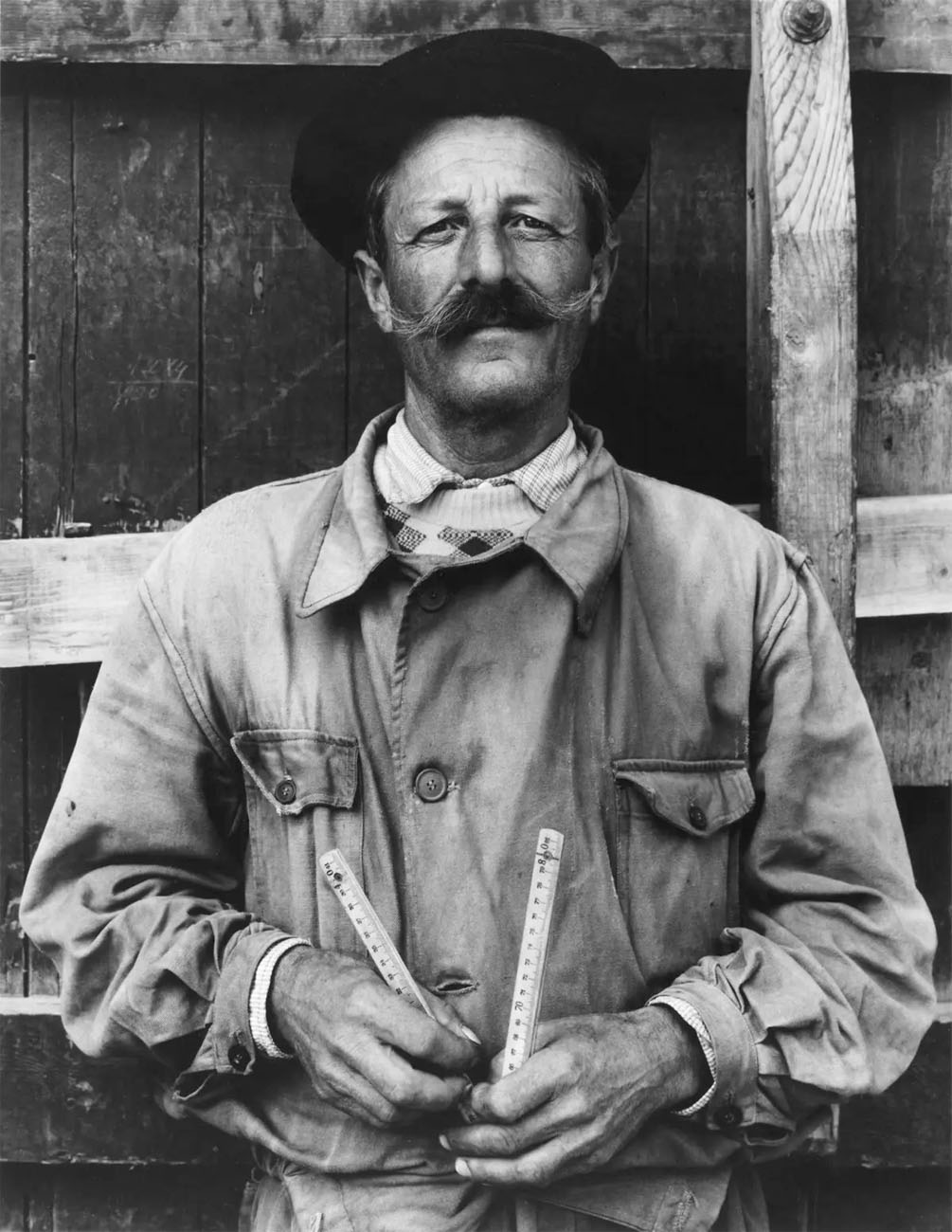
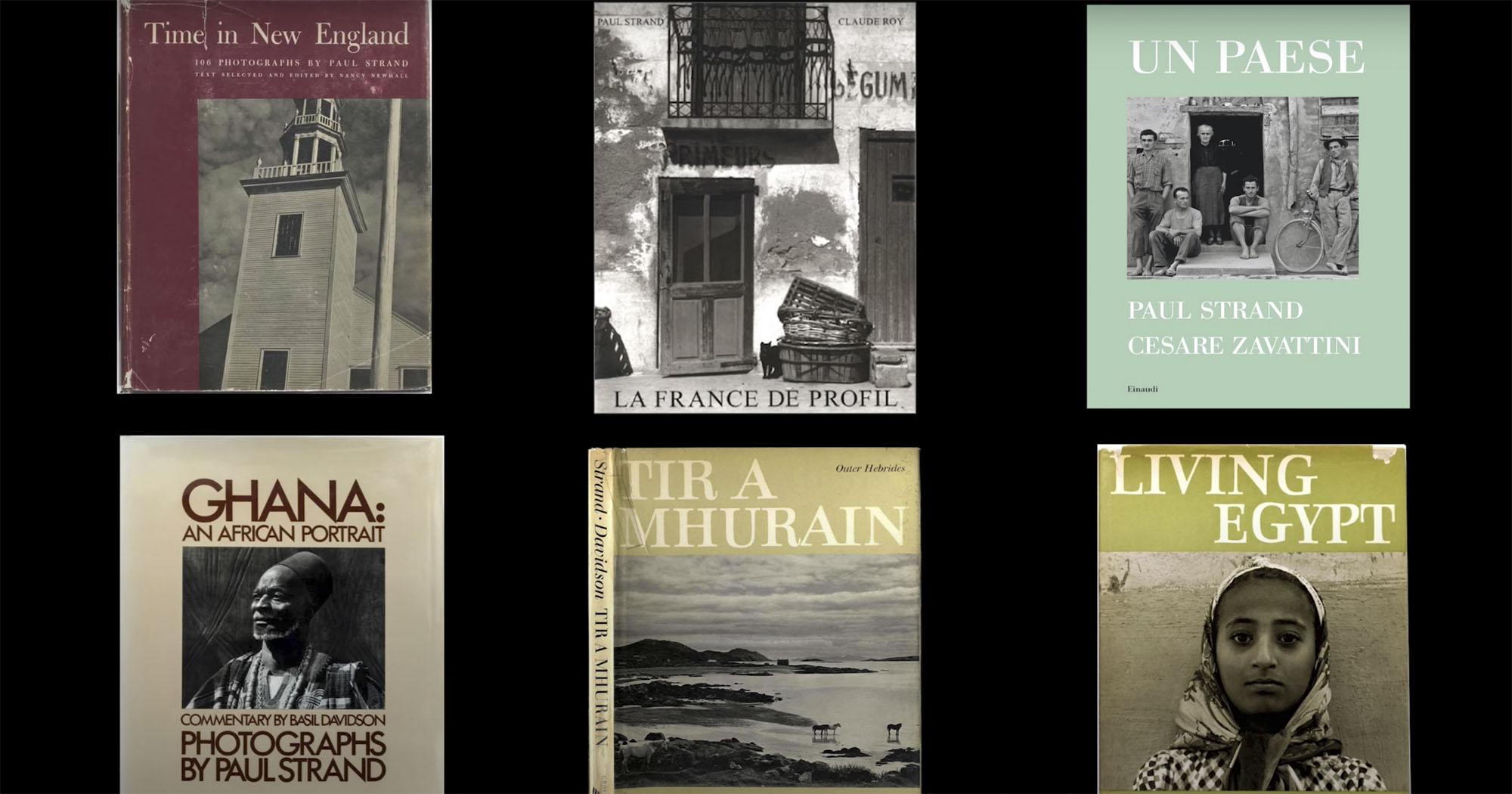
Strand, an introvert, traveled to remote places around the world, documenting the landscape, architecture, and people, his work exuding a respect for the dignity of the labouring class, which he absorbed from his mentor, Lewis Hine. Overall, Strand’s profoundly humanist scenes of everyday life influenced a generation of socially conscious photographers who documented the 20th-century crises of the Dust Bowl, the Great Depression, World War II, and more.

Heinrich Kühn

In the late 19th century, European Pictorialism was divided into two camps. On the one side were the purist photographers who, aside from a softening of the lens, opposed extensive manipulation of the negative or the print for artistic effect. On the other side were those who derided “button-pushers” and viewed the “straight” photograph as merely the raw material from which to create an artistic print through elaborate handiwork.

The leader of this latter camp was Heinrich Kühn (1866-1944). Eschewing Modernist tendencies, he chose traditional subject matter of painting from the 17th through 19th centuries: still life, figural studies, and genre scenes. His preference for gum-bichromate and bromoil printmaking techniques, which allowed for extensive manipulation, were intended to provoke the reaction in the viewer: is that really a photograph?

Born in Dresden, Kühn moved to Innsbruck, Austria, after youthful studies in science and medicine. Thanks to a sizeable inheritance, he could devote himself to artistic photography, joining both the Linked Ring in London and Stieglitz’s Photo-Secession in the United States. A trans-Atlantic correspondence with Stieglitz began in 1899 and lasted three decades. They congratulated one another on their latest triumphs and encouraged each other through professional and personal disappointments. In 1909, with Stieglitz’s assistance, Kühn organised the International Photographic Exhibition in Dresden, one of the high points of Pictorialism.

Later in life, Kühn filed multiple patents in photochemistry and camera technology related to Pictorialist photography, but none earned him any money. Tastes had changed, and the painterly photograph had become a quaint curiosity.

Gertrude Käsebier

Gertrude Käsebier (1852-1934) was 37 years old, married, and had three children by the time she began studying art at the Pratt Institute. She had originally purchased a camera to make portraits of her children, but Pratt encouraged its women students to earn a living in the arts. By 1897 she opened a one-room commercial portrait studio in New York City. Her ambition was to make “not maps of faces, but likenesses that are biographies, to bring out in each photograph the essential personality that is variously called temperament, soul, humanity.”

Recognition for Käsebier’s talent and ability came swiftly. In 1898 the painter William Merritt Chase, judging the Philadelphia Photographic Salon, called her work “as fine as anything that [Anthony] Van Dyck has ever done.” For Stieglitz, who organised her first solo show in 1899 at the Camera Club of New York, Käsebier was “beyond dispute the leading portrait photographer in this country.” That year, she sold one of her photographs for the unheard-of sum of $100 (almost $3,800 today).

However, by the time that the Brooklyn Museum honoured Käsebier with a career retrospective in 1929, Pictorialist photography had fallen so far out of fashion that the exhibition was not even reviewed in major journals.

Clarence Hudson White

Clarence Hudson White (1871-1925) was a modest, soft-spoken, entirely self-taught genius from America’s heartland. Raised in the small town of Newark, Ohio, he eked out a living as a bookkeeper for a wholesale grocer; each week he saved enough to purchase two glass plates for his camera. He specialised in gorgeously back-lit domestic interior scenes featuring his friends and members of his close-knit extended family.

White’s contributions to the 1898 Philadelphia Photographic Salon were so highly praised that, like Gertrude Käsebier, he was appointed a judge for the following year. The annual salons of the Newark Camera Club that he organised featured the nation’s preeminent Pictorialists and were the direct precursor to Stieglitz’s Photo-Secession. Indeed, the 1900 salon featured his friend and latest discovery, Edward Steichen of Milwaukee.

From 1907 onwards, both in New York City and during summers in rural Maine, White was also America’s foremost teacher of photography. Many of the leading American photographers of the 20th century studied at the Clarence White School.

Paul Strand

In 1915 Alfred Stieglitz found in the young Paul Strand (1890-1976) the leader of a remarkable new direction in photography. Strand had been a senior at the Ethical Culture High School in 1907 when he first visited Gallery 291 on a class trip with his photography teacher, Lewis Hine, whose poignant documents of immigrants and child labor were staples of the Progressive Movement. Eight years later, after thousands of hours in the darkroom at the New York Camera Club, Strand returned to 291 with a portfolio of platinum prints that pointed the way to a new era. Stieglitz deemed them “brutally direct, devoid of all flim-flam, devoid of trickery and of any ‘ism’. These photographs are the direct expression of today.” Stieglitz not only offered Strand an exhibition at 291, but also devoted the final two issues of Camera Work exclusively to him.

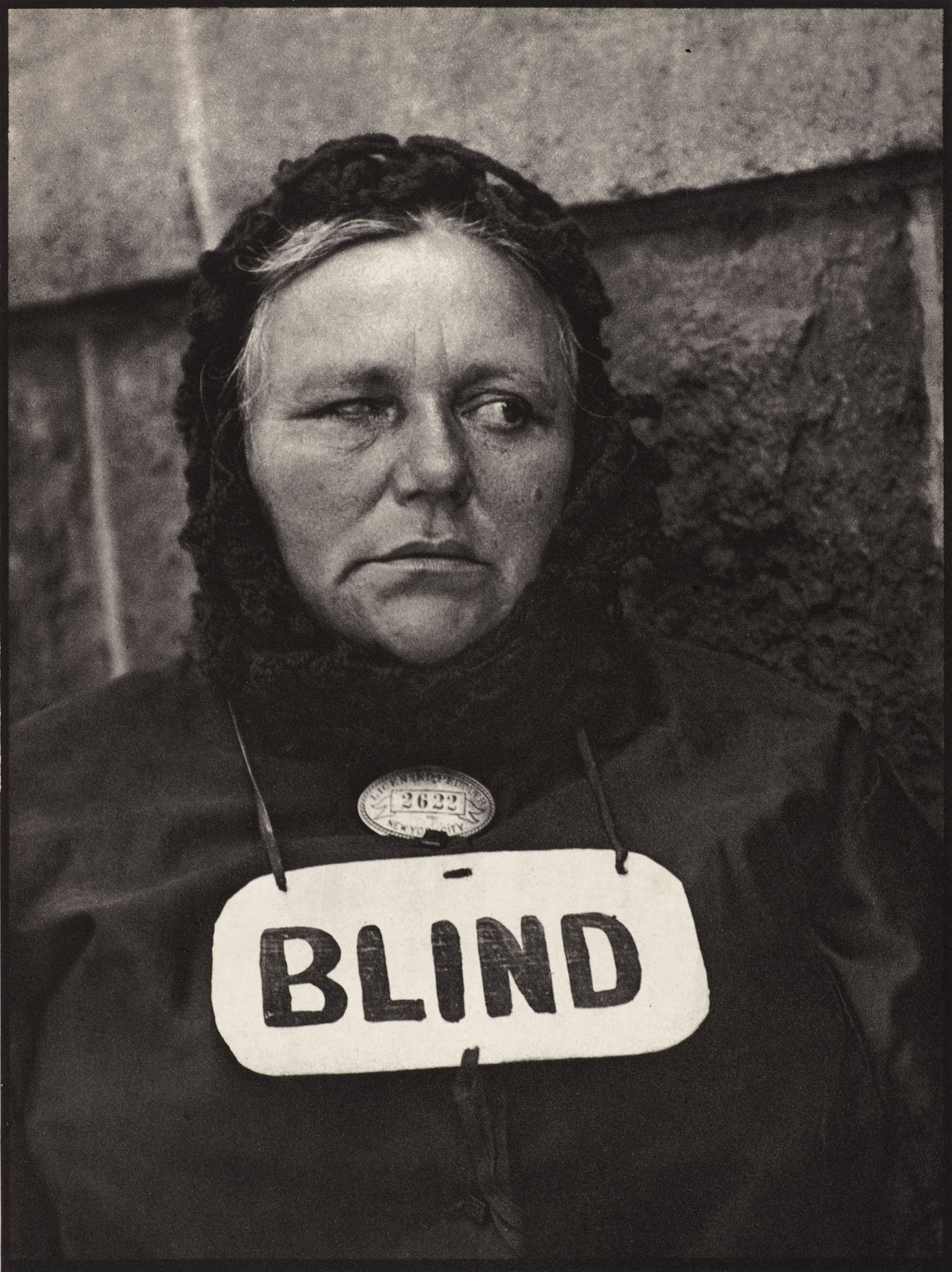
What was so compelling and inspiring to Stieglitz in Strand’s photography? His portfolio contained pictures of urban street life and architecture, as well as powerful close-ups of weathered New York faces (influenced by Lewis Hine), boldly composed still lifes, and shadow abstractions taken on a porch in Twin Lakes, Connecticut.

As for photography’s future, Strand and Stieglitz saw eye to eye. In his essay in Camera Work, Strand called for the universal adoption of Straight Photography “without tricks of process or manipulation.” In a provocative lecture at the Clarence White School, Strand condemned “this so-called pictorial photography, which is nothing but an evasion of everything photographic.”


Works by Emerson, Post, Evans, and Sutcliffe
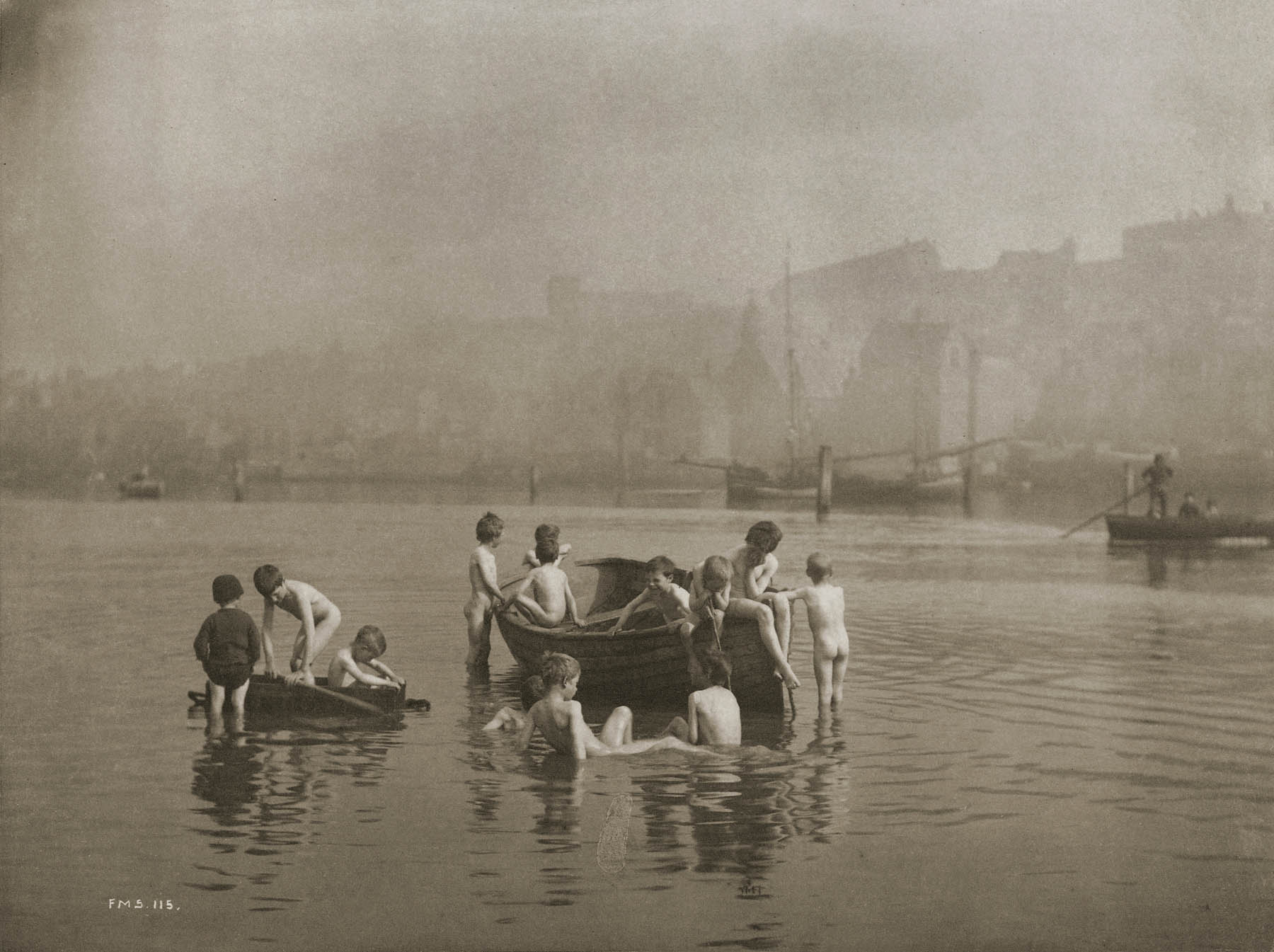
 

Frank Meadow Sutcliffe (British, 1853-1941) 'The Water Rats' 1886 from the exhibition 'Photo-Secession: Painterly Masterworks of Turn-of-the-Century Photography' at the Utah Museum of Fine Arts, Salt Lake City, August - December 2024


Frank Meadow Sutcliffe (British, 1853-1941)
The Water Rats
1886
Platinum print on paper


Sutcliffe was a member of the British photographic society the Linked Ring, which sought to make their work recognised as fine art. He operated a portrait studio in the seaside town of Whitby in North Yorkshire but is remembered for his charming, naturalistic depictions of local life. This photograph resulted in his excommunication by local clergy for its “corrupting” effects. Today this is his best-known photograph, regarded as a study of pure childhood joy.
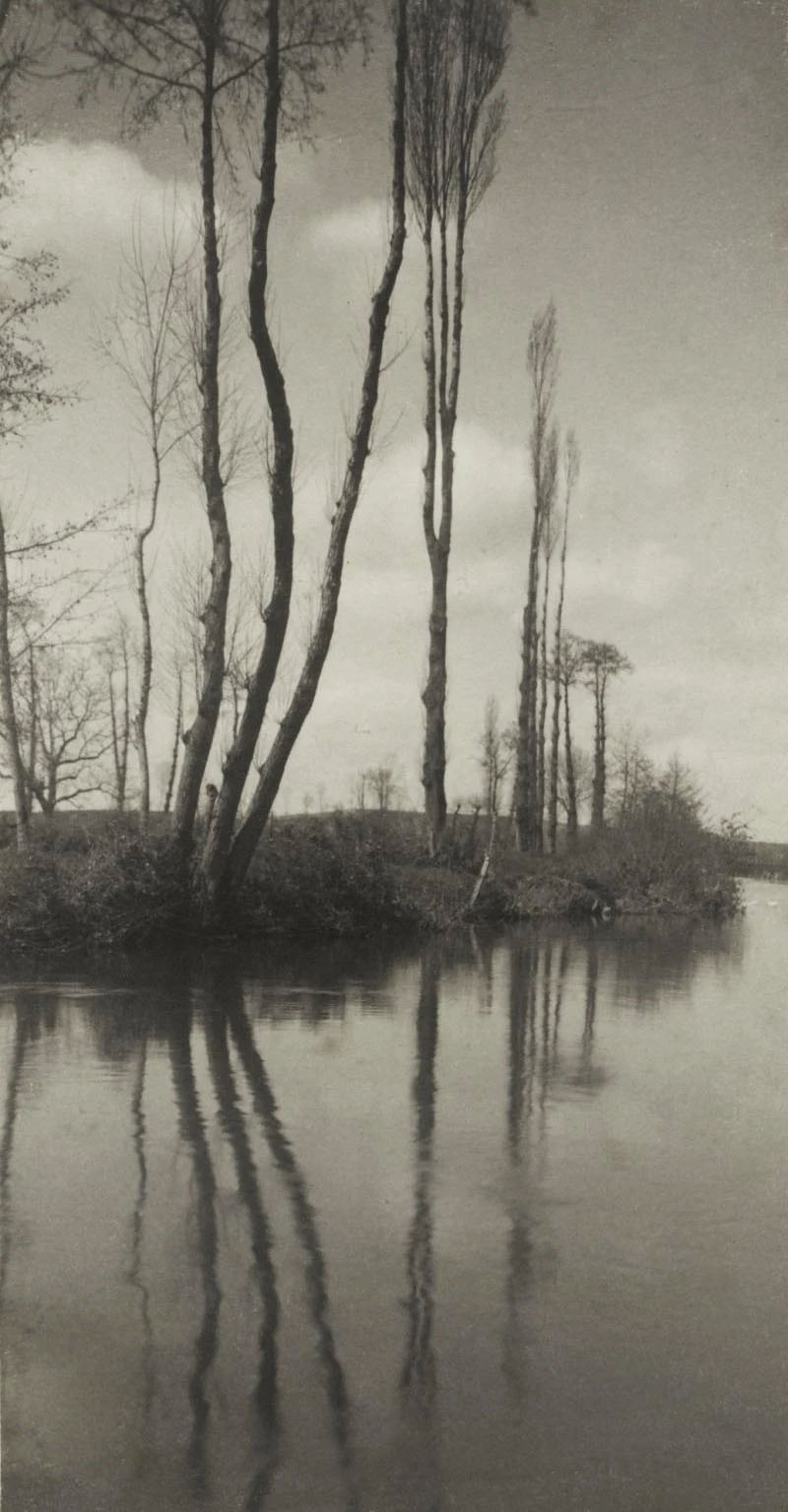
 

Frederick H. Evans (British, 1853-1943) 'Poplars on a French River' c. 1900


Frederick H. Evans (British, 1853-1943)
Poplars on a French River
c. 1900
Platinum print on paper
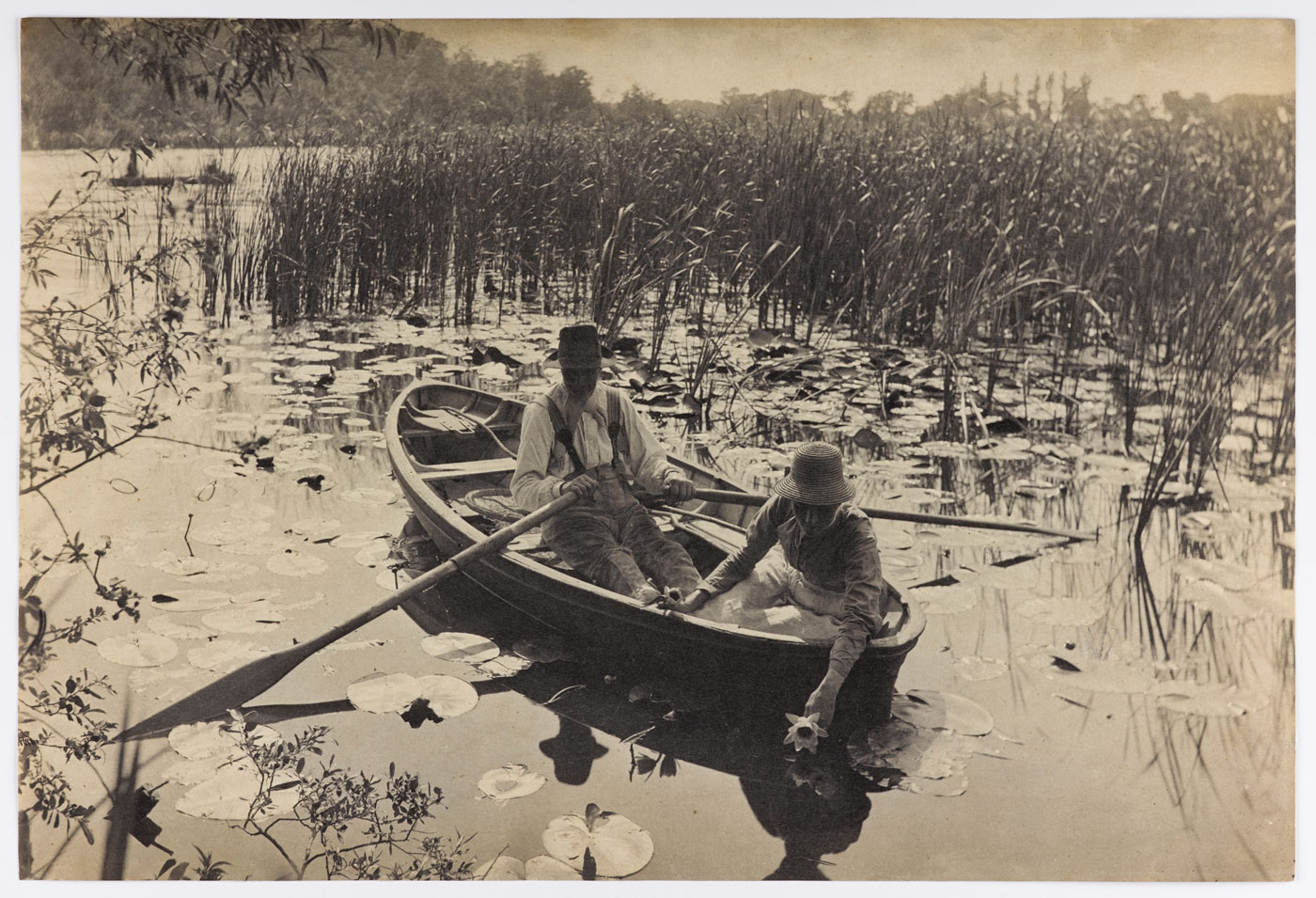
 

Peter Henry Emerson (British born Cuba, 1856-1936) 'Gathering Water Lilies' c. 1885


Peter Henry Emerson (British born Cuba, 1856-1936)
Gathering Water Lilies
c. 1885
Platinum print on paper


In addition to his photographic work, Emerson wrote persuasively that photography could match – and even surpass – painting as an emotive art form. His writings were influential to the young Alfred Stieglitz, with whom he corresponded over four decades.

All from the Collection of Michael Mattis and Judith Hochberg


Works by Thiollier
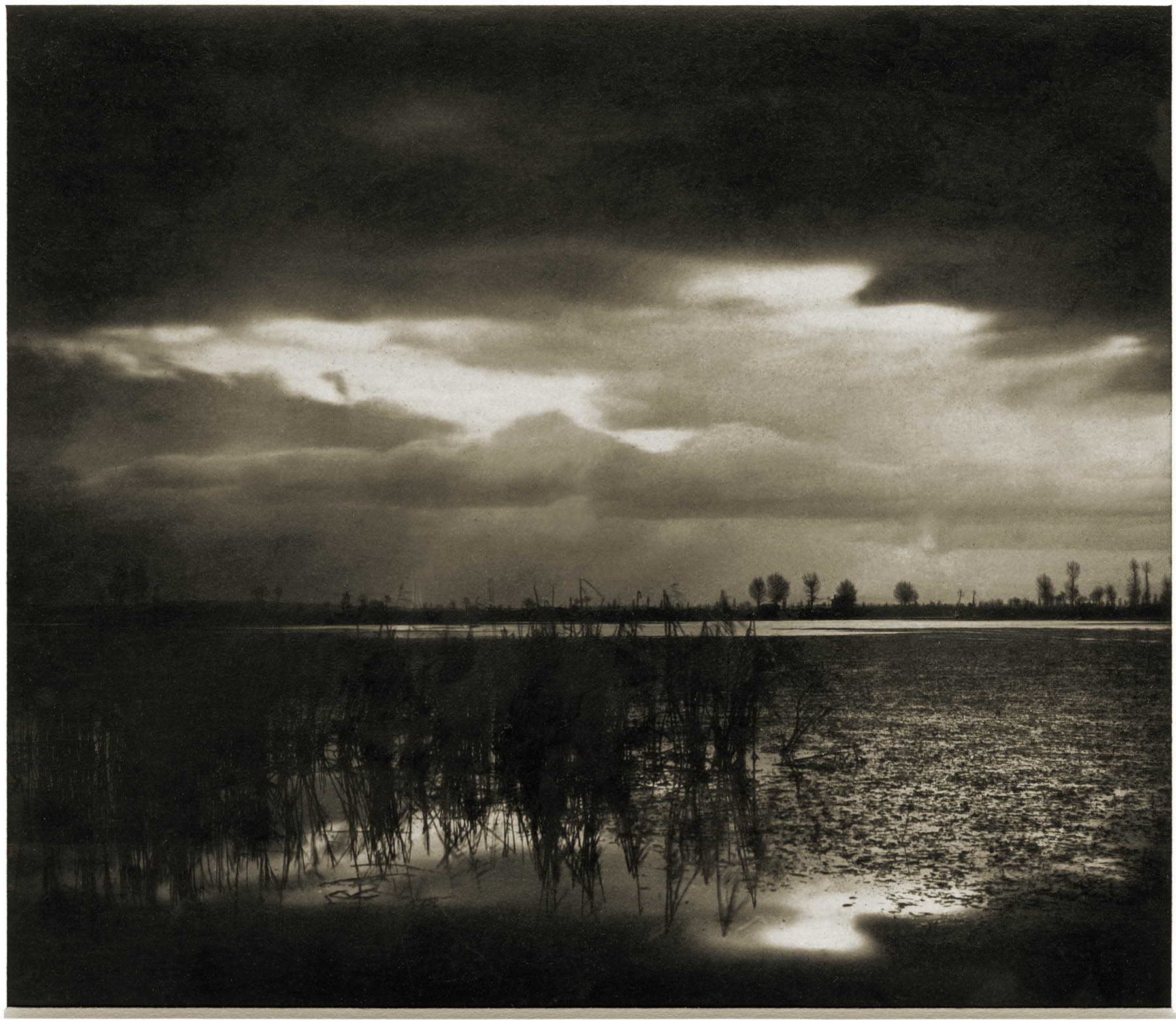
 

Félix Thiollier (French, 1842-1914) 'Landscape in Bugey' c. 1885


Félix Thiollier (French, 1842-1914)
Landscape in Bugey
c. 1885
Carbon print on paper


Thiollier’s photographic career is a fairly recent discovery, highlighted in the first ever retrospective of his career at the Musée d’Orsay in Paris in 2012.

From the Collection of Michael Mattis and Judith Hochberg


Works by Kühn


Heinrich Kühn (Austrian born Germany, 1866-1944) 'Nude in Morning Sun' c. 1920


Heinrich Kühn (Austrian born Germany, 1866-1944)
Nude in Morning Sun
c. 1920
Multiple bromoil transfer print on Japanese tissue paper


Heinrich Kühn (Austrian born Germany, 1866-1944) 'Female torso in sunlight' c. 1920


Heinrich Kühn (Austrian born Germany, 1866-1944)
Female torso in sunlight
c. 1920
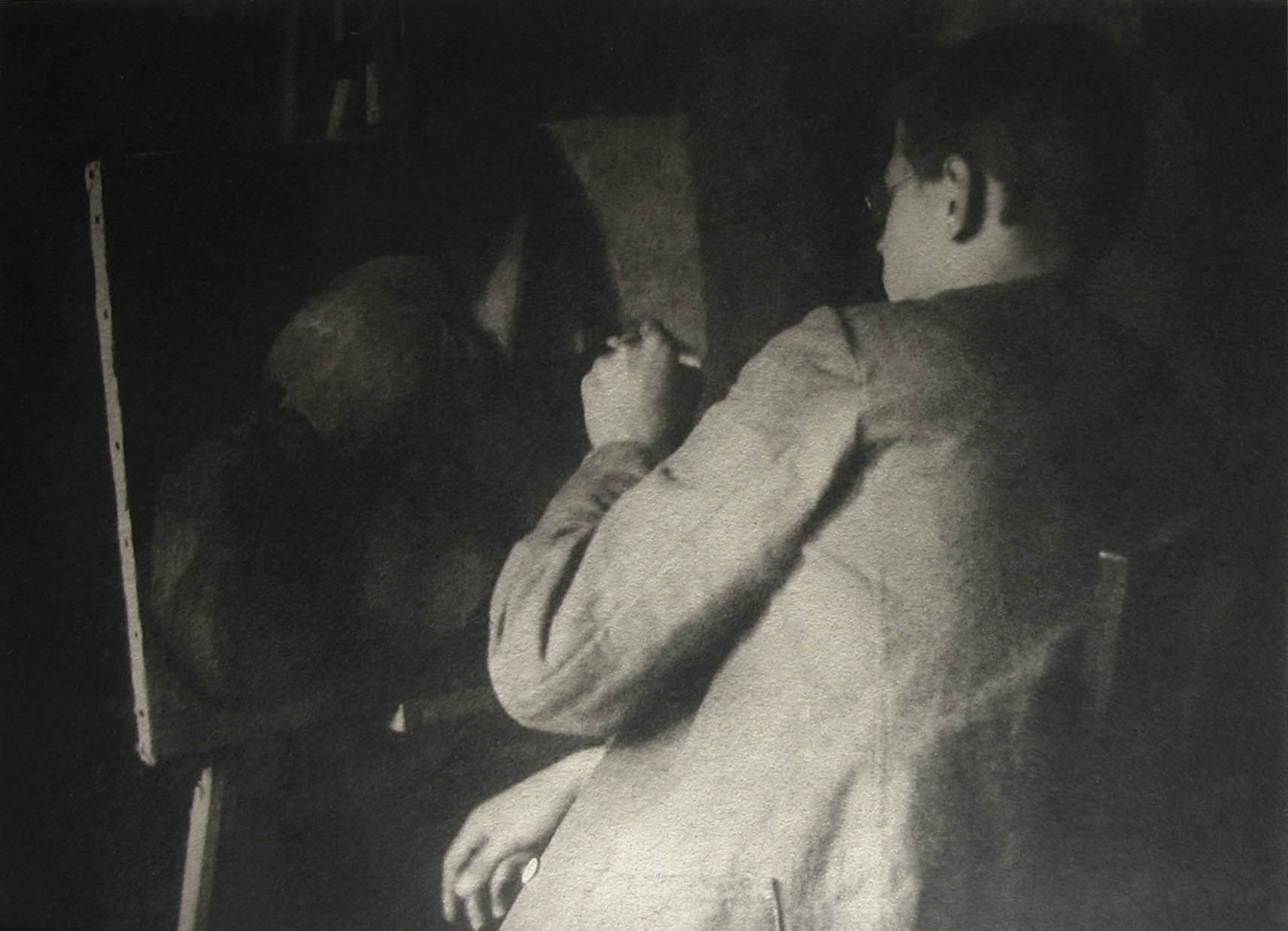
 

Heinrich Kühn (Austrian born Germany, 1866-1944) 'Walter at Easel' c. 1909


Heinrich Kühn (Austrian born Germany, 1866-1944)
Walter at Easel
c. 1909
Gum-bichromate print on paper


Heinrich Kühn (Austrian born Germany, 1866-1944) 'Still Life with Fruit and Pottery' c. 1896


Heinrich Kühn (Austrian born Germany, 1866-1944)
Still Life with Fruit and Pottery
c. 1896
Gum-bichromate print on paper with an applied watercolour wash


Kühn’s still lifes deliberately recall paintings from earlier centuries. This scene – his first published image – contains similar elements to 17th-century still-life compositions. He even included insects, which are traditional references to mortality called memento mori (reminders of death). Can you spot the housefly?

All from the Collection of Michael Mattis and Judith Hochberg


Portraits by Steichen


Edward Steichen (American born Luxembourg, 1879-1973) 'George Frederic Watts, London' 1901


Edward Steichen (American born Luxembourg, 1879-1973)
George Frederic Watts, London
1901
Varnished platinum print on paper


This dramatic profile portrait of the English Pre-Raphaelite painter was the first in what Steichen termed his “Great Men” series. Steichen wrote about his approach to portraiture, “I aim for the expression of something psychological. I am not satisfied with the mere reproduction of features and expression.”

Published in Camera Work, 14, 1906
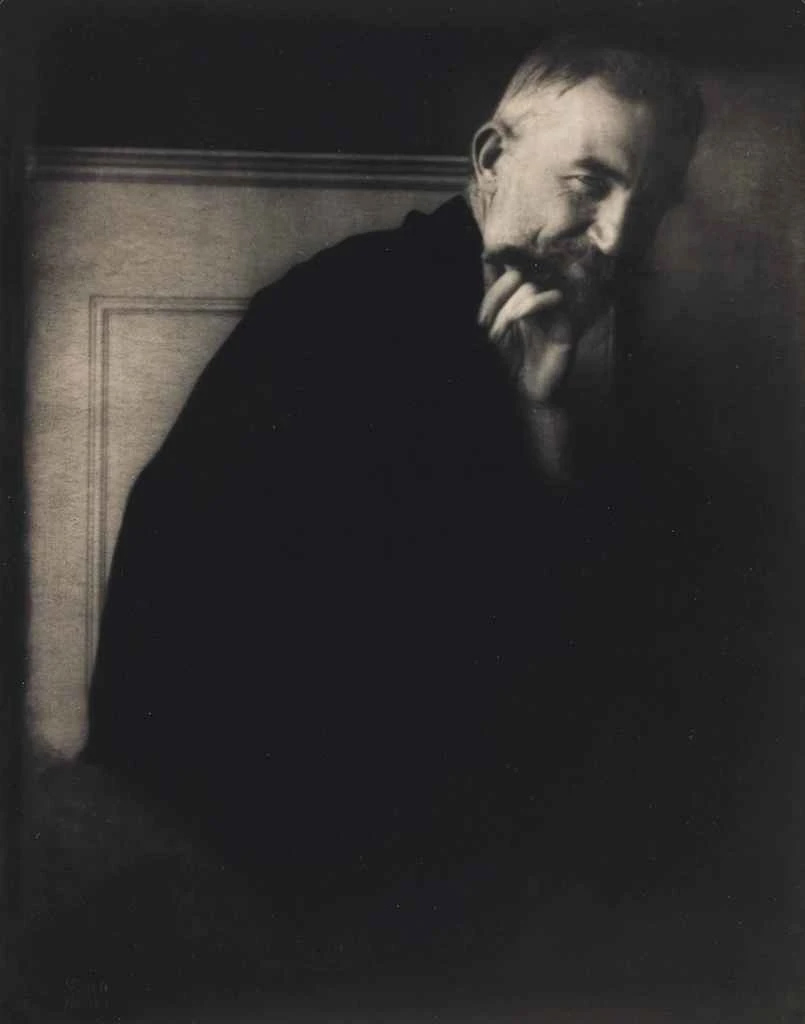
 

Edward Steichen (American born Luxembourg, 1879-1973) 'The Photographer's Best Model: George Bernard Shaw, London' 1907


Edward Steichen (American born Luxembourg, 1879-1973)
The Photographer’s Best Model: George Bernard Shaw, London
1907
Platinum print on paper


Steichen was elated after his photographic sitting with Shaw, writing to Stieglitz: “Well I’ve seen and done Shaw (photographically of course). He’s the nicest kind of fellow imaginable – genial and boyish – there is a little of the sardonic about him as you see him but when you get the camera at him you are tempted with possibilities in that way. He seems to know a lot about photography and certainly skilfully bluffs you into believing he knows it all.”

Published in Camera Work, 42/43, 1913

All from the Collection of Michael Mattis and Judith Hochberg


Glossary of Photographic Printing Methods and Terms from the History of Photography

Gelatin Silver Print

For over a century, from the 1880s until the digital era, the gelatin silver print was the most common technique for producing black-and-white photographs. The paper is coated with a binder layer of gelatin incorporating light-sensitive silver chloride or silver bromide. The paper is exposed under a negative, either by contact-printing or through an enlarger, then chemically developed, stopped, fixed, and dried. In the process, the silver salts are reduced to metallic silver, which carries the image. The overall color of the print can be altered through toning.

Cyanotype

A sheet of paper is sensitised in a solution of potassium ferricyanide and ferric ammonium citrate. After contact-printing under a negative, the iron compounds form an insoluble blue (“cyan”) dye known as Prussian blue. Apart from its occasional artistic use, the only regular use of the cyanotype was in copying architectural plans, thus called “blueprints.”

Platinum or Palladium Print

A platinum print is produced by sensitising a sheet of paper with platinum and iron salts. The sheet is then contact-printed under a negative until a faint image is visible. The print is developed in a potassium oxalate solution that dissolves unexposed iron salts and transforms the platinum salts into metallic platinum, which intensifies the image. Mercury chloride can be added to the solution to give a warmer tone. Unlike a silver print, where the image lives in a gelatin binder layer on top of the paper (akin to a watercolour), the image in a platinum print is embedded in the paper fibres (akin to an oil painting). The rich mid-tone range and matte surface made the platinum print the favoured medium for the Pictorialist photographers, from P.H. Emerson onward. When the price of platinum spiked during World War I, palladium was introduced as a more affordable (and generally warmer-toned) substitute.

Pigment Prints

The following processes are known as pigment prints, because the photographic image is carried by inks or pigments, rather than by metallic particles like silver, iron, or platinum.

Gum Bichromate Print

A sheet of paper is coated with diluted gum-arabic mixed with coloured pigment and light-sensitive potassium bichromate. During exposure under a negative, the bichromate causes the coloured gum-arabic to harden in proportion to the amount of light received. The areas not exposed to light remain soluble in water, and the print is developed by washing away the soluble areas, leaving a positive image on the paper. The prints can be exposed and reprinted numerous times with different coloured pigments, as well as manipulated by brushing away more pigmented gum during the washing stage.

Bromoil (Transfer) Print

This process does not begin with a negative, but rather with a gelatin silver print that is bleached in a solution of potassium bromide. The bleaching removes the silver-based image and selectively hardens the underlying gelatin in proportion to the image density. The sheet is then hand-coloured with an oil-based ink, which is selectively absorbed depending on the hardness of the gelatin: the softer areas contain more water, which repels the oil-based ink. An inked print is sometimes used as a kind of printing plate for transferring the image to another sheet of paper (a bromoil transfer print).

Photogravure

This is a sophisticated photomechanical process used for reproducing photographs in ink in a large edition. It is a form of intaglio printing, in which a photographic image is acid-etched into a copper plate. The relief image is then inked and printed. Alfred Stieglitz’s magazine Camera Work was largely printed in photogravure.

The Photo-Secession

This was the brief but influential artistic movement led by American Alfred Stieglitz during the years 1902–1915 that championed photography as an art form that was as aesthetic, creative, and skilful as traditional media like painting, drawing, watercolour, and printmaking. The European artistic movement Secessionism inspired the name Photo-Secession, and both movements were committed to Modernism by seceding from centuries-old academic traditions.

Pictorialism / Pictorialist

The approach to photography in which artists sought to make images that imitated the tradition of paintings through photographic prints. Pictorialist photographers used soft focus lenses and manipulated both their negatives and printing media to create their prints.

The Linked Ring

Also known as the Brotherhood of the Linked Ring, this photographic society founded in 1892 in London promoted photography as a form of art and was influential for the American society of the Photo-Secession.

Straight Photography

The approach to photography in which artists use sharp focus and print directly from their negatives with minimal or no manipulation.

Camera Notes

Camera Notes was the journal of the Camera Club of New York, edited by Alfred Stieglitz from 1897 to 1902. Under Stieglitz’s editorship, the purposes of Camera Notes were “to take cognisance also of what is going on in the photographic world at large, to review new processes and consider new instruments and agents as they come into notice; in short to keep our members in touch with everything connected with the progress and elevation of photography.”

Camera Work

Camera Work was the journal about contemporary photography that Alfred Stieglitz edited and published with the assistance of Edward Steichen from 1903 to 1917. The goal of this journal “devoted largely to the interests of pictorial photography” was “to issue quarterly an illustrated publication which will appeal to the ever-increasing ranks of those who have faith in photography as a medium of individual expression, and, in addition, to make converts of many at present ignorant of its possibilities.”

This glossary has been edited from primary sources and text by Ina Schmidt-Runke, Meike Harder, and Andreas Gruber.


The Photo-Secession Movement: Pioneering Artistry in Early Photography

By Adelaide Ryder, head photographer and digital assets manager at the UMFA

The Birth of the Photo-Secession Movement

This fall the Utah Museum of Fine Arts will exhibit Photo-Secession: Painterly Masterworks of Turn-of-the-Century Photography. This exhibition of art photography from the early 20th century will be on view from August 24 to December 29, 2024. Who were the Photo-Secessionists and why was their work so pivotal to the advancement of photography as an art form?

In the mid-19th century photography was regarded as a complex technical field that only a trained professional could do. By the 1880s, however, the hand-held camera had become affordable and easy to use, and the “snapshot” became commonplace. Smaller, easier-to-use cameras and the ability to send the film off to a lab for development gave the public accessibility to the medium in a new way. This technological advancement greatly affected the professional photography business, as people began to question the skills needed to make a photograph when “anyone could push a button.”

How did photographers respond to this shift in aesthetics and business? Many searched for ways to use photography to express abstract ideas or subjective points of view, shifting from using photography to document objective likeness to illustrating subjective conditions or the subject’s inner state. This helped elevate the photographer’s status, as the expressive ability of the person behind the camera became as important as the subject. Photographers embraced symbolism and started printing with complex techniques like gum bichromate to elevate their craft above the basic snapshot. Two significant movements were born from this struggle to gain recognition as a legitimate form of artistic expression rather than simply a means of mechanical documentation: Pictorialism and the Photo-Secession.

The camera was seen as a tool, and many felt that photographs visually lacked the “artist’s hand,” an essential factor in calling something “art.” The Photo-Secession movement, founded by Alfred Stieglitz in 1902, aimed to change this perception. Stieglitz and his contemporaries believed photography deserved the same artistic consideration as painting and sculpture. They aimed to elevate photography to fine art, emphasizing the photographer’s vision and creativity over mere technical skill. Stieglitz said the Photo-Secession was founded “loosely to hold together those Americans devoted to pictorial photography in their endeavour to compel its recognition, not as a handmaiden of art, but as a distinctive medium of individual expression.” (Camera Work, no. 6, April 1904.)

The Photo-Secession movement emerged from the broader Pictorialist movement, which dominated photographic art in the late 19th and early 20th centuries. While both movements sought to establish photography as an art form, the Photo-Secessionists emerged with their own philosophy.

Similarities

Artistic Expression: The Photo-Secession and Pictorialism emphasized the photographer’s role as an artist rather than a mere technician. They believed that photography should convey the photographer’s vision and emotional intent.

Aesthetic Quality: Both movements valued the aesthetic quality of photographs. They often employed techniques like soft focus, manipulation of light, and careful composition to create visually striking images.

Influence of Painting: Both were heavily influenced by the aesthetics of painting, particularly Impressionism and Symbolism. They sought to create images that were painterly in style, blurring the lines between photography and traditional fine arts.

Differences

Philosophical Focus: Pictorialism focused on creating images that looked like paintings, often using elaborate darkroom techniques to achieve a painterly effect. Photo-Secession, while also influenced by painting, emphasised the photographer’s personal expression and the inherent qualities of the photographic medium, sometimes even embracing the “snapshot” aesthetic if it helped to illustrate more hidden ideas and thoughts.

Technical Innovation: The Photo-Secessionists were more open to embracing the amateur artist and experimentation in techniques and technologies, whereas the Pictorialists held on to the traditional hierarchy of the European artistic schools of the time. Photo-Secessionists saw innovation as a means to expand photography’s artistic potential.

Subject Matter: Pictorialists focused on romanticized and idealized subjects, such as landscapes, portraits, and allegorical scenes. The Photo-Secessionists, on the other hand, explored a wider range of subjects, including urban scenes, modern life, and abstract forms. They embraced art movements like Cubism and Futurism, reflecting a broader and more progressive vision of art.

Exhibition and Display: The Photo-Secessionists were disenchanted with the outdated salons and gate-keeping ways of many photo schools commonly practiced in Europe. They began publications like The American Amateur Photographer, Camera Notes, and Camera Work to help give a platform to young photographers and people practicing these new ways of image making.

Adelaide Ryder. “The Photo-Secession Movement: Pioneering Artistry in Early Photography,” on the UMFA website Nd [Online] Cited 22/10/2024
 

Who were the Photo-Secessionists?

Works by Stieglitz

Alfred Stieglitz: The Visionary Leader

Alfred Stieglitz was a driving force behind the Photo-Secession movement. His passion for photography galvanized his dedication to promoting it as an art form. He saw photography as a means of personal expression. He helped catapult the idea that image-making can happen in the darkroom, during the printing process, as much as in the camera.

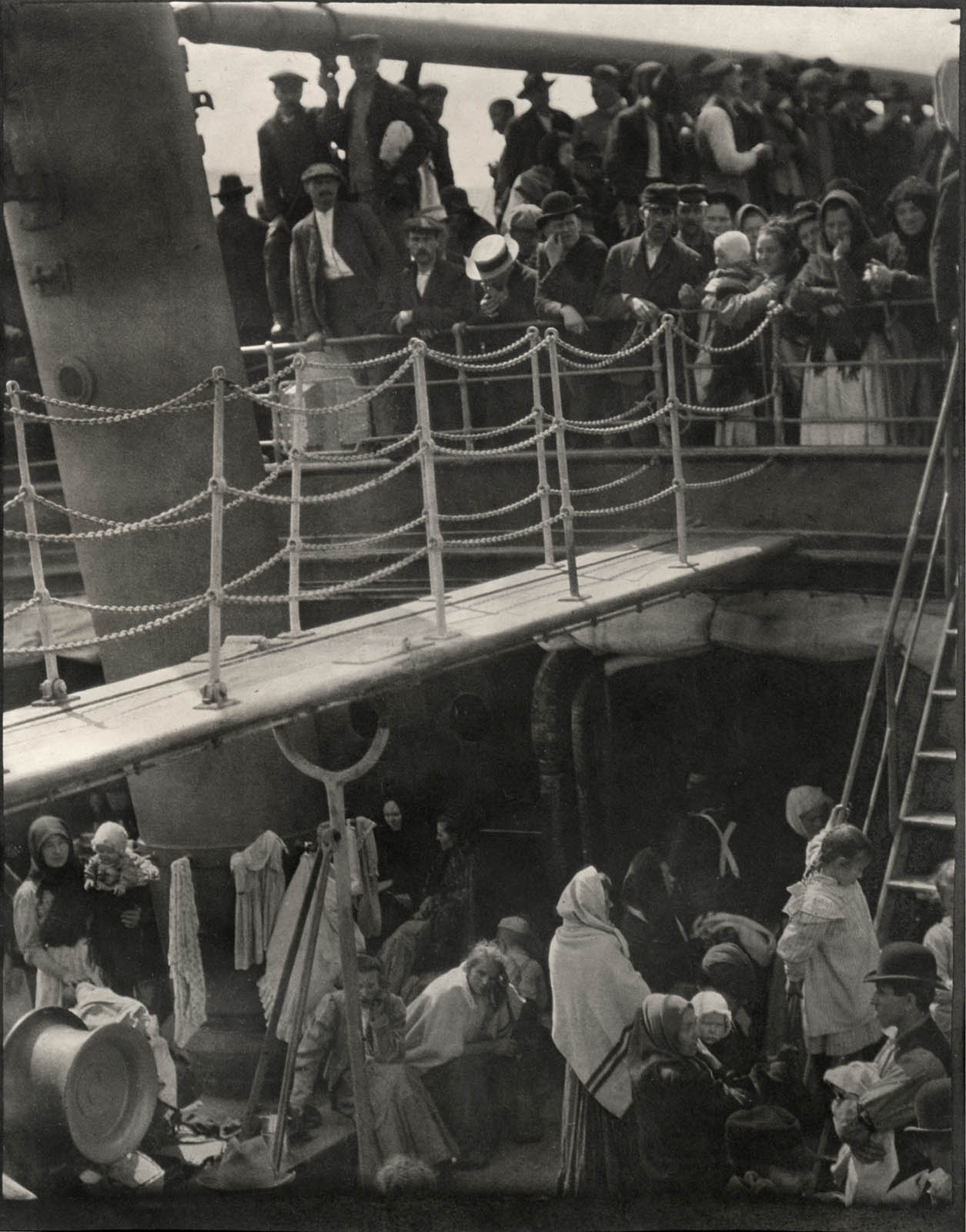
Stieglitz’s photograph The Steerage (1907, below) is one of the most iconic images in the history of photography. This powerful image captures the crowded lower deck of a transatlantic steamer, where people traveled in steerage class, the part of the ship with accommodations for those with the cheapest tickets. The Steerage is celebrated for its striking composition, which combines geometric shapes and human forms to create a dynamic and balanced visual narrative. Stieglitz considered this photograph one of his most outstanding achievements, as it encapsulated his transition to straight photography, which embraced photographs looking like photographs rather than the painterly qualities of Pictorialism. This photograph shows his ability to convey the complexity and depth of human experience through a single image. The photograph is a masterpiece of visual artistry and a compelling social document, reflecting the conditions and aspirations of early 20th century immigrants.

Adelaide Ryder. “The Photo-Secession Movement: Pioneering Artistry in Early Photography,” on the UMFA website Nd [Online] Cited 22/10/2024


Alfred Stieglitz (American, 1864-1946) 'The Steerage' 1907


Alfred Stieglitz (American, 1864-1946)
The Steerage
1907
Hand-pulled photogravure on paper


This photograph has become the iconic image of the Photo-Secession and has legendary status. In June 1907 he sailed to Europe to visit family and booked a first-class cabin. On a stroll around the ship, he encountered a bustling scene of labourers and their families traveling in steerage class, the part of the ship with accommodations for those with the cheapest tickets. With a single four-by-five-inch glass plate left in his camera, Stieglitz shot what would be regarded as a definitive masterpiece of both photography and Modernism.

About making this picture Stieglitz recalled: “There were men and women and children on the lower deck of the steerage. There was a narrow stairway leading to the upper deck of the steerage, a small deck right on the bow of the steamer. To the left was an inclining funnel and from the upper steerage deck there was fastened a gangway bridge that was glistening in its freshly painted state. It was rather long, white, and during the trip remained untouched by anyone. On the upper deck, looking over the railing, there was a young man with a straw hat. The shape of the hat was round. He was watching the men and women and children on the lower steerage deck. A round straw hat, the funnel leaning left, the stairway leaning right, the white drawbridge with its railing made of circular chains – white suspenders crossing on the back of a man in the steerage below, round shapes of iron machinery, a mast cutting into the sky, making a triangular shape. I saw shapes related to each other. I saw a picture of shapes and underlying that the feeling I had about life.”


Alfred Stieglitz (American, 1864-1946) 'The Hand of Man' 1902


Alfred Stieglitz (American, 1864-1946)
The Hand of Man
1902
Hand-pulled photogravure on paper

All from the Collection of Michael Mattis and Judith Hochberg


Works by Käsebier

Gertrude Käsebier: The Master of Portraiture

Gertrude Käsebier was known for her compelling portraits and allegorical imagery. Käsebier’s work transcended traditional portrait photography by infusing her images with a deep sense of intimacy and character. She believed that a photograph should reveal the inner essence of its subject, and her portraits are renowned for capturing the personality and spirit of the people she photographed.

Käsebier’s approach to portraiture was both innovative and empathetic. This image from the UMFA’s permanent collection is a perfect example of how she photographed women and children, presenting them with dignity and respect at a time when they were not the usual subjects of portraiture. Her work challenged conventional representations and highlighted her subjects’ emotional depth and individuality.

Adelaide Ryder. “The Photo-Secession Movement: Pioneering Artistry in Early Photography,” on the UMFA website Nd [Online] Cited 22/10/2024
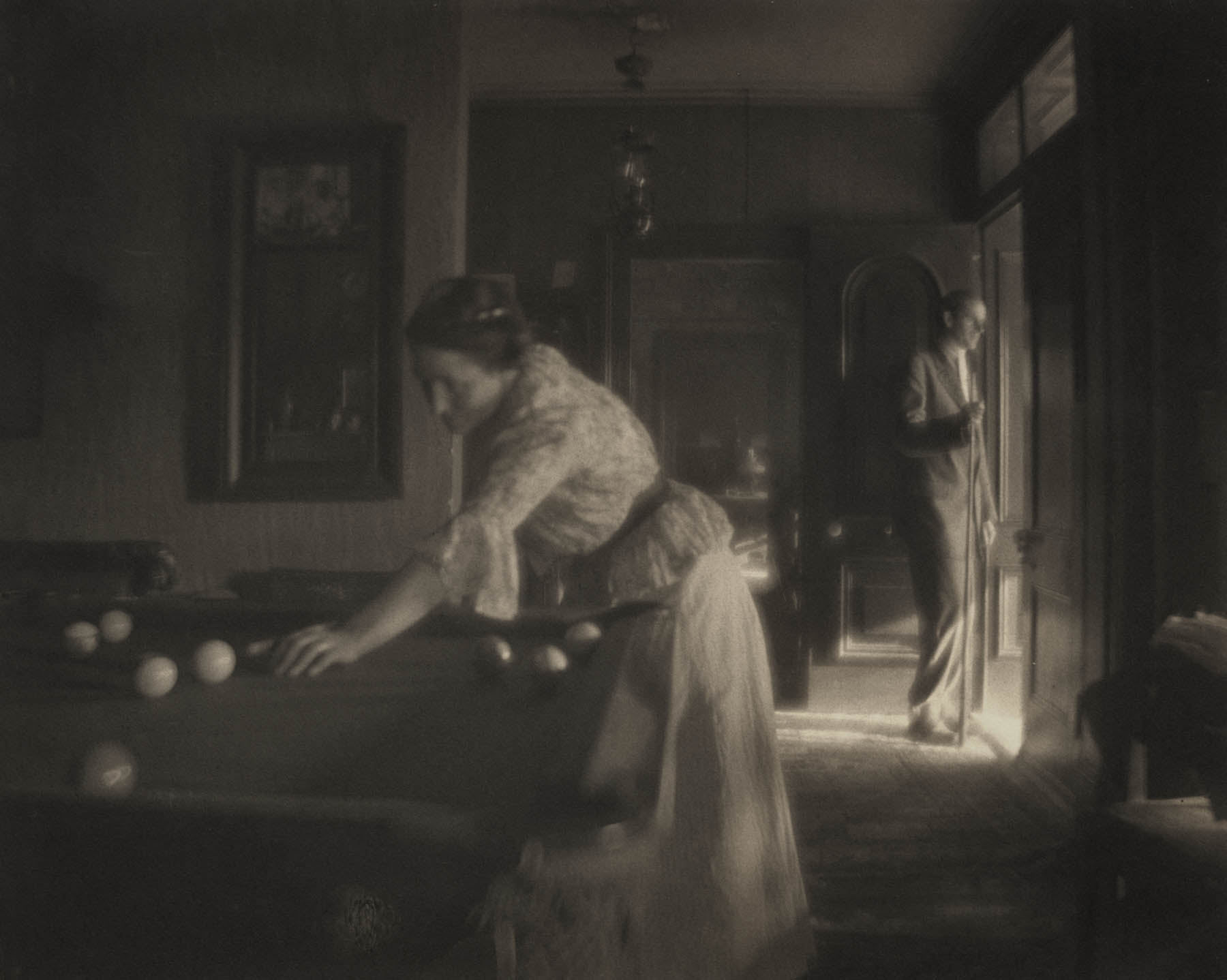
 

Gertrude Käsebier (American, 1852-1934) 'Untitled (Billiard Game)' c. 1909


Gertrude Käsebier (American, 1852-1934)
Untitled (Billiard Game)
c. 1909
Platinum print on paper
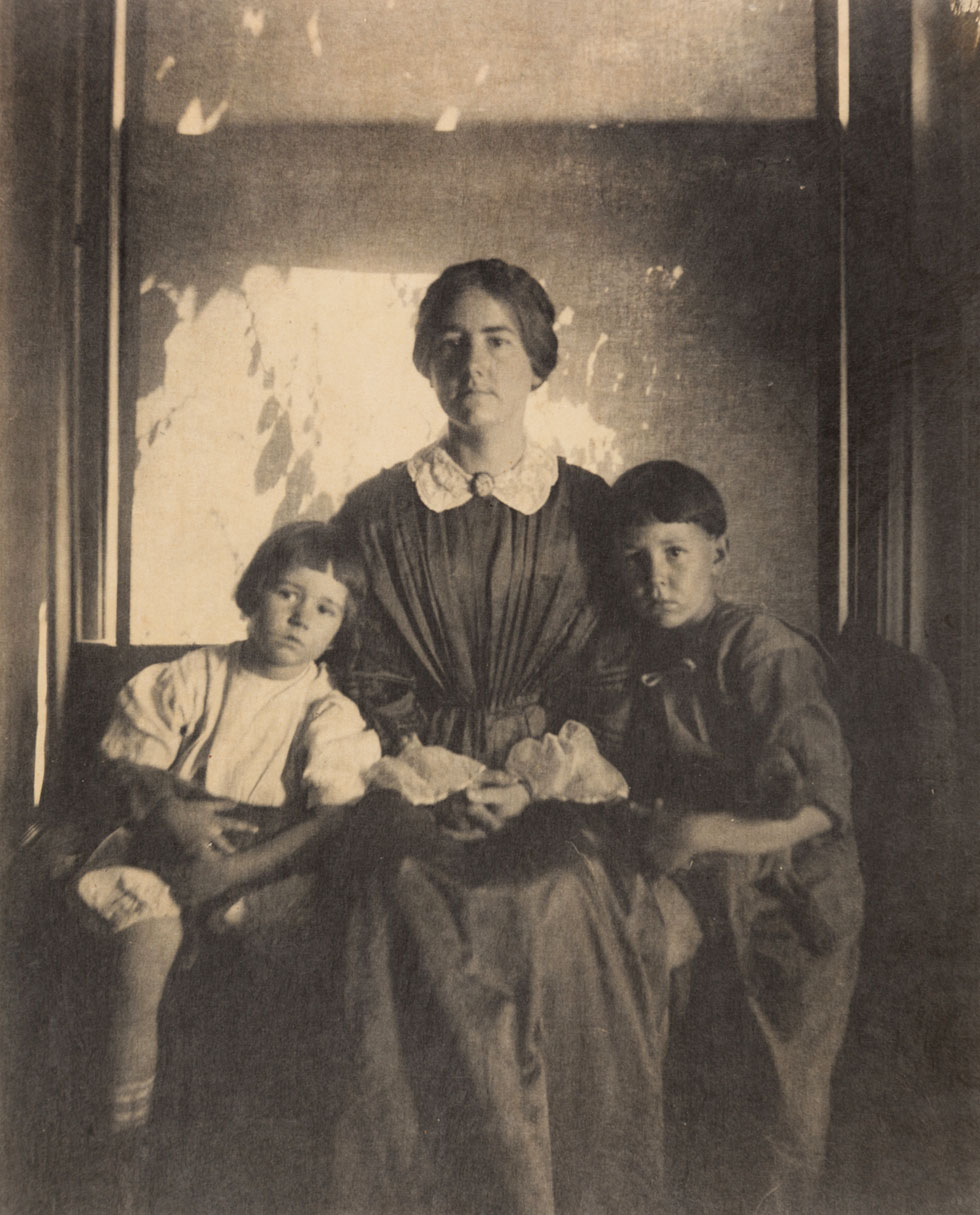
 

Gertrude Käsebier (American, 1852-1934) 'Mother and Two Children' 1899


Gertrude Käsebier (American, 1852-1934)
Mother and Two Children
1899
Platinum print on paper


Gertrude Käsebier (American, 1852-1934) 'Serbonne (A Day in France)' 1901


Gertrude Käsebier (American, 1852-1934)
Serbonne (A Day in France)
1901
Platinum print on paper


Both Pumpkin Pie, Voulangis and Serbonne (A Day in France) were set in France in 1901, when the artist was chaperoning art students. The young man in both scenes is Edward Steichen at age 22, whose interest in photography was then budding.

Serbonne is Käsebier’s chaste reference to Édouard Manet’s famous painting Le Déjeuner sur l’herbe (The Luncheon on the Grass) of 1863. An example of ultra-soft focus, this photo was reproduced in the inaugural issue of Camera Work, which was devoted to Käsebier.

Published in Camera Work, 1, 1903
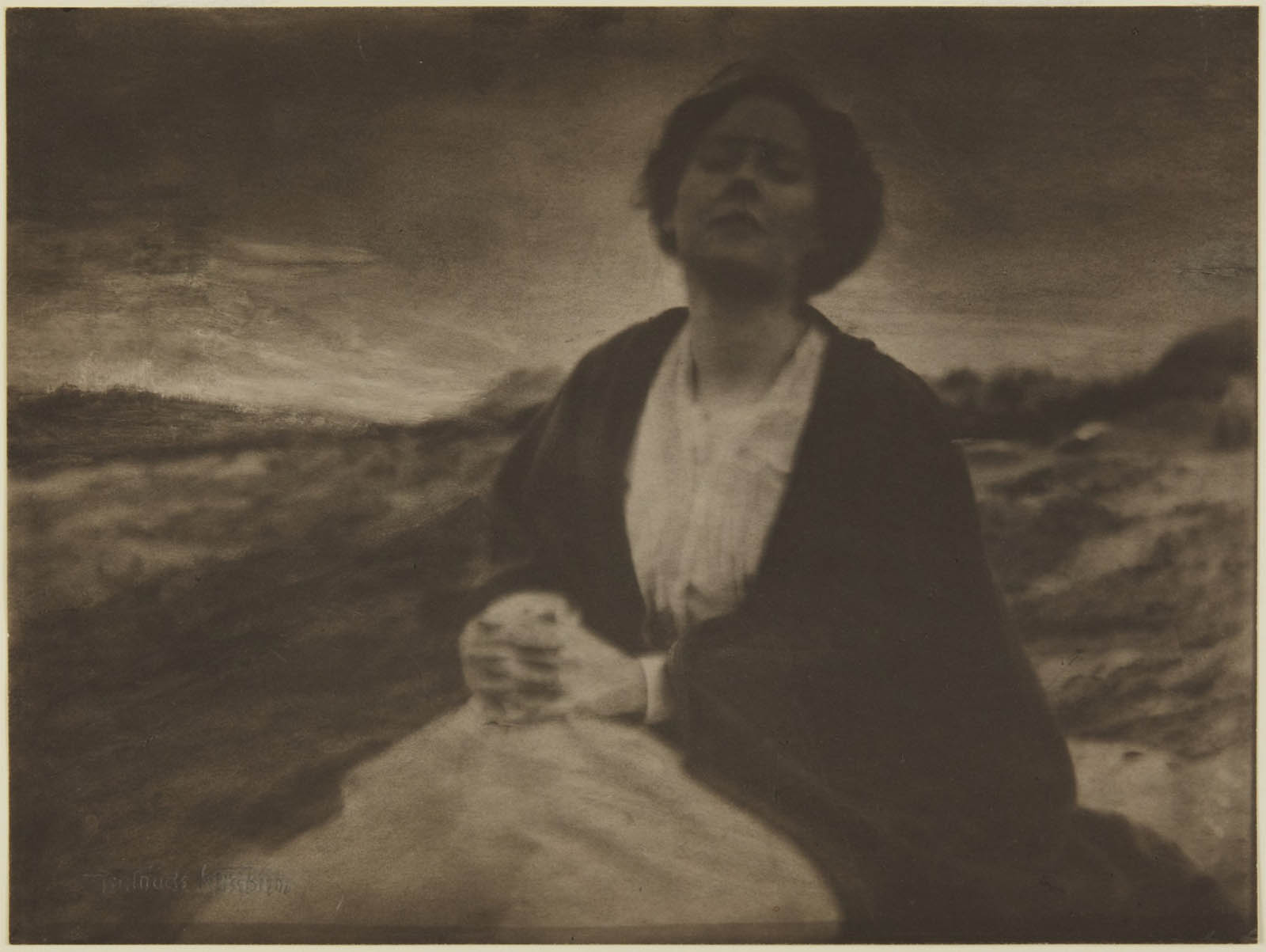
 

Gertrude Käsebier (American, 1852-1934) 'The Heritage of Motherhood' 1904


Gertrude Käsebier (American, 1852-1934)
The Heritage of Motherhood
1904
Gum-bichromate print on paper


This portrays the children’s book author Agnes Rand Lee in mourning after the sudden death of her daughter from illness. A contemporary photographer and critic deemed this image “one of the strongest things that Käsebier has ever done, and one of the saddest and most touching that I have ever seen.” Käsebier extensively manipulated the gum-bichromate process to make this print appear like a charcoal drawing.
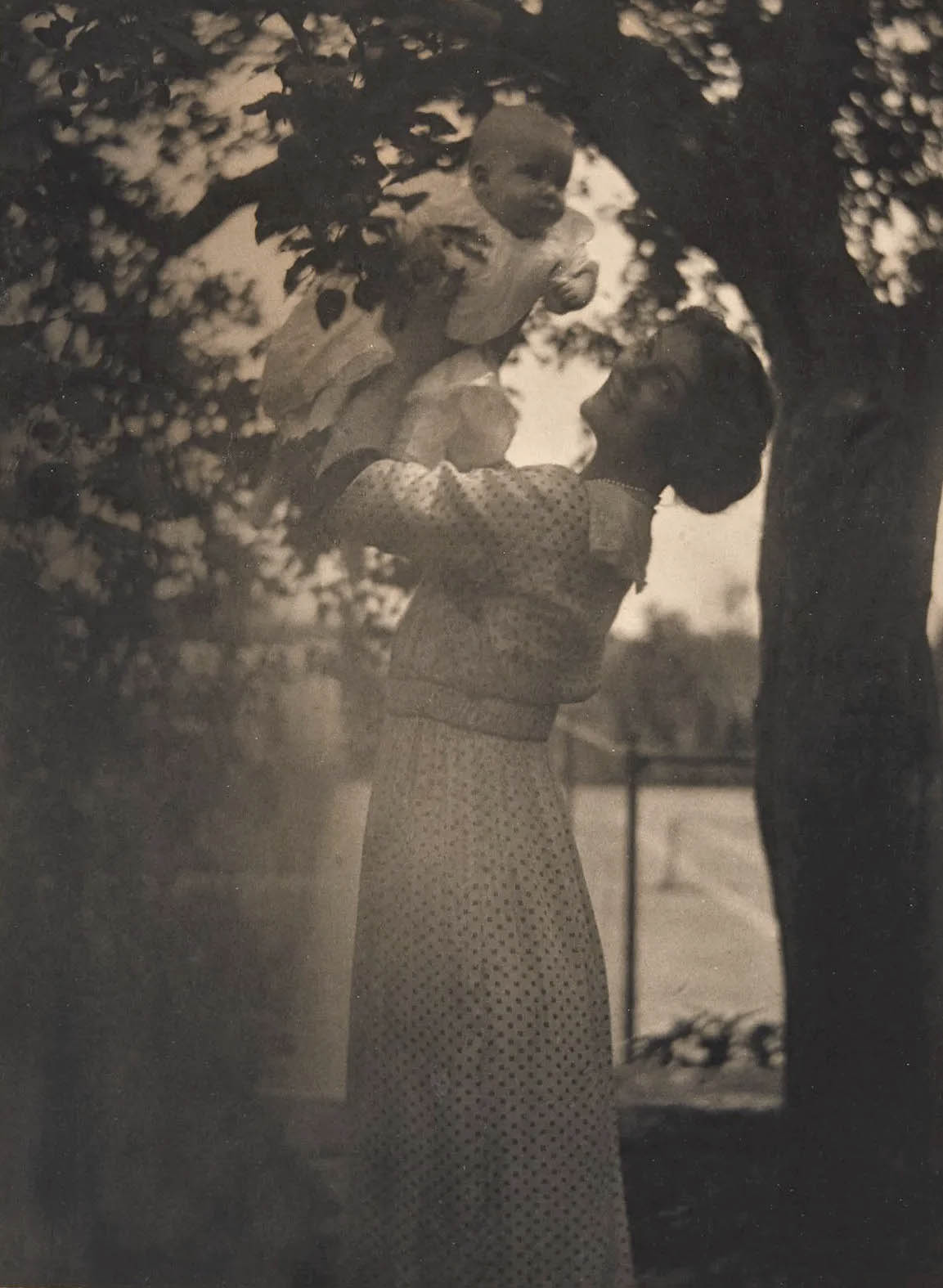
 

Gertrude Käsebier (American, 1852-1934) 'Mother and Child' c. 1900


Gertrude Käsebier (American, 1852-1934)
Mother and Child
c. 1900
Multiple gum-bichromate print on paper


The subject of mother and child was a frequent one for Pictorialists, especially Käsebier and Clarence White. The contrast between the tiny infant and the mighty tree gives this image additional symbolic meaning.


Gertrude Käsebier (American, 1852-1934) 'The Picture Book' 1903


Gertrude Käsebier (American, 1852-1934)
The Picture Book
1903
Platinum print on paper


Alfred Stieglitz had a print of this photograph in his personal collection, which he bequeathed to the Metropolitan Museum of Art in New York.

Published in Camera Work, 10, 1905

All from the Collection of Michael Mattis and Judith Hochberg


Works by Evans


Frederick Evans (British, 1853-1943) 'Aubrey Beardsley' 1893


Frederick H. Evans (British, 1853-1943)
Aubrey Beardsley
1893
Platinum print on paper


Evans, a member of the British art photography group the Linked Ring, was close friends with prominent authors and artists, such as George Bernard Shaw and Aubrey Beardsley. Portrayed here around age 20, Beardsley was a talented artist, designer, and illustrator, whose promising career was cut short by tuberculosis just five years after this photo was made.
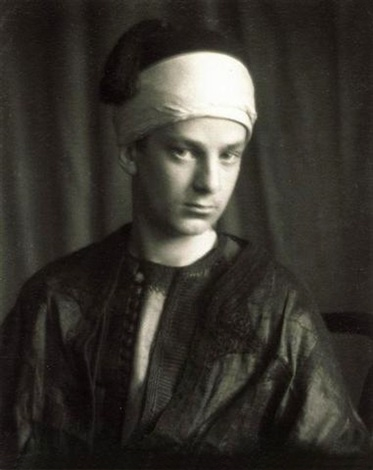
 

Frederick H. Evans (British, 1853-1943) 'Alvin Langdon Coburn in Eastern Clothing' 1901


Frederick H. Evans (British, 1853-1943)
Alvin Langdon Coburn in Eastern Clothing
1901
Platinum print on paper


Coburn was a precocious young American artist. An eighth birthday gift of a Kodak camera sparked his interest in photography. By age 16 Coburn had moved to London to work with his cousin the photographer F. Holland Day, whose portrait by Gertrude Käsebier is in this exhibition. After being included in a landmark exhibition at the Royal Photographic Society, Coburn returned to New York and apprenticed with Käsebier. By the tender age of 20, he became a founding member of the Photo-Secession and launched an international career dividing his time between New York, London, and Paris.

All from the Collection of Michael Mattis and Judith Hochberg


Works by Dow


Arthur Wesley Dow (American, 1857-1922) 'Silhouetted Trees' c. 1910


Arthur Wesley Dow (American, 1857-1922)
Silhouetted Trees
c. 1910
Cyanotype print on paper


A painter, printmaker, and photographer, Dow is mainly remembered today as a pioneering educator who taught in New York at the Pratt Institute, Art Students League, and Teacher’s College of Columbia University. Among Dow’s students were Gertrude Käsebier, Alvin Langdon Coburn, Charles Sheeler, and Georgia O’Keeffe. Dow also hired Clarence White to teach photography at Columbia, thereby launching White’s important teaching career.

From the Collection of Michael Mattis and Judith Hochberg


Works by Haviland
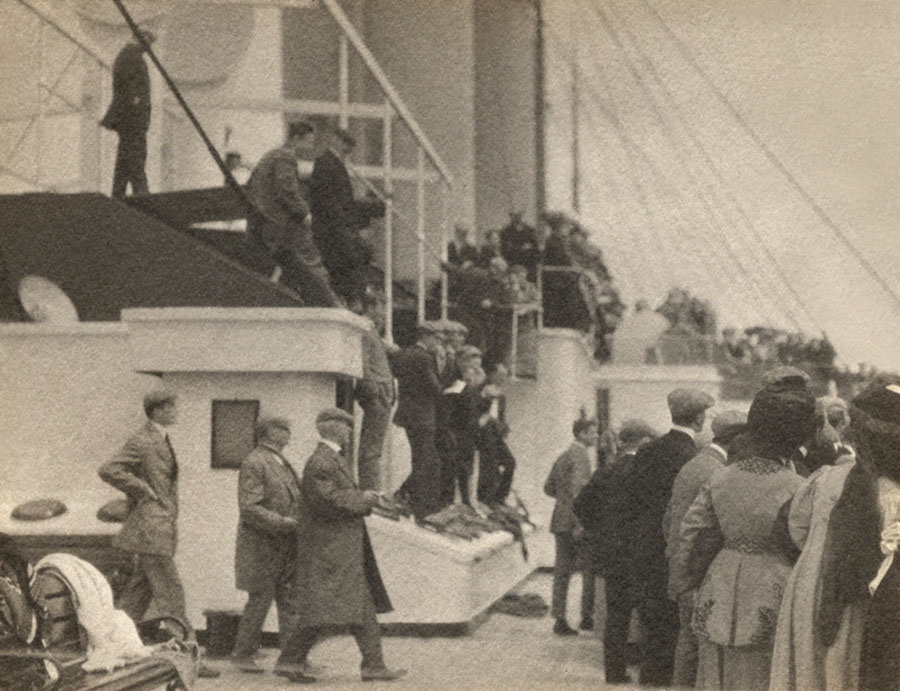
 

Paul Burty Haviland (American, 1880-1950) 'Ship Deck' 1910


Paul Burty Haviland (American, 1880-1950)
Ship Deck
1910
Platinum print on paper


Haviland was an amateur photographer from a young age and grew up immersed in the arts. His grandfather was an early photography critic in Paris, and his father owned Haviland porcelain factory in Limoges, France. As the New York representative of the family business, Haviland happened to meet Alfred Stieglitz in 1908. Just two years later he became associate editor of Camera Work and helped financially support Stieglitz’s gallery 291.

All from the Collection of Michael Mattis and Judith Hochberg


Works by Struss
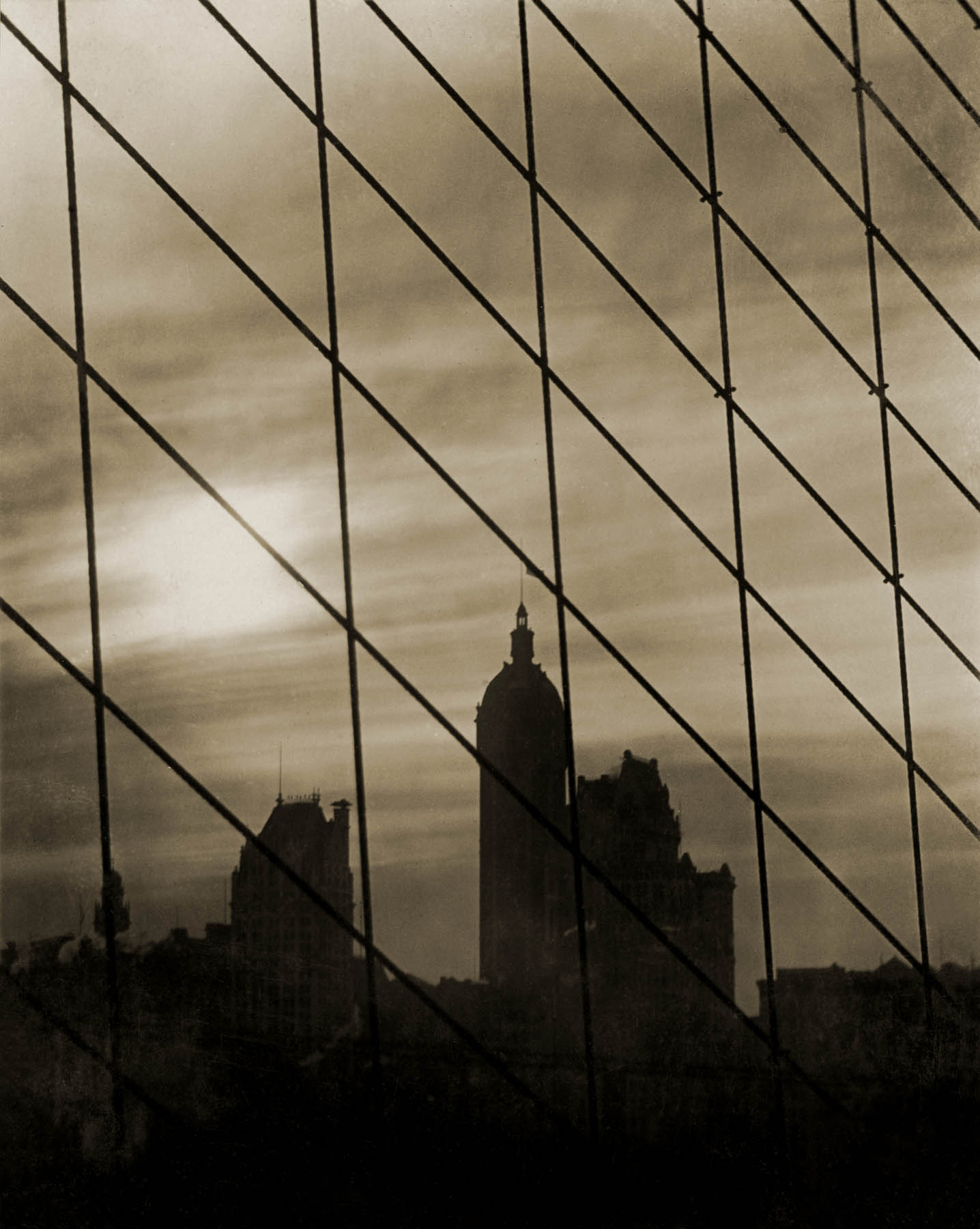
 

Karl Struss (American, 1886-1981) 'Cables' 1912


Karl Struss (American, 1886-1981)
Cables
1912
Gelatin silver print on paper


Struss was a star pupil of Clarence White and became a favourite of Alfred Stieglitz and the youngest member of the Photo-Secession. He is best known for his compelling cityscapes of New York, including the view of the Singer Building through the cables of the Brooklyn Bridge and the dramatic Flatiron Building, Twilight.


Karl Struss (American, 1886-1981) 'Flatiron Building, Twilight' c. 1915


Karl Struss (American, 1886-1981)
Flatiron Building, Twilight
c. 1915
Gelatin silver print on paper


Struss eventually broke away from Stieglitz and cofounded the society of the Pictorial Photographers of America along with Clarence White and Gertrude Käsebier in 1916. He … accepted a job as a cameraman for filmmaker Cecil B. DeMille. Struss would become one of the most prolific Hollywood cinematographers with 150 films, an Academy Award, and three Academy nominations to his credit.

All from the Collection of Michael Mattis and Judith Hochberg


Nudes by Stieglitz and White


Clarence Hudson White (American, 1871-1925) 'Reflected Nude' 1909


Clarence Hudson White (American, 1871-1925)
Reflected Nude
1909
Platinum print on paper
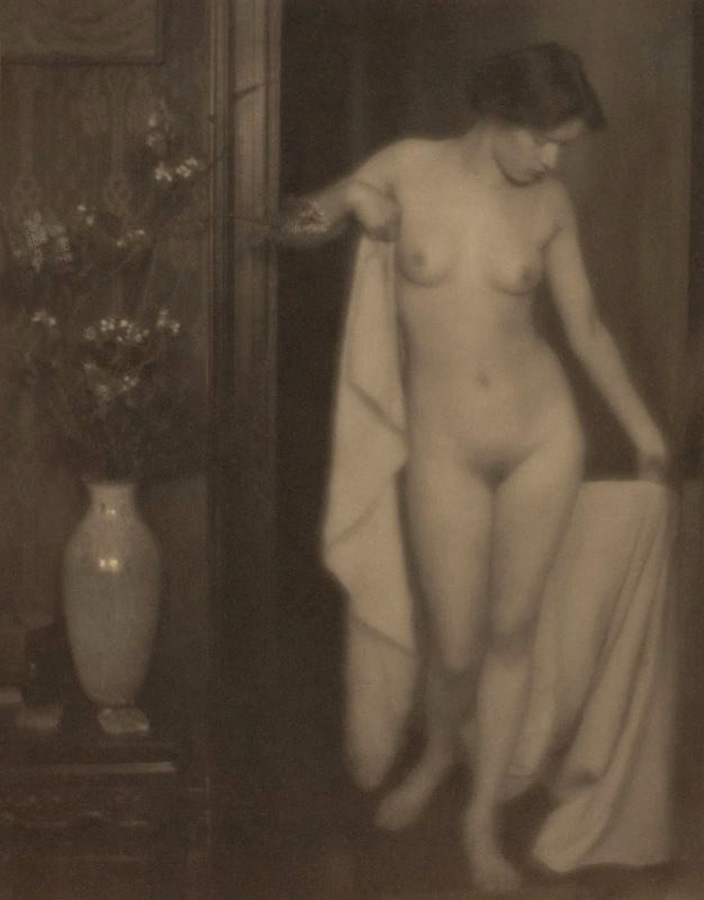
 

Alfred Stieglitz (American, 1864-1946) and Clarence Hudson White (American, 1871-1925) 'Nude Posed in Doorway (Miss Thompson)' 1907


Alfred Stieglitz (American, 1864-1946) and Clarence Hudson White (American, 1871-1925)
Nude Posed in Doorway (Miss Thompson)
1907
Platinum print on paper


Alfred Stieglitz (American, 1864-1946) and Clarence Hudson White (American, 1871-1925) 'The Torso' 1907


Alfred Stieglitz (American, 1864-1946) and Clarence Hudson White (American, 1871-1925)
The Torso
1907
Palladium print on paper


This is likely the most widely reproduced nude by Photo-Secession artists.

After their personal and professional rupture, Stieglitz wrote White a letter that specifically referred to their collaboration in 1907. Stieglitz insisted “that my name be not mentioned by you in connection with either the prints or the negatives” and further instructed White to erase his name from any prints they had jointly signed. Despite this vitriol, Stieglitz retained in his personal collection two prints of The Torso, one of them jointly signed in pencil.

Published in Camera Work, 27, 1909

All from the Collection of Michael Mattis and Judith Hochberg


Images of O’Keeffe by Stieglitz
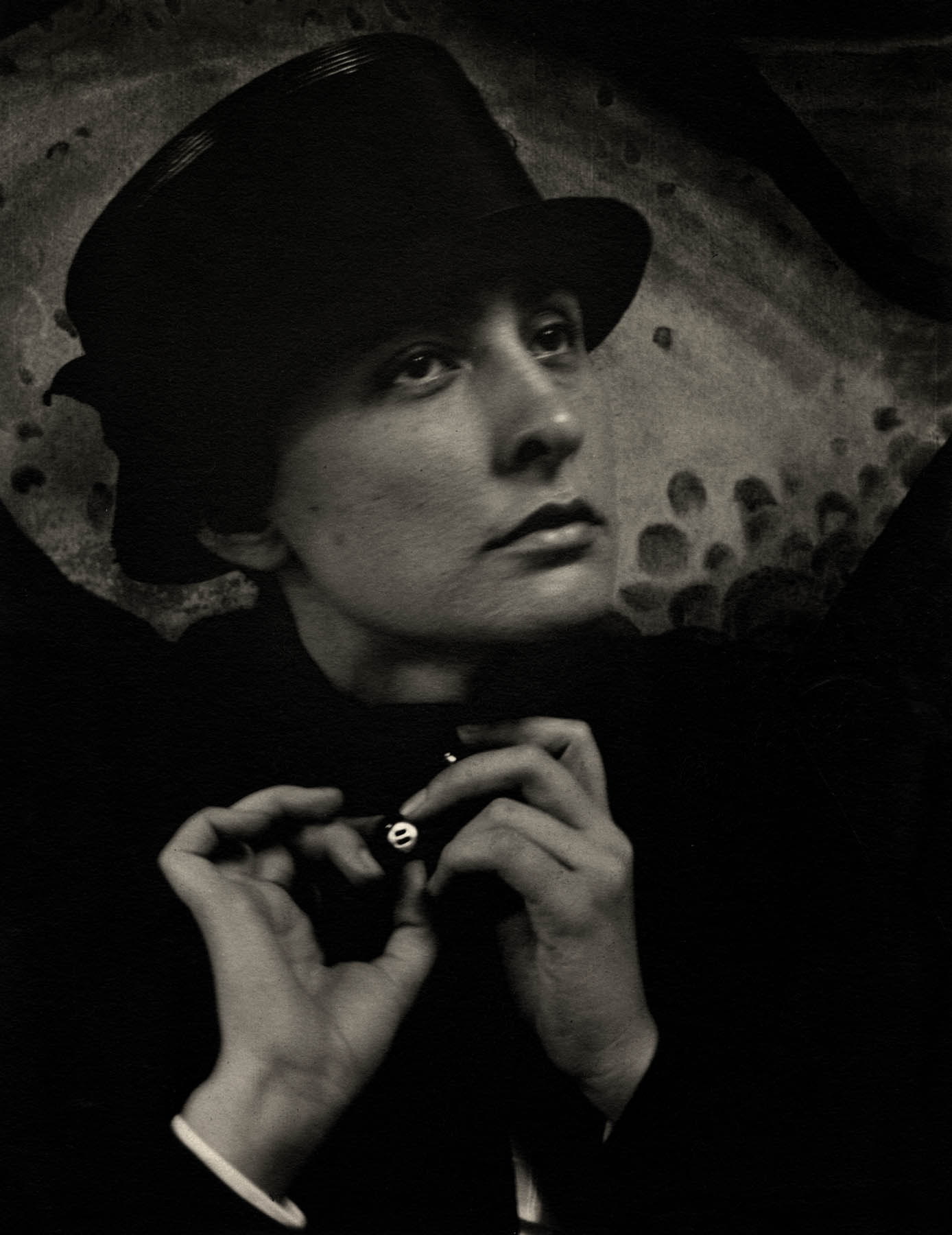
 

Alfred Stieglitz (American, 1864-1946) 'Georgia O'Keeffe' 1918


Alfred Stieglitz (American, 1864-1946)
Georgia O’Keeffe
1918
Palladium print on paper
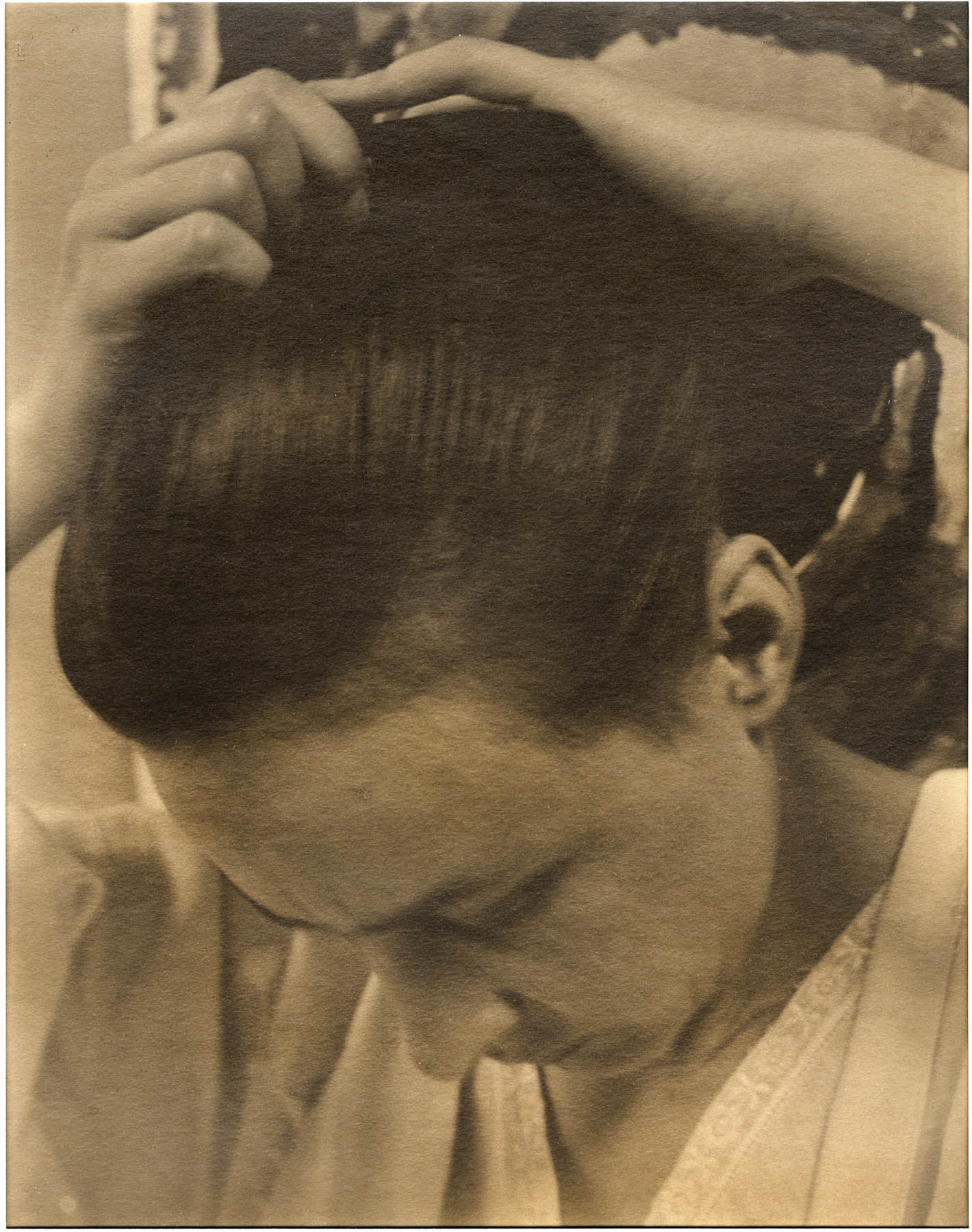
 

Alfred Stieglitz (American, 1864-1946) 'Georgia O'Keeffe (Fixing Hair)' 1919-1921


Alfred Stieglitz (American, 1864-1946)
Georgia O’Keeffe (Fixing Hair)
1919-1921
Palladium print on paper


Over two decades, Stieglitz made over 300 photos of O’Keeffe, producing an extraordinary and candid portrait of the artist. She recalled, “I was photographed with a kind of heat and excitement and in a way wondered what it was all about.” The directness and intimacy of this series of photos differ from the idealised nudes that Stieglitz and White made together during the heyday of the Photo-Secession.

All from the Collection of Michael Mattis and Judith Hochberg


Works by White

Clarence Hudson White: The Romantic

Clarence Hudson White was celebrated for his romanticised and intimate approach to photography. His 1904 image The Kiss perfectly illustrates his unique style. This platinum print on paper captures a tender moment with a soft focus and gentle lighting. The Kiss portrays an intimate scene imbued with a sense of emotional depth. White’s use of the platinum printing process, which provides a broad tonal range and exquisite detail, enhances the image’s delicate and dreamlike quality. His work reflects the movement’s early emphasis on creating photographs that evoke the emotional and aesthetic qualities of fine art while also paving the way for future explorations in photographic expression.

Adelaide Ryder. “The Photo-Secession Movement: Pioneering Artistry in Early Photography,” on the UMFA website Nd [Online] Cited 22/10/2024


Clarence H. White (American, 1871-1925) 'The Bubble' 1898, printed 1905


Clarence Hudson White (American, 1871-1925)
The Bubble
1898
Platinum print on paper


This image was exhibited at the 1898 Philadelphia Photographic Salon to great acclaim. Fellow photographer and critic Joseph Keiley commented, “Like most of Mr. White’s pictures, it is a well nigh perfect piece of composition whose subject with subtle poetry stimulates and leaves much to the imagination.”


Clarence Hudson White (American, 1871-1925) 'The Mirror' 1912


Clarence Hudson White (American, 1871-1925)
The Mirror
1912
Platinum print on paper
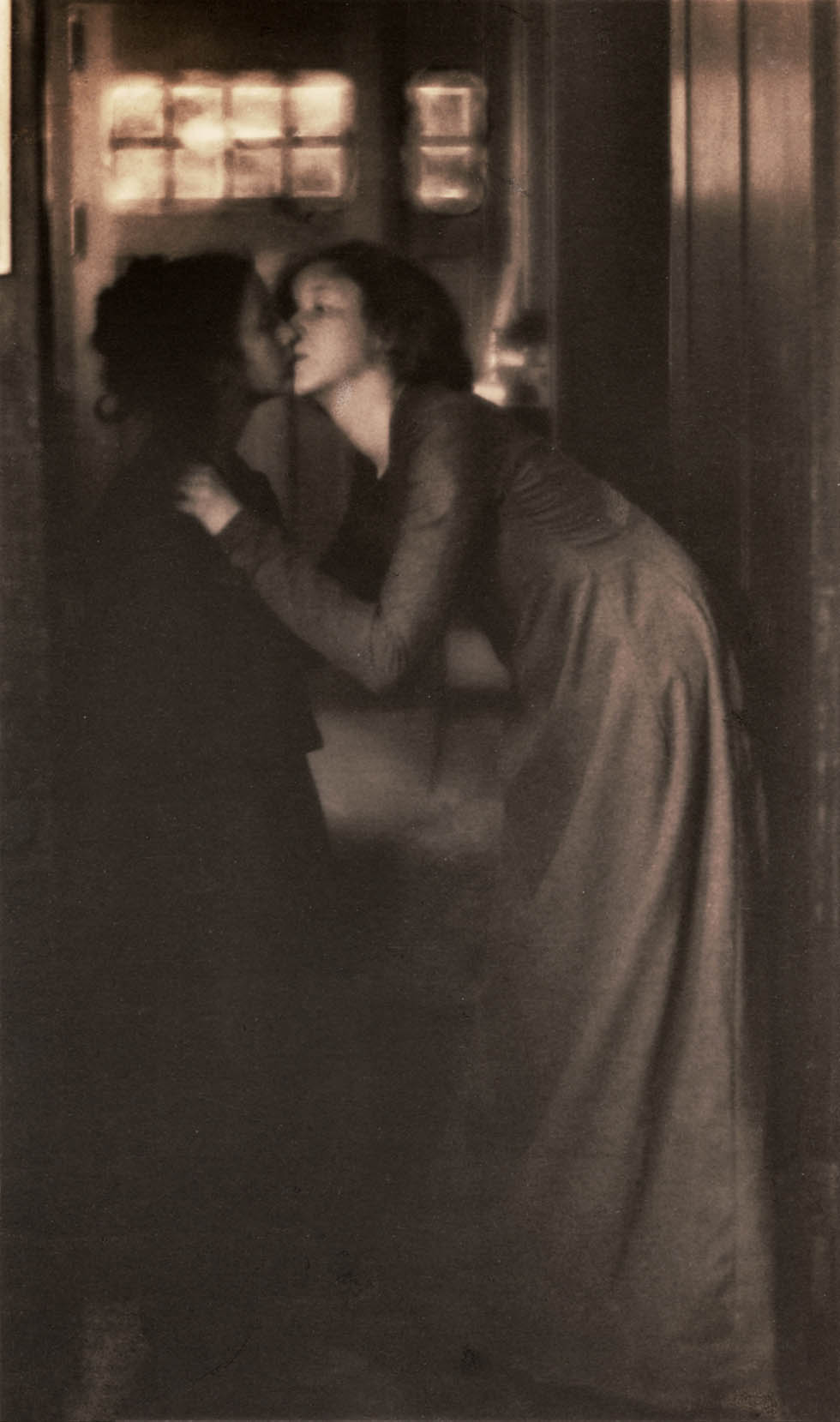
 

Clarence Hudson White (American, 1871-1925) 'The Kiss' 1904


Clarence Hudson White (American, 1871-1925)
The Kiss
1904
Platinum print on paper


This is one of White’s best known photographs. Despite his separation from White, Stieglitz kept prints of both The Kiss and The Bubble in his personal collection throughout his life.

All from the Collection of Michael Mattis and Judith Hochberg


Works by followers of White

Anne Brigman: The Feminine Mystic of Photo-Secession

Anne Brigman was known for her evocative and mystical imagery. She often placed herself within her compositions, challenging traditional gender roles and expectations. Her connection to the Photo-Secession movement was cemented through her association with Alfred Stieglitz, who published her work in Camera Work and admired her innovative spirit.

Brigman’s 1911 photograph The Pine Sprite exemplifies her distinctive style. The image features a nude female figure intertwined with the natural landscape, blending the human form seamlessly with the rugged environment. This work reflects Brigman’s themes of femininity, nature, and freedom, aligning with the Photo-Secessionist emphasis on personal expression and artistic experimentation. Brigman’s contributions highlighted the movement’s inclusive spirit, showcasing how female photographers could assert their voices and artistic visions in a male-dominated field.

Adelaide Ryder. “The Photo-Secession Movement: Pioneering Artistry in Early Photography,” on the UMFA website Nd [Online] Cited 22/10/2024
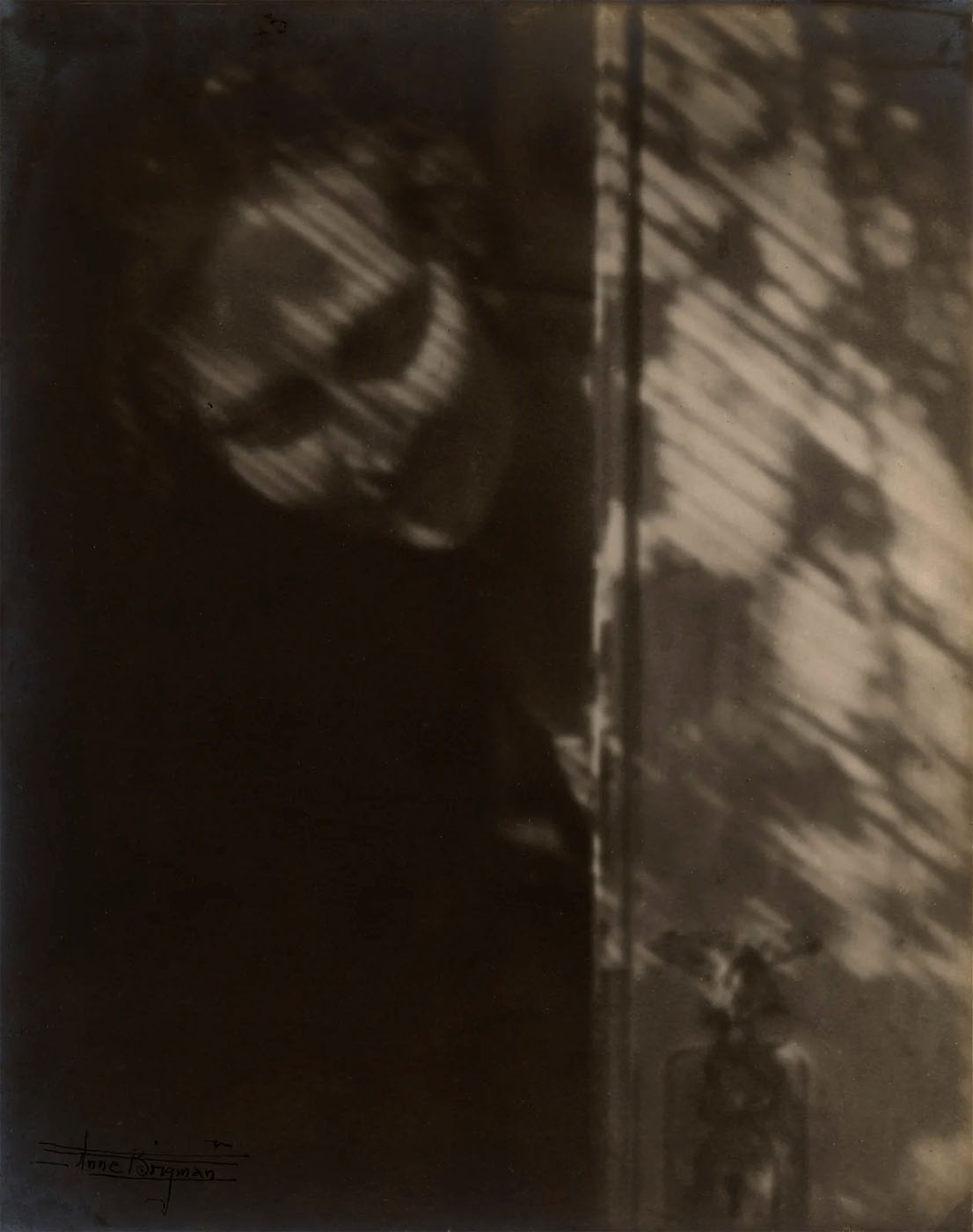
 

Anne Brigman (American, 1869-1950) 'The Shadow on My Door (Self Portrait)' 1921


Anne Brigman (American, 1869-1950)
The Shadow on My Door (Self Portrait)
1921
Gelatin silver print on paper
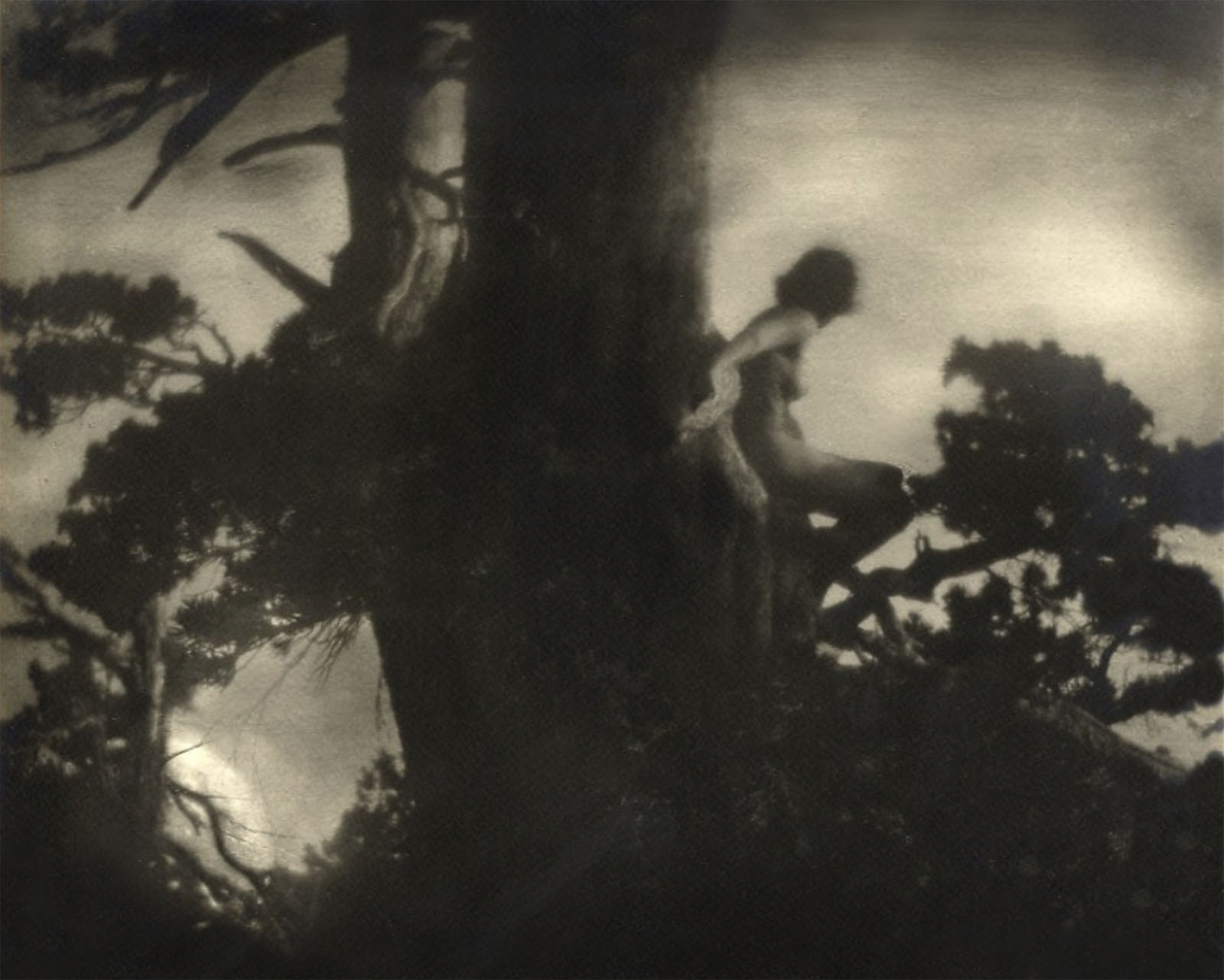
 

Anne Brigman (American, 1869-1950) 'The Pine Sprite' 1911 from the exhibition 'Photo-Secession: Painterly Masterworks of Turn-of-the-Century Photography' at the Utah Museum of Fine Arts, Salt Lake City, August - December 2024


Anne Brigman (American, 1869-1950)
The Pine Sprite
1911
Gelatin silver print on paper


Brigman was for a long time the only Californian member of the Photo-Secession. She was a free spirit and pagan whose woodsy nudes inspired by fantasy and folklore were frequently reproduced in Camera Work.


Laura Gilpin (American, 1891-1979) 'Ghost Rock, Garden of the Gods, Colorado' 1919


Laura Gilpin (American, 1891-1979)
Ghost Rock, Garden of the Gods, Colorado
1919
Palladium print on paper


An amateur photographer from Colorado Springs, Gilpin moved to New York to study with Clarence White in 1916. This photograph was one of Gilpin’s first successes after returning home in 1919, the beginning of her decades-long career as one of the most notable photographers of the West and Southwest.

All from the Collection of Michael Mattis and Judith Hochberg


In 1916 Gilpin enrolled at the Clarence H. White School of Photography in New York. Two years later, she returned to her native Colorado Springs and became one of the few women to pursue landscape photography.

This is her depiction of the Garden of the Gods, a scenic rock formation in Colorado Springs. It captures the stillness and otherworldly quality of the area. The photograph also reflects an emphasis on the evocation of mood rather than on descriptive detail.

Text from the National Gallery of Art Facebook page


Edward Steichen

Edward J. Steichen: The Innovator

Edward J. Steichen, a close associate of Stieglitz, brought a unique perspective to the Photo-Secession movement. Steichen was not only a photographer but also a painter, which influenced his photographic style. He experimented with various techniques, including soft focus and manipulation of light, to create both ethereal and visually striking images.

An avid gardener, Steichen propagated and grew a bountiful garden at his French country house. This image of a calla lily is rendered with exquisite detail and tonal richness. Steichen’s botanical images showcase his ability to find harmony between nature and art. His meticulous composition and sensitivity to light transform a simple flower into a work of art, reflecting his painterly approach to photography. His botanical works contributed to the Photo-Secession movement by highlighting the artistic potential of natural forms.

Adelaide Ryder. “The Photo-Secession Movement: Pioneering Artistry in Early Photography,” on the UMFA website Nd [Online] Cited 22/10/2024
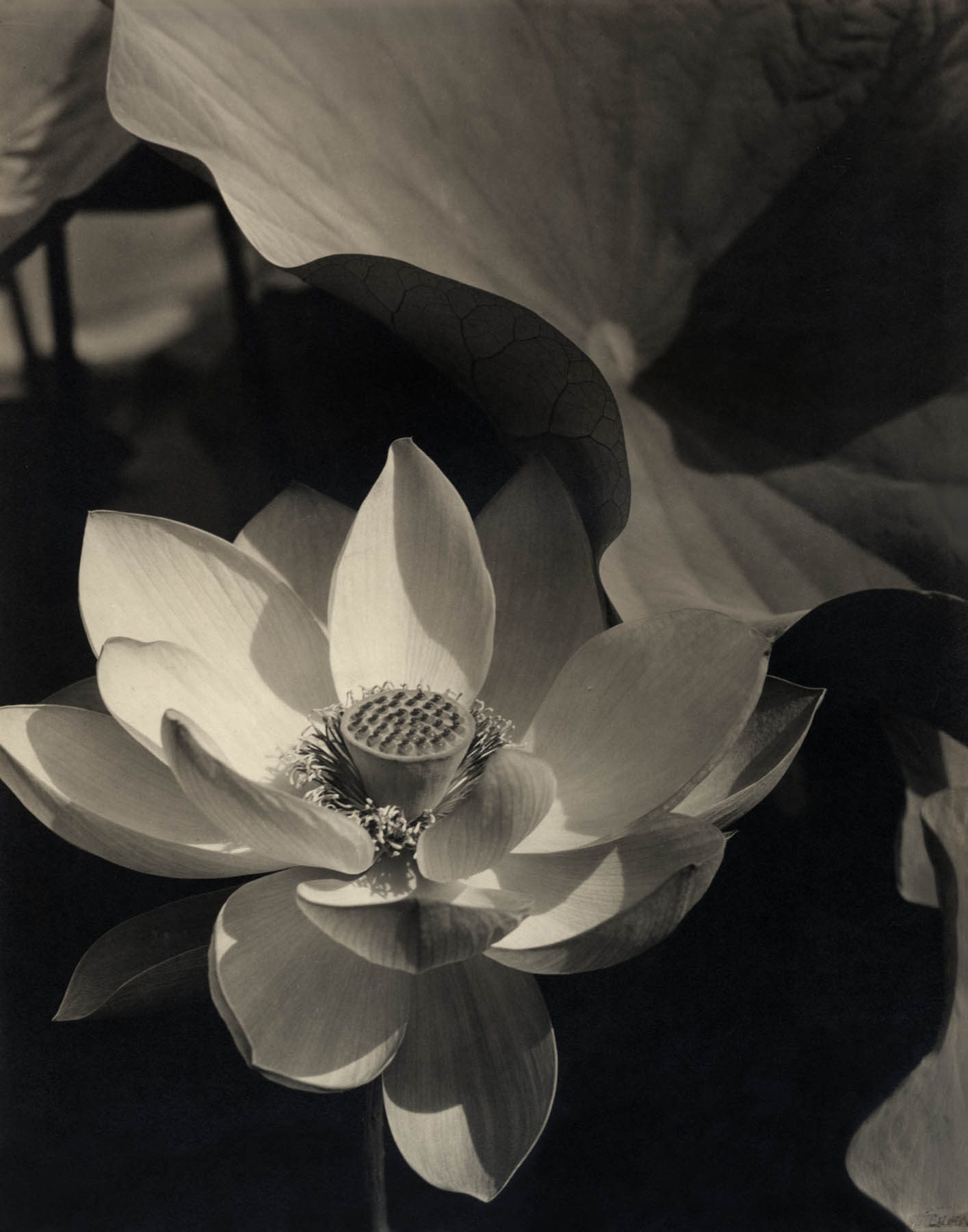
 

Edward Steichen (American born Luxembourg, 1879-1973) 'Lotus, Mount Kisco' 1915 from the exhibition 'Photo-Secession: Painterly Masterworks of Turn-of-the-Century Photography' at the Utah Museum of Fine Arts, Salt Lake City, August - December 2024


Edward Steichen (American born Luxembourg, 1879-1973)
Lotus, Mount Kisco
1915
Gelatin silver print on paper


Edward Steichen (American born Luxembourg, 1879-1973) 'Calla Lily' c. 1921


Edward Steichen (American born Luxembourg, 1879-1973)
Calla Lily
c. 1921
Platinum print on paper


Steichen had previously photographed flowers in compositions that placed delicate floral arrangements next to women figured as ideals of feminine beauty. In contrast, here he presents the lotus and calla lily in sharp focus and as singular subjects without overt metaphorical meaning.


Edward Steichen (American born Luxembourg, 1879-1973) 'Three Pears and an Apple' 1921


Edward Steichen (American born Luxembourg, 1879-1973)
Three Pears and an Apple
1921
Gelatin silver print on paper


On making this picture Steichen wrote: “I was particularly interested in a method of representing volume, scale, and a sense of weight. In my small greenhouse I constructed a tent of opaque blankets. From a tiny opening, I directed light against one side of the covering blanket, and this light, reflected from the blanket, was all. I made a series of exposures that lasted more than two days and one night. As the nights were cool, everything, including the camera, contracted and the next day expanded. Instead of producing one meticulously sharp picture, the infinitesimal movement produced a succession of slightly different sharp images, which optically fused as one. Here for the first time in a photograph, I was able to sense volume as well as form.”


Edward Steichen (American born Luxembourg, 1879-1973) 'Blossom of White Fingers' c. 1923


Edward Steichen (American born Luxembourg, 1879-1973)
Blossom of White Fingers
c. 1923
Gold-toned gelatin silver print on paper


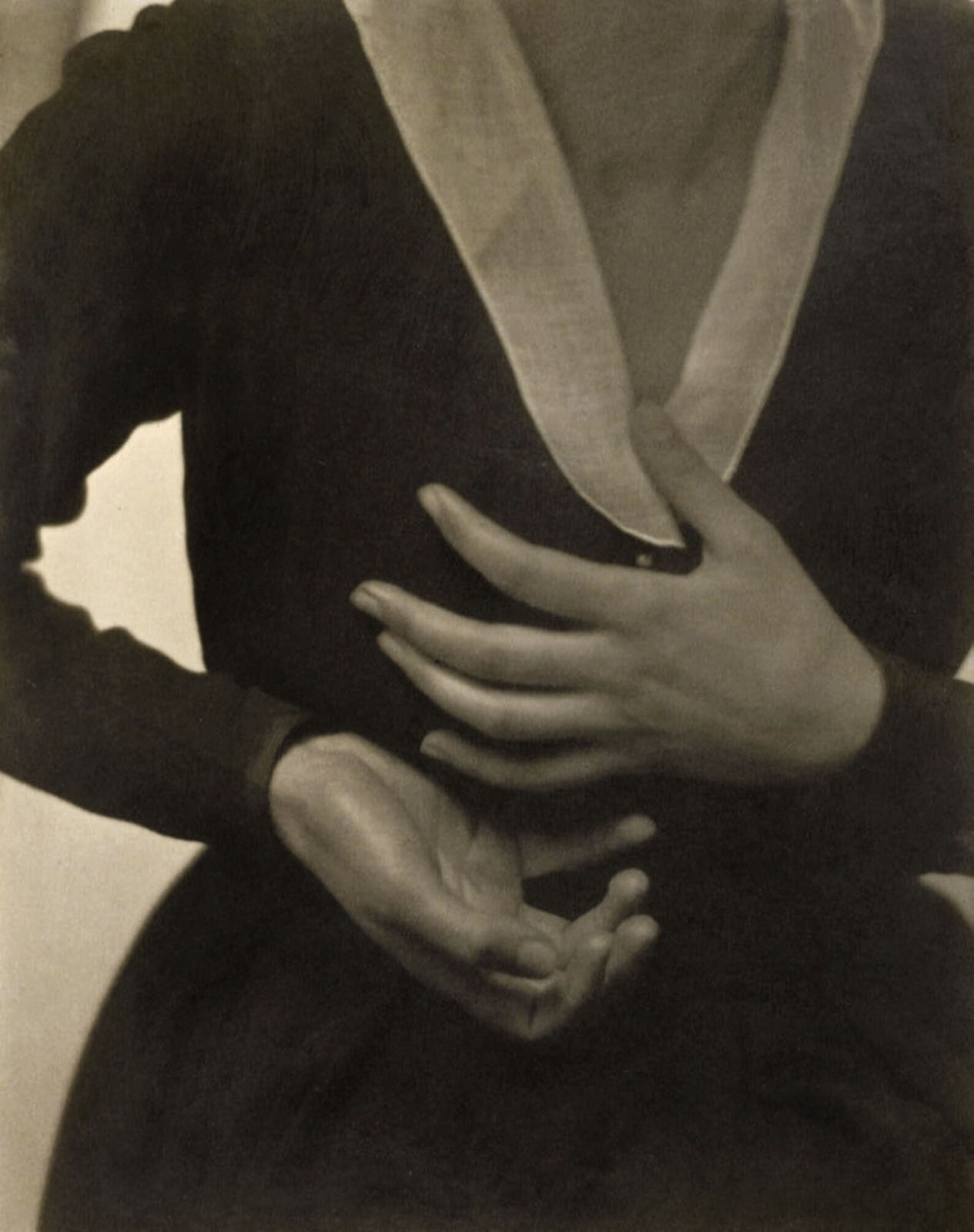
This study of the graceful hands of Steichen’s wife with ultra-soft focus and high-key lighting and printed on gold-toned gelatin paper is one of the rare instances of Steichen using Pictorialist methods after the end of the Photo-Secession.
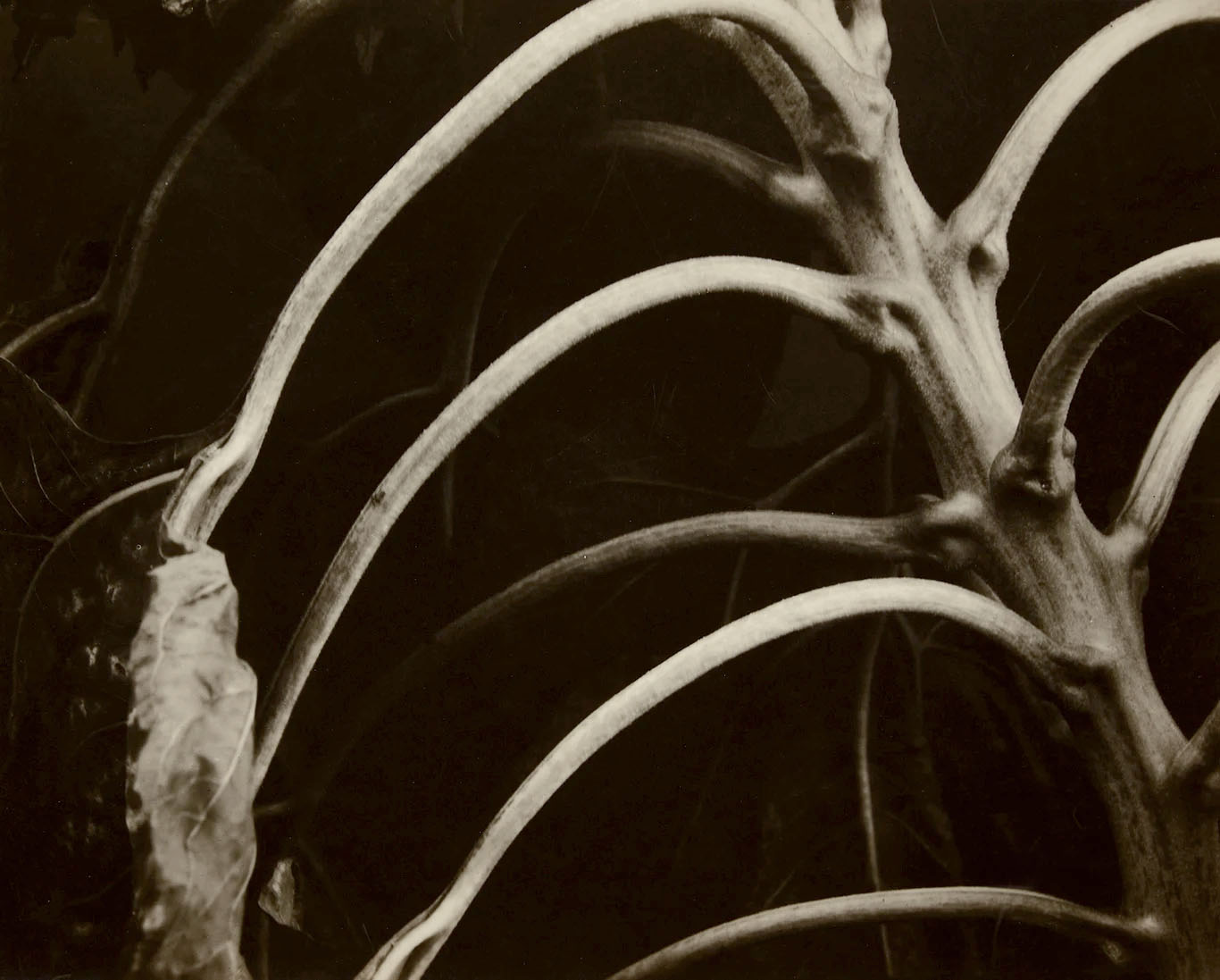
 

Edward Steichen (American born Luxembourg, 1879-1973) 'Backbone and Ribs of a Sunflower' c. 1920


Edward Steichen (American born Luxembourg, 1879-1973)
Backbone and Ribs of a Sunflower
c. 1920
Gelatin silver print on paper


Steichen was a knowledgeable botanist and spent five decades photographing the life cycle of sunflowers. This is one of his earliest studies of the plant. He became fascinated with spirals in nature, writing, “I found some form of the spiral in most succulent plants and in certain flowers, particularly in the seed pods of the sunflower.”


Edward Steichen (American born Luxembourg, 1879-1973) 'Advertising Study for Coty Lipstick' 1929


Edward Steichen (American born Luxembourg, 1879-1973)
Advertising Study for Coty Lipstick
1929
Gelatin silver print on paper


Steichen is credited as a founding figure of modern advertising and fashion photography. From 1923 to 1938, he served as chief photographer for the Condé Nast magazines Vogue and Vanity Fair. He had extensive experience in graphic design and advertising from his youth and earlier career. He had designed posters as a young man for a lithographic printer in Milwaukee. As Alfred Stieglitz’s associate on Camera Work from 1903 to 1917, Steichen produced the logo, typeface, and page layouts.

All from the Collection of Michael Mattis and Judith Hochberg


Works by Strand
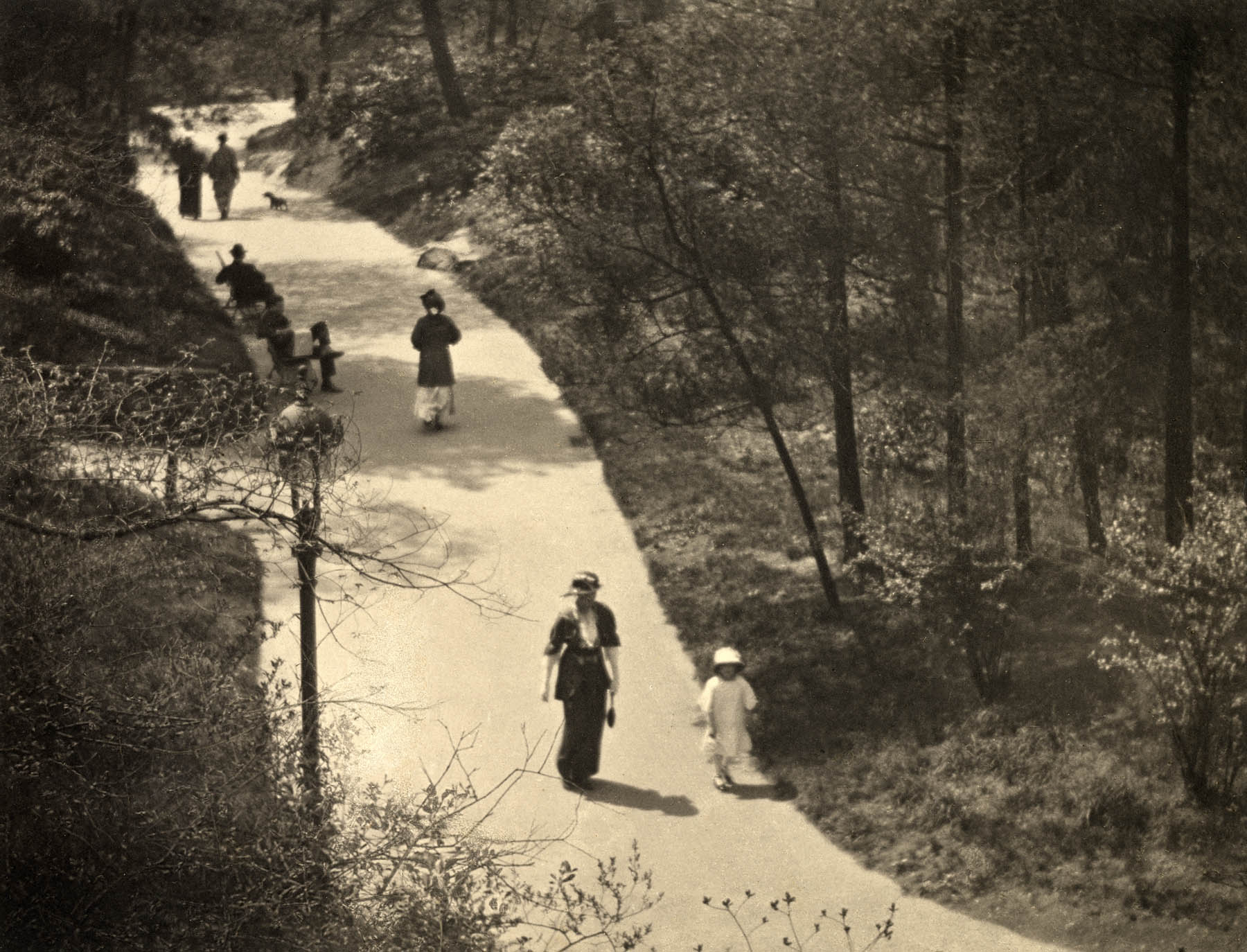
 

Paul Strand (American, 1890-1976) 'Central Park' 1915-1916 from the exhibition 'Photo-Secession: Painterly Masterworks of Turn-of-the-Century Photography' at the Utah Museum of Fine Arts, Salt Lake City, August - December 2024


Paul Strand (American, 1890-1976)
Central Park
1915-1916
Platinum print on paper


Urban life preoccupied Strand and in the 1920s would become a central subject of Modernist photographers around the world. From a Central Park overpass Strand identified this interesting composition with the bright, sinuous path dividing the picture plane. The decisive moment to snap the shutter occurred with the appearance of the two advancing figures and their angular shadows.
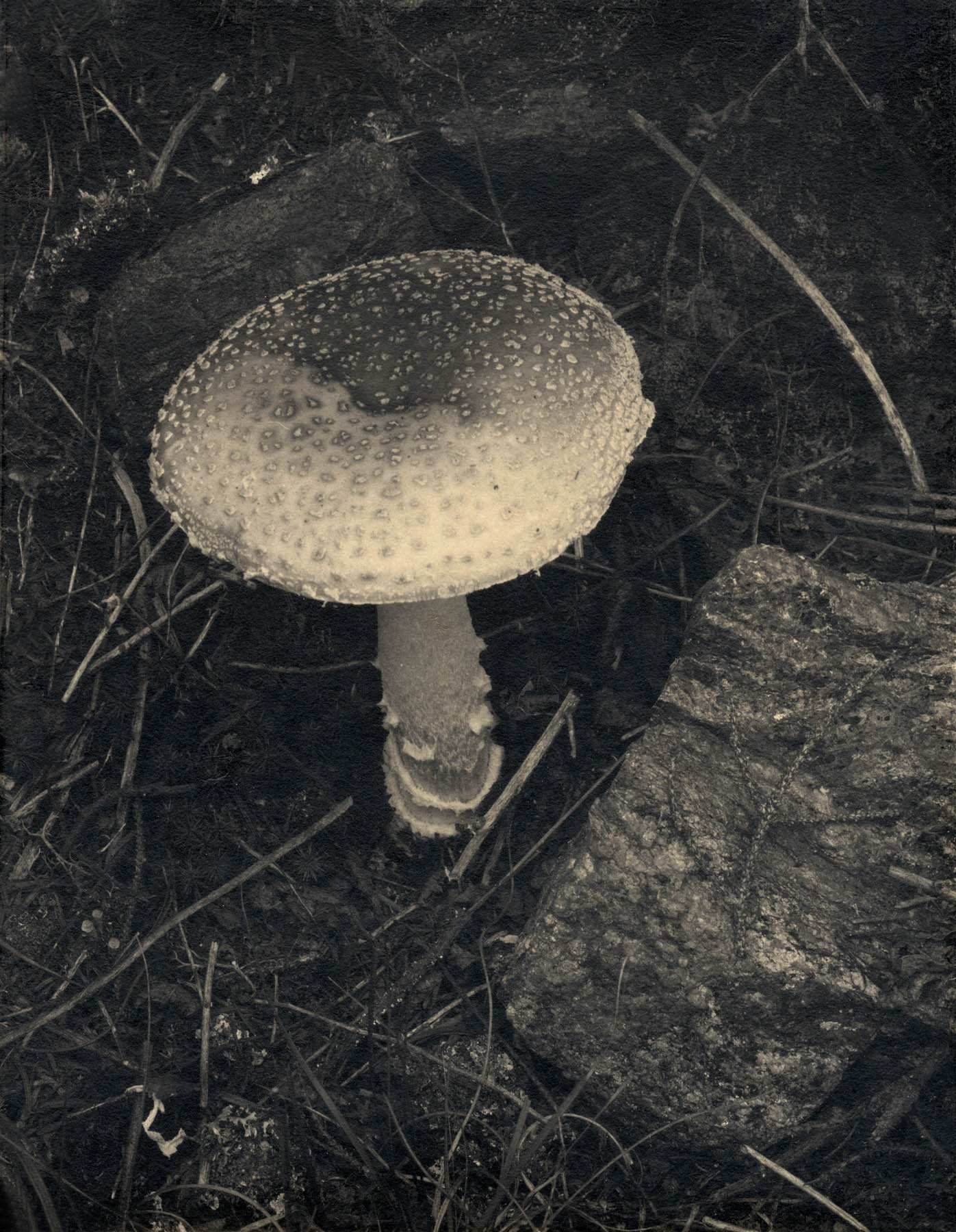
 

Paul Strand (American, 1890-1976) 'Speckled Toadstool, Georgetown, Maine' 1927


Paul Strand (American, 1890-1976)
Speckled Toadstool, Georgetown, Maine
1927
Waxed platinum print on paper


Strand continued to use platinum printing long after most other photographers adopted gelatin silver papers, which were more efficient and versatile and had a glossier surface. His prints in platinum are highly regarded for capturing minute detail and a wide range of tonal values.
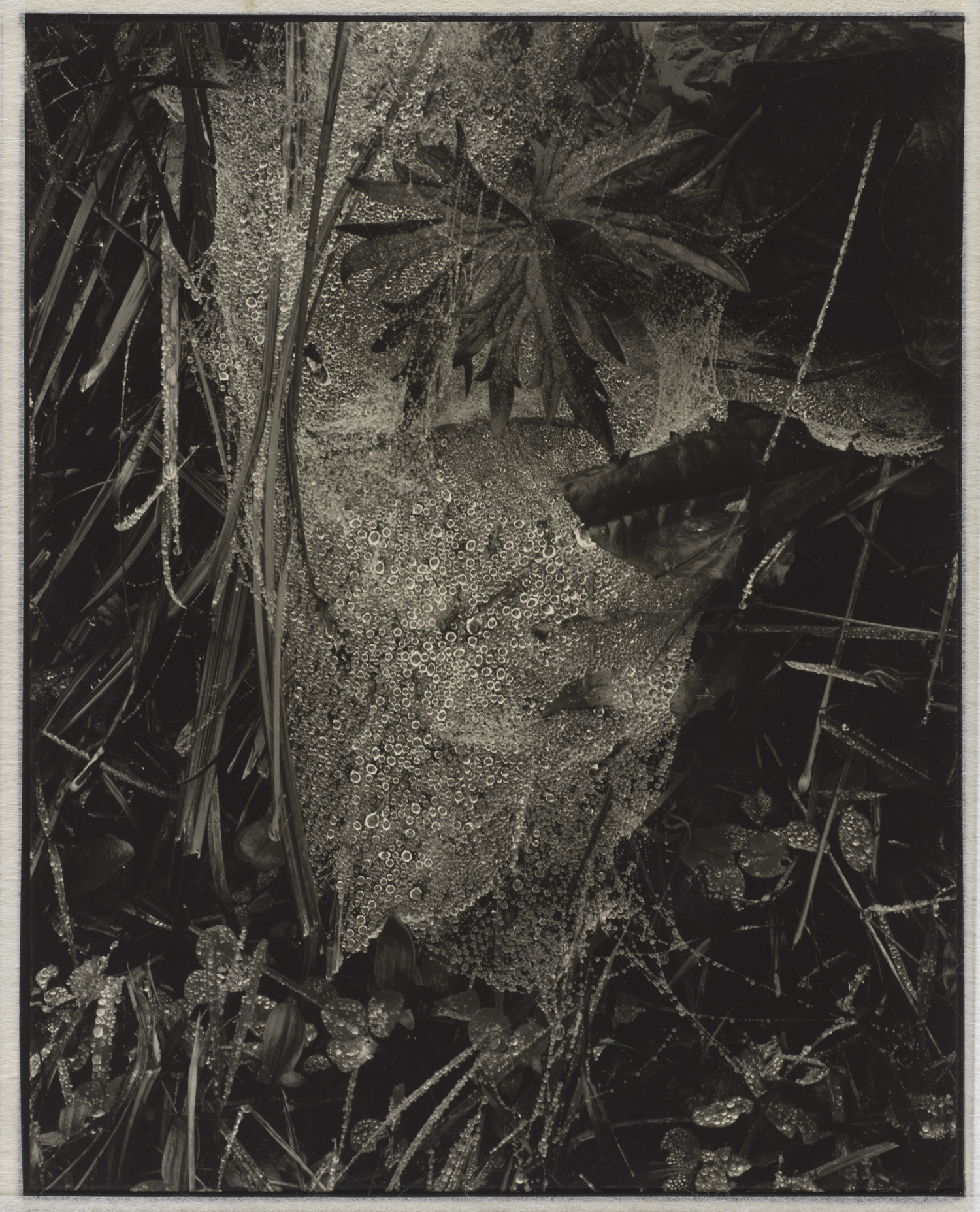
 

Paul Strand (American, 1890-1976) 'Cobweb in the Rain, Georgetown, Maine' 1928


Paul Strand (American, 1890-1976)
Cobweb in the Rain, Georgetown, Maine
1928
Gelatin silver print on paper

All from the Collection of Michael Mattis and Judith Hochberg


Works of Straight photography
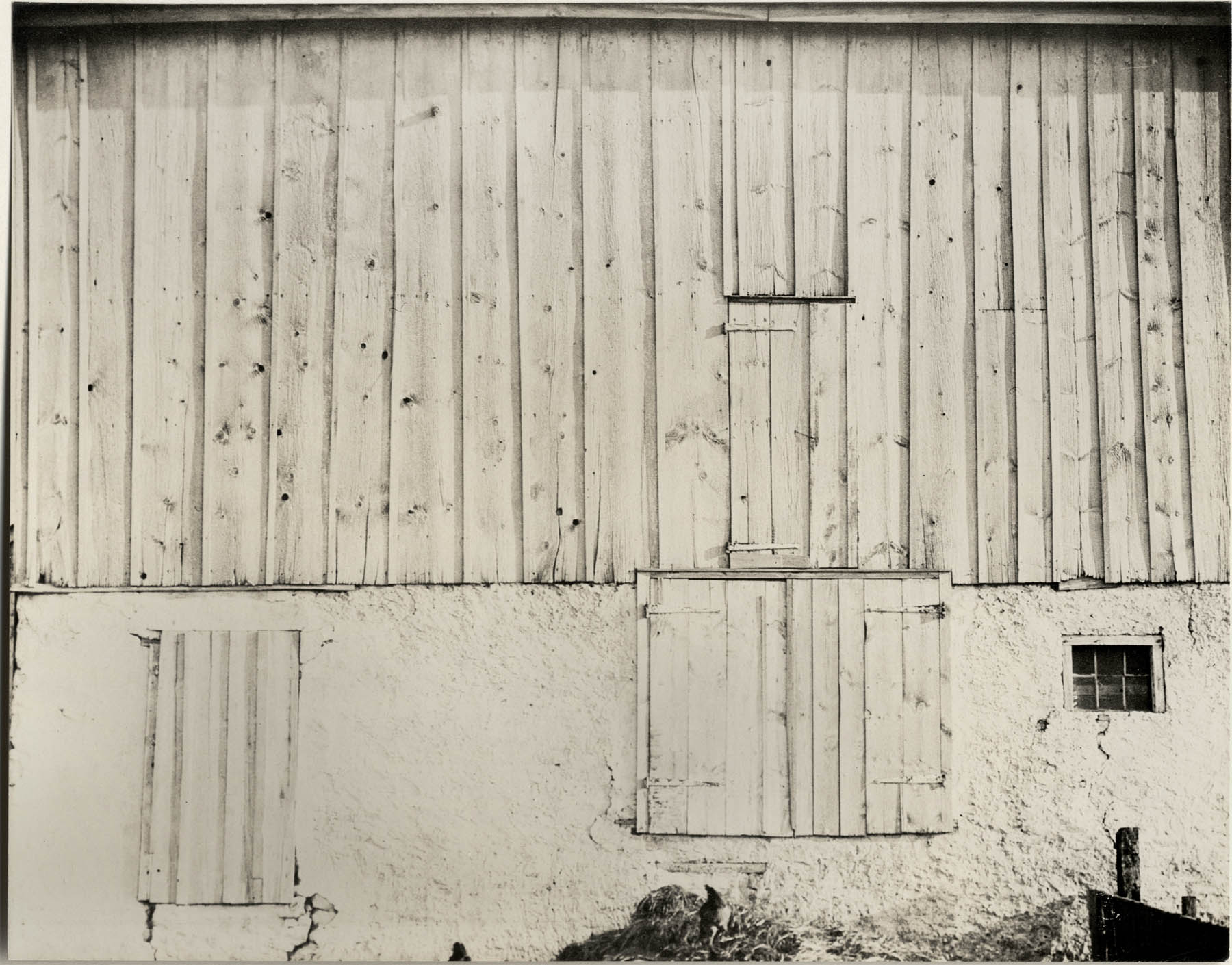
 

Charles Sheeler (American, 1883-1965) 'Side of White Barn, Bucks County' 1917


Charles Sheeler (American, 1883-1965)
Side of White Barn, Bucks County
1917
Gelatin silver print on paper


A painter and photographer, Sheeler became a close friend of Alfred Stieglitz as the Photo-Secession dissolved. This photographic study of line, shape, and tone recalls the hard-edged style of Sheeler’s paintings. Only the chickens appearing at the bottom edge give a sense of scale to the barn.


Alvin Langdon Coburn: The Avant-Garde Creator

Alvin Langdon Coburn pushed the boundaries of photography with his innovative Vortographs, created in 1916-1917. These images are considered some of the first abstract photographs, born from Coburn’s desire to create art that combined the physical with the spiritual. By placing a vortoscope, a triangular arrangement of mirrors and prisms, over a camera’s lens, Coburn created complex images of kaleidoscopic and geometric patterns that simplify the photograph to the essential elements of light and form. This technique broke away from traditional photographic representation, emphasising form, structure, and abstraction. The Vortographs were influenced by the Vorticist movement, which celebrated dynamic and abstract art. Coburn’s pioneering work with these images marked a significant departure from Pictorialism, embracing modernist principles and demonstrating the artistic potential of photography beyond mere depiction. The Vortographs stand as a testament to Coburn’s visionary approach and contributions to the evolution of photographic art.

Adelaide Ryder. “The Photo-Secession Movement: Pioneering Artistry in Early Photography,” on the UMFA website Nd [Online] Cited 22/10/2024
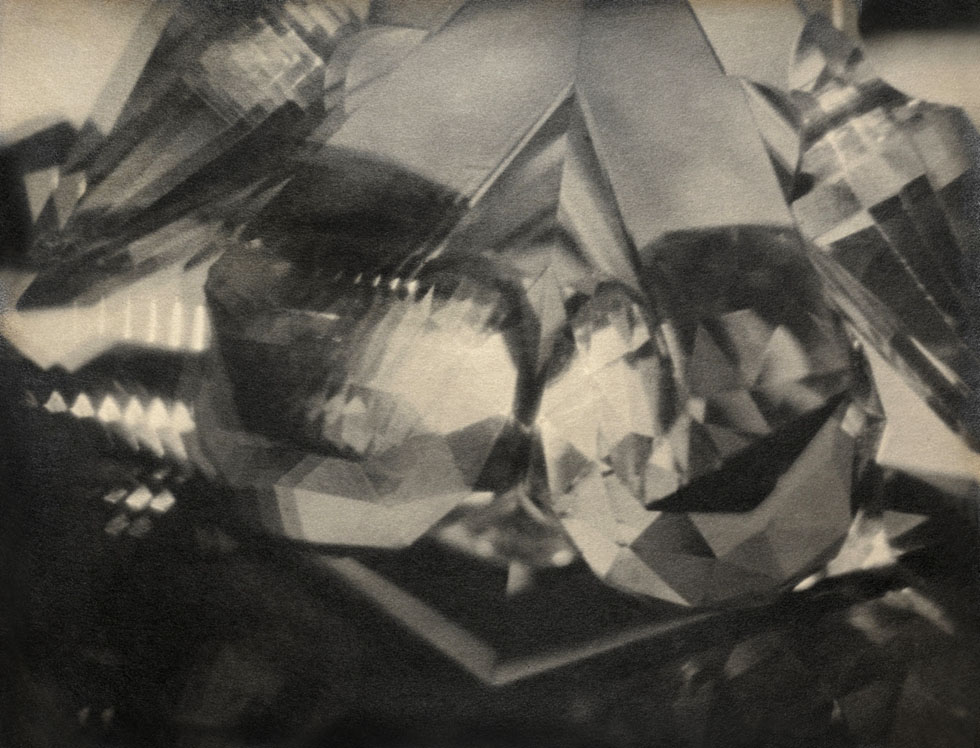
 

Alvin Langdon Coburn (British American, 1882-1966) 'Vortograph' 1917


Alvin Langdon Coburn (British American, 1882-1966)
Vortograph
1917
Gelatin silver print on paper


Coburn was one of the Photo-Secessionists who rejected Pictorialism. In his 1916 essay “The Future of Pictorial Photography,” he called for abstraction in photography, concluding, “it is my hope that photography may fall in line with all the other arts, and with her infinite possibilities, do things stranger and more fascinating than the most fantastic dreams.” Coburn created vortographs like this by placing a devise with three mirrors between his camera and subject. When he exhibited them to great fanfare in London in 1917, Ezra Pound proclaimed: “The Camera is freed from Reality!”

All from the Collection of Michael Mattis and Judith Hochberg


Utah Museum of Fine Arts
University of Utah campus
Marcia and John Price Museum Building
410 Campus Center Drive

Opening hours:
Tuesday – Sunday 10am – 5pm
Closed Mondays
Utah Museum of Fine Arts website

LIKE ART BLART ON FACEBOOK

Back to top

Exhibition: ‘Ansel Adams in Our Time’ at the de Young Museum, San Francisco

Exhibition dates: 8th April – 23rd July, 2023

Curator: Karen Haas, Lane Senior Curator of Photographs at the Museum of Fine Arts, Boston

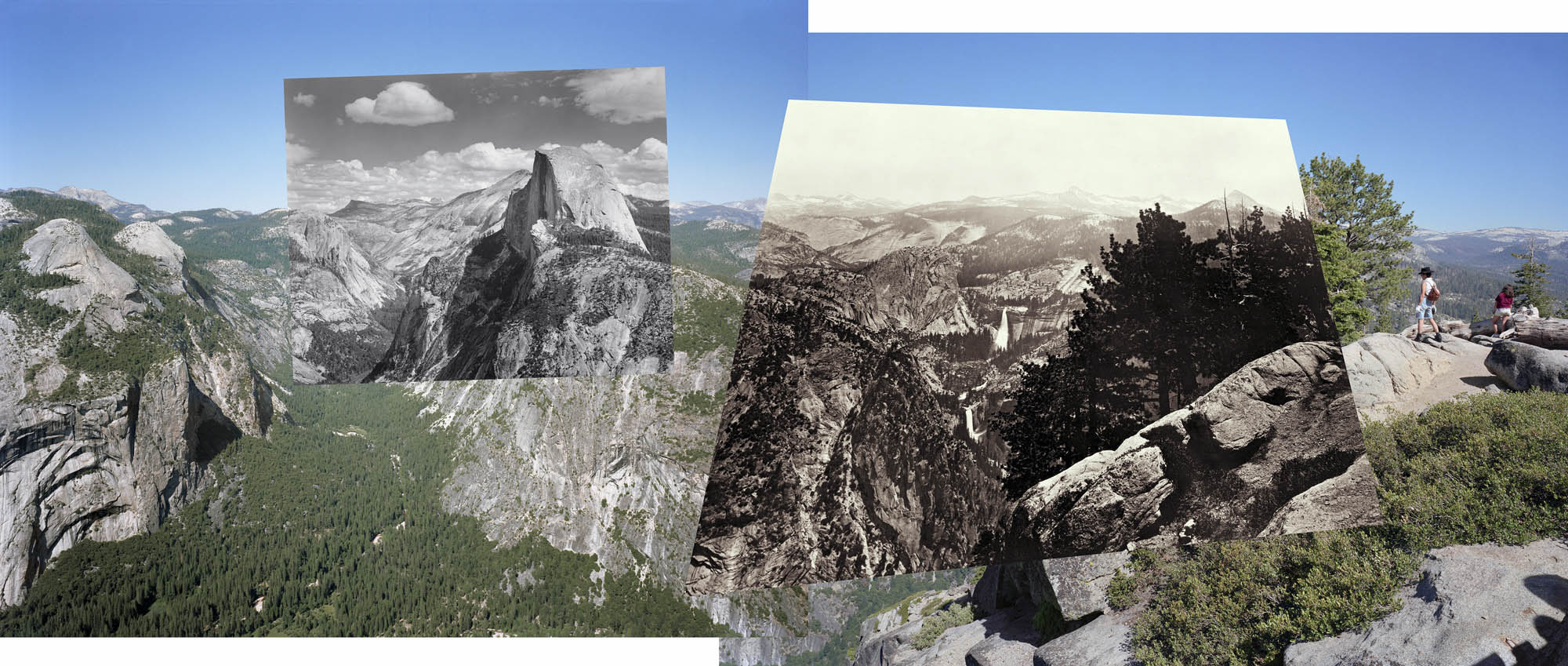
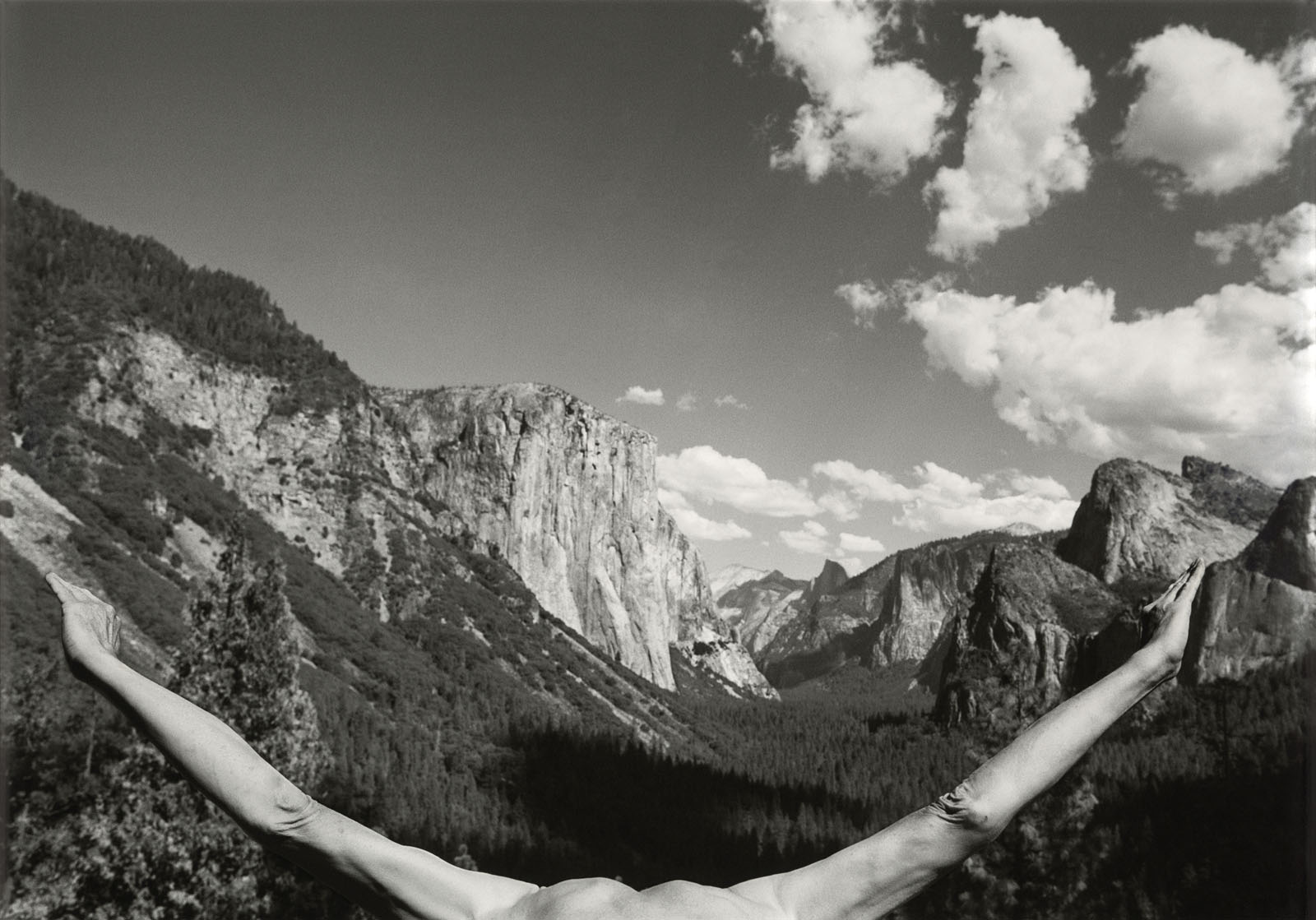
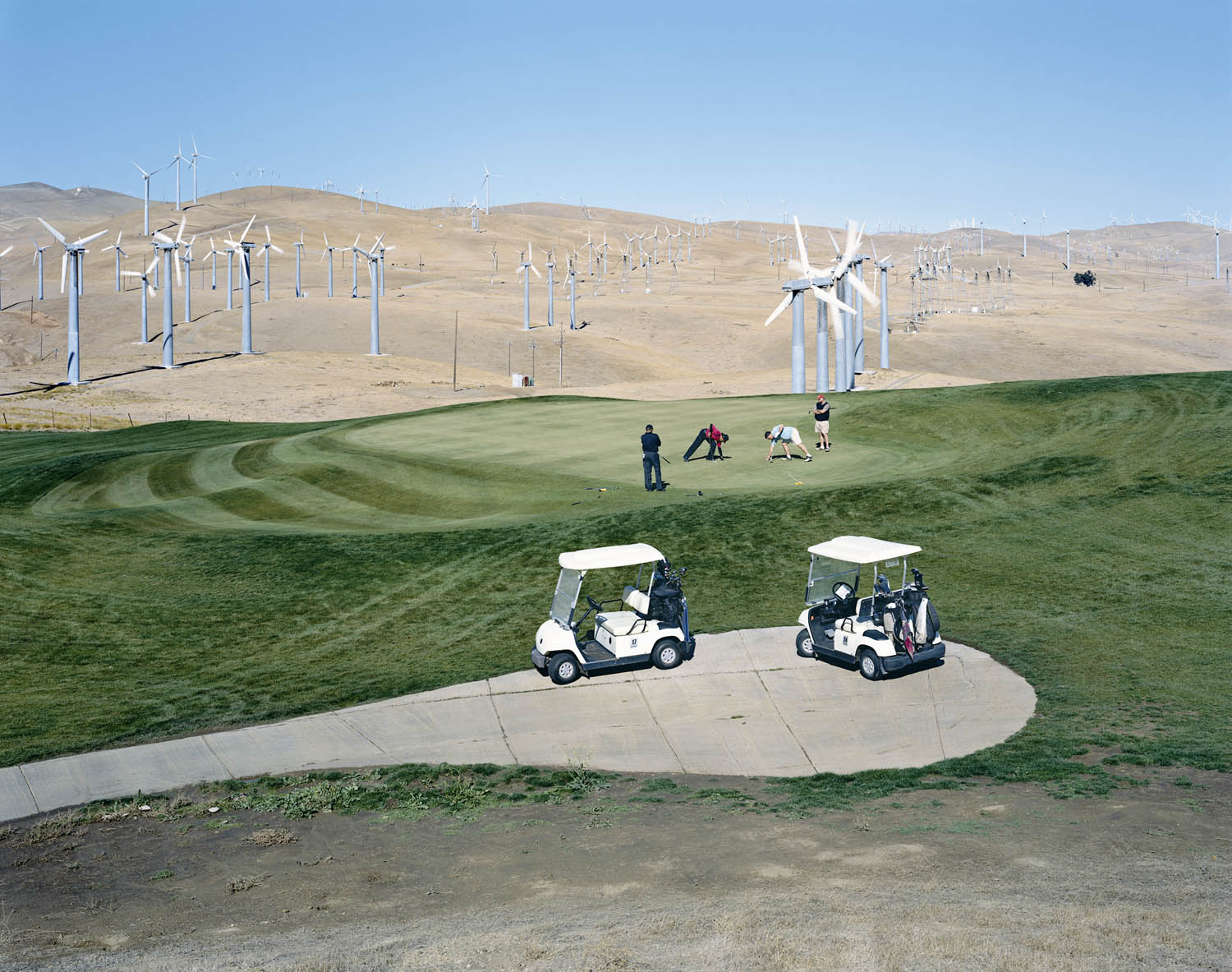
Participating artists: Ansel Adams, 1902-1984;  Matthew Brandt, b. 1982; Lois Conner, b. 1951; Binh Danh, b. 1977; Mitch Epstein, b. 1952; Lucas Foglia, b. 1983; Sharon Harper, b. 1966; Frank Jay Haynes, 1853-1921; CJ Heyliger, b. 1984; John K. Hillers, 1843-1925;  Mark Klett, b. 1952; Chris McCaw, b. 1971;  Laura McPhee, b. 1958; Arno Rafael Minkkinen, b. 1945; Richard Misrach, b. 1949; Abelardo Morell, b. 1948; Eadweard Muybridge, 1830-1904; Catherine Opie, b. 1961; Trevor Paglen, b. 1974; Meghann Riepenhoff, b. 1979; Mark Ruwedel, b. 1954; Victoria Sambunaris, b. 1964; Bryan Schutmaat, b. 1983; David Benjamin Sherry, b. 1981; John Payson Soule, 1827-1904; Stephen Tourlentes, b. 1959; Adam Clark Vroman, 1856-1916; Carleton E. Watkins, 1829-1916; Will Wilson, b. 1969; Byron Wolfe, b. 1967.

Please note: This posting may contain the names or images of people who are now deceased.  Some Indigenous communities may be distressed by seeing the name or image of a community member who has passed away.


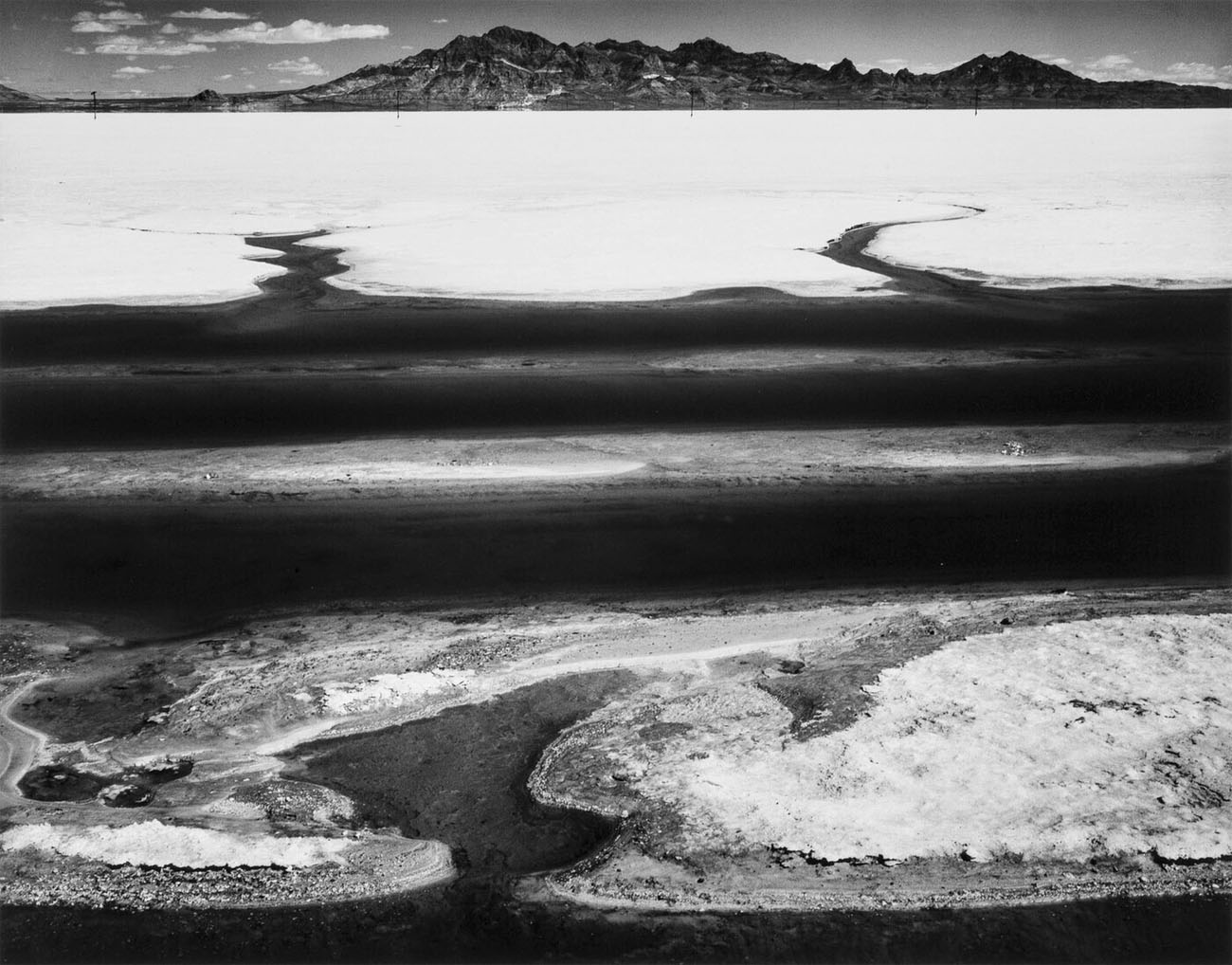
Ansel Adams (American, 1902-1984) 'Salt Flats Near Wendover, Utah' 1953 from the exhibition 'Ansel Adams in Our Time' at the de Young Museum, San Francisco, April - July, 2023


Ansel Adams (American, 1902-1984)
Salt Flats Near Wendover, Utah
1953
Gelatin silver print
The Lane Collection
Courtesy Museum of Fine Arts, Boston
© The Ansel Adams Publishing Rights Trust


Ansel Adams made this remarkably abstract image of ancient salt beds during the first year of his national parks project. Barely visible in the distance is a delicate string of telephone poles and wires, a slightly jarring intervention into an otherwise empty space. Adams’ inclusion of the poles might be explained in part by the fact that Wendover was the meeting point for the first telephone line between New York and San Francisco. This achievement was celebrated at the 1915 Panama-Pacific International Exposition – a fair that the young Adams attended nearly every day, after his father gave him a season pass with instructions to visit daily, in place of formal schooling.

Exhibition label text


Man and imagination

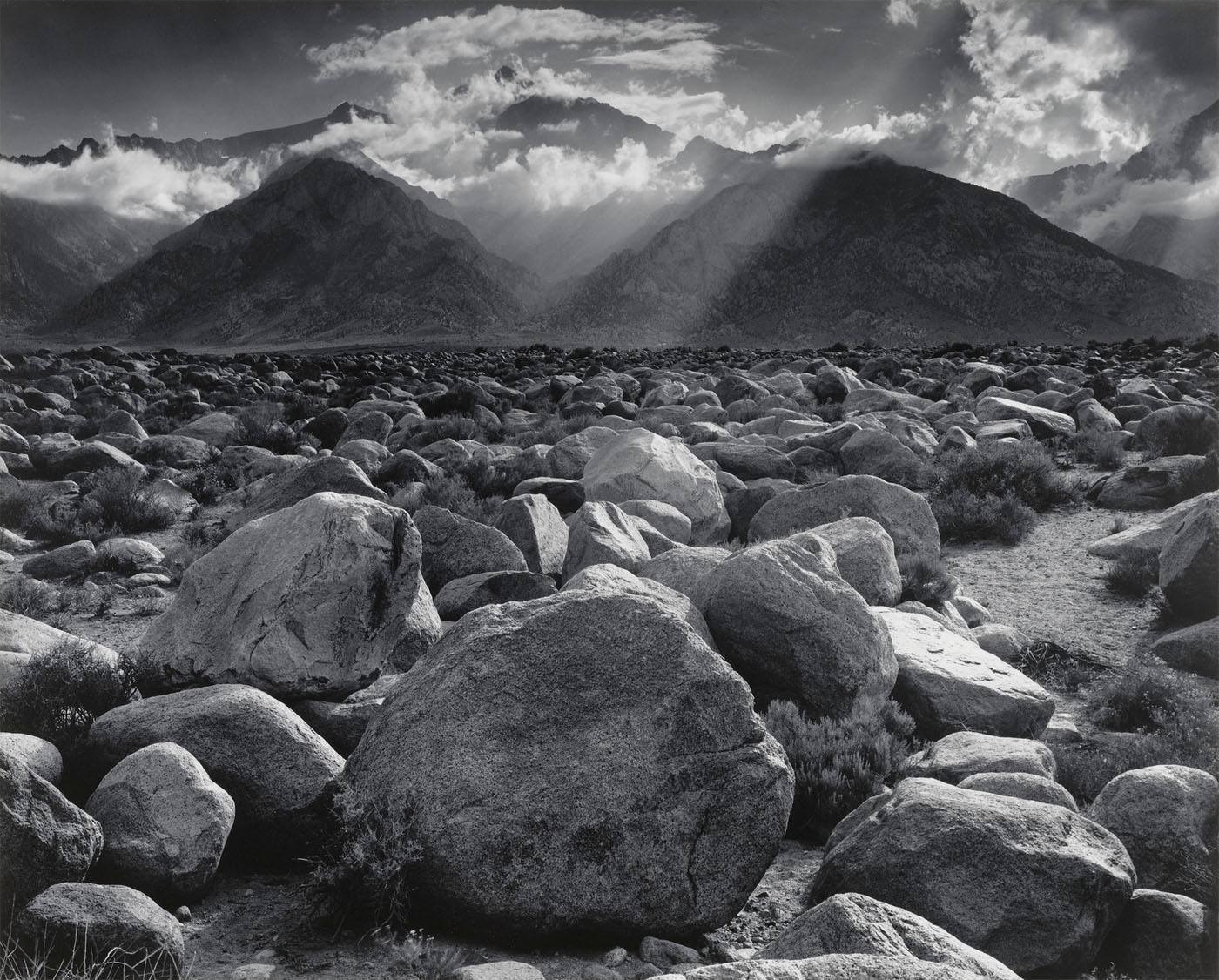
Most could not fail to know the superb landscape work of Ansel Adams, that master of the large format camera used to produce stunning black and white silver gelatin photographs of great formal beauty and technical prowess, the rich detail and tonal range of his landscape photographs used “in service of what he called the “spiritual-emotional” aspects of parks and wilderness, conveying their restorative power to as wide an audience as possible.” His photographs are so well known that they became icons and he a legend in his own lifetime. But all is not as effortless in his beautiful modernist photographs as they seem.

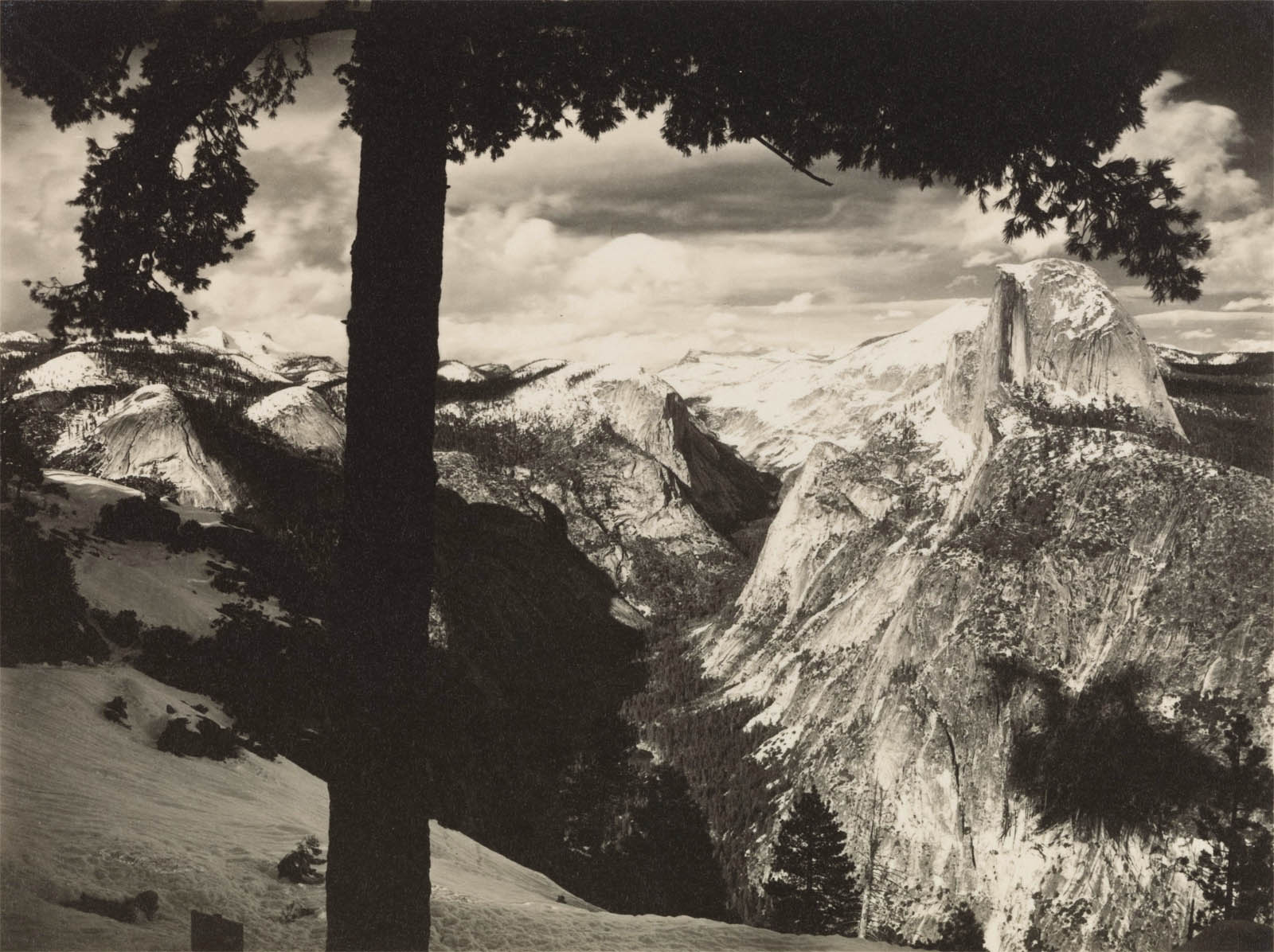
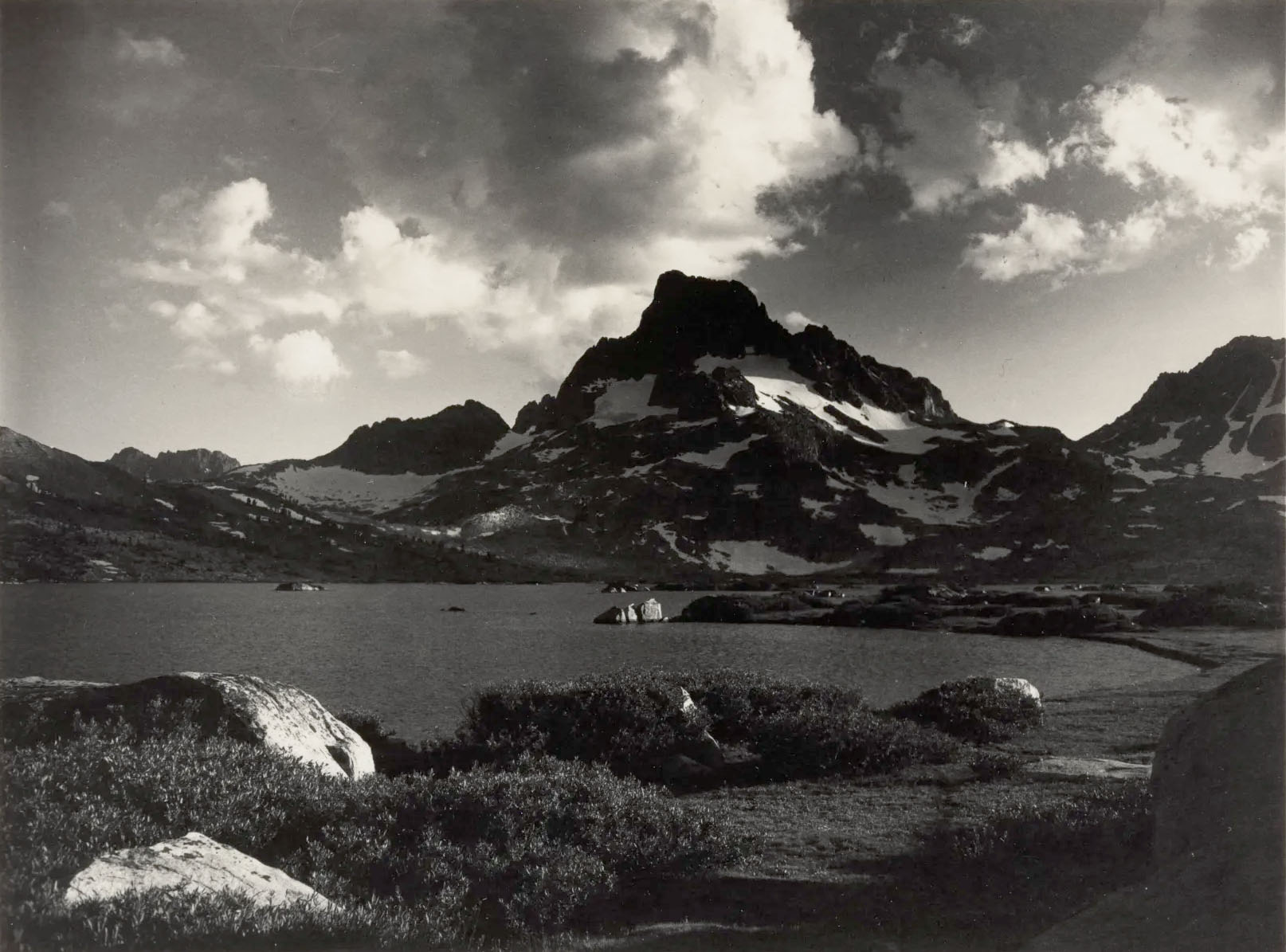
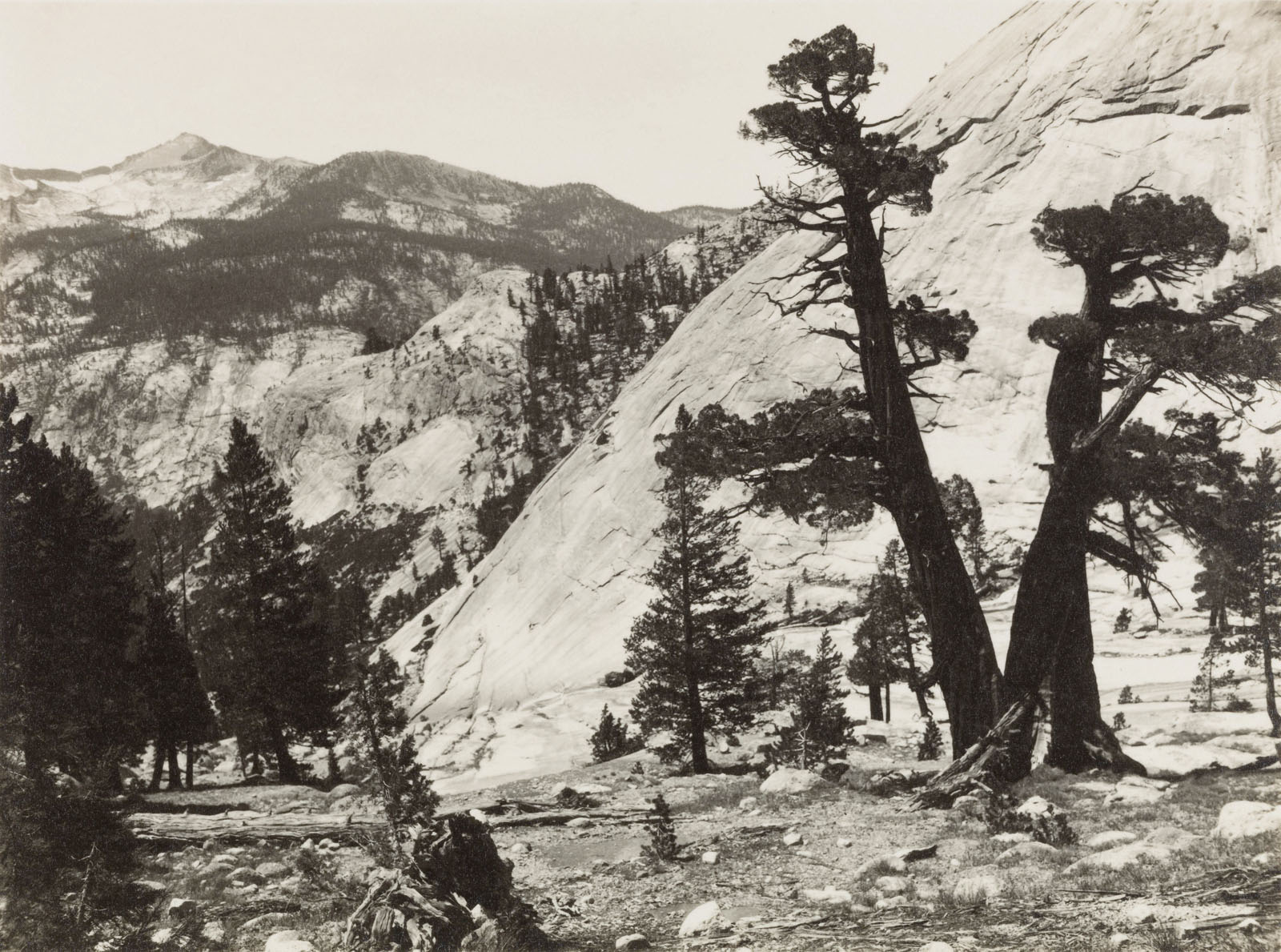
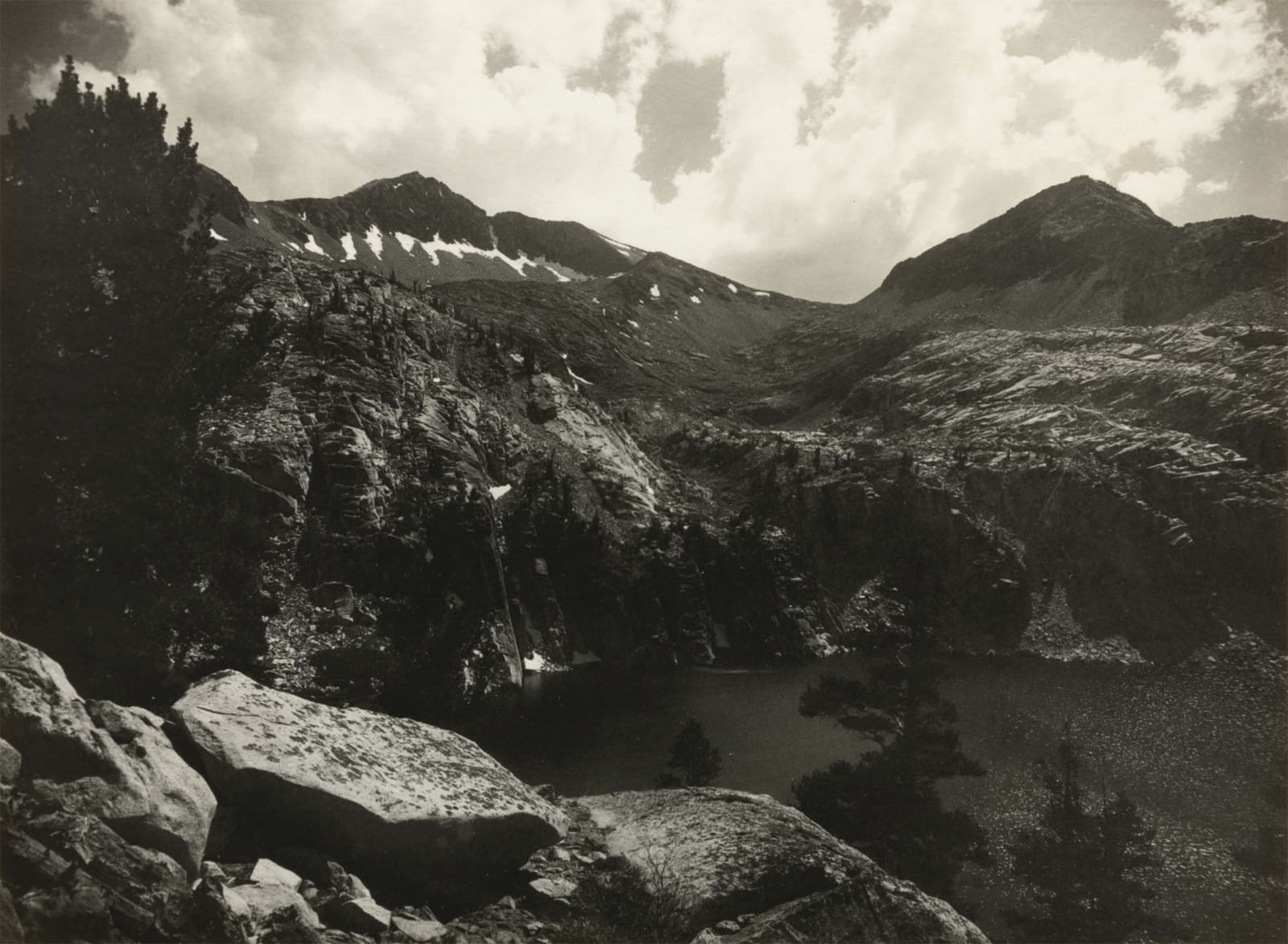
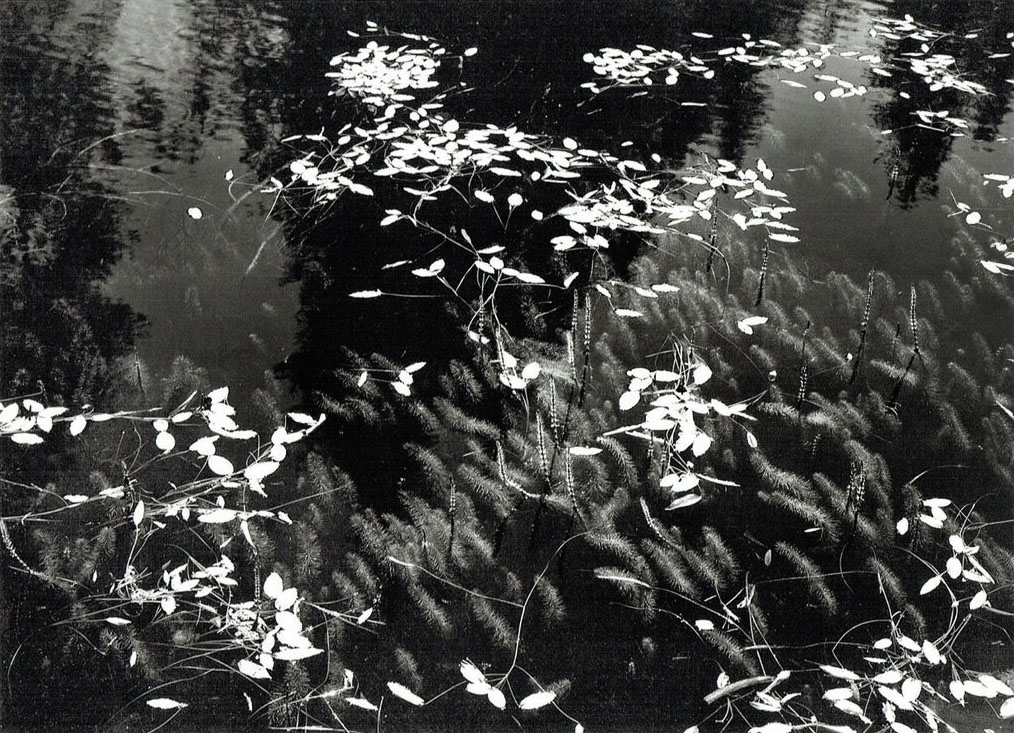
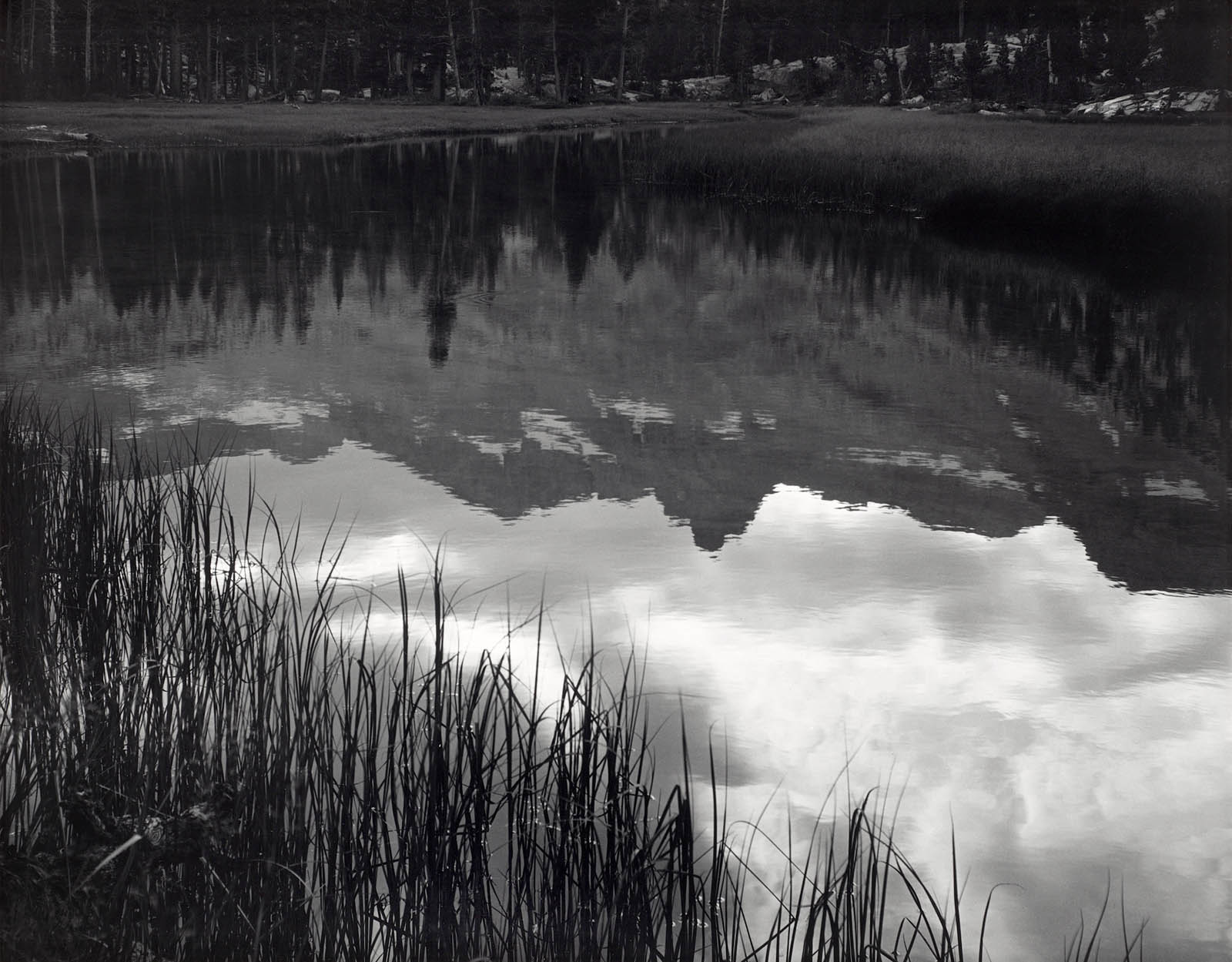
Early landscape photographs from his 1927 portfolio Parmelian Prints of the High Sierras (below) show Adams’ indebtedness to pictorialist and modernist photography. Indeed these elemental and muscular photographs show a dramatic use of dark and light hues in the near / far construction of the picture frame, the warm toned prints adding to their chthonic, almost underground and dystopian nature. Dark and brooding, dystopian and abstract. Those dark tones have a warmth that is contradictory – a lack of light: yet warmth! So there is a fiction at their heart… and that is why their dark brooding never seems a threat for they were based on a dream-world that couldn’t exist. What a difference to the later straight-ahead aesthetic of the artist and Group f64 (“a group founded by Adams of seven 20th-century San Francisco Bay Area photographers who shared a common photographic style characterised by sharply focused and carefully framed images seen through a particularly Western viewpoint.” ~ Wikipedia).

Other mutations and obfuscations are hidden from view “in order” that the artist achieve his desired transcendence of the American landscape. Adams cropped out attendant carparks and people viewing the scene even as other artists such as Seema Weatherwax incorporated them into their work (in the 1940s) as “indelible reminders of a Yosemite modernised for tourism – reminders that Adams typically left out of his artistic work.” Adams even manipulated the negative where necessary, for example removing a road that inconveniently ran through the centre of a canyon that destroyed his imaginative (and Western) vision of the pristine Sierra Nevada. So much for his “absolute realism” and honest simplicity in service of a maximum emotional statement.

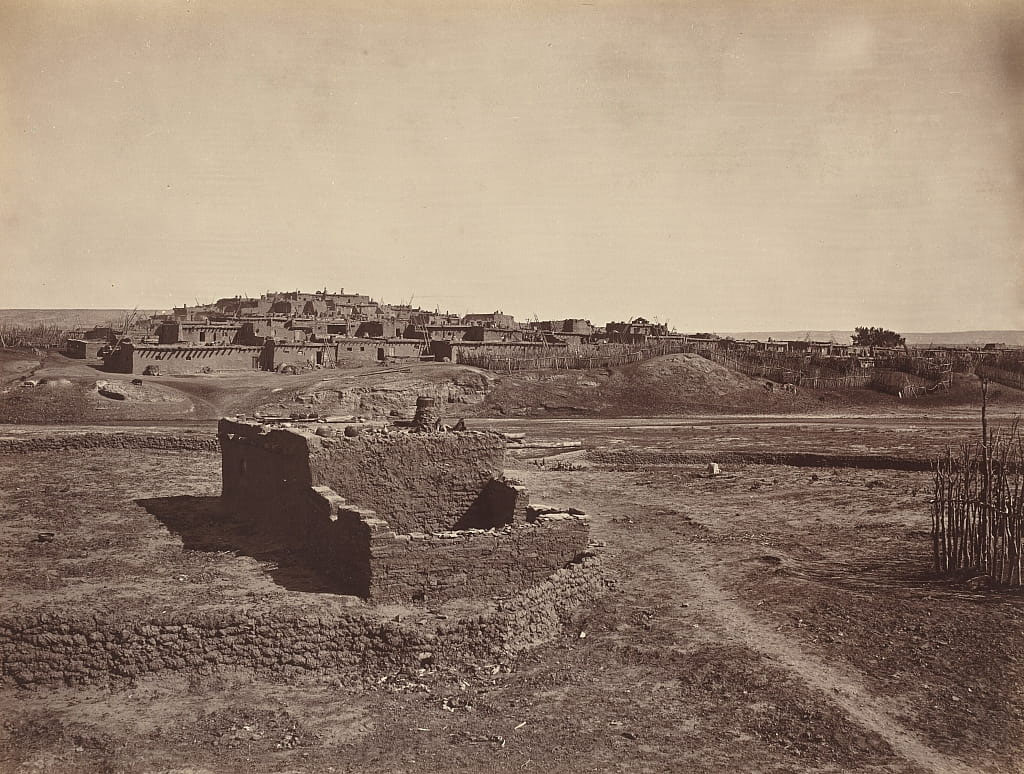
Adam’s photographs of Indigenous Americans are also pictures seen from a particularly Western viewpoint, that of the fetishistic valorisation of Indigenous culture. “In the 1920s, writers and artists including D. H. Lawrence, Mabel Dodge Luhan, John Sloan, and Marsden Hartley projected an “authenticity” onto Pueblo visual culture, which justified their appropriation of its subject matter and form to create a native modernist aesthetic. Many photographers did the same, including Ansel Adams and Wright Morris…”1

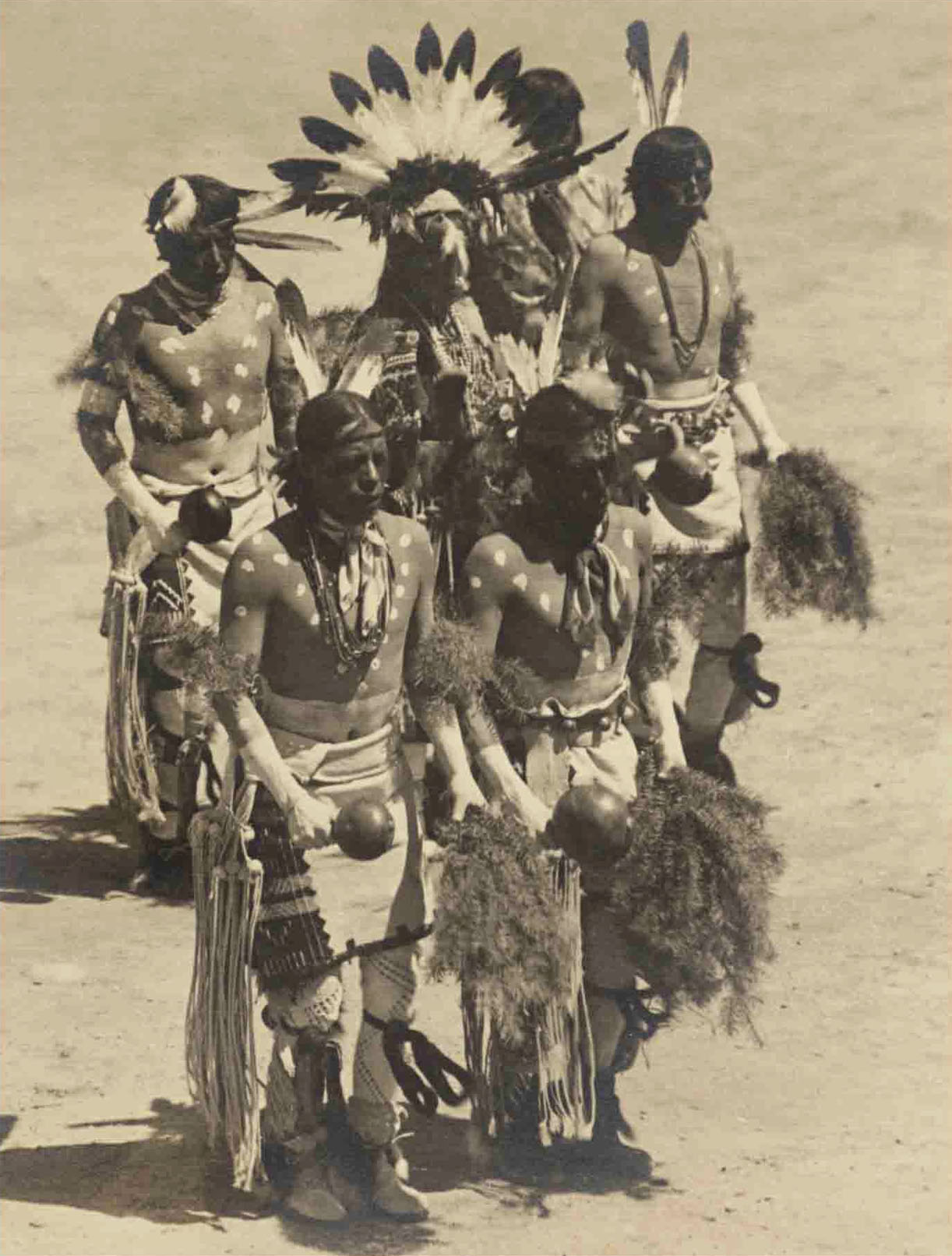
When Adams first visited the American Southwest in 1927 to publish a book about Taos Pueblo “that aimed to communicate the threat tourism in the region posed to the artistic and religious traditions of Indigenous people [he] made images for the book only after receiving permission from the Taos Pueblo council, to whom he paid a fee and gifted a copy of the finished publication. He also photographed some Indian cultural observances that had become popular attractions among tourists. Adams’s own images of Native dancers have a complex legacy: although he was one of the non-Native onlookers, he carefully framed his views to leave out evidence of the gathered crowds.” (Exhibition wall text) As Joseph Aguilar (San Ildefonso Pueblo) notes in a further exhibition label text, “At the time, Pueblo people and other Native Americans in the Southwest were trying to navigate the outsiders who were interested in their culture. Some of them did not quite understand the circumstances surrounding the curiosity, while others did understand the extractive nature, and they had to weigh that in terms of their other needs. I get questions from members of my community about why they did not chase the archaeologists and photographers out, and I often respond it is because of the uneven power relations between Indigenous and non-Native people at the time.” This influx of artists and photographers did lead to the racist exoticisation and flattening of Indigenous identity performed by the photograph. What is heartening to see in this exhibition is that the curators have placed Adams’ Indigenous American portraits and landscapes in both a historical and contemporary setting, proffering alternative points of view from within the communities being photographed.

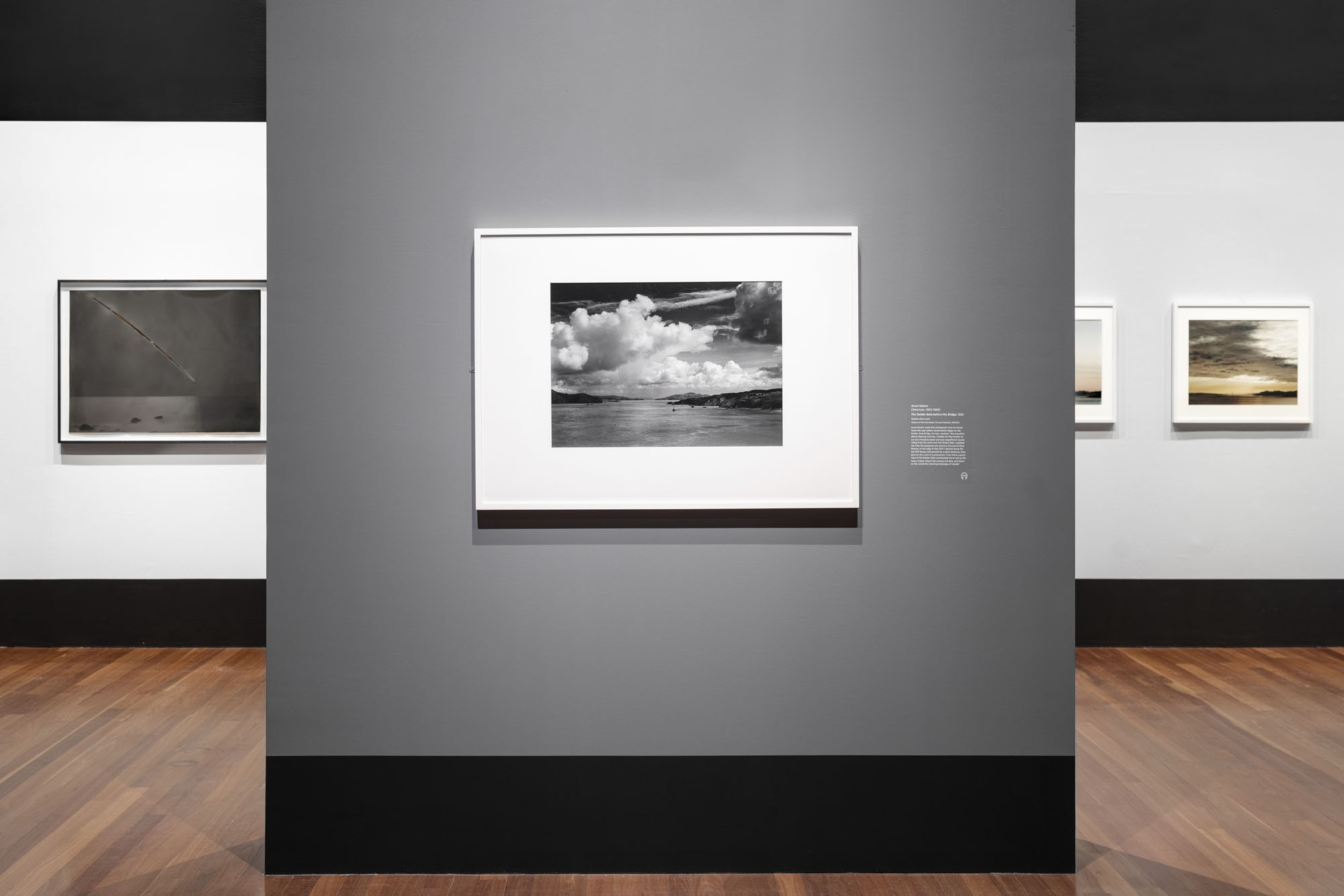
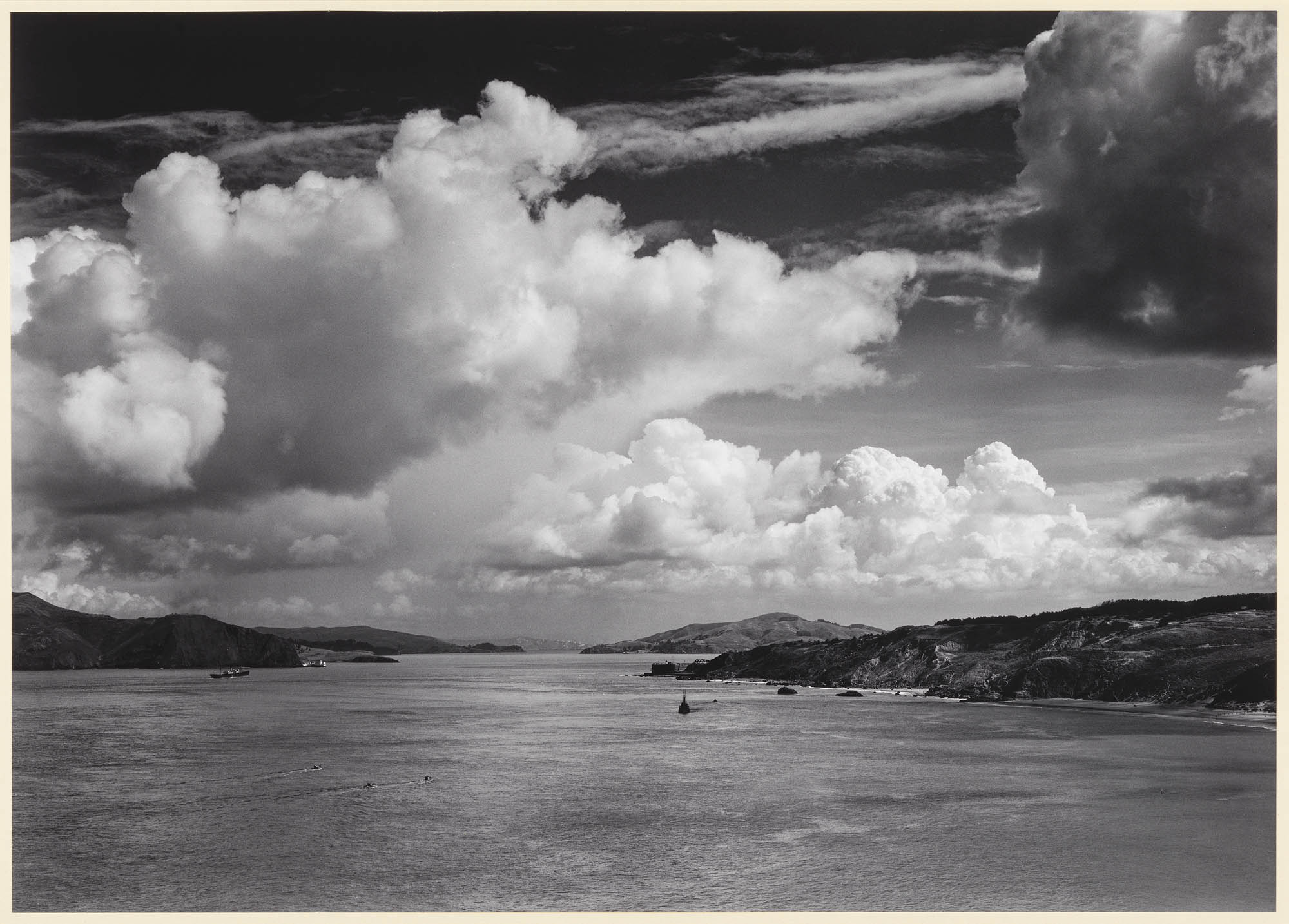
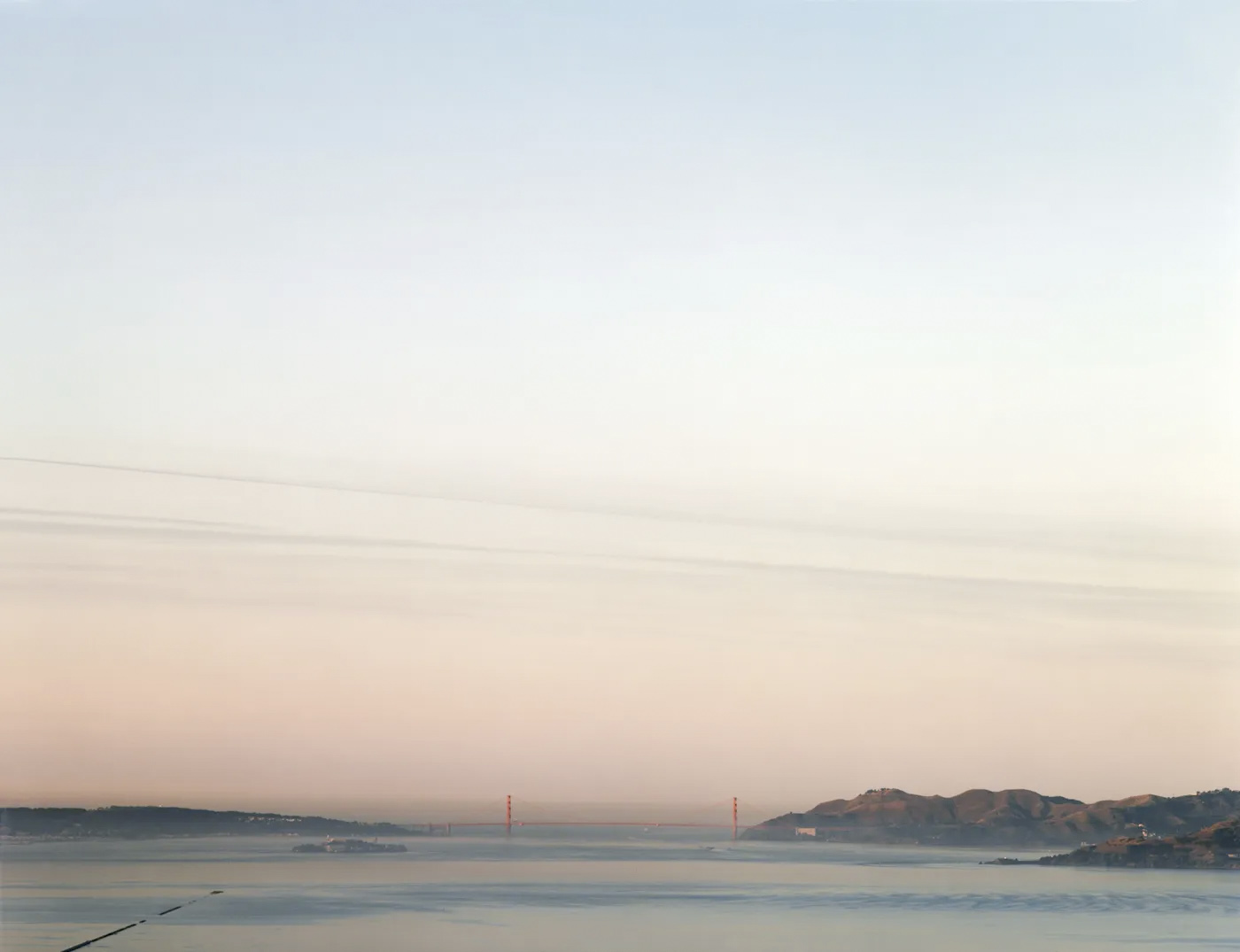
An extractive, imaginative and emotional Western “nature” then, is at the heart of Adam’s work and his “marketing the view” – whether that be national parks, empty bays before the construction of the Golden Gate Bridge, or Native Americans. While he was a tireless champion of photography as a legitimate form of fine art and an unremitting activist for conservation and wilderness preservation, Adams’ photographs are a creation of a myth of his own of a pristine wilderness which had never co-existed with man. To our benefit, Adams had his ideals and he let them manifest themselves in his imagination.

Dr Marcus Bunyan


1/ Yechen Zhao. “Photographic Fluency (Its Pleasures and Pains): Kyo Koike and Chao-Chen Yang,” in Josie R. Johnson. Reality Makes Them Dream: American Photography, 1929-1941. Iris & B. Gerald Cantor Center for Visual Arts at Stanford University, 2023, p. 55.


Many thankx to the de Young museum for allowing me to publish the photographs in the posting. Please click on the photographs for a larger version of the image.


“Only pictures that look as if they had been made easily can convincingly suggest that beauty is commonplace.”


Robert Adams. Beauty in Photography. New York: Aperture, 1996, p. 28.


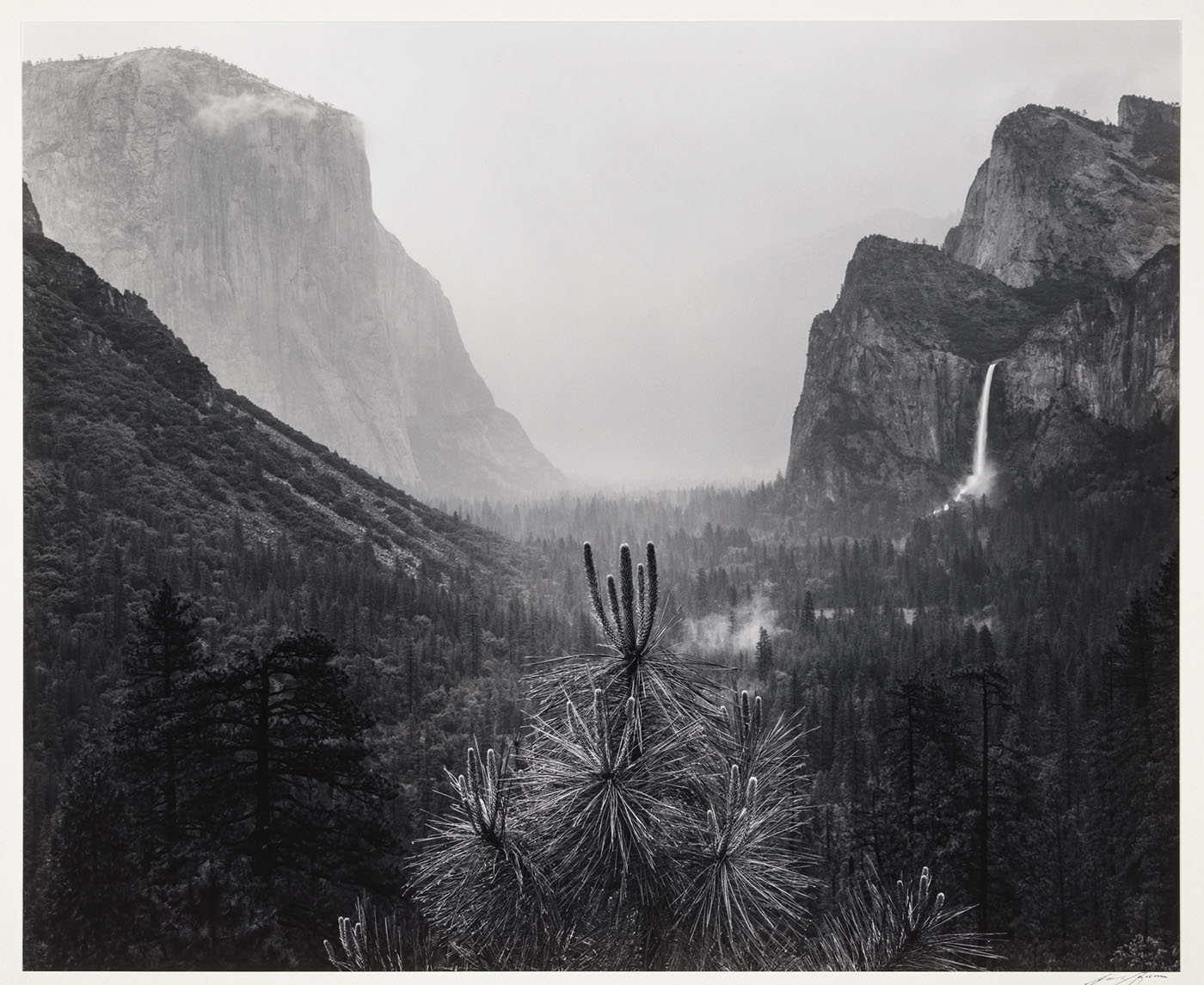
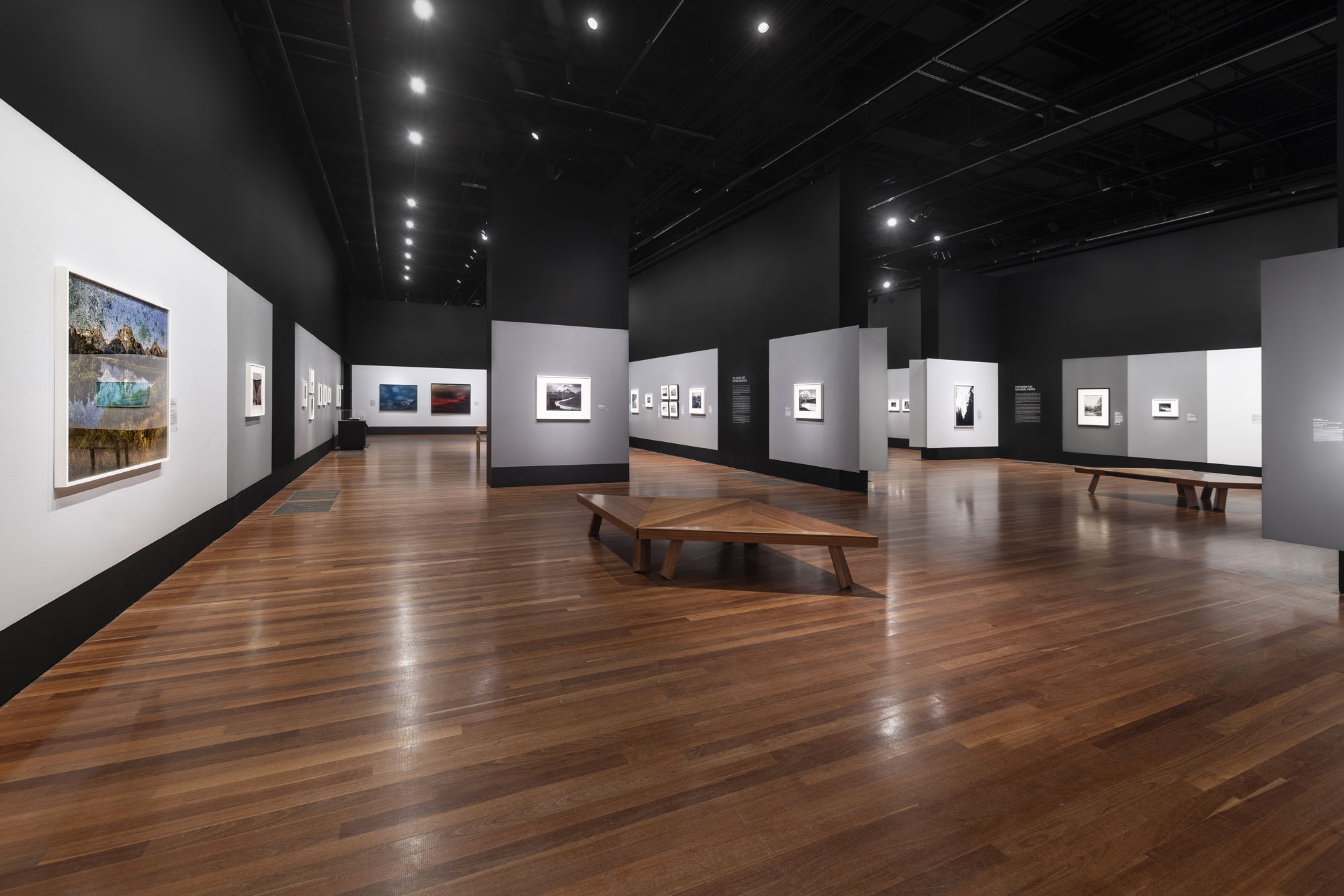
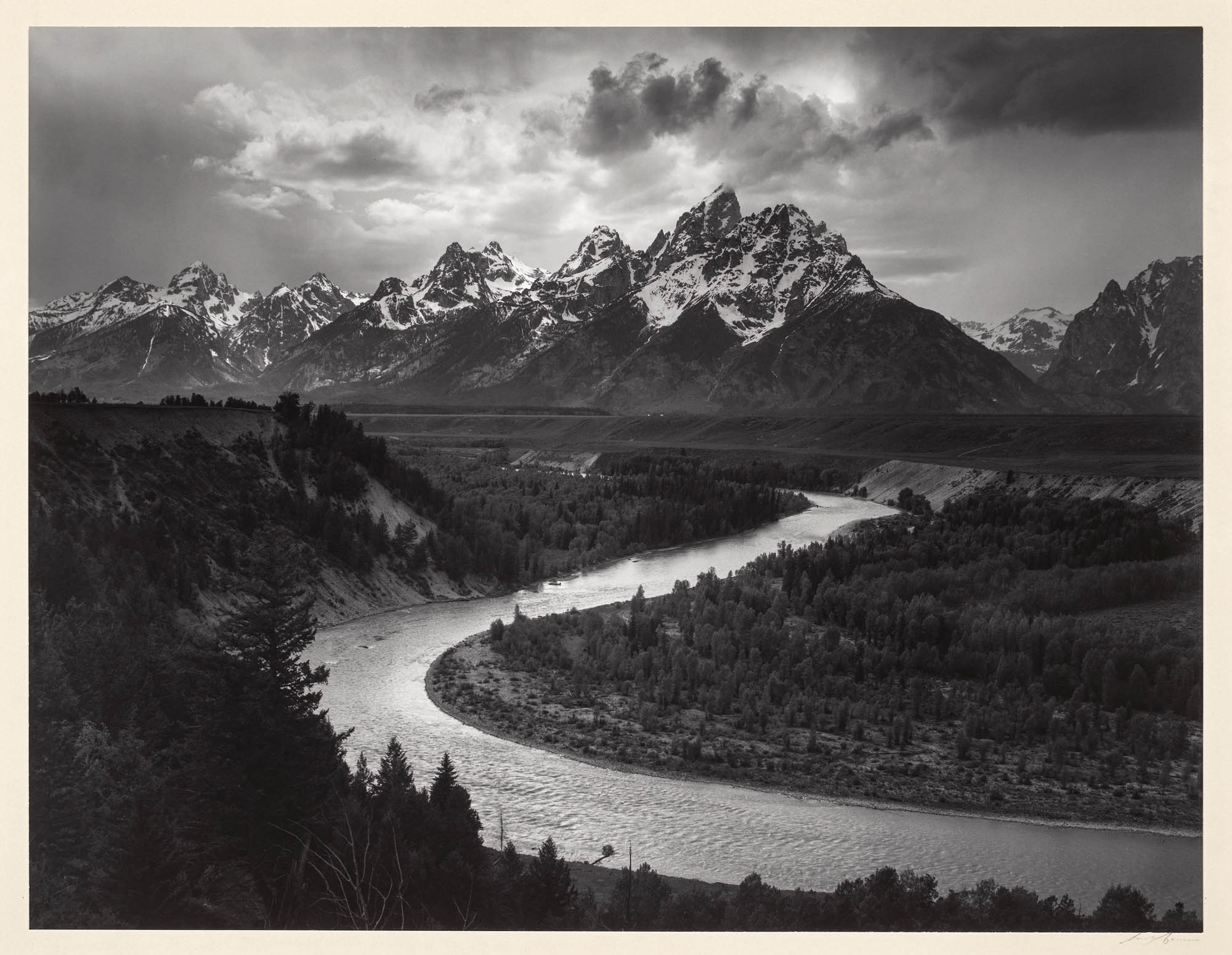
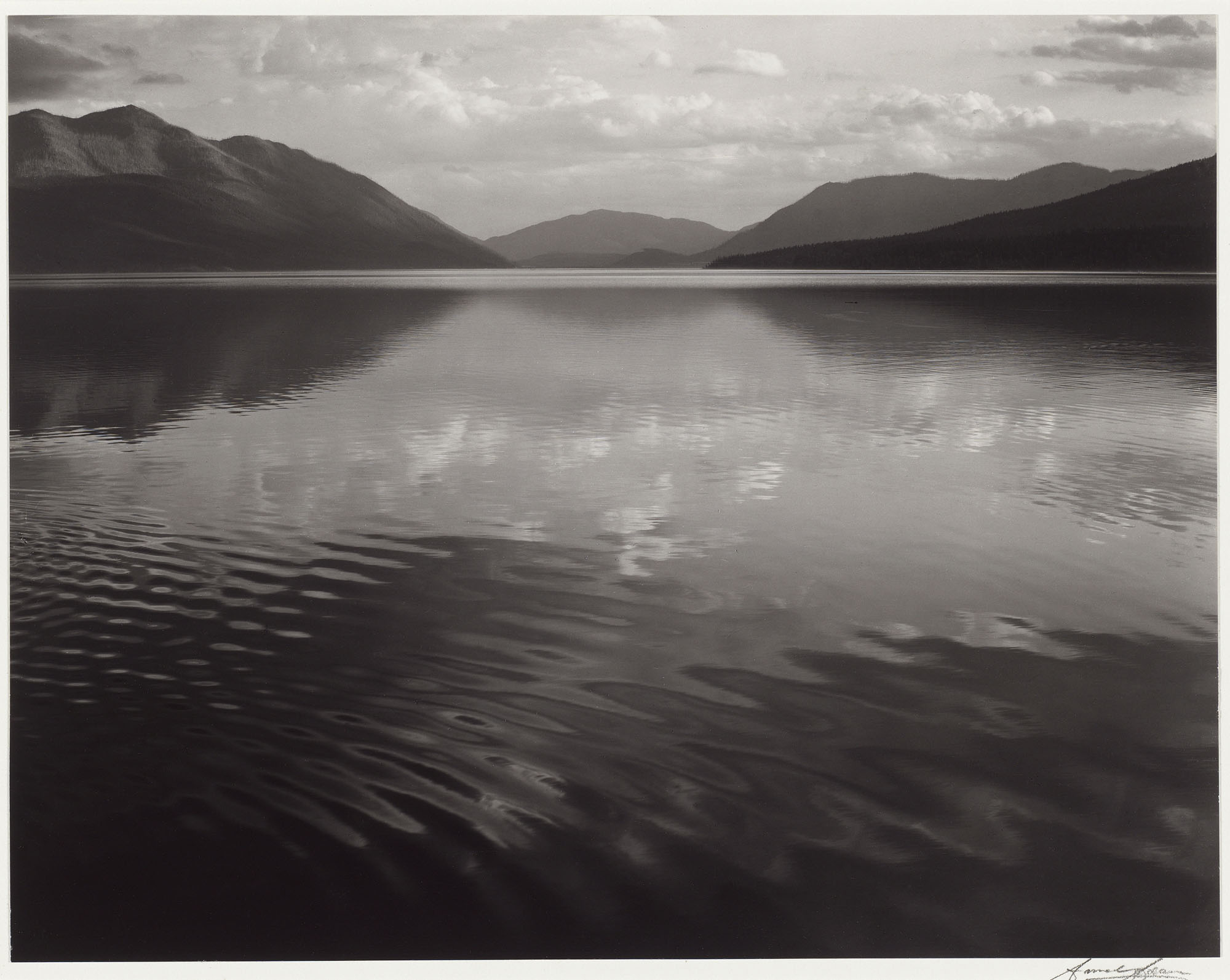
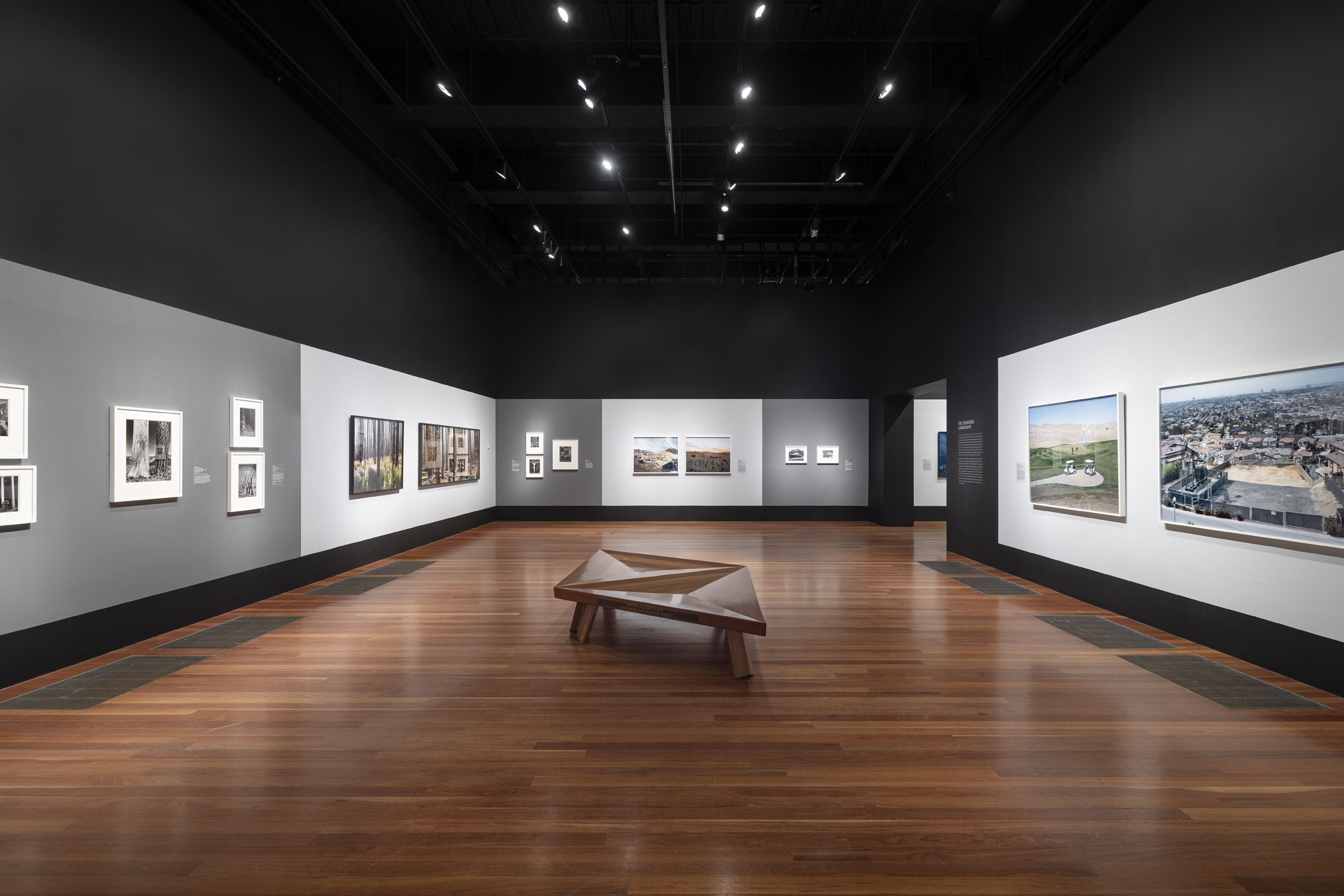
A self-described “California photographer,” Ansel Adams had his first museum exhibition at the de Young in 1932. In a San Francisco homecoming, more than 100 of his most iconic works are on view in Ansel Adams in Our Time alongside those of 23 contemporary artists who share his deep concern for the environment, Catherine Opie, Richard Misrach, Trevor Paglen, and Binh Danh among them. An unremitting activist for conservation and wilderness preservation in the spirit of his 19th-century predecessors, Adams is today beloved for his lush gelatin silver prints of the national parks. Organised by the Museum of Fine Arts, Boston, in partnership with the Fine Arts Museums of San Francisco, Ansel Adams in Our Time is enhanced at the de Young by the addition of works from the Museums’ permanent collection and new interpretive framing that explores Adams’ close connection to the Bay Area and the state of California more broadly.


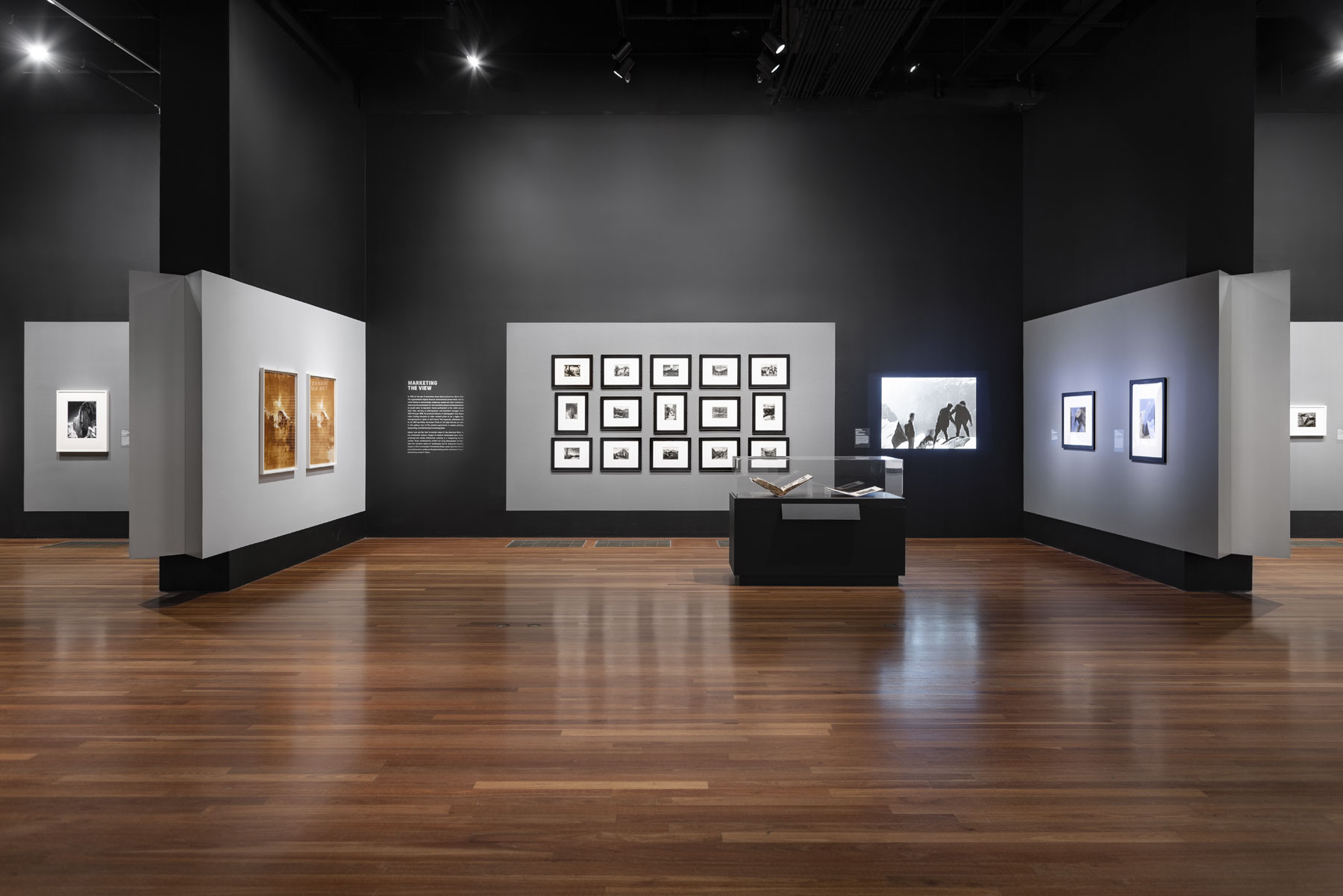
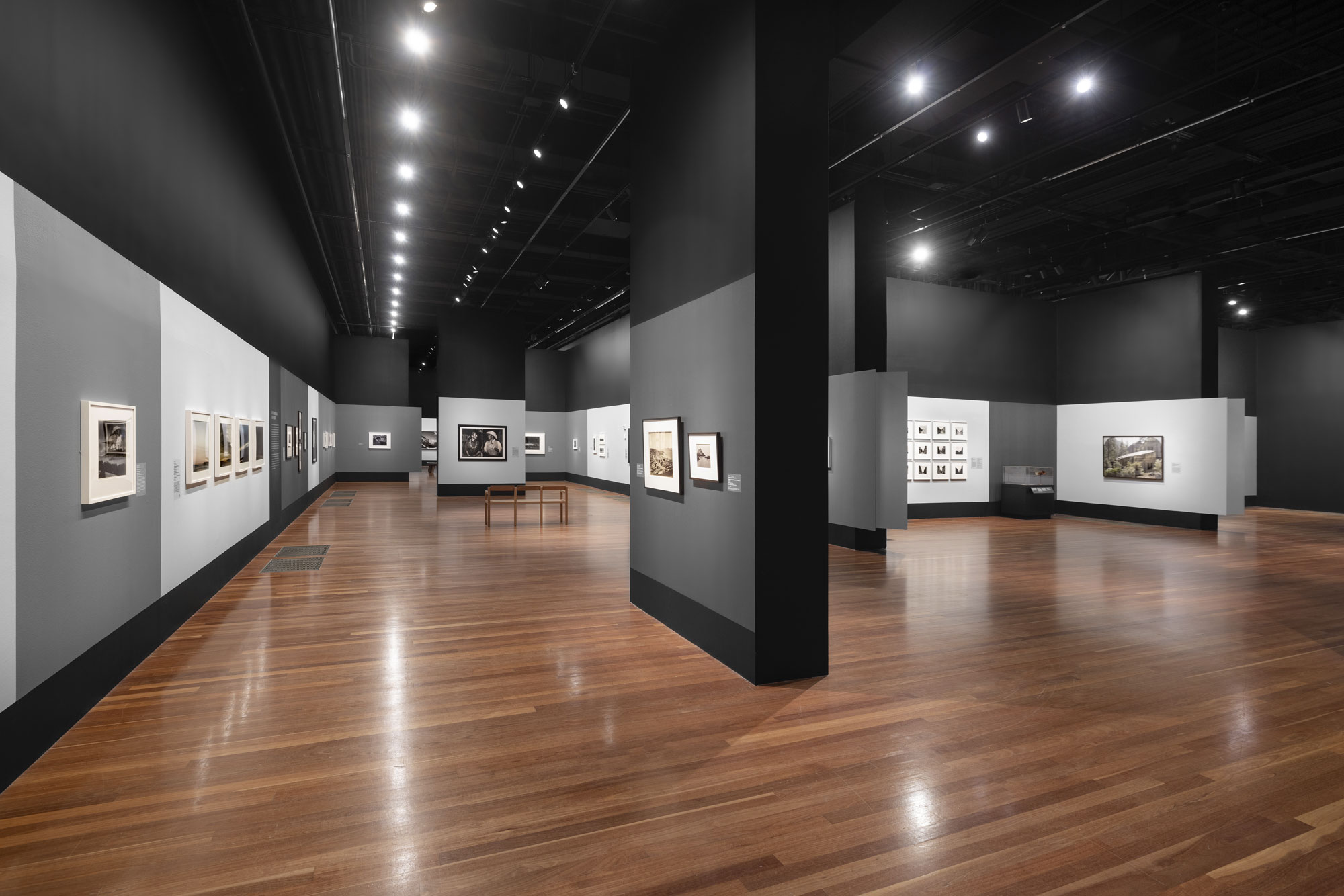
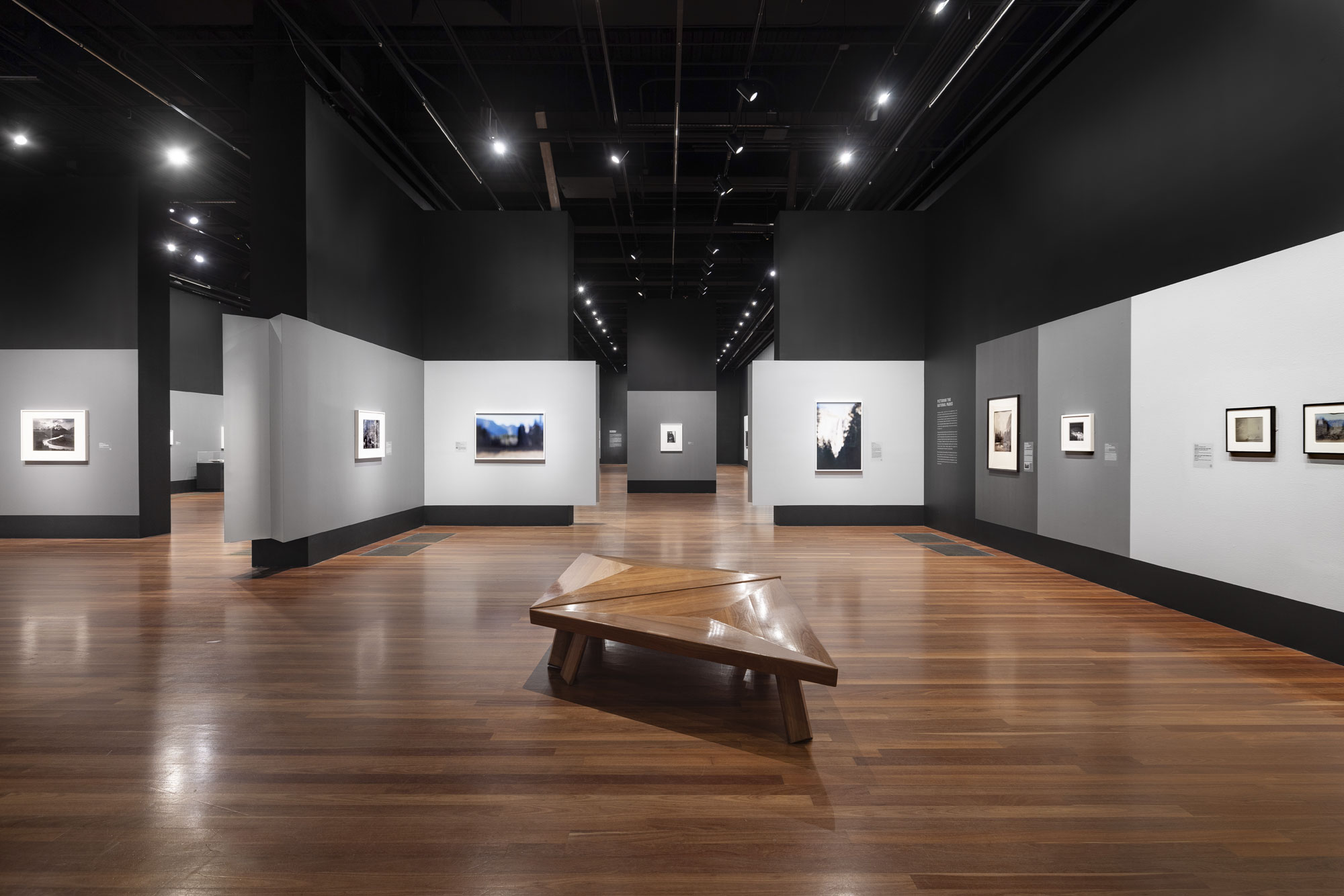
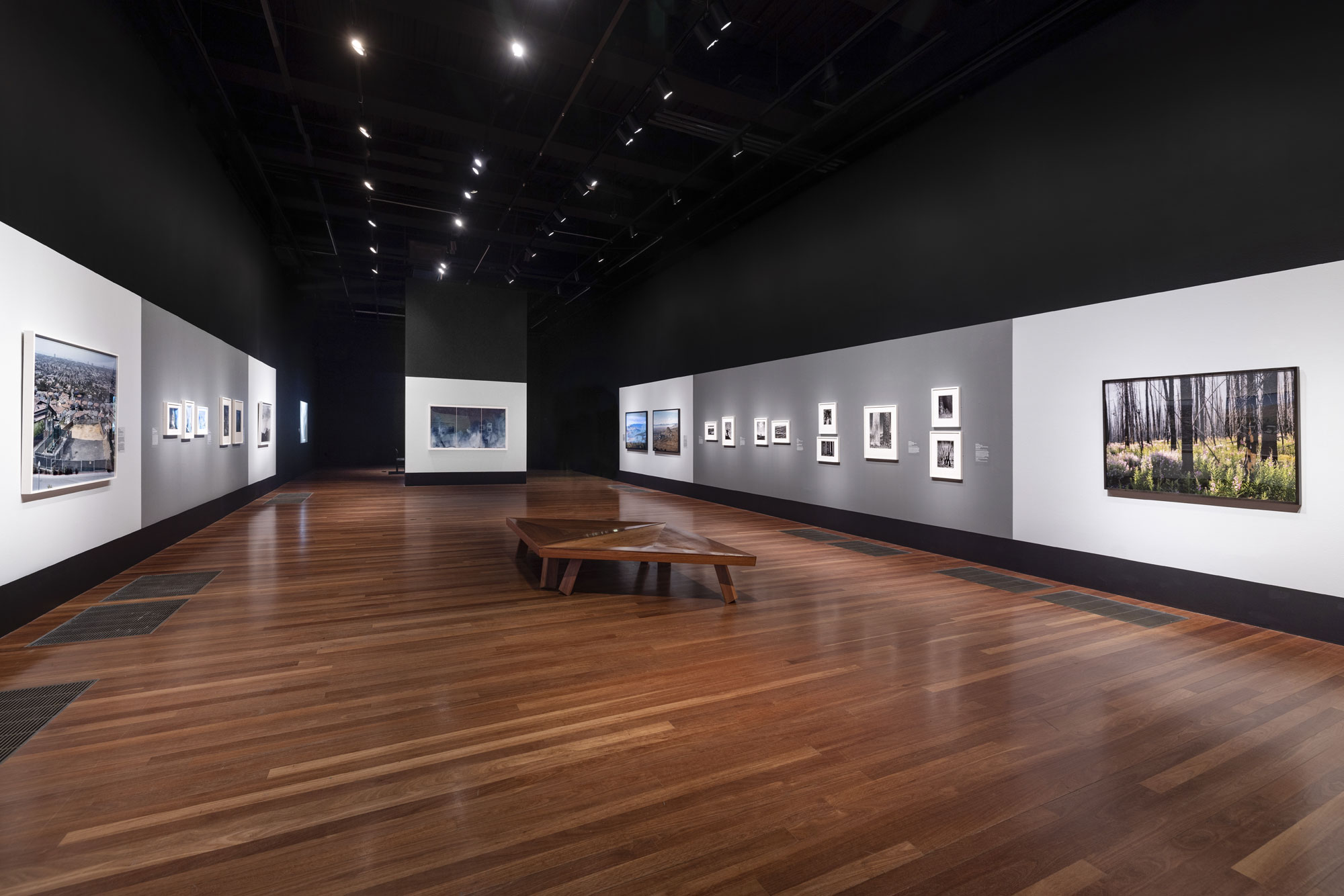
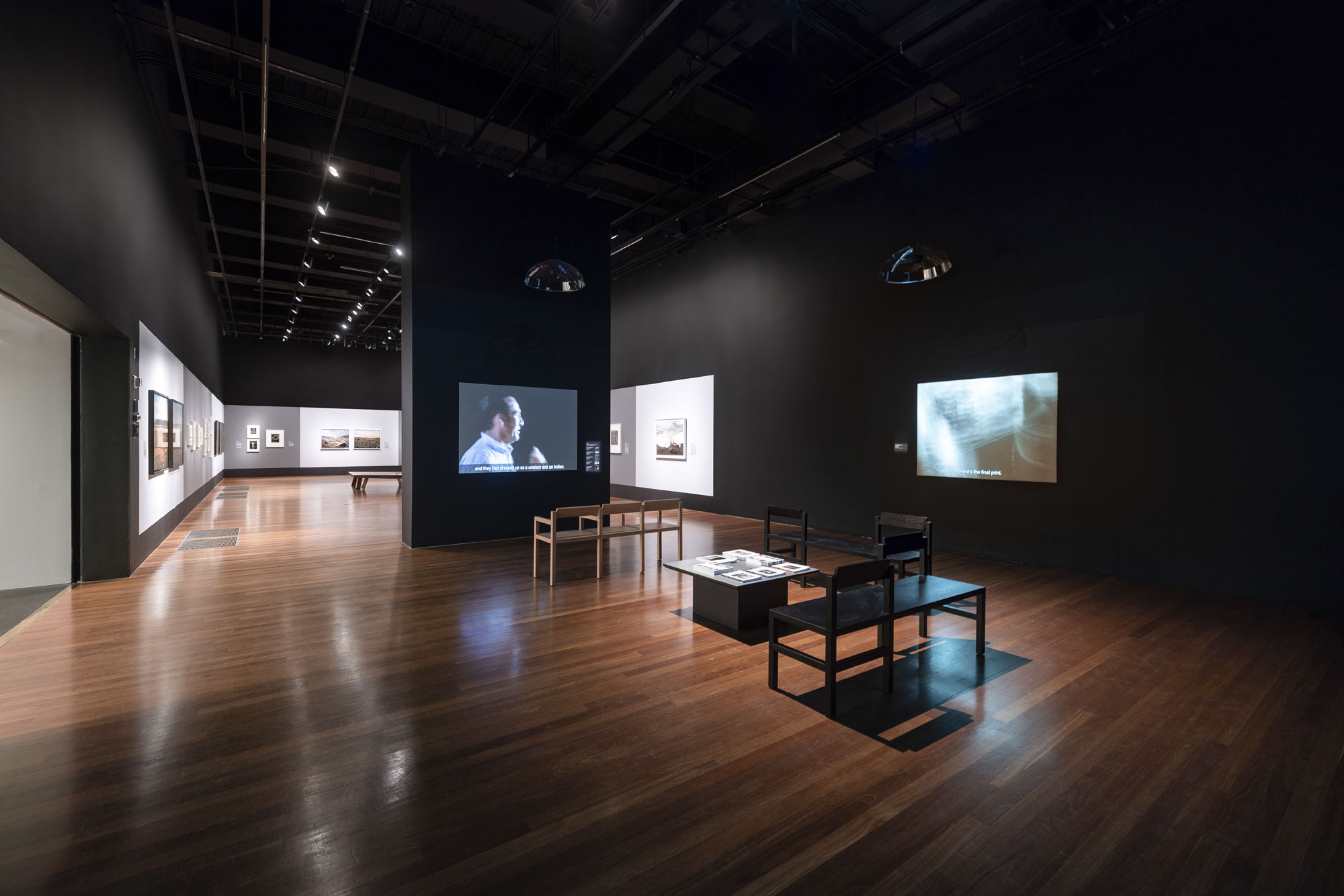
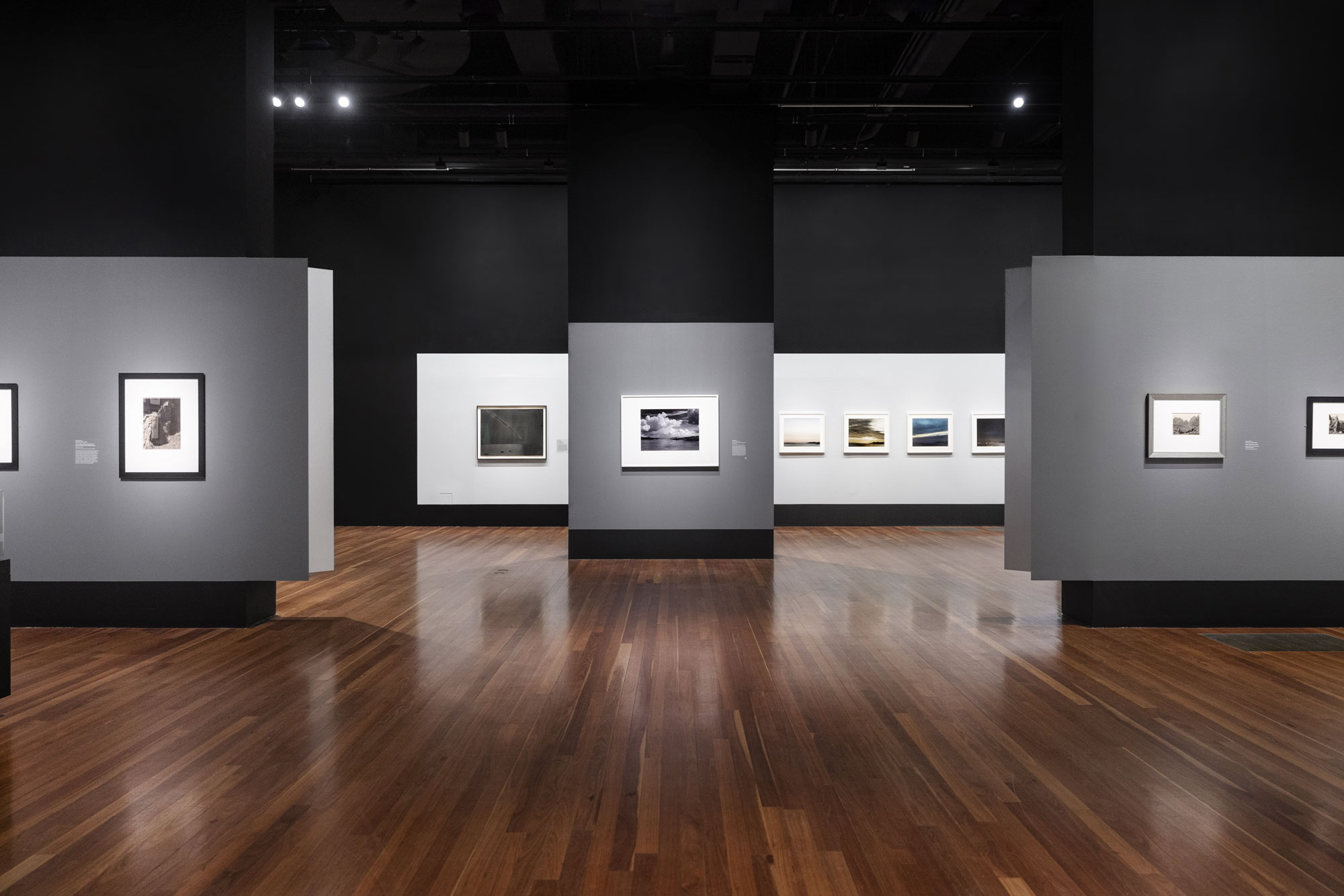
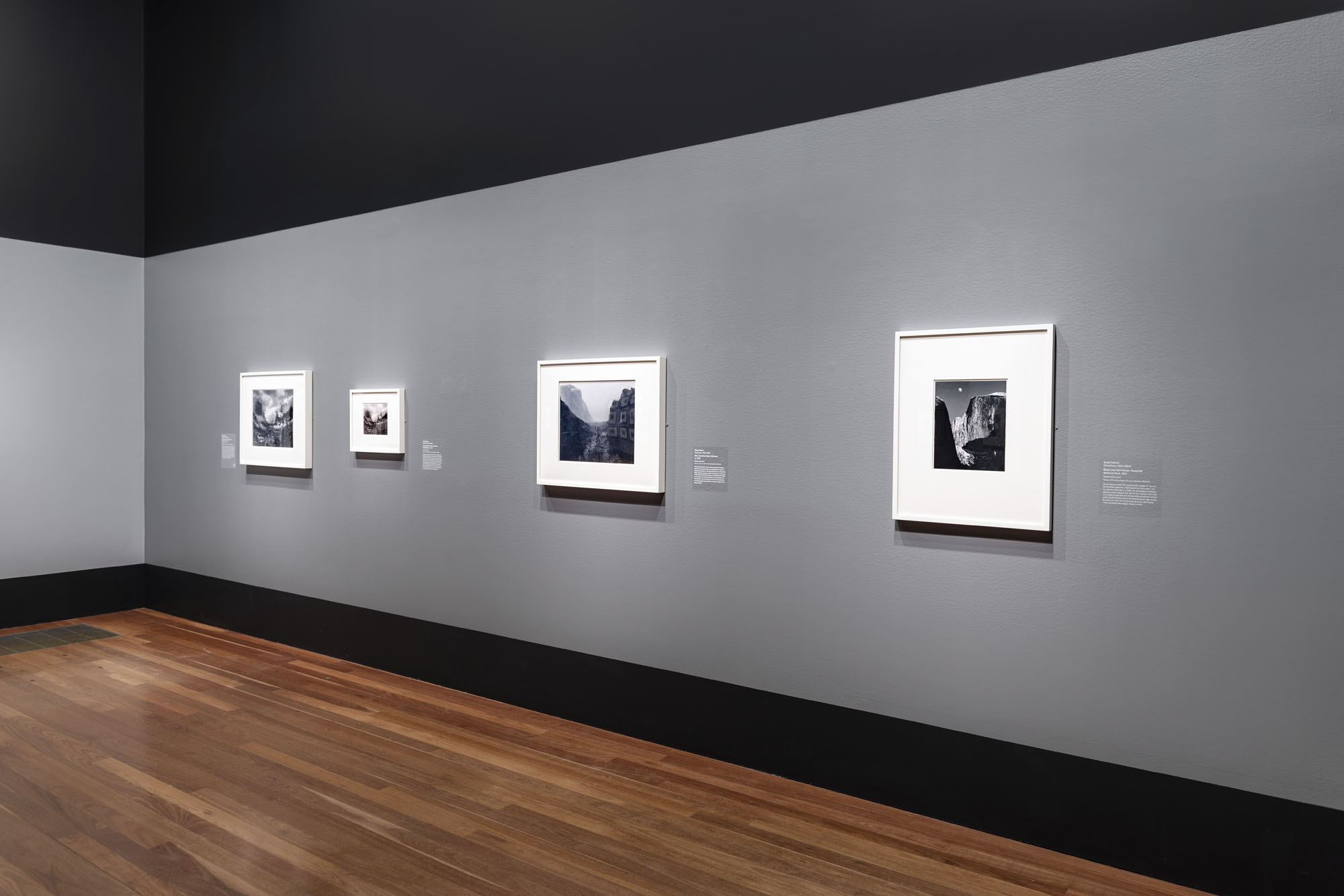
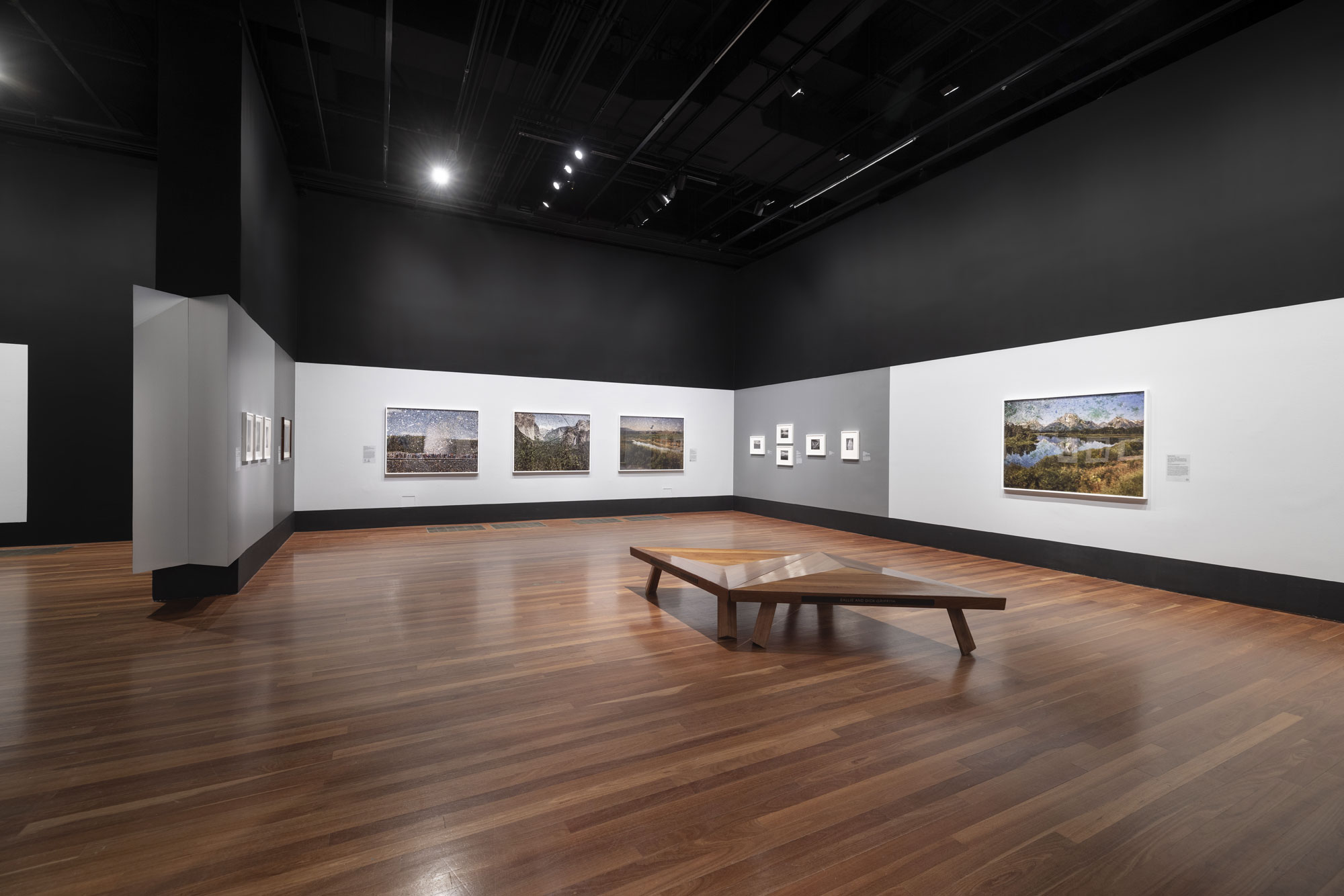
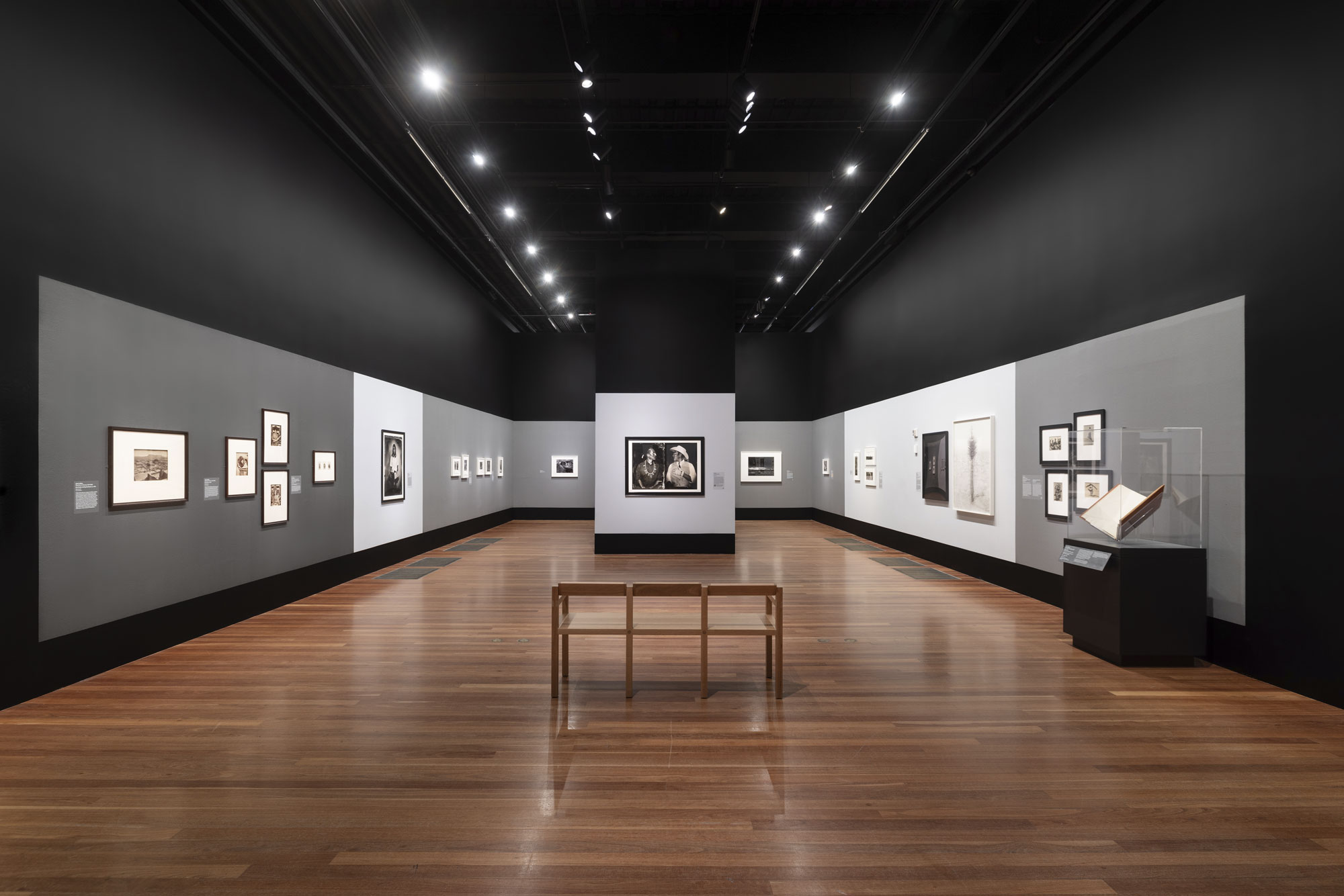
Installation view of the exhibition 'Ansel Adams in Our Time' at the de Young museum, San Francisco 

Installation view of the exhibition 'Ansel Adams in Our Time' at the de Young museum, San Francisco 

Installation view of the exhibition 'Ansel Adams in Our Time' at the de Young museum, San Francisco 

Installation view of the exhibition 'Ansel Adams in Our Time' at the de Young museum, San Francisco 

Installation view of the exhibition 'Ansel Adams in Our Time' at the de Young museum, San Francisco 


Installation views of the exhibition Ansel Adams in Our Time at the de Young museum, San Francisco
Images courtesy of the Fine Arts Museums of San Francisco
Photos: Gary Sexton


Ansel Adams in Our Time brings iconic artist home to San Francisco

Beloved for his lush gelatin silver photographs of the national parks, Ansel Adams is a giant of 20th-century photography whose images have become icons of the American wilderness. Opening April 8 at the de Young, Ansel Adams in Our Time brings more than 100 works from this self-described “California photographer” to the site of his very first museum exhibition in 1932, placing him in dialogue with 23 contemporary artists who are engaging anew with the landscapes and environmental issues that inspired Adams. The exhibition is organised by the Museum of Fine Arts, Boston, in partnership with the Fine Arts Museums of San Francisco, and enhanced at the de Young by the addition of works from the permanent collection and new interpretive framing exploring Adams’ close connection to his hometown of San Francisco.

“Ansel Adams’ photography is renowned for its formal beauty and technical prowess, but his work is equally one of advocacy,” remarked Thomas P. Campbell, Director and CEO of the Fine Arts Museums of San Francisco. “Adams was a tireless conservationist and wilderness preservationist who fully understood the power of images to sway public opinion. Ansel Adams in Our Time is exceptional in underscoring his brilliant legacy and the critical role that his works and others’ before him have played in safeguarding our national parks and other public lands.”

Instrumental to Adams’ development as a photographer was Yosemite, one of the oldest national parks in the country, which he visited regularly from the age of 14 with his Eastman Kodak Brownie camera in tow. Ansel Adams in Our Time examines the critical role that photography has played in the history of the national parks, with Adams following in the footsteps of predecessors such as Carleton Watkins, whose efforts first secured Yosemite as protected land. A longtime member of the Sierra Club, Adams would go on to perfect the rich detail and tonal range of his landscapes in service of what he called the “spiritual-emotional” aspects of parks and wilderness, conveying their restorative power to as wide an audience as possible. Presenting President Gerald Ford with a print of Yosemite: Clearing Winter Storm (c. 1937) in 1975, Adams urged, “Now, Mr. President, every time you look at this picture, I want you to remember your obligation to the national parks.”

At the de Young, the exhibition delves further into the artist’s Bay Area connections with new interpretive framing and works from the Fine Arts Museums’ permanent collection. Adams became a truly modernist photographer in San Francisco in the 1920s and 1930s, experimenting with the large-format camera that would yield the maximum depth of field and razor-sharp detail that are today considered his signature. He was a tireless champion of photography as a legitimate form of fine art. From his pristine Parmelian Prints of the High Sierras (1927), a landmark work in 20th-century photography, to images of oil derricks, ghost towns, drought conditions, and the sand dunes of Death Valley, Ansel Adams in Our Time spans the scope of the artist’s nearly seven-decade career and efforts to establish both environmental stewardship as a pillar of civic life and the photographic medium as a widely accepted art form.

The works of 23 contemporary artists, including Catherine Opie, Abelardo Morell, Binh Danh, Trevor Paglen, Mitch Epstein, and Victoria Sambunaris, among others, provide a new lens for Adams, drawing on his legacy of art as environmental activism to confront issues such as drought and fire, mining and energy, economic booms and busts, protected places and urban sprawl. The exhibition’s five thematic sections – Capturing the View, Marketing the View, San Francisco: Becoming a Modernist, Adams in the American Southwest, and Picturing the National Parks – open up new conversations around Adams’s work, looking both forward and backward in time to present a richer picture of the relationship between photography, art, environmentalism, and conceptions of landscape.

“Ansel Adams had close ties to San Francisco, and the California landscape, and the de Young museum was among the first institutions to celebrate his work when he was a rising artist,” noted Lauren Palmor, Associate Curator of American Art, who organised Ansel Adams in Our Time at the Fine Arts Museums. “His reverence for our region’s natural beauty drew him to photograph the natural diversity that can be found throughout the Bay Area over the course of his lifetime. Adams was also a tireless advocate for the environment, and the Bay Area shares that spirit as a global center of innovation in conservation and wilderness preservation today.”

Exhibition organisation

Ansel Adams in Our Time was organised by the Museum of Fine Arts, Boston, in partnership with the Fine Arts Museums of San Francisco. The exhibition was curated by Karen Haas, Lane Senior Curator of Photographs at the Museum of Fine Arts, Boston. The Presenting Sponsor is the Clare C. and Jay D. McEvoy Endowment Fund. Lead Sponsors are The Lisa and Douglas Goldman Fund and the San Francisco Auxiliary of the Fine Arts Museums. Major Support is provided by the Byers Family and The Herbst Foundation, Inc. Significant Support is provided by The Ansel Adams Gallery. Generous Support is provided by David A. Wollenberg and Merrill Private Wealth Management.

About Ansel Adams

Ansel Easton Adams (1902-1984) made indelible images of the American landscape and successfully advocated for the environment and the preservation of natural resources. Adams was born in San Francisco in 1902, and he made his first trip to Yosemite when he was just 14 years old. Transfixed by the valley’s beauty, he took his first photographs of Yosemite’s waterfalls and rock formations. Adams went on to develop his photographic practice in parallel with his environmentalist outlook.

The de Young museum hosted several important early Adams exhibitions in the 1930s, celebrating the achievements of this local photographer whose star was rapidly rising nationally: Photographs by Ansel Easton Adams (1932); the landmark Group f.64 exhibition (1932-1933), which also featured the work of Imogen Cunningham, John Paul Edwards, Preston Holder, Consuelo Kanaga, Alma Lavenson, Sonya Noskowiak, Henry Swift, Willard Ames Van Dyke, Brett Weston, and Edward Weston; and Yosemite in Four Seasons: Photographs by Ansel Adams (1935).

Adams shaped the field for other practicing photographers on both coasts, and his impact is immeasurable. In addition to teaching, he authored a celebrated series of books on photographic techniques that distilled his expertise for generations of budding photographers. Parallel to his achievements in photography, Adams dedicated himself to environmental advocacy for over seven decades. In 1980, he was awarded the Presidential Medal of Freedom, the nation’s highest civilian honor, for his artistic and environmental efforts.

Press release from the de Young website


Ansel Adams (American, 1902-1984) 'Glacier Point, Yosemite National Park' c. 1923, printed 1927 from the exhibition 'Ansel Adams in Our Time' at the de Young Museum, San Francisco, April - July, 2023


Ansel Adams (American, 1902-1984)
Glacier Point, Yosemite National Park
c. 1923, printed 1927
From the portfolio Parmelian Prints of the High Sierras, 1927
Gelatin silver print
The Lane Collection
Courtesy Museum of Fine Arts, Boston
© The Ansel Adams Publishing Rights Trust


These photographs were issued together as a portfolio by San Francisco’s Grabhorn Press in 1927. Although photographic print portfolios would become common later in the century, Parmelian Prints of the High Sierras represents one of the first attempts to market photographs in this way. Looking back on this moment in his career, a time when he was struggling to make a living and gain recognition as an artist, Ansel Adams was embarrassed by the made-up term “Parmelian” in the title. His publisher thought it was necessary because photographs were not yet considered worthy of investment by fine art collectors. Later, Adams would use the same negative of Half Dome from this series to produce the larger version of Monolith – The Face of Half Dome [below] that appears at the start of this exhibition.

Exhibition label text


Ansel Adams (American, 1902-1984) 'Banner Peak – Thousand Island Lake, Sierra Nevada, California' c. 1923, printed 1927 from the exhibition 'Ansel Adams in Our Time' at the de Young Museum, San Francisco, April - July, 2023


Ansel Adams (American, 1902-1984)
Banner Peak – Thousand Island Lake, Sierra Nevada, California
c. 1923, printed 1927
From the portfolio Parmelian Prints of the High Sierras, 1927
Gelatin silver print
The Lane Collection
Courtesy Museum of Fine Arts, Boston
© The Ansel Adams Publishing Rights Trust


Ansel Adams (American, 1902-1984) 'Sierra Junipers' 1927 


Ansel Adams (American, 1902-1984)
Sierra Junipers
1927
From the portfolio Parmelian Prints of the High Sierras, 1927
Gelatin silver print
The Lane Collection
Courtesy Museum of Fine Arts, Boston
© The Ansel Adams Publishing Rights Trust


Ansel Adams (American, 1902-1984) 'Cloud and Mountain, Kings Canyon National Park, California' c. 1925, printed 1927 


Ansel Adams (American, 1902-1984)
Cloud and Mountain, Kings Canyon National Park, California
c. 1925, printed 1927
From the portfolio Parmelian Prints of the High Sierras, 1927
Gelatin silver print
The Lane Collection
Courtesy Museum of Fine Arts, Boston
© The Ansel Adams Publishing Rights Trust


Ansel Adams (American, 1902-1984) 'Monolith - The Face of Half Dome, Yosemite National Park' 1927


Ansel Adams (American, 1902-1984)
Monolith – The Face of Half Dome, Yosemite National Park
1927, printed 1950-1960
Gelatin silver print
The Lane Collection
Courtesy Museum of Fine Arts, Boston
© The Ansel Adams Publishing Rights Trust


This majestic view of Half Dome is one of Ansel Adams’ most important and groundbreaking early photographs. Shot on a hike in the spring of 1927, it represents his first conscious “visualisation” – an image fully anticipated before he tripped the shutter, and one that for Adams captured the emotional impact of the scene. He made this enlarged print years later, but the dramatic sky and the sharp contrast between the brilliant white snow and dark ridges in the granite were recorded in 1927 when Adams took the photograph, using a deep red filter and a long exposure (made possible by the windless conditions that day).

Exhibition label text


Ansel Adams (American, 1902-1984) 'Leaves on Pool, Sierra Nevada, California' c. 1935


Ansel Adams (American, 1902-1984)
Leaves on Pool, Sierra Nevada, California
c. 1935
Gelatin silver print
The Lane Collection
Courtesy Museum of Fine Arts, Boston
© The Ansel Adams Publishing Rights Trust


Spending time in the wilderness was a spiritual experience that Ansel Adams marvelled at his entire life. Describing one such transcendent moment, he wrote: “It was one of those mornings when the sunlight is burnished with a keen wind and long feathers of clouds move in a lofty sky. … I was suddenly arrested … by an exceedingly pointed awareness of the light. The moment I paused, the full impact of the mood was upon me; I saw more clearly than I have ever seen before or since the minute detail of the grasses, the clusters of sand shifting in the wind, the small flotsam of the forest, the motion of the high clouds streaming above the peaks.”

Exhibition label text


Ansel Adams (American, 1902-1984) 'Grass and Burned Stump, Sierra Nevada, California' c. 1935


Ansel Adams (American, 1902-1984)
Grass and Burned Stump, Sierra Nevada, California
c. 1935
Gelatin silver print
The Lane Collection
Courtesy Museum of Fine Arts, Boston
© The Ansel Adams Publishing Rights Trust


Ansel Adams made this photograph near Fish Camp, south of Yosemite National Park, in an area where forest fires raged some years earlier. In his close-up view, he juxtaposes the tender shoots of new grass and the charred surface of a burned stump. This is an example of what Adams liked to call the “microscopic revelation of the lens,” which he saw as the ideal of his “straight,” sharp-focus approach to photography.

Exhibition label text


Ansel Adams (American, 1902-1984) 'Mount Williamson from Manzanar, Sierra Nevada, California' 1944


Ansel Adams (American, 1902-1984)
Mount Williamson from Manzanar, Sierra Nevada, California
1944
Gelatin silver print
The Lane Collection
Courtesy Museum of Fine Arts, Boston
© The Ansel Adams Publishing Rights Trust


On a visit to Manzanar, a Japanese internment camp, in 1944, Ansel Adams drove to the field of boulders that extends to the base of Mount Williamson. “There was a glorious storm going on in the mountains,” he wrote. “I set up my camera on the rooftop platform of my car, [which] enabled me to get a good view over the boulders to the base of the range.” The resulting photograph captures a storm passing over the distant mountain range – an awe-inspiring image that confounds all sense of scale and perspective.

Exhibition label text


Ansel Adams (American, 1902-1984) 'Birds on Wire, Evening' 1943, printed 1984


Ansel Adams (American, 1902-1984)
Birds on Wire, Evening
1943, printed 1984
Gelatin silver print
This print from the Library of Congress


A few months after Japan attacked Pearl Harbor in December 1941, people of Japanese ancestry living on the West Coast (two-thirds of whom were American citizens) were quickly rounded up, separated from homes, possessions, and businesses, and quietly relocated to remote incarceration camps.

A total of 11,070 Japanese Americans were processed through Manzanar War Relocation Center in Inyo County, California. Ansel Adams was invited to photograph Manzanar by Ralph Merritt, a Sierra Club friend who had recently been appointed director of the isolated detention center. Although he was not allowed to photograph the center’s barbed wire or guns, Adams did see himself as a kind of conscientious objector for his work documenting the site and the people forced to live there.

Adams was personally moved by the treatment of Japanese Americans in World War II when an older Japanese man who worked for his family for many years was transferred to a detention center. When Adams first went to Manzanar in 1943, he was “profoundly affected” by photographing the camp and meeting its incarcerated inhabitants. He later presented his Manzanar images in an exhibition and book entitled Born Free and Equal. Manzanar means “apple orchard” in Spanish, but agriculture in the area had suffered since the diversion of water to Los Angeles began in 1913. Nonetheless, the internees were responsible for raising much of their own food in the fields near the camp.

Exhibition label text


Ansel Adams (American, 1902-1984) 'Potato Field, North Farm, Manzanar' 1943, printed 1984


Ansel Adams (American, 1902-1984)
Potato Field, North Farm, Manzanar
1943, printed 1984
Gelatin silver print
This print from the Library of Congress


Ansel Adams (American, 1902-1984) 'Mount McKinley and Wonder Lake, Alaska' 1948


Ansel Adams (American, 1902-1984)
Mount McKinley and Wonder Lake, Alaska
1948
Gelatin silver print
The Lane Collection
Courtesy Museum of Fine Arts, Boston
© The Ansel Adams Publishing Rights Trust


Ansel Adams shot this image of Mount McKinley in Denali National Park at 1:30 in the morning, just two hours after the setting of the midsummer sun. He described, “As the sun rose, the clouds lifted, and the mountain glowed an incredible shade of pink. Laid out in front of Mount McKinley, Wonder Lake was pearlescent against the dark embracing arms of the shoreline. I made what I visualised as an inevitable image. The scale of this great mountain is hard to believe – the camera and I were thirty miles from McKinley’s base.”

Exhibition label text


Ansel Adams (American, 1902-1984) 'Rails and Jet Trails, Roseville, California' c. 1953


Ansel Adams (American, 1902-1984)
Rails and Jet Trails, Roseville, California
c. 1953
Gelatin silver print
The Lane Collection
Courtesy Museum of Fine Arts, Boston
© The Ansel Adams Publishing Rights Trust


Marketing the view

In 1919, at the age of seventeen, Ansel Adams joined the Sierra Club. The organisation’s original focus on environmental preservation, and its initial failure to acknowledge Indigenous people and their homelands, helped lay the groundwork for the twentieth-century environmentalism he would come to represent. Adams participated in the club’s annual High Trips, serving as photographer and assistant manager from 1930 through 1936. He produced albums of photographs from these treks, inviting members to order contact prints or, for a higher fee, enlargements in “plain or soft-focus.” His ingenuity ultimately lad to his 1927 portfolio, Parmesan Prints of the High Sierras, on view in this gallery – one of the earliest experiments in custom printing, sequencing, and distributing fine photographs.

Adams was not the first to market view of the American West. In the nineteenth century, images of western landscapes were mass-produced and widely distributed, catering to a burgeoning tourist market. Today, contemporary artists are using photography to highlight the dynamic nature of landscapes and to document humans’ impact on the environment. Sometimes these works take the form of extended series or grids, as though invoking earlier methods of mass-distributing western views.

Exhibition wall text


Carleton E. Watkins (American, 1829-1916) 'The Golden Gate from Telegraph Hill, San Francisco' 1868


Carleton E. Watkins (American, 1829-1916)
The Golden Gate from Telegraph Hill, San Francisco
1868
Albumen silver print from wet-collodion-on-glass negative
Fine Arts Museums of San Francisco
Museum purchase Prints and Drawings Art Trust Fund


Installation view of the exhibition 'Ansel Adams in Our Time' at the de Young museum, San Francisco 

Installation view of the exhibition 'Ansel Adams in Our Time' at the de Young museum, San Francisco 


Installation views of the exhibition Ansel Adams in Our Time at the de Young museum, San Francisco showing at centre Adams’ The Golden Gate Before the Bridge (1932, below)
Images courtesy of the Fine Arts Museums of San Francisco
Photos: Gary Sexton


San Francisco: Becoming a Modernist

San Francisco is where Ansel Adams became a modernist photographer. He grew up in present-day Sea Cliff, where his family home overlooked the Presidio to the Marin Headlands beyond. These views made a lasting impact on his photographs – he later described constantly returning to the elements of nature that surrounded him in his childhood. Adams’ first exhibition, featuring photographs he took on Sierra Club hikes, was held at the club’s headquarters on Montgomery Street in 1928. Convinced that he could make a living as a photographer, he acquired a large-format camera and became an advocate of “straight” (unmanipulated) photography, leaving behind the soft-focus aesthetic of his earlier work. He experimented with abstraction and extreme close-ups, capturing texture and clarity of detail. He recorded cloud-filled skies and depicted landscapes as seemingly infinite spaces devoid of people. During the Great Depression, Adams began photographing a wider range of subjects, including the challenging reality of urban life in San Francisco and the region’s changing landscape. The latter included the construction of the Golden Gate Bridge (1937), which radically transformed the views of San Francisco Bay that had captivated Adams in his youth.

Golden Gate Bridge

Ansel Adams made this photograph [below] near his family home the year before construction began on the Golden Gate Bridge. He later recalled, “One beautiful storm-clearing morning, I looked out the window of our San Francisco home and saw magnificent clouds rolling from the north over the Golden Gate. I grabbed the 8-by-10 equipment and drove to the end of 32nd Avenue, at the edge of Sea Cliff. I dashed along the old Cliff house railroad bed for a short distance, then down to the crest of a promontory. From there grand view of the Golden Gate commanded me to set up the heavy tripod, attach the camera and lens, and focus on the wonderful evolving landscape of clouds.”

Exhibition wall text


Ansel Adams (American, 1902-1984) 'The Golden Gate Before the Bridge' 1932


Ansel Adams (American, 1902-1984)
The Golden Gate Before the Bridge
1932
Gelatin silver print
The Lane Collection
Courtesy Museum of Fine Arts, Boston
© The Ansel Adams Publishing Rights Trust


Richard Misrach (American, b. 1949) 'Golden Gate Bridge, 10.31.98, 5:18 pm' 1998, printed 2016


Richard Misrach (American, b. 1949)
Golden Gate Bridge, 10.31.98, 5:18 pm
1998, printed 2016
Pigment prints
Courtesy of Fraenkel Gallery, San Francisco


In 1997, Richard Misrach began what would become a three-year project photographing the Golden Gate Bridge from his porch in the Berkeley Hills. Placing his large-format 8-by-10-inch camera in the same position on each occasion, Misrach recorded hundreds of views of the distant span, at various times of day and in every season, set off against the constantly changing sky. The series was reissued in 2012 to mark the occasion of the seventy-fifth anniversary of the bridge’s landmark opening.

Exhibition label text


Richard Misrach (American, b. 1949) 'Golden Gate Bridge, 12.19.99, 7:31 am' 1999, printed 2020


Richard Misrach (American, b. 1949)
Golden Gate Bridge, 12.19.99, 7:31 am
1999, printed 2020
Pigment prints
Courtesy of Fraenkel Gallery, San Francisco


Picturing National Parks

Photography played a critical role in the establishment of the national parks. The dramatic views made by Carleton Watkins and other nineteenth-century photographers ultimately helped convince government officials to protect Yosemite and Yellowstone from private development. However, the formation of the national parks further dispossessed Indigenous people of their ancestral lands, overlooking their ongoing stewardship of the land and restricting their access to it.

Although Ansel Adams claimed he never intentionally made a creative photograph that related directly to an environmental issue, he was aware of an image’s power to sway opinions on conservation. Adams’ photographs of King’s River Canyon [below] helped the Sierra Club successfully campaign to establish the site as a national park. Over the following years, Adams photographed national parks from Alaska to Texas, Hawaii to Maine, creating images that conveyed the transformative power of the parks to a wide audience.

Many contemporary artists working in the national parks acknowledge, as Adams did, the efforts of the photographers who came before them. But the complicated legacies – and uncertain futures – of these protected lands have led some photographers to take more personal and political approaches to the work they are making in these places.

Exhibition wall text


Ansel Adams (American, 1902-1984) 'Lake near Muir Pass, Kings Canyon National Park, California' 1933


Ansel Adams (American, 1902-1984)
Lake near Muir Pass, Kings Canyon National Park, California
1933
Gelatin silver print
The Lane Collection
Courtesy Museum of Fine Arts, Boston
© The Ansel Adams Publishing Rights Trust


Ansel Adams made this photograph while on a Sierra Club outing in Kings River Canyon. Three years later, he represented the club at a congressional hearing in Washington, DC. Armed with photographs like this one, he argued successfully for the transfer of Kings River Canyon from the Forest Service to the National Park Service. When it became a national park in 1940, the director of the Park Service wrote to Adams, saying, “I realise that a silent but most effective voice in the campaign was your book Sierra Nevada – John Muir Trail. As long as that book is in existence, it will go on justifying the park.”

Exhibition label text


Installation view of the exhibition 'Ansel Adams in Our Time' at the de Young museum, San Francisco showing at left, 'Clearing Winter Storm, Yosemite National Park' (about 1937); at centre, 'Rain, Yosemite Valley, California' (c. 1940); and at right, 'Moon and Half Dome, Yosemite National Park' (1960)


Installation view of the exhibition Ansel Adams in Our Time at the de Young museum, San Francisco showing at left, Clearing Winter Storm, Yosemite National Park (about 1937, below); at centre, Rain, Yosemite Valley, California (c. 1940, below); and at right, Moon and Half Dome, Yosemite National Park (1960, below)
Images courtesy of the Fine Arts Museums of San Francisco
Photos: Gary Sexton


Ansel Adams (American, 1902-1984) 'Clearing Winter Storm, Yosemite National Park' About 1937


Ansel Adams (American, 1902-1984)
Clearing Winter Storm, Yosemite National Park
About 1937
Gelatin silver print
The Lane Collection
Courtesy Museum of Fine Arts, Boston
© The Ansel Adams Publishing Rights Trust


Ansel Adams described photographs like Monolith and Clearing Winter Storm as his “Mona Lisas”: images so popular with the public that they were printed countless times over the course of his long career. He took this remarkable photograph from Yosemite’s Inspiration Point soon after a sudden rainstorm turned to snow and then, just as swiftly, began to clear. It records an expansive valley view that Adams had attempted on several previous occasions but never been successful in rendering in such shimmering detail. Trained as a pianist, Ansel Adams often compared the photographic negative to a musical score and described each print from a particular negative as an individual performance of that score.

Exhibition label text


Ansel Adams (American, 1902-1984) 'Rain, Yosemite Valley, California' c. 1940


Ansel Adams (American, 1902-1984)
Rain, Yosemite Valley, California
c. 1940
Gelatin silver print
The Lane Collection
Courtesy Museum of Fine Arts, Boston
© The Ansel Adams Publishing Rights Trust


Like Clearing Winter Storm [above], this photograph features what the nineteenth-century photographer Carleton E. Watkins described as “the best general view” of Yosemite Valley, with the massive granite outcropping of El Capitan on the left and the silvery stream of Bridalveil Fall visible on the right. Yet here Yosemite’s famous features are shrouded in mist, and the pine tree in the foreground, its needles glistening with rain, stands in place of the distant peaks.

Exhibition label text


Installation view of the exhibition 'Ansel Adams in Our Time' at the de Young museum, San Francisco showing at left, Abelardo Morell's 'Tent-Camera Image on Ground: View of Mount Moran and the Snake River from Oxbow Bend, Grand Teton National Park, Wyoming' (2011); and at centre Adams' 'The Tetons and Snake River, Grand Teton National Park, Wyoming' (1942)


Installation view of the exhibition Ansel Adams in Our Time at the de Young museum, San Francisco showing at left, Abelardo Morell’s Tent-Camera Image on Ground: View of Mount Moran and the Snake River from Oxbow Bend, Grand Teton National Park, Wyoming (2011, below); and at centre Adams’ The Tetons and Snake River, Grand Teton National Park, Wyoming (1942, below)
Images courtesy of the Fine Arts Museums of San Francisco
Photos: Gary Sexton


Ansel Adams (American, 1902-1984) 'The Tetons and Snake River, Grand Teton National Park, Wyoming' 1942


Ansel Adams (American, 1902-1984)
The Tetons and Snake River, Grand Teton National Park, Wyoming
1942
Gelatin silver print
The Lane Collection
Courtesy Museum of Fine Arts, Boston
© The Ansel Adams Publishing Rights Trust


Ansel Adams (American, 1902-1984) 'Lake McDonald, Evening, Glacier National Park, Montana' 1942


Ansel Adams (American, 1902-1984)
Lake McDonald, Evening, Glacier National Park, Montana
1942
Gelatin silver print
The Lane Collection
Courtesy Museum of Fine Arts, Boston
© The Ansel Adams Publishing Rights Trust


Ansel Adams (American, 1902-1984) 'Old Faithful Geyser, Yellowstone National Park, Wyoming' 1942


Ansel Adams (American, 1902-1984)
Old Faithful Geyser, Yellowstone National Park, Wyoming
1942
Gelatin silver print
The Lane Collection
Courtesy Museum of Fine Arts, Boston
© The Ansel Adams Publishing Rights Trust


Ansel Adams began writing how-to books on photography in the mid-1930s, but he is best known for his series of technical books, including Camera and Lens, The Negative, The Print, and Natural Light Photography. In one of his later books, he uses an image of a Yellowstone geyser as an example of a particularly challenging subject that defies light-meter readings and tests a photographer’s ability to “visualise” in advance something so inherently fleeting and unpredictable. “It is difficult to conceive of a substance more impressively brilliant than the spurting plumes of white waters in sunlight against a deep blue sky,” he wrote.

Exhibition label text


Ansel Adams (American, 1902-1984) 'Grass and Reflections, Lyell Fork of the Merced River, Yosemite National Park' About 1943


Ansel Adams (American, 1902-1984)
Grass and Reflections, Lyell Fork of the Merced River, Yosemite National Park
About 1943
Gelatin silver print
The Lane Collection
Courtesy Museum of Fine Arts, Boston
© The Ansel Adams Publishing Rights Trust


Lyell Fork was one of Ansel Adams’ favourite locations from his earliest years as a photographer in Yosemite. It was a place he also loved introducing to others—he took Georgia O’Keeffe and photography collector David McAlpin there when they hiked into the backcountry in 1938. Reflected in the placid water are several distant peaks, the most prominent of which was named Mount Ansel Adams after the photographer’s death in 1984.

Exhibition label text


The Other Side of the Mountain

Ansel Adams made his reputation mainly through images of beautiful, seemingly unspoiled nature. Less well known are the images he produced in California’s Death Valley and Owens Valley [below], southeast of Yosemite. Yet he was drawn to these more forbidding landscapes multiple times – occasionally lured by a book or magazine project but often of his own volition.

Here, on the dry side of the Sierra Nevada, Adams and his work took a dramatic detour. The photographer Edward Weston introduced Adams to Death Valley, where he photographed sand dunes, salt flats, and sandstone canyons. Owens Valley was once farmland, but its residents struggled after their water supply was diverted to the growing city of Los Angeles. In 1943, Adams first traveled to nearby Manzanar, where he photographed Japanese Americans forcibly relocated to internment camps shortly after the US entered World War II. The resulting series explores the tension between the area’s open spaces and the physical restrictions imposed upon internees.

Contemporary photographers continue to find compelling subjects in these remote places. Their images explore the raw beauty of the terrain and the sometimes unsettling ways it is used today – including as the site of maximum-security prisons and clandestine military projects carried out under wide skies.

Exhibition wall text


Ansel Adams (American, 1902-1984) 'Burned Trees, Owens Valley, California' Negative date: about 1936


Ansel Adams (American, 1902-1984)
Burned Trees, Owens Valley, California
Negative date: about 1936
Gelatin silver print
The Lane Collection
Courtesy Museum of Fine Arts, Boston
© The Ansel Adams Publishing Rights Trust


Installation view of the exhibition 'Ansel Adams in Our Time' at the de Young museum, San Francisco showing at left, 'Salt Flats Near Wendover, Utah' (1953); at second left, 'Self‑Portrait, Monument Valley, Utah' (1958); at second left 'Trees Near Washburn Point, Illiloutte Ridge, Yosemite Valley' (c. 1945); and at bottom right, 'Burned Trees, Owens Valley, California' (1936)


Installation view of the exhibition Ansel Adams in Our Time at the de Young museum, San Francisco showing at left, Salt Flats Near Wendover, Utah (1953, above); at second left, Self‑Portrait, Monument Valley, Utah (1958, below); at second left Trees Near Washburn Point, Illiloutte Ridge, Yosemite Valley (c. 1945, below); and at bottom right, Burned Trees, Owens Valley, California (1936, above)
Image courtesy of the Fine Arts Museums of San Francisco
Photo: Gary Sexton


Ansel Adams (American, 1902-1984) 'Self‑Portrait, Monument Valley, Utah' 1958


Ansel Adams (American, 1902-1984)
Self‑Portrait, Monument Valley, Utah
1958
Gelatin silver print
The Lane Collection
Courtesy Museum of Fine Arts, Boston
© The Ansel Adams Publishing Rights Trust


This unusual self-portrait depicts Ansel Adams, light meter in hand, standing next to his large-format camera and tripod. He made this image of his shadow falling across a fissured rock face while in Monument Valley to shoot a Colorama for display in New York’s Grand Central Station. Sponsored by Eastman Kodak, Coloramas were panoramic, backlit transparencies, almost eighteen feet high and sixty feet long, whose sweeping scale and luminous colour were the antithesis of this intimate image that Adams shot while waiting for the weather to cooperate.

Exhibition label text


Ansel Adams (American, 1902-1984) 'Trees, Illilouette Ridge, Yosemite National Park' c. 1945


Ansel Adams (American, 1902-1984)
Trees, Illilouette Ridge, Yosemite National Park
c. 1945
Gelatin silver print
The Lane Collection
Courtesy Museum of Fine Arts, Boston
© The Ansel Adams Publishing Rights Trust


This stunning double portrait records a pair of massive tree trunks following a fire. The Illilouette Ridge is an area of Yosemite National Park that lies between Glacier Point and the valley floor. In recent decades, the Illilouette Creek basin has been the focus of an environmental study to measure the potential benefit of managing fires with minimal suppression and fewer controlled burns on the overall health and diversity of forests.

Exhibition label text


Ansel Adams (American, 1902-1984) 'Marin Hills from Lincoln Park, San Francisco' Negative date: 1952


Ansel Adams (American, 1902-1984)
Marin Hills from Lincoln Park, San Francisco
Negative date: 1952
Gelatin silver print
The Lane Collection
Courtesy Museum of Fine Arts, Boston
© The Ansel Adams Publishing Rights Trust


Ansel Adams (American, 1902-1984) 'Moon and Half Dome, Yosemite National Park' 1960


Ansel Adams (American, 1902-1984)
Moon and Half Dome, Yosemite National Park
1960
Gelatin silver print
The Lane Collection
Courtesy Museum of Fine Arts, Boston
© The Ansel Adams Publishing Rights Trust


Ansel Adams made this spectacular image of two of his favourite subjects – Half Dome and the moon – on an autumn afternoon in 1960. He witnessed a brilliant gibbous moon rising to the left fo the vertical rock face and, using a long lens and orange filter, carefully framed what would become one of his most popular late works. “As soon as I saw the moon coming up by Half Dome, I had visualised the image,” Adams wrote.

Exhibition label text


Ansel Adams (American, 1902-1984) 'Housing Development, San Bruno Mountains, San Francisco' About 1966


Ansel Adams (American, 1902-1984)
Housing Development, San Bruno Mountains, San Francisco
About 1966
Gelatin silver print
The Lane Collection
Courtesy Museum of Fine Arts, Boston
© The Ansel Adams Publishing Rights Trust


In the 1950s and 1960s, Ansel Adams often recorded urban subjects like this view looking toward San Bruno Mountain, just south of San Francisco. Here Adams documents one of the many tract housing developments built during this period, as it snakes across the steep hillsides surrounding the rapidly growing city.

Exhibition label text


Carleton E. Watkins (American, 1829-1916) 'Mount Starr King and Glacier Point, Yosemite, No. 69' 1865-1866


Carleton E. Watkins (American, 1829-1916)
Mount Starr King and Glacier Point, Yosemite, No. 69
1865-1866
Mammoth albumen print from wet collodion negative
Ernest Wadsworth Longfellow Fund
Courtesy Museum of Fine Arts, Boston


Carleton E. Watkins took this photograph from the floor of Yosemite Valley while working for the California State Geological Survey in the mid-1860s. It is a more intimate and less sweeping view than the photograph Watkins self-described as the “best general view of Yosemite” (below), which presents the most recognisable features of the landscape.

Mount Starr King, the distant peak at centre, was named for Thomas Starr King, the Unitarian minister from Boston whose life and ministry were powerfully influenced by his experiences in the Yosemite wilderness. Ansel Adams later shared his “disregard for the naming of things and [his skepticism] of those non-professionals who go through the wilderness classifying and labelling everything in sight.”

Exhibition label text


Carleton Watkins. 'Yosemite Valley from the Best General View No.2.' 1866


Carleton E. Watkins (American, 1829-1916)
Yosemite from the Best General View No. 2
1866


Installation view of the exhibition 'Ansel Adams in Our Time' at the de Young museum, San Francisco showing at left, Adams' 'The Golden Gate Before the Bridge' (1932); and at second right, Eadweard J. Muybridge's 'Valley of the Yosemite from Union Point, No. 33' (1872)


Installation view of the exhibition Ansel Adams in Our Time at the de Young museum, San Francisco showing at left, Adams’ The Golden Gate Before the Bridge (1932, above); and at second right, Eadweard J. Muybridge’s Valley of the Yosemite from Union Point, No. 33 (1872, below)
Image courtesy of the Fine Arts Museums of San Francisco
Photo: Gary Sexton


Eadweard J. Muybridge (American, 1830-1904) 'Valley of the Yosemite from Union Point, No. 33' 1872


Eadweard J. Muybridge (American, 1830-1904)
Valley of the Yosemite from Union Point, No. 33
1872
Albumen print
Gift of Charles T. and Alma A. Isaacs
Courtesy Museum of Fine Arts, Boston


Eadweard Muybridge first came to Yosemite in the 1860s. Capitalising on the growing popularity of wilderness landscape subjects, he stayed for six months, making large-format albumen prints and stereo views. Hoping to compete with Carleton E. Watkins’s earlier grand vistas, he returned in 1872 with a mammoth-plate camera. Often, Muybridge shot his atmospheric images from unusual perspectives, with sharp contrasts between foreground and background, light and shadow. This is evident in this photograph taken from Union Point, which provided a closer view of the valley and a greater sense of three-dimensional space than the better-known Glacier Point above.

Exhibition label text


Frank Jay Haynes (American, 1853-1921) 'Grand Canyon of Yellowstone and Falls' About 1887


Frank Jay Haynes (American, 1853–1921)
Grand Canyon of Yellowstone and Falls
About 1887
Albumen print
Sophie M. Friedman Fund
Courtesy Museum of Fine Arts, Boston


Frank Jay Haynes was one of the second generation of photographers to be employed by the railroads and government surveys in the American West in the late nineteenth century. In 1884, he was named official photographer and concessionaire of Yellowstone to serve the growing numbers of tourists coming to visit the first national park. Yellowstone is situated on top of a massive subterranean volcano, which produces its active hot springs and towering geysers, such as Old Faithful. For his photograph of the Grand Canyon of the Yellowstone River, Haynes used a mammoth-plate camera to produce a large glass negative, from which he made this highly detailed contact print.

Exhibition label text


Bryan Schutmaat (American, b. 1983) 'Tonopah, NV' Nd


Bryan Schutmaat (American, b. 1983)
Tonopah, NV
Nd
Inkjet print
Gift of Jessie H. Wilkinson – Jessie H. Wilkinson Fund
Courtesy Museum of Fine Arts, Boston
© Bryan Schutmaat


These Nevada landscapes are from Grays the Mountain Sends, a series that depicts the landscapes, structures, and residents of former mining towns. Bryan Schutmaat seeks out these far-flung mountain communities, now mostly abandoned due to the loss of their mineral wealth.

Not unlike Ansel Adams’ fleeting view of Hernandez, New Mexico, first seen in his rearview mirror, Schutmaat’s vision is that of an extended road trip. And like Adams, he is drawn to the methodical way that his large-format camera forces him to work. He waits patiently for the changing light to activate a scene. For Schutmaat, each town’s deserted structures and lonely inhabitants stand as last “relics of hope” and proof of the tragic demise of the American dream. The fragile, hardscrabble beauty of these modern-day ghost towns is also a powerful reminder of the region’s uncertain future and its long history of economic booms and busts.

Exhibition label text


Installation view of the exhibition 'Ansel Adams in Our Time' at the de Young museum, San Francisco showing at foreground left and right, works by Mark C. Klett


Installation view of the exhibition Ansel Adams in Our Time at the de Young museum, San Francisco showing at foreground left and right, works by Mark C. Klett (below)
Image courtesy of the Fine Arts Museums of San Francisco
Photo: Gary Sexton


Mark C. Klett (American, b. 1952) and Byron Wolfe (American, b. 1967) 'View from the handrail at Glacier Point overlook, connecting views from Ansel Adams to Carleton Watkins' 2003


Mark C. Klett (American, b. 1952) and Byron Wolfe (American, b. 1967)
View from the handrail at Glacier Point overlook, connecting views from Ansel Adams to Carleton Watkins
2003
Archival pigment print
© Mark Klett & Byron Wolfe
Courtesy Etherton Gallery
Courtesy Museum of Fine Arts, Boston


“[Ansel Adams’] depopulated scenes suggest that the landscape does best without our presence, and that wilderness is an entity defined by our absence. However, anyone who has visited the site of one of Adams’ photographs knows that the romance of his landscapes is often best experienced in the photographs themselves. The reality of place is quite different. … The natural beauty of the land is still there to be seen, but you will not see it alone.” ~ Mark Klett

Mark Klett has photographed and rephotographed the western American landscape for more than thirty years. With his longtime collaborator, Byron Wolfe, Klett carefully studies prints by Carleton E. Watkins and other nineteenth-century wilderness photographers, as well as twentieth-century modernists like Ansel Adams. By studying the shadows, they determine the time of year and time of day that an image was made. Once on-site, Klett photographs the view with Polaroid film, and Wolfe measures that image against the original photograph, repeating the process until they locate exactly where the earlier photographer stood. By visually collapsing time and space in this composite panorama of Yosemite Valley, Klett and Wolfe document changes to the landscape over more than a century.

Exhibition label text


The Changing Landscape

In his own time, Ansel Adams was aware of the environmental concerns facing California and the nation. Although Adams continued to make symphonic and pristine wilderness landscapes, as his career progressed, he began to create images that showed a more nuanced vision – images that decidedly break with widely held ideas about his work. He photographed urban sprawl, freeways, graffiti, oil drilling, ghost towns, rural cemeteries, mining towns, and the sometimes-dispossessed inhabitants of those places, as well as less romantic views of nature, such as the aftermath of forest fires.

Appreciated for their imagery and formal qualities, Adams’ photo-graphs also carry a message of advocacy. Photographers working in the American West today confront a changed, and changing, landscape. Human activity – urbanisation, logging, mining, ranching, irrigated farming – and global warming continue to alter the terrain. Works by contemporary artists bear witness to these changes and their impacts, countering notions that our natural resources are limitless. Placed in conversation with Adams’ photographs, these images aid our understanding of his singular contribution to the ways we envision the landscape and the urgency with which we must protect it.

Exhibition wall text


Arno Rafael Minkkinen (American born Finland, b. 1945) 'Homage to Watkins, Yosemite' 2007


Arno Rafael Minkkinen (American born Finland, b. 1945)
Homage to Watkins, Yosemite
2007
Inkjet print
Sophie M. Friedman Fund
Courtesy Museum of Fine Arts, Boston
© Arno Rafael Minkkinen


Several of the contemporary photographers in this exhibition call into question the archetypal images of empty wilderness spaces that have long held a central place in the popular imagination. Arno Rafael Minkkinen activates pristine, unpopulated landscapes by introducing his own naked body into them, without relying on digital manipulation. Here, the artist’s seemingly headless torso and the gentle curve of his outstretched arms perfectly echo the bowl-shaped Yosemite Valley as seen from Inspiration Point.

Exhibition label text


Installation view of the exhibition 'Ansel Adams in Our Time' at the de Young museum, San Francisco showing at left in the light panel, Laura McPhee's 'Early Spring (Peeling Bark in Rain)' (2008); and at second right, Mitch Epstein's 'Altamont Pass Wind Farm, California' (2007)


Installation view of the exhibition Ansel Adams in Our Time at the de Young museum, San Francisco showing at left in the light panel, Laura McPhee’s Early Spring (Peeling Bark in Rain) (2008, below); and at second right, Mitch Epstein’s Altamont Pass Wind Farm, California (2007, below)
Image courtesy of the Fine Arts Museums of San Francisco
Photo: Gary Sexton


Mitch Epstein (American, b. 1952) 'Altamont Pass Wind Farm, California' 2007


Mitch Epstein (American, b. 1952)
Altamont Pass Wind Farm, California
2007
Chromogenic print
Courtesy of the artist and Yancey Richardson Gallery
Courtesy Museum of Fine Arts, Boston
Reproduced with permission


Mitch Epstein’s American Power series investigates energy in its many forms by exploring how we create and consume it, as well as its impact on our daily lives. Often employing a bird’s-eye view and printed on a very large scale, Epstein’s photographs – like these showing oil drilling, wind turbines, desert irrigation, and suburban sprawl – call into question the very definition of power and point to our shared accountability for the abuse of our natural resources. In a world in which we are constantly inundated with photographs, these densely detailed views are also meant to slow down our “reading” of the images and remind us that each may be interpreted in a variety of ways.

“[The] American Power [series] is an active response to the American dream gone haywire. My project focuses on the United States not only because I am American, but because the US has exported its model of unrestricted growth around the world in the form of mass consumerism, corporatism, and sprawl.

“We need to now export a revised model of growth, a revised American dream. I included pictures in American Power of renewable energy – wind, biotech, solar – to show that a healthier, more economical, and compassionate way of life is possible. American Power bears witness to the cost of growth; it asks viewers to consider the landscape they have created – and take responsibility for it.” ~ Mitch Epstein

Exhibition label text


Laura McPhee (American, b. 1958) 'Early Spring (Peeling Bark in Rain)' 2008


Laura McPhee (American, b. 1958)
Early Spring (Peeling Bark in Rain)
2008
Inkjet print (diptych)
Courtesy Museum of Fine Arts, Boston
Courtesy of the artist
© Laura McPhee


Working with a large-format camera, Laura McPhee records the impact of human activity on the land, especially in Idaho, a state she loves and visits regularly. These photographs from her Guardians of Solitude series were made in the aftermath of a massive forest fire. Caused by human error, it devastated thousands of acres of woodland before it was finally extinguished. McPhee returned to the area three years later to find that it had burst into bloom. In the renewal of the charred landscape, she found a powerful metaphor for human resilience in the face of terrible personal loss.

Exhibition label text


Installation view of the exhibition 'Ansel Adams in Our Time' at the de Young museum, San Francisco showing the work of Abelardo Morell including at left centre, 'Tent-Camera Image on Ground: View of the Yosemite Valley from Tunnel View' (2012); at centre, 'Tent-Camera Image on Ground: View of Old Faithful Geyser, Yellowstone National Park, Wyoming' (2011); and at right his 'Tent-Camera Image on Ground: View of Mount Moran and the Snake River from Oxbow Bend, Grand Teton National Park, Wyoming' (2011)


Installation view of the exhibition Ansel Adams in Our Time at the de Young museum, San Francisco showing the work of Abelardo Morell including at left centre, Tent-Camera Image on Ground: View of the Yosemite Valley from Tunnel View (2012, below); at centre, Tent-Camera Image on Ground: View of Old Faithful Geyser, Yellowstone National Park, Wyoming (2011, below); and at right his Tent-Camera Image on Ground: View of Mount Moran and the Snake River from Oxbow Bend, Grand Teton National Park, Wyoming (2011, below)
Image courtesy of the Fine Arts Museums of San Francisco
Photo: Gary Sexton


Abelardo Morell (American born Cuba, b. 1948) 'Tent-Camera Image on Ground: View of Old Faithful Geyser, Yellowstone National Park, Wyoming' 2011


Abelardo Morell (American born Cuba, b. 1948)
Tent-Camera Image on Ground: View of Old Faithful Geyser, Yellowstone National Park, Wyoming
2011
Inkjet print
Gift of the artist in memory of Robert Andrew McElaney
© Abelardo Morell/Courtesy Bonni Benrubi Gallery, NYC
Courtesy Museum of Fine Arts, Boston


Early in his career, Abelardo Morell began experimenting with the camera obscura (from the Latin for “dark room”), a setup that allowed him to photograph the view outside, projected through a small hole (or lens) and inverted on the opposite wall of an interior. More recently, Morell has adapted this technology, using a tent fitted with a periscope and angled mirror, with a digital camera pointed downward to capture the sweeping landscapes reflected on the ground. This process of combining the distant view with the grass, pebbles, pine needles, sand – even pavement – underfoot, allows Morell to turn the terrain into his “canvas” and transform familiar scenes into otherworldly, impressionistic images.

Exhibition label text


Abelardo Morell (American born Cuba, b. 1948) 'Tent-Camera Image on Ground: View of Mount Moran and the Snake River from Oxbow Bend, Grand Teton National Park, Wyoming' 2011


Abelardo Morell (American born Cuba, b. 1948)
Tent-Camera Image on Ground: View of Mount Moran and the Snake River from Oxbow Bend, Grand Teton National Park, Wyoming
2011
Inkjet print
Gift of the artist in memory of Robert Andrew McElaney
© Abelardo Morell/Courtesy Bonni Benrubi Gallery, NYC
Courtesy Museum of Fine Arts, Boston


Like several of the contemporary artists in this gallery, Abelardo Morell is a foreign-born photographer for whom US national parks hold special meaning. While growing up in Cuba, he fell in love with the popular Hollywood Westerns playing at the local cinema. Once he immigrated to the United States, he was eager to discover the region for himself. Here he takes in the sweeping grandeur of snowcapped Mount Moran and the Snake River from a vantage point similar to the one employed by Ansel Adams seventy years earlier for his photograph of Grand Tetons National Park (on view nearby).

Exhibition label text


Abelardo Morell (American born Cuba, b. 1948) 'Tent-Camera Image on Ground: View of the Yosemite Valley from Tunnel View' 2012


Abelardo Morell (American born Cuba, b. 1948)
Tent-Camera Image on Ground: View of the Yosemite Valley from Tunnel View
2012
Inkjet print
Gift of the artist in memory of Robert Andrew McElaney
© Abelardo Morell/Courtesy Bonni Benrubi Gallery, NYC
Courtesy Museum of Fine Arts, Boston


Abelardo Morell made this photograph along the Rio Grande River, which runs for more than one hundred miles through Big Bend National Park in southwest Texas, forming the border between the United States and Mexico. The tranquility of the scene belies the fact that this is contested space, sometimes violently so. Morell’s tent camera optically inverts the river’s northern and southern banks, and the mysteriously floating compass further compounds the sense of dislocation or disorientation.

Exhibition label text


John K. Hillers (American born Germany, 1843-1925) 'Zuni Pueblo, Looking Southeast' c. 1879


John K. Hillers (American born Germany, 1843-1925)
Zuni Pueblo, Looking Southeast
c. 1879
Albumen print
The Lane Collection
Courtesy Museum of Fine Arts, Boston


Images such as this one, created in the 1870s and 1880s as ethnographic data for the US government, often ended up in popular magazines, perpetuating problematic stereotypes of Indigenous people. Beginning in 1871, John K. “Jack” Hillers worked on John Wesley Powell’s survey expeditions for such data. He continued to work under Powell’s leadership at the US Bureau of Ethnology for nearly thirty years. Hired by Powell to photograph Indigenous people living in agrarian communities in New Mexico, Arizona, and Utah, Hillers made his most extensive photographic record at Zuni Pueblo in the high plateau region of New Mexico. The photograph is taken at the middle place, or Halona I:diwanna in Zuni/A:shiwi.

Exhibition label text


Adam Clark Vroman (American, 1856-1916) Playing Cards c. 1894


Adam Clark Vroman (American, 1856-1916)
An Isleta Water Carrier (Nine of Spades)
c. 1894
Chara, Cacique at Pueblo (Jack of Clubs)
c. 1894
Playing cards with halftone prints
Lazarus and Melzer (Los Angeles), publishers
Museum of Fine Arts, Boston, Gift of Lewis A. Shepard, 2006


An amateur archaeologist and committed preservationist, Adam Clark Vroman owned a bookstore in Pasadena, California, that also sold photography supplies. In the mid-1890s, he made the first of many photographic trips to Navajo, Pueblo, and Hopi communities in Arizona and New Mexico. Like Edward S. Curtis and other Anglo-American photographers, he approached Indigenous subjects with concern for what he saw as their threatened lifeways. Nevertheless, when he produced this set of playing cards in 1900, his sitters, each representing a different Southwestern tribe, were reduced to elaborately costumed “types” and often were not identified by name, relegating Indigenous people to a novelty. For instance, in one example shown here, a group of young Walpi women is simply captioned “Bashful,” illustrating the limits of Vroman’s ability to respectfully record the identities of his sitters.

Exhibition label text


Ansel Adams (American, 1902-1984) 'Dance Group, San Ildefonso Pueblo, New Mexico' 1929


Ansel Adams (American, 1902-1984)
Dance Group, San Ildefonso Pueblo, New Mexico
1929
Gelatin silver print
The Lane Collection
Courtesy Museum of Fine Arts, Boston
© The Ansel Adams Publishing Rights Trust


“This photo of Cloud Dance (Po-Who-Geh-Owingeh) was taken at a time when there was an influx of tourists, archaeologists, anthropologists, artists, and photographers who were intrigued by Pueblo people. At the time, Pueblo people and other Native Americans in the Southwest were trying to navigate the outsiders who were interested in their culture. Some of them did not quite understand the circumstances surrounding the curiosity, while others did understand the extractive nature, and they had to weigh that in terms of their other needs. I get questions from members of my community about why they did not chase the archaeologists and photographers out, and I often respond it is because of the uneven power relations between Indigenous and non-Native people at the time.”  ~ Joseph Aguilar (San Ildefonso Pueblo)

Exhibition label text


Ansel Adams (American, 1902-1984) 'White Cross and Church, Coyote, New Mexico' 1937


Ansel Adams (American, 1902-1984)
White Cross and Church, Coyote, New Mexico
1937
Gelatin silver print
The Lane Collection
Courtesy Museum of Fine Arts, Boston
© The Ansel Adams Publishing Rights Trust


In 1937 Ansel Adams spent several weeks traveling in the Southwestern states with painter Georgia O’Keeffe and friends. Adams and O’Keeffe shared an interest in the region’s expansive skies and distinctive mesas, as well as the mix of Indigenous and Spanish cultures. The group first spent two weeks at Ghost Ranch, O’Keeffe’s home in the Chama River Valley of New Mexico. Adams made this picture in a nearby town, perhaps drawn by the way the foreground cross echoes a smaller one on the church steeple. Their road trip took them through Pueblo and Navajo lands in New Mexico and Hopi lands in Arizona; Monument Valley, Canyon de Chelly, and the Grand Canyon in Arizona; and Mesa Verde in Colorado.

Exhibition label text


Ansel Adams (American, 1902-1984) 'White House Ruin, Canyon de Chelly National Monument, Arizona' 1941


Ansel Adams (American, 1902-1984)
White House Ruin, Canyon de Chelly National Monument, Arizona
1941
Gelatin silver print
The Lane Collection
Courtesy Museum of Fine Arts, Boston
© The Ansel Adams Publishing Rights Trust


When a Sierra Club friend gave him a copy of the Wheeler geographical survey album (1871-1874), Ansel Adams had the opportunity to study Timothy H. O’Sullivan’s photographic technique, as well as his subject matter. In 1941, as Adams set out to work in Canyon de Chelly as part of his national parks project, he decided to try to rephotograph O’Sullivan’s view of an Ancestral Pueblo site. Adams used a green filter to replicate the dramatic striations in the canyon walls that are so pronounced in the early print, as otherwise they would not appear in a “straight” print from his modern negative. Of the power of works like this one, Adams said, “O’Sullivan had that extra dimension of feeling. You sense it, you see it.”

Exhibition label text


Timothy H. O'Sullivan (American born Ireland, 1840-1882) 'Photographs from Geographical explorations and surveys west of the 100th meridian Wheeler' 1873


Timothy H. O’Sullivan (American born Ireland, 1840-1882)
Ancient Ruins in the Cañon de Chelle
1873
Albumen silver print


Ansel Adams (American, 1902-1984) 'Cliff Palace, Mesa Verde National Park, Colorado' 1941


Ansel Adams (American, 1902-1984)
Cliff Palace, Mesa Verde National Park, Colorado
1941
Gelatin silver print
The Lane Collection
Courtesy Museum of Fine Arts, Boston
© The Ansel Adams Publishing Rights Trust


John K. Hillers (American b. Germany, 1843-1925) 'Hedipa, Diné (Navajo) Woman' c. 1879


John K. Hillers (American b. Germany, 1843-1925)
Hedipa, Diné (Navajo) Woman
c. 1879
Albumen print
Museum of Fine Arts, Boston
Gift of Jessie H. Wilkinson – Jessie H. Wilkinson Fund


Between 1879 and 1881, Hillers extensively documented the pueblo at Zuni, photographing not only its people and distinctive multi-storied adobe architecture, but also its relationship to the surrounding land. He made panoramic views of the pueblo and recorded cultural observances including ceremonial dance and individual artisans at work.

The Paiutes of Utah gave John K. Hillers a name that meant “Myself in the Water,” a reference to his ability to record their likenesses using the wet-plate collodion process to produce glass negatives. Here, Hillers has photographed a Diné (Navajo) man and woman in front of boldly patterned blankets, which he used to create a backdrop for his outdoor portrait “studio.”

Exhibition label text


Ansel Adams (American, 1902-1984) 'Indian Mortar Holes, Big Meadow, Yosemite National Park' c. 1940


Ansel Adams (American, 1902-1984)
Indian Mortar Holes, Big Meadow, Yosemite National Park
c. 1940
Gelatin silver print
The Lane Collection
Courtesy Museum of Fine Arts, Boston
© The Ansel Adams Publishing Rights Trust


The Ahwahnechee (Miwok) of Yosemite prepared food and sharpened tools using semi-spherical holes ground into bedrock as mortars and smooth stones as grinding tools (or pestles). Acorns of the black oak trees were a diet staple once abundant in the region. Settler colonialism, logging in the nineteenth century, and modern-day fire suppression have led to the growth of mainly conifers in their place.

Exhibition label text


Ansel Adams (American, 1902-1984) 'Freeway Interchange, Los Angeles' 1967


Ansel Adams (American, 1902-1984)
Freeway Interchange, Los Angeles
1967
Gelatin silver print
The Lane Collection
Courtesy Museum of Fine Arts, Boston
© The Ansel Adams Publishing Rights Trust


Ansel Adams made this aerial view of the famously tangled freeways of Los Angeles while photographing for Fiat Lux (1967), a publication commissioned by the University of California to celebrate its centennial. Intended to serve as a visual document of the entire University of California system, the project saw Adams travel to the nine UC campuses, along with the system’s various research stations, observatories, natural reserves, and agricultural extensions. The most extensive of all his commercial projects, Fiat Lux took Adams three years to complete and resulted in several thousand negatives.

Exhibition label text


Lois Conner (American, b. 1951) 'Organ Pipe Cactus National Monument, Arizona' 1988


Lois Conner (American, b. 1951)
Organ Pipe Cactus National Monument, Arizona
1988
Platinum print
Museum of Fine Arts, Boston, Otis Norcross Fund


Inspired by the stories told to her by her Cree maternal grandmother, Lois Conner regularly traveled throughout the Navajo Nation and Four Corners region with an old-fashioned banquet camera to document Indigenous people and their land. The elongated format and subtle tonal range of the platinum prints that resulted from these trips seem ideally suited to capturing subjects like the expansive desert landscape of Organ Pipe Cactus National Monument and the vertiginous rock face of Canyon de Chelly.

“The extended sweep of the panorama allows me to draw on multiple levels, much as cinema does, and to take something of the immediate present, and layer that with something from a few centuries before. The large-format camera can draw the particular in minute detail. Like adjectives in a sentence, they allow the viewer to look closer, engaging them in the little world contained by the frame.” ~ Lois Conner

Exhibition label text


Will Wilson (Native American, Navajo (Diné), b. 1969) 'Nakotah LaRance' 2012


Will Wilson (Native American, Navajo (Diné), b. 1969)
Nakotah LaRance
2012
Inkjet print
The Heritage Fund for a Diverse Collection
Courtesy Museum of Fine Arts, Boston
© Will Wilson


This portrait of six-time world-champion hoop dancer Nakotah LaRance (1989-2020) is from an ongoing series that Will Wilson calls the Critical Indigenous Photographic Exchange (CIPX). Using a large-format camera and the wet-plate collodion process – the first photographic process used to image Native Americans – Wilson produces a portrait; he then gives his sitter the original tintype, while he retains a digital copy. Wilson is aware of the long history of inaccurate and romanticised representations of Indigenous people in the United States. His goal is to negotiate a more collaborative relationship between photographer and sitter in order to return personal agency to his subjects, like this young Hopi man with his traditional dance hoop and contemporary headphones, game console, and Japanese manga.

Exhibition label text


Nakotah Lomasohu Raymond LaRance (August 23, 1989 – July 12, 2020) was a Native American hoop dancer and actor. He was a citizen of the Hopi Tribe of Arizona. …

At four years old, LaRance began dancing as a fancy dancer and competed in the youth division of the World Championship Hoop Dance Contest in Phoenix, Arizona. He performed on the Tonight Show with Jay Leno in 2004. LaRance won three championships in the youth division and three in the teenage division of the World Championship Hoop Dance competition.

In 2009, LaRance joined the Cirque du Soleil troupe as a principal dancer. He worked as a traveling performer with the troupe for over three years. In 2015, he danced at the opening of the Pan American Games in Toronto with Cirque du Soleil. He won the title of World Champion at the Hoop Dance Contest three times, as part of the adult division in 2015, 2016 and 2018. LaRance taught hoop dancing to students at the Lightning Boy Foundation in New Mexico.

LaRance died at age 30 on July 12, 2020, after a fall from climbing a bridge in Rio Arriba County, New Mexico.

Text from the Wikipedia website


Installation view of the exhibition 'Ansel Adams in Our Time' at the de Young museum, San Francisco showing at left in the light panel, Will Wilson's 'Nakotah LaRance' (2012); and at centre Will Wilson's 'How the West is One' (2014)


Installation view of the exhibition Ansel Adams in Our Time at the de Young museum, San Francisco showing at left in the light panel, Will Wilson’s Nakotah LaRance (2012, above); and at centre Will Wilson’s How the West is One (2014, below)


Adams in the American Southwest

Ansel Adams first visited the American Southwest in 1927. While there he collaborated with author Mary Austin on an illustrated book about Taos Pueblo that aimed to communicate the threat tourism in the region posed to the artistic and religious traditions of Indigenous people. Adams made images for the book only after receiving permission from the Taos Pueblo council, to whom he paid a fee and gifted a copy of the finished publication. He also photographed some Indian cultural observances that had become popular attractions among tourists. Adams’s own images of Native dancers have a complex legacy: although he was one of the non-Native onlookers, he carefully framed his views to leave out evidence of the gathered crowds.

In Diné photographer Will Wilson’s ongoing series Critical Indigenous Photographic Exchange, the artist responds to and confronts historical depictions of Native Americans by white artists. He focuses in particular on those who traveled west in the late nineteenth and early twentieth centuries to document the Indigenous people they viewed as a “vanishing race” due to US government-sanctioned genocide and settler colonialism.

Exhibition wall text


Will Wilson (Diné (Navajo), born in 1969) 'How the West is One' 2014


Will Wilson (Native American, Navajo (Diné), b. 1969)
How the West is One
2014
Inkjet print
The Heritage Fund for a Diverse Collection
Courtesy Museum of Fine Arts, Boston
© Will Wilson


Born in San Francisco, Diné photographer Will Wilson spent his childhood in the Navajo Nation. Today he lives and works in Santa Fe. Made from his original tintypes, Wilson’s double self-portrait shows him in profile, facing off against himself: on one side wearing an elaborate silver and turquoise necklace, and on the other dressed in a cowboy hat and work gloves. The title riffs on the 1962 John Ford movie How the West Was Won, an epic Western of the type that helped turn stereotypical cowboys and Indians into potent symbols for the American public. Wilson’s dual portrait illustrates the disparate ways that he – as a Native American artist – might be portrayed and perceived by others, whereas in his case, the reality lies somewhere between the two.

Exhibition label text


CJ Heyliger (American, b. 1984) 'Broken Glass' 2015


CJ Heyliger (American, b. 1984)
Broken Glass
2015
Inkjet print
William E. Nickerson Fund
Courtesy Museum of Fine Arts, Boston
Reproduced with permission


CJ Heyliger makes his desert landscapes in many different places, resulting in images that reveal the sites’ alien beauty and hallucinatory detail. His approach to mapping the terrain on film reduces it to the medium’s most basic elements – simply light and time. Here, he magically transforms a trail of broken glass into a constellation of stars in a night sky, and in North, East, South, West, his multiple exposures of a spiky yucca create a wildly spinning whirligig.

“My current work brings me to places that, for one reason or another, have become geographical outcasts,” says Heyliger. “These scraps of land are often hidden in plain view and are rife with artefacts and submerged histories of their own. Photography allows me to gather these shards of cultural debris and weave them into a new narrative constructed of diverse environments with varying relationships to reality.”

Exhibition label text


Catherine Opie (American, b. 1961) 'Untitled #1 (Yosemite Valley)' 2015


Catherine Opie (American, b. 1961)
Untitled #1 (Yosemite Valley)
2015
Pigment print
Stephen D. and Susan W. Paine Acquisition Fund for 20th century and Contemporary Art
Courtesy Museum of Fine Arts, Boston
© Catherine Opie. Courtesy of Regen Projects, Los Angeles and Lehmann Maupin, New York and Hong Kong


Based in Southern California, Catherine Opie is best known for her unflinching portraits – of herself and of members of the lesbian leather community to which she belongs. In 2015, she was commissioned to create a large-scale piece spanning the multi-story atrium of a new federal courthouse in Los Angeles, which inspired her to tackle a very different California subject: Yosemite National Park.

The opportunity to produce such a major work motivated Opie to take on the iconic views of the park’s natural wonders, examine her relationship with these Western landscapes, and try to “de-cliché” them. Her luminous colour images of Yosemite are often soft-focused yet still recognisable, thanks to the popularisation of such views by earlier photographers like Carleton E. Watkins and Ansel Adams. Depicting Yosemite through a feminist lens, Opie seeks to assert her equal rights to such wilderness subjects, previously considered the domain of photographers who are white men.

Exhibition label text


Lucas Foglia (American, b. 1983) 'Beach Restoration after El Niño Waves' 2016


Lucas Foglia (American, b. 1983)
Beach Restoration after El Niño Waves
2016
Inkjet print
Courtesy of the Artist and Fredericks & Freiser, NY
Courtesy Museum of Fine Arts, Boston
© Lucas Foglia


Hurricane Sandy was a turning point for Lucas Foglia, who witnessed its disastrous impact on his family’s Long Island farm in 2012. Convinced that human behaviour and the changing weather patterns that produce such destructive storms are connected, he decided to document the many ways in which human beings use science and technology to respond to climate change. Now living in California, Foglia photographed workers and machines performing the extremely demanding and futile task of shoring up the Pacific coastline in the face of El Niño wind and waves. His sharply angled viewpoint from the highway above consciously echoes the abstract composition of Ansel Adams’ Surf Sequence of 1940.

Exhibition label text


Binh Danh (Vietnamese-American, b. 1977) 'Lower Yosemite Fall, August 16, 2016' 2016


Binh Danh (Vietnamese-American, b. 1977)
Lower Yosemite Fall, August 16, 2016
2016
Daguerreotype
Mary S. and Edward J. Holmes Fund
Copyright by Binh Danh
Courtesy Museum of Fine Arts, Boston


Binh Danh and his family immigrated to California after the Vietnam War. For much of his early life, he felt little personal connection to this country’s national parks, several of which were located near his home. That sentiment changed once Danh reached adulthood, took up photography, and discovered a new found pride while documenting these wilderness areas using a mobile darkroom and the daguerreotype process developed in France by Louis-Jacques-Mandé Daguerre in 1839.

Made with a highly polished metal plate, the daguerreotype has a mirror-like surface that allows Danh to capture in stunning detail the same views that he admires in the photographs of Carleton E. Watkins and Ansel Adams. But it also makes it possible for him to create landscapes that reflect his own likeness back to him, literally situating him within those very American spaces.

Exhibition label text


de Young
Golden Gate Park
50 Hagiwara Tea Garden Drive
San Francisco, CA 94118

Opening hours:
Tuesday – Sunday 9.30am – 5.15pm

de Young website

LIKE ART BLART ON FACEBOOK

Back to top

Exhibition: ‘Paul Strand: The Balance of Forces’ at Fondation Henri Cartier-Bresson, Paris

Exhibition dates: 14th February – 23rd April, 2023


Paul Strand (American, 1890-1976) 'Parmesan, Luzzara
' 1953 from the exhibition 'Paul Strand: The Balance of Forces' at Fondation Henri Cartier-Bresson, Paris, February - April, 2023


Paul Strand (American, 1890-1976)
Parmesan, Luzzara

1953
Gelatin silver print
© Aperture Foundation Inc., Paul Strand Archive. Fundación MAPFRE Collections


Balance of forces

Look at the “colour” of the Parmesan cheese in Strand’s photograph Parmesan, Luzzara
 (1953, above). If we think of Ansel Adam’s ‘Zone System’ (the 11 zones in the system from 0-10) where pure black is Zone 0, mid grey (the colour of a Kodak Grey Card) is Zone 5 and pure white is Zone 10… then in “real life” the colour of the wheel of Parmesan would fall in about Zone 5. But what does Strand do? He places the “colour” of the Parmesan wheel in Zone 2-3, much darker than in real life.

In Strand’s “continuous search for a photographic formalism” – that is, the most important aspect of the photograph being its form, the way it is made and its purely visual aspects rather than its narrative content or its relationship to the visible world – then we would ignore Strand’s moving zones, his dark, brooding cheese.

I think not.

Strand’s formalism does not stand alone, for his photographs breathe the subject he is photographing. They are not just surfaces (which is what formalism is), for the viewer is invited to imbibe (absorb or assimilate (ideas or knowledge)) of the intensity and feeling of the culture and people from which these photographs emerge. Feel the intensity of the gaze of Young Boy, Gondeville, Charente, France (1951, below). Imagine placing yourself in the ethereal space of Tir a’Mhurain, Isle of South Uist, Outer Hebrides (1954, below). Dark cheese.

Strand’s photographs are formal and yet they contain a luminiferous ether/real – transmitting light, but also acting as a medium for the transmission and propagation of spirit.

Dr Marcus Bunyan


Many thankx to the Fondation Henri Cartier-Bresson for allowing me to publish the photographs in the posting. Please click on the photographs for a larger version of the image.


Through each trip, Paul Strand tries to tell the real life of people: humble people, affected by wars, bad weather, diseases, oppressive regimes… The artist highlights those who fight for their freedom, for their happiness. Touching stories, which give all their power to these photographs.

Art and documentary research, social and political involvement and the desire to remain objective: these ambivalences bring great strength to Paul Strand’s work. It is these opposing imperatives that make his photographs so interesting, so exciting for us as viewers.


Cécile D. “Exhibition Paul Strand Or The Balance of Forces, A Journey in Photos at the HCB Foundation,” on the Sotir Paris website February 13, 2023 [Online] Cited 19/03/2023


The Fondation HCB offers a new perspective on the work of American photographer Paul Strand (1890-1976) from the collections of the Fundación MAPFRE, Madrid. While Strand is often celebrated as a pioneer of straight photography, this exhibition also addresses the deeply political dimension of his work.


Interview de Clément Chéroux sur l’exposition Paul Strand ou l’équilibre des forces


Martine Franck (British-Belgian, 1938-2012) 'Paul Strand Photographing the Orgeval Garden' 1974 from the exhibition 'Paul Strand: The Balance of Forces' at Fondation Henri Cartier-Bresson, Paris, February - April, 2023


Martine Franck (British-Belgian, 1938-2012)
Photographer Paul Strand in his garden, Orgeval
1972
© Martine Franck / Magnum Photos


Paul Strand (American, 1890-1976) 'Wall Street, New York' 1915 (negative); 1915 (print) from the exhibition 'Paul Strand: The Balance of Forces' at Fondation Henri Cartier-Bresson, Paris, February - April, 2023


Paul Strand (American, 1890-1976)
Wall Street, New York
1915
Platinum/palladium Print
© Aperture Foundation Inc., Paul Strand Archive. Fundación MAPFRE Collections


Paul Strand (American, 1890-1976) 'Sandwich Man, New York' 1916


Paul Strand (American, 1890-1976)
Sandwich Man, New York
1916
© Aperture Foundation Inc., Paul Strand Archive. Fundación MAPFRE Collections


Paul Strand (American, 1890-1976) 'Blind Woman, New York' 1916 (negative); 1945 (print)


Paul Strand (American, 1890-1976)
Blind Woman, New York
1916
Gelatin silver print
© Aperture Foundation Inc., Paul Strand Archive. Fundación MAPFRE Collections


In the mid 1910s Paul Strand produced a series of images of New York portraying a truly genuine perspective of the city. Strand, a young photographer at the time, connected with modern art and incorporated some of its tendencies into a series of unprecedented views of the metropolis. Anticipating Straight Photography, he made images that distanced themselves from the precepts of Pictorialism through a direct portrayal of reality.

His photographs rapidly found favourable reception within the pages of Camera Work, the legendary magazine directed by Alfred Stieglitz who dedicated the last two issues of the publication to Strand’s compositions. Almost half of the images that appeared were close-up portraits shot with a rudimentary system that allowed Strand to photograph his subjects without them noticing. These surprising shots offered a lively perspective of the city and focused on some of its figures, who were marginal albeit ubiquitous, and seldom represented. With this attention to the periphery of urban life, Strand manifested his commitment to reality rooted in the example of his mentor Lewis Hine.

Blind Woman is one of the most iconic images in the history of North American photography. Published in 1917 by Stieglitz it combines the compositional strength and sharp clarity characteristic of Strand’s work.

Text from the Fundación MAPFRE Collections website


Paul Strand (American, 1890-1976) 'Abstraction Bowls, Twin Lakes, Connecticut' 1916


Paul Strand (American, 1890-1976)
Abstraction, Bowls, Twin Lakes, Connecticut
1916
Gelatin silver print
22.5 × 16.5cm
© Aperture Foundation Inc., Paul Strand Archive. Fundación MAPFRE Collections


Paul Strand (American, 1890-1976) 'Abstraction, Porch Shadows' 1916


Paul Strand (American, 1890-1976)
Abstraction, Porch Shadows
1916
Silver gelatin print
© Aperture Foundation Inc., Paul Strand Archive. Fundación MAPFRE Collections


Paul Strand (American, 1890-1976) 'Portrait, Washington Square Park, New York' 1916 (negative); 1917 (photogravure)


Paul Strand (American, 1890-1976)
Portrait, Washington Square Park, New York
1916 (negative); 1917 (photogravure)
© Aperture Foundation Inc., Paul Strand Archive. Fundación MAPFRE Collections


The Fondation HCB offers a new perspective on the work of American photographer Paul Strand (1890-1976) from the collections of the Fundación MAPFRE, Madrid. While Strand is often celebrated as a pioneer of straight photography, this exhibition also addresses the deeply political dimension of his work.

“Opposites are cured by opposites,” goes the saying. American photographer Paul Strand (1890-1976) was heir to two great traditions in photography, often presented as opposed. He had a formalist approach that sought to prove photography an art, and a social approach, which saw photography as more of a documentary instrument serving political ends. Perhaps this is explained by the fact that Alfred Stieglitz and Lewis Hine, who occupy the two poles in photography history, were both Strand’s mentors in his formative years.

While in the mid-1910s Strand photographed faces of the people on the streets of New York, the first period of his work is especially marked by formalism. In 1917, when Stieglitz dedicated the latest issue of his famous magazine Camera Work to Strand, it was above all to show that photography had its own artistic language. Starting with a journey to Mexico City (1932-1934), then Moscow (1935), his approach became more political. He joined the American Labor Party and worked with more than twenty organisations classified “anti-American” during the McCarthy era, leading to his departure from the United States for France. Many of Strand’s choices were deliberated through this political conscience: his choice of subject, places he photographed, writers he worked with, the book as main vector for distributing his work.

In the past few decades, numerous exhibitions have been held on Strand focusing on his formalism. By no means minimising this perspective, the current project seeks to recontextualise Strand, emphasising the importance of his political commitments. Between formalist pursuits and social concerns, the two forces at work in his art are brought into balance here. If Strand often stands among the 20th century’s major photographers, it is precisely because he knew how to offer just equilibrium between the two poles.

The exhibition presents almost 120 prints from the collections of the Fundación MAPFRE, Madrid, the film Manhatta made by Paul Strand and Charles Sheeler in 1921 as well as several prints lent by the Centre Pompidou.

Biography

Born in 1890 in New York, Paul Strand entered the New York Ethical Culture School (ECS) in 1907 where he studied under Lewis Hine, who introduced him to the Photo Secession gallery, founded by Alfred Stieglitz at 291 Fifth Avenue. Stieglitz had an important influence on Paul Strand’s work from the beginning. In 1916, his work was published for the first time in Stieglitz’s magazine, Camera Work, of which he was an avid reader, and then exhibited at 291 in the exhibition Photographs from New York and Other Places. During the war, Paul Strand worked as a hospital radiographer and, after his close-ups of machines, began to take an interest in surgical technique. In 1919 he travelled to Nova Scotia in Canada where he photographed his first landscapes and rock piles.

In 1921, Paul Strand made the film Manhatta with the photographer and painter Charles Sheeler. Between 1925 and 1932, various exhibitions of his work were shown in New York galleries. He travelled to Mexico from 1932 to 1934, during which time he had a solo exhibition at the Sala de Arte in Mexico City, was appointed Head of Film and Photography at the Mexican Secretariat of Education, and directed the film The Revolts of Alvarado (Redes) for the Mexican government.

Paul Strand travelled to the USSR in 1935, where he met Sergei Eisenstein. He then joined the Nykino group, around Leo Hurwitz, Ralph Steiner and Lionel Berman. Two years later, he became president of Frontier Film, a non-profit educational film production company, with former Nykino members.

In 1943, Paul Strand returned to photography after more than ten years in the film industry. In 1945, MoMA gave him a solo exhibition. From 1949 to 1957, the photographer undertook several trips to Europe, from which several books were written, and began an exile outside the United States, which coincided with the period of McCarthyism. He settled in Orgeval, France, where he remained until his death in 1976.

Press release from the Fondation HCB


Manhatta (1921) | Paul Strand – Charles Sheeler

In 1920 Paul Strand and artist Charles Sheeler collaborated on Manhatta, a short silent film that presents a day in the life of lower Manhattan. Inspired by Walt Whitman’s book “Leaves of Grass,” the film includes multiple segments that express the character of New York. The sequences display a similar approach to the still photography of both artists. Attracted by the cityscape and its visual design, Strand and Sheeler favoured extreme camera angles to capture New York’s dynamic qualities. Although influenced by Romanticism in its view of the urban environment, Manhatta is considered the first American avant-garde film.


Paul Strand (American, 1890-1976) 'St. Francis Church, Ranchos de Taos, New Mexico' 1931


Paul Strand (American, 1890-1976)
St. Francis Church, Ranchos de Taos, New Mexico
1931
Platinum/palladium Print
17.1 × 21.8cm
© Aperture Foundation Inc., Paul Strand Archive. Fundación MAPFRE Collections


Paul Strand (American, 1890-1976) 'Men of Santa Ana, Lake Pátzcuaro, Michoacán' (Hombres de Santa Ana, Lake Pátzcuaro, Michoacá) 1933


Paul Strand (American, 1890-1976)
Men of Santa Ana, Lake Pátzcuaro, Michoacán
1933
Gelatin silver print
© Aperture Foundation Inc., Paul Strand Archive. Fundación MAPFRE Collections


Paul Strand (American, 1890-1976) 'Man with Hoe - Los Remedios' 1933


Paul Strand (American, 1890-1976)
Man with Hoe – Los Remedios
1933
Gelatin silver print
© Aperture Foundation Inc., Paul Strand Archive. Fundación MAPFRE Collections


Paul Strand (American, 1890-1976) 'Cristo with Thorns - Huexotla' 1933


Paul Strand (American, 1890-1976)
Cristo with Thorns – Huexotla
1933
Silver gelatin print
© Aperture Foundation Inc., Paul Strand Archive. Fundación MAPFRE Collections


Paul Strand (American, 1890-1976) 'Mr. Bolster, Weston, Vermont' 1943


Paul Strand (American, 1890-1976)
Mr. Bolster, Weston, Vermont
1943
Silver gelatin print
© Aperture Foundation Inc., Paul Strand Archive. Fundación MAPFRE Collections


Paul Strand (American, 1890-1976) 'Mr. Bennett, West River Valley, Vermont' 1944


Paul Strand (American, 1890-1976)
Mr. Bennett, West River Valley, Vermont
1944
Gelatin silver print
© Aperture Foundation Inc., Paul Strand Archive. Fundación MAPFRE Collections


In 1945 a major exhibition dedicated to the work of Paul Strand took place at the Museum of Modern Art in New York that included 172 photographs, becoming the greatest retrospective devoted to a photographer to date. The project was conceived by Nancy Newhall, Head of the Department of Photography at the institution, who during the show’s preparation proposed to collaborate with Strand on a book about New England, a region located in the northeastern United States.

For a little over a month and a half Strand travelled with his camera throughout the region. His previous experience in Mexico had provided him with an attentive eye for capturing the social and cultural reality of the territory; in this instance through photographs of landscapes, diverse forms of architecture, and through his characteristic portraits. Resulting from this process his first photobook, Time in New England, was published in 1950, with texts by Nancy Newhall. The project’s outcome and his successful collaboration with Newhall inspired Strand to initiate a series of publications that coincided with a growing demand for travel books.

Text from the Fundación MAPFRE Collections website


Paul Strand (American, 1890-1976) 'Café Planchon, France' 1950


Paul Strand (American, 1890-1976)
Café Planchon, France
1950
Gelatin silver print on baryta paper
24.4 × 19.4cm
© Aperture Foundation Inc., Paul Strand Archive. Fundación MAPFRE Collections


In 1950 Paul Strand left the United States due in great measure to the increasingly hostile social and political environment generated by the “witch hunt” of McCarthyism. Together with Hazel Kingsbury, who would become his third wife, Strand arrived in France. After their wedding that following year, they traveled the country together. Resulting from this journey and following the format of joining image and text that was established in his book Time in New England, the artist produced La France de Profil [France in Profile] in 1952.  The book was published by renowned Swiss publisher Guilde du Livre, with texts by the writer and poet Claude Roy, whose points of view on the social reality and the ethical commitment of artists coincided with Strand’s.

In Café Planchon Paul Strand presents a rhetoric characteristic of the avant-garde, one of texts that belie the visual reality they attempt to portray, which grants them an inevitable and warm ironical distance. The image also contains a sense of artistic joy that is not merely related to the formal composition but is manifested in the proliferation of the vegetation, in the tactility of textures, and in the charming gradation of light that is finally enveloped by shadow. The richness of the image arises as a result of the photographer’s attention to this particular reality, which is celebrated in the book, as well as his technical prowess and the dedication he poured into the prints made in the darkroom.

Text from the Fundación MAPFRE Collections website


Paul Strand (American, 1890-1976) 'Fisherman, Banyuls, Pyrénées-Orientales, France' 1950-1951


Paul Strand (American, 1890-1976)
Fisherman, Banyuls, Pyrénées-Orientales, France
1950-1951
Silver gelatin print
16.1 × 12.5cm
© Aperture Foundation Inc., Paul Strand Archive. Fundación MAPFRE Collections


Paul Strand (American, 1890-1976) 'Young Boy, Gondeville, Charente, France' 1951


Paul Strand (American, 1890-1976)
Young Boy, Gondeville, Charente, France
1951
Gelatin silver print
© Aperture Foundation Inc., Paul Strand Archive. Fundación MAPFRE Collections


In 1952 Paul Strand published La France de profil [France in Profile] which included the photographs he took during his trip throughout the country. With texts by Claude Roy, the book was published by Swiss publisher Guilde du Livre, which had been producing a collection of travel books since the 1940s containing texts by well known writers such as Paul Éluard and Jacques Prévert, and photographs by artists such as Robert Doisneau and Michel Huet.

In a similar fashion to how he had articulated a unique perspective far from the hegemonic exoticising of Mexico during the 1930s, Strand portrayed France in a way that did not settle on its most picturesque features. As inferred by the title, the series is an oblique perspective on the territory materialised through an assortment of images that are arranged in a singular style. Towns, landscapes, examples of vernacular architecture, and faces of elderly people and fishermen appear next to photographs detailing small objects that – beyond their documentary value – join the artistic language of images while simultaneously evoking the time that is inscribed within them.

Young Boy captures the characteristic intensity of the gamut of black and white hues in Strand’s work. The beauty hidden within the heroic ruggedness of the boy’s face, emphasised by the artist’s treatment of light, exemplifies the way in which Strand’s attention to the artistic values he upholds effectuates his political commitment.

Text from the Fundación MAPFRE Collections website


Paul Strand (American, 1890-1976) 'Anna Attinga Frafra, Accra, Ghana' 1964


Paul Strand (American, 1890-1976)
Anna Attinga Frafra, Accra, Ghana
1951
Gelatin silver print
© Aperture Foundation Inc., Paul Strand Archive. Fundación MAPFRE Collections


Throughout the 1960s, during the Cold War, Paul Strand continued his documentary work traveling to different socialist countries such as Romania, Egypt, and Ghana. As evidenced by the series of photobooks that he published, Strand’s perspective on these realities is translated into portraits, landscapes, and images of the communities’ daily life and their objects. Nevertheless, although direct references to political issues are eloquently scarce in his photographs, some elements can be observed that subtly point to the positive aspects of the revolutionary processes occurring in these countries.

Such is the case of the portrait of Anna Attinga Frafra – included in Ghana: An African Portrait (New York, Aperture, 1976) – in which the simplicity of the composition points to one dissonant element: the books balanced on the girl’s head. The symbolic character of the image serves as a reference to the literacy and education campaigns planned for the Ghanaian populations, which included women, and has an undoubtedly, albeit subtle, propagandistic nature. Nevertheless, the photograph makes sense and coexists seamlessly with the other images that make up the series. As a whole, they offer a vision that is an alternative from ethnographic typology, incorporating the reality of the aspirations, efforts, and hopes of the community without becoming crude propaganda.

Text from the Fundación MAPFRE Collections website


Paul Strand (American, 1890-1976) 'The Lusetti Family, Luzzara, Italy' 1953


Paul Strand (American, 1890-1976)
The Lusetti Family, Luzzara, Italy
1953
Gelatin silver print
16.9 × 21.3cm
© Aperture Foundation Inc., Paul Strand Archive. Fundación MAPFRE Collections


Paul Strand (American, 1890-1976) 'Luzzara'
 1953


Paul Strand (American, 1890-1976)
Luzzara
1953
Gelatin silver print
© Aperture Foundation Inc., Paul Strand Archive. Fundación MAPFRE Collections


Paul Strand (American, 1890-1976) 'Postmistress and Daughter, Luzzara, Italy' 1953


Paul Strand (American, 1890-1976)
Postmistress and Daughter, Luzzara, Italy
1953
Silver gelatin print
33.3 × 26.4cm
© Aperture Foundation Inc., Paul Strand Archive. Fundación MAPFRE Collections


Paul Strand (American, 1890-1976) 'House, Benbecula, Isle of South Uist, Outer Hebrides' 1954


Paul Strand (American, 1890-1976)
House, Benbecula, Isle of South Uist, Outer Hebrides
1954
Silver gelatin print
14.9 × 11.7cm
© Aperture Foundation Inc., Paul Strand Archive. Fundación MAPFRE Collections


Paul Strand (American, 1890 - 1976) 'Milly, John and Jean MacLellan, South Uist, Hebrides' 1954


Paul Strand (American, 1890-1976)
Milly, John and Jean MacLellan, South Uist, Hebrides
1954
Silver gelatin print
© Aperture Foundation Inc., Paul Strand Archive. Fundación MAPFRE Collections


Paul Strand (American, 1890-1976) 'Agnes MacDonald, Morag and Ewen MacLellan, Isle of South Uist, Outer Hebrides' 1954


Paul Strand (American, 1890-1976)
Agnes MacDonald, Morag and Ewen MacLellan, Isle of South Uist, Outer Hebrides
1954
Silver gelatin print
© Aperture Foundation Inc., Paul Strand Archive. Fundación MAPFRE Collections


Paul Strand (American, 1890-1976) 'Tir a'Mhurain, Isle of South Uist, Outer Hebrides' 1954


Paul Strand (American, 1890-1976)
Tir a’Mhurain, Isle of South Uist, Outer Hebrides
1954
Silver gelatin print
14.8 × 12.4cm
© Aperture Foundation Inc., Paul Strand Archive. Fundación MAPFRE Collections


Paul Strand (American, 1890-1976) 'Un paese' 1955


Paul Strand (American, 1890-1976)
Un paese
1955
Silver gelatin print
© Aperture Foundation Inc., Paul Strand Archive. Fundación MAPFRE Collections


300,000 lire, 10 sheets, 10 pillowcases, 10 towels, 10 parures and the bedroom are not enough to marry me, you can’t do less. He has to go into the army, otherwise we’d get married right away even if there’s little work. This year he has done less than a thousand hours of work.

Text by Zavattini, photographs by Paul Strand, Turin, Einaudi, 1955, p. 73


Paul Strand (American, 1890-1976) 'Iordache Ciaocata, Bicaz, Romania' 1960


Paul Strand (American, 1890-1976)
Iordache Ciaocata, Bicaz, Romania
1960
Silver gelatin print
33.2 × 35.7cm
© Aperture Foundation Inc., Paul Strand Archive. Fundación MAPFRE Collections


Paul Strand book covers


Paul Strand book covers


Fondation Henri Cartier-Bresson
79 rue des Archives
75003 Paris

Opening hours:
Tuesday – Sunday 11am – 7pm
Closed on Mondays
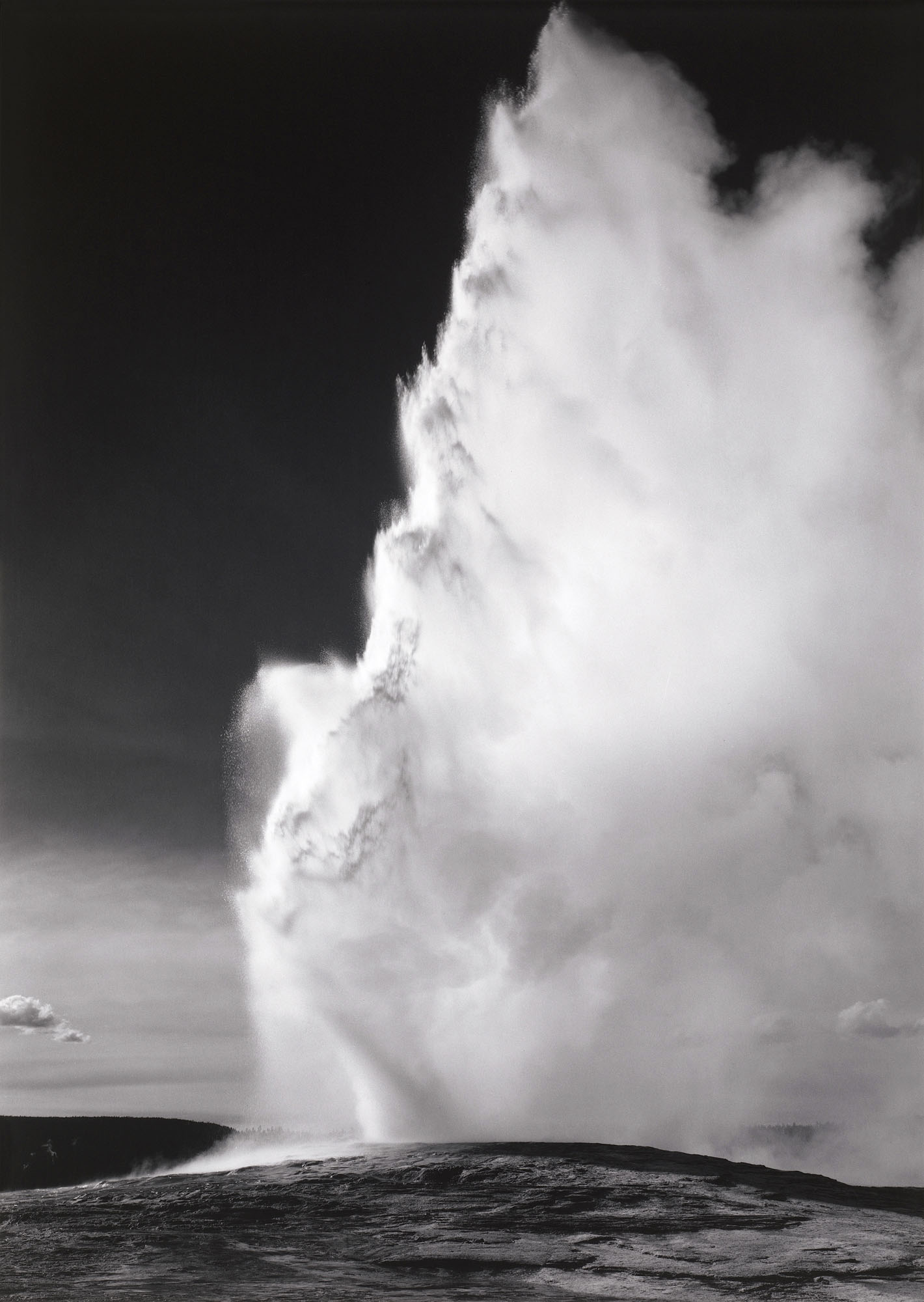
Fondation Henri Cartier-Bresson website

LIKE ART BLART ON FACEBOOK

Back to top

Exhibition: ‘Lionel Wendt: Ceylon’ at Huis Marseille, Amsterdam

Exhibition dates: 10th June – 3rd September, 2017


Lionel Wendt (Sri Lankan, 1900-1944) 'No title' Nd from the exhibition 'Lionel Wendt: Ceylon' at Huis Marseille, Amsterdam, June - Sept, 2017


Lionel Wendt (Sri Lankan, 1900-1944)
No title
Nd
Private collection
Courtesy Jhaveri Contemporary (London/Mumbai)
© Lionel Wendt


Glorious modernist photographs with avant-garde and surrealist overtones: the use of photomontage, double printing and solarisation is particularly effective.

The sensitive figure studies of males in classical pose carry an over current of barely suppressed desire evidencing a sexualised (post-colonial?) gaze falling on the exotic Other – even as Wendt was part of an emerging generation of artists documenting Sri Lanka’s culture and history from the inside.

More interesting than desire hiding through artistic ethnographic study are the landscapes, abstracts of coils of rope and the voluptuous female nudes. Stunning.

The media images were in such poor condition when I received them that I have spent a long time digitally cleaning and balancing them for your pleasure.

Dr Marcus Bunyan


Many thankx to Huis Marseille for allowing me to publish the photographs in the posting. Please click on the photographs for a larger version of the image.


“Lionel Wendt was the central figure of a cultural life torn between the death rattles of the Empire and a human appraisal of the untapped values of Ceylon.”


Pablo Neruda, Memoirs


“The proposition that confronted Wendt was that Sri Lanka had a way of life that was very old but which remained, in spite of poverty, squalor and apathy, a vital sense of life. He recognised that here man, living in traditional ways, had not become alienated from his environment… Evidence of his deep regard for Sri Lanka and its traditions are illustrated in the images he chose to capture with his camera, each being a tiny microcosm of a vast and magnificent tapestry. It was recognised by all those who knew him that Wendt had an endless capacity for work. He focussed on the country and the people with unerring judgement and relentless dedication, and in doing this, he stimulated a new consciousness among them and (just as pertinent) in some high places.”


Neville Weeraratne


“He never spoke much about his photography. I expect he wanted his images to speak for themselves and he never spoke of them or about himself. I suppose he was so critical of everybody else that he did not want to expose himself to the same treatment. He did not reveal himself. He was a very interior person. He showed no emotion though he expressed a great passion for things. Perhaps he was hypocritical.”


Lester James Peiris


Lionel Wendt (Sri Lankan, 1900-1944) 'No title' Nd from the exhibition 'Lionel Wendt: Ceylon' at Huis Marseille, Amsterdam, June - Sept, 2017


Lionel Wendt (Sri Lankan, 1900-1944)
No title
Nd
Private collection
Courtesy Jhaveri Contemporary (London/Mumbai)
© Lionel Wendt


Lionel Wendt (Sri Lankan, 1900-1944) 'No title' Nd


Lionel Wendt (Sri Lankan, 1900-1944)
No title
Nd
Private collection
Courtesy Jhaveri Contemporary (London/Mumbai)
© Lionel Wendt


Lionel Wendt (Sri Lankan, 1900-1944) 'No title' Nd


Lionel Wendt (Sri Lankan, 1900-1944)
No title
Nd
Private collection
Courtesy Jhaveri Contemporary (London/Mumbai)
© Lionel Wendt


Lionel Wendt (Sri Lankan, 1900-1944) 'No title' Nd


Lionel Wendt (Sri Lankan, 1900-1944)
No title
Nd
Private collection
Courtesy Jhaveri Contemporary (London/Mumbai)
© Lionel Wendt


Lionel Wendt (Sri Lankan, 1900-1944) 'No title' Nd


Lionel Wendt (Sri Lankan, 1900-1944)
No title
Nd
Private collection
Courtesy Jhaveri Contemporary (London/Mumbai)
© Lionel Wendt


Lionel Wendt (Sri Lankan, 1900-1944) 'No title' Nd


Lionel Wendt (Sri Lankan, 1900-1944)
No title
Nd
Private collection
Courtesy Jhaveri Contemporary (London/Mumbai)
© Lionel Wendt


Lionel Wendt (Sri Lankan, 1900-1944) 'No title (Self-portrait)' Nd


Lionel Wendt (Sri Lankan, 1900-1944)
No title (Self-portrait)
Nd
Courtesy Ton Peek (Utrecht)
© Lionel Wendt


Lionel Wendt (Sri Lankan, 1900-1944) 'No title (Solarised youth)' Nd


Lionel Wendt (Sri Lankan, 1900-1944)
No title (Solarised youth)
Nd
Courtesy Ton Peek (Utrecht)
© Lionel Wendt


Lionel Wendt (Sri Lankan, 1900-1944) 'No title' Nd


Lionel Wendt (Sri Lankan, 1900-1944)
No title
Nd
Courtesy Ton Peek (Utrecht)
© Lionel Wendt


There is something special going on with regard to the oeuvre of Ceylonese photographer Lionel Wendt (1900-1944). After a period of relative obscurity, Wendt was rediscovered – or discovered, in fact – worldwide as a unique, individualistic photographer who availed himself of experimental techniques and modern compositions. Wendt’s choice of subjects was eclectic: from sensual and homo-erotic portraits to tropical images of Ceylon (now Sri Lanka), and from picturesque scenes to compositions for which he used modernist stylistic devices and experimental techniques. After Wendt’s premature death in 1944 his negatives were destroyed, but the work he left behind lives on. This consists of a collection of beautiful experimental prints, of which several are included in the renowned collections of such museums as Tate Modern in London and Rijksmuseum in Amsterdam. This year, Wendt’s work is being exhibited at Documenta 14 in Athens and, from 10 June till 3 September 2017, in a large-scale retrospective exhibit at Huis Marseille, which shines a spotlight on the fascinating work of this photographer in all its facets.

Who was Lionel Wendt?

Lionel Wendt was a concert pianist, author, patron of the arts, teacher and, above all, a first-class photographer. After having studied law and musical training as a concert pianist in Great Britain, Wendt returned to the city of his birth, Colombo in Ceylon, at the age of 24. It did not take long for him to dedicate himself fully to the arts after his return: piano, literature and the visual arts. It was particularly in photography that he found an ideal vehicle for expression. In 1934, he established the Photographic Society of Ceylon jointly with Bernard G. Thornley and P.J.C. Durrant, and started running Chitrafoto, the photographic studio of the Associated Newspapers of Ceylon and in which he also published a photographic column, in 1938. Wendt developed into a prominent avant-gardist – the ‘Oscar Wilde’ of the Ceylonese arts scene. His first solo exhibition took place in 1938 at the Camera Club in London, at the invitation of Ernst Leitz, the inventor and manufacturer of the Leica. Two years later, a solo exhibition followed in Colombo entitled Camera Work, probably in reference to Alfred Stieglitz’s avant-gardist photography magazine of the same name.

Tropical modernism, masterful prints

Initially, Wendt used a Rolleiflex for his photography, which he quickly replaced by a Leica. From approximately 1933 onwards, he started to print his film in his own darkroom, where he soon showed himself to be a master. He made refined bromide and gelatine silver prints with subtle shades of grey and gradations of black, which gave his nudes and landscapes a velvet-like quality. Wendt allowed himself to be inspired by the ‘straight photography’ of Paul Strand and Edward Weston and the surrealistic experiments of Man Ray, and experimented with techniques such as photogram, photomontage, double printing and solarisation.

Homosexuality, hiding in plain sight

Wendt’s work includes spectacular images of Ceylon: its landscapes, cultural heritage and local population, photographed during everyday activities or traditional rituals. However, his sensual homoerotic nudes are particularly astounding. In a time and at a place where homosexuality was not accepted, Wendt had his male subjects (men and boys) pose in the landscape or in his studio. Through the traditional Ceylonese loincloths worn by his subjects, which leave little to the imagination, and the academic poses he asked them to take, he was able to express his homosexuality under the guise of art and ethnography. He also created portraits of the members of the island’s avant-garde movement. Wendt played a significant role in the development of modernist painting on Ceylon; he acted as a patron of the arts and his house was a meeting place for the ’43 Group, the artistic movement that was a predecessor of Ceylonese modernism.

A dormant legacy reawakens

Following Wendt’s early death in 1944 his work sank into oblivion. In the course of time the hundreds of prints that comprise his legacy came into the possession of several collectors, galleries and museums. After having led a dormant existence for several decades, Wendt’s work was once again brought to the attention of the public in 1994.

Large-scale museum retrospective in the Netherlands

From 10 June through 3 September 2017, Huis Marseille is presenting the first museum solo exhibition of Lionel Wendt in the Netherlands, in collaboration with the Ton Peek Gallery (Utrecht) and Jhaveri Contemporary Gallery (London/Mumbai). Over 140 prints from various international private and museum collections have been brought together. Concurrent to the exhibition, the publishing house Fw:Books will be presenting the book Lionel Wendt. Ceylon featuring an overview of Wendt’s work (hardcover, 200 pages, design by Hans Gremmen). This is the first monograph since Lionel Wendt. A Centennial Tribute (2000), an extensive and revised version of the very first catalogue of Wendt’s oeuvre: Lionel Wendt’s Ceylon (1950).

Text from Huis Marseille


Installation view of the exhibition 'Lionel Wendt: Ceylon' at Huis Marseille, Amsterdam

Installation view of the exhibition 'Lionel Wendt: Ceylon' at Huis Marseille, Amsterdam

Installation view of the exhibition 'Lionel Wendt: Ceylon' at Huis Marseille, Amsterdam

Installation view of the exhibition 'Lionel Wendt: Ceylon' at Huis Marseille, Amsterdam

Installation view of the exhibition 'Lionel Wendt: Ceylon' at Huis Marseille, Amsterdam

Installation view of the exhibition 'Lionel Wendt: Ceylon' at Huis Marseille, Amsterdam

Installation view of the exhibition 'Lionel Wendt: Ceylon' at Huis Marseille, Amsterdam

Exhibition: 'Lionel Wendt: Ceylon' at Huis Marseille, Amsterdam,

Exhibition: 'Lionel Wendt: Ceylon' at Huis Marseille, Amsterdam


Installation views of the exhibition Lionel Wendt: Ceylon at Huis Marseille, Amsterdam


Installation view of the exhibition 'Lionel Wendt: Ceylon' at Huis Marseille, Amsterdam

Installation view of the exhibition 'Lionel Wendt: Ceylon' at Huis Marseille, Amsterdam

Installation view of the exhibition 'Lionel Wendt: Ceylon' at Huis Marseille, Amsterdam

Installation view of the exhibition 'Lionel Wendt: Ceylon' at Huis Marseille, Amsterdam


Installation of photographs for the exhibition


Lionel Wendt (Sri Lankan, 1900-1944) 'No title' Nd


Lionel Wendt (Sri Lankan, 1900-1944)
No title
Nd
Courtesy Ton Peek (Utrecht)
© Lionel Wendt


Lionel Wendt (Sri Lankan, 1900-1944) 'No title' Nd


Lionel Wendt (Sri Lankan, 1900-1944)
No title
Nd
Courtesy Ton Peek (Utrecht)
© Lionel Wendt


Lionel Wendt (Sri Lankan, 1900-1944) 'No title' Nd


Lionel Wendt (Sri Lankan, 1900-1944)
No title
Nd
Courtesy Ton Peek (Utrecht)
© Lionel Wendt


Lionel Wendt (Sri Lankan, 1900-1944) 'No title' Nd


Lionel Wendt (Sri Lankan, 1900-1944)
No title
Nd
Private collection
Courtesy Jhaveri Contemporary (London/Mumbai)
© Lionel Wendt


Lionel Wendt (Sri Lankan, 1900-1944) 'No title' Nd


Lionel Wendt (Sri Lankan, 1900-1944)
No title
Nd
Private collection
Courtesy Jhaveri Contemporary (London/Mumbai)
© Lionel Wendt


Lionel Wendt (Sri Lankan, 1900-1944) 'No title' Nd


Lionel Wendt (Sri Lankan, 1900-1944)
No title
Nd
Private collection
Courtesy Jhaveri Contemporary (London/Mumbai)
© Lionel Wendt


Lionel Wendt (Sri Lankan, 1900-1944) 'No title' Nd


Lionel Wendt (Sri Lankan, 1900-1944)
No title
Nd
Private collection
Courtesy Jhaveri Contemporary (London/Mumbai)
© Lionel Wendt


Lionel Wendt (Sri Lankan, 1900-1944) 'No title' Nd


Lionel Wendt (Sri Lankan, 1900-1944)
No title
Nd
Private collection
Courtesy Jhaveri Contemporary (London/Mumbai)
© Lionel Wendt


Lionel Wendt (Sri Lankan, 1900-1944) 'No title' Nd


Lionel Wendt (Sri Lankan, 1900-1944)
No title
Nd
Private collection
Courtesy Jhaveri Contemporary (London/Mumbai)
© Lionel Wendt


Lionel Wendt (Sri Lankan, 1900-1944) 'No title' Nd


Lionel Wendt (Sri Lankan, 1900-1944)
No title
Nd
Private collection
Courtesy Jhaveri Contemporary (London/Mumbai)
© Lionel Wendt


Lionel Wendt (Sri Lankan, 1900-1944) 'No title' Nd


Lionel Wendt (Sri Lankan, 1900-1944)
No title
Nd
Private collection
Courtesy Jhaveri Contemporary (London/Mumbai)
© Lionel Wendt


Lionel Wendt (Sri Lankan, 1900-1944) 'No title' Nd


Lionel Wendt (Sri Lankan, 1900-1944)
No title
Nd
Private collection
Courtesy Jhaveri Contemporary (London/Mumbai)
© Lionel Wendt


'Lionel Wendt: Ceylon' book cover

'Lionel Wendt: Ceylon' book pages

'Lionel Wendt: Ceylon' book pages

'Lionel Wendt: Ceylon' book pages

'Lionel Wendt: Ceylon' book pages

'Lionel Wendt: Ceylon' book pages

'Lionel Wendt: Ceylon' book pages


Lionel Wendt: Ceylon book


Huis Marseille
Keizersgracht 401
1016 EK Amsterdam
Phone: +31 20 531 89 89

Opening hours:
Daily, 10am – 6pm
Thursday, 10am – 9pm

Huis Marseille website

LIKE ART BLART ON FACEBOOK

Back to top

Exhibition: ‘Stieglitz, Steichen, Strand’ at The Metropolitan Museum of Art, New York

Exhibition dates: 10th November 2010 – 10th April 2011


Many thankx to the The Metropolitan Museum of Art for allowing me to publish the photographs in the posting. Please click on the photograph for a larger version of the image.


Alfred Stieglitz (American, 1864-1946) 'The Terminal' 1893


Alfred Stieglitz (American, 1864-1946)
The Terminal
1893, printed 1920s-30s
Gelatin silver print
8.9 x 11.5cm (3 1/2 x 4 1/2 in.)
The Metropolitan Museum of Art
Alfred Stieglitz Collection, 1949


As proprietor of the Little Galleries of the Photo-Secession and publisher of the photographic journals Camera Notes and later Camera Work, Stieglitz was a major force in the promotion and elevation of photography as a fine art in America in the late nineteenth and early twentieth centuries. His own photographs had an equally revolutionary impact on the advancement of the medium.

Stieglitz took this picture using a small 4 x 5″ camera, an instrument not considered at the time to be worthy of artistic photography. Unlike the unwieldy 8 x 10″ view camera (which required a tripod), this camera gave Stieglitz greater freedom and mobility to roam the city and respond quickly to the everchanging street life around him. The Terminal predicts by over a decade the radical transformation of the medium from painterly prints of rarified subjects to what the critic Sadakichi Hartmann dubbed “straight photography.” This new photography would take as its subject matter the quotidian aspects of modern, urban life, using only techniques that are unique to the medium.

Text from The Metropolitan Museum of Art website


Edward Steichen (American, born Luxembourg, 1879-1973) 'The Little Round Mirror' 1901, printed 1905


Edward Steichen (American born Luxembourg, 1879-1973)
The Little Round Mirror
1901, printed 1905
Gum bichromate over platinum print
48.3 x 33.2cm (19 x 13 1/16 in.)
The Metropolitan Museum of Art
Alfred Stieglitz Collection, 1933


Alfred Stieglitz (American, 1864-1946) 'The Hand of Man' 1902


Alfred Stieglitz (American, 1864-1946)
The Hand of Man
1902, printed 1910
Photogravure
24.2 x 31.9cm (9 1/2 x 12 9/16 in.)
The Metropolitan Museum of Art
Alfred Stieglitz Collection, 1949


The Hand of Man was first published in January 1903 in the inaugural issue of Camera Work. With this image of a lone locomotive chugging through the train yards of Long Island City, Stieglitz showed that a gritty urban landscape could have an atmospheric beauty and a symbolic value as potent as those of an unspoiled natural landscape. The title alludes to this modern transformation of the landscape and also perhaps to photography itself as a mechanical process. Stieglitz believed that a mechanical instrument such as the camera could be transformed into a tool for creating art when guided by the hand and sensibility of an artist.

Text from The Metropolitan Museum of Art website


Edward Steichen (American, born Luxembourg, 1879-1973) 'The Flatiron' 1904


Edward Steichen (American born Luxembourg, 1879-1973)
The Flatiron
1904
Gum bichromate over platinum print
47.8 x 38.4cm (18 13/16 x 15 1/8 in.)
The Metropolitan Museum of Art
Alfred Stieglitz Collection, 1933


Edward Steichen (American, born Luxembourg, 1879-1973) 'Alfred Stieglitz' 1907


Edward Steichen (American born Luxembourg, 1879-1973)
Alfred Stieglitz
1907
Autochrome
23.9 x 18cm
The Metropolitan Museum of Art
Alfred Stieglitz Collection, 1955


For the first time in more than 25 years, The Metropolitan Museum of Art will display five of its original Autochromes by Edward Steichen and Alfred Stieglitz for one week only – January 25-30, 2011 – as part of the current exhibition Stieglitz, Steichen, Strand. Invented by Auguste and Louis Lumière in 1907, Autochromes are one-of-a-kind color transparencies that are seductively beautiful when backlit.

The invention of the Autochrome was a milestone in the history of photography. It was the first commercially available means of making color photographs. Steichen was enthralled by the process and recommended it to his fellow photographers. Praising the luminosity of the new medium, he wrote, “One must go to stained glass for such color resonance, as the palette and canvas are a dull and lifeless medium in comparison.” Among the five Autochromes exhibited are Steichen’s portrait of Rodin in front of his sculpture The Eve and his widely reproduced portrait of Stieglitz holding an issue of his influential publication, Camera Work.

These fragile photographs – composed of minute grains of potato starch dyed red, blue, and green – cannot withstand the exposure of long-term display without suffering irreversible damage. Because of the high risk of the color fading, the Metropolitan – like most museums – has had a policy of not exhibiting its important collection of Autochromes. The Metropolitan recently completed a three-year study of the stability and light-sensitivity of Autochrome dyes, conducted by Luisa Casella, the Museum’s first Mellon Research Scholar in Photo Conservation, in close collaboration with Masahiko Tsukada of the Museum’s Department of Scientific Research, and supervised by Nora Kennedy, Sherman Fairchild Conservator of Photographs at the Metropolitan Museum. The study established that the Autochrome dyes are partially, though not completely, protected from light fading when in an environment where all oxygen has been removed.

Guided by this research, the Museum will display five original Autochromes by Steichen and Stieglitz within individual oxygen-free enclosures and under carefully controlled lighting conditions from January 25 to 30 in the exhibition Stieglitz, Steichen, Strand. During the other weeks of the exhibition, facsimiles of the photographs are displayed in their place.

Text from The Metropolitan Museum of Art website


Edward J. Steichen (American born Luxembourg, 1879-1973) 'Balzac, The Open Sky - 11 P.M.' 1908


Edward J. Steichen (American born Luxembourg, 1879-1973)
Balzac, The Open Sky – 11 P.M.
1908, printed 1909
Direct carbon print
48.7 x 38.5cm (19 3/16 x 15 3/16 in.)
The Metropolitan Museum of Art
Alfred Stieglitz Collection, 1933


In late summer 1908 Rodin moved the plaster of his sculpture of the French writer Honoré de Balzac out of his studio and into the open air so that Steichen, who disliked its chalky aspect in the daylight, could photograph it by the moon. Waiting through several exposures as long as an hour each, Steichen made this exposure at 11 p.m., when the moonlight transformed the plaster into a monumental phantom rising above the brooding nocturnal landscape. Steichen recalled that when he presented his finished prints some weeks later, an elated Rodin exclaimed: “You will make the world understand my Balzac through your pictures. They are like Christ walking on the desert.”

Text from The Metropolitan Museum of Art website


Stieglitz, Steichen, Strand

Go behind the lens with Sarah Greenough and Joel Smith as they speak about the relationships between three giants of early twentieth-century photography – Alfred Stieglitz, Edward Steichen, and Paul Strand – whose diverse and groundbreaking works are among the Metropolitan’s greatest photographic treasures. Followed by a discussion among the participants. Malcolm Daniel, Curator in Charge, Department of Photographs, MMA, introduces the program.

“Steichen, Stieglitz, and the Art of Change”
Joel Smith, Curator of Photography, Princeton University Art Museum

“Stieglitz and Strand: Mentor and Protégé/Friend and Rival”
Sarah Greenough, Senior Curator of Photographs, National Gallery
of Art, Washington.


Stieglitz and the New York Art Scene (1905-46)

Lisa M. Messinger, associate curator, Department of Nineteenth-Century, Modern, and Contemporary Art, The Metropolitan Museum of Art


Three giants of 20th-century American photography – Alfred Stieglitz, Edward Steichen, and Paul Strand – are featured at The Metropolitan Museum of Art, New York, through April 10, 2011, in the exhibition Stieglitz, Steichen, Strand. The diverse and groundbreaking work of these artists will be revealed through a presentation of 115 photographs, drawn entirely from the Museum’s collection. On view will be many of the Metropolitan’s greatest photographic treasures from the 1900s to 1920s, including Stieglitz’s famous portraits of Georgia O’Keeffe, Steichen’s large coloured photographs of the Flatiron building, and Strand’s pioneering abstractions.

Alfred Stieglitz (1864-1946) was a photographer of supreme accomplishment and a forceful and influential advocate for photography and modern art through his gallery “291” and his sumptuous journal Camera Work. Stieglitz also laid the foundation for the Museum’s collection of photographs. In 1928, he donated 22 of his own works to the Metropolitan; these were the first photographs to enter the Museum’s collection as works of art. In later decades he gave the Museum more than 600 photographs by his contemporaries, including Edward Steichen and Paul Strand.

Among Stieglitz’s works to be featured in this exhibition are portraits, views of New York City from the beginning and end of his career, and the 1920s cloud studies he titled Equivalents, through which he sought to arouse in the viewer the emotional equivalent of his own state of mind at the time he made the photograph, and to show that the content of a photograph was different from its subject.

The exhibition will also include numerous photographs from Stieglitz’s extraordinary composite portrait of Georgia O’Keeffe (1887-1986), part of a group of works selected for the Museum’s collection by O’Keeffe herself. Stieglitz made more than 330 images of O’Keeffe between 1917 and 1937 – of her face, torso, hands, or feet alone, clothed and nude, intimate and heroic, introspective and assertive. Through these photographs Stieglitz revealed O’Keeffe’s strengths and vulnerabilities, and almost single-handedly defined her public persona for generations to come.

Stieglitz’s protégé and gallery collaborator, Edward Steichen (1879-1973), was the most talented exemplar of the Photo-Secession, the loosely-knit group of artists founded by Stieglitz in 1902, seceding, in his words, “from the accepted idea of what constitutes a photograph,” but also from the camera clubs and other institutions dominated by a more retrograde establishment. In works such as The Pond – Moonrise (1904), made using a painstaking technique of multiple printing, Steichen rivalled the scale, colour, and individuality of painting.

Steichen’s three large variant prints of The Flatiron (1904) are prime examples of the conscious effort of Photo-Secession photographers to assert the artistic potential of their medium. Steichen achieved coloristic effects reminiscent of Whistler’s Nocturne paintings by brushing layers of pigment suspended in light-sensitive gum solution onto a platinum photograph. Although he used only one negative to create all three photographs, the variable colouring enabled him to create three significantly different images that convey the chromatic progression of twilight. The Metropolitan’s three prints, all donated by Stieglitz in 1933, are the only exhibition prints of Steichen’s iconic image.

In 1908 Steichen photographed the plaster of Rodin’s sculpture of Honoré de Balzac in the open air, by the light of the moon, making several exposures as long as an hour each. In Balzac, The Silhouette – 4 A.M., the moonlight has transformed the plaster into a monumental phantom rising above the brooding nocturnal landscape. Steichen recalled that when he presented his finished prints to Rodin, the elated sculptor exclaimed, “You will make the world understand my Balzac through your pictures.”

Among the unique early-20th-century works by Stieglitz and Steichen in the Museum’s collection are Autochromes, an early process of colour photography that became commercially available in 1907. Because of the delicate and light-sensitive nature of these glass transparencies, five original Autochromes by Stieglitz and Steichen will be displayed for one week only, January 25-30, 2011. During the other weeks of the exhibition, facsimiles of these Autochromes will be on view.

Stieglitz’s and Steichen’s younger contemporary, Paul Strand (1890-1976), pioneered a shift from the soft-focus aesthetic and painterly prints of the Photo-Secession to the straight approach and graphic power of an emerging modernism. Strand was introduced to Stieglitz as a high-schooler by his camera club advisor, Lewis Hine, the social reformer and photographer. He quickly became a regular visitor to “291,” where he was exposed to the latest trends in European art through groundbreaking exhibitions of works by Cézanne, Picasso, Matisse, and Brancusi.

Strand incorporated the new language of geometric abstraction into his interest in photographing street life and machine culture. His photographs from 1915-1917 treated three principal themes: movement in the city, abstractions, and street portraits. Stieglitz, whose interest in photography had waned as he grew more interested in avant-garde art, saw in Strand’s work a new approach to photography. He showed Strand’s groundbreaking photographs at 291 and devoted the entire final double issue of Camera Work (1917) to this young photographer’s work, marking a pivotal moment in the course of photography.

In From the El (1915), Strand juxtaposed the ironwork and shadows of the elevated train with the tiny form of a lone pedestrian. In 1916, he experimented with radical camera angles and photographing at close range. Among the astonishingly modern photographs he made that summer is Abstraction, Twin Lakes, Connecticut, one of the first photographic abstractions to be made intentionally. When Stieglitz published a variant of this image in Camera Work, he praised Strand’s results as “the direct expression of today.”

In the same year, Strand made a series of candid street portraits with a hand-held camera fitted with a special lens that allowed him to point the camera in one direction while taking the photograph at a 90-degree angle. Blind, his seminal image of a street peddler, was published in Camera Work and immediately became an icon of the new American photography, which integrated the humanistic concerns of social documentation with the boldly simplified forms of Modernism. As is true for most of the large platinum prints by Strand in the exhibition, the Metropolitan’s Blind, a gift of Stieglitz, is the only exhibition print of this image from the period.

Stieglitz, Steichen, Strand is organised by Malcolm Daniel, Curator in Charge of the Metropolitan Museum’s Department of Photographs, assisted by Russell Lord, Jane and Morgan Whitney Fellow in the Department of Photographs.

Text from the Metropolitan Museum of Art website


Alfred Stieglitz (American, 1864-1946) 'The City of Ambitions' 1910


Alfred Stieglitz (American, 1864-1946)
The City of Ambitions
1910, printed 1910-1913
Photogravure
33.8 x 26.0cm (13 5/16 x 10 1/4 in.)
The Metropolitan Museum of Art
Alfred Stieglitz Collection, 1949


This photograph belongs to a series of dynamic images Stieglitz made of New York of 1910. It appeared in the October 1911 issue of Camera Work along with eight other examples of his lyrical urban modernism – a contemporary vision certainly not lost on Coburn, Struss, and Strand.


Alfred Stieglitz (American, 1864-1946) 'Old and New New York' 1910, printed in or before 1913


Alfred Stieglitz (American, 1864-1946)
Old and New New York
1910, printed in or before 1913
Photogravure
33.2 x 25.5cm (13 1/16 x 10 1/16 in.)
The Metropolitan Museum of Art
Alfred Stieglitz Collection, 1949


Paul Strand (American, 1890-1976)
'From the El' 1915


Paul Strand (American, 1890-1976)
From the El
1915
Platinum print
33.6 x 25.9cm (13 1/4 x 10 3/16 in.)
The Metropolitan Museum of Art
Alfred Stieglitz Collection, 1949


Paul Strand was introduced to Alfred Stieglitz by his teacher Lewis Hine, and quickly became part of the coterie of painters and photographers that gathered at Stieglitz’s gallery at 291 Fifth Avenue. There he was exposed to the latest trends in European vanguard art through groundbreaking exhibitions of Cézanne, Picasso, Matisse, and Brancusi. Strand incorporated their abstracting compositional techniques into his work, marrying the new language of geometric surface design to his interest in street life and machine culture.

Strand’s vision of the city during these years often focuses on the problematic exchange between the sweep and rigor of the urban grid with the human lives that inhabit and pass through it. From the El is a good example of this dialectical approach, with the graphic power of the ironwork and street shadows punctuated by the tiny, lone pedestrian at the upper right. Strand addresses the effects of the new urban condition obliquely here, embedding a subtle political statement within the formal structure of the image.

Text from The Metropolitan Museum of Art website


Alfred Stieglitz (American, 1864-1946) 'From the Back Window – 291' 1915


Alfred Stieglitz (American, 1864-1946)
From the Back Window – 291
1915
Platinum print
25.1 x 20.2cm (9 7/8 x 7 15/16 in.)
The Metropolitan Museum of Art
Alfred Stieglitz Collection, 1949


At the turn of the century, Stieglitz’s duties as gallery owner, publisher, editor, and promoter left him little time to photograph. When the mood struck him, however, which began to happen with some frequency about 1915, he did not look far afield but photographed his colleagues at the gallery and the view from his window with a modernist rigor exceeded only by Strand.


Paul Strand (American 1890-1976) 'Blind woman, New York' 1916


Paul Strand (American, 1890-1976)
Blind
1916
Platinum print
34 x 25.7cm (13 3/8 x 10 1/8 in.)
The Metropolitan Museum of Art
Alfred Stieglitz Collection, 1933


Alfred Stieglitz (American, 1864-1946) 'Hodge Kirnon' 1917


Alfred Stieglitz (American, 1864-1946)
Hodge Kirnon
1917
Palladium print
24.6 x 19.9cm (9 11/16 x 7 13/16 in.)
The Metropolitan Museum of Art
Alfred Stieglitz Collection, 1949


One of the least well known and most beautiful of Stieglitz’s portraits, this photograph depicts Hodge Kirnon, a man Stieglitz saw in passing every day. When preparing to close his historic gallery “291” in 1917 as a result of World War I, Stieglitz assessed his work and life and saw that Kirnon – who operated the elevator that transported the gallery’s visitors, its critics, and its provocative modern art – had been a true fellow passenger on the momentous trip.

Text from The Metropolitan Museum of Art website


Alfred Stieglitz (American, 1864-1946) 'Georgia O'Keeffe – Hands' 1917


Alfred Stieglitz (American, 1864-1946)
Georgia O’Keeffe – Hands
1917
Platinum print
22.6 x 16.8cm (8 7/8 x 6 5/8 in.)
The Metropolitan Museum of Art
Gift of Georgia O’Keeffe, through the generosity of The Georgia O’Keeffe Foundation and Jennifer and Joseph Duke, 1997


Georgia O’Keeffe – Hands is one of the images that Stieglitz made during his first portrait session with O’Keeffe, in 1917, when she traveled by train to New York to see her second show of drawings and watercolours at 291. “A few weeks after I returned to Texas, photographs of me came,” she recalled. “In my excitement at such pictures of myself I took them to school and held them up for my class to see. They were surprised and astonished too. Nothing like that had come into our world before.” The notion that an expressive portrait might be made without including the sitter’s face was indeed novel.

Text from The Metropolitan Museum of Art website


Exhibition Overview

This exhibition features three giants of photography – Alfred Stieglitz (American, 1864-1946), Edward Steichen (American, b. Luxembourg, 1879-1973), and Paul Strand (American, 1890-1976) – whose works are among the Metropolitan’s greatest photographic treasures. The diverse and groundbreaking work of these artists will be revealed through a presentation of approximately 115 photographs, drawn entirely from the collection.

Alfred Stieglitz, a photographer of supreme accomplishment as well as a forceful and influential advocate for photography and modern art through his gallery “291” and his sumptuous journal Camera Work, laid the foundation of the Met’s collection. He donated twenty-two of his own works in 1928 – the first photographs to be acquired by the Museum as works of art – and more than six hundred by other photographers, including Steichen and Strand, in later decades. Featured in the exhibition will be portraits, city views, and cloud studies by Stieglitz, as well as numerous images from his composite portrait of Georgia O’Keeffe (American, 1887-1986), part of a group selected for the collection by O’Keeffe herself.

Stieglitz’s protégé and gallery collaborator Edward Steichen was the most talented exemplar of Photo-Secessionist ideas, with works such as his three large variant prints of The Flatiron and his moonlit photographs of Rodin’s Balzac purposely rivaling the scale, color, and individuality of painting. By contrast, the final issue of Camera Work (1917) was devoted to the young Paul Strand, whose photographs from 1915-1917 treated three principal themes – movement in the city, abstractions, and street portraits – and pioneered a shift from the soft-focus Pictorialist aesthetic to the straight approach and graphic power of an emerging modernism.

Text from The Metropolitan Museum of Art website


Alfred Stieglitz (American, 1864-1946). 'Georgia O'Keeffe - Neck' 1921


Alfred Stieglitz (American, 1864-1946)
Georgia O’Keeffe – Neck
1921
Palladium print
23.6 x 19.2cm (9 5/16 x 7 9/16 in.)
The Metropolitan Museum of Art
Gift of Georgia O’Keeffe, through the generosity of The Georgia O’Keeffe Foundation and Jennifer and Joseph Duke, 1997


Alfred Stieglitz (American, 1864-1946) 'Dancing Trees' 1922


Alfred Stieglitz (American, 1864-1946)
The Dancing Trees
1922
Palladium print
24.2 x 19.3cm (9 1/2 x 7 5/8 in.)
The Metropolitan Museum of Art
Gift of David A. Schulte, 1928


Alfred Stieglitz (American, 1864-1946) 'Spiritual America' 1923


Alfred Stieglitz (American, 1864-1946)
Spiritual America
1923
Gelatin silver print
11.6 x 9.2cm (4 9/16 x 3 5/8 in.)
The Metropolitan Museum of Art
Alfred Stieglitz Collection, 1949


In the decade leading up to the Great Depression, American modernism was a highly contested concept. Stieglitz, perhaps justifiably, considered himself one of the few qualified to dictate its course, having surrounded himself with a group of like-minded and devoted artists, critics, and writers whom he directed in an almost shamanistic fashion. Spirituality loomed large in his vision of American identity, but he was disheartened and offended with what he viewed as a pent-up, materialist, and culturally bankrupt American way. In a rare attempt at ironic commentary, Stieglitz produced this picture of a harnessed, castrated horse – a pure representation of eradicated sexual prowess and restrained muscular energy – and labelled it Spiritual America. In effect, he suggested that America was lacking in spirit by reinterpreting the horse, a traditional American symbol of unstoppable force, as a trussed-up pattern of slick geometry.

Text from The Metropolitan Museum of Art website


Edward J. Steichen (American born Luxembourg, 1879-1973) 'Gloria Swanson' 1924, printed 1960s


Edward J. Steichen (American born Luxembourg, 1879-1973)
Gloria Swanson
1924, printed 1960s
Gelatin silver print
24.0 x 19.1cm (9 7/16 x 7 1/2 in.)
The Metropolitan Museum of Art
Gift of Grace M. Mayer, 1989


Paul Strand (American, 1890-1976) 'Wild Iris, Maine' 1927-28


Paul Strand (American, 1890-1976)
Wild Iris, Maine
1927-1928
Gelatin silver print
24.8 x 19.8cm (9 3/4 x 7 13/16 in.)
The Metropolitan Museum of Art
Alfred Stieglitz Collection, 1955
Courtesy Aperture Foundation, Inc., Paul Strand Archive


Alfred Stieglitz (American, 1864–1946) 'Looking Northwest from the Shelton, New York' 1932


Alfred Stieglitz (American, 1864-1946)
Looking Northwest from the Shelton, New York
1932
Gelatin silver print
24.2 x 19.2cm (9 1/2 x 7 9/16 in.)
The Metropolitan Museum of Art
Ford Motor Company Collection
Gift of Ford Motor Company and John C. Waddell, 1987


Stieglitz recorded the construction of the skyscrapers of midtown Manhattan from the windows of his gallery and of his nearby apartment in the Shelton Towers. His photographs seem not to celebrate the astonishing growth of new buildings but rather almost geological permanence and stability: “Crammed on the narrow island the million-windowed buildings will jut glittering, pyramid on pyramid…,” as John Dos Passos wrote.


Alfred Stieglitz (American, 1864-1946) 'Georgia O'Keeffe – Hand and Wheel' 1933


Alfred Stieglitz (American, 1864-1946)
Georgia O’Keeffe Hand and Wheel
1933
Gelatin silver print
24.1 x 19.5cm (9 1/2 x 7 11/16 in.)
The Metropolitan Museum of Art
Gift of Georgia O’Keeffe, through the generosity of The Georgia O’Keeffe Foundation and Jennifer and Joseph Duke, 1997


Paul Strand (American, 1890-1976) 'Cristo - Oaxaca' 1933, printed 1940


Paul Strand (American, 1890-1976)
Cristo – Oaxaca
1933, printed 1940
Photogravure
25.4 x 20.2cm (10 x 7 15/16 in.)
The Metropolitan Museum of Art
David Hunter McAlpin Fund, 1940


Paul Strand (American, 1890-1976) 'Church, Coapiaxtla' 1933, printed 1940


Paul Strand (American, 1890-1976)
Coapiaxtla, Church
1933, printed 1940
Photogravure
16.2 x 12.7cm (6 3/8 x 5 in.)
David Hunter McAlpin Fund, 1940


The Metropolitan Museum of Art
1000 Fifth Avenue at 82nd Street
New York, New York 10028-0198
Information: 212-535-7710

Opening hours:
Sunday – Tuesday and Thursday: 10am – 5pm
Friday and Saturday: 10am – 9pm
Closed Wednesday

The Metropolitan Museum of Art website

LIKE ART BLART ON FACEBOOK

Back to top

Exhibition: ‘Walker Evans’ retrospective at Fotomuseum Winterthur, Zurich

Exhibition dates: 30th May – 23rd August, 2009

Curators: Jeff L. Rosenheim and Carlos Gollonet


Walker Evans (American, 1903-1975) 'West Virginia Living Room' 1935 from the exhibition 'Walker Evans' retrospective at Fotomuseum Winterthur, Zurich, May - Aug, 2009


Walker Evans (American, 1903-1975)
West Virginia Living Room
1935
Gelatin silver print
© Walker Evans archive


Many thankx to the Fotomuseum Winterthur for allowing me to publish the photographs in the posting. Please click on the photographs for a larger version of the image.


With this retrospective of the work of Walker Evans (1903-1975) Fotomuseum Winterthur presents one of the twentieth century’s pre-eminent photographers. His lucid and detailed portrayals of American life, especially his images of rural poverty during the Great Depression, made photographic history and went on to influence countless photographers. Walker Evans took an extremely innovative approach, capturing the very essence of the American way of life.

The exhibition, featuring some 120 works (the majority of which are from the most important private collection of Walker Evans’ works) represents every phase of his career: his early street photographs of the 1920s, his poignant documentation of 1930s America and pre-revolutionary Cuba, his landscapes and architectural photography, his subway portraits, storefronts, signage, the later colour Polaroids and more besides. As early as the 1930s, Walker Evans, in a departure from conventional notions of art and style, sought a new direct approach to reality. It is this that makes him a truly modern photographer.

The exhibition was curated by Jeff L. Rosenheim and Carlos Gollonet. Realisation in Winterthur: Urs Stahel. A cooperation with the Fundación MAPFRE, Madrid.

Text from the Fotomuseum Winterthur website


Walker Evans (American, 1903-1975) 'Negro Barbershop Interior, Atlanta' 1936 from the exhibition 'Walker Evans' retrospective at Fotomuseum Winterthur, Zurich, May - Aug, 2009


Walker Evans (American, 1903-1975)
Negro Barbershop Interior, Atlanta
1936
Gelatin silver print
7 7/16 x 9 1/8″ (18.9 x 23.2cm)
© Walker Evans archive


With this major retrospective of the work of Walker Evans (1903-1975) Fotomuseum Winterthur pays homage to one of the twentieth century’s pre-eminent photographers. His insightful and detailed portrayals of American life, especially his images of rural poverty during the Great Depression, made photographic history and went on to influence countless photographers. The 130 works in this retrospective exhibition represent every phase of his career: his early street photographs of the 1920s, his poignant documentation of 1930s America and pre-revolutionary Cuba, his landscapes and architectural photography, his subway portraits, storefronts, signage, and more besides.

On his return from France, where he had tried unsuccessfully to launch a literary career inspired by his love of Flaubert and Baudelaire, Walker Evans turned to photography. From the very start, with his keen eye for street life and the visual freshness of his unexpected slant on what he saw, his work spoke the language of European Modernism. But it was not long before Evans found his true voice – and it was at once profoundly personal and unequivocally American.

Some years before, the direct, undistorted and innovative gaze of Eugène Atget (1857-1927), whose work Evans knew and admired, had quietly paved the way for the split between documentary auteur photography and the purely descriptive photographic tradition. Atget’s unconventional angles, his de-centralised view and his focus on the seemingly trivial all had a major impact on Evans.

Walker Evans’ work is a far remove from what had, until then, been accepted as art photography. He was not interested in superficial beauty, but in a new objectivity. He subscribed to a style that observed undistorted facts and sought to capture things precisely as they were, seemingly without intervention, emotion or idealisation. For the first time in art photography, there were such unusual subjects as a pair of old boots or a subway passenger lost in thought. The artistic quality was based solely on the clarity, intelligence and authenticity of the photographer’s gaze. In this, Walker Evans’ oeuvre represents both a high point and a turning point in the formal and visual evolution of photography.

As the creator of this new, direct style, often referred to as straight photography, which drew upon scenes of sometimes blatant banality and rolled back the boundaries between the ‘important’ and the ‘trivial’, Walker Evans introduced the aesthetics of Modernism into American photography. This seemingly cold detachment spawned a style rich in expressive substance that was not only capable of embracing the lyricism and complexity of the American tradition, but of doing so without a trace of false romanticism, sentimentality or nostalgia. At long last, there was a forward-looking and enduring alternative to the traditional conventions of photography.

Press release from the Fotomuseum Winterthur website [Online] Cited 05/06/2009. No longer available online


Walker Evans (American, 1903-1975) 'Traffic Arrow' between 1973-1974


Walker Evans (American, 1903-1975)
Traffic Arrow
between 1973-1974
Polaroid
7.9 x 7.9cm (3 1/8 x 3 1/8 in.)
© Walker Evans archive


Walker Evans (American, 1903-1975) '[Detail of Stencilled Lettering on Yellow Railroad Car: "DO NOT HUMP"]' September 16, 1974


Walker Evans (American, 1903-1975)
[Detail of Stencilled Lettering on Yellow Railroad Car: “DO NOT HUMP”]
September 16, 1974
Polaroid
7.9 x 7.9cm (3 1/8 x 3 1/8 in.)
© Walker Evans archive


Installation view of the exhibition 'Walker Evans' at Fotomuseum Winterthur, Zurich showing some of his Polaroid photographs


Installation view of the exhibition Walker Evans at Fotomuseum Winterthur, Zurich showing some of his Polaroid photographs


Installation view of the exhibition 'Walker Evans' at Fotomuseum Winterthur, Zurich

Installation view of the exhibition Walker Evans at Fotomuseum Winterthur, Zurich

Installation view of the exhibition Walker Evans at Fotomuseum Winterthur, Zurich

Installation view of the exhibition Walker Evans at Fotomuseum Winterthur, Zurich


Installation views of the exhibition Walker Evans at Fotomuseum Winterthur, Zurich


Walker Evans (1903-1975) 'Penny Picture Display, Savannah' 1936


Walker Evans (American, 1903-1975)
Penny Picture Display, Savannah
1936
Gelatin silver print
© Walker Evans archive


Walker Evans (American, 1903-1975) 'Subway Passengers, New York' 1938


Walker Evans (American, 1903-1975)
Subway Passengers, New York
1938
Gelatin silver print
© Walker Evans archive


Walker Evans (American, 1903-1975) 'Truck and Sign' 1928-1930


Walker Evans (American, 1903-1975)
Truck and Sign
1928-1930
Gelatin silver print
© Walker Evans archive


Walker Evans (American, 1903-1975) 'Excavation for Lincoln Building, East 42nd Street and Park Avenue' 1929


Walker Evans (American, 1903-1975)
Excavation for Lincoln Building, East 42nd Street and Park Avenue
1929
Gelatin silver print
© Walker Evans archive


Walker Evans (American, 1903-1975) '[Fireplace in Floyd Burrroughs's Bedroom with Bedpost in Foreground, Hale County, Alabama]' 1936


Walker Evans (American, 1903-1975)
[Fireplace in Floyd Burrroughs’s Bedroom with Bedpost in Foreground, Hale County, Alabama]
1936
Gelatin silver print
8 x 10 in.
© Walker Evans archive


Walker Evans (American, 1903-1975) 'Main Street, Saratoga Springs, New York' 1931


Walker Evans (American, 1903-1975)
Main Street, Saratoga Springs, New York
1931
Gelatin silver print
© Walker Evans archive


Walker Evans (American, 1903-1975) 'Floyde Burroughs, a cotton sharecropper, Hale County, Alabama' 1936


Walker Evans (American, 1903-1975)
Floyde Burroughs, a cotton sharecropper, Hale County, Alabama
1936
Gelatin silver print
© Walker Evans archive


Walker Evans (American, 1903-1975) 'Allie Mae Burroughs, Hale County, Alabama' 1936


Walker Evans (American, 1903-1975)
Allie Mae Burroughs, Hale County, Alabama
1936
Gelatin silver print
© Walker Evans archive


Fotomuseum Winterthur
Grüzenstrasse 44 + 45
CH-8400
Winterthur (Zürich)
Phone: +41 52 234 10 60

Opening hours:
Tuesday – Sunday 11.00 – 18.00
Wednesday 11.00 – 20.00
Monday closed

Fotomuseum Winterthur website

LIKE ART BLART ON FACEBOOK

Back to top

Two exhibitions by photographer John Wood: ‘On the Edge of Clear Meaning’ at Grey Art Gallery, New York and ‘Quiet Protest’ at the International Center of Photography, New York

Exhibition dates: Grey Art Gallery, 12th May – 18th July, 2009; International Center of Photography, 15th May – 6th September, 2009


Fantastic to see such a talented artist, a truly ground breaking artist, get the recognition he so richly deserves!


Grey Art Gallery

John Wood (American, 1922-2012) 'Untitled' 1986-1989 from the exhibition 'On the Edge of Clear Meaning' at Grey Art Gallery, New York, May - July, 2009


John Wood (American, 1922-2012)
Untitled
1986-1989
Stained gelatin silver print from paper stencil


John Wood (American, 1922-2012) 'Beach Drawing' 1983 from the exhibition 'On the Edge of Clear Meaning' at Grey Art Gallery, New York, May - July, 2009


John Wood (American, 1922-2012)
Beach Drawing
1983
Gelatin silver print
14 15/16 x 19 1/8″ (37.8 x 48.5cm)


John Wood: On the Edge of Clear Meaning, on view at the Grey Art Gallery from May 12 through July 18, 2009, is the most comprehensive exhibition of the artist’s work to date. Featuring the full range of his career from the 1960s to the present, the show includes over 150 photographs, mixed-media works, and artists’ books. A selection of Wood’s photomontages, Quiet Protest, will be on view concurrently at the International Center of Photography.

John Wood (born 1922) has consistently challenged traditional photography, often incorporating painting, drawing, and collage as well as cliché verre, solarisation, and offset lithography. The artist emphasises the role of drawing in his work: “Mark making, calligraphy, the kinetic motion of the movement of the hand, are very important to me; probably more important than anything else.” Transgressing the boundaries of “pure photography,” his eclectic practice has helped usher in alternative approaches to the medium. With their adroit manipulations of picture and text, his diaristic, multi-media compositions anticipate today’s digital imagery. On the Edge of Clear Meaning is Wood’s first museum retrospective, spanning his career from the early 1960s to the present.

His early childhood was marked by the Depression, and his family moved frequently. After serving in the Army Air Corps as a B-17 pilot during World War II, he enrolled at the Institute of Design in Chicago. Wood trained as a visual designer and photographer, studying with Harry Callahan and Art Sinsabaugh to hone both conceptual and formal issues in his work. He left Chicago to teach photography and printmaking at the School of Art and Design at Alfred University in Alfred, New York, where he would live for thirty-five years. He now resides in Baltimore, Maryland with his wife, Laurie Snyder, who teaches photography at the Maryland Institute College of Art. They migrate each summer to their home and studio in Ithaca, New York.

In keeping with the Grey Art Gallery’s tradition of presenting the work of under-represented artists, this exhibition introduces John Wood as a master of various multi-media processes and testifies to his insatiable curiosity about new materials and repeated use of favourite sources. Through disciplined but lively investigation of different media, the artist eroded traditional definitions of photography and produced work that is both powerful and subtle. As Lynn Gumpert, Director of the Grey, notes, “John Wood has been a life-long teacher, inspiring and training numerous students, artists, and arts professionals. We are honoured to bring the breadth of his work to New York City, home to many art schools, colleges, and universities.”

Text from the Grey Art Gallery website and press release [Online] Cited 10/05/2009. No longer available online


John Wood (American, 1922-2012) 'Eagle Pelt' 1985


John Wood (American, 1922-2012)
Eagle Pelt
1985
Gelatin silver print
20 1/8 x 15 3/8″


John Wood (American, 1922-2012) 'Pear Tree, Cooling Tower, and Apples' 1991


John Wood (American, 1922-2012)
Pear Tree, Cooling Tower, and Apples
1991
Collage, gelatin silver print, Polaroid SX70, and paper
19 1/4 x 15 3/8″


John Wood (American, 1922-2012) 'Blackbird, Some Have Hunger' 1986


John Wood (American, 1922-2012)
Blackbird, Some Have Hunger
1986
Collage, cyanotype, and graphite
20 x 24″


International Center of Photography

Quiet Protest is a series of photographic works by the noted mixed media artist and educator John Wood, spanning a period from the 1960s through the 1990s. Part of a larger retrospective at New York University’s Grey Art Gallery, the “Quiet Protest” series explores political and social issues of the day through thoughtful photo montage pieces that exist in marked contrast to more traditional aggressive documentary photography. Rather than offering explanations or promoting solutions, Wood’s manipulated photographs present contemplative routes into issues ranging from the Vietnam War to domestic gun violence to ecological concerns. As Wood wrote in 1970, ” …maybe the time has come for creative photography to encompass the large problems without propaganda or journalism…”

Text from the International Center of Photography website [Online] Cited 10/05/2009. No longer available online


John Wood (American, 1922-2012) 'Rifle, Bullets and Daises' 1967 from the exhibition 'Quiet Protest' at the International Center of Photography, New York, May - Sept, 2009


John Wood (American, 1922-2012)
Rifle, Bullets and Daises
1967


John Wood (American, 1922-2012) 'Triangle in the Landscape: Eleven Second 90 Degree Turn of a Paper Triangle' August 6, 1985 (Hiroshima Day) from the exhibition 'Quiet Protest' at the International Center of Photography, New York, May - Sept, 2009


John Wood (American, 1922-2012)
Triangle in the Landscape: Eleven Second 90 Degree Turn of a Paper Triangle
August 6, 1985 (Hiroshima Day)


John Wood (1922-2012)

John Cheney Wood (July 10, 1922 – July 20, 2012) was an American artist and educator who challenged traditional photography and often incorporated other mediums into his work. He was born in California in 1922. In 1943 he volunteered for the Army Air Corps, where he served as a B-17 pilot until 1945. At the time of his death he lived in Baltimore, Maryland, with artist Laurie Snyder.

Wood had the ability to work across a variety of artistic forms, from straight photography, collage, cliché verre, solarization, mixed media, offset lithography to drawing. Wood moved freely between conceptual and visual exploration, not adhering to a single style. Although he often raised questions about political, social and environmental issues, he avoided promoting personal solutions or adding narratives to the images. The artist instead preferred to focus on the viewer’s interpretation and the possibility for multiple meanings.

Text from the Wikipedia website


John Wood (American, 1922-2012) 'Loon, Drawer and Bomb' 1987


John Wood (American, 1922-2012)
Loon, Drawer and Bomb
1987
Collage, cyanotype, and toned silver gelatin print


'John Wood: On the Edge of Clear Meaning' book cover


John Wood: On the Edge of Clear Meaning book cover


Book

In his introductory essay to this monograph – featuring the diverse photo practice that has characterised John Wood’s nearly 50-year career – David Levi Strauss states, “In photo-historical terms, Wood is thought of as one of those renegades who went against ‘pure photography’ by incorporating drawing, painting, collage and every other technique he could get his hands on (not to mention explicit political content), into his practice, thus ushering in the multi-media of the 1960s that caused crisis in ‘straight photography.’ Long before it became the signal medium of the avant-garde, collage was a folk art, practiced by children, lovers and grandmothers.” This comprehensive volume accompanies a retrospective that begins in Rochester, New York at The George Eastman House, The Memorial Art Gallery and the Visual Studies Workshop, then travels to The International Center for Photography and The Grey Art Gallery in New York before concluding at Syracus’ Light Work gallery.

John Wood: On the Edge of Clear Meaning by David Strauss et al (Hardcover) 2008

Available from the Amazon website


Grey Art Gallery
New York University
100 Washington Square East

Opening hours:
Monday – Friday: 12.00 – 5.00pm
Closed weekends

Grey Art Gallery website

International Center of Photography
79 Essex Street New York, NY 10002
between Delancey Street and Broome Street

Opening hours:
Wednesday – Monday: 11.00am – 7.00pm
Closed Tuesdays
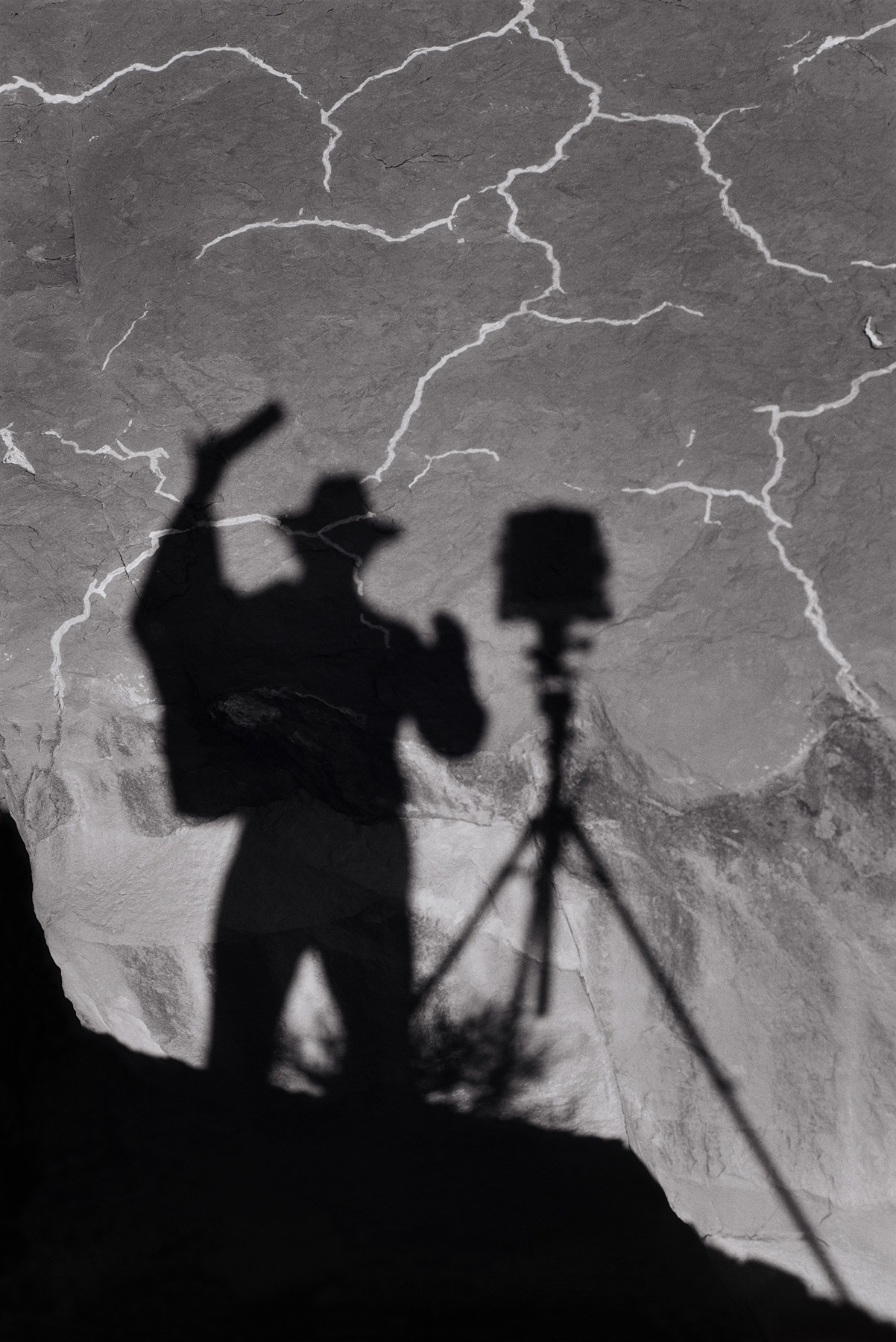
International Center of Photography website

LIKE ART BLART ON FACEBOOK

Back to top

Exhibition: ‘Portraits of New York: Photographs from the MoMA’ at La Casa Encendida, Madrid

Exhibition dates: 27th March – 14th June, 2009

Curator: Sarah Hermanson Meister, associate curator of MoMA’s Department of Photography


Many thankx to La Casa Encendida for allowing me to publish the photographs in the posting. Please click on the photograph for a larger version of the image.


Paul Strand (American, 1890-1976) 'Wall Street, New York' 1915 from the exhibition 'Portraits of New York: Photographs from the MoMA' at La Casa Encendida, Madrid, March - June, 2009


Paul Strand (American, 1890-1976)
Wall Street
1915
Platinum palladium print


Wall Street is a platinum palladium print photograph by the American photographer Paul Strand taken in 1915. There are currently only two vintage prints of this photograph with one at the Whitney Museum of American Art (printed posthumously) and the other, along with negatives, at the Philadelphia Museum of Art. This photograph was included in Paul Strand, circa 1916, an exhibition of photographs that exemplify his push toward modernism.

It depicts a scene of everyday life in Manhattan’s Financial District. Workers are seen walking past the J.P. Morgan & Co. building in New York City on the famous Wall Street, of which the photograph takes its name. The photograph is famous for its reliance on the sharpness and contrast of the shapes and angles, created by the building and the workers, that lead to its abstraction. This photograph is considered to be one of Strand’s most famous works and an example of his change from Pictorialism to straight photography. Strand moved from the posed to portraying the purity of the subjects. It is one of several images that stand as marks of the turn to modernism in photography. …

Technique

This photograph depicts the J.P. Morgan building in New York City. Strand photographed “people hurrying to work past the banking building” situated on Wall Street, from which the photo takes its name. the subject depicted is a real-life subject without manipulation. The depiction of the real nature of the medium and the subject is an example of straight photography. There is no focal point, with the lines converging off of the frame of the image. The financial building take majority of the frame. Emphasis is placed on the strong shapes created by the architecture of the building. The workers are included in the image, but are faceless and are trumped in size by the massive square shapes from the building they walk past. Also, the workers are captured in motion which on film makes them appear blurry. This aesthetic that Strand creates in Wall Street is his break toward the modern, the straight photography, demonstrating that Pictorialism is no longer part of his aesthetic. Strand captured the building with clean, sharp lines. The building is covered in the high contrast, chiaroscuro. It is heavily in the shadows, but still creates an overwhelming presence over the people that walk past it. These people are also shrouded in the contrast made evident with the clean lines and black and white nature of his photos and photography as a medium. The people jump from their places, being the dark figures in the light of the sun that beams in from the left of the frame.

Strand fills the image with his recognisable aesthetic. The photo is platinum print, one of the materials frequently used by photographers of the time. Strand was unique in how he printed his photos. As stated on the George Eastman House website section Notes on Photography, Strand would make large prints from small negatives. He also left them in their matte condition that was inherent with platinum print. With his printing techniques, he “added a richness to the image.” As with the time, the photo is entirely black and white. There is a heavy contrast with the black and white areas of the photo. Strand creates diagonal shapes that pull emphasis to subject of the building and away from the people.

Aspects

Having taken Hine’s class at the Ethical Culture Fieldston School, social change became important to Strand and appeared often in his art. As a pupil of Hine, Strand learned of the social aspect his work could have. With Wall Street, he sought to portray a social message. He captured the faceless people next to the looming financial building in order to give a warning. Strand shows “the recently built J.P. Morgan Co. building, whose huge, dark recesses dwarf the passersby with the imposing powers of uniformity and anonymity.” The people cannot escape the overwhelming power that this modern establishment will have on their future and the future of America. He warns us to not be the small people that look almost ant-like next to this building that has a massive amount of control over the American economy.

Text from the Wikipedia website


Unidentified photographer. 'Brooklyn Bridge' c. 1914


Unidentified photographer
Brooklyn Bridge
c. 1914
Gelatin silver print
7 5/8 × 9 9/16″ (19.4 × 24.3cm)
Museum of Modern Art, New York
The New York Times Collection


La Casa Encendida presents an exhibition organised by the Museum of Modern Art (MoMA), New York, which showcases a fundamental part of the institution’s assets: its photography collection. Portraits of New York: Photographs from the MoMA offers an overview of the history of photography against the backdrop of this iconic metropolis through the work of more than 90 artists.

For the show’s curator Sarah Hermanson Meister, associate curator of the MoMA’s Department of Photography, “Portraits of New York amply reflects the history of synergies between this medium and the Big Apple during a period of important transformations for both. The photographs generated by the restless and constant commitment of numerous photographs to New York City have played a fundamental role in determining how New Yorkers perceive the city and themselves. These photographs have also defined the city’s image in the world’s imagination.”

Featured artists include Berenice Abbott, Diane Arbus, Richard Avedon, Margaret Bourke-White, Henri Cartier-Bresson, Harry Callahan, Walker Evans, Andreas Feininger, Larry Fink, Robert Frank, Lee Friedlander, Lewis W. Hine, William Klein, Irving Penn, Cindy Sherman, Edward Steichen, Thomas Struth and Garry Winogrand.

Text from the La Casa Encendida website


Lewis Wickes Hine (American, 1874-1940) 'Welders on the Empire State Building' c. 1930


Lewis Wickes Hine (American, 1874-1940)
Welders on the Empire State Building
c. 1930
Gelatin silver print
10 5/8 × 13 5/8″ (27 × 34.6cm)
Museum of Modern Art, New York
Committee on Photography Fund


Ted Croner (American, 1922–2005) 'Central Park South' 1947-1948 from the exhibition 'Portraits of New York: Photographs from the MoMA' at La Casa Encendida, Madrid, March - June, 2009


Ted Croner (American, 1922–2005)
Central Park South
1947-1948
Silver gelatin print
10 15/16 x 13 3/4″ (27.8 x 34.9cm)
Gift of the photographer
Museum of Modern Art, New York


Ted Croner (1922-2005) was an American photographer, described as an influential member of the New York school of photography during the 1940s and 1950s. His images are said to represent the best example of this movement.

Born in Baltimore in 1922 and raised in North Carolina, Croner developed an interest in photography while in high school. He honed his skills while serving as an aerial photographer in World War II before settling in New York City in 1947. At the urging of fashion photographer Fernand Fonssagrives, he enrolled in Alexey Brodovitch’s class at The New School where he studied with Diane Arbus, Richard Avedon and Lisette Model. During this period he produced many of his most memorable images including “Taxi, New York Night, 1947-48”, which appears on the cover of Bob Dylan’s 2006 album, Modern Times. Another of Croner’s photographs was used on the cover of Luna’s album Penthouse.

Croner also had a successful career as a fashion and commercial photographer – his work was published in Harper’s Bazaar and Vogue. He also worked extensively with corporations such as Coca-Cola and Chase Manhattan Bank. Croner is best known for his haunting night images of New York City taken in the 1940s and 1950s. He was one of several important photographers who belonged to the New York school of photography.

Text from the Wikipedia website


Arthur Fellig (Weegee) (American, 1899-1968) 'Coney Island' 1940


Arthur Fellig (Weegee) (American, 1899-1968)
Coney Island
July 22, 1940
Silver gelatin print
10 5/16 x 13 11/16″ (26.2 x 34.8cm)
Anonymous gift
Museum of Modern Art, New York
© 2019 Weegee/ICP/Getty Images


Photographs from the MoMA, which will provide an in-depth look at an essential component of the MoMA’s assets: its photography collection. Curated by Sarah Hermanson Meister, associate curator of the museum’s department of photography, the exhibition offers an overview of the history of photography through the work of over 90 artists, with the iconic city as a backdrop. It includes some of the most prestigious names in photography, such as Berenice Abbott, Diane Arbus, Harry Callahan, Henri Cartier-Bresson, Walter Evans, Lee Friedlander, Helen Levitt, Cindy Sherman, Irving Penn and Alfred Stieglitz.

For Sarah Hermanson Meister, associate curator of the MoMA’s Department of Photography, “Portraits of New York amply reflects the history of synergies of this medium and of the Big Apple during a period of important transformations for both. The photographs generated by the restless and constant commitment of numerous photographers to the city of New York have played a fundamental role in determining how New Yorkers perceive the city and themselves. These photographs have also defined the city’s image in the world’s imagination.

[…] The urban landscape of the city is a combination of the old and the new in constant evolution, and these physical transformations are repeated in the demographic changes that have characterised the city since the 1880s, when massive waves of immigrants began to arrive. This same diversity can be seen in the photography of New York of the past four decades. Just as its architects are inspired and limited by surrounding structures and building codes, and just as its inhabitants learn and rub up against each other and previous generations, so too the photographers of New York transport the visual memory of a an extensive and extraordinary repertoire of images of the city. They take on the challenge of creating new works that go beyond traditions and respond to what is new in New York.”

The exhibition curator continues: “Throughout the 20th century, numerous artists have felt inspired by New York’s combination of glamour and rawness. The city – which acquired its modernity at the same pace as photography, and in an equally impetuous and undisciplined way – has always been a theme of particular vitality for photographers, both those who have visited the city and those who live in it. On one occasion, faced with the challenge of capturing the essence of New York with a camera, the photographer Berenice Abbott wondered, “How shall the two-dimensional print in black and white suggest the flux of activity of the metropolis, the interaction of human beings and solid architectural constructions, all impinging upon each other in time?” Each of the photographs reproduced here is a unique response to that question.
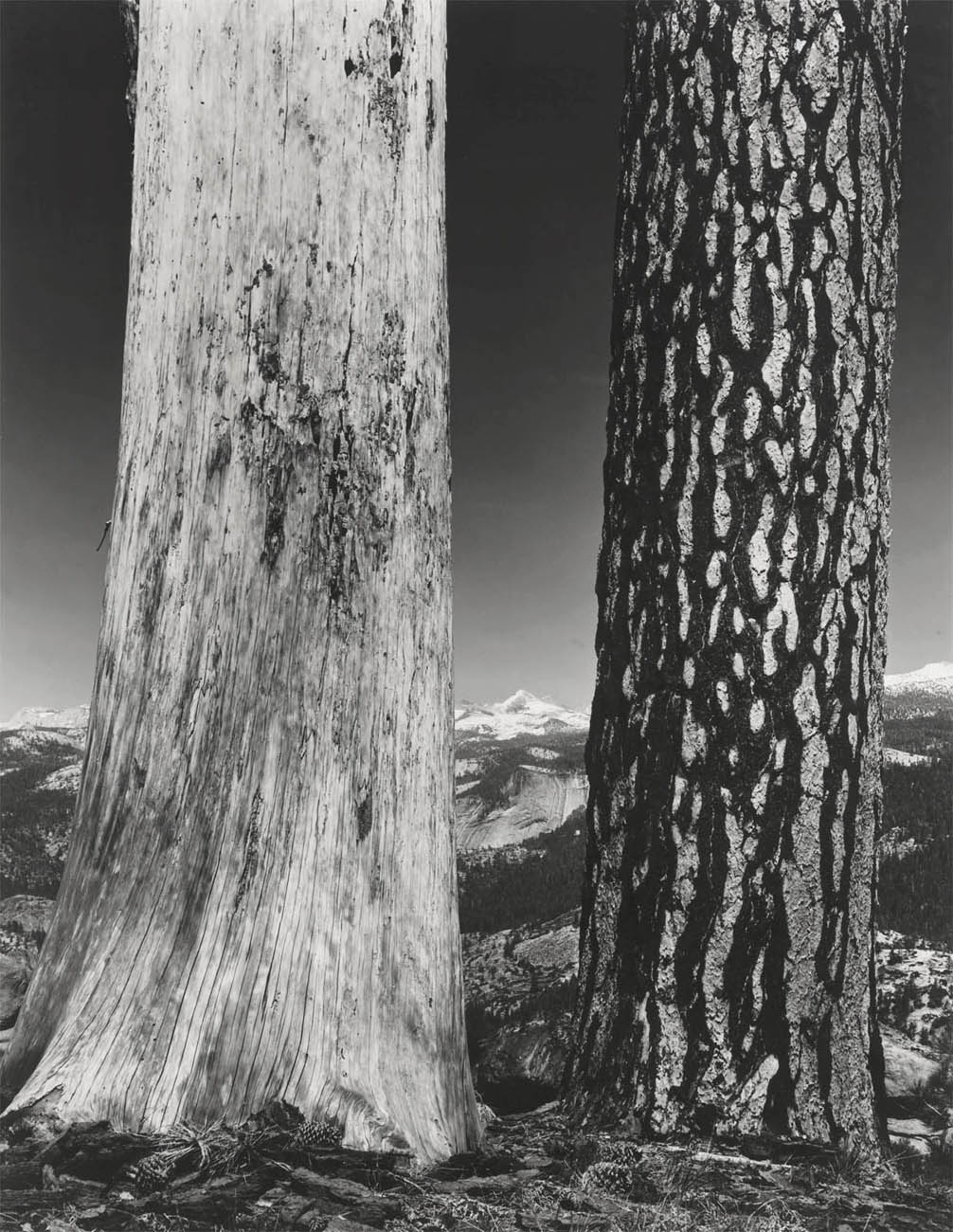
New York may not be the capital of the United States, but it prides itself on being the capital of the world. Its inhabitants are intimate strangers, its avenues are constantly teeming and its buildings are absolutely unmistakeable, though they are packed so close together that it is impossible to see just one. The New York subway runs twenty-four hours a day, which has earned it the sobriquet of “the city that never sleeps.” It is the model for Gotham City, the disturbing metropolis that Batman calls home, and a symbol of independence and a wellspring of opportunities in a wide variety of films, from Breakfast at Tiffany‘s to Working Girl. And this is just a sample of the captivating and abundant raw material that the city offers to artists, regardless of the medium in which they work. However, it is the convergence of photographers in this city – in this place that combines anonymity and community, with its local flavour and global ambitions – that has created the ideal setting for the development of modern photography.

Text from the La Casa Encendida website [Online] Cited 28/04/2009. No longer available online


Bruce Davidson (American, b. 1933) 'Untitled' from the 'Brooklyn Gang' series 1959


Bruce Davidson (American, b. 1933)
Untitled from the Brooklyn Gang series
1959
Silver gelatin print
6 3/4 x 10″ (17.1 x 25.4cm)
Museum of Modern Art, New York
© 2019 Magnum Photos, Inc. and Bruce Davidson


Cindy Sherman (American, b. 1954)
'Untitled Film Still #21' 1978


Cindy Sherman (American, b. 1954)
Untitled Film Still #21
1978
Silver gelatin print
7 1/2 x 9 1/2″ (19.1 x 24.1cm)
Horace W. Goldsmith Fund through Robert B. Menschel
Museum of Modern Art, New York
© 2019 Cindy Sherman


Each of Sherman’s sixty-nine Untitled Film Stills (1977-80), presents a female heroine from a movie we feel we must have seen. Here, she is the pert young career girl in a trim new suit on her first day in the big city. Among the others are the luscious librarian (#13), the chic starlet at her seaside hideaway (#7), the ingenue setting out on life’s journey (#48), and the tough but vulnerable film noir idol (#54). To make the pictures, Sherman herself played all of the roles or, more precisely, played all of the actresses playing all of the roles. In other words, the series is a fiction about a fiction, a deft encapsulation of the image of femininity that, through the movies, took hold of the collective imagination in postwar America – the period of Sherman’s youth, and the crucible of our contemporary culture.

In fact, only a handful of the Untitled Film Stills are modelled directly on particular roles in actual movies, let alone on individual stills of the sort that the studios distribute to publicise their films. All the others are inventive allusions to generic types, and so our sure sense of recognition is all the more telling. It tells us that, knowingly or not, we have absorbed the movie culture that Sherman invites us to examine as a powerful force in our lives.

Publication excerpt from The Museum of Modern Art, MoMA Highlights, New York: The Museum of Modern Art, revised 2004, originally published 1999, p. 295.


Diane Arbus (American, 1923-1971) 'Woman with Veil on Fifth Avenue, N.Y.C' 1968


Diane Arbus (American, 1923-1971)
Woman with Veil on Fifth Avenue, N.Y.C
1968
Silver gelatin print
Museum of Modern Art, New York


Nickolas Muray (American, 1892-1965) 'Babe Ruth' c. 1927


Nickolas Muray (American, 1892-1965)
Babe Ruth
c. 1927
Gelatin silver print
13 3/8 × 10 7/16″ (33.9 × 26.5cm)
Museum of Modern Art, New York
Gift of Mrs. Nickolas Muray


Berenice Abbott (American, 1891-1991) 'Night View, New York City' 1932


Berenice Abbott (American, 1891-1991)
Night View, New York City (New York at Night)
1932
Silver gelatin print
12 7/8 x 10 9/16″ (32.7 x 26.9cm)
Museum of Modern Art, New York
© 2019 Berenice Abbott/Commerce Graphics


La Casa Encendida
Ronda Valencia, 2 28012 Madrid

Opening hours:
La Casa Encendida is open from Monday to Sunday from 10am to 10pm every day of the year except national and Community of Madrid holidays
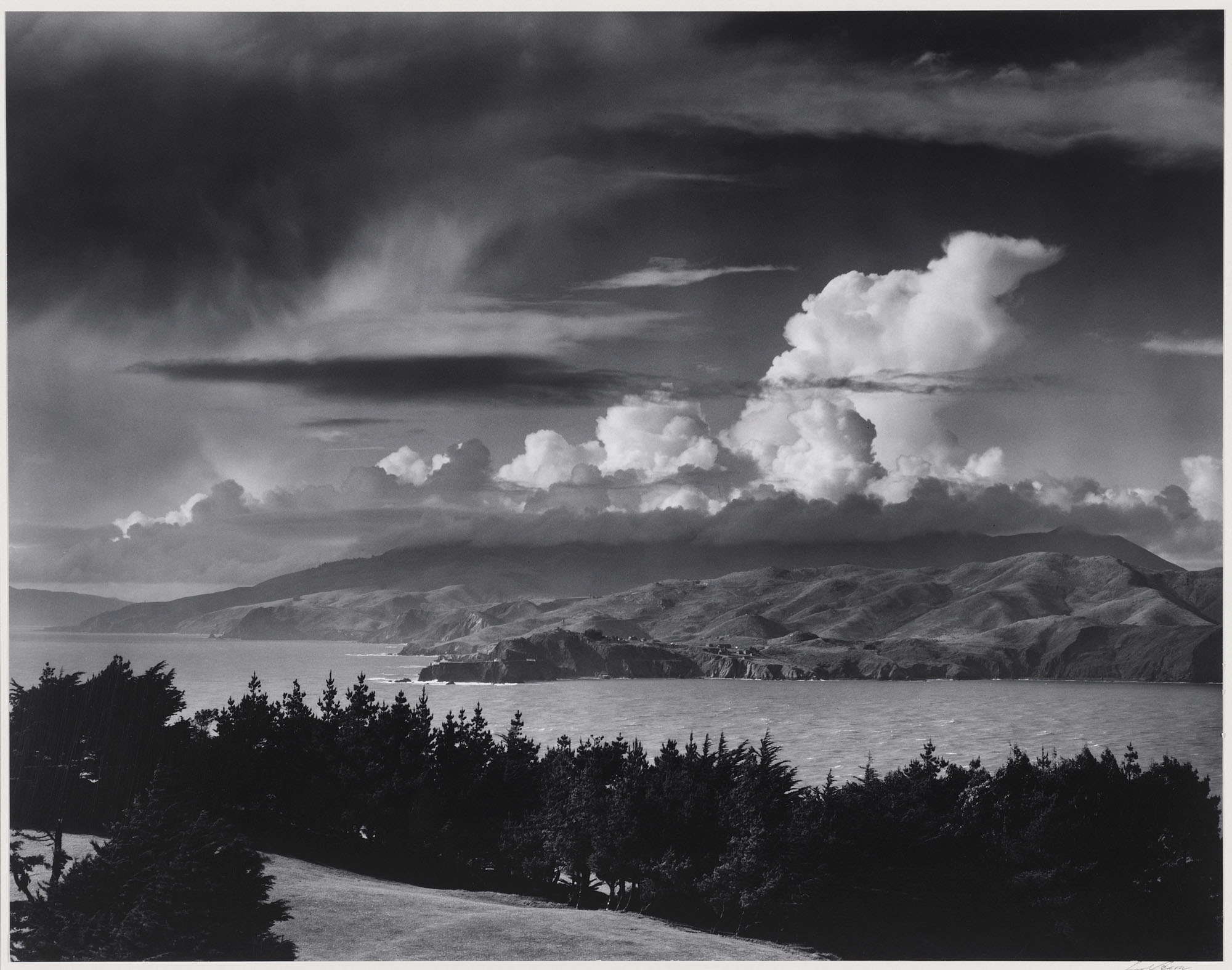
La Casa Encendida website

LIKE ART BLART ON FACEBOOK

Back to top