Exhibition: ‘Diane Arbus: Sanctum Sanctorum’ at David Zwirner, London

Exhibition dates: 6th November, 2025 – 17th January, 2026


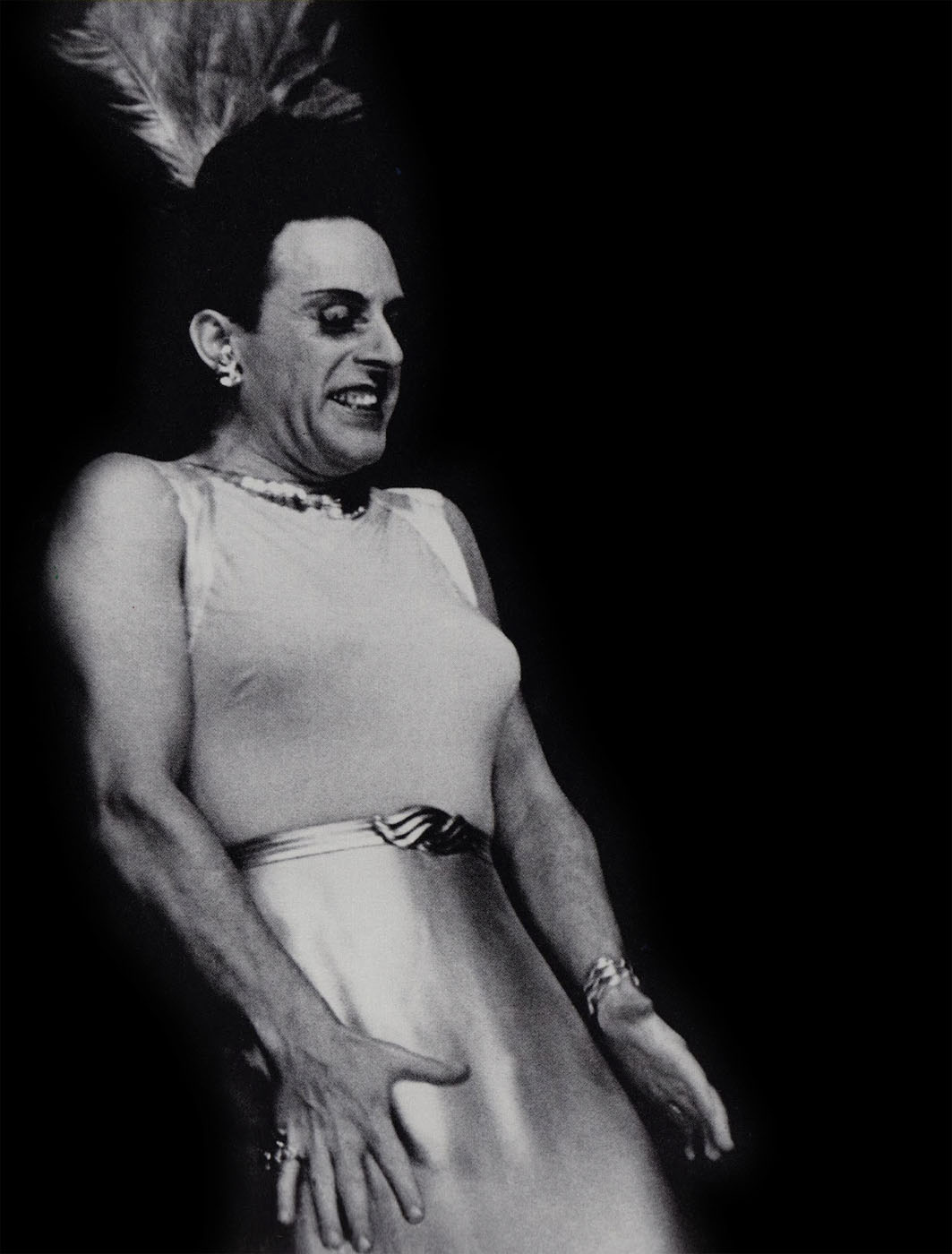
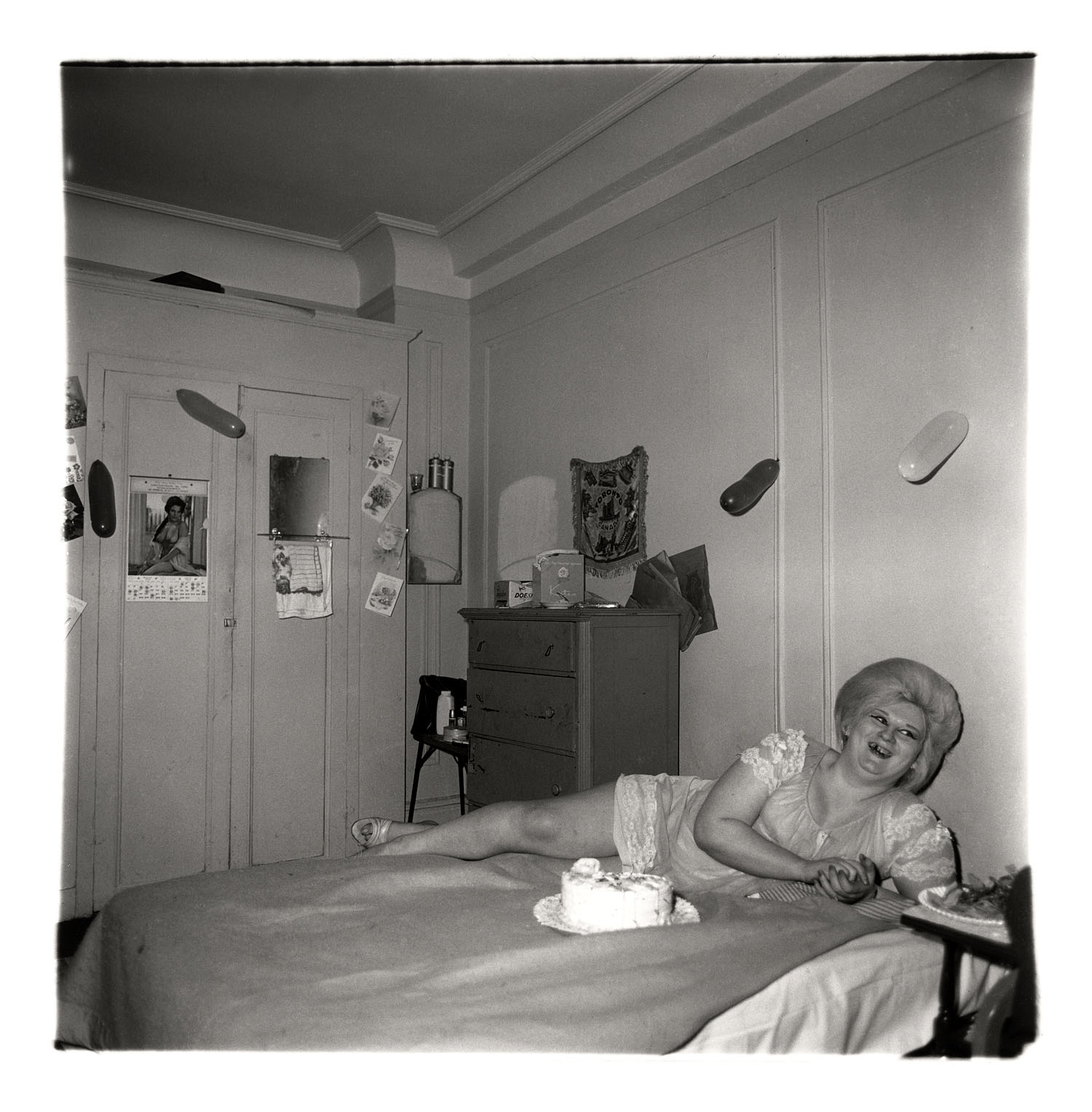
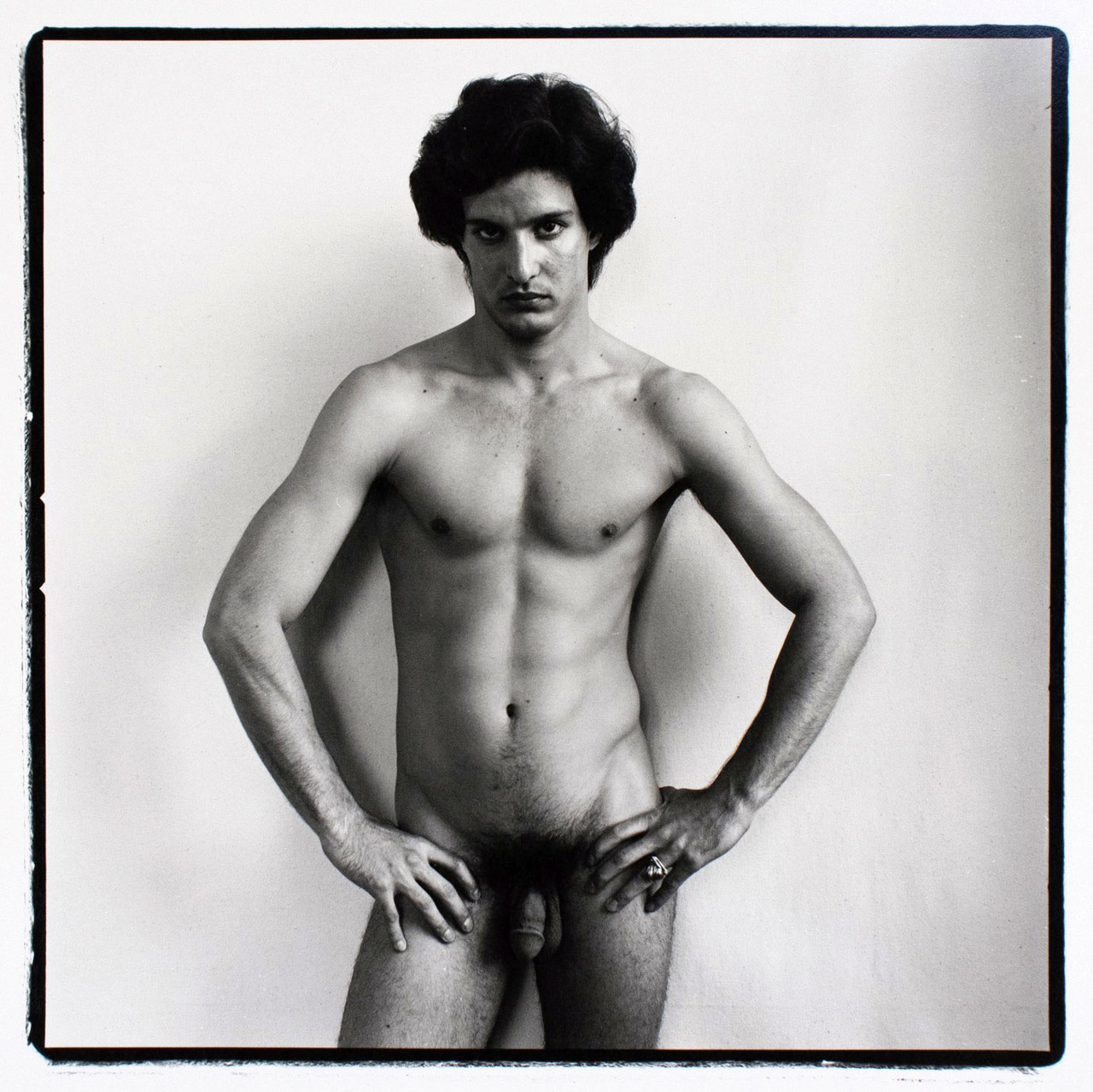
Diane Arbus (American, 1923-1971) 'Transvestite with her birthday cake, N.Y.C. 1969' 1969 from the exhibition 'Diane Arbus: Sanctum Sanctorum' at David Zwirner, London, Nov 2025 - Jan 2026


Diane Arbus (American, 1923-1971)
Transvestite with her birthday cake, N.Y.C. 1969
1969
Gelatin silver print
© The Estate of Diane Arbus


Without judgement

In my humble opinion Diane Arbus is the best portrait photographer of the 20th century.

As can be seen in the quotation from a 1939 high-school essay on Plato when Arbus was just 19 years old (below), latent inside her was an appreciation of difference, uniqueness, and the importance of life – all awaiting an out, an emanation of her spirit later manifested in her photographs through the picturing of her subjects.

Arbus found her mature voice as an artist, her métier if you like, when in 1962 she switched from a 35mm camera to a 2 1/4 inch twin-lens reflex (TLR) Rolleiflex (later a Mamiyaflex), a square format which became her iconic signature.

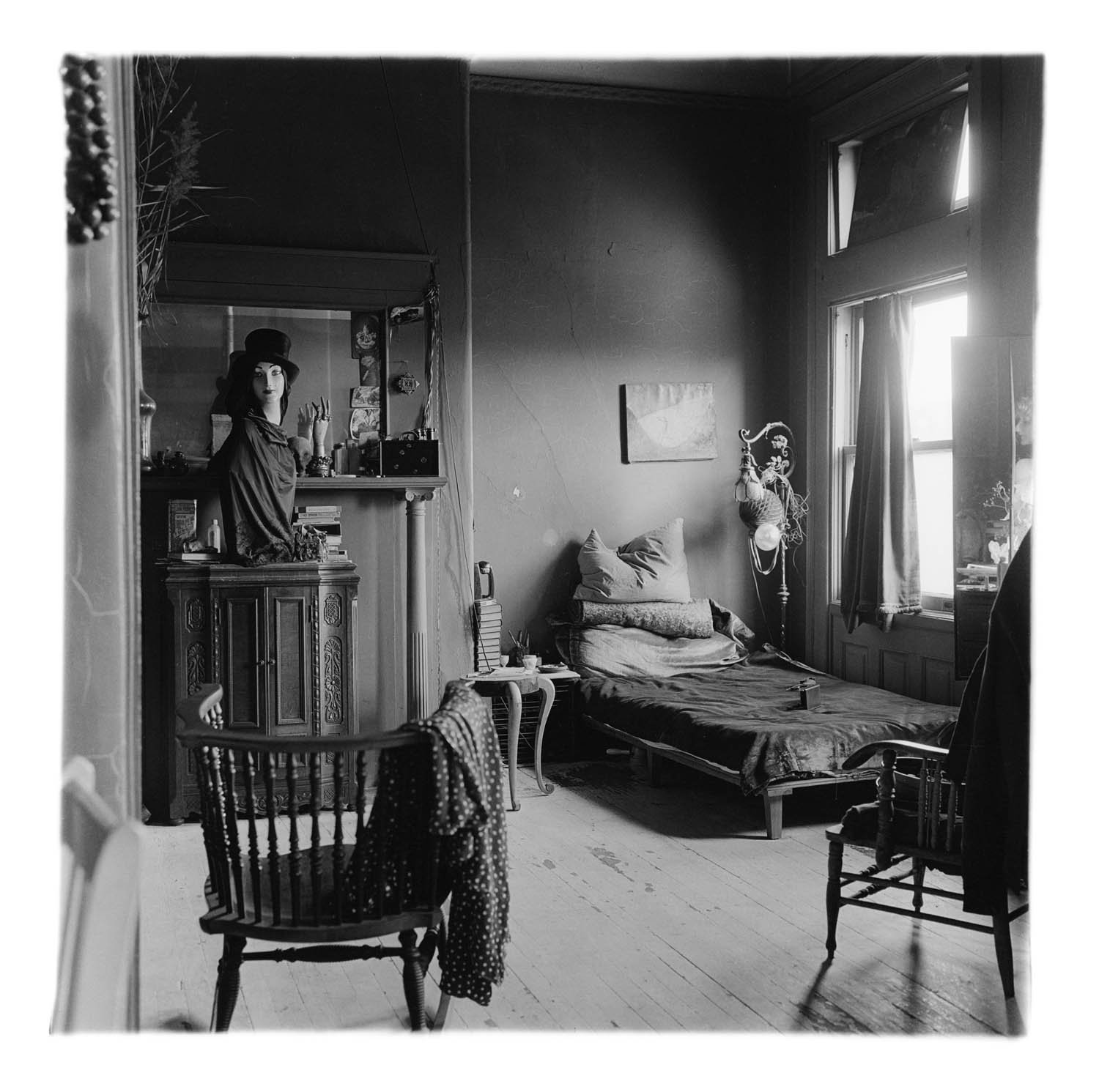
In the photograph Nancy Bellamy’s bedroom, N.Y.C. 1961 (1961, below) we therefore have evidence of the early results of the use of this new camera. In this photograph I believe you can feel how Arbus is still getting used to his new way of seeing the world, for you have to approach your visualisation of the world in a completely different way when constructing the image plane in a square format. Here she is still unsure as to where to place the camera. The light is fantastic coming in through the window and flooding the room but the out of focus left wall is weak and simply does not work with the image.

Fast forward to 1963-1965 and we see Arbus in complete control of her physical and emotional environment. In photographs from this period, whether medium distance portraits showing subjects in situ or tightly cropped portraits with minimal backgrounds, we see her undoubted mastery of natural light, flash, construction and tensioning of the image plane but, above all, in control of the feeling that emanates from the photographs that flows to the viewer.

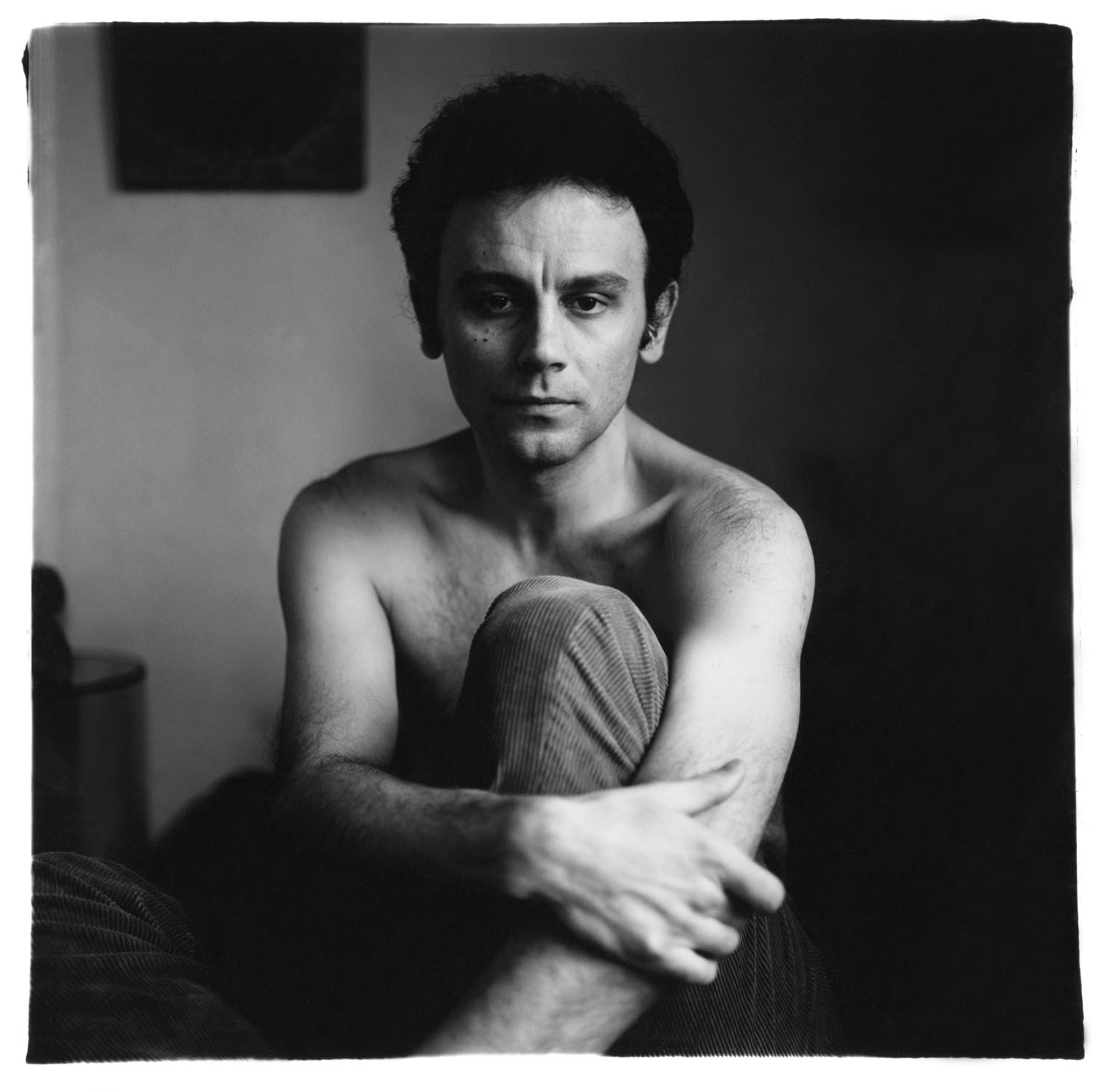
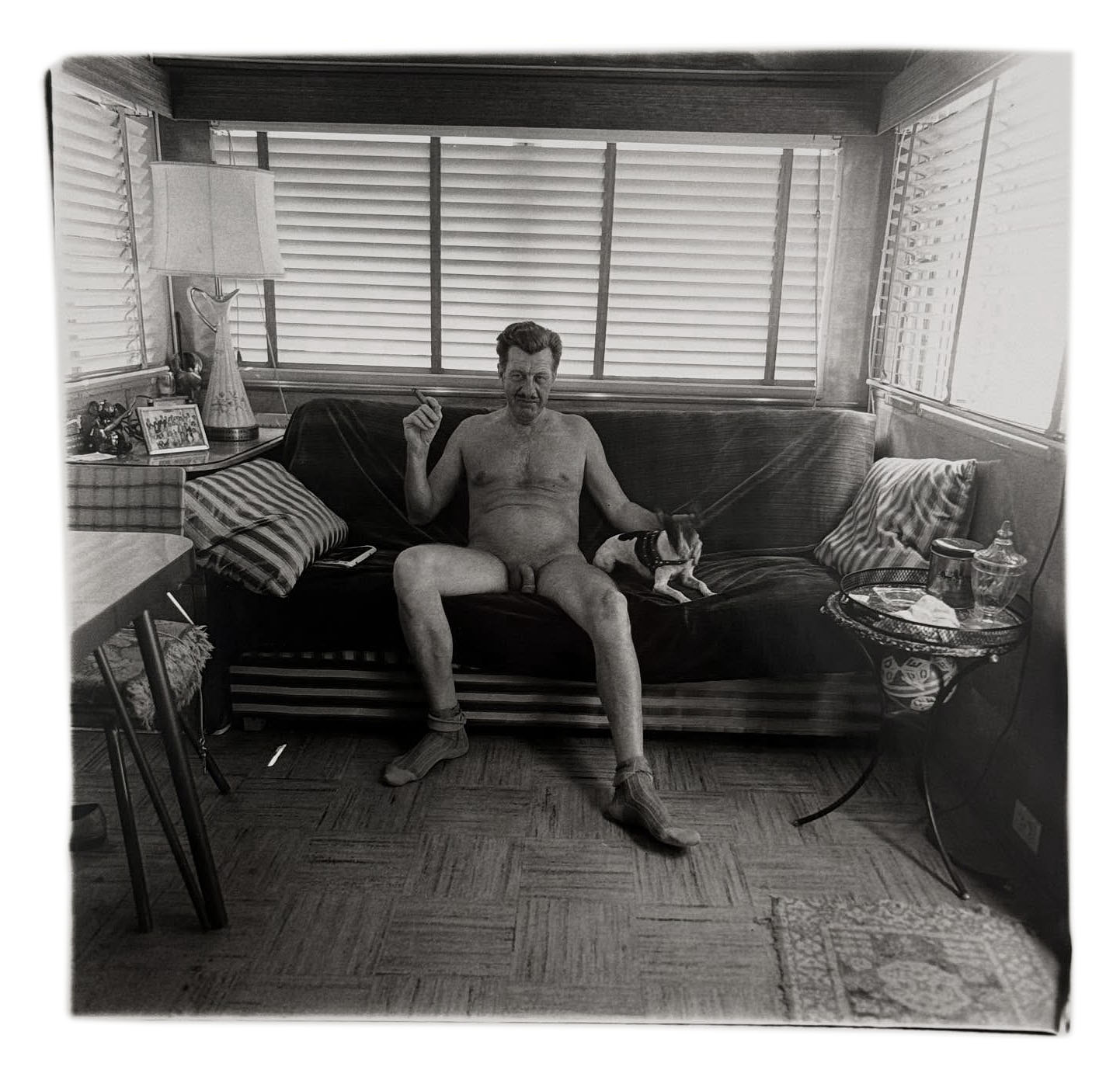
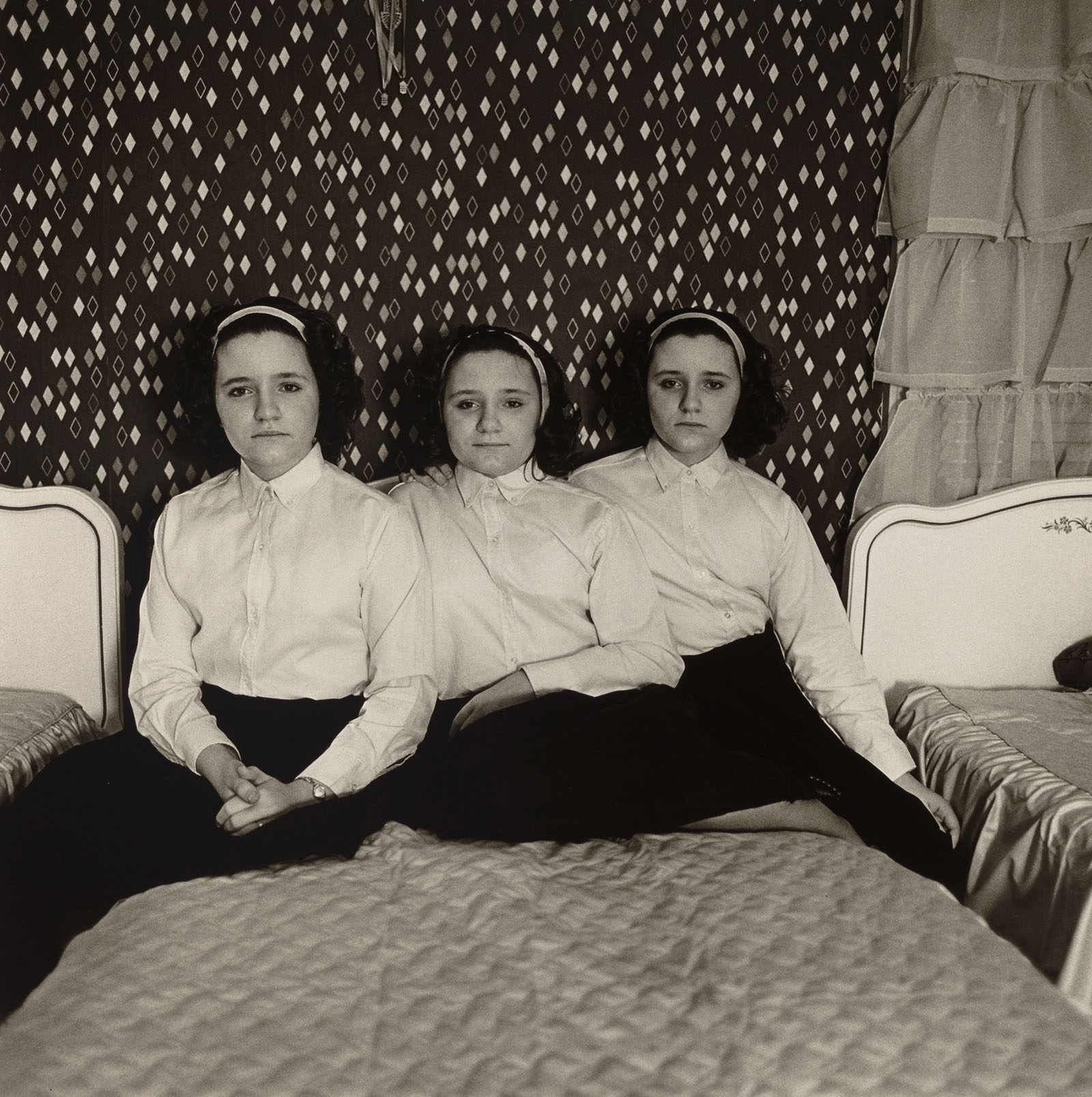
Whether direct / acceptance / this is who I am (Interior decorator at the nudist camp in his trailer, New Jersey, 1963, 1963 below) to contained / introspective (Lucas Samaras, N.Y.C. 1966, 1966 below) – but never the dreaded “dead pan” – and on to the inscrutable / open / closed looks on each of the three faces in the photograph Triplets in their Bedroom, N.J., 1963 (1963, below), Arbus is the master at conjuring, no what is the word I’m looking for … Arbus is the master at materialising the energy of a person or place before our very eyes.

As the press release so eloquently states, “Through her singular combination of intelligence, charisma, intuition, and courage, Diane Arbus was frequently invited into homes and other private realms seldom seen by strangers. Though made in intimate settings, her photographs evidence no sense of intrusion or trespass. Instead, they reveal an unspoken exchange between photographer and subject, a moment of recognition in which confidences emerge freely and without judgment.”

An unspoken exchange between photographer and subject. A moment of revelation, or revelatio, where the curtain is pulled back to reveal our innermost secrets. Visualised by Arbus without judgement.

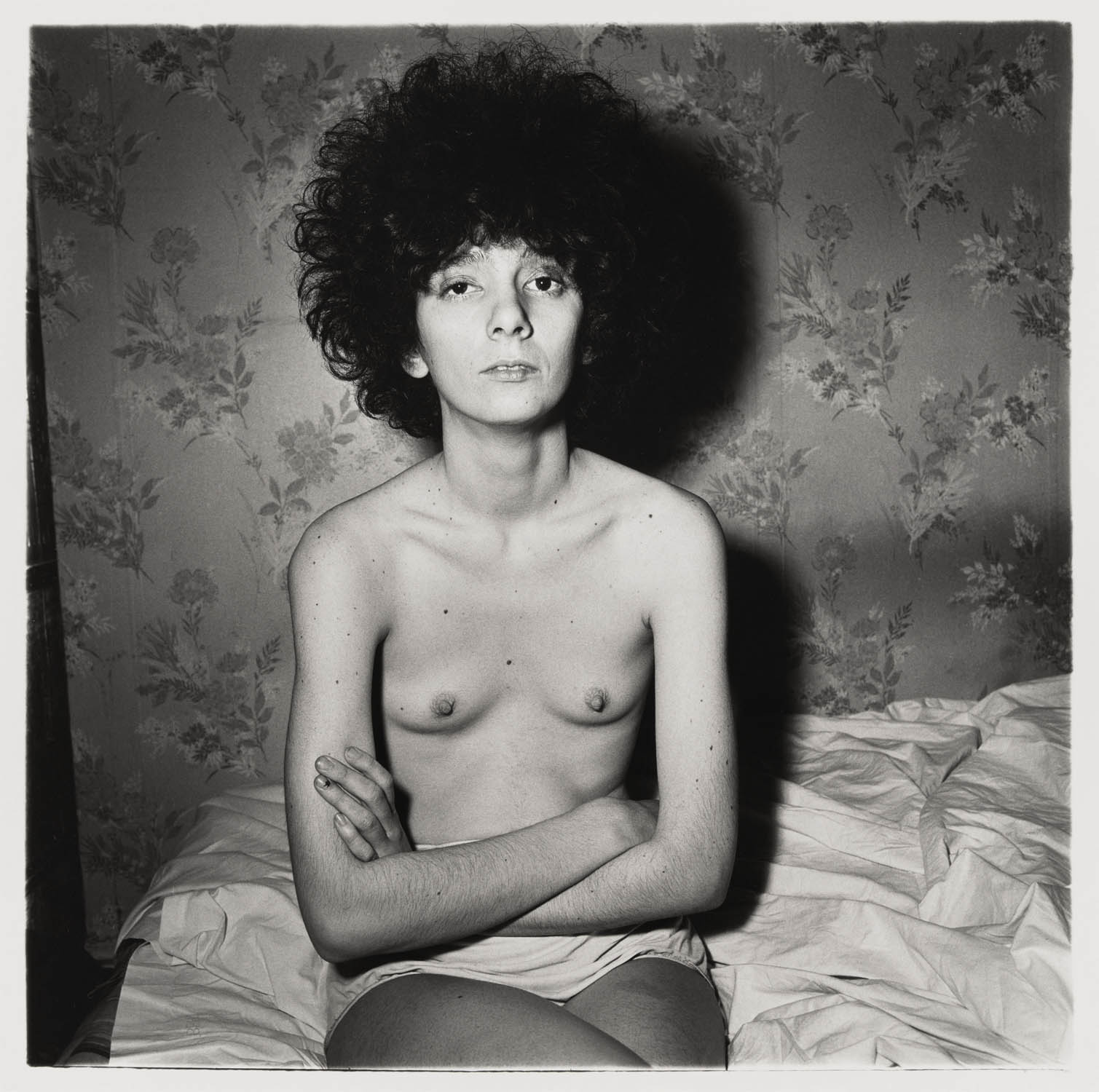
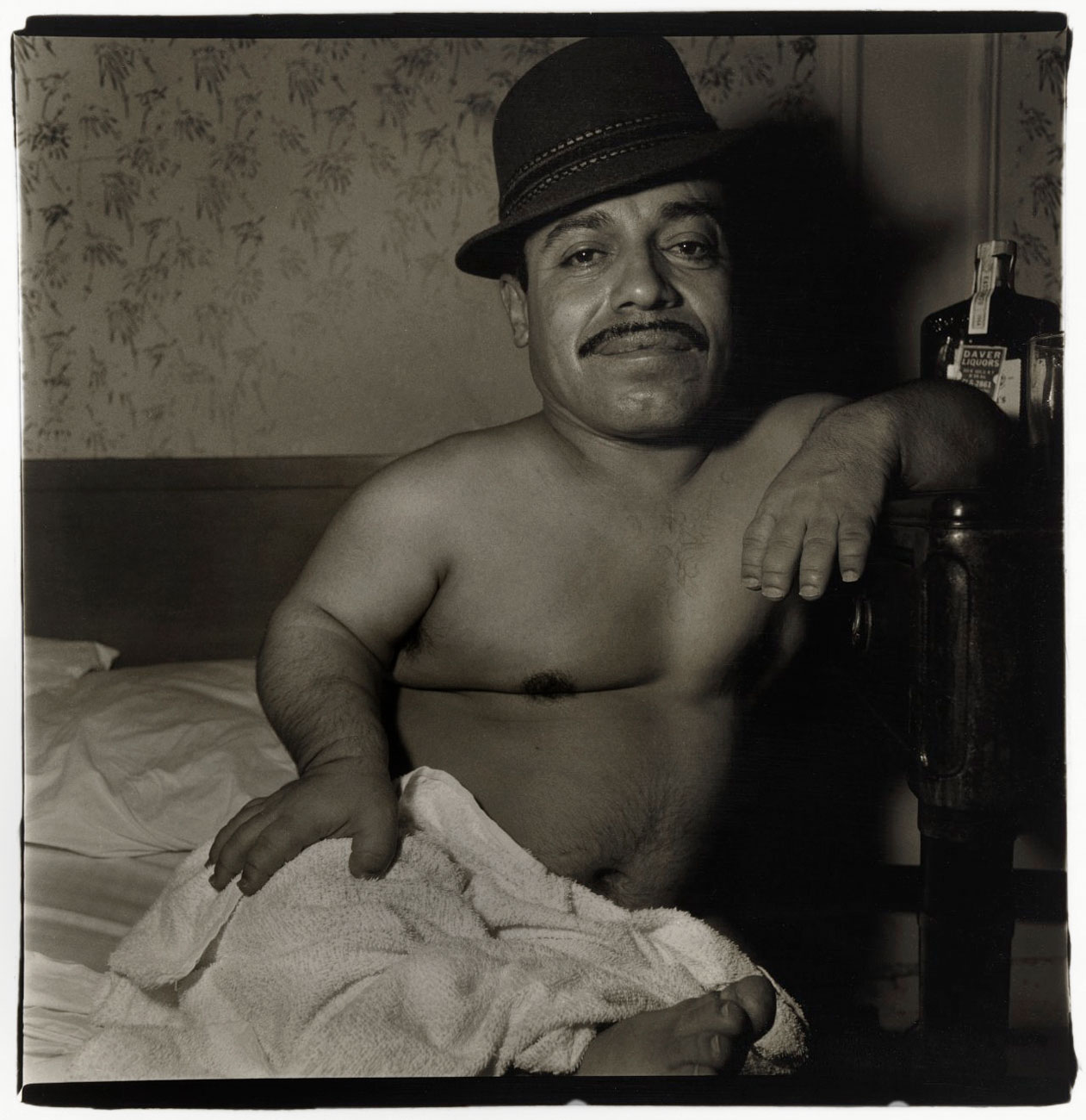
As the years progress towards 1968-1970 Arbus becomes bolder still. In photographs such as A naked man being a woman, N.Y.C., 1968 (1968, below), Girl sitting on her bed with her shirt off, N.Y.C., 1968 (1968, below) and Mexican Dwarf in his hotel room, N.YC., 1970 (1970, below) we see and feel such an intimate bond between the photographer and the subject – all crap cut out, all extraneous noise gone, just the baring of the soul of the sitter looking directly into the camera. As Minor White used to say, a communication / communion between the photographer and the subject, back through the lens of the camera and onto the film, forming a Zenian circle of energy, hoping for a revelation of spirit in the negative and subsequent print – whether that be from a rock, a landscape or a portrait.

And in two photographs from the same sitting, we can begin to understand how Arbus achieved her aim. In the photograph Transvestite at the birthday party, N.Y.C. 1969 (1969, below) we have the subject in situ, in context, laughing, happy, enjoying her birthday party surrounded by her things. Then things change. In Transvestite with her birthday cake, N.Y.C. 1969 (1969, below) Arbus closes in on this wonderful human being on her bed with her birthday cake. Isolating her from the background through the use of flash, there she is, fag in hand, staring directly into the camera in all her strength and vulnerability. Arbus evinces what it is to be this human being, she has empathy for the subject in these intimate settings.

I believe that Arbus’ empathy for her subjects was greatly enhanced by the waist level engagement with her sitters when using her medium format camera. Instead of bringing the camera up to the eye, Arbus looks down into the viewfinder to locate and ground the energy of her subjects, and the camera is nestled at solar plexus / belly button, with all the connection to mother, blood, energy and water (Amniotic Fluid) from which we all come. When singing and in yoga practice, breathing comes from the stomach and the energy flows in an out of the navel, the Manipura (solar plexus) in yoga, linked to personal power, emotional balance, and metabolism, acting as a hub for energy distribution.1 Having used an old Mamiya twin-lens C220 medium format camera myself I can totally appreciate the unique perspective and energy such a camera position brings to picturing the world.

“These archetypal images have become deeply embedded in the collective conscience where conscience is pre-eminently the organ of sentiments and representations. The snap, snap, snap of the shutter evinces the flaws of human nature, reveals the presence of a quality or feeling to which we can all relate. As Arbus states, the subject of the picture is always more important than the picture. And more complicated. That is why these photographs always capture our attention – because we become, we inhabit, we are the subject.”2

Dr Marcus Bunyan


1/ The (navel) is seen as a powerful energy centre in many traditions (Yoga, Ayurveda, TCM) and science, representing our origin, core strength, digestion (Agni/digestive fire), self-esteem, and life force (prana).

2/ Marcus Bunyan commenting on the exhibition Diane Arbus at Jeu de Paume, Paris, October 2011 – February 2012


Many thankx to David Zwirner for allowing me to publish the 5 images and installation photographs in the posting. All other photographs are used under fair use conditions for the purposes of eduction and research. Please click on the photographs for a larger version of the image.


“For me the subject of the picture is always more important than the picture. And more complicated.”


Diane Arbus


“There are and have been and will be an infinite number of things on earth: individuals all different, all wanting different things, all knowing different things, all loving different things, all looking different. Everything that has been on earth has been different from any other thing. That is what I love: the differentness, the uniqueness of all things and the importance of life…. I see something that seems wonderful; I see the divineness in ordinary things.”


Diane Arbus in a high-school essay on Plato, 1939


Dennis McGuire (American) 'Untitled [Diane Arbus using her medium format Mamiya camera]' Nd


Dennis McGuire (American)
Untitled [Diane Arbus using her medium format Mamiya camera]
Nd
© Dennis McGuire

Used under fair use conditions for the purposes of education and research
 

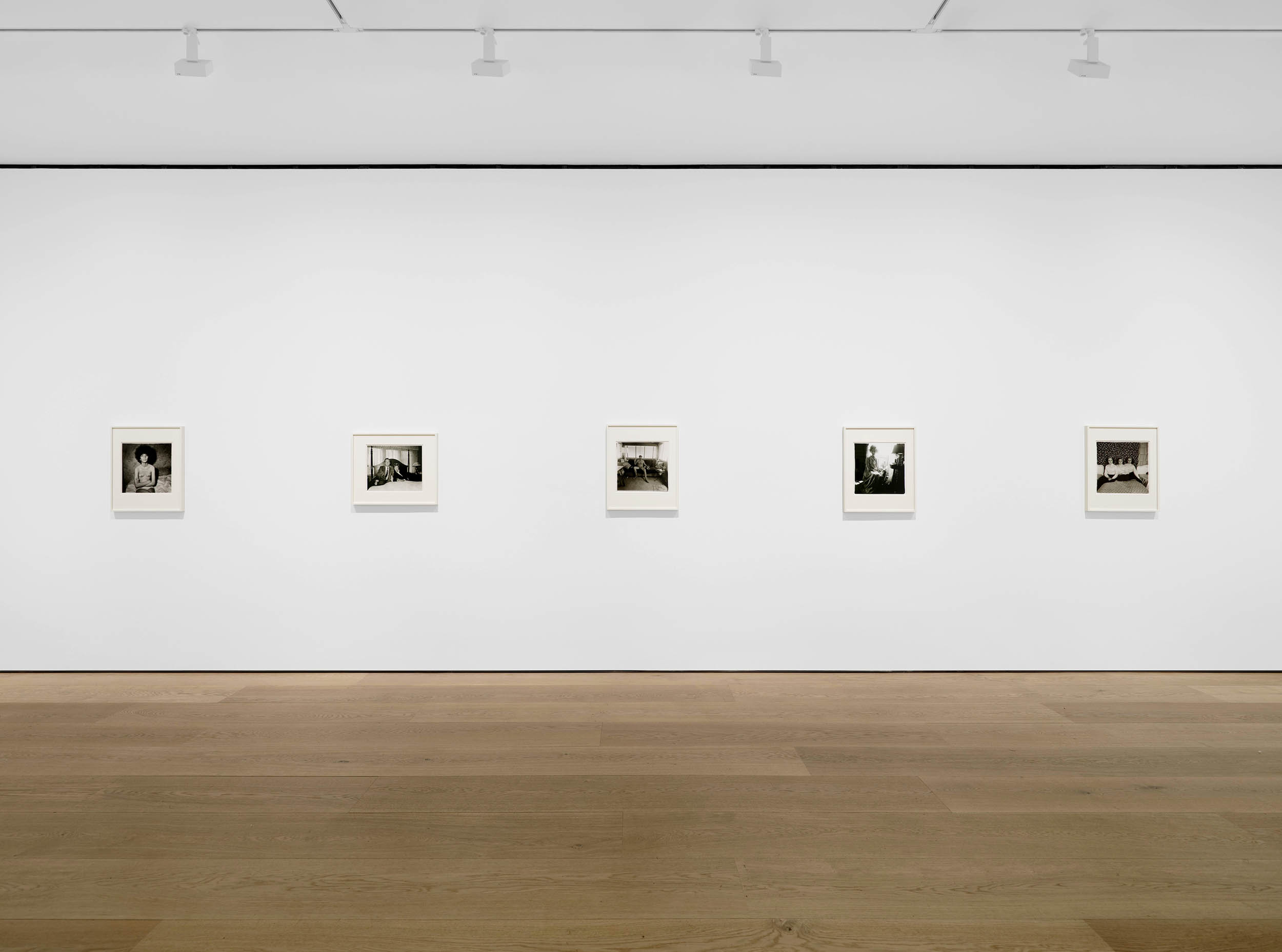
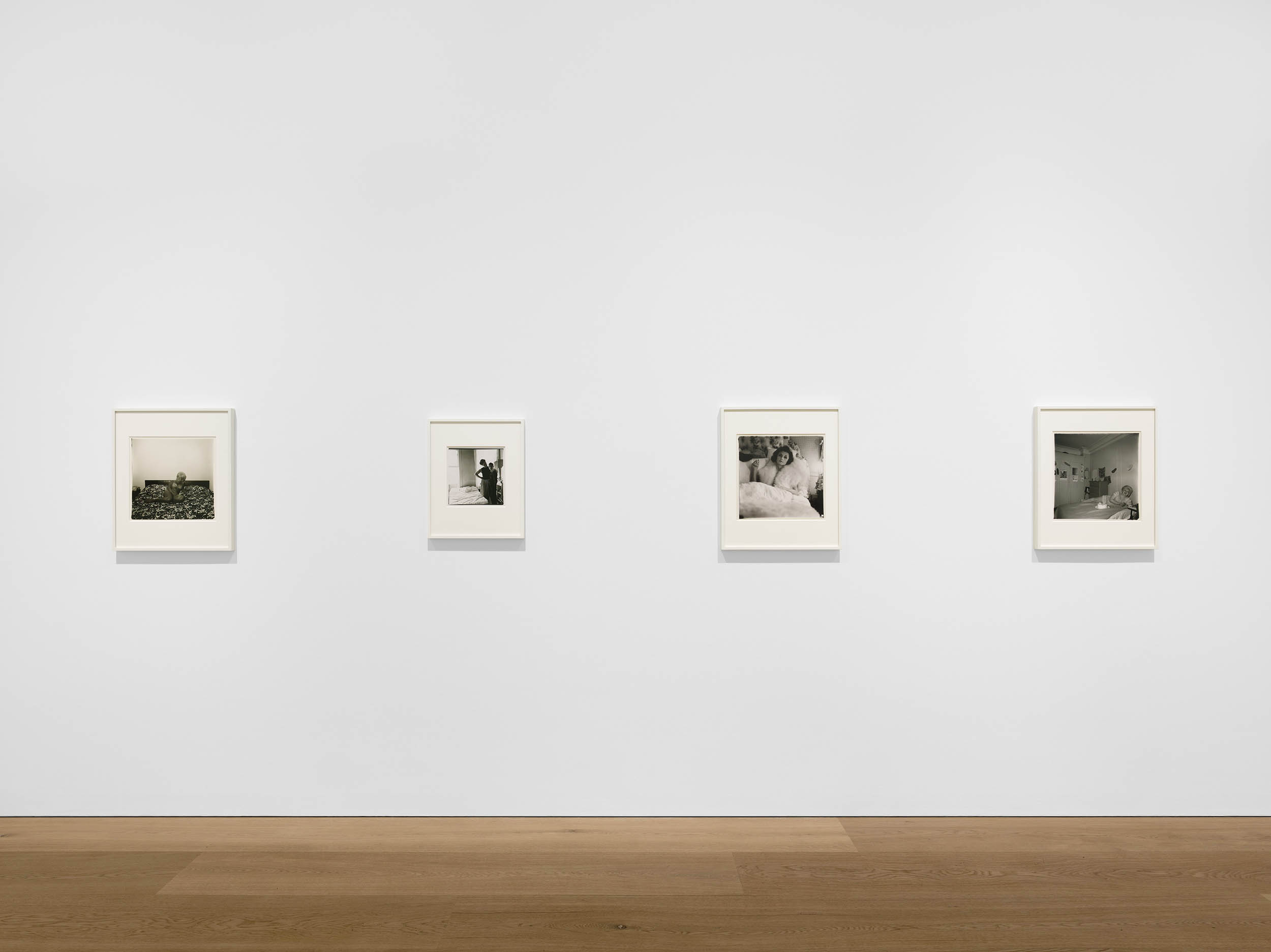
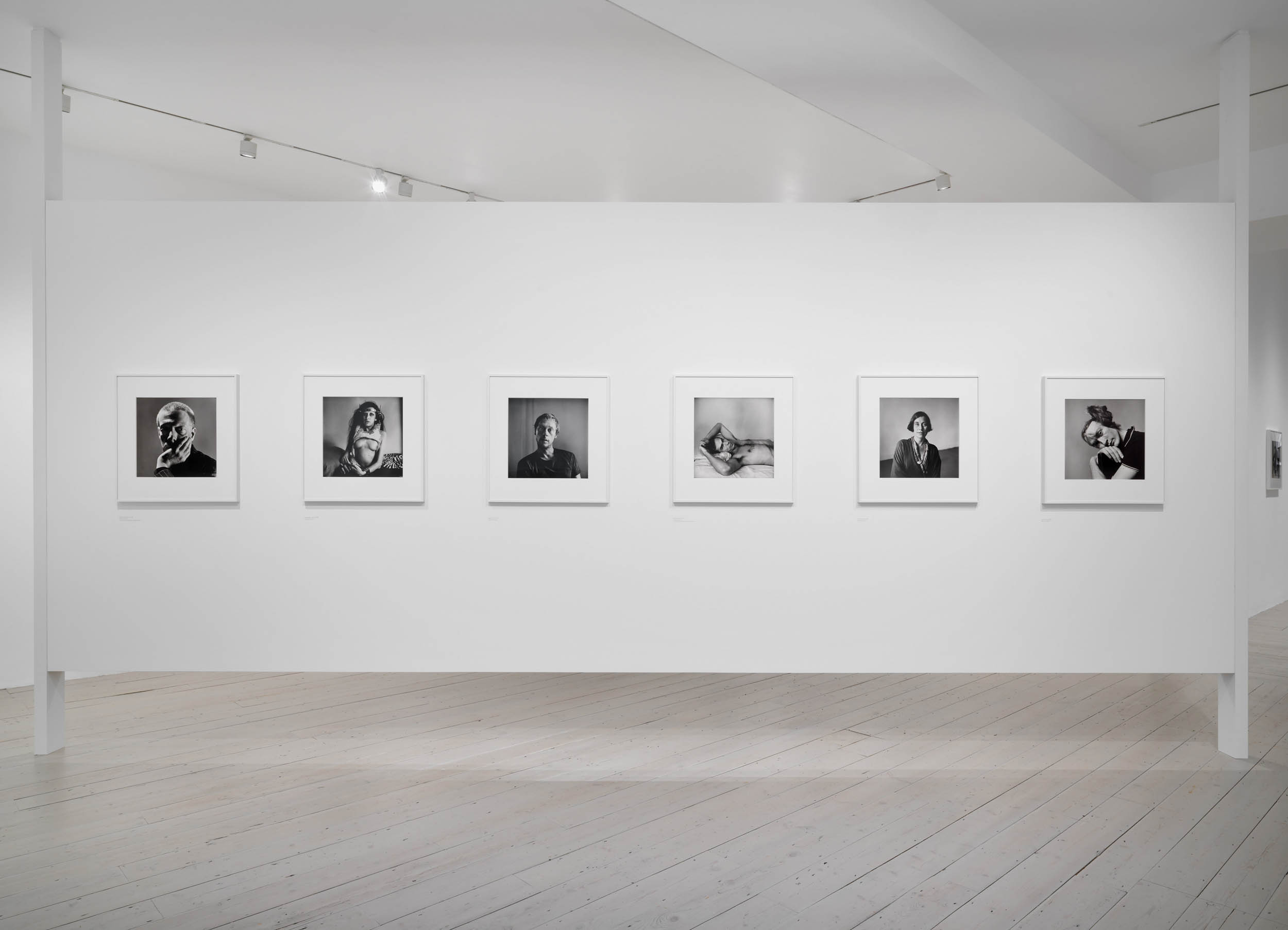
Installation view of the exhibition 'Diane Arbus: Sanctum Sanctorum' at David Zwirner, London


Installation view of the exhibition Diane Arbus: Sanctum Sanctorum at David Zwirner, London showing at left, Arbus’ Girl sitting on her bed with her shirt off, N.Y.C., 1968; at centre, Interior decorator at the nudist camp in his trailer, New Jersey 1963; at second right, Mrs. T. Charlton Henry in a negligee, Philadelphia, Pa. 1965; and at right, Triplets in their Bedroom, N.J., 1963


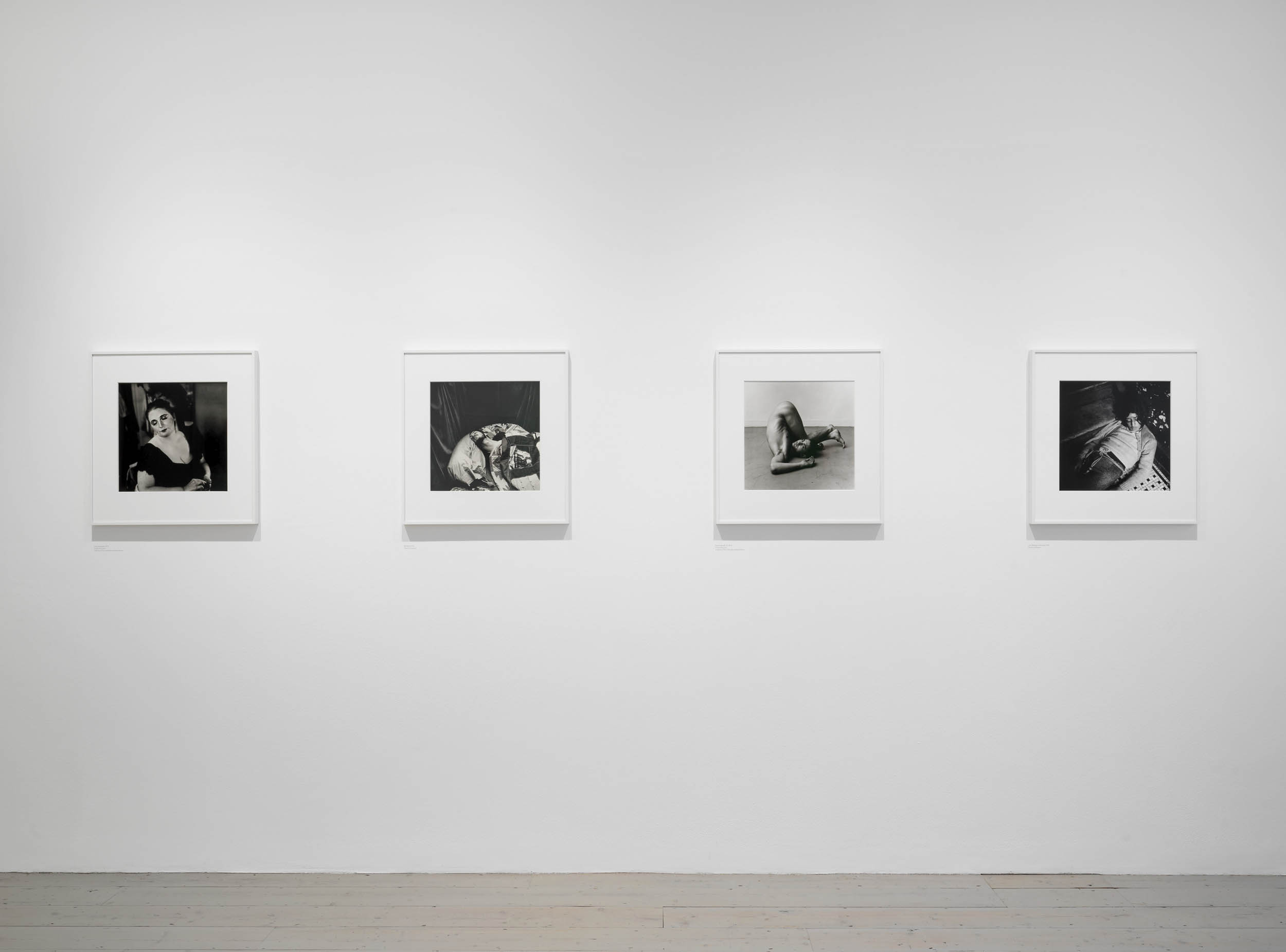
Installation view of the exhibition 'Diane Arbus: Sanctum Sanctorum' at David Zwirner, London


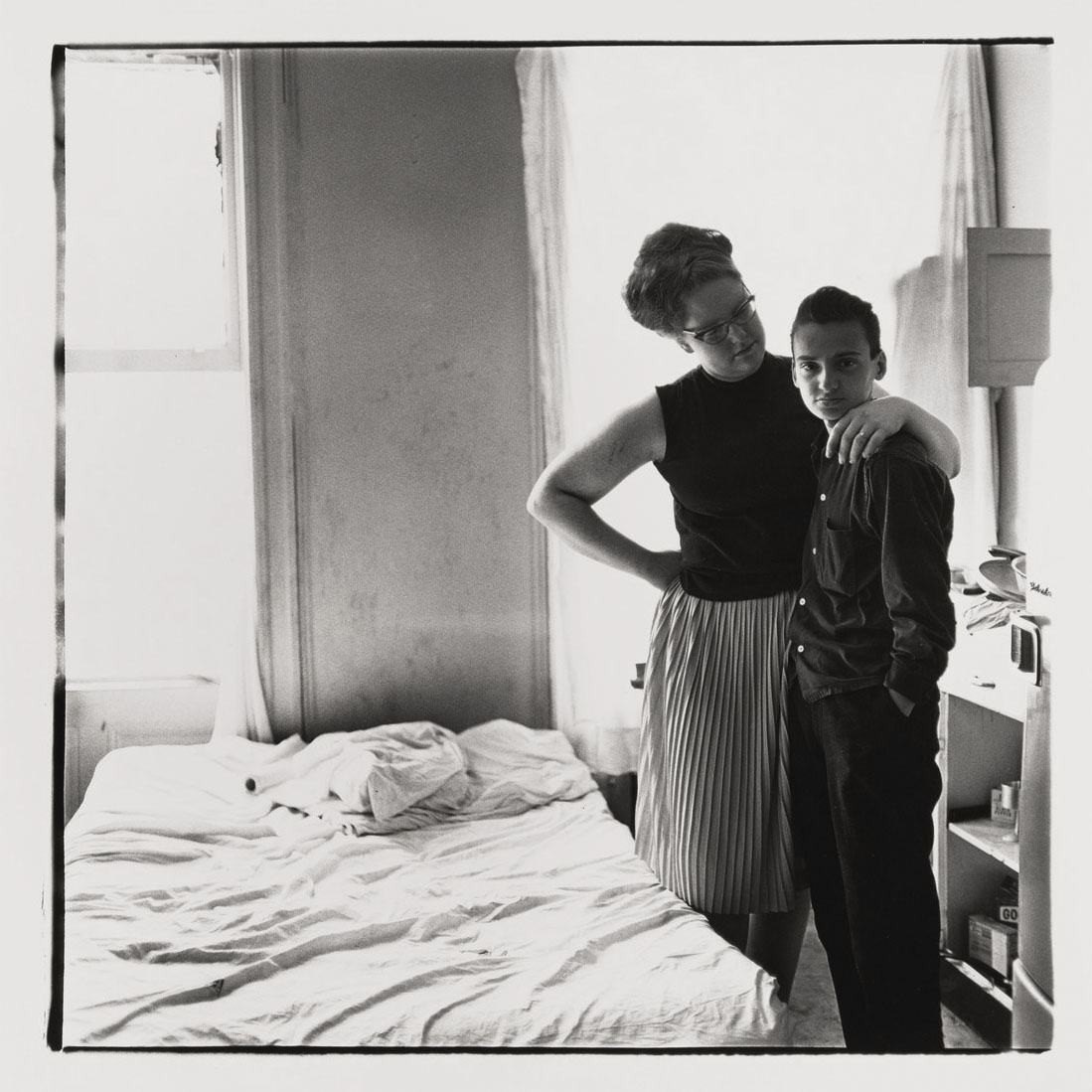
Installation view of the exhibition Diane Arbus: Sanctum Sanctorum at David Zwirner, London showing at second left, Arbus’ Two friends at home, N.Y.C., 1965; at second right, Brenda Diana Duff Frazier, 1938 Debutante of the Year, at home, Boston, Mass. 1966; and at right, Transvestite at her birthday party, N.Y.C., 1968


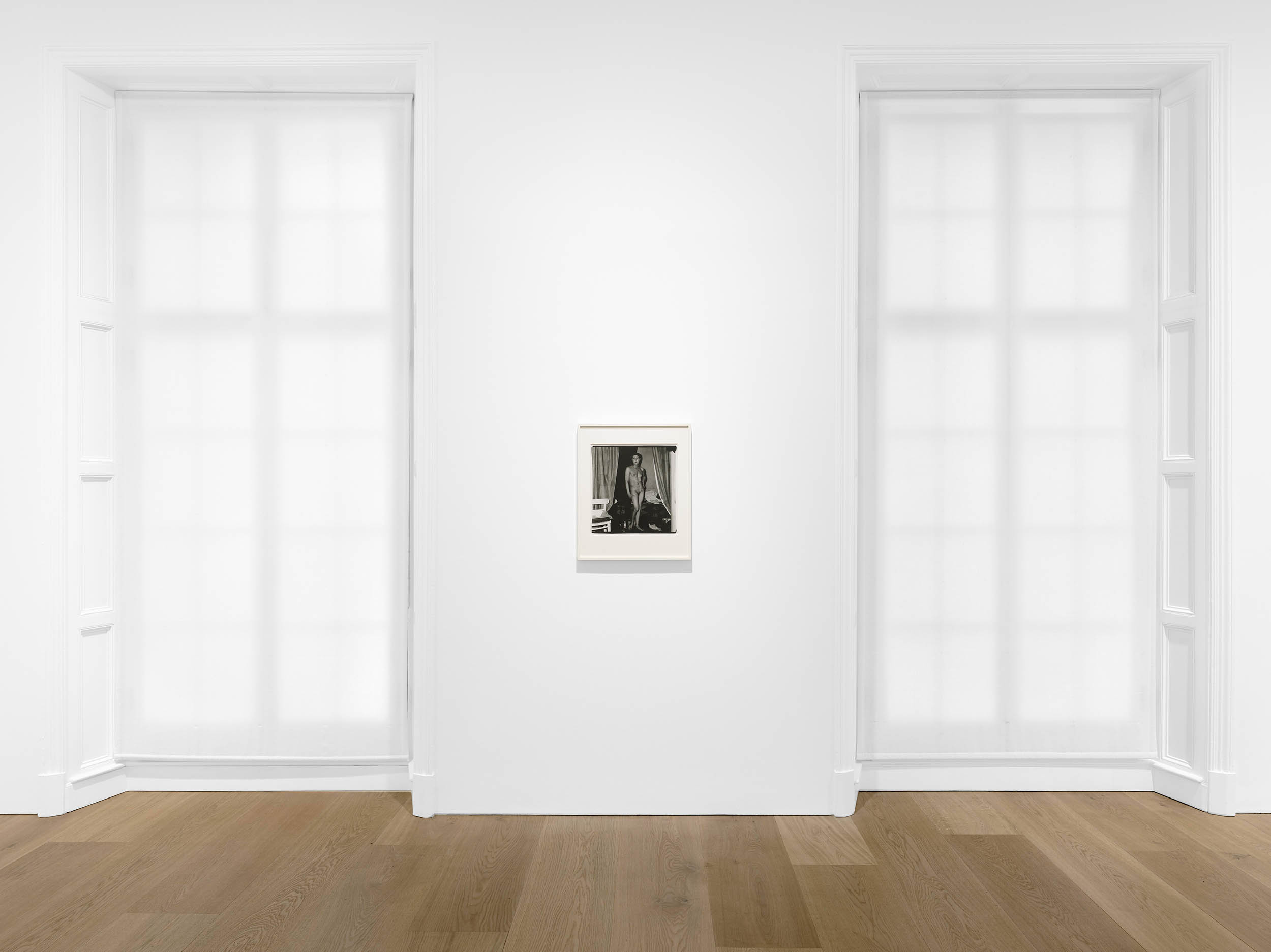
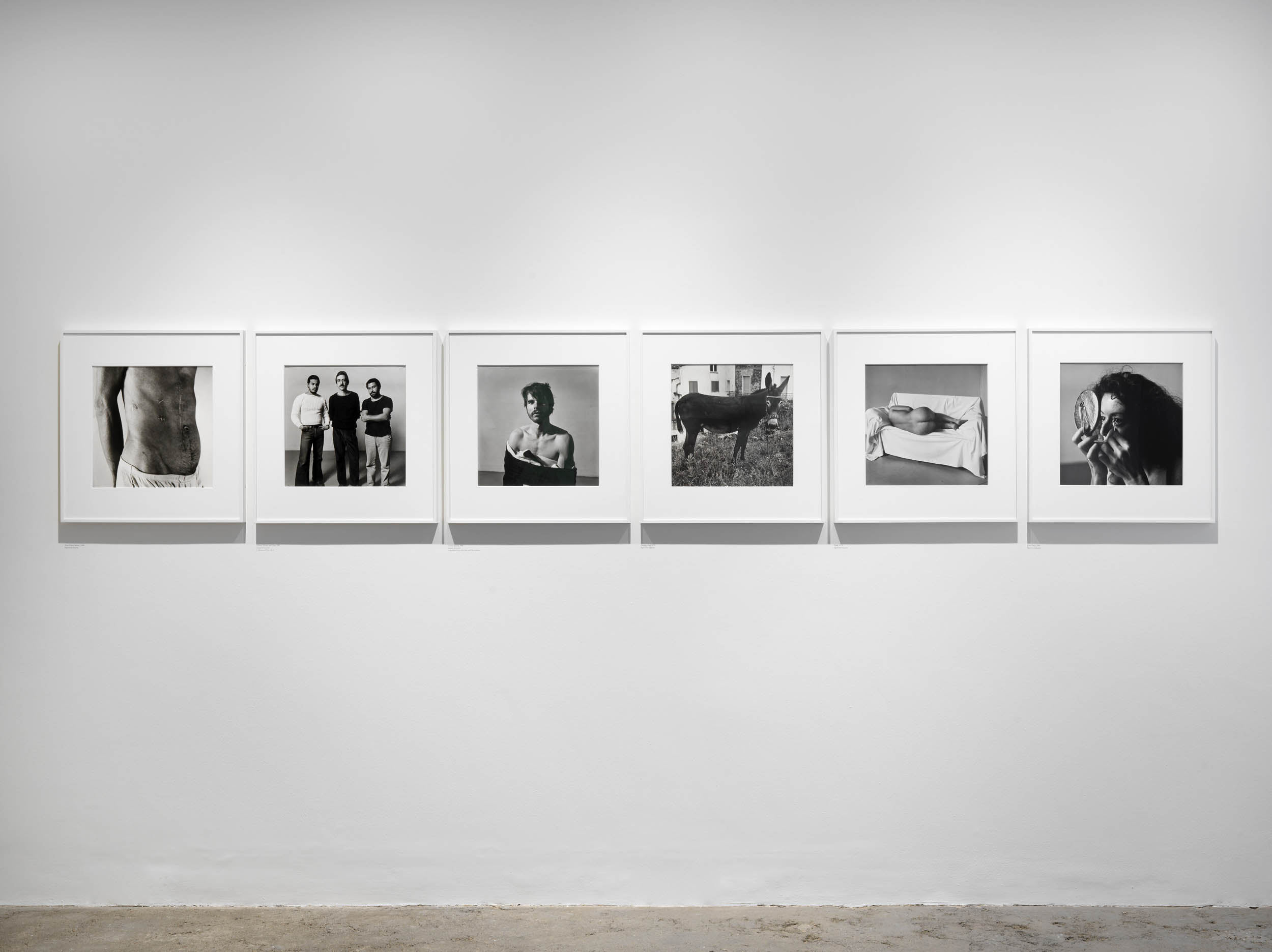
Installation view of the exhibition 'Diane Arbus: Sanctum Sanctorum' at David Zwirner, London


Installation view of the exhibition Diane Arbus: Sanctum Sanctorum at David Zwirner, London showing Arbus’ photograph A naked man being a woman, N.Y.C. 1968


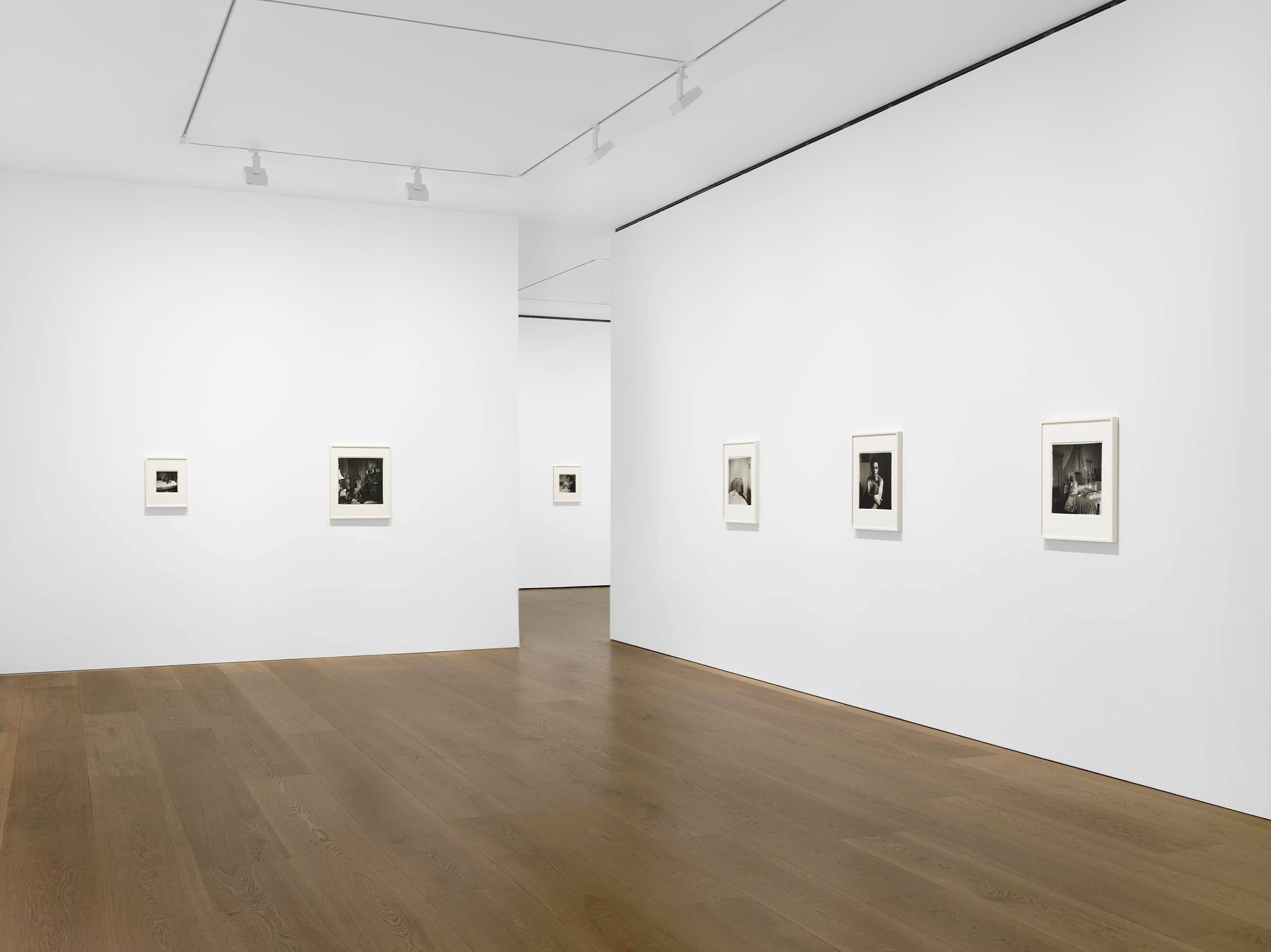
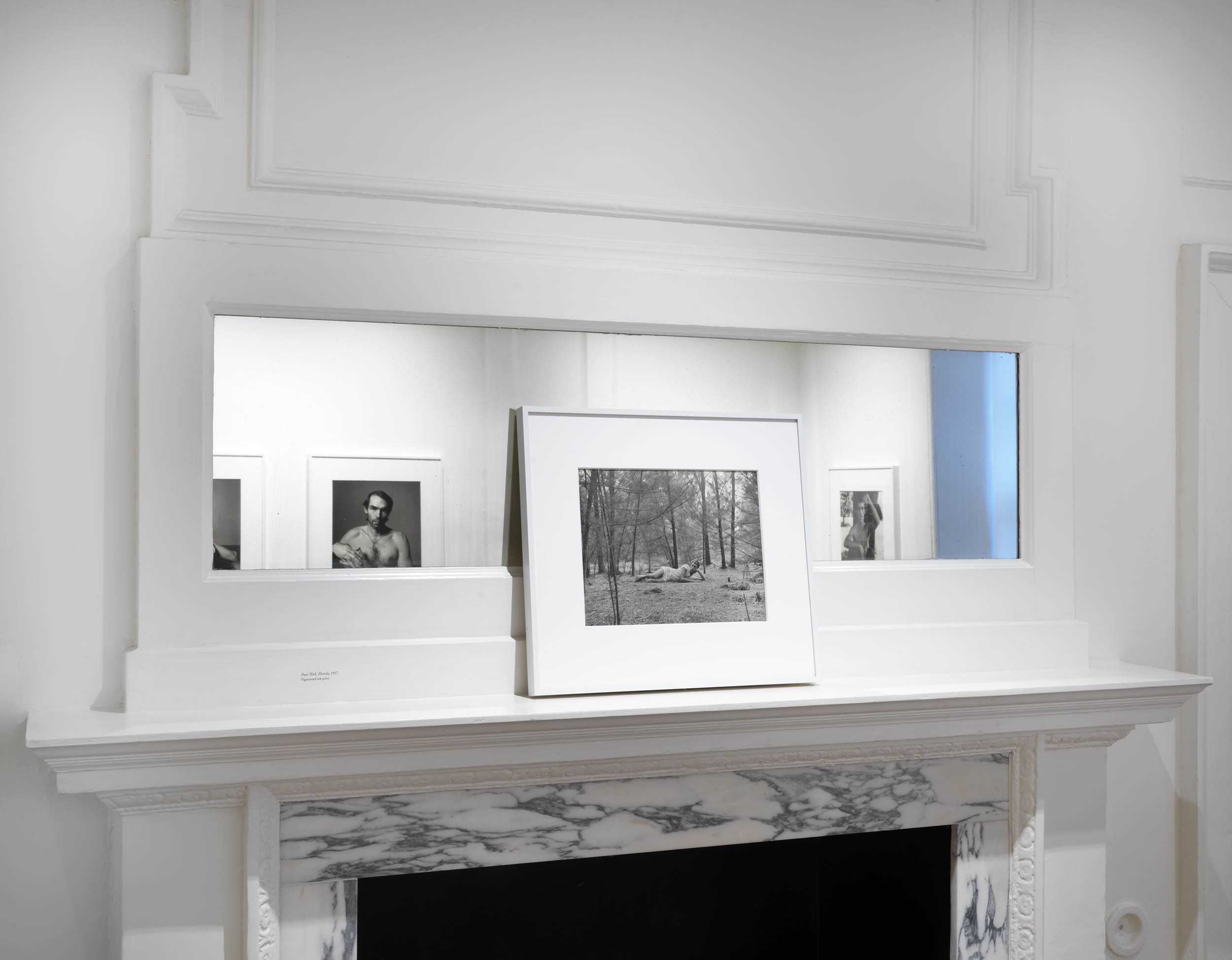
Installation view of the exhibition 'Diane Arbus: Sanctum Sanctorum' at David Zwirner, London


Installation view of the exhibition Diane Arbus: Sanctum Sanctorum at David Zwirner, London showing in the centre distance, Arbus’ Mexican dwarf in his hotel room, N.Y.C. 1970; at second right, Lucas Samaras, N.Y.C. 1966; and at right, Bishop on her bed, Santa Barbara, Cal., 1964


Diane Arbus (American, 1923-1971) 'Female impersonator on bed, N.Y.C. 1961' 1961 from the exhibition 'Diane Arbus: Sanctum Sanctorum' at David Zwirner, London, Nov 2025 - Jan 2026


Diane Arbus (American, 1923-1971)
Female impersonator on bed, N.Y.C. 1961
1961
Gelatin silver print
© The Estate of Diane Arbus


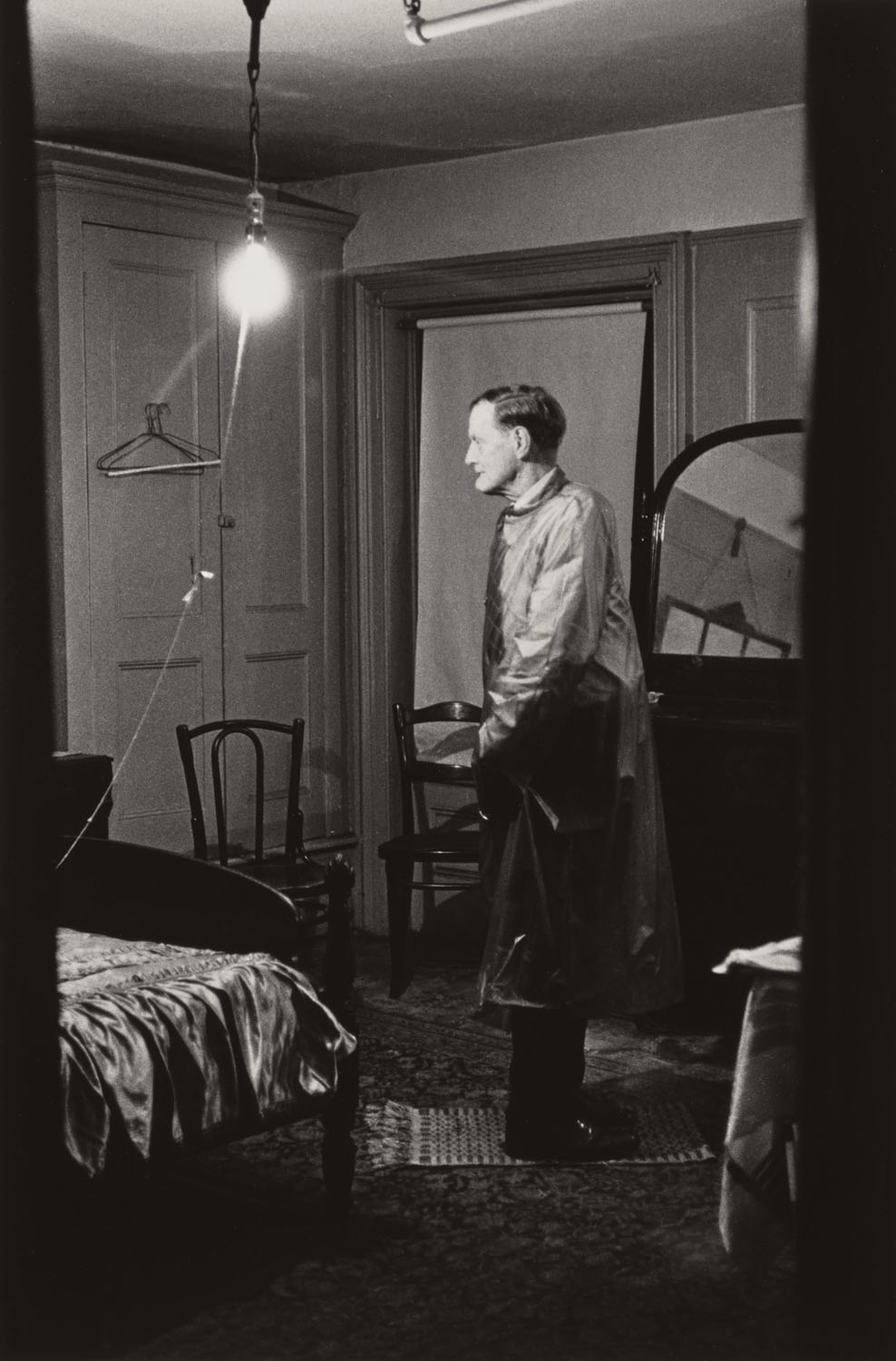
Diane Arbus (American, 1923-1971) 'The Backwards Man in his hotel room, N.Y.C. 1961' 1961


Diane Arbus (American, 1923-1971)
The Backwards Man in his hotel room, N.Y.C. 1961
1961
Gelatin silver print
© The Estate of Diane Arbus


Diane Arbus (American, 1923-1971) 'Lucas Samaras, N.Y.C. 1966' 1966


Diane Arbus (American, 1923-1971)
Lucas Samaras, N.Y.C. 1966
1966
Gelatin silver print
© The Estate of Diane Arbus


Lucas Samaras (Greek: Λουκάς Σαμαράς; September 14, 1936 – March 7, 2024) was a Greek-born American photographer, sculptor, and painter. …

His “Auto-Interviews” were a series of text works that were “self-investigatory” interviews. The primary subject of his photographic work is his own self-image, generally distorted and mutilated. He worked with multi-media collages, and by manipulating the wet dyes in Polaroid photographic film to create what he calls “Photo-Transformations”.

Text from the Wikipedia website


Diane Arbus (American, 1923-1971) 'Brenda Diana Duff Frazier, 1938 Debutante of the Year, at home, Boston, Mass. 1966' 1966


Diane Arbus (American, 1923-1971)
Brenda Diana Duff Frazier, 1938 Debutante of the Year, at home, Boston, Mass. 1966
1966
Gelatin silver print
© The Estate of Diane Arbus


~ Sanctum Sanctoruma sacred room or inner chamber; a place of inviolable privacy

Diane Arbus: Sanctum Sanctorum, an exhibition of forty-five photographs made in private places across New York, New Jersey, California, and London between 1961 and 1971, is on view at David Zwirner, London, from 6 November to 17 January 2025, and travels to Fraenkel Gallery, San Francisco in spring 2026. The exhibition will be accompanied by a comprehensive monograph reproducing all works in the exhibition, jointly published by both galleries.

Through her singular combination of intelligence, charisma, intuition, and courage, Diane Arbus was frequently invited into homes and other private realms seldom seen by strangers. Though made in intimate settings, her photographs evidence no sense of intrusion or trespass. Instead, they reveal an unspoken exchange between photographer and subject, a moment of recognition in which confidences emerge freely and without judgment.

Arbus’s desire to know people embraced a vast spectrum of humanity. Her subjects in Sanctum Sanctorum include debutantes, nudists, celebrities, aspiring celebrities, socialites, transvestites, babies, widows, circus performers, lovers, female impersonators, and a blind couple in their bedroom.

The exhibition brings together little-known works, such as Girl sitting in bed with her boyfriend, N.Y.C1966Ozzie and Harriet Nelson on their bed, Los Angeles 1970; and Interior decorator at the nudist camp in his trailer, New Jersey 1963, alongside celebrated images like Mexican dwarf in his hotel room, N.Y.C. 1970 and A naked man being a woman, N.Y.C. 1968

While many of Arbus’s photographs have become part of the public’s collective consciousness since her landmark retrospective at The Museum of Modern Art, New York, in 1972, seen in this context, viewers may discover aspects of even familiar works that have previously gone unnoticed.

Sanctum Sanctorum follows two recent major exhibitions of the artist’s work: Cataclysm: The 1972 Diane Arbus Retrospective Revisited at David Zwirner New York (2022) and Los Angeles (2025), and Diane Arbus: Constellation at LUMA, Arles (2023–2024) and the Park Avenue Armory, New York (2025).

Exhibition Catalogue

This new title ‘Sanctum Sanctorum’ illuminates Diane Arbus’s singular ability to enter private worlds.

Press release from the David Zwirner


Diane Arbus (American, 1923-1971) 'Nancy Bellamy’s bedroom, N.Y.C. 1961' 1961


Diane Arbus (American, 1923-1971)
Nancy Bellamy’s bedroom, N.Y.C. 1961
1961
Gelatin silver print
© The Estate of Diane Arbus

Used under fair use conditions for the purposes of education and research.


One of Arbus’s lesser known pictures, this photograph is of the bedroom of Nancy Bellamy, the wife of Richard Bellamy, a leading gallerist in 1960s New York who influentially championed Pop Art and Minimalism. Before she began her personal projects, Arbus worked in fashion photography with her husband, Allan, and she first met Nancy when she modelled for the Arbuses on a fashion shoot. As well as modelling, Bellamy also worked as a dancer, painter and costume designer, and had a keen interest in spiritualism. Like ‘Xmas Tree in a Living Room in Levittown 1963’, Arbus uses an empty room to create a portrait of the person – the dressmaker’s dummy, the canvas on the wall, the photographs by the mirror and the simple, yet elegant furnishings together create an impression of Arbus’s friend’s personality.

Text from the National Galleries of Scotland website


Diane Arbus (American, 1923-1971) 'Interior decorator at the nudist camp in his trailer, New Jersey, 1963' 1963


Diane Arbus (American, 1923-1971)
Interior decorator at the nudist camp in his trailer, New Jersey, 1963
1963
Gelatin silver print
© The Estate of Diane Arbus

Used under fair use conditions for the purposes of education and research.


Diane Arbus (American, 1923-1971) 'Triplets in their Bedroom, N.J., 1963' 1963


Diane Arbus (American, 1923-1971)
Triplets in their Bedroom, N.J., 1963
1963
Gelatin silver print
© The Estate of Diane Arbus

Used under fair use conditions for the purposes of education and research.


Diane Arbus (American, 1923-1971) 'Bishop on her bed, Santa Barbara, Cal., 1964' 1964, printed later


Diane Arbus (American, 1923-1971)
Bishop on her bed, Santa Barbara, Cal., 1964
1964
Gelatin silver print
© The Estate of Diane Arbus

Used under fair use conditions for the purposes of education and research.


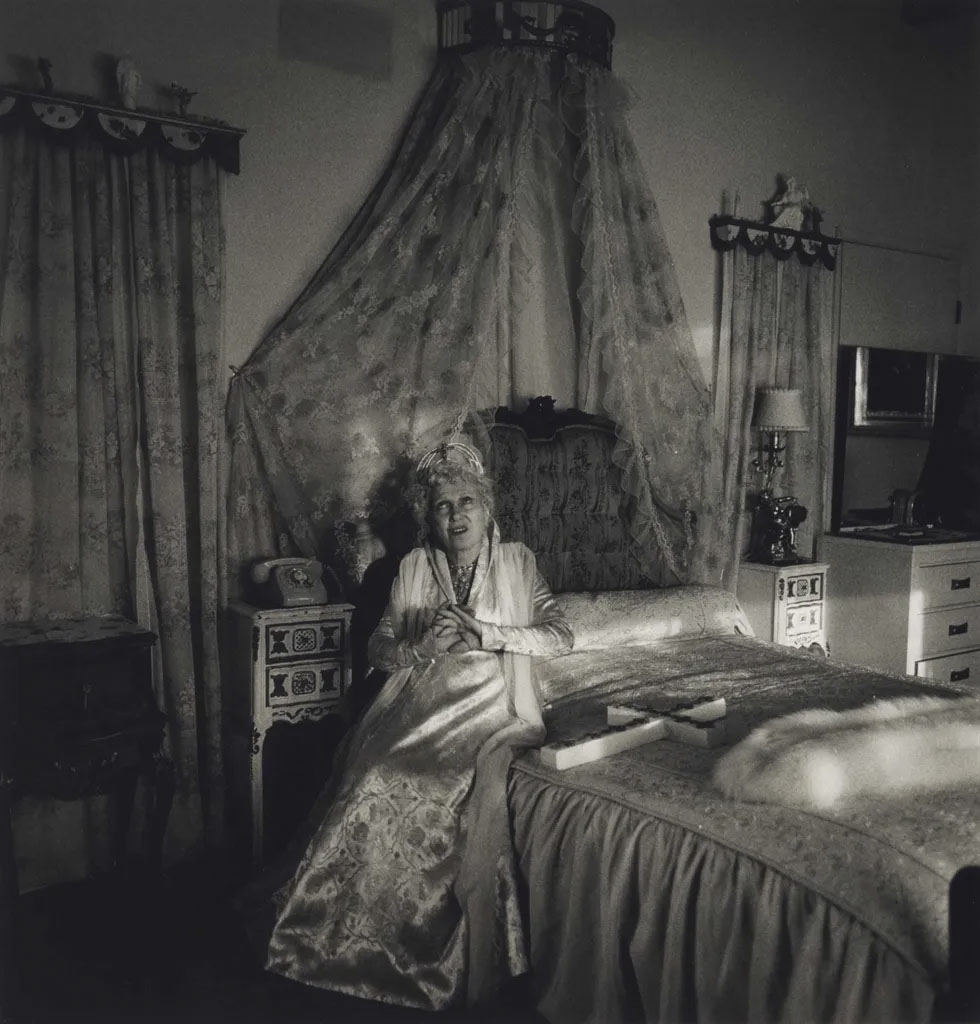
The bishop in Diane Arbus’s photograph “Bishop on her bed, Santa Barbara, Cal.” (1964, above) was Bishop Ethel Predonzan, a unique figure who believed she was in Santa Barbara to await the Second Coming of Christ and wore elaborate robes, described by Arbus as a “small lady in damask robes with hair of phosphorescent pink”.

Predonzan was a key subject in Arbus’s exploration of individuals on the fringes, showcasing the artist’s ability to find deep personal connection and reveal inner strangeness. 

Google AI


Diane Arbus (American, 1923-1971) 'Charlton Henry in a negligee, Philadelphia, Pa. 1965' 1965


Diane Arbus (American, 1923-1971)
Charlton Henry in a negligee, Philadelphia, Pa. 1965
1965
Gelatin silver print
© The Estate of Diane Arbus

Used under fair use conditions for the purposes of education and research.


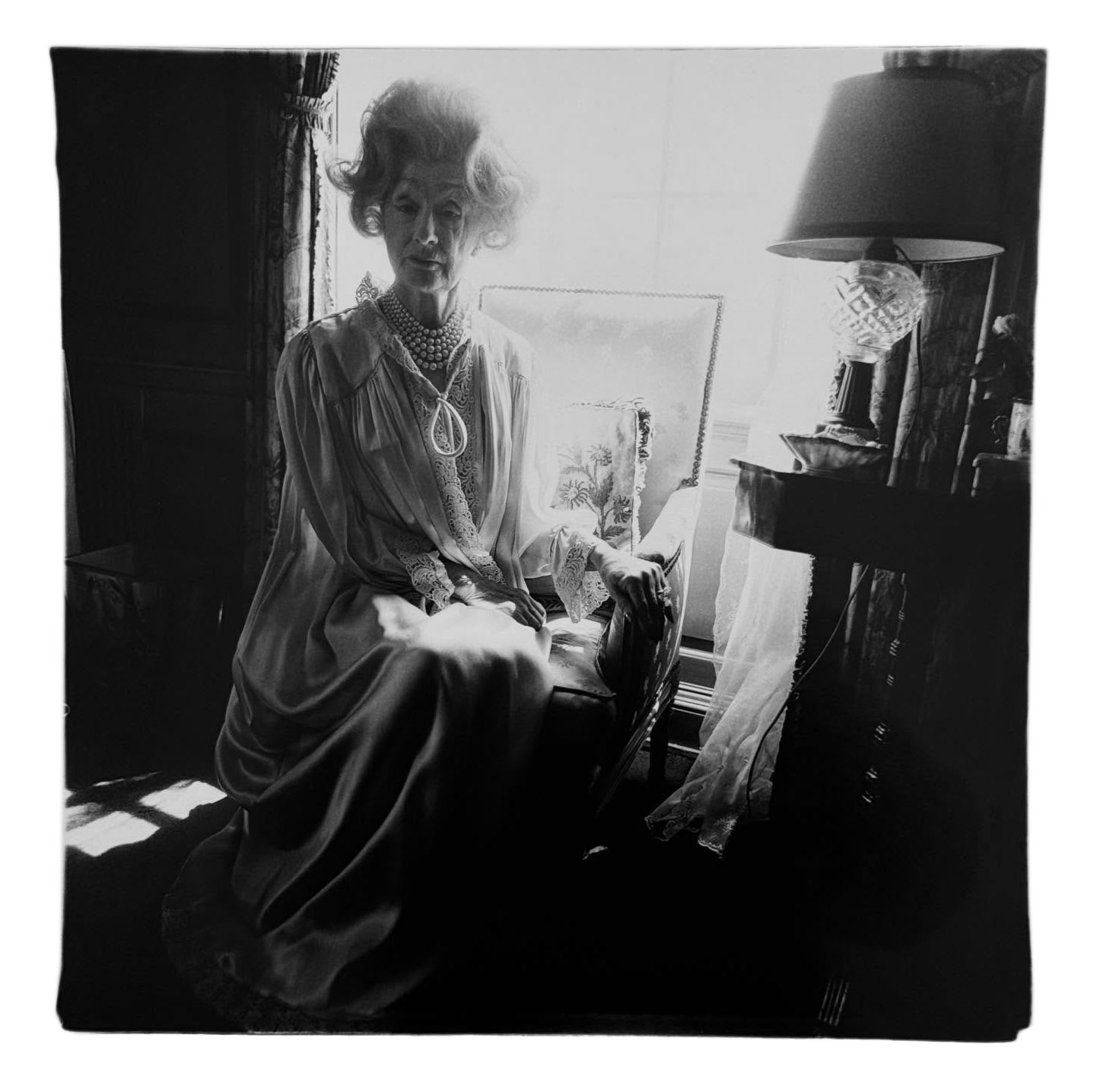
Mrs T. Charlton Henry was a Philadelphia socialite, a philanthropist, and a fashion icon – often top of the ‘best-dressed’ lists. She was the kind of wealthy upper-class woman that Arbus’s father would have hoped to see in his Fifth Avenue department store buying the latest furs.

Text from the National Galleries of Scotland website


“Mrs. Henry, born Julia Rush Biddle of Philadelphia’s Main Line, weighs approximately 88 pounds. She will be 82 years old this month. She has been on the best-dressed list so often that she is now a member of fashion’s Hall of Fame. She still lives in Philadelphia, but commutes to New York for luncheon, shopping, theater. She sits, with the posture of another era, on a bound-to-be-seen banquette at La Caravelle restaurant and delves into a curry (“I’ll have jellied soup for dinner tonight”). Her silver and gold “57 varieties” hair is meticulously coifed; the fingernails that blow delicate little kisses of greeting to friends are tinted a deep pink. Her brown and white gingham Mainbocher is perked up with her favorite day jewels. There are marble-size pearls around the neck and one wrist, and massive yellow sapphires at the other wrist, the ears, and flashing away on a ring and a brooch.”

Enid Nemy. “Mrs. T. Charlton Henry: A Grande Dame and a Jogger,” on The New York Times website July 29, 1968 [Online] Cited 05/01/2026


Diane Arbus (American, 1923-1971) 'Two friends at home, N.Y.C., 1965' 1965


Diane Arbus (American, 1923-1971)
Two friends at home, N.Y.C., 1965
1965
Gelatin silver print
© The Estate of Diane Arbus

Used under fair use conditions for the purposes of education and research.


Diane Arbus (American, 1923-1971) 'A naked man being a woman, N.Y.C., 1968' 1968


Diane Arbus (American, 1923-1971)
A naked man being a woman, N.Y.C., 1968
1968
Gelatin silver print
© The Estate of Diane Arbus

Used under fair use conditions for the purposes of education and research.


Diane Arbus (American, 1923-1971) 'Girl sitting on her bed with her shirt off, N.Y.C., 1968' 1968


Diane Arbus (American, 1923-1971)
Girl sitting on her bed with her shirt off, N.Y.C., 1968
1968
Gelatin silver print
© The Estate of Diane Arbus

Used under fair use conditions for the purposes of education and research.


Diane Arbus (American, 1923-1971) 'Transvestite at the birthday party, N.Y.C. 1969' 1969


Diane Arbus (American, 1923-1971)
Transvestite at the birthday party, N.Y.C. 1969
1969
Gelatin silver print
© The Estate of Diane Arbus

Used under fair use conditions for the purposes of education and research.


Diane Arbus (American, 1923-1971) 'Mexican Dwarf in his hotel room, N.YC., 1970' 1970


Diane Arbus (American, 1923-1971)
Mexican Dwarf in his hotel room, N.YC., 1970
1970
Gelatin silver print
© The Estate of Diane Arbus

Used under fair use conditions for the purposes of education and research.


David Zwirner
24 Grafton Street
London W1S 4EZ

Opening hours:
Tuesday – Saturday, 10am – 6pm

David Zwirner website

LIKE ART BLART ON FACEBOOK

Back to top

Exhibition: ‘Beyond Symmetry: George Dureau’s Celebrations of the Human Form’ at the Bob Mizer Foundation, San Francisco

Exhibition dates: 6th March – 28th June, 2025

Curators: Dennis Bell, founder of the Bob Mizer Foundation, and De Kwok, Head of Public Programming

*PLEASE NOTE: THIS POSTING CONTAINS ART PHOTOGRAPHS OF MALE NUDITY – IF YOU DO NOT LIKE PLEASE DO NOT LOOK, FAIR WARNING HAS BEEN GIVEN*


George Dureau (American, 1930-2014)
'Untitled' Nd


George Dureau (American, 1930-2014)
Untitled
Nd
Vintage silver gelatin print


Celebrations of the Human Spirit

~ Honesty

~ ~ Integrity

~ ~ ~ Dignity

~ ~ ~ ~ Vulnerability

~ ~ ~ ~ ~ Respect

~ ~ ~ ~ ~ ~ Love

~ ~ ~ ~ ~ ~ ~ Friendship

~ ~ ~ ~ ~ ~ ~ ~ Sexuality

~ ~ ~ ~ ~ ~ ~ ~ ~ Strength

~ ~ ~ ~ ~ ~ ~ ~ ~ ~ Beauty

~ ~ ~ ~ ~ ~ ~ ~ ~ ~ ~ Form

~ ~ ~ ~ ~ ~ ~ ~ ~ ~ ~ ~ Humanism

~ ~ ~ ~ ~ ~ ~ ~ ~ ~ ~ ~ ~ Identity

~ ~ ~ ~ ~ ~ ~ ~ ~ ~ ~ ~ ~ ~ Personality

~ ~ ~ ~ ~ ~ ~ ~ ~ ~ ~ ~ ~ ~ ~ Presence

~ ~ ~ ~ ~ ~ ~ ~ ~ ~ ~ ~ ~ ~ ~ ~ Intimacy

~ ~ ~ ~ ~ ~ ~ ~ ~ ~ ~ ~ ~ ~ ~ ~ ~ Nude

~ ~ ~ ~ ~ ~ ~ ~ ~ ~ ~ ~ ~ ~ ~ ~ ~ ~ Empathy

~ ~ ~ ~ ~ ~ ~ ~ ~ ~ ~ ~ ~ ~ ~ ~ ~ ~ ~ Revelation

~ ~ ~ ~ ~ ~ ~ ~ ~ ~ ~ ~ ~ ~ ~ ~ ~ ~ ~ ~ Spirit

~ ~ ~ ~ ~ ~ ~ ~ ~ ~ ~ ~ ~ ~ ~ ~ ~ ~ ~ ~ ~ Truth


I’ve been wanting to do a posting on the magnificent New Orleans photographer George Dureau’s work for a long while but because there are so few exhibitions of his photographs I have never had the opportunity – until now.

It’s a great pity that his work is not as recognised as that of his contemporaries, Peter Hujar and Robert Mapplethorpe. Indeed, you can still pick up an original Dureau in the secondhand art market for around $500 whereas Mapplethorpe’s photographs run into the many thousands.

His photographs are not romantic, certainly not sentimental. He was fascinated by the people he photographed, their truth. These are the stories he conceptualised, posed, lit and photographed, stories that emerged from his imagination, that revealed surprising things about his subjects.

Unlike the clinical formalism of Mapplethorpe, Dureau worked with a poetry that was always present. Indeed, there is something so eloquent and sincere about his photographs for in them the artist draws (Dureau was also a painter) the mysteries of the soul of his subjects.

Dureau’s response to the world and the photographs that emanate from that engagement are humanist in the best sense of the word, revealing his subjects in a direct way that emphasises an individual’s dignity, worth and capacity for self-realisation.

Thus, I feel his photographs are a celebration not just of the human form but more importantly, of the human spirit.

Dr Marcus Bunyan


Many thankx to Dennis Bell, Corbin Crable and the Bob Mizer Foundation for allowing me to publish the photographs in the posting. Please click on the photographs for a larger version of the image.


“I live a warm, involved humanist sort of life. There are lots of people passing through it. I have exciting experiences and learn things about people. They always go into my art. I cannot have an experience and it not go into my art.”

 
George Dureau


John H. Lawrence, HNOC emeritus director of museum programs and himself a fine-art photographer, said Dureau’s portraits reveal a tangible intimacy between photographer and subject.

“George respected the people he asked to sit for him,” said Lawrence. “I don’t say that from a knowledge, just from what the photographs show. The direct stare into the camera, it may have been at George’s direction. Even with the gaze directed in that fashion, you don’t get the kind of quality you see in these portraits unless there is a mutual respect between the photographer and the subject. There is a vibe there that is based on these two people having respect for each other as the photograph is made.”


John H. Lawrence quoted in Dave Walker. “The Intimate Eye of George Dureau,” on The Historic New Orleans Collection website, December 31, 2021 [Online] Cited 20/06/2025


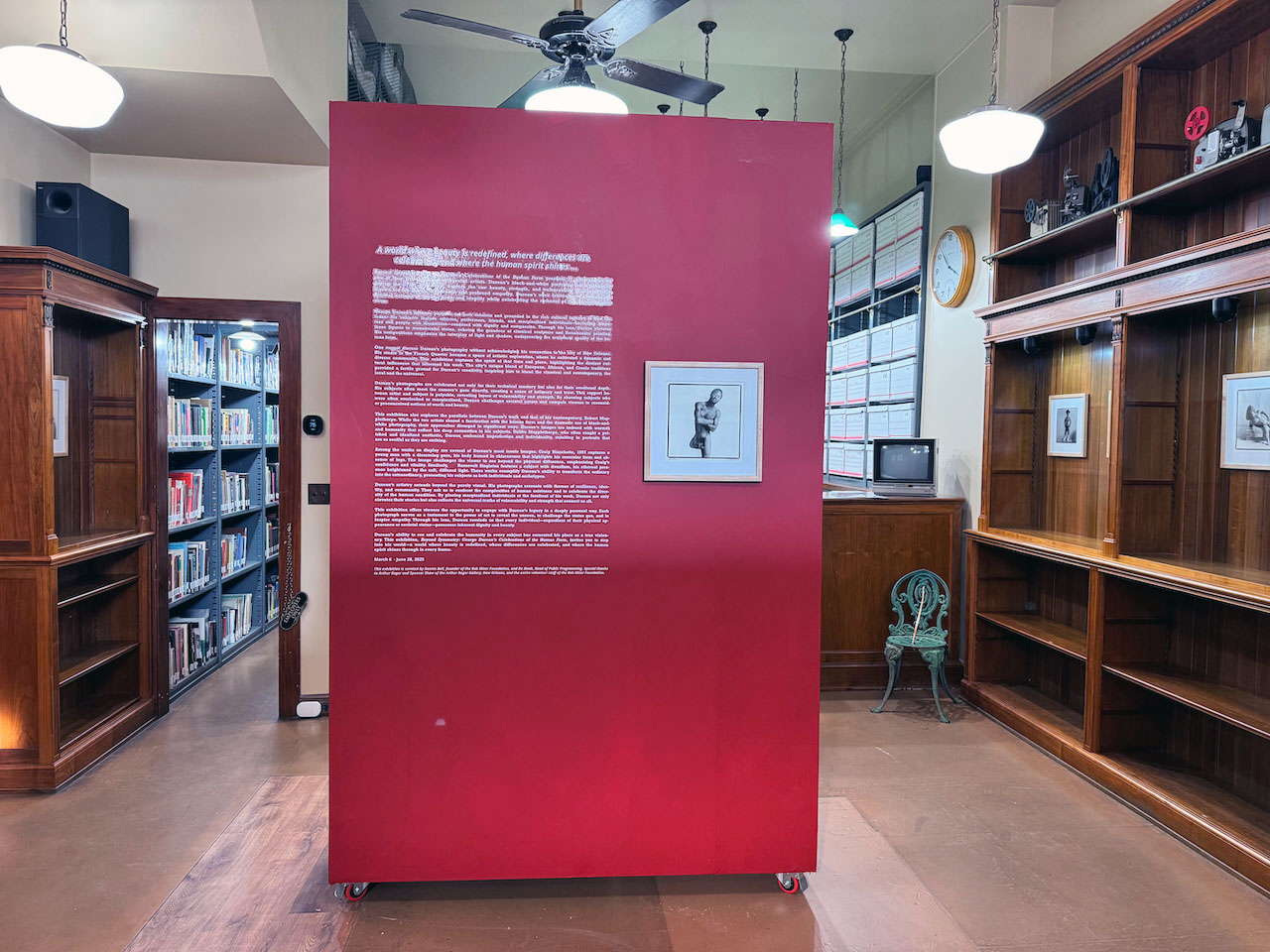
This exhibition presents 25 evocative black-and-white portraits by George Dureau, capturing the resilience and vulnerability of his subjects – from athletes to marginalised individuals – against the vibrant cultural backdrop of New Orleans, where beauty and humanity converge in transformative ways.


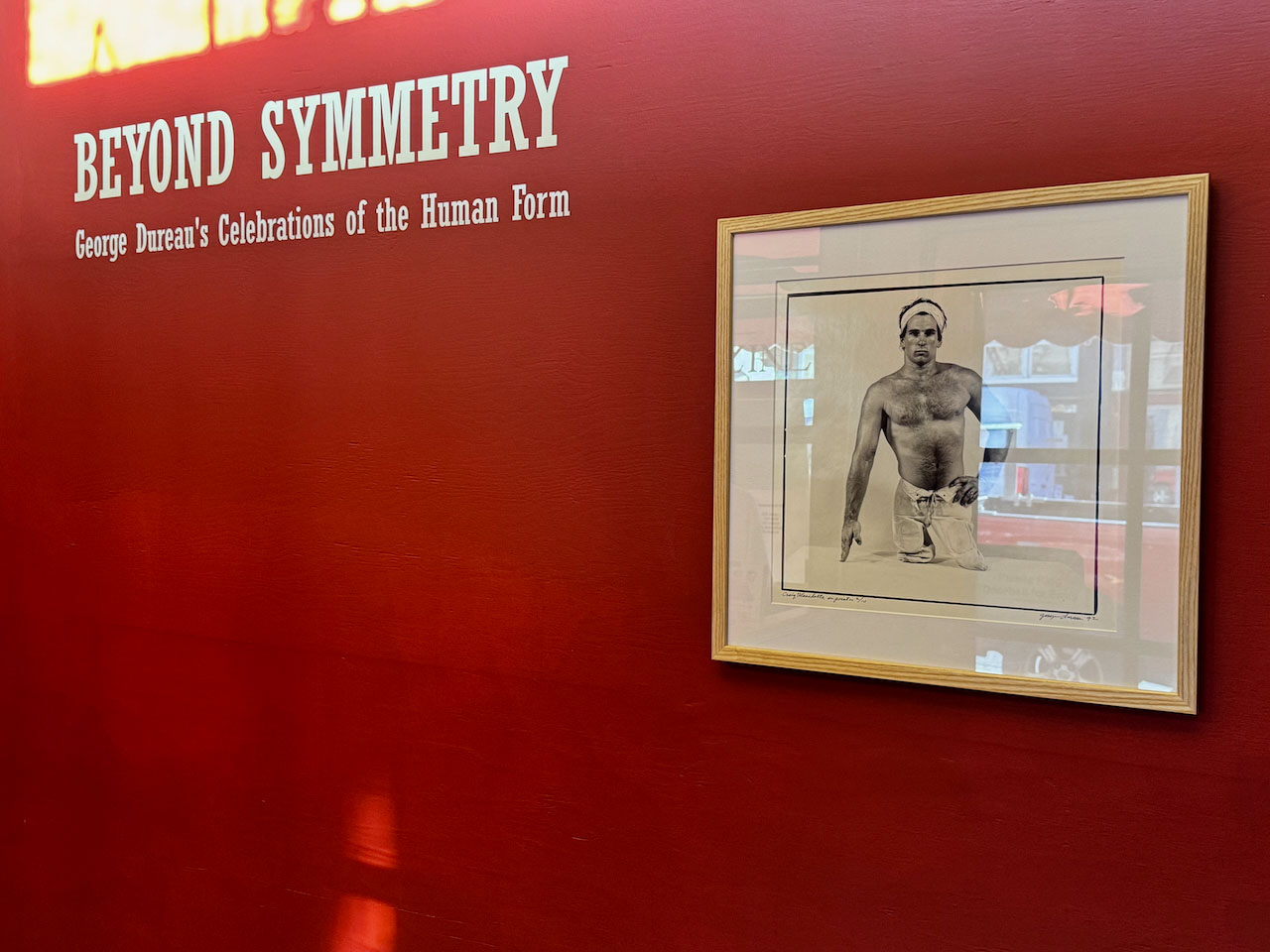
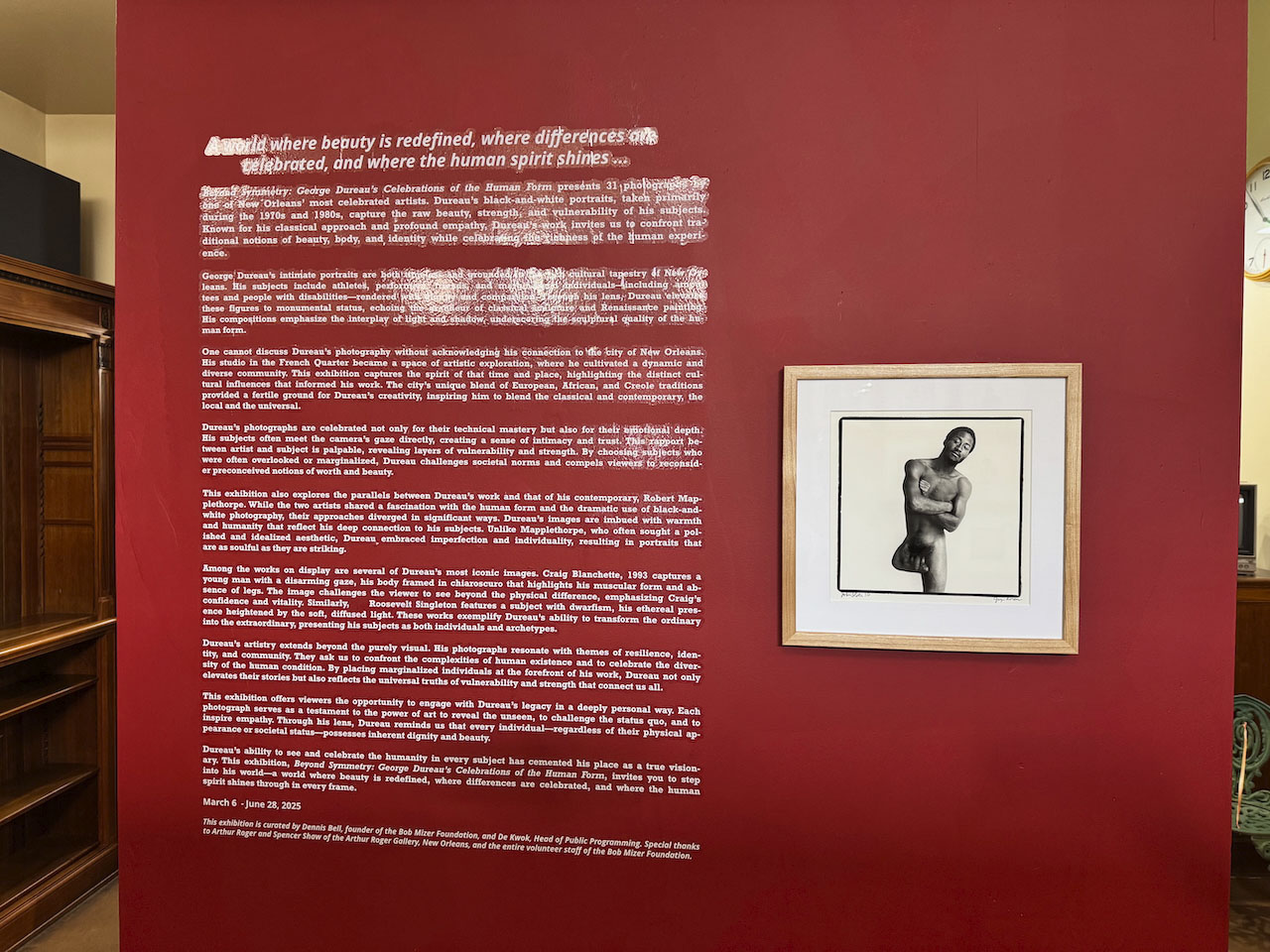
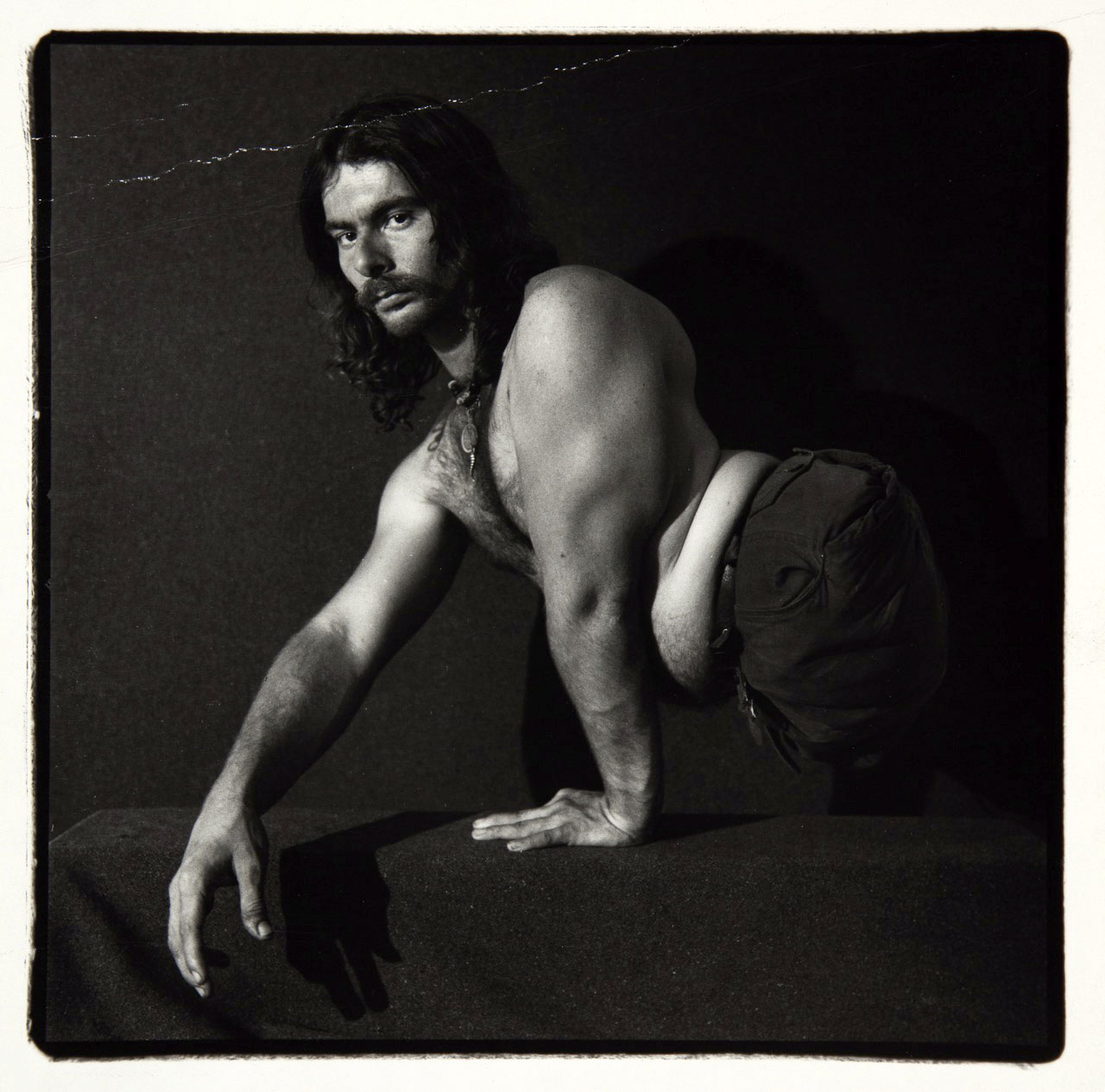
Installation view of the exhibition 'Beyond Symmetry: George Dureau's Celebrations of the Human Form' at the Bob Mizer Foundation, San Francisco showing Dureau's photograph 'Craig Blanchette' 1992


Installation view of the exhibition Beyond Symmetry: George Dureau’s Celebrations of the Human Form at the Bob Mizer Foundation, San Francisco showing Dureau’s photograph Craig Blanchette, 1992


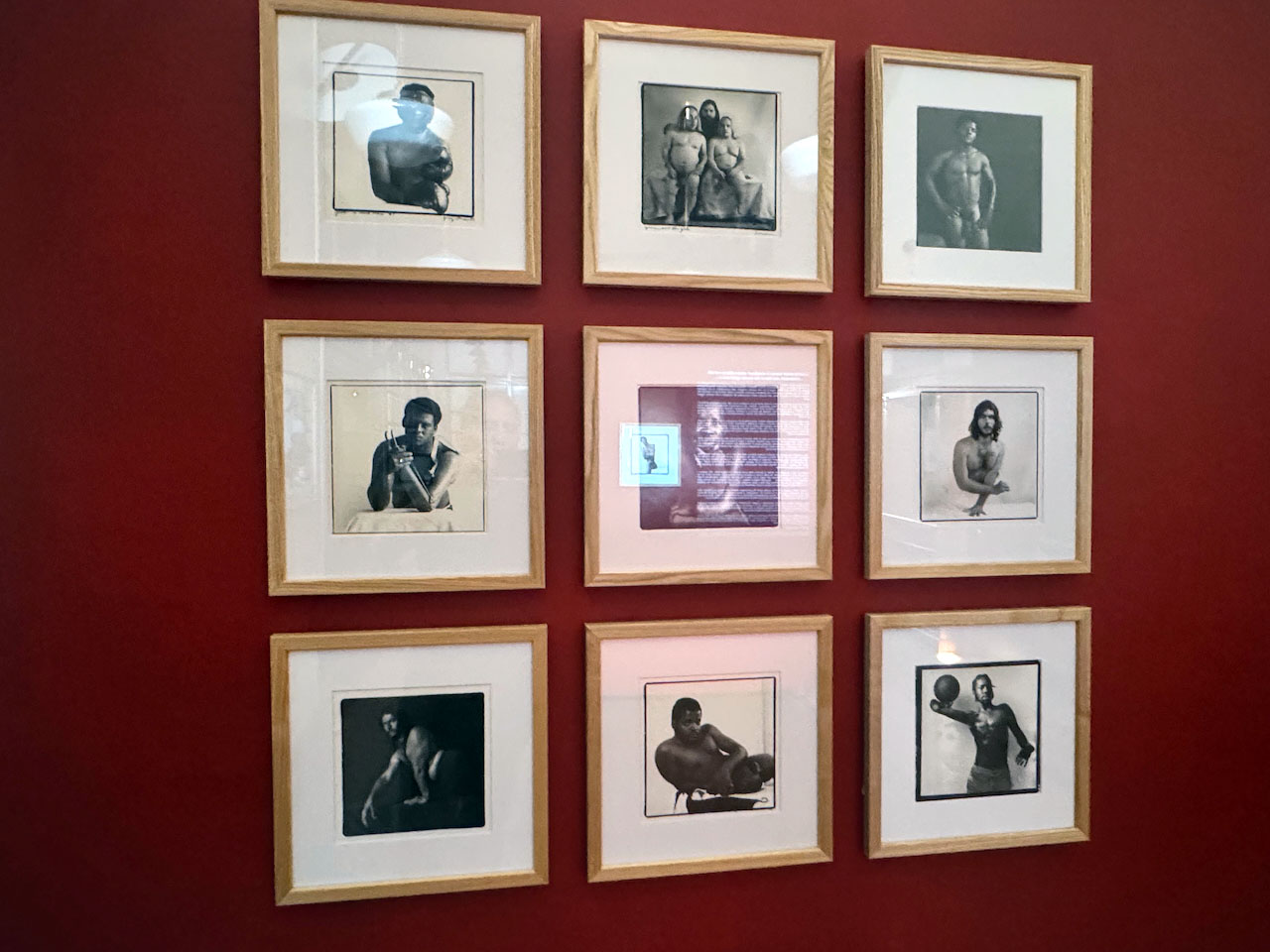
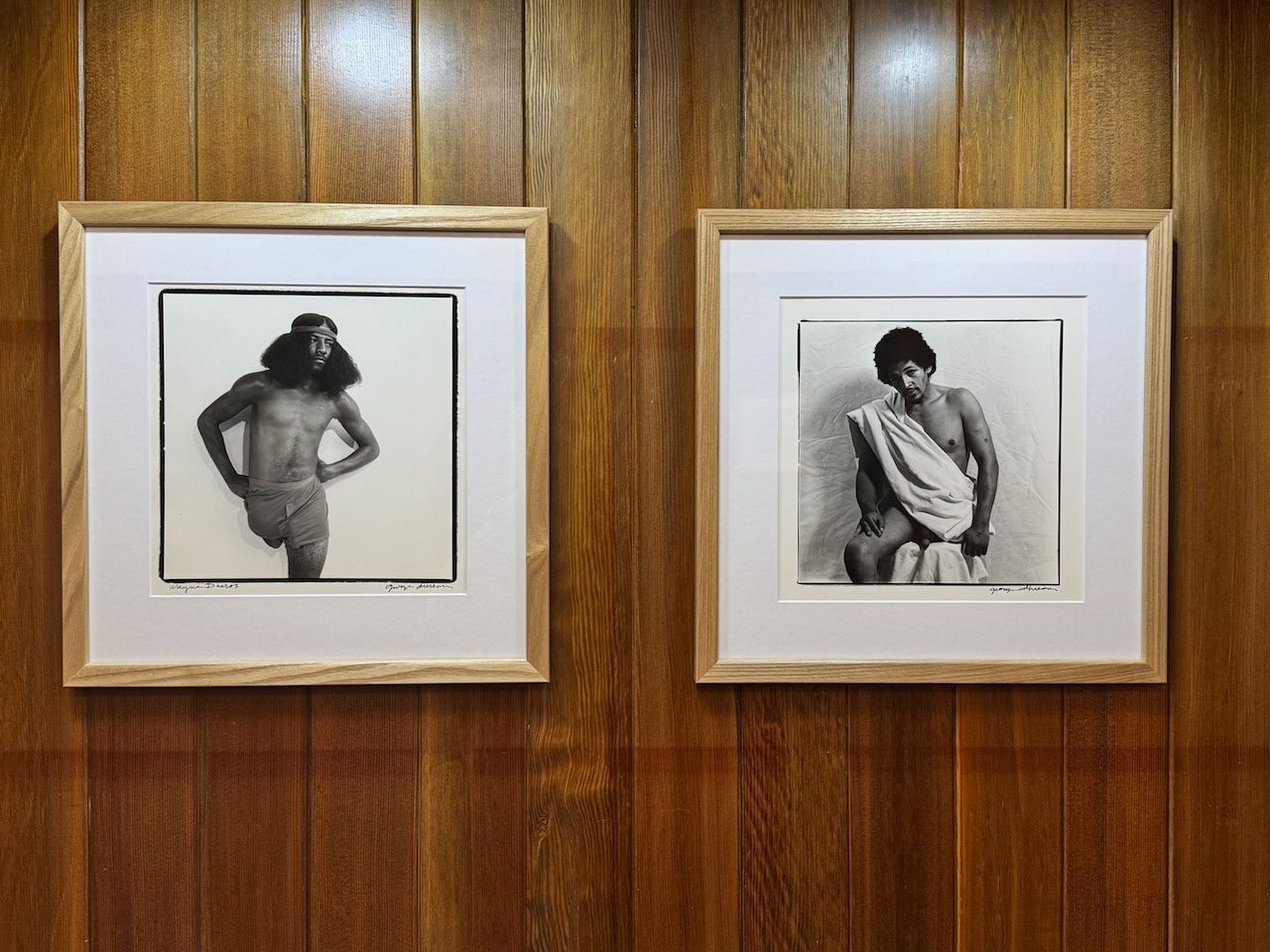
Installation view of the exhibition 'Beyond Symmetry: George Dureau's Celebrations of the Human Form' at the Bob Mizer Foundation, San Francisco


Installation views of the exhibition Beyond Symmetry: George Dureau’s Celebrations of the Human Form at the Bob Mizer Foundation, San Francisco showing Dureau’s photograph John Slate, Nd


Installation view of the exhibition 'Beyond Symmetry: George Dureau's Celebrations of the Human Form' at the Bob Mizer Foundation, San Francisco


Installation view of the exhibition Beyond Symmetry: George Dureau’s Celebrations of the Human Form at the Bob Mizer Foundation, San Francisco


Installation view of the exhibition 'Beyond Symmetry: George Dureau's Celebrations of the Human Form' at the Bob Mizer Foundation, San Francisco


Installation views of the exhibition Beyond Symmetry: George Dureau’s Celebrations of the Human Form at the Bob Mizer Foundation, San Francisco


The Bob Mizer Foundation proudly presents Beyond Symmetry: George Dureau’s Celebrations of the Human Form, an exhibition showcasing 25 evocative black-and-white portraits by the acclaimed New Orleans artist George Dureau. This compelling collection captures the resilience, vulnerability, and individuality of Dureau’s subjects, spanning athletes, performers, and marginalised individuals.

Dureau’s photography transcends traditional portraiture, blending classical composition with the rich cultural spirit of New Orleans. His intimate works explore themes of identity and dignity, transforming vulnerabilities into powerful symbols of humanity’s resilience. The photographs invite viewers to reimagine beauty as inclusive, diverse, and multifaceted.

“George Dureau’s work is a testament to his unique ability to celebrate the human form while challenging societal norms,” says Den Bell, founder of the Bob Mizer Foundation. “His portraits honour the individuality of his subjects while weaving in the vibrancy of New Orleans, making his work timeless and deeply impactful.”

“Dureau photographed people with kindness and sympathy,” added Mizer Foundation’s Head of Programming, De Kwok, “It has been said that his subject matter became a member of his extended family and you can clearly see that in the way his camera lovingly captured them.”

The exhibition will be on view from March 6 to June 28, 2025, at the Bob Mizer Foundation’s Main Gallery. An opening reception will be held on March 6 from 6.00 pm – 8.30 pm, providing an opportunity to explore the works and celebrate Dureau’s extraordinary legacy.

About George Dureau

A celebrated figure in the art world, George Dureau (1930-2014) was renowned for his black-and-white photography and classical paintings. Rooted in the rich cultural heritage of New Orleans, Dureau’s art challenges conventions and highlights the resilience of the human spirit. His work has been exhibited internationally and continues to inspire audiences with its profound emotional depth and technical mastery.

Text from the Bob Mizer Foundation website


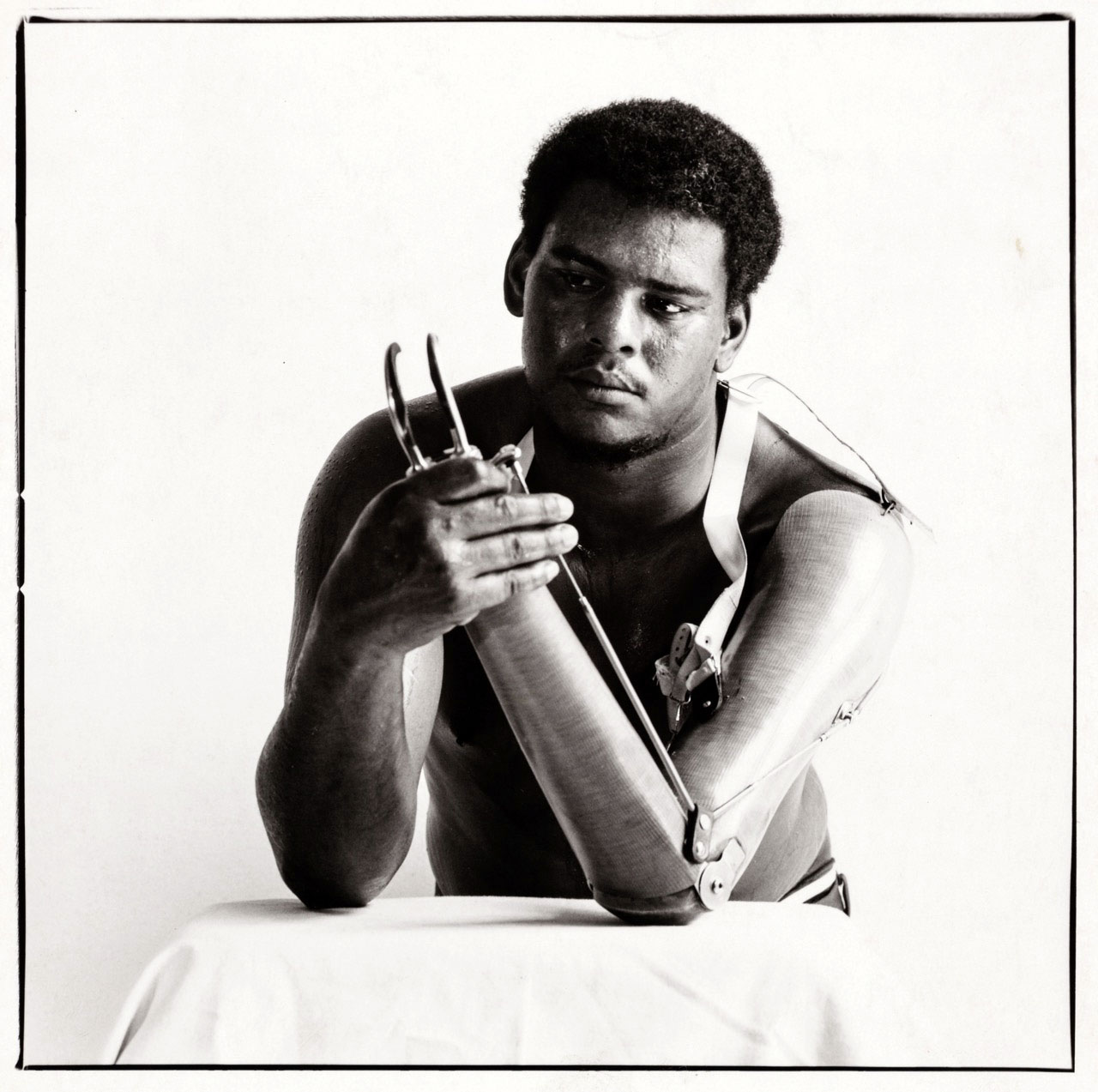
George Dureau (American, 1930-2014) 'Wilbert with Hook' Nd


George Dureau (American, 1930-2014)
Wilbert with Hook
Nd
Vintage silver gelatin print
20 x 16 inches


George Dureau (American, 1930-2014)
'B.J. Robinson' 1995


George Dureau (American, 1930-2014)
B.J. Robinson
1995
Vintage silver gelatin print


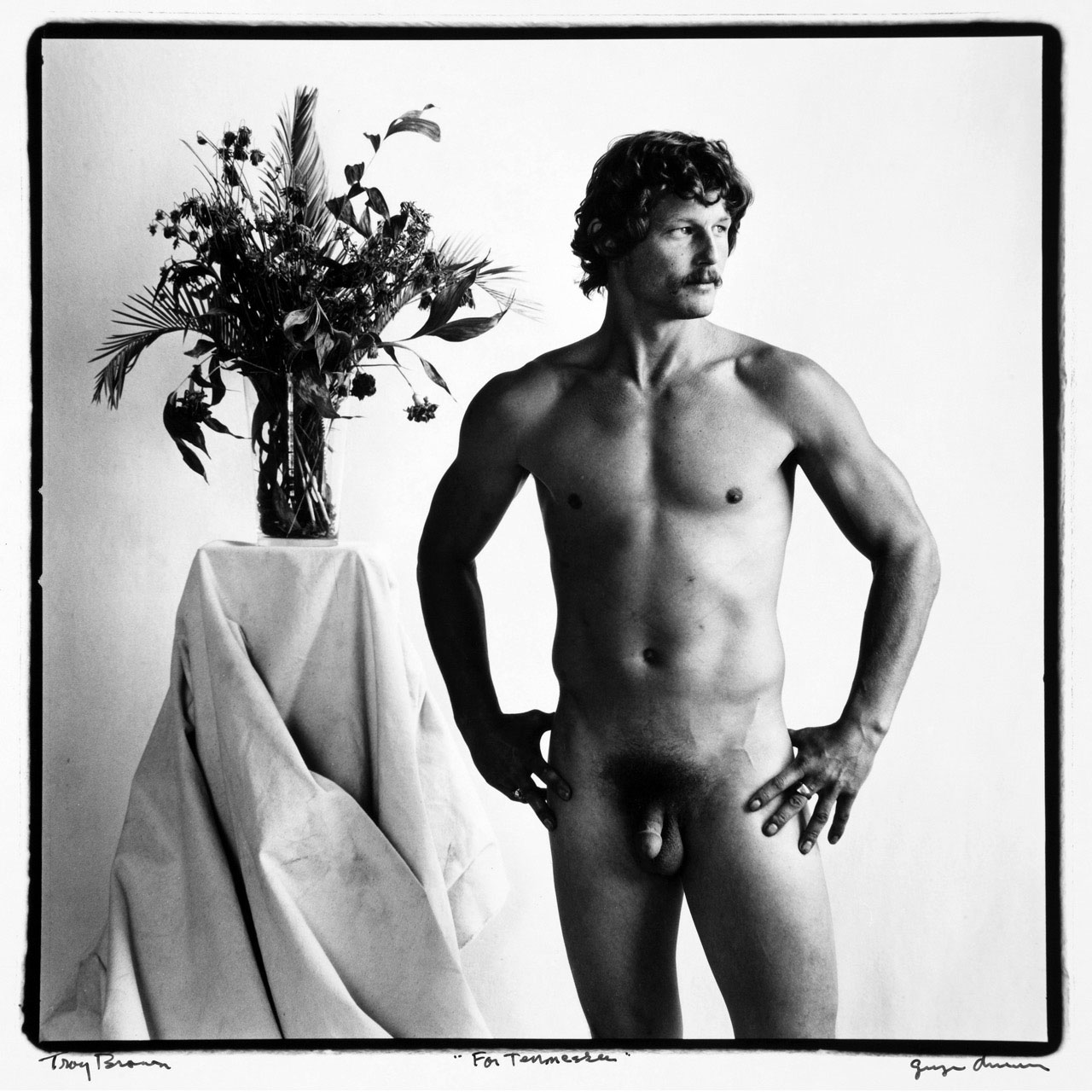
George Dureau (American, 1930-2014) 'Troy Brown "For Tennessee"' Nd


George Dureau (American, 1930-2014)
Troy Brown “For Tennessee”
Nd
Vintage silver gelatin print


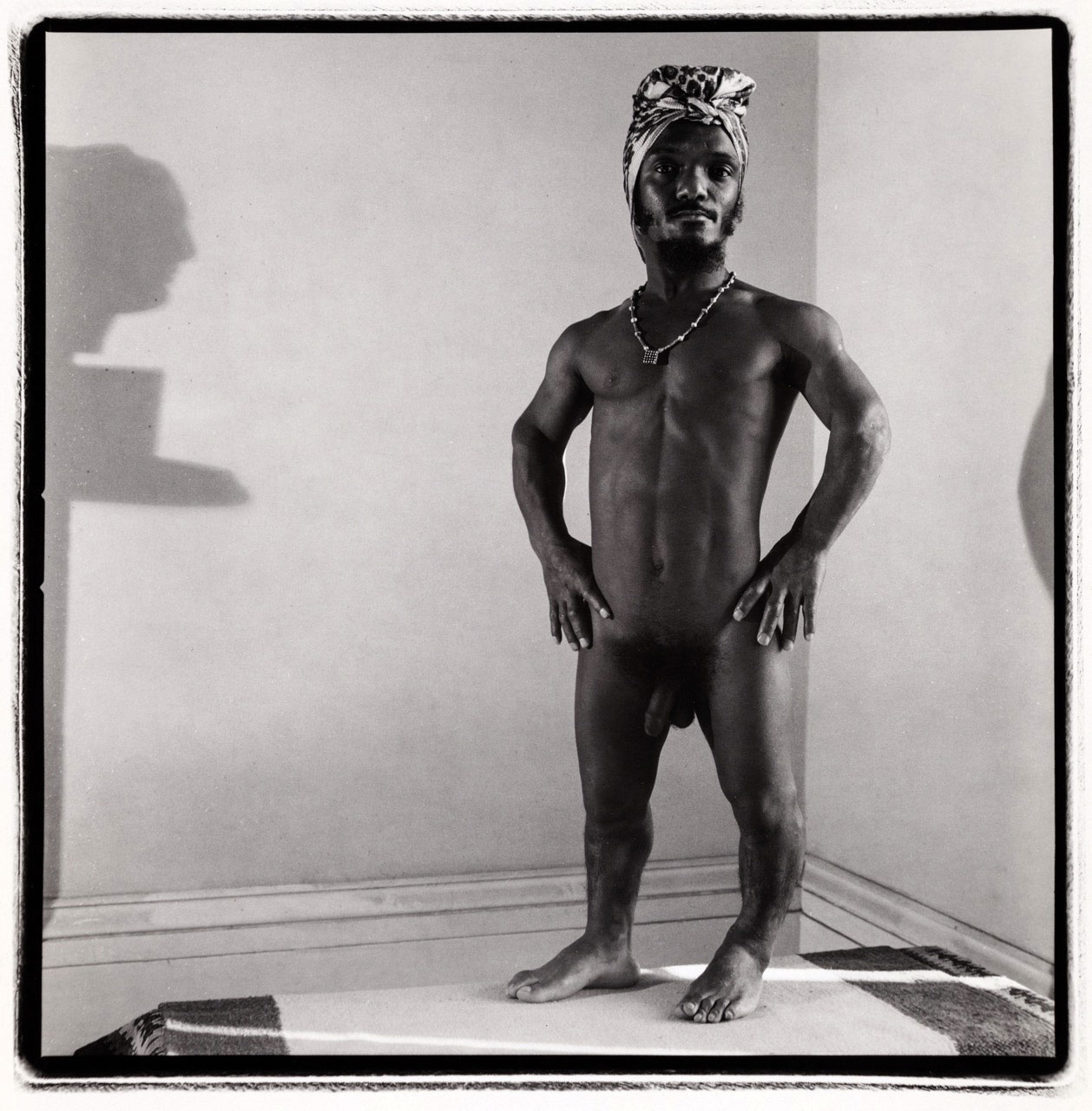
George Dureau (American, 1930-2014) 'Untitled (Sonny Singleton)' Nd


George Dureau (American, 1930-2014)
Untitled (Sonny Singleton)
Nd
Vintage silver gelatin print


This exhibition highlights the remarkable artistry of George Dureau through 25 compelling black-and-white portraits that showcase his unique vision. Created during the 1970s and 1980s, these photographs transcend traditional boundaries, blending classical composition with an unflinching exploration of the human experience. Dureau’s subjects – athletes, performers, friends, and individuals often marginalised by society – are elevated to iconic status through his lens.

The images reveal a profound empathy and an unshakable belief in the inherent dignity of every individual. With a studio rooted in the vibrant cultural milieu of New Orleans, Dureau captured not only the physical form but also the spirit of his subjects, transforming their vulnerabilities into striking symbols of resilience and humanity. His work redefines beauty as inclusive and multifaceted, challenging societal norms and inviting reflection on identity, strength, and community.

This exhibition Beyond Symmetry: George Dureau’s Celebrations of the Human Form presents 25 photographs by one of New Orleans’ most celebrated artists. Dureau’s black-and-white portraits, taken primarily during the 1970s and 1980s, capture the raw beauty, strength, and vulnerability of his subjects. Known for his classical approach and profound empathy, Dureau’s work invites us to confront traditional notions of beauty, body, and identity while celebrating the richness of the human experience.

George Dureau’s intimate portraits are both timeless and grounded in the rich cultural tapestry of New Orleans. His subjects include athletes, performers, friends, and marginalised individuals – including amputees and people with disabilities – rendered with dignity and compassion. Through his lens, Dureau elevates these figures to monumental status, echoing the grandeur of classical sculpture and Renaissance painting. His compositions emphasize the interplay of light and shadow, underscoring the sculptural quality of the human form.

One cannot discuss Dureau’s photography without acknowledging his connection to the city of New Orleans. His studio in the French Quarter became a space of artistic exploration, where he cultivated a dynamic and diverse community. This exhibition captures the spirit of that time and place, highlighting the distinct cultural influences that informed his work. The city’s unique blend of European, African, and Creole traditions provided a fertile ground for Dureau’s creativity, inspiring him to blend the classical and contemporary, the local and the universal.

Dureau’s photographs are celebrated not only for their technical mastery but also for their emotional depth. His subjects often meet the camera’s gaze directly, creating a sense of intimacy and trust. This rapport between artist and subject is palpable, revealing layers of vulnerability and strength. By choosing subjects who were often overlooked or marginalised, Dureau challenges societal norms and compels viewers to reconsider preconceived notions of worth and beauty.

This exhibition also explores the parallels between Dureau’s work and that of his contemporary, Robert Mapplethorpe. While the two artists shared a fascination with the human form and the dramatic use of black-and-white photography, their approaches diverged in significant ways. Dureau’s images are imbued with warmth and humanity that reflect his deep connection to his subjects. Unlike Mapplethorpe, who often sought a polished and idealised aesthetic, Dureau embraced imperfection and individuality, resulting in portraits that are as soulful as they are striking.

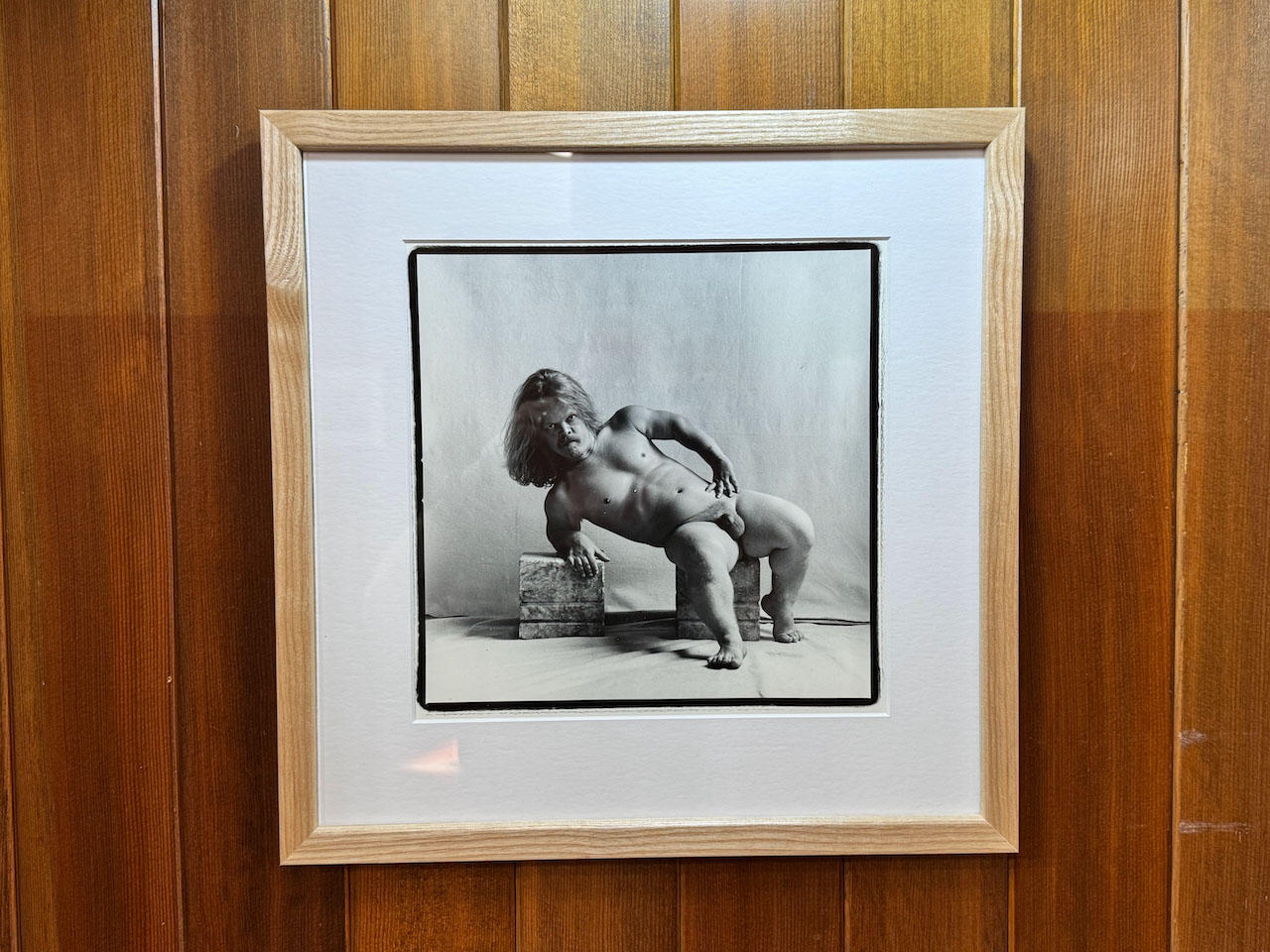
Among the works on display are several of Dureau’s most iconic images. Craig Blanchette, 1992 (above) captures a young man with a disarming gaze, his body framed in chiaroscuro that highlights his muscular form and absence of legs. The image challenges the viewer to see beyond the physical difference, emphasising Craig’s confidence and vitality. Similarly, Roosevelt Singleton features a subject with dwarfism, his ethereal presence heightened by the soft, diffused light. These works exemplify Dureau’s ability to transform the ordinary into the extraordinary, presenting his subjects as both individuals and archetypes.

Dureau’s artistry extends beyond the purely visual. His photographs resonate with themes of resilience, identity, and community. They ask us to confront the complexities of human existence and to celebrate the diversity of the human condition. By placing marginalised individuals at the forefront of his work, Dureau not only elevates their stories but also reflects the universal truths of vulnerability and strength that connect us all.

This exhibition offers viewers the opportunity to engage with Dureau’s legacy in a deeply personal way. Each photograph serves as a testament to the power of art to reveal the unseen, to challenge the status quo, and to inspire empathy. Through his lens, Dureau reminds us that every individual – regardless of their physical appearance or societal status – possesses inherent dignity and beauty.

The 31 photographs selected for this show represent the breadth and depth of Dureau’s oeuvre. From tender portraits of friends to bold explorations of the male nude, the images on display capture the full spectrum of his artistic vision. Each piece is a study in contrasts: light and shadow, strength and vulnerability, individuality and universality. Together, they form a cohesive narrative that celebrates the complexity of the human experience.

George Dureau’s work has left an indelible mark on the world of photography and beyond. His ability to see and celebrate the humanity in every subject has cemented his place as a true visionary. This exhibition, Beyond Symmetry: George Dureau’s Celebrations of the Human Form, invites you to step into his world – a world where beauty is redefined, where differences are celebrated, and where the human spirit shines through in every frame.

As you explore these images, consider the stories they tell and the questions they pose. How do we define beauty? What does it mean to see and be seen? And how can art challenge us to look beyond the surface and connect with the essence of another human being? In celebrating the life and work of George Dureau, we celebrate the power of art to transform, to inspire, and to unite us all.

Press release from the Bob Mizer Foundation


George Dureau (American, 1930-2014) 'B.J. Robinson' Nd


George Dureau (American, 1930-2014)
B.J. Robinson
Nd
Vintage silver gelatin print


George Dureau (American, 1930-2014)
'Untitled' Nd


George Dureau (American, 1930-2014)
Untitled
Nd
Vintage silver gelatin print


George Dureau (American, 1930-2014)
'Untitled (Bob Lang)' Nd


George Dureau (American, 1930-2014)
Untitled (Bob Lang)
Nd
Vintage silver gelatin print


Bob Mizer Foundation
920 Larkin St., San Francisco, CA

Opening hours:
Tues – Sat 12 – 6pm

Bob Mizer Foundation website

LIKE ART BLART ON FACEBOOK

Back to top

Exhibition: ‘Lucia Moholy – Exposures’ at Fotostiftung Schweiz, Winterthur, Zurich

Exhibition dates: 8th February – 9th June, 2025

Curator: Jan Tichy


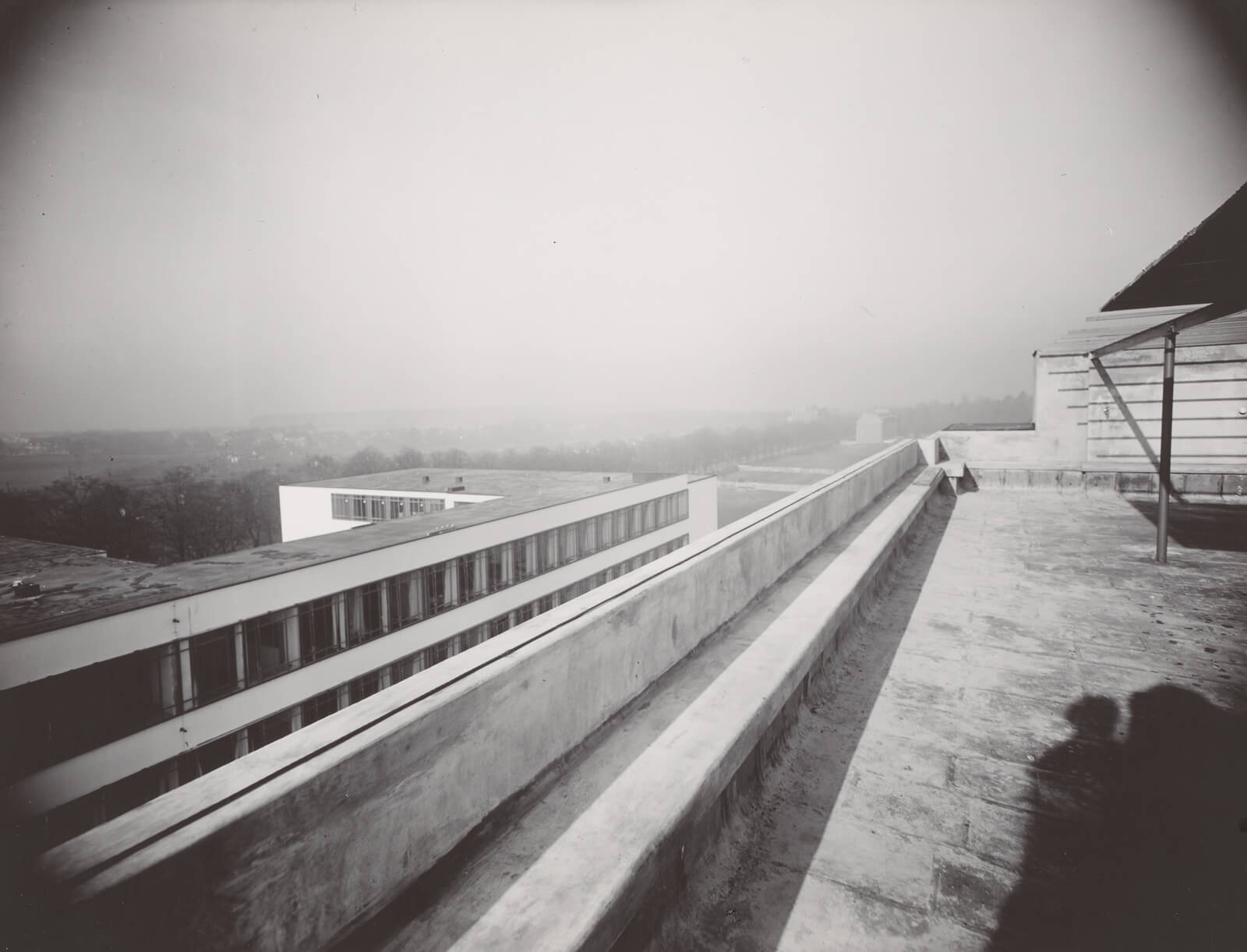
Lucia Moholy (British born Czech, 1894-1989) 'Roof of the Atelier-House, Bauhaus Dessau' 1926 from the exhibition 'Lucia Moholy – Exposures' at Fotostiftung Schweiz, Winterthur, Feb - June, 2025


Lucia Moholy (British born Czech, 1894-1989)
Roof of the Atelier-House, Bauhaus Dessau
1926
© 2025, ProLitteris, Zürich


I love Bauhaus design and photographs of the Bauhaus School and these are excellent photographs of both by Lucia Moholy: powerful, graphic, minimalist, modernist, echoing the ethos of the school itself. The strong portraits are pretty damn good as well…

It’s interesting to note then that Moholy was not particularly enamoured of this new modernist vision: “From her diaries, we know that Moholy didn’t like living in Dessau and her photos of the school, which are very alluring, also hint at her despair and dislike of being there.”

Then to learn that Walter Gropius, founder of the Bauhaus School, “had taken the negatives with him when he emigrated to the USA via London leading to years of negotiation with lawyers to get the negatives back.”

Why would you take the negatives of another artist, use them without credit and then refuse to give them back for many years without lawyers being involved? It’s incredible what human beings especially males will do (power and control), all because Gropius found the images useful for him to use! (see below)

While it is wonderful to be able to publish the first posting on Art Blart on the artist, I wish galleries and museums would stop making claims such as, Moholy “was one of the 20th century’s most internationally recognised and important female photographers.”

Let’s be frank: she wasn’t, not anywhere close.

Even in Europe in the 1930s we think of Florence Henri, Germaine Krull, Claude Cahun and Marcel Moore, Ilse Bing, Edith Tudor-Hart, Dora Maar etc etc… without even considering American female photographers of the era, or indeed the rest of the century. Today, many have more significance in the history of photography than Lucia Moholy ever will have.

This is in no way denigrating her work at all which I like tremendously, but just to assert that statements not thought through by marketing and media departments may come back to bite you on the arse.

Best just to say that Lucia Moholy was an accomplished artist who made focused, thoughtful, beautiful photographs of an era now nearly a century past. What more do you need to say.

Dr Marcus Bunyan


Many thankx to the Fotostiftung Schweiz for allowing me to publish the photographs in the posting. Please click on the photographs for a larger version of the image.


“In 1938, while Moholy lived in London, Walter Gropius used about fifty of Moholy’s images from the Bauhaus years – from her negatives that he still had in his possession – in the Museum of Modern Art (MoMA) exhibition and the accompanying catalogue, without giving her any credit. …

Gropius had been using her photographs without crediting her. She repeatedly reached out to Gropius to reclaim her images and he would continuously protest. Moholy resorted to hiring a lawyer to retrieve her work.

Some relevant letters between Walter Gropius and Lucia Moholy are displayed on the website 99% Invisible. Moholy stated, “These negatives are irreplaceable documents which could be extremely useful, now more than ever” to which Gropius replied, “[…] long years ago in Berlin, you gave all these negatives to me. You will imagine that these photographs are extremely useful to me and that I have continuously made use of them; so I hope you will not deprive me of them.” Lucia Moholy responded, “Surely you did not expect me to delay my departure in order to draw up a formal contract stipulating date and conditions of return? No formal agreement could have carried more weight than our friendship. It is a friendship I have always relied on, and which, also, I am now invoking.

Moholy did not get physical possession of her original material until 1957, but even then she only could recover a portion of them, 230 out of the 560 Bauhaus-era negatives she took, while 330 negatives, according to Moholy’s own card catalogue, are still missing.”

Anonymous. “Lucia Moholy,” on the Wikipedia website [Onloine] Cited 30/05/2025


Lucia Moholy (British born Czech, 1894-1989) 'Workshop wing, design by Walter Gropius, Bauhaus Dessau' around 1926 from the exhibition 'Lucia Moholy – Exposures' at Fotostiftung Schweiz, Winterthur, Feb - June, 2025


Lucia Moholy (British born Czech, 1894-1989)
Workshop wing, design by Walter Gropius, Bauhaus Dessau
around 1926
© 2025, ProLitteris, Zürich


Lucia Moholy (1894-1989) was one of the 20th century’s most internationally recognised and important female photographers. Her architectural photographs and portraits from her years at the Bauhaus in Dessau, which have become icons of photographic history, still shape how that institution is perceived today. However, Moholy was not just a photographer, but also an art historian, critic, writer and archivist; she described herself as a ‘documentalist’ and made a name for herself in the field of information science.

The exhibition Lucia Moholy – Exposures is the first to show the broad scope of her work from the 1910s to the 1970s. Her photographic oeuvre is presented together with numerous documents, some of them newly discovered, which shed light on Moholy’s role in the avant-garde during the interwar period, as well as her youth in Prague, her editorial work in Germany, her activity as a portraitist in London, and her involvement with early microfilm technology in England and Turkey.

Finally, the exhibition also invites visitors to encounter Lucia Moholy in the context of Zurich, where she spent the last thirty years of her life. During that time, she also maintained a relationship with the then fledgling Fotostiftung Schweiz, which today is home to a large collection of her photographs.

Text from the Fotostiftung Schweiz website


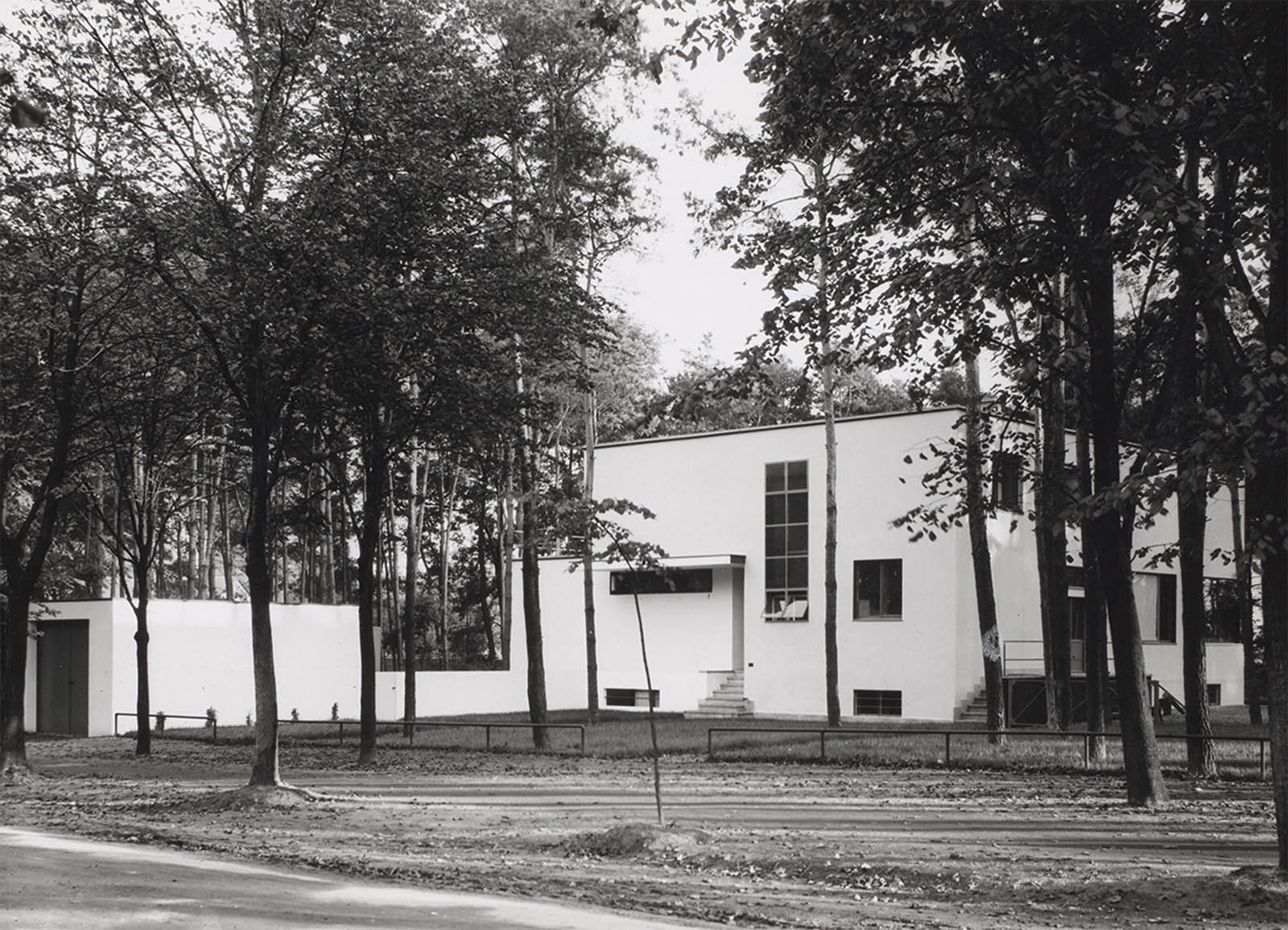
Lucia Moholy (British born Czech, 1894-1989) 'Gropius House in Dessau' 1925


Lucia Moholy (British born Czech, 1894-1989)
Gropius House in Dessau
1925
© 2025, ProLitteris, Zürich


“This street view of Gropius’s house in Dessau is glimpsed through a line of birch trees that conjures a feeling of entrapment, almost like prison bars. It reinforces this sense of being fenced in or fenced off – a feature of many of Moholy’s images of the Masters’ Houses, which provided accommodation for Bauhaus teachers.

“The photograph really captures the modernist style of Gropius’s buildings, with the rectilinear geometric shapes and the dark windows inserted into the white facades. While living in Dessau, Moholy’s relationship with Gropius and his wife Isa was amiable and continued to be so when the Gropiuses emigrated to the United States.

“It was only in the 1950s, when she learned how the negatives she left behind in Berlin in 1933 had been used to build the legacy of the school without her knowledge, that the relationship turned sour and she engaged a lawyer to help her recover the images.”

Meghan Forbes, co-curator of the exhibition when it was at Kunsthalle Praha quoted in Alyn Griffiths. “Lucia Moholy’s photographs provide a different perspective on the Bauhaus,” on the Dezeen website, 9th August, 2024 [Online] Cited 10/05/2025


Lucia Moholy (British born Czech, 1894-1989) 'Workshop wing from south-west, Bauhaus Dessau' 1926


Lucia Moholy (British born Czech, 1894-1989)
Workshop wing from south-west, Bauhaus Dessau
1926
© 2025, ProLitteris, Zürich


Lucia Moholy (British born Czech, 1894-1989) 'Bauhaus Dessau: Workshop building from the southwest' c. 1926


Lucia Moholy (British born Czech, 1894-1989)
Bauhaus Dessau: Workshop building from the southwest
c. 1926
© 2025, ProLitteris, Zürich


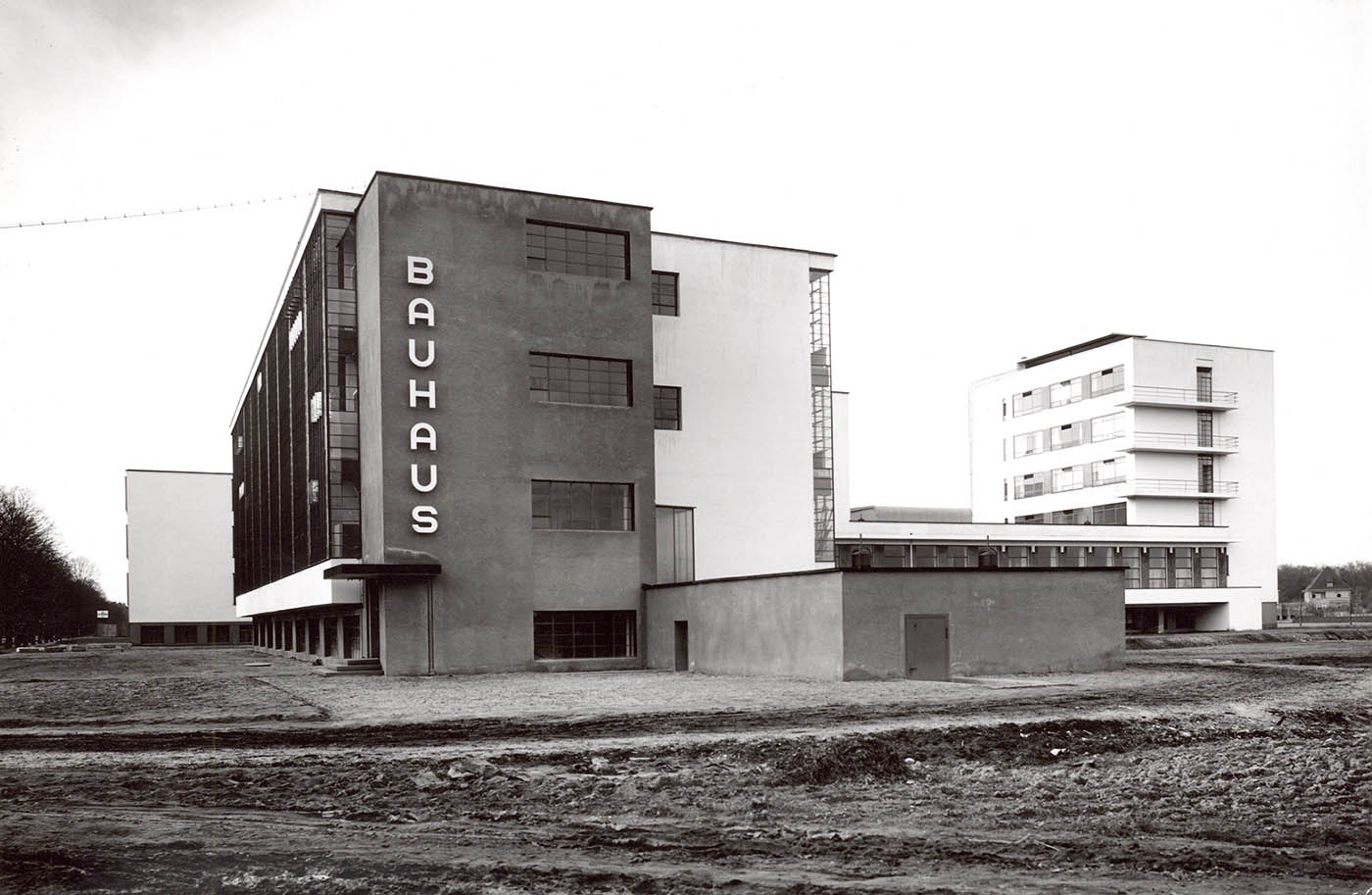
Lucia Moholy (British born Czech, 1894-1989) 'Workshop wing of the Bauhaus Building in Dessau' c. 1926


Lucia Moholy (British born Czech, 1894-1989)
Workshop wing of the Bauhaus Building in Dessau
c. 1926
© 2025, ProLitteris, Zürich


“To me, this photograph of Walter Gropius’s Bauhaus building with a muddy, unpaved road in the foreground shows the messier, dirtier aspects of constructing a new modernist vision. From her diaries, we know that Moholy didn’t like living in Dessau and her photos of the school, which are very alluring, also hint at her despair and dislike of being there.

“Moholy’s photographs documenting the Bauhaus buildings and design objects already appeared – with and without credits – in books at the time, as well as in the popular press. In the 1950s, she discovered that at least 40 of her images were used in the catalogue of the seminal 1938 Bauhaus exhibition held at MoMA in New York.

“It kickstarted a life-long campaign of letter-writing to try to obtain both the possession of her glass negatives from the Bauhaus years and appropriate author credit and compensation for the publication of her images.”

Meghan Forbes, co-curator of the exhibition when it was at Kunsthalle Praha quoted in Alyn Griffiths. “Lucia Moholy’s photographs provide a different perspective on the Bauhaus,” on the Dezeen website, 9th August, 2024 [Online] Cited 10/05/2025


Lucia Moholy (British born Czech, 1894-1989) 'Dining room Moholy-Nagy, Meistersiedlung Bauhaus Dessau' 1926


Lucia Moholy (British born Czech, 1894-1989)
Dining room Moholy-Nagy, Meistersiedlung Bauhaus Dessau
1926
© 2025, ProLitteris, Zürich


In the exhibition Lucia Moholy – Exposures, Fotostiftung Schweiz is honouring the oeuvre of a versatile 20th-century pioneer. The famous Bauhaus photographs taken by Lucia Moholy (1894-1989) still shape how that institution is seen today. She also left a significant legacy via her work as an art historian, critic, writer and microfilm expert. The exhibition shines a spotlight on this long-underestimated figure, who spent the last 30 years of her life in Zollikon, near Zurich.

Lucia Moholy – Exposures presents, for the first time, the full breadth of her work from the 1910s to the 1970s. Photographs, letters, diaries, publications and microfilms are shown, spread across three exhibition rooms. The focus is on key periods of her life: her youth in Prague, her time at the Bauhaus, her exile in London and her pioneering work on microfilm technology. One point of emphasis is her connection with Zurich and with Fotostiftung Schweiz, which holds many of her images. Works by the contemporary Czech artist and curatorJan Tichy will also be on display. The exhibition is realised in cooperation with Kunsthalle Praha.

Photographer of the Bauhaus

Lucia Moholy left Prague in 1915 to work for various German publishers. In Berlin, she met Hungarian artist László Moholy-Nagy, whom she married in 1921. Together, they explored new reproduction technologies and the possibilities of the photogram. When Moholy-Nagy was appointed as a master at the Bauhaus, Moholy accompanied him and began to take photographs: Between 1923 and 1928, she documented Bauhaus design objects and Walter Gropius’s famous Dessau buildings. Her clearly composed shots still characterise the visual legacy of that institution to this day. Moholy’s portraits of Bauhaus figures like Anni Albers, Walter Gropius and Florence Henri are particularly impressive, and have been made central to the exhibition.

Exile and a new beginning

In 1928, Lucia Moholy and László Moholy-Nagy left the Bauhaus and moved to Berlin, where they soon separated. Moholy took charge of the photography class at Johannes Itten’s art school, while simultaneously trying her hand at photojournalism. Her flight from the Nazis in 1933 took her to London. There, she opened a photo studio and wrote the bestseller A Hundred Years of Photography, 1839-1939. After her studio was destroyed by bombing in 1940, she turned to microfilm technology. She founded her own documentation service and set up a microfilm centre in Ankara as a UNESCO expert.

The search for the glass negatives

After the end of the Second World War, Moholy noticed many of her Bauhaus photographs appearing in newly released publications. After extensive research, she eventually learnt that Walter Gropius had taken the negatives with him when he emigrated to the USA via London. It was not until 1957, after years of legal negotiations, that Lucia Moholy was able to get a large number of her negatives back, which are now in the Bauhaus Archive in Berlin.

Late recognition of the photographer

Moholy moved to Zurich in 1959. Here, she wrote about Zurich exhibitions for English magazines and was a prominent figure on the art scene. During the 1970s and 1980s, interest in Moholy’s photographic works finally grew. They were shown in exhibitions and published in magazines. In 1981, a solo exhibition was held in her honour at Gallery Ziegler in Zurich. Four years later, her first monograph was published, with in-depth analysis of her work by art historian Rolf Sachsse. Moreover, two founding members of Fotostiftung Schweiz, Rosellina Burri-Bischof and Walter Binder, maintained contact with Lucia Moholy. Thanks to a purchase and a donation from Moholy’s estate, Fotostiftung Schweiz now holds 146 of her prints, which can be accessed via the Online Image Archive and constitute the largest collection outside the Bauhaus Archive.

Jan Tichy – Weight of Glass

The exhibition at Fotostiftung Schweiz is supplemented with contemporary works by the artist and curator Jan Tichy, who has been engaging with Moholy’s legacy for almost 20 years. His microfilm installation can be seen in the passage leading to the photo library. In addition, contemporary video works, installations and photographs are being shown at oxyd-Kunsträume from the 7th of February to the 2nd of March 2025, including the impressive Installation no. 30 (Lucia), for which Tichy arranges and illuminates 330 glass plates in the size of the original negatives. Set up in a dark room, the installation creates a fleeting and fragile memorial to an important protagonist of the 20th century.

Lucia Moholy – Exposures is a Kunsthalle Praha exhibition project, organised in cooperation with Fotostiftung Schweiz, Winterthur, and the Bauhaus Archive, Berlin.

Press release from Fotostiftung Schweiz, Winterthur


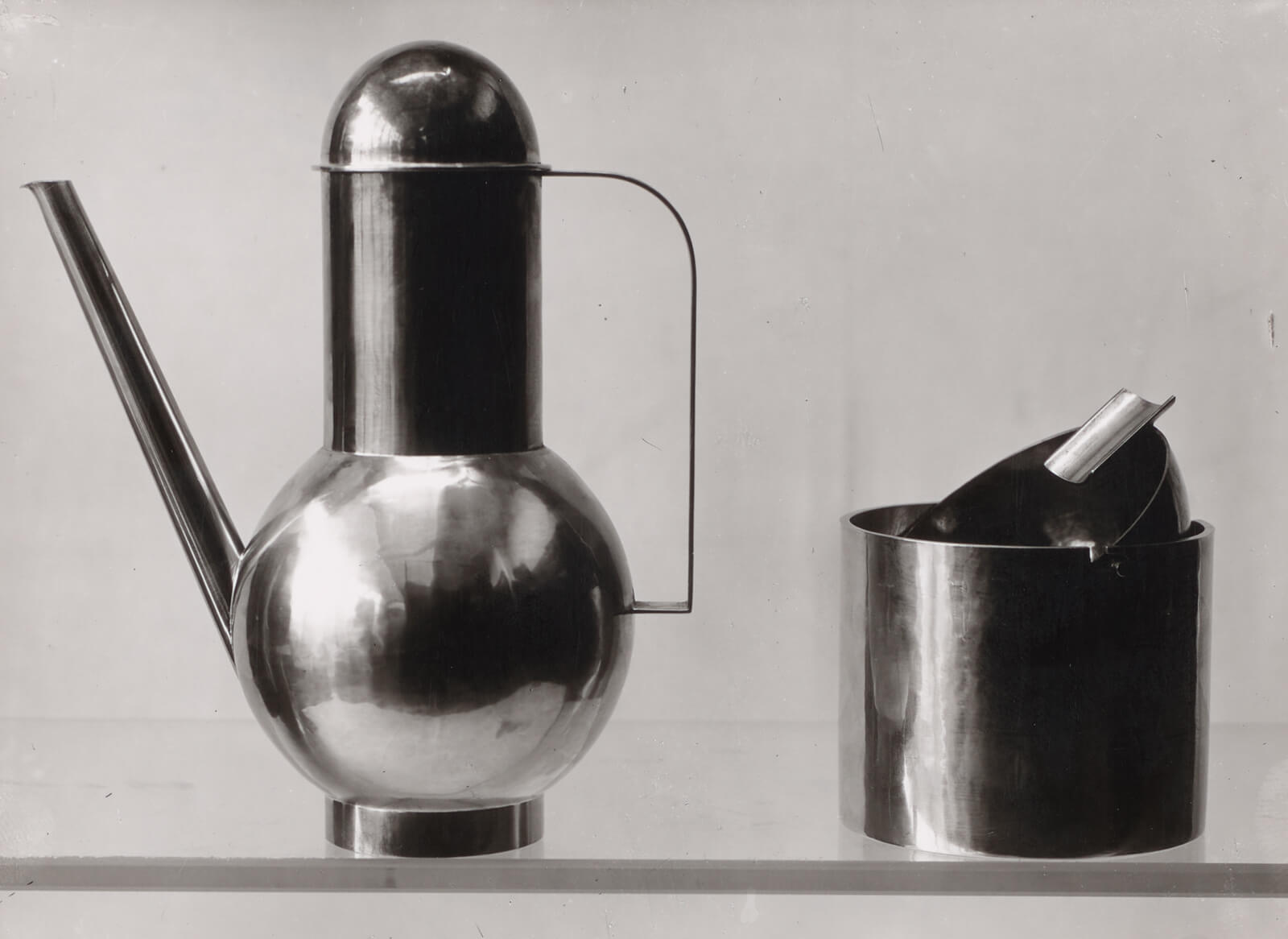
Lucia Moholy (British born Czech, 1894-1989) 'Metal workshop, design by Marianne Brandt, Bauhaus Dessau' 1924 from the exhibition 'Lucia Moholy – Exposures' at Fotostiftung Schweiz, Winterthur, Feb - June, 2025


Lucia Moholy (British born Czech, 1894-1989)
Metal workshop, design by Marianne Brandt, Bauhaus Dessau
1924
© 2025, ProLitteris, Zürich


“Marianne Brandt is a really important Bauhaus designer who ended up living in East Germany in relative obscurity, although her work is now also receiving due attention. The somewhat static composition of the two objects side by side is dynamised by the diagonals produced by the larger vessel’s slender spout and the decision to slant in the ashtray’s top, emphasizing the use value.

“It also shows how Moholy played with reflective surfaces when photographing metal objects, evoking the work of Florence Henri who was at the Bauhaus at the same time. Henri was known for capturing her own portrait as she played with glass and metal in her photographs.

“We can also occasionally catch a glimpse of Moholy in some of her metal studies. But in other instances, she focuses on highlighting the lustrous quality of the objects in isolation. These images of metal objects are perhaps the best-known of her Bauhaus product photographs. But she also took pictures of pieces made from ceramics or wood that indicate the evolution of design thinking at the school.”

Meghan Forbes, co-curator of the exhibition when it was at Kunsthalle Praha quoted in Alyn Griffiths. “Lucia Moholy’s photographs provide a different perspective on the Bauhaus,” on the Dezeen website, 9th August, 2024 [Online] Cited 10/05/2025


Lucia Moholy (British born Czech, 1894-1989) 'Edith Tschichold, Bauhaus Dessau' 1926


Lucia Moholy (British born Czech, 1894-1989)
Edith Tschichold, Bauhaus Dessau
1926
© ProLitteris, Zürich


Edith Tschichold was the wife of Bauhaus typographer and graphic designer Jan Tschichold (German, 1905-1986)


Lucia Moholy (British born Czech, 1894-1989) 'László Moholy-Nagy, Bauhaus Dessau' 1926


Lucia Moholy (British born Czech, 1894-1989)
László Moholy-Nagy, Bauhaus Dessau
1926
© 2025, ProLitteris, Zürich


~ European art research tour exhibition: ‘László Moholy-Nagy and New Typography: A Reconstruction of a Berlin Exhibition from 1929’ at the Staatliche Museen zu Berlin, August – September 2019, posted November 2020
~ Exhibition: ‘Moholy-Nagy: Future Present’ at the Los Angeles County Museum of Art, February – June 2017
~ Exhibition: ‘Moholy-Nagy: Future Present’ at the Solomon R. Guggenheim Museum, New York, May – September 2016
~ Exhibition: ‘László Moholy-Nagy. The Art of Light’ at the Ludwig Museum, Budapest, June – September 2011
~ Exhibition: ‘László Moholy-Nagy – Art of Light’ at Martin Gropius-Bau, Berlin, November 2010 – January 2011
~ Exhibition: ‘László Moholy-Nagy 
Retrospective’ at Schirn Kunsthalle, Frankfurt, October 2009 – February 2010


Lucia Moholy (British born Czech, 1894-1989) 'Walter Gropius, Bauhaus Dessau' 1926


Lucia Moholy (British born Czech, 1894-1989)
Walter Gropius, Bauhaus Dessau
1926
© 2025, ProLitteris, Zürich


Lucia Moholy (British born Czech, 1894-1989) 'Ingeborg Lebert' 1927


Lucia Moholy (British born Czech, 1894-1989)
Ingeborg Lebert
1927
Gelatin silver print
22 x 29.8cm
© 2025, ProLitteris, Zürich


Lucia Moholy (British born Czech, 1894-1989) 'Lou Scheper' 1927


Lucia Moholy (British born Czech, 1894-1989)
Lou Scheper
1927
© 2025, ProLitteris, Zürich


Lou Scheper-Berkenkamp née Hermine Luise Berkenkamp (German, 1901-1976) was a painter, colour designer, the avant-garde author of children’s books, fairy-tale illustrator and costume designer.

More information on the Wikipedia website


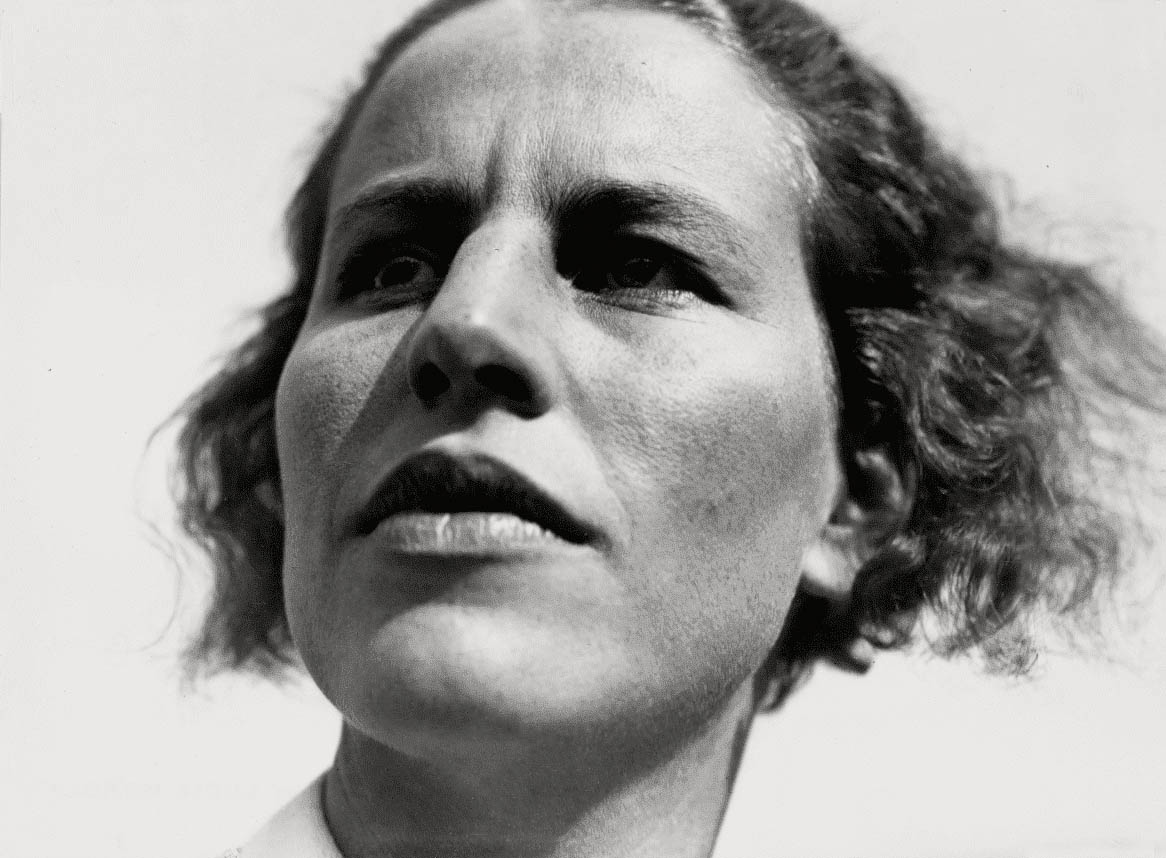
Lucia Moholy (British born Czech, 1894-1989) 'Florence Henri, Bauhaus Dessau' 1927


Lucia Moholy (British born Czech, 1894-1989)
Florence Henri, Bauhaus Dessau
1927
© 2025, ProLitteris, Zürich


“Henri’s sophisticated, avante-garde, sculptural compositions have an almost ‘being there’ presence: a structured awareness of a way of looking at the world, a world in which the artist questions reality. She confronts the borders of an empirical reality (captured by a machine, the camera) through collage and mirrors, in order to take a leap of faith towards some form of transcendence of the real. Here she confronts the limitless freedom of creativity, of composition, to go beyond objectivity and science, to experience Existenz (Jaspers) – the realm of authentic being.*

These photographs are her experience of being in the world, of Henri observing the breath of being – the breath of herself, the breath of the objects and a meditation on those objects. There is a stillness here, an eloquence of construction and observation that goes beyond the mortal life of the thing itself. That is how these photographs seem to me to live in the world. I may be completely wrong, I probably am completely wrong – but that is how these images feel to me: a view, a perspective, the artist as prospector searching for a new way of authentically living in the world.”

Marcus Bunyan commenting on the exhibition Florence Henri. Compositions at the Pinakothek der Moderne, Munich, March – September 2014


Lucia Moholy (British born Czech, 1894-1989) 'Gypsy, Jugoslavia' 1930-1931


Lucia Moholy (British born Czech, 1894-1989)
Gypsy, Jugoslavia
1930-1931
© 2025, ProLitteris, Zürich


Lucia Moholy (British born Czech, 1894-1989) 'Ruth Fry' 1936


Lucia Moholy (British born Czech, 1894-1989)
Ruth Fry
1936
© 2025, ProLitteris, Zürich


Anna Ruth Fry (British , 1878-1962), usually known as Ruth Fry, was a Quaker writer, pacifist and peace activist.

More information on the Wikipedia website


Lucia Moholy (British born Czech, 1894-1989) 'Emma, Countess of Oxford and Asquith, London' 1937


Lucia Moholy (British born Czech, 1894-1989)
Emma, Countess of Oxford and Asquith, London
1937
© 2025, ProLitteris, Zürich


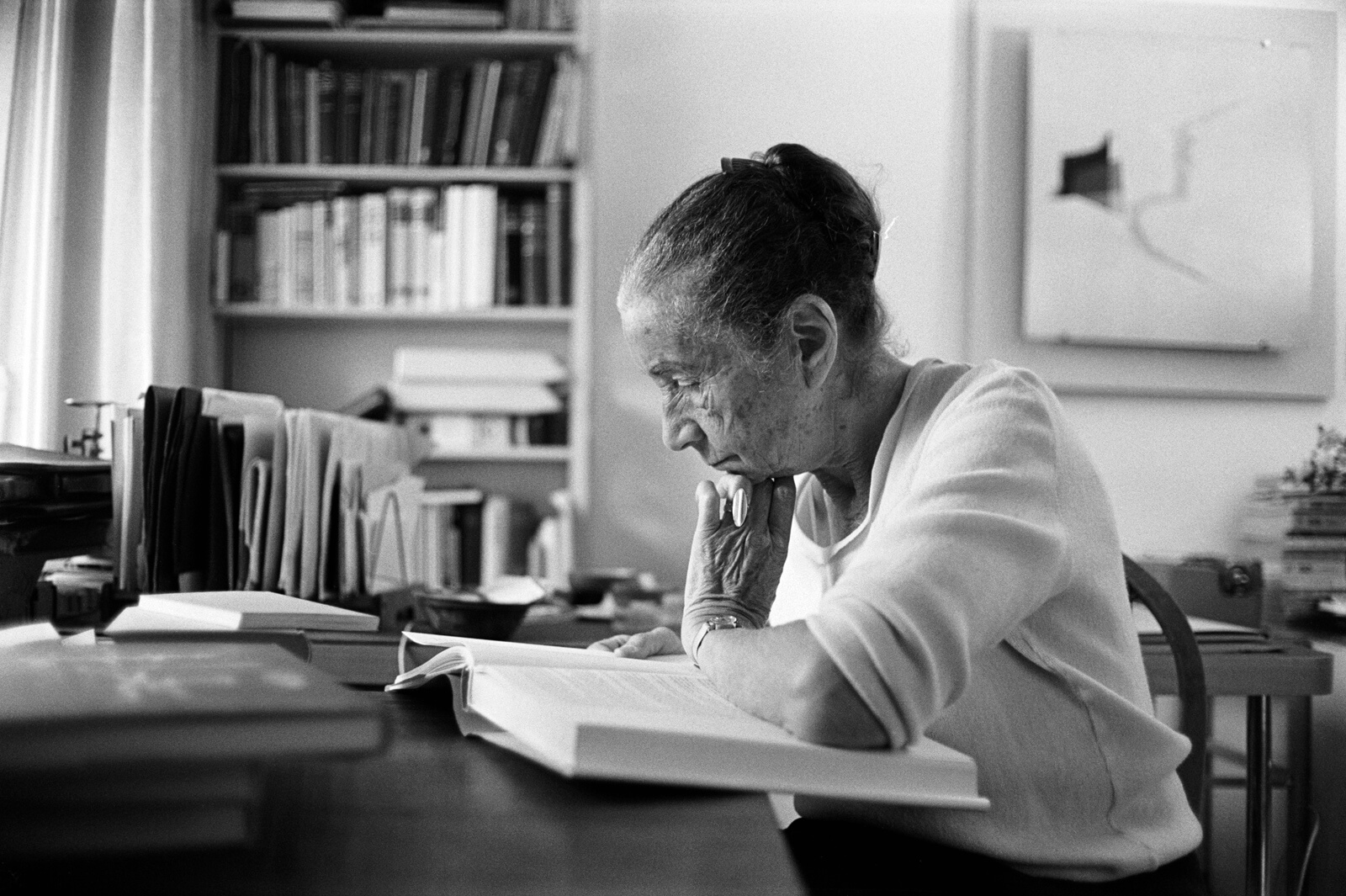
Hans Peter Klauser (Swiss, 1910-1989) 'Lucia Moholy in her studio in Zollikon' 1972


Hans Peter Klauser (Swiss, 1910-1989)
Lucia Moholy in her studio in Zollikon
1972
© Hans Peter Klauser/Fotostiftung Schweiz


Hans Peter Klauser (Swiss, 1910-1989) 'Lucia Moholy in her studio in Zollikon' 1972


Hans Peter Klauser (Swiss, 1910-1989)
Lucia Moholy in her studio in Zollikon
1972
© Hans Peter Klauser/Fotostiftung Schweiz


Fotostiftung Schweiz
Grüzenstrasse 45
CH-8400 Winterthur (Zürich)
Phone: +41 52 234 10 30

Opening hours:
Tuesday – Sunday 11am – 6pm
Wednesday 11am – 8pm
Closed on Mondays

Fotostiftung Schweiz website

LIKE ART BLART ON FACEBOOK

Back to top

Exhibition: ‘Dawoud Bey: Street Portraits’ at the Denver Art Museum

Exhibition dates: 17th November, 2024 – 11th May, 2025

Curator: Eric Paddock, Curator of Photography at Denver Art Museum


Dawoud Bey (American, b. 1953) 'Two Girls from a Marching Band, Harlem, NY' 1990


Dawoud Bey (American, b. 1953)
Two Girls from a Marching Band, Harlem, NY
1990
Pigment print
Courtesy the artist and Stephen Daiter Gallery, Chicago
© Dawoud Bey


Street cred

I have posted twice before on Art Blart on Dawoud Bey’s An American Project exhibition – once when it was at the High Museum of Art (November 2020 – March 2021) and then the Whitney Museum of American Art (April – October, 2021)

I waxed lyrical about his photographs which I greatly admire.

“From formal to informal portraiture, through conceptual “bodies”, Bey’s work visualises Black American history in the present moment, not by using the trope of reusing colonial photographs or memorabilia, but by presenting afresh the history of injustice enacted on a people and a culture, picturing their ongoing pain and disenfranchisement – in the here and now – through powerful and deeply political photographs…

From his early street photographs through the later large format Polaroid work and on to the conceptual series, Bey’s photographs have an engaging directness and candour to them. There are no photographic or subjective histrionics here, just immensely rich social documentary photographs that speak truth to subject. The subjects stare directly at the camera and reveal themselves with a poignant honesty.”

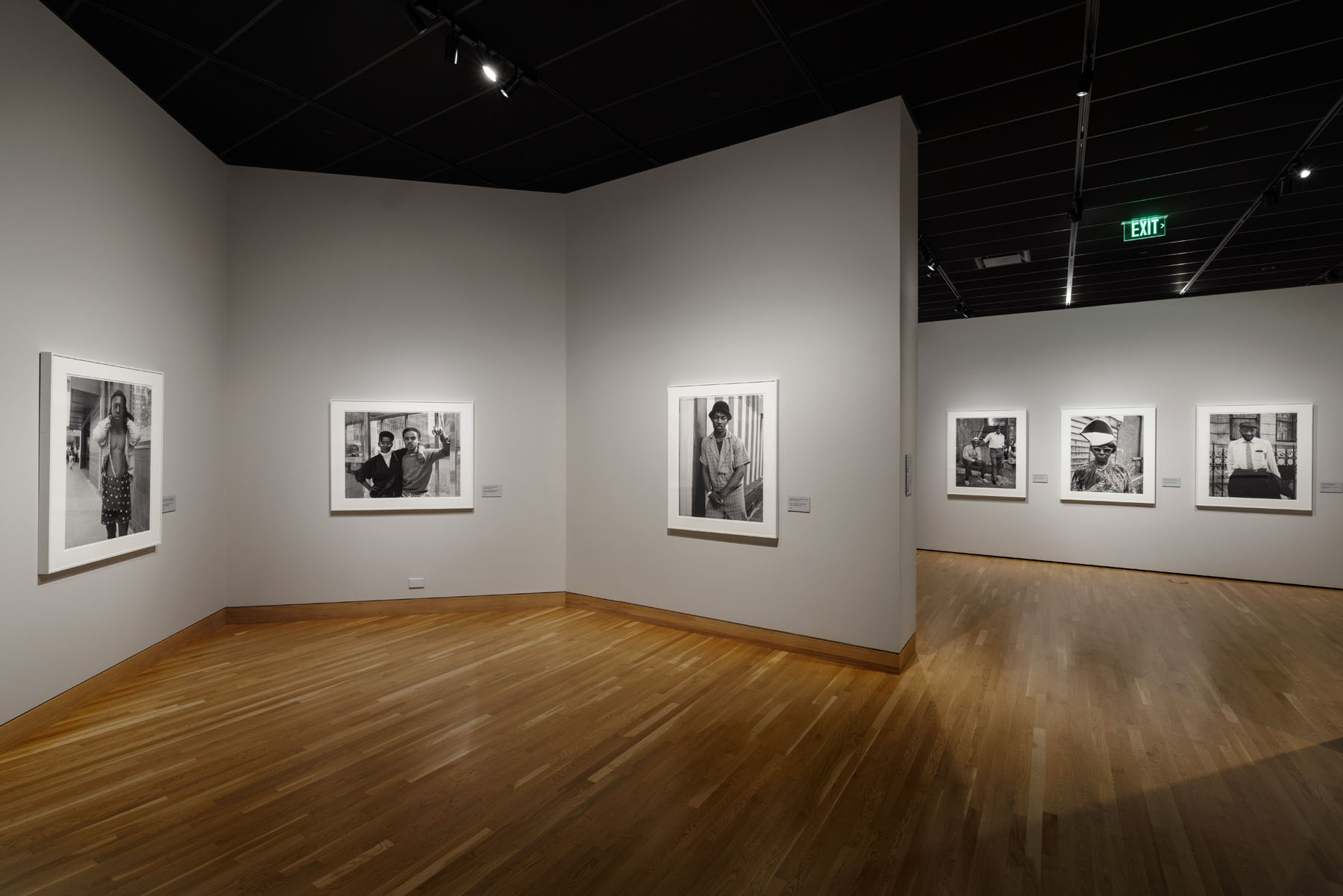
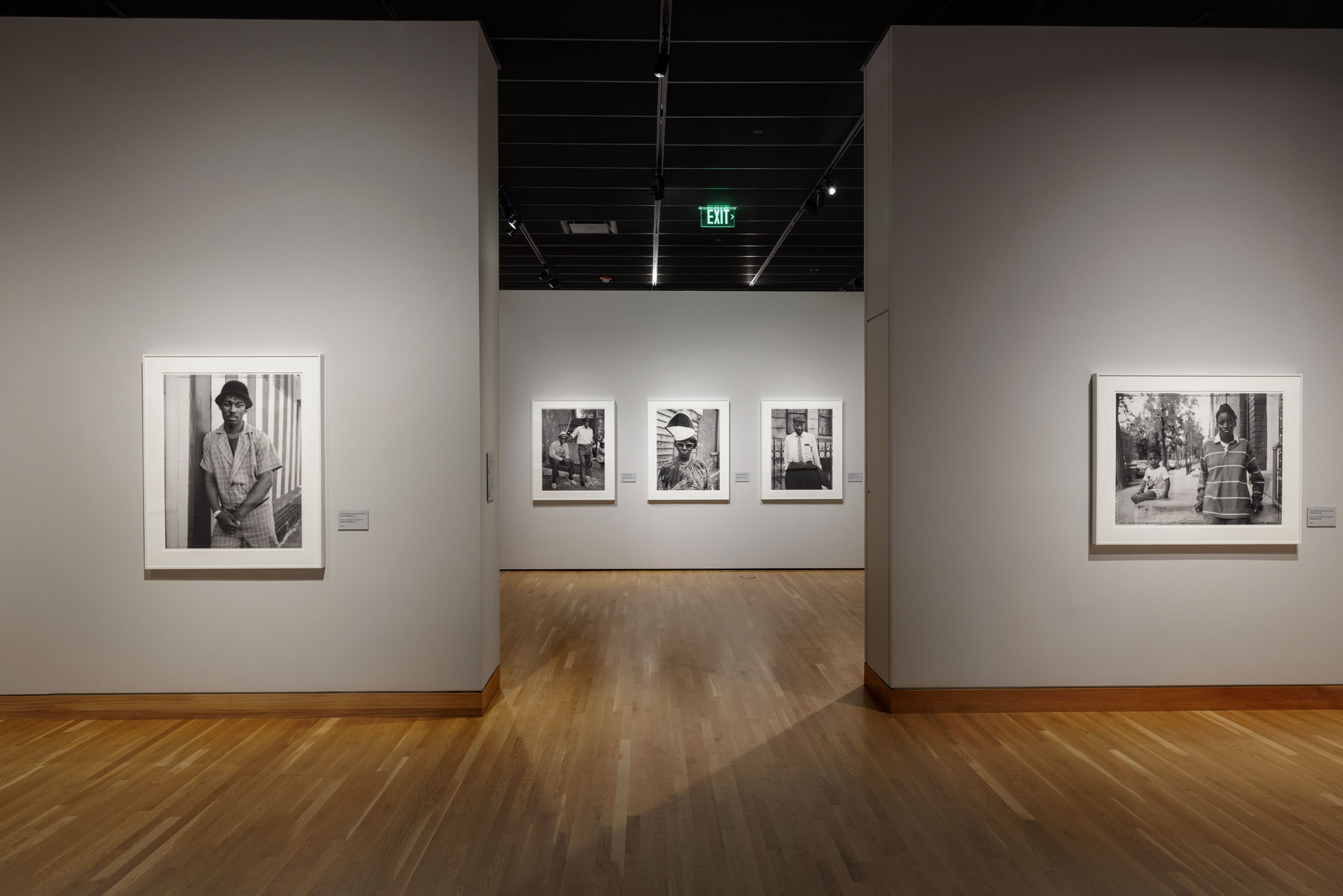
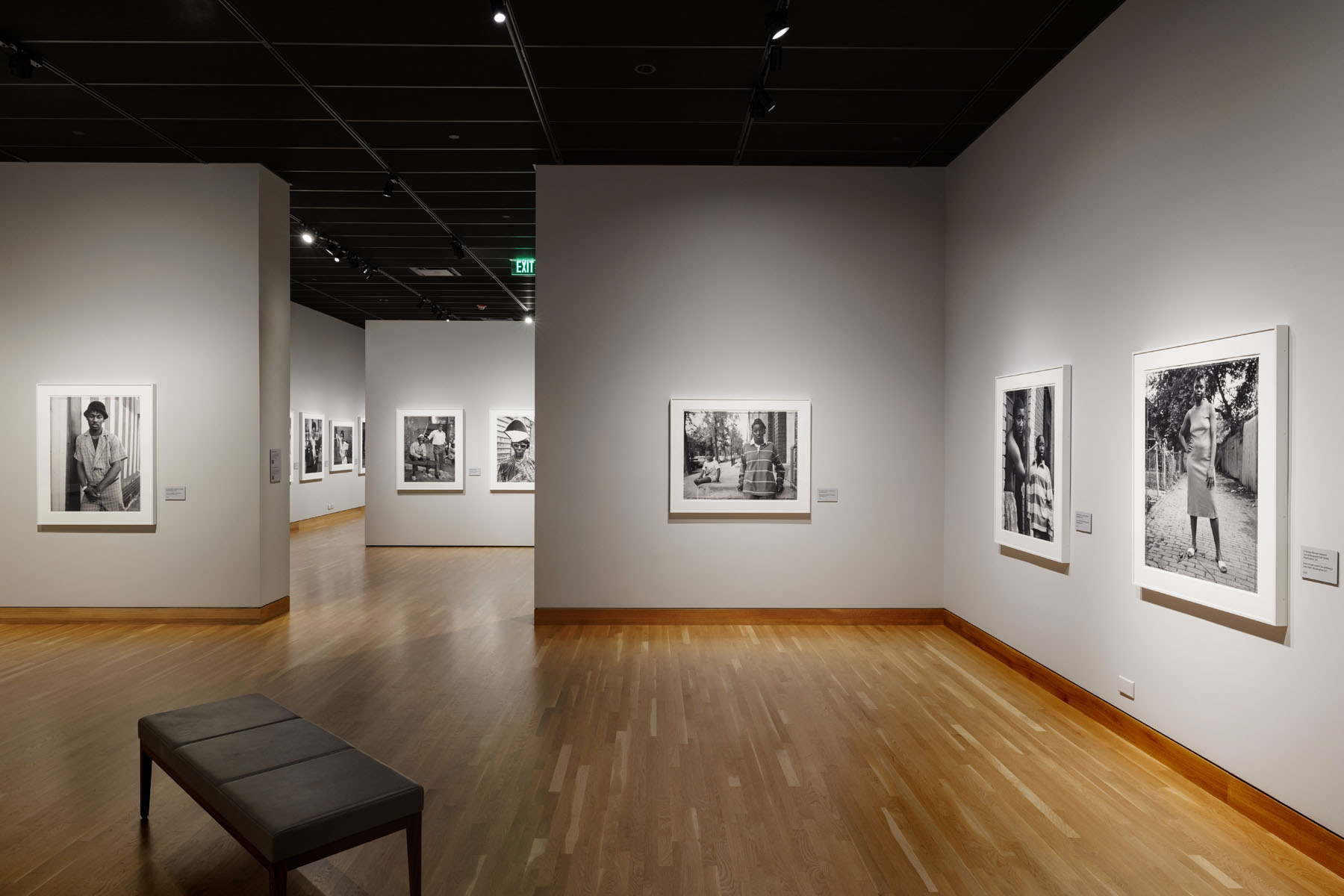
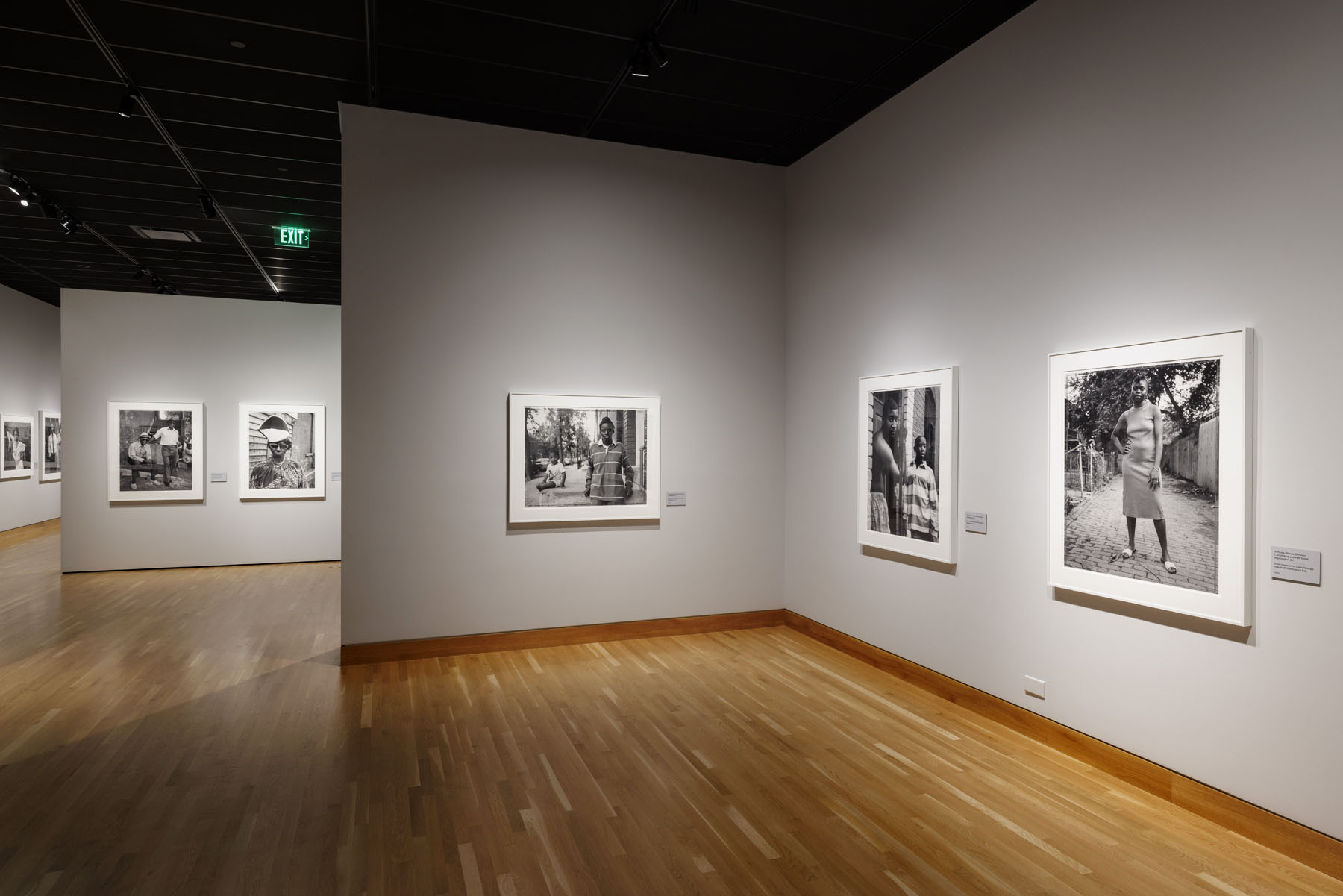
If you look at the installation photographs of both postings you will notice the small-scale prints of his notable black and white large-format (4 × 5-inch) camera and Polaroid Type 55 film photographs. But in this exhibition, Dawoud Bey: Street Portraits at the Denver Art Museum, Bey has used the large format negatives “to make large-scale, highly detailed prints that could be enlarged to create monumental portraits.”

To my eye and mind, these monumental portraits simply don’t work … on many levels.

Firstly, the size seems totally inappropriate as a form of theatre (for that is what Bey is making them at this size) and as a photographic document to the honest representation of these people – to me, completely at odds with the spirit of the subject being captured.

Secondly – and remembering that I have not seen the exhibition or walked through it but I am using the numerous installation photographs as my guide – there seems to be little flow to the images, installed as they are cheek by jowl, on the line, with no groupings or spacing, facing off against each other, face after face – with seemingly no understanding by curator or artist of Minor White’s idea of ice/fire, or the space between, the frisson that is generated between two or more images, in conversation, in sequence. Even the lines of sight between exhibition spaces leave little to be discovered afresh.

I have never understood this need for “monumentalism” in contemporary photography especially when the work does not need it and the energy of the work does not support it.

The advent of digital printing and large scale printers have enabled the production of gigantic contemporary photographs. “Large-scale photography challenges traditional notions of what constitutes a photograph and can be seen as a way to engage with the history of painting and cinema… Large-scale photography allows artists to explore the relationship between the overall composition and the individual details within the image. This can create a sense of both macro and micro, where the viewer can zoom in and out to appreciate different aspects of the image… Large-scale photography is used by many artists to explore themes related to identity, technology, consumerism, and environmental issues. The size of the prints can be a way to amplify these themes and create a more impactful visual statement. Large-scale photographs are well-suited for exhibition spaces where they can be displayed in a way that maximizes their impact. The large size of the prints can also create a sense of awe and wonder for the viewer.” (Generative AI on Google)

“In the 1990s, the group most commonly associated with large-scale photography, and in many ways responsible for the worldwide popularity of the technique, were the students of Bernd and Hilla Becher at the Kunstakademie Düsseldorf, including Thomas StruthAndreas GurskyCandida Höfer, and Thomas Ruff.” (Artsy website) With the work of artist’s such as Jeff Wall or Gregory Crewdson we become immersed in their cinematically constructed, staged fantasy worlds through the sheer scale of the photographs. With the gigantic portraits of Thomas Ruff it is not so much about the individual persona in the photograph as their every pore, a scientific examination of the surface micro death contained within every image.

Of course, I understand the desire for large photographs in creating a sense of immersion and exploring themes related to scale, power, identity and the human experience … but I don’t necessarily agree with the conditions of their becoming, nor do I think scale necessarily works for every photographic image. A photograph can be printed so that it has many sizes where it “speaks” to you and the viewer, but not every size works. I vividly remember seeing the exhibition Richard Avedon People at The Ian Potter Museum of Art, Melbourne in 2015 and observing that Avedon’s reaction to the ever expanding size of postmodern “gigantic” photography were floor to ceiling photographs, vertiginous overblown edifices which fell as flat as a tack.

I get the same feeling here.

Impact not intimacy, (visually) overwhelming not (visually) engaging.

Fundamentally, these “monumental” photographs by Dawoud Bey are no longer “street portraits” for they lack the intimacy and intensity of that style, becoming something rather less … beguiling, in the process.

Dr Marcus Bunyan


Many thankx to the Denver Art Museum for allowing me to publish the photographs in the posting. Please click on the photographs for a larger version of the image.


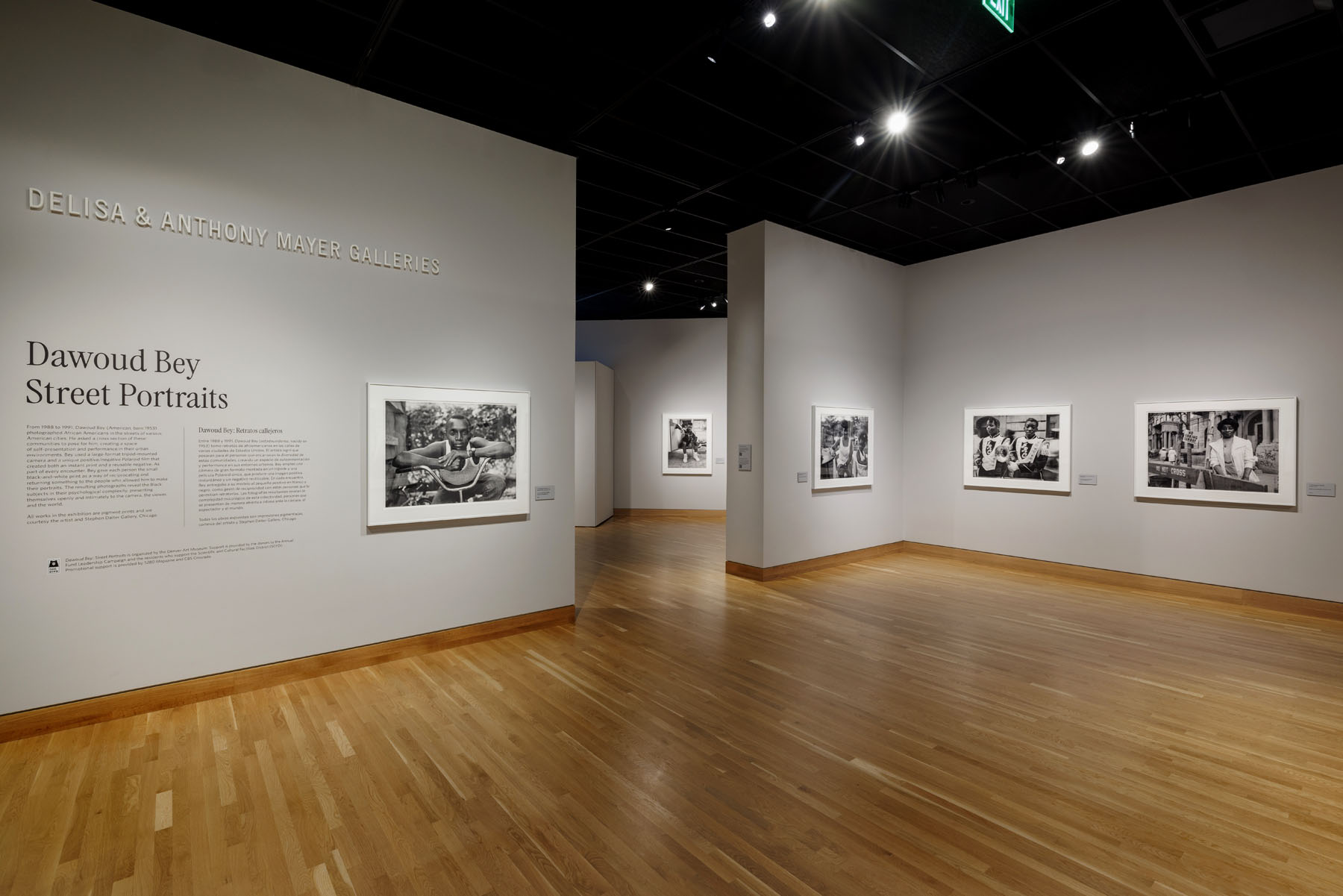
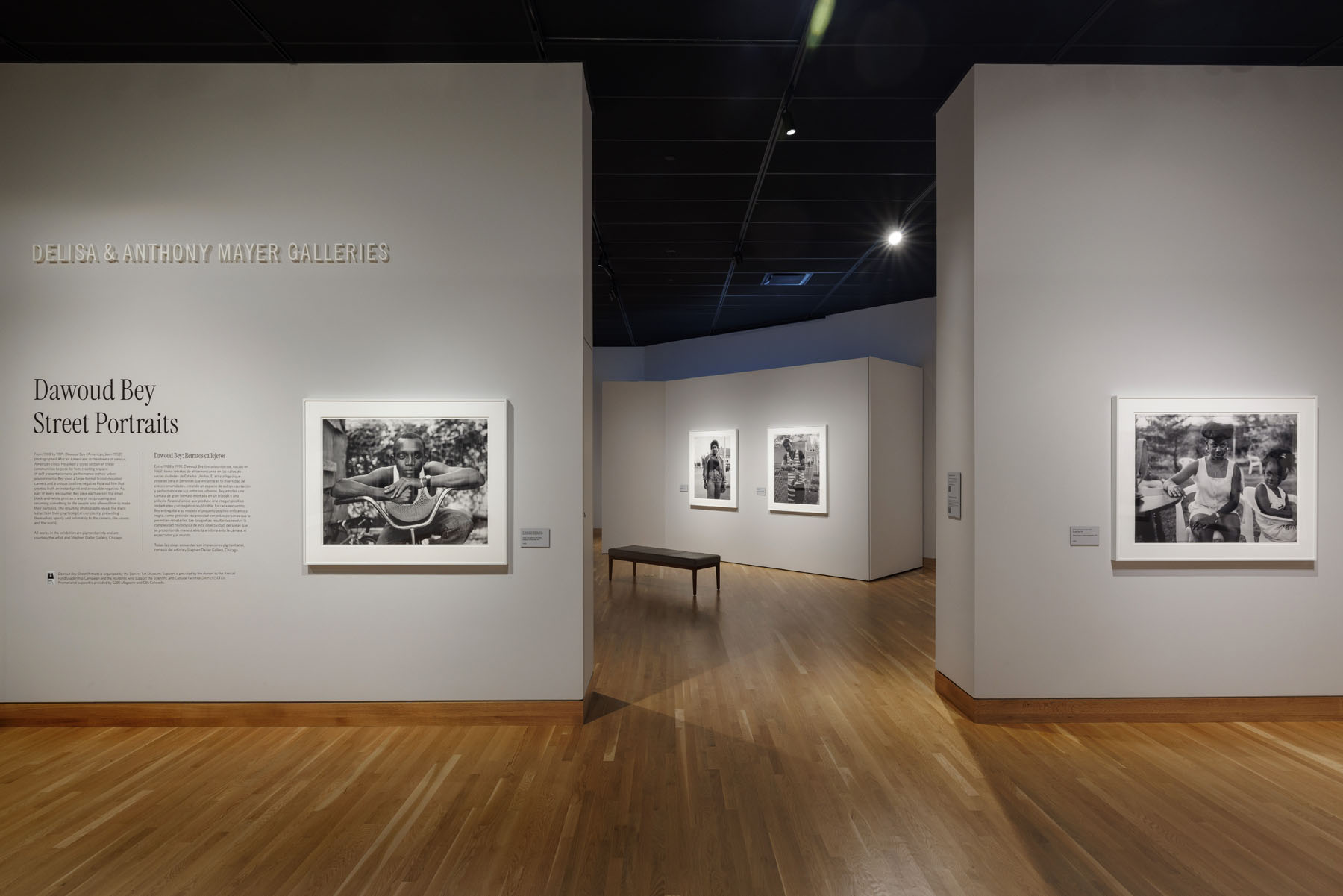
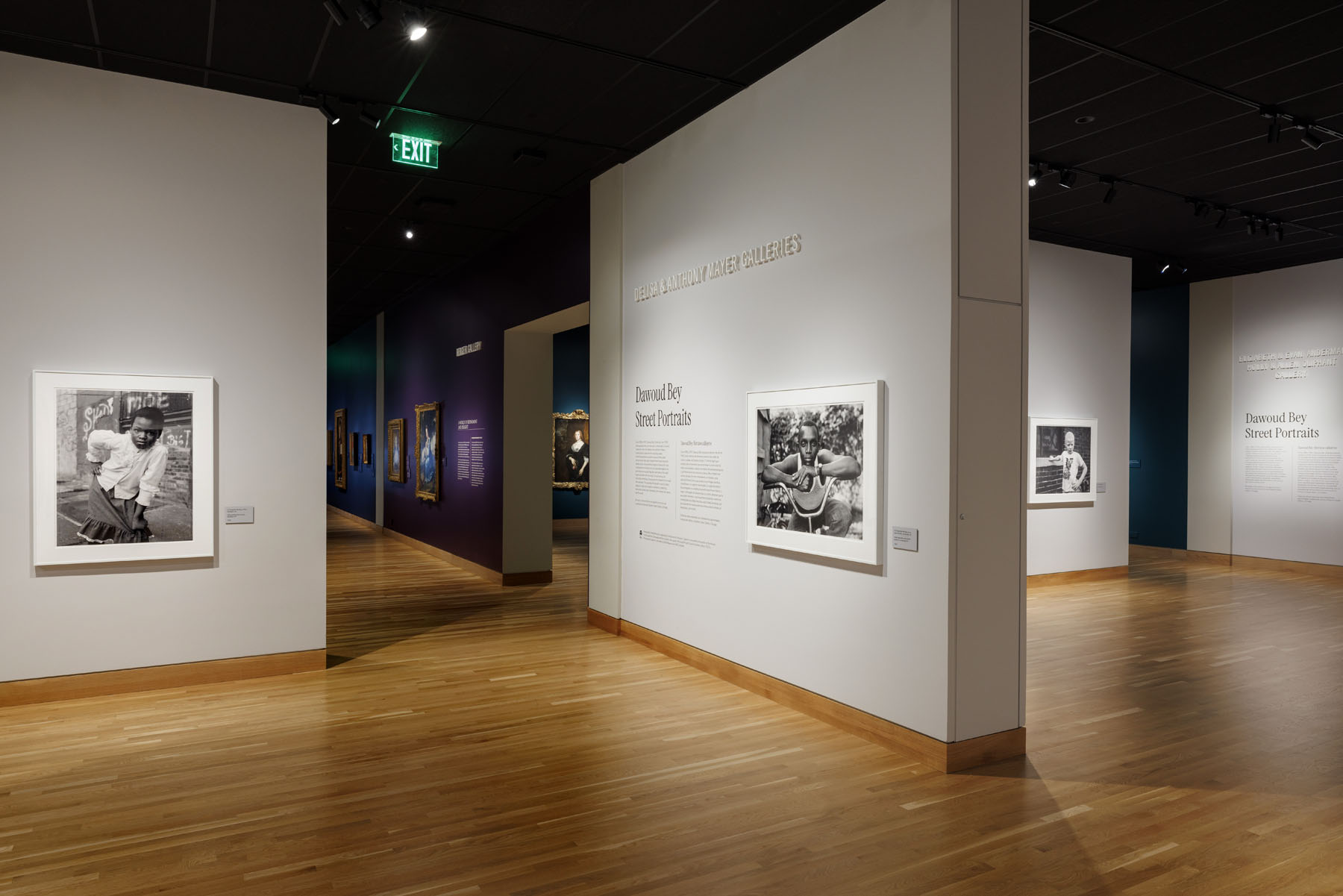
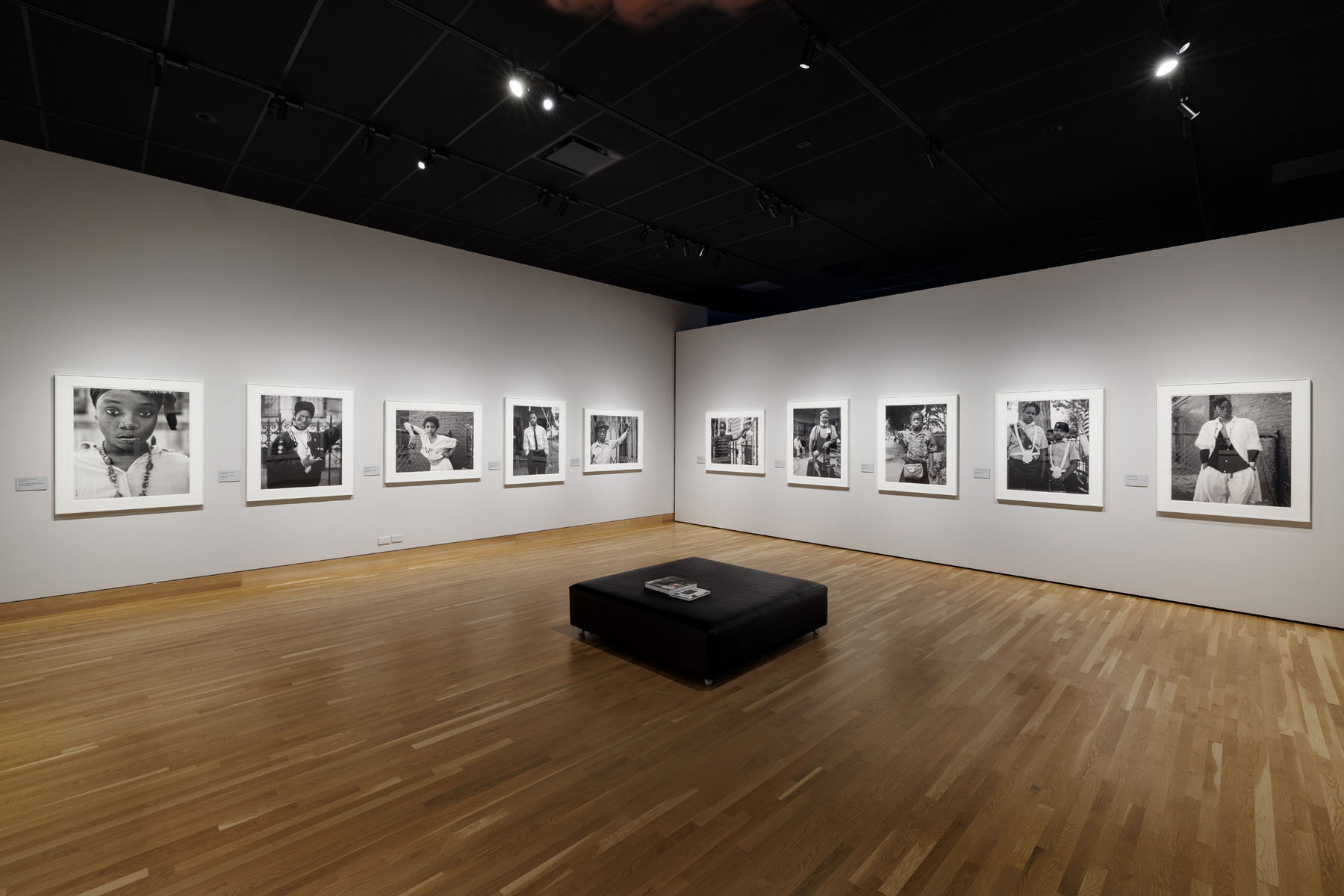
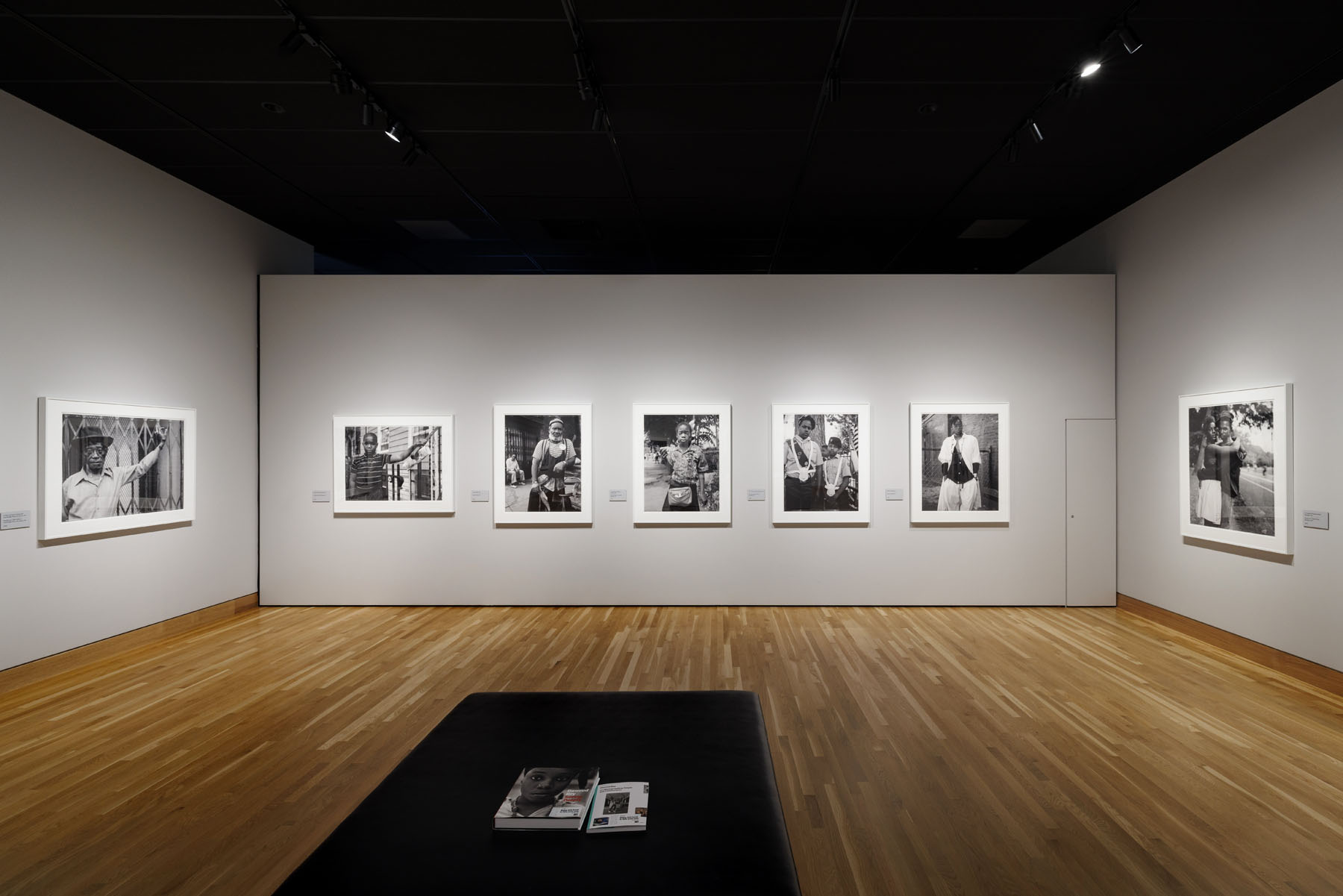
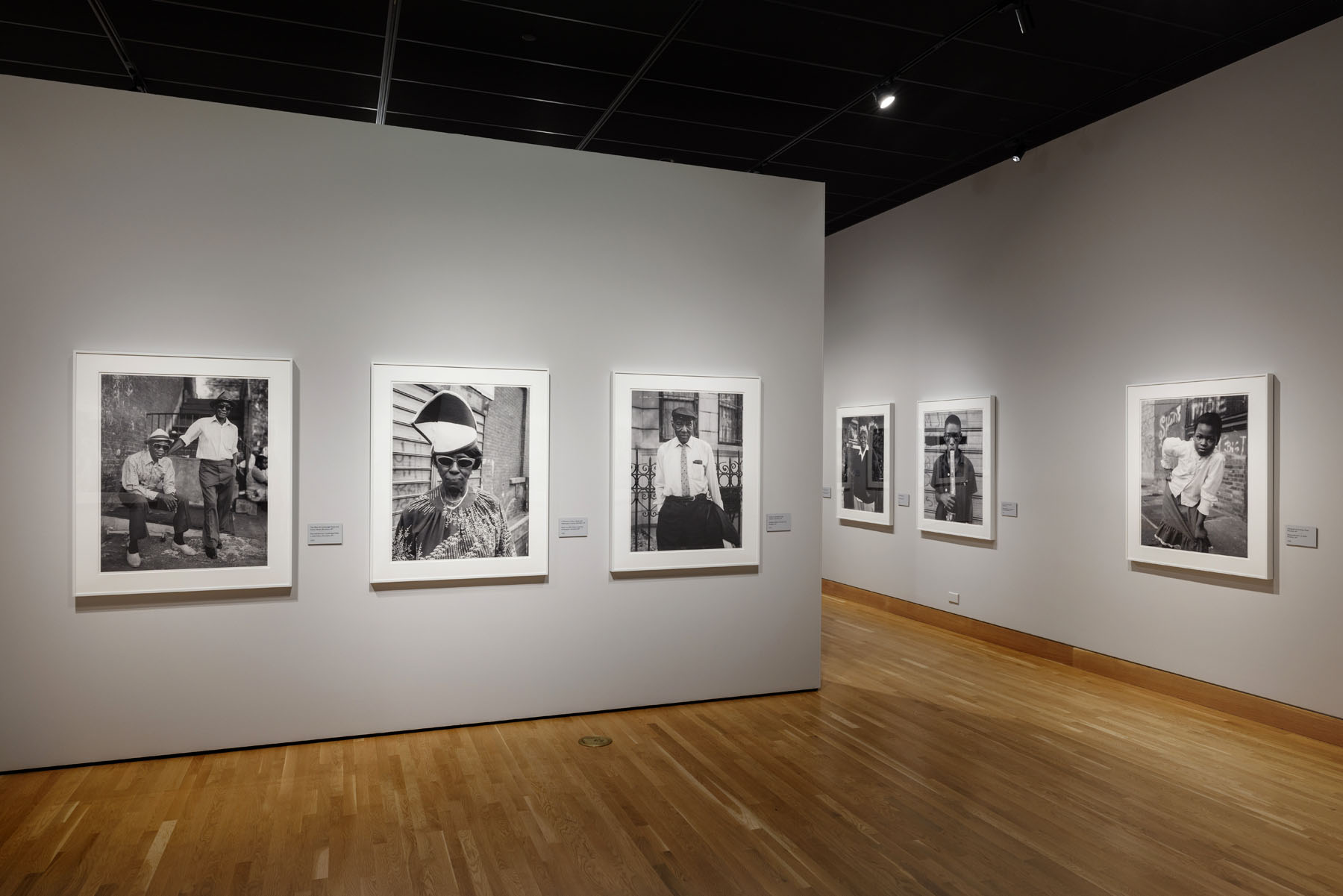
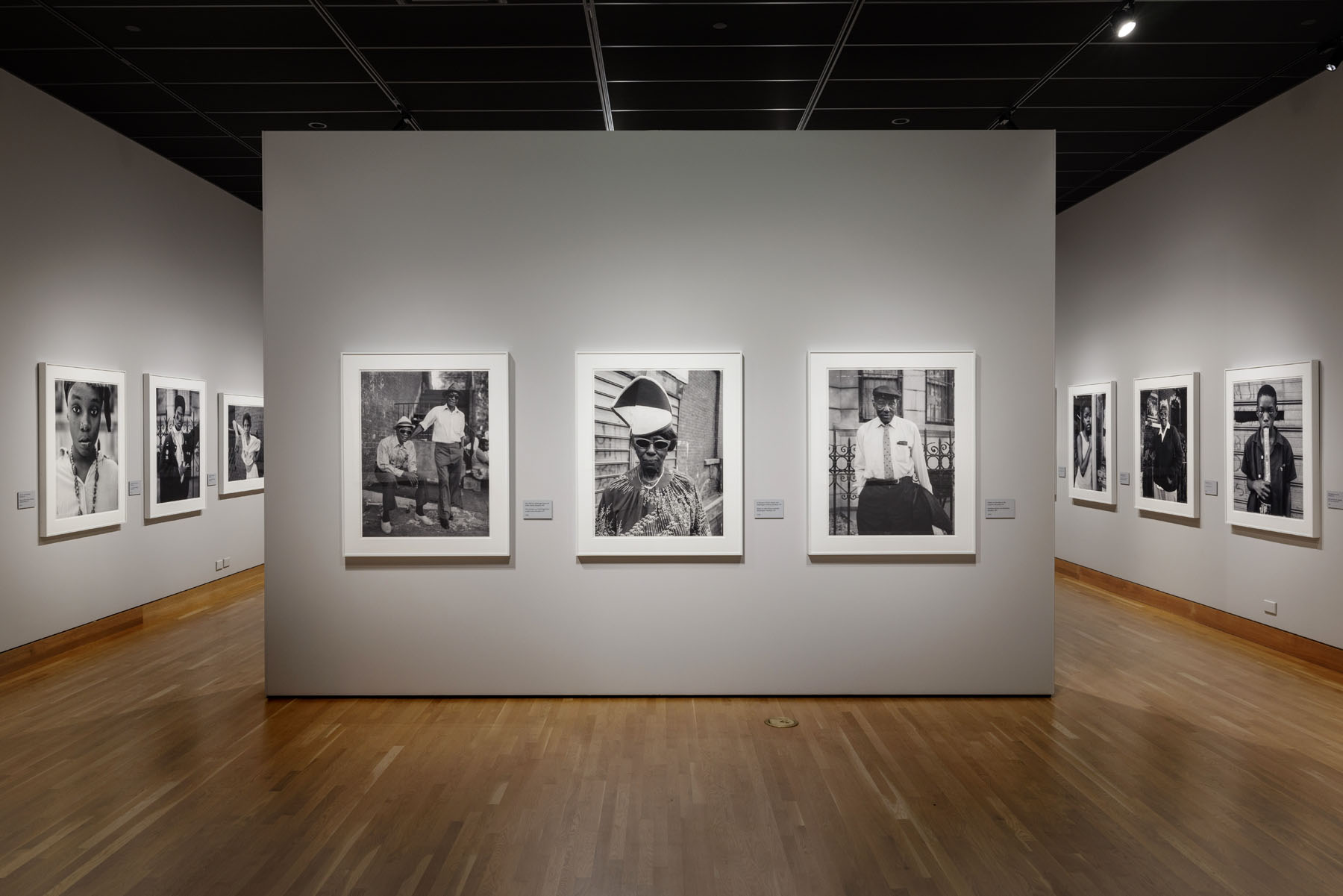
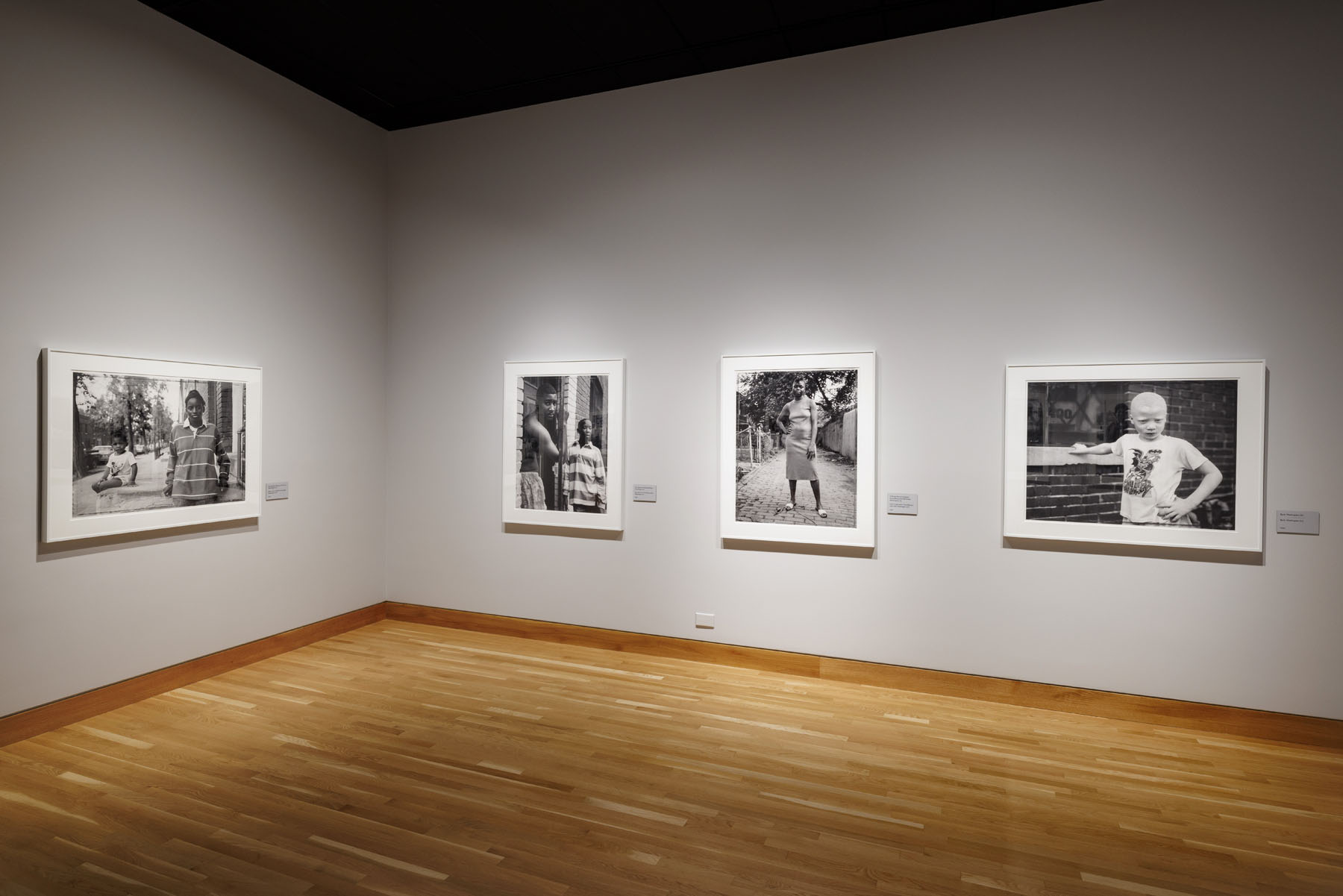
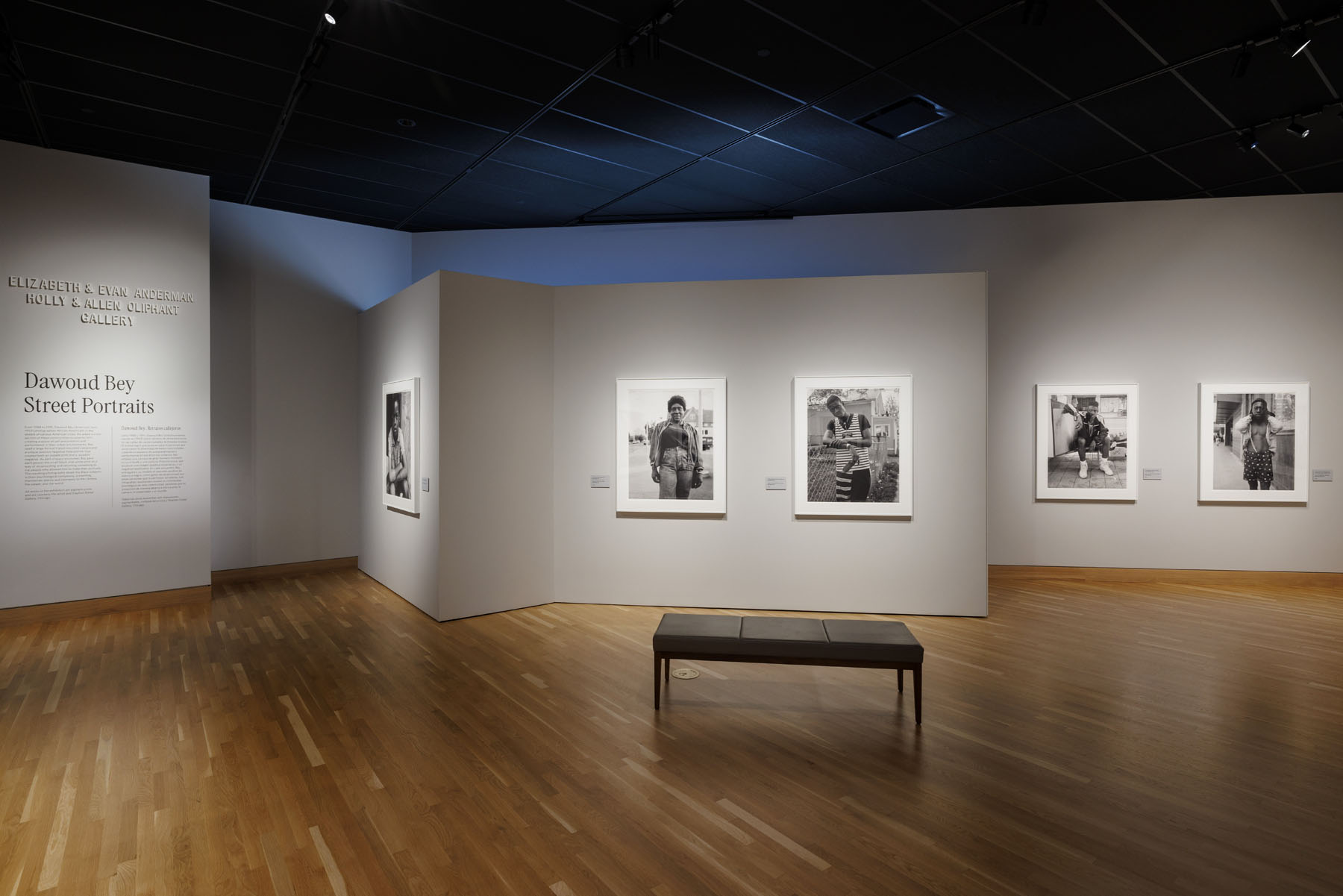
Installation view of the exhibition 'Dawoud Bey: Street Portraits' at the Denver Art Museum


Installation views of the exhibition Dawoud Bey: Street Portraits at the Denver Art Museum


From 1988 to 1991, Dawoud Bey (American, born 1953) photographed African Americans in the streets of various American cities. He asked a cross section of these communities to pose for him, creating a space of self-presentation and performance in their urban environments. Bey used a large format tripod-mounted camera and a unique positive/negative Polaroid film that created both an instant print and a reusable negative. As part of every encounter, Bey gave each person the small black-and-white print as a way of reciprocating and returning something to the people who allowed him to make their portraits. The resulting photographs reveal the Black subjects in their psychological complexity, presenting themselves openly and intimately to the camera, the viewer, and the world.


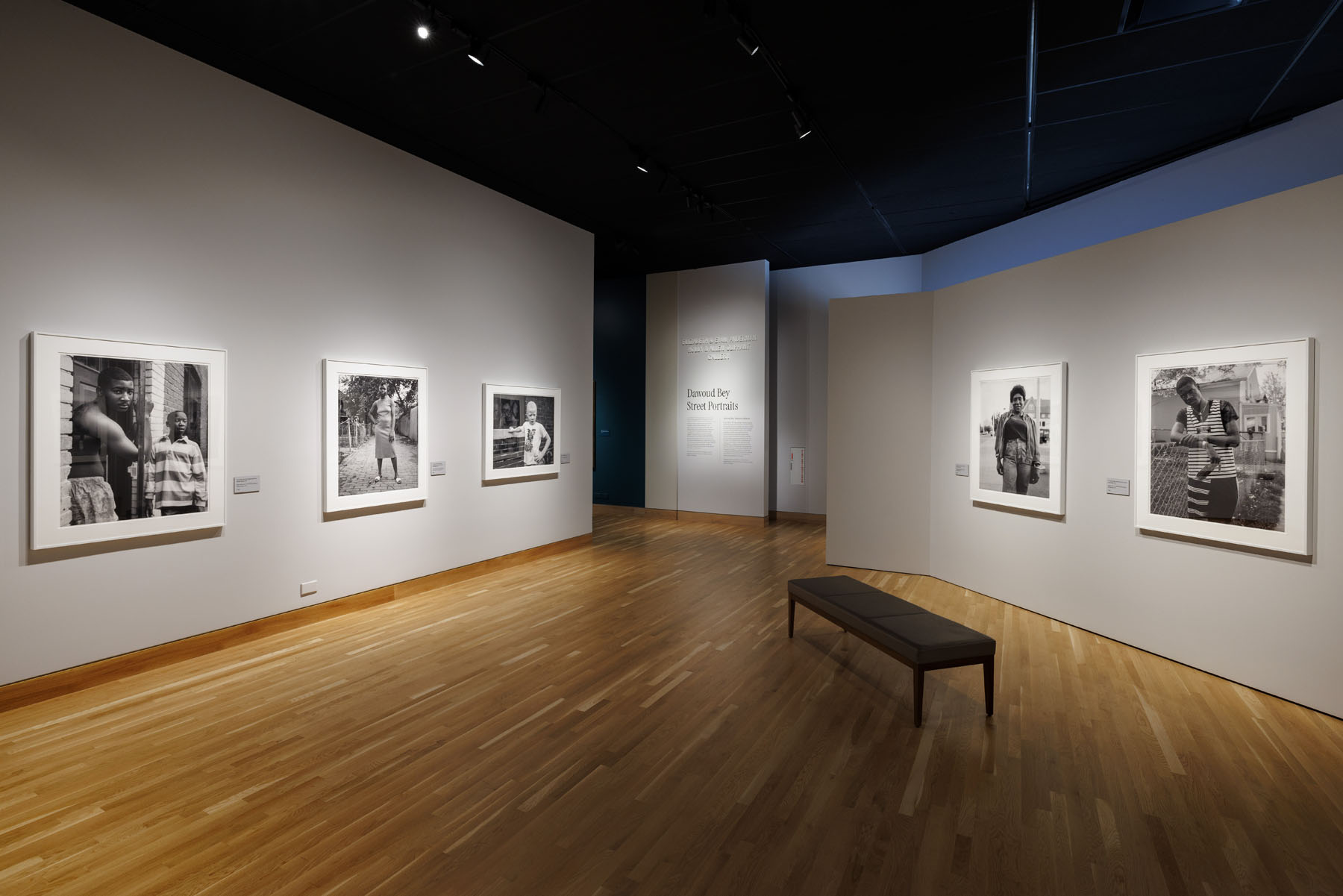
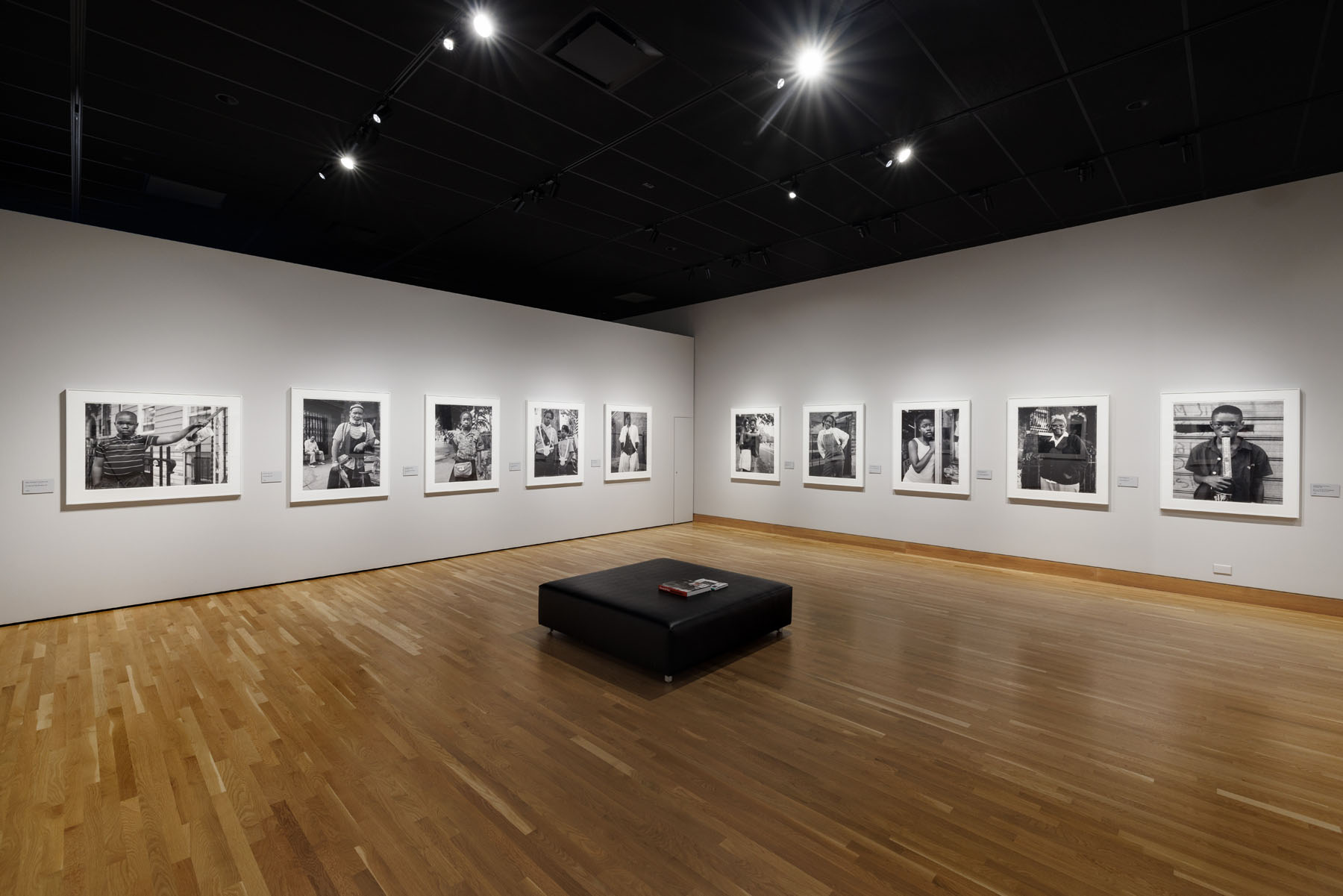
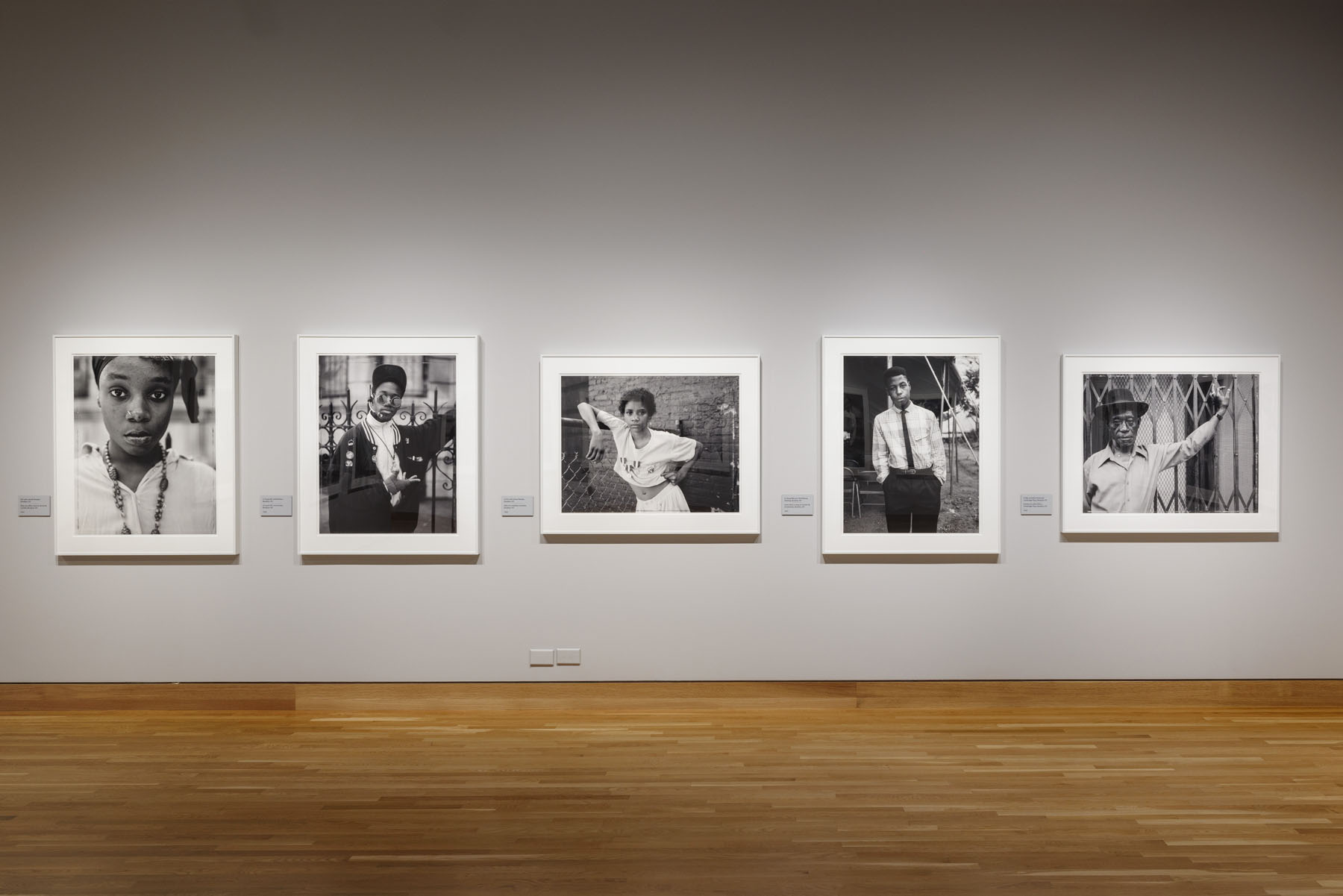
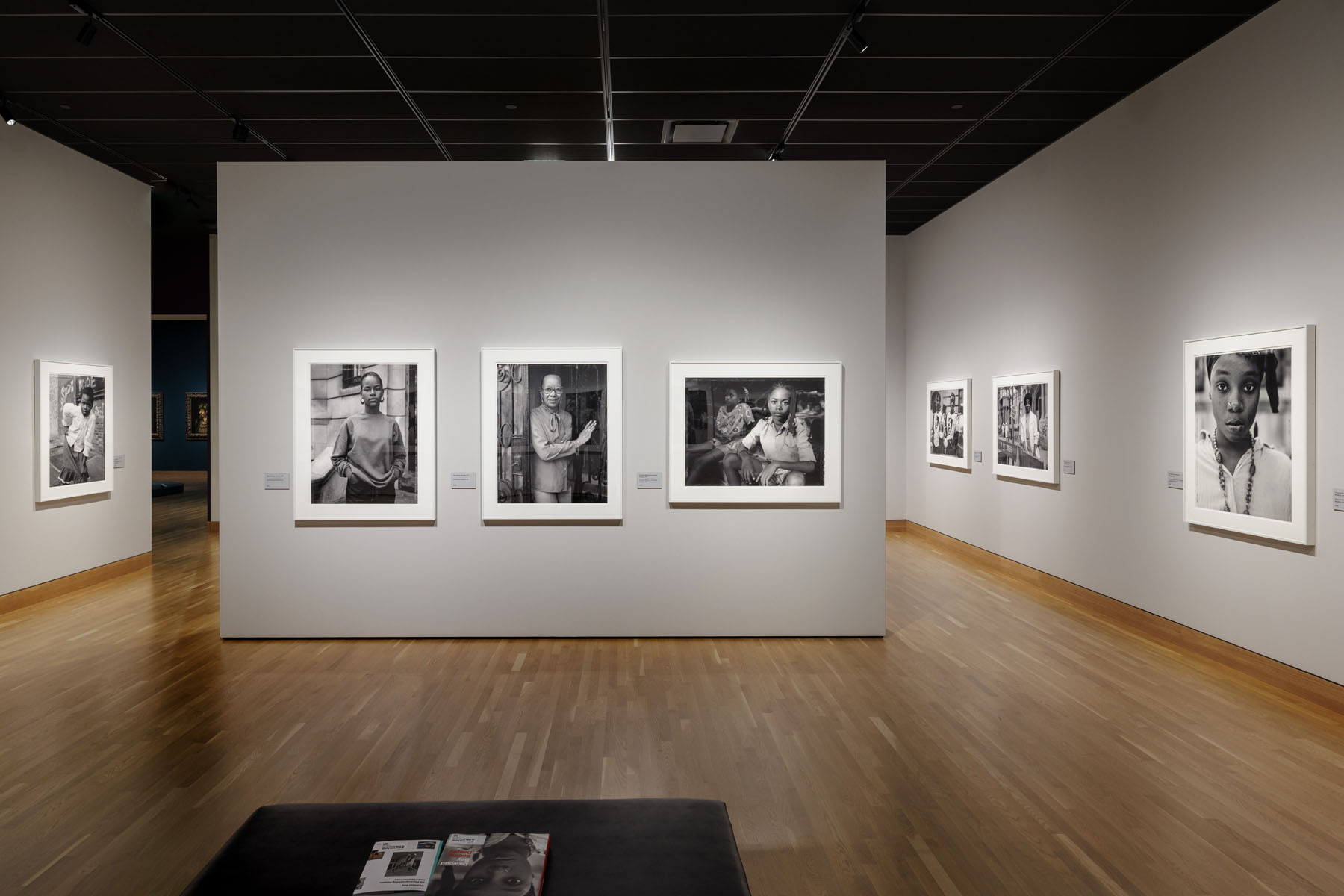
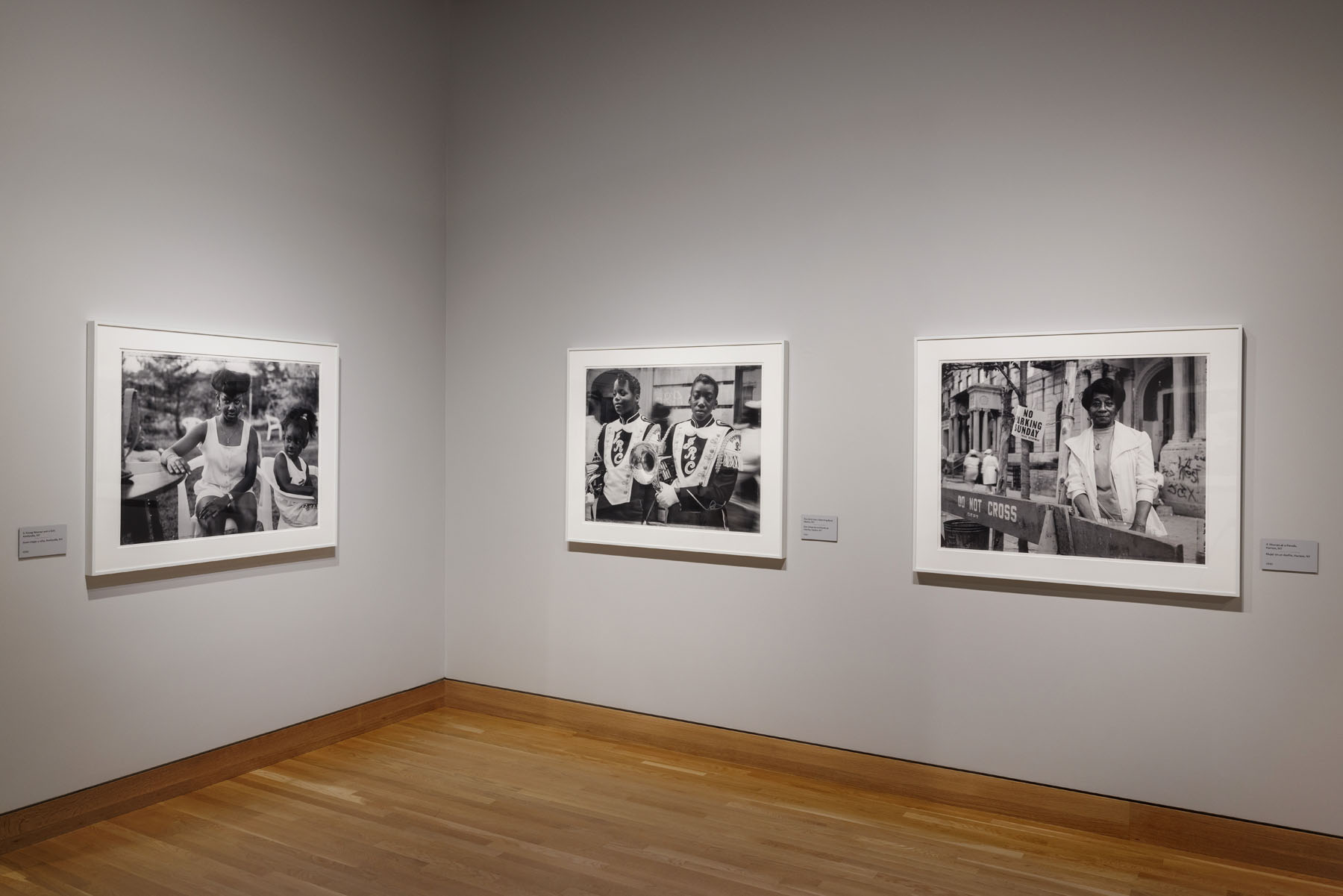
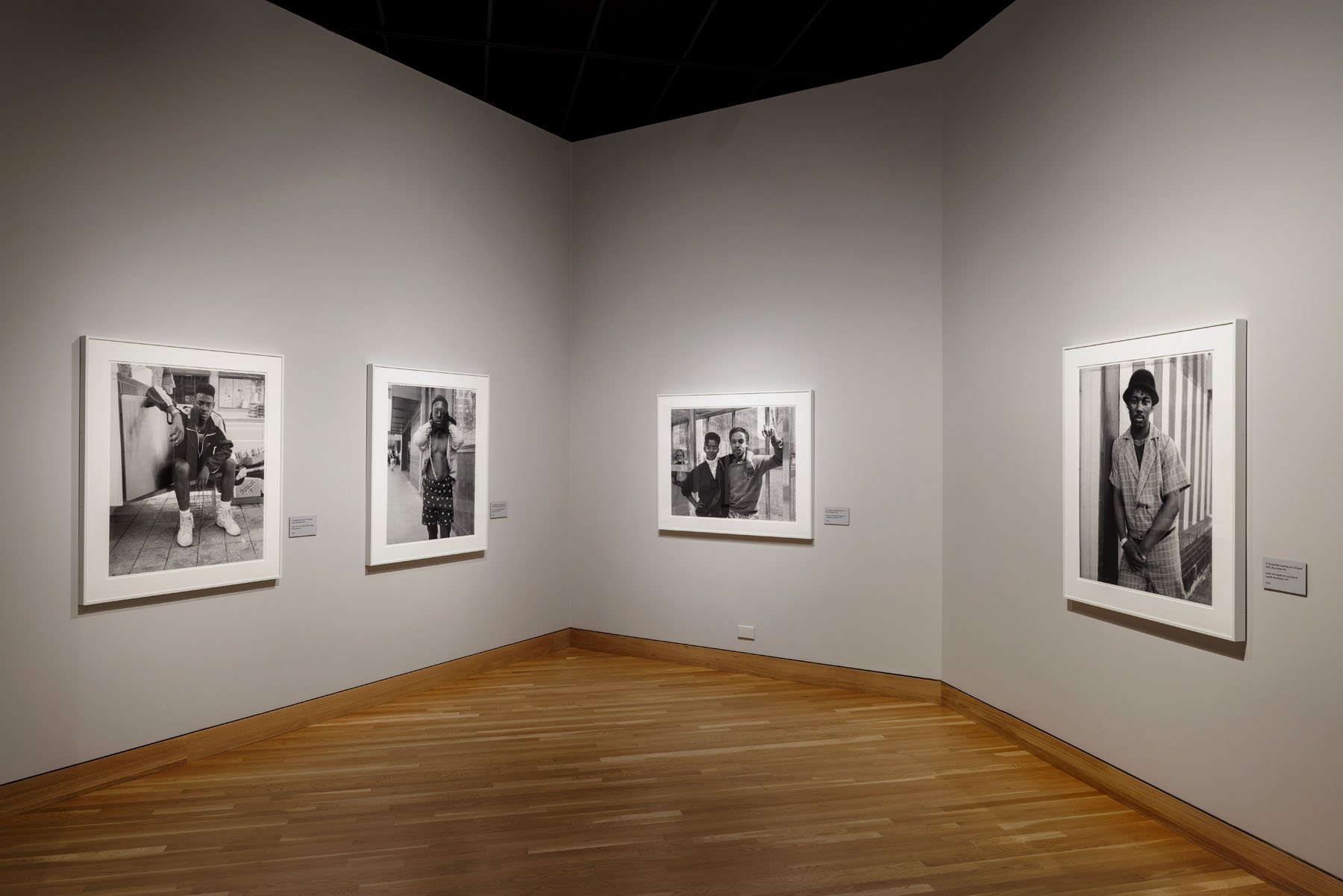
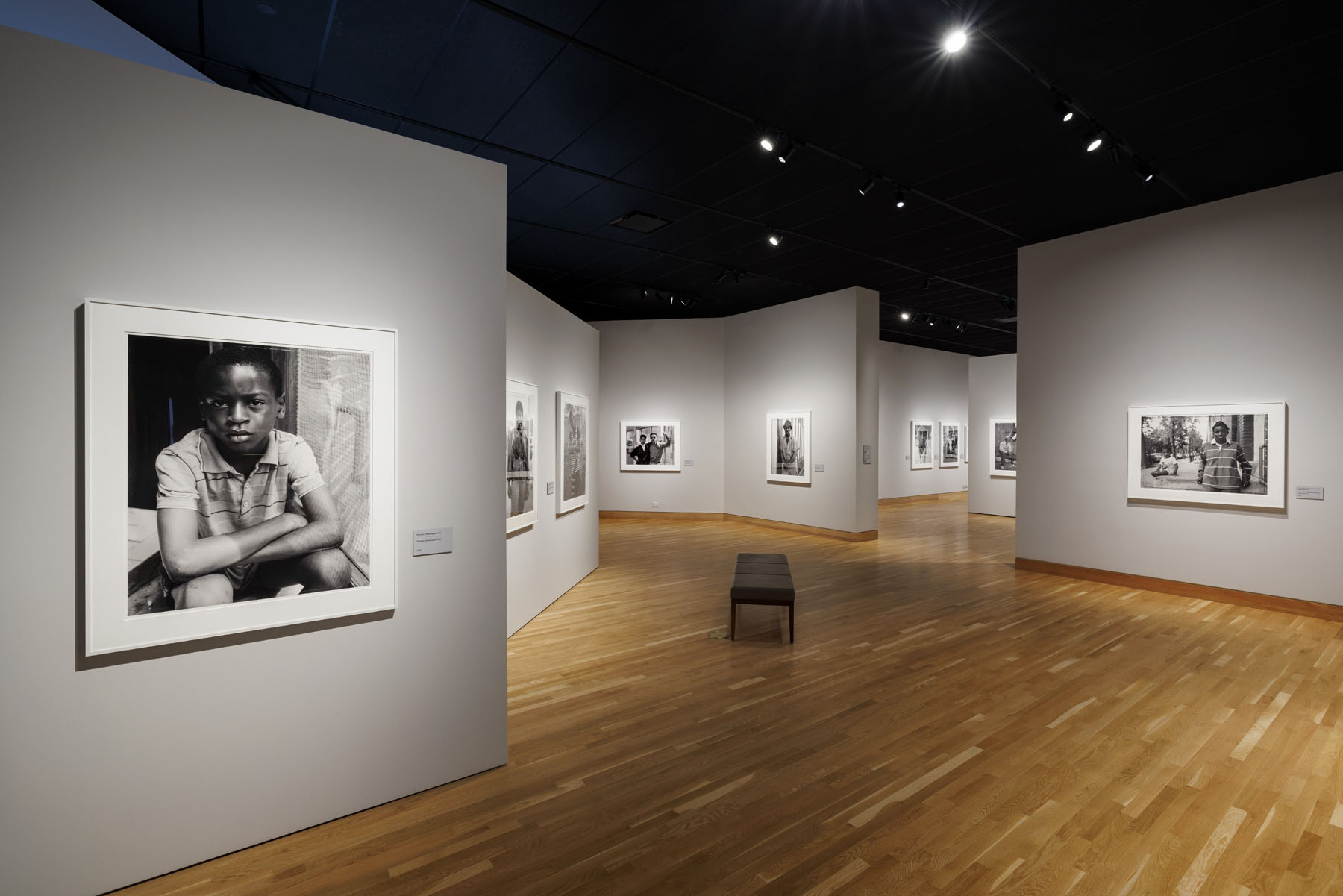
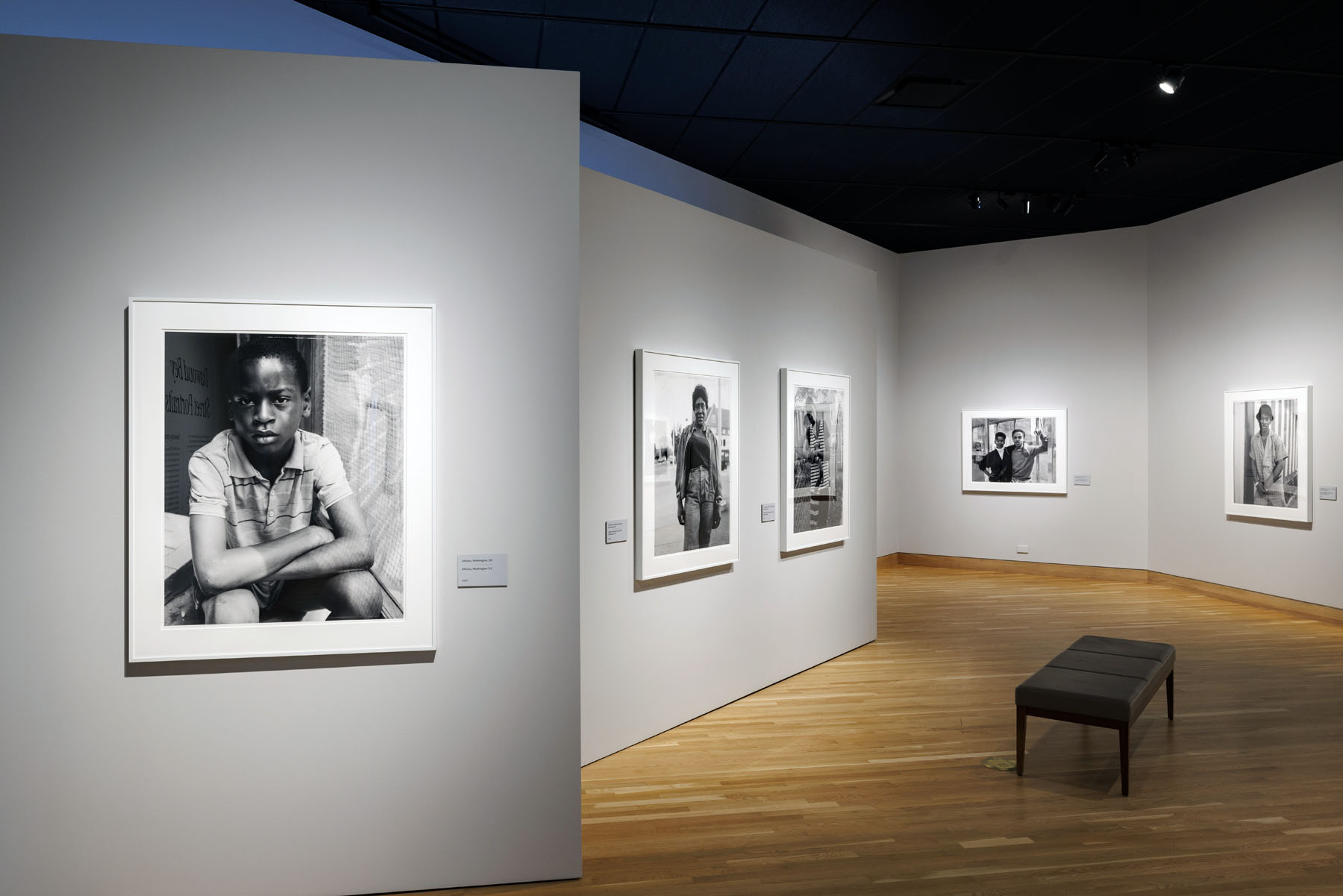
Installation view of the exhibition 'Dawoud Bey: Street Portraits' at the Denver Art Museum


Installation views of the exhibition Dawoud Bey: Street Portraits at the Denver Art Museum


Dawoud Bey: Street Portraits is the first standalone museum show to explore a transformational phase of the celebrated photographer and 2017 MacArthur Fellow Dawoud Bey’s work. The show features 37 portraits he made between 1988 and 1991, when he collaborated with Black Americans of all ages whom he met on the streets of various American cities. He asked a cross section of people in these communities to pose for him, creating a space of self-presentation and performance in their urban environments.

Bey used a large format tripod-mounted camera and a unique positive/negative Polaroid film that created both an instant print and a reusable negative. Bey considers photography an ethical practice that requires collaboration with his subjects. As part of every encounter, he gave each person a small black-and-white Polaroid print as a way of reciprocating and returning something to the people who allowed him to make their portrait.

Street Portraits is organised by the community the photographs were made in: Brooklyn; Washington, D.C.; Rochester; Amityville; and Harlem. Bey defies racial stereotypes by encouraging Black people to present themselves openly and intimately to the camera, the viewer, and the world.

Text from the Denver Art Museum website


Dawoud Bey (American, b. 1953) 'A Young Man Resting on an Exercise Bike, Amityville, NY' 1988


Dawoud Bey (American, b. 1953)
A Young Man Resting on an Exercise Bike, Amityville, NY
1988
Pigment print
Courtesy the artist and Stephen Daiter Gallery, Chicago
© Dawoud Bey


Dawoud Bey (American, b. 1953)
'Sunshine Bracey and Friend, Brooklyn, NY' 1990


Dawoud Bey (American, b. 1953)
Sunshine Bracey and Friend, Brooklyn, NY
1990
Pigment print
Courtesy the artist and Stephen Daiter Gallery, Chicago
© Dawoud Bey


Dawoud Bey (American, b. 1953)
'A Girl with School Medals, Brooklyn, NY' 1988


Dawoud Bey (American, b. 1953)
A Girl with School Medals, Brooklyn, NY
1988
Pigment print
Courtesy the artist and Stephen Daiter Gallery, Chicago
© Dawoud Bey


Dawoud Bey (American, b. 1953)
'A Couple at a Main Street Bus Stop, Rochester, NY' 1989


Dawoud Bey (American, b. 1953)
A Couple at a Main Street Bus Stop, Rochester, NY
1989
Pigment print
Courtesy the artist and Stephen Daiter Gallery, Chicago
© Dawoud Bey


Dawoud Bey (American, b. 1953)
'A Young Woman and a Girl, Amityville, NY'
1988


Dawoud Bey (American, b. 1953)
A Young Woman and a Girl, Amityville, NY
1988
Pigment print
Courtesy the artist and Stephen Daiter Gallery, Chicago
© Dawoud Bey


Dawoud Bey (American, b. 1953)
'Peg's Grandson, Brooklyn, NY' 1988


Dawoud Bey (American, b. 1953)
Peg’s Grandson, Brooklyn, NY
1988
Pigment print
Courtesy the artist and Stephen Daiter Gallery, Chicago
© Dawoud Bey


Dawoud Bey (American, b. 1953)
'Peg, Brooklyn, NY' 1988


Dawoud Bey (American, b. 1953)
Peg, Brooklyn, NY
1988
Pigment print
Courtesy the artist and Stephen Daiter Gallery, Chicago
© Dawoud Bey


 The Denver Art Museum (DAM) is proud to present Dawoud Bey: Street Portraits, featuring 37 portraits by celebrated photographer and 2017 MacArthur Fellow Dawoud Bey (American, born 1953). 

From 1988 to 1991, Bey collaborated with Black Americans of all ages whom he met on the streets of various American cities. He asked a cross section of people in these communities to pose for him, creating a space of self-presentation and performance in their urban environments. 

“We’re pleased to present the first standalone museum show of this important work,” said Eric Paddock, Curator of Photography for DAM. “Dawoud Bey’s Street Portraits mark a turning point where the deliberate, closely observed portraits he had been making with a handheld camera began to contain what he has called ‘the kind of lush physical description’ he wanted his pictures to convey – and that is a consistent part of all the work he has made since. The slower process of working with a camera on a tripod invited collaboration between the artist and his subjects, making each picture both an experiment and a discovery.” 

Bey used a large format tripod-mounted camera and a unique positive/negative Polaroid film that created both an instant print and a reusable negative. Bey considers photography an ethical practice that requires collaboration between the artist and his subjects. As part of every encounter, he gave each person a small black-and-white Polaroid print as a way of reciprocating and returning something to the people who allowed him to make their portrait. 

The exhibition is organised by the community the photographs were taken in: Brooklyn; Washington, D.C.; Rochester; Amityville; and Harlem. Defying racial stereotypes, the resulting photographs reveal the Black subjects in all of their psychologically rich complexity, presenting themselves openly and intimately to the camera, the viewer, and the world. 

Press release from the Denver Art Museum


Dawoud Bey (American, b. 1953)
'Mrs. Bracey, Brooklyn, NY' 1988


Dawoud Bey (American, b. 1953)
Mrs. Bracey, Brooklyn, NY
1988
Pigment print
Courtesy the artist and Stephen Daiter Gallery, Chicago
© Dawoud Bey


Dawoud Bey (American, b. 1953)
'A Young Man Leaning on a Striped Wall' 1989


Dawoud Bey (American, b. 1953)
A Young Man Leaning on a Striped Wall
1989
Pigment print
Courtesy the artist and Stephen Daiter Gallery, Chicago
© Dawoud Bey


Dawoud Bey (American, b. 1953)
'A Young Man in a Bandana and Swimming Trunks, Rochester, NY' 1989


Dawoud Bey (American, b. 1953)
A Young Man in a Bandana and Swimming Trunks, Rochester, NY
1989
Pigment print
Courtesy the artist and Stephen Daiter Gallery, Chicago
© Dawoud Bey


Dawoud Bey (American, b. 1953)
'A Young Man with His Hotdog Cart, Rochester, NY' 1989


Dawoud Bey (American, b. 1953)
A Young Man with His Hotdog Cart, Rochester, NY
1989
Pigment print
Courtesy the artist and Stephen Daiter Gallery, Chicago
© Dawoud Bey


Dawoud Bey (American, b. 1953)
Two Boys on 'Carrollsburg Place, Washington, DC' 1989


Dawoud Bey (American, b. 1953)
Two Boys on Carrollsburg Place, Washington, DC
1989
Pigment print
Courtesy the artist and Stephen Daiter Gallery, Chicago
© Dawoud Bey


Dawoud Bey (American, b. 1953) 'Young Man at a Tent Revival, Brooklyn, NY' 1989, printed 2019


Dawoud Bey (American, b. 1953)
A Young Man at a Tent Revival Meeting, Brooklyn, NY
1989
Pigment print
Courtesy the artist and Stephen Daiter Gallery, Chicago
© Dawoud Bey


Dawoud Bey (American, b. 1953) 'A Boy Eating a Foxy Pop, Brooklyn, NY' 1988, printed 2019


Dawoud Bey (American, b. 1953)
A Boy Eating a Foxy Pop, Brooklyn, NY
1988
Pigment print
Courtesy the artist and Stephen Daiter Gallery, Chicago
© Dawoud Bey


Dawoud Bey (American, b. 1953) 'A Cute Couple in Prospect Park, Brooklyn, NY' 1990


Dawoud Bey (American, b. 1953)
A Cute Couple in Prospect Park, Brooklyn, NY
1990
Pigment print
Courtesy the artist and Stephen Daiter Gallery, Chicago
© Dawoud Bey


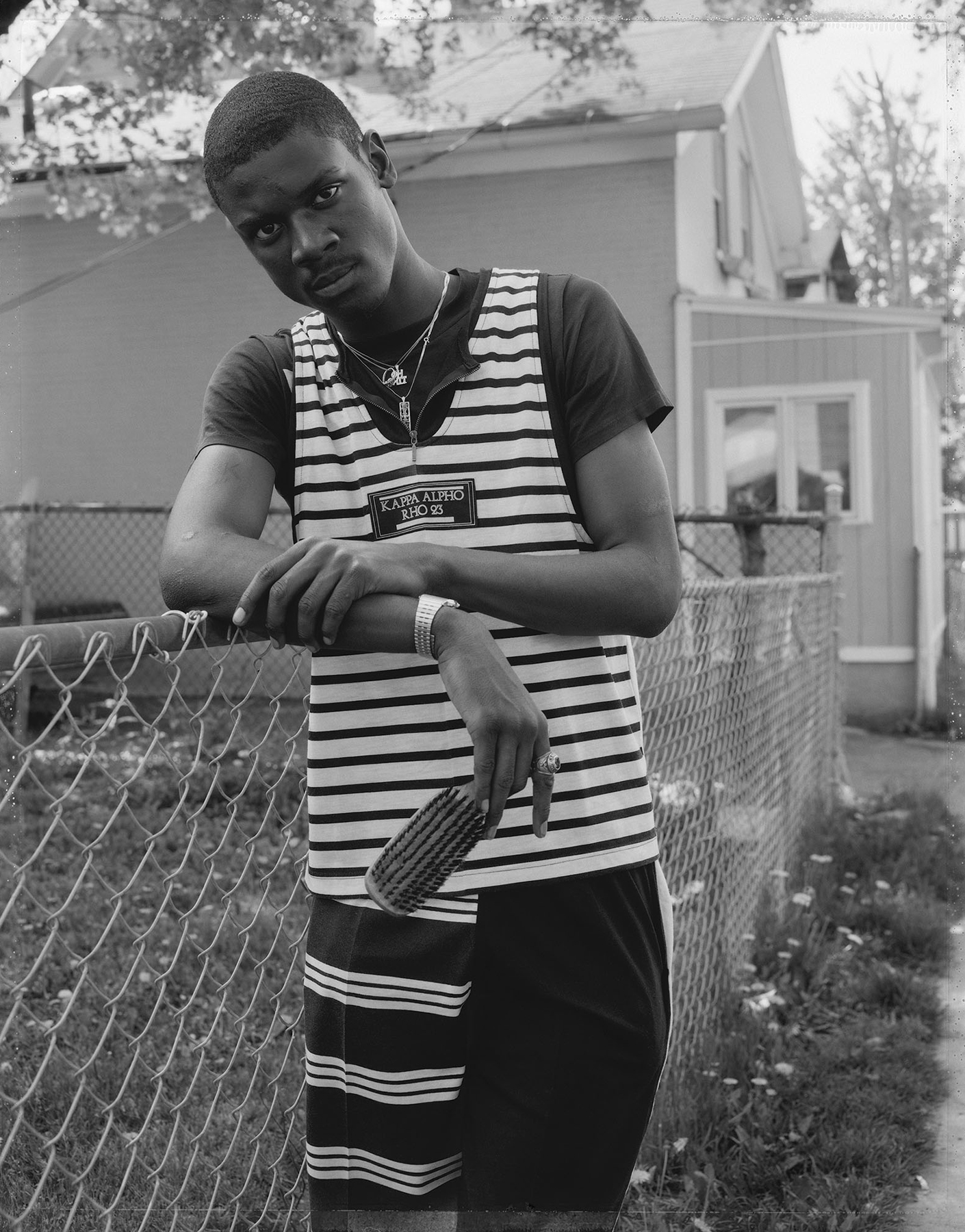
Dawoud Bey (American, b. 1953) 'A Young Man with His Hair Brush, Rochester, NY' 1989


Dawoud Bey (American, b. 1953)
A Young Man with His Hair Brush, Rochester, NY
1989
Pigment print
Courtesy the artist and Stephen Daiter Gallery, Chicago
© Dawoud Bey


Dawoud Bey (American, b. 1953) 'A Woman Wearing Denim, Rochester, NY' 1989


Dawoud Bey (American, b. 1953)
A Woman Wearing Denim, Rochester, NY
1989
Pigment print
Courtesy the artist and Stephen Daiter Gallery, Chicago
© Dawoud Bey


Dawoud Bey (American, b. 1953) 'A Woman at Fulton Street and Washington Avenue, Brooklyn, NY, 1988' 1988


Dawoud Bey (American, b. 1953)
A Woman at Fulton Street and Washington Avenue, Brooklyn, NY, 1988
1988
Pigment print
Courtesy the artist and Stephen Daiter Gallery, Chicago
© Dawoud Bey


Denver Art Museum
100 W 14th Ave Pkwy,
Denver, CO 80204, United States
Phone: (720) 865-5000

Opening hours:
Open daily from 10am – 5pm, 10am – 8pm on Tuesdays

Denver Art Museum website

LIKE ART BLART ON FACEBOOK

Back to top

Exhibition: ‘Peter Hujar – Eyes Open in the Dark’ at Raven Row, London

Exhibition dates: 30th January – 6th April 2025

 Curators: Hujar’s biographer John Douglas Millar, Hujar’s close friend the artist and master printer Gary Schneider, with Raven Row’s director Alex Sainsbury


Peter Hujar (American, 1934-1987) 'Ethyl Eichelberger' 1979 from the exhibition 'Peter Hujar – Eyes Open in the Dark' at Raven Row, London, Jan - April 2025


Peter Hujar (American, 1934-1987)
Ethyl Eichelberger
1979
Gelatin silver print
© 2025 the Peter Hujar Archive / Artists Rights Society (ARS), NY, DACS London, Pace Gallery, NY, Fraenkel Gallery, SF, Maureen Paley, London, and Mai 36 Galerie, Zurich


Ethyl Eichelberger (American, 1945-1990) was an Obie award-winning drag performer, playwright, and actor.


As with humans, there are certain photographers that I am attracted to more than others due to the abundant energy of their images:

Robert Adams (American, b. 1937)

Eugène Atget (French, 1857-1927)

Diane Arbus (American, 1923-1971)

Wynn Bullock (American, 1902-1975)

Manuel Álvarez Bravo (Mexican, 1902-2002)

Claude Cahun (French, 1894-1954)

Julia Margaret Cameron (British born India, 1815-1879)

Chris Killip (British, 1946-2020)

Mario Giacomelli (Italian, 1925-2000)

Josef Koudelka (Czech-French, b. 1938)

Josef Sudek (Czech, 1896-1976)

Minor White (American, 1908-1976)

Francesca Woodman (American, 1958-1981)


And then there is Peter Hujar (American, 1934-1987).

Using contextless backgrounds and simple settings, Hujar’s non-judgmental portraits of friends and lovers rely on the slight twist of the head, the drop of a shadow, the photographer’s look and subjects pose, performance, that curves and bends reality into a presence that is magnetic, magical, eternal.

Hujar’s direct, intimate photographs, suggestive of both love and loss, proffer a mirror to strength and determination / to friendship / to love. His pictures gather, together, a feeling for the freedom of people and places, that essence of being true to yourself (getting to the bone as Harrison Adams puts it). A direct connection between the photographer and subject captured by the camera revealed to the world.

You might have guessed I am in love with his photographs.

Thus, it is a great delight to post on this exhibition at Raven Row in London which looks to be an absolute delight, Hujar’s photographs simply and beautifully presented in the space.

His images reveal themselves over time, expounding his love of life and his intimate and free engagement with the world around him.

That is Hujar’s music, his signature.

Dr Marcus Bunyan


 1/ Harrison Adams. Photography in the First Person: Robert Mapplethorpe, Peter Hujar, Nan Goldin and Sally Mann (Dissertation). Yale University, 2018 quoted on the “Peter Hujar” Wikipedia page Nd [Online] Cited 14/03/2025

Further postings on this incredible artist on Art Blart can be found at

Exhibition: Peter Hujar: Performance and Portraiture at the Art Institute of Chicago, May – October 2023
Exhibition: Peter Hujar: Speed of Life at Jeu de Paume, Paris, October 2019 – January 2020
Exhibition: Peter Hujar: Speed of Life at Fundación MAPFRE, Barcelona, January – April 2017


Many thankx to Raven Row for allowing me to publish the photographs in the posting. Please click on the photographs for a larger version of the image.


One aspect of this intimate quality was Hujar’s ability to connect with his sitters. One of his models was quoted after an unsuccessful session as saying:

“We couldn’t ‘reveal’. As an actor you have to reveal. And Hujar’s big thing was that you had to reveal. I know that now, but I didn’t know it at the time. In other words, blistering, blazing honesty directed towards the lens. No pissing about. No posing. No putting anything on. No camping around. Just flat, real who-you-are…You must strip down all the nonsense until you get to the bone. That’s what Peter wanted and that was his great, great talent and skill.”

Harrison Adams. “Peter Hujar: Shamelessness Without Shame,” in Criticism 63 (4), Wayne State University Press, 2021, p. 319


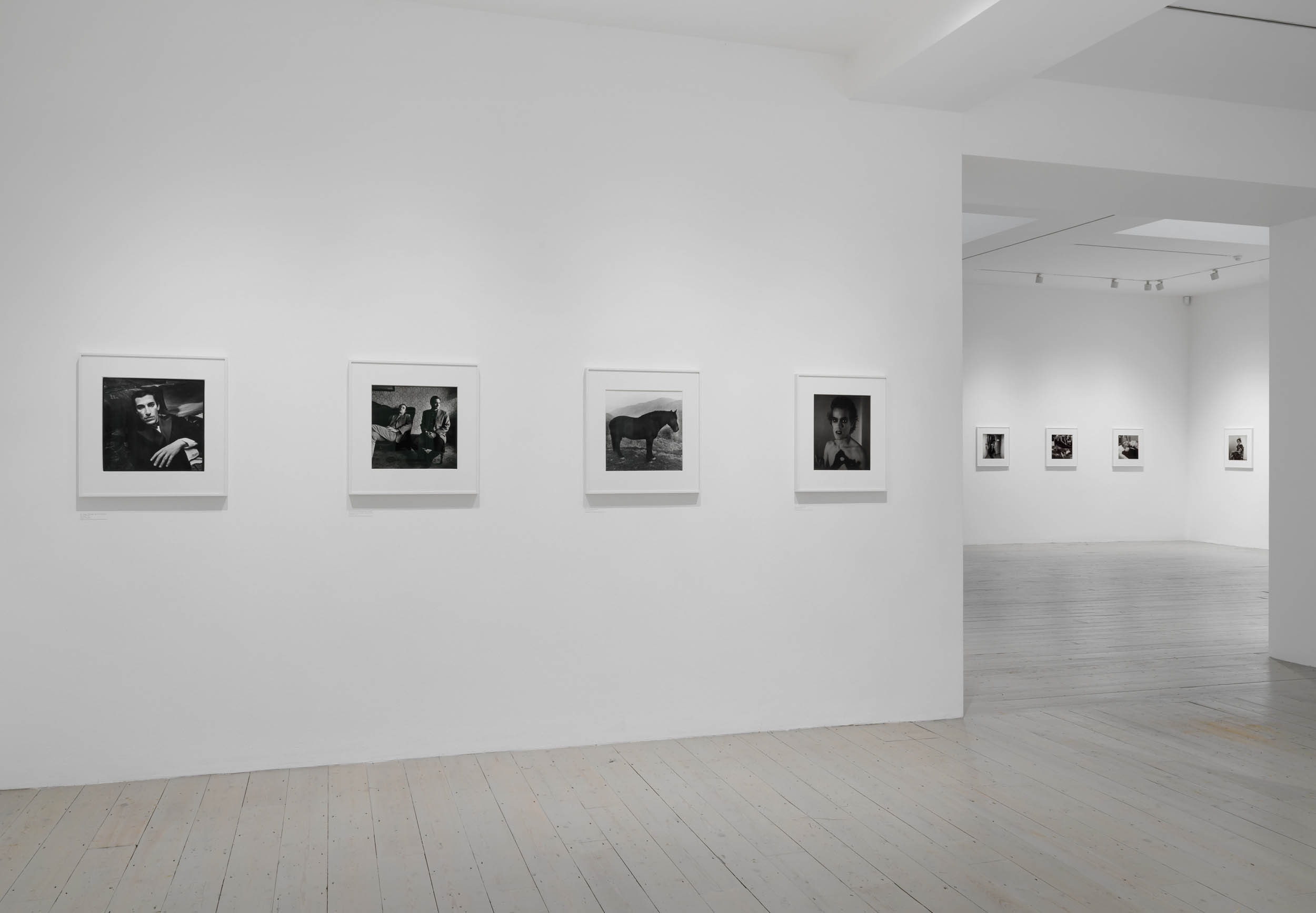
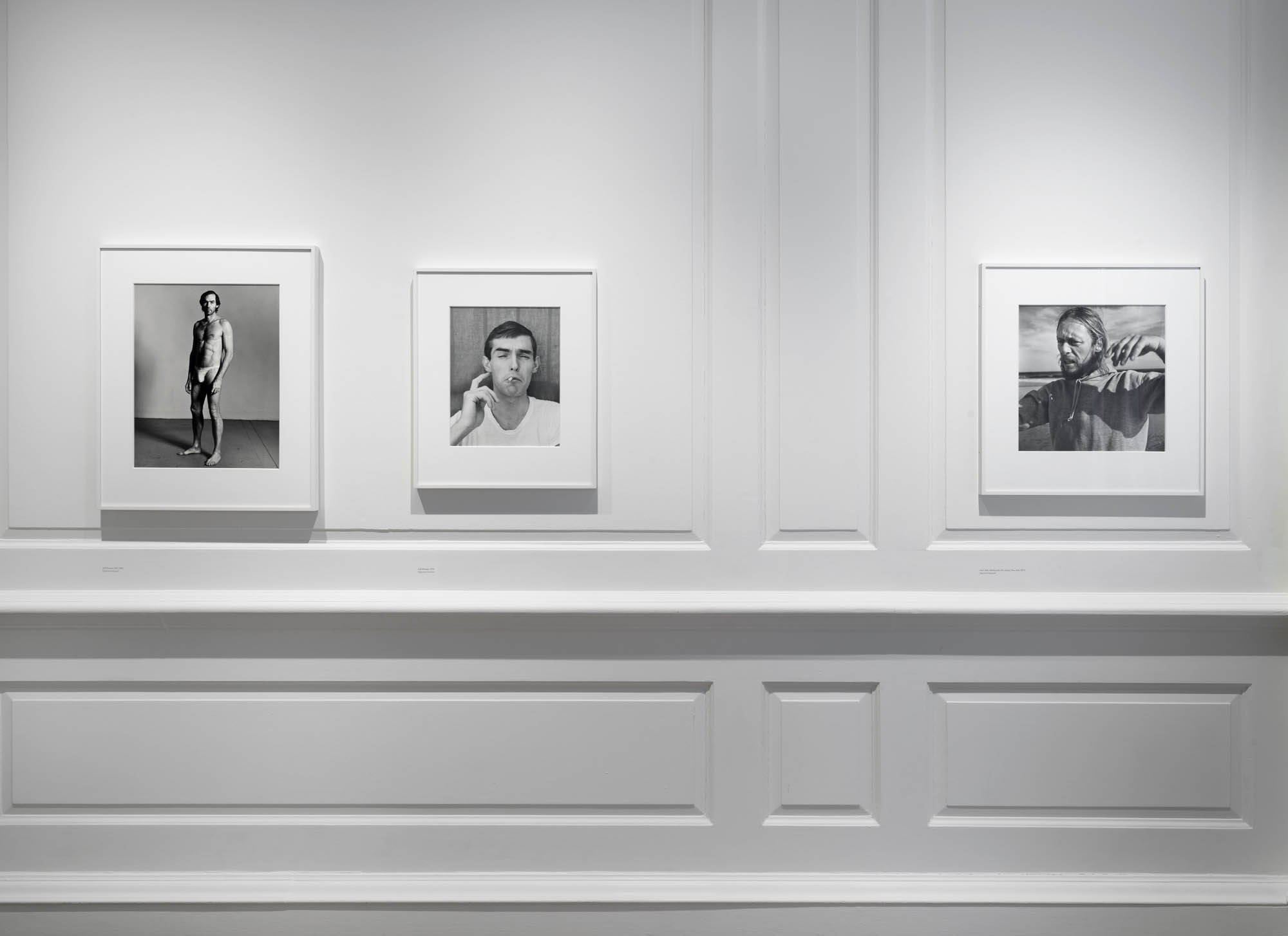
Installation view of the exhibition 'Peter Hujar – Eyes Open in the Dark' at Raven Row, London showing from left to right - 'Penny', 1981; 'T.C.', 1975 Collection of Gary Schneider and John Erdman; 'David Wojnarowicz', 1981; 'Cookie Mueller', 1981; 'Larry Ree (I)', 1975 Collection of Gary Schneider and John Erdman; 'Georg Osterman (Backstage, Eunuchs of the Forbidden City, Ridiculous Theatrical Company), Westbeth, New York', 1973


Installation view of the exhibition Peter Hujar – Eyes Open in the Dark at Raven Row, London showing from left to right – Penny, 1981; T.C., 1975 Collection of Gary Schneider and John Erdman; David Wojnarowicz, 1981; Cookie Mueller, 1981; Larry Ree (I), 1975 Collection of Gary Schneider and John Erdman; Georg Osterman (Backstage, Eunuchs of the Forbidden City, Ridiculous Theatrical Company), Westbeth, New York, 1973
© 2025 the Peter Hujar Archive / Artists Rights Society (ARS), NY, DACS London, Pace Gallery, NY, Fraenkel Gallery, SF, Maureen Paley, London, and Mai 36 Galerie, Zurich
Photo: Marcus J Leith


This is the first exhibition to take on the full breadth of Peter Hujar’s later photography. Hujar was a central figure in the downtown scene of 1970s and early 80s New York, but at his death in 1987 from AIDS-related pneumonia his work was largely unknown to a broader art world. Now it is widely admired for its austere elegance and emotional charge. Hujar’s principal concern was with forms of portraiture – of his friends and denizens of the downtown scene, whom he encountered on the street, shot in his apartment studio or sought out backstage. He also turned his attention to animals, whom he photographed with particular empathy, as well as to architectural, landscape and street photography.

Eyes Open in the Dark concentrates on his later work, when his emergence from a debilitating depression in 1976 brought about a new expansiveness. The exhibition also reveals the darkening tone of his photography in the early 1980s, as the AIDS crisis devastated his community, and his work entered into dialogue with the younger artist David Wojnarowicz. Peter Hujar – Eyes Open in the Dark is curated by Hujar’s biographer John Douglas Millar, and Hujar’s close friend, the artist and master printer Gary Schneider, with Raven Row’s director Alex Sainsbury. As well as lifetime prints it will include prints of little-known works specially prepared by Gary Schneider, working closely with the artist’s Estate.

 Text from Raven Row


Installation view of the exhibition 'Peter Hujar – Eyes Open in the Dark' at Raven Row, London showing from left to right - 'White Turkey, Pennsylvania', 1985; 'Leroy Street, West Village, New York', 1976; 'Nicolas Abdallah Moufarrege, Paris', 1980; 'John Flowers (Backstage, Palm Casino Revue, New York)', 1974 Collection of Gary Schneider and John Erdman; 'Cow (Barbed Wire), Hyrkin Farm, Westtown, New York', 1978


Installation view of the exhibition Peter Hujar – Eyes Open in the Dark at Raven Row, London showing from left to right – White Turkey, Pennsylvania, 1985 (below); Leroy Street, West Village, New York, 1976; Nicolas Abdallah Moufarrege, Paris, 1980; John Flowers (Backstage, Palm Casino Revue, New York), 1974 (below) Collection of Gary Schneider and John Erdman; Cow (Barbed Wire), Hyrkin Farm, Westtown, New York, 1978
© 2025 the Peter Hujar Archive / Artists Rights Society (ARS), NY, DACS London, Pace Gallery, NY, Fraenkel Gallery, SF, Maureen Paley, London, and Mai 36 Galerie, Zurich
Photo: Marcus J Leith


Peter Hujar (American, 1934-1987) 'White Turkey, Pennsylvania' 1985 from the exhibition 'Peter Hujar – Eyes Open in the Dark' at Raven Row, London, Jan - April 2025


Peter Hujar (American, 1934-1987)
White Turkey, Pennsylvania
1985
Gelatin silver print
© 2025 the Peter Hujar Archive / Artists Rights Society (ARS), NY, DACS London, Pace Gallery, NY, Fraenkel Gallery, SF, Maureen Paley, London, and Mai 36 Galerie, Zurich


Peter Hujar (American, 1934-1987) 'John Flowers Backstage at the Palm Casino Revue' 1974 from the exhibition 'Peter Hujar – Eyes Open in the Dark' at Raven Row, London, Jan - April 2025


Peter Hujar (American, 1934-1987)
John Flowers (Backstage, Palm Casino Revue)
1974
Gelatin silver print
© 2025 the Peter Hujar Archive / Artists Rights Society (ARS), NY, DACS London, Pace Gallery, NY, Fraenkel Gallery, SF, Maureen Paley, London, and Mai 36 Galerie, Zurich


Installation view of the exhibition 'Peter Hujar – Eyes Open in the Dark' at Raven Row, London


Installation view of the exhibition Peter Hujar – Eyes Open in the Dark at Raven Row, London
© 2025 the Peter Hujar Archive / Artists Rights Society (ARS), NY, DACS London, Pace Gallery, NY, Fraenkel Gallery, SF, Maureen Paley, London, and Mai 36 Galerie, Zurich
Photo: Marcus J Leith


Peter Hujar (American, 1934-1987) 'Stephen Varble, Soho, Franklin Street (III)' 1976 from the exhibition 'Peter Hujar – Eyes Open in the Dark' at Raven Row, London, Jan - April 2025


Peter Hujar (American, 1934-1987)
Stephen Varble (III), Soho, New York
1976
Gelatin silver print
© 2025 the Peter Hujar Archive / Artists Rights Society (ARS), NY, DACS London, Pace Gallery, NY, Fraenkel Gallery, SF, Maureen Paley, London, and Mai 36 Galerie, Zurich


Stephen Lloyd Varble (American, 1946-1984) was a notorious American performance artist, playwright, and fashion designer in lower Manhattan during the 1970s. His work challenged mainstream conceptions of gender and exposed the materialism of the established, institutionalised world.


Installation view of the exhibition 'Peter Hujar – Eyes Open in the Dark' at Raven Row, London 'Jose Arango (Backstage, Palm Casino Revue, New York)', 1974 Collection of Gary Schneider and John Erdman; 'John Erdman and Gary Schneider, Monhonk Mountain House, New Paltz, New York', 1984 Collection of Gary Schneider and John Erdman; 'Horse, West Virginia', 1969 Collection of Gary Schneider and John Erdman; 'David Brintzenhofe', 1983 Collection of Gary Schneider and John Erdman


Installation view of the exhibition Peter Hujar – Eyes Open in the Dark at Raven Row, London showing from left to right – Jose Arango (Backstage, Palm Casino Revue, New York), 1974 Collection of Gary Schneider and John Erdman; John Erdman and Gary Schneider, Monhonk Mountain House, New Paltz, New York, 1984 Collection of Gary Schneider and John Erdman; Horse, West Virginia, 1969 Collection of Gary Schneider and John Erdman; David Brintzenhofe, 1983 Collection of Gary Schneider and John Erdman
© 2025 the Peter Hujar Archive / Artists Rights Society (ARS), NY, DACS London, Pace Gallery, NY, Fraenkel Gallery, SF, Maureen Paley, London, and Mai 36 Galerie, Zurich
Photo: Marcus J Leith


Installation view of the exhibition 'Peter Hujar – Eyes Open in the Dark' at Raven Row, London


Installation view of the exhibition Peter Hujar – Eyes Open in the Dark at Raven Row, London
© 2025 the Peter Hujar Archive / Artists Rights Society (ARS), NY, DACS London, Pace Gallery, NY, Fraenkel Gallery, SF, Maureen Paley, London, and Mai 36 Galerie, Zurich
Photo: Marcus J Leith


Installation view of the exhibition 'Peter Hujar – Eyes Open in the Dark' at Raven Row, London showing from left to right - 'Paul Hudson', 1979; 'Butch and Buster, Hyrkin Farm, Westtown, New York', 1978 Collection of Gary Schneider and John Erdman; 'Boy Crying', 1979; 'Ethyl Eichelberger (II)', 1981 Collection of Gary Schneider and John Erdman; 'Sarah Jenkins, NY (II)', 1984; 'Paul Thek (II)', 1975


Installation view of the exhibition Peter Hujar – Eyes Open in the Dark at Raven Row, London showing from left to right – Paul Hudson, 1979; Butch and Buster, Hyrkin Farm, Westtown, New York, 1978 Collection of Gary Schneider and John Erdman; Boy Crying, 1979; Ethyl Eichelberger (II), 1981 Collection of Gary Schneider and John Erdman; Sarah Jenkins, NY (II), 1984; Paul Thek (II), 1975
© 2025 the Peter Hujar Archive / Artists Rights Society (ARS), NY, DACS London, Pace Gallery, NY, Fraenkel Gallery, SF, Maureen Paley, London, and Mai 36 Galerie, Zurich
Photo: Marcus J Leith


Installation view of the exhibition 'Peter Hujar – Eyes Open in the Dark' at Raven Row, London showing from left to right - 'Ethyl Eichelberger (II)', 1981 Collection of Gary Schneider and John Erdman; 'Sarah Jenkins, NY (II)', 1984; 'Paul Thek (II)', 1975; 'Self-Portrait (II)', 1975 Collection of Gary Schneider and John Erdman; 'Ann Wilson (III)', 1975; 'Lavinia Co-op', 1980


Installation view of the exhibition Peter Hujar – Eyes Open in the Dark at Raven Row, London showing from left to right – Ethyl Eichelberger (II), 1981 Collection of Gary Schneider and John Erdman; Sarah Jenkins, NY (II), 1984; Paul Thek (II), 1975; Self-Portrait (II), 1975 Collection of Gary Schneider and John Erdman; Ann Wilson (III), 1975; Lavinia Co-op, 1980
© 2025 the Peter Hujar Archive / Artists Rights Society (ARS), NY, DACS London, Pace Gallery, NY, Fraenkel Gallery, SF, Maureen Paley, London, and Mai 36 Galerie, Zurich
Photo: Marcus J Leith


Installation view of the exhibition 'Peter Hujar – Eyes Open in the Dark' at Raven Row, London showing from left to right - 'Lola Pashalinski', 1974 Collection of Gary Schneider and John Erdman; 'Bill Elliot', 1974; 'Gary Schneider (I)', 1979 Collection of Gary Schneider and John Erdman; 'Girl Sleeping in Doorway', 1976


Installation view of the exhibition Peter Hujar – Eyes Open in the Dark at Raven Row, London showing from left to right – Lola Pashalinski, 1974 Collection of Gary Schneider and John Erdman; Bill Elliot, 1974; Gary Schneider (I), 1979 Collection of Gary Schneider and John Erdman; Girl Sleeping in Doorway, 1976
© 2025 the Peter Hujar Archive / Artists Rights Society (ARS), NY, DACS London, Pace Gallery, NY, Fraenkel Gallery, SF, Maureen Paley, London, and Mai 36 Galerie, Zurich
Photo: Marcus J Leith


Installation view of the exhibition 'Peter Hujar – Eyes Open in the Dark' at Raven Row, London showing from left to right - 'Torso (Pascal Imbert)', 1980; 'Manny, Manny and Vince', 1981 Collection Vince Aletti; 'Keith Cameron', 1981 Collection of Gary Schneider and John Erdman; 'Donkey, Italy', 1978; Nude, 1978; 'Lynn Davis', 1985


Installation view of the exhibition Peter Hujar – Eyes Open in the Dark at Raven Row, London showing from left to right – Torso (Pascal Imbert), 1980; Manny, Manny and Vince, 1981 Collection Vince Aletti; Keith Cameron, 1981 Collection of Gary Schneider and John Erdman; Donkey, Italy, 1978; Nude, 1978; Lynn Davis, 1985
© 2025 the Peter Hujar Archive / Artists Rights Society (ARS), NY, DACS London, Pace Gallery, NY, Fraenkel Gallery, SF, Maureen Paley, London, and Mai 36 Galerie, Zurich
Photo: Marcus J Leith


This is the first exhibition to take on the full breadth of Peter Hujar’s later photography. Hujar was a central figure in the downtown scene of 1970s and early 80s New York, but at his death in 1987 from AIDS-related pneumonia his work was largely unknown to a broader art world. Now it is widely admired for its austere elegance and emotional charge.

Hujar’s principal concern was with forms of portraiture – of his friends and denizens of the downtown scene, whom he encountered on the street, shot in his apartment studio or sought out backstage. He also turned his attention to animals, whom he photographed with particular empathy, as well as to architectural, landscape and street photography. Eyes Open in the Dark concentrates on his later work, when his emergence from a debilitating depression in 1976 brought about a new expansiveness. The exhibition also reveals the darkening tone of his photography in the early 1980s, as the AIDS crisis devastated his community, and his work entered into dialogue with the younger artist David Wojnarowicz.

Peter Hujar – Eyes Open in the Dark is curated by Hujar’s biographer John Douglas Millar, and Hujar’s close friend, the artist and master printer Gary Schneider, with Raven Row’s director Alex Sainsbury. As well as lifetime prints it will include prints of little-known works specially prepared by Gary Schneider, working closely with the artist’s Estate.

The exhibition is free to attend and open Wednesday to Sunday, 11am to 6pm, no booking required. Please note that some images in this exhibition feature explicit sexual content.

Text from the Raven Row website


Peter Hujar (American, 1934-1987) 'Richie Gallo (Backstage, The Life & Times of Joseph Stalin, Brooklyn Academy of Music)' 1973


Peter Hujar (American, 1934-1987)
Richie Gallo (Backstage, The Life & Times of Joseph Stalin,
Brooklyn Academy of Music)

1973
Gelatin silver print
© 2025 the Peter Hujar Archive / Artists Rights Society (ARS), NY, DACS London, Pace Gallery, NY, Fraenkel Gallery, SF, Maureen Paley, London, and Mai 36 Galerie, Zurich


Peter Hujar (American, 1934-1987) 'Person in Veil (Backstage, The Life & Times of Joseph Stalin, Brooklyn Academy of Music)' 1973


Peter Hujar (American, 1934-1987)
Person in Veil (Backstage, The Life & Times of Joseph Stalin, Brooklyn Academy of Music)
1973
Gelatin silver print
© 2025 the Peter Hujar Archive / Artists Rights Society (ARS), NY, DACS London, Pace Gallery, NY, Fraenkel Gallery, SF, Maureen Paley, London, and Mai 36 Galerie, Zurich


Peter Hujar (American, 1934-1987) 'Canal Street Pier, New York (Stairs)' 1983


Peter Hujar (American, 1934-1987)
Canal Street Pier, New York (Stairs)
1983
Gelatin silver print
© 2025 the Peter Hujar Archive / Artists Rights Society (ARS), NY, DACS London, Pace Gallery, NY, Fraenkel Gallery, SF, Maureen Paley, London, and Mai 36 Galerie, Zurich


Installation view of the exhibition 'Peter Hujar – Eyes Open in the Dark' at Raven Row, London


Installation view of the exhibition Peter Hujar – Eyes Open in the Dark at Raven Row, London showing Andy Warhol’s Peter Hujar [ST156], 1964; Peter Hujar [ST157], 1964; Peter Hujar [ST158], 1964; Peter Hujar [ST159], 1964 Collection of The Andy Warhol Museum, Pittsburgh
© 2025 the Peter Hujar Archive / Artists Rights Society (ARS), NY, DACS London, Pace Gallery, NY, Fraenkel Gallery, SF, Maureen Paley, London, and Mai 36 Galerie, Zurich
Photo: Marcus J Leith


Installation view of the exhibition 'Peter Hujar – Eyes Open in the Dark' at Raven Row, London showing from left to right - 'Paul Thek, Oakleyville, Fire Island, New York', 1967; 'Self-Portrait (II)', 1980; 'Self-Portrait (I)', 1980


Installation view of the exhibition Peter Hujar – Eyes Open in the Dark at Raven Row, London showing from left to right – Paul Thek, Oakleyville, Fire Island, New York, 1967; Self-Portrait (II), 1980; Self-Portrait (I), 1980
© 2025 the Peter Hujar Archive / Artists Rights Society (ARS), NY, DACS London, Pace Gallery, NY, Fraenkel Gallery, SF, Maureen Paley, London, and Mai 36 Galerie, Zurich
Photo: Marcus J Leith


Installation view of the exhibition 'Peter Hujar – Eyes Open in the Dark' at Raven Row, London showing at centre, 'Paul Thek, Florida', 1957


Installation view of the exhibition Peter Hujar – Eyes Open in the Dark at Raven Row, London showing at centre, Paul Thek, Florida, 1957
© 2025 the Peter Hujar Archive / Artists Rights Society (ARS), NY, DACS London, Pace Gallery, NY, Fraenkel Gallery, SF, Maureen Paley, London, and Mai 36 Galerie, Zurich
Photo: Marcus J Leith


Installation view of the exhibition 'Peter Hujar – Eyes Open in the Dark' at Raven Row, London showing from left to right - 'Self-Portrait (III)', 1980; 'Self-Portrait', 1958; 'Paul Thek, Oakleyville, Fire Island, New York', 1973


Installation view of the exhibition Peter Hujar – Eyes Open in the Dark at Raven Row, London showing from left to right – Self-Portrait (III), 1980 (below); Self-Portrait, 1958; Paul Thek, Oakleyville, Fire Island, New York, 1973
© 2025 the Peter Hujar Archive / Artists Rights Society (ARS), NY, DACS London, Pace Gallery, NY, Fraenkel Gallery, SF, Maureen Paley, London, and Mai 36 Galerie, Zurich
Photo: Marcus J Leith


Peter Hujar (American, 1934-1987) 'Self-Portrait' 1980


Peter Hujar (American, 1934-1987)
Self-Portrait
1980
Gelatin silver print
© 2025 the Peter Hujar Archive / Artists Rights Society (ARS), NY, DACS London, Pace Gallery, NY, Fraenkel Gallery, SF, Maureen Paley, London, and Mai 36 Galerie, Zurich


Installation view of the exhibition 'Peter Hujar – Eyes Open in the Dark' at Raven Row, London showing from left to right - Peter Hujar's 'David Wojnarowicz', 1985; David Wojnarowicz's photographs of Peter Hujar, 'Untitled', 1987 showing Hujar in his death bed. Collection of Gary Schneider and John Erdman


Installation view of the exhibition Peter Hujar – Eyes Open in the Dark at Raven Row, London showing from left to right – Peter Hujar’s David Wojnarowicz, 1985; David Wojnarowicz’s photographs of Peter Hujar, Untitled, 1987 showing Hujar in his death bed. Collection of Gary Schneider and John Erdman
© 2025 the Peter Hujar Archive / Artists Rights Society (ARS), NY, DACS London, Pace Gallery, NY, Fraenkel Gallery, SF, Maureen Paley, London, and Mai 36 Galerie, Zurich
Photo: Marcus J Leith


Installation view of the exhibition 'Peter Hujar – Eyes Open in the Dark' at Raven Row, London showing from left to right - 'Bruce de Sainte Croix', 1976; 'Bruce de Sainte Croix', 1976; 'Bruce de Sainte Croix', 1976


Installation view of the exhibition Peter Hujar – Eyes Open in the Dark at Raven Row, London showing from left to right – Bruce de Sainte Croix, 1976; Bruce de Sainte Croix, 1976; Bruce de Sainte Croix, 1976
© 2025 the Peter Hujar Archive / Artists Rights Society (ARS), NY, DACS London, Pace Gallery, NY, Fraenkel Gallery, SF, Maureen Paley, London, and Mai 36 Galerie, Zurich
Photo: Marcus J Leith


Installation view of the exhibition 'Peter Hujar – Eyes Open in the Dark' at Raven Row, London showing from left to right - 'Hudson River (III)', 1976; 'East River (II)', 1976; 'Hudson River (IV)', 1976


Installation view of the exhibition Peter Hujar – Eyes Open in the Dark at Raven Row, London showing from left to right – Hudson River (III), 1976; East River (II), 1976; Hudson River (IV), 1976
© 2025 the Peter Hujar Archive / Artists Rights Society (ARS), NY, DACS London, Pace Gallery, NY, Fraenkel Gallery, SF, Maureen Paley, London, and Mai 36 Galerie, Zurich
Photo: Marcus J Leith


Installation view of the exhibition 'Peter Hujar – Eyes Open in the Dark' at Raven Row, London showing from left to right - 'Christopher Street Pier #5, New York', 1976; 'Christopher Street Pier #4, New York', 1976; 'Christopher Street Pier #1, New York', 1976; 'Easter Sunday, St Patrick's Cathedral, New York', 1976


Installation view of the exhibition Peter Hujar – Eyes Open in the Dark at Raven Row, London showing from left to right – Christopher Street Pier #5, New York, 1976; Christopher Street Pier #4, New York, 1976; Christopher Street Pier #1, New York, 1976; Easter Sunday, St Patrick’s Cathedral, New York, 1976
© 2025 the Peter Hujar Archive / Artists Rights Society (ARS), NY, DACS London, Pace Gallery, NY, Fraenkel Gallery, SF, Maureen Paley, London, and Mai 36 Galerie, Zurich
Photo: Marcus J Leith


Installation view of the exhibition 'Peter Hujar – Eyes Open in the Dark' at Raven Row, London showing  David Wojnarowicz's 'Untitled', from ‘Sex Series’, 1989


Installation view of the exhibition Peter Hujar – Eyes Open in the Dark at Raven Row, London showing David Wojnarowicz’s Untitled, from Sex Series (for Marion Scemama), 1989 Courtesy of The Estate of David Wojnarowicz and PPOW, New York
© 2025 the Peter Hujar Archive / Artists Rights Society (ARS), NY, DACS London, Pace Gallery, NY, Fraenkel Gallery, SF, Maureen Paley, London, and Mai 36 Galerie, Zurich
Photo: Marcus J Leith


David Wojnarowicz (American, 1954-1992) 'Untitled' 1989 From 'Sex Series'


David Wojnarowicz (American, 1954-1992)
Untitled
1989
From Sex Series (for Marion Scemama) 1988-1989
Gelatin silver print


One of Wojnarowicz’s most remarkable pieces here is the “Sex Series (for Marion Scemama),” a miracle of technical prowess and visual intensity. Wojnarowicz began it in 1988, a year after the photographer Peter Hujar, his close friend and former lover, died of AIDS. These photomontages combine stock photographs with circular insets salvaged from Hujar’s porn collection [among other insets of, for example, police, medical, money, religion and life], which he’d thrown away after his diagnosis.

Much of Wojnarowicz’s work is about sex in an age of death. During the AIDS crisis, sexual activity, particularly that of gay men, was demonized. Resisting the dogma and censorship of the Right’s conservatism and the Left’s moralism alike, the “Sex Series” vibrates with anxious and desirous energy, a mood amplified by the eerie reversal of the printing process, in which light and dark have been inverted to create a near negative.

Olivia Laing. “Brush Fires in the Social Landscape,” on the Book Forum website April/May 2015 [Online] Cited 14/03/2025


Installation view of the exhibition 'Peter Hujar – Eyes Open in the Dark' at Raven Row, London showing Contact sheets, 18 April, Easter Sunday, 1976


Installation view of the exhibition Peter Hujar – Eyes Open in the Dark at Raven Row, London showing Contact sheets, 18 April, Easter Sunday, 1976
© 2025 the Peter Hujar Archive / Artists Rights Society (ARS), NY, DACS London, Pace Gallery, NY, Fraenkel Gallery, SF, Maureen Paley, London, and Mai 36 Galerie, Zurich
Photo: Marcus J Leith


Raven Row
56 Artillery Lane
London e1 7ls

Opening hours:
Wednesday to Sunday 11am – 6pm

Raven Row website

LIKE ART BLART ON FACEBOOK

Back to top

Exhibition: ‘Tina Barney: Family Ties’ at Jeu de Paume, Paris

Exhibition dates: 28th September, 2024 – 19th January, 2025

Curator: Quentin Bajac, director of Jeu de Paume


Tina Barney (American, b. 1945) 'Jill and Mom' 1983 from the exhibition 'Tina Barney: Family Ties' at Jeu de Paume, Paris


Tina Barney (American, b. 1945)
Jill and Mom
1983
Courtesy of the artist and Kasmin, New York
© Tina Barney


I wonder whether you have seen those tv crime shows where the cops are grilling a suspect, and for fear of incriminating themselves they give a “no comment” interview…

What do you think of the composition of these photographs?

No comment

What do you think of the lighting in these photographs?

No comment

What do you think of the use of colour in these photographs?

No comment

What do you think of the people depicted in these photographs?

No comment

What do you think of the allegedly subtle critique of these patrician families, these far from “ordinary people”?

No comment

My mother said to me, if you can’t say anything constructive don’t say anything at all.

No comment

Dr Marcus Bunyan


Many thanks to Jeu de Paume for allowing me to publish the photographs in the posting. Please click on the photographs for a larger version of the image.


Tina Barney (American, b. 1945) 'The Reception' 1985 from the exhibition 'Tina Barney: Family Ties' at Jeu de Paume, Paris


Tina Barney (American, b. 1945)
The Reception
1985
Courtesy of the artist and Kasmin, New York
© Tina Barney


Tina Barney (American, b. 1945) 'The Children's Party' 1986


Tina Barney (American, b. 1945)
The Children’s Party
1986
Courtesy of the artist and Kasmin, New York
© Tina Barney


Tina Barney (American, b. 1945) 'Jill and Polly in the Bathroom' 1987


Tina Barney (American, b. 1945)
Jill and Polly in the Bathroom
1987
Courtesy of the artist and Kasmin, New York
© Tina Barney


Tina Barney (American, b. 1945) 'Tim, Phil and I' 1989


Tina Barney (American, b. 1945)
Tim, Phil and I
1989
Courtesy of the artist and Kasmin, New York
© Tina Barney


Jeu de Paume showcases the vibrant, singular work of influential American photographer Tina Barney, who is best known for exploring intergenerational familial rituals and the subtle nuances of human connection.

Spanning over 40 years of the artist’s career, the exhibition marks the artist’s first European retrospective. Born in 1945, Tina Barney began taking photographs of her relatives and friends in the late 1970s. A keen observer of family traditions, her work focuses on cultural habits within domestic settings. Her colourful and large-scale portraits may appear as family snapshots at first glance, however many have been carefully staged by the artist, creating intricate tableaux that establish a dialogue with classical painting. This exhibition will also include work from Barney’s editorial practice in which portraits of celebrities and models for fashion magazines and luxury brands share the same complexity, sensitivity, and humor found in her fine art practice.

Spanning the breadth of Barney’s career, the exhibition will include fifty-five large-scale works from Barney’s earliest through her most recent series, including those previously unseen in Europe.

Text from the Jeu de Paume website


Tina Barney (American, b. 1945) 'Musical Chairs' 1990


Tina Barney (American, b. 1945)
Musical Chairs
1990
Courtesy of the artist and Kasmin, New York
© Tina Barney


Tina Barney (American, b. 1945) 'Self-Portrait in Red Raincoat' 1991


Tina Barney (American, b. 1945)
Self-Portrait in Red Raincoat
1991
Courtesy of the artist and Kasmin, New York
© Tina Barney


Tina Barney (American, b. 1945) 'The Young Men' 1992


Tina Barney (American, b. 1945)
The Young Men
1992
Courtesy of the artist and Kasmin, New York
© Tina Barney


In “Family Ties,” Tina Barney’s keenly observed portraits offer a window into a rarified world of privilege with a sense of spontaneity and intimacy that remind us of what we hold in common.

In the late 1970s, Barney began a decades-long exploration of the everyday, but often hidden, life of the New England upper class, of which she and her family belonged. Photographing close relatives and friends, she became an astute observer of the rituals common to the intergenerational summer gatherings held in picturesque homes along the East Coast.

These personal, often surreal, scenes present a secret world of the haute bourgeoisie – a landscape of hidden tension found in micro-expressions and in, what Barney calls, the subtle gestures of “disruption” that belie the dreamlike worlds of patrician tableaux.

Newly released, “Family Ties” brings together sixty large-format portraits from three decades that have defined Barney’s career, alongside an interview between the artist and Aperture’s executive director Sarah Meister, and texts by Quentin Bajac and James Welling.

This volume coincides with Barney’s first retrospective exhibition in Europe, on view at Jeu de Paume through January 2025.

Text from the Jeu de Paume Instagram page


Tina Barney (American, b. 1945) 'The Entrance Hall' 1996


Tina Barney (American, b. 1945)
The Entrance Hall
1996
Courtesy of the artist and Kasmin, New York
© Tina Barney


Tina Barney (American, b. 1945) 'Mr. and Mrs. Castelli' 1998


Tina Barney (American, b. 1945)
Mr. and Mrs. Castelli
1998
Courtesy of the artist and Kasmin, New York
© Tina Barney


Tina Barney (American, b. 1945) 'Julianne Moore and Family' 1999


Tina Barney (American, b. 1945)
Julianne Moore and Family
1999
Courtesy of the artist and Kasmin, New York
© Tina Barney


Tina Barney (American, b. 1945) 'The Reunion' 1999


Tina Barney (American, b. 1945)
The Reunion
1999
Courtesy of the artist and Kasmin, New York
© Tina Barney


In September 2024, Jeu de Paume, Paris, will showcase the vibrant, singular work of influential American photographer Tina Barney, who is best known for exploring intergenerational familial rituals and the subtle nuances of human connection. Spanning over 40 years of the artist’s career, Tina Barney. Family Ties marks the artist’s first European retrospective.

Born in 1945, Tina Barney began taking photographs of her relatives and friends in the late 1970s. A keen observer of family traditions, her work focuses on cultural habits within domestic settings. Her colourful and large-scale portraits may appear as family snapshots at first glance, however many have been carefully staged by the artist, creating intricate tableaux that establish a dialogue with classical painting. This exhibition will also include work from Barney’s editorial practice in which portraits of celebrities and models for fashion magazines and luxury brands share the same complexity, sensitivity, and humor found in her fine art practice.

Spanning the breadth of Barney’s career, the exhibition will include fifty-five large-scale works from Barney’s earliest through her most recent series, including those previously unseen in Europe.

Tina Barney’s experimental approach to photography emerged in the late 1970s. In 1981, she transitioned from working with a hand-held Pentax 35mm camera to a tripod-mounted Toyo 4 x 5 view camera. Through the 1980s, Barney’s early images revealed a world rarely seen in photography, offering the public an intimate look at the inner lives of the East Coast American upper class. At various vacation spots, birthday parties (The Children’s Party, 1986), weddings (Bridesmaids in Pink, 1995), backyard barbecues (Tim, Phil, and I, 1989) and family lunches in and around her house in Rhode Island, Barney probed the social habits of her subjects, exposing a fine line between intense concentration and idle restlessness. Her models pose like actors in a theater or film scene as the artist quickly replays micro-gestures and gives informal instructions. With the spontaneity of a snapshot, The Reception (1985), for example, sees Barney carefully direct the guests of her sister’s wedding.

Between 1996 and 2004, Barney traveled to Italy, the United Kingdom, Austria, France, Spain and Germany, turning her attention to social types and customs instead of individuals. In these works, traditional motifs are often combined with more contemporary features, as figures of the European aristocracy pose in a pictorial manner, reminiscent of British “conversation pieces” of the eighteenth century. Working in large format allows Barney to magnify the exquisite details found in the textures and colours of her subjects’ clothes, furniture, fabrics and decor, drawing particular focus to the visual and material cultures that inform their mannerisms.

The exhibition will explore the theatrical dimension of Barney’s mise-en-scènes, with special attention to her work with her subjects and the construction of space. Barney’s work underscores a certain narrative dimension or tendency. In the early 1990s, Barney began working for several magazines and newspapers, including The Daily Telegraph, W, Arena Homme Plus, Hommes Vogue International and Vogue US, fuelling her attention to the formal and compositional possibilities of photographs where the costumes, setting, and circumstances are already defined.

Departing from a strictly chronological approach, Tina Barney. Family Ties will present specific themes that have traversed Barney’s various bodies of work over four decades. For example, family – a key theme from the very beginning of Barney’s photographic practice in 1976 – may be found in Jill and Mom (1983), an intimate scene where the artist’s sister and mother address the camera in relaxed postures. Nearly twenty years later, The Daughters (2002) revisits the dynamic of a mother and daughter in a portrait of a French family whom Barney had not previously met.

Tina Barney was born in New York in 1945. Her mother, Lillian Fox, was a model turned interior designer. Her father, Philip Henry Isles, came from a long line of investment bankers and art collectors. Throughout her childhood, she was exposed to the practice of photography by her maternal grandfather. She began experimenting with photography when she and her family moved to Sun Valley, Idaho in 1973, where she lived until returning to New York City in 1983. Barney has exhibited her work at major venues across the globe, including the Museum of Modern Art in New York, and she participated in the Whitney Biennial in 1987. Today, her work is included in many prominent collections around the world. She lives and works between New York and Rhode Island.

© Tina Barney. Courtesy of the artist and Kasmin, New York


Tina Barney (American, b. 1945) 'The Two Students' 2001


Tina Barney (American, b. 1945)
The Two Students
2001
Courtesy of the artist and Kasmin, New York
© Tina Barney


Tina Barney (American, b. 1945) 'The Daughters' 2002


Tina Barney (American, b. 1945)
The Daughters
2002
Courtesy of the artist and Kasmin, New York
© Tina Barney


Tina Barney (American, b. 1945) 'The Limo' 2006


Tina Barney (American, b. 1945)
The Limo
2006
Courtesy of the artist and Kasmin, New York
© Tina Barney


Tina Barney (American, b. 1945) 'Family Commisson With Snake (Close Up)' 2007


Tina Barney (American, b. 1945)
Family Commisson With Snake (Close Up)
2007
Courtesy of the artist and Kasmin, New York
© Tina Barney


Tina Barney (American, b. 1945) 'Two Sisters' 2019


Tina Barney (American, b. 1945)
Two Sisters
2019
Courtesy of the artist and Kasmin, New York
© Tina Barney


Tina Barney (American, b. 1945) 'Tina Barney's self-portrait, Rhode Island' 2023


Tina Barney (American, b. 1945)
Tina Barney’s self-portrait, Rhode Island
2023
Courtesy of the artist and Kasmin, New York
© Tina Barney


Jeu de Paume
1, Place de la Concorde
75008 Paris
métro Concorde
Phone: 01 47 03 12 50

Opening hours:
Tuesday – Sunday 11am – 7pm
Closed Mondays

Jeu de Paume website

LIKE ART BLART ON FACEBOOK

Back to top

Exhibition: ‘Jakob Tuggener – The 4 Seasons’ at the Fotostiftung Schweiz, Winterthur, Zurich, Switzerland

Exhibition dates: 10th February – 20th May, 2024


Jakob Tuggener (Swiss, 1904­-1988) 'Threshing machine in the Töss Valley' (Dreschmaschine im Tösstal) 1950s


Jakob Tuggener (Swiss, 1904­-1988)
Threshing machine in the Töss Valley (Dreschmaschine im Tösstal)
1950s
© Jakob Tuggener Stiftung / Fotostiftung Schweiz


The Swiss photographer Jakob Tuggener (1904-1988) is well known for his revolutionary book Fabrik (Factory) (1943) – subtitled Ein Bildepos der Technik “A picture of technology” – which tells a subjective story of the relationship between human and machine through pairings of modernist images, through “a modern new style of photography showing not just how things looked, but how it felt to be there.” Tuggener portrays the mundanity of the “operational sequence” (la chaîne opératoire) of the machine, where the human becomes the oil used to grease the cogs of the ever-demanding “mechanical monsters.”

“As Arnold Burgaurer cogently states in his introduction, Tuggener is a jack-of-all-trades: he exhibits, ‘the sharp eye of the hunter, the dreamy eye of the painter; he can be a realist, a formalist, romantic, theatrical, surreal.’ Tuggener’s moves effortlessly between large-format lucidity and grainy, blurred impressionism, in a book that is a decade ahead of its time.” (Martin Parr and Gerry Badger. The Photobook: A History Volume I, Phaidon Press, 2005, p. 144.)

These pastoralist, romantic photographs of the seasons and of country life were unknown to me. While still exhibiting formal, romantic, theatrical and blurred impressionist qualities, these sensitive photographs by an expressionist photographer ask the viewer to stop and contemplate the cycles of land and life.

“After he had already composed four unique book pieces on the themes spring, summer, autumn and winter during the 1940s, he created completely new versions of these “farm books” under the title The 4 Seasons in 1973 and 1974, at the age of almost 70 years. They are devoted to simple life in the countryside, reflecting in sensitively observed, atmospherically charged, yet never picturesque recordings, the recurring cycle of nature and are at the same time a reflection on human life and transience.” (book description)

A gathering of chickens, farmers bread in a wheelbarrow, two bicyclists riding in the spring wind captured in a blurred moment of stasis, or the grizzled gamekeeper, pipe clamped between his lips, cleaning his shotgun while his wife darns socks behind surmounted by a stuffed animal overseeing both… all are beautifully observed.

These are images to imbibe so that we soak up their essence, so that we absorb their energy into our soul. It is the power of poet-photographer Tuggener’s pictures that they expand our experience and consciousness of the earth from which we come, taking us back to childhood, play, land, laughter, people, life through expressions of each season of the year.

As Tuggener observed in December 1950, “Everyone is at a loss when it comes to contemplating a picture without the aid of a text. And yet with a text, an image can only be explained, not experienced. That is because the soul resides at a greater depth, which words cannot reach. This realm is much larger than the periphery of the mind.”

Fo more information on the artist see my text “Rare magician, strange alchemist, tells stories through visuals” on the exhibition Jakob Tuggener – Machine time at at Fotostiftung Schweiz in 2018.

Dr Marcus Bunyan


Many thankx to the Fotostiftung Schweiz for allowing me to publish the photographs in the posting. Please click on the photographs for a larger version of the image.


The Expressionist Photographer

The expressionist photographer does not exist in the commercial register. He is the freest of the free. Unbound by any purpose, he photographs only the pleasure of his experience. He is the artist seeking to express himself with his instrument, in this case the camera. Indeed, art is not art at all until an idea has been crystallised, visualised or set to music, and it does not matter which instrument we use to achieve this. However, the key factor is not reproduction, but the desire to make something. Ten years ago, I began to use photography as my language and to speak in self-contained books: about ball nights, about iron, about ships, about everything that particularly moves and excites my soul. The public, or rather the publishers, have no confidence in this approach. They say people would not understand a book without words, merely to be seen with the eyes. Yes, we are made more superficial by illustrated magazines and by reading: Everyone is at a loss when it comes to contemplating a picture without the aid of a text. And yet with a text, an image can only be explained, not experienced. That is because the soul resides at a greater depth, which words cannot reach. This realm is much larger than the periphery of the mind.


Jak. Tuggener
Schweizerische Photorundschau 23, 8th of December 1950


Jakob Tuggener (Swiss, 1904­-1988) 'In the moor, near Brüttelen' 1944


Jakob Tuggener (Swiss, 1904­-1988)
In the moor, near Brüttelen
1944
© Jakob Tuggener Stiftung / Fotostiftung Schweiz


Jakob Tuggener (Swiss, 1904­-1988) 'Belfry, Rümlang' 1934


Jakob Tuggener (Swiss, 1904­-1988)
Belfry, Rümlang
1934
© Jakob Tuggener Stiftung / Fotostiftung Schweiz


Jakob Tuggener (Swiss, 1904­-1988) 'Rain' 1949


Jakob Tuggener (Swiss, 1904­-1988)
Rain
1949
© Jakob Tuggener Stiftung / Fotostiftung Schweiz


Jakob Tuggener (Swiss, 1904­-1988) 'In the spring wind' (Im Frühlingswind) 1950s


Jakob Tuggener (Swiss, 1904­-1988)
In the spring wind (Im Frühlingswind)
1950s
© Jakob Tuggener Stiftung / Fotostiftung Schweiz


The work of Jakob Tuggener (1904­-1988) is well positioned within 20th-century photography. His expressive photographs of glittering ball nights are legendary and his 1943 book Fabrik (Factory) is seen as a milestone in the history of the photo book. However, Tuggener was also captivated by a third subject: simple life in the countryside.

His countless sensitively observed, atmospherically charged, but never picturesque depictions of everyday farming life reflect the cycle of nature, while simultaneously contemplating life and its transience. In 1973/74, Tuggener compiled four individual book maquettes under the title Die 4 Jahreszeiten (The 4 Seasons): unique ready-to-print books, which he designed himself.

In addition to those book maquettes, this exhibition displays other photographs by Jakob Tuggener, which demonstrate how intensively this outstanding photographer devoted himself to the theme of country life for more than 30 years.

In parallel to the exhibition, Die 4 Jahreszeiten will also be presented in a book. In close collaboration with the Jakob Tuggener Foundation and Steidl Verlag, Fotostiftung Schweiz is thus providing new insight into the series of around 70 books that Jakob Tuggener himself considered the centrepiece of his oeuvre, even though they remained unpublished during his lifetime.

The exhibition is accompanied by the publication Jakob Tuggener – The 4 Seasons, published by Steidl Verlag, edited by Fotostiftung Schweiz, Jakob Tuggener-Stiftung and Martin Gasser.

Text from the Fotostiftung Schweiz website


Jakob Tuggener (Swiss, 1904­-1988) 'Chicken yard' (Hühnerhof) 1950s


Jakob Tuggener (Swiss, 1904­-1988)
Chicken yard (Hühnerhof)
1950s
© Jakob Tuggener Stiftung / Fotostiftung Schweiz


Jakob Tuggener (Swiss, 1904­-1988) 'Bauernbrot, Brüttelen' (Farmers bread, Brüttelen) 1944


Jakob Tuggener (Swiss, 1904­-1988)
Bauernbrot, Brüttelen (Farmers bread, Brüttelen)
1944
© Jakob Tuggener Stiftung / Fotostiftung Schweiz


Jakob Tuggener (Swiss, 1904­-1988) 'Yoke of oxen, Küssnacht am Rigi' (Ochsengespann, Küssnacht am Rigi) 1943


Jakob Tuggener (Swiss, 1904­-1988)
Yoke of oxen, Küssnacht am Rigi (Ochsengespann, Küssnacht am Rigi)
1943
© Jakob Tuggener Stiftung / Fotostiftung Schweiz


Jakob Tuggener (Swiss, 1904­-1988) 'Manure spread in February, Oeschgen' (Ausgebrachte Jauche im Februar, Oeschgen) 1942


Jakob Tuggener (Swiss, 1904­-1988)
Manure spread in February, Oeschgen (Ausgebrachte Jauche im Februar, Oeschgen)
1942
© Jakob Tuggener Stiftung / Fotostiftung Schweiz


Jakob Tuggener (Swiss, 1904­-1988) 'Holiday guests at La Forclaz, Val d'Herens' (Feriengäste des La Forclaz, Val d'Herens) 1957


Jakob Tuggener (Swiss, 1904­-1988)
Holiday guests at La Forclaz, Val d’Herens (Feriengäste des La Forclaz, Val d’Herens)
1957
© Jakob Tuggener Stiftung / Fotostiftung Schweiz


Jakob Tuggener The 4 Seasons

Jakob Tuggener (1904-1988) is one of the exceptional figures in 20th-century Swiss photography. He had the confidence to consider himself an artist from the outset. His expressive photographs of glittering ball nights are legendary and his book Fabrik (Factory) from 1943 is seen as a milestone in the history of the photo book. However, it has so far gone largely unnoticed that Tuggener was also captivated by a third subject: simple life in the countryside.

Already in the early 1930s, after his brief artistic education at the Reimann School in Berlin, Tuggener began to take an interest in rural life and the traditions of his homeland. This focus certainly had to do with the political developments in Europe, which prompted Switzerland to reflect on its own values and to disseminate them via the illustrated press. While Tuggener was earning his living as a freelance industrial photographer, he managed to make a name for himself with photographs of everyday country life, livestock markets and folk festivals, until the Second World War began. During his subsequent active army service, he still had enough time to pursue the subject further and also capture the changes of the seasons with his camera. As early as 1942/43, he compiled four individual book maquettes from the photographs he had taken since the mid-1930s – unique books that he designed himself and were ready to print. However, as was also the case with all his later book maquettes, Tuggener never found a publisher willing to publish them exactly as he had imagined. Only a small selection of images were presented by Arnold Kübler in the magazine Du in 1946. “Tuggener tries to hint at the inner workings of people and things in pictures,” wrote Kübler, also pointing out Tuggener’s special way of using the sequencing and juxtaposition of photographs to achieve a manner of artistic expression that went far beyond the documentary.

In the military

After the outbreak of the Second World War in autumn 1939, Tuggener was called up for active service, like all Swiss men of military age. Naturally, he had his camera with him in his kit, so to speak, as he aimed to provide the illustrated magazines with pictures of daily soldiering life. This was only possible for a short time though, as censorship became increasingly strict and prohibited the publication of images with military content. Tuggener kept taking photographs, just for himself, but was beginning to run out of subjects. Although most of his time was spent on guard duty, Tuggener was certainly able to get something positive out of it: “When I stand guard at night,” he wrote home, “I contemplate the full splendour of nature, because before us, there lies a marvellous land and a mighty, open sky.”

During the winter of 1942, Tuggener was in the valley Fricktal, serving as a guard in the Oeschgen internment camp. It was a camp for Polish soldiers who had found refuge in Switzerland in June 1940 after being surrounded by Hitler’s Wehrmacht on the French-Swiss border. They were subsequently distributed among camps set up at short notice, where they lived in safety until after the war, but were strictly kept apart from the local population. Compared to a number of larger camps in places like Büren an der Aare or Wettingen, Oeschgen was a relatively small and manageable one, so Tuggener was soon able to approach these foreign men he was supposed to be watching over and strove to establish a rapport with them. Despite language difficulties, he succeeded in doing so very well, thanks to his camera – particularly as he came up with the idea of taking portrait photos of all the internees, then offering these to them for sale. As his financial situation was anything but a bed of roses during the war years, he appreciated this source of extra income, but was also pursuing a completely different goal with it: He was planning to publish a book about the internment camp, but it never materialised. Only a book maquette compiled shortly after his service in Oeschgen under the title Polen-Wache (Pole Watch) has survived. It is primarily a portrait book, a lively group portrait that visibly reveals Tuggener’s sympathy for the interned men and shows that he treated them as equals, even in his role as a guard. The portraits are complemented by wintry atmospheric images and by photographs of the monotonous daily camp routine, from morning roll call to working in the forest, or attending to the barbed wire fences in the surrounding area.

Book maquettes

Almost thirty years later, in a societal environment characterised by fears of foreign infiltration, Tuggener once again compiled four book maquettes, under the title Die 4 Jahreszeiten (The 4 Seasons). They were created during the preparations for his first major retrospective at Helmhaus Zurich in 1974, which he conceived as a kind of arc, with sections ranging from ‘Nature of Switzerland’ to ‘Peace and Earth in Farm Life’. With photographs from the years 1932 to 1973, these four book maquettes are among the last and most extensive that Tuggener created during his long career. Together, they convey a traditional image of the four seasons, as is familiar from music and painting. In sensitively observed, atmospherically charged, but never picturesque photographs, they reflect the recurring cycle of nature, while simultaneously contemplating life and transience. Alongside Tuggener’s four unique books, the exhibition at Fotostiftung Schweiz also presents many other photographs that demonstrate how intensively this master of black-and-white photography devoted himself to the theme of ‘country life’ for more than 30 years.

The book maquettes

During the long months of active service that Jakob Tuggener spent in small villages in the canton of Aargau, in Bernese Seeland and in Ticino, he would travel around with his Leica whenever off duty, capturing what increasingly fascinated him: farmers at work, village scenes, and modest still lifes in barns and inns. He also photographed private rooms though, such as kitchens or bedrooms, when granted access. People always took centre stage; he captured them in their familiar surroundings, as rawly and authentically as possible.

Tuggener developed and enlarged his photographs when at home on leave. In 1942/43, almost at the same time as the publication of his book Fabrik (Factory), he compiled four individual book maquettes with the titles Frühling, Sommer, Herbst and Winter (Spring, Summer, Autumn and Winter). With these ‘farmer books’, he created his own personal counter-world to the world of the factory. Jakob Tuggener also felt in his element in rural surroundings. In a later interview with Magnum employee Inge Bondi, he spoke very fondly about the smell of fresh manure in a snow-covered field, which he could still remember.

None of the book maquettes that Tuggener created during the war years were published, not even the one called Uf em Land (In the Countryside), which he compiled in 1953 using variations on earlier photographs and many new ones. Nevertheless, thirty years later, in connection with his first retrospective at Helmhaus Zurich, he returned to the theme and, between March 1973 and February 1974, put together new individual volumes on spring, summer, autumn and winter, under the title Die 4 Jahreszeiten. Compared to the original versions from 1942/43, these are about four times as extensive. Most of the photographs were new, which shows how intensively Tuggener had addressed the subject. The format of the maquettes, still 30×24 cm, had not changed though, and he had also retained the same simple layout for the pictures: single images, arranged either each on one page (very rarely in non-page-filling landscape formats) or as borderless double pages. The major themes relating to the seasons also remained the same: from tilling the fields in spring to haymaking in summer, to harvesting in autumn and through to forest work in winter. This time perhaps not so much a counter-world to factory work, but to the hectic pace of the modern city, Die 4 Jahreszeiten, encompassing more than 300 photographs, reflects how, in nature, things come into being and disappear, and it is simultaneously an allegory of the cycle of human life.

Like all earlier maquettes, Die 4 Jahreszeiten from 1973/74 contain juxtapositions and sequences of images that evoke certain associations or feelings. Tuggener believed in the suggestive power of images and the narrative potential of montage, as used to great effect in German expressionist film during the 1920s. The fact that these unique books remained unpublished during his lifetime is probably due to their author’s uncompromising nature: Tuggener insisted that his photographic compositions needed no explanatory text or captions. He saw them as an independent and viable means of expression – an attitude that put him far ahead of his time.

Zürcher Oberland (Zurich highlands)

In June 1955, Tuggener was commissioned by the printing house Wetzikon und Rüti to photographically document the region Zürcher Oberland for a photo book. This suited Tuggener well, as he was already quite familiar with the area. He worked on the project for a year and, for once, was well paid. The book came out in 1956 under the title Zürcher Oberland with the aim, as the publisher put it, of showing “the beauty of the […] so scenically diverse areas, and of their inhabitants in their homes and workplaces.” It is an idyllic world that appears in Tuggener’s 240 photos, arranged in a somewhat restless-looking layout, with snow-covered Alps in the background, and peaceful lakes and ponds in the foreground. There are also plenty of pictures of the grain harvest and haymaking, as well as photos that thematise the area’s rich cultural heritage. However, at the end of the pictorial section of this ‘ideal-world book’, a portrait of a contemplative man is juxtaposed with a nocturnal landscape in a manner that seems to call much into question. It is not surprising that Tuggener used only a few images from this book in his later book maquettes.

Forum alpinum

In 1964, Jakob Tuggener contributed photographs to the ‘Mountain Farmers Exhibition’ in the ‘Field and Forest’ pavilion at the Swiss National Exhibition (Expo 64) in Lausanne. He was also involved in a follow-up publication, which was meant to comprehensively present the problems of mountain regions. While the exhibition was still running, the book was advertised for sale by subscription, as a “contribution to the clarification of our mountain population’s current existential issues” and was published in 1965 as a 400-page volume of texts and images, entitled Forum alpinum. It covers seven Swiss mountain regions: western Switzerland (Jura and Gruyère), Valais, Bernese Oberland, central Switzerland, Ticino, Graubünden, and eastern Switzerland (Appenzell and St Galler Oberland). For each of the seven regions, there is a picture section with photographs by Jakob Tuggener, almost 130 in total. The interspersed blocks of text are about the people, agriculture, art, customs and music. There are also map extracts, aerial photographs and numerous woodcuts by Bruno Gentinetta. Forum alpinum has an almost square format and was designed by Kurt Büchel. Tuggener was busy for months, researching in his archive, travelling to take pictures in all the regions to be covered and working in his darkroom.

In the new photographs that Tuggener produced, it is evident that he was endeavouring to depict as many regional features as possible, without compromising his artistic standards. Naturally though, such a broad collection of images taken over many years presents itself as very heterogeneous. The photographs are mostly arranged as juxtapositions: of old and new, for instance, or of inner and outer. They are visual contrasts like those that characterise Tuggener’s own book maquettes, but in Forum alpinum, there are always comments inserted in between, which interrupt the images’ dialogue and reduce it to a message that is easy to grasp. In the book, for example, a photograph of a jukebox in Saint-Ursanne is juxtaposed with the evangelists on a cathedral’s medieval capitals. In the comment, it is noted with disappointment that young people are less interested in tradition and more open “to the superficial and international allure of the ‘juke box’.”

The exhibition

Alongside Tuggener’s four unique books, the exhibition at Fotostiftung Schweiz also presents many other photographs that demonstrate how intensively this master of black-and-white photography devoted himself to the theme of ‘country life’ for more than 30 years. In the exhibition The 4 Seasons and the accompanying publication of the same name, Fotostiftung Schweiz is delighted to present a previously unknown work by Jakob Tuggener to the public. This follows on from numerous projects with which it, together with the Jakob Tuggener Foundation, has gradually provided access to Tuggener’s oeuvre: In addition to various exhibitions and publications, the online collection, which now shows a comprehensive representative cross-section of Tuggener’s work, also serves this purpose. None of this would have been possible without the artist’s widow, Maria Euphemia Tuggener, who deposited his photographic estate at Fotostiftung Schweiz in 2004.

Text from the Fotostiftung Schweiz


Jakob Tuggener (Swiss, 1904­-1988) 'Lüscherz' 1944


Jakob Tuggener (Swiss, 1904­-1988)
Lüscherz
1944
© Jakob Tuggener Stiftung / Fotostiftung Schweiz


Jakob Tuggener (Swiss, 1904­-1988) 'Fasnacht, Sennhof' (Carnival, Sennhof) 1935


Jakob Tuggener (Swiss, 1904­-1988)
Fasnacht, Sennhof (Carnival, Sennhof)
1935
© Jakob Tuggener Stiftung / Fotostiftung Schweiz


Jakob Tuggener (Swiss, 1904­-1988) 'Sleeping chamber, Oeschgen' (Schlafkammer, Oeschgen) 1942


Jakob Tuggener (Swiss, 1904­-1988)
Sleeping chamber, Oeschgen (Schlafkammer, Oeschgen)
1942
© Jakob Tuggener Stiftung / Fotostiftung Schweiz


Jakob Tuggener (Swiss, 1904­-1988) 'Gamekeeper of Sternenberg with his wife' 1956


Jakob Tuggener (Swiss, 1904­-1988)
Gamekeeper of Sternenberg with his wife
1956
© Jakob Tuggener Stiftung / Fotostiftung Schweiz


Jakob Tuggener (Swiss, 1904­-1988) 'Potato harvest, Müntschemier' (Kartoffelernte, Müntschemier) 1944


Jakob Tuggener (Swiss, 1904­-1988)
Potato harvest, Müntschemier (Kartoffelernte, Müntschemier)
1944
© Jakob Tuggener Stiftung / Fotostiftung Schweiz


Jakob Tuggener (Swiss, 1904­-1988) 'Farmer from Heiden' (Bauer aus Heiden) 1934


Jakob Tuggener (Swiss, 1904­-1988)
Farmer from Heiden (Bauer aus Heiden)
1934
© Jakob Tuggener Stiftung / Fotostiftung Schweiz


Jakob Tuggener (Swiss, 1904­-1988) 'Forestry worker, Strahlegg' (Waldarbeiter, Strahlegg) Around 1954


Jakob Tuggener (Swiss, 1904­-1988)
Forestry worker, Strahlegg (Waldarbeiter, Strahlegg)
Around 1954
© Jakob Tuggener Stiftung / Fotostiftung Schweiz


Jakob Tuggener (Swiss, 1904­-1988) 'Farmer's wife, Brüttelen' (Bauernfrau, Brüttelen) 1944


Jakob Tuggener (Swiss, 1904­-1988)
Farmer’s wife, Brüttelen (Bauernfrau, Brüttelen)
1944
© Jakob Tuggener Stiftung / Fotostiftung Schweiz


Jakob Tuggener 'Die 4 Jahreszeiten' catalogue book cover


Jakob Tuggener Die 4 Jahreszeiten catalogue book cover


Often, artists take a new curve in their final phase of creation, their language and attitude changes, other themes and motifs come to the fore. The Swiss photographer Jakob Tuggener, on the other hand, remained true to himself and his work in an almost irritating way. After he had already composed four unique book pieces on the themes spring, summer, autumn and winter during the 1940s, he created completely new versions of these “farm books” under the title The 4 Seasons in 1973 and 1974, at the age of almost 70 years. They are devoted to simple life in the countryside, reflecting in sensitively observed, atmospherically charged, yet never picturesque recordings, the recurring cycle of nature and are at the same time a reflection on human life and transience. While the world and society changed fundamentally between 1940 and 1970 – life in the countryside no less than life in the city – Tuggener allowed himself to assemble recordings from this entire period into a new, very personal epic. Especially the constancy in Tuggener’s work, this unwavering confidence in the power of the pictures, is one of the special qualities of The 4 Seasons.

Text from the Amazon website


Jakob Tuggener 'Die 4 Jahreszeiten' exhibition poster


Jakob Tuggener Die 4 Jahreszeiten exhibition poster


Fotostiftung Schweiz
Grüzenstrasse 45
CH-8400 Winterthur (Zürich)
Phone: +41 52 234 10 30

Opening hours:
Tuesday to Sunday 11am – 6pm
Wednesday 11am – 8pm (with free admission from 5 pm!)
Closed on Mondays

Fotostiftung Schweiz website

LIKE ART BLART ON FACEBOOK

Back to top

Exhibition: ‘One Life: Frederick Douglass’ at the National Portrait Gallery, Washington

Exhibition dates: 16th June, 2023 – 21st April, 2024

Curator: John Stauffer, the Sumner R. and Marshall S. Kates Professor of English and of African and African American Studies, Harvard University


Unidentified photographer. 'Frederick Douglass' c. 1841


Unidentified photographer
Frederick Douglass
c. 1841
Sixth-plate daguerreotype
Collection of Gregory French


In this first known photographic image of Douglass, taken only one year after the first commercial daguerreotype studio opened in the United States, he appears somewhat dazed or “statue-like,” as he might have said. In 1841, the exposure time for a daguerreotype of this size could run up to fifteen seconds, depending on the time of day and the amount of available daylight in the daguerreotypist’s studio.

Text from the National Portrait Gallery website


I seem to be envisioning the nineteenth-century at the moment, which is a condition entirely more pleasurable than contemplating the dreadful state of the world at the moment with its environmental desecration, greed, killing of animal and human life and the unconscionable conduct of governments. Ego, greed, religion, power, masculinity, war, nationalism, possession. A toxic mix.

Here we have photographs of a majestic human being, a former slave, social reformer, abolitionist, orator, writer, and statesman – who fought for freedom, who fought against discrimination and racism. And still it goes on today…

“A new memorial to Emmett Till was dedicated on Saturday in Mississippi after previous historical markers were repeatedly vandalized. The new marker is bulletproof.

Till, 14, was kidnapped, beaten and killed in 1955, hours after he was accused of whistling at a white woman. His body was found in a river days later. An all-white jury in Mississippi acquitted two white men of murder charges…

This is the fourth historical marker at the site. The first was placed in 2008. Someone tossed it in the river. The second and third signs were shot at and left riddled with bullet holes. The new 500lb steel sign has a glass bulletproof front.”1

His mother, Mamie Till Mobley, held an open casket funeral in Chicago to let the world see how badly her son had been beaten and mutilated. “There was just no way I could describe what was in that box. No way. And I just wanted the world to see.”

At the end I’ll be glad when I have left this world because I am so disappointed with the human race. High hopes indeed.

Dr Marcus Bunyan


1/ Associated Press. “Emmett Till: new memorial to murdered teen is bulletproof,” on The Guardian website Sun 20 Oct 2019 [Online] 06/04/2024


Many thankx to the National Portrait Gallery for allowing me to publish the photographs in the posting. Please click on the photographs for  a larger version of the image.


The bullet-riddled historical sign for Emmett Till


The bullet-riddled historical sign for Emmett Till, the Chicago teenager whose 1955 slaying helped propel the civil rights movement

Used under fair use conditions for the purposes of education and research
 

Unidentified artist (formerly attributed to Elisha Livermore Hammond) 'Frederick Douglass' c. 1845
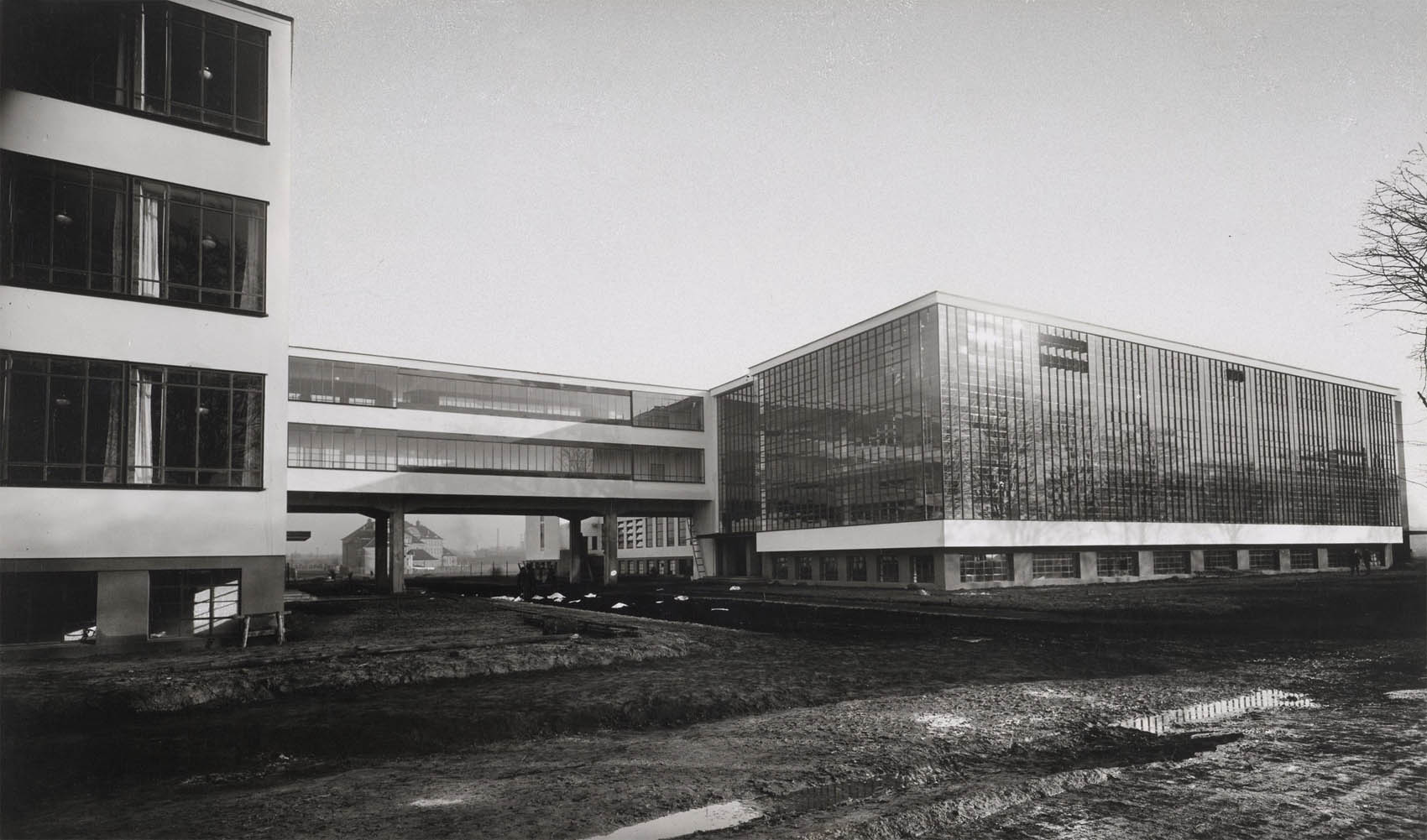
 

Unidentified artist (formerly attributed to Elisha Livermore Hammond)
Frederick Douglass
c. 1845
Oil on canvas
National Portrait Gallery, Smithsonian Institution


Frederick Douglass became the most influential African American of the nineteenth century by turning his life into a testimony on the evils of slavery and the redemptive power of freedom. After he escaped from bondage in 1838, Douglass quickly emerged as an outspoken advocate for equality and abolition. Aware of the power of telling one’s own story, he frequently spoke about his life, published three genre-defining autobiographies, and founded the influential newspaper, The North Star, in 1847. Douglass also posed for countless photographs, which he considered less susceptible to artists’ racial prejudices.

This painting was likely based on the engraved frontispiece of Douglass’s first autobiography, Narrative of the Life of Frederick Douglass (1845), a gripping account of his struggle for freedom. In My Bondage and My Freedom (1855), Douglass went on to address the psychology of slavery and the racism that continued to define the lives of the newly free.

Text from the National Portrait Gallery website


Southworth & Hawes (active 1843–1862) 'Frederick Douglass' c. 1845


Southworth & Hawes (active 1843–1862)
Frederick Douglass
c. 1845
Whole-plate daguerreotype
Onondaga Historical Association Museum, Syracuse, NY


Douglass likely sat for this daguerreotype in the Boston studio of Southworth & Hawes before he left for England in August 1845. The Twelfth National Anti-Slavery Bazaar, held at Faneuil Hall in December 1845, offered for sale “an excellent Daguerreotype of Frederick Douglass,” according to The Liberator (January 23, 1846). The daguerreotype was “the gift of Mr. Southworth” and “elicited much attention.” John Chester Buttre created an engraving from the daguerreotype, which appeared in Autographs for Freedom (1854), a gift book edited by Douglass’s friend Julia Griffiths to raise money for his North Star newspaper.

Text from the National Portrait Gallery website


Southworth & Hawes (active 1843–1862) 'Frederick Douglass' c. 1845 (detail)


Southworth & Hawes (active 1843–1862)
Frederick Douglass (detail)
c. 1845
Whole-plate daguerreotype
Onondaga Historical Association Museum, Syracuse, NY


Augustus Washington (American, c. 1820–1875) 'John Brown 1800-1859' c. 1846-1847


Augustus Washington (American, c. 1820–1875)
John Brown 1800-1859
c. 1846-1847
Quarter-plate daguerreotype
National Portrait Gallery, Smithsonian Institution; purchased with major acquisition funds and with funds donated by Betty Adler Schermer in honor of her great grandfather, August M. Bondi


One of the nation’s first African American daguerreotypists, Augustus Washington was also a prominent abolitionist in Hartford, Connecticut, when he made this portrait of the militant abolitionist John Brown. At the time, Brown was working to establish a “Subterranean Pass Way,” a network of armed men in the Alleghenies for conducting fugitives to freedom in Canada.

In Washington’s daguerreotype, Brown apparently holds the Pass Way flag and pledges allegiance to his scheme, which never materialised. In 1853, Washington and his family emigrated to Liberia, the former West African colony founded by the American Colonization Society, which gained independence in 1847.

Text from the National Portrait Gallery website


Frederick Douglass (1818-1895), the preeminent African American voice of the nineteenth century, is remembered as one of the nation’s greatest orators, writers, and picture makers. Born on the Eastern Shore of Maryland in 1818, Frederick Augustus Washington Bailey was the son of Harriet Bailey, an enslaved woman, and an unknown white father. He escaped bondage in 1838 and changed his surname to Douglass.

Over six decades, Douglass published three autobiographies, hundreds of essays, and a novella; delivered thousands of speeches; and edited the longest-running Black newspaper in the nineteenth century, The North Star (later Frederick Douglass’ Paper and Douglass’ Monthly). During the Civil War, he befriended and advised President Abraham Lincoln and met every subsequent president through Grover Cleveland. He was also the first African American to receive a federal appointment requiring Senate approval (U.S. Marshal of the District of Columbia).

Douglass became the most photographed American of the nineteenth century and remains a public face of the nation. As an art critic, he wrote extensively on portrait photography and understood its power. He explained how this “true art” (as opposed to pernicious caricatures) captured the essential humanity of each subject. True art was an engine of social change, he argued, and true artists were activists: “They see what ought to be by the reflection of what is, and endeavour to remove the contradiction.”

Curatorial Statement

Organised into seven sections, this exhibition highlights the long arc and significance of Frederick Douglass’s life: from slave and fugitive to internationally acclaimed abolitionist, women’s rights activist, and statesman after the Civil War. We come to recognise his influences in the Civil War and postwar eras; and the significance of his afterlife, in which his portraits and writings continue to inspire people to seek “all rights for all,” one of his mottos. The range of objects shown here reflects Douglass’s openness to new forms of media and technology to advance the cause of human rights.

John Stauffer, the Sumner R. and Marshall S. Kates Professor of English and of African and African American Studies, Harvard University

Text from the National Portrait Gallery website


Douglass’ ascension into the most preeminent African American voice in the 1800s and one of the handful of most influential and famous Americans in the nation’s history owes itself equally to his merits and good fortune.

“Douglass had an extraordinary work ethic, he was immensely curious and dedicated,” Stauffer explained. “And physically strong and tall – over six feet, a half-foot taller than the average man – which helped him survive slavery.”

Size does matter. George Washington and Abraham Lincoln were also comparative giants for their day. American presidents, on average, stand a great deal taller, literally, than the average citizen.

Douglass’ physical size and strength allowed him to outlast a sadistic “slave breaker,” Edward Covey, in a protracted fight as a teen. After suffering numerous whippings, Douglass stood up to the man. As long as he lived, he referred to the fight as the turning point in his life as a slave.

“He was also lucky to have been born and raised in the upper South and not sold into the Deep South or murdered for his rebelliousness as a slave and his constant battles against slavery and racism as a free man,” Stouffer added. “Had he been born in the Deep South, where most enslaved people lived, his chances of escaping to free soil would have been almost nil.”

Douglass’ circumstances were hardly favourable, but he did win something of a genetic and geographic lottery at birth.

He also caught a rare break, learning to read and write as a young boy, skills most slaveowners prohibited.

“In Baltimore, Douglass asked his mistress, Sophia Auld, to teach him to read, which she did, having never overseen an enslaved person before,” Stouffer said. “Her husband, Hugh Auld, found out and told her in front of Douglass, ‘if you learn him to read, he’ll want to know how to write; and this accomplished, he’ll be running away from himself.’ Hearing this, Douglass ‘understood the direct pathway to freedom,’ as he said.”

Chadd Scott. “Art, Activism And Frederick Douglass At National Portrait Gallery,” on the Forbes website Aug 22, 2023 [Online] Cited 21/04/2024


Unidentified photographer. 'Frederick Douglass' c. 1850 (after c. 1847 daguerreotype)


Unidentified photographer
Frederick Douglass
c. 1850 (after c. 1847 daguerreotype)
Sixth-plate daguerreotype
National Portrait Gallery, Smithsonian Institution


When sitting for a photograph, Douglass would pose as an artist or performer, forming part of a pas de trois with the photographer and the camera. He always dressed up and, as the activist Elizabeth Cady Stanton noted, often appeared “majestic in his wrath.”

Before the mid-1860s, Douglass typically stared into the camera lens with a dramatic look. He wanted the focus on himself. Here, he fills the frame, appearing as an accomplished, dignified activist, and projecting a visual voice of democracy. Through his images, voice, and writings, Douglass sought to “out-citizen” whites, many of whom questioned African American rights.

In the years following his escape from bondage in 1838, Frederick Douglass emerged as a powerful and persuasive spokesman for the cause of abolition. Douglass’s effectiveness as an antislavery advocate was due in large measure to his firsthand experience with the evils of slavery and his extraordinary skill as an orator whose “electrifying eloquence” astonished and enthralled his audiences. Convinced that a peaceful end to slavery was impossible, Douglass embraced the Civil War as a fight for emancipation and called for the enlistment of black troops. Throughout the decades that followed, he remained a tireless champion for civil rights.

In 1845, when the publication of his Narrative of the Life of Frederick Douglass revealed biographical details that could have led to his capture as a fugitive from slavery, Douglass left the United States for an extended stay in Great Britain. He was warmly welcomed by British abolitionists, who raised the funds to purchase his freedom, thereby enabling Douglass to return to the United States in 1847 as a free man. In this daguerreotype, believed to date from the time of his return, Douglass confronts the camera with an intensity that became the hallmark of his photographic portraits.

Text from the National Portrait Gallery website


Ezra Greenleaf Weld (American, 1801-1874) 'Fugitive Slave Law Convention, Cazenovia, New York' 1850


Ezra Greenleaf Weld (American, 1801-1874)
Fugitive Slave Law Convention, Cazenovia, New York
1850
Half-plate copy daguerreotype
Collection of Mr. and Mrs. Set Charles Momjian


On August 21, 1850, two days after the Senate passed the Fugitive Slave Act [Passed on September 18, 1850 by Congress, The Fugitive Slave Act of 1850 was part of the Compromise of 1850. The act required that slaves be returned to their owners, even if they were in a free state. The act also made the federal government responsible for finding, returning, and trying escaped slaves], about two thousand abolitionists convened near Gerrit Smith’s home. Douglass presided as president. Participants approved Smith’s “Letter to the American Slaves,” urging captives to avenge their enslavers. “You are prisoners of war in an enemy’s country,” Smith declared.

Here, Douglass sits at the edge of the table next to Theodosia Gilbert, the fiancée of William Chaplin, who was in prison for aiding fugitives. Behind Douglass stands Gerrit Smith [see photo below], in mid-speech, gesticulating. On either side of Smith, in checkered shawls and day bonnets, are Mary and Emily Edmonson, whose freedom had been orchestrated by Chaplin.

Text from the National Portrait Gallery website


Ezra Greenleaf Weld, known simply as “Greenleaf,” operated a daguerreotype studio in Cazenovia, New York, during a time of intense social and political turmoil. He opened his first studio in his home in 1845, when America began to witness the volatile events that led to the Civil War. At that time, instruction manuals on the daguerreotype process were widely available, and most small towns had at least one studio. In an 1850 advertisement in his local newspaper, Greenleaf offered “Miniatures executed in the finest style, and put in Rings, Pins, Lockets and cases, of great variety size and price.”

Greenleaf seems to have been very successful with his daguerreotype business. By 1851 he had leased new quarters on the top floor of a building, where he placed a skylight to receive northern light for his studio sessions. During the Civil War years, he made numerous pictures in and around Cazenovia.

Text from the J. Paul Getty Museum website


Southworth & Hawes (active 1843–1862) 'William Lloyd Garrison 1805-1879' c. 1851


Southworth & Hawes (active 1843–1862)
William Lloyd Garrison 1805-1879
c. 1851
Half-plate daguerreotype
National Portrait Gallery, Smithsonian Institution


After escaping enslavement, Douglass subscribed to William Lloyd Garrison’s newspaper, The Liberator, and read it as devoutly as his bible. “The paper became my meat and drink,” he recalled.

Garrison promoted Douglass’s 1845 autobiography, which made him famous and prompted him to flee to the British Isles to avoid capture and re-enslavement. British friends then purchased his freedom, and he returned to the United States in 1847, a free man. Wanting to launch his own paper, Douglass soon moved his family to Rochester, New York, a railroad and antislavery hub that lacked an abolitionist paper. The move ruptured his friendship with Garrison until after the Civil War.

Text from the National Portrait Gallery website


The Smithsonian’s National Portrait Gallery will present One Life: Frederick Douglass, an exhibition exploring the life and legacy of one of the 19th century’s most influential writers, speakers and intellectuals. Douglass was a radical activist who devoted his life to abolitionism and rights for all. This exhibition shows the intimate relationship between art and protest through prints, photographs and ephemera. One Life: Frederick Douglass is guest curated by John Stauffer, the Sumner R. and Marshall S. Kates Professor of English and African and African American Studies at Harvard University, and consulting curator Ann Shumard, the National Portrait Gallery’s senior curator of photographs.

“Frederick Douglass was the preeminent African American voice of the 19th century and among the nation’s greatest orators, writers and picture-makers,” Stauffer said. “Born into slavery, he became a leading abolitionist, civil rights activist and the most photographed American of the 19th-century, a public face of the nation. This comprehensive exhibition includes objects from all phases of his life as a way to highlight the power of his remarkable impact. It explores his friendship with President Abraham Lincoln, for example, as well as his enduring influence on artists and activists in the 20th and 21st centuries.”

Douglass was born on the Eastern shore of Maryland in 1818. Having escaped slavery in 1838, he traveled to New York, where he married Anna Murray. After the couple moved to Massachusetts, he began attending abolitionist meetings. Douglass went on to publish three autobiographies and a novella, deliver thousands of speeches and edit the longest continually running Black newspaper of the 19th century, The North Star (later Frederick Douglass’ Paper and Douglass’ Monthly). As a political insider and policy influencer during the Civil War, he befriended and advised President Abraham Lincoln. Douglass changed traditional rules of representation by explaining how “true art” could be an engine of social change.

The exhibition will showcase over 35 objects, including the ledger documenting Douglass’ birth in February 1818; a pamphlet of his “What to the Slave Is the Fourth of July?” oration; two of his three autobiographies – My Bondage and My Freedom and Narrative of the Life of Frederick Douglass, an American Slave, Written by Himself; a letter from Douglass to Lincoln; portraits of activists in Douglass’ circle, such as Harriet Tubman and Sojourner Truth; portraits by the prominent Black photographers Augustus Washington and Cornelius Marion Battey; and portraits of the Black leaders Ida B. Wells-Barnett, Booker T. Washington, W.E.B. Du Bois and Langston Hughes, all of whom carried on his legacy.

Press release from the National Portrait Gallery


Ezra Greenleaf Weld (American, 1801-1874) 'Gerrit Smith 1797-1874' c. 1854


Ezra Greenleaf Weld (American, 1801-1874)
Gerrit Smith 1797-1874
c. 1854
Two-thirds daguerreotype
National Portrait Gallery, Smithsonian Institution; gift of an anonymous donor 

Gerrit Smith, the upstate New York abolitionist and philanthropist, was a close friend of Douglass from the late 1840s to the Civil War. In 1846, Smith gave away 120,000 acres of land in the Adirondacks, known as “Timbuctoo,” to three thousand Black residents of New York State. Smith welcomed Douglass to New York with a deed for forty acres and provided crucial financial support to his newspaper. “You not only keep life in my paper but keep spirit in me,” Douglass wrote. Smith helped convert Douglass into a political abolitionist, one who interpreted the Constitution as an antislavery document.

Text from the National Portrait Gallery website


Unidentified photographer. 'John Brown 1800-1859' c. 1857 (after c. 1855 daguerreotype)


Unidentified photographer
John Brown 1800-1859
c. 1857 (after c. 1855 daguerreotype)
Salted paper print
National Portrait Gallery, Smithsonian Institution


Douglass described John Brown as someone who, “though a white gentleman, is in sympathy a black man, and as deeply interested in our cause, as though his own soul had been pierced with the iron of slavery.” They became friends, and in 1859, Brown urged Douglass to join him in raiding the federal arsenal at Harpers Ferry. Douglass, however, refused and told Brown he thought he was entering a “steel trap.” Brown and sixteen others were killed, either during the raid or after they were found guilty of treason. Douglass later credited Brown with starting the war that ended slavery.

Text from the National Portrait Gallery website


Frederick Douglass believed that Brown’s “zeal in the cause of my race was far greater than mine – it was as the burning sun to my taper light – mine was bounded by time, his stretched away to the boundless shores of eternity. I could live for the slave, but he could die for him.”

Douglass, Frederick (1881). John Brown. An Address at the Fourteenth Anniversary of Storer College, May 30, 1881. Dover, New Hampshire: Dover, N. H., Morning Star job printing house. p. 9. Retrieved March 9, 2022


Unidentified photographer. 'Frederick Douglass' c. 1860


Unidentified photographer
Frederick Douglass
c. 1860
Salted paper print
Image: 6 × 4.5cm (2 3/8 × 1 3/4″)
Sheet: 10.1 × 7.9cm (4 × 3 1/8″)
Mount: 17 × 13.6cm (6 11/16 × 5 3/8″)
Mat: 45.7 × 35.6cm (18 × 14″)
National Portrait Gallery, Smithsonian Institution


Douglass’s visual persona continually evolved, which undermined one of the key intellectual foundations of chattel slavery and racism that cast the self as fixed, unable to rise. Perhaps the most noticeable markers of Douglass’s continual evolution are his hairstyle and facial hair. In this salted paper print, he experiments with a mid-scalp part, unique among the 168 separate photographs. Five years later, in a carte de visite, he sports a ponytail, also distinct from his typical hairstyle.

Text from the National Portrait Gallery website


Douglass’ words were powerful; his image, arguably, more so.

“Douglass, along with most Americans, believed that photography was a ‘truthful’ representation and the great democratic art,” Stouffer explained. “He also recognised that the sitter had agency in the outcome of a photographic portrait. He understood his role as an artist or performer, part of a pas de trois with the photographer and the camera. He always dressed up. His photographic portraits, along with those of numerous other African Americans, starkly contrasted the racist caricatures of Blacks created by whites.”

A long American tradition of white artists caricaturing African Americans in prints and paintings influenced public perception. White painters in the antebellum era almost always cast the devil as a Black man. Monkeys and happy slaves were other tropes.

Douglass, meanwhile, always presented himself, in dress, pose, and expression, as a dignified and respectable citizen.

“Photography was a truth-telling medium he emphasised. It bore witness to African Americans, and all humans, essential humanity, and it countered the racist caricatures by whites drawing freehand,” Stouffer said. “Douglass argued that photography inspired people to eradicate the sins of their society. It led them to activism. It stemmed from the power of imagination, which allowed people to appreciate photographs as accurate representations of some greater reality. It encouraged them to realise their ideals in an imperfect world.”

As Douglass put it: “Poets, prophets, and reformers are all picture-makers – and this ability is the secret of their power and of their achievements. They see what ought to be in the reflection of what is, and endeavour to remove the contradiction.”

This is a key message of the exhibition.

“Poets, prophets, and reformers were artists and activists. Activism inspired art and vice versa. Poets, prophets, and reformers saw their community or nation as it was – with all its gross inequalities, injustices, and prejudices – and they contrasted it with what ought to be. The contradiction inspired them to remove structural inequalities, injustices, and prejudices,” Stouffer explained. “Douglass and most other abolitionists, along with many antislavery advocates, considered themselves poets, prophets, and reformers. As a group, they sat for their photographic portraits with greater frequency, distributed them more effectively, and were more taken with photography, than other groups.”

Douglass went so far as to say that “the moral and social influence of pictures” was more important than “the making of its laws.”

Chadd Scott. “Art, Activism And Frederick Douglass At National Portrait Gallery,” on the Forbes website Aug 22, 2023 [Online] Cited 21/04/2024


Johnson, Williams &. Co. (active 1860s and 1870s) 'James McCune Smith 1813-1865' c. 1860


Johnson, Williams &. Co. (active 1860s and 1870s)
James McCune Smith 1813-1865
c. 1860
Albumen silver print
Schomburg Center for Research in Black Culture, Photographs and Prints Division; The New York Public Library, Astor, Lenox and Tilden Foundations


James McCune Smith (April 18, 1813 – November 17, 1865) was an American physician, apothecary, abolitionist and author. He was the first African American to earn a medical degree. His M.D. was awarded by the University of Glasgow in Glasgow, Scotland. After his return to the United States, he also became the first African American to run a pharmacy in the nation.

In addition to practicing as a physician for nearly 20 years at the Colored Orphan Asylum in Manhattan, Smith was a public intellectual: he contributed articles to medical journals, participated in learned societies, and wrote numerous essays and articles drawing from his medical and statistical training. He used his training in medicine and statistics to refute common misconceptions about race, intelligence, medicine, and society in general. He was invited as a founding member of the New York Statistics Society in 1852, which promoted a then new science. Later he was elected as a member in 1854 of the recently founded American Geographic Society. He was never admitted to the American Medical Association or local medical associations,[1] very likely as a result of the systemic racism that Smith confronted throughout his medical career.

He has been most well known for his leadership as an abolitionist: a member of the American Anti-Slavery Society, with Frederick Douglass he helped start the National Council of Colored People in 1853, the first permanent national organisation for blacks. Douglass called Smith “the single most important influence on his life.” Smith was one of the Committee of Thirteen, who organised in 1850 in Manhattan to resist the newly passed Fugitive Slave Law by aiding refugee slaves through the Underground Railroad. Other leading abolitionist activists were among his friends and colleagues. From the 1840s, Smith lectured on race and abolitionism and wrote numerous articles to refute racist ideas about black capacities.

Both Smith and his wife were of mixed African and European descent. As he became economically successful, Smith built a house in a mostly white neighbourhood; in the 1860 census he and his family were classified as white, along with their neighbours. (In the census of 1850, while living in a predominately African-American neighbourhood, they had been classified as mulatto.) Smith served for nearly 20 years as the physician at the Colored Orphan Asylum in New York. After it was burned down in July 1863 by a mob in draft riots in Manhattan, in which nearly 100 blacks were killed, Smith moved his family and practice to Brooklyn for their safety. Many other blacks left Manhattan for Brooklyn at the same time. The parents stressed education for their children. In the 1870 census, his widow and children continued to be classified as white.

Text from the Wikipedia website


Unidentified photographer. 'Sojourner Truth c. 1797-1883' 1864


Unidentified photographer
Sojourner Truth c. 1797-1883
1864
Albumen silver print
Image/Sheet: 8.7 × 5.6cm (3 7/16 × 2 3/16″)
National Portrait Gallery, Smithsonian Institution


Sojourner Truth was possibly more famous for her carte-de-visite photographs than for her actual presence at abolition meetings. Her carefully chosen images made her a familiar figure to millions of viewers. They depicted a respectable matron. Truth’s famous maxim that she included with her portrait, “I sell the shadow to support the substance,” links her image (shadow) to her actual self (substance) and to the growing demand for photographs during the war years.

Truth’s image becomes an extension of herself and her nation. The yarn forms the contours of the eastern United States, with Florida’s panhandle and Texas clearly visible. As a representative American woman, Truth’s piety, simplicity, and abolitionism were shaping the United States.

Text from the National Portrait Gallery website


L. Schamer (active c. 1870) Louis Prang Lithography Co. (active 1856-1899) 'Representative Women' 1870


L. Schamer (active c. 1870)
Louis Prang Lithography Co. (active 1856-1899)
Representative Women
1870
Lithograph
National Portrait Gallery, Smithsonian Institution


This portrait unites seven leading female suffragists. Clockwise from the top are portraits of Lucretia Mott, Elizabeth Cady Stanton, Mary Livermore, Lydia Maria Child, Susan B. Anthony, and Sara Jane Lippincott, who surround Anna Dickinson, the most popular woman on the lecture circuit; in a sense, Douglass’s counterpart. The visual power of the image stems from its ability to reveal both the cohesiveness of the movement and the strong personalities within it.

Douglass knew these women and, as a leading male advocate for women’s rights, often collaborated with them and attended their conventions. But when Congress passed the Fifteenth Amendment in 1869, granting suffrage to Black men but not to women, their cohesion crumbled. Anthony and Stanton argued that white women should have suffrage before Black men. Douglass supported the amendment but continued to advocate for women’s suffrage.

Between 1860 and 1880, it became common for American reformers to gather on stages – then called lyceums – to promote abolition, temperance, education reform, and women’s rights. Lyceum associations allowed suffragists to speak. In their lectures, suffragists addressed men and women of diverse backgrounds – across state, racial, and economic divides – and reached wider audiences than through women’s organisations alone.

Representative Women is a combinative portrait that brings together seven women who were active on the lecture circuit. The visual power of the image stems from its ability to reveal both the cohesiveness of the movement and the strong individual personalities within it. Clockwise from the top are portraits of Lucretia Coffin Mott, Elizabeth Cady Stanton, Mary Livermore, Lydia Maria Francis Child, Susan B. Anthony, and Sara Jane Lippincott, who surround the central figure of Anna Elizabeth Dickinson. At the time, Dickinson was more popular than Mark Twain and held the distinction of being the highest paid woman on the lecture circuit.

Text from the National Portrait Gallery website


NOT IN THE EXHIBITION BUT IN THE NATIONAL PORTRAIT GALLERY COLLECTION


Unidentified photographer. 'Frederick Douglass' 1856


Unidentified photographer
Frederick Douglass
1856
Quarter-plate ambrotype
Image/Sight: 8.8 × 6.7cm (3 7/16 × 2 5/8″)
Mat (brass): 10.8 × 8.3cm (4 1/4 × 3 1/4″)
Case open: 12 × 19.2 × 1.3cm (4 3/4 × 7 9/16 × 1/2″)
Case closed: 12 × 9.5 × 1.9cm (4 3/4 × 3 3/4 × 3/4″)
National Portrait Gallery, Smithsonian Institution; acquired through the generosity of an anonymous donor


In the years following his escape from bondage in 1838, Frederick Douglass emerged as a powerful and persuasive spokesman for the cause of abolition. His effectiveness as an antislavery advocate was due in large measure to his firsthand experience with the evils of slavery and his extraordinary skill as an orator. His “glowing logic, biting irony, melting appeals, and electrifying eloquence” astonished and enthralled his audiences. As this ambrotype suggests, Douglass’s power was also rooted in the sheer impressiveness of his bearing, which abolitionist and activist Elizabeth Cady Stanton likened to that of “an African prince, majestic in his wrath.”

Text from the National Portrait Gallery website


George Francis Schreiber (American, 1803-1892) 'Frederick Douglass' 1870


George Francis Schreiber (American, 1803-1892)
Frederick Douglass
1870
Albumen silver print
Image/Sheet: 9.4 x 5.9cm (3 11/16 x 2 5/16″)
National Portrait Gallery, Smithsonian Institution; gift of Donald R. Simon


George Kendall Warren (American, 1834-1884) 'Frederick Douglass' 1876


George Kendall Warren (American, 1834-1884)
Frederick Douglass
1876
Albumen silver print
Image/Sheet: 9.7 × 5.7cm (3 13/16 × 2 1/4″)
National Portrait Gallery, Smithsonian Institution


Smithsonian National Portrait Gallery
8th and F Sts NW
Washington, DC 20001

Opening hours:
11.30am – 7.00pm daily

Smithsonian National Portrait Gallery website

LIKE ART BLART ON FACEBOOK

Back to top

Exhibition: ‘Dorothea Lange: Seeing People’ at the National Gallery of Art, Washington Part 1

Exhibition dates: 5th November 2023 – 31st March 2024


Dorothea Lange (American, 1895-1965) 'Child of Impoverished Black Tenant Family Working on Farm, Alabama' July 1936


Dorothea Lange (American, 1895-1965)
Child of Impoverished Black Tenant Family Working on Farm, Alabama
July 1936
Gelatin silver print
Image: 20 x 19.2cm (7 7/8 x 7 9/16 in.)
Sheet: 25.4 x 20.2cm (10 x 7 15/16 in.)
Mat: 14 x 14 in.
Frame (outside): 15 x 15 in.
National Gallery of Art, Washington, Gift of Daniel Greenberg and Susan Steinhauser


A humungous two-part posting on the work of American photographer Dorothea Lange (1895-1965) which features over 110 of her photographs many of which were unknown to me.

Of course, the posting features the photographs for which she is rightly famous (Migrant Mother; White Angel Breadline; Nettie Featherston; Migratory cotton picker with his cotton sack slung over his shoulder rests at the scales before returning to work in the field; Once a Missouri farmer, now a Migratory Farm Laborer) but others are a surprise for the senses, especially the Irish portrait photographs.

See my comment on the photographs in Part 2 of the posting.

Dr Marcus Bunyan


Many thankx to the National Gallery of Art for allowing me to publish the photographs in the posting. Please click on the photographs for a larger version of the image.


During her long, prolific, and groundbreaking career, the American photographer Dorothea Lange made some of the most iconic portraits of the 20th century. Dorothea Lange: Seeing People reframes Lange’s work through the lens of portraiture, highlighting her unique ability to discover and reveal the character and resilience of those she photographed.

Featuring some 100 photographs, the exhibition addresses her innovative approaches to picturing people, emphasising her work on social issues including economic disparity, migration, poverty, and racism.


“The portrait is made more meaningful by intimacy – an intimacy shared not only by the photographer with his subject but by the audience.”


Dorothea Lange


“The power of her pictures – their ability to speak to the character and resilience of those she photographed – lies not only in her desire to effect social change, but also in her deep humanism, her abiding interest in people, and the skills and insights she learned as a portrait photographer.”


Sarah Greenough


Dorothea Lange (American, 1895-1965) 'White Angel Breadline, San Francisco, California' 1933


Dorothea Lange (American, 1895-1965)
White Angel Breadline, San Francisco, California
1933
Gelatin silver print
Image/sheet: 34 x 26.5cm (13 3/8 x 10 7/16 in.)
Mat: 20 x 16 in.
Frame (outside): 21 x 17 in.
National Gallery of Art, Washington, Gift of Daniel Greenberg and Susan Steinhauser
© The Dorothea Lange Collection, Oakland Museum of California, City of Oakland. Gift of Paul S. Taylor


A growing desire to capture the Depression’s impact drew Lange to the White Angel Jungle, a San Francisco soup kitchen run by Lois Jordan, the “White Angel.” There Lange photographed this downtrodden man leaning on a barricade, his jaw clenched, shoulders hunched, back to the crowd, and eyes covered by the brim of his hat. Though anonymous, he drew Lange’s sympathetic eye and became a symbol of the nameless masses who faced economic hardship as the United States plunged deep into financial crisis.

Label text from the exhibition


Dorothea Lange (American, 1895-1965) 'Street Demonstration, San Francisco' 1934


Dorothea Lange (American, 1895-1965)
Street Demonstration, San Francisco
1934
Gelatin silver print
Image: 24.4 x 19.1cm (9 5/8 x 7 1/2 in.)
Mount: 27.9 x 20.2cm (11 x 7 15/16 in.)
Mat: 20 x 16 in.
Frame (outside): 21 x 17 in.
National Gallery of Art, Washington, Diana and Mallory Walker Fund and Robert Menschel and the Vital Projects Fund, in Honor of the 25th Anniversary of Photography at the National Gallery of Art
© The Dorothea Lange Collection, Oakland Museum of California, City of Oakland. Gift of Paul S. Taylor


In spring and summer 1934, a longshoremen’s strike gripped San Francisco and demonstrations took place throughout the city. Protesters also advocated for Japanese unions, which were being threatened by anti-labor forces in Japan. Lange wrote in her notes, “This was just before the New Deal during a time when Communists were very active. A few blocks away … soup was being distributed daily to the unemployed.”

Lange focused on a lone policeman standing before a crowd of protesters holding placards in English and Japanese. The policeman projects authority through his firm stance, crisp uniform, and shiny badge, creating a barrier between the photographer and the crowd.

Label text from the exhibition


Dorothea Lange (American, 1895-1965) 'Mexican Workers Leaving for Melon Fields, Imperial Valley, California' June 1935, printed 1940s


Dorothea Lange (American, 1895-1965)
Mexican Workers Leaving for Melon Fields, Imperial Valley, California
June 1935, printed 1940s
Gelatin silver print
Image: 45 x 58cm (17 11/16 x 22 13/16 in.)
Sheet: 50.2 x 67.5cm (19 3/4 x 26 9/16 in.)
Mat: 24 x 28 in.
Frame (outside): 25 x 29 in.
National Gallery of Art, Washington, Gift of Daniel Greenberg and Susan Steinhauser
© The Dorothea Lange Collection, Oakland Museum of California, City of Oakland. Gift of Paul S. Taylor


In the summer of 1935, Lange traveled with Paul Taylor, working with his research team on a study of migrant labourers funded by California’s State Emergency Relief Administration. Mexican farm labourers, like this trio of cantaloupe harvesters, saw wages plummet during the Depression as thousands of westbound American migrants flooded the labour market. Angling her camera upward, Lange silhouetted the workers against a hazy sky, producing a striking group portrait. Working together solidified Lange and Taylor’s professional relationship, which developed into a romantic partnership and marriage later that same year.

Label text from the exhibition


Dorothea Lange (American, 1895-1965) 'Once a Missouri farmer, now a Migratory Farm Laborer. San Joaquin Valley, California' February 1936, printed c. 1965


Dorothea Lange (American, 1895-1965)
Once a Missouri farmer, now a Migratory Farm Laborer. San Joaquin Valley, California
February 1936, printed c. 1965
Gelatin silver print
Image/sheet: 44.6 x 39.5cm (17 9/16 x 15 9/16 in.)
Mat: 26 x 22 in.
Frame (outside): 27 x 23 in.
National Gallery of Art, Washington, Gift of Daniel Greenberg and Susan Steinhauser


Although this farm labourer from Missouri seems to be alone behind the wheel of his car, he is actually seated beside his wife, in the passenger seat. Her overcoat and right arm are easily overlooked at the bottom left. By focusing only on the driver, with his gaunt features and intense gaze, Lange heightens our sense of his isolation to create an evocative portrait of a man grappling with the consequences of dislocation. The photograph also calls attention to the automobile as a means of transport and escape for some Depression-era migrants.

Label text from the exhibition


Dorothea Lange (American, 1895-1965) 'Former Tenant Farmer on Relief Grant in the Imperial Valley, California' March 1937


Dorothea Lange (American, 1895-1965)
Former Tenant Farmer on Relief Grant in the Imperial Valley, California
March 1937
Gelatin silver print
Image/sheet: 9.5 x 9cm (3 3/4 x 3 9/16 in.)
Mat: 14 x 11 in.
Frame (outside): 15 x 12 3/4 in.
National Gallery of Art, Washington, Gift of Daniel Greenberg and Susan Steinhauser


Dorothea Lange (American, 1895-1965) 'Eighteen-Year-Old Mother from Oklahoma, now a California Migrant' March 1937


Dorothea Lange (American, 1895-1965)
Eighteen-Year-Old Mother from Oklahoma, now a California Migrant
March 1937
Gelatin silver print
Image: 18.9 x 24.5cm (7 7/16 x 9 5/8 in.)
Sheet: 20.6 x 25.5cm (8 1/8 x 10 1/16 in.)
Mat: 13 x 16 in.
Frame (outside): 14 x 17 in.
National Gallery of Art, Washington, Gift of Daniel Greenberg and Susan Steinhauser


Dorothea Lange (American, 1895-1965) 'Displaced Tenant Farmers, Goodlett, Hardeman County, Texas' July 1937, printed 1950s


Dorothea Lange (American, 1895-1965)
Displaced Tenant Farmers, Goodlett, Hardeman County, Texas
July 1937, printed 1950s
Gelatin silver print
Image: 19 x 24 cm (7 1/2 x 9 7/16 in.)
Sheet: 20.3 x 25.2 cm (8 x 9 15/16 in.)
Mat: 14 x 16 in.
Frame (outside): 15 x 17 in.
National Gallery of Art, Washington, Gift of Daniel Greenberg and Susan Steinhauser


During the 1930s, machines began to replace people in some cotton-growing regions like Hardeman County in Northeast Texas; consequently, many tenant farmers were evicted from their land. Already reckoning with severe drought and economic depression, these “tractored out” farmers were forced to seek work as day labourers, a precarious livelihood offering little security. In this picture, five displaced tenant farmers congregate outside the screened porch of a small house. Although they are united by a common plight, each man seems utterly alone, unable to find solace or support within an eroding agricultural system.

Label text from the exhibition


Dorothea Lange (American, 1895-1965) 'Nettie Featherston, Wife of a Migratory Laborer with Three Children, near Childress, Texas, from The American Country Woman' June 1938


Dorothea Lange (American, 1895-1965)
Nettie Featherston, Wife of a Migratory Laborer with Three Children, near Childress, Texas, from The American Country Woman
June 1938
Gelatin silver print
Image: 34 x 26.8cm (13 3/8 x 10 9/16 in.)
Sheet: 35.2 x 28cm (13 7/8 x 11 in.)
Mount: 45.4 x 38.3cm (17 7/8 x 15 1/16 in.)
Mat: 22 x 18 in.
Frame (outside): 23 x 19 in.
National Gallery of Art, Washington, Gift of Daniel Greenberg and Susan Steinhauser
© The Dorothea Lange Collection, Oakland Museum of California, City of Oakland. Gift of Paul S. Taylor


When Lange photographed her on a North Texas farm, 40-year-old Nettie Featherston was accustomed to a life of hard labor and poverty. She and her family had left Oklahoma seeking work in California when they ran out of money in Texas and found work picking cotton. Lange’s portrait reveals a gaunt survivor of the Dust Bowl, her right arm echoing the shape of the storm cloud behind her – a symbol of the difficult road ahead for migrant families looking for work. Reflecting on the photograph of herself years later, Featherston said, “It seems like … I have too much on my mind. I can just be burdened so bad, awful burdens they’ll be.”

Label text from the exhibition


Nettie Featherston

Lange met Nettie Featherston while working on that same FSA project. Like Turpen, Featherston’s family had been forced off their farm in Oklahoma. On their way to California to find work, they ran out of money and found themselves stranded in Childress, Texas.

The Featherstons sold their car for money to buy food. That left them with no way out of the dry and dusty landscape we seen behind Featherston. She looks desperate and distraught. “This county’s a hard county. They won’t help bury you here. If you die, you’re dead, that’s all,” she told Lange.

Decades later photographer and author Bill Ganzel tracked down Featherston. Then in her 80s, she still remembered how difficult that time had been. “Your kids would cry for something to eat, and you couldn’t give it. We cooked with black-eyed peas until I never wanted to ever see another black-eyed pea.”

Anonymous. “The Real Lives of People in Dorothea Lange’s Portraits,” on the National Gallery of Art website November 03, 2023 [Online] Cited 25/02/2024


Dorothea Lange (American, 1895-1965) 'Arkansas mother come to California for a new start, with husband and eleven children. Now a rural rehabilitation client. Tulare County, California, from The American Country Woman' November 1938, printed 1965


Dorothea Lange (American, 1895-1965)
Arkansas mother come to California for a new start, with husband and eleven children. Now a rural rehabilitation client. Tulare County, California, from The American Country Woman
November 1938, printed 1965
Gelatin silver print
Image/sheet: 35.5 x 27.9cm (14 x 11 in.)
Mat: 20 x 16 in.
Frame (outside): 21 x 17 in.
National Gallery of Art, Washington, Gift of Daniel Greenberg and Susan Steinhauser


Dorothea Lange (American, 1895-1965) 'On the Plains a Hat Is More Than a Covering' 1938, printed c. 1965


Dorothea Lange (American, 1895-1965)
On the Plains a Hat Is More Than a Covering
1938, printed c. 1965
Gelatin silver print
Image/sheet: 32 x 26.3cm (12 5/8 x 10 3/8 in.)
Mat: 20 x 18 in.
Frame (outside): 21 x 19 in.
National Gallery of Art, Washington, Gift of Daniel Greenberg and Susan Steinhauser


Lange wrote in her field notes that a “hat is more than a covering against sun and wind … it is a badge of service … linking past and present.” This artfully cropped photograph of James Abner Turpen, a 70-year-old Texas tenant farmer, focuses on Turpen’s hand as his fingers curl around the brim of a hat. Both hand and hat are weathered, aged by time and work, and portray Turpen without showing his face.

Label text from the exhibition


James Abner Turpen

From 1936 to 1939, Lange worked for the Resettlement Administration (which later became the Farm Security Administration). In Texas she documented the impacts of mechanisation on farmers. In the town of Goodlett she met James Abner Turpen, a 70-year-old tenant farmer who was about to be “tractored out” of his farm. Realising that agricultural machines like tractors could replace many farmers, landowners would evict their tenant farmers.

Turpen’s sons had already been tractored out. In her caption, Lange recorded his distress. “What are my boys going to do?” he asked. He believed the government was partly to blame. “They’re not any up there in Congress but what are big landowners and they’re going to see that the program is in their interest.”

Lange cropped one image to focus on Turpen’s weathered hand grasping his hat. The photograph is titled On the Plains a Hat Is More Than a Covering. But curator Philip Brookman inspected the image closely and compared it with others to confirm that Turpen is the subject.

Anonymous. “The Real Lives of People in Dorothea Lange’s Portraits,” on the National Gallery of Art website November 03, 2023 [Online] Cited 25/02/2024


Dorothea Lange (American, 1895-1965) 'Migratory Field Worker Picking Cotton in San Joaquin Valley, California' from 'An American Exodus' November 1938, printed later


Dorothea Lange (American, 1895-1965)
Migratory Field Worker Picking Cotton in San Joaquin Valley, California from An American Exodus
November 1938, printed later
Gelatin silver print
Image/sheet: 19 x 24cm (7 1/2 x 9 7/16 in.)
Mat: 14 x 18 in.
Frame (outside): 15 x 19 in.
National Gallery of Art, Washington, Gift of Daniel Greenberg and Susan Steinhauser


This photograph of hard stoop labor appeared in Lange and Paul Taylor’s 1939 book An American Exodus. According to Taylor’s field notes, “These pickers are paid seventy-five cents per hundred pounds of picked cotton. Strikers organising under CIO union (Congress of Industrial Organizations) are demanding one dollar. A good male picker, in good cotton, under favourable weather conditions, can pick about two hundred pounds in a day’s work.”

Label text from the exhibition


Dorothea Lange (American, 1895-1965) 'Cotton Pickers and Farm Owners, Bakersfield, California' 1938, printed c. 1950s


Dorothea Lange (American, 1895-1965)
Cotton Pickers and Farm Owners, Bakersfield, California
1938, printed c. 1950s
Gelatin silver print
Image: 19 x 24cm (7 1/2 x 9 7/16 in.)
Sheet: 20.32 x 25.4cm (8 x 10 in.)
Mat: 13 x 16 in.
Frame (outside): 14 x 17 in.
National Gallery of Art, Washington, Gift of Daniel Greenberg and Susan Steinhauser


Dorothea Lange (American, 1895-1965) 'Yazoo Delta, Mississippi' from 'An American Exodus' 1938, printed 1965


Dorothea Lange (American, 1895-1965)
Yazoo Delta, Mississippi from An American Exodus
1938, printed 1965
Gelatin silver print
Image/sheet: 34.2 x 44.7cm (13 7/16 x 17 5/8 in.)
Mat: 20 x 24 in.
Frame (outside): 21 x 25 in.
National Gallery of Art, Washington, Gift of Daniel Greenberg and Susan Steinhauser


Dorothea Lange (American, 1895-1965) 'Edison, Kern County, California. Young migratory mother, originally from Texas. On the day before the photograph was made, she and her husband traveled 35 miles each way to pick peas. They worked 5 hours each and together earned $2.25. They have two young children... Live in auto camp' April 11, 1940, printed 1950s


Dorothea Lange (American, 1895-1965)
Edison, Kern County, California. Young migratory mother, originally from Texas. On the day before the photograph was made, she and her husband traveled 35 miles each way to pick peas. They worked 5 hours each and together earned $2.25. They have two young children… Live in auto camp.
April 11, 1940, printed 1950s
Gelatin silver print
Image/sheet: 30.1 x 24cm (11 7/8 x 9 7/16 in.)
Mount: 30.8 x 24 cm (12 1/8 x 9 7/16 in.)
Mat: 20 x 16 in.
Frame (outside): 21 x 17 in.
National Gallery of Art, Washington, Gift of Daniel Greenberg and Susan Steinhauser


Dorothea Lange (American, 1895-1965) 'Children of the Weill Public School Shown in a Flag Pledge Ceremony, San Francisco, California' April 1942, printed c. 1965


Dorothea Lange (American, 1895-1965)
Children of the Weill Public School Shown in a Flag Pledge Ceremony, San Francisco, California
April 1942, printed c. 1965
Gelatin silver print
Image: 23.5 x 17.4 cm (9 1/4 x 6 7/8 in.)
Mat: 18 x 14 in.
Frame (outside): 19 x 15 in.
National Gallery of Art, Washington, Gift of Daniel Greenberg and Susan Steinhauser


Dorothea Lange (American, 1895-1965) 'End of Shift, 3:30, Shipyard Construction Workers, Richmond, California' September 1943


Dorothea Lange (American, 1895-1965)
End of Shift, 3:30, Shipyard Construction Workers, Richmond, California
September 1943
Gelatin silver print
Image: 24 x 19 cm (9 7/16 x 7 1/2 in.)
Sheet: 25.4 x 20.32 cm (10 x 8 in.)
Mat: 18 x 14 in.
Frame (outside): 19 x 15 in.
National Gallery of Art, Washington, Gift of Daniel Greenberg and Susan Steinhauser
© The Dorothea Lange Collection, Oakland Museum of California, City of Oakland. Gift of Paul S. Taylor


Fortune magazine commissioned Lange to document the bustling shipyards in Richmond, north of Oakland, where newly desegregated defence firms were rapidly constructing transport, cargo, and warships for the United States Navy. With its tight cropping and dynamic configuration, End of Shift focuses on the rushing legs and torsos of shipbuilders leaving a wartime facility. Lange expressed the urgency of their work in defence production without showing their individual features. The angled composition and complex interplay of light and shadow demonstrate Lange’s understanding of how modern design techniques could convey the force and energy of a group working together on a project critical to the nation’s defence.

Label text from the exhibition


Dorothea Lange (American, 1895-1965) 'War Babies, Richmond, California' 1944, printed c. 1965


Dorothea Lange (American, 1895-1965)
War Babies, Richmond, California
1944, printed c. 1965
Gelatin silver print
Image/sheet: 26.4 x 25.6cm (10 3/8 x 10 1/16 in.)
Mat: 18 x 18 in.
Frame (outside): 19 x 19 in.
National Gallery of Art, Washington, Gift of Daniel Greenberg and Susan Steinhauser
© The Dorothea Lange Collection, Oakland Museum of California, City of Oakland. Gift of Paul S. Taylor


While in Richmond, Lange photographed not only shipyard workers but also local people on the street, such as this pair of young mothers. Cradling swaddled infants, with a knee-high toddler between them, the two women personify the prosperity and growth generated by the wartime boom, which brought renewed economic stability to many Californians. Lange’s pictures from Richmond capitalise on the symbolism presented by the backdrop of expanding production. In this photograph, for example, cruciform utility poles seem to watch over the women and children like industrial guards, symbolically guiding them away from the poverty of the Depression years.

Label text from the exhibition


Dorothea Lange (American, 1895-1965) 'Lyde Wall, friend and neighbor, who makes "the world's best apple pie," and knows everything going on for miles around, Berkeley, California' from 'The American Country Woman' 1944


Dorothea Lange (American, 1895-1965)
Lyde Wall, friend and neighbor, who makes “the world’s best apple pie,” and knows everything going on for miles around, Berkeley, California, from The American Country Woman
1944
Gelatin silver print
Image/sheet: 35.1 x 27.9cm (13 13/16 x 11 in.)
Mount: 35.2 x 28 cm (13 7/8 x 11 in.)
Mat: 22 x 18 in.
Frame (outside): 23 x 19 in.
National Gallery of Art, Washington, Gift of Daniel Greenberg and Susan Steinhauser
© The Dorothea Lange Collection, Oakland Museum of California, City of Oakland. Gift of Paul S. Taylor


During her prolific and groundbreaking career, the American photographer Dorothea Lange (1895-1965) made some of the most iconic portraits of the 20th century. Dorothea Lange: Seeing People examines Lange’s decades-long investigation into how portrait photography could embody the humanity of the people she depicted. It demonstrates how her photographs helped shape contemporary documentary practice by connecting everyday people with moments of history – from the Great Depression through the mid-1960s – that still resonate with our lives in the 21st century. Featuring 101 photographs, the exhibition addresses her innovative approaches to picturing people, emphasising her work on various social issues including economic disparity, migration, poverty, and racism. The exhibition is on view from November 5, 2023, through March 31, 2024, in the West Building of the National Gallery of Art.

“Throughout the course of her 50-year career, Lange created an intensely humanistic body of work that sought to transform how we see and understand people,” said Kaywin Feldman, director of the National Gallery of Art. “Merging her skills as a portrait artist, a social documentary photographer, and a storyteller, she helped redefine photography through images that emphasise social issues.”


About the Exhibition

Dorothea Lange: Seeing People examines how Lange’s portraits have shaped our contemporary understanding of documentary photography as well as its importance to her vision and creative practice. Divided into six thematic sections, the exhibition features portraits ranging from her early career as a San Francisco studio photographer – the earliest work is from 1919 – and her powerful coverage of the Great Depression through expressive photographs of everyday people and communities during the 1950s and early 1960s.

Among the works on view are portraits of Indigenous people in Arizona and New Mexico from the 1920s and early 1930s; later depictions of striking labourers, migrant farmworkers, rural African Americans during the Jim Crow era, Japanese Americans denied their civil rights during World War II, and postwar baby boomers; and portraits of people in Ireland, Korea, Vietnam, Egypt, and Venezuela that Lange made in the decade before her death in 1965.

Lange began her career as a commercial studio photographer in San Francisco in 1918. Her studio became a gathering spot for artists who had serious discussions about photography and art. In 1920 she married Maynard Dixon, a painter of western subjects, who encouraged Lange to take her photography outside. She accompanied him on trips through the American Southwest, photographing rural landscapes and Dixon at work, along with the Indigenous communities he was portraying.

She started to work in the streets of San Francisco in 1933, making photographs such as White Angel Breadline, San Francisco, California (1933) that capture the effects of the Great Depression and the plight of the city’s dispossessed men and women. Lange also photographed labor organisers and protesters at May Day events around San Francisco’s Civic Center Plaza: she focused on the protesters speaking, listening, or holding signs, and vowed to produce prints within 24 hours, as in May Day, San Francisco, California (1934). She also documented ensuing strikes, creating portraits of speakers and demonstrators with placards as well as photographs of the police presence in works such as Street Demonstration, San Francisco (1934). When she met the labor economist Paul Schuster Taylor in 1934, Lange began to photograph the plight of migrant farmers who had moved to California from the South and Midwest seeking new livelihoods.

From 1935 to 1943, while working for the for the US Resettlement Administration, Farm Security Administration, and War Relocation Authority, Lange focused on the resilience of Depression-era families, farmworkers, rural cooperative communities, migrant camps, and the forced incarceration of Japanese Americans in the early days of World War II. The resulting images illustrate the human and economic impact wrought across the United States by farm tenancy, racism, the legacy of slavery, climate change, and migrations. These portraits, sometimes combined with interviews, added a personal element to Lange’s stark pictures of makeshift housing and agricultural fields and cemented her documentary style.

During World War II Lange produced one of her most powerful series for the War Relocation Authority, depicting the forced incarceration of California’s Japanese Americans at Manzanar, in works on view such as Grandfather and Grandson of Japanese Ancestry at a War Relocation Authority Center, Manzanar, California (July 1942). She also photographed the shifts in California’s social fabric as its rising economy – sparked by growing defence industries – drew African Americans from the South and women into previously male-dominated and segregated businesses such as shipbuilding. In the 1950s, Lange continued to pursue stories about people and their communities for personal projects, as well as for Life magazine, that include her first photographs from Europe. Asia, South America, and North Africa.


Exhibition Publication

Published by the National Gallery of Art and distributed by Yale University Press, this 208-page illustrated volume explores Dorothea Lange’s decades-long investigation of how photography, through articulating people’s core values and their sense of self, helped to expand our current understanding of portraiture and the meaning of documentary practice. Lange’s sensitive, humane portraits of often-marginalised people galvanised public understanding of important social problems in the 20th century.

Compassion guided Lange’s early portraits of Indigenous people in Arizona and New Mexico from the 1920s and 1930s, as well as her depictions of striking workers, migrant farmers, rural African Americans during the Jim Crow era, Japanese Americans in internment camps, and the people she met while traveling in Europe, Asia, Venezuela, and Egypt. Drawing on new research, Philip Brookman, Sarah Greenough, Andrea Nelson, and Laura Wexler, examine Lange’s roots in studio portraiture and demonstrate how her influential and widely seen photographs addressed issues of identity as well as social, economic, and racial inequalities – topics that remain as relevant for our times as they were for hers.

Press release from the National Gallery of Art


Dorothea Lange (American, 1895-1965) 'Mexican American Child, San Francisco' 1928


Dorothea Lange (American, 1895-1965)
Mexican American Child, San Francisco
1928
Gelatin silver print
Image/sheet: 34 x 29.8cm (13 3/8 x 11 3/4 in.)
Mat: 16 x 20 in.
Frame (outside): 16 1/2 x 16 1/4 in.
National Gallery of Art, Washington, Gift of Daniel Greenberg and Susan Steinhauser
© The Dorothea Lange Collection, Oakland Museum of California, City of Oakland. Gift of Paul S. Taylor


Dorothea Lange (American, 1895-1965) 'Maynard and Dan Dixon' 1930, printed c. 1960s


Dorothea Lange (American, 1895-1965)
Maynard and Dan Dixon
1930, printed c. 1960s
Gelatin silver print
Image: 19 x 24cm (7 1/2 x 9 7/16 in.)
Sheet: 20.32 x 25.4 cm (8 x 10 in.)
Mat: 14 x 17 in.
Frame (outside): 15 1/4 x 18 1/4 in.
National Gallery of Art, Washington, Gift of Daniel Greenberg and Susan Steinhauser
© The Dorothea Lange Collection, Oakland Museum of California, City of Oakland. Gift of Paul S. Taylor


In fall 1919 Lange met Maynard Dixon, a painter and illustrator of western subjects and one of the best-known artists in California. Early the following year, Lange and Dixon were married. Their first son, Daniel, was born in 1925 and their second, John, in 1928. This intimate portrait presents a close-up view of Dixon’s hands holding Dan in a gentle embrace, with the boy’s tiny fingers quietly resting on top of his father’s. Here Lange directed their pose to express both character and personal narrative, which recalls her training in New York portrait studios, as well as Alfred Stieglitz’s “portraits” of Georgia O’Keeffe that focused on her hands to convey her personality.

Label text from the exhibition


Alfred Stieglitz (American, 1864-1946) 'Georgia O'Keeffe – Hands' 1917


Alfred Stieglitz (American, 1864-1946)
Georgia O’Keeffe – Hands
1917
Silver-platinum print
National Gallery of Art, Alfred Stieglitz Collection


Dorothea Lange (American, 1895-1965) 'Mary Ann Savage, a Faithful Mormon All Her Life, Toquerville, Utah' 1931, printed c. 1950


Dorothea Lange (American, 1895-1965)
Mary Ann Savage, a Faithful Mormon All Her Life, Toquerville, Utah
1931, printed c. 1950
Gelatin silver print
Image/sheet: 35.2 x 27.9cm (13 7/8 x 11 in.)
Mount: 38.2 x 28cm (15 1/16 x 11 in.)
Mat: 22 x 18 in.
Frame (outside): 23 x 19 in.
National Gallery of Art, Washington, Gift of Daniel Greenberg and Susan Steinhauser
© The Dorothea Lange Collection, Oakland Museum of California, City of Oakland. Gift of Paul S. Taylor


Mary Ann Savage
was a faithful Mormon all her life.
She was a plural wife.
She was a pioneer.
She crossed the plains in 1856
with her family
when she was six years old.
Her mother
pushed her little children
across plain and desert
in a hand-cart.
A sister died along the way.
“My mother wrapped her in a blanket
and put her to one side.”

From Dorothea Lange Looks at the American Country Woman

Label text from the exhibition


Dorothea Lange (American, 1895-1965) 'San Francisco Waterfront' 1934


Dorothea Lange (American, 1895-1965)
San Francisco Waterfront
1934
Gelatin silver print
Image/sheet: 11.8 x 9.1cm (4 5/8 x 3 9/16 in.)
Mat: 14 x 11 in.
Frame (outside): 15 x 12 in.
National Gallery of Art, Washington, Gift of Daniel Greenberg and Susan Steinhauser
© The Dorothea Lange Collection, Oakland Museum of California, City of Oakland. Gift of Paul S. Taylor


Dorothea Lange (American, 1895-1965) 'May Day, San Francisco, California' 1934, printed c. 1960s


Dorothea Lange (American, 1895-1965)
May Day, San Francisco, California
1934, printed c. 1960s
Gelatin silver print
Image: 24 x 19 cm (9 7/16 x 7 1/2 in.)
Sheet: 25.4 x 20.32 cm (10 x 8 in.)
Mat: 16 x 14 in.
Frame (outside): 17 x 15 in.
National Gallery of Art, Washington, Gift of Daniel Greenberg and Susan Steinhauser
© The Dorothea Lange Collection, Oakland Museum of California, City of Oakland. Gift of Paul S. Taylor


Dorothea Lange (American, 1895-1965) 'Dispossessed Arkansas farmers. These people are resettling themselves on the dump outside of Bakersfield, California' from 'An American Exodus' 1935


Dorothea Lange (American, 1895-1965)
Dispossessed Arkansas farmers. These people are resettling themselves on the dump outside of Bakersfield, California from An American Exodus
1935
Gelatin silver print
Image: 24.1 x 18.8cm (9 1/2 x 7 3/8 in.)
Sheet: 25.3 x 20.7cm (9 15/16 x 8 1/8 in.)
Mat: 16 x 14 in.
Frame (outside): 17 x 15 in.
National Gallery of Art, Washington, Gift of Daniel Greenberg and Susan Steinhauser


Dorothea Lange (American, 1895-1965) 'Black Woman Working in Field near Eutaw, Alabama' 1936


Dorothea Lange (American, 1895-1965)
Black Woman Working in Field near Eutaw, Alabama
1936
Gelatin silver print
Image/sheet: 20.5 x 13.8cm (8 1/16 x 5 7/16 in.)
Mount: 21.2 x 14.5 cm (8 3/8 x 5 11/16 in.)
Mat: 15 x 12 in.
Frame (outside): 16 x 13 in.
National Gallery of Art, Washington, Gift of Daniel Greenberg and Susan Steinhauser


Dorothea Lange (American, 1895-1965) 'Calipatria (vicinity), California. Native of Indiana in a migratory labor contractor's camp. "It's root hog or die for us folks."' February 1937


Dorothea Lange (American, 1895-1965)
Calipatria (vicinity), California. Native of Indiana in a migratory labor contractor’s camp. “It’s root hog or die for us folks.”
February 1937
Gelatin silver print
Image/sheet: 24.1 x 19.1 cm (9 1/2 x 7 1/2 in.)
Mat: 16 x 14 in.
Frame (outside): 17 x 15 in.
National Gallery of Art, Washington, Gift of Daniel Greenberg and Susan Steinhauser


Dorothea Lange (American, 1895-1965) 'Line of men inside a division office of the State Employment Service office at San Francisco, California, waiting to register for unemployment benefits January' 1938, printed c. 1960s


Dorothea Lange (American, 1895-1965)
Line of men inside a division office of the State Employment Service office at San Francisco, California, waiting to register for unemployment benefits
January 1938, printed c. 1960s
Gelatin silver print
Image: 19 x 24cm (7 1/2 x 9 7/16 in.)
Sheet: 25.08 x 20.32cm (9 7/8 x 8 in.)
Mat: 14 x 17 in.
Frame (outside): 15 x 18 in.
National Gallery of Art, Washington, Gift of Daniel Greenberg and Susan Steinhauser


Dorothea Lange (American, 1895-1965) 'Funeral Cortege, San Joaquin Valley, California' 1938, printed early 1950s


Dorothea Lange (American, 1895-1965)
Funeral Cortege, San Joaquin Valley, California
1938, printed early 1950s
Gelatin silver print
Image: 20 x 19 cm (7 7/8 x 7 1/2 in.)
Sheet: 25.08 x 20.32 cm (9 7/8 x 8 in.)
Mat: 16 x 14 in.
Frame (outside): 17 x 15 in.
National Gallery of Art, Washington, Gift of Daniel Greenberg and Susan Steinhauser


Dorothea Lange (American, 1895-1965) 'Hitch-hiking from Joplin, Missouri, to a sawmill job in Arizona. On U.S. 66 near Weatherford, western Oklahoma' August 12, 1938, printed c. 1960s


Dorothea Lange (American, 1895-1965)
Hitch-hiking from Joplin, Missouri, to a sawmill job in Arizona. On U.S. 66 near Weatherford, western Oklahoma
August 12, 1938, printed c. 1960s
Gelatin silver print
Image: 24 x 19.5cm (9 7/16 x 7 11/16 in.)
Sheet: 25.4 x 20.32cm (10 x 8 in.)
Mat: 16 x 13 in.
Frame (outside): 17 x 14 in.
National Gallery of Art, Washington, Gift of Daniel Greenberg and Susan Steinhauser


Dorothea Lange (American, 1895-1965) 'Formerly Enslaved Woman, Alabama' from 'The American Country Woman' 1938, printed 1950s


Dorothea Lange (American, 1895-1965)
Formerly Enslaved Woman, Alabama from The American Country Woman
1938, printed 1950s
Gelatin silver print
Image/sheet: 20.3 x 27.9cm (8 x 11 in.)
Mat: 14 x 18 in.
Frame (outside): 15 x 19 in.
National Gallery of Art, Washington, Gift of Daniel Greenberg and Susan Steinhauser


This formerly enslaved woman, whom Lange does not name, would have witnessed several events that transformed the nation. She would have experienced the tragedy of chattel slavery in the United States and the victory for enslaved people in the South through Emancipation, as well as the ups and downs of Reconstruction, the passage of Jim Crow laws that permitted segregation, and the Great Depression. The dilapidated home, falling and standing simultaneously, suggests her own perseverance amid a lifetime of racial, gender, and class oppression.

Label text from the exhibition


Dorothea Lange (American, 1895-1965) 'Formerly Enslaved Woman, Alabama' from 'The American Country Woman' 1938, printed c. 1955


Dorothea Lange (American, 1895-1965)
Formerly Enslaved Woman, Alabama from The American Country Woman
1938, printed c. 1955
Gelatin silver print
Image: 24 x 19cm (9 7/16 x 7 1/2 in.)
Sheet: 25 x 20cm (9 13/16 x 7 7/8 in.)
Mat: 16 x 13 in.
Frame (outside): 17 x 14 in.
National Gallery of Art, Washington, Gift of Daniel Greenberg and Susan Steinhauser


Lange’s portraits of Depression-era people have inspired other artists, such as Elizabeth Catlett, to remember that time. In Survivor, Catlett translated the power of Lange’s photograph of a formerly enslaved woman into a linocut, an image cut into a linoleum block, inked, and then pressed onto paper, which prints it in reverse from the original.

Label text from the exhibition


Elizabeth Catlett (American, 1915-2012) 'Survivor' 1983


Elizabeth Catlett (American, 1915-2012)
Survivor
1983
Linocut
National Gallery of Art
Purchased as the Gift of the Roy Lichtenstein Foundation in Honor of Mary Lee Corlett


Dorothea Lange (American, 1895-1965) 'Member of the congregation of Wheeley's church who is called "Queen." She is wearing the old-fashioned type of sunbonnet. Her dress and apron were made at home. Near Gordonton, North Carolina' from 'The American Country Woman' July 1939, printed no later than 1965


Dorothea Lange (American, 1895-1965)
Member of the congregation of Wheeley’s church who is called “Queen.” She is wearing the old-fashioned type of sunbonnet. Her dress and apron were made at home. Near Gordonton, North Carolina from The American Country Woman
July 1939, printed no later than 1965
Gelatin silver print
Image: 38.7 x 31.9cm (15 1/4 x 12 9/16 in.)
Sheet: 39.5 x 34.1cm (15 9/16 x 13 7/16 in.)
Mat: 20 x 18 in.
Frame (outside): 21 x 19 in.
National Gallery of Art, Washington, Gift of Daniel Greenberg and Susan Steinhauser
© The Dorothea Lange Collection, Oakland Museum of California, City of Oakland. Gift of Paul S. Taylor


Wheeley’s Church was a congregation of Primitive Baptists, conservative practitioners located primarily in the South. Lange had a knack for building rapport with people from various religious communities and worked to gain their trust and respect to make photographs. This portrait features one church member, “Queen” Bowes, a devout widow shaded by her elaborate sunbonnet. Lange captured her stern expression, with piercing eyes and a tightly closed mouth that hid her false teeth.

Label text from the exhibition


Dorothea Lange (American, 1895-1965) 'Scandinavian Homesteader, Great Plains, South Dakota' from 'The American Country Woman' 1939, printed 1950s


Dorothea Lange (American, 1895-1965)
Scandinavian Homesteader, Great Plains, South Dakota from The American Country Woman
1939, printed 1950s
Gelatin silver print
Image/sheet: 25.9 x 26.6cm (10 3/16 x 10 1/2 in.)
Mat: 18 x 18 in.
Frame (outside): 19 x 19 in.
National Gallery of Art, Washington, Gift of Daniel Greenberg and Susan Steinhauser


Dorothea Lange (American, 1895-1965) 'Near Coolidge, Arizona. Migratory cotton picker with his cotton sack slung over his shoulder rests at the scales before returning to work in the field' November 1940, printed c. 1965


Dorothea Lange (American, 1895-1965)
Near Coolidge, Arizona. Migratory cotton picker with his cotton sack slung over his shoulder rests at the scales before returning to work in the field
November 1940, printed c. 1965
Gelatin silver print
Image/sheet: 31.5 x 41cm (12 3/8 x 16 1/8 in.)
Mat: 24 x 20 in.
Frame (outside): 21 x 25 in.
National Gallery of Art, Washington, Gift of Daniel Greenberg and Susan Steinhauser


Dorothea Lange (American, 1895-1965) 'Edison, Kern County, California. Young girl looks up from her work. She picks and sacks potatoes on large-scale ranch' April 11, 1940


Dorothea Lange (American, 1895-1965)
Edison, Kern County, California. Young girl looks up from her work. She picks and sacks potatoes on large-scale ranch
April 11, 1940
Gelatin silver print
Image: 18.7 x 24cm (7 3/8 x 9 7/16 in.)
Sheet: 20.2 x 25.3 cm (7 15/16 x 9 15/16 in.)
Mat: 13 x 16 in.
Frame (outside): 14 x 17 in.
National Gallery of Art, Washington, Gift of Daniel Greenberg and Susan Steinhauser


Dorothea Lange (American, 1895-1965) 'Riley Savage, Toquerville, Utah' 1953, printed c. 1965


Dorothea Lange (American, 1895-1965)
Riley Savage, Toquerville, Utah
1953, printed c. 1965
Gelatin silver print
Image/sheet: 27.9 x 21.5cm (11 x 8 1/2 in.)
Mat: 18 x 14 in.
Frame (outside): 19 x 15 in.
National Gallery of Art, Washington, Gift of Daniel Greenberg and Susan Steinhauser
© The Dorothea Lange Collection, Oakland Museum of California, City of Oakland. Gift of Paul S. Taylor


Riley Savage, son of Mary Ann Savage (pictured in the photograph nearby), was a third-generation Mormon settler whose grandmother had crossed the plains to the Utah Territory in 1856.

Label text from the exhibition


Dorothea Lange (American, 1895-1965) 'Man Walking Down a Country Road from the Kenneally Family Farm, County Clare, Ireland' from 'The Irish Countryman' 1954


Dorothea Lange (American, 1895-1965)
Man Walking Down a Country Road from the Kenneally Family Farm, County Clare, Ireland from The Irish Countryman
1954
Gelatin silver print
Image/sheet: 31.2 x 26cm (12 5/16 x 10 1/4 in.)
Mat: 19 x 17 in.
Frame (outside): 20 x 18 in.
National Gallery of Art, Washington, Gift of Daniel Greenberg and Susan Steinhauser
© The Dorothea Lange Collection, Oakland Museum of California, City of Oakland. Gift of Paul S. Taylor


Dorothea Lange (American, 1895-1965) 'Man Walking Down a Country Road from the Kenneally Family Farm, County Clare, Ireland' from 'The Irish Countryman' 1954


Dorothea Lange (American, 1895-1965)
Man Walking Down a Country Road from the Kenneally Family Farm, County Clare, Ireland from The Irish Countryman
1954
Gelatin silver print
Image/sheet: 26.5 x 21.5cm (10 7/16 x 8 7/16 in.)
Mat: 18 x 16 in.
Frame (outside): 19 x 17 in.
National Gallery of Art, Washington, Gift of Daniel Greenberg and Susan Steinhauser
© The Dorothea Lange Collection, Oakland Museum of California, City of Oakland. Gift of Paul S. Taylor


Dorothea Lange (American, 1895-1965) 'Nora Kenneally, Widow, County Clare, Ireland' from 'The Irish Countryman' 1954


Dorothea Lange (American, 1895-1965)
Nora Kenneally, Widow, County Clare, Ireland from The Irish Countryman
1954
Gelatin silver print
Image/sheet: 22.6 x 28.5cm (8 7/8 x 11 1/4 in.)
Mount: 47.8 x 37.8cm (18 13/16 x 14 7/8 in.)
Mat: 22 x 18 in.
Frame (outside): 23 x 19 in.
National Gallery of Art, Washington, Gift of Daniel Greenberg and Susan Steinhauser
© The Dorothea Lange Collection, Oakland Museum of California, City of Oakland. Gift of Paul S. Taylor


Dorothea Lange (American, 1895-1965) 'Patrick Flanagan on Tubber Green, County Galway, Ireland' from 'The Irish Countryman' 1954, printed no later than 1965


Dorothea Lange (American, 1895-1965)
Patrick Flanagan on Tubber Green, County Galway, Ireland from The Irish Countryman
1954, printed no later than 1965
Gelatin silver print
Image/sheet: 30.7 x 28.4cm (12 1/16 x 11 3/16 in.)
Mat: 19 x 18 in.
Frame (outside): 20 x 19 in.
National Gallery of Art, Washington, Gift of Daniel Greenberg and Susan Steinhauser
© The Dorothea Lange Collection, Oakland Museum of California, City of Oakland. Gift of Paul S. Taylor


Dorothea Lange (American, 1895-1965) 'Irish Child, County Clare, Ireland' from 'The Irish Countryman' 1954


Dorothea Lange (American, 1895-1965)
Irish Child, County Clare, Ireland from The Irish Countryman
1954
Gelatin silver print
Image: 25.4 x 25.4cm (10 x 10 in.)
Sheet: 35.2 x 27.9 cm (13 7/8 x 11 in.)
Mat: 16 x 18 in.
Frame (outside): 17 x 19 in.
National Gallery of Art, Washington, Gift of Daniel Greenberg and Susan Steinhauser
© The Dorothea Lange Collection, Oakland Museum of California, City of Oakland. Gift of Paul S. Taylor


On assignment for Life magazine in 1954, Lange spent six weeks in Ireland with her son, Dan Dixon – her first time overseas. They stayed in Ennis, a small town in County Clare, and traveled extensively; Lange took some 2,400 photographs. Twenty-two of these were featured in Life the following year. Lange enjoyed working in Ireland and was particularly fond of this portrait of a smiling girl in a rain bonnet, which she pinned to a corkboard in her home kitchen. “Isn’t that a beautiful face?” she declared. “That’s pure Ireland.”

Label text from the exhibition


Dorothea Lange (American, 1895-1965) 'A Young Girl in Ennis, County Clare, Ireland' from 'The Irish Countryman' 1954, printed c. 1965


Dorothea Lange (American, 1895-1965)
A Young Girl in Ennis, County Clare, Ireland from The Irish Countryman
1954, printed c. 1965
Gelatin silver print
Image: 30.9 x 29cm (12 3/16 x 11 7/16 in.)
Sheet: 34.1 x 29.3cm (13 7/16 x 11 9/16 in.)
Mount: 35 x 29.7cm (13 3/4 x 11 11/16 in.)
Mat: 19 x 17 in.
Frame (outside): 20 x 18 in.
National Gallery of Art, Washington, Gift of Daniel Greenberg and Susan Steinhauser
© The Dorothea Lange Collection, Oakland Museum of California, City of Oakland. Gift of Paul S. Taylor


Dorothea Lange (American, 1895-1965) 'Rebecca Dixon Chambers, Sausalito, California' from 'The American Country Woman' 1954


Dorothea Lange (American, 1895-1965)
Rebecca Dixon Chambers, Sausalito, California from The American Country Woman
1954
Gelatin silver print
Image: 22 x 29.6cm (8 11/16 x 11 5/8 in.)
Mount: 47.7 x 37.5cm (18 3/4 x 14 3/4 in.)
Mat: 20 x 18 in.
Frame (outside): 21 x 19 in.
National Gallery of Art, Washington, Gift of Daniel Greenberg and Susan Steinhauser
© The Dorothea Lange Collection, Oakland Museum of California, City of Oakland. Gift of Paul S. Taylor


Dorothea Lange (American, 1895-1965) 'Hand of Dancer, Java, Indonesia' 1958


Dorothea Lange (American, 1895-1965)
Hand of Dancer, Java, Indonesia
1958
Gelatin silver print
Image: 34 x 26.5cm (13 3/8 x 10 7/16 in.)
Sheet: 35.2 x 27.9 cm (13 7/8 x 11 in.)
Mat: 20 x 16 in.
Frame (outside): 21 x 17 in.
National Gallery of Art, Washington, Gift of Daniel Greenberg and Susan Steinhauser
© The Dorothea Lange Collection, Oakland Museum of California, City of Oakland. Gift of Paul S. Taylor


During a 1958 trip to Indonesia with Paul Taylor, Lange observed a practice session of traditional gamelan music and Javanese dance. In this photograph, she focused on a gesture known as Ngrayung / Nangreu. Although such gestures can carry different meanings depending on the choreography, each highly controlled movement is believed to embody an expression of the soul and requires deep concentration.

Label text from the exhibition


Dorothea Lange (American, 1895-1965) 'Vietnam' 1958


Dorothea Lange (American, 1895-1965)
Vietnam
1958
Gelatin silver print
Image/sheet: 26.3 x 31cm (10 3/8 x 12 3/16 in.)
Mat: 16 x 20 in.
Frame (outside): 17 x 21 in.
National Gallery of Art, Washington, Gift of Daniel Greenberg and Susan Steinhauser
© The Dorothea Lange Collection, Oakland Museum of California, City of Oakland. Gift of Paul S. Taylor


Dorothea Lange (American, 1895-1965) 'Venezuela' 1960


Dorothea Lange (American, 1895-1965)
Venezuela
1960
Gelatin silver print
Image/sheet: 35.5 x 23.4cm (14 x 9 3/16 in.)
Mat: 20 x 16 in.
Frame (outside): 21 x 17 in.
National Gallery of Art, Washington, Gift of Daniel Greenberg and Susan Steinhauser
© The Dorothea Lange Collection, Oakland Museum of California, City of Oakland. Gift of Paul S. Taylor


Lange joined Taylor on a trip to Venezuela, where he was consulting on agrarian reform. Here, she captured a man holding an axe in one hand and a machete in the other – blades used to clear corn stalks in the field. The presence of these sharp tools, along with the man’s torn clothing and bare feet, hint at the physical and economic vulnerability of farm labourers working on the land.

Label text from the exhibition


Dorothea Lange (American, 1895-1965) 'Egypt' 1963


Dorothea Lange (American, 1895-1965)
Egypt
1963
Gelatin silver print
Image: 30.2 x 19.6cm (11 7/8 x 7 11/16 in.)
Mat: 18 x 14 in.
Frame (outside): 19 x 15 in.
National Gallery of Art, Washington, Gift of Daniel Greenberg and Susan Steinhauser
© The Dorothea Lange Collection, Oakland Museum of California, City of Oakland. Gift of Paul S. Taylor


Dorothea Lange (American, 1895-1965) 'Egypt' 1963


Dorothea Lange (American, 1895-1965)
Egypt
1963
Gelatin silver print
Image: 23.1 x 33.9cm (9 1/8 x 13 3/8 in.)
Mat: 18 x 14
Frame (outside): 19 x 15 in.
National Gallery of Art, Washington, Gift of Daniel Greenberg and Susan Steinhauser
© The Dorothea Lange Collection, Oakland Museum of California, City of Oakland. Gift of Paul S. Taylor


National Gallery of Art
National Mall between 3rd and 7th Streets
Constitution Avenue NW, Washington

Opening hours:
Daily 10am – 5pm

National Gallery of Art website

LIKE ART BLART ON FACEBOOK

Back to top

Exhibition: ‘Raja Deen Dayal: King of Indian Photographers’ at Cleveland Museum of Art

Exhibition dates: 23rd April 2023 – 4th February 2024


Raja Deen Dayal (Indian, 1844-1905) 'Album of 37 photographs' c. 1887-1888


Raja Deen Dayal (Indian, 1844-1905)
Album of 37 photographs
c. 1887-1888
37 albumen prints
Cleveland Museum of Art
Purchase from the J. H. Wade Fund


There are some beautiful photographs in this mid-week posting by the most eminent Indian photographer of the 19th century, Raja Deen Dayal (Indian, 1844-1905).

Dayal had access to the upper echelons of British and Indian society where he photographed in the Western tradition of formal portraiture and more personal views of the British occupiers and Indian nobility, namely the Maharaja of the semi-independent “princely states” of central India.

“Dayal posed and composed Indian royalty exactly as he did his photographs of British leadership, with the most important person in the center, often surrounded by advisers and subordinates. Head-on to the camera, stately but not overly formal, viceroys and rajahs alike became accessibly human but at imposing removes.”1


Will Heinrich in an article for the New York Times observes that what really stands out, what is really shocking are “the rows of Indian servants lined up like stiff accessories behind rickshaws, buggies and English garden parties” and the fact that “they were photographed that way by an Indian photographer complicates any easy read of what they mean.” And that none of the Indian servants is identified.

This should not be shocking at all… for the Indian world, as the British world, was all about status and power. You can see British servants lined up outside and behind the owners of stately homes in the United Kingdom. And they won’t be named. That’s because their social status made them invisible in name if not in physical appearance. They were servants.

And it should come as no surprise that Dayal photographs Indians in the way that he does because he aspired to enter the highest levels of British and Indian society – through his talent yes but also using that talent to advance his social climbing and social standing. By imitating Westernised portraiture of the ruling class both British and Indian, he sought to cement his stature as one of the country’s top photographers, picturing both the country and people through “an archive of depictions of meaningful sites, important occasions, and significant people that was essential to running a profitable studio.”

He took photographs of superb pictorial refinement and luxurious tonality. Through his talent and business acumen he became a man of importance, he had access to the upper echelons of society and his name is still known today … unlike all the anonymous men (and one woman) who are lost to the mists of time.

Dr Marcus Bunyan

1/ Will Heinrich. “The Photographer Who Immortalized British Viceroys and Maharajahs,” on The New York Times website August 31st, 2023 [Online] Cited 04/09/2023


Many thankx to the Cleveland Museum of Art for allowing me to publish the photographs in the posting. Please click on the photographs for a larger version of the image.


A map of central and northern India showing some of the cities where Dayal took photographs in this posting


A map of central and northern India showing some of the cities where Dayal took photographs in this posting.


Raja Deen Dayal (Indian, 1844-1905) 'Detachment of Bhopal Battalion at Indore' 1886


Raja Deen Dayal (Indian, 1844-1905)
Detachment of Bhopal Battalion at Indore
1886
Albumen print
Image: 19.1 x 26.5cm (7 1/2 x 10 7/16 in.)
Paper: 19.1 x 26.5cm (7 1/2 x 10 7/16 in.)
Cleveland Museum of Art
Purchase from the J. H. Wade Fund


In state and military portraits, people seated in chairs and in the middle are generally of the highest rank. Amid these Indian soldiers sits a lone British officer. The Bhopal Battalion had seen combat just six years earlier during the Second Anglo-Afghan War, helping to keep Afghanistan a British-friendly buffer against Russia’s desire to expand into India. This detachment includes a number of Sikhs, identifiable by their neatly trimmed beards and turbans that cover their ears. Members of that religious group were avidly recruited by the British Indian Army due to their reputed ferocity and courage in battle.


Raja Deen Dayal (Indian, 1844-1905) 'Detachment of Bhopal Battalion at Indore' 1886 (detail)


Raja Deen Dayal (Indian, 1844-1905)
Detachment of Bhopal Battalion at Indore (detail)
1886
Albumen print
Image: 19.1 x 26.5cm (7 1/2 x 10 7/16 in.)
Paper: 19.1 x 26.5cm (7 1/2 x 10 7/16 in.)
Cleveland Museum of Art
Purchase from the J. H. Wade Fund


Raja Deen Dayal (Indian, 1844-1905) 'The Duke and Duchess of Connaught, with Col. Adam, Captain H.V. Benett, Col. Becher, Gen. Knowles, Captain Herbert, Col. Cavaye, Mrs. Cavaye, and Gen. R. Gellispie, Mhow' 1887


Raja Deen Dayal (Indian, 1844-1905)
The Duke and Duchess of Connaught, with Col. Adam, Captain H.V. Benett, Col. Becher, Gen. Knowles, Captain Herbert, Col. Cavaye, Mrs. Cavaye, and Gen. R. Gellispie, Mhow
1887
Albumen print
Image: 19.1 x 26.6cm (7 1/2 x 10 1/2 in.)
Paper: 19.1 x 26.6cm (7 1/2 x 10 1/2 in.)
Purchase from the J. H. Wade Fund


This gathering of British military officers was occasioned by the visit of Queen Victoria’s seventh child, Prince Arthur, Duke of Connaught and Strathearn (1850-1942) (seated, second from left). His wife, Princess Louise Margaret of Prussia, is the woman on the right. As commander in chief of the Bombay Presidency from 1886 to 1890, the prince performed military inspections and embarked on diplomatic missions throughout India. Dignitaries’ visits were routinely commemorated with a professional photograph. The photographer often took the image for free, counting on the purchase of prints by those wanting to feature the dignitary in their parlours on walls and tables or in albums.


In 2016, the museum acquired 37 photographs made by Raja Deen Dayal (1844-1905), hailed as the first great Indian photographer. This exhibition marks the Cleveland debut of these rare images, all of which come from a single album and were shot in 1886 and 1887, an important juncture in the artist’s life. On display alongside Dayal’s photographs are historical Indian paintings, textiles, clothing, and jewellery from the museum’s collection. These objects provide viewers with insight into the cultural context and help translate the objects in the photographs from monochrome into colour.

Dayal was a surveyor working for the British government when he took up photography as a hobby in 1874. In 1885, he attempted to make it his career and by 1887 had cemented his stature as one of the country’s top photographers, British or Indian. This rare early album pictures both the maharajas of princely India and the British colonial elite.

Dayal produced formal portraits but also more personal views of the Indian nobility. In a moving portrait of a 10-year-old maharaja, Dayal reveals the boy beneath the crown. Weighed down by necklaces and jewels, he occupies a chair that is too tall for him; his stockinged feet curl under so they touch the ground.

Dayal’s talent also won him access to the highest levels of British society. He photographed government meetings and leisurely afternoons of badminton and picnics, costume parties, and even a private moment of communion between an Englishman and his bulldog. Dayal portrayed how the British brought England with them to India and in some images, the Indian servants who supported that lifestyle. The photographer cultivated his relationship with the military by documenting troop manoeuvres, several views of which are included.

Visually striking, seductively charming, and highly informative, these photographs and objects offer new insights into the early career of India’s most important 19th-century photographer and into British and Indian life at the height of the colonial “Raj.”

Text from the Cleveland Museum of Art website


Unknown artist (Central India, Madhya Pradesh) 'A Ruler Seated on a Terrace Worshipping at a Shrine of Radha and Krishna' c. 1800


Unknown artist (Central India, Madhya Pradesh)
A Ruler Seated on a Terrace Worshipping at a Shrine of Radha and Krishna
c. 1800
Gum tempera and gold on paper
25.1 x 20cm (9 7/8 x 7 7/8 in.)
Purchase and partial gift from the Catherine and Ralph Benkaim Collection; Severance and Greta Millikin Purchase Fund


A noble clad in a black woollen shawl and a red turban, both with delicate floral embroidery, kneels before a small shrine with icons of Krishna fluting alongside his lover Radha. An attendant dressed in white holds a fly whisk that denotes the kneeling figure’s royal status. The black sky with light horizon suggests that the sun has recently set. In spite of the individualised facial features, this noble remains unidentified. Both figures have rosaries of rudraksha beads usually worn by followers of Shiva, instead of Krishna.


Unknown maker (Indian) 'Ornament' 1800s


Unknown maker (Indian)
Ornament

1800s
Gold with green enamel ground, white sapphires, rubies, and pearls
Diameter: 5.2 cm (2 1/16 in.)
Gift of Mr. and Mrs. J. H. Wade


Circular ornaments were worn as pendants, sewn onto textiles, or pinned into hair. The decorative motif made of colourful gems depicting flowering plants was introduced during the reign of the Mughal emperor Shah Jahan (1628-1658) and remained popular through the 1800s.


Unknown maker (Indian) 'Medallion' 1800s


Unknown maker (Indian)
Medallion
1800s
Silver gilt with rubies and emeralds
Diameter: 5.4 cm (2 1/8 in.)
Gift of Mr. and Mrs. J. H. Wade


Circular ornaments were worn as pendants, sewn onto textiles, or pinned into hair. The decorative motif made of colorful gems depicting flowering plants was introduced during the reign of the Mughal emperor Shah Jahan (1628-1658) and remained popular through the 1800s.


Unknown maker (Indian) 'Pendant'  1700s


Unknown maker (Indian)
Pendant 
1700s
Northwestern India, Rajasthan, Rajput Kingdom of Jaipur
Gold, emerald, diamonds, enamel, and pearl
Overall: 7.4 x 4.8 cm (2 15/16 x 1 7/8 in.)
Bequest of Anne Jessop Smith


The large green emerald on one side of this pendant was probably imported to India from Columbia. Delicately incised with a lotus blossom, a symbol of the sun, it is surrounded by inset diamonds in organic, petal-like shapes. Emeralds, especially prized for their green colour, were associated with the planet Mercury in Hindu astrology and with the power to ward off evil in Islam. On the reverse, a peacock and two peahens surrounded by flowers are rendered using blue, green, and red glass.


Attributed to Balchand (Indian, active 1595 - c. 1650) 'Portrait of Murad Bakhsh (1624-1661)' c. 1635; borders c. 1700s


Attributed to Balchand (Indian, active 1595 – c. 1650)
Portrait of Murad Bakhsh (1624-1661)
c. 1635; borders c. 1700s
Mughal India, court of Shah Jahan (reigned 1628-1658)
Gum tempera and gold on paper
Overall: 28.4 x 25.7cm (11 3/16 x 10 1/8 in.)
Painting: 4.3 x 3.5cm (1 11/16 x 1 3/8 in.)
Gift in honour of Madeline Neves Clapp; Gift of Mrs. Henry White Cannon by exchange; Bequest of Louise T. Cooper; Leonard C. Hanna Jr. Fund; From the Catherine and Ralph Benkaim Collection


The miniature portrait of a Mughal prince is now mounted on an album page. Originally, it was in a gemstone setting as a “portrait jewel” to be worn by family and supporters at court. India’s ruling elite had been wearing portrait jewels since Sir Thomas Rowe (about 1581-1655) presented British portrait miniatures and cameos to the Mughal emperor as part of a diplomatic gift in 1616, when he successfully negotiated for British access to India’s ports.


Raja Deen Dayal (Indian, 1844-1905) 'His Highness Maharaja Scindia of Gwalior' 1887


Raja Deen Dayal (Indian, 1844-1905)
His Highness Maharaja Scindia of Gwalior
1887
Albumen print
Image: 25.5 x 18.4cm (10 1/16 x 7 1/4 in.)
Paper: 25.5 x 18.4cm (10 1/16 x 7 1/4 in.)
Cleveland Museum of Art
Purchase from the J. H. Wade Fund


Ten-year-old Madho Rao Scindia, the Maharaja of Gwalior (1876-1925; reigned 1886-1925), inherited the throne one year before this photograph was taken. Acceptance of both Indian and British cultural influences can be seen in the contrast of his garb, which is Indian from turban to shoe, with the Western-style furniture, clock, and books. Reflected in the glass balls on the table, which may be an inkwell or perfume jar, are the other people in the room during the shot. The person on the left in the top ball may be the photographer, Lala Deen Dayal.


Raja Deen Dayal (Indian, 1844-1905) 'His Highness Maharaja Scindia of Gwalior' 1887 (detail)


Raja Deen Dayal (Indian, 1844-1905)
His Highness Maharaja Scindia of Gwalior (detail)
1887
Albumen print
Image: 25.5 x 18.4cm (10 1/16 x 7 1/4 in.)
Paper: 25.5 x 18.4cm (10 1/16 x 7 1/4 in.)
Cleveland Museum of Art
Purchase from the J. H. Wade Fund


In 1887, a photographer named Lala Deen Dayal took a picture of Frederick Temple-Blackwood, First Marquess of Dufferin and Ava [below]. The men were in Shimla, in the foothills of the Himalayas, because the British colonial government in India moved there every summer to escape the heat of Kolkata. Dufferin was the British viceroy, and Dayal, who had worked as a surveyor for the colonial government before leaving to pursue his passion as a freelancer, was his official photographer.

Dayal posed Dufferin, a short, balding, goateed, intelligent-looking man, at the center of the photo, behind a round table covered in a patterned cloth. To either side of him sit three other men, all seven constituting the Supreme Council of Government of India. Beneath them is an enormous, intricately patterned carpet; behind them, a nondescript curtain and rough wooden walls. They look like what they were: fresh conquerors who hadn’t yet built themselves palaces.

They also look pretty discomfited by the camera in what were still its early days. Two look at the viceroy, who leans aside to deliver some incidental remark; one gazes at the floor; two stare stiffly into nowhere; and only one councillor, like a faint glimmer of self-awareness within the raj, peers suspiciously into the lens.

The photograph became one of a deep file of stock images available in Dayal’s shop. One souvenir album, assembled by an unidentified purchaser and later broken apart, was partially acquired by the Cleveland Museum of Art in 2016. In “Raja Deen Dayal: King of Indian Photographers,” the museum combines this cache of 37 photographs with roughly contemporary miniature paintings and objets to create a small but incisive look at cross-cultural projections of power – Dayal was official photographer to the British military commander in chief, too, as well as to the Nizam of Hyderabad, who gave him the title Raja.

An acute wall label next to “His Eminence Commander in Chief and Party, Simla” [below] draws attention to the tiger skin on the floor, flung carelessly under British feet; beside the photo, on the gallery wall, to illustrate the Indian association of this animal with royalty, hangs a 19th century painting from Rajasthan showing a “Tiger Hunt of Ram Singh II.”

It’s just one of the show’s many examples of the casual degradations of imperial rule, which also include an English-style silver teapot with a goddess for a handle, and a painting of an Indian servant walking British dogs – a mordant wall label notes that Indian art traditionally pictured “dogs and jackals” only in cremation grounds. But it’s the rows of Indian servants lined up like stiff accessories behind rickshaws, buggies and English garden parties that really stand out. They’re shocking, but the fact that they were photographed that way by an Indian photographer complicates any easy read of what they mean.

Also in 1887, give or take a year or two, Dayal made a portrait of “His Highness the Maharaja of Rewa,” one of the semi-independent “princely states” of central India. Draped in gold and jewels, with a stylized footprint of Vishnu painted on his forehead, slumping comfortably sideways in an ornate chair with his stocking feet curled underneath, the boy king is pretty much the opposite of the severely styled Dufferin. But Dayal posed and composed Indian royalty exactly as he did his photographs of British leadership, with the most important person in the center, often surrounded by advisers and subordinates. Head-on to the camera, stately but not overly formal, viceroys and rajahs alike became accessibly human but at imposing removes. In retrospect, Dayal’s pictures aren’t just portraits of royal and imperial power – they’re portraits of the nascent power of photography.

Will Heinrich. “The Photographer Who Immortalized British Viceroys and Maharajahs,” on The New York Times website August 31st, 2023 [Online] Cited 04/09/2023


Unknown maker (Indian) 'Cap' 1800s


Unknown maker (Indian)
Cap
1800s
Velvet embroidered with gilt-silver–wrapped silk thread (zari); silk: lining; rubies, pearls, and spinels
Overall: 6.3 x 15.2 x 15.2 cm (2 1/2 x 6 x 6 in.)
Gift of Mr. and Mrs. J. H. Wade 1916.1477


Historically in India, head coverings were worn in outdoor and formal contexts and can signal age, allegiance, and status among Indian men and boys. A low round cap such as this was worn primarily by the well-educated aristocratic boys in the king’s circle. The painstaking process of creating the ornament involved wrapping gilt-silver wire of various dimensions around a silk thread core to create a textured appearance for the flowers and vines.


Raja Deen Dayal (Indian, 1844-1905) 'Maharaja of Rewa and Classmates' 1886


Raja Deen Dayal (Indian, 1844-1905)
Maharaja of Rewa and Classmates
1886
Albumen print
Image: 19.8 x 27.1cm (7 13/16 x 10 11/16 in.)
Paper: 19.8 x 27.1cm (7 13/16 x 10 11/16 in.)
Cleveland Museum of Art
Purchase from the J. H. Wade Fund


Deen Dayal uses the arrangement of people and the architecture to point to the most important person in the photograph. Here, the Maharaja of Rewa is placed front and center. In this image, the young maharaja is shown with Indian teachers, but the instructional tools are Western: bound books and a raised relief globe (with Asia visible).


Raja Deen Dayal (Indian, 1844-1905) 'Maharaja of Rewa and Sardars' 1886


Raja Deen Dayal (Indian, 1844-1905)
Maharaja of Rewa and Sardars
1886
Albumen print
Image: 19.7 x 26.9cm (7 3/4 x 10 9/16 in.)
Paper: 19.7 x 26.9cm (7 3/4 x 10 9/16 in.)
Cleveland Museum of Art
Purchase from the J. H. Wade Fund


Deen Dayal uses the arrangement of people and the architecture to point to the most important person in the photograph. Here, the Maharaja of Rewa is placed front and centre. “Sardars,” inscribed on the picture’s mount, refers to the military officials surrounding him. After 1858, British influence dictated that Indian rulers be educated in European history and ideas as well as their local culture and history.


Raja Deen Dayal (Indian, 1844-1905) 'Maharaja of Rewa in Prayer' 1886


Raja Deen Dayal (Indian, 1844-1905)
Maharaja of Rewa in Prayer
1886
Albumen print
Image: 20 x 27.2cm (7 7/8 x 10 11/16 in.)
Paper: 20 x 27.2cm (7 7/8 x 10 11/16 in.)
Cleveland Museum of Art
Purchase from the J. H. Wade Fund


Performing religious devotions was part of a maharaja’s duty to protect his kingdom. Praying before an altar, the maharaja fingers prayer beads and sits opposite a mirror, an auspicious object in Hindu worship. The lines painted on the men’s foreheads indicate that they are devotees of the Hindu god Vishnu. This group portrait demonstrates three ways rulers serve the state: by being a military commander, a worldly scholar, and, in this image, an observant Hindu.


Raja Deen Dayal (Indian, 1844-1905) 'His Highness the Maharaja of Rewa' 1886


Raja Deen Dayal (Indian, 1844-1905)
His Highness the Maharaja of Rewa
1886
Albumen print
Image: 20 x 27.2cm (7 7/8 x 10 11/16 in.)
Paper: 20 x 27.2cm (7 7/8 x 10 11/16 in.)
Purchase from the J. H. Wade Fund


Deen Dayal’s status as an Indian person may have helped him gain access to Indian rulers at the start of his career. The year before he received the patronage of British officials, Deen Dayal photographed ten-year-old Venkat Raman Singh (1876-1918; reigned 1880-1918), the Maharaja of Rewa. The studio portrait reveals the boy beneath the crown. He straddles a Western-style chair that is too tall for him, curling under his stockinged feet so they touch the floor. One of his many necklaces holds a painted or photographic portrait similar to the portrait jewel pendant in the nearby case.


Raja Deen Dayal (Indian, 1844-1905) 'His Highness the Maharaja of Rewa' 1886


Raja Deen Dayal (Indian, 1844-1905)
His Highness the Maharaja of Rewa
1886
Albumen print
Image: 26.7 x 20.3cm (10 1/2 x 8 in.)
Paper: 26.7 x 20.3cm (10 1/2 x 8 in.)
Cleveland Museum of Art
Purchase from the J. H. Wade Fund


Deen Dayal’s status as an Indian person may have helped him gain access to Indian rulers at the start of his career. The year before he received the patronage of British officials, Deen Dayal photographed ten-year-old Venkat Raman Singh (1876-1918; reigned 1880-1918), the Maharaja of Rewa. The studio portrait reveals the boy beneath the crown. He straddles a Western-style chair that is too tall for him, curling under his stockinged feet so they touch the floor. One of his many necklaces holds a painted or photographic portrait similar to the portrait jewel pendant in the nearby case.


Unknown maker (Indian) 'Turban Ornament (Sarpech)' 1800s


Unknown maker (Indian)
Turban Ornament (Sarpech)
1800s
Gilt silver with diamonds, rubies, emeralds, topaz, blue sapphires, yellow sapphire
Overall: 10.2 x 8.4cm (4 x 3 5/16 in.)
Gift of Mr. and Mrs. J. H. Wade


This type of ornament would have been affixed to the front of a turban as an emblem of high noble status. The raised central element mimics the shape of an eagle feather or plume.


Unknown artist (Indian) 'Royal Elephant Ramkali with a Mahout' c. 1761


Unknown artist (Indian)
Royal Elephant Ramkali with a Mahout
c. 1761
Northwestern India, Rajasthan, Rajput kingdom of Mewar, Udaipur, Court of Ari Singh (reigned 1761-73)
Gum tempera, ink, and gold on paper
Painting: 20.6 x 21.4cm (8 1/8 x 8 7/16 in.)
Overall: 24.1 x 25cm (9 1/2 x 9 13/16 in.)
Gift of Dr. Norman Zaworski


The mahout (elephant driver), directs the confident female elephant at a brisk trot, with bells swinging in response to her movements. This painting belongs to a series depicting the elephants in the royal stables at Udaipur, each one named in the upper margin. Elephants have been a potent emblem for royalty in India for more than three thousand years.


Raja Deen Dayal (Indian, 1844-1905) 'Ramkishore Singh of Rewa' 1886


Raja Deen Dayal (Indian, 1844-1905)
Ramkishore Singh of Rewa
1886
Albumen print
Image: 20.3 x 27.3cm (8 x 10 3/4 in.)
Paper: 20.3 x 27.3cm (8 x 10 3/4 in.)
Cleveland Museum of Art
Purchase from the J. H. Wade Fund


Ramkishore Singh, likely a high-ranking official or merchant, is depicted twice in the album, each time aboard a luxurious type of transport. In one photograph [above], he rides atop an elephant, a creature associated with India, power, and fortitude, preceded by an attendant on horseback. In the other [below], he rides in a European-style carriage pulled by two horses, flanked by attendants on camels (native to parts of India) and horses. Like the images of Britons in their carriages and rickshaws, these depictions suggest the sitter’s wealth through his possession of servants, animals, and vehicles.


Raja Deen Dayal (Indian, 1844-1905) 'Ramkishore Singh of Rewa' 1886


Raja Deen Dayal (Indian, 1844-1905)
Ramkishore Singh of Rewa
1886
Albumen print
Image: 18.6 x 27cm (7 5/16 x 10 5/8 in.)
Paper: 18.6 x 27cm (7 5/16 x 10 5/8 in.)
Cleveland Museum of Art
Purchase from the J. H. Wade Fund


Raja Deen Dayal (Indian, 1844-1905) 'Colonel F. G. Oldham, Simla' 1887


Raja Deen Dayal (Indian, 1844-1905)
Colonel F. G. Oldham, Simla
1887
Albumen print
Image: 13 x 20.3cm (5 1/8 x 8 in.)
Paper: 13 x 20.3cm (5 1/8 x 8 in.)
Cleveland Museum of Art
Purchase from the J. H. Wade Fund


In Deen Dayal’s shots of large groups, the sitters are artfully arranged in close proximity, some even touching. But in his family portraits, at least in this album, the individuals are separated. Francis Oldham (1839-1923), an engineer at the India Public Works Department, poses with his wife Nora, their son Brian, an unidentified woman, and rickshaw drivers.


Raja Deen Dayal (Indian, 1844-1905) 'Colonel H.R. Thuillier and His Wife Emmeline Williams Thuillier, Simla' 1887


Raja Deen Dayal (Indian, 1844-1905)
Colonel H.R. Thuillier and His Wife Emmeline Williams Thuillier, Simla
1887
Albumen print
Image: 18.1 x 26.1cm (7 1/8 x 10 1/4 in.)
Paper: 18.1 x 26.1cm (7 1/8 x 10 1/4 in.)
Cleveland Museum of Art
Purchase from the J. H. Wade Fund


In Deen Dayal’s shots of large groups, the sitters are artfully arranged in close proximity, some even touching. But in his family portraits, at least in this album, the individuals are separated. The above image features Colonel H. R. Thuillier (1838-1922) holding his horse’s bridal, his wife Emmeline, their two terriers, and rickshaw drivers. Thuillier became the surveyor general of India the year this photograph was taken by Deen Dayal, who had just given up surveying for photography.


Raja Deen Dayal (Indian, 1844-1905) 'Colonel H.R. Thuillier and His Wife Emmeline Williams Thuillier, Simla' 1887 (detail)


Raja Deen Dayal (Indian, 1844-1905)
Colonel H.R. Thuillier and His Wife Emmeline Williams Thuillier, Simla (detail)
1887
Albumen print
Image: 18.1 x 26.1cm (7 1/8 x 10 1/4 in.)
Paper: 18.1 x 26.1cm (7 1/8 x 10 1/4 in.)
Cleveland Museum of Art
Purchase from the J. H. Wade Fund


Raja Deen Dayal (Indian, 1844-1905) 'His Honor The Lieutenant Governor of the Punjab and Party, Simla' 1887


Raja Deen Dayal (Indian, 1844-1905)
His Honor The Lieutenant Governor of the Punjab and Party, Simla
1887
Albumen print
Image: 19.5 x 27.4cm (7 11/16 x 10 13/16 in.)
Paper: 19.5 x 27.4cm (7 11/16 x 10 13/16 in.)
Cleveland Museum of Art
Purchase from the J. H. Wade Fund


This photograph may commemorate a family reunion of the Lyalls. In 1887 James Lyall (1838-1916) (possibly on the left) was appointed lieutenant governor of the Punjab region, the same year that his elder brother Alfred Lyall (1835-1911) (second from left) retired as lieutenant governor of North-Western Provinces. After recovering from a serious illness, Alfred visited James in Simla. The women are likely Alfred’s daughter Mary Evelina Lyall (1868-1948) (left) and “Mrs. Lyall,” possibly Mary’s aunt, James Lyall’s wife. A master at staging group portraits, Deen Dayal used symmetry, proximity, height, and other formal devices to indicate the sitters’ interrelationships and relative ranks.


Raja Deen Dayal (Indian, 1844-1905) 'Lord Dufferin and the Supreme Council of Government of India' 1887


Raja Deen Dayal (Indian, 1844-1905)
Lord Dufferin and the Supreme Council of Government of India, Simla
1887
Albumen print
Image: 19.4 x 27.3cm (7 5/8 x 10 3/4 in.)
Paper: 19.4 x 27.3cm (7 5/8 x 10 3/4 in.)
Cleveland Museum of Art
Purchase from the J. H. Wade Fund


Each summer, the British government left the heat of Calcutta for Simla in the foothills of the Himalayas, where this photograph was taken. In 1885 Deen Dayal began spending his summers there to be near the officials, who were both subjects and clients. The viceroy, or British ruler, of India, Frederick Temple-Blackwood, 1st Marquess of Dufferin and Ava (1826-1902), sits at the centre of this staged meeting of the Supreme Council. Deen Dayal made images of Lord Dufferin and his wife, herself an amateur photographer, that led to his appointment as photographer to the viceroy, which resulted in access to other members of the British elite.


Raja Deen Dayal (Indian, 1844-1905) 'His Eminence Commander in Chief and Party, Simla' 1887


Raja Deen Dayal (Indian, 1844-1905)
His Eminence Commander in Chief and Party, Simla
1887
Albumen print
Image: 19.5 x 27.2cm (7 11/16 x 10 11/16 in.)
Paper: 19.5 x 27.2cm (7 11/16 x 10 11/16 in.)
Cleveland Museum of Art
Purchase from the J. H. Wade Fund


In 1887 Deen Dayal was appointed photographer to the commander in chief of the British Indian Army, Field Marshal Frederick Roberts (1832-1914) (seated, third from left). This casually dressed group of Roberts’s family and friends had just enjoyed a week of formal events, including a “fancy dress” ball celebrating the 50th anniversary of Queen Victoria’s accession to the throne. That party inaugurated a ballroom built onto Roberts’s home. The following day, Roberts was made Knight Commander of the Order of the Indian Empire. The tiger skin attests to British success at big game hunting. Its use as a rug reveals a very different attitude toward this favoured pastime among the British than the Indians, for whom it symbolised royal power.


Unknown artist (Indian) 'Tiger Hunt of Ram Singh II' c. 1830-1840


Unknown artist (Indian)
Tiger Hunt of Ram Singh II
c. 1830-1840
Northwestern India, Rajasthan, Rajput kingdom of Kota, court of Ram Singh II (reigned 1826–66)
Gum tempera, ink, and gold on paper
Painting: 25.3 x 49.1cm (9 15/16 x 19 5/16 in.)
Seventy-fifth anniversary gift of Dr. Norman Zaworski


Set against the dramatic backdrop of the cliffs that define the landscape of the small princely kingdom of Kota, a majestic tiger has just been shot by the king. Noisemakers with a firebrand drive the tiger out of the forest, and men at the right keep bears at bay. The women and musicians in two small boats look on in admiration.


Raja Deen Dayal (Indian, 1844-1905) 'His Eminence Commander in Chief and Party, Simla' 1887 (detail)


Raja Deen Dayal (Indian, 1844-1905)
His Eminence Commander in Chief and Party, Simla (detail)
1887
Albumen print
Image: 19.5 x 27.2cm (7 11/16 x 10 11/16 in.)
Paper: 19.5 x 27.2cm (7 11/16 x 10 11/16 in.)
Cleveland Museum of Art
Purchase from the J. H. Wade Fund


In 2016, the museum acquired 37 photographs by Raja Deen Dayal (1844-1905), hailed as the first great Indian photographer. These images, which show the British ruling elite in India and two boy maharajas and their nobles, had all once been part of a single photo album. Popular from the 1850s until the spread of digital photography in the 1990s, photo albums are precious mementos of a time or place. They served as status symbols and objects that defined one’s identity for future generations.

The album in question had been ordered from the photographer’s studio around 1888, probably by a male British official serving in or visiting India in late 1887 or 1888. This exhibition marks the United States debut of these rare, early photographs by Deen Dayal. On display alongside them are historical Indian paintings and luxurious textiles, clothing, and jewelry from the museum’s collection that help bring the photographs to life.

The client would have chosen which images he wanted in the volume, and he seems to have greatly favored portraits. Captions elegantly handwritten in English on the mounts identify the subjects. Most of the prints came from Deen Dayal’s stock images – an archive of depictions of meaningful sites, important occasions, and significant people that was essential to running a profitable studio. Nonetheless, it is likely that the purchaser of the album met many of the British individuals he selected – perhaps had tea or dinner at their homes – and spent time at a number of the locales depicted. If the visitor was on official business, he may even have been received at the courts of these maharajas. After all, this album was a souvenir of his time in India, something to jog his own memory in the future and to pass down the story of his glorious adventure in India to later generations.

How personal were this man’s connections with the sitters? A young woman identified as Miss Lyall appears in three different photographs and a Mrs. Lyall (most likely a sister-in-law but possibly a mother) in two of them. Was the album commissioned by someone courting Miss Lyall, perhaps even her future husband? We may never know, even though we can track the biographies of many of the British sitters and of the two 10-year-old maharajas, both of whom remained on the throne for almost 40 years.

What do these images, taken 135 years ago by an Indian whose business relied heavily on a British clientele, suggest about the British colonists and the Indian people over whom they ruled? Deen Dayal portrayed how the British brought England with them to India and, in a number of pictures, the Indian servants who supported that colonial lifestyle. These servants are never identified or even referred to in the captions. We see them posing alongside the British horses and dogs they walk, feed, and groom; hovering in the background at a picnic ready to offer more food; and standing at attention behind British carriages.

Visually striking, seductively charming, and providing much food for thought, Deen Dayal’s photographs and the related Indian art objects offer new insights into the early career of India’s most important historic photographer and into British and Indian life in late 19th-century India.

Anonymous. “The Photos of Raja Deen Dayal: The first great Indian photographer,” in Cleveland Art, 2023 issue 2 Nd [Online] Cited 04/09/2023


Raja Deen Dayal (Indian, 1844-1905) 'Miss Lyall, Simla' 1887


Raja Deen Dayal (Indian, 1844-1905)
Miss Lyall, Simla
1887
Albumen print
Image: 12.4 x 20.3cm (4 7/8 x 8 in.)
Paper: 12.4 x 20.3 cm (4 7/8 x 8 in.)
Cleveland Museum of Art
Purchase from the J. H. Wade Fund


Raja Deen Dayal (Indian, 1844-1905) 'Miss Lyall, Simla' 1887 (detail)


Raja Deen Dayal (Indian, 1844-1905)
Miss Lyall, Simla (detail)
1887
Albumen print
Image: 12.4 x 20.3cm (4 7/8 x 8 in.)
Paper: 12.4 x 20.3 cm (4 7/8 x 8 in.)
Cleveland Museum of Art
Purchase from the J. H. Wade Fund


Raja Deen Dayal (Indian, 1844-1905) 'Mrs. and Miss Lyall, Simla' 1887


Raja Deen Dayal (Indian, 1844-1905)
Mrs. and Miss Lyall, Simla
1887
Albumen print
Image: 19.9 x 27cm (7 13/16 x 10 5/8 in.)
Paper: 19.9 x 27cm (7 13/16 x 10 5/8 in.)
Cleveland Museum of Art
Purchase from the J. H. Wade Fund


A number of Deen Dayal’s Simla portraits include rickshaws, which were items of great novelty, being found in India only in Simla at the time. The two-wheeled, human-powered passenger cart first appeared in Japan around 1870 and was introduced to Simla around 1880 by a Scottish missionary. The town’s steep hills required four drivers, two to pull and two to push. Horse-drawn buggies were another common means of transport. Miss Lyall and Mrs. Lyall also appear in the photograph, suggesting that they had a significant personal relationship with the purchaser of the album.


Raja Deen Dayal (Indian, 1844-1905) 'Mrs. and Miss Lyall, Simla' 1887 (detail)


Raja Deen Dayal (Indian, 1844-1905)
Mrs. and Miss Lyall, Simla (detail)
1887
Albumen print
Image: 19.9 x 27cm (7 13/16 x 10 5/8 in.)
Paper: 19.9 x 27cm (7 13/16 x 10 5/8 in.)
Cleveland Museum of Art
Purchase from the J. H. Wade Fund


Raja Deen Dayal (Indian, 1844-1905) 'Sir Auckland Colvin and Family, Simla' 1887


Raja Deen Dayal (Indian, 1844-1905)
Sir Auckland Colvin and Family, Simla
1887
Albumen print
Image: 20 x 26.9cm (7 7/8 x 10 9/16 in.)
Paper: 20 x 26.9cm (7 7/8 x 10 9/16 in.)
Cleveland Museum of Art
Purchase from the J. H. Wade Fund


Deen Dayal’s large glass plate negatives and view camera required daylight to capture people without a blur, so his large group portraits are usually set before the sitters’ homes in their gardens. The equipment also dictated that scenes be carefully posed, not candid, shots. Sir Auckland Colvin (1838-1908) and his daughters were photographed in 1887, the year he became lieutenant governor of North-Western Provinces, a position his father had once held. The sitters are arranged so they orbit two framed photographs displayed on a table, presumably depictions of Colvin’s deceased wife and son. Thanks to photography, the entire Colvin family was reunited.


Raja Deen Dayal (Indian, 1844-1905) 'Picnic party, Mashobra' 1887


Raja Deen Dayal (Indian, 1844-1905)
Picnic party, Mashobra
1887
Albumen print
Image: 19.3 x 26.1cm (7 5/8 x 10 1/4 in.)
Paper: 19.3 x 26.1cm (7 5/8 x 10 1/4 in.)
Cleveland Museum of Art
Purchase from the J. H. Wade Fund


This scene is from one of many lavish entertainments hosted by caterer, restaurateur, and hotelier Federico Peliti (Italian, 1844-1914) at his forested country estate outside Simla. In the photograph, Peliti is on horseback and his wife Judith on the swing. Swings have a long history as items of leisurely pleasure in Europe and India. Badminton, which originated in England in 1873, was popular in India. Deen Dayal may have been invited to document this gathering because he and Peliti, an amateur photographer, both belonged to the Photographic Society of Bombay.


Raja Deen Dayal (Indian, 1844-1905) 'Picnic party, Mashobra' 1887 (detail)


Raja Deen Dayal (Indian, 1844-1905)
Picnic party, Mashobra (detail)
1887
Albumen print
Image: 19.3 x 26.1cm (7 5/8 x 10 1/4 in.)
Paper: 19.3 x 26.1cm (7 5/8 x 10 1/4 in.)
Cleveland Museum of Art
Purchase from the J. H. Wade Fund


Raja Deen Dayal (Indian, 1844-1905) 'Reverend Loche at Neemuch' 1887


Raja Deen Dayal (Indian, 1844-1905)
Reverend Loche at Neemuch
1887
Albumen print
Image: 19.4 x 26.5cm (7 5/8 x 10 7/16 in.)
Paper: 19.4 x 26.5cm (7 5/8 x 10 7/16 in.)
Cleveland Museum of Art
Purchase from the J. H. Wade Fund


This building is a “dak bungalow,” one of the British government guesthouses that were central to the lives of British travellers in India. This network of houses offered places to eat, stay, rent fresh horses, and conduct business while traveling between residences. The bungalows’ wide latticed verandahs admitted breezes, kept out pests, and provided some privacy. The average British Indian military household had at least six servants; eleven Indian servants are shown here, including the only Indian woman pictured in this exhibition. Many images in this album show servants, but they are never mentioned in the captions.


Raja Deen Dayal (Indian, 1844-1905) 'Heavy Field Battery, Jhansi' 1886


Raja Deen Dayal (Indian, 1844-1905)
Heavy Field Battery, Jhansi
1886
Albumen print
Image: 18.3 x 27cm (7 3/16 x 10 5/8 in.)
Paper: 18.3 x 27cm (7 3/16 x 10 5/8 in.)
Cleveland Museum of Art
Purchase from the J. H. Wade Fund


Exercises involving elephant batteries, which were exotic to European eyes, attracted spectators; photographs of them were excellent souvenirs of these military forces employed by the British Indian Army. Elephants had been employed in warfare in India since at least the 500s BC, but with the advent of heavy artillery, their function switched from attack to support. They transported big guns and supplies and worked in logging and construction. It took many cattle to pull a load that could be handled by two elephants.


Raja Deen Dayal (Indian, 1844-1905) 'Jhansi Fort and Elephant Battery' 1886


Raja Deen Dayal (Indian, 1844-1905)
Jhansi Fort and Elephant Battery
1886
Albumen print
Image: 19.4 x 27.2 cm (7 5/8 x 10 11/16 in.)
Paper: 19.4 x 27.2 cm (7 5/8 x 10 11/16 in.)
Purchase from the J. H. Wade Fund


Raja Deen Dayal (Indian, 1844-1905) 'Mr. Brown's Horses, Jhansi' 1887


Raja Deen Dayal (Indian, 1844-1905)
Mr. Brown’s Horses, Jhansi
1887
Albumen print
Image: 18.9 x 27.6cm (7 7/16 x 10 7/8 in.)
Paper: 18.9 x 27.6cm (7 7/16 x 10 7/8 in.)
Cleveland Museum of Art
Purchase from the J. H. Wade


Imported into India in great numbers by the British, horses were used for both transportation and sports such as riding, polo, and racing. Caring for the animals fell largely to Indian servants. Captions on the photographs’ mounts specify the owners of these animals (note that Major Sparks also has a monkey and pet deer). However, none of the Indian servants is identified. Nor would they have received a copy of the photograph because of their low social status, which was far below that of Deen Dayal.


Teapot (Indian) c. 1860-1890


Teapot (Indian)
c. 1860-1890
Silver
Overall: 14 x 21 x 13.5 cm (5 1/2 x 8 1/4 x 5 5/16 in.)
Gift of Dr. Ranajit K. Datta


Made either for export or to appeal to the British community living in colonial splendor in India, this pot is a rare testament to the influence of the British Empire on consumer design during the period. Shri Lakshmi, the Hindu goddess of wealth, crowns the vessel as an apt divinity to preside over the horse races depicted on the belly of the teapot.


Raja Deen Dayal (Indian, 1844-1905) 'Treacher and Co.'s Shop in the Fort, Bombay' 1886


Raja Deen Dayal (Indian, 1844-1905)
Treacher and Co.’s Shop in the Fort, Bombay
1886
Albumen print
Image: 19.6 x 26.3cm (7 11/16 x 10 3/8 in.)
Paper: 19.6 x 26.3cm (7 11/16 x 10 3/8 in.)
Cleveland Museum of Art
Purchase from the J. H. Wade Fund


The English in India approximated life back home instead of adopting local ways. This image, probably one of Deen Dayal’s stock photographs, proved to those back in England that the comforts of home were readily available in India. Treacher’s, a multi-story emporium in Bombay, offered a plethora of products ranging from drugs, wine, and electro-medical instruments to silver tea sets and rocking horses. Many goods were imported, but some local craftsmen had mastered traditional European forms for objects including furniture and silver.


Raja Deen Dayal (Indian, 1844-1905) 'Treacher and Co.'s Shop in the Fort, Bombay' 1886 (detail)


Raja Deen Dayal (Indian, 1844-1905)
Treacher and Co.’s Shop in the Fort, Bombay (detail)
1886
Albumen print
Image: 19.6 x 26.3cm (7 11/16 x 10 3/8 in.)
Paper: 19.6 x 26.3cm (7 11/16 x 10 3/8 in.)
Cleveland Museum of Art
Purchase from the J. H. Wade Fund


Cleveland Museum of Art
11150 East Boulevard
Cleveland, Ohio 44106

Opening hours:
Tuesdays, Thursdays, Saturdays, Sundays 10.00am – 5.00pm
Wednesdays, Fridays 10.00am – 9.00pm
Closed Mondays

Cleveland Museum of Art website

LIKE ART BLART ON FACEBOOK

Back to top