
December 2019
Žít svůj život – dokument (1963)
The master – Bach, Rembrandt, Sudek – pure poetry.
Many thankx to Alfonso Melendez for alerting me to this video. More photographs can be found on the Josef Sudek, el hombre tranquilo Facebook page.
Žít svůj život – dokument (1963)
The master – Bach, Rembrandt, Sudek – pure poetry.
Many thankx to Alfonso Melendez for alerting me to this video. More photographs can be found on the Josef Sudek, el hombre tranquilo Facebook page.
![HOLST, Gustav (1874-1934). Autograph music manuscript signed (‘Gustav Holst’), the organ part from 'A Choral Fantasia', op. 51, Nd [c. 1930-1931]](https://artblart.com/wp-content/uploads/2019/06/holst-a-1.jpg "HOLST, Gustav (1874-1934). Autograph music manuscript signed (‘Gustav Holst’), the organ part from 'A Choral Fantasia', op. 51, Nd [c. 1930-1931]")
HOLST, Gustav (1874-1934). Autograph music manuscript signed (‘Gustav Holst’), the organ part from A Choral Fantasia, op. 51, Nd (c. 1930-1931)
My mother (87), pianist, teacher (may the great spirit bless her), is selling these very rare Holst manuscripts to raise some money to get new windows in her house.
Christies auction of Valuable Books and Manuscripts in London on July 10, 2019 – Lots 584 and 585
Dr Marcus Bunyan
HOLST, Gustav (1874-1934). Autograph music manuscript signed (‘Gustav Holst’), the organ part from A Choral Fantasia, op. 51, n.d. (c. 1930-1931).
Estimate
GBP 6,000 – GBP 9,000
(USD 7,518 – USD 11,277)
3 1/4 pages, 298 x 235mm, bifolium, 13 two-stave systems in brown ink on 12-stave paper, autograph annotations and cancellations in pencil and pen throughout.
Gustav Holst and the Poet Laureate. A Choral Fantasia was originally conceived as an organ concerto, but later adapted by Holst into a striking work that incorporated his friend Robert Bridges’ poem Ode to Music. Autograph music manuscripts by Holst are rare at auction: only three have appeared in the last two decades. Described by Holst’s biographer as ‘impressively individual’, A Choral Fantasia features a concertante organ alongside brass, percussion and strings, a chorus and solo soprano. With the 1931 Three Choirs Festival in mind, Holst started work on the piece in 1930; the decision to set a selection of Robert Bridges’ verses from Ode to Music, composed for the Bicentenary Commemoration of Henry Purcell, took A Choral Fantasia in an unusual new direction. Holst conducted the piece himself when it was first performed in Gloucester Cathedral in 1931.

![HOLST, Gustav (1874-1934). Annotated printed score, an organ arrangement for the 'Chaconne' movement from the First Suite in E-flat for Military Band, Op. 28, inscribed by Holst ('ND from GH'), Nd [1933]](https://artblart.com/wp-content/uploads/2019/06/holst-c-1.jpg "HOLST, Gustav (1874-1934). Annotated printed score, an organ arrangement for the 'Chaconne' movement from the First Suite in E-flat for Military Band, Op. 28, inscribed by Holst ('ND from GH'), Nd [1933]")
HOLST, Gustav (1874-1934). Annotated printed score, an organ arrangement for the ‘Chaconne’ movement from the First Suite in E-flat for Military Band, Op. 28, inscribed by Holst (‘ND from GH’), Nd (1933)
HOLST, Gustav (1874-1934). Annotated printed score, an organ arrangement for the ‘Chaconne’ movement from the First Suite in E-flat for Military Band, Op. 28, inscribed by Holst (‘ND from GH’), n.d. (1933)
Estimate
GBP 1,000 – GBP 1,500
(USD 1,253 – USD 1,880)
7 pages, 305 x 240mm, autograph annotations in pencil and red crayon throughout, chiefly additional instructions for organ actions. Printed score for Henry Ley’s arrangement of ‘Chaconne’ for organ, London: Novello and Company, 1933 (leaves detached from wrappers and one another). Paper wrappers.
An organ arrangement from the First Suite for Military Band – a work that helped establish the artistic merit of music composed for band and encourage its critical acceptance – with Holst’s autograph annotations to aid the organist. Holst composed the First Suite for Military band in 1909, though the work did not receive its premiere at the Royal Military School of Music until 1920: on a much smaller scale than his grand composition The Planets, it was nevertheless one of Holst’s works that did achieve public recognition and success, and has been long established in the military band repertory.
![HOLST, Gustav (1874-1934). Annotated printed score, an organ arrangement for the 'Chaconne' movement from the First Suite in E-flat for Military Band, Op. 28, inscribed by Holst ('ND from GH'), Nd [1933]](https://artblart.com/wp-content/uploads/2019/06/holst-b-1.jpg "HOLST, Gustav (1874-1934). Annotated printed score, an organ arrangement for the 'Chaconne' movement from the First Suite in E-flat for Military Band, Op. 28, inscribed by Holst ('ND from GH'), Nd [1933]")
HOLST, Gustav (1874-1934). Annotated printed score, an organ arrangement for the ‘Chaconne’ movement from the First Suite in E-flat for Military Band, Op. 28, inscribed by Holst (‘ND from GH’), Nd (1933)
Curators: This exhibition is co-curated by David Kiehl, Curator Emeritus, and David Breslin, DeMartini Family Curator and Director of the Collection.
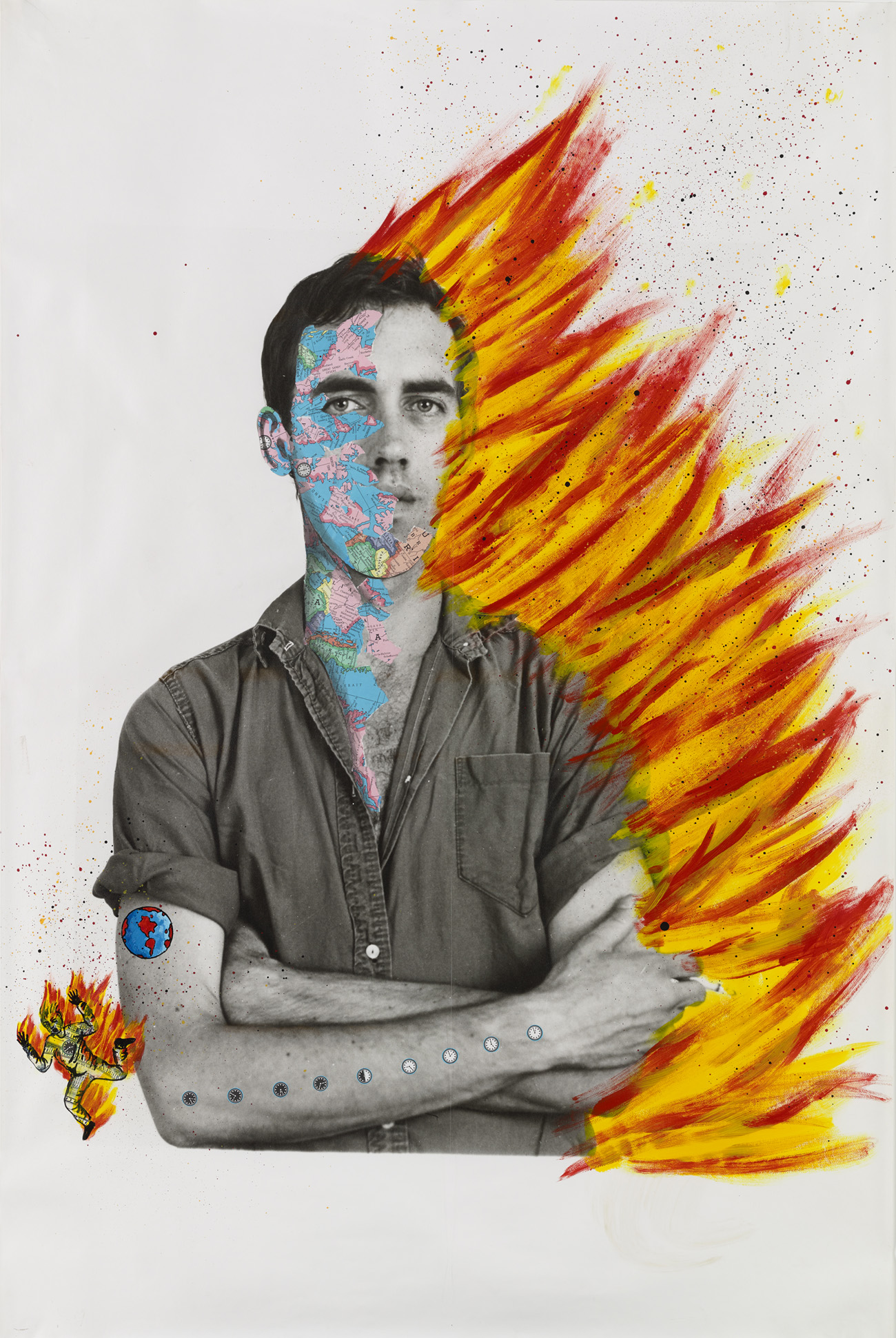
David Wojnarowicz (American, 1954-1992) with Tom Warren
Self-Portrait of David Wojnarowicz
1983-1984
Acrylic and collaged paper on gelatin silver print
60 × 40 in. (152.4 × 101.6cm)
Collection of Brooke Garber Neidich and Daniel Neidich
Photo: Ron Amstutz

What an unforgettable, socially aware artist.
His work, and the concepts it investigates, have lost none of their relevance. With the rise of the right, Trump, fake news, discrimination and the ongoing bigotry of religion his thoughts and ideas, his writing, and his imagination are as critical as ever to understanding the dynamics of power and oppression. As Olivia Laing observes, ” …the forces he spoke out against are as lively and malevolent as ever.”
Remember: silence is the voice of complicity.
Although in his lifetime he never achieved the grace he desired, through his art the grace of his spirit lives on. Love and respect.
Dr Marcus Bunyan
Many thankx to the Whitney Museum of American Art for allowing me to publish the photographs in the posting. Please click on the photographs for a larger version of the image.
“I want to throw up because we’re supposed to quietly and politely make house in this killing machine called America and pay taxes to support our own slow murder, and I’m amazed that we’re not running amok in the streets and that we can still be capable of gestures of loving after lifetimes of all this.”
“It is exhausting, living in a population where people don’t speak up if what they witness doesn’t directly threaten them…”
“When I was told that I’d contracted this virus it didn’t take me long to realise that I’d contracted a diseased society, as well.”
“I’ve always painted what I see, and what I experience, and what I perceive, so it naturally has a place in the work. I think not all the work I do is about AIDS or deals with AIDS, but I think the threads of it are in the other work as well.”
“I think what I really fear about death is the silencing of my voice… I feel this incredible pressure to leave something of myself behind.”
“To make the private into something public is an action that has terrific ramifications.”
“I’m beginning to believe that one of the last frontiers for radical gesture is the imagination…”
“Smell the flowers while you can.”
“All I want is some kind of grace.”
David Wojnarowicz
The image of Rimbaud as a loner bad boy – shooting up, masturbating, prowling Times Square – embodied Wojnarowicz’s early view of what an artist should be: a guerrilla infiltrator, disrupter of what he called the “pre-invented world” that we’re all told is normal, a world of fake borders, gated hierarchies and controlling insider laws. …
A salon-like central gallery is lined with large-scale pictures from the mid-1980s that are basically the equivalent of the history paintings produced by Nicolas Poussin and Thomas Cole, big-thinking panoramas that addressed contemporary politics in a classical language of mythology and landscape. …
Wojnarowicz unabashedly turned, as he said, “the private into something public.” He collapsed political, cultural and personal history in a way that he hadn’t before. He took his outsider citizenship as a subject and weaponized it. The move was strategically effective: It got a lot of attention, including a barrage of right-wing attacks that have persisted into the near-present.”
Holland Cotter. “He Spoke Out During the AIDS Crisis. See Why His Art Still Matters,” on the New York Times website, July 12, 2018 [Online] Cited 22/02/2022
“Wojnarowicz, the writer, painter, photographer, poet, printmaker and activist, was gay himself, and in his work addressed same-sex desire, the Aids crisis, the persecution of sexual minorities and the Reagan administration’s refusal to acknowledge their existence. But his work is really about America, a place he had described in his 1991 essay collection ‘Close to the Knives’ as an “illusion”, a “killing machine”, a “tribal nation of zombies … slowly dying beyond our grasp”.
Jake Nevins. “David Wojnarowicz: remembering the work of a trailblazing artist,” on The Guardian website 13 July 2018 [Online] Cited 22/02/2022
“Long before the word intersectionality was in common currency, Wojnarowicz was alert to people whose experience was erased by what he called “the pre‑invented world” or “the one-tribe nation”. Politicised by his own sexuality, by the violence and deprivation he had been subjected to, he developed a deep empathy with others, a passionate investment in diversity.”
Olivia Laing. “David Wojnarowicz: still fighting prejudice 24 years after his death,” on The Guardian website 13 May 2016 [Online] Cited 22/02/2022
“AIDS is not history. The AIDS crisis did not die with David Wojnarowicz,” reads a mission statement displayed by protesters at the museum. “We are here tonight to honor David’s art and activism by explicitly connecting them to the present day. When we talk about HIV/AIDS without acknowledging that there’s still an epidemic – including in the United States – the crisis goes quietly on and people continue to die… The danger is when you look right now at young people, they think AIDS is over with. They don’t think anyone is living with HIV. They go to the museum and they see it as art – they don’t see AIDS as an urgent problem…”
Sarah Cascone. “‘AIDS Is Not History’: ACT UP Members Protest the Whitney Museum’s David Wojnarowicz Show, Claiming It Ignores an Ongoing Crisis,” on Art News website 30 July 2018 [Online] Cited 22/02/2022
This exhibition will be the first major, monographic presentation of the work of David Wojnarowicz (1954-1992) in over a decade. Wojnarowicz came to prominence in the East Village art world of the 1980s, actively embracing all media and forging an expansive range of work both fiercely political and highly personal. Although largely self-taught, he worked as an artist and writer to meld a sophisticated combination of found and discarded materials with an uncanny understanding of literary influences. First displayed in raw storefront galleries, his work achieved national prominence at the same moment that the AIDS epidemic was cutting down a generation of artists, himself included. This presentation will draw upon recently-available scholarly resources and the Whitney’s extensive holdings of Wojnarowicz’s work.

David Wojnarowicz (American, 1954-1992)
Untitled (Buffalo)
1988-1989
Marion Scemama collection
Courtesy of Estate of David Wojnarowicz and Gracie Mansion Fine Art
© The Estate of David Wojnarowicz
David Wojnarowicz’s Untitled (Buffalo) is one of the artist’s best-known works and perhaps one of the most haunting artistic responses to the AIDS crisis of the 1980s. The work depicts a herd of buffalo falling off a cliff to their deaths. The artist provides very little context for why and how the creatures got there. The work is in reality, a photograph of a diorama from a museum in Washington, DC depicting an early Native American hunting technique. Through appropriation of this graphic image, the artist evokes feelings of doom and hopelessness, making the work extremely powerful and provocative. Made in the wake of the artist’s HIV-positive diagnosis, Wojnarowicz’s image draws a parallel between the AIDS crisis and the mass slaughter of buffalo in America in the nineteenth century, reminding viewers of the neglect and marginalisation that characterised the politics of HIV/AIDS at the time.
Anonymous text from the Paddle 8 website Nd [Online] Cited 26/09/2022. No longer available online
Beginning in the late 1970s, David Wojnarowicz (1954-1992) created a body of work that spanned photography, painting, music, film, sculpture, writing, and activism. Largely self-taught, he came to prominence in New York in the 1980s, a period marked by creative energy, financial precariousness, and profound cultural changes. Intersecting movements – graffiti, new and no wave music, conceptual photography, performance, and neo-expressionist painting – made New York a laboratory for innovation. Wojnarowicz refused a signature style, adopting a wide variety of techniques with an attitude of radical possibility. Distrustful of inherited structures – a feeling amplified by the resurgence of conservative politics – he varied his repertoire to better infiltrate the prevailing culture.
Wojnarowicz saw the outsider as his true subject. Queer and later diagnosed as HIV-positive, he became an impassioned advocate for people with AIDS when an inconceivable number of friends, lovers, and strangers were dying due to government inaction. Wojnarowicz’s work documents and illuminates a desperate period of American history: that of the AIDS crisis and culture wars of the late 1980s and early 1990s. But his rightful place is also among the raging and haunting iconoclastic voices, from Walt Whitman to William S. Burroughs, who explore American myths, their perpetuation, their repercussions, and their violence. Like theirs, his work deals directly with the timeless subjects of sex, spirituality, love, and loss. Wojnarowicz, who was thirty-seven when he died from AIDS-related complications, wrote: “To make the private into something public is an action that has terrific ramifications.”
Text from the Whitney Museum of American Art

David Wojnarowicz in 1988
Beginning in the late 1970s, David Wojnarowicz (1954-1992) created a body of work that spanned photography, painting, music, film, sculpture, writing, and activism. Largely self-taught, he came to prominence in New York in the 1980s, a period marked by creative energy, financial precariousness, and profound cultural changes. Intersecting movements – graffiti, new and no wave music, conceptual photography, performance, and neo-expressionist painting – made New York a laboratory for innovation. Wojnarowicz refused a signature style, adopting a wide variety of techniques with an attitude of radical possibility. He saw the outsider as his true subject. Queer and later diagnosed as HIV-positive, he became an impassioned advocate for people with AIDS when an inconceivable number of friends, lovers, and strangers were dying due to government inaction.
Whitney Museum of American Art
This summer, the most complete presentation to date of the work of artist, writer, and activist David Wojnarowicz will be on view in a full-scale retrospective organised by the Whitney Museum of American Art. David Wojnarowicz: History Keeps Me Awake at Night is the first major re-evaluation since 1999 of one of the most fervent and essential voices of his generation.
Beginning in the late 1970s, David Wojnarowicz (1954-1992) created a body of work that spanned photography, painting, music, film, sculpture, writing, performance, and activism. Joining a lineage of iconoclasts, Wojnarowicz (pronounced Voyna-ROW-vich) saw the outsider as his true subject. His mature period began with a series of photographs and collages that honoured – and placed himself among – consummate countercultural figures like Arthur Rimbaud, William Burroughs, and Jean Genet. Even as he became well-known in the East Village art scene for his mythological paintings, Wojnarowicz remained committed to writing personal essays. Queer and HIV-positive, Wojnarowicz became an impassioned advocate for people with AIDS at a time when an inconceivable number of friends, lovers, and strangers – disproportionately gay men – were dying from the disease and from government inaction.
Scott Rothkopf, Deputy Director for Programs and Nancy and Steve Crown Family Chief Curator, remarked, “Since his death more than twenty-five years ago, David Wojnarowicz has become an almost mythic figure, haunting, inspiring, and calling to arms subsequent generations through his inseparable artistic and political examples. This retrospective will enable so many to confront for the first time, or anew, the groundbreaking multidisciplinary body of work on which his legacy actually stands.”
David Breslin noted, “With rage and beauty, David Wojnarowicz made art that questioned power, particularly why some lives are visible and others are hidden. Wojnarowicz wrote, ‘To make the private into something public is an action that has terrific ramifications.’ Present throughout his work and this exhibition is the will to show the desires, dreams, and politics of outsiders – like him – queer, economically marginalised, sick, vulnerable, and vibrantly idiosyncratic.”
Largely self-taught, Wojnarowicz came to prominence in New York in the 1980s, a period marked by great creative energy and profound cultural changes. Intersecting movements – graffiti, new and no wave music, conceptual photography, performance, neo-expressionist painting – made New York a laboratory for innovation. Unlike many artists, Wojnarowicz refused a signature style, adopting a wide variety of techniques with an attitude of radical possibility. Distrustful of inherited structures, a feeling amplified by the resurgence of conservative politics, Wojnarowicz varied his repertoire to better infiltrate the culture.
Wojnarowicz was a poet before he was a visual artist. His mature period began with Rimbaud in New York (1978-1979), in which he photographed friends wearing a mask of the nineteenth-century French poet’s face and posing throughout New York City. He became, in the 1980s, a figure in the East Village art scene, showing his paintings, photographs, and installations at galleries like Civilian Warfare, Gracie Mansion, and P.P.O.W. During a time when AIDS was ravaging the artistic community of New York, Wojnarowicz emerged as a powerful activist and advocate for the rights of people with AIDS and the queer community, becoming deeply entangled in the culture wars.
His essay for the catalogue accompanying the exhibition Witnesses: Against Our Vanishing (curated by Nan Goldin at Artists Space in 1989-1990) came under fire for its vitriolic attack on politicians and leaders who were preventing AIDS treatment and awareness. The National Endowment for the Arts (NEA) threatened to defund the exhibition, and Wojnarowicz fought against this and for the first amendment rights of artists.
The Whitney retrospective will include an excerpt of footage shot by Phil Zwickler, a filmmaker, fellow activist, and friend of Wojnarowicz who also died of AIDS, in which Wojnarowicz is seen preparing to talk to the press in the wake of the NEA controversy. Important text-photo works from this period, which incorporated writings from Close to the Knives: A Memoir of Disintegration, a collection of essays published a year prior to Wojnarowicz’s death, will also be in the Whitney show, including When I Put My Hands on Your Body (1990), Untitled (One day this kid…) (1989), and the iconic photograph Untitled (Falling Buffalo) (1988-1989).
The Whitney exhibition begins with the artist’s early experiments in collage and photography that were contemporaneous with the Rimbaud in New York series and features three of Wojnarowicz’s original journals that he kept during the time he was living in Paris and conceiving the Rimbaud photographs. Also on view will be the original Rimbaud mask the artist had his friends wear to pose for the photographs.
Wojnarowicz’s early stencil works first appeared on the streets of downtown Manhattan. These show him developing an iconographic language that he also used on the walls of the abandoned piers on the Hudson River and would figure in the more complex studio paintings that characterise his art later in the decade. An important group of spray and collage paintings in 1982 focus on an image of the artist Peter Hujar, his great friend and mentor. A group of Hujar’s photographs of Wojnarowicz will be shown in conversation with these paintings. By the mid-1980s, Wojnarowicz’s paintings combined mythological subject matter with elements that explored urbanism, technology, religion, and industry.
His masterful suite of four paintings from 1987, each named for one of the four elements, will be shown in their own gallery both to emphasise the centrality of painting and image-making during this moment and to mark the beginning of a period of mourning, rage, and action (both aesthetic and activist) marked by the death of Hujar and others to AIDS-related complications. His never-completed film, Fire in My Belly, will be shown among other unfinished film work that later would become the source for much of his photographic work from 1988-89: the Ant Series, The Weight of the World, and Spirituality (for Paul Thek). A gallery will be devoted to a recording of Wojnarowicz reading from his own writings in 1992 at The Drawing Center in Soho.

Installation view of David Wojnarowicz: History Keeps Me Awake at Night (Whitney Museum of American Art, New York, July 13-September 30, 2018). Clockwise, from top left: Andreas Sterzing, Something Possible Everywhere: Pier 34, NYC, 1983-1984; David Wojnarowicz, Fuck You Faggot Fucker, 1984; Peter Hujar, Untitled (Pier), 1983; Peter Hujar, Canal Street Piers: Krazy Kat Comic on Wall (by David Wojnarowicz), 1983; David Wojnarowicz, Untitled, 1982; David Wojnarowicz, Untitled (Slam Click), 1983
Photograph by Ron Amstutz
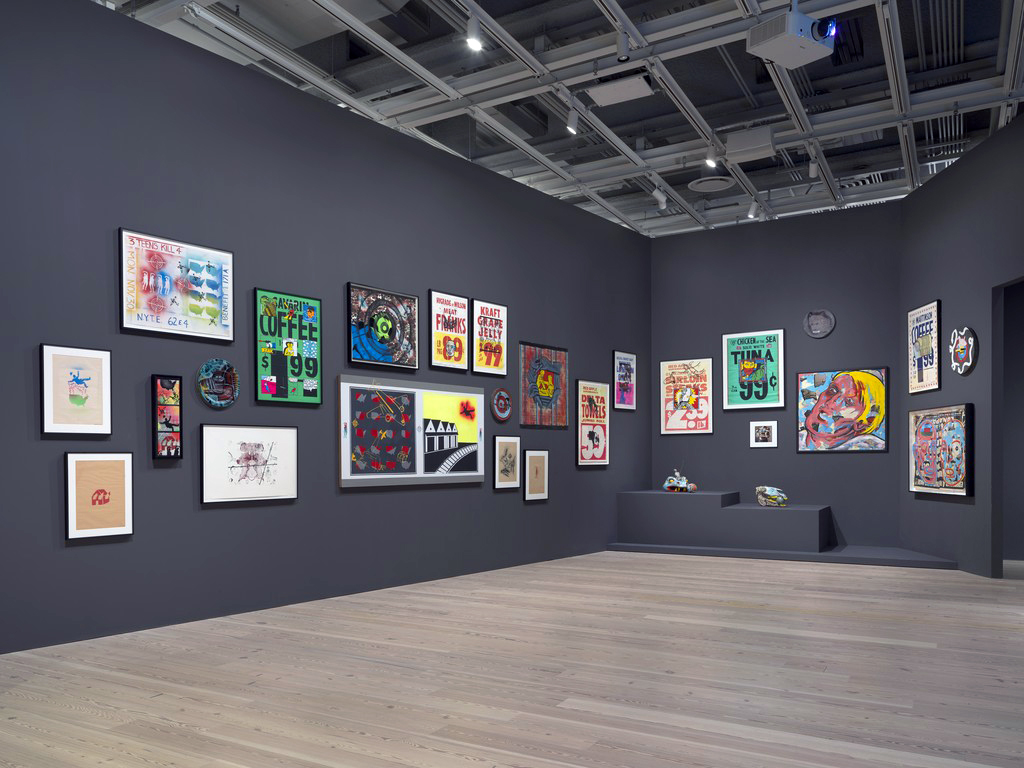
Installation view of David Wojnarowicz: History Keeps Me Awake at Night (Whitney Museum of American Art, New York, July 13-September 30, 2018)
Photograph by Ron Amstutz

Installation view of David Wojnarowicz: History Keeps Me Awake at Night (Whitney Museum of American Art, New York, July 13-September 30, 2018)

Installation view of David Wojnarowicz: History Keeps Me Awake at Night (Whitney Museum of American Art, New York, July 13-September 30, 2018). From left to right: He Kept Following Me, 1990; I Feel A Vague Nausea, 1990; Americans Can’t Deal with Death, 1990; We Are Born into a Preinvented Existence, 1990.
Photograph by Ron Amstutz
After hitchhiking across the U.S. and living for several months in San Francisco, and then in Paris, David Wojnarowicz settled in New York in 1978 and soon after began to exhibit his work in East Village galleries. He was included in the 1985 and 1991 Whitney Biennials, and was shown in numerous museum and gallery exhibitions throughout the United States and Europe. Previous exhibitions to focus on Wojnarowicz include “Tongues of Flame” at the University Galleries of Illinois State University (1990) and “Fever: The Art of David Wojnarowicz” at the New Museum (1999). Wojnarowicz was the author of a number of books, including Close to the Knives: A Memoir of Disintegration (1991). His artwork is in numerous private and public collections including the Whitney Museum of American Art; the Metropolitan Museum of Art; The Museum of Modern Art, New York; The Art Institute of Chicago; the Broad Art Foundation, Los Angeles; and Museo Nacional Centro de Arte Reina Sofía, Madrid, Spain.
Press release from the Whitney Museum of American Art
Wojnarowicz, who aspired to be a writer in the 1970s, immersed himself in the work of William S. Burroughs and Jean Genet – two collages here feature them – but he felt a particular kinship to the iconoclastic nineteenth-century French poet Arthur Rimbaud. In the summer of 1979, just back from a stay in Paris with his sister, the twenty-four-year-old Wojnarowicz photographed three of his friends roaming the streets of New York wearing life-size masks of Rimbaud. Using a borrowed camera, Wojnarowicz staged the images in places important to his own story: the subway, Times Square, Coney Island, all-night diners, the Hudson River piers, and the loading docks in the Meatpacking District, just steps away from the Whitney Museum. Born one hundred years, almost to the month, before Wojnarowicz, Rimbaud rejected established categories and wanted to create new and sensuous ways to participate in the world. He, like Wojnarowicz, was the forsaken son of a sailor father, made his queerness a subject of his work, and knowingly acknowledged his status as an outsider (“Je est un autre” – “I is an other” – is perhaps Rimbaud’s most famous formulation).
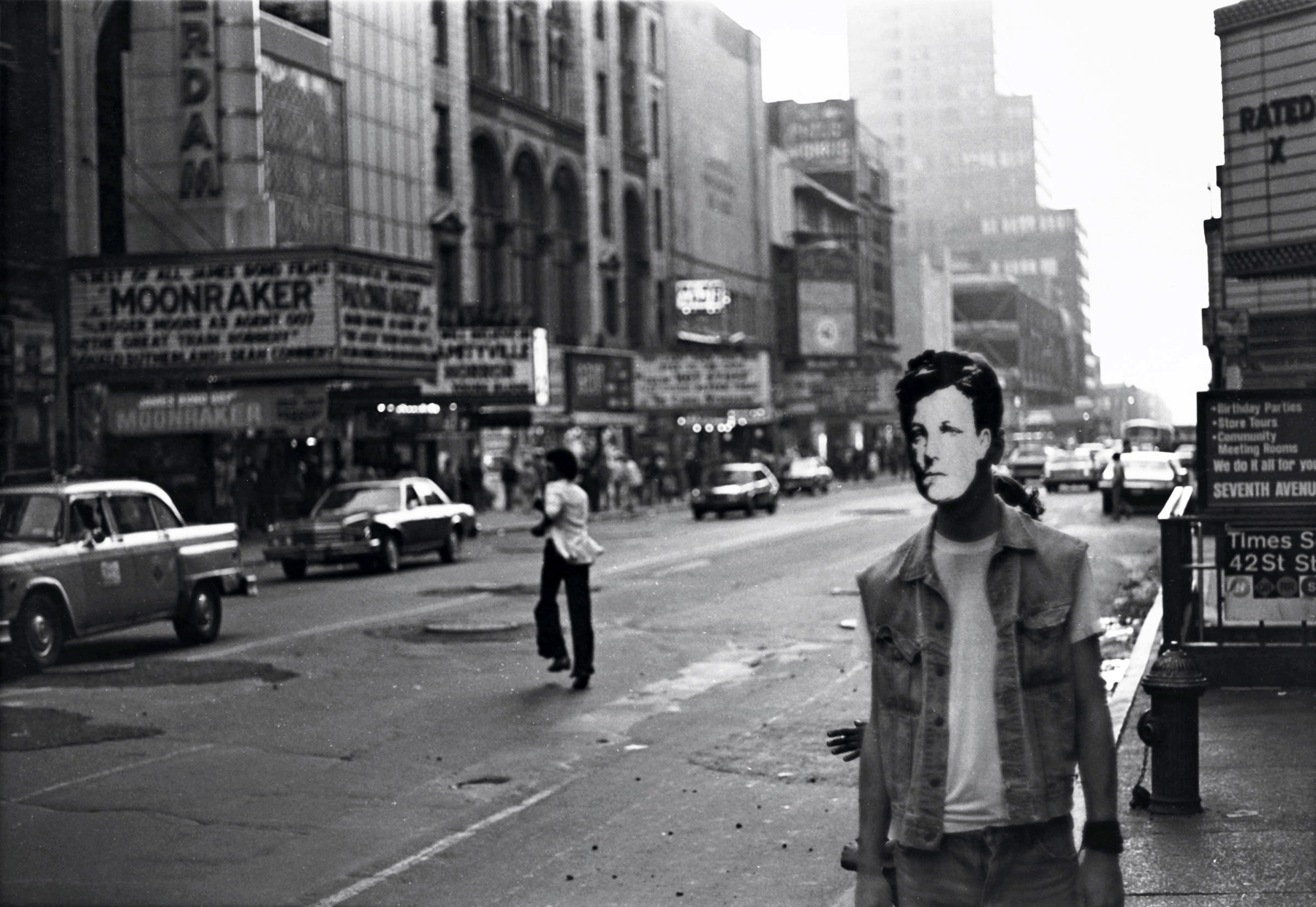
David Wojnarowicz (American, 1954-1992)
Arthur Rimbaud in New York
1978-1979 (printed 1990)
Gelatin silver print
8 × 10 in. (20.3 × 25.4cm)
Collection of the Estate of David Wojnarowicz
Courtesy P.P.O.W, New York

David Wojnarowicz (American, 1954-1992)
Arthur Rimbaud in New York (On Subway)
1978-1979 (printed 1990)
Gelatin silver print
8 × 10 in. (20.3 × 25.4cm)
Collection of the Estate of David Wojnarowicz
Courtesy P.P.O.W, New York
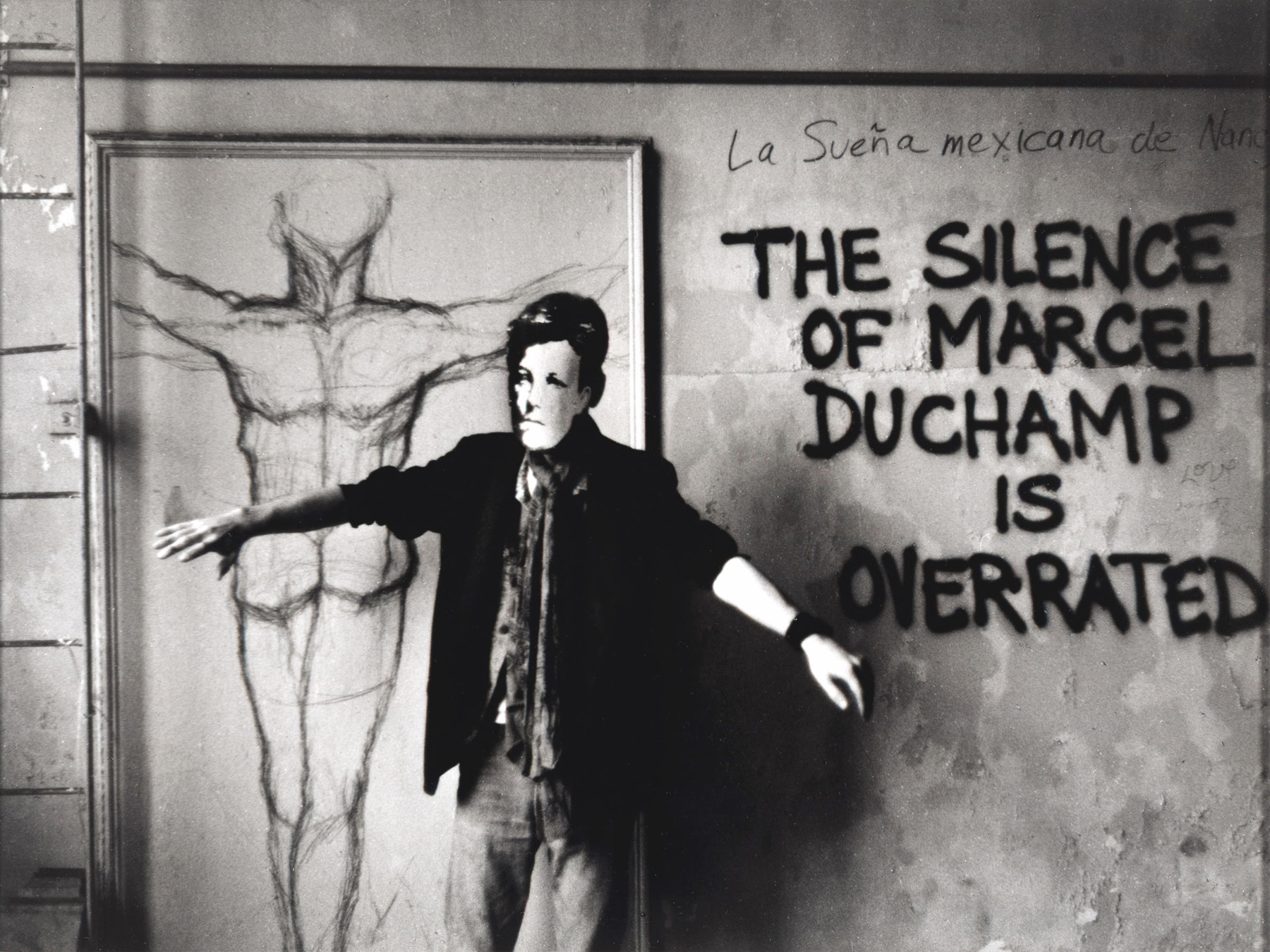
David Wojnarowicz (American, 1954-1992)
Arthur Rimbaud in New York (Duchamp, Pier)
1978-1979 (printed 2004)
Gelatin silver print
10 × 8 in. (25.4 × 20.3cm)
Collection of Philip E. Aarons and Shelley Fox Aarons
Image courtesy the Estate of David Wojnarowicz and P.P.O.W., New York
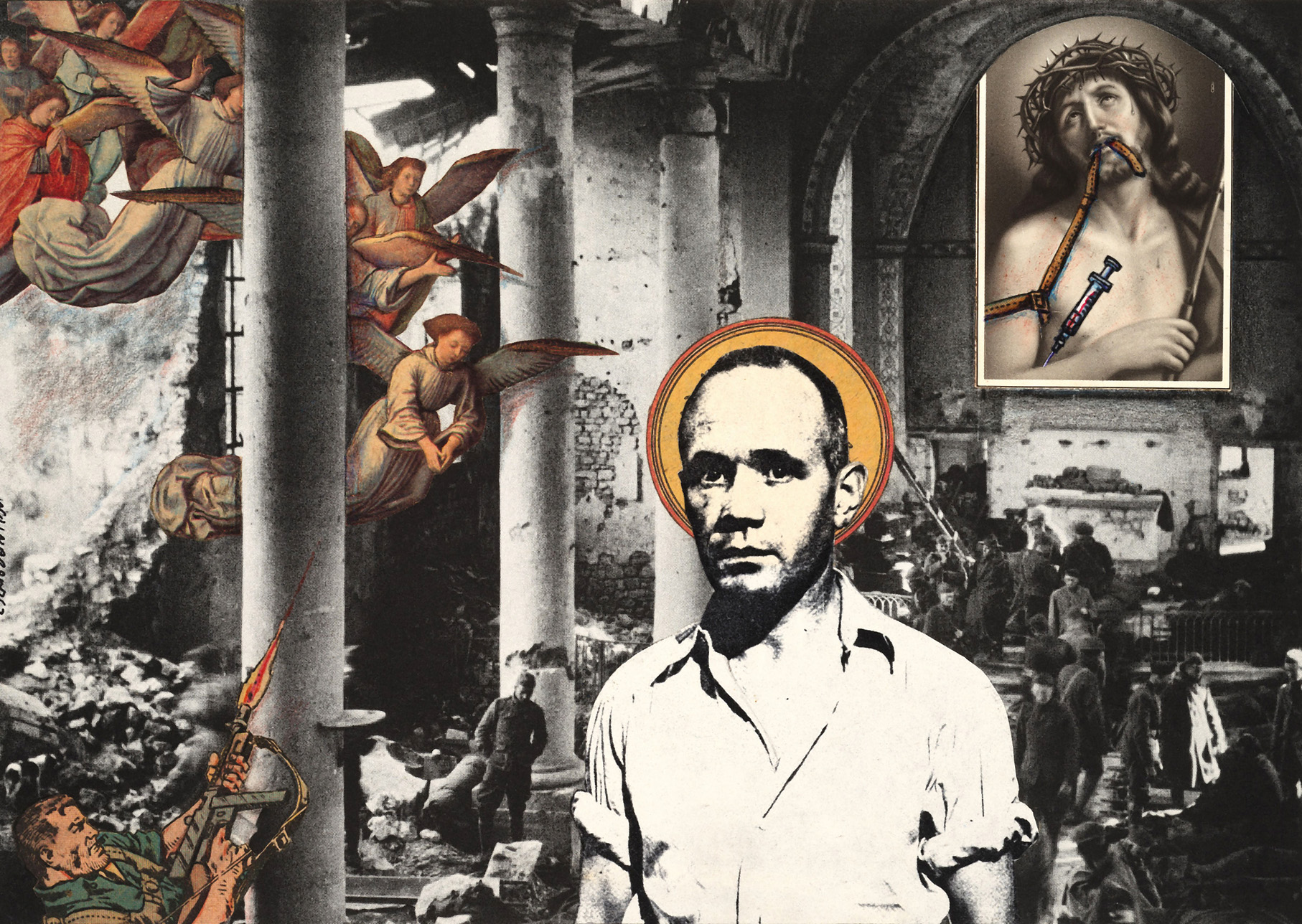
David Wojnarowicz (American, 1954-1992)
Untitled (Genet after Brassaï)
1979
Collage of offset-lithographs and coloured pencil
12 × 15 in. (30.5 × 38.1cm)
Private collection
Photo: Carson Zullinger
At the same time as he conceived the Rimbaud series, Wojnarowicz created homages to other personal heroes, including Jean Genet (1910-1986), the French novelist, poet, and political activist. Genet resonated with Wojnarowicz for his erotic vision of the universe, his embrace of the outsider, and his frank writing on gay sex. For Untitled (Genet after Brassaï), Wojnarowicz transforms the iconoclast writer into a saint; in the background, a Christ figure appears to be shooting up with a syringe. When later criticised by religious conservatives, Wojnarowicz explained that he saw drug addiction as a contemporary struggle that an empathetic Christ would identify with and forgive.
In the early 1980s Wojnarowicz had no real income. He scavenged materials like supermarket posters and trashcan lids as well as cheap printed materials available in his Lower East Side neighbourhood. Incorporating them in his art, Wojnarowicz found radical possibilities in these discarded, forgotten artefacts and in the city itself. He embraced the abandoned piers on the Hudson River, particularly Pier 34 just off Canal Street, for the freedom they offered. He cruised for sex there, and he also wrote and made art on site. He appreciated their proximity to nature and the solitude he could find there.
Wojnarowicz began using stencils out of necessity. He was a member of the band, 3 Teens Kill 4, whose album, No Motive, can be played on the website. He produced posters for their shows, and to prevent their removal started making templates to spray-paint his designs on buildings, walls, and sidewalks. These images – the burning house, a falling man, a map outline of the continental United States, a dive-bombing aircraft, a dancing figure – became signature elements in his visual vocabulary, creating an iconography of crisis and vulnerability. Wojnarowicz frequently railed against what he called the “pre-invented world”: a world colonised and corporatised to such an extent that it seems to foreclose any alternatives. For him, using found objects, working at the abandoned piers for an audience of friends and strangers, and creating a language of his own were ways to shatter the illusion of the pre-invented world and make his own reality.
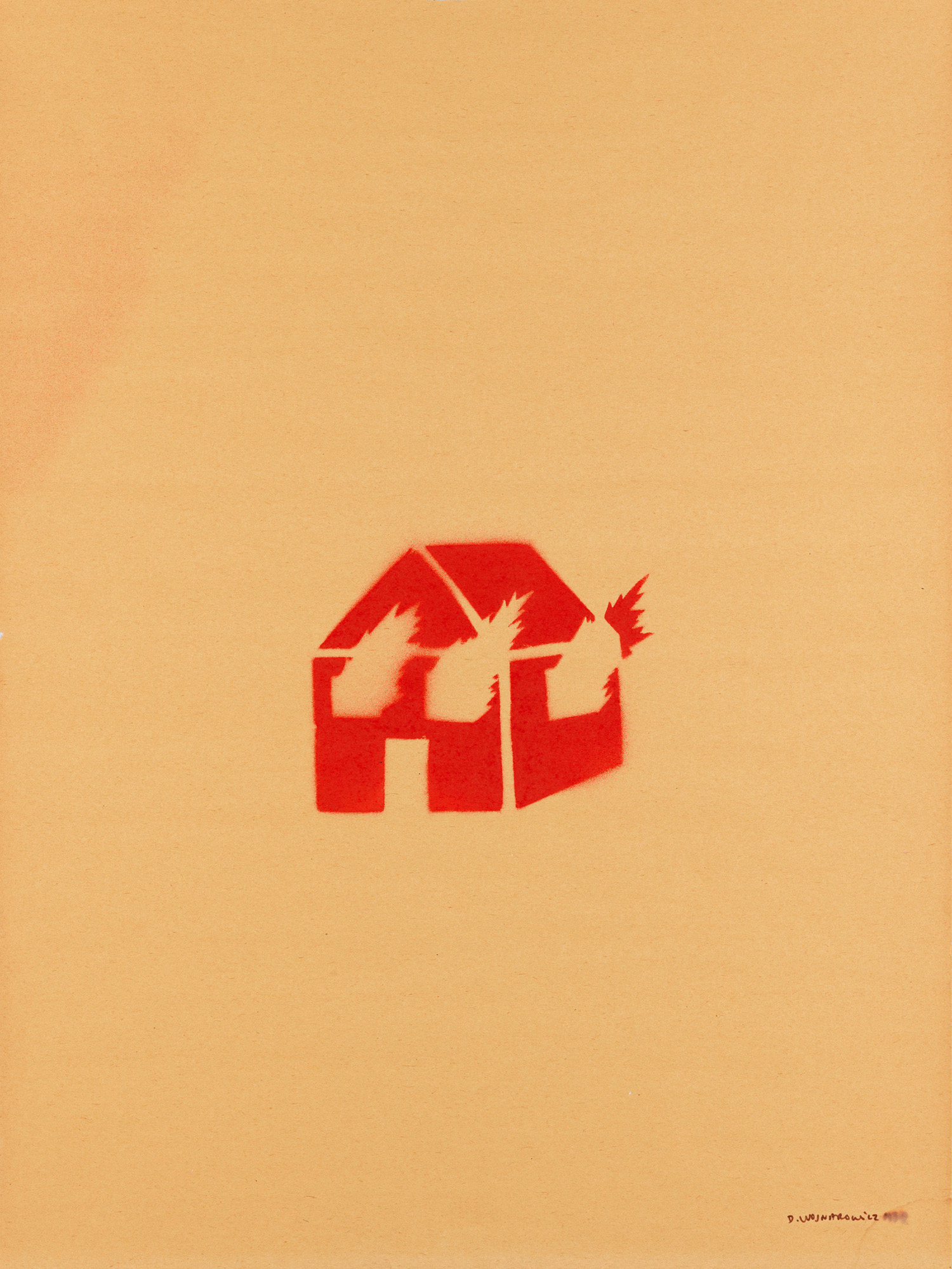
David Wojnarowicz (American, 1954-1992)
Untitled (Burning House)
1982
Spray paint on paper
23 15/16 × 17 7/8 in. (60.8 × 45.4cm)
Whitney Museum of American Art, New York; purchase with funds from the Print Committee
Image © Whitney Museum of American Art, New York
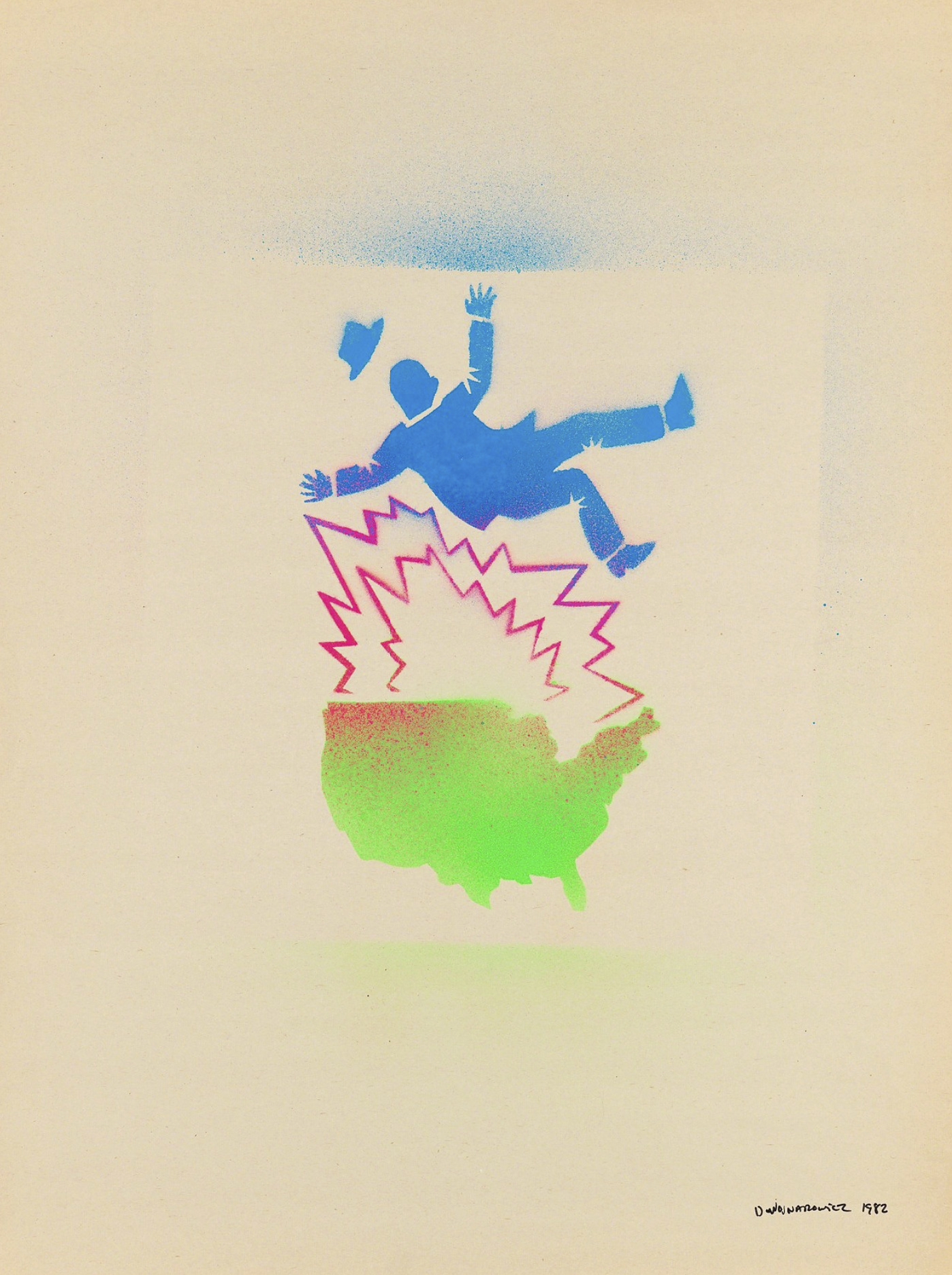
David Wojnarowicz (American, 1954-1992)
Untitled (Falling man and map of the U.S.A.)
1982
Spray paint on paper
Whitney Museum of American Art, New York
Purchase with funds from the Print Committee
Image © Whitney Museum of American Art, New York
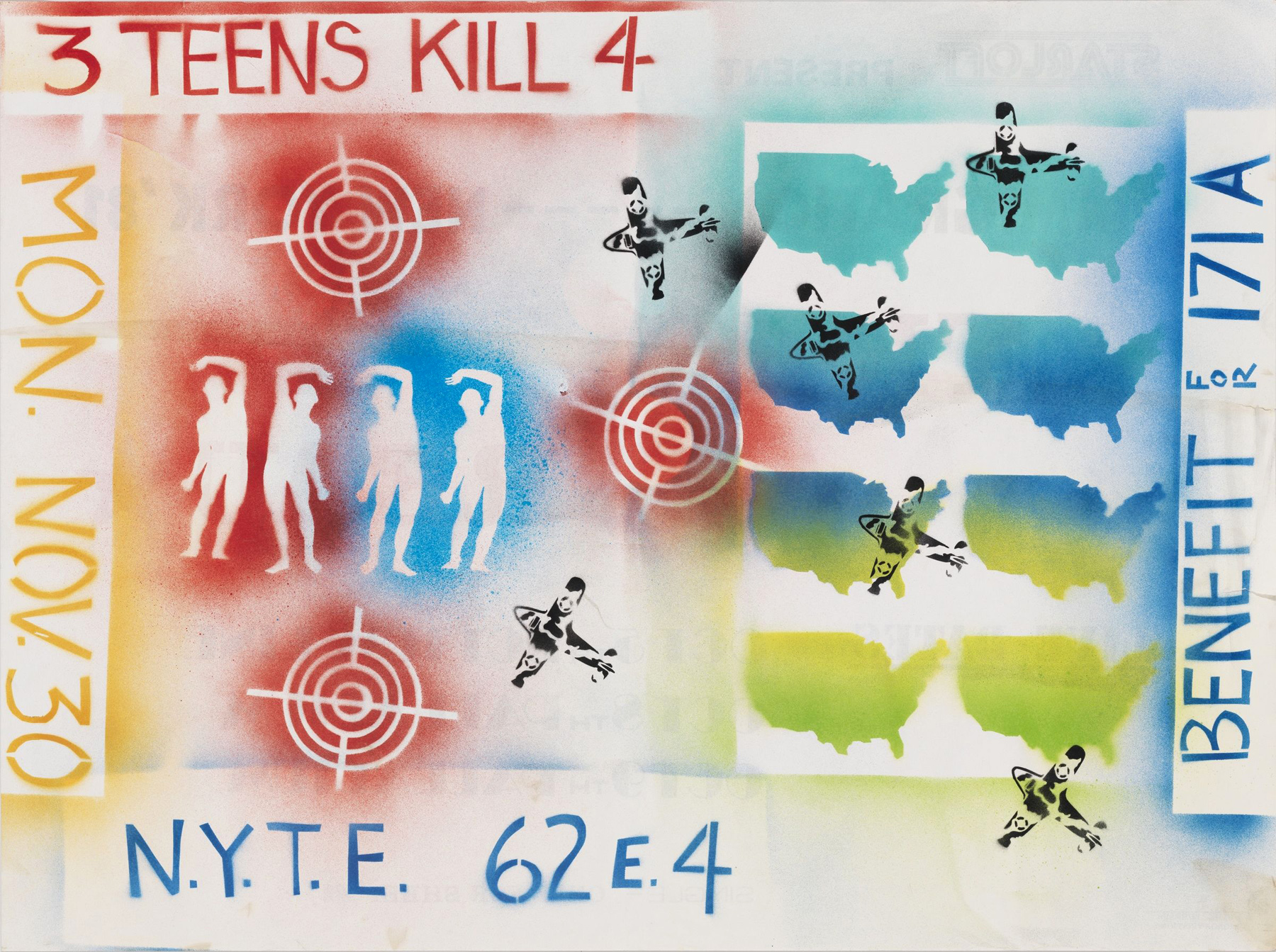
David Wojnarowicz (American, 1954-1992)
“3 Teens Kill 4 – No Motive Poster”
1982-1983
Spray paint on paper
30 × 40 1/8 in. (76.2 × 101.9cm)
Whitney Museum of American Art, New York
Purchase with funds from the Print Committee
© The Estate of David Wojnarowicz and P.P.O.W. Gallery, New York

David Wojnarowicz (American, 1954-1992)
Diptych II
1982
Spray paint with acrylic on composition board
48 × 96 in. (121.9 × 243.8cm)
Collection of Raymond J. Learsy
Image courtesy Raymond J. Learsy
Photo: Brian Wilcox

David Wojnarowicz (American, 1954-1992)
True Myth (Kraft Grape Jelly)
1983
Screenprint, edition 42/50
31 1/4 × 22 1/2 in. (79.4 × 57.2cm)
Whitney Museum of American Art, New York
Purchase with funds from the Print Committee
© The Estate of David Wojnarowicz and P.P.O.W. Gallery, New York
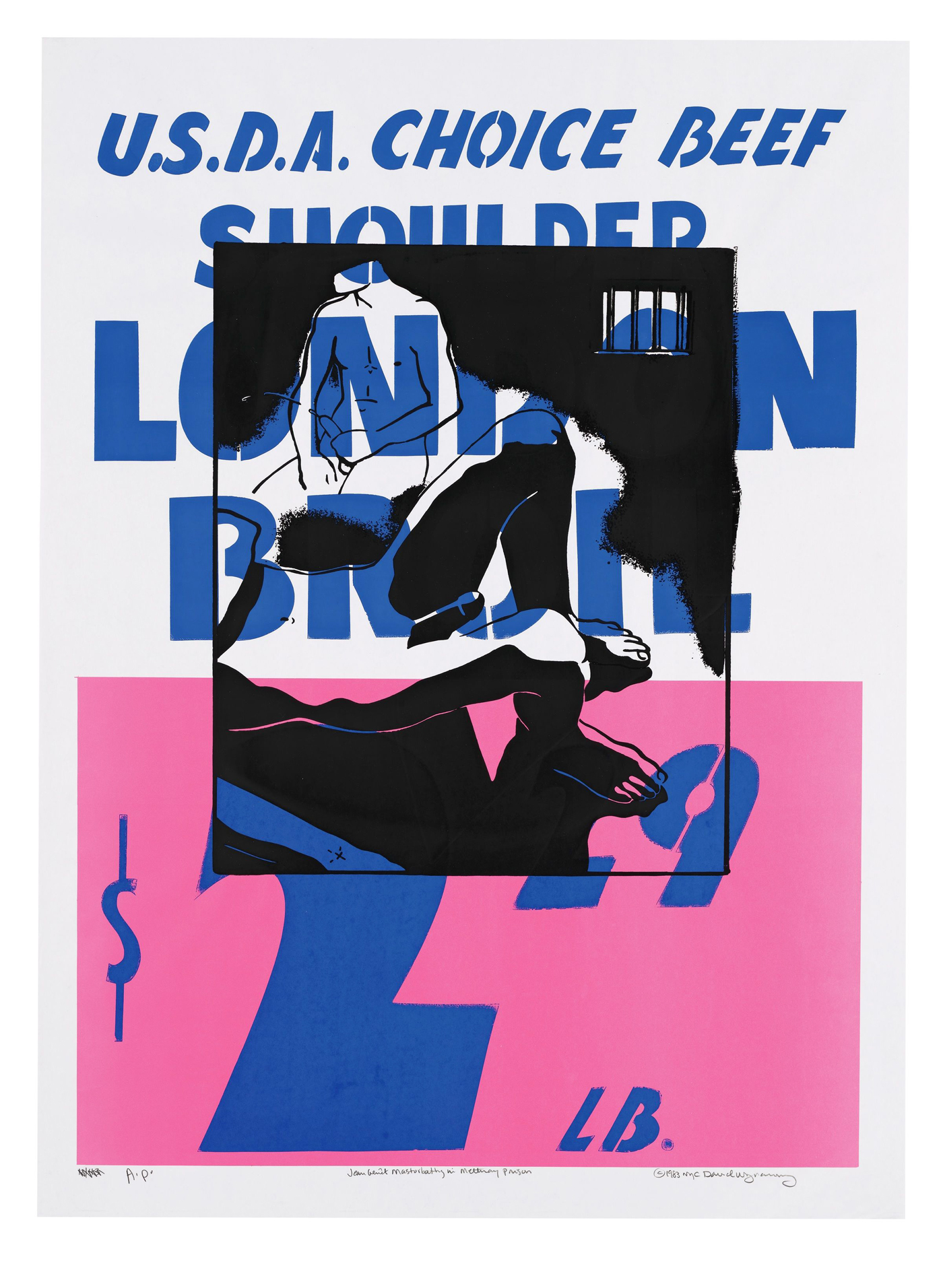
David Wojnarowicz (American, 1954-1992)
Jean Genet Masturbating in Metteray Prison (London Broil)
1983
Screenprint on supermarket poster
34 × 25 in. (86.4 × 63.5cm)
Whitney Museum of American Art, New York
Purchase, with funds from the Print Committee
Photo: Mark-Woods.com
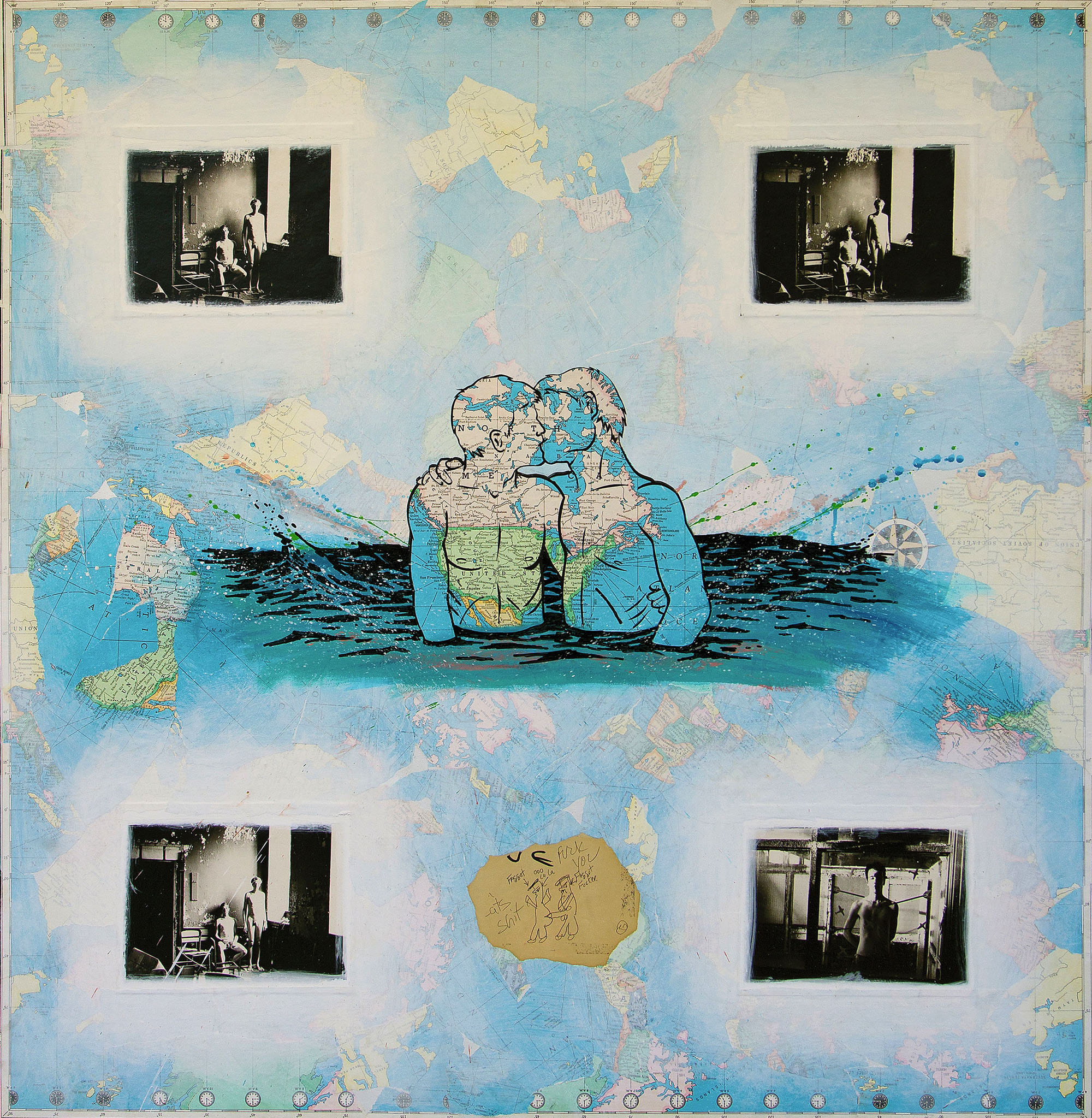
David Wojnarowicz (American, 1954-1992)
Fuck You Faggot Fucker
1984
Four black-and-white photographs, acrylic, and collaged paper on Masonite
48 × 48 in. (121.9 × 121.9cm)
Collection of Barry Blinderman
Image courtesy Barry Blinderman, Normal, Illinois
Photo: Jason Judd
This work was one of Wojnarowicz’s first to directly tackle homophobia and gay bashing and to embrace same-sex love. Its title comes from a scrap of paper containing a homophobic slur that Wojnarowicz found and affixed below the central image of two men kissing. Made with one of his stencils, these anonymous men are archetypes, stand-ins for a multitude of personal stories. Using photographs taken at the piers and in an abandoned building on Avenue B, Wojnarowicz also includes himself and his friends John Hall and Brian Butterick in this constellation. Maps like those in the background here often appear in Wojnarowicz’s work; for him, they represented a version of reality that society deemed orderly and acceptable. He often cut and reconfigured the maps to gesture toward the groundlessness, chaos, and arbitrariness of both man-made borders and the divisions between “civilisation” and nature.
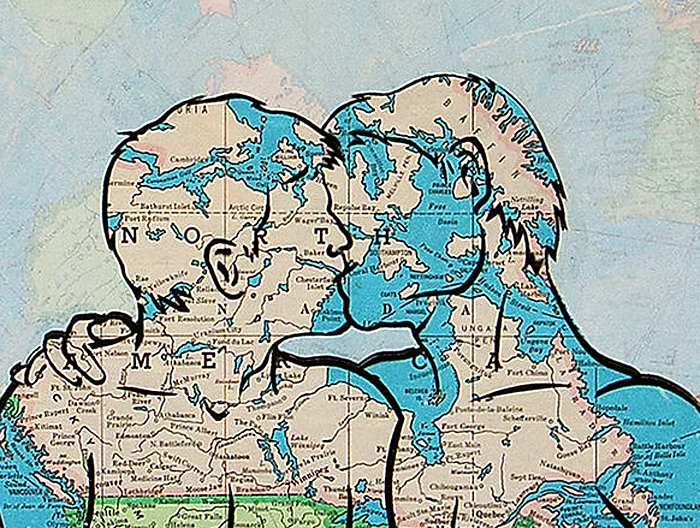
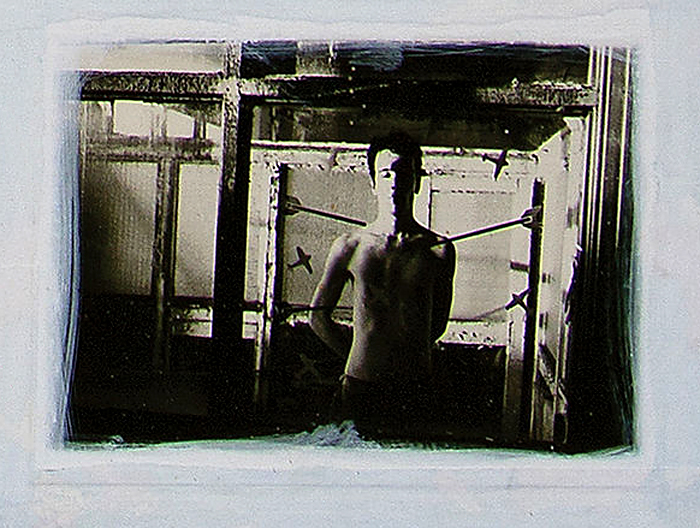
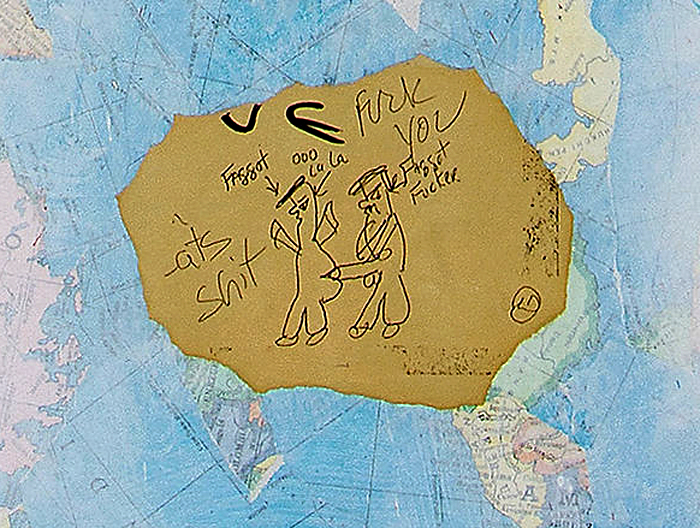
David Wojnarowicz (American, 1954-1992)
Fuck You Faggot Fucker (details)
1984
Four black-and-white photographs, acrylic, and collaged paper on Masonite
48 × 48 in. (121.9 × 121.9cm)
Collection of Barry Blinderman
Image courtesy Barry Blinderman, Normal, Illinois
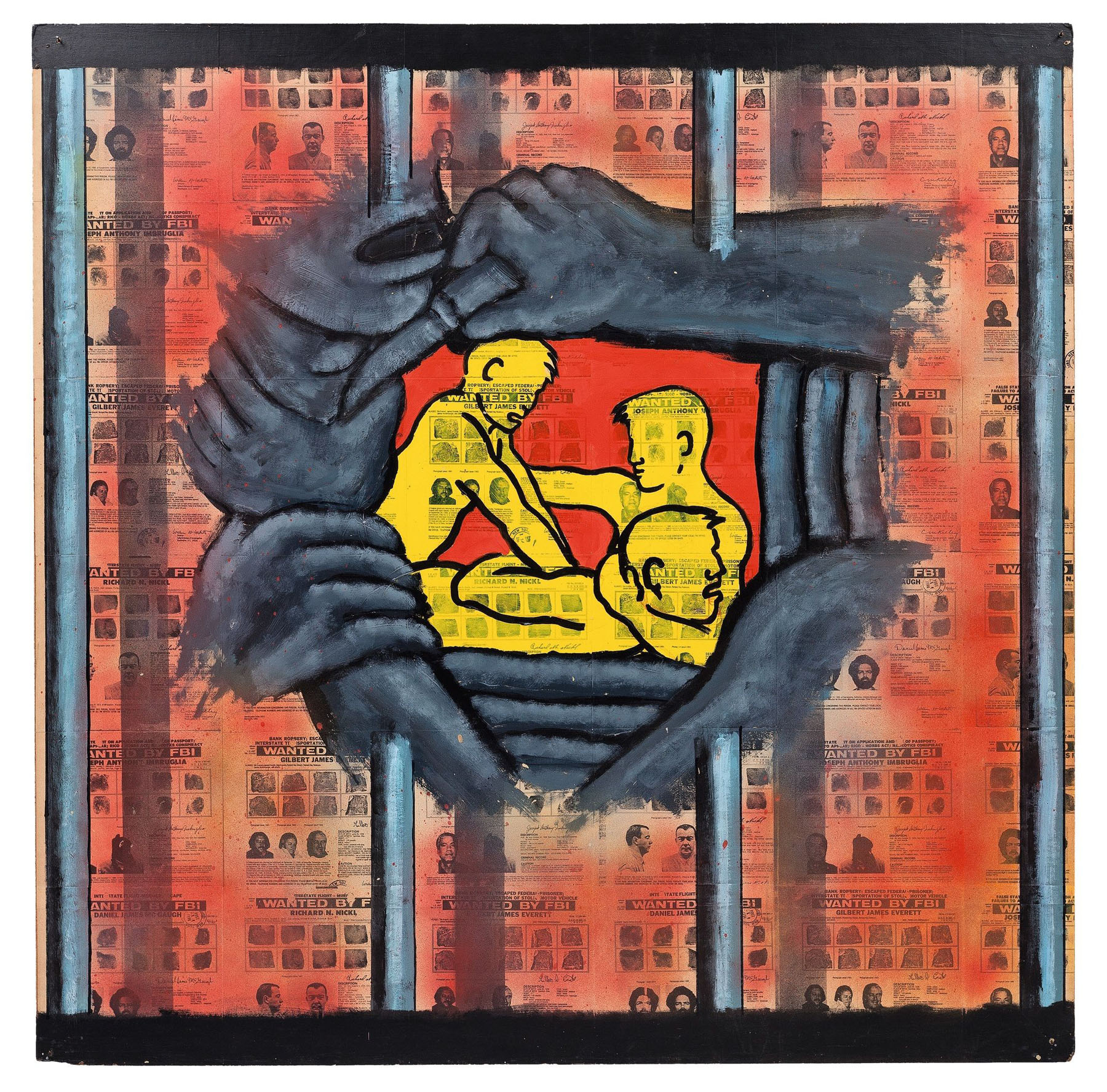
David Wojnarowicz (American, 1954-1992)
Prison Rape
1984
Acrylic and spray paint on posters on composition board
48 × 48 in. (121.9 × 121.9cm)
Private collection
Image courtesy Ted Bonin
Photo: Joerg Lohse

Andreas Sterzing
Something Possible Everywhere: Pier 34, NYC
[Wojnarowicz’s Gagging Cow at the Pier]
1983
Courtesy the artist and Hunter College Art Galleries, New York
“So simple, the appearance of night in a room full of strangers, the maze of hallways wandered as in films, the fracturing of bodies from darkness into light, sounds of plane engines easing into the distance.”
~ David Wojnarowicz
![Peter Hujar (American, 1934-1992) 'Canal Street Piers: Krazy Kat Comic on Wall [by David Wojnarowicz]' 1983](https://artblart.com/wp-content/uploads/2018/07/peter-hujar-canal-street-piers-krazy-kat-comic-on-wall-by-david-wojnarowicz-web.jpg "Peter Hujar (American, 1934-1992) 'Canal Street Piers: Krazy Kat Comic on Wall [by David Wojnarowicz]' 1983")
Peter Hujar (American, 1934-1992)
Canal Street Piers: Krazy Kat Comic on Wall (by David Wojnarowicz)
1983
Gelatin silver print
8 x 8 inches (20.3 x 20.3cm)
Peter Hujar Archive, courtesy Pace/MacGill Gallery, New York, and Fraenkel Gallery, San Francisco

David Wojnarowicz (American, 1954-1992)
Untitled (Two Heads)
1984
Acrylic on commercial screenprint poster
41 × 47 1/2 in. (104.1 × 120.7cm)
Collection of the Ford Foundation
Image courtesy the Fales Library and Special Collections, New York University

David Wojnarowicz (American, 1954-1992)
Incident #2 – Government Approved
1984
Acrylic and collaged paper on composition board
51 × 51 × 7/8 in. (129.5 × 129.5 × 2.2cm) framed
Collection of Howard Bates Johnson
For his exhibition at the East Village gallery Civilian Warfare in May 1984, Wojnarowicz created a group of cast-plaster heads that he individualised by applying torn maps and paint. He made twenty-three of them, a reference to the number of chromosome pairs in human DNA, and explained that the series was about “the evolution of consciousness.” At the gallery, he installed these “alien heads” on long shelves on a wall painted with a bull’s-eye. Suggesting a ring line, the installation evoked the conflicts then ravaging Central and South America, from the Contra War in Nicaragua to the Salvadoran Civil War to the Argentine Dirty War. The spectre of torture, disappearance, and human-rights abuses cast a shadow over all of the Americas.
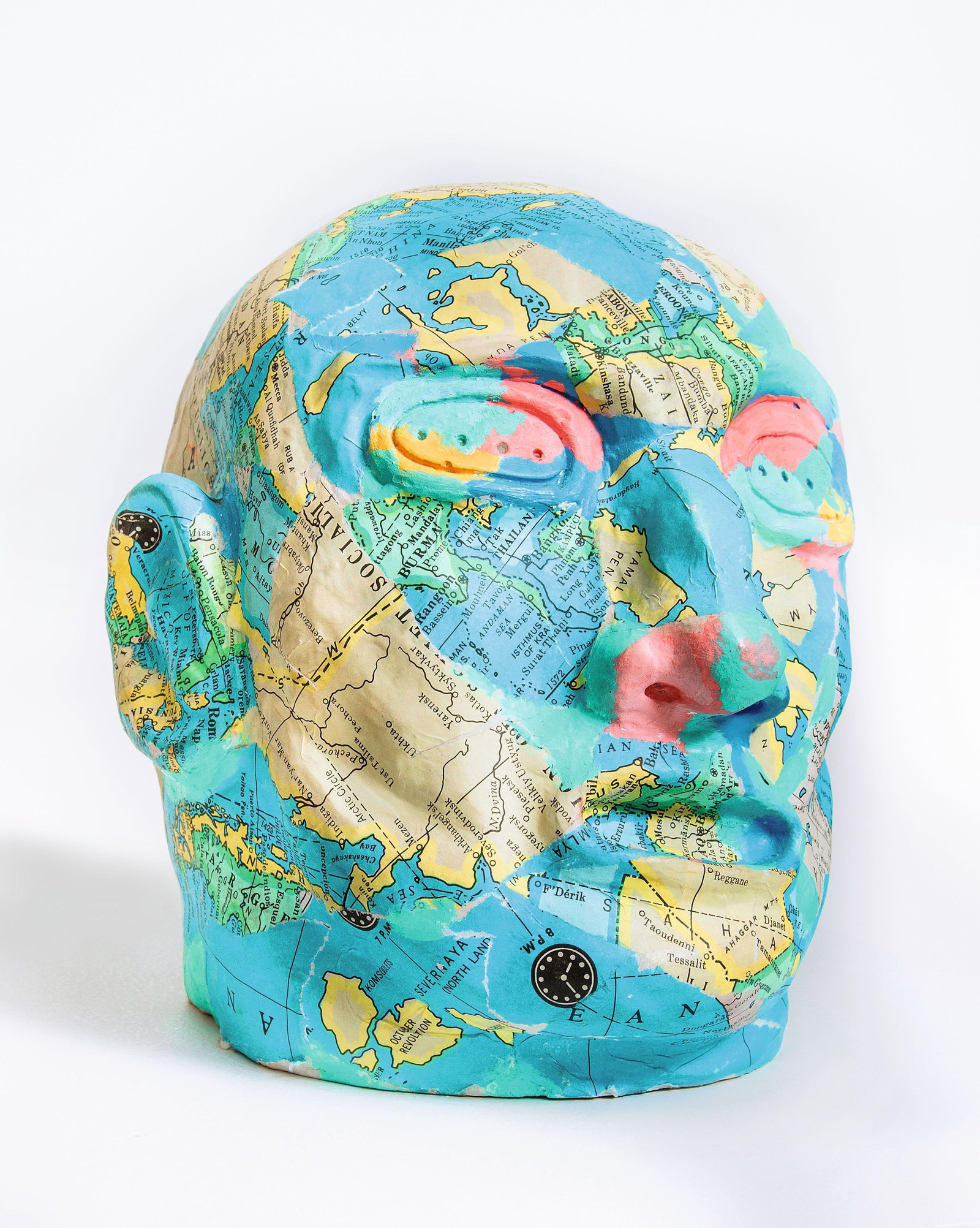
David Wojnarowicz (American, 1954-1992)
Untitled
1984
From the Metamorphosis series
Collaged paper and acrylic on plaster
9 1/2 × 9 1/2 × 9 1/2 in. (24.1 × 24.1 × 24.1cm)
Collection of Beth Rudin DeWoody
Image courtesy Beth Rudin DeWoody
Photo: Monica McGivern
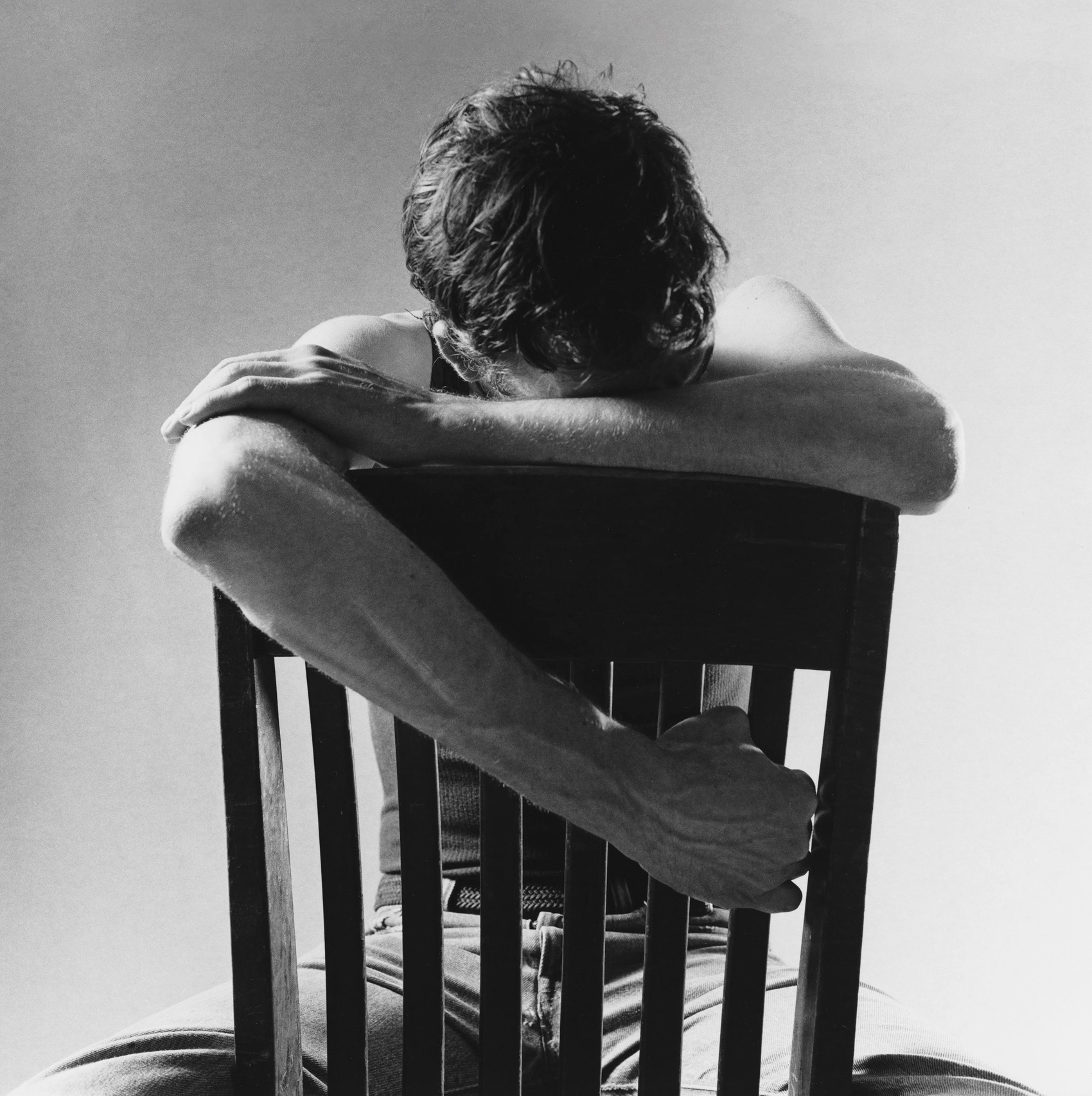
Wojnarowicz met Peter Hujar in 1980. They were briefly lovers, but the relationship soon transitioned and intensified into a friendship that defied categorisation. The two frequently made artworks using the other as subject. Twenty years Wojnarowicz’s senior, Hujar was a photographer and a known figure in the New York art world, esteemed for his achingly beautiful, technically flawless portraits. At the time of their meeting, Wojnarowicz was still finding his way. It was Hujar who convinced him that he was an artist and, specifically, encouraged him to paint – something Wojnarowicz had never done. After Hujar’s death in 1987 due to complications from AIDS, Wojnarowicz would claim him as “my brother, my father, my emotional link to the world.”
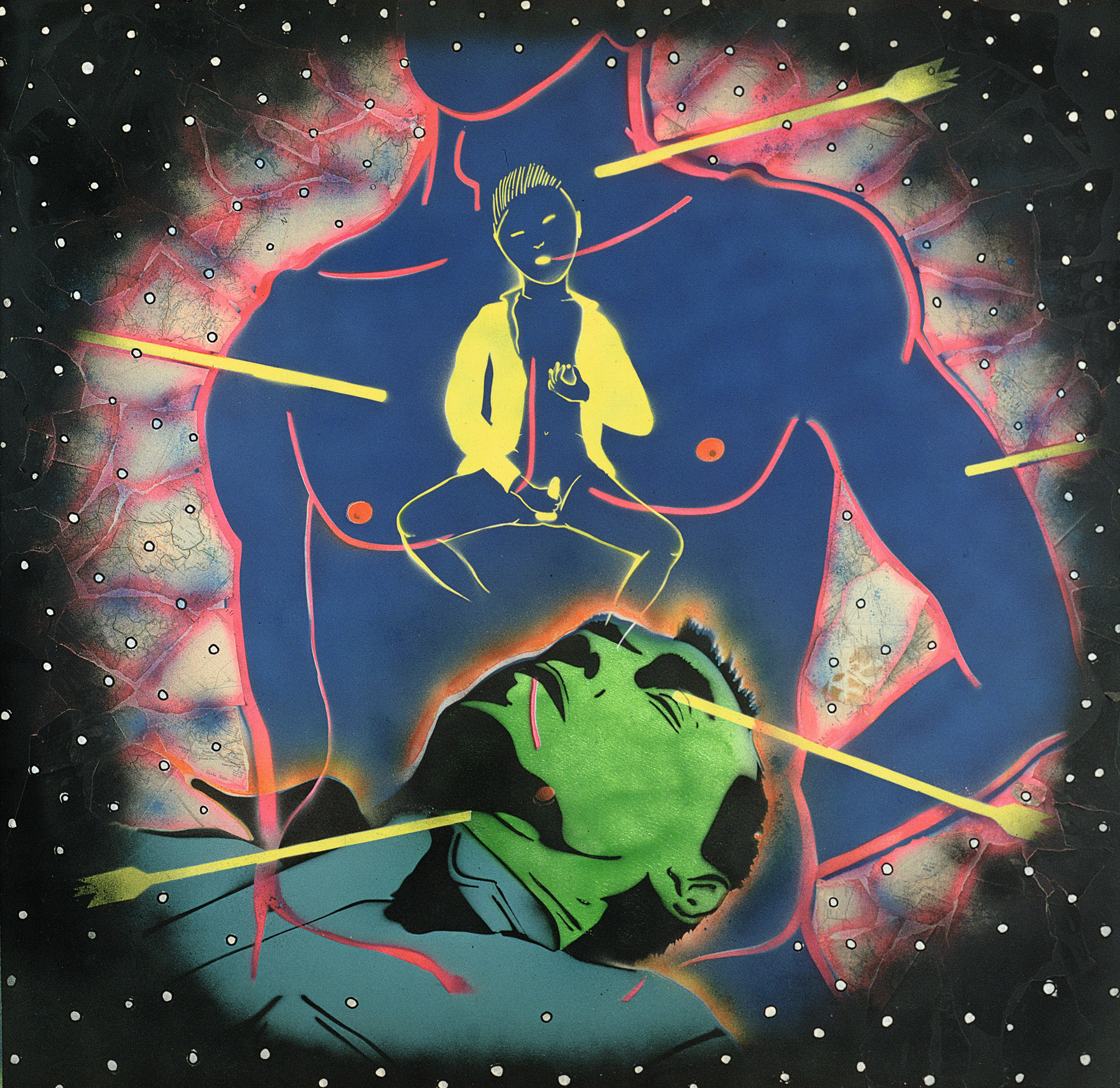
David Wojnarowicz (American, 1954-1992)
Peter Hujar Dreaming/Yukio Mishima: Saint Sebastian
1982
Acrylic and spray paint on Masonite
48 × 48 in. (121.9 × 121.9cm)
Collection of Matthijs Erdman
Image courtesy the Estate of David Wojnarowicz and P.P.O.W, New York
In this painting from 1982, Wojnarowicz composes a meditation on male desire. His friend and mentor Peter Hujar stretches across the bottom, reclining with his eyes closed, apparently dreaming the scene above. An image of the Japanese author Yukio Mishima (1925-1970) masturbating dominates the centre of the composition; it is inspired by the writer’s description of his first masturbatory experience, initiated by a reproduction of a Renaissance painting of Saint Sebastian. The torso of the Christian martyr – young, statuesque, and pierced with arrows – rises above, a glowing aura linking him to the night sky and offering him up as an icon of queerness.
Peter Hujar (American, 1934-1992)
David Wojnarowicz (Village Voice “Heartsick: Fear and Loving in the Gay Community”)
1983
Gelatin silver print
10 7/8 × 13 5/8 in. (27.6 × 34.6cm)
Collection of Philip E. and Shelley Fox Aarons
© 1987 The Peter Hujar Archive LLC
Courtesy Pace/MacGill Gallery, New York, and Fraenkel Gallery, San Francisco
This photograph of Wojnarowicz with his head bowed appeared on the cover of the June 28, 1983, edition of The Village Voice. It accompanied the article “Heartsick: Fear and Loving in the Gay Community” by Richard Goldstein. At the time of publication, very little was known about HIV and AIDS, including how it spread. Goldstein wrote: “If one were to devise a course of action based on incontrovertible evidence alone, there would be no conclusion to draw. Should I screen out numbers who look like they’ve been around? Should I travel to have sex? Should I look for lesions before I leap? How do I know my partner doesn’t have the illness in its (apparently protracted) dormant stage?” By the end of 1983, there were 2,118 reported AIDS-related deaths in the United States.

Peter Hujar (American, 1934-1992)
David Wojnarowicz
1981
Gelatin silver print
14 3/4 × 14 13/16 in. (37.5 × 37.6cm)
Whitney Museum of American Art, New York
Purchase with funds from the Photography Committee
© The Peter Hujar Archive
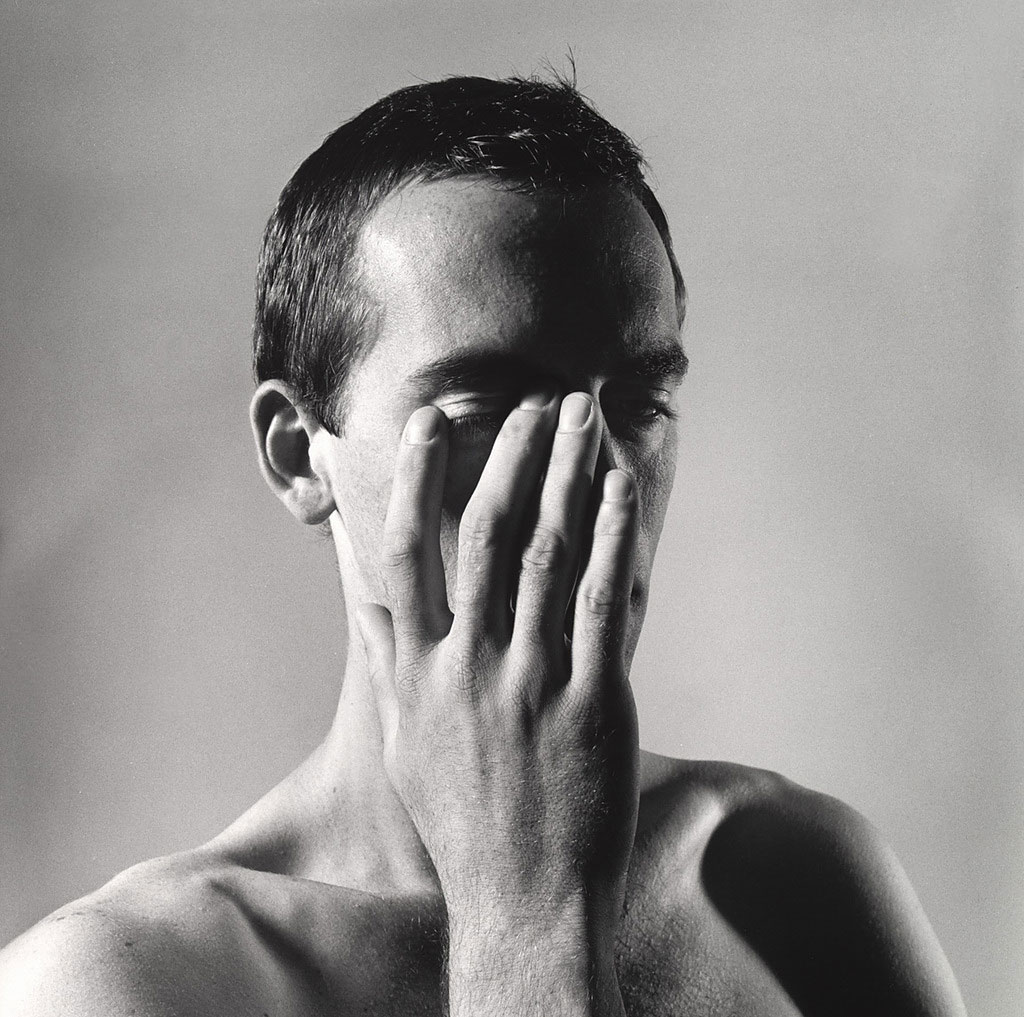
Peter Hujar (American, 1934-1992)
David Wojnarowicz with Hand Touching Eye
1981
Gelatin silver print
14 3/4 x 14 3/4″ (37.4 x 37.4cm)
The Museum of Modern Art, New York
The Fellows of Photography Fund

Peter Hujar (American, 1934-1992)
David Wojnarowicz Reclining (II)
1981
Gelatin silver print
14 11/16 x 14 13/16 in. (37.3 x 37.6cm)
Princeton University Art Museum, Princeton, NJ
Gift of Stephen Koch
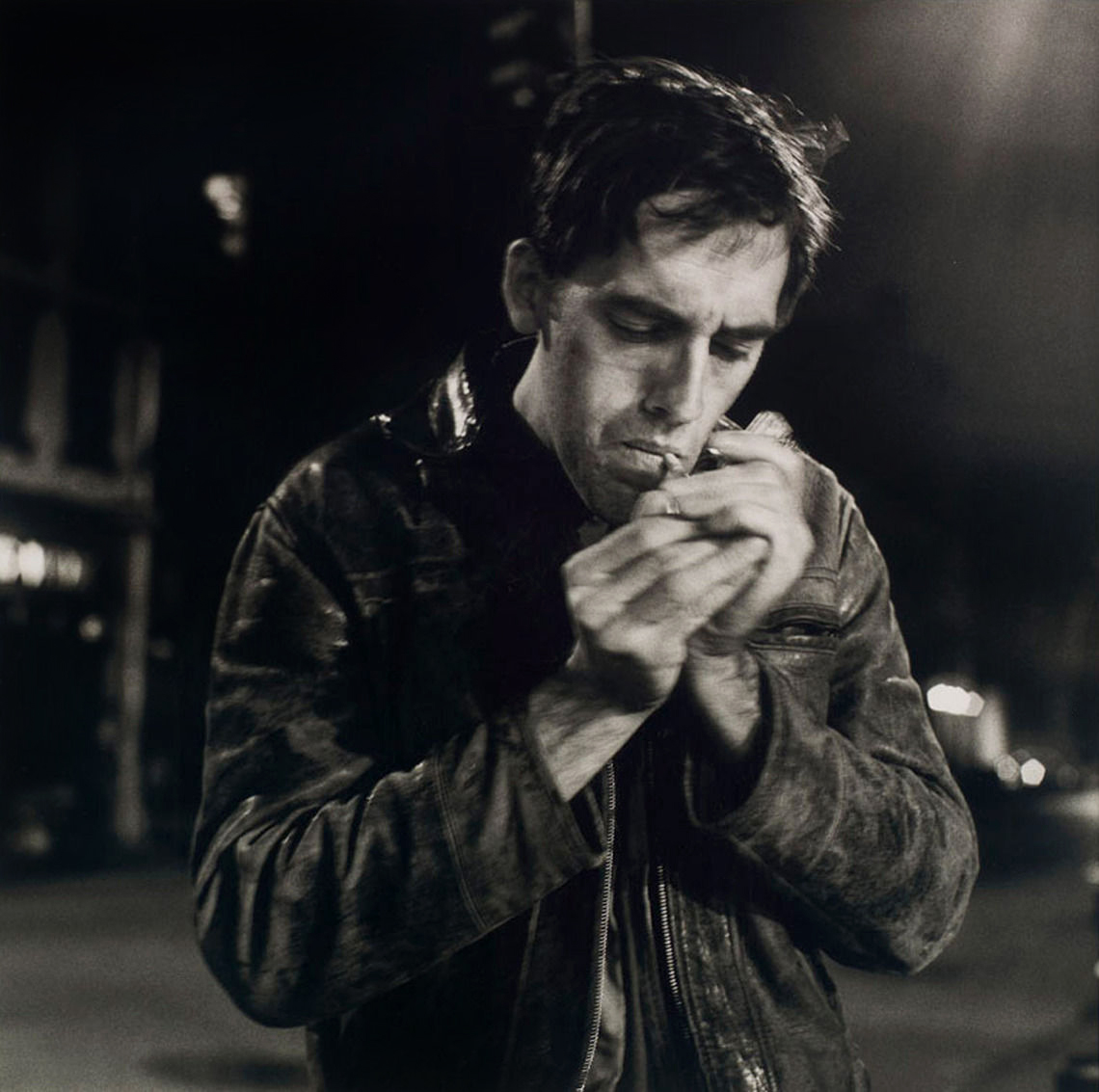
Peter Hujar (American, 1934-1992)
David Lighting Up
1985
Gelatin silver print
14 5/8 × 14 3/4 in. (37.1 × 37.5cm)
Whitney Museum of American Art, New York
Promised gift of the Fisher Landau Center for Art
© 1987 The Peter Hujar Archive LLC
Courtesy PaceMacGill Gallery, N.Y. and Fraenkel Gallery, San Francisco

David Wojnarowicz (American, 1954-1992)
Untitled (Green Head)
1982
Acrylic on composition board
48 × 96 in. (121.9 × 243.8cm)
Collection of Hal Bromm and Doneley Meris
In the mid-1980s Wojnarowicz began to incorporate his disparate signs and symbols into complex paintings. A fierce critic of a society he saw degrading the environment and ostracising the outsider, Wojnarowicz made compositions that were dense with markers of industrial and colonised life. These include railroad tracks and highways, sprawling cities and factory buildings, maps and currency, nuclear power diagrams and crumbling monuments. Interspersed among them are symbols that he connected to fragility, such as blood cells, animals and insects, and the natural world. Wojnarowicz used these depictions as metaphors for a culture that devalues the lives of those on the periphery of mainstream culture. He made these paintings at a time when AIDS was ravaging New York, particularly the gay community. Although AIDS was first identified in 1981, President Ronald Reagan did not mention it publicly until 1985. By the end of that year, in New York alone there already had been 3,766 AIDS-related deaths.
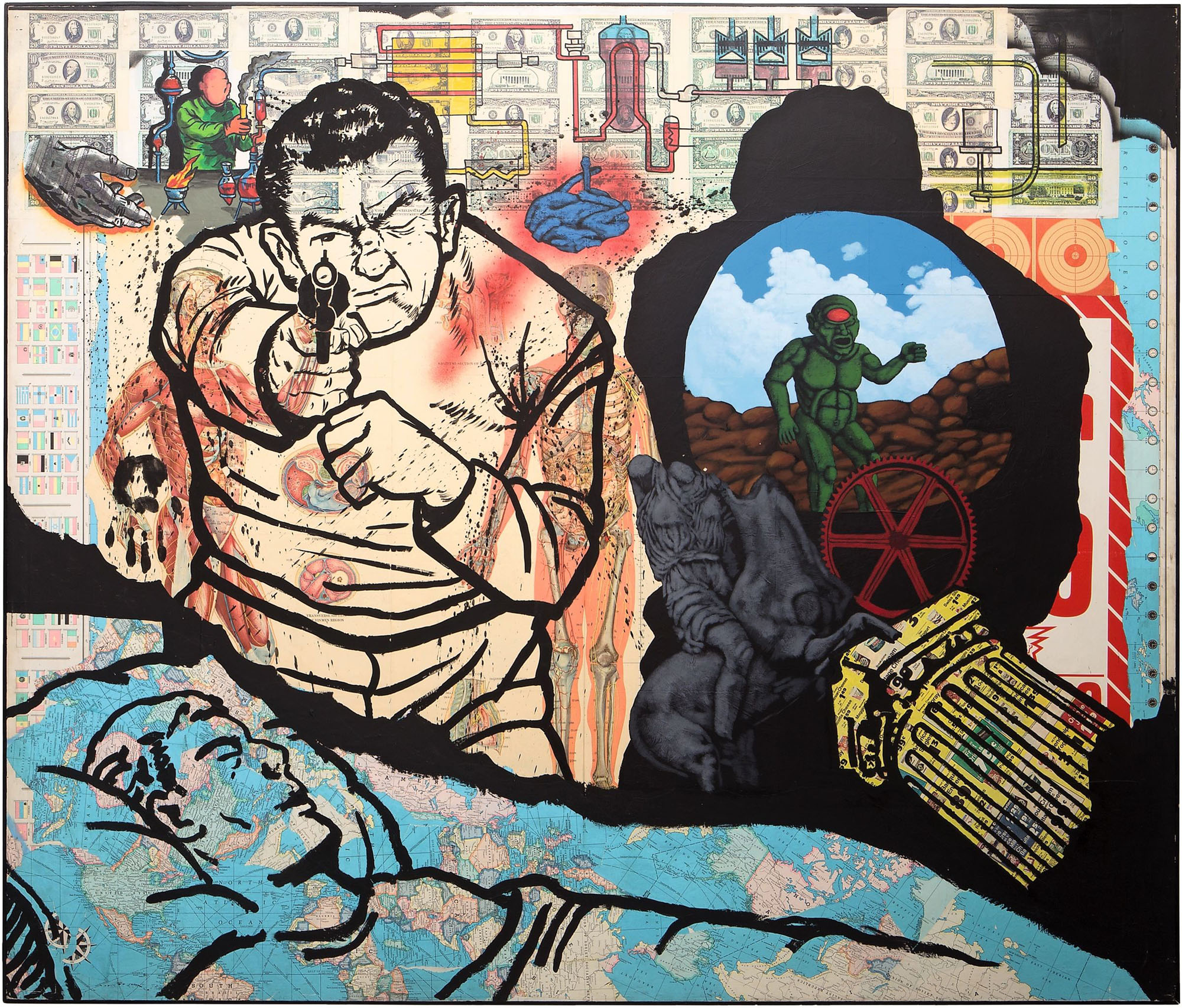
David Wojnarowicz (American, 1954-1992)
History Keeps Me Awake at Night (For Rilo Chmielorz)
1986
Acrylic, spray paint, and collaged paper on composition board
72 x 84 in. (170.2 x 200cm)
Collection of John P. Axelrod
Photo: Ron Cowie
In History Keeps Me Awake at Night (for Rilo Chmielorz) Wojnarowicz presents a dystopic vision of American life. Presenting simulated American currency and bureaucratic emblems alongside symbols of crime, monstrosity, and chaos, the painting’s threatening imagery runs counter to the apparently placid sleep of the man below. If the painting is about fear, perhaps the fear of staring down AIDS, Wojnarowicz presents it as an endemic condition in which new fears are built upon historical ones.
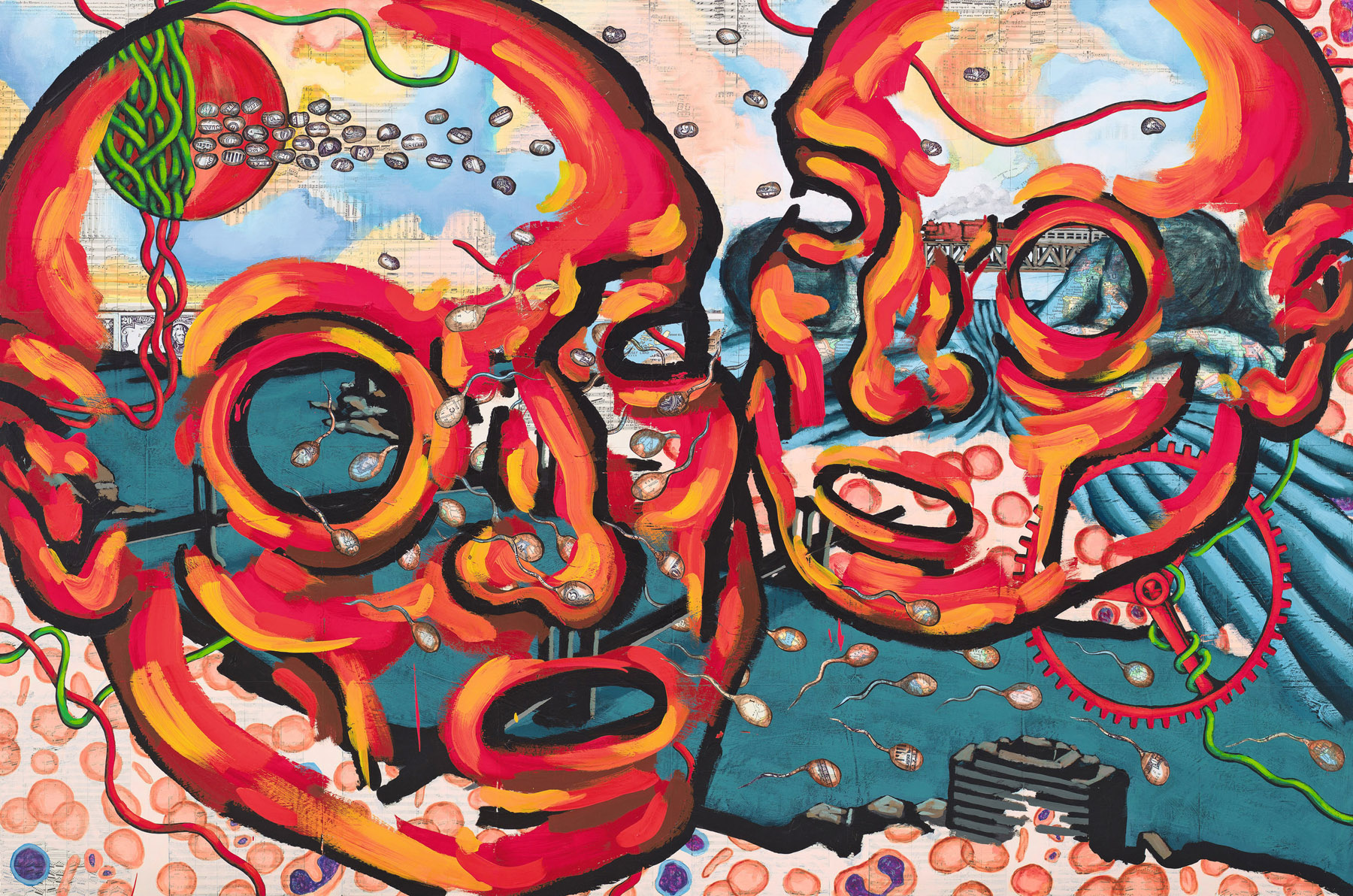
David Wojnarowicz (American, 1954-1992)
Das Reingold: New York Schism
1987
Acrylic and collaged paper on board
48 1/4 × 72 in. (122.6 × 182.9cm)
Whitney Museum of American Art, New York
Promised gift of Emily Fisher Landau
Image © Whitney Museum of American Art, New York
Photo: Tim Nighswander/Imaging4Art
A nightmarish allegory of violence and capitalism, Das Reingold: New York Schism makes reference to Richard Wagner’s opera Das Rheingold (1854), in which the holder of a magical ring will gain the power to rule the world should he renounce love. This narrative assumed particular power at a moment when artists were joining the group ACT UP (AIDS Coalition to Unleash Power) to protest the profiteering of pharmaceutical companies and government mismanagement of the AIDS crisis.
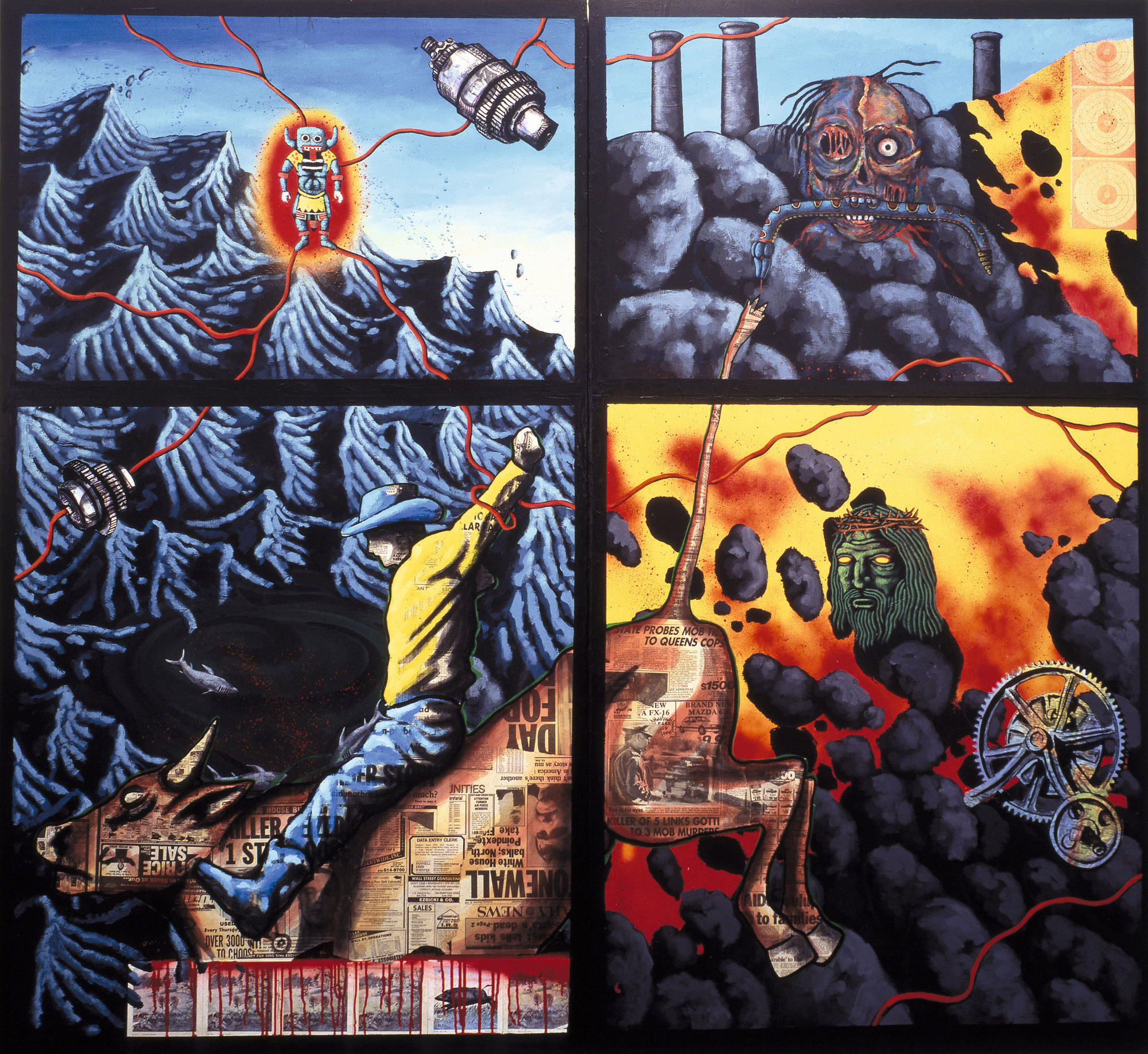
David Wojnarowicz (American, 1954-1992)
The Death of American Spirituality
1987
Spray paint, acrylic, and collage on plywood, two panels
81 × 88 in. (205.7 × 223.5cm) overall
Private collection
© 1987 The Peter Hujar Archive LLC
Courtesy Pace/MacGill Gallery, New York.
The Death of American Spirituality contains a number of Wojnarowicz’s recurring symbols and imagery densely layered in a single composition. With its radically juxtaposed motifs that suggest different temporalities – from geologic landforms to emblems of the American West and the Industrial Revolution – the mythical tableau depicts destruction proliferating alongside technological advancement and geographic conquest.

David Wojnarowicz (American, 1954-1992)
I Use Maps Because I Don’t Know How to Paint
1984
Acrylic and collaged paper on composition board
48 x 48 in. (121.9 x 121.9cm)
Rubell Family Collection, Miami

David Wojnarowicz (American, 1954-1992)
The Birth of Language II
1986
Acrylic, spray paint, and collaged paper on wood
67 x 79 in. (170.2 x 200.7cm)
Collection of Matthijs Erdman

David Wojnarowicz (American, 1954-1992)
Earth, Wind, Fire, and Water
1986
Acrylic and spray paint on canvas
78 3/4 in. × 157 1/2 in. (200 × 400cm)
Private collection
Image courtesy Daniel Buchholz and Christopher Müller, Cologne
Photo: Nick Ash
Wojnarowicz filmed constantly during this period, bringing his Super 8 camera with him on his frequent travels. At the end of October 1986, he went to Mexico where he filmed the Day of the Dead festivities and other scenes at Teotihuacán. This footage includes fire ants climbing on objects such as clocks, currency, and a crucifix that Wojnarowicz brought with him. Wojnarowicz, who was raised Roman Catholic, would later speak of Jesus Christ as one who “took on the suffering of all people.” As the AIDS crisis intensified, he sought to find a symbolic language that encapsulated ideas of spirituality, mortality, vulnerability, and violence. He began to edit the Mexican footage into a film entitled A Fire in My Belly, but it was never finished. Ravenous for the world and its offerings, Wojnarowicz used film as form of second sight, a visual notebook, and a record for us to see the world – at least in ashes – as he did.

David Wojnarowicz (American, 1954-1992)
Still from an unfinished film
Super 8 film, black and white, silent, 3 minutes
Courtesy the Fales Library and Special Collections, New York University
David Wojnarowicz (American, 1954-1992)
Unfinished Film (A Fire in My Belly)
1986-1987
Super 8 film transferred to digital video, black-and-white and colour, silent; 20:56 min.
Fales Library and Special Collections, New York University
Original Silent Version of “A Fire in My Belly” by the late David Wojnarowicz. This film was censored by The National Portrait Gallery in early December, 2010.
On September 17, 1987, Gracie Mansion Gallery opened an exhibition of Wojnarowicz’s work called The Four Elements. These symbolically and technically dense paintings – allegorical representations of earth, water, fire, and wind – are Wojnarowicz’s take on a theme with a long history in European art. By linking his contemporary moment to a historical subject, he claims a lineage for his work as he suggests the particularity – and particular violence – of his time.

David Wojnarowicz (American, 1954-1992)
Water
1987
Acrylic, ink, and collaged paper on composition board
72 × 96 in. (182.9 × 243.8cm)
Second Ward Foundation
Image courtesy the Estate of David Wojnarowicz and P.P.O.W, New York
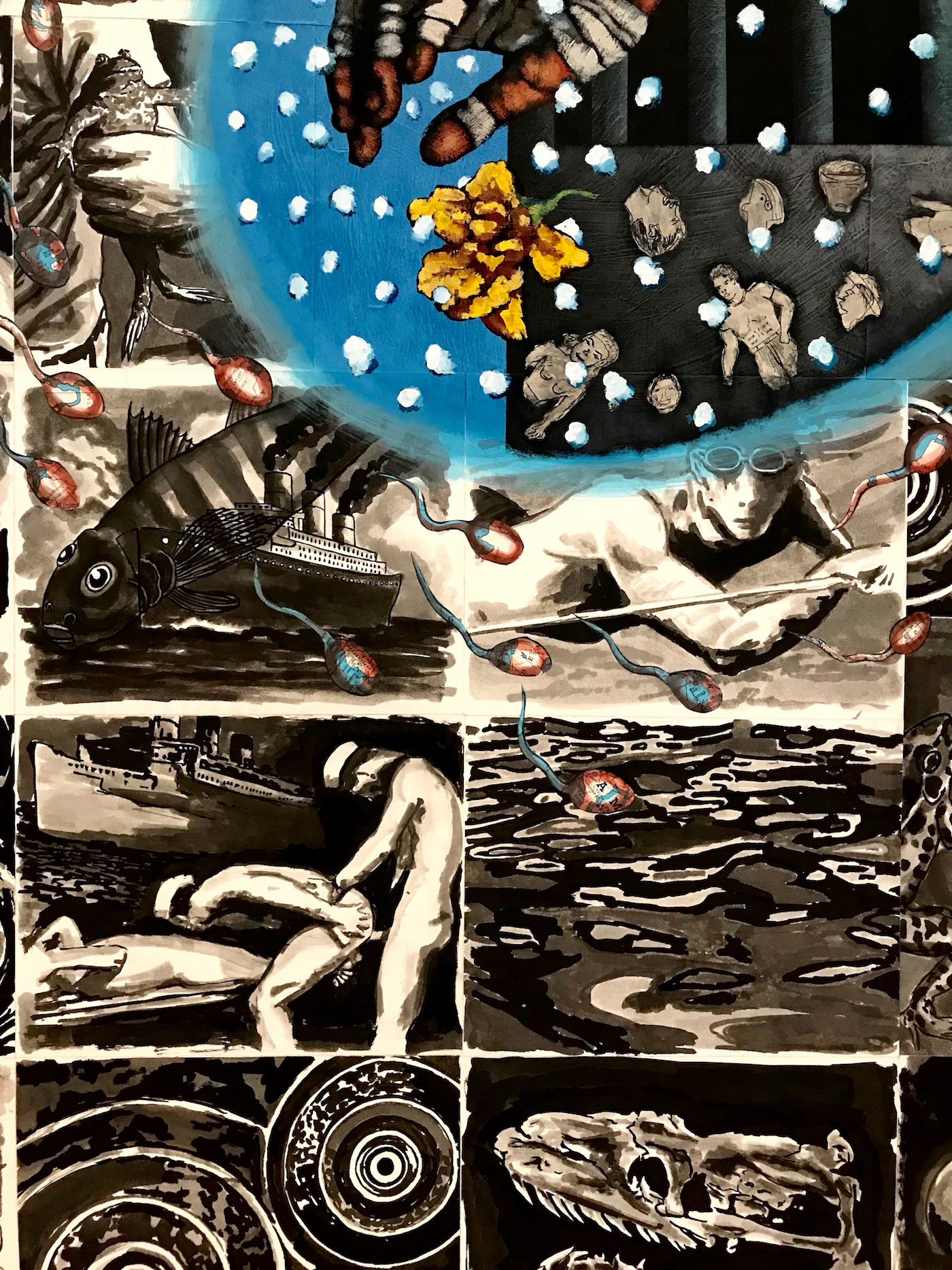
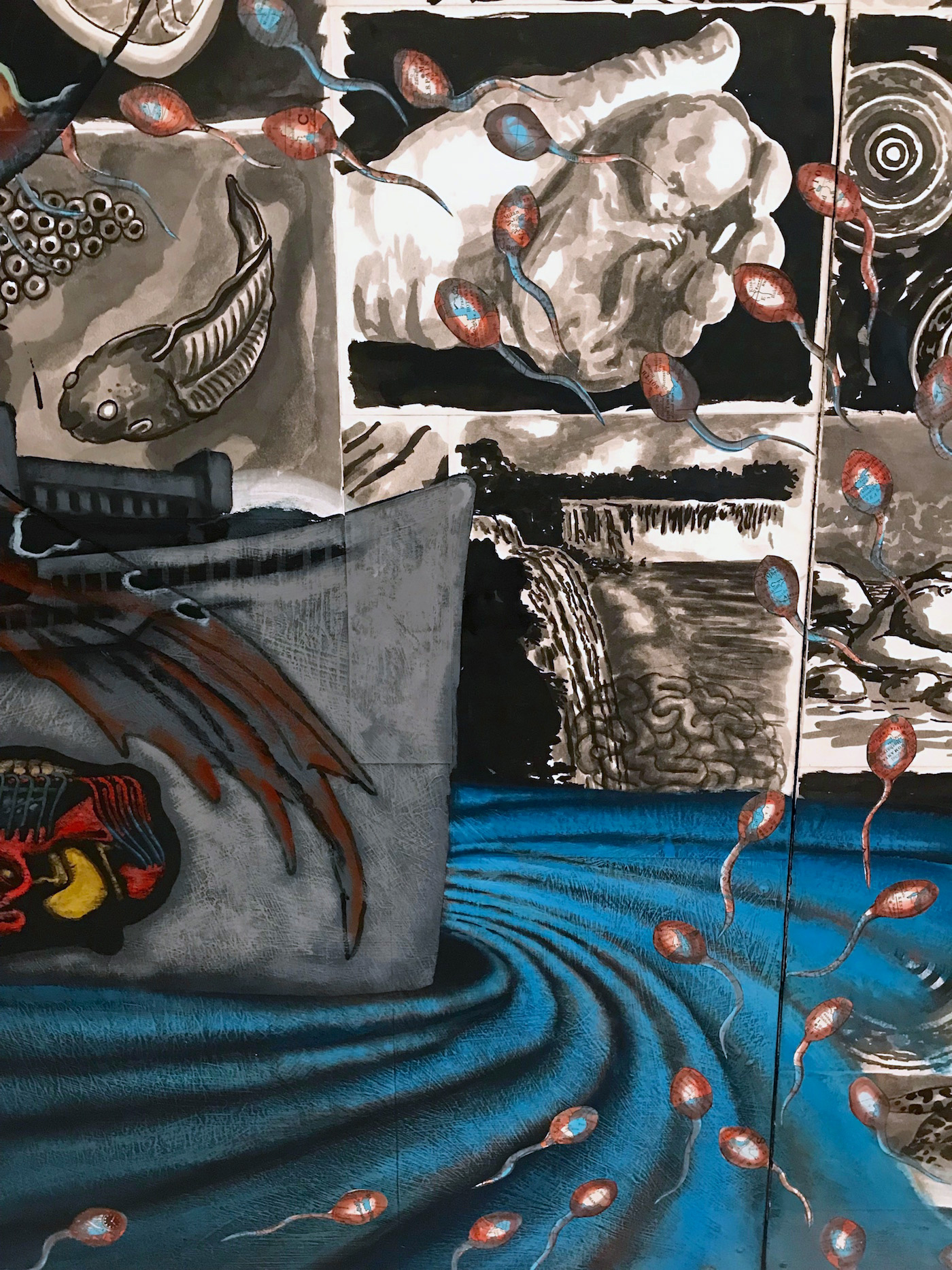
David Wojnarowicz (American, 1954-1992)
Water (details)
1987
Acrylic, ink, and collaged paper on composition board
72 × 96 in. (182.9 × 243.8cm)
Second Ward Foundation
Image courtesy the Estate of David Wojnarowicz and P.P.O.W, New York

David Wojnarowicz (American, 1954-1992)
Earth
1987
Acrylic and collaged paper on wood, two panels
72 × 96 in. (182.9 × 243.8cm)
The Museum of Modern Art, New York
Gift of Agnes Gund
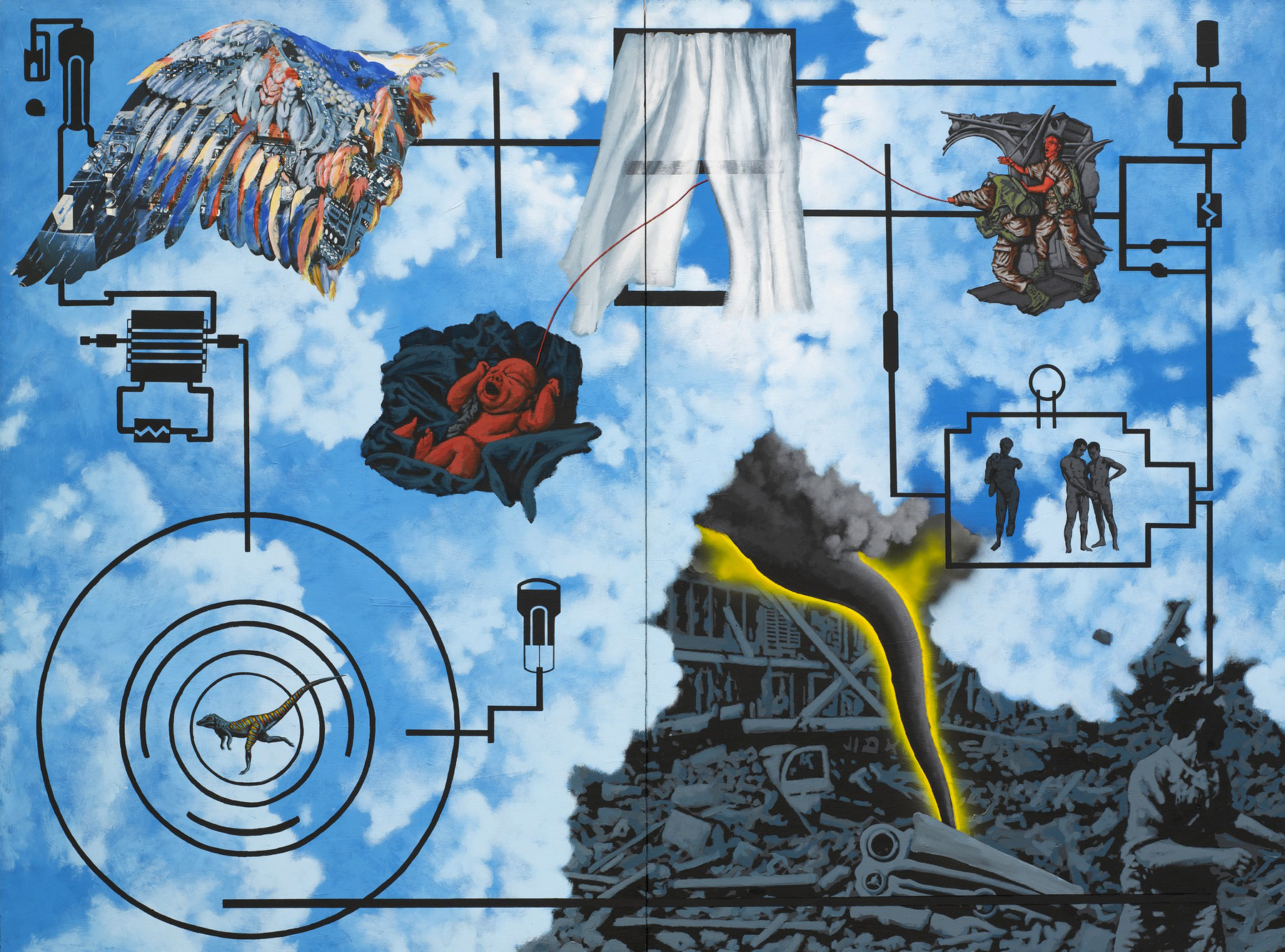
David Wojnarowicz (American, 1954-1992)
Wind (For Peter Hujar)
1987
Acrylic and collaged paper on composition board, two panels
72 × 96 in. (182.9 × 243.8cm)
Collection of the Second Ward Foundation
Wind (For Peter Hujar) is the most personal and self-referential of Wojnarowicz’s Four Elements paintings. A red line running through an open window connects a baby – based on a photograph of his brother Steven’s newborn – to a headless paratrooper. Wojnarowicz, in his only painted self-portrait, stands behind. The bird’s wing dominating the upper left quarter of the painting is a copy of one of Hujar’s favorite works – a 1512 drawing by the German artist Albrecht Dürer. Hujar would die less than two months after this painting was first exhibited and Wojnarowicz later had the wing carved into his friend’s tombstone. Three days after Hujar’s death, Wojnarowicz wrote in his journal after visiting his grave: “He sees me, I know he sees me. He’s in the wind in the air all around me.”

David Wojnarowicz (American, 1954-1992)
Fire
1987
Acrylic and collaged paper on wood, two panels
72 x 96 in. (182.9 x 243.8cm)
The Museum of Modern Art, New York
Gift of Agnes Gund and Barbara Jakobson Fund
Writing and engaging in readings was an important part of David Wojnarowicz’s practice. The transcript on the website is text from audio recordings of Wojnarowicz reading his own work in 1992 at the Drawing Center, New York, at a benefit for Needle Exchange. He read excerpts from his books Close to the Knives: A Memoir of Disintegration (1991) and Memories That Smell Like Gasoline (1992); a short work, “Spiral,” which appeared in Artforum in 1992; and another brief piece that begins with the phrase “When I put my hands on your body,” which also appears in one of his photo-based works.
Wojnarowicz was in the hospital room when Peter Hujar died from complications related to AIDS. He asked the others who were there to leave so that he could film and photograph his friend for the last time. The three tender images of Hujar’s head, hands, and feet installed here come from this final encounter. While Wojnarowicz would continue to draw and paint after Hujar’s death, photography and writing would preoccupy him until the end of his life. He moved into Hujar’s loft, which had a darkroom, enabling him to reconsider – and experiment with – the vast number of negatives he had accumulated over the years.
Wojnarowicz found himself at the centre of political debates involving the National Endowment for the Arts (NEA). In a newsletter that the American Family Association distributed to criticise NEA funding of exhibitions with gay content, the religious lobby group excerpted Wojnarowicz’s work out of context. He sued for copyright infringement and won. Wojnarowicz’s hand-edited affdavit and related materials are included here. The searing essay he contributed to the catalogue for Witnesses: Against Our Vanishing, an exhibition curated by artist Nan Goldin in 1989, triggered the NEA to withdraw its funding. In it Wojnarowicz strenuously criticised – and personally demonised conservative policy-makers for failing to halt the spread of AIDS by discouraging education about safe sex practices. One of its most memorable passages is the pronouncement: “WHEN I WAS TOLD THAT I’D CONTRACTED THIS VIRUS IT DIDN’T TAKE ME LONG TO REALIZE THAT I’D CONTRACTED A DISEASED SOCIETY AS WELL.”
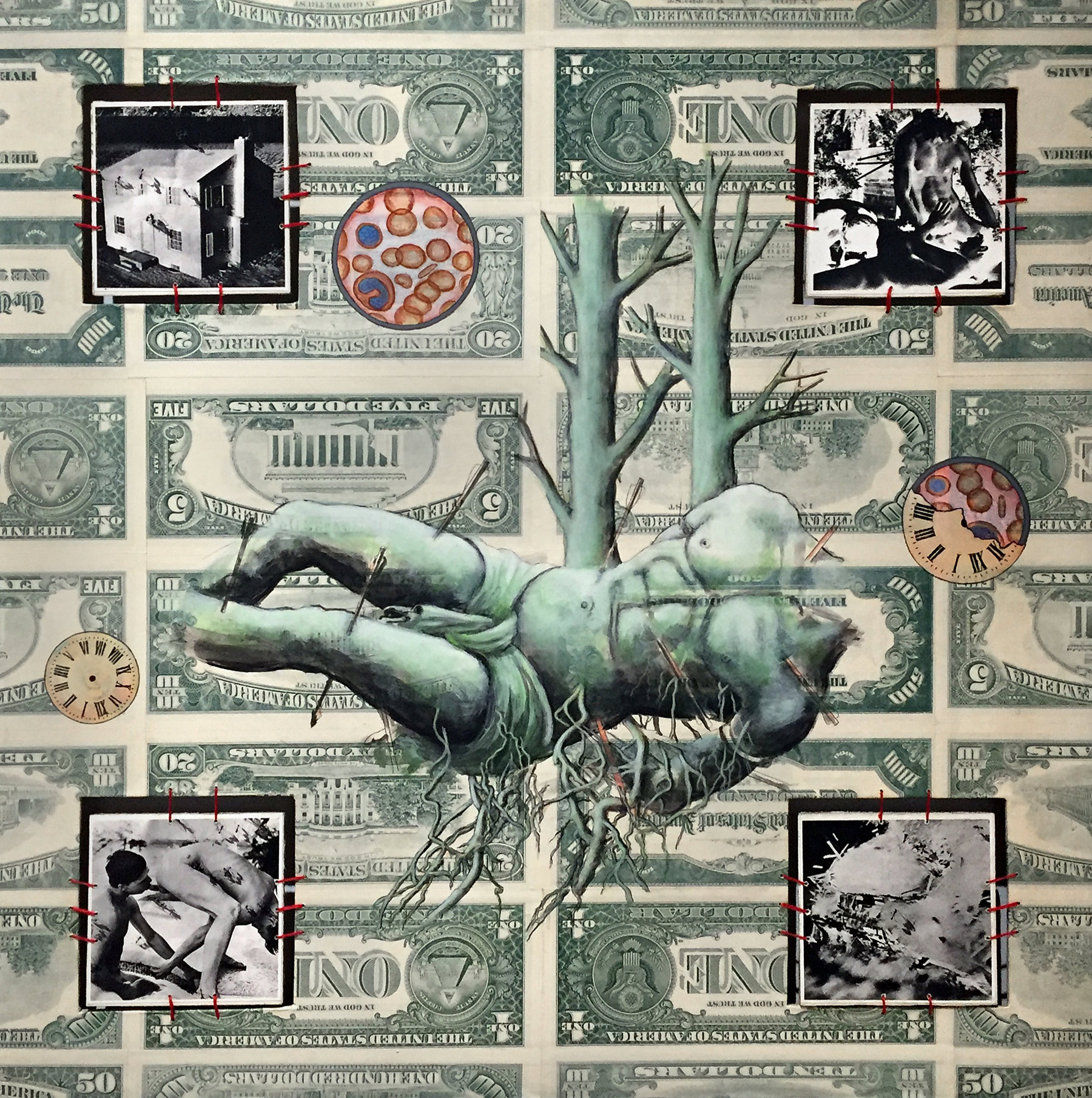
David Wojnarowicz (American, 1954-1992)
Bad Moon Rising
1989
Four gelatin silver prints, acrylic, string, and collage on composition board
36 3/4 x 36 5/8 x 2 1/4 in. (93.3 x 93 x 5.7cm)
Collection of Steven Johnson and Walter Sudol
Courtesy Second Ward Foundation
Phil Zwickler (b. 1954; Alexandria, VA; d. 1991; New York, NY)
Footage of Wojnarowicz speaking about the National Endowment for the Arts controversy (extract)
1989
Video transferred to digital video, color, sound; 7:23 min.
Fales Library and Special Collections, New York University; courtesy the
Estate of Phil Zwickler
Artist David Wojnarowicz discusses right-wing backlash against the NEA and arts funding (circa 1989).
This 1989 video by Phil Zwickler, a filmmaker, journalist, and AIDS activist, was shot in Wojnarowicz’s apartment days before the opening of Witnesses: Against Our Vanishing, an exhibition that presented artists’ responses to the AIDS crisis. John Frohnmayer, the chairman of the National Endowment for the Arts (NEA), withdrew the NEA’s $10,000 grant to the exhibition in response to the essay that Wojnarowicz wrote for the catalogue. The grant was later partially reinstated, but with the stipulation that no money was to be used to support the catalogue. Zwickler filmed Wojnarowicz while the controversy was unfolding.
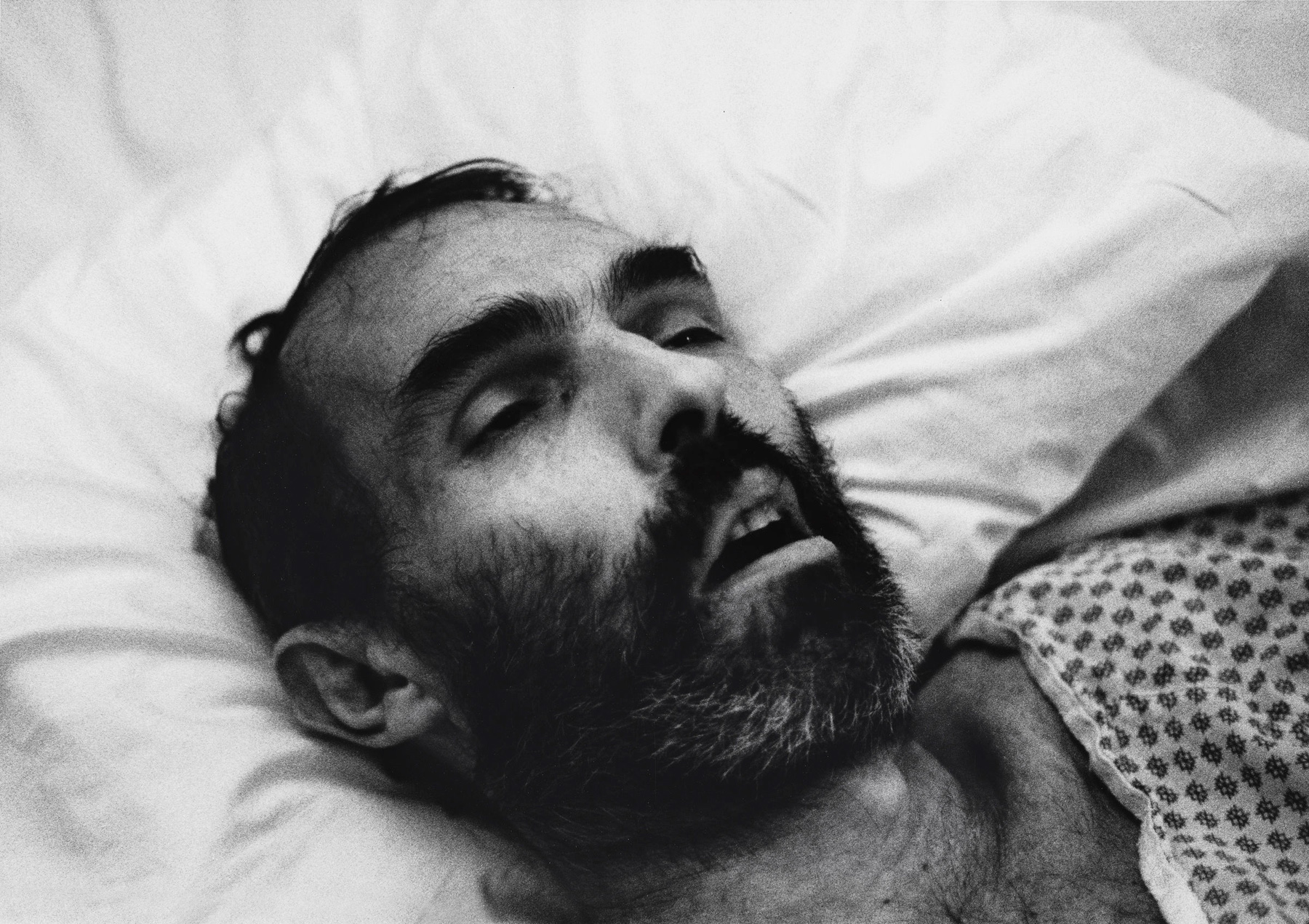
David Wojnarowicz (American, 1954-1992)
Untitled
1987 (printed 1988)
Gelatin silver print
10 1/8 x 14 1/2 in. (25.7 x 36.8cm)
Whitney Museum of American Art, New York
Purchase, with funds from the Robert Mapplethorpe Foundation and the Photography Committee
Image © Whitney Museum of American Art, New York
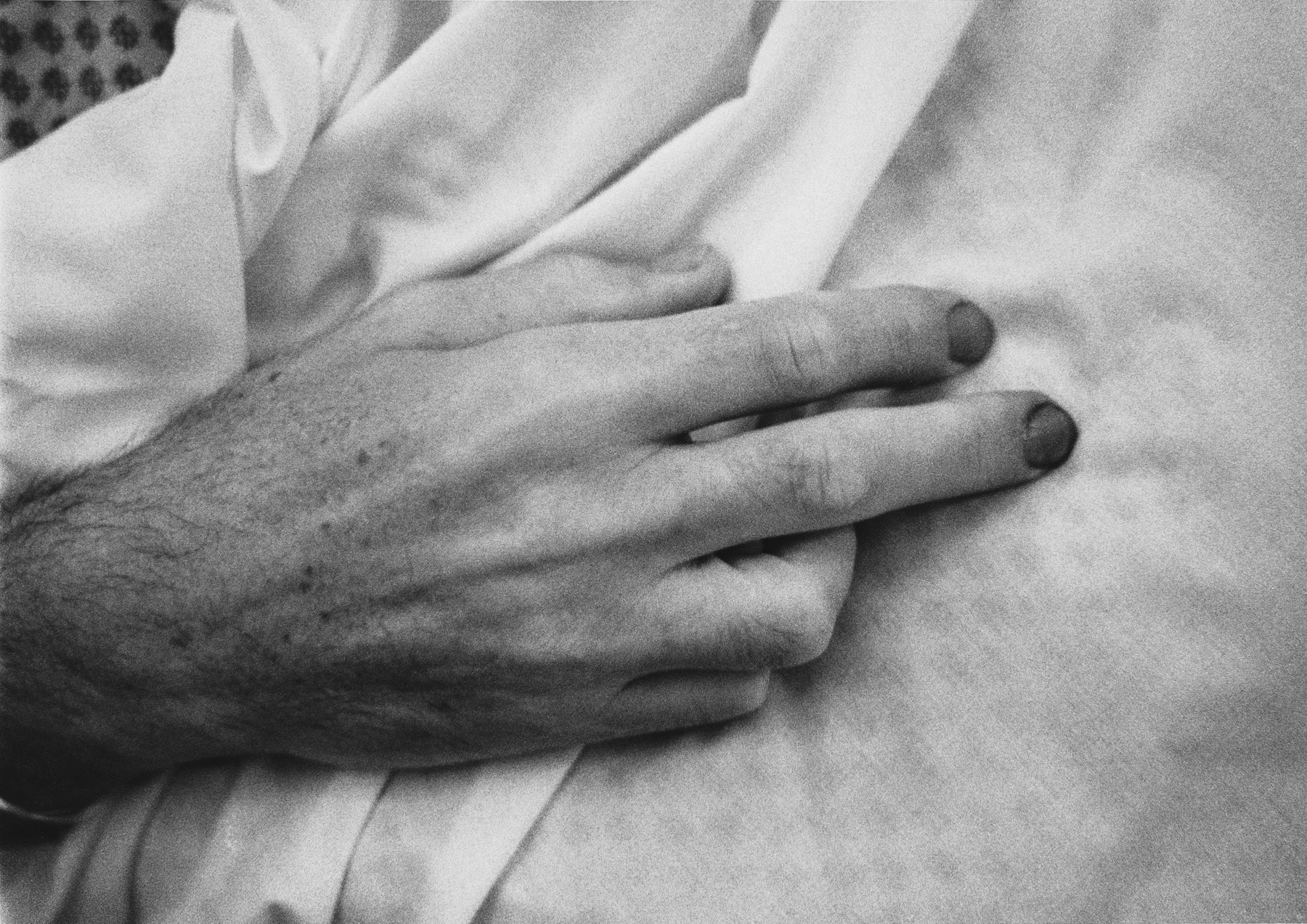
David Wojnarowicz (American, 1954-1992)
Untitled
1987 (printed 1988)
Gelatin silver print
10 1/8 x 14 1/2 in. (25.7 x 36.8cm)
Whitney Museum of American Art, New York
Purchase, with funds from the Robert Mapplethorpe Foundation and the Photography Committee
Image © Whitney Museum of American Art, New York
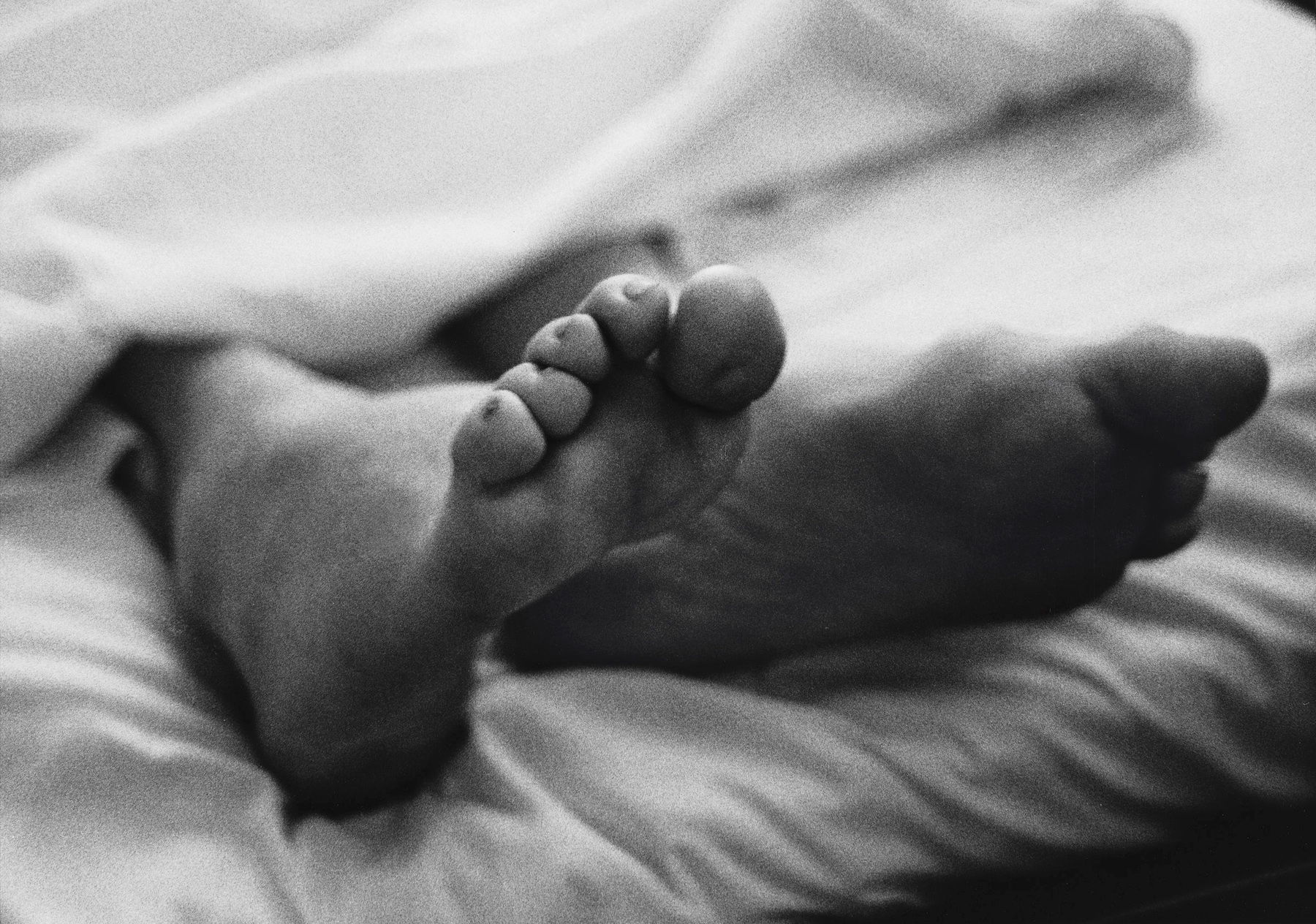
David Wojnarowicz (American, 1954-1992)
Untitled
1987 (printed 1988)
Gelatin silver print
10 1/8 x 14 1/2 in. (25.7 x 36.8cm)
Whitney Museum of American Art, New York
Purchase, with funds from the Robert Mapplethorpe Foundation and the Photography Committee
Image © Whitney Museum of American Art, New York
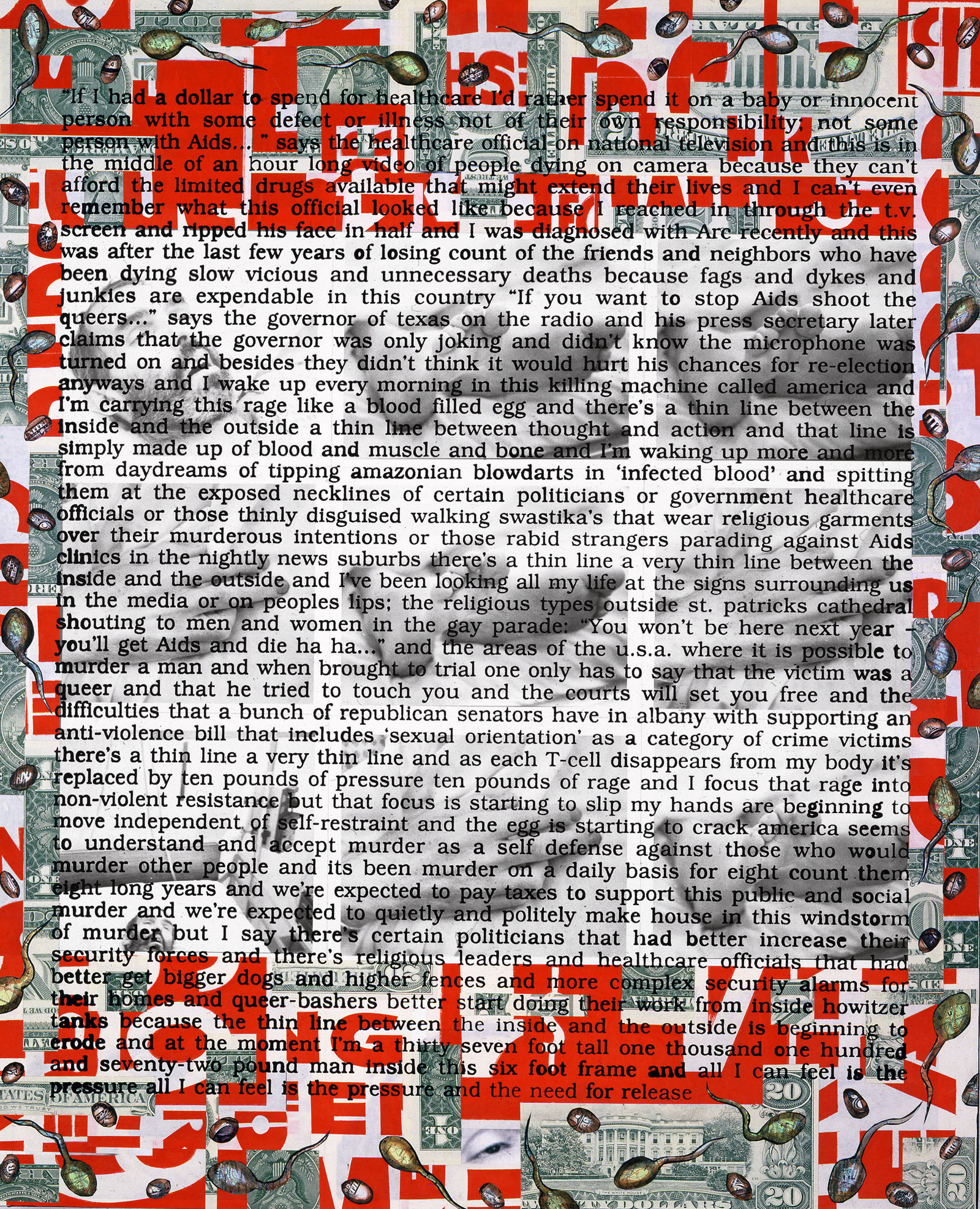
David Wojnarowicz (American, 1954-1992)
Untitled (Hujar Dead)
1988-1989
Black-and-white photograph, acrylic, screenprint, and collaged paper on Masonite
39 × 32 in. (99.1 × 81.3cm)
Whitney Museum of American Art, New York
Gift of Steven Johnson and Walter Sudol in memory of David Wojnarowicz
Image courtesy the Estate of David Wojnarowicz and P.P.O.W, New York
This painting presents an urgent condemnation of systemic homophobia and government inattention to people with AIDS – including, by that point, Wojnarowicz himself – and expresses the artist’s extreme anger at being at the mercy of those in power. The nine photographs at the centre of the painting are of Peter Hujar, taken shortly after his death. The painting was included in Witnesses: Against Our Vanishing at New York’s Artists Space from November 16, 1989, to January 6, 1990. Curated by Nan Goldin, the exhibition also included work by other artists responding to the AIDS crisis: David Armstrong, Tom Chesley, Dorit Cypris, Jane Dickson, Philip-Lorca DiCorcia, Darrel Ellis, Allen Frame, Peter Hujar, Greer Lankton, Siobhan Liddel, James Nares, Perico Pastor, Margo Pelletier, Clarence Elie Rivera, Vittorio Scarpati, Jo Shane, Kiki Smith, Janet Stein, Stephen Tashjian, Shellburne Thurber, and Ken Tisa.
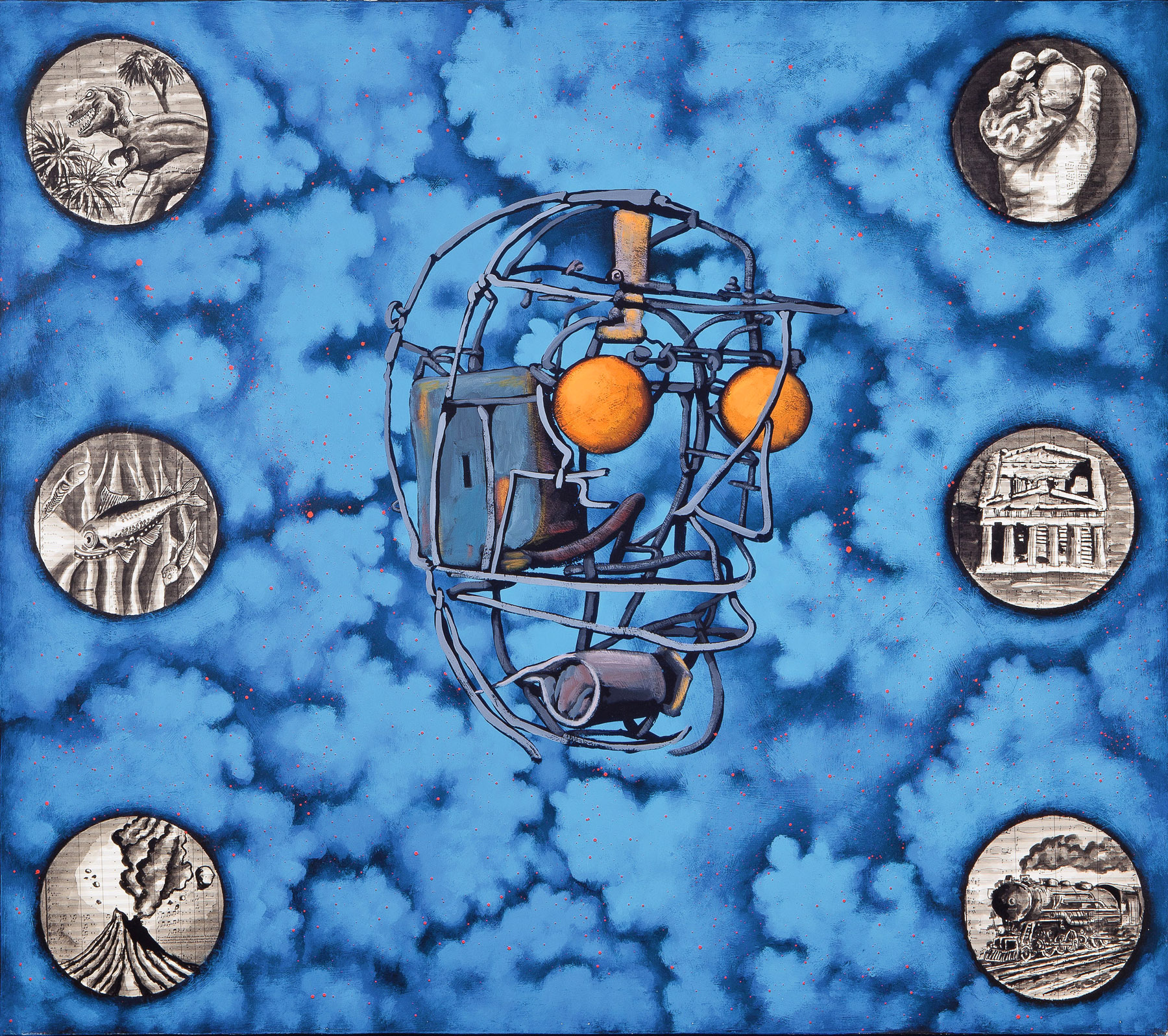
David Wojnarowicz (American, 1954-1992)
Childhood
1988
Acrylic, watercolour, and collaged paper on canvas
42 × 47 1/2 in. (106.7 × 120.7cm)
Collection of Eric Ceputis and David W. Williams
Photo: Michael Tropea

David Wojnarowicz (American, 1954-1992)
Something from Sleep III (For Tom Rauffenbart)
1989
Acrylic and spray paint on canvas
48 1/2 x 39 x 1 5/8 in. (123.2 x 99.1 x 4.1cm)
Collection of Tom Rauffenbart
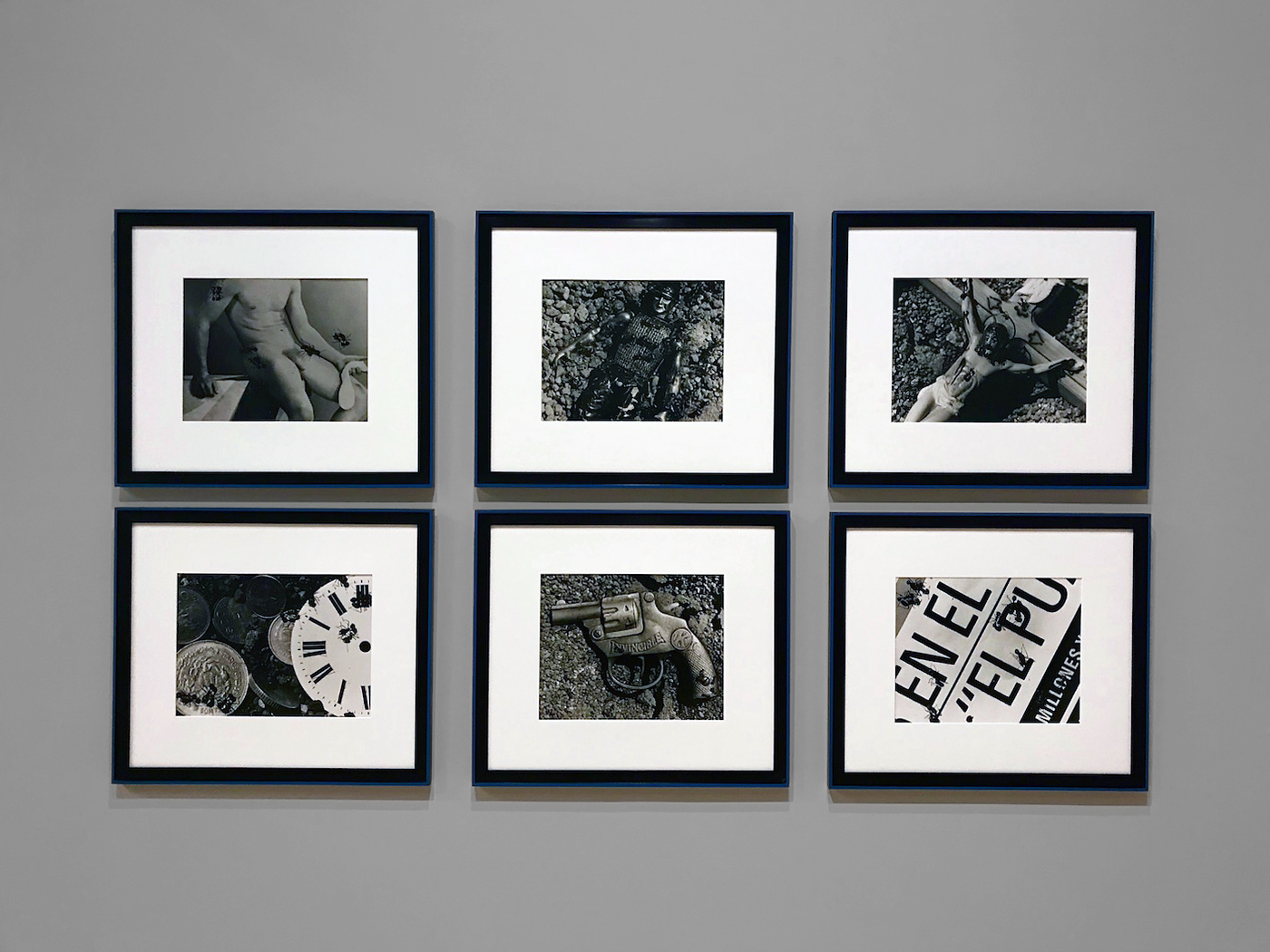
Installation view of David Wojnarowicz: History Keeps Me Awake at Night at the Whitney Museum of American Art, New York showing some of the Ant series
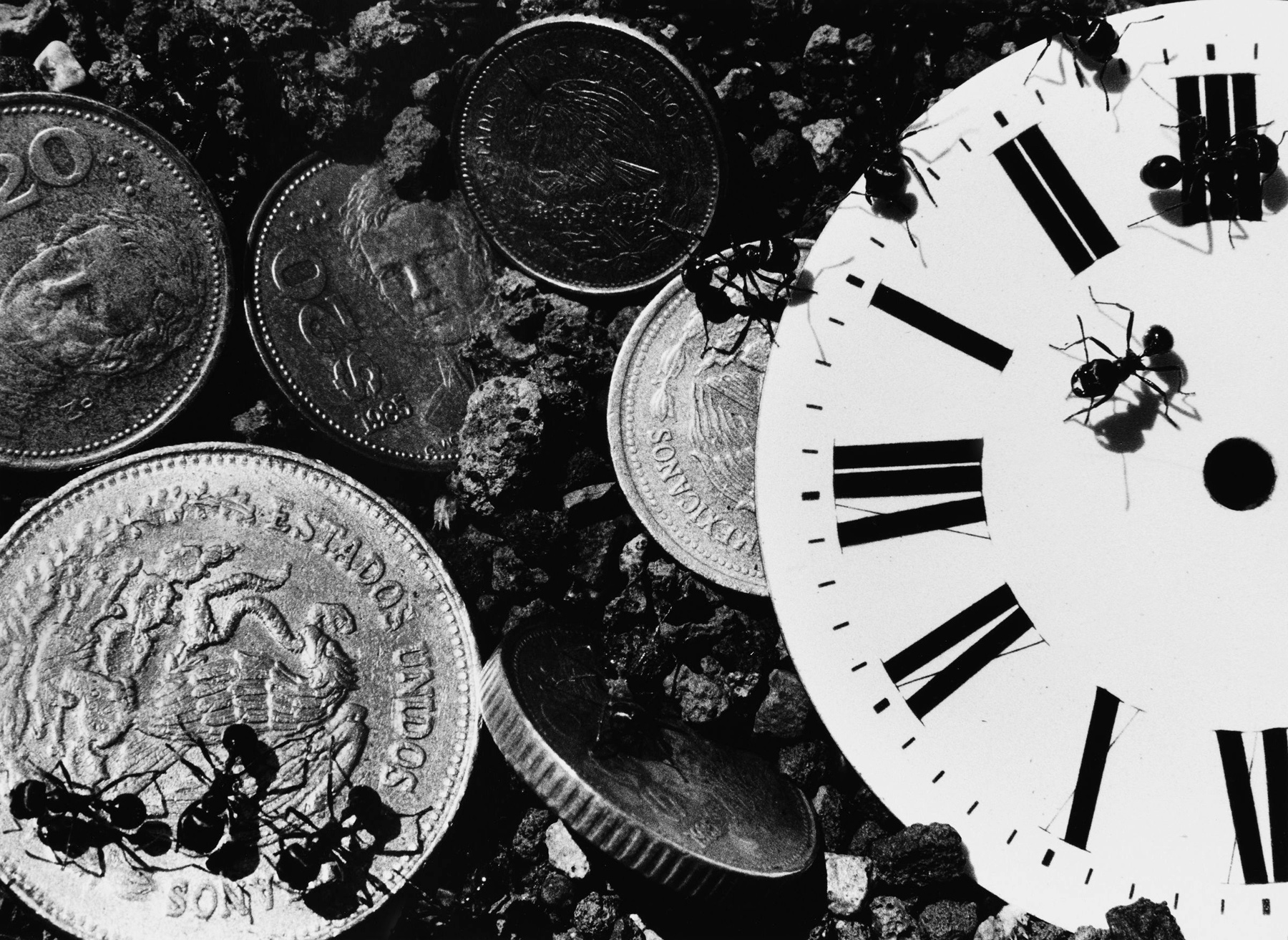
David Wojnarowicz (American, 1954-1992)
Untitled (Time and Money)
1988-1989
From the Ant Series
Gelatin silver print
16 × 20 in. (40.6 × 50.8cm)
Collection of Steve Johnson and Walter Sudol
Courtesy Second Ward Foundation
Image courtesy the Estate of David Wojnarowicz and P.P.O.W, New York

David Wojnarowicz (American, 1954-1992)
Untitled (Desire)
1988-1989
From the Ant Series
Gelatin silver print
16 x 20 in. (40.6 x 50.8cm)
Collection of Steven Johnson and Walter Sudol
Courtesy Second Ward Foundation
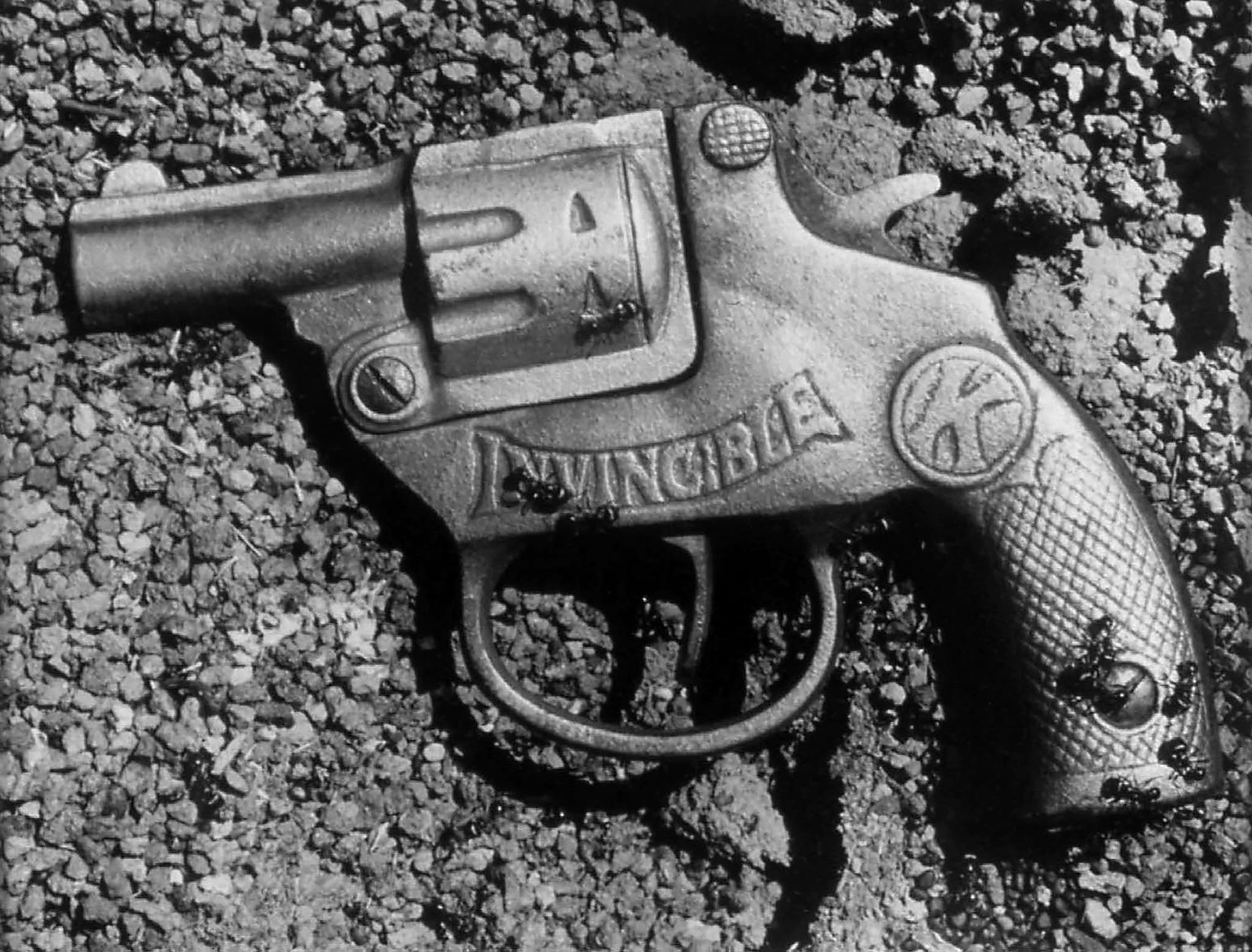
David Wojnarowicz (American, 1954-1992)
Untitled (Violence)
1988-1989
From the Ant Series
Gelatin silver print
16 x 20 in. (40.6 x 50.8cm)
Collection of Steven Johnson and Walter Sudol
Courtesy Second Ward Foundation
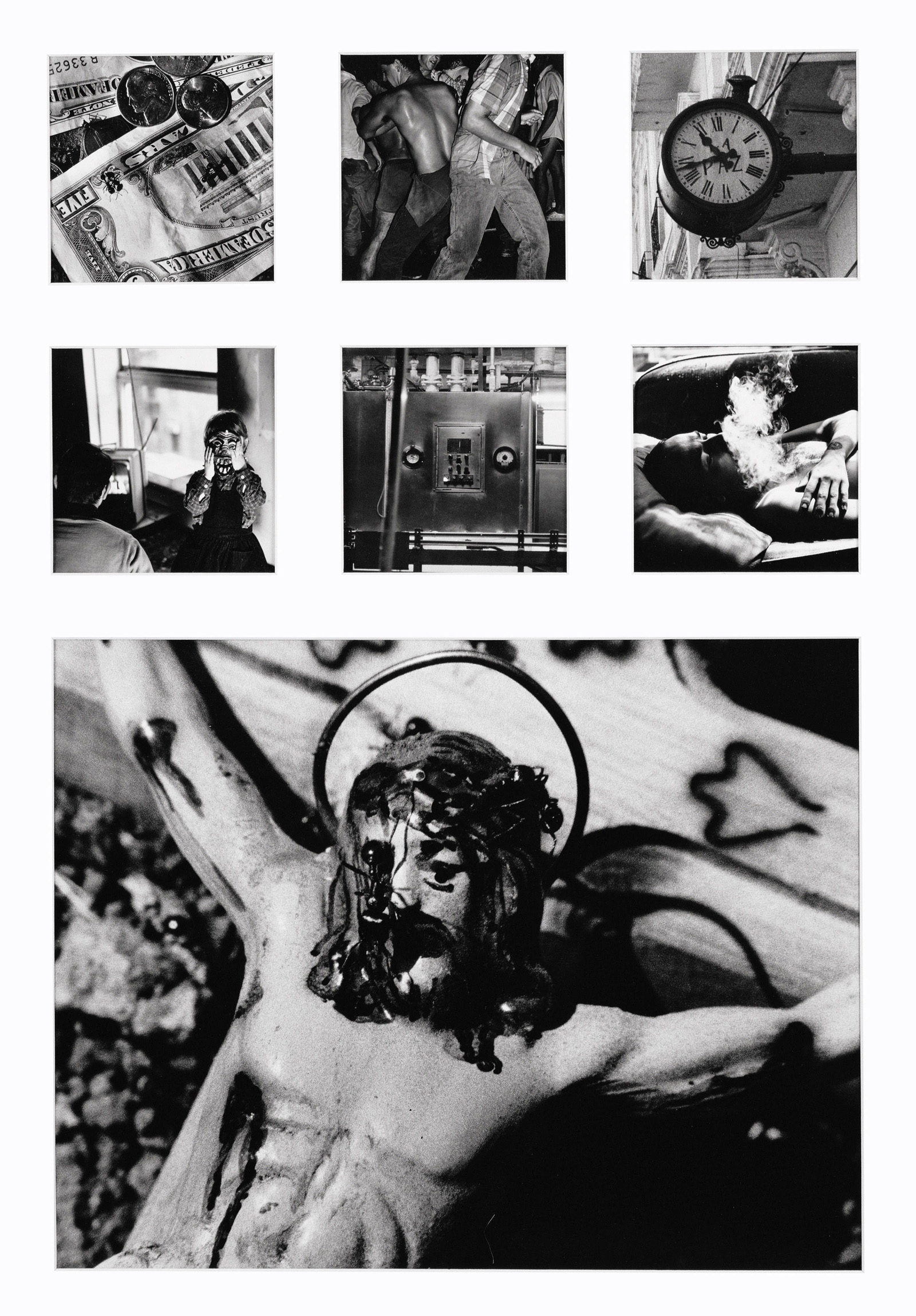
David Wojnarowicz (American, 1954-1992)
Spirituality (For Paul Thek)
1988-1989
Gelatin silver prints on museum board
41 × 32 1/2 in. (104.1 × 82.6cm)
Collection of Steve Johnson and Walter Sudol
Courtesy Second Ward Foundation
Image courtesy the Estate of David Wojnarowicz and P.P.O.W, New York
Wojnarowicz often presented a series of photographs as a single composition, as he does with Spirituality (For Paul Thek). This method allows the images to retain their singularity as they merge into one entity, and to serve as potent metaphors for the role – and importance – of the individual in the larger society. The central image of the crucifix was taken while Wojnarwicz was in Teotihuacán, north of Mexico City. He wanted to stage an image that suggested the eternal conflict between nature and man-made culture. Wojnarowicz considered ants to be evolved beings, writing in a 1989 text that they “are the only insects to keep pets, use tools, make war, and capture slaves.” The photograph of the reclining man was taken in 1980 and depicts Wojnarowicz’s friend Iola Carew, then a coworker at the nightclub Danceteria. Carew was the first person Wojnarowicz knew to be diagnosed with AIDS. The work is dedicated to the artist Paul Thek, who died of AIDS-related complications in 1988.


David Wojnarowicz (American, 1954-1992)
Spirituality (For Paul Thek) (details)
1988-1989
Gelatin silver prints on museum board
41 × 32 1/2 in. (104.1 × 82.6cm)
Collection of Steve Johnson and Walter Sudol
Courtesy Second Ward Foundation
Image courtesy the Estate of David Wojnarowicz and P.P.O.W, New York

David Wojnarowicz (American, 1954-1992)
Untitled
1989
From the Sex Series (For Marion Scemama)
Gelatin silver print
16 × 19 13/16 in. (40.6 × 50.3cm)
Whitney Museum of American Art, New York
Purchase, with funds from The Sondra and Charles Gilman Jr. Foundation, the Robert Mapplethorpe Foundation, Inc., and the Richard and Dorothy Rodgers Fund
Image © Whitney Museum of American Art, New York
The works in Wojnarowicz’s Sex Series are punctuated with circular insets containing an array of cropped details, including pornographic imagery. For Wojnarowicz, these voyeuristic “peepholes” evoked surveillance photos or objects under a microscope. This was one of his first projects after Hujar’s death and Wojnarowicz’s own diagnosis with HIV. “It came out of loss,” he said. “I mean every time I opened a magazine there was the face of somebody else who died. It was so overwhelming and there was this huge backlash about sex, even within the activist community… And it essentially came out of wanting some sexy images on the wall – for me. To keep me company. To make me feel better.”

David Wojnarowicz (American, 1954-1992)
Untitled
1989
From the Sex Series (For Marion Scemama)
Gelatin silver print
16 × 19 13/16 in. (40.6 × 50.3cm)
Whitney Museum of American Art, New York
Purchase, with funds from The Sondra and Charles Gilman Jr. Foundation, the Robert Mapplethorpe Foundation, Inc., and the Richard and Dorothy Rodgers Fund
Image © Whitney Museum of American Art, New York
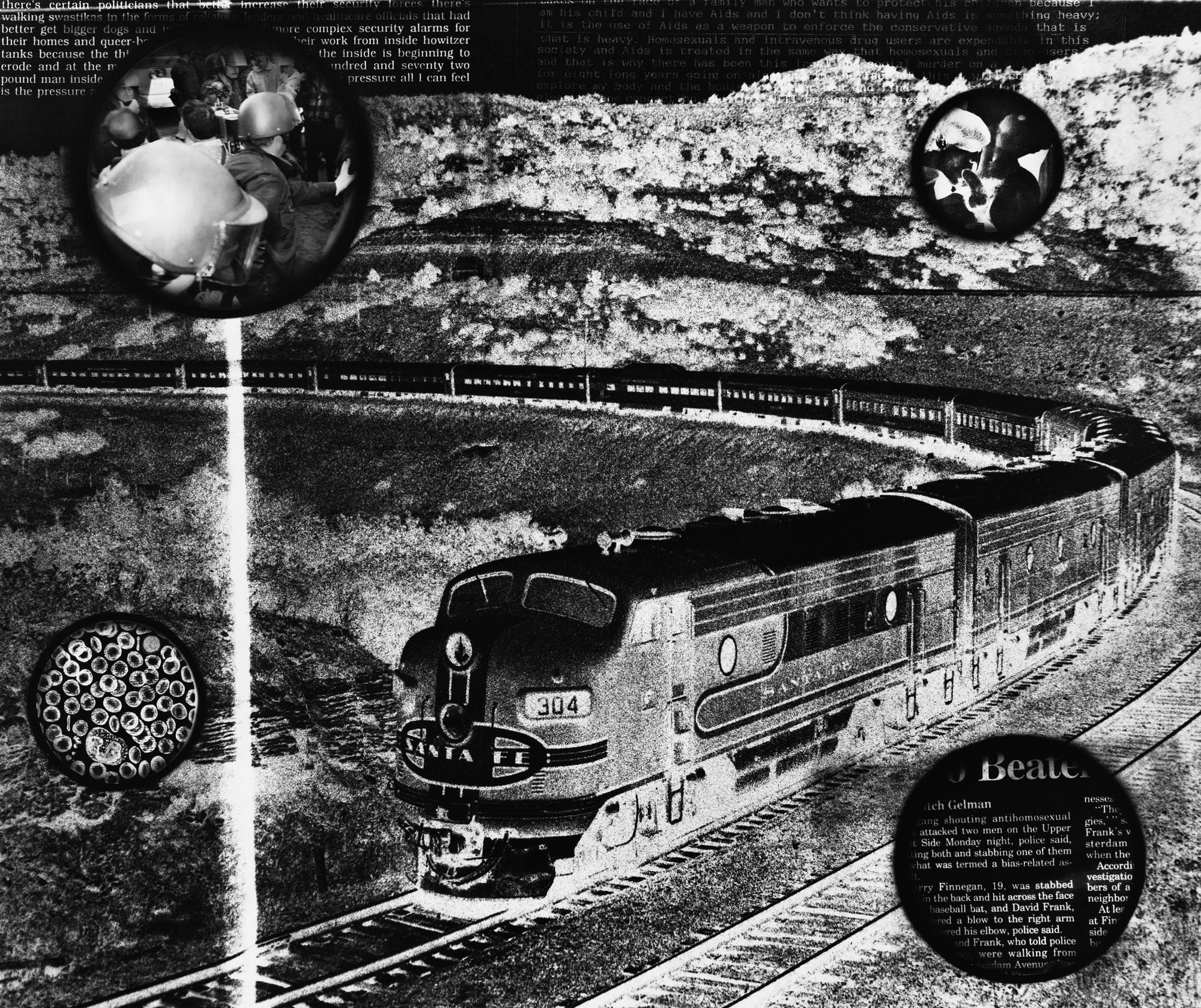
David Wojnarowicz (American, 1954-1992)
Untitled
1989
From the Sex Series (For Marion Scemama)
Gelatin silver print
16 × 19 13/16 in. (40.6 × 50.3cm)
Whitney Museum of American Art, New York
Purchase, with funds from The Sondra and Charles Gilman Jr. Foundation, the Robert Mapplethorpe Foundation, Inc., and the Richard and Dorothy Rodgers Fund
Image © Whitney Museum of American Art, New York
The sole survey of Wojnarowicz’s work during his lifetime, David Wojnarowicz: Tongues of Flame, was held in 1990 at Illinois State University in Normal. In the lead-up to the exhibition, he began work on the four large-scale paintings of exotic flowers. Equating the beauty of the body with its very fragility, Wojnarowicz uses the flower as an allusion to the AIDS crisis, his own illness, and a continuum of loss. Importantly, the flower also suggests the possibility and necessity of beauty. The artist Zoe Leonard recalls showing Wojnarowicz, at the height of the AIDS crisis, her small work prints of clouds. Leonard, also an activist, recalls: “I felt guilty and torn. I felt detached – my work was so subtle and abstract, so apolitical on the surface. I remember showing those pictures to David and talking things over with him and he said – I’m paraphrasing – Don’t ever give up beauty. We’re fighting so that we can have things like this, so that we can have beauty again.”

David Wojnarowicz (American, 1954-1992)
Weight of the Earth I
1988
Fourteen gelatin silver prints and watercolour on paper on board
39 x 41 1/4 in. (99.1 x 104.8cm)
The Museum of Modern Art, New York; The Family of Man Fund

David Wojnarowicz (American, 1954-1992)
Weight of the Earth II
1988-1989
Fourteen gelatin silver prints and watercolor on paper on board
39 x 41 1/4 in. (99.1 x 104.8cm)
Collection of Dunja Siegel
Through compositions like these Wojnarowicz sought to create a language out of images. To him, the combination of images described something painful but also mysterious about the experience of being alive – “about captivity in all that surrounds us,” in his words, and the “heaviness of the pre-invented experience we are thrust into.”

David Wojnarowicz (American, 1954-1992)
Fever
1988-1989
Three gelatin silver prints on museum board
31 × 25 in. (78.7 × 63.5cm)
Collection of Michael Hoeh
Image courtesy the Estate of David Wojnarowicz and P.P.O.W, New York

David Wojnarowicz (American, 1954-1992)
Something from Sleep IV (Dream)
1988-1989
Gelatin silver print, acrylic, and collaged paper on Masonite
16 × 20 1/2 in. (40.6 × 52.1cm)
Collection of Luis Cruz Azaceta and Sharon Jacques
Image courtesy Luis Cruz Azaceta and Sharon Jacques
Photo: by Dylan Cruz Azaceta

David Wojnarowicz (American, 1954-1992)
I Feel A Vague Nausea
1990
Five gelatin silver prints, acrylic, string, and screenprint on composition board
62 × 50 × 3 in. (157.5 × 127 × 7.6cm)
Collection of Michael Hoeh
Image courtesy the Estate of David Wojnarowicz and P.P.O.W, New York
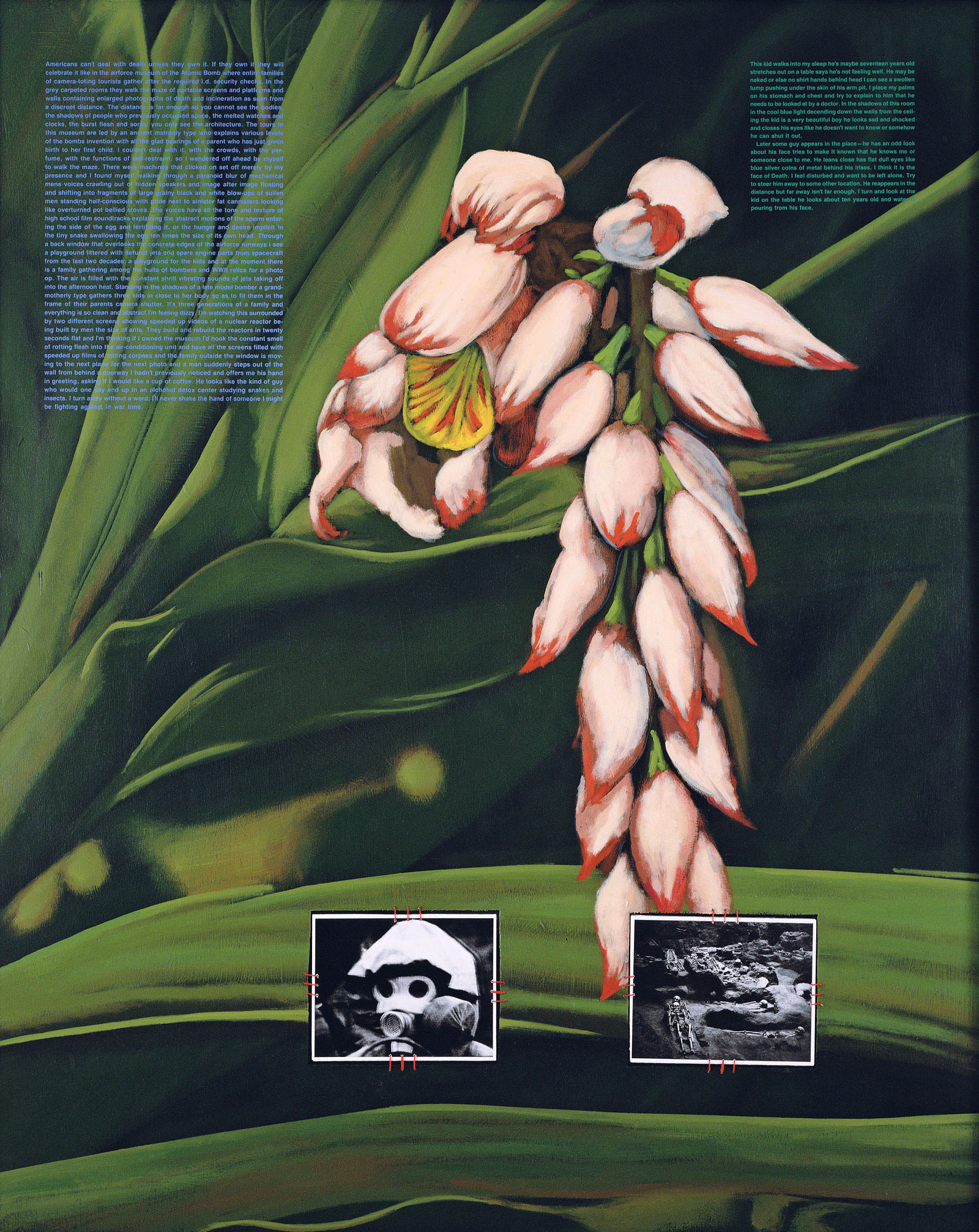
David Wojnarowicz (American, 1954-1992)
Americans Can’t Deal with Death
1990
Two black-and-white photographs, acrylic, string, and screenprint on Masonite
60 × 48 in. (152.4 × 121.9cm)
Collection of Eric Ceputis and David W. Williams
Image courtesy the Estate of David Wojnarowicz and P.P.O.W, New York
“Americans can’t deal with death unless they own it. If they own it they will celebrate it…”
Wojnarowicz’s work concerns itself with the mechanisms, politics, and manipulations of power that make some lives visible and others not. The will to make bodies present – the compulsion to clear a space for queer representations not commonly seen through language and image – was threaded throughout his work, exacerbated by the AIDS crisis, and crystallised in his work. Untitled (One Day This Kid… ) (1990-1991) is perhaps Wojnarowicz’s best-known work. Black script shapes the boundary of a boy’s body – a boy whom we know, with his high forehead, prominent teeth, and electric eyes, is Wojnarowicz as a child. He sits for what we assume is a school picture, and he’s no older than eight. The text that surrounds him projects the child into a future scarred by abuse and homophobia. This artwork, like many by Wojnarowicz, has rightly come to embody the spirit of protest, struggle, and resistance. Wojnarowicz died on July 22, 1992. By the end of that year, 38,044 others in New York had died from AIDS-related complications. In his essay “Postcards from America: X Rays from Hell,” Wojnarowicz states what is equally true of art and protest: “With enough gestures we can deafen the satellites and lift the curtains surrounding the control room.”
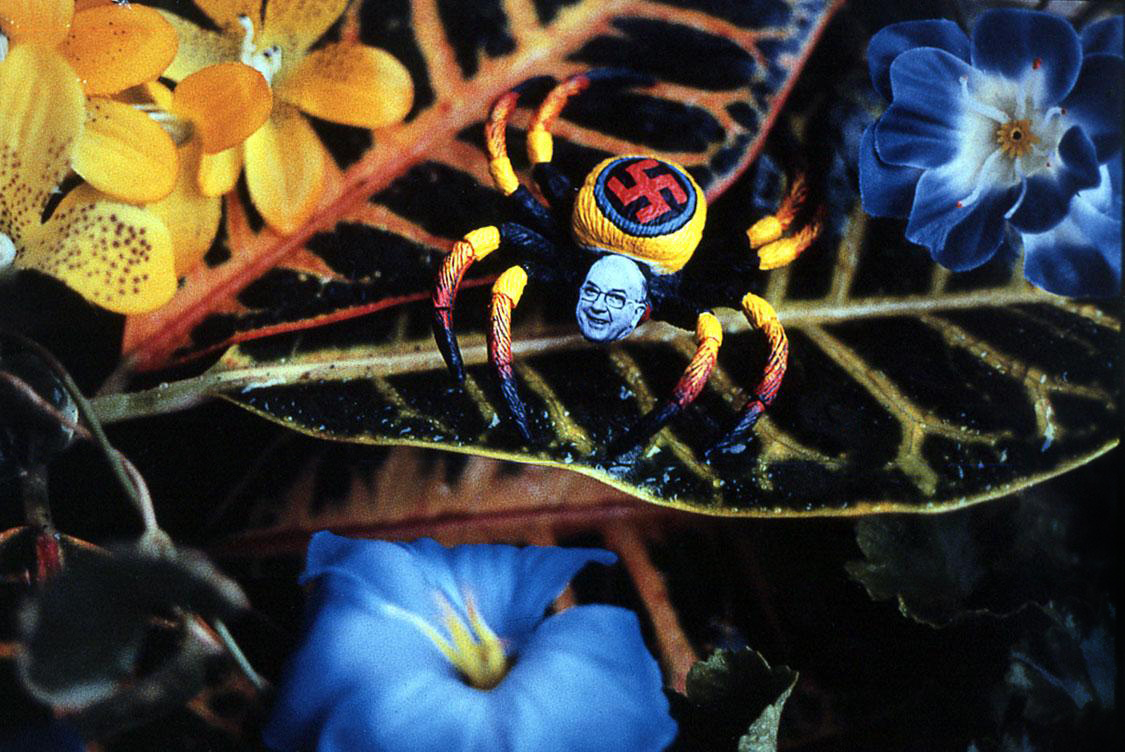
David Wojnarowicz (American, 1954-1992)
Sub-Species Helms Senatorius
1990
Silver dye bleach print (Cibachrome)
16 x 20 in. (40.6 x 50.8cm)
Whitney Museum of American Art, New York
Gift of Steven Johnson and Walter Sudol
In this work, Senator Jesse Helms of North Carolina appears as a spider with a swastika on his back. In 1989, in response to the controversy regarding his essay for the Witnesses: Against Our Vanishing catalogue, Wojnarowicz drafted a press release that included a description of Helms as one of seven particularly bad actors in the fight against AIDS. It read, in part:
‘One of the more dangerous homophobes in the continental United States… Has introduced legislation that denies federal funding for any program that mentions homosexuality… Cut out any and all AIDS education funding that relates to gays and lesbians. Introduced legislation that we must now live with that prevents any HIV-positive people or PWA’s [people with AIDS] from entering any border of the U.S.A. as well as deporting people with green cards forcibly tested and found to be HIV-positive.’

David Wojnarowicz (American, 1954-1992)
Untitled (Act-Up)
1990
Screenprint
23 1/8 × 27 5/8 in. (58.7 x 70.2cm) each
Whitney Museum of American Art, New York; gift of Steven Johnson and Walter Sudol
© The Estate of David Wojnarowicz and P.P.O.W, New York
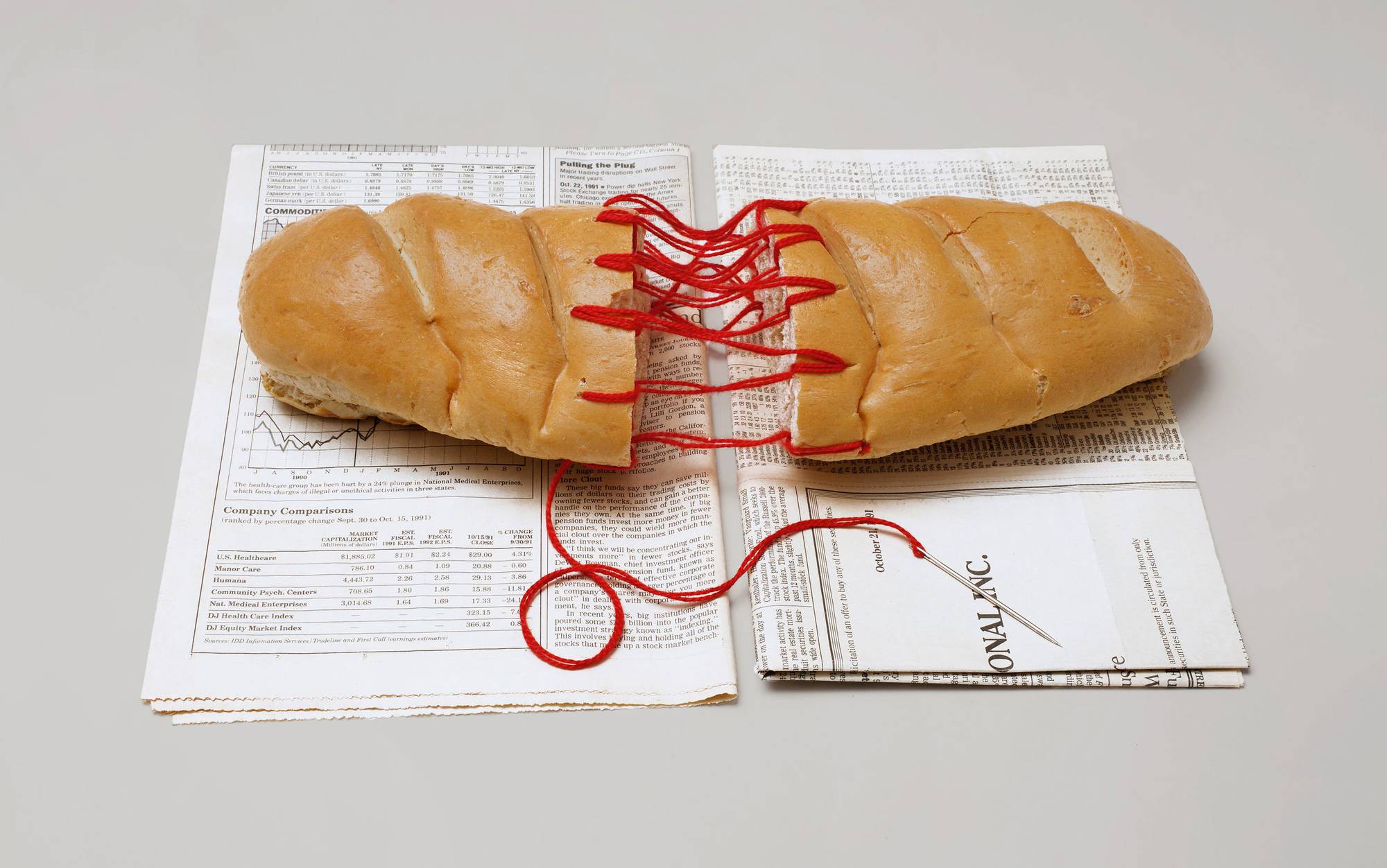
David Wojnarowicz (American, 1954-1992)
Bread Sculpture
1988-1989
Bread, string, and needle with newspaper
11 1/2 × 14 1/8 in. × 6 in. (29.2 × 35.9 × 15.2cm)
Collection of Gail and Tony Ganz
Photo: Ed Glendinning
Wojnarowicz used red string as a material throughout his practice. From his early supermarket posters to the flower paintings, he stitched red string into the surface of his compositions to suggest the seams and irreconcilable breaks in culture. In his unfinished film A Fire in My Belly (1986-1987, see above), Wojnarowicz included footage of the stitching together of a broken loaf of bread. This sculpture is a physical manifestation of that earlier idea. The film also included footage of what appeared to be a man’s lips being sewn together. A version of that image by Andreas Sterzing – picturing Wojnarowicz himself – would become one of the most galvanising images to come out of the AIDS crisis.

David Wojnarowicz (American, 1954-1992)
Untitled (One Day This Kid…)
1990-1991
Photostat mounted on board
29 13/16 × 40 1/8 in. (75.7 × 101.9cm)
Whitney Museum of American Art, New York
Purchase, with funds from the Print Committee
Image © Whitney Museum of American Art, New York

David Wojnarowicz (American, 1954-1992)
What Is This Little Guy’s Job in the World
1990
Gelatin silver print
13 3/4 × 19 1/8 in. (34.9 × 48.6cm)
Collection of Penelope Pilkington
Image courtesy the Estate of David Wojnarowicz and P.P.O.W, New York
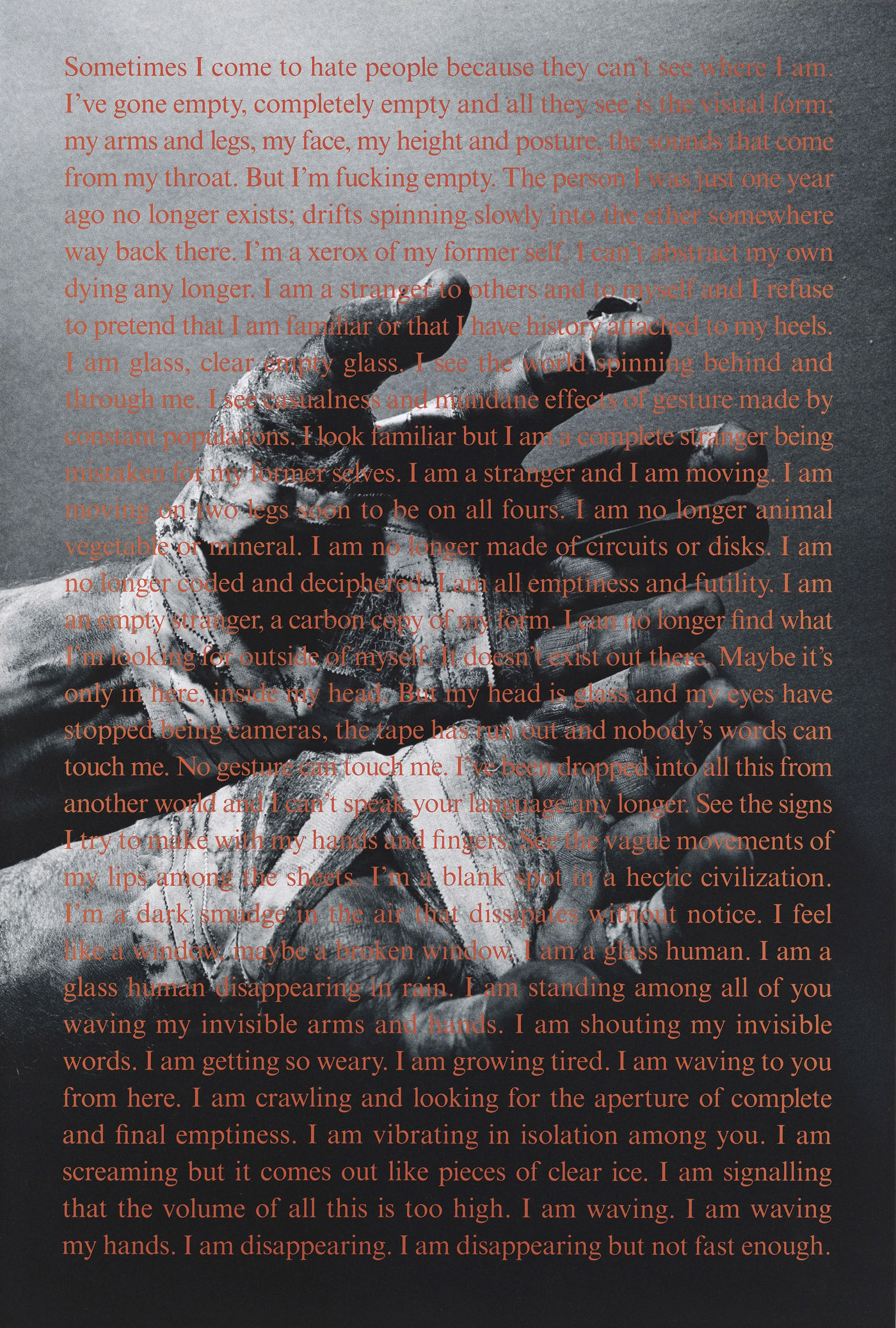
David Wojnarowicz (American, 1954-1992)
Untitled (Sometimes I Come to Hate People)
1992
Gelatin silver print and screenprint on board
39 9/16 × 26 7/8 in. (100.5 × 68.3cm)
Whitney Museum of American Art, New York
Purchase with funds from The Sondra and Charles Gilman, Jr. Foundation, Inc., the Robert Mapplethorpe Foundation Inc., and the Richard and Dorothy Rodgers Fund
Image © Whitney Museum of American Art, New York
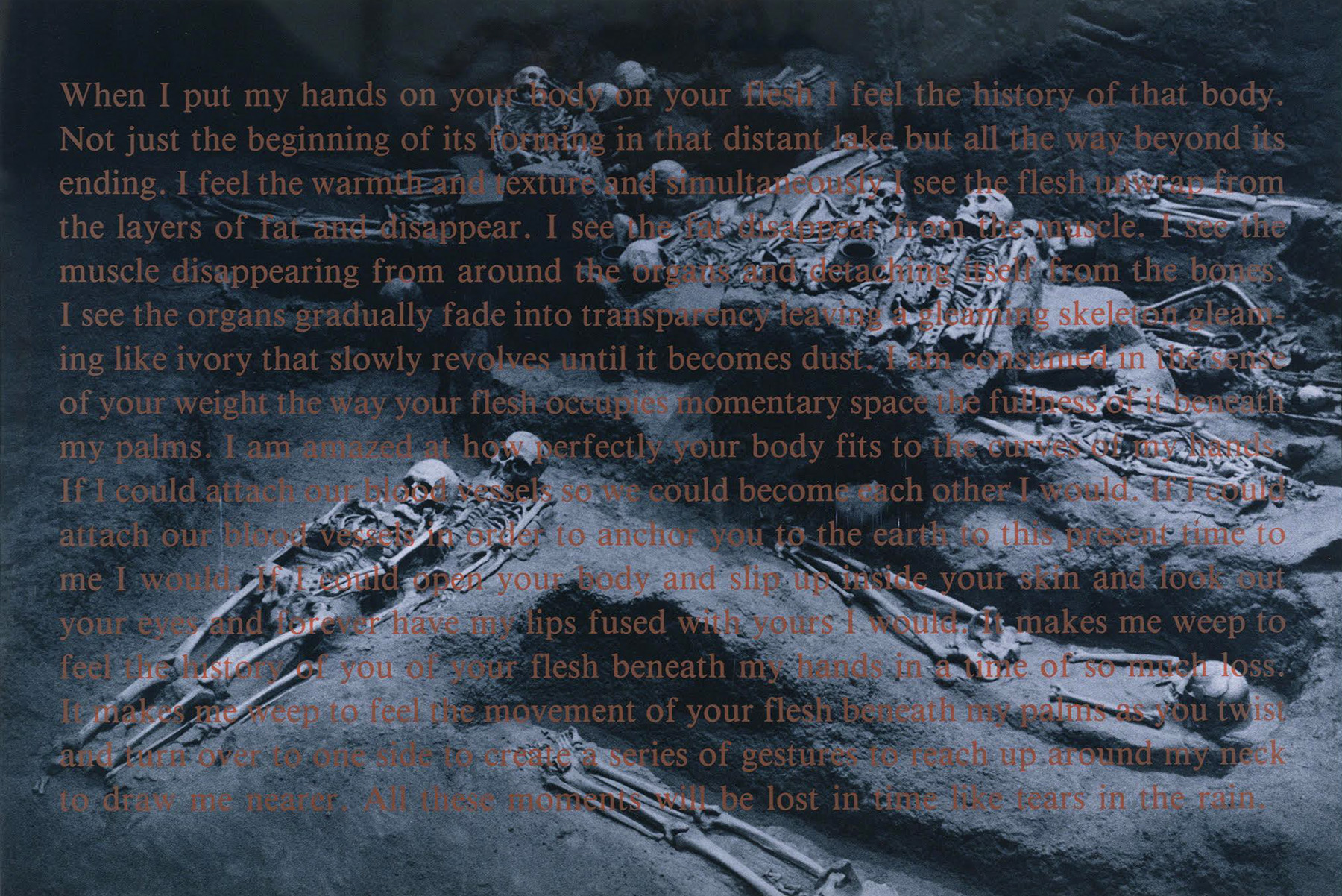
David Wojnarowicz (American, 1954-1992)
Untitled (When I Put My Hands on Your Body)
1990
Gelatin silver print and screenprint on board
26 x 38 in. (66 x 96.5cm)
Collection of Eric Ceputis and David W. Williams
Promised gift to the Art Institute of Chicago
Wojnarowicz visited Dickson Mounds, a museum on the site of an ancient Indigenous community in Lewistown, Illinois, around the time of his 1989 exhibition at Illinois State University. There, he photographed a burial site displaying skeletons and artefacts that had been excavated in 1927. Wojnarowicz, facing his own mortality and the deaths of many whom he loved, returned to the photograph a few years later and layered it with his own text about loss to create this work. The exhibit at Dickson Mounds closed in 1992 after years of protests by Native American activists and their supporters who objected to the public display of human remains. Activists also were fighting at the national level around this time for legislation affirming Indigenous peoples’ right to protect the graves and remains of their ancestors. Wojnarowicz, who frequently wrote and spoke out in support of those who had been forgotten and disenfranchised due to U.S. policies, including Native Americans, recorded the following in an audio journal from 1989: “If I’m making a painting about the American West and I want to talk about the railroad bringing culture – white culture – across the country and exploiting or destroying Indian culture… I see that there’s a certain amount of information that is totally ignored in this country. That all this is built on blood.”
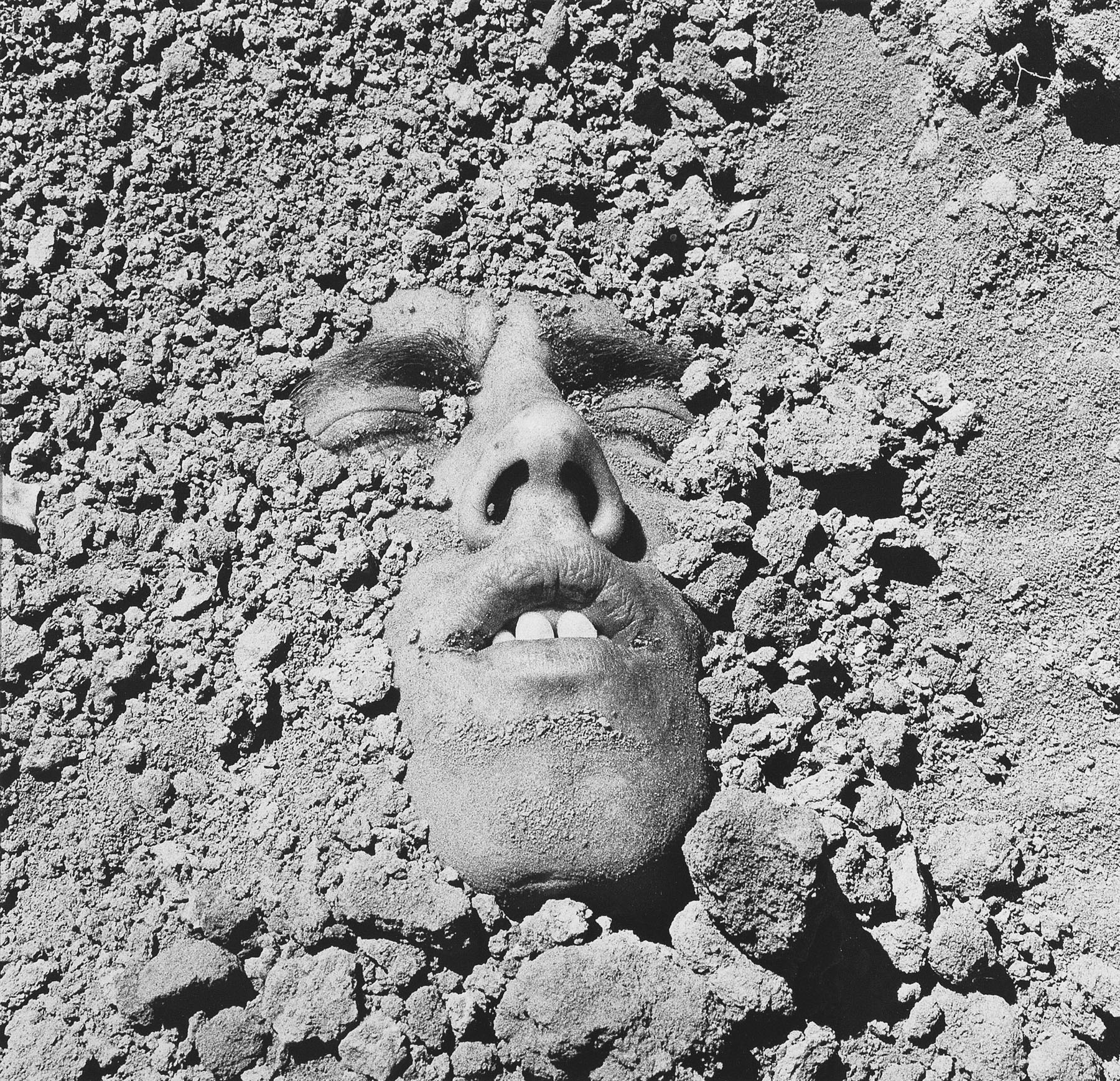
David Wojnarowicz (American, 1954-1992)
Untitled (Face in Dirt)
1991 (printed 1993)
Gelatin silver print
19 × 23 in. (48.3 × 58.4cm)
Collection of Ted and Maryanne Ellison Simmons
Image courtesy the Estate of David Wojnarowicz and P.P.O.W, New York
This photograph was taken in late May 1991 at Chaco Canyon in New Mexico while Wojnarowicz and his friend Marion Scemama took a road trip around the American Southwest. Cynthia Carr, Wojnarowicz’s biographer, describes how the photograph came to be:
‘He had been there before and knew exactly where he wanted to stage this. “We’re going to dig a hole,” he told her, “and I’m going to lie down.” They began digging without saying a word, a hole for his upper body and a bit for the legs. They used their hands. The dirt was loose and dry. He lay down and closed his eyes. Marion put dirt around his face till it was halfway up his cheeks and then stood over him, photographing his half buried face first with his camera and then with hers.’
Whitney Museum of American Art
99 Gansevoort Street
New York, NY 10014
Phone: (212) 570-3600
Opening hours:
Mondays: 10.30am – 6pm
Tuesdays: Closed
Wednesdays, Thursdays 10.30am – 6pm
Friday 10.30am – 10pm
Saturdays and Sundays: 10.30am – 6pm

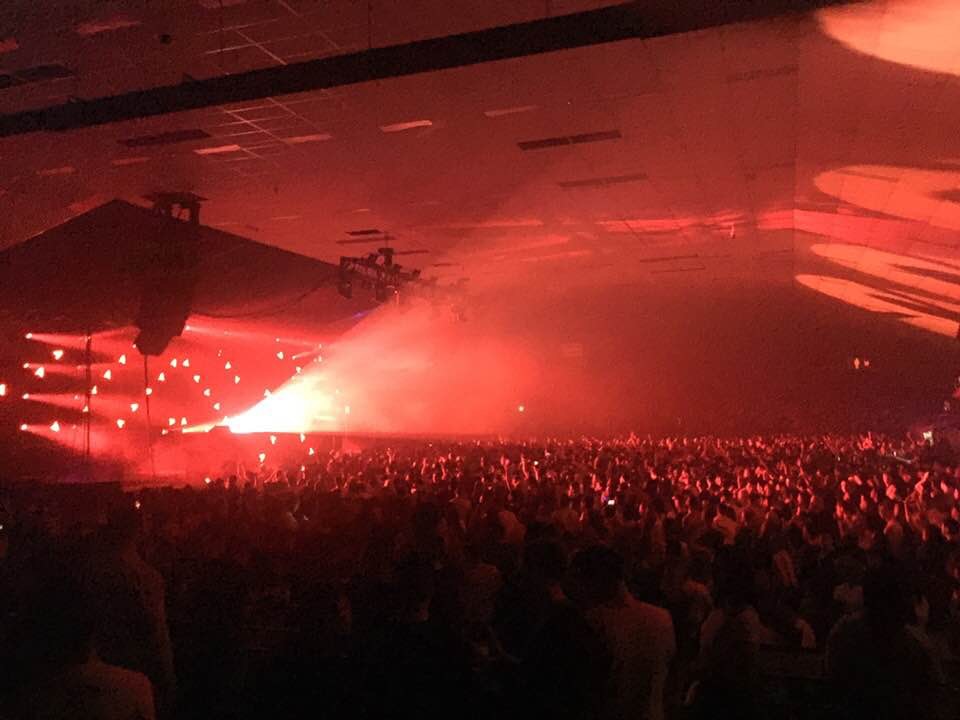

Photographs of Armin van Buuren’s set at Festival Hall, Melbourne, 21 April 2018
© Marcus Bunyan
Last track, one of the hardest of Armin van Buuren’s set at Festival Hall, Melbourne, 21 April 2018
© Marcus Bunyan
I have been to so many clubs in my life I have lost count!
I started going to clubs in 1975 when I came out as a gay man – a year before disco hit, with Sylvester’s You Make Me Feel Mighty Real, the first (gay) superstar of disco. What a star he was. I danced on revolving turntables with lights underneath, just like in the movie Saturday Night Fever, dressed in my army gear for uniform night at Scandals nightclub in Soho, London. Adams club, in Leicester Square, was also a favourite gay nightclub haunt.
I remember dancing to a 17 minute extended version of Donna Summer’s MacArthur Park several times a night at the Pan Club in Luton; and going to Bang on Tottenham Court Road on a Monday and Thursday night to hear the latest releases from the USA. Heaven nightclub (still going), the largest gay nightclub in Europe at the time, was a particular favourite. All around the world, Ibiza, America, Amsterdam, Berlin, etc… I have partied, and still do, in clubs. Night fever for a night owl, one who loves do dance, loves music and life.
After disco came High NRG where we used to dance for hours on the dance floor at Heaven on pure adrenaline, only coming off the dance floor to have a drink of water. New romantics, punk, and soul, techno and trance (my favourite) followed. I am a recovering trance addict. So many memories, so many people, good times and tunes – Black Box, Gloria Gaynor, Barry White, David Bowie, Grace Jones, the list goes on and on.
While this posting shows the design of some amazing clubs, and some photographs of the people who inhabited them, what it cannot capture is the atmosphere of a place. The most important thing in any club are… the people; the music; the lighting; and the DJs.
Without all four working together it doesn’t matter how good the design of a club, it will fail. You can have the most minimal lighting but the most electric atmosphere if the vibe is there: a congress of like-minded people who love dance music, who commune together on the dance floor and in the club, all having a good time. The DJ’s orchestrate this secular celebration of spirit. They can take you up, bring you around, twist you inside out. The modern temple of love, light and healing. Party hard, party on.
Dr Marcus Bunyan
Many thankx to the Vitra Design Museum for allowing me to publish the photographs in the posting. Please click on the photographs for a larger version of the image.

Palladium, New York
1985
Architect: Arata Isozaki, mural by Keith Haring
© Timothy Hursley, Garvey|Simon Gallery New York

Installation view of the exhibition Night Fever. Designing Club Culture 1960 – Today, at the Vitra Design Museum 2018
© Vitra Design Museum
Photo: Mark Niedermann

An evening at the Space Electronic
Florence, 1971
Interior Design: Gruppo 9999
Photo: Carlo Caldini
© Gruppo 9999

Discotheque Flash Back
Borgo San Dalmazzo c. 1972
Interior Design: Studio65
© Paolo Mussat Sartor

Nightclub Les Bains Douches
Paris, 1990
Interior Design: Philippe Starck
© Foc Kan

DJ Larry Levan in Paradise Garage
New York, 1979
© Bill Bernstein, David Hill Gallery, London

Guests in Conversation on a Sofa, Studio 54
New York, 1979
© Bill Bernstein, David Hill Gallery, London

Akoaki
Mobile DJ Booth, The Mothership
Detroit, 2014
© Akoaki
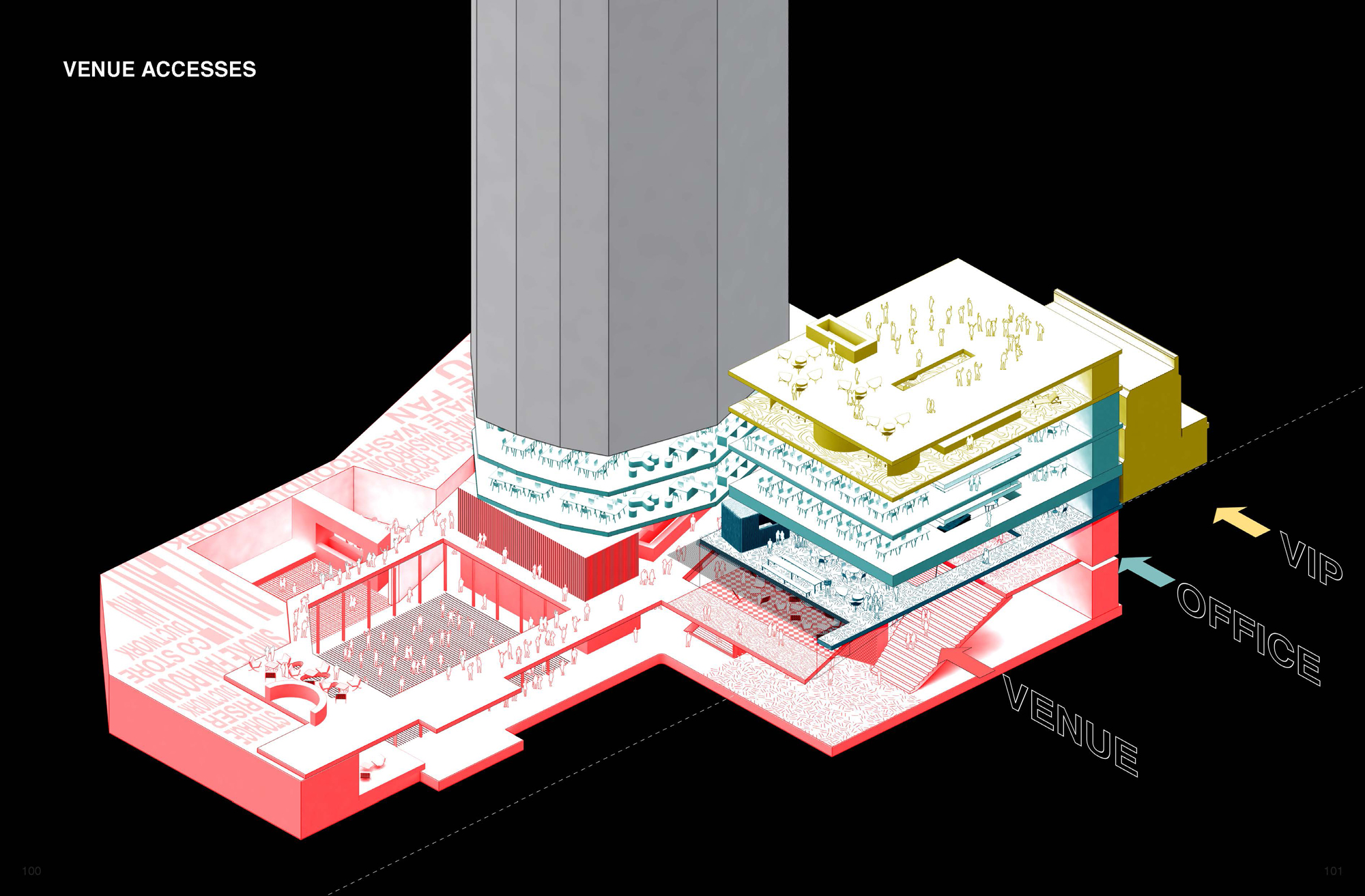
OMA/Rem Koolhaas
Isometric Plan Ministry of Sound II
London, 2015
© OMA

Newcastle Stage at Horst Arts & Music Festival
Belgium, 2017
Architects: Assemble
© Jeroen Verrecht

Diane Alexander White
The backlash against disco peaked at the Disco Demolotion Night at Comiskey Park, Chicago, in the summer 1979
July 12, 1979
Silver gelatin print
© Diane Alexander White Photography
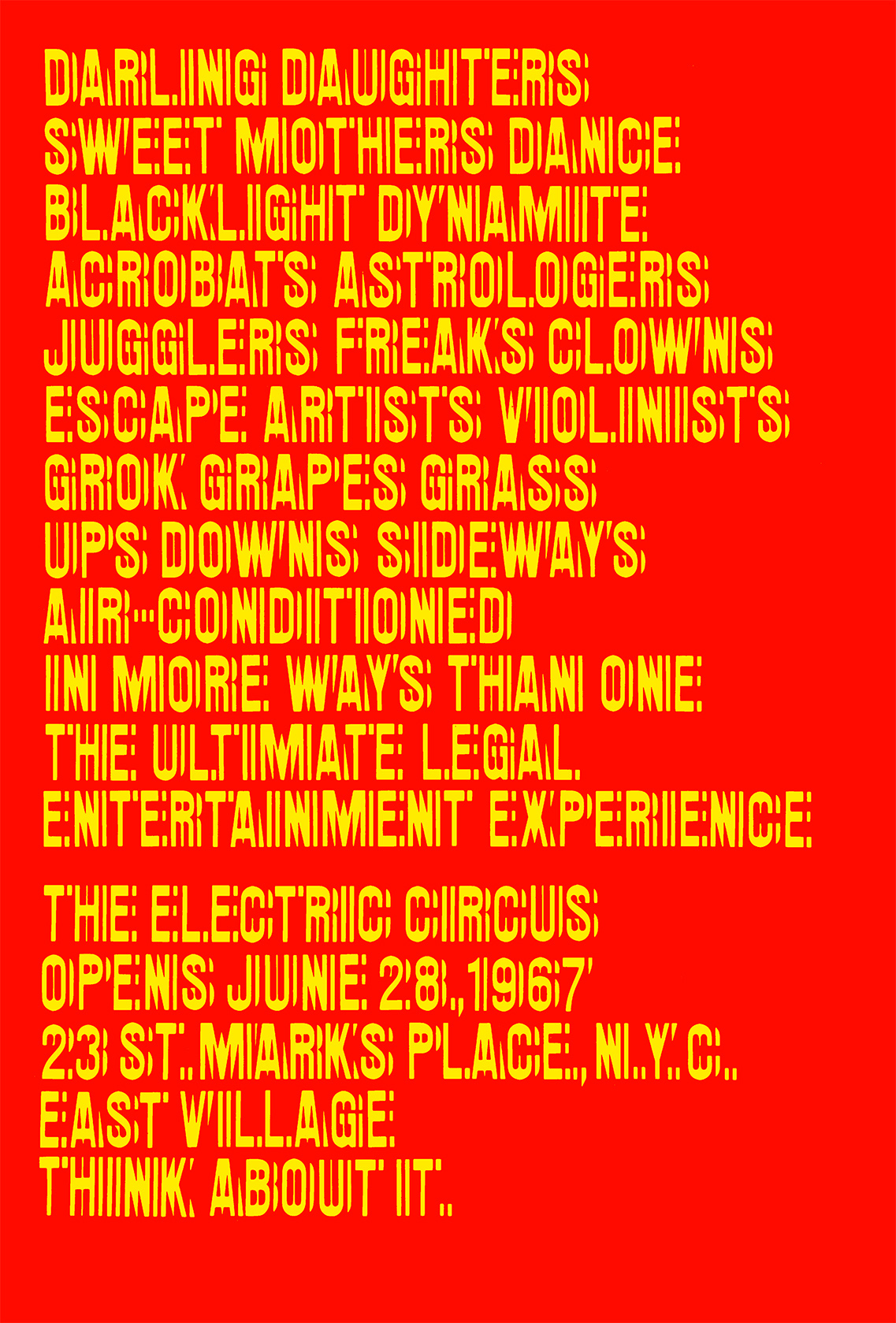
Poster for the Nightclub The Electric Circus
New York, 1967
Design: Chermayeff & Geismar
© Ivan Chermayeff and Tom Geismar

Poster for the Discotheque Flash Back
Borgo San Dalmazzo, 1972
Design: Gianni Arnaudo / Studio65

Hasse Persson (Swedish, b. 1942)
Calvin Klein Party
1978
© Hasse Persson

Bill Bernstein (American, b. 1950)
Dance floor at Xenon
New York, 1979
© Bill Bernstein / David Hill Gallery, London
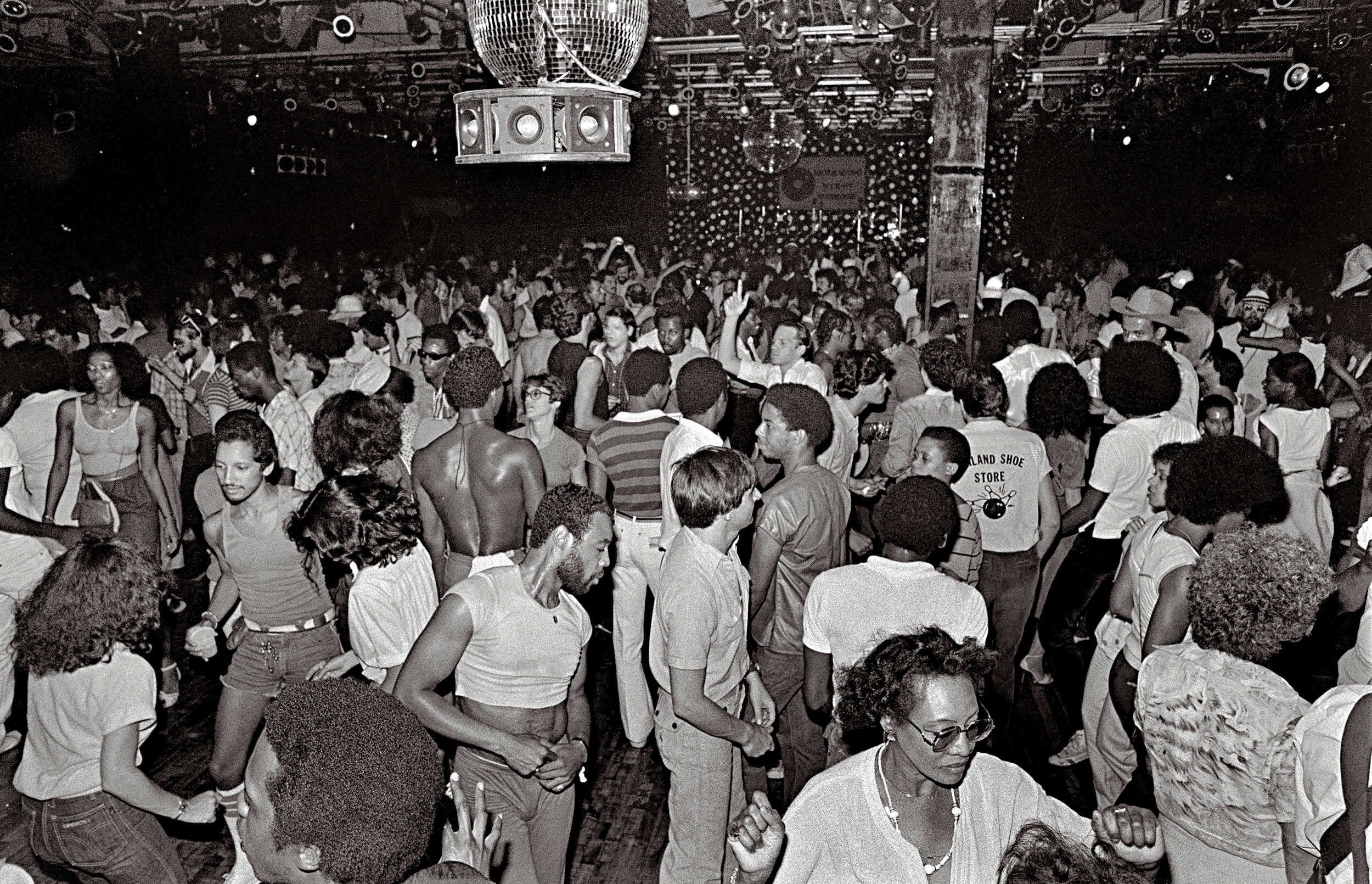
Dance floor at Paradise Garage
New York, 1978
© Bill Bernstein / David Hill Gallery, London

Trojan, Nichola and Leigh Bowery at Taboo
1985
© Dave Swindells

Musa N. Nxumalo (South African, b. 1986)
Wake Up, Kick Ass and Repeat!
Photograph from the series 16 Shots
2017
© Musa N. Nxumalo / Courtesy of SMAC Gallery, Johannesburg

Volker Hinz (German, b. 1947)
Grace Jones at “Confinement” theme, Area
New York, 1984
© Volker Hinz

Keith Haring in front of his contribution to Art theme
Nd
© Volker Hinz
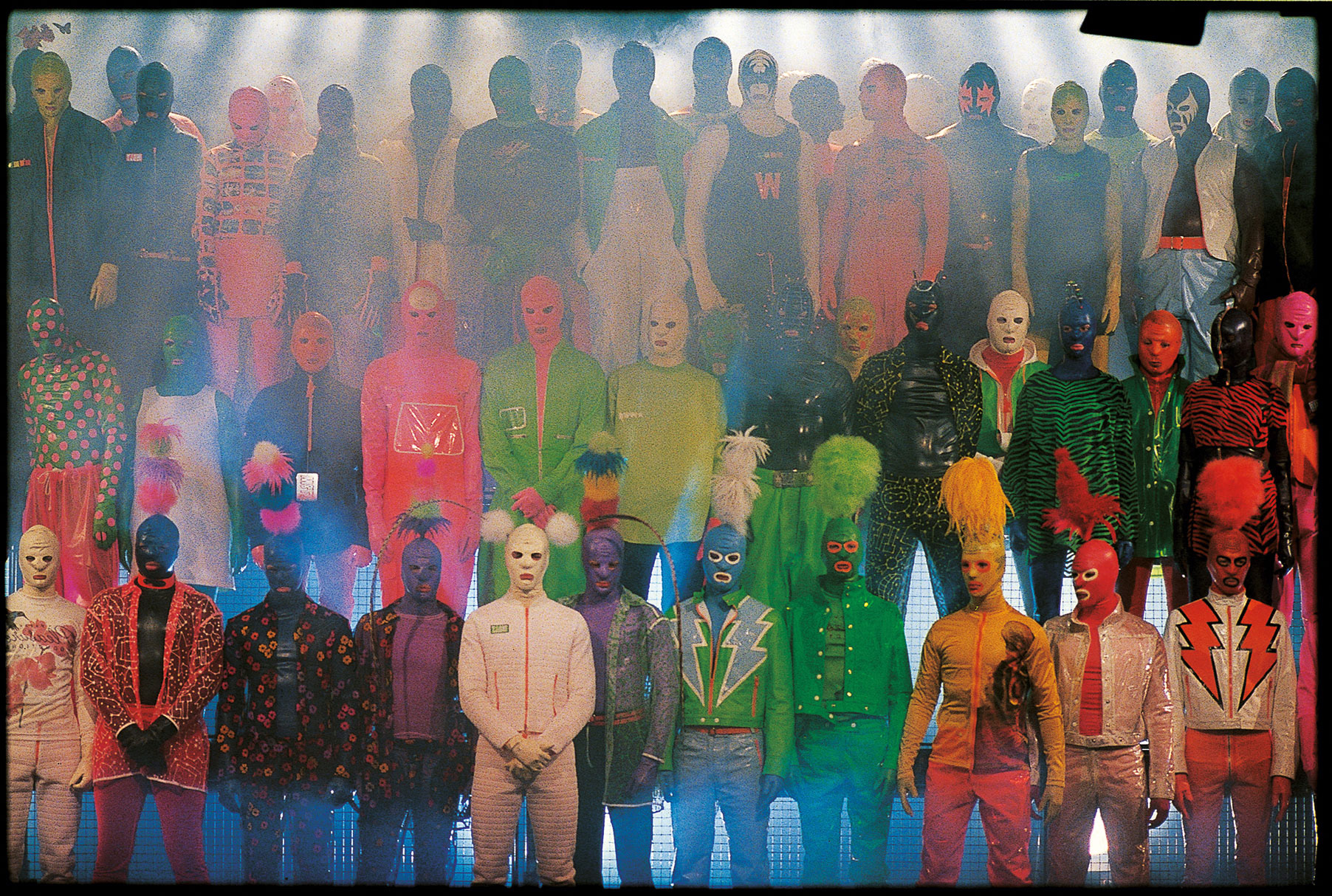
Walter Van Beirendonck (Belgium, b. 1957)
Fashion show of Wild & Lethal Trash (W.&L.T.) collection for Mustang Jeans
Fall / Winter 1995/9
© Dan Lecca / Courtesy of Mustang Jeans

Chen Wei (Chinese, b. 1980)
In the Waves #1
2013
© Chen Wei / Courtesy of LEO XU PROJECTS, Shanghai

Despacio Sound System, New Century Hall, Manchester International Festival
July 2013
© Rod Lewis

Interior view of Haçienda, Manchester
Nd
Courtesy of Ben Kelly

Bureau A
DJ booth inside The Club, Lisbon Architecture Triennale
2016
© Mariana Lopes

Gruppo UFO
Bamba Issa, Night Shelter for the Beach Rescue Camels
Bamba Issa, 1969
© Photo: Carlo Bachi / Courtesy of Gruppo UFO

Interior view of Tresor, Berlin
1996/97
© Gustav Volker Heuss

Martin Eberle
Tresor außen
Berlin, 1996
From the series Temporary Spaces
© Martin Eberle

Gianni Arnaudo (Italian, b. 1947)
Aliko chair, designed for Flash Back
Borgo San Dalmazzo, Italy, 1972
Gufram
© Andreas Sütterlin / Courtesy of Gianni Arnaudo

Roger Tallon (French, 1929-2011)
Swivel Chair Module 400 for the (unrealised) Nightclub Le Garage
Paris, 1965
© Vitra Design Museum
Photo: Thomas Dix

Vincent Rosenblatt (French lives Brazil, b. 1972)
Tecnobrega #093
Tupinambá, 2016
From the series Tecnobrega – The Religion of Soundmachines
Metropoles Club, Belém do Pará, Brazil
Inkjet print on Baryta paper (2018)
100 x 66cm
© Vincent Rosenblatt
The nightclub is one of the most important design spaces in contemporary culture. Since the 1960s, nightclubs have been epicentres of pop culture, distinct spaces of nocturnal leisure providing architects and designers all over the world with opportunities and inspiration. Night Fever. Designing Club Culture 1960 – Today offers the first large-scale examination of the relationship between club culture and design, from past to present. The exhibition presents nightclubs as spaces that merge architecture and interior design with sound, light, fashion, graphics, and visual effects to create a modern Gesamtkunstwerk. Examples range from Italian clubs of the 1960s created by the protagonists of Radical Design to the legendary Studio 54 where Andy Warhol was a regular, from the Haçienda in Manchester designed by Ben Kelly to more recent concepts by the OMA architecture studio for the Ministry of Sound in London. The exhibits on display range from films and vintage photographs to posters, flyers, and fashion, but also include contemporary works by photographers and artists such as Mark Leckey, Chen Wei, and Musa N. Nxumalo. A spatial installation with music and light effects takes visitors on a fascinating journey through a world of glamour and subcultures – always in search of the night that never ends.
Night Fever opens with the 1960s, exploring the emergence of nightclubs as spaces for experimentation with interior design, new media, and alternative lifestyles. The Electric Circus (1967) in New York, for example, was designed as a countercultural venue by architect Charles Forberg while renowned graphic designers Chermayeff & Geismar created its distinctive logo and font. Its multidisciplinary approach influenced many clubs in Europe, including Space Electronic (1969) in Florence. Designed by the collective Gruppo 9999, this was one of several nightclubs associated with Italy’s Radical Design avant-garde. The same goes for Piper in Turin (1966), a club designed by Giorgio Ceretti, Pietro Derossi, and Riccardo Rosso as a multifunctional space with a modular interior suitable for concerts, happenings, and experimental theatre as well as dancing. Gruppo UFO’s Bamba Issa (1969), a beach club in Forte dei Marmi, was another highly histrionic venue, its themed interior completely overhauled for every summer of its three years of existence.
With the rise of disco in the 1970s, club culture gained a new momentum. Dance music developed into a genre of its own and the dance floor emerged as a stage for individual and collective performance, with fashion designers such as Halston and Stephen Burrows providing the perfect outfits to perform and shine. New York’s Studio 54, founded by Ian Schrager and Steve Rubell in 1977 and designed by Scott Bromley and Ron Doud, soon became a celebrity favourite. Only two years later, the movie Saturday Night Fever marked the apex of Disco’s commercialisation, which in turn sparked a backlash with homophobic and racist overtones that peaked at the Disco Demolition Night staged at a baseball stadium in Chicago.
Around the same time, places in New York’s thriving nightlife like the Mudd Club (1978) and Area (1983) offered artists new spaces to merge the club scene and the arts and launched the careers of artists like Keith Haring and Jean-Michel Basquiat. In early 1980s London, meanwhile, clubs like Blitz and Taboo brought forth the New Romantic music and fashion movement, with wild child Vivienne Westwood a frequent guest at Michael and Gerlinde Costiff’s Kinky Gerlinky club night. But it was in Manchester that architect and designer Ben Kelly created the post-industrial cathedral of rave, The Haçienda (1982), from where Acid House conquered the UK. House and Techno were arguably the last great dance music movements to define a generation of clubs and ravers. They reached Berlin in the early 1990s just after the fall of the wall, when disused and derelict spaces became available for clubs like Tresor (1991); more than a decade later, the notorious Berghain (2004) was established in a former heating plant, demonstrating yet again how a vibrant club scene can flourish in the cracks of the urban fabric, on empty lots and in vacant buildings.
Developments have become ever more complex since the early 2000s. On the one hand, club culture is thriving and evolving as it is adopted by global brands and music festivals; on the other, many nightclubs have been pushed out of the city or survive merely as sad historical monuments and modern ruins of a hedonistic past. At the same time, a new generation of architects is addressing the nightclub typology. The architectural firm OMA, founded by Rem Koolhaas, has developed a proposal for a twenty-first-century Ministry of Sound II for London, while Detroit-based designers Akoaki have created a mobile DJ booth called The Mothership to promote their hometown’s rich club heritage.
Based on extensive research and featuring many exhibits never before displayed in a museum, Night Fever brings together a wide range of material, from furniture to graphic design, architectural models to art, film and photography to fashion. The exhibition takes visitors through a fascinating nocturnal world that provides a vital contrast to the rules and routines of our everyday life.
While the exhibition basically follows a chronological concept, a music and light installation created specially by exhibition designer Konstantin Grcic and lighting designer Matthias Singer offers visitors the opportunity to experience all the many facets of nightclub design, from visual effects to sounds and sensations. A display of record covers, ranging from Peter Saville’s designs for Factory Records to Grace Jones’s album cover Nightclubbing, underlines the significant relationship between music and design in club culture. The multidisciplinary exhibition reveals the nightclub as much more than a dance bar or a music venue; it is an immersive environment for intense experiences.
Represented artists, designers and architects (extract): François Dallegret, Gruppo 9999, Halston, Keith Haring, Arata Isozaki, Grace Jones, Ben Kelly, Bernard Khoury, Miu Miu, OMA (Office for Metropolitan Architecture), Peter Saville, Studio65, Roger Tallon, Walter Van Beirendonck, Andy Warhol
Represented clubs (extract): The Electric Circus, New York, 1967 Space Electronic, Florenz, 1969 Il Grifoncino, Bolzano, 1969 Studio 54, New York, 1977 Paradise Garage, New York, 1977 Le Palace, Paris, 1978 The Saint, New York, 1980 The Haçienda, Manchester, 1982 Area, New York, 1983 Palladium, New York, 1985 Tresor, Berlin, 1991 B018, Beirut, 1998 Berghain, Berlin, 2004
Press release from the Vitra Design Museum
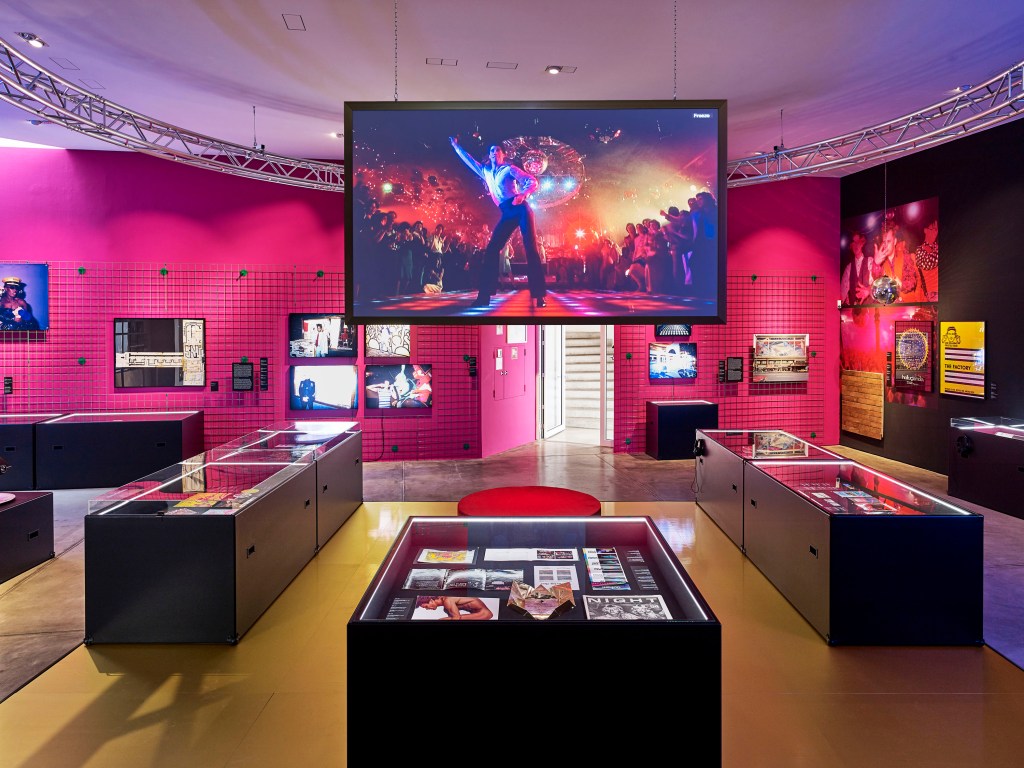
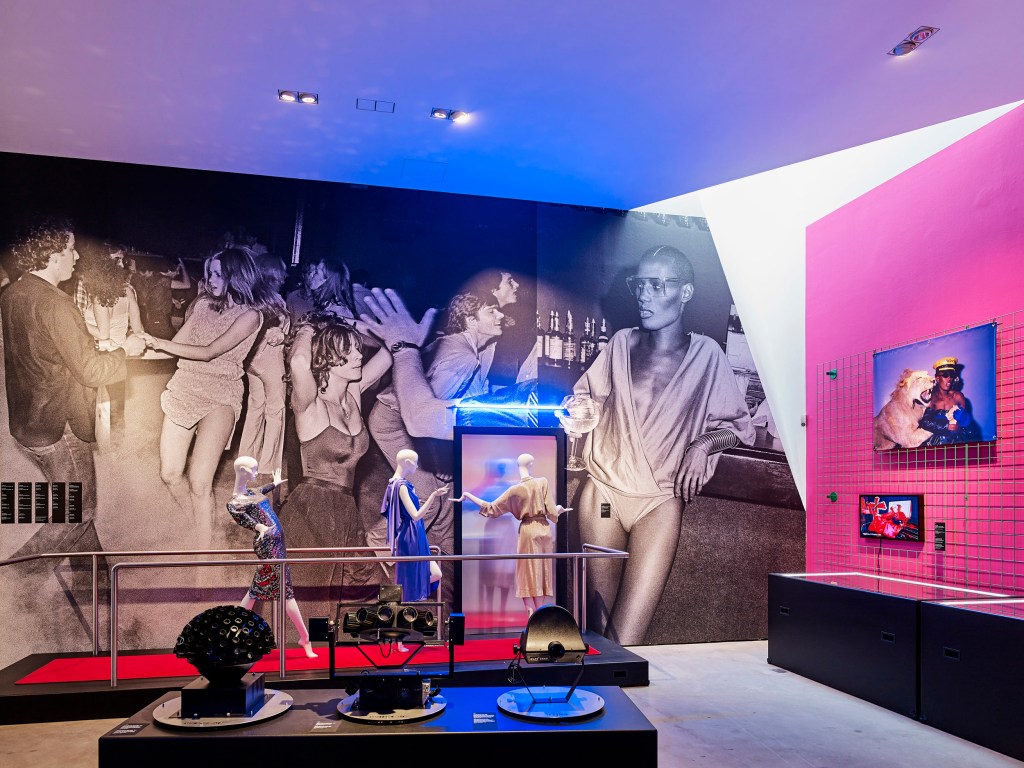
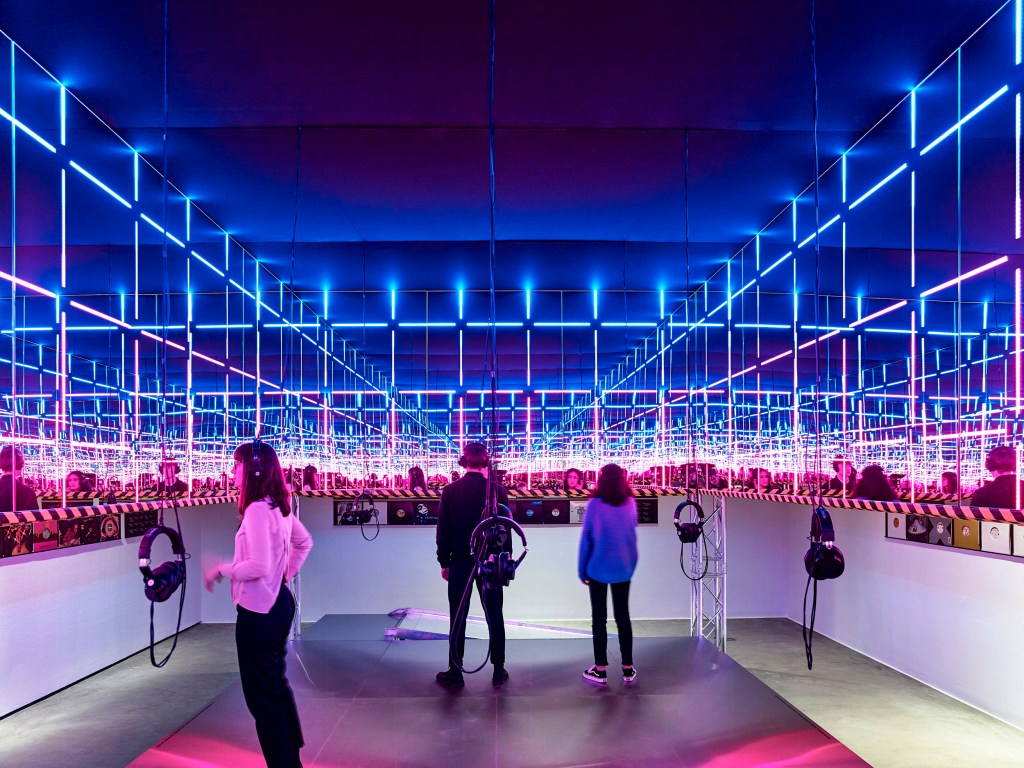
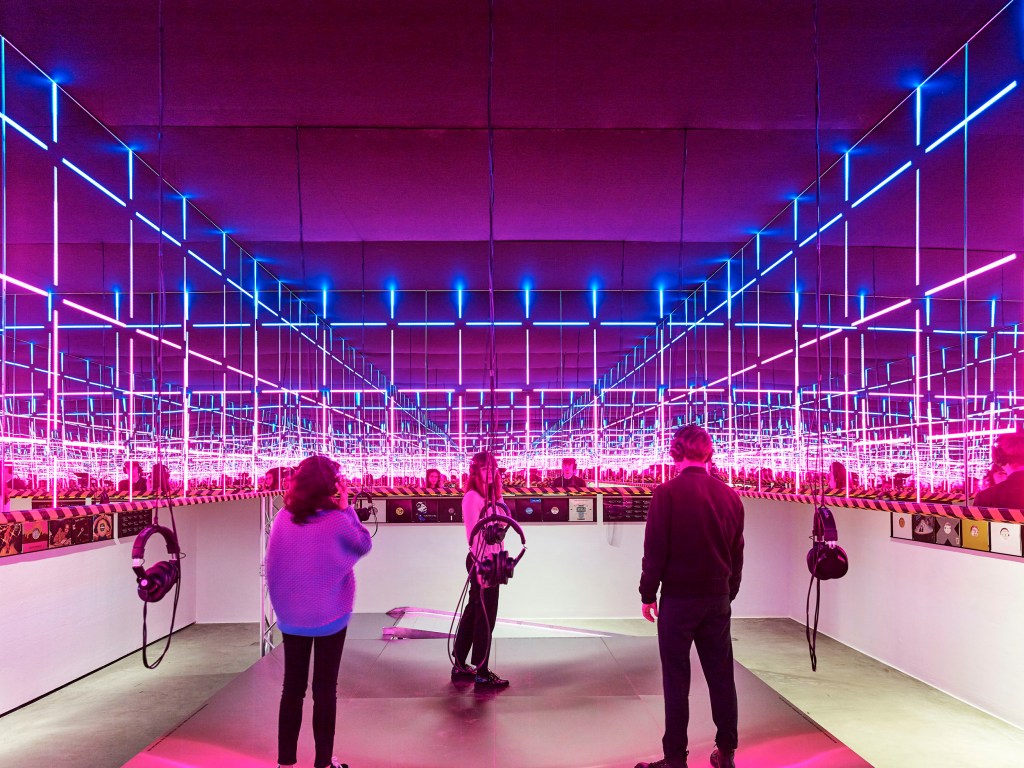
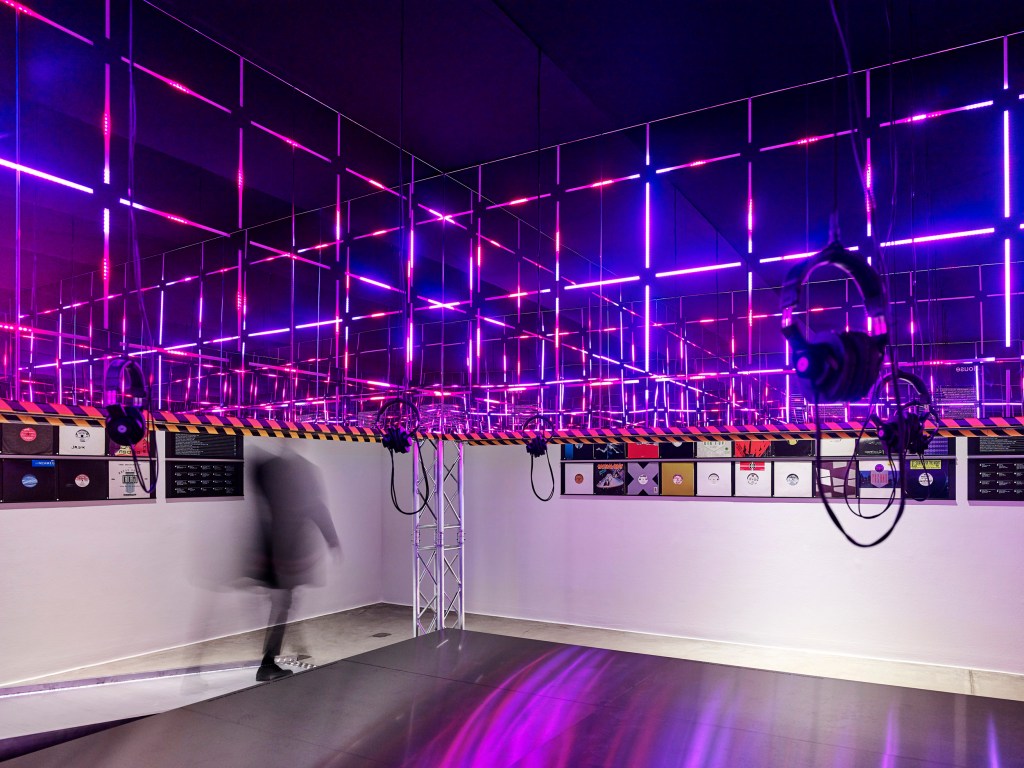
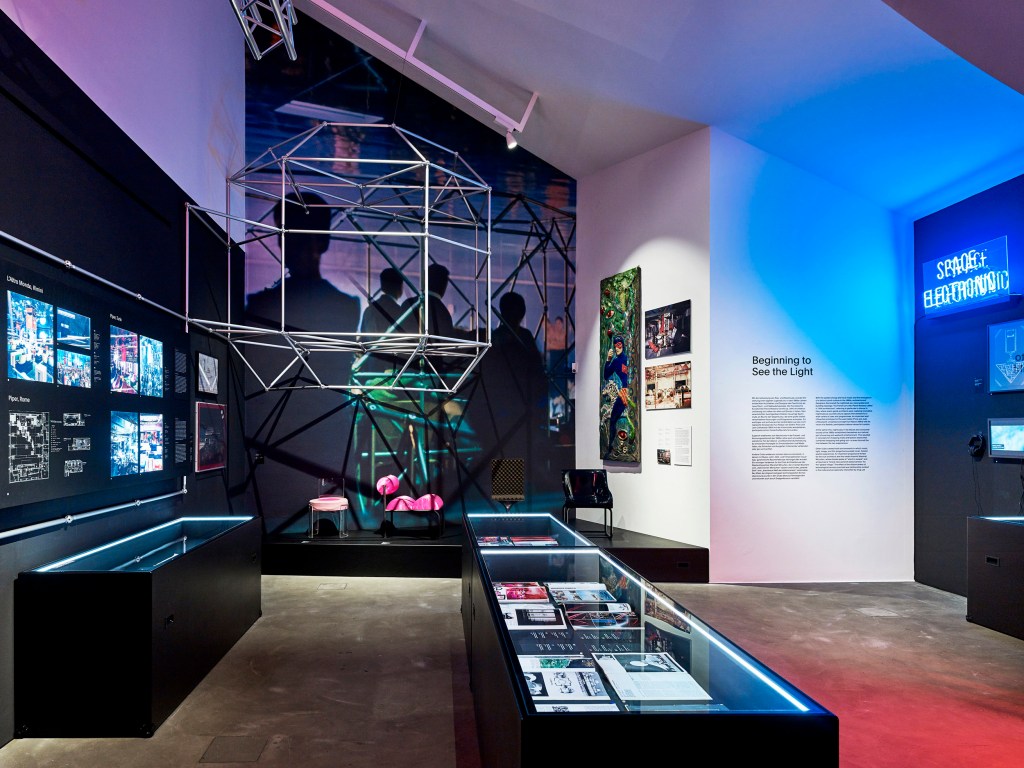
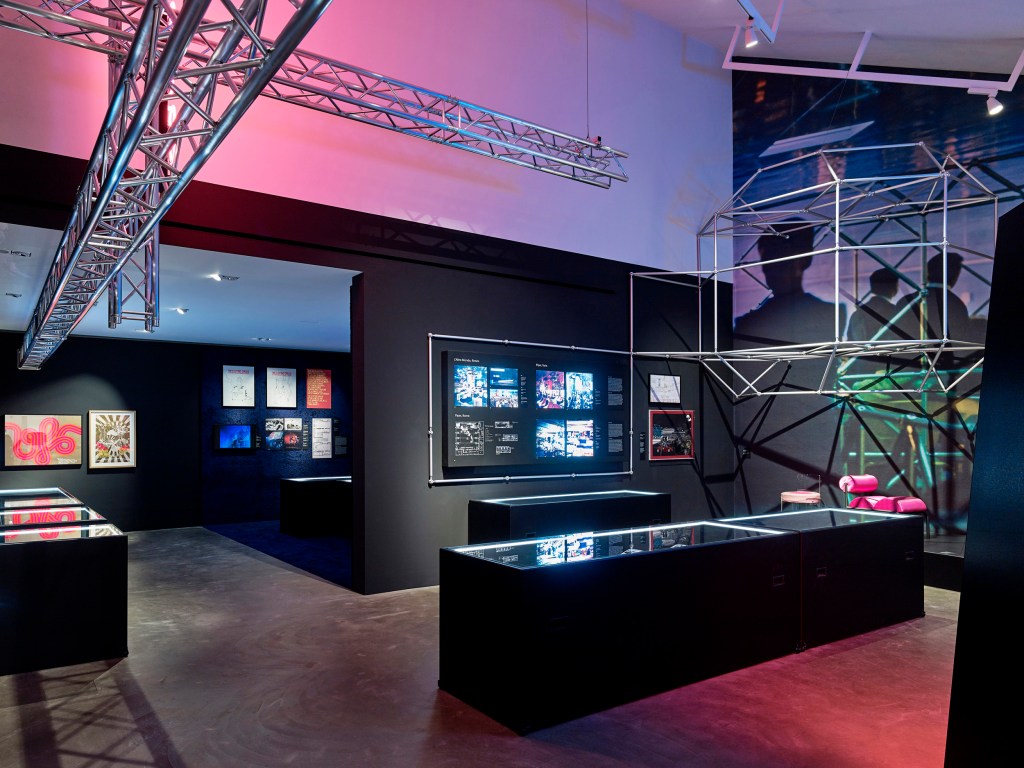
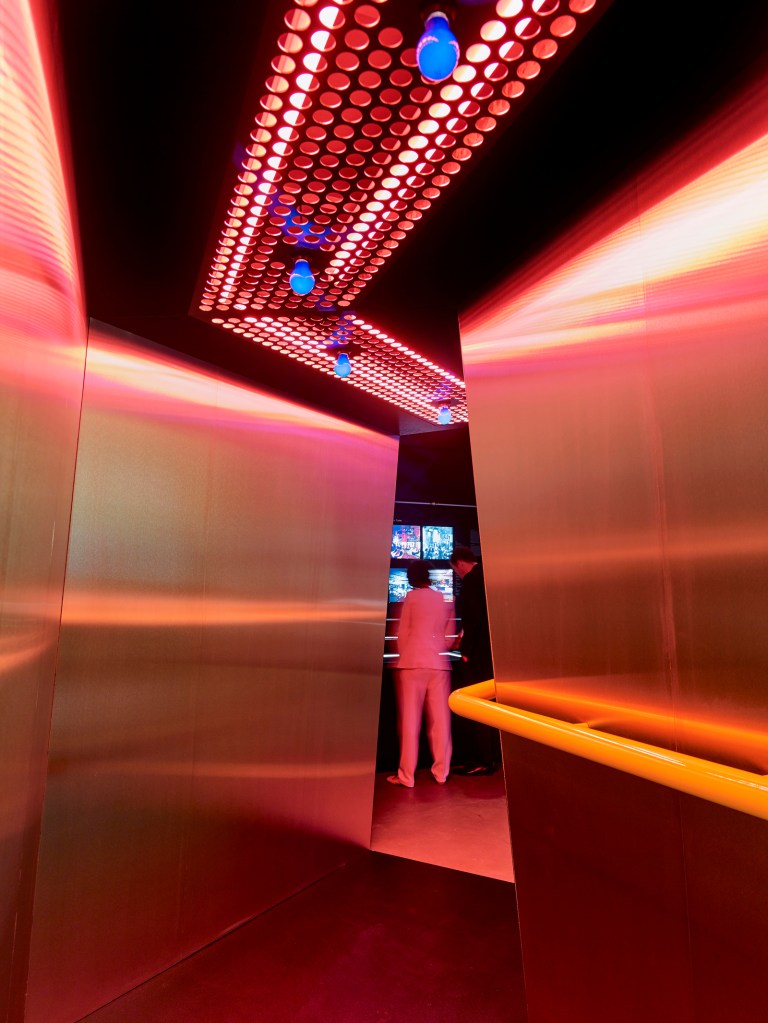
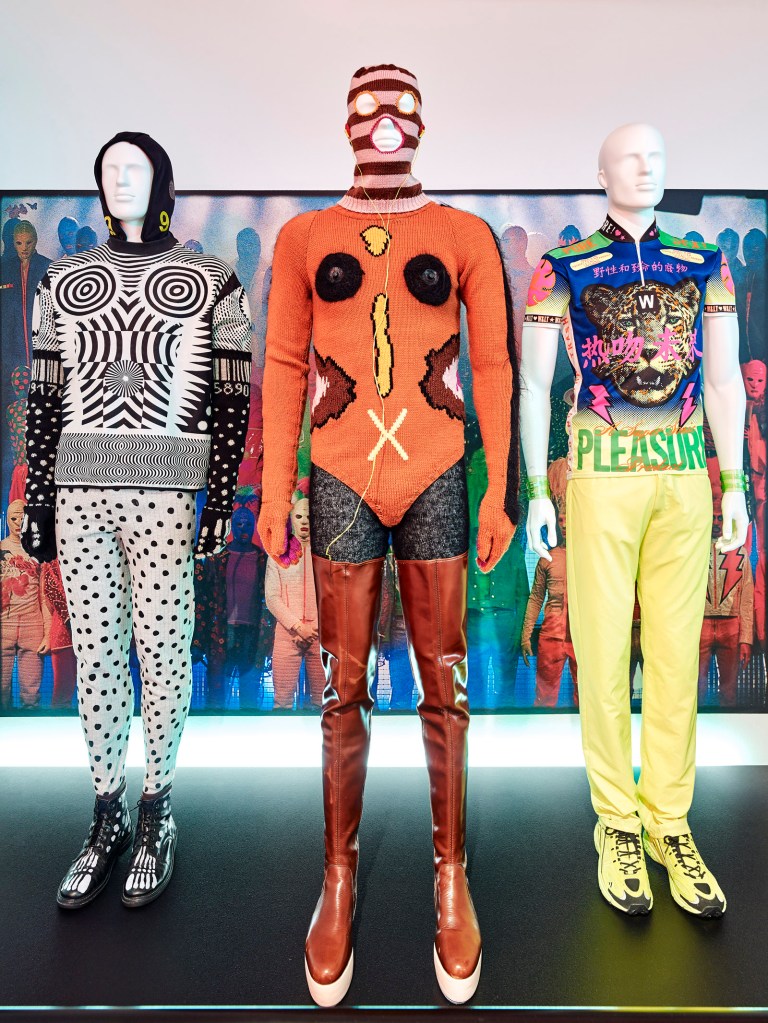
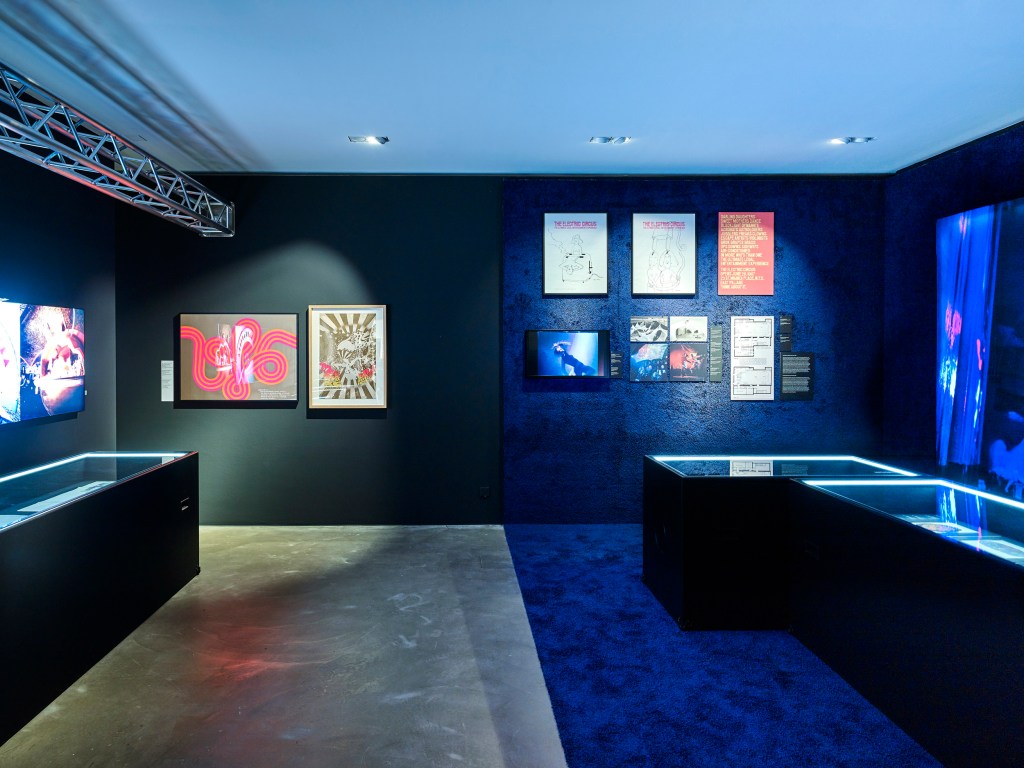
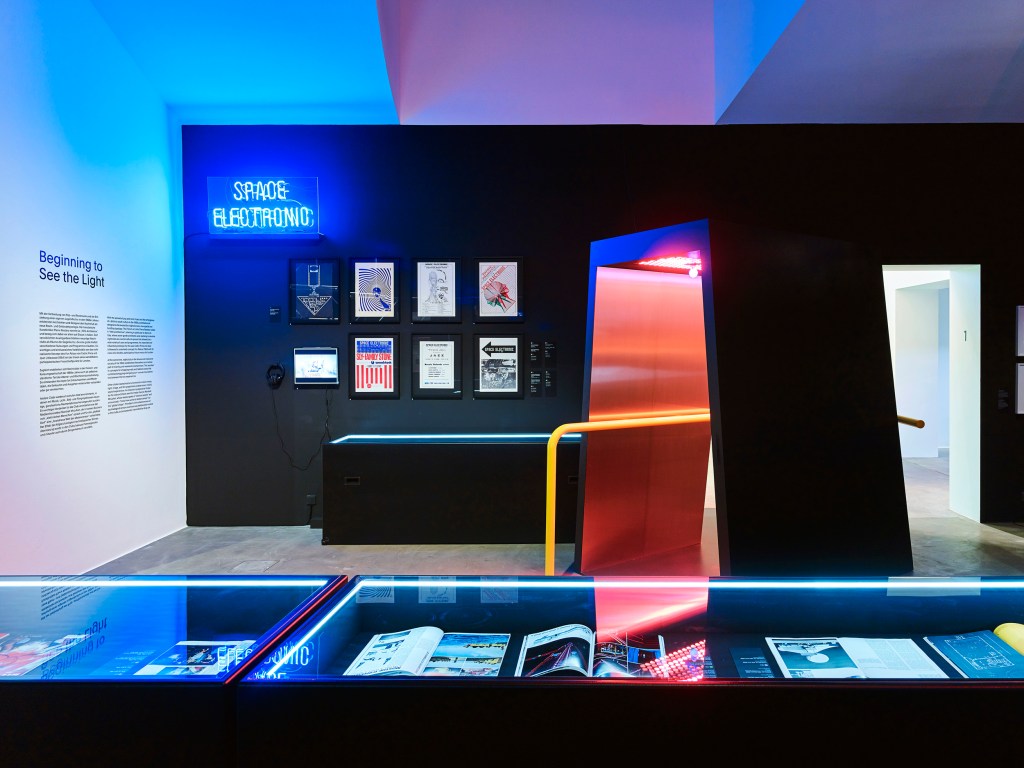
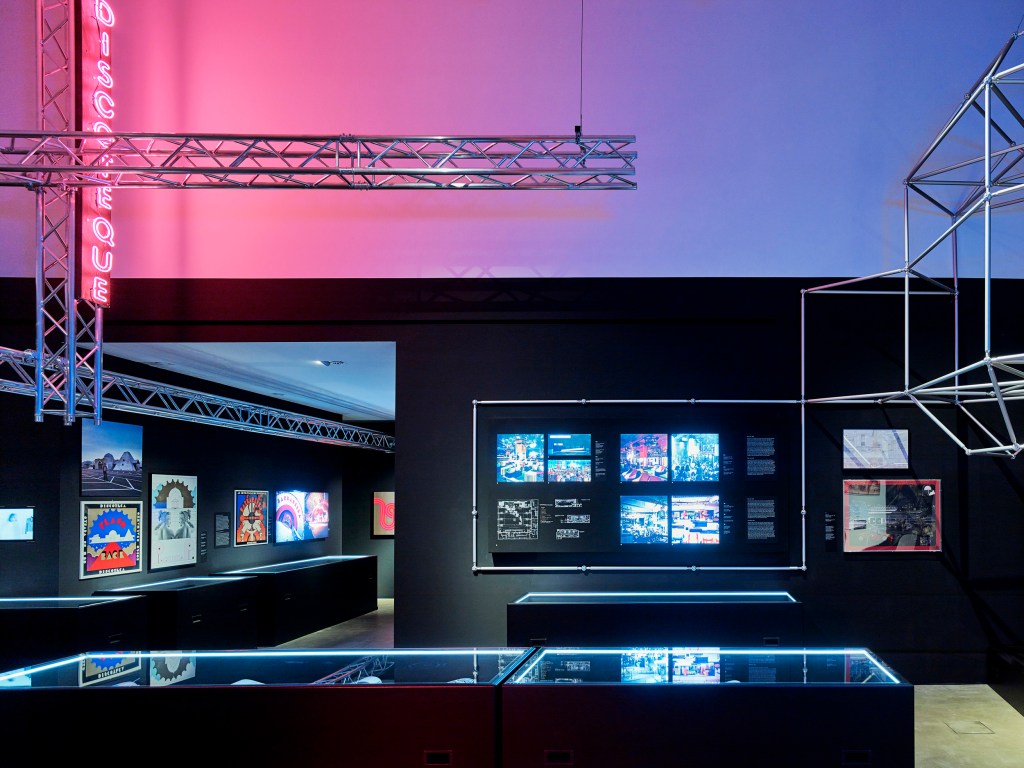
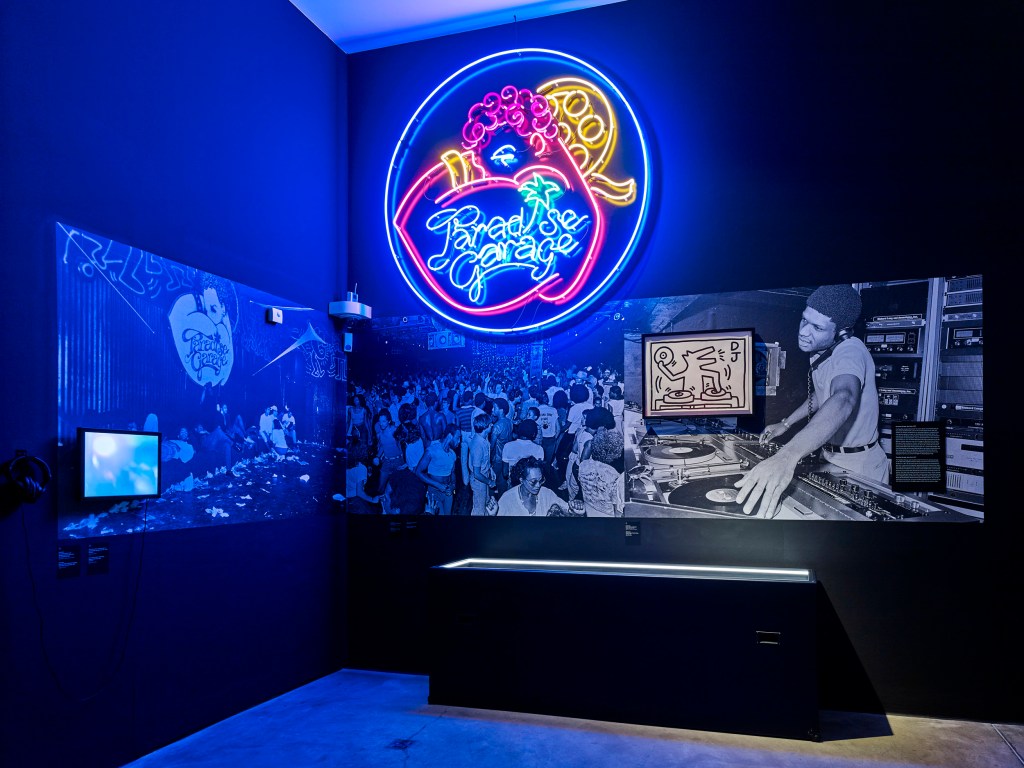
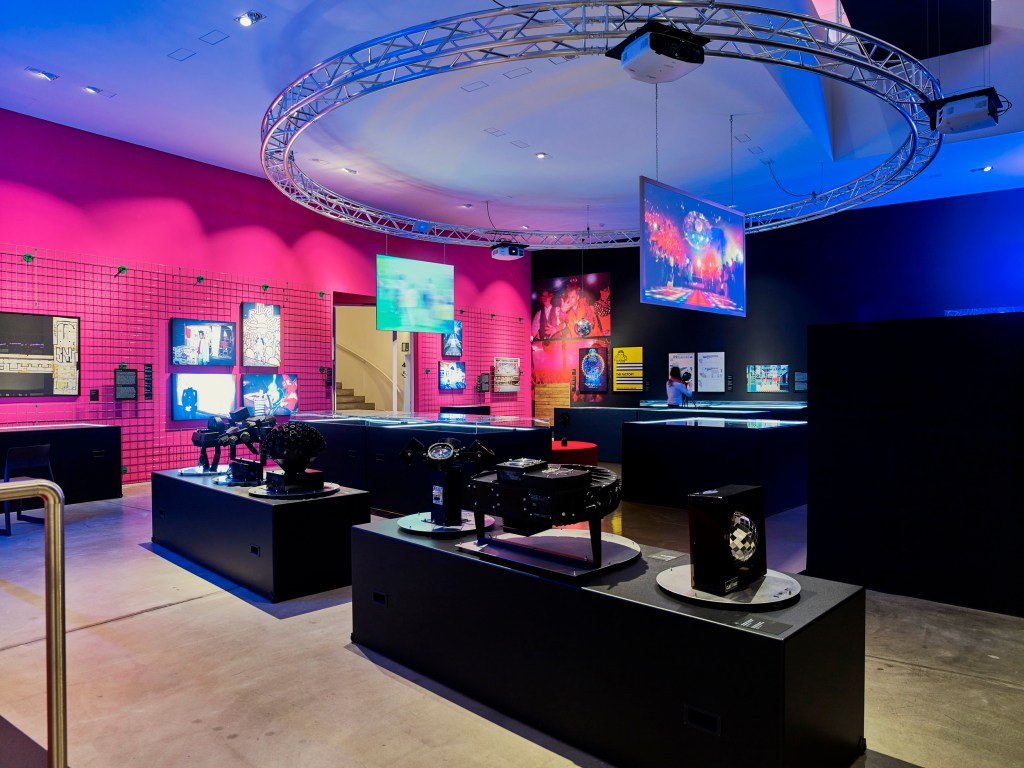
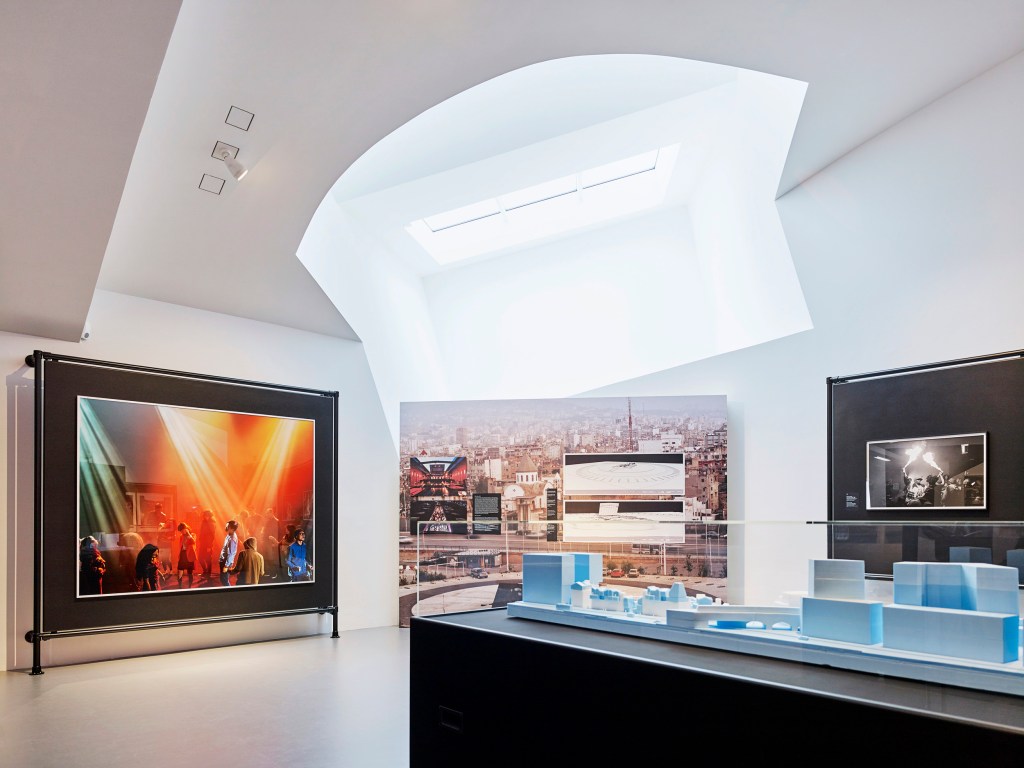
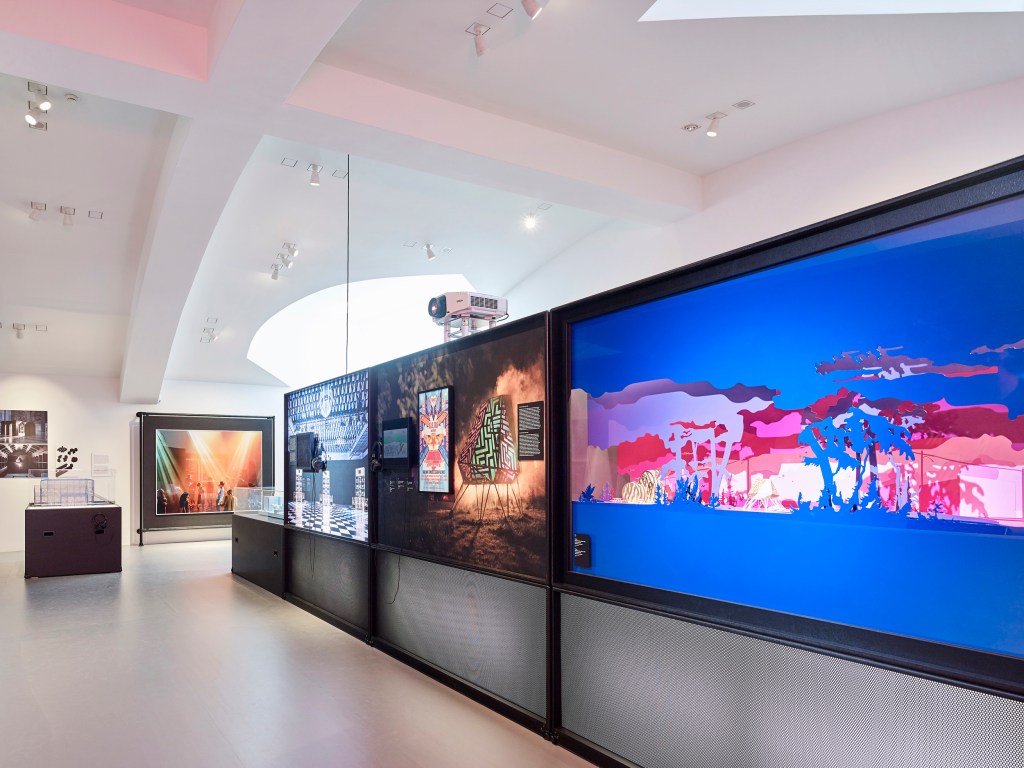
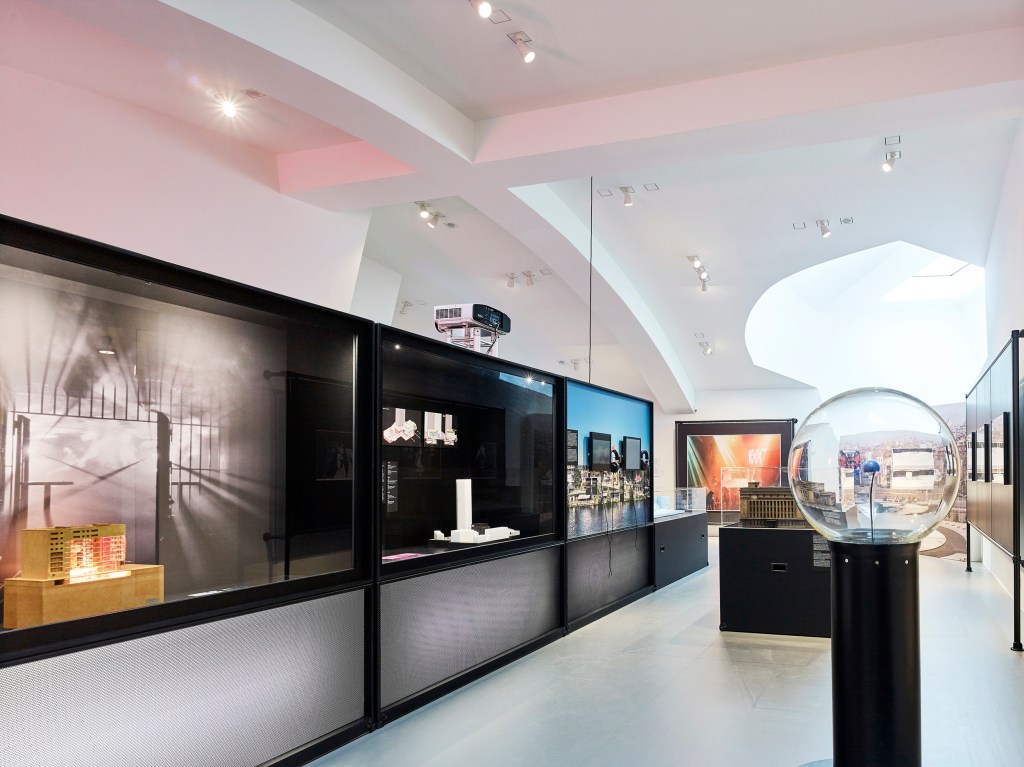
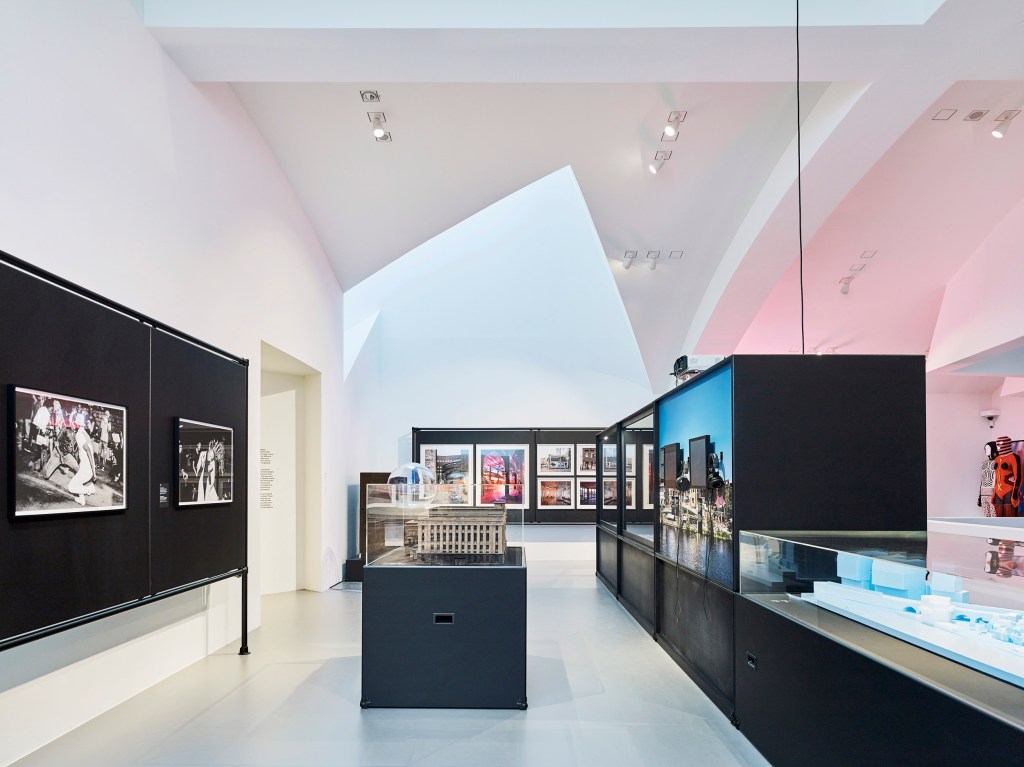
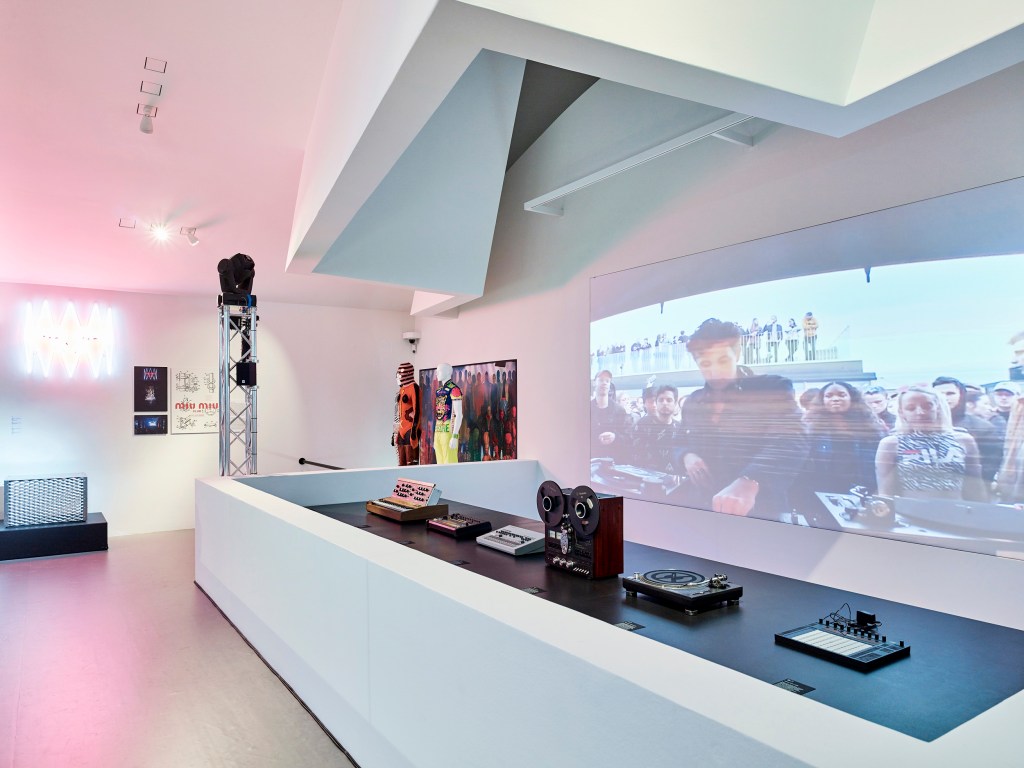
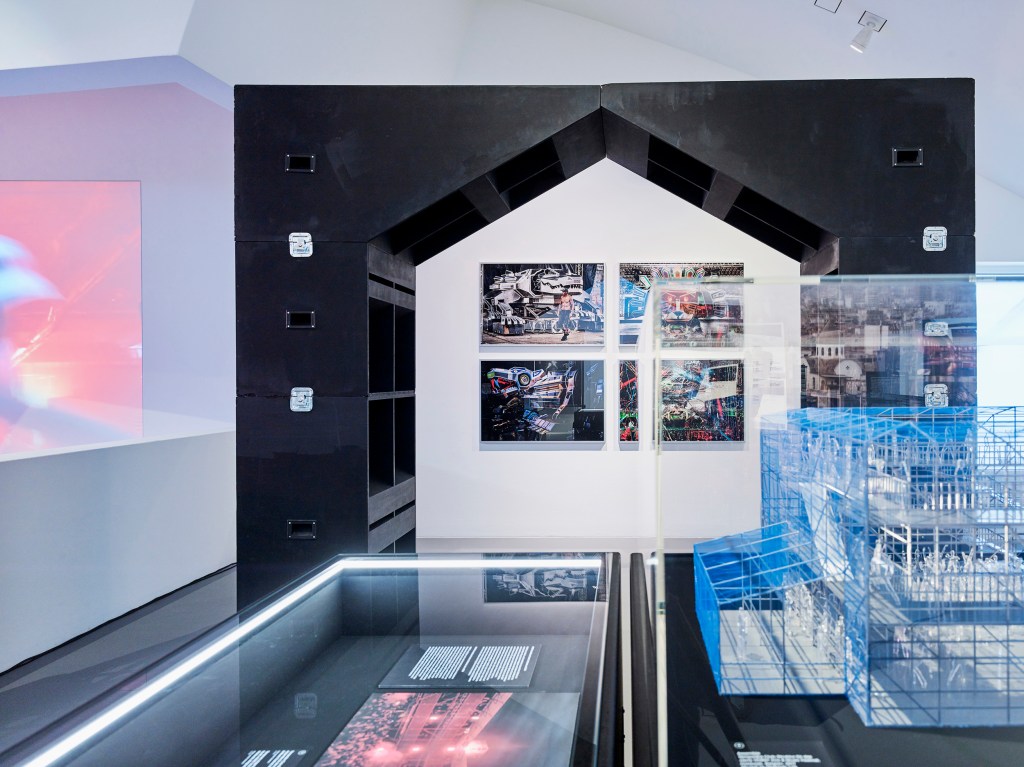

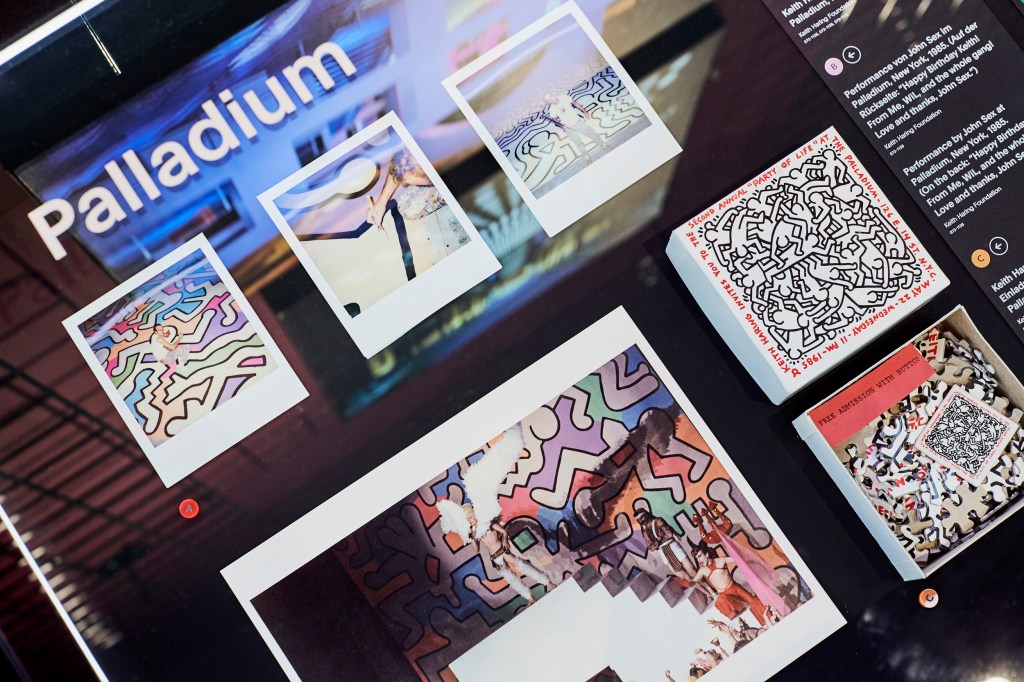
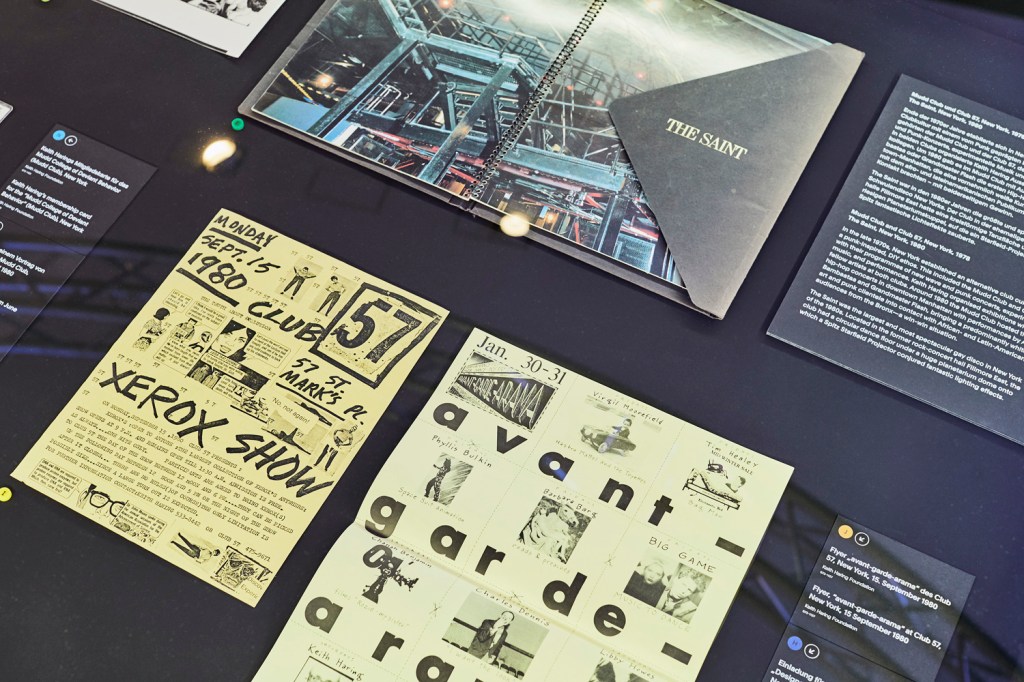


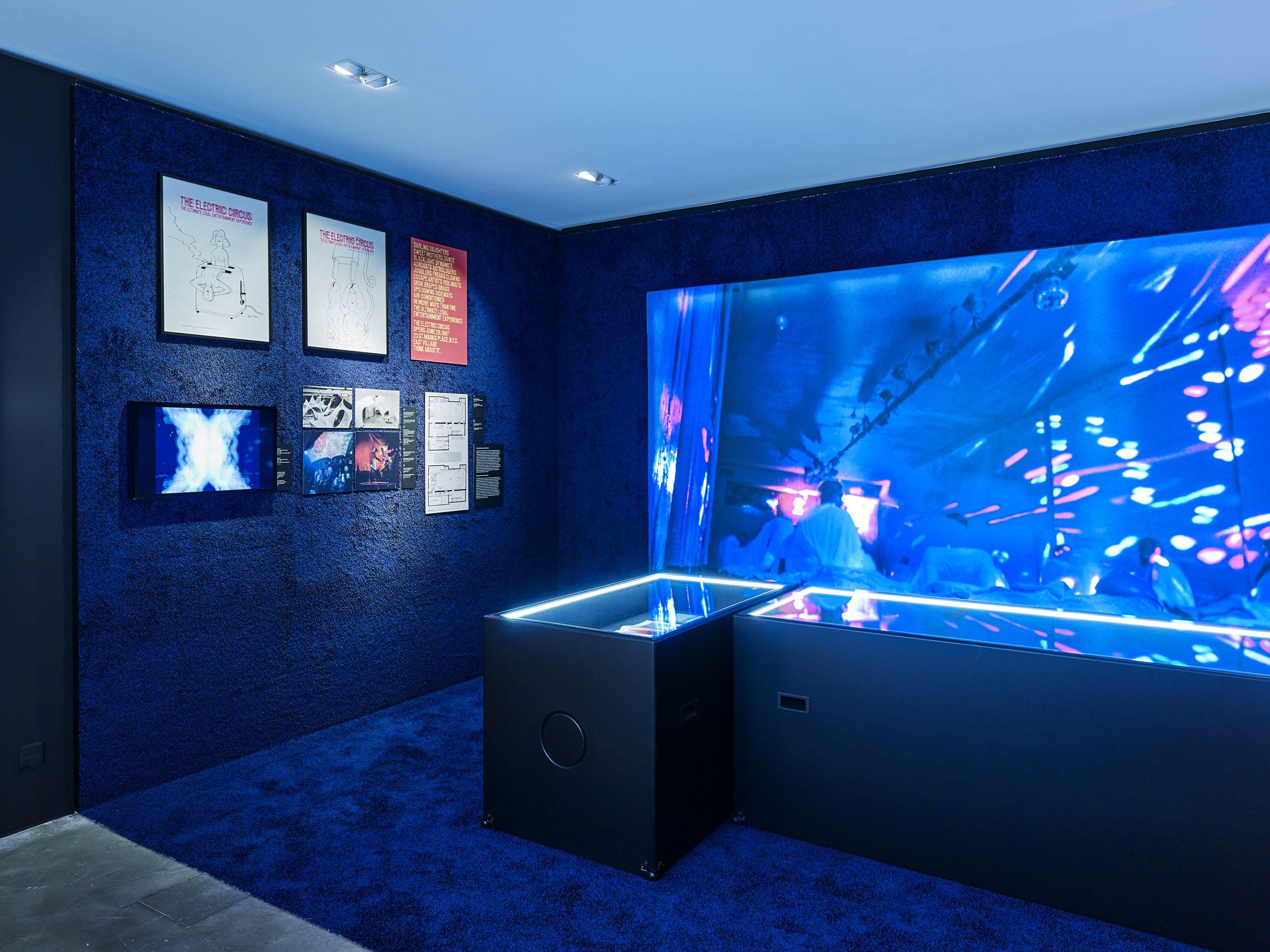


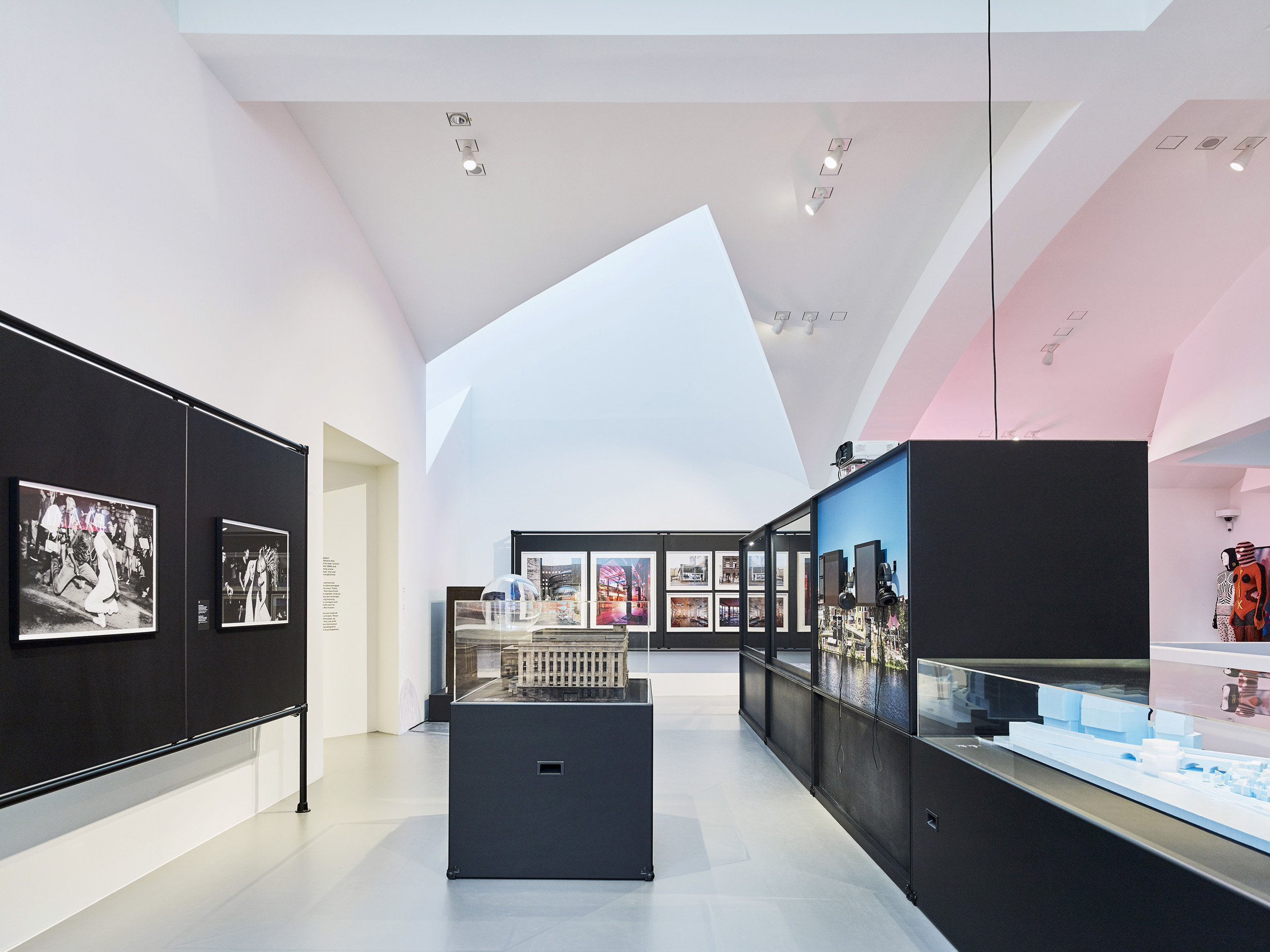
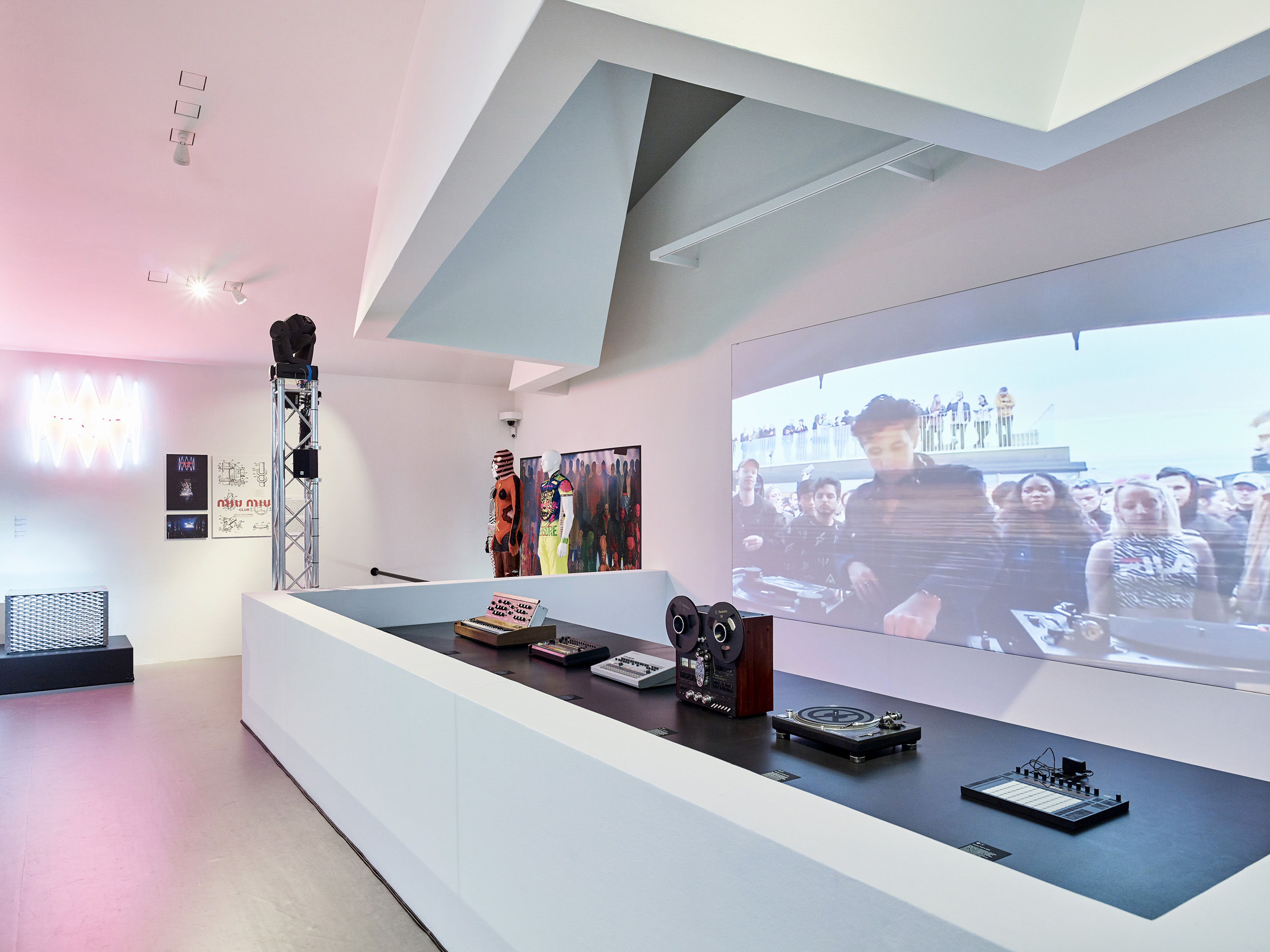


Installation views of the exhibition Night Fever. Designing Club Culture 1960 – Today, at the Vitra Design Museum 2018
© Vitra Design Museum
Photos: Mark Niedermann
Vitra Design Museum
Charles-Eames-Strase 2 79576
Weil am Rhein/Basel Germany
Phone: +49.7621.702.3200
Opening hours:
Daily 10am – 5pm
A recording of various pianoforte pieces in the Recital Hall of the Royal College of Music, London on the 15th November 1977. All pieces performed by Marcus Bunyan. I was 19 years old (as in the photographs below). Nobody ever believes me that I was a concert pianist. Well here is the proof!
© Marcus Bunyan
1/ Haydn – Sonata No. 62 in E flat major I. Allegro
2/ Haydn – Sonata No. 62 in E flat major II. Adagio
3/ Haydn – Sonata No. 62 in E flat major III. Finale: Presto
4/ Beethoven – Sonata Op. 10 No. 3 II. Largo e mesto
5/ Chopin – Etude Op. 25 No. 1 “Aeolian Harp” in A flat major – Allegro sostenuto
6/ Debussy – Pour le Piano I. Prelude
7/ Debussy – Pour le Piano II. Sarabande
8/ Brahms – Rhapsody Op. 79 No. 1 in B minor
9/ Medtner – Marchen Op. 42 No. 2
Marcus Bunyan (Australian born England, b. 1958)
The Only Recording
1977 (2017)
CD cover
The only recording of myself as a concert pianist. Yes, really!
Recorded in the Recital Hall of the Royal College of Music, London on the 15th November 1977 when I was 19 years old, on a reel to reel tape deck. 40 years ago this year.
I heard it recently for the very first time. My friend Daniel Desiere from Dex Audio, Jeff Whitehead and myself were surprised at the sound quality, and it was an emotional experience to listen to me playing all those years ago. It almost seems like another life. Daniel and the team at Dex Audio in Melbourne have done a fabulous job producing a master and they have burnt it to disc in 20 copies.
I attained my degree (A.R.C.M. Associate of the Royal College of Music) as a concert pianist at 20 and did a postgraduate year before giving up the piano after 16 years. I had been a child prodigy since the age of 6 but enough was enough.
Looking back now I wonder how I made such glorious music given the upheaval in my life at the time. I loved the romantics especially Chopin, Debussy, etc…
Love to my early self.
Marcus xxxx
Unknown photographer
Marcus Bunyan, 19 years old, Welwyn Garden City, Hertfordshire
1977
Colour photograph
Marcus Bunyan (Australian born England, b. 1958)
The Only Recording
1977 (2017)
47 mins
CD disc
© Marcus Bunyan
The only recording of myself as a concert pianist. Yes, really!
Recorded in the Recital Hall of the Royal College of Music, London on the 15th November 1977 when I was 19 years old, on a reel to reel tape deck. 40 years ago this year.
I heard it recently for the very first time. My friend Daniel Desiere from Dex Audio, Jeff Whitehead and myself were surprised at the sound quality, and it was an emotional experience to listen to me playing all those years ago. It almost seems like another life. Daniel and the team at Dex Audio in Melbourne have done a fabulous job producing a master and they have burnt it to disc in 20 copies.
I attained my degree (A.R.C.M. Associate of the Royal College of Music) as a concert pianist at 20 and did a postgraduate year before giving up the piano after 16 years. I had been a child prodigy since the age of 6 but enough was enough.
Looking back now I wonder how I made such glorious music given the upheaval in my life at the time. I loved the romantics especially Chopin, Debussy, etc…
Love to my early self.
Marcus xxxx
Venue: The Mining Exchange, 12 Lydiard Street North, Ballarat
Opening hours: 9am – 5pm daily
I have the great honour of being guest speaker at the John Cato Retrospective and book launch at the Ballarat International Foto Biennale on the 17th August, 2013. My essay … And His Forms Were Without Number from the 2002 retrospective I co-curated at the Photographers Gallery, has been included in the book. John is one of the most underrated but influential artists in the history of Australian photography and it is wonderful that a book is being published about his work. Finally, the recognition he so strongly deserves.
I have also written the catalogue essay for another core program, Erika Diettes Sudarios (Shrouds) that also opens on the same day. This was one of the most complex writing assignments that I have undertaken for the subject matter is very difficult and I wanted to do the work justice. I will publish the essay in an upcoming posting. The artist is flying over from Colombia for the opening so it will be great to meet her.
I hope you can make the trip to Ballarat for these important events!
Dr Marcus Bunyan
“Probably John Cato was the most philosophical of the lecturers at Prahran. Paul [Cox] was away with the fairies, while John was really into that because of the way he photographed the landscape. It was all symbolic, to draw out a picture of a root or a bit of seaweed, it describes his personality as well. He was a very direct person. There’s no bullshit with John; he’d talk about things in simple emotional terms, nothing intellectual about it, but it wasn’t bullshit, it was his belief and he was passionate about it. I believe he’s the only photographer that’s come to terms with the Australian landscape; and it was hard, because, how do you get the dimension, the size of the space, of the air in a bloody picture? How do you convey that kind of feeling of isolation and vulnerability when there’s a big open sky and the sun’s beating down? He did it all…”
Jim McFarlane quoted in James McArdle. “Élan,” on the On This Date In Photography website 29th February 2024 [Online] Cited 02/03/2024
“The meeting of land and sea has always held a mystic fascination for me. Through my camera, my experience of it has been heightened, my awareness of its wonder deepened. Above all, I remember its clamourous silence.”
John Cato 1976
John Cato was one of the first photographers in Australia to consider the lyrical and poetic aspects of landscape and to create extended series of photographic essays. He wanted to ‘explore the elements of landscape’ and gave himself 10 years to complete his study, two years for each of the five elements. His practice would take him into the desert for extended periods of time. He would spend 40 days, seeing, observing and waiting for the perfect conditions for the shot, on one occasion exposing 3 rolls of film and being satisfied enough to use only 11 photographs from them. These powerful images, free of manipulation, capture the essential qualities of natural elements and indeed how John Cato saw the world.
This exhibition of work from 1971-1991 honours the achievement of John Cato as mentor and as teacher. It pays homage to his significant contribution of photography in Australia. John Cato was born in Hobart, Tasmania in 1926. From the age of 12 years he was apprenticed to his father the photographer Jack Cato. John Cato had been a press photographer with the Argus newspaper and a commercial photographer in partnership with Athol Shmith for 20 years before experiencing ‘a kind of menopause’. He walked away from a successful career, quietly burned all his commercial work and became an educator and fine art photographer. Cato was involved in the foundation years of the Photography Studies College, still in South Melbourne, and a lecturer there and at Prahran College of Advanced Education becoming Department Head in 1979 until he retired in 1991 by which time it was called Victoria College. He felt ‘duty bound’ to hand on his experience. He loved teaching and he was a much-loved teacher. Many of his past students are now highly regarded photographers, whilst others hold important positions in universities and art institutions around Australia.
Cato exhibited nationally and internationally in solo and group exhibitions and his work is featured in many public collections, including the National Gallery of Australia, the National Gallery of Victoria and the Bibliotheque Nationale, Paris.
Text from the Ballarat International Foto Biennale core special guide.
The exhibition is curated by Paul Cox.
John Cato (Australian, 1926-2011)
Tree, a journey #1
From the Tree, a journey series 1971-73
Gelatin silver photograph
45.3 x 35.1cm
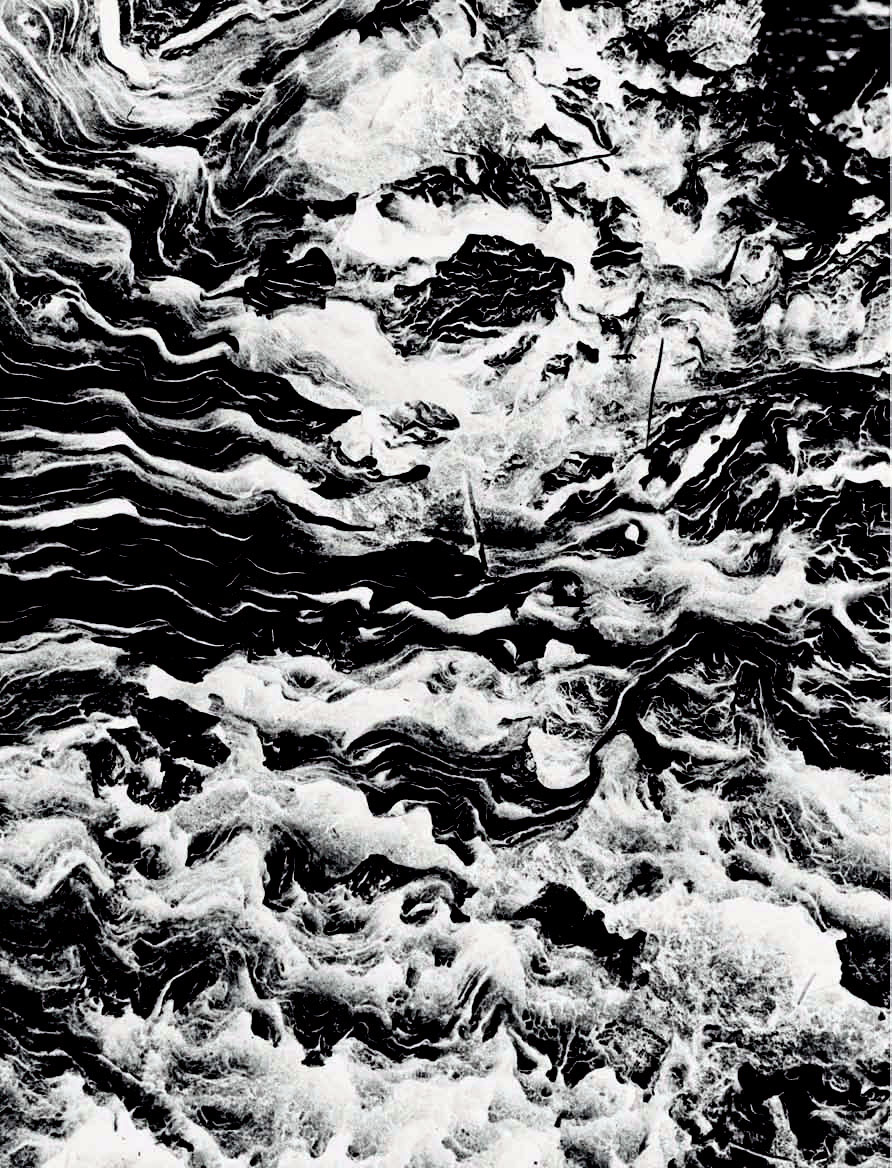
John Cato (Australian, 1926-2011)
Tree, a journey #18
From the Tree, a journey series 1971-73
Gelatin silver photograph
45.3 x 35.1cm
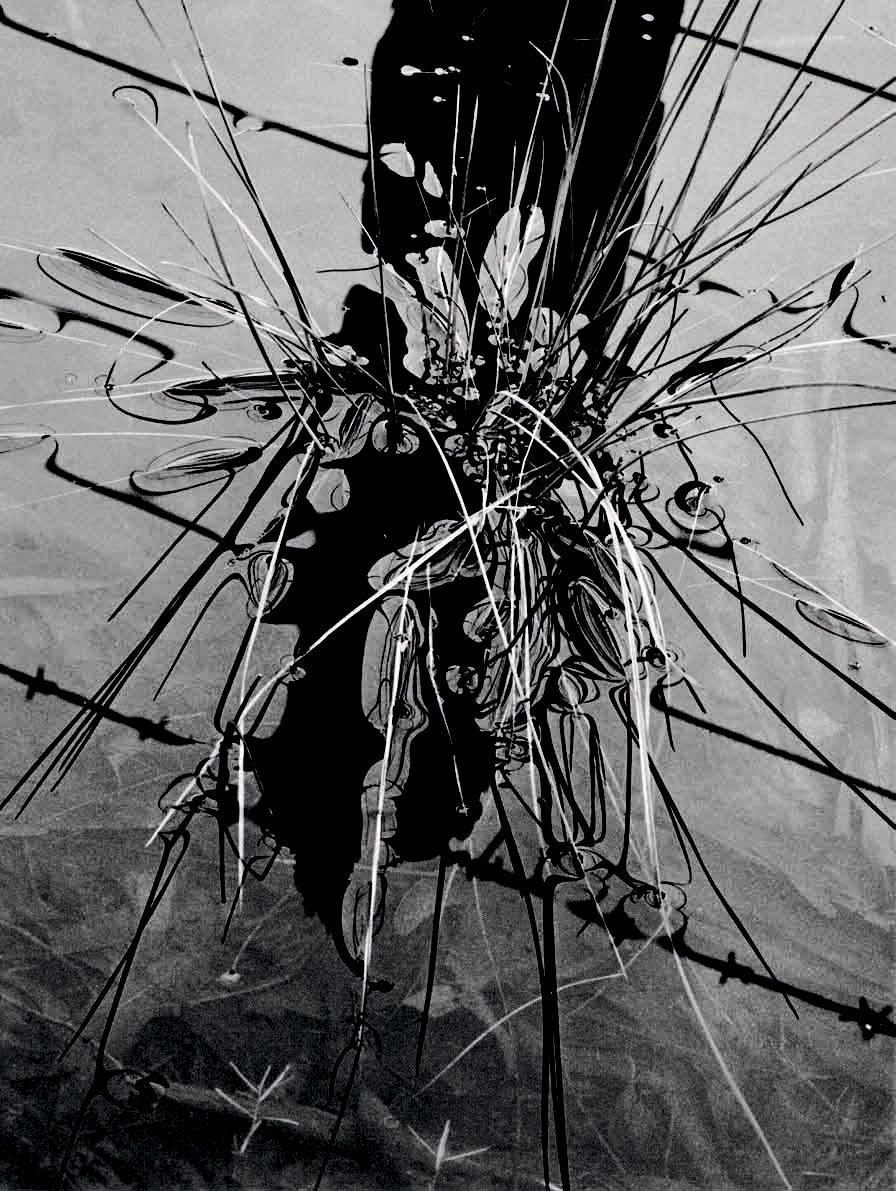
John Cato (Australian, 1926-2011)
Double concerto #13
From the Double Concerto series 1985-91
Gelatin silver photograph
45.5 x 32.8cm
Many times, with my camera, I have been a witness of the moment when people have to close their eyes as they recall the event which divided their life into two parts. My decision to create Sudarios (Shrouds) comes from unanswered questions that came out of my pervious series Silencios (Silences), which dealt with survivors of the Second World War who live in Colombia. Similarities are also to be found in Río Abajo (Drifting Away), a series which focuses on the victims of forced disappearance, and A Punta de Sangre (By Force of Blood), a series in which I examine the idea of the search for the bodies of the disappeared by their families, who, in the midst of despair, find a ray of hope in the vultures that might lead them to the remains of their loved ones. To date, I have received the testimonies of more than 300 victims of the violence in Colombia. They have confided intimacies of this violence to me: not only its harrowing details, but the way they rebuild their lives and keep going despite what they have suffered.
The women who serve as the models in Sudarios were first-hand witnesses of acts of horror. The intention of the series is to enable the spectator to observe the moment when these women close their eyes, with no other way to communicate the horror that they witnessed and the intensity of the sorrow they were subjected to. They were forced to feel on their own flesh, or in front of their own eyes, that there is no difference between man and the most savage beasts of nature; but that we are the only species capable of mass murder and the only ones who do not adapt to our own kind (N. Timbergen, 1968). I am convinced that this series speaks of something that is timeless, universal and infinite.
Erika Diettes is a visual artist who lives and works in Bogotá. Her work explores the problems of memory, sorrow, absence and death. She has a Masters in Anthropology from the Universidad de los Andes, Bogotá, with a major in photographic production, and a degree in Social Communication from the Pontificia Universidad de Bogotá.
Text from the Ballarat International Foto Biennale core special guide.
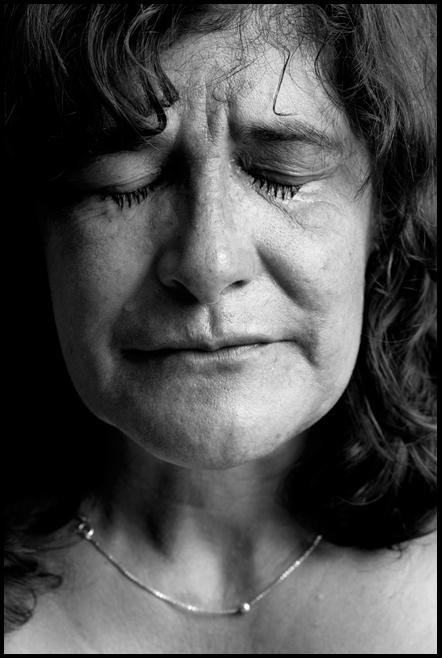
Erika Diettes (Colombian, b. 1978)
Untitled
2011
From the series Sudarios (Shrouds)
Digital black and white photograph printed on silk
2.28 x 1.34m
© Erika Diettes
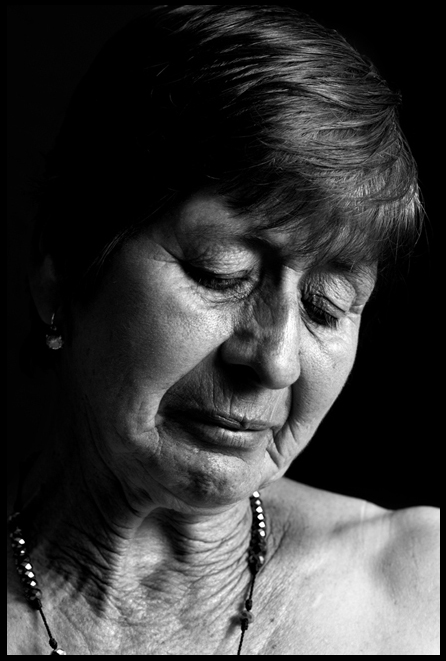
Erika Diettes (Colombian, b. 1978)
Untitled
2011
From the series Sudarios (Shrouds)
Digital black and white photograph printed on silk
2.28 x 1.34m
© Erika Diettes
![Installation photograph of Erika Diettes 'Sudarios' (Shrouds) at Iglesia de Chinquinquirá (La Chinca). Santa Fe de Antioquia [COL] December 5-9, 2012](https://artblart.com/wp-content/uploads/2013/07/04.jpg "Installation photograph of Erika Diettes 'Sudarios' (Shrouds) at Iglesia de Chinquinquirá (La Chinca). Santa Fe de Antioquia [COL] December 5-9, 2012")
![Installation photograph of Erika Diettes 'Sudarios' (Shrouds) at Iglesia de Chinquinquirá (La Chinca). Santa Fe de Antioquia [COL] December 5-9, 2012](https://artblart.com/wp-content/uploads/2013/07/06.jpg "Installation photograph of Erika Diettes 'Sudarios' (Shrouds) at Iglesia de Chinquinquirá (La Chinca). Santa Fe de Antioquia [COL] December 5-9, 2012")
Installation photographs of Erika Diettes Sudarios (Shrouds) at Iglesia de Chinquinquirá (La Chinca). Santa Fe de Antioquia [COL] December 5-9, 2012 © Erika Diettes
![Installation photograph of Erika Diettes 'Sudarios' (Shrouds) at Ex Teresa Arte Actual. México D.F. [MEX] May-Jun, 2012](https://artblart.com/wp-content/uploads/2013/07/sudarios_mex_02.jpg "Installation photograph of Erika Diettes 'Sudarios' (Shrouds) at Ex Teresa Arte Actual. México D.F. [MEX] May-Jun, 2012")
Installation photograph of Erika Diettes Sudarios (Shrouds) at Ex Teresa Arte Actual. México D.F. [MEX] May-Jun, 2012 © Erika Diettes
![Installation photograph of Erika Diettes 'Sudarios' (Shrouds) at Trinity Episcopal Church. Houston TX [USA] Feb-Apr 2012](https://artblart.com/wp-content/uploads/2013/07/006-houston.jpg "Installation photograph of Erika Diettes 'Sudarios' (Shrouds) at Trinity Episcopal Church. Houston TX [USA] Feb-Apr 2012")
Installation photograph of Erika Diettes Sudarios (Shrouds) at Trinity Episcopal Church. Houston TX [USA] Feb-Apr 2012 © Erika Diettes
Ballarat International Foto Biennale
12 Lydiard Street North, Ballarat 3350 Australia
PO Box 41 Ballarat Central 3353 Australia
Email: info[at]ballaratfoto.org
It is with much sadness that I note the death of respected Australian photographer and teacher Dr John Cato (1926-2011). Son of Australian photographer Jack Cato, who wrote one of the first histories of Australian photography (The Story of the Camera in Australia (1955)), John was apprentice to his father before setting up a commercial studio with Athol Shmith that ran from 1950-1971. Dr Cato then joined Shmith at the fledgling Prahran College of Advanced Education photography course in 1974, becoming head of the course when Shmith retired in 1979, a position he held until John retired in 1991.
I was fortunate enough to get to know John and his vivacious wife Dawn. I worked with him and co-curatored his retrospective with William Heimerman, ‘…and his forms were without number’ at The Photographers’ Gallery, South Yarra, in 2002. My catalogue essay from this exhibition is reproduced below.
John was always generous with his time and advice. His photographs are sensitive, lyrical renditions of the Australian landscape. He had a wonderful ear for the land and for the word, a musical lyricism that was unusual in Australian photographers of the early 1970s. He understood how a person from European background could have connection to this land, this Australia, without being afraid to express this sense of belonging; he also imaged an Aboriginal philosophy (that all spirits have a physical presence and everything physical has a spiritual presence) tapping into one of the major themes of his personal work: the mirror held up to reveal an’other’ world – the language of ambiguity and ambivalence (the dichotomy of opposites e.g. black / white, masculine / feminine) speaking through the photographic print.
His contribution to the art of photography in Australia is outstanding. What are the precedents for a visual essay in Australian photography before John Cato? I ask the reader to consider this question.
It would be fantastic if the National Gallery of Victoria could organise a large exhibition and publication of his work, gathering photographs from collections across the land, much like the successful retrospective of the work of John Davis held in 2010. Cato’s work needs a greater appreciation throughout Australia because of it’s seminal nature, containing as it does the seeds of later development for Australian photographers. His educational contribution to the development of photography as an art form within Australia should also be acknowledged in separate essays for his influence was immense. His life, his teaching and his work deserves nothing less.
Dr Marcus Bunyan
This writing on the photographic work of Dr John Cato from 1971-1991 is the catalogue essay to a retrospective of his work held at The Photographers’ Gallery in Prahran, Melbourne in 2002. Dr Cato forged his voice as a photographic artist in the early 1970s when photography was just starting to be taken seriously as an art form in Australia. He was a pioneer in the field, and became an educator in art photography. He is respected as one of Australia’s preeminent photographers of the last century.
With the arrival of ‘The New Photography’1 from Europe in the early 1930’s, the formalist style of Modernism was increasingly adopted by photographers who sought to express through photography the new spirit of the age. In the formal construction of the images, the abstract geometry, the unusual camera angles and the use of strong lighting, the representation ‘of the thing in itself’2 was of prime importance. Subject matter often emphasised the monumentality of the factory, machine or body/landscape. The connection of the photographer with the object photographed was usually one of sensitivity and awareness to an external relationship that resulted in a formalist beauty.
Following the upheaval and devastation of the Second World War, photography in Australia was influenced by the ‘Documentary’ style. This “came to be understood as involved chiefly with creating aesthetic experiences … associated with investigation of the social and political environment.”3 This new movement of social realism, “… a human record intimately bound with a moment of perception,”4 was not dissimilar to Henri Cartier-Bresson’s ‘decisive moment’ (images a la sauvette) where existence and essence are in balance.5
The culmination of the ‘Documentary’ style of photography was The Family of Man exhibition curated by Edward Steichen that toured Australia in 1959.6 This exhibition, seen many times by John Cato,7 had a theme of optimism in the unity and dignity of man. The structure of the images in ‘Documentary’ photography echoed those of the earlier ‘New Photography’.
Max Dupain “stressed the objective, impersonal and scientific character of the camera; the photographer could reveal truth by his prerogative of selection.”8 This may have been an objective truth, an external vocalising of a vision that concerned itself more with exterior influences rather than an internal meditation upon the subject matter.

John Cato (Australian, 1926-2011)
Untitled from the series Essay I, Landscapes in a Figure
1971-1979
Silver gelatin photograph
In 1971, John Cato’s personal photographic work was exhibited for the first time as part of the group show Frontiers at the National Gallery of Victoria, Melbourne.9 Earth Song emerged into an environment of social upheaval inflamed by Australian involvement in the Vietnam War. It provided a group of enthusiastic people who were beginning to be interested in photography as art, an opportunity to see the world, and photography, through a different lens. The 52 colour photographic prints in Earth Song, were shown in a sequence that used melodic line and symphonic form as its metaphoric basis, standing both as individual photographs and as part of a total concept.10
In the intensity of the holistic vision, in the connection to the subconscious, the images elucidate the photographers’ search for a perception of the world. This involved an attainment of a receptive state that allowed the cracks, creases and angles inherent in the blank slate of creation to become meaningful. The sequence contained images that can be seen as ‘acts of revelation’,11confirmed and expanded by supporting photographs, and they unearthed a new vocabulary for the discussion of spiritual and political issues by the viewer. They may be seen as a metaphor for life.
The use of sequence, internal meditation and ‘revelation’, although not revolutionary in world terms,12 were perhaps unique in the history of Australian photography at that time. During the production of Earth Song, John Cato was still running a commercial studio in partnership with the photographer Athol Shmith and much of his early personal work was undertaken during holidays and spare time away from the studio. Eventually he abandoned being a commercial photographer in favour of a new career as an educator, but found this left him with even less time to pursue his personal work.13
Earth Song (1970-1971) was followed by the black and white sequences:
| Tree – A Journey | 18 images | 1971-1973 | ||
| Petroglyphs | 14 images | 1971-1973 | ||
| Seawind | 14 images | 1971-1975 | ||
| Proteus | 18 images | 1974-1977 | ||
| Waterway | 16 images | 1974-1979 |
Together they form the extensive series Essay I, Landscapes in a Figure, parts of which are held in the permanent photography collection of the National Gallery of Victoria.14
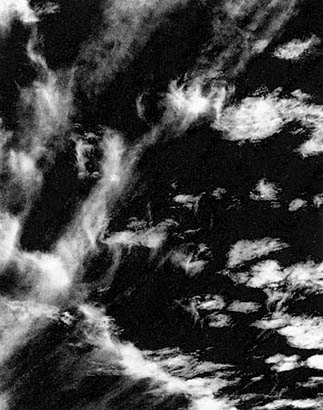
John Cato (Australian, 1926-2011)
Untitled from the series Essay I, Landscapes in a Figure
1971-1979
Silver gelatin photograph
The inspiration for Essay I and later personal work came from many sources. An indebtedness to his father, the photographer Jack Cato, is gratefully acknowledged. Cato also acknowledges the influence of literature: William Shakespeare (especially the Sonnets, and As You Like It), William Blake, Walt Whitman (Leaves of Grass), Lewis Carroll (Through the Looking Glass), the Bible; and of music (symphonic form), the mythology of the Dreamtime and Aboriginal rock paintings.15 Each body of work in Essay I was based on an expression of nature, the elements and the Creation. They can be seen as Equivalents16 of his most profound life experiences, his life philosophy illuminated in physical form.
John Cato was able to develop the vocabulary of his own inner landscape while leaving the interpretation of this landscape open to the imagination of the viewer. Seeing himself as a photographer rather than an artist, he used the camera as a tool to mediate between what he saw in his mind’s eye, the subjects he photographed and the surface of the photographic negative.17 Photographing ‘in attention’, much as recommended by the teacher and philosopher Krishnamurti,18 he hoped for a circular connection between the photographer and the subject photographed. He then looked for verification of this connection in the negative and, eventually, in the final print.
Essay II, Figures in a Landscape, had already been started before the completion of Essay I and it consists of three black and white sequences:
| Alcheringa | 11 images | 1978-1981 | ||
| Broken Spears | 11 images | 1978-1983 | ||
| Mantracks | 22 images in pairs | 1978-1983 |
The photographs in Essay II seem to express “the sublimation of Aboriginal culture by Europeans”19 and, as such, are of a more political nature. Although this is not obvious in the photographs of Alcheringa, the images in this sequence celebrating the duality of reality and reflection, substance and shadow, it is more insistent in the symbology of Broken Spears and Mantracks. Using the metaphor of the fence post (white man / black man in Broken Spears) and contrasting Aboriginal and European ‘sacred’ sites (in pairs of images in Mantracks), John Cato comments on the destruction of a culture and spirit that had existed for thousands of years living in harmony with the land.
In his imaging of an Aboriginal philosophy (that all spirits have a physical presence and everything physical has a spiritual presence) he again tapped one of the major themes of his personal work: the mirror held up to reveal an’other’ world. Cato saw that even as they are part of the whole, the duality of positive / negative, black / white, masculine / feminine are always in conflict.20 In the exploration of the conceptual richness buried within the dichotomy of opposites, Cato sought to enunciate the language of ambiguity and ambivalence,21 speaking through the photographic print.
The theme of duality was further expanded in his last main body of work, Double Concerto: An Essay in Fiction:
| Double Concerto (Pat Noone) | 30 images | 1984-1990 | ||
| Double Concerto (Chris Noone) | 19 images | 1985-1991 |
Double Concerto may be seen as a critique of the power of witness and John Cato created two ‘other’ personas, Pat Noone and Chris Noone, to visualise alternative conditions within himself. The Essay explored the idea that if you send two people to the same location they will take photographs that are completely different from each other, that tell a distinct story about the location and their self:
“For the truth of the matter is that people have mixed feelings and confused opinions and are subject to contradictory expectations and outcomes, in every sphere of experience.”22
This slightly schizophrenic confusion between the two witnesses is further highlighted by Pat Noone using single black and white images in sequence. Chris Noone, on the other hand, uses multiple colour images joined together to form panoramic landscapes that feature two opposing horizons. The use of colour imagery in Double Concerto, with its link to the colour work of Earth Song, can be seen to mark the closing of the circle in terms of John Cato’s personal work. In Another Way of Telling, John Berger states that …
“Photography, unlike drawing, does not possess a language. The photographic image is produced instantaneously by the reflection of light; its figuration is not impregnated by experience or consciousness.”23
But in the personal work of John Cato it is a reflection of the psyche, not of light, that allows a consciousness to be present in the figuration of the photographic prints. The personal work is an expression of his self, his experience, his story and t(his) language, is our language, if we allow our imagination to speak.
Dr Marcus Bunyan 2002
1/ Newton, Gael. Shades of Light: Photography and Australia 1839-1988. Sydney: Australian National Gallery, William Collins, 1988, p. 109
2/ Newton, Gael. Max Dupain. Sydney: David Ell Press,1980, p. 34
3/ Ibid., p. 32
4/ Greenough, Sarah (et al). On the Art of Fixing a Shadow: 150 Years of Photography. Boston: National Gallery of Art, Bullfinch Press, 1989, p. 256
5/ Ibid., p. 256
6/ Newton, Gael. Shades of Light: Photography and Australia 1839-1988. Sydney: Australian National Gallery, William Collins, 1988, p. 131
7/ Ibid., p. 131
8/ Newton, Gael. Max Dupain. Sydney: David Ell Press, 1980, p. 32
9/ Only the second exhibition by Australian photographers at the National Gallery of Victoria, Melbourne
10/ Shmith, Athol. Light Vision No.1. Melbourne: Jean-Marc Le Pechoux (editor and publisher), Sept 1977, p. 21
11/ Berger, John and Mohr, Jean. Another Way of Telling. New York: Pantheon Books, 1982, p. 118
12/ Hall, James Baker. Minor White: Rites and Passages. New York: Aperture, 1978
13/ Conversation with the photographer 29/01/1997, Melbourne, Victoria
14/ Newton, Gael. Shades of Light: Photography and Australia 1839-1988. Sydney: Australian National Gallery, William Collins, 1988, p. 135, Footnote 7; p. 149
15/ Conversation with the photographer 22/01/1997, Melbourne, Victoria
16/ Norman, Dorothy. Alfred Stieglitz. New York: Aperture, 1976, p. 5
17/ Ibid.,
18/ Krishnamurti. Beginnings of Learning. London: Penguin, 1975, p. 131
19/ Strong, Geoff. Review. The Age. Melbourne, 28/04/1982
20/ Conversation with the photographer 22/01/1997, Melbourne, Victoria
21/ The principal definition for ambiguity in Websters Third New International Dictionary is: “admitting of two or more meanings … referring to two or more things at the same time.”
That for ambivalence is “contradictory and oscillating subjective states.”
Quoted in Davis, Fred. Fashion, Culture and Identity. Chicago: University of Chicago Press, 1992, p. 21.
22/ Levine, Donald. The Flight From Ambiguity. Chicago: University of Chicago Press, 1985
23/ Berger, John and Mohr, Jean. Another Way of Telling. New York: Pantheon Books, 1982, p. 95

Alfred Stieglitz (American, 1864-1946)
Ford V-8
1935
Gelatin silver photograph
19.5 x 24.3cm
George Eastman House, part purchase and part gift from Georgia O’Keeffe
Many thankx to Susanne Briggs and the Art Gallery of New South Wales for allowing me to publish the photographs in the posting. Please click on the photographs for a larger version of the image.
“… much has happened in photography that is sensational, but very little that is comparable with what Stieglitz did. The body of his work, the key set – I think – is the most beautiful photographic document of our time.”
Georgia O’Keeffe 1978
The photographs Alfred Stieglitz (1864-1946) took around his summer house at Lake George, New York state, USA after 1915 are considered a major departure and dramatically influenced the course of photography. The desire to build a specifically ‘American’ art led Stieglitz to explore the essential nature of photography, released from contrivances and from intervention in print and negative. “Photography is my passion. The search for truth my obsession,” he would write in 1921.
This major exhibition is the first in Australia of Stieglitz’s photographs. 150 are included and are amongst the very best Stieglitz ever printed. They are also the rarest. One third of the exhibition is being lent by the National Gallery of Art, Washington DC, which holds ‘the key set’ – selected by his lover, muse and wife, the artist Georgia O’Keeffe, and deposited there after Stieglitz’s death.

Alfred Stieglitz (American, 1864-1946)
City of ambition
1911
Photogravure
33.9 x 26.0cm
George Eastman House, Museum purchase from Museum of Modern Art, New York

Alfred Stieglitz (American, 1864-1946)
Ellen Koeniger
1916
Gelatin silver photograph
11.1 x 9.1cm
J Paul Getty Museum, Los Angeles

Alfred Stieglitz (American, 1864-1946)
Waldo Frank
1920
Palladium photograph
25.1 x 20.2cm
Art Institute of Chicago, Alfred Stieglitz Collection
Waldo David Frank was an American novelist, historian, political activist, and literary critic, who wrote extensively for The New Yorker and The New Republic during the 1920s and 1930s.

Alfred Stieglitz (American, 1864-1946)
Spiritual America
1923
Gelatin silver photograph
11.7 x 9.2cm
Philadelphia Museum of Art: the Alfred Stieglitz Collection 1949
The photographs Alfred Stieglitz (1864-1946) took around his summer house at Lake George, New York state, USA after 1915 are considered a major departure and dramatically influenced the course of photography. The desire to build a specifically ‘American’ art led Stieglitz to explore the essential nature of photography, released from contrivances and from intervention in print and negative.
‘Stieglitz’s mature photographs from the 1910s onwards are free from any sense that photography must refer to something outside of itself in order to express meaning,’ said Judy Annear, senior curator photography, Art Gallery of New South Wales.
This major exhibition is the first in Australia of Stieglitz’s photographs. 150 are included and are amongst the very best Stieglitz ever printed. They are also the rarest. One third of the exhibition is being lent by the National Gallery of Art, Washington DC, which holds ‘the key set’ – selected by his lover, muse and wife, the artist Georgia O’Keeffe, and deposited there after Stieglitz’s death.
‘Passionate and provocative; charismatic, verbose and intellectually voracious; a self described revolutionist and iconoclast with an unwavering belief in the efficacy of radical action; competitive, egotistical, narcissistic and at times duplicitous, but also endowed with a remarkable ability to establish a deep communion with those around him – these are but some of the adjectives that can be used to describe Alfred Stieglitz,’ said Sarah Greenough, senior curator of photographs, National Gallery of Art, Washington.
Major loans are also coming from the J Paul Getty Museum, Los Angeles, Museum of Modern Art and Metropolitan Museum of Art, New York, Philadelphia Museum of Art, Art Institute of Chicago, and George Eastman House, Rochester amongst others.
The exhibition begins with a selection of Stieglitz’s photographs from the 1910s including those that he took at his gallery 291 in New York City of artists and collaborators, including O’Keeffe. Stieglitz was a superb photographic printer and dedicated to aesthetics in publishing. A number of the later editions (from 1911-1917) of his publication Camera work – described as the most beautiful journal in the world – are included.
Stieglitz’s portraits grew steadily in power in the 1910s and 20s, and continued to be a major part of his photographic practice. He would sometimes photograph his subjects over and over again and none more so than O’Keeffe, whom he met in 1916.
Stieglitz photographed O’Keeffe for the first time in 1917. He continued to photograph her from every angle, clothed and unclothed, indoors and out until his last photographs from 1936/1937. In all there are more than 300 photographs of O’Keeffe which convey all the nuances of their relationship in that 20-year period. A selection is included.
Stieglitz first visited Lake George in the 1870s with his parents. The visits slowed until the 1910s but from 1917 until his death he spent every summer there. Stieglitz’s ashes are buried at Lake George.
The photographs of people, buildings, landscapes and skies that Stieglitz took at Lake George form a collective portrait of a place which has not been rivalled in the history of photography worldwide for its subtlety of feeling expressed in the simplest of terms.
Stieglitz developed the idea for his cloud photographs in 1922 because he wanted to create images which carried the emotional impact of music and to disprove the idea being put about that he hypnotised his (human) subjects. The first title for the cloud photographs was simply Music: a sequence…; this was eventually superseded by Equivalent as Stieglitz believed that these photographs could exist as the visual equivalent to other forms of expression.
Stieglitz changed the course of photography worldwide and has influenced major figures in photography from Minor White to Robert Mapplethorpe, Max Dupain to Tracey Moffatt and Bill Henson.”
Press release from the Art Gallery of New South Wales website

Alfred Stieglitz (American, 1864-1946)
Georgia O’Keeffe: a portrait
1918
Platinum photograph
24.6 x 19.7cm
The J. Paul Getty Museum
Copyright J. Paul Getty Trust

Alfred Stieglitz (American, 1864-1946)
Georgia O’Keeffe
1920
Gelatin silver photograph
23.5 x 19.69cm
San Francisco Museum of Modern Art
Alfred Stieglitz Collection. Gift of Georgia O’Keeffe
“Stieglitz is too easily bundled in amongst a rush to the reductions of modernism and cubism, the time he inhabits and the new technology he is stretching make that almost inevitable. On looking at the images here it feels like a mistake to label him that simply. We can see hints of the abstract, the grids of Mondrian or the blocks of Braque, but his work is as human and as smudged as a fingerprint. It is this sense of flaw and serendipity is what makes him so different to photographers like Man Ray for Stieglitz seems to embrace the beauty of imperfection. The memorable works here inhabit a world of infinite shining gradations between black and white, they are expansive and open rather than reductive and finished, in doing this Stieglitz’s greatest innovation might be to take a static form and make it so intensely moving.”
John Matthews on his Art Kritique blog Sunday 15 August 2010 [Online] Cited 22/12/2019

Alfred Stieglitz (American, 1864-1946)
Self-portrait
1907, printed 1930
Gelatin silver photograph
24.8 x 18.4cm
J. Paul Getty Museum, Los Angeles

Alfred Stieglitz (American, 1864-1946)
From the Back Window – 291
1915
Platinum print
25.1 x 20.2cm (9 7/8 x 7 15/16 in.)
Metropolitan Museum of Art
Alfred Stieglitz Collection, 1949
From the Back Window – 291 is a black and white photograph taken by Alfred Stieglitz in 1915. The picture was taken at night from a back window of his 291 gallery in New York. Its one of the several that he took that year from that window, including at a snowy Winter.
The night photograph depicts an urban cityscape of New York. The reigning darkness is leavened by several sources of artificial light. The background building is the 105 Madison Avenue, at the southeast corner of Madison and 30th Street, while the smaller building with the advertisements is 112 Madison Avenue.
Stieglitz seems to have taken inspiration from a recent exhibition of Cubist painters Pablo Picasso and Georges Braque at the 291 gallery, which would explain his interest in the geometrical forms and lines, but also of the 19th century photographers, like David Octavius Hill. He wrote then to R. Child Bailey: “I have done quite some photography recently. It is intensely direct. Portraits. Buildings from my back window at 291, a whole series of them, a few landscapes and interiors. All interrelated. I know nothing outside of Hill’s work which I think is so direct, and quite so intensely honest.” The picture also seems still reminiscent of Pictorialism, while being more in the straight photography style.
There are prints of this photograph at several public collections, including the Metropolitan Museum of Art, in New York, the National Gallery of Art, in Washington, D.C., the Museum of Fine Arts, Boston, and at the Williams College Museum of Art, in Williamstown, Massachusetts.
Text from the Wikipedia website

Alfred Stieglitz (American, 1864-1946)
Georgia O’Keeffe: A Portrait (15)
1930
Gelatin silver print
The Alfred Stieglitz Collection – Gift of the Georgia O’Keeffe Foundation and M. and M. Karolik Fund
Photograph: © Museum of Fine Arts, Boston

Alfred Stieglitz (American, 1864-1946)
The Steerage
1907
Gelatin silver print
Gift of Miss Georgia O’Keeffe

Alfred Stieglitz (American, 1864-1946)
Hodge Kirnon
1917
Palladium print
9 11/15 x 7 13/16 in
The Metropolitan Museum of Art
Alfred Stieglitz Collection, 1949
The noted West Indian scholar and historian Hodge Kirnon leaning against a doorframe.

Alfred Stieglitz (American, 1864-1946)
Georgia O’Keeffe – Torso
1918
Gelatin silver print
23.6 x 18.8cm (9 5/16 x 7 3/8 in.)
Metropolitan Museum of Art
Gift of Mrs. Alma Wertheim, 1928
Stieglitz took dozens of pictures of O’Keeffe’s body, including her hands and her nude torso. The photograph depicts her naked torso, seen from below, with her arms only partially visible and without showing her head. The Torso, with its uplifted arms and muscular thighs, has a sculptoric quality that seems influenced by Auguste Rodin, whose work Stieglitz knew well and had shown at the Photo-Secession.
The Torso was in the Stieglitz exhibition at the Anderson Galleries in New York, where he presented pictures of several parts of the body of O’Keeffe, and which had a particular impact. Herbert Seligmann wrote that “Hands, feet, hands and breasts, torsos, all parts and attitudes of the human body seen with a passion of revelation, produced an astonishing effect on the multitudes who wandered in and out of the rooms”.
A print of this picture sold for $1,360,000 at Sotheby’s New York, on 14 February 2006, making it the second most expensive price reached by a Stieglitz photograph.
There are prints of Torso at the Metropolitan Museum of Art, New York, the National Gallery of Art, Washington, D.C., The Art Institute of Chicago, the J. Paul Getty Museum, Los Angeles, and the Museé d’Orsay, in Paris.
Text from the Wikipedia website

Alfred Stieglitz (American, 1864-1946)
Songs of the Sky
1924
Gelatin silver print
9.2 x 11.8cm (3 5/8 x 4 5/8 in.)
Art Gallery of New South Wales
Art Gallery Road, The Domain, Sydney NSW 2000, Australia
Opening hours:
Open every day 10am – 5pm
except Christmas Day and Good Friday
Photographs from the exhibition are in the chronological order that they appear.
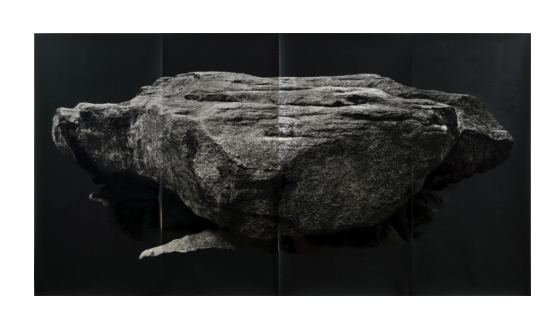
Tacita Dean (English, b. 1965)
Grobsteingrab (floating)
2009
“The subjects are connected to the medium I use. It’s all about light and time and phenomena to some extent, like a rainbow or a gust of wind or even an eclipse or a green ray, things like that. And this is the language of light. It’s not the language of binary pixels.”
Tacita Dean1
“The value of her [Dean’s] work, writes Winterson, is one of the virtues of art itself: it is an intervention into the rush of everyday life, holding up time and space for contemplation.”
Jeanette Winterson2
This is a dense, ‘thick’ exhibition by Tacita Dean at the Australian Centre for Contemporary Art (ACCA), Melbourne that rewards repeat viewing. The theatricality of each work and the theatricality of the journey through ACCA’s dimmed galleries (an excellent installation of the work!) makes for an engrossing exhibition as Dean explores the minutiae of memory and the significance of insignificant events: a contemplation on the space, time and materiality of the everyday.
The exhibition starts with 3 very large floating rocks (Grobsteingrab (floating), Hunengrab (floating) and Riesenbelt (floating) all 2009) printed on multiple pieces of photographic paper, the surrounds of the rocks painted out with matt black blackboard paint (see image at top of this posting). The rocks look like mountain massif and are printed at different levels to each other; they move up and down, earthed in the sense that the viewer feels their heavy weight but also buoyant in their surface shininess, seeming to float into the void. The textuality of the rocks is incredible, the suspension of the rocks fragmented by the fact that they are printed on multiple pieces of photographic paper, the edges of the paper curling up to dislocate the unity of form.
Opposite is the large multi-panelled T + I (Tristan + Isolde), a tour de force of Romantic landscape meets mythological journey (see image second from top). Sunshine searing through cloud lights the 25 Turner-esque black and white gravure panels that feature an inlet, fjord and ravine. Semi-legible words dot the landscape, reflecting on the legendary story: ‘undergrowth’, ‘dispute’, ‘brightening up’, ‘BLIND FOLLY’ and ‘the union involved in a manifestation(?)’ for example. Each panel is beautifully rendered and a joy to behold – my friend and I stood transfixed, examining each panel in minute detail, trying to work out the significance and relation between the writing and image. As with most of the work in the exhibition the piece engages the viewer in a dialogue between reality, story and memory, between light, space, time and phenomena.
After the small rear projected film Totality (2000) that shows the extraordinary event of a total eclipse of the sun by the moon for a period of two minutes and six seconds the viewer takes a short darkened passage to experience the major installation in the exhibition Merce Cunningham Performs ‘Stillness’ (in three movements) to John Cage’s composition 4’33” with Trevor Carlson, New York City, 28 April 2007 (six performances; six films) 2007 (see images below).
The first thing you see is one image projected onto a small suspended screen, the rest of the installation blocked by a short gallery wall to the right. The dancer Merce Cunningham sits in studious calm and observes us. This in itself is magical but as we round the corner other screens of different sizes and heights come into view, all portraying Cunningham’s dance studio and him sitting in it from different angles, heights and distances (including close-ups of Cunningham himself). In the six screen projection the performances of Cunningham are sometimes in synch, sometimes not. The director Trevor Carlson, holding a stop watch, times the 3 movements of Cage’s musical piece 4’33” and directs Cunningham to change position at the end of every movement; his hands move, he crosses his legs and the performance continues.
The work is projected into the sculptural space using old 16mm film projectors and their sound mixes with the studied silence of the Cage work and white noise. The mirrors in the studio make spaces of infinite recess, showing us the director with the stop watch, the windows, the floor, the markings of the dancers hands on the mirrors surface adding another echo of past presences. As a viewer their seems to be an ‘openness’ around as you are pulled into a spatial and sound vortex, a phenomena that transcends normal spatio-temporal dimensionality. As people pass through the installation their shadows fall on the screens and become part of the work adding to the multi-layered feeling of the work. This is sensational stuff – you feel that you transcend reality itself as you observe and become immersed within this amazing work – almost as though space and time had split apart at the seams and you are left hanging, suspended in mid-air.
The next two films are my favourite pieces in the exhibition. Darmstädter Werkblock (2007) shows us the significance of insignificant markings – edges and intersections, textures, blends and bleeds, the minutiae of existence in the markings on the fabric of an internal wall (see photograph below). Here is light, wood panelling, texture and again the sound of the whirring of the film projector. Usually I am not a fan of this kind of work having seen enough ‘Dead Pan’ photography and photography of empty yet supposedly important spaces in my life, but here Dean’s film makes the experience come alive and actually mean something. Her work transcends the subject matter – and matter is at the point where these interstitial spaces have been marked by the abstract signs of human existence that constantly surround us.
In Michael Hamburger (2007) Dean reaches the empito-me of these personal narratives that inhabit everyday life. Film of an orchard with wind rustling through the trees, clouds drifting across the sky, rotting apples on the branches, fallen fruit on the ground and a clearing with a man looking up at the trees is accompanied by the industrial sounds of clicks and pops like that of an old radio (see photograph above). The swirling sound of the wind surrounds you in the darkened gallery space much as the panoramic screen of the projection seems to enfold you. The scene swaps to an interior of a house and shows the man, has face mainly in shadow, the film focusing on the different type of apples in front of him or on the aged wrinkles of his hands holding the apples. He talks intelligently and knowingly about the different types of apples and their rarity and qualities. This is Michael Hamburger (now dead which adds poignancy to the film) – poet, critic, memoirist and academic notable for his translations of the work of W. G. Sebald, one of Tacita Dean’s main influences (and also an author that I love dearly).
One can see echoes of Sebald’s work in that of Tacita Dean – the personal narratives accompanied by mythical and historical stories and pictures. The tactility of Hamburger’s voice and hands, his caressing of the apples with the summary justice of the tossing away of rotten apples to stop them ruining the rest of the crop is arresting and holds you transfixed. Old varieties and old hands mixed with the old technology of film make for a nostalgic combination. As John Matthews of ArtKritique has so insightfully observed in his review of this work Dean implicitly understands how objects can be elegies for fleeting lives.
After this work one should have a break – go to the front of the gallery and have a coffee and relax because this is an exhausting show!
The rest of the exhibition tends to tail off slightly, with less engaging but still interesting works.
In Die Regimentstochter (2005) (the name of a Donizetti opera) Dean uses a pile of 36 found and mutilated old opera and theatre programs from the 1930s and 1940s such as Staats Theatre, Berlin, Der Tanz and Deutsche Openhaus. These programs have had portions of their front covers roughly but clinically cut to reveal the inner pages beneath (see image below) and Dean uses them to comment on the politicisation of culture in Berlin’s mid-20th century history. The top of a powdered wigged head or the face of Beethoven has been revealed when the title of the work has been neatly removed along with something else:
“Each programme gives a tantalising glimpse of a title or a face through a small window cut into the embossed cover; we recognise Beethoven, Rossini, the face of a singer perhaps. When and by whom this incision in the cover was made, very neatly one might add, even more why these disfigured programmes were kept remains a mystery. A swift search in an archive would easily show what has been removed; most likely an embossed swastika, for these performances all happened during the Third Reich. Why they were removed is left to our imaginations; perhaps an avid theatre-goer livid at the co-option of culture by the regime, perhaps someone afraid they might be misinterpreted as fascist memorabilia, while wishing to retain the memories these performances triggered.”3
High up on a wall opposite these programs is the film Palast (2004) in which Dean reflects Berlin’s divided history in the jaded façade of the once iconic Palast, the government building of the former German Democratic Republic.4 Shards of light hit glass and reflections are fractured in their gridded panes (see images below). A bird is seen flying, viewed through the window and we see the stains on that window but in this film things feel a bit forced. Unlike the earlier Darmstädter Werkblock there is little magic here.
Again the minutiae of existence is examined in the final two films Noir et Blanc (2006), made on the last 5 rolls of Dean’s black and white double-sided 16mm film stock and Kodak (2006), both made at the Kodak factory in Chalon-sur-Saône before it closed it’s film production facilities (see images below). With the demise of the medium that she feels closest to Dean sought permission to film at the factory itself and both films examine that medium by turning it on itself.
“Dean became acutely aware of the threat to her chosen medium when she was unable to obtain standard 16mm black-and-white film for her camera. Upon discovering that the Kodak factory in Chalon-sur-Saône, France, was closing its film production facility, Dean obtained permission to document the manufacture of film at the factory, where cameras have never before been invited. The resulting rear-screen projection ‘Noir et Blanc’, filmed on the final five rolls Dean acquired, turns the medium on itself. The 44-minute-long work ‘Kodak’ constitutes a contemplative elegy for the approaching demise of a medium specific to Dean’s own practice. Kodak’s narrative follows the making of celluloid as it runs through several miles of machinery and explores the abandoned corners of the factory. On the day of filming, the factory also ran a test through the system with brown paper, providing a rare opportunity to see the facilities fully illuminated, without the darkness needed to prevent exposure, and underscoring the luster of the celluloid as the dull brown strips contrast with the luminous, transparent polyester.”5
As writer Tony Lloyd has commented, “The film “Kodak” documenting the manufacturing of film was as solemn and reverent as a Catholic mass and equally as dull and inexplicable.”6 I wouldn’t go that far but by the end of the exhibition the nostalgia for old technologies, the brown paper programs and the film strip as relic were starting to wear a bit thin, like the sprockets of an old film camera failing to take up the film.
At her best Tacita Dean is a fantastic artist whose work examines the measure of things, the vibrations of spirit in the FLUX of experience. Her work has a trance-like quality that is heavy with nostalgia and memory and reflects the machine-ations of contemporary life. In her languorous (thank you Tony Lloyd for that word, so appropriate I had to use it!) and dense work Dean teases out the significance of insignificant actions/events and imparts meaning and life to them. This is no small achievement.
As an exhibition this is an intense and moving experience. Go, take your time and enjoy!
Dr Marcus Bunyan
1/ Dean, Tacita quoted in Bunbury, Stephen.“Still Lives,” in The Age. Melbourne: Fairfax Publishing, A2 section, Saturday June 6th, 2009, p. 20
2/ Winterson, Jeanette, quoted in Bunbury, Stephen.“Still Lives,” in The Age. Melbourne: Fairfax Publishing, A2 section, Saturday June 6th, 2009, p. 20
3/ Anonymous. Product synopsis from Tacita Dean Die Regimentstochter [Paperback] on the Amazon website [Online] Cited 19/07/2009
4/ Anonymous. Description of Tacita Dean: ‘Palast’ on the Tate St. Ives website [Online] Cited 19/07/2009 no longer available online
5/ Anonymous. “The Hugo Boss Prize: Tacita Dean”, on the Guggenheim Museum website [Online] Cited 19/07/2009. No longer available online
6/ Lloyd, Tony. “Opnion: Tacita Dean at ACCA,” on the ArtInfo.com.au website [Online] Cited 19/07/2009. No longer available online
Many thankx to ACCA for allowing me to publish the photographs and art work in the posting. Please click on the photographs for a larger version of the image
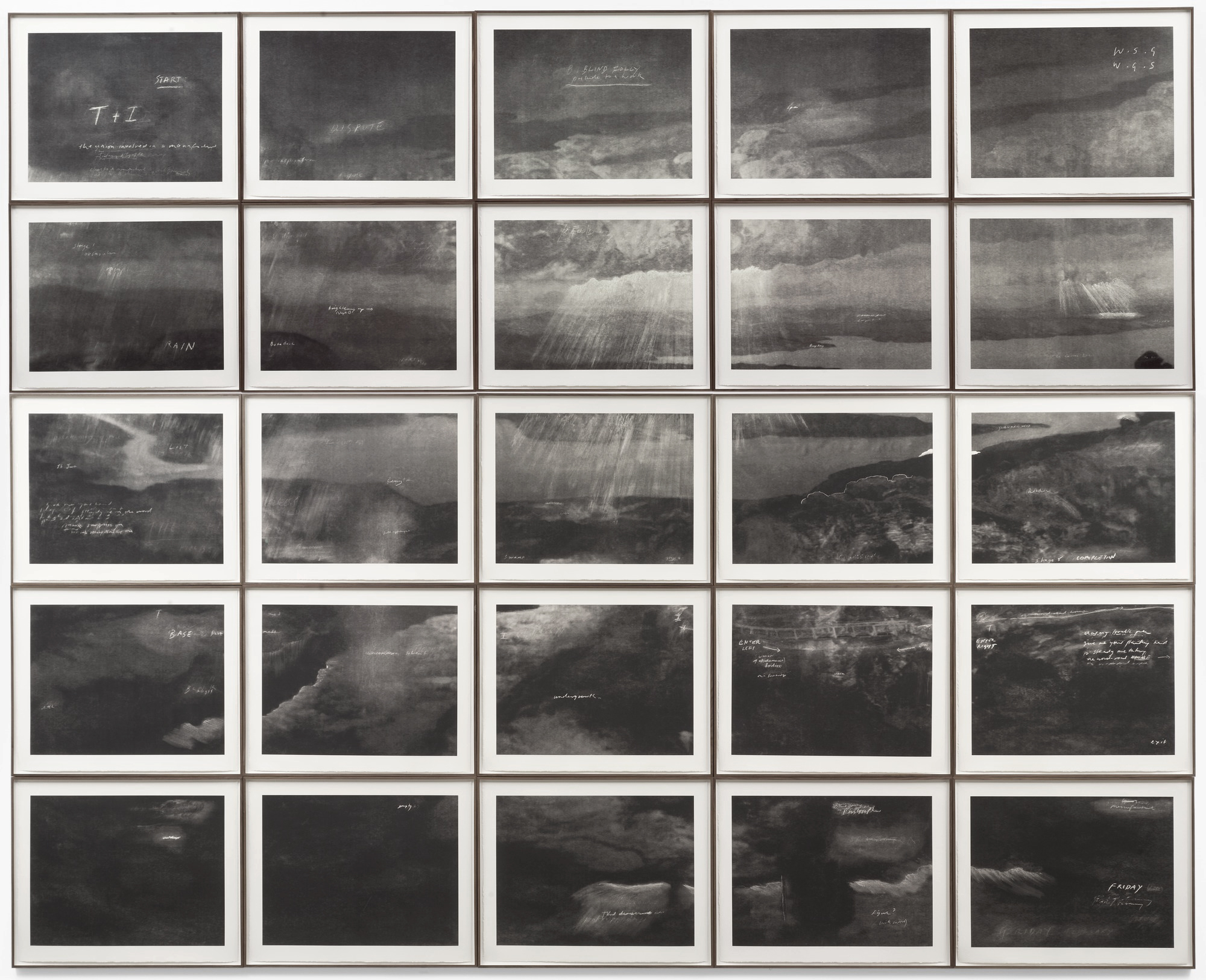
Tacita Dean (English, b. 1965)
T & I (Tristan & Isolde)
2006
Photogravure on twenty-five sheets
Sheet (each): 26 3/4 x 33 7/8″ (68 x 86cm)
Installation: 134 x 170″ (340.4 x 431.8cm)
Niels Borch Jensen Gallery and Edition, Berlin and Copenhagen
Through drawings and films, Dean makes work that is frequently characterised by a poetic sensibility and fragmented narratives exploring past and present, fact and fiction. In this monumental printed work, she addresses themes of collective memory and lost history by combining the romantic legend of ill-fated medieval lovers Tristan and Isolde (whose initials give this piece its title) with the real-life tragedy of British sailor Donald Crowhurst. Dean often uses the sea and other maritime themes in her work, including the tale of Crowhurst, which has appeared in several of her projects.
In 1968 Crowhurst sailed from England for a solo, round-the-world yacht race and never returned. In T & I Dean connects the tale of this lost sailor to the story of Tristan and Isolde – whose tragic love story also hinges on sea voyages – through her majestic depiction of a barren, rocky coastline looking seaward. This work, based on a found postcard, includes the white, cryptic notes that Dean often scribbles on her prints and drawings. Here the musings include “start” and “stage 4,” clear theatrical directions, as well as fragments of a poem by “WSG” about an artist killed in an accident. The twenty-five-sheet composition suggests a cinematic narrative sequence, while reading it as a unified image has a breathtaking, visionary impact. The rich velvety texture of the photogravure medium contributes a nineteenth-century patina that is ideally suited to the intensity and foreboding melancholy of the subject.
Publication excerpt from The Museum of Modern Art, MoMA Highlights since 1980, New York: The Museum of Modern Art, 2007, p. 269
Tacita Dean (English, b. 1965)
Totality
16mm colour film
2000
16mm film projector used by Tacita Dean to project Merce Cunningham Performs ‘Stillness’
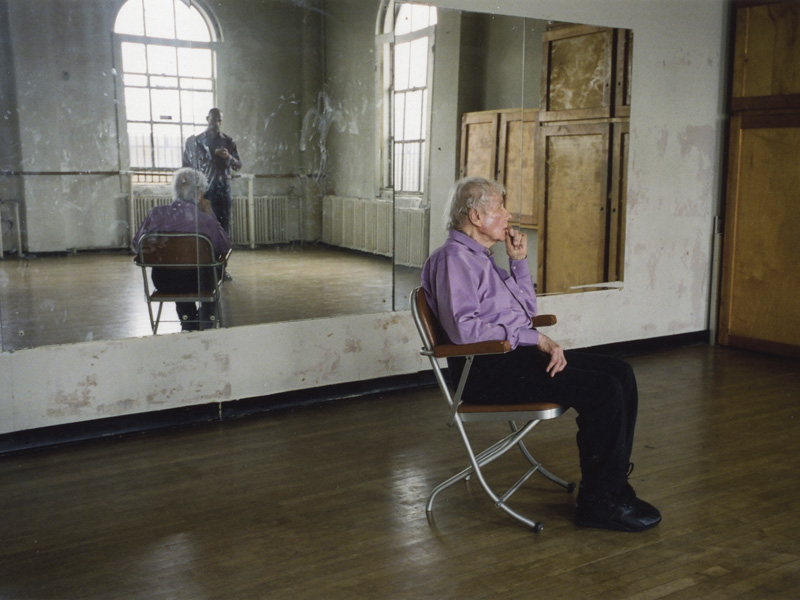
Tacita Dean (English, b. 1965)
Merce Cunningham Performs ‘Stillness’ (in three movements) to John Cage’s composition 4’33” with Trevor Carlson, New York City, 28 April 2007 (six performances; six films) (stills)
2007
Tacita Dean (English, b. 1965)
Darmstädter Werkblock (stills)
16mm colour film, optical sound
18 minutes, continuous loop
2007
Take one of her best pieces, Darmstädter Werkblock 2007, which looks for most of its long eighteen minutes like an exploration of an empty room, which it is. The camera pans the space, exploring the frayed fringes of its empty, textile-clad, burnt brown walls. It settles on holes, tears, seams and faded spots marking where placards used to hang. We are formally intrigued, but also curious why we should care so much about this particular empty room in what we can vaguely sense is a museum. Perhaps we are even a little bored. Only later – not in the film itself, but in the accompanying materials – are we told that these rooms usually house the “Block Beuys”, a section of the Hessisches Landesmuseum in Darmstadt arranged by Beuys himself over the decade and a half between its opening and the artist’s death. The Block is mired in controversy now that the walls, which are actually left over from when the rooms showed medieval artefacts, but which evoke and mirror Beuys’s own work, are slated for renovation.
Text from Philip Tinari. “Meditations on time,” in Tate Etc. issue 23: Autumn 2011 on the Tate website 1 September 2011 [Online] Cited 18/03/2019
Stills taken from the 16mm film Darmstädter Werkblock (2007) filmed in the seven rooms that make up Block Beuys, Joseph Beuys’s installation in Darmstadt’s Hessisches Landesmuseum. In September 2007, the museum announced that they intended to renovate the rooms, and to remove the brown jute wall coverings and gray carpet that had become such a feature of the installation. The decision caused much upset in Germany and beyond. Unable to document the rooms for copyright reasons, Dean requested that instead she might document the walls and carpet and the details of the space that surround Beuys’s work without making any visual reference to the work itself. The resulting film concentrated on the patches and the stains and the labor of those who have been maintaining the space over the last four decades – the parallel entropy of the museum space with the ageing of the work itself.
Text from Google Books

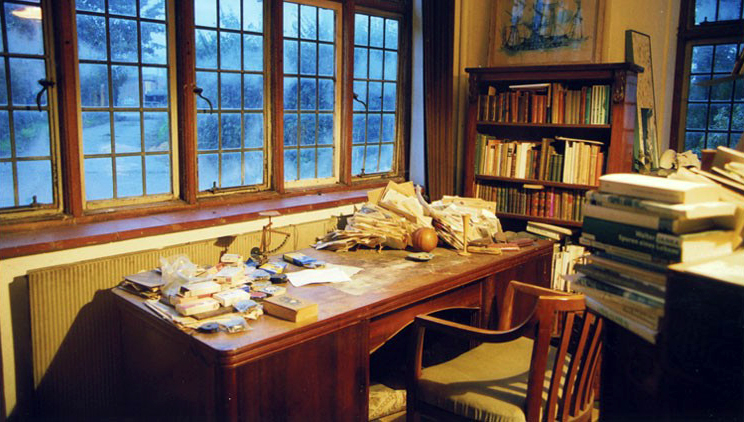
Tacita Dean (English, b. 1965)
Michael Hamburger (stills)
16mm colour anamorphic, optical sound
28 minutes
2007
Continuing her recent collection of film portraits, Tacita Dean’s Michael Hamburger is a moving portrayal of the poet and translator, a resident of Middleton in Suffolk and great friend of W.G. Sebald. It represented Dean’s first commission in Britain since 1999.
For its 28 minutes, the film quietly observes the poet in his study and among the apple trees in his garden. Sunlight dissolves the frames of the windows, the most insubstantial of thresholds between this home, only one-room-deep, and what lies outdoors; a rainbow marks its watery geometry in the sky; and the apples age upon the ground, shrunken, and yet somehow becoming more intensely themselves.
Although Hamburger is said to have despaired of reviews of his poetry which declared that he is ‘better known as a translator’, we might detect a similar deprecation of his self, by himself, in the film which shares his name. Unwilling, perhaps unable, to talk of his past and his migrations, most especially fleeing Nazism in 1933, he talks poignantly, instead, of his apple trees, of where they have come from, and of their careful cross-breeding. Purity is dismissed, and one senses with an awkward pathos that the poet is translating himself.
Anonymous text. “Michael Hamburger: Tacita Dean,” on the FVU website [Online] Cited 18/03/2019
Tacita Dean’s portrait of the poet and translator Michael Hamburger was filmed, at his home in rural Suffolk, in the last year of his life. Set against muted autumn colours, and with Hamburger performing an evocative, anecdotal inventory of the harvest from his apple orchard, the piece is a bittersweet reminder of time’s passing that deftly captures, and quietly honours, an exemplary 20th century literary figure.
Tacita Dean (English, b. 1965)
Die Regimentstochter (The Daughter of the Regiment)
2005
Die Regimentstochter is the latest in a series of projects made from material turned up in flea markets, in this case, a series of 36 antique opera programs from the 30s and 40s found in the flea markets of Berlin. Like the found photographs in Dean’s 2001 FLOH, these souvenirs remain unexplained by text. They retain the silence of the lost object, and they share a riddle: each program gives a tantalising glimpse of a title or a face through a small window cut into the embossed cover. Readers will recognise Beethoven, Rossini, or perhaps a singer. A swift search in an archive would easily confirm what has been removed, but it seems likely that the missing piece is a swastika. These performances all happened during the Third Reich. When and by whom the incision was made, and why these programs were both worth disfiguring and worth keeping, remains a mystery.
Text from the Amazon website
“Things no longer visible thus enhance our view of the past, and gaps, paradoxically, become memorials that engage the beholder’s imagination more actively than a didactic demonstration could. Merely by showing what remains, Tacita Dean not only calls up in our mind’s eye a specific historical situation and its abysses, but also erects an anti-monument to the forms customarily taken by the culture of memory.”
Andreas Kaernbach
Tacita Dean (English, b. 1965)
Die Regimentstochter (The Daughter of the Regiment)
2005
They look lined up like a modern art object. The 36 opera program books are not considered as works of art. Nevertheless, the British and Berlin-based artist Tacita Dean turned them into a work of art.
“An incidental finding inspired Tacita Dean to her artwork,” tells the House of History. “At a Berlin flea market she discovered in the year 2000 36 opera program booklets from the years 1934 to 1942. Conspicuous were the title pages: from each of the booklets was a part cut out, including from the program of the eponymous opera “The Regimental Daughter” by Gaetano Donizetti (world premiere 1840). “Said part of the title pages of those notebooks was reserved for the swastika symbol. This was cut off by the previous owners. Why, that can only be speculated, continues the house of history. “Was it shame, the fear of being punishable or even a “private” act of resistance before the end of National Socialism? The program books in any case seem to have been of great cultural value to the former owner. “
“Whatever the motives that made the owner or the owner of the program booklets of the Berlin opera from 1934 to 1942 come to shears in order to remove the Nazi swastikas from the cover pages of the booklets: The voices speak of the desire to conclude with a time that one does not want to be reminded of – a basic motive of German post-war history that stood in the way of an honest confrontation with the era of National Socialism for a long time, “said the Minister of Culture.
With her work, Tacita asks Dean questions about dealing with the Nazi past. Which motive behind it and who had heard the booklets remains open until today. Tacita Dean has created a work of art from these finds, which poses subtle questions about the examination of the Nazi past – but in a way that goes beyond purely historical reflection and awakens additional associations. What does that object, created by the artist from Canterbury, say about the relationship between art and politics? “Can the opera narratives be separated from the political environment in which they were performed and played?” asks the President of the Foundation for the History of the Federal Republic of Germany, Prof. Dr Hans Walter Hütter.
Monika Grütters continues: “The fact that the dark part of our identity does not disappear through concealment and suppression, and that it becomes visible again even where it was attempted to be eradicated, impressively shows Tacita Dean’s work Regimentstochter. That is why I very much welcome the fact that this unique work of art has a place in the collection which, in view of its significance in contemporary history, necessarily belongs to it – a place in the House of History which, unlike any other museum in Germany, presents German history from 1945 in all its facets illustrated and also devoted to the effects of National Socialism on the political and cultural life in post-war Germany.”
Daniel Thalheim. “NS-Vergangenheit als Kunst – 36 Programmhefte aus der Nazi-Zeit im Haus der Geschichte,” on the ARTEFAKTE: Das Journal für Baukultur und Kunst website 2nd September 2015 [Online] Cited 17/03/2019 translated from the German by Google Translate.
Tacita Dean (English, b. 1965)
Three stills from the film Palast
2004
A major survey of work by the internationally acclaimed British artist Tacita Dean will open at the Australian Centre for Contemporary Art (ACCA) on June 6th, 2009.
In a great coup for Melbourne, fourteen recent projects by this celebrated contemporary artist will come together in what is the largest survey of Dean’s work to ever be shown outside of Europe.
Tacita Dean is one of Britain’s most accomplished and celebrated contemporary artists. She won the New York Guggenheim’s Hugo Boss award in 2007, was a Turner Prize nominee in 1998, and has had numerous solo exhibitions in Europe – at the Schaulager in Basel, DIA Beacon in New York, the de Pont Museum in the Netherlands, the Tate Britain, UK, the Musee d’art Moderne in Paris, France and the Villa Oppenheim in Berlin, to mention just a few.
Dean was also recently given the highly prestigious title of Royal Academician, awarded sparingly to alumni’s of the revered London art school who have achieved greatness in their work.
Tacita Dean was born in Canterbury in 1965, and moved to Berlin in 2000 after being awarded a DAAD residency. Early works focused on the sea – most famously she explored the tragic maritime misadventures of amateur English sailor Donald Crowhurst. Since moving to Berlin she has devoted her attention to the architecture and cultural history of Germany, a recurring theme also being the salvaging, saving and collecting of things lost. Many of her works rest on the icons of modernism, heroic failures and forgotten utopian ideals.
Dean is best known for her work with 16mm film, although she also works with photography, print and drawing. The qualities of filmmaking itself play a central role in her works – which hauntingly capture the passing of time, space and the mysteries of the natural world.
Her work occupies a place between fact and fiction. As British author Jeanette Winterson says, “Her genius, with her slow, steady, held frames, is to allow the viewer to dream; to enter without hurry, without expectation, and to accept, as we do in a dream, a different experience of time, and a different relationship to everyday objects.”
Included in this exhibition is Dean’s revered film installation, Merce Cunningham Performs STILLNESS (in three movements) to John Cage’s composition 4’33” with Trevor Carlson, New York City, 28 April 2007, which was recently presented at the DIA Beacon in New York, and the 2007 work Michael Hamburger. Two new wall-based works especially created for this exclusive ACCA exhibition will also feature.
Dean is also known for creating ‘asides’ – totally absorbing texts on the subjects explored in her work. She will contribute texts on all the projects included in the exhibition for a catalogue which will be published to coincide with this unique ACCA survey.
The exhibition has been curated by ACCA’s Artistic Director, Juliana Engberg and follows an early 2002 exhibition of Dean’s work curated by Engberg for the Melbourne International Arts Festival.
“Tacita’s works continue to enthral and inspire me. Not only has she rescued relics from history and restored them with a visual dignity and affection in her wonderful film projects, but increasingly she rescues the traditional art forms of drawing, print making, painting, photography and film from a digital abyss,” says Juliana Engberg. “Her works have a truth and quiddity about them, but also a playful artifice and technical tactic to bring out the tactile and material in all she deals with. Tacita is a sublime story-teller, a narrator of odysseys and attempts. She is a true artist sojourner.
In this selection of works made since 2004 we grasp the breadth of her practice and her pursuit of the time-honoured landscape, portrait and abstract genres,” she says.”
Text from the press release from the ACCA website [Online] Cited 17/07/2009. No longer available online
![Tacita Dean. 'Noir et Blanc [Still]' 2006](https://artblart.com/wp-content/uploads/2009/07/noir_et_blanc-2006.jpg "Tacita Dean. 'Noir et Blanc [Still]' 2006")
Tacita Dean (English, b. 1965)
Noir et Blanc [Still]
16mm black-and-white Kodak film
2006
Tacita Dean (English, b. 1965)
Kodak (still)
16mm colour and b/w film optical sound
44 minutes loop system
2006
Tacita Dean (English, b. 1965)
Kodak (still)
16mm colour and b/w film optical sound
44 minutes loop system
2006
As Dean said in a Guardian article back in February: “Digital is not better than analogue, but different. What we are asking for is coexistence: that analogue film might be allowed to remain an option for those who want it, and for the ascendency of one not to have to mean the extinguishing of the other.”
In the same text, she wrote of the difference between film and digital as “not only emulsion versus pixels, or light versus electronics, but something deeper – something to do with poetry.” This poetry is exactly what she explored in one of her landmark films, Kodak (2006), a 45-minute examination of the production process of celluloid itself at a French factory fated for early closure because of a lack of demand. A film about the making of film, it hinged on the sort of super-aestheticised conceit that has become her staple. This is a tactic which allows her to turn even time itself into a structural device, as she did in 2008 with a film called Amadeus, which depicts a 50-minute crossing of the English Channel in a small fishing boat of the same name.
Philip Tinari. “Meditations on time,” in Tate Etc. issue 23: Autumn 2011 on the Tate website 1 September 2011 [Online] Cited 18/03/2019
Tacita Dean (English, b. 1965)
Kodak (still)
16mm colour and b/w film optical sound
44 minutes loop system
2006
Australia Centre for Contemporary Art (ACCA)
111 Sturt Street, Southbank
Victoria 3006, Australia
Phone: 03 9697 9999
Opening hours:
Tuesday – Friday 10am – 5pm
Weekends & Public Holidays 11am – 5pm
Monday closed
Open all public holidays except Christmas Day and Good Friday
 Art Blart _ art and cultural memory archive
You must be logged in to post a comment.