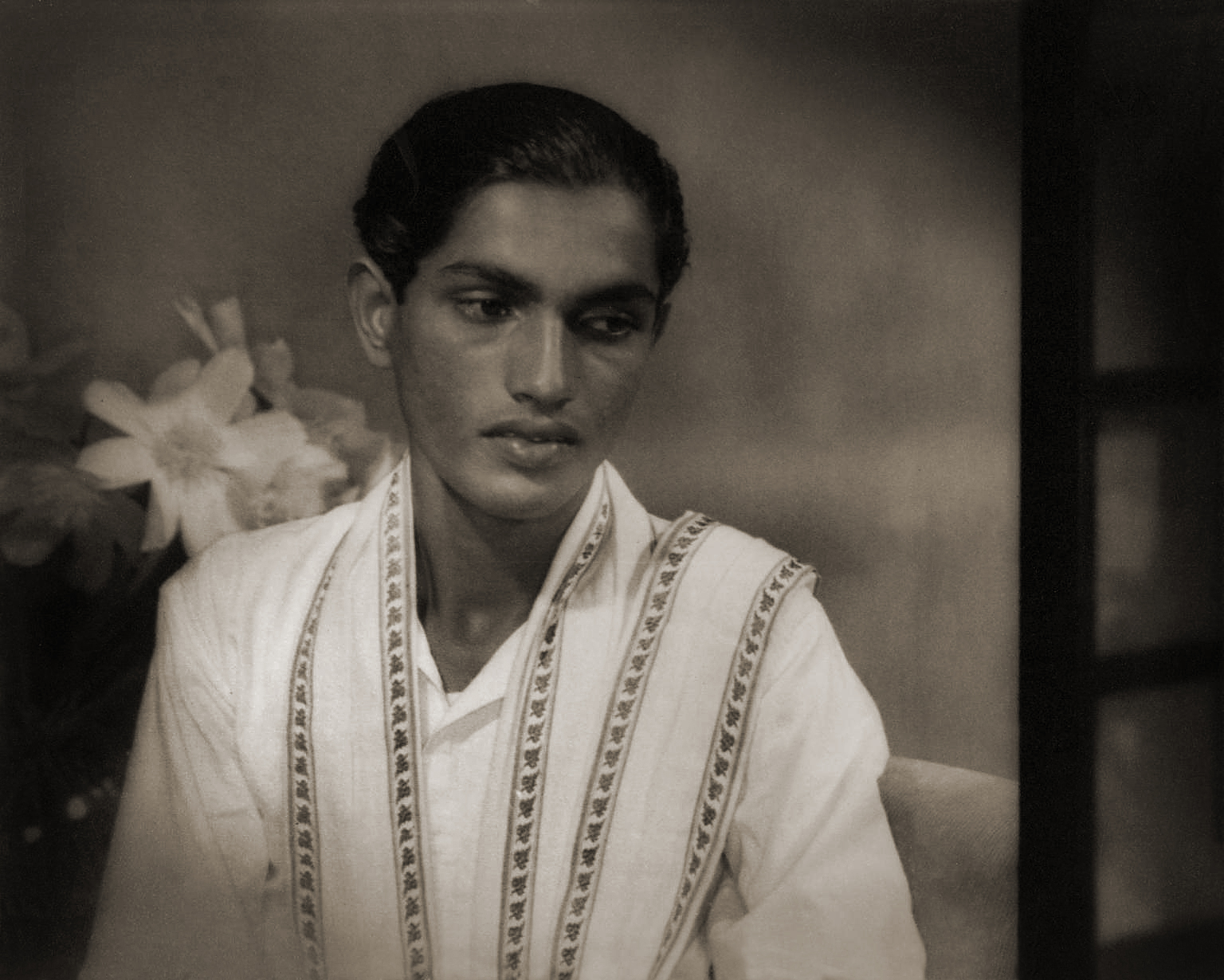
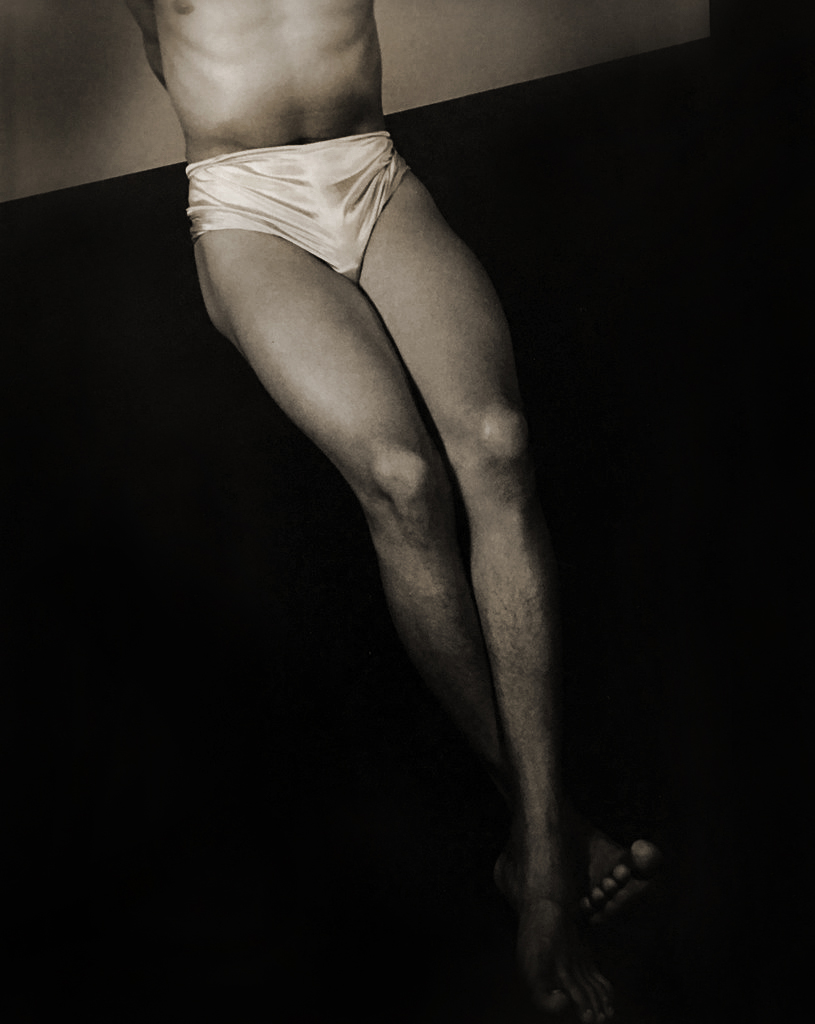
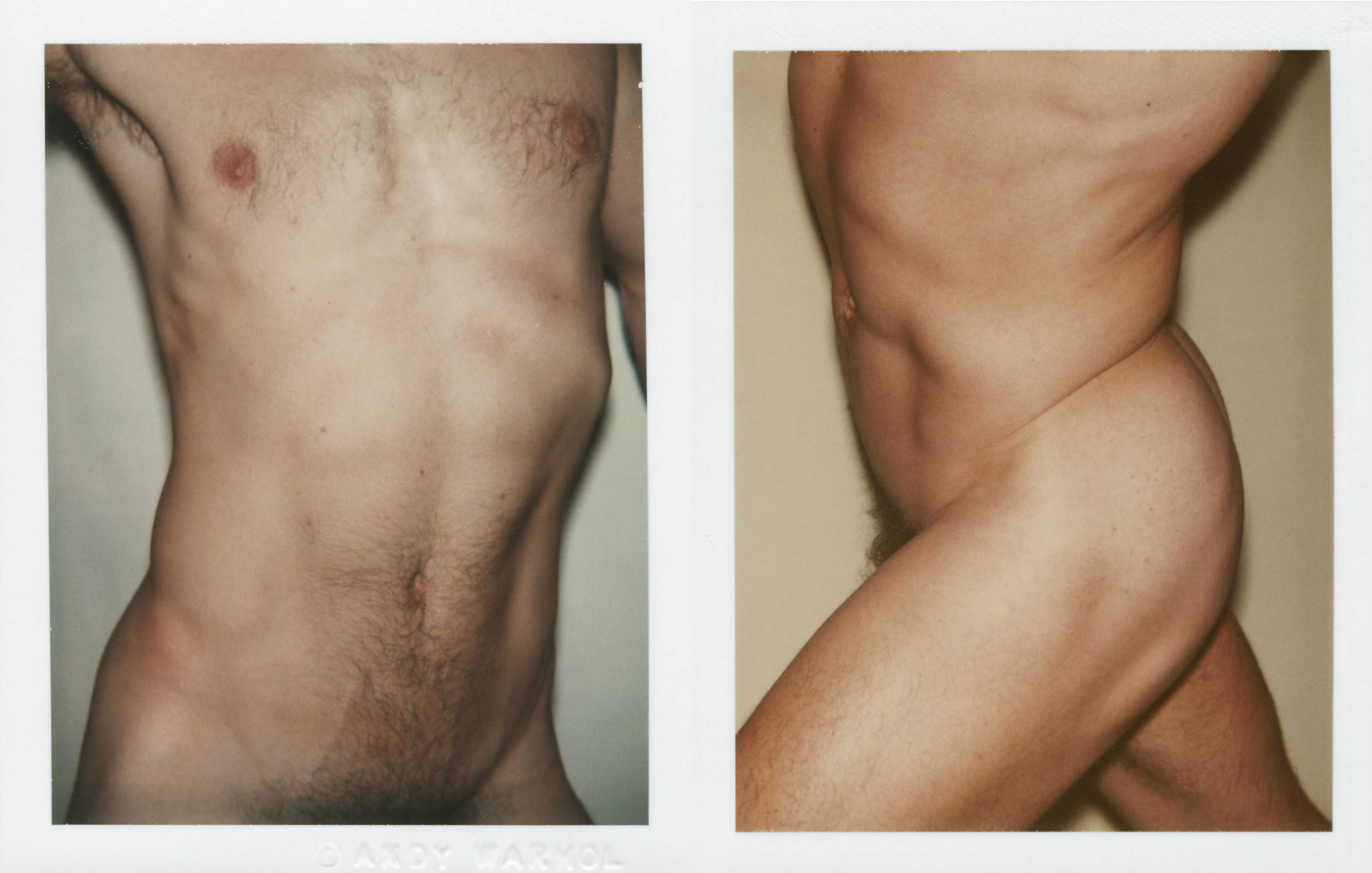
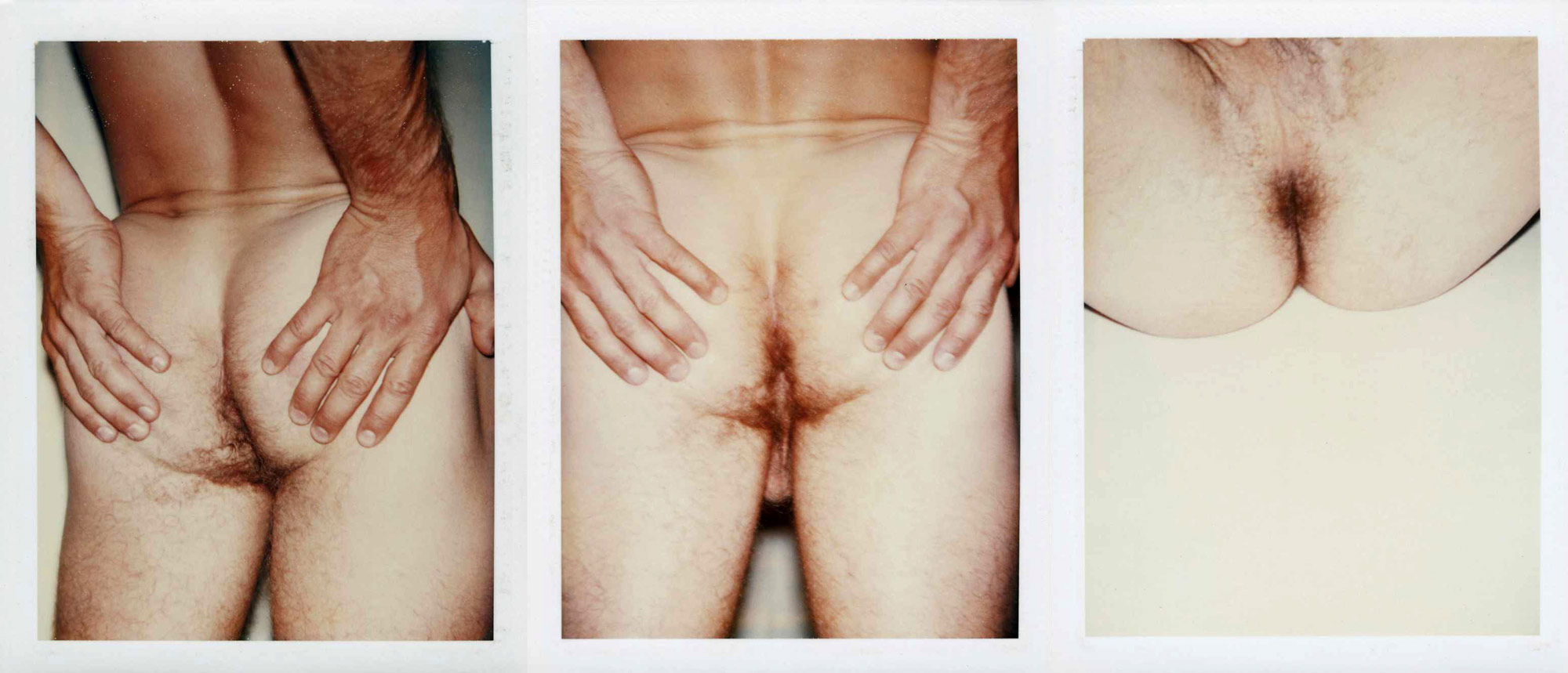
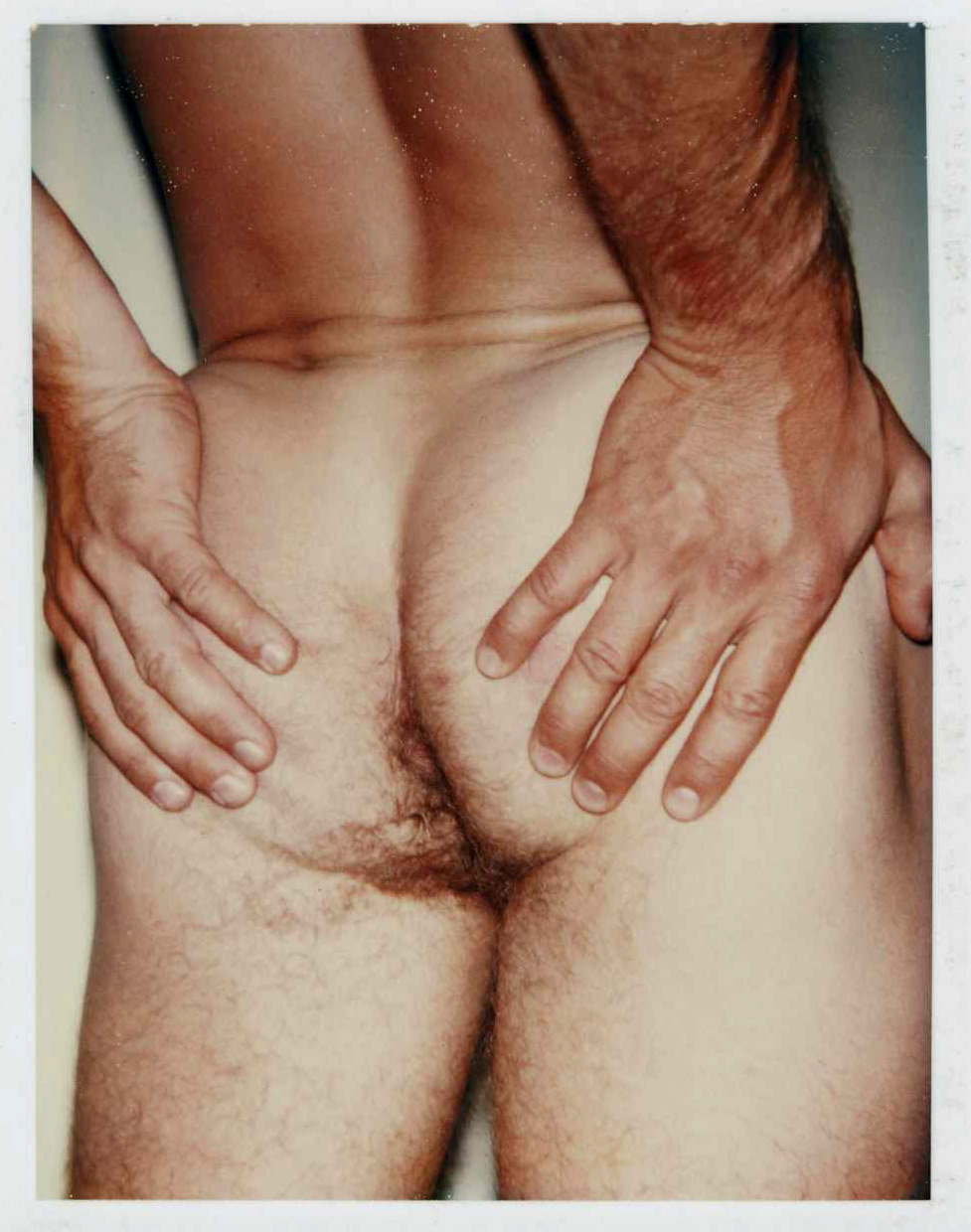
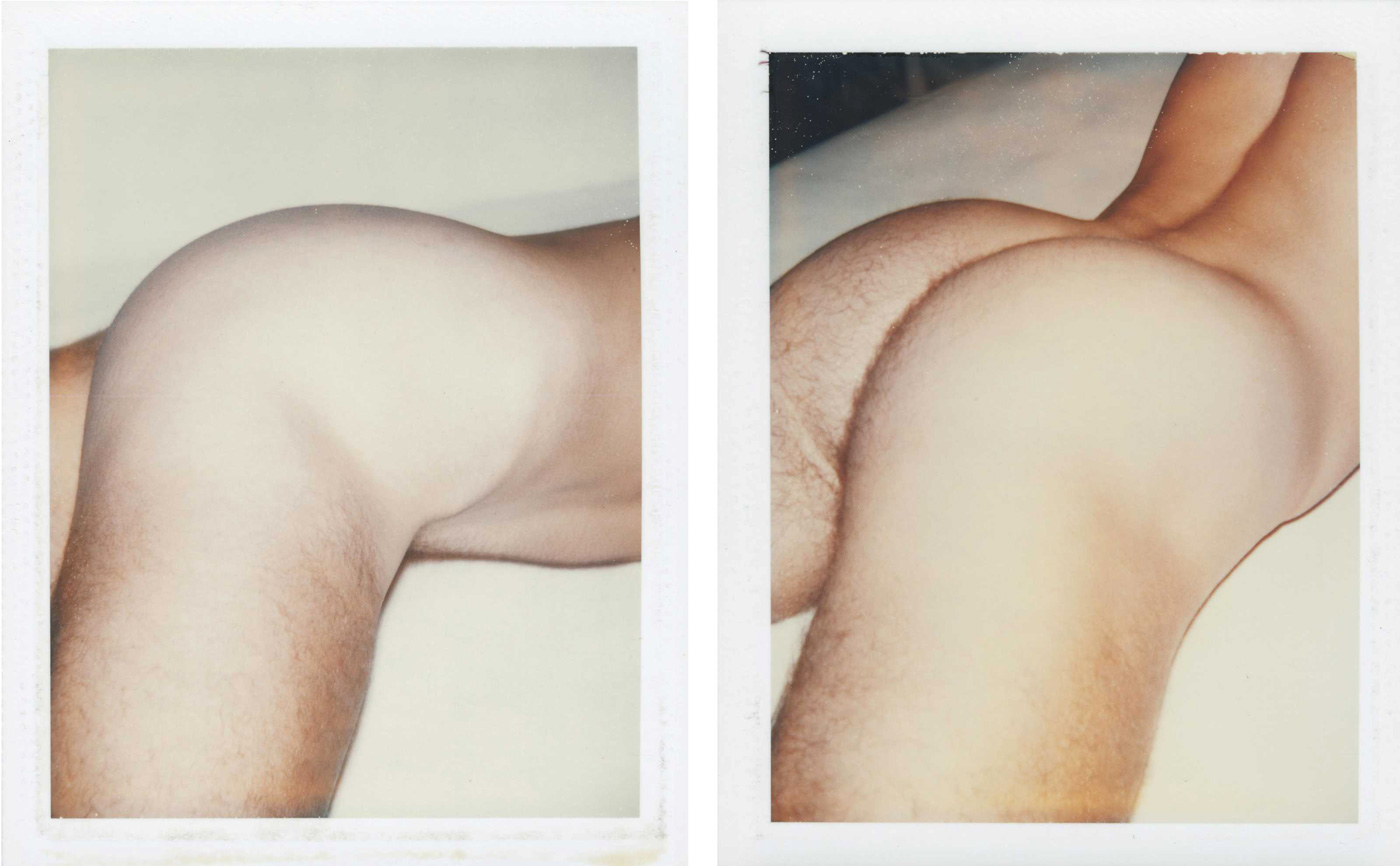
Marcus Bunyan black and white archive: ‘Sleep/Wound’, 1995-1996

May 2019

*PLEASE NOTE THIS POSTING CONTAINS ART PHOTOGRAPHS OF MALE NUDITY – IF YOU DO NOT LIKE PLEASE DO NOT LOOK, FAIR WARNING HAS BEEN GIVEN*


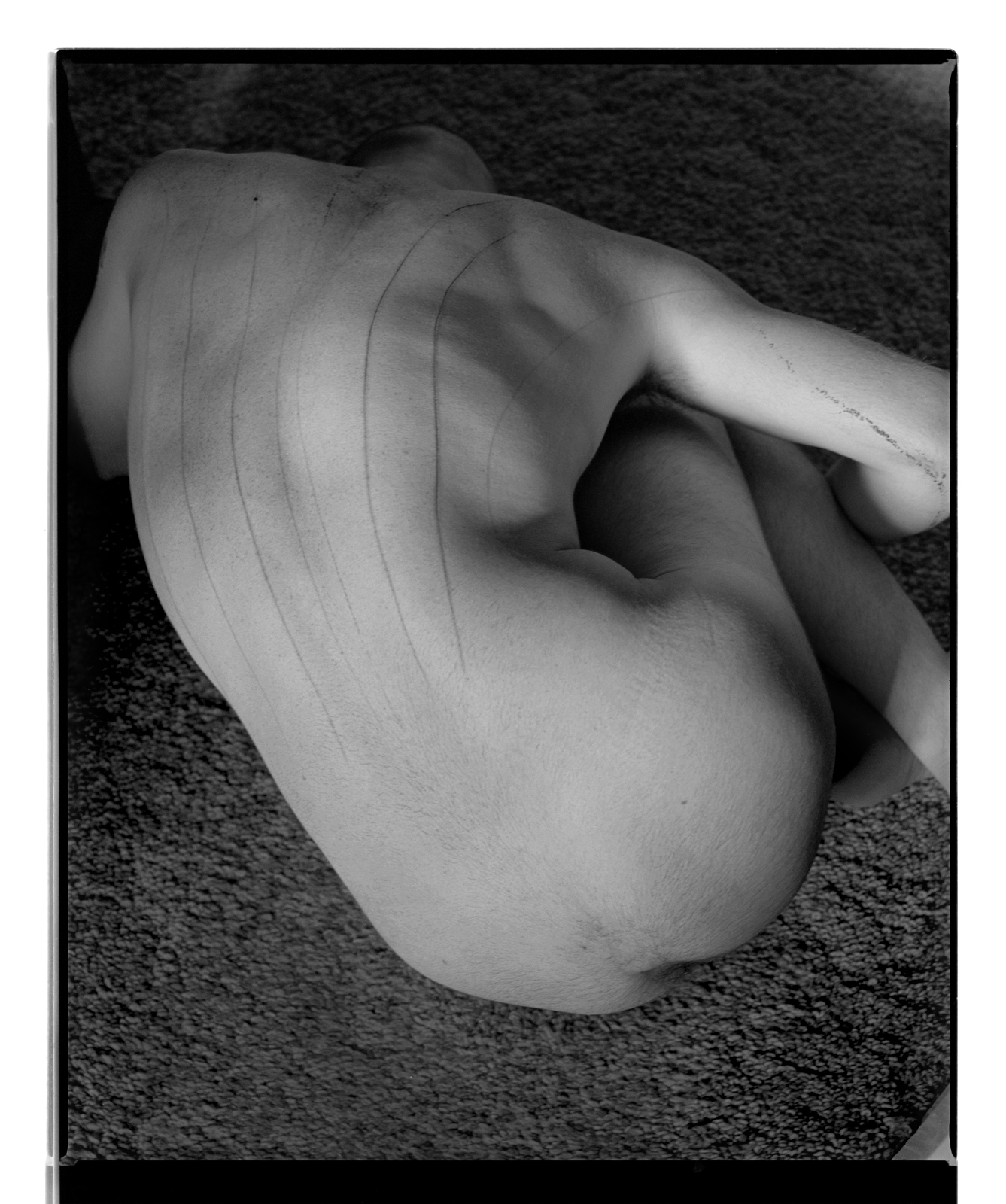
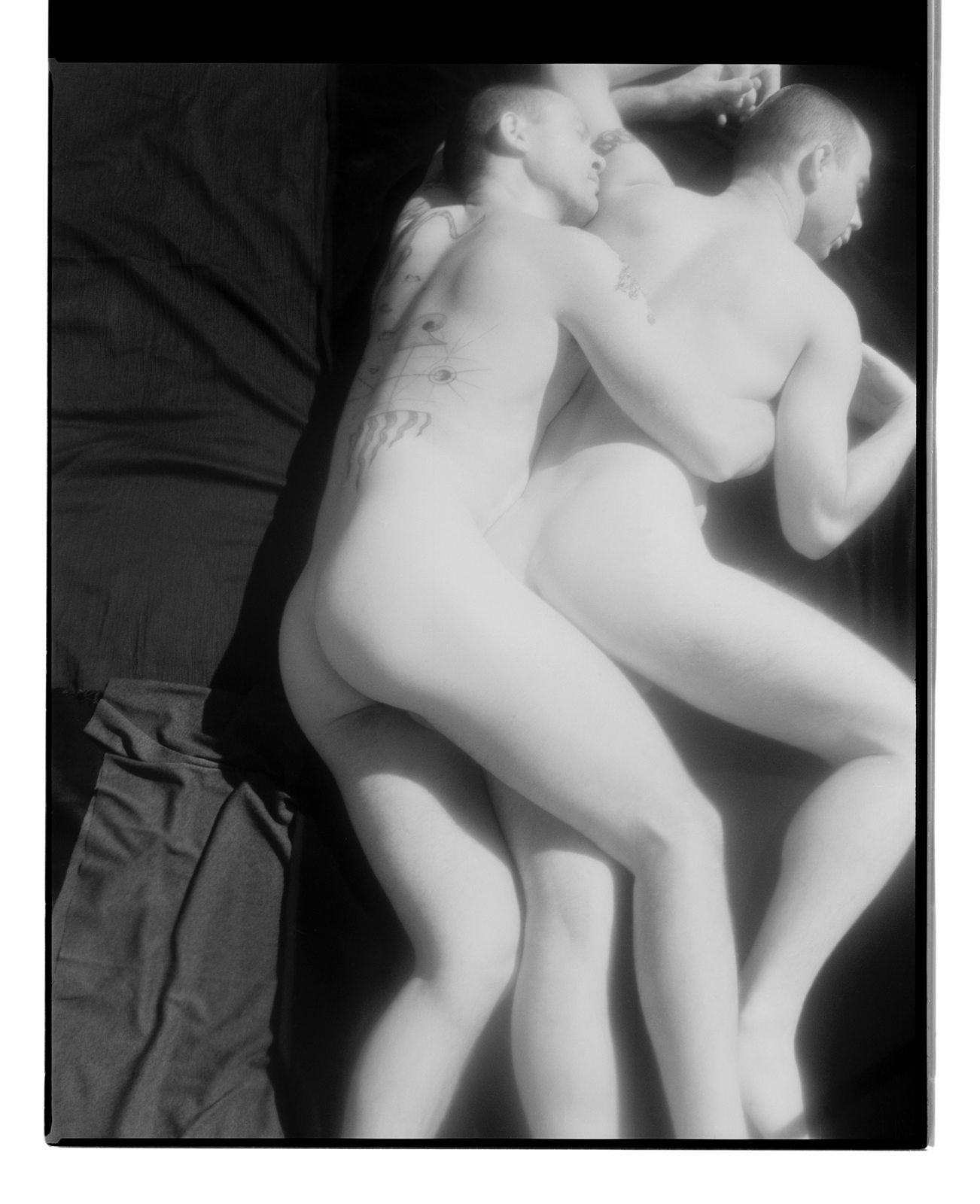
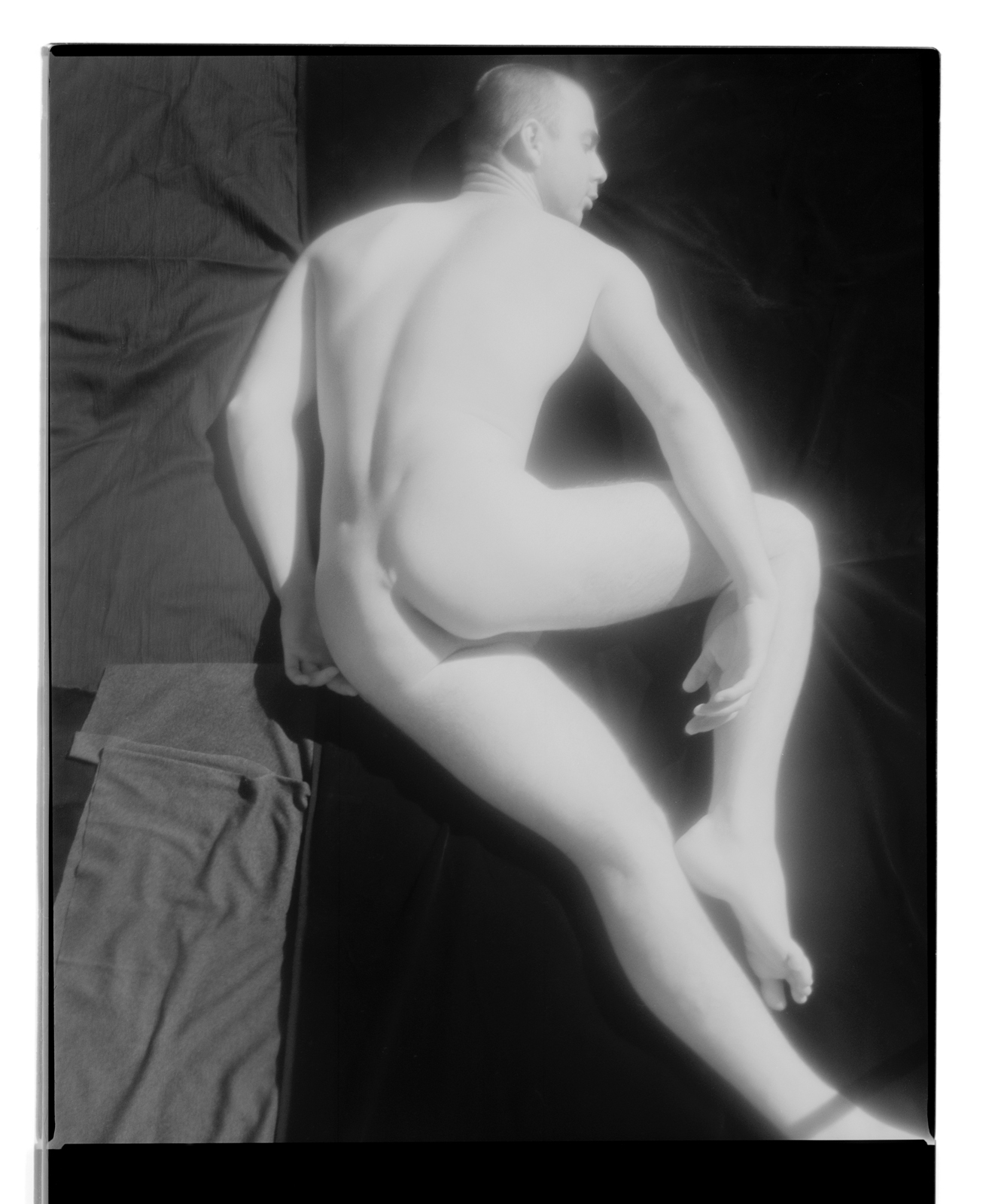
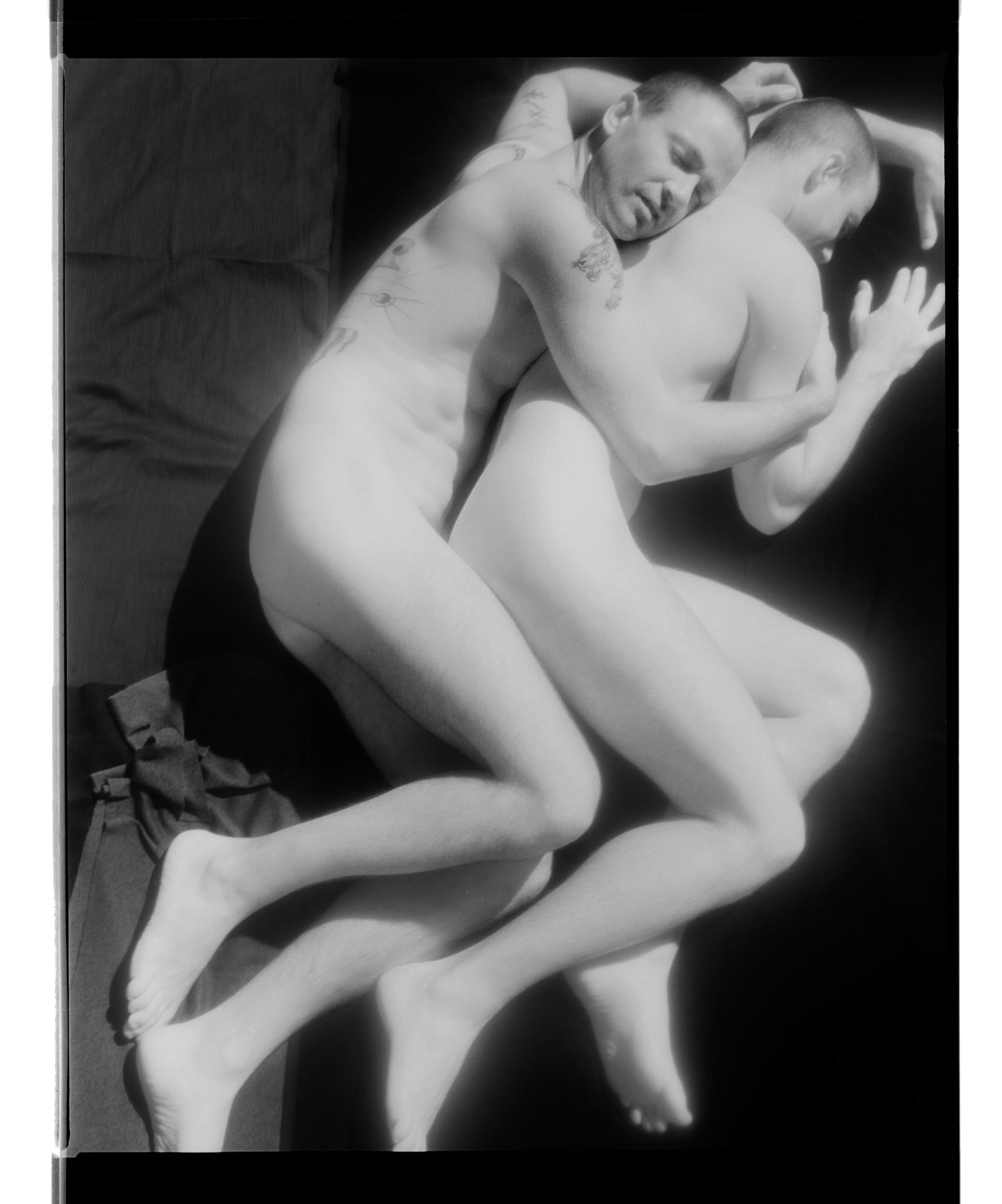
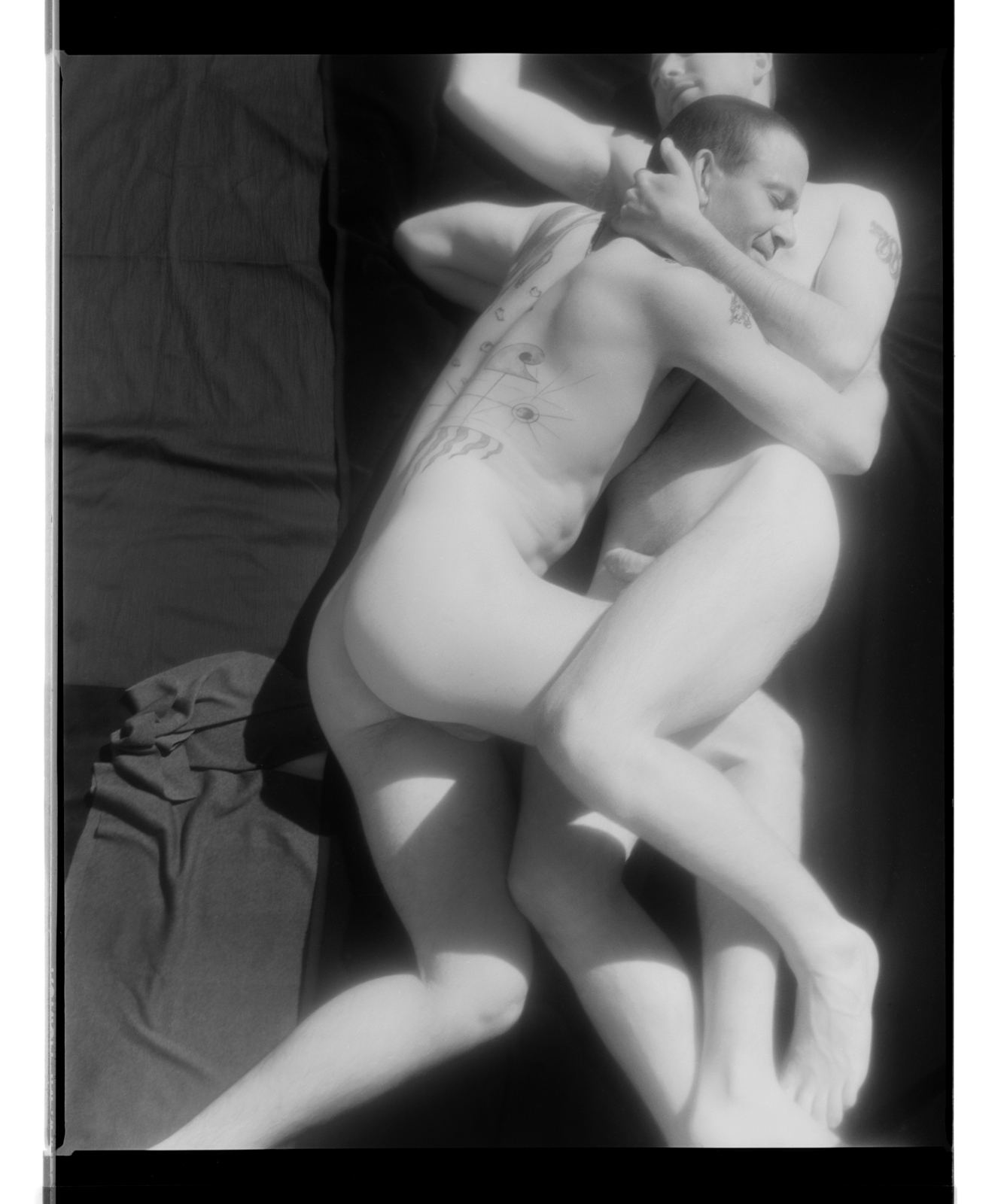
Marcus Bunyan (Australian born England, b. 1958) 'Untitled' 1995-96 From the series 'Sleep/Wound'


Marcus Bunyan (Australian born England, b. 1958)
Untitled
1995-1996
From the series Sleep/Wound
Gelatin silver print


Time is but the stream I go a-fishing in. I drink at it;
but while I drink, I see the sandy bottom and detect
how shallow it is. Its thin current slides away, but
eternity remains. I would drink deeper; fish in the sky,
whose bottom is pebbly with stars.


Thoreau, Walden


The series Sleep/Wound appeared in my solo exhibition titled The Cleft in Words, The Words As Flesh, at Stop 22 Gallery, St Kilda, Melbourne in 1996.

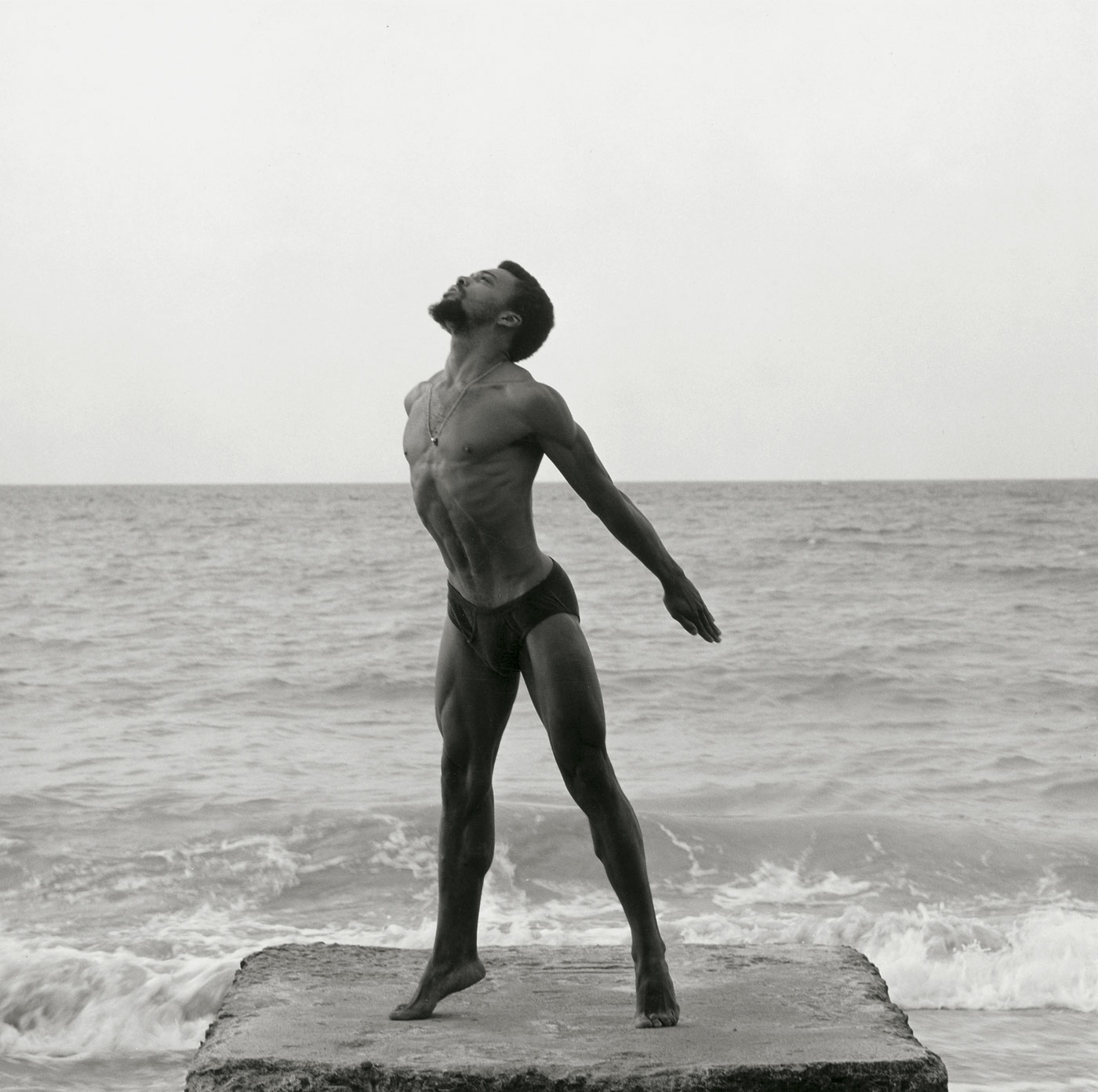
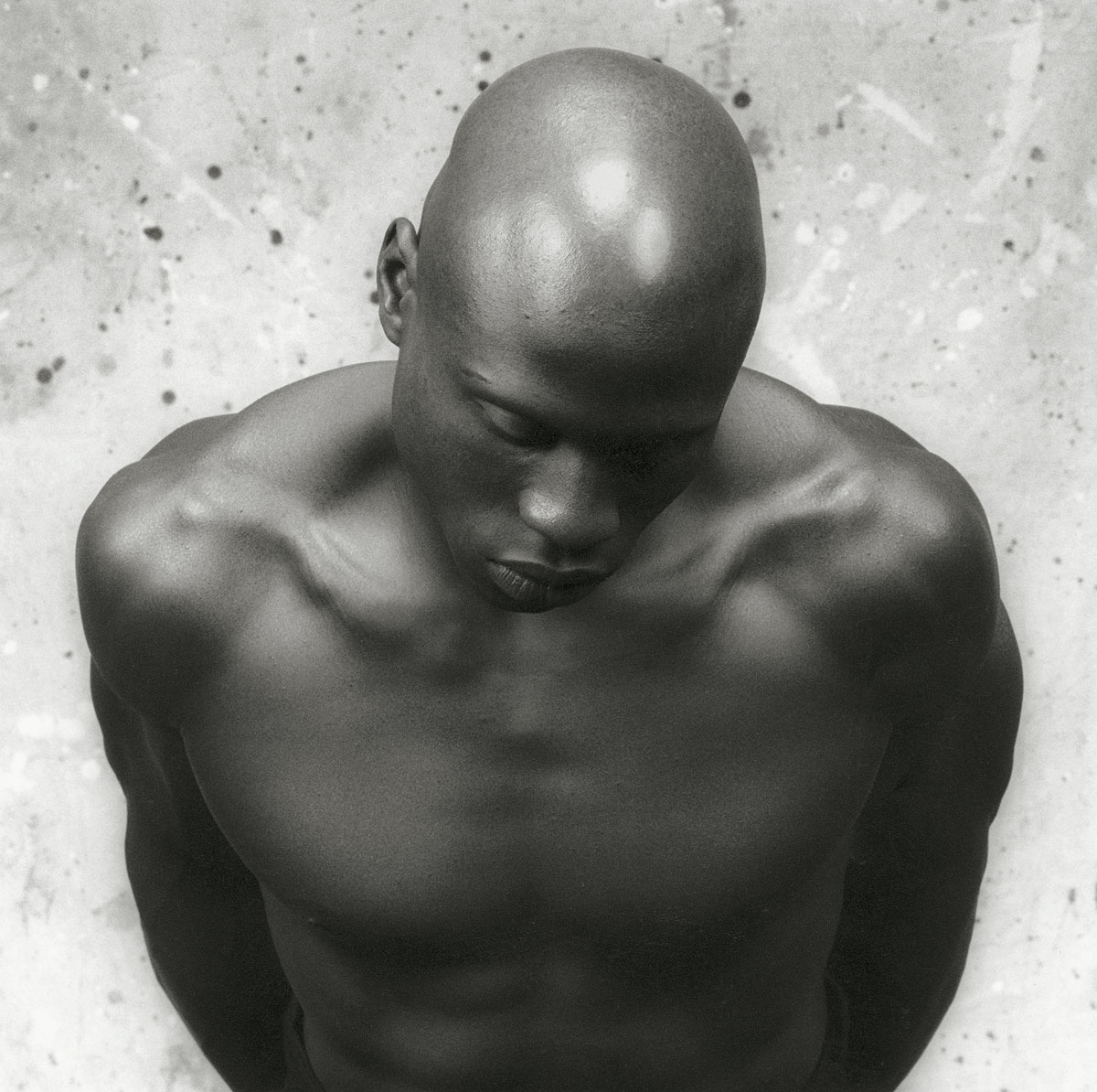
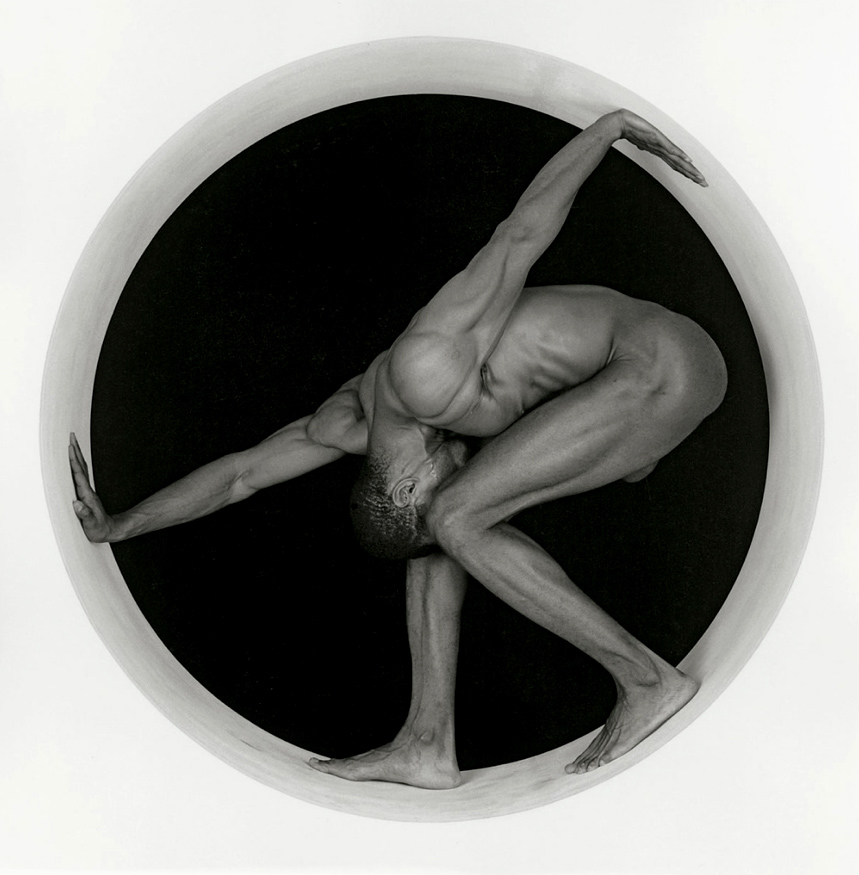
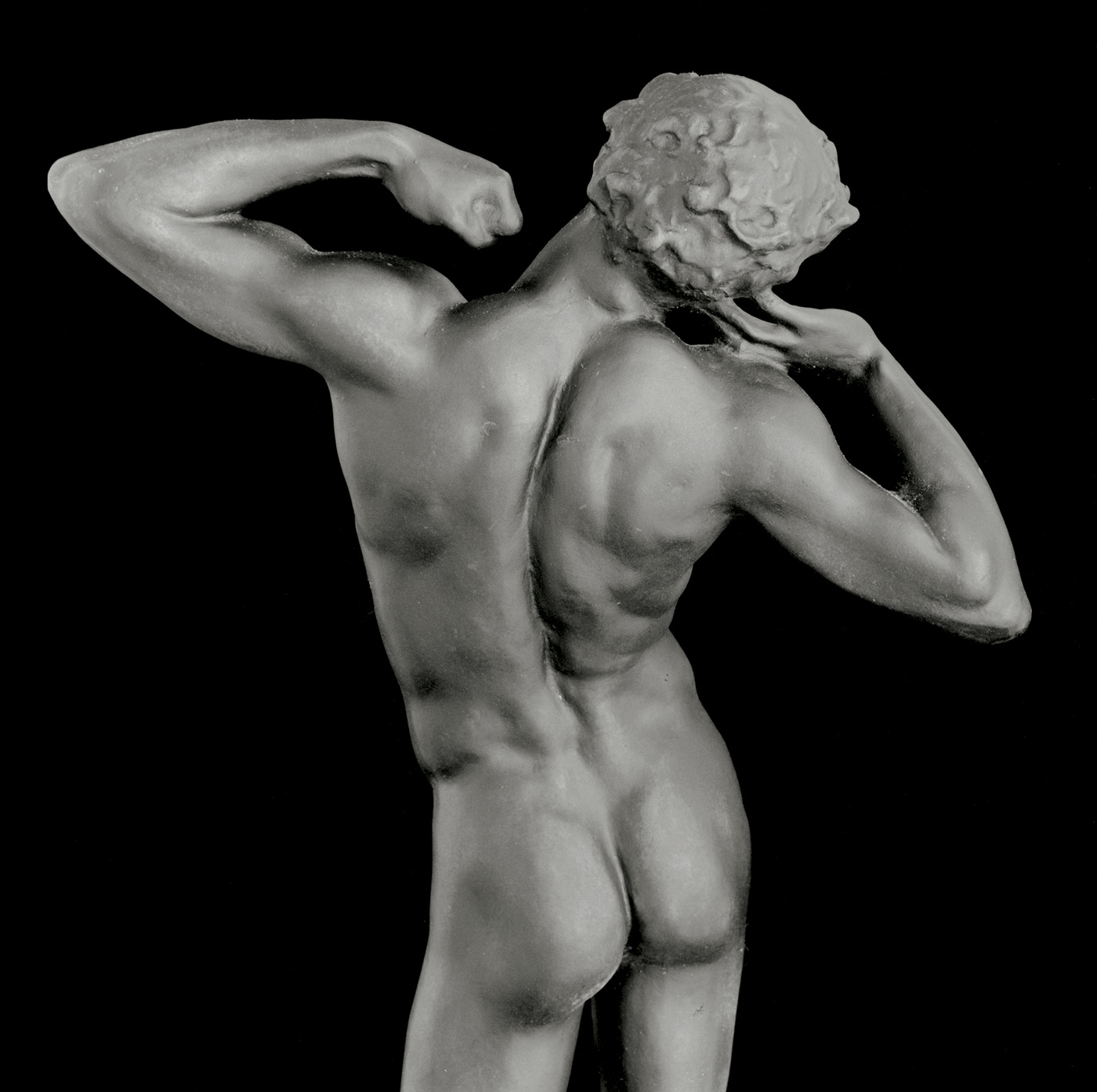
The series consists of ethereal, intimate photographs of my partner and myself in sleep positions, taken on infra-red film, the only time I ever used such film. I was fascinated (and still am) with the positions of the body in space, and how it moves in different environments.

The second part of the series are photographs of a performance, that of the cutting of my partners back. Paul and I held a dance party at a house on Punt Road in South Yarra where our friend Woody (David J. Wood of Bent Metal fame) was being evicted. The party, naturally enough called Eviction, was held to raise money for HIV/AIDS. Paul and I decorated the house, painting large, colourful kundalini symbols such as snakes and mandalas on the walls. In one room, painted with the seven colours of the main chakras, and to ambient music connected to earth, spirit and cosmos – I cut my partners back. Half the people fled, but the other half recognised the powerful spiritual connection that was happening in the performance (remember at this time, blood in terms of being gay, was tainted because of HIV/AIDS infection). I then smeared Paul’s blood on the walls of the house with my hands, crossing the boundary of the taboo by touching a bodily fluid whist acknowledging something that is essential to human life.

After packing up all the equipment from the party, we both headed to the Tasty nightclub (if any of you remember the Tasty raid) to have a good dance, with the blood still drying on Paul’s back. People were shocked at seeing his cut back. When we got back home at 6am in the morning I took out my trusty Mamiya RZ67 and took these beautiful photographs of one of the most connected, spiritual experiences of my life.

My thankx go to Paul as always for being my muse and partner without whom these experiences and photographs would never have been possible.

Dr Marcus Bunyan


I am scanning my negatives made during the years 1991-1997 to preserve them in the form of an online archive as a process of active memory, so that the images are not lost forever. These photographs were images of my life and imagination at the time of their making, the ideas I was thinking about and the people and things that surrounded me.

All images © Marcus Bunyan. Please click the photographs for a larger version of the image. Please remember these are just straight scans of the prints, all full frame, no cropping !

Photographs are available from this series for purchase. As a guide, a vintage 8″ x 10″ silver gelatin print costs $700 plus tracked and insured shipping. For more information please see my Store web page.


Marcus Bunyan (Australian born England, b. 1958) 'Untitled' 1995-96 From the series 'Sleep/Wound'


Marcus Bunyan (Australian born England, b. 1958)
Untitled
1995-1996
From the series Sleep/Wound
Gelatin silver print


Marcus Bunyan (Australian born England, b. 1958) 'Untitled' 1995-96 From the series 'Sleep/Wound'


Marcus Bunyan (Australian born England, b. 1958)
Untitled
1995-1996
From the series Sleep/Wound
Gelatin silver print


Marcus Bunyan (Australian born England, b. 1958) 'Untitled' 1995-96 From the series 'Sleep/Wound'


Marcus Bunyan (Australian born England, b. 1958)
Untitled
1995-1996
From the series Sleep/Wound
Gelatin silver print


Marcus Bunyan (Australian born England, b. 1958) 'Untitled' 1995-96 From the series 'Sleep/Wound'


Marcus Bunyan (Australian born England, b. 1958)
Untitled
1995-1996
From the series Sleep/Wound
Gelatin silver print


Marcus Bunyan (Australian born England, b. 1958) 'Untitled' 1995-96 From the series 'Sleep/Wound'


Marcus Bunyan (Australian born England, b. 1958)
Untitled
1995-1996
From the series Sleep/Wound
Gelatin silver print


Marcus Bunyan (Australian born England, b. 1958) 'Untitled' 1995-96 From the series 'Sleep/Wound'


Marcus Bunyan (Australian born England, b. 1958)
Untitled
1995-1996
From the series Sleep/Wound
Gelatin silver print


Marcus Bunyan (Australian born England, b. 1958) 'Untitled' 1995-96 From the series 'Sleep/Wound'


Marcus Bunyan (Australian born England, b. 1958)
Untitled
1995-1996
From the series Sleep/Wound
Gelatin silver print


Marcus Bunyan (Australian born England, b. 1958) 'Untitled' 1995-96 From the series 'Sleep/Wound'


Marcus Bunyan (Australian born England, b. 1958)
Untitled
1995-1996
From the series Sleep/Wound
Gelatin silver print


Marcus Bunyan (Australian born England, b. 1958) 'Untitled' 1995-96 From the series 'Sleep/Wound'


Marcus Bunyan (Australian born England, b. 1958)
Untitled
1995-1996
From the series Sleep/Wound
Gelatin silver print


Marcus Bunyan (Australian born England, b. 1958) 'Untitled' 1995-96 From the series 'Sleep/Wound'


Marcus Bunyan (Australian born England, b. 1958)
Untitled
1995-1996
From the series Sleep/Wound
Gelatin silver print


Marcus Bunyan (Australian born England, b. 1958) 'Untitled' 1995-96 From the series 'Sleep/Wound'


Marcus Bunyan (Australian born England, b. 1958)
Untitled
1995-1996
From the series Sleep/Wound
Gelatin silver print


Marcus Bunyan (Australian born England, b. 1958) 'Untitled' 1995-96 From the series 'Sleep/Wound'


Marcus Bunyan (Australian born England, b. 1958)
Untitled
1995-1996
From the series Sleep/Wound
Gelatin silver print


Marcus Bunyan (Australian born England, b. 1958) 'Untitled' 1995-96 From the series 'Sleep/Wound'


Marcus Bunyan (Australian born England, b. 1958)
Untitled
1995-1996
From the series Sleep/Wound
Gelatin silver print


Marcus Bunyan (Australian born England, b. 1958) 'Untitled' 1995-96 From the series 'Sleep/Wound'


Marcus Bunyan (Australian born England, b. 1958)
Untitled
1995-1996
From the series Sleep/Wound
Gelatin silver print


Marcus Bunyan (Australian born England, b. 1958) 'Untitled' 1995-96 From the series 'Sleep/Wound'


Marcus Bunyan (Australian born England, b. 1958)
Untitled
1995-1996
From the series Sleep/Wound
Gelatin silver print


Marcus Bunyan (Australian born England, b. 1958) 'Untitled' 1995-96 From the series 'Sleep/Wound'


Marcus Bunyan (Australian born England, b. 1958)
Untitled
1995-1996
From the series Sleep/Wound
Gelatin silver print


Marcus Bunyan (Australian born England, b. 1958) 'Untitled' 1995-96 From the series 'Sleep/Wound'


Marcus Bunyan (Australian born England, b. 1958)
Untitled
1995-1996
From the series Sleep/Wound
Gelatin silver print


Marcus Bunyan (Australian born England, b. 1958) 'Untitled' 1995-96 From the series 'Sleep/Wound'


Marcus Bunyan (Australian born England, b. 1958)
Untitled
1995-1996
From the series Sleep/Wound
Gelatin silver print


Marcus Bunyan (Australian born England, b. 1958) 'Untitled' 1995-96 From the series 'Sleep/Wound'


Marcus Bunyan (Australian born England, b. 1958)
Untitled
1995-1996
From the series Sleep/Wound
Gelatin silver print


Marcus Bunyan (Australian born England, b. 1958) 'Untitled' 1995-96 From the series 'Sleep/Wound'


Marcus Bunyan (Australian born England, b. 1958)
Untitled
1995-1996
From the series Sleep/Wound
Gelatin silver print


Marcus Bunyan (Australian born England, b. 1958) 'Untitled' 1995-96 From the series 'Sleep/Wound'


Marcus Bunyan (Australian born England, b. 1958)
Untitled
1995-1996
From the series Sleep/Wound
Gelatin silver print


Marcus Bunyan black and white archive 1991-1997

Marcus Bunyan website

LIKE ART BLART ON FACEBOOK

Back to top

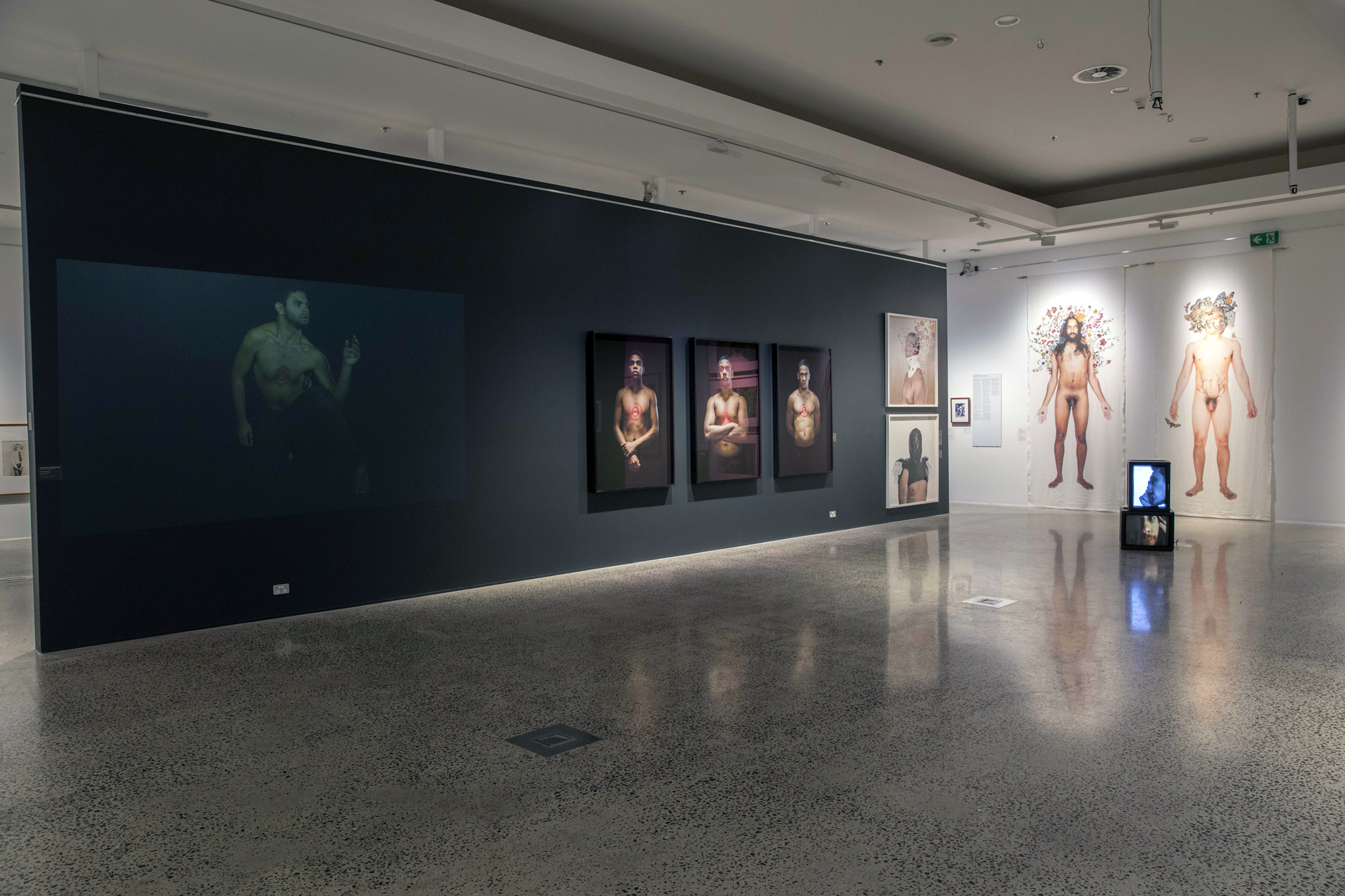
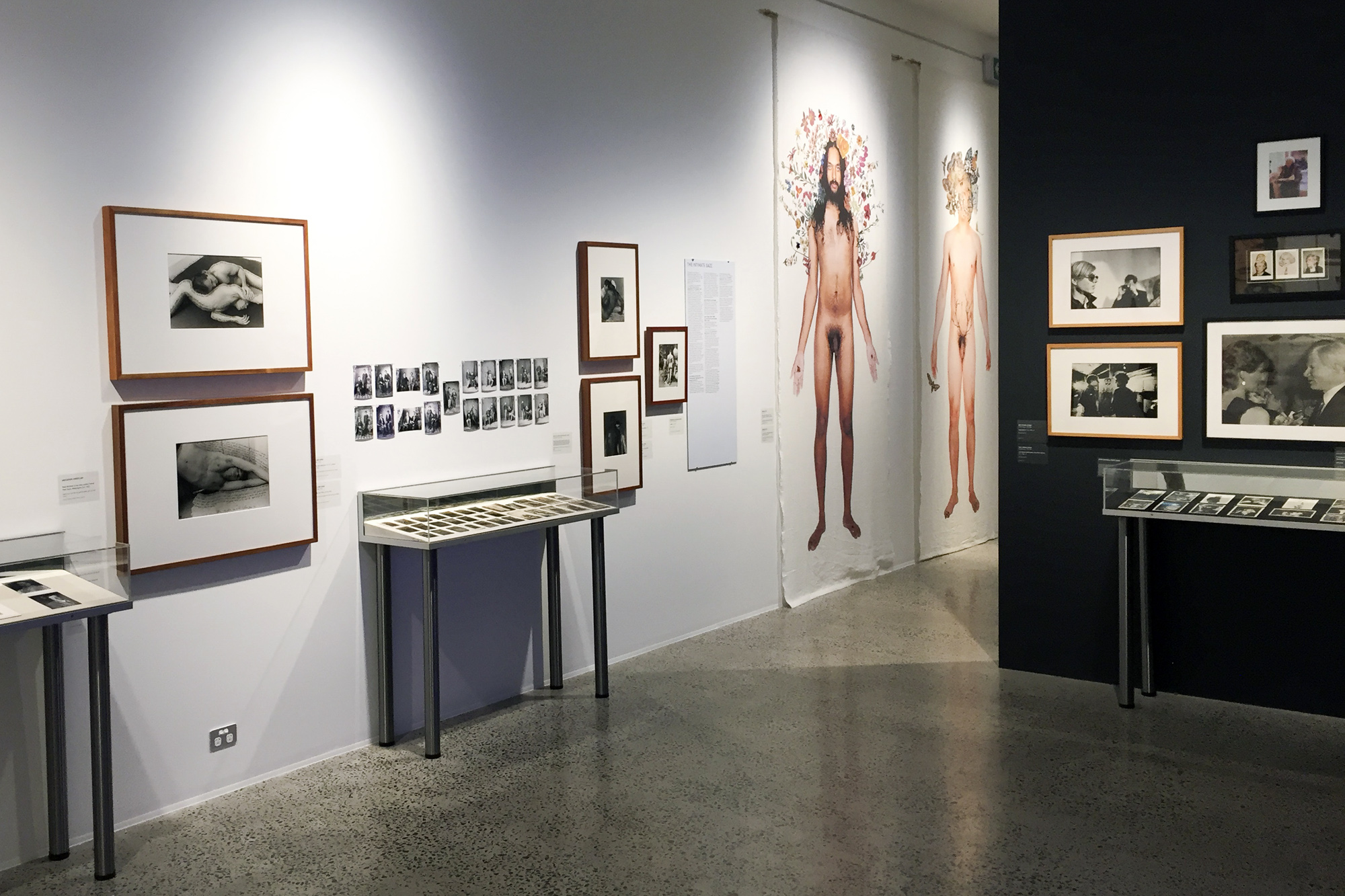
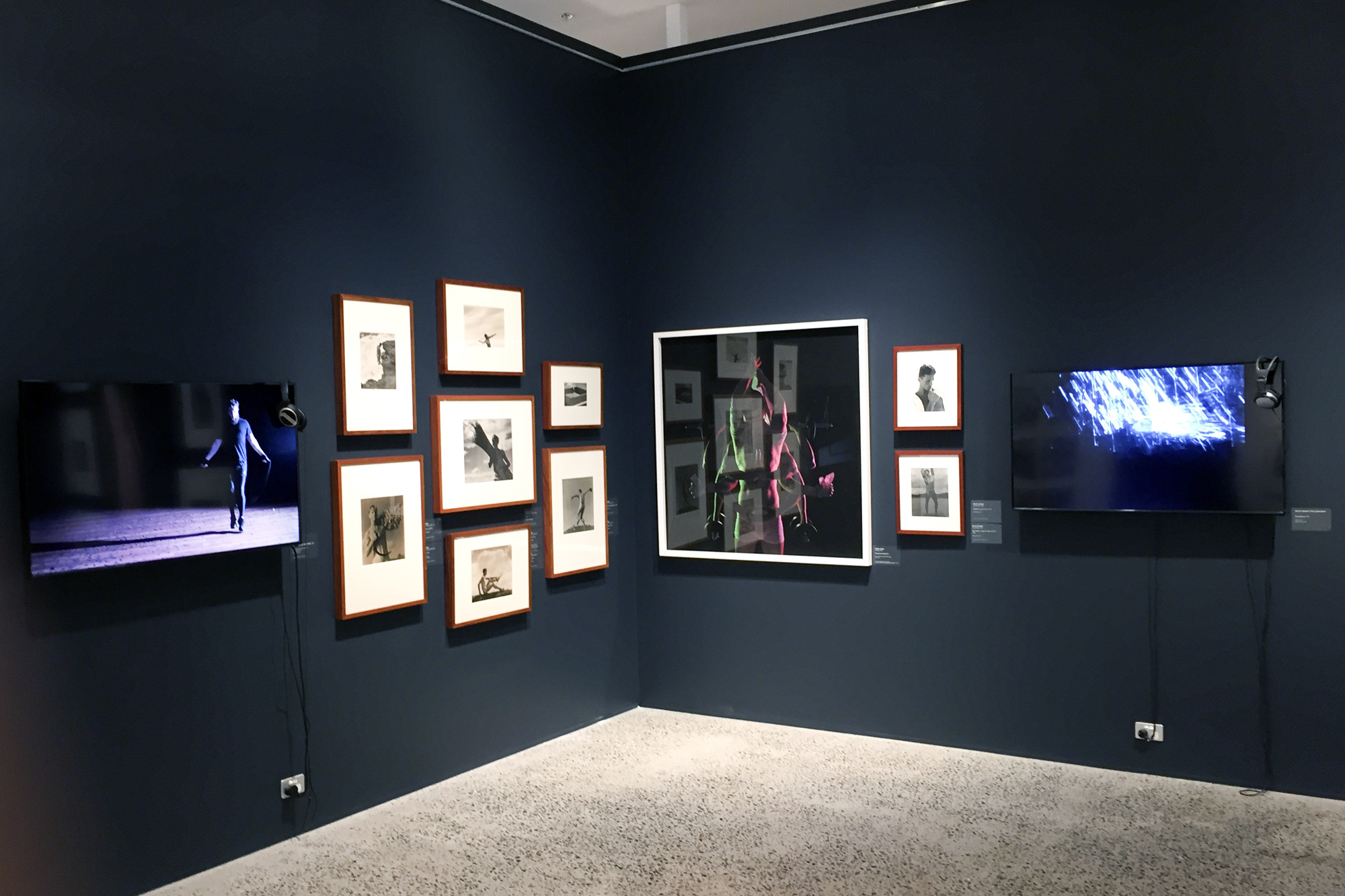
Text / Exhibition: ‘The Unflinching Gaze: photo media and the male figure’ at the Bathurst Regional Art Gallery, New South Wales

Exhibition dates: 14th October – 3rd December, 2017

Curator: Richard Perram OAM

Warning: this posting contains male nudity. If you don’t want to see please do not look.


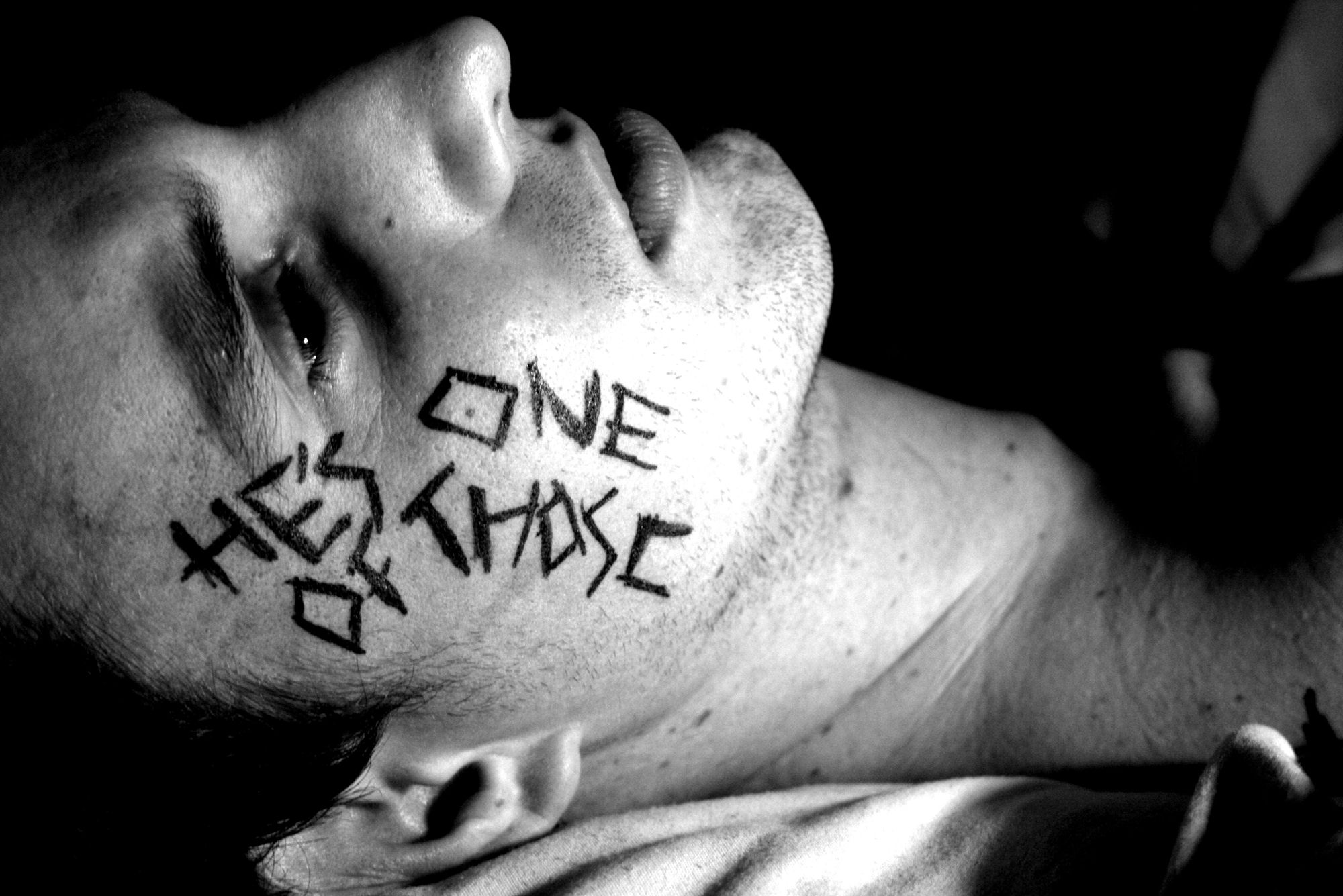
Todd Fuller (Australian, b. 1988) and Amy Hill (Australian, b. 1988) 'They're Only Words' 2009 (video still) from the exhibition 'The Unflinching Gaze: photo media and the male figure' at the Bathurst Regional Art Gallery, New South Wales, October- December, 2017


Todd Fuller (Australian, b. 1988) and Amy Hill (Australian, b. 1988)
They’re Only Words (video still)
2009
Film, sound duration: 2:42 mins
Courtesy the artists and May Space, Sydney


I must congratulate curator and gallery Director, Richard Perram OAM and the Bathurst Regional Art Gallery for putting on such a fine exhibition, worthy of many a large gallery in a capital city. An incredible achievement, coming at the same time as Latrobe Regional Art Gallery put on the recent René Magritte exhibition. All power to these regional galleries. Now on with the show…

Show and tell

The male body. The female body. The trans body. The gay body. Etc. etc. etc. …
The male gaze. The female gaze. The trans gaze. The gay gaze. Etc. etc. etc. …

I did my Doctor of Philosophy, all four and a half years of it, on the history of photography and its depiction of the male body so I know this subject intimately. It is such a complicated subject that after all of time, nothing is ever certain, everything is changeable and fluid.

To start, the definition of masculinity that I used as a determination for the term in my PhD is included as the first quotation below. The quotation is followed by others – on the optic experience and the creation of body image; on body image and our relation to other people; on the anxiety caused by the crisis of looking as it intersects with the crisis of the body; and how we can overcome the passivity of objective truth (accepting dominant images in this case, as they are presented to us) through an active struggle for subjective truth, or an acceptance of difference. A further, longer quote in the posting by Chris Schilling examines Ernst Goffman’s theories of body, image and society in which Goffman states that the body is characterised by three main features: firstly, that the body as material property of individuals; secondly, that meanings attributed to the body are determined by ‘shared vocabularies of body idiom’ such as dress, bearing, movements and position, sound level, physical gestures such as waving and saluting, facial decorations, and broad emotional expressions; and thirdly; that the body plays an important role in mediating the relationship between people’s self-identity and their social identity. These quotations just start to scratch the surface of this very complicated, negotiated social area.

What we can say is this: that masculinity is always and forever a construct; that male body image is always and forever a further construct built on the first construct; and that photo media images of the male body are a construct, in fact a double or triple construct as they seek to capture the surface representation of the previous two conditions.

What strikes me with most of the photographs in this posting is that they are about a constructed “performance” of masculinity, performances that challenge cultural signifiers of mainstream and marginalised aspects of Western patriarchal culture. In most the masculine subject position is challenged through complex projections of masculinity, doubled through the construction of images. In fact, spectatorship is no longer male and controlling but polymorphous and not organised along normative gender lines.

Thus, these artists respond to four defined action problems in terms of representation of body usage: “… control (involving the predicability of performance); desire (whether the body is lacking or producing desire); the body’s relation to others (whether the body is monadic and closed in on itself or dyadic and constituted through either communicative or dominating relations with others); and the self-relatedness of the body (whether the body associates and ‘feels at home’ in itself, or dissociates itself from its corporeality).”1 Further, four ideal types of body usage can be defined in terms of these action problems: the disciplined body where the medium is regimentation, the model of which is the rationalisation of the monastic order; the mirroring body where the medium is consumption, the model of which is the department store; the dominating body where the medium is force, the model of which is war; and the communicative body where the medium is recognition, the model of which could be shared narratives, communal rituals (such as sex) and caring relationships.2

As Chris Schilling observes, “The boundaries of the body have shifted away from the natural and on to the social, and the body now has ‘a thoroughly permeable “outer layer” through which the reflexive project of the self and externally formed abstract systems enter.” In other words, masculinity and male figure can be anything to any body and any time in any context. The male body can be prefigured by social conditions. But the paradox is, the more we know masculinity and the male body, the more knowledge we have, the more we can alter and shape these terms, the less certain we are as to what masculinity and the male body is, and how or if it should be controlled. Taking this a step further, Schilling notes that the photographic image of the body itself has become an abstract system/symbolic token which is traded without question, much as money is, without the author or participants being present.3 You only have to look into some of the gay chats rooms to know this to be true!

The most difficult question I had to ask myself in relation to this exhibition was, what is it to be male? Such a question is almost impossible to answer…

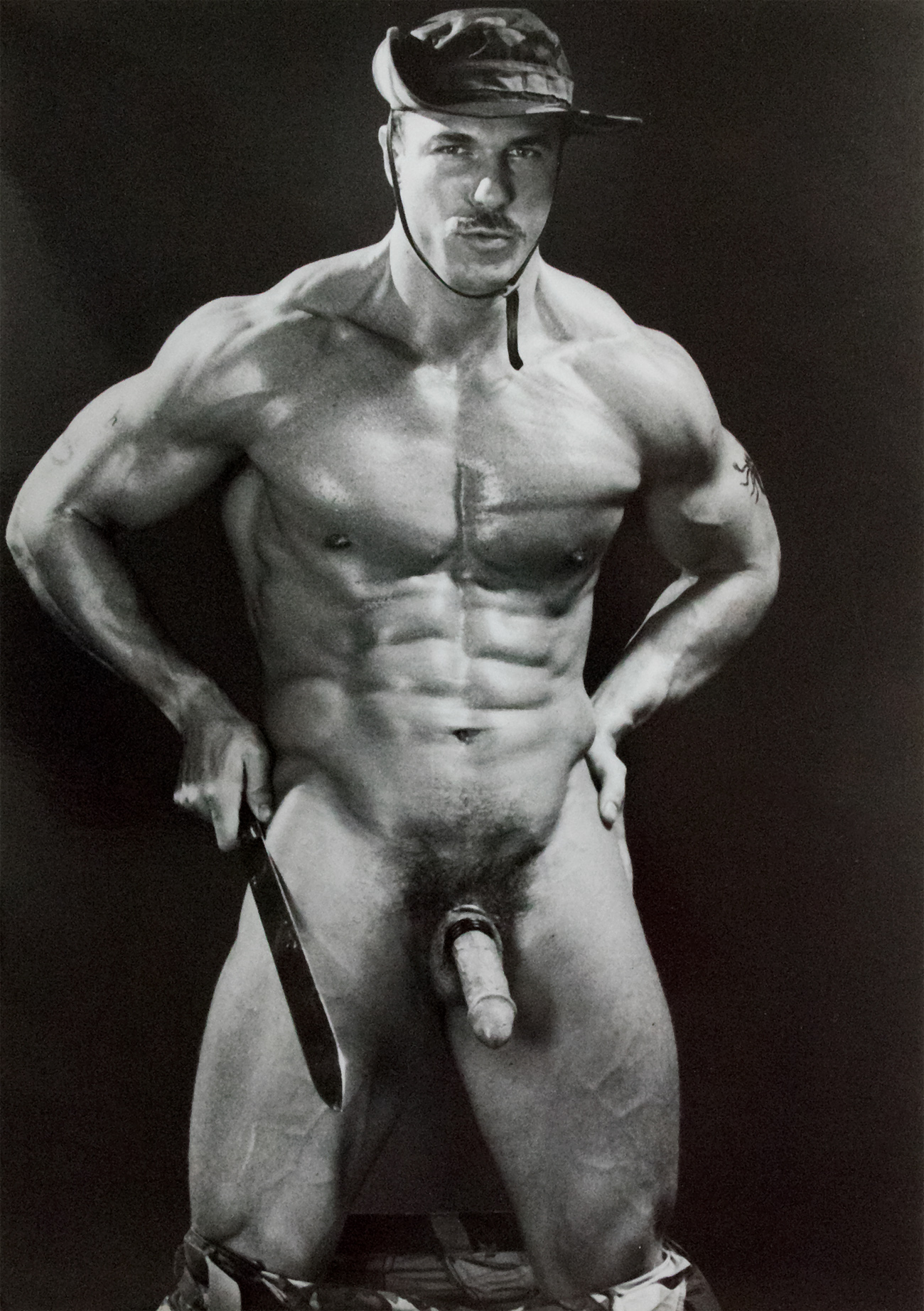
Is being male about sex, a penis, homosociality, homosexuality, heterosexuality, friendship, braveness, dominance, perversity, fantasy, love, attraction, desire, pleasure, Ockerism, respect, loyality, spirituality, joy, happiness etc. etc. It is all of these and more besides. And this is where I find some most of these images to be just surface representations of deeper feelings: I just like dressing in drag; I like pulling a gun on someone; I like holding a knife next to my penis to make my phallus and my armoured body look “butch”. It’s as though the “other”, our difference from ourselves (and others), has been normalised and found wanting. I want to strip them away from this performative, normalising aspect. Most of these photographs are male figures dressed up to the nines, projecting an image, a surface, to the outside world (even though the performative tells us a great deal about the peculiarities of the human imagination). I want them to be more essential, not just a large penis dressed up for show. Only in the image Untitled (Auschwitz victim) (Nd, below), where the performance for the camera and the clothing the man is wearing is controlled by others – does some sense of an inner strength of a male come through. In times of unknown horror and dire circumstances, this man stares you straight in the eye with a calm presence and inner composure.

For me personally, being male is about a spiritual connection – to myself, to the earth and to the cosmos. I hope it is about respect for myself and others. Of course I use the systems above as a projection of myself into the world, as to who I am and who I want people to see through my image. But there is so much more to being male than these defined, representational personas. This is not some appeal to, as David Smail puts it, “a simple relativity of ‘truths'” (anything to anybody at anytime in any context), nor a essentialist reductionism to a “single truth” about our sense of being, but an appeal for a ‘non-finality’ of truth, neither fixed nor certain, that changes according to our values and what we understand of ourselves, what it is to be male. This understanding requires intense, ongoing inner work, something many males have no desire to undertake…

Dr Marcus Bunyan

Word count: 1,230


Footnotes

1/ Chris Schilling, The Body and Social Theory, Sage Publications, London, 1993, p.95.

2/ Ibid., p. 95.

3/ Ibid., p. 183.


Many thankx to Director Richard Perram, Assistant Curator Julian Woods and the Bathurst Regional Art Gallery for allowing me to publish the photographs in the posting. Please click on the photographs for a larger version of the image.


“The category of “masculinity” should be seen as always ambivalent, always complicated, always dependent on the exigencies (necessary conditions and requirements) of personal and institutional power … [masculinity is] an interplay of emotional and intellectual factors – an interplay that directly implicates women as well as men, and is mediated by other social factors, including race, sexuality, nationality, and class … Far from being just about men, the idea of masculinity engages, inflects, and shapes everyone.”


Berger, Maurice; Wallis, Brian and Watson, Simon. Constructing Masculinity. Introduction. New York: Routledge, 1995, pp. 3-7.


“We choose and reject by action … Nietzsche calls the body ‘Herrschaftsgebilde’ (creation of the dominating will). We may say the same about body-image. Since optic experience plays such an enormous part in our relation to the world, it will also play a dominating role in the creation of the body-image. But optic experience is also experience by action. By actions and determinations we give the final shape to our bodily self. It is a process of continual active development.” (My underline)


Schilder, Paul. The Image and Appearance of The Human Body. New York: International Universities Press, 1950, pp. 104-105.


“Body images should not exist in isolation. We desire the relation of our body-images to the body-images of all other persons, and we want it especially concerning all sexual activities and their expression in the body-image. Masturbation is specifically social. It is an act by which we attempt to draw the body-images of others, especially in their genital region, nearer to us.”


Schilder, Paul. The Image and Appearance of The Human Body. New York: International Universities Press, 1950, p. 237.


“As the French critic Maurice Blanchot wrote, “The image has nothing to do with signification, meaning, as implied by the existence of the world, the effort of truth, the law and the brightness of the day. Not only is the image of an object not the meaning of that object and of no help in comprehending it, but it tends to withdraw it from its meaning by maintaining it in the immobility of a resemblance that it has nothing to resemble” … It is this severance of meaning and its object, this resemblance of nothing, that the crisis of looking intersects with the crisis of the body. In contemporary culture we promote the body as infinitely extendable and manageable. Indeed, we mediate this concept through the permeation of the photographic image in popular culture – through advertising and dominant discourse that place the young, beautiful, erotic body as the desirable object of social attention. This is a body apparently conditioned by personal control (moral concern). But the splitting apart of image and meaning pointed to by Blanchot suggests that such control is illusory. There is no single truth; there are only competing narratives and interpretations of a world that cannot be wholly, accurately described.” (My underline)


Blanchot, Maurice. The Gaze of Orpheus. New York: Barrytown, 1981, p. 85, quoted in Townsend, Chris. Vile Bodies: Photography and the Crisis of Looking. Munich: Prestel, 1998, p. 10.


“Where objective knowing is passive, subjective knowing is active – rather than giving allegiance to a set of methodological rules which are designed to deliver up truth through some kind of automatic process [in this case the construction of the male figure through the image], the subjective knower takes a personal risk in entering into the meaning of the phenomena to be known … Those who have some time for the validity of subjective experience but intellectual qualms about any kind of ‘truth’ which is not ‘objective’, are apt to solve their problem by appealing to some kind of relativity. For example, it might be felt that we all have our own versions of the truth about which we must tolerantly agree to differ. While in some ways this kind of approach represents an advance on the brute domination of ‘objective truth’, it in fact undercuts and betrays the reality of the world given to our subjectivity. Subjective truth has to be actively struggled for: we need the courage to differ until we can agree. Though the truth is not just a matter of personal perspective, neither is it fixed and certain, objectively ‘out there’ and independent of human knowing. ‘The truth’ changes according to, among other things, developments and alterations in our values and understandings … the ‘non-finality’ of truth is not to be confused with a simple relativity of ‘truths’.” (My underline).


Smail, David. Illusion and Reality: The Meaning of Anxiety. London: J.M. Dent & Sons, 1984, pp. 152-153.


The Unflinching Gaze: photo media & the male figure

The Unflinching Gaze: photo media & the male figure surveys how the male figure has been depicted by Australian and international artists in photo media over the last 140 years. It includes historic and contemporary fine art photography and film, fashion photography, pop videos and homoerotic art. Images range from the beautiful to the banal to the confounding.

The Unflinching Gaze: photo media & the male figure is a Bathurst Regional Art Gallery exhibition in partnership with Leslie-Lohman Museum of Gay and Lesbian Art, New York. Curated by Richard Perram OAM. This exhibition is supported by the Dobell Exhibition Grant, funded by the Sir William Dobell Art Foundation and managed by Museums & Galleries of NSW.


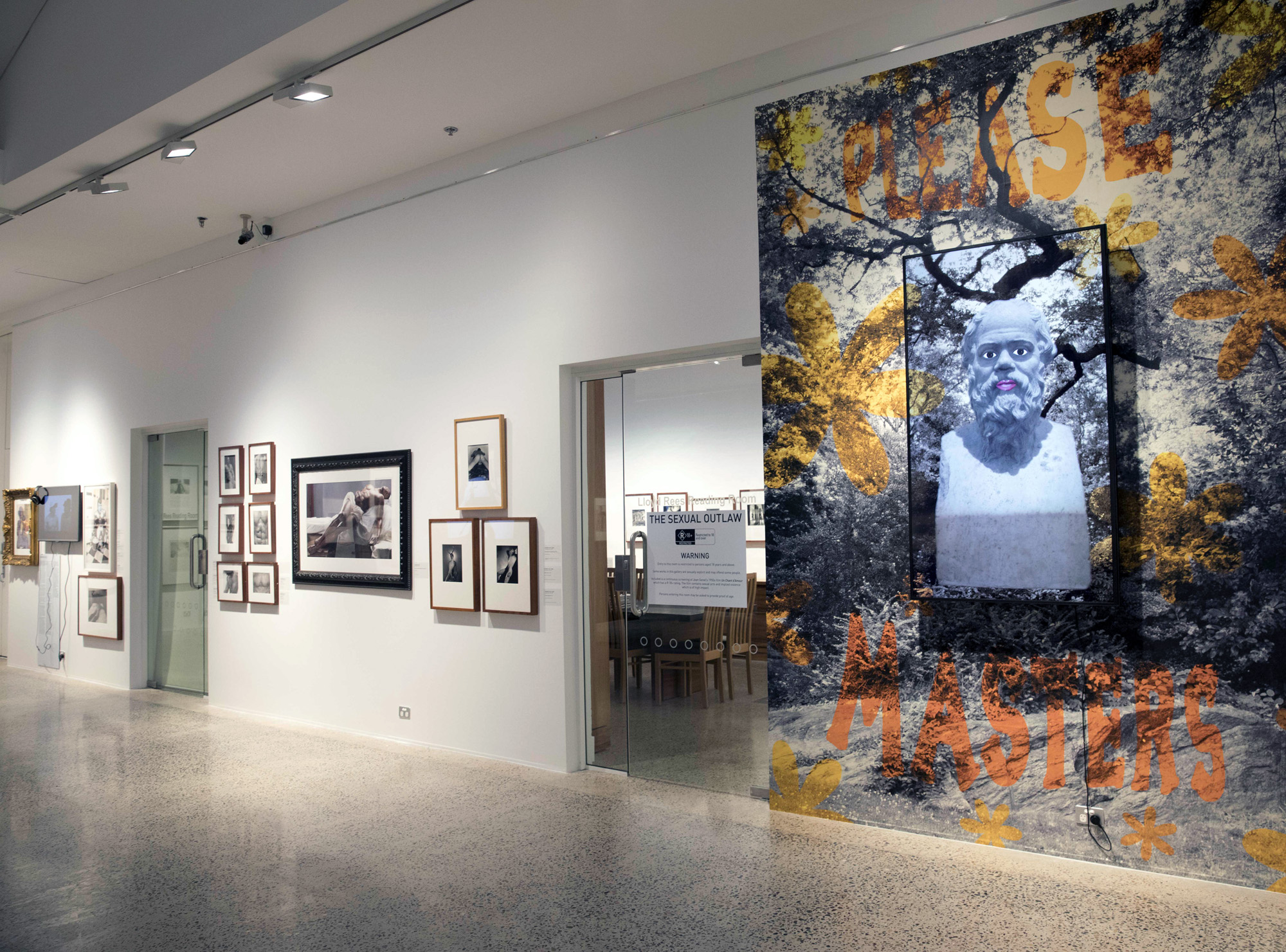
Installation view of the exhibition 'The Unflinching Gaze: photo media and the male figure' at the Bathurst Regional Art Gallery

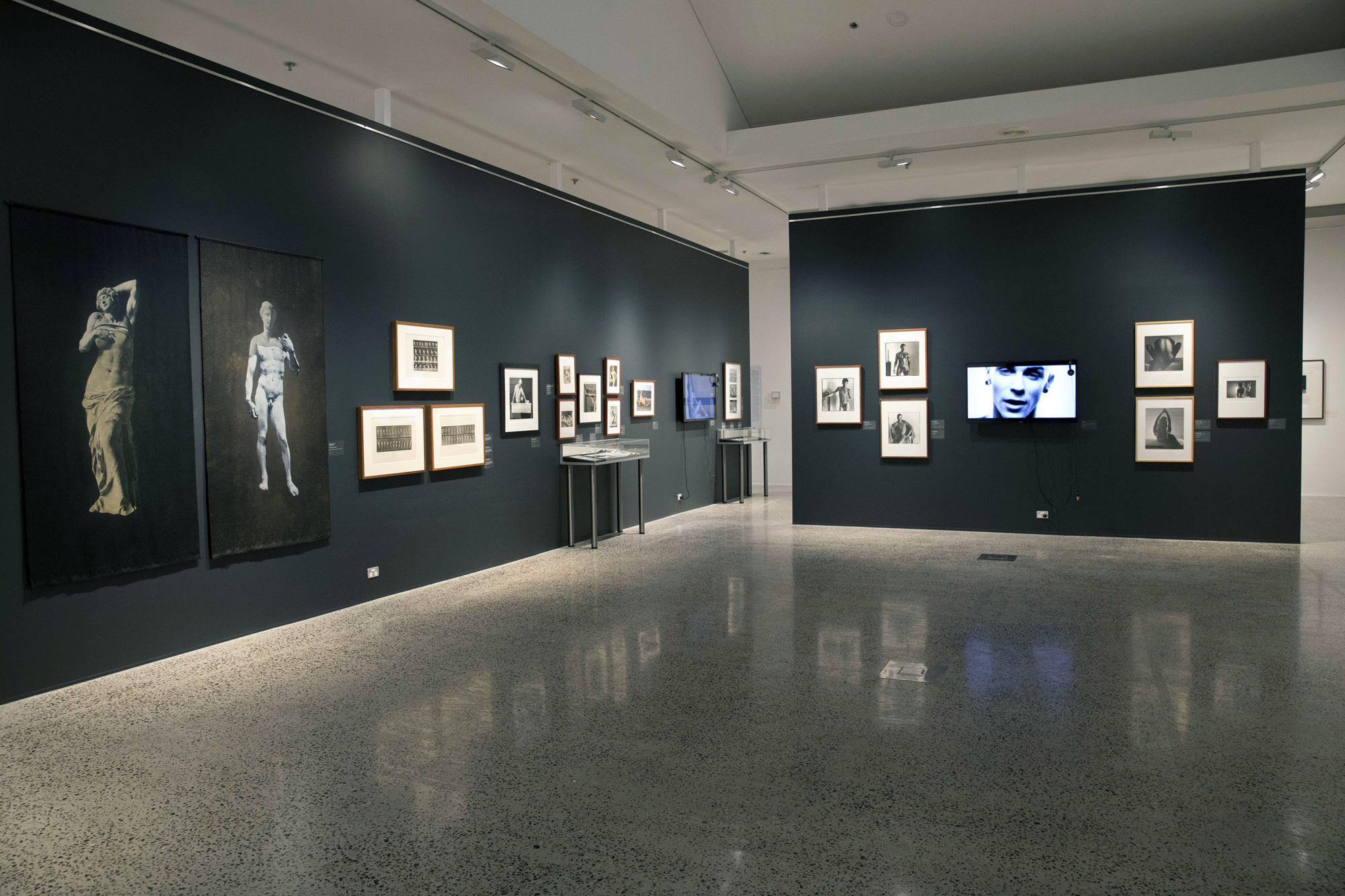
Installation view of the exhibition 'The Unflinching Gaze: photo media and the male figure' at the Bathurst Regional Art Gallery

Installation view of the exhibition 'The Unflinching Gaze: photo media and the male figure' at the Bathurst Regional Art Gallery

Installation view of the exhibition 'The Unflinching Gaze: photo media and the male figure' at the Bathurst Regional Art Gallery

Installation view of the exhibition 'The Unflinching Gaze: photo media and the male figure' at the Bathurst Regional Art Gallery


Installation views of the exhibition The Unflinching Gaze: photo media and the male figure at the Bathurst Regional Art Gallery, New South Wales
Photos: Sharon Hickey Photography


In line with current thinking the exhibition posits masculinity, and gender itself, as a kind of performance – a social construct that is acquired rather than biologically determined.

This idea has its limits, with most people happy to accept anatomy as destiny. Nevertheless, there is much we view as ‘natural’ that might be more accurately described as ‘cultural’. In an exceptional catalogue essay, Peter McNeil refers to Jonathan Ned Katz’s book, The Invention of Heterosexuality, which notes that the term “heterosexual” was first published in the United States in 1892. This is a remarkably late entry for a concept often viewed as a cornerstone of social orthodoxy.

A condition doesn’t require a word to make it a reality but it sure helps. Wittgenstein’s famous dictum: “The limits of my language are the limits of my world,” reminds us of the power of naming and categorisation.

To establish anything as an unquestionable norm is to stigmatise other views as abnormal. From the perception of abnormality comes the fear and hatred that surfaced during a same-sex marriage postal survey that revealed more about political cowardice than it did about Australian social attitudes. Although Perram has no qualms about celebrating gay sexuality his chief concern is to encourage a broader, more inclusive understanding of masculinity. …

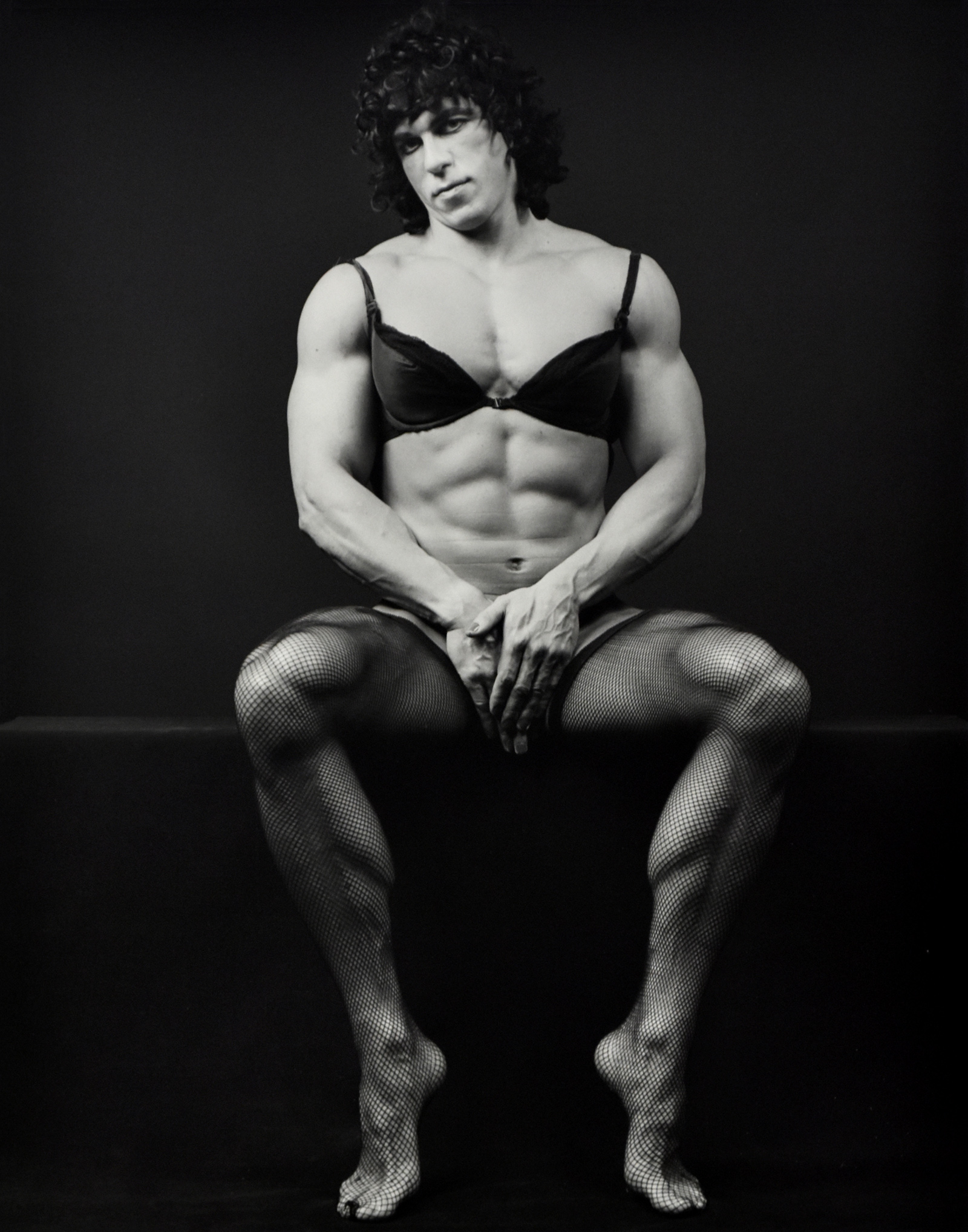
One of the most striking moments in Perram’s show is a juxtaposition of Mapplethorpe’s 1983 portrait of gay porn star, Roger Koch, aka Frank Vickers, wearing a wig, bra and fishnets, his hands clasped demurely over his groin. The feminine coyness is at odds with Vickers’s musclebound torso and biceps which are fully on display in his self-portrait of the same year, along with his semi-erect penis.

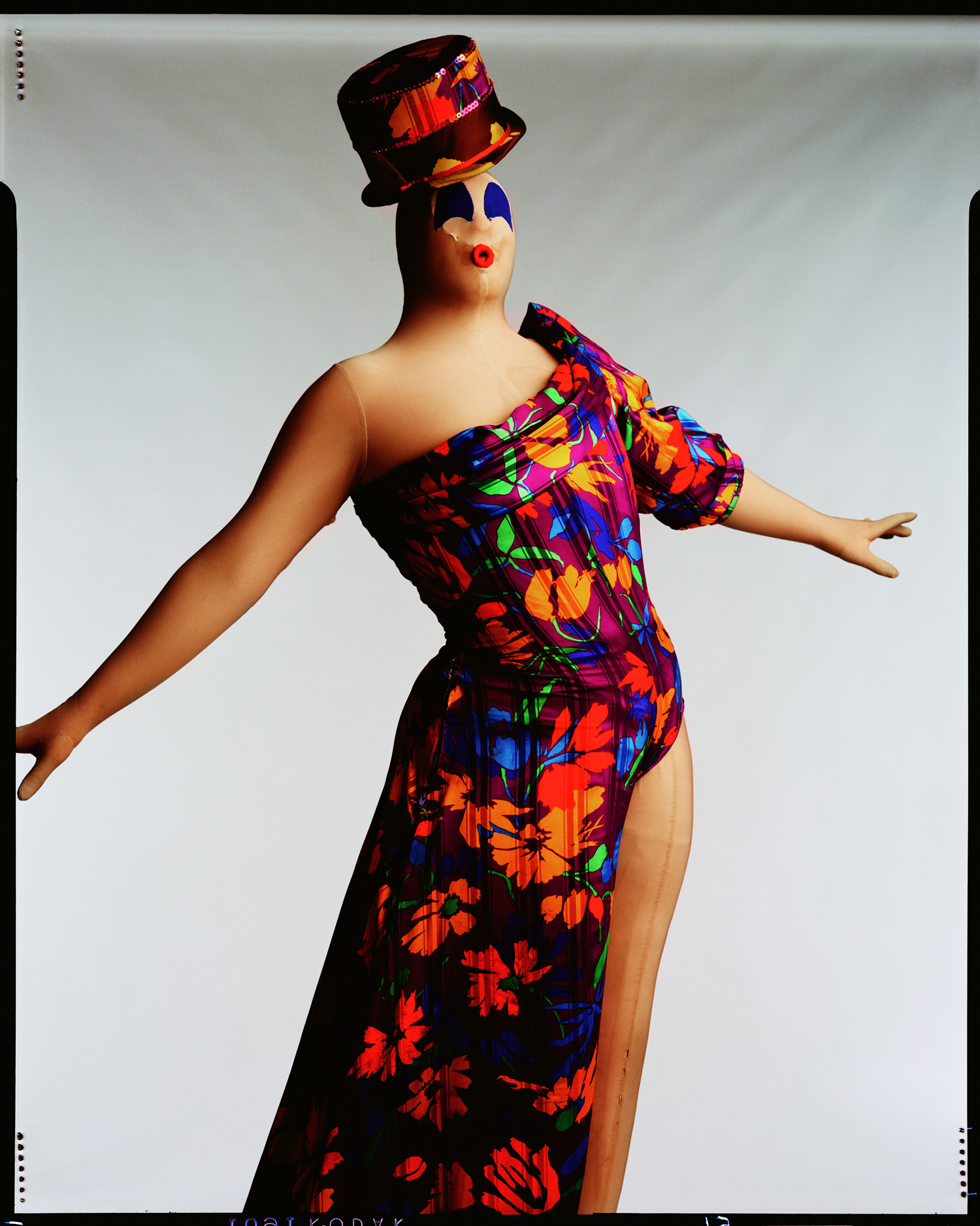
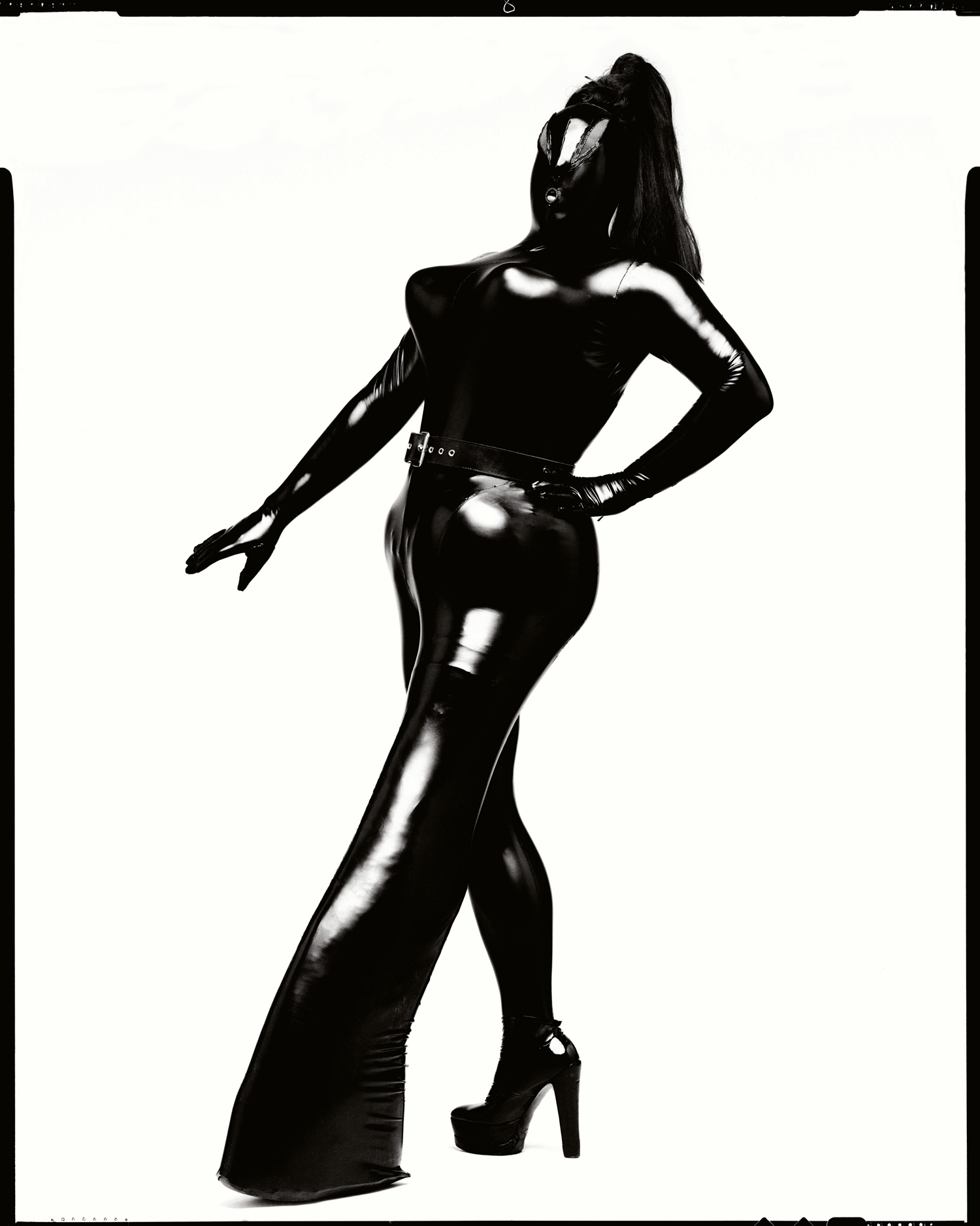
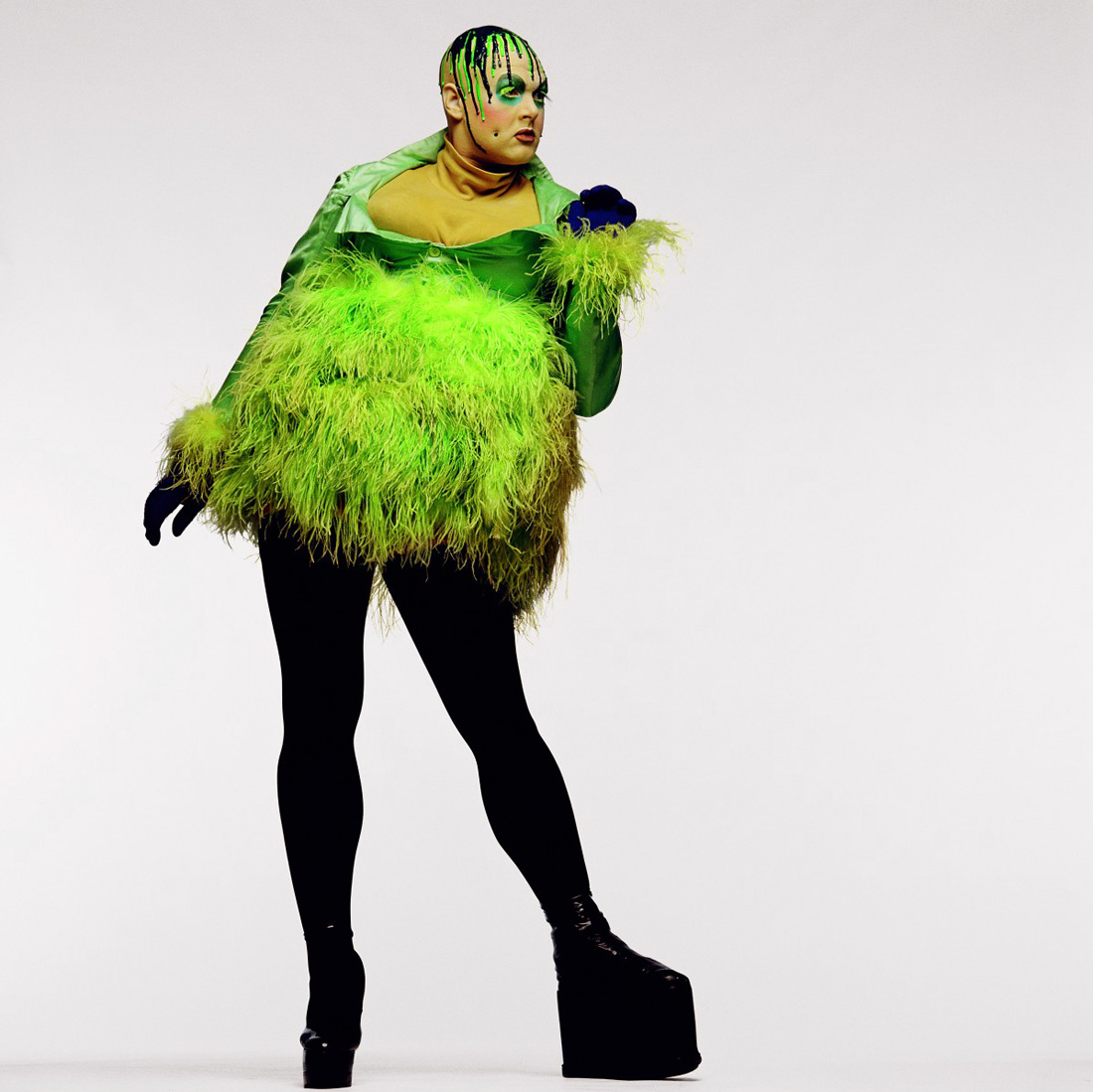
The photos may be two versions of camp but the comparison shows how an individual’s sexual identity can be reconfigured with the appropriate props and body language. In the case of performance artist, Leigh Bowery, captured in a series of photos by Fergus Greer, the play of fantasy transcended the simple binary opposition of male and female, to create monstrous hybrids that question the limits of what it is to be human.”

John McDonald. “The Unflinching Gaze,” November 24, 2017 [Online] Cited 25/11/2017


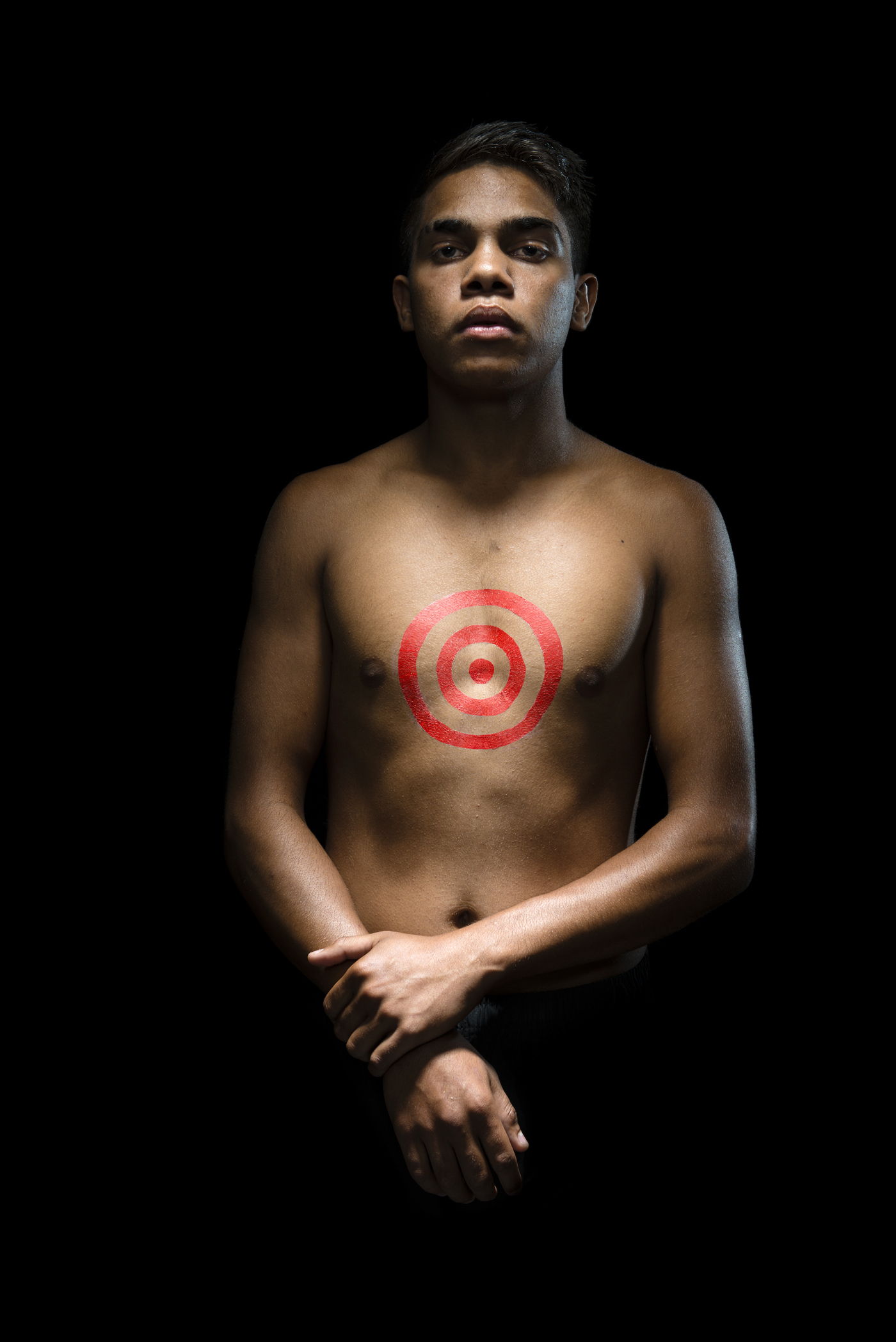
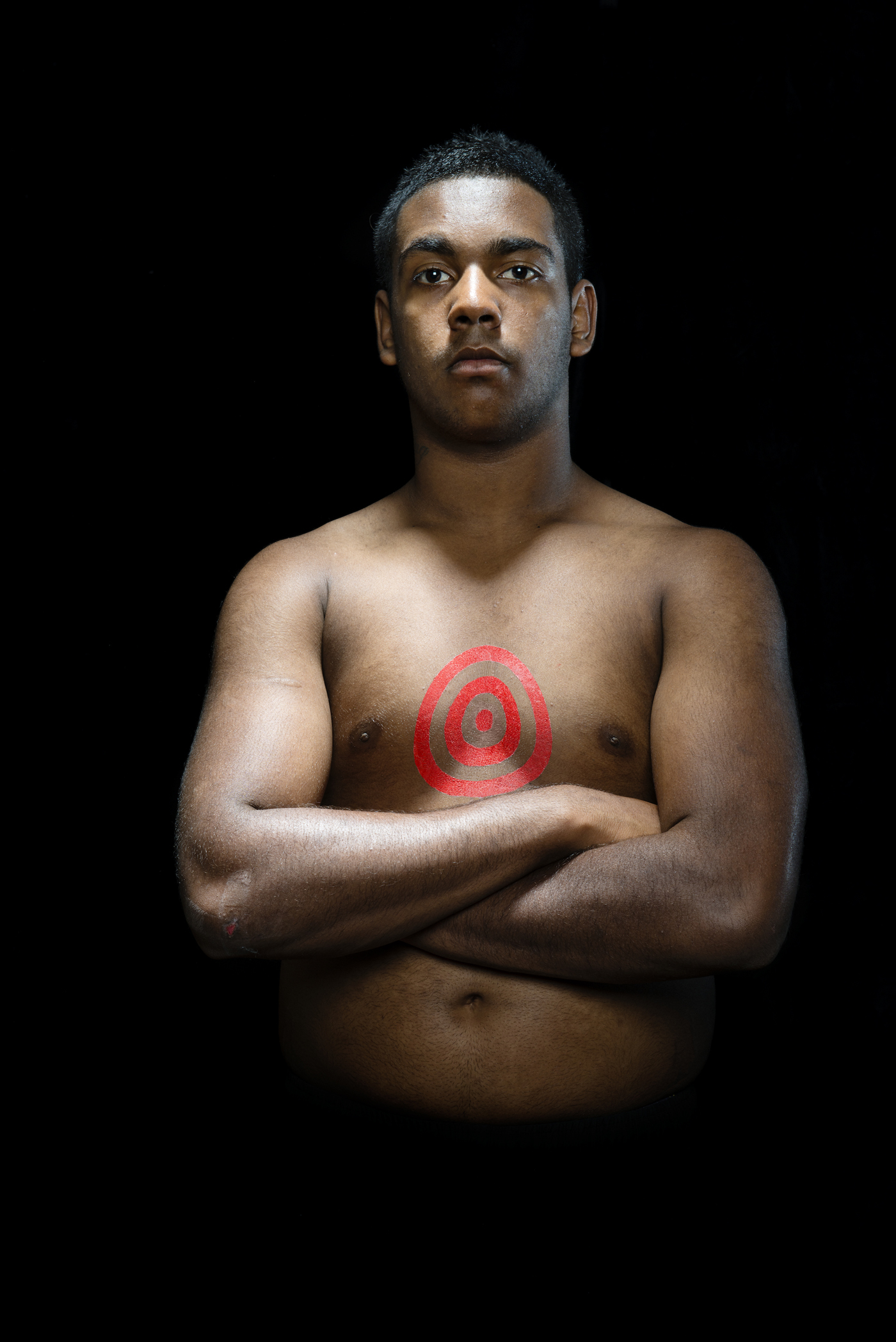
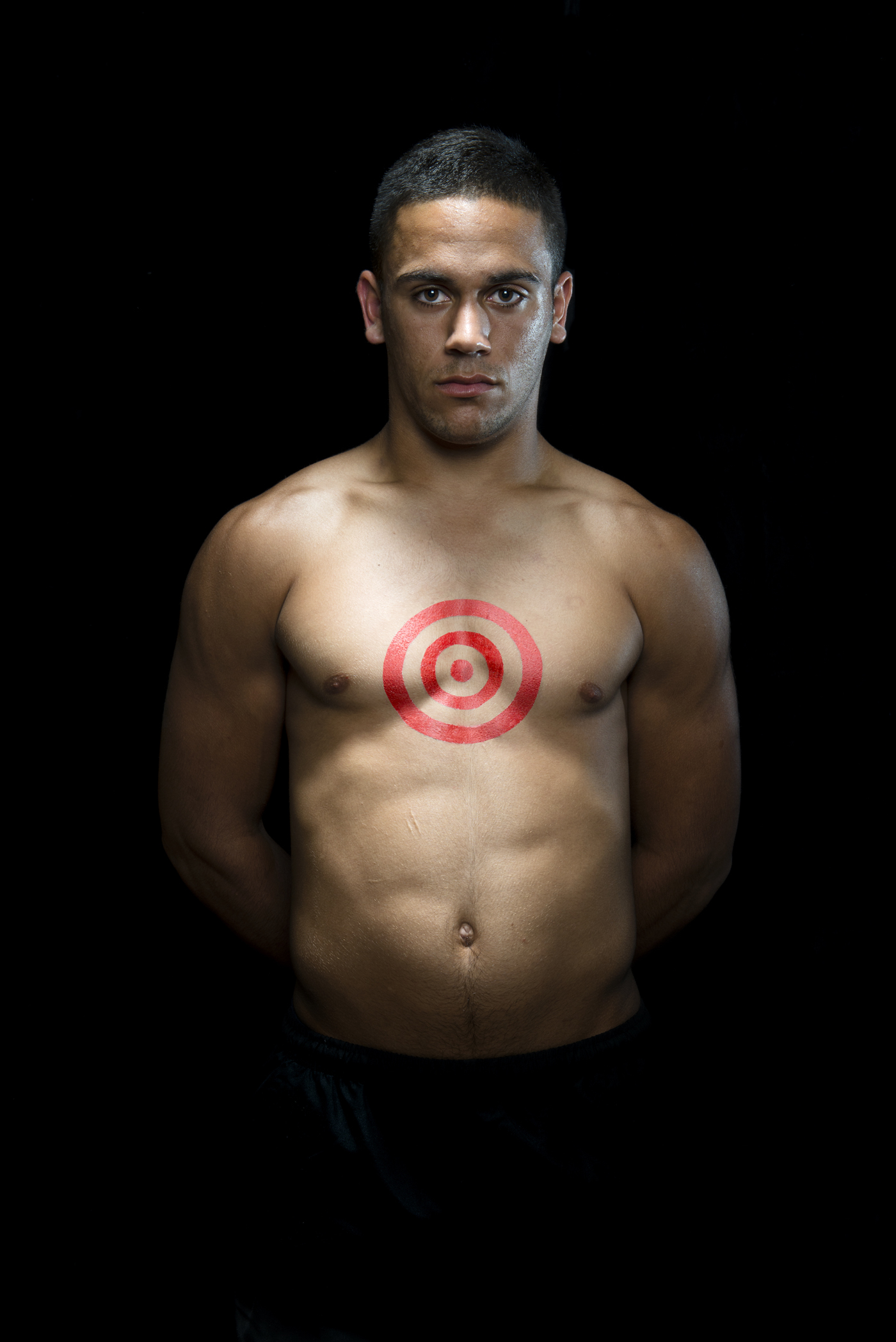
Tony Albert (Australia, b. 1981) 'Brother (Our Past)' 2013 from the exhibition 'The Unflinching Gaze: photo media and the male figure' at the Bathurst Regional Art Gallery, New South Wales, October - December, 2017

Tony Albert (Australia, b. 1981) 'Brother (Our Present)' 2013 from the exhibition 'The Unflinching Gaze: photo media and the male figure' at the Bathurst Regional Art Gallery, New South Wales, October - December, 2017

Tony Albert (Australia, b. 1981) 'Brother (Our Future)' 2013 from the exhibition 'The Unflinching Gaze: photo media and the male figure' at the Bathurst Regional Art Gallery, New South Wales, October - December, 2017


Tony Albert (Australian, b. 1981)
Brother (Our Past) 2013
Brother (Our Present) 2013
Brother (Our Future) 2013
Pigment on paper, edition of 3 150 x 100cm each
Courtesy UTS Art, Corrigan Collection


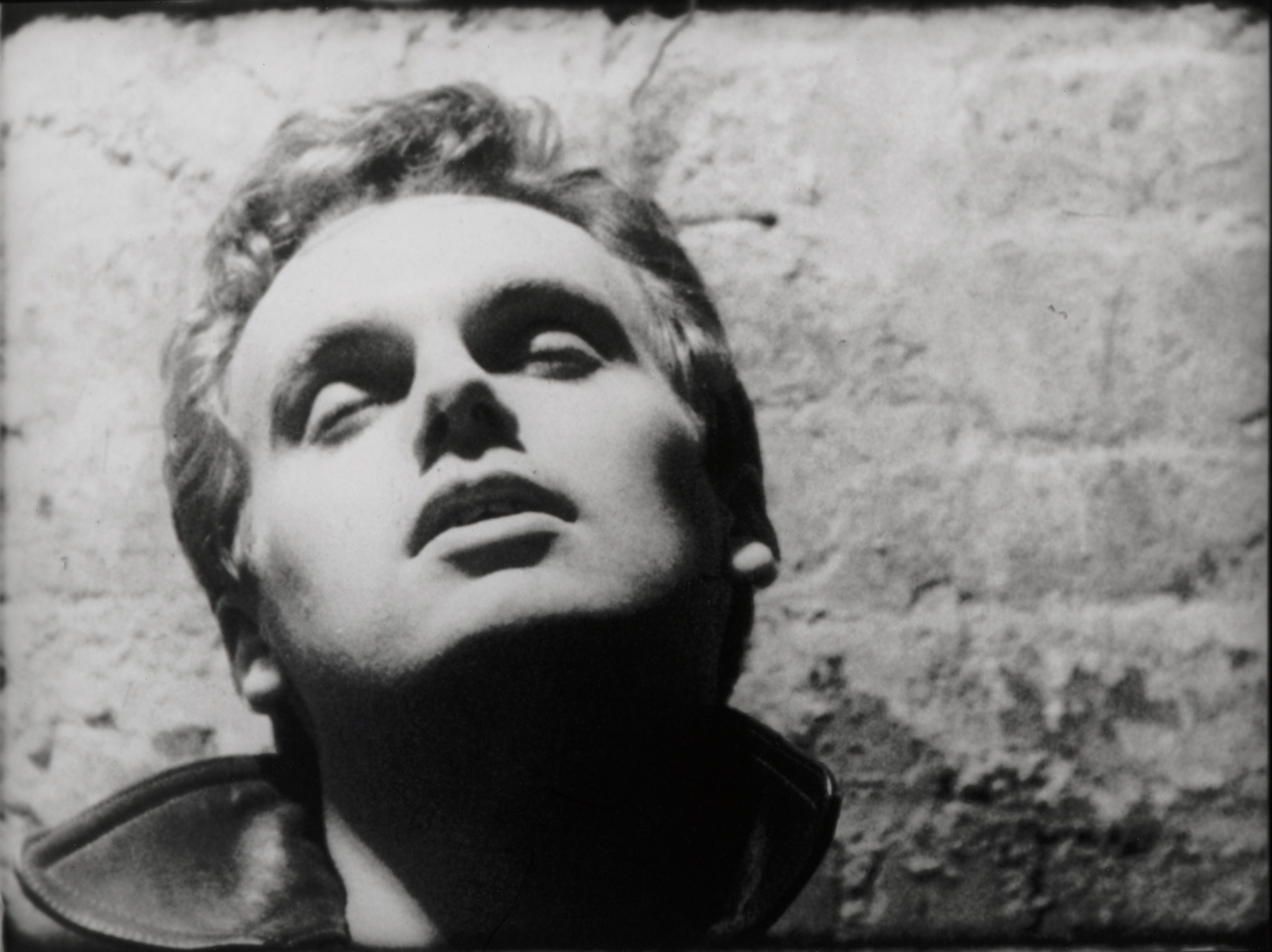
Andy Warhol (United States, 1928-1987) 'Blow Job' 1964 (still)


Andy Warhol (American, 1928-1987)
Blow Job [still]
1964
16mm film, black and white, silent duration: 41 min at 16 frames per second
© 2017 The Andy Warhol Museum, Pittsburgh, PA, a museum of Caregie Institute. All rights reserved


Andy Warhol (American, 1928-1987)
Blowjob
1964


Blow Job is a silent film directed by Andy Warhol. It depicts the face of an uncredited DeVeren Bookwalter as he apparently receives fellatio from an unseen partner. While shot at 24 frames per second, Warhol specified that it should be projected at 16 frames per second, slowing it down by a third.

Whether it is a male or a female performing the act is not stated, and the viewer must assume that fellatio is occurring. The salaciousness has also been speculated to be entirely in the title with no fellatio actually being performed. The identity of the person performing the act is disputed. Warhol states in his book Popism: The Warhol Sixties (1980) that five different boys performed the fellatio. In this book, Warhol writes that he originally asked Charles Rydell, the boyfriend of filmmaker Jerome Hill, to star in the film, promising that there would be “five beautiful boys” to perform the act.

However, when Warhol set up the film shoot at The Factory on a Sunday, Rydell failed to show up. Warhol phoned Rydell at Hill’s suite at the Algonquin Hotel and asked where Rydell was. Rydell replied that he thought Warhol was kidding and had no intention of appearing in such a film. When he declined Andy used “a good-looking kid that happened to be hanging around the Factory that day”, who was later identified as Bookwalter. According to Peter Gidal, the film distances the viewer from the experience it purportedly depicts, “Sometimes the young actor looks bored, sometimes as if he is thinking, sometimes as if he is aware of the camera, sometimes as if he is not.” Douglas Crimp states that after a few minutes, “it becomes clear that we will see nothing more than the repetition, with slight variations, of what we’ve already seen”. This frees the mind to look in a different way. Likewise, the sexual act has the effect of distracting the actor from the presence of the camera, creating a unique kind of unselfconsciousness.

Critic Roy Grundmann argues that “Blow Job‘s self-reflexive devices create a new kind of spectatorial address that dislodges audiences from their contemplative positions in a number of ways. Blow Job‘s reflexivity makes spectators intensely aware that seeing a film makes projecting onto and investing into an image a part of oneself which is also a socialized acculturated act”. Grundmann further claims that “viewers oscillate between an awareness of their contingency on the larger scheme and the promise of ocular centric mastery of the image”.

Text from the YouTube website


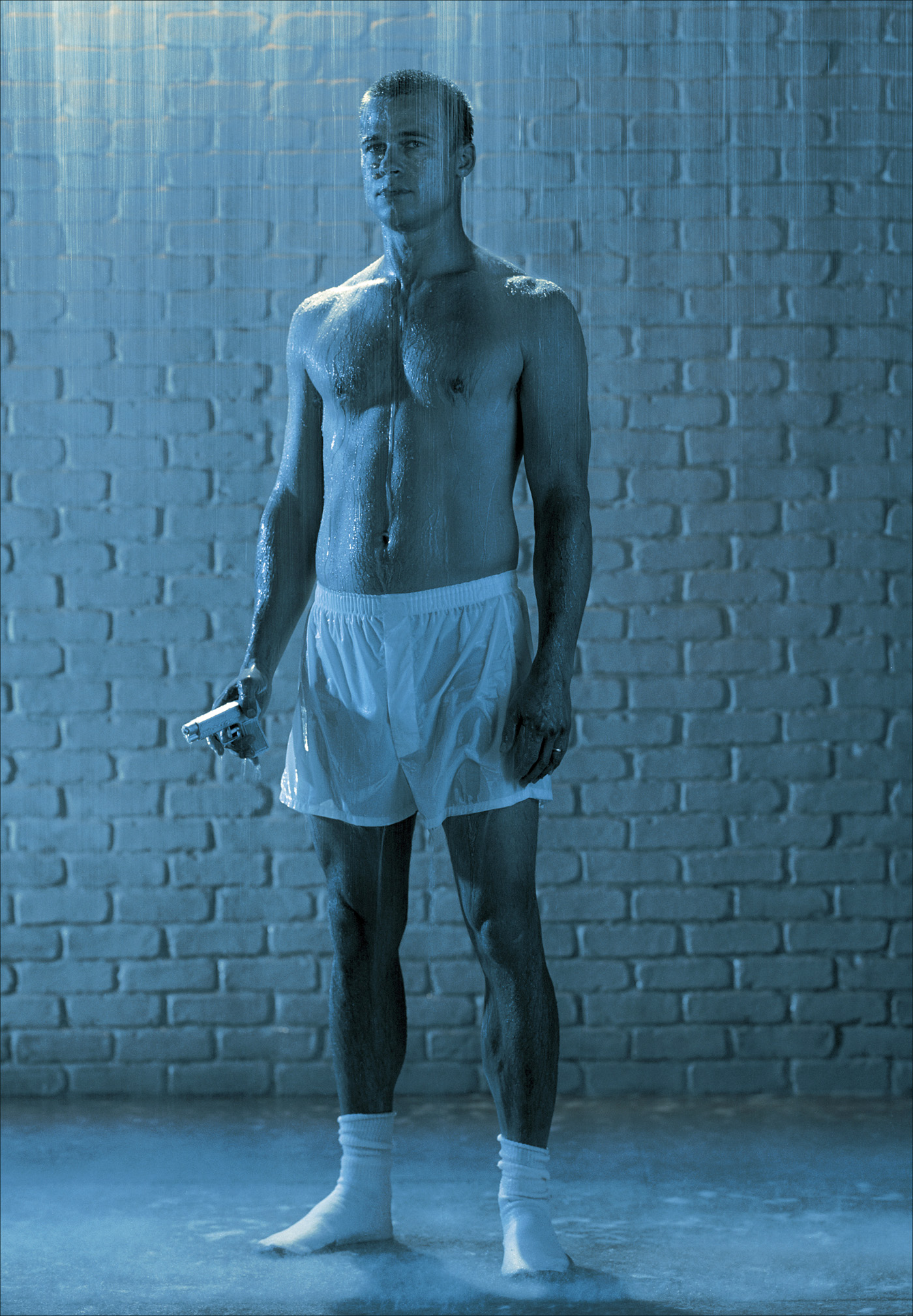
Robert Wilson (American, b. 1941) 'Brad Pitt' 2004 (video still)


Robert Wilson (American, b. 1941)
Brad Pitt
2004
Video portrait, looped
Dimensions variable
Courtesy the artist and the Byrd Hoffman Water Mill Foundation, New York


Robert Wilson (American, b. 1941)
Brad Pitt video portrait
2004


Peter Elfes (Australia, b. 1961) 'Brenton [Heath-Kerr] as Tom of Finland' 1992


Peter Elfes (Australian, b. 1961)
Brenton (Heath-Kerr) as Tom of Finland
1992
Cibachrome print
51 x 40.6cm
Courtesy the artist
© Peter Elfes


Casa Susanna Attributed to Andrea Susan '(Lee in white dress)' 1961


Casa Susanna
Attributed to Andrea Susan
(Lee in white dress)
1961
Digital copy from colour photographs
Collection of Art Gallery of Ontario, purchased with funds generously donated by Martha LA McCain 2015
© Art Gallery of Ontario
Photo: Ian Lefebvre


Nikki Johnson (American, b. 1972) 'David Amputation Fetishist' 2007


Nikki Johnson (American, b. 1972)
David Amputation Fetishist
2007
Digital print (from a set of images)
Courtesy the artist


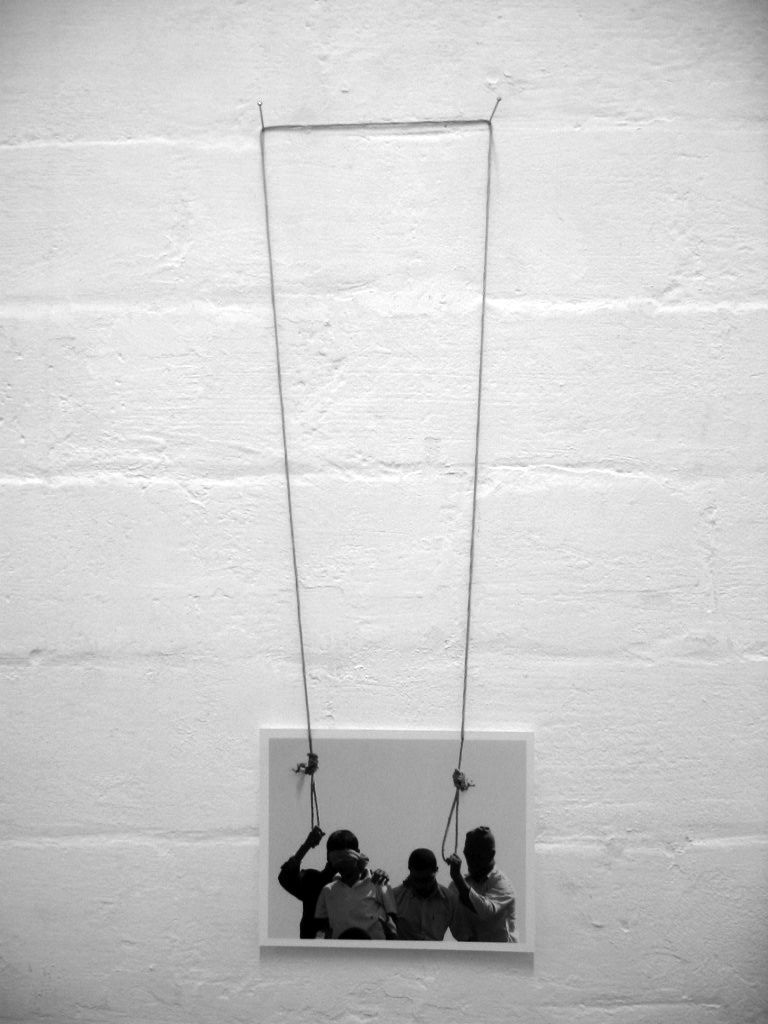
Luke Parker (Australian, b. 1975) 'Double hanging' 2005


Luke Parker (Australian, b. 1975)
Double hanging
2005
Photograph, cotton thread, pins
15 x 40cm
Courtesy the artist and 55 Sydenham Rd


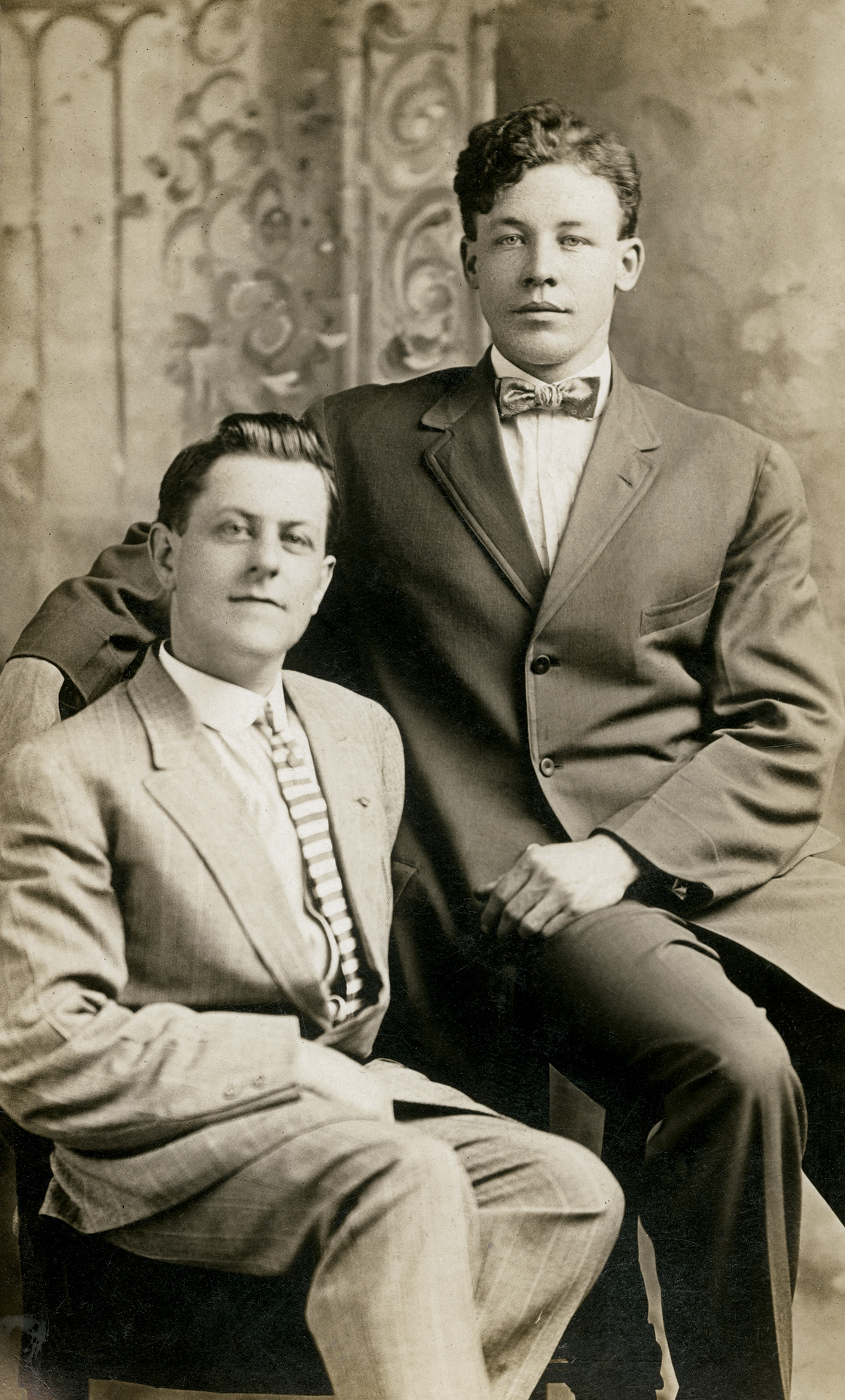
Gregory Collection. 'Mr Cullen & Mr Gornall' Date unknown


Gregory Collection
Mr Cullen & Mr Gornall
Date unknown
Digital copy from scanned negative
Courtesy the Bathurst Historical Society


Two hundred photos and videos by sixty two leading artists (twenty four Australian and thirty eight international) will be exhibited at Bathurst Regional Art Gallery (BRAG) from Saturday 14 October until Sunday 3 December 2017.

Curated by BRAG Director Richard Perram OAM, an openly gay man, The Unflinching Gaze: photo media and the male figure surveys how the male figure has been depicted by Australian and international artists in photo media over the last 140 years. It includes historic and contemporary fine art photography and film, fashion photography, pop videos and homoerotic art. Images range from the beautiful to the banal to the confounding.

Key artists in the exhibition include iconic American artists Robert Mapplethorpe, Andy Warhol, and avant-garde theatre director Robert Wilson with a video portrait of Brad Pitt; European artists such as Eadweard Muybridge, and Baron Wilhelm Von Gloeden; and historic and contemporary Australian artists including Beaufoy Merlin and Charles Bayliss, Max Dupain, Deborah Kelly, William Yang, Gary Carsley, Owen Leong and Liam Benson. Works have been sourced from Australian and international collections, including a major loan of 60 works from the Leslie-Lohman Museum of Gay and Lesbian Art, New York.

The exhibition brings an unflinching gaze to how concepts of humanity and the male figure are intertwined and challenged. Themes include the Pink Triangle, which deals with the persecution, torture and genocide of homosexuals in concentration camps during World War II to those in Chechyna today; and the AIDS crisis in the 1980s.

The Unflinching Gaze exhibition is a unique opportunity for audiences in the Bathurst Region to access a world class photo-media exhibition, says Richard Perram OAM. The Unflinching Gaze not only deals with aesthetic concerns but also engages the community in a discussion around social issues. BRAG is working with local Bathurst LGBTI community groups to ensure that one of the most important outcomes of the exhibition will be to inform and educate the general Bathurst community and support and affirm the Bathurst LGBTI community.

The Unflinching Gaze: photo media and the male figure is a Bathurst Regional Art Gallery exhibition in partnership with Leslie Lohman Museum of Gay and Lesbian Art, New York. Curated by Richard Perram OAM. This exhibition is supported by the Dobell Exhibition Grant, funded by the Sir William Dobell Art Foundation and managed by Museums & Galleries of NSW.

Press release from the Bathurst Regional Art Gallery (BRAG)


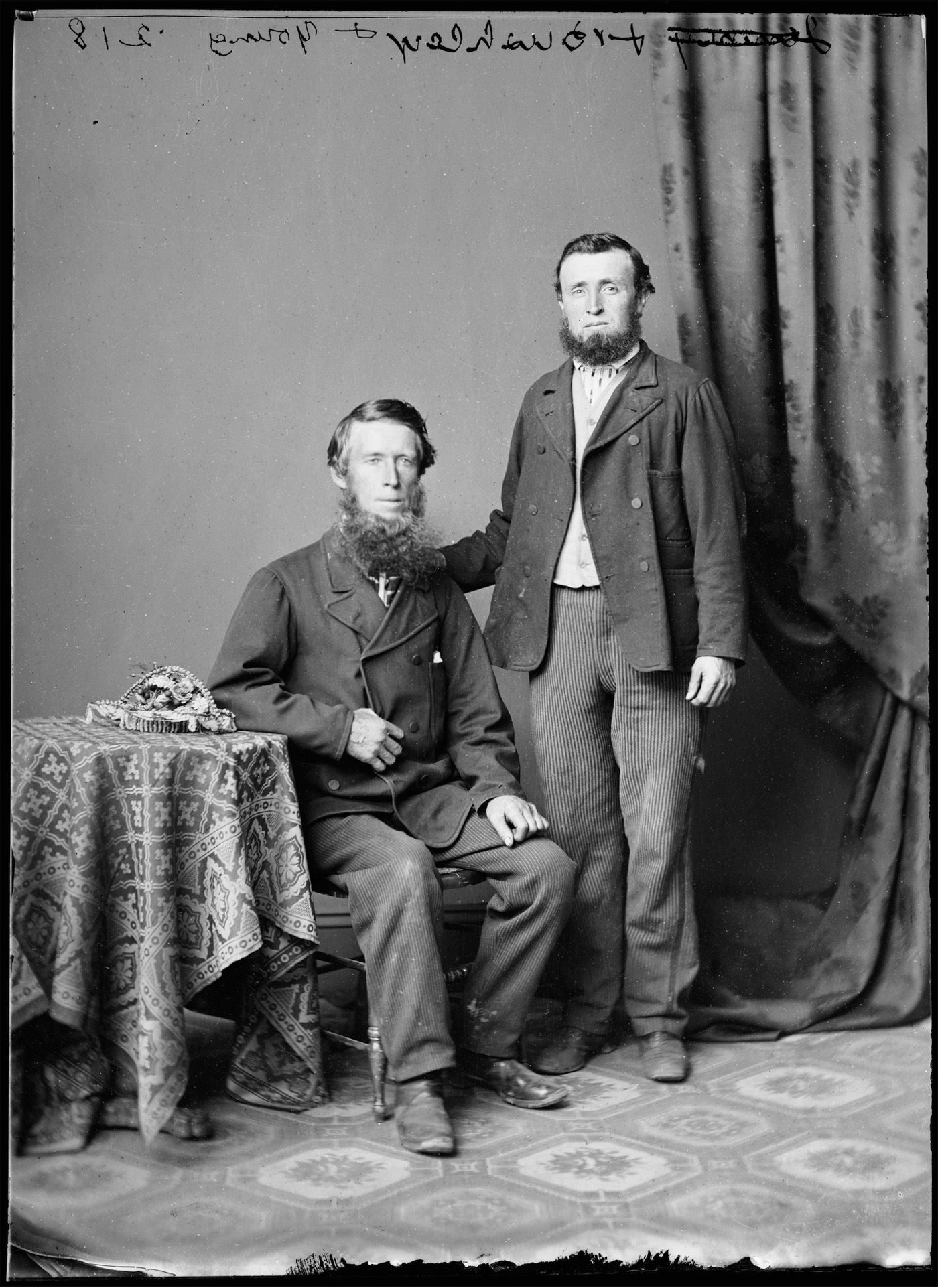
American & Australian Photographic Company (Beaufoy Merlin & Charles Bayliss) 'Mssrs. Bushley & Young' Nd


American & Australian Photographic Company
(Beaufoy Merlin and Charles Bayliss)
Mssrs. Bushley & Young
Nd
Digital reproductions from glass photo negatives, quarter plate
From the Collections of the State Library of NSW


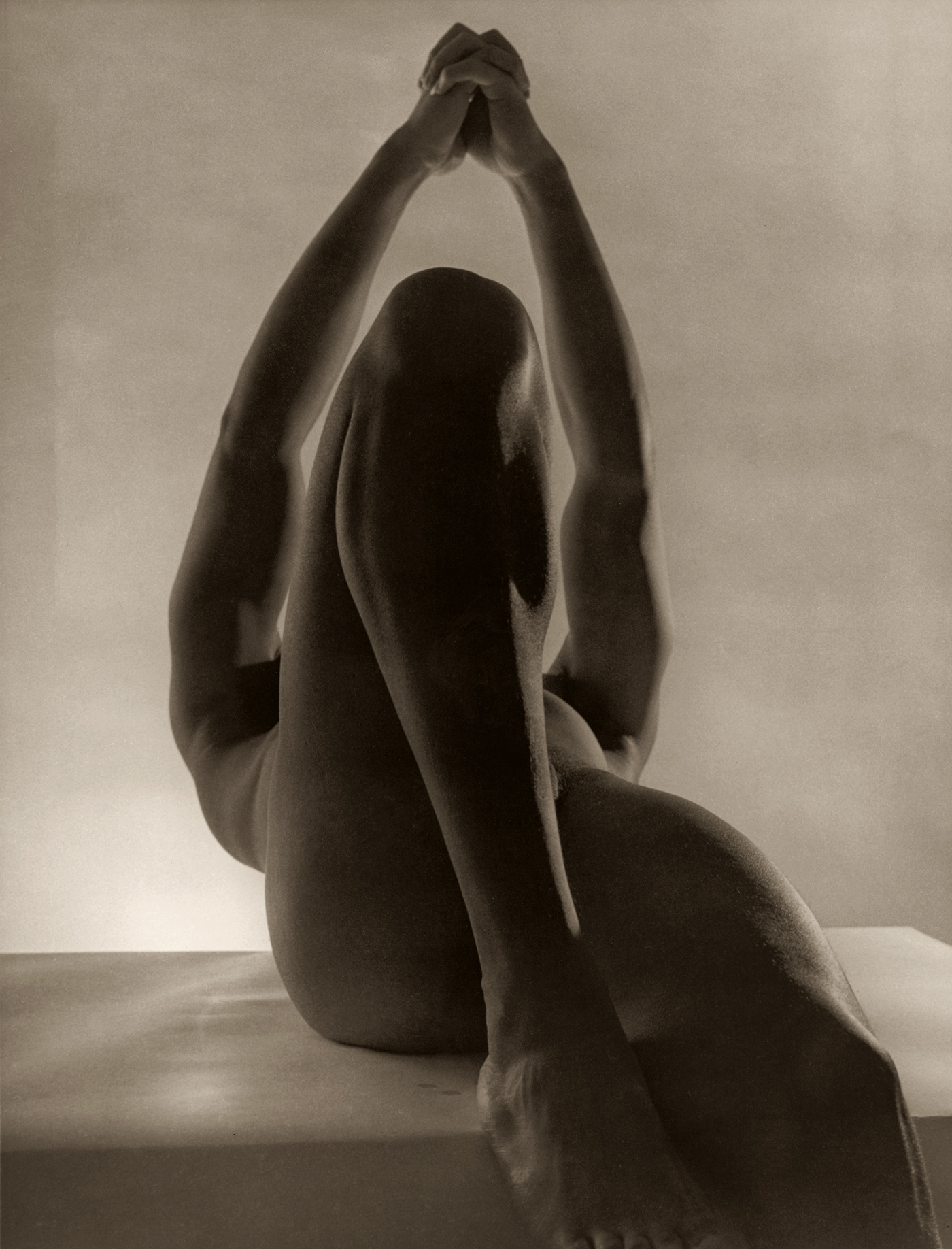
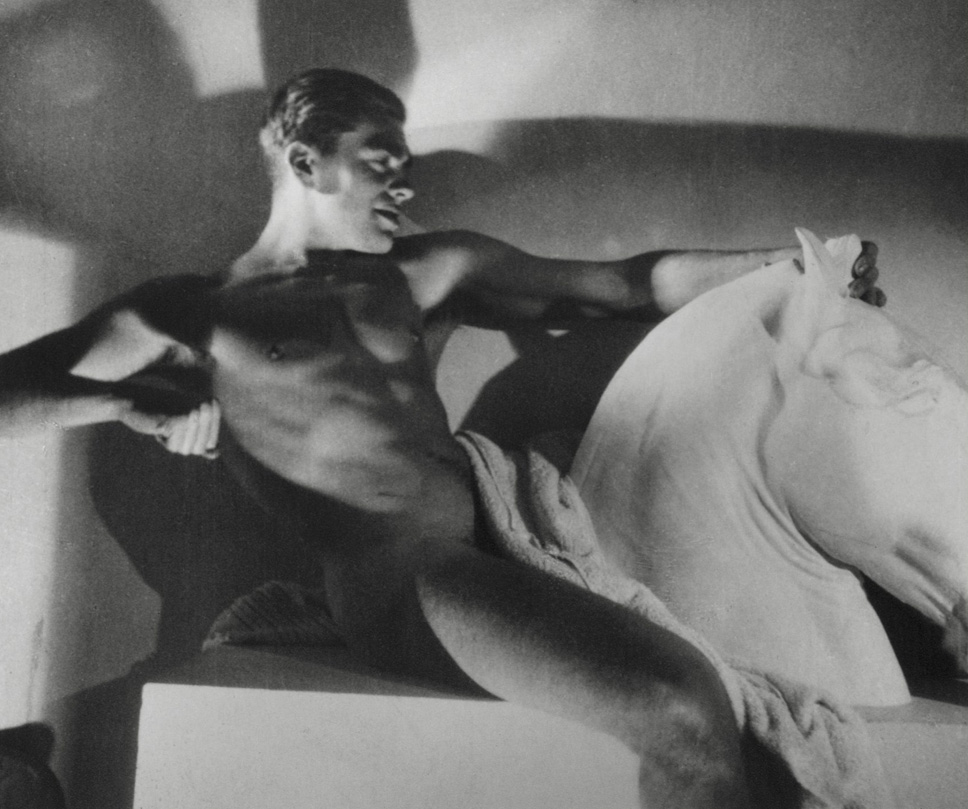
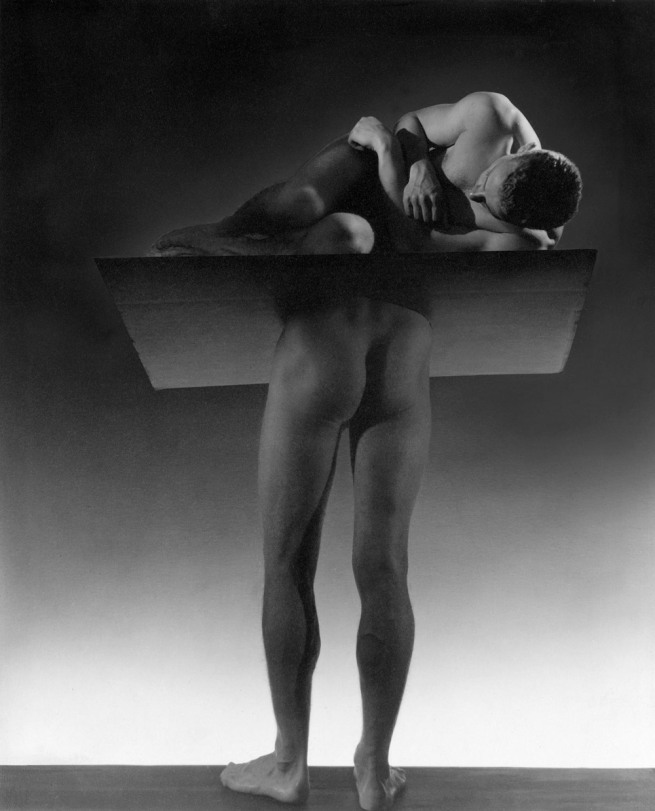
Horst P. Horst (Germany; United States, 1906-1996) 'Male Nude I NY' 1952


Horst P. Horst (Germany; United States, 1906-1996)
Male Nude I NY
1952
Silver gelatin print
25.4 x 20.3cm
Leslie-Lohman Museum of Gay & Lesbian Art, gift of Ricky Horst


Liam Benson (Australian, b. 1980) 'The Crusader' 2015

Liam Benson (Australian, b. 1980) 'The Executioner' 2015

Liam Benson (Australian, b. 1980) 'The Terrorist' 2015


Liam Benson (Australian, b. 1980)
The Crusader 2015
The Executioner 2015
The Terrorist 2015
Inkjet print on cotton rag paper, edition of 5 90 x 134cm
Photograph by Alex Wisser
Courtesy of the artist and Artereal Gallery


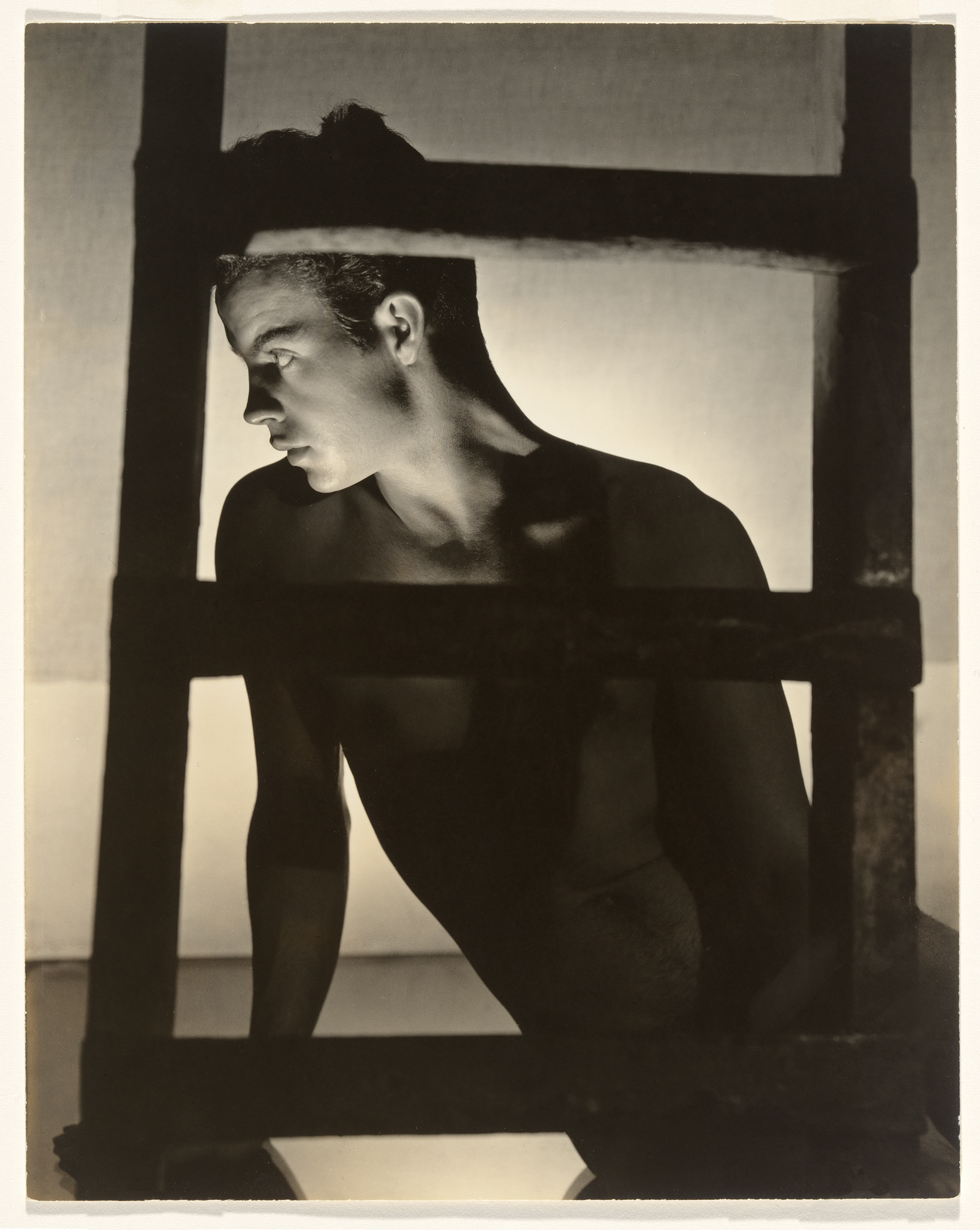
George Platt Lynes (American, 1907-1955) 'Blanchard Kennedy' 1936


George Platt Lynes (American, 1907-1955)
Blanchard Kennedy
1936
Gelatin silver photograph
23 x 18.2cm
National Gallery of Australia, Canberra. Purchased 1981


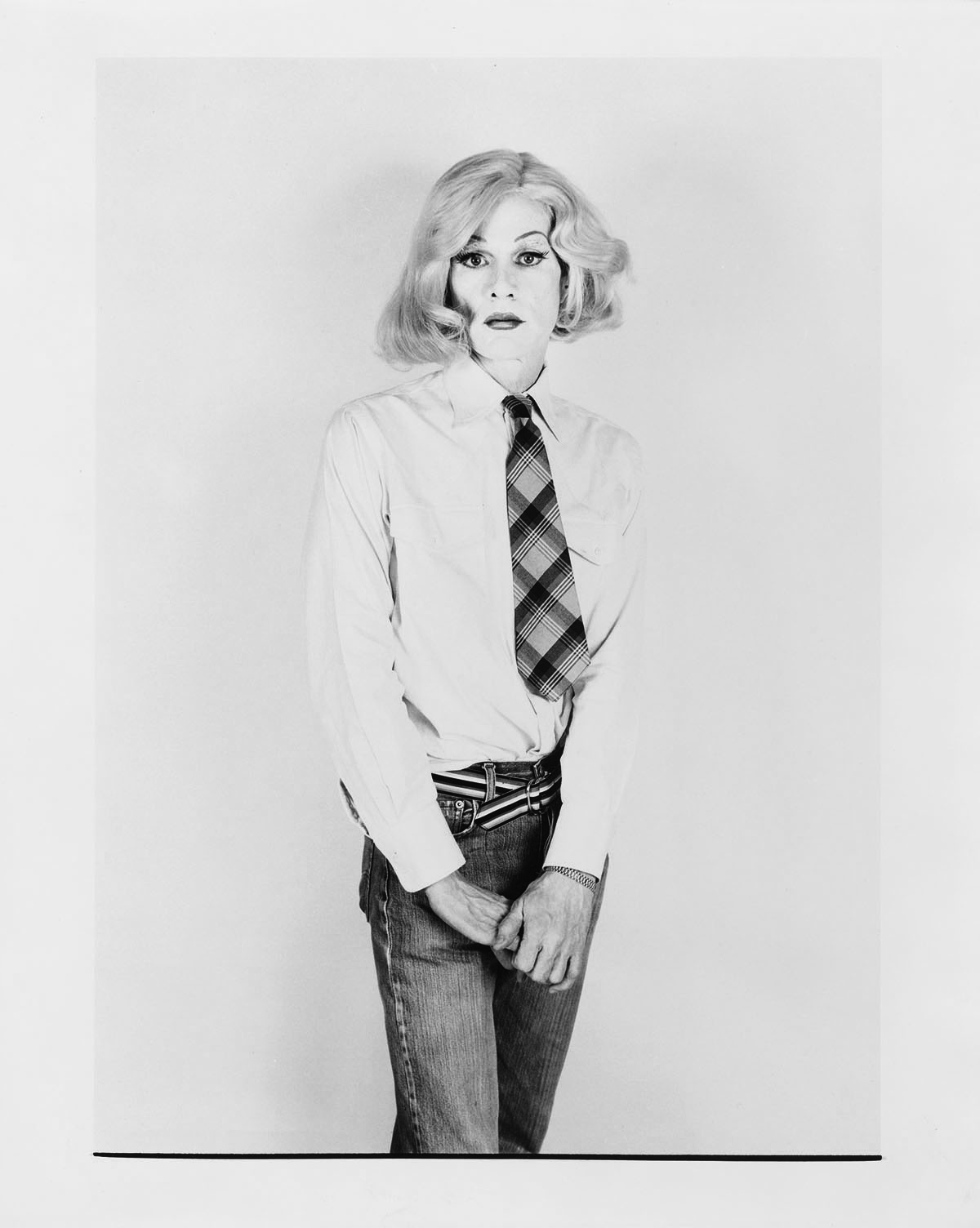
Christopher Makos (American, b. 1948) 'Altered Image: One Photograph of Andy Warhol' 1982


Christopher Makos (American, b. 1948)
Altered Image: One Photograph of Andy Warhol
1982
Gelatin silver photograph
50.6 x 40.8cm each
National Gallery of Australia, Canberra. Purchased 1982


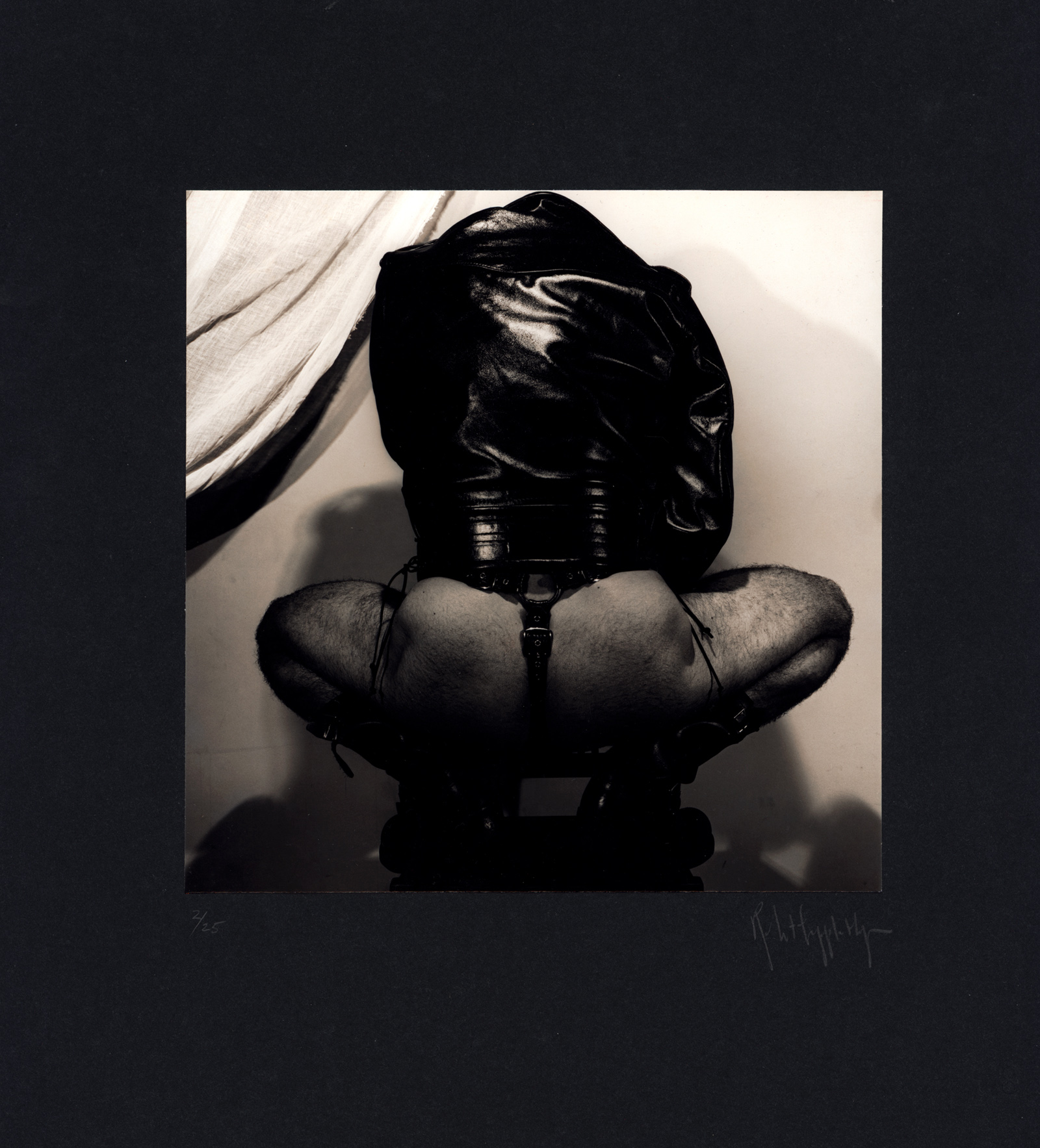
Robert Mapplethorpe (United States, 1946-1989) 'Helmut, N.Y.C. (from X Portfolio)' 1978


Robert Mapplethorpe (American, 1946-1989)
Helmut, N.Y.C. (from X Portfolio)
1978
Selenium toned silver gelatin print
19.7 x 19.7cm
Leslie-Lohman Museum of Gay & Lesbian Art, Foundation Purchase
© Robert Mapplethorpe Foundation. Used by permission


Robert Mapplethorpe (United States, 1946-1989) 'Roger Koch aka Frank Vickers: From the "Roger" Series' 1983


Robert Mapplethorpe (American, 1946-1989)
Roger Koch aka Frank Vickers: From the “Roger” Series
1983
Gelatin silver photo
48.9 x 38.1cm
Leslie-Lohman Museum of Gay & Lesbian Art, Founders Gift
© Robert Mapplethorpe Foundation. Used by permission


Body, image and society

Goffman’s approach to the body is characterised by three main features. First, there is a view of the body as material property of individuals. In contrast to naturalistic views … Goffman argues that individuals usually have the ability to control and monitor their bodily performances in order to facilitate social interaction. Here, the body is associated with the exercise of human agency, and it appears in Goffman’s work as a resource which both requires and enables people to manage their movements and appearances.

Second, while the body is not actually produced by social forces, as in Foucault’s work, the meanings attributed to it are determined by ‘shared vocabularies of body idiom’ which are not under the immediate control of individuals (E. Goffman, Behaviour In Public Places: Notes on the Social Organisation of Gatherings, The Free Press, New York, 1963, p.35). Body idiom is a conventionalized form of non-verbal communication which is by far the most important component of behaviour in public. It is used by Goffman in a general sense to refer to ‘dress, bearing, movements and position, sound level, physical gestures such as waving and saluting, facial decorations, and broad emotional expressions’ (Goffman, 1963:33). As well as allowing us to classify information given off by bodies, shared vocabularies of body idiom provide categories which label and grade hierarchically people according to this information. Consequently, these classifications exert a profound influence over ways in which individuals seek to manage and present their bodies.

The first two features of Goffman’s approach suggest that human bodies have a dual location. Bodies are the property of individuals, yet are defined as significant and meaningful by society. This formulation lies at the core of the third main feature of Goffman’s approach to the body. In Goffman’s work, the body plays an important role in mediating the relationship between people’s self-identity and their social identity. The social meanings which are attached to particular bodily forms and performances tend to become internalized and exert a powerful influence on an individuals sense of self and feelings of inner worth.

Goffman’s general approach to the body is revealed through his more specific analyses of the procedures involved in what he terms the ‘interaction order’. Goffman conceptualises the interaction order as somehow autonomous sphere of social life (others include the economic sphere) which should not be seen as ‘somehow prior, fundamental, or constitutive of the shape of macroscopic phenomena’ (Goffman, 1983:4). His analysis of this sphere of life demonstrates that intervening successfully in daily life, and maintaining a single definition in the face of possible disruptions, requires a high degree of competence in controlling the expressions, movements and communications of the body.” (Goffman, 1969).

Schilling, Chris. The Body and Social Theory. London: Sage Publications, 1993, pp. 82-83.


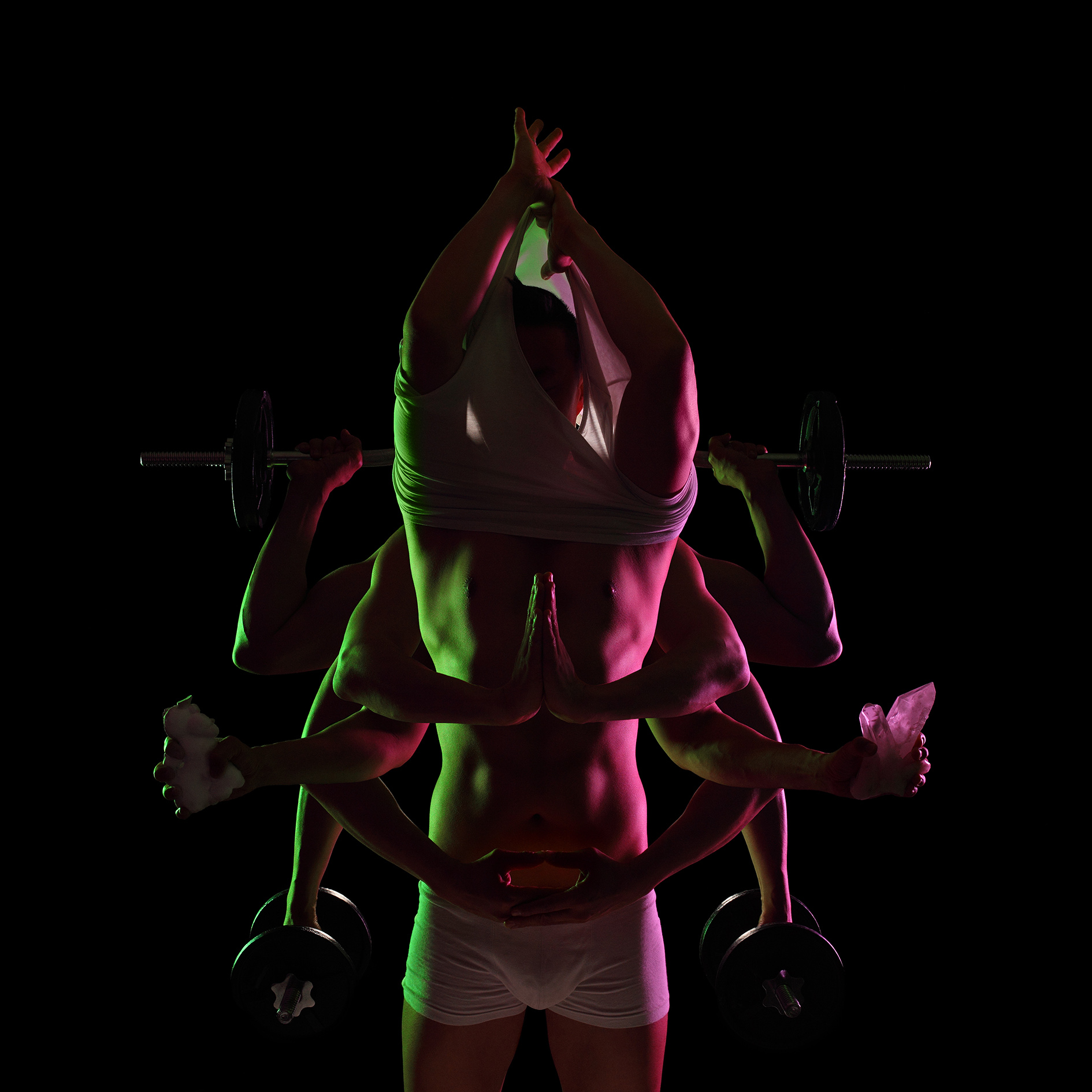
Owen Leong (Australian, b. 1979) 'Resistance Training' 2017


Owen Leong (Australian, b. 1979)
Resistance Training
2017
Archival pigment print on cotton paper, edition of 5 + 2 AP
120 x 120cm
Courtesy the artist and Artereal Gallery, Sydney Commissioned by BRAG for The Unflinching Gaze: photo media & the male figure with funds from BRAGS Inc. (Bathurst Regional Art Gallery Society Inc.)


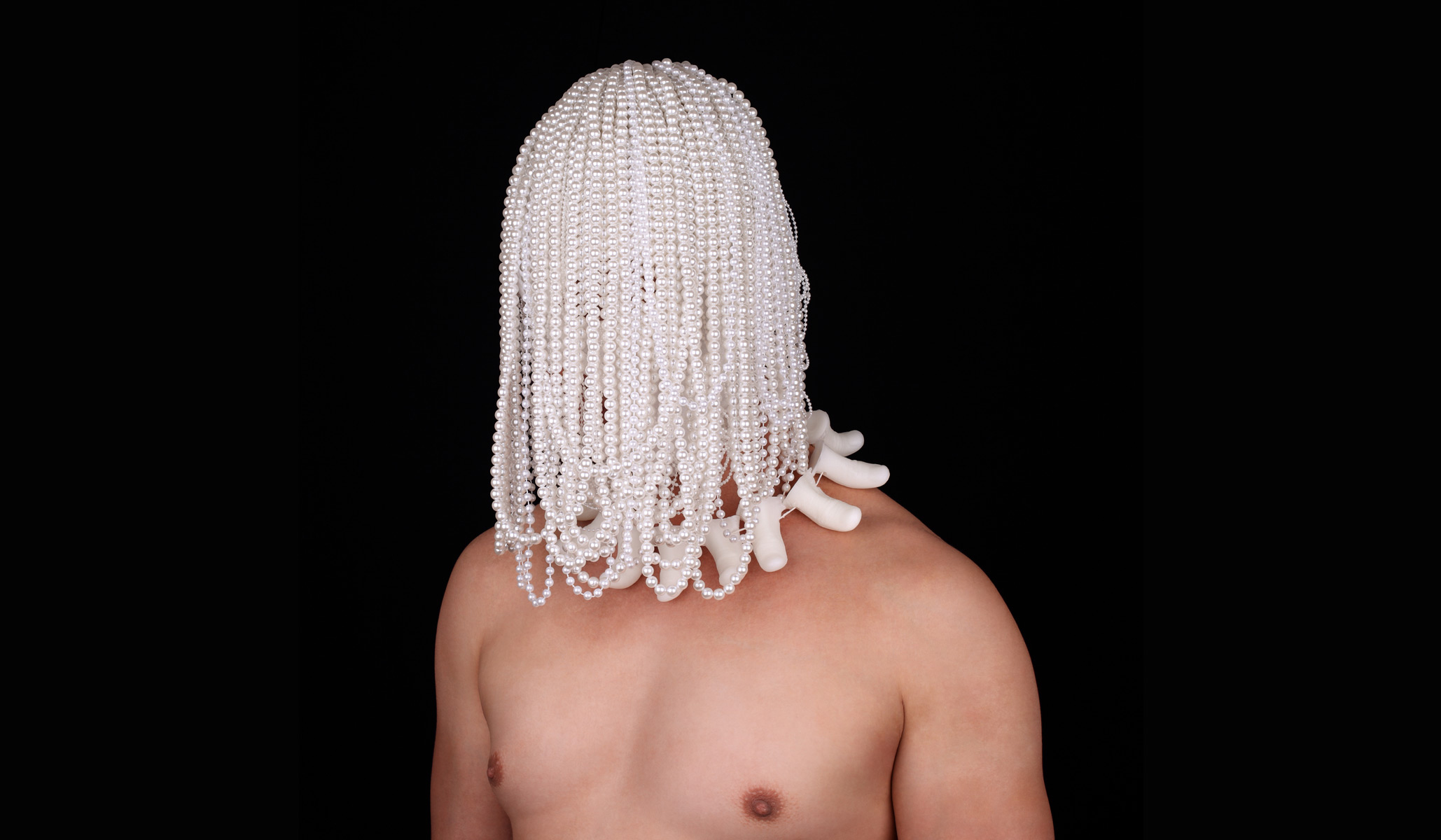
Owen Leong (Australian, b. 1979) 'Milk Teeth' 2014


Owen Leong (Australian, b. 1979)
Milk Teeth
2014
Archival pigment print on cotton paper, edition of 5 + 2Ap
120 x 120cm
Courtesy of the artists and Artereal Gallery Sydney


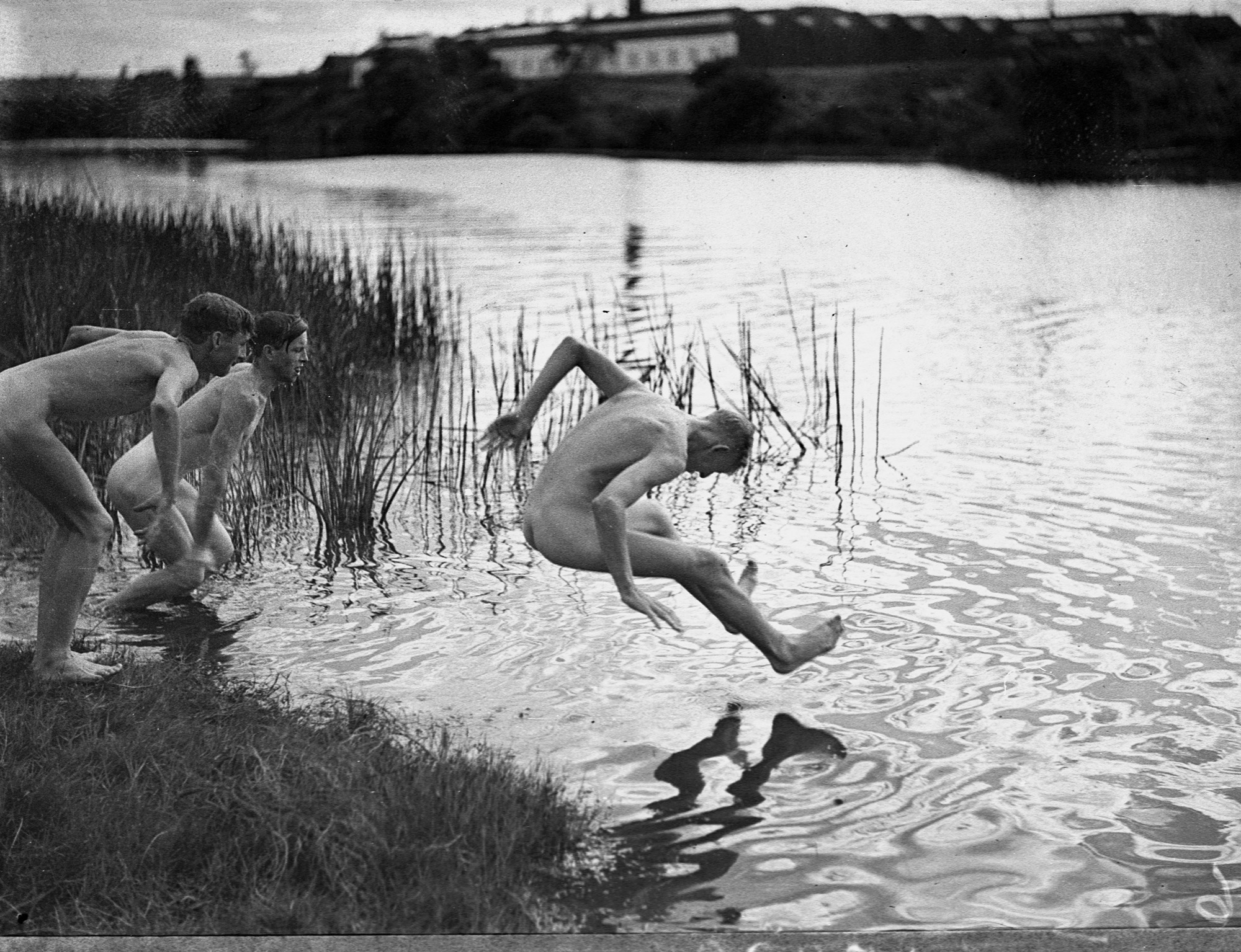
Samuel J Hood (Australia, 1872-1953) 'The 9th Field Brigade' 24/2/1938


Samuel J Hood (Australian, 1872-1953)
The 9th Field Brigade (four images)
24/2/1938 (Liverpool, NSW)
Photo negative (copied from original nitrate photograph) 35mm
From the Collections of the State Library of NSW


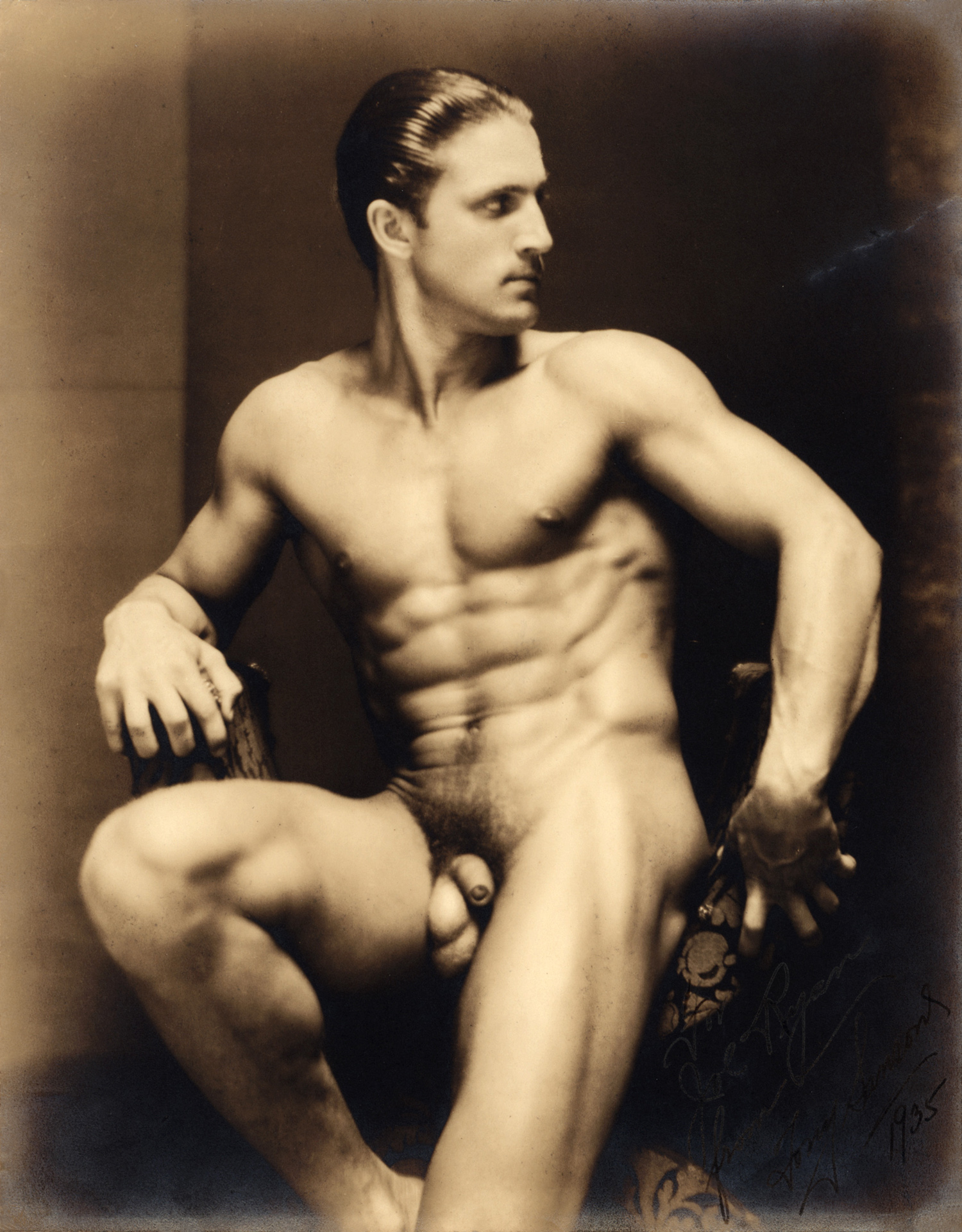
Anthony Sansone (Italy; United States, 1905-1987) 'Untitled' 1935


Anthony Sansone (Italy; United States, 1905-1987)
Untitled
1935
Bromide print
24.1 x 18.9cm
Leslie-Lohman Museum of Gay & Lesbian Art, gift of David Aden Gallery


Fergus Greer (United Kingdom, 1961-1994) 'Leigh Bowery, Session V' Look 27 February 1992


Fergus Greer (United Kingdom, 1961-1994)
Leigh Bowery, Session V
Look 27 February 1992
Digital reproduction
Courtesy Fergus Greer


Fergus Greer (United Kingdom, 1961-1994) 'Leigh Bowery, Session VII' Look 34, June 1994


Fergus Greer (United Kingdom, 1961-1994)
Leigh Bowery, Session VII
Look 34, June 1994
Digital reproduction
Courtesy Fergus Greer


Fergus Greer (English, 1961-1994) 'Leigh Bowery, Session VII, Look 34' June 1994


Fergus Greer (United Kingdom, 1961-1994)
Leigh Bowery, Session VII, Look 34
June 1994
Silver gelatin print
60.7 × 50.5cm


Unknown American photographer. 'Vintage photograph from the Closeted History/Wunderkamera' Nd


Unknown American photographer
Vintage photograph from the Closeted History/Wunderkamera
Nd
Tintypes, paper photographs
Collection of Luke Roberts


Frank Vickers (United States, 1948-1991) 'Untitled (self-portrait)' 1983


Frank Vickers (American, 1948-1991)
Untitled (self-portrait)
1983
Silver gelatin print
17.8 x 12.4cm
Leslie-Lohman Museum of Gay & Lesbian Art, Founders’ gift


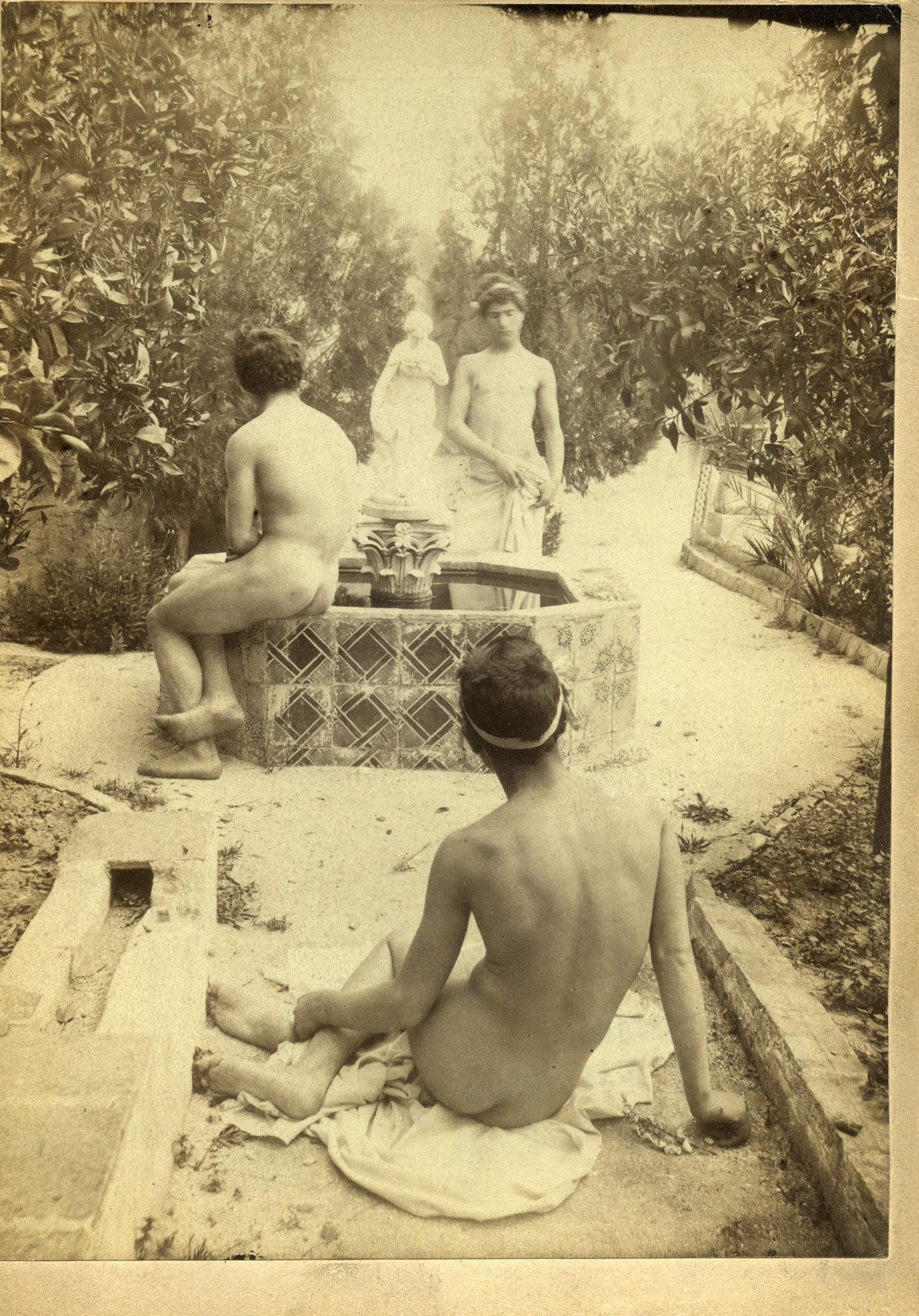
Baron Wilhelm von Gloeden (Germany; Italy, 1856-1931) 'Untitled' c. 1910


Baron Wilhelm von Gloeden (Germany; Italy, 1856-1931)
Untitled
c. 1910
Albumen silver print
20.3 x 15.2cm
Leslie-Lohman Museum of Gay and Lesbian Art, Founders’ gift


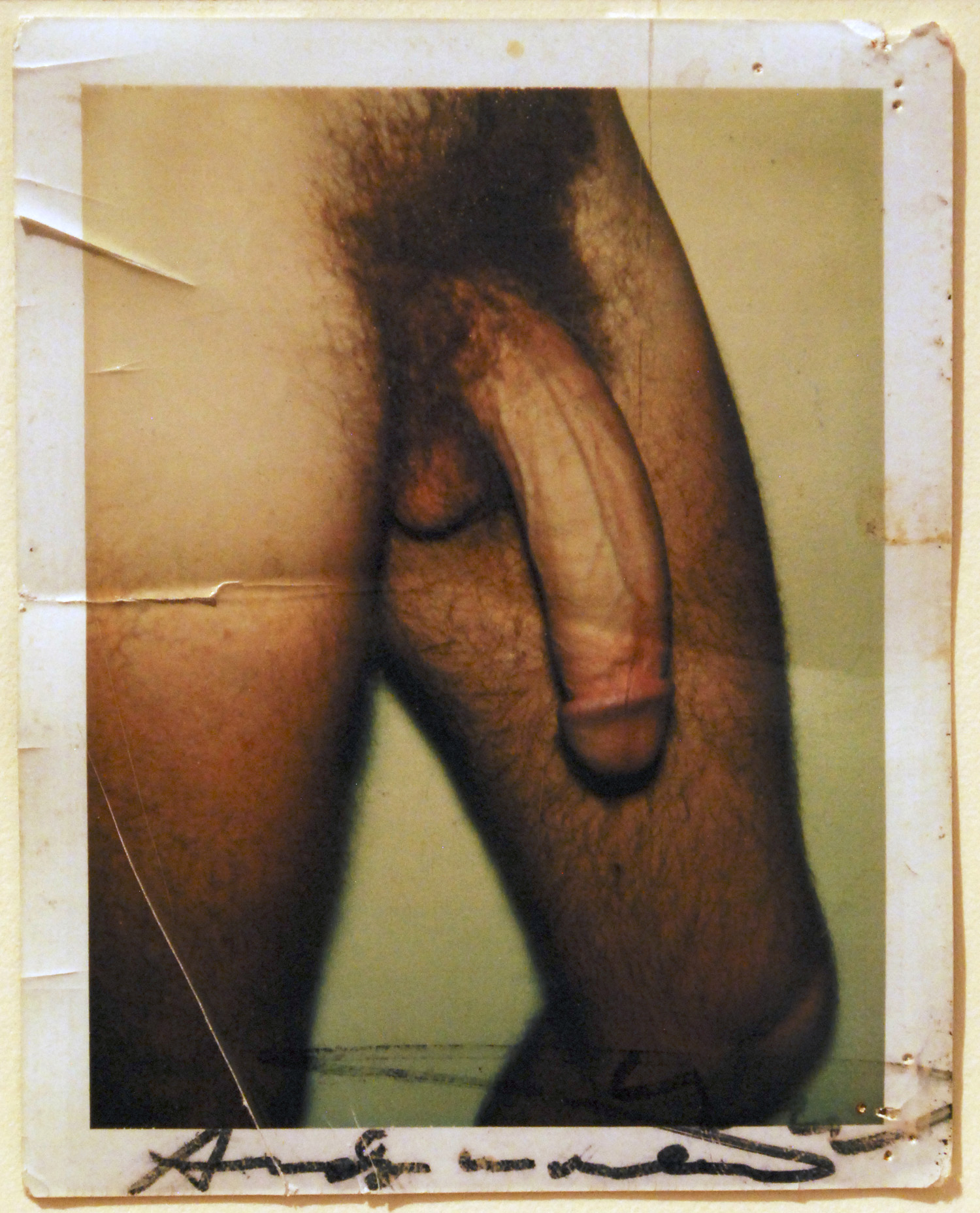
Andy Warhol (United States, 1928-1987) 'Untitled (Victor Hugo's Penis)' Date unknown


Andy Warhol (American, 1928-1987)
Untitled (Victor Hugo’s Penis)
Date unknown
Polaroid
8.5 x 10.5cm
Collection of Byrd Hoffman Water Mill Foundation


Gary Carsley (Australia, b. 1957) 'YOWL' 2017 (still)


Gary Carsley (Australian, b. 1957)
YOWL [still]
2017
Single Channel HD Video on Layered A3 Photocopy substrate
360 x 247cm
Duration 4.32 min
Videography Ysia Song, Soundscape Tarun Suresh, Art Direction Shahmen Suku


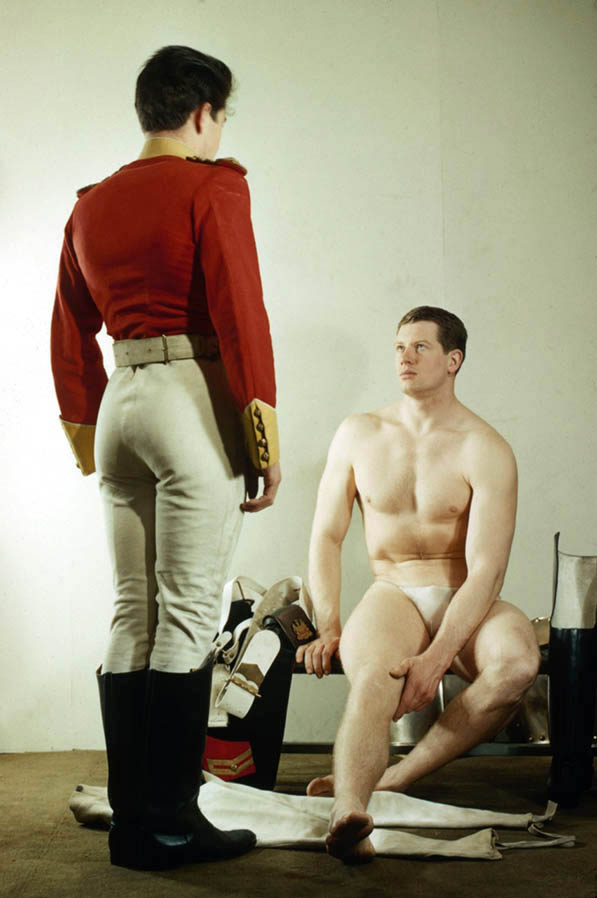
Royale Hussar (Basil Clavering and John Parkhurst) 'Queens Guard 3' 1959-1960


Royale Hussar (Basil Clavering and John Parkhurst)
Queens Guard 3
1959-1960
Digital print from original negative


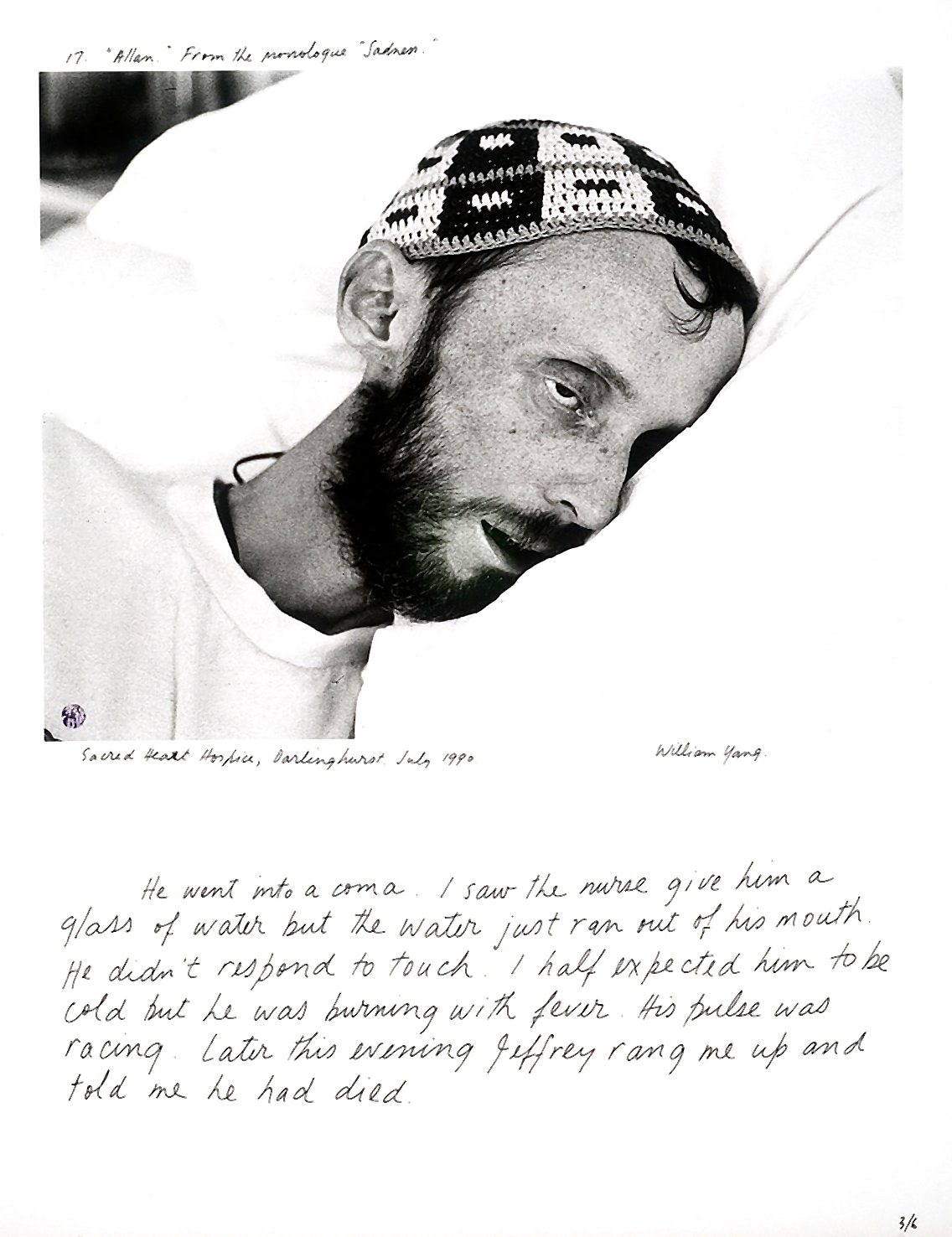
William Yang (Australian-Chinese, b. 1943) ''Allan' from the monologue 'Sadness'' 1992


William Yang (Australian-Chinese, b. 1943)
‘Allan’ from the monologue ‘Sadness’
1992
19 gelatin silver photographs in the monologue
51.0 x 41.0cm each sheet
Photograph: William Yang/Bathurst Regional Art Gallery


A photograph from the Sadness series, which depicts the slow death of his sometime lover, Allan Booth, from AIDS.


Unknown photographer. 'Untitled [Auschwitz victim]' Nd


Unknown photographer
Untitled [Auschwitz victim]
Nd
Photograph: Bathurst Regional Art Gallery


This prisoner was sent to Auschwitz under Section 175 of the German Criminal Code, which criminalised homosexuality.


The picture may have been taken by Wilhelm Brasse who was born on this date, 3 December in 1917, who became known as the “photographer of Auschwitz concentration camp”, though he was one of several, including Alfred Woycicki , Tadeusz Myszkowski, Józef Pysz, Józef Światłoch, Eugeniusz Dembek, Bronisław Jureczek, Tadeusz Krzysica, Stanisław Trałka, and Zdzisław Pazio whom the Camp Gestapo kept alive for the job of recording thousands of photographs of their fellow prisoners, supervised by Bernhard Walter, the head of Erkenundienst.

The photographs themselves present a transgression of the subject’s own self-image. The carte-de-visite format forces a confrontation of the victim (which in this situation, they are) with themselves in a visual interrogation, by placing a profile and a three-quarter view either side of a frontal mug shot. The final image seems to depict the subject beholden to a higher authority.

Brasse had been arrested in 1940, at age 23, for trying to leave German-occupied Poland and sent to KL Auschwitz-Birkenau where because he had been a Polish professional photographer in his aunt’s studio his skills were useful. Brasse has estimated that he took 40,000 to 50,000 “identity pictures” from 1940 until 1945.

Brasse and another prisoner Bronisław Jureczek preserved the photographs when in January 1945, during the evacuation of the camp, they were ordered to burn all of the photographs. They put wet photo paper in the furnace first and followed by such a great number of photos and negatives that the fire was suffocated. When the SS-Hauptscharfürer Walter left the laboratory, Brasse and Jureczek swept undestroyed photographs from the furnace, scattering them in the rooms of the laboratory and boarding up the door to the laboratory. 38,916 photographs were saved.

James McCardle. “Ghosts,” on the On This Day in Photography website 03/12/2017


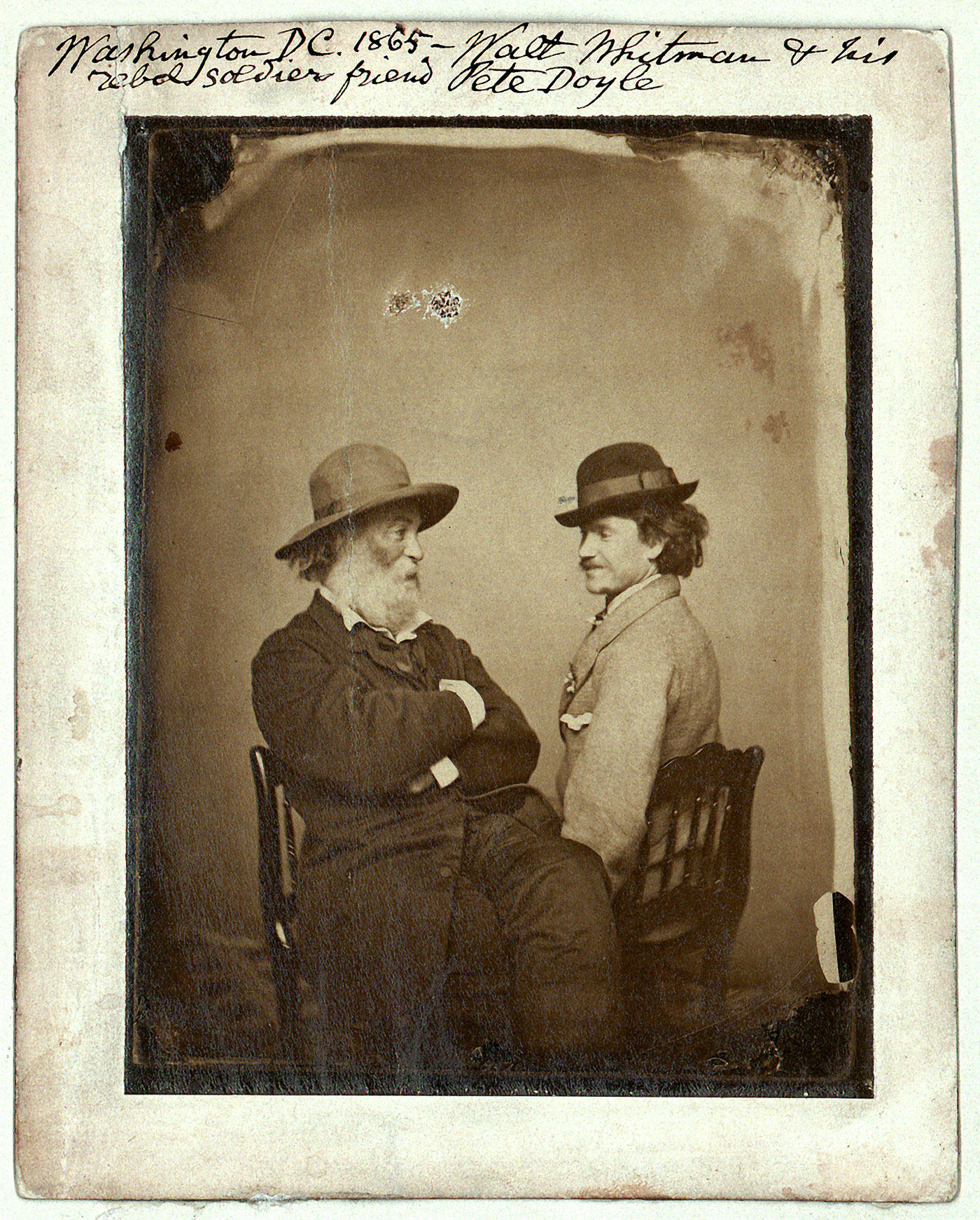
M. P. Rice (American) 'American poet Walt Whitman and his 'rebel soldier friend', Pete Doyle' Walt Whitman and Peter Doyle, Washington DC. c. 1865


M. P. Rice (American)
American poet Walt Whitman and his ‘rebel soldier friend’, Pete Doyle
Walt Whitman and Peter Doyle, Washington DC.
c. 1865
Charles E. Feinberg Collection, Library of Congress
Photograph: Library of Congress/Library of Congress/Bathurst Regional Art Gallery


The first extant photo of Whitman with anyone else, here Peter Doyle, Whitman’s close friend and companion in Washington. Doyle was a horsecar driver and met Whitman one stormy night in 1865 when Whitman, looking (as Doyle said) “like an old sea-captain,” remained the only passenger on Doyle’s car. They were inseparable for the next eight years.


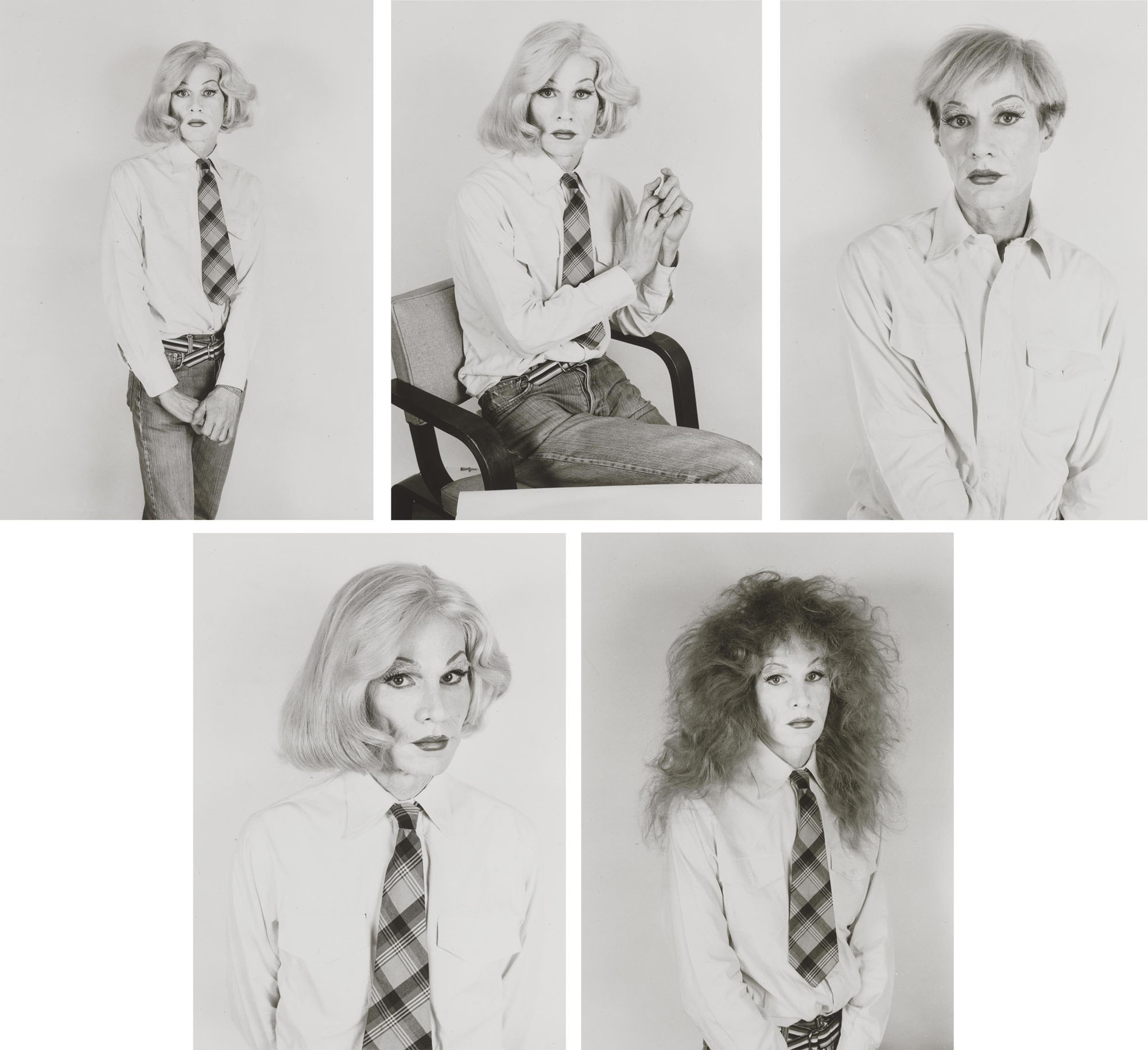
Christopher Makos (American, b. 1982) 'Altered Image: Five Photographs of Andy Warhol' 1982


Christopher Makos (American, b. 1982)
Altered Image: Five Photographs of Andy Warhol
1982
Portfolio of five gelatin silver prints
Each sheet: 20 x 16 in. (50.8 x 40.6cm)
Each image: 18 x 12 3/4 in. (45.7 x 32.3cm)


Bathurst Regional Art Gallery (BRAG)
70 -78 Keppel St
Bathurst NSW 2795

Opening hours:
Tues to Sat 10am – 5pm
Sundays 11am – 2pm

Bathurst Regional Art Gallery website

LIKE ART BLART ON FACEBOOK

Back to top

Photographs: Lionel Wendt’s Ceylon

September 2017


More photographs from the artist Lionel Wendt.


Lionel Wendt (Sri Lankan, 1900-1944) 'Untitled (Still life with mask and statue)' 1942


Lionel Wendt (Sri Lankan, 1900-1944)
Untitled (Still life with mask and statue)
1942
Gelatin silver print


Lionel Wendt (Sri Lankan, 1900-1944) 'Untitled' Nd


Lionel Wendt (Sri Lankan, 1900-1944)
Untitled
Nd
Gelatin silver print


Lionel Wendt (Sri Lankan, 1900-1944) 'Untitled' Nd


Lionel Wendt (Sri Lankan, 1900-1944)
Untitled
Nd
Gelatin silver print


Lionel Wendt (Sri Lankan, 1900-1944) 'Untitled' c. 1933-1938


Lionel Wendt (Sri Lankan, 1900-1944)
Untitled
c. 1933-1938
Gelatin silver print


Lionel Wendt (Sri Lankan, 1900-1944) 'Untitled' c. 1933-1938


Lionel Wendt (Sri Lankan, 1900-1944)
Untitled
c. 1933-1938
Gelatin silver print


Lionel Wendt (Sri Lankan, 1900-1944) 'Untitled (Sea landscape)' Nd


Lionel Wendt (Sri Lankan, 1900-1944)
Untitled (Sea landscape)
Nd
Gelatin silver print


Lionel Wendt (Sri Lankan, 1900-1944) 'I Heard A Voice Wailing Where The Ships Went Sailing' c. 1935-1940


Lionel Wendt (Sri Lankan, 1900-1944)
I Heard A Voice Wailing Where The Ships Went Sailing
c. 1935-1940
Gelatin silver print


Lionel Wendt (Sri Lankan, 1900-1944) 'Untitled (At the well)' Nd


Lionel Wendt (Sri Lankan, 1900-1944)
Untitled (At the well)
Nd
Gelatin silver print


Lionel Wendt (Sri Lankan, 1900-1944) 'Untitled (At the well)' Nd


Lionel Wendt (Sri Lankan, 1900-1944)
Untitled (At the well)
Nd
Gelatin silver print


Lionel Wendt (Sri Lankan, 1900-1944) 'Untitled (At the well)' Nd


Lionel Wendt (Sri Lankan, 1900-1944)
Untitled (At the well)
Nd
Gelatin silver print


Lionel Wendt (Sri Lankan, 1900-1944) 'Untitled' Nd


Lionel Wendt (Sri Lankan, 1900-1944)
Untitled
Nd
Gelatin silver print


Lionel Wendt (Sri Lankan, 1900-1944) 'Untitled (At the pottery)' Nd


Lionel Wendt (Sri Lankan, 1900-1944)
Untitled (At the pottery)
Nd
Gelatin silver print


Lionel Wendt (Sri Lankan, 1900-1944) 'Untitled (Architecture surréaliste)' Nd


Lionel Wendt (Sri Lankan, 1900-1944)
Untitled (Architecture surréaliste)
Nd
Gelatin silver print


Lionel Wendt (Sri Lankan, 1900-1944) 'Untitled (Buddha head and wine goblet)' Nd


Lionel Wendt (Sri Lankan, 1900-1944)
Untitled (Buddha head and wine goblet)
Nd
Gelatin silver print


Lionel Wendt (Sri Lankan, 1900-1944) 'Gunaya Yakdessa Costume' Nd


Lionel Wendt (Sri Lankan, 1900-1944)
Gunaya Yakdessa Costume
Nd
Gelatin silver print


Lionel Wendt (Sri Lankan, 1900-1944) 'Untitled' Nd


Lionel Wendt (Sri Lankan, 1900-1944)
Untitled
Nd
Gelatin silver print


Lionel Wendt (Sri Lankan, 1900-1944) 'Untitled (Solarised woman)' c. 1933-1938


Lionel Wendt (Sri Lankan, 1900-1944)
Untitled (Solarised woman)
c. 1933-1938
Gelatin silver print


Lionel Wendt (Sri Lankan, 1900-1944) 'Untitled' Nd


Lionel Wendt (Sri Lankan, 1900-1944)
Untitled
Nd
Gelatin silver print


Lionel Wendt (Sri Lankan, 1900-1944) 'Untitled' Nd


Lionel Wendt (Sri Lankan, 1900-1944)
Untitled
Nd
Gelatin silver print


Lionel Wendt (Sri Lankan, 1900-1944) 'Untitled' Nd


Lionel Wendt (Sri Lankan, 1900-1944)
Untitled
Nd
Gelatin silver print


Lionel Wendt (Sri Lankan, 1900-1944) 'Untitled (Solarised nude)' c. 1934-1937


Lionel Wendt (Sri Lankan, 1900-1944)
Untitled (Solarised nude)
c. 1934-1937
Gelatin silver print


Lionel Wendt (Sri Lankan, 1900-1944) 'Untitled (Solarised man in ocean)' Nd


Lionel Wendt (Sri Lankan, 1900-1944)
Untitled (Solarised man in ocean)
Nd
Gelatin silver print


Lionel Wendt (Sri Lankan, 1900-1944) 'The Misery of Balanced Perplexities' Nd


Lionel Wendt (Sri Lankan, 1900-1944)
The Misery of Balanced Perplexities
Nd
Gelatin silver print


Lionel Wendt (Sri Lankan, 1900-1944) 'Untitled' Nd


Lionel Wendt (Sri Lankan, 1900-1944)
Untitled
Nd
Gelatin silver print


Lionel Wendt (Sri Lankan, 1900-1944) 'Untitled (Canes)' Nd


Lionel Wendt (Sri Lankan, 1900-1944)
Untitled (Canes)
Nd
Gelatin silver print


Lionel Wendt (Sri Lankan, 1900-1944) 'Untitled' Nd


Lionel Wendt (Sri Lankan, 1900-1944)
Untitled
Nd
Gelatin silver print


Lionel Wendt (Sri Lankan, 1900-1944) 'Narayanan' Nd


Lionel Wendt (Sri Lankan, 1900-1944)
Narayanan
Nd
Gelatin silver print


LIKE ART BLART ON FACEBOOK

Back to top

Photographs: Andy Warhol unplugged

December 2014


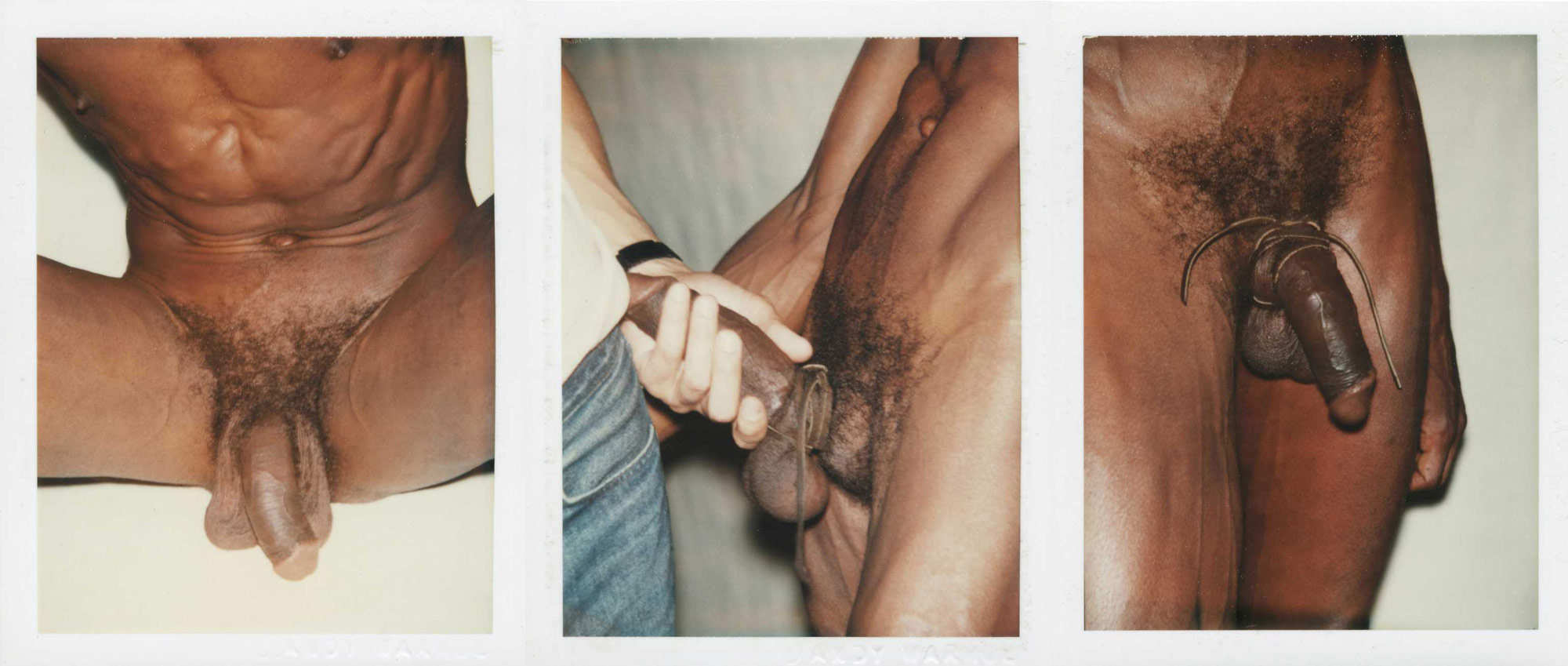
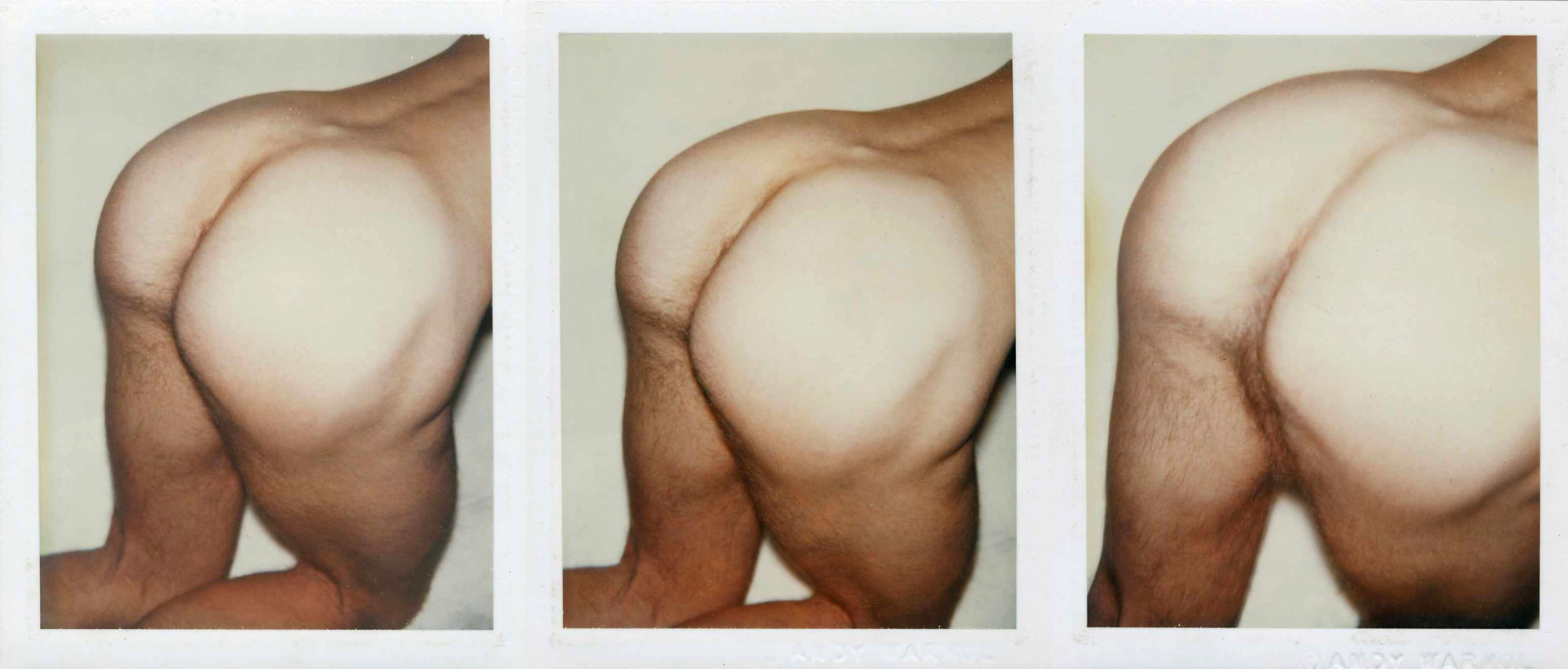
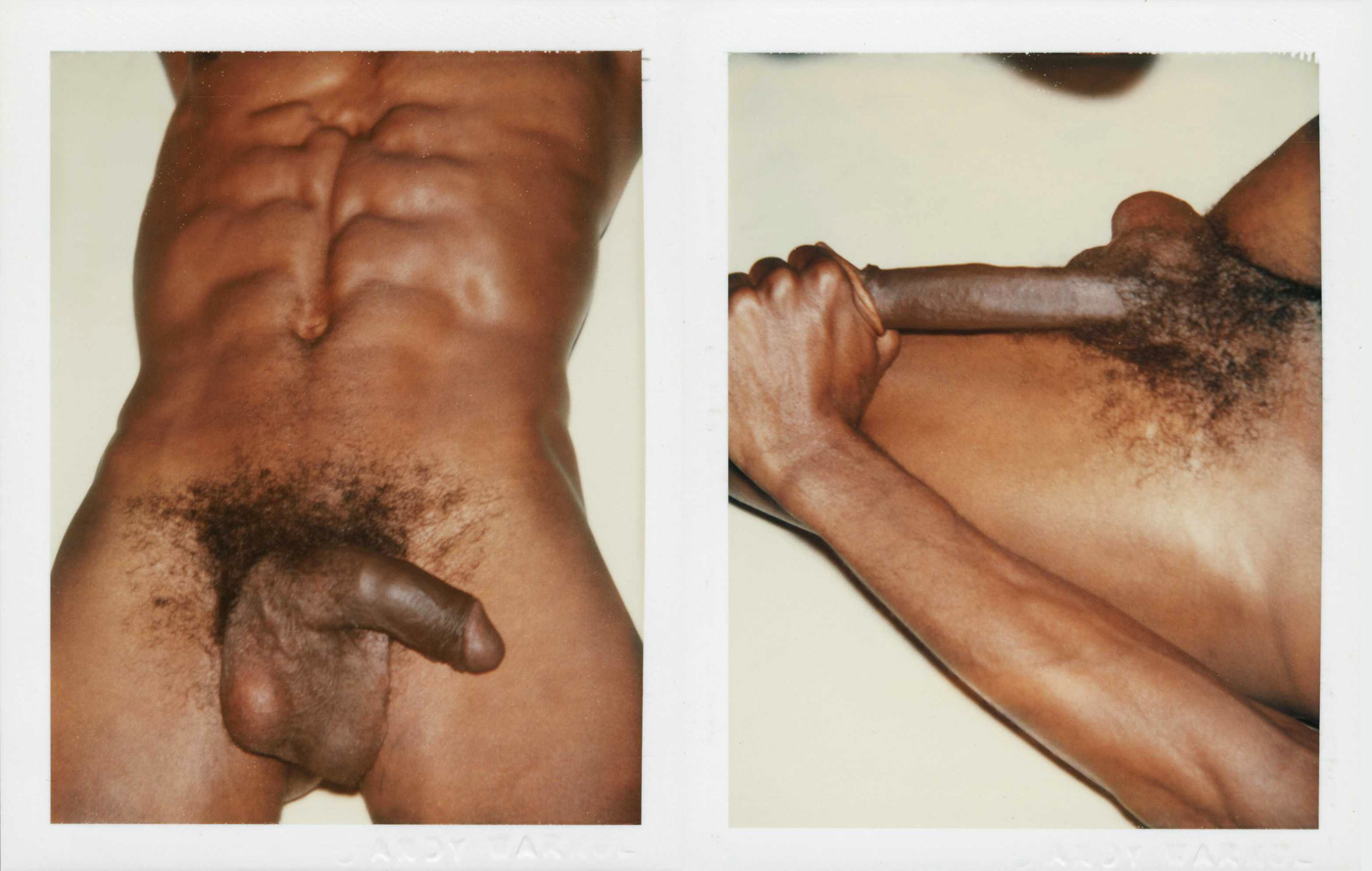
Andy Warhol (American, 1928-1987) 'Nude Male Model' 1976


Andy Warhol 
(American, 1928-1987)
Nude Male Model
1976


Campbell’s soup cans, Brillo boxes… and BIG BLACK COCKS!

Gorgeous, intimate Polaroids of the male form. God he knew how to tell and sell a story in two or three images.

Dr Marcus Bunyan

*PLEASE NOTE THIS POSTING CONTAINS ART PHOTOGRAPHS OF MALE NUDITY – IF YOU DO NOT LIKE PLEASE DO NOT LOOK, FAIR WARNING HAS BEEN GIVEN*


Andy Warhol (American, 1928-1987) 'Nude Male Model' 1976


Andy Warhol 
(American, 1928-1987)
Nude Male Model
1976


Andy Warhol (American, 1928-1987) 'Nude Male Model' 1976 (detail)


Andy Warhol 
(American, 1928-1987)
Nude Male Model (detail)
1976


Andy Warhol (American, 1928-1987) 'Nude Male Model' 1976


Andy Warhol (American, 1928-1987)
Nude Male Model
1976


Andy Warhol (American, 1928-1987) 'Nude Male Model' 1976 (detail)


Andy Warhol 
(American, 1928-1987)
Nude Male Model (detail)
1976


Andy Warhol (American, 1928-1987) 'Nude Male Model' 1977


Andy Warhol 
(American, 1928-1987)
Nude Male Model
1977


Andy Warhol (American, 1928-1987) 'Nude Male Model' 1977


Andy Warhol 
(American, 1928-1987)
Nude Male Model
1977


Andy Warhol (American, 1928-1987) 'Nude Male Model' 1977 (detail)


Andy Warhol 
(American, 1928-1987)
Nude Male Model (detail)
1977


Andy Warhol (American, 1928-1987) 'Nude Male Model' 1977


Andy Warhol 
(American, 1928-1987)
Nude Male Model
1977


Andy Warhol (American, 1928-1987) 'Nude Male Model' 1977


Andy Warhol 
(American, 1928-1987)
Nude Male Model
1977


Andy Warhol (American, 1928-1987) 'Nude Male Model' 1977


Andy Warhol 
(American, 1928-1987)
Nude Male Model
1977


Andy Warhol (American, 1928-1987) 'Nude Male Model' 1977


Andy Warhol 
(American, 1928-1987)
Nude Male Model
1977


Andy Warhol (American, 1928-1987) 'Nude Male Model' 1977


Andy Warhol 
(American, 1928-1987)
Nude Male Model
1977


Andy Warhol (American, 1928-1987) 'Nude Male Model' 1977


Andy Warhol 
(American, 1928-1987)
Nude Male Model
1977


Andy Warhol (American, 1928-1987) 'Nude Male Model' 1977 (detail)


Andy Warhol 
(American, 1928-1987)
Nude Male Model (detail)
1977


Andy Warhol (American, 1928-1987) 'Nude Male Model' 1977 (detail)


Andy Warhol 
(American, 1928-1987)
Nude Male Model (detail)
1977


Andy Warhol (American, 1928-1987) 'Nude Male Model' 1977


Andy Warhol 
(American, 1928-1987)
Nude Male Model
1977


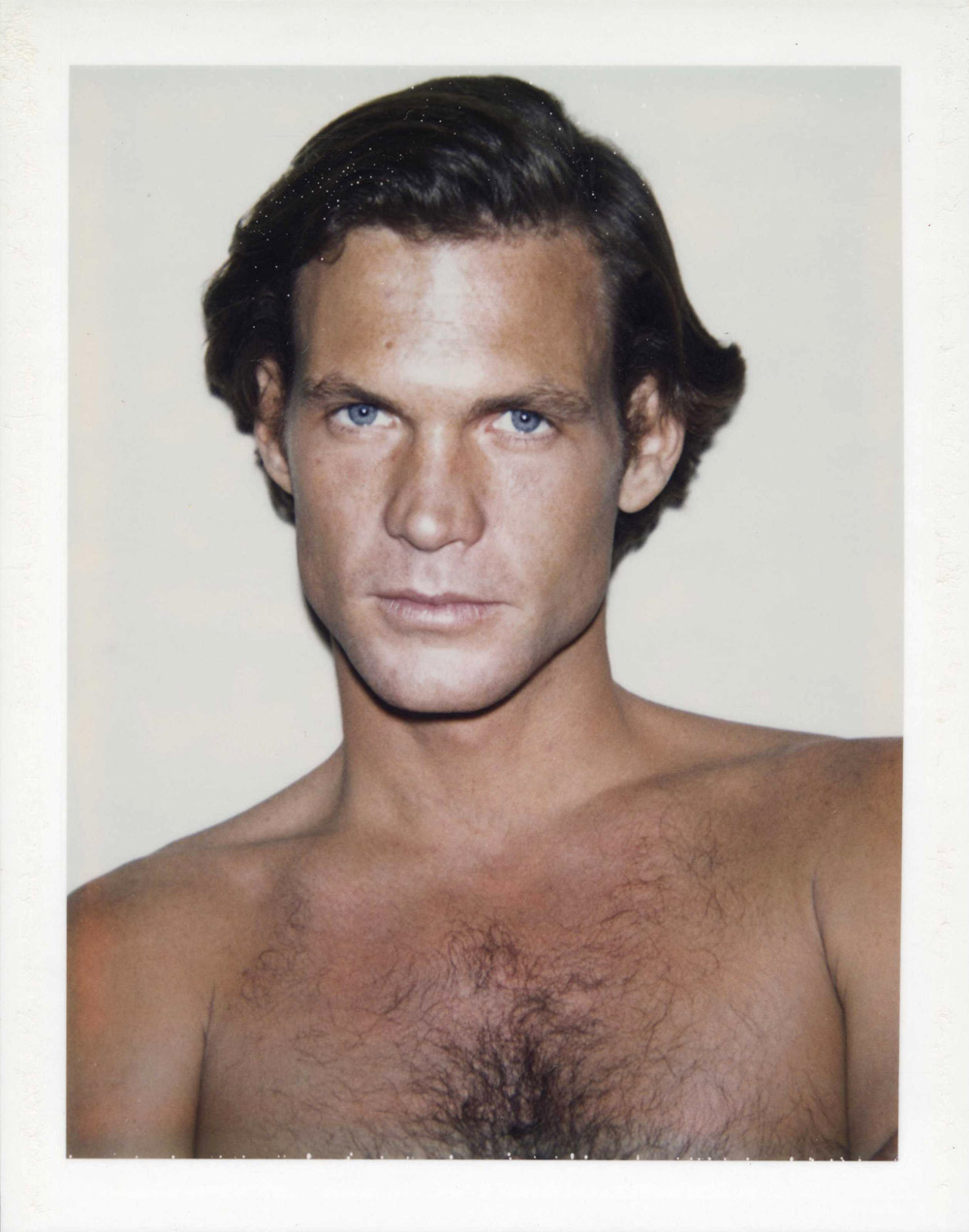
Andy Warhol (American, 1928-1987) 'Joe Macdonald' 1975


Andy Warhol 
(American, 1928-1987)
Joe Macdonald
1975


Andy Warhol (American, 1928-1987) 'Sean McKeon' 1980


Andy Warhol 
(American, 1928-1987)
Sean McKeon
1980


Andy Warhol (American, 1928-1987) 'Shaun Cassidy' 1979


Andy Warhol 
(American, 1928-1987)
Shaun Cassidy
1979


Andy Warhol (American, 1928-1987) 'Male Model' 1982


Andy Warhol 
(American, 1928-1987)
Male Model
1982


Andy Warhol (American, 1928-1987) 'Young Man in Paris' c. 1977


Andy Warhol 
(American, 1928-1987)
Young Man in Paris
c. 1977


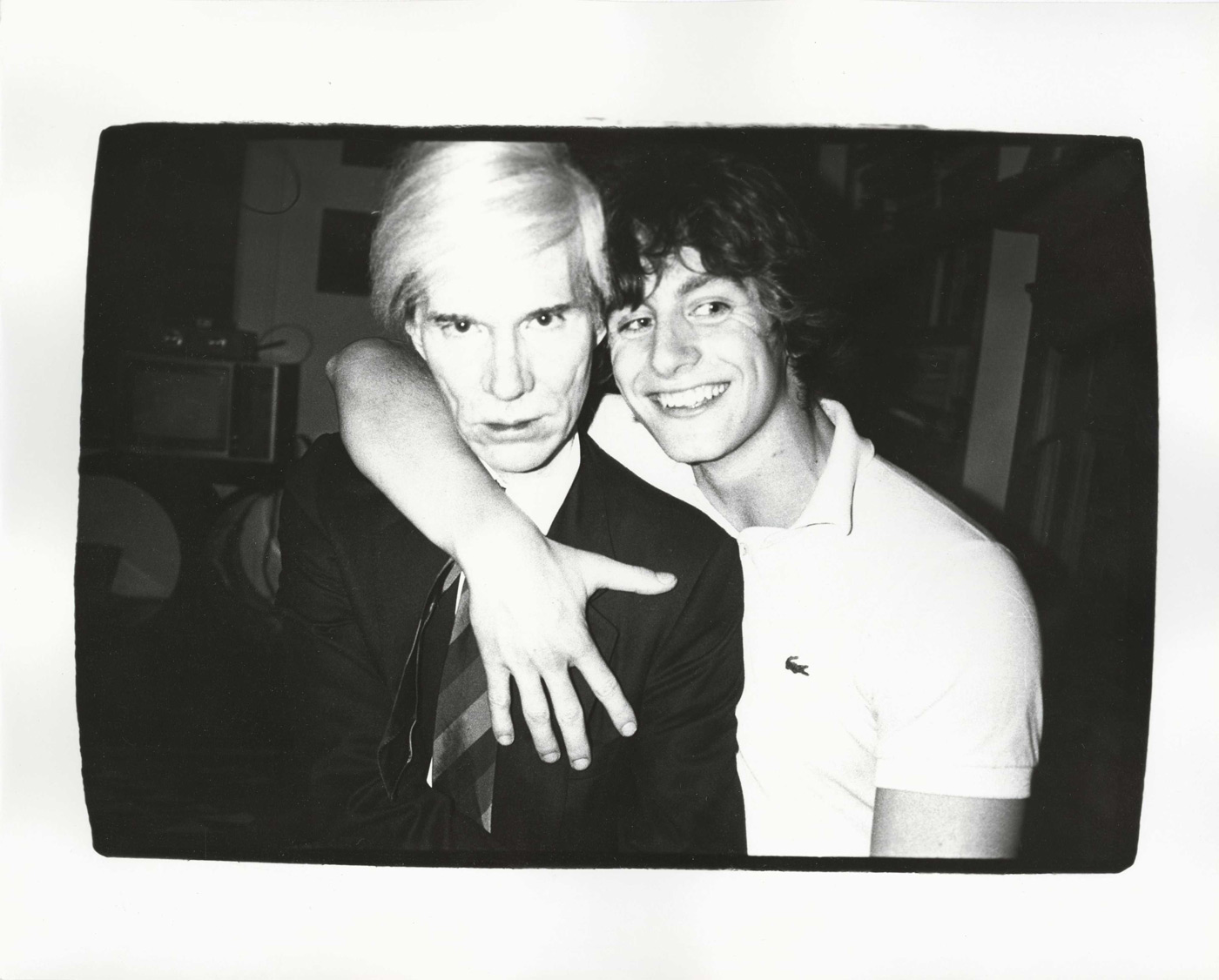
Andy Warhol (American, 1928-1987) 'Andy Warhol and Friend' c. 1979


Andy Warhol 
(American, 1928-1987)
Andy Warhol and Friend
c. 1979


Andy Warhol (American, 1928-1987) 'Unidentified Male' c. 1979


Andy Warhol 
(American, 1928-1987)
Unidentified Male
c. 1979


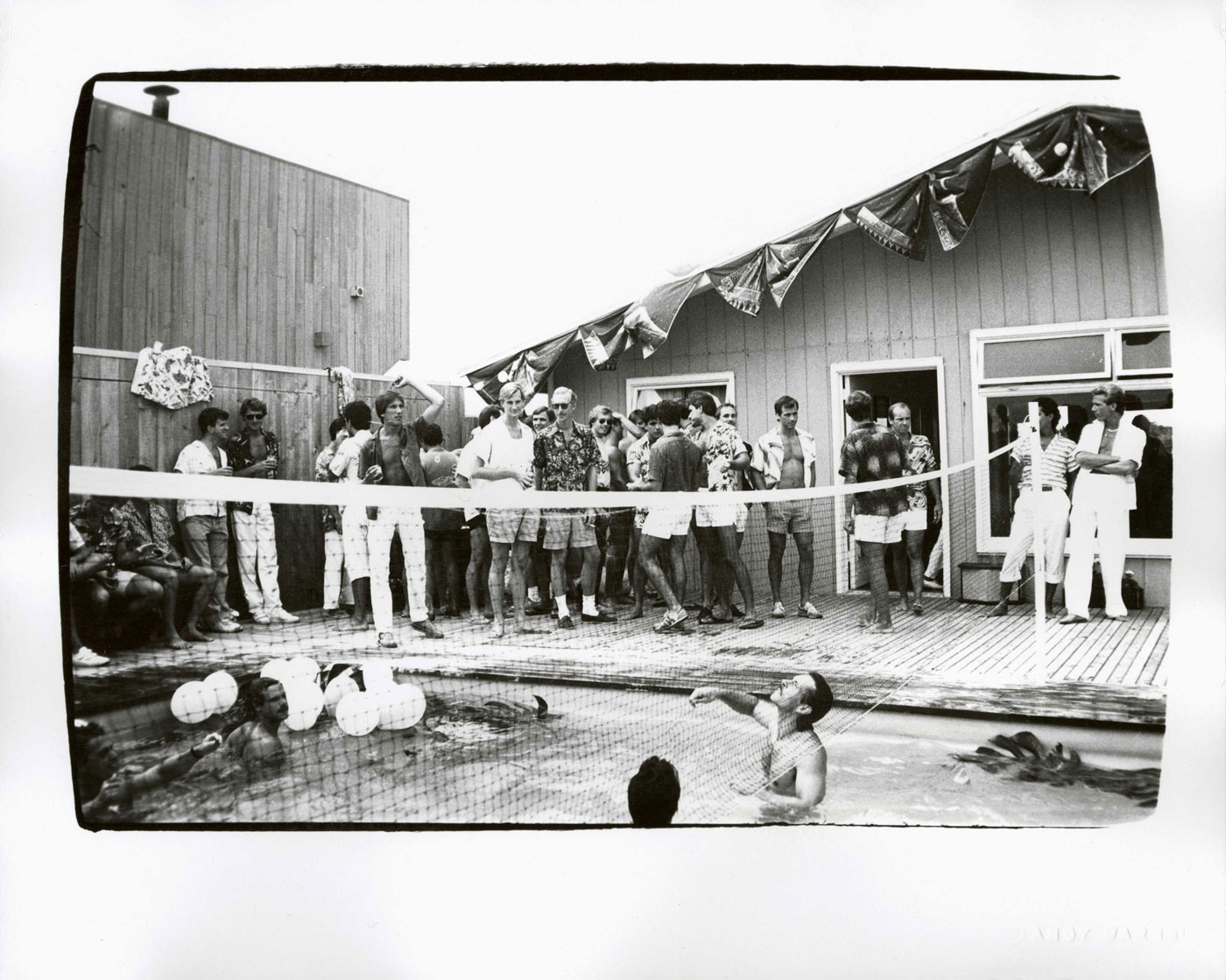
Andy Warhol (American, 1928-1987) 'Fire Island Party' 1982


Andy Warhol 
(American, 1928-1987)
Fire Island Party
1982


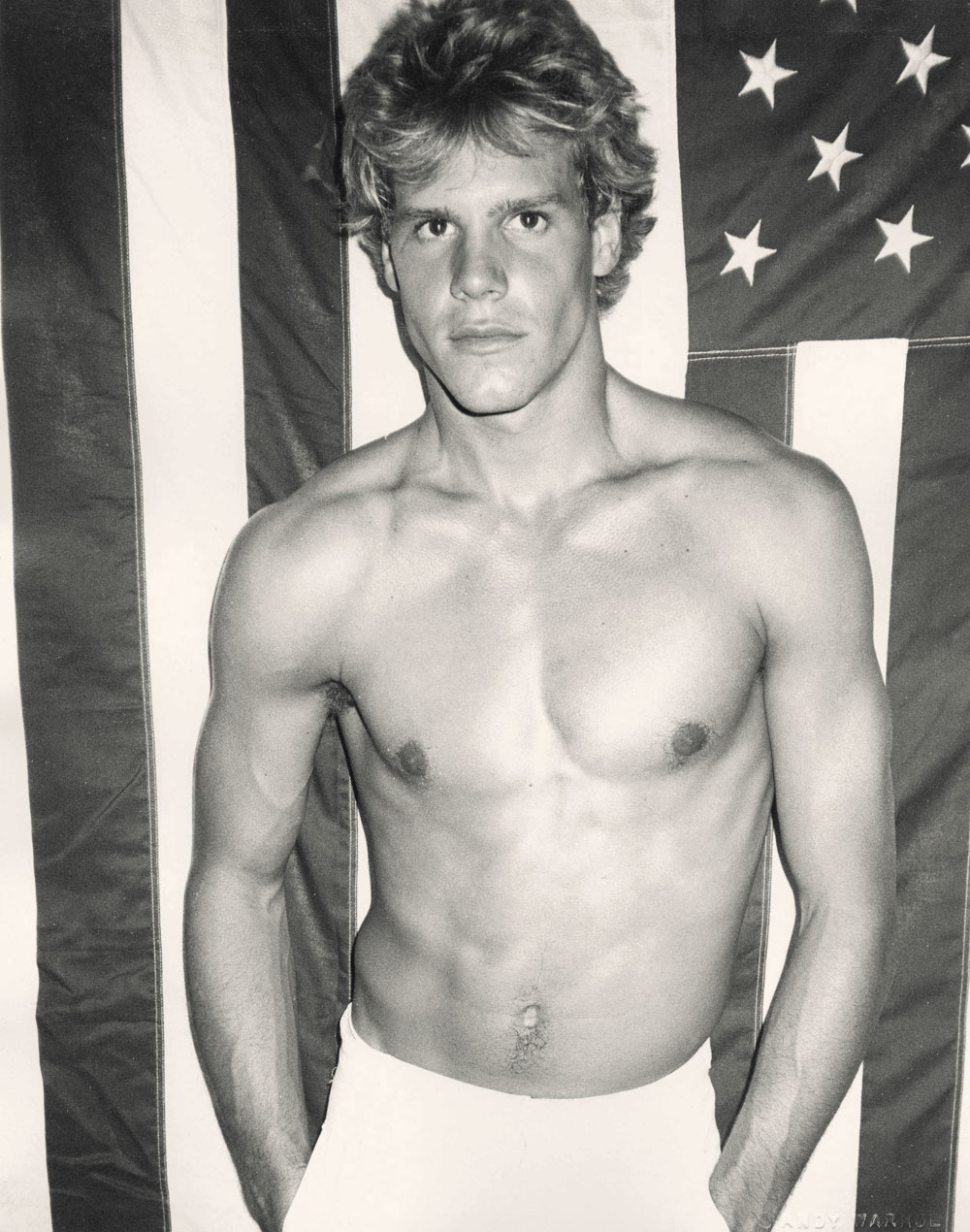
Andy Warhol (American, 1928-1987) 'Craig Sheffer' 1982


Andy Warhol 
(American, 1928-1987)
Craig Sheffer
1982


LIKE ART BLART ON FACEBOOK

Back to top

Exhibition: ‘Robert Mapplethorpe’ at the Grand Palais, Paris

Exhibition dates: 26th March – 13th July 2014

Grand Palais
Galerie sud-est, entrée avenue Winston Churchill


Many thankx to the Grand Palais for allowing me to publish the photographs in the posting. Please click on the photographs for a larger version of the image.


“I have boundless admiration for the naked body. I worship it.”

“I was a Catholic boy, I went to church every Sunday. A church has a certain magic and mystery for a child. It still shows in how I arrange things. It’s always little altars.”

“I am looking for perfection in form. I do that with portraits. I do it with cocks. I do it with flowers.”


Robert Mapplethorpe


Installation view of the exhibition 'Robert Mapplethorpe' at the Grand Palais, Paris 2014

Installation view of the exhibition 'Robert Mapplethorpe' at the Grand Palais, Paris 2014

Installation view of the exhibition 'Robert Mapplethorpe' at the Grand Palais, Paris 2014

Installation view of the exhibition 'Robert Mapplethorpe' at the Grand Palais, Paris 2014


Installation views of the exhibition Robert Mapplethorpe at the Grand Palais, Paris 2014
© Didier Plowy pour la Réunion des musées nationaux-Grand Palais, Paris 2014


The exhibition will present over 250 works making it one of the largest retrospective shows for this artist ever held in a museum. It will cover Mapplethorpe’s entire career as a photographer, from the Polaroids of the early 1970s to the portraits from the late 1980s, touching on his sculptural nudes and still lifes, and sadomasochism.

The focus on his two muses Patti Smith and Lisa Lyon explores the theme of women and femininity and reveals a less known aspect of the photographer’s work. The challenge of this exhibition is to show that Mapplethorpe is a great classical artist, who addressed issues in art using photography as he might have used sculpture. It also puts Mapplethorpe’s art into the context of the New York art scene in the 1970-1980s.

In his interview with Janet Kardon in 1987, Mapplethorpe explained that photography in the 1970s was the perfect medium for a fast-paced time. He did not really choose photography; in a way it was photography that chose him. Later in the same interview, he said “If I had been born one hundred or two hundred years ago, I might have been a sculptor, but photography is a very quick way to see, to make a sculpture. Lisa Lyon reminded me of Michelangelo’s subjects, because he did muscular women.”

Mapplethorpe positioned himself from the outset as an Artist, with a capital A. Unlike Helmut Newton, who as a teenager already wanted to be a fashion photographer, and imposed his vision of the world and photography, making it an art in its own right, Robert Mapplethorpe is a sculptor at heart, a plastic artist driven by the question of the body and its sexuality and obsessed by the search for perfect form.

Like Man Ray, Mapplethorpe wanted to be “a creator of images” rather than a photographer, “a poet” rather than a documentarist. In the catalogue for the Milan exhibition which compared the two artists, Bruno Cora recalls the parallels in their lives and works: “Before becoming masterly photographers, Man Ray and Mapplethorpe had both been painters and sculptors, creators of objects; they both lived in Brooklyn in New York; they both made portraits of the intellectuals of their time; and they were both incisive explorers of the nude form, its sculptural qualities and the energy emanating from it.”

Mapplethorpe was an artist before being a photographer. His images come from a pictorial culture in which we find Titian (The Flaying of Marsyas / Dominick and Elliot), David, Dali, and even the great artists of the Italian Renaissance, Michelangelo, Piero della Francesca, Bernini …

As in Huysmans’s novel, the exhibition is a countdown for this other dandy from the end of another world, Robert Mapplethorpe. It starts with his self-portrait with a skull-headed cane, the image of a young man already old, the tragedy of a life cut down in full flight by AIDS. But his almost royal final posture, as if beyond death, still (just) alive but already in the posterity of his oeuvre, seems to beckon us with a gesture of his pastoral cane to follow him into the world that he constructed in twenty years of photography. The exhibition continues with statuary, a dominant theme in Mapplethorpe’s last years, photos of statues of the gods in his personal pantheon: Eros, of course, and Hermes … The artist always said he used photography to make sculptures, and he ended his oeuvre with photographs of sculptures. His nudes were already photographic sculptures.

Works are not created just anywhere. To be fully appreciated, Mapplethorpe’s art must be put into the socio-cultural context of arty New York in the 1970s and 80s, and the underground gay culture there at that time. Two permeable and equally radical worlds. To take the measure of the libertarian explosion of the time, we need to watch Flesh, Warhol’s film with Joe Dalessandro, which narrates 24 hours in the life of a young New York male prostitute. To understand the violence and passion of gay sexuality for young New Yorkers fighting for freedom in a repressive period, we must read Edmund White’s The Beautiful Room is Empty, the story of a young gay in the years of riots and demonstrations and extreme emancipation; and Andrew Holleran’s Dancer from the Dance (1978), to plunge into the sexual experiments of Fire Island in the 1970s.

Mapplethorpe is hailed as one of the world’s greatest photographers and the exhibition aims to give a broad view of his work.

Press release from the Grand Palais website


Robert Mapplethorpe (American, 1946-1989) 'Milton Moore' 1981


Robert Mapplethorpe (American, 1946-1989)
Milton Moore
1981
50.8 x 40.6cm / 50.8 x 40.6cm
Silver gelatin prints
New York, Fondation Robert Mapplethorpe
© Robert Mapplethorpe Foundation. Used by permission


Robert Mapplethorpe (American, 1946-1989) 'Milton Moore' 1981 (detail)


Robert Mapplethorpe (American, 1946-1989)
Milton Moore (detail)
1981
50.8 x 40.6cm
Silver gelatin print
New York, Fondation Robert Mapplethorpe
© Robert Mapplethorpe Foundation. Used by permission


Robert Mapplethorpe (American, 1946-1989) 'Ken Moody' 1983


Robert Mapplethorpe (American, 1946-1989)
Ken Moody
1983
50.8 x 40.6cm
Silver gelatin print
New York, Fondation Robert Mapplethorpe
© Robert Mapplethorpe Foundation. Used with permission


Introductory text

Robert Mapplethorpe was an artist with an obsessive quest for aesthetic perfection.

A sculptor at heart, and in his imagination, he wanted “people to see [his] works first as art and second as photography.”1 An admirer of Michelangelo, Mapplethorpe championed the classical ideal – revised and reworked for the libertarian New York of the 1970s – and explored sophisticated printing techniques to create unique works and mixed compositions, which he framed in unusual ways.

Like the novel by Joris-Karl Huysmans, this exhibition has been organised “À rebours” [against the nap] and examines the work of another dandy, living at the end of another world. It opens with Mapplethorpe’s self-portrait with the skull-head cane: the image of a young man, already old, tragically cut down in the prime of life by AIDS, it also reveals how the master of the realm of shadows – photography – gave free rein to his imagination. Like a modern day Orpheus, beyond death, he seems alive – although only just – yet already in the afterlife of his work, beckoning us with his satanic cane to follow him into the underworld of his life, in search of his desire.

“Photography and sexuality have a lot in common,” explains Mapplethorpe. “Both are question marks, and that’s precisely what excites me most in life.”2 Exploring the photography of the body, he pushed it to the limits of pornography, perhaps like no other artist before him. The desire we see in these images – often the photographer’s own desire – also reflects life in New York, as lived by some, in the 1970s and 80s, at the height of the sexual liberation movement. “I’m trying to record the moment I’m living in and where I’m living, which happens to be in New York. I am trying to pick up on the madness and give it some order.”3

This retrospective of Mapplethorpe’s work – the first in France since he passed away – features some two hundred and fifty images exploring a range of themes. They cover every aspect of Mapplethorpe’s art – bronze bodies and flesh sculptures, geometric and choreographic, still lives and anatomical details, bodies as flowers and flowers as bodies, court portraiture, night photography, and eroticism, soft and hard – interspersed with self-portraiture in all its forms. The works from the photographer’s early career, which close the exhibition, reveal how the path taken by his art was already mapped out in his first Polaroids. The sign of a great artist.

1/ Inge Biondi, “The Yin and the Yang of Robert Mapplethorpe,” in The Print Collector’s Newsletter, New York, January 1979, p. 11
2/ Mark Thompson, “Mapplethorpe,” in The Advocate, Atlanta, 24 July 1980
3/ Sarah Kent, “Mapplethorpe,” in Time Out, London, 3-9 November 1983


Robert Mapplethorpe (American, 1946-1989) 'Thomas' 1987


Robert Mapplethorpe (American, 1946-1989)
Thomas
1987
61 x 50.8cm
Silver gelatin print
New York, Fondation Robert Mapplethorpe
© Robert Mapplethorpe Foundation. Used with permission


Robert Mapplethorpe (American, 1946-1989) 'Calla Lily' 1986


Robert Mapplethorpe (American, 1946-1989)
Calla Lily
1986
92.7 x 92.7cm
Silver gelatin print
© Robert Mapplethorpe Foundation. Used with permission


Robert Mapplethorpe (American, 1946-1989) 'The Sluggard' (Le Paresseux) 1988


Robert Mapplethorpe (American, 1946-1989)
The Sluggard (Le Paresseux)
1988
61 x 50.8cm
Silver gelatin print
New York, Fondation Robert Mapplethorpe
© Robert Mapplethorpe Foundation. Used with permission


Robert Mapplethorpe (American, 1946-1989) 'Self-portrait (Autoportrait)' 1988


Robert Mapplethorpe (American, 1946-1989)
Self-portrait (Autoportrait)
1988
61 x 50.8cm
Platinum print
© Robert Mapplethorpe Foundation. Used with permission


Grand Palais, Galeries Nationales
3, Avenue du Général Eisenhower
75008 Paris

Opening hours:
Wednesday – Saturday 10am – 10pm
Monday and Sunday 10am – 8pm
Closed every Tuesday

Grand Palais website

LIKE ART BLART ON FACEBOOK

Back to top

Exhibition: ‘Bob Mizer and Tom of Finland’ at The Museum Of Contemporary Art, Los Angeles (MOCA)

Exhibition dates: 2nd November 2013 – 26th January 2014
MOCA Pacific Design Center

PLEASE NOTE: THIS POSTING CONTAINS ART WORK OF MALE NUDITY AND EROTIC IMAGES OF GAY MALE SEX – IF YOU DO NOT LIKE PLEASE DO NOT LOOK, FAIR WARNING HAS BEEN GIVEN


Bob Mizer (American, 1922-1992) 'Physique Pictorial Volume 16 Number 4, February 1968' 1968


Bob Mizer (American, 1922-1992)
Physique Pictorial Volume 16 Number 4, February 1968
1968
Publication
Printed with permission of Bob Mizer Foundation, Inc .


What a fantastic pairing in this exhibition and in their relationship in real life. We must remember that Tom of Finland was a ground-breaking artist, one of the very first to picture masculine gay men, “robbing straight homophobic culture of its most virile and masculine archetypes (bikers, hoodlums, lumberjacks, cops, cowboys and sailors) and recasting them – through deft skill and fantastic imagination – as unapologetic, self-aware and boastfully proud enthusiasts of gay sex.”

He would have only just been in his twenties when he started drawing men in the early 1940s, inspired by the soldiers and uniforms he saw around him from the Second World War. With no outward gay culture in Finland, let alone in America until the late 1960s, just imagine being an artist producing this kind of erotic imagery at that time. To go on to be the seminal figure in the creation of gay leather culture… what an impact this artist had on gay and popular culture. Of course, as tastes were liberalised in the era of free love, Stonewall and after, the muscles of his hunks became bigger, the size of their endowments larger and the actions portrayed became more open and transparent (as can be seen from Untitled (From Beach Boy 2 story), 1971, below).

During my PhD research I visited the One Institute/International Gay and Lesbian Archives Collection, University of Southern California, Los Angeles, to investigate the cross-over between physique magazines and early gay pornography magazines of the 1960s to early 1970s. I was interested to see whether the muscular mesomorphic bodies of the physique magazines crossed straight over into the first gay pornography magazines. To my surprise, the answer was that they did not.

After the American Supreme Court ruled on obscenity laws in the late 1960s, the first gay pornography magazines started appearing. The earliest gay porn magazine in the One Institute / IGLA collection, Action Line. No.1. San Francisco: Mark Vaughn Associates. 1969, features mostly smooth but natural bodies, not as built as in physique magazines, with nude young men with full erections lying next too each other touching. There is no sex, no sucking or fucking. Only a year later, in 1970, the story is different. In Album 1501: A Study of Sexual Activity Between Males. Los Angeles: Greyhuff Publishing, 1970 their is sexual intercourse pictured between men in an openly available publication for the first time.

Bodies in this magazine are smooth, young toned men, much as in the early photographs of George Platt Lynes (such as those of Charles ‘Tex’ Smutney, Charles ‘Buddy’ Stanley, and Bradbury Ball). They are also similar to the bodies in the photographs that Lynes submitted to the Zurich published homosexual magazine Der Kries after he found out that he had cancer, during the last years of his life (under the pseudonym Roberto Rolf late 1940s – early 1950s). The participants in Album 1501 perform sex on each other in a lounge room lit by strong lights (shadows on walls). The black and white photographs, well shot, feature in a magazine that is about 5″ wide and 10″ high, well laid out and printed. The magazine is a thin volume and features just the two models in one sex scene of them undressing each other and then having sex. One man wears a Pepsi-Cola T-shirt at first and he also has tattoos one of which says ‘Cheri’. The photographs almost have a private feel to them.

In their introduction the publishers disclaim any agreement with the content of the magazine and are only publishing it for the freedom of everybody to study the material in the privacy of their own homes. In other words male to male sex is a natural phenomenon and the publication is educational. This was a common ploy in early nudist and pornographic publications (along with classical themes) that was used to justify the content – to claim that the material was for private educational purposes only:

Introduction.

“Publishers of material dealing frankly with sexual activity have suffered greatly in the past because of society’s anxiety over the existence and propagation of such material. But the real issue is why should such material dealing with sexual activity be any less valid or acceptable than material dealing with other facets of human behaviour? …
This book was produced so that all interested adults may have an opportunity to acquire it for their own private interests in matters relating to sex …
Our publication of this book is not to be construed that we agree with, condone or encourage any of the behaviour depicted herein. However, sexual activity between males is a fact of life and interested adults should not be denied an opportunity to study this, or any other, facet of human behaviour.”


The Publishers


It is interesting to note the progression from physique magazines and models in posing pouches in 1966-68 (such as the photographs of Bob Mizer featured in this posting), then to full erection and stories of anal penetration in Action Line in 1969, to full on photographs of gay sex in this magazine in 1970. Bodies are all smooth, quite solid, toned natural physiques, not as ‘built’ as in earlier physique magazines, but still featuring younger smooth men and not older heavier set men. It was not until the development of the clone, leatherman and magazines such a Colt from Colt Studios that Tom of Finland’s muscular mesomorphic leatherman took hold in the popular gay imagination.

Even in the mid 1970’s companies such as Colt Studios, which has built a reputation for photographing hunky, very well built masculine men, used classical themes in their photography of muscular young men. Most of the early Colt magazines have photographs of naked young men that are accompanied by photographs and illustrations based on classical themes. In their early magazines quite a large proportion of the bodies were hirsute or had moustaches as was popular with the ‘clone’ image at the time. Later Colt models of the early 1980’s tend towards the buff, tanned, stereotypical muscular mesomorph in even greater numbers. Sometimes sexual acts are portrayed in Colt magazines but mainly they are not. It is the “look” of the body and the face that the viewers desiring gaze is directed towards – not the sexual act itself.

Photographers such as Bob Mizer from Athletic Model Guild produced more openly homoerotic images. In his work from the 1970’s full erections are not prevalent but semi-erect penises do feature, as do revealing “moon” shots from the rear focusing on the arsehole as a site for male libidinal desires. A less closeted, more open expression of homosexual desire can be seen in the photographs of the male body in the 1970’s.

Dr Marcus Bunyan


Many thankx to The Museum Of Contemporary Art (MOCA) for allowing me to publish the art work in the posting. Please click on the photographs for a larger version of the image.


Tom of Finland (Touko Laaksonen, Finnish, 1920-1991) 'Untitled' 1962


Tom of Finland (Touko Laaksonen, Finnish, 1920-1991)
Untitled
1962
Graphite on paper
12.00″ x 9.50″
ToFF Cat. #62.27, Collection of Volker Morlock
© 1962 Tom of Finland Foundation


Bob Mizer (American, 1922-1992) 'Physique Pictorial Volume 11 Number 4, May 1962' 1962


Bob Mizer (American, 1922-1992)
Physique Pictorial Volume 11 Number 4, May 1962
1962
Publication
Printed with permission of Bob Mizer Foundation, Inc .


Bob Mizer (American, 1922-1992) 'Physique Pictorial Volume 7 Number 1, 1957' 1957


Bob Mizer (American, 1922-1992)
Physique Pictorial Volume 7 Number 1, 1957
1957
Publication
Printed with permission of Bob Mizer Foundation, Inc .


Bob Mizer (American, 1922-1992) 'Physique Pictorial Volume 10 Number 4, April 1961' 1961


Bob Mizer (American, 1922-1992)
Physique Pictorial Volume 10 Number 4, April 1961
1961
Publication
Printed with permission of Bob Mizer Foundation, Inc .


Tom of Finland (Touko Laaksonen, Finnish, 1920-1991) 'Untitled' (1 of 4 from 'Circus Life' series) 1961


Tom of Finland (Touko Laaksonen, Finnish, 1920-1991)
Untitled (1 of 4 from Circus Life series)
1961
Graphite on paper
12.25″ x 9.75″
Bob Mizer/AMG Collection, Tom of Finland Foundation Permanent Collection #61.11
© 1961 Tom of Finland Foundation


Bob Mizer (American, 1922-1992) 'Jim Horn, Los Angeles' c. 1966


Bob Mizer (American, 1922-1992)
Jim Horn, Los Angeles
c. 1966
Vintage large-format black and white negative
Silver gelatin print
8 x 10 inches
Printed with permission of Bob Mizer Foundation, Inc .


Bob Mizer (American, 1922-1992) 'Untitled [Barry Maurer, Hand on Gun], Los Angeles' c. 1961


Bob Mizer (American, 1922-1992)
Untitled [Barry Maurer, Hand on Gun], Los Angeles
c. 1961
Vintage large-format black and white negative
Silver gelatin print
8 x 10 inches
Printed with permission of Bob Mizer Foundation, Inc .


Bob Mizer (American, 1922-1992) 'Untitled [Larry Lamb, with Tumbleweed], Los Angeles' c. 1959


Bob Mizer (American, 1922-1992)
Untitled [Larry Lamb, with Tumbleweed], Los Angeles
c. 1959
Vintage large-format black and white negative
Silver gelatin print
8 x 10 inches
Printed with permission of Bob Mizer Foundation, Inc .


Tom of Finland (Touko Laaksonen, Finnish, 1920-1991) 'Untitled' 1968


Tom of Finland (Touko Laaksonen, Finnish, 1920-1991)
Untitled
1968
Graphite on paper
12.94″ x 9.38″
ToFF Cat. #68.06, Collection of Volker Morlock
© 1968 Tom of Finland Foundation


Tom of Finland (Touko Laaksonen, Finnish, 1920-1991) 'Youthful Innocence' 1969


Tom of Finland (Touko Laaksonen, Finnish, 1920-1991)
Youthful Innocence
1969
The New Biker Stud – Bob Mizer title
Graphite on paper
11.75″ x 8.50″
ToFF Cat. #69.02, Collection of Volker Morlock
© 1969 Tom of Finland Foundation


Tom of Finland (Touko Laaksonen, Finnish, 1920-1991) 'Untitled' (No.1 from 'Cyclist and the Farm Boy' series) 1973


Tom of Finland (Touko Laaksonen, Finnish, 1920-1991)
Untitled (No.1 from Cyclist and the Farm Boy series)
1973
Graphite on paper
11″ x 8″
Bob Mizer/AMG Collection, Tom of Finland Foundation Permanent Collection #73.10
© 1973 Tom of Finland Foundation


Bob Mizer (American, 1922-1992) 'Untitled [Ray Hornsby, Motorcycle], Los Angeles' c. 1957


Bob Mizer (American, 1922-1992)
Untitled [Ray Hornsby, Motorcycle], Los Angeles
c. 1957
Vintage large-format black and white negative
Silver gelatin print
8 x 10 inches
Printed with permission of Bob Mizer Foundation, Inc .


“To my mind, there is no clearer representation of Mizer’s almost manic attempts to condense the joyful, celebratory chaos of his daily photo shoots down to their most selectively stupendous moments than his catalogue boards.” ~ artist and exhibition co-curator Richard Hawkins


The Museum of Contemporary Art, Los Angeles (MOCA), is proud to present Bob Mizer and Tom of the Finland, the first American museum exhibition devoted to the art of Bob Mizer (1922-1992) and Touko Laaksonen, aka “Tom of Finland” (1920-1991), two of the most significant figures of twentieth century erotic art and forefathers of an emergent post-war gay culture. The exhibition features a selection of Tom of Finland’s masterful drawings and collages, alongside Mizer’s rarely seen photo-collage “catalogue boards” and films, as well as a comprehensive collection of his groundbreaking magazine Physique Pictorial, where drawings by Tom were first published in 1957. Organised by MOCA Curator Bennett Simpson and guest co-curator Richard Hawkins, the exhibition is presented with the full collaboration of the Bob Mizer Foundation, El Cerrito, and the Tom of Finland Foundation, Los Angeles.

Tom of Finland is the creator of some of the most iconic and readily recognisable imagery of post-war gay culture. He produced thousands of images beginning in the 1940s, robbing straight homophobic culture of its most virile and masculine archetypes (bikers, hoodlums, lumberjacks, cops, cowboys and sailors) and recasting them – through deft skill and fantastic imagination – as unapologetic, self-aware and boastfully proud enthusiasts of gay sex. His most innovative achievement though, worked out in fastidious renderings of gear, props, settings and power relations inherent therein, was to create the depictions that would eventually become the foundation of an emerging gay leather culture. Tom imagined the leather scene by drawing it; real men were inspired by it … and suited themselves up.

Bob Mizer began photographing as early as 1942 but, unlike many of his contemporaries in the subculture of illicit physique nudes, Mizer took the Hollywood star-system approach and founded the Athletic Model Guild in 1945, a film and photo studio specialising in handsome natural-bodied (as opposed to exclusively musclebound, the norm of the day) boy-next-door talent. In his myriad satirical prison dramas, sci-fi flix, domesticated bachelor scenarios and elegantly captivating studio sessions, Mizer photographed and filmed over 10,000 models at a rough estimate of 60 photos a day, seven days a week for almost 50 years. Mizer always presented a fresh-faced and free, unashamed and gregarious, totally natural and light-hearted approach to male nudity and intimate physical contact between men. For these groundbreaking perspectives in eroticised representation alone, Mizer ranks with Alfred Kinsey at the forefront of the sexual revolution.

Though Laaksonen did not move to Los Angeles until the 1970s, he had long known of Mizer and the photographer’s work through Physique Pictorial, the house publication and sales tool for Athletic Model Guild. It was to this magazine that the artist first sent his drawings and it was Mizer, finding the artworks remarkable and seeking to promote them on the magazine’s cover, but finding the artist’s Finnish name too difficult for his clientele, who is responsible for the now famous “Tom of Finland” pseudonym.

By the time the gay liberation movement swept through the United States in the late 1960s, both Tom of Finland and Bob Mizer were already well-known and widely celebrated as veritable pioneers of gay art. Decades before Stonewall and the raid on the Black Cat these evocative and lusty representations of masculine desire and joyful, eager sex between men proliferated and were disseminated worldwide at a time when the closet was still very much the norm – there was no such thing as a gay community. If these artists were not ahead of their time, they might just have foreseen and even invented a time.

Spanning five decades, the exhibition seeks a wider appreciation for Tom of Finland and Bob Mizer’s work, considering their aesthetic influence on generations of artists, both gay and straight, among them, Kenneth Anger, Rainer Werner Fassbinder, David Hockney, G.B. Jones, Mike Kelley, Robert Mapplethorpe, Henrik Olesen, Jack Pierson, John Waters, and Andy Warhol. The exhibition also acknowledges the profound cultural and social impact both artists have made, especially in providing open, powerful imagery for a community of desires at a time when it was still very much criminal. Presenting the broader historical context and key aspects of their shared interests and working relationship, as well as more in-depth solo rooms dedicated to each artist, the exhibition establishes the art historical importance of the staggering work of these legendary figures.

In addition to approximately 75 finished and preparatory drawings by Tom of Finland spanning 1947-1991, the exhibition includes a selection of Tom’s never before exhibited scrapbook collages, and examples of his serialised graphic novels, including the legendary leatherman Kake, as well as a selection of Mizer’s “catalogue boards,” AMG films, and a complete set of Physique Pictorial magazine. An accompanying publication includes texts by the exhibition co-curators and a selection of images.

Press release from the MOCA website


Bob Mizer (American, 1922-1992) 'Untitled [Ray Hornsby, with Skull Staff], Los Angeles' c. 1957


Bob Mizer (American, 1922-1992)
Untitled [Ray Hornsby, with Skull Staff], Los Angeles
c. 1957
Vintage large-format black and white negative
Silver gelatin print
8 x 10 inches
Printed with permission of Bob Mizer Foundation, Inc .


Bob Mizer (American, 1922-1992) 'Untitled [Ernie Rabb, Pointed Pistol], Los Angeles' c. 1957


Bob Mizer (American, 1922-1992)
Untitled [Ernie Rabb, Pointed Pistol], Los Angeles
c. 1957
Vintage large-format black and white negative
Silver gelatin print
8 x 10 inches
Printed with permission of Bob Mizer Foundation, Inc .


Tom of Finland (Touko Laaksonen, Finnish, 1920-1991) 'Untitled' (From 'Beach Boy 1' story) 1971


Tom of Finland (Touko Laaksonen, Finnish, 1920-1991)
Untitled (From Beach Boy 1 story)
1971
Pen and ink, gouache on paper
8.25″ x 5.75″
COQ International Collection, Tom of Finland Foundation Permanent Collection #71.24
© 1971 Tom of Finland Foundation


Tom of Finland (Touko Laaksonen, Finnish, 1920-1991) 'Untitled' (From 'Jungle Seafood' story) 1972


Tom of Finland (Touko Laaksonen, Finnish, 1920-1991)
Untitled (From Jungle Seafood story)
1972
Pen and ink, gouache on paper
8.63″ x 6.94″
Tom of Finland Foundation Permanent Collection #72.41
© 1972 Tom of Finland Foundation


Bob Mizer (American, 1922-1992) 'Untitled [Larry Lamb, Profile with Chains], Los Angeles' c. 1959


Bob Mizer (American, 1922-1992)
Untitled [Larry Lamb, Profile with Chains], Los Angeles
c. 1959
Vintage large-format black and white negative
Silver gelatin print
8 x 10 inches
Printed with permission of Bob Mizer Foundation, Inc .


Bob Mizer (American, 1922-1992) 'Untitled [Dennis Schreffer, Wand Balance], Los Angeles' c. 1957


Bob Mizer (American, 1922-1992)
Untitled [Dennis Schreffer, Wand Balance], Los Angeles
c. 1957
Vintage large-format black and white negative
Silver gelatin print
8 x 10 inches
Printed with permission of Bob Mizer Foundation, Inc .


Bob Mizer (American, 1922-1992) 'Untitled [Dennis Schreffer with Portrait], Los Angeles' c. 1957


Bob Mizer (American, 1922-1992)
Untitled [Dennis Schreffer with Portrait], Los Angeles
c. 1957
Vintage large-format black and white negative
Silver gelatin print
8 x 10 inches
Printed with permission of Bob Mizer Foundation, Inc .


Tom of Finland (Touko Laaksonen, Finnish, 1920-1991) 'Untitled' (From 'Beach Boy 2' story) 1971


Tom of Finland (Touko Laaksonen, Finnish, 1920-1991)
Untitled (From Beach Boy 2 story)
1971
Pen and ink, gouache on paper
8.25″ x 5.25″
Tom of Finland Foundation Permanent Collection #71.45
© 1971 Tom of Finland Foundation


Tom of Finland (Touko Laaksonen, Finnish, 1920-1991) 'Untitled' (From 'Beach Boy 2' story) 197


Tom of Finland (Touko Laaksonen, Finnish, 1920-1991)
Untitled (From Beach Boy 2 story)
1971
Pen and ink, gouache on paper
8.25″ x 5.25″
Tom of Finland Foundation Permanent Collection #71.58
© 1971 Tom of Finland Foundation


Bob Mizer (American, 1922-1992) 'Athletic Model Guild Catalog Board, David Elliott. [Double-sided; This side Page 1 of SW series]' c. 1965


Bob Mizer (American, 1922-1992)
Athletic Model Guild Catalog Board, David Elliott. [Double-sided; This side Page 1 of SW series]
c. 1965
Photographs mounted to matboard and mixed media
Printed with permission of Bob Mizer Foundation, Inc .
The Museum of Contemporary Art, Los Angeles
Proposed purchase with funds provided by the Photography Committee
The Bob Mizer Foundation & INVISIBLE-EXPORTS, New York


Bob Mizer (American, 1922-1992) 'Athletic Model Guild Catalog Board, David Elliott. [Double-sided; This side Page 2 of SW series]' c. 1965


Bob Mizer (American, 1922-1992)
Athletic Model Guild Catalog Board, David Elliott. [Double-sided; This side Page 2 of SW series]
c. 1965
Photographs mounted to matboard and mixed media
Printed with permission of Bob Mizer Foundation, Inc .
The Museum of Contemporary Art, Los Angeles
Proposed purchase with funds provided by the Photography Committee
The Bob Mizer Foundation & INVISIBLE-EXPORTS, New York


Bob Mizer (American, 1922-1992) 'Athletic Model Guild Catalog Board, Ernie Rabb. [Double-sided; This side Page 57 of XT series]' c. 1957


Bob Mizer (American, 1922-1992)
Athletic Model Guild Catalog Board, Ernie Rabb. [Double-sided; This side Page 57 of XT series]
c. 1957
Photographs mounted to matboard and mixed media
Printed with permission of Bob Mizer Foundation, Inc .
The Museum of Contemporary Art, Los Angeles
Proposed purchase with funds provided by the Photography Committee
The Bob Mizer Foundation & INVISIBLE-EXPORTS, New York


Bob Mizer (American, 1922-1992) 'Athletic Model Guild Catalog Board, Ernie Rabb. [Double-sided; This side Page 58 of XT series]' c. 1957


Bob Mizer (American, 1922-1992)
Athletic Model Guild Catalog Board, Ernie Rabb. [Double-sided; This side Page 58 of XT series]
c. 1957
Photographs mounted to matboard and mixed media
Printed with permission of Bob Mizer Foundation, Inc .
The Museum of Contemporary Art, Los Angeles
Proposed purchase with funds provided by the Photography Committee
The Bob Mizer Foundation & INVISIBLE-EXPORTS, New York


Tom of Finland (Touko Laaksonen, Finnish, 1920-1991) 'Untitled' (From 'Beach Boy 2' story) 1971


Tom of Finland (Touko Laaksonen, Finnish, 1920-1991)
Untitled (From Beach Boy 2 story)
1971
Pen and ink, gouache on paper
8.25″ x 5.25″
Tom of Finland Foundation Permanent Collection #71.61
© 1971 Tom of Finland Foundation


MOCA Pacific Design Center

The design center has permanently closed.

MOCA website

LIKE ART BLART ON FACEBOOK

Back to top

Exhibition: ‘Masculine / Masculine: The Nude Man in Art from 1800 to the present day’ at the Musée d’Orsay, Paris

Exhibition dates: 24th September 2013 – 2nd January 2014

PLEASE NOTE: THIS POSTING CONTAINS ART PHOTOGRAPHS OF MALE NUDITY – IF YOU DO NOT LIKE PLEASE DO NOT LOOK, FAIR WARNING HAS BEEN GIVEN


Camille Félix Bellanger (French, 1853-1953) 'Abel' 1874-1875


Camille Félix Bellanger (French, 1853-1953)
Abel
1874-1875
Oil on canvas
110.5cm (43.5 in) x 215.4cm (84.8 in)
© Musée d’Orsay


The von Gloeden is stunning and some of the paintings are glorious: the muscularity / blood red colour in Falguière by Lutteurs d’Alexandre (1875, below); the beauty of Ángel Zárraga’s Votive Offering (Saint Sebastian) (1912, below); the sheer nakedness and earthiness of the Freud; and the colour, form and (homo)eroticism of The Bath by Paul Cadmus (1951, below), with their pert buttocks and hands washing suggestively.

But there is nothing too outrageous here. Heaven forbid!

After all, this is the male nude as curatorial commodity.

Dr Marcus Bunyan


Many thankx to the Musée d’Orsay for allowing me to publish the art work in the posting. Please click on the photographs for a larger version of the image.


“The high brow peep show is divided thematically into depictions of religion, mythology, athleticism, homosexuality, and shifting notions of manliness. Wandering the Musee’s grand halls you will see rippling Greco-Roman Apollonian gods, Egon Schiele’s finely rendered, debauched self portraits and David LaChapelle’s 90s macho-kitsch celebs. Edward Munch’s hazy, pastel bathers mingle with Lucian Freud’s grossly erotic fleshy animals and reverent depictions of Christ and Saint Sebastian, showing the many ways to interpret a body sans outerwear.”


Priscilla Frank. “‘Masculine/Masculine’ Explores Male Nude Throughout Art History And We Couldn’t Be Happier (NSFW),” on the Huffpost Arts and Culture website, 26/09/2013 updated 07/12/2017 [Online] Cited 02/01/2021


Jean Delville (Belgium, 1867-1953) 'École de Platon' (School of Plato) 1898


Jean Delville (Belgium, 1867-1953)
École de Platon (School of Plato)
1898
Oil on canvas
H. 260; W. 605cm
© RMN (Musée d’Orsay) / Hervé Lewandowski


In the late 19th century, Belgium was one of the great centres of European symbolism. Jean Delville’s paintings and writings expressed the most esoteric side of the movement. In the mid-1880s, Delville’s discovery of the symbolist milieu in Paris and the friendships he made there led him to break with the naturalism inherited from his academic training. Thus his friendship with the Sâr Péladan and his regular attendance at the Salon of the Rose+Croix, testified to his belief in an intellectual art which focused on evocation more than description.

School of Plato, a decoration intended for the Sorbonne but never installed there, is a striking work in many respects. Its monumental size and its ambitious message – an interpretation of classical philosophy seen through the prism of the symbolist ideal – set it apart. The manifesto makes no secret of its references, from Raphael to Puvis de Chavannes, but envelops them in the strange charm of a deliberately unreal colour range. The ambiguity emanating from this fin de siècle Mannerism knowingly blurs the borderline between purity and sensuality.


Jules-Élie Delaunay (French, 1828-1891) 'Ixion Thrown Into the Flames' 1876


Jules-Élie Delaunay (French, 1828-1891)
Ixion Thrown Into the Flames
1876
© RMN-Grand Palais / Gérard Blot


Eadweard Muybridge (British, 1830-1904) 'Motion Study (Men wrestling)' 1887


Eadweard Muybridge (British, 1830-1904)
Motion Study (Men wrestling)
1887
Plate 332 from Animal Locomotion
Collotype plate 1872-1885
© Musée d’Orsay, dist. RMN / Alexis Brandt


Kehinde Wiley (American, b. 1977) 'Death of Abel Study' 2008


Kehinde Wiley (American, b. 1977)
Death of Abel Study
2008
© Kehinde Wiley, Courtesy Roberts & Tilton, Culver City, CA & Galerie Daniel Templon, Paris


Paul Cézanne (French, 1839-1906) 'Baigneurs' (Bathers) 1890


Paul Cézanne (French, 1839-1906)
Baigneurs (Bathers)
1890
Oil on canvas
60.0 x 82.0cm
Musée d’Orsay, Paris, Gift of Baroness Eva Gebhard-Gourgaud 1965
© RMN (Musée d’Orsay) / Hervé Lewandowski


In this work the arrangement of the bathers is brilliantly orchestrated – a complex grouping of foregrounded figures is contrapuntally arranged against another group occupying the middle ground. There is a strong classical echo to the triangular, pedimental architecture of these four foregrounded figures, anchoring the work compositionally. The effect is to create an architecturally interlocking circle of figures surrounding a group of bathers in the water or sitting on the banks. The corporeal presence of the foregrounded figures and the luminosity of their skin tones are echoed in the volumetric forms of the cumulus clouds that loom in the background. We see Cézanne’s technical confidence in the way the terrain has been flattened and the treescape simplified. He uses trees here not for their anecdotal fidelity, but to anchor the composition at key points.

There is an undeniable sense of ritual in this work. Some commentators interpret the scene as baptismal – Cézanne became a devout catholic in 1890 – with the figure at left pouring water over the head of a partially submerged bather to his right. But it is also clear here that Cézanne mixes the sacred with the profane. There is a celebratory, Arcadian purity which finds its mirror in the compositional structure as a whole, whether it be the way in which light reflects off the facets of the bodies or in which it is refracted off the looming cloud masses. A paganistic, sensual exuberance informs the way in which the figures circle the bathers in the water, which Henri Matisse’s famous The dance 1910 will later recall. (Matisse was a great admirer of Cézanne’s work and owned a number of his paintings.) And it is probably no coincidence that the ‘attendant’ holds a luminous, vulva-shaped towel at the very centre of the composition. Grammatically, the title Baigneurs does not preclude the possibility that some of the participants may be female – the seated figure who is, significantly, adjacent to the towel, appears to be clearly female, for example. Bathers, then, is redolent with meaning. This is a powerfully multivalent work, and along with the later The large bathers paintings of 1894-1905 and 1900-1905, is considered to be one of Cézanne’s great masterpieces.

Mark Henshaw

Text from the National Gallery of Canberra website [Online] Cited 02/01/2021


Pablo Picasso (Spanish, 1881-1973) 'Les adolescents' (Teenagers) 1906


Pablo Picasso (Spanish, 1881-1973)
Les adolescents (Teenagers)
1906
Oil on canvas
157 x 117cm
© RMN-Grand Palais (musée de l’Orangerie) / Hervé Lewandowski © Succession Picasso 2015


This red/pink monochrome that characterises The Adolescents first appeared after Picasso’s visit to Gosol with his partner Fernande. The earth in this village in the Catalan Pyrenees was done in an unusual ochre colour that Picasso included in his “Rose Period” (1904-1906). Two nude figures, outlined and modelled on a monochrome background, give the image a sculptural and classical character. The poses are hieratic: the young man crosses his arms above his head, while the young woman, or androgynous adolescent, balances a pitcher on her head in a timeless pose. Jean Cassou highlighted the Mediterranean character of this brief phase in Picasso’s art, and its relationship with the art of Maillol (1861-1944). Undulating lines can be made out below the legs of the two figures. This in fact is the sketch from another composition intended to be in horizontal format, but which the artist chose to erase. Paul Guillaume bought this beautiful painting in 1930. It came from the art dealer Ambroise Vollard (1866-1939). The “pink classicism” of this painting seems to anticipate the period after 1906 of the “return to order”, which characterised Picasso’s work in the 1920s, and which corresponds with other paintings in the Orangerie like the large Bathers of the 1920s.

Provenance: Ambroise Vollard, Paris; Paul Guillaume (1930); Domenica Walter

Text from the Musée de l’Orangerie website [Online] Cited 08/01/2021


Auguste Rodin (French, 1840-1917) 'The Age of Bronze' 1875-1876


Auguste Rodin (French, 1840-1917)
The Age of Bronze
1875-1876
Bronze
H. 180.5cm ; W. 68.5cm ; D. 54.5cm


Made in Brussels, this figure, one of Rodin’s most famous works, attests to the sculptor’s masterly skill and his attention to living nature that informs the pose and the modelling.A young Belgian soldier, Auguste Ney,was the model for this statue devoid of any element that would shed light on the subject’s identity. The untitled work was exhibited at the Cercle Artistique, Brussels, in 1877, then, entitled The Age of Bronze, at the Salon in Paris, where it caused a scandal.

Also known as The Awakening Man or The Vanquished One, the statue recalls one of the early ages of mankind. There was originally a spear in the left hand, as is shown in a photograph by Gaudenzio Marconi, but Rodin decided to suppress the weapon so as to free the arm of any attribute and infuse the gesture with a new liberality.

Accused of having used a life cast of his sitter, when the statue was shown in Paris, Rodin had to prove that the quality of his sculpture’s modelling came from a thorough study of profiles, not from a life cast. His critics eventually recognised that the sculptor was innocent of any trickery. The scandal, however, did draw attention to Rodin and earned him the commission for The Gates of Hell in 1880.

Text from the Musée Rodin website [Online] Cited 08/01/2020


While it has been quite natural for the female nude to be regularly exhibited, the male nude has not been accorded the same treatment. It is highly significant that until the show at the Leopold Museum in Vienna in the autumn of 2012, no exhibition had opted to take a fresh approach, over a long historical perspective, to the representation of the male nude. However, male nudity was for a long time, from the 17th to 19th centuries, the basis of traditional Academic art training and a key element in Western creative art. Therefore when presenting the exhibition Masculine / Masculine, the Musée d’Orsay, drawing on the wealth of its own collections (with several hitherto unknown sculptures) and on other French public collections, aims to take an interpretive, playful, sociological and philosophical approach to exploring all aspects and meanings of the male nude in art. Given that the 19th century took its inspiration from 18th century classical art, and that this influence still resonates today, the Musée d’Orsay is extending its traditional historical range in order to draw a continuous arc of creation through two centuries down to the present day. The exhibition will include the whole range of techniques: painting, sculpture, graphic arts and, of course, photography, which will have an equal place in the exhibition.

To convey the specifically masculine nature of the body, the exhibition, in preference to a dull chronological presentation, takes the visitor on a journey through a succession of thematic focuses, including the aesthetic canons inherited from Antiquity, their reinterpretation in the Neo-Classical, Symbolist and contemporary eras where the hero is increasingly glorified, the Realist fascination for truthful representation of the body, nudity as the body’s natural state, the suffering of the body and the expression of pain, and finally its eroticisation. The aim is to establish a genuine dialogue between different eras in order to reveal how certain artists have been prompted to reinterpret earlier works. In the mid 18th century, Winckelmann examined the legacy of the divine proporzioni of the body inherited from Antiquity, which, in spite of radical challenges, still apply today having mysteriously come down through the history of art as the accepted definition of beauty. From Jacques-Louis David to George Platt-Lynes, LaChapelle and Pierre et Gilles, and including Gustave Moreau, a whole series of connections is revealed, based around issues of power, censorship, modesty, the boundaries of public expectation and changes in social mores.

Winckelmann’s glorification of Greek beauty reveals an implicit carnal desire, relating to men as well as women, which certainly comes down through two centuries from the “Barbus” group and from David’s studio, to David Hockney and the film director James Bidgood. This sensibility also permeates the turn of the 19th and 20th centuries as it questions its own identity, as we see in the extraordinary painting École de Platon [School of Plato], inexplicably purchased by the French state in 1912 from the Belgian artist Delville. Similarly, the exhibition will reveal other visual and intellectual relationships through the works of artists as renowned as Georges de La Tour, Pierre Puget, Abilgaard, Paul Flandrin, Bouguereau, Hodler, Schiele, Munch, Picasso, Bacon, Mapplethorpe, Freud and Mueck, while lining up some surprises like the Mexican Angel Zarraga’s Saint Sébastien (Saint Sebastian), De Chirico’s Les Bains mystérieux (Mysterious Baths) and the erotica of Americans Charles Demuth and Paul Cadmus.

This autumn therefore, the Musée d’Orsay will invite the visitor to an exhibition that challenges the continuity of a theme that has always interested artists, through unexpected yet productive confrontations between the various revivals of the nude man in art.”

Press release from the Musée d’Orsay website


Jacques Louis David (French, 1748-1825) 'Academy Drawing of a Man, said to be Patroclu' 1778


Jacques Louis David (French, 1748-1825)
Academy Drawing of a Man, said to be Patroclu
1778
Oil on canvas
H. 122; W. 170cm
Cherbourg, musée Thomas-Henry
© Cherbourg, musée Thomas-Henry


Masculine / Masculine

Why had there never been an exhibition dedicated to the male nude until Nackte Männer at the Leopold Museum in Vienna last year? In order to answer this question, the exhibition sets out to compare works of different eras and techniques, around great themes that have shaped the image of the male body for over two centuries.

We must distinguish above all between nudity and the nude: a body simply without clothes, that causes embarrassment with its lack of modesty, is different from the radiant vision of a body restructured and idealised by the artist. Although this distinction can be qualified, it highlights the positive, uninhibited approach to the nude in western art since the Classical Period.

Today, the nude essentially brings to mind a female body, the legacy of a 19th century that established it as an absolute and as the accepted object of male desire. Prior to this, however, the female body was regarded less favourably than its more structured, more muscular male counterpart. Since the Renaissance, the male nude had been accorded more importance: the man as a universal being became a synonym for Mankind, and his body was established as the ideal human form, as was already the case in Greco-Roman art. Examples of this interpretation abound in the Judeo-Christian cultural heritage: Adam existed before Eve, who was no more than his copy and the origin of sin. Most artists being male, they found an “ideal me” in the male nude, a magnified, narcissistic reflection of themselves. And yet, until the middle of the 20th century, the sexual organ was the source of a certain embarrassment, whether shrunken or well hidden beneath strategically placed drapery, thong or scabbard.


Jean-Baptiste Frédéric Desmarais (French, 1756-1813) 'Le Berger Pâris' (The Shepherd, Paris) 1787


Jean-Baptiste Frédéric Desmarais (French, 1756-1813)
Le Berger Pâris (The Shepherd, Paris)
1787
Oil on canvas
H. 177 ; L. 118cm
Musée des beaux-arts du Canada, Ottawa
© Photo: MBAC


The Classic Ideal

From the 17th century, training of the highest standard was organised for the most privileged artists. In sculpture and in history painting, the ultimate aim of this teaching was to master the representation of the male nude: this was central to the creative process, as the preparatory studies had to capture the articulation of the body as closely as possible, whether clothed or not, in the finished composition.

In France, pupils studied at the Académie Royale then at the Académie des Beaux-Arts, working from drawings, engravings, sculptures “in the round” and life models. Right up until the late 20th century, these models were exclusively male, for reasons of social morality, but also because the man was considered to have the archetypal human form. In order to be noble and worthy of artistic representation, and to appeal to all, this could not be the body of an ordinary man: the distinctive features of the model had to be tempered in order to elevate the subject.

Above all, the artists of Antiquity and of the Renaissance were considered to have established an ideal synthesis of the human body without being distracted by individual characteristics. For Winckelmann, the German 18th century aesthete, the ideal beauty of Greek statues could only be embodied by the male nude. But although it inspired numerous artists, the “noble simplicity and quiet grandeur” of Winckelmann’s gods was undermined by other interpretations of Classical art: the torment of Laocoon, a work from late Antiquity, can be seen in the work of the Danish painter Abildgaard, while David advocated a much more Roman masculinity. Even when challenged, reinterpreted and renewed by the 20th century avant-garde, the Classical male nude and its rich legacy remains an object of fascination right up to the inter-war years and up to the present day.


George Hoyningen-Huene (American born Russia, 1900-1968) 'Horst P. Horst, Photographie' 1932


George Hoyningen-Huene (American born Russia, 1900-1968)
Horst P. Horst, Photographie
1932
Tirage argentique
H. 19 x L. 22.7cm
Hambourg, FC Gundlach
© Droits réservés


The Heroic Nude

The concept and the word “hero” itself come from ancient Greece: whether a demigod or simply a mortal transcending his human condition to become an exemplum virtutis, he embodies an ideal. The admiration for Classical art and culture explains the ubiquity of the hero in Academic painting, particularly in subjects given to candidates of the Prix de Rome: great history painting thrived on the exploits of supermen in the most perfect bodies.

This connection between anatomy and heroic virtue, conveying noble and universal values, goes back to the Neo-Platonic concept linking beauty and goodness. The hero’s nudity has been so self-evident that the “heroic nude” has become the subject of a recurrent debate about the representation of great men, past or present, no matter how incongruous the result may appear.

Heroism is not a state, rather a means by which the strength of character of an exceptional being man is revealed: although Hercules’ strength is inseparable from his exploits, it was David’s cunning that overcame the powerful Goliath. In both cases they are endowed with a warrior’s strength, which was particularly valued by a 19th century thirsting for virility and patriotic assertion: more than ever, this was the ideal to be attained. We had to wait for the 20th century crisis of masculinity before we could see the renewal of the status of the increasingly contemporary hero, and the diversification of his physical characteristics. However, whether a star or a designer like Yves Saint-Laurent, or even the young men on the streets of Harlem painted by the American Kehinde Wiley, the evocative power of nudity remains.


Pierre et Gilles (Pierre Commoy, French, b. 1950 and Gilles Blanchard, French, b. 1953) 'Vive la France' 2006


Pierre et Gilles (Pierre Commoy, French, b. 1950 and Gilles Blanchard, French, b. 1953)
Vive la France
2006
(Models: Serge, Moussa and Robert)
Painted photograph, unique piece
H. 125 x W. 101cm
© Pierre et Gilles


The Gods of the Stadium

The 20th century witnessed the start of a new way of looking at the human body where the focus was on medical aspects and hygiene, and this had a considerable impact on the concept of the artistic nude. Numerous physical education movements and gymnasia appeared. People were captivated by the figure of the “sportsman” and, as in the work of the painter Eugene Jansson, came to admire and covet the virile power of his body in action. This concept is realised in culturalism, the narcissistic admiration of a body that has become an object to be fashioned like an artwork in its own right. Modern man with his athletic morphology has become a new potential ideal: he embodies a beauty that invites comparison with Greco-Roman art.

Linked with the affirmation of national identity, the athlete has come to personify the brute force of the nation and an ability to defend the country in times of war. During the 1930s in the United States, the image of the athlete evolved in a distinctive way, highlighting the ordinary man as a mixture of physical strength and bravery. Totalitarian regimes, however, perverted the cult of the athlete in order to promote their own ideology: Germany linked it in a demiurgic way with the made-up concept of the “Aryan” race, while Mussolini’s government erected marble idols on the Stadio dei Marmi.


Jean-Bernard Duseigneur (French, 1808-1866) 'Orlando Furioso' 1867


Jean-Bernard Duseigneur (French, 1808-1866)
Orlando Furioso
1867
Cast in bronze
H. 130; W. 146; D. 90cm
Paris, Musée du Louvre
© Musée du Louvre, Dist. RMN-Grand Palais / Thierry Ollivier


It’s tough being a Hero

As he moves outside the established order, the mythological hero risks the anger of the gods and the jealousy of men. Although his passions, his moral shortcomings and occasionally his frailties stem from his human condition, he is happy to possess the perfect form of the gods: thus the artist and the spectator find expression of a perfect self. The great dramatic destinies thus give character to the compositions, and enable them to interpret a whole range of emotions from determination to despair, from hostility to eternal rest.

Although it is a platitude to say that feelings are expressed most accurately in the face – from the theorised and institutional drawings of Charles Le Brun to the “tête d’expression” competition at the Ecole des Beaux-Arts – one must not underestimate the key role of the body and the anatomy as vehicles for expressing emotion: certain formal choices even led to generally accepted conventions.

Mythology and the Homeric epic abound with stories of the ill-fated destinies and destructive passions of heroes, whose nudity is justified by its origins in ancient Greece: Joseph-Désiré Court displays the broken body of the ill-fated Hippolytus, a premonition of the transposition in the ancient world of Mort pour la patrie [Dying for The Fatherland] of Lecomte du Nouÿ.

Nude Veritas

The Realist aesthetic, which came to the fore in western art during the 19th century, had a dramatic effect on the representation of male nudity. The human body, represented as nature intended, was no longer seen from the decorous distance that characterised the idealised image of the nude, a goal to be achieved through Academic drawing exercises. In this context, where revealing the body was an affront to modesty – in the male-dominated society of the 19th century, the unclothed male appeared even more obscene and shocking than the unclothed female – the male nude gradually became less common as female figures proliferated.

This reversal did not mean, however, that naked men disappeared altogether: scientific study of the male nude, aided by new techniques such as the decomposition of movement through a series of photographs taken in rapid succession – chronophotography – brought advances in the study of anatomy and transformed the teaching of art students. From then on, it was less a case, for the most avant-garde artists, of striving to reproduce a canon of beauty inherited from the past, than of representing a body that retained the harmony of the model’s true characteristics.

The evocative power of the nude inspired artists like the Austrian Schiele to produce nude self portraits that revealed the existential torments of the artist. Invested at times with a Christ-like dimension, these depictions, moving beyond realism into introspection, continued to be produced right up to the 21st century, especially in photography.


William Bouguereau (French, 1825-1905) 'Equality before Death' 1848


William Bouguereau (French, 1825-1905)
Equality before Death
1848
Oil on Canvas
H. 141; W. 269cm
Paris, Musée d’Orsay
© Musée d’Orsay, dist. RMN-Grand Palais / Patrice Schmidt


Without compromise

The fascination for reality established in artistic circles in the mid 19th century prompted a thorough renewal of religious painting. Although resorting to the classical idealisation of the body seemed to be consistent with religious dogma, artists like Bonnat breathed fresh life into the genre by depicting the harsh truth of the physical condition of biblical figures.

This principle was already at work in Egalité devant la mort (Equality before Death), by Bouguereau, who, in his early work, in the final days of Romanticism, exploited the power of the image of an ordinary corpse. Rodin, far from enhancing the appearance of the novelist that he was invited to celebrate, sought to render Balzac’s corpulent physique with implacable accuracy, without diminishing his grandeur in any way.

The question is thus raised of art’s relationship to reality, a question Ron Mueck tackles in his work. And the strange effect brought about by a change of scale gives an intensity to the dead body of his father that echoes the dead figure in Bouguereau’s painting.


Frédéric Bazille (French, 1841-1870) 'Fisherman with a Net' 1868


Frédéric Bazille (French, 1841-1870)
Fisherman with a Net
1868
Oil on canvas
H. 134; W. 83cm
Zurich, Rau Foundation for the Third World
© Lylho / Leemage


Hippolyte Flandrin (French, 1809-1864) 'Nude Youth Sitting by the Sea, Study' 1836


Hippolyte Flandrin (French, 1809-1864)
Nude Youth Sitting by the Sea, Study
1836
Oil on canvas
H. 98; W. 124cm
Paris, Musée du Louvre
© Musée du Louvre, Dist. RMN-Grand Palais / Angèle Dequier


Wilhelm von Gloeden (German, 1856-1931) 'Cain, Taormine, Sicile' 1911


Wilhelm von Gloeden (German, 1856-1931)
Cain, Taormine, Sicile
1911
© Westlicht, Musée de la Photographie, Vienna


In Nature

Including the naked body in a landscape was not a new challenge for 19th century artists. In many aspects, this was recurrent in large-scale history painting, and a demanding artistic exercise by which a painter’s technical mastery was judged. It was about making the relationship between the naked body and its setting as accurate as possible in terms of proportion, depth and light. Although Bazille’s Pêcheur à l’épervier [Fisherman with a Net] is one of the most successful attempts – in a contemporary context – at depicting a naked man in an atmospheric light that the Impressionists later took for their own, he nevertheless observed the principles of academic construction.

Masculine nudity in nature took another meaning as society was transformed through technical advances and urbanisation. Man was now seeking a communion with nature, that could reconcile him with the excesses and the sense of dislocation created by the modern world, while still conforming to the theories of good health advocating physical exercise and fresh air.

In pain

In allowing themselves to deviate from the classical norms, artists opened up new possibilities for a more expressive representation of a body in the throes of torment or pain. The decline of the Academic nude and of classical restraint explains this predilection for ordeals: Ixion’s for example, condemned by Zeus to be bound to an eternally spinning wheel of fire.

The writhing body can also express torment of a more psychological nature. The pain experienced by the male body naturally relates to the issues of power between men and women in contemporary society: the naked body can be demeaning and, in certain circumstances, likely to call into question virility and male domination. In this respect, Louise Bourgeois’ choice of a male figure for her Arch of Hysteria was not a random one.

The martyr can, nevertheless, inspire compositions other than the tortured body: the death of Abel, killed by his brother Cain in the Book of Genesis, seems, on the contrary, to have inspired the pose of a totally relaxed body at the point of death. This abandon, however, conveyed a certain ambivalence that artists were determined to exploit: the body, often magnified and in state of morbid ecstasy, was in fact there for the spectator to relish. In these cases, suffering was merely a device to justify fetishising the body once again. In contrast with this seductive treatment, photographers engaged in experiments to divide the body into individual parts, in an aesthetic or even playful approach.


François-Xavier Fabre (French, 1766-1837) 'The Dying Saint Sebastian' 1789


François-Xavier Fabre (French, 1766-1837)
The Dying Saint Sebastian
1789
Oil on canvas
H. 196; W. 147cm
Montpellier, Musée Fabre de Montpellier Agglomération
© Musée Fabre de Montpellier Agglomération – cliché Frédéric Jaulmes


Ángel Zárraga (Mexican, 1886-1946) 'Votive Offering (Saint Sebastian)' 1912


Ángel Zárraga (Mexican, 1886-1946)
Votive Offering (Saint Sebastian)
1912
Oil on canvas
© Museo Nacional de Arte, Mexico


The Glorious body

Judeo-Christian culture has undeniably influenced the representation of the naked man since the beginning of modern art. However, the Catholic concept of the body has been at variance with nudity since Paleochristian times: the body is merely the corporeal envelope from which the soul is freed on death. Influenced by theologians advocating the union of the sensory and the spiritual, nudity gradually became accepted for important figures such as Christ and Saint Sebastian. Their martyred bodies, transcended by suffering endured through faith, paradoxically allowed the human soul to come close to God.

For the Catholic church, the vulnerability of Christ’s body, subjected to suffering and bearing the stigmata, is evidence of his humanity, while his divinity is revealed in his inspired expression and his idealised body, a legacy of the underlying classical models. The figure of Saint Sebastian is especially complex: this popular saint, the epitome of the martyr who survives his first ordeal, embodies the victory of life over death. This life force is no doubt related to his youthful beauty and his naked body, both of which made their appearance in the 17th century. This being the case, his representation gradually moves away from Catholic dogma, and acquires an unprecedented freedom and life of its own: his sensuality is more and more obvious, whereas his suffering is at times impossible to detect. In this quest for sensual pleasure, and until the 20th century, the only taboo was to reveal the penis.


Paul Cadmus (American, 1904-1999) 'The Bath' 1951


Paul Cadmus (American, 1904-1999)
The Bath
1951
Tempera on card
H. 36.4; W. 41.4cm
New York, Whitney Museum of American Art
Anonymous gift
© Whitney Museum of American Art, NY – Art
© Jon F. Anderson, Estate of Paul Cadmus / ADAGP, Paris 2013


Boris Ignatovitch (Russian, 1899-1976) 'Douche (Shower)' 1932


Boris Ignatovitch (Russian, 1899-1976)
Douche (Shower)
1932
Silver gelatin photograph


In Shower, a group of young athletes enjoys a therapeutic water massage; in the foreground is the back of a young man, whose stately figure takes up almost the entire frame. The masterful light and airiness of the image have a stunning aesthetic effect, illuminating the drops of water that are sprinkled across the spine and muscles of his tanned back. Aleksandr Deineka (1899-1969) was so captivated by the powerful composition of Shower that he recreated the scene in his painting After the Battle (1937-1942, below).

Text from the Nailya Alexander Gallery website [Online] Cited 10/01/2021


Aleksandr Deyneka (Russian, 1899-1969) 'After the Battle' 1937-1942


Aleksandr Deyneka (Russian, 1899-1969)
After the Battle
1937-1942
Oil on canvas
Kursk State Art Gallery


This painting was inspired by a photograph by legendary Soviet photographer Boris Ignatovich that he had presented to Deyneka (above). The artist thought the composition with an athlete in the foreground was perfection itself. However, he had difficulty transferring it to the canvas, and the painting took five years to complete. Deyneka finished it at the height of World War II, which is why the athletes in the title had turned into soldiers.

Anonymous text from the Russia Beyond website December 2019 [Online] Cited 10/01/2021


“This male homoeroticism maintains close ties with the revolutionary project to destroy the family and traditional marriage and the construction of new types of social relations based on collective values ​​above all, with the idea that the bonds of friendship and camaraderie between men (homosociality, “male bonding”) are equally or more important than heterosexual bonding. It is mainly in the period from the Revolution to the 1930s the values ​​of friendship and camaraderie seem particularly highlighted the detriment of the bonds of love, very devalued as “petty-bourgeois”, but even more later, with the Stalinist project of “restoration” of the family, it can be assumed that the emotional and romantic in the heterosexual couple have never been a pervasive and rewarding cultural representation of magnitude of that which may be known in the West. [11] The researcher Lilya Kaganovsky, analysing the Soviet visual culture (especially cult films of the 1930s and 1940s), speaks of “heterosexual panic” in response to the concept of “homosexual panic” coined by Eve K. Segdwick: according Kaganovsky, Soviet cultural works largely reflects the idea that the relations of friendship, especially homosocial, particularly between men, is a moral value than heterosexual relationships. [12] In such a cosmology, heterosexual relationships could be perceived from within oneself and risk jeopardising the homosocial relationships of camaraderie and friendship, and the same social and national cohesion, thought to be based on collective values that conflicts with the value of exclusivity in the couple, “cozy comforts of home” [13].”

Mona. “Représenter le corps socialiste : l’exemple du peintre A. Deïneka (1899-1969),” on the Genre, politique et sexualités website, 16th April 2012 (translation by Google translate). No longer available online


The Temptation of the male

An acknowledged desire for the male body, and the liberalisation of social conventions gave rise to some daring works from the mid 20th century onwards. In the United States, in spite of its puritan outlook since the Second World War, Paul Cadmus did not balk at depicting a pick up scene between men in a most unlikely Finistère. While the physical attraction of the body remained confined for a long time to the secrecy of private interiors, it was increasingly evident in public, in exclusively masculine social situations like communal showers or in the guise of a reconstructed Platonic Antiquity.

Eroticism is even presented quite crudely by Cocteau, whose influence on the young Warhol is undeniable. Beauty and seduction part company when the ideal transmitted by references to the past takes root in idiosyncratic practices and contemporary culture, as Hockney has expressed so accurately in his painting.


Anne-Louis Girodet-Trioson (French, 1767-1824) 'The Sleep of Endymion' 1791


Anne-Louis Girodet-Trioson (French, 1767-1824)
The Sleep of Endymion
1791
Oil on canvas
H. 90; W. 117.5cm
Montargis, Musée Girodet
© Cliché J. Faujour/musée Girodet, Montargis


Pierre et Gilles (Pierre Commoy, French b. 1950 and Gilles Blanchard, French b. 1953) 'Mercury' 2001


Pierre et Gilles (Pierre Commoy, French b. 1950 and Gilles Blanchard, French b. 1953)
Mercury
2001
© Pierre et Gilles


The Object of desire

For many years, the male body in art had been the subject of “objectification”. The unrestrained admiration for the perfection of the Greco-Roman nudes, a purely intellectual reconstruction of a body that had become the canon of beauty, meant that no interpretation of the nude was considered improper, even Winckelmann’s, with its powerful erotic charge.

Although Academic circles naturally encouraged the nude in great history paintings, certain subjects retained elements of sensuality and ambiguity. At the turn of the 19th century, discussion of the characteristics of the two sexes and their respective boundaries aroused interest in the bisexual amours of Jupiter and Apollo, while the formula of the young hero dying in the arms of his male lover was met with particular interest.

Girodet’s Endymion is depicted as an ephebe, his body caressed sensuously by the rays of the moon goddess, inspiring numerous homoerotic interpretations. With the Symbolists, as with Gustave Moreau, the difference between the sexes results in the downfall of a vulnerable man overcome by an inexorable and destructive force that is seen as feminine. However, at the other extreme, and in a less dramatic way, Hodler depicts the awakening of adolescent love between a self-obsessed young man and a girl who is captivated by his charm.

The sensuality and acknowledged eroticisation considered to be appropriate to the female body during the 19th century struck a serious blow against the traditional virility of the male nude: this blow was not fatal however, as the male nude was still very visible in the 20th century. Sexual liberation expressed, loud and clear, a feeling of voluptuousness and, often with few reservations, endowed the male body with a sexual charge. The model was usually identified, an assertive sign as a statement of the individuality: with Pierre and Gilles, where mythology and the contemporary portrait become one.

Text from the Musée d’Orsay website


Antonin Mercié (French, 1845-1916) 'David' 1872


Antonin Mercié (French, 1845-1916)
David
1872
Bronze
© Musée d’Orsay, Paris


David LaChapelle (American, b. 1963) 'Eminem - About to Blow' 1999


David LaChapelle (American, b. 1963)
Eminem – About to Blow
1999
Chromogenic Print


Giorgio de Chirico (Italian, 1883-1966) 'Les bains mystérieux' (Mysterious Baths) c. 1934-36


Giorgio de Chirico (Italian, 1883-1966)
Les bains mystérieux (Mysterious Baths)
c. 1934-36
Tempera on card
39 x 31cm
© Musei Civici Fiorentini – Raccolta Alberto Della Ragione


Egon Schiele (Austrian, 1890-1918) 'Self-Portrait, Kneeling' 1910


Egon Schiele (Austrian, 1890-1918)
Self-Portrait, Kneeling
1910
© Leopold Museum / Manfred Thumberger


Henri Camille Danger (French, 1857-1937) 'Fléau! (Scourge!)' 1901


Henri Camille Danger (French, 1857-1937)
Fléau! (Scourge!)
1901
© Musée d’Orsay, Paris


Koloman Moser (Austrian, 1868-1918) 'Le Printemps' (Spring) c. 1900


Koloman Moser (Austrian, 1868-1918)
Le Printemps (Spring)
c. 1900


Antoine Bourdelle (French, 1861-1929) 'Grand Guerrier avec Jambe' 1893-1902


Antoine Bourdelle (French, 1861-1929)
Grand Guerrier avec Jambe
1893-1902
Bronze


George Platt Lynes (American, 1907-1955) 'Le Somnambule (The Sleepwalker)' 1935


George Platt Lynes (American, 1907-1955)
Le Somnambule (The Sleepwalker)
1935
Gelatin silver print
© Christoph Irrgang, Hamburg


Lutteurs d'Alexandre (French, 1851-1900) 'Falguière' 1875


Lutteurs d’Alexandre (French, 1851-1900)
Falguière
1875
Oil on canvas
H. 240; W. 191cm
© RMN-Grand Palais (Musée d’Orsay) / Hervé Lewandowski


From the 1870s, Alexandre Falguière worked simultaneously as a painter and sculptor. Wrestlers, which was his first large painting, caught the critics’ eye and won him a second-class medal at the Salon in 1875. The theme of modern wrestling, fashionable in the Romantic period, had enjoyed a revival in the 1850s. After the Franco-Prussian War of 1870, the figure of the wrestler took on another meaning: his courage was held up as an example to develop the young citizens’ fighting spirit.

Critics were divided between those who scorned “the painting of a sculptor” and the larger group of those who recognised that Falguière had the talent of a true painter. The discussion also focused on the painting’s realism. Some commentators, who preferred the antique, slated the triviality of the theme, seeing nothing more than banal fairground wrestlers. Defenders of realism, on the other hand, enthused over the modernity of the subject and the lack of idealisation.

From 1876, Falguière nonetheless forsook modern subjects in his painting and turned to historical, mythological, literary or religious themes. If Castagnary is to be believed, the painting “was no more than a response to a dare by a painter faintly infatuated with himself and his talent.” Falguière perhaps produced The Wrestlers to prove that he was also a painter.

Text from the Musée d’Orsay website [Online] Cited 06/01/2021


Lucian Freud (British, 1922-2011) 'Naked Man on Bed' 1989


Lucian Freud (British, 1922-2011)
Naked Man on Bed
1989
Oil on canvas


Lucian Freud (British, 1922-2011) 'David and Eli' 2004


Lucian Freud (British, 1922-2011)
David and Eli
2004
Oil on canvas


Masculin / Masculin – La video on YouTube


Musée d’Orsay
62, rue de Lille
75343 Paris Cedex 07
France

Opening hours:
Tuesday – Sunday 9.30am – 6pm
Closed on Mondays

Musée d’Orsay website

LIKE ART BLART ON FACEBOOK

Back to top

Photograph: ‘Gregor Arax – Pierre Laurent’ 1948

June 2013


Gregor Arax (Krikor Djololian) (European born Turkey, 1897-1975) 'Pierre Laurent' 1948


Gregor Arax (Krikor Djololian) (European born Turkey, 1897-1975)
Pierre Laurent
1948
Nice, France


A photograph that I have been scanning for Nick Henderson, the negative of which he bought at auction. A great negative, well exposed, with an unusual background for a physique photograph. American? English? French would you believe. And the only way I know that is my enlarging discarded newspaper at bottom left. It’s fascinates me the information that can be found in old photographs by enlarging details!

More information

Nick says the information on the auction was this:

“Original vintage photographic negative by the renowned French physique photographer Gregor Arax of Pierre Laurent taken in Nice 1948.”

Gregor Arax was France’s greatest physique photographer.

“Gregor Arax of Arax Studio… was a Greek national [this is incorrect, he was born in Turkey], who photographed male nudes in Paris from the 1930’s to 1960’s. He photographed many of the elite bodybuilders of his time, including Steve Reeves.” (text from Vintage Male Physique blog)

More fantastic photographs by Arax can be found on the Vintage Male Physique blog and the Homodesiribus blog.


Finally some more information below on Gregor Arax only published in 2021! He is not Greek as stated above but was born in Turkey.

I wish I knew who the author was, I would like to thank them for the information.

Greatest of all bodybuilding photographers

“Krikor Djololian, as Gregor Arax was officially called, was born on 27 February 1897 in Adapazar (Turkey) in the bosom of a very humble and poor family…

In 1922, Krikor and his mother, Mariam, emigrated to Paris, where he resumed his activities as a photographer. He opens a studio at 9 Rue Papillon which he calls Studio Arax. At the beginning of the 1930s it moved to number 31 Boulevard Raspail. During this stage he devoted himself to studio portraits, ballroom dance championships and working as a photojournalist, collaborating with numerous Armenian and Parisian publications portraying the social life of the Parisian Armenian community. At this stage of his working life, an interest in photographing the French capital during the war, the liberation of Paris and the postwar period will also resurface.

From 1934 to 1975, with a short hiatus caused by the Second World War, he began to collaborate with the British magazine Health and Strength. During this time, he traveled the roads of France in his curious and unique car (a Fiat 500 that was better known by the alias of baby mouse), to photograph and immortalize the winners of the bodybuilding competitions of the federations of ‘physical culture’ in France, and occasionally in Belgium, Switzerland and the United Kingdom. …

A few years after the end of the Second World War, photography related to the cult of the body grew steadily, thus emerging the true Golden Age for physical culture magazines. Obviously, the editors realized the commercial vein of this new photographic product, acquired mostly by an elite public, with great purchasing power, who did not skimp on expenses and who, always or almost always, received them clandestinely under the title of artistic magazines. This product led magazines to publish increasingly sensual and erotic images, but always without showing genitalia, however, those who wanted to get full nude photos (which included erections and rarely explicit sexual acts) could get them by asking for them custom made.

Curiously, in a country as puritanical as the United States was then, it is where the greatest demand arises, which causes photographic studios to proliferate. Arax is quickly claimed by North American publications attracted by his talent and his already consolidated reputation, and without thinking much he joins the bandwagon by expanding his business with a new portfolio of more artistic than sporty physical models, and with a style of posing that he produced. images that used to show frontal nudes with total naturalness, dedicating a large part of their production to these images. In order to carry out the sale by mail of this type of images but to expose the genitals, Arax devised the system of covering with a thin layer of gouache in the shape of a false fig leaf the virile attributes of the model, which disappeared easily with a little water once in the hands of the buyer. …

But if all these years were very prosperous for Arax, they were also quite tumultuous when a group of photographers like him brought to life that phenomenon called photo. beefcake. This word immediately conjures up the image of a young man flaunting his physique, but has actually been used as a blanket term for a genre of photography that is as American as jazz music and yet was actively repressed by the Bureau itself. United States Post Office and censored by law enforcement officials, who believed that the nude male form was inherently pornographic. In the early 1970s, ARAX was so fed up with these persecutions that he went so far as to say: “Comparing my photography to pornography is like comparing classical music to rock and roll.”

Anonymous. “Greatest of all bodybuilding photographers,” on the World Today News website, May 30, 2021 [Online] Cited 21/09/2022


LIKE ART BLART ON FACEBOOK

Back to top

Exhibition: ‘Bob Mizer: ARTIFACTS’ at Invisible-Exports, New York / Research into photographs of men at the Kinsey Institute, Bloomington, Indiana 1999

Exhibition dates: 14th December 2012 – 27th January 2013

** Warning this posting contains male nudity **


Bob Mizer (American, 1922-1992) 'Rick Gordon, rooftop studio, Los Angeles' 1972


Bob Mizer (American, 1922-1992)
Rick Gordon, rooftop studio, Los Angeles
1972
Vintage color transparency
Cibachrome print
10.5 x 10.5 inches
Edition of 5
Printed in 2012


There are some appealing but relatively tame photographs from one of the doyens of male physique photography from the 1950s-1970s in this posting. More interesting to me are the photographs that never get published or shown in a gallery. While visiting The Kinsey Institute in Bloomington, Indiana as part of my PhD research Pressing the Flesh: Sex, Body Image and the Gay Male in 2001 I made a list of all the physique photographers present in their collection, as well as annotated notes on the photographs of Baron von Gloeden, George Platt Lynes, male homosexual catalogue photographs, male homosexual photographs and male2male sex photographs. Unfortunately almost nothing of this amazing collection of photographs at The Kinsey has ever been published, mainly I suspect due to the prudish nature of American society.

The physique photographers include artists such as Russ Warner, Al Urban, Lon of New York (who began their careers in the late 1930’s), Bob Mizer (started Athletic Model Guild (AMG) in 1945 and later, on his own, Physique Pictorial), Charles Renslow (started Kris studio in 1954), Bruce of Los Angeles, Douglas: Detroit, Dick Falcon, Melan, Karl Eller and Physique Culture and Early Homosexual Magazines.

Bob Mizer set up AMG in 1945 to photograph male bodybuilders and it is now the oldest male model photography studio in the United States of America. All models in the photographs that I studied were well built, smooth, toned. Lots of outdoor shots! Models are usually quite young (18-22 approx.) Tiny waists and v shaped. For example Image No. 51820. 3 studio portraits of one smooth boy featuring twisted back, arms and torso to great effect. Total V shape. Lots of erotic wrestling photographs from AMG as well.

Although not showing nudes in publications such as Physique Pictorial, private photographs by Bob Mizer heavily feature nudity. Wide use made of projected backdrops – abstracts, leaves, mountains, ships, classical Roman ruins. 4″ x 5″ prints are much better than the 8″ x 10″ enlargements. The Annotations on back of both size images tell of the models jobs and sexual orientation and what they will or will not do sexually if known. It is interesting to note that these annotations are usually the only thing that places the physical bodies in a social context. The studio shots really have no context while the outdoor shots have slightly more context. The annotations helps define the social and sexual structures within which the models circulated.

What surprised me the most in The Kinsey Institute collection were the black and white and colour photographs of the beefcake models with erect penis and having full on male2male sex out in the open. These photographs are never seen, never published or exhibited but these prurient texts provide an important touchstone when trying to understand the more sexually and aesthetically passive work. It is a pity that the viewer cannot make an informed decision on the development of an artist’s oeuvre without im/morality raising its ugly head.

PLEASE SEE THE NOTES FROM MY RESEARCH AT THE KINSEY INSTITUTE BELOW IN THE POSTING.

Dr Marcus Bunyan


Many thankx to Invisible Exports for allowing me to publish the photographs in the posting.


Bob Mizer (American, 1922-1992) 'John Benninghoff' 1991


Bob Mizer (American, 1922-1992)
John Benninghoff
1991
Vintage color transparency
Cibachrome print
7 x 10.5 inches
Edition of 5
Printed 2012
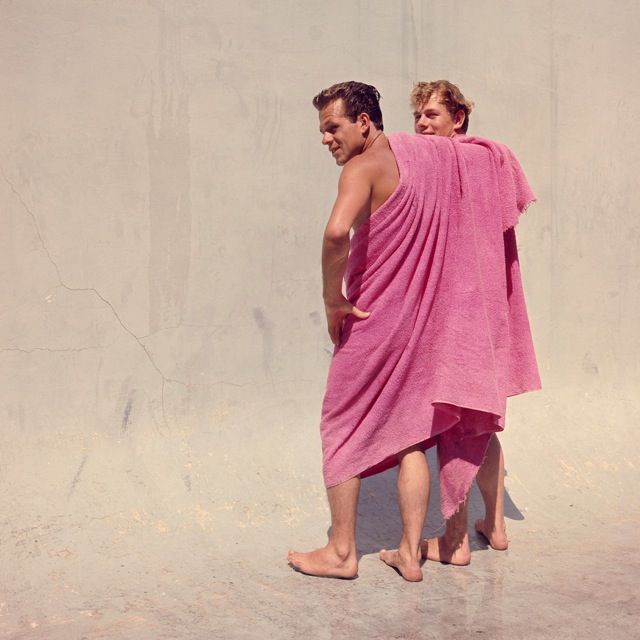
 

Bob Mizer (American, 1922-1992) 'Unknown, Los Angeles' 1972


Bob Mizer (American, 1922-1992)
Unknown, Los Angeles
1972
Vintage color transparency
Cibachrome print
10.5 x 10.5 inches
Edition of 5
Printed in 2012


Bob Mizer (American, 1922-1992) Production still from "Boy Factory", 1969


Bob Mizer (American, 1922-1992)
Production still from “Boy Factory”
1969
Vintage large-format black and white negative
Silver gelatin print
16 x 20 inches
Edition of 3
Printed in 2012


Most widely known as a photographer-filmmaker, independent publisher, and midcentury iconoclast, Bob Mizer (1922-1992) was an erotic auteur and a lyrical chronicler of the pre-Stonewall demimonde. In his meticulously staged idiosyncratic private work, Mizer revealed himself as a conscientious artist of intimacy and depth, a visionary stylist of the male-on-male gaze as it was refracted through a culture suffused with masculine iconography, which yet stymied and redirected the vectors of desire. The objects and photographs here show Mizer to be the progenitor of a new kind of devotional work that honours the kaleidoscopic typology of desire in the final stages of the underground era, while approaching it simultaneously as an improvised and mesmerising ethnography.

Mizer founded the Athletic Model Guild studio in 1945 when American censorship laws permitted women, but not men, to be photographed partially nude, so long as the result was “artistic” in nature. In 1947 he was wrongly accused of having sex with a minor and subsequently served a year-long prison sentence at a desert work camp in Saugus, California. But his career was catapulted into infamy in 1954 when he was convicted of the unlawful distribution of obscene material through the US mail. The material in question was a series of black and white photographs, taken by Mizer, of young bodybuilders wearing what were known as posing straps – a precursor to the G-string.

Upon his release from prison, he continued working undeterred, founding the groundbreaking magazine Physique Pictorial in 1951, which also debuted the work of artists such as Tom of Finland, Quaintance and many others. Models included future Andy Warhol superstar Joe Dallesandro, actors Glenn Corbett, Alan Ladd, Susan Hayward, Victor Mature, and actor-politician Arnold Schwarzenegger.

Throughout his long career he produced a dizzying array of intimate and idiosyncratic imagery, some flattened of explicit content but bathed nevertheless in an unmistakable erotic glow – tributes to the varieties of desire. Although Mizer’s studio was successful, his influence on artists ranging from David Hockney (who moved from England to California in part to seek out Mizer), Robert Mapplethorpe, Francis Bacon, Jack Smith, Andy Warhol and many others is only now beginning to be more widely appreciated.

The works collected in Bob Mizer: ARTIFACTS include a rare selection of staged tableux, images of California subcultures and an intimate collection of objects from various private sessions – preserved by Mizer along with photographs, films, videos and an ever-expanding catalog of props which over time evolved into a haphazard private museum and a natural history of American desire.

Press release from the Invisible-Exports website
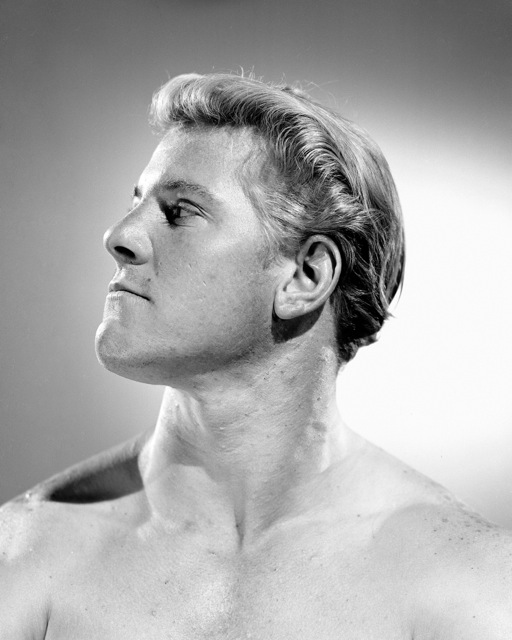
 

Bob Mizer (American, 1922-1992) 'Jim Carroll, Los Angeles' c. 1951


Bob Mizer (American, 1922-1992)
Jim Carroll, Los Angeles
c. 1951
Vintage large-format black and white negative
Silver gelatin print
10.5 x 8.4 inches
Edition of 5
Printed in 2012


Bob Mizer (American, 1922-1992) 'Bill Holland, Los Angeles' c. 1951


Bob Mizer (American, 1922-1992)
Bill Holland, Los Angeles
c. 1951
Vintage large-format black and white negative
Silver gelatin print
10.5 x 8.4 inches
Edition of 5
Printed in 2012


Bob Mizer (American, 1922-1992) 'Beau Rouge, Los Angeles' c. 1954


Bob Mizer (American, 1922-1992)
Beau Rouge, Los Angeles
c. 1954
Vintage large-format black and white negative
Silver gelatin print
10.5 x 8.4 inches
Edition of 5
Printed in 2012


Research at the Kinsey Institute, Bloomington, Indiana

16/08/1999 – 19/08/1999

This research was undertaken as part of my Phd research Pressing the Flesh: Sex, Body Image and the Gay Male at RMIT University, Melbourne.

~ Male homosexual catalogue photographs from the Collection at The Kinsey Institute
~ George Platt Lynes photographs from the Collection at The Kinsey Institute
~ M2M sex photographs from the Collection at The Kinsey Institute
~ Notes on physique culture photographs and magazines from the Collection at The Kinsey Institute
~ Baron von Gloeden photographs from the Collection at The Kinsey Institute


Male homosexual catalogue photographs from the Collection at The Kinsey Institute

Image No. 543-280. Frontier Club, San Diego, California.
**Mr. America – Plus** Frontier #11. Catalogues and ads, December 1967
Image No. 543-281. Frontier Club, San Diego, California.
**Mr. America – Plus** Frontier #5. Catalogues and ads, December 1967

Proof sheet photographs cut up and taped down onto card and the rephotographed. #11 features a solo young man, naked except boots and hat, posing with whip. #5 features natural boys in shorts, shirts, wrestling, one punching the other’s stomach, holding each other just wearing underwear. Really cute, natural bodies and photographs. Some posing by photographer. Lighting obviously just by table lamps or lights, very amateur, but all the more intriguing and interesting for that.

Image No. 2667-9. Anonymous. Nd Acquired 1951

Image No. 2669 is a duplicate of No. 2667. 8″ x 10″ sheet of proofs 6 side by 6 high, each proof oblong in shape. Originally folded in four and now flattened out.

2 men, possibly 3 (hard to tell from small proofs), in the country by a river/pond, diving, fishing, posing, lifting weights, rocks, rowing boats together, archery, playing tennis, wrestling, running. Sunbaking side by side, one back down, the other stomach down on a rock by the river, great bodies – some of the most beautiful physique photographs, if not THE best in the whole collection. Need to have negatives made and printed! 2 men have great bodies, smooth, built, and great poses and rapport with each other. Strong sunlight. They have painted on posing pouches, so originally they must have been nude photographs. American. Social setting and context is interesting – theirs or a friends country property? (tennis courts, lake, etc., …) enabled the privacy needed to photograph them like this, so from a moneyed social class.

Image No. 2864-5. Anonymous. Nd 1950s? Chicago Police Dept., Acquired 05/1961

Image No. 2864. 12 models on a 3″ wide x 4″ high page.
Image No. 2865. 4 models on a 2″ wide x 4″ high page.

Rare physique photographs of nude men with erections. Some are shot using double flash or lights in a house (skirting board visible). A couple on an unmade bed and others in a studio setting with nothing behind. Most models are smiling! Same photographer in both proof sheets as curtain behind bed features in both sheets. Also numbered sequentially 1-12 for first sheet, 13-16 for second sheet.


George Platt Lynes photographs from the Collection at The Kinsey Institute

It is interesting to note that most of the photographs list the names of the models used but I am unable to print them here due to an agreement between GPL and Dr. Kinsey as to their secrecy. Also most of the photographs have annotations in code on the back of them giving details of age, sexual proclivities of models and what they are prepared to do and where they were found. This information gives a vital social context to GPL’s nude photographs of men and positions them within the moral and ethical framework of the era in which they were made. I hope that one day this information, along with the names of the models, can be made available to the public to give them a greater insight into the development of GPL’s personal aesthetic as well as the development of the visible erotic desire of the male body by and for other men during the 1940s-1950s.

Untitled Nude. 1944

Photograph of a well built older (about 25?) nude man reclining on a bench with a high back. Lit by one spot on body forming heavy shadows with the backdrop lit to form outline of body against it. Head is tilted back so face not visible, left arm flung out. man is smooth, toned and quite hunky. Hairy legs with one knee in air. This is a very passive pose and the genitalia are hidden in deep shadow as though afraid to be revealed. Despair/sex/anonymity?

See Kinsey Institute and Crump, James. George Platt Lynes: Photographs From the Kinsey Institute. Boston: Bulfinch Press, 1993, Plate 16.

Some earlier nudes especially portrait of Reginald Beane, 1938, have a very Man Ray quality too them. See Kinsey Institute and Crump, James. George Platt Lynes: Photographs From the Kinsey Institute. Boston: Bulfinch Press, 1993, Plate 47.

Untitled Nude. 1953

Black man lying on a white mattress in a horizontal position, the top of mattress showing creases in the sheet covering it. Photographed from slightly higher than the prone body, horizontal print. This photograph is an exercise in tonal scale and lighting / textures. Beautiful light on body. The image is divided into different planes and spaces.

See Kinsey Institute and Crump, James. George Platt Lynes: Photographs From the Kinsey Institute. Boston: Bulfinch Press, 1993, Plate 57.

Male Nude Hanging. 1940

Close up of fuller length photograph of 1940 Crucifixion showing agony on face, shaved armpits(!) and pubes, legs, ropes cutting into wrists. Beautiful cool brown / grey tonality to print. Lighting is from two sides as can be seen by the shadows formed on the body and the backdrop. Quite a feminine image I feel, with the heavy eyebrows, very smooth ephebe body and the lean of the torso. Print is more tonal than the reproduction in the book.

See Kinsey Institute and Crump, James. George Platt Lynes: Photographs From the Kinsey Institute. Boston: Bulfinch Press, 1993, Plate 75.

Untitled Nude. 1955

Tanned older (25?) nude man with hanging big cut dick standing in front of graffiti wall. Head back and eyes closed, not engaging with the camera. Tan line of shorts very visible. Beautiful smooth body, and lovely skin tones in print.

Untitled Nude. 1952

This photograph has much more life than the reproduction in the book. Every hair on his chest GLOWS. The grey of the print is more intense and the print darker overall. The arm of the left hand side of the print is not so blown out and the hands have more of a feeling of suspension to them.

See Kinsey Institute and Crump, James. George Platt Lynes: Photographs From the Kinsey Institute. Boston: Bulfinch Press, 1993, Plate 41.

Male Nude. 1951

Paper negative? Smooth, young man lying on his back, breathing in, thin waist, arm behind head, looking straight into camera. Backdrop lit by two spots to outline body. Horizontal print with lots of negative space above body. Those eyes really get you and the tufts of pubic hair really stand out in the original photograph. Outline shape is amazing and the reproduction does not do it justice. Real presence. One of the most moving prints yet. It is a privilege to see it!

See Kinsey Institute and Crump, James. George Platt Lynes: Photographs From the Kinsey Institute. Boston: Bulfinch Press, 1993, Plate 72.

Untitled Nude. 1954

Young man on left hand side of photograph wearing necklace, ring on right hand, tattoo of rose on right forearm, rocker haircut, looking down and away from camera. Darker figure. Another smooth, youthful male form behind opaque screen has hand reaching for first figure, touching him with left hand. Lighter figure with tattoo on left hand bicep. Print is mid to light grey in its tonality. Very homoerotic.

Untitled Nude. 1952

Beautiful photograph of a nude young male sitting on a work bench table in a derelict building, 2 windows behind him to either side. His body is very smooth and he has a cut dick. His arms are out behind him on table to support his body which is leaning back. One leg is hanging over edge of table whilst the front leg is raised with knee in the air with the foot resting on the edge of the work bench. The background is lit from the left and the figure is lit from behind and above – great lighting.

Strong use of chiaroscuro and opposite way lighting in later photographs. There are several photographs of men in unmade beds, genitalia showing or face down showing butts off.

Untitled Nude. 1946

One such photograph shows 2 boys lying in single unmade beds next too each other. The second young man is way out of focus in the background. These are not studio shots any of these. They are much more personal. In this photograph the erect, stiff, nodular end post of the bed is like a metaphor for an erect penis, the opposite side of flaccid one of the young man on the bed nearest the camera. The young man has his one hand on his stomach and the other behind his head, eyes closed, as though he is asleep. Flash or strong lights? Definitely flash.

Untitled Nude. 1953

Same backdrop but different pose from Plate 61 in Kinsey Institute and Crump, James. George Platt Lynes: Photographs From the Kinsey Institute. Boston: Bulfinch Press, 1993. Here one of the men has his hand under his chin, arm resting on folded knee, looking down at prone body which is face down beside him. Young man face down has cute butt with tan line. Beautiful tonal print, especially skin tones.

Image No. 141. Untitled Nude. 1942. Acquired GPL 1950

Beautifully toned photograph of a young man kneeling on a mattress with feet hanging over its edge. Backdrop is lit to give outline and form to shoulders / head and fade into darkness above. His balls hang down between his legs and you can see every hair on them. Young man has a cute butt. Photograph is very erotic, very suggestive of anal penetration, and very about form as well.

Image No. 144. Untitled Nude. 1953. Acquired GPL 07/1955

Strong image always quoted as an example of GPL’s more direct way of photographing the male nude in the last years of his life. Male is solid, imposing, lit from above, heavy set, powerful, massive. Eyes are almost totally in shadow. Later photos have more chiaroscuro possibly, more use of contrasting light (especially down lit or up lit figures) but are they more direct? Yes. Models look straight into camera.

See Plate 59 in Ellenzweig, Allen. The Homoerotic Photograph. New York: Columbia University Press, 1992, p. 103.

Image No. 153. Untitled Nude. 1953. Acquired GPL 07/1955

Really strong image of older man sitting on edge of bench, cropped mid thigh and under mouth. Image shows hairy chest, arms, legs, cut dick and great definition of abdominals. Tan line visible, skin tones in print are just above mid grey. Really good shadows on stomach, under pecs. Lit from above, softbox?

Image No. 186-194. Untitled Nudes. 1951. Acquired GPL 09/1954

Whole series of studio shots of male butt and arsehole in different positions. Quite explicit. Some close-up, others full body shots with legs in the air. Not his best work but interesting for its era. Very sexually anal or anally sexual! As in GPL’s work, very about form as well. In one photograph a guy spreads his cheeks while bending over from the waist, in another photograph he spreads his cheeks while standing slightly bent forward.

These are the most explicit of GPL’s images in the collection that I saw, though perhaps not the most successful or interesting photographically. 8″ x 10″ contact print.

See Kinsey Institute and Crump, James. George Platt Lynes: Photographs From the Kinsey Institute. Boston: Bulfinch Press, 1993, Plate 78 for an image from this series.

It is interesting to note that George Platt Lynes photographed his own erect penis as early as 1929, although this photograph is not present in The Kinsey Institute Collection and belongs to The Collection of Anatole Pohorilenko (See Crump, James. “Iconography of Desire: George Platt Lynes and Gay Male Visual Culture in Postwar New York,” in Kinsey Institute and Crump, James. George Platt Lynes: Photographs From the Kinsey Institute. Boston: Bulfinch Press, 1993, p.151, Footnote 19).

I also did not see the photograph titled “Erection, c. 1952,” (See Figure 29 on page 255 of the Hard copy of the Project notes; Crump, James. “Iconography of Desire: George Platt Lynes and Gay Male Visual Culture in Postwar New York,” in Kinsey Institute and Crump, James. George Platt Lynes: Photographs From the Kinsey Institute. Boston: Bulfinch Press, 1993, p.153), while at The Kinsey Institute which illustrates this article. This is the most sexually explicit photograph of GPL’s that I have ever seen but there is no accreditation listed for this photograph in a book which is subtitled ‘Photographs From The Kinsey Institute’. Is this photograph part of The Kinsey Collection and if it is, why didn’t I see it when I was researching there?

Image No. 457. Untitled Nude. 1955

Man on an unmade bed staring into camera. Tattoo of ‘Chuck’ on upper left arm bicep / shoulder. Older man with tan line and cute butt. Behind is a dark, dark background of a bedroom with a Venetian blind over a window, plant just visible in front of it, bookcase in back right of photo, down light from table lamp highlighting books on side table. Printed down background to make it darker? Man stares straight into camera with a penetrating gaze – presence, engagement, defiance! After sex? Before sex? with GPL? Photograph is blurred so slow shutter speed and tungsten lighting. The white highlights of sheet nearest camera are almost blown out by lighting. Very personal and beautiful photograph placing the male body in bedroom available for sex with another male.

See Plate 50 in Ellenzweig, Allen. The Homoerotic Photograph. New York: Columbia University Press, 1992, p. 93.

Image No. 481. Untitled Nude. 1941. Acquired GPL 10/05/1950

Two young men stretched out, intertwined legs and arms, very sensual pose. Horizontal print. Lots of darker negative space above the bodies. Backdrop lit to highlight body outline – usual GPL trademark.

Image No. 482.Untitled Nude. 1941. Acquired GPL 10/05/1950

2 smooth young men, ephebes, about 19 years old, one cut off at the waist, leaning backwards and resting on others stomach. Both have blond hair and the young man at front has his right hand resting on his chest, eyes closed. Rear figure has his head turned away from the camera.

See Plate 52 in Ellenzweig, Allen. The Homoerotic Photograph. New York: Columbia University Press, 1992, p. 95.

One of the best images in the collection. Very evangelical and homoerotic at the same time.

Image No. 483. ‘Charles ‘Tex’ Smutney, Charles ‘Buddy’ Stanley and Bradbury Ball’. 1941. Acquired GPL 10/05/1950

Studio shot of 3 smooth, nude young men in various positions on an unmade mattress bed sitting on GPL’s studio floor. All three young men are intertwined with a white sheet covering some of the bodies and faces. Dark chair in background has clothes lying on it. Lit from above left. Skin tones in print are just above mid grey. According to Leddick, David. Naked Men: Pioneering Male Nudes 1935-1955. New York: Universe Publishing, 1997, p. 21, the names of the models are as above and come from a series of 30 photographs of three boys undressing and lying on a bed together. Image No. 483 and 484 come from the same series as the reproduced photograph.

Image No. 484. ‘Charles ‘Tex’ Smutney, Charles ‘Buddy’ Stanley and Bradbury Ball’. 1941. Acquired GPL 10/05/1950

Different pose from above. No genitalia visible. No touching each other. Darker print than above. Beautiful tone of print.


M2M sex photographs from the Collection at The Kinsey Institute

Image No. 54106-7. M. Koch – O. Reith. ‘Der Act’. Acquired 1946

Early (1880-1910?) male nude photographs used as models for other artists. 2 older males together supporting the pediment of a Roman column, themselves taking the place of the column. In Image No. 54107 they have their arms around each other. Just natural male bodies, smooth, moustaches, uncut.

Image No. 54112. Anonymous photographer. Nd Acquired Chicago Police Dept. 05/1961

VERY RARE location shot of male nudes at baths(?) White nude male laying down, with black man doing handstand on his shins, back to the viewer. In the background is another nude black man, partially visible. Hanging up on pegs behind him are 5 singlets and 1 pair of underwear. Small photograph 2” wide by 4” high. Significant in that the photograph appears to be at the baths, shows interracial nudity and M/M contact.

One of the most significant photographs in the whole collection in my opinion. The sexologists of the era did not collect photographs of gay men and their bodies in social contexts, preferring instead to concentrate on photographs of M/M bodies engaged in sexual acts or physique photographs taken in the studio which generally do not have any context in relationship to the outside world. I know they did not have much of a choice in the material offered to them but surely there must have been photographs of gay men in the park, at the beach lying next too each other. In contemporary research we would embed such photographs within broader situational contexts and theoretical analyses.

Image No. 543-280. Frontier Club, San Diego, California.
**Mr. America – Plus** Frontier #11. Catalogues and ads, December 1967
Image No. 543-281. Frontier Club, San Diego, California.
**Mr. America – Plus** Frontier #5. Catalogues and ads, December 1967

Proof sheet photographs cut up and taped down onto card and the rephotographed. #11 features a solo young man, naked except boots and hat, posing with whip. #5 features natural boys in shorts, shirts, wrestling, one punching the other’s stomach, holding each other just wearing underwear. Really cute, natural bodies and photographs. Some posing by photographer. Lighting obviously just by table lamps or lights, very amateur, but all the more intriguing and interesting for that.

Image No. 55201. Anonymous. Nd Acquired Edina Minneapolis Police Dept., 01/1962

Small photograph 2″ wide x 3″ high. Interior. Male nude with hips thrust to one side, right leg splayed outwards, smooth, uncut, holding cane in left hand and top hat on his head at a rakish angle with right hand. Backdrop probably a Japanese fabric of bamboo canes. Very effeminate photograph of a young nude man in a bedroom possible (?) – very personal.

Image No. 55202. Anonymous. Nd Acquired Chicago Police Dept., 05/1961

Nude man in gaiters (1920s-1940s?), uncut, watch on left hand, drinking from small silver cup which hides mouth. Right hand holds half smoked cigarette. Body has no shape about it at all – really strange. In the background is a standard lamp, skirting board and striped wallpaper. Flash or lamp lit. Personal / private photograph.

Image No. 55203. Anonymous. Nd Acquired Chicago Police Dept., 05/1961

Young man, nude, uncut, flattened against interior wall covered with Arabic scene of horses, men and tigers above skirting board and wooden floor. Possibly 1930s. He has a tattoo on right forearm and the most amazing tan line from wearing shorts and singlet. His body has no shape to it at all, he has thin arms and is about 20-22 years old. Really unusual to see such a tan line, possibly from a bathing suit. With the background, I would say it positions this man socially in the upper classes and is interesting for its social contextualisation of the male body.

Image No. 55259. Anonymous. Nd Acquired Chicago 1940

Photograph one and a half inches square of male nude approx. 25-28 years old, smoking a cigarette, in slip on shoes, standing in front of what looks like army tents with trestle tables inside them. Body is natural, no real shape, smooth, man is smiling.

Image No. 55260. Anonymous. Nd Acquired Chicago Police Dept., 05/1961. 385971

Male nude with dark hair, three quarters side profile standing in lounge room. Very Diane Arbus. Table lamp with big shade and 2 tiered side table. Vinyl chair behind. Print on wall is nearly completely hidden, curtain to top right hand side with wood grain wall as well. Beautiful man, serene, calm, relaxed in his own body – ONE OF THE BEST PHOTOGRAPHS. Flash was used as heavy shadow of man outline falls on the wall behind. Body is smooth, hunky but not a bodybuilder. Cut dick. Hands by side. Nice face, smiling, looking at camera.

Really like this photograph as the man is comfortable in showing off his body in front of the camera yet not really posing or puffing himself up. He and his body are aware but relaxed and just so.

Image No. 55042. Anonymous. Nd Acquired O.W. 05/1954

Small photograph 2″ wide x 3″ high of young nude man sitting in car facing out of the open passenger side door with his trousers down below his knees. Left hand is resting on knee and the right hand is pinned against the seat by the weight of his own body. Uncut dick. Curly dark hair, eyes closed. Car has stick shift left hand drive (American) probably early 1950s. Body is smooth, boyish and young man is about 17-19 years old.

Just before or after sex? Intimacy? Photograph positions the body in an era and specific situation. Was he about to be sucked off? Was he being forced into pulling his pants down and being photographed? I don’t think so from the closed eyes and position of the body within the car. Lover is the photographer?

Image No. 55087. Anonymous. Nd Acquired McG. NYC 1946

Photograph approx. 7″ wide by 5″ high. Smooth young man, about 18, eyes closed, wavy hair, leaning back on one hand on sandy beach. Right hand leg rests on lower of 2 wooden steps. Right hand rests on knee of right leg. Cut dick. Smiling. Lake in background with 3 sailing boats on it, one with sail up and 2 people in it. Pair of shoes sits on second step.

Beautiful photograph – intimacy, again possibly a lover has taken this photo, and it has some context to it – shoreline and people sailing boats in the background, steps leading to holiday shack? Young man is beautiful, happy and at ease in his surroundings, his company and in his own body.

Image No. 54768-54779. Anonymous. Nd Figure Set 41. 1960s(?)

All photographs 3″ wide x 4″ high. 2 nude men, about 25-30 years old, in bedroom, mirror on front of wardrobe, flowers in vase on dressing table, bed, flower patterned wallpaper, window behind dressing table. One man is hairy and cut, the other smooth and uncut. They are using a measuring tape (in inches) to measure each others necks, arms, chests, waists and calves in this series of photographs. Both men are smiling at each other and at other people off camera and are totally unaffected by the cameras presence in one respect whilst posing for it in another. Flash used. In some of the photographs the smooth man has his hand on the others head (for balance?) No, probably lovers.

Great series of photographs, very natural using built bodies in a bedroom setting (their own?), measuring and showing off the results of their bodybuilding. The images are quite a laugh and they are obviously comfortable and having a good time too! Much less formal than the usual physique photograph and show an intimacy between the two models, plus a context for that intimacy, the bedroom.

Image No. 41601. Anonymous. 1935+-. Acquired 1948

Annotation: Swedish boy named Gustav(?) Young man in trousers, white shirt, hair parted down middle, holds a Gladstone bag. He is smiling. House in background with women pulling kid along which is blurred in middle distance. Slim, natural body especially arms.

Image No. 41602. Anonymous. 1935+-. Acquired 1948

Annotation: Took him to baths in Germany. Same young man as above now in a one piece bathing suit, hair wet, slicked back. SLIM, beautiful boy. He is sitting on sand. People lying on beach in background including another boy who is out of focus.

Image No. 41602. Anonymous. 1935+-. Acquired 1948

Annotation: Met in Navarin Masquerade, 1932. Same young man lying on towel on beach, Gladstone bag behind him. Very smooth young man, very Horst P. Horst model. Wearing a one piece bathing suit pulled down to his waist.

Good set of 3 photographs because it shows this young gay man in a variety of different settings posing for the photographer who he obviously knows from the annotations. Relaxed in his body and his surroundings. Perhaps they are on holiday together?

Image No. 41607/41610. Anonymous. c. 1946. San Francisco. Acquired 1958

4 guys in various uniforms, table in front of them filled with alcohol. Hands on each others crutches. Second photograph has friends with Navy coats on coming in door. Like stills from a film?

Image No. 41612. ‘Ray Baker’. c. 1946. Acquired 1950

Annotation: Donny 16-17 years. Bob 25 years. Donny seated, nude, socks on, reading a bit of paper. Bob, standing, hand on Donny’s inner thigh, bent over reading bit of paper as well. Donny is very slim ephebe, beautiful, smooth. Bob is older, hairy chest. Look like a married couple. Very good image.

Image No. 41614. Set of CK. 1950s. Acquired 1953

2 young men nude in shower, back shot with bums.

Image No. 41615. Set of CK. 1950s

Acquired 1953. Same young men, frontal shots in shower, very smooth, not built bodies.

Image No. 44224. Anonymous. 1928-1935. Acquired 1961

2 men sitting on a couch, naked , one with arms crossed looking into camera, smiling, tapestry on wall behind. Older men – 30s? Not young men which is unusual in these muscular mesomorphic photographs. They sit side by side, feet touching, knees touching. Everyday bodies. Good for its openness and body-images.

Image No. 44228. Anonymous. 1935+. Acquired 1947

Beautiful image. 2 slim young men, one seated, one standing by a pond.

Image No. 44263. Anonymous. 1940s?

Good photograph of 2 older men, hairy, naked, with their arms around each other. No erections. Smiling at camera.

Image No. 44426. Anonymous. n.d. 1950s?

2 young men in bathing trunks, standing, hugging each other on a beach, sea behind. Very good photograph.

Image No. 44526/44532. Anonymous. n.d. 1960s?

2 nude young men, one with arm around others shoulder with the guy on left looking warily at the camera. Natural bodies. Small 2″ square print. Image No. 44532 has them seated, laughing and is a much better photograph, less self conscious.


Notes on physique culture photographs and magazines from the Collection at The Kinsey Institute

This section includes my research notes on the physique culture photographs held in the collection at the Kinsey Institute by the photographers listed below. It also includes a description of early homosexual magazines held by the Kinsey Institute.

1/ Bruce of Los Angeles: Project notes pages 343-345
2/ Detroit: Douglas: Project notes page 346
3/ Dick Falcon: Project notes pages 346-347
4/ Melan: Project notes page 347
5/ Bob Mizer/AMG: Project notes page 348
6/ Karl Eller: Project notes pages 348-349
7/ Anonymous: Project notes page 349
8/ Al Urban: Project notes page 350
9/ Bob Mizer/Physique Pictorial: Project notes pages 350-352
10/ Physique culture & early homosexual magazines: Project notes pages 353-354


1. Bruce of Los Angeles

Image No. 52001. Bruce of Los Angeles. 1942-1950. Acquired 1950

Grey backdrop. Young man, nude, about 19, with curly wavy blond hair leaning back with arms behind back. Smooth, toned body with tattoo of owl. Good dick sticking straight out with big fat erection. Young man is looking into camera. Diffused (soft box?) lighting. Doesn’t hide his face to hide his identity – quite open towards camera.

Image No. 52002. Bruce of Los Angeles. 1942-1950. Acquired 1950

Same young man/backdrop. Radio and curtain to right. Carpet floor. Interior of house so shoot not done in the studio. Dressed in sailors uniform with white cap on. Big hands, crossed and clasping each in front of him. Slight shadow on backdrop.

Image No. 52003. Bruce of Los Angeles. 1942-1950. Acquired 1950

Same young man/backdrop, nude, reading a newspaper while being sucked off by an older man dressed in white shirt with cufflinks, stripped trousers, black socks. Young man wears only socks and lace up shoes, watch on left arm, bracelet on right arm. Must be tungsten lighting because boys upper body is slightly blurred.

Image No. 52004. Bruce of Los Angeles. 1942-1950. Acquired 1950

Same young man, backdrop. Frontal pose, with hands behind back. Limp, cut dick. Staring straight into camera. Tattoo of hearts and word ‘mom’ visible of left bicep. Wearing black socks and shoes.

Unusual in that this series shows erections and sexual activity within a specific context and environment (the home) and between an older and younger man.

Also unusual is that these photographs are by a physique photographer, obviously not for publication but for private consumption. These are the only photographs that I found during research at The Kinsey Institute that were explicitly sexual in nature taken by a physique photographer.

Image No. 52005. Bruce of Los Angeles. Acquired 1966

Young man, dark hair, wearing white posing pouch leaning against tree, one arm behind him holding tree, other raised behind his head. Long grass around. Good arms, chest, stomach development. Must have been nearly midday as the shadow of his head is cast onto neck and upper chest. Eyes are closed and looking down, leaving body open for inspection / adoration without challenge of return gaze. Matt surface to print.

Image No. 52006. Bruce of Los Angeles. Acquired 1950

Annotation: Tom Matthews, 24 years old. Older man, dark hair. Big pecs, arms, tanned, hairy arms and chest, looking down and away from camera. Nude, limp cut dick. Sitting on a pedestal which is on a raffia mat. Metal chain wrapped around both wrists which are crossed. Lighting seems to be from 2 sources – high right and mid-left. Unusual in that this physique photograph shows an older, hairy man who is nude.

Image No. 52010. Bruce of Los Angeles. 1948

Numbered 7-12. 6 small (1.5” wide by 2” high) photographs of older (22-25?) muscleman posing outside near a stream with mountains in the background. Mounted on one piece of card. He wears white posing pouch and has BIG arms, chest, back. Real bodybuilder. Tattoo on right bicep.

Image No. 52011. Bruce of Los Angeles. 1948

Numbered 13-16. Same guy as above now posing with an older blond well built man in 3 photographs mounted on one piece of card. Both posing in bathing trunks using fencing swords as props! Both very big men, arms, chest, lats, etc. …

Image No. 52012. Bruce of Los Angeles. 1948

Numbered 17-20. Blond man from above series posing alone but still with fencing sword. Again 3 photographs mounted on one piece of card. Same location used for all 3 series. I think these photographs dispelled the myth that I had built up that all of Bruce of Los Angeles photography was studio based.

Image No. 52017-20. Bruce of Los Angeles. 1950

Annotation: Lewis Tan, 21 years old and Tom Matthews, 24 years old. Taken outdoors, full sunlight / shadow, mountains in background. Wrestling photographs using same raffia mat used in Image No. 52006. Quite erotic. Posed but usually only arms grasping each other. Not full body contact. Developed bodies, masculine, biceps straining, wearing posing pouches.

Image No. 52021-23. Bruce of Los Angeles. 1950?

Annotation: Bert Elliot (stud), 20 years old and Hector De Hoyos, 19 years old. Wrestling, beautiful action shots taken in sand dunes. Both are cute, have dark hair, smooth, tanned bodies and are wearing posing pouches. 8″ x 10″ prints. More full body to body contact in these photographs.

Image No. 52029. Bruce of Los Angeles. 1950

Annotation: Bulldog Football Team. All Married. 3 naked men with dark hair drying themselves after a shower. Bench with cigar a towel on foreground. Location shot using flash. Naturally hairy bigger bodies. Good photograph a la Diane Arbus mould.

Image No. 52062. Bruce of Los Angeles. 1950

Annotation: Dick Fowler 17 years old. Nude, slim body, dark hair with cut dick standing on a beach in front of a water fountain. Typical ephebe. Pylons in background. Strange photograph.


2. Douglas: Detroit

Image No. 52068. Douglas photographer. Detroit. 1946

Annotation: Guy, age 28, Persian descent, Ht 5’10”, Wt 165, skilled factory operator. Hair over whole chest and abdomen shaved off. Posing in nude with trees in background. Triumphant pose with clenched fists.

Interesting to note that body hair has been shaved off before photo shoot. Douglas seems to have photographed a lot of Polish models from the images with annotations that I have seen. His photographs seem to hark back to the more stylised 1930s era.


3. Dick Falcon

Image No. 52202. Models of Dick Falcon. Columbus, Ohio. NYC 1949

2 blond (one slightly darker than the other) haired young men with smooth bodies, washboard abs, limp cut dicks. One young man is standing in water, one sitting on a log. 8″ x 10″ print.

Image No. 52206. Models of Dick Falcon. Columbus, Ohio. NYC 1949

Same young men as in Image No. 52202. Looking away from camera, smooth, washboard abs, limp cut dicks standing in front of a fallen tree. Holding hands – not fully clasped hands but just resting there. Very sensitive photograph. They feel like lovers to me. Small photograph approx. 3″ wide x 4″ high. Very contrasty image. What definition the right hand boy has!! Long and lanky, slim and not big, really toned ephebe.

Image No. 52218. Models of Dick Falcon. Columbus, Ohio. NYC 1949

Same young men as in Image No. 52202-6. Lighter blond haired young man is balanced on one shoulder of other young man.

Image No. 52229. Models of Dick Falcon. Columbus, Ohio. NYC 1949

Same young men as in Image No. 52202-6. Lighter blond haired young man balanced on other man who is on all fours. Blond young man smiling with one arm raised in the air, looking at camera. Other boy looking away. Natural bodies, outdoors.

Strange set of photographs reminds me of later Diane Arbus photographs of nudist camp. Most of this photographers studio work harks back to a more stylised classical romantic tradition.


4. Melan

Image No. 52276. Melan. Numbered 298-306. NYC 1940

Proof sheet of young man at waterfall wearing black posing pouch. One of the best bodies I’ve ever seen photographs of. Tall, beautiful face, abs for days, chest not that big, good arms. Great poses outdoors, sensitive – like to see enlargements! One lying on a rock in a crucifix position. One where he is sitting on edge of rock with feet in water – WOW! Not massively big but what a body and the small size of the images makes them all the more intriguing.

Image No. 54643. Anonymous. Nd (possibly Melan). NYC 1946

5″ x 7″ print off proof sheet above that I said was the most beautiful body that I’d ever seen! Bad print, bottom half of print loosing its tonality, fogging out. Still a magnificent body, really long legs, amazing stomach. By a waterfall, arms outstretched, cut dick. My attribution.


5. Bob Mizer / Athletic Model Guild

Bob Mizer set up AMG in 1945 to photograph male bodybuilders and it is now the oldest male model photography studio in the United States of America. All models in the photographs that I studied were well built, smooth, toned. Lots of outdoor shots! Models are usually quite young (18-22 approx.) Tiny waists and v shaped. For example Image No. 51820. 3 studio portraits of one smooth boy featuring twisted back, arms and torso to great effect. Total v shape. Lots of erotic wrestling photographs from AMG as well.


6. Karl Eller

Image No. 51844. Karl Eller. 1949

Annotation: Ex-German. Unusual shot of male lying on stomach in sunlight/shadow with flowers in hair. Small photograph 5″ wide x 3″ high. Screen behind. Quite sensitive. More an art photograph that just a physique study?

Image No. 51846. Karl Eller. 1949

Same young man, standing, back/side on, head turned so looking into camera. Private reflection/moments. Maybe the photographers lover? Flowers in hair reminder of Fred Holland Day’s Dionysian photographs of ephebes.

Image No. 51848. Karl Eller. 1949

Same young man looking to left, fontal nude. 2 screens behind, one covered with flowered wallpaper (dark), the other with a leaf design wallpaper (light).

Image No. 51850. Karl Eller. 1949

Same young man in a reverie. Much more intimate than usual physique photography.

Image No. 51852. Karl Eller. 1949

Same young man in same positioning as Image No. 51848 but hand to mouth in a pensive mood.

Image No. 51853. Karl Eller. 1949

Same young man by an open window, nude, uncut dick, sunlight falling on chest, flowers in hair. Head turned away from sun so in shadow. Looking down and not into camera. Must be about 18-20 years old.

This series is using the romantic ideal of the young ephebe. It is much more intimate than the usual physique photography images and I wonder what it is doing in this section of the archive?

Present in The Kinsey Institute collection were a lot more nude photographs than were published. Really, most physique photographers used stock standard poses across the board. An exception to this rule was one of the most interesting series of photographs in the collection. It was taken by anonymous photographer and is described below.


7. Anonymous

Image No. 51901-20. Anonymous. n.d. Donated by RES. Acquired 1952-1953

Fantastic series of studio photographs of several different bodies – some are built bodies and some are not. Black background, beautiful skin tones.

Difference: Close up of different body parts. Butts, chests, arms, cut off heads, arms/legs, just sections … in anticipation of Robert Mapplethorpe’s deconstruction of the body in his nudes. Did he see some of these? Interesting thought! Very art shots of buttocks, torsos. Very tonal like Edward Weston’s nudes or Steiglitz in some of his nudes of Georgia O’Keefe. Image No. 51912 shows close up of veins in arms and hair in armpit. 8″ x 10″ prints.

WOW! for the whole series.


8. Al Urban

Much more studio set shots than outdoors. Use of black background or white background. Mainly nudes in The Kinsey Institute collection. There is an occasional black nude (Image No. 53145 from 1949). Most prints are 8″ x 10″ but some, like Image No. 53145, are 3″ x 7″ approx.

Image No. 53247-8. Al Urban. 04/01/1949

Two dark haired young men, 17 and 18, posing nude, both cut. Both have all over tans, arms on hips, looking at each other, laughing kinda – both bodies ‘ripped’ and toned like you wouldn’t believe! Arms, pecs, 8 pak washboard stomachs, skinny legs. Not big built like a muscular mesomorph or bodybuilder but young men, toned and cut. Amazing definition.


9. Bob Mizer / Physique Pictorial

Image No. 52505-9. Bob Mizer. 1954

Annotation: Used by DA to show intent to exh pvt RCT. Both 4″ x 5″ contacts and 8″ x 10″ enlargements. Series of 12 photographs confiscated by police and used in the 1954 court case by the District Attorney to show intent to exhibit partially erect. What happened in court case? Obviously the charge of exhibiting partially erect did not stick but Mizer lost then won on the obscenity of the male rump: “Not long after the first issues of Physique Pictorial began appearing on the newsstands, the magazine drew the published comment of the columnist Paul Coates of the now defunct L.A. Mirror. Vice officers raided the AMG studio and a case was taken to court which Mizer lost. But the decision of an Appellate Court overturned the earlier ruling and declared that “the male rump is not necessarily obscene.””

Siebernand, P. The Beginnings of Gay Cinema in Los Angeles: The Industry and The Audience. Ann Harbor, Michigan: Xerox Microfilms International, 1975, pp. 44-45.

Although not showing nudes in publications such as Physique Pictorial, private photographs by Bob Mizer heavily feature nudity. Wide use made of projected backdrops – abstracts, leaves, mountains, ships, classical Roman ruins. 4″ x 5″ prints are much better than 8″ x 10″ enlargements. Annotations on back of both size images tell of models jobs and sexual orientation and what they will or will not do sexually if known. Interesting in that these annotations are usually the only thing that places the physical bodies in a social context. Studio shots really have no context. Outdoor shots have slightly more. Commentary helps define social and sexual structures of models.

Image No. 52514. Bob Mizer. 1948

Annotation: Charles Brant, 20 years old. Tried suicide because wife refused to take him back. 4″ x 5″ contact. Tiled floor (dark), white drapes both sides. Dark fabric backdrop. Ephebe body, smooth, looking right and up and out of frame. Hands held palm upwards and curled fingers, elbows slightly out from sides. Like he’d just cut his arms, or pleading. Did the photographer pose this in an imitation of an attempted suicide? Strong shadow behind – tungsten or flash? Disturbing photograph.

Image No. 52740. Bob Mizer. 07/01/1952

Great photograph of 3 bodybuilders at a contest. Left hand man seated looking off camera. Middle figure seated looking at figure behind both of them walking out of frame carrying huge trophy. Figure behind smirking at his prize!! To the right and back of photograph is a throne which is really symbolic. 4″ x 5″ contact.

Beautiful. One of the few less posed and more fluid photographs in the collection, shot on location.

Image No. 523-8. Bob Mizer. 28/10/1951

Later photographs such as this have more overt homosexual overtones. Backdrop of projected Italian style waterfront (steps, canvas umbrellas). 2 smooth men, one older, one younger, posing pouches, one held down by the other wearing a sailors cap. Pinned by wrists. Younger man underneath has head turned towards camera, eyes closed in a submissive attitude, very passive. Man on top looking down at his face. Has power over him.

Image No. 523-9. Bob Mizer. 28/10/1951

Same men, looking at each other, smiling, sitting side by side. Young man underneath in last photo has his arm around his “buddy,” both wearing sailors hats. At least 2-3 or possibly 4 lighting sources in this shot because of the shadows at different angles – strong and fill lighting.

Image No. 523-10. Bob Mizer. 28/10/1951

Younger man underneath now face down being hog-tied with the other guy kneeling on his back but upright, showing off his body, over him whilst using rope to tie him up. Good tonality to print, probably 4″ x 5″ contact? Older guy much bigger than younger guy.

Image No. 523-139. Bob Mizer. 27/09/1951

Image of bodybuilder in white trunks looking down about too lift weights. Guy crouched down over weights on tiled floor. Huge negative black space around him.

Image No. 523-140. Bob Mizer. 28/10/1951

Muscular mesomorph. Big legs, arms, chest, smile, everything!! Posing in black trunks with arms in S shape, fists clenched. Big negative black space around him.

Like the idea of using this large expanse of negative space above models in my own work. Some of his nude and posing pouch models have dirty feet. Walking around outside or on dirty studio floors.

Image No. 523-431. Bob Mizer. 28/10/1951

Two young men with dark hair in posing pouches walking along a train track, one on each rail, holding hands/supporting each other across the tracks. Tanned, built, abs, lats, lovers? Mountains and hills in the background.


10. Physique Culture and Early Homosexual Magazines

A. Tomorrow’s Man. Irving Johnson Health, 1952.

B. Body Beautiful. Montreal: Weider Publishing, 1955.

C. Adonis. Montreal: Weider Publishing, 1955.

D. Your Physique. Vol. 1, No. 1. Montreal: Joe Weider, August, 1940.

The first issue is really crude. Headings are hand done and filled in like kids graffiti. Typed content is on A4 pages. Hand drawings also. Only the cover uses magazine paper and it has a photograph printed on it. Cost 15c. The second issue is in a smaller format but is printed all on magazine paper and properly printed. Much more professional. Later editions are back to A4 size.

E. Vim – for Vigorous Living. Vol. 1, No. 1. Chicago: Victory Printing and Publishing Co., May 1954.

Small magazine about 5″ wide x 7″ high.

F. The Greyhuff Review. 1st Edition. Minneapolis, Minn: Directory Services Inc., 1965.

Homosexual magazine. Pictures of lithe, nude young men, articles, cartoons, social comment. “What is Obscenity?” “Discovery: Can a Young Man in a Small Country Town Find Happiness in the Great Big City?” “Is Punishment the Answer? Is There an Effective Way to Eliminate Homosexuality?” “The Public is Watching.”

2nd Edition.
Quotation: “The beginning of wisdom is the realization that there are other points of view than my own. Understanding those points of view is the next step. The final test of wisdom is understanding why those points of view are held.”

G. Der Neue Ring. No.1. Hamburg/Amsterdam: Gerhard Presha, November 1957.

Homosexual magazine.

H. Butch. Issue No. 1. Minneapolis, Minn: DSI Sales, 1965.

Homosexual magazine. Small 5″ wide x 9″ high ‘art’ magazine including nude posing.

I. Der Kries. No.1. Zurich: No Publisher, January, 1952.

Homosexual magazine. Typical photographs of the era in this magazine. No frontal nudity even up to the later 1965 editions. Lithe young men, drawings and articles, including one on the Kinsey Report in the first edition (pp. 6-7).

Some of the photographs in Der Kries of young European men are similar to German naturist movement photographs (Oct, Nov, Dec 1949 – Cat. No. 52423, May, June 1949 – Cat. No. 52452 showing 5 nude boys outdoors throwing medicine ball in the air with their arms upraised).

Also some photographs are similar to von Gloeden’s Italian peasants (July 1952 – Cat. No. 52424, August 1960 – Cat. No. 52425, all 4 photographs in May, Oct 1956 – Cat. No. 52426). The 1949 photographs are possibly taken from earlier German magazines anyway? Discus, javelin, archer and shot putter images. Mainly nudes. George Platt Lynes contributed to the magazine under the pseudonym Roberto Rolf.


Baron von Gloeden photographs from the Collection at The Kinsey Institute

Young peasant boys, all with uncut dicks, pose (unpretentiously some of them) for the camera. Innocence lost to the Baron, to the camera? Most models ages range from 11-18 years old. There are a couple o f portraits of older men with moustaches in the collection. Usually his photographs are full length portraits against walls using steps, props (swords, tiger skins, fish, hats, togas, flowers, vases). He doesn’t rely on classical props as much as I thought he would – just the form of the body with perhaps a ribbon in the hair, for example. Some are incredibly beautiful photographs and have a distinct presence. Catalogue No.’s 79 and 80 are two particularly good photographs I think. Relatively long exposures can be seen in the movement of dogs and trees in prints.

Catalogue No. 18. #9744. Nd

One of my favourites is not a full length composition but a seated boy cropped mid thigh, legs and body turned slightly to the right, staring straight into the camera. The body within the frame takes up a much greater space within the image than in the other photographs. The young mans hair is amazing.

Catalogue No. 129. ANG #60. Nd

2 nude young men, 14 years old, in country landscape, grasses, mountains in far distance. Both have uncut dicks, one is lighter skinned, the other darker. Lighter skinned one has an arm around the other boy. Darker skinned boy is holding lighter skinned boys other hand and affectionately looking at him What an intimate photograph!! What was he thinking! The darker skinned lad looking at the other boy. Catalogue No. 165 is a cropped version of the above print.

Catalogue No. 167. Nd

Magnificent. 2 naked young men reclining on a tiger skins in a courtyard surrounded by flowering plants. Both have rough hands and feet. In bottom left of print you can see the shadow of photographer and camera(?) This has been retouched to try and remove this.

The 100 or so von Gloeden’s are stunning, mainly 8″ x 10″ prints – contact prints?


Bob Mizer (American, 1922-1992) 'Unknown, Handstand, Santa Monica' 1945


Bob Mizer (American, 1922-1992)
Unknown, Handstand, Santa Monica
1945
Vintage large-format black and white negative
Silver gelatin print
10.5 x 8.4 inches
Edition of 5
Printed in 2012


Bob Mizer (American, 1922-1992) 'Unknown Woman Lifting, Santa Monica' c. 1951


Bob Mizer (American, 1922-1992)
Unknown Woman Lifting, Santa Monica
c. 1951
Vintage large-format black and white negative
Silver gelatin print
10.5 x 8.4 inches
Edition of 5
Printed in 2012


Bob Mizer (American, 1922-1992) 'Unknown Woman, Los Angeles' c 1951


Bob Mizer (American, 1922-1992)
Unknown Woman, Los Angeles
c. 1951
Vintage large-format black and white negatives
Silver gelatin print
10.5 x 8.4 inches
Edition of 5
Printed in 2012


Bob Mizer (American, 1922-1992) 'Unknown on Platform, Santa Monica' c. 1945


Bob Mizer (American, 1922-1992)
Unknown on Platform, Santa Monica
c. 1945
Vintage large-format black and white negative
Silver gelatin print
10.5 x 8.4 inches
Edition of 5
Printed in 2012


Invisible-Exports

INVISIBLE-EXPORTS is on semi-permanent hiatus.

Invisible-Exports website

LIKE ART BLART ON FACEBOOK

Back to top

Marcus Bunyan black and white archive: ‘Circumnavigation’, 1992-1994

November 2012

*PLEASE NOTE THIS POSTING CONTAINS ART PHOTOGRAPHS OF MALE SEXUAL NUDITY- IF YOU DO NOT LIKE PLEASE DO NOT LOOK, FAIR WARNING HAS BEEN GIVEN*


The titles from this period tend to be poetic, pragmatic or composed, like Japanese haiku. The photographs are a mixture of personal narrative and universal archetype, hence the affinity to Frederick Sommer’s incantation: Circumnavigation of the blood is always Circumnavigation of the world.

I am scanning my negatives made during the years 1991-1997 to preserve them in the form of an online archive as a process of active memory, so that the images are not lost forever. These photographs were images of my life and imagination at the time of their making, the ideas I was thinking about and the people and things that surrounded me.

All images © Marcus Bunyan. Please click the photographs for a larger version of the image; remember these are just straight scans of the negatives!

Photographs are available from this series for purchase. As a guide, a vintage 8″ x 10″ silver gelatin print costs $700 plus tracked and insured shipping. For more information please see my Store web page.


Marcus Bunyan (Australian, b. 1958) 'Doll on chair' 1992-94


Marcus Bunyan (Australian, b. 1958)
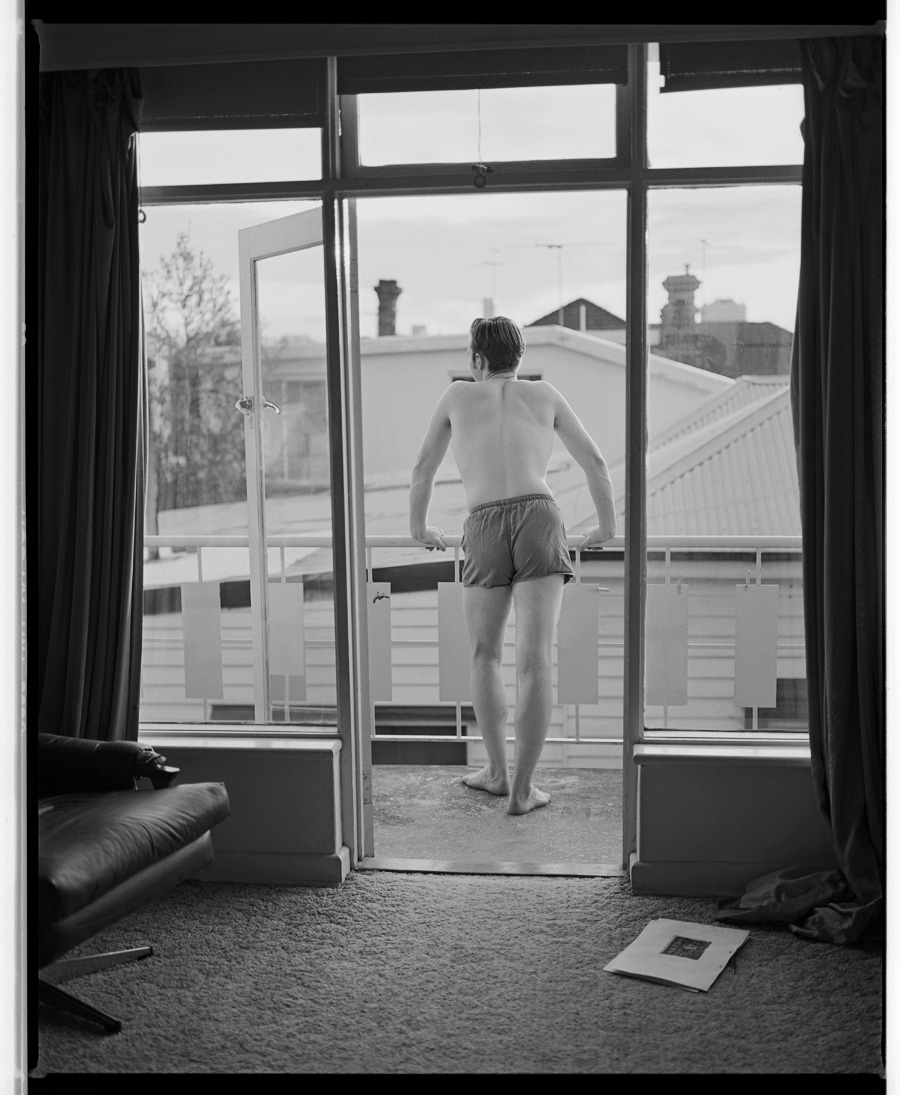
Doll on chair
1992-1994
Silver gelatin photograph


Marcus Bunyan (Australian, b. 1958) 'Paul on the balcony, Mcilwrick Street, Windsor' 1992-94


Marcus Bunyan (Australian, b. 1958)
Paul on the balcony, Mcilwrick Street, Windsor
1992-1994
Silver gelatin photograph


Marcus Bunyan (Australian, b. 1958) 'Paul resting' 1992-94


Marcus Bunyan (Australian, b. 1958)
Paul resting
1992-1994
Silver gelatin photograph


Marcus Bunyan (Australian, b. 1958) 'Marcus holding his cock' 1992-94


Marcus Bunyan (Australian, b. 1958)
Marcus holding his cock
1992-1994
Silver gelatin photograph


Marcus Bunyan (Australian, b. 1958) 'Post with finial, tree' 1992-94


Marcus Bunyan (Australian, b. 1958)
Post with finial, tree
1992-1994
Silver gelatin photograph


Marcus Bunyan (Australian, b. 1958) 'People who live in glass houses shouldn't throw stars' 1992-1994


Marcus Bunyan (Australian, b. 1958)
People who live
in glass houses
shouldn’t throw stars
1992-1994
Silver gelatin photograph


Marcus Bunyan (Australian, b. 1958) 'Paul, Windsor and the city' 1992-1994


Marcus Bunyan (Australian, b. 1958)
Paul, Windsor and the city
1992-1994
Silver gelatin photograph


Marcus Bunyan (Australian, b. 1958) 'Self portrait with punk jacket and flanny' 1992-1994


Marcus Bunyan (Australian, b. 1958)
Self portrait with punk jacket and flanny
1992-1994
Silver gelatin photograph


Marcus Bunyan (Australian, b. 1958) 'Release' 1992-1994


Marcus Bunyan (Australian, b. 1958)
Release
1992-1994
Silver gelatin photograph


Marcus Bunyan (Australian, b. 1958) 'Jesus, Mary and Joseph.' 1992-1994


Marcus Bunyan (Australian, b. 1958)
Jesus, Mary and Joseph.
1992-1994
Silver gelatin photograph


Marcus Bunyan (Australian, b. 1958) 'Circumnavigation of the blood is always Circumnavigation of the world (for Frederick Sommer)' 1992-1994


Marcus Bunyan (Australian, b. 1958)
Circumnavigation of the blood is always Circumnavigation of the world (for Frederick Sommer)
1992-1994
Silver gelatin photograph


Marcus Bunyan (Australian, b. 1958) 'Release (cock, hands, cum)' 1992-1994


Marcus Bunyan (Australian, b. 1958)
Release (cock, hands, cum)
1992-1994
Silver gelatin photograph


Marcus Bunyan (Australian, b. 1958) 'Madonna and child, skull' 1992-94


Marcus Bunyan (Australian, b. 1958)
Madonna and child, skull
1992-1994
Silver gelatin photograph


Marcus Bunyan black and white archive 1991-1997

LIKE ART BLART ON FACEBOOK

Back to top