Exhibition: ‘J.M.W. Turner: Painting Set Free’ at the J. Paul Getty Museum, Getty Center, Los Angeles

Exhibition dates: 24th February – 24th May 2015

Curators: Julian Brooks, curator of drawings, and Peter Björn Kerber, assistant curator of paintings


Water, Wind, and Whales
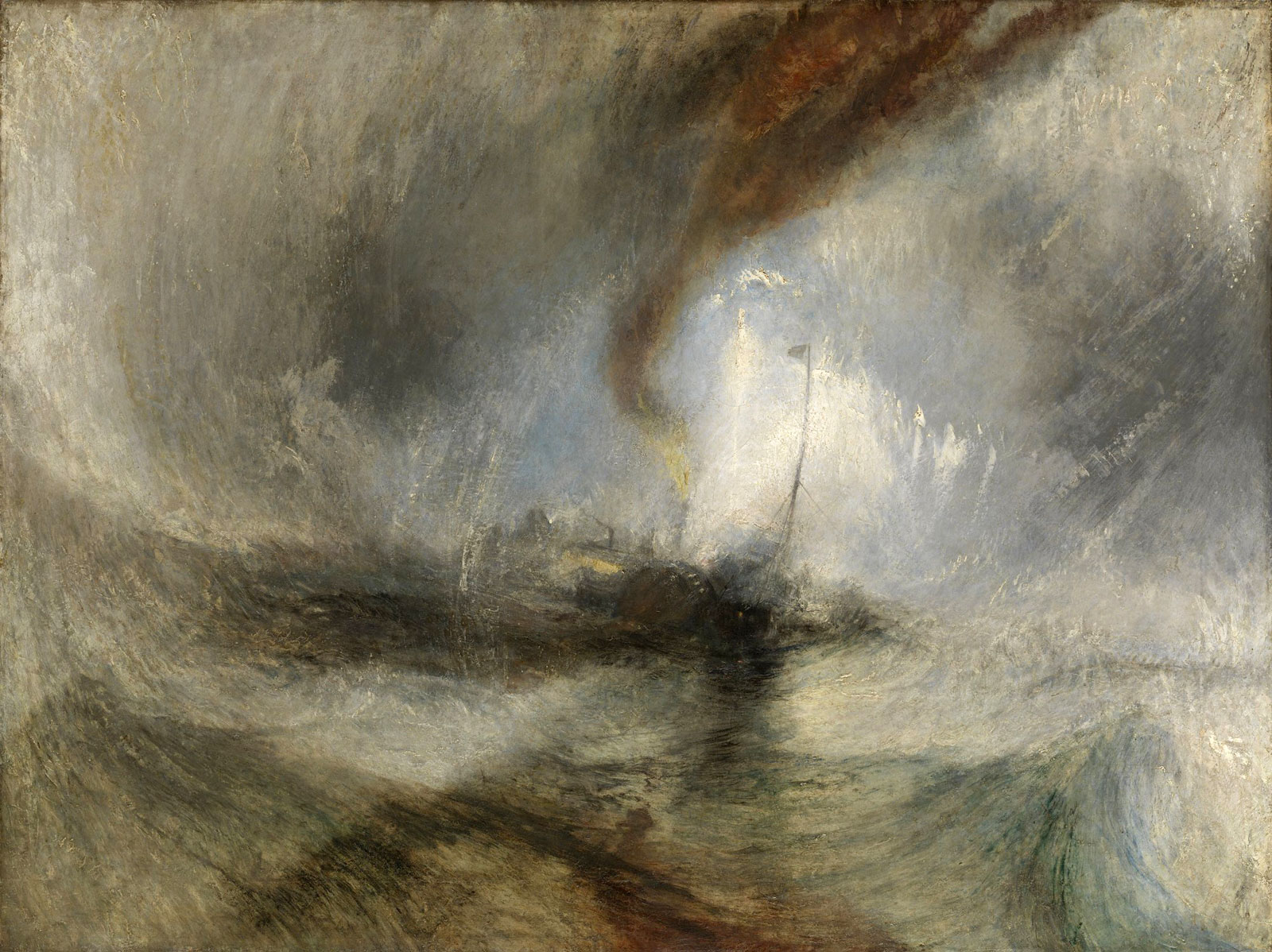
 

Joseph Mallord William Turner (British, 1775-1851) 'Snow Storm: Steam-Boat off a Harbour's Mouth' Exhibited 1842


Joseph Mallord William Turner (British, 1775-1851)
Snow Storm: Steam-Boat off a Harbour’s Mouth
Exhibited 1842
Oil on canvas
Unframed: 91.4 x 121.9cm (36 x 48 in.)
Tate: Accepted by the nation as part of the Turner Bequest 1856
Photo: © Tate, London 2014


No words are necessary.

Marcus


Many thankx to the J. Paul Getty Museum for allowing me to publish the photographs in the posting. Please click on the photographs for a larger version of the image.
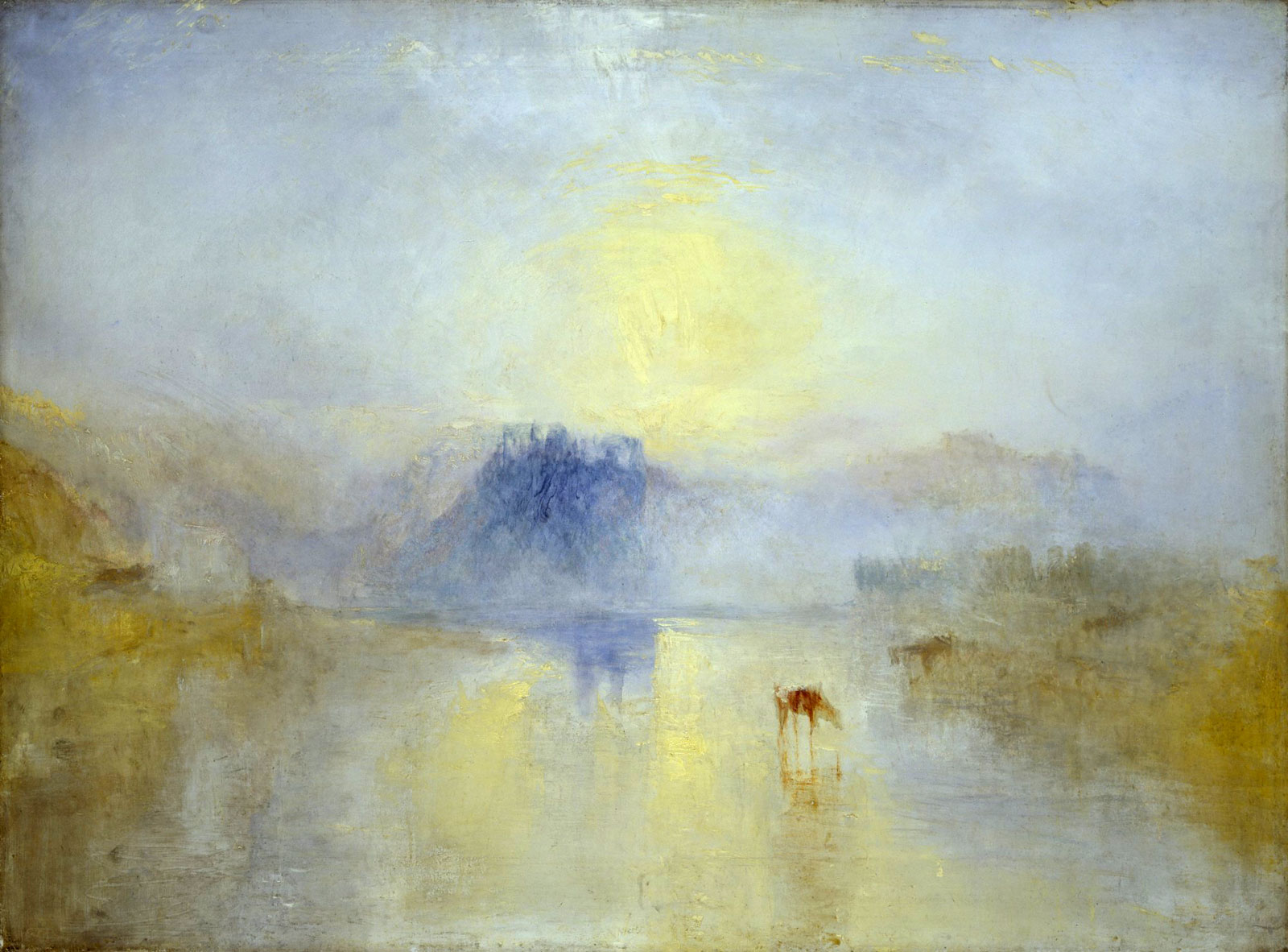


Joseph Mallord William Turner (British, 1775-1851) 'Norham Castle, Sunrise' About 1845


Joseph Mallord William Turner (British, 1775-1851)
Norham Castle, Sunrise
About 1845
Oil on canvas
Unframed: 90.8 x 121.9cm (35 3/4 x 48 in.)
Tate: Accepted by the nation as part of the Turner Bequest 1856
Photo: © Tate, London 2014


Turner first saw Norham, bordering Scotland on the river Tweed in Northumberland, in 1797. He was at the limits of his trip to northern England, when he also visited Buttermere, seen in the painting of nearly fifty years earlier shown nearby. After that first visit he made watercolours showing the ruin at sunrise, and visits in 1801 and 1831 resulted in further views. Here, finally, is one of a series of unfinished, unexhibited paintings reworking his monochrome Liber Studiorum landscape prints. Pure colours rather than contrasting tones express the blazing light as the historic building and landscape merge.


It is a hundred years since Turner’s painting, Norham Castle, Sunrise, went on display for the first time. The painting was among a group of twenty-one previously unknown, and essentially ‘unfinished’, canvases that were the focal point of a new Turner room inaugurated at the Tate Gallery (now Tate Britain) in February 1906.

These pictures had entered to the national collection in 1856, but remained uncatalogued. This was chiefly due to a lack of adequate hanging space for the many oil paintings in the collection. But a bigger issue was the concern that the images would not be properly understood by the public. Gallery officials themselves had serious reservations, considering them only ‘rude beginnings’ or even ‘mere botches’.

Consequently, it was not until 1906, when a new generation began to look at Turner afresh, that space was made for the first batch of pictures disinterred from the National Gallery’s basement. These revelatory ‘new’ works were quite unlike the detailed pictures that the artist had exhibited. Their unresolved brushwork and luminous palette seemed to confirm the patriotic belief that Turner (and John Constable) had paved the way for the French Impressionists.

During the last hundred years, Norham Castle has gradually become the embodiment of many ideas about Turner’s later style, above all, its reduction of content to a minimum giving emphasis to the play of colour and light. This display explores the origins of Turner’s interest in Norham Castle as a subject and charts the impact the picture has had during its recent history.

Norham Castle, Sunrise: from incomprehension to icon,” on the Tate website
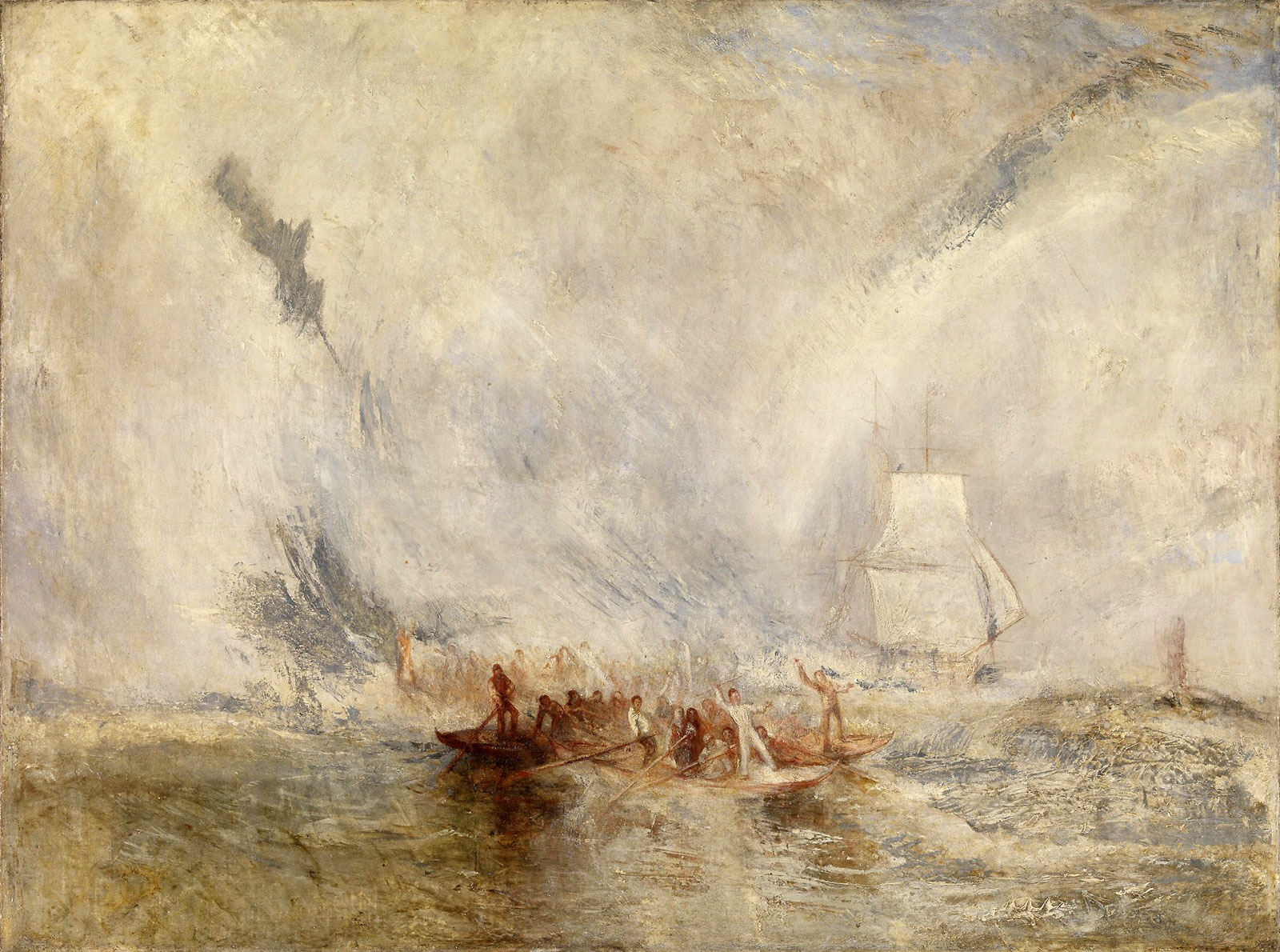
 

Joseph Mallord William Turner (British, 1775-1851) 'Whalers', exhibited 1845


Joseph Mallord William Turner (British, 1775-1851)
Whalers
Exhibited 1845
Oil on canvas
Unframed: 91.1 x 121.9cm (35 7/8 x 48 in.)
Tate: Accepted by the nation as part of the Turner Bequest 1856
Photo: © Tate, London 2014


Continental Travels


Joseph Mallord William Turner (British, 1775-1851) 'The Dogano, San Giorgio, Citella from the Steps of the Europa' Exhibited 1842


Joseph Mallord William Turner (British, 1775-1851)
The Dogano, San Giorgio, Citella from the Steps of the Europa
Exhibited 1842
Oil on canvas
Unframed: 61.6 x 92.7cm (24 1/4 x 36 1/2 in.)
Tate: Presented by Robert Vernon 1847
Photo: © Tate, London 2014
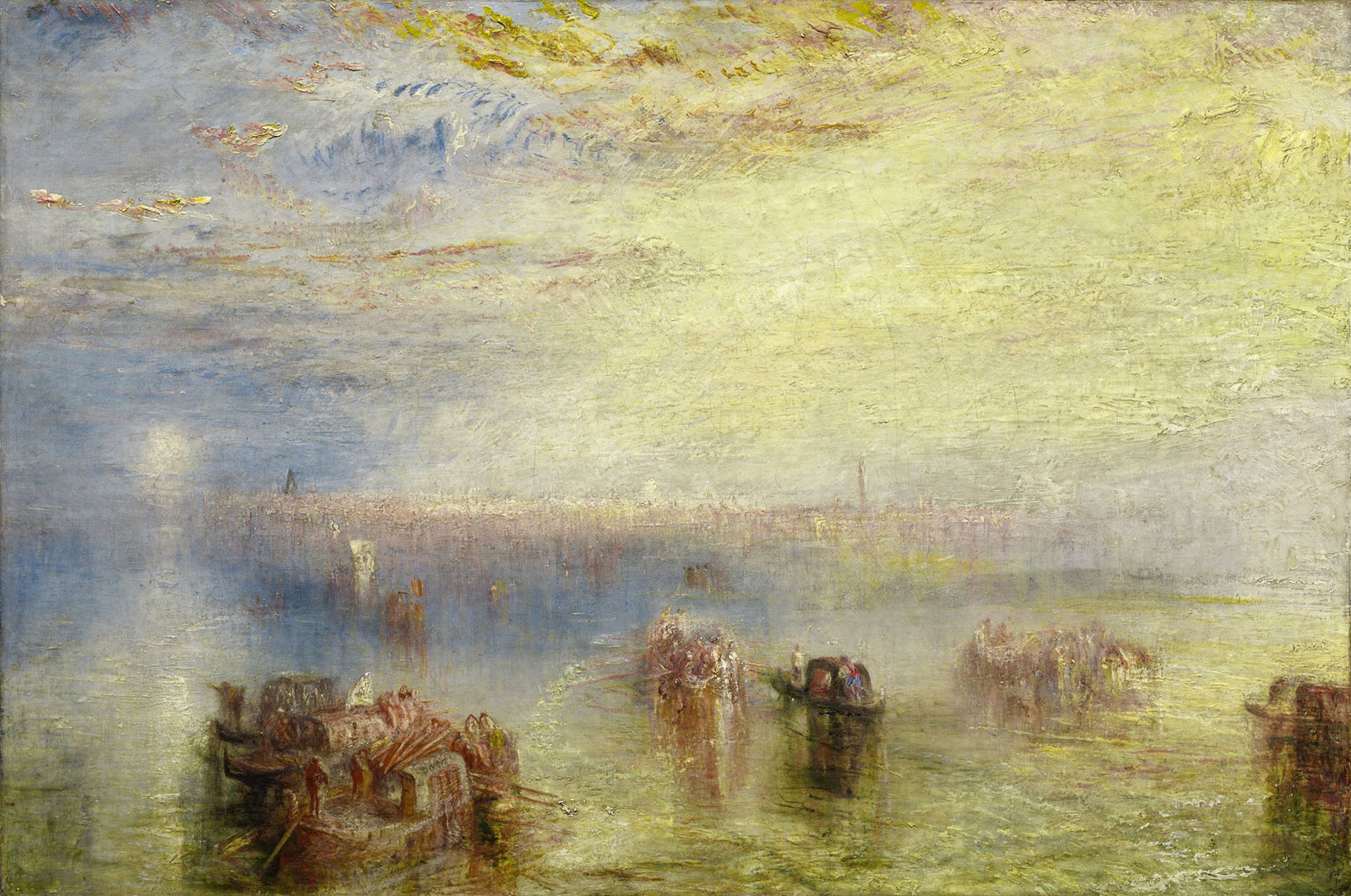
 

Joseph Mallord William Turner (British, 1775-1851) 'Approach to Venice' Exhibited 1844


Joseph Mallord William Turner (British, 1775-1851)
Approach to Venice
Exhibited 1844
Oil on canvas
Unframed: 62 x 94cm (24 7/16 x 37 in.)
National Gallery of Art, Washington, Andrew W. Mellon Collection
Image courtesy National Gallery of Art, Washington
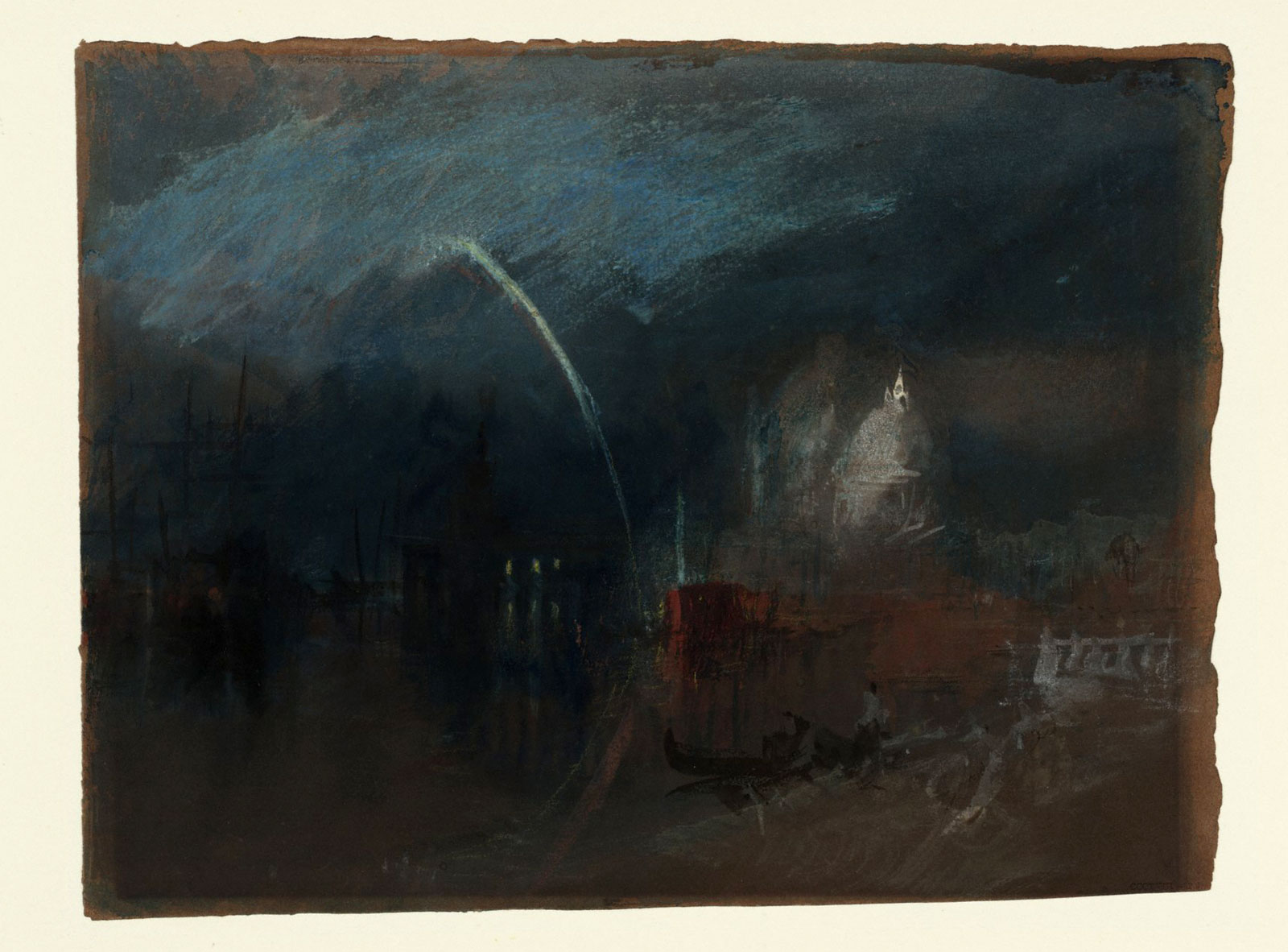
 

Joseph Mallord William Turner (British, 1775-1851) 'Venice: Santa Maria della Salute, Night Scene with Rockets' about 1840


Joseph Mallord William Turner (British, 1775-1851)
Venice: Santa Maria della Salute, Night Scene with Rockets
About 1840
Watercolour and bodycolor
Unframed: 24 x 31.5cm (9 7/16 x 12 3/8 in.)
Tate: Accepted by the nation as part of the Turner Bequest 1856
Photo: © Tate, London 2014


Joseph Mallord William Turner (British, 1775-1851) 'The Sun of Venice Going to Sea' Exhibited 1843


Joseph Mallord William Turner (British, 1775-1851)
The Sun of Venice Going to Sea
Exhibited 1843
Oil on canvas
Unframed: 61.6 x 92.1 cm (24 1/4 x 36 1/4 in.)
Tate: Accepted by the nation as part of the Turner Bequest 1856
Photo: © Tate, London 2014
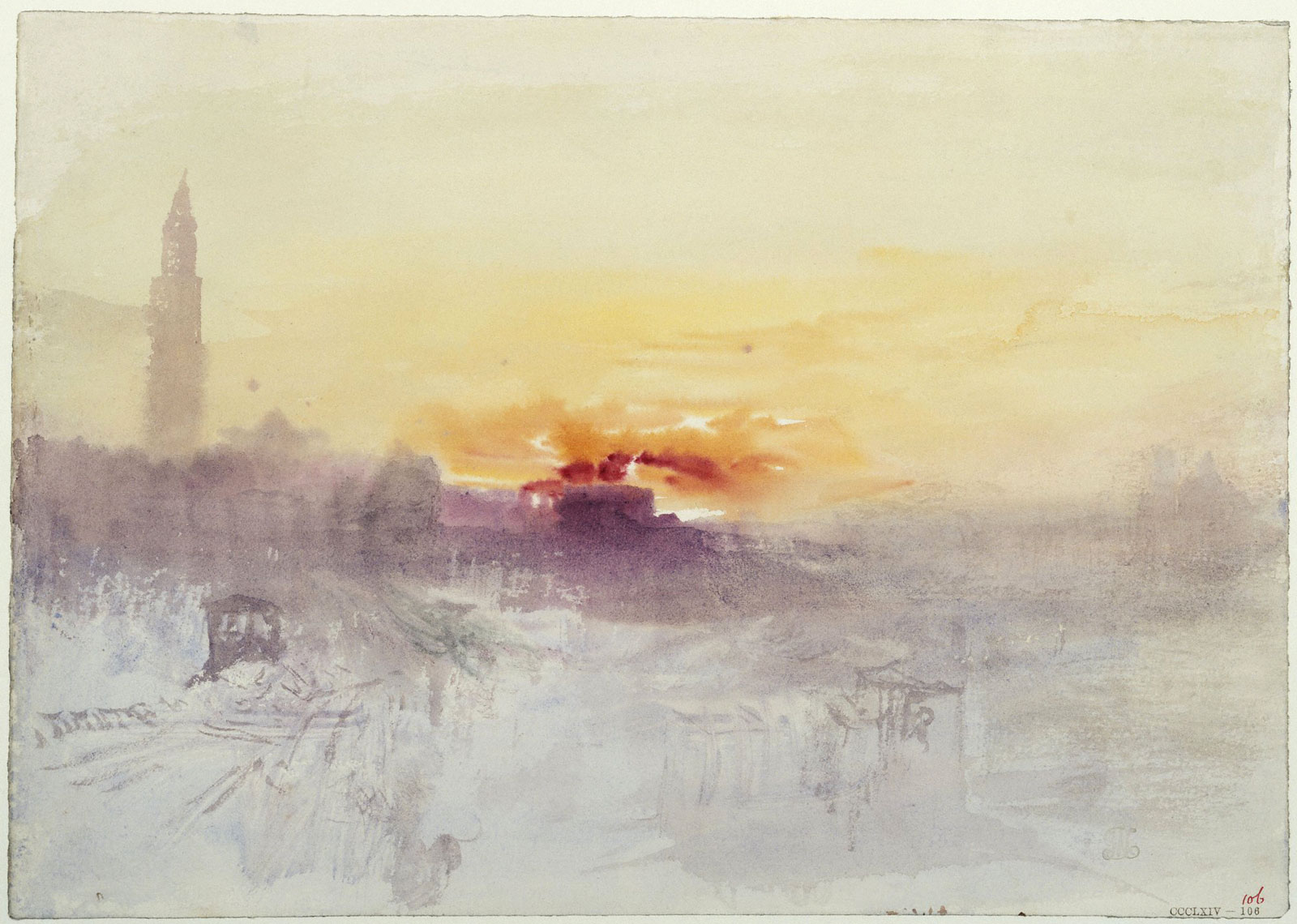
 

Joseph Mallord William Turner (British, 1775-1851) 'Venice at Sunrise from the Hotel Europa, with Campanile of San Marco' About 1840


Joseph Mallord William Turner (British, 1775-1851)
Venice at Sunrise from the Hotel Europa, with Campanile of San Marco
About 1840
Watercolor
Unframed: 19.8 x 28cm (7 13/16 x 11 in.)
Tate: Accepted by the nation as part of the Turner Bequest 1856
Photo: © Tate, London 2014


The large group of watercolours which resulted from Turner’s last visit to Venice in 1840 is characterised by a delicious liquidity which unifies air and water in layered, coloured mists. He stayed near the mouth of the Grand Canal at the Hotel Europe, from where he made sketches over the rooftops after dark. Alternatively, from a gongola off the great Piazzetta, he was able to see the sun set down the wide canal of the Giudecca.


Joseph Mallord William Turner (British, 1775-1851) 'Ehrenbreitstein' 1841


Joseph Mallord William Turner (British, 1775-1851)
Ehrenbreitstein
1841
Watercolour and pen and ink
Unframed: 23.7 x 30cm (9 5/16 x 11 13/16 in.)
Tate: Accepted by the nation as part of the Turner Bequest 1856
Photo: © Tate, London 2014
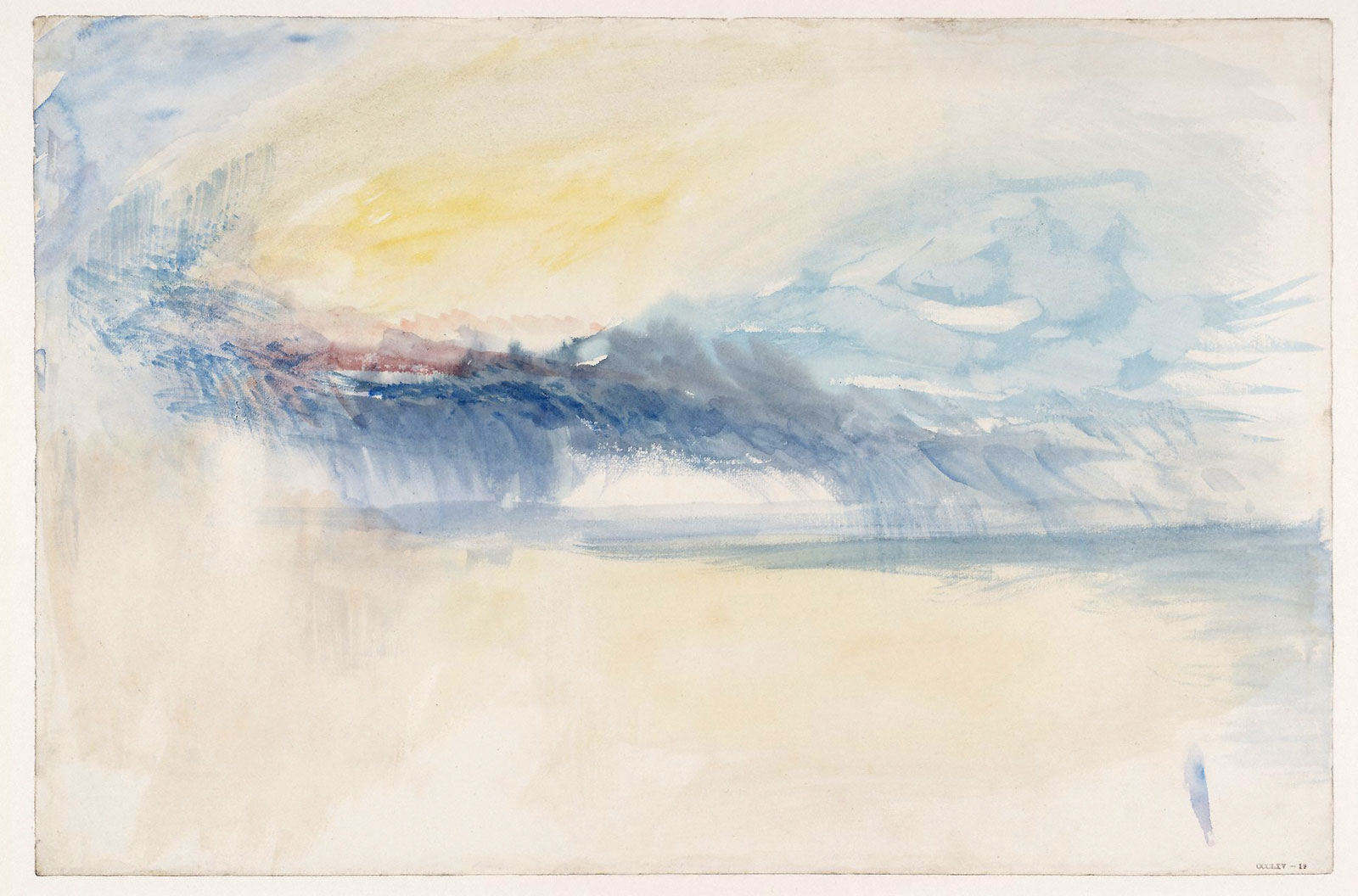
 

Joseph Mallord William Turner (British, 1775-1851) 'Rain Clouds' About 1845


Joseph Mallord William Turner (British, 1775-1851)
Rain Clouds
About 1845
Watercolour
Unframed: 29.1 x 44cm (11 7/16 x 17 5/16 in.)
Tate: Accepted by the nation as part of the Turner Bequest 1856
Photo: © Tate, London 2014


Joseph Mallord William Turner (British, 1775-1851) 'The Blue Rigi, Sunrise' 1842


Joseph Mallord William Turner (British, 1775-1851)
The Blue Rigi, Sunrise
1842
Watercolour
Unframed: 29.7 x 45cm (11 11/16 x 17 11/16 in.)
Tate: Purchased with assistance from the National Heritage Memorial Fund, the Art Fund (with a contribution from the Wolfson Foundation and including generous support from David and Susan Gradel, and from other members of the public through the Save the Blue Rigi appeal) Tate Members and other donors 2007
Photo: © Tate, London 2014


First major West Coast international loan exhibition focuses on Turner’s late work; Famed 19th-century master created many of his most renowned pieces after age 60.

One of the most influential painters of nature who ever lived, Joseph Mallord William Turner (English, 1775-1851) was especially creative and inventive in the latter years of his life, producing many of his most famous and important paintings after the age of 60. On view at the J. Paul Getty Museum February 24, 2015, through May 24, 2015, J.M.W. Turner: Painting Set Free brings together more than 60 key oil paintings and watercolours from this culminating period of his career, and is the West Coast’s first major exhibition of Turner’s work.

“J.M.W. Turner is the towering figure of British 19th century art, a ground-breaking innovator in his own day whose relevance and status as a seeming harbinger of 20th century ‘modernism; has made him an inspiration to generations of later artists up to the present day. A successful and well-known public figure in his own day, Turner produced some of his most innovative and challenging work during the last 16 years of his life,” explains Timothy Potts, director of the J. Paul Getty Museum. “He was frequently mocked and misunderstood for his choice of unusual subject matters, his experimentation with different canvas formats, and his pioneering free and spontaneous techniques in both oil and watercolour. While Turner could not knowingly have anticipated future artistic trends, he is seen today by many as a prophet of modernism because of his rough, gestural brushwork and quasi-abstract subject matter. His work captured the natural landscape’s atmosphere and colour like no other artist before him, and conveyed the awe-inspiring power of the elements as never before. This exhibition celebrates Turner as the most innovative and experimental artist of his time, and I have no doubt that it will be inspiring to a new generation of artists working in California today.”

“The exhibition shows an artist at the top of his game, totally at ease with his media, and still keen to push boundaries and challenge assumptions. We see how Turner was modern in his own time, but the results are astonishing even for us today,” said Julian Brooks, one of the exhibition curators.

The Sea

In his later years, Turner’s continuing fascination with the sea reached a zenith. Although he respected existing conventions of marine painting, particularly its 17th-century Dutch roots, he consistently moved beyond them, turning the water into a theatre for drama and effect. At the Royal Academy exhibitions, he confounded viewers with his bold portrayals of modern maritime action – whales and their hunters battling for survival – while striving to capture the mysterious depths and forces of the elements. Never having witnessed a whale hunt himself, he included a reference to “Beale’s Voyage” in the catalogues, acknowledging that his source of inspiration was Thomas Beale’s Natural History of the Sperm Whale (1839). (Herman Melville consulted the same book when writing Moby-Dick, published in 1851.)

The London press at the time greeted Turner’s whaling pictures, such as Hurrah! for the Whaler Erebus! Another Fish!, 1846, with scathing attacks, lambasting their yellow palette and lack of finish. The Almanack of the Month printed a cartoon of a Turner painting with a large mop and a bucket labeled “yellow,” and opined that his pictures resembled a lobster salad.

Travel

In addition to the sea, Turner’s insatiable appetite for history, different cultures, and sublime natural scenery drew him time and again to Continental Europe, where he observed not only spectacular sites such as ancient ruins, medieval castles, jagged mountain peaks, and meandering rivers, but also local customs and dress. On such travels he made numerous watercolour sketches, which effectively captured fleeting effects of nature on paper. These works display a complex layering of colour animated through the pulsing energy of turbulent handling. They demonstrate both Turner’s commitment to observed natural effects and his unwavering obsession with the vagaries and delights of watercolour, a medium he had indisputably made his own. Some of the finished watercolours he made for sale after his trips, such as The Blue Rigi, Sunrise, 1842, represent pinnacles in the use of watercolour technique.

Turner was especially captivated by the particular combination of light and colour he found in Venice, and revisited the city several times. He traveled lightly, usually alone, making few concessions to his age or failing strength, and drew constantly in his sketchbooks. Turner’s many images of Venice were among his most potent late works, influencing later artists such as James Abbott McNeill Whistler (American, 1834-1903) and Claude Monet (French, 1840-1926).

For Turner, watercolour was the perfect medium to capture Venice’s aqueous and luminous effects. While based on on-the-spot sketches done there in 1840, Turner’s later paintings of Venice drew out the city’s essence and spirit rather than its exact topography. His Venice was often touched with a melancholy that echoed the romantic fatalism popularised by writers such as Lord Byron, offering a warning from history to Britain’s rise as a commercial empire.

Poetry

Turner was deeply interested in poetry and often paired his paintings with lines of text in order to elucidate their themes. In some cases he authored the poems himself but often he quoted celebrated 18th- and 19th-century British poets such as Thomas Gray and, most especially, Lord Bryon. Throughout the Getty exhibition, many of the lines of poetry or prose that he chose or wrote are reunited with his pictures on the gallery walls. For example, the lines “The moon is up, and yet it is not night/ The sun as yet disputes the day with her” from Byron’s Childe Harold’s Pilgrimage (1812-1818) were chosen, and slightly altered by Turner to accompany two paintings: Modern Rome – Campo Vaccino, exhibited 1839, and Approach to Venice, exhibited 1844, which both feature the setting sun and a rising moon but also evoke the rise and fall of empires.

Contemporary Events

Much of Tuner’s later work reflects on contemporary events including the modern state of Italy, the legacy of the Napoleonic Wars, and the spectacular fires that ravaged the Palace of Westminster and the Tower of London in 1834 and 1841, respectively. In addition, Turner was the first major European artist to engage with innovations such as steam power, as seen in Snow Storm: Steam-Boat off a Harbour’s Mouth, 1842, which shows this much-vaunted new technology at the mercy of the awesome power of the elements.

Technique

Perhaps nothing demonstrates Turner’s virtuosity as a painter better than the stories of his performances on “Varnishing Days.” The Royal Academy and the British Institution would set aside a short period of time for artists to put final touches on their work before an exhibition opened to the public. Turner revelled in the competitive jostling and repartee that occurred on these occasions. In his later years, he would frequently submit canvases with only the roughest indications of colour and form, speedily bringing them to completion on-site. Eyewitnesses record that Turner painted most of The Hero of a Hundred Fights, 1800-10, reworked and exhibited 1847, and Burning of the Houses of Lords and Commons, 16th October 1834, 1834-1835, on their respective varnishing days.

Pairs and Shapes

In his later years, Turner was as creative in his approach to media, materials, and techniques as he was in his choice of subject matter. He created works that offer some of his most dazzling displays of colour, audacious handling, and complex iconographies. From 1840 to 1846, the artist employed a smaller canvas size for a series of paintings, which were often conceived as pairs expressing opposites, such as two that were exhibited in 1842: Peace – Burial at Sea and War. The Exile and the Rock Limpet. These were principally square but could also be round or octagonal. Exploring states of consciousness, optics, and the emotive power of colour, they shocked and mystified his audience, who thought them the products of senility or madness. Painted near the end of his life, these inventive works are a coda to Turner’s career, representing a synthesis of his innovations in technique, composition and theme.

Turner died in 1851 at age 76, leaving the majority of his work to the English nation along with an intended bequest to support impoverished artists. In the years since, while popular and scholarly ideas about his work have changed, he inarguably emerges as one of the most beloved figures and popular painters in the history of the United Kingdom.

This exhibition was organised by Tate Britain in association with the J. Paul Getty Museum and the Fine Arts Museums of San Francisco. It is supported by an indemnity from the Federal Council on the Arts and the Humanities. The Getty Museum curators of the exhibition are Julian Brooks, curator of drawings, and Peter Björn Kerber, assistant curator of paintings.

The exhibition is accompanied by the publication J.M.W. Turner: Painting Set Free. Edited by David Blayney Brown, Amy Concannon, and Sam Smiles, this 250-page volume is richly illustrated.

~ Water, Wind, and Whales
~ Continental Travels
~ Contemporary Subjects
~ History, Myth, and Meaning
~ Pairs and Shapes


Press release from the J. Paul Getty Museum website


Contemporary Subjects


Joseph Mallord William Turner (British, 1775-1851) 'The Burning of the Houses of Lords and Commons, October 16, 1834' 1834-1835


Joseph Mallord William Turner (British, 1775-1851)
The Burning of the Houses of Lords and Commons, October 16, 1834
1834-1835
Oil on canvas
Unframed: 92.1 x 123.2cm (36 1/4 x 48 1/2 in.)
Philadelphia Museum of Art: The John Howard McFadden Collection, 1928
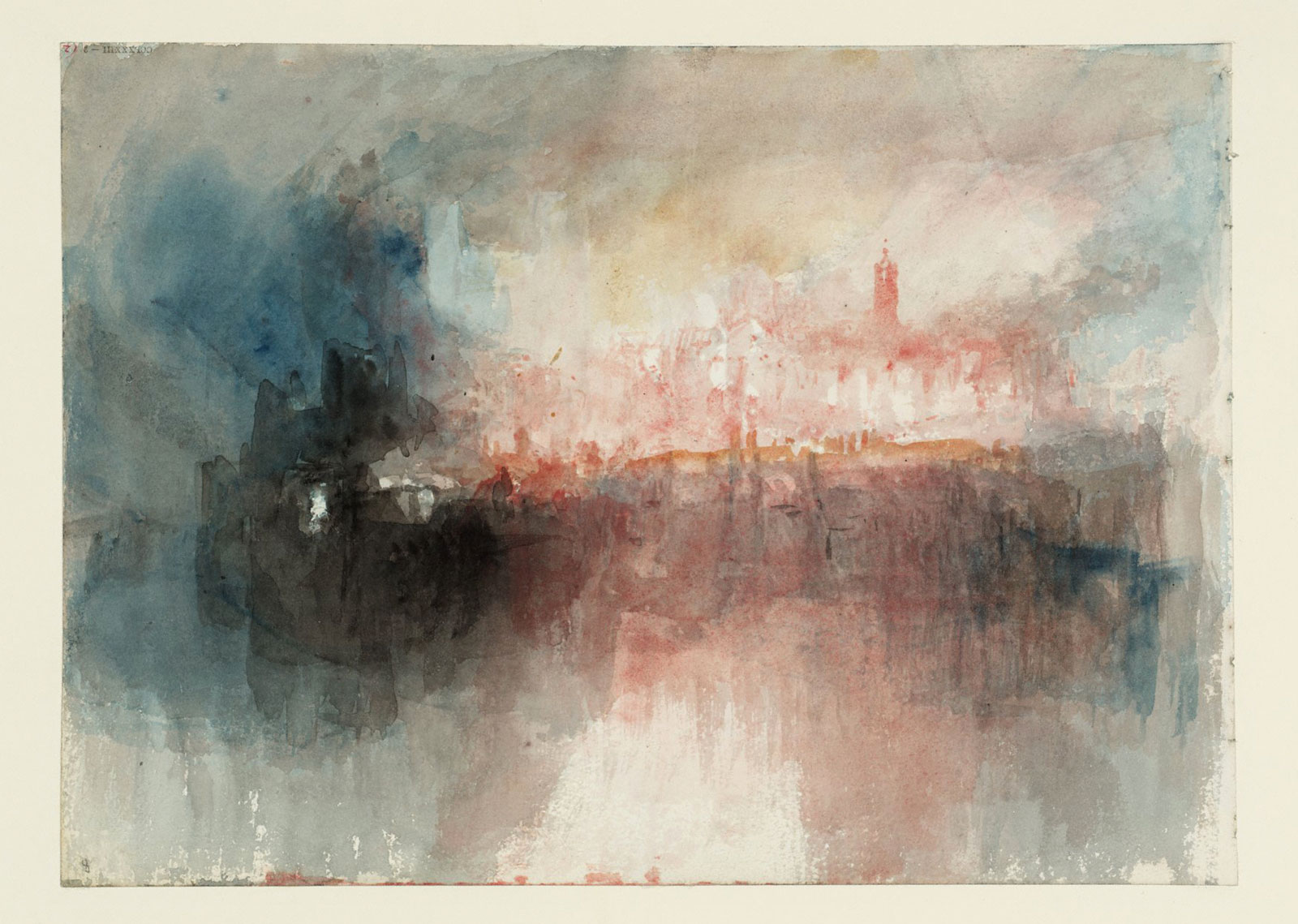
 

Joseph Mallord William Turner (British, 1775-1851) 'Fire at the Grand Storehouse of the Tower of London' 1841


Joseph Mallord William Turner (British, 1775-1851)
Fire at the Grand Storehouse of the Tower of London
1841
Watercolour
Unframed: 23.5 x 32.5cm (9 1/4 x 12 13/16 in.)
Tate: Accepted by the nation as part of the Turner Bequest 1856
Photo: © Tate, London 2014


This watercolour study was originally one of nine consecutive leaves (D27846 – D27854; Turner Bequest CCLXXXIII 1-9) in a sketchbook. They have previously been documented with varying degrees of certainty as showing the 1834 fire at the Houses of Parliament beside the River Thames in central London, but are here identified as representing the similarly large and dramatic fire which broke out at the moated Tower of London on 30 October 1841, destroying the late seventeenth-century Grand Storehouse (see the Introduction to the sketchbook for detailed discussion).

Conflagration of the Tower of London, on the Night of the 30th of October 1841, a colour lithograph published on 3 November of a view ‘drawn upon the spot by William Oliver’ (1804-1853) shows the Tower complex from the north, with flames and smoke pouring from the windows and rafters of the Grand Storehouse, largely obscuring the White Tower. This can be compared with the present work, the most precisely detailed of Turner’s studies in terms of architectural features. (See the Introduction for other comparisons between Turner’s studies and contemporary prints.) The pale blue form towards the left is presumably intended as the White Tower; otherwise lacking in detail, the inner faces of its corner turrets are shown receding in steep perspective, although in fact the north-west turret is cylindrical. Turner has included details of rafters, a pediment and what seems to be the clock tower of the Grand Storehouse (which fell in at quite an early stage of the fire), but it is not clear whether he intended to show the scene directly from the north, aligned directly on the façade of the storehouse, or obliquely from the north-east, which would explain the relative positions of the clock tower and the White Tower.

In addition to the newspaper stories extensively quoted in the sketchbook’s Introduction, the following details from the Times relate to the raising of the alarm late on the evening of Saturday 30 October:

[Sergeant] Edwards [‘of the 1st Battalion of Fusilier Guards’] states, that while he was in the Nag’s Head public-house, in Postern-row [opposite the north side of the Tower], he perceived, to his great surprise, a light through one of the windows, just above the bomb proof part of the Bowyer Tower. He went out and crossed to the railings at the top of the moat by which the Tower is surrounded, and watched the light for a minute or two. At first it appeared but little larger than the glimmer of a candle, but it suddenly increased to such an extent, that no doubt was left upon his mind that the place was on fire.1


The present Tower study is notable in being the only one of the nine to incorporate gouache: a touch of white is combined with scratching out to render a bright light through a window of the towers silhouetted towards the left. This may be an effect Turner observed or imagined, or perhaps the report caught his attention.

Addressing the sequence of studies in the context of the traditional former 1834 identification, Katherine Solender felt that only this and D27850, D27853 and D27854 included ‘shapes that can be remotely identified with the Parliamentary complex’, in this case possibly indicating the roof and lantern of Westminster Hall on the right, with the Towers of Westminster Abbey beyond to the left.2 In his extended catalogue entry for Turner’s painting The Burning of the House of Lords and Commons, 16th October, 1834, exhibited at the British Institution in 1835 (Philadelphia Museum of Art),3 Richard Dorment presented a sustained interpretation of the this and the other eight watercolour studies in terms of a sequence reflecting the topography and chronology of the 1834 Westminster fire.4

Matthew Imms, April 2014 from catalogue entry to David Blayney Brown (ed.), J.M.W. Turner: Sketchbooks, Drawings and Watercolours, September 2014

1/ ‘The Tower of London. Destructive Conflagration. (Additional Particulars.)’, The Times, Tuesday 2 November 1841, p. 5.
2/ Solender 1984, pp. 50-1; see also Lyles 1992, p. 72.
3/ Martin Butlin and Evelyn Joll, The Paintings of J.M.W. Turner, revised ed., New Haven and London 1984, pp. 207-10 no. 359, pl. 364 (colour).
4/ Dorment 1986, pp. 400-1; see also Lyles 1992, p. 72.


Joseph Mallord William Turner (British, 1775-1851) 'The Hero of a Hundred Fights' About 1800 - 1810, reworked and exhibited 1847


Joseph Mallord William Turner (British, 1775-1851)
The Hero of a Hundred Fights
About 1800-1810, reworked and exhibited 1847
Oil on canvas
Unframed: 90.8 x 121.3cm (35 3/4 x 47 3/4 in.)
Framed: 127.5 x 158.5 x 18cm (50 3/16 x 62 3/8 x 7 1/16 in.)
Tate: Accepted by the nation as part of the Turner Bequest 1856
Photo: © Tate, London 2014


This canvas was originally an exploration of industrial machinery, but it was reworked to show the moment when a bronze statue of the Duke of Wellington was removed from its mould. Using the intense light of the foundry to obscure the figure, Turner transforms Wellington into an ethereal presence. The image is in stark contrast to Turner’s carefully researched battle scenes. Here, tone and colour are employed to endow a national hero with elemental force.


Joseph Mallord William Turner (British, 1775-1851) 'The Disembarkation of Louis-Philippe at the Royal Clarence Yard, Gosport, 8 October 1844' About 1844-1845


Joseph Mallord William Turner (British, 1775-1851)
The Disembarkation of Louis-Philippe at the Royal Clarence Yard, Gosport, 8 October 1844
About 1844-1845
Oil on canvas
Unframed: 90.8 x 121.3cm (35 3/4 x 47 3/4 in.)
Framed: 128.4 x 159 x 8.3cm (50 9/16 x 62 5/8 x 3 1/4 in.)
Tate: Accepted by the nation as part of the Turner Bequest 1856
Photo: © Tate, London 2014


Turner visited Portsmouth to record the arrival of the French king, who was on a State Visit. He made numerous sketches of the event and also painted two unfinished oils: one showing the king’s arrival, the other his disembarkation. Both are principally concerned with the atmosphere of the occasion, concentrating on the crowd of onlookers. Turner had met Louis-Philippe when the king was living in exile at Twickenham in the 1810s. Contact between them was renewed in the mid-1830s and he was invited to dine with him at his château at Eu in 1845.


History, Myth, and Meaning


Joseph Mallord William Turner (British, 1775-1851) 'Regulus' 1828, reworked 1837


Joseph Mallord William Turner (British, 1775-1851)
Regulus
1828, reworked 1837
Oil on canvas
Unframed: 89.5 x 123.8cm (35 1/4 x 48 3/4 in.)
Framed: 113.5 x 146 x 9.3cm (44 11/16 x 57 1/2 x 3 11/16 in.)
Tate: Accepted by the nation as part of the Turner Bequest 1856
Photo: © Tate, London 2014


Joseph Mallord William Turner (British, 1775-1851) 'Mercury Sent to Admonish Aeneas' Exhibited 1850


Joseph Mallord William Turner (British, 1775-1851)
Mercury Sent to Admonish Aeneas
Exhibited 1850
Oil on canvas
Unframed: 90.2 x 120.6cm (35 1/2 x 47 1/2 in.)
Framed: 129.6 x 160.7 x 18.5cm (51 x 63 1/4 x 7 5/16 in.)
Tate: Accepted by the nation as part of the Turner Bequest 1856
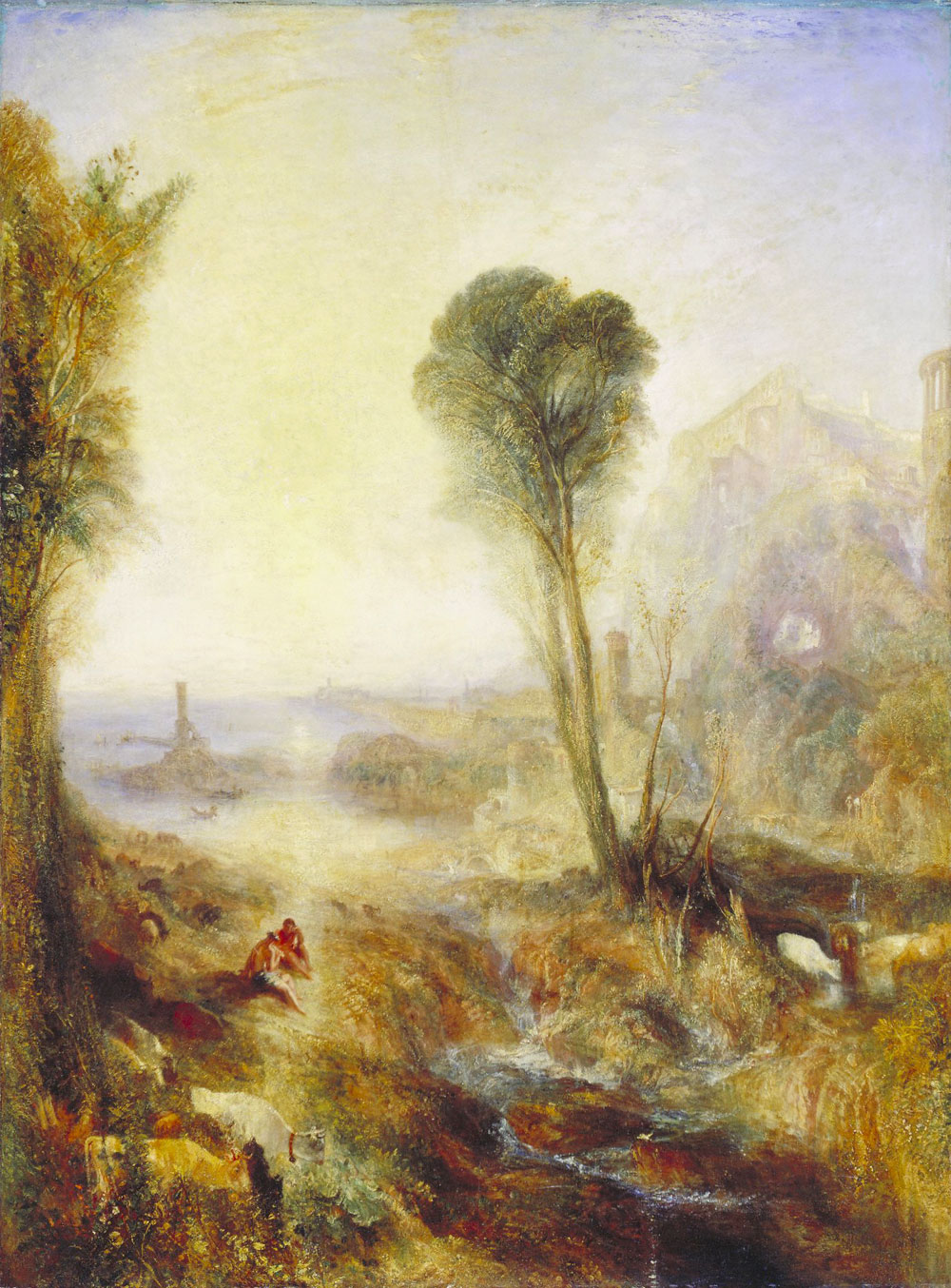
 

Joseph Mallord William Turner (British, 1775-1851) 'Mercury and Argus' Before 1836


Joseph Mallord William Turner (British, 1775-1851)
Mercury and Argus
Before 1836
Oil on canvas
Unframed: 151.8 x 111.8cm (59 3/4 x 44 in.)
National Gallery of Canada, Ottawa, Purchased 1951
Photo: © National Gallery of Canada


Pairs and Shapes
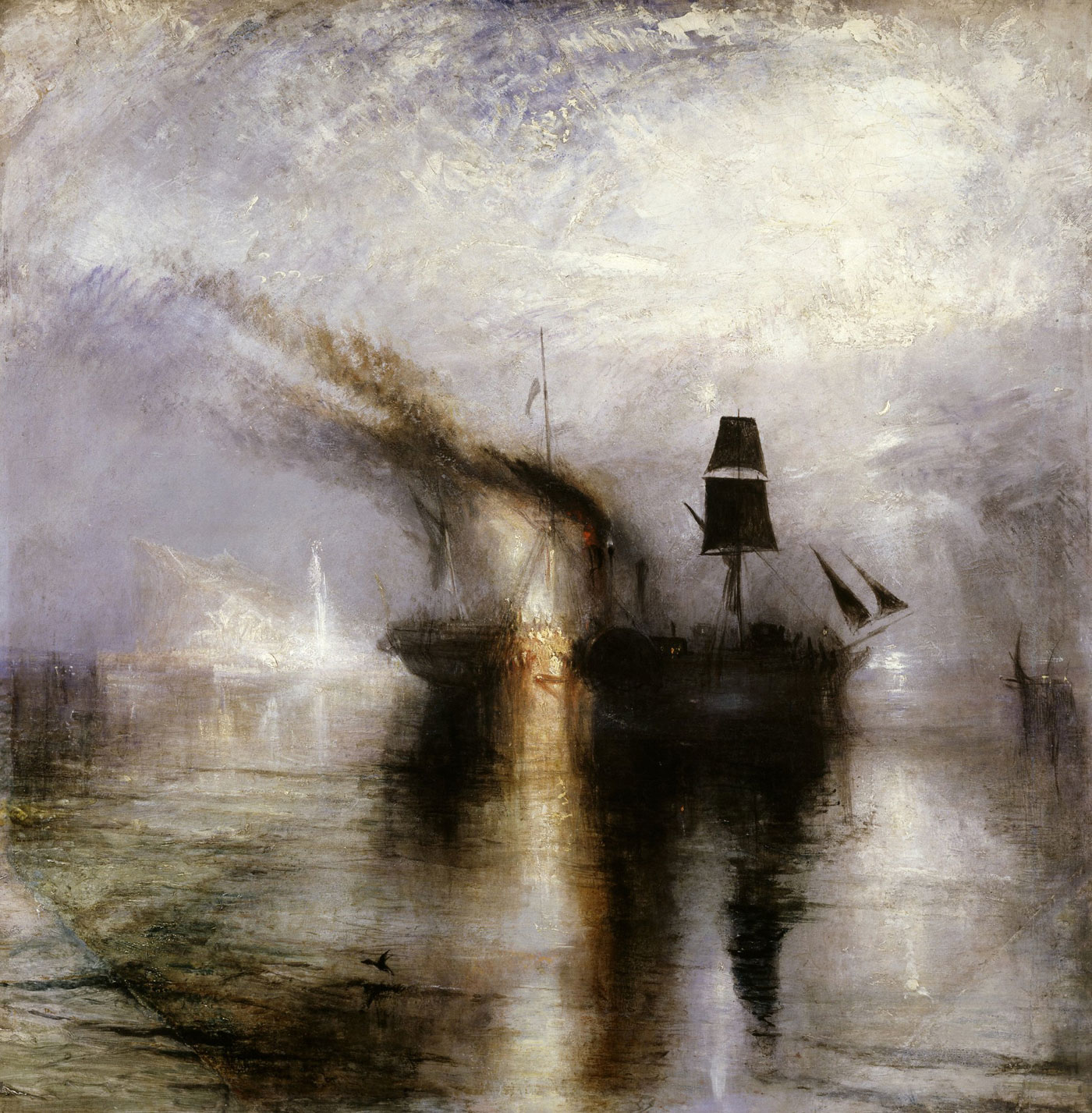
 

Joseph Mallord William Turner (British, 1775-1851) 'Peace – Burial at Sea' Exhibited 1842


Joseph Mallord William Turner (British, 1775-1851)
Peace – Burial at Sea
Exhibited 1842
Oil on canvas
Unframed: 87 x 86.7cm (34 1/4 x 34 1/8 in.)
Tate: Accepted by the nation as part of the Turner Bequest 1856
Photo: © Tate, London 2014
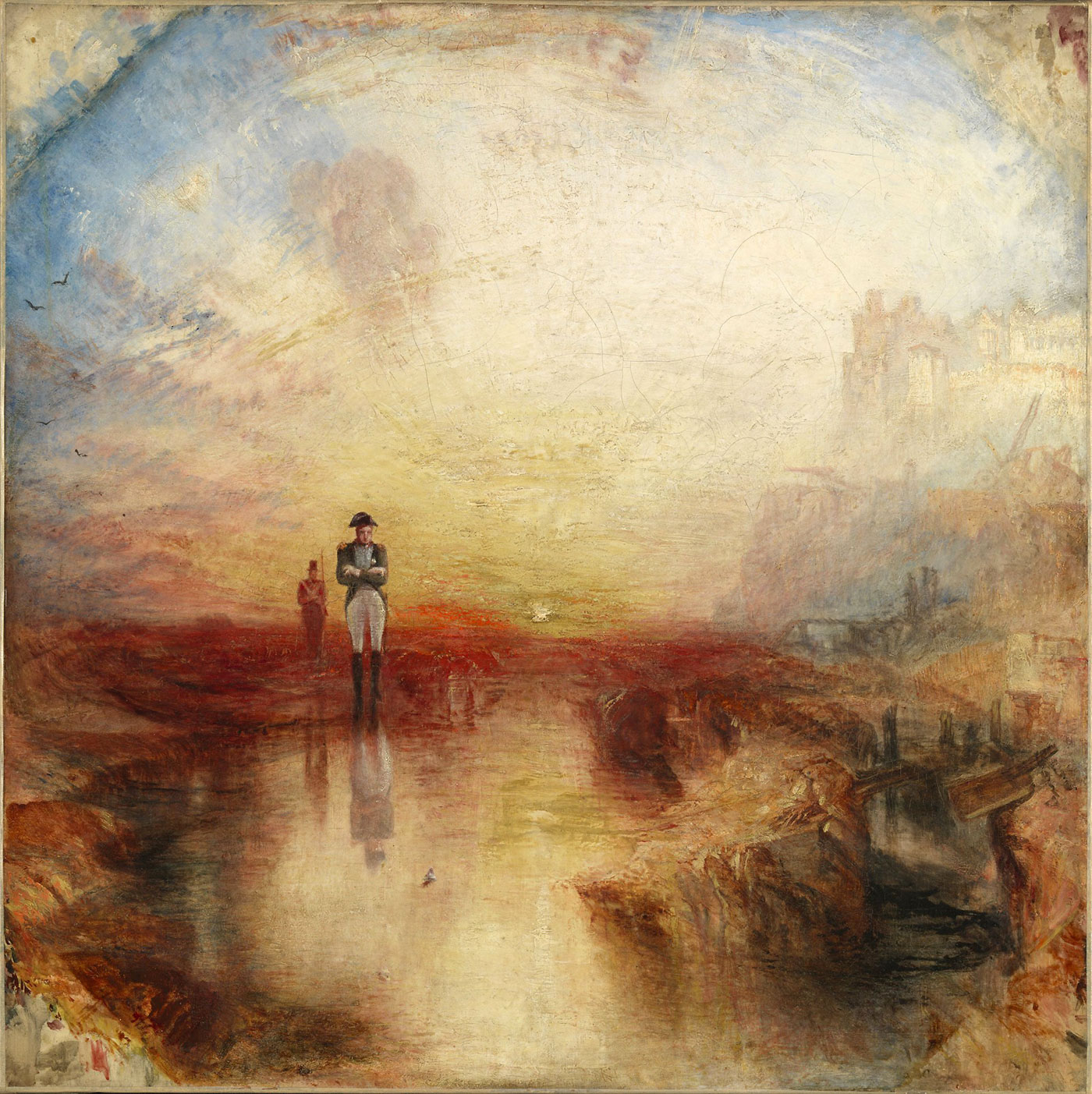
 

Joseph Mallord William Turner (British, 1775-1851) 'War. The Exile and the Rock Limpet' Exhibited 1842


Joseph Mallord William Turner (British, 1775-1851)
War. The Exile and the Rock Limpet
Exhibited 1842
Oil on canvas
Unframed: 79.4 x 79.4cm (31 1/4 x 31 1/4 in.)
Tate: Accepted by the nation as part of the Turner Bequest 1856
Photo: © Tate, London 2014


Joseph Mallord William Turner (British, 1775-1851) 'Light and Color (Goethe's Theory) – The Morning After the Deluge – Moses Writing the Book of Genesis' Exhibited 1843


Joseph Mallord William Turner (British, 1775-1851)
Light and Color (Goethe’s Theory) – The Morning After the Deluge – Moses Writing the Book of Genesis
Exhibited 1843
Oil on canvas
Unframed: 78.7 x 78.7cm (31 x 31 in.)
Framed: 103.5 x 103.5 x 12cm (40 3/4 x 40 3/4 x 4 3/4 in.)
Tate: Accepted by the nation as part of the Turner Bequest 1856
Photo: © Tate, London 2014


The nine finished paintings are being shown in a dedicated room of the exhibition which brings new perspectives on Turner’s work during the final period of his life. At the time of their creation Turner’s square canvases were his most controversial and they were famously subjected to a hail of abuse in the press. Even Ruskin, a devoted fan, described Turner’s work by 1846 as ‘indicative of mental disease’. The show will reposition Turner in his old age as a challenging and daring artist who continued his lifelong engagement with the changing world around him right up until his death in 1851.

When Turner began painting on square canvases in the later years of his life between 1840 and 1846 they were a new format for the artist to be working in. In works known as Shade and Darkness and Light and Colour, both exhibited 1843, it can be seen how Turner developed his dramatic use of the vortex, a technique characteristic in his later work.

The display of the square canvases, along with one unfinished square composition, has been made possible by the important loans of Glaucus and Scylla 1841 (Kimbell Art Museum, Fort Worth, USA), and Dawn of Christianity 1841 (Ulster Museum, Belfast, UK). The group of works includes some of Turner’s most iconic pairings such as Peace andWar, both exhibited 1842 (Tate). The exhibition as a whole will also include a number of pairings from throughout this period of his life, showing Turner’s fondness for working in sets or sequences in his old age.

“Turner’s controversial square canvases to be brought together for the first time,” from the Tate website 13 March 2014
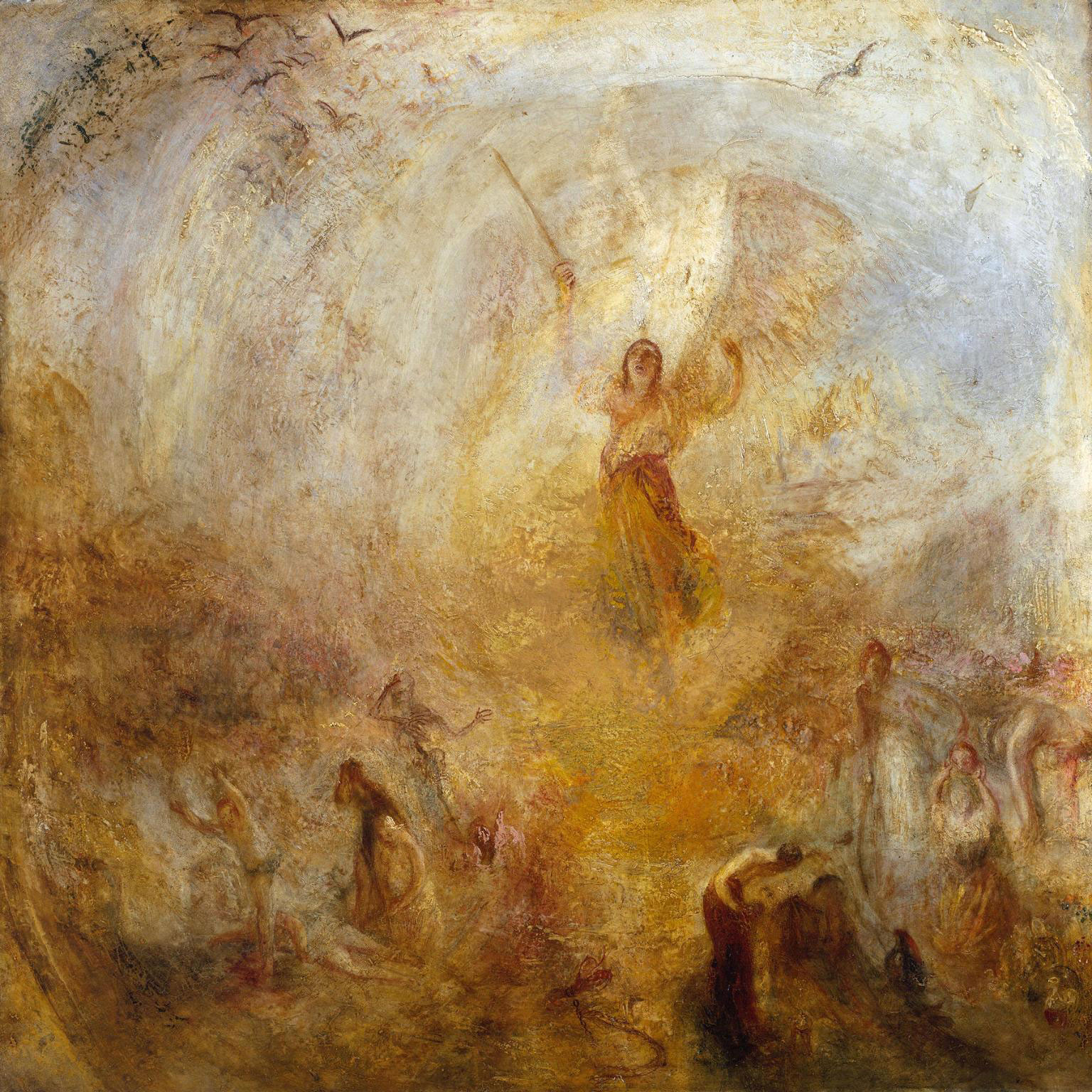
 

Joseph Mallord William Turner (British, 1775-1851) 'The Angel Standing in the Sun' Exhibited 1846


Joseph Mallord William Turner (British, 1775-1851)
The Angel Standing in the Sun
Exhibited 1846
Oil on canvas
Unframed: 78.7 x 78.7cm (31 x 31 in.)
Framed: 103.5 x 103.5 x 12cm (40 3/4 x 40 3/4 x 4 3/4 in.)
Tate: Accepted by the nation as part of the Turner Bequest 1856
Photo: © Tate, London 2014
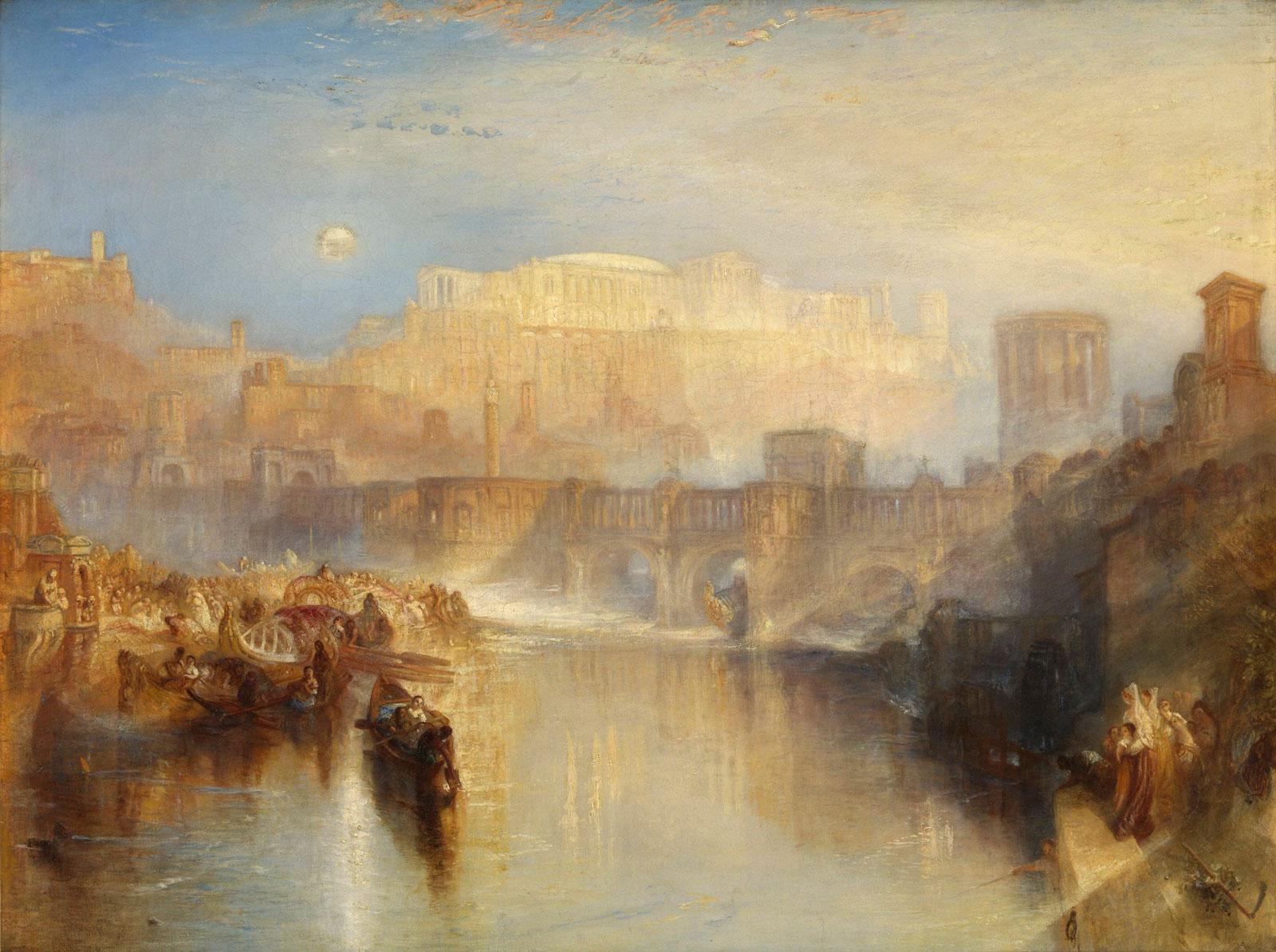
 

Joseph Mallord William Turner (British, 1775-1851) 'Ancient Rome: Agrippina Landing with the Ashes of Germanicus' Exhibited 1839


Joseph Mallord William Turner (British, 1775-1851)
Ancient Rome: Agrippina Landing with the Ashes of Germanicus
Exhibited 1839
Oil on canvas
Unframed: 91.4 x 121.9cm (36 x 48 in.)
Tate: Accepted by the nation as part of the Turner Bequest 1856
Photo: © Tate, London 2014
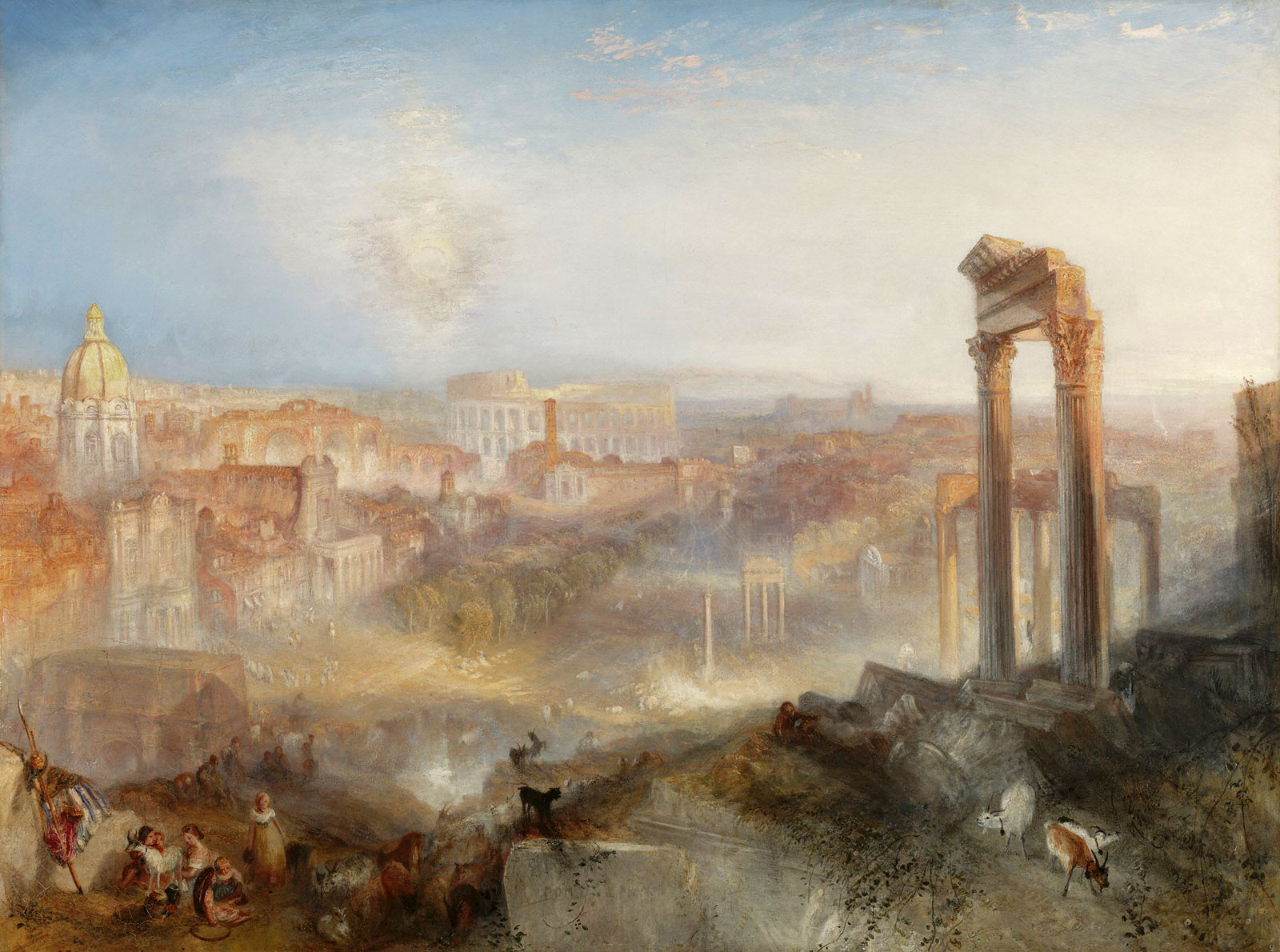
 

Joseph Mallord William Turner (British, 1775-1851) 'Modern Rome – Campo Vaccino' 1839


Joseph Mallord William Turner (British, 1775-1851)
Modern Rome – Campo Vaccino
1839
Oil on canvas
Unframed: 91.8 x 122.6cm (36 1/8 x 48 1/4 in.)
The J. Paul Getty Museum, Los Angeles


The J. Paul Getty Museum
1200 Getty Center Drive
Los Angeles, California 90049

Opening hours:
Daily 10am – 5pm

The J. Paul Getty Museum website

LIKE ART BLART ON FACEBOOK

Back to top

Exhibition: ‘The City Lost and Found: Capturing New York, Chicago, and Los Angeles, 1960-1980’ at the Art Institute of Chicago

Exhibition dates: 26th October 2014 – 11th January 2015


Bruce Davidson (American, b. 1933) 'Untitled', from 'East 100th Street' 1966-1968


Bruce Davidson (American, b. 1933)
Untitled, from East 100th Street
1966-1968
Courtesy of Howard Greenberg Gallery, New York and Magnum Photos


What looks to be another fascinating exhibition. They are coming thick and fast at the moment, it’s hard to keep up!

Marcus


Many thankx to the Art Institute of Chicago for allowing me to publish the photographs in the posting. Please click on the photographs for a larger version of the image.


The American city of the 1960s and 1970s experienced seismic physical changes and social transformations, from urban decay and political protests to massive highways that threatened vibrant neighbourhoods. Nowhere was this sense of crisis more evident than in the country’s three largest cities: New York, Chicago, and Los Angeles. Yet in this climate of uncertainty and upheaval, the streets and neighbourhoods of these cities offered places where a host of different actors – photographers, artists, filmmakers, planners, and activists – could transform these conditions of crisis into opportunities for civic discourse and creative expression.

The City Lost and Found is the first exhibition to explore this seminal period through the emergence of new photographic and cinematic practices that reached from the art world to the pages of Life magazine. Instead of aerial views and sweeping panoramas, photographers and filmmakers turned to in-depth studies of streets, pedestrian life, neighbourhoods, and seminal urban events, like Bruce Davidson’s two-year study of a single block in Harlem, East 100th Street (1966-68). These new forms of photography offered the public a complex image of urban life and experience while also allowing architects, planners, and journalists to imagine and propose new futures for American cities.

Drawn from the Art Institute’s holdings, as well as from more than 30 collections across the United States, this exhibition brings together a large range of media, from slideshows and planning documents to photo collage and artist books. The City Lost and Found showcases important bodies of work by renowned photographers and photojournalists such as Thomas Struth, Martha Rosler, and Barton Silverman, along with artists known for their profound connections to place, such as Romare Bearden in New York and ASCO in Los Angeles. In addition, projects like artist Allan Kaprow’s Chicago happening, Moving, and architect Shadrach Wood’s hybrid plan for SoHo demonstrate how photography and film were used in unconventional ways to make critical statements about the stakes of urban change. Blurring traditional boundaries between artists, activists, planners, and journalists, The City Lost and Found offers an unprecedented opportunity to experience the deep interconnections between art practices and the political, social, and geographic realities of American cities in the 1960s and 1970s.

Organiser

The City Lost and Found: Capturing New York, Chicago, and Los Angeles, 1960-1980 is organised by the Art Institute of Chicago and the Princeton University Art Museum.

Text from the Art Institute of Chicago website


James Nares (British, b. 1953)
Pendulum
1976
Courtesy of Paul Kasmin Gallery, New York


James Nares’s film Pendulum illustrates the extraordinary status of Lower Manhattan during the 1970s, where disuse and decay created both the threat of demolition and the freedom to produce ambitious public art projects. The film shows a large pendulum swinging languidly in largely abandoned streets, suggesting the passage of time as well as the menace of the wrecking ball. Nares created this project by suspending a cast-concrete ball from an elevated pedestrian bridge on Staple Street on the Lower West Side adjacent to his loft. Unlike many neighbourhoods, urban renewal plans never came to fruition for this area, which still retains a connection to this precarious, yet liberating time in New York.


Romare Bearden (African-American, 1911-1988) 'The Block II' 1972 (detail)


Romare Bearden (African-American, 1911-1988)
The Block II (detail)
1972
Collection of Walter O. and Linda J. Evans


This monumental collage depicts both a specific, identifiable block in Harlem and also the importance of everyday routines to the city. From the 1960s Romare Bearden used collage to convey the texture and dynamism of urban life, combining paint and pencil with found photographs and images from newspapers, magazines, product labels, and fabric and wallpaper samples. Here Bearden showed the diverse inhabitants of Harlem apartment buildings perched in windows and on fire escapes, sitting on front stoops and street benches. The scene highlights the innumerable ways city dwellers “make do” so that their environments are more functional and liveable, from transforming front steps into a living room to turning sidewalks into playgrounds. While Bearden’s work has strong connections to avant-garde art and American and African histories, his collage technique can also be seen as a form of making do, just like the practices of his neighbours in New York.


“The American city of the 1960s and ’70s witnessed seismic physical changes and social transformations, from shifting demographics and political protests to the aftermath of decades of urban renewal. In this climate of upheaval and uncertainty, a range of makers – including photographers, filmmakers, urban planners, architects, and performance artists – countered the image of the city in crisis by focusing on the potential and the complexity of urban places. Moving away from the representation of cities through aerial views, maps, and sweeping panoramas, new photographic and planning practices in New YorkChicago, and Los Angeles explored real streets, neighbourhoods, and important urban events, from the Watts Rebellion to the protests surrounding the Democratic National Convention in Chicago. These ideas and images defined not only cities’ social and political stakes in the eyes of the American public, but they also led a new generation of architects, urban planners, and sociologists to challenge long-held attitudes about the future of inner-city neighbourhoods.

Works throughout the exhibition describe this new ideal of urban experience following three main lines of inquiry – preservation, demonstration, and renewal. The first reflects the widespread interest in preserving urban neighbourhoods and communities, including the rise of the historic preservation movement in the United States. The second captures the idea of demonstration in the broadest sense, encompassing political protests during the 1960s, as well as temporary appropriations of streets and urban neighbourhoods through performance art, film, and murals. The third, renewal, presents new and alternative visions for the future of American cities created by artists, filmmakers, architects, and planners. Together these works blur the lines between artists, activists, and journalists, and demonstrate the deep connections between art practices and the political, social, and geographic realities of American cities in a tumultuous era.”

New York

The election of Mayor John Lindsay in 1965 represented a watershed for New York, as the city moved away from administrator Robert Moses’s highly centralised push for new infrastructure and construction in previous decades. Lindsay’s efforts to create a more open and participatory city government were often in dialogue with ideas advanced by critic Jane Jacobs, who argued for the value of streets, neighbourhoods, and small-scale change. This new focus on local and self-directed interventions had a wide influence, leading to the development of pocket parks to replace vacant lots and the groundbreaking Plan for New York City’s use of photo essays and graphic design to express goals of diversity and community. In turn, many artists of the period, including Hans Haacke and Mierle Laderman Ukeles, created work that directly engaged with important social and political issues in the city, such as slum housing and labor strikes.

A multifaceted theme of preservation comes to the fore in work by the many artists and architects in New York who documented, staged, and inhabited areas where buildings were left vacant and in disrepair following postwar shifts in population and industry. The historic streets of Lower Manhattan became an integral part of projects by artist Gordon Matta-Clark and architect Paul Rudolph, for example, while low-income, yet vibrant neighbourhoods like Harlem gave rise to important bodies of work by Romare Bearden, Bruce Davidson, and Martha Rosler. James Nares’s elegiac film Pendulum and Danny Lyon’s remarkable photographs in The Destruction of Lower Manhattan are examples of a growing awareness of the struggle to preserve the existing urban fabric and cultures of New York during the 1960s and ’70s.


Mierle Laderman Ukeles (American, b. 1939) 'Touch Sanitation Performance' 1977-1980


Mierle Laderman Ukeles (American, b. 1939)
Touch Sanitation Performance
1977-1980
Courtesy of Ronald Feldman Fine Arts, New York


In 1977 Mierle Laderman Ukeles embarked on the multiyear performance piece Touch Sanitation, in which she shook the hand of every one of the 8,500 sanitation workers, or “sanmen,” employed by the city of New York, in keeping with her practice’s focus on labor. After the vilification of sanitation workers during the strikes of 1968, Ukeles’s personal and political camaraderie with the workers took on particular importance; every handshake was accompanied by the words “Thank you for keeping the city alive.” She worked the same hours as the sanmen and followed their paths through the streets of New York. Touch Sanitation was also distinguished by the importance Ukeles placed on the participation of the workers, as she explained in the brochure for the project: “I’m creating a huge artwork called TOUCH SANITATION about and with you, the men of the Department. All of you.”


Paul Rudolph (American, 1918-1997) 'Lower Manhattan Expressway, New York City, perspective section' c. 1970


Paul Rudolph (American, 1918-1997)
Lower Manhattan Expressway, New York City, perspective section
c. 1970
The Paul Rudolph Archive, Library of Congress


Known for high-tech buildings in concrete, architect Paul Rudolph began working on a project for Lower Manhattan Expressway in 1965, funded by the Ford Foundation as research and design exploring “New Forms of the Evolving City.” Rudolph diverged from Robert Moses’s strategy for infrastructural projects through a sensitive engagement with the scale and texture of the dense urban fabric of Lower Manhattan. He proposed a below-grade road surmounted by a large, continuous residential structure of varying heights that would protect the surrounding neighbourhood from the pollution and noise of the highway. In many places this terraced megastructure was precisely scaled to the height of the surrounding loft buildings, with entrances and gardens on existing streets, a contextual quality emphasised in his detailed drawings. Rudolph also designed the expressway complex to resonate with established functions and symbols of the city, with tall buildings flanking the Manhattan and Williamsburg Bridges like monumental gates to the city.


Thomas Struth (German, b. 1954) 'Crosby Street, New York, Soho' 1978


Thomas Struth (German, b. 1954)
Crosby Street, New York, Soho
1978
© Thomas Struth


Thomas Struth’s 1978 photographs in the series Streets of New York City are remarkable representations of a city undergoing dramatic change, from the derelict streets of Lower Manhattan and public-housing buildings in Harlem to the dazzling, mirage-like towers of the newly built World Trade Center. Struth produced these photographs during a residency at the New York Institute for Art and Urban Resources, Inc. (now MoMA’s PS1) from December 1977 until September 1978. As he would later write, “I was interested in the possibility of the photographic image revealing the different character or the ‘sound’ of the place. I learned that certain areas of the city have an emblematic character; they express the city’s structure.” Although these photographs adopt the symmetrical framing and deadpan documentary style of his mentors Bernd and Hilla Becher, they led Struth to ask, “Who has the responsibility for the way a city is?”

Chicago

In the 1960s and ’70s Chicago emerged from its industrial past led by a powerful mayor, Richard J. Daley, who prioritised development in the downtown areas. His work to modernise the city resulted in the construction of massive highways, housing projects, and imposing skyscrapers – new architectural and infrastructural icons that were explored by many photographers of the era. The arts experienced a similar boom, with the foundation and expansion of museums and university programs. Growth came at a cost, however, and the art of this period highlights the disparate experiences of local communities in Chicago, including Jonas Dovydenas’s photographs of life in ethnic neighbourhoods and independent films exploring issues ranging from the work of African American community activists to the forced evictions caused by urban renewal projects.

Demonstrations loomed large in Chicago, where artists responded to two major uprisings in 1968, the first on the West Side, following the assassination of Martin Luther King Jr., and the second downtown, during the Democratic National Convention. These violent confrontations between protestors and police drew national attention to issues of race relations and political corruption in Chicago and led to an outpouring of new art projects as forms of demonstration, including community murals like the West Wall and an exhibition at the Richard Feigen Gallery condemning Daley’s actions during the DNC. The image of Chicago that emerged in the mass media of this period was one of destruction and resilience, a duality highlighted by contemporary artists like Gordon-Matta Clark and Allan Kaprow, whose work existed in the fragile space of opportunity between the streets and the wrecking ball.


Ken Josephson (American, b. 1932) 'Chicago' 1969


Ken Josephson (American, b. 1932)
Chicago
1969
The Art Institute of Chicago, Gift of the School of the Art Institute of Chicago


Still from 'Lord Thing', directed by DeWitt Beall, 1970


Still from Lord Thing, directed by DeWitt Beall
1970
Courtesy Chicago Film Archives


Lord Thing documents the development of the Vice Lords from an informal club for young men on the streets of Chicago’s West Side, its emergence as a street gang, and its evolution into the Conservative Vice Lords, a splinter group that aspired to nonviolent community activism. The film uses a mix of black-and-white sequences to retrospectively analyse the group’s violent middle period and contrasts these with colour sequences that show the Conservative Vice Lords fostering unity and developing black-owned businesses and social programs during the late 1960s. Together, Lord Thing argues for the agency of African Americans in the face of decades of spatialised oppression in Chicago.


Art Sinsabaugh (American, 1924-1983) 'Chicago Landscape #117' 1966


Art Sinsabaugh (American, 1924-1983)
Chicago Landscape #117
1966
Art Sinsabaugh Archive, Indiana University Art Museum
© 2004 Katherine Anne Sinsabaugh and Elisabeth Sinsabaugh de la Cova


Sinsabaugh’s panoramic photographs are among the most distinctive visual records of Chicago, capturing the built landscape with what Sinsabaugh called “special photographic seeing,” achieved with large-format negatives. The Department of City Planning used his photographs in a 1963 planning document to help describe the qualities of Chicago’s tall buildings “as vertical forms contrasting with these two great horizontal expanses [the flat prairie and the lakefront edge].” Sinsabaugh’s panoramas also flirt with abstraction when depicting such remarkable places as Chicago’s Circle Interchange, a monumental coil of highways completed in the early 1960s. Sinsabaugh recalled that for the photographer, like the motorist, freeways provided “an access, an opening, a swath cut right through the heart of the City in all directions.” However, his early thrill at the novelty of these developments soon gave way to an appreciation of their violence, in which entire “neighbourhoods were laid bare and their very bowels exposed.” (Please enlarge by clicking on the image)


Alvin Boyarsky (Polish-​Canadian, 1928-1990) 'Chicago à la Carte: The City as Energy System' 1970


Alvin Boyarsky (Polish-​Canadian, 1928-1990)
Chicago à la Carte: The City as Energy System
1970
Special issue of Architectural Design, December 1970
Courtesy Alvin Boyarsky Archive, London


The concept of the city as organism emerged during the 1960s as a response to the increasingly complex interconnections of technology, communication, and history. One exceptional project in this vein was the British architect Alvin Boyarsky’s Chicago à la Carte. Boyarsky drew on an archive of historical postcards, newspaper clippings, and printed ephemera to trace a hidden history of Chicago’s built environment as an “energy system.” This idea was represented on the cover by a striking postcard image of a vivisection of State Street in the Loop, showing subway tunnels, sidewalks, El tracks, and skyscrapers in what Boyarsky described as “the tumultuous, active, mobile, and everywhere dynamic centre of a vast distribution system.” On other pages, Boyarsky showed images of Chicago’s newly built skyscrapers with newspaper clippings of recent political protests to juxtapose the city’s reaction to recent political protests against the disciplinary tradition of modern architecture in Chicago.

Los Angeles

Los Angeles has always been known for its exceptionalism, as a city of horizontal rather than vertical growth and a place where categories of private and public space prove complex and intertwined. During the 1960s and ’70s these qualities inspired visual responses by seminal artists like Ed Ruscha as well as critics like Reyner Banham, one of the most attentive observers of the city during this period. In many other respects, however, Los Angeles experienced events and issues similar to those of New York and Chicago, including problems of racial segregation, a sense of crisis about the decay of its historical downtown, and large-scale demonstrations, with responses ranging from photography and sculpture to provocative new forms of performance art by the collective Asco.

Concerns about the future forms of urbanism in Los Angeles and a renewal of the idea of the city were major preoccupations for artists, architects, and filmmakers. Many photographers focused on the everyday banality and auto-centric nature of the city, such as Robbert Flick’s Sequential Views project and Anthony Hernandez’s Public Transit Areas series. The historic downtown core continued to hold a special place in popular memory as many of these areas – including the former neighbourhood of Bunker Hill – were razed and rebuilt. Julius Shulman’s photographs of new development in the 1960s – including Bunker Hill and Century City – focus on the spectacular quality of recent buildings as well their physical and cultural vacancy. Architects played a strong role in creating new visions for the future city, including an unrealised, yet bold and influential plan for redeveloping Grand Avenue as a mixed-use district shaped by ideals of diversity and pedestrian-friendly New Urbanism.


Julius Shulman (American, 1910-2009) 'The Castle, 325 S. Bunker Hill Avenue, Los Angeles, California, (Demolished 1969)' c. 1968


Julius Shulman (American, 1910-2009)
The Castle, 325 S. Bunker Hill Avenue, Los Angeles, California, (Demolished 1969)
c. 1968
Julius Shulman Photography Archive, Research Library at the Getty Research Institute, Los Angeles (2004.R.10)
© J. Paul Getty Trust. Used with permission


Julius Shulman (October 10, 1910 – July 15, 2009) was an American architectural photographer best known for his photograph “Case Study House #22, Los Angeles, 1960. Pierre Koenig, Architect.” The house is also known as the Stahl House. Shulman’s photography spread the aesthetic of California’s Mid-century modern architecture around the world. Through his many books, exhibits and personal appearances his work ushered in a new appreciation for the movement beginning in the 1990s.

His vast library of images currently resides at the Getty Center in Los Angeles. His contemporaries include Ezra Stoller and Hedrich Blessing Photographers. In 1947, Julius Shulman asked architect Raphael Soriano to build a mid-century steel home and studio in the Hollywood Hills.

Some of his architectural photographs, like the iconic shots of Frank Lloyd Wright’s or Pierre Koenig’s remarkable structures, have been published countless times. The brilliance of buildings like those by Charles Eames, as well as those of his close friends, Richard Neutra and Raphael Soriano, was first brought to wider attention by Shulman’s photography. The clarity of his work added to the idea that architectural photography be considered as an independent art form in which perception and understanding for the buildings and their place in the landscape informs the photograph.

Many of the buildings photographed by Shulman have since been demolished or re-purposed, lending to the popularity of his images.

Text from the Wikipedia website


Asco. 'Decoy Gang War Victim' 1974 (printed later)


Asco
Decoy Gang War Victim
1974 (printed later)
Photograph by Harry Gamboa Jr.
Courtesy of Harry Gamboa Jr.


The Chicano art collective Asco was famous for their No Movies – works that appropriate certain stylistic qualities of the movies while maintaining a nonchalance that allows them to critique the media industry’s role in Los Angeles. Asco’s performances, therefore, function on different registers to engage with current events and issues facing the Chicano community as well as acknowledge the mainstream media’s distorted image of the city. For Decoy Gang War Victim, Asco’s members staged a fake gang shooting then circulated the images to local television stations, simultaneously feeding and deriding the media’s hunger for sensationalist imagery of urban neighbourhoods.


William Reagh (American, 1911-1992) 'Bunker Hill to soon be developed' 1971 (printed later)


William Reagh (American, 1911-1992)
Bunker Hill to soon be developed
1971 (printed later)
Los Angeles Public Library


From 1939 to 1990, William Reagh produced over 40,000 photographs of Los Angeles in considerable architectural detail. Reagh is also well known for his specific efforts to document the Downtown area from the 1950s to the 1980s. His collection is now part of the California State Library, and a photography center in his name, the William Reagh Los Angeles Photography Center, is located at 2332 W. Fourth Street.

The William Reagh Los Angeles Photography Center is operated by Grupo de Teatro SINERGIA in partnership with the Department of Cultural Affairs City of Los Angeles, and is the only Community Photography Laboratory in the Los Angeles area.


Reagh was on the streets: Looking. Lingering. Documenting. He walked Los Angeles and consequently saw Los Angeles — offering a different perspective than the mere suggestion of place so often gleaned in motion or generalised shorthand. He circled neighbourhoods, returned to some locations year after year, charting their evolution. And though, until his death in 1992, he became one of Los Angeles’ most prolific visual documentarians, he didn’t set out to be a photographer, nor was his trove of L.A. images meant to be a formal paean to Los Angeles. A painter and philosopher, by training and inclination, photography was something that he “picked up,” while in the service, a proficiency, that overtime became, at turns, poetic – though he, says his son, would never see it as such. …

His father’s arrival in Los Angeles, coincided with the city’s most vigorous years of growth, as well as its many phases of urban renewal. For years, his day job was work as a commercial photographer – shooting products, catalogues, art collections “whatever the clients called for,” his son recalls. But the weekends were dedicated to solely to prowling Los Angeles, uncovering and documenting its very disparate parts, assembling a sense of the whole.

To say there was a goal, a plan or even an organising thesis to his images, would be to overstate his process, Patrick suggests. His father, he says, was a wanderer who would lose himself within the intricate folds of the city, “wherever his muse led him.” Patrick remembers the meanderings of his father. “He just loved to wander downtown and walk around the streets and shoot. Sometimes it might be a streetscape, sometimes it might be people. He’d often shoot from the hip, hold the camera low. He was very good at taking pictures of people without them knowing. But really, he was so non-threatening, such a friendly guy – even in the seediest of neighbourhoods – he would make everyone feel at ease.”

While Saturdays often meant a solo trek – perhaps crisscrossing the freeways by car, touring surface streets on foot for inspiration – on Sundays, Reagh might take Patrick and his sister along. It was an opportunity to see the city through his eyes – the places he felt were important to document, even if he couldn’t articulate why in words. “Train yards, he loved. Shipyards. Amusement parks, the Pike and Pacific Ocean Park,” Reagh recalls. These were places at the edge of things – of the city or the coastline – and, metaphorically, our imaginations. The transit hubs in particular provided an interesting opportunity to see behind the scenes – an end on one story, beginning of another.

Each setting called for a different set up. “If he was downtown shooting people, he’d have his reflex, or another smaller camera, maybe his Leica. At the train yard or shipyard, he’d bring his tripod and set up his big Speed-Graphic. Back then there were no security guards asking questions: who you were and what you were doing. I would climb on stuff, those piled up streetcars. There was broken glass all over. He’d be off shooting. I’d climb. Back when you could do that sort of thing.” …

Decades later, the work reveals his heart. And what the images, taken as a whole, most eloquently preserve is not just sense of place, but a sense of the city’s humanity, its particular vernacular – its feel, pace, space; its leisureliness, and idiosyncratic visual language. “He was just interested in the passing parade.” says Reagh, “He let the camera do the talking.”

Lynell George. “Sidewalk Stories: The Photography of William Reagh,” on the KCET website January 10, 2013 [Online] Cited 26/11/2022


John Humble (American, b. 1944) '300 Block of Broadway, Los Angeles, October 3, 1980' 1980


John Humble (American, b. 1944)
300 Block of Broadway, Los Angeles, October 3, 1980
1980
Courtesy of Craig Krull Gallery, Santa Monica


Brought up in a military family, John Humble spent his childhood moving around the country from one military base to another. Humble was drafted during the Vietnam War, then became a photojournalist for the Washington Post before pursuing a graduate degree at the San Francisco Art Institute. His itinerant nature continued when he traveled the world in the early 1970s, going from Europe to the Middle East, then to Africa and Asia in his Volkswagen van. However, since the summer of 1974 Humble has lived in one place: Los Angeles. His traveling instinct did not diminish despite his fixed geographical location; rather, it intensified as he traversed the length and breadth of the city (from the San Fernando Valley and East Los Angeles to Venice and the shores of Long Beach), creating images that explore the postmodern qualities of America’s second largest city. Humble’s desire to capture “the incongruities and ironies of the Los Angeles landscape” results in a compelling body of work where power lines cut across blue skies, freeways divide neighbourhoods and a river bisects the city.

Humble began working with a 35mm camera, favouring black-and-white prints, but in September 1979 he bought his first view camera and switched to colour printing, producing first Cibachrome, then chromogenic prints. In the 1970s colour emerged within the tradition of photography, most notably in the 1976 exhibition Photographs by William Eggleston at the Museum of Modern Art in New York. No longer confined to the commercial domain of advertising, colour photography gained recognition as a valid expression of fine art. For Humble, the choice was clear; to fully capture the realities of the city – what he refers to as “the urban landscape” – colour was essential.

Text from the J. Paul Getty Museum website


The Art Institute of Chicago
111 South Michigan Avenue
Chicago, Illinois 60603-6404
Phone: (312) 443-3600

Opening hours:
Monday, 11.00am – 6.00pm
Tuesday – Wednesday, closed
Thursday, 11am – 9.00pm
Friday, 11am – 9.00pm
Saturday – Sunday, 11.00am – 6.00pm
The museum is closed Thanksgiving, Christmas, and New Year’s days.

The Art Institute of Chicago website

LIKE ART BLART ON FACEBOOK

Back to top

Exhibition: ‘Fútbol: The Beautiful Game’ at the Los Angeles County Museum of Art (LACMA)

Exhibition dates: 2nd February – 20th July 2014


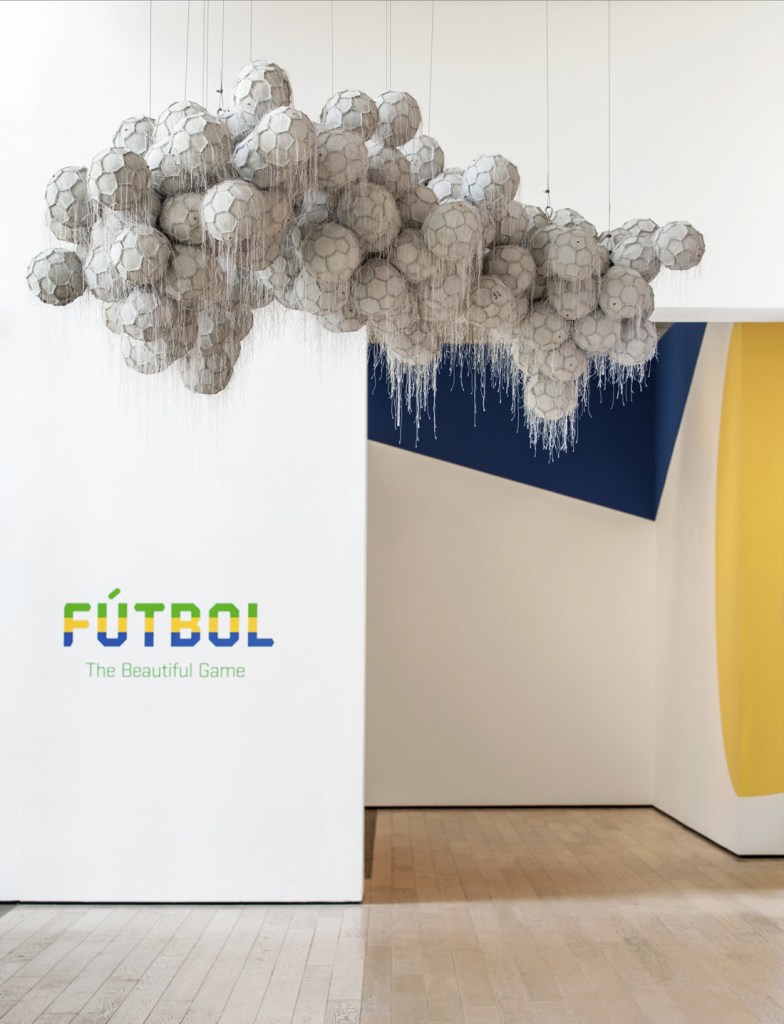
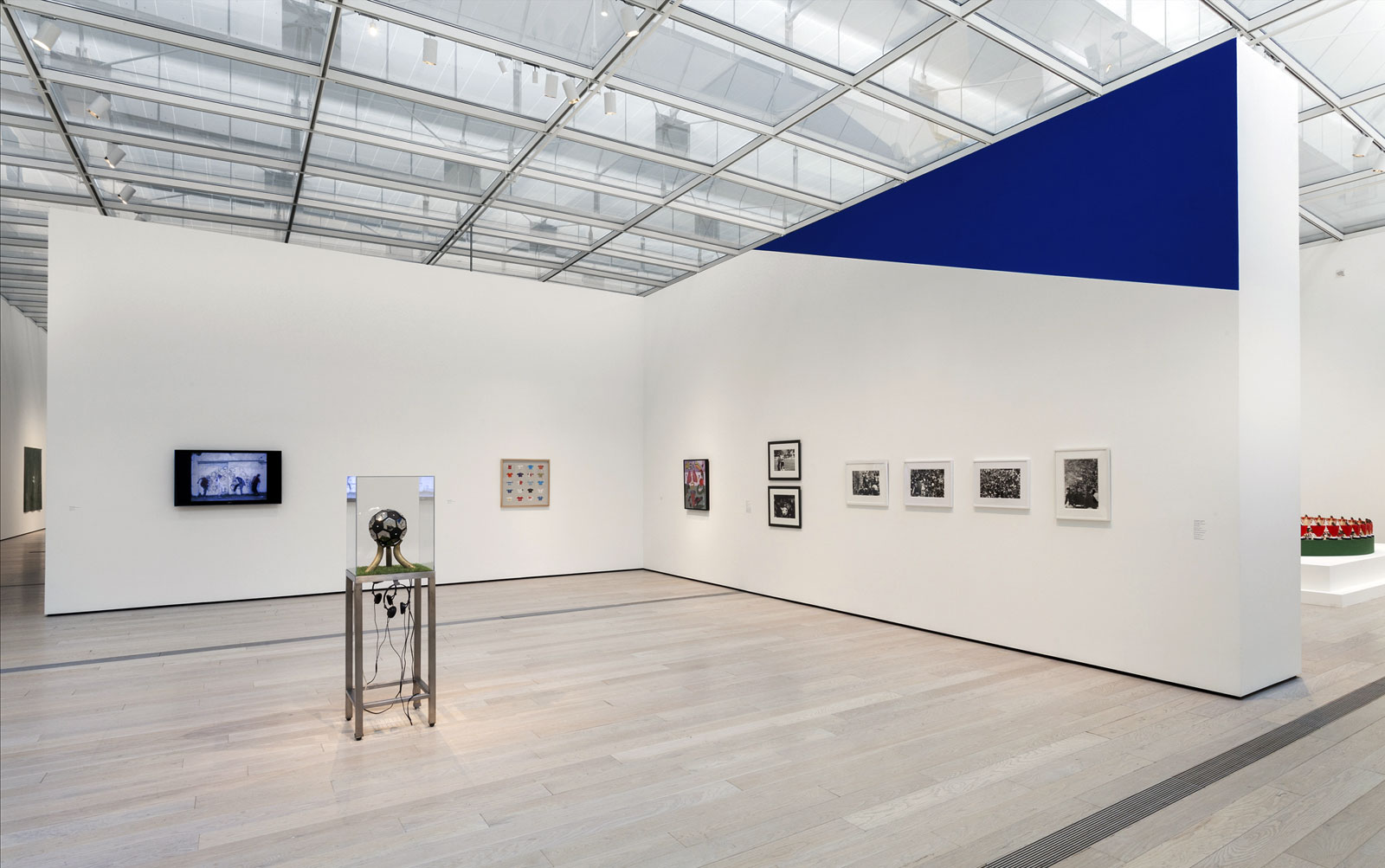
Dario Escobar (Guatemalan, b. 1971) 'Obverse & Reverse XIV' 2013 (installation view)


Dario Escobar (Guatemalan, b. 1971)
Obverse & Reverse XIV (installation view)
2013
Latex, leather, string and steel
11 1/2 × 6 9/16 × 6 9/16 ft. (349.89 × 199.94 × 199.94cm)
Dario Escobar
Courtesy of the artist and Josée Bienvenu Gallery, New York


In honour of the World Cup final and a wonderful tournament, here is a glorious posting to celebrate The Beautiful Game!

PS. So much of this work is conceptual graphic design, doesn’t anybody make art anymore?

Marcus


Many thankx to the Los Angeles County Museum of Art (LACMA) for allowing me to publish the photographs in the posting. Please click on the photographs for a larger version of the image.


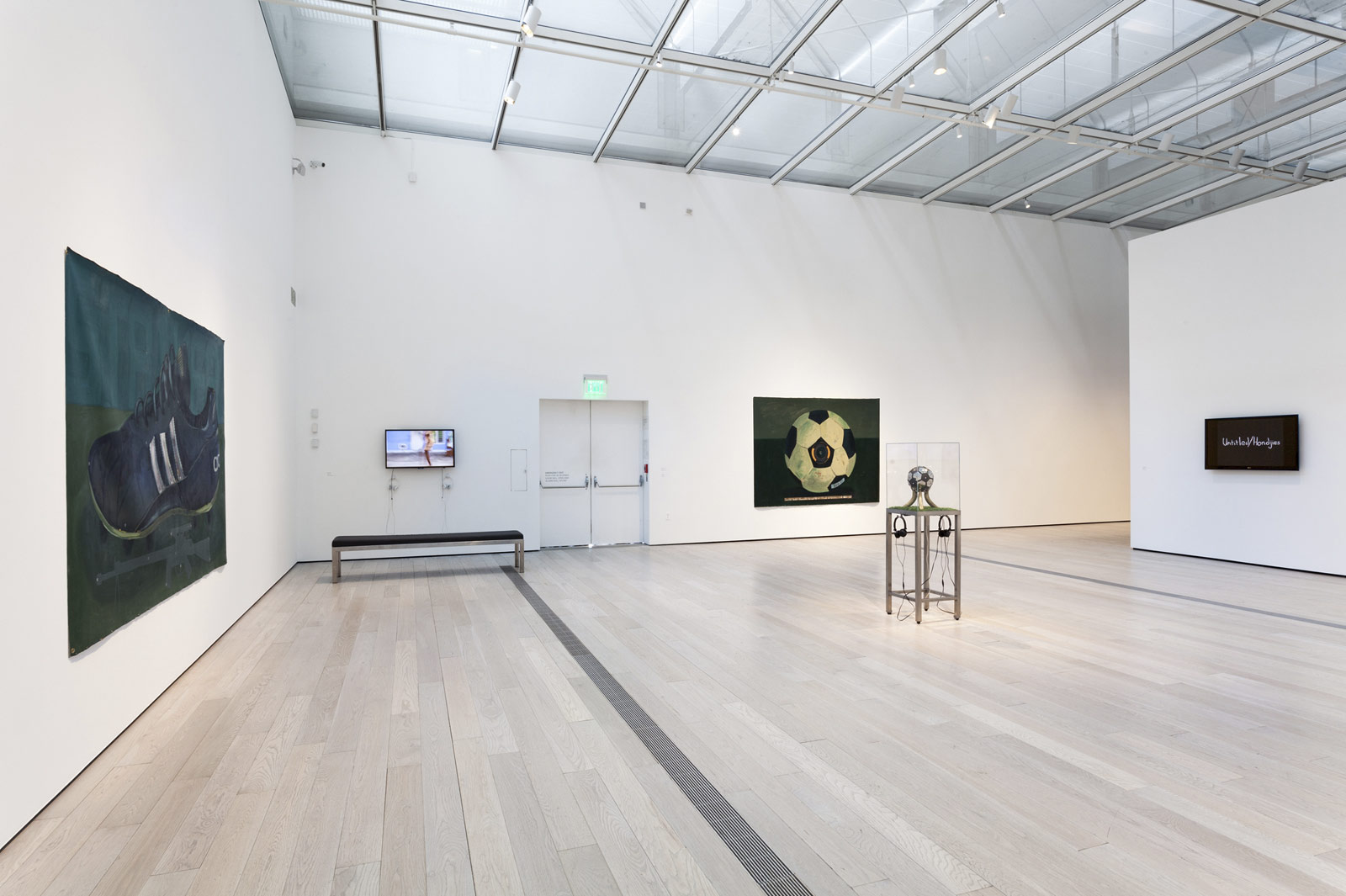
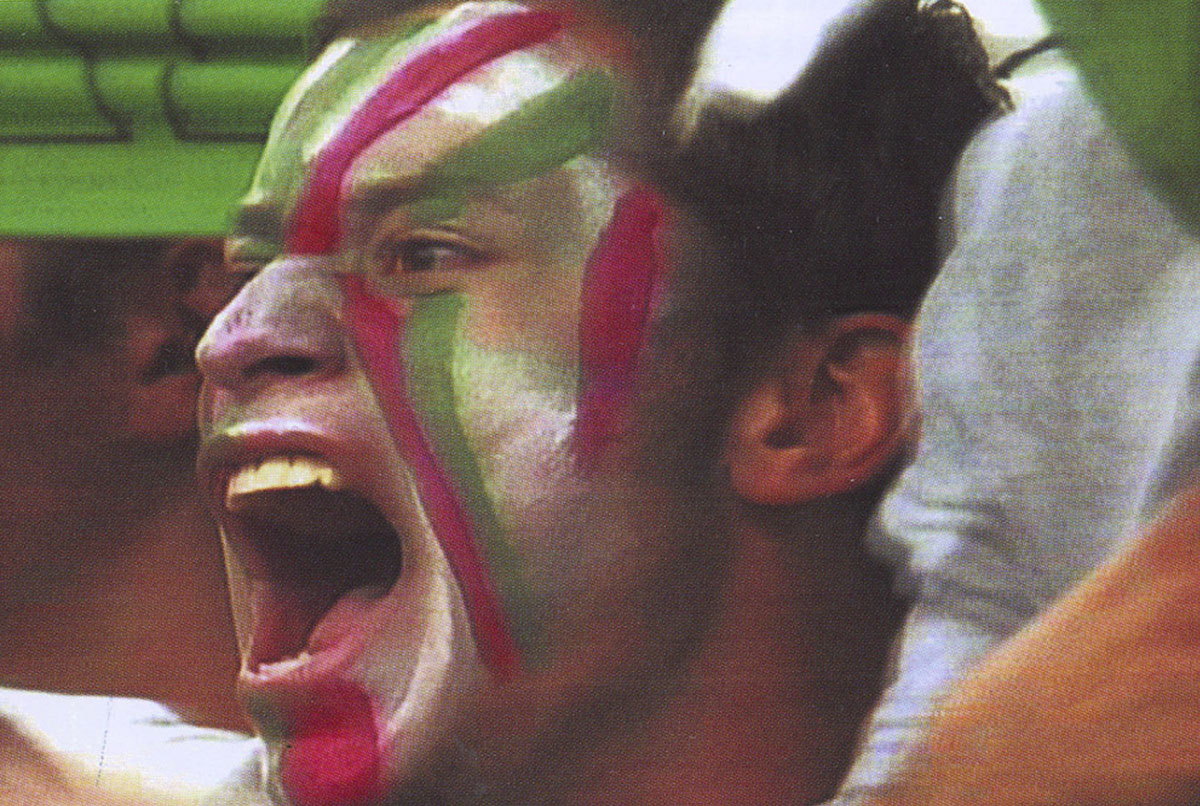
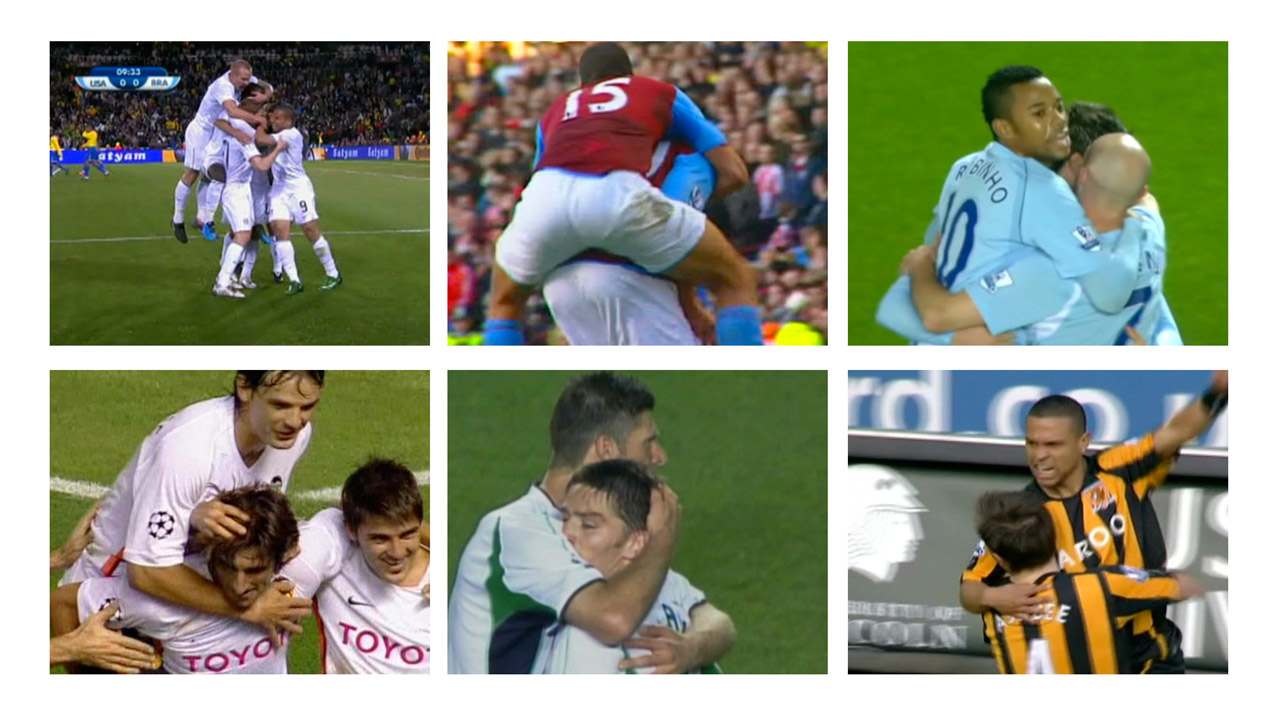
On the eve of the World Cup – which, like the Olympics, takes place every four years – this exhibition celebrates football, the world’s game, and its richness as a field for metaphorical inquiry. Just as the World Cup brings together athletes and fans from around the globe, Fútbol: The Beautiful Game explores some of the ties that bind us as humans. Focusing on a simple game allows for a direct conversation about the communication and (more often) miscommunication that characterise our collective life, while celebrating one thing that most of the planet holds its breath for: the quadrennial event held to crown a nation as world champion of football. The sport has often been cited as a metaphor for nations, for cultures, and even for life, as is suggested by a statement attributed to the writer Albert Camus: “After many years in which the world has afforded me many experiences, what I know most surely about morality and obligations, I owe to football.” Camus believed that the simple rules governing the game often had more to teach us about life than did politicians and philosophers.

Fútbol: The Beautiful Game presents the work of more than 30 artists who address the game through its imagery, signs, symbols, and sounds while also touching on larger issues well apart from the field of play. These themes include masculinity and the construction of heroes; ritual and worship; marketing and power; and current political, social, and cultural phenomena.


This slideshow requires JavaScript.


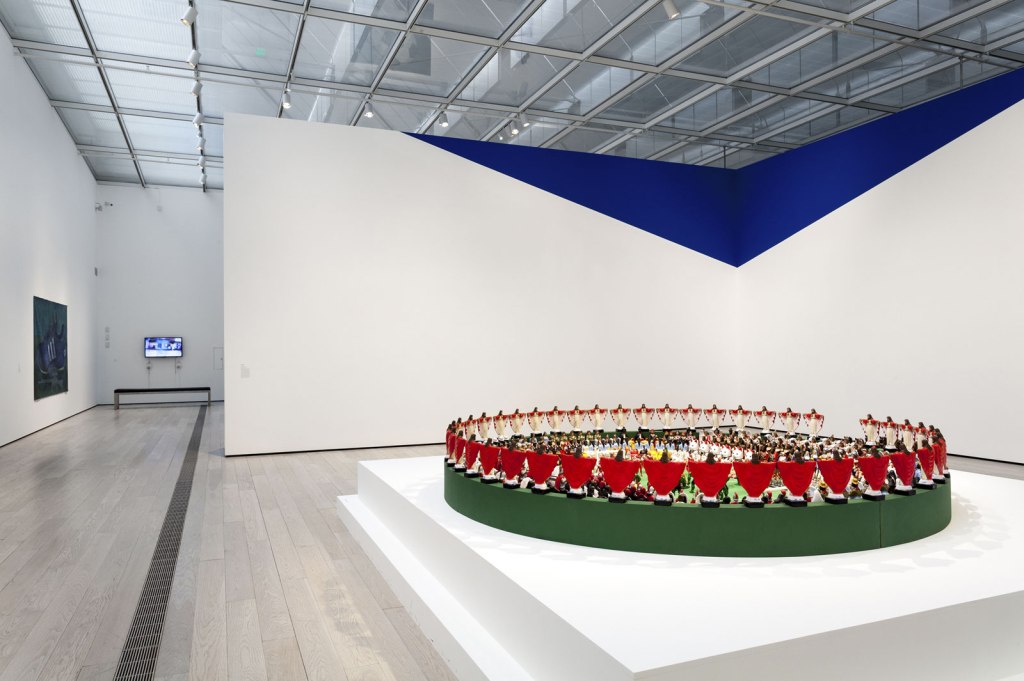
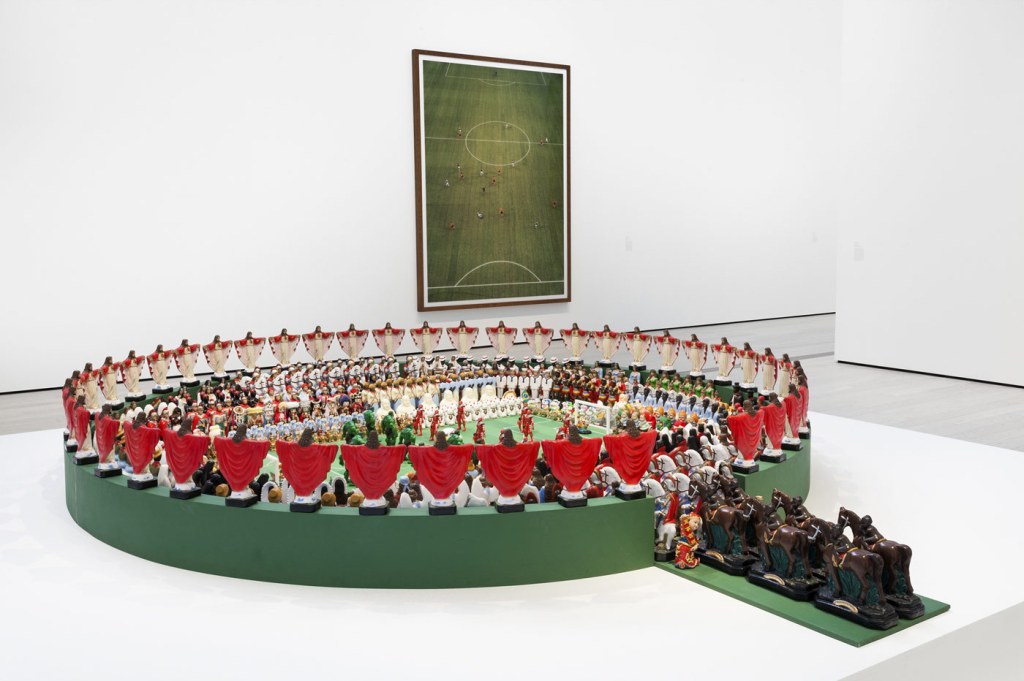
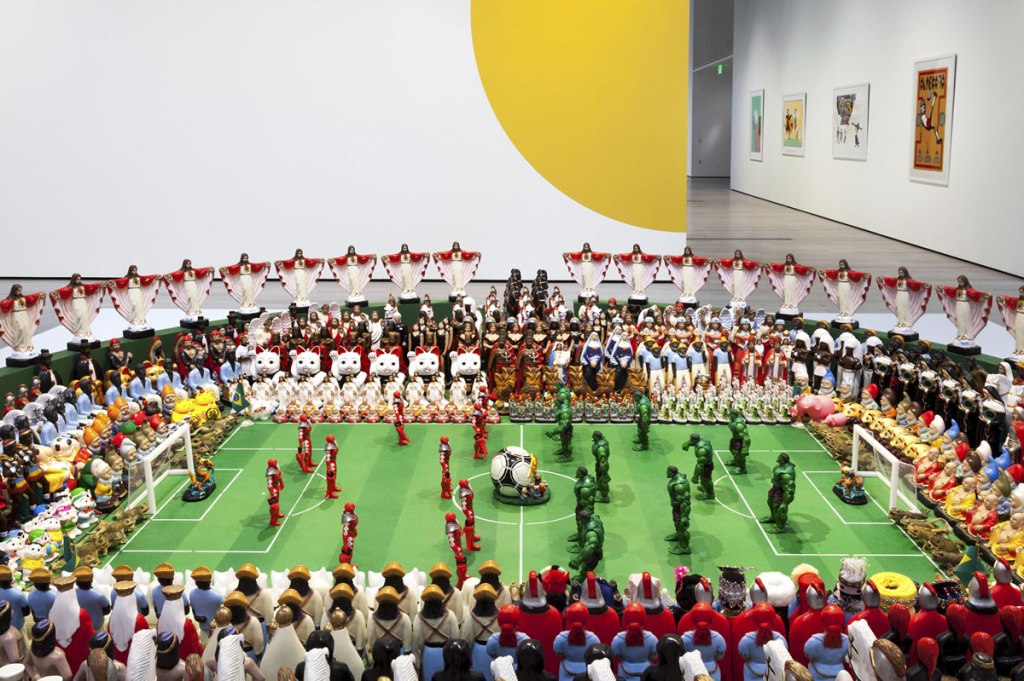
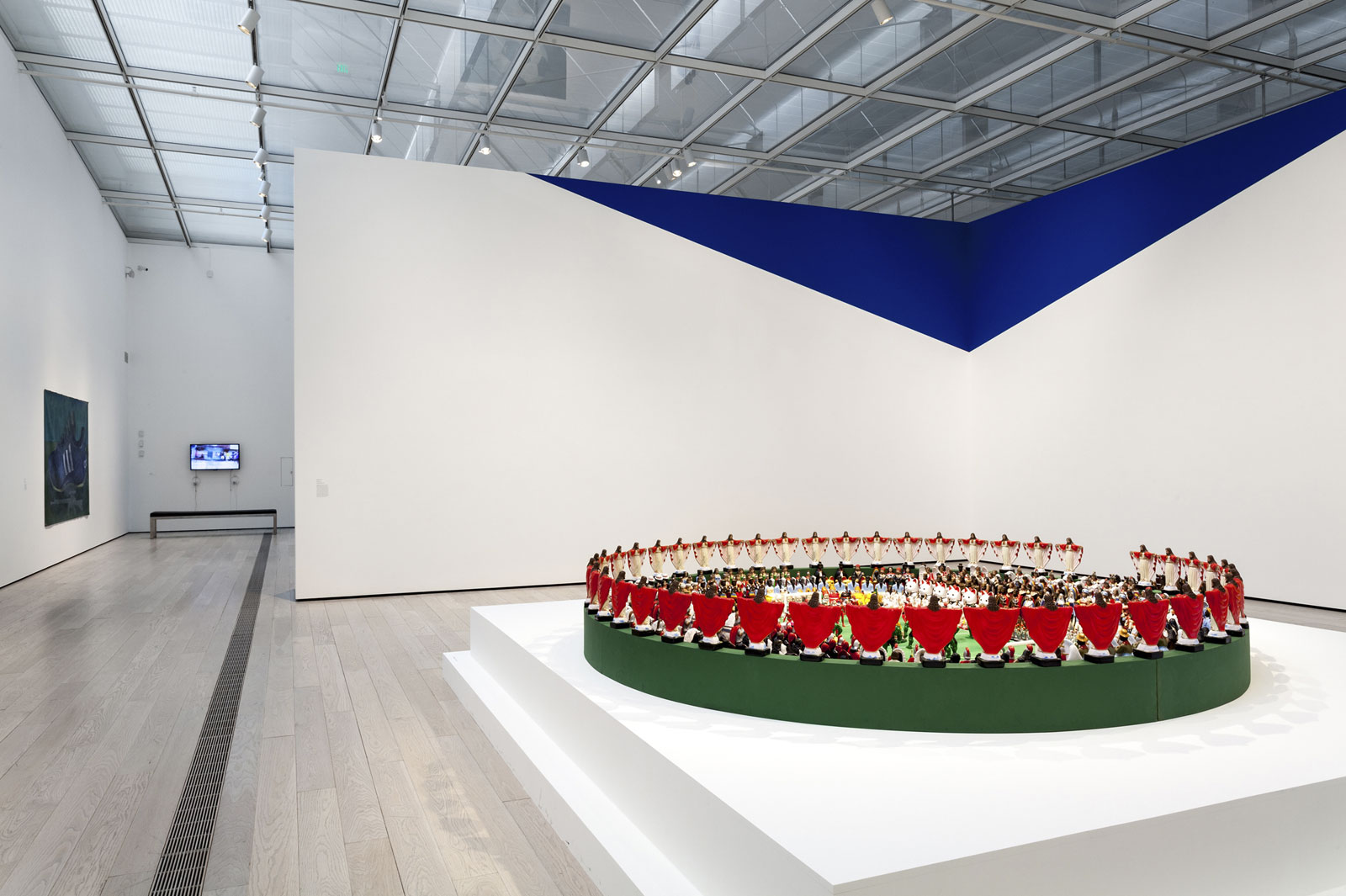
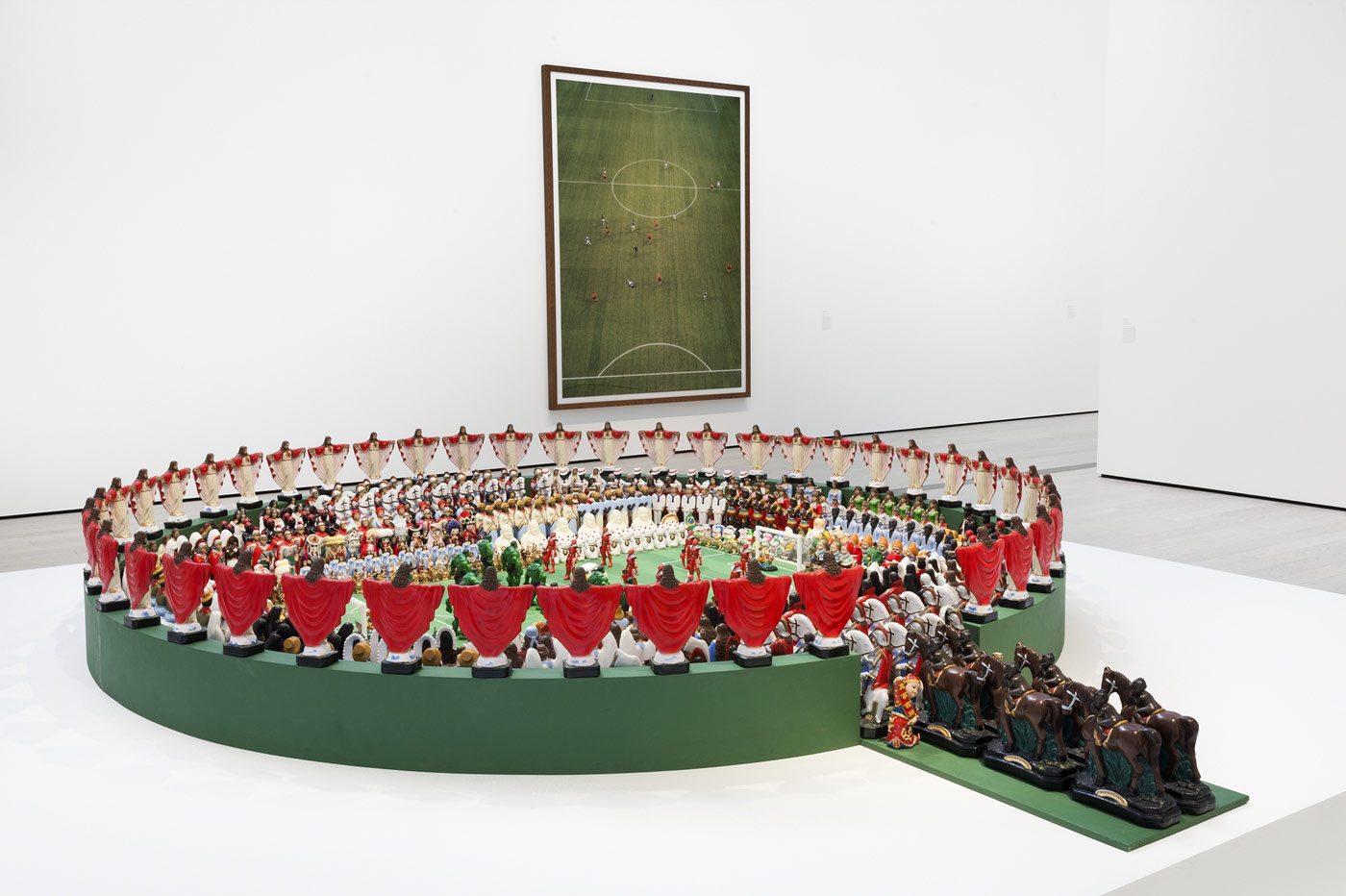
Nelson Leirner (Brazil, 1932-2020) 'Maracana' 2003 (installation view)

In the background: Andreas Gursky (German, b. 1955) 'Maracana' 2003 and Andreas Gursky 'Amsterdam, EM Arena I' 2000. In the foreground: Nelson Leirner (Brazil, 1932-2020) 'Maracana' 2003 (installation view)


In the background: Andreas Gursky (German, b. 1955)
Amsterdam, EM Arena I (installation view)
2000
Chromogenic print
108 1/4 × 80 11/16 × 2 7/16 in. (275 × 205 × 6.2cm)
Gagosian Gallery
Andreas Gursky, Courtesy Gagosian Gallery


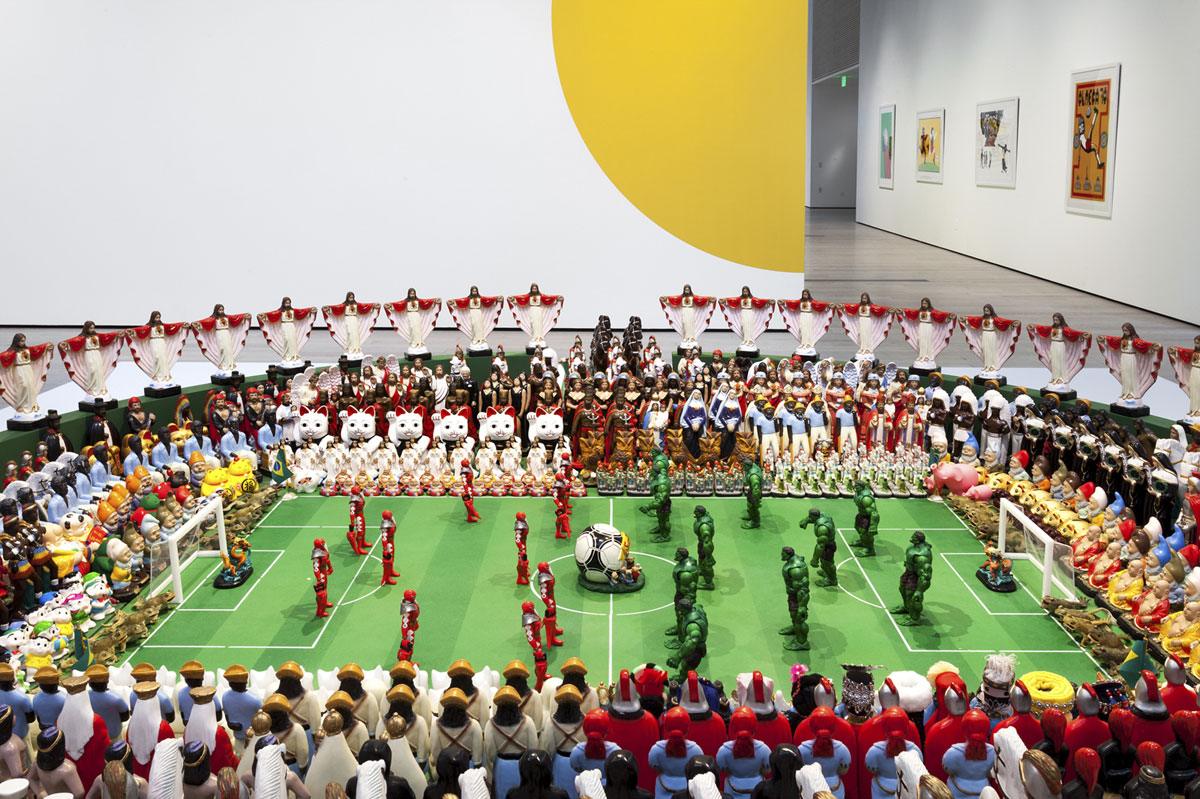
Nelson Leirner (Brazil, 1932-2020) 'Maracana' 2003 (installation view detail)

Nelson Leirner (Brazil, 1932-2020) 'Maracana' 2003 (installation view detail)


Nelson Leirner (Brazil, 1932-2020)
Maracana (installation view details)
2003
Plaster, plastic, ceramic, wood
120 x 130 3/4 x 9.5 in.
Brooklyn Museum


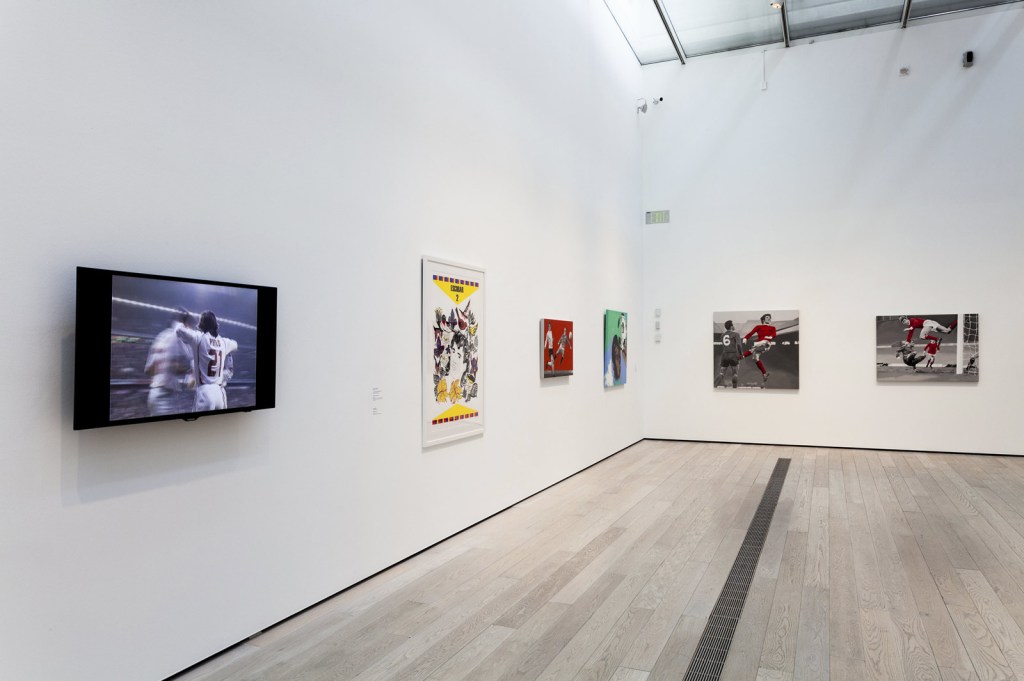
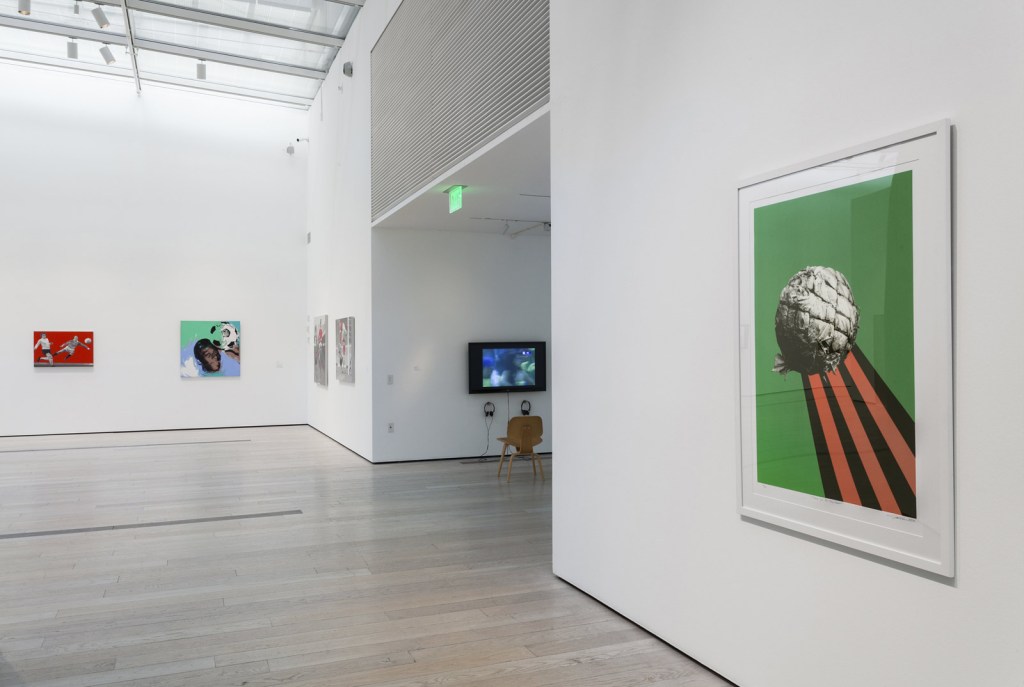
Installation view of the exhibition 'Fútbol: The Beautiful Game' at the Los Angeles County Museum of Art (LACMA)

Installation view of the exhibition 'Fútbol: The Beautiful Game' at the Los Angeles County Museum of Art (LACMA)

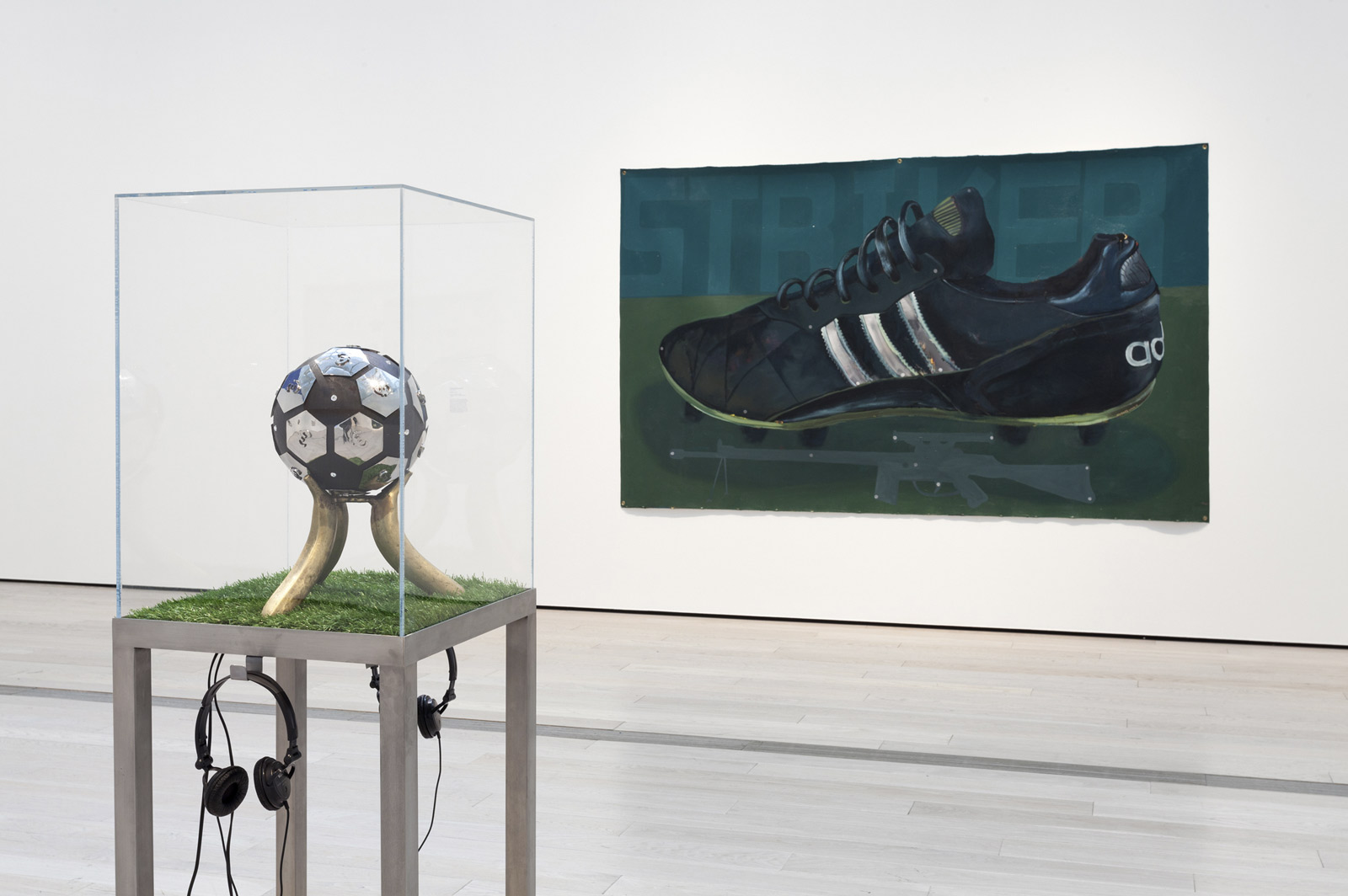
Satch Hoyt (Anglo-Afro-Jamaican, b. 1957) 'Kick That' 2006 (in case) and George Afedzi Hughes (Ghanaian-born American, b. 1962) 'Parallel' 2009-2011


In case: Satch Hoyt (Anglo-Afro-Jamaican, b. 1957)
Kick That
2006
Mixed media with sound
Satch Hoyt
Courtesy of the artist

In the background: George Afedzi Hughes (Ghanaian-born American, b. 1962)
Parallel
2009-2011
Acrylic, oil, enamel on canvas
72 x 120 in. (182.88 x 304.8cm)
Skoto Gallery
Collection of the artist, Courtesy Skoto Gallery


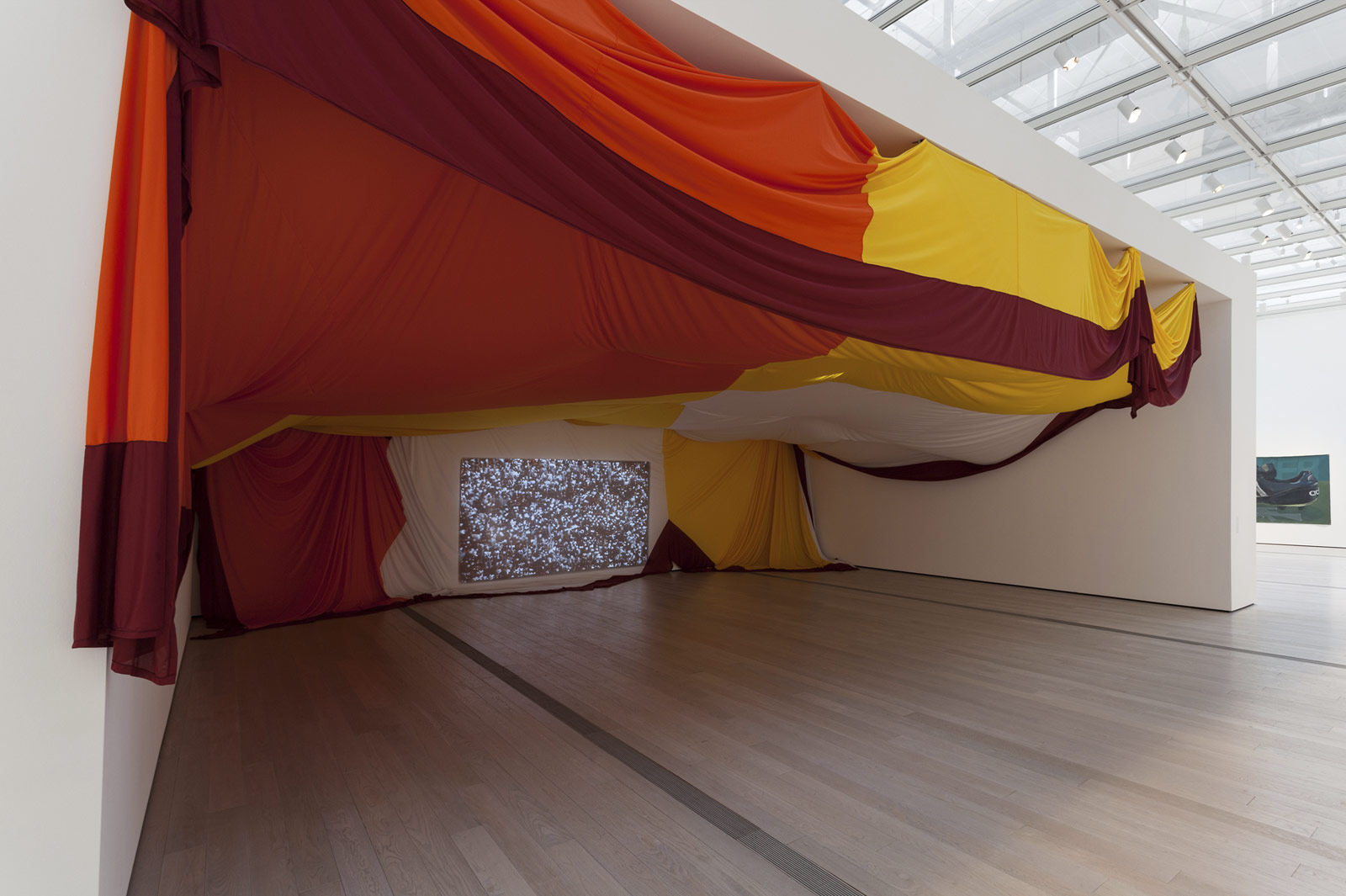
Stephen Dean (French-American, b. 1968) 'Volta' 2002-2003 (installation view)


Stephen Dean (French-American, b. 1968)
Volta (installation view)
2002-2003
Single-channel color DVD installation (9′) with audio and fabric enclosure
Collection of Ruth and William True


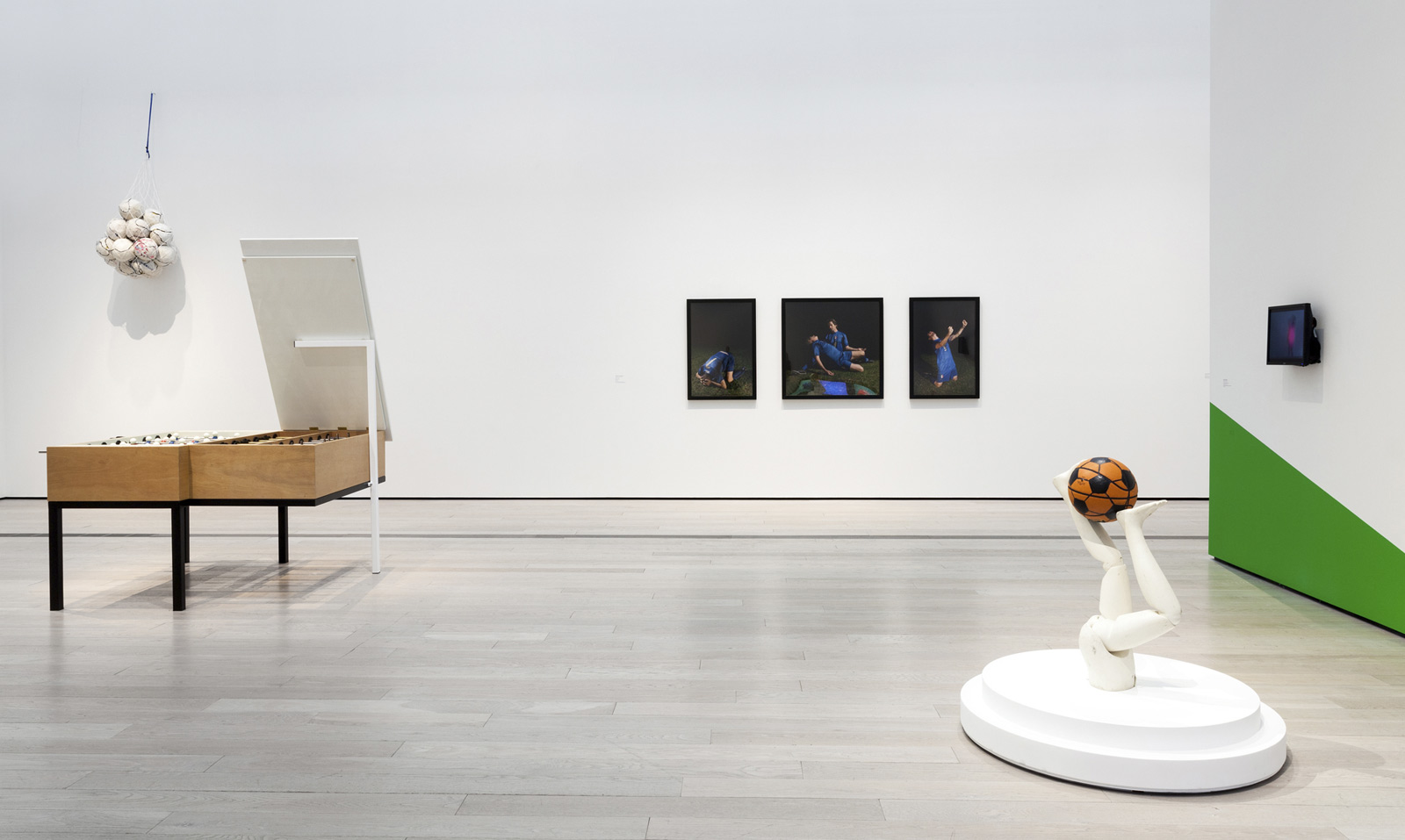
Right on floor: Mary Ellen Carroll (American, b. 1961) 'FREE THROW' 1984 (installation view)


Right on floor: Mary Ellen Carroll (American, b. 1961)
FREE THROW (installation view)
1984
Mannequin bottom and basketball with rubberised paint
4 x 3 x 1 ft. (121.91 x 91.44 x 30.48cm)
Mary Ellen Carroll
Courtesy of the artist, 3rd Streaming-NYC, Galerie Hubert Winter-Vienna, Austria


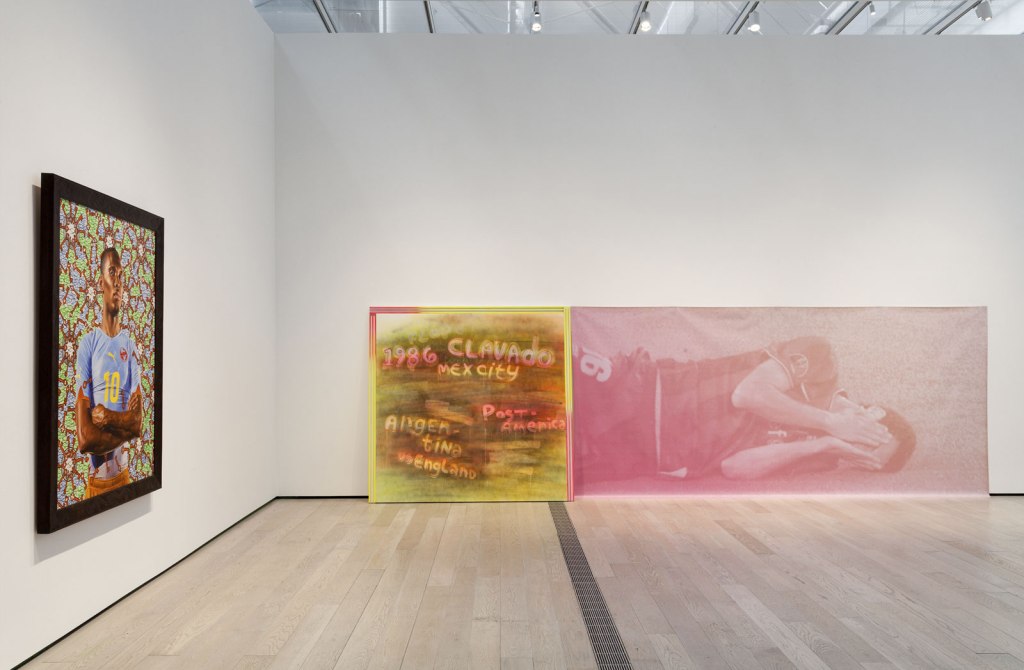
Installation view of the exhibition 'Fútbol: The Beautiful Game' at the Los Angeles County Museum of Art (LACMA)

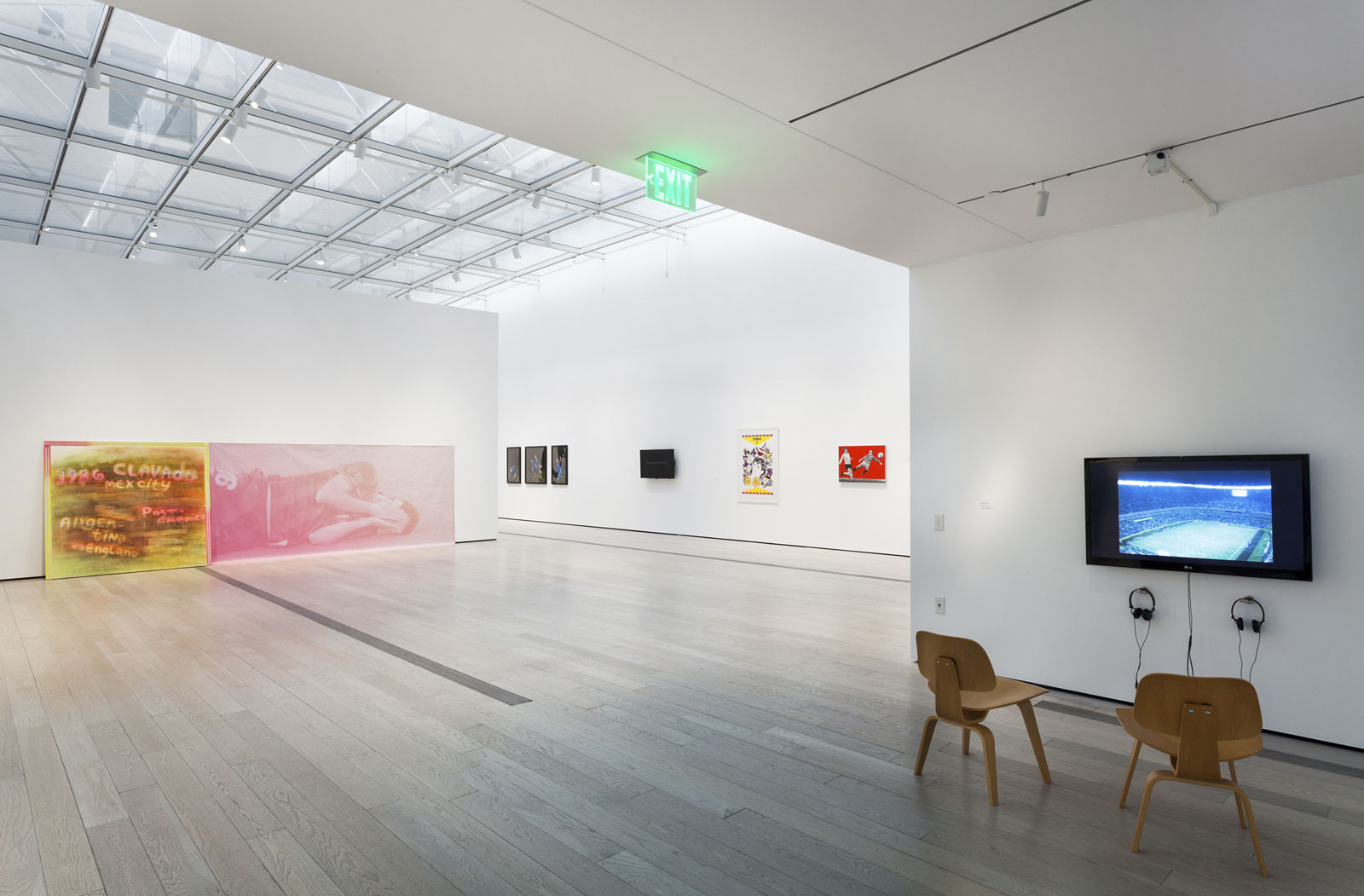
At centre: Wendy White (American, b. 1971) 'Clavado' 2013 (installation view)


Centre: Wendy White (American, b. 1971)
Clavado (installation view)
2013
Acrylic on canvas, wood, enamel
74 1/2 × 74 1/2 in. (189.23 × 189.23cm)
Andrew Rafacz Gallery
Courtesy of the artist and Andrew Rafacz


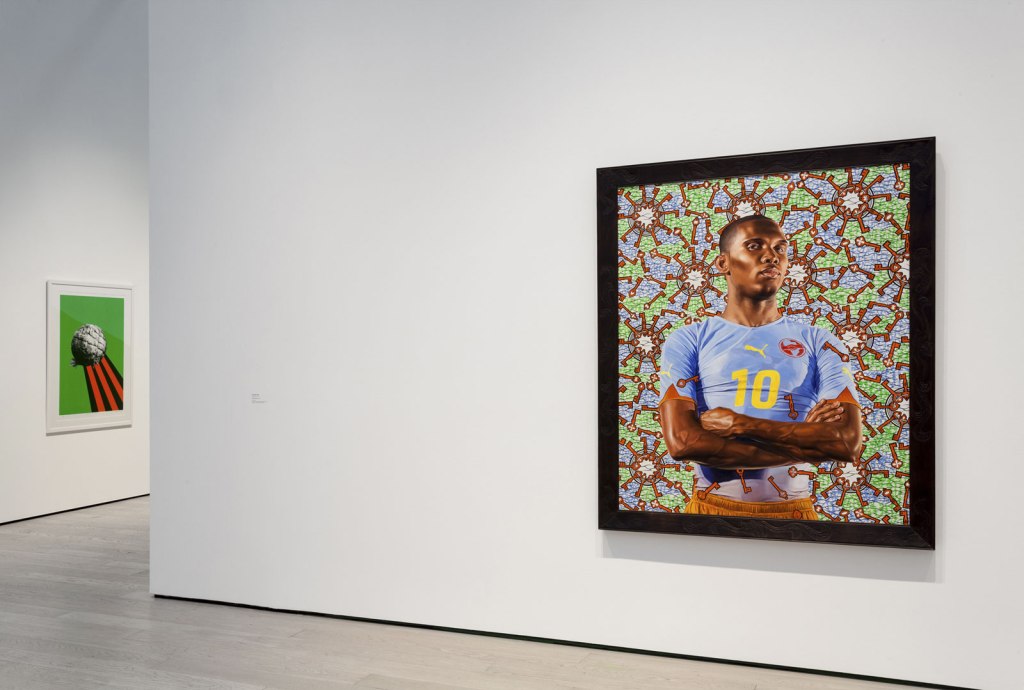
Kehinde Wiley (American, b. 1977) 'Samuel Eto'o' 2010 (installation view)


Kehinde Wiley (American, b. 1977)
Samuel Eto’o (installation view)
2010
Oil on Canvas
76 x 60 in.
Roberts & Tilton Gallery
© Kehinde Wiley
Image courtesy of the artist, and Roberts & Tilton, Culver City


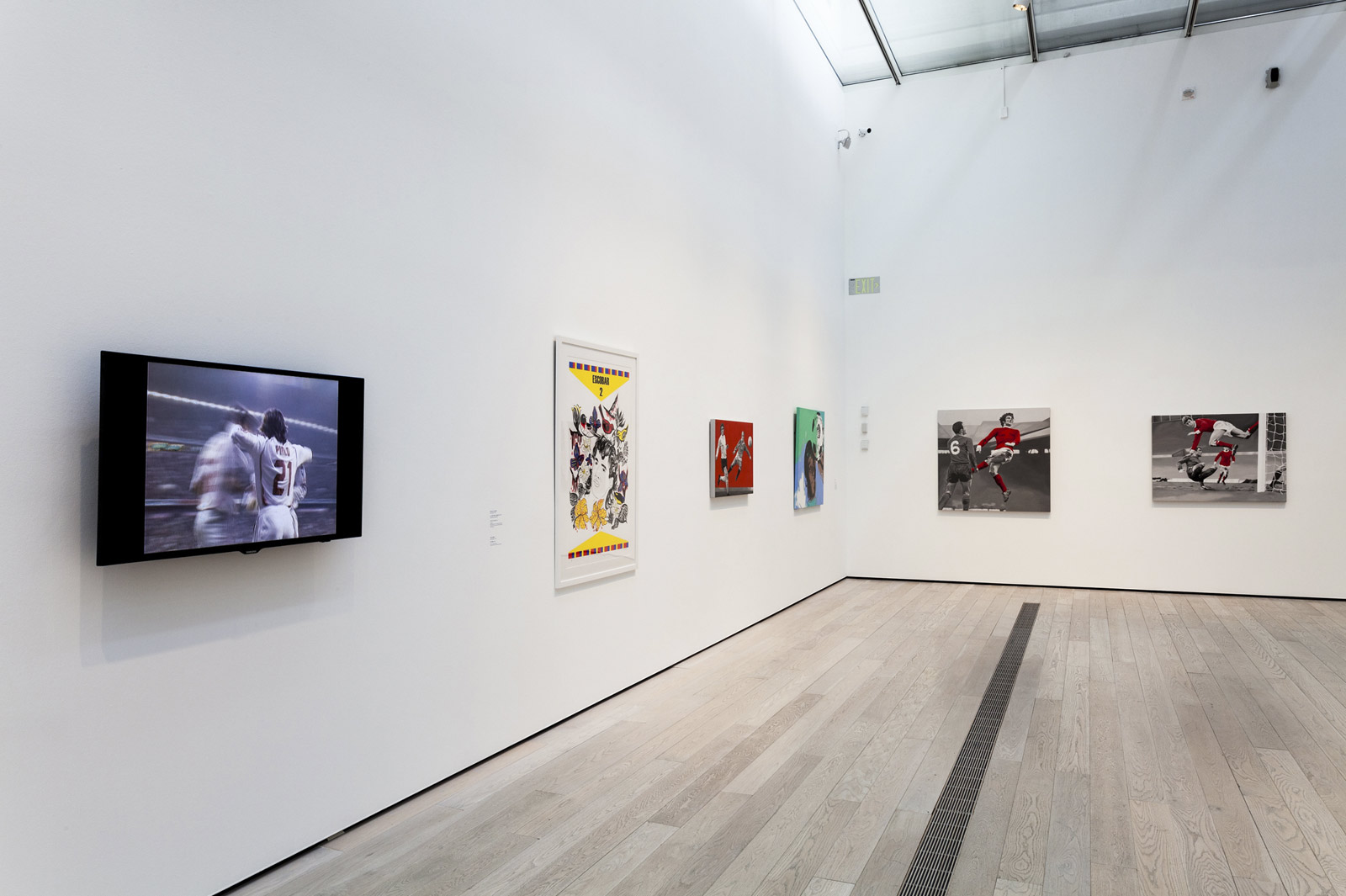
Installation view of the exhibition 'Fútbol: The Beautiful Game' at the Los Angeles County Museum of Art (LACMA)

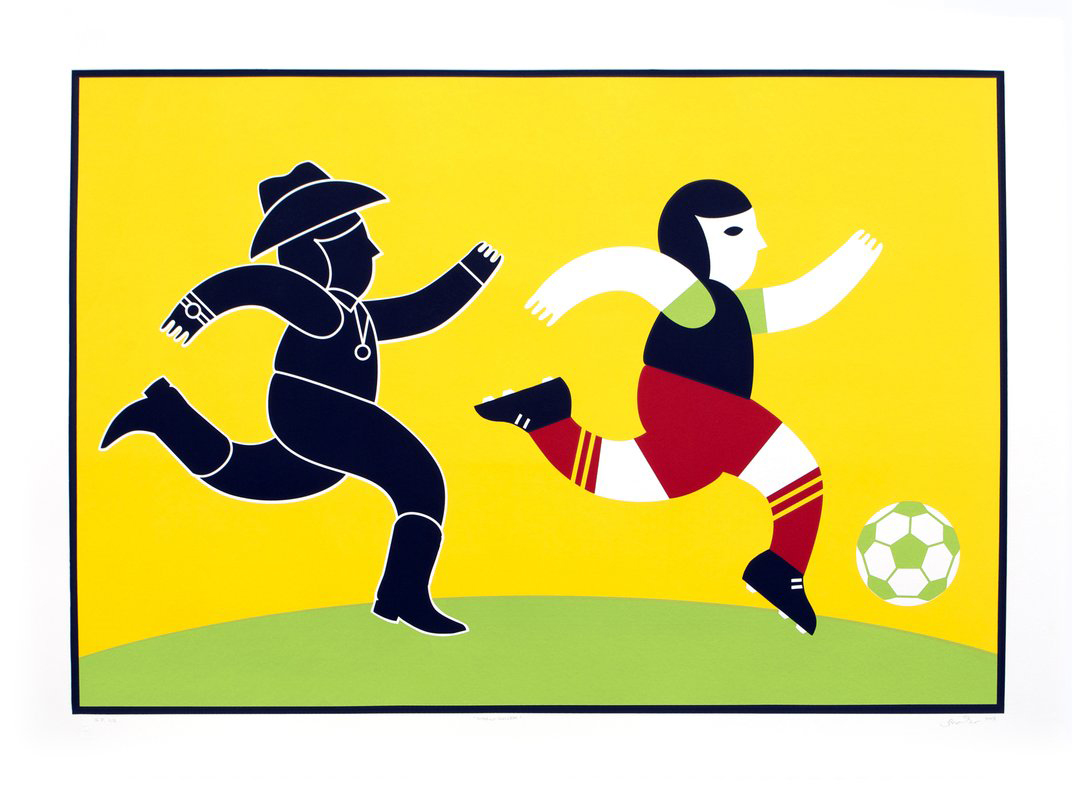
At right: Nery Gabriel Lemus (American, b. 1977) 'Thank You for the Game' 2013 (installation view)


Right: Nery Gabriel Lemus (American, b. 1977)
Thank You for the Game (installation view)
2013
Serigraph
36 x 50 in. (91.44 x 127cm)
Self Help Graphics & Art, Professional Printmaking Program, 2013. On loan from the Self Help
Graphics & Art Collection
© Nery Gabriel Lemus


At right: Dewey Tafoya (American) 'Olmeca 1370 BCE' 2013 (installation view)


Right: Dewey Tafoya (American)
Olmeca 1370 BCE (installation view)
2013
Serigraph
36 × 50 in. (91.44 × 127cm)
Self-Help Graphics
Self Help Graphics & Art, Professional Printmaking Program, 2013. On loan from the Self Help
Graphics & Art Collection


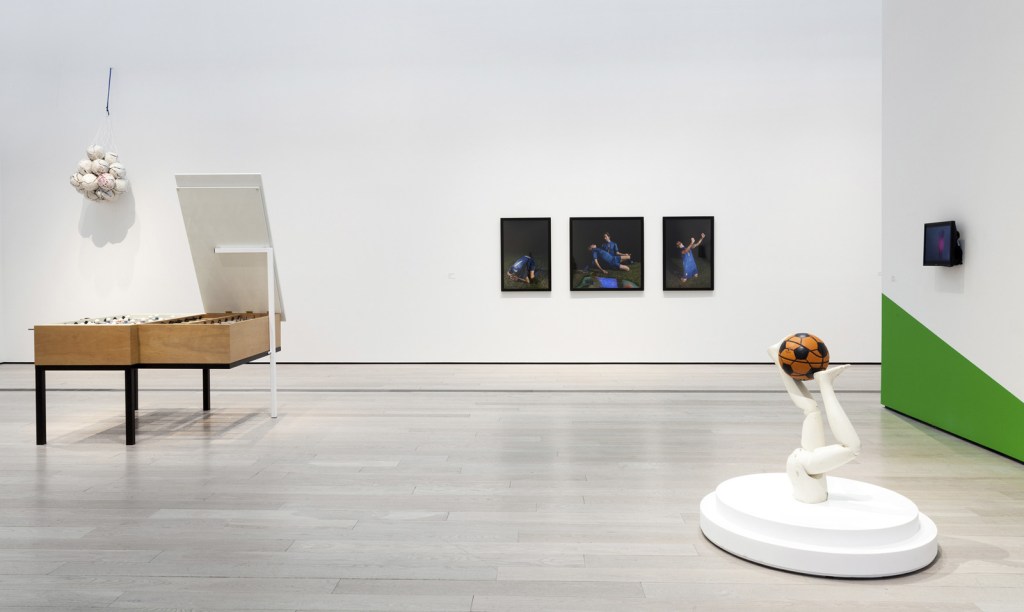
Installation view of the exhibition 'Fútbol: The Beautiful Game' at The Los Angeles County Museum of Art (LACMA)


Installation view of the exhibition Fútbol: The Beautiful Game at The Los Angeles County Museum of Art (LACMA)


The Los Angeles County Museum of Art (LACMA) presents Fútbol: The Beautiful Game, an exhibition examining the sport of fútbol, or soccer, as it is known in the United States. Featuring approximately 50 works by nearly 30 artists on the subject of fútbol – often referred to as “the beautiful game” – the exhibition looks at issues of nationalism, identity, globalism, and mass spectacle as well as the shared human experience between spectators from a multitude of cultures. In anticipation of the 2014 World Cup that takes place in Brazil this summer, LACMA’s exhibition considers the sport through video, photography, painting, sculpture, and large-scale installation.

“A globally beloved sport celebrated in the context of a museum: what a great opportunity to explore the international scope of soccer through the lens of art,” said Michael Govan, CEO and Wallis Annenberg Director of LACMA. “Fútbol should excite all, especially as it coincides with the World Cup in Brazil in summer 2014.”

“When people watch a game, they feel inspired by the spirit of the team, the fans, and the sense of community,” remarked Franklin Sirmans, Terri and Michael Smooke Curator and department head of contemporary art at LACMA, “We, the fans, create the spirit of the team via our rituals. Witnessing a game is one of the few occasions during which a collective sense of enthusiasm is still possible. This exhibition explores that energy.”

Exhibition overview

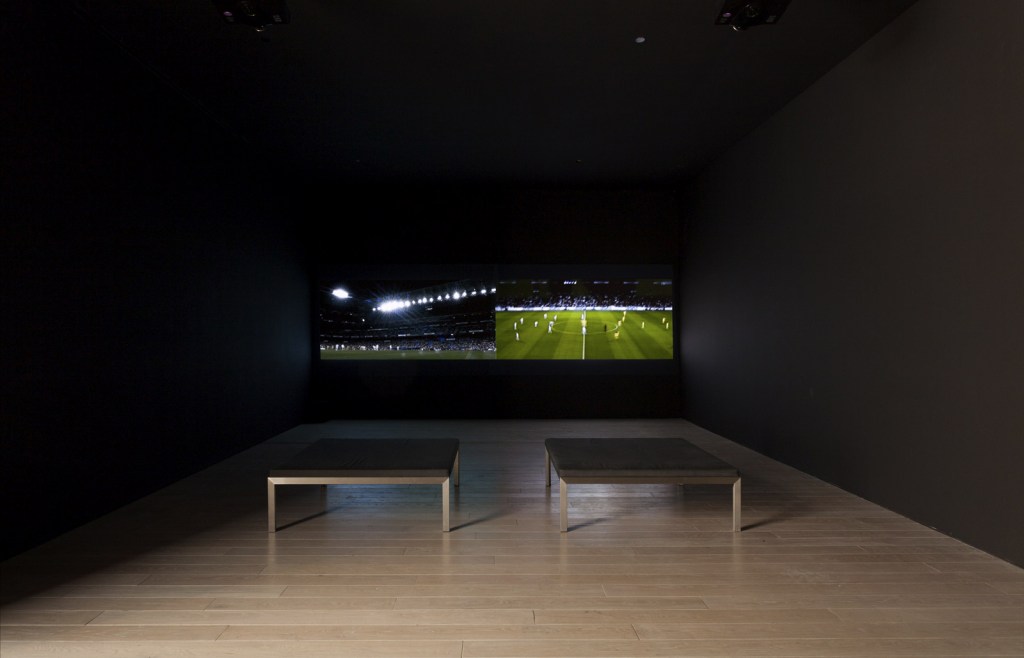
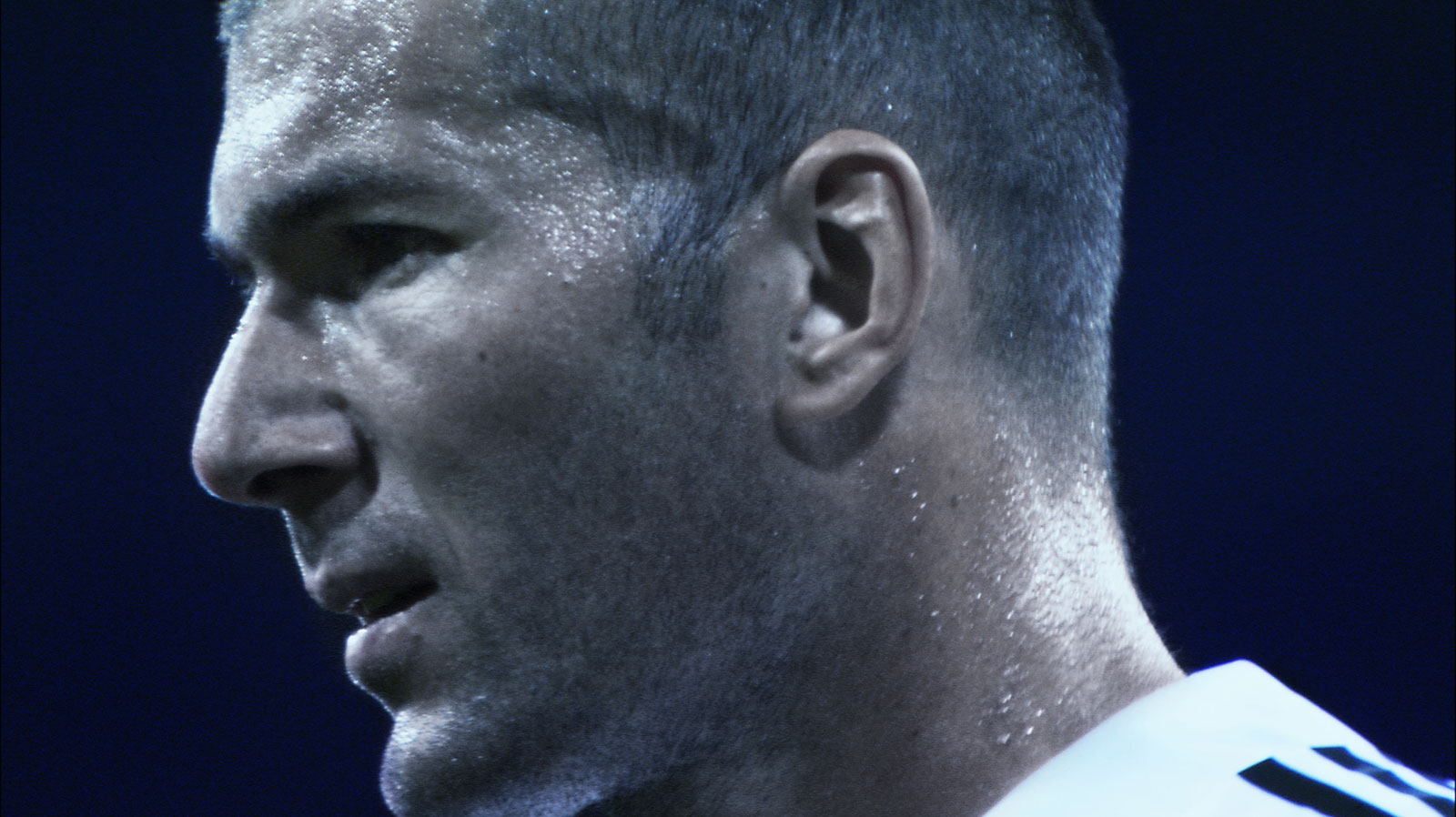
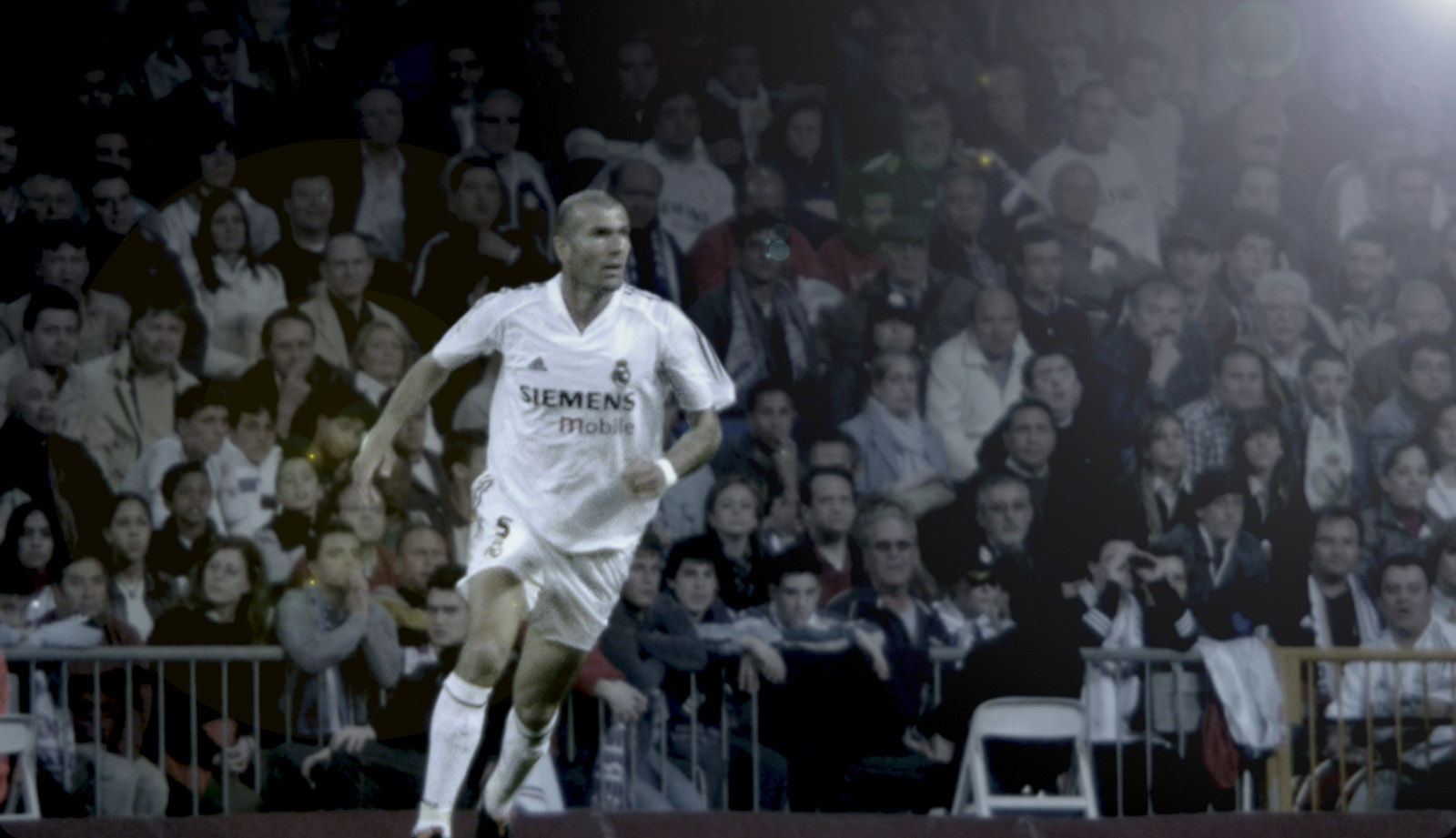
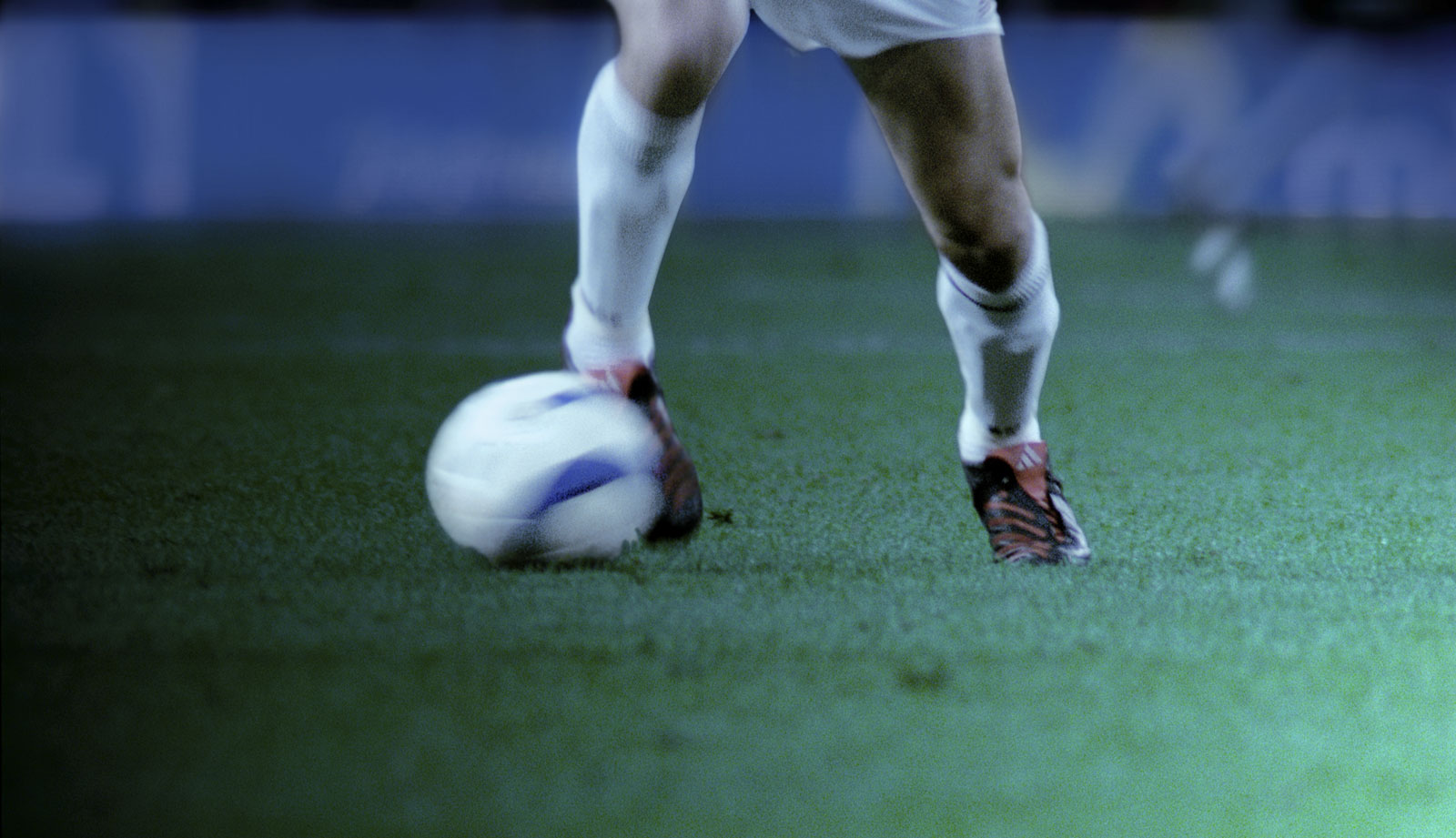
Two room-sized video installations anchor Fútbol: The Beautiful Game. The first, Zidane: A 21st Century Portrait by the artists Philippe Parreno and Douglas Gordon, provides an intimate portrait of Zinedine Zidane – one of the greatest soccer players in the history of the sport – during the course of a single match. Meanwhile, Stephen Dean’s Volta, set to samba music, directs its gaze at stadium crowds and draws attention to both the pandemonium and organised ritual of mass audiences.

Other works by artists including Robin Rhode, Kehinde Wiley, Petra Cortright, Andy Warhol, Mark Bradford, Mary Ellen Carroll, Hassan Hajjaj, and Andreas Gursky, among others, provide a sense of the possibilities of the sport as a universal conversation piece. With artists hailing from as far afield as Morocco, Germany, Mexico, and South Africa – in addition to several Los Angeles–based artists – the geographic range represented in Fútbol: The Beautiful Game reflects the global reach of the sport.

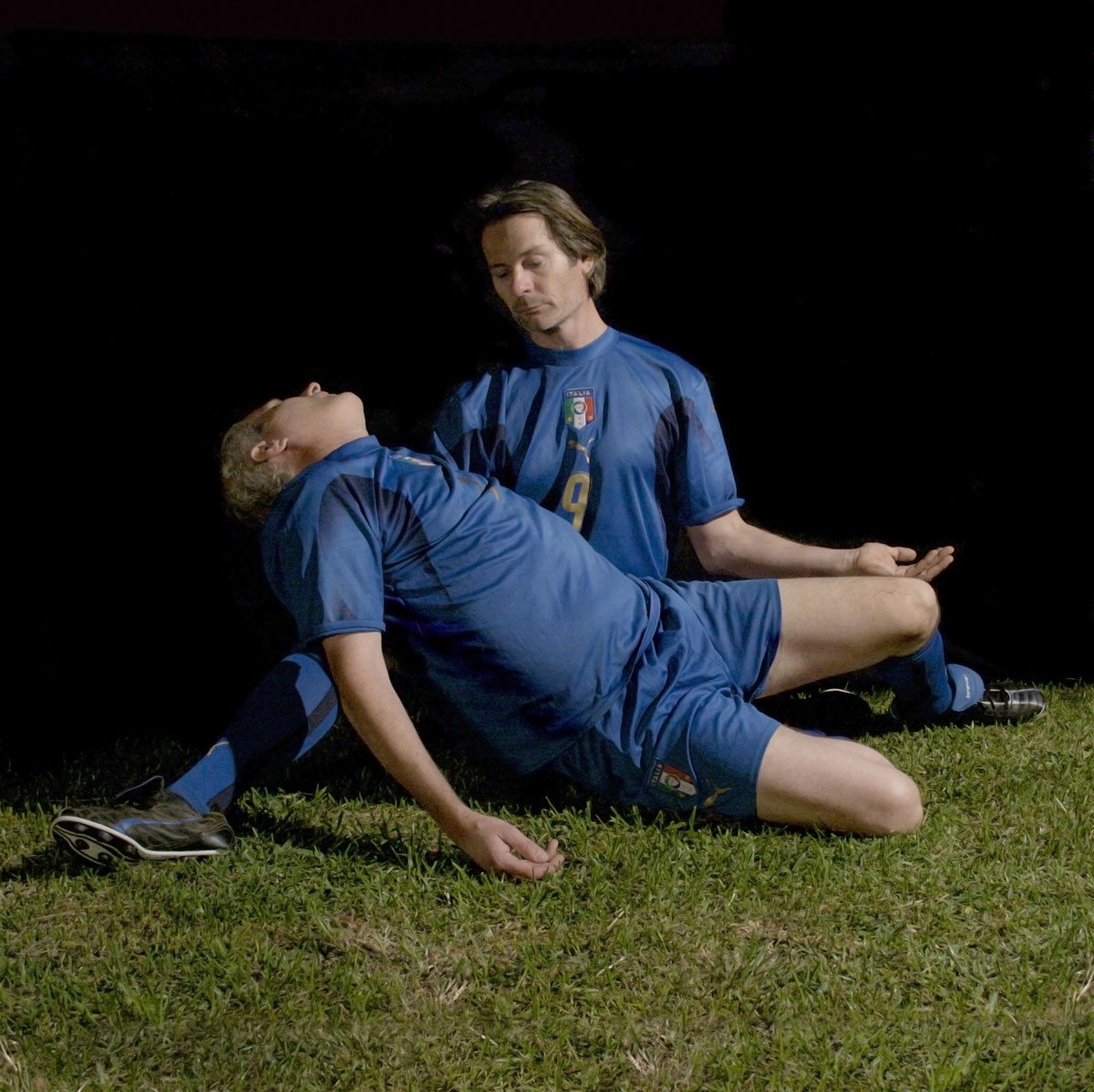
Gustavo Artigas’s The Rules of the Game examines the ways in which communities that play different sports (basketball, soccer, and football) perceive one another, while Miguel Calderón’s video Mexico vs. Brasil dramatically unfolds during an unlikely victory for Mexico. Chris Beas harkens back to classical modes of presentation in his paintings: his athletic figures are depicted in a celebratory, almost mythic light. Meanwhile, the athletes featured in Generic Art Solutions’ works are almost caricatures caught in moments of extreme dramatisation.

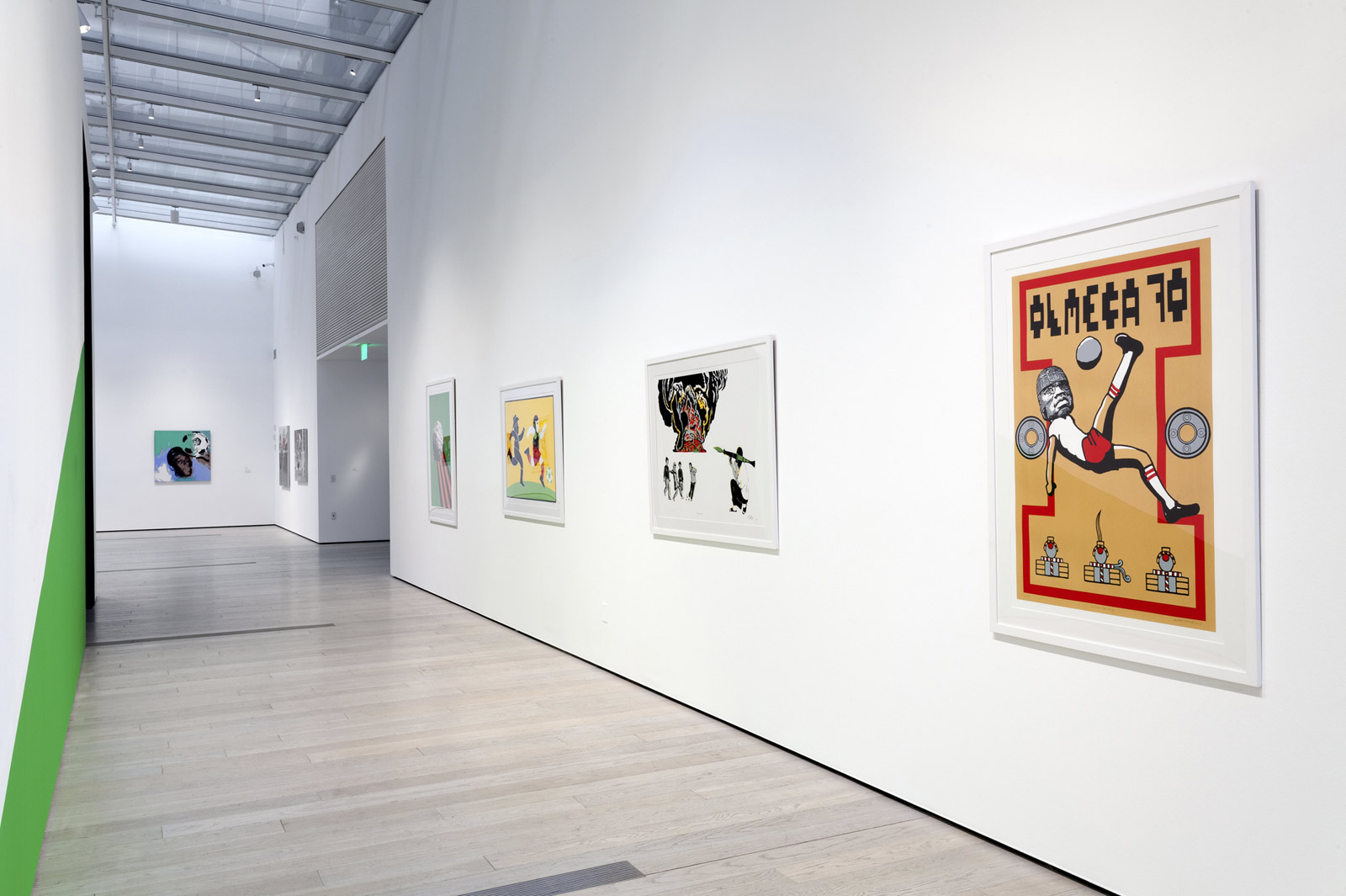
In collaboration with LACMA, a new edition of prints has been commissioned by Self Help Graphics under the direction of executive director, Evonne Gallardo. The new prints by Carolyn Castano, Nery Gabriel Lemus, Ana Serrano, Dewey Tafoya, Ami Motevelli and Mario Ybarra, Jr. address varied aspects of the game – from a commemoration for the Colombian soccer player Andres Escobar who was shot and killed shortly after the 1994 World Cup, seemingly for his mistaken own goal, to references to the Olmec culture of the first major civilisation in Mexico.

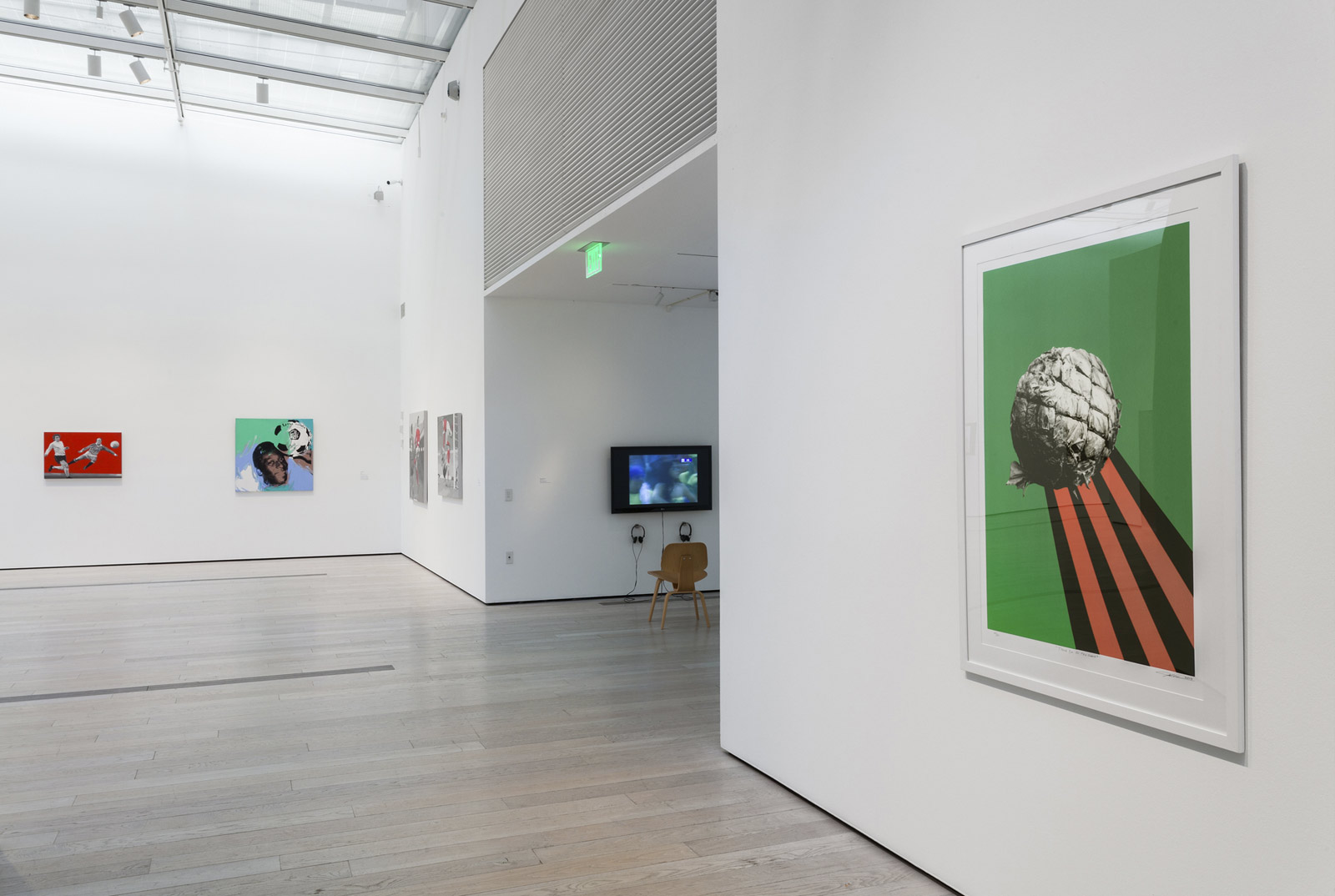
As a nod to the imminent World Cup, the exhibition’s design alludes to the Brazilian flag with graphic symbolism as it evokes the environs of the sport – sun, sky, and grass – through a vibrant yellow, blue, and green.

Press release from the LACMA website


Lyle Ashton Harris (American, b. 1965) 'Verona #2' 2001-2004


Lyle Ashton Harris (American, b. 1965)
Verona #2
2001-2004
Silver gelatin print
16 x 20 in.
The Robert E. Holmes Collection
© Lyle Ashton Harris


George Afedzi Hughes (Ghanaian-born American, b. 1962) 'Parallel' 2009-2011


George Afedzi Hughes (Ghanaian-born American, b. 1962)
Parallel
2009-2011
Acrylic, oil, enamel on canvas
72 x 120 in. (182.88 x 304.8cm)
Skoto Gallery
Collection of the artist, Courtesy Skoto Gallery


Stephen Dean (French-American, b. 1968) 'VOLTA' 2002-2003 (still)


Stephen Dean (French-American, b. 1968)
VOLTA (still)
2002-2003
Single-channel color DVD installation (9′) with audio and fabric enclosure
Collection of William and Ruth True, Seattle
Courtesy of the artist and Baldwin Gallery, Aspen
© Stephen Dean


Miguel Calderón (Mexican, b. 1971) 'Mexico vs Brasil' 2004 (video still)


Miguel Calderón (Mexican, b. 1971)
Mexico vs Brasil (video still)
2004
Video transferred to DVD
Duration: 1 hrs. 30 minutes
Courtesy of the artist and kurimanzutto, Mexico City
© Miguel Calderón


Antoni Muntadas (Spanish, b. 1942) 'Celebracions' 2009


Antoni Muntadas (Spanish, b. 1942)
Celebracions
2009
DVD
Blake Byrne
Collection of Blake Byrne, Los Angeles


Chris Beas (American) 'Sir Bobby' 2007


Chris Beas (American)
Sir Bobby
2007
Acrylic on Canvas
24 x 25 3/8 in.
Courtesy of the artist and Martha Otero Gallery
© Chris Beas


Ana Serrano (American, b. 1983) 'Narco Soccer' 2013


Ana Serrano (American, b. 1983)
Narco Soccer
2013
Serigraph
50 × 36 in. (127 × 91.44cm)
Self-Help Graphics
Self Help Graphics & Art, Professional Printmaking Program, 2013. On loan from the Self Help
Graphics & Art Collection


Generic Art Solutions. 'Pieta' 2008


Generic Art Solutions
Pieta
2008
Photograph
36 x 36 in.
Courtesy of Jonathan Ferrara Gallery, New Orleans
© Generic Art Solutions


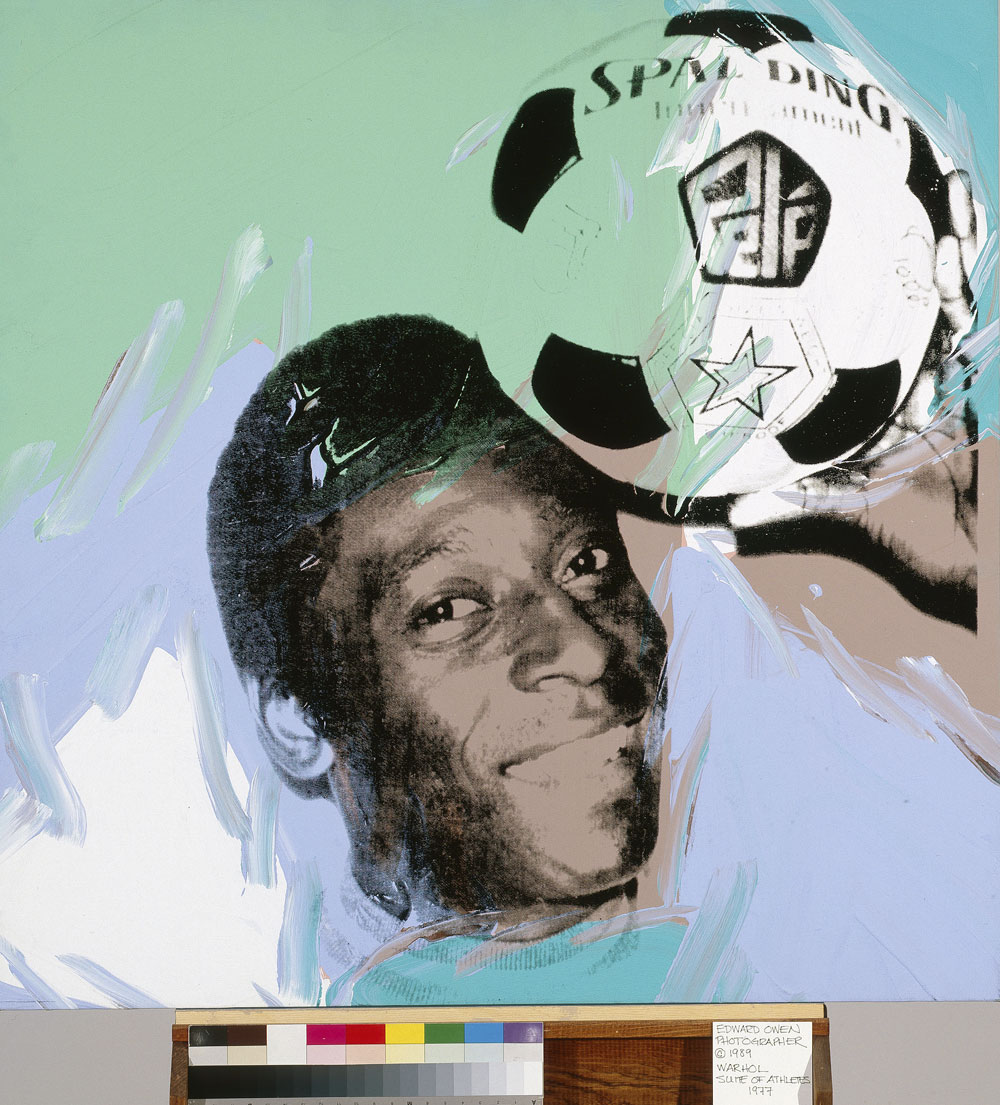
Andy Warhol (American, 1928-1987) 'Pele' 1978


Andy Warhol (American, 1928-1987)
Pele
1978
Silkscreen
40 x 40 in.
University of Maryland Art Gallery, College Park, MD
© Andy Warhol Foundation/Artists Rights Society (ARS), New York


Kehinde Wiley (American, b. 1977) 'Samuel Eto'o' 2010


Kehinde Wiley (American, b. 1977)
Samuel Eto’o
2010
Oil on Canvas
76 x 60 in.
Roberts & Tilton Gallery
© Kehinde Wiley
Image courtesy of the artist, and Roberts & Tilton, Culver City


Nery Gabriel Lemus (American, b. 1977) 'Thank You for the Game' 2013


Nery Gabriel Lemus (American, b. 1977)
Thank You for the Game
2013
Serigraph
36 x 50 in. (91.44 x 127cm)
Self Help Graphics & Art, Professional Printmaking Program, 2013. On loan from the Self Help
Graphics & Art Collection
© Nery Gabriel Lemus


Philippe Parreno (French, b. 1964) and Douglas Gordon (Scottish, b. 1966) 'Zidane: A 21st Century Portrait' 2006


Philippe Parreno (French, b. 1964) and Douglas Gordon (Scottish, b. 1966)
Zidane: A 21st Century Portrait
2006
© Philippe Parreno and Douglas Gordon


Philippe Parreno (French, b. 1964) and Douglas Gordon (Scottish, b. 1966) 'Zidane: A 21st Century Portrait' 2006


Philippe Parreno (French, b. 1964) and Douglas Gordon (Scottish, b. 1966)
Zidane: A 21st Century Portrait
2006
© Philippe Parreno and Douglas Gordon


Philippe Parreno (French, b. 1964) and Douglas Gordon (Scottish, b. 1966) 'Zidane: A 21st Century Portrait' 2006


Philippe Parreno (French, b. 1964) and Douglas Gordon (Scottish, b. 1966)
Zidane: A 21st Century Portrait
2006
© Philippe Parreno and Douglas Gordon


Los Angeles County Museum of Art (LACMA)
5905 Wilshire Boulevard (at Fairfax Avenue)
Los Angeles, CA, 90036
Phone: 323 857 6000

Opening Hours:
Monday, Tuesday, Thursday: 11am – 6pm
Friday: 11am – 8pm
Saturday, Sunday: 10am – 7pm
Closed Wednesday

LACMA website

LIKE ART BLART ON FACEBOOK

Back to top

Exhibition: ‘John Divola: As Far As I Could Get’ at the Los Angeles County Museum of Art (LACMA)

Exhibition dates: 6th October 2013 – 6th July 2014


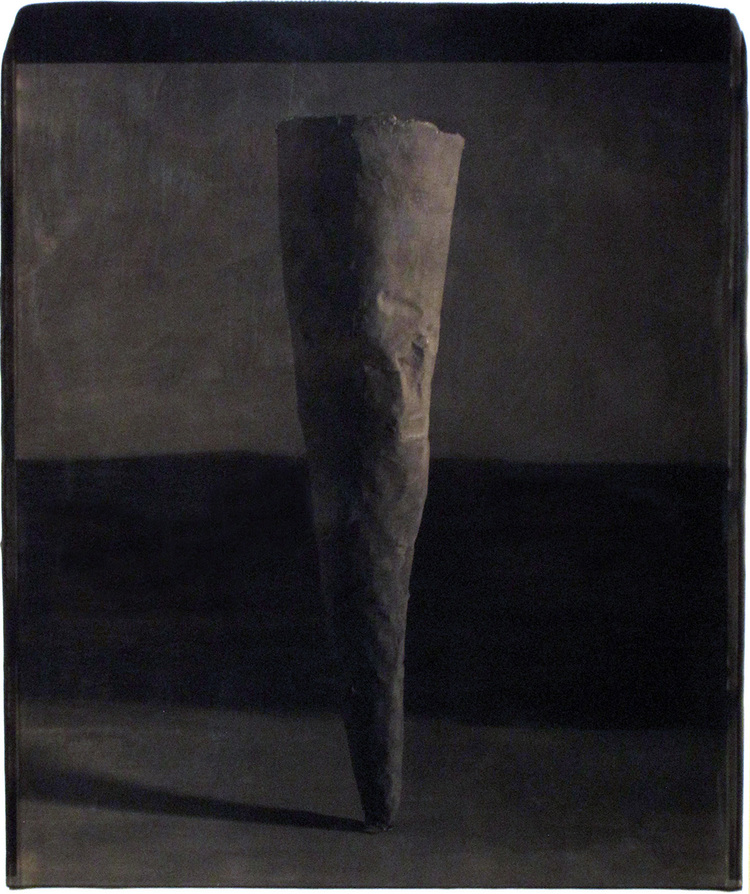
John Divola (American, b. 1949) 'Cone, 87CN09' 1987


John Divola (American, b. 1949)
Cone, 87CN09
1987
Black and White Polapan Print (Polaroid)
20 x 24 inches
© John Divola


FINALLY… two postings on consecutive days by conceptual artists who use photography to document their staging, performance, sculpture, body, earth-body, action art, found art, land art – WORK THAT I REALLY LIKE AND CAN REALLY CARE ABOUT.

I care about both artists work not so much because of the quality of the photography but because of their passion, insight, ideas and general human nous, their need to understand humans and the worlds we inhabit: that INTELLIGENCE necessary for understanding what is true or real, using their intuition to root out, to dig down into the human psyche.

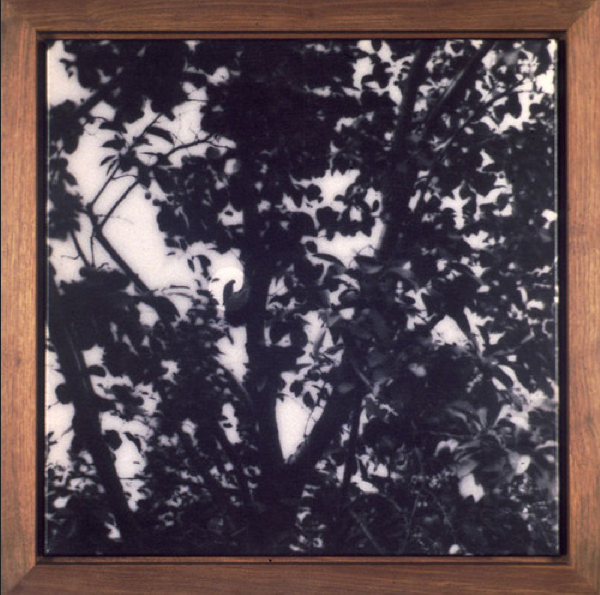
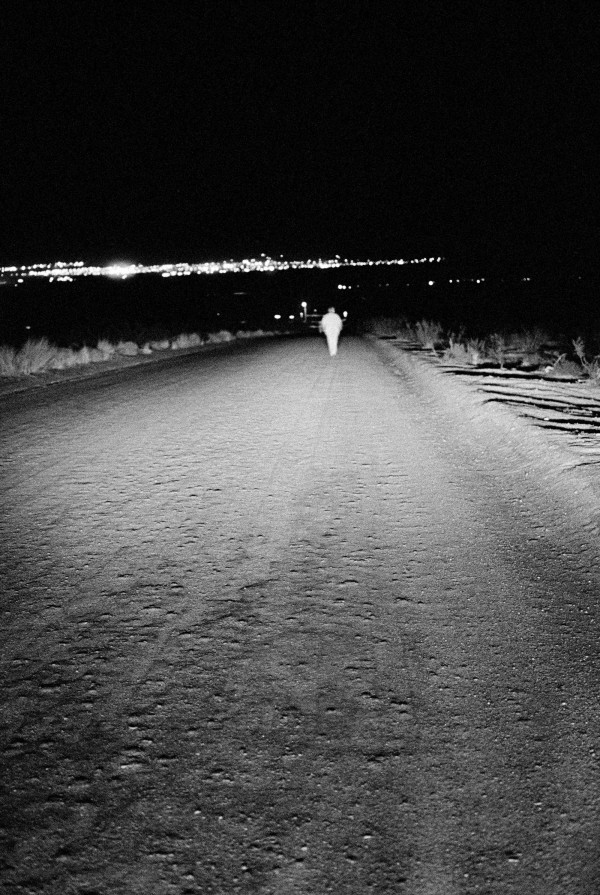
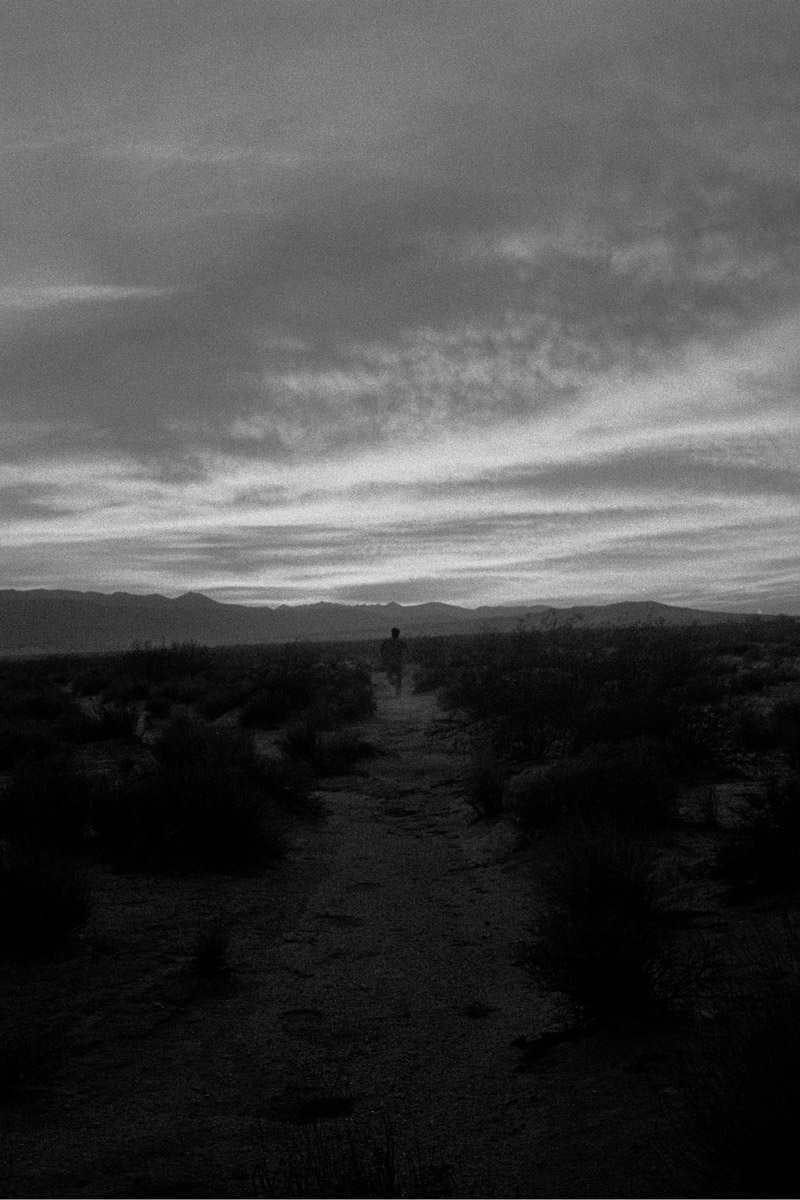
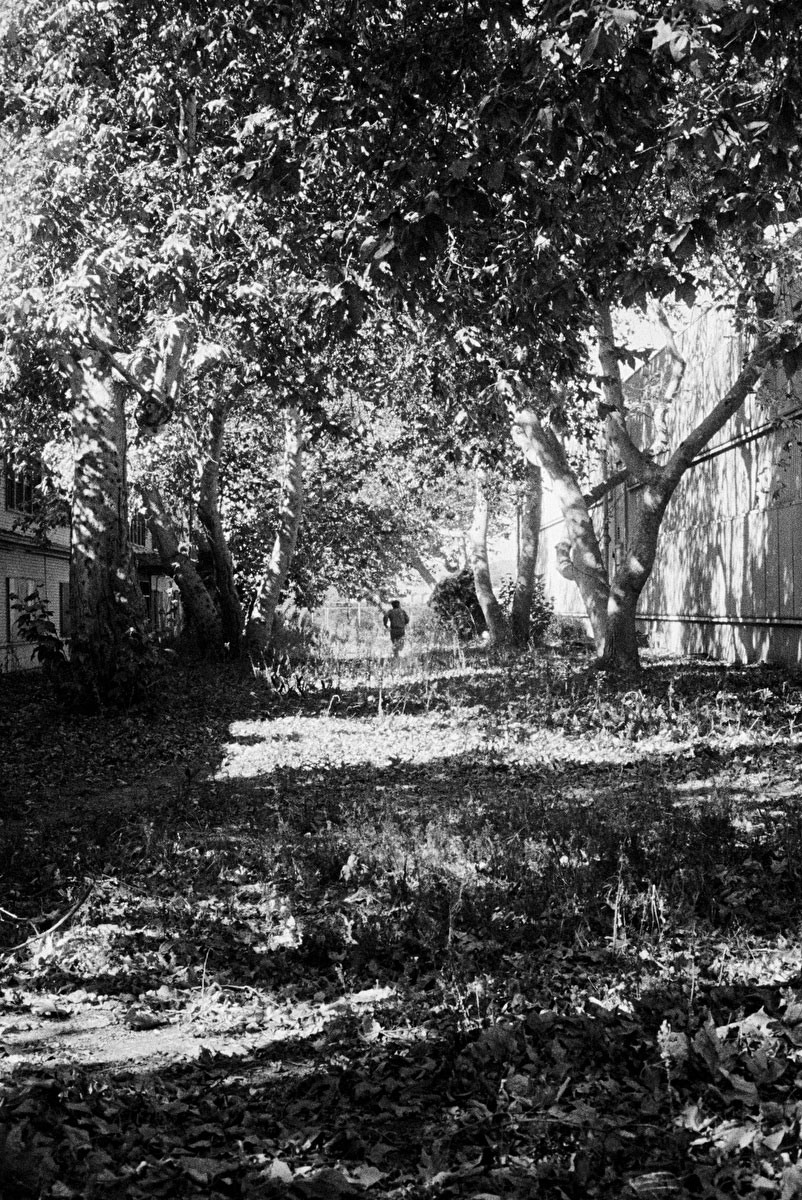
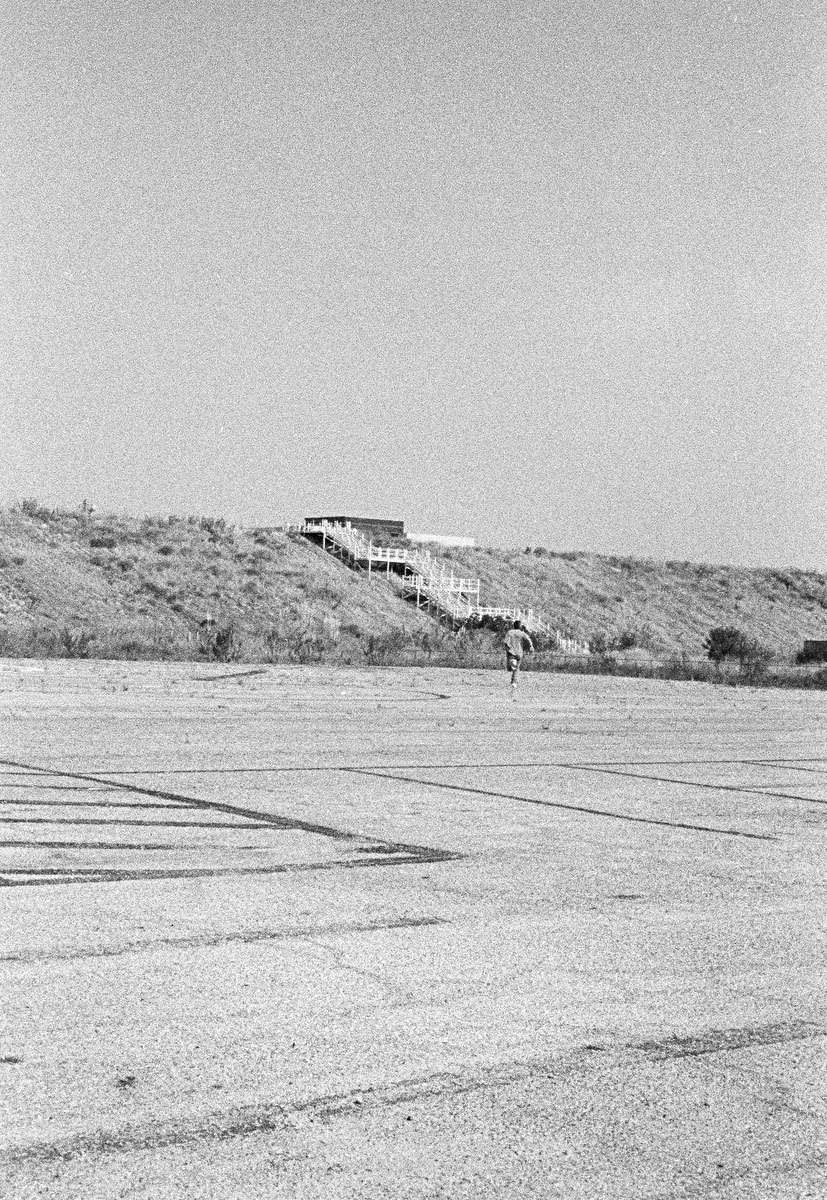
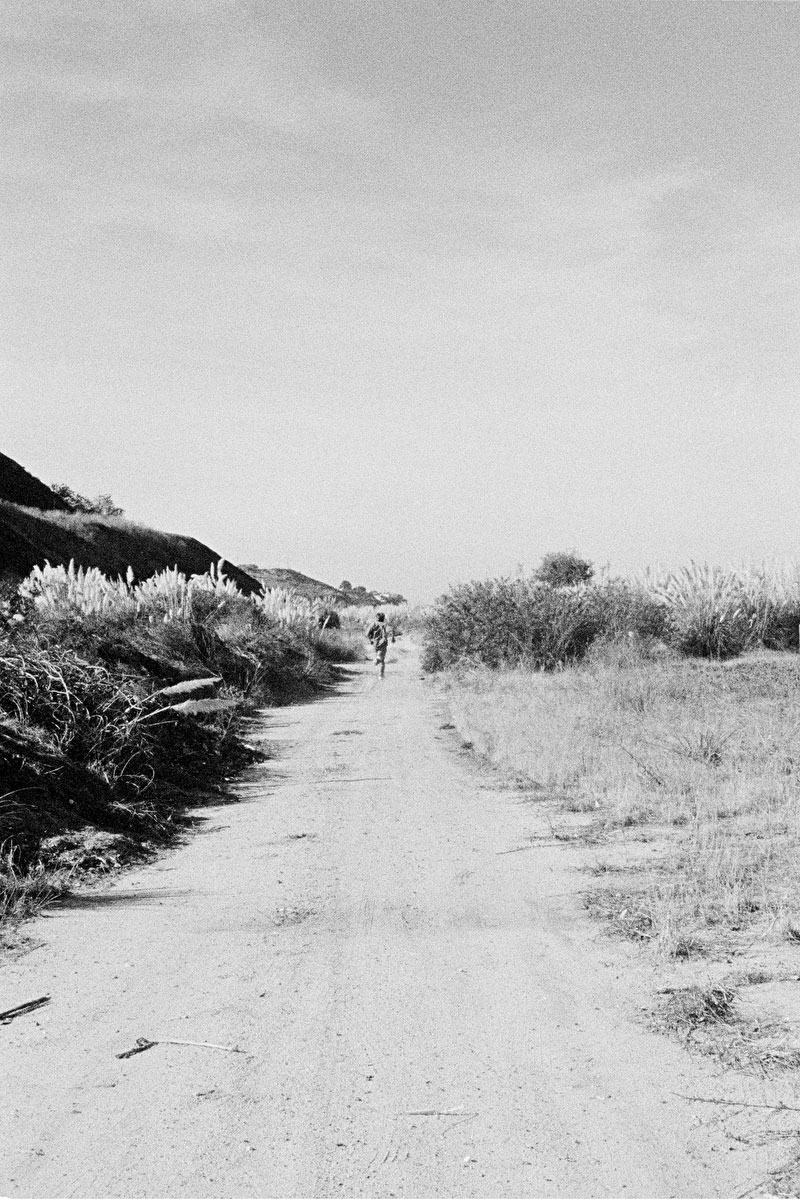
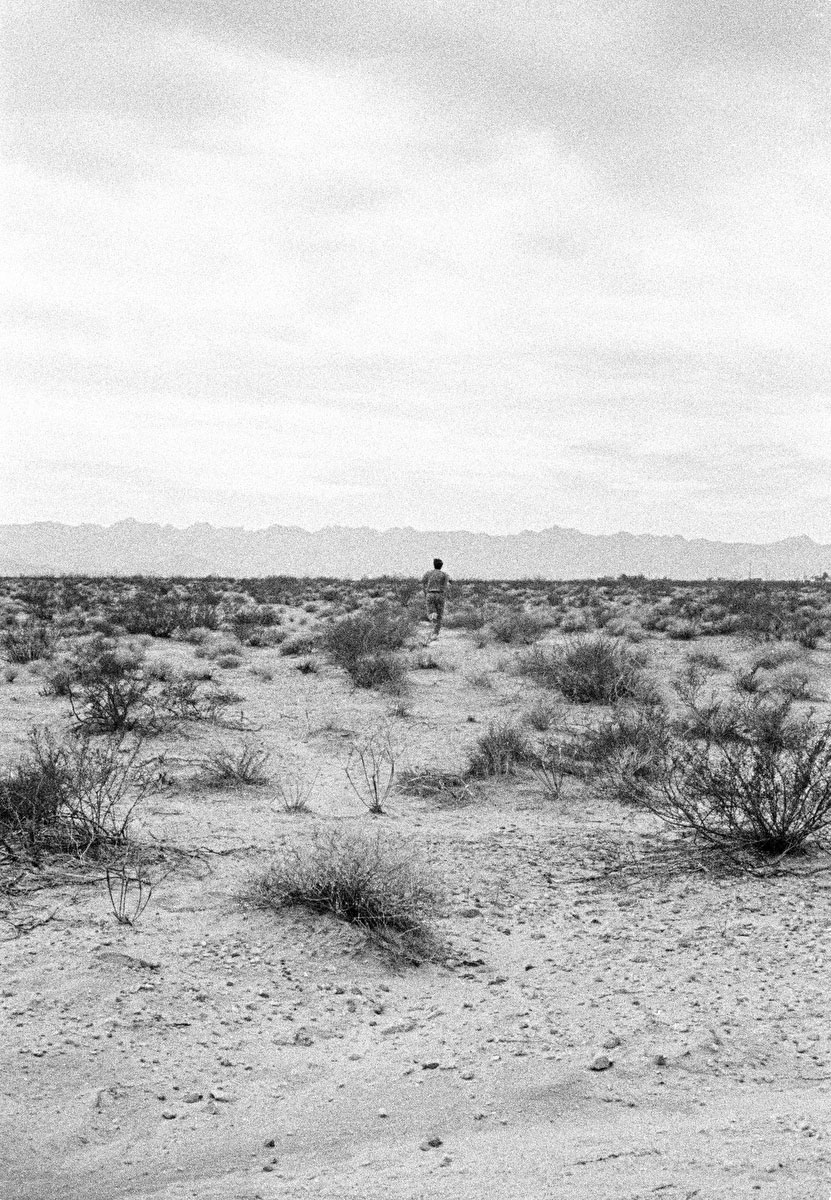
In this posting Divola eloquently investigates the mysterious process of creation through imagination (only for the original “model” then to be destroyed); the notion of photographic authenticity and an interrogation of the human impulse to master the natural world; photography at its most deceptively naturalistic revealing hidden, dead animals; and the landscape altered by human presence and staged to serve as a theatre for creative activity through the “captured” act of running away.

Dr Marcus Bunyan


Many thankx to the Los Angeles County Museum of Art (LACMA) for allowing me to publish the photographs in the posting. Please click on the photographs for a larger version of the image.


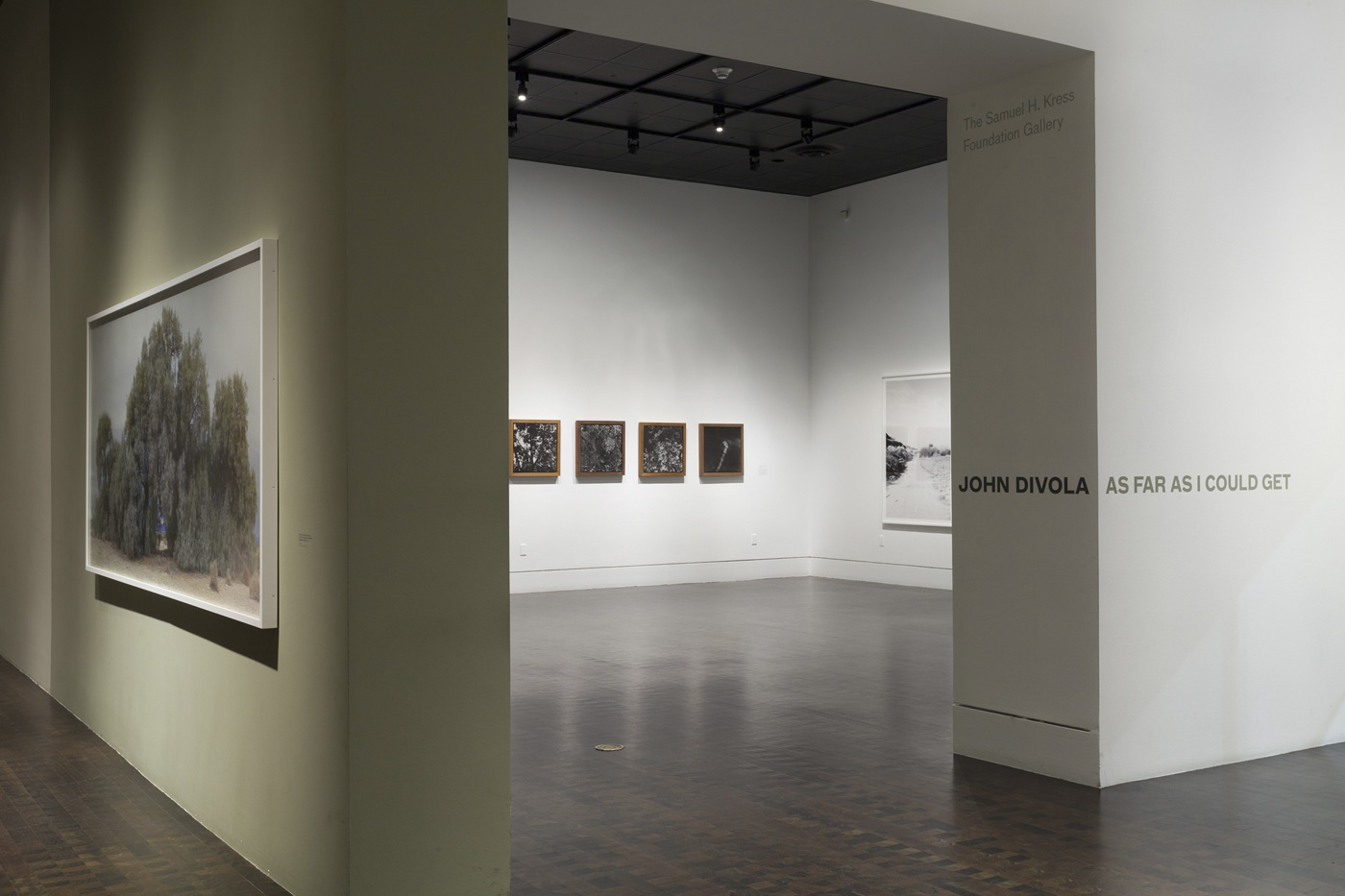
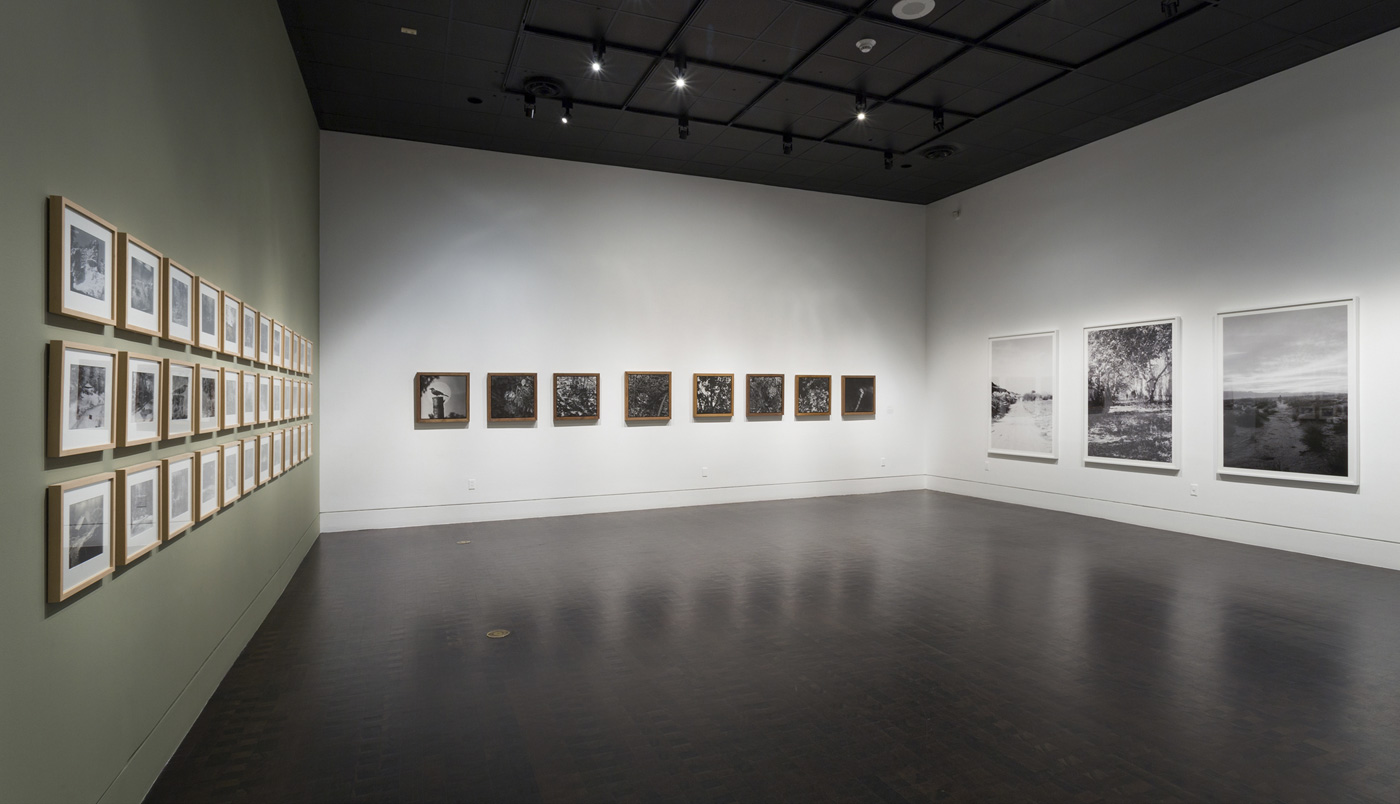
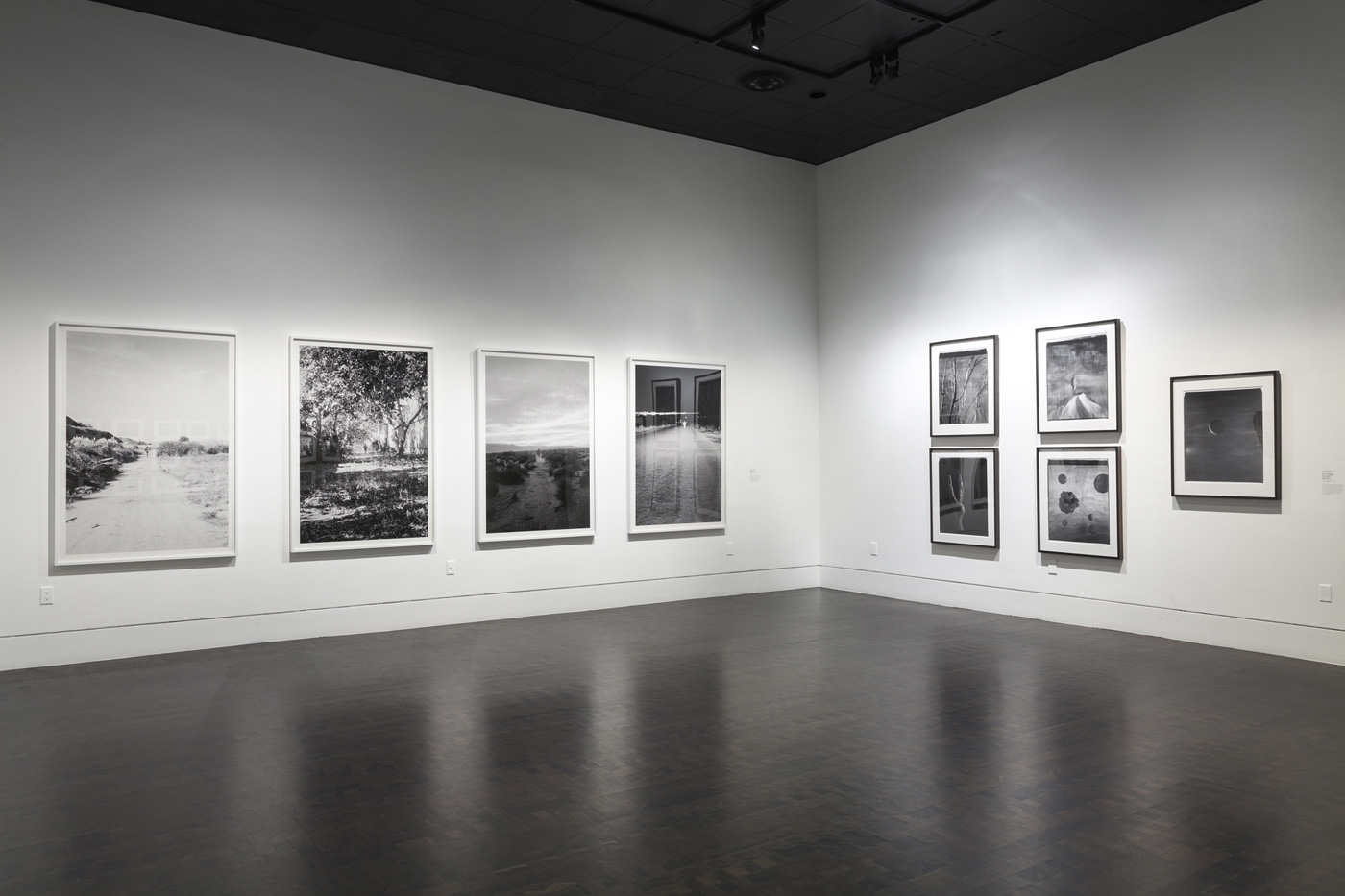
Installation view of 'John Divola: As Far As I Could Get' at the Los Angeles County Museum of Art (LACMA)

Installation view of 'John Divola: As Far As I Could Get' at the Los Angeles County Museum of Art (LACMA)

Installation view of 'John Divola: As Far As I Could Get' at the Los Angeles County Museum of Art (LACMA)


Installation views of John Divola: As Far As I Could Get at the Los Angeles County Museum of Art (LACMA)
© John Divola
Photo
© 2013 Museum Associates/LACMA


John Divola (American, b. 1949) 'Man in Vortex, 87CA2' 1987


John Divola (American, b. 1949)
Man in Vortex, 87CA2
1987
Black and White Polapan Print (Polaroid)
20 x 24 inches
© John Divola


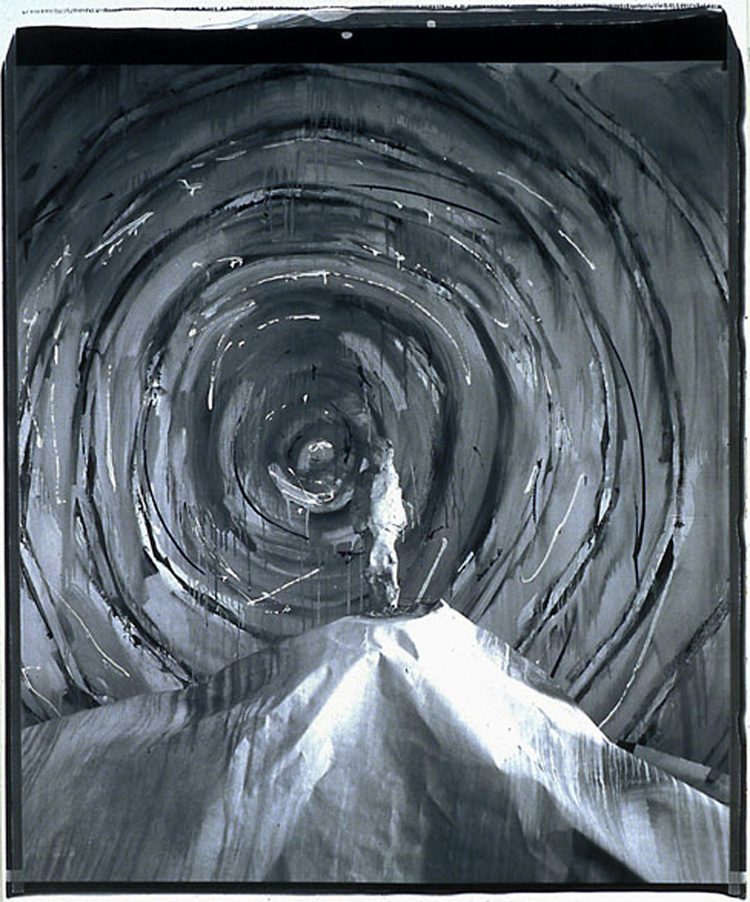
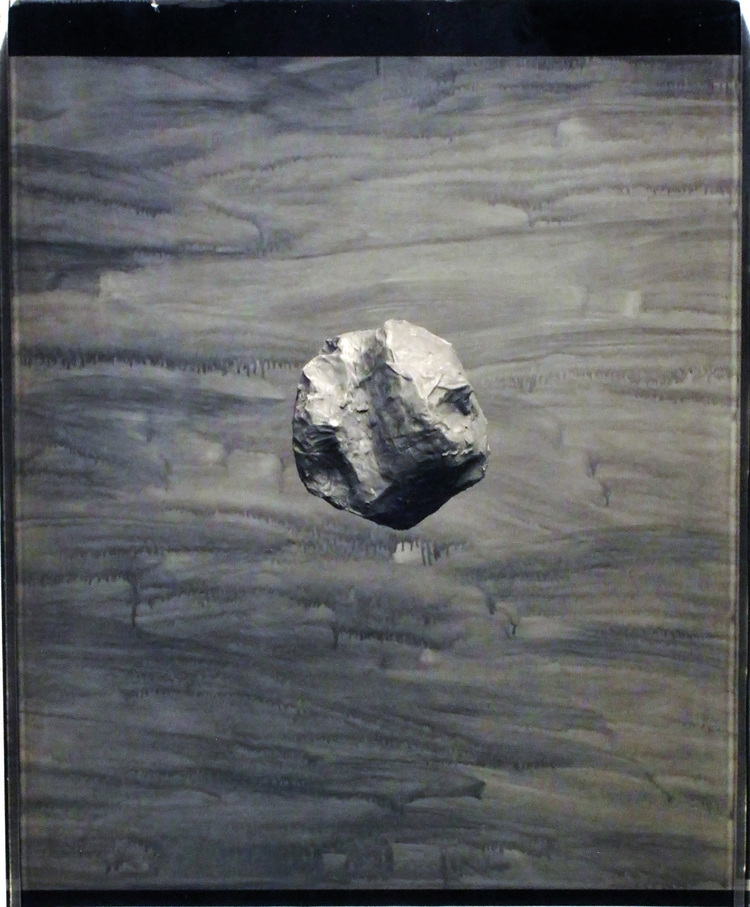
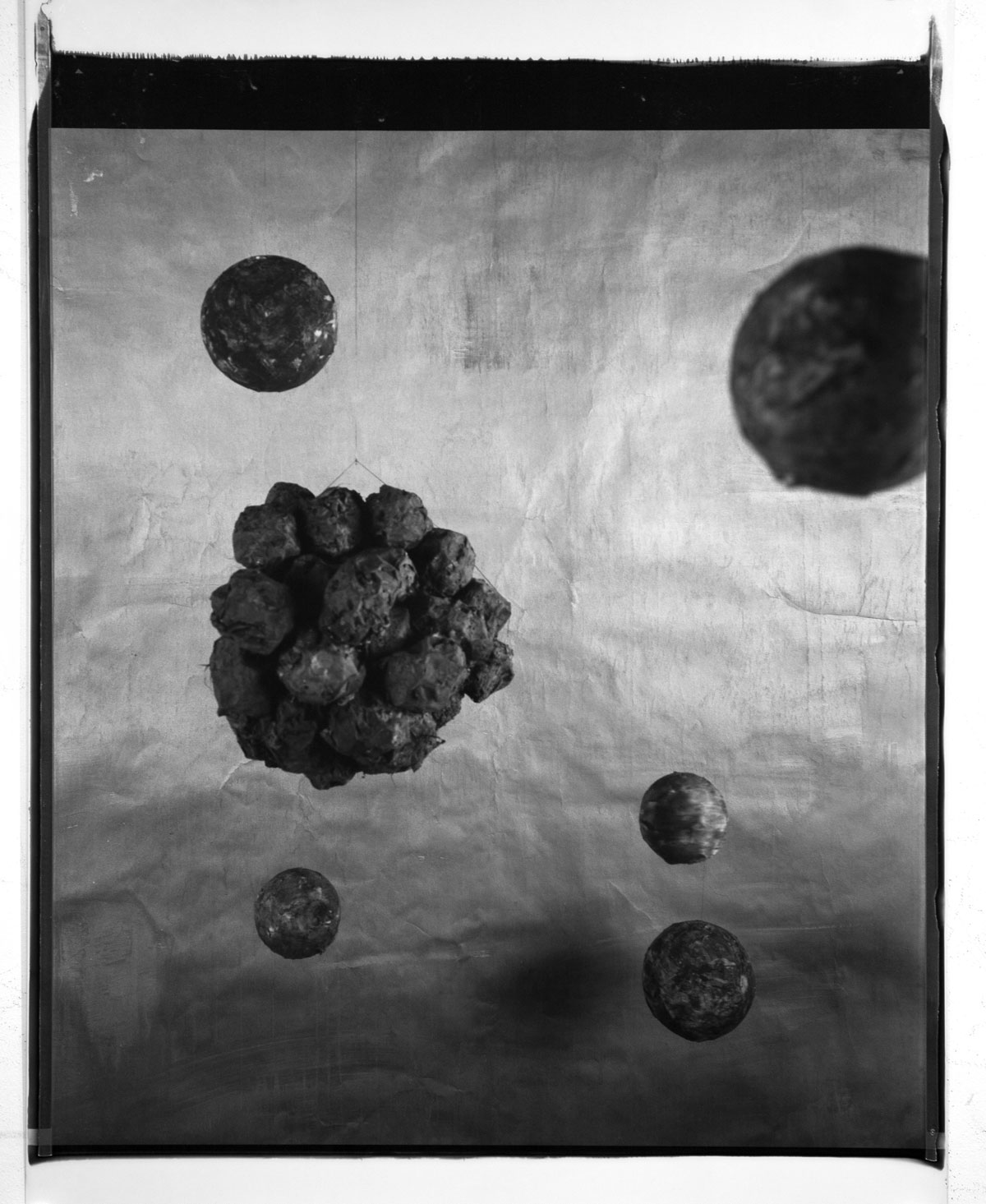
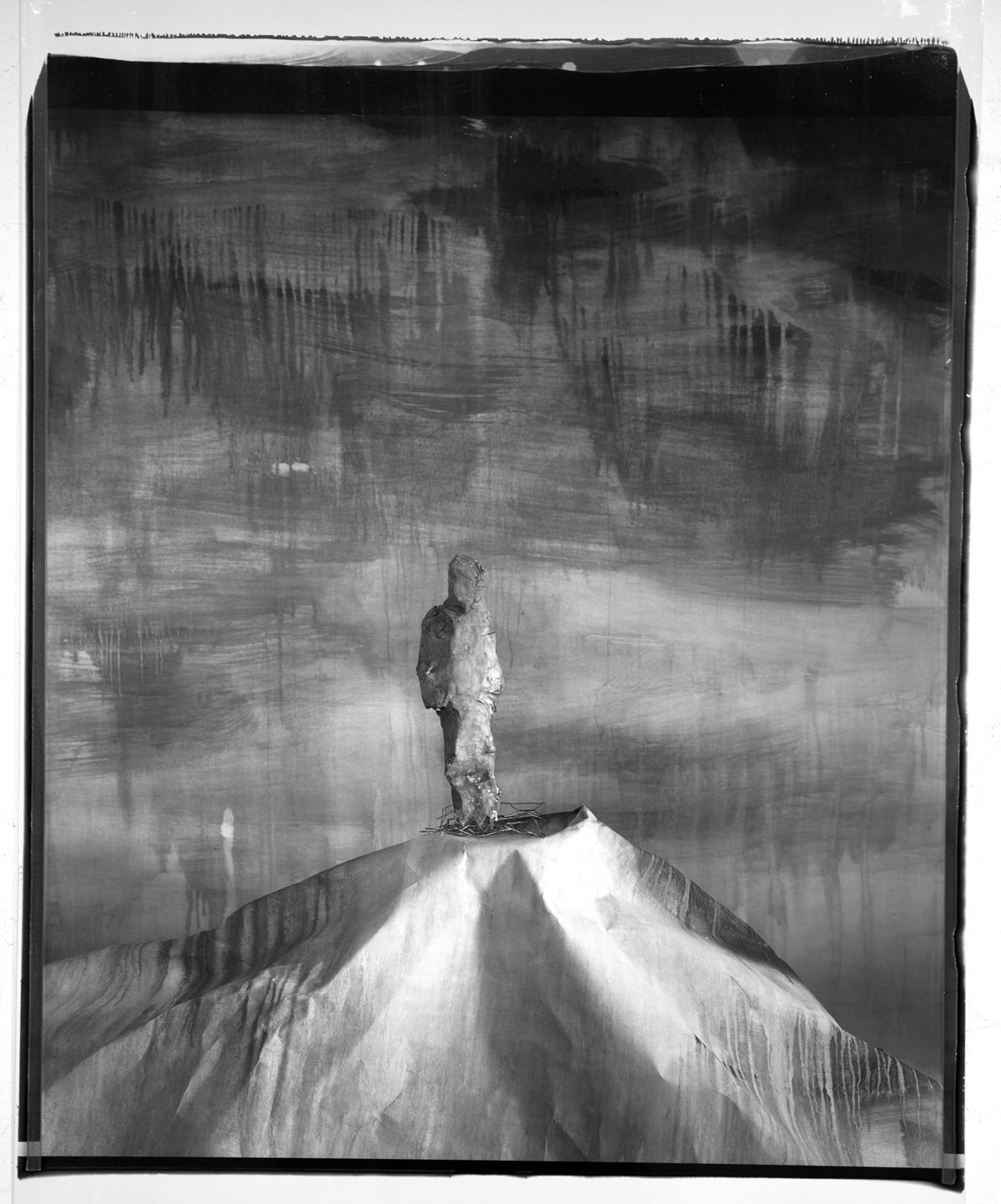
In Divola’s words, the Polaroids feature “The photograph as an object has an relationship to that which it represents, something like the relationship the snake skin has to the snake that sheds it. The relationship of something dead to something living.” The Polapan prints especially lend themselves to this associate with skin. Their plasticity and their alchemical marks bear witness to a mysterious process of creation; their subject matter conjured up, and then discarded. Divola’s “studio constructions,” as he called them, were temporary structures made solely for the purpose of photographic depiction, including funnels, human and animal figures, and expressively painted backdrops. Divola’s photographs are themselves echo chambers: they replicate and reverberate light from objects that have long since vanished.

Divola’s process has important photo-conceptual precedents: Richard Long’s photographic records of lines made by walking, Jan Dibbets’ play with optical illusion through the camera’s lens, or Robert Smithson’s Yucatan Mirror Displacements. Divola’s work, though, is equally in conversation with the work of Jasper Johns. Johns, known for his paintings of numbers, flags, maps, and targets, focused on flat subjects as a means to conjoining the surface of subject matter with a painting’s flat picture plane. Divola has transmuted the achievements and medium-specificity of high modern painting into images that explore photography’s mimetic qualities and its sheer surface. These are images are about a recognisable reality we cannot access, dim echoes of a familiar world, yet one that has vanished.

“JOHN DIVOLA – Echo Chamber” on the Gallery Luisotti website [Online] Cited 01/07/2014. No longer available online


John Divola (American, b. 1949) 'Rock and Water #1, 88RW1' 1988


John Divola (American, b. 1949)
Rock and Water #1, 88RW1
1988
Black and White Polapan Print (Polaroid)
20 x 24 inches
© John Divola


John Divola (American, b. 1949) 'Cells, 87CA1' 1987-1989


John Divola (American, b. 1949)
Cells, 87CA1
1987-1989
Internal Dye-diffusion print
20 x 24 inches
© John Divola


John Divola (American, b. 1949) 'Man on Hill, 89MHA1' 1987-1989


John Divola (American, b. 1949)
Man on Hill, 89MHA1
1987-1989
Internal Dye-diffusion Print
20 x 24 inches
© John Divola


John Divola (American, b. 1949) 'Moon, 88MOA1' 1988


John Divola (American, b. 1949)
Moon, 88MOA1
1988
Internal Dye-diffusion print
20 x 24 inches
Courtesy of the artist
© John Divola


John Divola (American, b. 1949) 'Rabbit, 87RBA1' 1987


John Divola (American, b. 1949)
Rabbit, 87RBA1
1987
Internal Dye-diffusion print
20 x 24 inches
Courtesy of the artist
© John Divola


John Divola (American, b. 1949) 'Artificial Nature' (detail, 1 of 36) 2002


John Divola (American, b. 1949)
Artificial Nature (detail, 1 of 36)
2002
Gelatin Silver Print
8 x 10 in.
Los Angeles County Museum of Art, purchased with funds provided by the Ralph M. Parsons Fund and the Photographic Arts Council, 2013
© John Divola


Across the gallery is a series of found photographs, “Artificial Nature” (2002), made up of continuity stills (the photographs taken on film sets to make ensure uniformity from scene to scene) from mid-century films. The photographs show fabricated landscapes created in studio backlots. The images zero in on the notion of photographic truth – the idea that when you look at a photograph, what you’re seeing is an accurate representation of the world – by presenting a false natural landscape. Without outside knowledge, upon first glance, the photographs look like ordinary landscapes.

Maxwell Williams. “John Divola’s SoCal Moment,” on the Art in America website [Online] Cited 01/07/2014. No longer available online


“Artificial Nature” (2002) stands out, and as with many of Divola’s series, the bluntness of the title belies the delicacy and actual locus of interest. Composed of thirty-six “continuity stills”, these black and white prints have been repurposed from movie studio archives, framed and hung in a tight grid. Ranging in provenance from the 1930s to the 1960s, each picture documents a movie set dressed as a lush, natural landscape. A clapperboard sign planted in the foreground might identify the scene as “wooded hillside” or “the beach.” At once romantic and businesslike, the series opens a delicious gap between intention and effect. To view these pictures only through the lens of nature vs. artifice would be reductive and superficial at best. Treat them instead as a peek into the cabinetry of early pop mechanics, or evidence of a peculiar temporality where worlds should be fixed with a sign because they so routinely congeal and vanish.

Kristin Posehn. “John Divola: As Far As I Could Get,” on The Miami Rail website [Online] Cited 01/07/2014.


John Divola (American, b. 1949) 'Artificial Nature' (detail, 1 of 36) 2002

John Divola (American, b. 1949) 'Artificial Nature' (detail, 1 of 36) 2002

John Divola (American, b. 1949) 'Artificial Nature' (detail, 1 of 36) 2002

John Divola (American, b. 1949) 'Artificial Nature' (detail, 1 of 36) 2002


John Divola (American, b. 1949)
Artificial Nature (detail, 4 of 36)
2002
Gelatin Silver Print
8 x 10 in.
Los Angeles County Museum of Art, purchased with funds provided by the Ralph M. Parsons Fund and the Photographic Arts Council, 2013
© John Divola


With a career compromising four decades, John Divola is as distinctive for his commitment to the photographic community as for his thought-provoking work, Divola’s influence within the field of photography is widely recognised by curators, critics, scholars and photographers throughout the country; yet, his work has remained largely uncelebrated. Many of his former students have achieved illustrious careers and far more recognition, even as Divola continues to mentor and inspire both undergraduate and graduate students in contemporary practice.

As Far As I Could Get is the first over-arching presentation of Divola’s work and is a collaborative project led by the Santa Barbara Museum of Art (SBMA), shown simultaneously at SBMA, the Los Angeles County Museum of Art (LACMA), and the Pomona College Museum of Art (PCMA) in the fall of 2013. Though Divola’s photographic series are diverse in subject matter, this approach as one exhibition among three Southern California venues emphasises the consistent conceptual and performative threads that run through Divola’s entire body of work.

Divola was born in Los Angeles in 1949. After graduating with a BA from California State University, Northridge, he entered the MFA program at the University of California Los Angeles. There, under the tutelage of Robert Heineken, the artist began to develop his own unique photographic practice, one that merges photography, painting, and conceptual art. In addition to his own studio practice, he teaches contemporary art in the underserved California inland empire and writes on current photographic practice for a national audience.

John Divola’s photos of photographs range widely but the intellectual rigour from which they spring is unvarying. Whether testing the visual limits of photography by vandalising abandoned houses, interrogating the iconography of the divine through paint, flour, and film, or emphasising the distance between image and reality through the blurred figure of a running dog, Divola’s work is simultaneously fun and philosophical, visually appealing as well as intellectually stimulating.

LACMA On view: Four series of John Divola’s work in the Ahmanson Building, 2nd Floor

The series 20 x 24 Polaroids is Divola’s earliest work exhibited at LACMA, shot between 1987 and 1989. Hastily fabricated sculptures created out of impermanent materials attempt, on one level, to approximate actual physical objects in the world – branches, a rabbit, the moon, etc. At the same time, the roughly-hewn surfaces and ticky-tacky backdrops insist on the artificiality of what is depicted. These works express Divola’s ambivalence to the idea of photography as a descriptive medium with a one-to-one relationship to the real. Photography, in this case, is not employed in the service of documentary truth, but instead is held up as a crucial interlocutor in a creative exercise.

Artificial Nature (2002) offers a clear example of Divola’s interrogation of the human impulse to master the natural world. The work is a collection of 36 continuity stills from films made between the 1930s and the 1960s. These photographs, taken on film sets to establish consistency across multiple cuts (to ensure that the placement of objects remains constant from take to take), document fabricated landscapes contained within the artificial space of the film studio. Representing the diversity of natural topographies add weather patterns, the images also include accessories such as signage and clapperboards, highlighting the distance between ourselves and the natural world – a distance that is only accentuated by cinematic representation.

Seven Songbirds and a Rabbit (1995) is a series of details from the Keystone Mast collection of stereographic negatives housed at the California Museum of Photography, University of California Riverside. Stereoscopy, a three-dimensional imaging technology popular from the mid 19th to the early 20th century, exemplifies photography at its most deceptively naturalistic. When Divola began to examine the original glass-plate negatives in the Keystone collection, he found a wealth of detail, such as the birds and rabbit nestled amidst the foliage that gave the series its title.

The series As Far As I Could Get (1996-2010), five works of which are included in the LACMA exhibition, has Divola once again engaging with the natural environment, but this time in a more performative vein. Divola positioned his camera on a tripod, set the timer for ten seconds, and then ran straight into the established frame. At one level, this was a completely dispassionate endeavour. On another level, because the resulting pictures depict a man in a landscape, not in a controlled experimental setting, the viewer cannot suppress a frisson of physical and emotional tension. The works engage the viewer with the natural landscape – a landscape altered by human presence and staged to serve as a theatre for creative activity.

Press release from the LACMA website


John Divola (American, b. 1949) 'Seven Songbirds and a Rabbit' 1995 (detail)

John Divola (American, b. 1949) 'Seven Songbirds and a Rabbit' 1995 (detail)

John Divola (American, b. 1949) 'Seven Songbirds and a Rabbit' 1995 (detail)

John Divola (American, b. 1949) 'Seven Songbirds and a Rabbit' 1995 (detail)

John Divola (American, b. 1949) 'Seven Songbirds and a Rabbit' 1995 (detail)

John Divola (American, b. 1949) 'Seven Songbirds and a Rabbit' 1995 (detail)


John Divola (American, b. 1949)
Seven Songbirds and a Rabbit (details)
1995
Gelatin Silver Print on Linen
20 x 20 inches
© John Divola


John Divola (American, b. 1949) 'As Far As I Could Get (R02F09), 10 Seconds' 1996-1997


John Divola (American, b. 1949)
As Far As I Could Get (R02F09), 10 Seconds
1996-1997
Pigment Print
60 x 40 inches
© John Divola


John Divola (American, b. 1949) 'As Far As I Could Get (R02F06), 10 Seconds' 1996-1997


John Divola (American, b. 1949)
As Far As I Could Get (R02F06), 10 Seconds
1996-1997
Pigment Print
60 x 40 inches
© John Divola


“Divola is a photographer who works in distinct conceptual series that span and stretch the reaches of photography as art. For instance, at LACMA, the works include a series called “As Far As I Could Get” (1996-2010), where Divola sets a 10-second timer and sprints as far from the camera as he can. It’s performative, simple, amusing and alienating – a tiny body in full physical exertion, far off in the landscape.”

Maxwell Williams. “John Divola’s SoCal Moment,” on the Art in America website [Online] Cited 01/07/2014. No longer available online.


John Divola (American, b. 1949) 'As Far As I Could Get (R02F33), 10 Seconds' 1996-1997


John Divola (American, b. 1949)
As Far As I Could Get (R02F33), 10 Seconds
1996-1997
Pigment Print
60 x 40 inches
© John Divola


John Divola (American, b. 1949) 'As Far As I Could Get, 10 Seconds' 1996-1997


John Divola (American, b. 1949)
As Far As I Could Get, 10 Seconds
1996-1997
Pigment Print
60 x 40 inches
© John Divola


John Divola (American, b. 1949) 'As Far As I Could Get, 10 Seconds' 1996-1997


John Divola (American, b. 1949)
As Far As I Could Get (R02F33), 10 Seconds
1996-1997
Pigment Print
60 x 40 inches
© John Divola


John Divola (American, b. 1949) 'As Far As I Could Get, 10 Seconds' 1996-1997


John Divola (American, b. 1949)
As Far As I Could Get (R02F33), 10 Seconds
1996-1997
Pigment Print
60 x 40 inches
© John Divola


Los Angeles County Museum of Art (LACMA)
5905 Wilshire Boulevard (at Fairfax Avenue)
Los Angeles, CA, 90036
Phone: 323 857 6000

Opening Hours:
Monday, Tuesday, Thursday: 11am – 6pm
Friday: 11am – 8pm
Saturday, Sunday: 10am – 7pm
Closed Wednesday

LACMA website

LIKE ART BLART ON FACEBOOK

Back to top

Exhibition: ‘Bob Mizer and Tom of Finland’ at The Museum Of Contemporary Art, Los Angeles (MOCA)

Exhibition dates: 2nd November 2013 – 26th January 2014
MOCA Pacific Design Center

PLEASE NOTE: THIS POSTING CONTAINS ART WORK OF MALE NUDITY AND EROTIC IMAGES OF GAY MALE SEX – IF YOU DO NOT LIKE PLEASE DO NOT LOOK, FAIR WARNING HAS BEEN GIVEN


Bob Mizer (American, 1922-1992) 'Physique Pictorial Volume 16 Number 4, February 1968' 1968


Bob Mizer (American, 1922-1992)
Physique Pictorial Volume 16 Number 4, February 1968
1968
Publication
Printed with permission of Bob Mizer Foundation, Inc .


What a fantastic pairing in this exhibition and in their relationship in real life. We must remember that Tom of Finland was a ground-breaking artist, one of the very first to picture masculine gay men, “robbing straight homophobic culture of its most virile and masculine archetypes (bikers, hoodlums, lumberjacks, cops, cowboys and sailors) and recasting them – through deft skill and fantastic imagination – as unapologetic, self-aware and boastfully proud enthusiasts of gay sex.”

He would have only just been in his twenties when he started drawing men in the early 1940s, inspired by the soldiers and uniforms he saw around him from the Second World War. With no outward gay culture in Finland, let alone in America until the late 1960s, just imagine being an artist producing this kind of erotic imagery at that time. To go on to be the seminal figure in the creation of gay leather culture… what an impact this artist had on gay and popular culture. Of course, as tastes were liberalised in the era of free love, Stonewall and after, the muscles of his hunks became bigger, the size of their endowments larger and the actions portrayed became more open and transparent (as can be seen from Untitled (From Beach Boy 2 story), 1971, below).

During my PhD research I visited the One Institute/International Gay and Lesbian Archives Collection, University of Southern California, Los Angeles, to investigate the cross-over between physique magazines and early gay pornography magazines of the 1960s to early 1970s. I was interested to see whether the muscular mesomorphic bodies of the physique magazines crossed straight over into the first gay pornography magazines. To my surprise, the answer was that they did not.

After the American Supreme Court ruled on obscenity laws in the late 1960s, the first gay pornography magazines started appearing. The earliest gay porn magazine in the One Institute / IGLA collection, Action Line. No.1. San Francisco: Mark Vaughn Associates. 1969, features mostly smooth but natural bodies, not as built as in physique magazines, with nude young men with full erections lying next too each other touching. There is no sex, no sucking or fucking. Only a year later, in 1970, the story is different. In Album 1501: A Study of Sexual Activity Between Males. Los Angeles: Greyhuff Publishing, 1970 their is sexual intercourse pictured between men in an openly available publication for the first time.

Bodies in this magazine are smooth, young toned men, much as in the early photographs of George Platt Lynes (such as those of Charles ‘Tex’ Smutney, Charles ‘Buddy’ Stanley, and Bradbury Ball). They are also similar to the bodies in the photographs that Lynes submitted to the Zurich published homosexual magazine Der Kries after he found out that he had cancer, during the last years of his life (under the pseudonym Roberto Rolf late 1940s – early 1950s). The participants in Album 1501 perform sex on each other in a lounge room lit by strong lights (shadows on walls). The black and white photographs, well shot, feature in a magazine that is about 5″ wide and 10″ high, well laid out and printed. The magazine is a thin volume and features just the two models in one sex scene of them undressing each other and then having sex. One man wears a Pepsi-Cola T-shirt at first and he also has tattoos one of which says ‘Cheri’. The photographs almost have a private feel to them.

In their introduction the publishers disclaim any agreement with the content of the magazine and are only publishing it for the freedom of everybody to study the material in the privacy of their own homes. In other words male to male sex is a natural phenomenon and the publication is educational. This was a common ploy in early nudist and pornographic publications (along with classical themes) that was used to justify the content – to claim that the material was for private educational purposes only:

Introduction.

“Publishers of material dealing frankly with sexual activity have suffered greatly in the past because of society’s anxiety over the existence and propagation of such material. But the real issue is why should such material dealing with sexual activity be any less valid or acceptable than material dealing with other facets of human behaviour? …
This book was produced so that all interested adults may have an opportunity to acquire it for their own private interests in matters relating to sex …
Our publication of this book is not to be construed that we agree with, condone or encourage any of the behaviour depicted herein. However, sexual activity between males is a fact of life and interested adults should not be denied an opportunity to study this, or any other, facet of human behaviour.”


The Publishers


It is interesting to note the progression from physique magazines and models in posing pouches in 1966-68 (such as the photographs of Bob Mizer featured in this posting), then to full erection and stories of anal penetration in Action Line in 1969, to full on photographs of gay sex in this magazine in 1970. Bodies are all smooth, quite solid, toned natural physiques, not as ‘built’ as in earlier physique magazines, but still featuring younger smooth men and not older heavier set men. It was not until the development of the clone, leatherman and magazines such a Colt from Colt Studios that Tom of Finland’s muscular mesomorphic leatherman took hold in the popular gay imagination.

Even in the mid 1970’s companies such as Colt Studios, which has built a reputation for photographing hunky, very well built masculine men, used classical themes in their photography of muscular young men. Most of the early Colt magazines have photographs of naked young men that are accompanied by photographs and illustrations based on classical themes. In their early magazines quite a large proportion of the bodies were hirsute or had moustaches as was popular with the ‘clone’ image at the time. Later Colt models of the early 1980’s tend towards the buff, tanned, stereotypical muscular mesomorph in even greater numbers. Sometimes sexual acts are portrayed in Colt magazines but mainly they are not. It is the “look” of the body and the face that the viewers desiring gaze is directed towards – not the sexual act itself.

Photographers such as Bob Mizer from Athletic Model Guild produced more openly homoerotic images. In his work from the 1970’s full erections are not prevalent but semi-erect penises do feature, as do revealing “moon” shots from the rear focusing on the arsehole as a site for male libidinal desires. A less closeted, more open expression of homosexual desire can be seen in the photographs of the male body in the 1970’s.

Dr Marcus Bunyan


Many thankx to The Museum Of Contemporary Art (MOCA) for allowing me to publish the art work in the posting. Please click on the photographs for a larger version of the image.


Tom of Finland (Touko Laaksonen, Finnish, 1920-1991) 'Untitled' 1962


Tom of Finland (Touko Laaksonen, Finnish, 1920-1991)
Untitled
1962
Graphite on paper
12.00″ x 9.50″
ToFF Cat. #62.27, Collection of Volker Morlock
© 1962 Tom of Finland Foundation


Bob Mizer (American, 1922-1992) 'Physique Pictorial Volume 11 Number 4, May 1962' 1962


Bob Mizer (American, 1922-1992)
Physique Pictorial Volume 11 Number 4, May 1962
1962
Publication
Printed with permission of Bob Mizer Foundation, Inc .


Bob Mizer (American, 1922-1992) 'Physique Pictorial Volume 7 Number 1, 1957' 1957


Bob Mizer (American, 1922-1992)
Physique Pictorial Volume 7 Number 1, 1957
1957
Publication
Printed with permission of Bob Mizer Foundation, Inc .


Bob Mizer (American, 1922-1992) 'Physique Pictorial Volume 10 Number 4, April 1961' 1961


Bob Mizer (American, 1922-1992)
Physique Pictorial Volume 10 Number 4, April 1961
1961
Publication
Printed with permission of Bob Mizer Foundation, Inc .


Tom of Finland (Touko Laaksonen, Finnish, 1920-1991) 'Untitled' (1 of 4 from 'Circus Life' series) 1961


Tom of Finland (Touko Laaksonen, Finnish, 1920-1991)
Untitled (1 of 4 from Circus Life series)
1961
Graphite on paper
12.25″ x 9.75″
Bob Mizer/AMG Collection, Tom of Finland Foundation Permanent Collection #61.11
© 1961 Tom of Finland Foundation


Bob Mizer (American, 1922-1992) 'Jim Horn, Los Angeles' c. 1966


Bob Mizer (American, 1922-1992)
Jim Horn, Los Angeles
c. 1966
Vintage large-format black and white negative
Silver gelatin print
8 x 10 inches
Printed with permission of Bob Mizer Foundation, Inc .


Bob Mizer (American, 1922-1992) 'Untitled [Barry Maurer, Hand on Gun], Los Angeles' c. 1961


Bob Mizer (American, 1922-1992)
Untitled [Barry Maurer, Hand on Gun], Los Angeles
c. 1961
Vintage large-format black and white negative
Silver gelatin print
8 x 10 inches
Printed with permission of Bob Mizer Foundation, Inc .


Bob Mizer (American, 1922-1992) 'Untitled [Larry Lamb, with Tumbleweed], Los Angeles' c. 1959


Bob Mizer (American, 1922-1992)
Untitled [Larry Lamb, with Tumbleweed], Los Angeles
c. 1959
Vintage large-format black and white negative
Silver gelatin print
8 x 10 inches
Printed with permission of Bob Mizer Foundation, Inc .


Tom of Finland (Touko Laaksonen, Finnish, 1920-1991) 'Untitled' 1968


Tom of Finland (Touko Laaksonen, Finnish, 1920-1991)
Untitled
1968
Graphite on paper
12.94″ x 9.38″
ToFF Cat. #68.06, Collection of Volker Morlock
© 1968 Tom of Finland Foundation


Tom of Finland (Touko Laaksonen, Finnish, 1920-1991) 'Youthful Innocence' 1969


Tom of Finland (Touko Laaksonen, Finnish, 1920-1991)
Youthful Innocence
1969
The New Biker Stud – Bob Mizer title
Graphite on paper
11.75″ x 8.50″
ToFF Cat. #69.02, Collection of Volker Morlock
© 1969 Tom of Finland Foundation


Tom of Finland (Touko Laaksonen, Finnish, 1920-1991) 'Untitled' (No.1 from 'Cyclist and the Farm Boy' series) 1973


Tom of Finland (Touko Laaksonen, Finnish, 1920-1991)
Untitled (No.1 from Cyclist and the Farm Boy series)
1973
Graphite on paper
11″ x 8″
Bob Mizer/AMG Collection, Tom of Finland Foundation Permanent Collection #73.10
© 1973 Tom of Finland Foundation


Bob Mizer (American, 1922-1992) 'Untitled [Ray Hornsby, Motorcycle], Los Angeles' c. 1957


Bob Mizer (American, 1922-1992)
Untitled [Ray Hornsby, Motorcycle], Los Angeles
c. 1957
Vintage large-format black and white negative
Silver gelatin print
8 x 10 inches
Printed with permission of Bob Mizer Foundation, Inc .


“To my mind, there is no clearer representation of Mizer’s almost manic attempts to condense the joyful, celebratory chaos of his daily photo shoots down to their most selectively stupendous moments than his catalogue boards.” ~ artist and exhibition co-curator Richard Hawkins


The Museum of Contemporary Art, Los Angeles (MOCA), is proud to present Bob Mizer and Tom of the Finland, the first American museum exhibition devoted to the art of Bob Mizer (1922-1992) and Touko Laaksonen, aka “Tom of Finland” (1920-1991), two of the most significant figures of twentieth century erotic art and forefathers of an emergent post-war gay culture. The exhibition features a selection of Tom of Finland’s masterful drawings and collages, alongside Mizer’s rarely seen photo-collage “catalogue boards” and films, as well as a comprehensive collection of his groundbreaking magazine Physique Pictorial, where drawings by Tom were first published in 1957. Organised by MOCA Curator Bennett Simpson and guest co-curator Richard Hawkins, the exhibition is presented with the full collaboration of the Bob Mizer Foundation, El Cerrito, and the Tom of Finland Foundation, Los Angeles.

Tom of Finland is the creator of some of the most iconic and readily recognisable imagery of post-war gay culture. He produced thousands of images beginning in the 1940s, robbing straight homophobic culture of its most virile and masculine archetypes (bikers, hoodlums, lumberjacks, cops, cowboys and sailors) and recasting them – through deft skill and fantastic imagination – as unapologetic, self-aware and boastfully proud enthusiasts of gay sex. His most innovative achievement though, worked out in fastidious renderings of gear, props, settings and power relations inherent therein, was to create the depictions that would eventually become the foundation of an emerging gay leather culture. Tom imagined the leather scene by drawing it; real men were inspired by it … and suited themselves up.

Bob Mizer began photographing as early as 1942 but, unlike many of his contemporaries in the subculture of illicit physique nudes, Mizer took the Hollywood star-system approach and founded the Athletic Model Guild in 1945, a film and photo studio specialising in handsome natural-bodied (as opposed to exclusively musclebound, the norm of the day) boy-next-door talent. In his myriad satirical prison dramas, sci-fi flix, domesticated bachelor scenarios and elegantly captivating studio sessions, Mizer photographed and filmed over 10,000 models at a rough estimate of 60 photos a day, seven days a week for almost 50 years. Mizer always presented a fresh-faced and free, unashamed and gregarious, totally natural and light-hearted approach to male nudity and intimate physical contact between men. For these groundbreaking perspectives in eroticised representation alone, Mizer ranks with Alfred Kinsey at the forefront of the sexual revolution.

Though Laaksonen did not move to Los Angeles until the 1970s, he had long known of Mizer and the photographer’s work through Physique Pictorial, the house publication and sales tool for Athletic Model Guild. It was to this magazine that the artist first sent his drawings and it was Mizer, finding the artworks remarkable and seeking to promote them on the magazine’s cover, but finding the artist’s Finnish name too difficult for his clientele, who is responsible for the now famous “Tom of Finland” pseudonym.

By the time the gay liberation movement swept through the United States in the late 1960s, both Tom of Finland and Bob Mizer were already well-known and widely celebrated as veritable pioneers of gay art. Decades before Stonewall and the raid on the Black Cat these evocative and lusty representations of masculine desire and joyful, eager sex between men proliferated and were disseminated worldwide at a time when the closet was still very much the norm – there was no such thing as a gay community. If these artists were not ahead of their time, they might just have foreseen and even invented a time.

Spanning five decades, the exhibition seeks a wider appreciation for Tom of Finland and Bob Mizer’s work, considering their aesthetic influence on generations of artists, both gay and straight, among them, Kenneth Anger, Rainer Werner Fassbinder, David Hockney, G.B. Jones, Mike Kelley, Robert Mapplethorpe, Henrik Olesen, Jack Pierson, John Waters, and Andy Warhol. The exhibition also acknowledges the profound cultural and social impact both artists have made, especially in providing open, powerful imagery for a community of desires at a time when it was still very much criminal. Presenting the broader historical context and key aspects of their shared interests and working relationship, as well as more in-depth solo rooms dedicated to each artist, the exhibition establishes the art historical importance of the staggering work of these legendary figures.

In addition to approximately 75 finished and preparatory drawings by Tom of Finland spanning 1947-1991, the exhibition includes a selection of Tom’s never before exhibited scrapbook collages, and examples of his serialised graphic novels, including the legendary leatherman Kake, as well as a selection of Mizer’s “catalogue boards,” AMG films, and a complete set of Physique Pictorial magazine. An accompanying publication includes texts by the exhibition co-curators and a selection of images.

Press release from the MOCA website


Bob Mizer (American, 1922-1992) 'Untitled [Ray Hornsby, with Skull Staff], Los Angeles' c. 1957


Bob Mizer (American, 1922-1992)
Untitled [Ray Hornsby, with Skull Staff], Los Angeles
c. 1957
Vintage large-format black and white negative
Silver gelatin print
8 x 10 inches
Printed with permission of Bob Mizer Foundation, Inc .


Bob Mizer (American, 1922-1992) 'Untitled [Ernie Rabb, Pointed Pistol], Los Angeles' c. 1957


Bob Mizer (American, 1922-1992)
Untitled [Ernie Rabb, Pointed Pistol], Los Angeles
c. 1957
Vintage large-format black and white negative
Silver gelatin print
8 x 10 inches
Printed with permission of Bob Mizer Foundation, Inc .


Tom of Finland (Touko Laaksonen, Finnish, 1920-1991) 'Untitled' (From 'Beach Boy 1' story) 1971


Tom of Finland (Touko Laaksonen, Finnish, 1920-1991)
Untitled (From Beach Boy 1 story)
1971
Pen and ink, gouache on paper
8.25″ x 5.75″
COQ International Collection, Tom of Finland Foundation Permanent Collection #71.24
© 1971 Tom of Finland Foundation


Tom of Finland (Touko Laaksonen, Finnish, 1920-1991) 'Untitled' (From 'Jungle Seafood' story) 1972


Tom of Finland (Touko Laaksonen, Finnish, 1920-1991)
Untitled (From Jungle Seafood story)
1972
Pen and ink, gouache on paper
8.63″ x 6.94″
Tom of Finland Foundation Permanent Collection #72.41
© 1972 Tom of Finland Foundation


Bob Mizer (American, 1922-1992) 'Untitled [Larry Lamb, Profile with Chains], Los Angeles' c. 1959


Bob Mizer (American, 1922-1992)
Untitled [Larry Lamb, Profile with Chains], Los Angeles
c. 1959
Vintage large-format black and white negative
Silver gelatin print
8 x 10 inches
Printed with permission of Bob Mizer Foundation, Inc .


Bob Mizer (American, 1922-1992) 'Untitled [Dennis Schreffer, Wand Balance], Los Angeles' c. 1957


Bob Mizer (American, 1922-1992)
Untitled [Dennis Schreffer, Wand Balance], Los Angeles
c. 1957
Vintage large-format black and white negative
Silver gelatin print
8 x 10 inches
Printed with permission of Bob Mizer Foundation, Inc .


Bob Mizer (American, 1922-1992) 'Untitled [Dennis Schreffer with Portrait], Los Angeles' c. 1957


Bob Mizer (American, 1922-1992)
Untitled [Dennis Schreffer with Portrait], Los Angeles
c. 1957
Vintage large-format black and white negative
Silver gelatin print
8 x 10 inches
Printed with permission of Bob Mizer Foundation, Inc .


Tom of Finland (Touko Laaksonen, Finnish, 1920-1991) 'Untitled' (From 'Beach Boy 2' story) 1971


Tom of Finland (Touko Laaksonen, Finnish, 1920-1991)
Untitled (From Beach Boy 2 story)
1971
Pen and ink, gouache on paper
8.25″ x 5.25″
Tom of Finland Foundation Permanent Collection #71.45
© 1971 Tom of Finland Foundation


Tom of Finland (Touko Laaksonen, Finnish, 1920-1991) 'Untitled' (From 'Beach Boy 2' story) 197


Tom of Finland (Touko Laaksonen, Finnish, 1920-1991)
Untitled (From Beach Boy 2 story)
1971
Pen and ink, gouache on paper
8.25″ x 5.25″
Tom of Finland Foundation Permanent Collection #71.58
© 1971 Tom of Finland Foundation


Bob Mizer (American, 1922-1992) 'Athletic Model Guild Catalog Board, David Elliott. [Double-sided; This side Page 1 of SW series]' c. 1965


Bob Mizer (American, 1922-1992)
Athletic Model Guild Catalog Board, David Elliott. [Double-sided; This side Page 1 of SW series]
c. 1965
Photographs mounted to matboard and mixed media
Printed with permission of Bob Mizer Foundation, Inc .
The Museum of Contemporary Art, Los Angeles
Proposed purchase with funds provided by the Photography Committee
The Bob Mizer Foundation & INVISIBLE-EXPORTS, New York


Bob Mizer (American, 1922-1992) 'Athletic Model Guild Catalog Board, David Elliott. [Double-sided; This side Page 2 of SW series]' c. 1965


Bob Mizer (American, 1922-1992)
Athletic Model Guild Catalog Board, David Elliott. [Double-sided; This side Page 2 of SW series]
c. 1965
Photographs mounted to matboard and mixed media
Printed with permission of Bob Mizer Foundation, Inc .
The Museum of Contemporary Art, Los Angeles
Proposed purchase with funds provided by the Photography Committee
The Bob Mizer Foundation & INVISIBLE-EXPORTS, New York


Bob Mizer (American, 1922-1992) 'Athletic Model Guild Catalog Board, Ernie Rabb. [Double-sided; This side Page 57 of XT series]' c. 1957


Bob Mizer (American, 1922-1992)
Athletic Model Guild Catalog Board, Ernie Rabb. [Double-sided; This side Page 57 of XT series]
c. 1957
Photographs mounted to matboard and mixed media
Printed with permission of Bob Mizer Foundation, Inc .
The Museum of Contemporary Art, Los Angeles
Proposed purchase with funds provided by the Photography Committee
The Bob Mizer Foundation & INVISIBLE-EXPORTS, New York


Bob Mizer (American, 1922-1992) 'Athletic Model Guild Catalog Board, Ernie Rabb. [Double-sided; This side Page 58 of XT series]' c. 1957


Bob Mizer (American, 1922-1992)
Athletic Model Guild Catalog Board, Ernie Rabb. [Double-sided; This side Page 58 of XT series]
c. 1957
Photographs mounted to matboard and mixed media
Printed with permission of Bob Mizer Foundation, Inc .
The Museum of Contemporary Art, Los Angeles
Proposed purchase with funds provided by the Photography Committee
The Bob Mizer Foundation & INVISIBLE-EXPORTS, New York


Tom of Finland (Touko Laaksonen, Finnish, 1920-1991) 'Untitled' (From 'Beach Boy 2' story) 1971


Tom of Finland (Touko Laaksonen, Finnish, 1920-1991)
Untitled (From Beach Boy 2 story)
1971
Pen and ink, gouache on paper
8.25″ x 5.25″
Tom of Finland Foundation Permanent Collection #71.61
© 1971 Tom of Finland Foundation


MOCA Pacific Design Center

The design center has permanently closed.

MOCA website

LIKE ART BLART ON FACEBOOK

Back to top

Exhibition: ‘At the Window: The Photographer’s View’ at the J. Paul Getty Museum, Getty Center, Los Angeles

Exhibition dates: 1st October 2013 – 5th January 2014


Robert Frank (Swiss, 1924-2019) 'Trolley - New Orleans' 1955


Robert Frank (Swiss, 1924-2019)
Trolley – New Orleans
1955
Gelatin silver print
Image: 22.9 x 34cm (9 x 13 3/8 in.)
Trish and Jan de Bont


Another fascinating exhibition from the J. Paul Getty Museum that features classic photographs and some that I have never seen before. In my opinion, the two most famous photographs of windows have to be Minor White’s rhapsodic Windowsill Daydreaming, Rochester (1958, below) and Paul Strand’s Wall Street (1915, below, originally known as Pedestrians raked by morning light in a canyon of commerce) which, strangely, is not included in the exhibition. I can’t understand this omission as this is the seminal image of windows in the history of photography.

Dr Marcus Bunyan


Many thankx to the J. Paul Getty Museum for allowing me to publish the photographs in the posting. Please click on the photographs for a larger version of the image.


Paul Strand (American, 1890-1976 'Wall Street, New York' 1915


Paul Strand (American, 1890-1976)
Wall Street
1915
Platinum print


In this photo, taken by morning light 1915, the recently built J.P. Morgan Co. building appears sinister and foreboding and dwarfs (perhaps consumes even) the humanity of suited men and women, their long shadows dragging behind them, walked alongside its facade.

Paul Strand studied under Lewis Hine and Alfred Steiglitz. Although he set up in New York as a portrait photographer, Strand often visited Stieglitz’s gallery to see the new European painting which it exhibited. In 1914-1915, under the influence of this new form of art, Strand turned from soft-focus Pictoralism towards abstraction. It was in this spirit that the above photo was taken, originally named, “Pedestrians raked by morning light in a canyon of commerce”. Strand did not intended to show Wall Street in a bad light, he admitted. However, as the Great Depression happened (criticism was squarely towards Wall Street back then as it is today) and Strand turned more communist, he later spoke of “sinister windows” and “blind shapes” inherent in the above picture.

The photo, now simply titled “Wall Street”, was one of six Paul Strand pictures Stieglitz published in Camera Work. In three of the six pictures, humanity strides out from abstract ideas, and each figure was a study in itself – an irregular item complimented by modular formats that surround it. Another set of eleven Strand photos were published in the magazine’s final issue in 1917, and those pictures, overwhelmingly endorsed by Stieglitz as ‘brutally direct’ made Strand’s reputation.

Alex Selwyn-Holmes. “Wall Street by Paul Strand,” on the Iconic Photos blog, December 2010 [Online] Cited 12/01/2021


Arthur Rothstein (American, 1915-1985) 'Girl at Gee's Bend' 1937


Arthur Rothstein (American, 1915-1985)
Girl at Gee’s Bend
1937
Silver gelatin print
Image: 40 x 49.7cm (15 3/4 x 19 9/16 in.)
The J. Paul Getty Museum, Los Angeles


Edmund Collein (German, 1906-1992) '[Four Women Looking Through Window]' about 1928


Edmund Collein (German, 1906-1992)
[Four Women Looking Through Window]
about 1928
Gelatin silver print
Image: 8.2 x 11.1cm (3 1/4 x 4 3/8 in.)
The J. Paul Getty Museum, Los Angeles
© Ursula Kirsten-Collein, Berlin


Walker Evans (American, 1903-1975) 'Wall Street Windows' about 1929


Walker Evans (American, 1903-1975)
Wall Street Windows
about 1929
Gelatin silver print
Image: 29.8 x 19.2cm (11 3/4 x 7 9/16 in.)
The J. Paul Getty Museum, Los Angeles
© Walker Evans Archive, The Metropolitan Museum of Art


William Henry Fox Talbot (English, 1800-1877) '[The Milliner's Window]' before January 1844


William Henry Fox Talbot (English, 1800-1877)
[The Milliner’s Window]
before January 1844
Salted paper print from a Calotype negative
Image: 14.3 x 19.5cm (5 5/8 x 7 11/16 in.)
The J. Paul Getty Museum, Los Angeles


Paul Strand (American, 1890-1976) 'Barn Window and Ice, East Jamaica, Vermont' 1943


Paul Strand (American, 1890-1976)
Barn Window and Ice, East Jamaica, Vermont
1943
Gelatin silver print
Image (trimmed to mount): 19.4 x 24.3cm (7 5/8 x 9 9/16 in.)
The J. Paul Getty Museum, Los Angeles
© Aperture Foundation


Brett Weston (American, 1911-1993) 'Rain Drops' 1953


Brett Weston (American, 1911-1993)
Rain Drops
1953
Gelatin silver print
Image: 20.2 x 25cm (7 15/16 x 9 13/16 in.)
The J. Paul Getty Museum, Los Angeles, Gift of Christian K. Keesee
© The Brett Weston Archive


Sebastião Salgado (Brazilian, b. 1944) 'Ho Chi Minh City, Vietnam' Negative 1995; print 2009


Sebastião Salgado (Brazilian, b. 1944)
Ho Chi Minh City, Vietnam
Negative 1995; print 2009
Gelatin silver print
Image: 34.3 x 51.4cm (13 1/2 x 20 1/4 in.)
The J. Paul Getty Museum, Los Angeles
© Sebastião Salgado


In many respects, the window was where photography began. As early as 1826, the sill of an upstairs window in the home of the French inventor Joseph Nicéphore Niépce served as a platform for his photographic experiments. His View from the Window at Le Gras is today considered to be the first photograph. Since then, the window motif in photographs has functioned formally as a framing device and conceptually as a tool for artistic expression. It is also tied metaphorically to the camera itself which is, at its most rudimentary, a “room” (the word camera means “chamber”) and its lens a “window” through which images are projected and fixed. The photographs in At the Window: A Photographer’s View, on view October 1, 2013 – January 5, 2014 at the J. Paul Getty Museum, Getty Center, explore varying aspects of the window as frame or mirror – formally or metaphorically – for photographic vision.

“The Getty Museum’s extensive collection allows us to explore themes and subjects within the history of photography that highlight not only the most famous masters and iconic images they produced, but also less obvious subjects, methods and practitioners of the medium whose contributions have not yet been fully acknowledged. At the Window is one such an exhibition, and holds in store many surprises, even for those who know the field well,” explains Timothy Potts, director of the J. Paul Getty Museum. “The exhibition also allows us to celebrate a substantial body of work that was recently added to the collection with funds provided by the Museum’s Photographs Council, whose mission it is to help us support the growth of the collection, and a number of highly important loans from private collections.”

Shop Windows and Architecture

Featured in the exhibition is an exceedingly rare early photograph, William Henry Fox Talbot’s The Milliner’s Window (before January 1844) which depicts not an actual window but a carefully constructed one: shelves were placed outdoors and propped in front of black cloth, while various ladies’ hats were arranged to simulate the look of a shop display. Throughout the history of photography, actual shop fronts have been a popular subject and reflections in their windows a source for unexpected juxtapositions. This motif is well represented in the exhibition with photographs by William Eggleston, Eugène Atget, and Walker Evans.

Photographers have also taken an interest in the distinctive formal arrangements made possible by the architectural facades found in a cityscape. André Kertész’s Rue Vavin, Paris (1925), a view from his apartment window, is one of the first photographs he took upon arriving in Paris from Budapest. Photographers like Alfred Stieglitz carefully framed their views of urban exteriors, using the window as a unifying device within the composition.

The Window as Social Documentary

While windows provide an opportunity to observe life beyond a single room, the camera’s lens opens a window to the world at large. Arthur Rothstein believed in photography’s ability to enact social change – his Girl at Gee’s Bend (1937) features a young girl framed in the window of her log-and-earth home in Alabama, highlighting the schism between magazine images and the actual lives of most Americans at the time. Similarly, Robert Frank’s Trolley – New Orleans (1955) frames racial segregation through windows in a trolley, while Sebastião Salgado’s Ho Chi Minh City, Vietnam (negative 1995; print 2009) uses the barely separated windows of a housing structure to evoke the cramped quarters and dire economic situation of its inhabitants.

The Window as a Conceptual Tool

Artists have used the window in other novel ways, whether to create an enigmatic mood or suggest a suspenseful scene. In Gregory Crewdson’s Untitled (2002) from the series Twilight, the image of a woman standing in a room and turned toward a window creates a suspended, unsettling moment of anticipation that is never resolved. In her Stranger series (2000), Shizuka Yokomizo actively engages subjects by sending letters to randomly selected apartment residents, asking them to stand in front of a window at a particular date and time in order to be photographed. Uta Barth’s diptych …and of time (2000), where the path of a window’s light and shadow is followed across the wall of the artist’s living room, illustrates something the artist phrased as “ambient vision.”

“The window has been a recurrent and powerful theme for photographers from the beginning of the medium,” explains Karen Hellman, assistant curator of photographs at the J. Paul Getty Museum and curator of the exhibition. “In a collection such as the Getty’s that is particularly rich in work by important photographers from the beginnings of the medium to the present day, the motif provides a unique way to travel through the history of photography.”

The Window in Photographs (Getty Publications, $24.95, hardcover) investigates the recurrence of windows both as a figurative and literal theme throughout the history of photography. From the very vocabulary we use to describe cameras and photographic processes to the subjects of world-renowned photographers, windows have long held powerful sway over artists working in the medium. When documented on film, windows call into question issues of representation, the malleability of perception, and the viewer’s experience of the photograph itself, and the window’s evocative power is often rooted in the interplay between positive and negative, darkness and light, and inside and out.

Yet despite the ubiquity of windows in photography, this subject has been rarely addressed head on in a single exhibition or publication. From the birth of the Daguerreotype to the development of digital imagery, this volume presents a full account of the motif of the window as a symbol of photographic vision. Its eighty featured colour plates, all drawn from the Getty Museum’s permanent collection, are arranged thematically rather than chronologically, allowing the window’s many uses in photography to be highlighted and explored stylistically. Including images from all-star contributors such as Uta Barth, Gregory Crewdson, William Eggleston, Walker Evans, Robert Frank, and Minor White, The Window in Photographs is a remarkable examination of a theme that has inspired photographers for over a century. This book is published to coincide with the exhibition At the Window: The Photographer’s View at the J. Paul Getty Museum from October 1, 2013 to January 5, 2014.

Press release from the J. Paul Getty Museum website


Minor White (American, 1908-1976) 'Windowsill daydreaming' 1958


Minor White (American, 1908-1976)
Windowsill Daydreaming, Rochester
Negative July 1958; print 1960
Gelatin silver print, selenium toned
Image: 28.6 x 22.2cm (11 1/4 x 8 3/4 in.)
The J. Paul Getty Museum, Los Angeles,
Purchased in part with funds provided by the Greenberg Foundation
© Trustees of Princeton University, Minor White Archive


Charles Swedlund (American, b. 1935) 'Buffalo, NY' about 1970


Charles Swedlund (American, b. 1935)
Buffalo, NY
about 1970
Gelatin silver print
Image: 18.7 x 15.9cm (7 3/8 x 6 1/4 in.)
The J. Paul Getty Museum, Los Angeles
Purchased in part with funds provided by an anonymous donor in memory of James N. Wood
© Charles Swedlund


Walker Evans (American, 1903-1975) 'Penny Picture Display, Savannah' 1936


Walker Evans (American, 1903-1975)
Penny Picture Display, Savannah / Photographer’s Window Display, Birmingham, Alabama / Studio Portraits, Birmingham, Alabama
1936
Gelatin silver print
Image: 25.6 x 19.9cm (10 1/16 x 7 7/8 in.)
The J. Paul Getty Museum, Los Angeles


Eugène Atget (French, 1857-1927) 'Petit Bacchus, 61, rue St. Louis en l'Ile' (The Little Bacchus Café, rue St. Louis en l'Ile) 1901-1902


Eugène Atget (French, 1857-1927)
Petit Bacchus, 61, rue St. Louis en l’Ile (The Little Bacchus Café, rue St. Louis en l’Ile)
1901-1902
Albumen silver print
Image: 22.1 x 17.8cm (8 11/16 x 7 in.)
The J. Paul Getty Museum, Los Angeles


Alfred Stieglitz (American, 1864-1946) '[From My Window at the Shelton, North]' 1931


Alfred Stieglitz (American, 1864-1946)
[From My Window at the Shelton, North]
1931
Gelatin silver print
Image (trimmed to mount): 24.3 x 19.1cm (9 9/16 x 7 1/2 in.)
The J. Paul Getty Museum, Los Angeles
© Georgia O’Keeffe Museum


Yuki Onodera (Japanese, b. 1962) 'Look Out the Window, No. 18' 2000


Yuki Onodera (Japanese, b. 1962)
Look Out the Window, No. 18
2000
Gelatin silver print
Image: 59 x 49.2cm (23 1/4 x 19 3/8 in.)
The J. Paul Getty Museum, Los Angeles, Purchased with funds provided by the Photographs Council
© Yuki Onodera


Shizuka Yokomizo (Japanese, b. 1966) 'Stranger (15)' 1998-2000


Shizuka Yokomizo (Japanese, b. 1966)
Stranger (15)
1998-2000
Chromogenic print
Mount: 124.5 x 104.9cm (49 x 41 5/16 in.)
The J. Paul Getty Museum, Los Angeles,
Purchased with funds provided by the Photographs Council
© Shizuka Yokomizo


Alex Prager (American, b. 1979) 'Megan' 2007


Alex Prager (American, b. 1979)
Megan
2007
Chromogenic print
Framed: 125.7 x 62.9cm (49 1/2 x 24 3/4 in.)
Michael and Jane Wilson


Gregory Crewdson (American, b. 1962) 'Untitled' from the series 'Twilight' 2002


Gregory Crewdson (American, b. 1962)
Untitled from the series Twilight
2002
Chromogenic print
Image: 122 x 152cm (48 1/16 x 59 13/16 in.)
The J. Paul Getty Museum, Los Angeles
Gift of Trish and Jan de Bont
© Gregory Crewdson


Uta Barth (German, b. 1958) 'Untitled (...and of time. #4)' 2000


Uta Barth (German, b. 1958)
Untitled (…and of time. #4)
2000
Chromogenic print
Image: 88.9 x 114.3cm (35 x 45 in.)
The J. Paul Getty Museum, Los Angeles
© 2000 Uta Barth


The J. Paul Getty Museum
1200 Getty Center Drive
Los Angeles, California 90049

Opening hours:
Tuesday – Friday 10am – 5.30pm
Saturday 10am – 8pm
Sunday 10am – 5.30pm
Monday closed

The J. Paul Getty Museum website

LIKE ART BLART ON FACEBOOK

Back to top

Exhibition: ‘Abelardo Morell: The Universe Next Door’ at the J. Paul Getty Museum, Getty Center, Los Angeles

Exhibition dates: 1st October 2013 – 5th January 2014


Abelardo Morell (American born Cuba, b. 1948) 'Paper Bag' 1992


Abelardo Morell (American born Cuba, b. 1948)
Paper Bag
1992
Inkjet print
Image: 57.2 x 45.7cm (22 1/2 x 18 in.)
Courtesy of the artist and Edwynn Houk Gallery, New York
© Abelardo Morell, courtesy of Edwynn Houk Gallery, New York


The J. Paul Getty Museum puts on some amazing exhibitions, and this is no exception. For me the strength of this artist lies in his black and white work. I am not so enamoured with the camera obscura, unexpected juxtapositions of objects or tent-camera images. They seem prosaic and lack the magic of the black and white work.

The artist’s distinctive take on domestic interiors and family life is beguiling. Damp footprints on a bathroom floor with the most glorious light; the dark maw of a open paper bag; toy blocks ascending skywards; jumble of letters on a monolithic refrigerator door; the shadow of a house made into a house (amazing!); and the portents of darkness to come as Brady looks at his shadow. You cannot forget these images, they impinge on your consciousness. As for the colour images, they seem insignificant, superfluous when compared with these resonances.

Dr Marcus Bunyan


Many thankx to the J. Paul Getty Museum for allowing me to publish the photographs in the posting. Please click on the photographs for a larger version of the image.


Abelardo Morell (American born Cuba, b. 1948) 'Curiouser and Curiouser' 1998


Abelardo Morell (American born Cuba, b. 1948)
Curiouser and Curiouser
1998
Inkjet print
Image: 57.2 x 45.7cm (22 1/2 x 18 in.)
Courtesy of the artist and Edwynn Houk Gallery, New York
© Abelardo Morell, courtesy of Edwynn Houk Gallery, New York


Abelardo Morell (American born Cuba, b. 1948) 'Lisa and Brady Behind Glass' 1986


Abelardo Morell (American born Cuba, b. 1948)
Lisa and Brady Behind Glass
1986
Inkjet print
Image: 57.2 x 45.7cm (22 1/2 x 18 in.)
Courtesy of the artist and Edwynn Houk Gallery, New York
© Abelardo Morell, courtesy of Edwynn Houk Gallery, New York


Abelardo Morell (American born Cuba, b. 1948) 'Toy Blocks' 1987


Abelardo Morell (American born Cuba, b. 1948)
Toy Blocks
1987
Inkjet print
Image: 57.2 x 45.7cm (22 1/2 x 18 in.)
Courtesy of the artist and Edwynn Houk Gallery, New York
© Abelardo Morell, courtesy of Edwynn Houk Gallery, New York


Abelardo Morell (American born Cuba, b. 1948) 'Refrigerator' 1987


Abelardo Morell (American born Cuba, b. 1948)
Refrigerator
1987
Inkjet print
Image: 57.2 x 45.7cm (22 1/2 x 18 in.)
Courtesy of the artist and Edwynn Houk Gallery, New York
© Abelardo Morell, courtesy of Edwynn Houk Gallery, New York


Abelardo Morell (American born Cuba, b. 1948) 'Footprints' 1987


Abelardo Morell (American born Cuba, b. 1948)
Footprints
1987
Inkjet print
Image: 57.2 x 45.7 cm (22 1/2 x 18 in.)
High Museum of Art, Atlanta, purchased with funds from the Friends of Photography
© Abelardo Morell, courtesy of Edwynn Houk Gallery, New York


Abelardo Morell (American born Cuba, b. 1948) 'Laura and Brady in the Shadow of Our House' 1994


Abelardo Morell (American born Cuba, b. 1948)
Laura and Brady in the Shadow of Our House
1994
Gelatin silver print
Image: 45.7 x 57.2cm (18 x 22 1/2 in.)
The Art Institute of Chicago, gift of Abelardo Morell
© Abelardo Morell, courtesy of Edwynn Houk Gallery, New York


Abelardo Morell (American born Cuba, b. 1948) 'Book of Revolving Stars' 1994


Abelardo Morell (American born Cuba, b. 1948)
Book of Revolving Stars
1994
Inkjet print
Image: 45.7 x 57.2cm (18 x 22 1/2 in.)
Courtesy of the artist and Edwynn Houk Gallery, New York
© Abelardo Morell, courtesy of Edwynn Houk Gallery, New York


Abelardo Morell (American born Cuba, b. 1948) 'Light Bulb' 1991


Abelardo Morell (American born Cuba, b. 1948)
Light Bulb
1991
Gelatin silver print
Image: 45.7 x 57.2cm (18 x 22 1/2 in.)
The Art Institute of Chicago, Comer Foundation Fund
© Abelardo Morell, courtesy of Edwynn Houk Gallery, New York


Abelardo Morell (American born Cuba, b. 1948) 'Camera Obscura: Houses Across the Street in Our Bedroom, Quincy, MA' 1991


Abelardo Morell (American born Cuba, b. 1948)
Camera Obscura: Houses Across the Street in Our Bedroom, Quincy, MA
1991
Gelatin silver print
Image: 79.2 x 103.2 cm (31 3/16 x 40 5/8 in.)
The J. Paul Getty Museum, Los Angeles, promised gift of Daniel Greenberg and Susan Steinhauser
© Abelardo Morell, courtesy of Edwynn Houk Gallery, New York


Abelardo Morell (American born Cuba, b. 1948) 'Two Forks Under Water' 1993


Abelardo Morell (American born Cuba, b. 1948)
Two Forks Under Water
1993
Inkjet print
Image: 57.2 x 45.7cm (22 1/2 x 18 in.)
Courtesy of the artist and Edwynn Houk Gallery, New York
© Abelardo Morell, courtesy of Edwynn Houk Gallery, New York


Abelardo Morell (American born Cuba, b. 1948) 'Book with Wavy Pages' 2001


Abelardo Morell (American born Cuba, b. 1948)
Book with Wavy Pages
2001
Gelatin silver print
Image: 57.2 x 45.7cm (22 1/2 x 18 in.)
Lent by the artist, courtesy Edwynn Houk Gallery, New York
© Abelardo Morell, courtesy of Edwynn Houk Gallery, New York


Abelardo Morell (American born Cuba, b. 1948) 'Motion Study of Falling Pitchers' 2004


Abelardo Morell (American born Cuba, b. 1948)
Motion Study of Falling Pitchers
2004
Gelatin silver print
Image: 57.2 x 45.7cm (22 1/2 x 18 in.)
The Art Institute of Chicago, promised gift of Daniel Greenberg and Susan Steinhauser
© Abelardo Morell, courtesy of Edwynn Houk Gallery, New York


Abelardo Morell (American born Cuba, b. 1948) 'Brady Looking at his Shadow' 1991


Abelardo Morell (American born Cuba, b. 1948)
Brady Looking at his Shadow
1991
Inkjet print
Image: 57.2 x 45.7cm (22 1/2 x 18 in.)
High Museum of Art, Atlanta, purchased with funds from Bert and Cathy Clark
© Abelardo Morell, courtesy of Edwynn Houk Gallery, New York


Over the past 25 years, Abelardo Morell (American, born Cuba, 1948) has become internationally renowned for photographs that push the boundaries of the medium while exploring visual surprise and wonder. Throughout his career, he has looked at things with a fresh vision and investigated simple optics in myriad forms. Abelardo Morell: The Universe Next Door, on view October 1, 2013 – January 5, 2014 at the J. Paul Getty Museum, Getty Center, traces the artist’s innovative work as he has continued to mine the essential strangeness and complexity of photography. The exhibition was organised by The Art Institute of Chicago, in association with the J. Paul Getty Museum, Los Angeles, and the High Museum of Art, Atlanta.

“Abelardo Morell is one of this country’s great contemporary photographers whose very distinctive achievement is celebrated in this first major survey of his work,” explains Timothy Potts, director of the J. Paul Getty Museum. “The exhibition also celebrates the growth of the holdings of Morell at three major museums, which have recently been augmented through the generosity of Dan Greenberg and Susan Steinhauser, who have promised significant groups of works by the artist to each institution’s permanent collection.”

Morell came to the United States as a teenager. He attended Bowdoin College in Maine, and later completed an MFA in photography at Yale University. In 1986 he began creating large-format pictures around his home, examining common household objects with childlike curiosity. As a professor at the Massachusetts College of Art and Design, he experimented with optics in his teaching and initiated a series of images in which he turned entire rooms into camera obscuras, capturing the outside world as projected onto interior surfaces. These visual experiments and endless exploration of the medium are at the heart of the work on view in the exhibition.

From a Child’s Perspective

The earliest photographs in the exhibition date from the mid-1980s, when the birth of his son, Brady, led Morell to a radical shift in his work. Looking inward at his own family life, Morell found novel subject matter in domestic interiors. He set aside his hand-held camera in favor of a large-format view camera that necessitated a more deliberate style and elicited a wealth of tactile detail from his subjects. Of this shift, Morell writes: “I started making photographs as if I were a child myself. This strategy got me to look at things around me more closely, more slowly, and from vantage points I hadn’t considered before.” This technique can be seen in Refrigerator (negative, 1987; print, 2012), where Morell portrays a common refrigerator as a giant monolith with jumbled letters on it, evoking the preverbal vision of a child. This concept recurs in Toy Blocks (negative, 1987; print, 2012), where toy blocks photographed from a steep perspective on the floor are made to seem like a mysterious Tower of Babel, as they might to a small child.

Camera Obscura Experiments

The basis for all photography, the principle of the camera obscura (Latin for “dark chamber”) has been known since antiquity. In 1991, Morell began transforming entire rooms into cameras by covering the windows and inserting a small hole. He used a second camera to photograph the superimposition of the outside world as projected onto various interiors. Morell started by making black-and-white pictures in his own home before traveling before traveling in search of other compelling subjects for his uncanny, disorienting images. Morell made a pilgrimage to photograph Lacock Abbey, the country house of William Henry Fox Talbot (British, 1800-1877), one of the inventors of photography. Talbot’s era was an ideal model for the camera obscura work, as the general interest in a variety of intersecting subject matter at that time mirrored Morell’s own interest in uniting science, art, philosophy, and religion.

In 2005, Morell turned to creating camera obscura works in colour, eventually incorporating technical refinements that made his photographs less raw and immediate and more explicitly constructed. In View of the Brooklyn Bridge in the Bedroom (2009), bold red sheets serve as a reminder of the bed as a site of intimacy, contrasting with the public space of the Brooklyn Bridge. This strange juxtaposition also evokes a dreamlike state, as the outdoor image floats just above the bed.

Tent Camera Images

In 2010, following the example of 19th century photographers such as Carleton Watkins (American, 1829-1916) and William Henry Jackson (American, 1843-1942), Morell set out to capture the grandeur of the American wilderness. At Big Bend National Park in Texas, he began experimenting with a portable tent camera featuring a periscope lens on top, which projected the scene outside onto the ground. Morell found it appealing that what was overlooked because it was underfoot – something so common and shared – formed the backdrop for these images. In Tent Camera Image on Ground: El Capitan from Cathedral Beach, Yosemite National Park, California (2012), Morell followed Carleton Watkins’s path into Yosemite, where he used the tent camera to create a landscape that is no longer fresh and pristine, but set against such modern visual disruptions as bike tracks in the dirt.

Additional Experiments

Also on view in the exhibition are additional visual experiments employed by Morell, including a simulation of Eadweard Muybridge’s early use of stop-motion using a water pitcher and wine glass, as well as optical curiosities like dappled sunlight under trees, which Morell said results from hundreds of “tiny cameras” that form in the minute spaces between leaves. While in residence at two museums – the Isabella Stewart Gardner Museum in Boston in 1998, and the Yale University Art Gallery in New Haven in 2008 – Morell created photographs that involve unexpected juxtapositions that explore how the presentation of art affects its meaning. By moving sculptures and paintings in close proximity to one another, he created what he called “an impossible conversation” between works of art. In Nadelman / Hopper (negative, 2008; print, 2012), he positioned a bust by Elie Nadelman (American, 1882-1946) in front of a painting by Edward Hopper (American, 1882-1967) for a composition in the vein of Surrealist painter Giorgio de Chirico (Italian, 1888-1978).

“Morell is driven by his unflagging intellectual curiosity and his love of the medium of photography,” said Paul Martineau, associate curator of photographs and curator of the exhibition at the Getty Museum. “His work is grounded in the past, but it also contains an unexpected twist that causes us to reexamine what we think we know. I am delighted to be able to share this unique collection of photographs with our visitors.”

Abelardo Morell: The Universe Next Door is on view October 1, 2013 – January 5, 2014 at the J. Paul Getty Museum, Getty Center. The exhibition was on view at the the Art Institute of Chicago from June 1 – September 2, 2013, and will be on view at the High Museum of Art, Atlanta from February 22 – May 18, 2014. The exhibition is curated by Paul Martineau, associate curator in the Department of Photographs at the J. Paul Getty Museum, Elizabeth Siegel, associate curator of photography at the Art Institute of Chicago, and Brett Abbott, curator of photography at the High Museum of Art, Atlanta, where it travels after the Getty. Funding for the exhibition catalogue was provided by the Robert Mapplethorpe Foundation. Generous in-kind support for the exhibition was provided by Tru Vue Inc. and Gemini Moulding Incc.

Press release from the J. Paul Getty Museum website


Abelardo Morell (American born Cuba, b. 1948) 'Nadelman/Hopper, Yale University Art Gallery' 2008


Abelardo Morell (American born Cuba, b. 1948)
Nadelman/Hopper, Yale University Art Gallery
2008
Inkjet print
Image: 61 x 76.2cm (24 x 30 in.)
Courtesy of Bonni Benrubi Gallery, New York
© Abelardo Morell, courtesy of Edwynn Houk Gallery, New York


Abelardo Morell (American born Cuba, b. 1948) 'Tent-Camera Image On Ground: Rooftop View Of The Brooklyn Bridge' 2010


Abelardo Morell (American born Cuba, b. 1948)
Tent-Camera Image On Ground: Rooftop View Of The Brooklyn Bridge
2010
Inkjet print
Image: 76.2 x 101.6cm (30 x 40 in.)
Courtesy of the artist and Edwynn Houk Gallery, New York
© Abelardo Morell, courtesy of Edwynn Houk Gallery, New York


Abelardo Morell (American born Cuba, b. 1948) 'Tent-Camera Image on Ground: View of the Golden Gate Bridge from Battery Yates' 2012


Abelardo Morell (American born Cuba, b. 1948)
Tent-Camera Image on Ground: View of the Golden Gate Bridge from Battery Yates
2012
Inkjet print
Image: 57.2 x 76.2cm (22 1/2 x 30 in.)
Courtesy of the artist and Edwynn Houk Gallery, New York
© Abelardo Morell, courtesy of Edwynn Houk Gallery, New York


Abelardo Morell (American born Cuba, b. 1948) 'Tent-Camera Image on Ground: View of the Grand Canyon from Trailview Overlook' 2012


Abelardo Morell (American born Cuba, b. 1948)
Tent-Camera Image on Ground: View of the Grand Canyon from Trailview Overlook
2012
Inkjet print
Image: 57.2 x 76.2cm (22 1/2 x 30 in.)
Courtesy of Bonni Benrubi Gallery, New York
© Abelardo Morell, courtesy of Edwynn Houk Gallery, New York


Abelardo Morell (American born Cuba, b. 1948) 'Tent-Camera Image on Ground: View of the Yosemite Valley from Tunnel View' 2012


Abelardo Morell (American born Cuba, b. 1948)
Tent-Camera Image on Ground: View of the Yosemite Valley from Tunnel View
2012
Inkjet print
Image: 57.2 x 76.2cm (22 1/2 x 30 in.)
Courtesy of the artist and Edwynn Houk Gallery, New York
© Abelardo Morell, courtesy of Edwynn Houk Gallery, New York


Abelardo Morell (American born Cuba, b. 1948) 'Upright Camera Obscura Image of the Piazzeta San Marco Looking Southeast in Office' 2007


Abelardo Morell (American born Cuba, b. 1948)
Upright Camera Obscura Image of the Piazzeta San Marco Looking Southeast in Office
2007
Inkjet print
Image: 61 x 76.2cm (24 x 30 in.)
The Art Institute of Chicago, gift of the artist in memory of David Feingold, 2013.1
© Abelardo Morell, courtesy of Edwynn Houk Gallery, New York


Abelardo Morell (American born Cuba, b. 1948) 'Camera Obscura: View of the Brooklyn Bridge in Bedroom' 2009


Abelardo Morell (American born Cuba, b. 1948)
Camera Obscura: View of the Brooklyn Bridge in Bedroom
2009
Inkjet print
Image: 79 x 101.6cm (31 1/8 x 40 in.)
The J. Paul Getty Museum, Los Angeles, Purchased with funds provided by Richard and Alison Crowell, Daniel Greenberg and Susan Steinhauser and anonymous donors in honour of James N. Wood
© Abelardo Morell, courtesy of Edwynn Houk Gallery, New York


Abelardo Morell (American born Cuba, b. 1948) 'Camera Obscura Image of Santa Maria della Salute in Palazzo Bedroom, Venice, Italy' 2006


Abelardo Morell (American born Cuba, b. 1948)
Camera Obscura Image of Santa Maria della Salute in Palazzo Bedroom, Venice, Italy
2006
Inkjet print
Image: 101.6 x 76.2cm (40 x 30 in.)
Lent by the artist, courtesy Edwynn Houk Gallery, New York
© Abelardo Morell, courtesy of Edwynn Houk Gallery, New York


The J. Paul Getty Museum
1200 Getty Center Drive
Los Angeles, California 90049

Opening hours:
Tuesday – Friday 10am – 5.30pm
Saturday 10 am – 9pm
Sunday 10am – 5.30pm
Monday closed

The J. Paul Getty Museum website

LIKE ART BLART ON FACEBOOK

Back to top

Exhibition: ‘In Focus: Ed Ruscha’ at the J. Paul Getty Museum, Getty Center, Los Angeles

Exhibition dates: 9th April – 29th September 2013


Ed Ruscha (American, b. 1937) 'Contact sheet for Pacific Coast Highway' 1974


Ed Ruscha (American, b. 1937)
Contact sheet for Pacific Coast Highway
1974
Inkjet print
32.8 x 48.2cm (12 15/16 x 19 in.)
The Getty Research Institute, Los Angeles
© Edward Ruscha


“Yes, there’s a certain power to a photograph. The camera has a way of disorienting a person, if it wants to and, for me, when it disorients, it’s got real value.”

“My pictures are not that interesting, nor the subject matter. They are simply a collection of “facts”; my book is more like a collection of “Ready-mades”.”


Ed Ruscha


Cultural curiosities. A language of the street.

Dr Marcus Bunyan


Many thankx to the J. Paul Getty Museum for allowing me to publish some of the photographs in the posting. The rest I sourced from the internet (and spent hours cleaning) to make a better posting about the exhibition. Please click on the photographs for a larger version of the image.


Ed Ruscha (American, b. 1937) 'Camera-ready Maquette for Every Building on the Sunset Strip' 1966


Ed Ruscha (American, b. 1937)
Camera-ready Maquette for Every Building on the Sunset Strip
1966
Gelatin silver print on board
63.5 x 92.1cm (24 15/16 x 36 1/4 in.)
The Getty Research Institute, Los Angeles
© Edward Ruscha


Ed Ruscha (American, b. 1937) 'Beeline, Holbrook, Arizona' 1962


Ed Ruscha (American, b. 1937)
Beeline, Holbrook, Arizona
1962
Gelatin silver print
11.7 x 12.1cm
The J. Paul Getty Museum, Los Angeles
© Ed Ruscha


Ed Ruscha (American, b. 1937) 'Shell, Daggett, California' 1962


Ed Ruscha (American, b. 1937)
Shell, Daggett, California
1962
Gelatin silver print
11.9 x 12cm
The J. Paul Getty Museum, Los Angeles
© Ed Ruscha


Ed Ruscha (American, b. 1937) 'Standard, Figueroa Street, Los Angeles' 1962


Ed Ruscha (American, b. 1937)
Standard, Figueroa Street, Los Angeles
1962
Gelatin silver print
12.4 x 14.6cm
The J. Paul Getty Museum, Los Angeles
© Ed Ruscha


Ed Ruscha (American, b. 1937) 'Standard, Amarillo, Texas' 1962


Ed Ruscha (American, b. 1937)
Standard, Amarillo, Texas
1962
Gelatin silver print
11.8 x 12.1cm
The J. Paul Getty Museum, Los Angeles
© Ed Ruscha


In Focus: Ed Ruscha, on view at the J. Paul Getty Museum, at the Getty Center, April 9 – September 29, 2013, offers a concentrated look at Ruscha’s deep engagement with Los Angeles’s vernacular architecture and the urban landscape. The exhibition is part of Pacific Standard Time Presents: Modern Architecture in Los Angeles, and opens simultaneously with Overdrive: L.A. Constructs the Future, 1940-1990, another exhibition presented at the Getty Museum as part of this regional initiative. The Overdrive exhibition also contains images by Ruscha.

One of the most influential American artists working today, Ed Ruscha moved to Los Angeles in 1956 and continues to live and work in the city, incorporating local architecture, streets, and even the city’s attitude into paintings, prints, drawings, and photographs that are known for their graphic directness. Beginning in the 1960s, he began publishing photo books and using photographs to document thoroughfares in the Los Angeles area.

“Throughout his career, photography has played an important role in Ruscha’s exploration of the vernacular architecture, urban landscape, and car culture of Los Angeles,” commented Timothy Potts, director of the J. Paul Getty Museum. “By bringing together photographs from our collection and archival materials from the Getty Research Institute, we have been able to present a much richer understanding of Ruscha’s work and process.”

Highlighting an important joint acquisition of the artist’s work by the J. Paul Getty Museum and the Getty Research Institute in 2011, this exhibition features a selection of vintage prints related to Twentysix Gasoline Stations (1963) and Some Los Angeles Apartments (1965), the original camera-ready maquettes for Every Building on the Sunset Strip (1966), and contact sheets from this documentation of the Pacific Coast Highway (1974). The exhibition is co-­curated by Virginia Heckert, curator in the Department of Photographs at the Getty Museum, and John Tain, assistant curator in Collection Development at the Getty Research Institute.

“Gas stations and apartment buildings are among the quintessentially Southern Californian motifs that feature in Ruscha’s work,” says Heckert. “The Getty Museum’s acquisition of photographs made in conjunction with his photo books of the early 1960s gives us the opportunity to share his enthusiasm for the logos, signage, and language that enliven even the most banal architecture.”

Adds Tain, “What’s exciting about the photography that came out of Ruscha’s documentation of the Sunset Strip is that it really altered the sense of what was possible with street photography, which had always been from the viewpoint of the pedestrian. Today we have the Google Maps roving fleet of camera cars, but Ruscha was doing this kind of photography more than forty years ago.”

The exhibition gives visitors the opportunity to appreciate Ruscha’s photographs not as halftone reproductions in modest, mass-produced books, but as prints of the period. One of the best known images included in the exhibition is Standard, Amarillo, Texas (1962), which Ruscha used as the basis for his iconic oil painting Standard Station, Amarillo, Texas (1963). Other unpublished images from the iconic series of gasoline stations will be on view as well. Also included are the original camera-ready maquettes and press pulls for Every Building on the Sunset Strip, Ruscha’s fourth and arguably best-known photo book. Due to light sensitive annotations, each panel will be on view for eight weeks. The complete set of three maquettes will be on view during the first week of the exhibition only, April 9-14.

On display for the first time is a selection of contact sheets of the Pacific Coast Highway, representing a small sample of this monumental undertaking. Ruscha’s documentation captures the dramatically different landscapes of both the view west toward the Pacific Ocean and the view east toward the cliffs. The Pacific Coast Highway is just one of several streets that Ruscha has photographed over the past four and a half decades, beginning in 1965 with Sunset Boulevard. These contact sheets are part of Ruscha’s Streets of Los Angeles archive, including thousands of photographic negatives, proof sheets, contact prints, and related documents and ephemera, which was acquired by the Getty Research Institute in 2011. Nearly sixty photographs were acquired by the Getty Museum at the same time, making the Getty a preeminent resource for understanding the role of photography in Ruscha’s practice.

In Focus: Ed Ruscha is co-organised by the J. Paul Getty Museum and the Getty Research Institute, and features 50 works from both collections.

Press release from the J. Paul Getty Museum website


Ed Ruscha (American, b. 1937) '708 S. Barrington Ave. [The Dolphin]' 1965


Ed Ruscha (American, b. 1937)
708 S. Barrington Ave. [The Dolphin]
1965
Gelatin silver print
11.8 x 11.9cm
The J. Paul Getty Museum, Los Angeles
© Ed Ruscha


Ed Ruscha (American, b. 1937) '1018 S. Atlantic Blvd.,' 1965


Ed Ruscha (American, b. 1937)
1018 S. Atlantic Blvd.,
1965
Gelatin silver print
10.8 x 11.1cm
The J. Paul Getty Museum, Los Angeles
© Ed Ruscha


Ed Ruscha (American, b. 1937)'1323 Bronson' 1965


Ed Ruscha (American, b. 1937)
1323 Bronson
1965
Gelatin silver print
11.8 x 12cm
The J. Paul Getty Museum, Los Angeles
© Ed Ruscha


Ed Ruscha (American, born 1937) '1555 Artesia Blvd.,' 1965


Ed Ruscha (American, b. 1937)
1555 Artesia Blvd.,
1965
Gelatin silver print
11.1 x 11.4cm
The J. Paul Getty Museum, Los Angeles
© Ed Ruscha


Ed Ruscha (American, b. 1937) '4489 Murietta Ave.,' 1965


Ed Ruscha (American, b. 1937)
4489 Murietta Ave.,
1965
Gelatin silver print
11.4 x 11.4cm
The J. Paul Getty Museum, Los Angeles
© Ed Ruscha


Ed Ruscha (American, b. 1937) '5947 Carlton Way' 1965


Ed Ruscha (American, b. 1937)
5947 Carlton Way
1965
Gelatin silver print
11.9 x 12cm
The J. Paul Getty Museum, Los Angeles
© Ed Ruscha


Ed Ruscha (American, b. 1937) '6565 Fountain Ave.,' 1965


Ed Ruscha (American, b. 1937)
6565 Fountain Ave.,
1965
Gelatin silver print
11.8 x 11.8cm
The J. Paul Getty Museum, Los Angeles
© Ed Ruscha


Ed Ruscha (American, b. 1937) '10433 Wilshire Blvd.,' 1965


Ed Ruscha (American, b. 1937)
10433 Wilshire Blvd.,
1965
Gelatin silver print
11.7 x 11.8cm
The J. Paul Getty Museum, Los Angeles
© Ed Ruscha


Ed Ruscha (American, b. 1937) '818 Doheny Dr.,' 1965


Ed Ruscha (American, b. 1937)
818 Doheny Dr.,
1965
Gelatin silver print
11.6 x 11.7cm
The J. Paul Getty Museum, Los Angeles
© Ed Ruscha


Ed Ruscha (American, b. 1937) '3919 N. Rosemead Blvd.,' 1965


Ed Ruscha (American, b. 1937)
3919 N. Rosemead Blvd.,
1965
Gelatin silver print
12 x 12cm
The J. Paul Getty Museum, Los Angeles
© Ed Ruscha


The J. Paul Getty Museum
1200 Getty Center Drive
Los Angeles, California 90049

Opening hours:
Tues – Friday 10am – 5.30pm
Saturday 10am – 8pm
Sunday 10am – 5.30pm
Monday closed

The J. Paul Getty Museum website

LIKE ART BLART ON FACEBOOK

Back to top

Exhibition: ‘This Is Not A Silent Movie: Four Contemporary Alaska Native Artists’ at Craft Contemporary, Los Angeles

Exhibition dates: 26th May – 8th September 2013

Curator: Dr Julie Decker, Chief Curator at the Anchorage Museum


Da-ka-xeen Mehner (Tlingit/N'ishga - American) 'Finding My Song Weapons' 2012


Da-ka-xeen Mehner (Tlingit/N’ishga – American)
Finding My Song Weapons
2012


Another interesting exhibition that this archive likes promoting, this time about mixed-race identity.

Dr Marcus Bunyan


Many thankx to The Craft & Folk Art Museum for allowing me to publish the art work in the posting. Please click on the images for a larger version of the art.


Da-ka-xeen Mehner (Tlingit/N'ishga - American) 'Finding My Song Weapons' 2012 (detail)


Da-ka-xeen Mehner (Tlingit/N’ishga – American)
Finding My Song Weapons (detail)
2012


Da-ka-xeen Mehner (Tlingit/N'ishga - American) 'Finding My Song' 2012


Da-ka-xeen Mehner (Tlingit/N’ishga – American)
Finding My Song
2012


Da-ka-xeen Mehner (Tlingit/N'ishga - American) 'Finding My Song' 2012


Da-ka-xeen Mehner (Tlingit/N’ishga – American)
Finding My Song
2012


Da-ka-xeen Mehner (Tlingit/N'ishga - American) 'Finding My Song' 2012


Da-ka-xeen Mehner (Tlingit/N’ishga – American)
Finding My Song
2012
Projections on rawhide
Courtesy of the Anchorage Museum


Da-ka-xeen Mehner (Tlingit/N'ishga - American) 'Finding My Song' 2012


Da-ka-xeen Mehner (Tlingit/N’ishga – American)
Finding My Song
2012
Projections on rawhide
Courtesy of the Anchorage Museum


Da-ka-xeen Mehner (Tlingit/N'ishga - American) 'Finding My Song' 2012


Da-ka-xeen Mehner (Tlingit/N’ishga – American)
Finding My Song
2012
Projections on rawhide
Courtesy of the Anchorage Museum


Nicholas Galanin (Tlingit/Aleut - American, b. 1979) 'There is No "I" in Indian' Nd


Nicholas Galanin (Tlingit/Aleut – American, b. 1979)
There is No “I” in Indian
Nd
Digital photograph


Nicholas Galanin (Tlingit/Aleut - American, b. 1979) 'White Carver' Nd


Nicholas Galanin (Tlingit/Aleut – American, b. 1979)
White Carver
Nd
Performance and installation


Nicholas Galanin (Tlingit/Aleut - American, b. 1979) 'Indian Land' 2012


Nicholas Galanin (Tlingit/Aleut – American, b. 1979)
Indian Land
2012
Digital photograph
Courtesy of the artist


Nicholas Galanin (Tlingit/Aleut - American, b. 1979) 'Things Are Looking Native, Native's Looking Whiter' 2012


Nicholas Galanin (Tlingit/Aleut – American, b. 1979)
Things Are Looking Native, Native’s Looking Whiter
2012
Digital photograph
Courtesy of the artist


The Craft & Folk Art Museum (CAFAM) in collaboration with the Anchorage Museum presents This Is Not A Silent Movie: Four Contemporary Alaska Native Artists, an exhibition centred around four acclaimed Alaska Native artists whose groundbreaking contemporary works question institutional methods of identifying Native heritage, examine their own mixed-race identities, and challenge perceptions and stereotypes about indigenous peoples. It will be on view from Sunday, May 26 through Sunday, September 8, 2013.

Through the language of contemporary visual art, Sonya Kelliher-Combs, Susie Silook, Da-ka-xeen Mehner, and Nicholas Galanin seek new and distinct ways to speak of tradition and mediate the serious and sometimes ironic conditions of art, identity, and history in the late 20th and early 21st century. Though each artist’s work is rooted in a lifelong immersion in their respective Alaska Native craft traditions, their multi-media installations dissolve the boundaries between contemporary and traditional arts.

Sonya Kelliher-Combs (Iñupiaq/Athabascan) utilises media such as polyurethane, Beluga intestine, and walrus stomach into her paintings, sculptures, and labor-intensive installations. These works often simulate skin, which is a point of investigation into her struggle for self-definition and identity. Nicholas Galanin’s (Tlingit/Aleut) video and photography installations object to the cultural appropriation and categorisation of indigenous peoples by popular culture. In Things are Looking Native, Native’s Looking Whiter, Galanin creates a split image that is a composite of one of photographer Edward Curtis’ Native American models with actress Carrie Fisher as Princess Leia in Star Wars. The image references the cross-pollination of the traditional butterfly whorl hairstyle that was worn by unmarried Hopi girls and the popular culture image. In 2013, Galanin received a major award from United States Artists.

Carver Susie Silook (Yupik/Iñupiaq) is a writer and sculptor. The ancestral ivory dolls of Saint Lawrence, traditionally carved by men, are the basis of her work. Silook also departs from tradition by depicting women in her carvings rather than the animals most commonly rendered by men. Her walrus tusk carvings add a distinctly feminist perspective to an otherwise male-dominated art form as they address the widespread incidence of sexual abuse and violence perpetrated against Native women. Silook received a United States Artists Fellowship in 2007. Da-ka-xeen Mehner’s installation Finding My Song (Tlingit/N’ishga) draws upon his family’s stories to take a personal look at the retention and reclamation of language. The installation is inspired partially by his grandmother, whose mouth was washed out with soap whenever she spoke her Tlingit language in school in order to “encourage” her to speak English. Mehner’s work examines his own multicultural heritage – and the social expectations and definitions that accompany each aspect of it.

The title This is Not A Silent Movie comes from a quote by Native American writer and filmmaker Sherman Alexie, who works to move audiences away from narrow and stereotypical views of Native people – a view that Native people had very little influence in shaping. The exhibition has been curated by Julie Decker, Ph.D., Chief Curator at the Anchorage Museum.

Press release from The Craft & Folk Art Museum website


Susie Silook (Yupik/Iñupiaq - American, b. 1960) 'Keeping My Heart' 2008


Susie Silook (Yupik/Iñupiaq – American, b. 1960)
Keeping My Heart
2008
Courtesy of Anchorage Museum Collection


Susie Silook (Yupik/Iñupiaq - American, b. 1960) 'Aghnaghpak (Great Woman)' Nd


Susie Silook (Yupik/Iñupiaq – American, b. 1960)
Aghnaghpak (Great Woman)
Nd
African Mahogany, whalebone, polar bear, turquoise, baleen, ivory, ink, walrus stomach membrane, brass


Susie Silook (Yupik/Iñupiaq - American, b. 1960) 'The Healer' Nd


Susie Silook (Yupik/Iñupiaq – American, b. 1960)
The Healer
Nd
Basswood, caribou antler, ivory, baleen, seal whiskers, purple heart, red ocher


Susie Silook (Yupik/Iñupiaq - American, b. 1960) 'Ice Incantation' Nd


Susie Silook (Yupik/Iñupiaq – American, b. 1960)
Ice Incantation
Nd
Walrus ivory, purple heart, porcupine quills, polar bear, blue bead, baleen, red ocher, whalebone, wood


Susie Silook (Yupik/Iñupiaq - American, b. 1960) 'Mighty Elder' Nd


Susie Silook (Yupik/Iñupiaq – American, b. 1960)
Mighty Elder
Nd
Ivory, natural stones, polar bear, whale bone, brass, pastels


Susie Silook (Yupik/Iñupiaq - American, b. 1960)


Susie Silook (Yupik/Iñupiaq – American, b. 1960)


Craft Contemporary
5814 Wilshire Blvd.,
Los Angeles, CA 90036

Opening hours:
Wednesday – Sunday 11am – 5pm
Closed Mondays and Tuesdays

Craft Contemporary website

LIKE ART BLART ON FACEBOOK

Back to top