Alfred Stieglitz (American, 1864-1946) Georgia O’Keeffe: A Portrait 1918 Gelatin silver print Image: 11.4 × 8.6cm (4 1/2 × 3 3/8 in.) The J. Paul Getty Museum, Los Angeles
Some fabulous photographs in series in this posting, which document transformations in landscapes or intimate portraits of people at different times in their lives… and some challenging ones as well. My favourite photographs in series are not represented: Duane Michals narrative fairytales; Cindy Sherman’s Untitled Film Stills; and Nicholas Nixon’s The Brown Sisters.
Dr Marcus Bunyan
Many thanks to the J. Paul Getty Museum for allowing me to publish the photographs in the posting. Please click on the photographs for a larger version of the image.
Photographers often record change through images in series, registering transformations in the world around them. Artists featured in the exhibition photographed faces and places over minutes, months, or years. Historical and contemporary photographs prompt reflection on the ways the passage of time impacts how we see people and spaces.
Alfred Stieglitz (American, 1864-1946) Georgia O’Keeffe: A Portrait 1923 Gelatin silver print Image: 8.9 × 11.7cm (3 1/2 × 4 5/8 in.) The J. Paul Getty Museum, Los Angeles
Alfred Stieglitz (American, 1864-1946) Georgia O’Keeffe: A Portrait 1933 Gelatin silver print Image: 8.9 × 11.4cm (3 1/2 × 4 1/2 in.) The J. Paul Getty Museum, Los Angeles
Artists have long used cameras to record change, documenting transformations in landscapes or intimate portraits of people at different times in their lives. Once. Again. Photographs in Series, on view July 9 – November 10, 2019 at the J. Paul Getty Museum, Getty Center, features historical and contemporary artists who have revisited people and places to make extended photographic series, prompting reflection on the impact of the passage of time – on photographers as well as their subjects.
The exhibition, drawn primarily from the collection of the Getty Museum, takes its cue from artist Gordon Parks’ trips to Brazil over several decades to document the life of Flávio da Silva. Parks’ photographs are on view in Gordon Parks: The Flávio Story, installed in the adjacent galleries of the Center for Photographs.
Photographing friends and family is a familiar pastime for many, and the exhibition includes the work of several artists who made masterful portraits of loved ones over the course of many years. Alfred Stieglitz photographed artist Georgia O’Keeffe frequently during their tumultuous 30 year relationship, and the photographs on view expose shifts in their rapport as well as changes in Stieglitz’s photographic style over time. Series by Harry Callahan of his wife Eleanor, Paul Strand of his wife, artist Rebecca Salsbury, and Julia Margaret Cameron of her niece Julia Jackson similarly offer fascinating reflections on the changes in relationships over time.
The exhibition also includes compelling contemporary portraits, including photojournalist Seamus Murphy’s record of the physical and emotional toll inflicted upon a family living in Afghanistan under rule of the Taliban, and Donna Ferrato’s documentation of a woman who fled an abusive relationship. Both series register the struggles as well as triumphs.
A number of artists in the exhibition document seasonal and man-made changes in the landscape. In a 1953 series by William A. Garnett, aerial photography is used to capture a walnut grove before and after the trees were felled to make way for a housing development. The startling perspective of Garnett’s images came to play an important role in the burgeoning environmental movement. Richard Misrach used his move to a new home in the hills above Berkeley, California, as an opportunity to take hundreds of photographs of the astonishing range of colours and atmospheric conditions surrounding the Golden Gate Bridge at sunset each evening. Several of his richly saturated sunset images are featured in the exhibition. Works by Roni Horn, Jem Southam, and Josef Sudek also trace changes in the natural world, to both political and poetic effect.
Transformations in the built environment also reveal the profound effects of the passage of time. LaToya Ruby Frazier documented the painful process of clearing the rooms of her family home in a series of self-portraits in which she cloaked herself in the familiar belongings of her loved ones. In order to spotlight socioeconomic changes in American neighbourhoods, Camilo José Vergara photographed the dramatic transformation of a single Harlem storefront over 40 years, as it changed hands, changed facades, and split into two establishments. Other artists in the exhibition, including John Divola and William Christenberry, chronicle the disintegration of architecture over time, creating evocative meditations on deterioration.
“‘Once again’ is a phrase repeated in a poem by William Wordsworth,” says Mazie Harris, assistant curator of photographs at the Getty Museum and curator of the exhibition. “He was fascinated by the powerful feeling that arises when revisiting a familiar place. He’s experiencing his surroundings in real time and yet is constantly aware of his memories of being there before. The photographers in this exhibition conjure that same sensation. They offer us the opportunity to see people and places afresh, even as we track the powerful changes wrought by time.”
Once. Again. Photographs in Series, is on view July 9-November 10, 2019 at the J. Paul Getty Museum, Getty Center. The exhibition is curated by Mazie Harris, assistant curator of photographs at the Getty Museum.
Press release from the J. Paul Getty Museum website [Online] Cited 11/08/2019
Curators: Lori Pauli, curator of photographs at the National Gallery of Canada, and Karen Hellman, assistant curator of photographs at the J. Paul Getty Museum
Oscar G. Rejlander (British born Sweden, 1813-1875) Two Ways of Life (Hope in Repentance) 1857 Albumen silver print 21.8 x 40.8cm (8 9/16 x 16 1/16 in.) Moderna Museet, Stockholm
Oscar Rejlander, the father of photography, sets in motion many of the later developments of photographic art.
I could wax lyrical about the light, staging and humour of the images; the allegorical, religious and emotional portraits; the influence of photography on painting; the spontaneous act caught on film (Eh!); the combination printing, precursor to digital manipulation (Two Ways of Life); the costume dramas (The Comb Seller); or the presaging of the work of August Sander (The Juggler). But I won’t.
Instead, I just want you to think about the period in which these photographs were made – that Dickensian era of archetypal humanity, intricate narrative. I want you to feel that these reality pictures are alive and how they transcend the time of their creation through the lyricism of the print.
From the mind of the artist to works of art that stare down that cosmic time shift, from cradle to grave.
Marcus
Many thanks to the J. Paul Getty Museum for allowing me to publish the photographs in the posting. Please click on the photographs for a larger version of the image.
“It is the mind of the artist, and not the nature of his materials which makes his production a work of art.”
Oscar G. Rejlander
Oscar Gustav Rejlander is best known for his work “Two Ways of Life,” a masterpiece for which he used over 32 different negatives. It took him around six weeks to create it and over 3 days to produce a final print.
Oscar G. Rejlander (British born Sweden, 1813-1875) The Infant Photography Giving the Painter an Additional Brush c. 1856 Albumen silver print 6 × 7.1cm (2 3/8 × 2 13/16 in.) Courtesy The J. Paul Getty Museum, Los Angeles
After emigrating from Sweden to England in 1839 and taking up photography in 1852, he became one of the first to recognise photography’s potential as a “handmaid of art” – exemplified by early photographs like “The Infant Photography Giving the Painter an Additional Brush.” This tiny print served to demonstrate how photography could preserve an allegorical scene for a painter’s extended study. It also functioned as a self-portrait and hinted at Rejlander’s hidden ambitions: reflected in the convex mirror, he presents himself as a modern-day Jan van Eyck.
Extract from Dana Ostrander. “The Overlooked Legacy of Oscar Rejlander, Who Elevated Photography to an Art,” on the Hyperallergic website April 2, 2019 [Online] Cited 06/06/2019
Oscar G. Rejlander (British born Sweden, 1813-1875) Non Angeli sed Angli (Not Angels but Anglos), after Raphael’s Sistine Madonna c. 1854-1856 Albumen silver print 20.5 x 26.3cm (8 1/16 x 10 3/8 in.) Princeton University Art Museum Museum purchase, David H. McAlpin, Class of 1920, Fund
Oscar G. Rejlander (British born Sweden, 1813-1875) Mary Constable and Her Brother 1866 Albumen silver print 16.8 x 22.1cm (6 5/8 x 8 11/16 in.) The Metropolitan Museum of Art, Gilman Collection Purchase, Harriette and Noel Levine Gift, 2005
Oscar G. Rejlander (British born Sweden, 1813-1875) The Bachelor’s Dream c. 1860 Albumen silver print 13.9 x 19.6cm (5 1/2 x 7 11/16 in.) George Eastman Museum, purchase Photo: Courtesy of the George Eastman Museum
Oscar G. Rejlander (British born Sweden, 1813-1875) Hard Times (The Out of Work Workman’s Lament) 1860 Albumen silver print 13.8 x 19.7cm (5 7/16 x 7 3/4 in.) George Eastman Museum, purchase Photo: Courtesy of the George Eastman Museum
Oscar G. Rejlander (British born Sweden, 1813-1875) Head of St. John the Baptist in a Charger c. 1860 Albumen silver print 14.1 x 17.8cm (5 9/16 x 7 in.) George Eastman Museum, purchase Photo: Courtesy of the George Eastman Museum
Oscar G. Rejlander (British born Sweden, 1813-1875) Study of Hands 1856 Albumen silver print 14.8 x 17.6cm (5 13/16 x 6 15/16 in.) National Gallery of Canada, Ottawa Purchased 2014
Oscar G. Rejlander (British, born Sweden, 1813-1875) was one of the 19th century’s greatest innovators in the medium of photography, counting Queen Victoria, Prince Albert, Charles Darwin, Lewis Carroll and Julia Margaret Cameron among his devotees. Nevertheless, the extent of Rejlander’s work and career has often been overlooked. Oscar Rejlander: Artist Photographer, on view March 12 – June 9, 2019 at the J. Paul Getty Museum, Getty Center, Los Angeles, is the first exhibition to explore the prolific career of the artist who became known as “the father of art photography,” and whose bold experimentation with photographic techniques early in the medium’s development and keen understanding of human emotion were ahead of their time.
The exhibition features 150 photographs that demonstrate Rejlander’s remarkable range, from landscapes and portraits to allegories and witty commentaries on contemporary society, alongside a selection of his early paintings, drawings, and prints.
“Rejlander tells us in his writings that ‘It is the mind of the artist, and not the nature of his materials, which makes his production a work of art’,” says Timothy Potts, director of the J. Paul Getty Museum. “While technologies have dramatically changed, some of the fundamental issues that Rejlander grappled with in his photographs still resonate with photographic practice today. His photographs, though made a century and a half ago, are both meticulously of their time and timeless, foreshadowing many later achievements of the medium through to the digital age.”
Oscar G. Rejlander was born in Sweden and moved to England in 1839, working first as a painter before turning to photography in 1852. He made a living as a portrait photographer while experimenting with photographic techniques, most notably combination printing, in which parts of multiple negatives were exposed separately and then printed to form a single picture. Rejlander moved to London in 1862, where his business continued to grow and where his wife, Mary Bull, worked alongside him in his photography studios.
Portraits and Images of Everyday Life
Portraiture, particularly of members of the higher ranks of London society, was Rejlander’s main professional activity and supported his livelihood. Art critics and clients alike admired his skill with lighting as well as the natural and seemingly spontaneous expressions he was able to capture. Rejlander photographed some of the most important figures of the day, including the English scientist Charles Darwin, known for his theory of evolution, and poets Alfred Lord Tennyson and Henry Taylor. He also guided the first photographic efforts of the writer and mathematician Charles Lutwidge Dodgson (known as Lewis Carroll), the creator of Alice’s Adventures in Wonderland, as well as photographer Julia Margaret Cameron.
From the beginning of his career as a photographer, Rejlander was keenly interested in depicting the activities of ordinary people, particularly the middle and lower classes of society. It was through his staged domestic images that he illustrated familial relationships with tenderness and humour, often using models and props to re-create in his studio the scenes he had witnessed in the streets, from young boys who swept up dirt and debris in exchange for tips, to street vendors such as “flower girls” who offered bouquets for sale to passersby. Like a modern street photographer, Rejlander chose his compositions and subjects based on what he saw and heard, realising the final images in the studio.
In 1863 Rejlander constructed a unique iron, wood, and glass “tunnel studio,” where the sitter, positioned in the open, light-filled part of the studio, would look into the darker part of the room where the camera and operator were situated, nearly invisible. The pupils of the sitters’ eyes expanded, allowing for “more depth and expression,” as a writer observed in Photographic News. In addition to this technique, Rejlander often exploited his own unique ability to enact exaggerated emotions to assist his subjects. Charles Darwin illustrated many of Rejlander’s expressive photographs in The Expression of the Emotions in Man and Animals, published in 1872.
Combination Printing and Two Ways of Life
Rejlander holds an important place in the history of photography primarily because of the groundbreaking way he applied the technique of combination printing. On view in the exhibition is the most ambitious example of the artist’s pioneering experimentation, the epic photograph, Two Ways of Life, or Hope in Repentance (1857). It attracted immediate attention upon its exhibition both for its large size and the ambition of its production, which included the combination printing of over 30 separate wet collodion on glass negatives, a process that took more than three days.
The work represents an intricate allegory of two opposing philosophies of life: Vice and Virtue. In the centre of the picture, a wise man guides a younger man to the right, toward a life of virtue – work, study, and religion. To the left, a second young man is tempted by the call of desire, gambling, idleness, and vice. Prince Albert may have worked with Rejlander on the overall conception of the picture, and he and Queen Victoria purchased three versions for their art collection.
Despite this support from the Royal Family, Two Ways of Life divided the photographic community, with professional photographers considering it a technical tour de force, and amateurs seeing it as not only artificial in production but also immoral in its subject. However, it remains one of finest examples of combination printing to come from this period.
Art and Photography
Today, the debate about photography’s status as an art may be obsolete, but the arts community in 19th-century Britain was passionately divided over Rejlander’s chosen medium. Rejlander strongly advocated the view that photography was an independent art, while he was also convinced that a photograph could help artists by providing an effective substitute for working from live models. He was possibly the first to provide artists with visual references for their work in photographs, creating figure studies in a range of poses and costumes, including close-ups of hands, feet, drapery, and even fleeting facial expressions. Although many painters were reluctant to disclose their reliance on photography, several collected Rejlander’s photographs, including George Frederic Watts (English, 1817-1904) and Henri Fantin-Latour (French, 1836-1904).
Paintings also strongly influenced Rejlander’s choice of subjects, leading him not only to imitate the styles of artists but also to re-create the figures found in their compositions. He frequently photographed actors or models posing as a “Madonna,” a “Devotee,” a “Disciple,” or specific Christian figures such as John the Baptist. He may have intended these studies, as well as others showing figures in classical robes, for artists to consult as well.
“What we hope comes through in the exhibition is Rejlander’s humanity and humour, as well as his humble nature, particularly evident in the fact that he often sent his work to exhibitions under the name ‘amateur’,” says Karen Hellman, assistant curator of photographs at the Getty Museum. “His explanation: ‘When I compare what I have done with what I think I ought to do, and some day hope I shall do, I think of myself as only an amateur, after all – that is to say, a beginner’.”
Oscar Rejlander: Artist Photographer, is on view March 12 – June 9, 2019 at J. Paul Getty Museum, Getty Center. The exhibition is curated by Lori Pauli, curator of photographs at the National Gallery of Canada, and Karen Hellman, assistant curator of photographs at the J. Paul Getty Museum.
Press release from the J. Paul Getty Museum
Oscar G. Rejlander (British born Sweden, 1813-1875) Mr. Collett’s Return 1841 Black chalk, charcoal and white wash highlights on paper (backed) 92.8 × 74.4cm The Collection: Art and Archaeology in Lincolnshire (Usher Gallery, Lincoln)
Attributed to Oscar G. Rejlander (British born Sweden, 1813-1875) [Landscape] c. 1855 Salted paper print 22.3 × 19.7cm National Gallery of Canada, Ottawa Purchased 2014
Oscar G. Rejlander (British born Sweden, 1813-1875) Ariadne 1857 Albumen print from a wet collodion negative Paul Mellon Fund Courtesy National Gallery of Art, Washington
“I believe photography will make painters better artists and more careful draughtsmen. You may test their figures by photography. In Titian’s Venus and Adonis, Venus has her head turned in a manner that no female could turn it and at the same time shows so much of her back. Her right leg also is too long. I have proved the correctness of this opinion by photography with variously shaped female models.” ~ Oscar G. Rejlander 1863
“He was perhaps the first to market photographic nude studies to artists, and he even used them to test the anatomical accuracy of the Old Masters. His photograph “Ariadne” was created, in part, to expose the unnatural pose and elongated feminine proportions in Titian’s “Venus and Adonis.” Many of Rejlander’s contemporaries came to rely on these nude studies, and the exhibition contains at least three originally owned by the painter Henri Fantin-Latour.”
Extract from Dana Ostrander. “The Overlooked Legacy of Oscar Rejlander, Who Elevated Photography to an Art,” on the Hyperallergic website April 2, 2019 [Online] Cited 06/06/2019
Oscar G. Rejlander (British born Sweden, 1813-1875) Madonna and Child with St. John the Baptist c. 1860 Albumen silver print 17.8 × 12.4cm (7 × 4 7/8 in.) Courtesy The J. Paul Getty Museum, Los Angeles
Oscar G. Rejlander (British born Sweden, 1813-1875) Young Lady in a Costume c. 1860 Albumen silver print Courtesy National Gallery of Canada, Ottawa
Oscar G. Rejlander (British born Sweden, 1813-1875) Eh! negative about 1854-1855; print about 1865 Albumen silver print 8.9 x 5.9cm (3 1/2 x 2 5/16 in.) The J. Paul Getty Museum, Los Angeles
In “The First Negative,” Rejlander restages Pliny’s account of the origins of painting, boldly suggesting that the act of tracing a shadow is more akin to creating a photographic negative than a painting.
Oscar G. Rejlander (British born Sweden, 1813-1875) The Participles, or Grammar for Little Boys: Catching 1857 Albumen silver print 18.7 x 12.7cm (7 3/8 x 5 in.) Moderna Museet, Stockholm
Oscar G. Rejlander (British born Sweden, 1813-1875) The Participles, or Grammar for Little Boys: Caught 1857 Albumen silver print 20.3 x 15.7cm (8 x 6 3/16 in.) The J. Paul Getty Museum, Los Angeles
Oscar G. Rejlander (British born Sweden, 1813-1875) Please Give Us a Copper c. 1866-1868 Albumen silver print 17.9 x 12.6cm (7 1/16 x 4 15/16 in.) Princeton University Art Museum. Museum purchase
A copper is a brown coin of low value made of copper or bronze.
Oscar G. Rejlander (British born Sweden, 1813-1875) Enchanted by a Parrot (Mary Rejlander?) c. 1860 Albumen silver print Image (approx.): 50 x 30cm (19 11/16 x 11 13/16 in.) William Talbott Hillman Collection Photo: Hans P. Kraus, Jr., New York
Oscar G. Rejlander (British born Sweden, 1813-1875) The Cup that Cheers c. 1860 Albumen silver print 19.9 x 15cm (7 13/16 x 5 7/8 in.) Princeton University Art Museum Museum purchase, gift of Mr. and Mrs. Max Adler
Oscar G. Rejlander (British born Sweden, 1813-1875) Knuckle Bones 1860 Albumen silver print 15.4 x 12.5cm (6 1/16 x 4 15/16 in.) George Eastman Museum, purchase Photo: Courtesy of the George Eastman Museum
Knucklebones
Knucklebones, also known as Tali, Fivestones, or Jacks, is a game of ancient origin, usually played with five small objects, or ten in the case of jacks. Originally the “knucklebones” (actually the astragalus, a bone in the ankle, or hock) were those of a sheep, which were thrown up and caught in various manners. Modern knucklebones consist of six points, or knobs, projecting from a common base, and are usually made of metal or plastic. The winner is the first player to successfully complete a prescribed series of throws, which, though similar, differ widely in detail. The simplest throw consists in either tossing up one stone, the jack, or bouncing a ball, and picking up one or more stones or knucklebones from the table while it is in the air. This continues until all five stones or knucklebones have been picked up. Another throw consists in tossing up first one stone, then two, then three and so on, and catching them on the back of the hand. Different throws have received distinctive names, such as “riding the elephant”, “peas in the pod”, “horses in the stable”, and “frogs in the well”.
Oscar G. Rejlander (British born Sweden, 1813-1875) “Father Times” (Where’s the Cat?) c. 1860 Albumen paper print 16.5 x 14.2cm (6 1/2 x 5 9/16 in.) Wilson Centre for Photography
Oscar G. Rejlander (British born Sweden, 1813-1875) Night in Town (Poor Jo, Homeless) before 1862; print after 1879 Carbon print 20.3 x 15.7cm (8 x 6 3/16 in.) National Gallery of Canada, Ottawa Purchased 1993
Oscar G. Rejlander (British born Sweden, 1813-1875) Grief (Hidden Her Face, Yet Visible Her Anguish) 1864 Albumen silver print 19.6 x 14cm (7 11/16 x 5 1/2 in.) Fine Arts Museums of San Francisco, M. H. de Young Memorial Museum. Gift of John H. Rubel
Oscar G. Rejlander (British born Sweden, 1813-1875) The Comb Seller (Oscar and Mary Rejlander) c. 1860 Albumen silver print 20 x 14.9cm (7 7/8 x 5 7/8 in.) University of New Mexico Art Museum, Albuquerque. Gift of Eleanor and Van Deren Coke
Oscar G. Rejlander (British born Sweden, 1813-1875) Lionel Tennyson c. 1863 Albumen print from a wet collodion negative Image (oval): 18.3 x 14.3cm (7 3/16 x 5 5/8 in.) National Gallery of Art, Washington, Paul Mellon Fund
Oscar G. Rejlander (British born Sweden, 1813-1875) Lewis Carroll (Charles Lutwidge Dodgson) 1863 Albumen silver print 8.9 x 5.9cm (3 1/2 x 2 5/16 in.) The Metropolitan Museum of Art, Gilman Collection Purchase, Sam Salz Foundation Gift, 2005
Oscar G. Rejlander (British born Sweden, 1813-1875) Allegorical Study (Sacred and Profane Love) c. 1860 Albumen paper print 12 x 17.5cm (4 3/4 x 6 7/8 in.) Wilson Centre for Photography
Oscar G. Rejlander (British born Sweden, 1813-1875) Henry Taylor 1863 Albumen silver print 20.2 x 15cm (7 15/16 x 5 7/8 in.) Spencer Museum of Art, University of Kansas Gift of Dr. and Mrs. William D. Paden
Sir Henry TaylorKCMG (18 October 1800 – 27 March 1886) was an English dramatist and poet, Colonial Office official, and man of letters.
Oscar G. Rejlander (British born Sweden, 1813-1875) Self-Portrait with Parrot c. 1865 In “Album of Photographs by Oscar G. Rejlander,” 1856-72 Albumen silver print Closed: 37.4 x 27.6 x 0.3cm (14 3/4 x 10 7/8 x 1/8 in.) Sir Nicholas Mander Collection
The J. Paul Getty Museum 1200 Getty Center Drive Los Angeles, California 90049
Erich Salomon (German, 1886-1944) (Portrait of Madame Vacarescu, Romanian Author and Deputy to the League of Nations, Geneva) 1928 Gelatin silver print 29.7 × 39.7cm (11 11/16 × 15 5/8 in.) The J. Paul Getty Museum, Los Angeles
In 1928, pioneering photojournalist, Erich Salomon photographed global leaders and delegates to a conference at the League for the German picture magazine Berliner Illustrirte Zeitung. In a typically frank image, Salomon has shown Vacarescu with her head thrown back passionately pleading before the international assembly.
Elena Văcărescu or Hélène Vacaresco (September 21, 1864 in Bucharest – February 17, 1947 in Paris) was a Romanian-French aristocrat writer, twice a laureate of the Académie française. Văcărescu was the Substitute Delegate to the League of Nations from 1922 to 1924. She was a permanent delegate from 1925 to 1926. She was again a Substitute Delegate to the League of Nations from 1926 to 1938. She was the only woman to serve with the rank of ambassador (permanent delegate) in the history of the League of Nations.
For such an engaging subject, this presentation looks to be a bit of a lucky dip / ho hum / filler exhibition. You can’t make a definitive judgement from a few media images but looking at the exhibition checklist gives you a good idea of the overall organisation of the exhibition and its content. Even the press release seems unsure of itself, littered as it is with words like posits, probes, perhaps (3 times) and problematic.
Elements such as physiognomy are briefly mentioned (with no mention of its link to eugenics), as is the idea of the mask – but again no mention of how the pose is an affective mask, nor how the mask is linked to the carnivalesque. Or how photographs portray us as we would like to be seen (the ideal self) rather than the real self, and how this incongruence forms part of the formation of our identity as human beings.
The investigation could have been so deep in so many areas (for example the representation of women, children and others in a patriarchal social system through facial expression; the self-portrait as an expression of inner being; the photograph as evidence of the mirror stage of identity formation; and the photographs of “hysterical” women of the Pitié-Salpêtrière Hospital, Paris; and on and on…) but in 45 works, I think not. The subject deserved, even cried out for (as facial expressions go), a fuller, more in depth investigation.
For more reading please see my 2014 text Facile, Facies, Facticity which comments on the state of contemporary portrait photography and offers a possible way forward: a description of the states of the body and the air of the face through a subtle and constant art of the recovering of surfaces.
Dr Marcus Bunyan
Many thanks to the J. Paul Getty Museum for allowing me to publish the photographs in the posting. Please click on the photographs for a larger version of the image.
The human face has been the subject of fascination for photographers since the medium’s inception. This exhibition includes posed portraits, physiognomic studies, anonymous snapshots, and unsuspecting countenances caught by the camera’s eye, offering a close-up look at the range of human stories that facial expressions – and photographs – can tell.
Emmett Leo Kelly (December 9, 1898 – March 28, 1979) was an American circus performer, who created the memorable clown figure “Weary Willie”, based on the hobos of the Depression era.
Kelly began his career as a trapeze artist. By 1923, Emmett Kelly was working his trapeze act with John Robinson’s circus when he met and married Eva Moore, another circus trapeze artist. They later performed together as the “Aerial Kellys” with Emmett still performing occasionally as a whiteface clown.
He started working as a clown full-time in 1931, and it was only after years of attempting to persuade the management that he was able to switch from a white face clown to the hobo clown that he had sketched ten years earlier while working as a cartoonist.
“Weary Willie” was a tragic figure: a clown, who could usually be seen sweeping up the circus rings after the other performers. He tried but failed to sweep up the pool of light of a spotlight. His routine was revolutionary at the time: traditionally, clowns wore white face and performed slapstick stunts intended to make people laugh. Kelly did perform stunts too – one of his most famous acts was trying to crack a peanut with a sledgehammer – but as a tramp, he also appealed to the sympathy of his audience.
From 1942-1956 Kelly performed with the Ringling Brothers and Barnum & Bailey Circus, where he was a major attraction, though he took the 1956 season off to perform as the mascot for the Brooklyn Dodgers baseball team. He also landed a number of Broadway and film roles, including appearing as himself in his “Willie” persona in Cecil B. DeMille’s The Greatest Show on Earth (1952). He also appeared in the Bertram Mills Circus.
Hill & Adamson (David Octavius Hill, Scottish 1802-1870 and Robert Adamson, Scottish 1821-1848) (Scottish, active 1843-1848) Mrs Grace Ramsay and four unknown women 1843 Salter paper print from Calotype negative 15.2 x 20.3cm (6 x 8 in.) The J. Paul Getty Museum, Los Angeles
Lewis W. Hine (American, 1874-1940) Connecticut Newsgirls c. 1912-1913 Gelatin silver print 11.8 × 16.8cm (4 11/16 × 6 5/8 in.) The J. Paul Getty Museum, Los Angeles
Nadar (Gaspard Félix Tournachon) (French, 1820-1910) (Mme Ernestine Nadar) 1880-1883 Albumen silver print Image (irregular): 8.7 × 21cm (3 7/16 × 8 1/4 in.) The J. Paul Getty Museum, Los Angeles
Nadar (Gaspard Félix Tournachon) (French, 1820-1910) (Mme Ernestine Nadar) (detail) 1880-1883 Albumen silver print Image (irregular): 8.7 × 21cm (3 7/16 × 8 1/4 in.) The J. Paul Getty Museum, Los Angeles
Julia Margaret Cameron (British born India, 1815-1879) Ophelia Negative 1875; print, 1900 Carbon print 35.2 x 27.6cm (13 7/8 x 19 7/8 in.) The J. Paul Getty Museum, Los Angeles
Unknown maker (German) Close-up of Open Mouth of Male Student c. 1927 Gelatin silver print 5.7 x 8.4cm (2 1/4 x 3 5/16 in.) The J. Paul Getty Museum, Los Angeles
From Leonardo da Vinci’s Mona Lisa, to Edvard Munch’s The Scream, to Dorothea Lange’s Migrant Mother, the human face has been a crucial, if often enigmatic, element of portraiture. Featuring 45 works drawn from the Museum’s permanent collection, In Focus: Expressions, on view May 22 to October 7, 2018 at the J. Paul Getty Museum, addresses the enduring fascination with the human face and the range of countenances that photographers have captured from the birth of the medium to the present day.
The exhibition begins with the most universal and ubiquitous expression: the smile. Although today it is taken for granted that we should smile when posing for the camera, smiling was not the standard photographic expression until the 1880s with the availability of faster film and hand-held cameras. Smiling subjects began to appear more frequently as the advertising industry also reinforced the image of happy customers to an ever-widening audience who would purchase the products of a growing industrial economy. The smile became “the face of the brand,” gracing magazines, billboards, and today, digital and social platforms.
As is evident in the exhibition, the smile comes in all variations – the genuine, the smirk, the polite, the ironic – expressing a full spectrum of emotions that include benevolence, sarcasm, joy, malice, and sometimes even an intersection of two or more of these. In Milton Rogovin’s (American, 1909-2011) Storefront Churches, Buffalo (1958-1961), the expression of the preacher does not immediately register as a smile because the camera has captured a moment where his features – the opened mouth, exposed teeth, and raised face – could represent a number of activities: he could be in the middle of a song, preaching, or immersed in prayer. His corporeal gestures convey the message of his spirit, imbuing the black-and-white photograph with emotional colour. Like the other works included in this exhibition, this image posits the notion that facial expressions can elicit a myriad of sentiments and denote a range of inner emotions that transcend the capacity of words.
In Focus: Expressions also probes the role of the camera in capturing un-posed moments and expressions that would otherwise go unnoticed. In Alec Soth’s (American, born 1969) Mary, Milwaukee, WI (2014), a fleeting expression of laughter is materialised in such a way – head leaning back, mouth open – that could perhaps be misconstrued as a scream. The photograph provides a frank moment, one that confronts the viewer with its candidness and calls to mind today’s proliferation and brevity of memes, a contemporary, Internet-sustained visual phenomena in which images are deliberately parodied and altered at the same rate as they are spread.
Perhaps equally radical as the introduction of candid photography is the problematic association of photography with facial expression and its adoption of physiognomy, a concept that was introduced in the 19th century. Physiognomy, the study of the link between the face and human psyche, resulted in the belief that different types of people could be classified by their visage. The exhibition includes some of the earliest uses of photography to record facial expression, as in Duchenne de Boulogne’s (French, 1806-1875) Figure 44: The Muscle of Sadness (negative, 1850s). This also resonates in the 20th-century photographs by Walker Evans (American, 1903-1975) of Allie Mae Burroughs, Hale County Alabama (negative 1936) in that the subject’s expression could be deemed as suggestive of the current state of her mind. In this frame (in others she is viewed as smiling) she stares intently at the camera slightly biting her lip, perhaps alluding to uncertainty of what is to come for her and her family.
The subject of facial expression is also resonant with current developments in facial recognition technology. Nancy Burson (American, born 1948) created works such as Androgyny (6 Men + 6 Women) (1982), in which portraits of six men and six women were morphed together to convey the work’s title. Experimental and illustrative of the medium’s technological advancement, Burson’s photograph is pertinent to several features of today’s social media platforms, including the example in which a phone’s front camera scans a user’s face and facial filters are applied upon detection. Today, mobile phones and social media applications even support portrait mode options, offering an apprehension of the human face and highlighting its countenances with exceptional quality.
In addition to photography’s engagement with human expression, In Focus: Expressions examines the literal and figurative concept of the mask. Contrary to a candid photograph, the mask is the face we choose to present to the world. Weegee’s (Arthur Fellig’s) (American, born Austria, 1899-1968) Emmett Kelly, Ringling Brothers and Barnum & Bailey Circus (about 1950) demonstrates this concept, projecting the character of a sad clown in place of his real identity as Emmett Kelly.
The mask also suggests guises, obscurity, and the freedom to pick and create a separate identity. W. Canfield Ave., Detroit (1982) by Nicholas Nixon (American, born 1947) demonstrates this redirection. Aware that he is being photographed, the subject seizes the opportunity to create a hardened expression that conveys him as distant, challenging, and fortified, highlighted by the opposing sentiments of the men who flank him. In return, the audience could be led to believe that this devised pose is a façade behind which a concealed and genuine identity exists.
Press release from the J. Paul Getty Museum
Guillaume-Benjamin Duchenne (French, 1806-1875) Figure 44, The Muscle of Sadness Negative 1854-1856; print 1876 From the book Mecanisme de la Physionomie Humaine ou Analyse Electro-Physiologique de l’Expression des Passions Albumen silver print 11 x 9cm The J. Paul Getty Museum, Los Angeles
Duchenne de Boulogne (French, 1806-1875)
Guillaume-Benjamin-Amand Duchenne (de Boulogne) (September 17, 1806 in Boulogne-sur-Mer – September 15, 1875 in Paris) was a French neurologist who revived Galvani’s research and greatly advanced the science of electrophysiology. The era of modern neurology developed from Duchenne’s understanding of neural pathways and his diagnostic innovations including deep tissue biopsy, nerve conduction tests (NCS), and clinical photography. This extraordinary range of activities (mostly in the Salpêtrière) was achieved against the background of a troubled personal life and a generally indifferent medical and scientific establishment.
Neurology did not exist in France before Duchenne and although many medical historians regard Jean-Martin Charcot as the father of the discipline, Charcot owed much to Duchenne, often acknowledging him as “mon maître en neurologie” (my teacher in neurology). … Duchenne’s monograph, the Mécanisme de la physionomie humaine – also illustrated prominently by his photographs – was the first study on the physiology of emotion and was highly influential on Darwin’s work on human evolution and emotional expression.
In 1835, Duchenne began experimenting with therapeutic “électropuncture” (a technique recently invented by François Magendie and Jean-Baptiste Sarlandière by which electric shock was administered beneath the skin with sharp electrodes to stimulate the muscles). After a brief and unhappy second marriage, Duchenne returned to Paris in 1842 in order to continue his medical research. Here, he did not achieve a senior hospital appointment, but supported himself with a small private medical practice, while daily visiting a number of teaching hospitals, including the Salpêtrière psychiatric centre. He developed a non-invasive technique of muscle stimulation that used faradic shock on the surface of the skin, which he called “électrisation localisée” and he published these experiments in his work, On Localized Electrization and its Application to Pathology and Therapy, first published in 1855. A pictorial supplement to the second edition, Album of Pathological Photographs (Album de Photographies Pathologiques) was published in 1862. A few months later, the first edition of his now much-discussed work, The Mechanism of Human Physiognomy, was published. Were it not for this small, but remarkable, work, his next publication, the result of nearly 20 years of study, Duchenne’s Physiology of Movements, his most important contribution to medical science, might well have gone unnoticed.
The Mechanism of Human Facial Expression
Influenced by the fashionable beliefs of physiognomy of the 19th century, Duchenne wanted to determine how the muscles in the human face produce facial expressions which he believed to be directly linked to the soul of man. He is known, in particular, for the way he triggered muscular contractions with electrical probes, recording the resulting distorted and often grotesque expressions with the recently invented camera. He published his findings in 1862, together with extraordinary photographs of the induced expressions, in the book Mecanisme de la physionomie Humaine (The Mechanism of Human Facial Expression, also known as The Mechanism of Human Physiognomy).
Duchenne believed that the human face was a kind of map, the features of which could be codified into universal taxonomies of mental states; he was convinced that the expressions of the human face were a gateway to the soul of man. Unlike Lavater and other physiognomists of the era, Duchenne was skeptical of the face’s ability to express moral character; rather he was convinced that it was through a reading of the expressions alone (known as pathognomy) which could reveal an “accurate rendering of the soul’s emotions”. He believed that he could observe and capture an “idealized naturalism” in a similar (and even improved) way to that observed in Greek art. It is these notions that he sought conclusively and scientifically to chart by his experiments and photography and it led to the publishing of The Mechanism of Human Physiognomy in 1862 (also entitled, The Electro-Physiological Analysis of the Expression of the Passions, Applicable to the Practice of the Plastic Arts. in French: Mécanisme de la physionomie humaine, ou Analyse électro-physiologique de l’expression des passions applicable à la pratique des arts plastiques), now generally rendered as The Mechanism of Human Facial Expression. The work compromises a volume of text divided into three parts:
1/ General Considerations, 2/ A Scientific Section, and 3/ An Aesthetic Section.
These sections were accompanied by an atlas of photographic plates. …
Duchenne defines the fundamental expressive gestures of the human face and associates each with a specific facial muscle or muscle group. He identifies thirteen primary emotions the expression of which is controlled by one or two muscles. He also isolates the precise contractions that result in each expression and separates them into two categories: partial and combined. To stimulate the facial muscles and capture these “idealized” expressions of his patients, Duchenne applied faradic shock through electrified metal probes pressed upon the surface of the various muscles of the face.
Duchenne was convinced that the “truth” of his pathognomic experiments could only be effectively rendered by photography, the subject’s expressions being too fleeting to be drawn or painted. “Only photography,” he writes, “as truthful as a mirror, could attain such desirable perfection.” He worked with a talented, young photographer, Adrien Tournachon, (the brother of Felix Nadar), and also taught himself the art in order to document his experiments. From an art-historical point of view, the Mechanism of Human Physiognomy was the first publication on the expression of human emotions to be illustrated with actual photographs. Photography had only recently been invented, and there was a widespread belief that this was a medium that could capture the “truth” of any situation in a way that other mediums were unable to do.
Duchenne used six living models in the scientific section, all but one of whom were his patients. His primary model, however, was an “old toothless man, with a thin face, whose features, without being absolutely ugly, approached ordinary triviality.” Through his experiments, Duchenne sought to capture the very “conditions that aesthetically constitute beauty.” He reiterated this in the aesthetic section of the book where he spoke of his desire to portray the “conditions of beauty: beauty of form associated with the exactness of the facial expression, pose and gesture.” Duchenne referred to these facial expressions as the “gymnastics of the soul”. He replied to criticisms of his use of the old man by arguing that “every face could become spiritually beautiful through the accurate rendering of his or her emotions”, and furthermore said that because the patient was suffering from an anesthetic condition of the face, he could experiment upon the muscles of his face without causing him pain.
Guillaume-Benjamin Duchenne (French, 1806-1875) Figure 44, The Muscle of Sadness (detail) Negative 1854-1856; print 1876 From the book Mecanisme de la Physionomie Humaine ou Analyse Electro-Physiologique de l’Expression des Passions Albumen silver print 11 x 9cm The J. Paul Getty Museum, Los Angeles
Duchenne and his patient, an “old toothless man, with a thin face, whose features, without being absolutely ugly, approached ordinary triviality.” Duchenne faradize’s the mimetic muscles of “The Old Man.” The farad (symbol: F) is the SI derived unit of electrical capacitance, the ability of a body to store an electrical charge. It is named after the English physicist Michael Faraday
Guillaume-Benjamin Duchenne (French, 1806-1875) Figure 27, The Muscle of Pain Negative 1854-1856; print 1876 From the book Mecanisme de la Physionomie Humaine ou Analyse Electro-Physiologique de l’Expression des Passions Albumen silver print 11 x 9cm The J. Paul Getty Museum, Los Angeles
Guillaume-Benjamin Duchenne (French, 1806-1875) Figure 27, The Muscle of Pain (detail) Negative 1854-1856; print 1876 From the book Mecanisme de la Physionomie Humaine ou Analyse Electro-Physiologique de l’Expression des Passions Albumen silver print 11 x 9cm The J. Paul Getty Museum, Los Angeles
Walker Evans (American, 1903-1975) Allie Mae Burroughs, Hale County, Alabama Negative 1936; print 1950s Gelatin silver print 24.3 × 19.2cm (9 9/16 × 7 9/16 in.) The J. Paul Getty Museum, Los Angeles
Walker Evans (American, 1903-1975) Allie Mae Burroughs, Hale County, Alabama (detail) Negative 1936; print 1950s Gelatin silver print 24.3 × 19.2cm (9 9/16 × 7 9/16 in.) The J. Paul Getty Museum, Los Angeles
Depression-era photography
In 1935, Evans spent two months at first on a fixed-term photographic campaign for the Resettlement Administration (RA) in West Virginia and Pennsylvania. From October on, he continued to do photographic work for the RA and later the Farm Security Administration (FSA), primarily in the Southern United States.
In the summer of 1936, while on leave from the FSA, he and writer James Agee were sent by Fortune magazine on assignment to Hale County, Alabama, for a story the magazine subsequently opted not to run. In 1941, Evans’s photographs and Agee’s text detailing the duo’s stay with three white tenant families in southern Alabama during the Great Depression were published as the groundbreaking book Let Us Now Praise Famous Men. Its detailed account of three farming families paints a deeply moving portrait of rural poverty. The critic Janet Malcolm notes that as in the earlier Beals’ book there was a contradiction between a kind of anguished dissonance in Agee’s prose and the quiet, magisterial beauty of Evans’s photographs of sharecroppers.
The three families headed by Bud Fields, Floyd Burroughs and Frank Tingle, lived in the Hale County town of Akron, Alabama, and the owners of the land on which the families worked told them that Evans and Agee were “Soviet agents,” although Allie Mae Burroughs, Floyd’s wife, recalled during later interviews her discounting that information. Evans’s photographs of the families made them icons of Depression-Era misery and poverty. In September 2005, Fortune revisited Hale County and the descendants of the three families for its 75th anniversary issue. Charles Burroughs, who was four years old when Evans and Agee visited the family, was “still angry” at them for not even sending the family a copy of the book; the son of Floyd Burroughs was also reportedly angry because the family was “cast in a light that they couldn’t do any better, that they were doomed, ignorant.”
View of a group of woman with pained expressions on their faces with several holding handkerchiefs and one holding a card photograph of a young man.
Unknown maker (American) (Smiling Man) 1860 Ambrotype 8.9 x 6.5cm The J. Paul Getty Museum, Los Angeles
Baron Adolf de Meyer (American born France, 1868-1946) (Ruth St. Denis) c. 1918 Platinum print 23.3 × 18.7cm (9 3/16 × 7 3/8 in.) The J. Paul Getty Museum, Los Angeles
Woodbury & Page (British, active 1857-1908) (Javanese woman seated with legs crossed, basket at side) c. 1870 Albumen silver print 8.9 × 6cm (3 1/2 × 2 3/8 in.) The J. Paul Getty Museum, Los Angeles
Photography in Australia, the Far East, Java and London
In 1851 Woodbury, who had already become a professional photographer, went to Australia and soon found work in the engineering department of the Melbourne waterworks. He photographed the construction of ducts and other waterworks as well as various buildings in Melbourne. He received a medal for his photography in 1854.
At some point in the mid-1850s Woodbury met expatriate British photographer James Page. In 1857 the two left Melbourne and moved to Batavia (now Jakarta), Dutch East Indies, arriving 18 May 1857, and established the partnership of Woodbury & Page that same year.
During most of 1858 Woodbury & Page photographed in Central and East Java, producing large views of the ruined temples near Surakarta, amongst other subjects, before 1 September of that year. After their tour of Java, by 8 December 1858 Woodbury and Page had returned to Batavia.
In 1859 Woodbury returned to England to arrange a regular supplier of photographic materials for his photographic studio and he contracted the London firm Negretti and Zambra to market Woodbury & Page photographs in England.
Woodbury returned to Java in 1860 and during most of that year travelled with Page through Central and West Java along with Walter’s brother, Henry James Woodbury (born 1836 – died 1873), who had arrived in Batavia in April 1859.
On 18 March 1861 Woodbury & Page moved to new premises, also in Batavia, and the studio was renamed Photographisch Atelier van Walter Woodbury, also known as Atelier Woodbury. The firm sold portraits, views of Java, stereographs, cameras, lenses, photographic chemicals and other photographic supplies. These premises continued to be used until 1908, when the firm was dissolved.
In his career Woodbury produced topographic, ethnographic and especially portrait photographs. He photographed in Australia, Java, Sumatra, Borneo and London. Although individual photographers were rarely identified on Woodbury & Page photographs, between 1861 and 1862 Walter B. Woodbury occasionally stamped the mounts of his photographs: “Photographed by Walter Woodbury, Java.”
Weegee (Arthur Fellig) (American, 1899-1968) The Critic November 1943 Gelatin silver print 25.7 x 32.9cm (10 1/8 x 12 15/16 in.) The J. Paul Getty Museum, Los Angeles
“I go around wearing rose-colored glasses. In other words, we have beauty. We have ugliness. Everybody likes beauty. But there is an ugliness…” ~ Weegee, in a July 11, 1945 interview for WEAF radio, New York City
While Weegee’s work appeared in many American newspapers and magazines, his methods would sometimes be considered ethically questionable by today’s journalistic standards. In this image, a drunk woman confronts two High Society women who are attending the opera. Mrs. George Washington Kavanaugh and Lady Decies appear nonplussed to be in close proximity to the disheveled woman. Weegee’s flash illuminates their fur wraps and tiaras, drawing them into the foreground. The drunk woman emerges from the shadows on the right side, her mouth tense and open as if she were saying something, hair tousled, her face considerably less sharp than those of her rich counterparts.
The Critic is the second name Weegee gave this photograph. He originally called it, The Fashionable People. In an interview, Weegee’s assistant, Louie Liotta later revealed that the picture was entirely set up. Weegee had asked Liotta to bring a regular from a bar in the Bowery section of Manhattan to the season’s opening of the Metropolitan Opera. Liotta complied. After getting the woman drunk, they positioned her near the red carpet, where Weegee readied his camera to capture the moment seen here.
Anonymous text. “The Critic,” on the J. Paul Getty Museum website [Online] Cited 24/02/2022
Dorothea Lange made this portrait study not as a social document but rather as a Pictorialist experiment in light and shadow, transforming a character-filled face into an art-for-art’s-sake abstraction. This image bridges the two distinct phases of Lange’s work: her early, soft-focus portraiture and her better-known documentary work of the 1930s.
Paul Strand (American, 1890-1976) Photograph – New York Negative 1916; print June 1917 Photogravure 22.4 × 16.7cm (8 13/16 × 6 9/16 in.) The J. Paul Getty Museum, Los Angeles
“I remember coming across Paul Strand’s ‘Blind Woman’ when I was very young, and that really bowled me over … It’s a very powerful picture. I saw it in the New York Public Library file of Camera Work, and I remember going out of there over stimulated: That’s the stuff, that’s the thing to do. It charged me up.” ~ Walker Evans
The impact of seeing this striking image for the first time is evident in Walker Evans’s vivid recollection. At the time, most photographers were choosing “pretty” subjects and creating fanciful atmospheric effects in the style of the Impressionists. Paul Strand’s unconventional subject and direct approach challenged assumptions about the medium.
At once depicting misery and endurance, struggle and degradation, Strand’s portrait of a blind woman sets up a complex confrontation. “The whole concept of blindness,” as one historian has noted, “is aimed like a weapon at those whose privilege of sight permits them to experience the picture. …”
Anonymous text. “New York [Blind Woman],” on the J. Paul Getty Museum website [Online] Cited 24/02/2022
Camille Silvy (French, 1834-1910) (Madame Camille Silvy) c. 1863 Albumen silver print 8.9 × 6cm (3 1/2 × 2 3/8 in.) Gift in memory of Madame Camille Silvy born Alice Monnier from the Monnier Family The J. Paul Getty Museum, Los Angeles
Charles DeForest Fredricks (American, 1823-1894) Inmigrantes alemanes en Buenos Aires jugando cartas / German Immigrants in Buenos Aires Playing Cards c. 1852 Daguerreotype Courtesy of Carlos G. Vertanessian
Charles DeForest Fredricks (American, 1823-1894)
Charles DeForest Fredricks (December 11, 1823 – May 25, 1894) was an American photographer.
Charles D. Fredricks was born in New York City on December 11, 1823. He learned the art of the daguerreotype from Jeremiah Gurney in New York, while he worked as a casemaker for Edward Anthony. In 1843, at the suggestion of his brother, Fredricks sailed for Angostura, today Ciudad Bolívar, Venezuela. His business took him to Pará, Rio Grande do Sul, Montevideo, Buenos Aires. He enjoyed great success in South America, remaining there until some time in the early 1850s.
Following a brief period in Charleston, South Carolina, Fredricks moved to Paris in 1853. Here he became the first photographer to create life-sized portraits, which artists (like Jules-Émile Saintin) were hired to colour using pastel.
On his return to New York City, he rejoined Jeremiah Gurney, though it is not clear whether he was initially a partner or an employee. By 1854, he had developed an early process for enlarging photographs. His partnership with Gurney ended in 1855.
During the latter half of the decade he operated a studio in Havana. Here he received awards for his photographic oil colours and watercolours. During the 1860s he operated a studio on Broadway that was noted for its cartes de visites. In the early 1860s, Charles Fredricks personally photographed John Wilkes Booth (the assassin of President Lincoln) on several occasions at his studio.
He retired from photography in 1889 and died in Newark, New Jersey, five years later, on May 25, 1894.
Charles DeForest Fredricks (American, 1823-1894) Inmigrantes alemanes en Buenos Aires jugando cartas / German Immigrants in Buenos Aires Playing Cards (detail) c. 1852 Daguerreotype Courtesy of Carlos G. Vertanessian
I knew very little about Argentinian photography before researching for this posting.
Such a rich historical photographic archive – Indigenous, political, activist, performative – engaged in the dissection of national identity construction. Lots of German émigrés, lots of strong women photographers e.g. Grete Stern, Annemarie Heinrich, Julio Pantoja and Graciela Sacco.
There is a deep probing in Argentinian photography. There is the irony of the not quite right and an investigation of the dark side, of danger, fear and violence, of loss, grief, rage and resignation. As one of the sections of the exhibition is titled, of Civilisation and Barbarism. A quotation in the posting observes, “One of the most effective means to exercise control of populations in contemporary capitalism is the production of fear.” Drop dead fear.
The bloodlines of the collective consciousness of the Argentinian people run very deep. The dead ones are still there…
Apologies for the lack of photographs in The Aesthetic Gesture section, there were just no good images available.
Dr Marcus Bunyan
Many thankx to the J. Paul Getty Museum for allowing me to publish the photographs in the posting. Please click on the photographs for a larger version of the image.
From its independence in 1810 until the economic crisis of 2001, Argentina was perceived as a modern country with a powerful economic system, a strong middle class, a large European-immigrant population, and an almost nonexistent indigenous culture. This perception differs greatly from the way that other Latin American countries have been viewed, and underlines the difference between Argentina’s colonial and postcolonial process and those of its neighbours. Comprising three hundred works by sixty artists, this exhibition examines crucial periods and aesthetic movements in which photography had a critical role, producing – and, at times, dismantling – national constructions, utopian visions, and avant-garde artistic trends.
This exhibition is part of Pacific Standard Time: LA/LA, a far reaching and ambitious exploration of Latin American and Latino art in dialogue with Los Angeles, taking place from September 2017 through January 2018 at more than 70 cultural institutions across Southern California. Pacific Standard Time is an initiative of the Getty. The presenting sponsor is Bank of America.
Contradiction and Continuity examines the complexities of Argentina’s history over 160 years, stressing the creation of contradictory narratives and the role of photography in constructing them. The exhibition concentrates on photographs that are fabricated rather than found, such as narrative tableaux and performances staged for the camera. However, it also includes examples of what has been considered documentary photography but can be interpreted as imagery intended as political propaganda or expressions of personal ideology.
The exhibition comprises seven sections: Civilization and Barbarism; National Myths: The Indigenous People; National Myths: The Gaucho; National Myths: Evita and the Modern City; The Aesthetic Gesture; The Political Gesture; and Fissures. These themes were chosen to emphasise crucial historical moments and aesthetic movements in Argentina in which photography played a critical role.
Civilisation and Barbarism
In 1845 Domingo Sarmiento (1811-1888), a prominent Argentine intellectual, published the novel Facundo, subtitled Civilization and Barbarism. Sarmiento, who would later be elected president, presented his political ideas in terms of an opposition between civilisation, represented by the capital city of Buenos Aires and European culture, and barbarism, represented by colonial customs, the gauchos, and the indigenous peoples. This section of the exhibition employs these antagonistic themes to introduce some of the complexities of Argentina’s history and culture. Nineteenth-century albums show the growth and advancement of the country through views of Buenos Aires and images that refer to progressive strategies initiated during this period, including railroad construction and the development of the educational system. In contrast, the work of several contemporary artists embodies the lifestyle and popular culture of the vast interior provinces of Argentina.
Like Sarmiento, Juan Bautista Alberdi (1810-1884), another influential intellectual, viewed immigration as a definitive measure for modernising the country. In Bases, published in 1853, he addressed the necessity of implementing policies to encourage immigration. The studio photographs in this section depict the growing presence of immigrant communities. Immigration is a key component to understanding Argentine society that continues to inspire contemporary artists.
Esteban Gonnet (French, 1830-1868) Recuerdos de Beunos Ayres / Memories of Beunos Aires 1864 Page opening: La pirámide / The Pyramid Albumen print
Benito Panunzi (Italian, 1835-1896) Monument to General San Martín c. 1860-1869 Albumen print
National Myths: The Gaucho
The National Myths section of the exhibition focuses on the construction of specific state symbols, including indigenous people, the gaucho, First Lady Eva Perón, and the city of Buenos Aires. Around 1880, coinciding with increasing waves of immigration and efforts at modernisation, an avid debate on national identity arose among Argentine intellectuals and politicians.
By 1910, when the Centennial of Independence was celebrated, the gaucho emerged as an emblematic figure in the national iconography. The gaucho was already a common theme in Costumbrista (customs and character types) paintings of the eighteenth and nineteenth centuries. Criollismo (native culture), a movement of the late nineteenth century, stimulated a wider interest in gaucho-themed art, fiction, theatre, and photographs.
José Hernández’s epic narrative poem Martín Fierro (1872) and Eduardo Gutiérrez’s novel Juan Moreira (1879) were major influences. About 1890, amateur photographer Francisco Ayerza staged a series of romanticised photographs meant to illustrate a later edition of Fierro. Commercial studios accommodated women and children who wanted to be pictured as gauchos. More than a national symbol, the gaucho embodied the idealised masculinity of the virile Argentine man; the contemporary fashion photographs of Gustavo Di Mario present a queer interpretation of the gauchesque.
Francisco Ayerza (Argentinian, 1860-1901) Estudio para la edición de “Martín Fierro,” gaucho con caballo / Study for an edition of Martín Fierro, Gaucho with Horse c. 1890, print about 1900-1905 Gelatin silver print Courtesy of a private collection
Francisco Ayerza (1860 – Buenos Aires, Argentina – 1901), was a photographic artist founding member of the Argentine Photographic Society. He formed an artistic movement in Latin America .
At the end of the 19th century, Doctor Francisco Ayerza cultivated the still new photographic art as an amateur. He was one of the organizers of the Argentine Amateur Photographic Society, the first entity of the genre created in that country.
It was at Francisco Ayerza’s house (1266 Piedad Street) where a group of gentlemen met “with the aim of forming a society of photography amateurs”, which ultimately constituted the Argentine Amateur Photographic Society (1889). The following participated in the first session: Leonardo Pereyra, who was elected president; Germán Kühr, Francisco Ayerza (secretary), José María Gutiérrez, Roberto Wernicke, Ricardo N. Murray, Fritz Büsch, Juan Quevedo, Isidro Calderón de la Barca Piñeyro, Daniel MacKinglay, Leonardo Pereyra Iraola, Fernando Steinius and Fernando Denis. …
An aspect of the immediate reality that seduced Francisco Ayerza and his friends for its picturesque appearance was the Pampa, whose geography began to be altered by machinism and immigration, as documented by some prints. From this interest in the Argentine countryside and its customs was born the idea of photographically illustrating the Martín Fierro and, although they made many shots, it could not be finished, despite the efforts made by the authors in such an exhausting task, and although the selected field to photograph was the Estancia San Juan de Pereyra, very close to Buenos Aires.
Malambo was born in the Pampas around the 1600. Malambo is a peculiar native dance that is executed by men only. Its music has no lyrics and it is based entirely on rhythm. The malambo dancer is a master of tap dancing wearing gaucho’s boots. Among the most important malambo moves are: “la cepillada” (the foot sole brushes the ground), “el repique” (a strike to the floor using the back part of the boot) and the “floreos”. Malambo dancers’ feet barely touch the ground but all moves are energetic and complex. Together with tap dancing, malambo dancers use “boleadoras” and other aids such as “lazos”. Like “Payadas” for gauchos (improve singing), malambo was *the* competition among gaucho dancers.
While the gaucho became a national myth, “official” images rarely addressed the existence of indigenous peoples. The practice of recording their presence in photography, however, was well established by the late nineteenth century. It began in the portrait studios of Buenos Aires when native caciques (chiefs) visited the capital for peaceful negotiations, or when they were brought in as prisoners and made to pose in traditional garb. Later, photographers would travel by train or wagon to Native American settlements or plantations where indigenous people worked.
These staged compositions, as in the rest of Latin America, portrayed indigenous people as exotic and passive, objectifying them and emphasising their “otherness.” Sitters were always isolated from signs of the “civilised” or “Christian” world. The iconography found in these nineteenth- and early twentieth century photographs corresponds to a nostalgic image of a backward and subjugated group ignored by progress. Modernist and contemporary artists, such as Grete Stern and Guadalupe Miles, presented a different and more accurate view of these people. Both Stern and Miles immersed themselves in indigenous communities, portraying their subjects as individuals rather than stereotypes.
Esteban Gonnet (French, 1830-1868) Cacique Tehuelche Casimiro Biguá / Tehuelche Chief, Casimiro Biguá 1864 Albumen print 14.1 x 9.7cm Courtesy of the Daniel Sale Collection Photo: Javier Augustín Rojas
Born in Grenoble, France, Esteban Gonnet moved to Argentina from Newcastle, England, in 1857. Gonnet became a photographer after arriving in Buenos Aires in 1857. He was a surveyor, working with his cousin Hippolyte Gaillard, also a surveyor.
Gonnet’s work reflected the rural lifetime and customs, showing the life and customs of Aboriginal people and paisanos of that era, although Gonnet also took photographies in urban places. In most of his photography he tried to show the typical image of the creole, stereotyping Argentine customs, and using objects as symbols that would create iconic images of the era. His photos were then sold abroad (mostly in Europe), when photography of travels or distant places where gaining in popularity. Gonnet’s innovative style of work consisted of the use of negative system rather than daguerreotype (that was the most common technique by then). Furthermore, Gonnet usually chose to take pictures outdoors instead of working at a studio, which was also his hallmark.
Antonio Pozzo (Argentinian born Italy, 1829-1910) Cacique Pincén (Chief Pincén) 1878 Printed by Samuel Rimathé, Swiss, born Italy, 1863-unknown Albumen print 20.2 x 14cm (7 15/16 x 5 1/2 in.) Collection of Diran Sirinian
Antonio Pozzo (Argentinian born Italy, 1829-1910) Cacique Pincén (Chief Pincén) Negative 1878; print c. 1900 Unknown printer, active Argentina, c. 1900 Hand-coloured halftone postcard 13.7 x 8.7cm Courtesy of the Daniel Sale Collection Photo: Javier Augustín Rojas
Sociedad Fotográfica Argentina de Aficionados (Argentine, active 1889-1926) India yagán u ona tejiendo una canasta / Yagán or Ona Woman Weaving a Basket c. 1890s Printing-out paper 21 x 17cm Courtesy of the Daniel Sale Collection Photo: Javier Augustín Rojas
Attributed to Carlos R. Gallardo (Argentinian, 1855-1938) Esperando el ataque / Waiting for the Attack 1902 Gelatin silver print 15.5 x 22cm Courtesy of the Diran Sirinian Photo: Javier Augustín Rojas
Grete Stern (9 May 1904 – 24 December 1999) was a German-Argentinian photographer. Like her husband Horacio Coppola, she helped modernise the visual arts in Argentina, and in fact presented the first exhibition of modern photographic art in Buenos Aires, in 1935. (Wikipedia)
In Berlin in 1927, Stern began taking private classes with Walter Peterhans, who was soon to become head of photography at the Bauhaus. A year later, in Peterhans’s studio, she met Ellen (Rosenberg) Auerbach, with whom she opened a pioneering studio specialising in portraiture and advertising. Named after their childhood nicknames, the studio ringl + pit embraced both commercial and avant-garde loyalties, creating proto-feminist works. In Buenos Aires during the same period, Coppola initiated his photographic experimentations, exploring his surroundings and contributing to the discourse on modernist practices across media in local cultural magazines. In 1929 he founded the Buenos Aires Film Club to introduce the most innovative foreign films to Argentine audiences. His early works show the burgeoning interest in new modes of photographic expression that led him to the Bauhaus in 1932, where he met Stern and they began their joint history.
Following the close of the Bauhaus and amid the rising threat of the Nazi powers in 1933, Stern and Coppola fled Germany. Stern arrived first in London, where her friends included activists affiliated with leftist circles and where she made her now iconic portraits of German exiles, including those of Bertolt Brecht and Karl Korsch. After traveling through Europe, camera in hand, Coppola joined Stern in London, where he pursued a modernist idiom in his photographs of the fabric of the city, tinged alternately with social concern and surrealist strangeness.
In the summer of 1935, Stern and Coppola embarked for Buenos Aires [the had married in the same year, divorcing in 1943], where they mounted an exhibition in the offices of the avant-garde magazine Sur, announcing the arrival of modern photography in Argentina. The unique character of Buenos Aires was captured in Coppola’s photographic encounters from the city’s centre to its outskirts, and in Stern’s numerous portraits of the city’s intelligentsia, from feminist playwright Amparo Alvajar to essayist Jorge Luis Borges to poet-politician Pablo Neruda.
Photography contributed substantially to the construction of the myths of Buenos Aires as the “Modern City” and Evita as the symbol of Peronism. From the 1930s into the 1950s, the capital, like other advanced cosmopolitan metropolises, continued to expand. Some of the emblematic streets and monuments of the city, such as the Obelisk (1936), Avenida 9 de Julio (begun 1935), and Avenida Corrientes (1936), were built or renovated during this period. Buenos Aires became a model of progress for photographers like Horacio Coppola and Sameer Makarius, who produced series reinforcing this view.
Photography was among the propagandistic strategies deployed by the populist Perón administration (1946-1955). Eva Duarte de Perón (1919-1952), known as Evita, had an important role during the first presidency of her husband, Juan Perón (1895-1974), and became the most enduring image of Peronist ideology. Numerous photographers contributed to building an image of Evita as both an elegant celebrity and a compassionate politician. While Juan Di Sandro, considered the father of photojournalism in Argentina, made her political life accessible through views of official events, Annemarie Heinrich helped create her “new” femininity in glamorous studio portraits. Jaime Davidovich’s installation Evita, Then and Now: A Video Scrapbook (1984) and Santiago Porter’s Evita (2008) offer contrasting – critical as well as multidimensional – views of this complex figure.
Annemarie Heinrich (9 January 1912 – 22 September 2005) was a German-born naturalised Argentine photographer, who specialised in portraits and nudity. She is known for having photographed various celebrities of Argentine cinema, such as Tita Merello, Carmen Miranda, Zully Moreno and Mirtha Legrand; as well as other cultural personalities like Jorge Luis Borges, Pablo Neruda and Eva Perón.
Heinrich was born in Darmstadt and moved to Larroque, Entre Ríos Province, with her family in 1926, her father having been injured during the First World War. In 1930 she opened her first studio in Buenos Aires. Two years later she moved to a larger studio, and began photographing actors from the Teatro Colón. Her photos were also the cover of magazines such as El Hogar, Sintonía, Alta Sociedad, Radiolandia and Antena for forty years.
Heinrich’s work was shown in New York for the first time in 2016 at Nailya Alexander Gallery in the show “Annemarie Heinrich: Glamour and Modernity in Buenos Aires.” Heinrich is considered one of Argentina’s most important photographers.
Sameer Makarius was without doubt one of the most prolific photographers in Buenos Aires during the 1950s and 60s. Almost every weekend, he ventured out taking along with him his two cameras, a Leica and an Olympus, to record his new home town. Makarius arrived in Buenos Aires in 1953 and the city must have made a real impact on him. Europe was scarred and slowly recuperating, but things were completely different here. A bustling, modern, elegant plus very confident capital was waiting to be explored. Taking photographs probably helped him to find his bearings and get to know the customs of the city’s inhabitants really well. But then, everybody’s past often determines both their present and their future. Makarius had studied art in Hungary and – being an artist – was inclined to a visual approach. He started out as a painter and abstraction, in all its various ramifications, was one of the main tendencies at the time, with Makarius following suit. Still, when he came to Argentina he was already principally interested in photography. At some stage, probably between the mid and late nineteen forties, a major shift had thus taken place and it is interesting to speculate why. Maybe, Makarius switched to photography because of practical reasons. Cameras were not only widely available at the time, but also coincided perfectly with his wandering life after the end of the war. Before moving to Argentina, he visited and lived in many countries, for example France and Switzerland. And, last but not least, because of his artistic background, he already knew how to deal with composition, light and shadow.
Marjan Groothuis. “Sameer Makarius,” on the Arte Aldia website Nd [Online] Cited 03/02/2022
The gesture of “pointing out” had its origin in conceptual Argentine photography of the 1960s and 1970s. The artistic act evolved into radical actions as the sociopolitical situation in Argentina deteriorated. This section of the exhibition investigates photographs of political gestures provoked by the last dictatorship of 1976-83, in relation to the earlier conceptual practice presented in the adjacent gallery, “The Aesthetic Gesture.”
The action of showing a photograph of a person who was kidnapped or “disappeared” during the dictatorship was employed by the activist group Madres de Plaza de Mayo. In their weekly marches, the Mothers always wore white head scarves and carried photographs of their children on homemade signs demanding they “Return Alive.” With the arrival of democracy and Nunca Más (Never Again), the official 1984 report of crimes against humanity, trials of the military leaders began. However, over the next fifteen years, many of those who were culpable operated with impunity due to such regulations as the Full Stop Law (1986), the Law of Due Obedience (1987), and the Pardons Act (1990). During this time, activist artist groups, such as Grupo Etcétera… and Escombros, emerged to remind the public of crimes and atrocities, pointing out those assassins who had hoped to remain anonymous.
Born in Buenos Aires in 1937, García Uriburu began painting at an early age and, in 1954, secured his first exhibition at the local Müller Gallery. He enrolled at the University of Buenos Aires, where he received a degree in architecture, and relocated to Paris with his wife, Blanca Isabel Álvarez de Toledo, in 1965. He would later father a child named “Azul” with Blanca. His Three Graces, a sculpture in the pop art style, earned him a Grand Prize at the National Sculpture Salon in 1968. Venturing into conceptual art, he mounted an acrylic display at the Iris Clert Gallery, creating an artificial garden that set a new direction for García Uriburu’s work towards environmental activism.
He was invited to the prestigious Venice Biennale in June 1968, where García Uriburu dyed Venice’s Grand Canal using fluorescein, a pigment which turns a bright green when synthesised by microorganisms in the water. Between 1968 and 1970, he repeated the feat in New York’s East River, the Seine, in Paris, and at the mouth of Buenos Aires’ polluted southside Riachuelo.
A pioneer in what became known as land art, he created a montage in pastel colours over photographs of the scenes in 1970, allowing the unlimited photographic reproduction of the work for the sake of raising awareness of worsening water pollution, worldwide. In addition to environmental conservation he also produced works of art that showcased humanistic naturalism and an antagonism between society and nature, such as: Unión de Latinoamérica por los ríos (Latin America Union for Rivers), and No a las fronteras políticas (No to Political Borders).
Grupo Escombros was born in 1988, in full hyperinflation, as a group of street art or public art as it is usually defined. In that Argentina where the economic value of things changed hour by hour, everything seemed to collapse, including democracy reconquered at the cost of 30,000 missing and collective wounds that may never close.
When analysing this social, political and economic situation, the founding artists of the group asked themselves what would be left of the country. The answer was: “the rubble.” That day the group acquired its name. A name that today is more current than ever, because Argentina continues to collapse, relentlessly. Next to the name, and beyond the inevitable changes, there are characteristics that remained intact:
Most of the works were made outdoors, one street, a square, a cellar, an urban stream
They always express the sociopolitical reality that the country lives at that moment
It is expressed through all possible forms of communication: installations, manifestos, murals, objects, posters, poems, prints, talks, visual poems, graffiti, postcards, net art
Its members come from various disciplines: plastic, journalism, design, architecture. Their works are always collective, annulling the individualities that compose it. They do not belong to any political party or religious creed in particular. Despite constantly denouncing the conditions of absolute injustice in which the men, women and children of Argentina and Latin America live, it is a mistaken simplification to say that it is only a protest group.
Anonymous text from the Grupo Escombros website Nd [Online] 24/01/2018. No longer available online
Etcétera is a multi-disciplinary collective created in Buenos Aires in 1997. It is made up of artists with a background in poetry, theater, visual arts and music. Its original purpose was to bring artistic expression closer to places of social conflict and shift these problems to cultural production spaces. These experiences take place at contemporary art venues such as museums, galleries and cultural centres, but also in the streets, at festivals, during protests and demonstrations, using different strategies including contextual and ephemeral public interventions. They consider themselves part of the “committed art” movement. In 2005, they created the Fundación del Movimiento Internacional Errorista (International Errorist Movement Foundation) with other artists and activists. This international organisation seeks to consolidate error as a life philosophy. The co-founders of the collective, Loreto Garín Guzmán y Federico Zukerfeld, are responsible for coordinating all activities, archives and other initiatives since 2007.
Escrache: Intimidatory action by citizens against persons in the political, administrative or military sphere, which consists in disseminating information about the abuses committed during their administration to their private homes or to any public place where they are identified.
Graciela Sacco (Argentina, Rosario, 1956 – November 5, 2017) was a visual artist and teacher from Argentina. She worked mainly with photography, video and installation.She received great recognition for the wide participation of his work in individual and collective exhibitions in his country, fairs and international biennials as those in Mexico, Venice and Shanghai , the most important worldwide… She was an artist committed to the problems of her country. …
Through light, shadows, space, time and movement, she captures the themes he addresses, builds, dialogues and discusses in his works; her first technical interest was photography as a visual language to portray time in a certain space, a certain context lived in a fixed image, navigating analogue and digital media, working with techniques such as Heliography , through which she transfers images to the surface of objects chosen for their compositions, which have been previously emulsified with photosensitive substances which allows their printing and thus provide wooden blocks, acrylic sheets, PVC, paintings, windows, suitcases, dishes, spoons, knives of new meanings and meanings that speak beyond their own meaning; how to use an empty spoon with the “reflection” of the mouth that will eat from it to talk about a society that goes hungry and needs, because as she herself has said: “we are individuals different from each other in their personal growth, but with shared or unresolved needs that unite us and relate”. For this reason Bocanada (1993-2014) and “Body to Body” (1996-2014) become an active work as long as the situation is repeated or is not solved (societies with hunger and ignored basic needs), will remain valid, in force and it can be traced and displayed as many times as necessary.
The first was a set of images reproduced and multiplied, a technique that took from the media and its means to advertise and promote ideas, events, news and products, but through art, taking advantage of the reproducibility of the same product, worth the redundancy, of modernity in the technification and technological evolution of the visual arts. It was born from the urban interventions that Sacco practiced in schools and public squares in Argentina, Brazil and European cities, in which she painted the streets with the image repeated hundreds of times of open mouths, which portray the hunger of the world, the poverty, the need, humility, problems that affect much of the world and that are of human and universal interest, anyone can understand or arouse.
Hence, the work can be reinterpreted anywhere in the world, alluding to the context in which it is presented. As in the second work mentioned in which is not hunger but protests and public demonstrations to claim rights and welfare of student and civil communities, then take advantage of public space as the space of free thought where they can be transformed, evidence and manifest the plurality of ideas and get the support or rejection of their listeners.
During the 1960s and 1970s, the art scene in Argentina fostered a radical break with traditional forms of art. The opening of new spaces dedicated to experimental art, most notably the Instituto Torcuato di Tella and CAyC (Centro de Arte y Comunicación), gave rise to conceptual art and the engagement of intellectual artists, who began to generate works in unconventional forms, including performances, actions, and installations.
Among these innovations was the “aesthetic gesture,” in which artists used actions and performances to “point out” or signal everyday life events, objects, and people, thus transforming them into works of art. Documented primarily with photographs, these pieces sought to invoke viewers as active participants in artistic actions, erasing the divisions between art and life. In his 1962 Vivo-Dito manifesto, for example, Alberto Greco advocated for “a living art”; and in his Signaling series of 1968, Edgardo Antonio Vigo “pointed out” common objects and events with the intention of producing aesthetic experiences. The difficult political climate of repression in the early 1970s, which culminated in the dictatorship period, provoked artists to undertake increasingly political productions.
The democracy restored to Argentina in 1983 followed a neoliberal model, one that favoured free-market capitalism. The implementation of neoliberalism, during the presidency of Carlos Menem (1989-99), together with the catastrophic economic collapse of 2001, provoked the questioning of long-held national ideals. The works in this section utilise architecture to highlight aspects of national history in relation to current sociopolitical issues. Santiago Porter’s photographs reflect the prosperity of the past in contrast to the present fiscal situation. Similarly, Nuna Mangiante’s graphite-altered pictures revolve around the 2001 crisis and, specifically, the corralito (when citizens were not allowed to withdraw their money from banks).
The works in this section stress inequality and its consequences in contemporary Argentina. SUB, Photographic Cooperative’s series A puertas cerradas (Behind Closed Gates) documents the comfortable life of a wealthy family in a gated neighbourhood outside Buenos Aires, while Gian Paolo Minelli’s photographs focus on people living in Barrio Piedrabuena, an impoverished neighbourhood in the capital city. Ananké Asseff’s portraits of middle-class citizens with their guns attest to rising fear and paranoia in contemporary Argentine society.
In the mid-nineteenth century, Argentina opened up to several waves of immigration, mostly European, which arrived through the port of Buenos Aires. The country also experienced strong waves of emigration: the first was in the 40s and was followed by two of a more political nature. One during the political persecution at universities under the dictatorship of Juan Carlos Onganía and the second following the coup in 1976. None however compared with the emigration that took place as from December 2001, when unemployment reached 22%.
Black-and-white TV began to be broadcast during Peron’s regime. The inaugural transmission showed Evita’s speaking from Plaza de Mayo. Color TV arrived under the military dictatorship of 1978, in time to broadcast soccer’s World Cup.
Alessandra Sanguinetti (1968, New York, New York) is an American photographer. Born in New York, Sanguinetti moved to Argentina at the age of two and lived there until 2003. Sanguinetti has stated that she began taking photographs to create a sense of permanence in her life after realising that “everything is transitory.” Currently, she lives in San Francisco, California.
Her most involved project is a documentary photography project about two cousins – Guillermina and Belinda – as they grow up outside of Buenos Aires. The project began in 1999 when Sanguinetti visited her grandmother, Juana, in Argentina. She intended to take pictures of the animals which occupied her grandmother’s rural farm. However, she saw potential in her cousins, whom she had previously disregarded. Sanguinetti recounts this, “I was shooting them without even thinking it was work. My first idea was to just do a single story trying to figure out what they imagined life to be, just so I could get into their world.” Titled The Adventures of Guille and Belinda and the Enigmatic Meaning of their Dreams, the project follows them as they fantasise about becoming adults, early motherhood, and becoming young women while their relationship changes. In this particular collection of photographs, Alessandra makes commentaries about feminine conventions of beauty and behaviour, as well as gender roles and gender identity. She occasionally ridicules social expectations through her images, which are often satirical in nature. These commentaries are best typified in Petals (2000) and The Couple (1999). Her images focus on the lives of young women and children. Sanguinetti told Vice reporter, Bruno Bayley, “Children are fascinating… As a society, we project so much of our hopes, frustrations, denials, and aspirations on children, and they are so transparent in how they reflect everything that is thrust upon them. How could I not photograph them?”
One of the most effective means to exercise control of populations in contemporary capitalism is the production of fear.
To talk about one of my projects, in “Potential” I worked on the reaction of contemporary society when facing fear, and I got involved with Argentinian society more directly when I photographed the middle and upper classes with weapons in their houses. In this country, this is not something socially accepted, on the contrary. The embedded image of people carrying weapons is something associated with low-income earners and criminals. I put into question the prototype of the “suspect” that is generated by each society, but this issue, like all the other aspects that make up this project, goes beyond Argentinian society. It is something that involves us on a global level. At the time I made this work, people talked exhaustively about the lack of safety in Argentina and terrorism around the world. At the time I lived in Germany for a while (I got a scholarship from KHM) and the sense of insecurity was evident there as well, the weariness before someone unknown approaching or the presence of a stranger (a feeling that was much stronger if the other person looked like they were from the Middle East). Everything was exacerbated and worsened by the obsession of the mass media which propagated fear and terror in society. How awake we had to be (and still have to be) to avoid succumbing to these manipulations!
As Leonor Arfuch says, “certain registers of contemporary communication, certain topics and media obsessions allow the defining, and building, of tendentious trends and consensus, shared beliefs and feelings that invade our intimate and family structures, thus spreading easily into our personal history.”
Fear is a feeling that’s experienced individually but built within a society.
Hand, clock, motel, scream, bird, body, river, stairs, hand.
Latent = (of a quality or state) existing but not yet developed or manifest; hidden or concealed.
Unresolved. Interchangeable.
Dr Marcus Bunyan
Many thankx to the J. Paul Getty Museum for allowing me to publish the photographs in the posting. Please click on the photographs for a larger version of the image.
“This exhibition features multipart photographic works by four contemporary artists: William Leavitt, Liza Ryan, Fazal Sheikh, and Whitney Hubbs. Juxtaposing images of people, places, and things, the works present fragmentary, enigmatic narratives that nonetheless establish a powerful, almost palpable atmosphere or mood. When sequenced by the artist in a specific order, the images recall storyboards used for motion pictures. When excerpted from a larger series, they suggest a stream-of-consciousness meditation on a theme.
By providing the visual cues or markers of stories still to be played out, these photographs encourage visitors to participate in completing the narratives. On view for the first time at the Getty, all the works in the exhibition are recent acquisitions drawn from the Museum’s permanent collection. Several were donated or purchased with funds provided by our donors, whom we would like to thank for their generosity.”
Based in Los Angeles, Leavitt is closely tied to West Coast Conceptualism, and frequently references L.A.’s entertainment industry and vernacular culture in his work, which includes performance, installation, sculpture, painting, and photography. Spectral Analysis (1977) is a triptych of photographs based on his one-act play of the same name, which featured a man and woman in conversation within a set furnished with a starburst light fixture, a sofa, a side table with a portable television, and a long beige curtain into which a rainbow of colour is projected. The four photographs of Innuendo (1995) depict the lobby of an apartment building, a painting of a fountain, a painting of a motel in East L.A., and a circular UFO-like construction made of PVC pipe. These images provide the loose structure of a narrative that moves unseen actors from one location to the next, suggesting the atmosphere of film noir.
Working primarily in photography and video, Ryan often incorporates references from literature, poetry, and film to introduce additional layers of meaning. By cutting, collaging, and grouping her photographs and installing them in a manner that borrows from sculpture, she establishes evocative associative relationships between multiple images. Measuring thirty feet in length, Spill (2009) is a running band of cinematic narrative that alternates images of the human body and nature. Ryan poured India ink onto the surface of the prints, coaxing the pigment into a continuous, organic line that links the 23 frames as it wends its way from a primal scream at far left to an intimate touch at right.
A painting of a motel in East Los Angeles. A primal scream. A funeral bier. A woman crouching in a bed of shrubs. These ambiguous images are each components within larger photographic works that juxtapose images of people, places, and things to present fragmentary, enigmatic narratives. Recent Acquisitions in Focus: Latent Narratives, on view September 13, 2016 – January 29, 2017 at the J. Paul Getty Museum, Getty Center, presents works by contemporary artists William Leavitt (American, born 1941), Liza Ryan (American, born 1965), Fazal Sheikh (American, born 1964), and Whitney Hubbs (American, born 1977). By providing the visual cues or markers of stories still to be played out, the works in the exhibition establish a powerful atmosphere and mood, and encourage viewers to take part in completing the narrative. On view at the Getty Museum for the first time since acquired, many of the works in the exhibition were donated or purchased with funds provided by donors.
“The Museum’s ‘In Focus’ gallery has generally been used to provide a thematic cross section of our photographs collection. This exhibition represents a slight departure in that it covers several recent acquisitions by artists of different generations, all of whom share an interest in telling stories with pictures,” explains Timothy Potts, director of the J. Paul Getty Museum. “These works are mostly non-linear narratives that require close attention to symbolism, mood, and seemingly insignificant details that create an overall story. In much the same way as pieces of a puzzle create a complete image, these multi-part works are reminiscent of storyboards used in motion pictures to provide an outline of a visual narrative that still needs to be played out.”
Fazal Sheikh is best-known for documenting displaced communities all over the world. Executed in black and white with a large-format camera, his photographs typically portray the victims of human rights violations and social injustices, serving as a call to action. For the series Ether (2008-2011), Sheikh traveled to Varanasi (also known as Benares, Banaras, or Kashi), a city located on the banks of the Ganges River in northern India. Hindu pilgrims bring their deceased to this holy site for cremation, believing that the soul will ascend to heaven and be freed from the eternal cycle of reincarnation. Rendered in luminous, jewel-like tones, these photographs (his first images in colour) highlight the vulnerability of subjects captured in the still of night or during early morning hours. Excerpted from the larger series, the four images presented – a sleeping man, sleeping dogs, a funeral bier, and burning embers – suggest the narrative progression of a pilgrimage. Collectively they can be seen as a meditation on the cyclical nature of life, as well as on the universal yet elusive experience of dreams.
Hubbs’s installations of richly detailed gelatin silver prints in various sizes create lyrical but ambiguous juxtapositions. Citing music as an important influence, Hubbs is more interested in establishing a mood than in conveying a clear-cut narrative. The five images in the exhibition – a rock formation, a building entry, a set of stairs, a woman crouching in a bed of shrubs, and a baby lying on a blanket – are taken from the series The Song Itself Is Already a Skip (2012). The title of the work was inspired by a passage of text by French philosopher Gilles Deleuze (1925-1995) that discusses the oscillation between order and chaos. The deep blacks of Hubbs’s meticulously printed photographs lend ominous overtones to her dreamlike imagery.
“The idea of a latent narrative is particularly pertinent to photographic images, which remain invisible to us between the moment of exposure and the moment of development,” says Virginia Heckert, head of the Getty Museum’s Department of Photographs and curator of the exhibition. “As much as we might want to know what the artist intended by bringing together diverse images, it is equally interesting to see how viewers interpret the relationship between images and bring to life their own narratives.”
PLEASE NOTE: SINCE THIS POSTING, I ACKNOWLEDGE THAT THE ALISON JACQUES GALLERY, LONDON HAS UPDATED THEIR WEBSITE TO INCLUDE A MORE REPRESENTATIVE SELECTION OF MAPPLETHORPE’S IMAGES – INCLUDING SOME OF MAPPLETHORPE’S PHOTOGRAPHIC INVESTIGATION INTO THE SEXUAL BODY AND MORE WORKS FROM THE EXHIBITION – IN ALL THEIR GLORY! PLEASE SEE THE IMAGES ON THEIR WEBSITE AND REMEMBER, IF YOU DON’T LIKE, DON’T LOOK.
According to a tartly written denigration of Mapplethorpe in particular and more generally of photography as art by Guardian critic Jonathan Jones, “Cocks abound. Huge ones. Right at the centre of the main room, just so you don’t miss this basic Mapplethorpian theme, is a giant blow up of a man whose penis would be impressive even in a much smaller print. “Hey, don’t you get it?” Teller in effect is yelling. “This guy was all about cocks!””
I’d really LOVE to refute this man’s drivel about Mapplethorpe’s work: “Teller succeeds brilliantly in making Mapplethorpe raw and immediate. Yet he also exposes him as very silly. For if Mapplethorpe was just wildly and naughtily picturing everything in life, willy nilly (but mostly willy), why the heavy monochrome aesthetic?”
But I can’t.
Why not?
Because of the
un/solicitous
(caring in a discriminatory way, as though to protect an image or reputation)
and
innocuous
set of press images that I can officially use to illustrate such a daring and radical rethinking of Mapplethorpe’s work by Juergen Teller.
Not the fault of the gallery at all, they have been marvellous sending me the images.
But they were authorised by The Robert Mapplethorpe Foundation for press sharing.
And there’s the rub.
LIKE RUBBING TWO COCKS TOGETHER.
The paradox of Mapplethorpe’s work: erect genitalia, orifices and violent sex acts teamed with corn, kittens and frogs can be seen in the flesh – but oh, NO!
We can’t have them being seen online
Cocks forbidden
How can you then judge, from a distance, what the effect of Teller’s pairings are; what delightful nuances of meaning are elicited, are illicit, in those very pairings, if we can’t see them? We can’t. Jones observes that, “Teller strips away that respectability and restores the shock to Robert Mapplethorpe … [revealing] hilarious double entendres in the way Mapplethorpe photographed nature.”
How can we understand the exhibition and the shock of these images … and then critique negative reviews like Jones’ if The Robert Mapplethorpe Foundation continues the sanitisation of his work online.
No comment is possible.
Dr Marcus Bunyan
Many thankx to Alison Jacques Gallery for allowing me to publish the photographs in the posting. Please click on the photographs for a larger version of the image.
“Every picture is so strongly composed, and you feel that he really wanted to make that photograph. Not everything is erotic, but he has an interest in life, people, animals and landscapes, and his interest always comes through. I think life is what life is. It has day and night, sunny and grey, and he sees similar characteristics in different things. He cared enormously about how things looked. It all has this same intensity. Within all of that there’s a lot of sensitivity and romanticism in his work too, and a lot of clarity.”
To coincide with what would have been the 70th birthday of the iconic American photographer Robert Mapplethorpe, Alison Jacques has invited acclaimed UK-based, German-born photographer Juergen Teller to curate an exhibition of Mapplethorpe’s work. Teller worked in collaboration with The Robert Mapplethorpe Foundation in New York to make his selection.
Considered one of the most important photographers of the 20th century, Robert Mapplethorpe is currently the subject of a major touring retrospective The Perfect Medium, which opened at the J. Paul Getty Museum and Los Angeles County Museum of Art (LACMA), Los Angeles in 2016. The exhibition is currently on view at the Montreal Museum of Fine Arts, Canada (until 22 January 2017) and will travel to the Art Gallery of New South Wales, Sydney, Australia (October 2017 – February 2018). Mapplethorpe is also the subject of a recently released, Emmy nominated, HBO documentary Look at the Pictures (2016).
Juergen Teller is one of a few artists who, since Mapplethorpe, has been able to operate successfully both in the art world and the world of commercial fashion photography. Alison Jacques, who has represented Robert Mapplethorpe in the UK since 1999, said: “Provocative and subversive, making images which are the antithesis of conventional fashion photography, Juergen Teller was the only choice to curate this special exhibition of Robert’s work. There are obvious parallels between these two artists and I believe Juergen’s eye will bring a new reading of Robert’s work.”
With the permission of The Robert Mapplethorpe Foundation, Teller has enlarged two images, each over 4 metres in scale, which, pasted directly onto the gallery’s walls will provide a backdrop to the entire show. One wall will show Mapplethorpe’s first partner David Croland wearing a gag and the other features the model Marty Gibson from Mapplethorpe’s later work posing nude on a beach. Teller’s selection of 48 images exposes works within Mapplethorpe’s archive that have rarely been exhibited before and span Mapplethorpe’s entire career, ranging from the unique Polaroids of the early 1970s to his iconic medium of silver gelatin photographs from the mid-70s through to the late 80s.
Still life features as a prominent theme with unusual subjects including a spoon full of coffee, a set of antique silverware, two coconuts, a television set, and prickly unopened seedpods on a plate. Teller has also chosen a number of images depicting animals, a subject matter that Mapplethorpe is not famously associated with, including a hanging bat, plate of frogs, reclining dog, kitten on a sofa, and horses. Human subjects include some of Mapplethorpe’s key female muses such as Lisa Lyon, but also lesser-known personalities including Cookie Mueller, Lisa Marie Smith and Susan Sarandon’s daughter, Eva Amurri, as a small child. Well-known people in Mapplethorpe’s life are represented including Patti Smith, David Croland and Sam Wagstaff. Teller has also responded to his own German heritage and selected lesser-known portraits of German figures of the time, such as Hans Gert and the photojournalist Gisele Freund. The image of Gert was the first that Tom Baril worked on for Mapplethorpe from his Bond Street Darkroom. Baril continued to be Mapplethorpe’s exclusive printer for over 15 years.
Sexually-explicit images also feature in the exhibition but by interrelating these to a more romantic view of Mapplethorpe’s work, Teller has brought out the essential mission of Mapplethorpe’s work: a life-long quest for perfection of form whatever the subject matter may be.
Short biographies
Robert Mapplethorpe (b. New York, USA, 1946; d. Boston, USA, 1989) mounted over 50 solo exhibitions during his lifetime, including numerous museum shows in the USA, Europe and Japan. Since his death he has continued to be the subject of major institutional exhibitions. In recent years the Tate, in conjunction with other UK museums, acquired 64 works by Mapplethorpe through the Artists Rooms Art Fund and The d’Offay Donation, which culminated in an exhibition at Tate Modern in 2014.
Juergen Teller (b. 1964, Erlangen, Germany) moved to London in 1986, two years after graduating from Munich’s Bayerische Staatslehranstalt für Photographie. Since the late 1980s, his photographic works have gained critical acclaim and been featured in an array of influential international publications such as Vogue, W Magazine, I-D and Purple. With his unique photographic sensibility, Teller manages to strike a rare balance between creativity and commercialism, blurring the boundaries of art and advertising, and creating world-class images for collaborators such as Marc Jacobs, Céline, Yves Saint Laurent and Vivienne Westwood. Teller’s solo exhibition Woo! at the ICA in London in 2013 was the most well-attended exhibition in the ICA’s history, and in 2016 he had a major solo museum exhibition in Germany, Enjoy Your Life at Kunsthalle Bonn.
Curators: Timothy Potts, director of the J. Paul Getty Museum; Julian Brooks, curator of Drawings at the Getty Museum; and Elena Crippa , curator, Modern and Contemporary British Art at Tate.
While there are a selection of non-figurative paintings in this exhibition, I decided to focus this posting on the figurative work. It seemed a logical and strong thematic choice.
I love these British artists. They get to the essence of contemporary life and portray it in an embodied, emboldened way. As curator Julian Brooks observes, “By pursuing painting as an activity that records and revitalizes an intense sensory experience, these artists rendered the frailty and vitality of the human condition, translating life into art and reinventing the way in which their surroundings could be represented.”
For me, the fluidity and gravitas of the Bacon drawings are a standout, as are the distended faces of the early Freud paintings. It’s almost as if the artist had a fish eye lens to observe his sitters; apparently his approach to them at this time had distinct psychological and spatial aspects, as most of the work in this exhibition does. “The artist admits his early portraits emerged from his ‘visual aggression’ with sitters. He claimed, ‘I would sit very close and stare. It could be uncomfortable for both of us’.” Photography and film have a distinctive influence upon these artists.
Nearly all of the works radiate an evocative psychological intensity. These are feelings about life and the world that come from deep within and… erupt and explode into life. Whether controlled realism (Freud) or molten accretions (Auerbach) these essential works challenge how we inhabit the world and how we see that in/habit-ation. Demons, refugees, murder, rape, suicide (George Dyer), illness, building sites, fascist grotesque bather, surreal-automatic women, nude, self-portrait are all grist to the mill – helping portray certain philosophical or fundamental truths extant to the human condition. The body is destablised in space and destabilised in the landscape of human existence. Anything is possible as long as the artist (and we) recognise it and represent it as such.
These palimpsestic paintings superimpose a new rendition on earlier writings of the body (Velázquez, Titian, Muybridge, Durer etc…). They contain within them the very DNA of our being, now effaced, reused and altered but still bearing visible traces of its earlier form. These are deep and timeless paintings which upset our apparently secure equilibrium through the representation of a fundamental understanding of life in this very moment. Ego. Self. Other. Culture. Existence. They hold up a mirror to things that we would rather not see, an outsiders (mis)recognition of all that has gone before and all that is to come.
Dr Marcus Bunyan
Many thankx to the J. Paul Getty Museum for allowing me to publish the photographs in the posting. Please click on the photographs for a larger version of the image.
From the 1940s through the 1980s, a prominent group of London-based artists developed new styles and approaches to depicting the human figure and the landscape. These painters resisted the abstraction, minimalism, and conceptualism that dominated contemporary art at the time, instead focusing on depicting contemporary life through innovative figurative works.
On view at the J. Paul Getty Museum from July 26 to November 13, 2016, London Calling: Bacon, Freud, Kossoff, Andrews, Auerbach, and Kitaj represents the first major American museum exhibition to explore the leaders of this movement, often called the “School of London,” as central to a richer and more complex understanding of 20th century painting. The exhibition includes 80 paintings, drawings, and prints by Francis Bacon, Lucian Freud, Leon Kossoff, Michael Andrews, Frank Auerbach, and R.B. Kitaj.
“The majority of paintings and drawings in the Getty Museum’s collection are fundamentally concerned with the rendition of the human figure and landscape up to 1900,” says Timothy Potts, director of the J. Paul Getty Museum and one of the exhibition curators. “This significant exhibition shows an important part of ‘what happened next’, highlighting an innovative group of figurative artists at a time when abstraction dominated avant-garde discourse in the U.S. and much of Europe. Working with our partners at Tate in London, we have brought together a fabulous group of pictures that exemplify the radical approaches to figure and landscape pioneered by this influential coterie of artists, illuminating their crucial place in modern art history.”
London Calling is a collaboration between Tate and the J. Paul Getty Museum and is curated by Julian Brooks, curator of Drawings at the Getty Museum, Timothy Potts, and Elena Crippa, curator, Modern and Contemporary British Art at Tate. Drawn largely from the unrivalled holdings of Tate, the exhibition has been enriched by a number of loans from other museums and private collectors.
“By pursuing painting as an activity that records and revitalises an intense sensory experience, these artists rendered the frailty and vitality of the human condition, translating life into art and reinventing the way in which their surroundings could be represented,” said Brooks. “The ‘School of London’ artists doggedly pursued forms of figurative painting at a time when it was considered outmoded. In recent decades the work of these artists has rightly been reassessed. It is timely to look at them as a group and deepen our appreciation of their contribution.”
Francis Bacon (British, 1909-1992)
Francis Bacon was born in Dublin in 1909 to English parents. After traveling to Germany and France he settled in London. He received guidance from an older friend, the Australian artist Roy de Maistre, but was otherwise largely self-taught. In 1945, the showing of a number of his paintings at London’s Lefevre Gallery established his critical reputation, and he became central to an artistic milieu in Soho that included Lucian Freud and Michael Andrews. From the mid-1940s, he began taking as a starting point for his work reproductions of paintings, sculpture, photographs, and film stills, mostly relating to the imagery of angst that resonated with both historical and personal circumstances. From 1962 he expanded the range of his photographic sources by commissioning particular shots of models, mostly friends and lovers. For example, Portrait of Isabel Rawsthorne, 1966, on view in the exhibition, was based on a photo of his friend and regular subject, the artist Isabel Rawsthorne (1912-1992).
A highlight of the exhibition, Triptych – August 1972 forms part of a series of so-called “Black Triptychs,” which followed the suicide of Bacon’s longtime lover, George Dyer, in 1971. In the composition, Dyer appears on the left and Bacon himself is on the right. The image on the central panel is derived from a photograph of wrestlers by Eadweard Muybridge.
Bacon’s well-known Figure with Meat, 1954 belongs to a large series of works based on reproductions of Diego Velázquez’s Portrait of Pope Innocent X. In this version, Bacon depicts the Pope between two halves of a hanging animal carcass, a motif relating to the first portrait of Bacon taken by the photographer John Deakin, in 1952, in which the painter is stripped to the waist and holds a split carcass. In establishing a connection between the raw, butchered meat and human flesh, Bacon expresses a sense of emotional turmoil and reminds the viewer of the vulnerability of the human body.
Although no source has been identified it is likely that Collapsed Figure derived from sports photographs which, in a 1974 interview, Bacon specified as a valued stimulus: ‘I look all the time at photographs in magazines of footballers and boxers and all that kind of thing – especially boxers.’ He noted that he trawled them in the same way that he used Eadweard Muybridge’s stills of figures in motion.
These pages almost certainly came at the end of the dismembered sketchbook. They represent the most coherent programme of drawing through which Bacon explored compositional possibilities in a succession of images. The sense of structure of the body, as well as the degree of abstraction of form, are progressively modified across the ‘Crawling Figure’ images. They were probably achieved by tracing from one to the other. Although no related oil painting is known to survive, the extent to which the possibilities are explored testifies to the significant role of sketches within Bacon’s working process.
These two works on paper by Bacon are the only ones in the display in which the page has been filled. As the pose remains the same, they may have served as colour studies and may even be a response to Mark Rothko’s contemporary work (seen in London in 1959). The male nude, and the horizontal bands (derived from a sofa against a wall) are common to a series of Bacon’s oil paintings from 1959 and 1961. The sketches appear to be later, as an impression of writing from another sheet but visible on ‘Reclining Figure, no.1’ gives his address as ‘7 Reece Mews’, the studio which he occupied in the autumn of 1961.
This is one of a series based on the life mask of poet and painter William Blake. Bacon first saw the mask at the National Portrait Gallery in London, but he also used photographs and, at some point, he even acquired a cast of it. His response to the source is typical of his preference for a mediated image of the body. The painting is more complex than it seems: it is built up with delicate layers of paint against a rich black ground. One commentator wrote, ‘broad strokes of pink and mauve, with which Bacon establishes an equivocation between waxen mask and human flesh, drag pain and loneliness and imperturbable spirit in their wake’.
This work is generally considered one in a series of Black Triptychs which followed the suicide of Bacon’s lover, George Dyer. Dyer appears on the left and Bacon is on the right. The central group is derived from a photograph of wrestlers by Edward Muybridge, but also suggests a more sexual encounter. The seated figures and their coupling are set against black voids and the central flurry has been seen as ‘a life-and death struggle’. The artist’s biographer wrote: ‘What death has not already consumed seeps incontinently out of the figures as their shadows.’
This is one of a number of self-portraits painted by Freud during the 1940s. Freud has used a realistic, but emblematic, style which derives from Old Master paintings of the Northern Renaissance. The artist shows himself looking through a window at a spiky thistle resting on a ledge in the foreground. At the same time, the thistle may also be read as an emblem occupying flattened space at the bottom of the painting. This ambiguity allows the thistle to be interpreted as a real object, but also as a device which suggests the mood of the painting and Freud’s own psychological state.
In 1946-7 Freud traveled to Paris and Greece, returning to London in February 1947. Here he began a relationship with Kitty Garman, the eldest daughter of the sculptor Jacob Epstein and the model and collector Kathleen Garman. The subsequent marriage between Freud and Kitty was short-lived – they wed in the spring of 1948 and divorced in 1952 after having two daughters. Freud’s portraits of Kitty include four oil paintings – beginning with Girl in a Dark Jacket 1947 and finishing with Girl with a White Dog 1950-1 (Tate N06039) – as well as two etchings, a work in pastel, and a drawing in ink and crayon.
The portraits of Kitty Garman mark the culmination of Freud’s early portrait style, which evoked the tradition of Neue Sachlichkeit (New Objectivity) – a form of realist painting that emerged in Germany in the early 1920s, and was characterised by its sharp and unsentimental style. (Freud, grandson of the psychoanalyst Sigmund Freud, was born in Berlin in 1922 and came to Britain in 1933, and studied at a number of art schools during the war.) The intensity of Girl with a Kitten, and especially the manner in which Garman dominates the pictorial frame, might also stem from Freud’s approach to his sitters at this time, which had distinct psychological and spatial aspects. The artist admits his early portraits emerged from his ‘visual aggression’ with sitters. He claimed, ‘I would sit very close and stare. It could be uncomfortable for both of us.’ (Quoted in Michael Auping, ‘Freud from America’, in Howgate, Auping and Richardson 2012, p. 41.) By the mid-1950s Freud had abandoned the highly controlled style of portraiture seen in this work, and he began to paint in a looser and more viscous style.
Lee Hallman. “Girl with a Kitten,” on the Tate website January 2014 [Online] Cited 17/02/2023
In the late 1940s the publishers MacGibbon & Kee commissioned Freud to illustrate Rex Warner’s book Men and Gods on classical mythology. He produced four drawings for the book, of which Narcissus is one. The others are Man of Hyacinths (Colin St John Wilson Collection), Hercules (private collection) and Actaeon (private collection). The figures in all the drawings are in modern dress. The publishing house rejected the drawings because they did not illustrate the stories sufficiently, and instead chose Elizabeth Corsellis’s drawings for the book, which was published in 1950. Freud made illustrations for several other books during the 1940s, though few were ever selected for publication.
The close-up view and tight framing of Narcissus are typical of Freud’s many portraits of this early period, which frequently emphasize the subjects’ large, almond-shaped eyes. These are depicted in a meditative mood looking down, as in Narcissus, or looking upwards and away from the viewer. Reflection and mirroring were to become recurring themes in Freud’s work, particularly in his many self-portraits. The pose portrayed in Narcissus is later echoed in the painting Man’s Head (Self-Portrait I) 1963 (Whitworth Art Gallery, Manchester) in which the artist’s head, propped with one arm cutting aggressively into the frame, looks down at a mirror not included in the work. Another self-portrait, Interior with Hand Mirror (Self-Portrait) 1967 (private collection), shows the artist’s face isolated in a hand mirror propped between two sections of window. His expression is contorted in a winking grimace as though he is attempting to see, a reminder that viewing is central to Freud’s process as a painter. In this image the mirror’s cropping has cut off the viewing part of him from his body. In a similar manner, Narcissus shows the subject cut off from the viewer by the exclusion of his viewing eyes, omitted from the bottom of the image. A more recent image, the print Self-Portrait: Reflection 1996 (Tate P11509), again refers to this circular process of mirroring and interior looking which is emphasised in its title.
Elizabeth Manchester. “Narcissus,” on the Tate website March 2005 [Online] Cited 17/02/2023
The painting was made by the British artist Lucian Freud in his studio in London in 1950. To create this work Freud took a used copper etching plate and prepared it with a thick layer of white primer. He then employed sable paintbrushes (as opposed to hogshair, which he would use almost exclusively from 1956 onwards) to apply a smoothly blended mixture of oil paint and tempera to the copper plate in fine, even brushstrokes. The white primer was left exposed by Freud to produce the lighter areas of the painting, except for the very brightest parts, which he created using a fresh application of white paint.Freud used thin washes of grey and brown underpaint to create areas of shadow around the boy’s eyes and hair. Each section of the painting has been given equal focus by Freud, establishing a uniformity of detail and flatness, characteristics not present in many of the artist’s later portraits.
The oversized almond shaped eyes and the plump mouth in Boy Smoking are features that recur in the portraits Freud made early in his career, as can be seen in Girl with a Kitten 1947 (Tate T12617), Narcissus 1948 (Tate T11793) and Francis Bacon 1952 (Tate N06040). Furthermore, the subjects of these early head-and-shoulder portraits are all presented in isolation, divorced from any context, with no indication of their personal history or social status. In this sense, they evoke the tradition of Neue Sachlichkeit (New Objectivity), a form of realist painting that emerged in the early 1920s in Germany and was characterised by its unsentimental style. (Freud was born in Berlin in 1922 and moved to Britain in 1933, and studied at a number of art schools during the war.) According to the art historian and Freud biographer William Feaver, Freud painted portraits such as Boy Smoking by sitting uncomfortably near to his subjects, often knee-to-knee, staring at them intently for periods of up to eight hours at a time during multiple sittings that extended over a period of several months (Feaver 2002, p.26).
The boy in the painting has been identified as Charlie Lumley, a neighbour and friend of Freud’s whom the artist painted regularly while occupying a studio in Delamere Terrace near Paddington during the 1950s. The inhabitants of this part of London at the time have been characterised by curator Catherine Lampert as ‘costermongers, villains and thieves’ (Lampert 1993, p.15), a description that could be applied to Lumley, whom Freud first encountered when Lumley and his brother were attempting to break into Freud’s studio (see Wilson 2008, p.112).
Judith Wilkinson. “Boy Smoking,” on the Tate website October 2014 [Online] Cited 17/02/2023
This picture shows the artist’s first wife when she was pregnant. The style of the painting has roots in the smooth and linear portraiture of the great nineteenth-century French neoclassical painter, Ingres. This, together with the particular psychological atmosphere of Freud’s early work, led the critic Herbert Read to make his celebrated remark that Freud was ‘the Ingres of Existentialism’. The sense that Freud gives of human existence as essentially lonely, and spiritually if not physically painful, is something shared by his great contemporaries, Francis Bacon and the sculptor Alberto Giacometti.
Grandson of the creator of psychoanalysis Sigmund Freud (1856-1939), Lucian Freud was born in Berlin in 1922 and moved with his family to London in 1933 to escape Nazism. He trained at the Central School of Art in London and at the East Anglian School of Painting and Drawing in Dedham. Freud had his first solo exhibition in 1944 at London’s Lefevre Gallery. Throughout his career he focused on the human figure, rendered in a realist manner and imbued with a stark and evocative psychological intensity. He described his work as autobiographical, most of his work taking his surroundings and people he knew intimately as his subjects, as in the case of friends, lovers, and family members.
Between 1947 and 1951 Freud made eight portraits of his first wife Kathleen (“Kitty”) Garman (1926-2011). On view in the exhibition, Girl with a Kitten, 1947 is a psychologically charged composition featuring Garman holding a kitten by its neck in a tense grip, her white knuckles especially prominent. The precision in this work is achieved through the use of fine sable brushes on finely woven canvas.
One of Freud’s frequent subjects was the performance artist, designer, and nightclub personality Leigh Bowery (1961-1994). In an intimate and vulnerable small portrait from 1991 Freud depicts Bowery sleeping. In contrast, the monumental Leigh under the Skylight, 1994 renders his starkly naked form as theatrically statuesque.
This is a small portrait of the maverick gay performer and nightclub personality Leigh Bowery (1961-1994). It portrays Bowery’s head and naked upper torso framed against dark red upholstery. His bald head rests against his raised left shoulder, his eyes are closed and his cheeks and mouth hang loosely as though he is asleep. Freud’s manner of painting emphasises the fleshiness of Bowery’s face. This is achieved through the application of paint in different textures – in some areas relatively smooth, in others thickly but delicately built up. Apparently unconscious of the artist’s gaze, Bowery has a vulnerable appearance which belies the bulk of his physical form.
Freud was introduced to Bowery by their mutual friend, the artist Cerith Wyn Evans (born 1958), in 1988. He had recently seen Bowery’s performance at Anthony d’Offay Gallery, London. In his first public appearance in a fine art context, Bowery posed behind a one way mirror in the gallery for two hours a day over the period of a week. He was dressed in the flamboyant outfits he usually wore in the London nightclubs where he had become a leading figure in the underground scene, known for his outrageous and frequently offensive performances. Born and bred in Australia, he had come to London in 1980 in search of glamour. The extraordinary costumes he created for himself played on fashion, fetishism and carnival aesthetics and transformed his sixteen stones of flesh into an androgynous spectacle. Bowery used his body to construct an identity through which he could express aspects of his personality. This involved moulding and taping his torso, often quite masochistically, as though it were his sculptural material and masking his face or covering it with outlandish makeup. Holes in his cheeks, visible in Freud’s portrait, were pierced for the insertion of large safety-pins which would attach fake smiling lips to his face. Freud said of Bowery ‘I found him perfectly beautiful’ (quoted in Bernard, p. 19). He also commented ‘the way he edits his body is amazingly aware and amazingly abandoned’ (quoted in Feaver, p. 43). Bowery said of Freud: ‘I love the psychological aspect of his work – in fact I sometimes felt as if I had been undergoing psychoanalysis with him … His work is full of tension. Like me he is interested in the underbelly of things.’ (Quoted in Sue Tilley, Leigh Bowery: The Life and Times of an Icon, London 1997, p. 220.) …
Freud frames his subjects in the manner of a photographer; they are often viewed close-up and cropped dramatically. His treatment of bodies emphasises the tactile attributes of flesh almost to the point of viscerality. From his earliest paintings, his treatment of nudes was unorthodox and frequently viewed as shocking at the time of their making. At the age of fourteen he had painted a bearded, naked male figure Old Man Running 1936 (collection unknown), an irreverent representation of the patriarch whose nakedness is considered taboo in Western cultures. Man with Rat 1977 (Art Gallery of Western Australia) depicts a red-haired man lounging naked, legs splayed on a sofa and genitals almost painfully exposed, holding a black rat, the tail of which is draped sensuously over his thigh. Freud considers his paintings of nudes to be as much portraits as they refer to the traditional genre of the nude and it is significant that he chose to paint Bowery naked rather than in the costumes through which Bowery expressed his public identity. Rather than glorifying the body, Freud’s ‘realistic’ representation presents it in all the vulnerability of nakedness, emphasising his subject’s humanity.
Elizabeth Manchester. “Leigh Bowery,” on the Tate website March 2003 [Online] Cited 17/02/2023
Bowery posed regularly for Freud over a four year period. Freud’s first painting of him was Leigh Bowery (Seated) 1990 (private collection). To accommodate and emphasise Bowery’s enormous scale, it was one of the largest paintings Freud had ever made (2437 x 1830mm). In an even larger painting of Bowery, Leigh Under the Skylight 1994 (2972 x 1207mm, collection unknown), the model stands on a draped table towering over the artist and viewer as though he is a monumental sculpture. This contrasts markedly with the majority of Freud’s portraits and nudes which are almost exclusively painted looking down at his subject.
Leon Kossoff was born in London, where he still resides and works, to first-generation immigrants of Russian Jewish ancestry. He studied at Saint Martin’s (where he and Frank Auerbach became close friends), at Borough Polytechnic, and at the Royal College of Art. He had his first exhibition at London’s Beaux Arts Gallery in 1957. From the early 1950s, Kossoff began painting a close circle of family and friends, producing pictures in which they acquired a solid, material presence, similar to that of the buildings and streets of London that he knew intimately and to which he also constantly returned. He developed a painterly style with thickly applied, constantly reworked layers of paint in characteristic earth tones.
In the early 1950s, Kossoff and Auerbach were fascinated by building sites, abundant in London at the time as the bomb-damaged city was being rebuilt after the war. For these artists, they were places where the earth beneath the city was revealed, and ladders and scaffolding offered ready-made linear structures. Early drawings such as Building Site, Oxford Street, 1952 were intensively worked, as Kossoff constantly erased and restarted the image.
Children’s Swimming Pool, Autumn Afternoon, 1971, depicts a newly built swimming pool near the artist’s North London studio where he took his son to learn to swim. Kossoff made five large paintings of the pool and its light-filled space from 1969-1972, each distinguished by an expansive treatment of space and vibrant sense of energy.
Like his close friend Frank Auerbach Kossoff was fascinated by building sites during the 1950s. These abounded in London as its bomb-damaged fabric was rebuilt after the war. Perhaps they stood for the transient and ever-changing nature of the modern city. They were also places where the earth beneath the city was revealed. This drawing, like Auerbach’s painting on the same theme, shows how they also offered a ready-made linear structure for the artist’s picture.
Kossoff developed a manner of painting with exceptionally thick paint which is deposited on the board in places almost untouched, giving a sense of three-dimensional form. The model for this painting was the painter John Lessore, who sat for Kossoff once or twice a week for three years. For most of that time, Kossoff recalled, he concentrated on developing the subject through drawings. The discipline of drawing every day is at the heart of Kossoff’s practice.
‘Woman Ill in Bed, Surrounded by Family’ was painted at a time when there was illness in the artist’s family. In common with all his work Kossoff worked on the painting in his studio, basing it on drawings made from life. However, it departs from Kossoff’s usual practices in that the composition was based, not on preliminary sketches, but on an engraving of the Virgin in bed by Albrecht Durer. The sombre colours and great density of paint evoke vividly a sense of human suffering and the tragic nature of human existence, themes which are at the heart of Kossoff’s work.
Kossoff’s principal subjects are his immediate family and friends and the parts of London which he knows best. In the 1960s he set up a studio in Willesden, north London and in 1967 a swimming pool opened close by. He began taking his son there to teach him to swim, and the pool and its space provided him with a new subject. He made four large paintings of the pool between 1969 and 1972 of which this is one. All are distinguished by a lightness of touch and a sense of movement, noise and space.
This painting is a unique departure from Kossoff’s usual methods. Normally he works on paintings for months and even years, continually scraping back and repainting the image. Instead, Kossoff completed this work ‘in two or three hours. There are no other attempts on this board’. He sees it as ‘a direct urgent extension’ of two drawings made earlier the same day. The thread-like traces of paint resulted from the brush dripping onto the painting’s surface while it was in a horizontal position. Its subject is Kossoff’s parents – Jewish immigrants from Russia – who arrived in England as children early this century. Kossoff has painted his parents ‘all my painting life’.
This large and imposing oil painting belongs to a series of works – which began in 1976 and continued until the late 1980s – by the British painter Leon Kossoff depicting Kilburn Underground station in north-west London. In the foreground of this work, two men and three women walk through the station’s booking hall, and more shadowy human forms can be glimpsed on the staircase leading up to the platforms in the background and on the right-hand side of the painting. With the exception of the brighter clothing worn by some of the figures in the foreground, the palette is distinguished by cloudy blues, pinks and whites, and the painting seems filled with a distinct gloom, perhaps reflecting the drudgery of the daily commute. The figures are locked into a loose structure of vertical and diagonal lines formed by the booking hall’s roof and tilted-up floor.
Kossoff has said that, when painting public scenes such as Booking Hall, Kilburn Underground 1987, portraits of people close to him begin to appear within the crowds (see Rose 2013, p. 18). Without exactly specifying the figures, curator Paul Moorhouse has identified the group in the foreground of this painting as comprising Kossoff’s wife, Peggy, his brothers, and his long-time model and friend Fidelma (Moorhouse 1996, p. 24).
In common with much of Andrews’s work this picture is partly autobiographical. It was painted for his Diploma Examination shortly before leaving the Slade School of Art to face a period of uncertainty. He later commented that this painting was ‘about the complete upsetting of someone’s apparently secure equilibrium and about their most immediate efforts at recovery and their attempt to conceal that they have perhaps been badly hurt or upset’. This might explain why the man seems to grin instead of crying out in shock. The image of the body destabilised in space was of interest to a number of artists in the 1950s, including Francis Bacon and Anthony Caro.
Many of the works owned by Wilkie held a particular, often personal, significance for him. He was interested in philosophy and he saw the art he admired as expressing certain philosophical or fundamental truths. This painting by Michael Andrews demonstrates this principle. It portrays a tramp whom the artist sometimes saw when he occupied a communal studio in Digswell, Hertfordshire, in the late 1950s. Wilkie’s attitude to such social outcasts – outsiders looking in on society – was compassionate and respectful. He observed that characters like Digswell Man, as Andrews called him, ‘possess a true knowledge of human life… through their fundamental life’.
‘The Deer Park’ was inspired by Norman Mailer’s novel of the same title. For Andrews, the novel seemed to describe ‘the world of Soho’ whose clubs and bars he had frequented. Rather than illustrating the text, however, the painting creates a new, imaginary situation involving a cast of different characters. Its subject is social behaviour ‘where people are relaxed and project images close to themselves’. The figures are all based on photographs of people from show business and literary worlds, past and present. They include Marilyn Monroe, Brigitte Bardot and the poet Rimbaud. The background is based on ‘The Boar Hunt’ by Velasquez in the National Gallery, London.
Andrews studied painting under William Coldstream at the Slade School of Art between 1949 and 1953. Lucian Freud, who also taught at the school, was an important example and offered encouragement, while Francis Bacon visited to talk about his work, also making a memorable impression. His first solo exhibition was presented at London’s Beaux Arts Gallery in 1958. From the early 1950s photographs became important sources in the creation of his work. During this early period Andrews concentrated on portraits of his friends and contemporaries as well as party scenes, developing his characteristic combination of meticulous observation with imaginative elements and implied narrative. From the mid-1970s the landscape he encountered while traveling became the subject of many paintings. In the 1990s, after being diagnosed with terminal cancer, he chose the river Thames as his final, major subject.
The Deer Park, 1962 was inspired by Norman Mailer’s 1955 novel of the same title. For Andrews, the novel seemed to describe the world of the Soho clubs and bars he frequented. Rather than illustrating the text, however, the painting creates a new, imaginary situation involving a cast of different characters exhibiting various social behaviours and interactions. The figures are all based on photographs and film images of people from the entertainment and literary worlds, past and contemporary. They include Marilyn Monroe, Brigitte Bardot, and the poet Rimbaud. The background landscape is based on Diego Velasquez’s Philip IV Hunting Wild Boar (about 1632-1637) in the National Gallery, London.
Melanie and Me Swimming, 1978-1979 is a painting of Andrews and his daughter, then aged six, swimming together in a rock pool, based on a colour photograph taken by a friend while they were on holiday at Glenartney Lodge, in Scotland, in the summer of 1976. As with many of his paintings, this one is a combination of real elements and his own memories of the event.
Auerbach studied with Bomberg longer than anyone else. He started at Borough Polytechnic in January 1947 and went to evening classes there until 1953, while officially attending St Martin’s School of Art and the Royal College of Art. Auerbach said he learnt from Bomberg not technique but ‘a sense of the grand standards of painting.’ He developed a distinctive manner of painting in which thick paint is given an independent reality of its own, as well as being used as a means of representing a physical object.
Born in Berlin in 1931, Auerbach was sent to Kent, England at age seven to escape Nazism. In 1947 he moved to London, where he continues to live and work. After the war, he performed in small London theatres and studied painting at the Borough Polytechnic at Saint Martin’s School of Art and at the Royal College of Art. Auerbach’s early work focused on the human figure and numerous building sites in the British capital scarred by the war and undergoing reconstruction. In 1956 he had his first solo exhibition at the Beaux Arts Gallery. He quickly became known for his thick application of paint. In the 1960s he began employing brighter colours and scraping down entire canvases rather than working on top of previous attempts, often spending months or years on a single painting. Recurring subjects are regular portrait sitters, Primrose Hill (a part of Regent’s Park in north London), and the streets of Camden Town, where he has been living and working since 1954. He still draws and paints 365 days a year.
Mornington Crescent with the Statue of Sickert’s Father-in-Law, 1966, depicts the area of North London in which Auerbach works, an area that has long captivated other artists such as Walter Sickert and the Camden Town Group. While Auerbach acknowledges this, he has stated that he doesn’t paint this area to ally himself with such history, rather that he simply sees London as a raw unpainted city. A streetlight can be seen at upper right, and the multitude of railings and lampposts in this view give the composition an almost grid-like formal structure, animated by the bright, bold pigments that Auerbach began to favour during the 1960s.
One of the most recent paintings in the exhibition, Mornington Crescent – Summer Morning, 2004 refers to the same location and captures the intense process of its making, with the use of large brushes to apply the paint energetically and rapidly. Elements of the composition – such as the windows and edges of buildings, rooftops, cars, and passersby – are highlighted with thick strokes. These straight marks contrast with the gestural quality of the marks that build up the large areas of the sky, road, and buildings.
Both this painting and the related work, ‘Study after Titian I’, shown nearby, were inspired by Titian’s ‘Tarquin and Lucretia’. Although the original work exists in two versions, one being in the Fitzwilliam Museum in Cambridge, Wilkie specified that the version in question was the one in the Akademie der Bildenden Künst in Vienna. Titian’s subject is Tarquin’s rape of Lucretia. Auerbach created his versions of that image by working from a reclining female model who adopted the pose of Lucretia, and from a drawing made from a reproduction of the original work. In both works a gash in the paint surface forcefully conveys a sense of violence and violation.
The subject of this painting is Juliet Yardley Mills (JYM), Auerbach’s principal model since 1963. Auerbach has completed over seventy portraits and studies of Mills. This, the first of three paintings of her executed in 1981, was completed in about twenty sittings. As in nearly all his studies of her, Mills is shown looking out of the picture and is seen slightly from below. In contrast to Auerbach’s earlier paintings, in which the paint surface is built up to a thick accretion, this portrait demonstrates the freedom of drawing and fluid movement of paint which characterise his later style.
R. B. Kitaj was born in Cleveland. After high school Kitaj sailed extensively as a merchant seaman and served in the U.S. Army in Europe. Between those assignments he studied painting at Cooper Union and the Academy of Fine Art, Vienna. Following his army stint, he moved to England to attend the Ruskin School, Oxford, and the Royal College of Art, London. His first exhibition was held at Marlborough Fine Art in 1963. It was around this time that Kitaj met Andrews, Auerbach, Bacon, Freud, and Kossoff, who were also with the gallery. During the early 1960s Kitaj concentrated on combining figurative imagery with abstraction and began to incorporate collage into his paintings, drawing on photography and cinema and referring to historical events and political circumstances. In the mid-1970s he began to work increasingly from life, moving away from complex compositions to more straightforward figure studies. During the late 1980s he continued to read widely in Jewish culture – studying Walter Benjamin, Sigmund Freud, and Franz Kafka – and positioned himself more explicitly as a Jewish artist. In 1989 he published his First Diasporist Manifesto, analysing the Jewish dimension in his art and his role as an outsider. In 1997 he left London and moved to Los Angeles, where he died in 2007.
Cecil Court, London W.C.2. (The Refugees), 1983-1984 is set in the London thoroughfare famous for its secondhand bookshops and a favourite haunt of Kitaj. The artist is shown reclining on a sofa in the foreground, while figures from his life jump out in the background. Kitaj has explained that this theatrical composition was inspired by the peripatetic troupes of the Yiddisher Theatre in Central Europe, which he had learned about from his grandparents and from Kafka’s diaries.
The Wedding 1989-1993 is a major work by Kitaj that brings together crucial themes in his practice – including his Jewish identity and his friendships and associations as a School of London artist. Depicting Kitaj’s wedding to the American artist Sandra Fisher (1947-94), which took place in 1983, the painting prominently depicts School of London artists Freud, Kossoff, and David Hockney, painters who were linked by both friendship and shared artistic concerns.
The work’s title refers to the initial source for the image, a series of doodles the Dutch humanist scholar Desiderius Erasmus (1466-1536) made in the margins of a manuscript he was annotating. Kitaj encountered Erasmus’s scribbled faces in one of the first books he read while in Oxford, the biography of the scholar by the historian Johan Huizinga (1872-1945). Kitaj’s composition follows the grid-like arrangement imposed on Erasmus’s doodles in the reproduction in Huizinga’s book, and his faces have broadly the same exaggerated features as those drawn by Erasmus.
To Kitaj, Erasmus’s absent-minded doodles suggested a prefiguration of the method of automatic drawing (that is, drawing made without the intervention of reason) that would later be favoured by the surrealists. In Erasmus Variations, the artist employs a loose and gestural method of painting evocative of abstract expressionism. The work thus links the surrealist belief that automatic drawing provides an insight into the workings of the mind with a similar idea implied in gestural abstraction: that the artwork reveals the personality of the artist (Livingstone, 2010, pp. 16-7).
Kitaj derived the style and technique of painting that he used in Erasmus Variations specifically from the Dutch-born abstract expressionist painter Willem de Kooning (1904-97), in particular the images of female nudes de Kooning made in the late 1940s. Kitaj explained: ‘De Kooning’s surreal-automatic ‘Women’ were my favourite action paintings of the School of New York, a recalcitrant or truant of which I had been during my Manhattan years, and so I adapted something of that mode here; Double Dutch (Erasmus and De Kooning, both of Rotterdam).’ (Quoted in Livingstone, 2010, p. 232.)
Alice Sanger. “Erasmus Variations,” on the Tate website December 2010 [Online] Cited 17/02/2023
This is an early example of Kitaj’s many paintings on the theme of the unjust infliction of human suffering. Its ostensible subject is the murder in 1919 of the Jewish agitator and theoretician Rosa Luxemburg, who was killed by troops opposed to the revolutionary movement that swept Germany in the wake of the First World War. In the centre of this painting a figure holds Luxemburg’s corpse, while at top right is a collaged transcription of an account of the murder. Kitaj associated Luxemburg with his grandmother Helene, who was forced to flee Vienna in the 1930s. The veiled figure at top left represents his maternal grandmother, who fled Russia as a result of earlier pogroms of the Jewish people.
‘The central grotesque bather is the fascist. The bather at the left is the beautiful victim. The righthand bather is the ordinary European watching it all happen. A bomber appears in the upper left corner which will cross the English Channel and bring an end to it all one day.
‘The three figures were originally drawn on separate sheets of paper from women who posed for me in New York and London. Later, between 1975 and 1979, when I took it into my head to make a composition, I asked a few other women to assume the poses that would represent the bathers in fascist Europe. After the drawings were glued together, the images began to change many times.
Much of the drawing was ultimately invented but the pose of the righthand figure is based on a picture by the Cordoban painter Romero de Torres (d. 1930).’ ~ R. B. Kitaj
The method of fusing together drawings done on separate pieces of paper to produce a single image, which can be seen in several other pastels of this period … contributes to the ambiguous relationship, both physical and psychological, between the three figures… While one effect of this cutting and joining is to emphasise the fragmentary nature of the composition, Kitaj also makes use of the edges of the paper to reinforce contour and volume. When questioned about the extreme anatomical foreshortening in the torso of the left-hand bather the artist replied that it was in fact possible and that a source existed for it in a pornographic magazine. ‘The often unlikely joining’, Kitaj added, ‘of limbs and postures in Cézanne’s Bather compositions are also entrenched in one’s memory … but the pose was taken from the life.’
Anonymous. “The Rise of Fascism,” published in The Tate Gallery 1978-80: Illustrated Catalogue of Acquisitions, London 1981, on the Tate website Nd [Online] Cited 17/02/2023
This painting is set in Cecil Court, a street famous for its second-hand bookshops and a favourite haunt of the artist. It is one of many paintings made by Kitaj arising out of an increasing awareness of his own Jewishness. He wrote, ‘I have a lot of experience of refugees from Germany and that’s how this painting came about. My dad and grandmother … just barely escaped.’ The work shows the artist reclining on a sofa while figures from his life pop out of the street behind him. Kitaj has explained that this theatrical composition was inspired by the peripatetic troupes of the Yiddisher Theatre in Central Europe, which he had learned about from his grandparents and from in the diaries of the writer Franz Kafka.
This painting depicts the wedding of Kitaj and the American artist Sandra Fisher (1947-94) which took place in 1983, some six years before this painting was begun. The couple first met in Los Angeles, where Kitaj was teaching. Upon his return to London in 1972, they became reacquainted. Kitaj wrote the following text to accompany the painting’s exhibition in the 1994 Tate Gallery retrospective
“Sandra and I were married in the beautiful old Sephardic Synagogue founded in London by Rembrandt’s friend, Menasseh ben Israel. Under the chupa (canopy), aside from my children and the Rabbi in top hat, Freud is on the left, Auerbach in the middle, then Sandra and me, and Hockney (best man) is to the right of us. Kossoff appears at the far right, transcribed from a drawing by John Lessore. I worked on the painting for years and never learned how to finish it even though painter friends, including most of those in the picture, gave me good advice about it which I took up and changed things all the time. In the end, instead of finishing it, I finished with it and gave it away to a deserving old friend.”
Kitaj has described Picasso’s Les Demoiselles d’Avignon as ‘the most important influence’ on this picture, ‘not a source but a hovering presence’ (unpublished Board note presented to Tate Gallery Trustees, July 1993). The Wedding brings together several crucial themes in Kitaj’s art and thought, including his increasing awareness of his identity as a Jew. The prominent depiction of several of the so-called ‘School of London‘ artists relates to Kitaj’s identification of these artists as part of a group of painters who were linked by friendship, their response to great masters, their emphasis on drawing and their concern with the human subject.
Terry Riggs. “The Wedding,” on the Tate website October 1997 [Online] Cited 17/02/2023
For his 1994 Tate Gallery retrospective exhibition, Kitaj wrote the following text to accompany this picture:
“The three main actors represent myself in youth, middle age and old age. Behind them is a drop-curtain inscribed with historiated capital letters of cities where I’ve lived or loved. Over the course of a few years these capital letters (inspired by William Blake and the paintings of Victor Hugo) have been sublimated by white paint for the most part because they got too emphatic, so not they’re not too easy to read or even see, some of them representing faded (whitened) memories anyway. The idea for the painting comes from a page I’ve kept as long as I can remember, torn from a copy of the old American magazine Theater Arts, showing a scene from what is described as ‘an experimental drama’, ‘A Happy Journey to Trenton and Camden’ by Thornton Wilder. The catwalk stage upon which the figures tread and stumble through life becomes the roof of a baseball dugout in which I’ve tried half-heartedly to draw some of my demons (Don’t Ask!), colourless spectres only thinly isolated from the three leading players above as in a predella.”
The painting develops an idea in Kitaj’s 1960 A Reconstitution (private collection), whereby the map of the Americas is presented in a radically distorted form. In the earlier work, the map was prominent. In My Cities, however, it is virtually buried, running down the left side of the painting. The contour of the east coast of South America can be seen between the left and central figures. Although My Cities celebrates various places that were of special significance in Kitaj’s life, only the Americas are represented in map form…
Kitaj combines painting and drawing in a manner which recalls the techniques of Cézanne, Degas, Matisse and Giacometti. The lower or predella section of the picture relates to the theme of American baseball, which the artist views as a compelling human drama. The players sit in a limbo-like dugout, awaiting a call which may not come, or which, if it does, may lead to heaven or hell. Combined with the upper section, the predella contributes to a reading of the painting as an allegory of life.
Exhibition dates: 3rd November 2015 – 20th March 2016
Unknown maker (American) Portrait of Young Girl with a Guitar
c. 1850
Daguerreotype
1/6 plate Open: 9.2 x 15.2cm (3 5/8 x 6 in.)
Graham Nash Collection
The last in my trilogy of postings on 19th century photography features a rather uninspiring collection of daguerreotypes. Perhaps there were better ones in the exhibition.
Of most interest to me are two:
Nude Woman in Photographer’s Studio (c. 1850, below) with its almost van Gogh-esque perspective of the figure, chair and rug. The image is also notable for the daguerreotypes of men who stare down on the women from the wall behind: the objectification of the male gaze – of the photographer and of the observers. This daguerreotype also reminds me of the later haunting photographs by E. J. Bellocq (1873-1949) of the prostitutes of Storyville, New Orleans.
Joseph-Philibert Girault de Prangey’s ghostly, evocativeFacade and North Colonnade of the Parthenon on the Acropolis, Athens (1842, below). Can you imagine being shown this full plate, I repeat, full plate daguerreotype of one of the wonders of Ancient Greece just 3 years after the public announcement of the invention of photography. You would have never seen many, if any, images of foreign places in your life before, and that moment of initiation into the magic arts of photography would have taken on the deepest significance. Even now, the effect of this plate on the imagination and consciousness of the viewer is outstanding.
.
The rest of the daguerreotypes in this posting are more prosaic: vaguely interesting still life vanitas or portrait social documentation. If you were not told that these were images of a president of the United States, the inventor of the daguerreotype, or the writer Edgar Allen Poe they could be any “Portrait of a man” or “Portrait of a woman”. It’s amazing how even at this early stage of photography the codification of the image, its semiotic language if you like, was intimately tied up with the caption and text that accompanied it. Of course, unless we know that it’s called the Eiffel Tower then a photograph of the object without that knowledge would mean very little; but as soon as that title is present in collective consciousness, then anywhere an image of that structure is found, it is already known as such.
Now there’s a good idea for an exhibition: the influence of the title on the interpretation of the photographic image. ‘(Un)titled images’ anyone?
Dr Marcus Bunyan
Many thankx to the J. Paul Getty Museum for allowing me to publish the photographs in the posting. Please click on the photographs for a larger version of the image.
James Maguire (American, 1816-1851) [Portrait of Zachary Taylor]
1847
Daguerreotype
1/4 plate Image: 7.9 x 5.4cm (3 1/8 x 2 1/8 in.) Mat: 12.7 x 10.8cm (5 x 4 1/4 in.)
The J. Paul Getty Museum, Los Angeles
James Maguire (American, 1816-1851) Daguerreotypist, dealer in daguerreian supplies; active Tuscaloosa, Ala., before 1842; New Orleans 1842-50; Natchez, Miss., 184; Vicksburg, Miss., 1842; Plaquemine, La., 1842; Baton rouge, La., 1842; Belfast, Ireland, 1844; London, England, 1844; Paris, France, 1844.
According to his obituary, James Maguire was born in Belfast, Ireland, around 1815. By early 1842 he had learned the daguerreian art from Frederick A. P. Barnard and Dr. William H. Harrington in Tuscaloosa, Alabama. Maguire was one of the earliest daguerreians to establish a permanent gallery in New Orleans. In that city on January 28, 1842 he advertised that he had opened a portrait gallery at 31 Canal Street, upstairs, where he would “remind a short time.” …
Maguire’s New orleans gallery flourished during the Mexican War, when the city enjoyed a boom as a key shipping centre and rendezvous for troops bound for Mexico…
When General Zachary Taylor passed through New Orleans in late 1847 on his triumphant return from the Mexican War, he favoured Acquire by sitting for his portrait. The Daily Picayune noted not January 11, 1848, that Macquire’s portrait was ‘the best and most striking likeness of ‘Old Zach’ we have yet seen of him anywhere.”
Peter E. Palmquist and Thomas R. Kailbourn. Pioneer Photographers from the Mississippi to the Continental Divide: A Biographical Dictionary 1839-1865. Stanford: Stanford University Press, 2005, pp. 411-412.
Zachary Taylor (November 24, 1784 – July 9, 1850) was the 12th President of the United States, serving from March 1849 until his death in July 1850. Before his presidency, Taylor was a career officer in the United States Army, rising to the rank of major general.
Taylor’s status as a national hero as a result of his victories in the Mexican-American War won him election to the White House despite his vague political beliefs. His top priority as president was preserving the Union, but he died seventeen months into his term, before making any progress on the status of slavery, which had been inflaming tensions in Congress.
Unknown maker (American) Nude Woman in Photographer’s Studio
c. 1850
Daguerreotype
1/6 plate Image: 9.5 x 7.6cm (3 3/4 x 3 in.)
Graham Nash Collection
Unknown maker (American) Nude Woman in Photographer’s Studio (detail)
c. 1850
Daguerreotype
1/6 plate Image: 9.5 x 7.6cm (3 3/4 x 3 in.)
Graham Nash Collection
Unknown maker (American) Portrait of Edgar Allan Poe
late May – early June 1849
Daguerreotype
1/2 plate Image: 12.2 x 8.9cm (4 13/16 x 3 1/2 in.) Mat (and overmat): 15.6 x 12.7cm (6 1/8 x 5 in.) Object (whole): 17.9 x 14.9cm (7 1/16 x 5 7/8 in.)
The J. Paul Getty Museum, Los Angeles
Unknown maker (American) Portrait of a Nurse and a Child
c. 1850
Daguerreotype, hand-coloured
1/6 plate Image: 6.2 x 4.8cm (2 7/16 x 1 7/8 in.) Mat: 8.3 x 7.1cm (3 1/4 x 2 13/16 in.)
The J. Paul Getty Museum, Los Angeles
Charles Richard Meade (American, 1826-1858) Portrait of Louis-Jacques-Mandé Daguerre
1848
Daguerreotype, hand-coloured
1/2 plate Image: 15.7 x 11.5cm (6 3/16 x 4 1/2 in.) Mat: 16 x 12cm (6 5/16 x 4 13/16 in.) Object (whole): 22.1 x 17.8cm (8 11/16 x 7 in.)
The J. Paul Getty Museum, Los Angeles
Louis Daguerre (1787 – 10 July 1851) was born in Cormeilles-en-Parisis, Val-d’Oise, France. He was apprenticed in architecture, theatre design, and panoramic painting to Pierre Prévost, the first French panorama painter. Exceedingly adept at his skill of theatrical illusion, he became a celebrated designer for the theatre, and later came to invent the diorama, which opened in Paris in July 1822.
In 1829, Daguerre partnered with Nicéphore Niépce, an inventor who had produced the world’s first heliograph in 1822 and the first permanent camera photograph four years later.Niépce died suddenly in 1833, but Daguerre continued experimenting, and evolved the process which would subsequently be known as the daguerreotype. After efforts to interest private investors proved fruitless, Daguerre went public with his invention in 1839. At a joint meeting of the French Academy of Sciences and the Académie des Beaux Artson 7 January of that year, the invention was announced and described in general terms, but all specific details were withheld. Under assurances of strict confidentiality, Daguerre explained and demonstrated the process only to the Academy’s perpetual secretary François Arago, who proved to be an invaluable advocate. Members of the Academy and other select individuals were allowed to examine specimens at Daguerre’s studio. The images were enthusiastically praised as nearly miraculous, and news of the daguerreotype quickly spread. Arrangements were made for Daguerre’s rights to be acquired by the French Government in exchange for lifetime pensions for himself and Niépce’s son Isidore; then, on 19 August 1839, the French Government presented the invention as a gift from France “free to the world”, and complete working instructions were published. In 1839, he was elected to the National Academy of Design as an Honorary Academician.
Daguerre died on 10 July 1851 in Bry-sur-Marne, 12 km (7 mi) from Paris. A monument marks his grave there.
James P. Weston (American, active South America about 1849 and New York 1851-1852 and 1855 -1857) [Portrait of an Asian Man in Top Hat]
c. 1856
Daguerreotype, hand-coloured
1/9 plate Image: 5.4 x 4.3cm (2 1/8 x 1 11/16 in.) Mat: 6.4 x 5.1cm (2 1/2 x 2 in.) Open: 5.1 x 10.8cm (2 x 4 1/4 in.)
The J. Paul Getty Museum, Los Angeles
A “mirror with a memory,” a daguerreotype is a direct-positive photographic image fixed on a silver-coated metal plate. The earliest form of photography, this revolutionary invention was announced to the public in 1839. In our present image-saturated age, it is difficult to imagine a time before the ability to record the world in the blink of an eye and the touch of a fingertip. This exhibition, drawn from the Getty Museum’s permanent collection with loans from two private collections, presents unique reflections of people, places, and events during the first two decades of the medium.
Popularly described as “a mirror with a memory,” the daguerreotype was the first form of photography to be announced to the world in 1839 and immediately captured the imagination of the public. The “Daguerreotypomania” that followed may seem surprising today, as photographs have become an omnipresent part of contemporary life. In Focus: Daguerreotypes, on view from November 3, 2015 – March 20, 2016 at the Getty Center, offers the photography enthusiast and the general visitor alike a unique opportunity to view rare and beautiful examples of this early photographic process. The works in the exhibition are drawn from the Getty Museum’s exceptional collection of more than two thousand daguerreotypes alongside loans from the outstanding private collections of musician Graham Nash and collector Paul Berg.
“Today, photographs can be taken, edited, and deleted within seconds and are the principal record of our everyday lives,” says Timothy Potts, director of the J. Paul Getty Museum. “It takes a leap of the imagination to appreciate what they represented to the pioneer inventors and to the public of the day. This exhibition explores how these first captured images – fragile, one-of-a-kind works – were treasured, not only by those who were just discovering the possibilities of the medium, but by those being photographed as well.”
By the mid-1840s, exposure times and costs had decreased markedly and, as a result, daguerreotypes became more accessible to a broader audience. Over the years, attempts were made to enhance the capabilities of the daguerreotype. To make up for the deficiency of colour, many portrait daguerreotypists employed former miniature painters to hand-paint each plate; an example of which is Portrait of a Woman with a Mandolin (1860), where light specks of colour enhance the ornamentation on the costume. Daguerreotypes were also nearly impossible to reproduce, though some attempts were made, including making the daguerreotype plate into a printing plate. Examples of this process will be on view in the exhibition.
Inside the Portrait Studio
Daguerreotype studios were plentiful by the mid-19th century, and each studio developed novel ways to create distinctive and personal images for its customers. Confined to a well-lit indoor or outdoor location, many daguerreotypists would stage everyday scenes that might include painted backdrops of domestic interiors and subjects posing as if in conversation or seated at tables with everyday props. As it was extremely difficult to capture a smiling face without blurring the features, most sitters wore somber expressions. An unusual exception on view in the exhibition is Portrait of a Father and Smiling Child (about 1855).
Customers remarked on the incredible fidelity of the silver image and praised it as a means of preserving a loved one’s presence. Some family members – often children – passed away before they could pose for the camera, and their likenesses were preserved in post-mortem portraits, as in Carl Durheim’s (Swiss, 1810-1890) Postmortem Portrait of a Child (about 1852), which creates the illusion of quiet slumber rather than death.
Prominent and well-known members of society also had their daguerreotype portraits taken, which made their likenesses more accessible to the public than ever before. “The exhibition will include daguerreotypes of the Duke of Wellington, Edgar Allen Poe, and Queen Kalama of Hawaii,” says Karen Hellman, assistant curator of photographs in the J. Paul Getty Museum’s Department of Photographs and curator of the exhibition. “Because of the unique direct positive process, we find ourselves face to face with these historical figures.”
Outside the Portrait Studio
Some of the first subjects for the daguerreotype process were ancient monuments and far-off cityscapes that were previously accessible only to a small, educated elite. Some photographers traveled long distances to capture these remote locales; the exhibition includes images of the Parthenon in Athens, the Pantheon in Rome, and the Temple of Seti I in Egypt. Others trained their lenses closer to home, focusing on vernacular architecture or such structures of national significance as John Plumbe Jr.’s (American, born Wales, 1809-1857) 1846 image of the United States Capitol.
Despite its inability to capture fleeting moments, the daguerreotype nevertheless was used to document historical events. The exhibition includes images of parades and military festivals as well as pivotal historical moments, such as Ezra Greenleaf Weld’s (American, 1801-1874) image of the 1850 Fugitive Slave Law Convention in Cazenovia, New York.
Because it was perceived as a faithful record, it was difficult to elevate the daguerreotype to the status of an art form. Nevertheless some photographers attempted to expand their studio practice to create more artistic scenes, such as The Sands of Time (1850-52), a still-life by Thomas Richard Williams (English, 1825-1871) that features books, glasses, an hourglass, and a human skull. Daguerreotypes were sometimes used for scientific experimentation, as is the case with Antoine Claudet, who used the medium as an instrument to measure focal distance.
The exhibition also features a selection of distinctive daguerreotype cases – wrapped in leather or decorated with oil painting, shell inlay, and gold foil. These elaborate cases emphasise the care that families took in protecting these treasured images, and the value they held from generation to generation.
In Focus: Daguerreotypes is on view November 3, 2015-March 20, 2016 at the J. Paul Getty Museum, Getty Center. The exhibition is curated by Karen Hellman, assistant curator of photographs in the Getty Museum’s Department of Photographs.
Press release from the J. Paul Getty Museum
William Langenheim (American, born Germany, 1807-1874) Portrait of Frederick Langenheim
c. 1848
Daguerreotype
1/4 plate Image: 8.9 x 7cm (3 1/2 x 2 3/4 in.) Mat: 10.6 x 8.3cm (4 3/16 x 3 1/4 in.)
The J. Paul Getty Museum, Los Angeles
Carl Durheim (Swiss, 1810-1890) Postmortem of a Child
c. 1852
Daguerreotype, hand-coloured
1/4 plate Image: 6.8 x 9.4cm (2 11/16 x 3 11/16 in.) Object (whole): 12.7 x 15.1cm (5 x 5 15/16 in.)
The J. Paul Getty Museum, Los Angeles
Unknown maker (American) Portrait of a Family
c. 1850 Framed: 35.6 x 40.6cm (14 x 16 in.)
Graham Nash Collection
Unknown maker (American) Portrait of a Family (detail)
c. 1850 Framed: 35.6 x 40.6cm (14 x 16 in.)
Graham Nash Collection
Théodore Maurisset (French, active 1834-1859) La Daguerreotypomanie (Daguerreotypomania)
December 1839
Lithograph Image: 26 x 35.7cm (10 1/4 x 14 1/16 in.)
The J. Paul Getty Museum, Los Angeles, Gift of Samuel J. Wagstaff, Jr.
Horatio B. King (American, 1820-1889) Seth Eastman at Dighton Rock, July 7, 1853
1853
Dighton Rock
The Dighton Rock is a 40-ton boulder, originally located in the riverbed of the Taunton River at Berkley, Massachusetts (formerly part of the town of Dighton). The rock is noted for its petroglyphs (“primarily lines, geometric shapes, and schematic drawings of people, along with writing, both verified and not.”),carved designs of ancient and uncertain origin, and the controversy about their creators. In 1963, during construction of a coffer dam, state officials removed the rock from the river for preservation. It was installed in a museum in a nearby park, Dighton Rock State Park. In 1980 it was listed on the National Register of Historic Places (NRHP).
Seth Eastman
Seth Eastman (1808-1875) and his second wife Mary Henderson Eastman (1818 – 24 February 1887) were instrumental in recording Native American life. Eastman was an artist and West Point graduate who served in the US Army, first as a mapmaker and illustrator. He had two tours at Fort Snelling, Minnesota Territory; during the second, extended tour he was commanding officer of the fort. During these years, he painted many studies of Native American life. He was notable for the quality of his hundreds of illustrations for Henry Rowe Schoolcraft’s six-volume study on Indian Tribes of the United States (1851-1857), commissioned by the US Congress.From their time at Fort Snelling, Mary Henderson Eastman wrote a book about Dakota Sioux life and culture, which Seth Eastman illustrated. In 1838, he was elected into the National Academy of Design as an Honorary Academician…
Having retired as a Union brigadier general for disability during the American Civil War, Seth Eastman was reactivated when commissioned by Congress to make several paintings for the US Capitol. Between 1867 and 1869, he painted a series of nine scenes of American Indian life for the House Committee on Indian Affairs. In 1870 Congress commissioned Eastman to create a series of 17 paintings of important U.S. forts, to be hung in the meeting rooms of the House Committee on Military Affairs.He completed the paintings in 1875.
Thomas Richard Williams (English, 1825-1871) The Sands of Time
1850-1852
Stereo-daguerreotype
Two 1/6 plates Image (each): 7 x 5.9cm (2 3/4 x 2 5/16 in.) Object (whole): 8.3 x 17.1cm (3 1/4 x 6 3/4 in.)
The J. Paul Getty Museum, Los Angeles
Thomas Richard Williams (English, 1825-1871) The Sands of Time (detail)
1850-1852
Stereo-daguerreotype
Two 1/6 plates Image (each): 7 x 5.9cm (2 3/4 x 2 5/16 in.) Object (whole): 8.3 x 17.1cm (3 1/4 x 6 3/4 in.)
The J. Paul Getty Museum, Los Angeles
Thomas Richard Williams (5 May 1824 – 5 April 1871) was a British professional photographer and one of the pioneers of stereoscopy.
Williams’s first business was in London around 1850. He is known for his celebrated stereographic daguerreotypes of the Crystal Palace. He also did portrait photography, now in the Getty Museum’s archives, which he regarded as his greatest success…
Williams’ first studio in Lambeth served both as business and home. Here, “Williams rapidly acquired a fine reputation as portraitist. One source describes how the vicinity of the studio was often ‘blocked with a dozen carriages awaiting the visitors at Mr. Williams’ studio.’His portraits were exquisitely crafted, and displayed a restrained elegance which became his hallmark.”
Soon his success allowed him to open a studio separate from his home, in Regent Street in 1854. With over twenty photography studios nearby competition was keen – and included his former mentor and teacher, Claudet. “Williams, with his characteristic discretion and low-key approach, did not advertise his business or put up large signs to attract clientele. It seems, though, that the gentry beat a path to his door, and his stereoscopic portraits became highly popular.”
While the mainstay of his business was his stereoscopic (3-D) portraits, he was coming into his own with an artistic vision of what photography could and would become. He became one of the first photographers on record to shoot still life and other artistic compositions. These images became popular to the point that they became “part of the birth of a new genre that was to become the stereoscopic boom of the 1850s.”The Victorians loved them; sales boomed.
In the mid-1850s, Williams contracted with the London Stereoscopic Company to publish his images. The LSC published the work of many eminent stereo photographers, including William England, and was able to mass-produce his works, which helped meet growing demand for his prints.
The LSC published three stereoscopic series by Williams.
His “First Series” was made up of portraits, artistic compositions and still life, many taken in his studio. Dr. Brian May and Elena Vidal write: “The still life studies, with their fine detail and careful composition, showed a clear influence from the 17th century Dutch painting tradition, and a profound knowledge of the iconography surrounding this genre. Photographs such as ‘The Old Larder,’ ‘Mortality’ and ‘Hawk and Duckling’ are superb examples of the unique power of stereography, with their superb three-dimensional compositions, and wealth of detail, which, combined with an outstanding artistic sensibility, resulted in images of astonishing finesse. Another remarkable group of images in this series, entitled “The Launching of the Marlborough”, taken on 31 July 1855, was highly praised in the Victorian press, since they embodied the achievement of ‘instantaneous’ photography, executed as they were from a moving boat, and managing to ‘freeze’ the waves on the surface of the sea.”
The second series was “The Crystal Palace,” this time at Sydenham, as the original Palace in Hyde Park had been dismantled. “The quality of Williams’ original daguerreotypes from this event are such that, though they contain images of hundreds of people, individual facial features of Queen Victoria and her party are clearly discernible.” …
May and Vidal write, “Through his work, Williams is now widely recognised as pivotal in the history of stereoscopic photography, since his stereo cards were the first examples of photographic art for its own sake ever to achieve wide commercial success.”
Joseph-Philibert Girault de Prangey (French, 1804-1892) Facade and North Colonnade of the Parthenon on the Acropolis, Athens
1842
Daguerreotype
Whole plate Image: 18.8 x 24cm (7 3/8 x 9 7/16 in.) Object (whole): 18.8 x 24cm (7 3/8 x 9 7/16 in.)
The J. Paul Getty Museum, Los Angeles
Alphonse-Louis Poitevin (French, 1819-1882) The Pantheon, Paris
1842
Daguerreotype
1/2 plate Image: 15.1 x 10.2cm (5 15/16 x 4 in.) Mat: 21.5 x 15.6cm (8 7/16 x 6 1/8 in.) Object (whole): 27.9 x 21.9cm (11 x 8 5/8 in.)
The J. Paul Getty Museum, Los Angeles
Unknown maker (American) Portrait of a Young Man in a Top Hat
c. 1850s
Daguerreotype
1/9 plate Open: 7.3 x 12.4cm (2 7/8 x 4 7/8 in.)
Graham Nash Collection
Attributed to Dr. Hugo Stangenwald (Austrian born Germany, 1829-1899) Portrait of Queen Kalama of Hawaii
c. 1853-1854
Daguerreotype, hand-coloured
1/16 plate Image: 3 x 2.5cm (1 3/16 x 1 in.) Mat: 4.1 x 3.5cm (1 5/8 x 1 3/8 in.) Open: 5.1 x 8.9cm (2 x 3 1/2 in.)
The J. Paul Getty Museum, Los Angeles
Kalama Hakaleleponi Kapakuhaili (1817 – September 20, 1870) was a Queen consort of the Kingdom of Hawai’i alongside her husband, Kauikeaouli, who reigned as King Kamehameha III. Her second name is Hazelelponi in Hawaiian.
Dr Hugo Stangenwald was an Austrian physician and pioneer photographer who arrived in Honolulu in 1853.
“In January 1853m Stangenwald landed at Hilo, on the island of Hawaii, aboard a British brig. He was bound for Sydney, Australia, with his partner, Stephen Goodfellow, recently a resident of San Franciso. Together, as Stangenwald and Goodfellow, they found a profitable field of enterprise taking portraits of American missionaries and views of Hawaiian scenery during what was to have been a temporary stay. Missionary titus Coan called Stangenwald “the chief artist” and “a physician (so reported),” and summed him up as “a pleasant and pious young man.” On February 10, Coan wrote that Stangenwald and Goodfellow “are now using up all the faces in Hilo, and they soon with be through.” Can added that their prices were comparatively moderate; they charged “3$ for the smallest plates in a neat case, and a frame in proportion to the size, the amount of gold in ornamentation.” This helpful missionary went so far as to enlist the help of his colleagues in Honolulu to assist Stangenwald and Goodfellow in establishing themselves in that town.
By March 26, Stangenwald and Goodfellow were advertising the imminent opening of the daguerreian rooms next to the shoe store of J. H. Woods in Honolulu. After a week engaged in setting up their equipment and adjusting there work to the light, they were prepared to take portraits and “correct views of gentlemen’ residences, vessels, machinery and parts of the city … without reversing.” When a devastating outbreak of smallpox hit Honolulu in May, Goodfellow elected to dissolve his partnership with Stangenwald and resume his voyage to Australia. Stangenwald decided to remain in Hawaii.”
Peter E. Palmquist and Thomas R. Kailbourn. Pioneer Photographers of the Far West: A Biographical Dictionary 1840-1865. Stanford: Stanford University Press, 2000, p. 515.
Unknown maker (American) [Portrait of an Unidentified Daguerreotypist Displaying a Selection of Daguerreotypes] / Daguerreotypist (?) Displaying Thirteen Daguerreotypes
1845
Daguerreotype, hand-coloured
1/6 plate Image: 6.7 x 5.2cm (2 5/8 x 2 1/16 in.) Mat: 8.3 x 7cm (3 1/4 x 2 3/4 in.) Open: 8.9 x 15.2cm (3 1/2 x 6 in.)
The J. Paul Getty Museum, Los Angeles
Unknown maker (American) [Chinese Woman with a Mandolin]
1860
Daguerreotype, hand-coloured
1/4 plate Image: 9 x 6.5cm (3 9/16 x 2 9/16 in.) Mat: 10.8 x 8.3cm (4 1/4 x 3 1/4 in.) Open: 12.7 x 20.6cm (5 x 8 1/8 in.)
The J. Paul Getty Museum, Los Angeles
Unknown maker (American) [Chinese Woman with a Mandolin] (detail)
1860
Daguerreotype, hand-coloured
1/4 plate Image: 9 x 6.5cm (3 9/16 x 2 9/16 in.) Mat: 10.8 x 8.3cm (4 1/4 x 3 1/4 in.) Open: 12.7 x 20.6cm (5 x 8 1/8 in.)
The J. Paul Getty Museum, Los Angeles
Unknown maker (American) Portrait of a Girl Holding a Doll
c. 1845
Daguerreotype Framed: 24.1 x 19.1cm (9 1/2 x 7 1/2 in.)
Graham Nash Collection
Auguste Belloc (French, 1800-1867) Portrait of a Woman
May 1844
Daguerreotype Image: 10.2 x 7.6cm (4 x 3 in.) Framed: 24.8 x 22.9cm (9 3/4 x 9 in.)
Graham Nash Collection
Auguste Belloc (French, 1800-1867) Portrait of a Woman (detail)
May 1844
Daguerreotype Image: 10.2 x 7.6cm (4 x 3 in.) Framed: 24.8 x 22.9cm (9 3/4 x 9 in.)
Graham Nash Collection
Auguste Belloc (French, 1800-1867) was born in the beginning of the 19th century, in Montrabe, located in the Southwest of France (Haute-Garonne).
He began his career as a painter of miniatures and watercolours. Belloc’s first photographic studio was mentioned in 1851. Practicing daguerreotype, he became involved in wet collodion development and improved the wax coating process, helping the pictures to keep their wet-like luster.
But the most important research he led was about color stereoscopy (3 dimensional photography). Known for his nudes and portraits, he looked for the best way to express the reality and found a new method. This practice considered erotic photography and was declared illegal by the police in 1856 and 1860.
Marion Perceval. “Auguste Belloc,”in John Hannavy (ed.,). Encyclopedia of Nineteenth-Century Photography. Routledge, 2008, p. 146.
The J. Paul Getty Museum
1200 Getty Center Drive
Los Angeles, California 90049
This is a compelling body of work from Japanese artist Ishiuchi Miyako. I especially like the work from the 1970s period which is, I feel, stronger than the later work from the 1990s onwards. The 1970s work has a biting quality of observation and pathos that the later work somehow lacks. And, more generally, I have always loved Japanese photography from the 1950-70s for these very qualities.
Why you would want print an intimate object like your mother’s lipstick over a metre tall is beyond me… other than to buy into the current fashion in contemporary photographic art, which is to print big. The same goes for some of the photographs of clothing in her latest series ひろしま/ hiroshima (2007, below). From a distance they may like fine, but when you get up close the image would just fall apart. No sense of the intimacy and privacy of the object here … except for the small prints, such as ひろしま/ hiroshima #41 (Kawamuki Eiko) (2007, below) which evidence the delicacy of the object as part of life, history and memory.
But for me it is the essential quality of the earlier work – the large grain, the desperate looking individuals, the unnoticed corners of existence imagined in contrasty, handmade analogue prints – which really strikes at the emotions. The personal interweaved with the political. The brightness of hope mixed with a heavy dash of desolation.
Dr Marcus Bunyan
Many thankx to the J. Paul Getty Museum for allowing me to publish the photographs in the posting. Please click on the photographs for a larger version of the image. All text from the J. Paul Getty Museum press release.
“In the 1970s Ishiuchi Miyako shocked Japan’s male-dominated photography establishment with Yokosuka Story, a gritty, deeply personal project about the city where she spent her childhood and where the United States established a naval base in 1945. Working prodigiously ever since, Ishiuchi has consistently fused the personal and political in her photographs, interweaving her own identity with the complex history of postwar Japan that emerged from the shadows cast by American occupation.
This exhibition is the first in the United States to survey Ishiuchi’s prolific career and will include photographs, books, and objects from her personal archive. Beginning with Yokosuka Story (1977-78), the show traces her extended investigation of life in postwar Japan and culminates with her current series ひろしま/ hiroshima, on view seventy years after the atomic bombing of Hiroshima.”
Survey exhibition includes Ishiuchi’s series ひろしま/ hiroshima, presented during the 70th anniversary year of the bombing of Hiroshima
The first major exhibition in the United States and the first comprehensive English-language catalogue on celebrated Japanese photographer Ishiuchi Miyako (born Fujikura Yōko in 1947) will showcase the artist’s prolific, groundbreaking career and offer new scholarship on her personal background, her process, and her place in the history of Japanese photography.
On view at the J. Paul Getty Museum, Getty Center from October 6, 2015 – February 21, 2016, Ishiuchi Miyako: Postwar Shadows will feature more than 120 photographs that represent the evolution of the artist’s career, from her landmark series Yokosuka Story (1976-77) that established her as a photographer to her current project ひろしま/ hiroshima (2007-present) in which she presents images of garments and objects that survived the atomic bombing of Hiroshima.
“About eight years ago, the Getty Museum began a concerted effort to expand our East Asian photography holdings and since that time work by Japanese photographers has become an important part of the collection,” explains Timothy Potts, director of the J. Paul Getty Museum. “As part of this effort, the Museum acquired 37 photographs by Ishiuchi, some of them gifts of the artist, which constitute the largest holdings of her work outside Japan.” Potts adds, “Particularly poignant during this 70th anniversary of the bombing of Hiroshima, and shown for the first time in an American institution, is Ishiuchi’s ひろしま/ hiroshima, a delicate and profound series of images depicting objects affected by the atomic blast.”
Born in Kiryū in the aftermath of World War II, Ishiuchi Miyako spent her formative years in Yokosuka, a Japanese city where the United States established an important naval base in 1945. She studied textile design at Tama Art University in Tokyo in the late 1960s before quitting school prior to graduation and ultimately pursuing photography. In 1975 she exhibited her first photographs under her mother’s maiden name, Ishiuchi Miyako, which she adopted as her own.
For the past forty years Ishiuchi has consistently interwoven the personal with the political in her work. Her longstanding engagement with the subject of postwar Japan, specifically the shadows that American occupation and Americanisation cast over her native country following World War II, serves as the organising principle of the exhibition. Across three interconnected yet distinct phases of her career, Ishiuchi explores the depths of her postwar experience.
Early Career: From Yokosuka Story to Yokosuka Again
Shortly after adopting photography as her means of personal expression, Ishiuchi began to take pictures of Yokosuka, where she and her family lived between 1953 and 1966. The prevalence of American culture there had shocked Ishiuchi as a child. Though it informed her love of pop music and denim jeans, it also caused her to harbour fears of the U.S. naval base and develop a hatred of the city. Armed with a camera and fuelled by painful memories, Ishiuchi returned to Yokosuka in the 1970s to address her fears. The act of photographing old haunts, as well as unfamiliar places, proved to be a catharsis. Using money her father had saved for her wedding, Ishiuchi financed the production of prints, as well as the related publication, Yokosuka Story, which she named after the title of a Japanese pop song.
In 1953 Ishiuchi and her family left their home in Kiryū for Yokosuka, a port city with a large U.S. naval base. Shocked by the prevalence of American culture there, she quickly developed fears of the base, its soldiers, and specific neighbourhoods. Harbouring these anxieties for years, Ishiuchi viewed Yokosuka as “a place that I thought I’d never go back to, a city I wouldn’t want to walk in twice” after leaving in 1966.
But Ishiuchi eventually returned on weekends between October 1976 and March 1977 to photograph the city for her first major project. Filled with emotion and fuelled by hatred and dark memories, Ishiuchi traversed the city on foot and by car, chauffeured by her mother who worked as a driver for the U.S. military. Questioned by police multiple times while making this work, Ishiuchi experienced the danger she sensed during childhood.
Using a darkroom she set up in her parents’ home, Ishiuchi printed the photographs on view here for an exhibition at Nikon Salon in Tokyo in 1977. The work features black borders and heavy grain, which represent memories Ishiuchi “coughed up like black phlegm onto hundreds of stark white developing papers.” With money her father reserved for her wedding, Ishiuchi financed the production of prints, as well as the related publication, Yokosuka Story, named after the title of a Japanese pop song.
“With Yokosuka Story, and ultimately the other series she produced at the beginning of her career, Ishiuchi attempted to transfer her emotions and dark memories into the prints through physical means,” says Amanda Maddox, assistant curator of photographs at the Getty Museum and curator of the exhibition. “By carefully controlling how she processed film, and by intentionally printing the photographs with heavy grain and deep black tones, she injected her feelings into the work. She loved working in the darkroom, in part because the tactile nature of processing film and printing photographs related to her training in textile production.”
Interested in blurring the boundary between documentation and fiction, Ishiuchi tested the limits of this approach in her second major series Apartment. Isolating derelict, cheaply constructed apartments that resembled the cramped one-room apartment that her family occupied in Yokosuka, Ishiuchi photographed ramshackle facades, rooms, and interiors of buildings in Tokyo and Yokohama. Despite criticism of the series from other photographers, Ishiuchi ultimately earned the prestigious Ihei Kimura Memorial Photography Award for her book Apartment.
When Ishiuchi exhibited Yokosuka Story at Nikon Salon in 1977, the chairman of the Salon’s steering committee asked about her next project. Without hesitation, she responded “apartments.” Although she had only photographed a few apartment buildings in Yokosuka, Ishiuchi recognised the potential of this subject. For thirteen years she and her family lived in a cheaply constructed postwar building in Yokosuka, inhabiting a tiny apartment with an earthen floor and communal bathroom.
In 1977 Ishiuchi began to seek out similarly derelict apartments in Tokyo and other cities. With the permission of residents, Ishiuchi photographed rooms and interiors in the buildings, occasionally portraying the occupants. Her images inside these cramped quarters reveal the grim condition of each building – peeling paint, dimly lit hallways, and stained walls “steeped in the odour of people who move about” – and suggest many stories housed within these living spaces.
Ishiuchi wanted the disparate interiors featured in Apartment to feel as though one building contained them. Her desire to create a fictitious place – with different apartments from various locations presented together as one residential complex – met with criticism from traditional documentary photographers, but Ishiuchi ultimately earned the prestigious 4th Kimura Ihei Memorial Photography Award for her book Apartment.
Endless Night, a series that developed as a result of her work on Apartment, features buildings across Japan that formerly functioned as brothels. In 1958 the Japanese government began to enforce an anti-prostitution law, causing many red-light districts to close. Brothels were either abandoned or transformed into inns, hotels, or private accommodations. With memories of walking past a red-light district in Yokosuka on her way to school, Ishiuchi felt a connection to this subject matter and to the women who once inhabited these places, their traces still palpable.
While photographing for Apartment, Ishiuchi sensed something “eerie” inside several buildings. She later discovered that those particular locations had formerly functioned as brothels. In 1958 the Japanese government began to enforce an anti-prostitution law, and as a result many red-light districts closed and some brothels became private accommodations or inns. Growing up in Yokosuka, where she passed through a red-light district on her way to school and where her identity as a woman was shaped by the masculine energy that emanated from the U.S. naval base, Ishiuchi felt particularly drawn to this subject.
Intent on photographing red-light neighbourhoods across Japan, Ishiuchi started in Tokyo and eventually traveled to Sendai and Ishinomaki in northern Japan, as well as to Osaka, Kyoto, and Nara in the Kansai region. Entering these buildings proved an emotional experience for Ishiuchi, which she described as follows: “The space of the entryway froze me, the intruder, in my tracks. Inhaling it, I felt ill, as if I might vomit… Though I had only come to take photographs, all of the women who had once inhabited this room came wafting out from the stains on the walls, the shade under the trees, the shine on the well-tread stairs.”
In 1980 Ishiuchi returned to depict places not represented in Yokosuka Story, targeting locations that terrified her. For this new project she focused on Honchō – the central neighbourhood where the presence of America felt especially concentrated, with the U.S. naval base and EM (Enlisted Men’s) Club located there. For six months Ishiuchi rented an abandoned cabaret on Dobuita Dōri (Gutter Alley). With the help of friends she converted the cabaret into an exhibition space, where she displayed the new work alongside images from Yokosuka Story. She continued to photograph in Yokosuka intermittently until 1990, when the dilapidated EM Club was finally razed. Her final Yokosuka projects, Yokosuka Again, 1980-1990, represents a triumph over the conflicting emotions she possessed toward the city.
Midcareer: On the Body
Following her exhaustive investigation of Yokosuka, Ishiuchi contemplated quitting photography altogether. But as she celebrated her 40th birthday in 1987, she recognised that the traces of time and experience left on her body could inspire new work and spark another phase of her career. For 1·9·4·7, titled after her birth year, she approached friends also born that year and asked to photograph them – specifically their hands and feet. As news of the project spread, Ishiuchi expanded the series to include women she did not know. In intimate, close-up views, Ishiuchi draws attention to the calluses, hangnails, wrinkles, and other imperfections that develop on the skin during a lifetime of activity.
Ultimately Ishiuchi chose to eliminate the facial portraits from the series, enhancing the anonymity of the project, to focus on extremities that are exposed to the world but often overlooked. In intimate, close-up views, she draws attention to the calluses, hangnails, wrinkles, and other imperfections that develop on the body during a lifetime. Ishiuchi includes the occupation of each sitter in captions published in the book 1·9·4·7 but excludes that information in exhibitions. Though the women remain anonymous, their body parts, photographed with great sensitivity, appear very distinct.
Inspired by 1·9·>4·7, Ishiuchi developed many projects that focused on the body as subject. Among the most powerful is Scars, a series she began in 1991 that remains a work in progress. As reminders of past trauma and pain, scars evoke memories that the skin retains on its surface. Ishiuchi regards these marks as battle wounds and symbols of victory. She also likens them to photographs, which serve simultaneously as visible markers of history and triggers of personal memory. For each large-scale print, Ishiuchi provides only the year that a wound was inflicted as well as its cause – such as accident, illness, attempted suicide, or war.
In her book Scars (Tokyo: Sokyū-sha, 2005), Ishiuchi explains her interest in this subject as follows: “Scars themselves carry a story. Stories of how each person was very sad, or very hurt, and it is because the memory remained in the form of the scar that the story can be narrated in words.” As reminders of past trauma and pain, scars are memories inscribed onto the body and retained into the present moment. Yet rather than view scars only as blemishes or manifestations of injury, Ishiuchi perceives them as battle wounds and symbols of victory over possible defeat. She likens them to photographs, which also serve simultaneously as visible markers of history and triggers of personal memory.
Scars developed as a sideline interest when Ishiuchi noticed old wounds on some of the men she photographed for a project called Chromosome XY. The stories associated with each scar are distilled in the titles, but Ishiuchi provides only the year that a wound was inflicted and its cause – such as accident, illness, suicide, and war. Photographing scars since 1991, Ishiuchi believes that some kind of wound – healed or open – exists on every body.
Fascinated by the idea that a Polaroid camera operates as a portable, self-contained darkroom, Ishiuchi often shared Polaroid portraits with sitters immediately after they were produced. Her series Body and Air features some of these Polaroids – fragments of the body – grouped together by sitter. One of the people included in Body and Air is Ishiuchi’s mother; though her mother was camera-shy, she found the playful, interactive nature of this particular project appealing. Her acquiescence to serve as a photographic subject ultimately laid the foundation for Ishiuchi’s next major series.
An essential aspect of Ishiuchi’s photographic process involves work that must occur in the darkroom: developing film and printing negatives. The tactile nature of the medium immediately appealed to her, in part because it related to her training in textile design but also because it offered room to express her emotions via the contrast, grain, and texture she controlled in the print. She has noted that “photographs are my creations. I create them, brooding in the darkroom, immersed in chemicals.”
Recent Projects: Life and Death
Shortly before her mother died in 2000, Ishiuchi began to photograph her skin and face. While select photographs from this period can be found in the series Scars and Body and Air, Ishiuchi eventually generated a project specifically about her mother. Spurred by her decision to photograph her mother’s personal effects rather than simply dispose of them, Ishiuchi created the series Mother’s, in which she includes images of old shoes, girdles, and used lipstick once owned by her mother as well as photographs of her mother’s body made in 2010, soon before her death.
Ishiuchi’s mother died in 2000, about one year after Ishiuchi began photographing her. Unsure if she should keep or dispose of her mother’s personal effects, Ishiuchi decided to photograph them. She taped worn chemises and girdles to the sliding glass door in her parents’ home, allowing the sun to backlight the undergarments when photographed. Old shoes, dentures, used lipstick cases, tattered gloves, and other accessories owned by her mother also feature as subjects. Combining these images with the pictures of her mother made before she died, Ishiuchi generated a somber, gentle portrait with the series Mother’s. When exhibiting this work at the Venice Biennale in 2005, Ishiuchi realised that sharing these intimate views of her mother’s life resonated with many visitors, thus transforming the work from a private expression of sorrow into a powerful, universal eulogy.
The shared experience of trauma as a photographic subject registers most poignantly in Ishiuchi’s current series ひろしま/ hiroshima. Ishiuchi first visited Hiroshima when commissioned to photograph there in 2007. She chose as her principal subjects the artefacts devastated by the U.S. atomic bombing of the city, now housed at the Hiroshima Peace Memorial Museum. Aware that Tōmatsu Shōmei, Tsuchida Hiromi, and others had previously photographed some of the same objects, Ishiuchi nevertheless wanted to photograph this material in order to present it from a different, distinctly feminine perspective. (The title of the series ひろしま/ hiroshima intentionally includes the word Hiroshima in Hiragana, a Japanese writing system that women used extensively in previous eras).
The title of the project, ひろしま / hiroshima, includes the word Hiroshima written in Hiragana, a Japanese writing system that women used extensively in previous eras. Images in this series typically feature objects once owned by women, primarily garments that had been in direct contact with their bodies at the time of the bombing. Ishiuchi sometimes speaks to the objects while photographing them and initially used a light box to illuminate fabrics, conjuring the ghostlike auras of the victims – which the artist reinforces by “floating” the photographs on the walls – and alluding to the “artificial sun” of the bomb. But the effects of irradiation – visible in the holes, stains, and frayed edges – are offset by the fashionable textiles, vibrant colours, and intricate, hand-stitched details. Included in the titles are names of individuals who donated each article to the Peace Memorial Museum, further animating the stories these photographs tell.
Ishiuchi Miyako: Postwar Shadows is curated by Amanda Maddox, assistant curator, Department of Photographs, the J. Paul Getty Museum. A fully illustrated scholarly catalogue, with essays by Maddox; Itō Hiromi, poet; and Miryam Sas, professor, University of California, Berkeley, accompanies the exhibition.
Text from the press release; indented text from “Ishiuchi Miyako: Postwar Shadows,” published online 2015, The J. Paul Getty Museum, Los Angeles Cited 03/02/2016.
The fascination continues. All these centuries later.
Marcus
Many thankx to the J. Paul Getty Museum for allowing me to publish the art work in the posting. Please click on the photographs for a larger version of the image.
“Beauty is the only thing that time cannot harm. Philosophies fall away like sand, creeds follow one another, but what is beautiful is a joy for all seasons, a possession for all eternity.”
Oscar Wilde
“Our ambition should be to rule ourselves, the true kingdom for each one of us; and true progress is to know more, and be more, and to do more.”
Oscar Wilde
During the Hellenistic period – from the death of Alexander the Great in 323 B.C. until the establishment of the Roman Empire in 31 B.C. – the medium of bronze drove artistic innovation in Greece and elsewhere across the Mediterranean. Sculptors moved beyond Classical norms, supplementing traditional subjects and idealised forms with realistic renderings of physical and emotional states. Bronze – surpassing marble with its tensile strength, reflective effects, and ability to hold the finest detail – was employed for dynamic compositions, dazzling displays of the nude body, and graphic expressions of age and character.
Cast from alloys of copper, tin, lead, and other elements, bronze statues were produced in the thousands throughout the Hellenistic world. They were concentrated in public spaces and outdoor settings: honorific portraits of rulers and citizens populated city squares, and images of gods, heroes, and mortals crowded sanctuaries. Few, however, survive, and those that do are dispersed worldwide and customarily displayed as isolated masterpieces. This exhibition unites a significant number of the large-scale bronzes preserved today so that they can be seen in context. New discoveries are presented together with works known for centuries, and several closely related statues are shown side by side for the first time.
Text from the J. Paul Getty Museum website
Pathos
Pathos is one of the three modes of persuasion in rhetoric (along with ethos and logos).
Pathos appeals to the audience’s emotions.
It is a part of Aristotle’s philosophies in rhetoric.
It is not to be confused with ‘bathos’,
which is an attempt to perform in a serious,
dramatic fashion that fails
and ends up becoming comedy.
Pathetic events in a plot are also not to be confused with tragic events.
In a tragedy, the character brings about his or her own demise, whereas
those invoking pathos often occur to innocent characters, invoking
unmerited grief.
Emotional appeal can be accomplished in a multitude of ways:
by a metaphor or story telling, common as a hook,
by a general passion in the delivery and an overall number
of emotional items in the text of the speech, or in writing.
Pathos is an appeal to the audience’s ethical judgment.
It can be in the form of metaphor, simile, a passionate delivery,
or even a simple claim that a matter is unjust.
Pathos can be particularly powerful if used well, but most speeches
do not solely rely on pathos. Pathos is most effective when the author
connects with an underlying value of the reader.
Aristotle’s Three Modes of Persuasion in Rhetoric
Installation views of the exhibition Power and Pathos at the J. Paul Getty Museum, Los Angeles
During the Hellenistic era artists around the Mediterranean created innovative, realistic sculptures of physical power and emotional intensity. Bronze – with its reflective surface, tensile strength, and ability to hold the finest details – was employed for dynamic compositions, graphic expressions of age and character, and dazzling displays of the human form. On view at the J. Paul Getty Museum from July 28 through November 1, 2015, Power and Pathos: Bronze Sculpture of the Hellenistic World is the first major international exhibition to bring together more than 50 ancient bronzes from the Mediterranean region and beyond ranging from the 4th century B.C. to the 1st century A.D.
“The representation of the human figure is central to the art of almost all ancient cultures, but nowhere did it have greater importance, or more influence on later art history, than in Greece,” said Timothy Potts, director of the J. Paul Getty Museum. “It was in the Hellenistic period that sculptors pushed to the limit the dramatic effects of billowing drapery, tousled hair, and the astonishingly detailed renderings of veins, wrinkles, tendons, and musculature, making the sculpture of their time the most life-like and emotionally charged ever made, and still one of the high points of European art history. At its best, Hellenistic sculpture leaves nothing to be desired or improved upon. The more than 50 works in the exhibition represent the finest of these spectacular and extremely rare works that survive, and makes this one of the most important exhibitions of ancient classical sculpture ever mounted. This is a must-see event for anyone with an interest in classical art or sculpture.”
Large-scale bronze sculptures are among the rarest survivors of antiquity; their valuable metal was typically melted and reused. Rows of empty pedestals still seen at many ancient sites are a stark testimony to the bygone ubiquity of bronze statuary in the Hellenistic era. Ironically, many bronzes known today still exist because they were once lost at sea, only to be recovered centuries later. Power and Pathos: Bronze Sculpture of the Hellenistic World is especially remarkable for bringing together rare works of art that are usually exhibited in isolation. When viewed in proximity to one another, the variety of styles and techniques employed by ancient sculptors is emphasised to greater effect, as are the varying functions and histories of the bronze sculptures. Bronze, cast in moulds, was a material well-suited to reproduction, and the exhibition provides an unprecedented opportunity to see objects of the same type, and even from the same workshop together for the first time. For example, two herms of Dionysos – the Mahdia Herm from the Bardo National Museum, Tunisia and the Getty Herm were made in the same workshop and have not been shown together since antiquity.
“The Mahdia Herm was found off the Tunisian coast in 1907 together with the cargo of an ancient ship carrying many artworks from Greece,” said Jens Daehner, one of the curators of the exhibition. “It is the only surviving case of an ancient bronze signed by an artist (Boëthos of Kalchedon). The idea that the Getty Herm comes from the same workshop is based on the close match of the bronze – an alloy of copper, tin, lead, and other trace elements that’s like the DNA of bronze sculptures. The information that these two works yield when studied together is extraordinary. It is a perfect example of how revealing and instructive it is to contemplate Hellenistic bronzes in concert with one another.”
The exhibition is organised into six sections: Images of Rulers, Bodies Ideal and Extreme, Images of the Gods, The Art of Replication, Likeness and Expression, and Retrospective Styles.
“Our aim in bringing together this extraordinary group of the most significant ancient bronzes that have survived is to present these works, normally viewed as isolated masterpieces, in their larger contexts,” said Kenneth Lapatin, the show’s co-curator. “These stunning sculptures come together to tell a rich story, not only of artistic accomplishment, but also of the political and cultural concerns of the people who commissioned, created, and viewed them more than two thousand years ago.”
Among the many famous works is the so-called Head of a Man from Delos from the National Museum of Athens, a compellingly expressive portrait with well-preserved inlaid eyes. The dramatic image of an unknown sitter is believed to date from the end of the second or beginning of the first century BC. The iconic Terme Boxer on loan from the National Roman Museum, with its realistic scars and bruises, stands out as the epitome of the modern understanding of Hellenistic art, employing minute detail and an emphatic, arresting subject. The weary fighter, slumped and exhausted after his brutal competition, combines the power and pathos that is unique to Hellenistic sculpture.
Although rarely surviving today, multiple versions of the same work were the norm in antiquity. A good example is the figure of an athlete shown holding a strigil, a curved blade used to scrape oil and dirt off the skin, known in Greek as the apoxyomenos or “scraper”. This exhibition brings together three bronze casts – two full statues and a head – that are late Hellenistic or early Roman Imperial versions of a statue created in the 300s BC by a leading sculptor of the time. This was evidently one of the most famous works of its time and copies were made well into the Roman Imperial period.
Press release from the J. Paul Getty Museum website
Encountering Ancient Bronzes
Portrait of Aule Meteli “The Arringatore” 125-100 B.C.
Greek
Bronze and copper
H: 170 x W: 68.6 x D: 101.6cm (5 ft 6 15/16 x 27 x 40 in.)
Image courtesy of the Soprintendenza per i Beni Archeologici della Toscana – Museo Archeologico Nazionale, Firenze
Museo Archeologico Nazionale, Firenze (Soprintendenza per i Beni Archeologici della Toscana)
Discovered in the mid-1500s at Sanguineto, in the Etruscan heartland that is now the border between Tuscany and Umbria, this statue entered the Medici collection in Florence shortly thereafter. Identified as Aule Meteli in an Etruscan inscription on the lower edge of the garment, the figure raises one hand in a gesture that appears to request silence at the start of a speech – hence the modern Italian name Arringatore (Orator). He wears a striped tunic under a toga, laced sandals, and a ring on his left hand. The realism of his facial features is a Hellenistic Greek hallmark that is also seen in contemporary Italic and Roman Republican portraits. The statue was assembled from nine separately cast parts. The extended right arm demonstrates the ability of bronze – stronger and lighter than marble – to render dynamic poses without support.
The retrograde inscription is in the Etruscan alphabet reads: “auleśi meteliś ve[luś] vesial clenśi / cen flereś tece sanśl tenine / tu θineś χisvlicś” (“To (or from) Auli Meteli, the son of Vel and Vesi, Tenine (?) set up this statue as a votive offering to Sans, by deliberation of the people”)
Herm of Dionysos 200-100 B.C.
Bronze, copper, and stone
H 103.5cm; W 23.5cm; D 19.5cm
Attributed to the Workshop of Boëthos of Kalchedon (Greek, active about 200-100 B.C.)
The J. Paul Getty Museum
This herm is nearly identical in type and size to its “twin” from Mahdia, which is signed by the artist Boëthos of Kalchedon. Both were manufactured using the same method: hollow casting by the lost-wax process. Somewhat better preserved, this example retains one of its original stone eyes, encased in copper lashes. Its wax model, however, was less artfully prepared than that of the signed version. There are shortcuts in the looping of the ribbons, and the absence of grape leaves on the headdress is particularly noticeable. Metal analysis has established that both works were cast with a remarkably similar alloy that distinguishes them from other bronze sculptures. Thus despite differences in detail and execution, they were likely produced at the same time, in the same workshop, and using the same batch of metal.
Survival
Large-scale bronze statues have rarely survived from antiquity, as most were melted down so that their valuable metal could be reused. Rows of empty stone pedestals can still be seen at ancient sites, leaving just an impression of the ubiquity of bronze sculpture in the Hellenistic world. Ironically, many bronzes known today have been preserved because they were buried or lost at sea, only to be recovered centuries later by archaeologists, divers, and fishermen.
Cultural Geography
Hellenistic art was a widespread phenomenon, propelled by the vast expansion of the Greek world under Alexander the Great in the late fourth century B.C. The impact of Greek culture can be traced not only throughout the Mediterranean from Italy to Egypt, but also in regions beyond such as Thrace in the Balkans, Colchis (in the present-day Republic of Georgia), and the southern Arabian Peninsula. Itinerant Greek bronze workers satisfied commissions far from their homeland, while local craftsmen employed indigenous techniques to create statues in fashionable Greek styles. Through trade, migration, plunder, and emulation, bronze sculpture served as a vehicle for the transfer of culture and technology.
Reproduction
Unique as most ancient bronzes appear today, many were never intended as “originals” in the modern sense of the word. The process of casting statues in moulds not only facilitated the production of multiples but also allowed for the faithful reproduction of older works from the Archaic and Classical periods of the sixth and fifth centuries B.C. Bronze copies as well as adaptations and recombinations in a variety of styles were made well into the Roman Imperial period.
Formulas of Power: Images of Rulers
The conquests of Alexander the Great (ruled 336-323 B.C.) transformed ancient politics and culture, creating new kingdoms and diminishing the autonomy of individual city-states. Alexander’s early death left his domain in the hands of his generals, the Diadochoi (Successors). They sought to emulate his charismatic style of leadership and adopted the visual models used to portray him as a dynamic, invincible young ruler. Many of these images were fashioned by Lysippos of Sikyon, Alexander’s favorite sculptor and the most celebrated artist of the time. Lysippos seems to have worked exclusively in bronze, adapting earlier Classical formulas for athletes, heroes, and gods and turning them into vigorous depictions of powerful kings.
Ruler portraiture emerged as a distinctive genre in the Hellenistic age, and bronze was its primary medium. The Diadochoi, like Alexander, were shown in various modes – nude, in armour, and on horseback. Although they typically commissioned their own portraits, statues of them were also erected as public honors by disempowered cities seeking or acknowledging favour. Today, the fragmentary condition of most of the surviving sculptures makes identification of the individuals difficult.
Alexander the Great on Horseback 100-1 B.C.
Greek
Bronze and silver
H: 51 x W: 29 x D: 51cm (20 1/16 x 11 7/16 x 20 1/16 in.)
Su concessione Ministero dei Beni e delle Attività Culturali e del Turismo – Soprintendenza per i Beni Archeologici di Napoli Photo: Giorgio Albano
Alexander the Great is recognisable by the royal diadem in his characteristic wavy hair. The Macedonian king wears a short chlamys (cloak), a cuirass, and laced military sandals. He once brandished a sword in his right hand, while his left hand grasped the reins of his rearing horse, presumably his favourite Boukephalos (Bull Head). Found in 1761 at Herculaneum in Italy, the statuette is thought to be a small-scale replica of the centrepiece of a monumental group by Lysippos. The now-lost original was set up in the Sanctuary of Zeus at Dion, in northern Greece, to commemorate Alexander’s victory over the Persians at the Granikos River in 334 B.C.; it was transferred to Rome in 146 B.C.
Horse Head “The Medici Riccardi Horse” About 350 B.C.
Italian
Bronze and gold
H: 81.3 x W: 97 x D: 35cm (32 x 38 3/16 x 13 3/4 in.)
National Archaeological Museum of Florence (Superintendency for the Archaeological Heritage of Tuscany)
Image courtesy of the Soprintendenza per i Beni Archeologici della Toscana – Museo Archeologico Nazionale, Firenze
Once part of an equestrian statue, this well preserved horse head displays highly realistic anatomical features. Although the inset eyes are missing, the flaring nostrils, the folds of the neck, and the open mouth stretched by a bit serve to emphasise the dynamic posture. Traces remain of the original gilding and the now-lost bridle. The medium of bronze allowed for the fine detail of the sculpture, whose vigorous muscularity and pulsing veins are among the expressive forms developed by Hellenistic artists.
Portrait of Seuthes III
about 310-300 B.C.
Greek
Bronze, copper, calcite, alabaster, and glass Object: H: 32 x W: 28 x D: 27.9cm (12 5/8 x 11 x 11 in.)
Image courtesy of National Institute of Archaeology with Museum, BAS Photo: Krasimir Georgiev
The power and intensity of this man’s gaze are enhanced by the use of several kinds of materials for his eyes. With long hair and full beard, the portrait is thought to depict Seuthes III, who ruled the Odrysian kingdom of Thrace (in present day Bulgaria) from about 331 B.C. to 300 B.C. Found in 2004 at the monumental tomb of Seuthes at Šipka, the head may have been part of a full-length statue that originally stood in Seuthopolis, a city he founded in the vicinity.
Portrait of a Man 100-1 B.C.
Bronze
H 29.5cm; W 21.5cm; D 21.5cm
The J. Paul Getty Museum
Probably once part of a full-length statue, this head has roughly modelled hair that recalls portraits of Alexander the Great. The deep-set eyes were originally inlaid in another material, and the lips – with edges outlined in bronze – may have been plated with copper to achieve a more realistic polychromatic effect. Two short bronze rods inside the mouth could have been used to facilitate casting, or perhaps to attach teeth from the interior.
The kausia, a brimmed hat that originated in Macedonia (northern Greece), suggests that this figure is a Macedonian general or king. The band underneath his kausia may be a royal diadem. His preserved eyes are composed of different materials, including glass paste for the whites, a metal ring outlining each iris, and dark stone for the pupils. The head was found in 1997 in the Aegean Sea off the Greek island of Kalymnos. Components of bronze sculptures depicting cuirassed horsemen were recovered nearby.
The thick, curly hair of this youthful male recalls the style popularised by Alexander the Great, while the individualised features are reminiscent of portraits of his successors in the late fourth century B.C. The head originally belonged to a full-length figure that would have stood some 3.5 meters tall. Although lacking a diadem signifying royalty, the colossal portrait may represent the Macedonian ruler Demetrios Poliorketes, who was first proclaimed king at the age of thirty in 307 B.C., along with his father, Alexander’s general, Antigonos I Monophthalmos.
Ruler in the Guise of Hermes or Perseus 100 B.C. – A.D. 100
Bronze and copper
H 71.2cm (76.5cm with base); W 30cm
Soprintendenza per i Beni Archeologici di Napoli
The distinctive facial features suggest that this figure is a Hellenistic ruler, and the strap under his chin indicates that he originally wore a petasos, a wide-brimmed traveler’s hat. This cap as well as the wings attached to his ankles are attributes of both the god Hermes and the hero Perseus. Hellenistic kings were often shown in the guise of deities or mythological heroes, and scholars have proposed various identities for the individual depicted here. The statuette was discovered in 1901 in a house at Pompeii.
Flesh and Bronze: Bodies Ideal and Extreme
Hellenistic sculptors exploited Classical prototypes and continued to create idealised figures, but with a new interest in realistic detail and movement. Lysistratos, the brother of Lysippos, was credited with fashioning moulds directly from living bodies, and many Hellenistic bronzes exhibit considerable anatomical subtlety. Lifelike effects were achieved through the use of alloys and inlays to convey the contrasting colours of eyes, nipples, lips, teeth, bruises, and even blood.
Expanding the repertoire of images, Hellenistic artists represented diverse body types in a variety of states – young and old, energised and exhausted, ecstatic and asleep. Looking back to their predecessors, sculptors adopted the contrapposto stance that had become the norm in the Classical period, but they also experimented with extreme poses that took greater advantage of the tensile strength of bronze. Figures were shown moving more fully in three dimensions, with limbs emphatically advanced, heads and bodies dynamically turned. Even figures at rest occupied more space, encouraging viewers to walk around them. This experience of viewer and statue sharing a common space enhanced the understanding of complex imagery and heightened empathy with the subjects depicted.
Reportedly found on the Greek island of Rhodes, this statue of Eros as a sleeping infant departs from Classical images of the deity as a graceful adolescent. For the Hellenistic sculptor, the recumbent Eros, draped limply over a rock, provided a perfect subject for the artistic exploration of a child’s body at rest. The statue may even be a playful inversion of the earlier Greek characterisation of the love god as “limb loosening.” Hellenistic images of Eros as a winged baby inspired many depictions of Cupid in Roman art and, much later, the cherubs and putti of the Renaissance.
Hellenistic artists represented subjects not previously considered worthy of depiction, such as elderly individuals, dysfunctional bodies, and figures from the periphery of society. This stocky, balding old man wears an exomis (short tunic) that identifies him as an artisan. Tucked into his belt is a small notebook that suggests he may not be an ordinary day labourer. Among the identities scholars have proposed for him are the god Hephaistos, the mythical craftsman-engineer Daidalos, and the famous fifth-century B.C. sculptor Pheidias. The statuette is said to have been found at the site of Cherchel in Algeria.
Male Torso 300-200 B.C.
Bronze
H 152cm; W 52cm; D 68cm
The Hellenic Ministry of Culture, Education and Religious Affairs. The Ephorate of Underwater Antiquities, Athens
In 2004 this torso was accidentally netted by fishermen at a depth of five hundred meters near the Greek island of Kythnos in the Aegean Sea. The absence of attributes leaves the figure’s identity open: he could be an athlete, a hero, or even a god. The position of his left hand suggests that he held a flat object, perhaps a discus or a scabbard. The artist realistically rendered the body’s anatomical details as well as the texture and creases of the skin.
Victorious Athlete, “The Getty Bronze”
300-100 B.C.
Greek
Bronze and copper
H: 151.5 x W: 70 x D: 27.9cm (59 5/8 x 27 9/16 x 11 in.)
The J. Paul Getty Museum
Victorious Athlete, “The Getty Bronze” (detail)
300-100 B.C.
Greek
Bronze and copper
H: 151.5 x W: 70 x D: 27.9cm (59 5/8 x 27 9/16 x 11 in.)
The J. Paul Getty Museum
Italian fishermen recovered this bronze from the depths of the Adriatic Sea in the early 1960s. Commemorating a successful athlete, the figure stands in the conventional pose of a victor: he is about to remove his victory wreath and dedicate it to the gods in gratitude. The rendering of the nude body, with its rounded volumes and softly swelling forms, is a subtle description of male post-adolescence. The face is less idealised, seeming to convey the distinct features of a real individual.
Herakles Epitrapezios 100 B.C. – A.D. 79
Bronze and limestone
H 75cm (95cm with base); W of base 67cm; D of base 54cm
Soprintendenza per i Beni Archeologici di Napoli
Su concessione del Ministero dei Beni e delle Attività Culturali e del Turismo – Soprintendenza per i Beni Archeologici di Napoli – Foto Giorgio Albano
Excavated in 1902 in a suburban villa just outside Pompeii, this figure of Herakles seated on a rock is one of dozens of this type to survive. They range in scale from miniature to colossal, and the composition has been associated with Lysippos based on ancient descriptions. Both Martial and Statius, Roman writers of the late first century A.D., recount attending a dinner hosted by the collector Novius Vindex, who showed them a statuette of Herakles Epitrapezios (At / Upon the Table) created by Lysippos. Martial describes the “small bronze statue of a large god,” and Statius further contrasts its small size with the enormity of the subject represented: “How great was the experience of that learned artist in the details of his art, endowing him with the ingenuity to fashion a table ornament but at the same time to conceive a colossus.”
The brutal realism of this boxer – a man who has received many violent blows and is ready to deal them himself – is designed to arouse empathy in the viewer. Copper inlays line the cuts of the skin and represent dripping blood. The swollen right cheekbone was cast in a different alloy (containing less tin), imitating the discolouration of a hematoma. While the face expresses physical and mental exhaustion after a fight, the boxer’s body is toned and strong, showing few signs of age, and his hair and beard are neatly coiffed. Excavated in 1885 on the south side of the Quirinal Hill in Rome, this statue was found carefully deposited in the foundations of an ancient building. Originally, the figure would have been erected in a Greek sanctuary or displayed publicly in the hometown of the athlete it commemorated.
A New Realism: Images of the Gods
Statues of divinities, an important genre in Archaic and Classical Greek art, remained significant in the Hellenistic period, especially as new shrines were established in new cities. The expressive capabilities of bronze and the dynamic styles of Hellenistic sculpture were adapted to representations of divine beings. Indeed, it seems to have been expected that the gods be depicted in the most up-to-date manner, and thus their images, like those of mortals, sometimes became less ideal and more “realistic” or “human.” Athena, for example, was portrayed as a young maiden as well as a formidable warrior; Eros, an elegant adolescent in Classical art, was shown as a pudgy infant. Deities were now thought of and represented more as living beings – in touch with human experience and with changing physical and emotional states.
Athena “The Minerva of Arezzo” 300-270 B.C.
Bronze and copper
H 155cm; W 50cm; D 50cm
Museo Archeologico Nazionale, Firenze (Soprintendenza per i Beni Archeologici della Toscana)
Wearing a protective aegis with a Gorgon’s head, the goddess of war and wisdom probably held a spear in her right hand. An owl decorates her helmet; most of the serpent on top is modern restoration. Athena’s lips are plated with copper, and her eyes were originally inlaid to achieve a more lifelike appearance. This statue is a variant of a popular type invented in the fourth century B.C., but technical features – the composition of the alloy, casting process, and assembly method – suggest a date in the early third century B.C. Discovered in fragments in the remains of an ancient Roman house at Arezzo, Italy, in 1541, the sculpture was acquired by the Medici and brought to Florence. The gray epoxy-resin fills were added in a recent conservation treatment.
Head of Apollo 50 B.C. – A.D. 50
Bronze
H 51cm; W40cm; D 38cm
H of the face 23cm
Province of Salerno – Museums Sector
Image courtesy of Archivio Fotografico del Settore Musei e Biblioteche della Provincia di Salerno – Foto Gaetano Guida
Found in 1930 by Italian fishermen dragging their nets in the Gulf of Salerno, this monumental head of the god Apollo probably belonged to a statue installed in an ancient building or precinct along the coastal bluffs. While the idealised face shares much with Classical antecedents, the extreme turn of the neck and the exuberant locks of hair (many of which were individually cast and attached) are more typical of Hellenistic sculpture.
Head of a God or Poet 100-1 B.C.
Bronze
H 29cm
The Museum of Fine Arts, Houston. Museum purchase funded by Isabel B. and Wallace S. Wilson, 2001
Cast in several pieces, this head is marked by its strong individualism, yet the identity of the figure remains uncertain. The fillet in the hair suggests a god but is also a common attribute of poets such as Homer. While the furrowed brow, sunken cheeks, and bags under the eyes characterise an older man, the luxuriant beard and full mouth, with lips parted as if to speak, convey power. Pronounced asymmetries indicate that the head was turned energetically to its left and – with the neck stretched forward – may have belonged to a seated figure. Paternal deities such as Poseidon or Asklepios were commonly depicted in a seated position, a format likewise employed for portraits of intellectuals.
Apoxyomenos and the Art of Replication
Although rarely surviving today, multiple bronze versions of the same work were the norm in antiquity. Statues honouring victorious athletes, for example, were likely commissioned in a first edition of two: one to be dedicated in the sanctuary where the competition was held, and the other for display in the winner’s proud hometown.
The figure of an athlete holding a strigil (a curved blade used to scrape oil and dirt off the skin) is often referred to as an apoxyomenos (scraper). The three bronze replicas in this room – two full statues and one head – are not first editions but late Hellenistic or early Roman Imperial copies of a statue created in the 300s B.C., probably by a prominent sculptor. The original must have been so famous that it was still reproduced centuries later. An additional ten replicas in marble and dark stone further attest to its reputation. The exact relationship of the bronze copies to the original and to one another remains to be investigated by comparing their technique, metallurgy, and craftsmanship.
During Austrian excavations at Ephesos (in present-day Turkey) in 1896, this bronze sculpture was found broken into 234 fragments. Previously thought to be an athlete scraping his skin with a strigil – a literal apoxyomenos – the figure is better understood as cleaning the strigil by running the fingers of his left hand over the blade. The statue is widely accepted as an early Roman Imperial replica of a famed Greek work created in the late fourth century B.C., which has been variously attributed to the school of Polykleitos, to Daidalos, or to Lysippos. The circular plinth is modern but of a type used for mounting bronze sculptures in Roman times.
Athlete “The Croatian Apoxyomenos” 100-1 B.C.
Greek
Bronze and copper
H 192cm; W 50cm; D 40cm
Head H 29cm
Bronze plinth H 7.8cm
Republic of Croatia, Ministry of Culture
Athlete “The Croatian Apoxyomenos” (detail)
100-1 B.C.
Greek
Bronze and copper
H 192cm; W 50cm; D 40cm
Head H 29cm
Bronze plinth H 7.8cm
Republic of Croatia, Ministry of Culture
Head of an Athlete Ephesian Apoxyomenos type 200-1 B.C.
Greek
Bronze and copper
H 29.2cm; W 21cm; D 27.3cm
The Kimbell Art Museum, Fort Worth, Texas
Image courtesy of Kimbell Art Museum, Fort Worth, Texas/Scala, Firenze
This head of an apoxyomenos has been known since the 1700s, when it was part of a private collection in Venice. The rendering of the hair – with rows of finely delineated strands swept from the forehead in different directions – creates the realistically disheveled look of an athlete still sweating after a competition. A distinctive technique was used to attach the head to the now-missing body: the join runs beneath the chin and jaw and follows the hairline behind the ears to the base of the skull. Like the head of the Croatian Apoxyomenos, this head rested on the neck by means of an interior bronze ledge, which was practically invisible from the front.
When Pathos Became Form: Likeness and Expression
Realistic features and emotional states are hallmarks of Hellenistic sculpture. Whether depicting fresh youth or withered age, stoic calm or attention to cares, individualised portraits superseded the largely idealised types of earlier periods through details such as soft, rolling flesh, furrowed brows, and crow’s-feet. Personal traits were even given to fictive portraits of historical figures such as Homer and other significant literati of the past.
Pathos – lived experience – came to be represented physically, and naturalistic, expressive forms soon became formulas. Hellenistic conventions of balancing pathos with the ideal were borrowed by sculptors working in Italy for both Etruscan and Roman Republican patrons, spreading Greek styles to the West just as Alexander and his successors had in the East. Realism was also applied to images of foreigners and figures on the margins of society – new subjects that further broadened the sculptural genres of the period.
Portrait of a Man about 100 B.C.
Greek, from Delos
Bronze, copper, glass, and stone
H: 32.5 x W: 22 x D: 22cm (12 13/16 x 8 11/16 x 8 11/16 in.)
Image courtesy of the Hellenic Ministry of Culture, Education and Religious Affairs. The National Archaeological Museum, Athens Photo: Marie Mauzy/Art Resource, NY
Portrait of a Man (detail)
about 100 B.C.
Greek, from Delos
Bronze, copper, glass, and stone
H: 32.5 x W: 22 x D: 22cm (12 13/16 x 8 11/16 x 8 11/16 in.)
Image courtesy of the Hellenic Ministry of Culture, Education and Religious Affairs. The National Archaeological Museum, Athens Photo: Marie Mauzy/Art Resource, NY
Highly individualised, this beardless male head epitomises the intense realism employed by Greek artists in the late Hellenistic period. The portrait was once part of a full-length statue, and its dynamic turn to the left would have further enhanced the pathos of the expression. Both inserted eyes are preserved, giving a vivid impression of the original appearance of portraits that have lost them. Found in 1912 at the Granite Palaistra on the Greek island of Delos, the head likely belonged to an honorific statue of a citizen displayed in or near the palaistra, a training ground for athletes.
Discovered in the 1620s at Smyrna (present-day Izmir, in western Turkey), this portrait originally had inset eyes, and the open mouth may have contained silvered teeth. Its copper lips are still preserved. The graphic realism of the wrinkled face, the interest in characterising old age, and the heightened emotional expression embody Hellenistic style, yet the locks of hair are neatly arranged in a Classical fashion. The full beard, long hair, and round fillet on the head are attributes of Greek poets, playwrights, and other intellectuals.
Excavated in 1861 near the Temple of Apollo at Cyrene (in present-day Libya) along with fragments of a gilt-bronze horse, this head represents an indigenous Libyan or Berber. High cheekbones, crow’s-feet at the eyes, and a short beard contribute to the image’s realism. The full lips, inset with copper, are slightly parted to reveal bone teeth, and the inlaid eyes, outlined with copper lashes, preserve traces of white enamel. The portrait’s distinctive features demonstrate the widespread popularity of Greek-style works as well as Hellenistic artists’ interest in depicting different ethnic characteristics.
Portrait of a Man About 150 B.C.
Marble
H 40.7cm; W 25cm; D 31.7cm
The J. Paul Getty Museum
Drapery at the back of the neck suggests that this over-life-size head belonged to a full-length figure wearing a cloak – possibly a hero, a king, or a benefactor. Although carved in marble, the portrait displays traits associated with bronze sculpture: sharply outlined lips, rendered as if inset in copper, and finely incised eyebrows, moustache, and beard. The fleshy neck and highly modelled forehead and cheeks are also features of Hellenistic bronzes, and similarly derive from prototypes worked in softer materials such as clay or wax.
The idealised features of this head and the arrangement of the hair reflect pre-Hellenistic traditions of Greek sculpture. The short bangs and the large, compass-drawn pupils, however, are distinctly Etruscan, as is the beard stubble, which seems to have been employed in central Italian portraiture to express strength and wisdom. Reportedly found on an island in Lake Bolsena, Italy, in 1771, this sculpture may have been produced by a workshop in nearby Volsinii (present-day Orvieto). According to ancient sources, Roman soldiers plundered two thousand bronzes when they sacked that city in 265 B.C.
Portrait of a Man About 300 B.C.
Bronze, copper, and glass
H 26.8cm; W 21.8cm; D 23.5cm
Bibliothèque nationale de France
Found near San Giovanni Lipioni in central Italy, this portrait has been linked with Rome’s conquest of the region of Samnium, but whether it depicts a Roman general or a local leader remains uncertain. The crown of the head, now lost, was separately cast. Glass-paste eyes are set between copper lashes, and the lips too are copper. As on the Head of a Votive Statue, a faint beard is indicated. The cubic shape of the head, the flat facial planes, and the distinctive forward comb of the hair situate this sculpture within an Etrusco-Italic artistic tradition.
Wearing a long cloak that envelops both arms and hands, this figure was discovered in 1958 along the beach of Hierapetra, on the Greek island of Crete. Its original context and function remain uncertain, and the subject’s identity is unknown. Distinguished by the individualised, almost petulant face and elaborate sandals, the portrait may have been intended to honour a local youth of high status.
Said to be from Rhodes, a Greek island noted for its skilled bronze workers, this graceful figure was assembled from at least seven separately cast parts: two arms, two legs, the torso and head, and two sections of drapery. Apparently intended to be seen from below, the statue may have been erected on a tall base and set into a niche. The comma-shaped curls over the forehead echo portraits of the Roman imperial family, but the garment is Greek. The boy may have been a young member of the local aristocracy.
Portrait of a Man 100 – 1 B.C.
Bronze
H 43cm; W 26cm; D 25cm
Soprintendenza per i Beni Archeologici di Napoli
Su concessione del Ministero dei Beni e delle Attività Culturali e del Turismo – Soprintendenza per i Beni Archeologici di Napoli
Foto Giorgio Albano
This portrait of an anonymous older man is distinguished by its meticulous characterisation of the hair, eyebrows, and beard. These features were worked into the wax model before casting, using different techniques and tools including a pointed modelling knife, a multi-pronged instrument, and a pen-like device. The asymmetry of the face and neck muscles suggests that the head was originally turned further to its right. The current orientation is the creation of a Renaissance restorer, who transformed the ancient fragment into a bust.
Editions of the Past / Retrospective Styles
Retrospection, or the borrowing of earlier forms and styles, appears to have begun as early as the fifth century B.C. It continued into Hellenistic and early Roman Imperial times, when sculptors regularly employed and adapted Archaic and Classical features, sometimes eclectically, to recall the art of previous periods. Throughout the second century B.C., conquering Roman generals took original Greek art back to Rome, where it was paraded in triumphal processions, dedicated in temples, erected in civic spaces, and displayed in elite homes. To satisfy an eager market, Greek artists flocked to Rome and produced new works emulating older ones, often taking advantage of bronze as an ideal medium for replication and serial production. Statues in Archaic style were created not only to appeal to the interests of antiquarian collectors but also to evoke the religious piety of a bygone age. The Classical style came to be favoured by the emperor Augustus for much of his official art, as it conjured the golden age of Athens.
Herm Bust of the Doryphoros 50-1 B.C.
Bronze
H 58cm; W 66cm; D 27cm
Inscribed in Greek: “Apollonios, son of Archias, of Athens, made [this]”
Soprintendenza per i Beni Archeologici di Napoli
Su concessione del Ministero dei Beni e delle Attività Culturali e del Turismo – Soprintendenza per i Beni Archeologici di Napoli
Foto Luigi Spina
The Doryphoros was a famous full-length statue of a heroic spear bearer created by the fifth-century B.C. Greek sculptor Polykleitos. This herm bust, which excerpts just the head and chest of that figure, is considered one of the most accurate surviving replicas, capturing the finely incised hair and idealised facial features of the now-lost original; its eyes are eighteenth-century restorations. The bust was found amid an extensive collection of sculpture that decorated the Villa dei Papiri at Herculaneum. The artist Apollonios of Athens added his signature in Greek along the front, advertising his skill and guaranteeing the authenticity of his work for his Roman patron.
The wreath of wild olive suggests that this figure is a victorious athlete, and the form of the bust indicates that it was set atop the pillar of a herm. The precise arrangement and striations of the hair are reminiscent of works by the fifth-century B.C. sculptor Polykleitos, but the melancholy expression and the delicate appearance of the face are characteristic of first-century B.C. Roman creations made in Classical Greek style. Found in Herculaneum, this bust was given by King Ferdinand II to the Pedicini family of Beneventum and subsequently sold to the emperor Napoleon III in the 1800s.
With its stiff posture and left foot placed forward, this figure of a nude male youth looks like an Archaic Greek kouros. Yet the smooth musculature, relatively slender limbs, and treatment of the hands and feet appear more naturalistic than original Archaic kouroi, which functioned as religious dedications and grave markers in the sixth century B.C. A pseudo-Archaic votive inscription to Athena on the left foot, now only partially legible, indicates that this statue too was intended as an offering in a sanctuary. Another inscription on a lead tablet found inside the bronze links it to the Greek island of Rhodes. The statue was eventually transported to Italy and lost when the ship carrying it foundered in port at Piombino, where the figure was discovered in 1832.
Torso of a Youth “The Vani Torso” 200 – 100 B.C.
Bronze
H 105cm; W 45cm; D 25cm
Georgian National Museum, Vani Archaeological Museum-Reserve Photo: Rob Harrell, Freer Gallery of Art and Arthur M. Sackler Gallery, Smithsonian Institution
Boy Removing a Thorn from His Foot “The Spinario” About 50 B.C.
Bronze and copper
H 73cm
Musei Capitolini, Rome, 1186
Image courtesy of Archivio Fotografico dei Musei Capitolini, Palazzo dei Conservatori, Sala dei Trionfi – foto Zeno Colantoni
The lithe body and naturalistic pose of this boy contrast with the highly stylised face and hair, and the fall of the hair does not correspond to gravity given the inclination of the head. Other versions of the sculpture (no. 54) confirm that this bronze combines a Hellenistic body with an early-fifth-century B.C. head type originally intended for another figure. Such eclecticism is characteristic of late Hellenistic and early Roman Imperial sculpture. This statue seems never to have been buried underground and has been famous in Rome since medieval times, inspiring artists for centuries.
Boy with Thorn, also called Fedele (Fedelino) or Spinario, is a Greco-Roman Hellenistic bronze sculpture of a boy withdrawing a thorn from the sole of his foot, now in the Palazzo dei Conservatori, Rome. A Roman marble of this subject from the Medici collections is in a corridor of the Uffizi Gallery, Florence.
The sculpture was one of the very few Roman bronzes that was never lost to sight. It was standing outside the Lateran Palace when the Navarrese rabbi Benjamin of Tudela saw it in the 1160s and identified it as Absalom, who “was without blemish from the sole of his foot to the crown of his head.” It was noted in the late twelfth or early thirteenth century by the English visitor, Magister Gregorius, who noted in his De mirabilibus urbis Romae that it was ridiculously thought to be Priapus.It must have been one of the sculptures transferred to the Palazzo dei Conservatori by Pope Sixtus IV in the 1470s, though it is not recorded there until 1499-1500.It was celebrated in the Early Renaissance, one of the first Roman sculptures to be copied: there are bronze reductions by Severo da Ravenna and Jacopo Buonaccolsi, called “L’Antico” for his refined classicising figures: he made a copy for Isabella d’Este about 1501and followed it with an untraced pendant that perhaps reversed the pose. For a fountain of 1500 in Messina, Antonello Gagini made a full-size variant, probably the bronze that is now in the Metropolitan Museum of Art, New York.


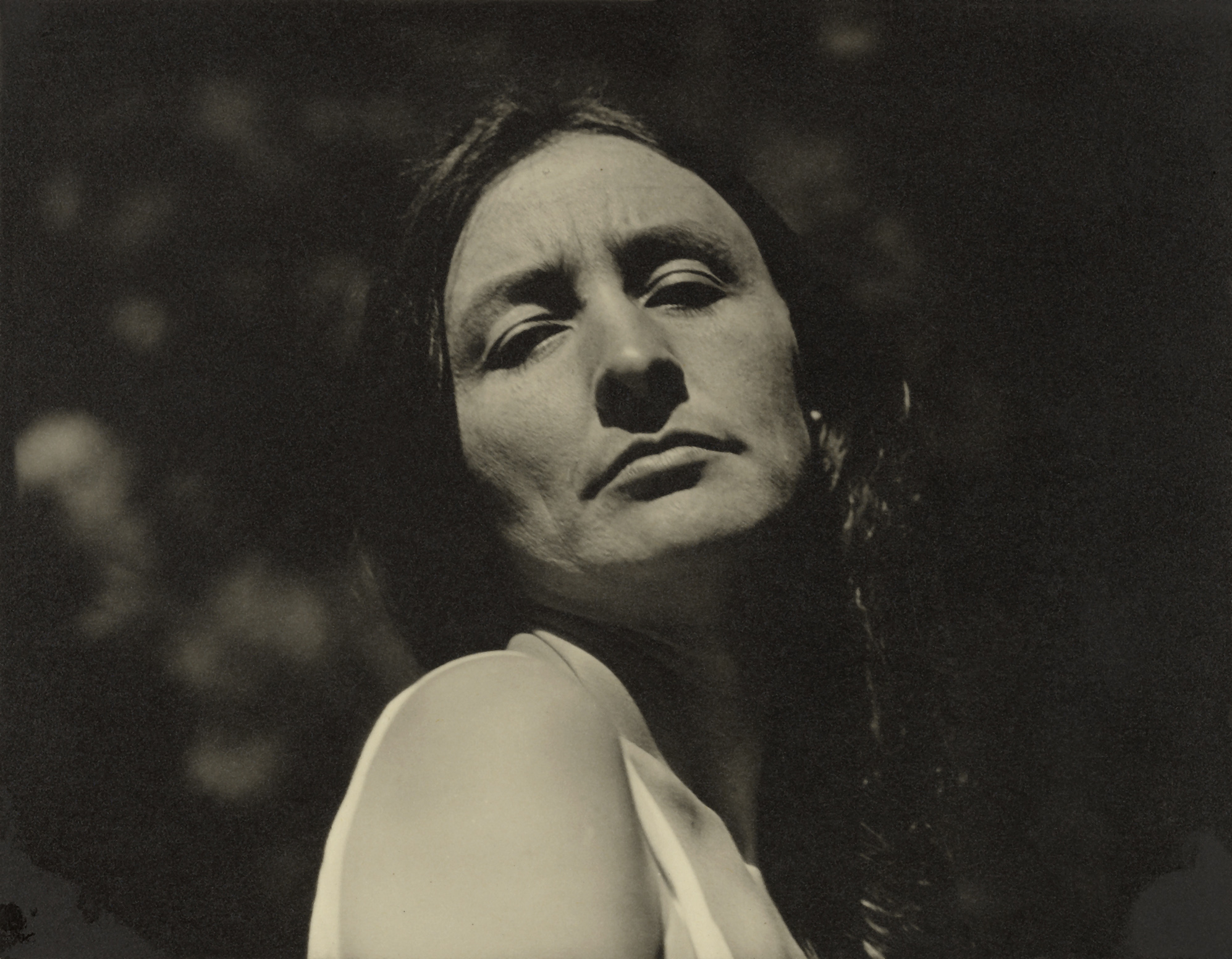


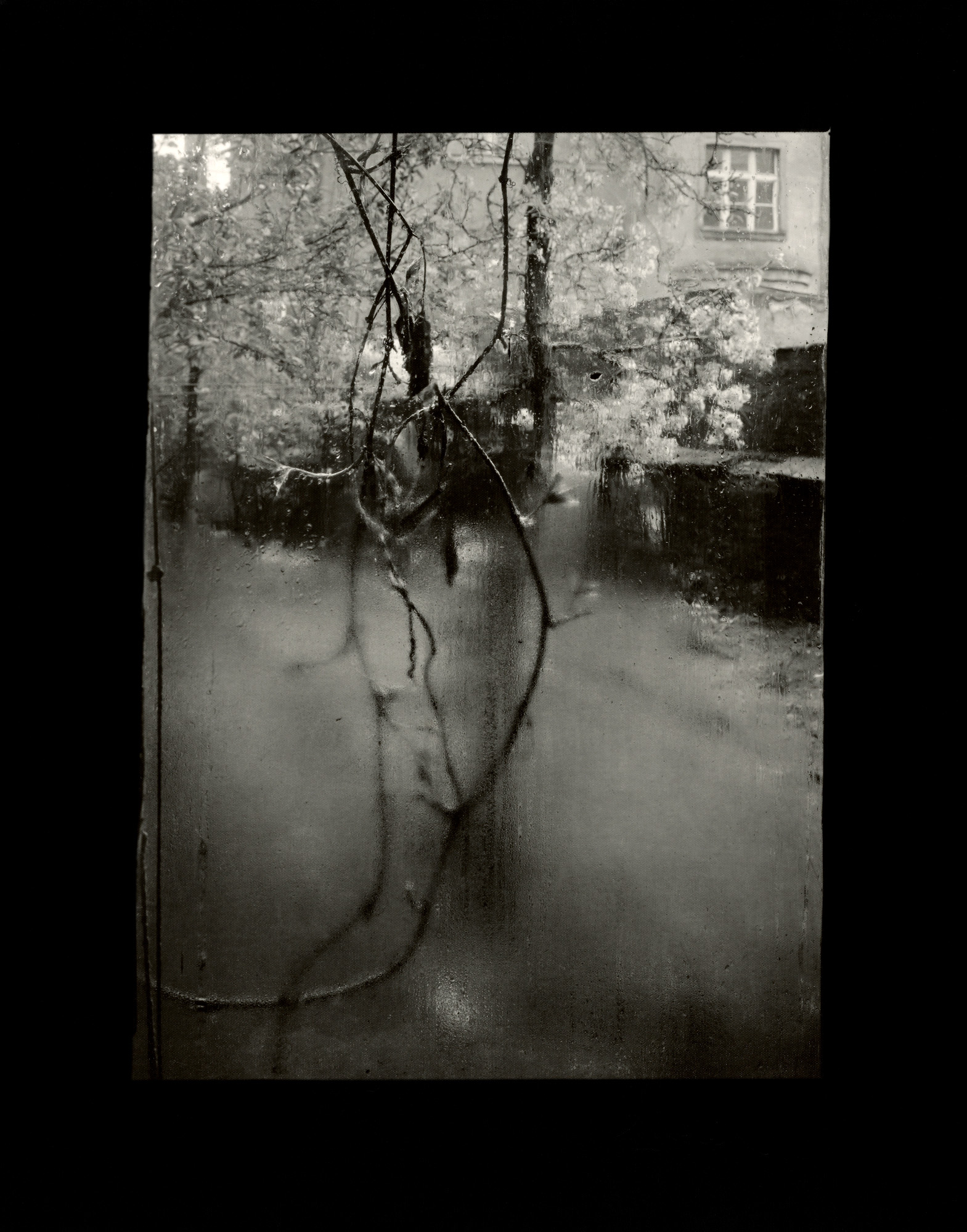


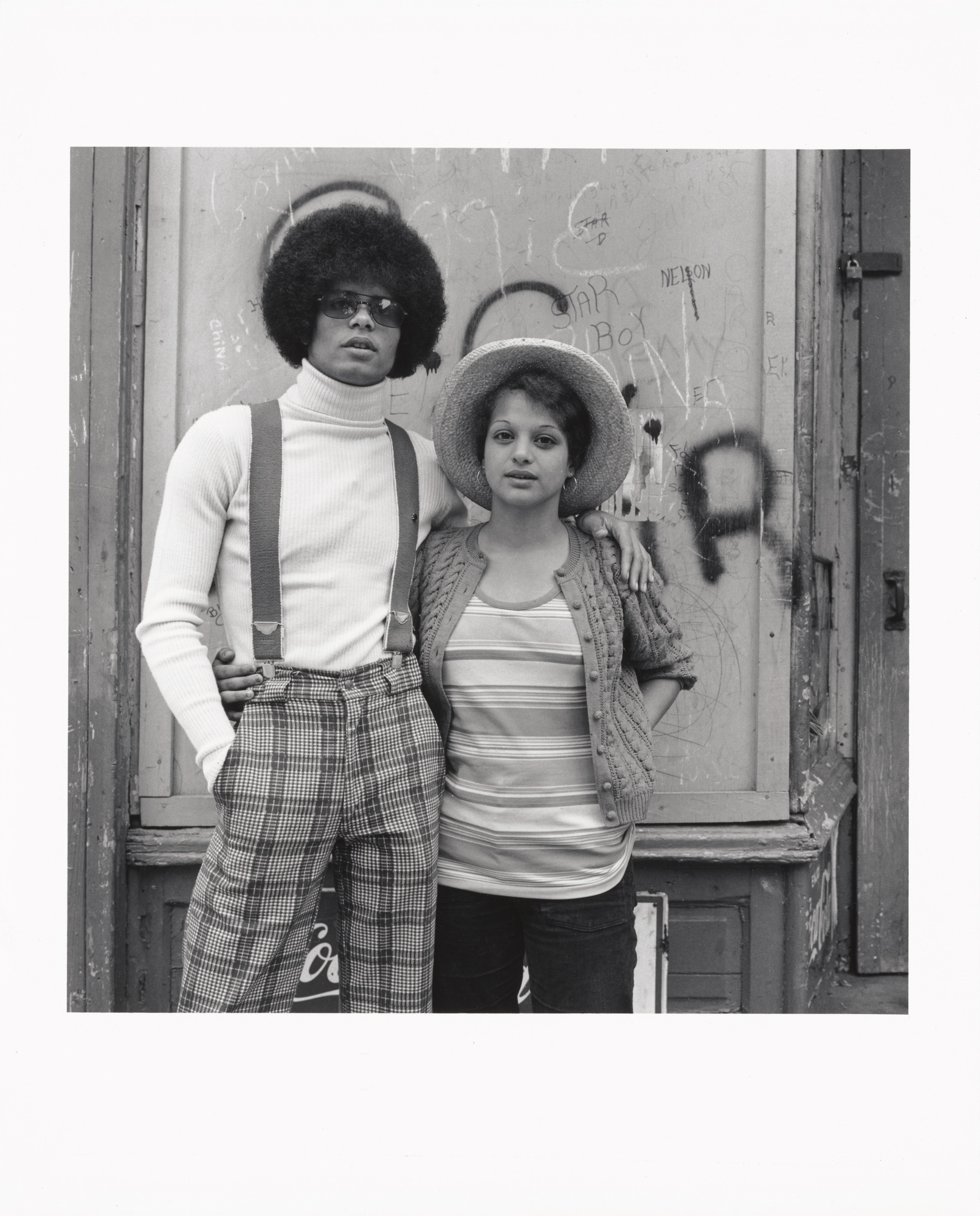

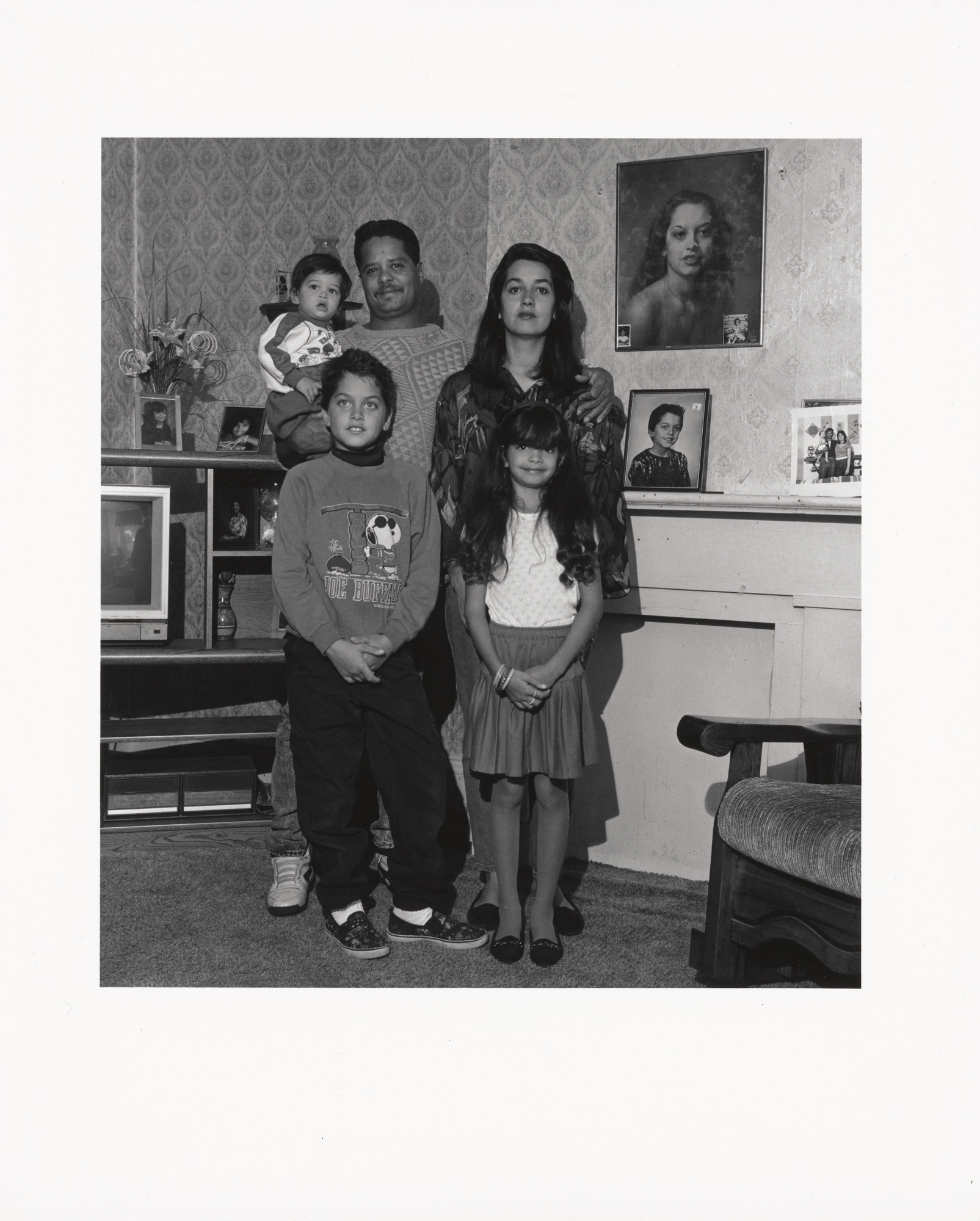


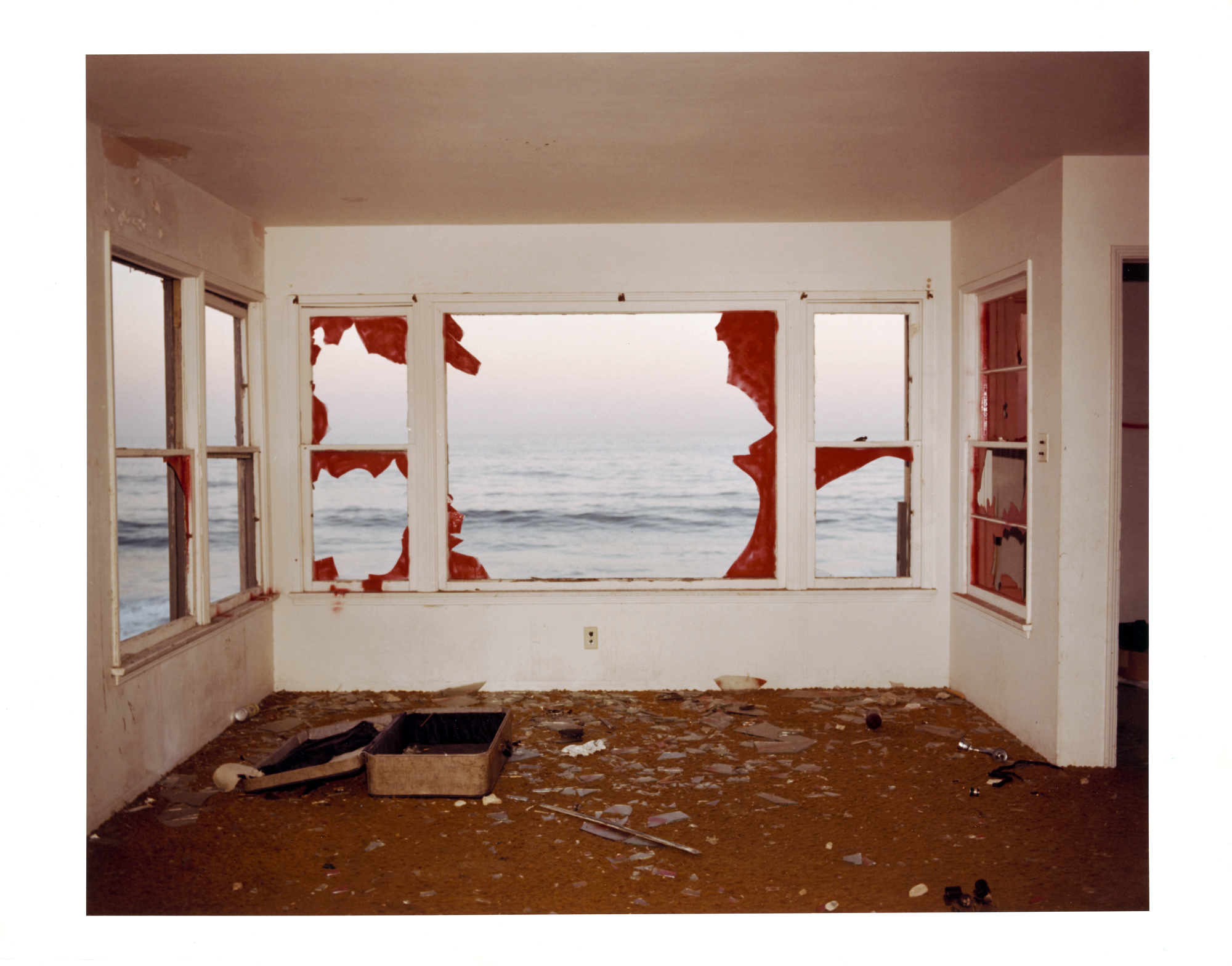
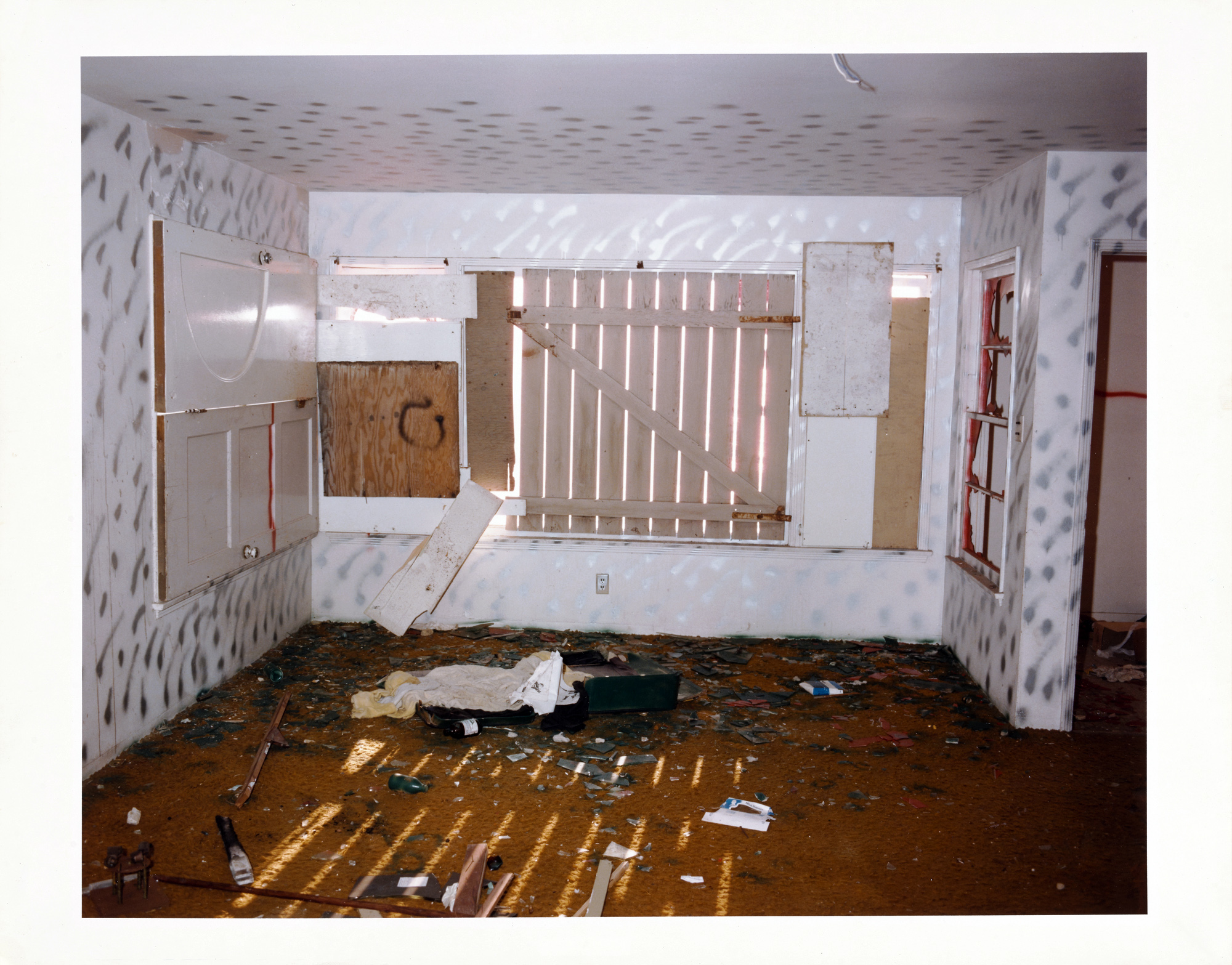


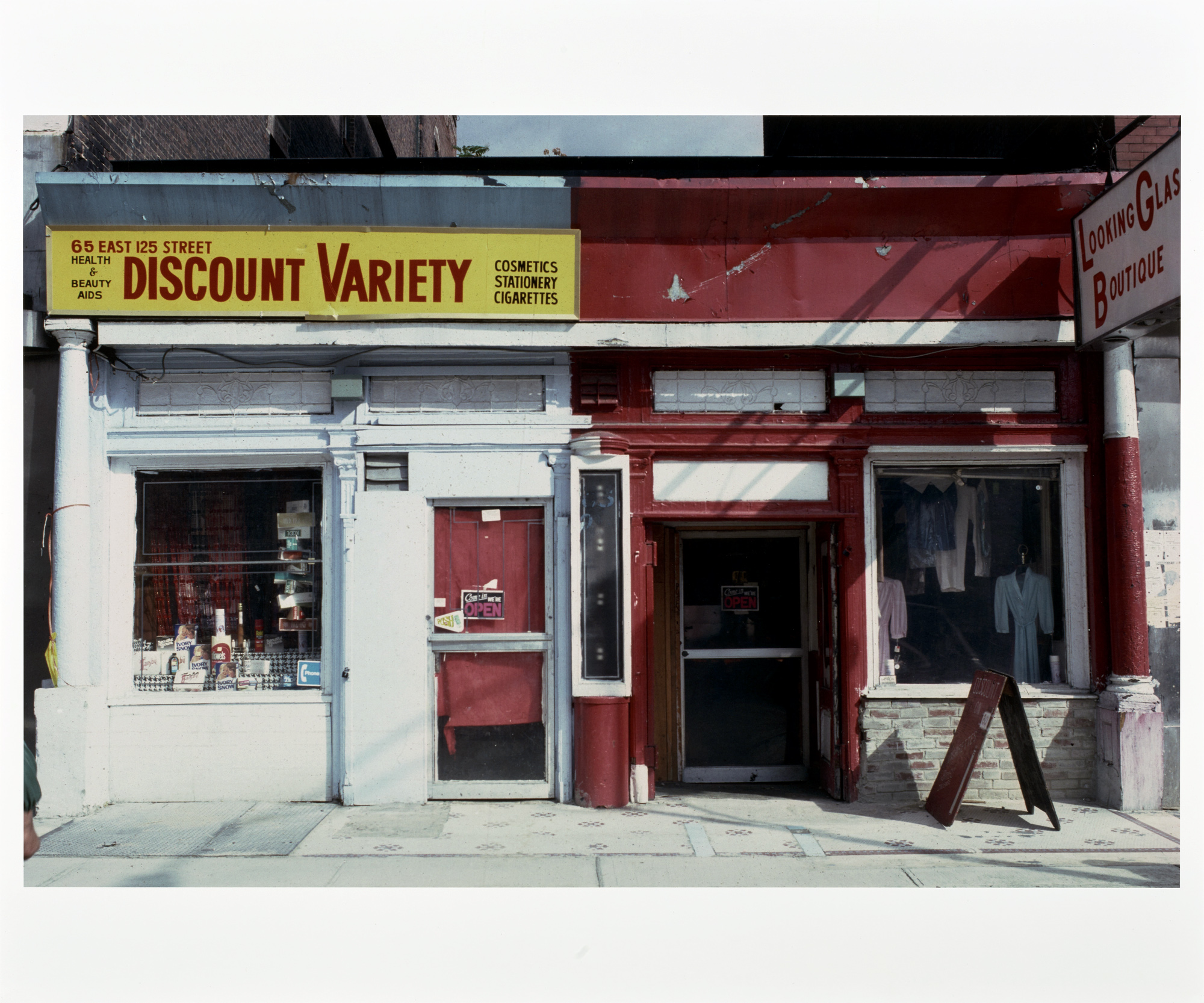

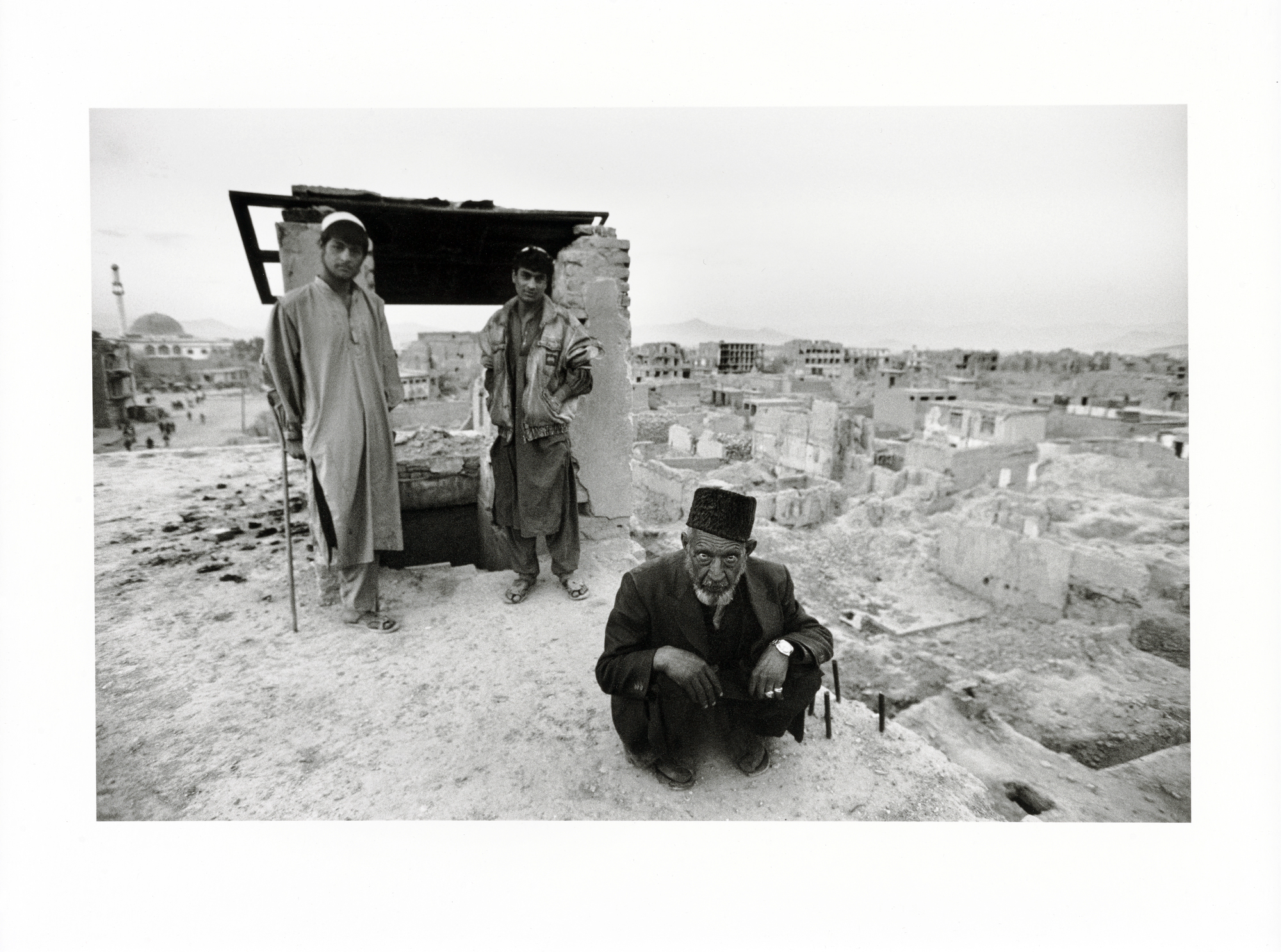

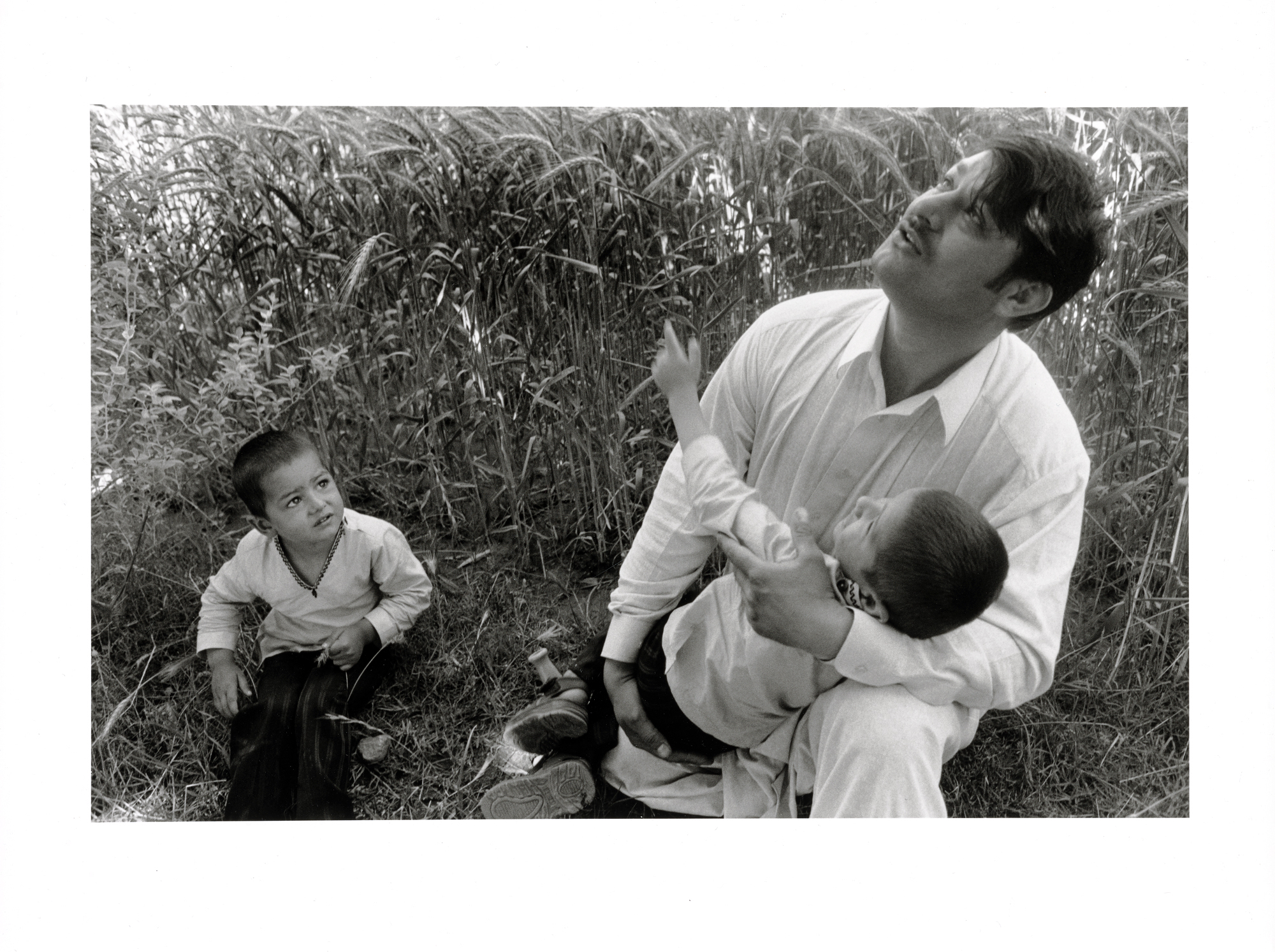

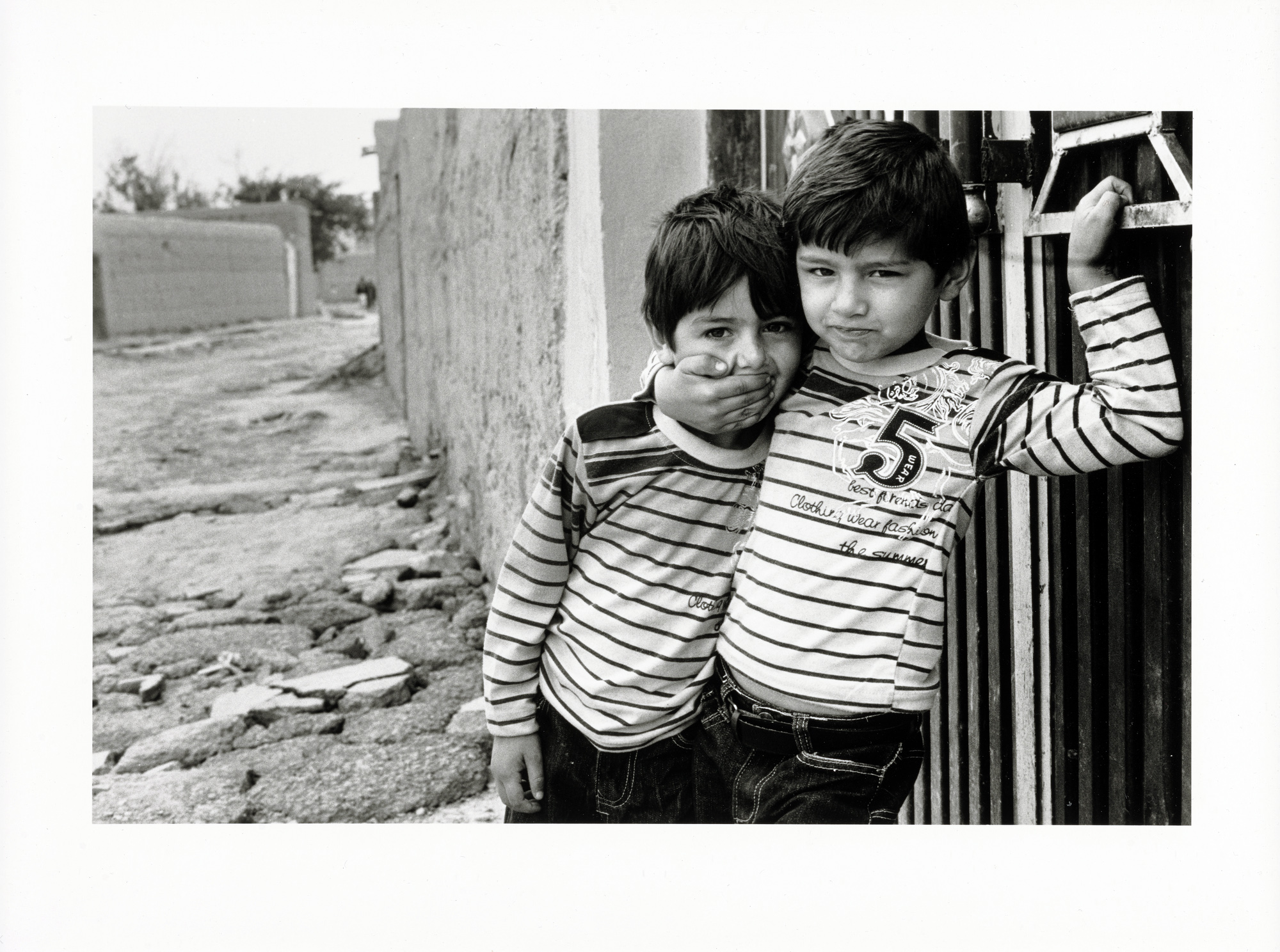
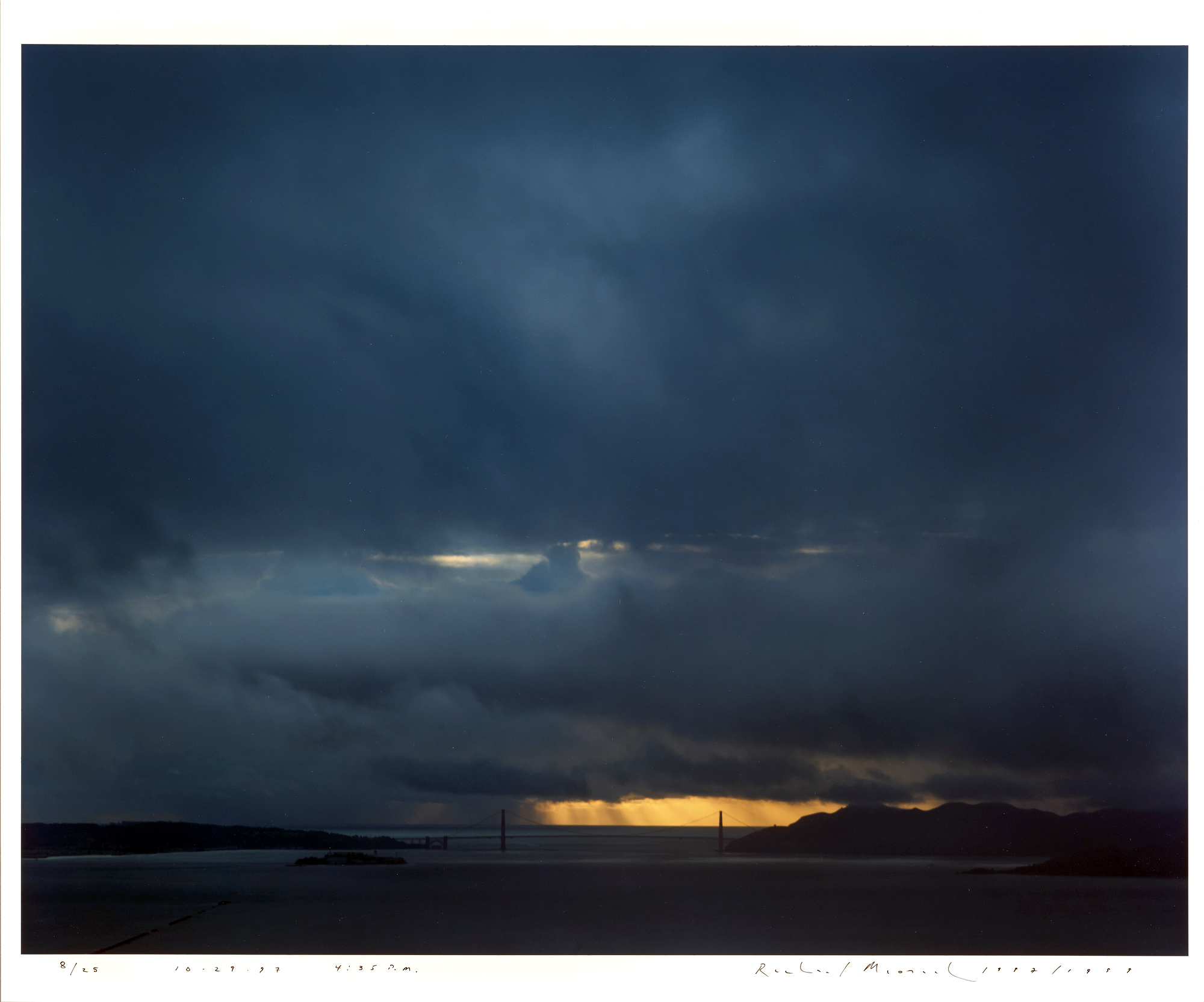

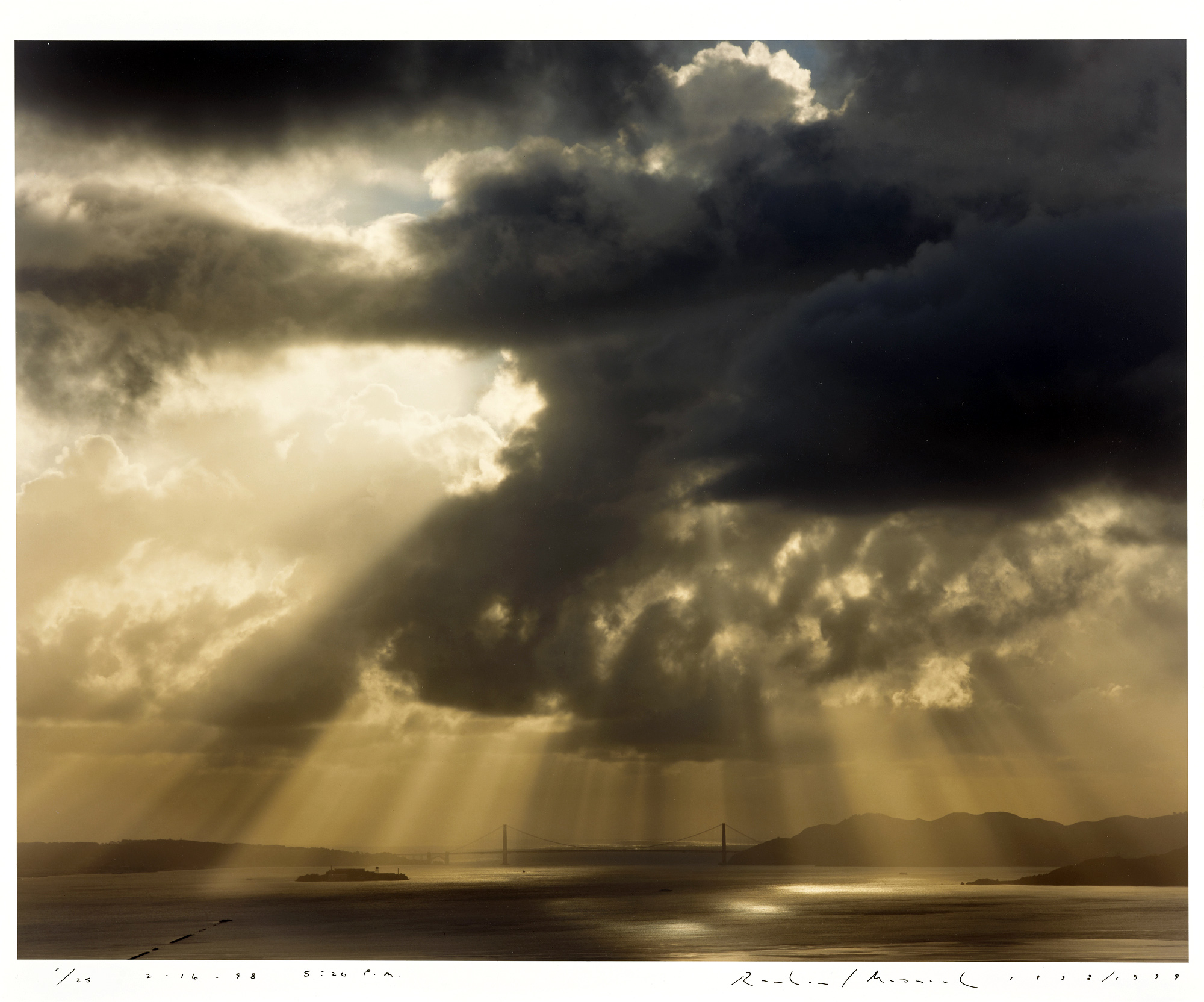
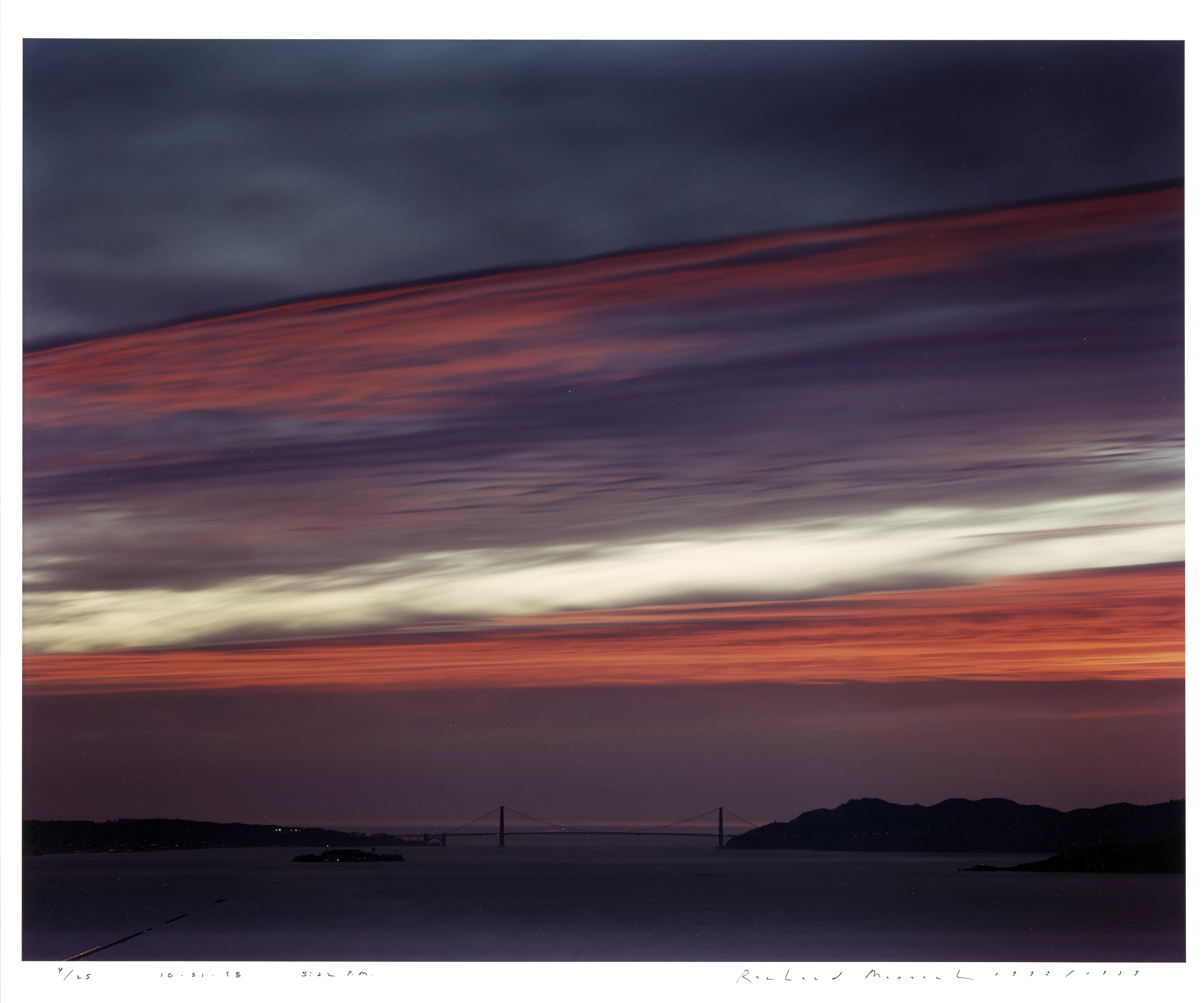
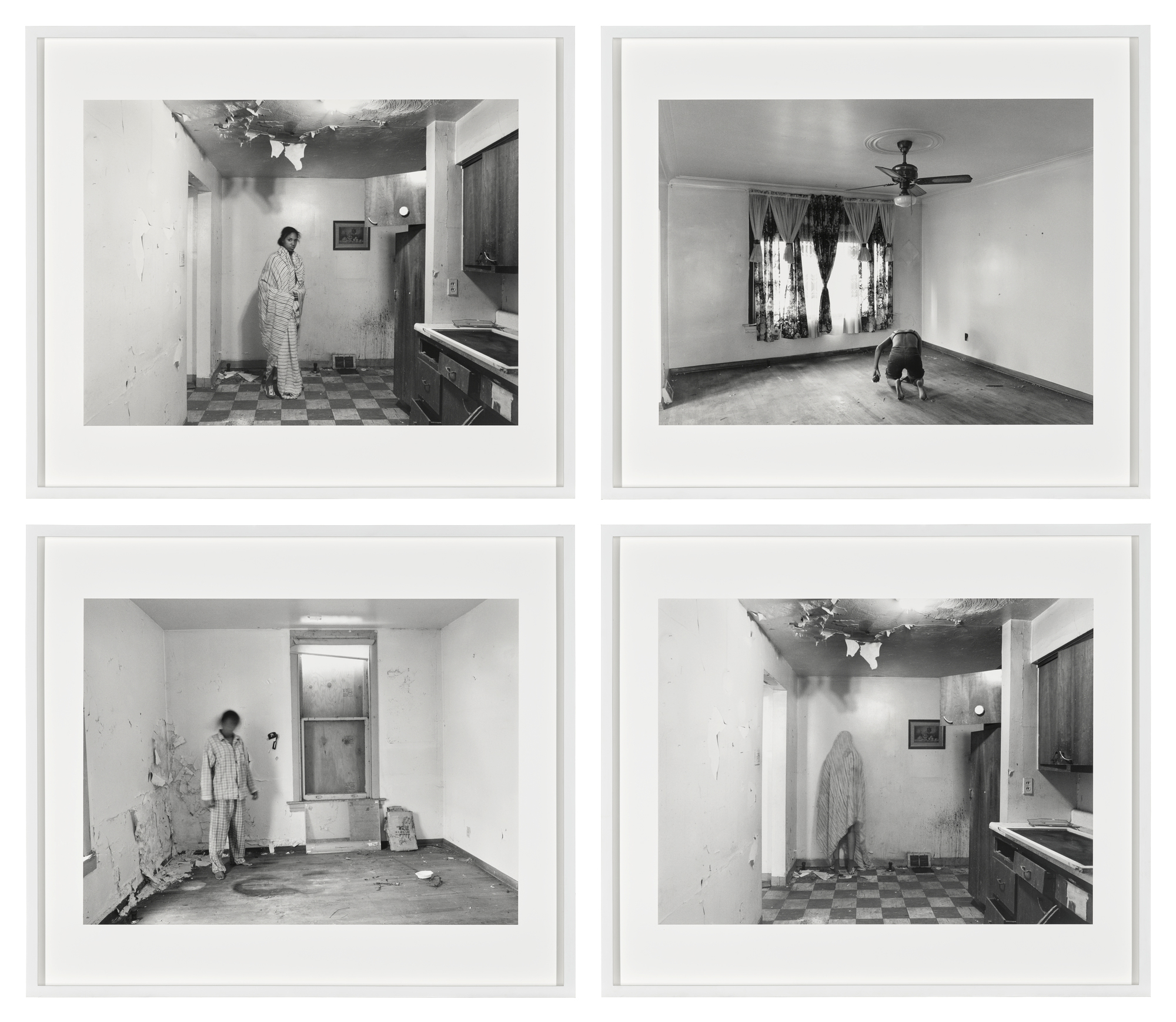


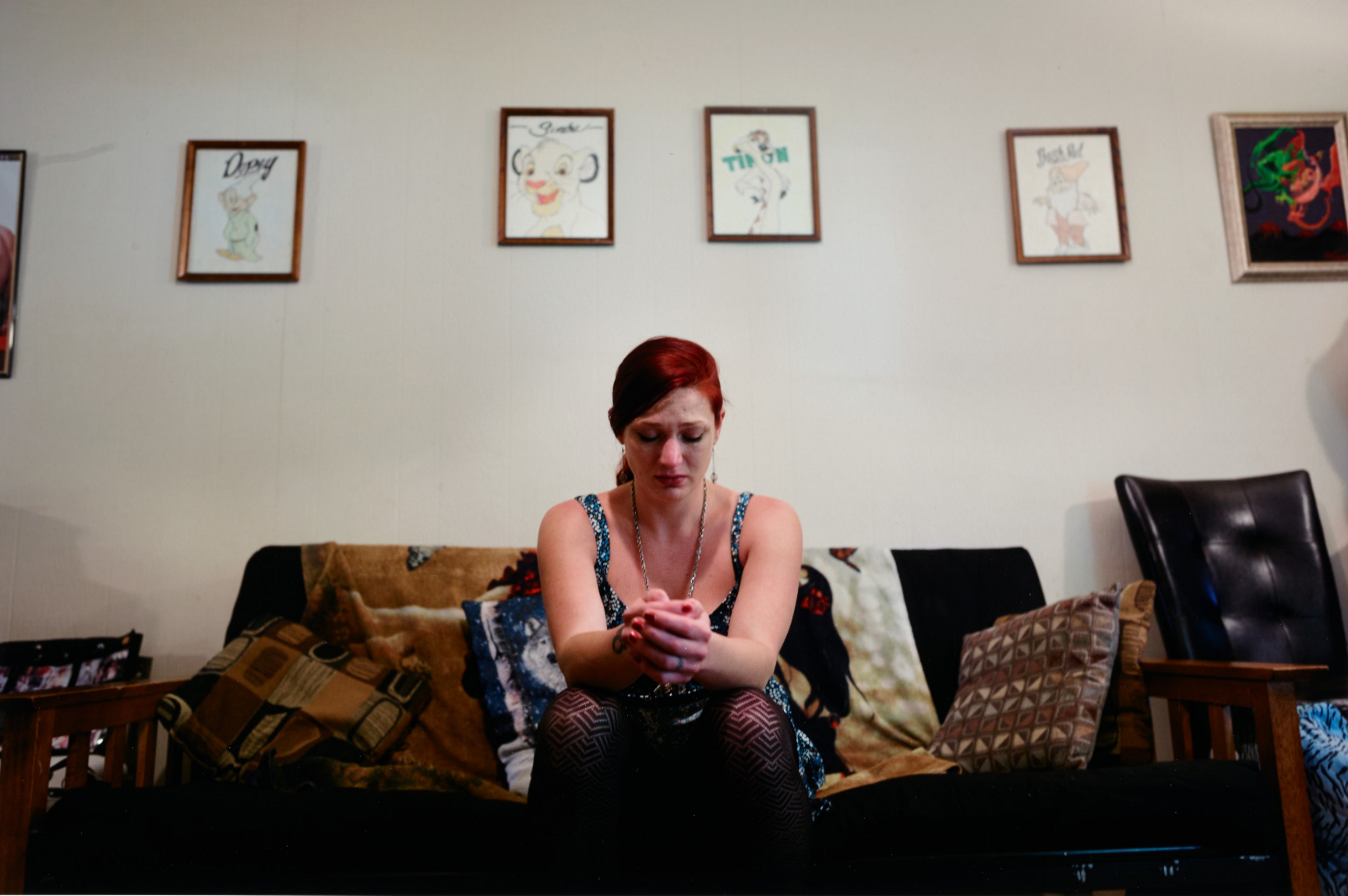
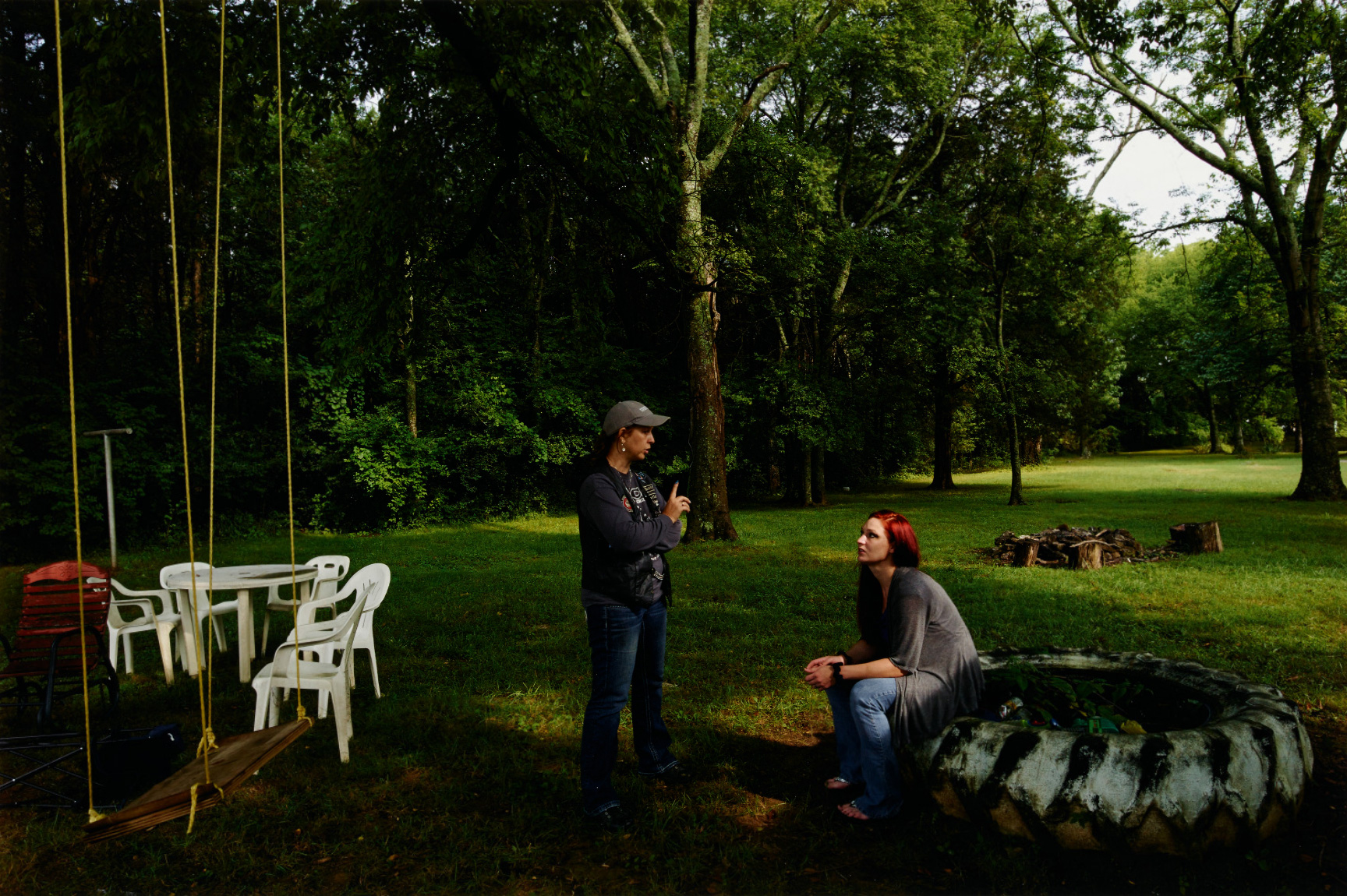

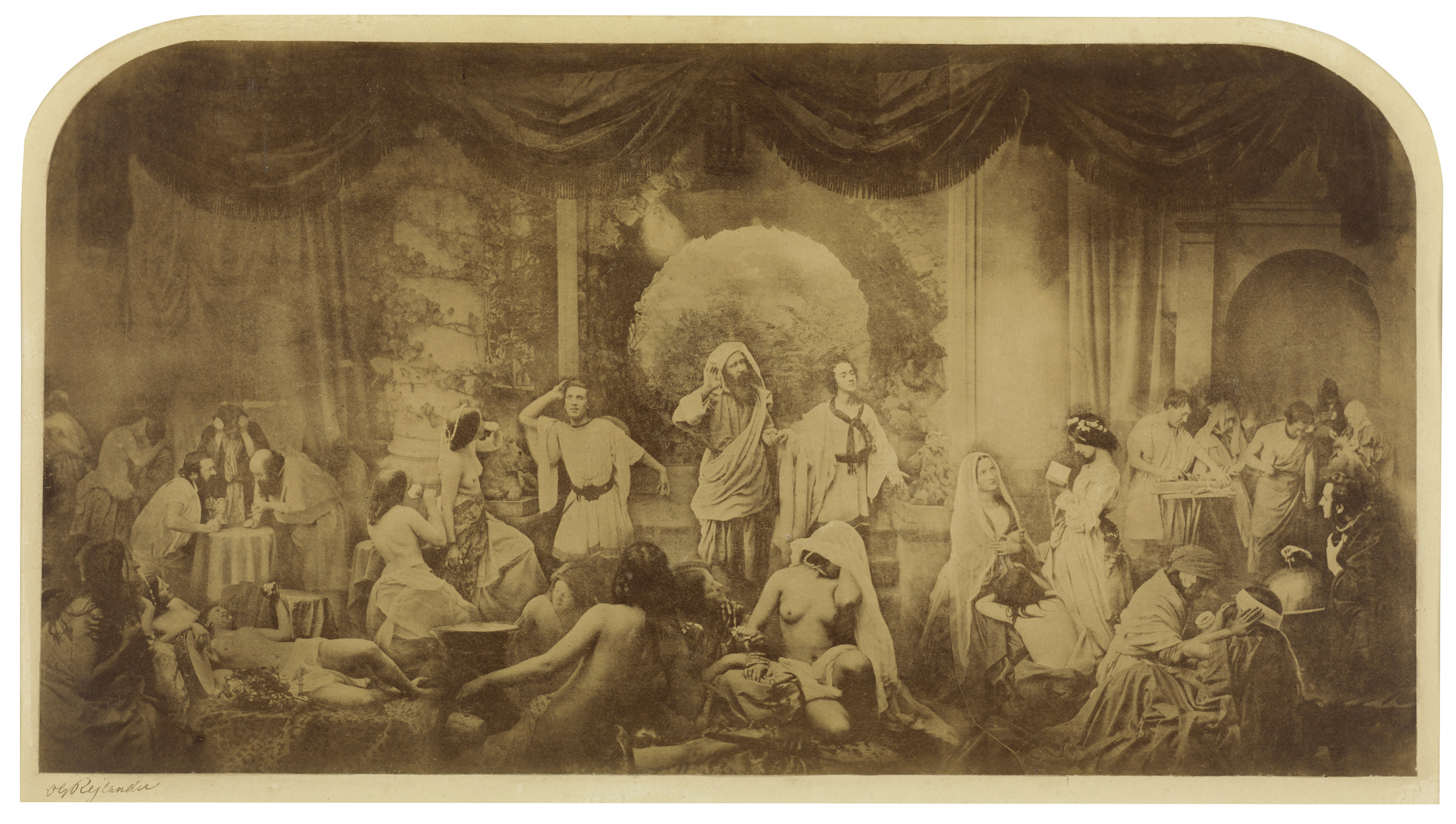
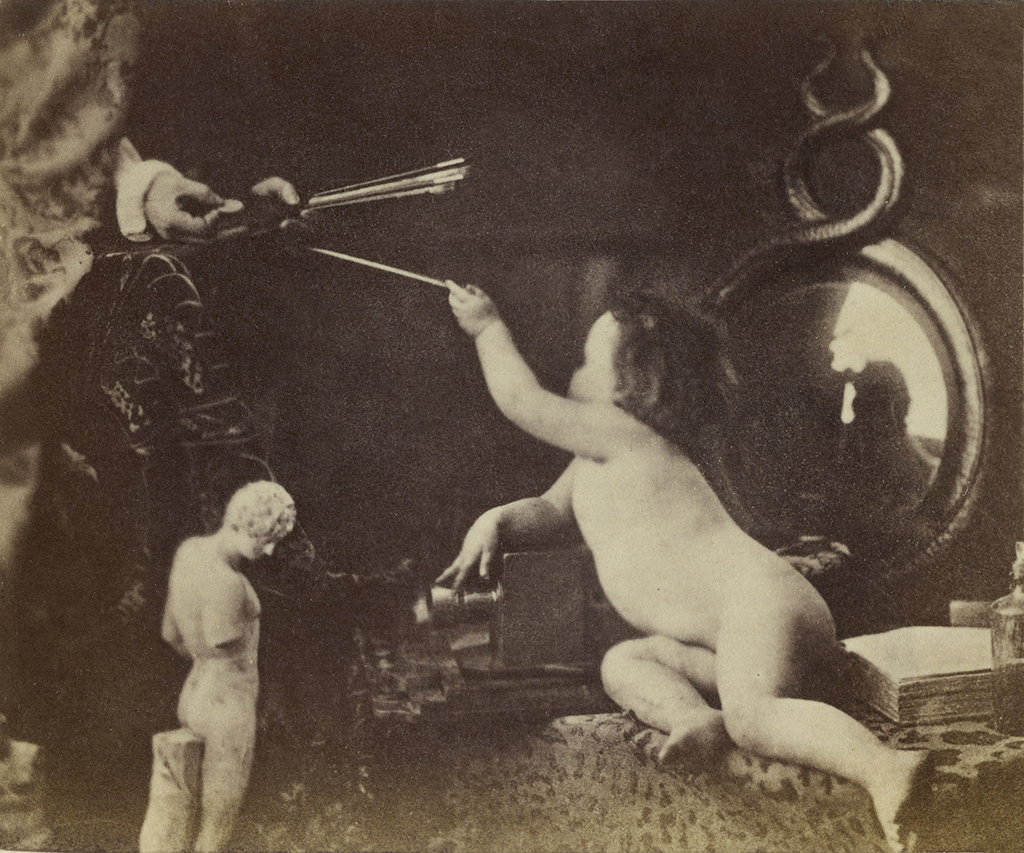


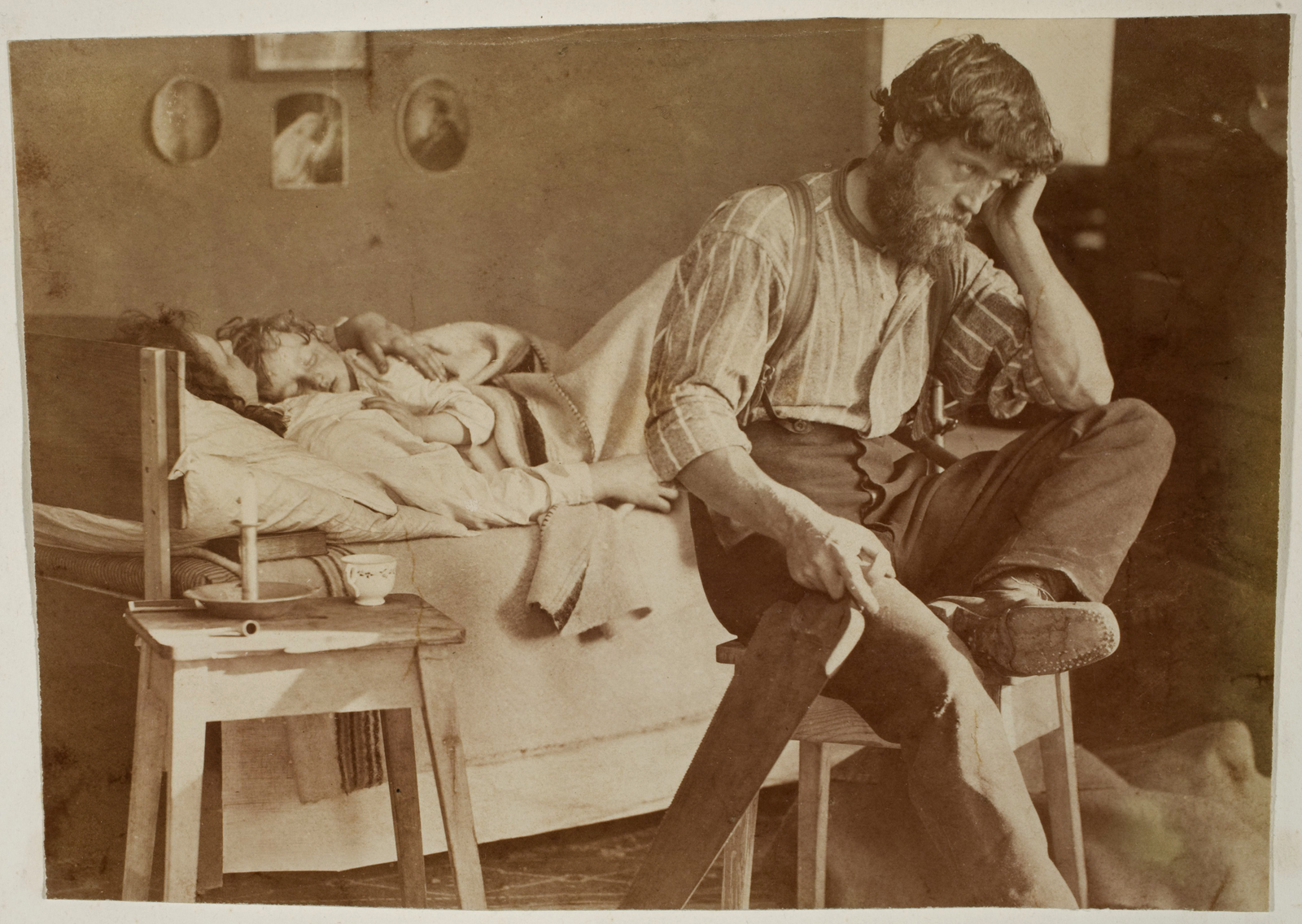

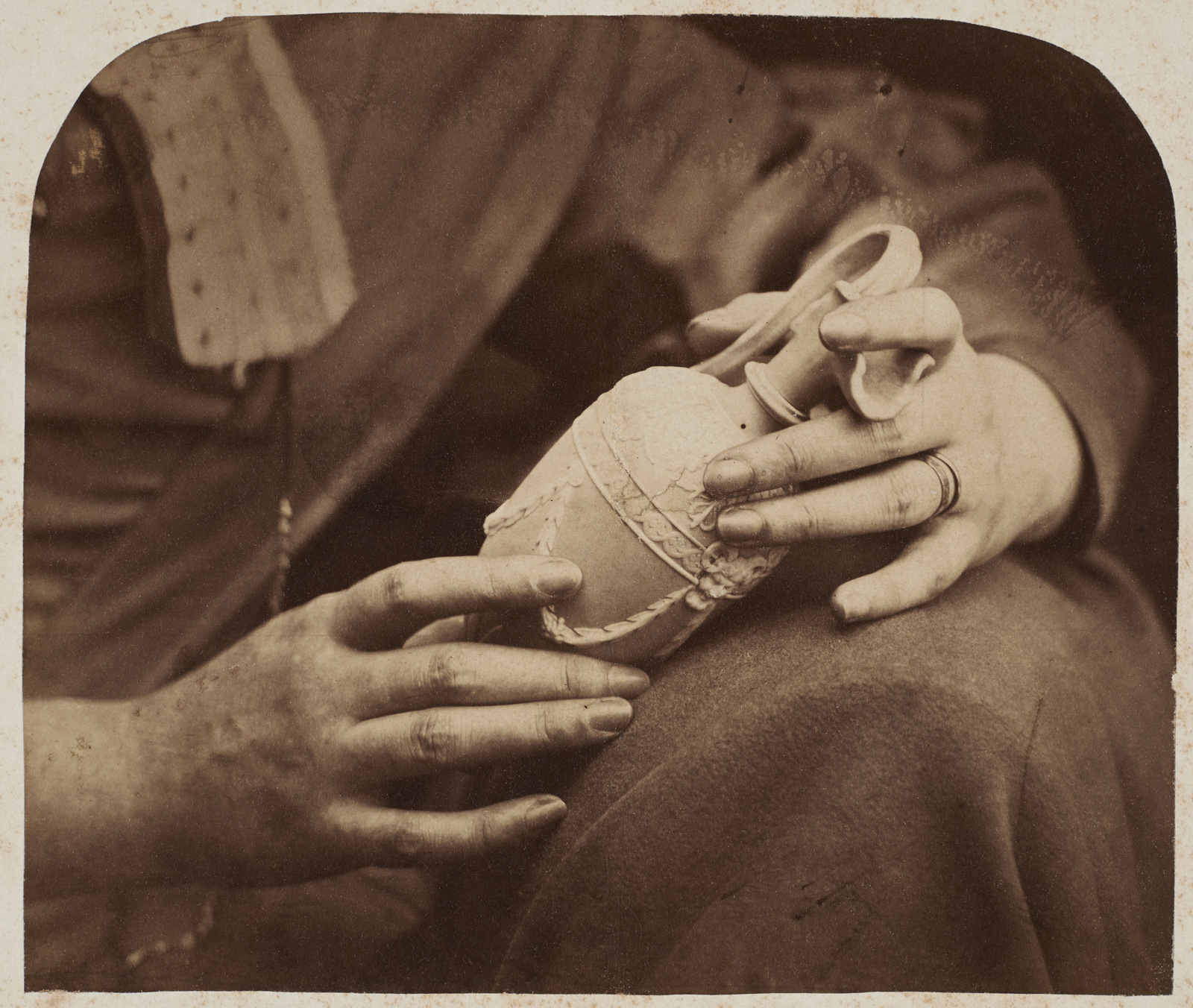
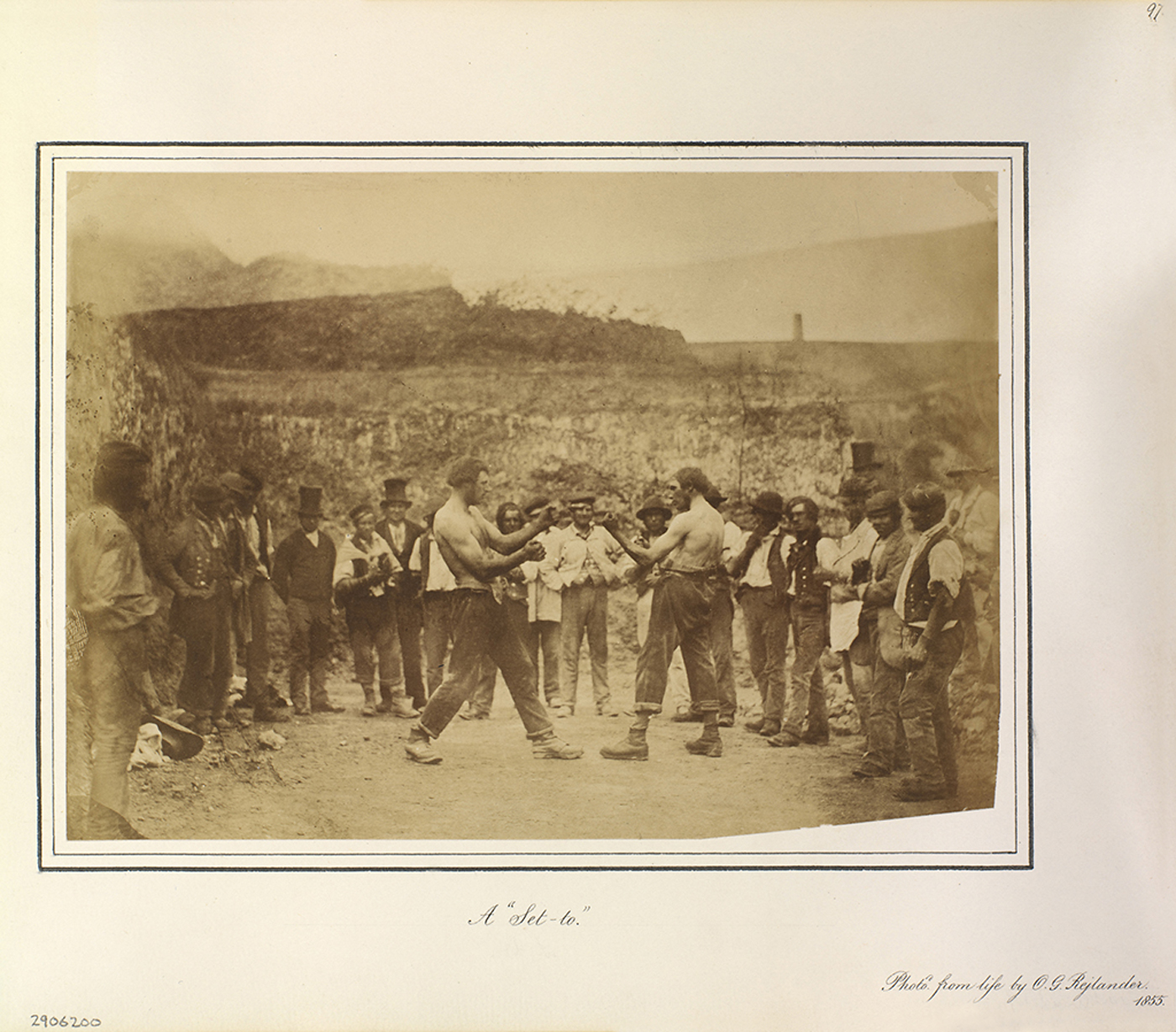
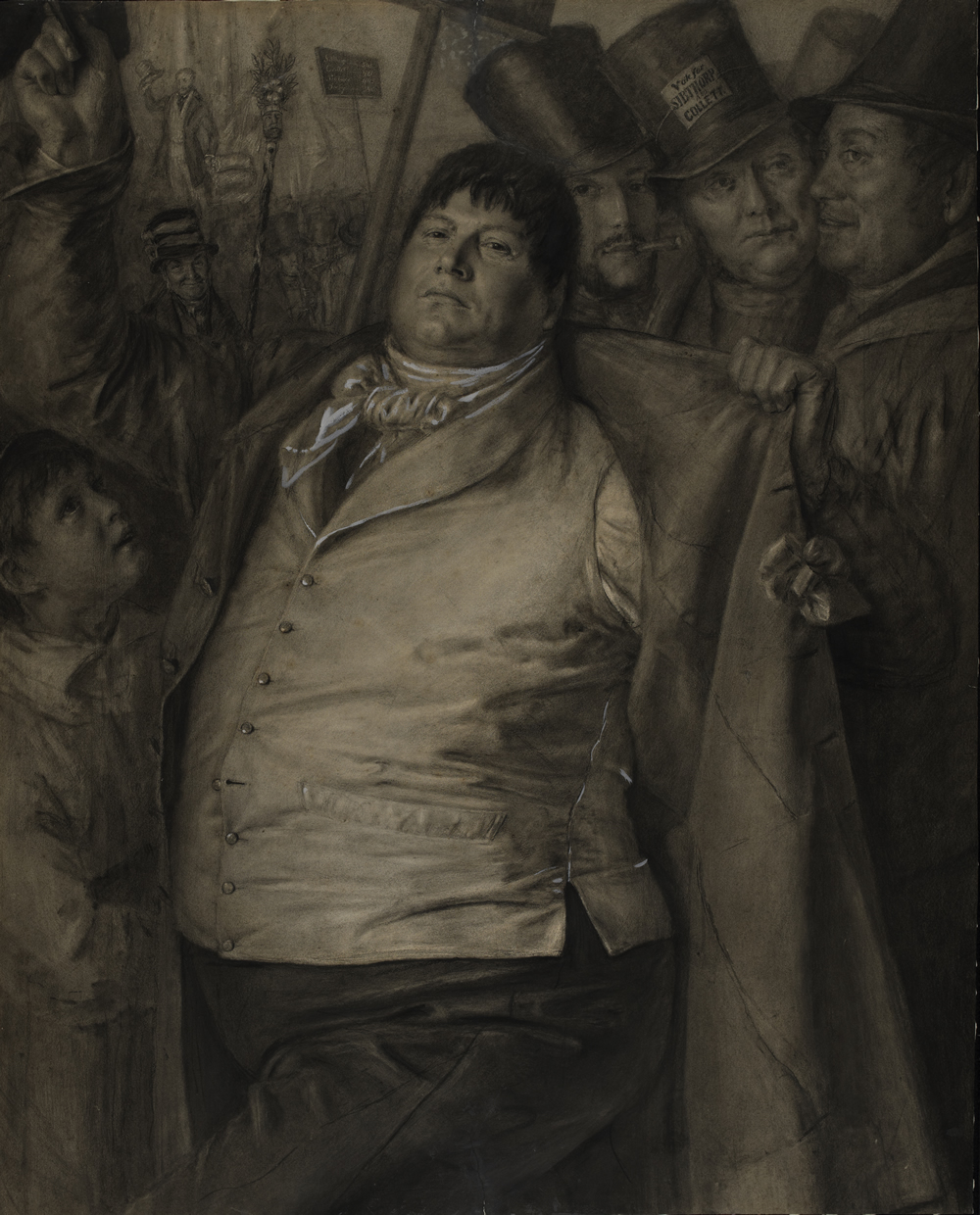
![Attributed to Oscar G. Rejlander (British born Sweden, 1813-1875) '[Landscape]' c. 1855](https://artblart.com/wp-content/uploads/2019/06/rejlander-landscape-c-1855-web.jpg "Attributed to Oscar G. Rejlander (British born Sweden, 1813-1875) '[Landscape]' c. 1855")


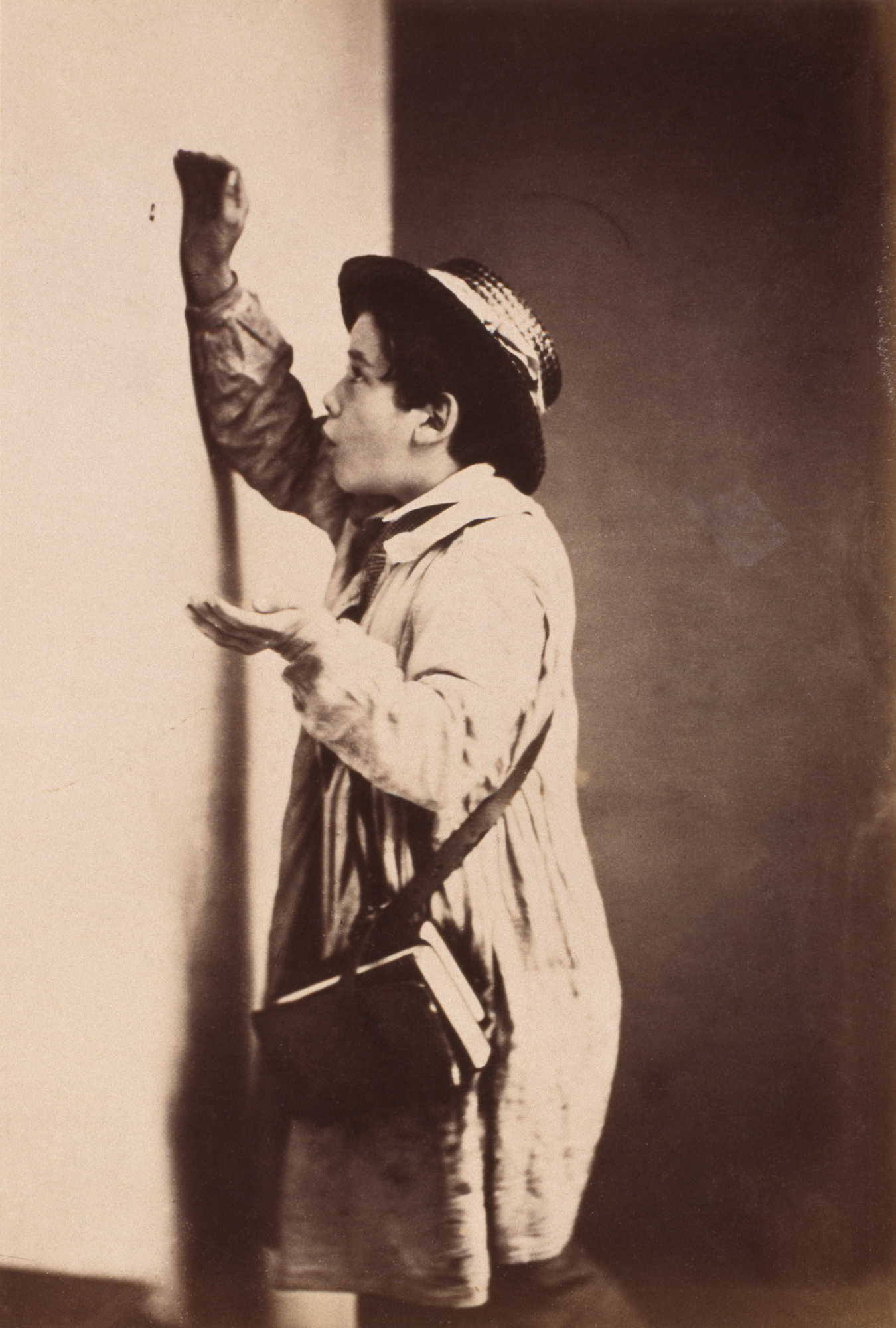


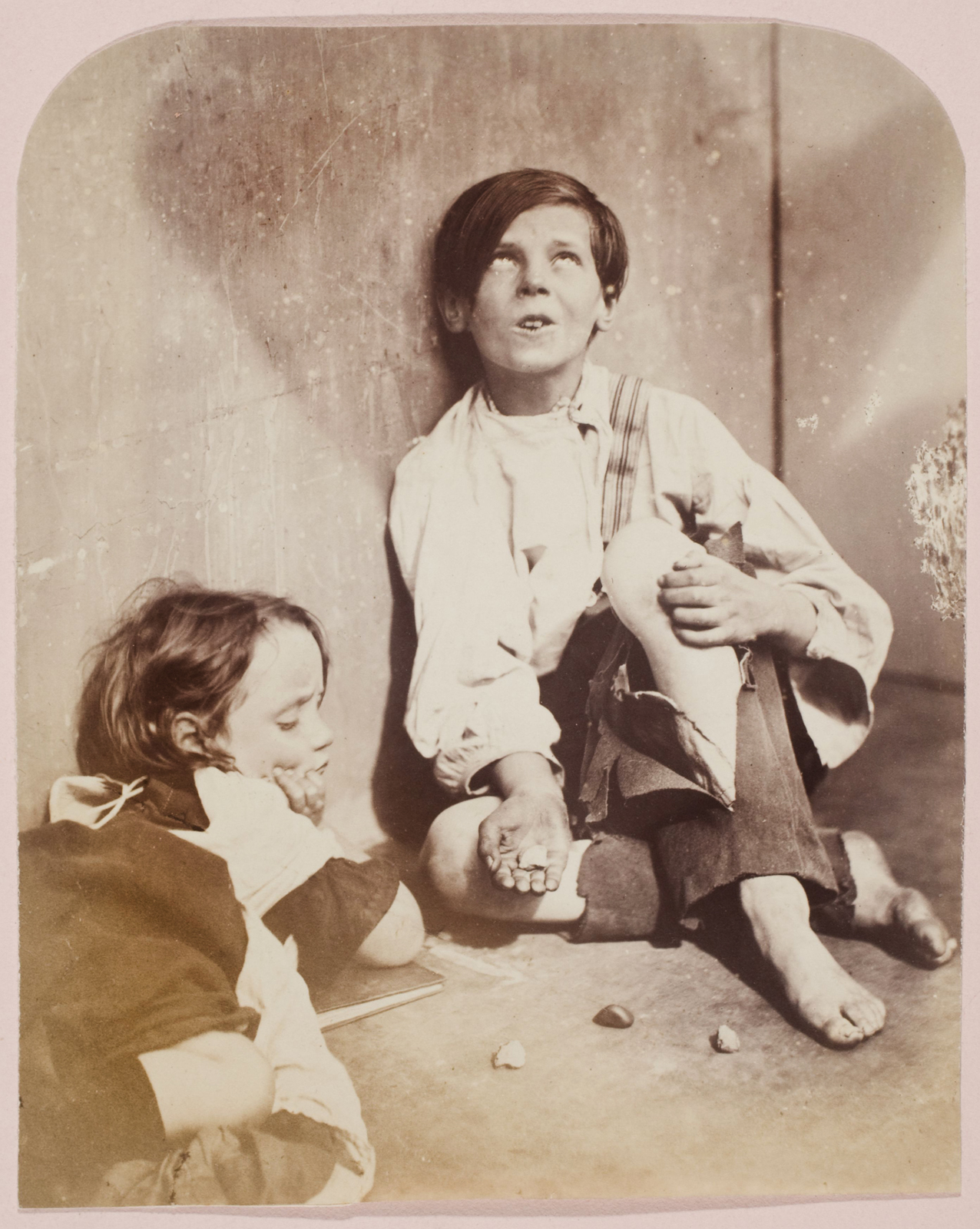


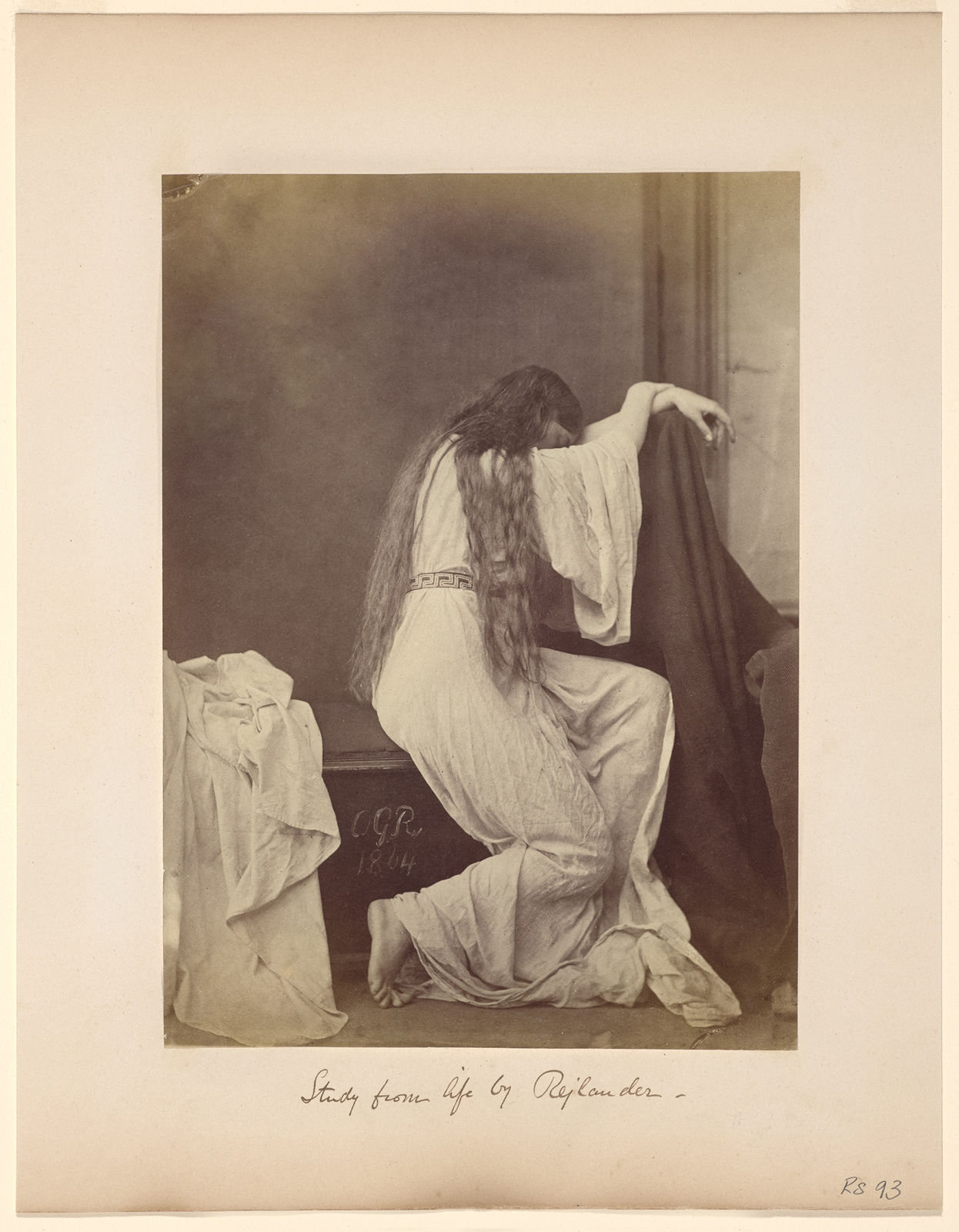


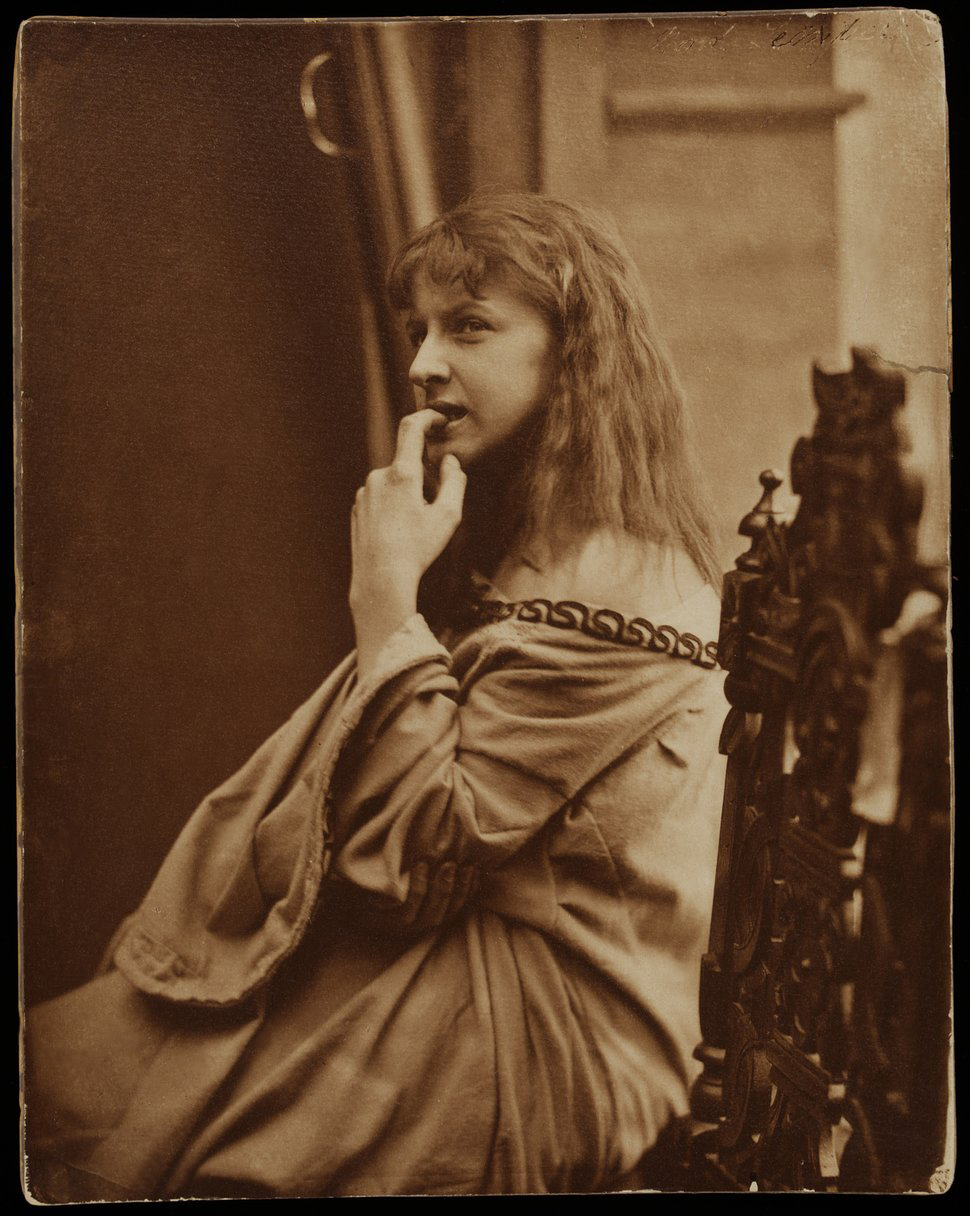


![Erich Salomon (German, 1886-1944) '[Portrait of Madame Vacarescu, Romanian Author and Deputy to the League of Nations, Geneva]' 1928 from the exhibition 'In Focus: Expressions' at the J. Paul Getty Museum, Getty Center, Los Angeles, May - Oct, 2018](https://artblart.com/wp-content/uploads/2018/06/in-focus-expressions-1-web.jpg "Erich Salomon (German, 1886-1944) '[Portrait of Madame Vacarescu, Romanian Author and Deputy to the League of Nations, Geneva]' 1928 from the exhibition 'In Focus: Expressions' at the J. Paul Getty Museum, Getty Center, Los Angeles, May - Oct, 2018")
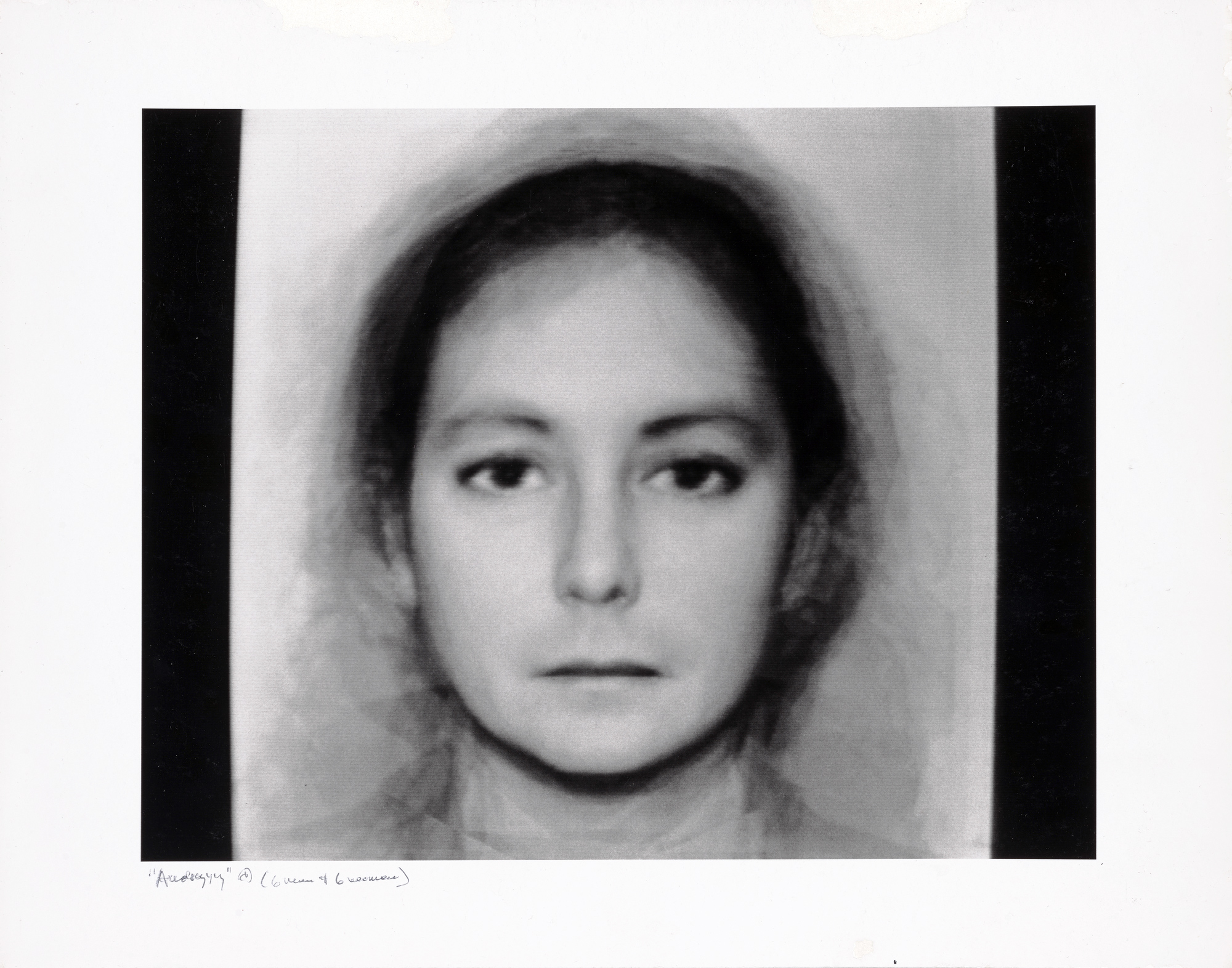
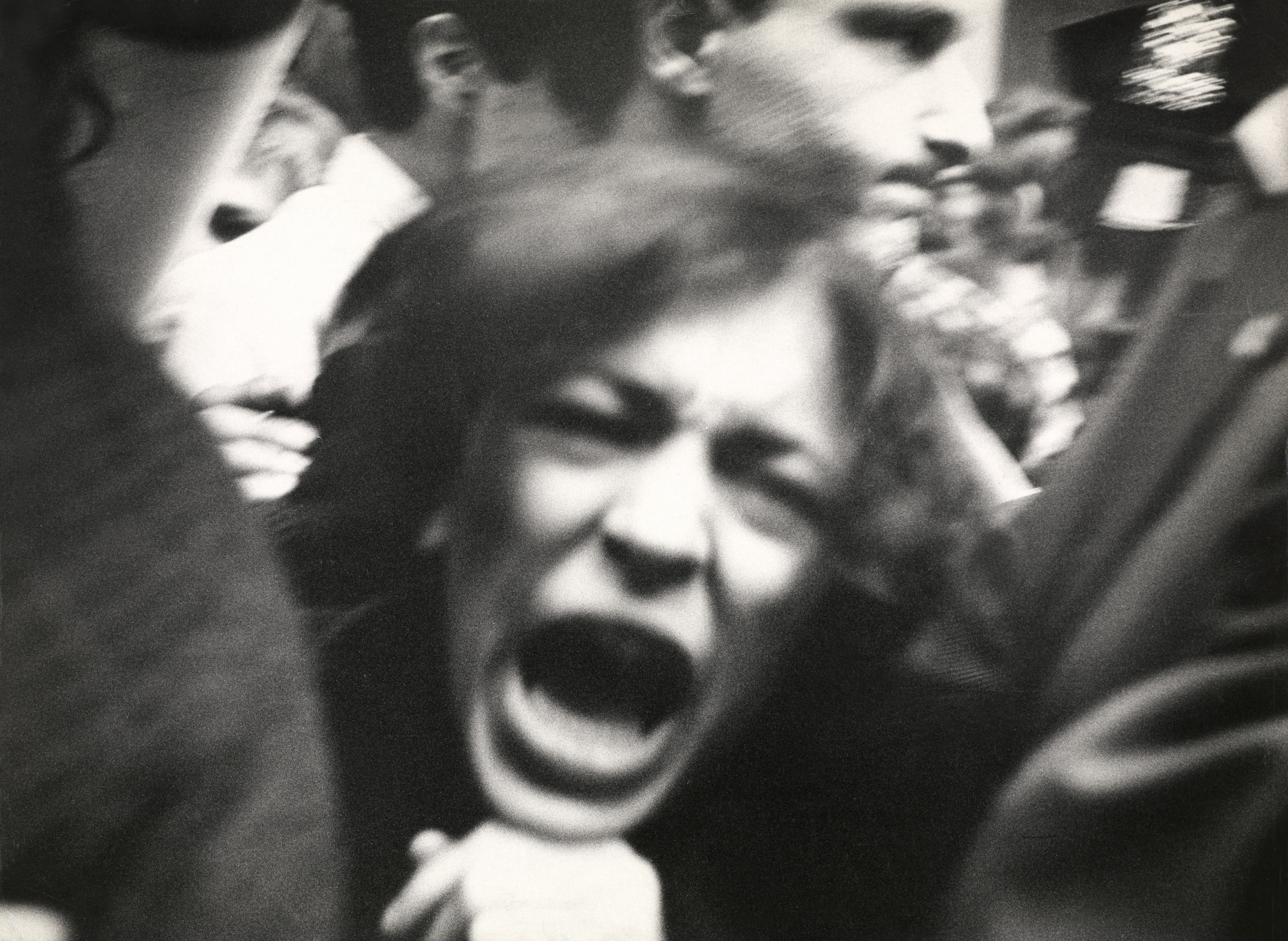
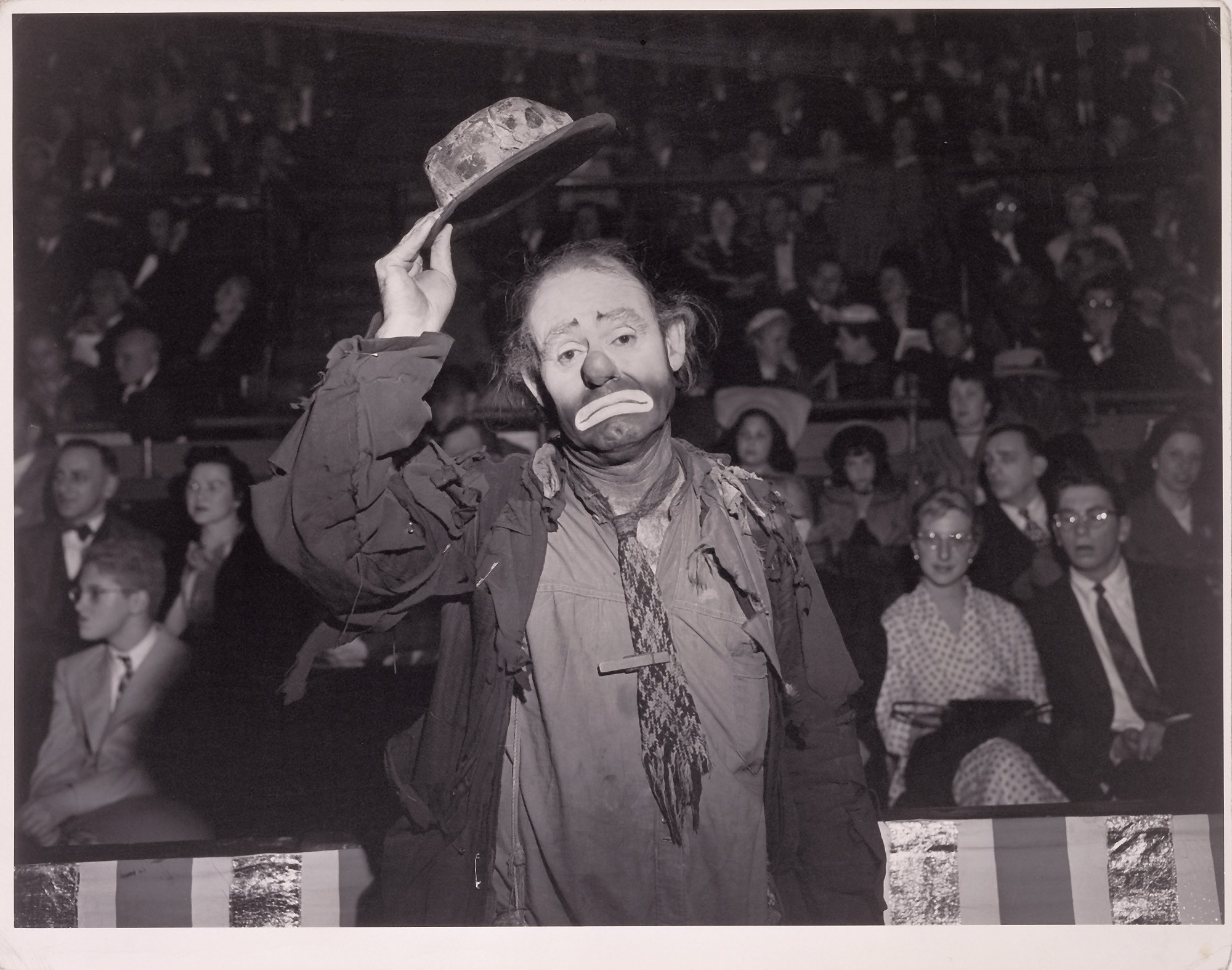

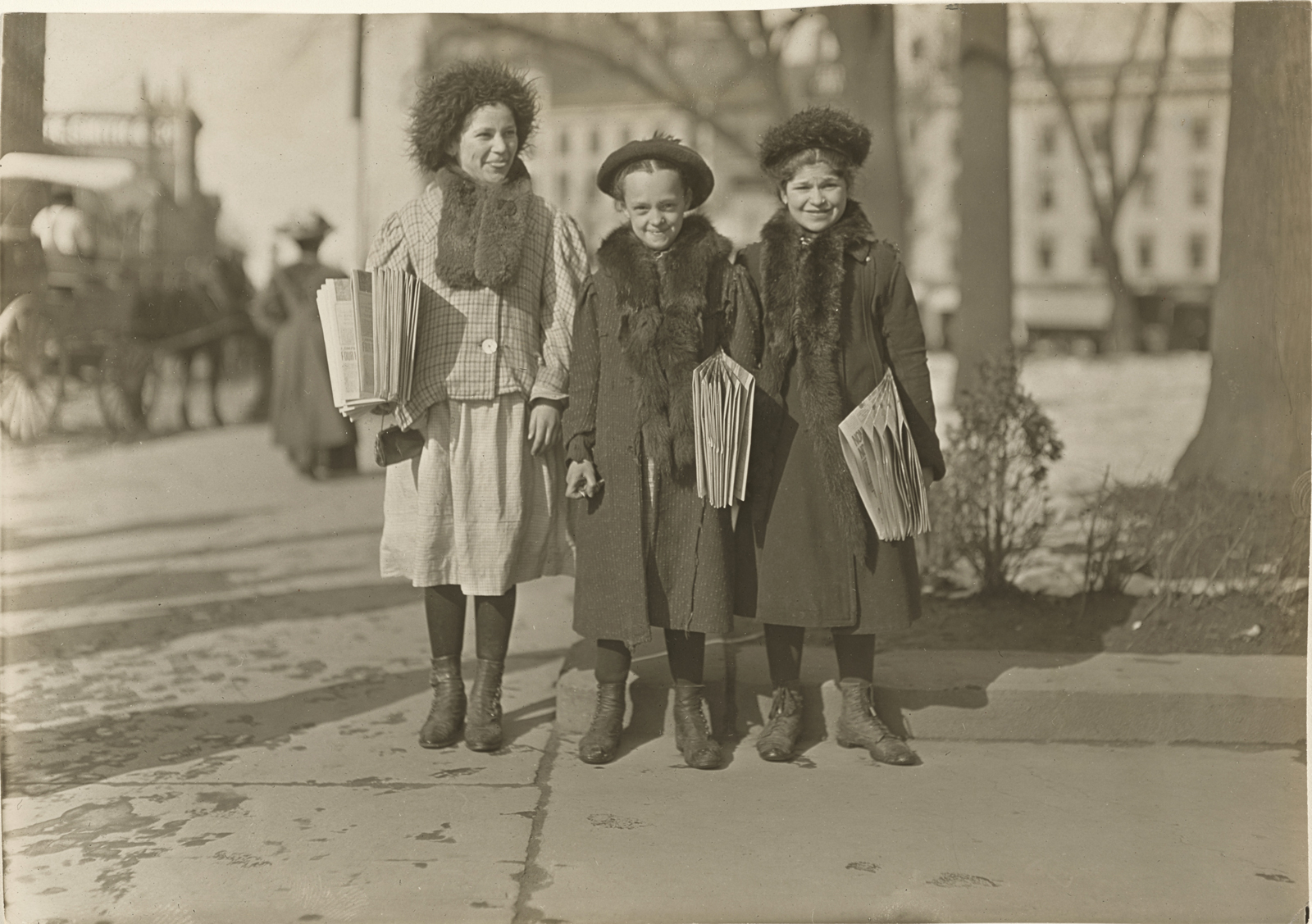
![Nadar [Gaspard Félix Tournachon] (French, 1820-1910) '[Mme Ernestine Nadar]' 1880-1883](https://artblart.com/wp-content/uploads/2018/06/in-focus-expressions-4-web.jpg "Nadar [Gaspard Félix Tournachon] (French, 1820-1910) '[Mme Ernestine Nadar]' 1880-1883")
![Nadar [Gaspard Félix Tournachon] (French, 1820-1910) '[Mme Ernestine Nadar]' 1880-1883 (detail)](https://artblart.com/wp-content/uploads/2018/06/in-focus-expressions-4-detail.jpg "Nadar [Gaspard Félix Tournachon] (French, 1820-1910) '[Mme Ernestine Nadar]' 1880-1883 (detail)")

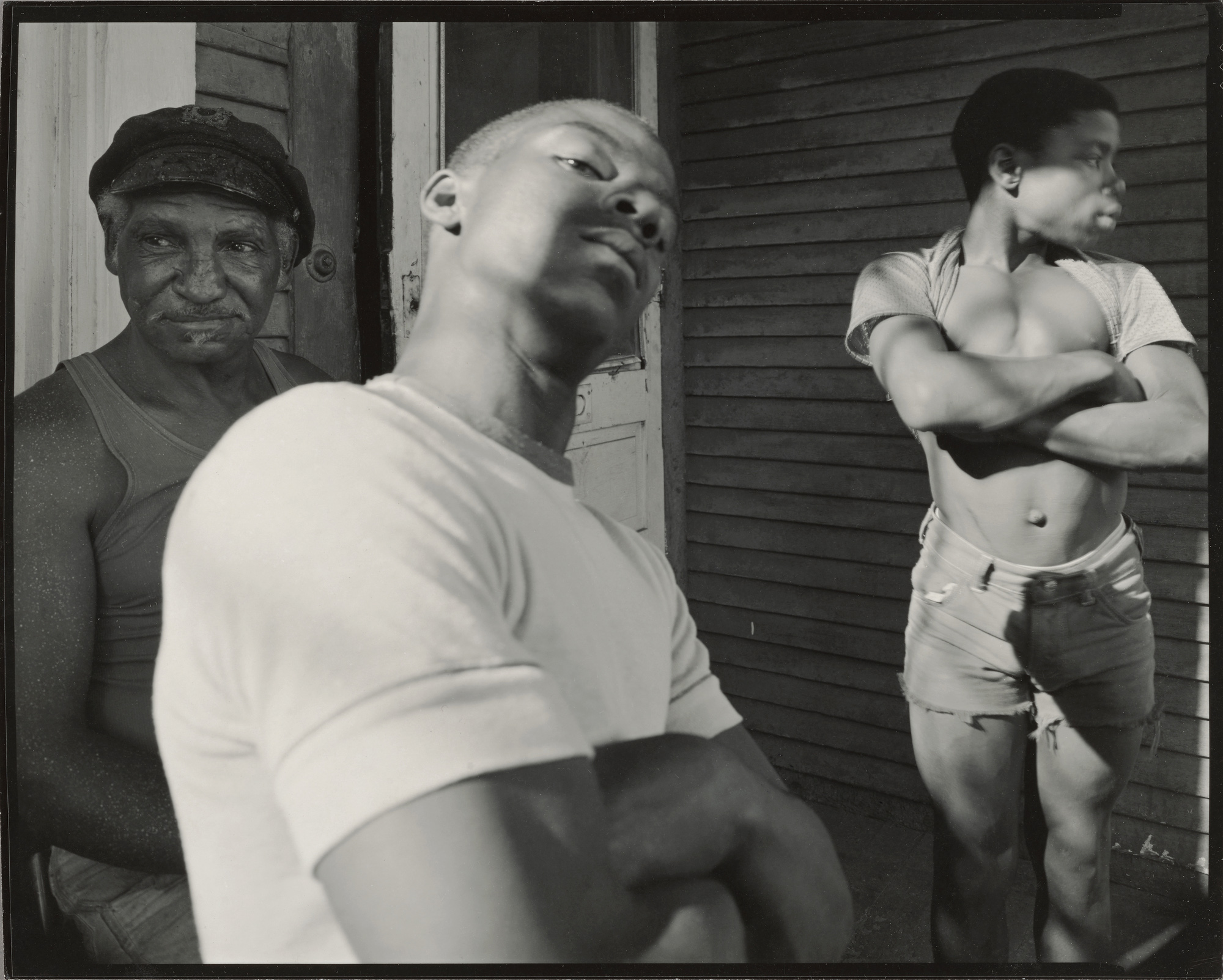
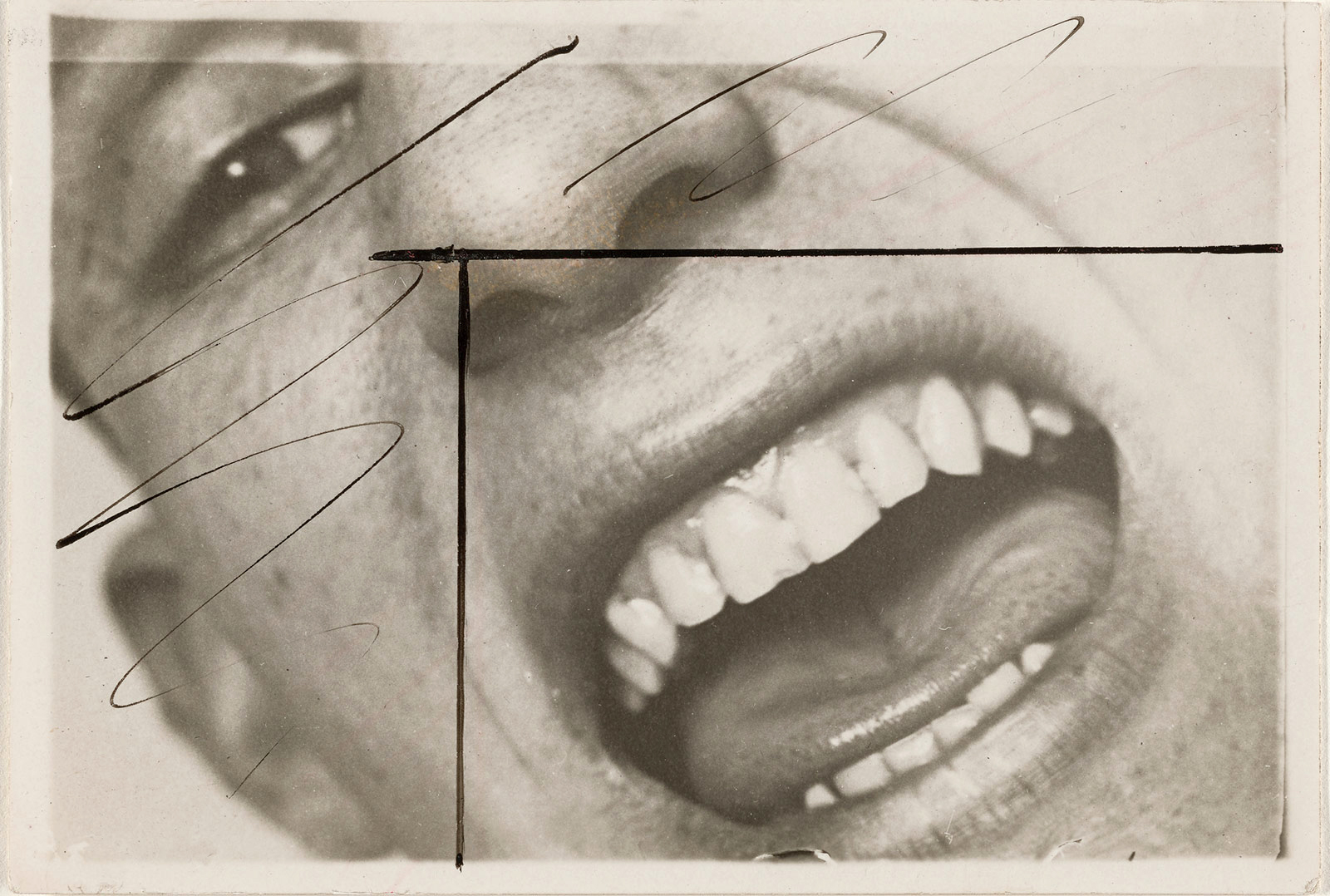
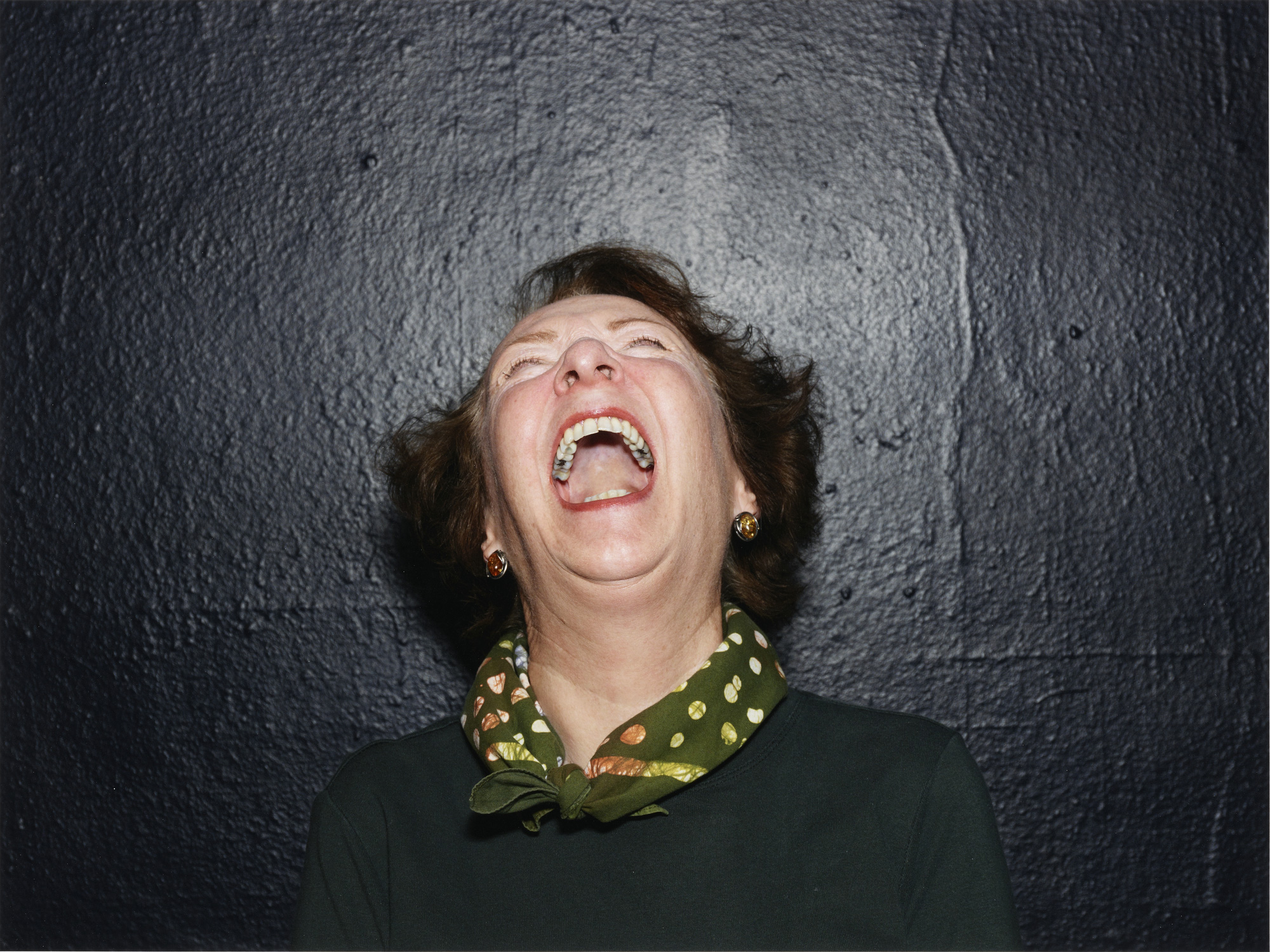
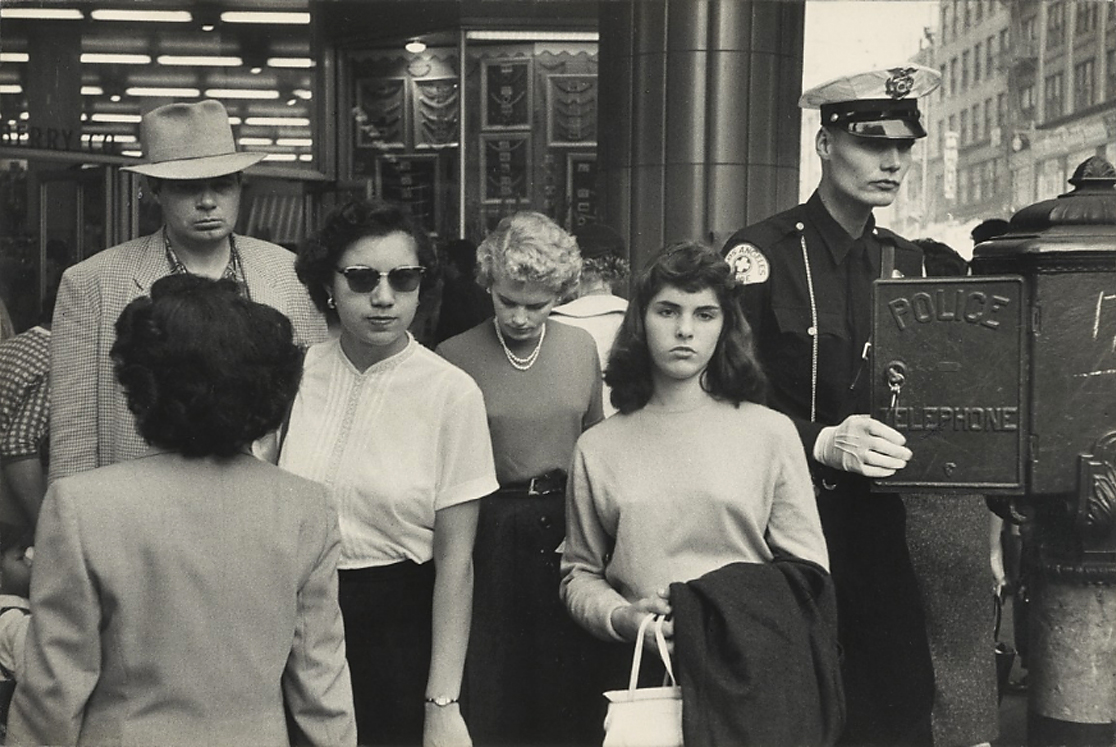
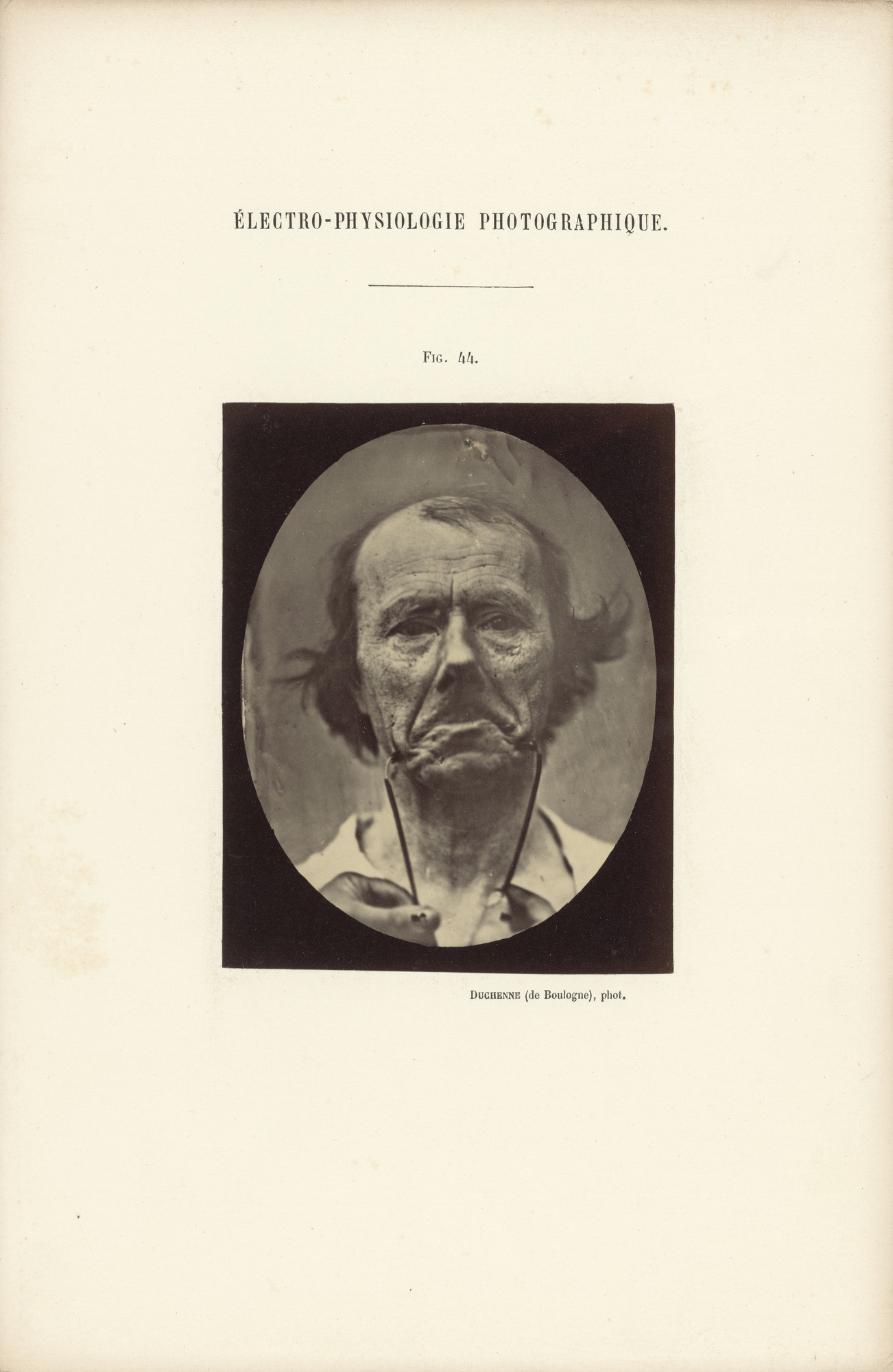
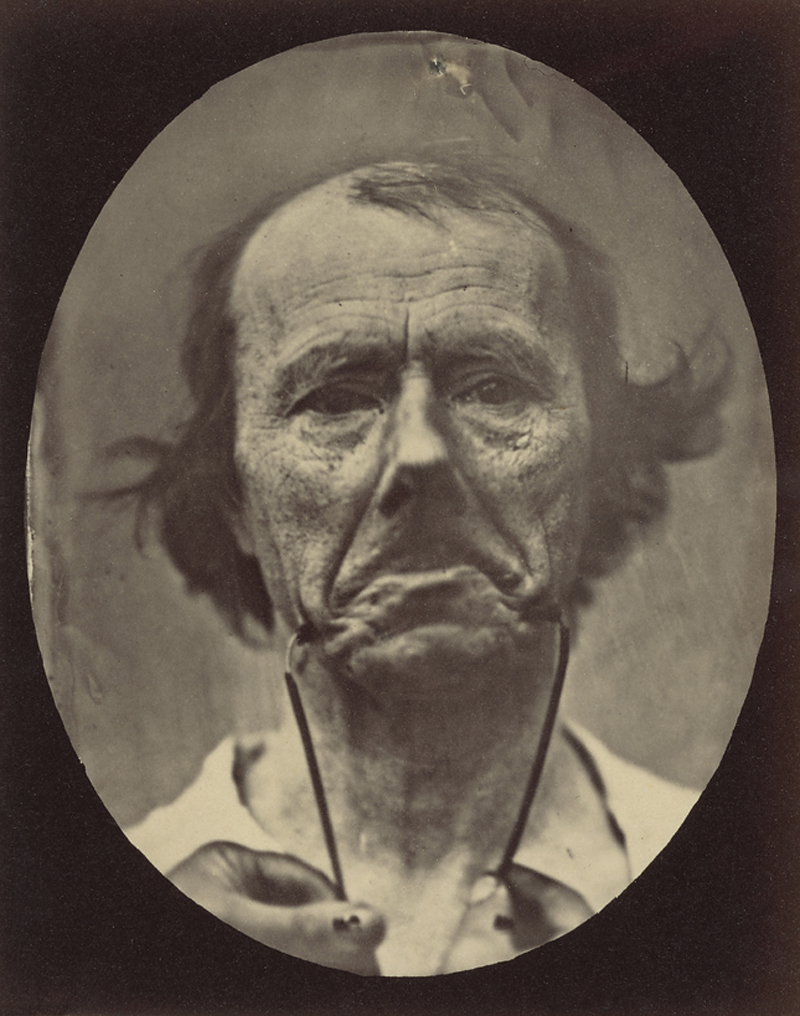
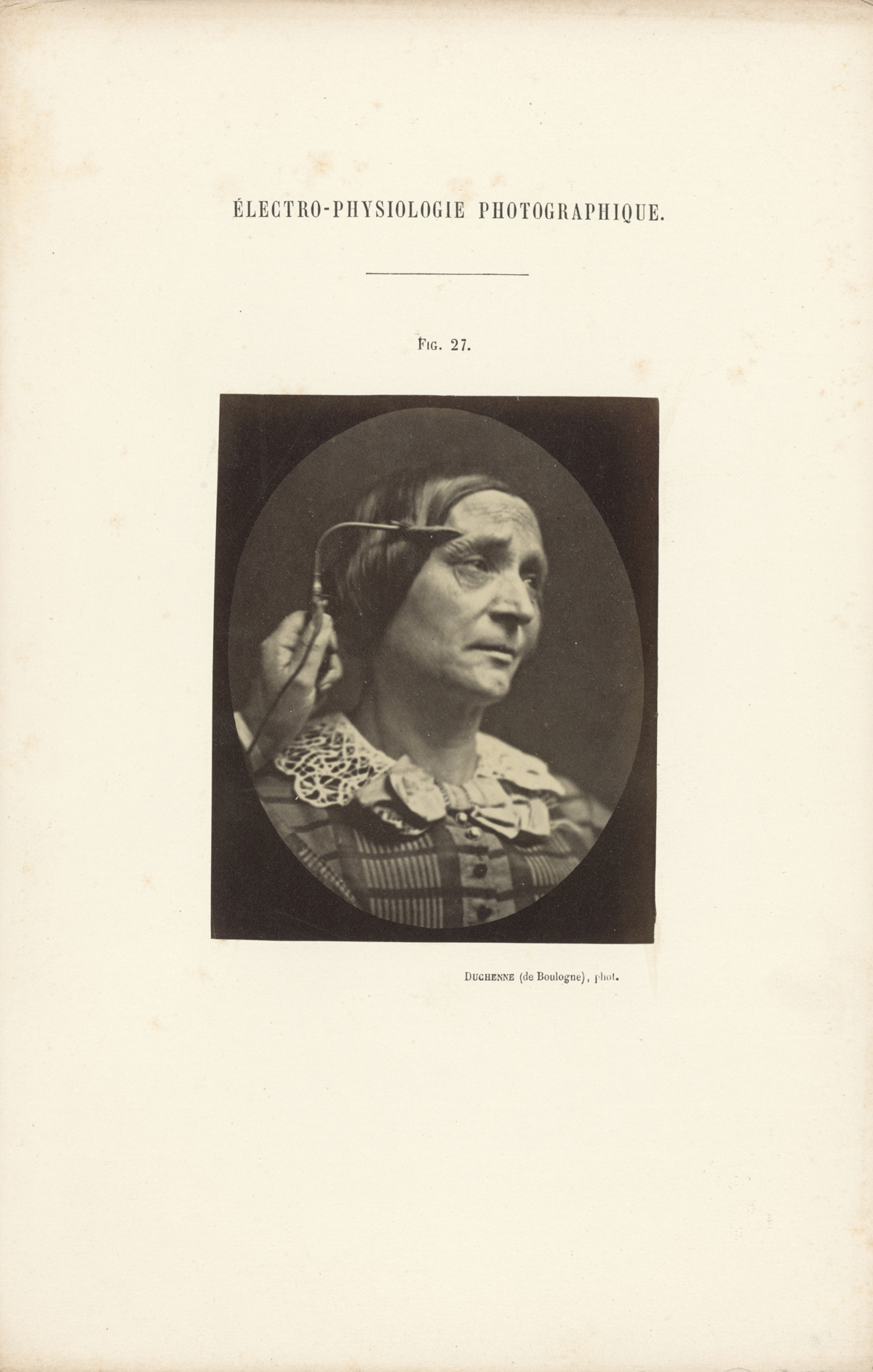
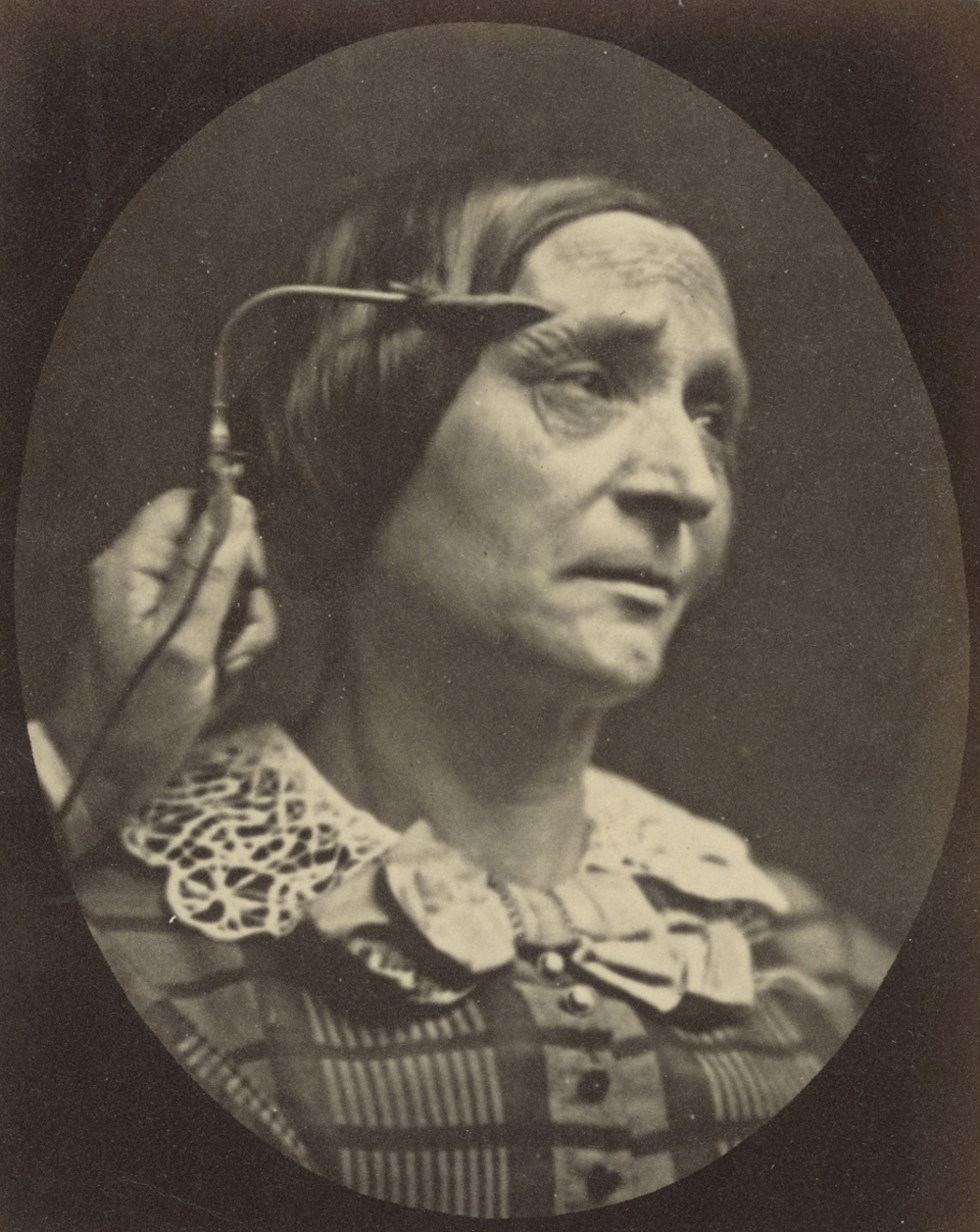
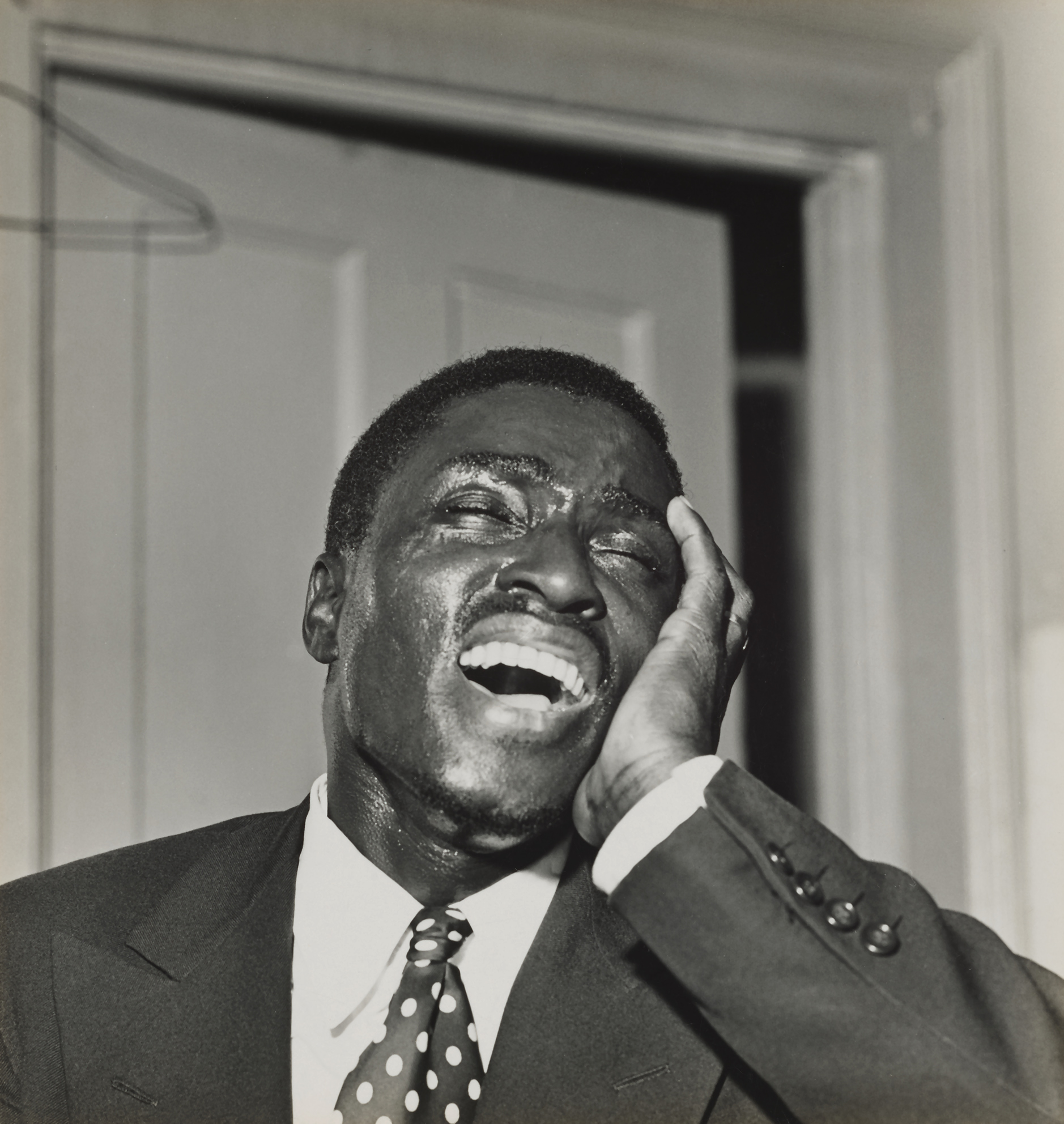
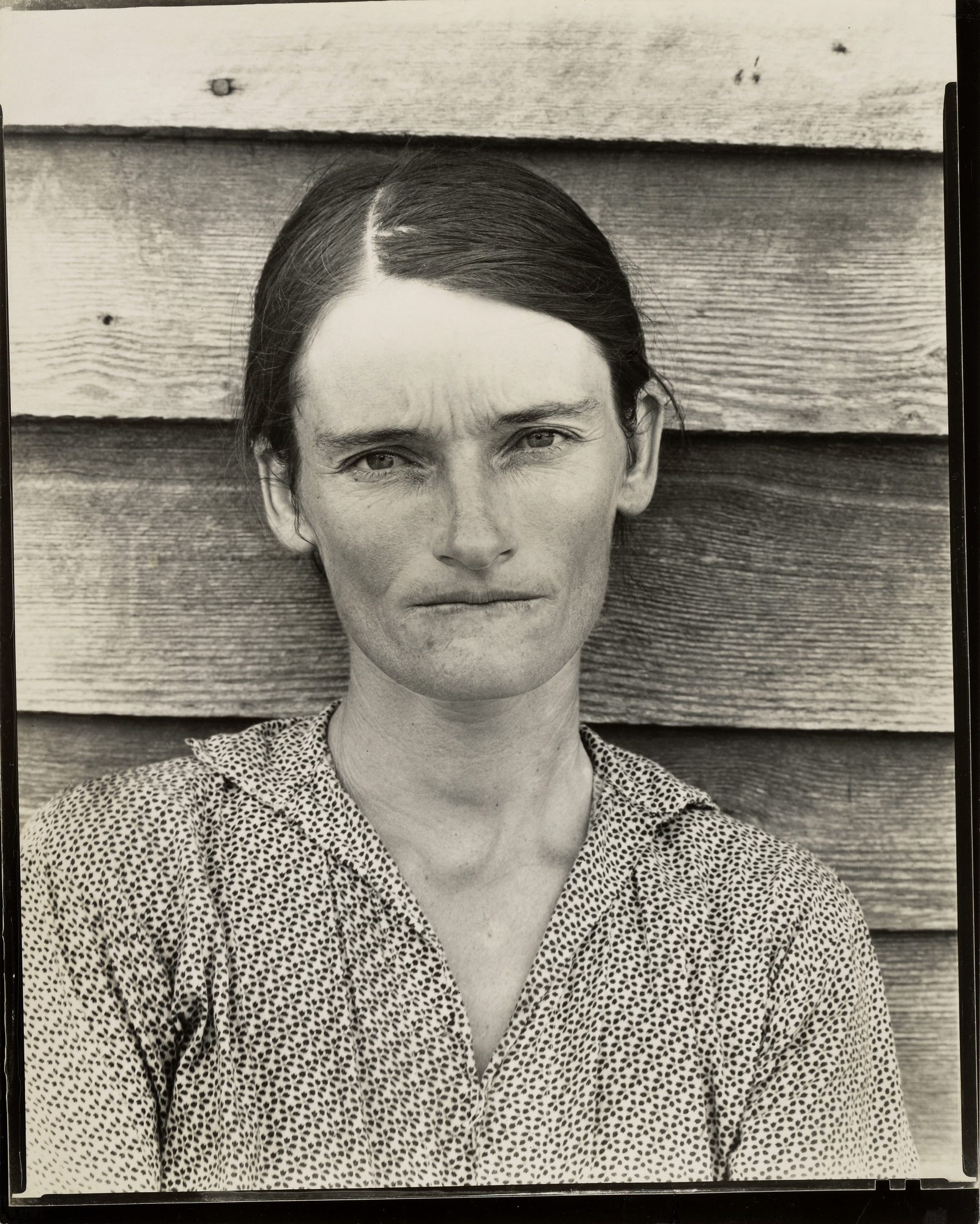
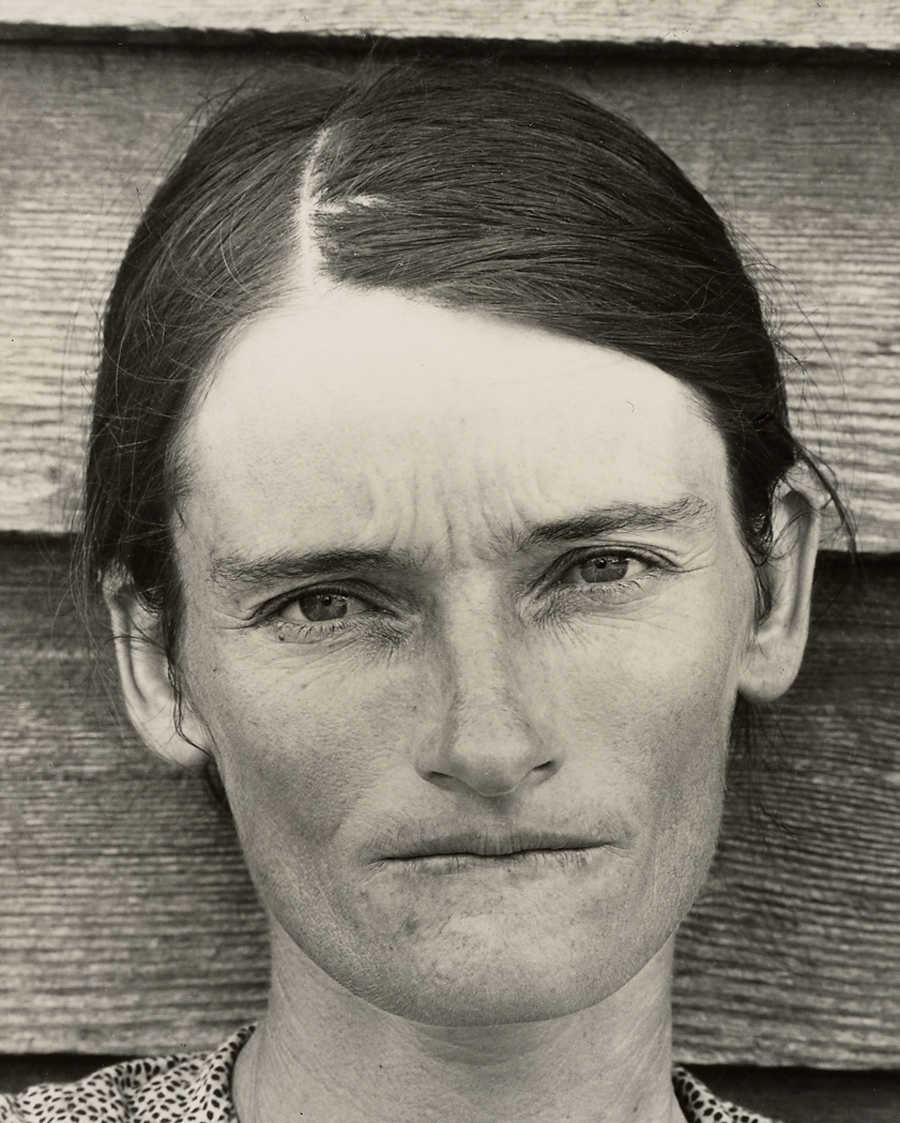
![Lisette Model (American born Austria, 1901-1983) '[War Rally]' 1942](https://artblart.com/wp-content/uploads/2018/06/in-focus-expressions-2-web.jpg "Lisette Model (American born Austria, 1901-1983) '[War Rally]' 1942")
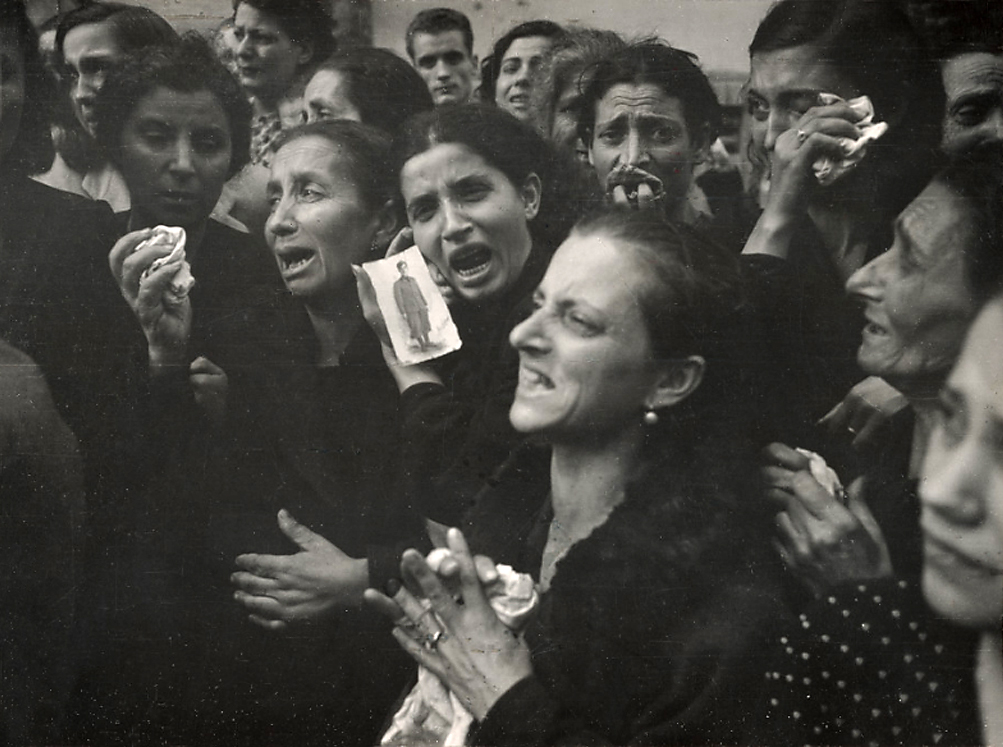
![Unknown maker (American) '[Smiling Man]' 1860](https://artblart.com/wp-content/uploads/2018/06/unknown-maker-smiling-man-1860-web.jpg "Unknown maker (American) '[Smiling Man]' 1860")
![Baron Adolf de Meyer (American born France, 1868-1946) '[Ruth St. Denis]' c. 1918](https://artblart.com/wp-content/uploads/2018/06/baron-adolf-de-meyer-ruth-st-denis-c-1918-web.jpg "Baron Adolf de Meyer (American born France, 1868-1946) '[Ruth St. Denis]' c. 1918")
![Woodbury & Page (British, active 1857-1908) '[Javanese woman seated with legs crossed, basket at side]' c. 1870](https://artblart.com/wp-content/uploads/2018/06/woodbury-and-page-javanese-woman-web.jpg "Woodbury & Page (British, active 1857-1908) '[Javanese woman seated with legs crossed, basket at side]' c. 1870")
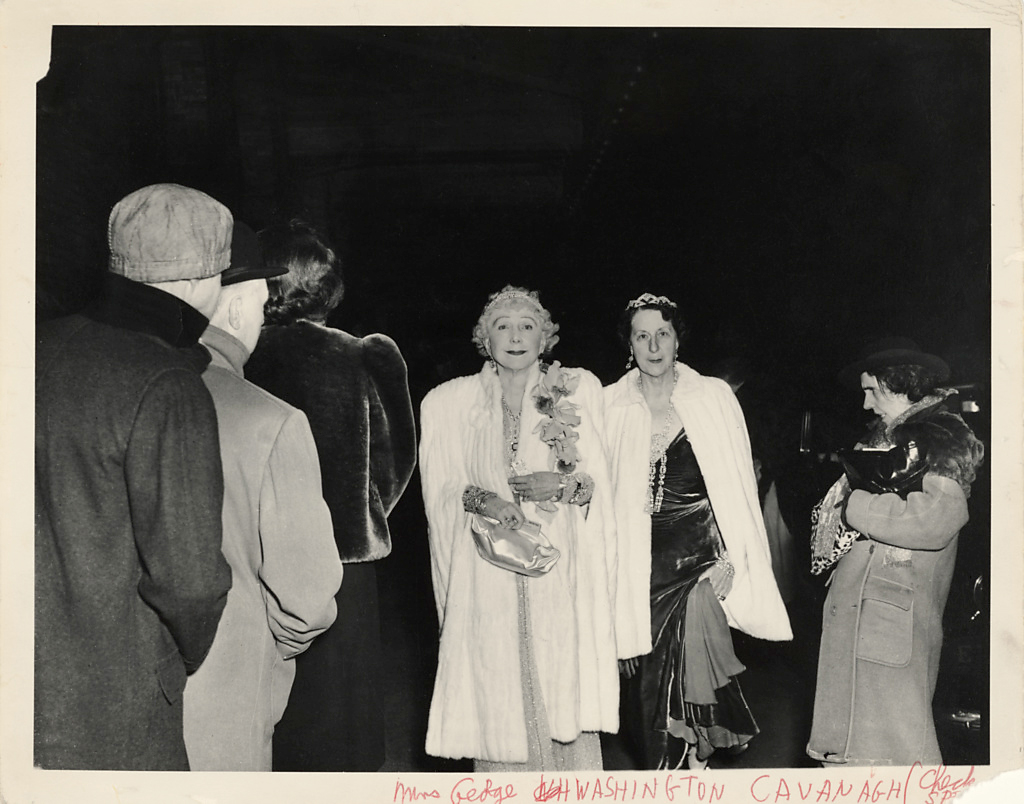
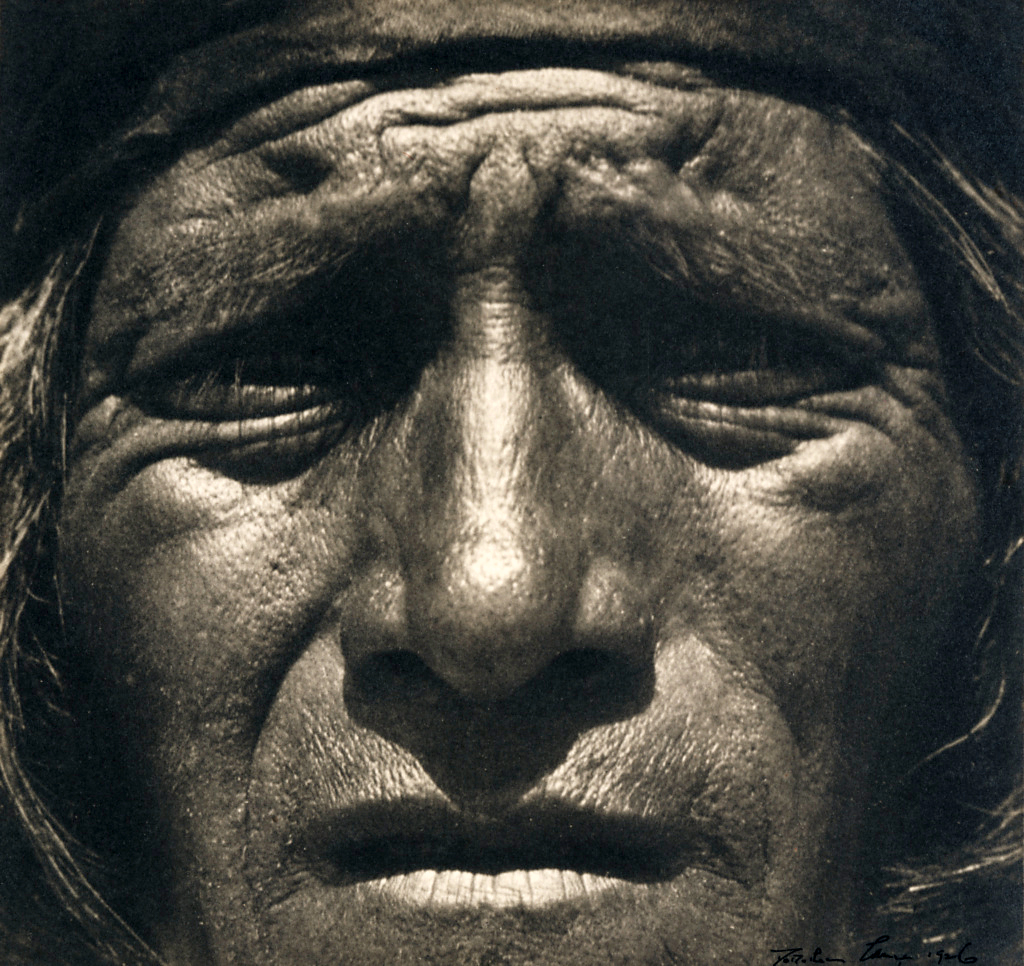
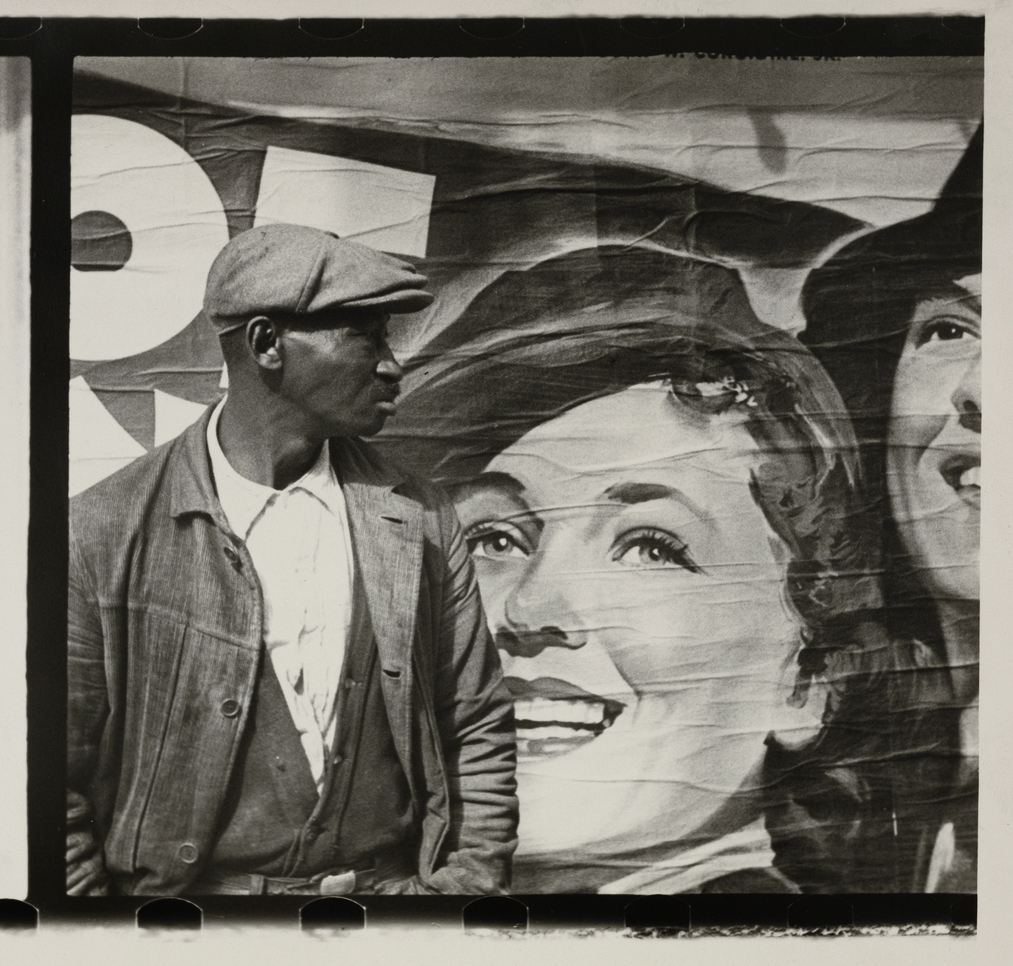
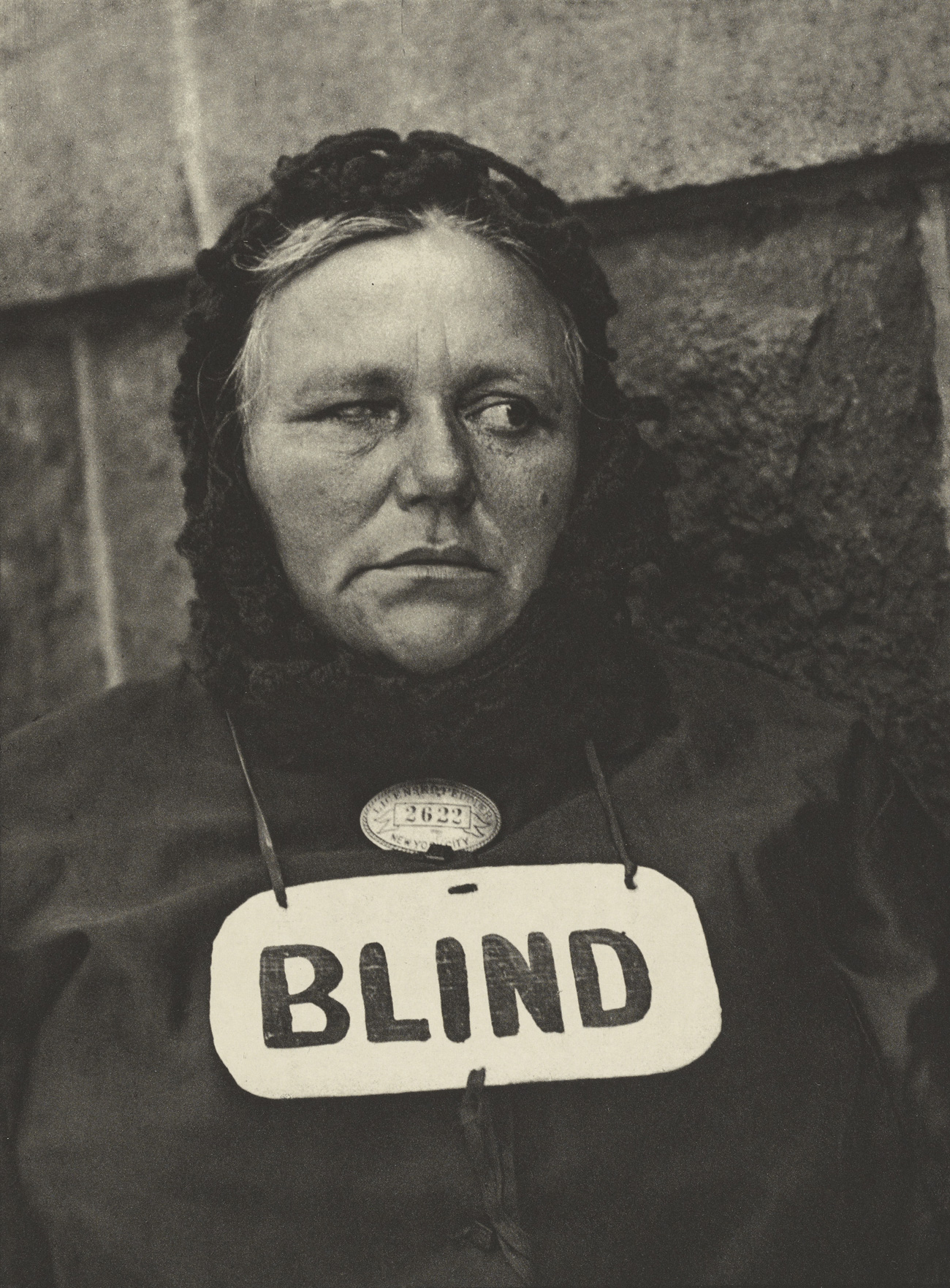
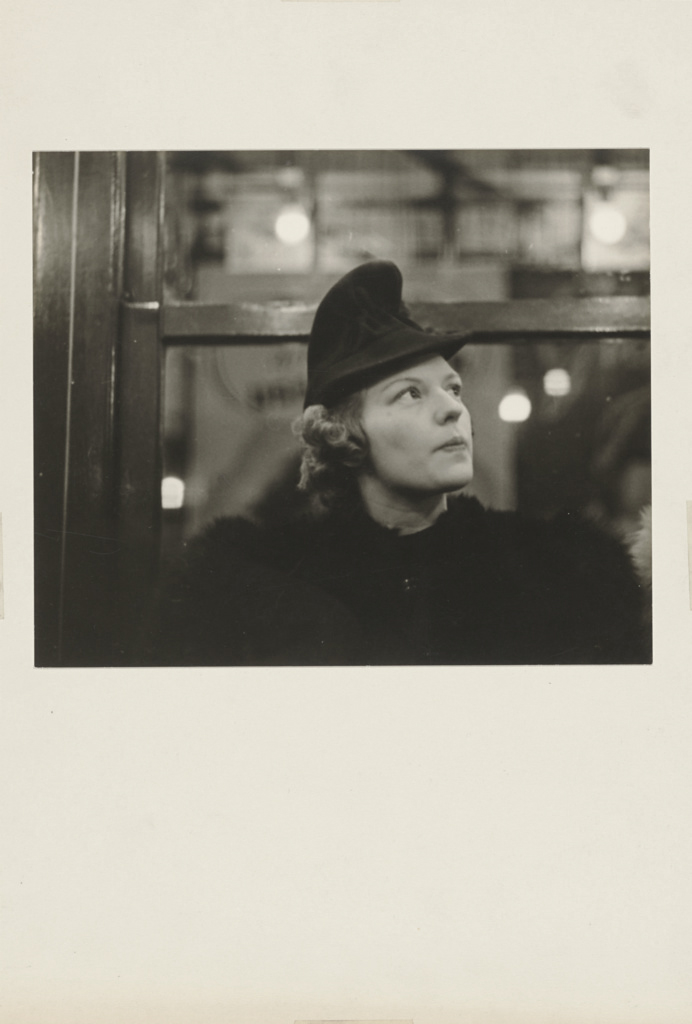
![Camille Silvy (French, 1834-1910) '[Madame Camille Silvy]' c. 1863](https://artblart.com/wp-content/uploads/2018/06/camille-silvy-web.jpg "Camille Silvy (French, 1834-1910) '[Madame Camille Silvy]' c. 1863")
![Mikiko Hara (Japanese, b. 1967) '[Untitled (Making a Void)]' Negative 2001; print about 2007](https://artblart.com/wp-content/uploads/2018/06/mikiko-hara-untitled-web.jpg "Mikiko Hara (Japanese, b. 1967) '[Untitled (Making a Void)]' Negative 2001; print about 2007")
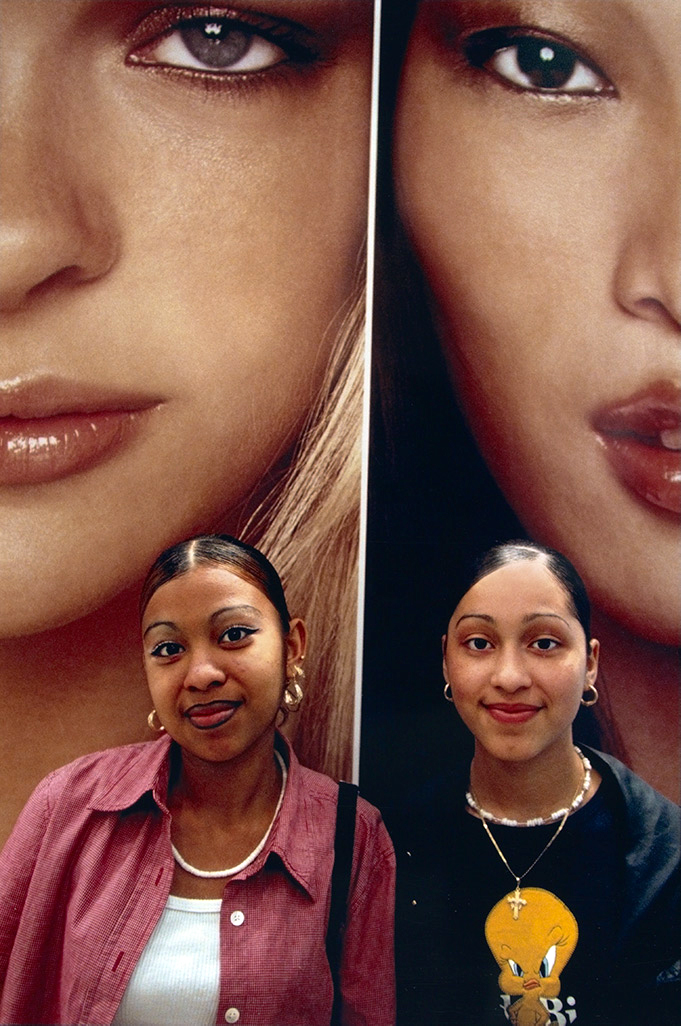
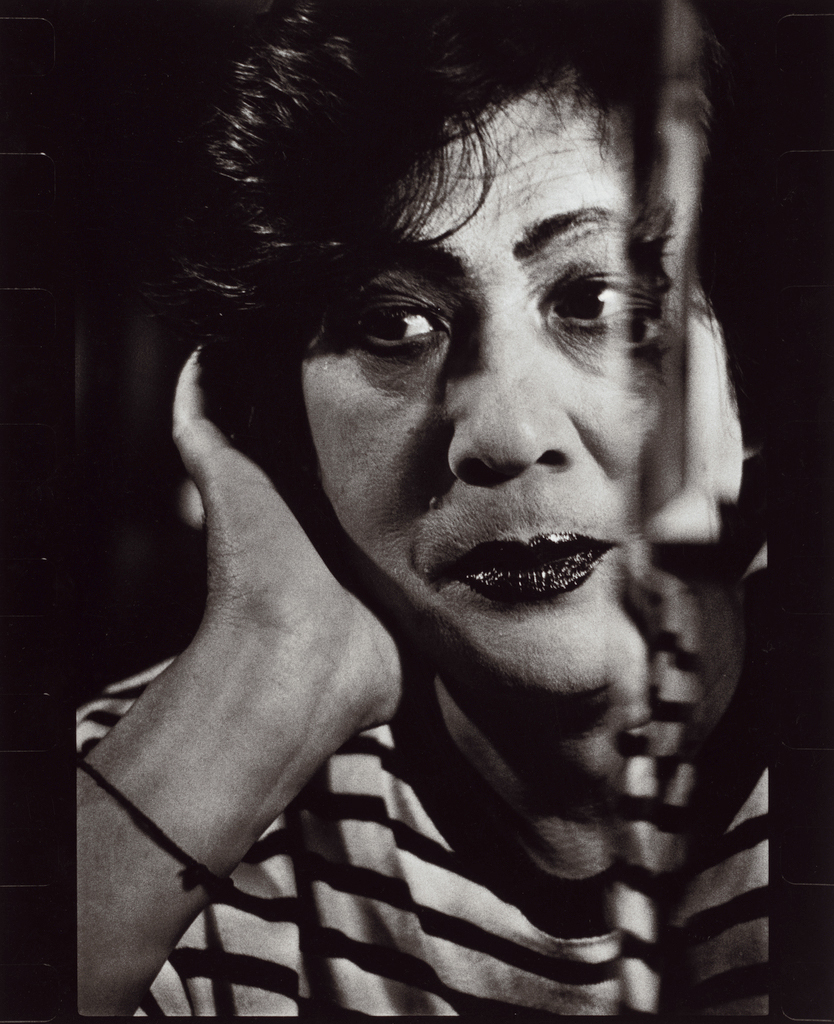


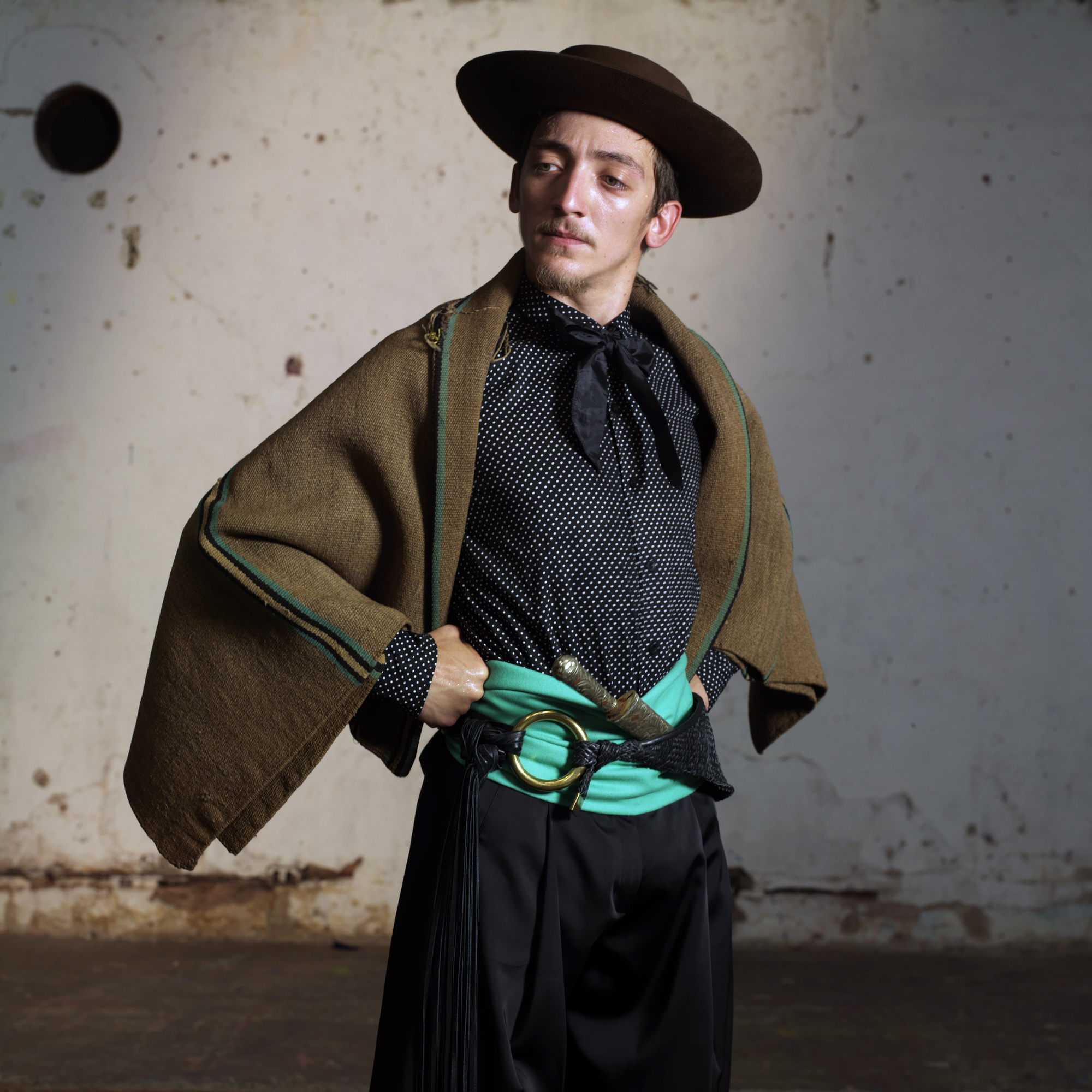
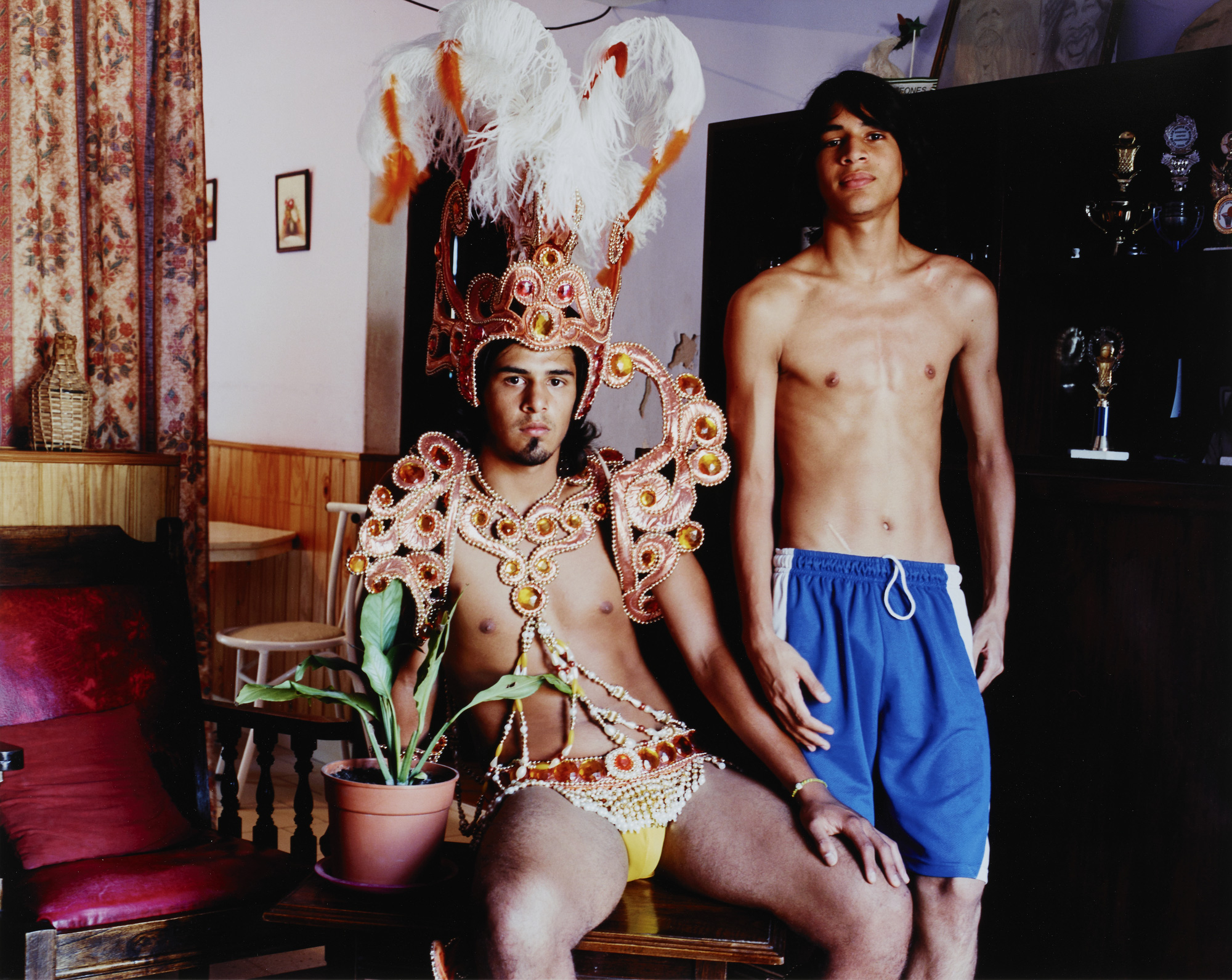

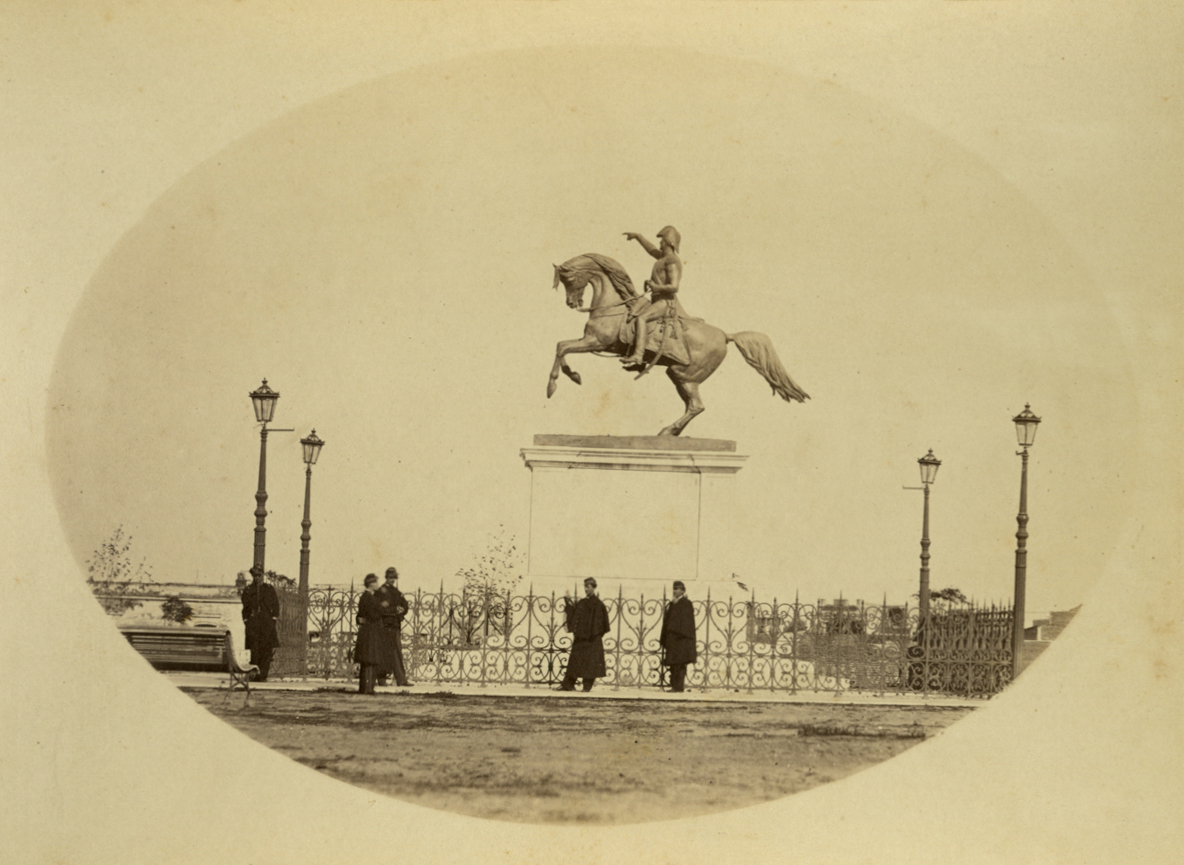


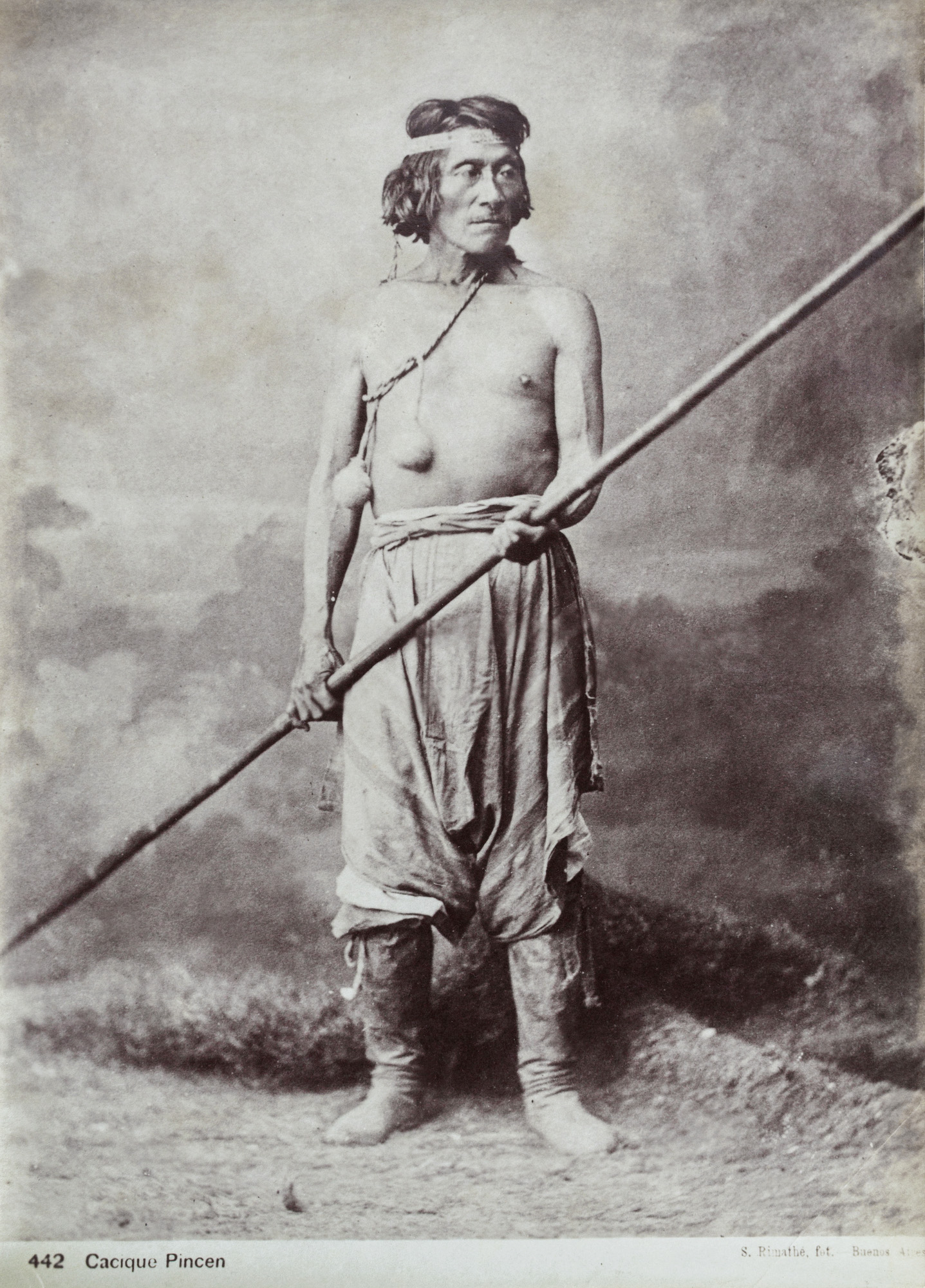
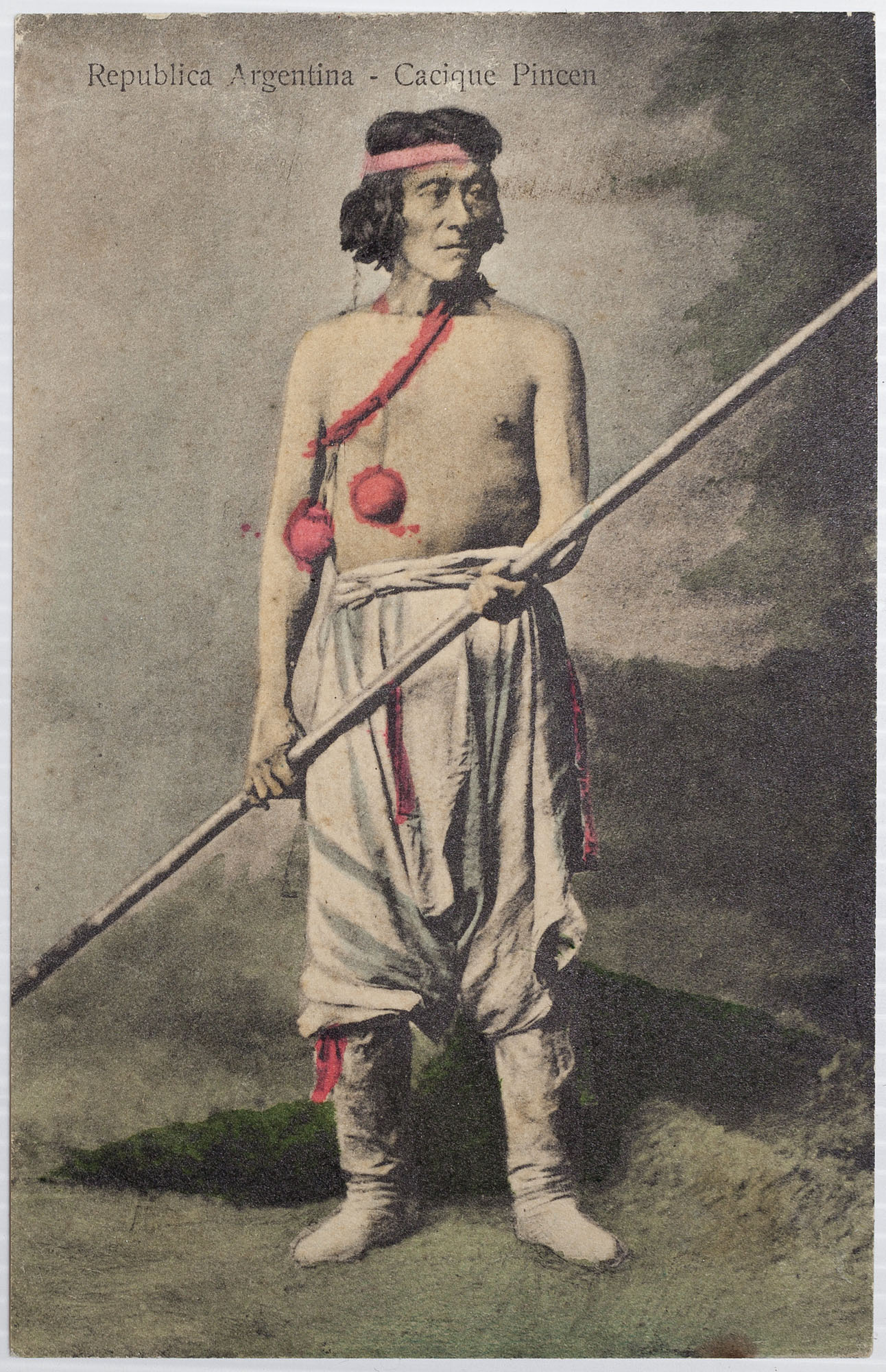


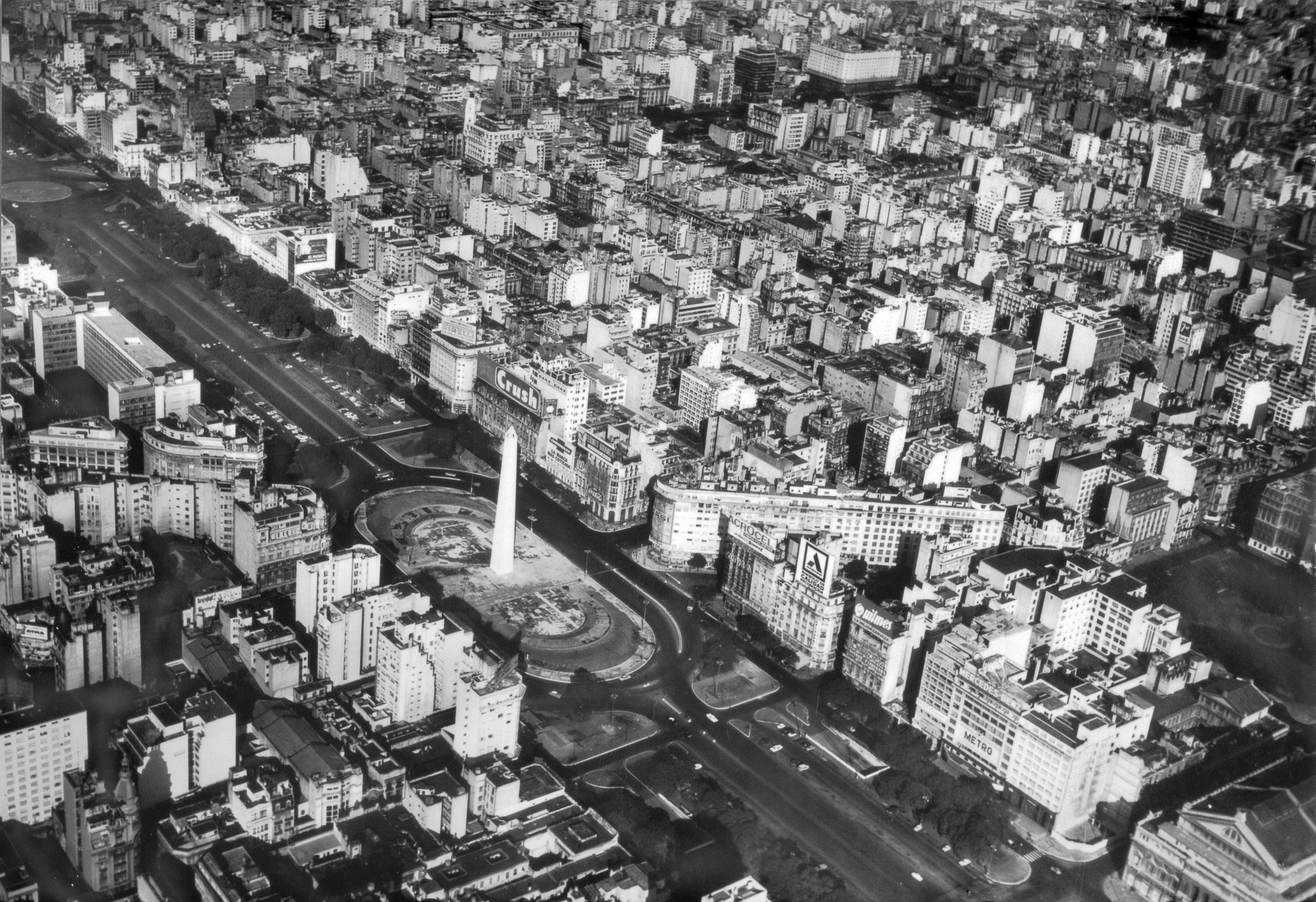

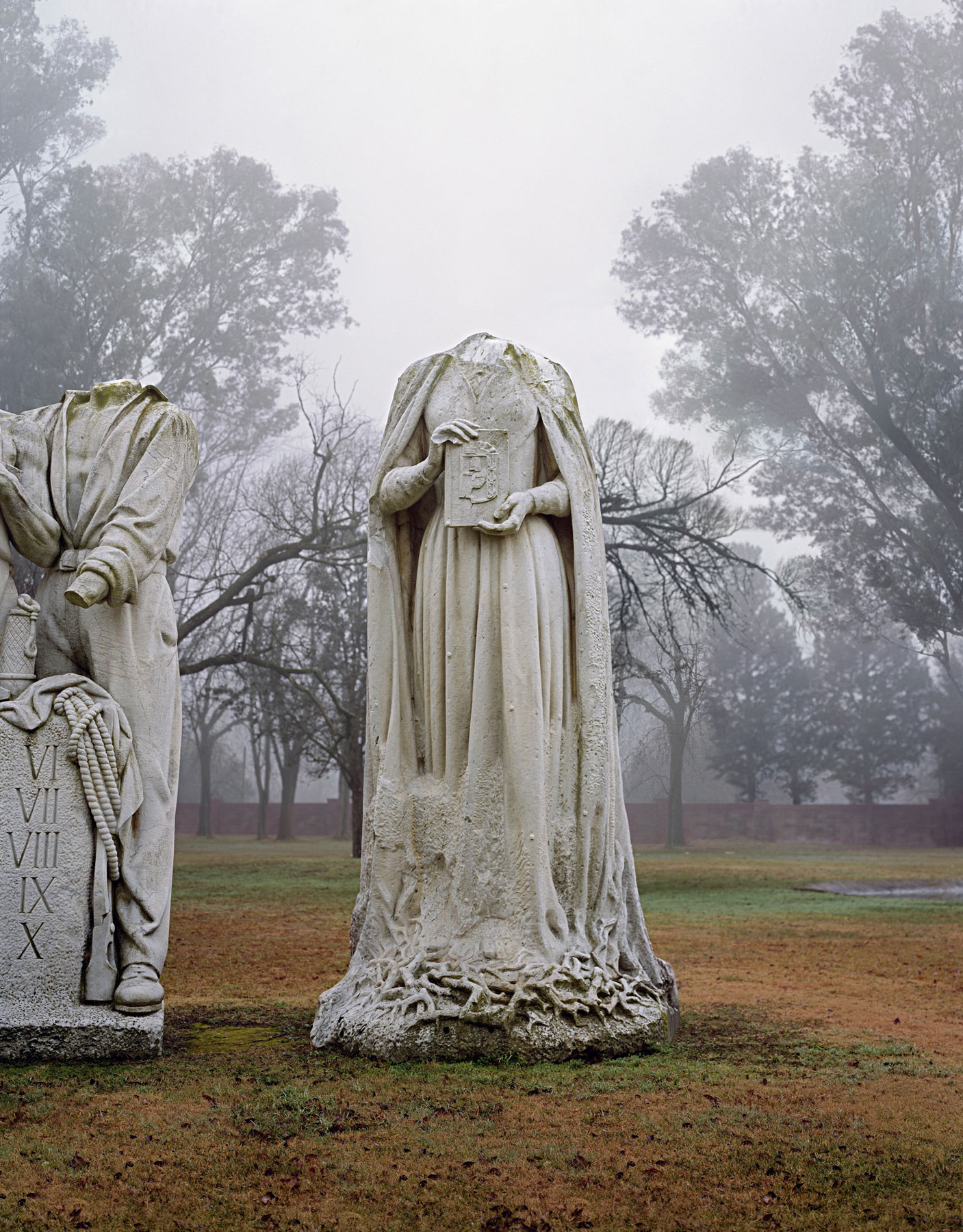
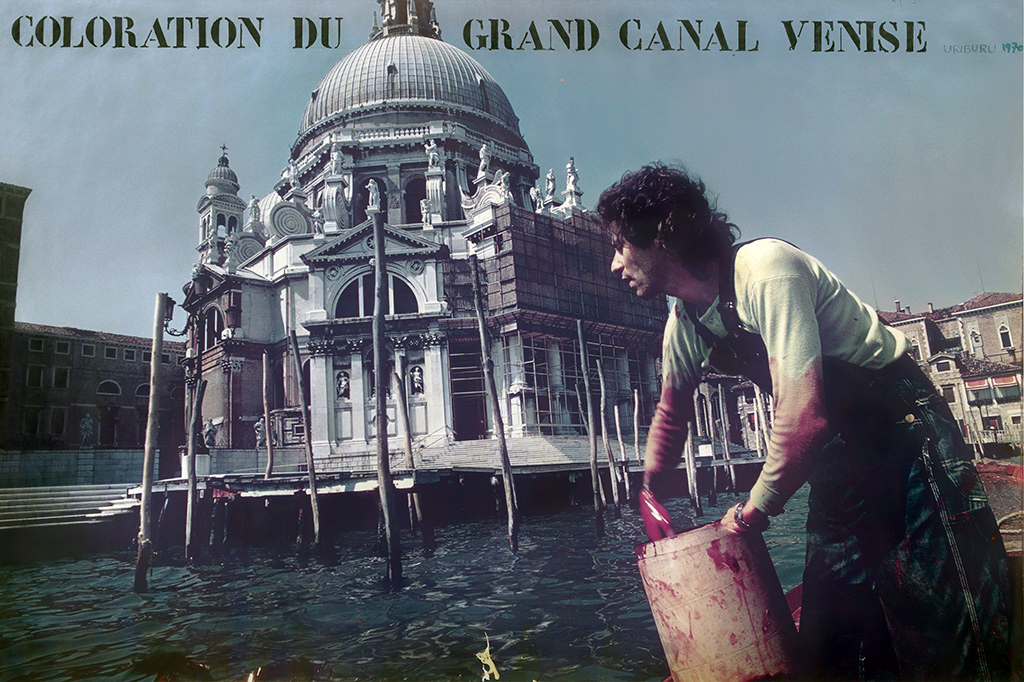


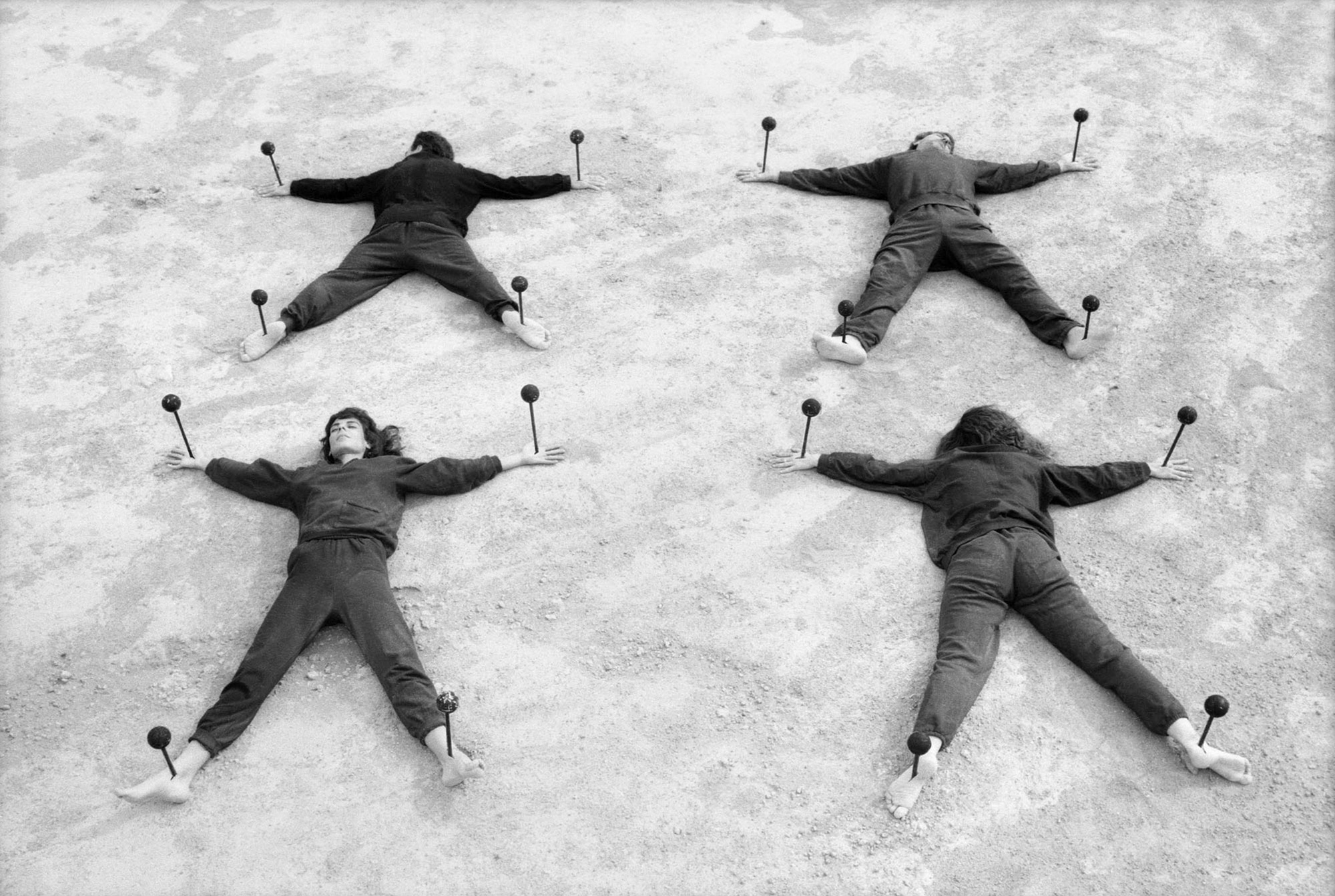
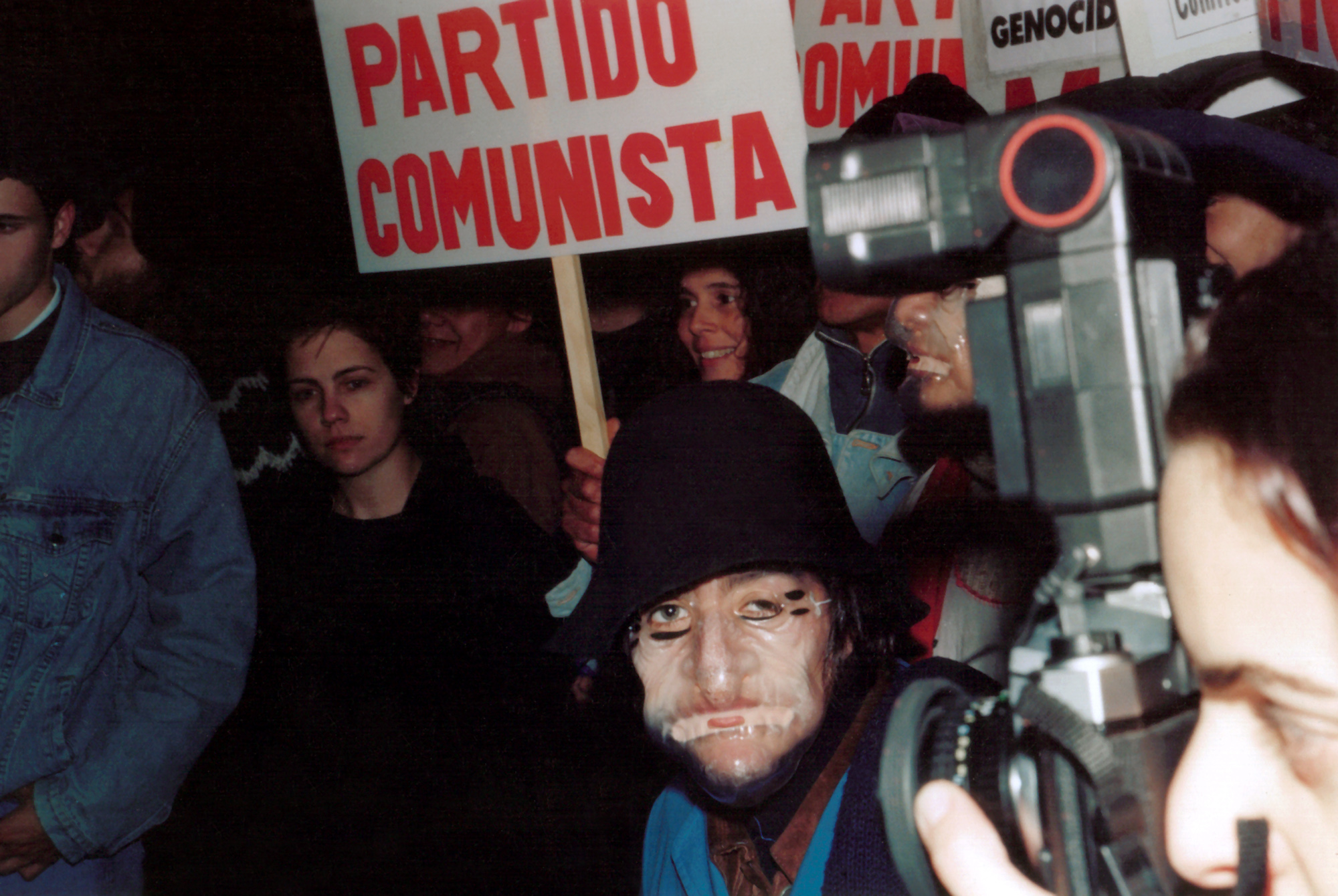


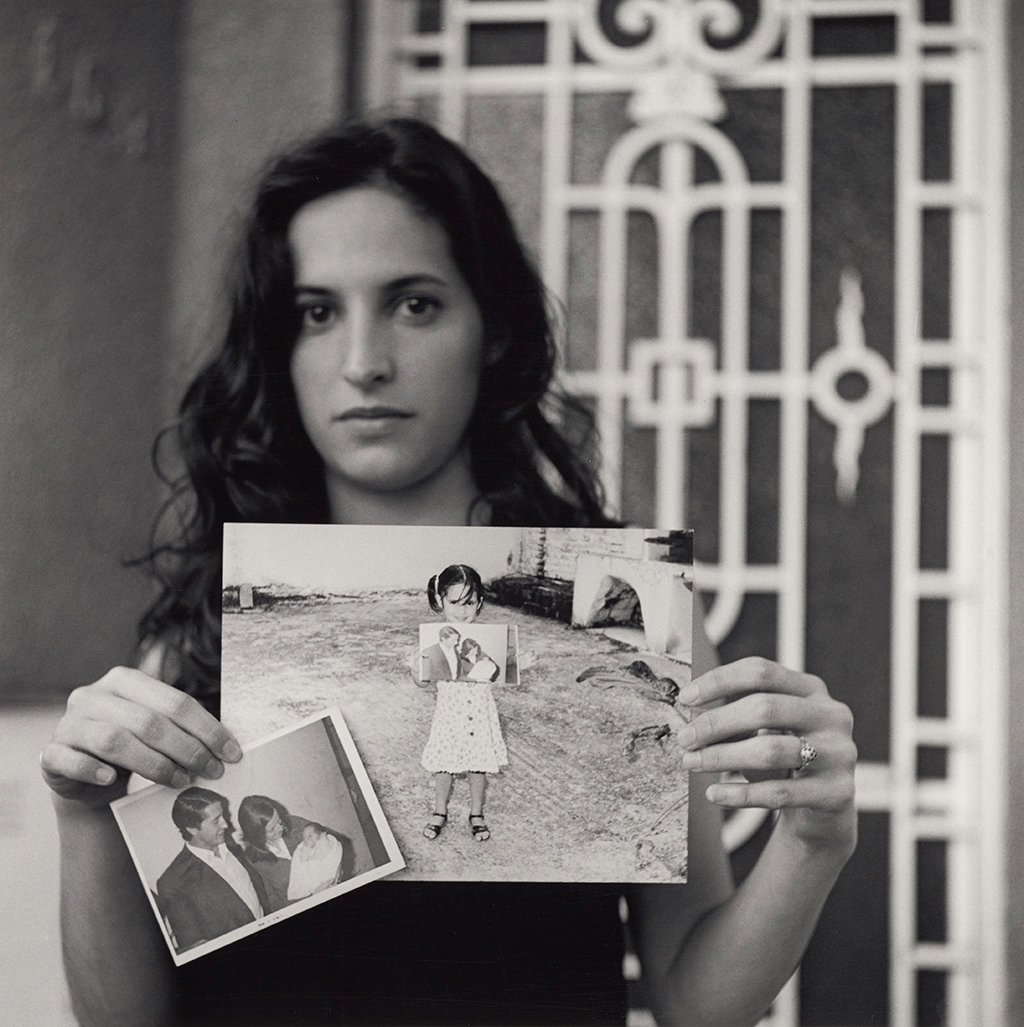
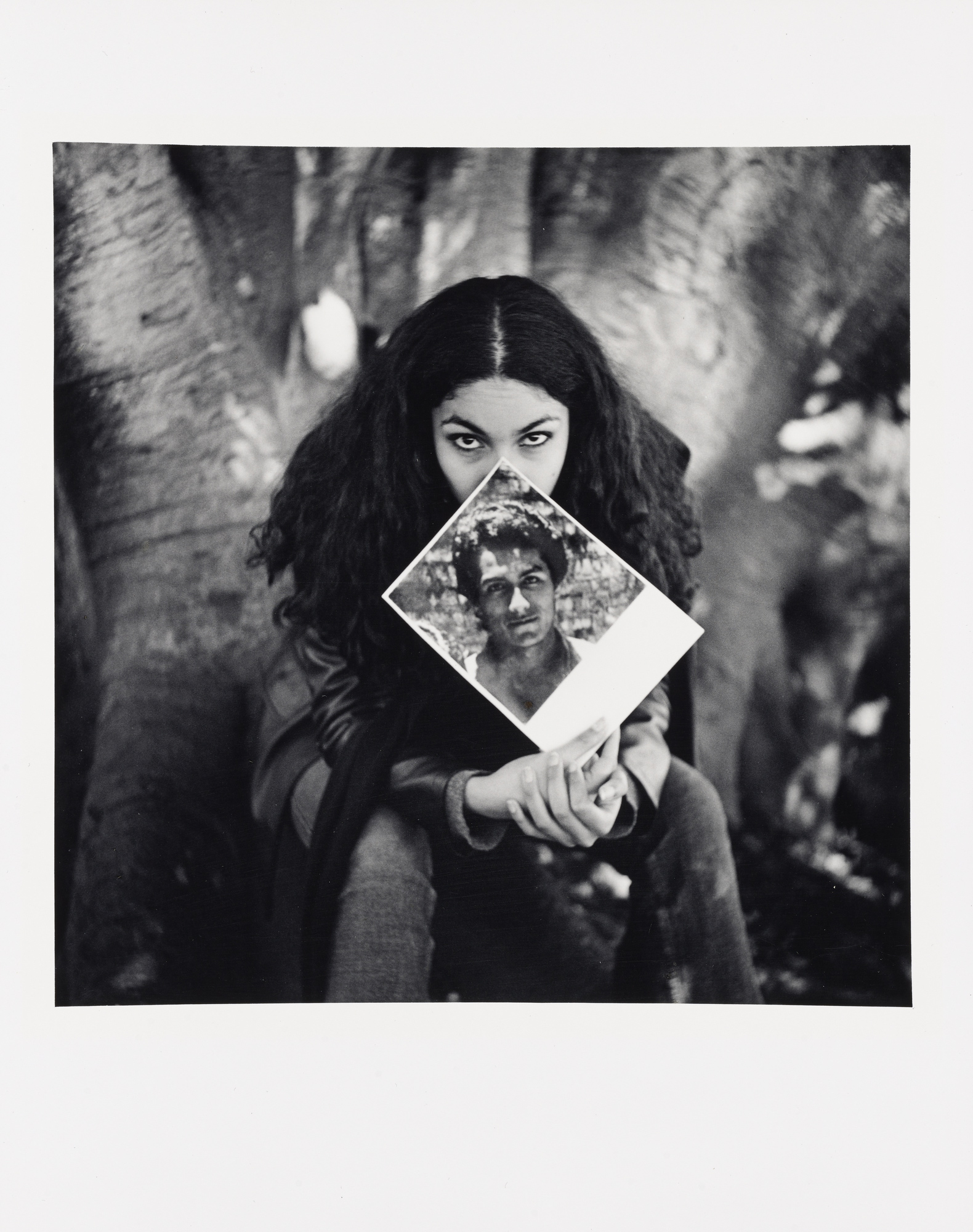


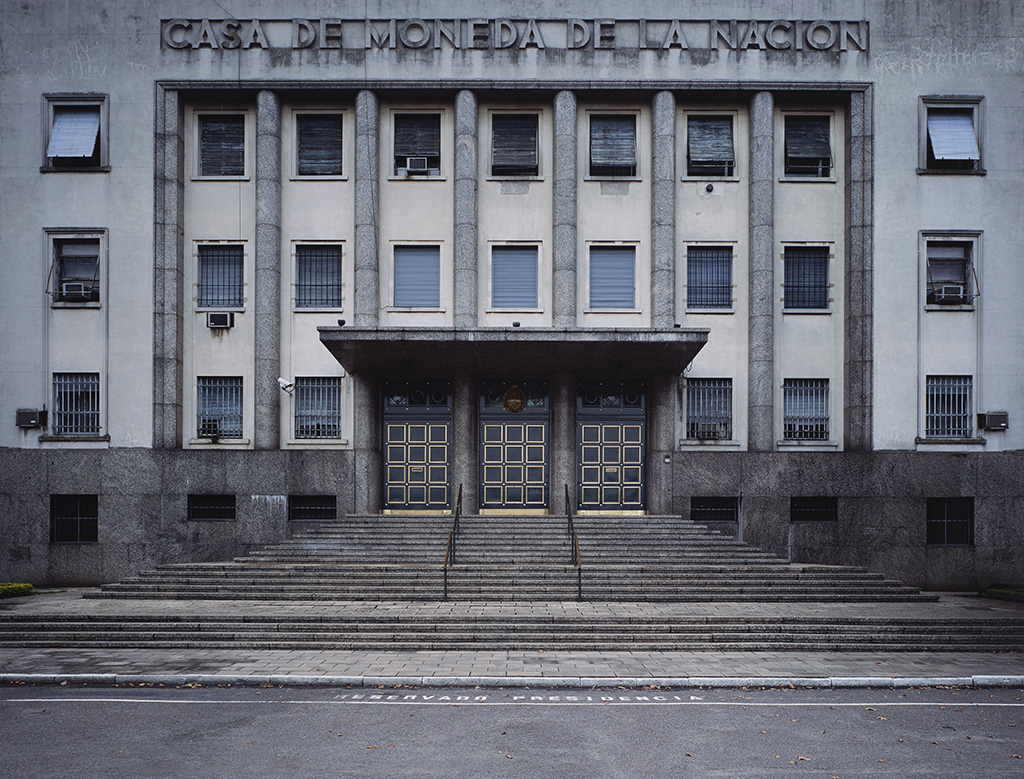

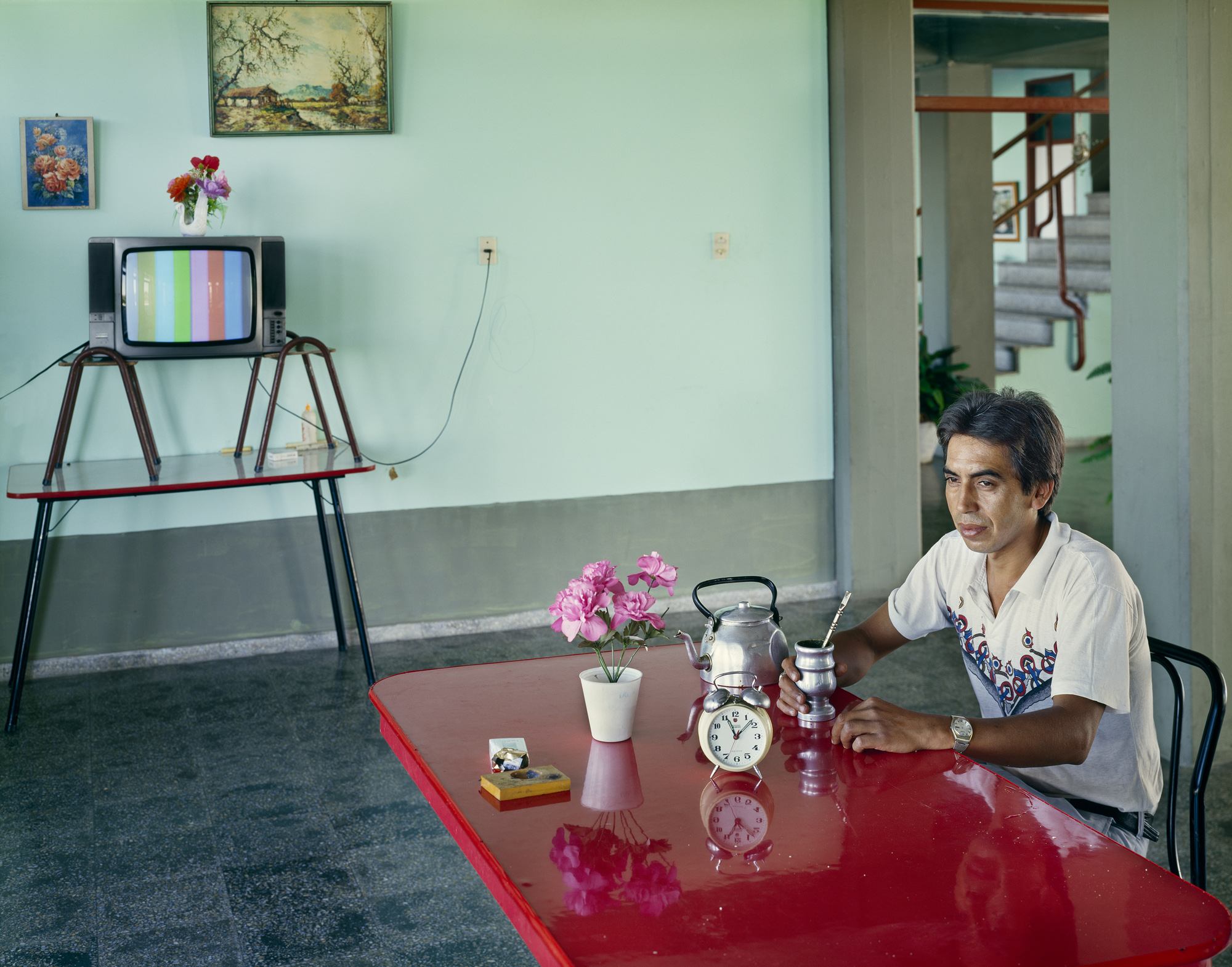



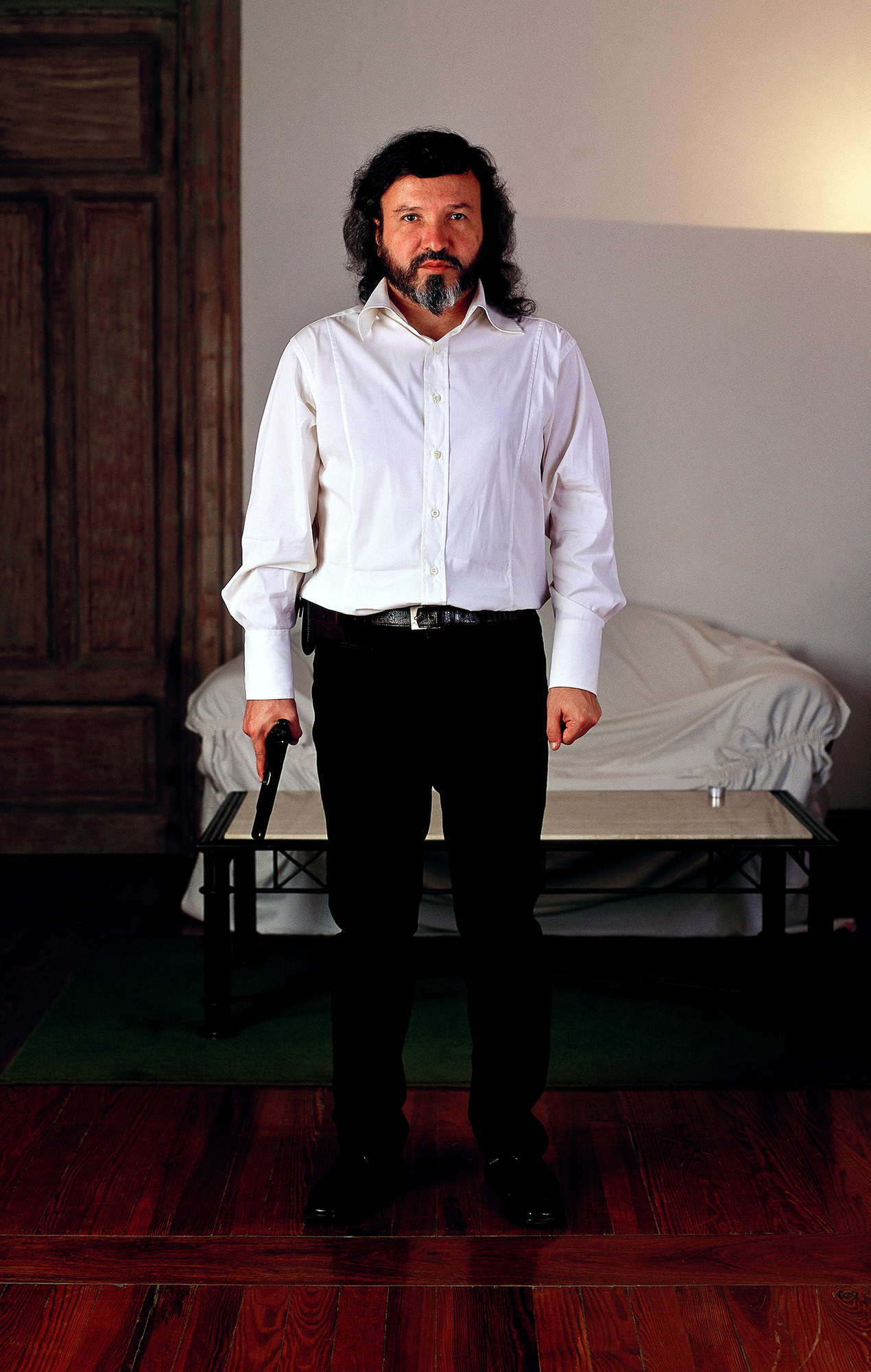




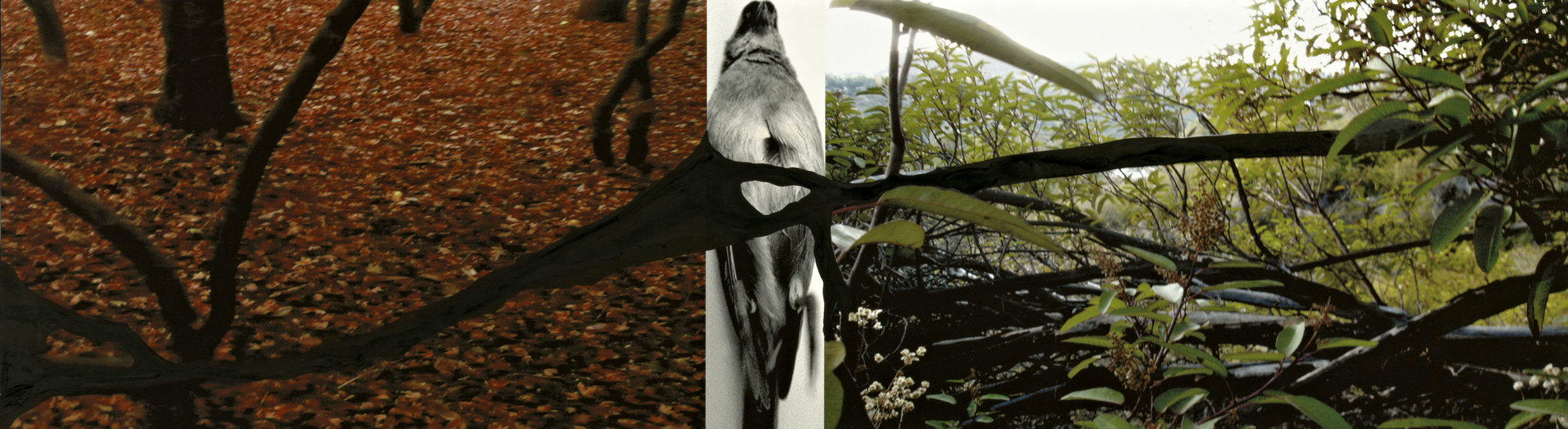


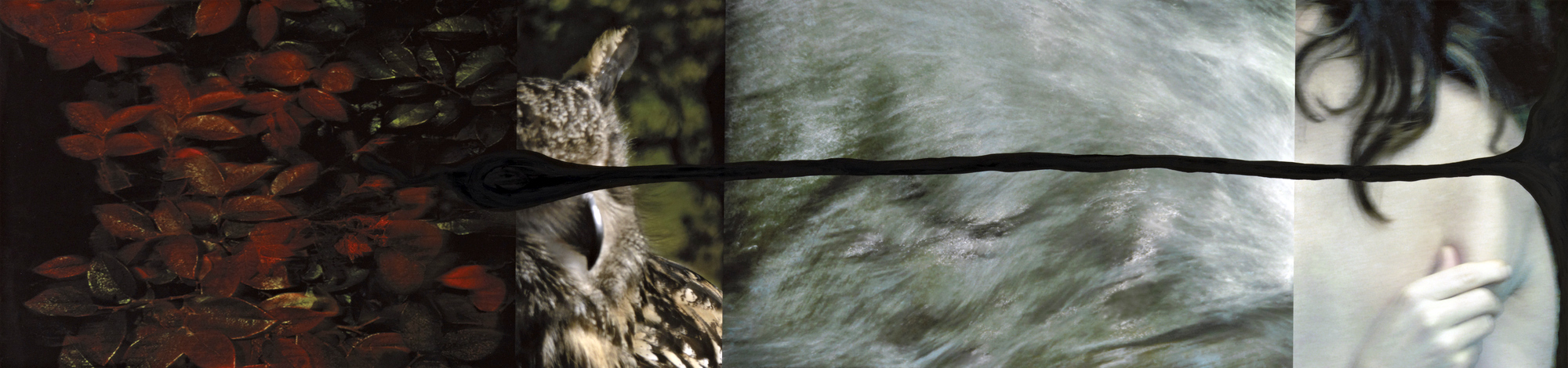
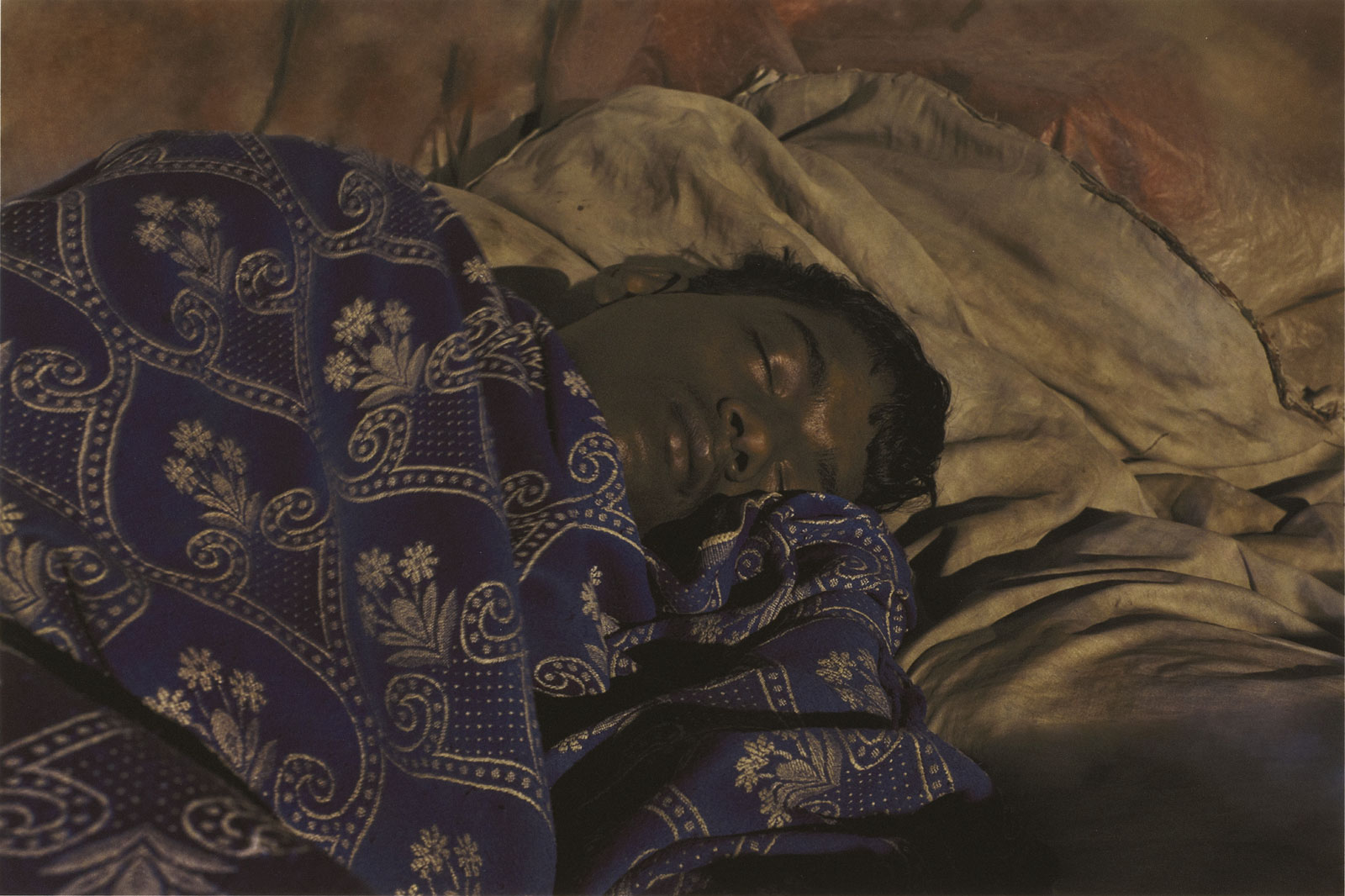


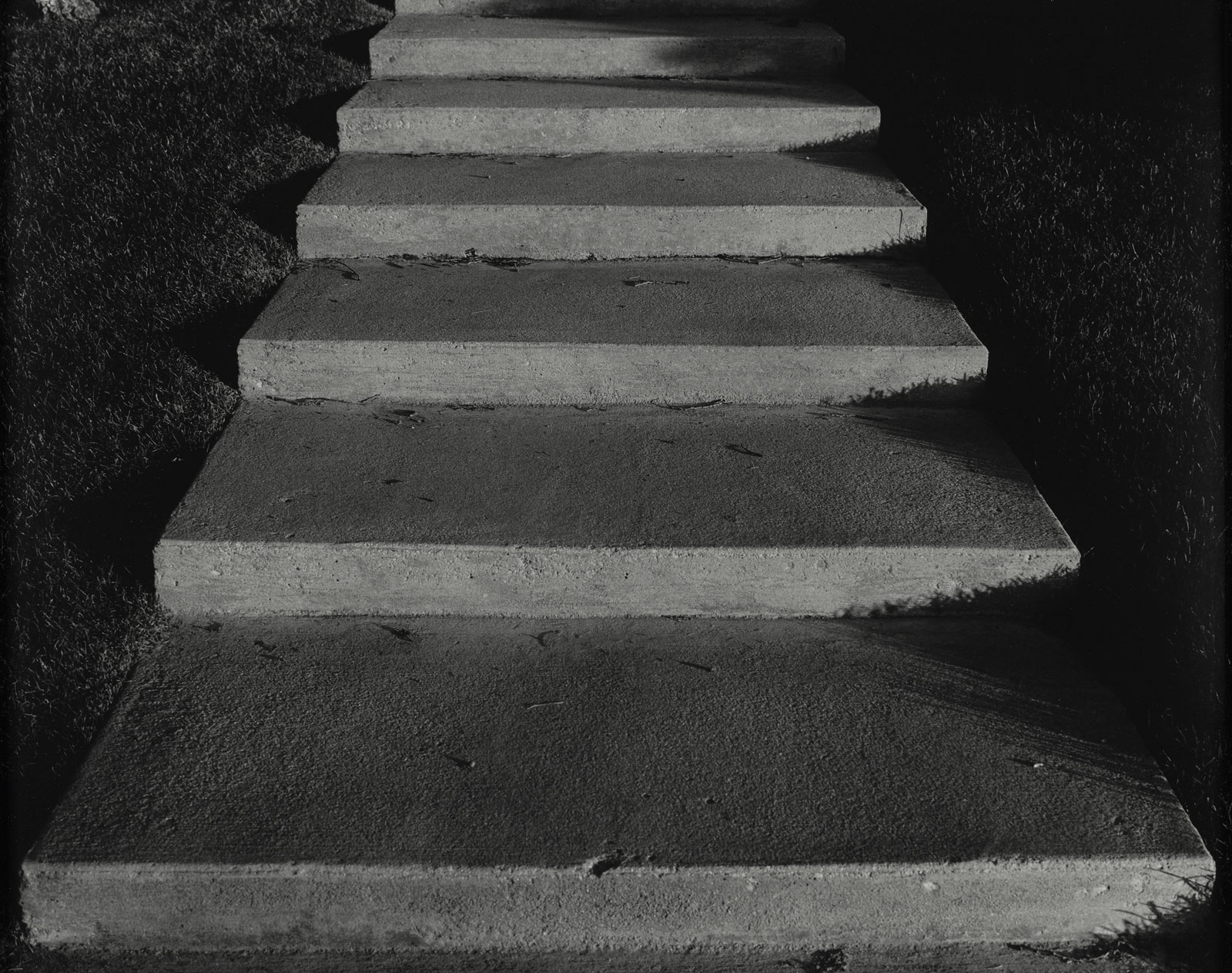
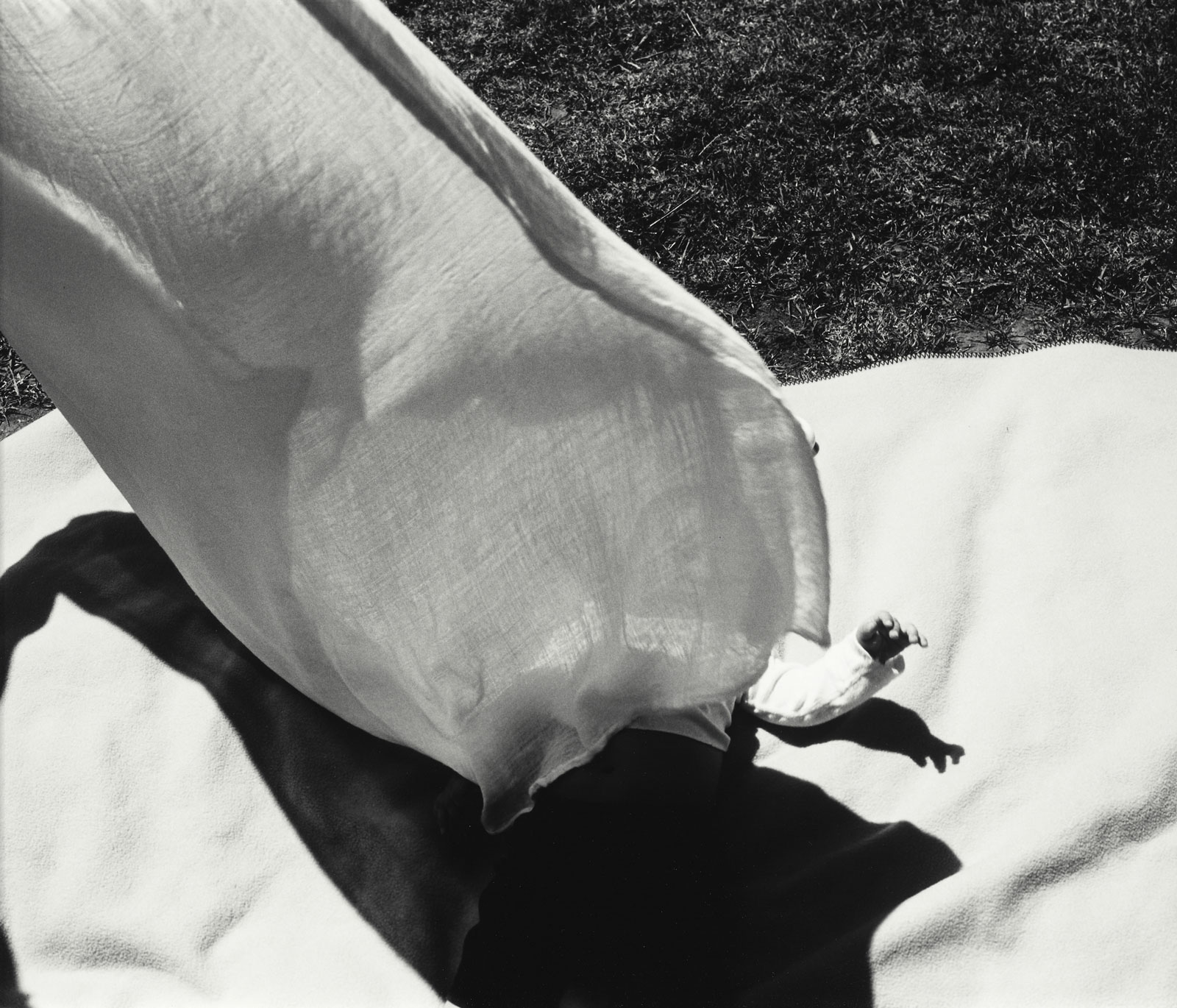
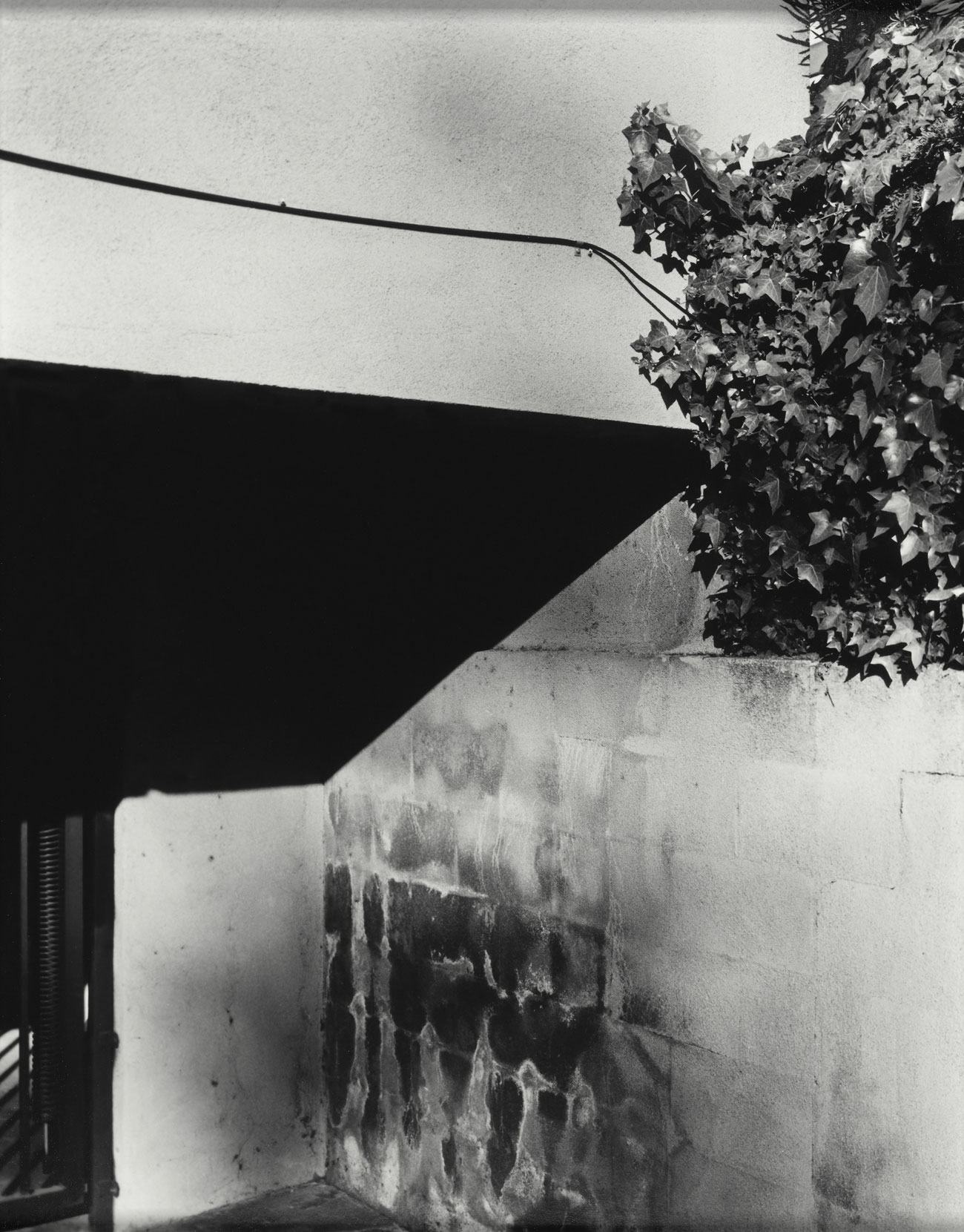
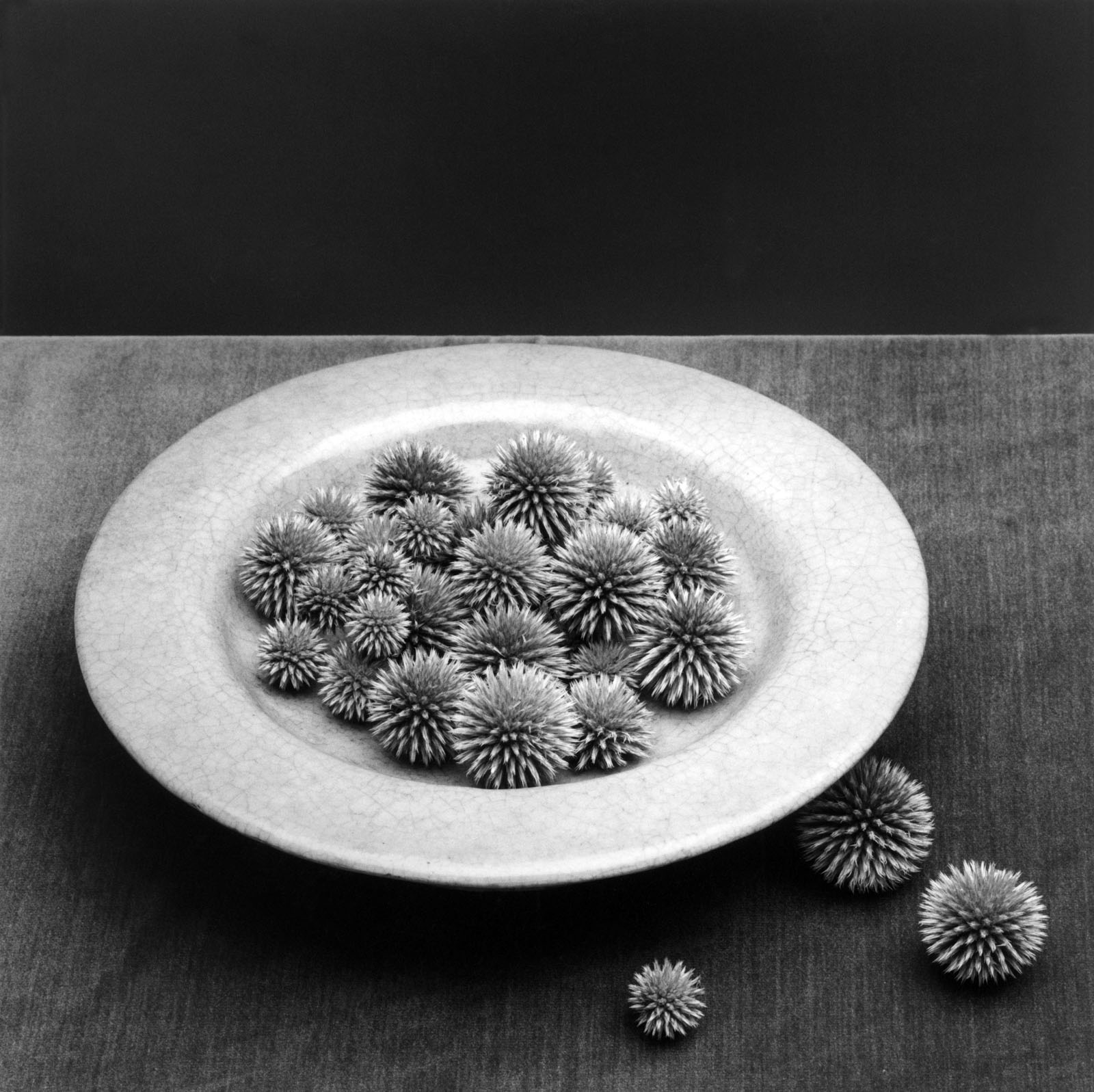
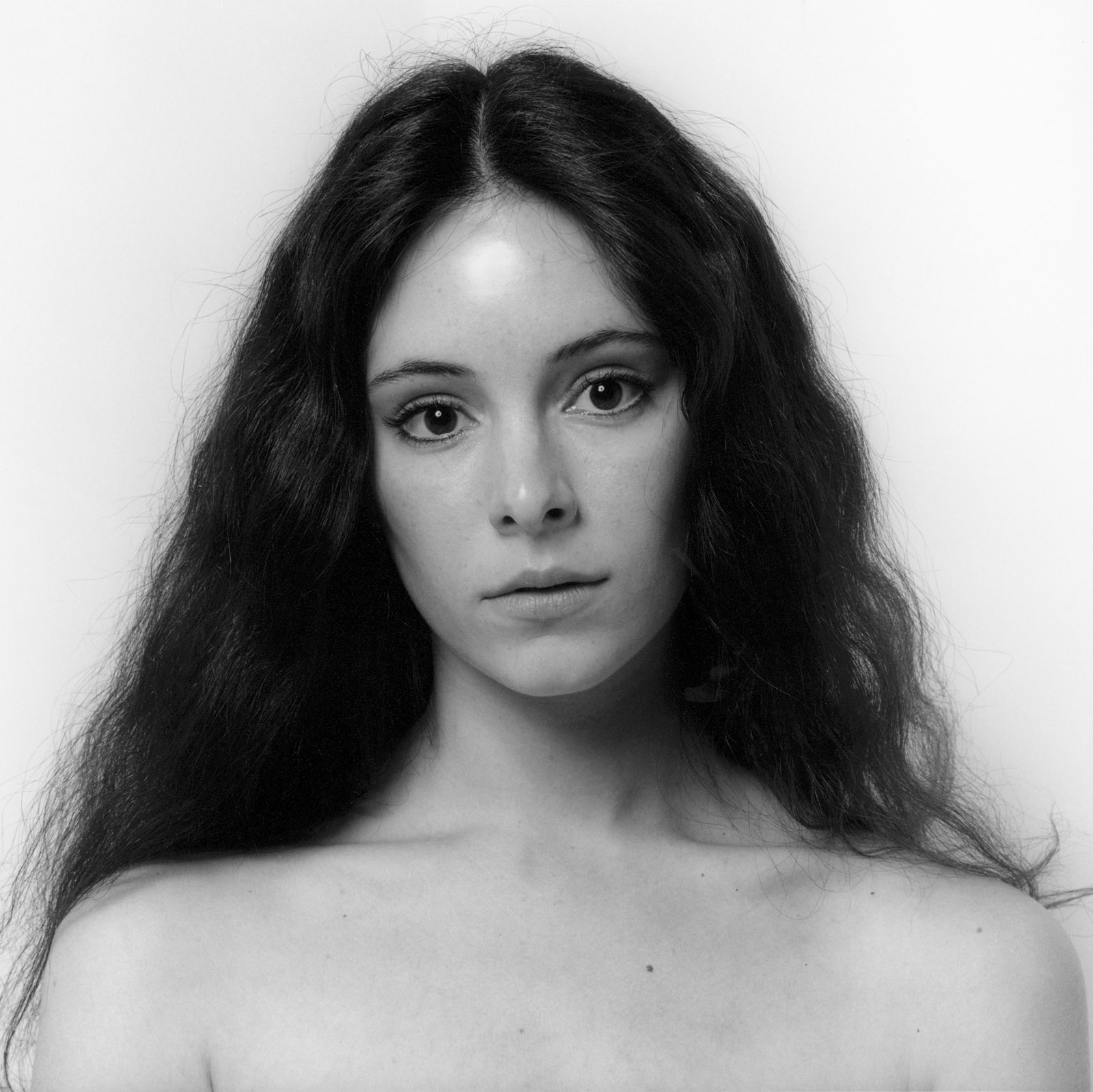




















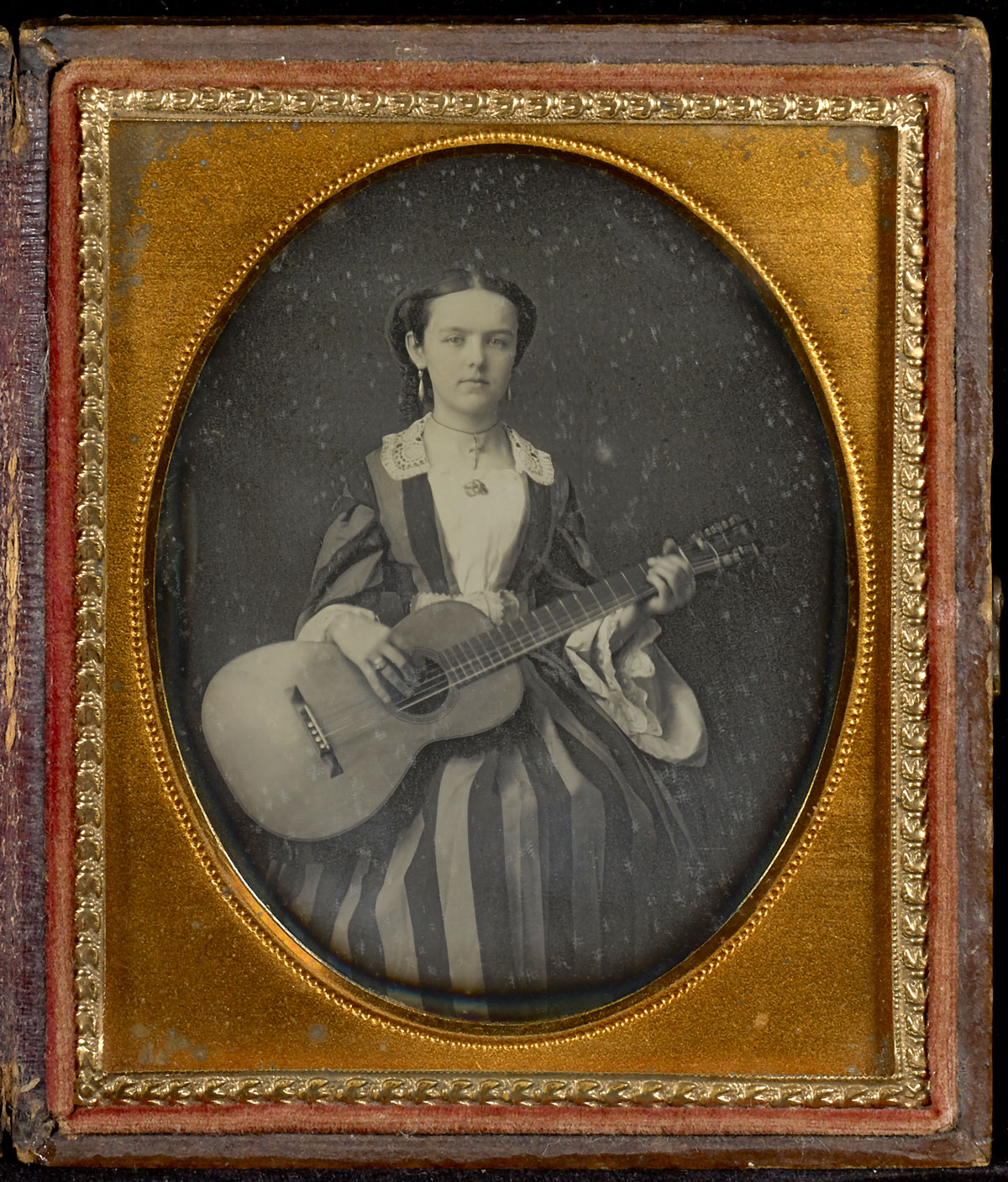
![James Maguire (American, 1816-1851) '[Portrait of Zachary Taylor]' 1847](https://artblart.com/wp-content/uploads/2016/02/gm_06991301-web.jpg "James Maguire (American, 1816-1851) '[Portrait of Zachary Taylor]' 1847")


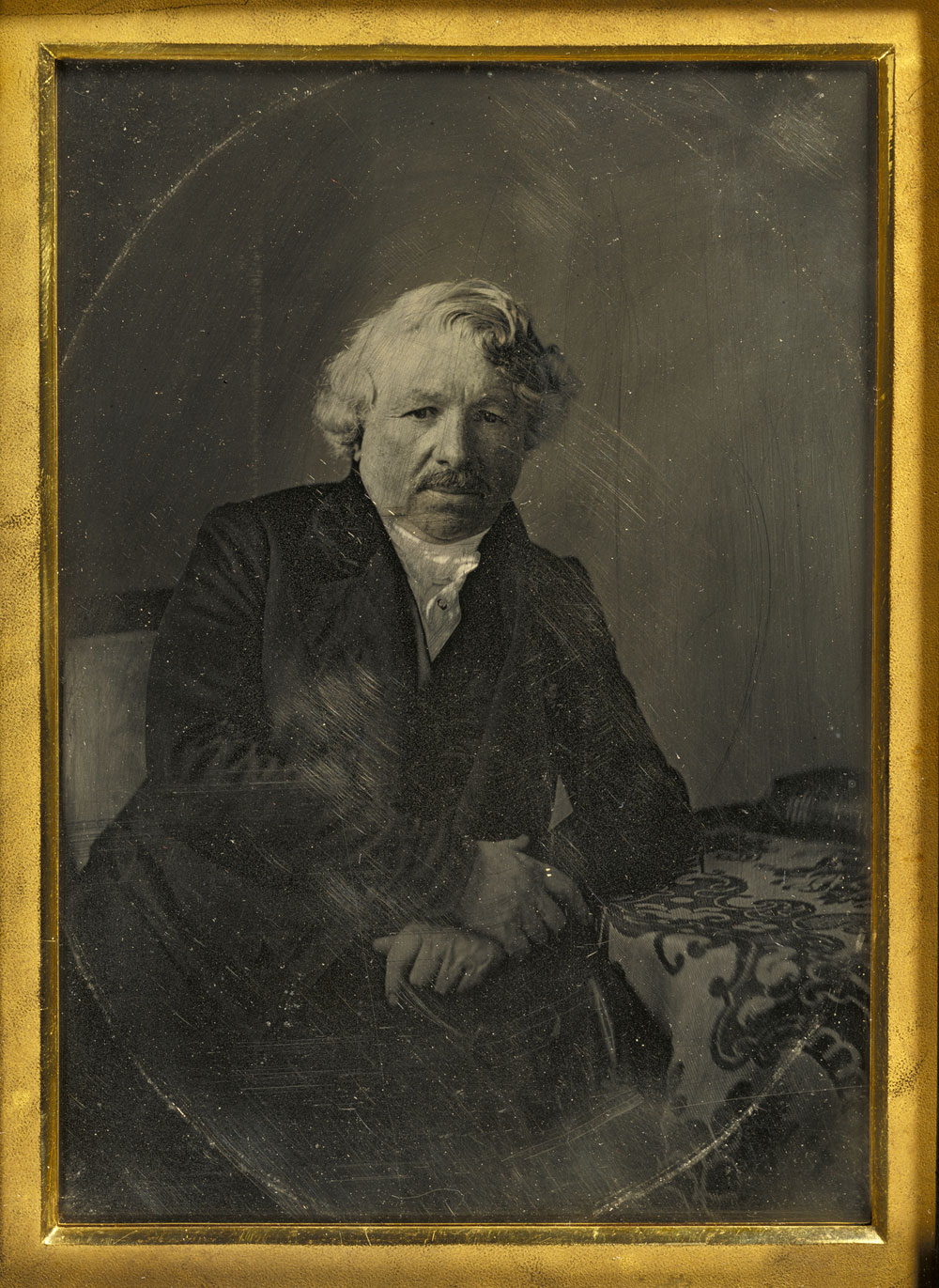
![James P. Weston (American, active South America about 1849 and New York 1851-1852 and 1855-1857) '[Portrait of an Asian Man in Top Hat]' c. 1856](https://artblart.com/wp-content/uploads/2016/02/gm_05595301-web.jpg "James P. Weston (American, active South America about 1849 and New York 1851-1852 and 1855-1857) '[Portrait of an Asian Man in Top Hat]' c. 1856")

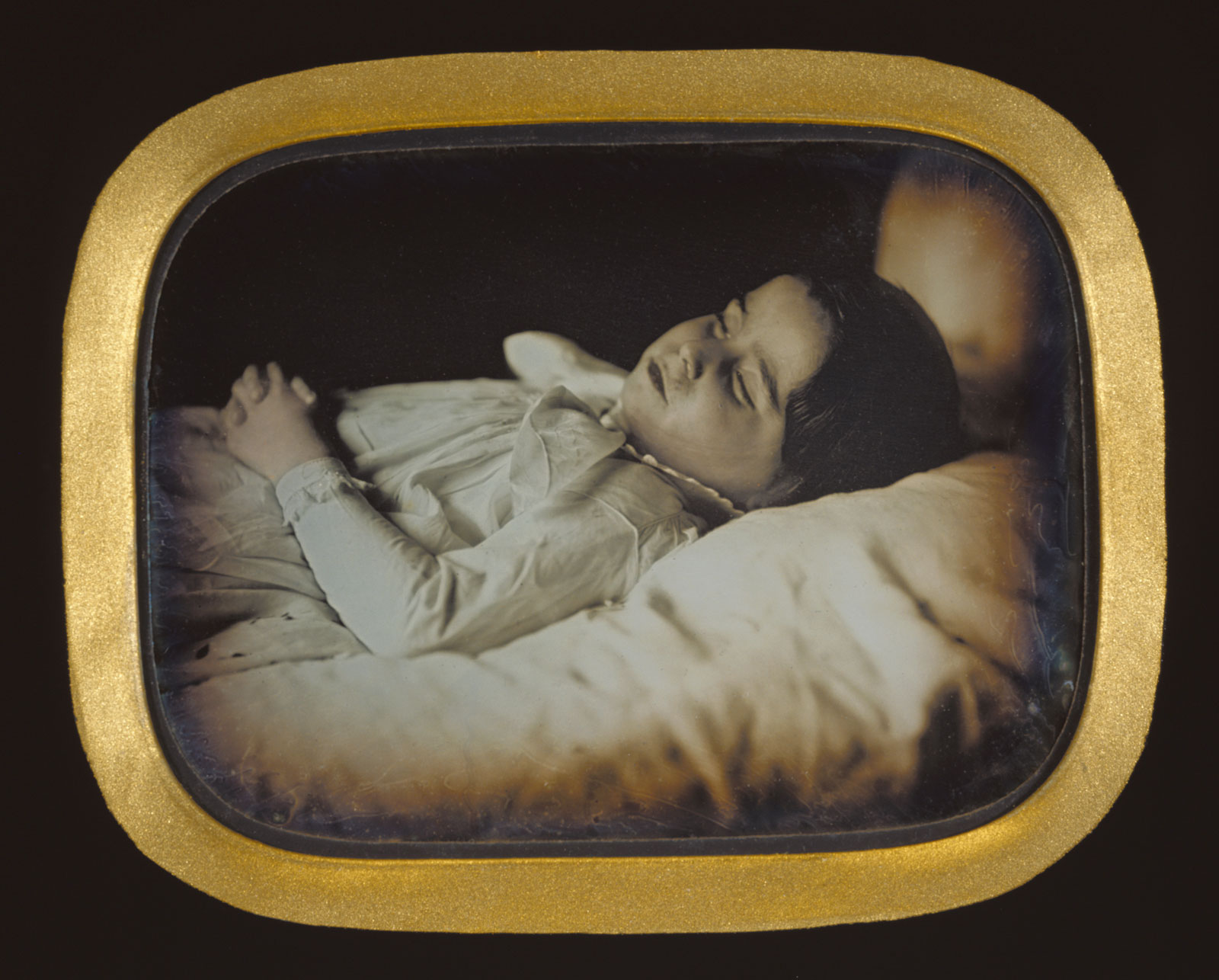
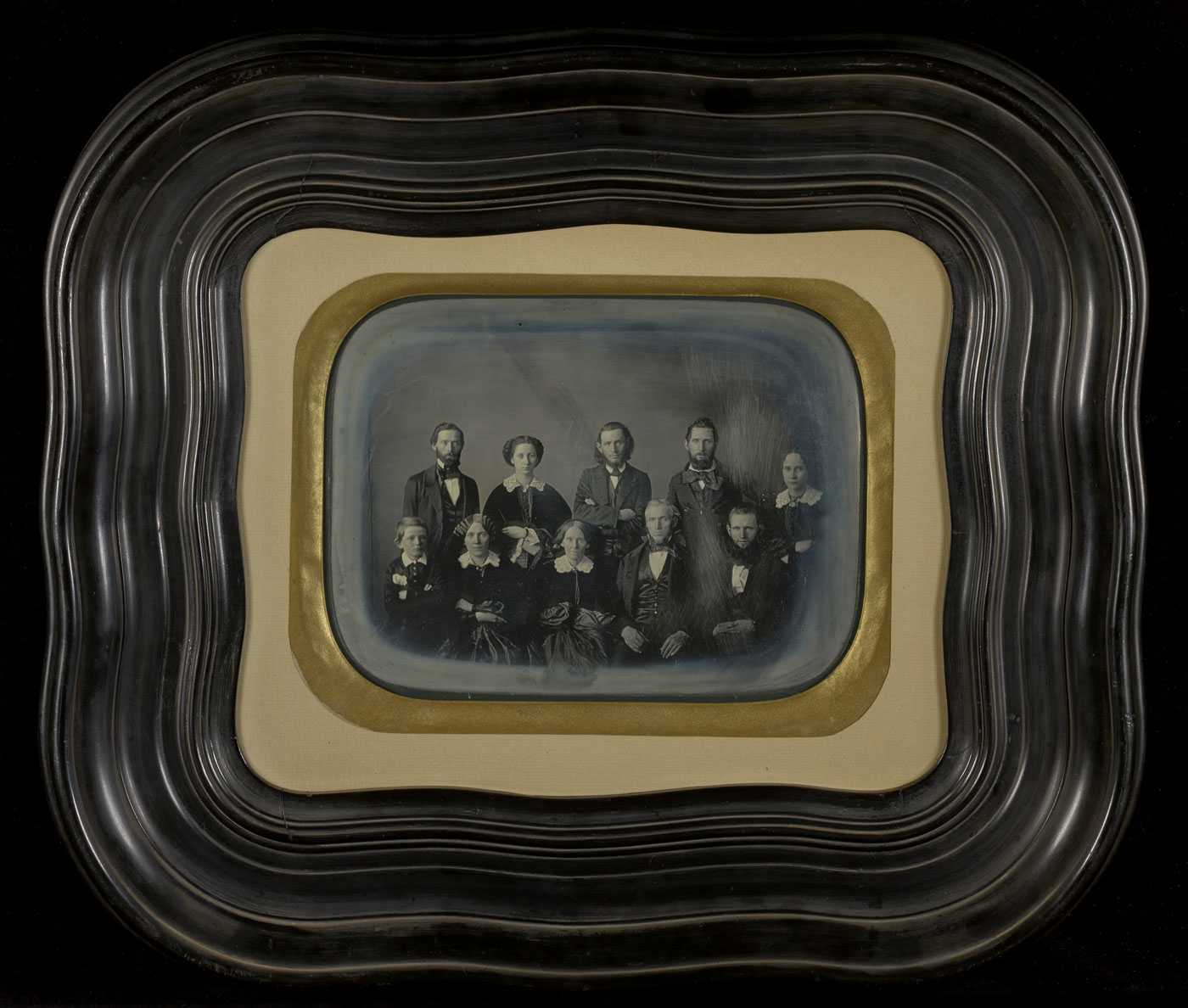

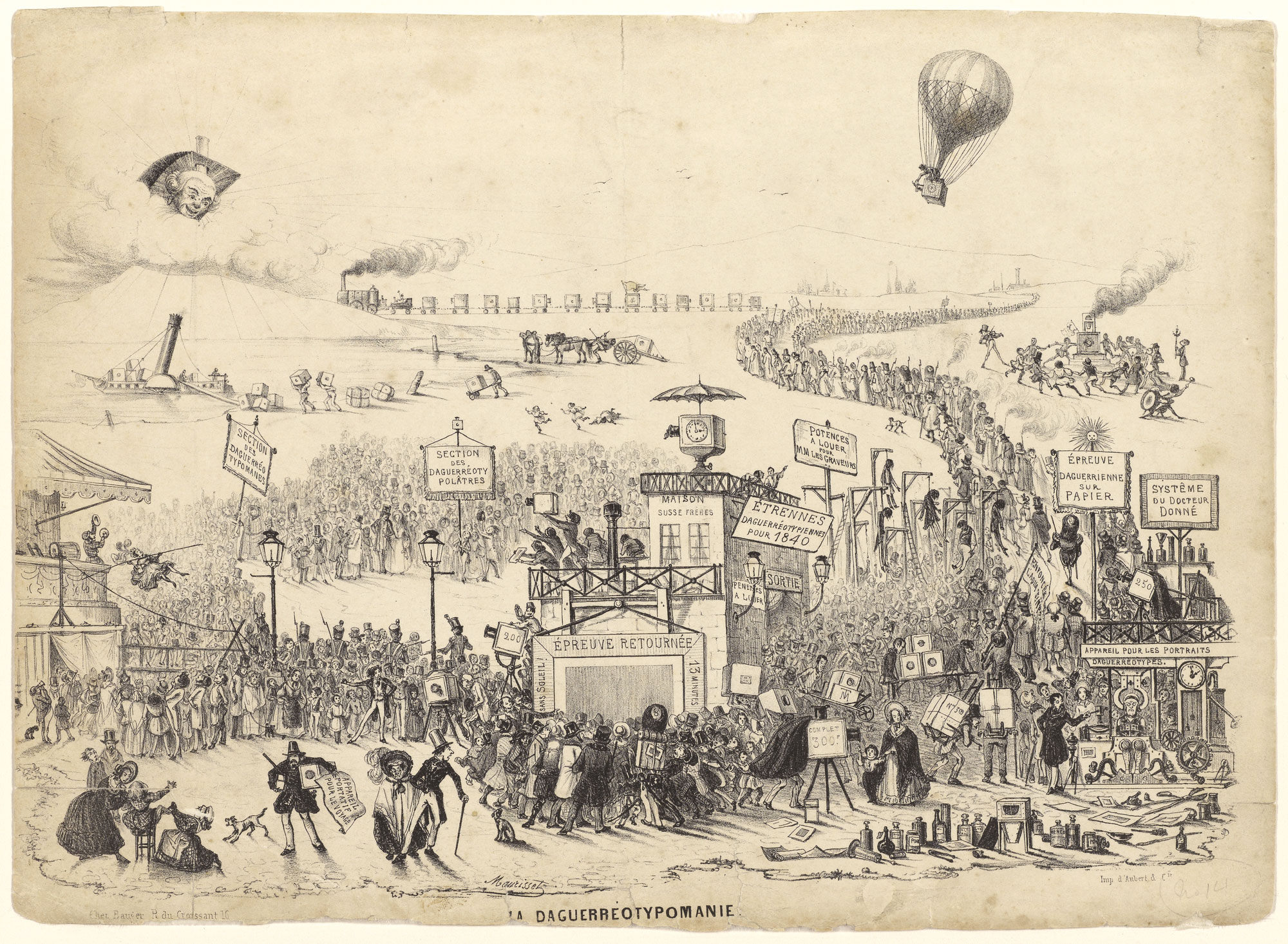


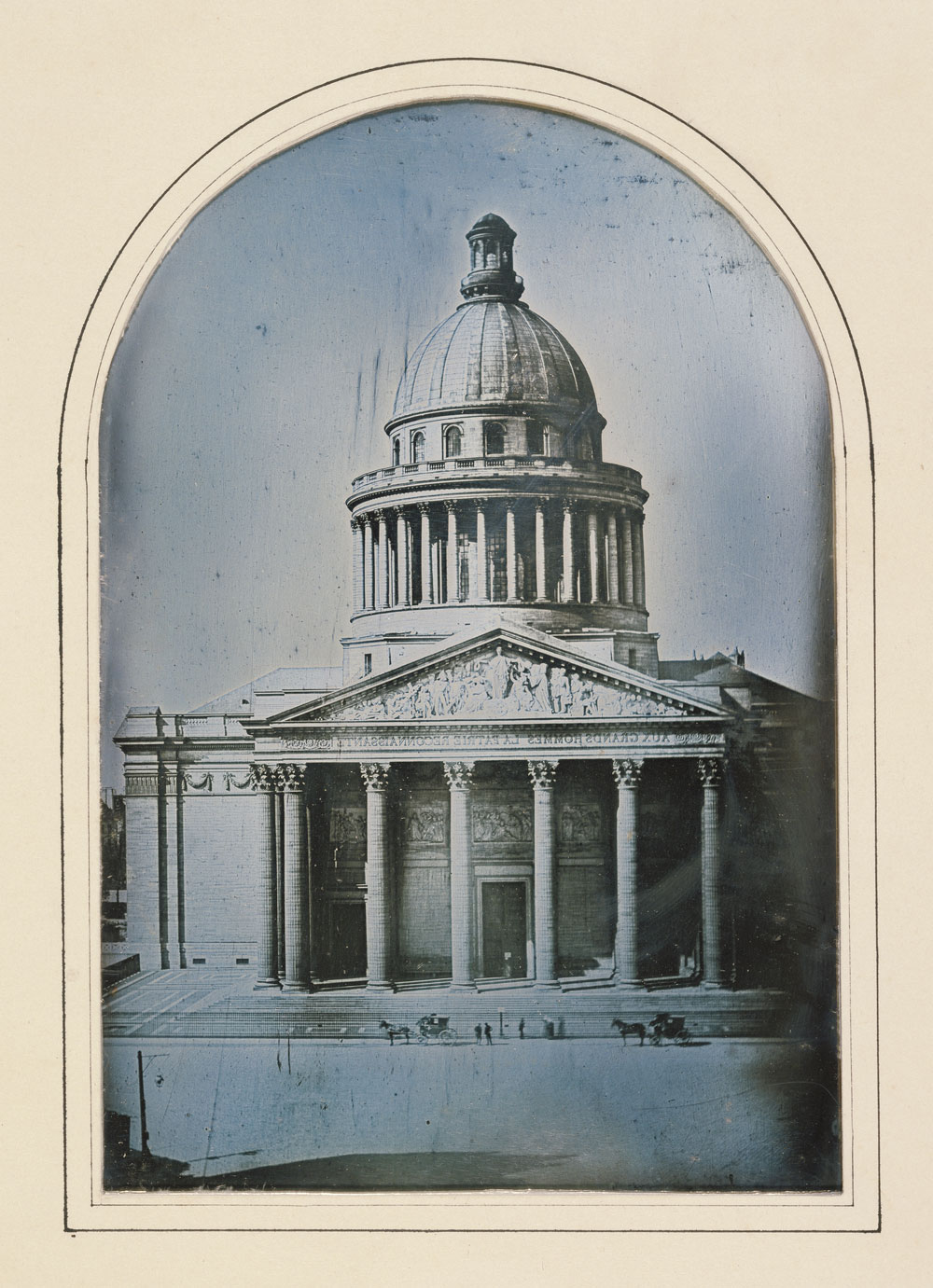

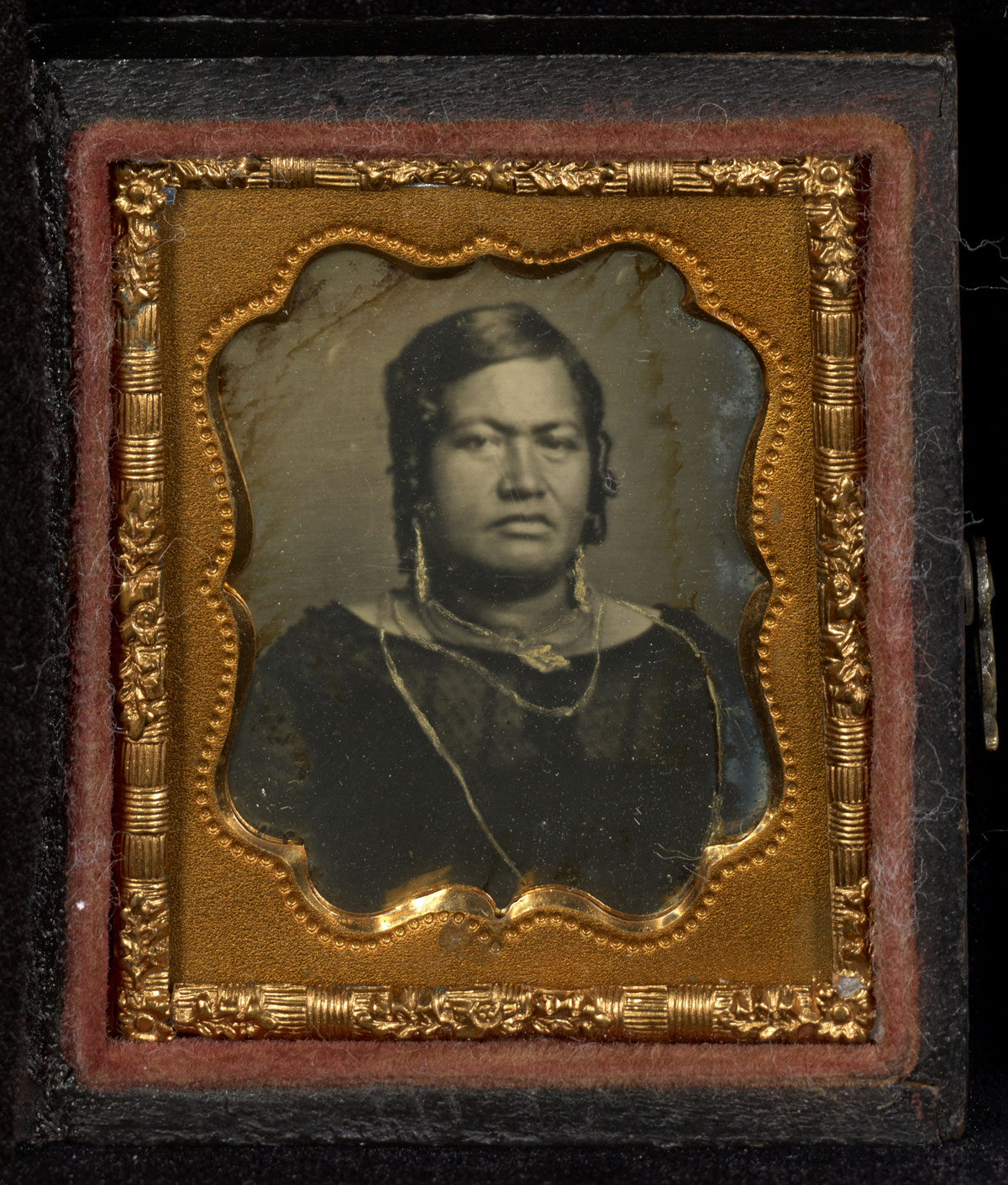
![Unknown maker (American) '[Portrait of an Unidentified Daguerreotypist Displaying a Selection of Daguerreotypes] / Daguerreotypist (?) Displaying Thirteen Daguerreotypes' 1845](https://artblart.com/wp-content/uploads/2016/02/gm_06329401-web.jpg "Unknown maker (American) '[Portrait of an Unidentified Daguerreotypist Displaying a Selection of Daguerreotypes] / Daguerreotypist (?) Displaying Thirteen Daguerreotypes' 1845")
![Unknown maker (American) '[Chinese Woman with a Mandolin]' 1860](https://artblart.com/wp-content/uploads/2016/02/gm_05620001-web.jpg "Unknown maker (American) '[Chinese Woman with a Mandolin]' 1860")
![Unknown maker (American) '[Chinese Woman with a Mandolin]' 1860 (detail)](https://artblart.com/wp-content/uploads/2016/02/gm_05620001-detail.jpg "Unknown maker (American) '[Chinese Woman with a Mandolin]' 1860 (detail)")

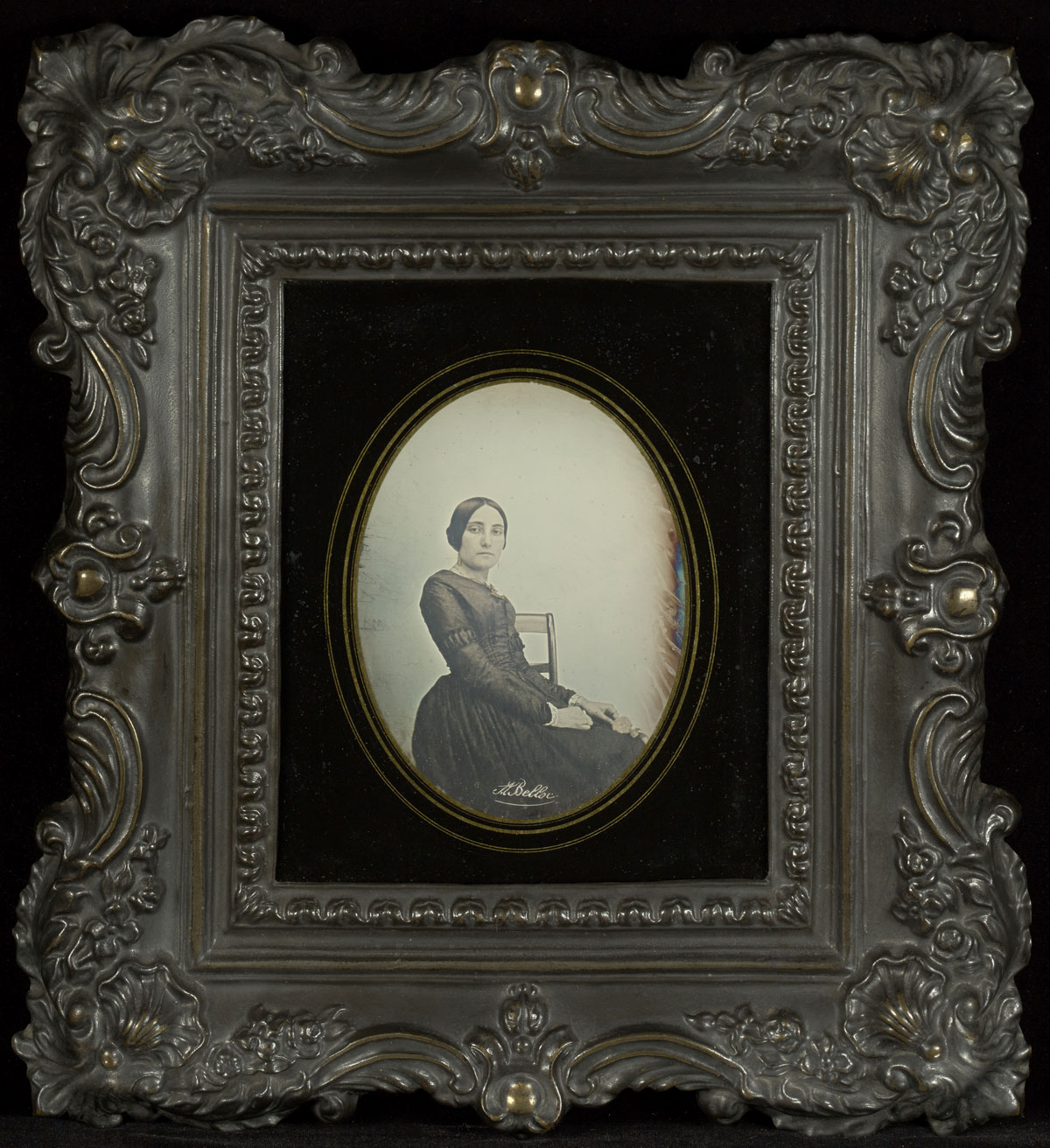
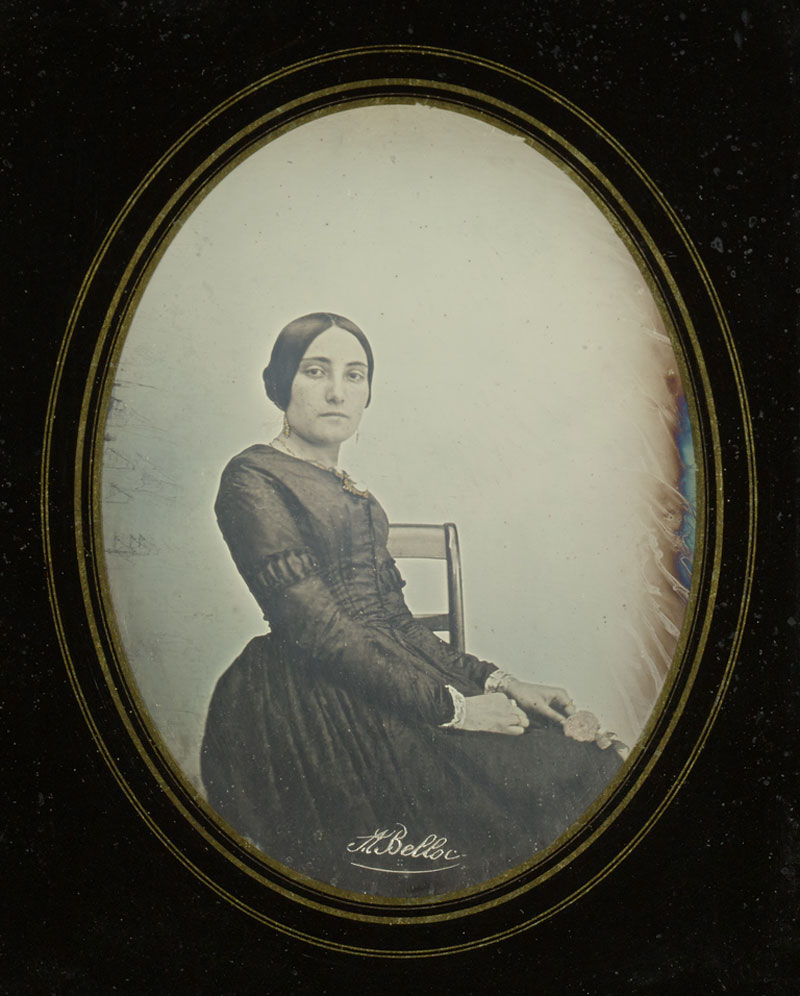


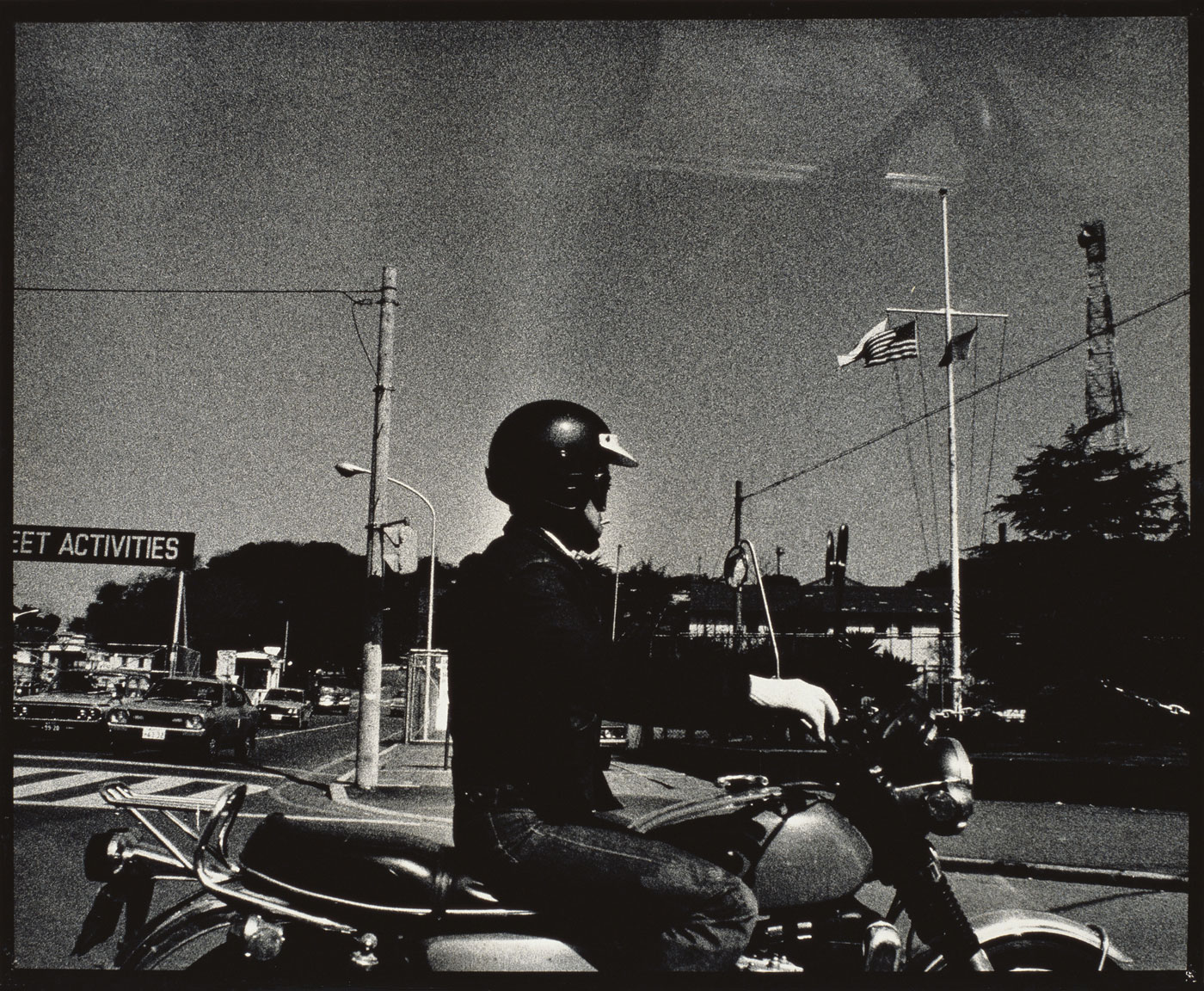


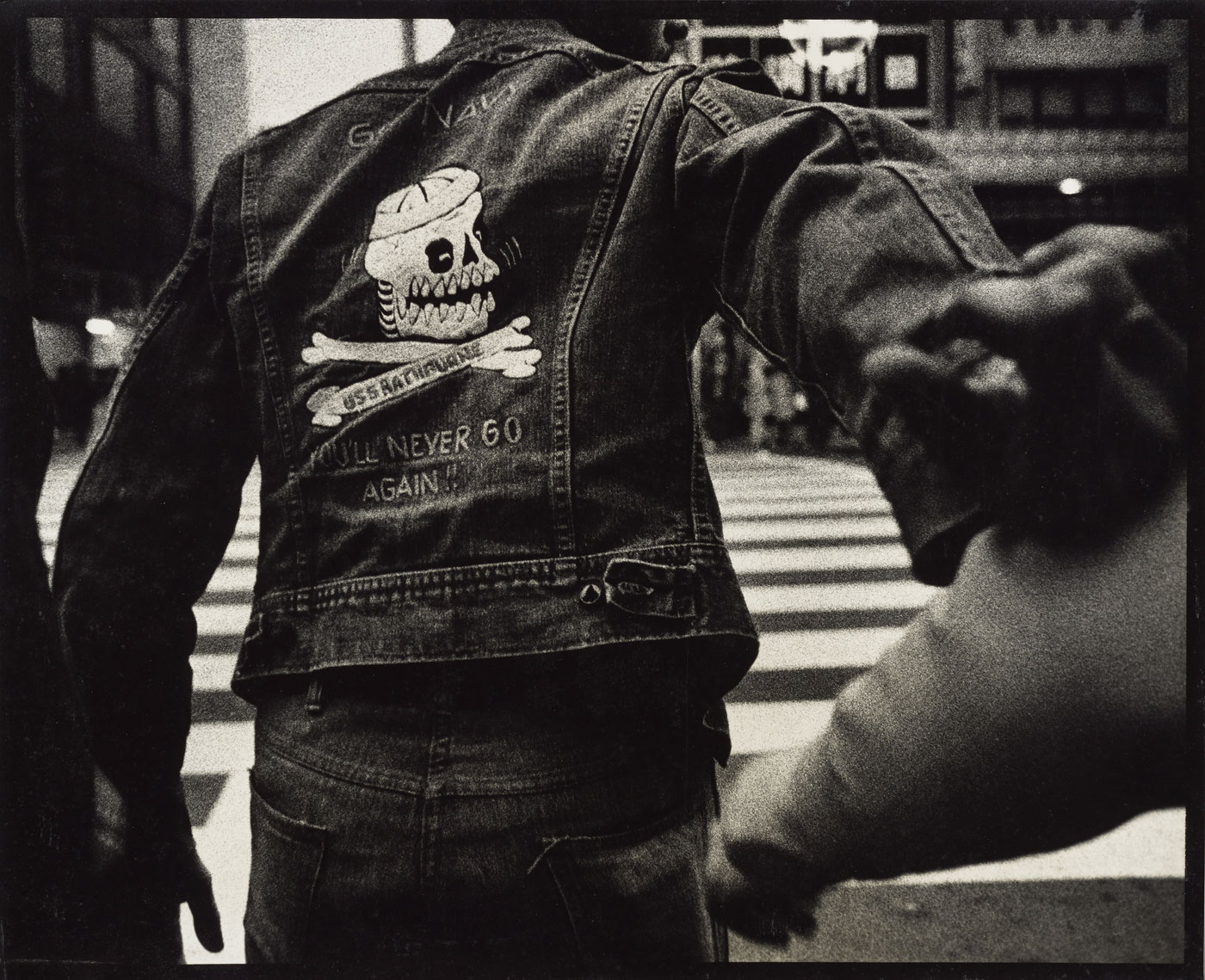


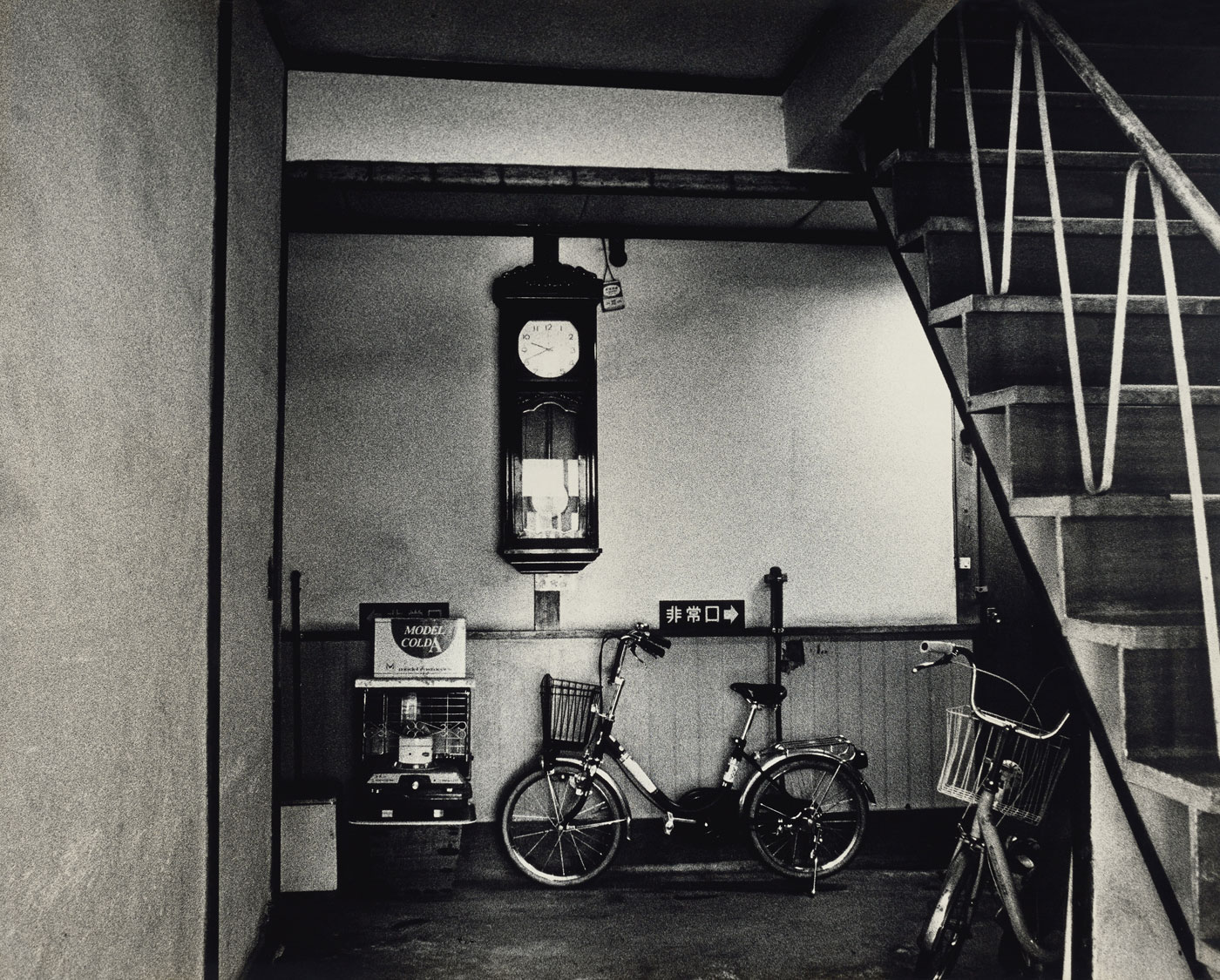


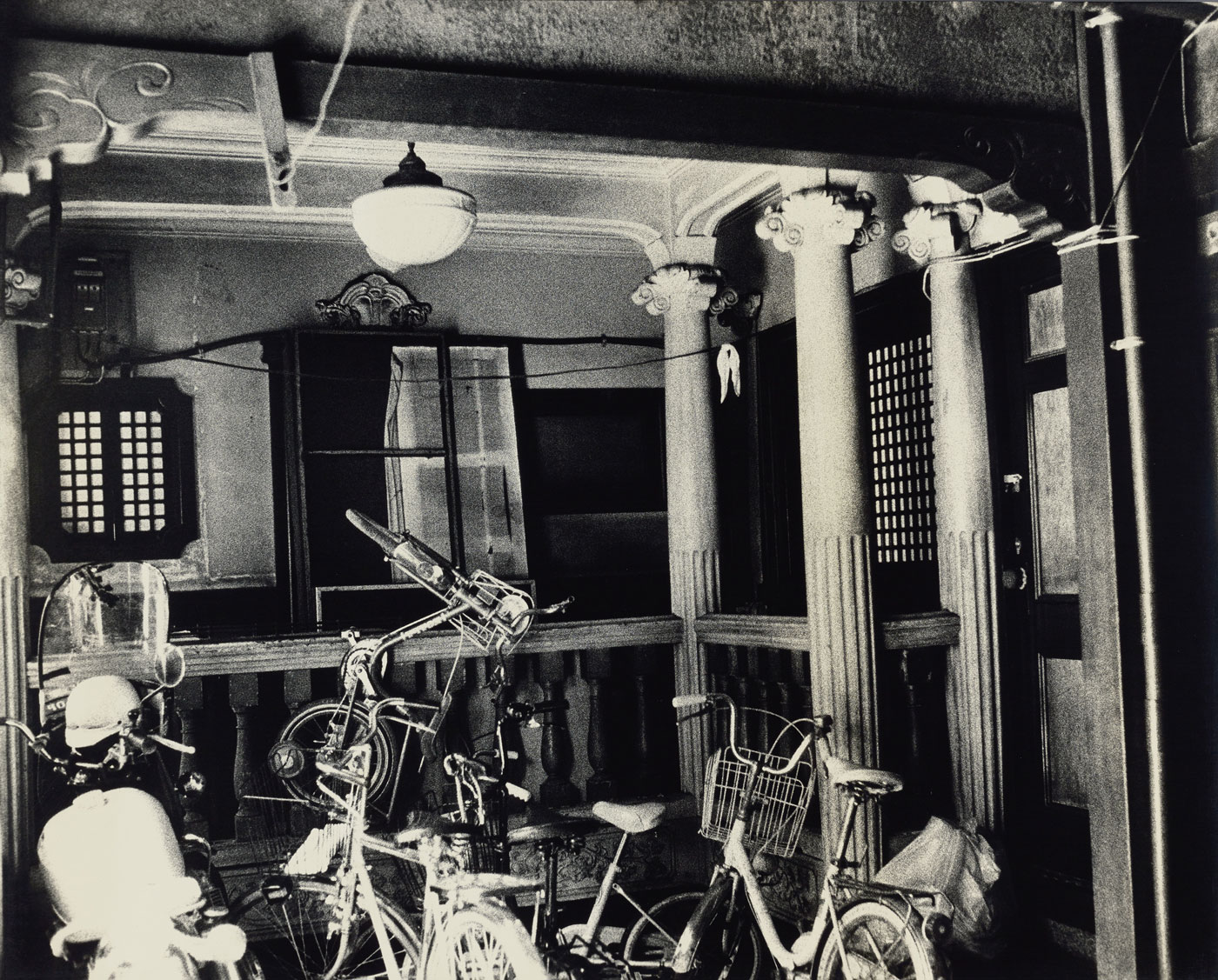


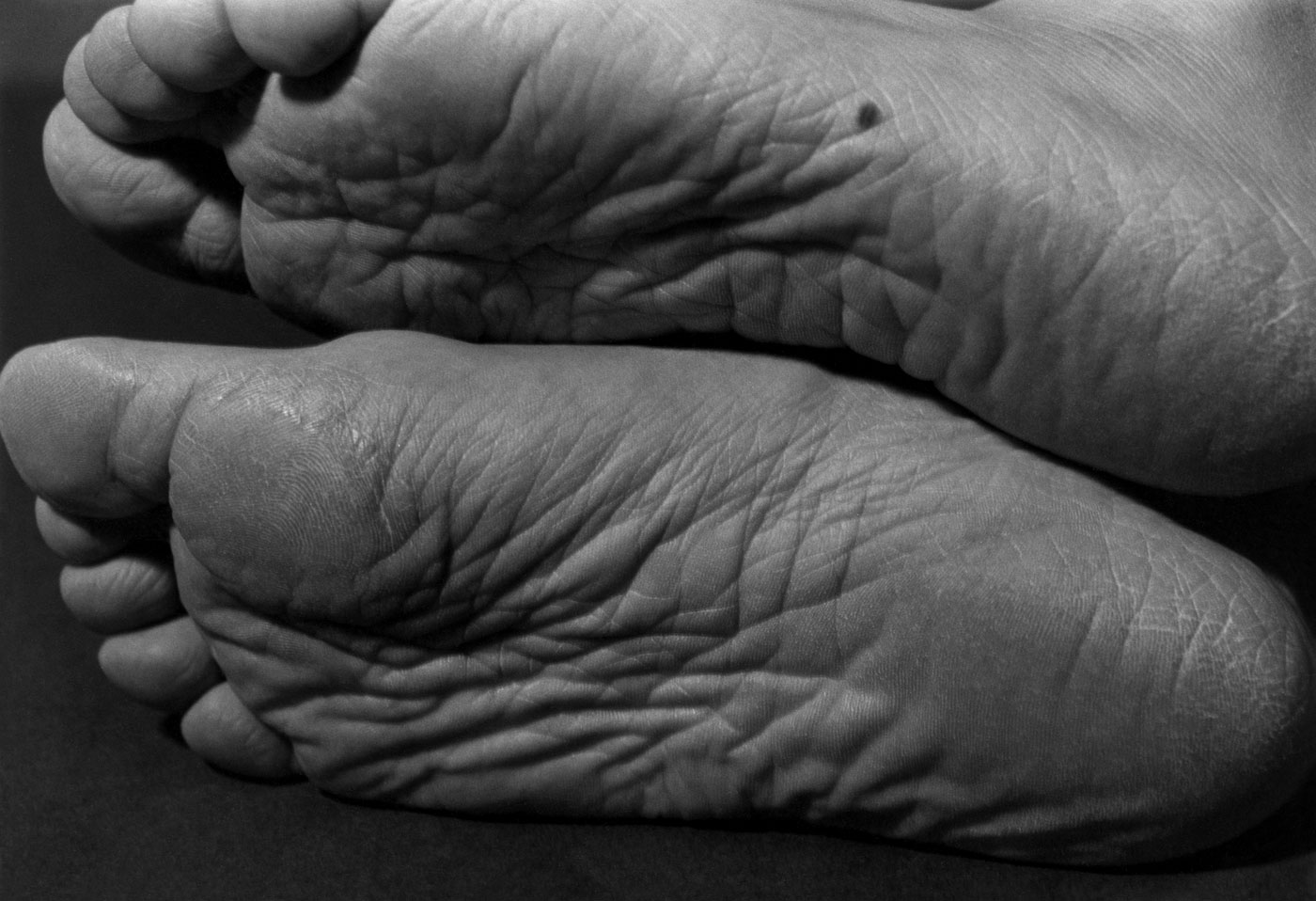




















 Art Blart _ art and cultural memory archive
You must be logged in to post a comment.