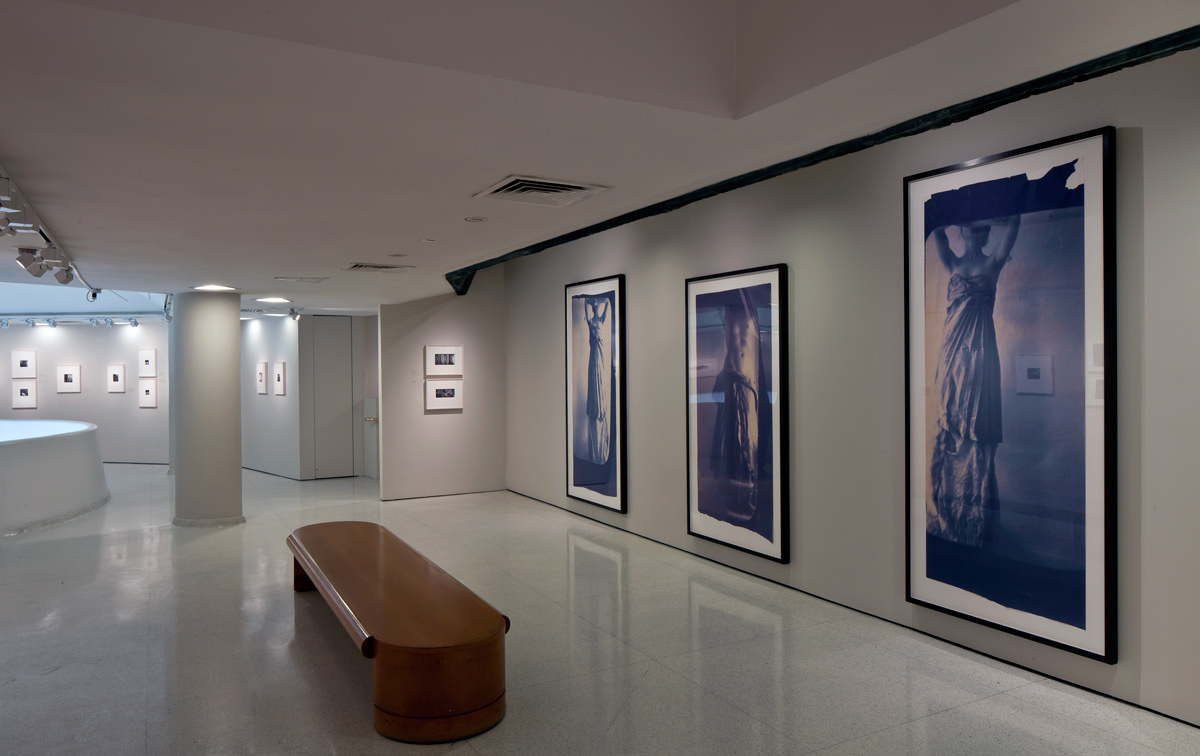
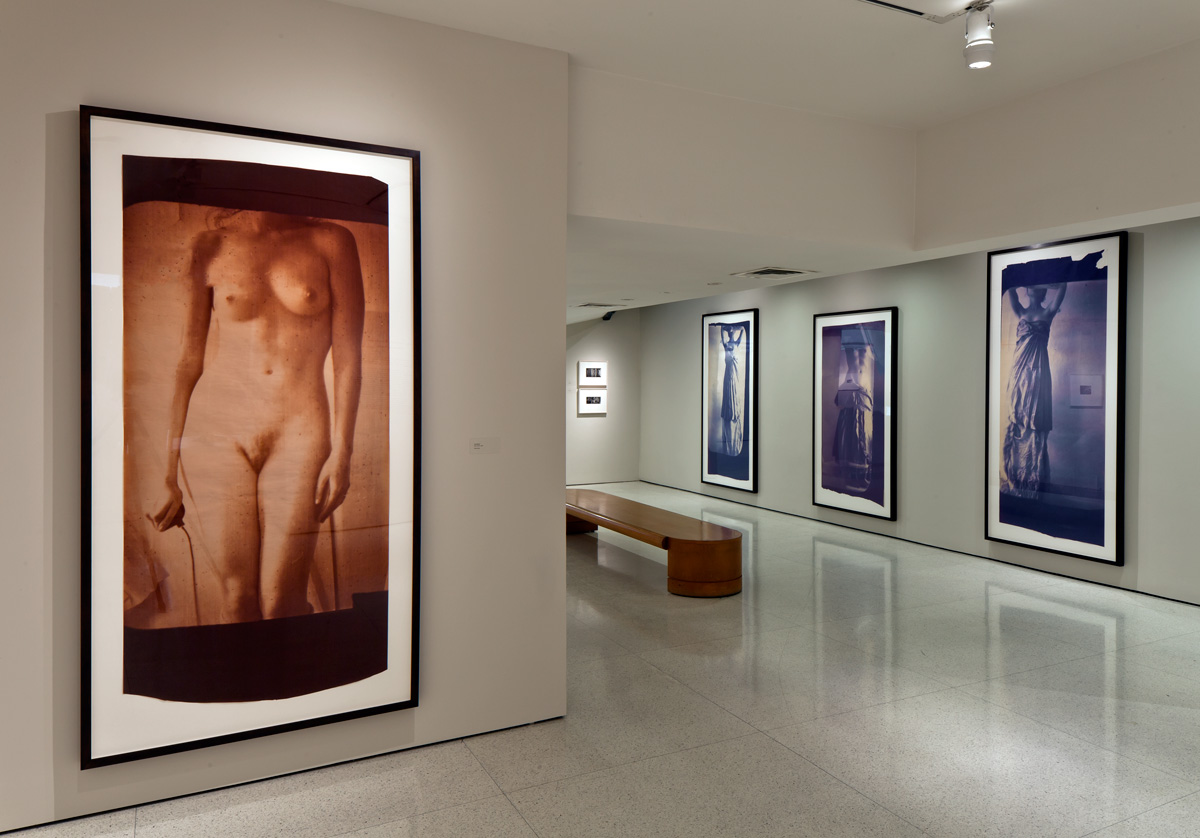
Exhibition: ‘Lorna Simpson’ at Jeu de Paume, Paris

Exhibition dates: 28th May – 1st September 2013
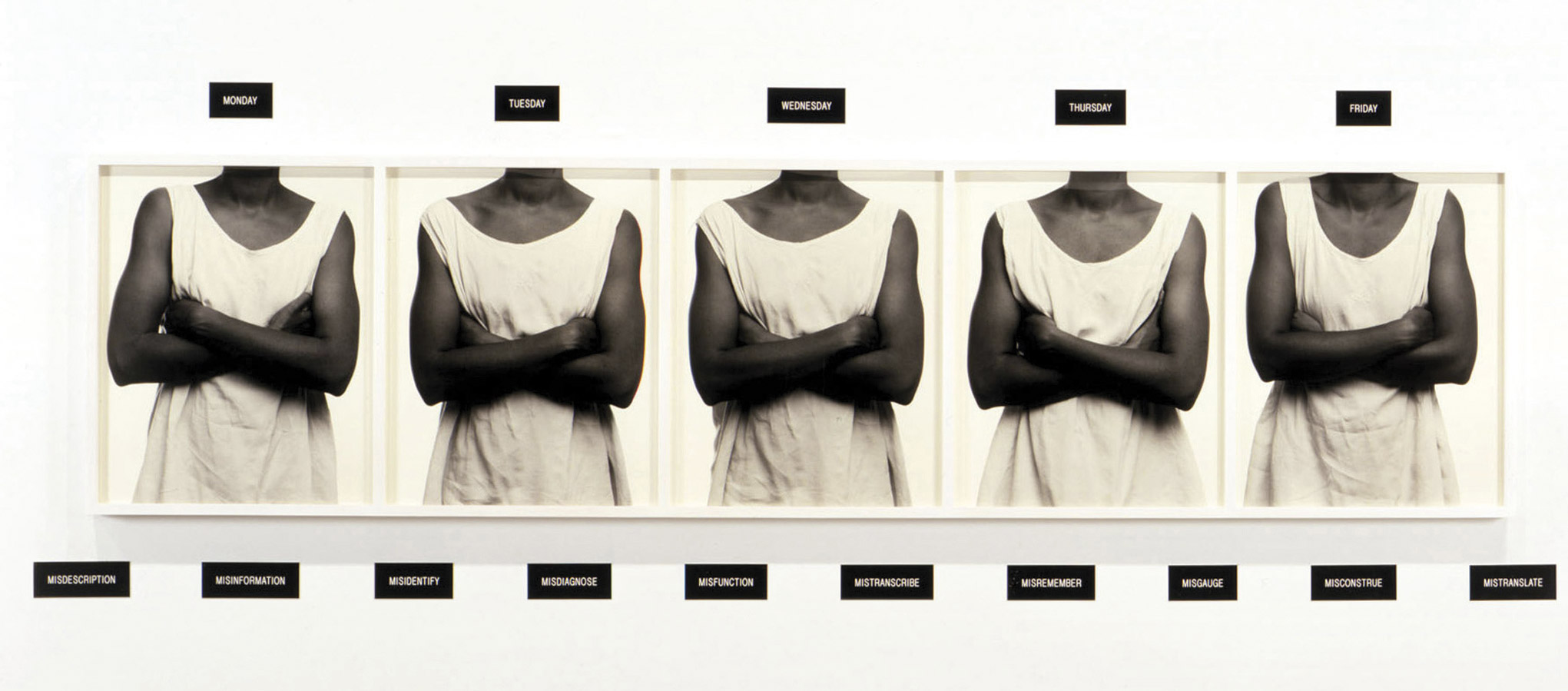
 

Lorna Simpson (American, b. 1960) 'Five Day Forecast (Prévisions à cinq jours)' 1988


Lorna Simpson (American, b. 1960)
Five Day Forecast (Prévisions à cinq jours)
1988
5 gelatin silver prints in a frame, 15 plates engraved plastic
24 1/2 x 97 in (62.2 x 246.4cm) overall
Lillian and Billy Mauer Collection
© Lorna Simpson


A fascinating practice!

Identity, memory, gender, representation, the body, the subject, felt, text, images, video, gesture, reenactment, concept and performance, all woven together seamlessly like a good wig made of human hair…

Dr Marcus Bunyan


Many thankx to Jeu de Paume for allowing me to publish the photographs in the posting. Please click on the photographs for a larger version of the image.
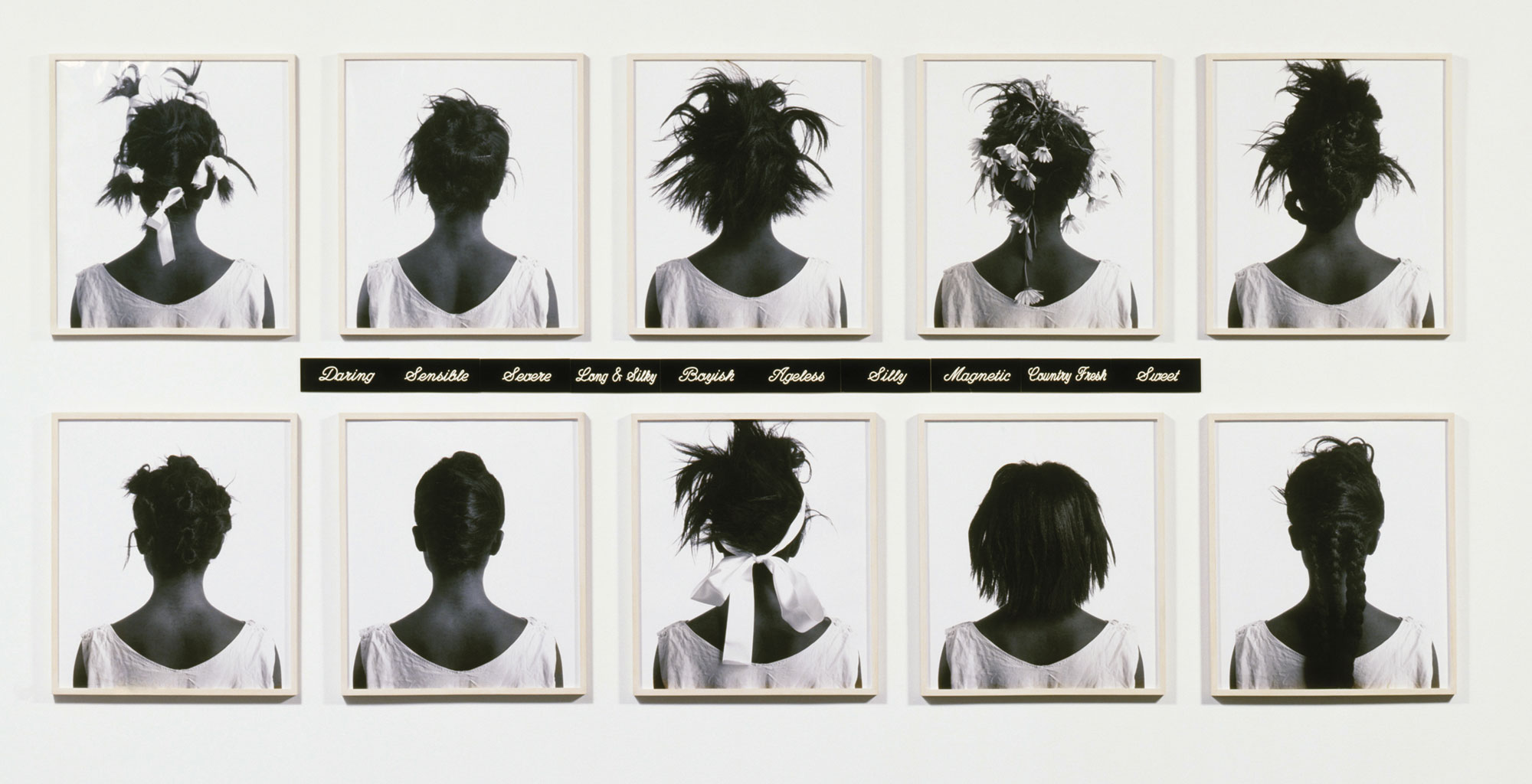


Lorna Simpson (American, b. 1960) 'Stereo Styles (Styles stéréo)' 1988


Lorna Simpson (American, b. 1960)
Stereo Styles (Styles stéréo)
1988
10 dye-diffusion black-and-white Polaroid prints, 10 engraved plastic plaques
57 3/4 x 125 1/4 x 1 3/8 in (146.7 x 318.1 x 3.5cm) overall
Collection of Melva Bucksbaum and Raymond Learsy
© Lorna Simpson
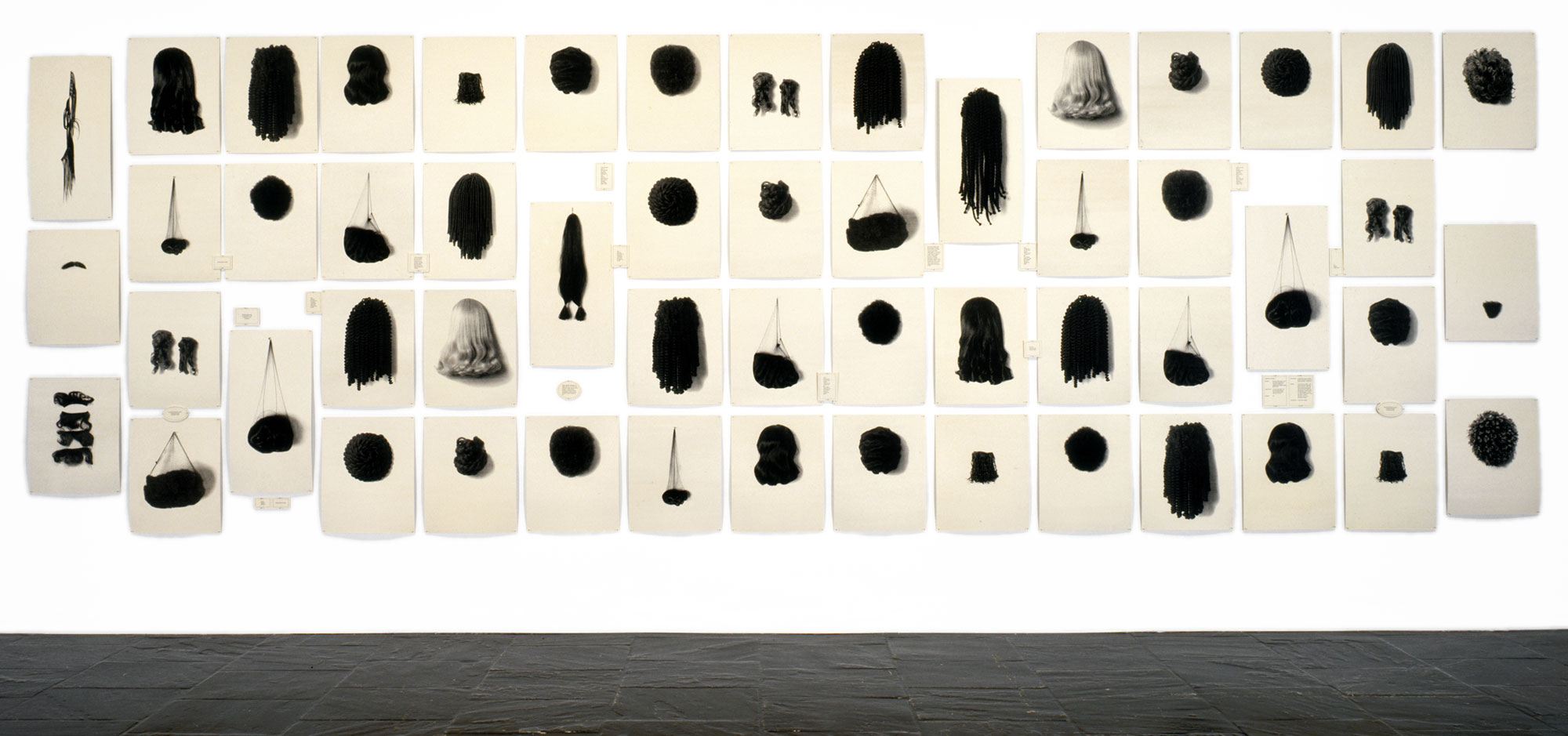
 

Lorna Simpson (American, b. 1960) 'Wigs II' 1994-2006


Lorna Simpson (American, b. 1960)
Wigs II
1994-2006
Serigraph on 71 felt panels (images and text)
98 x 265 in (248.9 x 673.1cm) overall
Courtesy the artist; Salon 94, New York; and Galerie Nathalie Obadia, Paris/Brussels
© Lorna Simpson


Lorna Simpson surprised her audiences in 1994 when she began to print her photographs on felt, inspired by its materiality after seeing an exhibition of the sculpture of Joseph Beuys in Paris “where the piano and walls were covered for a beautiful installation.” Simpson questioned whether the medium might be appropriate in a far different way for her work given the perspective afforded her by the passage of time. With the felt pieces, Simpson turned away from photography’s traditional paper support, magnified the already larger-than-life-size of the images within her large photo-text pieces to extremely large-scale multi-part works, and, most critically, absented the figure, in particular, the black woman in a white shift facing away from the camera for which she had received critical acclaim.

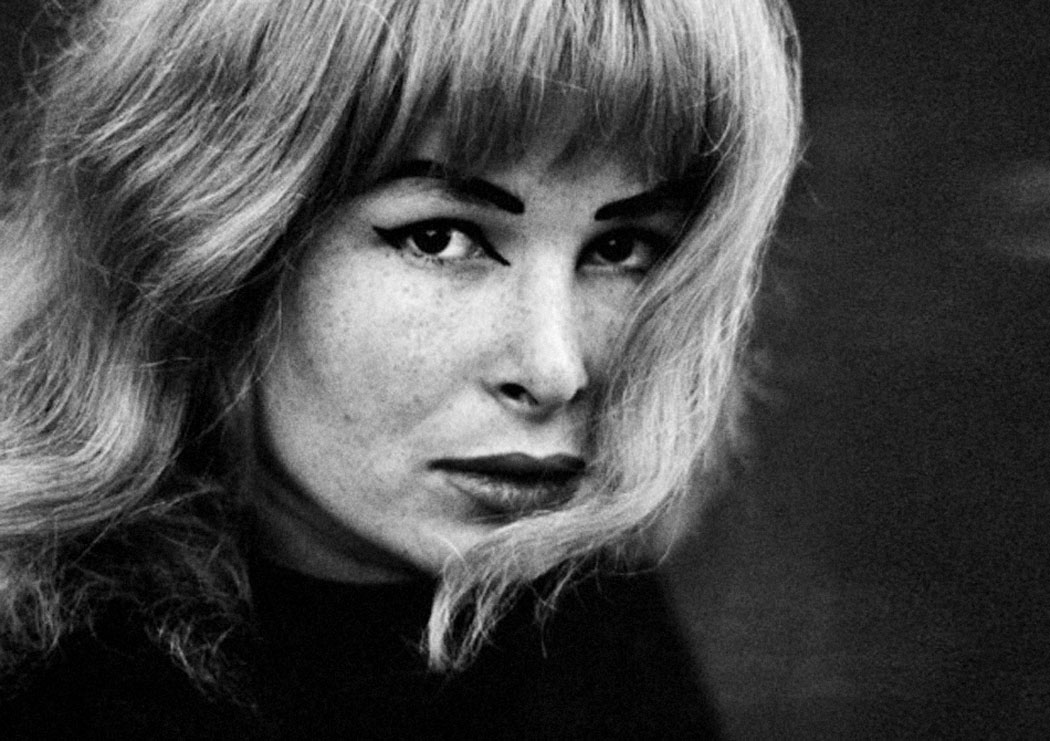
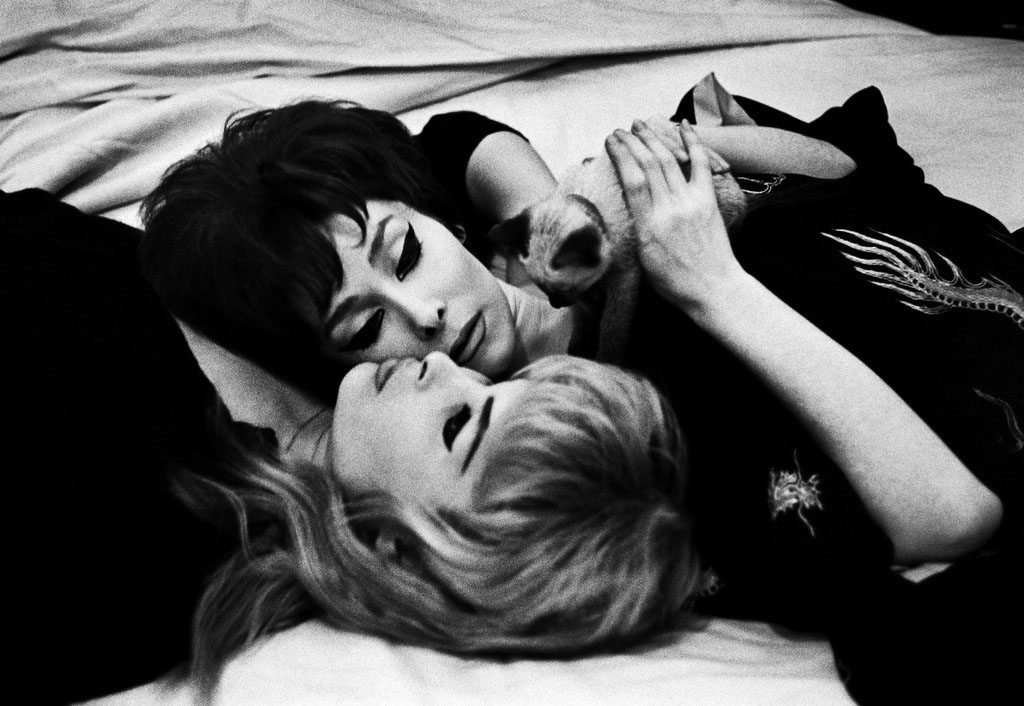
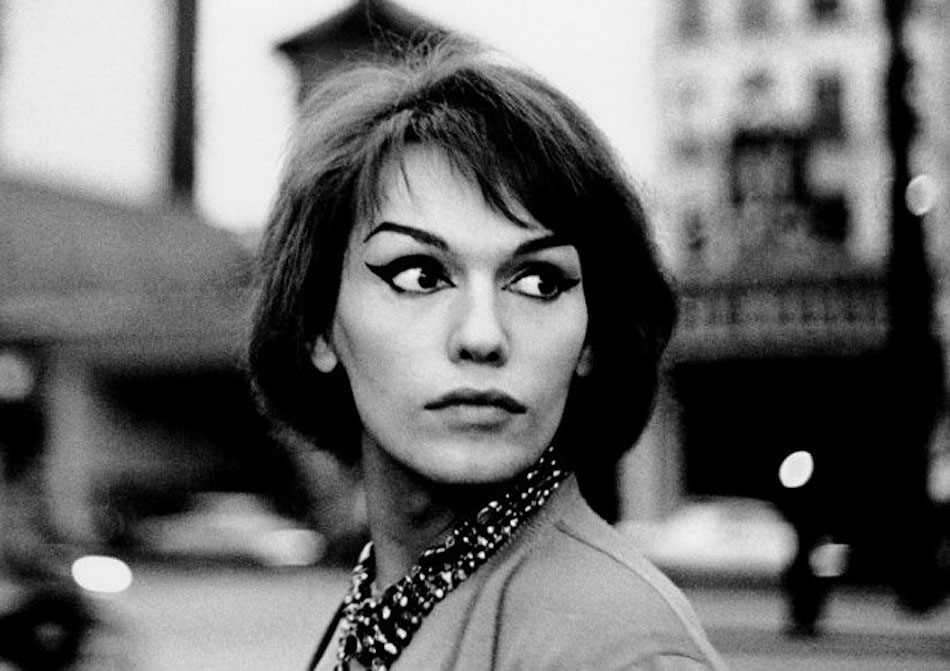
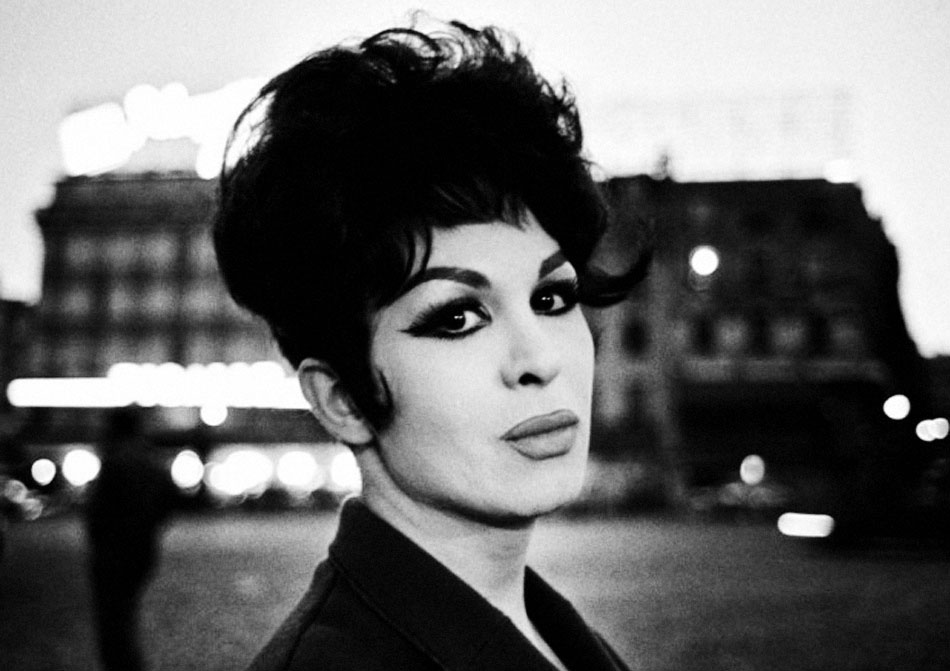
Ever-present, nevertheless, were her thematic concerns. The first felts offered surrogates for the body in a taxonomy of her own photographs of Wigs, with voicings “in and around gender,” and expanded upon the investigation of the role of coiffure in the construction of identity in Simpson’s photo-texts (such as Stereo Styles, Gallery 1). In the mid-1990s, such felts were succeeded by a series of photographs of interior and exterior scenes that were accompanied by long text passages printed on separate small felts. In these works the figure was replaced, as Okwui Enwezor wrote, “by the rumour of the body.”


Lorna Simpson (American, b. 1960) 'Please remind me of who I am' 2009 (detail)


Lorna Simpson (American, b. 1960)
Please remind me of who I am (detail)
2009
50 found photo booth portraits, 50 ink drawings on paper, 100 bronze elements
Overall installation dimensions variable
Collection of Isabelle and Charles Berkovic
© Lorna Simpson


For each multi-part photo-booth piece, Simpson sets in bronze frames these small inexpensive shots as well as her drawings of selected details of the photographs. Self-styled and performed, these photographs were used for a variety of purposes by their now anonymous sitters, ranging from sober, formal ID photos to glamorous, often theatrically playful mementos. Encompassing photo booth shots of different sizes from the 1920s to the 1970s (a few in colour), Simpson’s constellations of many images for each work offer a collective portrait of self-portraiture (Gather, 2009) and continue her ongoing explorations of identity and memory, explicitly phrased in the title of one of them: Please remind me of who I am (2009).


Lorna Simpson (American, b. 1960) 'Waterbearer [Porteuse d'eau]' 1986


Lorna Simpson (American, b. 1960)
Waterbearer (Porteuse d’eau)
1986
Gelatin silver print, vinyl letters
59 x 80 x 2 1/2 in (149.9 x 203.2 x 5.7cm) overall
Courtesy the artist; Salon 94, New York; and Galerie Nathalie Obadia, Paris / Brussels
© Lorna Simpson


Waterbearer shows a woman from the back, pouring water from an elegant silvery metallic pitcher in one hand and from an inexpensive plastic jug in the other, echoing art historical renderings of women at wells or in the domestic settings of Dutch still-life paintings. As if balancing the scales of justice, this figure also symbolically offers disjunctions of means and class. In the accompanying text, Simpson explicitly addresses memory and the agency of speakers: “She saw him disappear by the river, they asked her to tell what happened, only to discount her memory.”


For her first European retrospective, the Jeu de Paume presents thirty years of Lorna Simpson’s work. For this Afro-American artist, born in Brooklyn, New York, in 1960, the synthesis between image and text is profound and intimate. If one were to consider Lorna Simpson as a writer, the textual element of her works could have an autonomous life as prose poems, very short stories or fragments of scripts. And yet, her texts are inseparable from her images; there is a dynamic between the two that is both fragile and energising, which links them unfailingly. Lorna Simpson became known in the 1980s and 90s for her photographs and films that shook up the conventions of gender, identity, culture and memory.

Throughout her work, the artist tackles the complicated representation of the black body, using different media, while her texts add a significance that always remains open to the spectator’s imagination. In her recent work, Lorna Simpson has integrated archive images, which she reinvents by positioning herself in them as subject. As the artist underlines: “The theme I turn to most often is memory. But beyond this subject, the underlying thread is my relationship to text and ideas about representation.” (Lorna Simpson)

This retrospective reveals the continuity in her conceptual and performative research. In her works linking photography and text, as well as in her video installations, she integrates – while continually shaking them up – the genres of fixed and moving images, using them to ask questions about identity, history, reality and fiction. She introduces complexity through her use of photography and film, in her exploitation of found objects, in the processes she develops to take on the challenges she sets herself and to spectators.

The exhibition gathers her large format photo-texts of the mid 1980s, which brought her to the attention of the critics (Gestures / Reenactments, Waterbearer, Stereo Styles), her work in screenprints on felt panels since the 1990s (Wigs, The Car, The Staircase, Day Time, Day Time (gold), Chandelier), a group of drawings (Gold Headed, 2013), and also her “Photo Booths,” ensembles of found photos and drawings (Gather, Please remind me of who I am…). The exhibition is also an opportunity to discover her video installations: multivalent narratives that question the way in which experience is created and perceived more or less falsely (Cloudscape, 2004, Momentum, 2010), among them, Playing Chess, a new video installation made especially for the occasion.


About the exhibition

Joan Simon

In her critically acclaimed body of work spanning more than thirty years, Lorna Simpson questions identity and memory, gender and history, fact and fiction, playing eye and ear in tandem if not in synchrony to prompt consideration of how meaning is constructed. That she has often described herself as an observer and a listener informs an understanding of both her approach and her subjects. In her earliest black-and-white documentary street photographs (1978-1980), Simpson isolated gestures that bespoke an intimacy between those framed in her viewfinder, recording what was less a decisive moment than one of coming into relation. Some of these photographs seem to capture crossed glances, pauses in an ongoing conversation. Others are glimpses of occasions, transitional events identifiable by a white confirmation or wedding dress, which convey a sense of palpable silence in exchanges between people just out of earshot.

When Simpson began to stage her own photographs in 1985 and to write accompanying texts, she came in closer. She allowed us to see a carefully framed black body, abstracted in gesture and in white clothing, yet also permitted us to read seemingly overheard comments that redirected and recomplicated the view. While her images captured gestures, her narratives imbued these images frozen in a never-changing present with memory, a past. The title of her first photo-text work, made in 1985, and of the exhibition of that year in which it was first exhibited was Gestures / Reenactments, and one can argue that all Simpson’s work is built on the juxtaposition of gestures and reenactments, creating meaning in the resonant gap between the two. It is a gap that invites the viewer / reader to enter, all the while requiring an active reckoning with some inalienable truths: seeing is not necessarily believing, and what we might see is altered not only by our individual experiences and assumptions but also, critically, by what we might hear.

The exhibition

Whether for still or moving picture productions, Lorna Simpson (b. 1960) uses her camera as catalyst to question identity and gender, genres and history, race and class, fact and fiction, memory and meanings. Assumptions of photographic “truth” are challenged and qualified – indeed redirected – by the images she creates that are inseparable from the texts she writes to accompany them, by the soundings she chooses  for videos, or by her pairings of vintage photographs with newly made renderings. The Jeu de Paume presents lorna Simpson’s first large-scale exhibition in Europe beginning with her earliest photo-text pieces of the 1980s through her newest video installation, Chess, 2013, which makes its debut in Paris.

Works in the exhibition show the artist drawing on traditional photo techniques such as gelatin silver prints in an intimate synthesis with speakerly texts (Gallery 1). They also show Simpson’s creation of new combines, among them serigraphs on felt with writings and images invoking film noir (Gallery 2), a video installation of three projections based on historic photographs and her own prior still photos (Gallery 3), constellations of recuperated photo-booth photos with her drawings isolating details from them as well as vintage photographs together with those re-staged by the artist (Gallery 4), and a video focusing on performance as well as time itself and its reversal (Gallery 5).

The exhibition’s parcours [route] reveals turning points in Simpson’s oeuvre as well as thematic continuities. The earliest pieces in the show are Simpson’s performative proto-cinematic photo-texts, beginning with the 1985 Gestures/ Reeactments, a title literally evocative of the work’s visual / verbal aspect while also paradigmatically descriptive of what would be her conceptual practice for the next three decades. Simpson herself makes a rare appearance in her work in two related pieces in the show: the 2009 epic still photo work 1957-2009 (Gallery 4), for which the artist re-enacted scenes from vintage photos, and Chess, 2013, (Gallery 3), which features re-enactments of some of the same photos.

.
Gallery 1 introduces the artist’s signature, indeed iconic early images of the 1980s – a black figure in white clothing, face turned away from the camera or cropped out of the frame – accompanied by precisely crafted, allusive texts that recomplicate what is seen by what is heard in these voicings. The intention to deny a view of a face, as Simpson says, “was related to the idea that the one thing that people gravitate to in photography is the face and reading the expression and what that says about the person pictured, an emotional state, who they are, what they look like, deciphering and measuring. Who is being pictured, what is actually the subject? Photographing from the back was a way to get viewers’ attention as well as to consciously withdraw what they might expect to see.”

The performative photo-text works in Gallery 1 are Gestures / Reenactments, 1985 (created as part of her thesis project for her MFA at the University of California, San Diego), Waterbearer and Twenty Questions (A Sampler) (the first works that Simpson made when she moved to New York in 1986), as well as Five Day Forecast, 1988, and Stereo Styles, 1988. Beginning with Waterbearer, all of these except Gestures / Reenactments (which features a black male) show a black female in a white shift played by artist Alva Rogers, who was often mistaken for Simpson herself.

Gallery 2 marks important changes the artist made during the ’90s, most notably Simpson’s surprising shift to printing her photographs on felt and absenting the human figure. At first she used surrogates for the body, seen in the many and various wigs she photographed and which she accompanied with texts that continued to address ideas of identity and gender (Wigs, 1994-2006). She used photographs taken during her travels for the next series of felt works, which were interior and exterior scenes (The Car, 1995, The Rock, 1995, The Staircase, 1998) that in both imagery and texts invoked film noir. These works led almost inevitably to the start of Simpson’s film and video work in 1997. (Her earliest photo-texts will be recognised by the viewer as proto-cinematic with their multiple frames and conversational voices.)

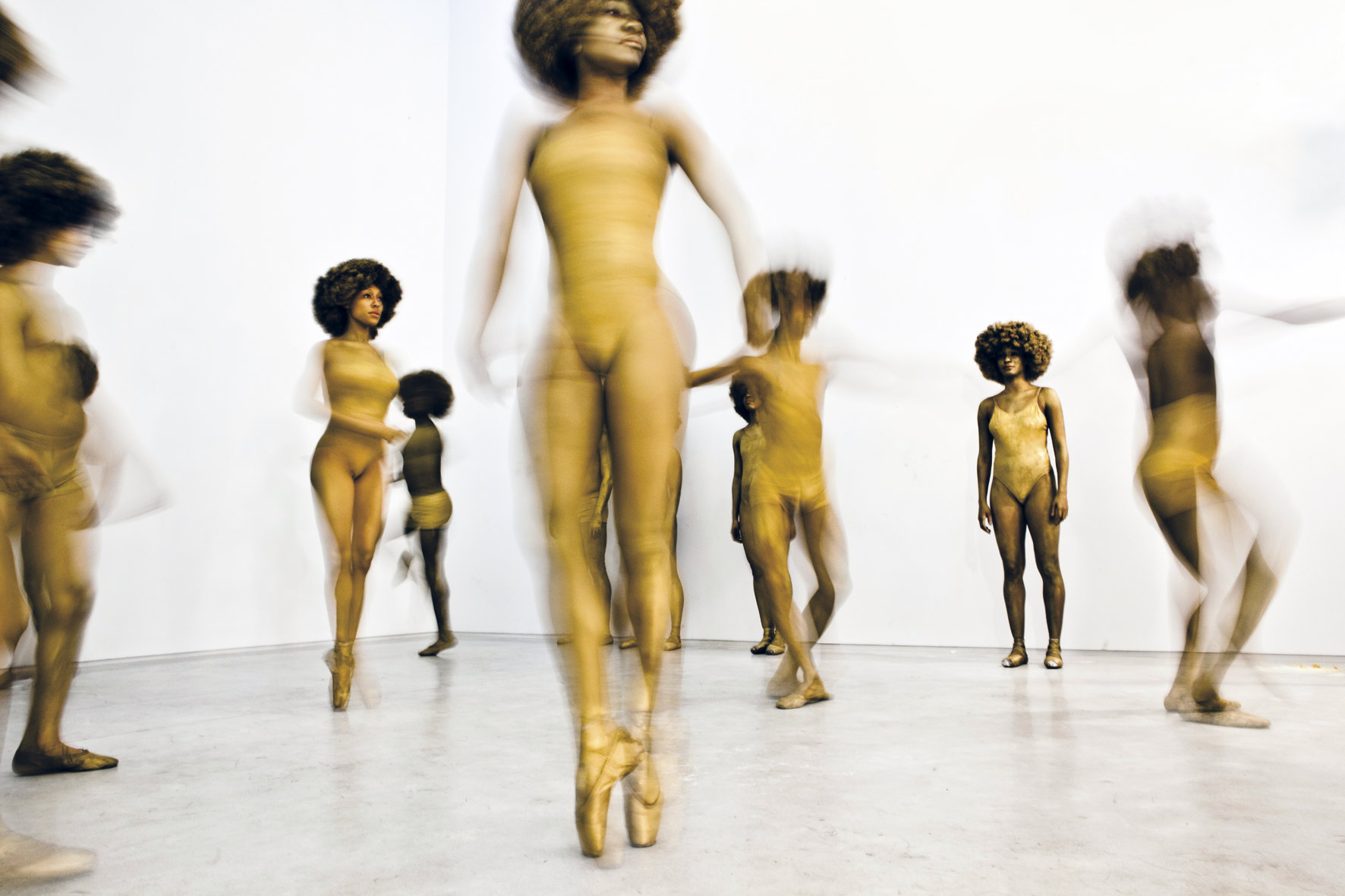
This gallery also reveals how Simpson continues to use her felt medium and returns to her own archive of images   as well as found objects. Three related works, though no longer using text, nevertheless “comment” on each other:  a video of a performance (Momentum, 2010) inspired by an early 1970s performance at Lincoln Center generated felt works based on vintage photographs of this famous New York theatre – Chandelier, 2011, Daytime, 2011, and Daytime (gold), 2011 – as well as the Gold Headed (2013) drawings, based on the dancers costumed head to foot in gold. Drawings are perhaps the least known medium in Simpson’s practice, and while they reveal the fluid gestures of her hand, visitors will recognise in these gold heads turned from the viewer an echo of the position of the figures  in Gallery 1.

Gallery 3 is devoted to Simpson’s newest video, Chess, 2013, which is based on historic photos as well as her own earlier photographic piece, 1957-2009 (Gallery 4), in which she restaged found vintage photographs. Chess and 1957-2009 mark the rare instances in which Simpson has herself appeared in her work.

Gallery 4 presents reenactments that use quotidian photographic genres to explore constructions of identity and that offer a collective portrait of photographic portraiture over time. All of the works in this gallery are based on found photographs Simpson purchased on eBay and each depicts anonymous subjects performing for the camera. 1957-2009 is based on photographs in a vintage album; Gather and Please remind me of who I am are constellations of bronze-framed found photo-booth images (from the 1920s to the 1970s) accompanied by Simpson’s similarly framed drawings of details from the photographs.

Gallery 5 offers Simpson’s video installation Cloudscape, 2004, which focuses on performance itself and the soundings of a body, that of artist Terry Adkins whistling a hymn. Embodying memory (and the distortions of it) as she did in her earliest photo-works but playing also with the particularities of video, Simpson loops the video to play forward and backward. In this process a new melody is created even as the stationary figure appears same but different.
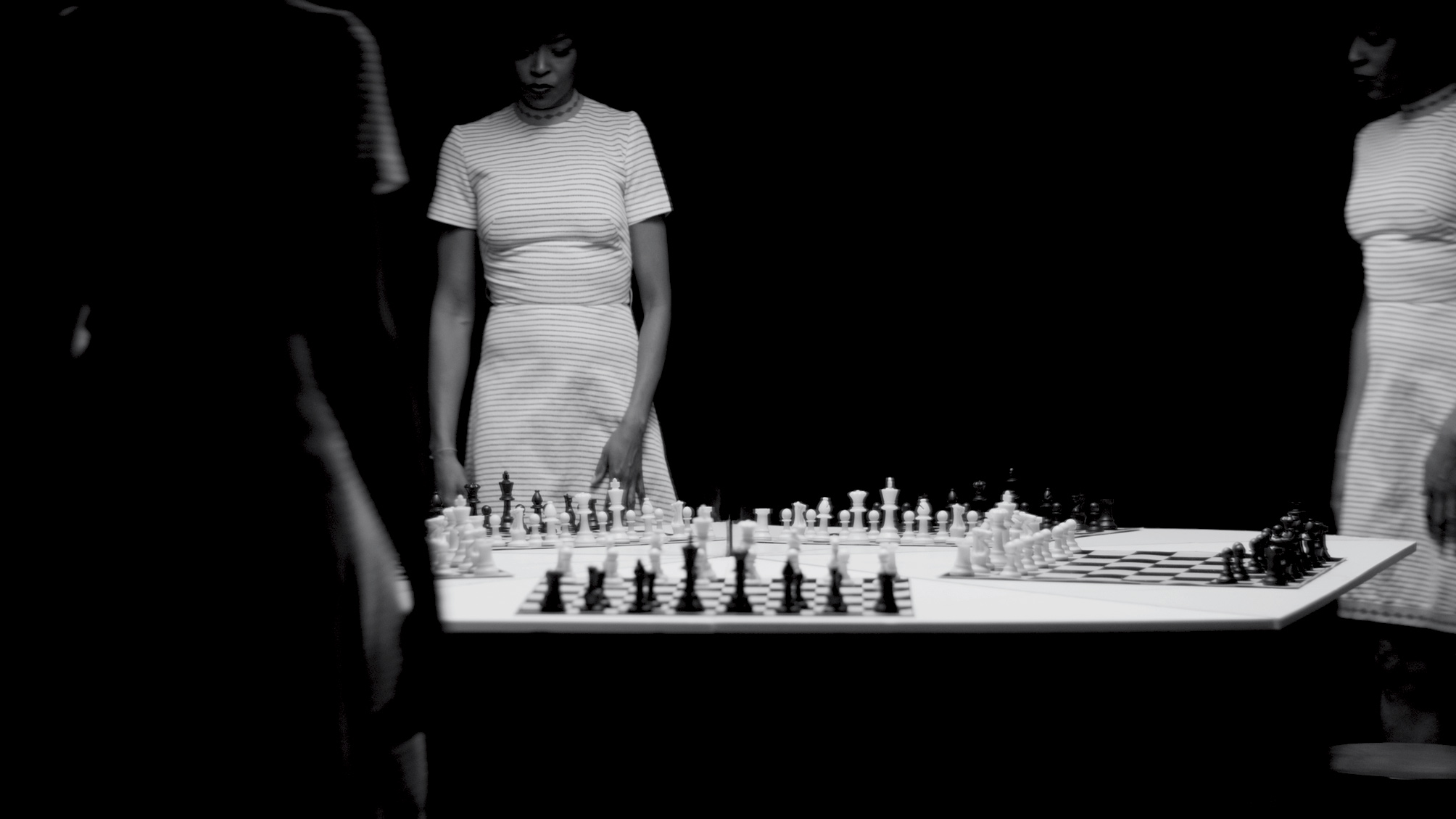
 

Lorna Simpson (American, b. 1960) 'Chess (Échecs)' 2013


Lorna Simpson (American, b. 1960)
Chess (Échecs)
2013
HD video installation with three projections, black & white, sound
10:25 minutes (loop)
Score and performance by Jason Moran
Courtesy the artist; Salon 94, New York; and Galerie Nathalie Obadia, Paris/Brussels
© Lorna Simpson
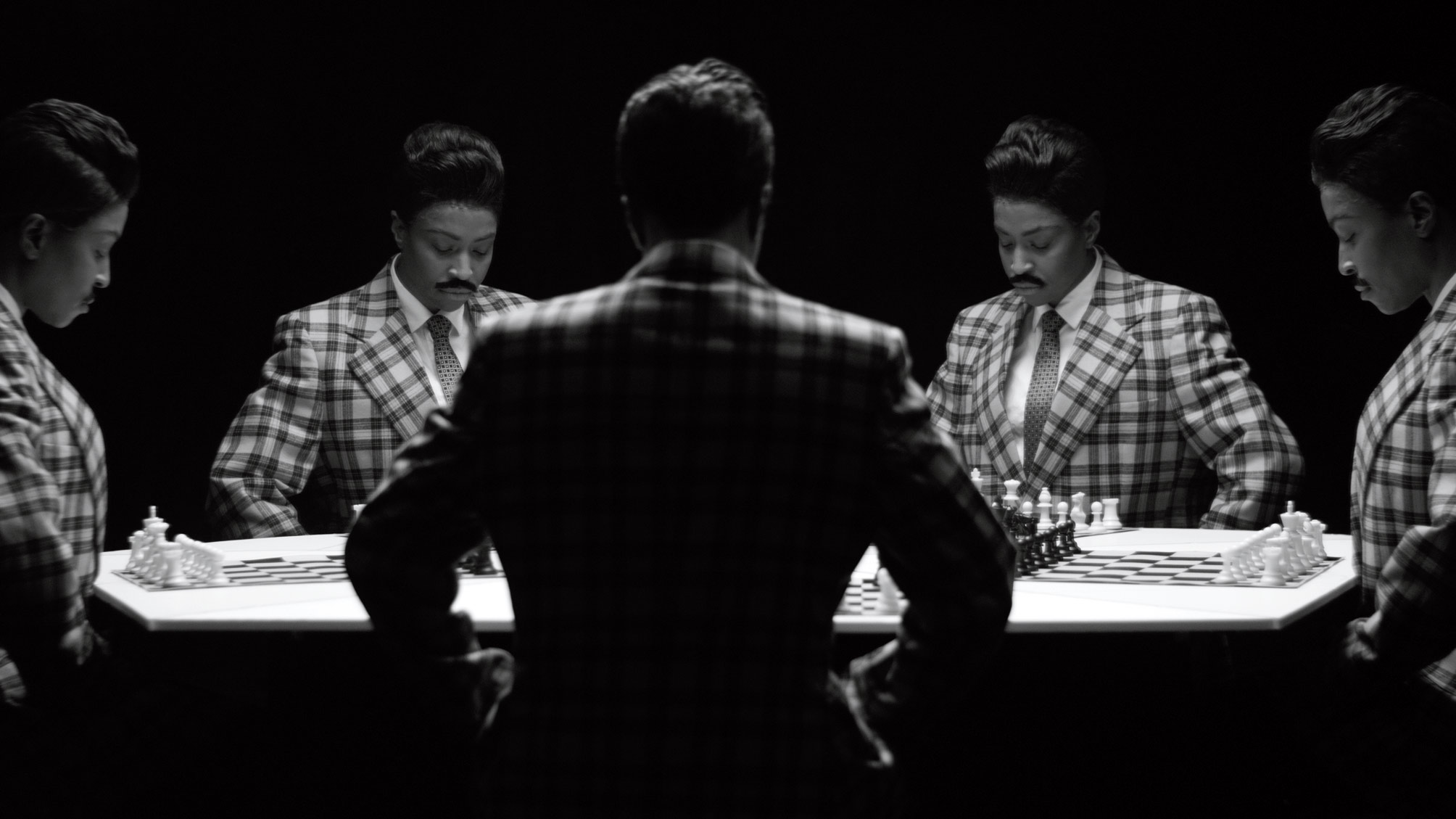
 

Lorna Simpson (American, b. 1960) 'Chess (Échecs)' 2013


Lorna Simpson (American, b. 1960)
Chess (Échecs)
2013
HD video installation with three projections, black & white, sound
10:25 minutes (loop)
Score and performance by Jason Moran
Courtesy the artist; Salon 94, New York; and Galerie Nathalie Obadia, Paris/Brussels
© Lorna Simpson


“Gestures” and “reenactments” could both be described as the underlying methods of Simpson’s practice for the decades to follow. Whether working with photographs she herself staged, found photographs, or archival film footage, her images captured gestures (as in her earliest documentary photographs of 1978-1980) while her series of multiple images, accompanied by texts, proposed simultaneous (if not synchronous) reenactments. This method also applied to works in which she replicated found images, whether turning images from her films into drawings, or using herself to re-play roles depicted by anonymous figures she had discovered in vintage photographs, either for staged still photographs (as in 1957-2009, 2009), or for moving pictures (as in the video Chess, 2013).

Chess, 2013, Simpson’s video installation made expressly for this exhibition, draws on images from 1957-2009, her still photograph ensemble of 2009 (on view in Gallery 4). For both, in a departure from her earlier videos and prior staged photographs, Simpson herself performs. In 1957-2009, by reenacting scenes from found vintage prints with which they are shown, Simpson is “mirroring both the male and  the female character, in dress, pose, expression, and setting. When I would mention the idea of working with mirrors [for the Chess video] people would often mention the famous portraits of Picasso and Picabia taken at a photo studio in New York by an anonymous photographer who placed the subject at a table in front of two mirrored panels at seventy-degree angles. The result is a five-way portrait that includes views that are not symmetrical and that offer slightly different angles: a surrealist trope of trick photography.”

Though the artist first rejected the idea of working with the mirror device used in these historic portraits, which she had seen many times, she decided to take it on fully and reconstruct it in her studio for this new video project after  art historian and sociologist Sarah Thornton sent her “a beautiful image of an unknown man of African descent in a white straw hat, which had been in an exhibition at MoMA [catalogue page 61]. It was a five-way portrait probably taken by the same photographer who had taken the portraits of Picasso and Picabia. I could no longer resist or dismiss this idea. I felt that it was demanding my attention.”

Shot in Simpson’s studio over the weekend of December 8, 2012, Chess is comprised of three video projections. For two of them Simpson again plays both female and male chess-players, and with the help of makeup and hair assistants, she now allows her characters to age. The third projection shows pianist Jason Moran performing his improvised score for this project, which was inspired by discussions between artist and composer about “mirroring in music,” especially “in the work of musician Cecil Taylor, who employs mirroring in his compositions.”
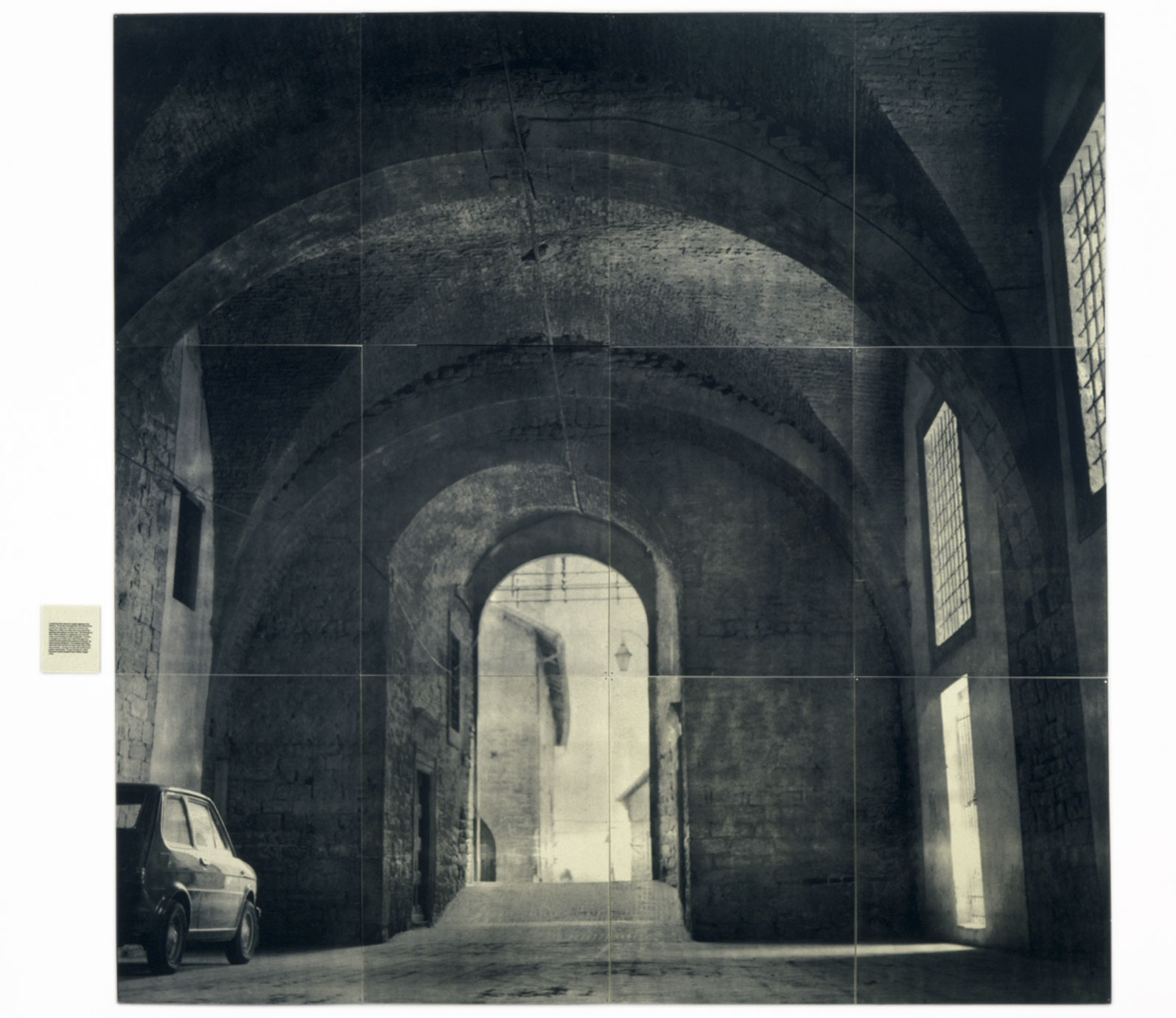
 

Lorna Simpson (American, b. 1960) 'The Car' 1995


Lorna Simpson (American, b. 1960)
The Car
1995
Serigraph on 12 felt panels with felt text panel
102 x 104 in (259.1 x 264.2cm)
Courtesy the artist; Salon 94, New York; and Galerie Nathalie Obadia, Paris/Brussels
© Lorna Simpson
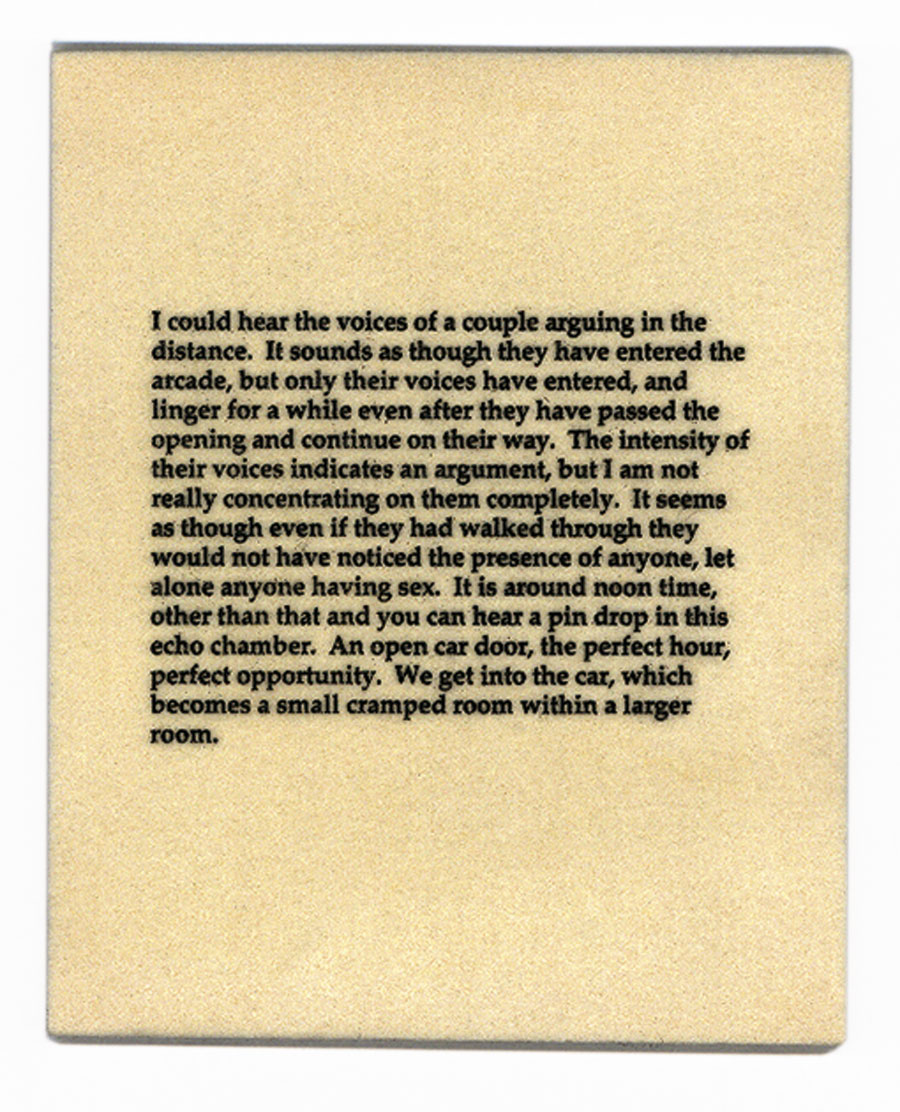
 

Lorna Simpson (American, b. 1960) 'The Car' 1995 (detail)


Lorna Simpson (American, b. 1960)
The Car (detail)
1995
Serigraph on 12 felt panels with felt text panel
102 x 104 in (259.1 x 264.2cm)
Courtesy the artist; Salon 94, New York; and Galerie Nathalie Obadia, Paris/Brussels
© Lorna Simpson
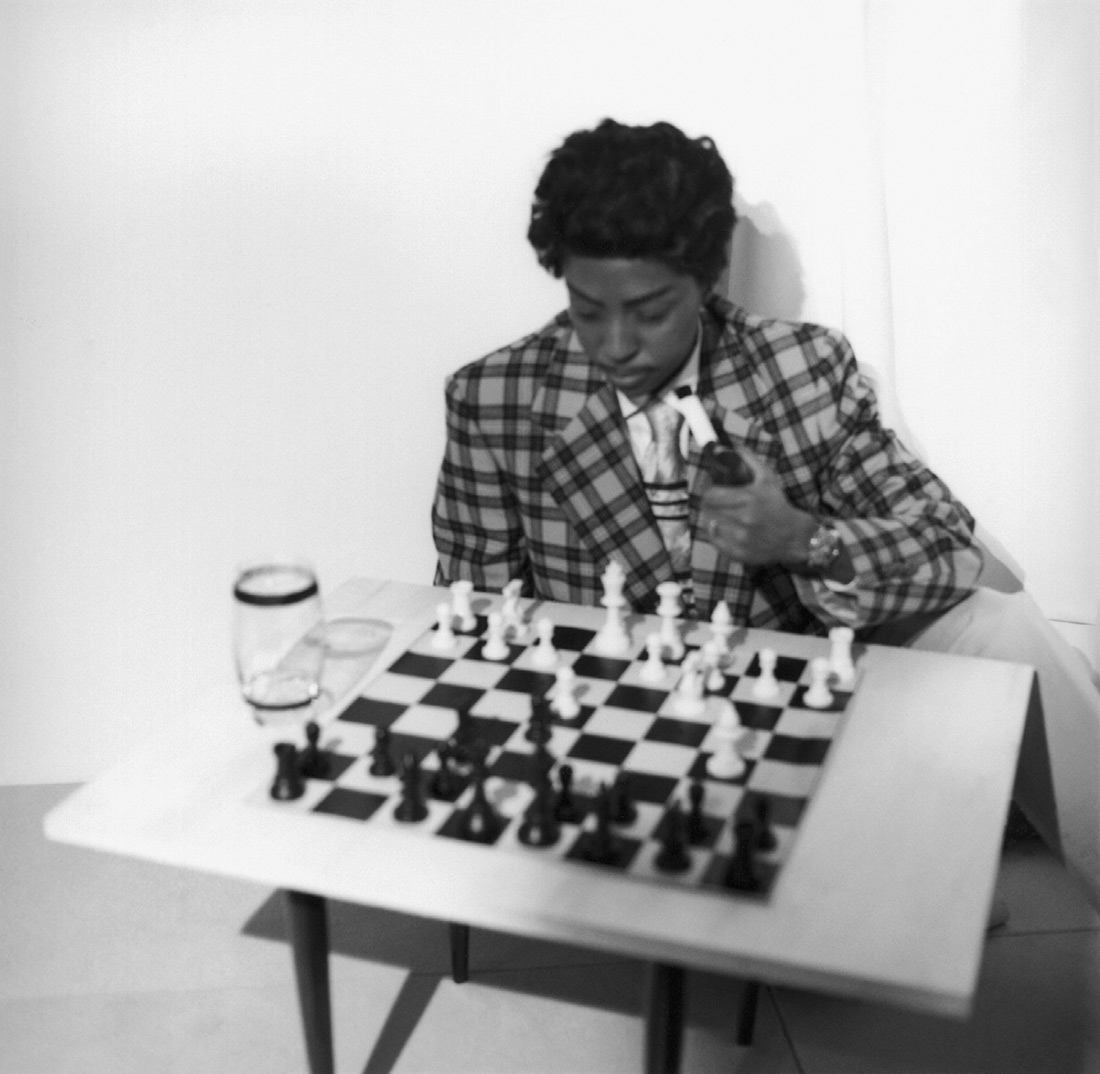
 

Lorna Simpson (American, b. 1960) '1957-2009' 2009 (detail)


Lorna Simpson
1957-2009 (detail)
2009
299 gelatin silver prints, framed
5 x 5 in. (12.7 x 12.7cm) each (image size)
Rennie Collection, Vancouver
© Lorna Simpson


While collecting photo booth images on eBay, Simpson found the first of the vintage photographs – a woman in a tight sweater-dress leaning on a car – that would generate 19572009 (2009). The artist subsequently bought the entire album and in 2009 restaged these photographs of an anonymous black woman and sometimes a man performing for their camera between June and August 1957 in Los Angeles, which they may have done in the hope of gaining movie work in Hollywood or as an independent project of self-invention. For 1957-2009, Simpson reenacted both female and male roles, and the 299 images are comprised of both the 1957 originals and Simpson’s 2009 remakes. Simpson again reenacted a selection of these vignettes for her video installation Chess, 2013.


Lorna Simpson (American, b. 1960) 'Cloudscape (Paysage nuageux)' 2004


Lorna Simpson (American, b. 1960)
Cloudscape (Paysage nuageux)
2004
Video projection, black & white, sound
3:00 minutes (loop)
Centre national des arts plastiques, purchase in 2005
Photo courtesy the artist; Salon 94, New York; and Galerie Nathalie Obadia, Paris/Brussels
© Lorna Simpson/Centre national des arts plastiques


Lorna Simpson’s video installation Cloudscape (2004) isolates one man, Simpson’s friend, the artist and musician Terry Adkins, in a dark room, spotlighted as he whistles a hymn and is enveloped in fog. Focusing on the ephemerality of performance, the artist employs a technique afforded by her medium to play with time as well. Simpson runs the video forward and then also backward in a continuous loop, creating new visual and oral / aural permutations of gesture and reenactment. In the reversal of the time sequence, the image remains somewhat familiar while the tune turns into something else, a different melody.
 

Lorna Simpson (American, b. 1960) 'Momentum' 2010


Lorna Simpson (American, b. 1960)
Momentum
2010
HD video, color, sound
6:56 minutes
Courtesy the artist; Salon 94, New York; and Galerie Nathalie Obadia, Paris/Brussels
© Lorna Simpson


As Simpson explored new mediums, such as film and video starting in 1997 or found photographs in  the late 1990s, she continued to work in parallel with her felt serigraphs. In this gallery are three related sets of works that, unlike her earlier photo-text pieces, are all based on a personal memory: performing as a youngster, age 12, in gold costume, wig, and body paint in a ballet recital at New York’s Lincoln Center. Simpson re-staged such a performance for her video Momentum (2010).


Jeu de Paume
1, Place de la Concorde
75008 Paris
métro Concorde
Phone: 01 47 03 12 50

Opening hours:
Tuesday – Friday: 12am – 8pm
Saturday and Sunday: 11am – 7pm
Closed Monday

Jeu de Paume website

Lorna Simpson website

LIKE ART BLART ON FACEBOOK

Back to top

Review: ‘Lee Grant / Belco Pride’ at Edmund Pearce Gallery, Melbourne

Exhibition dates: 5th June – 22nd June 2013


Lee Grant (Australian, b. 1973) 'Belco Pride' 2008
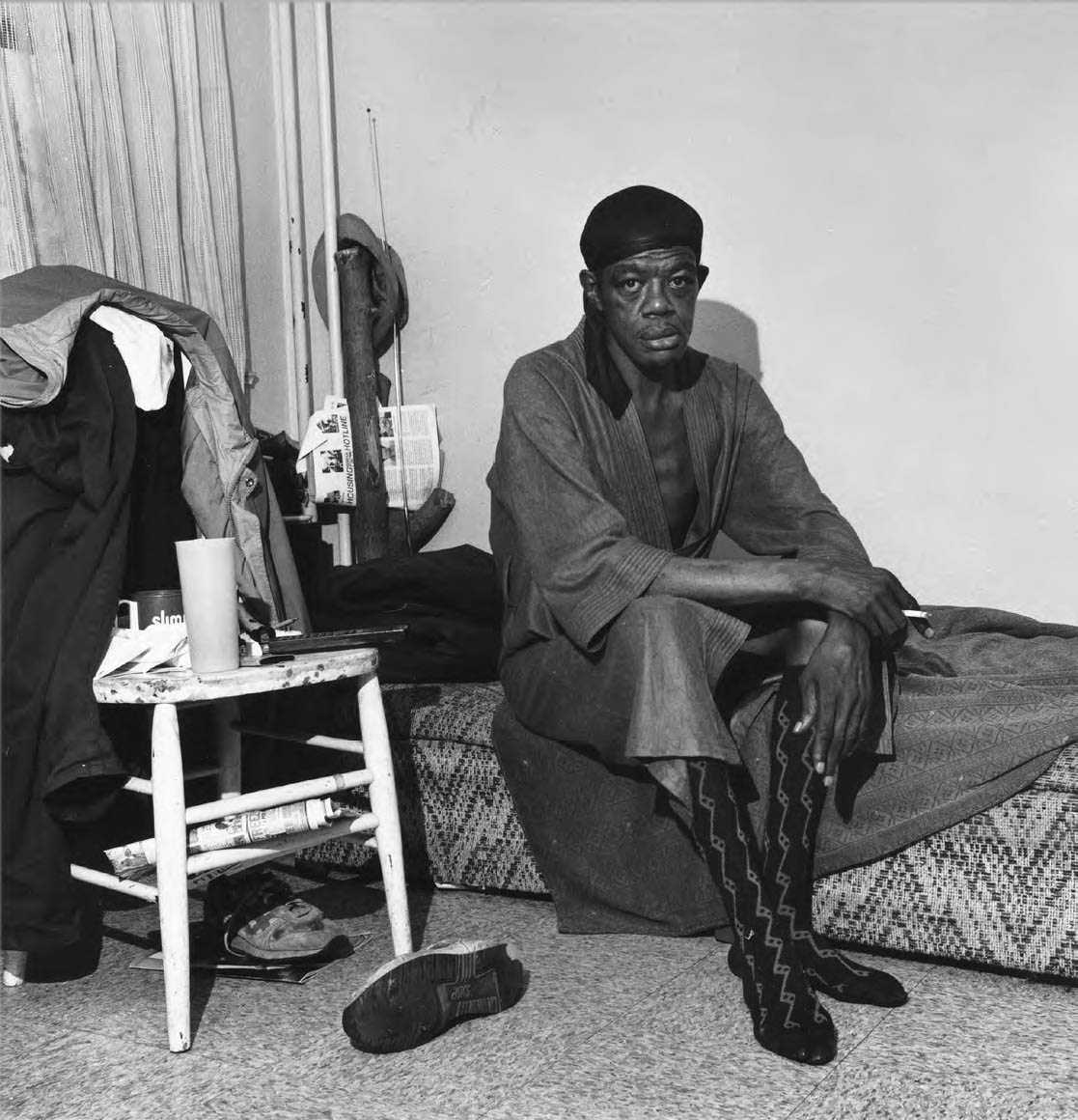
 

Lee Grant (Australian, b. 1973)
Belco Pride
2008
Archival pigment print
60 x 60cm
Edition of 8 + 2 AP


In Belco Pride, the photographer Lee Grant comes as close as you are ever likely to come to an Australian version of the American photographer Alec Soth (Sleeping by the Mississippi, Niagara). That is a great compliment indeed.

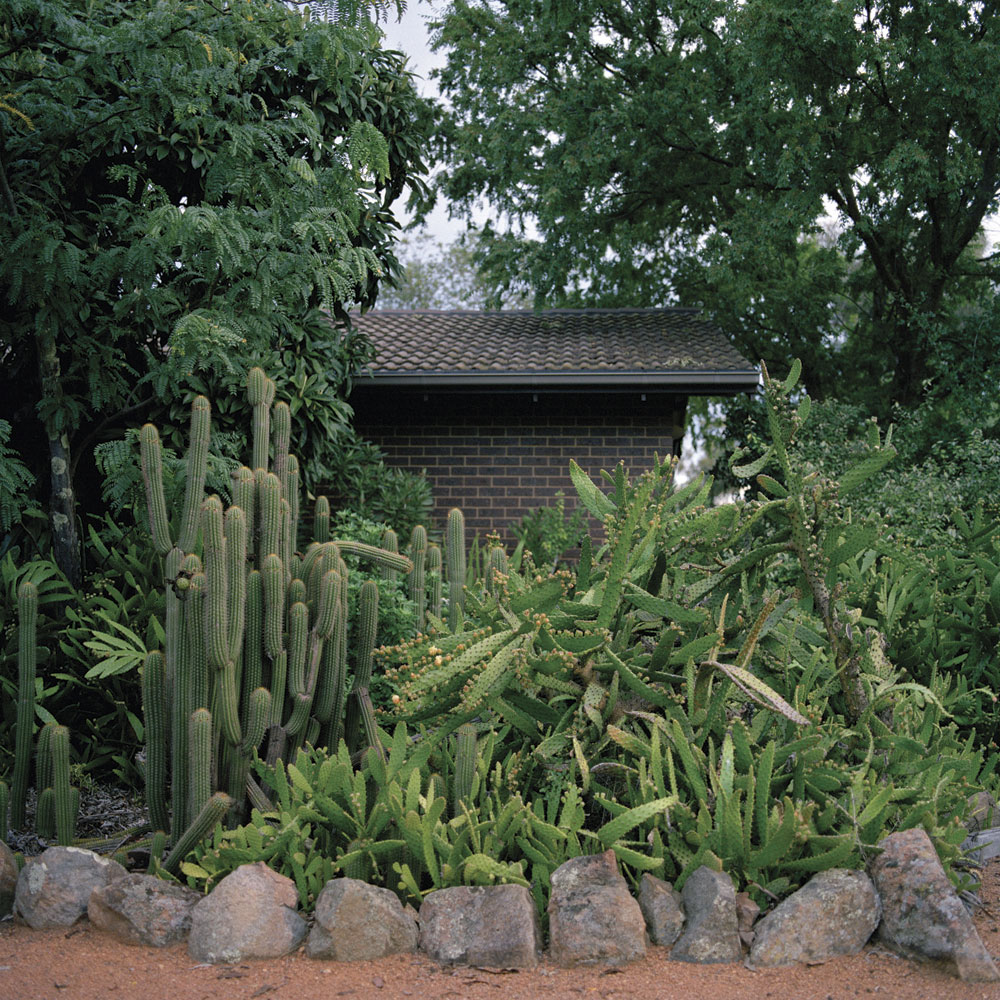
This is an intelligent, cohesive exhibition which features 5 large colour photographs and a grid of 3 x 9 smaller colour photographs that form a topographical map of a suburb in Canberra called Belconnen. The body of work investigates how humans inhabit a specific place and how that place in turn influences the formation of identity and a sense of belonging and community. These themes are set in the context of a shifting, migratory, multicultural Australian suburb. The photographs are beautifully shot and individually well resolved; these square photographs then go on to form a holistic body that gives the viewer a wonderful sense of the people and place being photographed.

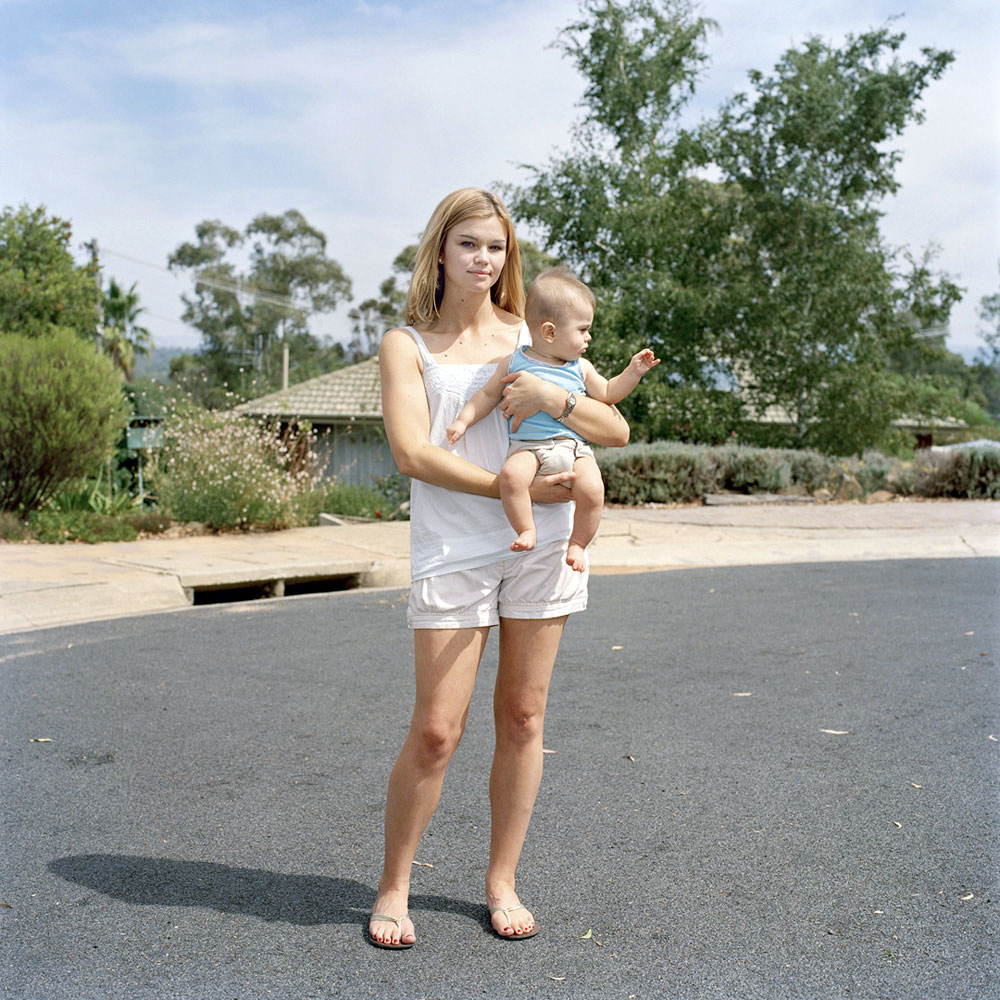
Grant likes to shoot formally and frontally, but that does not mean that there is not subtly and humour present in these photographs. Technically she likes to vary depth of field to emphasise the context of place: in some images, for example Ashleigh in her Formal Dress (2008, below), depth of field is minimal in order to bring focus onto Ashleigh and the texture of her formal dress. The artist also likes to change light conditions from bright sunlight (Alisha and baby Saul, 2009 below), to overcast (Belco Pride, 2008 above) to gathering gloom (George with his model aeroplane, 2008 below); she also likes to push and pull figures and objects within the pictorial frame, from close up to mid-distance to infinity (the rendering of houses for example). This shading of space and tonality adds a beautiful luminosity to the series.

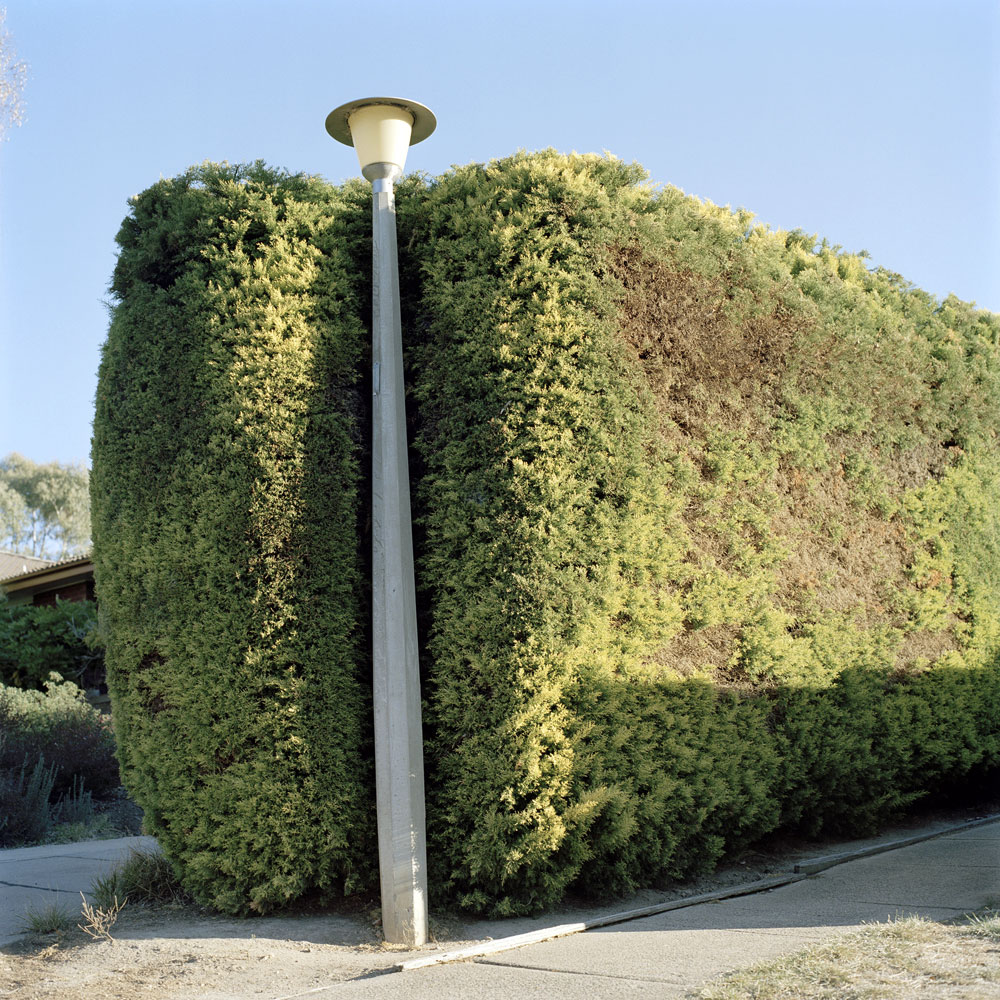
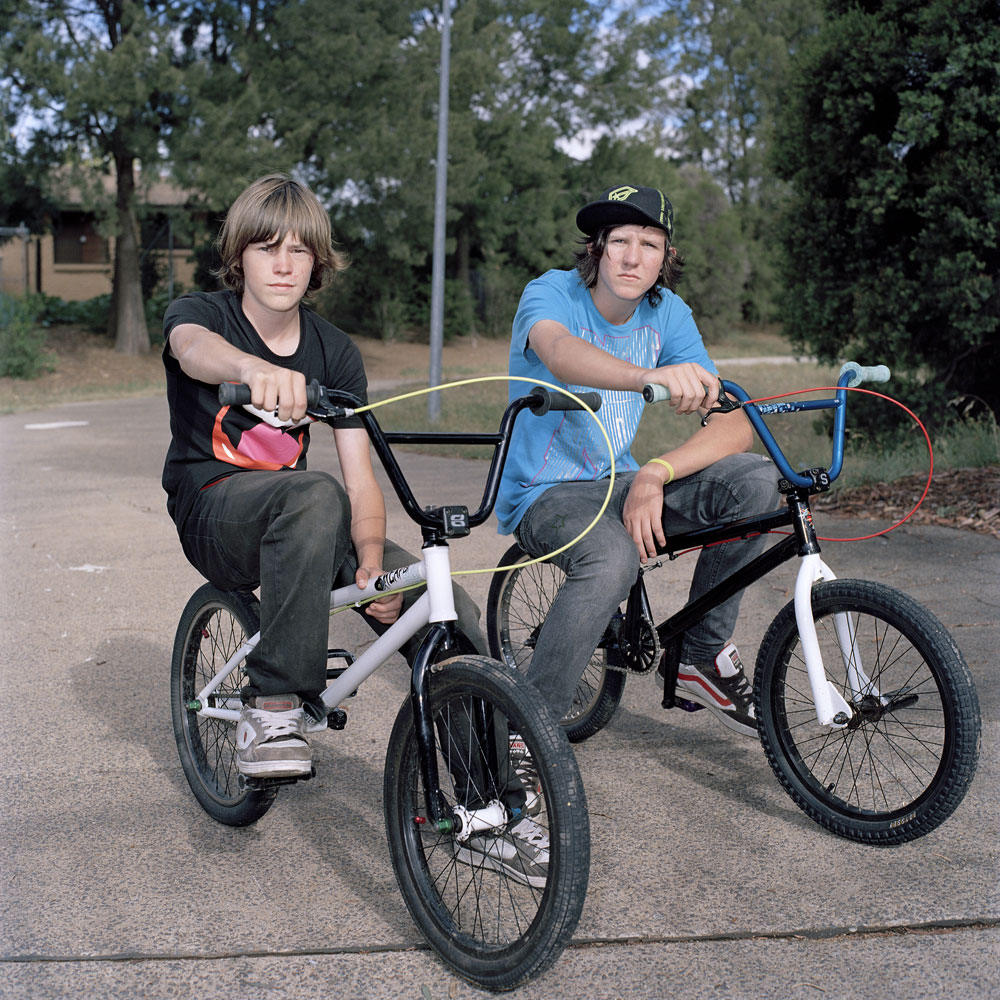
The humour and detail present is also fun: the suits of the sons two sizes too big in The Duot Family (2009, below); the barbed wire looming ominously above the white graffiti  ‘Belco Pride’; the off kilter lamp post in Suburban Hedge (2008, below) being swallowed by the hedge; and the delicious way that the lead from Kiki travels down and trails along the ground to Chucky the dog. There is a real affection and affinity for this place and people that is expressed in these photographs. They are unusually contemplative for this type of photography and that is perhaps a reflection on Grant’s Korean-Australian heritage.

Other work on her website is a mixed bag: the Sudanese Portraits are very successful, reminding me of the work of Mali photographer Malick Sidibé, while Window on the Orient is interesting but the photographs are a little ‘flat’ due to their subject matter. The Road to Kuvera and Welcome to Vietnam lack the same connection and insight into the human condition that Belco Pride possesses, and this body of work seems to be her strongest so far in terms of an enunciation of her inner vision. I await new work with interest.

Dr Marcus Bunyan


Many thankx to Edmund Pearce for allowing me to publish the photographs in the posting. Please click on the photographs for a larger version of the image.


Lee Grant (Australian, b. 1973) 'The Duot Family' 2009


Lee Grant (Australian, b. 1973)
The Duot Family
2009
Archival pigment print
110 x 110cm
Edition of 4 + 2 AP


Lee Grant (Australian, b. 1973) 'Cactus Garden' 2012


Lee Grant (Australian, b. 1973)
Cactus Garden
2012
Archival pigment print
110 x 110cm
Edition of 4 + 2 AP


Lee Grant (Australian, b. 1973) 'Ashleigh in her Formal Dress' 2008


Lee Grant (Australian, b. 1973)
Ashleigh in her Formal Dress
2008
Archival pigment print
110 x 110cm
Edition of 4 + 2 AP


Lee Grant (Australian, b. 1973) 'Suburban Hedge' 2008


Lee Grant (Australian, b. 1973)
Suburban Hedge
2008
Archival pigment print
110 x 110cm
Edition of 4 + 2 AP


Lee Grant (Australian, b. 1973) 'Graffheads' 2009


Lee Grant (Australian, b. 1973)
Graffheads
2009
Archival pigment print
60 x 60cm
Edition of 8 + 2 AP


Lee Grant (Australian, b. 1973) 'Roxy and Jess' 2008


Lee Grant (Australian, b. 1973)
Roxy and Jess
2008
Archival pigment print
60 x 60cm
Edition of 8 + 2 AP


Belco’s a hole… but it’s our hole.

I’ve been told that you never truly leave behind the place you grew up. That it remains deep within your experience of the world. Feeling conflicted about one’s place of origin is certainly not unique, but for me, the process of returning ‘home’ and reconciling my perception of place with its banal and vernacular reality was a surprising yet cathartic experience. The photographs in this series express the idea that belonging, connection and identity is deeply rooted in the specifics of one’s inhabited landscape. The landscape depicted here being the 25 northernmost suburbs of Canberra known as Belconnen, or to us locals, as ‘Belco’.

As a photographer, I am interested in the way migrant communities adapt to new environments, particularly in western cultures and much of my work explores themes of identity, belonging and community set often in the context of the Australian suburbs.

Lee Grant


“I always believed it was the things you don’t choose that makes you who you are. Your city, your neighbourhood, your family. People here take pride in these things, like it was something they’d accomplished. The bodies around their souls, the cities wrapped around those. I lived on this block my whole life; most of these people have.”

Dennis Lehane


Lee Grant’s latest exhibition at Edmund Pearce, Belco Pride, explores how belonging, connection and identity is deeply rooted in the specifics of one’s inhabited landscape. The landscape depicted here being the 25 northernmost suburbs of Canberra known as Belconnen, or to the locals, as ‘Belco’.

Lee is a documentary photographer who lives and works in Canberra. She holds a degree in Anthropology and in 2010 completed a Master of Philosophy at the ANU School of Art. Lee has exhibited at the Australian Centre for Photography, the Monash Gallery of Art and the National Portrait Gallery amongst others. She has been a finalist in the National Photographic Portrait Prize, the Head On Alternative Portrait Prize, the Josephine Ulrick and Win Schubert Prize and the Olive Cotton Award. Lee was also the winner of the prestigious Bowness Photography Prize in 2010. Her work is held in the National Library, the Canberra Museum and Art Gallery as well as numerous private collections.


Lee Grant (Australian, b. 1973) 'Kiki and Chucky' 2008


Lee Grant (Australian, b. 1973)
Kiki and Chucky
2008
Archival pigment print
60 x 60cm
Edition of 8 + 2 AP


Lee Grant (Australian, b. 1973) 'Nathan & Mac, BMX bros' 2009


Lee Grant (Australian, b. 1973)
Nathan & Mac, BMX bros
2009
Archival pigment print
60 x 60cm
Edition of 8 + 2 AP


Lee Grant (Australian, b. 1973) 'A View of Suburbia' 2009


Lee Grant (Australian, b. 1973)
A View of Suburbia
2009
Archival pigment print
60 x 60cm
Edition of 8 + 2 AP


Lee Grant (Australian, b. 1973) 'Alisha and baby Saul' 2009


Lee Grant (Australian, b. 1973)
Alisha and baby Saul
2009
Archival pigment print
60 x 60cm
Edition of 8 + 2 AP


Lee Grant (Australian, b. 1973) 'George with his model aeroplane' 2008


Lee Grant (Australian, b. 1973)
George with his model aeroplane
2008
Archival pigment print
60 x 60cm
Edition of 8 + 2 AP


Lee Grant (Australian, b. 1973) 'Ginninderra Creek on a Winter's morning' 2008


Lee Grant (Australian, b. 1973)
Ginninderra Creek on a Winter’s morning
2008
Archival pigment print
60 x 60cm
Edition of 8 + 2 AP


Lee Grant (Australian, b. 1973) 'The Beehive' 2008


Lee Grant (Australian, b. 1973)
The Beehive
2008
Archival pigment print
60 x 60cm
Edition of 8 + 2 AP


Lee Grant (Australian, b. 1973) 'Lee' 2010


Lee Grant (Australian, b. 1973)
Lee
2010
Archival pigment print
60 x 60cm
Edition of 8 + 2 AP


Edmund Pearce Gallery

This gallery is now closed.

LIKE ART BLART ON FACEBOOK

Back to top

Exhibition: ‘Distance and Desire: Encounters with the African Archive Part III: Poetics and Politics’ at The Walther Collection Project Space, New York: Part 1

Exhibition dates: 22nd March – 18th May 2013


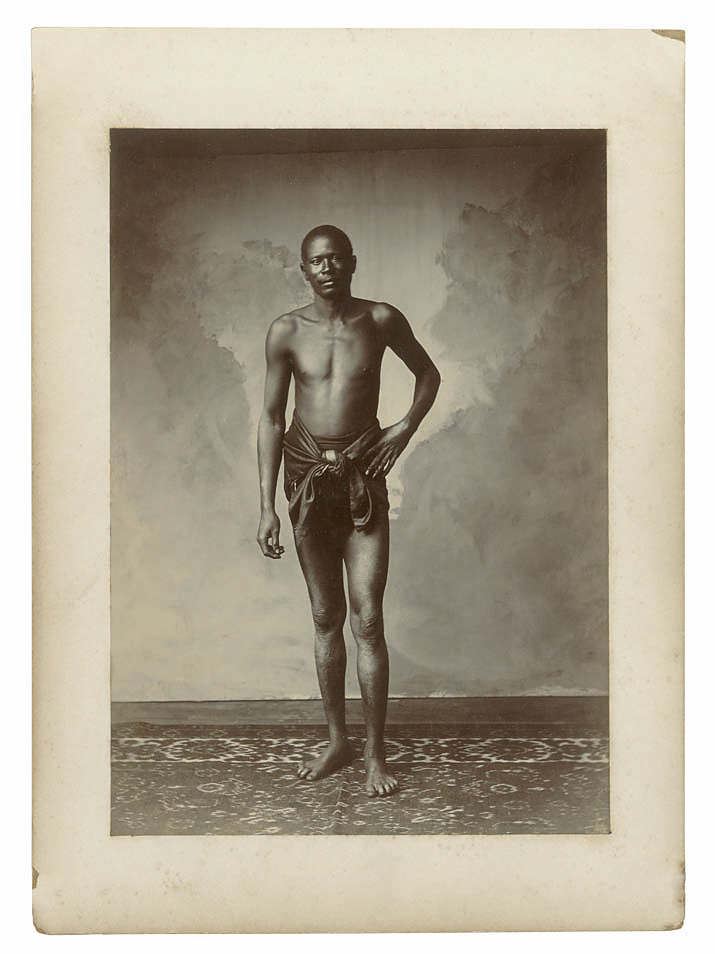
Unidentified photographer. 'Photograph of a man' South Africa, late nineteenth century


Unidentified photographer
Photograph of a man
South Africa, late nineteenth century
Gelatin or collodion printed-out print


Undertaking research in to the work of South African photographer Ernest Cole, I wanted to know more about “South African colonial photography” pre-Apartheid. If you type the phrase into Google images there is absolutely nothing online about this historical archive. So it is a great privilege that The Walther Collection has allowed me to publish nearly 40 photographs over two postings on Art Blart. What a honour to be the first online space to promote this important historical record.

It is vital that colonial photographs such as these are visible in contemporary society for they bare witness to the conditions of the past and provide a visual language to textualise our experience and thereby make it available for interpretation and closure – for people of all colours and races. This is particularly true for a post-colonial country such as South Africa where the history of the nation must be examined impartially no matter how painful the subject matter in order to understand how the actions of the past influence the present and will continue to be re/sighted in the future. Through continual re/citation by being present in the public sphere for all to see (not hidden away offline) these images will become a source of pride (for person, family, tribe, country) – for these were strong human beings that survived the vicissitudes of colonialism to form the history and lineage of a nation.

We must thank numerous private collectors that have saved many of these photographs from the rubbish tip when no public institution was interested in collecting them. Interesting books about the South African archive include Surviving the Lens: Photographic Studies of South and East African People, 1870-1920 by Michael Graham Stewart (2001) and Contemporary African Photography from the Walther Collection. Events of the Self, Portraiture and Social Identity by Okwui Enwezor (ed.) Göttingen, Steidl, 2010.

See Part 2 of the posting.

Dr Marcus Bunyan


Many thankx to The Walther Collection for allowing me to publish the photographs in the posting. Please click on the photographs for a larger version of the image.


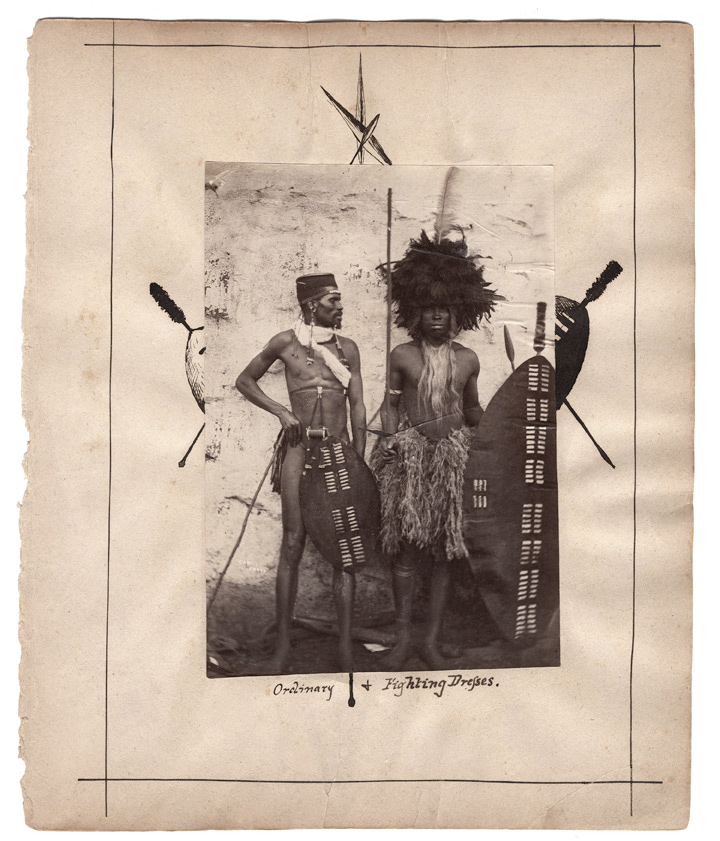
Caney Brothers, inscribed: 'Ordinary & Fighting Dresses.' South Africa, late nineteenth century


Caney Brothers, inscribed:
Ordinary & Fighting Dresses.
South Africa, late nineteenth century
Albumen print


Henri Noyer (attr.), inscribed: 'Taisaka Spearsmen No. 2' Madagascar, early twentieth century


Henri Noyer (attr.), inscribed:
Taisaka Spearsmen No. 2
Madagascar, early twentieth century
Gelatin or collodion printed-out print


The Taisaka come from the South-East coast of the island of Madagascar.


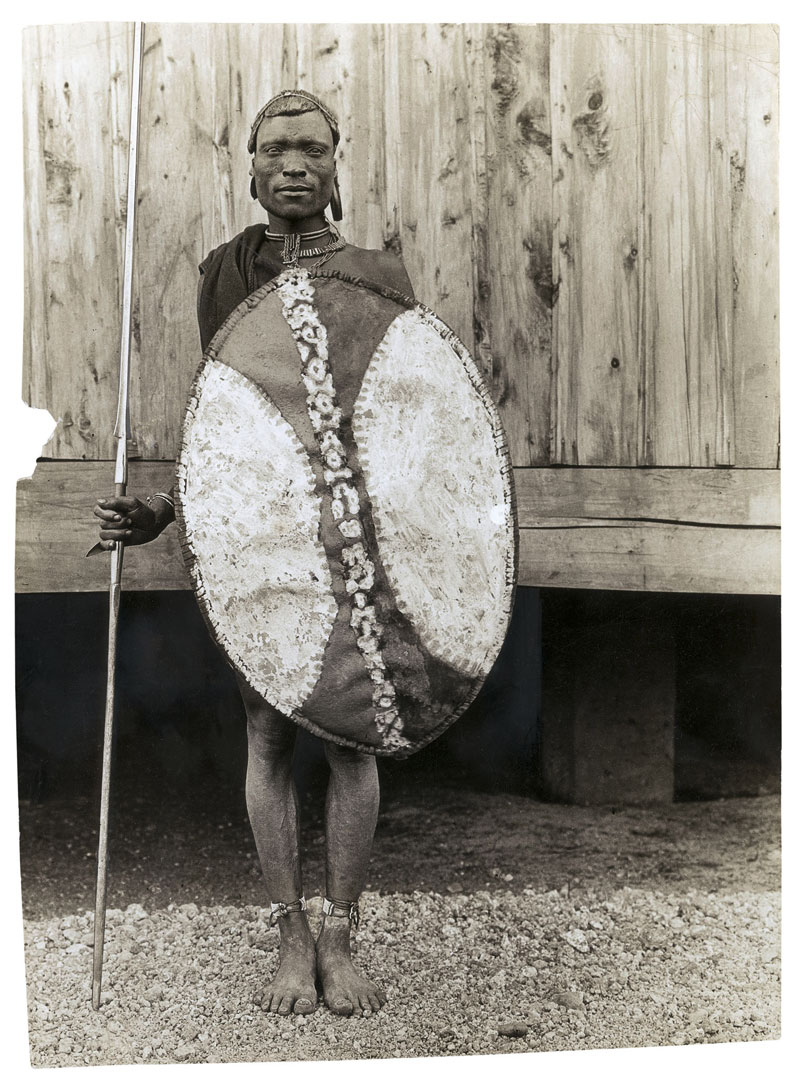
Unidentified photographer. 'Mouv, Nthaka warrior' East Africa, early twentieth century


Unidentified photographer
Mouv, Nthaka warrior
East Africa, early twentieth century
Gelatin or collodion developed out print


The Ameru had an age set system which provided the community with warriors for defence. Boys are circumcised and become Nthaka (warriors). They stay in a Gaaru and learn to defend the community and take care of their families. The warriors were called Nthaka and were isolated from the community for military training


Unidentified photographer. 'Studio photograph of a man' South Africa, late nineteenth century


Unidentified photographer
Studio photograph of a man
South Africa, late nineteenth century


Unidentified photographer. 'Studio photograph of a man' South Africa, late nineteenth century


Unidentified photographer
Studio photograph of a man
South Africa, late nineteenth century


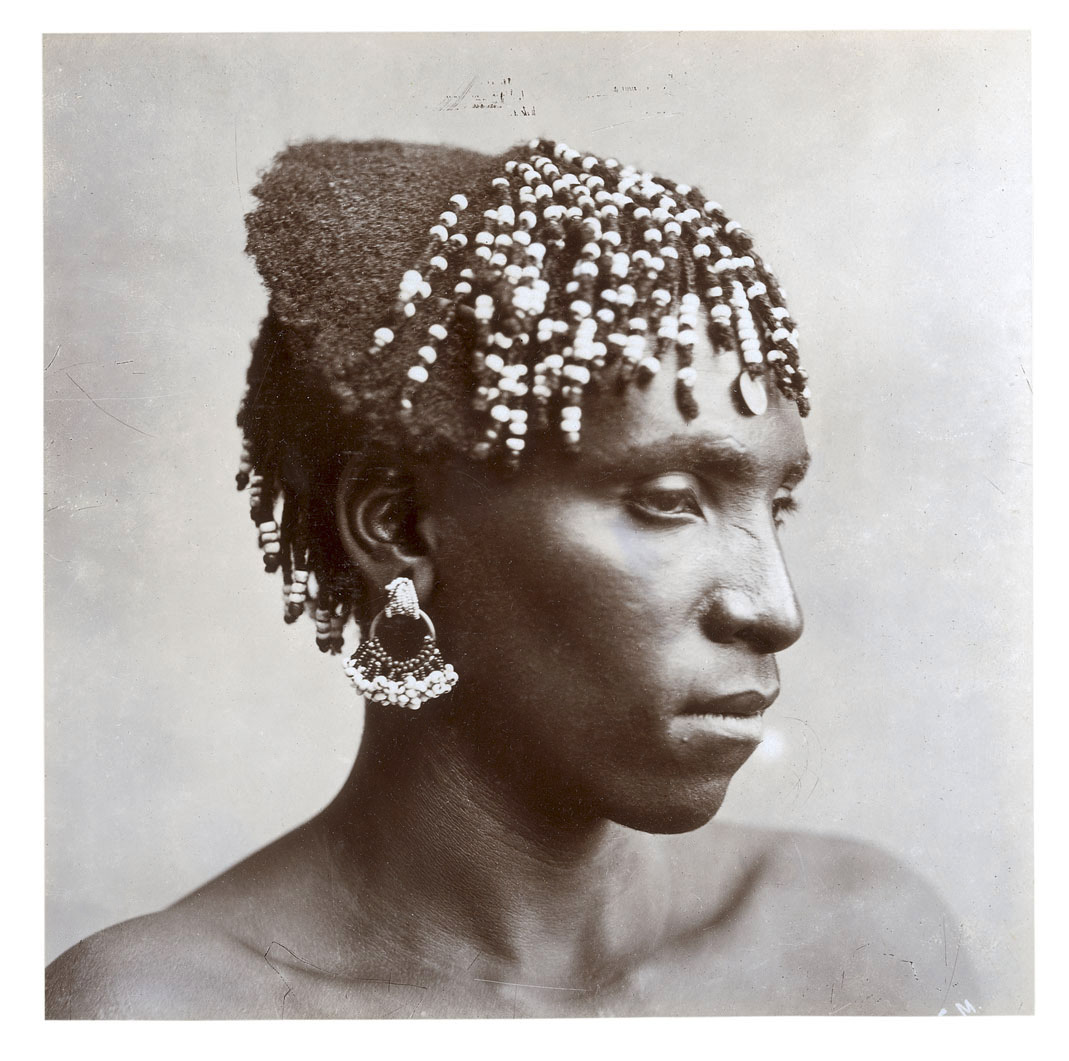
J. E. Middlebrook (South African, active 1870s-1900s) inscribed: 'A Zulu girl. Hair strung with beads' South Africa, late nineteenth century


J. E. Middlebrook (South African, active 1870s-1900s) (attr.), inscribed:
A Zulu girl. Hair strung with beads
South Africa, late nineteenth century
Gelatin-silver printed-out print


The Zulu (Zulu: amaZulu) are the largest South African ethnic group, with an estimated 10-11 million people living mainly in the province of KwaZulu-Natal. Small numbers also live in Zimbabwe, Zambia and Mozambique. Their language, Zulu, is a Bantu language; more specifically, part of the Nguni subgroup. The Zulu Kingdom played a major role in South African history during the 19th and 20th centuries. Under apartheid, Zulu people were classed as third-class citizens and suffered from state-sanctioned discrimination. They remain today the most numerous ethnic group in South Africa, and now have equal rights along with all other citizens.

J. E. Middlebrook. Late 19th-century South African photographer. The flourishing diamond mines in Kimberley brought hundreds of workers and photographers to the area beginning in 1867. J. E. Middlebrook followed soon thereafter in the early 1870s, and set up his photography studio, The Premier Studio, on West Street West ; he had a second studio in Durban, “Opposite the Club.” Middlebrook photographed the landscape, farms, cities, and people of South Africa. His photographs of the Zulu people are considered to be theatrical, deliberating portraying the native people in an idyllic, romantic, and exotic light. He took photographs during the South African war (1899-1902). A number of well-known photographers were based at the studio, including C. Evans, Wunsch, Atkinson and Dyer, who documented Kimberley’s early days. By 1906, Middlebrook’s was bought by Frank Hancox and when German, Charles Seidenstucker, arrived in South Africa, he promptly became the studio’s new owner.


A. James Gribble (South African, 1863-1943) inscribed: 'Kaffer woman' South Africa, late nineteenth century


A. James Gribble (South African, 1863-1943), inscribed:
Kaffer woman
South Africa, late nineteenth century
Albumen print


The word kaffer is a word that is used widely in South Africa and is a derogatory word for a black person. Used mainly by Afrikaans people. In old Dutch it means unbeliever (in God), so should not necessarily mean black, but just unholy or non-Christian. Boers gave the name in early South African history as native Africans did not believe in Jesus. Name came after Bantu – which means the same thing, but was banned as it was discriminatory.


Unidentified photographer. 'Zulu mothers' South Africa, late nineteenth century


Unidentified photographer, inscribed:
Zulu mothers
South Africa, late nineteenth century
Gelatin-silver printed out print


Samuel Baylis Barnard (English, 1841-1916) 'Hottentott S. Africa [Portait of /A!kunta]' South Africa, early 1870s


Samuel Baylis Barnard (English, 1841-1916), inscribed
Hottentott S. Africa [Portait of /A!kunta]
South Africa, early 1870s
Albumen print


The word ‘Hottentots’ was a name disparagingly used to refer to the Khoikhoi people that lived in the southern parts of the African continent as early as the 5th century AD and continued to live till the first colonists arrived in the middle of the seventeenth century. The Dutch colonists called them Hottentots. It means ‘stammerer’ in Dutch. Khoikhoi means ‘people people’. The word Hottentot is no longer used to describe the people.


The Walther Collection is pleased to announce Poetics and Politics, the third and last exhibition in the series Distance and Desire: Encounters with the African Archive, curated by Tamar Garb. Poetics and Politics presents an extraordinary range of previously unseen vintage portraits, cartes de visite, postcards, and album pages from Southern and Eastern Africa, produced from the 1870s to the early twentieth century. The exhibition makes visible both the ideological frameworks that prevailed during the colonial period in Africa and the exceptional skill of photographers working in the studio and landscape.

The culmination of Distance and DesirePoetics and Politics offers a remarkable opportunity to view the narratives that emerge from this African photographic archive, describing in particular the experience of the studio – the curiosity between subject and photographer, the negotiations of costume and pose, and the will for self-representation. The exhibition investigates typical European depictions of Africans, from scenes in nature, to sexualised images of semi-nude models, to modern sitters posing in elaborate studios, critically addressing the politics of colonialism and the complex issues of gender and identity.

Among over 75 vintage prints, Poetics and Politics includes a selection of elegant studio portraits by Samuel Baylis Barnard, one of Cape Town’s most prominent nineteenth century photographers. Original album pages of landscapes and ethnographic imagery are displayed alongside a series of carte de visite portraits of Africans, created in the 1870s in the Diamond Fields of Kimberley, South Africa. The exhibition also features several double-sided displays of album pages, showing striking combinations of personal and stock images, and the juxtapositions of prominent figures in both African and Western contexts.

Distance and Desire is accompanied by an extensive catalogue, published by The Walther Collection and Steidl, and edited by Tamar Garb. Including twelve original essays, the catalogue offers new perspectives by contemporary artists and scholars on the African archive, reimagining its diverse histories and changing meanings. On June 8, 2013 the expanded exhibition incorporating all three parts of Distance and Desire: Encounters with the African Archive will open at The Walther Collection in Neu-Ulm, Germany. The Walther Collection is a private non-profit foundation dedicated to researching, collecting, exhibiting, and publishing modern and contemporary photography and video art, based in Neu-Ulm, Germany and New York. Distance and Desire is part of the collection’s multi-year investigation of African photography and video.

Press release from the Walther Collection website


Unidentified photographer. 'Native Police' South Africa, Late nineteenth century


Unidentified photographer, inscribed:
Native Police
South Africa, Late nineteenth century
Albumen print mounted on album page


Kimberley Studio (New Rush, Diamond Fields). 'Zulu / Warrior in skin kaross, armed with assegais' and 'Guerrier Zulu a manteau de fourrure et armé de piques' South Africa, c. 1870s


Kimberley Studio (New Rush, Diamond Fields), inscribed:
Zulu / Warrior in skin kaross, armed with assegais and Guerrier Zulu a manteau de fourrure et armé de piques
South Africa, c. 1870s
Carte de visite


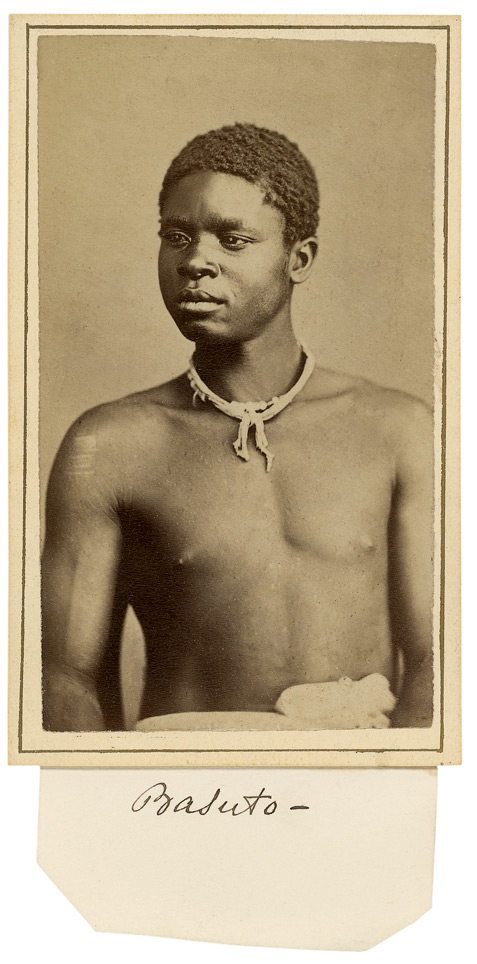
John Salmon. 'Basuto' South Africa, c. 1870s


John Salmon, inscribed:
Basuto
South Africa, c. 1870s
Carte de visite


See Sotho people on Wikipedia


Samuel Baylis Barnard (English, 1841-1916) 'Photograph of a woman' South Africa, late nineteenth century


Samuel Baylis Barnard (English, 1841-1916)
Photograph of a woman
South Africa, late nineteenth century
Carte de visite


William Moore (attr.), 'Macomo and his chief wife [Portrait of Maqoma and his wife Katyi]' South Africa, c. 1869


William Moore (attr.), inscribed:
Macomo and his chief wife [Portrait of Maqoma and his wife Katyi]
South Africa, c. 1869
Albumen print


G. F. Williams. 'Studio photograph of a man' South Africa South Africa, late nineteenth century


G. F. Williams
Studio photograph of a man, South Africa
South Africa, late nineteenth century
Carte de visite


Unidentified photographer. 'Fingo swells' South Africa, late nineteenth century


Unidentified photographer, inscribed:
Fingo swells
South Africa, late nineteenth century
Gelatin or collodion printed-out print


The Fengu (plural amaFengu) are a Bantu people; originally closely related to the Zulu people, but now often considered to have assimilated to the Xhosa people whose language they now speak. Historically they achieved considerable renown for their military ability in the frontier wars. They were previously known in English as the “Fingo” people, and they gave their name to the district of Fingoland (Mfenguland), the South West portion of the Transkei division, in the Cape Province.


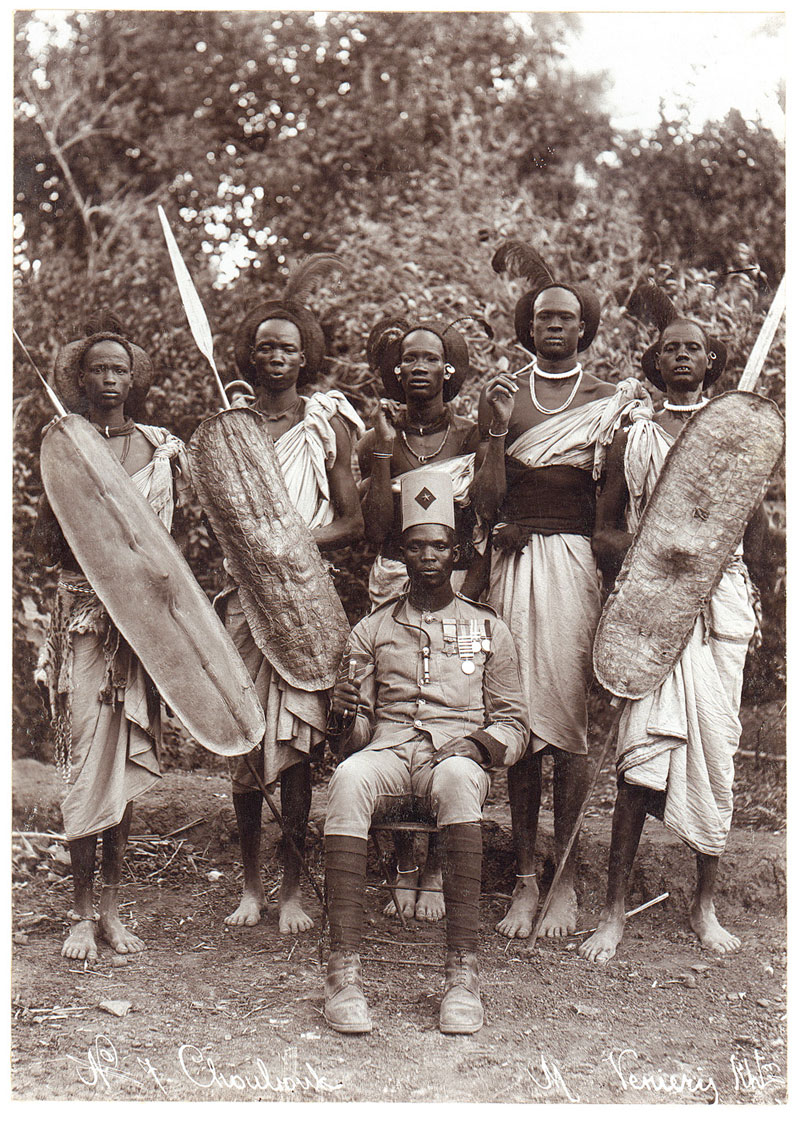
M. Veniery. 'Choubouk' Sudan, early twentieth century


M. Veniery, inscribed:
Choubouk
Sudan, early twentieth century
Gelatin or collodion printedout print mounted on card


Unidentified photographer. 'Bushman' South Africa, late nineteenth century


Unidentified photographer, inscribed:
Bushman
South Africa, late nineteenth century
Gelatin or collodion printed-out print


The San peoples, also known as the Bushmen, are members of various Khoe, Tuu, or Kx’a-speaking indigenous hunter-gatherer groups that are the first nations of Southern Africa, and whose territories span Botswana, Namibia, Angola, Zambia, Zimbabwe, Lesotho and South Africa. In 2017, Botswana was home to approximately 63,500 San people, which is roughly 2.8% of the country’s population, making it the country with the highest population of San people. “Bushmen” is now considered derogatory by many South Africans.


A.C. Gomes & Son. 'Views in Zanzibar – Natives Hairdressing' Tanzania Late nineteenth century


A.C. Gomes & Son, inscribed:
Views in Zanzibar – Natives Hairdressing, Tanzania
Late nineteenth century
Gelatin or collodion printed-out print mounted to album page


A. C. Gomes established a photo studio in Zanzibar perhaps as early as 1868. He had a brief partnership with J. B. Coutinho in the 1890s. His son P. F. Gomes continued the family business in Zanzibar for many years, he died in 1932. Over those years both have left us with some marvellous images.


The Walther Collection Project Space
Suite 718, 508-526 West 26th Street
New York
Phone: +1 212 352 0683

Opening hours:
Wednesday – Saturday from 12pm – 6pm

The Walther Collection website

LIKE ART BLART ON FACEBOOK

Back to top

Exhibition: ‘XTRAVAGANZA. Staging Leigh Bowery’ at Kunsthalle Wien, Vienna

Exhibition dates: 19th October 2012 – 3rd February 2013


Installation view of 'XTRAVAGANZA. Staging Leigh Bowery', Kunsthalle Wien


Installation view of XTRAVAGANZA. Staging Leigh Bowery, Kunsthalle Wien
Foto: Stephan Wyckoff
Kostüme: Leigh Bowery
Kostümpräsentation: Klaus Mayr
Courtesy Estate of Leigh Bowery


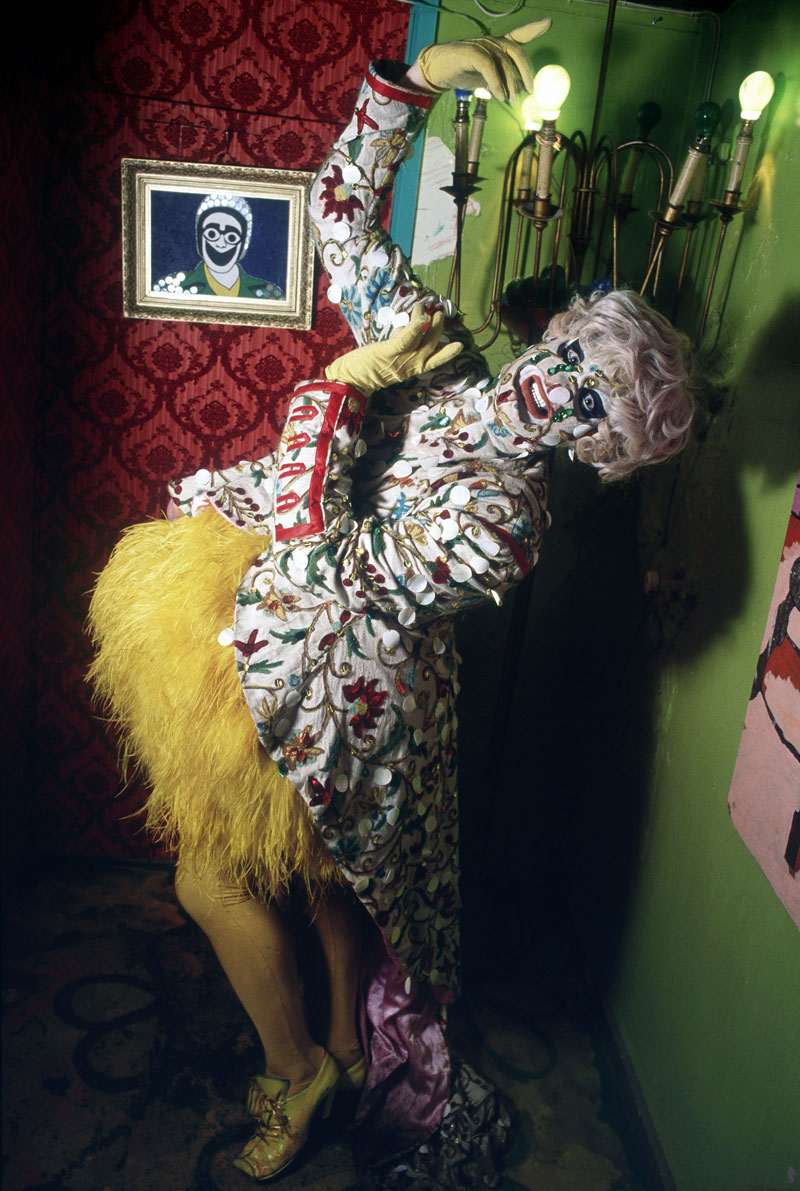
I can die happy now that I have had the opportunity to do a posting on this amazing man. He challenged social stereotypes turning his body into an every changing, ever challenging work of art. He used his body as a canvas and inscribed narratives upon it. He used these narratives to challenge the dominant discourse, offering himself as material evidence to facilitate new perspectives. His body became a performance, the self as performance, one that was not fully pre-determined, for you never knew what he would do next, what social outrage he would offer up.

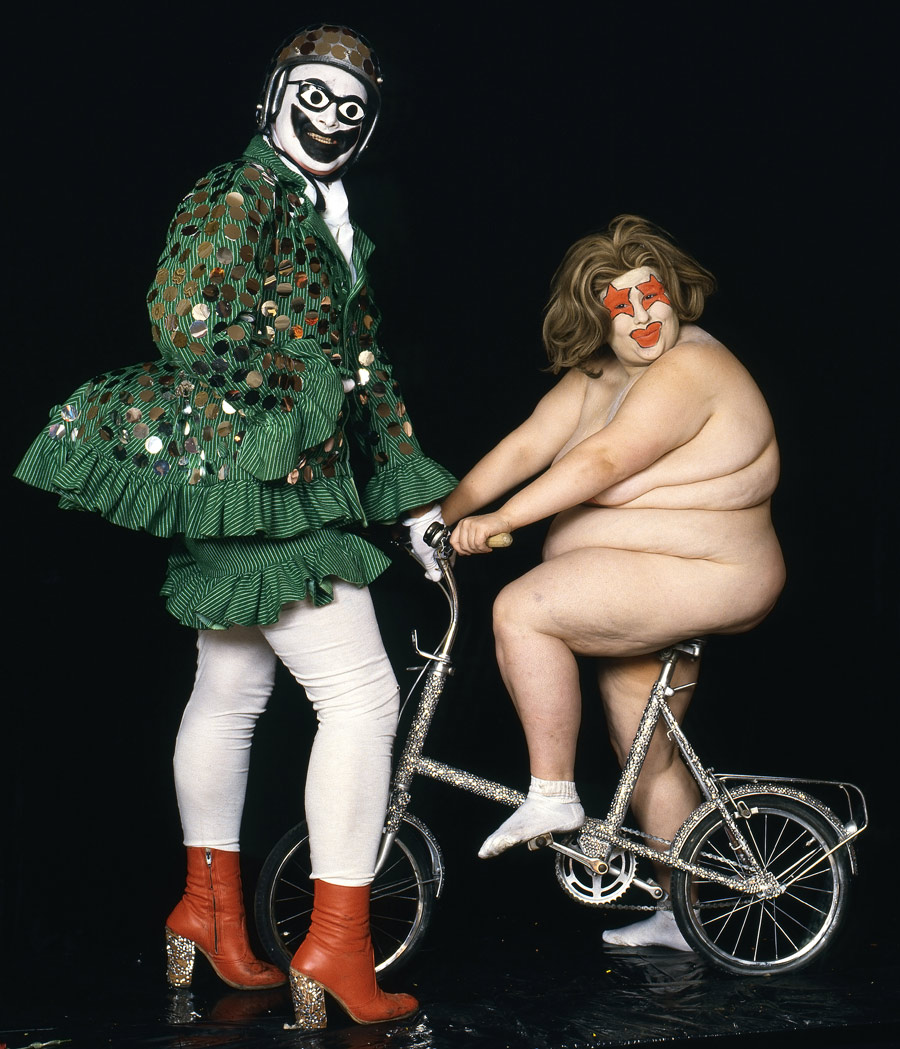
Through masks, makeup, wigs and body modification, Bowery confronted the viewer with an/other field of existence, one that promoted an encounter with the face of the other, causing an emotional response in the audience, the viewer. As Wendy Garden observes, “Being faced with another provokes a reaction: it makes an appeal, demands an engagement.”1 We cannot look away for we do not know what Bowery will do next. He used his large body, its bulk and presence to bring the viewer face-to-face with an/other. The magnification of his size and the emphasis and manipulation of his face, especially the mouth and eyes, rescales his presence in front of the viewer – at his performances, in the photographs of Bowery. For example, look at his creation Evening Wear – Andrew Logan’s 1986 Alternative Miss World (1986, below). Impossibly high and luridly coloured boots, leggings, a bustled and bedazzled jacket / skirt combo, crash helmet and the most maniacal black and white face you will ever see. Bowery unbalances the fixity of the single perspective and through his transgression destabilises the mastering gaze.

I was living in London at the time Leigh Bowery, Boy George, Marilyn and Divine were strutting their stuff in the nightclubs of London town. What a time. Maggie Thatcher (and I can hardly bring myself to type her name) was Prime Minister of a right wing Conservative government from 1979-1990, a period of social oppression of minorities, the breaking of the trade unions, the beginning of HIV/AIDS. Think Boy George’s famous song No Clause 28 that protested against a local government act that “shall not intentionally promote homosexuality or publish material with the intention of promoting homosexuality” or “promote the teaching in any maintained school of the acceptability of homosexuality as a pretended family relationship.” Bowery was a child of his time, a prescient, sentient being who was out there doing his thing, challenging the dominant paradigms of a patriarchal society. He burned like a comet, bright in the sky, and then was gone all too early. But he will never be forgotten. What a man.

Dr Marcus Bunyan


1/ Garden, Wendy. “Ethical witnessing and the portrait photograph: Brook Andrew,” in Journal of Australian Studies Vol. 35, No. 2, June 2011, p. 261.


Many thankx to Kunsthalle Wien for allowing me to publish the photographs in the posting. Please click on the photographs for a larger version of the image.


“I believe that fashion (where all girls have clear skin, blue eyes, blonde blow-waved hair + a size 10 figure, and where all men have clear skin, a moustache, short blow-waved hair, a masculine physique + appearance) STINKS”


Leigh Bowery


The Legend of Leigh Bowery 2002


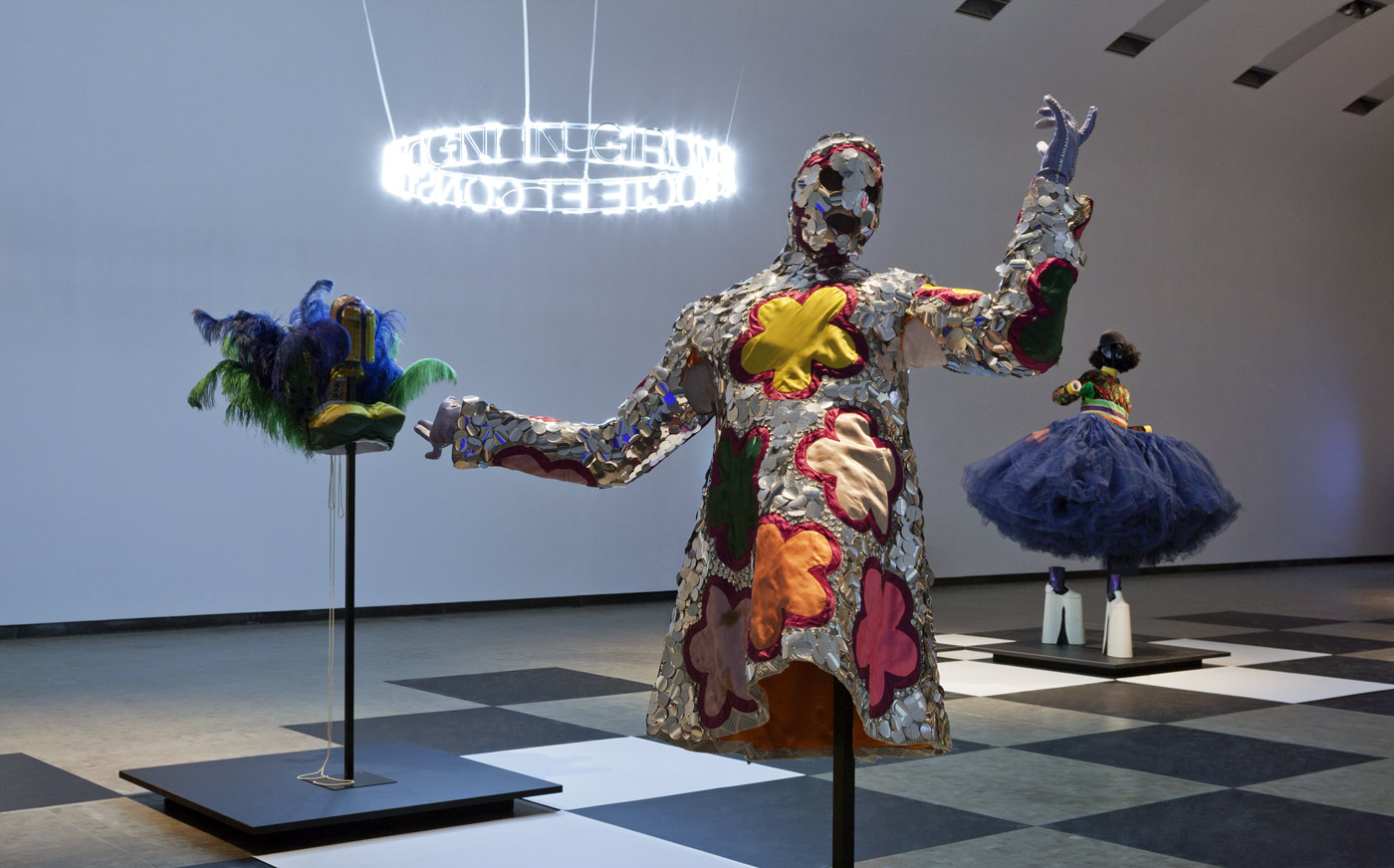
Installation view of 'XTRAVAGANZA. Staging Leigh Bowery', Kunsthalle Wien


Installation view of XTRAVAGANZA. Staging Leigh Bowery, Kunsthalle Wien
Foto: Stephan Wyckoff
Kostüme: Leigh Bowery
Kostümpräs: Klaus Mayr
Courtesy Estate of Leigh Bowery; Cerith Wyn Evans, In Girum Imus Nocte Et Consumimur Igni, 2008
Courtesy Cerith Wyn Evans und White Cube


Installation view of 'XTRAVAGANZA. Staging Leigh Bowery', Kunsthalle Wien


Installation view of XTRAVAGANZA. Staging Leigh Bowery, Kunsthalle Wien
Foto: Stephan Wyckoff
Kostüme: Leigh Bowery
Kostümpräsentation: Klaus Mayr
Courtesy Estate of Leigh Bowery


Charles Atlas. 'Teach' 1992-1998


Charles Atlas
Teach
1992-1998
Video still
© Charles Atlas, Courtesy Vilma Gold, London


Werner Pawlok (German, b. 1953) 'Portrait Leigh Bowery 3' 1988


Werner Pawlok (German, b. 1953)
Portrait Leigh Bowery 3
1988
Courtesy Werner Pawlok


“I think of myself as a canvas,” fashion pioneer Leigh Bowery once said about himself. If there were a formula to describe this enfant terrible who refused all categorisation throughout his life, this would be it: turning oneself into a work of art. Presenting himself in the most garish ways that defied all conventions and stylising himself as a walking work of art, Leigh Bowery, who was born in Australia in 1961, stirred up London’s sub-culture of the 1980s in the wake of post punk and New Romanticism. Being friends with stars of the scene like Michael Clark and Cerith Wyn Evans, he continuously reinvented himself on the manifold stages of the metropolis.

The show highlights Leigh Bowery’s life and work between fashion, performance, music, dance, and sculpture by presenting rarely exhibited costumes, numerous films, photographs, music videos, talk shows, and magazines. It approaches Bowery by way of artistic descriptions, reflections, and documentations in the work of friends, supporters, and colleagues, whose source of inspiration, entertainer, and muse he was: Bowery’s performative enactments oscillating between masquerade and radical self-expression were captured by filmmakers such as Charles Atlas, Dick Jewell, Baillie Walsh, and John Maybury. It took Fergus Greer a number of sessions that stretched over six years to shoot the legendary photo series Looks. As Charles Atlas’s Teach shows, Leigh Bowery developed his unmistakable outfits, gestures, and poses in multiple forms of self-reflection under his companions’ critical eye. Bowery’s one-week performance in the Anthony d’Offay Gallery in London (1988) involved a two-way mirror: while the public could watch Leigh Bowery changing his outfits for hours on end, he saw only his own mirror image and remained inescapably confronted with himself and his movements. Though Bowery claimed that he had had to fight his shame initially and hid his room-filling physique behind conspicuous materials such as tulle, glitter, paint, and satin, his performances were anything but embarrassing: “The rest of us used drag and make-up to disguise our blemishes and physical defects. Leigh made them the focal point of his art,” Boy George once remarked. The nightclubs of London provided Bowery with catwalks on which to flaunt his visions of himself and let him always come out on top in terms of maximum attention. Lucian Freud, the British prince of painters, took great pleasure in Leigh Bowery’s fascinating personality and the fullness of his naked body. Bowery became one of his most important models, and the artist depicted him as he could never be seen in public: natural, intimate, and vulnerable.

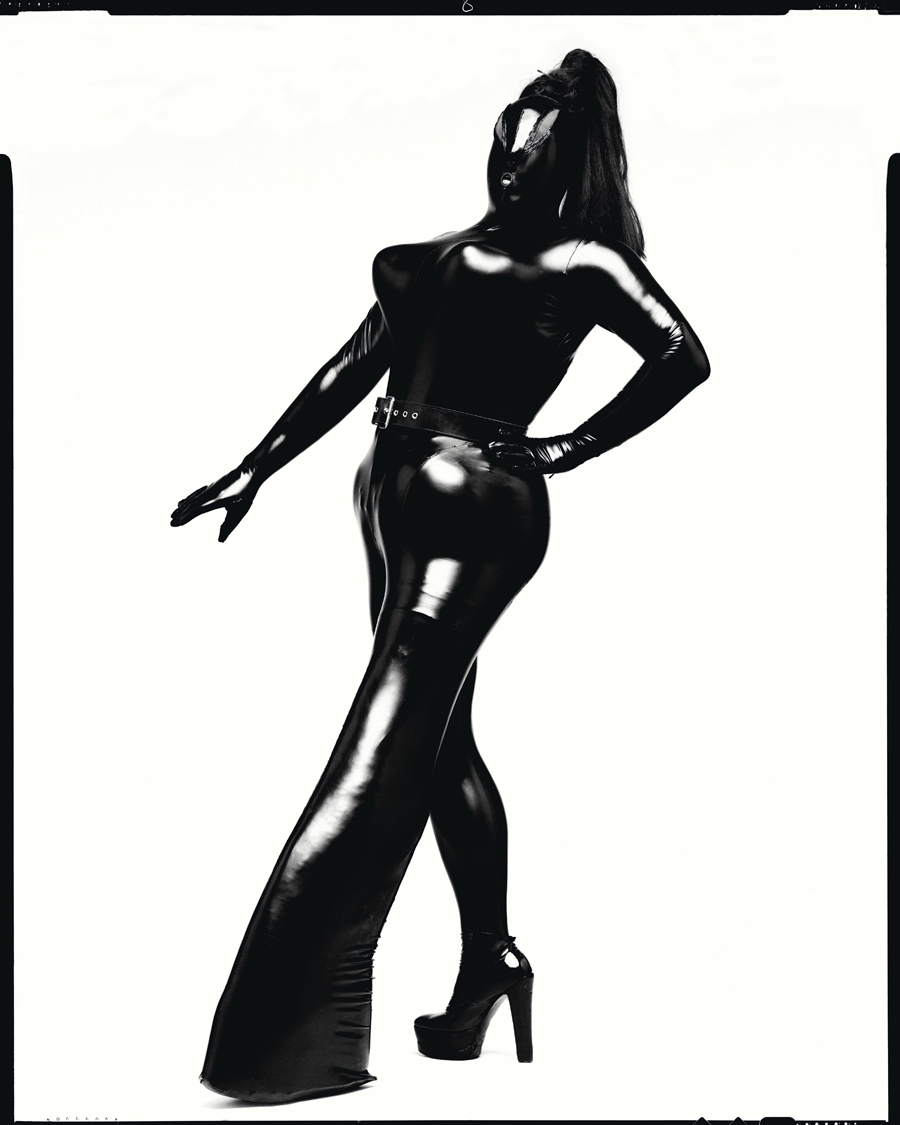
Leigh Bowery’s art clearly differs from the designs, presentation patterns, and distribution channels of fashion designers. With Trash and Bad Taste irony, Bowery, like his idol John Waters and his main actor Divine, abandoned all conventions and stylistic doctrines in a both cynical and humorous way. His craftsmanship in tailoring and his creative potential constitute the core of an expressive self-stylisation which did not depend on encouraging the public through marketing strategies or offers of consumer goods. His vestimentary creations were based on the work with his own body, which he regarded as a malleable material and workable mass and which was to play an increasingly central part in his late oeuvre. Regarded as inexorably deficient, his body became the origin of those manifold appearances and kaleidoscopic diversifications that we find most astounding when confronted with Bowery’s work. He experimented with second skins of black latex, exaggerated the size and volume of his body with sweeping tulle attires, and made himself look taller with platform shoes. Bowery sabotaged glamorous, ornamental and transparent materials with steel helmets, toilet seats, and skulls. He fastened artificial lips in his cheeks with safety pins and wore flesh-coloured velvet suits that transformed his body into a vagina. Using adhesive tape and a bodice, he shaped his flesh into an artificial bosom, and he concealed his member behind pubic hair toupees or overemphasised it as he did in one of the Michael Clark Company’s dance performances. He disparaged unequivocal gender definitions and transcended their socially informed attributions – Gender Trouble: everything was a look. By and by, Bowery turned into what has been called “the self as performance.”

Leigh Bowery’s existence was the epitome of extremes. He looked for exceptional emotional and physical states like pain and ecstasy that would release him from the mediocrity of everyday life, like in the performance The Laugh of No.12 in Fort Asperen on June 4, 1994. Suspended on one foot, stark naked, wearing a black face mask, and displaying some clothespins on his genitals, he swung through the air uttering a sprechgesang, before he smashed a pane of glass with his bulky body. Exposing himself to his vulnerability in his performances, Bowery overcame physical injuries by showcasing them. His sometimes sadomasochist appearances and provocative lifestyle culminated in an attitude that crystallised into a sociopolitical approach in his statement “I like doing the opposite of what people expect.” Far from nocturnal footlights and kindred spirits’ protection, he – who was “larger than life” in every respect – strained the social limits of propriety with his big and exalted appearance. He enjoyed causing offence and holding up a mirror to the dictatorship of conformism, unmasking its heteronomy.

After an excessive life, Leigh Bowery died from AIDS at the age of 33. He was more than an extraordinary peripheral figure making his mark in the urban arena of exhibitionism and voyeurism. His virtuoso works have influenced haute couture collections by such fashion stars as Rei Kawakubo, John Galliano, Walter van Beirendonck, and Alexander McQueen. In spite of its simplicity, the latest fall/winter collection of Comme des Garçons shows obvious parallels to Leigh Bowery’s designs.

Press release from the Kunsthalle Wien website


Robin Beeche (Australian, 1945-2015) 'Evening Wear - Andrew Logan's 1986 Alternative Miss World' 1986


Robin Beeche (Australian, 1945-2015)
Evening Wear – Andrew Logan’s 1986 Alternative Miss World
1986
Courtesy Robin Beeche


Nick Knight (British, b. 1958) 'Untitled (Leigh Bowery with Scull)' 1992


Nick Knight (British, b. 1958)
Untitled (Leigh Bowery with Scull)
1992
© Nick Knight


Ole Christiansen (Danish) 'Farrel House' 1989


Ole Christiansen (Danish)
Farrel House
1989
Courtesy Ole Christiansen


Fergus Greer (British) 'Leigh Bowery, Session VII, Look 38, June 1994' 1994


Fergus Greer (British)
Leigh Bowery, Session VII, Look 38, June 1994
1994
Courtesy Fergus Greer
© Fergus Greer


Kunsthalle Wien
Museumsplatz 1
A-1070 Vienna

Opening hours:
Daily 10am – 7pm
Thursday 10am – 10pm

Kunsthalle Wien website

LIKE ART BLART ON FACEBOOK

Back to top

Text: ‘Orality, (n)framing and enactment in the art of Jacqui Stockdale’ in IANN magazine Vol.8, ‘Unfound in Australia’, October 2012

January 2013


Jacqui Stockdale (Australian, b. 1968) 'Negro Returno, Long Gully' 2012


Jacqui Stockdale (Australian, b. 1968)
Negro Returno, Long Gully
2012
Type C Print
100 x 78cm


“What does it mean, to rediscover an unknown continent through the medium of photography in the 21st century? The seven artists that appear in this “Unfound in Australia” issue are well versed in the photographic technique and language familiar to modern art, yet show cultural distinctness that is nothing short of extraordinary. Our readers might experience a sense of shock or alienation from their work, which combines the new with the old. This kind of unsettling feeling may very well be an unconscious reaction to what we consider to be the ‘other.’ It is my hope that our readers will rediscover the power of photography as a chronological and visual language through these works of long under appreciated modern Australian photography.


IANN magazine
Vol.8, “Unfound in Australia,” October 2012 ‘IANN Magazine’ website [Online] Cited 06/01/2013


My text that appears in IANN magazine Vol.8, “Unfound in Australia” (October 2012) on the art of Jacqui Stockdale is a reworking of the review of her exhibition Jacqui Stockdale: The Quiet Wild at Helen Gorie Galerie in April – May 2012. It is a good piece of writing but it is the “lite” version of the text that I wrote. Instead of the “heavy” version fragmenting away on some long forgotten backup hard drive, and for those of you that like a little more conceptual meat on the bone, it is published below.

Other artists featured in the Volume 8 edition of IANN magazine include Marian Drew, Henri Van Noordenburg, Justine Khamara, Magdalena Bors and Christian Thompson.

Dr Marcus Bunyan


Orality, (n)framing and enactment in the art of Jacqui Stockdale

The concept of Orality is important in the art of Australian Jacqui Stockdale for her works are visual tone poems. Portraying identities in flux, her mythological creatures rise above the threshold of visibility to engage our relationship with time and space, to challenge the trace of experience.

Stockdale uses the body not as passive object but as descriptive and rhapsodic theme, the body as pliable flesh acting as a kind of threshold or hinge of experience – between interior and exterior, viewer and photograph, longing and desire. Drawing on personal places and stories, assemblage and performance (the process of painting the models and the outcome of this interaction), Stockdale creates a wonderful melange of archetypal characters that subvert traditional identities and narratives. Her creatures “shape-shift” and frustrate attempts at categorisation and assimilation.

The artist inverts cultural stereotypes (which embody elements of fixity, repetition, and ambivalence) located within the realms of the fetish, the scopic, and the Imaginary in order to dis/place the collective memory of viewers that have been inscribed with a stereotypical collective vernacular. In this process the work elides “fantasy” which Bhabha suggests plays a formative role in colonial exercises of power.1 In Stockdale’s upside-down world (quite appropriate for the “land down under”), “Each new identity is one of inversion; man becomes woman, child becomes adult, animals transform into humans and vice-versa.”2

An example of this inversion can be seen in her latest series of photographs, The Quiet Wild (2012). Here Stockdale unsettles traditional textual readings, the titles of her photographic portraits indecipherable to the uninitiated, a coded language of identity and place. Lagunta, Leeawuleena and Jaara for example, are three Aboriginal names meaning, respectively, Tasmanian Tiger, the name for the land around Cradle Mountain on that island and the name for the Long Gully region around Bendigo, Victoria (Stockdale’s native area); El Gato is the cat and Gondwanan the name for the southernmost of two supercontinents (the other being Laurasia) before the world split apart into the structure that we known today.

Stockdale’s performative tactics and multiple modes of address, her polyvocal subject if you like, may be said to be an effect of intertextuality3: “a conscious recognition and pursuit of an altogether different set of values and historical and cultural trajectories.”4 Undeniably her re-iterations and re-writings of cultural trajectories as ritual performative acts have links to Bakhtin’s idea of the carnivalesque and the carnival paradigm, which accords to certain patterns of play where “the social hierarchies of everyday life… are profaned and overturned by normally suppressed voices and energies.”5

It is through this “play” that the context of the photographs and their relationship to each other and the viewer are “framed.” This device emphasises the aesthetic rather than information and encourages the viewer to think about the relationship between the body, the world of which it is part and the dream-reason of time.6

This intertextual (n)framing (n meaning unspecified number in mathematics) encourages the viewer to explore the inbetween spaces in the meta-narrative, “and by leaps (intuitive leaps, poetic leaps, leaps of faith)”7 encourage escapism. Through the (n)framing of the body and the enactment of multiple selves Stockdale narrativises her mythological creatures, her charged bodies initiating new conditions of Otherness in the mise-en-scène of being. This is why her images are so powerful for her art approaches Otherness using a visual Orality and a theatrical openness that encourages disparate meanings to emerge into consciousness. It is up to us as viewers to seek the multiple, disparate significances of what is concealed in each photograph – in the myth of origin; in something that can’t be explained by man; in the expression of meaning of the things that are beyond us.

Dr Marcus Bunyan
August 2012


Footnotes

1/ “According to Bhabha, stereotypes are located within the realms of the fetish, the scopic, and the Imaginary. He suggests that fantasy plays a formative role in colonial exercises of power. Bhabha describes the mechanism of cultural stereotypes as embodying elements of fixity, repetition, fantasy, and ambivalence, and suggests that if certain types of images are constantly presented in a range of different contexts, they will become imprinted onto the collective memory of viewers and inscribed within a collective vernacular.”
Vercoe, Caroline. Agency and Ambivalence: A Reading of Works by Coco Fusco,” in Fusco, Coco. The Bodies That Were Not Ours. London: Routledge, 2001, p. 240.

2/ Stockdale, Jacqui. Artist statement 2012

3/ Intertextuality “is always an iteration which is also a re-iteration, a re-writing which foregrounds the trace of the various texts it both knowingly and unknowingly places and dis-places.” Intertexuality is how a text is constituted. It fragments singular readings. “The reader’s own previous readings, experiences and position within the cultural formation” also influences these re-inscriptions.”
Keep, Christopher, McLaughlin, Tim and Parmar, Robin. “Intertextuality,” on The Electronic Labyrinth website [Online] Cited 13/11/2011

4/ Fisher, Jean. “Witness for the Prosecution: The Writings of Coco Fusco,” in Fusco, Coco. The Bodies That Were Not Ours. London: Routledge, 2001, pp. 227-228.

5/ Anon. “Carnivalesque,” on the Wikipedia website. [Online] Cited 13/05/2012

6/ Bacon, Julie Louise. “Liquid Archive: On Ambivalence,” in Liquid Archive. Melbourne: Monash University Museum of Art (MUMA), 2012, p. 119

7/ Kirshenblatt-Gimblett, Barbara. “The Museum – A Refuge for Utopian Thought,” in Rüsen, Jörn; Fehr Michael, and Ramsbrock, Annelie (eds.). Die Unruhe der Kultur: Potentiale des Utopischen. Velbrück Wissenschaft, 2004. In German.


Marcus Bunyan writings

LIKE ART BLART ON FACEBOOK

Back to top

Exhibition: ‘The Serial Portrait: Photography and Identity in the Last One Hundred Years’ at the National Gallery of Art, Washington

Exhibition dates: 30th September 2012 – 31st December 2012


Emmet Gowin (American, b. 1941) 'Edith, Danville, Virginia' 1971


Figure 5. Emmet Gowin (American, b. 1941)
Edith, Danville, Virginia
1971
Gelatin silver print
20.2 x 25.2cm (7 15/16 x 9 15/16 in.)
National Gallery of Art, Washington
Patrons’ Permanent Fund
© Emmet and Edith Gowin, Courtesy Pace/MacGill Gallery, New York


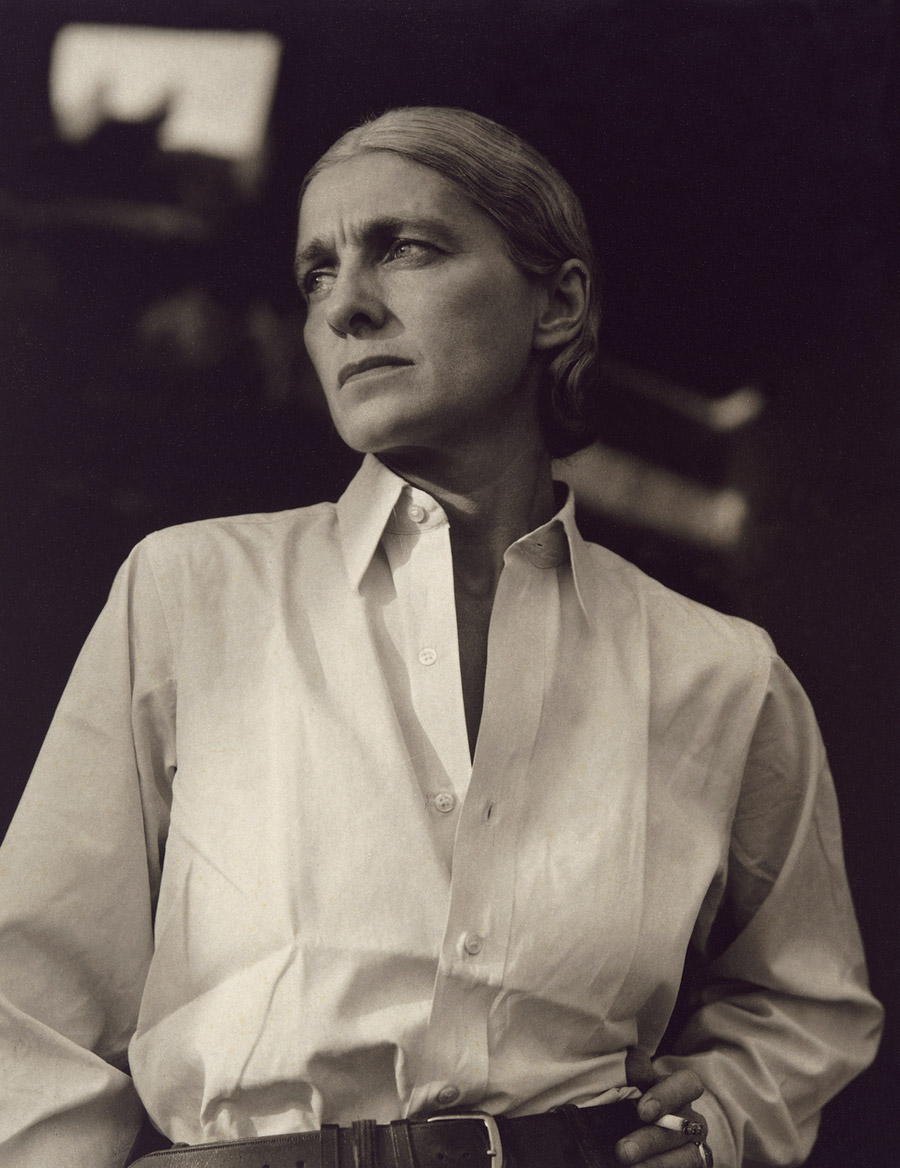
~ Alfred Stieglitz / Georgia O’Keeffe
~ Paul Strand / Rebecca Strand
~ Emmet Gowin / Edith Gowin
~ Harry Callahan / Eleanor and Barbara Callahan
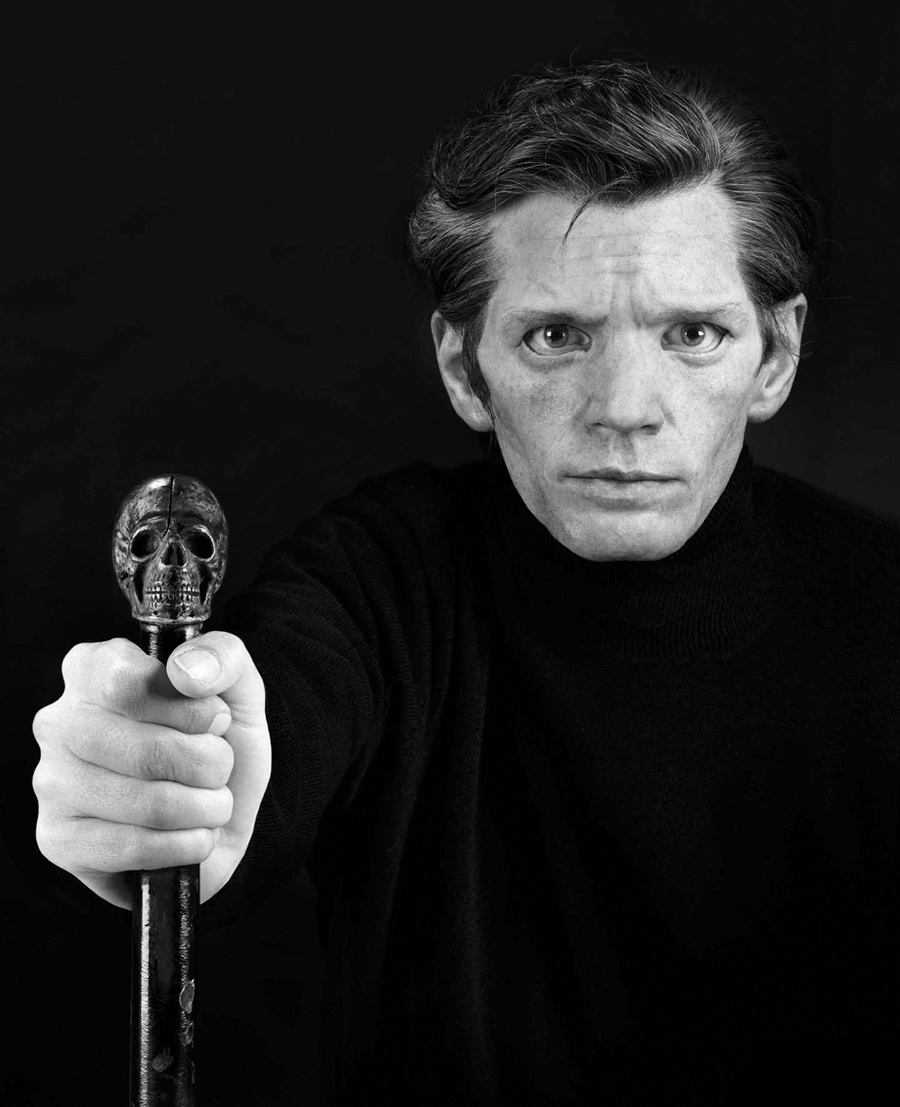
~ Robert Mapplethorpe / Patti Smith
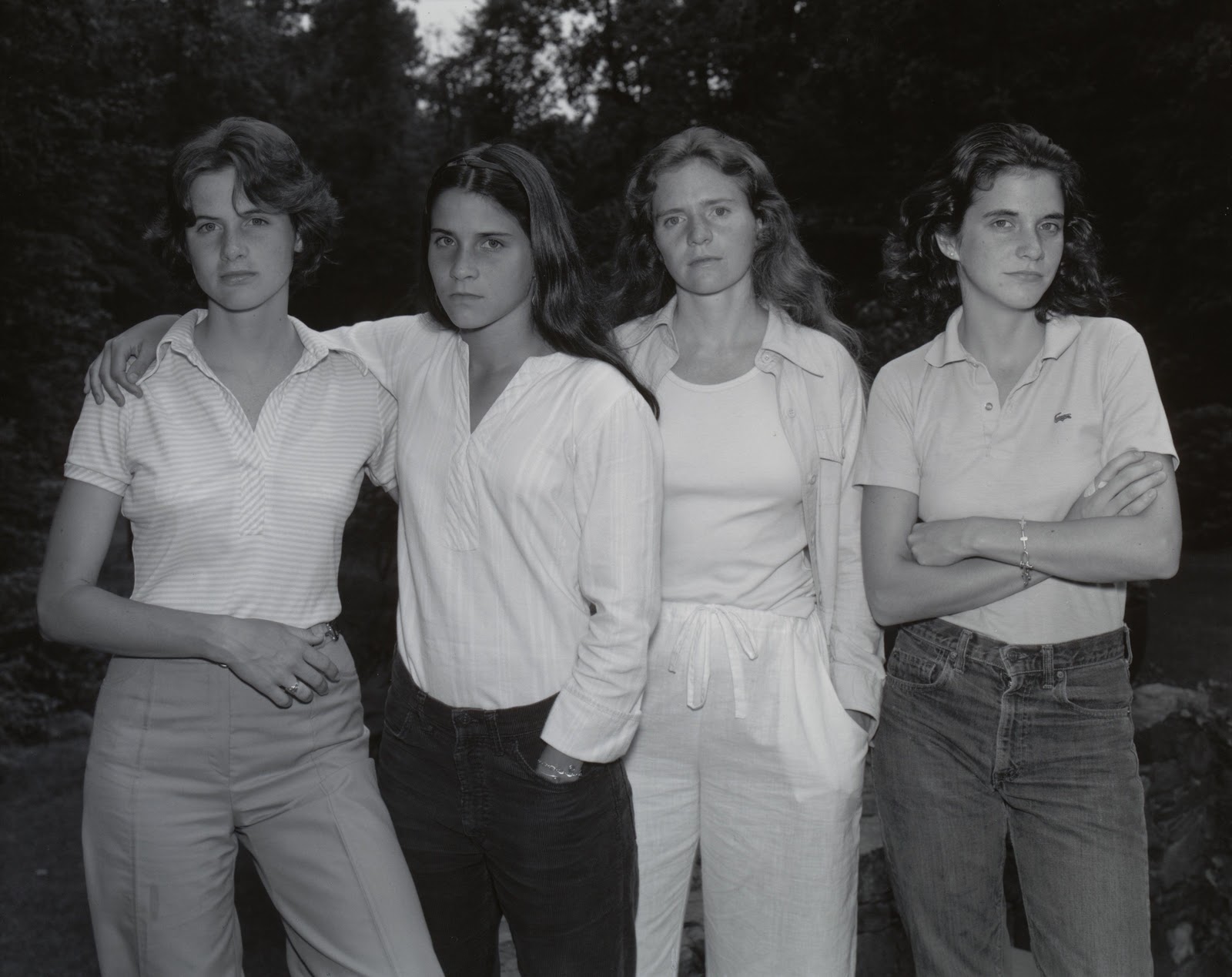
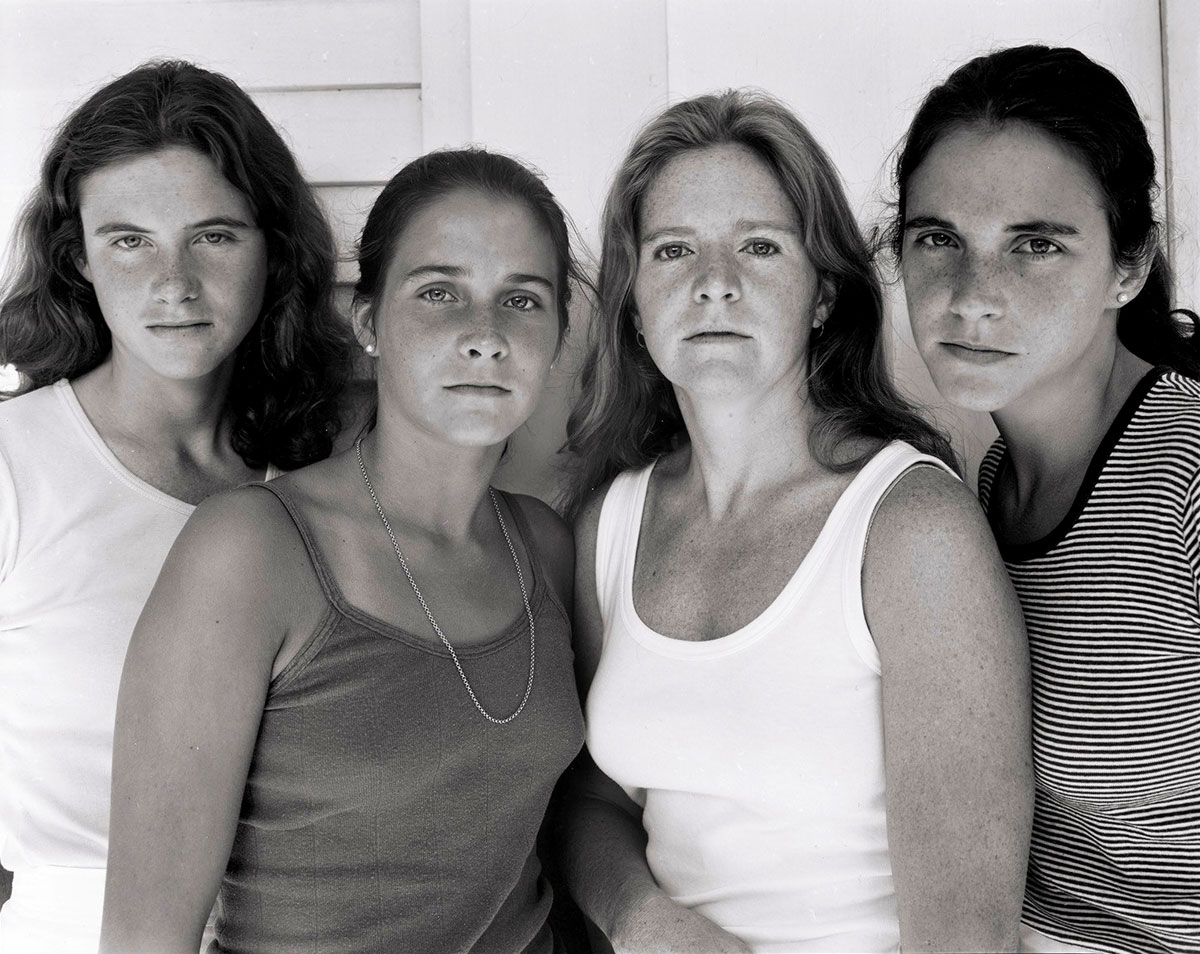
~ Nicholas Nixon / The Brown Sisters
~ Andy Warhol / Serial Photography / Photo Booth Portraits
~ Mario Testino / Kate Moss
~ Baron Adolf de Meyer / Baroness Olga de Meyer
~ Edward Weston / Charis Weston
~ Lee Friedlander / Maria Friedlander
~ Paul Caponigro / The woods of Connecticut
~ Bernd and Hilla Becher / grids
~ Gerhard Richter / Overpainted Photographs
~ Masahisa Fukase / wife and family
~ Seiichi Furuya / Christine Furuya-Gößler
~ Sally Mann / children and husband
~ William Wegman / dogs


Australia?
Nobody that I can think of except Sue Ford.

Notice how all the artists are men except two: Sally Mann and Hilla Becher.

Dr Marcus Bunyan


Many thankx to the National Gallery of Art for allowing me to publish the photographs in the posting. Please click on the photographs for a larger version of the image.


Introduction

Alfred Stieglitz, one of the most influential photographers of the twentieth century, argued that “to demand the [single] portrait… be a complete portrait of any person is as futile as to demand that a motion picture be condensed into a single still.” Stieglitz’s conviction that a person’s character could not be adequately conveyed in one image is consistent with a modern understanding of identity as constantly changing. For Stieglitz, who frequently made numerous portraits of the same sitters – including
striking photographs of his wife, the painter Georgia O’Keeffe – using the camera in a serial manner allowed him to transcend the limits of a single image.

Drawn primarily from the National Gallery of Art’s collection, the
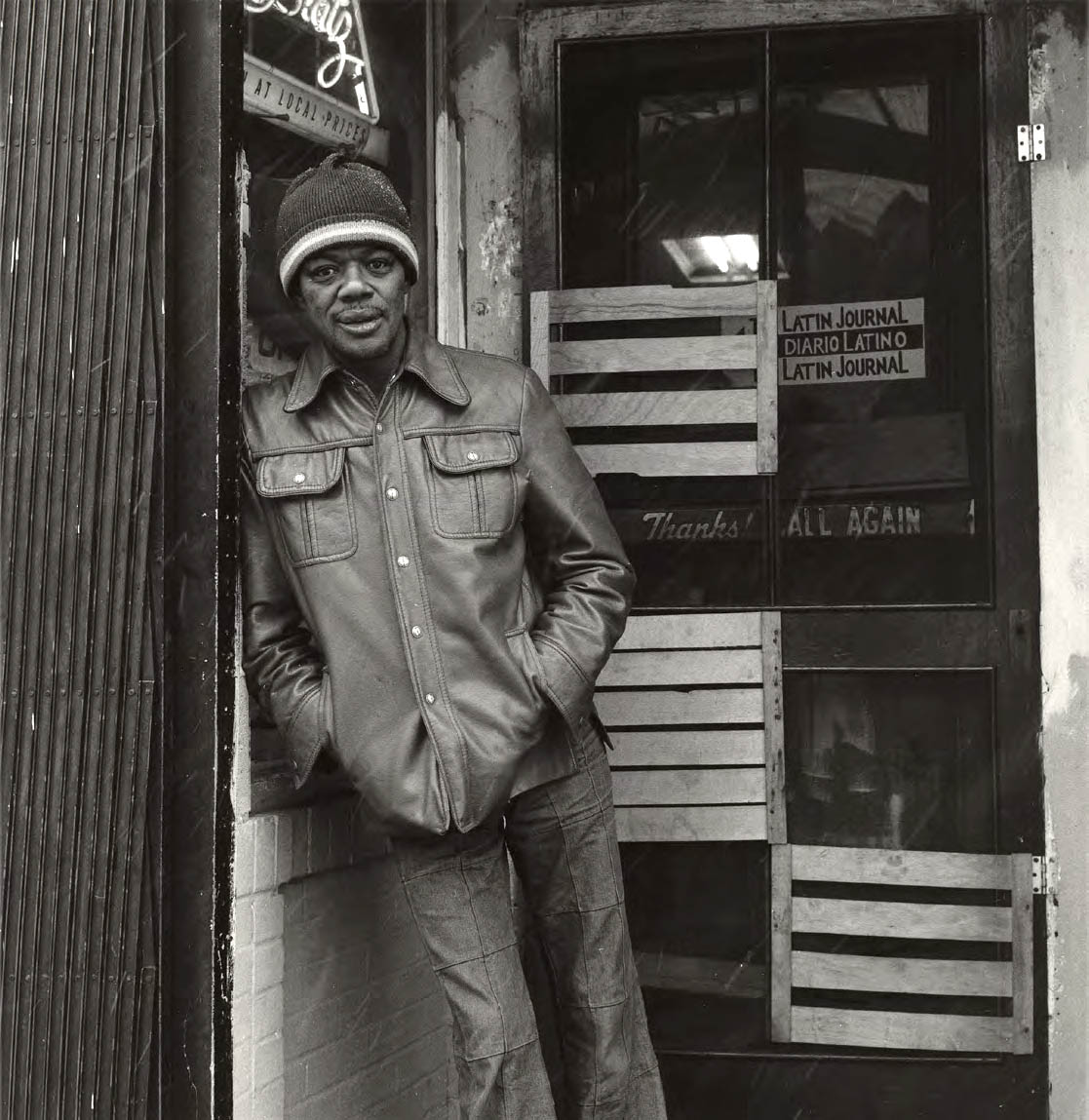
Serial Portrait exhibition features twenty artists who photographed the same subjects – primarily friends, family, or themselves – multiple times over the course of days, months, or years. This brochure presents a selection of works by seven of these artists. Like Stieglitz’s extended portrait of O’Keeffe, Emmet Gowin’s ongoing photographic study of his wife, Edith, explores her character and reveals the bonds of love and affection between the couple. Milton Rogovin’s photographs of working-class residents of Buffalo, New York, record shifts in the appearance and situation of individuals in the context of their community over several decades.

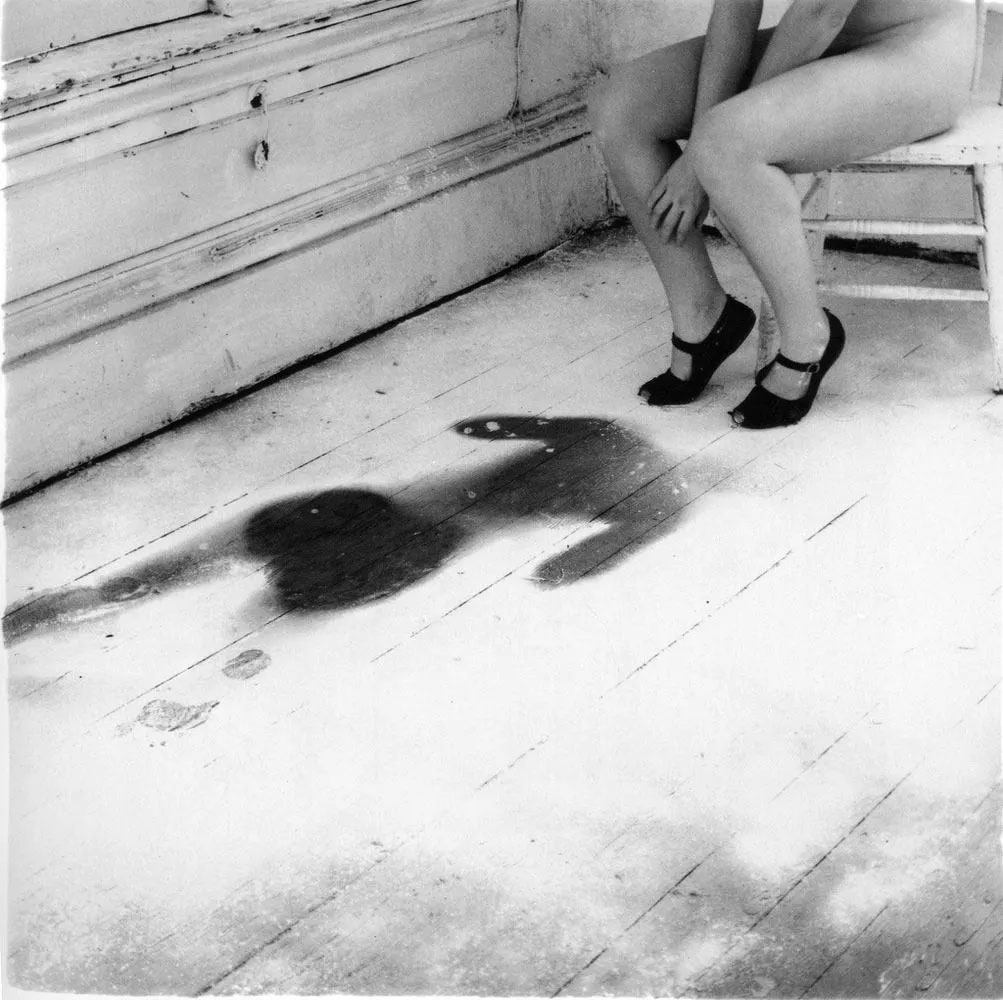
A number of photographers in the exhibition have made serial self-portraits that investigate the malleability of personal identity. Photographing themselves as shadows, blurs, or partial reflections, Lee Friedlander and Francesca Woodman have made disorienting images that hint at the instability of self-representation. Ann Hamilton has employed unusual props and materials to transform herself into a series of hybrid objects. Finally, work by Nikki S. Lee takes the idea of mutable identity to its logical conclusion as the artist photographs herself masquerading as members of different social and ethnic groups.

Text from the NGA website


Emmet Gowin (American, b. 1941) 'Edith, Danville, Virginia' 1963


Figure 4. Emmet Gowin (American, b. 1941)
Edith, Danville, Virginia
1963
Gelatin silver print, printed 1980s
19.7 x 12.7cm (7 3/4 x 5 in.)
National Gallery of Art, Washington
Charina Endowment Fund
© Emmet and Edith Gowin, Courtesy Pace/MacGill Gallery, New York


Emmet Gowin

Emmet Gowin (born 1941) met Edith Morris in 1961 in their hometown of Danville, Virginia, just as he had decided to abandon business school to study art. Several years later at the Rhode Island School of Design, his teacher Harry Callahan, who made numerous photographs of his wife, Eleanor, encouraged Gowin to photograph the subject he knew most intimately – his family and in particular Edith, whom he married in 1964.

The Gowins’ artistic and marital collaboration has endured for half a century, yielding an extraordinary series of quiet, attentive portraits. In some photographs, such as Edith, Danville, Virginia, 1963 (fig. 4, above), Edith appears contemplative, even reserved. The somber beauty of this work stems in part from Gowin’s use of a tripod-mounted, large-format camera, which requires a lengthy exposure but produces photographs with exquisite details, such as the delicate shadow of a twig that falls across Edith’s face. To make the dramatic circular shadow that surrounds her in Edith, Danville, Virginia, 1971 (fig. 5, above), Gowin attached a lens meant for a 4 × 5 camera to a large 8 × 10 camera. This focus draws our attention to her figure, but the screen door simultaneously frames and obscures her form, resulting in a play between presence and elusiveness. While Gowin’s photographs are born of a deep intimacy, they refuse to lay bare his wife’s soul or expose the couple’s private passions.

The same delicate balance between revelation and reserve marks a group of portraits made during the couple’s travels in Central and South America. Edith and Moth Flight, 2002 (fig. 6, below), made at night using a ten-second exposure, combines Gowin’s enchantment with natural beauty and his interest in the nuances of his wife’s gestures and moods. Placing a pulsing ultraviolet light behind Edith’s head, Gowin recorded the luminous traces left by moths as they danced around her blurred face, transforming her into a ghostly and even otherworldly presence, visible yet just out of our reach.

Text from the NGA website


Emmet Gowin (American, b. 1941) 'Edith and Moth Flight' 2002


Figure 6. Emmet Gowin (American, b. 1941)
Edith and Moth Flight
2002
Digital ink jet print
19 x 19cm (7 1/2 x 7 1/2 in.)
National Gallery of Art, Washington
Charina Endowment Fund
© Emmet and Edith Gowin, Courtesy Pace/MacGill Gallery, New York


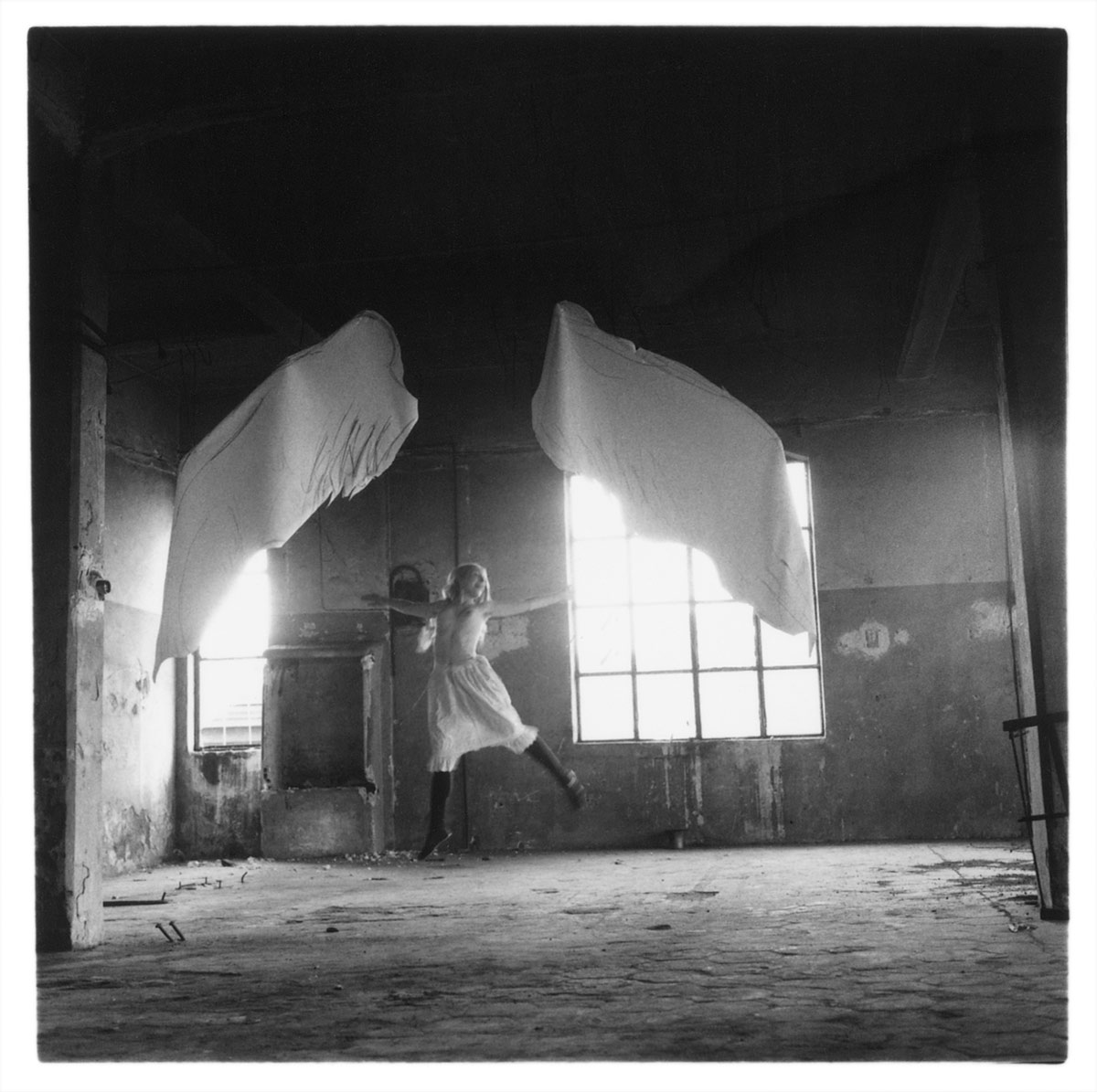
Francesca Woodman (American, 1958-1981) 'House #3, Providence, Rhode Island' 1976


Francesca Woodman (American, 1958-1981)
House #3, Providence, Rhode Island
1976
Gelatin silver print
16.1 x 16.3cm (6 5/16 x 6 7/16 in.)
National Gallery of Art, Washington
Gift of the Heather and Tony Podesta Collection


Francesca Woodman

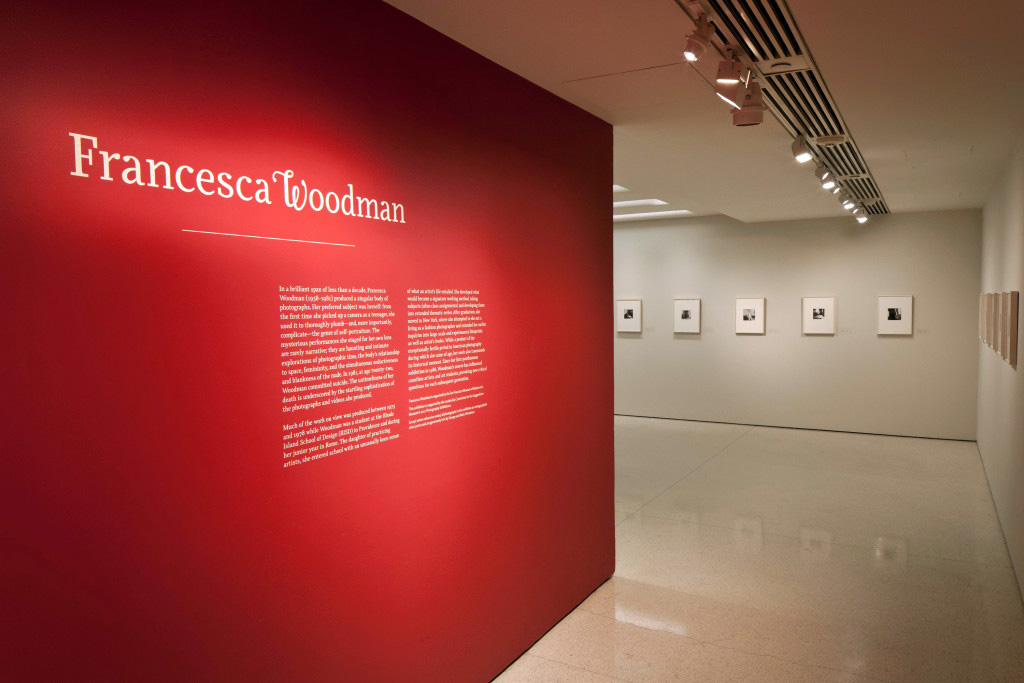
Francesca Woodman (1958-1981) began making photographs at age thirteen, and by the time she entered the Rhode Island School of Design in 1975, she was already a skilled photographer. Using herself as the subject of nearly all her work, Woodman put her body in the service of exploring such themes as feminine identity, sexuality, mythology, and the relationship of the body to its surroundings. Conjuring visions of a complex inner world, Woodman’s photographs are powerful for their ability to suggest psychic turmoil within images of serene, ethereal beauty.

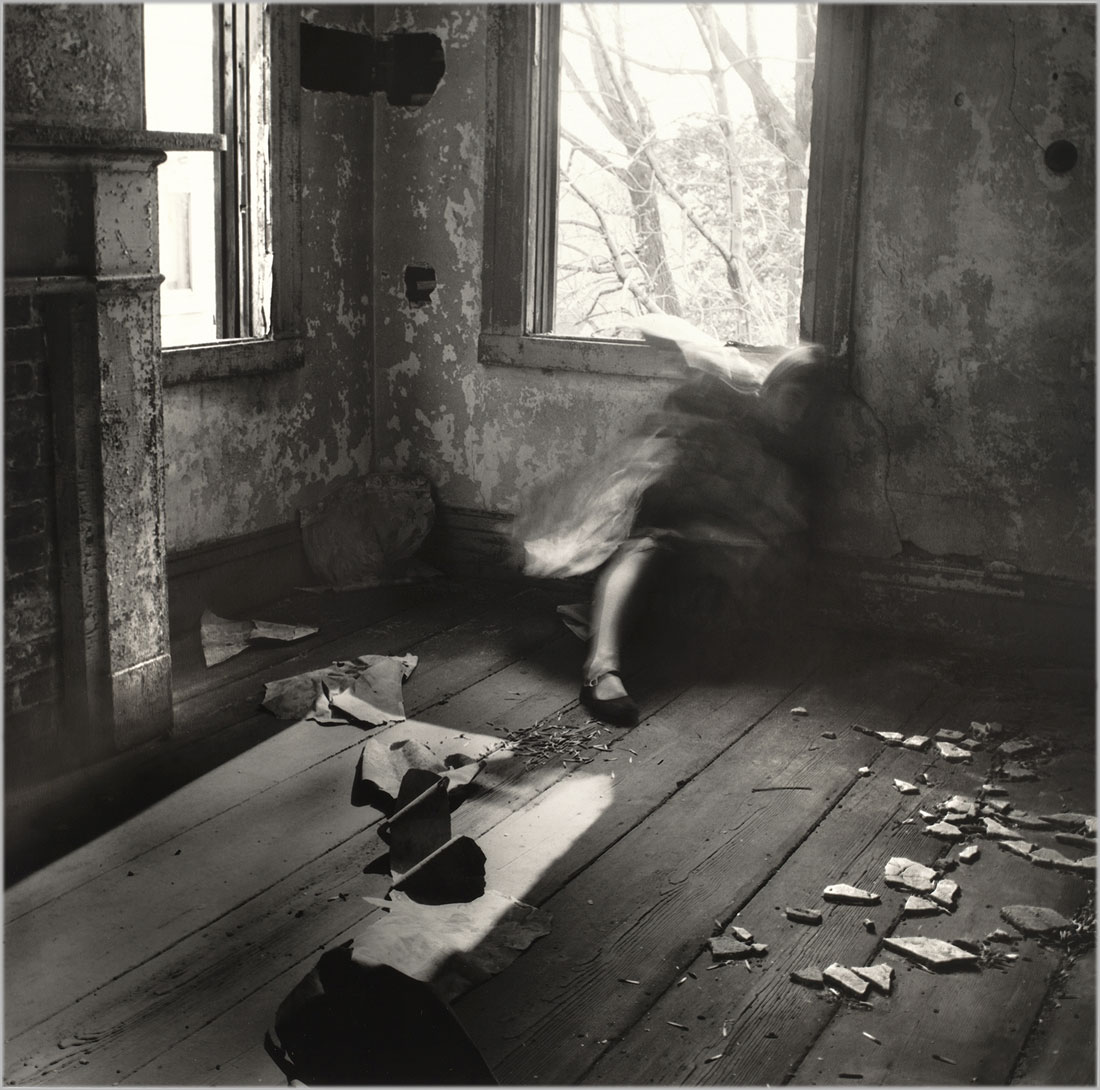
Woodman’s interest in the emotional affect of space can be seen in House #3, Providence, Rhode Island, 1976 (fig. 14, above). Using an abandoned house as a makeshift studio, Woodman often photographed herself merging with her surroundings, including doors, walls, and windows, dissolving physical or psychic boundaries. She also frequently moved during long exposures or allowed the camera to record only part of her body in order to obscure her figure. By invoking a ghostly presence, Woodman’s photographs often present her as someone who refuses to commit to a solid image of herself.

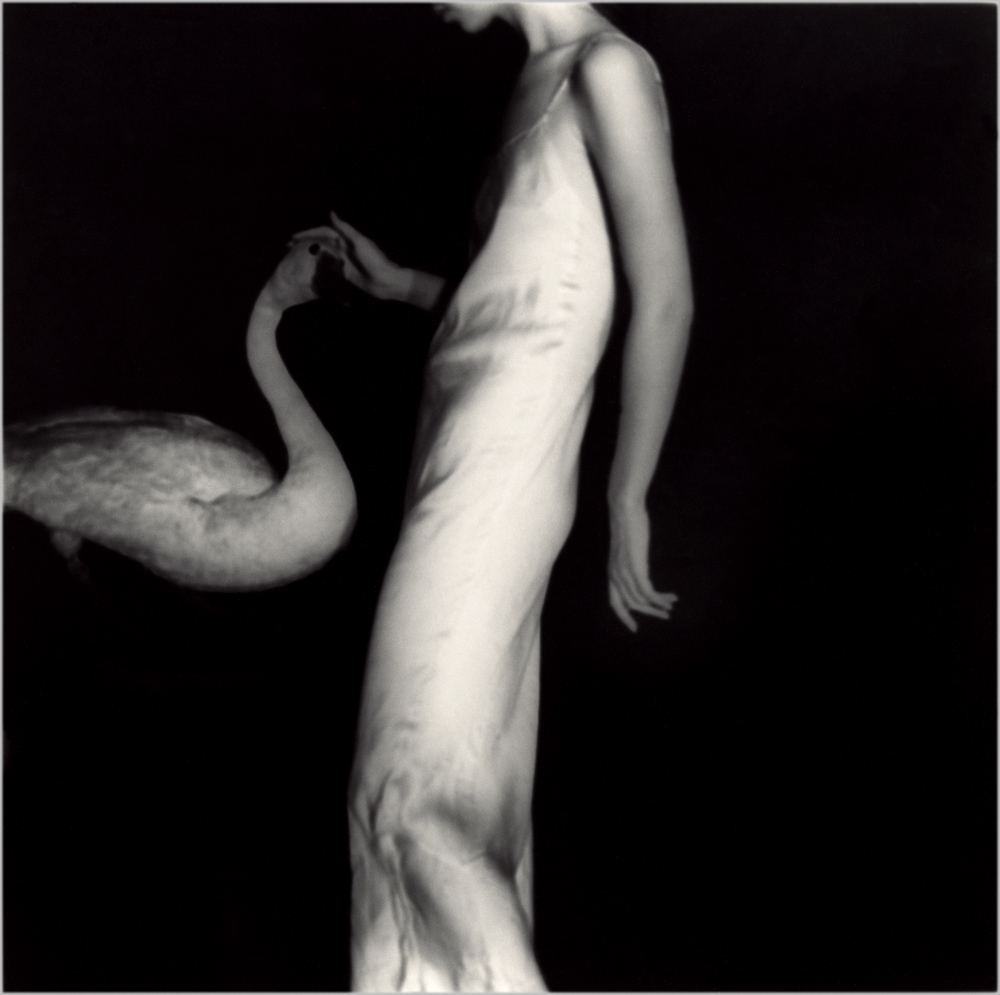
Woodman’s lush and intimate photographs thus offer a tantalising glimpse of a mysterious, private world. Yet they are more than romantic expressions of a young woman’s subjective experience. Notes in Woodman’s diary suggest, for instance, that Untitled, Providence, Rhode Island, 1975-1978 (fig. 15, below), alludes to the Greek mythological story of Leda, who was seduced by the god Zeus in the form of a swan.

Toward the end of her brief but prolific career (Woodman committed suicide when she was twenty-two) the artist began working on a much larger scale, using her body more as a structural element. Caryatid, New York, 1980 (fig. 16, below), made as part of a monumental photo-installation called Temple Project, draws both its title and inspiration from the columns carved in the shape of women that were used in ancient Greek and Roman architecture. Although Woodman displays her figure in a more expansive and direct manner than in her earlier work, the gesture that obscures her face and leaves her partial and unknowable is typical for the artist, who always preferred suggestion over declaration.

Text from the NGA website


Francesca Woodman (American, 1958-1981) 'Untitled, Providence, Rhode Island' 1975-1978


Francesca Woodman (American, 1958-1981)
Untitled, Providence, Rhode Island
1975-1978
Gelatin silver print
10.5 x 10.5cm (4 1/8 x 4 1/8 in.)
National Gallery of Art, Washington
Gift of the Collectors
Committee and R. K. Mellon Family Foundation


Francesca Woodman (American, 1958-1981) 'Caryatid, New York' 1980


Francesca Woodman (American, 1958-1981)
Caryatid, New York
1980
National Gallery of Art, Washington
William and Sarah Walton Fund and Gift of the Collectors Committee


Ann Hamilton (American, b. 1956) 'body object series #13, toothpick suit/chair' 1984


Figure 17. Ann Hamilton (American, b. 1956)
body object series #13, toothpick suit/chair
1984
Gelatin silver print, printed 1993
11 x 11cm (4 5/16 x 4 5/16 in.)
National Gallery of Art, Washington
Gift of Heather and Tony Podesta Collection


Ann Hamilton

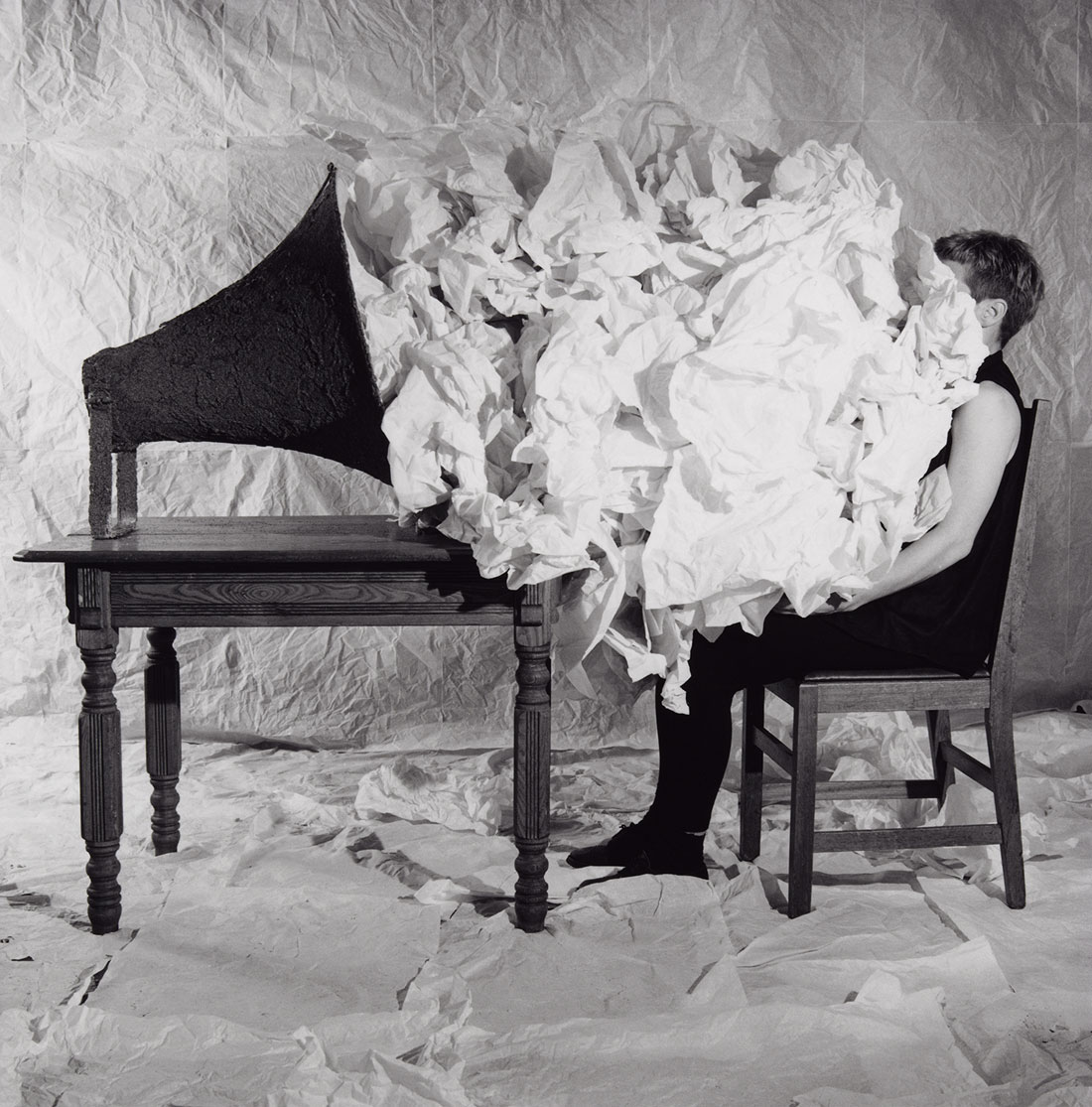
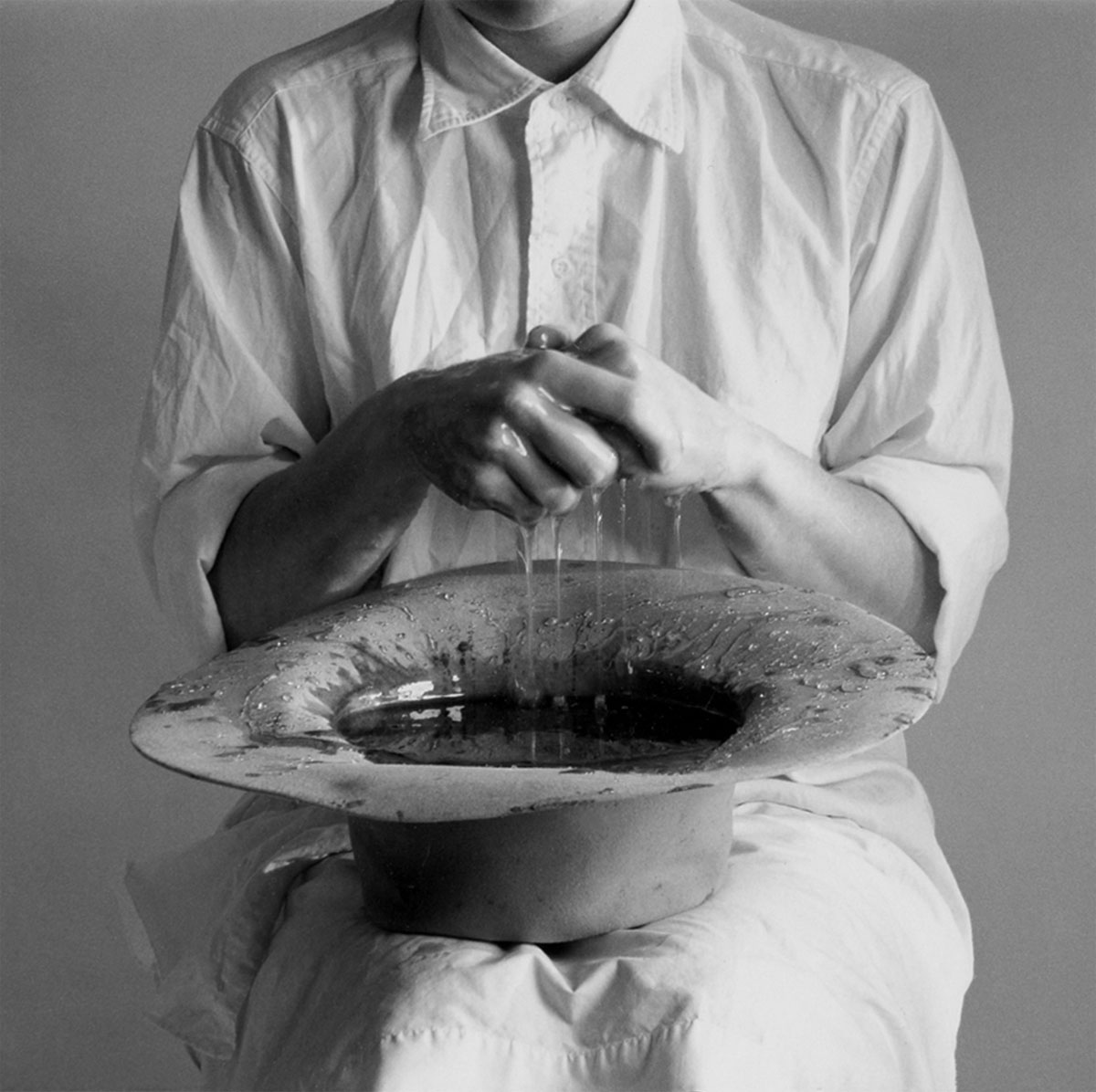
An artist known for multimedia environments, performances, and videos, Ann Hamilton (born 1956) made the first photographs in the body object series in 1984 with objects left over from an installation she had presented as an MFA student at Yale. Later images from the series were based on subsequent performances and installations, documenting both the objects used and the actions performed with them. Hamilton appears in each photograph with objects attached to or touching her body, her face only rarely visible. The results are striking, unsettling, and often witty.

Despite emerging from Hamilton’s installation and performance practice, the photographs in the series stand on their own as works of art. Paying close attention to the material qualities of familiar objects, Hamilton models creative new uses for them, changing their function and meaning. In body object series #13, toothpick suit/chair, 1984 (fig. 17, above), for example, thousands of toothpicks transform Hamilton’s clothes into a porcupine-like hide while a chair becomes a burdensome instrument of torture. The image elicits visceral emotions – alienation, hostility, fear – though it does so with a dose of absurdist humour.

As self-representations, the photographs in the body object series depart radically from any traditional notion of portraiture. Instead of insisting on Hamilton’s uniqueness as an individual, these images present her body almost as an object on a par with other objects. Some of the photographs are linked directly to her biography: Hamilton had studied textile design before getting her MFA, and the toothpick suit refers to her love of fabrics. In other photographs she makes abstract concepts more graspable through the senses. Sound is given tactile and visual form as tissue paper in body object series #14, megaphone, 1986 (fig. 18, below), while in body object series #15, honey hat, 1989 (fig. 19, below), Hamilton wrings her hands in honey to suggest the idea of washing one’s hands of guilt. Based on an installation in which the artist embedded money – 750,000 pennies – in a layer of honey, this image also gives new meaning to the phrase “sticky fingers” and highlights the connections between language, images, and objects that Hamilton explores in both her photographs and installations.

Text from the NGA website


Ann Hamilton (American, b. 1956) 'body object series #14, megaphone' 1986


Figure 18. Ann Hamilton (American, b. 1956)
body object series #14, megaphone
1986
Gelatin silver print, printed 1993
11 x 11cm (4 5/16 x 4 5/16 in.)
National Gallery of Art, Washington
Gift of Heather and Tony Podesta Collection


Ann Hamilton (American, b. 1956) 'body object series #15, honey hat' 1989


Figure 19. Ann Hamilton (American, b. 1956)
body object series #15, honey hat
1989
Gelatin silver print, printed 1993
11 x 11cm (4 5/16 x 4 5/16 in.)
National Gallery of Art, Washington
Gift of Heather and Tony Podesta Collection


The National Gallery of Art explores how the practice of making multiple portraits of the same subjects produced some of the most revealing and provocative photographs of our time in The Serial Portrait: Photography and Identity in the Last One Hundred Years, on view in the West Building’s Ground Floor photography galleries from September 30 through December 31, 2012. Arranged both chronologically and thematically, the exhibition features 153 works by 20 artists who photographed the same subjects – friends, family, and themselves – numerous times over days, months, or years to create compelling portrait studies that investigate the many facets of personal and social identity.

“The Gallery’s photography collection essentially began with the donation of Alfred Stieglitz’s ‘key set,’ so it is fitting that this exhibition opens with portraits by Stieglitz, who understood that a person’s character was best captured through a series of photographs taken over time,” said Earl A. Powell III, director, National Gallery of Art. “Although the exhibition is drawn largely from the Gallery’s significant collection of photographs, we are grateful to the lenders who have allowed us to present more fully the serial form of portraiture that Stieglitz championed.”

Since the introduction of photography in 1839, portraiture has been one of the most widely practiced forms of the medium. Starting in the early 20th century, however, some photographers began to question whether one image alone could adequately capture the complexity of an individual. As Alfred Stieglitz, the era’s leading champion of American fine art photography, argued: “to demand the [single] portrait that will be a complete portrait of any person is as futile as to demand that a motion picture will be condensed into a single still.”

Along with Stieglitz, some of the 20th century’s most prominent photographers – Paul Strand, Harry Callahan, and Emmet Gowin – used the camera serially to transcend the limits of a single image. Each of these photographers made numerous studies of their lovers that sought to redefine the expressive possibilities of portraiture while probing the affective bonds of love and desire. By employing the camera’s capacity to record fluctuating states of being and mark the passage of time, other photographers such as Nicholas Nixon and Milton Rogovin have documented individuals – in families or communities – over four decades. Capturing subtle and dramatic shifts in appearance, demeanour, and situation, these series are poignant and elegiac memorials that remind us of our own mortality.

Other photographers have made serial self-portraits that explore the malleability of personal identity and the possibility of reinvention afforded by the camera. By photographing themselves as shadows, blurs, or partial reflections, Ilse Bing, Lee Friedlander, and Francesca Woodman have created inventive but elusive images that hint at the instability of self-representation. Conceptual artists of the 1970s and 1980s such as Vito Acconci, Blythe Bohnen, and Ann Hamilton have explicitly combined performance and self-portraiture to stage continual self-transformations. The exhibition concludes with work from the last 15 years by artists such as Nikki S. Lee and Gillian Wearing, who take the performance of self to its limits by adopting masquerades to delve into the ways identity is inferred from external appearance.

Press release from the National Gallery of Art website


Lee Friedlander (American, b. 1934) 'Westport, Connecticut' 1968


Figure 11. Lee Friedlander (American, b. 1934)
Westport, Connecticut
1968
Gelatin silver print
19.8 x 12.3cm (7 13/16 x 4 13/16 in.)
National Gallery of Art, Washington, Trellis Fund
© Lee Friedlander, courtesy Fraenkel Gallery


Lee Friedlander

In the 1960s Lee Friedlander (born 1934) sought, by his own account, to create images of “the American social landscape and its conditions.” Other photographers in his New York circle, including Diane Arbus and Garry Winogrand, also explored the chaotic beauty and contradictions of modern life. Friedlander, however, was the only member of this group to turn repeatedly to self-portraiture in order to understand the world around him. He stalked city streets with camera in hand, recording not only the haphazard incidents of daily life but also his own presence, often as a shadow or a reflection.

In the shop window of Westport, Connecticut, 1968 (fig. 11, above), for example, a reflection of Friedlander’s legs appears to merge with the shapely limbs of a woman in a bathing suit who points a camera at the viewer. The woman is an illusion, a cutout advertisement – but she is also a stand-in for the camera-wielding Friedlander, whose torso and head also appear faintly, as a shadow cast against her legs.

By letting the reflection in a window obscure what is inside, or allowing his shadow to intrude into the frame, Friedlander violates many of the rules of “good” photography. Works such as New York City, 1966 (fig. 12, below) testify to Friedlander’s ability to transform such “mistakes” into witty, ironic juxtapositions. In this case, the startling intrusion of Friedlander’s shadow onto the back of a fellow pedestrian is visually confusing, simultaneously threatening and humorous, as Friedlander’s spiky hair merges with the woman’s fur collar. A sly commentary on the predatory nature of such street photography, the looming shadow that engulfs the subject is also an effect of Friedlander’s equipment, a 35mm Leica with a wide-angle lens. In order to fill the picture frame with his chosen subject, Friedlander had to make the picture at close range, resulting in the inclusion of his own shadow.

Even in self-portraits in which Friedlander makes himself fully visible to the camera, the artist often makes humorously self-deprecating deadpan images, appearing, for example, as a disheveled driver on a manic mission in Haverstraw, New York, 1966 (fig. 13, below). Edgy but unpretentious, brimming with pictorial detail, Friedlander’s self-portraits are visual puzzles that explore the place of the self in the chaos of contemporary urban life.

Text from the NGA website


Lee Friedlander (American, b. 1934) 'New York City' 1966


Figure 12. Lee Friedlander (American, b. 1934)
New York City
1966
Gelatin silver print
21.7 x 32.7cm (8 9/16 x 12 7/8 in.)
National Gallery of Art, Washington
Trellis Fund
© Lee Friedlander, courtesy Fraenkel Gallery


Lee Friedlander (American, b. 1934) 'Haverstraw, New York' 1966


Figure 13. Lee Friedlander (American, b. 1934)
Haverstraw, New York
1966
Gelatin silver print
21.7 x 32.7cm (8 9/16 x 12 7/8 in.)
National Gallery of Art, Washington
Trellis Fund
© Lee Friedlander, courtesy Fraenkel Gallery


Ilse Bing (German, 1899-1998) 'Self-Portrait with Leica' 1931


Ilse Bing (German, 1899-1998)
Self-Portrait with Leica
1931
Gelatin silver print, printed c. 1988
26.7 x 29.7cm (10 1/2 x 11 11/16 in.)
National Gallery of Art, Washington
Gift of Ilse Bing Wolff


Gillian Wearing (English, b. 1963) 'Me as Mapplethorpe' 2009


Gillian Wearing (English, b. 1963)
Me as Mapplethorpe
2009
Gelatin silver print (based upon Robert Mapplethorpe work: Self Portrait, 1988. © Robert Mapplethorpe Foundation)
149.86 x 121.92cm (59 x 48 in.)
Private Collection
Courtesy the artist; Tanya Bonakdar Gallery, New York; Maureen Paley, London, Regen Projects, Los Angeles


Paul Strand (American, 1890-1976) 'Rebecca' 1922


Paul Strand (American, 1890-1976)
Rebecca
1922
Platinum print
24.4 x 19.4cm (9 5/8 x 7 5/8 in.)
National Gallery of Art, Washington
Southwestern Bell Corporation Paul Strand Collection
© Aperture Foundation Inc., Paul Strand Archive


Paul Strand (American, 1890-1976) 'Rebecca, New Mexico' 1932


Paul Strand (American, 1890-1976)
Rebecca, New Mexico
1932
Platinum print
14.9 x 11.8cm (5 7/8 x 4 5/8 in.)
National Gallery of Art, Washington
Southwestern Bell Corporation Paul Strand Collection
© Aperture Foundation Inc., Paul Strand Archive


Alfred Stieglitz (American, 1864-1946) 'Georgia O'Keeffe' probably 1918


Figure 1. Alfred Stieglitz (American, 1864-1946)
Georgia O’Keeffe
probably 1918
Platinum print
18.4 x 23.1cm (7 1/4 x 9 1/8 in.)
National Gallery of Art, Washington
Alfred Stieglitz Collection


Alfred Stieglitz

Alfred Stieglitz (1864-1946) was already an accomplished photographer, publisher, and champion of modern art when he the first encountered the work of Georgia O’Keeffe in 1916. He made his first photographs of her in 1917 and sent them to her with the note, “I think I could do thousands
of things of you – a life work to express you.” Over the next two decades Stieglitz made more than three hundred photographs of O’Keeffe, whom he married in 1924, creating what he called a “composite portrait.” This extraordinary body of work charts the couple’s relationship and
expresses Stieglitz’s conviction that portraiture should function as a kind of “photographic diary.”

Many of the photographs Stieglitz made of O’Keeffe in the early years of their relationship, including Georgia O’Keeffe, c. 1918 (fig. 1, above), are palpably erotic, reflecting the intense passion they shared. Revealing herself to the lens with a bewitching vulnerability, O’Keeffe exudes a tenderness and seductiveness that belie the strain of holding the pose during the long exposures required by Stieglitz’s large-format camera. Often, his photographs express both his desire and admiration for O’Keeffe, at times verging on idealisation of the person he called “Nature’s child – a Woman.” Yet his portraits also look beyond her face to find eloquence in all
parts of her body, as in the print Georgia O’Keeffe – Hands and Thimble (fig. 2, below), where her hands display an almost tactile physicality. Here, Stieglitz used a printing technique that resulted in tonal reversal, causing deep shadows to print as bronze tones and creating the dark outlines that dramatise O’Keeffe’s graceful fingers and emphasise the metallic gleam of the thimble.

After Stieglitz exhibited more than forty portraits of O’Keeffe, including some provocative nudes, in 1921, the painter was dismayed to find that her own art began to be interpreted in a sexualised way, and she rarely posed unclothed after 1923. O’Keeffe’s desire to control her image, along with the increasingly attenuated nature of their relationship after 1929, when
she began spending several months a year working in New Mexico while he stayed in New York, further strained their partnership. In Georgia O’Keeffe, 1930 (fig. 3, below), the artist stands before one of the paintings she had made in New Mexico. Gazing steadily at the camera, she appears as a monumental force at one with her art, confident yet untouchable.

Text from the NGA website


Alfred Stieglitz (American, 1864-1946) 'Georgia O'Keeffe - Hands and Thimble' 1919


Figure 2. Alfred Stieglitz (American, 1864-1946)
Georgia O’Keeffe – Hands and Thimble
1919
Palladium print
24 x 19.4cm (9 7/16 x 7 5/8 in.)
National Gallery of Art, Washington
Alfred Stieglitz Collection


Alfred Stieglitz (American, 1864-1946) 'Georgia O'Keeffe' 1930


Figure 3. Alfred Stieglitz (American, 1864-1946)
Georgia O’Keeffe
1930
Gelatin silver print
23.9 x 19.1cm (9 7/16 x 7 1/2 in.)
National Gallery of Art, Washington
Alfred Stieglitz Collection


Nicholas Nixon (American, b. 1947) 'The Brown Sisters' 1975


Nicholas Nixon (American, b. 1947)
The Brown Sisters
1975
Gelatin silver print
20.2 x 25.2cm (7 15/16 x 9 15/16 in.)
National Gallery of Art, Washington
Patrons’ Permanent Fund
© Nicholas Nixon, courtesy Fraenkel Gallery, San Francisco and Pace/MacGill Gallery, New York


Nicholas Nixon (American, b. 1947) 'The Brown Sisters' 1978


Nicholas Nixon (American, b. 1947)
The Brown Sisters
1978
Gelatin silver print
Promised gift of James and Margie Krebs
© Nicholas Nixon, courtesy Museum of Fine Arts, Boston


For more images from this series please see my posting Nicholas Nixon: Family Album


Milton Rogovin (American, 1909-2011) 'Samuel P. "Pee Wee" West (Lower West Side series)' 1974


Figure 7. Milton Rogovin (American, 1909-2011)
Samuel P. “Pee Wee” West (Lower West Side series)
1974
Gelatin silver print
National Gallery of Art, Washington
Gift of Dr. J. Patrick and Patricia A. Kennedy


Milton Rogovin

Milton Rogovin (1909-2011) belongs to a rich photographic tradition of documenting the social and personal histories of people who would otherwise be forgotten. He did so serially, returning over many years to encapsulate not just single moments but entire lifetimes. Rogovin started his career as an optometrist in Buffalo, New York. In 1957, after he refused to testify before the House Committee on Un-American Activities about his association with the Communist Party, the local paper labeled him the “Top Red in Buffalo.” His optometry practice folded as a result, leaving his family of five to survive on the salary of his wife, Anne. With free time suddenly available, Rogovin turned to photography with a strong sense of purpose. “My voice was essentially silenced,” he recalled, “so I decided to speak out through photographs.”

Rogovin’s candid, powerfully direct pictures gave voice to those who traditionally had none: immigrants, minorities, and working-class people. Even though he traveled around the world making photographs of workers, his best-known work was made closer to home. In 1972 he began photographing residents of Buffalo’s Lower West Side, the city’s poorest
and most ethnically diverse neighbourhood. With his bulky twin-lens Rolleiflex camera, the photographer was sometimes suspected of working for the police or the FBI. Over time, however, Rogovin gained the trust of his sitters by visiting regularly and by giving them prints of their portraits. Dignified and occasionally tender, these photographs depict the circumstances of each subject with sober honesty.

Several times over the next three decades, Rogovin sought out and re-photographed many of his original subjects, capturing the changes wrought by time and circumstance. The series Samuel P. “Pee Wee” West (figs. 7-10) registers changes in the sitter’s situation over the course of twenty-eight years, from 1974 to 2002. In 2003 the oral historian Dave Isay, working
alongside Rogovin, interviewed West, who related the story of his decades of heavy drinking. Reflecting on a photograph Rogovin had made of him in 1985 (fig. 8), West said, “That… picture actually changed my life”; it prompted him to stop drinking for six months before relapsing. A later brush with death led to permanent recovery and the founding of a program to help local youth reject drugs and alcohol. In this and other serial portraits, Rogovin honoured the everyday lives of his subjects, offering a powerful visual legacy of a community he respected and loved.

Text from the NGA website


Milton Rogovin (American, 1909-2011) 'Samuel P. "Pee Wee" West (Lower West Side series)' 1985


Figure 8. Milton Rogovin (American, 1909-2011)
Samuel P. “Pee Wee” West (Lower West Side series)
1985
Gelatin silver print
National Gallery of Art, Washington
Gft of Dr. J. Patrick and Patricia A. Kennedy


Milton Rogovin (American, 1909-2011) 'Samuel P. "Pee Wee" West (Lower West Side series)' 1992


Figure 9. Milton Rogovin (American, 1909-2011)
Samuel P. “Pee Wee” West (Lower West Side series)
1992
Gelatin silver print
National Gallery of Art, Washington
Gft of Dr. J. Patrick and Patricia A. Kennedy


Milton Rogovin (American, 1909-2011) 'Samuel P. "Pee Wee" West (Lower West Side series)' 2002


Figure 10. Milton Rogovin (American, 1909-2011)
Samuel P. “Pee Wee” West (Lower West Side series)
2002
Gelatin silver print
National Gallery of Art, Washington
Gift of Dr. J. Patrick and Patricia A. Kennedy


National Gallery of Art
National Mall between 3rd and 7th Streets
Constitution Avenue NW, Washington

Opening hours:
Daily 11.00am – 4.00pm

National Gallery of Art website

LIKE ART BLART ON FACEBOOK

Back to top

Exhibition: ‘Janina Green: Ikea’ at Edmund Pearce Gallery, Melbourne

Exhibition dates: 28th November 28 – 15th December 2012


Installation photograph of 'Ikea' by Janina Green at Edmund Pearce Gallery, Melbourne


Installation photograph of Ikea by Janina Green at Edmund Pearce Gallery, Melbourne


“It is necessary to revisit what Walter Benjamin said of the work of art in the age of its mechanical reproducibility. What is lost in the work that is serially reproduced, is its aura, its singular quality of the here and now, its aesthetic form (it had already lost its ritual form, in its aesthetic quality), and, according to Benjamin, it takes on, in its ineluctable destiny of reproduction, a political form. What is lost is the original, which only a history itself nostalgic and retrospective can reconstitute as “authentic.” The most advanced, the most modern form of this development, which Benjamin described in cinema, photography, and contemporary mass media, is one in which the original no longer even exists, since things are conceived from the beginning as a function of their unlimited reproduction.”


Jean Baudrillard. ‘Simulacra and Simulation’. 1981 (English translation 1994)


“To apprehend myself as seen is, in fact, to apprehend myself as seen in the world and from the standpoint of the world. The look does not carve me out in the universe; it comes to search for me at the heart of my situation and grasps me only in irresolvable relations with instruments. If I am seen as seated, I must be seen as “seated-on-a-chair,” … But suddenly the alienation of myself, which is the act of being-looked-at, involves the alienation of the world which I organise. I am seated on this chair with the result that I do not see it at all, that it is impossible for me to see it …”


Jean-Paul Satre. ‘Being and Nothingness’ (trans. Hazel Barnes). London: Methuen, 1966, p. 263


“It must be possible to concede and affirm an array of “materialities” that pertain to the body, that which is signified by the domains of biology, anatomy, physiology, hormonal and chemical composition, illness, age, weight, metabolism, life and death. None of this can be denied. But the undeniability of these “materialities” in no way implies what it means to affirm them, indeed, what interpretive matrices condition, enable and limit that necessary affirmation. That each of those categories [BODY AND MATERIALITY] have a history and a historicity, that each of them is constituted through the boundary lines that distinguish them and, hence, by what they exclude, that relations of discourse and power produce hierarchies and overlappings among them and challenge those boundaries, implies that these are both persistent and contested regions.”


Judith Butler. ‘Bodies That Matter’. New York: Routledge, 1993, pp. 66-67


Fable = invent (an incident, person, or story)

Simulacrum = pretends to be a faithful copy, but it is a copy with no original

Performativity = power of discourse, politicisation of abjection, ritual of being

Body / identity / desire = imperfection, fluidity, domesticity, transgression, transcendence


Intimate, conceptually robust and aesthetically sensitive.
The association of the images was emotionally overwhelming.
An absolute gem. One of the highlights of the year.

Dr Marcus Bunyan


Many thankx to Edmund Pearce Gallery for allowing me to publish the photographs in the posting. Please click on the photographs for a larger version of the image.


Janina Green (Australian born Germany, b. 1944) 'Waterfall' 1990


Janina Green (Australian born Germany, b. 1944)
Waterfall
1990
Silver gelatin print on Kentmere Parchment paper, tinted with coffee and photo dyes
58 x 48cm
Vintage print


Janina Green (Australian born Germany, b. 1944) 'Pink vase' 1990 reprinted 2012


Janina Green (Australian born Germany, b. 1944)
Pink vase
1990 reprinted 2012
Silver gelatin print on fibre based paper, hand tinted with pink photo dye
85 x 70cm


Janina Green (Australian born Germany, b. 1944) 'Blue vase' 1990 reprinted 2012


Janina Green (Australian born Germany, b. 1944)
Blue vase
1990 reprinted 2012
Silver gelatin print on fibre based paper, hand tinted with blue photo dye
85 x 70cm


Janina Green (Australian born Germany, b. 1944) 'Nude' 1986


Janina Green (Australian born Germany, b. 1944)
Nude
1986
Silver gelatin print on fibre based paper, hand tinted with blue photo dye
60 x 45cm
Vintage print


My photographs are always about the past.

The Barthesian slogan, “this has been,” is for me, “I was there.” This series of images of a vase from Ikea consists of silver gelatin prints tinted in different coloured photographic dyes; photographs of a simple mass produced vase – its form the familiar vessel which so dominates Art History. “Ikea” for me is symbolic of the useful homely object and of the ideal home. The vase from Ikea no longer exists. The picture of that vase stands in for the vase that once existed. The photograph can be seen now – at this moment. It will continue to exist in the future. Its representation crosses time barriers.

My photographs are always documentations of a private performance.

Every photograph records what is in front of the camera, but my interest is in the occasion and the complex conditions of the making of the photograph – first the negative then the print. Each photograph ends up being a documentation of my state of mind during this intensely private moment as well as something for other people to look at. Because of changing conditions, every one of these prints from that same negative is different. For me each analogue print is an unsteady thing. They are now relics from another era, as is the vase.

As a counterpoint to the repetition of the vase prints, I have selected four vintage works from my archive.

Artists statement by Janina Green

Janina is represented by M.33


Janina Green (Australian born Germany, b. 1944) 'Orange vase' 1990 reprinted 2012


Janina Green (Australian born Germany, b. 1944)
Orange vase
1990 reprinted 2012
Silver gelatin print on fibre based paper, hand tinted with orange photo dye
85 x 70cm


Janina Green (Australian born Germany, b. 1944) 'Green vase' 1990 reprinted 2012


Janina Green (Australian born Germany, b. 1944)
Green vase
1990 reprinted 2012
Silver gelatin print on fibre based paper, hand tinted with green photo dye
85 x 70cm


Janina Green (Australian born Germany, b. 1944) 'Interior' 1992


Janina Green (Australian born Germany, b. 1944)
Interior
1992
C Type print
38 x 30cm
Vintage print / edition of 5


Janina Green (Australian born Germany, b. 1944) 'Telephone' 1986 reprinted 2010


Janina Green (Australian born Germany, b. 1944)
Telephone
1986 reprinted 2010
Silver gelatin print on fibre based paper, tinted with coffee
58 x 48cm


Janina Green (Australian born Germany, b. 1944) 'Yellow vase' 1990 reprinted 2012


Janina Green (Australian born Germany, b. 1944)
Yellow vase
1990 reprinted 2012
Silver gelatin print on fibre based paper, hand tinted with yellow photo dye
85 x 70cm


Edmund Pearce Gallery

This gallery is now closed.

LIKE ART BLART ON FACEBOOK

Back to top

Text: ‘The defining of Apollonian and Dionysian ideals in images of the male body’ Dr Marcus Bunyan / Exhibition: ‘Robert Mapplethorpe’ at the Ludwig Museum of Contemporary Art, Budapest

Exhibition dates: 25th May – 30th September 2012


F. Holland Day (American, 1864-1933) 'The Vision (Orpheus Scene)' 1907


F. Holland Day (American, 1864-1933)
The Vision (Orpheus Scene)
1907
Platinum print
24.4 x 18.4cm (9 5/8 x 7 1/4 in.)


“Perfection means you don’t question anything about the photograph. There are certain pictures I’ve taken in which you really can’t move that leaf or that hand. It’s where it should be, and you can’t say it could have been there. There is nothing to question as in a great painting. I often have trouble with contemporary art because I find it’s not perfect. It doesn’t have to be anatomically correct to be perfect either. A Picasso portrait is perfect. It’s just not questionable. In the best of my pictures, there’s nothing to question – it’s just there.”


Robert Mapplethorpe


Written in 1996 (but never published until now), this is one of my earliest pieces of research and writing. While it is somewhat idealistic in many ways, hopefully this piece still has some relevance for the reader for there are important ideas contained within the text. It examines the Apollonian and Dionysian ideals in images of the male body by 4 gay photographers: Baron Wilhelm von Gloeden, F. Holland Day, Minor White, and Robert Mapplethorpe.


The defining of Apollonian and Dionysian ideals in images of the male body

Photography has portrayed the Apollonian and Dionysian ideals of the body throughout its history, but has never fully explored the theoretical implications and consequences of this pairing. Our presentation of the body says precise things about the society in which we live, the degree of our integration within that society and the controls which society exerts over the innerman.1 My research concentrated on how images of the male body, as a representation of the Self / Other split, have been affected by these ideals.

We can clearly define the Apollonian (beauty, perfection, obsession, narcissism, voyeurism, idols, fascism, frigid, constraint, oppression, the defined, the personalised, an aggression of the eye linked to greed and desire) and Dionysian (ecstasy, eroticism, hysteria, energy, anarchy, promiscuity, death, emotion, bodily substances and the universal). In reality the boundaries between these ideals are more ambiguous.

For example, in the work of the American photographer Fred Holland Day we see allegorical myths portrayed by beautiful youths, many of which to modern eyes have a powerful homoerotic quality.

“In close proximity to eroticism associated with homosocial bonding and sexuality, these pictures were infused with desire and anxiety, repulsion and attraction … Day’s male nudes possess the aesthetic trappings of refined art and high culture … but also contain a frisson of impending sexual release and bodily pleasure, to say nothing of their sado-erotic inflection and paedophilic associations.”2


According to some critics,3 societies acceptance of photographs of Apollonian or Orphic (Dionysian) youths [see 2 different critical views]4 in that era (the fin de siecle of the nineteenth century and the early years of the twentieth century), was based on what was seen as their chaste, idyllic nature. They represented ‘ephebes’ – males who were between boy and man – who posed no threat to the patriarchal status quo. To other critics5 these ‘ephebes’ present a challenge to the construction of heterosexual / homosexual identity along gender lines, echoing Foucault’s thoughts on the imprisoning nature of categories of sexual identity.6

For Day, physical beauty was the testimony of a transcendent spirit.7 His portraits tried to uncover the true spirit of his subjects, revealing what was hidden behind the mask of e(x)ternal beauty. But what was being revealed? Was it the subject’s own spiritual integrity, his true self, or a false self as directed by the photographer whose instructions he was enacting? Was it F. Holland Day’s erotic fantasies the subject was acting out, or was it a perception of his own identity or a combination of both? These works show Day as both director and collaborator, his idols equally unattainable and available, resilient and vulnerable. In portraying this beauty, was Day embracing a seductive utopia in which this Apollonian beauty leads away from the very Dionysian spirit he was trying to engage with?

At around the same time a Prussian named Baron Wilhelm von Gloeden was also taking photographs of scantily clad local peasant youths, based on Arcadian themes. “In von Gloeden’s perception of the world human figures are not in themselves merely erotic, but become aesthetic objects … a setting in which beautiful things are the content of the image.”8

While this may be true, the focus of the images is always on what Von Gloeden desired, his full frontal nudes drawing our eyes to the locus of sexual desire, the penis. Von Gloeden’s “transformation of ordinary working class boys into the very image of antique legend,”9 the conjunction of the Apollonian and the Dionysian, blurs the distinctions between the two. Both Day and Von Gloeden were wealthy, educated, influential men who had a desire for working class boys. Did they help create an erotic tension across class lines and effect a particular Camp taste when society at that time (the first decade of the 20th century) was beginning to define areas of sexual categorisation that would label gay men perverts and degenerates? Even today, comparing contemporary critical analysis of Von Gloeden’s photographs can produce vastly differing conceptualisations as to the evidence of sexual overtones:

“The distinction between form and sexual attractiveness is tenuously maintained and the expression of the subjects’ face suggests a lofty remoteness rather than sexual availability or provocativeness.”10

“Von Gloeden’s pictures are fairly specific in depicting erotically based encounters between Mediterranean males. In many of them, the gazes shared between young men or the suggestive relationships of figure to figure hint at activities that might take place beyond the cameras range.”11


For Day and Von Gloeden the need to possess something beautiful, something that was taboo, compensated both photographers for something they had lost – their youth. This transfers their death onto the object of their possession; the beautiful youths ‘captured’ in their photographs. Georges Bataille links eroticism to the inner life of man, the true self, and the eroticism of these photographs opens the way to a viewing of death and allows the photographer the power to look death in the face. According to Bataille, possession of something beautiful negates our need to die because we have objectified our need in someone else.12

What we know and understand about the world is partially built on images that are recorded, interpreted and imprinted in our brains as the result of the experiences we encounter throughout our lives. Our memory is forever fragmenting our remembered reality. It provides us with a point of view of the reality of the world in which we live and on which our identities are formed. When we look at a photograph we (sub)consciously bring all of our social encultration, our hates, our desires and our spirit to bear on the definition of that photograph at the time of viewing (an each viewing can be different!). Inherently embedded in any photograph then, are all these Dionysian stirrings – of desire, of eroticism, of death and of memory. Even if the photograph is entirely Apollonian in content the definition of that photograph can be open to any possibility, by any body.

One photographer who sought to access, and have connection to, fundamental truths was the American photographer Minor White. Studying Zen Buddhism, Gurdjieff and astrology, White believed in the photographs’ connection to the subject he was photographing and the subject’s connection back via the camera to the photographer forming a holistic circle.13 When, in meditation, this connection was open he would then expose the negative in the camera hopeful of a “revelation” of spirit in the subsequent photograph. White feared public exposure as a homosexual and struggled for years to resist the shame and disgust he felt over his sexual desires. Very few of his male portraits were exhibited during his lifetime, his Dionysian urgings difficult to reconcile with or assimilate into his images of peace and serenity, images that urged unity of self and spirit, of yin and yang. In the East yin / yang is both / and, being transformable and interpenetrating whilst in the West black / white is either/or not both, being exclusive and non-interactive. But who is to say what is ugly or what is beautiful? What is black or what is white?

In the work of the American photographer Robert Mapplethorpe, we can see the formalised classical aesthetic of beauty combined with content which many people are repelled by (pornography, sexuality, violence, power) creating work which is both Apollonian and Dionysian.14 Peoples’ disgust at the content of some of Mapplethorpe’s images is an Apollonian response, an aesthetic judgement, a backing away from a connection to ‘nature’, meaning ‘that which is born’. Mapplethorpe said, “I’ve done everything I show in my photographs,”15 revealing a connection to an inner self, regardless of whether he intended to shock. Those seeking suppression of Mapplethorpe’s photographs, mainly conservative elements of society, cite the denigration of moral values as the main reason for their attacks. However Mapplethorpe’s S&M photographs sought to re-present the identity of a small subculture of the gay community that exists within the general community and by naming this subculture he sought to document and validate its existence. The photograph can and does lie but here was the ‘truth’ of these Dionysian experiences, which conservative bigots could not deny – that they exist.

In the NEA/Cincinnati Contemporary Arts Center controversy surrounding Mapplethorpe16 his work was defended on aesthetic grounds, not on the grounds of homoerotic content, of freedom of expression or artistic freedom. The classical Apollonian form of his images was emphasised. As one juror put it, “Going in, I would never have said the pictures have artistic value. Learning as we did about art, I and everyone else thought they did have some value. We are learning about something ugly and harsh in society.”17 Ugly and harsh. To some people in the world S&M scenes are perfectly natural and beautiful and can lead to the most transcendent experience that a human being can ever have in their life. Who is to decide for the individual his or her freedom to choose?

This Apollonian fear of the Dionysian ‘Other’, the emotional chaotic self, was found to involve fear of that which is potentially the ‘same as’ – two sides of the same coin. This fear of ‘the same’, or of the proximity of the same, or of the threat of the same, can lead to violence, homophobia, racism and bigotry. Mapping out sexual identities’ toleration of difference, which is ‘the same as’, recognises that there are many different ways of being, and many truths in the world.


In conclusion I have determined that the definition of Apollonian and Dionysian ideals in images of the male body are at best ambiguous and open to redefinition and reinterpretation. The multiplicity of readings that can be attached to images of the male body, in different eras, by different people illustrates the very problematic theoretical area these images inhabit. As we seek to ‘name’, to categorise, to nullify the ‘Other’ as a Dionysian connection to earth and nature, it may cause an alienated ‘Self’ to revolt against Apollonian powers of control in order to break down the lived distance that divides people. This creates situations / encounters / experiences that are regarded as transgressive and a threat to the hegemonic fabric of society.

But do these experiences offer an alternative path for the evolution of the human race? Not the replacing of one patriarchal, capitalist system with another based on ecstatic spiritual consciousness but perhaps a more level playing field, one based on a horizontal consciousness (a balance between Apollonian and Dionysian), a ‘knowing’ and understanding, a respect for our self and others. My claim as an’Other’ is that these perceived transgressions, not just the binary either / or, may ultimately free human beings and allow them to experience life and grow. Where nothing is named, everything is possible.

Marcus Bunyan 1996


1/ Blain, Robert. The Decorated Body. London: Thames & Hudson, 1979, p. 5, Introduction
2/ Crump, James. F. Holland Day – Suffering the Ideal. Santa Fe: Twin Palms, 1995, p. 11
3/ Foster, Alasdair. Behold The Man – The Male Nude In Photography. Edinburgh: Stills, 1989, p. 9
4/ Jussim, Estelle. Slave To Beauty – The Eccentric Life And Controversial Career of F. Holland Day, Photographer, Publisher, Aesthete. Boston: Godine, 1981, pp. 175-176; Ellenzweig, Allan. The Homoerotic Photograph. New York: Columbia University, 1992, p. 59
5/ Ellenzweig, p. 59
6/ Weeks, Jeffrey. Against Nature:  Essays on history, sexuality and identity. London: Rivers Osram Press, 1991, p. 164
7/ Day, F. Holland. “Is Photography An Art?” p. 8, quoted in Crump, James. F. Holland Day – Suffering The Ideal. Santa Fe: Twin Palms, 1995, p. 20
8/ Ellenzweig, p. 39
9/ Leslie, Charles. Wilhelm von Gloeden, Photographer. New York: Soho Photographic, 1997, p. 86
10/ Dutton, Kenneth R. The Perfectible Body. London: Cassell, 1995, p. 95
11/ Ellenzweig, p. 43
12/ Bataille, Georges. Death And Sensuality. New York: Walker And Company, 1962, p. 24
13/ Bateson, Gregory. Steps To An Ecology Of Mind – Collected Essays On Anthropology, Psychiatry, Evolution And Epistemology. St. Albans: Paladin, 1973
14/ Danto, Arthur C. Mapplethorpe – Playing With The Edge. Essay. London: Jonathon Cape, 1992, p. 331
15/ Interview with Robert Mapplethorpe quoted in Cooper, Emmanuel. The Sexual Perspective. London: Routledge, 1986, p. 286
16/ Ellenzweig, p. 205, Footnote 1
17/ Cembalest, Robin. “The Obscenity Trial: How They Voted To Acquit,” in Art News December 1990 89 (10), p. 141 quoted in Ellenzweig, p. 208


Many thankx to the Ludwig Museum of Contemporary Art for allowing me to publish the photographs in the posting. Please click on the photographs for a larger version of the image.


Baron Wilhelm von Gloeden (German, 1856-1931) 'Two nude men standing in a forest' Taormina, Sicily, 1899


Baron Wilhelm von Gloeden (German, 1856-1931)
Two nude men standing in a forest
Taormina, Sicily, 1899
Albumen print


Minor White (American, 1908-1976) 'Arches of the Dodd Building (Southwest Front Avenue and Ankeny Street)' 1938


Minor White (American, 1908-1976)
Arches of the Dodd Building (Southwest Front Avenue and Ankeny Street)
1938
Gelatin silver print


Minor White (American, 1908-1976) 'Tom Murphy (San Francisco)' 1948


Minor White (American, 1908-1976)
Tom Murphy (San Francisco)
1948
Gelatin silver print


Robert Mapplethorpe (American, 1946-1989) 'Self Portrait' 1975


Robert Mapplethorpe (American, 1946-1989)
Self Portrait
1975
Gelatin silver print
© Robert Mapplethorpe Foundation. Used with permission


Robert Mapplethorpe (American, 1946-1989) 'Derrick Cross' 1983


Robert Mapplethorpe (American, 1946-1989)
Derrick Cross
1983
Gelatin silver print
© Robert Mapplethorpe Foundation. Used with permission


Robert Mapplethorpe (American, 1946-1989) 'Thomas' 1987


Robert Mapplethorpe (American, 1946-1989)
Thomas
1987
Gelatin silver print
© Robert Mapplethorpe Foundation. Used with permission


Robert Mapplethorpe (American, 1946-1989) 'Two Tulips' 1984


Robert Mapplethorpe (American, 1946-1989)
Two Tulips
1984
Gelatin silver print
© Robert Mapplethorpe Foundation. Used with permission


A renowned figure of contemporary photography, Robert Mapplethorpe (1946-1989) was in his element in a domain defined by conventions and revolt, classicism and non-conformist cultures, where each picture serves as a document of hard-fought identities, as well as inciting and recording social and artistic debates. The Ludwig Museum Budapest features nearly two hundred works by Robert Mapplethorpe, from his early Polaroid photos to pieces from his final years. Realised in collaboration with the Robert Mapplethorpe Foundation New York, this large-scale exhibition is presented to a Hungarian audience for the first time.

Initially, Mapplethorpe had no intention of becoming a photographer. His early collages and altar-like installations incorporated found elements including photos from magazines. Seeking to give these works a more personal and perfect touch, he decided to shoot the photos himself. His major subjects were his immediate environment and personal desires: the alternative circles of the New York art scene, his identity as a homosexual, non-traditional forms of sexuality, and the communities organised around them. The New York of the seventies was a great melting pot of contiguous subcultures, sexual freedom, post-Pop and rock’n’roll. Mapplethorpe’s environment included Andy Warhol and his entourage from the Factory, the superstars of his films as well as the inhabitants of the legendary Chelsea Hotel, who inspired his art and became part of his audience.

His portraits of famous individuals and those longing for fame also positioned their photographer within their circle. He was a renowned artist seeking to establish relationships with people who stand out, one way or another, from the rest of society, without submitting himself to them. Posing for his camera were film stars, musicians, writers and visual artists, the celebrities and central figures of New York in the seventies and eighties, including pornographic film stars and body builders. He made engaging and elegant portraits attesting to his intense attention, humour, and ambition toward a sense of the monumental.

Mapplethorpe developed an increasingly committed and professional attitude to photography. His quest for the perfect image led him to classical compositions and subjects. While precision of forms and a quality of reserve were combined in his works, his intense attention to his models remained unchanged; he photographed torsos and floral still-lifes with the same cool professionalism. His nudes evoke classical Greek statues and Renaissance masterpieces, with their arrangement and sculptural approach to the body dating back to traditions that have existed for several hundred years. Such an incarnation of classical formalism, however, was juxtaposed with shocking new subjects and stark sexual fetishes, resulting in radical re-creations of the approach to tradition.

The perfect image called for the perfect body: his shots of black men, female body-builders and austere flowers seem to articulate his one and only vision, again and again. He almost always worked in the studio, most often in black and white, using increasingly defined tones. With unified backgrounds and balance of forms, his photos remove the subjects from their own realities to relocate them in the timeless, frozen space of the photograph. In terms of their statue-like beauty and rigorous composition of every detail, his pictures continue and renew the classical photographic tradition all at once. Such classical virtues, however, did not make these photos exempt from criticism: both his subject matter and their manner of presentation sparked controversy. Their sexual themes aroused unease, and criticism of the work failed to make a distinction between the statue-like beauty of body parts and torsos, the sexual stereotypes associated with black male bodies, and the objectification of the bodies.

Mapplethorpe’s works created a place for homosexual and S&M identities in the domain of high art, subverting conventions, transgressing unspoken social agreements and revealing prejudices, in line with the artist’s personal desires and self-definition. In the United States, during the eighties, in the first moments of horror in the face of AIDS, the condemnation of homosexuality and the undefined dread of the disease became entwined. Such developments stirred up the already intense controversies around Mapplethorpe’s photos, adding a new overtone to the voice of conservative protesters. (Mapplethorpe was diagnosed with AIDS in 1986, and he died in the spring of 1989 due to complications related to the disease).

The cultural-political debates of the so-called Culture Wars in the late 1980s and 1990s in the United States, fuelled the decision of the Corcoran Gallery of Art in Washington, D.C., to cancel its leg of the travelling exhibition “The Perfect Moment,” which included several thought-provoking photos that the conservative right-wing had denounced as obscene and arrogant assaults on public taste. A long and heated debate was to follow, including both hysterical and absurd commentaries, triggering police actions and a trial against a subsequent venue, the Contemporary Arts Center in Cincinnati as well as its director. Though the museum and its director were eventually cleared of all charges, the case continued to shape the cultural-political landscape in the US, which partly concluded in a revision of the public funding of artworks and is still referred to today as an outstanding example of the methodology of censorship.

Press release from the Ludwig Museum of Contemporary Art website


Robert Mapplethorpe (American, 1946-1989) 'Ken Moody and Robert Sherman' 1984


Robert Mapplethorpe (American, 1946-1989)
Ken Moody and Robert Sherman
1984
Gelatin silver print
© Robert Mapplethorpe Foundation. Used with permission


Robert Mapplethorpe (American, 1946-1989) 'Untitled' c. 1973


Robert Mapplethorpe (American, 1946-1989)
Untitled
c. 1973
Gelatin silver print
© Robert Mapplethorpe Foundation. Used with permission


Robert Mapplethorpe (American, 1946-1989) 'Lisa Lyon' 1982


Robert Mapplethorpe (American, 1946-1989)
Lisa Lyon
1982
Gelatin silver print
© Robert Mapplethorpe Foundation. Used with permission


Robert Mapplethorpe (American, 1946-1989) 'Ajitto' 1981


Robert Mapplethorpe (American, 1946-1989)
Ajitto
1981
Gelatin silver print
© Robert Mapplethorpe Foundation. Used with permission


Robert Mapplethorpe (American, 1946-1989) 'Self Portrait' 1988


Robert Mapplethorpe (American, 1946-1989)
Self Portrait
1988
© Robert Mapplethorpe Foundation. Used with permission


Ludwig Museum of Contemporary Art
1095 Budapest  Komor Marcell Street 1
Hungary 06 1 555-3444

Opening hours:
Tuesday – Sunday 10.00 – 20.00
Closed on Mondays

Ludwig Museum of Contemporary Art website

LIKE ART BLART ON FACEBOOK

Back to top

Exhibition: ‘Christer Strömholm: Les Amies de Place Blanche’ at the International Centre of Photography (ICP), New York

Exhibition dates: 18th May – 2nd September 2012

Curator: Pauline Vermare, ICP Curatorial Assistant


Christer Strömholm (Swedish, 1918-2002) 'Pepita' 1963


Christer Strömholm (Swedish, 1918-2002)
Pepita
1963
Gelatin silver print
© Christer Strömholm/Strömholm Estate


I am myself

These are stunning photographs; they glow with an inner light and energy. With perfect composition and use of chiaroscuro the artist let’s the women speak for themselves – confident, self assured and happy in the life they are leading. Having come out as a gay man myself in 1975, six short years after the Stonewall Riots in New York, I can attest to how difficult and how much prejudice there was against gay men in the early 1970s. Imagine then, being a transexual living in Paris in the early to mid 1960s and the issues that these woman had to deal with.

And yet there is a joyous quality to these photographs, an intimate relationship between people (not just artist and subject), a sense of fondness, friendship and fraternity. There is an intimacy here that transcends documentation. The last photograph in the posting (Gina, 1963, below) is just this wonderful, happy photograph where you just can’t help smiling yourself. There is a lightness here that is at variance with Brassai’s heavy set Parisian nights, that is more sensitive to the subject than Diane Arbus’ thrusting camera and her depiction of transexuals.

As good as the quote by Strömholm is (below), it is not just the freedom to choose one’s own life and identity, it is the ability to make that choice an informed choice, where you can select from a variety of things, where your preference indicates that your choice is based on one’s values or predilections. Without being informed the decision you may make is not free; if you are uninformed you may be unaware. An informed choice is based upon a clear appreciation and understanding of the facts, implications, and future consequences of any action.

Despite the prejudice and pain these woman would have suffered living an everyday life in the 1960s they have made an informed choice. These are strong, courageous woman and their friend has captured their resolve beautifully.

Dr Marcus Bunyan


Many thankx to the International Centre of Photography for allowing me to publish the photographs in the posting. Please click on the photographs for a larger version of the image.


“It was then – and still is – about obtaining the freedom to choose one’s own life and identity.”


“It was because I didn’t understand it myself… as soon as you ask yourself why their lives are the way they are, it becomes difficult not to take pictures.”


“This is a book [Les Amies de Place Blanche] about insecurity. A portrayal of those living a different life in the big city of Paris, of people who endured the roughness of the streets. … This is a book about the quest for self-identity, about the right to live, about the right to own and control one’s own body.”


Christer Strömholm


Christer Strömholm: Les Amies de Place Blanche @ ICP

Christer Strömholm (1918-2002) was one of the great photographers of the 20th century, but he is little known outside of his native Sweden. This exhibition presents his most powerful and acclaimed body of work: Les Amies de Place Blanche, a documentation of transsexual “ladies of the night” in Paris in the 1960s. Arriving in Paris in the late 1950s, Strömholm settled in Place Blanche in the heart of the city’s red-light district. There, he befriended and photographed young transsexuals struggling to live as women and to raise money for sex-change operations. Strömholm’s surprisingly intimate portraits and lush Brassaï-like night scenes form a magnificent, dark, and at times quite moving photo album, a vibrant tribute to these girls, the “girlfriends of Place Blanche.” The photographs were first published in Sweden in 1983, and the book quickly sold out, becoming a cult classic; it is being reissued in French and English this year. Strömholm’s photo-essay raises profound issues about sexuality and gender; as he wrote in 1983, “It was then – and still is – about obtaining the freedom to choose one’s own life and identity.” This exhibition, the first presentation of Strömholm’s work in an American museum, is organised by ICP Curatorial Assistant Pauline Vermare


Christer Strömholm (Swedish, 1918-2002) 'At a fun fair, Paris' 1954-1955


Christer Strömholm (Swedish, 1918-2002)
At a fun fair, Paris
1954-1955
Gelatin silver print
© Christer Strömholm/Strömholm Estate


Christer Strömholm (Swedish, 1918-2002) '"Lady Leopard" at a fair, Paris' 1954-1955


Christer Strömholm (Swedish, 1918-2002)
“Lady Leopard” at a fair, Paris
1954-1955
Gelatin silver print
© Christer Strömholm/Strömholm Estate


Christer Strömholm (Swedish, 1918-2002) "Little Christer" 1955


Christer Strömholm (Swedish, 1918-2002)
“Little Christer”
1955
Gelatin silver print
© Christer Strömholm/Strömholm Estate


Christer Strömholm (Swedish, 1918-2002) 'Nana, Paris' 1959


Christer Strömholm (Swedish, 1918-2002)
Nana, Paris
1959
Gelatin silver print
© Christer Strömholm/Strömholm Estate


Christer Strömholm (Swedish, 1918-2002) 'Nana, Paris' 1959


Christer Strömholm (Swedish, 1918-2002)
Nana, Paris
1959
Gelatin silver print
© Christer Strömholm/Strömholm Estate


Christer Strömholm (Swedish, 1918-2002) 'Jacky' 1959


Christer Strömholm (Swedish, 1918-2002)
Jacky
1959
Gelatin silver print
© Christer Strömholm/Strömholm Estate


Christer Strömholm (Swedish, 1918-2002) 'Agnès Caprice' 1960s


Christer Strömholm (Swedish, 1918-2002)
Agnès Caprice
1960s
Gelatin silver print
© Christer Strömholm/Strömholm Estate


Agnès Caprice, showgirl of trans cabaret Le Carrousel and frequent subject of photo series Les Amies de La Place Blanche. She later partnered and had a child with an actress and performer of a butch lesbian cabaret. Caprice would pass at a young age due to addiction, after the devastating loss of 7 of her fellow Le Carrousel performers in a 1966 plane crash.

Text from the Genderoutlaws website


Christer Strömholm (Swedish, 1918-2002) 'Cobra and Caprice' 1961


Christer Strömholm (Swedish, 1918-2002)
Cobra and Caprice
1961
Gelatin silver print
© Christer Strömholm/Strömholm Estate


Christer Strömholm (Swedish, 1918-2002) 'Nana' 1963


Christer Strömholm (Swedish, 1918-2002)
Nana
1963
Gelatin silver print
© Christer Strömholm/Strömholm Estate


Christer Strömholm (Swedish, 1918-2002) 'Carmen, Pigalle, Paris' 1962


Christer Strömholm (Swedish, 1918-2002)
Carmen, Pigalle, Paris
1962
Gelatin silver print
© Christer Strömholm/Strömholm Estate


Christer Strömholm (Swedish, 1918-2002) 'Belinda' 1967


Christer Strömholm (Swedish, 1918-2002)
Belinda
1967
Gelatin silver print
© Christer Strömholm/Strömholm Estate


Christer Strömholm (Swedish, 1918-2002) 'Sabrina' 1967


Christer Strömholm (Swedish, 1918-2002)
Sabrina
1967
Gelatin silver print
© Christer Strömholm/Strömholm Estate


Christer Strömholm (Swedish, 1918-2002) 'Suzannah, Hôtel Pierrots' 1962


Christer Strömholm (Swedish, 1918-2002)
Suzannah, Hôtel Pierrots
1962
Gelatin silver print
© Christer Strömholm/Strömholm Estate


Christer Strömholm (Swedish, 1918-2002) 'Soraya and Sonia' 1962


Christer Strömholm (Swedish, 1918-2002)
Soraya and Sonia
1962
Gelatin silver print
© Christer Strömholm/Strömholm Estate


Christer Strömholm (Swedish, 1918-2002) 'Jacky' 1961


Christer Strömholm (Swedish, 1918-2002)
Jacky
1961
Gelatin silver print
© Christer Strömholm/Strömholm Estate


Christer Strömholm (Swedish, 1918-2002) 'Themis' 1963


Christer Strömholm (Swedish, 1918-2002)
Themis
1963
Gelatin silver print
© Christer Strömholm/Strömholm Estate


Christer Strömholm (Swedish, 1918-2002) 'Giulia and Carol' 1964


Christer Strömholm (Swedish, 1918-2002)
Giulia and Carol
1964
Gelatin silver print
© Christer Strömholm/Strömholm Estate


Christer Strömholm (Swedish, 1918-2002) 'Giulia and Carol, Pigalle, Paris' 1964


Christer Strömholm (Swedish, 1918-2002)
Giulia and Carol, Pigalle, Paris
1964
Gelatin silver print
© Christer Strömholm/Strömholm Estate


Christer Strömholm (Swedish, 1918-2002) 'Sabrina' 1967


Christer Strömholm (Swedish, 1918-2002)
Sabrina
1967
Gelatin silver print
© Christer Strömholm/Strömholm Estate


Christer Strömholm (Swedish, 1918-2002) 'Narcissus' 1968


Christer Strömholm (Swedish, 1918-2002)
Narcissus
1968
Gelatin silver print
© Christer Strömholm/Strömholm Estate


Raising profound issues about identity, sexuality, and gender, Christer Strömholm: Les Amies de Place Blanche, on view at the International Center of Photography (1133 Avenue of the Americas at 43rd Street) May 18 – September 2, 2012, presents 40 photographs, historical publications, and ephemera documenting young transgender males in the heart of Paris’ red-light district in the 1960s.

Arriving in Paris in the late 1950s, Christer Strömholm (Stockholm, 1918-2002) settled in Place Blanche, home of the famous Moulin Rouge. There, he befriended and photographed young transsexuals – “ladies of the night” – struggling to live as women and to raise money for sex-change operations. In General Charles de Gaulle’s ultra-conservative France, transvestites were outlaws, regularly abused and arrested by the police for being “men dressed as women outside the period of carnival.” Some of these women had tragic fates. Others, like “Nana” and “Jacky,” eventually fulfilled their destiny and led happy lives as women. Living alongside them for 10 years, Strömholm photographed his subjects in their hotel rooms, in bars, and in the streets of Paris.

“These intimate portraits and Brassaï-like lush night scenes form a magnificent, dark, and moving photo album, a vibrant tribute to these girls,” said ICP Curatorial Assistant Pauline Vermare, who organised the exhibition. These photographs were first published in Sweden in 1983, and the book Vännerna från Place Blanche (“The Girlfriends of Place Blanche”) – which will be reissued this year in French and English – quickly sold out, becoming a cult classic and solidifying Strömholm as one of the great photographers of the 20th century. The work for this exhibition is provided by the Strömholm Estate in Stockholm, the Marvelli Gallery in New York, and from the collection of Alice Zimet.

As Strömholm wrote in 1983: “These are images of people whose lives I shared and whom I think I understood. These are images of women – biologically born as men – that we call ‘transsexuals.’ As for me, I call them ‘my friends of Place Blanche.’ It was then – and still is – about obtaining the freedom to choose one’s own life and identity.”

Christer Strömholm is a lesser known artist, but may well be the father figure of Scandinavian photography. A prominent artist and winner of the prestigious Hasselblad Award in 1997, he was also an influential teacher and the mentor to some of today’s leading Swedish photographers including J.H. Engström, Anders Petersen, and Lars Tunbjörk. Highly revered in his native Sweden since the 1980s, he is still little known outside of Europe. This exhibition is the first presentation of Strömholm’s work in an American museum, and features his most powerful and acclaimed body of work.

Press release from the International Centre of Photography website


Christer Strömholm (Swedish, 1918-2002) 'Nana with cars' 1959


Christer Strömholm (Swedish, 1918-2002)
Nana with cars
1959
Gelatin silver print
© Christer Strömholm/Strömholm Estate


Christer Strömholm (Swedish, 1918-2002) 'Nana' 1959


Christer Strömholm (Swedish, 1918-2002)
Nana
1959
Gelatin silver print
© Christer Strömholm/Strömholm Estate


Christer Strömholm (Swedish, 1918-2002) 'Nana' 1959


Christer Strömholm (Swedish, 1918-2002)
Nana
1959
Gelatin silver print
© Christer Strömholm/Strömholm Estate


Christer Strömholm (Swedish, 1918-2002) 'Gina and Nana' 1960


Christer Strömholm (Swedish, 1918-2002)
Gina and Nana
1960
Gelatin silver print
© Christer Strömholm/Strömholm Estate


Christer Strömholm (Swedish, 1918-2002) 'Carole and Nana' 1960


Christer Strömholm (Swedish, 1918-2002)
Carole and Nana
1960
Gelatin silver print
© Christer Strömholm/Strömholm Estate


Christer Strömholm (Swedish, 1918-2002) 'Suzannah and Sylvia' 1962


Christer Strömholm (Swedish, 1918-2002)
Suzannah and Sylvia
1962
Gelatin silver print
© Christer Strömholm/Strömholm Estate


Christer Strömholm (Swedish, 1918-2002) 'Suzannah and Sylvia' 1962


Christer Strömholm (Swedish, 1918-2002)
Suzannah and Sylvia
1962
Gelatin silver print
© Christer Strömholm/Strömholm Estate


Under the strict Catholic social regime of Charles de Gaulle, transsexuals in Paris at this time were forced to confine their identities to within their hotel rooms, fearing the brutality of the police and imprisonment. Against this political backdrop Strömholm delved into the harsh world of sex work; Strömholm pervades this intimate and world of prostitution and deconstructs the division between private and public. The image of Susannah and Mimosa pictured below provides an insight into their private lives; the playful depiction of the women contrasts heavily with our contextual understanding of the photograph, of the hard life transsexuals endured in Paris. Strömholm reveals a dynamic sense of sorority between Suzanne and Mimosa in this portrait, personal interactions emerge which portrays the women as vibrant characters, a contrast against the grim reality of prostitution in Paris. Strömholm reveals a close bond between the women which goes beyond simplistic definitions of the women solely as exploited sex workers. Whilst Strömholm’s work can be viewed as a social commentary of the transgender women of Paris and the struggles they faced in daily life, there is a rather more emotive and delicate edge to Strömholm’s work which is a stark departure from the work of social documentary photographers.

Anonymous. “Christer Strömholm Exhibition Review: ‘Les Amies de Place Blanche’,” on the Camera History website 23rd January 2013 [Online] Cited 19/09/2024


Christer Strömholm (Swedish, 1918-2002) 'Sonia, Hôtel Pierrots' 1962


Christer Strömholm (Swedish, 1918-2002)
Sonia, Hôtel Pierrots
1962
Gelatin silver print
© Christer Strömholm/Strömholm Estate


“This is a book about the quest for self-identity, about the right to live, about the right to own and control one’s body. These are images of people whose lives I shared and whom I think I understood. This is where I arrived in 1959. This is where I settled and started to tell of the life I shared with the transsexuals. They soon became ‘the friends of Place Blanche’. …

After the sun had set, the air cooled down. At the time when shadows stretched, we could catch glimpses of prostitutes walking out of alleys. Big and beautiful women. Some of them exceeded in height their hope-swollen clients. Surrounded by circuses, freaks and snakes, the prostitutes stood there in the buildings’ shadows, keeping a constant eye on the boulevard, the shows and the clients.

Midway through January, when the fairground people set off again, the boulevard went back to normal – the party was over. On the boulevard and in the alleys surrounding place Pigalle and place Blanche, the prostitutes – both male and female, lesbians, transsexuals, transvestites or in other words: the usual group – took back their old spots.

Prostitution was as active as it used to be at the end of the 19th century. Organised prostitution happened all year long. A desperate fight, both to earn the daily bread and, for transsexuals, to see their identitarian dreams come true.

These beautiful ladies dreamt of travelling to Casablanca to undergo surgery. The outcome of a transformation started a long time ago. These women were biologically born as men. They lived here, in the place Blanche neighbourhood. They worked in cabarets, sang, did stripteases. They were outspoken and they answered back immediately to the public, it was a typical Parisian tradition. A cocky and saucy sense of humour.

They earned 60 French francs a day, enough to pay for the food and the hotel room but not enough to afford the 40,000 francs surgery. The streets were their only solution. Some of them had loyal customers, others stood in the same place on the street. Here, prostitution was part of the neighbourhood life. A way to survive.

At the time of the Commune, there already were transvestites on the place Blanche. But it was in the late 50s that the word ‘transsexual’ began to be used. It was also at that time that it became possible for a man to physically become a woman thanks to hormones and surgery. But hormone therapy has also been the cause of tragedies. Often they were denied the help of a doctor. So they had to fend for themselves.

My friends lived together in a world apart, a world of shadows and loneliness, anxiety, hopelessness and alienation. The only thing they demanded was to have the right to be themselves, not to be forced to deny or repress their feelings, to have the right to live their own lives, to be responsible, to be at ease with themselves.

Nothing more. It was then – and still is – about attaining the right to own one’s own life and identity.

Christer Strömholm from his 1983 book Les Amies de Place Blanche


Christer Strömholm (Swedish, 1918-2002) 'Sabrina' 1967


Christer Strömholm (Swedish, 1918-2002)
Sabrina
1967
Gelatin silver print
© Christer Strömholm/Strömholm Estate


Christer Strömholm (Swedish, 1918-2002) 'Gina' 1963


Christer Strömholm (Swedish, 1918-2002)
Gina
1963
Gelatin silver print
© Christer Strömholm/Strömholm Estate


International Center of Photography
1133 Avenue of the Americas at 43rd Street
New York NY 10036
Phone: 212 857 0045

Opening hours:
Wednesday – Monday 11am – 7pm
Closed Tuesdays

International Center of Photography website

LIKE ART BLART ON FACEBOOK

Back to top

Exhibition: ‘Francesca Woodman’ at The Guggenheim Museum, New York

Exhibition dates: 16th March – 13th June 2012


Francesca Woodman (American, 1958-1981) 'Untitled, Rome' (from the Angels series) 1977


Francesca Woodman (American, 1958-1981)
Untitled, Rome (from the Angels series)
1977
Gelatin silver print
7.6 x 7.6cm
Courtesy George and Betty Woodman
© 2012 George and Betty Woodman


In 1981, at the age of twenty-two, she committed suicide. Simple words, profound effect.

The world lost one of its truly unique artists and at such a young age. What we have left is a remarkable body of work compiled in a brief six year period. These are strong, sensuous photographs of the female body in space. The body, her body, seems to have an absent presence as it is pressed into walls and occluded by wallpaper. It passes from view, as she did in her physical form.

In small ways the work reminds me of the blurred photographs of Ralph Eugene Meatyard in their gothic Surrealism. But there is nothing quite like a Woodman. As soon as you see one of the photographs you know it is her work instinctively; there is nobody else’s voice like hers. The work will not soon be passing out of sight, memory, or existence. The light still burns bright for hers was a truly remarkable talent.

Dr Marcus Bunyan


Many thankx to The Guggenheim Museum for allowing me to publish the photographs in the posting. Please click on the photographs for a larger version of the image.


Installation view: Francesca Woodman, Solomon R. Guggenheim Museum, March 16 - June 13, 2012


Installation view: Francesca Woodman, Solomon R. Guggenheim Museum, March 16 - June 13, 2012


Installation view: Francesca Woodman, Solomon R. Guggenheim Museum, March 16 - June 13, 2012


Installation view: Francesca Woodman, Solomon R. Guggenheim Museum, March 16 - June 13, 2012


Installation view: Francesca Woodman, Solomon R. Guggenheim Museum, March 16 – June 13, 2012
Photos: David Heald © Solomon R. Guggenheim Foundation


Francesca Woodman (American, 1958-1981) 'Untitled, MacDowell Colony, Peterborough, New Hampshire' 1980


Francesca Woodman (American, 1958-1981)
Untitled, MacDowell Colony, Peterborough, New Hampshire
1980
Gelatin silver print
11.4 x 11.4cm
Courtesy George and Betty Woodman
© 2012 George and Betty Woodman


Francesca Woodman (American, 1958-1981) 'House #4, Providence, Rhode Island' 1976


Francesca Woodman (American, 1958-1981)
House #4, Providence, Rhode Island
1976
Gelatin silver print
14.6 x 14.6cm
Courtesy George and Betty Woodman
© 2012 George and Betty Woodman


Francesca Woodman (American, 1958-1981) 'Caryatid' 1980


Francesca Woodman (American, 1958-1981)
Caryatid
1980
New York
Diazotype
227.3 x 92.1cm
Courtesy George and Betty Woodman
© 2012 George and Betty Woodman


Francesca Woodman, the most comprehensive exhibition of the artist’s work since Woodman’s untimely death in 1981 at the age of 22, will be on view at the Guggenheim Museum from March 16 through June 13, 2012. Spanning the breadth of her production, the exhibition includes more than 120 vintage photographs, artist books, and a selection of recently discovered and rarely seen short videos, presenting a historical reconsideration of Woodman’s brief but extraordinary career.

Francesca Woodman is the first comprehensive survey of the artist’s brief but extraordinary career to be seen in North America. More than thirty years after her death, the moment is ripe for a historical reconsideration of her work and its reception. This retrospective offers an occasion to examine more closely the maturation and expression of a highly subjective and coherent artistic vision. It also presents an important and timely opportunity to reassess the critical developments that took place in the 1970s in American photography and video.

Woodman’s oeuvre represents a remarkably rich and singular exploration of the human body in space and of the genre of self-portraiture in particular. Her interest in female subjectivity, seriality, Conceptualist practice, and photography’s relationship to both literature and performance are also the hallmarks of the heady moment in American photography during which she came of age. This retrospective offers an occasion to examine more closely the maturation and expression of a highly subjective and coherent artistic vision. It also presents an important and timely opportunity to reassess the critical developments that took place in the 1970s in American photography.

Born in 1958 into a family of artists, Woodman began photographing at the age of thirteen. By the time she enrolled at the Rhode Island School of Design (RISD) in 1975, she was already an accomplished artist with a remarkably mature and focused approach to her work. During her time at RISD, she spent a year in Rome, a place she had visited as a child, and which proved to be a fertile source of inspiration. After completing her degree, she moved to New York, where she continued to photograph. While making several large-scale personal projects, she also experimented with fashion photography, engaging in the age-old artist’s struggle to reconcile making art and making a living. In 1981, at the age of twenty-two, she committed suicide. Woodman’s tragic death is underscored by the startlingly compelling, complex, and artistically resolved body of work she produced during her short lifetime.

Woodman’s favourite subject was herself. From the very first time she picked up a camera, she used it to thoroughly plumb the genre of self-portraiture. Using a square-format camera, Woodman photographed her body in a variety of spaces. She had an affinity for decaying and decrepit interiors, particularly the richly layered surfaces of walls covered with graffiti or peeling wallpaper. In these settings the body is evanescent, appearing and disappearing behind objects, pressed into cupboards and cabinets, camouflaged against walls, or dissolving into a blur of movement. She frequently included objects within the frame – gloves, eels, mirrors – thereby investing them with a symbolic charge, and often making deliberate allusions to tropes from the Surrealist and gothic fiction she admired.

The presentation at the Guggenheim will comprise approximately 120 vintage photographs, including Woodman’s earliest student experiments at RISD, work from her time spent studying in Rome, her forays into fashion photography upon moving to New York, and the late, large-scale blueprint studies of caryatid-like figures for the ambitious Temple project (1980). The exhibition will include two of her artist books – diaristic collages of her own photographs and writings – which were an important form of expression, particularly at the end of her career. Woodman also experimented with moving images; six recently discovered and rarely seen short videos will be presented in the exhibition.

Francesca Woodman is organised by the San Francisco Museum of Modern Art (SFMOMA). The exhibition has been curated by Corey Keller, Associate Curator of Photography, SFMOMA, where it opened in November 2011. The New York presentation of Francesca Woodman is organised by Jennifer Blessing, Senior Curator, Photography, Solomon R. Guggenheim Museum.

Text from the Guggenheim website


Francesca Woodman (American, 1958-1981) 'Polka Dots, Providence, Rhode Island' 1976


Francesca Woodman (American, 1958-1981)
Polka Dots, Providence, Rhode Island
1976
Gelatin silver print
13.3 x 13.3cm
Courtesy George and Betty Woodman
© 2012 George and Betty Woodman


Francesca Woodman (American, 1958-1981) 'Space2, Providence, Rhode Island' 1976


Francesca Woodman (American, 1958-1981)
Space2, Providence, Rhode Island
1976
Gelatin silver print
13.7 x 13.3cm
Courtesy George and Betty Woodman
© 2012 George and Betty Woodman


Francesca Woodman (American, 1958-1981) 'Self-Portrait talking to Vince' 1975-78


Francesca Woodman (American, 1958-1981)
Self-Portrait talking to Vince
1975-1978
Providence, Rhode Island
Gelatin silver print
13 x 12.9cm
Courtesy George and Betty Woodman
© 2012 George and Betty Woodman


Francesca Woodman (American, 1958-1981) 'Untitled, Providence, Rhode Island' 1976


Francesca Woodman (American, 1958-1981)
Untitled, Providence, Rhode Island
1976
Gelatin silver print
13.3 x 13.5cm
Courtesy George and Betty Woodman
© 2012 George and Betty Woodman


Francesca Woodman (American, 1958-1981) 'Untitled, Providence, Rhode Island' 1976


Francesca Woodman (American, 1958-1981)
Untitled, Providence, Rhode Island
1976
Courtesy of The Solomon R. Guggenheim Museum
© 2012 George and Betty Woodman


Francesca Woodman (American, 1958-1981) 'Untitled, New York' 1979-1980


Francesca Woodman (American, 1958-1981)
Untitled, New York
1979-1980
Gelatin silver print
11.4 x 11.4cm
Courtesy George and Betty Woodman
© 2012 George and Betty Woodman


Francesca Woodman (American, 1958-1981) 'Untitled' New York 1979-1980


Francesca Woodman (American, 1958-1981)
Untitled, New York
1979-1980
Chromogenic print
8.6 x 8.9cm
Courtesy George and Betty Woodman
© 2012 George and Betty Woodman


Solomon R. Guggenheim Museum
1071 5th Avenue (at 89th Street)
New York

Opening hours:
Sunday – Monday 11am – 6pm
Wednesday – Friday 11am – 6pm
Saturday 11am – 8pm
Closed Tuesday

Solomon R. Guggenheim Museum website

LIKE ART BLART ON FACEBOOK

Back to top