Exhibition: ‘Photography and the Black Arts Movement, 1955-1985’ at the National Gallery of Art, Washington

Exhibition dates: 21st September, 2025 – 11th January, 2026

Curators: The exhibition is co-curated by Philip Brookman, consulting curator of the department of photographs at the National Gallery of Art, and Deborah Willis, university professor and chair of the department of photography and imaging at the Tisch School of the Arts and director of the Center for Black Visual Culture at New York University.
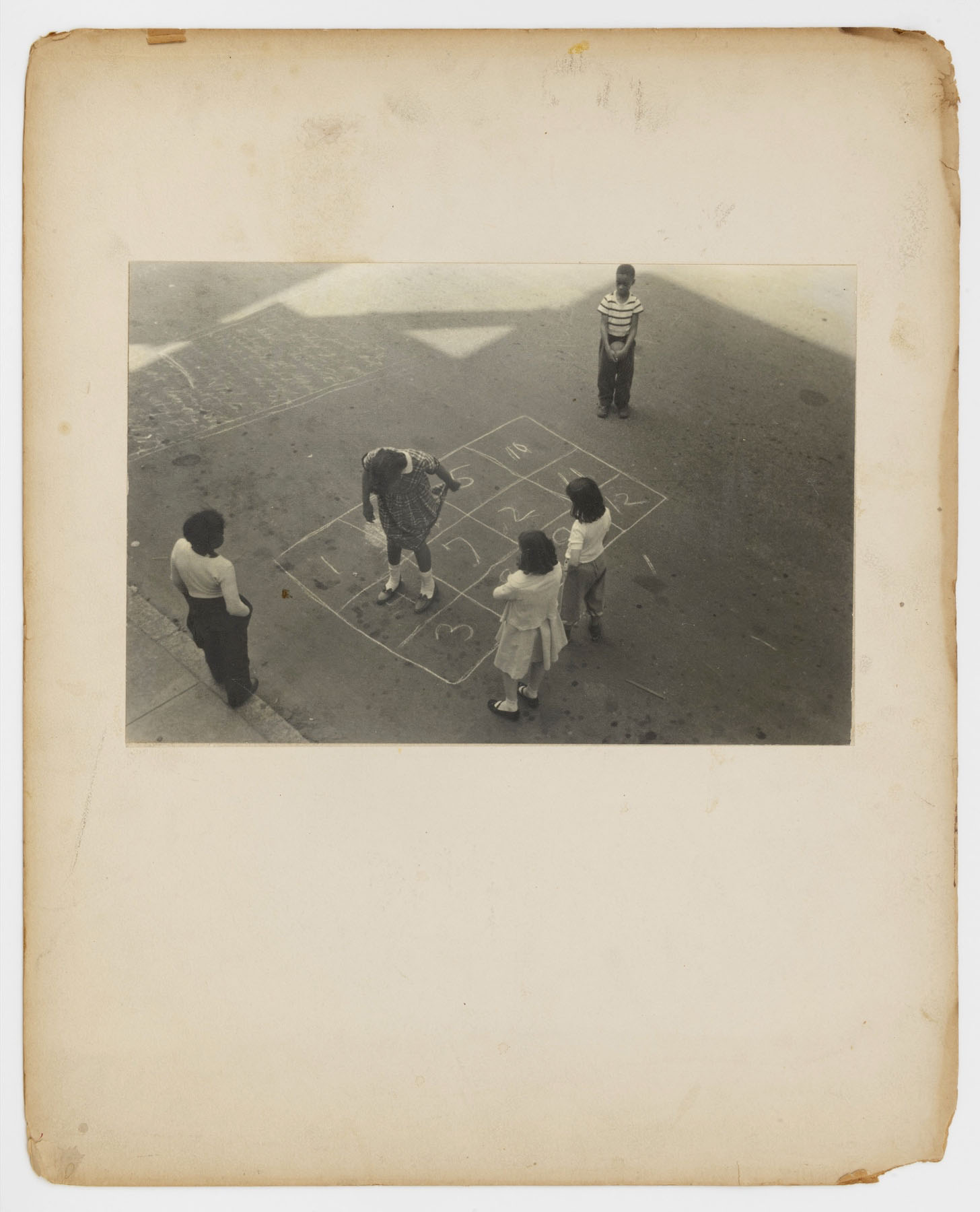
 

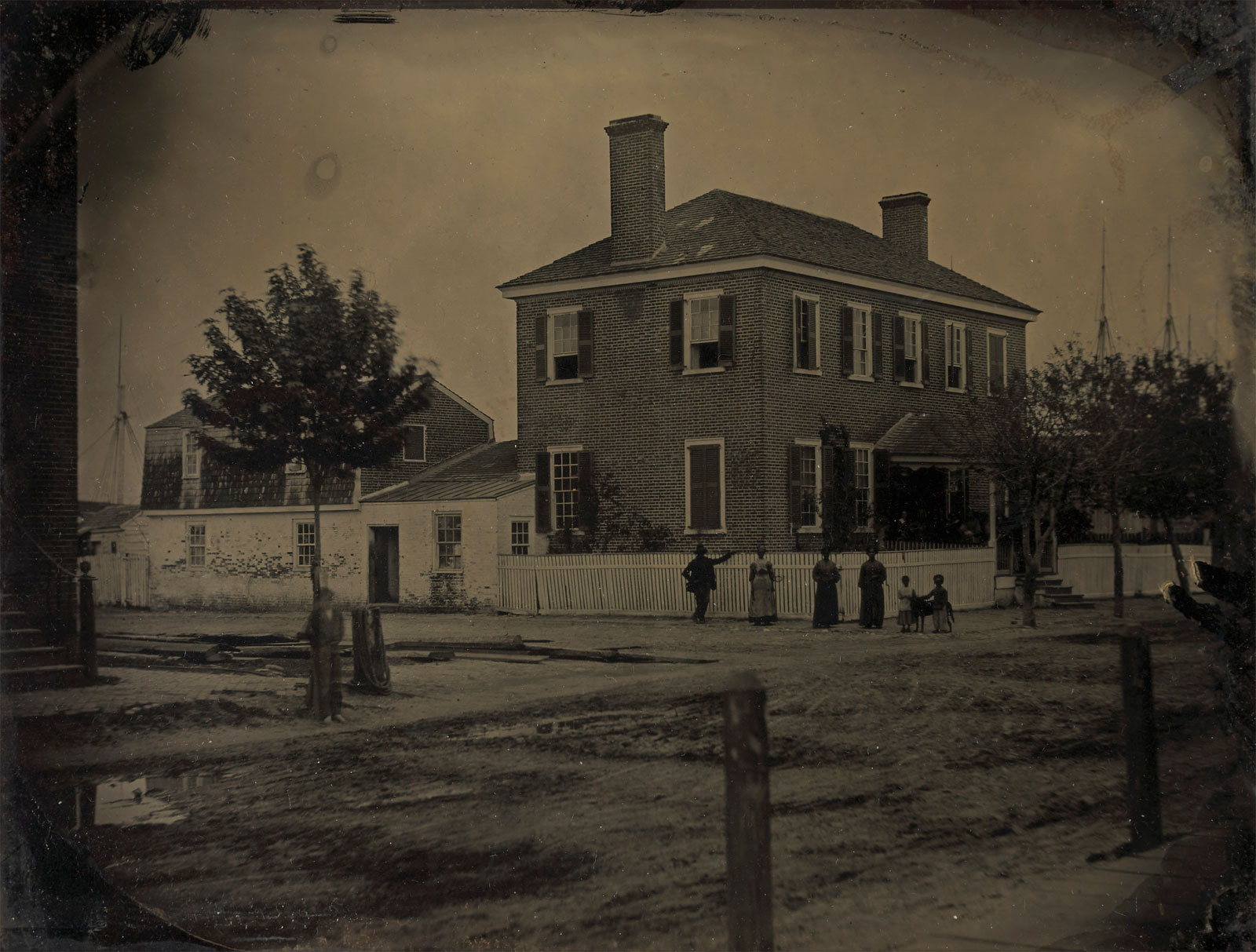
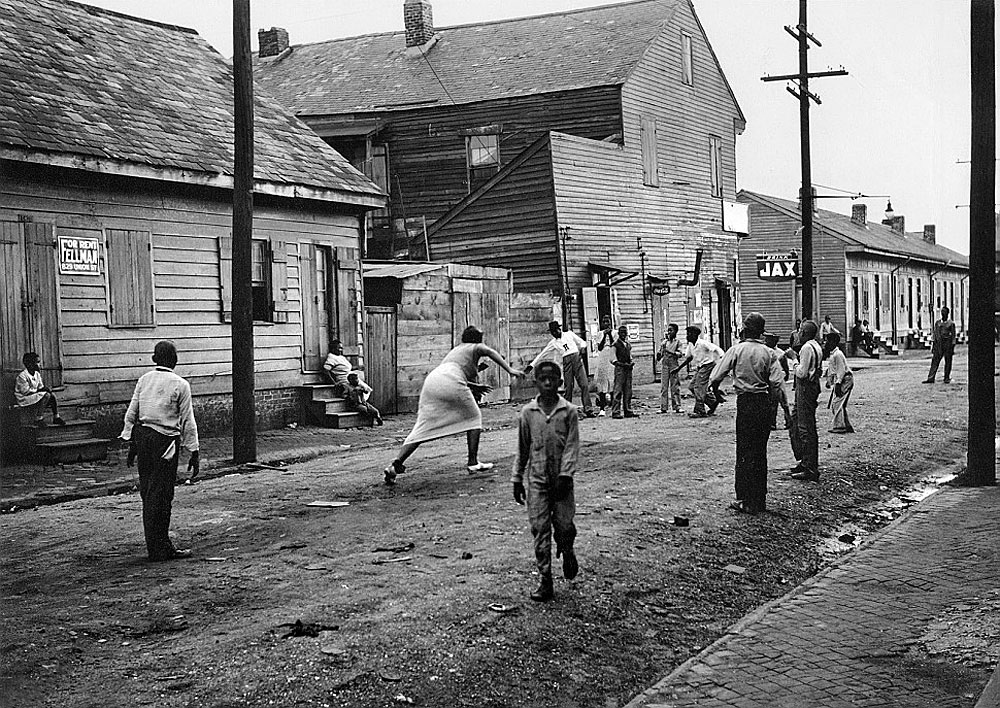
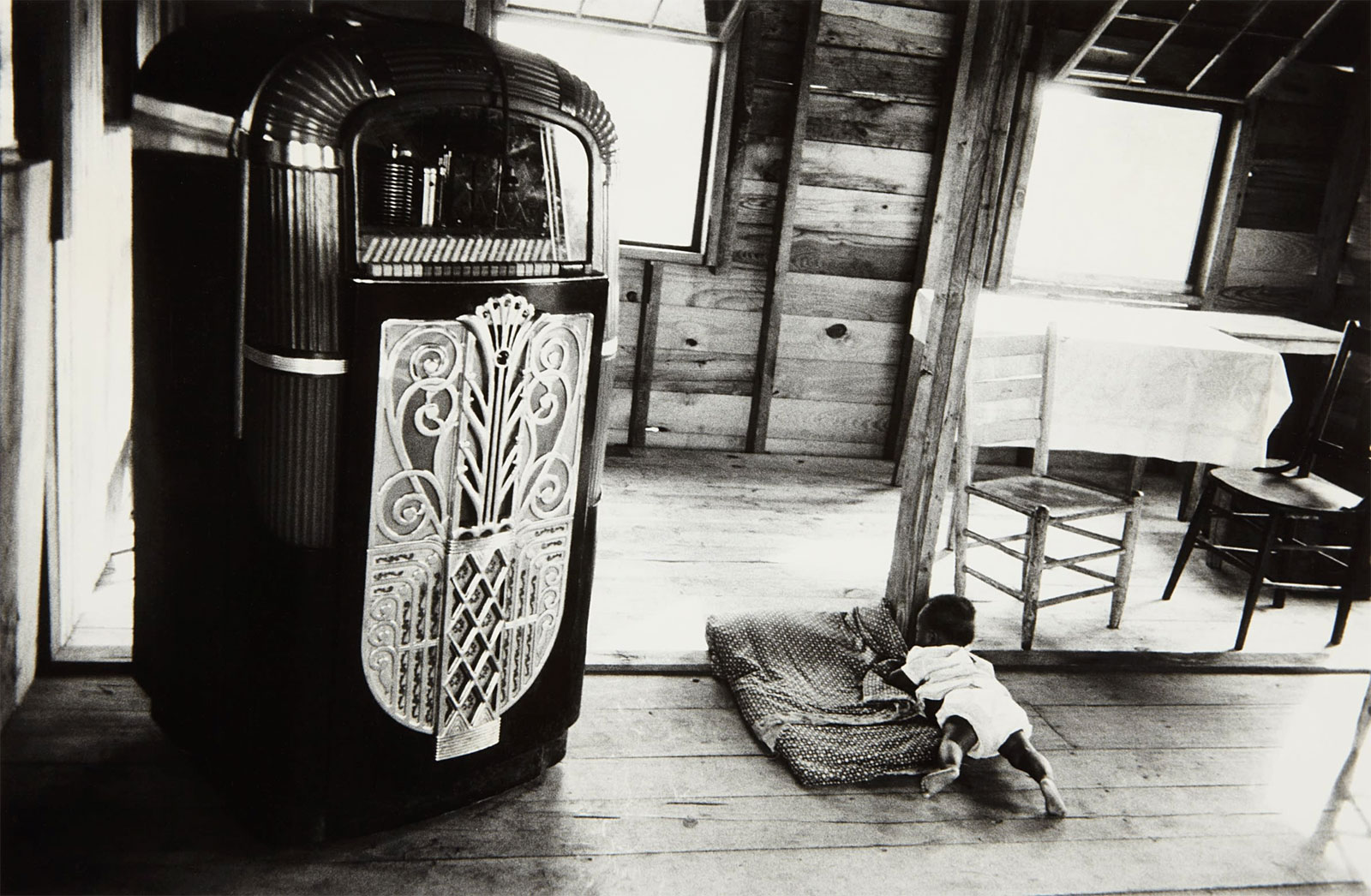
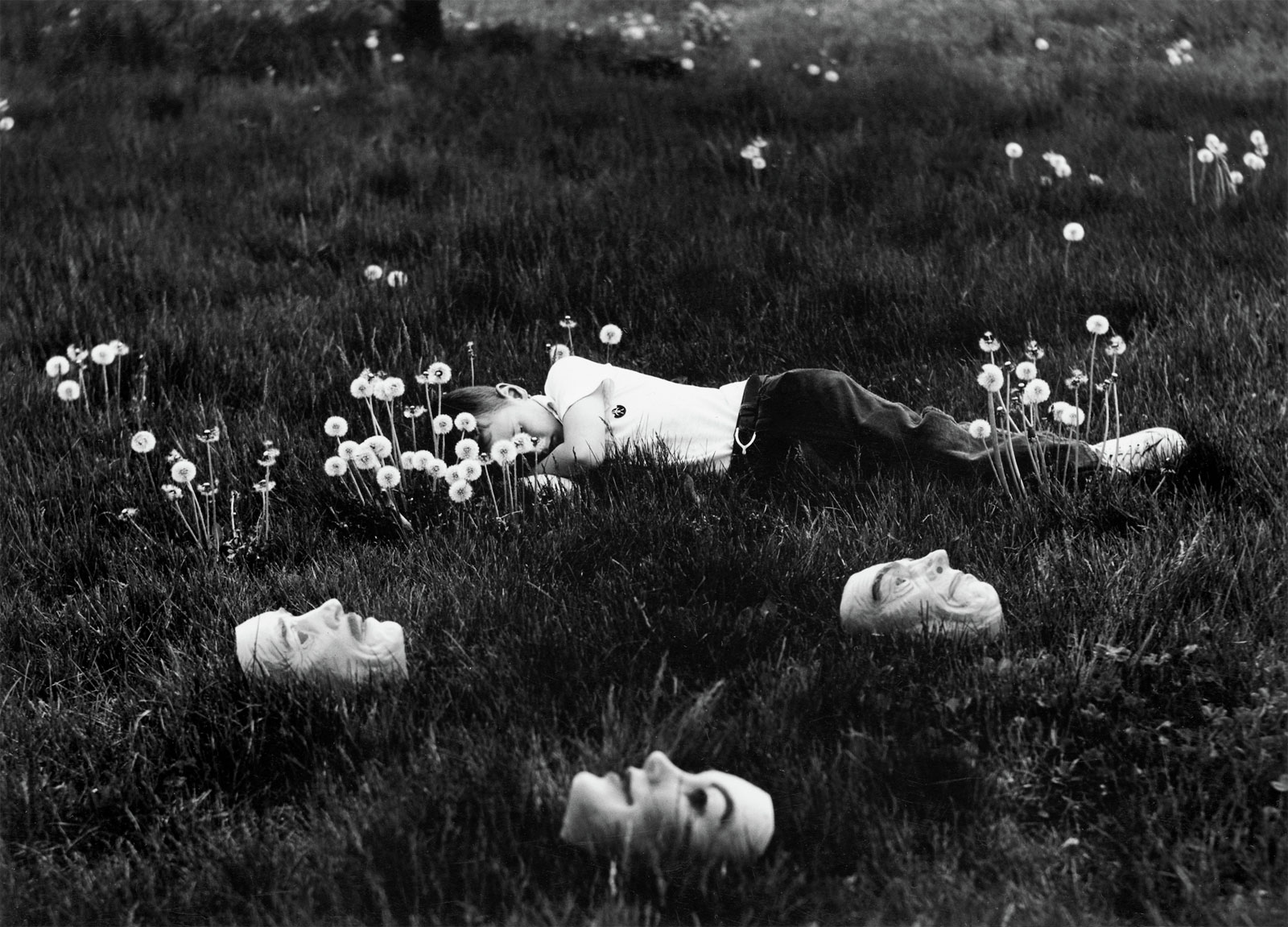
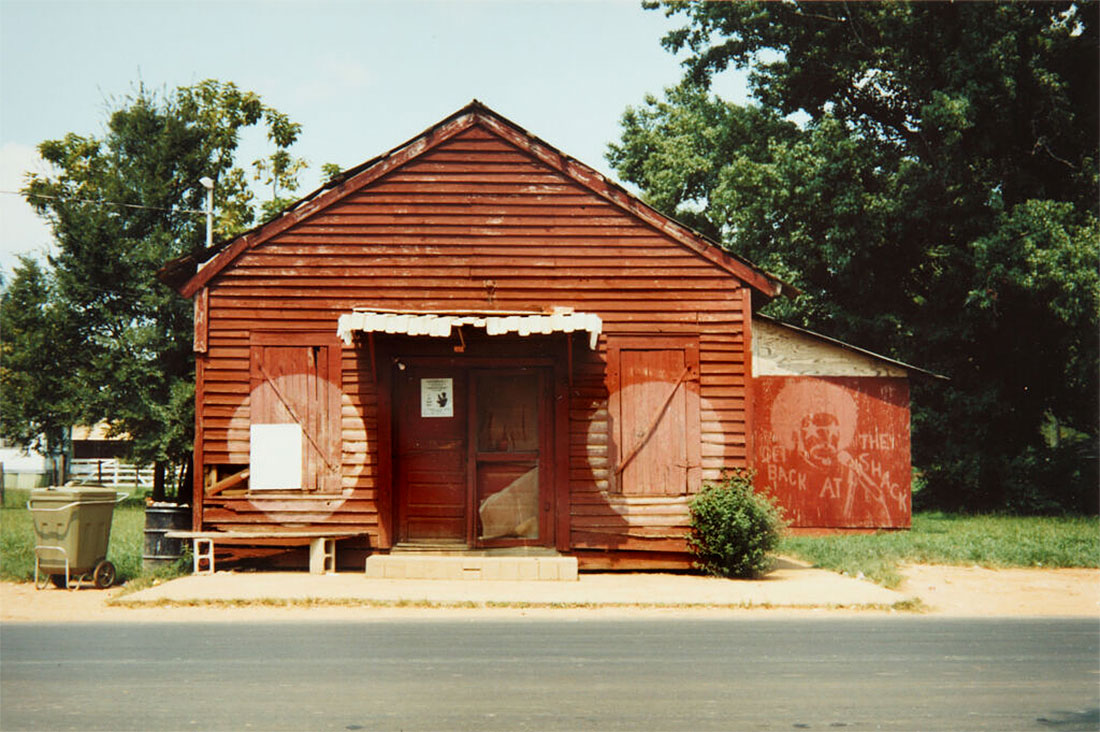
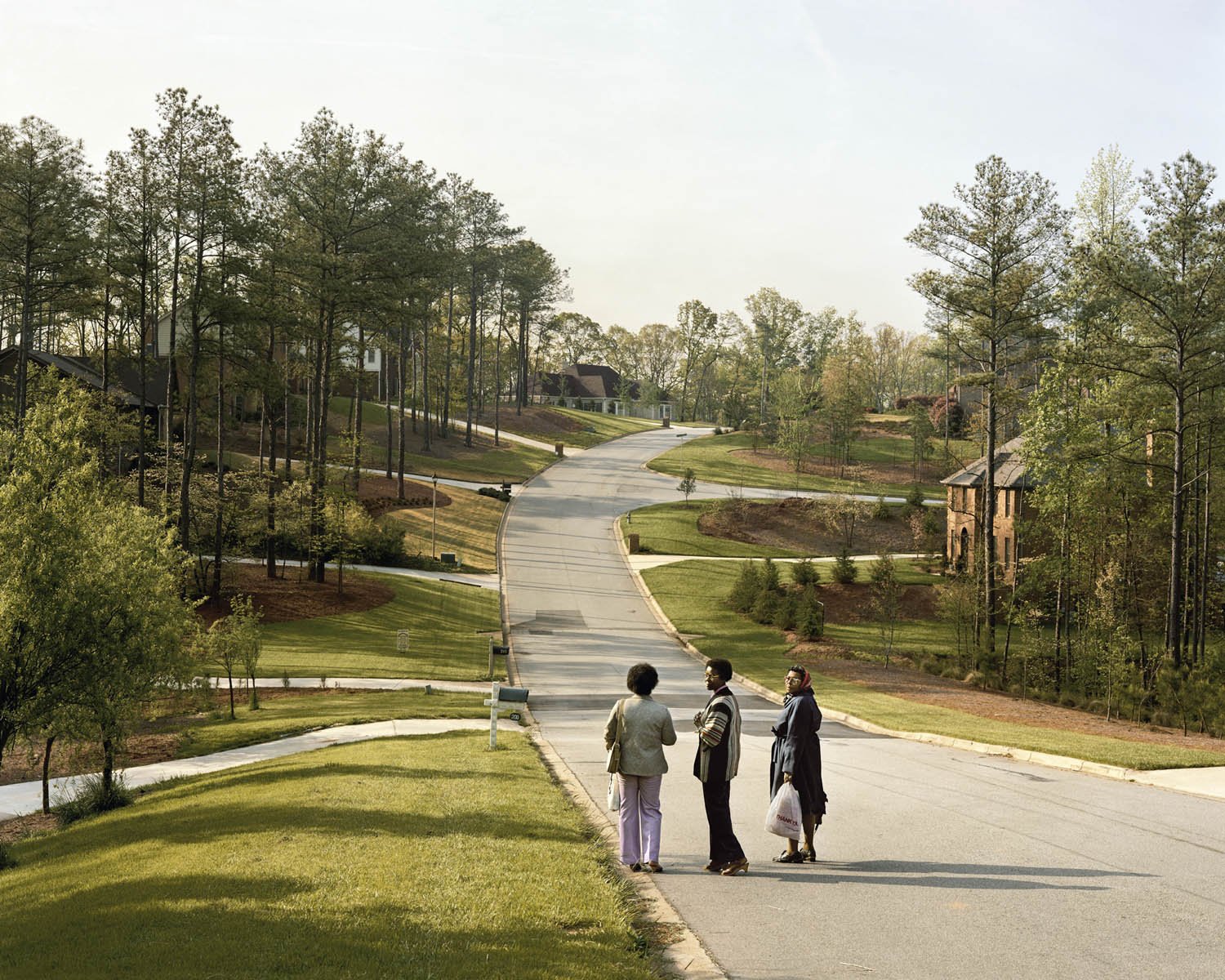
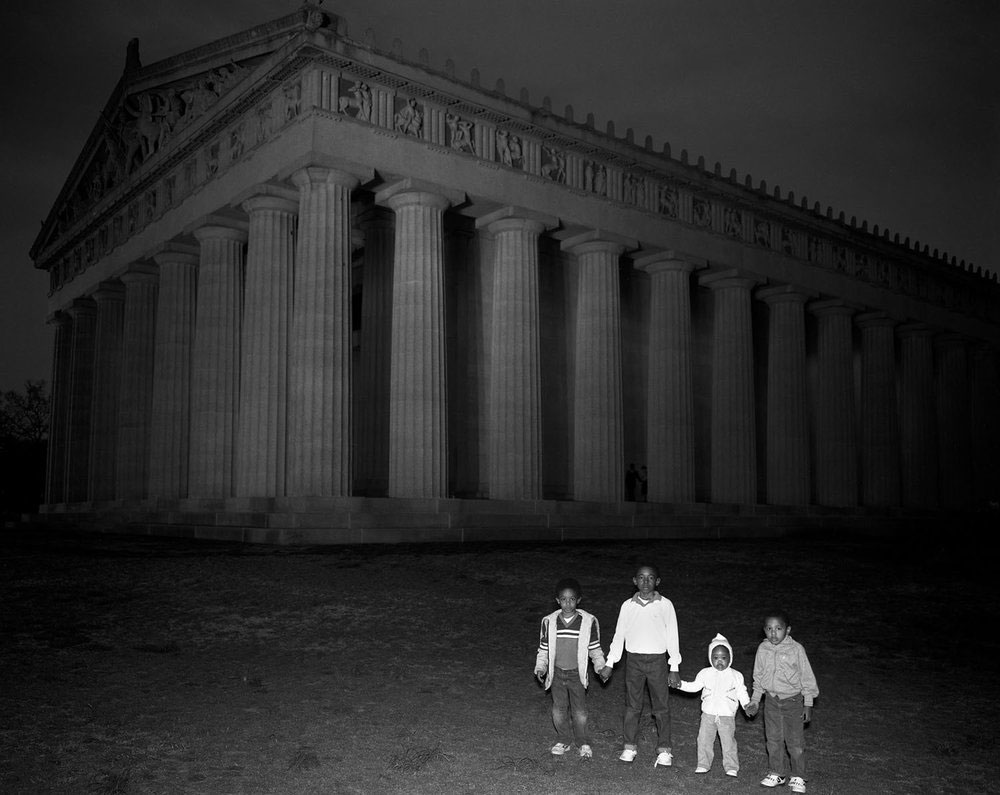
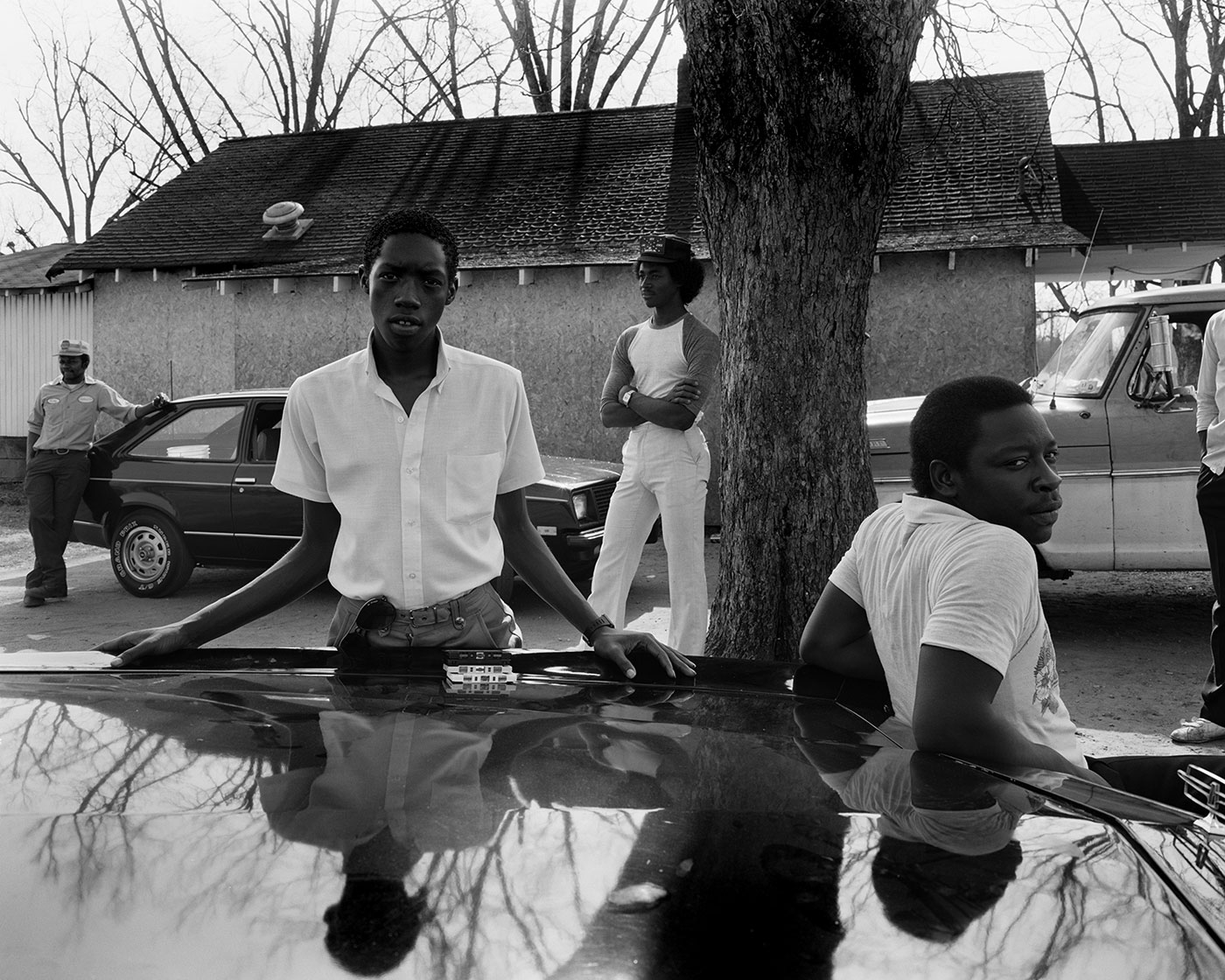
Thomas Ellis (American, 1963-2025) 'The Game' 1947 from the exhibition Exhibition: 'Photography and the Black Arts Movement, 1955-1985' at the National Gallery of Art, Washington, Sept 2025 - Jan 2026


Thomas Ellis (American, 1963-2025)
The Game
1947
Gelatin silver print
21 x 31.8cm (8 1/4 x 12 1/2 in.)
Courtesy of the Darrel Ellis Estate, Hannah Hoffman, Los Angeles, and Candice Madey, New York
Photo: Adam Reich


Thomas Sayers Ellis (October 5, 1963 – July 17, 2025) was an American poet, photographer, musician, bandleader and teacher.


“There’s nothing like a photograph for reminding you about difference. There it is. It stares you ineradicably in the face”

~ Professor Stuart Hall, 2008


This looks to be a “worthy” exhibition on photography and the Black Arts movement but without having seen it in person there is little specific comment I can make about the exhibition. However, some thoughts on the photographs in this posting are possible.

It is a joy for me to be able to learn more about an important area in photographic history, vis a vis “the role of African American photographers and artists working with photographs in developing and fostering a distinctly Black perspective on art and culture.” (Text from the NGA website)

There are many photographers in the posting who I have never heard of before, whose work I have never seen, and I always like learning, for in learning you may gain some small amount of wisdom and appreciation of different cultures and points of view. I have added biographical information for each artist to their images where possible.

The photographs from the period 1955-1985 mark a shift away from an aesthetic and formalist way of looking at the image where the role of the photographer and the reception of the print was in its primacy (the 1950s-1960s) “towards a more polemical, critical and cultural analysis by Tagg, Sekul, Solomon-Godeau and others in the 1980s and 90s. These shifts from the pictorial to the political … decentre the photographer and bring into focus the photographed and viewing subjects…”1

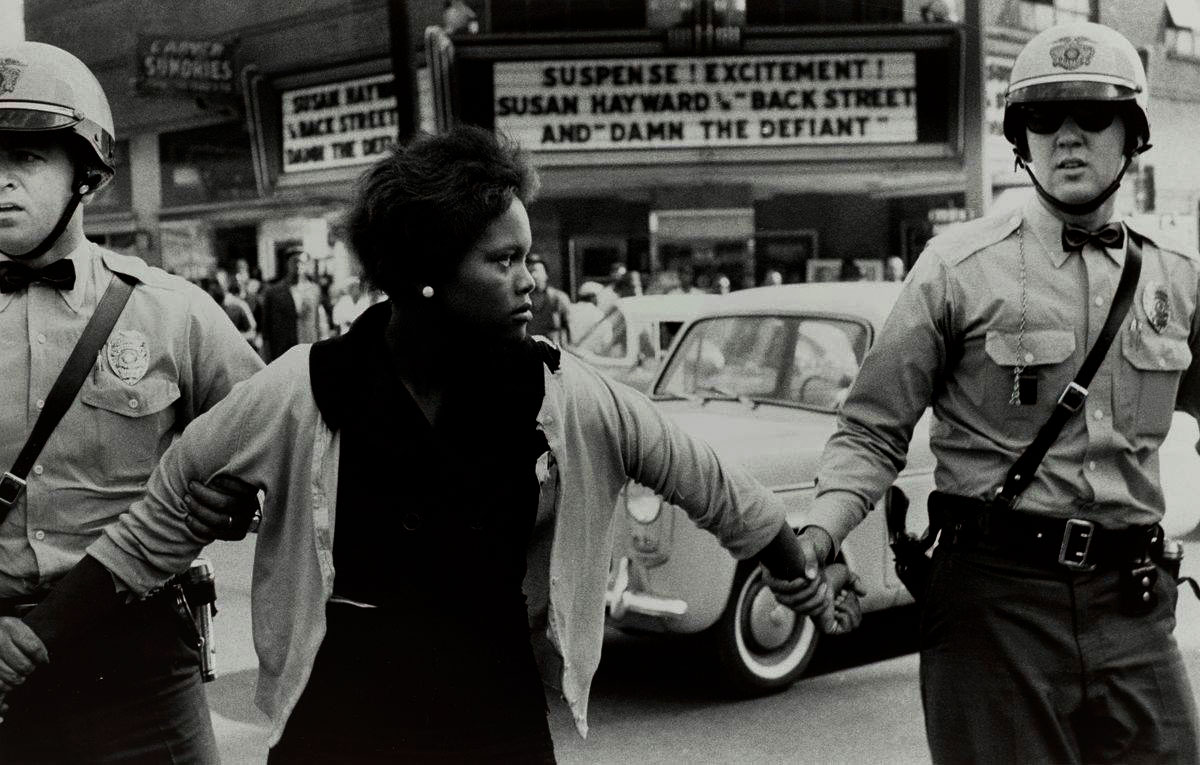
In these photographs it is not so much the primacy of the artist, the aesthetics of the image, nor the photographs status as art objects, but the people within the images that are the focus of attention. They bring to the forefront of the viewer’s consciousness (or should do) the racial politics at work within photography in the context of discussions around race and representation and the ongoing legacies of Western imperialism.

The photographs demonstrate “that if we do not recognise the historical and political conjunctures of racial politics at work within photography, and their effects on those that have been culturally erased, made invisible or less than human by such images, then we remain hemmed within established orthodoxies of colonial thought concerning the racialised body, the subaltern and the politics of human recognition.”2

They bring to light (aha!) “new ways of seeing that bring the Other into focus”, photographs that challenge us to acknowledge the structural racism that is embedded in daily life which produces adverse outcome for people of color. Through such an acknowledgement we may open up a personally and culturally transformative dialogic space, “a “space of possibilities” where participants listen, engage with, and even transcend their own viewpoints to see issues from multiple angles” – as there can never be a single view point when we “examine” social groups that are subaltern (groups that have been marginalised or oppressed).

From a distance this seems to be one of the problems of the exhibition. It’s all so worthy and righteous, full of the injustice of it all, and perhaps that’s as it should be for those were the times and the culture from which these photographs emerged. But I can’t help but get the feeling that this exhibition seems to feel and read more like a study in cultural anthropology, more a sociological statement than any celebration of Black history and culture from the period. Speaking from the standpoint of a white, middle class artist and writer, there seems to be little joy to be had here – to me one of the essential elements of Black culture, the joy of gospel, jazz, laughter, love – but I’m supposedly on the inside looking out (or is it the outside looking in!). Who am I to say.

What is undeniable is that, as Professor Stuart Hall so succinctly observes, there is nothing like a photograph to remind you of difference, to challenge your perceptions on how you view and interact with the world around you, to open up new ways of seeing. As such, the photographs in this exhibition may allow us deeper insight into the “conditions of our own becoming” (while human beings have agency, the circumstances under which they act and develop their humanity are largely shaped by existing material, social, and historical conditions that they did not choose) of the people that live around us, even as we acknowledge that there is no singular point of view, that cultural forms have no single determinate meaning, and that no one, and “no discipline, whether art- or photo-history, or ethnography or geography, speaks with a single voice.”1

Not one way of seeing, but multiple ways of seeing our fellow human beings.

Dr Marcus Bunyan


1/ Catherine De Lorenzo. “Oceanian imaginings in French photographic archives,” in History of Photography, Issue 2, Volume 28, 2004, pp. 137-184

2/ Text from the description of the book by Mark Sealy. Decolonising the Camera: Photography in Racial Time. London: Lawrence & Wishart, 2019.

The book examines how Western photographic practice has been used as a tool for creating Eurocentric and violent visual regimes, and demands that we recognise and disrupt the ingrained racist ideologies that have tainted photography since its inception in 1839.


Many thankx to the National Gallery of Art, Washington for allowing me to publish the photographs in the posting. Please click on the photographs for a larger version of the image.


“The work that was done by artists and photographers before, during, and after the Black Arts Movement establishes a strategy of community engagement. It is that engagement that allows communities to define themselves and also to engage people in new forms of looking.”


Co-curator Philip Brookman


Cultural forms set the wider terms of limitation and possibility for the (re)presentation of particularities and we have to understand how the latter are caught in the former in order to understand why such-and-such gets (re)presented in the way it does. Without understanding the way images function in terms of, say, narrative, genre or spectacle, we don’t really understand why they turn out the way they do.

Secondly, cultural forms do not have single determinate meanings – people make sense of them in different ways, according to the cultural (including sub-cultural) codes available to them. For instance, people do not necessarily read negative images of themselves as negative …


Richard Dyer. The Matter of Images: Essays on Representations. London: Routledge, 1993, pp.2-3
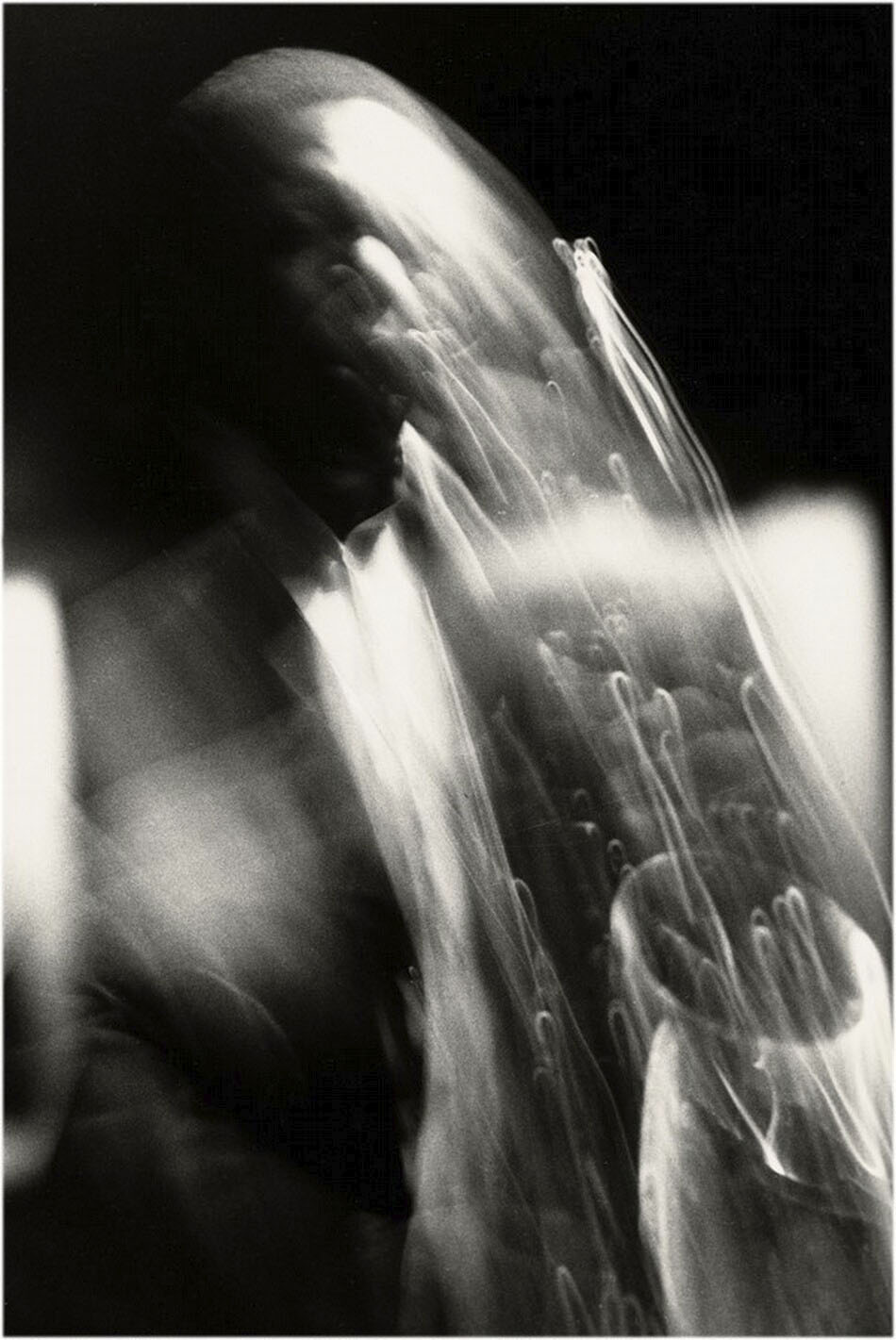


Adger Cowans (American, b. 1936) 'Coltrane at the Gate' 1961 from the exhibition Exhibition: 'Photography and the Black Arts Movement, 1955-1985' at the National Gallery of Art, Washington, Sept 2025 - Jan 2026


Adger Cowans (American, b. 1936)
Coltrane at the Gate
1961
Gelatin silver print
National Gallery of Art, Washington
Charina Endowment Fund


Adger Cowans (American, b. 1936)

Adger Cowans is a pioneering photographer and one of the founding members of the Kamoinge Workshop, a collective that played a key role in shaping Black photography in the 1960s and beyond.

In 1958 Cowans worked as an assistant to renowned photographer Gordon Parks. Throughout the 1960s Cowans became involved with influential groups associated with the Black Arts Movement, including Group 35 and Afri-COBRA, which he joined in 1968. 

His photographic work spans a wide range of approaches and subjects, from street photography in Harlem to documenting major historical events like the rallies and the funeral of Malcolm X. He also captured iconic jazz musicians, including John Coltrane and Pharoah Sanders.

Text from the National Gallery of Art website


Frank Dandridge (American, b. 1938) 'Blinded Birmingham Church Bombing survivor, Sarah Jean Collins, Birmingham, AL, 1963 "Clutching robe in hospital bed, Sarah Jean Collins was near bomb when it exploded in church. Her sister was killed. It will be weeks before she knows whether she can see again."' September 27, 1963


Frank Dandridge (American, b. 1938)
Blinded Birmingham Church Bombing survivor, Sarah Jean Collins, Birmingham, AL, 1963
“Clutching robe in hospital bed, Sarah Jean Collins was near bomb when it exploded in church. Her sister was killed. It will be weeks before she knows whether she can see again.”

September 27, 1963
Gelatin silver print
Overall: 35 x 50 cm (13 3/4 x 19 11/16 in.)
Collection of the Smithsonian National Museum of African American History and Culture
© Frank Dandridge
Photo: Frank Dandridge / The LIFE Picture Collection / Shutterstock


Frank Dandridge is a freelance photojournalist who worked mainly for Life Magazine in the 60’s. He covered numerous assignments, including, The Harlem Riots in 1964, Dr. King’s March on Washington, in 1963, and the terrible Birmingham Bombing in 1963. His photos also appeared in Look, Saturday Evening Post, Pageant, Paris Match, Good Housekeeping, Quick Magazine, the Canadian Film Board, Playboy, and many other national magazines. He won an Art Director’s Award for his photo essay, “The Two Faces of Harlem”, that appeared in Look magazine. His work included photographing many celebrities, including, Bobby Kennedy, Muhammad Ali, President Johnson, Dr. Martin Luther King, Frank Sinatra, The Supremes, Sammy Davis, Jr., and Jimmy Hoffa.

Text from the IMBd website


The photos that Frank Dandridge shot for LIFE magazine paint a vivid portrait of violence and race in 1960s America. He reported on riots in Harlem, in Watts, and in Newark,. He was in Selma, Alabama when Martin Luther King marched in the days immediately after Bloody Sunday. Dandridge’s most famous photo is of Sarah Collins, a 12-year-old girl whose eyes were in bandages after the bombing of a Sunday school class at the16th Street Baptist Church in Birmingham, Alabama. That bombing killed four girls, including Collins’ sister, while wounding many others and leaving Collins blind in one eye. The image of Collins in her hospital bed made vivid for America the cruelty of this horrific bombing by four men who were members of a splinter group of the Klu Klux Klan.

Bill Syken. “Race in the 1960s: The Photography of Frank Dandridge,” on the LIFE website Nd [Online] Cited 26/11/2025
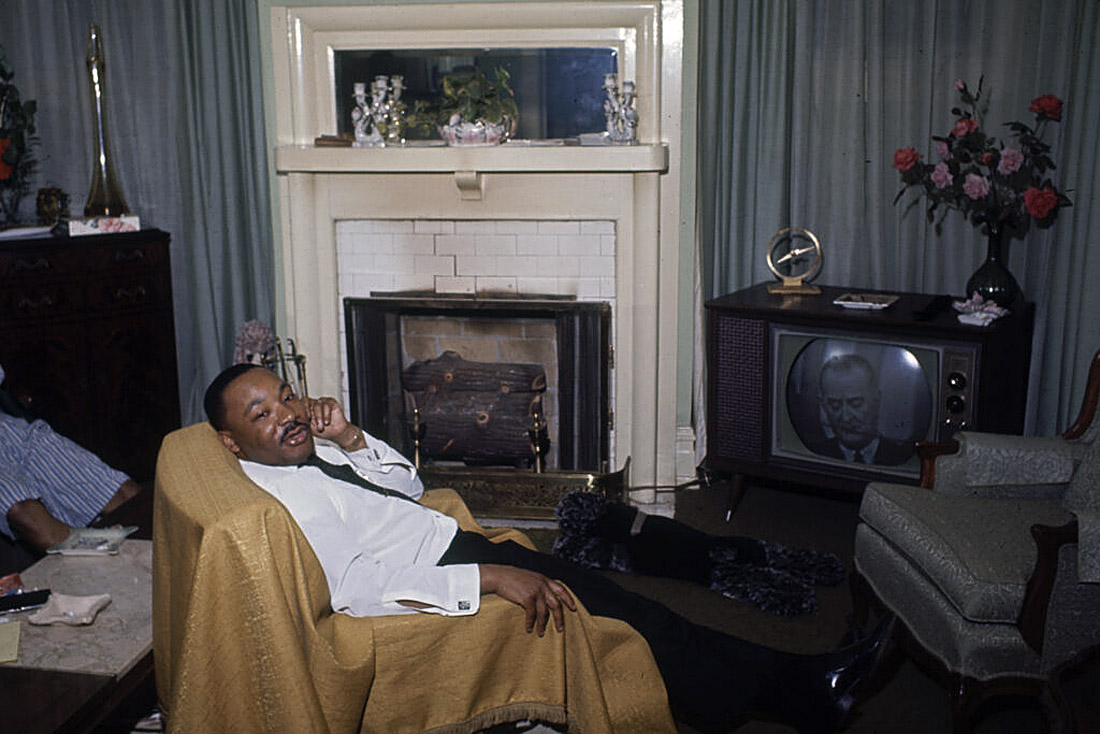
 

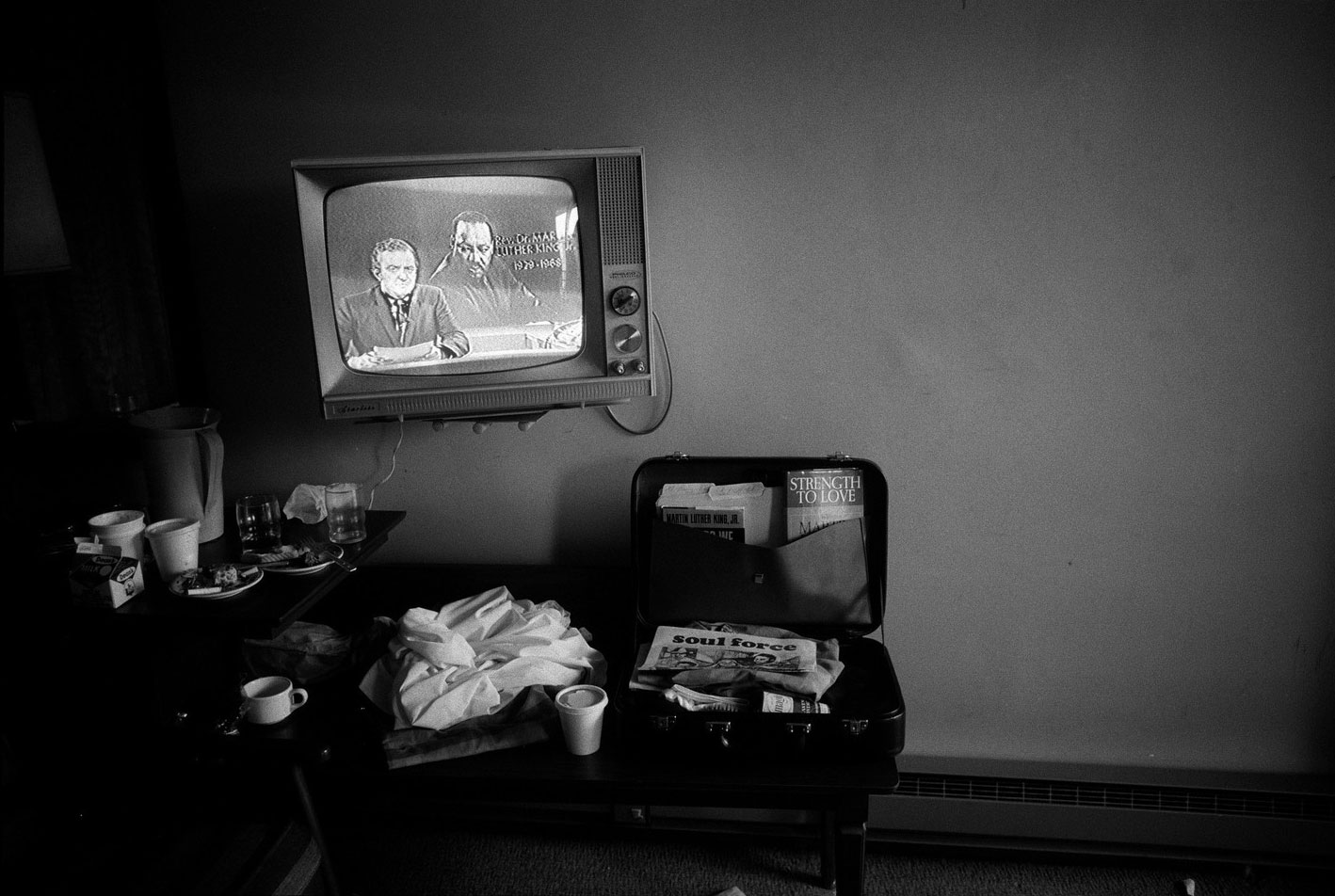
Frank Dandridge (American, b. 1938) 'Martin Luther King and other civil rights leaders watched President Lyndon B. Johnson speak on television' 1965


Frank Dandridge (American, b. 1938)
Martin Luther King and other civil rights leaders watched President Lyndon B. Johnson speak on television
1965
Gelatin silver print
© Frank Dandridge
Photo: Frank Dandridge / The LIFE Picture Collection / Shutterstock

Used under fair use for the purposes of education and research


Racism

Racism, when it is embedded in the structures, policies and practices of our social and political institutions can be termed “institutional”. Institutional racism, which will be described by the authors more fully below, is reflected in professional practice and working methods that result in racialized disparities. Frantz Fanon, psychiatrist and political philosopher, stands out as one of the earliest academics to explore the nature of racism from a psychosocial perspective. Fanon (1967) talked of “vulgar racism in its biological form”, which was evident for several hundreds of years, being replaced in the mid-20th century by “more subtle forms” (p. 35). In a study of Fanon’s clinical psychology and social theories, McCulloch (1983) refers to this new racism as “cultural racism” – describing this as “a more sophisticated form [of racism] in which the object is no longer the physiology of the individual but the cultural style of a people” (p. 120). Cultural racism believes that the dominant group’s culture is superior to the seemingly “lower” minority groups.

Cultural racism champions the supremacy of cultures. Commonly, some version of European culture or, more specifically, white European culture, rather than the white “race” (Amin, 1989), thereby producing a situation of racism without “races” (Balibar, 1991). It was the American civil leaders Stokely Carmichael (later Kwame Ture) and Charles V. Hamilton in their 1967 book, Black Power: The Politics of Liberation (Carmichael & Hamilton, 1967), who first described institutional racism:

It takes two, closely related forms … we call these individual racism and institutional racism. The first consists of overt acts by individuals … the second type is less overt, far more subtle, less identifiable in terms of specific individuals committing acts … and thus receives far less public condemnation than the first type. (p. 2)

Institutional racism forms an array of broader structural racism processes “that exclude … substantial numbers of members of particular groups from significant participation in major social institutions” (Henry & Tator, 2005, p. 352). According to minority mental health models like the racism-induced reactive negative emotionality cycle (Lazaridou & Heinz, 2021), structural racism and institutional racism result in experiences of rejection and emotional alienation in public spaces for Black people and People of Color (Lentin, 2015).

Structural racism in employment, earnings and credit may mutually limit equal access to quality, affordable accommodation. However, when public spaces are sites of surveillance, intimidation and frequent hostility by the police or by ordinary citizens, then the structure of social situations, such as even leaving one’s house and speaking in public, are filled with stress, anxiety, and fear (Chou et al., 2012; Sibrava et al., 2013). There is pervasive evidence that structural racism has destructive impacts on the health and wellbeing of patients from minority groups, including migrants, refugees, and asylum seekers (Alvarez et al., 2016; Bailey et al., 2017; Graham et al., 2016; Noh & Kaspar, 2003).

Felicia Lazaridou and Suman Fernando. “Deconstructing institutional racism and the social construction of whiteness: A strategy for professional competence training in culture and migration mental health,” in Transcult Psychiatry, 2022 Apr 4; 59(2), pp. 175-187.
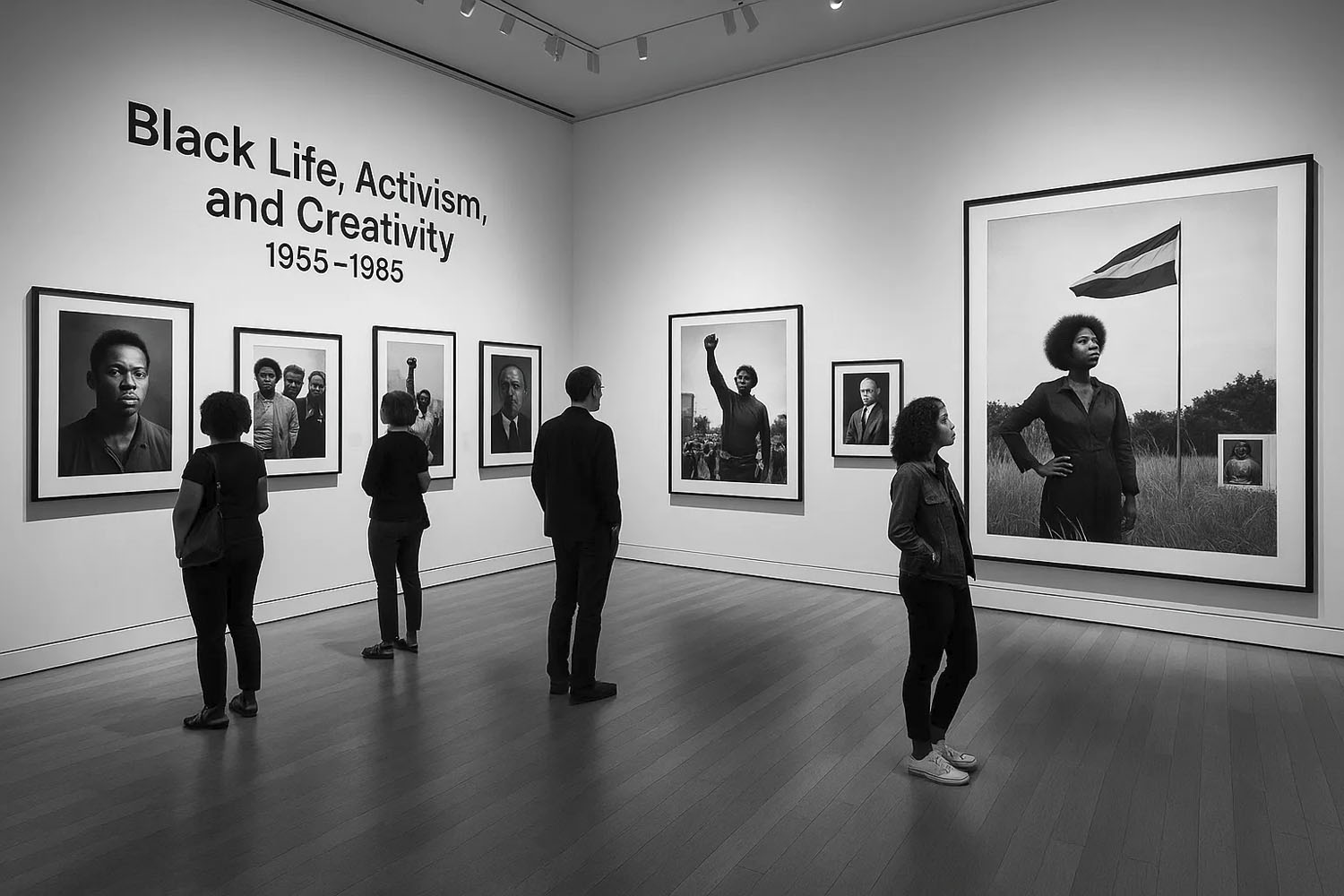
 

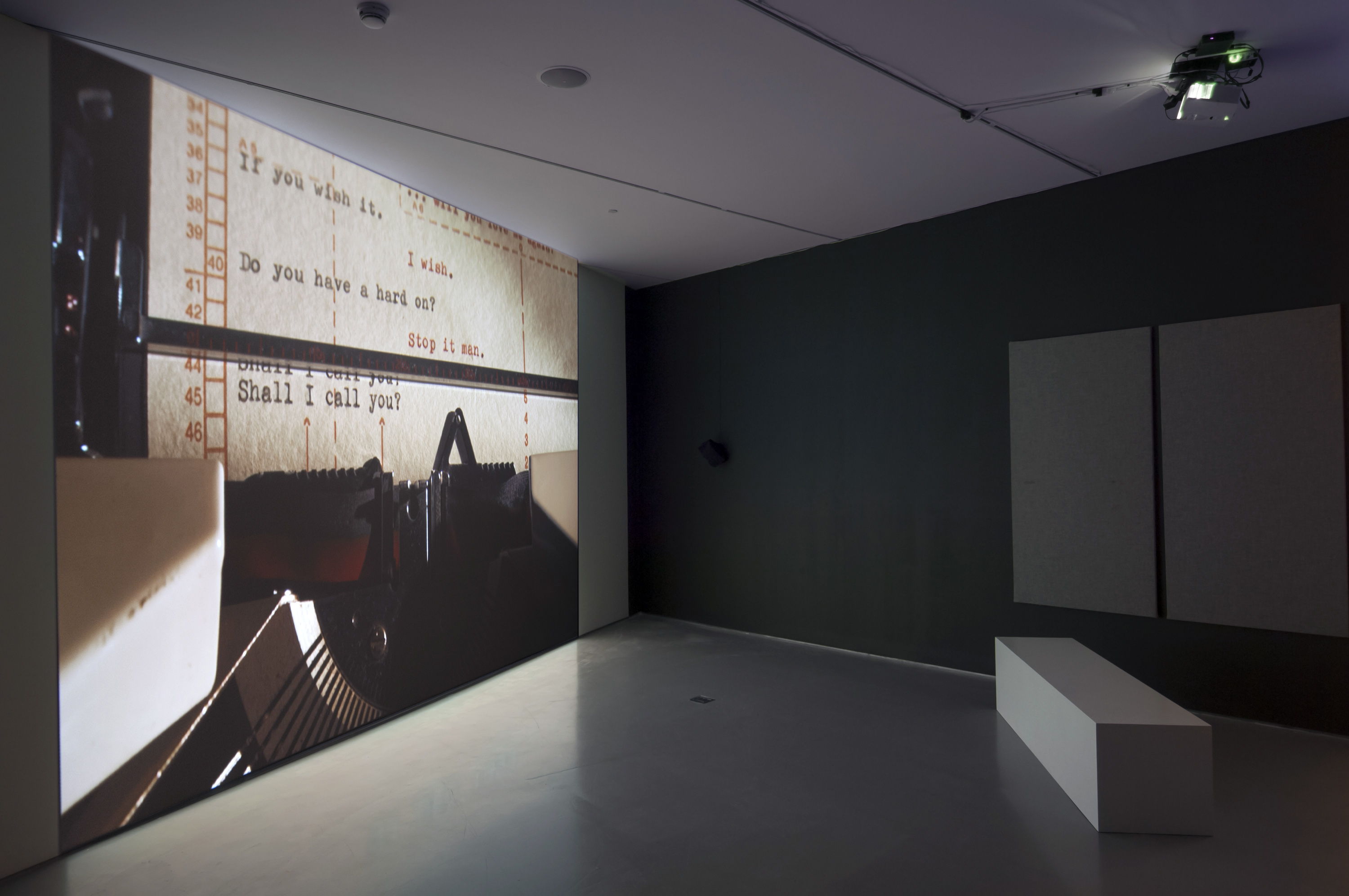
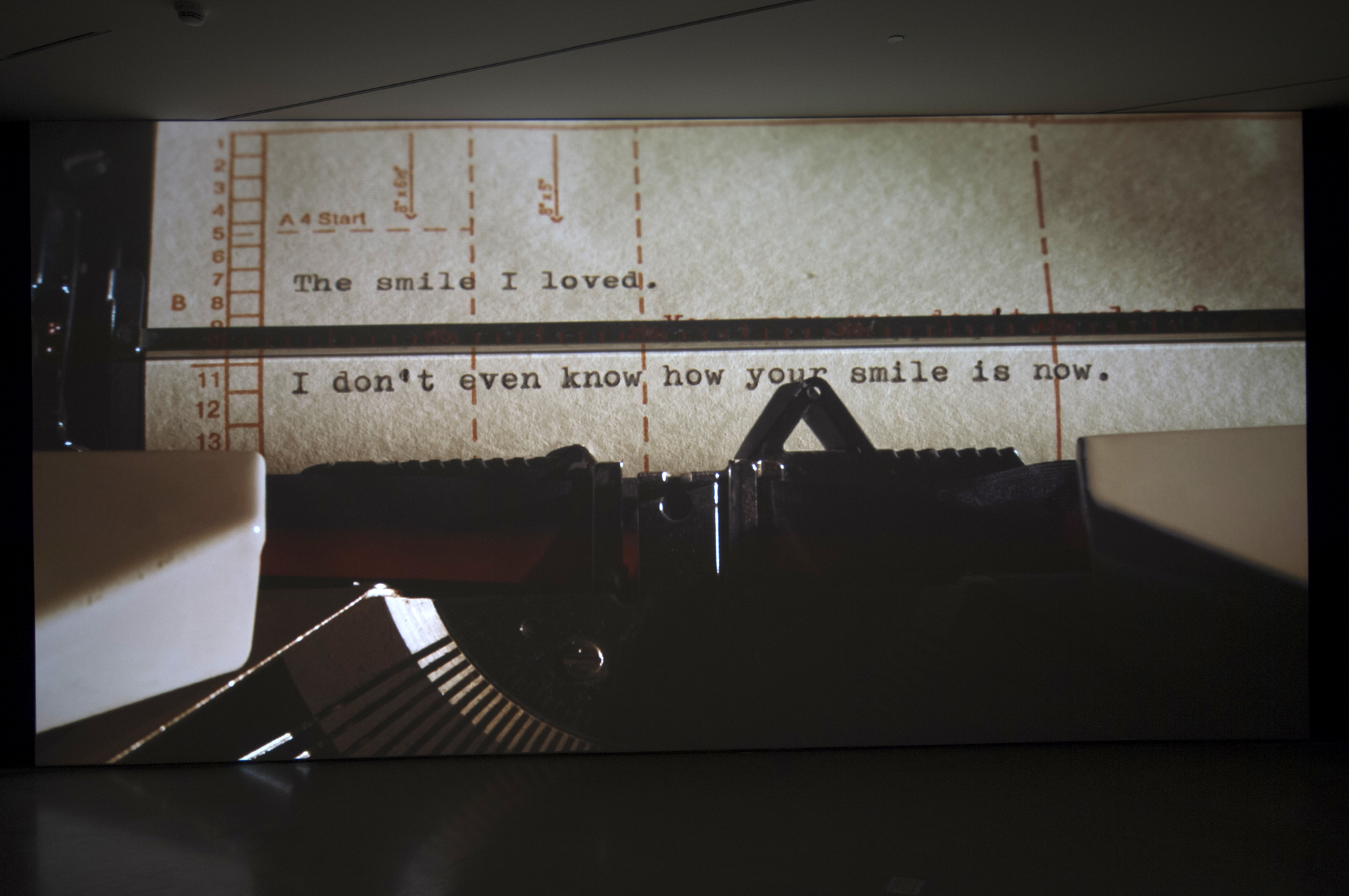
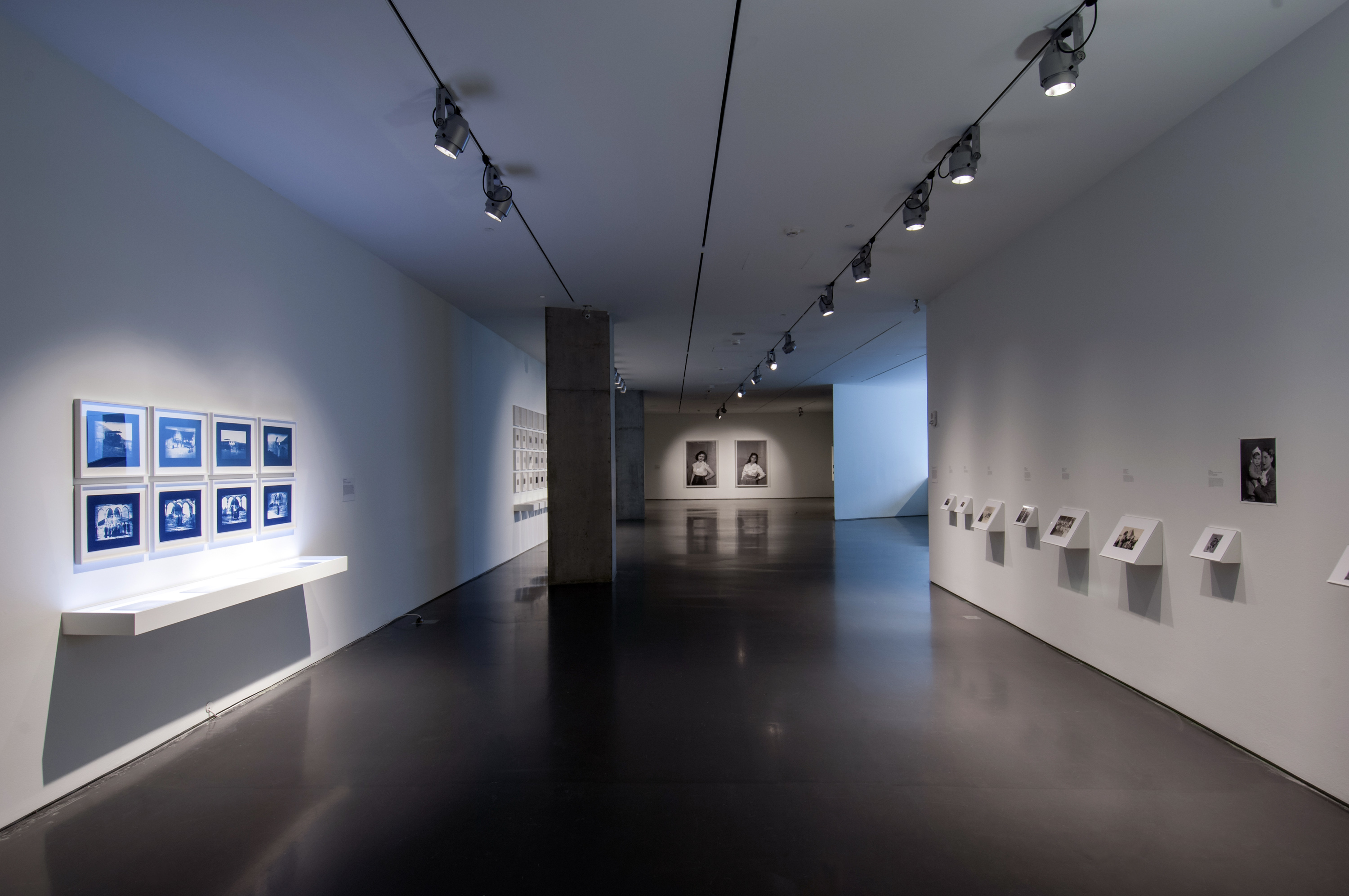
Installation view of the exhibition 'Photography and the Black Arts Movement, 1955-1985' at the National Gallery of Art, Washington, September 2025 - January 2026


Installation view of the exhibition Photography and the Black Arts Movement, 1955-1985 at the National Gallery of Art, Washington, September 2025 – January 2026
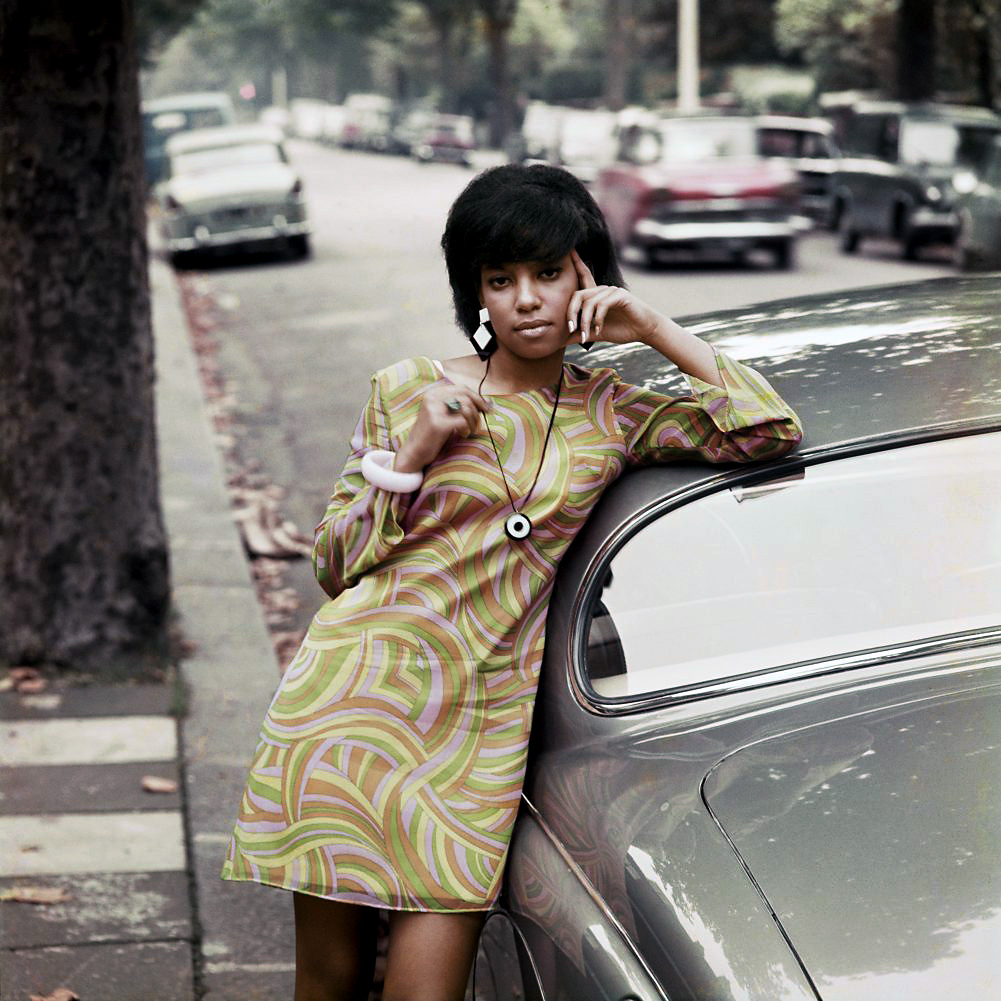
 

James Barnor (Ghanian, b. 1929) 'Drum Cover Girl Erlin Ibreck, London' 1966, printed 2010


James Barnor (Ghanaian, b. 1929)
Drum cover girl Erlin Ibreck, Kilburn, London
1966, printed 2023
Chromogenic print
29 × 29cm (11 7/16 × 11 7/16 in.)
National Gallery of Art, Washington
Alfred H. Moses and Fern M. Schad Fund
© James Barnor / Courtesy Galerie Clementine de la Feronnière


In the tradition of Black African photographers such as Malick Sidibé, Seydou Keïta and Sanlé Sory, Barnor’s photographs present people of all ages and all walks of life – whether in Accra, Ghana or in the suburbs of London, England – through direct and honest studio portraits or in more candid documents of the communities that surrounded him. …

Barnor’s photographs plant the seed of equality and happiness as a way of transmitting this knowledge to others. “He is a living archive, a link between the birth of photography in West Africa and the development of the discipline for the modern era.”2 It is his passion and feeling for the practice of photography, the stories that it tells and his engagement with the spirit of the people that he encounters – as a conversation between equals – that intuitively ground his work in the history of photography and the history of Black culture and makes them forever young.

Marcus Bunyan. “It’s late, but it’s better late than never,” on the Art Blart website October 17, 2021 [Online] Cited 26/11/2025
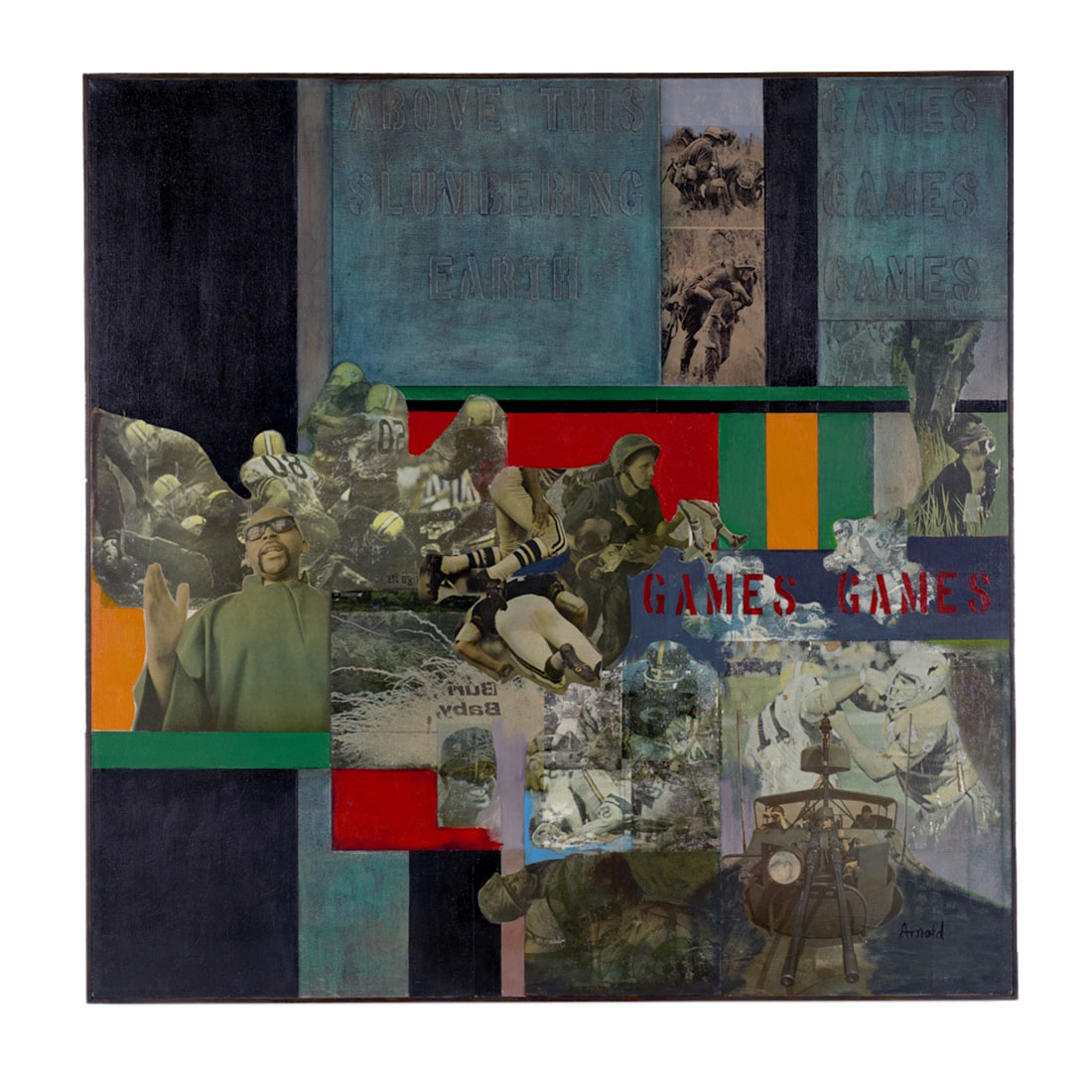
 

Ralph Arnold (American, 1928-2006) 'Above this Earth, Games, Games' 1968


Ralph Arnold (American, 1928-2006)
Above this Earth, Games, Games
1968
Collage and acrylic on canvas
Overall: 114.3 x 114.3 cm (45 x 45 in.)
Collection of Museum of Contemporary Photography at Columbia College, Chicago
Photo: P.D. Young / Spektra Imaging


During the tumultuous 1960s and 70s, the prolific artist Ralph Arnold (1928-2006) made photocollages that appropriated and commented upon mass media portrayals of gender, sexuality, race and politics. Arnold’s complex visual arrangements of photography, painting and text were built upon his own multilayered identity as a black, gay veteran and prominent member of Chicago’s art community…

Text from the Museum of Contemporary Photography in Chicago
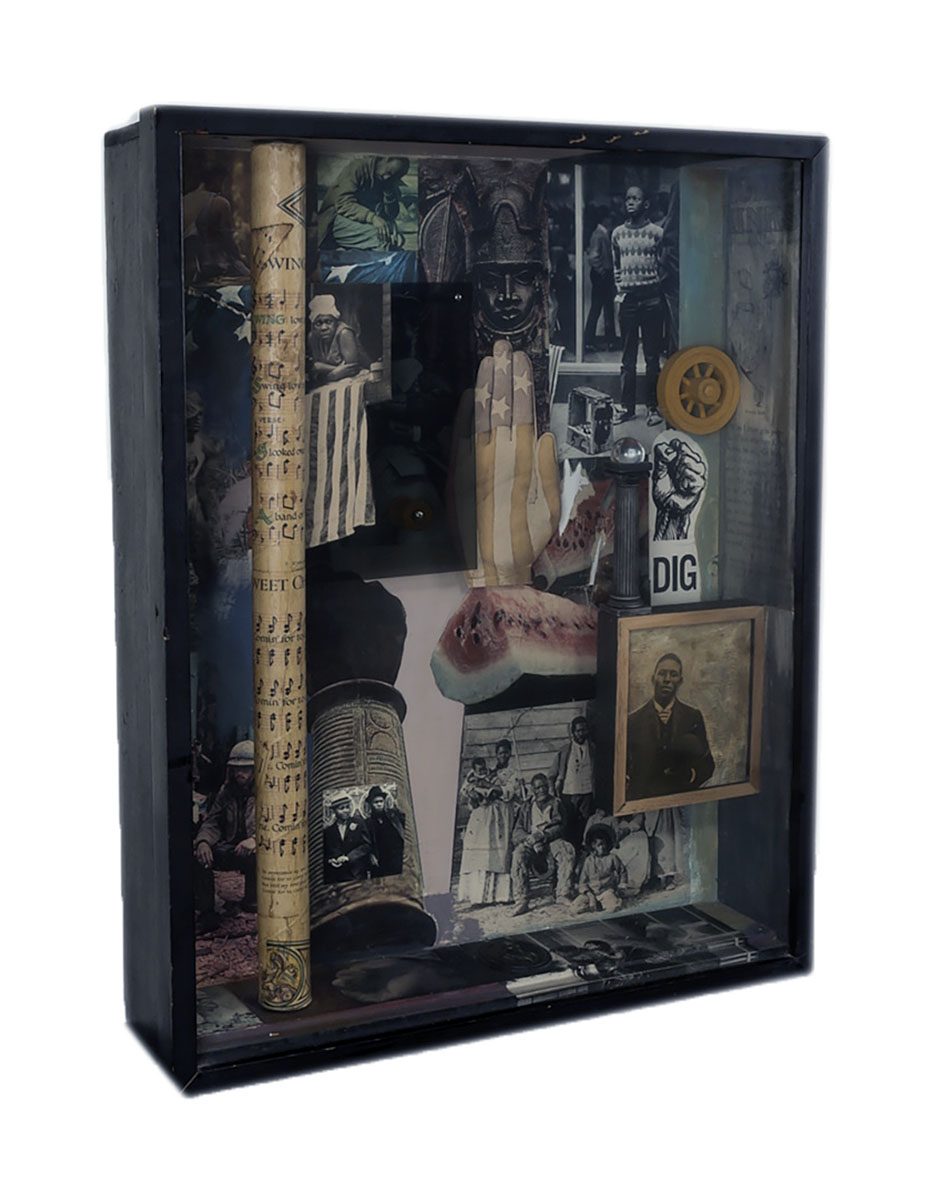
 

Ralph Arnold (American, 1928-2006) 'Soul Box' 1969


Ralph Arnold (American, 1928-2006)
Soul Box
1969
Assemblage with found objects and collage on Masonite
Framed: 71.1 x 56.8 x 14.9cm (28 x 22 3/8 x 5 7/8 in.)
Private collection of Courtney A. Moore
Photo: Courtesy of the Museum of Contemporary Photography at Columbia College Chicago


The first exhibition to consider photography’s impact on a cultural and aesthetic movement that celebrated Black history, identity, and beauty.

Uniting around civil rights and freedom movements of the 1960s and 1970s, many visual artists, poets, playwrights, musicians, photographers, and filmmakers expressed hope and dignity through their art. These creative efforts became known as the Black Arts Movement.

Photography was central to the movement, attracting all kinds of artists – from street photographers and photojournalists to painters and graphic designers. This expansive exhibition presents 150 examples tracing the Black Arts Movement from its roots to its lingering impacts, from 1955 to 1985. Explore the bold vision shaped by generations of artists including Billy Abernathy, Romare Bearden, Kwame Brathwaite, Roy DeCarava, Doris Derby, Emory Douglas, Barkley Hendricks, Barbara McCullough, Betye Saar, and Ming Smith.

Text from the NGA website


Photography and the Black Arts Movement, 1955-1985 investigates the role of African American photographers and artists working with photographs in developing and fostering a distinctly Black perspective on art and culture. The Black Arts Movement was a uniquely American creative initiative, closely linked to the civil rights movement and comparable to the Harlem Renaissance of the 1920s in its impact. Through new institutions and publications, Black writers, musicians, filmmakers, and visual artists explored ways their art could further the American civil rights movement and communicate messages of Black history and identity. Photography and the Black Arts Movement reveals how studio and street photographers, photojournalists, painters, conceptual artists, graphic designers, and community activists used photography to cut across traditional racial boundaries, express messages of empowerment, and advance social justice.

Bringing together some 150 works by more than 100 artists, Photography and the Black Arts Movement also includes objects from Africa, the Caribbean region, and Great Britain, representing artistic dialogues created through travel, migrations, and international engagement with the social, political, and cultural ideas that propelled the movement. Among the artists included are Billy Abernathy, Anthony Barboza, Romare Bearden, Dawoud Bey, Frank Bowling, Kwame Brathwaite, Ernest Cole, Adger Cowans, Roy DeCarava, Emory Douglas, Louis Draper, David C. Driskell, Samuel Fosso, Charles Gaines, Barkley Hendricks, Danny Lyon, Barbara McCullough, Jeanne Moutoussamy-Ashe, Gordon Parks, Adrian Piper, Juan Sánchez, Coreen Simpson, Betye Saar, Jamel Shabazz, Lorna Simpson, Ming Smith, Frank Stewart, and Carrie Mae Weems.

The exhibition is organised by the National Gallery of Art, Washington.

Text from the NGA website
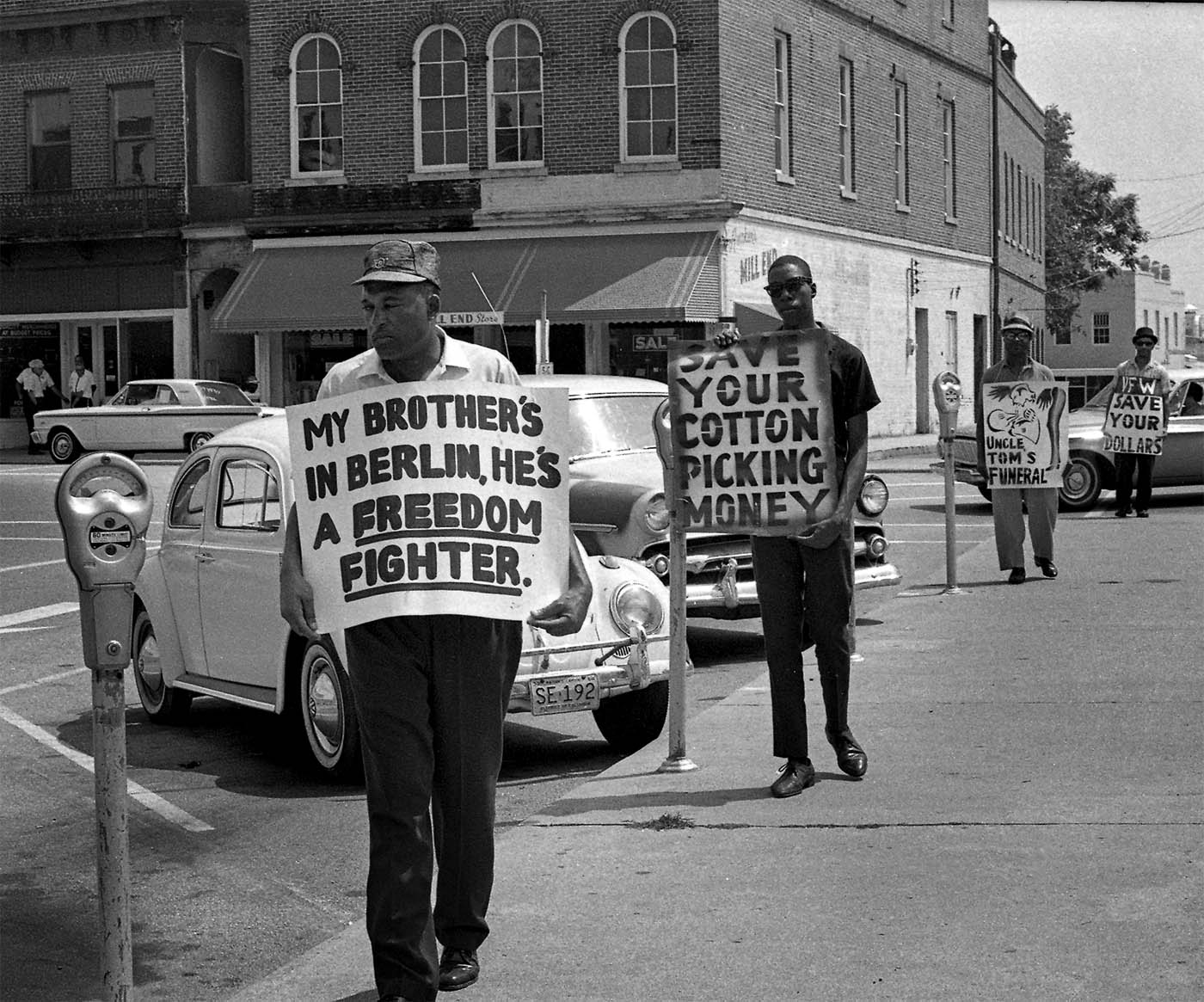
 

Cecil J. Williams (American, b. 1937) 'During the summer of 1960, the elders of Orangeburg took to the streets as part of ongoing demonstrations and boycotts in support of civil rights. They are standing outside a segregated supermarket where they were allowed to shop but not sit down for lunch' 1960, printed 2024


Cecil J. Williams (American, b. 1937)
During the summer of 1960, the elders of Orangeburg took to the streets as part of ongoing demonstrations and boycotts in support of civil rights. They are standing outside a segregated supermarket where they were allowed to shop but not sit down for lunch
1960, printed 2024
Inkjet print
37.3 x 55.9cm (14 11/16 x 22 in.)


Cecil J. Williams (American, b. 1937)

Cecil J. Williams (born November 26, 1937) is an American photographer, publisher, author and inventor who is best known for his photographs documenting the civil rights movement in South Carolina.

He began his career at an early age, photographing wedding and family parties. He studied art at Claflin University, while also being a photographer for the university. …

At the age of 14, Williams was one of 25 photographers around the world freelancing for JET magazine. JET caught wind of the movement growing in Orangeburg. They needed an onsite correspondent for constant updates, and someone to document the events. The only time Williams’ work appeared on the cover of JET was his picture of Coretta Scott King speaking at the protest during the 1969 Charleston hospital workers’ strike.

Williams has photographed significant desegregation efforts in South Carolina since the 1950s. Some of his most notable pictures are of the activity during the Briggs v. Elliott case in Summerton. It was the first of five desegregation cases pushing to integrate public schools in the United States. The five cases combined into Brown v. Board of Education, the 1954 U.S. Supreme Court case that declared that having “separate but equal” public schools for whites and blacks was unconstitutional.

Text from the Wikipedia website
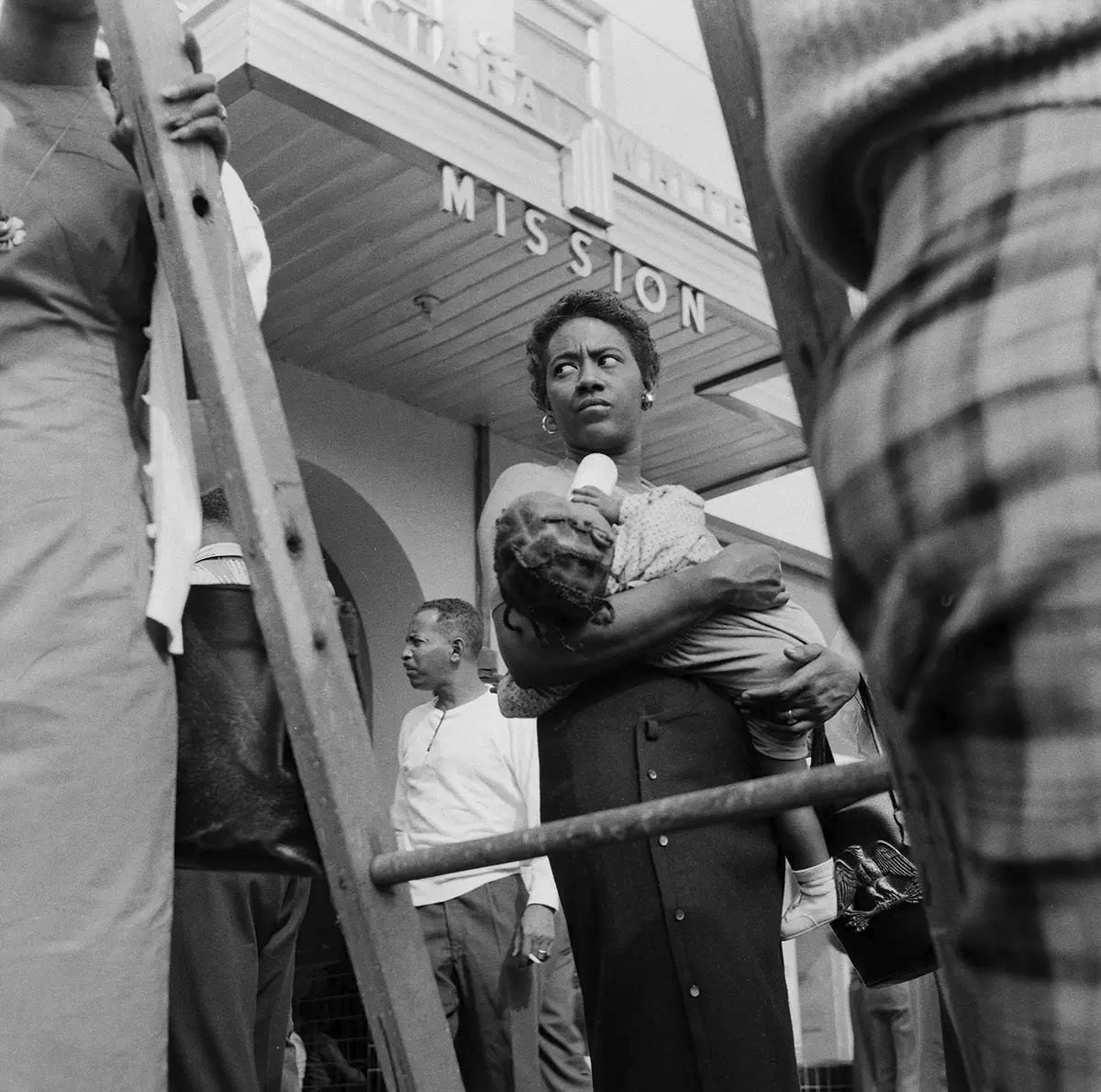
 

Cecil J. Williams (American, b. 1937) 'Clara White Mission, Jacksonville, Florida' 1960s, printed 2024


Cecil J. Williams (American, b. 1937)
Clara White Mission, Jacksonville, Florida
1960s, printed 2024
Inkjet print
45.7 x 45.7cm (18 x 18 in.)
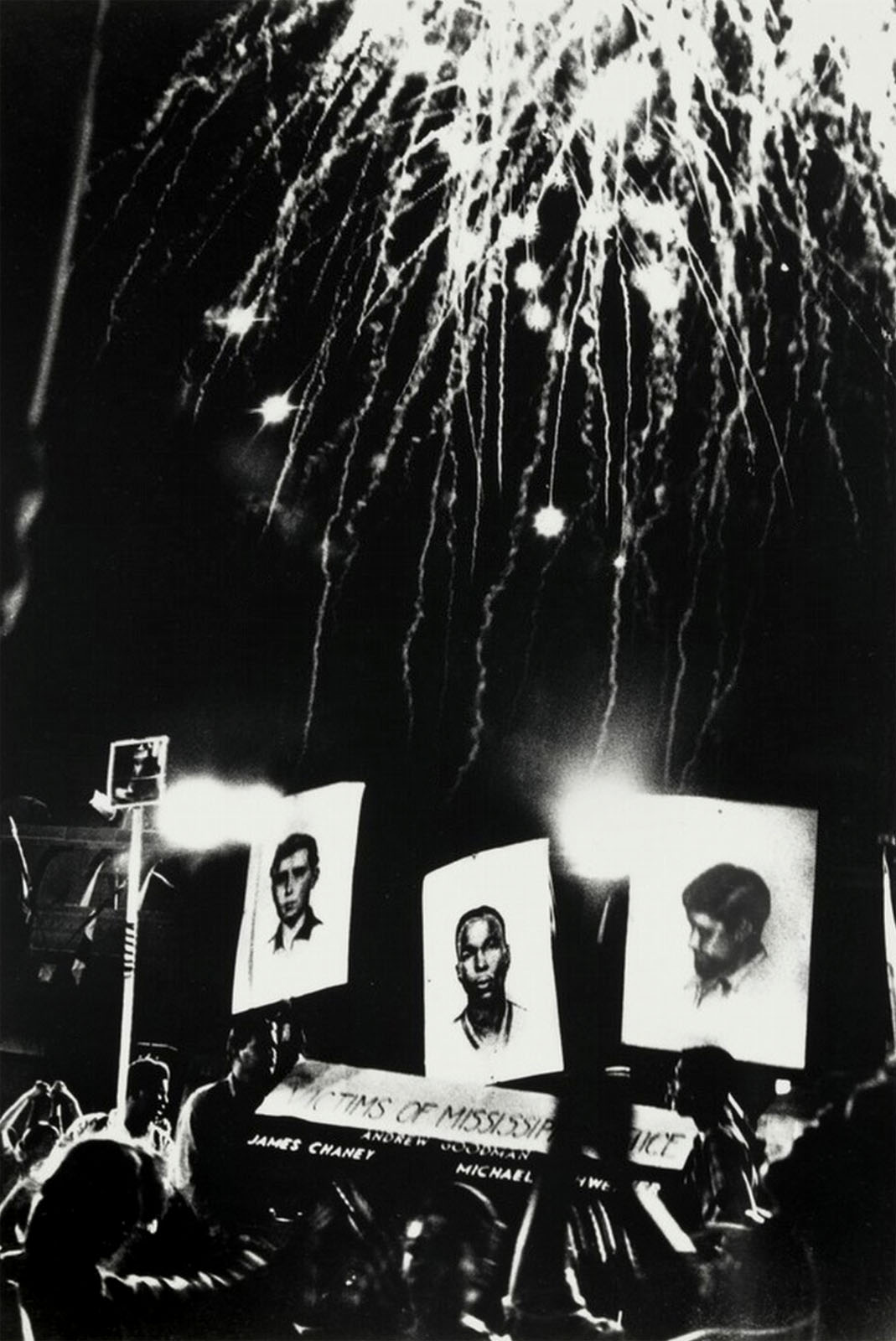
 

Bob Fletcher (American, b. 1938) 'Placards of Goodman, Chaney, and Schwerner at a Demonstration on the boardwalk during the Democratic National Convention, Atlantic City, New Jersey' 1964


Bob Fletcher (American, b. 1938)
Placards of Goodman, Chaney, and Schwerner at a Demonstration on the boardwalk during the Democratic National Convention, Atlantic City, New Jersey
1964
Gelatin silver print
33.97 × 22.86cm (13 3/8 × 9 in.)
National Gallery of Art, Washington
Anonymous gift


Bob Fletcher (American, b. 1938)

Robert E. “Bob” Fletcher is a photographer, filmmaker, writer, and educator. Born in 1938 in Detroit, Michigan, Fletcher majored in History and English at Fisk University and Wayne State University. In 1963, Fletcher became active in the civil rights movement, taking photographs for and administering the National Student Association’s Detroit Tutorial Program. After moving to New York City, he worked at the Harlem Education Project and set up a photographic workshop.

In the summer of 1964, Fletcher became a Freedom School teacher in Mississippi and joined the Student Nonviolent Coordinating Committee (SNCC) staff as a photographer; he documented the Civil Rights Movement throughout the South, between 1964 and 1968. After returning to New York in 1969, Fletcher set up a photography workshop at the Henry Street Settlement, and taught photography at Antioch College and Brooklyn College Film Studio.

Text from the New York Public Library Archives & Manuscripts website
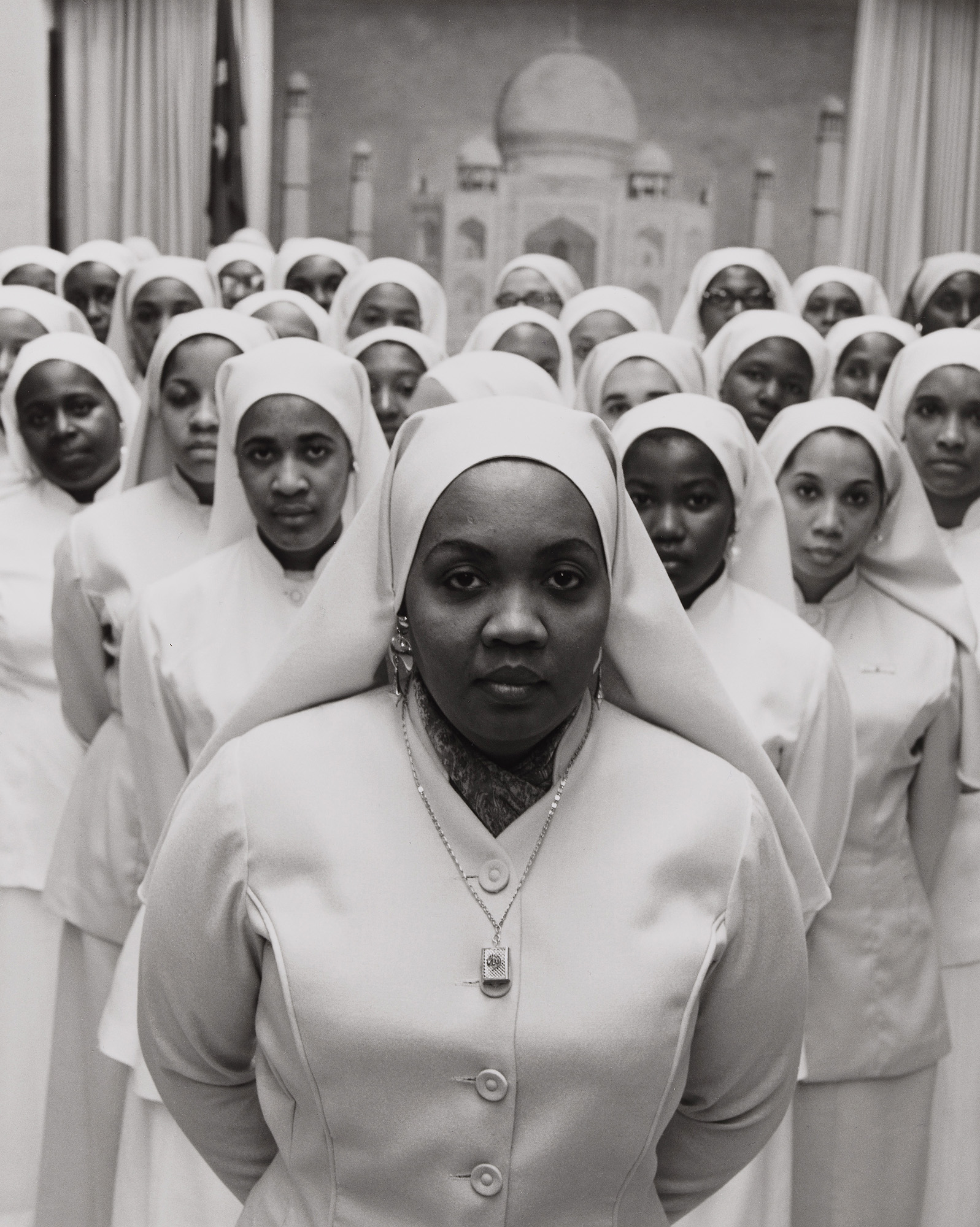
 

Gordon Parks (American, 1912-2006) 'Ethel Sharrieff in Chicago' 1963


Gordon Parks (American, 1912-2006)
Ethel Sharrieff in Chicago
1963
Gelatin silver print
14.6 × 15.9cm (5 3/4 × 6 1/4 in.)
National Gallery of Art, Washington
Corcoran Collection (The Gordon Parks Collection)
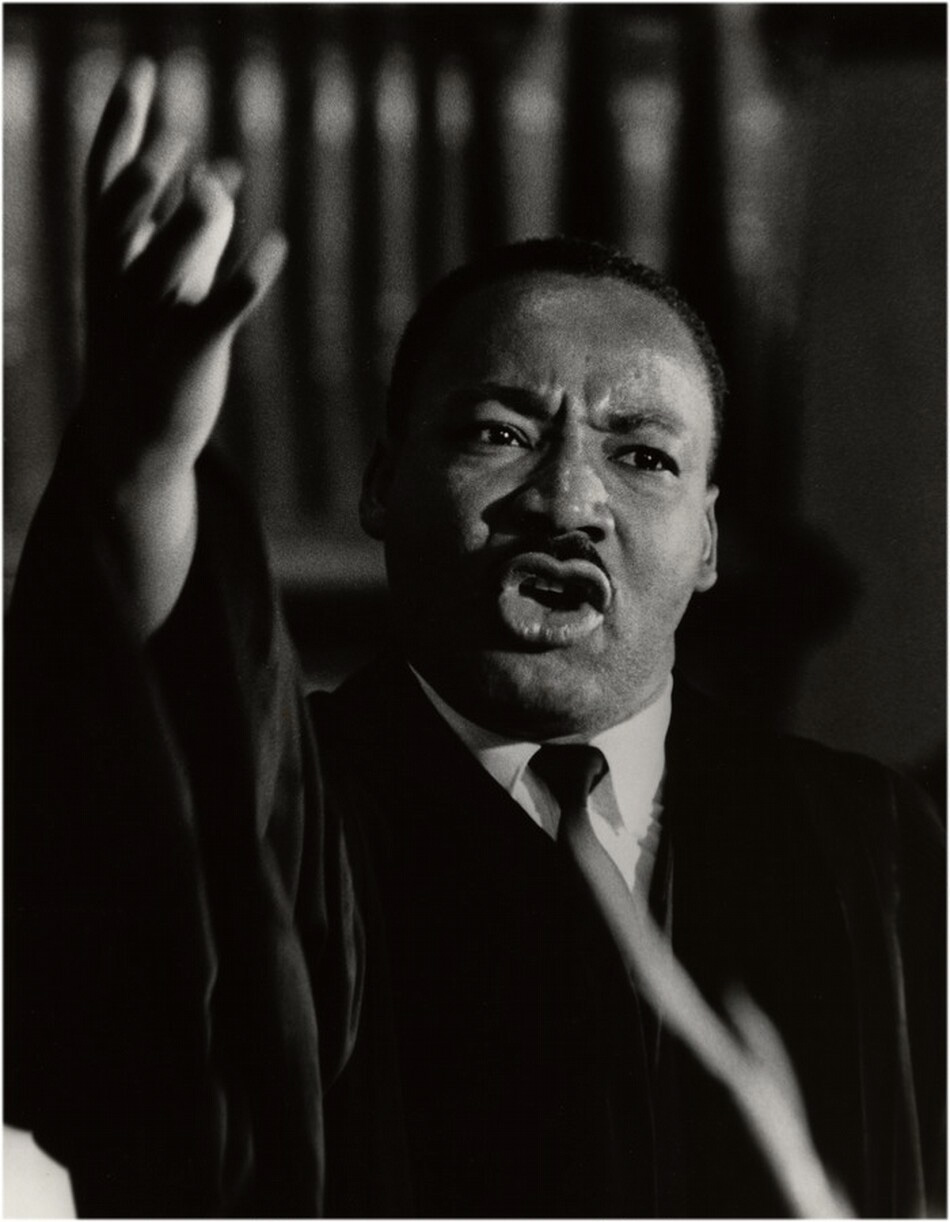
 

Robert A. Sengstacke (American, 1943-2017) 'Dr. Martin Luther King' January 1, 1965


Robert A. Sengstacke (American, 1943-2017)
Dr. Martin Luther King
January 1, 1965
Gelatin silver print
35.1 × 27.3cm (13 13/16 × 10 3/4 in.)
National Gallery of Art, Washington
Alfred H. Moses and Fern M. Schad Fund


Robert A. Sengstacke (American, 1943-2017)

Robert A. “Bobby” Sengstacke spent more than a half century photographing Chicago’s cultural and political landscape, most notably for the weekly newspaper the Chicago Defender, for which he also worked as an editor. The Defender was founded by Robert’s great-uncle Robert Sengstacke Abbott in 1905, and Robert’s father, John Sengstacke, ran the paper for nearly 60 years. In the mid-1950s, after attending Florida’s Bethune Cookman College, Bobby Sengstacke returned to Chicago and honed his skills with fellow photographers Billy (Fundi) Abernathy, Le Mont Mac Lemore, and Bob Black. In the years that followed, he became a member of a tight-knit network of South Side photojournalists who created intimate documents of Chicago’s Black community, from Civil Rights rallies led by Martin Luther King Jr. to the city’s lively entertainment scene.

Sengstacke was also a founding member of the Organization of Black American Culture (OBAC), which brought together Black artists, writers, intellectuals, and activists on Chicago’s South Side.

Text from The Art Institute of Chicago website
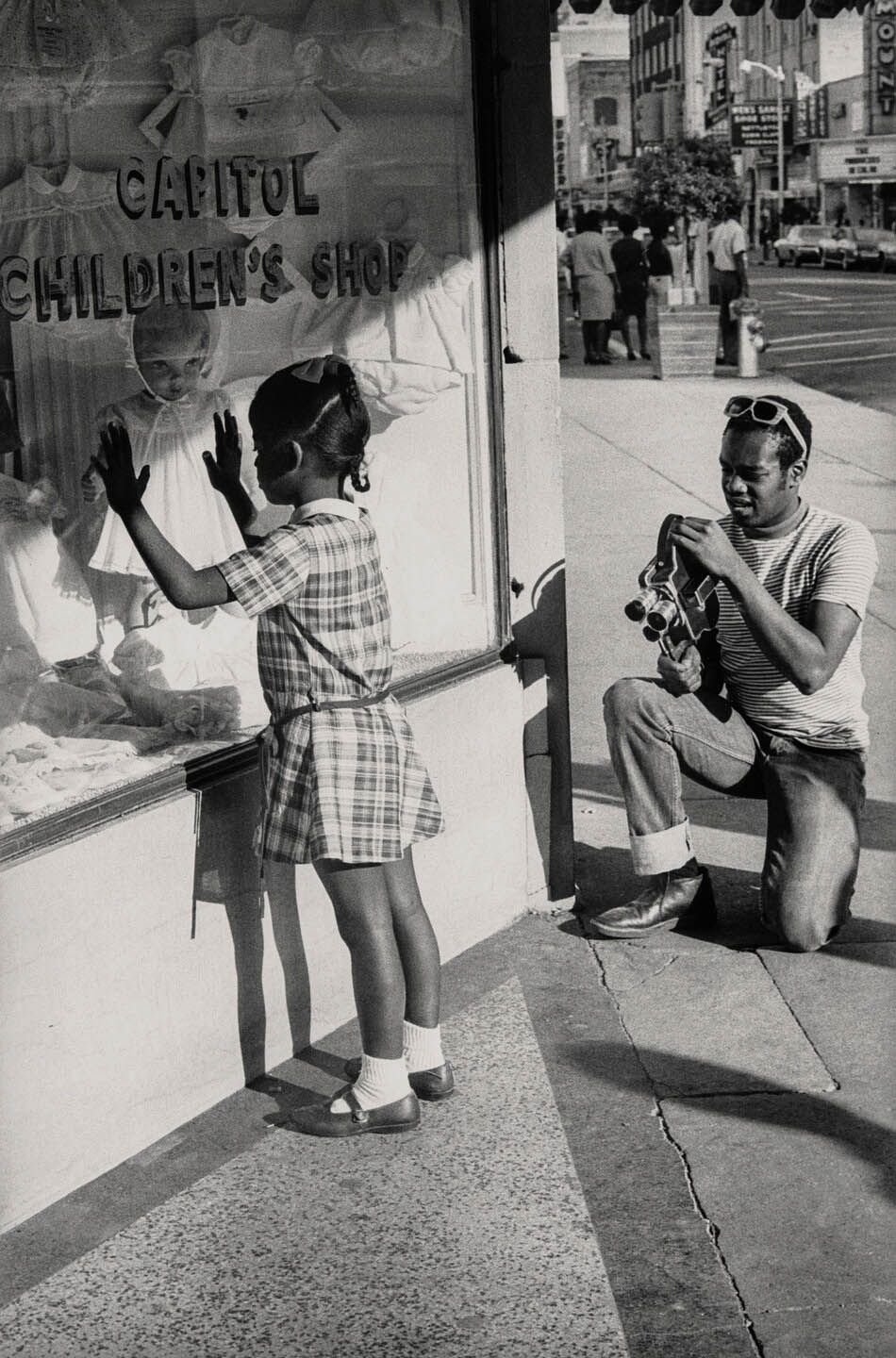
 

Doris A. Derby (American, 1939-2022) 'Member of Southern Media Photographing a Young Girl, Farish Street, Jackson, Mississippi' 1968


Doris A. Derby (American, 1939-2022)
Member of Southern Media Photographing a Young Girl, Farish Street, Jackson, Mississippi
1968
Gelatin silver print
National Gallery of Art, Washington
Gift of David Knaus


Doris A. Derby (American, 1939-2022)

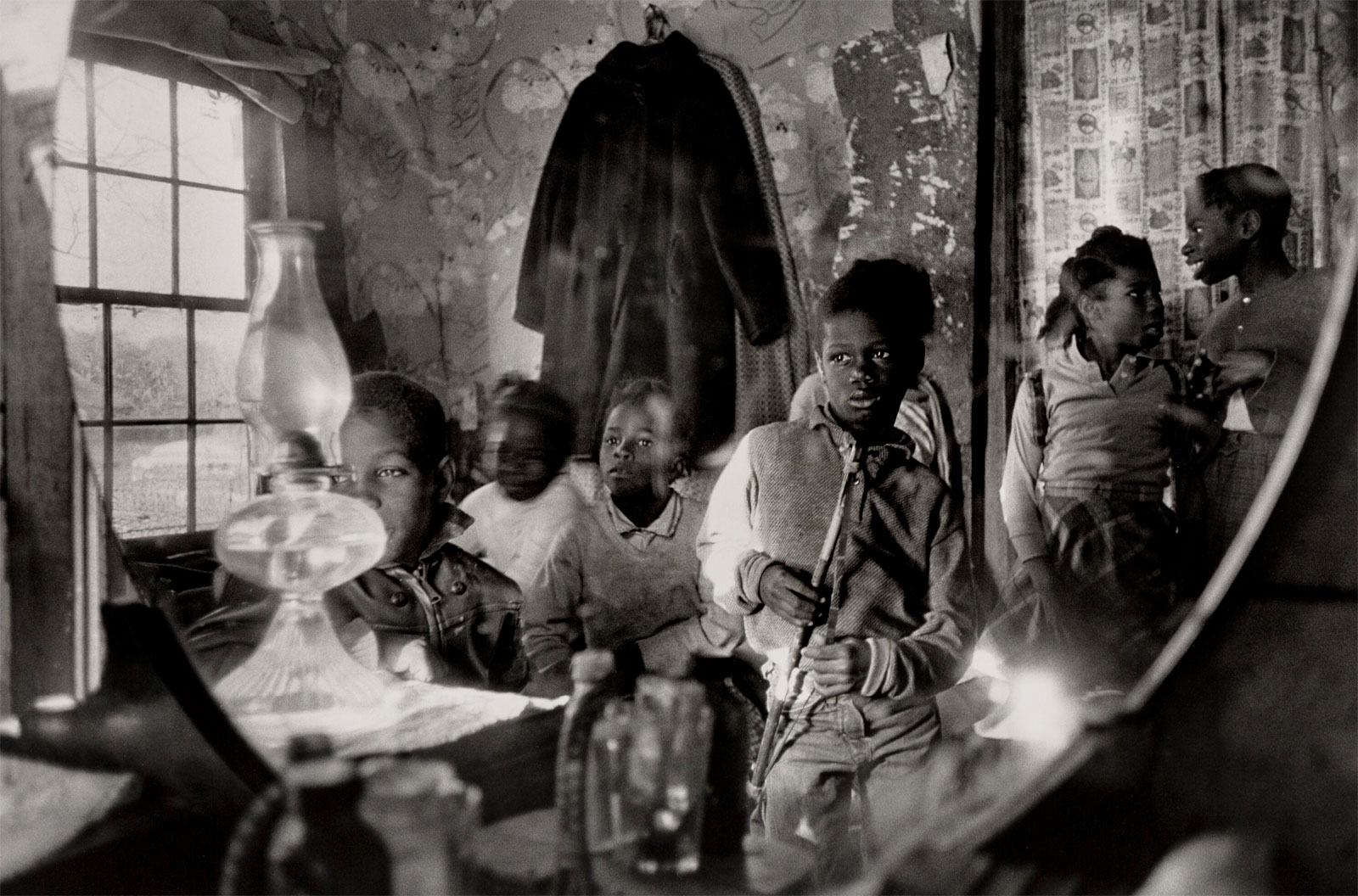
The photography of the US civil rights activist and academic Doris Derby … began through documenting the struggles of black people in the segregated south. However, rather than recording the dramatic events and protests of the nine years from her arrival in Mississippi from New York in 1963, Doris chose to capture the everyday human effort required to live through them.

She went into rural communities to witness the work of children in the fields and women living in wooden shacks trying to care for families. “They were looking to find some help, some way to get out of their horrible poverty and despair,” she said. …

Influenced both by the German expressionist artist Käthe Kollwitz, who was concerned with the effects of poverty, hunger and war on the working class, and the photographer Roy DeCarava, who captured the creativity of the Harlem Renaissance, she also took pictures of children in urban settings, of old and young people attending election events, and those working for the movement, among them the author Alice Walker.

Hannah Collins. “Doris Derby obituary,” on The Guardian website Wed 13 Apr 2022 [Online] Cited 26/11/2025


Darryl Cowherd (American, b. 1940) 'Stokely Carmichael, Unknown Chicago Church' c. 1968


Darryl Cowherd (American, b. 1940)
Stokely Carmichael, Unknown Chicago Church
c. 1968
Gelatin silver print
24.8 × 15.5cm (9 3/4 × 6 1/8 in.)
National Gallery of Art, Washington
Alfred H. Moses and Fern M. Schad Fund


A key figure in Chicago’s Black Arts Movement, Darryl Cowherd has enjoyed an extensive career ranging from photojournalism to broadcast television. At the age of 20, frustrated with work and school, Cowherd followed the advice of his mentor, Chicago-based photographer Robert Earl Wilson, who encouraged him to travel and photograph abroad. Cowherd had initially studied to become a doctor and then worked for the postal service, but neither role proved a lasting fit. After nearly four years in Europe, during which Cowherd honed his photography skills, he returned to Chicago in 1964 and began taking freelance photography assignments while working at a film processing lab. His return to Chicago coincided with the emergence of the Chicago Freedom Movement (1965-67) and the Black Arts Movement (most active in the years 1965-76). An active participant in both movements, Cowherd frequently photographed the activities surrounding them as they grew and gained momentum.

Cowherd was a founding member of the Organization of Black American Culture (OBAC), a collective that brought together Black artists, writers, intellectuals, and activists on Chicago’s South Side.

Text from The Art Institute of Chicago website
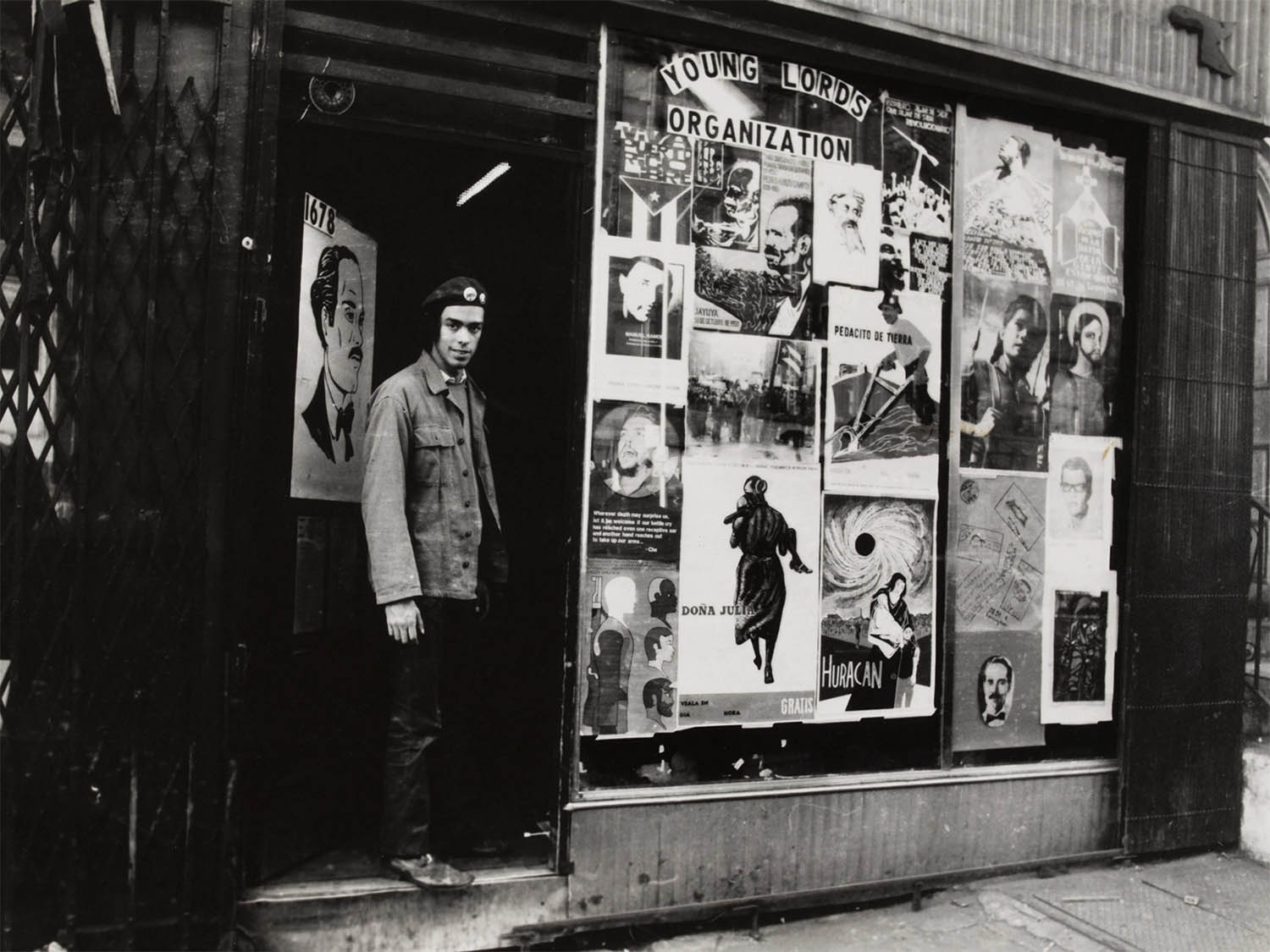
 

Hiram Maristany (American, 1945-2022) 'Juan González, Minister of Information, in the doorway of the first office of the Young Lords' 1969, printed 2021


Hiram Maristany (American, 1945-2022)
Juan González, Minister of Information, in the doorway of the first office of the Young Lords
1969, printed 2021
Gelatin silver print
33 x 46cm (13 x 18 1/8 in.)
National Gallery of Art, Washington
Alfred H. Moses and Fern M. Schad Fund
© Hiram Maristany


Hiram Sebastian Maristany was a Nuyorican American photographer, and director of El Museo del Barrio (a museum in NYC which specialises in Latin American and Caribbean art, with an emphasis on works from Puerto Rico and the Puerto Rican community in New York City) from 1975 to 1977. He was known for his association with, and documentation of, the Young Lords chapter in Harlem, which he co-founded in 1969.

Juan González was a co-founder of the Young Lords, a radical Puerto Rican rights organisation in New York City, where he helped lead the group in protests for social justice. The Young Lords fought for better healthcare, education, and city services, and against police abuse and Puerto Rico’s colonial status. Following his work with the Young Lords, González became a celebrated journalist, co-hosting Democracy Now! and writing for the New York Daily News.

Texts from the Wikipedia website


What Is the Black Arts Movement? Seven Things to Know

Poet Larry Neal, who coined the term Black Arts Movement, described it as “a cultural revolution in art and ideas.” This movement included poets, playwrights, musicians, filmmakers, photographers, and painters. They came together to make art that advanced civil rights and celebrated Black history, identity, and beauty.

This cultural revolution shook up the art world in the 1950s and ’60s. It embodied the struggle for self-determination championed by global freedom movements. New collectives, workshops, and collaborations emerged. Creatives made art that promoted Black dignity, hope, and freedom. They asked, how could art inspire social and political change? And what would it look like?

Photography was a driving force from the beginning, playing a critical role as both a communications tool and art form. Learn more about the movement and photography’s part in it – major themes in our exhibition Photography and the Black Arts Movement, 1955-1985.

1/ Its origins are in the civil rights movement

Our exhibition begins in 1955, more than a decade before Larry Neal named the Black Arts Movement. That year, several events – and photographs of those events – helped catalyse the civil rights movement.

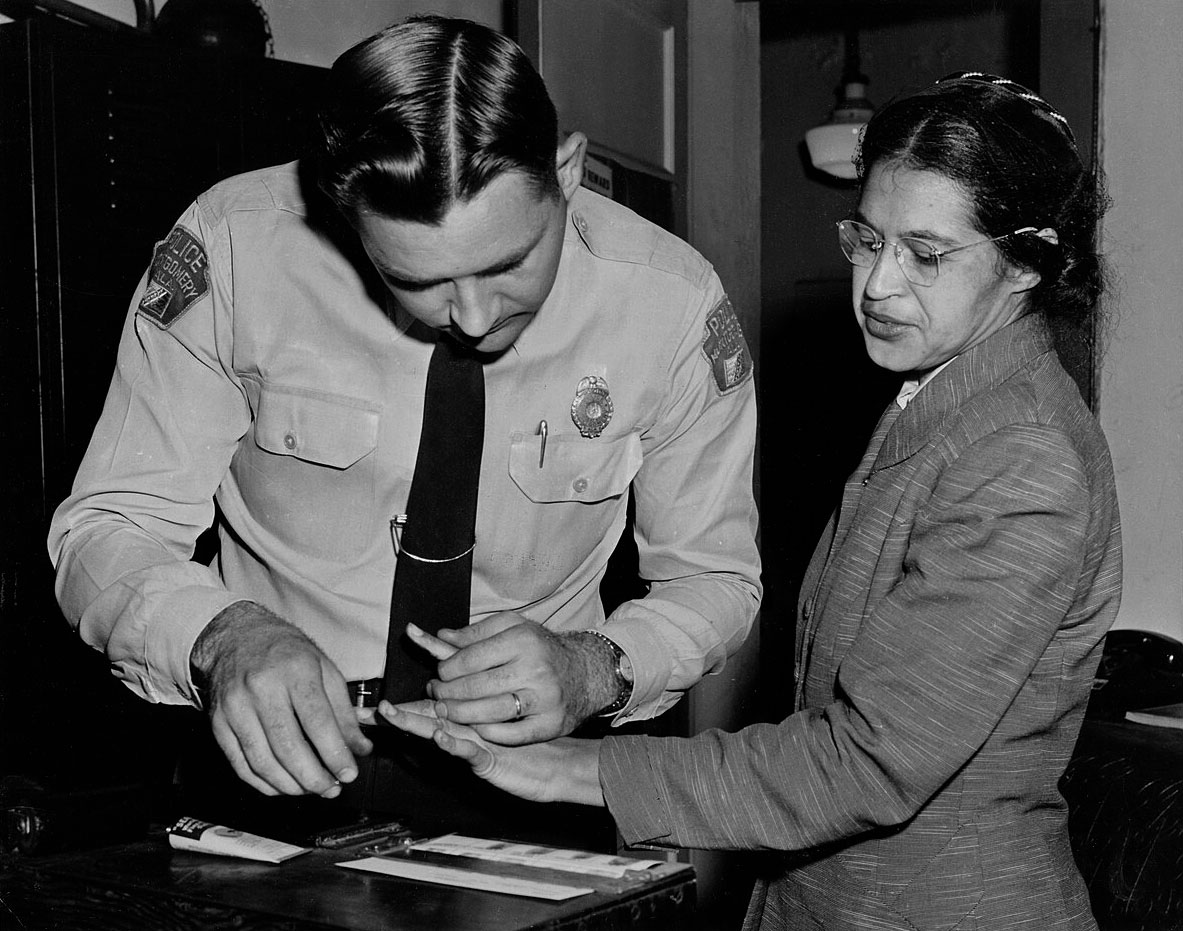
In September, Jet magazine was one of several publications that printed open-casket photographs of Emmett Till, a 14-year-old boy from Chicago who was lynched in Mississippi. Those disturbing images were seen across the country, including by a woman in Montgomery, Alabama: Rosa Parks. That December, Parks sat in the front, “white only” section of a segregated bus. The driver demanded that she give up her seat to a white passenger. She refused. As she later recounted, Emmett Till was on her mind in that moment.

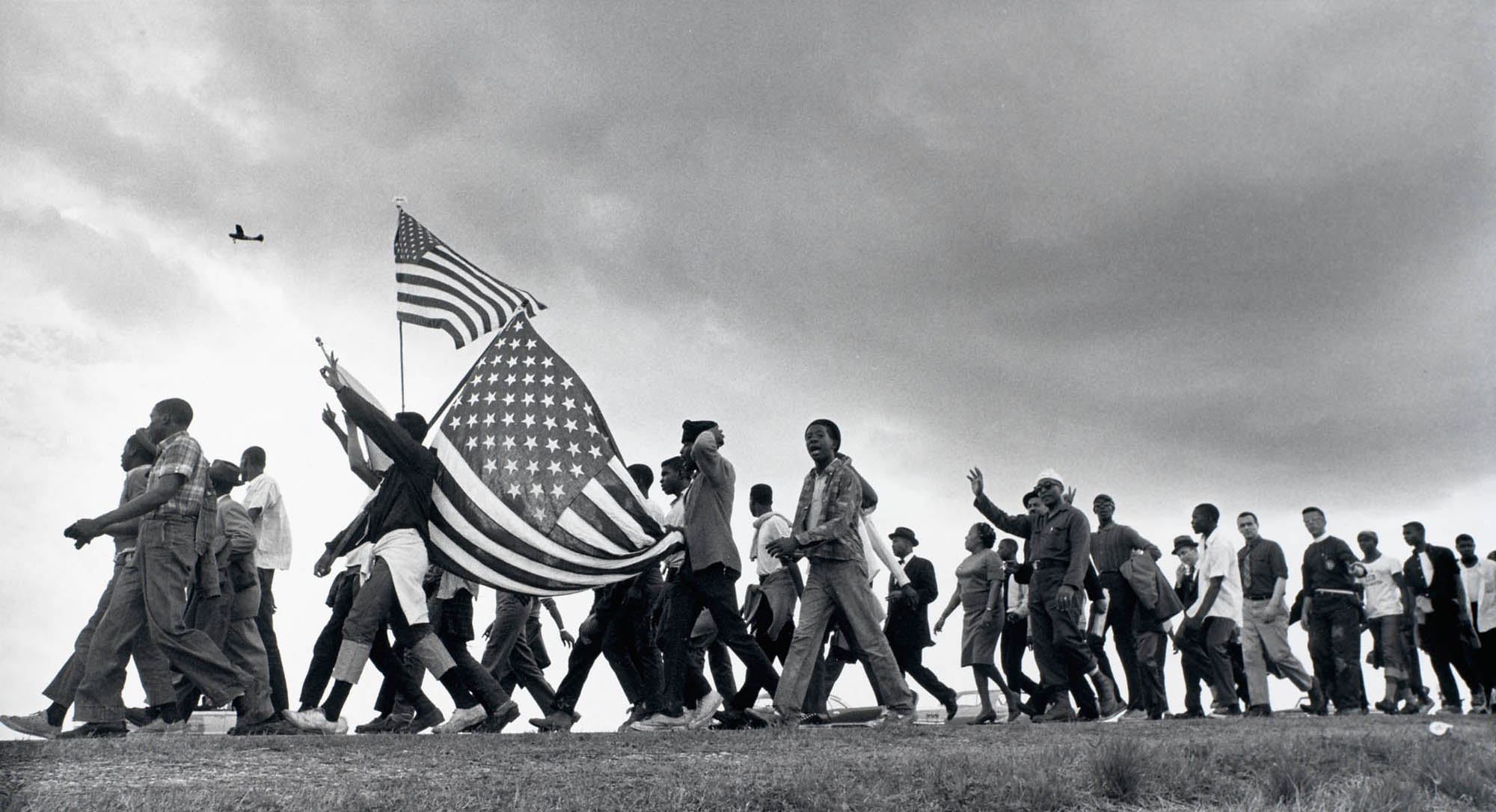
Parks, in turn, was photographed sitting at the front of the segregated bus. Those images, and others like them, brought widespread awareness to the struggles for equal rights. Organisations like the Student Nonviolent Coordinating Committee (SNCC) encouraged photography of their marches, demonstrations, and acts of nonviolent civil disobedience. SNCC even taught some members to use a camera. Lifelong activist Maria Varela became a SNCC photographer after recognising the need for more images of Black life to support the movement.

2/ Poets, writers, and playwrights led the movement

The beginning of the Black Arts Movement is often pinned to poet, playwright, and writer Amiri Baraka founding the Black Arts Repertory Theatre/School in New York City’s Harlem neighbourhood in 1965. Nikki Giovanni, Gwendolyn Brooks, and Audre Lorde were among the many writers and poets active in the movement. Some collaborated with visual artists, even forming collectives such as the Organization of Black American Culture (OBAC) in Chicago.

OBAC writers, scholars, painters, and photographers collaborated to create the Wall of Respect community mural in 1967. It commemorated key figures in African American history, including W. E. B. Du Bois, Muhammad Ali, and Nina Simone. The mural was like a two-story collage that covered the facade of a building in the city’s South Side neighbourhood. It incorporated paintings by several artists alongside mounted photographs by Roy Lewis and Darryl Cowherd. At the centre was Amiri Baraka’s poem “SOS,” which opens, “Calling all black people.” The mural was demolished in 1972, but photographs by Roy Lewis and Robert Sengstacke continue to spread its message.

3/ It was inspired by jazz

Music was an equally important part of the Black Arts Movement. Musicians John Coltrane and Sun Ra both performed at a fundraiser for Amiri Baraka’s Black Arts Repertory Theatre/School. Their experimental and expressive jazz inspired Black Arts Movement writers and artists.

In Coltrane at the Gate, photographer Adger Cowans depicted the saxophonist’s energy. Ming Smith captured the magic of a Sun Ra performance. For his homage to saxophonist Charlie Parker (who was commonly known as “Bird”), painter Raymond Saunders embraced the spontaneous spirit of jazz. Saunders collaged a newsprint photograph below the word “bird” written in a chalk-like white script.

4/ It celebrated Black beauty

The Black Arts Movement celebrated the “beauty and goodness of being Black,” as Larry Neal put it. Photographer Kwame Brathwaite helped popularise the phrase “Black is beautiful.” Brathwaite was a pioneer of uplifting Black identity. He helped found groups that challenged conventional standards of beauty and celebrated African heritage. They organised fashion shows, created “Black is beautiful” products, and operated a photography studio.

In Untitled (Portrait, Reels as Necklace), Brathwaite adorned the model with a necklace made from film developing reels to “expose” her beauty. More than a decade later, Carla Williams created a self-portrait that echoed Brathwaite’s work. Showing herself in curlers, Williams challenged popular notions of beauty.

5/ It brought artists together

Small collectives of visual artists and photographers came together around the principles of the Black Arts Movement. In New York, the Kamoinge Workshop photography collective met regularly to critique each other’s work, debate photography’s purpose and aesthetics, and share tips. They created a space for their art by developing their own portfolios and exhibitions. The workshop also produced the groundbreaking Black Photographers Annual between 1973 and 1980.

A group of Chicago artists formed AfriCOBRA. The collective’s founders defined their own aesthetic principles, aimed at creating “images that jar the senses and cause movement” and “images designed for mass production.”

6/ It spread across the Atlantic

The Black Arts Movement made an impact beyond the United States. In Great Britain, Raphael Albert organised and photographed Black beauty pageants in London. James Barnor focused on style, migration, and Black city life in London and in Accra, Ghana. Horace Ové photographed the British Black Power Movement. He also captured scenes of the West African and West Indian communities in London, like his Walking Proud, Notting Hill Carnival.

Samuel Fosso opened his first photography studio in Bangui, Central African Republic, at age 13. After finishing with clients, Fosso would use his studio to experiment with self-portraits. He wore an array of costumes and adopted personas, often taking inspiration from the pictures of Black Americans he saw in magazines shared by American Peace Corps volunteers.

7/ It influenced generations of artists

By the end of the 1970s, the literary arm of the Black Arts Movement had waned, but a new generation of artists and photographers carried on its spirit. Coming out of art school, photographers such as Carrie Mae Weems and Lorna Simpson explored more personal, metaphorical, and conceptual ideas.

In her Family Pictures and Stories series, Weems made her own family the subjects. The intimate photographs presented a counterargument to claims that many Black Americans faced poverty and struggle as a result of weak family structures. Weems paired the photographs with brief stories about each family member.

Text from the National Gallery of Art website


Herbert Randall (American, born 1936) 'Untitled (Bed-Stuy, New York)' 1960s


Herbert Randall (American, b. 1936)
Untitled (Bed-Stuy, New York)
c. 1960s
Gelatin silver print
22.8 x 15.6cm (9 x 6 1/8 in.)
National Gallery of Art, Washington
Alfred H. Moses and Fern M. Schad Fund, 2022.89.1
© Herbert Randall


Herbert Randall (American, b. 1936)

Herbert Eugene Randall, Jr. is an American photographer who had documented the effects of the Civil Rights Movement. Randall is of Shinnecock, African-American and West Indian ancestry.

Randall studied photography under Harold Feinstein in 1957. From 1958 to 1966, he worked as a freelance photographer for various media organizations. His photographs were used by the Associated Press, United Press International, Black Star, various television stations, and other American and foreign publications. Randall was also a founding member of the Kamoinge Workshop, a collective of African-American photographers, in New York City in 1963.

In 1964, Sanford R. Leigh, the Director of Mississippi Freedom Summer’s Hattiesburg project, persuaded Randall to photograph the effects of the Civil Rights Movement in Hattiesburg, Mississippi. Randall had a Whitney Fellowship for that year, and had been looking for a project. He spent the entire summer photographing solely in Hattiesburg, among the African-American community and among the volunteers in area projects such as the Freedom Schools, Voter Registration, and the Mississippi Freedom Democratic Party campaign.

Only five of Randall’s photographs were published in the summer of 1964. One seen worldwide was the bloodied, concussed Rabbi Arthur Lelyveld, head of a prominent Cleveland congregation and former conscientious objector to World War II. However, most of his photographs sat in a file at the Shinnecock Reservation, on Long Island, New York.

Text from the Wikipedia website
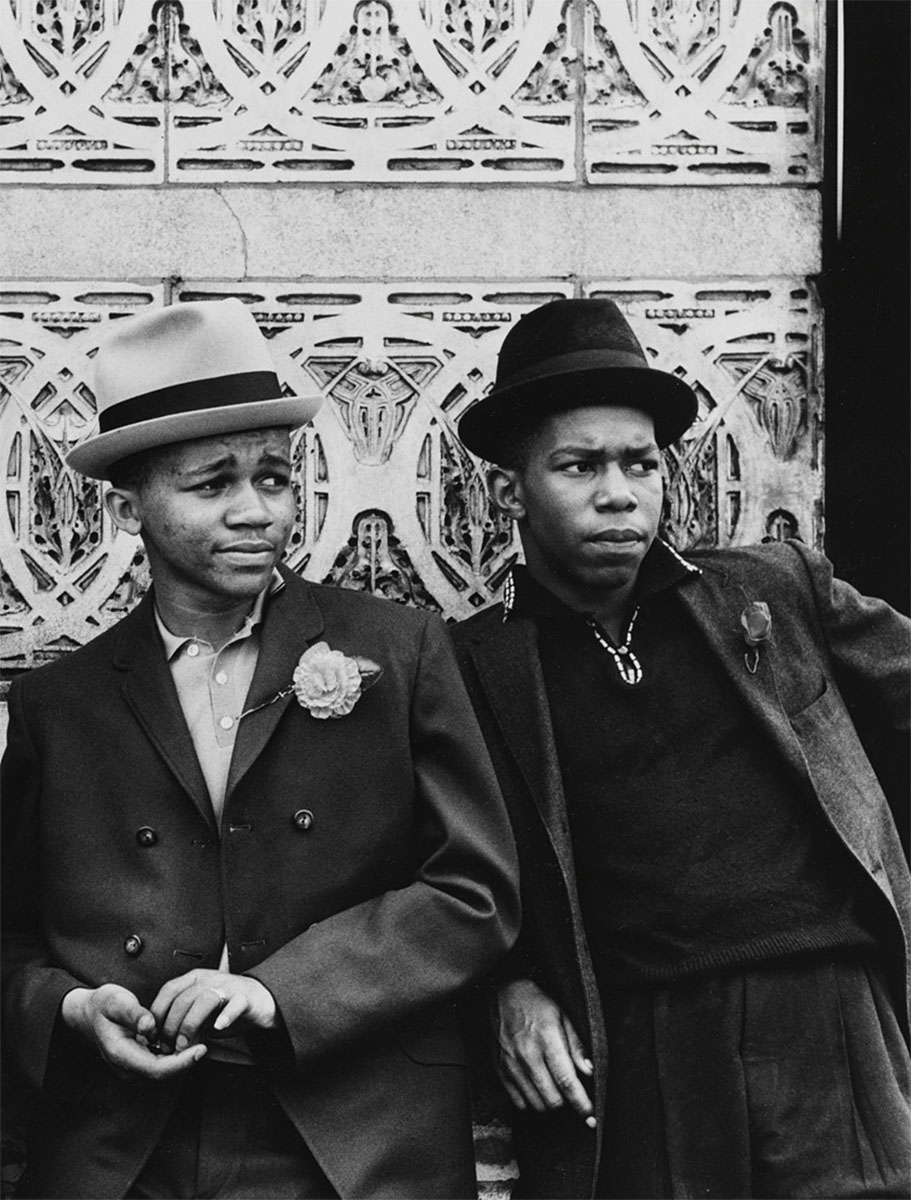
 

Billy Abernathy (Fundi) (American, 1939-2016) 'Mother's Day' from the series "Born Hip" 1962


Billy Abernathy (Fundi) (American, 1939-2016)
Mother’s Day from the series “Born Hip”
1962
gelatin silver print
17.5 x 13.3cm (6 7/8 x 5 1/4 in.)
The Art Institute of Chicago, Gift of the Illinois Arts Council
Photo: The Art Institute of Chicago / Art Resource, NY


Billy Abernathy (Fundi) (American, 1939-2016)

Photographer Billy (Fundi) Abernathy was known for creating images that defined Black confidence, elegance, and style. This work extended to his collaborations with his wife, Sylvia (Laini) Abernathy, with whom he designed album covers for Delmark Records in the 1960s. Around that time, the poet and author Amiri Baraka (LeRoi Jones) encountered Abernathy’s photographs of Chicago and proposed a book project that would combine his poetry with Abernathy’s images. The resulting collaboration, In Our Terribleness (Some Elements and Meaning in Black Style), was designed by Laini and published in 1970. In 1971 the New York Times hailed the book as “an example of the new direction that black art is taking.”

Text from The Art Institute of Chicago website
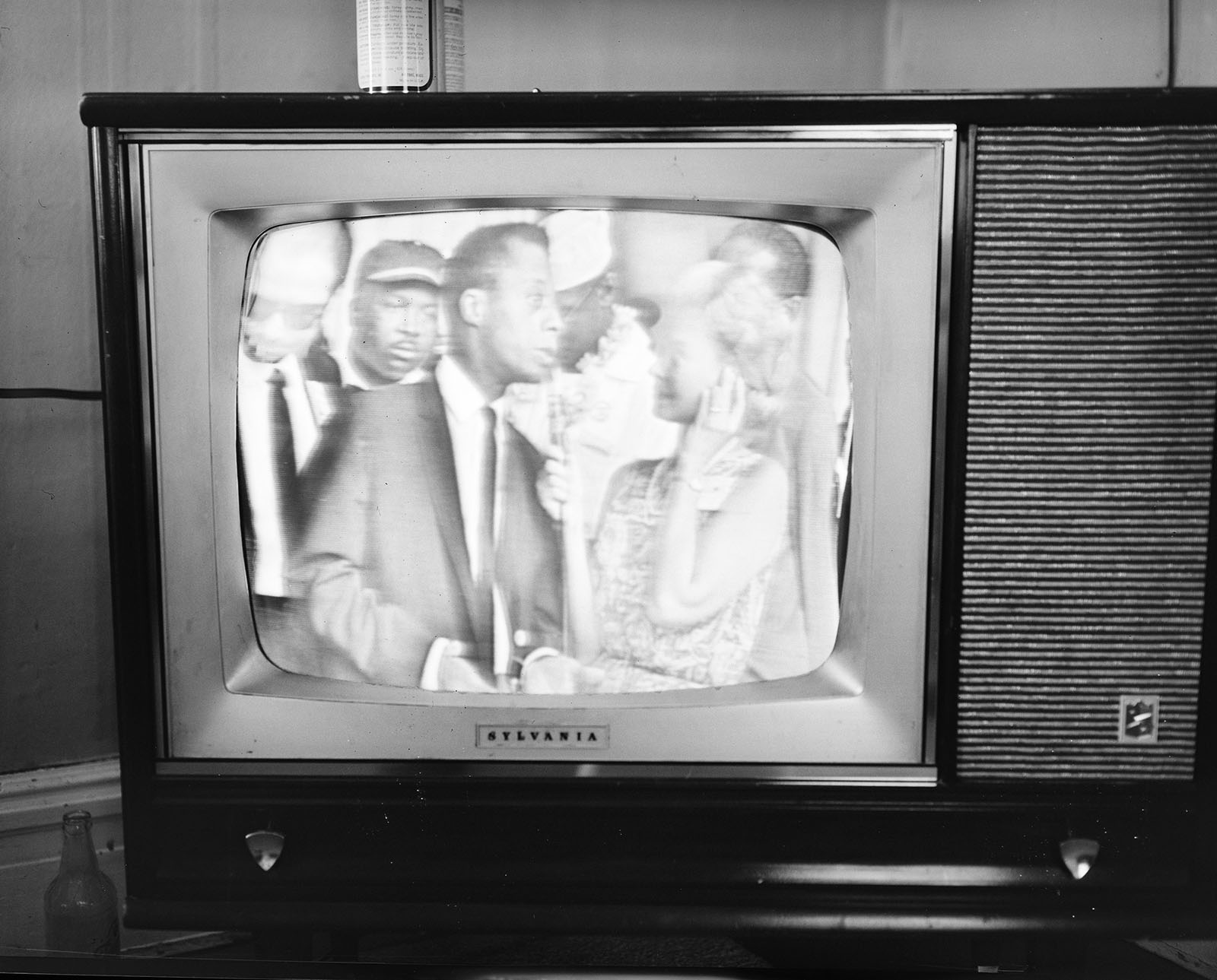
 

Charles "Teenie" Harris (American, 1908-1998) 'A television playing coverage of James Baldwin at the March for Freedom and Jobs in Washington, DC' 1963/2025


Charles “Teenie” Harris (American, 1908-1998)
A television playing coverage of James Baldwin at the March for Freedom and Jobs in Washington, DC
1963/2025
Gelatin silver print
National Gallery of Art, Washington


African American artist Charles “Teenie” Harris, captured “the essence of daily African-American life in the 20th century. For more than 40 years, Harris – as lead photographer of the influential Pittsburgh Courier newspaper – took almost 80,000 pictures of people from all walks: presidents, housewives, sports stars, babies, civil rights leaders and even cross-dressing drag queens.”

See the Art Blart posting on the exhibition Teenie Harris, Photographer: An American Story at Carnegie Museum of Art, Pittsburgh, Pennsylvania, October 2011 – April 2012
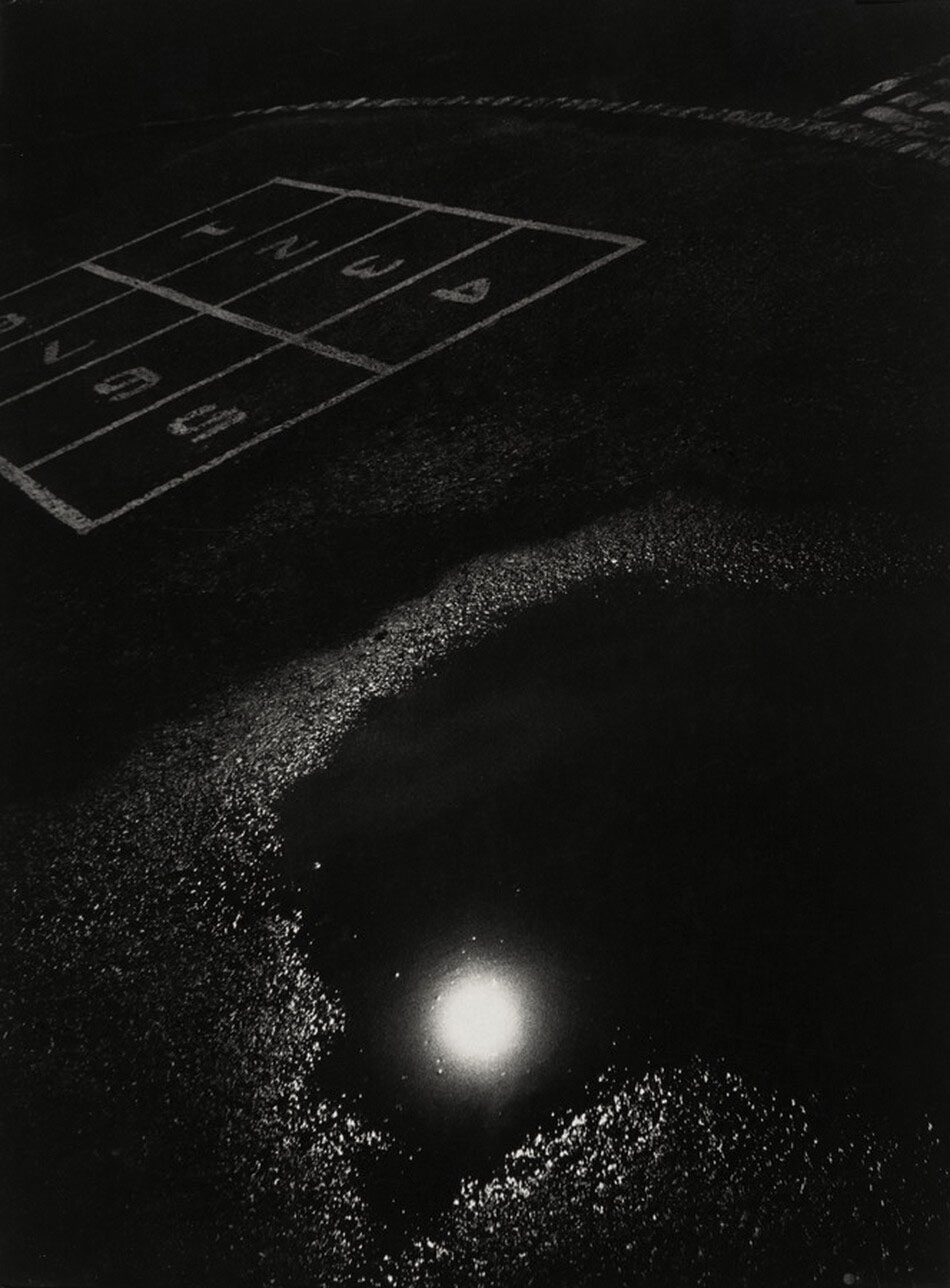
 

Louis Draper (American, 1935-2002) 'Untitled (Playground)' from the "Playground Series" c. 1965


Louis Draper (American, 1935-2002)
Untitled (Playground) from the “Playground Series”
c. 1965
Gelatin silver print
25.7 x 19.1cm (10 1/8 x 7 1/2 in.)
National Gallery of Art, Washington
Alfred H. Moses and Fern M. Schad Fund
© Draper Preservation Trust, Nell D. Winston, Trustee


Louis Draper (American, 1935-2002)

In 1953, he enrolled at the historically Black college in Petersburg, which was not far from his hometown of Richmond. He began working as a reporter for the school paper, and during that time Draper’s father, who was an amateur photographer himself, sent Louis his first camera. By 1956, Draper’s title at the paper had changed to cameraman. After his revelatory first experience with The Family of Man, a catalogue that accompanied the 1955 photography exhibition at The Museum of Modern Art, he decided to leave school during his final semester and move to New York City to become a photographer. Once there, Draper enrolled in a photography workshop led by Harold Feinstein, and was mentored by W. Eugene Smith, one of the most prominent American photojournalists.

In 1963, the same year as the March on Washington, Draper became a founding member of the Kamoinge Workshop, a New York-based collective of Black photographers. Workshop members met regularly to discuss one another’s work, produced group portfolios, exhibitions, and publications, and mentored young people all over the city. Draper emerged as one of the group’s teachers, which began his long career as an educator (he worked in numerous teaching roles, including at Pratt Institute and Mercer County Community College). The collective aimed to “create the kind of images of our communities that spoke of the truth we’d witnessed and that countered the untruths we’d all seen in mainline publications.” Kamoinge members wanted to avoid the racial stereotypes prevalent in the media and the violence that was typical of journalistic coverage of the Civil Rights Movement, working instead to represent their communities in a positive light.

Jane Pierce, Carl Jacobs Foundation Research Assistant, Department of Photography, “Louis Draper,” on the MoMA website 2021 [Online] Cited 27/11/2025
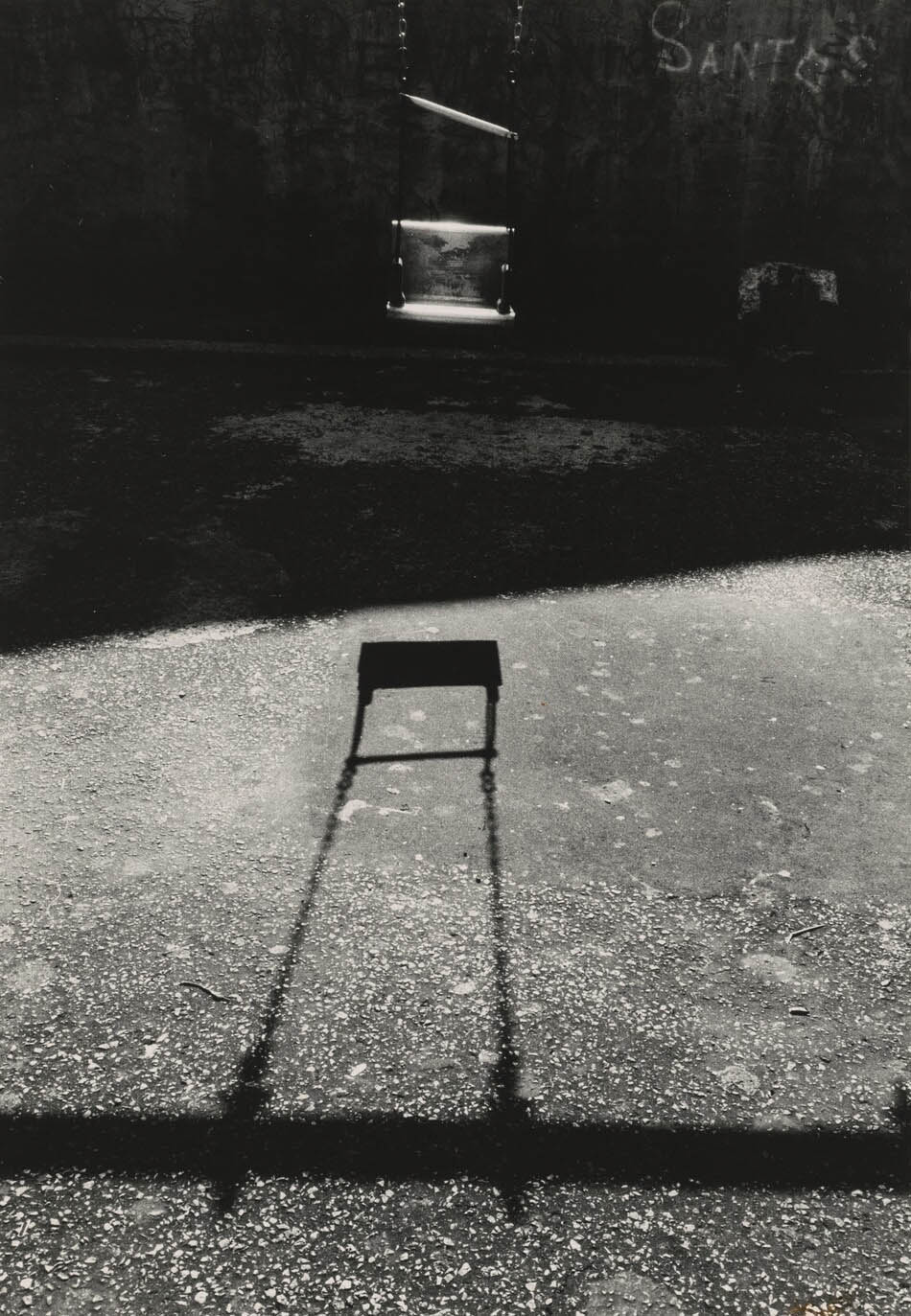
 

Louis Draper (American, 1935-2002) 'Untitled (Santos)' from the "Playground Series" 1967


Louis Draper (American, 1935-2002)
Untitled (Santos) from the “Playground Series”
1967
Gelatin silver print
32.9 x 22.8cm (12 15/16 x 9 in.)
National Gallery of Art, Washington
Pepita Milmore Memorial Fund
© Draper Preservation Trust, Nell D. Winston, Trustee
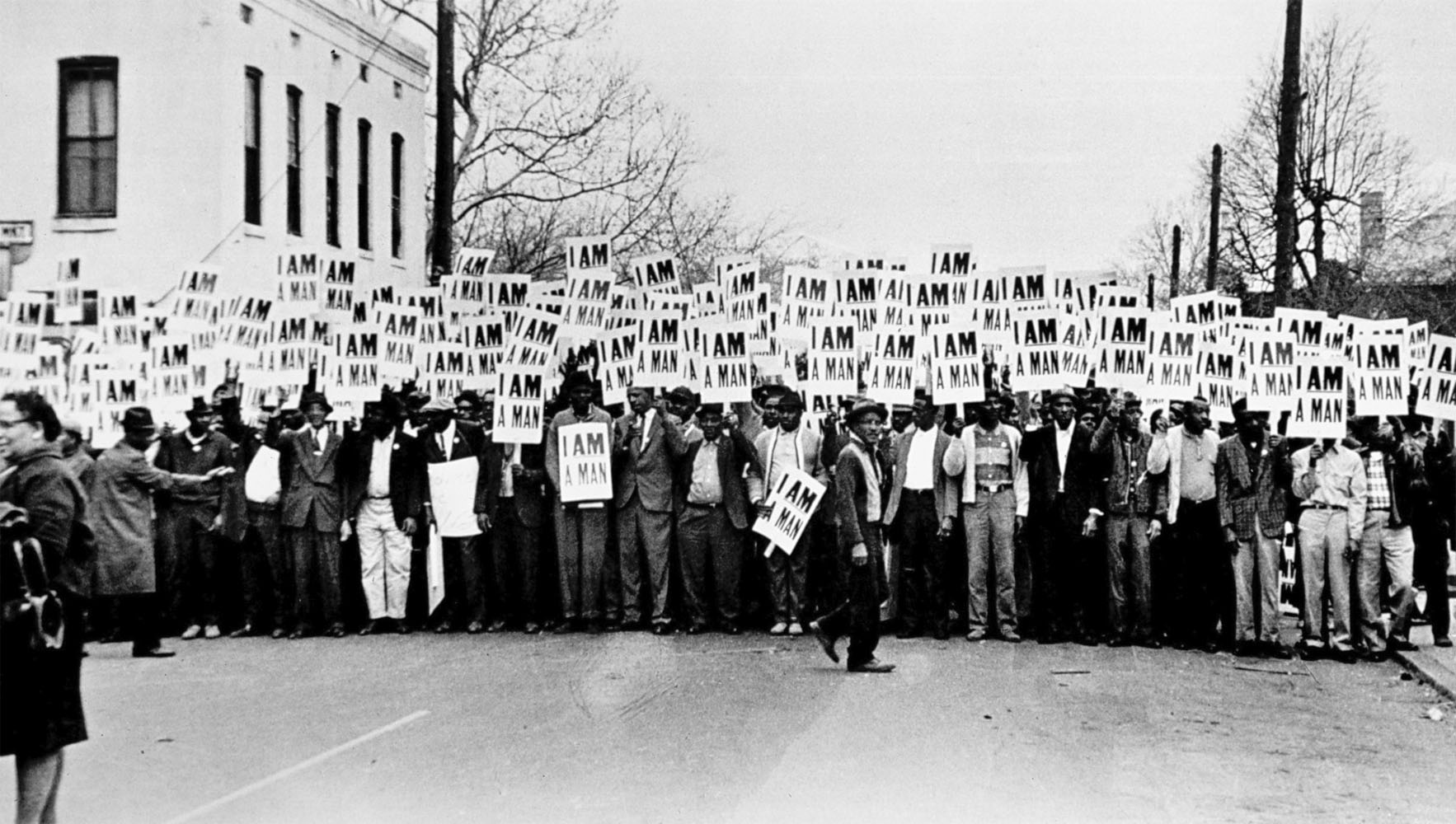
 

Ernest C. Withers (American, 1922-2007) 'I Am A Man, Sanitation Workers Strike, Memphis, Tennessee' March 28, 1968


Ernest C. Withers (American, 1922-2007)
I Am A Man, Sanitation Workers Strike, Memphis, Tennessee
March 28, 1968
Gelatin silver print
19 × 32.6cm (7 1/2 × 12 13/16 in.)
National Gallery of Art, Washington
Alfred H. Moses and Fern M. Schad Fund


Ernest C. Withers (American, 1922-2007)

Photojournalist Ernest C. Withers was born on August 7, 1922, in Memphis, Tennessee. Withers got his start as a military photographer while serving in the South Pacific during World War II. Upon returning to a segregated Memphis after the war, Withers chose photography as his profession.

In the 1950s, Withers helped spur the movement for equal rights with a self-published photo pamphlet on the Emmitt Till murder. Over the next two decades, Withers formed close personal relationships with Dr. Martin Luther King, Jr., Medgar Evers, and James Meredith. Withers’s pictures of key civil rights events from the Montgomery Bus Boycott to the strike of Memphis sanitation workers are historic. Indeed, Withers was often the only photographer to record these scenes, many of which were not yet of interest to the mainstream press.

Withers photographed more than the southern Civil Rights Movement. Whether Jackie Robinson, Willie Mays, and other Negro League baseball players, or those jazz and blues musicians who frequented Memphis’ Beale Street, Withers photographed the famous and not-so famous. Withers’s collection includes pictures of early performances of Elvis Presley, B.B. King, Ike and Tina Turner, Ray Charles, and Aretha Franklin.

Text from The History Makers website
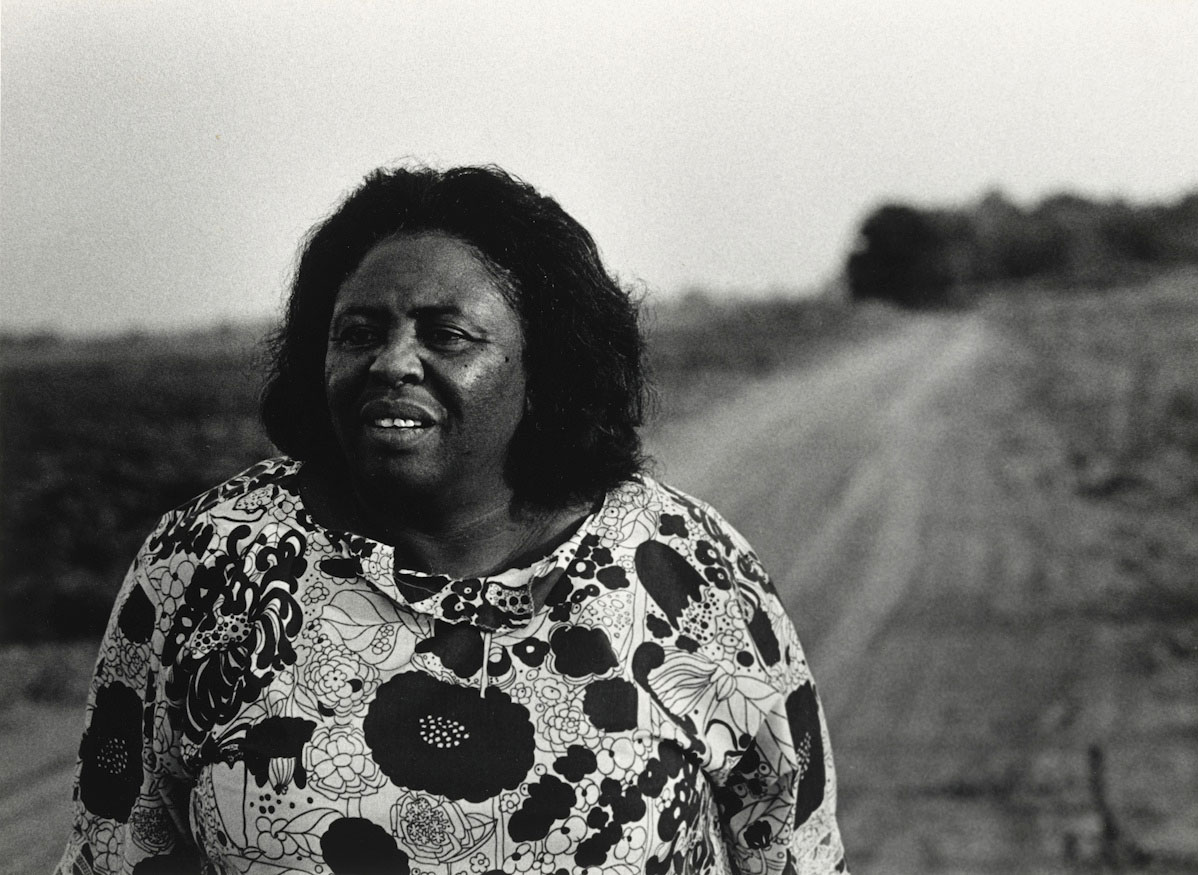
 

Louis Draper (American, 1935-2002) 'Fannie Lou Hamer, Mississippi' July 1971


Louis Draper (American, 1935-2002)
Fannie Lou Hamer, Mississippi
July 1971
Gelatin silver print
21.5 x 29.2cm (8 7/16 x 11 1/2 in.)
National Gallery of Art, Washington
Alfred H. Moses and Fern M. Schad Fund
© Draper Preservation Trust, Nell D. Winston, Trustee


First-of-Its-Kind Exhibition Opening at the National Gallery of Art Explores Photography’s Role in the Black Arts Movement

Never-before-seen photographs alongside images of cultural icons reveal the medium’s central role during a pivotal era of creative expression

The National Gallery of Art presents Photography and the Black Arts Movement, 1955-1985, an exhibition exploring the work of American and Afro-Atlantic diaspora photographers in developing and fostering a distinctly Black visual culture and identity. The first presentation to investigate photography’s role in the Black Arts Movement, a creative initiative comparable to the Harlem Renaissance in its scope and impact, which evolved concurrently to the civil rights and international freedom movements, the exhibition reveals how artists developed strategies to engage communities and encourage self-representation in media, laying a foundation for socially engaged art practices that continue today. Photography and the Black Arts Movement will be on view in the West Building from September 21, 2025, to January 11, 2026, before traveling to California and Mississippi.

Photography and the Black Arts Movement brings together approximately 150 works spanning photography, video, collage, painting, installation, and other photo-based media, some of which have rarely or never been on view. Among the over 100 artists included in the exhibition are Billy Abernathy (Fundi), Romare Bearden, Dawoud Bey, Frank Bowling, Kwame Brathwaite, Roy DeCarava, Louis Draper, David C. Driskell, Charles Gaines, James E. Hinton, Danny Lyon, Gordon Parks, Adrian Piper, Nellie Mae Rowe, Betye Saar, Raymond Saunders, Jamel Shabazz, Lorna Simpson, and Carrie Mae Weems.

This expansive selection of work showcases the broad cultural exchange between writers, musicians, photographers, filmmakers, and other visual artists of many backgrounds, who came together during the turbulent decades of the mid-20th century to grapple with social and political changes, the pursuit of civil rights, and the emergence of the Pan-African movement through art. The exhibition also includes art from Africa, the Caribbean, and Great Britain to contextualize the global engagement with the social, political, and cultural ideas that propelled the Black Arts Movement.

“Working on many fronts – literature, poetry, jazz and new music, painting, sculpture, performance, film, and photography – African American artists associated with the Black Arts Movement expressed and exchanged their ideas through publications, organisations, museums, galleries, community centres, theatres, murals, street art, and emerging academic programs. While focusing on African American photography in the United States, the exhibition also includes works by artists from many communities to consider the extensive interchange between North American artists and the African diaspora. The exhibition looks at the important connections between America’s focus on civil rights and the emerging cultural movements that enriched the dialog,” said Philip Brookman, cocurator of the exhibition and consulting curator of the department of photographs at the National Gallery of Art.

“Photography and photographic images were crucial in defining and giving expression to the Black Arts Movement and the civil rights movement. By merging the social concerns and aesthetics of the period, Black artists and photographers were defining a Black aesthetic while expanding conversations around community building and public history,” said Deborah Willis, guest cocurator, university professor and chair of the department of photography and imaging at the Tisch School of the Arts and founding director of the Center for Black Visual Culture at New York University. “The artists and their subjects helped to preserve compelling visual responses to this turbulent time and their images reflect their pride and determination.”

About the Exhibition

The exhibition draws significantly from the National Gallery’s collection – including more than 50 newly acquired works by Dawoud Bey, Kwame Brathwaite, Louis Draper, Ray Francis, Jeanne Moutoussamy-Ashe, Horace Ové, Jamel Shabazz, Malik Sidibé, Ming Smith, and Carrie Mae Weems, among others – and from lenders in the US, Great Britain, and Canada. Photography and the Black Arts Movement, 1955–1985 presents the cultural and political titans of the era, including civil rights leaders, artists, and musicians, as well as everyday people, scenes of daily life, and fashion and commercial photography. Structured around nine thematic sections – including explorations of the self, community, fashion and beauty, the media, and ritual – the exhibition weaves a holistic vision of the period and its cultural impact.

Among the works in the first section of the exhibition is a collage by Romare Bearden, 110th Street Harlem Blues (1972). A dynamic mixture of painted paper and photographs, the work illustrates the ongoing vitality of Harlem’s community, echoing the vibrancy and social content of the Harlem Renaissance, which Bearden was exposed to in his early life. Moving into the section titled Picturing the Self / Picturing the Movement, self-portraits by Coreen Simpson, Alex Harsley, and Barkley L. Hendricks underscore a central theme of the exhibition: artists asserting their presence within the broader narrative of the movement and the era, along with the importance of self-representation in their art. A highlight of Representing the Community – a section filled with everyday scenes of people at work and at rest – is Ralph Arnold’s Soul Box (1969), a mixed-media assemblage of found objects and collage, serving as a time capsule that captures stories of the Black Arts Movement.

Photographs were a crucial tool used to communicate the events of the civil rights movement to a national audience. Artists and news media understood the power of photographs to address inequality and advocate for civil and human rights, and some works in the exhibition are by photojournalists who captured the speeches, marches, and sit-ins that defined the era. A rarely seen 1965 photograph by Frank Dandridge captures Dr. Martin Luther King Jr. watching President Lyndon B. Johnson’s televised address following the Selma, Alabama, marches – events that would ultimately lead to the passage of the Voting Rights Act. Depicting Dr. King in a private, domestic moment, the image underscores not just the personal gravity of the moment but the television’s growing role in shaping public understanding of the era’s historic events. One of several works featured in the In the News section, it reflects how photographers responded to the shifting landscape of news media – from still photography to the rise of television.

The Black Arts Movement was instrumental in reshaping fashion, advertising, and media as tools of self-representation and cultural empowerment. A Kraft Foods advertisement (1977), photographed by Barbara DuMetz and featuring a young Black girl holding her doll, illustrates how the movement prompted advertisers to engage Black audiences more thoughtfully by hiring Black photographers and models in their campaigns. It is among the highlights of the Fashioning the Self section, along with an editorial photograph by Kwame Brathwaite, the photographer who helped coin the “Black is Beautiful” movement, and many depictions of women in beauty shops, showing the importance of these spaces to forming identity and community.

The exhibition’s concluding section, Transformations in Art and Culture, reflects a shift in the Black Arts Movement’s purpose – from its earlier focus on civil rights to a younger generation’s engagement with more historical and conceptual ideas, while still drawing on the movement’s visual language. Highlights include multimedia and time-based works by Ulysses Jenkins, Charles Gaines, and Lorna Simpson, which explore new and experimental ways to explore Black identity.

Exhibition Publication

Published in association with Yale University Press, the fully illustrated catalog accompanying the exhibition examines the vital role photography played in the evolution of the Black Arts Movement, which brought together writers, filmmakers, and artists as they explored ways of using art to advance civil rights and Black self-determination. Edited by Philip Brookman and Deborah Willis, with a preface by Angela Y. Davis and contributions by Makeda Best, Margo Natalie Crawford, Romi Crawford, Cheryl Finley, Sarah Lewis, and Audrey Sands, this book reveals how photographs operated across art, community building, journalism, and political messaging to contribute to the development of a distinctly Black art and culture. Essays by these distinguished scholars focus on topics such as women and the movement, community, activism, and Black photojournalism, and consider the complex connections between American artists and the African diaspora, and the dynamic interchange of Pan-African ideas that propelled the movement.

Press release from the National Gallery of Art
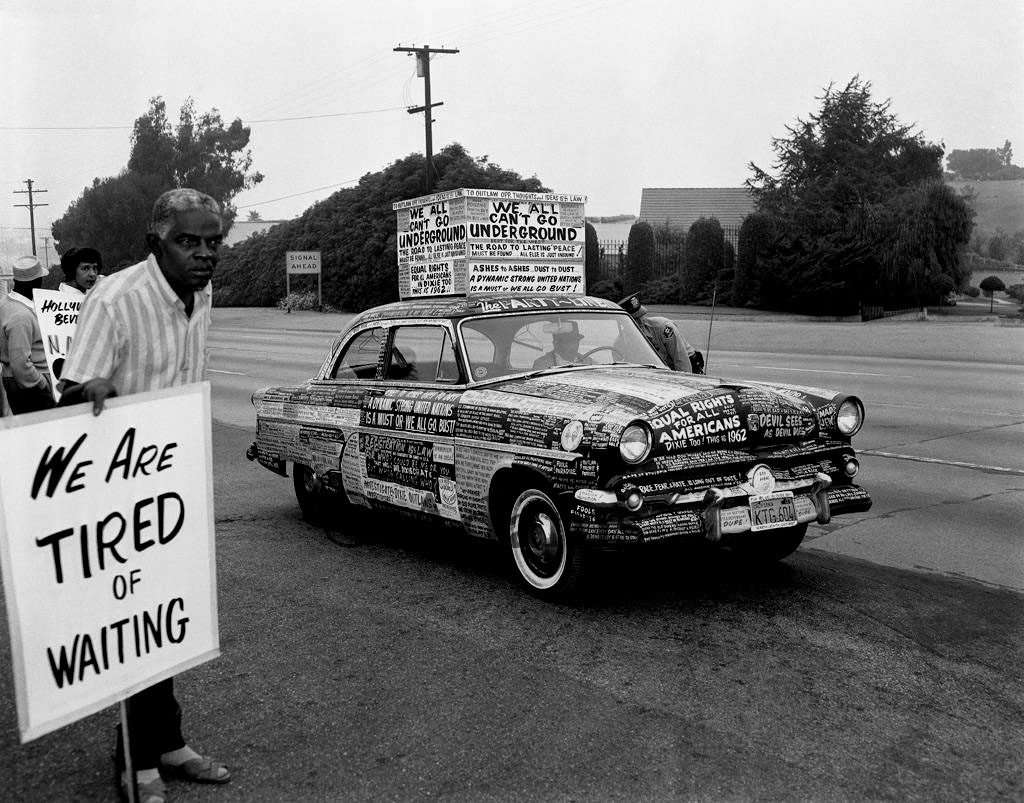
 

Harry Adams (American, 1918-1985) 'Protest Car, Los Angeles' 1962, printed 2024


Harry Adams (American, 1918-1985)
Protest Car, Los Angeles
1962, printed 2024
Inkjet print
27.5 x 35.4 cm (11 x 13 15/16 in.)
Tom & Ethel Bradley Center, California State University, Northridge, Harry Adams Archive
© Harry Adams. All rights reserved and protected.
Courtesy of the Tom & Ethel Bradley Center at California State University, Northridge

Harry Adams (American, 1918-1985)

Harry Adams, also known as “One Shot Harry,” was one of the best-known members of the Los Angeles African American community. Having access to the city’s inner circle, he became known for his images of politicians, entertainers, and society figures. Adams worked as a freelancer for the California Eagle and Los Angeles Sentinel for 35 years and had a number of churches and lawyers as clients. His collection is particularly rich in its documentation of African American social life including images of social organisations, churches, schools, civil rights organisations, protests and cultural events. …

The collection of images for the period 1950-1985 is rich in its depiction of the unique lives of African Americans in and around the Los Angeles area. There are many images of important black political leaders, such as Dr. Martin Luther King, Jr., Rev. Ralph Abernathy, Malcolm X, and many others.

Text from the California State University Northridge website
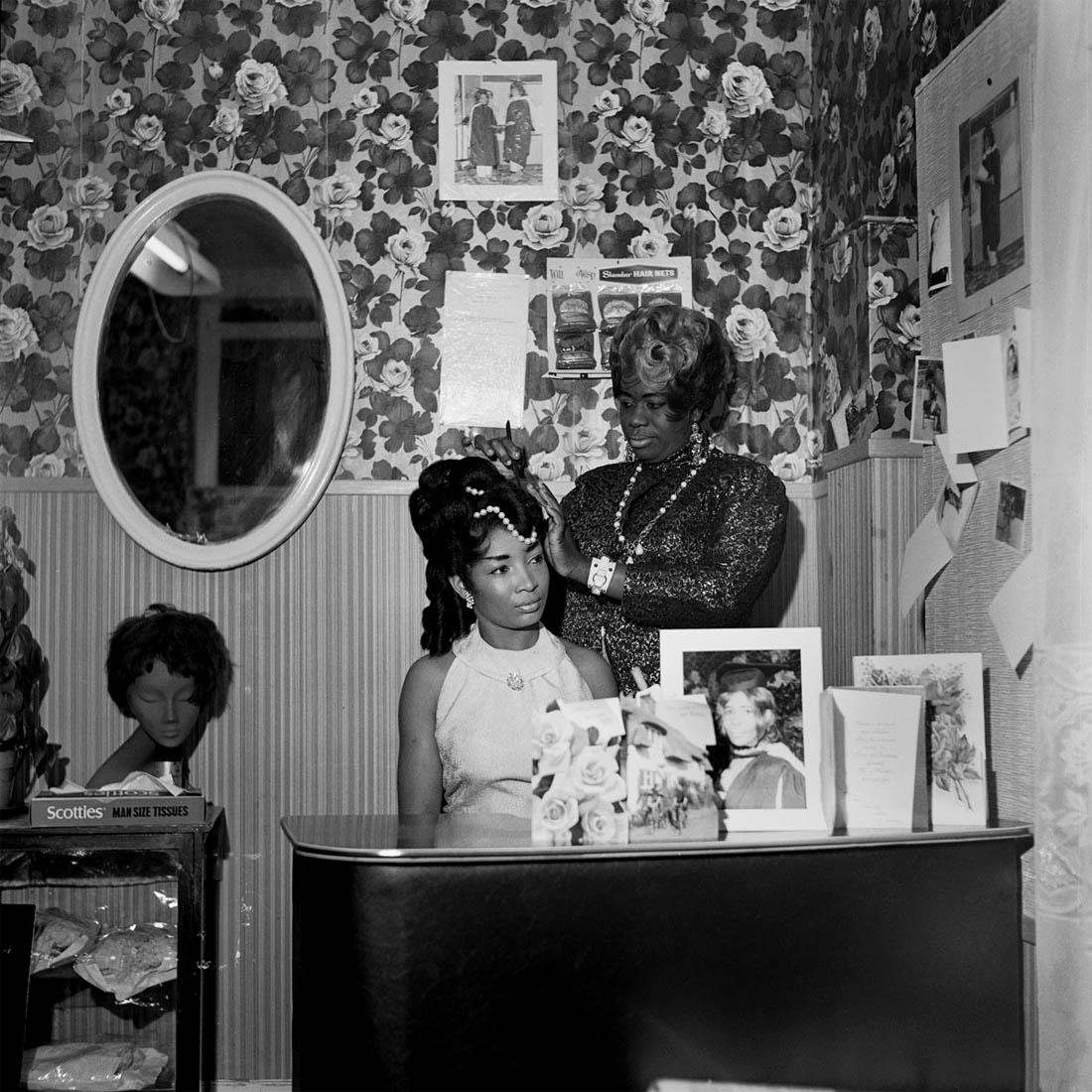
 

Raphael Albert (British born Grenada, 1939-2009) 'Beauty Salon, London' c. 1960s


Raphael Albert (British born Grenada, 1939-2009)
Beauty Salon, London
c. 1960s
Gelatin silver print
27.3 x 27.3cm (10 3/4 x 10 3/4 in.)
Collection of Autograph, London
© Raphael Albert


Between the late 1960s and the early 1990s, the cultural promoter, entrepreneur and photographer Raphael Albert organised and documented numerous black beauty pageants and other cultural events in London. His long and successful career as a promoter and chronicler of pageants included the establishment of Miss Black and Beautiful, Miss West Indies in Great Britain, and Miss Grenada.

These competitions celebrated the global ‘Black is Beautiful’ aesthetic in a local west London context: paired with the obligatory bathing costumes and high heels, Albert’s contestants often sported large Afro hairstyles, inventing and reinventing themselves on stage while articulating a particular and multifaceted black femininity as part of a widely contested and ambiguous cultural performance.

Text from the Autograph website
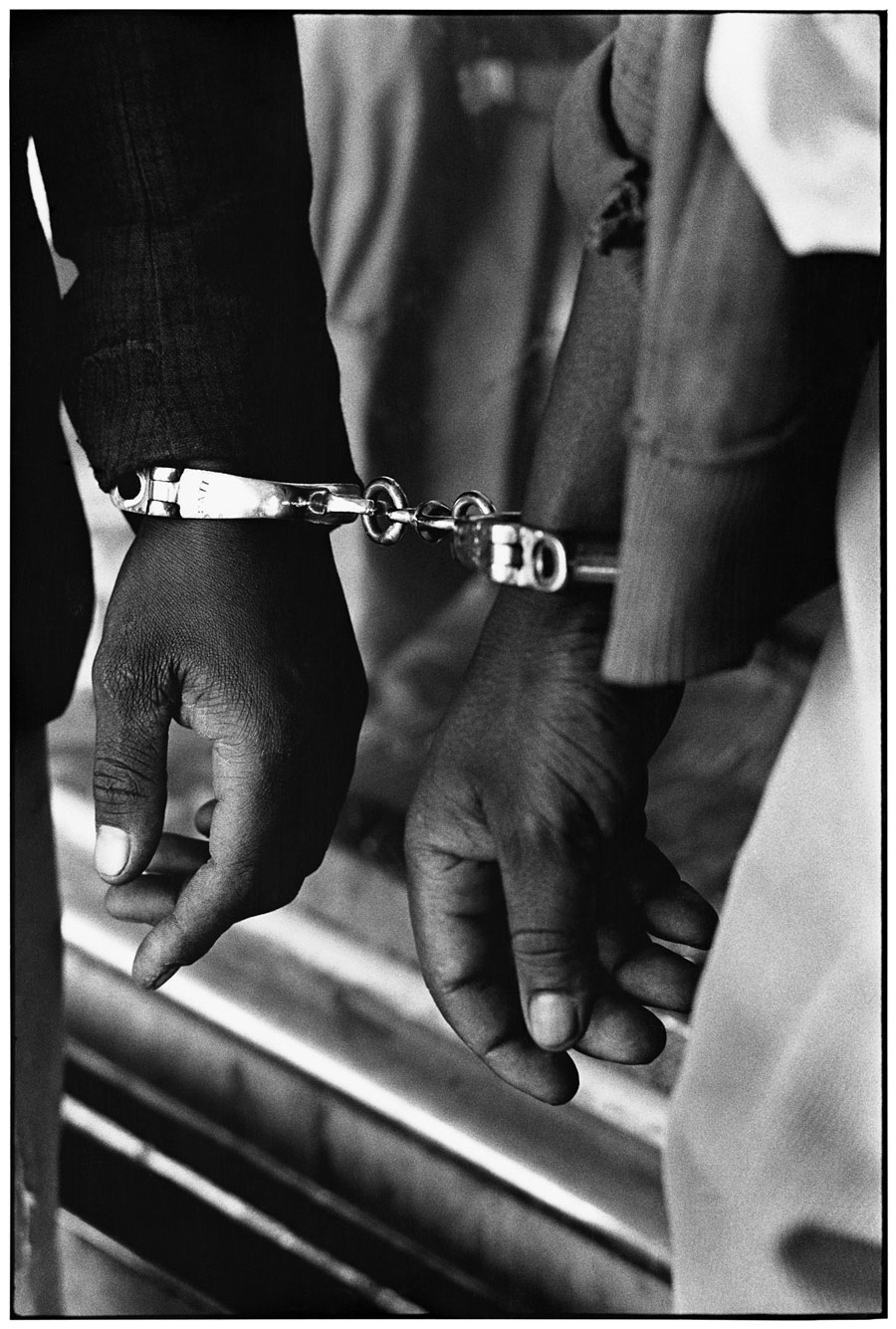
 

Ernest Cole (South African, 1940-1990) 'Handcuffed blacks were arrested for being in white area illegally' 1960-1966


Ernest Cole (South African, 1940-1990)
Handcuffed blacks were arrested for being in white area illegally
1960-1966
Gelatin silver print
Image/sheet: 24.5 x 16.5 cm (9 5/8 x 6 1/2 in.)
National Gallery of Art, Washington
Alfred H. Moses and Fern M. Schad Fund, 2022.102.2
© Ernest Cole / Magnum Photos

~ Exhibition: ‘Ernest Cole: House of Bondage’ at Foam, Amsterdam, January – June 2023
~ Text/Exhibition: “Ernest Cole: Journeys through Photojournalism, Social Documentary Photography and Art,” on the exhibition ‘Ernest Cole Photographer’ at The Fowler Museum at UCLA, Los Angeles, April – July 2013
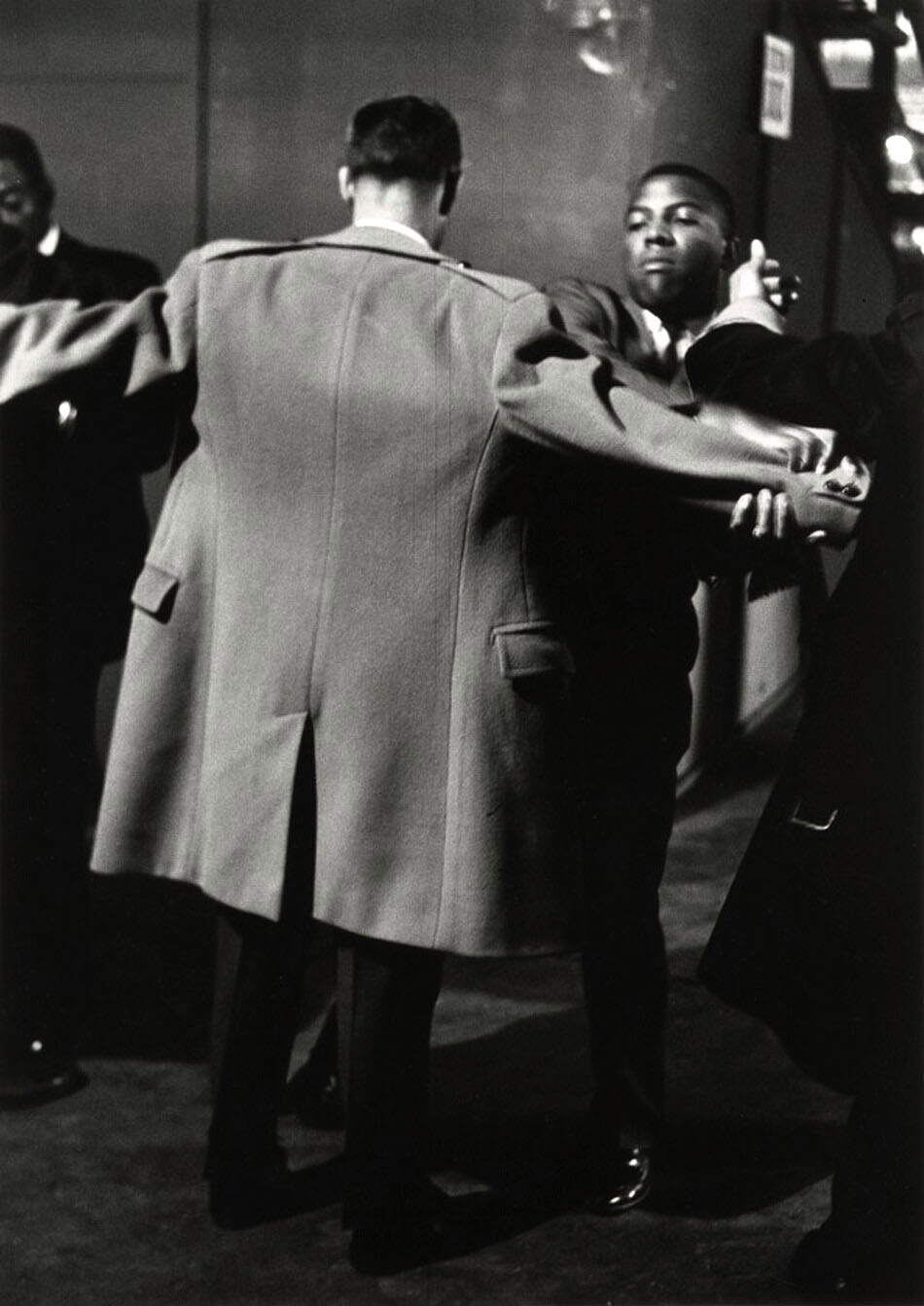
 

Gordon Parks (American, 1912-2006) 'Newsman Being Frisked at Muslim Rally in Chicago' 1963, printed 1997


Gordon Parks (American, 1912-2006)
Newsman Being Frisked at Muslim Rally in Chicago
1963, printed 1997
Gelatin silver print
47.3 x 33.7cm (18 5/8 x 13 1/4 in.)
National Gallery of Art, Washington
Corcoran Collection (The Gordon Parks Collection)


~ Text/Exhibition: “Visible Man / Invisible photographer” on the exhibition Gordon Parks: Stokely Carmichael and Black Power at the Museum of Fine Arts, Houston, October 2022 – January 2023
~ Exhibition: ‘Gordon Parks and “The Atmosphere of Crime”‘ at the Museum of Modern Art (MoMA), New York, February 2021 ongoing
~ Photographs: Gordon Parks “The Atmosphere of Crime”, 1957 February 2020
~ Exhibition: ‘Gordon Parks: The Flávio Story’ at the J. Paul Getty Museum, Getty Center, Los Angeles, July – November 2019
~ Exhibition: ‘Gordon Parks: Back to Fort Scott’ at the Museum of Fine Arts, Boston, January – September 2015
~ Exhibition: ‘Gordon Parks: Segregation Story’ at the High Museum of Art, Atlanta, November 2014 – June 2015
~ Exhibition: ‘Gordon Parks: The Making of an Argument’ at The New Orleans Museum of Art, September 2013 – January 2014
~ Exhibition: ‘Gordon Parks: 100 Moments’ at New York State Museum, January – May 2013
~ Exhibition: ‘Gordon Parks: Centennial’ at Jenkins Johnson Gallery, San Francisco, February – April 2013
~ Exhibition: ‘Bare Witness: Photographs by Gordon Parks’ at the Phoenix Art Museum, August – November 2011
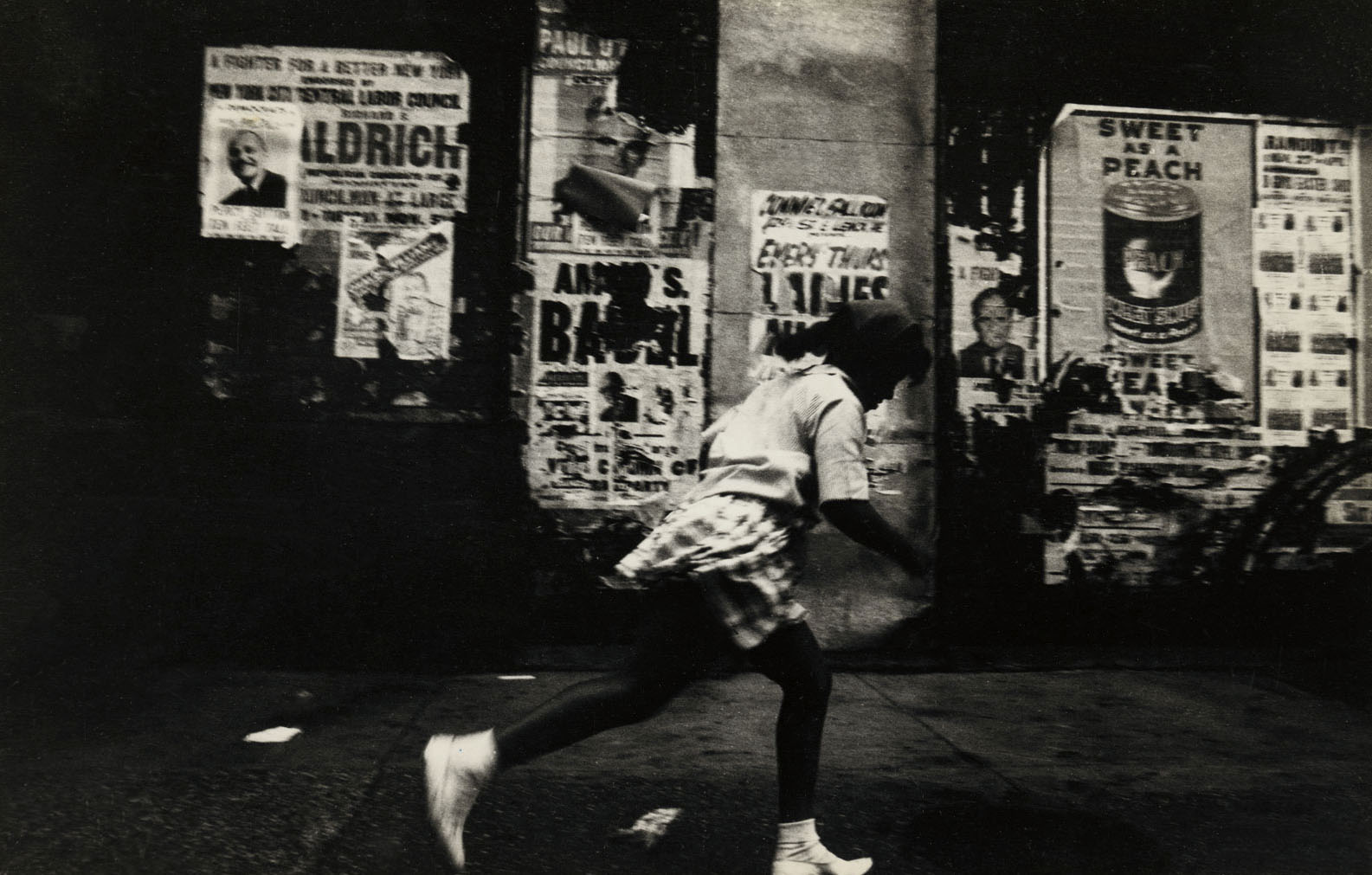
 

Herman Howard (American, 1942-1980) 'Sweet as a Peach, Harlem, New York City' 1963


Herman Howard (American, 1942-1980)
Sweet as a Peach, Harlem, New York City
1963
Gelatin silver print
16 x 23.1cm (6 5/16 x 9 1/8 in.)
National Gallery of Art, Washington
Alfred H. Moses and Fern M. Schad Fund
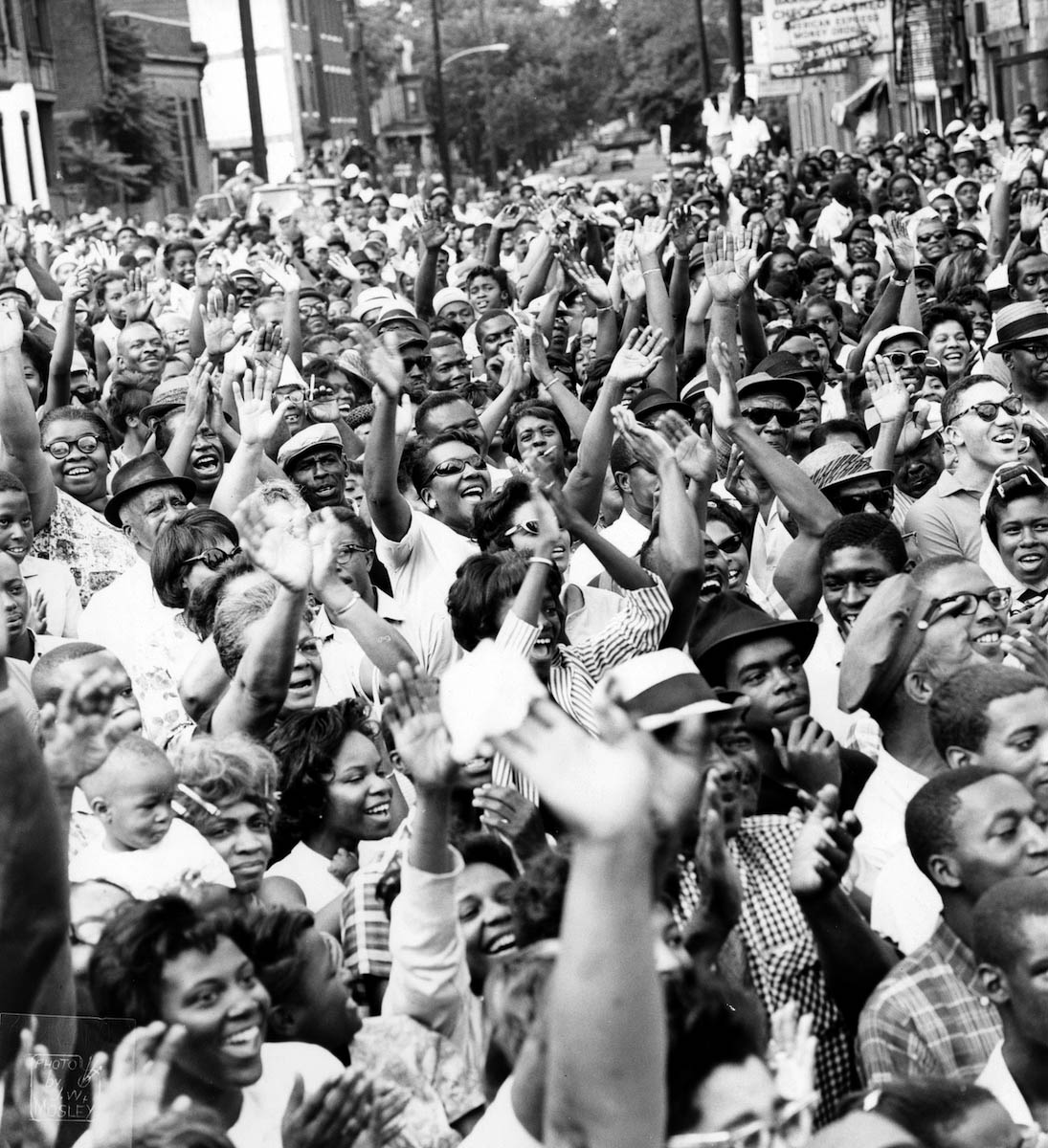
 

John W. Mosley (American, 1907-1969) 'View of the crowd as Dr. Martin Luther King Jr. addresses civil rights demonstrators at 40th Street and Lancaster Avenue, Philadelphia' August 3, 1965


John W. Mosley (American, 1907-1969)
View of the crowd as Dr. Martin Luther King Jr. addresses civil rights demonstrators at 40th Street and Lancaster Avenue, Philadelphia
August 3, 1965
Gelatin silver print
24.8 x 19.7cm (9 3/4 x 7 3/4 in.)
John W. Mosley Photograph Collection, Charles L. Blockson Afro-American Collection, Temple University Libraries


John W. Mosley (American, 1907-1969)

John W. Mosley (May 19, 1907 – October 1, 1969) was a self-taught photojournalist who extensively documented the everyday activities of the African-American community in Philadelphia, Pennsylvania, for more than 30 years, a period including both World War II and the civil rights movement. His work was published widely in newspapers and magazines including The Philadelphia Tribune, The Pittsburgh Courier and Jet magazine.

Mosley has been called a “cultural warrior” for preserving a record of African-American life in Philadelphia and Pennsylvania, one which combats “negative stereotypes and false interpretations of African-American history and culture”. …

Mosley flourished in his career as a photographer from the 1930s to the 1960s. He was known to photograph as many as four events a day, seven days a week. He traveled around Philadelphia on public transit, carrying his cameras and other equipment.

Mosley shot in black and white film. He used a large-format Graflex Speed Graphic camera. and a medium-format Rollieflex.

Proud of his heritage, Mosley chose to portray the black community positively at family, social, and cultural events that were part of daily life. He photographed individuals and families at weddings, picnics, churches, segregated beaches, sporting events, concerts, galas, and civil rights protests. During a time of racism and segregation, he emphasised the achievements of black celebrities, athletes, and political leaders.

Text from the Wikipedia website
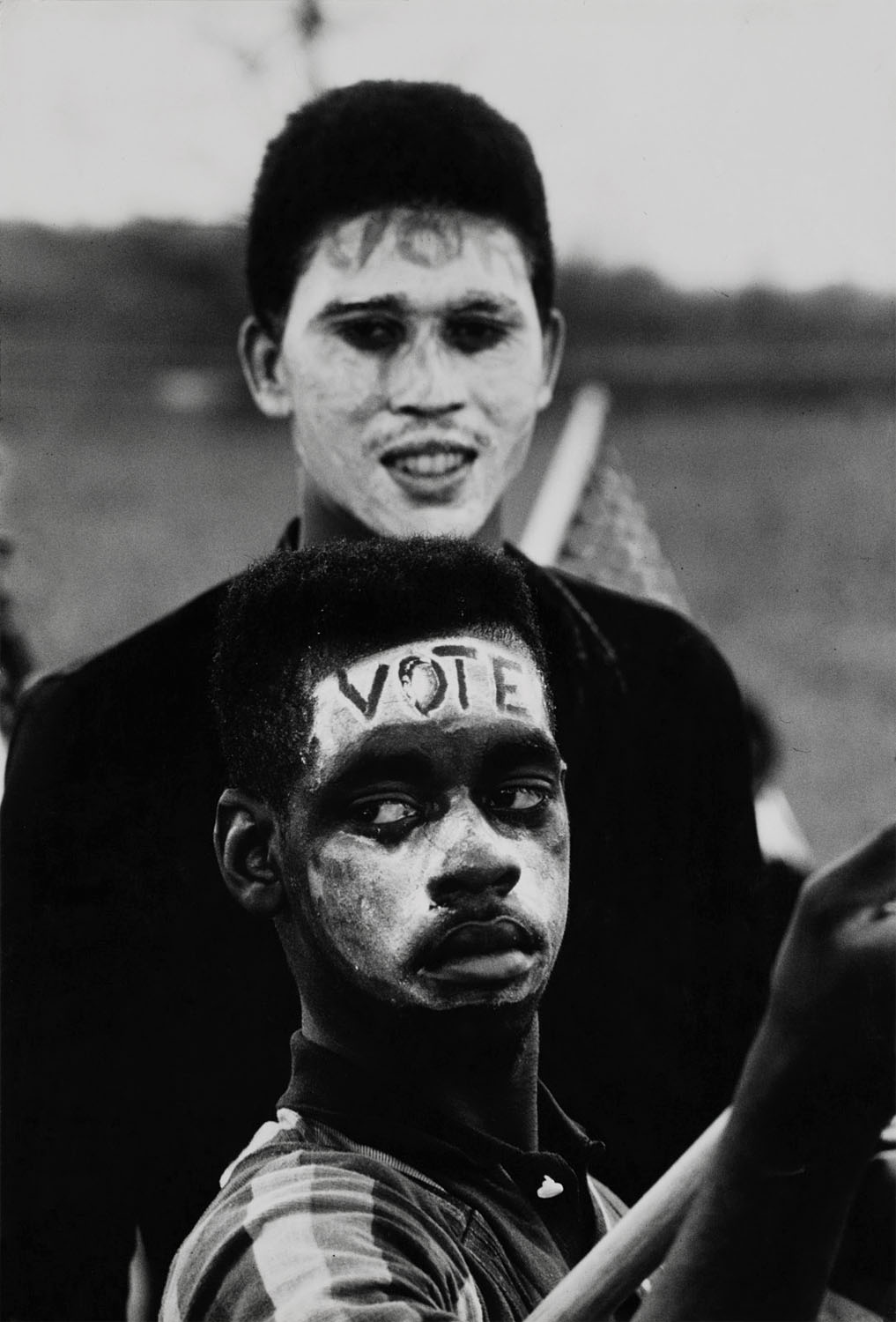
  

Moneta Sleet Jr. (American, 1926-1996) 'Two Teenaged Supporters of the Selma March' 1965, printed c. 1970


Moneta Sleet Jr. (American, 1926-1996)
Two Teenaged Supporters of the Selma March
1965, printed c. 1970
Gelatin silver print
43.3 x 29.5cm (17 1/16 x 11 5/8 in.)
Saint Louis Art Museum, Gift of the Johnson Publishing Company
© Johnson Publishing Company Archive. Courtesy J. Paul Getty Trust and Smithsonian National Museum of African American History and Culture. Made possible by the Ford Foundation, J. Paul Getty Trust, John D. and Catherine T. MacArthur Foundation, The Andrew W. Mellon Foundation, and Smithsonian Institution


“During the Civil Rights Movement, I was a participant just like everybody else. I just happened to be there with my camera, and I felt and firmly believed that my mission was to photograph and show the side of it that was the right side.”

~ Moneta Sleet Jr.


During Sleet’s 41 years at Ebony, he worked by Martin Luther King Jr.’s side for 13 years, capturing historical moments of the civil rights movement.

Sleet began working for Ebony magazine in 1955. Over the next 41 years, he captured photos of young Muhammad Ali, Dizzy Gillespie, Stevie Wonder, Emperor Haile Selassie I, Jomo Kenyatta, former ambassador Andrew Young in a blue leather jacket and jeans in his office at the United Nations, Ghana’s Kwame Nkrumah, Liberia’s William Tubman and Billie Holiday. He gained the affection and esteem of many civil rights leaders, many of whom called on him by name. When Coretta Scott King found out that no African American photographers had been assigned to cover her husband’s funeral service, she demanded that Sleet be a part of the press pool. If he was not, she threatened to bar all photographers from the service. Besides his photo of Coretta Scott King, he also captured grieving widow Betty Shabazz at the funeral of her husband Malcolm X.

Text from the Wikipedia website


Kwame Brathwaite (American, 1938-2023) 'Untitled (Charles Peaker Street Speaker, head of ANPM, after Carlos Cooks passed away, on 125th Street)' c. 1968, printed 2016


Kwame Brathwaite (American, 1938-2023)
Untitled (Charles Peaker Street Speaker, head of ANPM, after Carlos Cooks passed away, on 125th Street)
c. 1968, printed 2016
Inkjet print
37.2 x 37.2 cm (14 5/8 x 14 5/8 in.)
National Gallery of Art, Washington
Alfred H. Moses and Fern M. Schad Fund and Pepita Milmore Memorial Fund


Kwame Brathwaite (American, 1938-2023)

Black Is Beautiful.

From Marcus Garvey to the Black Panther Party, these three words powered the political dreams and material possibilities of generations of Black people living in the United States. Over the course of seven decades, the recently departed photographer Kwame Brathwaite constructed a glorious visual lexicon to articulate a Pan-Africanist argument. Whether through his rhythmic documentation of the jazz scene in Harlem and the Bronx, or his cofounding of the African Jazz-Art Society & Studios (AJASS), Brathwaite positioned photography at the nexus of Black artistic, political, and musical expression. Moving between concert halls and boxing rings, portrait studios and protest movement scenes – his Hasselblad in hand – Brathwaite chronicled self-determination and creativity that celebrated Blackness in all of its forms. Each of his photographs brims with bombastic flare and undeniable elegance. Their narrative potential is still transfixing.

“Black Is Beautiful was my directive,” Brathwaite said. “It was a time when people were protesting injustices related to race, class, and human rights around the globe. I focused on perfecting my craft so that I could use my gift to inspire thought, relay ideas, and tell stories of our struggle, our work, our liberation…. Oppression still exists today, and we must keep fighting, keep on pushing until we are free. A luta continua, a vitória é certa – the struggle continues, victory is certain.”

Oluremi C. Onabanjo, Esther Adler, Roxana Marcoci, Marilyn Nance, David Hartt, Michael Famighetti. “Remembering Kwame Brathwaite (1938-2023),” on the MoMA website, Dec 26, 2023 [Online] Cited 30/11/2025
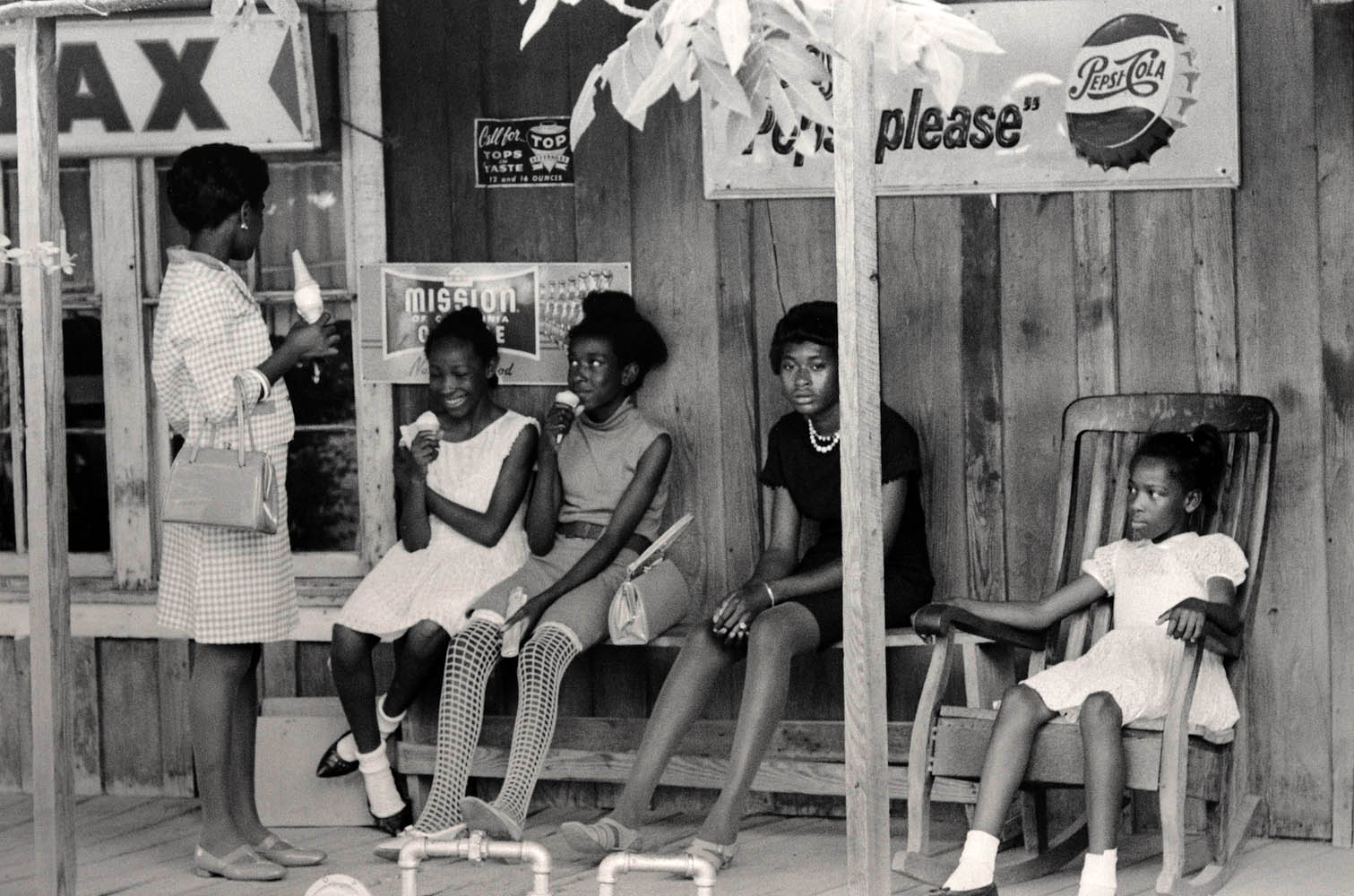
 

Doris A. Derby (American, 1939-2022) 'Black-owned Grocery Store, Sunday, Mileston, Mississippi' 1968


Doris A. Derby (American, 1939-2022)
Black-owned Grocery Store, Sunday, Mileston, Mississippi
1968
Gelatin silver print
21.9 x 32.7cm (8 5/8 x 12 7/8 in.)
National Gallery of Art, Washington
Gift of David Knaus
© Doris A. Derby


While the Black Arts Movement is generally pegged to the 1960s and ’70s, the point of departure for Willis and Brookman was the work of photographer Roy DeCarava, who in 1955, on the cusp of the civil rights movement, released a book titled The Sweet Flypaper of Life. The book featured portraits of Black life in Harlem activated by a fictitious character named Mary Bradley, a narrative invention of Harlem Renaissance writer Langston Hughes.

In the book, Sister Mary’s musings unfold within DeCarava’s photographic landscape. The exhibition includes an image from the book featuring bassist Edna Smith, whose face is partially illuminated by a single light in the distance. Her downward gaze conveys a sense of somberness that’s echoed by the shadows that surround her, while the single glint of light coming off her wristwatch draws attention to the bass like the beacon from a lighthouse.

Published decades following the Harlem Renaissance, one year after Brown v. Board of Education and months after the murder of Emmitt Till, DeCarava’s book came at a critical moment in art history, a time when photography became more broadly recognised as fine art through groundbreaking exhibitions like “The Family of Man” at the Museum of Modern Art, also in 1955. With that recognition, Black artists seized an opportunity to compose compelling visual narratives. “The collaboration between Langston Hughes and Roy De Carava was influential for so many photographers and artists, in part because De Carava and Hughes were looking at their respective communities, and they put together a story that was looking inward,” says Brookman.

Colony Little. “A Show at the National Gallery Highlights the Role of Photography in the Black Arts Movement,” on the ARTnews website November 20, 2025 [Online] Cited 24/11/2025
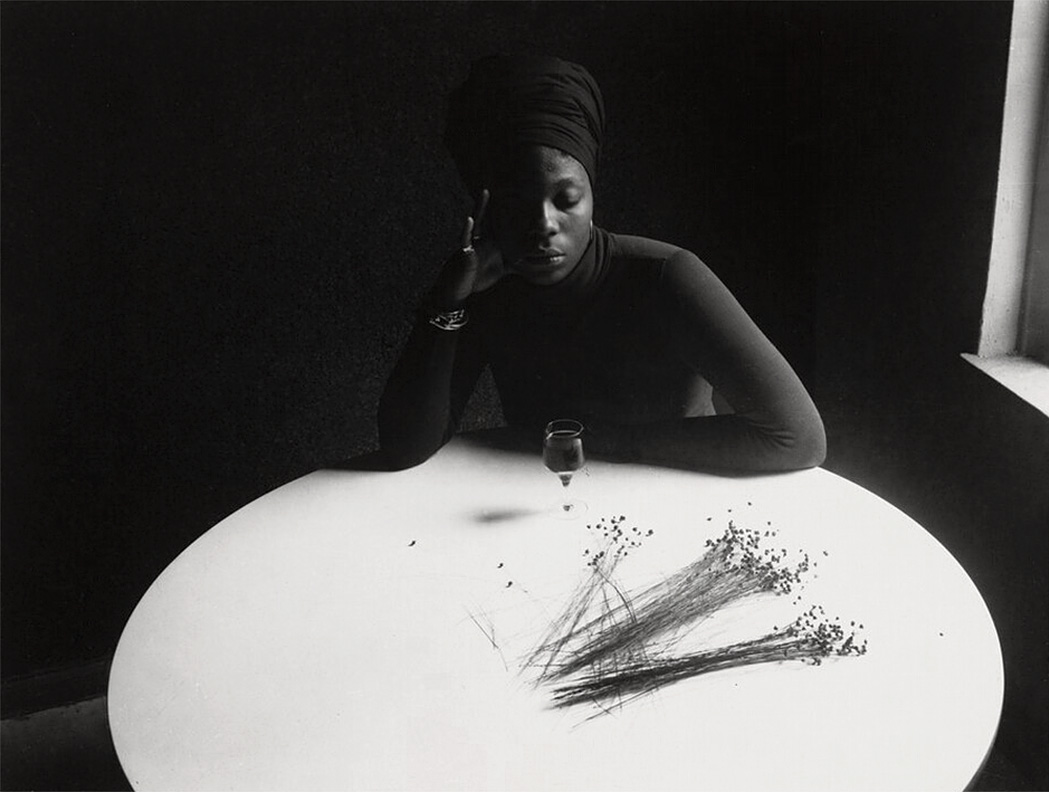
 

Ray Francis (American, 1937-2006) 'Genie' 1971


Ray Francis (American, 1937-2006)
Genie
1971
Gelatin silver print
13.97 × 17.78cm (5 1/2 × 7 in.)
National Gallery of Art, Washington
Alfred H. Moses and Fern M. Schad Fund


Ray Francis (American, 1937-2006)

Ray Francis was a founding member of the Kamoinge Workshop. He received his first camera in 1952, at the age of 15. In 1961 he met Louis Draper, with whom he formed Group 35. In 1963 Group 35 merged with other photographers to create Kamoinge, where Francis contributed significantly by creating a darkroom for the group and working as a photo editor for the Black Photographers Annual.

His photographic work spanned still life, portraiture, and landscape, often using dramatic light and shadow, influenced by Johannes Vermeer’s use of composition. Francis also made contributions as an educator, teaching at the Bedford-Stuyvesant Neighborhood Youth Corps (1966–1969) and later serving as director of the New York City Board of Education’s photography program for Intermediate School 201 from 1970 to 1974.

Text from the National Gallery of Art website
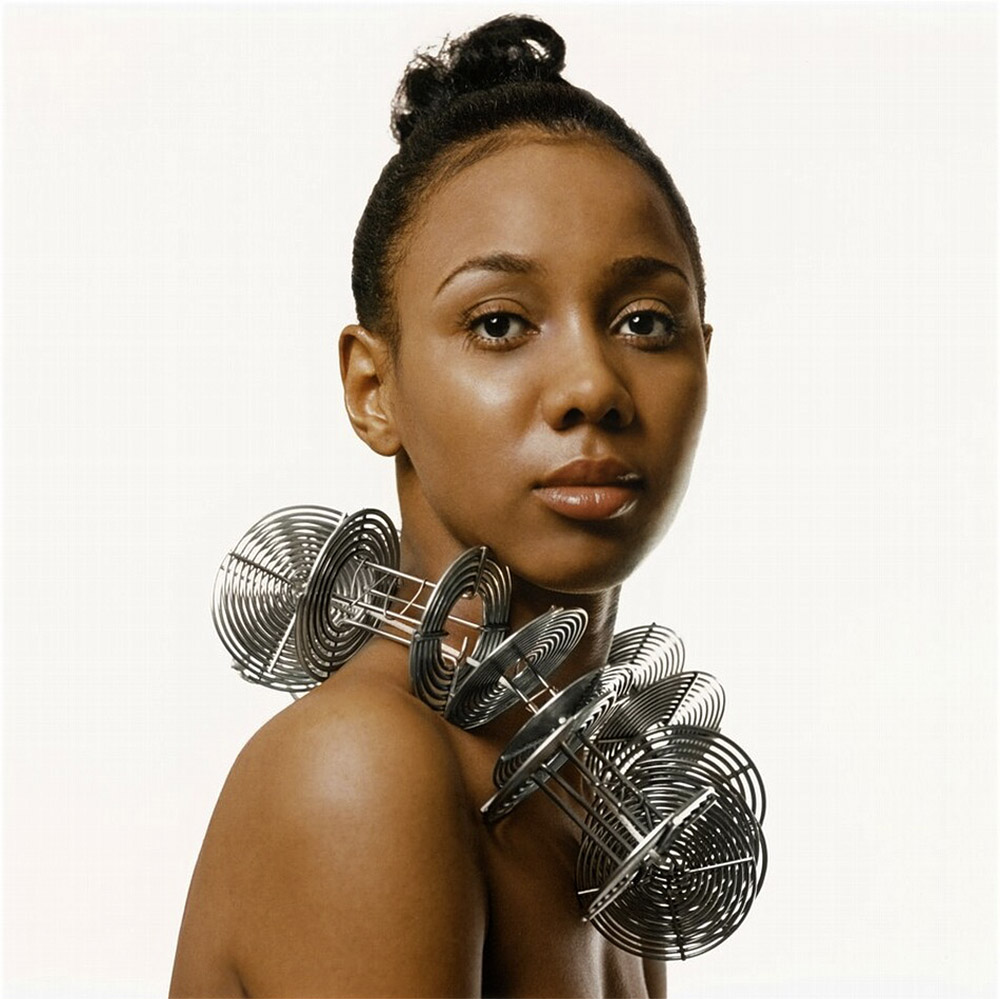
 

Kwame Brathwaite (American, 1938-2023) 'Untitled (Portrait, Reels as Necklace)' c. 1972, printed later


Kwame Brathwaite (American, 1938-2023)
Untitled (Portrait, Reels as Necklace)
c. 1972, printed later
Inkjet print
74.93 × 74.93cm (29 1/2 × 29 1/2 in.)
National Gallery of Art, Washington
Gift of Funds from Renée Harbers Liddell and Alfred H. Moses and Fern M. Schad Fund
© Kwame Brathwaite


Kwame Brathwaite, [was] a photographer, musician and African American activist who was a unique politico-aesthete. With his brother Elombe Brath, he virtually invented the phrase “Black Is Beautiful” in the 1960s by photographing the Grandassa Models in Harlem: young African American women who became the sensational template for beauty, doing away with the usual cosmetic products and the usual white standard of femininity.

Black Is Beautiful became a radical rallying cry, an inspired three-word prose poem and manifesto for change. Simply to assert that black people were beautiful was a liberating force in art, politics and culture, and Brathwaite became a part of Black power’s pan-Africanist movement by photographing Muhammad Ali before his Rumble in the Jungle fight in Zaire in 1974. He was the exclusive photographer for the Jackson 5’s African tour, and became the house photographer for the Apollo theatre, building an amazing archive of black musicians, and with Elombe was the driving force behind bringing Nelson Mandela to speak in Harlem.

Peter Bradshaw. “Black Is Beautiful: The Kwame Brathwaite Story – exhilarating record of game-changing photographer,” on The Guardian website Fri 10 Oct 2025 [Online] Cited 30/11/2025
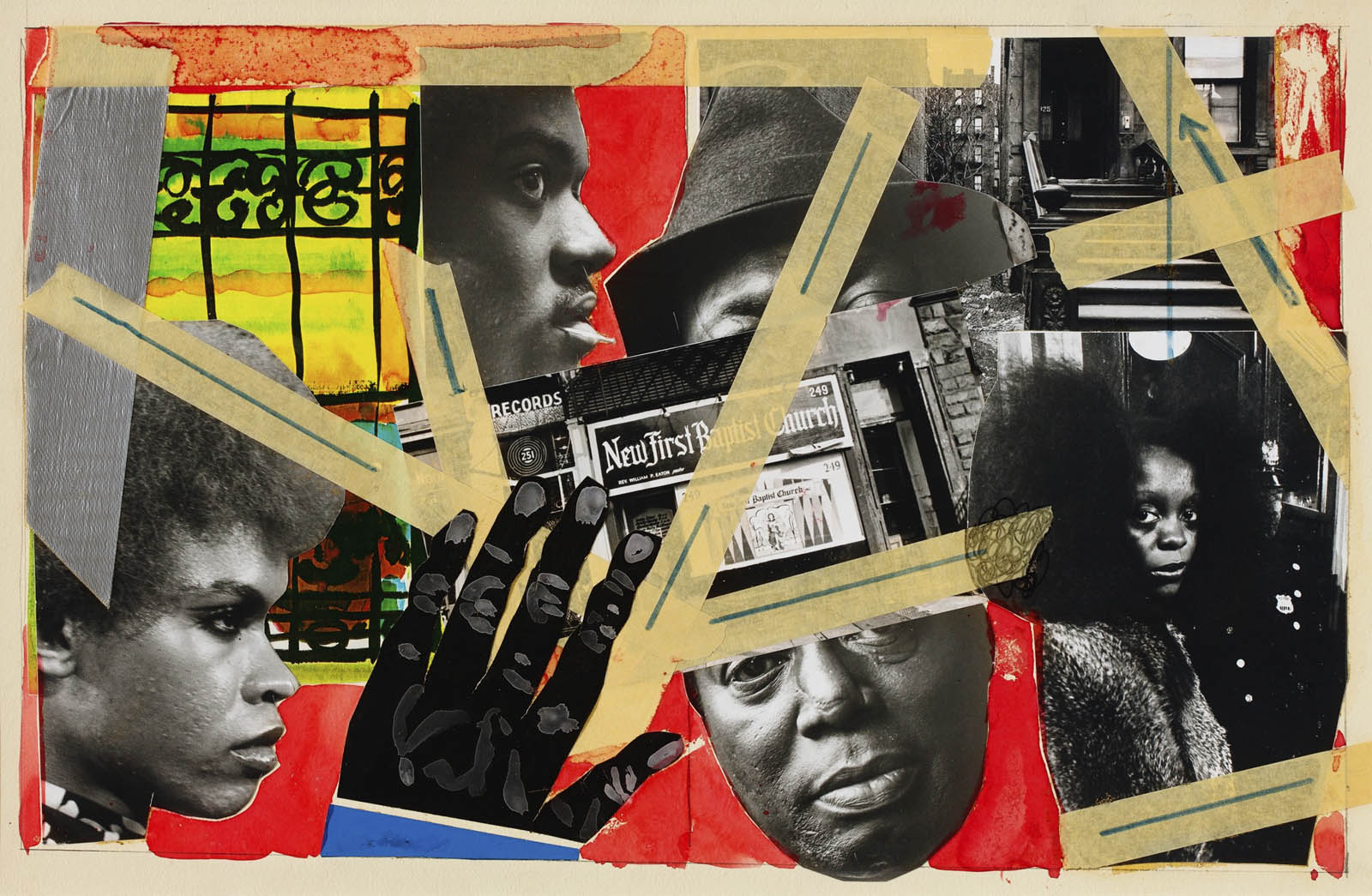
 

Romare Bearden (American, 1911-1988) '110th Street Harlem Blues' 1972


Romare Bearden (American, 1911-1988)
110th Street Harlem Blues
1972
Collage
© Romare Bearden Foundation


African-American artist, activist, and writer Romare Bearden was close friends with film producer and photographer Sam Shaw, and he often drew inspiration from Shaw’s creative projects. The portraits incorporated into this collage feature outtakes of extras from a movie Shaw may have documented as set photographer. ⁠ ⁠

Bearden’s work reflects his improvisational approach to his practice. He considered his process akin to that of jazz and blues composers. Starting with an open mind, he would let an idea evolve spontaneously. “You have to begin somewhere,” he once said, “so you put something down. Then you put something else with it, and then you see how that works, and maybe you try something else and so on, and the picture grows in that way.”

Text from the Fraenkel Gallery Facebook page via DC Gallery, New York


Other works of art in the show are a testament to the medium’s lasting influence on established visual artists. Among these was Romare Bearden, who in the mid-1960s began exploring photographic collage; it would become an art form he used to create his most influential works. “Romare Bearden has always been integral to understanding the Black Arts Movement,” says Brookman. “By using photographs in his collages, he makes a direct connection between photography in all of its forms and the Black Arts Movement. That was something I had not seen or thought a lot about before, how much photography is incorporated into his visual art, including painting, during that time.”

Colony Little. “A Show at the National Gallery Highlights the Role of Photography in the Black Arts Movement,” on the ARTnews website November 20, 2025 [Online] Cited 24/11/2025


Chester Higgins (American, b. 1946) 'Father prays over son on Osu Beach, Accra, Ghana' 1973


Chester Higgins (American, b. 1946)
Father prays over son on Osu Beach, Accra, Ghana
1973
Gelatin silver print
22.8 x 34cm (9 x 13 3/8 in.)
National Gallery of Art, Washington
Alfred H. Moses and Fern M. Schad Fund
© Chester Higgins. All Rights Reserved. Courtesy Bruce Silverstein Gallery
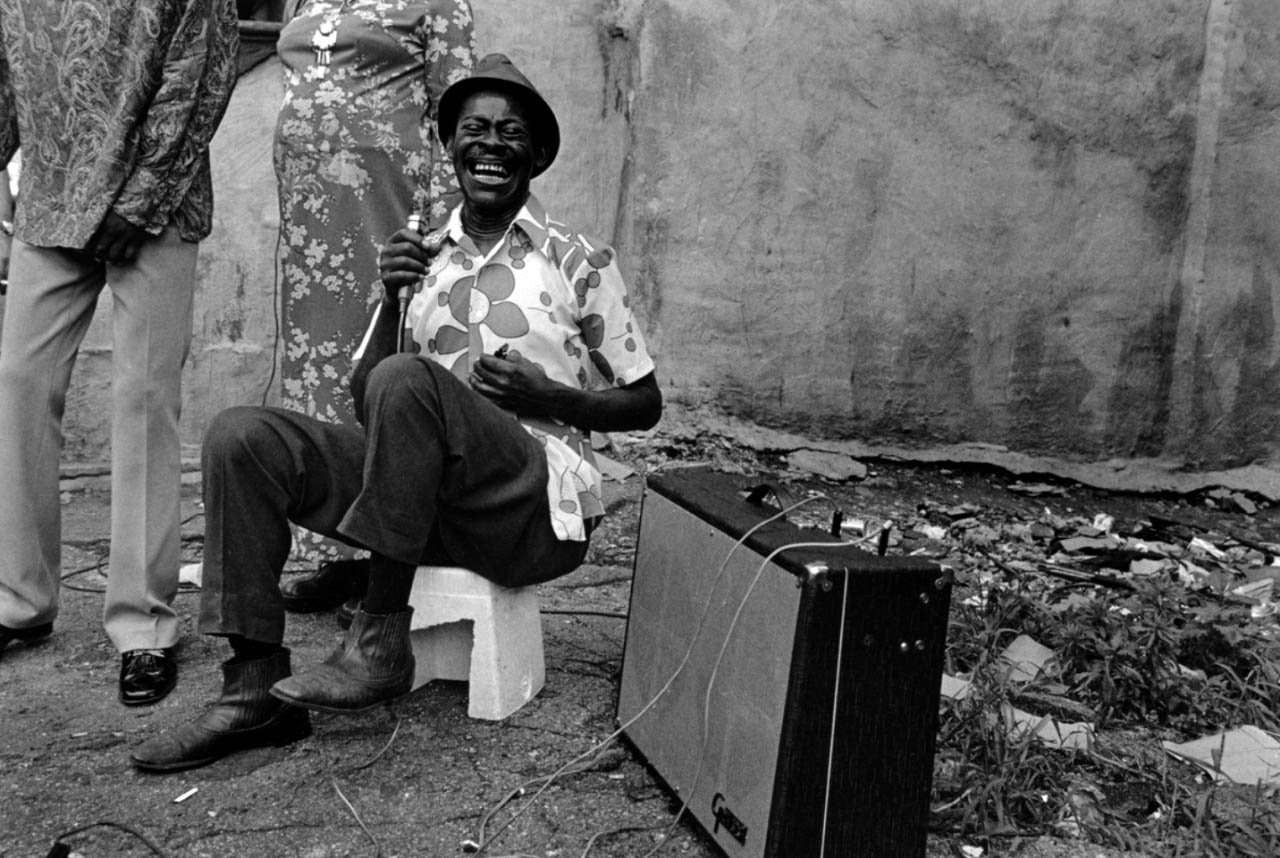
 

Dawoud Bey (American, b. 1953) 'The Blues Singer, Harlem, NY' 1976


Dawoud Bey (American, b. 1953)
The Blues Singer, Harlem, NY
1976
Gelatin silver print
22.1 x 32.7 cm (8 11/16 x 12 7/8 in.)
National Gallery of Art, Gift of the Charina Endowment Fund in memory of Robert B. Menschel


~ Text/Exhibition: “Street cred,” on the exhibition Dawoud Bey: Street Portraits at Denver Art Museum, November 2024 – May 2025
~ Exhibition: ‘Dawoud Bey & Carrie Mae Weems: In Dialogue’ at the J. Paul Getty Museum, Los Angeles, April – July 2023
~ Exhibition: ‘Dawoud Bey: An American Project’ at the Whitney Museum of American Art, New York, April – October 2021
~ Exhibition: ‘Dawoud Bey: An American Project’ at the High Museum of Art, Atlanta, November 2020 – March 2021

 

Barbara DuMetz (American, b. 1947) 'Kraft Foods advertisement' 1977


Barbara DuMetz (American, b. 1947)
Kraft Foods advertisement
1977


Barbara DuMetz (American, b. 1947)

Barbara DuMetz (born 1947) is an American photographer and pioneer in the field of commercial photography. She began working in Los Angeles as a commercial photographer in the 1970s, when very few women had established and maintained successful careers in the field, especially African-American women. Over the course of her career, “she made a major contribution to diversifying the landscape of images that defined pop culture in the United States.”

DuMetz is known for her work with African-American celebrities, corporations and images of everyday life in African-American communities. …

DuMetz has been a professional photographer for more than four decades. Over the course of her career, she has produced award-winning images for advertising agencies including Burrell Advertising, J. P. Martin Associates and InterNorth Corporation. Her photographs have appeared in African-American publications including Black Enterprise, Ebony, Essence, Jet and The Crisis. She has taken commercial photographs for corporations including The Coca-Cola Company, Delta Air Lines and McDonald’s Corporation.

DuMetz ran and maintained three different photography studios located in the Los Angeles area where she was contracted by department stores, record companies, graphic design studios, advertising agencies, public relations firms, film production companies, actors and business professionals. DuMetz’s has shot photo layouts of celebrities and artists and personalities including Maya Angelou, Ernie Barnes, Bernie Casey, Pam Grier, Kareem Abdul-Jabbar, Quincy Jones, Samella Lewis, Ed McMahan, Thelonious Monk, Lou Rawls, Della Reese, Richard Roundtree, Betye Saar, Charles Wilbert White, and Nancy Wilson. Her show The Creators: Photographic Images of Literary, Music and Visual Artists, at the Southwest Arts Center in Atlanta, Georgia, in 2015, included images of over two dozen African-American artists whom she has photographed.

Text from the Wikipedia website


Ming Smith (American, b. 1950) 'Sun Ra Space II' 1978


Ming Smith (American, b. 1947)
Sun Ra Space II, New York, New York
1978
Gelatin silver print
15.24 × 22.4cm (6 × 8 13/16 in.)
National Gallery of Art, Washington
Charina Endowment Fund


“You don’t make art for money, especially as a Black artist. You do it because there is that need to create – and that has been part of my survival; that has helped me survive.”

“My work as a photographer was to record, culturally, the period of time in which I lived – and I recorded it as an artist.”

“Oh no, it’s all discovery, it’s all improvisation. It’s like when jazz musicians solo. They improvise, and photography is definitely that, for me.”

“Whether I’m photographing a person on the street, someone I know, or on an assignment, I’m doing it because I admire them. I like the sense of exchange – they’re giving and I’m taking, but I’m also giving them something back. There were certain people who would understand what I was looking for and would try to give me a photograph by posing. Whatever I’m shooting, whether it’s a portrait or a place, my intention is to capture the feeling I have about that exchange and that energy.”


Ming Smith
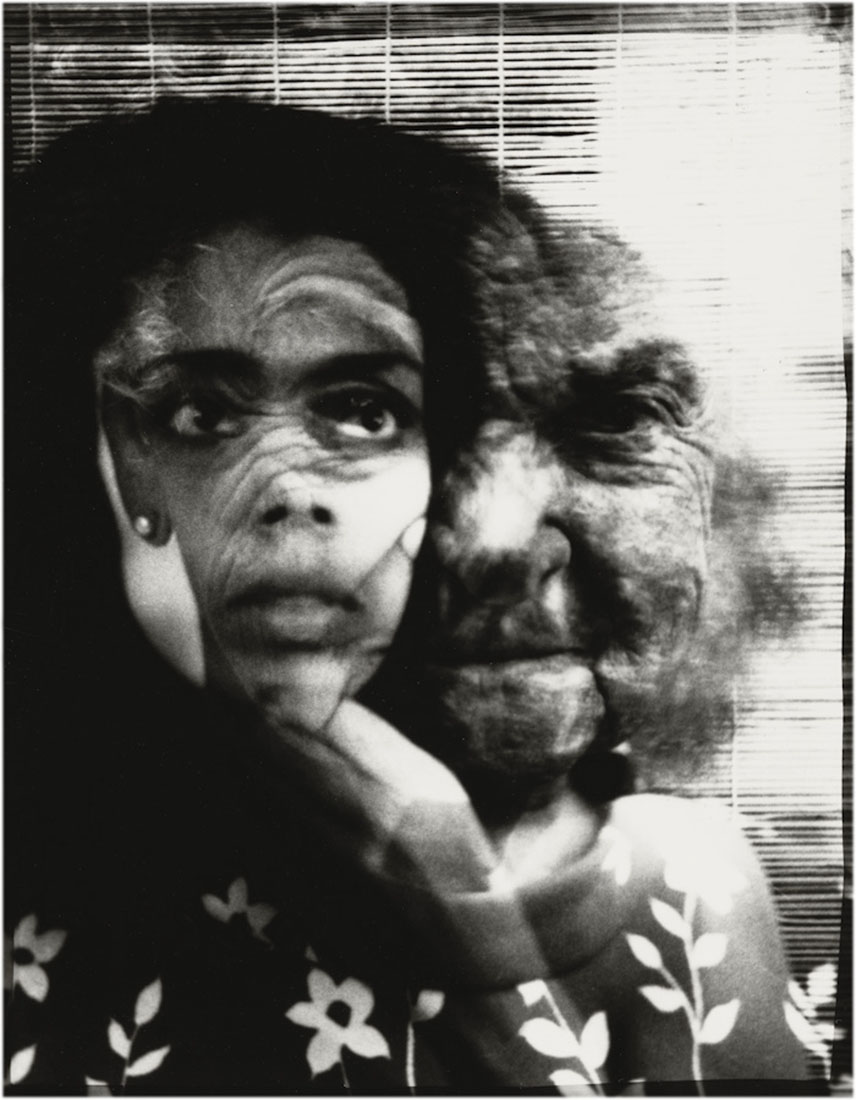


Coreen Simpson (American, b. 1942) 'Self-Portrait' 1978


Coreen Simpson (American, b. 1942)
Self-Portrait
1978
Gelatin silver print
21.6 x 16.8cm (8 1/2 x 6 5/8 in.)
National Gallery of Art, Washington
Alfred H. Moses and Fern M. Schad Fund
© Coreen Simpson


Simpson’s career launched when she became editor for Unique New York magazine in 1980, and she began photographing to illustrate her articles. She then became a freelance fashion photographer for the Village Voice and the Amsterdam News in the early 1980s, and covered many African-American cultural and political events in the mid-1980s. She is also noted for her studies of Harlem nightlife. She constructed a portable studio and brought it to clubs in downtown Manhattan, barbershops in Harlem, and braiding salons in Queens. Her work’s ability to present a wide variety of subjects with “depth of character and dignity” has been compared to that of Diane Arbus and Weegee.

Text from the Wikipedia website


Simpson became a photographer after noticing that she could make better images than the ones used to illustrate her stories as a freelance lifestyle writer. She took the chance to start creating the images she wanted to see. In 1976, she contacted her friend Walter Johnson, a street photographer who worked at a photo lab in Manhattan, with whom she had been acquainted from her modeling days, and asked if he could teach her how to use a camera. He showed her how to use it, and as soon as she got a hold of it, she became unstoppable.

She argues that great images are the key to having a successful published story. “You have to feel good about yourself, and good about the article that you’re presenting to the public,” she says. “So what makes it good? It’s the visuals. The visuals make it good.”

Briana Ellis-Gibbs. “Photographer Coreen Simpson’s illustrious career capturing Toni Morrison and Muhammad Ali: ‘I’ve never gotten bored’,” on The Guardian website Tue 21 Oct 2025 [Online] Cited 30/11/2025
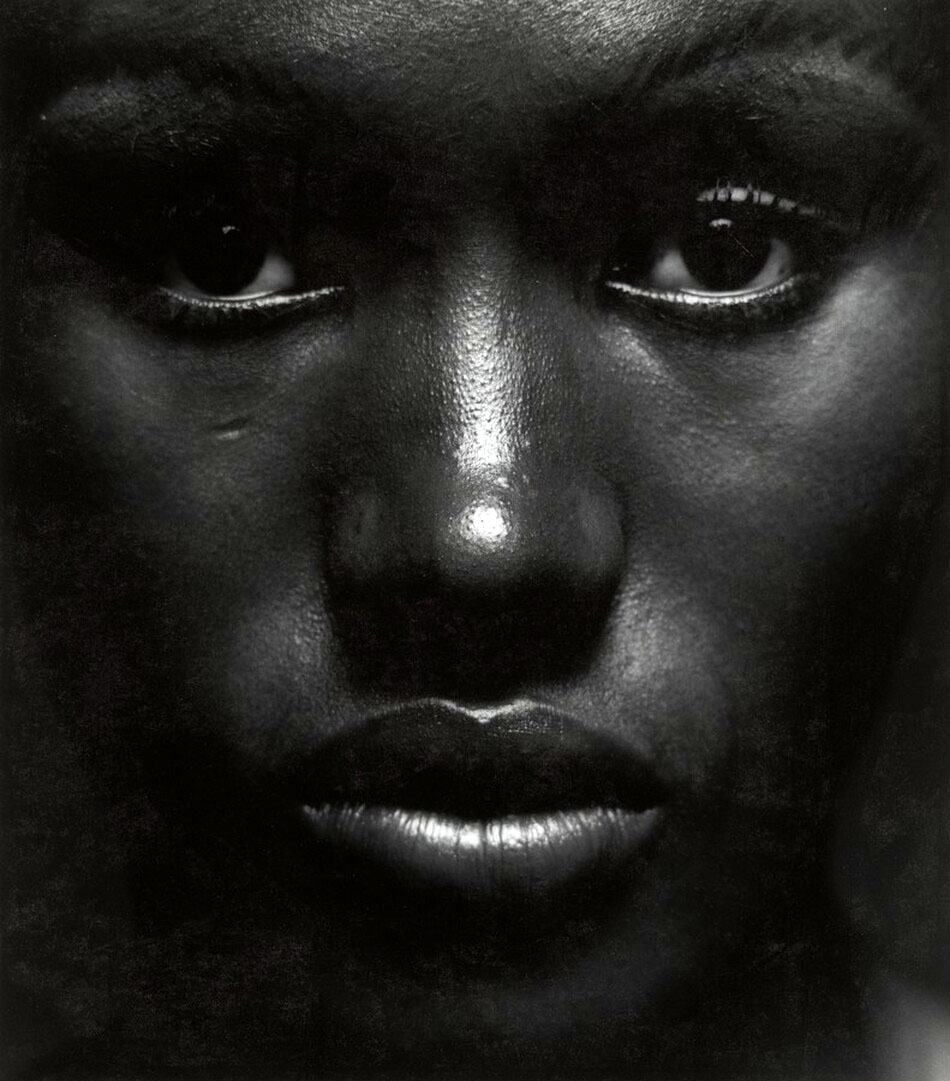
 

Anthony Barboza (American, b. 1944) 'Grace Jones, New York City' 1970s


Anthony Barboza (American, b. 1944)
Grace Jones, New York City
1970s
Gelatin silver print
27 × 23.7cm (10 5/8 × 9 5/16 in.)
National Gallery of Art, Washington
Alfred H. Moses and Fern M. Schad Fund


Anthony Barboza (American, b. 1944)

Anthony Barboza (born 1944 in New Bedford, Massachusetts) is a photographer, historian, artist and writer. With roots originating from Cape Verde, and work that began in commercial art more than forty years ago, Barboza’s artistic talents and successful career helped him to cross over and pursue his passions in the fine arts where he continues to contribute to the American art scene.

Barboza has a prolific and wide range of both traditional and innovative works inspired by African-American thought, which have been exhibited in public and private galleries, and prestigious museums and educational institutions worldwide. He is well known for his photographic work of jazz musicians from the 1970s – ’80s. Many of these works are in his book Black Borders, published in 1980 with a grant from the National Endowment for the Arts. In an article printed in 1984 in The City Sun, he said, “When I do a portrait, I’m doing a photograph of how that person feels to me; how I feel about the person, not how they look. I find that in order for the portraits to work, they have to make a mental connection as well as an emotional one. When they do that, I know I have it.” Many of his photographs achieve his signature effect through the careful use of lighting and shadows, manipulation of the backdrop, measured adjustments to shutter speeds, composition, and many other techniques and mediums at his command.

Text from the Wikipedia website
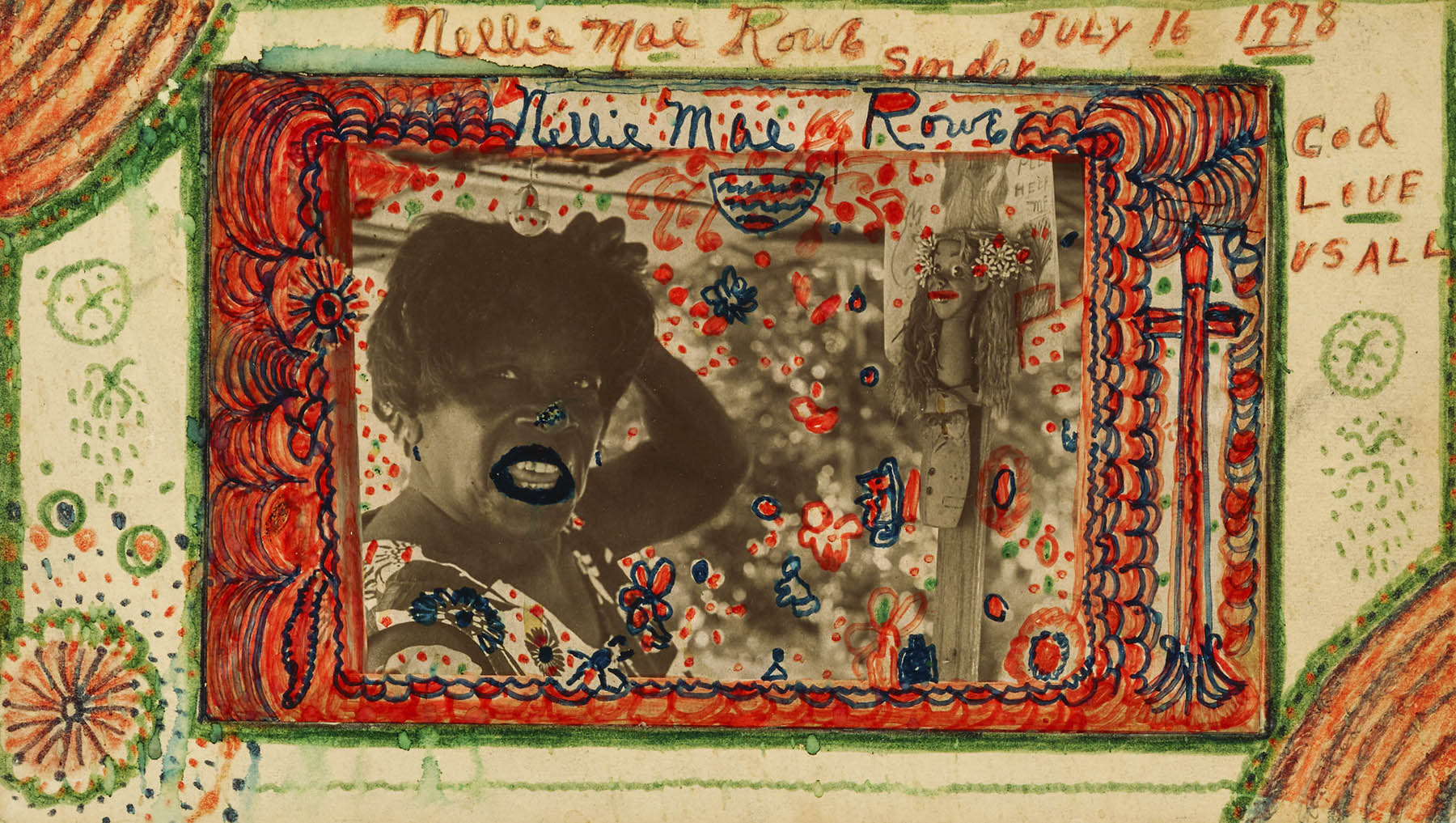
 

Nellie Mae Rowe (American, 1900-1982) 'God Loves us All' 1978


Nellie Mae Rowe (American, 1900-1982)
God Loves Us All
1978
Marker on silver gelatin print
15.9 x 29.2cm (6 1/4 x 11 1/2 in.)
Smithsonian American Art Museum, Museum purchase through the Luisita L. and Franz H. Denghausen Endowment and the American Women’s History Initiative Acquisitions Pool, administered by theSmithsonian American Women’s History Initiative
© 2025 Estate of Nellie Mae Rowe / Artists Rights Society (ARS), New York


Nellie Mae Rowe was born in Georgia, in the last year of the nineteenth century – to a once-enslaved father and mother born the year of Emancipation. Rowe laboured as a child, married young, was widowed twice, and worked much of her adult life as a uniformed “domestic” in white households. Although her early life was shaped by segregation and oppression, Rowe’s desire to define herself sparked a joyful and colourful body of art that suffused her home and yard. This undeniable and contagious positivity made Rowe one of the first Black self-taught women to be celebrated for her art. 

Rowe saw art-making as a God-given way to convey gratitude and recover a girlhood lost to labor and poverty. She transformed her property into an enriched realm she called her “Playhouse,” embellished with artworks and found objects that brought a heightened animation to her surroundings. Amid a society that rarely featured Black women in works of art and cast them as demeaning stereotypes in popular culture, Rowe took control of the narrative. She depicted friends, neighbours, and herself in drawings and hand-coloured photographs, confident images of Black beauty and free-spirited joy. In a radical act of reclamation, she crafted a world where cultural pride, personal style, and a bit of the unexpected embody the richness of life.

(We Are Made of Stories: Self-Taught Artists in the Robson Family Collection, 2022)

Text from the Smithsonian American Art Museum website
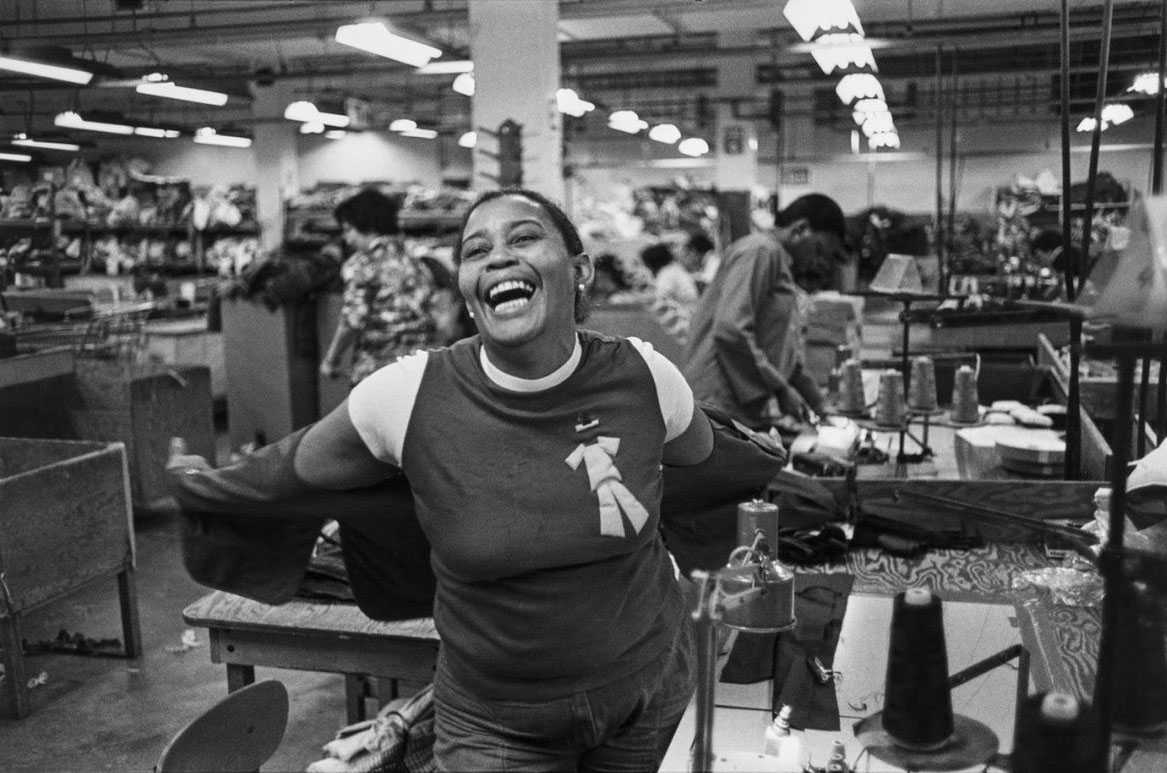
 

Carrie Mae Weems (American, b. 1953) 'Mom at Work' 1978-1984


Carrie Mae Weems (American, b. 1953)
Mom at Work
1978-1984
Gelatin silver print
60.96 × 92.71cm (24 × 36 1/2 in.)
National Gallery of Art, Washington
Alfred H. Moses and Fern M. Schad Fund


~ Exhibition: ‘Carrie Mae Weems. The Heart of the Matter’ at Gallerie d’Italia, Turin, April – September, 2025
~ Exhibition: ‘Dawoud Bey & Carrie Mae Weems: In Dialogue’ at the J. Paul Getty Museum, Los Angeles, April – July 2023
~ Exhibition: ‘Carrie Mae Weems: Three Decades of Photography and Video’ at The Solomon R. Guggenheim Museum, New York, January – May 2014
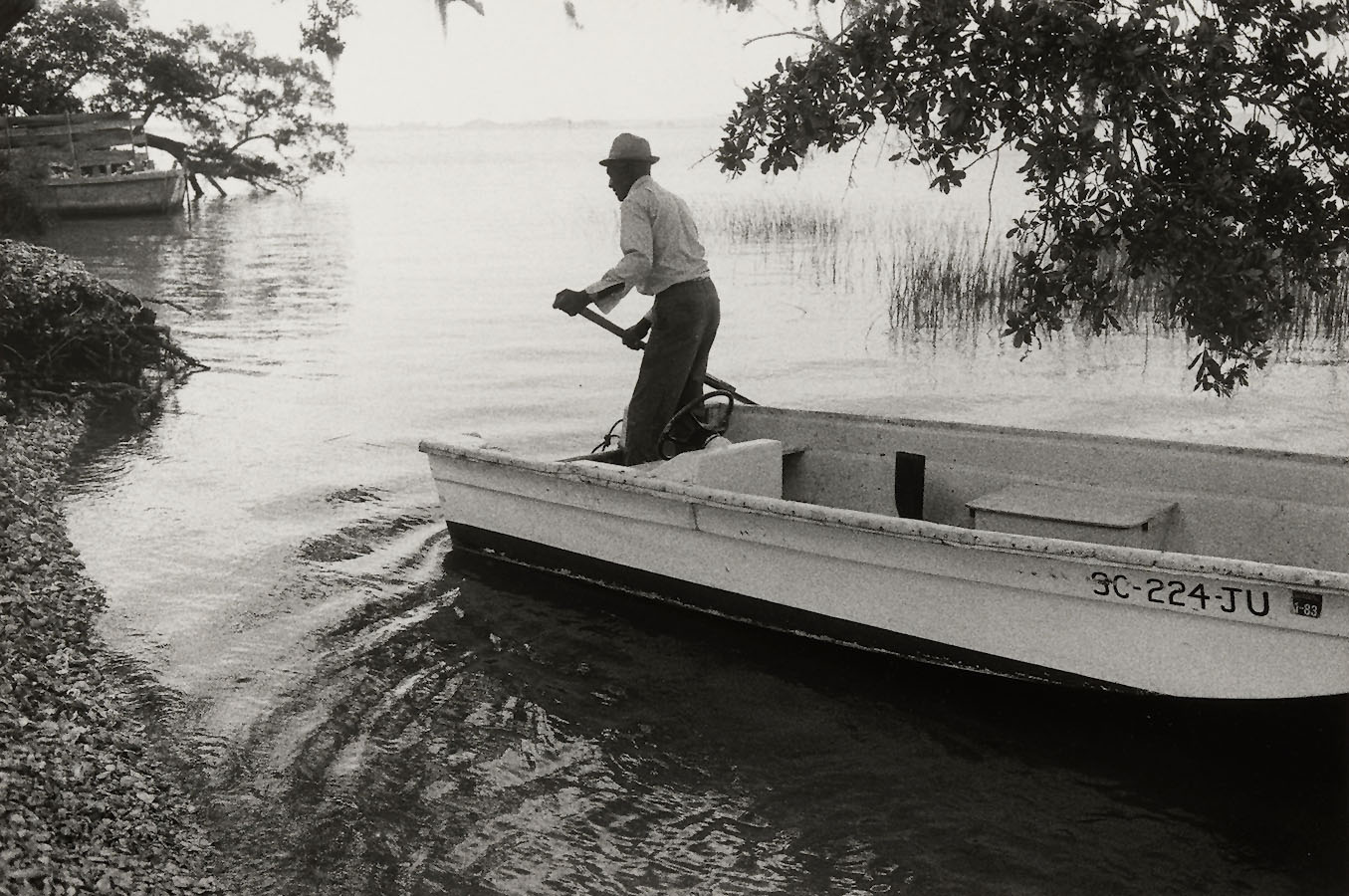
 

Jeanne Moutoussamy-Ashe (American, b. 1951) 'Jake with His Boat Arriving on Daufuskie's Shore, Daufuskie Island, South Carolina' 1978, printed 2007


Jeanne Moutoussamy-Ashe (American, b. 1951)
Jake with His Boat Arriving on Daufuskie’s Shore, Daufuskie Island, South Carolina
1978, printed 2007
Gelatin silver print
31.1 x 46.6cm (12 1/4 x 18 3/8 in.)
National Gallery of Art, Washington
Gift of Funds from Diana and Mallory Walker


Jeanne Moutoussamy-Ashe (American, b. 1951)

Jeanne Moutoussamy-Ashe (b. 1951, USA) is an American photographer, photojournalist and AIDS activist. Beginning photography at the age of 18, she trained with American street photographer Garry Winogrand before graduating from the Cooper Union School of Art with a BFA in 1975, completing a year of independent photographic study in West Africa. Her 1977 photograph ‘Black Man, White Woman, Johannesburg, South Africa’ emblematised the visual narrative of apartheid at that time, recalling the institutionalised racism Jeanne had herself experienced as an African-American photographer.

Jeanne’s experience in South Africa informed her later work, encouraging her to focus on the contemporary experience of Blackness through humanist street photography. More recently, her photobook Daddy and Me: A Photo Story of Arthur Ashe and His Daughter, Camera (1993), which captures the last year of her husband Arthur Ashe’s life, has been praised as a sensitive record of family and mortality which demystifies AIDS. Following the tragedy of Ashe’s death, Jeanne has become a spokesperson for further AIDS research.

Text from the Hundred Heroines website
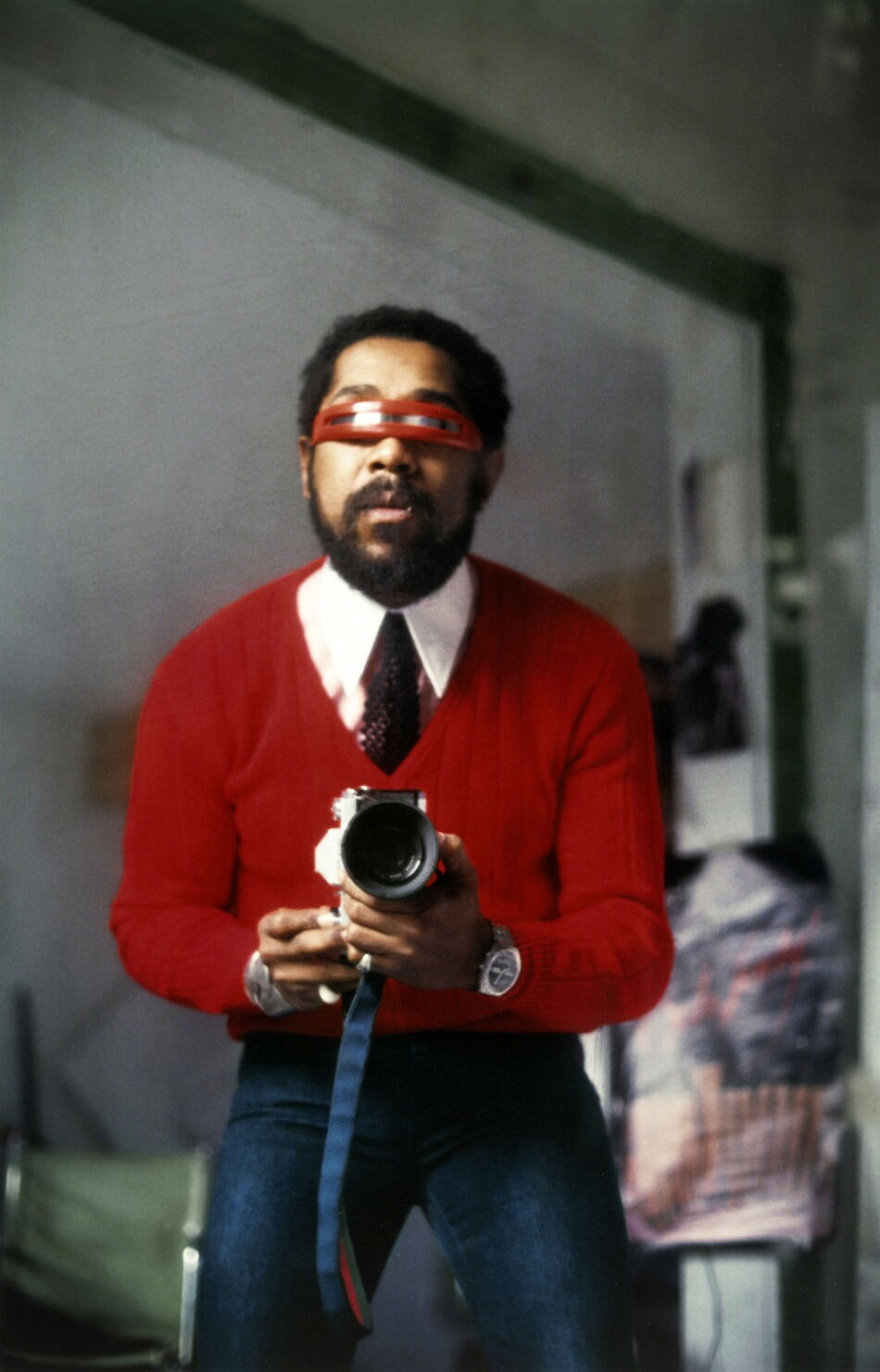
 

Barkley L. Hendricks (American, b. 1940) 'Self-Portrait with Red Sweater' 1980, printed 2023


Barkley L. Hendricks (American, 1940-2017)
Self-Portrait with Red Sweater
1980, printed 2023
Chromogenic print
24.8 × 15.5cm (9 3/4 × 6 1/8 in.)
National Gallery of Art, Washington
Alfred H. Moses and Fern M. Schad Fund


Barkley L. Hendricks (American, 1940-2017)

Barkley L. Hendricks (American, 1940-2017) was an American painter and photographer who revolutionised portraiture through his realist and post-modern oil paintings of Black Americans living in urban areas, beginning in the 1960s and 1970s. 

Hendricks’ depictions of the Black figure exude attitude and style. The artist culled subjects for his hagiographic portraits from sartorially minded friends and acquaintances he encountered around the world, including travels to Jamaica, his hometown of Philadelphia, and Connecticut where he last lived and worked. He applied intense focus to his subjects while painting, allowing him to capture their unique personalities. Steeped in pop culture and balanced with exquisite detail, the cast of characters in Hendricks’ work inhabits an unconventional realism united by painterly mastery.

While the directness of his subjects’ gaze could be piercing, Hendricks invoked humour through the titling of his pieces, mitigating the gravity of the message and allowing for an opening into the work. His paintings are distinctly of their time, grounded in the style of their contemporary present, and simultaneously emphatically timeless. They are a direct engagement with art history, the tradition of portraiture, and a confrontation of institutional portrayal of the black subject. 

Hendricks was first a photographer before taking up painting. Beyond his portraiture, he also made distinct works on paper and painted landscapes and still lifes, including an early series of Basketball paintings that explored abstraction and colour theory. Throughout his career, Hendricks refused to be boxed into a medium, and his practice is commanding, bold, and without limitations to media or form.

Text from the Jack Shainman website
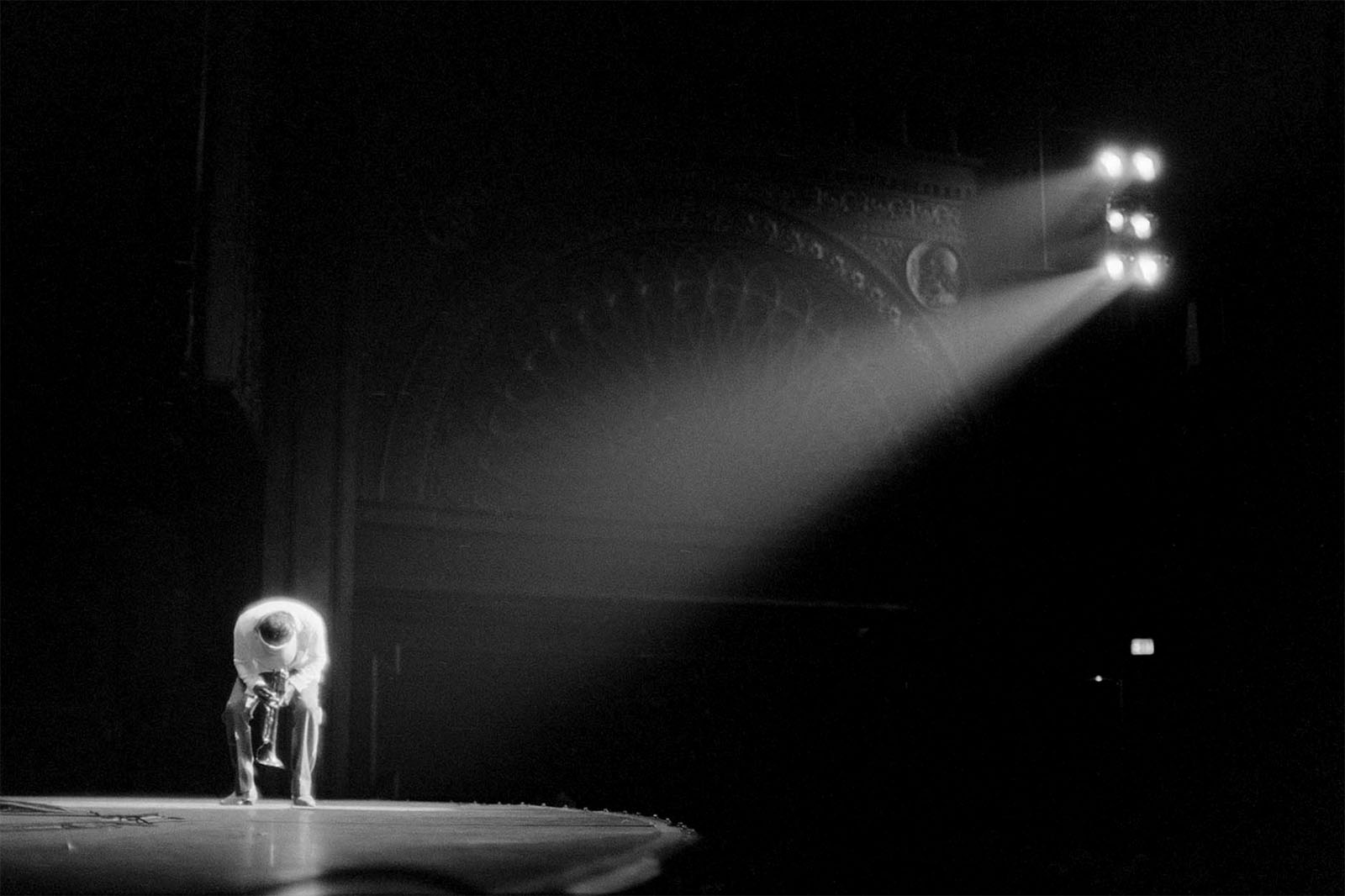
 

Gordon Parks (American, 1912-2006) 'Miles Davis' 1981


Gordon Parks (American, 1912-2006)
Miles Davis
1981
Gelatin silver print
22.9 x 34.1cm (9 x 13 7/16 in.)
National Gallery of Art, Washington
Corcoran Collection (The Gordon Parks Collection)


Carla Williams (American, b. 1965) 'Untitled (curlers) #1.2' 1984-1985


Carla Williams (American, b. 1965)
Untitled (curlers) #1.2
1984-1985
Gelatin silver print
27.31 × 34.93cm (10 3/4 × 13 3/4 in.)
National Gallery of Art, Washington
Pepita Milmore Memorial Fund


Carla Williams (American, b. 1965)

Los Angeles native Carla Williams is a photographer and curator known for her exploration of identity, race, gender, and representation.

She first encountered photography in 1983 during her sophomore year at Princeton University, studying under Emmet Gowin. Her early work in self-portraiture began at Princeton, where she used the large-format camera to explore her own image. The focus of renewed scholarship, these works reflected on the lack of visibility of African American women in photographic history. Williams earned an MFA in photography from the University of New Mexico in 1991, where her thesis project focused on the themes of self-representation and identity. After graduating, she worked as a curator of photography at institutions in Los Angeles and New York.

Text from the National Gallery of Art website
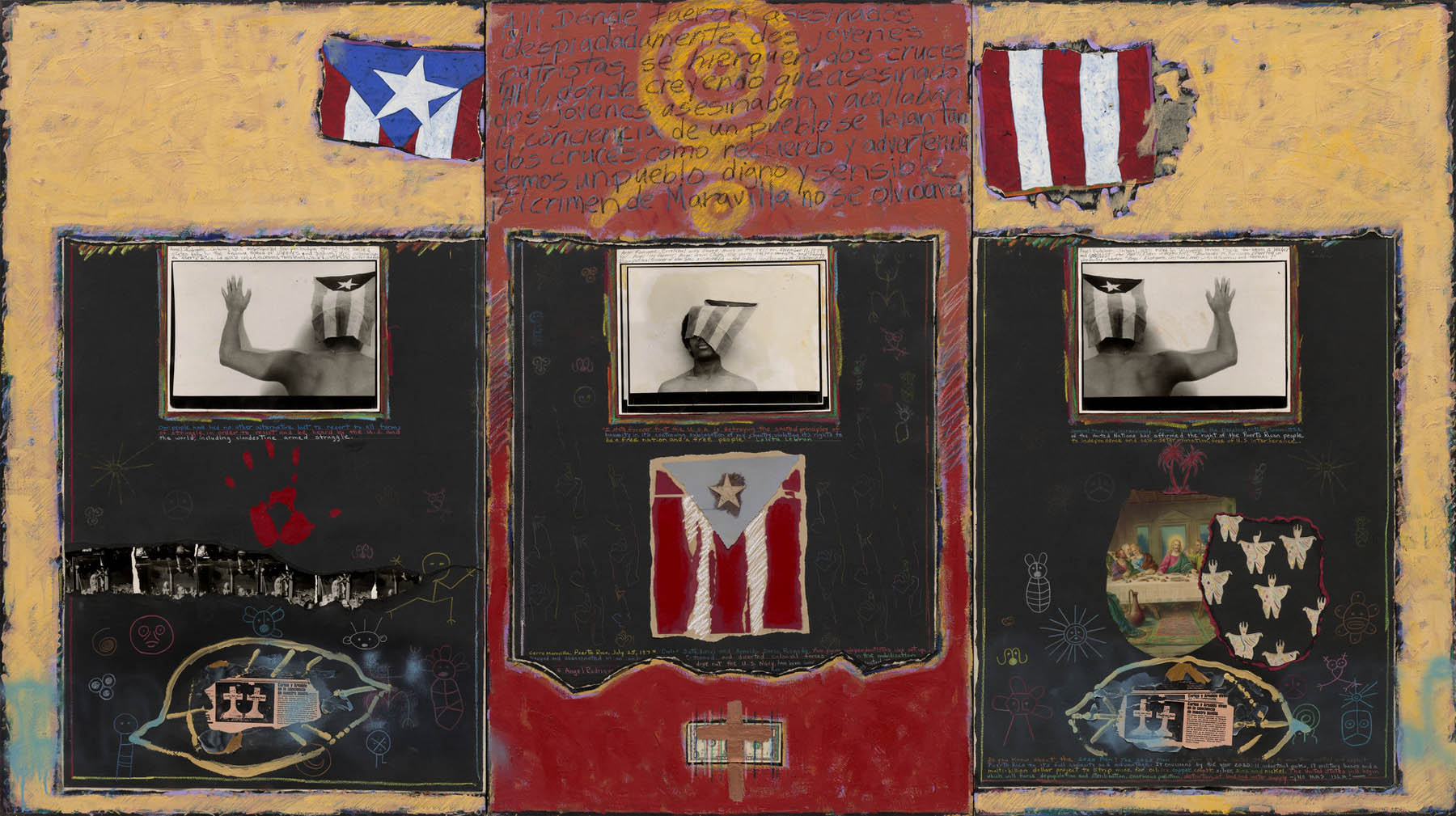
 

Juan Sánchez (American, b. 1954) 'Mixed Statement' 1984


Juan Sánchez (American, b. 1954)
Mixed Statement
1984
Oil and metallic paint, pencil, colored pencil, oil pastel, marker, paper money, fabric, thread, leaves, painted, printed, torn, and cut-and-pasted coloured paper, and gelatin silver prints on canvas, 3 panels
137.16 x 243.84cm (54 x 96 in.)
The Museum of Modern Art, New York. Gift of Harry Torczyner (by exchange), 2024
Digital Image © The Museum of Modern Art / Licensed by SCALA / Art Resource, NY


Juan Sánchez, the influential Nuyorican visual artist, teacher, writer, and curator once declared “Political art is a medium used as a weapon to hopefully recapture or regain the positive energy of celebration – to regain the goodness of humanity.” Sánchez, the child of Puerto Rican immigrants, was born and raised in Brooklyn. Encompassing a variety of mediums and techniques, including collage, painting, printmaking, photography, and video, his work is informed by his activism and engagement with issues of colonialism and its legacy, race, class, cultural identity, equality, social justice, and self-determination. At the same time, he has maintained a consistent focus on communities, families, and both personal and political histories in his work.

 Text from The Metropolitan Museum of Art website


National Gallery of Art
National Mall between 3rd and 7th Streets
Constitution Avenue NW, Washington

Opening hours:
Daily 10.00am – 5.00pm
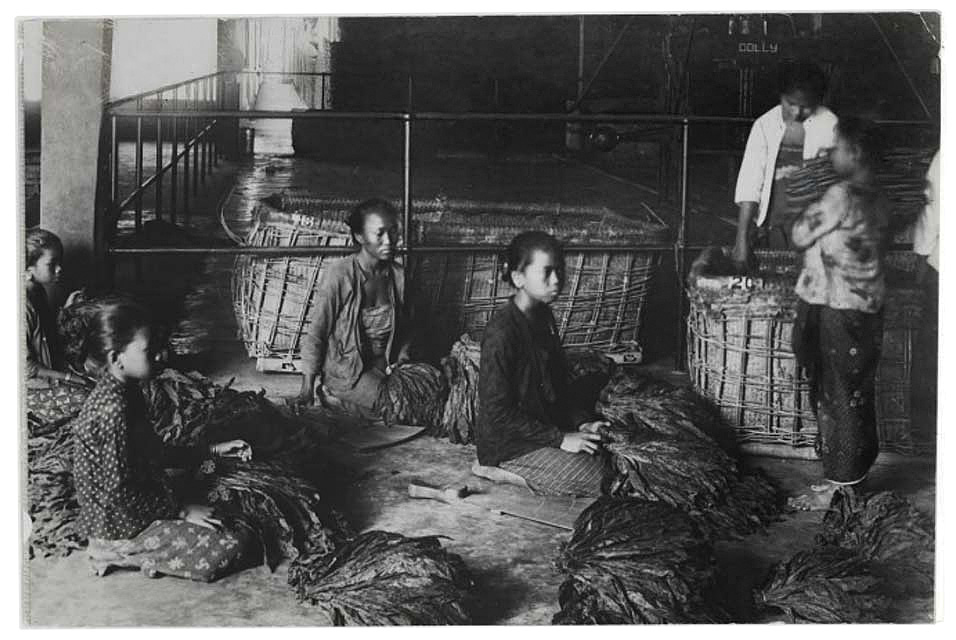
National Gallery of Art website

LIKE ART BLART ON FACEBOOK

Back to top

Exhibition: ‘Hidden Connections’ at the Van Abbemuseum, Eindhoven, Holland

Exhibition dates: 27th April, 2025 – 1st June, 2026

Curators: Reggie Baay and Bibi de Vrie


Unknown photographer. 'Women sort tobacco leaves by length in a shed at the Tegalsirondo (also Tegalgondo) enterprise near Oengaran south of Semarang' c. 1910 from the exhibition 'Hidden Connections' at the Van Abbemuseum, Eindhoven, Holland, April 2024 - June 2026
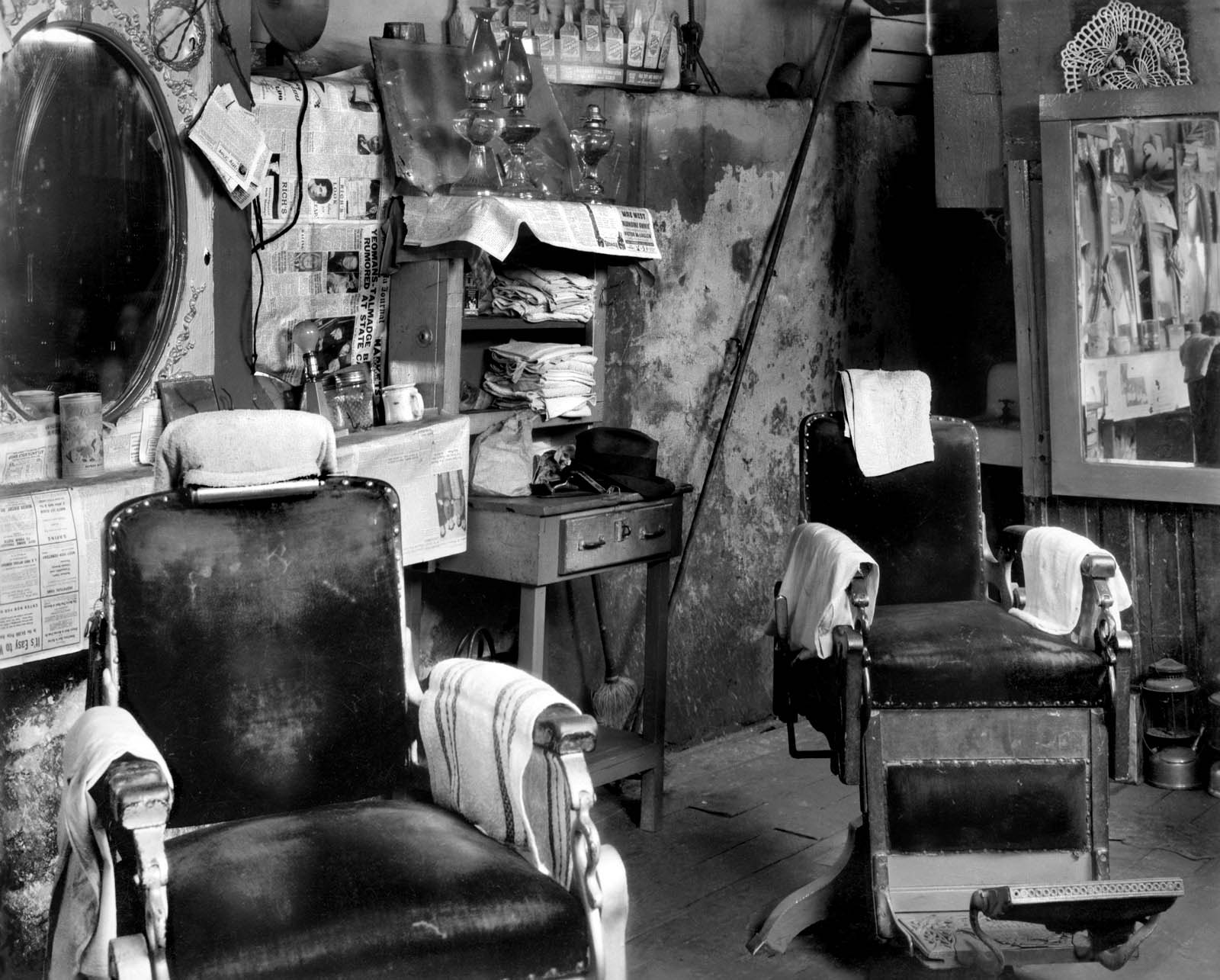
 

Unknown photographer
Women sort tobacco leaves by length in a shed at the Tegalsirondo (also Tegalgondo) enterprise near Oengaran south of Semarang
c. 1910
University Libraries Le


Hidden histories

Exposed (in photographs, in texts)
The effects of colonialism are immediate (slavery, subjugation, exploitation, prison, murder) and pernicious, ongoing in so many obvious, subtle and insidious ways.

“… we must be ever vigilant in understanding the networks of power, dispossession and enslavement that patriarchal societies use to marginalise the poor, the weak, the different for their gain.”1

Dr Marcus Bunyan

PS. I so dislike Piet van der Hem’s painting of Henri Van Abbe – the self importance of the man, dressed to the nine, staring out at the viewer in all his entitlement, hands clasped over his masculine power even as it radiates through every pore of the painting – the epitome of white hegemonic power. And the museum is named after him …


Sejarah Tersembunyi

Terungkap (dalam foto, dalam teks)

Dampak kolonialisme bersifat langsung (perbudakan, penaklukan, eksploitasi, penjara, pembunuhan) dan merusak, berkelanjutan dalam begitu banyak cara yang nyata, halus, dan licik.

“… kita harus selalu waspada dalam memahami jaringan kekuasaan, perampasan, dan perbudakan yang digunakan masyarakat patriarki untuk meminggirkan kaum miskin, yang lemah, yang berbeda demi keuntungan mereka.”1

Dr. Marcus Bunyan

PS. Saya sangat tidak menyukai lukisan Henri Van Abbe karya Piet van der Hem – sosok pria yang sangat penting, berpakaian rapi, menatap penonton dengan segala keistimewaannya, tangan tergenggam di atas kekuatan maskulinnya, bahkan saat kekuatan itu terpancar melalui setiap pori lukisan – lambang kekuatan hegemoni kulit putih. Dan museum ini dinamai menurut namanya …


1/ Marcus Bunyan. “Hermann Kummler (1863-1949) (compiler) ‘Ethnographic portraits of Indigenous women of Pernambuco and Bahia’ 1861-1862,” on Art Blart, 1st August, 2018


Many thankx to the Van Abbemuseum for allowing me to publish the photographs in the posting. Please click on the photographs for a larger version of the image.


“The horrific history of contract labour in Deli in Sumatra, which forced people to work for western entrepreneurs, seems to have been covered up. Stories of resistance were often not written down but passed on orally instead. This deliberate oppression and denial of the plantation workers and their experiences is still palpable to this very day.”

“Sejarah mengerikan buruh kontrak di Deli, Sumatra, yang memaksa orang bekerja untuk pengusaha Barat, tampaknya telah ditutup-tutupi. Kisah-kisah perlawanan seringkali tidak tertulis, melainkan diwariskan secara lisan. Penindasan dan penyangkalan yang disengaja terhadap para pekerja perkebunan dan pengalaman mereka masih terasa hingga saat ini.”


Press release from the Van Abbemuseum


Unknown photographer. 'Workers on a plantation in Deli (now Medan)' c. 1900 from the exhibition 'Hidden Connections' at the Van Abbemuseum, Eindhoven, Holland, April 2024 - June 2026


Unknown photographer
Workers on a plantation in Deli (now Medan)
c. 1900
Photo: Stafhell-Kleingrothe


Installation view of the exhibition 'Hidden Connections' at the Van Abbemuseum, Eindhoven, Holland


Installation views of the exhibition Hidden Connections at the Van Abbemuseum, Eindhoven, Holland


Piet van der Hem (Dutch, 1885-1961) 'Henri Van Abbe' 1929


Piet van der Hem (Dutch, 1885-1961)
Henri Van Abbe
1929
Oil on canvas


Why do we know so little about what happened on the plantations in the former Dutch East Indies? The horrific history of contract labour in Deli in Sumatra, which forced people to work for western entrepreneurs, seems to have been covered up. Stories of resistance were often not written down but passed on orally instead. This deliberate oppression and denial of the plantation workers and their experiences is still palpable to this very day. In its multi­-year Hidden Connections research project, the Van Abbemuseum discovers the role it played in the Netherlands’ colonial past. The museum is presenting its research results in an exhibition and podcast and on a heritage platform.

Founder Henri van Abbe

The Van Abbemuseum was named after Henri van Abbe (1880­-1940), the founder of the Karel 1 ­cigar factories, once the second biggest employer in Eindhoven and the surrounding area. The tobacco for Karel 1 cigars was sourced largely from plantations in the Dutch East Indies. Even though Van Abbe was not based in the Dutch East Indies, the tobacco he bought from Deli, on the island of Sumatra, had a big impact on the region and its inhabitants. In 1933, Van Abbe founded a museum for contemporary art, funded partly with money he had made from tobacco. Besides a building, Van Abbe donated 26 paintings from his personal collection, including works by Isaac Israëls, Carel Willink and Jan Sluijters.

Ongoing research

Over the last 10 years, the Van Abbemuseum has become increasingly aware of its roots in the tobacco industry. The donation of the Van Abbe family archive to the museum in 2018 was the starting point for ongoing research into its past. The initial results have been presented in the museum since autumn 2021. This presentation has been expanded to include new work inspired by this research. Why have events on the plantations in Sumatra been kept hidden? And why don’t we know anything about the different forms of resistance to it? Author and historian Reggie Baay has searched Dutch archives for forgotten stories about this period. At the same time, artists and researchers Ferial Affif and Dwihandono Ahmad spoke to descendants of contract workers on the plantations in Deli. Isabelle Britto also did research to find out how much Henri van Abbe could have known about the conditions there.

Hidden stories of resistance

Curators Reggie Baay and Bibi de Vries present the results of the research above in the exhibition Hidden Connections. Archive material, audio and video interviews and illustrations in the exhibition all focus on the perspective of the plantation workers in Deli and their working and living conditions. Graphic designer Gayle Tjong­ Kim­Sang took inspiration for her huge wall drawings from the inventive ways contract workers chose to express their anger, sadness and warnings. Plantation owners were not always aware of resistance, but if contract workers were caught, they were thrown into prison, abused or even murdered. One form of resistance was the story ‘De Slang van Sumatra’ (which translates as ‘the snake of Sumatra’). This parable warned workers about a man­eating snake on the neighbouring island. After eating its prey, it excreted gold for the Dutch. Another example of resistance was improvisation during theatre and wayang performances. Workers used this opportunity to criticise the western enterprises and sometimes tell (satirical) stories about the plantation owners.

Addition to the Delinking and Relinking collection presentation

The exhibition Hidden Connections is located in the basement of the collection building at the Van Abbemuseum. The long­term Delinking and Relinking collection presentation (2021­-2026) can currently be seen on the three floors above; it allows visitors to experience art by smelling, hearing, feeling and seeing it. Hidden Connections, as the literal and figurative foundation for the multi­-sensory Delinking and Relinking collection presentation, enlighten visitors on the origins of this long­standing display and offer a new perspective on the circumstances in which it was created. This new chapter provides a more complete historiography that includes the contemporary significance of the museum’s colonial past.

Collective memory

The Van Abbemuseum places great importance on the permanent preservation and communication of the stories from its Hidden Connections research. They are part of our cultural heritage and must be findable by and accessible to everyone. With this in mind, the museum is working with Erfgoed Brabant, the province’s knowledge and expertise centre, and is integrating its ongoing research into the platform Koloniale Historie Brabant (a platform on Brabant’s colonial history). The museum also launched a podcast with Reggie Baay and Aldus’ producties. In it, Baay explores why it is we know so little about this colonial past via a search in which he attempts to uncover his own Indonesian family history.

Press release from the Van Abbemuseum


Installation view of the exhibition 'Hidden Connections' at the Van Abbemuseum, Eindhoven, Holland


Installation views of the exhibition Hidden Connections at the Van Abbemuseum, Eindhoven, Holland


Unknown photographer. 'Coolies on a tobacco plantation of the Deli Maatschappij in Deli Shelfmark KITLV Deli Serdang' 1920-1922 from the exhibition 'Hidden Connections' at the Van Abbemuseum, Eindhoven, Holland, April 2024 - June 2026


Unknown photographer
Coolies on a tobacco plantation of the Deli Maatschappij in Deli Shelfmark KITLV Deli Serdang
1920-1922


Installation view of the exhibition 'Hidden Connections' at the Van Abbemuseum, Eindhoven, Holland. Photo: Almicheal Fraay
Installation view of the exhibition 'Hidden Connections' at the Van Abbemuseum, Eindhoven, Holland


Installation views of the exhibition Hidden Connections at the Van Abbemuseum, Eindhoven, Holland


'Identification card Soemo' 1907


Identification card Soemo
1907
Loan from the National Archives of Suriname


Identification card Soemo
1908
Loan from the National Archives of Suriname


Johan Braakensiek (Dutch, 1848-1940) "The coolie ordinances" in
'De [Groene] Amsterdammer', Date 23 November 1902


Johan Braakensiek (Dutch, 1848-1940)
“The coolie ordinances”
De [Groene] Amsterdammer, Date 23 November 1902


The Coolie Ordinances

From Koi. (To former Minister Cramer): What do you think about that?
Cremer: Yes, we Deli Men [Deli on the island of Sumatra] … prefer to keep quiet about that.

Advertisement from Deli-Courant and the Sumatrapost:

“Emigration, sales and commission office. Telegram address: Esas, Surabaya. Supply: Strong, young, and healthy workers, including Madurese, Javanese, and Sudanese, as well as Chinese, for agricultural and mining companies. Risk of desertion on board at our expense. – We have had the most success with our coolie projects and are willing to send copies of satisfaction reports for review. Also supply: Chinese and Javanese artisans. We undertake to fulfil all possible orders, including for beautiful Madura and Balinese slaughter and draught cattle, at competitive prices.”


Dari Koi. (Kepada mantan Menteri Cramer): Apa pendapat Anda tentang itu?
Cremer: Ya, kami, Deli Men [Deli di Pulau Sumatra] … lebih suka diam tentang itu.

Iklan dari Deli-Courant dan Sumatrapost:

“Kantor emigrasi, penjualan, dan komisi. Alamat Telegram: Esas, Surabaya. Pasokan: Pekerja yang kuat, muda, dan sehat, termasuk orang Madura, Jawa, dan Sudan, serta Tionghoa, untuk perusahaan pertanian dan pertambangan. Risiko desersi di kapal ditanggung oleh kami. – Kami telah meraih kesuksesan terbesar dengan proyek kuli kami dan bersedia mengirimkan salinan laporan kepuasan untuk ditinjau. Juga pasokan: pengrajin Tionghoa dan Jawa. Kami berkomitmen untuk memenuhi semua pesanan yang memungkinkan, termasuk sapi potong dan sapi penarik Madura dan Bali yang indah, dengan harga yang kompetitif.”


Unknown maker. 'Advertisement from the Deli Courant of March 1, 1899'


Unknown maker
Advertisement from the Deli Courant of March 1, 1899
from De Millionenen uit Deli (Private collection), 1902


“Runaway
A Javanese, named Kasan
with
1 wife and 2 small children
Age 35 years, height 161 cm
Signs: left eye blind
Request information
A. Siemssen & Co.,
Post: Tebing Tinggi-Deli”

“Pelarian
Seorang Jawa, bernama Kasan
dengan
1 istri dan 2 anak kecil
Usia 35 tahun, tinggi badan 161 cm
Tanda-tanda: buta mata kiri
Minta informasi
A. Siemssen & Co.,
Pos: Tebing Tinggi-Deli”


Unknown maker. 'Advertisement from the Sumatra-Post of May 7, 1902'


Unknown maker
Advertisement from the Sumatra-Post of May 7, 1902
from De Millionenen uit Deli(Private collection), 1902


H.H. Chief-Administrators and Administrators, also Butchers and Mining Entrepreneurs!
Delivery at the lowest prices:
Castrated, solid Madurese or East Java draught cattle
From 300-375 kg, with veterinary certificate
Beautiful Madurese slaughter bulls
Strong, young, and healthy East Java work force,
Men or women for agriculture and mining, for
60 guilders per adult, free of charge Belawan.
In charge of purchasing and selling:
Savonian and Rottinean riding and carriage horses,
Excellently suited for mountain terrain.
Highly recommended,
H. Leeksma Kzn., Surabaya.”

Yang Mulia Kepala Administrator dan Administrator, juga Tukang Jagal dan Pengusaha Pertambangan!
Pengiriman dengan harga terendah:
Sapi penarik Madura atau Jawa Timur yang dikebiri dan sehat
Berat 300-375 kg, dengan sertifikat dokter hewan
Sapi potong Madura yang cantik
Tenaga kerja Jawa Timur yang kuat, muda, dan sehat,
Pria atau wanita untuk pertanian dan pertambangan, dengan harga
60 gulden per orang dewasa, gratis untuk Belawan.
Bertanggung jawab atas pembelian dan penjualan:
Kuda tunggang dan kereta Savonian dan Rottinean,
Sangat cocok untuk medan pegunungan.
Sangat direkomendasikan,
H. Leeksma Kzn., Surabaya.”


Van Abbemuseum
Stratumsedijk 2 Eindhoven
+31 40 238 10 00

Opening hours:
Tuesday – Sunday from 11am – 5pm

Van Abbemuseum website

LIKE ART BLART ON FACEBOOK

Back to top

Exhibition: ‘A Long Arc: Photography and the American South since 1845’ at the Virginia Museum of Fine Arts, Richmond

Exhibition dates: 5th October, 2024 – 26th January, 2025


John Vachon (American, 1914-1975) 'Untitled photo [possibly related to Farms of Farm Security Administration clients, Guilford and Beaufort Counties, North Carolina, April 1938]' 1938


John Vachon (American, 1914-1975)
Untitled photo [possibly related to Farms of Farm Security Administration clients, Guilford and Beaufort Counties, North Carolina, April 1938]
1938
Negative

Please note: photograph not in the exhibition


Contested ground

This exhibition traces, through the development of documentary photography, the interweaving strands that make up the fluidity of identity, race and culture that is the American South, addressing through a variety of photographic processes and styles across a large time period the concerns that have engaged human beings in this area for decades and now centuries: freedom, equality, liberty, nation, religion and economic subjugation. As the introductory panel says, “A Long Arc” demonstrates “how Southern photography has shaped American concepts of race, place, and history.”

Gregory Harris, curator of photography at the High Museum of Art in Atlanta, observes that, “one of the main themes of the exhibition is how race is articulated and how racial hierarchies and racial stereotypes are reinforced through photographs across the history of photography.” “A Long Arc: Photography and the American South since 1845″ shields viewers from nothing, presenting the South as a chilling microcosm of U.S. culture. The region’s history of violence, disenfranchisement and political strife are not censored in the exhibit.”

Periods and themes addressed in the exhibition include but are not limited to the Antebellum South, abolition of slavery, American Civil War, Reconstruction era, Jim Crow era, Farm Security Administration, Southern Gothic, Civil Rights Movement and, “in the most modern section, images dive into Southern femininity, the growing acceptance of interracial relationships in the Deep South and the emergence of a thriving LGBTQIA+ culture.”

This is such a complex and contested field to address in one photographic survey exhibition but it seems to me an admirable way to interrogate the ongoing histories and injustices of the American South. As my friend and fellow photographer Colin Vickery observes, “the sheer variety of images gives a richness of viewing experience that I think goes some way towards illustrating life, in all its complexities and contradictions, of the region.” Well said.

“A Long Arc: Photography and the American South since 1845” succeeds in surveying the South in its most complete form: not as a place that is “backward,” but as a place that has forever been the epicenter of contention and change. Documentary photography thrives in the South because the region has always been ground zero of the social disorder reverberating throughout the nation, a place that seems lost in the past. Modern photographers honor the region’s complicated legacy by accenting even the most idyllic, beautiful scenes with a nod to its brutalistic history. The South is not the South without acknowledgment of the bloodshed on its soil…”1

While I am certainly no American scholar, far from it, to me this opposition of utopian and dystopian seems to reflect the infinite duality of the American psyche: the desire for attainment of money and success (any one can become president, anyone can make good) versus the dark underbelly of a brutal history: puritanical, one nation under god, a nation conceived in Liberty, and dedicated to the proposition that all men are created equal … except that’s never going to happen, forever and ever amen.

Indeed this richly layered and nuanced exhibition seems to be more fully focused on the dystopic rather than any celebration of American South culture per se and here I am particularly thinking of all the achievements in the areas of arts, literature, food, music – for example the energy of gospel, bluegrass and jazz. Yes, there are poetic photographs in the exhibition but there is little sign of joy or happiness in any of the images.

Margaret Renkl observes that, “The most powerful images capture the beauty and the tenderness and the self-possession of people who are living out their lives mostly invisible to the rest of the world,”2 and the stoicism of these lives, but I have struggled to find but a single photograph that evidences the joy of living among the assembled throng in this posting. Which is why I have included that most singular image at the top of the posting (not in the exhibition) by John Vachon of a Black American smiling and laughing. What a joy!

The Southern landscape can be seen as the repository of memory, history, and trauma but it can also be seen as the repository for families, love, kindness, respect and connection between human beings – not always opposition and conflict. And while the photographs in the exhibition “ask us to contemplate the dark, sublimated aspects of American popular culture, including violence, shame, and fear” they also ask us to share our experiences of who we are across time, race and culture. The photographs are memory containers for (still) living people.

By which I mean

Photographs are containers of, fragments of, memories of, histories of, events – remembrances of events – brought from past into present, informing the future, showing only snippets of the stories of both past and present lives. Parallel to the usual thought that photographs are about death, they are also memory containers for (still) living people.

As we look back into these photographs the people in them look forward to us, and live in us here and now. They expect more from us, to fight still against the further rise of intolerance, racism and right wing fascism, and to grasp that the joys and mysteries of life should be open to all.

Dr Marcus Bunyan


1/ Sophia Peyser. “New High Museum exhibit captures South at its most macabre,” on The Emory Wheel website Sept 25, 2023 [Online] Cited 23/01/2025

2/ Margaret Renkl. “A Photo Can Tell the Truth About a Lie. Or a Lie About the Truth,” on The New York Times website Sept. 18, 2023 [Online] Cited 20/12/2024


Many thankx to the Virginia Museum of Fine Arts for allowing me to publish  the photographs in the posting. Please click on the photographs for a larger version of the image.


“I have a strong attraction to the American South. People there have a marvellous exterior – wonderful manners, warm friendliness until you touch on things you’re not supposed to touch on. Then you see the hardness beneath the mask of nice manners.”


Elliott Erwitt


“When it comes to the unspeakable facts in the history of America, it’s largely the artists who’ve been willing to show us what others would not.”

“The foundation of this country is built upon speakable tensions – between ideas that we love and hold dear, between liberty, equality, and slavery itself.”


Sarah Lewis


The most powerful images capture the beauty and the tenderness and the self-possession of people who are living out their lives mostly invisible to the rest of the world. Or of the scarred but beautiful landscapes they call home. Or of the ramifications of an unresolved history still unspooling in this history-haunted part of the country. …

The magnificence of a retrospective like this is not just the accounting offered by its historical sweep, but the way it conveys the immense complexity of this region, to inspire a renewed attention to the cruel radiance of what is. Suffering does not always lead to compassion and change, but photographs like these remind us that standing in witness to suffering surely should.


Margaret Renkl. “A Photo Can Tell the Truth About a Lie. Or a Lie About the Truth,” on The New York Times website Sept. 18, 2023 [Online] Cited 20/12/2024


“… no small part of the show’s richness is the allowance it makes for inwardness and mystery. “Southern Gothic,” after all, is no less a part of the region’s cultural baggage than “Lost Cause” or “New South.” Among the most memorable images here, because they’re often the most inscrutable and / or evocative, come from Mann, E.J. Bellocq, Clarence John Laughlin, and Ralph Eugene Meatyard.”


Mark Feeney. “‘A long Arc’ bends toward justice at the Addison Gallery of American Art,” on The Boston Globe website March 7, 2024 [Online] Cited 24/12/2024


Unidentified photographer. 'Georgian house, with posed African-American family, Norfolk Harbor, Virginia' Late 1850s from the exhibition 'A Long Arc: Photography and the American South since 1845' at the Virginia Museum of Fine Arts, Richmond


Unidentified photographer
Georgian house, with posed African-American family, Norfolk Harbor, Virginia
Late 1850s
Whole-plate ambrotype
Collection of Michael Mattis and Judith Hochberg
Photo: Steven Paneccasio


Unidentified photographer. 'Young biracial artilleryman' Undated from the exhibition 'A Long Arc: Photography and the American South since 1845' at the Virginia Museum of Fine Arts, Richmond


Unidentified photographer
Young biracial artilleryman
Undated
Ambrotype
High Museum of Art, Atlanta
Purchase with funds from the Lucinda Weil Bunnen Fund and the Donald and Marilyn Keough Family


The majority of photographs made during the Civil War were inexpensive, small, portable portraits for soldiers on the field and their families at home. As precious keepsakes, these portraits served as testaments to familial bonds, social relations, economic positions, and political ideologies. In carefully orchestrating their dress, accoutrement, and bearing, sitters signaled their allegiances or staged their transformation from citizen to soldier. The opportunity to reinvent themselves before the camera at times even led to a bit of fakery, as soldiers sometimes gussied themselves up with props and uniforms that did not always fit with their military rank.

Text from the Large Print Guide at the Virginia Museum of Fine Arts


William Abott Pratt (American born England, 1818, active 1844-1856) 'View of Main Street, Richmond, Virginia' 1847-1851 from the exhibition 'A Long Arc: Photography and the American South since 1845' at the Virginia Museum of Fine Arts, Richmond


William Abott Pratt (American born England, 1818, active 1844-1856)
View of Main Street, Richmond, Virginia
1847-1851
Half-plate daguerreotype
Virginia Museum of Fine Arts
Floyd D. and Anne C. Gottwald Fund


One of a handful of known daguerreotypes of the city of Richmond, this view of Main Street looking east toward Church Hill was probably taken from the window of William Pratt’s first “Virginia Daguerriean Gallery,” in the centre of the city’s printing and publishing industry. The distinctive roof of the Richmond Masonic lodge is visible in the distance, as is the three-story City Hotel just beyond the trees to the east. The hotel served as one of the major auction houses for enslaved individuals, as did the firm Pulliam & Davis across the street.

Text from the Large Print Guide at the Virginia Museum of Fine Arts


Take an epic journey through the American South from 1845 to today. In A Long Arc: Photography and the American South since 1845, presented at the Virginia Museum of Fine Arts, encounter the everyday lives and ordinary places captured in evocative photos that contemplate the region’s central role in shaping American history and identity and its critical impact on the development of photography. This is the first major exhibition in more than 25 years to explore the full history of photography in and about the South.

A Long Arc explores the American South’s distinct, evolving, and contradictory character through an examination of photography and how photographers working in the region have reckoned with the South’s fraught history and posed urgent questions about American identity. Organised chronologically, the exhibition traces the South’s shifting identity in more than two hundred photographs made over more than 175 years.

The exhibition’s individual sections delve into the themes of photography before, during, and after the Civil War; documentary photography of the 1930s and ’40s; images of a post-World War II South in economic, racial, and psychic dissonance with the nation; photography as catalyst for change during the civil rights movement; reflective narrative photography of the late 20th century; and contemporary photography examining social, environmental, and economic issues.

A Long Arc presents a richly layered archive that captures the region’s beauty and complexity. Offering a full visual accounting of the South’s role in shaping American history, identity and culture, the exhibition includes photographs by Alexander Gardner, George Barnard, P.H. Polk, Lewis Hine, Walker Evans, Dorothea Lange, Marion Post Wolcott, Robert Frank, Clarence John Laughlin, Ralph Eugene Meatyard, Bruce Davidson, Danny Lyon, Doris Derby, Ernest Withers, William Eggleston, William Christenberry, Baldwin Lee, Sally Mann, Carrie Mae Weems, Susan Worsham, Carolyn Drake, Sheila Pree-Bright, RaMell Ross, and others.

Text from the Virginia Museum of Fine Arts website


Unidentified photographer. 'Woman wearing secession sash' c. 1860 from the exhibition 'A Long Arc: Photography and the American South since 1845' at the Virginia Museum of Fine Arts, Richmond


Unidentified photographer
Woman wearing secession sash
c. 1860
Ambrotype
High Museum of Art, Atlanta
Purchase with funds from the Lucinda Weil Bunnen Fund and the Donald and Marilyn Keough Family


In 1860-61, patriotic fervour (both pro- and anti-secession) was at its height, according to the Creative Cockades website. Women, in particular, wore dresses or other garments festooned with cockades, or they might wear a sash, such as this Southern woman. The reality of a bloody war had not yet set in and many thought the coming conflict would be minimal.

In South Carolina, civilian men and women, and even companies of soldiers, wore palmetto emblems during the Civil War, according to Hinman Auctions.

“Southern cockades were generally all blue, all red, or red and white,” according to Creative Cockades. “Once again, center emblems include stars, military buttons and pictures, but additionally Southern products such as palmetto fronds, pine burs, corn or cotton were used.”

Phil Gast. “Tracing ‘A Long Arc’: These 9 Civil War-era photographs in an Atlanta exhibit drive home identity, race and trauma across the South, US,” on The Civil War Picket website Friday, January 12, 2024 [Online] Cited 20/12/2024


Smith & Vannerson (77 Main St., Richmond, Va) 'Gilbert Hunt (c. 1780-1863), Virginia freed slave' 1861-1863


Smith & Vannerson (77 Main St., Richmond, Va)
Gilbert Hunt (c. 1780-1863), Virginia freed slave
1861-1863
Salt print on card stock
7 3/8 x 5 1/4 inches print
Public domain


Gilbert Hunt was an African-American blacksmith in Richmond who became known in the city for his aid during two fires: the Richmond Theatre fire in 1811 and the Virginia State Penitentiary fire in 1823. Born enslaved in King William County, Hunt trained as a blacksmith in Richmond and remained there most of the rest of his life. After the Richmond Theatre caught fire on December 26, 1811, he ran to the scene and, with the help of Dr. James D. McCaw, helped to rescue as many as a dozen women. He performed a similar feat of courage on August 8, 1823, during the penitentiary fire. Hunt purchased his freedom and in 1829 immigrated to the West African colony of Liberia, where he stayed only eight months. After returning to Richmond, he resumed blacksmithing and served as an outspoken, sometimes-controversial deacon in the First African Baptist Church. In 1848 he helped form the Union Burial Ground Society. In 1859, a Richmond author published a biography of Hunt, largely in the elderly blacksmith’s own words, but portraying him as impoverished and meek, a depiction at odds with the historical record. Hunt died on April 26, 1863, and a notice in the next day’s Richmond Dispatch described him as “a useful and respected resident of Richmond.” He was buried at Phoenix Burying Ground, later Cedarwood Cemetery, and eventually part of Richmond’s Barton Heights Cemeteries.

Dionna Mann. “Gilbert Hunt (ca. 1780-1863),” in Encyclopedia Virginia. Virginia Humanities, 07 December 2020


Gilbert Hunt, a skilled blacksmith from Richmond shown here gripping a hammer, understood the power of photography as a tool for self-creation, especially for the formerly enslaved. Hunt, who was lauded for rescuing numerous people from two blazing fires, one in 1811 and one in 1823, ultimately purchased his freedom for $800 in 1829. Over the next three decades, he led a remarkable life, traveling to Liberia to explore the possibilities for Black resettlement with the American Colonization Society before returning to Richmond and serving as an outspoken pastor and blacksmith. This portrait was commissioned by a benevolent society in Richmond who sold prints to raise funds for the elderly Hunt.

Text from the Large Print Guide at the Virginia Museum of Fine Arts


McPherson & Oliver. 'The Scourged Back of "Peter" an escaped slave from Louisiana' April 2, 1863


McPherson & Oliver, Baton Rouge
William D. McPherson (? – October 9, 1867) and J. Oliver (?-?)
Peter or The Scourged Back of “Peter” an escaped slave from Louisiana 
April 2, 1863
Albumen silver print (carte de visite)
High Museum of Art, Atlanta
Purchase with funds from the Lucinda Weil Bunnen Fund and the Donald and Marilyn Keough Family
Public domain


“Overseer Artayou Carrier whipped me. I was two months in bed sore from the whipping. My master come after I was whipped; he discharged the overseer. The very words of poor Peter, taken as he sat for his picture.”

Gordon, a runaway slave seen with severe whipping scars in this haunting carte-de-visite portrait, is one of the many African Americans whose lives Sojourner Truth endeavored to better. Perhaps the most famous of all known Civil War-era portraits of slaves, the photograph dates from March or April 1863 and was made in a camp of Union soldiers along the Mississippi River, where the subject took refuge after escaping his bondage on a nearby Mississippi plantation.

On Saturday, July 4, 1863, this portrait and two others of Gordon appeared as wood engravings in a special Independence Day feature in Harper’s Weekly. McPherson & Oliver’s portrait and Gordon’s narrative in the newspaper were extremely popular, and photography studios throughout the North (including Mathew B. Brady’s) duplicated and sold prints of The Scourged Back. Within months, the carte de visite had secured its place as an early example of the wide dissemination of ideologically abolitionist photographs.

Text from The Metropolitan Museum of Art website


The photograph of “Whipped Peter,” who fled a Louisiana plantation after a savage whipping, was among the most widely circulated images of the 19th century. “Peter barely survived the beating that made his back a map,” writes the scholar Imani Perry in an Aperture monograph that accompanies the exhibit, “and then ran to freedom, barefoot and chased by bloodhounds.”

The raised scars in that photograph were undeniable in a way that other accounts of slavery’s brutality, however powerful, had not been. The image tells the truth about slavery “in a way that even Mrs. [Harriet Beecher] Stowe can not approach,” wrote a journalist of the time, “because it tells the story to the eye.”

Margaret Renkl. “A Photo Can Tell the Truth About a Lie. Or a Lie About the Truth,” on The New York Times website Sept. 18, 2023 [Online] Cited 20/12/2024


During the Civil War, studio photographers produced and disseminated carte de visite portraits, or small format photographs that could be mass produced, of enslaved and emancipated Black individuals to promote abolitionist causes and reinforce support for the Union Army. Some were meant to shock and spur abolitionist outrage, especially among those who may have only heard accounts of cruelty. This portrait was made in a Union camp in the South where a formerly enslaved man named Peter – often misidentified as Gordon – sought refuge after escaping from a plantation. The image of his horrific whipping scars testified to the violence of slavery and contradicted the narrative that slavery was an economic concern rather than a racist institution. After Harper’s Weekly reproduced the image, photography studios throughout the North duplicated and sold prints to raise funds for abolitionist causes.

Text from the Large Print Guide at the Virginia Museum of Fine Arts


Mathew B. Brady Studio (American, active 1844-1873) 'Slave Pens, Alexandria, VA' 1862


Mathew B. Brady Studio (American, active 1844-1873)
Slave Pens, Alexandria, VA
1862
Albumen silver print (carte de visite)
High Museeum of Art, Atlanta
Purchase with funds from the Lucinda Weil Bunnen Fund and the Donald and Marilyn Keough Family


Andrew Joseph Russell (American, 1829-1902) 'Slave Pen, Alexandria, Virginia' 1863


Andrew Joseph Russell (American, 1829-1902)
Slave Pen, Alexandria, Virginia
1863
Albumen silver print
High Museum of Art
Purchased with funds Lucinda Weill Bunnen Fund and the Donald and Marilyn Keogh Family


Better known for his later views commissioned by the Union Pacific Railroad, A. J. Russell, a captain in the 141st New York Infantry Volunteers, was one of the few Civil War photographers who was also a soldier. As a photographer-engineer for the U.S. Military Railroad Con struction Corps, Russell’s duty was to make a historical record of both the technical accomplishments of General Herman Haupt’s engineers and the battlefields and camp sites in Virginia. This view of a slave pen in Alexandria guarded, ironically, by Union officers shows Russell at his most insightful; the pen had been converted by the Union Army into a prison for captured Confederate soldiers.

Between 1830 and 1836, at the height of the American cotton market, the District of Columbia, which at that time included Alexandria, Virginia, was considered the seat of the slave trade. The most infamous and successful firm in the capital was Franklin & Armfield, whose slave pen is shown here under a later owner’s name. Three to four hundred slaves were regularly kept on the premises in large, heavily locked cells for sale to Southern plantation owners. According to a note by Alexander Gardner, who published a similar view, “Before the war, a child three years old, would sell in Alexandria, for about fifty dollars, and an able-bodied man at from one thousand to eighteen hundred dollars. A woman would bring from five hundred to fifteen hundred dollars, according to her age and personal attractions.”

Late in the 1830s Franklin and Armfield, already millionaires from the profits they had made, sold out to George Kephart, one of their former agents. Although slavery was outlawed in the District in 1850, it flourished across the Potomac in Alexandria. In 1859, Kephart joined William Birch, J. C. Cook, and C. M. Price and conducted business under the name of Price, Birch & Co. The partnership was dissolved in 1859, but Kephart continued operating his slave pen until Union troops seized the city in the spring of 1861.

Text from The Metropolitan Museum of Art website


Even before photographs of battle fortifications and mass graves and prison camps and cities in ruin brought home in detail the enormous scale and human cost of the Civil War, images of the realities of enslaved people in the South inspired widespread moral outrage and aided the abolitionist movement. Southern politicians had been lying about both the benevolence of enslavers and the “three-fifths” nature of Black humanity since the founding of this country, but the real truth about slavery began to come clear to most people outside the South only when the first photographs of enslaved people emerged.

“Slave pens at Alexandria,” reads the hand-labeled reproduction of a photo by the celebrated Civil War photographer Mathew B. Brady. Think about the cold fact of that label for a moment. The places where enslaved people were imprisoned before being sold weren’t called jails. They were called pens. Built to contain livestock.

Margaret Renkl. “A Photo Can Tell the Truth About a Lie. Or a Lie About the Truth,” on The New York Times website Sept. 18, 2023 [Online] Cited 20/12/2024


At the start of the Civil War, Northerners arriving in Alexandria, Virginia, were shocked to find a site known as the “old slave pen.” Designed by slave traders, these locations housed enslaved individuals as they awaited auction in the District of Columbia or before being transported south. Mathew Brady’s 1862 photograph of the notorious slave trading firm Price Birch & Company (see nearby case) testified to the utter inhumanity of slavery. Made in 1863, Russell’s photograph captured the site when it served a different function, as a holding cell for Confederate prisoners of war.

Text from the Large Print Guide at the Virginia Museum of Fine Arts


Unidentified photographer. '"Ram", 2nd Regiment, United States Colored Light Artillery, Battery A' c. 1864 from the exhibition 'A Long Arc: Photography and the American South since 1845' at the Virginia Museum of Fine Arts, Richmond


Unidentified photographer
“Ram”, 2nd Regiment, United States Colored Light Artillery, Battery A
c. 1864
Albumen silver print
High Museum of Art, Atlanta
Purchase with funds from the Lucinda Weil Bunnen Fund and the Donald and Marilyn Keough Family


Organised in Nashville in 1864 and dispatched until 1866, Battery A of the 2nd regiment of the US Colored Light Artillery accompanied the infantry and cavalry troops into battle with horse-drawn cannons. More than twenty-five thousand Black artillerymen, many of whom were freedmen from Confederate states, served in the Union Army. Artillerymen, including the cannoneers shown here, were required to handle hundreds of pounds of supplies, such as the gun, its limber, a travelling forge, and caissons to store the ammunition. Though many batteries were relegated to everyday garrison duty, Battery A fought in the Battle of Nashville in December 1864, where these photographs chronicling the loading and firing of the gun may have been taken.

Text from the Large Print Guide at the Virginia Museum of Fine Arts


George N. Barnard (American, 1819–1902) 'Rebel Works in Front of Atlanta, Ga., No. 1' 1864


George N. Barnard (American, 1819–1902)
Rebel Works in Front of Atlanta, Ga., No. 1
1864
Albumen silver print
High Museum of Art, Atlanta
Gift of Mrs. Everett N. McDonnell


On September 1, 1864, the Confederates abandoned Atlanta, and Barnard headed to the evacuated city with his camera to explore its elaborative defenses. Barnard presents nine views of the destruction of Atlanta – half made during the war, half in 1866. Collectively, the series remains among the most celebrated by any nineteenth-century American photographer. This view is one of the most frequently cited and reproduced of all Barnard’s war photographs. The subject is an abandoned Confederate fort with rows of chevaux-de-frise running through the landscape. As he did in one-third of the photographs in Sherman’s Campaign, Barnard used two negatives to produce the print: one for the landscape, one for the sky. The powerful effect seems to have inspired the set designers of many Civil War motion pictures, from Gone with the Wind (1939) to the present.

Text from The Metropolitan Museum of Art website


George Barnard was one of several photographers who worked for Civil War photographer Mathew Brady before setting out on his own in 1863. Barnard’s best-known works are striking images of General Sherman’s March to the Sea as the Union Army burned nearly everything in its path between Atlanta and Savannah. He published sixty-one albumen plates from this project in 1866 as an album titled Photographic Views of Sherman’s Campaign. More than a documentarian, Barnard wanted his landscapes made in the wake of destruction to convey the emotional complexity that followed the end of the war. He carefully retouched his negatives and often combined two negatives – one exposed for the ground and the other for the sky – to create moody, atmospheric images.

Text from the Large Print Guide at the Virginia Museum of Fine Arts


A.J. Riddle (American, 1825-1893) 'Union Prisoners of War at Camp Sumter, Andersonville Prison, Georgia. View from the main gate of the stockade, August 17' 1864


A.J. Riddle (American, 1825-1893)
Union Prisoners of War at Camp Sumter, Andersonville Prison, Georgia. View from the main gate of the stockade, August 17
1864
Albumen print
High Museum of Art, Atlanta
Purchase with funds from the Lucinda Weil Bunnen Fund and the Donald and Marilyn Keough Family


Andersonville prison was created in February 1864 and served until April 1865. The site was commanded by Captain Henry Wirz, who was tried and executed after the war for war crimes. The prison was overcrowded to four times its capacity, and had an inadequate water supply, inadequate food, and unsanitary conditions. Of the approximately 45,000 Union prisoners held at Camp Sumter during the war, nearly 13,000 (28%) died. The chief causes of death were scurvy, diarrhoea, and dysentery.

Text from the Wikipedia website


Unidentified photographer. 'Picket station of colored troops near Dutch Gap Canal, Dutch Gap, Virginia' 1864


Unidentified photographer
Picket station of colored troops near Dutch Gap Canal, Dutch Gap, Virginia
1864
Albumen silver print (stereocard)
Dimensions
High Museum of Art, Atlanta
Purchase with funds from the Lucinda Weil Bunnen Fund and the Donald and Marilyn Keough Family


A Long Arc presents the diversity, beauty, and complexity of photography made in the American South since the 1840s. It examines how Southern photography has articulated the distinct and evolving character of the South’s people, landscape, and culture and reckoned with its complex history. It shows the role played by Southern photography at key crisis points in the country’s history, including the Civil War, the Great Depression, and the civil rights movement. And it explores the ways that photographers working in the region have both sustained and challenged its prevailing mythologies.

As both region and concept, the South has long held a central place within American culture. Profoundly influential American musical and literary movements emerged here, and many great political and social leaders hail from the region, yet histories of violence, disenfranchisement, and struggle dating back centuries continue to reverberate and shape it. For these reasons, the South is perhaps the most mythologized, romanticised, and stereotyped place in America.

The many contradictions inherent in this country’s history, ideals, and myths are arguably closer to the surface in the South’s unruly landscape and diverse faces than elsewhere in the United States. This makes it ideal terrain for photographers to critically engage with and examine American identity. Through the pictures in this exhibition, the South – so often dismissed as backward or marginalised as a place of alluring eccentricity – emerges as the fulcrum of both American photography and American history.

1845-1865: To Vex the Nation: Antebellum South and the Civil War

Photography arrived in the American South very soon after its introduction in Europe in 1839. By the early 1840s, numerous portrait studios popped up throughout the region, affording people a way to preserve their likenesses. Portrait photography in the antebellum South was most distinctive for how it projected and channelled racial and social identity at a moment of intense debate over slavery. It was not unusual for Southern slaveholders to commission photographs of their children with enslaved members of their
households, a means of reinforcing social hierarchies. Yet, significantly, the medium also offered free Black Americans a means to declare their presence and self-possession in a society that did not regard them as citizens.

With the outbreak of the Civil War in 1861, photography emerged as a crucial medium through which Americans witnessed and confronted the horrors of modern warfare and understood the conflict’s significance to themselves and to their country. The mass mobilisation of soldiers coincided with the development of cheaper and faster ways of making pictures, fuelling a vibrant market for Civil War portraits. These precious keepsakes allowed sitters to display their political allegiances and sustain connections between the battlefield and the home front.

While portraiture was the most common form of photography at this time, the demand for photographs of battlefields, military encampments, and sites of conflict grew throughout the course of the war. These pictures circulated widely as both photographs and as newspaper illustrations made from photographs. Images of carnage, ruin, and especially the destruction of Southern cities helped Americans grasp the enormity of loss. They also introduced an enduring photographic trope: the Southern landscape as the repository of memory, history, and trauma.

Organised in Nashville in 1864 and dispatched until 1866, Battery A of the 2nd regiment of the US Colored Light Artillery accompanied the infantry and cavalry troops into battle with horse-drawn cannons. More than twenty-five thousand Black artillerymen, many of whom were freedmen from Confederate states, served in the Union Army. Artillerymen, including the cannoneers shown here, were required to handle hundreds of pounds of supplies, such as the gun, its limber, a traveling forge, and caissons to store the ammunition. Though many batteries were relegated to everyday garrison duty, Battery A fought in the Battle of Nashville in December 1864, where these photographs chronicling the loading and firing of the gun may have been taken.

Text from the Large Print Guide at the Virginia Museum of Fine Arts


George N. Barnard (American, 1819-1902) 'Destruction of Hood's Ordnance Train' 1864


George N. Barnard (American, 1819-1902)
Destruction of Hood’s Ordnance Train
1864
From Photographic Views of Sherman’s Campaign
Albumen silver print
High Museum of Art, Atlanta
Purchase


This dramatic bird’s-eye view documents the aftermath of the destruction of a Confederate military train filled with gunpowder. When abandoning Atlanta, Confederate General John Bell Hood ordered his troops to set the boxcars on fire so that the Union army would never be able to make use of the train. The explosion also completely levelled the nearby mill, leaving evidence of only a few rail wheels and axles.

Text from The Metropolitan Museum of Art website


George N. Barnard (American, 1819-1902) 'Ruins in Charleston, S.C.' 1865-1866, printed 1866


George N. Barnard (American, 1819-1902)
Ruins in Charleston, S.C.
1865-1866, printed 1866
Albumen silver print
High Museum of Art, Atlanta
Purchase


Before the war, landscape photography in the South was rare and usually indicated the social or economic function of a place. But as the war spread throughout the South, photographers not only documented the military encampments on the battlefields but often rendered the landscape itself as an object of contemplation, reverie, and mourning. In this work, Barnard carefully seated two figures amid the rubble, their gazes casting out onto the ruined city. Posed as observers taking in the scope and spectacle of tragedy, they stand in for the viewers who experienced the war from afar. Photographs like these also served rhetorical purposes by making the immense destruction seem like divine retribution. As Sherman himself wrote, “I doubt any city was ever more terribly punished than Charleston, but as her people had for years been agitating for war and discord, and had finally inaugurated the Civil War, the judgment of the world will be that Charleston deserved the fate that befell her.”

Text from the Large Print Guide at the Virginia Museum of Fine Arts


George Barnard – widely considered one of the most important documentarians of the Civil War – began working with photography only several decades after its invention. The limitations of this burgeoning technology influenced how, when, and where Barnard shot his images. At the time, it was essentially impossible to capture quick motion, so Barnard primarily documented the effects of the war on landscapes and architecture. His richly detailed images are filled with anecdotal details that help tell the story of the Civil War and Sherman’s massive campaign through the South.

Text from the High Museum of Art website


George N. Barnard (American, 1819-1902) 'The "Hell Hole" New Hope Church, Georgia' 1861-1866


George N. Barnard (American, 1819-1902)
The “Hell Hole” New Hope Church, Georgia
1861-1866
Albumen silver print from glass negative
Addison Gallery of American Art


The Battle of New Hope Church (May 25-26, 1864) was a clash between the Union Army under Major General William T. Sherman and the Confederate Army of Tennessee led by General Joseph E. Johnston during the Atlanta Campaign of the American Civil War. Sherman broke loose from his railroad supply line in a large-scale sweep in an attempt to force Johnston’s army to retreat from its strong position south of the Etowah River. Sherman hoped that he had outmaneuvered his opponent, but Johnston rapidly shifted his army to the southwest. When the Union XX Corps under Major General Joseph Hooker tried to force its way through the Confederate lines at New Hope Church, its soldiers were stopped with heavy losses.

Text from the Wikipedia website


John Reekie (American, 1829-1885) 'A Burial Party, Cold Harbor, Virginia' 1865, published 1866


John Reekie (American, 1829-1885)
A Burial Party, Cold Harbor, Virginia
1865, published 1866
Albumen silver print
High Museum of Art, Atlanta
Purchase with funds from the Lucinda Weil Bunnen Fund and the Donald and Marilyn Keough Family, and the Addison Gallery of American Art


Few of the photographs in the Sketch Book evoke the intense sadness of A Burial Party, Cold Harbor, Virginia, one of the seven photographs Gardner included by the still-obscure field operative John Reekie. It is the only plate in the second volume that shows corpses, here being collected by African American soldiers. Four soldiers with shovels work in the background; in the foreground, a single labourer in a knit cap sits crouched behind a bier that holds the lower right leg of a dead combatant and five skulls – one for each member of the living work crew. Reekie’s atypical low vantage point and tight composition ensure that the foreground soldier’s head is precisely the same size as the bleached white skulls and that the head of one of the workers rests in the sky above the distant tree line. It is a macabre and chilling portrait – literally a study of black and white – that is as memorable as any made during the war.

Text from The Metropolitan Museum of Art website


Isaac H. Bonsall (American, 1833-1909) 'Bonsil's Photo Gallery, Chattanooga, TN' 1865


Isaac H. Bonsall (American, 1833-1909)
Bonsil’s Photo Gallery, Chattanooga, TN
1865
Albumen silver print
High Museum of Art, Atlanta
Purchase with funds from the Lucinda Weil Bunnen Fund and the Donald Marilyn Keough Family


Note the framed photographs at far left on the wooden slat fence advertising the photographer’s work and examples of his carte de visite photographs to the left and right of the entrance. This photograph must have been taken not long after the assassination of President Abraham Lincoln on 15th April 1865 as the president’s image above the door is surrounded by black mourning cloth ~ Marcus


Isaac H. Bonsall was one of many enterprising photographers who took advantage of the public’s growing demand for portraits at the onset of the Civil War. In 1862, the New York Tribune published an observer’s account of the onslaught of travelling portrait studios among the army: “A camp is hardly pitched before one of the omnipresent artists in collodion and amber […] pitches his canvas gallery and unpacks his chemicals.”

Text from the Large Print Guide at the Virginia Museum of Fine Arts


Isaac H. Bonsall (American, 1833-1909) 'Bonsil's Photo Gallery, Chattanooga, TN' 1865 (detail)


Isaac H. Bonsall (American, 1833-1909)
Bonsil’s Photo Gallery, Chattanooga, TN (detail)
1865
Albumen silver print
High Museum of Art, Atlanta
Purchase with funds from the Lucinda Weil Bunnen Fund and the Donald Marilyn Keough Family


1865-1930: Less Splendid on the Surface

Between 1865 and 1930, the South experienced the abandonment of the promises of Reconstruction and the violent and legal enforcement of racial segregation. Yet this period also witnessed rebuilding of cities and industries, the founding of new institutions (including a significant number of Black schools), continued cultivation of the land, and the development of creative cultures that spread throughout the nation. Photography bore witness to these developments. Some photographers used the camera to sell an idyllic vision of the South that was at odds with the harsh reality, while others documented injustice and poverty with the goal of calling broader attention to the region’s struggles.

During this period, photography also became an increasingly familiar part of everyday life, accelerated by the rise of “penny picture” photography studios, cheap snapshot cameras, and the proliferation of inexpensive stereographs (a form of 3D photography) that brought the wonders of the world – and the South – into nearly every household. The greater accessibility of photography also opened the profession to a growing number of women and Black makers. Community portraiture in particular flourished, giving ordinary people the opportunity to document their lives and envision themselves as modern citizens. Across the South, studio photographers produced thousands of pictures – of public events, private celebrations, city streets, architectural views, and landscapes – that reveal the texture of everyday life and observe the ways people in the South lived, both together and apart from each other.

Text from the Large Print Guide at the Virginia Museum of Fine Arts


John Horgan Jr. (American, 1859-1926) 'James Richardson's Plantation, Jackson, MS' 1892


John Horgan Jr. (American, 1859-1926)
James Richardson’s Plantation, Jackson, MS
1892
Albumen silver print
High Museum of Art, Atlanta
Purchase


As Alabama’s “first commercial and industrial specialist,” in the 1890s John Horgan Jr. photographed the vast cotton plantations owned by industrial magnate Edmund Richardson, who also founded the lucrative and exploitative practice of convict labour (leasing prisoners from the state for forced, unpaid labour in exchange for supplying housing). Photographing at a plantation owned by Richardson’s son James, Horgan shows Black labourers, including young children, engaged in the backbreaking toil of harvesting and sorting cotton. Though made almost thirty years after the abolition of slavery, Horgan’s views of antebellum-style labour were a form of propaganda that minimised the conditions of extreme poverty and inequality that shaped African American life in the South.

Text from the Large Print Guide at the Virginia Museum of Fine Arts


William Henry Jackson (American, 1843-1942) 'Florida. Tomaka River. The King's Ferry' 1898


William Henry Jackson (American, 1843-1942)
Florida. Tomaka River. The King’s Ferry
1898
Chromolithograph
Virginia Museum of Fine Arts
Gift of an Anonymous Donor


William Henry Jackson (American, 1843-1942) 'St. Charles Street, New Orleans' 1900 from the exhibition 'A Long Arc: Photography and the American South since 1845' at the Virginia Museum of Fine Arts, Richmond


William Henry Jackson (American, 1843-1942)
St. Charles Street, New Orleans
1900
Chromolithograph
High Museum of Art, Atlanta
Gift of Joshua Mann Pailet in memory of Charlotte Mann Pailet (1924-1999)


The painter, explorer, and survey photographer William Henry Jackson is best known for his images of the American West, many of which he produced as part of the United States Geological Survey. In 1897, Jackson became a director of the Detroit Publishing Company in a venture to publish colour lithographic prints from black-and-white negatives by himself and other photographers. These views were taken across the United States, including the American South, and were widely disseminated as prints and postcards.

Text from the Large Print Guide at the Virginia Museum of Fine Arts


William Henry Jackson (American, 1843-1942) 'Cotton on the Levee' 1900


William Henry Jackson (American, 1843-1942)
Cotton on the Levee
1900
Chromolithograph
High Museum of Art, Atlanta
Gift of Joshua Mann Pailet in memory of Charlotte Mann Pailet (1924-1999)


The first major exhibition of Southern photography in more than 25 years, A Long Arc: Photography and the American South since 1845, will be on display at the Virginia Museum of Fine Arts in Richmond from Oct. 5, 2024, to Jan. 26, 2025.

A Long Arc comprises more than 175 years of photography from a broad swath of the American South – from Maryland to Florida to Arkansas to Texas and places in between. Visitors to the expansive exhibition will encounter everyday lives and ordinary places captured in evocative photos that contemplate the region’s central role in shaping American history and identity. The exhibition also examines the South’s critical impact on the development of photography.

“The Virginia Museum of Fine Arts is excited to present A Long Arc: Photography and the American South since 1845, an astounding exhibition of powerful images of our shared Southern – and American – history by many of this country’s foremost photographers,” said the museum’s Director and CEO Alex Nyerges. “The exhibition also includes a number of captivating images of Richmond and the Commonwealth from the museum’s ever-growing collection of photographs.”

A Long Arc is organised by the High Museum of Art (Atlanta, Georgia) and co- curated by Gregory Harris, the Donald and Marilyn Keough Family curator of photography at the High Museum of Art, and Dr. Sarah Kennel, the Aaron Siskind curator of photography and director of the Raysor Center for Works on Paper at VMFA.

A Long Arc reckons with the region’s fraught history, American identity and culture at large, asking us to consider the history of American photography with the South as its focal point,” said Dr. Kennel. “The exhibition examines the ways that photographers from the 19th century to the present have articulated the distinct and evolving character of the South’s people, landscape and culture.”

More than 180 works of historical and contemporary photography are featured in A Long Arc, which includes many from VMFA’s permanent collection.

Organised chronologically, A Long Arc opens with an exploration of the years from 1845 to 1865, where visitors will encounter compelling photographs made before and during the American Civil War. Photographers of this time, including Alexander Gardner and George Barnard, transformed the practice of the medium and established visual codes for articulating national identity and expressing collective trauma. Following the war, photographs made from 1865 to 1930 reveal the South’s incomplete project of Reconstruction, including new industries, a rise of community- based photography studios, the erection of white supremacist monuments and scenes conveying social division.

With the emergence of documentary photography in the 1930s, photographs made in the South raised national consciousness around social and racial inequities. During this time, Farm Security Administration photographers working in the region, including Walker Evans, Dorothea Lange and Marion Post Wolcott, defined a kind of documentary approach that dominated American photography for decades and recast a Southern vernacular into a new kind of national style.

During the 25 years following World War II, from 1945 to 1970, photography in the South was characterised by an incongruence between America’s optimistic image of itself and the enduring shadow of Jim Crow-era segregation. Artists like Robert Frank, Clarence John Laughlin and Ralph Eugene Meatyard made jarring and unsettling photographs that revealed economic, racial and psychic dissonance at odds with conventional images of American prosperity, while photographs of the civil rights movements by Bruce Davidson, Danny Lyon, Doris Derby and James Karales galvanised and shocked the nation with raw depictions of violence and the struggle for justice.

Photography in the South exhibits a sense of reflection, return and renewal in the three decades following the tumult of the 1960s, as artists like Sally Mann, William Eggleston and William Christenberry created narrative, self-reflexive bodies of work that simultaneously sustained and interrogated the South’s brutal histories and enduring cultural mythologies.

A Long Arc concludes with a wide-ranging and provocative selection of photographs made in the past two decades. Artists like Richard Misrach, Lucas Foglia, Gillian Laub, An-My Lê, Sheila Pree-Bright, RaMell Ross and Jose Ibarra Rizo explore Southern history and American identity in the 21st century as forged by legacies of slavery and white supremacy, marked by economic inequality and environmental catastrophe and transformed by immigration, technology, urbanisation, globalisation and shifting ethnic, cultural, racial and sexual identities.

A complex and layered archive of the region, A Long Arc captures how the South has occupied an uneasy place in the history of American photography while simultaneously exemplifying regional exceptionalism and the crucible from which American identity has been forged over the past two centuries.

Press release from the Virginia Museum of Fine Arts


James Van Der Zee (American, 1886-1983) 'Whittier Preparatory School, Phoebus, Va.' 1907


James Van Der Zee (American, 1886-1983)
Whittier Preparatory School, Phoebus, Va.
1907
Gelatin silver print
High Museum of Art, Atlanta
Purchase
© James Van Der Zee Archive, The Metropolitan Museum of Art


This is an early photograph by the self taught photographer James Van Der Zee when he was only 21 years old, made in Phoebus, Virginia where he had moved with his wife Kate L. Brown. He returned to Harlem in 1916 and became a leading figure in the Harlem Renaissance, his portrait of black New York people and culture becoming the most comprehensive artistic photographs of the period.


In the years following the Civil War, numerous schools were founded throughout the South to educate the emancipated Black population. Literacy, which was strictly forbidden by plantation overseers, became a beacon of hope and accomplishment for Black Americans. This dedication to education was so strong among freed peoples that the literacy gap between white and Black communities in the American South closed within a generation. The Whittier Preparatory School in Phoebus, Virginia, was distinguished among its peer institutions for its expanded curriculum, including classes up to ninth grade that encompassed art and music education and dedicated science facilities.

Text from the Large Print Guide at the Virginia Museum of Fine Arts


Ernest Joseph Bellocq (American, 1873-1949) 'Storyville Portrait, New Orleans' c. 1912, printed 1966


Ernest Joseph Bellocq (American, 1873-1949)
Storyville prostitute / Storyville Portrait, New Orleans
c. 1912, printed 1966
Gelatin silver print
Addison Gallery of American Art, Phillips Academy, Andover, Massachusetts
Museum purchase


Storyville was born on January 1, 1898, and its bordellos, saloons and jazz would flourish for 25 years, giving New Orleans its reputation for celebratory living. Storyville has been almost completely demolished, and there is strangely little visual evidence it ever existed – except for Ernest J. Bellocq’s other wordly photographs of Storyville’s prostitutes. Hidden away for decades, Bellocq’s enigmatic images from what appeared to be his secret life would inspire poets, novelists and filmmakers. But the fame he gained would be posthumous. …

E. J. Bellocq wasn’t just photographing ships and machines. What he kept mostly to himself was his countless trips to Storyville, where he made portraits of prostitutes at their homes or places of work with his 8-by-10-inch view camera. Some of the women are photographed dressed in Sunday clothes, leaning against walls or lying across an ironing board, playing with a small dog. Others are completely or partially nude, reclining on sofas or lounges, or seated in chairs.

The images are remarkable for their modest settings and informality. Bellocq managed to capture many of Storyville’s sex workers in their own dwellings, simply being themselves in front of his camera – not as sexualised pinups for postcards. If his images of ships and landmark buildings were not noteworthy, the pictures he took in Storyville are instantly recognisable today as Bellocq portraits – time capsules of humanity, even innocence, amid the shabby red-light settings of New Orleans. Somehow, perhaps as one of society’s outcasts himself, Bellocq gained the trust of his subjects, who seem completely at ease before his camera. …

In 1958, 89 glass negatives were discovered in a chest, and nine years later the American photographer Lee Friedlander acquired the collection, much of which had been damaged because of poor storage. None of Bellocq’s prints were found with the negatives, but Friedlander made his own prints from them, taking great care to capture the character of Bellocq’s work. It is believed that Bellocq may have purposely scratched the negatives of some of the nudes, perhaps to protect the identity of his subjects.

Gilbert King. “The Portrait of Sensitivity: A Photographer in Storyville, New Orleans’ Forgotten Burlesque Quarter,” on the Smithsonian Magazine website March 28, 2012 [Online] Cited 20/12/2024


From 1898 to about 1923, New Orleans’s legally protected red-light district, known as Storyville, flourished with saloons, jazz clubs, gambling halls, and brothels. The prostitutes of these establishments were the favourite subjects of E. J. Bellocq, a photographer from a wealthy family of creole origins who was better known at the time for his industrial pictures of ships and machinery for local companies. His personal photographs of the women of Storyville do not glamorise or eroticise their subjects but instead show them in their private quarters, often at ease in varying states of dress. Although Bellocq destroyed many of his negatives before his death, in the mid-1960s the photographer Lee Friedlander discovered a cache of Storyville glass plates, made prints from them, and showed them at New York’s Museum of Modern Art in 1970, launching the once-obscure Bellocq into newfound, posthumous fame.

Text from the Large Print Guide at the Virginia Museum of Fine Arts


Unidentified photographer / Keystone View Company (American, 1892-1972) 'Mining Phosphate and Loading Cars Near Columbia, Tennessee' c. 1898 from the exhibition 'A Long Arc: Photography and the American South since 1845' at the Virginia Museum of Fine Arts, Richmond


Unidentified photographer
Keystone View Company
(American, 1892-1972)
Mining Phosphate and Loading Cars Near Columbia, Tennessee
c. 1898
Albumen silver print (stereocard)
Addison Gallery of American Art


Unidentified photographer / Keystone View Company (American, 1892-1972) 'Flooding the Rice Fields, South Carolina' c. 1904 from the exhibition 'A Long Arc: Photography and the American South since 1845' at the Virginia Museum of Fine Arts, Richmond


Unidentified photographer
Keystone View Company
(American, 1892-1972)
Flooding the Rice Fields, South Carolina
c. 1904
Albumen silver print (stereocard)
Addison Gallery of American Art


Unidentified photographer / Keystone View Company (American, 1892-1972) 'A Turpentine Farm - Dippers and Chippers at Work, Savannah, Georgia' 1904 from the exhibition 'A Long Arc: Photography and the American South since 1845' at the Virginia Museum of Fine Arts, Richmond


Unidentified photographer
Keystone View Company
(American, 1892-1972)
A Turpentine Farm – Dippers and Chippers at Work, Savannah, Georgia
1904
Albumen silver print (stereocard)
Addison Gallery of American Art


Unidentified photographer / Keystone View Company (American, 1892-1972) 'Alligator Joe's Battle with a Wounded Gator, Palm Beach, Florida' 1904 from the exhibition 'A Long Arc: Photography and the American South since 1845' at the Virginia Museum of Fine Arts, Richmond


Unidentified photographer
Keystone View Company
(American, 1892-1972)
Alligator Joe’s Battle with a Wounded Gator, Palm Beach, Florida
1904
Albumen silver print (stereocard)
Addison Gallery of American Art


Unidentified photographer / Keystone View Company (American, 1892-1972) 'Hoeing Rice, South Carolina' 1904 from the exhibition 'A Long Arc: Photography and the American South since 1845' at the Virginia Museum of Fine Arts, Richmond


Unidentified photographer
Keystone View Company
(American, 1892-1972)
Hoeing Rice, South Carolina
1904
Albumen silver print (stereocard)
Addison Gallery of American Art


Lewis Hine (American, 1874-1940) 'A Young Oyster Fisher, Apalachicola, Florida' 1909


Lewis Hine (American, 1874-1940)
A Young Oyster Fisher, Apalachicola, Florida
1909
Gelatin silver print
Virginia Museum of Fine Arts
Museum Arts purchase fund


Lewis Hine (American, 1874-1940) 'A little spinner in a Georgia Cotton Mill' 1909


Lewis Hine (American, 1874-1940)
A little spinner in a Georgia Cotton Mill
1909
Gelatin silver print
Addison Gallery of American Art


As a member of the National Child Labor Committee, Lewis Hine was an activist who deployed photography as an instrument of social reform. At the turn of the 1900s, there were two million children in the labor force, and Hine traveled to mines, textile mills, and factories to document their dismal working conditions. In order to gain access to these sites, he often posed as a salesman, insurance agent, or other profession. His photographs of children working in textile mills in Georgia appeared in pamphlets and posters throughout the country, contributing to a shift in public perception that ultimately led to child labor laws, many of which are still in effect today.

Text from the Large Print Guide at the Virginia Museum of Fine Arts


Lewis Hine (American, 1874-1940) 'Cherokee Hosiery Mill, Rome, Georgia' 1913


Lewis Hine (American, 1874-1940)
Cherokee Hosiery Mill, Rome, Georgia
1913
Gelatin silver print
High Museum of Art, Atlanta
Gift of Murray H. Bring


Doris Ulmann (American, 1884-1934) 'Laborers, Kingdom Come School House' c. 1931


Doris Ulmann (American, 1884-1934)
Laborers, Kingdom Come School House
c. 1931
Platinum print
High Museum of Art, Atlanta
Purchase


Doris Ulmann was an American photographer, best known for her portraits of the people of Appalachia, particularly craftsmen and musicians, made between 1928 and 1934.


Prentice Herman Polk (American, 1898-1984) 'The Boss' c. 1932


Prentice Herman Polk (American, 1898-1984)
The Boss
c. 1932
Gelatin silver print
Virginia Museum of Fine Arts, Richmond, VA
Kathleen Boone Samuels Memorial Fund


P. H. Polk worked as the official photographer for Alabama’s Tuskegee Institute, a private, historically Black land grant university that was founded in 1881. For more than forty-five years, Polk documented the school’s activities and its illustrious faculty and staff. He made photographs that challenged stereotypical images of Black life in the South by chronicling scientific, industrial, and academic advancements by Black innovators and capturing portraits of nearby residents. At a time when most popular images portrayed Black Southerners as subservient, Polk showed the aptly named “boss” standing self-assured, in full control of her image and addressing the camera confidently.

Text from the Large Print Guide at the Virginia Museum of Fine Arts


Louise Dahl-Wolfe (American, 1895-1989) 'Black Man In Bijou Theatre, Nashville, Tennessee' 1932, printed later


Louise Dahl-Wolfe (American, 1895-1989)
Black Man In Bijou Theatre, Nashville, Tennessee
1932, printed later
Gelatin silver print
Addison Gallery of American Art


The Bijou Theatre became the Nashville flagship of the Bijou Amusement Company, one of the first African American theatre chains in the south.


Dorothea Lange (American, 1895-1965) 'Three Generations of Texans' c. 1935


Dorothea Lange (American, 1895-1965)
Three Generations of Texans (Now Drought Refugees)
c. 1935
Gelatin silver print
Addison Gallery of American Art


The artwork captures a poignant and compelling scene of three men representing different generations, standing together, likely under difficult circumstances as suggested by the title referencing them as “drought refugees.” The expressions, attire, and the stark composition tell a visual story of resilience and hardship, which is characteristic of Dorothea Lange’s work. The photograph’s detail and the subjects’ piercing gazes evoke a sense of solemn dignity despite their apparent adversities, reflecting the social realism movement’s focus on the lives of everyday people affected by social and economic issues.

Text from the Artchive website


Walker Evans (American, 1903-1975) 'House in New Orleans' c. 1935


Walker Evans (American, 1903-1975)
House in New Orleans
c. 1935
Gelatin silver print
Addison Gallery of American Art


Walker Evans (American, 1903-1975) 'West Virginia Living Room' 1935


Walker Evans (American, 1903-1975)
West Virginia Living Room
1935
Gelatin silver print
High Museum of Art, Atlanta
Purchase with funds from the Atlanta Foundation


Evans made this photograph during the first year of the photography division of the Resettlement Administration (later renamed the Farm Security Administration). The mission of this newly formed government agency was to document the hardships of the Great Depression and the positive effects of New Deal policies. The furnishings of this coal miner’s home are spare and worn; the walls are decorated with commercial advertisements that reflect a prosperity this family was not likely to experience. But this photograph transcends its immediate mission as government propaganda. Rather than a condescending look at poverty, “West Virginia Living Room” captures the dignity of the family. The barefoot boy sitting awkwardly in the chair looks straight into the camera and challenges the viewer. His direct stare shows no shame and asks for no pity.

Text from the High Museum of Art website


Walker Evans (American, 1903-1975) 'Atlanta, Georgia' 1936


Walker Evans (American, 1903-1975)
Atlanta, Georgia
1936
Gelatin silver print
High Museum of Art, Atlanta
Purchase with funds from the Atlanta Foundation
© Estate of the artist


Walker Evans (American, 1903-1975) 'Allie Mae Burroughs, Hale County, Alabama' 1936


Walker Evans (American, 1903-1975)
Allie Mae Burroughs, Hale County, Alabama
1936
Gelatin silver print
Addison Gallery of American Art, Phillips Academy, Andover, Massachusetts
Gift of Norman Selby (PA 1970) and Melissa G. Vail


On assignment for Fortune, Walker Evans collaborated with writer James Agee in Hale County, Alabama, for three weeks, recording the lives of three families of white tenant farmers. The photographs offer a raw, direct perspective on a sharecropper’s life yet also diminish the depth and nuance of their subjects. In the original title, Evans referred to Allie Mae Burroughs as a sharecropper’s wife, anonymising her and negating her role in the farm’s operations. Yet through the photograph, her face has become one of the defining images of the Great Depression. The story never ran in Fortune, whose wealthy readers wanted no reminder of the impoverished conditions of rural America, but it was published in 1941 as the book Let Us Now Praise Famous Men and remains one the most influential works of photography and literary nonfiction.

Text from the Large Print Guide at the Virginia Museum of Fine Arts


Walker Evans (American, 1903-1975) 'Penny Picture Display, Savannah' 1936


Walker Evans (American, 1903-1975)
Penny Picture Display, Savannah
1936
Gelatin silver print
Virginia Museum of Fine Arts
Sherritt Art Purchase Fund


Walker Evans was enthralled by the traditional and folk cultures of the South. He developed a direct, often flat manner of photographing that echoed the spareness of the signage and architecture he encountered throughout the region. In his photograph of a portrait photographer’s studio window, he plays on the consonance between the flatness of the window, the plane of his camera, and the resulting photographic print. In photographing the anonymous photographer’s advertisement, he not only condenses time, labor, individuality, and generations but also flattens history. When he made this image, forty percent of Savannah’s population was Black, a fact belied by the over two hundred white faces that make up the image.

Text from the Large Print Guide at the Virginia Museum of Fine Arts


Arthur Rothstein (American, 1915-1985) 'Weighing Cotton, Texas' 1936


Arthur Rothstein (American, 1915-1985)
Weighing Cotton, Texas
1936
Gelatin silver print
High Museum of Art, Atlanta
Gift of Howard Greenberg


Plantation owner’s daughter checks weight of cotton.


1930-1945: The Cruel Radiance: A New Documentary Tradition

The impact of the Great Depression on the American South – a region that was already poorer than the rest of the nation – was devastating. In addition to economic havoc, many of the other problems convulsing the country – poverty, racism, and the erosion of rural cultures – appeared in their most concentrated and vivid forms in the South. Photographers responded to these crises with indelible images of hardship and injustice that they hoped would spur reform and modernize the region. In this way, the Great Depression changed the course of American photography by cementing the concept and practice of documentary photography as a tool for social reform.

Most of these documentary photographs were produced under the auspices of the federal government as part of a New Deal effort to provide relief to rural areas. From 1935-1942, some two dozen photographers were hired by the government to capture images of rural poverty in order to raise both public sympathy and congressional support for resettlement and other forms of aid. Although there was not a single native Southerner among them, together this group of photographers produced around sixteen thousand photographs of the region and profoundly changed how the nation saw the South, and by extension, itself. Widely reproduced in newspaper articles, magazines, exhibitions, and photo books, these documentary projects brought the South into national focus and debate.

Not all of the photographers who flocked to the South during this time sought to document its stricken conditions. The region’s seeming resistance to progress also seduced photographers who saw vestiges of agrarian life that nurtured distinctive folkways and vernacular architecture – that is to say, buildings based on regional or local traditions. To them, this South – so different from the rapidly changing urban centres in the Northeast and Midwest – resembled a cultural eddy, an alluring place cut off from the flow of time where one could photograph the beautiful remnants of a largely imagined past.

Text from the Large Print Guide at the Virginia Museum of Fine Arts


Margaret Bourke White (American, 1904-1971) 'Louisville Flood Victims' 1937, printed later


Margaret Bourke White (American, 1904-1971)
Louisville Flood Victims
1937, printed later
Gelatin silver print
Addison Gallery of American Art


In January 1937, the swollen banks of the Ohio River flooded Louisville, Kentucky, and its surrounding areas. With one hour’s notice, photojournalist Margaret Bourke-White caught the next plane to Louisville. She photographed the city from makeshift rafts, recording one of the largest natural disasters in American history for Life magazine, where she was a staff photographer. The Louisville Flood shows African-Americans lined up outside a flood relief agency. In striking contrast to their grim faces, the billboard for the National Association of Manufacturers above them depicts a smiling white family of four riding in a car, under a banner reading “World’s Highest Standard of Living. There’s no way like the American Way.” As a powerful depiction of the gap between the propagandist representation of American life and the economic hardship faced by minorities and the poor, Bourke-White’s image has had a long afterlife in the history of photography.

Text from the Whitney Museum of American Art website


Dorothea Lange (American, 1895-1965) 'Displaced Tenant Farmers, Goodlett, Hardeman County, Texas' July 1937


Dorothea Lange (American, 1895-1965)
Displaced Tenant Farmers, Goodlett, Hardeman County, Texas
July 1937
Gelatin silver print
Collection of Michael Mattis and Judith Hochberg


“All displaced tenant farmers, the oldest 33. None able to vote because of Texas poll tax. They support an average of four persons each on $22.80 a month.” ~ Dorothea Lange

Six Tenant Farmers Without Farms exemplifies the best of Lange’s Depression-era photographs from the deep South. The dignity of her subjects – young farmers who had lost their livelihood when tractors replaced horse-and-plow tilling of the land – is immortalised by Lange, who portrays them with clear compassion but no sentimentality.

Text from the Sotheby’s website


Prentice Herman Polk (American, 1898-1984) 'Mildred Hanson Baker' 1937


Prentice Herman Polk (American, 1898-1984)
Mildred Hanson Baker
1937
Gelatin silver print
Virginia Museum of Fine Arts
John C. and Florence S. Goddin, by exchange


Dorothea Lange (American, 1895-1965) 'Formerly Enslaved Woman, Alabama' from 'The American Country Woman' 1938


Dorothea Lange (American, 1895-1965)
Formerly Enslaved Woman, Alabama
1938
Gelatin silver print
National Gallery of Art


Dorothea Lange’s Depression-era portrait of a woman who had been born enslaved offers a poignant and understated meditation on the legacy of slavery. Lange’s empathic approach to portraiture was distinct for its ability to express the lasting effects of trauma, poverty, and prejudice in the lives of formerly enslaved people and their descendants. Her photographs demonstrate how the deprivation of the Jim Crow era was compounded by the aftermath of World War I and the Great Depression, making life in the South increasingly turbulent for Black Americans.

Text from the Large Print Guide at the Virginia Museum of Fine Arts


Peter Sekaer (Danish, 1901-1950) 'Irish Channel, Future Site of St. Thomas Housing Project, New Orleans' c. 1938


Peter Sekaer (Danish, 1901-1950)
Irish Channel, Future Site of St. Thomas Housing Project, New Orleans
c. 1938
Gelatin silver print
Addison Gallery of American Art
Museum purchase


St. Thomas Development was a notorious housing project in New Orleans, Louisiana. The project lay south of the Central City in the lower Garden District area. As defined by the City Planning Commission, its boundaries were Constance, St. Mary, Magazine Street and Felicity Streets to the north; the Mississippi River to the south; and 1st, St. Thomas, and Chippewa Streets, plus Jackson Avenue to the west. In the 1980s and 1990s, St. Thomas was one of the city’s most dangerous and impoverished housing developments. It made national headlines in 1992 after the deadly shooting of Eric Boyd.

Text from the Wikipedia website


It is interesting to compare photographs by Walker Evans and his assistant Peter Sekelear, whose pictures reflect similar interests with different eyes. Both photographers turned their attention to the vernacular, bringing a sense of place into focus. Many of the photographers exhibiting in A Long Arc were neither southern nor poor. This calls into question the contribution that 1930’s depictions of southern poverty had on stereotyping, imploring viewers to feel sorry for the destitute rather than questioning the systems that kept their communities impoverished.

Suzanne Révy and Elin Spring. “A Long Arc,” on the What Will You Remember website March 20, 2024 [Online] Cited 19/12/2024


Russell Lee (American, 1903-1986) 'Louisiana' 1939


Russell Lee (American, 1903-1986)
Louisiana
1939
Gelatin silver print
Addison Gallery of American Art


Marion Post Wolcott (American, 1910-1990) 'Black Man Using "Colored" Entrance to Movie Theatre, Belzoni, Mississippi' 1939, printed later


Marion Post Wolcott (American, 1910-1990)
Black Man Using “Colored” Entrance to Movie Theatre, Belzoni, Mississippi
1939, printed later
Gelatin silver print
High Museum of Art, Atlanta
Gift of Ann and Ben Johnson


Marion Post Wolcott (American, 1910-1990) 'Waiting to be Paid for Picking Cotton, Inside Plantation Store, Marcella' 1939


Marion Post Wolcott (American, 1910-1990)
Waiting to be Paid for Picking Cotton, Inside Plantation Store, Marcella
1939
Gelatin silver print
Collection of Michael Mattis and Judith Hochberg


Mike Disfarmer (American, 1884-1959) 'Wallace Sloane, Elliot Smith and Brother Homer' c. 1940


Mike Disfarmer (American, 1884–1959)
Wallace Sloane, Elliot Smith and Brother Homer
c. 1940
Gelatin silver print
High Museum of Art, Atlanta
Purchase with funds from Jane and Clay Jackson


Mike Disfarmer operated the only professional photography studio in Heber Springs, Arkansas, between the 1930s and ’50s. His spare and at times severe portraits offer a plainspoken vision of rural, predominantly white America during and after the Great Depression. For most of his sitters, being photographed was an unusual occurrence, and a visit to the studio marked a milestone. People often posed for Disfarmer in groups, as in his portrait of three young men casually draping their arms around each others’ shoulders, reinforcing their sense of familiarity and friendship, perhaps on their last night together before one of them heads off for military service.

Text from the Large Print Guide at the Virginia Museum of Fine Arts


Clarence John Laughlin (American, 1905-1985) 'Time Phantasm, Number Six' 1941


Clarence John Laughlin (American, 1905-1985)
Time Phantasm, Number Six
1941
Gelatin silver print
High Museum of Art, Atlanta
Gift of Joshua Mann Pailet in honor of his mother, Charlotte Mann Pailet; her family members Josef, Jiri and Alma Beran Mann, all of whom perished in the Holocaust; and Sir Nicholas Winton, the British hero who orchestrated Charlotte’s escape with 669 Czechoslovakian children in 1939


A strong southern penchant for the surreal can be observed in images like those by Clarence John Laughlin, Ralph Eugene Meatyard and Emmet Gowin. Laughlin photographed a decaying antebellum structure alongside Edward Weston in 1941. His soft focus and presence of a ghostly figure in a window create a mysterious mood in contrast to the sharp reality of Weston’s image. And his use of a mask and slight camera shake in “The Masks Grow to Us” transforms a beautiful face into an hypnagogic visage.

Twenty years later, Meatyard photographed his sons in similarly abandoned structures and fields in the countryside surrounding Louisville, Kentucky. Also known for employing masks, Meatyard creates a dreamlike reverence for vanishing rural life in some of the best quality prints of his that we have ever seen. Emmet Gowin’s balmy composition of his multi-generational family splayed around their backyard with two watermelons is, like so many images of the south, both prosaic and magical.

Suzanne Révy and Elin Spring. “A Long Arc,” on the What Will You Remember website March 20, 2024 [Online] Cited 19/12/2024


Edward Weston (1886-1958) 'Woodlawn Plantation House, Louisiana' 1941


Edward Weston (American, 1886-1958)
Woodland Plantation
1941
Gelatin silver print
New Orleans Museum of Art


In 1941, Clarence John Laughlin and Edward Weston photographed alongside one another for a few days as Weston traveled the South making photographs to illustrate a new edition of Walt Whitman’s Leaves of Grass. Both photographers produced images of the same location but in notably different ways. Weston, who is known for his mastery of sharp focus and a rich tonal range, created a precise and balanced view of the scene. Meanwhile, Laughlin, who was dubbed the “Father of American Surrealism” for his atmospheric depictions of decaying antebellum architecture, spun a more ambiguous and haunting tale. He even posed Weston’s collaborator and wife, Charis Wilson, as a ghostly apparition on the second floor.

Text from the Large Print Guide at the Virginia Museum of Fine Arts


Clarence John Laughlin (American, 1905-1985) 'The Masks Grow to Us' 1947


Clarence John Laughlin (American, 1905-1985)
The Masks Grow to Us
1947
Gelatin silver print
High Museum of Art, Atlanta
Purchase with funds from Robert Yellowlees


1945-1970: History as Myth, Progress as Peril

Following World War II, two competing visions shaped popular views of the South: one based on the country’s image of itself as optimistic and prosperous and the other grounded in the continued poverty, racial violence, and segregation that marked the region. Photographers grappled with the dissonance between conventional images of American affluence and progress in popular culture and mass media and the reality of life for many in the South by making a startling mix of images, from powerful examples of photojournalism to more subjective pictures that explored psychological and emotional states.

As the first Black staff photographer for LIFE, in 1956 Gordon Parks shocked Americans with lush, colourful pictures made in Mobile, Alabama, that powerfully revealed the ugliness and psychological anguish of segregation. Other photojournalists traveling to the American South – including Elliot Erwitt and Henri Cartier-Bresson – homed in on the contradictions between Southern gentility and the reality of race relations. While these photographers continued to employ the documentary style that had taken shape in the 1930s, with its crisp focus, straightforward compositions, and faith in the possibilities of objectivity, others, like Robert Frank, broke from this tradition to make raw, searing, and idiosyncratic pictures that grasped something elemental about American culture.

Other photographers – especially those who knew the South intimately – turned inward. Some, like Virginia native Emmet Gowin, chose to photograph their families and loved ones, seeking sustenance in what was closest at hand. Others, like the Kentucky optician-turned photographer Ralph Eugene Meatyard, embraced a dreamlike surrealism to create pictures suffused with social and psychological tension, capturing the alienation produced within such a divided society.

Text from the Large Print Guide at the Virginia Museum of Fine Arts


Consuelo Kanaga (American, 1894-1978) 'Young Girl, Tennessee' 1948


Consuelo Kanaga (American, 1894-1978)
Young Girl, Tennessee
1948
Gelatin silver print
Virginia Museum of Fine Arts
Adolph D. and Wilkins C. Williams Fund


In the late 1940s, many photographers traversed the country with the support of fellowships and grants to capture the spirit of postwar America. Consuelo Kanaga traveled throughout the South, concentrating her lens on communities of color. Rather than dwelling on hardships or poverty, she presents her subjects with dignity, often framed in spare compositions that focus on the emotions conveyed in their facial expressions. Emblematic of this approach, her photograph of this contemplative girl silhouetted against a light sky while gazing upward echoes classical portraiture.

Text from the Large Print Guide at the Virginia Museum of Fine Arts


Marion Palfi (American born Germany, 1907-1978) 'Josie Hill, Wife of a Lynch Victim, Irwinton, Georgia' 1949


Marion Palfi (American born Germany, 1907-1978)
Josie Hill, Wife of a Lynch Victim, Irwinton, Georgia
1949
Gelatin silver print
High Museum of Art, Atlanta
Gift of Ben Bivins


Born in Germany, Marion Palfi worked as a freelance photographer and portraitist in Berlin before emigrating to the United States in 1936. Shocked at the racial and economic inequalities she encountered, she devoted her photographic career to documenting various communities to expose the virulent effects of racism and poverty. In 1949, she made this portrait of Josie Hill, widow of Caleb Hill, the victim of the first reported lynching of that year. A father of three, the twenty-eight year old Hill had been arrested for allegedly stabbing a man. After the sheriff left the jail’s front door open and the keys to the cell on his desk, Hill was pulled from jail in the middle of the night and shot to death. Two white men were charged with the crime, but the all-white grand jury did not indict them.

Text from the Large Print Guide at the Virginia Museum of Fine Arts


Leonard Freed (American, 1929-2006) 'North Carolina (segregation fountain)' 1950


Leonard Freed (American, 1929-2006)
North Carolina (segregation fountain)
1950
Gelatin silver print
Addison Gallery of American Art


W. Eugene Smith (American, 1918-1978) 'Maude at Stove' 1951 from the exhibition 'A Long Arc: Photography and the American South since 1845' at the Virginia Museum of Fine Arts, Richmond


W. Eugene Smith (American, 1918-1978)
Maude at Stove
1951
Gelatin silver print
Virginia Museum of Fine Arts
Floyd D. and Anne C. Gottwald Fund


In December 1951, LIFE published W. Eugene Smith’s photo essay on Maude Callen, a nurse and midwife who worked in rural South Carolina. Smith’s powerful photographs illuminated Callen’s extraordinary efforts to serve her patients, who were among the poorest and most neglected in the country. As detailed in the magazine, “Callen drives 36,000 miles within the county each year, is reimbursed for part of this by the state, and must buy her own cars, which last 18 months. Her workday is often sixteen hours and she earns $225 a month.” After the article was published, readers sent donations totalling more than $27,000, allowing Callen to build a clinic and train others to become healthcare workers.

Text from the Large Print Guide at the Virginia Museum of Fine Arts


Robert Frank (Swiss-American, 1924-2019) 'Trolley, New Orleans' 1955


Robert Frank (Swiss-American, 1924-2019)
Trolley, New Orleans
1955
Gelatin silver print
Addison Gallery of American Art, Phillips Academy, Andover, Massachusetts
Museum purchase


In 1955 and 1956, Switzerland-born photographer Robert Frank travelled across the United States with the support of a Guggenheim Fellowship. With an incisive, unsparing eye, he sought to understand and decode the brutal beauty of his adopted home. Raw, violent, tender, and edgy, his photographs of an America plagued by racial division, economic disparity, consumerism, and wilful ignorance shocked viewers for how they savagely undercut the country’s postwar view of itself as prosperous, peaceful, and progressive. In the South, Frank was keenly attuned to the persistence of segregation. His photograph of a New Orleans trolley, white people up front and Black people behind, succinctly captures the ruthlessness and anguish of racial stratification.

Text from the Large Print Guide at the Virginia Museum of Fine Arts


Robert Frank (Swiss-American, 1924-2019) 'Café, Beaufort, South Carolina' 1955


Robert Frank (Swiss-American, 1924-2019)
Café, Beaufort, South Carolina
1955
Gelatin silver print
High Museum of Art, Atlanta


Robert Frank (Swiss-American, 1924-2019) 'Charleston, South Carolina' 1955


Robert Frank (Swiss-American, 1924-2019)
Charleston, South Carolina
1955-1956
Gelatin silver print
Addison Gallery of American Art, Phillips Academy, Andover, Massachusetts
Museum purchase


Gordon Parks (American, 1912-2006) 'Outside Looking In, Mobile, Alabama' 1956


Gordon Parks (American, 1912-2006)
Outside Looking In, Mobile, Alabama
1956
Inkjet print
High Museum of Art, Atlanta
Gift of The Gordon Parks Foundation
Courtesy of and copyright The Gordon Parks Foundation


Gordon Parks was the first African American photographer to work for LIFE – the preeminent picture magazine of the day – and published some of the 20th century’s most iconic photo essays about social justice. In 1956, the magazine published Parks’s “Segregation Story,” a photo essay comprising twenty-six colour photographs depicting a multigenerational family in Alabama. Despite the grave danger he faced as a Black photographer working in the South at the height of Jim Crow, Parks firmly believed that photographs could alter a viewer’s perspective and expose a wide readership to the pervasive effects of racial segregation.

Text from the Large Print Guide at the Virginia Museum of Fine Arts


Gordon Parks (American, 1912-2006) 'Ondria Tanner and Her Grandmother Window-Shopping, Mobile, Alabama' 1956


Gordon Parks (American, 1912–2006)
Ondria Tanner and Her Grandmother Window-Shopping, Mobile, Alabama
1956, printed 2012
Inkjet print
High Museum of Art, Atlanta
Gift of The Gordon Parks Foundation
Courtesy of and copyright The Gordon Parks Foundation


“Ondria Tanner and Her Grandmother Window-Shopping, Mobile, Alabama” was taken in 1956 by Gordon Parks during the Jim Crow era as part of his 1956 LIFE series “Segregation Story.”


Gene Herrick (American, b. 1926) 'Rosa Parks Being Fingerprinted, Montgomery, Alabama' 1956


Gene Herrick (American, b. 1926)
Rosa Parks Being Fingerprinted, Montgomery, Alabama
1956
Gelatin silver print
High Museum of Art, Atlanta
Purchase with funds from Sandra Anderson Baccus in loving memory of Lloyd Tevis Baccus, M.D.


Rosa Parks being fingerprinted on February 22, 1956, by Lieutenant D.H. Lackey as one of the people indicted as leaders of the Montgomery bus boycott. She was one of 73 people rounded up by deputies that day after a grand jury charged 113 African Americans for organizing the boycott. This was a few months after her arrest on December 1, 1955, for refusing to give up her seat to a white passenger on a segregated municipal bus in Montgomery, Alabama.

The Montgomery bus boycott was a political and social protest campaign against the policy of racial segregation on the public transit system of Montgomery, Alabama. It was a foundational event in the civil rights movement in the United States. The campaign lasted from December 5, 1955 – the Monday after Rosa Parks, an African-American woman, was arrested for her refusal to surrender her seat to a white person – to December 20, 1956, when the federal ruling Browder v. Gayle took effect, and led to a United States Supreme Court decision that declared the Alabama and Montgomery laws that segregated buses were unconstitutional.

Text from the Wikipedia website


Unidentified Photographer. 'Elizabeth Eckford Entering Central High School, Little Rock, Arkansas' 1957


Unidentified Photographer
Elizabeth Eckford Entering Central High School, Little Rock, Arkansas
1957
Gelatin silver print
High Museum of Art, Atlanta
Purchase with funds from Sandra Anderson Baccus in loving memory of Lloyd Tevis Baccus, M.D.


The Little Rock Nine were the first Black students to integrate Arkansas’s Little Rock Central High School on September 25, 1957, three years after the Supreme Court ruled segregation in public schools unconstitutional. After being stopped during multiple attempts to get in the school, they were finally able to enter while escorted by the 101st Airborne Infantry. This press photograph shows Elizabeth Eckford, one of the nine students, resolutely proceeding into the school building flanked by uniformed soldiers while white students jeer at her.

Text from the Large Print Guide at the Virginia Museum of Fine Arts


Charles Moore (American, 1931-2010) 'Martin Luther King Jr. Arrested, Montgomery, Alabama' 1958


Charles Moore (American, 1931-2010)
Martin Luther King Jr. Arrested, Montgomery, Alabama
1958
Gelatin silver print
High Museum of Art, Atlanta
Purchase with funds from Lucinda W. Bunnen for the Bunnen Collection


On September 3, 1958, as Dr. Martin Luther King Jr. tried to enter the Montgomery courtroom that was hearing a case involving his friend and colleague, the Reverend Ralph David Abernathy, King was arrested and charged with loitering. Charles Moore, a photographer for the Montgomery Advertiser, captured the moment as police officers aggressively placed him in handcuffs. Like many of the most well-known photographers of the civil rights movement, Moore was white, and his race allowed him to photograph many violent incidents involving law enforcement at close range. This photograph contributed to an outpouring of outrage and support for King’s cause after its release nationwide by the Associated Press.

Text from the Large Print Guide at the Virginia Museum of Fine Arts


Henri Cartier-Bresson (French, 1908-2004) 'The Daughters of the Confederacy, Richmond, Virginia' 1960


Henri Cartier-Bresson (French, 1908-2004)
The Daughters of the Confederacy, Richmond, Virginia
1960
Gelatin silver print
9 1/2 × 6 1/2 in. (24.13 × 16.51cm)
Virginia Museum of Fine Arts
Arthur and Margaret Glasgow Endowment


The United Daughters of the Confederacy (UDC) is a women’s heritage organisation best known for honouring Confederate veterans of the Civil War, memorialising the Confederacy, and promoting the “Lost Cause” interpretation of southern history, which positions Old South slavery as a benevolent institution, Confederate soldiers as heroic defenders of states’ rights, and Reconstruction as a period of northern aggression, through its monuments and educational campaigns. Members are required to prove that they are bloodline descendants of men and / or women who served honourably in the Confederal States of America.

Mercy Harper. “United Daughters of the Confederacy,” on the Texas State Historical Association website Nd [Online] Cited 24/12/2024


Ralph Eugene Meatyard (American, 1925-1972) 'Prescience #135' 1960


Ralph Eugene Meatyard (American, 1925-1972)
Prescience #135
1960
Gelatin silver print
Collection of Joe Williams and Tede Fleming


Ralph Eugene Meatyard (American, 1925-1972) 'Romance (N.) from Ambrose Bierce #3' 1962


Ralph Eugene Meatyard (American, 1925-1972)
Romance (N.) from Ambrose Bierce #3
1962
Gelatin silver print
Addison Gallery of American Art, Phillips Academy, Andover, Massachusetts
Museum purchase


Leonard Freed (American, 1929-2006) 'Children in the Mirror, Johns Island, South Carolina' 1964


Leonard Freed (American, 1929-2006)
Children in the Mirror, Johns Island, South Carolina
1964
Gelatin silver print
Addison Gallery of American Art


Bruce Davidson (American, b. 1933) 'A female protester being arrested and led away by police, Birmingham, Alabama' 1963


Bruce Davidson (American, b. 1933)
A female protester being arrested and led away by police, Birmingham, Alabama
1963
Gelatin silver print
High Museum of Art, Atlanta
Anonymous gift


Bill Hudson (American, 1932-2010) 'An African American high school student, Walter Gadsden, 25, is attacked by a police dog during a civil rights demonstration in Birmingham, Alabama, May 3, 1963' 1963


Bill Hudson (American, 1932-2010)
An African American high school student, Walter Gadsden, 25, is attacked by a police dog during a civil rights demonstration in Birmingham, Alabama, May 3, 1963
1963
Gelatin silver print
High Museum of Art, Atlanta
Purchase with funds from Sandra Anderson Baccus in loving memory of Lloyd Tevis Baccus, M.D.


“[Hudson] took a photo on May 3, 1963, of Walter Gadsden, an African-American bystander who had been grabbed by a sunglasses-wearing police officer, while a German Shepherd lunged at his chest. The photo appeared above the fold, covering three columns in the next day’s issue of The New York Times, as well as in other newspapers nationwide. Author Diane McWhorter wrote in her Pulitzer Prize-winning 2001 book Carry Me Home: Birmingham, Alabama, the Climactic Battle of the Civil Rights Revolution that Hudson’s photo that day drove “international opinion to the side of the civil rights revolution”.

Text from the Wikipedia website


An experienced photographer of the civil rights movement, Bill Hudson often avoided hostility from the police by keeping his camera hidden under his jacket and only bringing it out at the optimal moment. He was in Birmingham’s Kelly Ingram Park when he captured the moment a police officer grabbed fifteen-year-old protestor Walter Gadsden by the collar and pulled Gadsden toward his police dog. The photograph emblematised police brutality and was published in newspapers and magazines across the country, sparking nationwide support for the civil rights movement.

Text from the Large Print Guide at the Virginia Museum of Fine Arts


Ralph Eugene Meatyard (American, 1925–1972) 'Untitled' 1963


Ralph Eugene Meatyard (American, 1925–1972)
Untitled
1963
Gelatin silver print
High Museum of Art, Atlanta
Gift in honor of Edward Anthony Hill
© Estate of the artist


An optician from Lexington, Kentucky, Ralph Eugene Meatyard considered himself a “dedicated amateur.” He became widely known for his enigmatic scenes and dreamlike portraits that infuse the everyday with a sense of mystery and unease. Meatyard often staged his own family as actors, clad in rubber masks and enacting cryptic dramas that reveal the influence of Southern gothic literature. In this photograph of his son Christopher reclining in a bucolic field littered with masks, youthful innocence reckons with intimations of mortality.

Text from the Large Print Guide at the Virginia Museum of Fine Arts


Matt Herron (American, 1931–2020) 'The March from Selma' 1965


Matt Herron (American, 1931-2020)
The March from Selma
1965
Gelatin silver print High Museum of Art, Atlanta
Gift of Gloria and Paul Sternberg


Selma to Montgomery marches

The Selma to Montgomery marches were three protest marches, held in 1965, along the 54-mile (87 km) highway from Selma, Alabama, to the state capital of Montgomery. The marches were organized by nonviolent activists to demonstrate the desire of African-American citizens to exercise their constitutional right to vote, in defiance of segregationist repression; they were part of a broader voting rights movement underway in Selma and throughout the American South. By highlighting racial injustice, they contributed to passage that year of the Voting Rights Act, a landmark federal achievement of the civil rights movement. …

The first march took place on March 7, 1965, led by figures including Bevel and Amelia Boynton, but was ended by state troopers and county possemen, who charged on about 600 unarmed protesters with batons and tear gas after they crossed the Edmund Pettus Bridge in the direction of Montgomery. The event became known as Bloody Sunday. Law enforcement beat Boynton unconscious, and the media publicised worldwide a picture of her lying wounded on the bridge. The second march took place two days later but King cut it short as a federal court issued a temporary injunction against further marches. That night, an anti-civil rights group murdered civil rights activist James Reeb, a Unitarian Universalist minister from Boston. The third march, which started on March 21, was escorted by the Alabama National Guard under federal control, the FBI and federal marshals (segregationist Governor George Wallace refused to protect the protesters). Thousands of marchers averaged 10 mi (16 km) a day along U.S. Route 80 (US 80), reaching Montgomery on March 24. The following day, 25,000 people staged a demonstration on the steps of the Alabama State Capitol.

Text from the Wikipedia website


1956-1968: Civil Rights and the Language of Activism

From the start, photography was both a document of and engine for the civil rights movement. From the Montgomery Bus Boycott in 1956 to the Poor People’s Campaign of 1968, photographs of the civil rights movement galvanized and shocked the nation with raw depictions of violence and the struggle for racial justice. Civil rights organisers recognised the power of the medium and ensured that its actions were thoroughly documented. Countless photojournalists, artists, movement photographers, and amateurs documented the marches, sit-ins, and showdowns with counterprotesters and law enforcement, communicating the urgency of these events to the public with an intimate proximity. These photographs appeared in widely circulated publications such as the New York Times, LIFE, Ebony, and Jet and played a crucial role in informing and motivating the public to challenge the complicated and deeply entrenched history of segregation.

On the other side of the camera, activists and organisers skilfully orchestrated their civic actions, knowing the singular power that photographs would have in shaping public opinion. A key tactic of many activists was nonviolent direct action – by refusing to defend themselves even when physically attacked, activists could bring attention to the immorality of the aggressors’ actions and beliefs. Photographs of these violent public scenes lent a sense of martyrdom and principled sacrifice to the protestors’ efforts and sparked a social revolution unlike anything the country had experienced. The photographs gathered here show just a handful of the thousands of selfless acts of courage that helped transform the nation.

Text from the Large Print Guide at the Virginia Museum of Fine Arts


Lee Friedlander (American, b. 1934) 'New Orleans' 1968


Lee Friedlander (American, b. 1934)
New Orleans
1968
Gelatin silver print
Addison Gallery of American Art, Phillips Academy, Andover, Massachusetts
Museum purchase


Steve Schapiro (American, 1934-2022) 'Martin Luther King Jr.'s Motel Room Hours After He Was Shot, Memphis, Tennessee' 1968


Steve Schapiro (American, 1934-2022)
Martin Luther King Jr.’s Motel Room Hours After He Was Shot, Memphis, Tennessee
1968
Gelatin silver print
High Museum of Art, Atlanta
Purchased with funds from the H. B. and Doris Massey Charitable Trust


“When Martin Luther King Jr. was shot, LIFE Magazine asked me to go immediately down to Memphis. I had done much civil rights work and had photographed King preaching in Birmingham and in Selma.⁠

In Memphis, I first photographed the third-floor bathroom, in the rooming house from which the shot had been fired. Supposedly, it was James Earl Ray standing in the tub and leaning the barrel of his gun in the windowsill pointing at the Lorraine Motel. There was a black hand print on the wall at the side of the tub which I photographed. LIFE ran it as a full-page picture the following week, assuming it was Ray’s.⁠

When I went to what had been King’s room at the motel, the door was closed. There were two photographers already inside with Hosea Williams, a King aide. I knocked on the door. One of the photographer blurted out, “Don’t let him in,” but Williams opened the door for me anyway.⁠

The room was as it had been. I photographed King’s briefcase which held books he had written (one with my Selma March photograph on its cover) and a newspaper called Soul Force, along with dirty shirts and a few cans. The television was on. A commentator was talking about King on the TV with King’s ghostly image behind him.⁠

I made a wide shot of the table with King’s briefcase and dirty shirts on it, and on the wall, the TV set with King’s image. ‘The man’ had left the room, his human form forever lost – but his incidental material belongings, and more than that, the spirit of his image, remained.”

Steve Schapiro, 2017


Diane Arbus (American, 1923-1971) 'Mrs. Martin Luther King Jr. on Her Front Lawn, Atlanta, Ga.' 1968


Diane Arbus (American, 1923-1971)
Mrs. Martin Luther King Jr. on Her Front Lawn, Atlanta, Ga.
1968
Gelatin silver print
20 x 16 inches
High Museum of Art, Atlanta
Purchase with funds from Wanda Hopkins


Bob Adelman (American, 1930-2016) 'Mule Wagon for the Poor People's Campaign, Memphis, Tennessee' 1968


Bob Adelman (American, 1930-2016)
Mule Wagon for the Poor People’s Campaign, Memphis, Tennessee
1968
Gelatin silver print
High Museum of Art, Atlanta
Gift of the artist


1970-2000: Returns and Renewals

Following the tumultuous civil rights era, in the 1970s the South grappled as much with its history as with its future. Although the region continued to expand and diversify, particularly in urban centers like Atlanta, Nashville, and Charlotte, many photographers turned their lenses inward, exploring the past and their surroundings in an intimate and subjective manner. This shift in approach can be seen in a strong emphasis on portraiture, especially of family and community members. Meanwhile, the rise of color photography as a widely accepted artistic medium took hold in the South, thanks in no small part to the work of William Eggleston, who merged the casual banality of a snapshot with an enchanting use of color. In the process, he established a new Southern photographic aesthetic: the ordinary rendered extraordinary though lurid, eye-popping colour.

Southern photography in this period was also marked by a new interest in landscape as the nexus of history and place. The impact of the civil rights movement and rise of more inclusive and critical histories of the South prompted a new generation of photographers to interrogate the region’s prevailing myths, particularly those that established and reinforced racial hierarchies. Others bore witness to the ways that histories – of slavery in particular, but also economic and environmental destruction – left their traces on the land itself. Meanwhile, the ever-growing cracks in the image of the New South, with its dream of national reconciliation, prosperity, and racial equality, drew the attention of photographers who sought to understand and convey the disparities they witnessed.

Text from the Large Print Guide at the Virginia Museum of Fine Arts


Diane Arbus (American, 1923-1971) 'Three Boys on a Porch, Beaufort County, S.C.' 1968


Diane Arbus (American, 1923-1971)
Three Boys on a Porch, Beaufort County, S.C.
1968
Gelatin silver print
High Museum of Art, Atlanta
Purchase with funds from the Friends of Photography


Diane Arbus made this portrait on assignment from Esquire for a story about a doctor who fought parasitic diseases and hunger in the impoverished parts of Beaufort County, South Carolina. Arbus’s unflinching depiction of rural deprivation recalls Walker Evans’s photographs made three decades earlier of similar conditions in Hale County, Alabama. Her direct style of portraiture combined with the graphic qualities of the clapboard siding in the background echo the social documentary photography of the 1930s, underscoring how little conditions had changed for the South’s rural poor in the years following the Great Depression.

Text from the Large Print Guide at the Virginia Museum of Fine Arts


Doris Derby (American, 1939-2022) 'Women's sewing cooperative, Mississippi' 1968


Doris Derby (American, 1939–2022)
Women’s sewing cooperative, Mississippi
1968
Gelatin silver print
High Museum of Art, Atlanta
Gift of David Knaus


Emmet Gowin (American, b. 1941) 'Family, Danville' 1970


Emmet Gowin (American, b. 1941)
Family, Danville
1970
Gelatin silver print
High Museum of Art
Purchased with funds from the H.B. and Doris Massey Charitable Trust


Since the 1960s, Emmet Gowin has made intimate and poignant photographs of his wife, Edith, and her family at their home in Danville, Virginia. Here, he shows three generations lounging in a yard, and though everyone is within touching distance of one another, all are separate, with their attention turned inward. Gowin’s tender composition masterfully imbues the informality of a family snapshot with a sense of deep trust and precise thought, undermining the common stereotype of rural Southerners as backward and disconnected.

Text from the Large Print Guide at the Virginia Museum of Fine Arts


Paul Kwilecki (American, 1928-2009) 'Girl, Battle's Quarters' 1971


Paul Kwilecki (American, 1928-2009)
Girl, Battle’s Quarters
1971
Gelatin silver print
High Museum of Art, Atlanta
Gift of the artist


Paul Kwilecki spent his life in Bainbridge, Georgia, running his family’s hardware store and pursuing a decades-long project of documenting the people and events of the area, believing that “insight into a life in Decatur County is insight into lives everywhere.” The homes in Battle’s Quarters, a working-class neighbourhood, were originally built for lumber workers employed by Battle and Metcalf Lumber Company. Decades later, the company had long since closed, and the area declined economically. Perched on the bumper of an old car, the girl in this photograph assertively faces the camera, rebuking any impulse of pity or shame on the part of the viewer.

Text from the Large Print Guide at the Virginia Museum of Fine Arts


William Eggleston (American, b. 1939) 'Halloween, Outskirts of Morton, Mississippi' 1971


William Eggleston (American, b. 1939)
Halloween, Outskirts of Morton, Mississippi
1971
Dye transfer print
High Museum of Art, Atlanta
Gift of Lucinda W. Bunnen for the Bunnen Collection
© William Eggleston


Born in Memphis, self-taught photographer William Eggleston photographed everyday life in lush, saturated color. This scene contains nearly all the hues in the colour spectrum, from the violet darkening sky to the boy’s red headscarf. Eggleston made this exposure at dusk, when the waning natural light mixed with the artificial light of streetlamps to dramatic effect. Since the two light sources register differently on film, Eggleston was able to render the scene as strange and fictional, which is fitting as the children masquerade on Halloween.

Text from the Large Print Guide at the Virginia Museum of Fine Arts


William Eggleston (American, b. 1939) 'Untitled (Sumner, Mississippi, Cassidy Bayou in Background)' 1971


William Eggleston (American, b. 1939)
Untitled (Sumner, Mississippi, Cassidy Bayou in Background)
1971
Dye transfer print
Collection of Winston Eggleston


Though he began his career working in black and white, by the late 1960s the Memphis-born William Eggleston had mastered the expressive possibilities of colour, photographing ordinary subjects around Memphis and making deeply saturated dye transfer prints, a primarily commercial process. He explored how colour could add psychological depth to his photographs, as in this scene awash in shades of brown aside from the stark white car and two figures – a Black man in a white coat and a White man in a black suit. Eggleston emphasises the familiarity between the chauffeur and his employer through their identical stances, yet their attire and physical and psychological distance underscore the rigid social hierarchy that divides them based on race and class.

Text from the Large Print Guide at the Virginia Museum of Fine Arts


William Eggleston (American, b. 1939) 'Jackson, Mississippi' c. 1972 (Devoe Money in Jackson, Mississippi)


William Eggleston (American, b. 1939)
Jackson, Mississippi (Devoe Money in Jackson, Mississippi)
c. 1972
Dye transfer print
Virginia Museum of Fine Arts
Funds provided by the Museum Purchase Program of the National Endowment for the Arts, matching funds provided by the Volunteer Committees of Art Museums


Wendy Ewald (American, b. 1951) 'Charles and the Quilts, Kentucky' 1975-1982


Wendy Ewald (American, b. 1951)
Charles and the Quilts, Kentucky
1975-1982
Gelatin silver print
Virginia Museum of Fine Arts, Richmond
Collection of Ashley Kistler
© Wendy Ewald


As a teacher in rural Kentucky, Wendy Ewald worked closely with her students, encouraging and empowering them to tell their own stories through writing and photography. Among her students was a boy named Johnny who created the narratives and staging for the pictures that Ewald would then photograph. In this work, Johnny posed his brother Charles hanging over a clothesline slung with tattered quilts while holding a small revolver in his hand. Yet Charles is careful to point the gun away from the viewer, as if uncomfortable with confrontation or violence – a demeanour echoed in his open, almost tender gaze.

Text from the Large Print Guide at the Virginia Museum of Fine Arts


William Eggleston (American, b. 1939) 'Huntsville, Alabama' 1978


William Eggleston (American, b. 1939)
Huntsville, Alabama
1978
Dye transfer print
18 5/16 x 12 3/4 inches
High Museum of Art, Atlanta
Museum purchase


Nicholas Nixon (American, born in 1947) 'Yazoo City, Mississippi' 1979


Nicholas Nixon (American, b. 1947)
Yazoo City, Mississippi
1979
Gelatin silver print
High Museum of Art, Atlanta


William Christenberry (American, 1936-2016) 'Building, Hale County, Alabama' 1980


William Christenberry (American, 1936-2016)
Building, Hale County, Alabama
1980
Dye coupler print
High Museum of Art, Atlanta
Purchase with funds from Photo Forum


This series of a building in Greensboro stands out among Christenberry’s work due to its clear depiction of time’s cyclical nature. The character of the structure changes so completely from general store to juke joint over the years that it is at first difficult to recognise that the photographs document the same building. With each new name, fresh coat of paint, and architectural modification, the building reflects the surrounding community’s changing economics, culture, and politics through times of decline and rebirth.

Text from the High Museum of Art website


William Christenberry (American, 1936-2016) 'Red Building in Forest, Hale County, Alabama' 1983


William Christenberry (American, 1936-2016)
Red Building in Forest, Hale County, Alabama
1983
Dye coupler prints
High Museum of Art, Atlanta
Gift of the artist


After encountering a copy of Walker Evans’s and James Agee’s book, Let Us Now Praise Famous Men, William Christenberry began to photograph vernacular architecture in Hale County, a rural farming area of central Alabama where his family had lived for several generations. Christenberry was one of the first American photographers to harness and popularise colour photography for artistic purposes, and he chronicled the march of time by returning to photograph specific buildings over decades. He exhibited these photographs – often made years apart – in groups to extend the experience of time through the lifespans of buildings and surrounding landscapes.

Text from the Large Print Guide at the Virginia Museum of Fine Arts


Joel Sternfeld (American, b. 1944) 'Domestic Workers Waiting for the Bus, Atlanta, Georgia' April 1983, printed 2024


Joel Sternfeld (American, b. 1944)
Domestic workers waiting for the bus, Atlanta, Georgia
1983
Dye coupler print
High Museum of Art, Atlanta
Gift of Dr. Judy and Kevin Wolman


Joel Sternfeld’s Domestic workers waiting for the bus, Atlanta, Georgia, April, (1983) might be the most mundane of nearly 200 photographs on view in “A Long Arc: Photography and the American South since 1845.” …

The picture’s title refers to Atlanta, I’d place this as a particular neighborhood in the suburban community of Sandy Springs, where I once lived. If I haven’t been on this exact street, perhaps even in one of these homes, I’ve been within a half mile of it.

That was more like 2003, but whether 1983, 2003, or 2023, I would be willing to bet a dollar to a donut – to use a Southern phrase – the street looks exactly the same today. Lawns uniformly closely clipped. Pine straw covering the landscaping. Everything just so.

Order. Conformity. Genteel. Southern.

There’s no need for a “white’s only” sign, it’s implied.

The women employed dusting and polishing inside the brick mansions wait on the bus because they can’t afford to own a car. I can assure you no one living in any of the houses along the street would be caught dead riding the bus in Atlanta – or even know how to. It’s just not done.

The picture speaks to America’s structural racism and its racial wealth gap with a whisper, not a scream. Doing so reveals how it’s not just the racist sheriffs and brutes who poured milkshakes over the head of sit-in protesters at the Woolworth’s counter back in the day who are complicit in those systems. Doing so reminds us that the struggle for equality extends beyond the dramatic. Beyond the Edmond Pettis Bridge in Selma, or the bus boycotts in Montgomery.

Chadd Scott. “Explore Three Centuries Of Southern Photography,” on the Forbes website Mar 12, 2024 [Online] Cited 20/12/2024


In the tradition of Robert Frank’s book The Americans, Joel Sternfeld embarked on a nationwide road trip for his book American Prospects, which grappled with the state of the country during the Reagan era. Here, three Black women are the only signs of life in the suburban Atlanta neighborhood of Sandy Springs. Driveways segment parcels of land within the seemingly endless subdivision, emphasising the primary mode of transport for the affluent residents. By contrast, the women wait for public transportation to ferry them to and from their jobs maintaining their employers’ homes. Sternfeld’s critical stance lays bare the region’s income and racial inequalities, still present twenty years after the civil rights movement.

Text from the Large Print Guide at the Virginia Museum of Fine Arts


Baldwin Lee (American, b. 1951) 'Nashville, Tennessee' 1983


Baldwin Lee (American, b. 1951)
Nashville, Tennessee
1983
Gelatin silver print


Baldwin Lee (American, b. 1951) 'DeFuniak Springs, Florida' 1984


Baldwin Lee (American, b. 1951)
DeFuniak Springs, Florida
1984
Gelatin silver print
Virginia Museum of Fine Arts, Richmond
Arthur and Margaret Glasgow Endowment
© Baldwin Lee


Beginning in 1983, Baldwin Lee made many road trips from his adopted home of Knoxville, Tennessee, throughout the South to photograph. He was drawn to Black Americans, often poor, at work, about town, or gathering on their yards or front porches. His strikingly dynamic and active compositions feel simultaneously spontaneous and meticulous in the way he arranges numerous people into complex scenes. His photographs offer poignant portrayals of daily life in rural and small towns across the South that are empathic, intimate, and often humorous, without shying away from his subjects’ material and economic challenges.

Text from the Large Print Guide at the Virginia Museum of Fine Arts


Baldwin Lee (American, b. 1951) 'Montgomery, Alabama' 1984


Baldwin Lee (American, b. 1951)
Montgomery, Alabama
1984
Gelatin silver print
High museum of Art, Atlanta


Sally Mann (American, b. 1951) 'Blowing Bubbles' 1987


Sally Mann (American, b. 1951)
Blowing Bubbles
1987
Gelatin silver print
High Museum of Art, Atlanta
Purchase with funds from Lucinda W. Bunnen for the Bunnen Collection


From 1985-1994, Sally Mann photographed her three children – Emmett, Jessie, and Virginia – at the family’s rustic cabin in the Shenandoah Valley. The pictures she created evoke the freedom and tranquility of unhurried days spent exploring outdoors but also capture the complexities of childhood, showing it from both the child and adult’s point of view. In this photograph, Mann presents childhood as at once magical and fleeting. While Jessie delights in producing the shimmering bubbles, Virginia faces us with an anxious expression. If the doll on the railing suggests the innocence of childhood, the pair of abandoned women’s shoes and toy shopping cart hint at its inevitable end.

Text from the Large Print Guide at the Virginia Museum of Fine Arts


Deborah Luster (American, b. 1951) 'Donald Garringer, Angola, Louisiana' September 17, 1999


Deborah Luster (American, b. 1951)
Donald Garringer, Angola, Louisiana
September 17, 1999
Gelatin silver prints on aluminium
Virginia Museum of Fine Arts
Eric and Jeanette Lipman Fund


In 1998, Deborah Luster began photographing incarcerated people in Louisiana, aiming to give this population visibility and voice. Some of her sitters posed with objects of importance, while others vividly expressed themselves through gesture and expression. Luster printed the portraits on small metal plates that evoke 19thcentury tintypes, intimate objects meant to be touched and handled. On the back of each plate, she recorded information about the sitter, including name, age, length of sentence, prison job, number of children, and future hopes and dreams. While each photograph commemorates an individual’s existence, the project serves as a disquieting reminder of the dehumanisation, grief, and generational trauma the prison industrial complex produces.

Text from the Large Print Guide at the Virginia Museum of Fine Arts


Deborah Luster (American, b. 1951) '"REAL," Transylvania, Louisiana' 1999


Deborah Luster (American, b. 1951)
“REAL,” Transylvania, Louisiana
1999
Gelatin silver prints on aluminium
Virginia Museum of Fine Arts
Eric and Jeanette Lipman Fund


Mark Steinmetz (American, b. 1961) 'Girl on Car, Athens, GA' 1996


Mark Steinmetz (American, b. 1961)
Girl on Car, Athens, GA
1996
Gelatin silver print
Purchase with funds from the Friends of Photography
© Mark Steinmetz


Richard Misrach (American, b. 1949) 'Swamp and Pipeline, Geismar, Louisiana' 1998


Richard Misrach (American, b. 1949)
Swamp and Pipeline, Geismar, Louisiana
1998
Pigmented inkjet print
High Museum of Art, Atlanta
Commissioned with funds from the H. B. and Doris Massey Charitable Trust, Lucinda W. Bunnen, and High Museum of Art Enhancement Fund for the Picturing the South series


In 1998, Richard Misrach produced a detailed and disturbing visual study of the ecological degradation along a 150-mile section of the Mississippi River between Baton Rouge and New Orleans – a stretch indelibly marked by the more than one hundred petrochemical plants that have spewed pollutants into the air, water, and land surrounding them. Through his evocative large-scale colour photographs, Misrach reveals not only the destruction of the Mississippi’s delicate ecosystem but also the layers of history, power, and politics complicit in engineering a system that has both wreaked havoc on the land and covertly exploited and poisoned nearby residents, primarily African Americans.

Text from the Large Print Guide at the Virginia Museum of Fine Arts


Sally Mann (American, b. 1951) 'Deep South, Untitled (Scarred Tree)' 1999


Sally Mann (American, b. 1951)
Deep South, Untitled (Scarred Tree)
1999
Gelatin silver print
High Museum of Art, Atlanta
Purchase with funds from Jane and Clay Jackson


Even in today’s “New South,” photography is largely a story of dichotomies: turbulent versus languorous, urban versus rural, privileged versus impoverished, and still, white versus Black. What appears to separate current photographic practice from other eras is that image-makers today seem compelled to address such dual realities with a critical, often indicting interrogation of the south’s legacies. Sally Mann’s “Deep South, Untitled (Scarred Tree)” evokes the brutality of the south’s violent history in the scar on her romantically crafted print of an oak tree.

Suzanne Révy and Elin Spring. “A Long Arc,” on the What Will You Remember website March 20, 2024 [Online] Cited 19/12/2024


In this evocative study of an oak tree, Sally Mann focuses on a dark gash across the trunk, its scarred appearance a metaphor for the South’s traumatic history. The combination of beauty and brutality recalls Mann’s description of the South as “a place extravagant in its beauty, reckless in its fecundity, terrible in its indifference, and dark with memories.” The photograph also reveals Mann’s mastery of the 19th-century wet plate process, which enabled her to materially conjure the past in the present.

Text from the Large Print Guide at the Virginia Museum of Fine Arts


An-My Lê (American born Vietnam, b. 1960) 'Explosion', from the 'Small Wars' series 1999-2002


An-My Lê (American born Vietnam, b. 1960)
Explosion, from the Small Wars series
1999-2002
Gelatin silver print
Virginia Museum of Fine Arts
Adolph D. and Wilkins C. Williams Fund


For her series Small Wars, An-My Lê photographed reenactments of Vietnam War battles in North Carolina and Virginia. In these elaborately staged theatrical events with authentically costumed reenactors, Lê photographed in a manner that mirrors the verisimilitude and immediacy of combat photography, blurring the lines between truth and fiction. The blast of fireworks in Explosion mimics the burst of an ordinance being discharged, illuminating the surrounding pine trees and thereby revealing that the battle is set in a temperate forest rather than in a dense Vietnamese jungle.

Text from the Large Print Guide at the Virginia Museum of Fine Arts


Mitch Epstein (American, b. 1952) 'Biloxi, MS' 2005


Mitch Epstein (American, b. 1952)
Biloxi, MS
2005
Dye coupler print
The Warehouse, Atlanta
© Mitch Epstein


2000-Now: A New South, Again

In the past twenty-five years, the American South has emerged as one of the most dynamic locales for contemporary photographic production and has nurtured both homegrown talents and attracted photographers from across the world who seek to better understand both the region and the nation. For these artists, bearing witness to the people, places, and culture of the American South is crucial to comprehending the United States’ collective ethos, and the images these artists produce are key to renegotiating our foundational myths and present realities.

The abiding preoccupations of photographers intent on articulating and scrutinising the character of the region touch on a range of overlapping topics and themes: the unruly and understated nature of the landscape coupled with the looming threat of climate change; storytelling and myth making, with a penchant for the gothic and unsettling; history’s persistence in the present and the need to challenge conventional narratives; the rapid urbanisation and globalisation of the region and the attendant shifting demographics; increasingly visible cultural and political division; and across all these other leitmotifs, race and the long shadow cast by slavery and Jim Crow.

In their efforts to expand and complicate both the myths and realities of the region, these contemporary photographers prompt us to redefine our concepts of who, and what, counts as American. They also show how the South continues to serve as a crucible of American identity, the uneasy place where our contradictions meet our aspirations.

Text from the Large Print Guide at the Virginia Museum of Fine Arts


Jeff Whetstone (American, b. 1968) 'Eno River' Durham, North Carolina, 2004


Jeff Whetstone (American, b. 1968)
Eno River
Durham, North Carolina, 2004
From the New Wilderness series
© Jeff Whetstone


 Whetstone’s photographs … are drawn from his New Wilderness series, in which he explores contemporary understandings of wilderness and charts ways in which longstanding stories of connection to the natural world around us are encoded in today’s culture. He is interested in the ways in which our identities mediate our relationship with the wild and in our stereotypes relating to rural populations.

For Whetstone the mythical frontier is synonymous with the line between humanity and inexorable nature, and as such, it never disappeared. Instead, it is all around us; indeed, it is in us, underlining as nonsense the idea that we could ever truly tame it. The myth of control over the wilderness animates Whetstone’s photography. Through images made both on his doorstep and across the region in settings from caves to hunting blinds, he explores tenuous moments of human dominance over places in the natural world. 

Whetstone finds elements of both human culture and nature in the transitional zone between the two, which for him is the new wilderness… Whetstone’s photographs are a bridge to the inevitable complexity of relationships between humans and nature, which are likely to become ever more pressing as climatological and environmental processes of change weigh heavily in the region over coming decades.

Anonymous. “Jeff Whetstone,” on the Southbound Project website Nd [Online] Cited 23/01/2025


Lucas Foglia (American, b. 1983) 'Acorn with Possum Stew, Wildroots Homestead, North Carolina' 2006


Lucas Foglia (American, b. 1983)
Acorn with Possum Stew, Wildroots Homestead, North Carolina
2006
Pigmented inkjet print
High Museum of Art, Atlanta
Gift of Irene Zhou


Alec Soth (American, b. 1969) 'Enchanted Forest (36), Texas' 2006


Alec Soth (American, b. 1969)
Enchanted Forest (36), Texas
2006
Pigmented inkjet print
High Museum of Art, Atlanta
Commissioned with funds from Photo Forum and the Friends of Photography
© Alec Soth / Magnum Photos


In the tradition of photographers such as Walker Evans, William Eggleston, and Stephen Shore, Alec Soth seeks to expose and elevate pedestrian aspects of American life. His poetic images capture the harsh beauty of disenfranchised people and places, underscoring the romantic ideals espoused by American society and the realities of living in such a vast and varied country. Inspired by the writing of Flannery O’Connor, Soth’s project explores spiritual and hermetic life in the South. The photographs include studies that represent a variety of natural subjects such as landscapes, woods, and caves; examples of man-made intervention including tree houses, forts, cabins and tents; and portraits of monks, hermits, and survivalists.

Text from the High Museum of Art website


Traveling through the American South, Alec Soth explored the romantic allure of escape through the hermetic lives of outsiders living in the region. He photographed landscapes, structures (tree houses, forts, cabins), and people, primarily men, who choose to live on the outskirts of organized society. Distanced in their compositional and psychological approaches, Soth’s photographs demonstrate empathic insight with the desire for solitude, without shying away from the potentially nefarious impulses that motivate some people to withdraw from the mainstream.

Text from the Large Print Guide at the Virginia Museum of Fine Arts


Sheila Pree Bright (American, b. 1967) 'Untitled 28' 2007


Sheila Pree Bright (American, b. 1967)
Untitled 28
2007
From the Suburbia series
Dye coupler print
High Museum of Art, Atlanta, purchase with funds from the Hagedorn Family and the Friends of Photography


In her Suburbia series, Sheila Pree Bright creates narratives that allude to socioeconomic status and racial identity. The arrangement of the rooms and their contents invites the viewer to imagine the lives of their inhabitants. Bright’s inclusion in this well-appointed mid-century living room of titles such as The End of Blackness, books about Frida Kahlo and Pablo Picasso, masks from Africa, and vases from Asia underscore the inhabitant’s refinement and expansive cultural sophistication. Bright’s carefully composed photographs of the interiors of Black-owned homes in suburban Atlanta seek to counter often-stereotyped representations of Black communities in the mainstream media with a more realistic, nuanced view of middle-class African American family life.

Text from the Large Print Guide at the Virginia Museum of Fine Arts


Susan Worsham (American, b. 1969) 'Marine, Hotel near Airport, Richmond, Virginia' 2009


Susan Worsham (American, b. 1969)
Marine, Hotel near Airport, Richmond, Virginia
2009
Pigmented inkjet print Virginia Museum of Fine Arts
Aldine S. Hartman Endowment Fund


Stacy Kranitz (American, b. 1976) 'Buchanan County, Virginia' 2011


Stacy Kranitz (American, b. 1976)
Buchanan County, Virginia
2011
Pigmented inkjet print
Courtesy of the artist and Tracey Morgan Gallery
© Stacey Kranitz


Shane Lavalette (American, b. 1987)
'Will with Banjo' 2011


Shane Lavalette (American, b. 1987)
Will with Banjo
2011
Pigment print
© Shane Lavalette


Gillian Laub (American, b. 1975) 'Prom Prince and Princess Dancing at the Integrated Prom' 2011


Gillian Laub (American, b. 1975)
Prom Prince and Princess Dancing at the Integrated Prom
2011
Pigment print


 Although she is from New York and has lived the majority of her life there, Laub spent many years visiting Montgomery County, Georgia, after first learning about its high school’s segregated prom and homecoming dances. Laub became aware of this situation in 2002 when a former student from the school wrote to Spin magazine saying that she, a white student, had not been permitted to take her boyfriend, who was black, to homecoming. Laub took on the assignment of visiting the county to learn more. What she found and began documenting was that two separate proms and homecoming dances were organized by student committees overseen by parents. One set of dances was held exclusively for white students; no students of color were allowed to attend. The other dances were held after the first and could be attended by students of any race but were mostly attended by black students. Separate sets of black and white prom and homecoming kings and queens were crowned for each dance. Laub’s photograph Homecoming Court (2002) captures the only time that the white and black homecoming court appeared together. The white homecoming queen and black homecoming queen were each crowned separately by white and black first graders from the local elementary school, thus reinforcing the teaching of segregation from a young age. 

With all her photographic subjects, Laub works carefully to establish strong relationships based on trust. Though members of the community backing the segregated proms met her with hostility, she developed strong bonds with several students and continued to follow up with them over the years during subsequent trips. Julie and Bubba, Mount Vernon (2002) shows two of the students Laub met when she first visited this community. Julie, whose older sister Anna was the young white woman who wrote to Spin, had white friends who were not allowed to socialize with her due to the race of her African American boyfriend, Bubba. Laub captures the couple in a relaxed embrace. They look at the camera openly, without armor or defensiveness. Their relationship, the picture seems to suggest, is something simple and honest that the surrounding community does not support due to entrenched histories of racism. 

In 2010, after the community had received national attention because of Laub’s photographs, the school elected to integrate the prom. Although Montgomery County had seen social progress with the integration of the dance, the community was divided once more when one of the school’s former students, twenty-two-year-old African American Justin Patterson, was killed in January of 2011 by a white father who found Patterson in his home with his daughter. In light of this event, Laub began exploring this story and the broader issues of racial violence in the community. Her work resulted not only in a 2015 monograph of photographs, Southern Rites, but also in an HBO documentary film by the same name, as well as a traveling exhibition organized by the International Center of Photography. Her photograph Prom Prince and Princess Dancing at the Integrated Prom (2011, above) shows an interracial couple dancing at the prom, first made possible only the year before. The young princess wraps her arms around her prince, holding him close while they dance. Though enjoying this moment of relaxed intimacy, the young man also seems somewhat anxious, or at least aware, of the continuing dangers of such relationships for men of color in his community. Laub’s intimate photographs dig deeply into the complex emotions of young men and women grappling with the weight of the South’s long history of racism.

Anonymous. “Gillian Laub,” on the Southbound Project Nd website [Online] Cited 23/01/2025


Dawoud Bey (American, b. 1953) 'The Birmingham Project: Wallace Simmons and Eric Allums' 2012


Dawoud Bey (American, b. 1953)
The Birmingham Project: Wallace Simmons and Eric Allums
2012
Pigmented inkjet print
Collection of Andrew Z. Scharf
© Dawoud Bey


Dawoud Bey’s Birmingham Project bridges gaps of time to foreground how the past continues to resonate in the present. In this diptych, he reframes the tragic events of September 15, 1963, in Birmingham, Alabama – the bombing of the 16th Street Baptist Church, which killed four African American girls, and in its aftermath, the murder of two African American boys. The series pairs portraits of citizens of contemporary Birmingham: a child the same age as one of the victims with an adult the age the child would have reached had they lived. In this way, Bey memorialises the victims and effectively imagines a future that was never realised.

Text from the Large Print Guide at the Virginia Museum of Fine Arts


Thomas Struth (German, b. 1954)
'Aquarium, Atlanta, Georgia' 2013


Thomas Struth (German, b. 1954)
Aquarium, Atlanta, Georgia
2013
Chromogenic print
84 x 142 7/8 x 2 3/4 in. (213.36 x 362.9 x 6.99cm)
© Thomas Struth


RaMell Ross (American, born 1982) 'iHome' 2013


RaMell Ross (American, born 1982)
iHome
2013
Pigmented inkjet print
Virginia Museum of Fine Arts
Arthur and Margaret Glasgow Endowment
© RaMell Ross


For years, RaMell Ross has immersed himself in Hale County, Alabama, a place made iconic in the history of photography by Walker Evans and William Christenberry. Where Evans and Christenberry studied the white residents and decaying architecture, respectively, Ross focuses on the Black community and their untold stories. In iHome, he intertwines present and past by photographing a cell phone screen that shows a white antebellum house, also shown out of focus in the background. He relishes in the anachronism of employing modern technology to view a structure of the past. His inclusion of the hand holding the phone authors a new perspective on time, place, agency, and who gets to write history and imagine the future.

Text from the Large Print Guide at the Virginia Museum of Fine Arts


Mark Steinmetz (American, b. 1961) 'International Terminal, Atlanta Airport' 2016


Mark Steinmetz (American, b. 1961)
International Terminal, Atlanta Airport
2016
Gelatin silver print
High Museum of Art, Atlanta
Commissioned with funds from the H.B. and Doris Massey Charitable Trust and the Picturing the South Fund for the Picturing the South series


Mark Steinmetz spent two years photographing in, around, and above Hartsfield-Jackson Atlanta International, the world’s most heavily trafficked airport. He considered the activity and interactions that take place at this crossroads of the contemporary South and masterfully captured the ordinary-yet-fascinating human dramas that play out in a decidedly liminal public place. This image of a young woman relaxing on a luggage cart lends a poignant perspective to how this gateway to the wider world is a place of delightful paradoxes: a massive modern complex sitting in the midst of a sublime natural environment; a bustling global transit hub as the site of solitary experiences; and a stifling bureaucratic tangle as a portal to possibility and opportunity.

Text from the Large Print Guide at the Virginia Museum of Fine Arts


Debbie Fleming Caffery (American, b. 1948) 'Stormy Sky' 2016


Debbie Fleming Caffery (American, b. 1948)
Stormy Sky
2016
Gelatin silver print
20 × 24 inches
High Museum of Art, Atlanta
Commissioned with funds from the H. B. and Doris Massey Charitable Trust and the Picturing the South Fund
© Debbie Fleming Caffery


Irina Rozovsky (American born Russia, b. 1981) 'Untitled (Traditions Highway)' 2018


Irina Rozovsky (American born Russia, b. 1981)
Untitled (Traditions Highway)
2018
Inkjet print
Virginia Museum of Fine Arts
Kathleen Boone Samuels Memorial Fund


Rozovsky’s series Traditions Highway takes its name from Georgia’s State Route 15, a road that runs northsouth through the entire state and passes through Sparta and Athens, towns named after ancient Greek cities, the latter of which birthed the concept of democracy. Rozovsky’s photographs explore contemporary ideas and expressions of democracy, especially as they are situated in the American South, and examine the ways that past and present are layered in the region. Here, an abandoned carriage decorated with hearts in the woods conjures myriad ideas and feelings: the romanticism and dilapidation of the Old South, the tension between beauty and destruction and between the natural and built environments, and the blurred lines between fantasy and reality.

Text from the Large Print Guide at the Virginia Museum of Fine Arts


Kris Graves (American, b. 1982) 'Lee Square, Richmond, Virginia' 2020


Kris Graves (American, b. 1982)
Lee Square, Richmond, Virginia
2020
Pigmented inkjet print
High Museum of Art, Atlanta
Purchase with funds from the H.B. and Doris Massey Charitable Trust


This was the graffiti covered base to the bronze statue of Confederate General Robert E. Lee on horseback in Lee Square, Richmond, Virginia. The statue was part of the Robert E. Lee Monument, which was removed in September 2021.


An-My Lê (American born Vietnam, b. 1960) 'High School Students after Black Lives Matter Protest, Lafayette Park, Washington, D.C.' 2020


An-My Lê (American born Vietnam, b. 1960)
High School Students after Black Lives Matter Protest, Lafayette Park, Washington, D.C.
2020
Pigmented inkjet print
High Museum of Art, Atlanta
Commissioned with funds from the Forward Arts Foundation for the Picturing the South series
© An-My Lê


An-My Lê photographed evidence of the social unrest that emerged in Washington, D.C., in 2020 amid the COVID-19 pandemic and the aftermath of the murder of George Floyd. “It often seems that there are two Americas, left and right, looking at the same place from radically different and irreconcilable perspectives,” she explained. Centered here on the waning moment of a protest, with national monuments and federal buildings as the backdrop, Lê takes a wide view to offer context for a scene. She carefully assembles details that reveal how America’s challenges of the past shape and rhyme with the heated debates of the present.

Text from the Large Print Guide at the Virginia Museum of Fine Arts


José Ibarra Rizo (American born Mexico, b. 1992) 'Limbeth and Karim' 2021


José Ibarra Rizo (American born Mexico, b. 1992)
Limbeth and Karim
2021
Pigmented inkjet print
High Museum of Art, Atlanta
Gift Dr. Joe B. Massey
© José Ibarra Rizo


Immigrants from Mexico and Latin America living in the United States are often perceived as distrustful. The portraits of Jose Ibarra Rizo, an immigrant, show people with pride and dignity, revealing a strong sense of identity. His series, Somewhere in Between, tells the utterly human story of the migrant community in Georgia.

Text from the Art Doc Magazine Instagram page


José Ibarra Rizo (American born Mexico, b. 1992) 'Rose Grower' 2021


José Ibarra Rizo (American born Mexico, b. 1992)
Rose Grower
2021
Inkjet print
Virginia Museum of Fine Arts
Aldine S. Hartman Endowment Fund
© José Ibarra Rizo


José Ibarra Rizo’s series Somewhere In Between documents the Latinx immigrant experience in the American South. Rizo’s tender photographs focus on a community that is ubiquitous in the region yet often misrepresented or simply invisible in popular media and political debates. This portrait of a man standing in front of his prized roses – hand tightly grasping a bag of insecticide – was made soon after he retired from a gruelling job at a poultry processing plant in Gainesville. Georgia’s poultry industry employs numerous immigrants, including the photographer’s own parents.

Text from the Large Print Guide at the Virginia Museum of Fine Arts


'A Long Arc: Photography and the American South since 1845' book cover


A Long Arc: Photography and the American South since 1845 Hardcover – 1 April 2024

The South is perhaps the most mythologized region in the United States and also one of the most depicted. Since the dawn of photography in the nineteenth century, photographers have articulated the distinct and evolving character of the South’s people, landscape, and culture and reckoned with its fraught history. Indeed, many of the urgent questions we face today about what defines the American experience – from racism, poverty, and the legacy of slavery to environmental disaster, immigration, and the changes wrought by a modern, global economy- appear as key themes in the photography of the South. The visual history of the South is inextricably intertwined with the history of photography and also the history of America, and is therefore an apt lens through which to examine American identity.

A Long Arc: Photography and the American South accompanies a major exhibition at the High Museum of Art in Atlanta, with more than one hundred photographers represented, including Walker Evans, Robert Frank, Gordon Parks, William Eggleston, Sally Mann, Carrie Mae Weems, Dawoud Bey, Alec Soth, and An-My Le. Insightful texts by Imani Perry, Sarah Kennel, Makeda Best, and Rahim Fortune, among others, illuminate this broad survey of photographs of the Southern United States as an essential American story.

Co-published by Aperture and High Museum of Art, Atlanta

Buy the book from Amazon


Virginia Museum of Fine Arts
200 N. Boulevard
Richmond, Virginia USA

Opening hours:
Daily 10am – 5pm and until 9 pm Wed, Thu, Fri

Virginia Museum of Fine Arts website

LIKE ART BLART ON FACEBOOK

Back to top

Video: Albert Camus ‘La Peste’ (The Plague) 1947

April 2020


There is no more important book to understand our times than Albert Camus’s The Plague, a novel about a virus that spreads uncontrollably from animals to humans and ends up destroying half the population of a representative modern town. Camus speaks to us now not because he was a magical seer, but because he correctly sized up human nature. As he wrote: ‘Everyone has inside it himself this plague, because no one in the world, no one, can ever be immune.’

Text from the YouTube website


Albert Camus
La Peste (The Plague)
1947


What does plague mean for humanity – in his philosophy… we are all, unbeknownst to us, already living through a plague. That is, a widespread, silent invisible disease that may kill any of us at any time and destroy the lives we assumed were solid [death].

The actual historical incidents we call plagues are merely concentrations of a universal precondition, they are dramatic instances of a perpetual rule: that we are vulnerable to being randomly exterminated, by a bacillus, an accident or the actions of our fellow humans. Our exposure to plague is at the heart of Camus’s view that our lives are fundamentally on the edge of what he termed ‘the absurd’.

For Camus, when it comes to dying, there is no progress in history, there is no escape from our frailty; being alive always was and will always remain an emergency, as one might put it, truly an inescapable ‘underlying condition’.

Plague or no plague, there is always – as it were – the plague, if what we mean by this is a susceptibility to sudden death, an event that can render our lives instantaneously meaningless. 

Life is a hospice, never a hospital.

Camus writes: ‘Pestilence is so common, there have been as many plagues in the world as there have been wars, yet plagues and wars always find people equally unprepared.’

In one of the most central lines of the book, Camus writes: ‘This whole thing is not about heroism. It’s about decency. It may seem a ridiculous idea, but the only way to fight the plague is with decency.’

In the words of one of his characters, Camus knew, as we do not, that ‘everyone has inside it himself this plague, because no one in the world, no one, can ever be immune.’

Full text of the video can be found on The School of Life website Nd [Online] Cited 23/03/2020


LIKE ART BLART ON FACEBOOK

Back to top

Exhibition: ‘Akram Zaatari: The Fold – Space, time and the image’ at the Contemporary Arts Center, Cincinnati

Exhibition dates: 5th October, 2018 – 10th February, 2019

Curator: Steven Matijcio


Installation view of the exhibition 'Akram Zaatari: The Fold - Space, time and the image' at the Contemporary Arts Center, Cincinnati, Oct 2018 - Feb 2019


Installation view of the exhibition Akram Zaatari: The Fold – Space, time and the image at the Contemporary Arts Center, Cincinnati, October 2018 – February 2019
© Contemporary Arts Center, Cincinnati, OH, 2018
Photo: Tony Walsh


Akram Zaatari (Lebanese, b. 1966) 'Damaged Negatives: Scratched Portraits of Mrs. Baqari' 2012 from the exhibition 'Akram Zaatari: The Fold – Space, time and the image' at the Contemporary Arts Center, Cincinnati, Oct 2018 - Feb 2019


Akram Zaatari (Lebanese, b. 1966)
Damaged Negatives: Scratched Portraits of Mrs. Baqari
2012
Made from 35mm scratched negative from the Hashem el Madani archive
Installation view, Akram Zaatari: The Fold – Space, time and the image
© Contemporary Arts Center, Cincinnati, OH, 2018
Photo: Tony Walsh


“As a holistic specimen without fixed parameters, “An informed object,” Zaatari elaborates, “is an object that is conscious of the material and processes that produced it, conscious of its provenance, its morphology and displacement over time, conscious of its history in the sense that it is able to communicate it. An informed object is already materialised, activated.” His self-declared “displacement” of these objects is thusly not about post-colonial uprooting, but rather a deeper, wider recognition of the apparatus that informs the production, circulation and reception of such images in, and beyond their respective context/s. In this expanded field, negatives, contact sheets, glass plates, double exposures, mistakes, erosion and all that is habitually left on the cutting room floor are re-valued as revelatory anomalies with “something to say”.”


Akram Zaatari quoted in Steven Matijcio / 2018


Alternate readings / elisions / a damaged life

This is the first posting of 2019, a new year, a new year of history, memory and life. And what a cracker of an exhibition to post first up!

I have always admired the Lebanese artist Akram Zaatari for the ability of his work to critique the inevitable, referential history of photographs. Anyone who can shine a light on forgotten narratives, histories, contexts and memories, who enlightens the fixed gaze of the camera and the viewer to show the Other, and who empowers the disenfranchised and tells their stories… is excellent in my eyes. For this is what Art Blart has sought to do in the last ten years: build an archive that exposes underrepresented artists and forgotten histories to the world.

Photography, and life, is not all that it seems… and Zaatari implicitly understands the conundrums of the taking, viewing and collecting of photographs in archives. He understands the physical quality of the medium (the presence of the negative, the glass slide, the print and their manipulation by the photographer) as well as the truth of the medium, a kind of truth telling – through history, time, the personal and the collective – that obscures as much as it reveals. As his short biography notes, “Akram Zaatari is an artist whose work is tied to collecting and exploring photographic practices in the making of social codes and aesthetic forms. Regarding the present through a wealth of photographic records from the past… Zaatari investigates notions of desire, pursuit, resistance, memory, surveillance, the shifting nature of political borders and the production and circulation of images in times of war.” Indeed, a rich investigative field which Zaatari makes full use of in his work.

Simply put, the project that Zaatari is undertaking is one of archaeological excavation / re-animation of the many aspects of the cultural geography of Lebanon, his role as auteur in this process combining “image-maker, archivist, curator, filmmaker and critical theorist to examine the photographic record, its making, genealogy and the role photography plays in the production and performance of identity.” (Wall text) “I’m really interested in how the personal and the intimate meet history,” Zaatari says. “What I’m doing is to write history, or [fill in] gaps of history, by using photographic documents.”1

Zaatari “deconstructs the archival impunity of photography to cultivate an expanded architecture of interpretation,” (Wall text) exploring the fold as a catalyst, a narrative, a re-organisation, an enduring obfuscation, and the memory of a material. What a photograph missed and what is present; what an archive catalogues and how, and what it misses, elides or denigrates (the classification system of an archive). As Rebecca Close observes, “The question of what an archive of the image fails to commemorate is particularly relevant in a country marred by decades of civil war and invasion.”2

It is also particularly relevant in a country (and a world) where men are in control. Zaatari interrogates (if I may use that pertinent word) the partitioning of history (between Palestine and Israel), the poses of decorum between male and female, the power of men in marriage, the stigma of homosexuality, male normativity, and “Zaatari’s framing of these photos (particularly as diminutive contact sheets) suggests modern cracks in the visual codification of patriarchal rule…” (Steven Matijcio) The centre cannot hold the weight of these hidden his/stories, as invisible “non-collections” (E. Edwards) in institutions are opened up for critical examination. The damage that accrues through such obfuscation, through such wilful blindness to the stories embedded in photographs is boundless.

What we must remember is that, “photography always lies for the photograph only depicts one version of reality, one version of a truth depending on what the camera is pointed at, what it excludes, who is pointing the camera and for what reasons, the context of the event or person being photographed (which is fluid from moment to moment) and the place and reason for displaying the photograph. In other words all photographs are, by the very nature, transgressive because they have only one visual perspective, only one line of sight – they exclude as much as they document and this exclusion can be seen as a volition (a choice of the photographer) and a violation of a visual ordering of the world (in the sense of the taxonomy of the subject, an upsetting of the normal order or hierarchy of the subject). Of course this line of sight may be interpreted in many ways and photography problematises the notion of a definitive reading of the image due to different contexts and the “possibilities of dislocation in time and space.” As Brian Wallis has observed, “The notion of an autonomous image is a fiction” as the photograph can be displaced from its original context and assimilated into other contexts where they can be exploited to various ends. In a sense this is also a form of autonomy because a photograph can be assimilated into an infinite number of contexts. “This de and re-contextualisation is itself transgressive of any “integrity” the photograph itself may have as a contextualised artefact.” As John Schwartz has insightfully noted, “[Photographs] carry important social consequences and that the facts they transmit in visual form must be understood in social space and real time,” “facts” that are constructions of reality that are interpreted differently by each viewer in each context of viewing.”3

I have no problem with the ethics and politics of the use of photo archives by contemporary artists and the appropriation of archival images as a form of “ironic archivization” to open up new critical insights into culture, and the culture of making, reading and archiving photographs. Zaatari appropriates these images for his own concerns to shine a light on what I call “the space between.” His interdisciplinary practice mines the history of the image while simultaneously expanding its legacy and life. As he observes of his profound and sensitive work, “Every photograph hides parts to reveal others… What a photograph missed and what was present at the time of exposure will remain inaccessible. In those folds lies a history, many histories.” With this powerhouse of an artist, these histories will not remain hidden for long.

Dr Marcus Bunyan


1/ Venema, Vibeke . “Zaatari and Madani: Guns, flared trousers and same-sex kisses,” on the BBC News Magazine website 17 February 2014 [Online] Cited 07/12/2108

2/ Close, Rebecca. “Akram Zaatari,” in ArtAsiaPacific No. 104, Jul/Aug 2017, p. 108. ISSN: 1039-3625 [Online] Cited 07/12/2108. No longer available online

3/ Bunyan, Marcus. “Transgressive Topographies, Subversive Photographies, Cultural Policies,” on Art Blart, October 2013 [Online] Cited 07/12/2108


Many thankx to Akram Zaatari and the Contemporary Arts Center, Cincinnati for allowing me to publish the photographs in the posting. Please click on the photographs for a larger version of the image.


Akram Zaatari (Lebanese, b. 1966) 'Damaged Negatives: Scratched Portrait of an anonymous woman' 2012 Akram Zaatari (Lebanese, b. 1966)


Akram Zaatari (Lebanese, b. 1966)
Damaged Negatives: Scratched Portrait of an anonymous woman
2012
Made from 35mm scratched negative from the Hashem el Madani archive
Installation view, Akram Zaatari: The Fold – Space, time and the image
© Contemporary Arts Center, Cincinnati, OH, 2018
Photo: Tony Walsh


Akram Zaatari (Lebanese, b. 1966) 'Damaged Negatives: Scratched Portraits of Mrs. Baqari and her friend' 2012 (installation view)


Akram Zaatari (Lebanese, b. 1966)
Damaged Negatives: Scratched Portraits of Mrs. Baqari and her friend
2012
Made from 35mm scratched negatives from the Hashem el Madani archive
Installation view, Akram Zaatari: The Fold – Space, time and the image
© Contemporary Arts Center, Cincinnati, OH, 2018
Photo: Tony Walsh


Acclaimed Lebanese artist Akram Zaatari combines the roles of image-maker, archivist, curator, filmmaker and critical theorist to explore the role photography plays in both instituting and fabricating identity. He is also co-founder of the Arab Image Foundation (AIF), an organisation established in Beirut to preserve, study and exhibit photographs from the Middle East, North Africa and the Arab diaspora from the 19th century to today. Within this endeavour Zaatari discovered the photographs of Hashem El Madani (1928-2017), who recorded the lives of everyday individuals inside and outside his humble studio in the late 1940s and 50s. Zaatari recontextualises this work, along with other archival photos and documents, in an interdisciplinary practice that mines the history of the image while simultaneously expanding its legacy and life. His work is both for and against photography, and the complex histories it cobbles.

For this exhibition he positions the seemingly simple fold as a narrative form, a reorganisation, an enduring obfuscation and the memory of material. In his words, “a photograph captures space and folds it into a flat image, turning parts of a scene against others, covering them entirely. Every photograph hides parts to reveal others… What a photograph missed and what was present at the time of exposure will remain inaccessible. In those folds lies a history, many histories.” The work on display will attempt to uncover and imagine these stories, undertaking a provocative archaeology that peers into the fissures, scratches, erosion and that which archives previously shed.

Presented in partnership with FotoFocus Biennial 2018. Text from the Contemporary Arts Center website


Akram Zaatari (Lebanese, b. 1966) 'Hands at Rest' 2017 (video still)

Akram Zaatari (Lebanese, b. 1966) 'Hands at Rest' 2017 (video still)


Akram Zaatari (Lebanese, b. 1966)
Hands at Rest (video stills)
2017
SD Video / Running time: 7:30
Installation view, Akram Zaatari: The Fold – Space, time and the image
© Contemporary Arts Center, Cincinnati, OH, 2018
Photo: Tony Walsh


This film is a meditative study of a  selection of studio photographs culled from Lebanese photographer Hashem el Madani’s archives. In response to Madani’s maxim that “posing one’s hands on a flat surface such as a table, or a shoulder helps to straighten one’s shoulders,” Zaatari looks closely from one hand to the next, creating a portrait of Lebanese society that implicitly questions the politics embedded in poses of propriety and decorum. Fingers fitted with rings and bodies displaying the comfort and composure of a certain class are juxtaposed with others indicative of manual labor and untrained modelling. The slow, but precise inventory of the video, devoted to the most tactile limb in one’s body, also elicits the ever-present sensuality which circulates throughout Madani’s photographs.

Wall text from the exhibition


Akram Zaatari (Lebanese, b. 1966) Najm (left) and Asmar (right) 1950-1959, Lebanon, Saida. Hashem el Madani From Akram Zaatari's 'Objects of Study/The archive of Studio Shehrazade/Hashem el Madani/Studio Practices' 2014


Akram Zaatari (Lebanese, b. 1966)
Najm (left) and Asmar (right) 1950-1959, Lebanon, Saida. Hashem el Madani
From Akram Zaatari’s Objects of Study/The archive of Studio Shehrazade/Hashem el Madani/Studio Practices
2014
Installation view, Akram Zaatari: The Fold – Space, time and the image
© Contemporary Arts Center, Cincinnati, OH, 2018
© A. Zaatari/Arab Image Foundation
Photo: Tony Walsh


Zaatari says that was normal in the 1950s. “If you had your picture taken you would seize the opportunity to create something different of yourself,” he says. “They wanted to look at themselves as if they were looking at an actor in a film.” It was fun.

Movies were a great source of inspiration for Madani’s sitters. This included acting out a kiss – but only men kissing men and women kissing women. “In a conservative society such as Saida, people were willing to play the kiss between two people of the same sex, but very rarely between a man and a woman,” Madani told Zaatari. He remembers that happening only once.

“If you look at it today you think – is it gay culture? But in fact it is not,” says Zaatari. Social restrictions were different then. “If you wanted to kiss it had to be a same-sex kiss to be accepted.”

Men showed off their photos, but for women a picture was considered intimate and would only be shared with a trusted few. Madani had purposely found a studio space on the first floor, so that women could visit discreetly – seen entering at street level, their destination would not be obvious. Once inside, they could relax – but it did not always end well.

Extract from Vibeke Venema. “Zaatari and Madani: Guns, flared trousers and same-sex kisses,” on the BBC News Magazine website 17 February 2014 [Online] Cited 07/12/2108


Akram Zaatari (Lebanese, b. 1966) Najm (left) and Asmar (right) 1950-1959, Lebanon, Saida. Hashem el Madani From Akram Zaatari's 'Objects of Study/The archive of Studio Shehrazade/Hashem el Madani/Studio Practices' 2014


Akram Zaatari (Lebanese, b. 1966)
Najm (left) and Asmar (right) 1950-1959, Lebanon, Saida. Hashem el Madani
From Akram Zaatari’s Objects of Study/The archive of Studio Shehrazade/Hashem el Madani/Studio Practices
2014
© Contemporary Arts Center, Cincinnati, OH, 2018
© A. Zaatari/Arab Image Foundation
Photo: Tony Walsh


Akram Zaatari (Lebanese, b. 1966) 'Bodybuilders Printed From A Damaged Negative' 2011


Akram Zaatari (Lebanese, b. 1966)
Bodybuilders Printed From A Damaged Negative
2011
C-print
145 x 220cm
Ed 5 + 2AP
© Akram Zaatari


Akram Zaatari (Lebanese, b. 1966) 'Bodybuilders, Printed From A Damaged Negative Showing From Left To Right: Hassan El Aakkad, Munir El Dada And Mahmoud El Dimassy In Saida, 1948' 2011


Akram Zaatari (Lebanese, b. 1966)
Bodybuilders, Printed From A Damaged Negative Showing From Left To Right: Hassan El Aakkad, Munir El Dada And Mahmoud El Dimassy In Saida, 1948
2011
C-print
145 x 220cm
Ed 5 + 2AP
© Akram Zaatari


American Psychological Association links ‘masculinity ideology’ to homophobia, misogyny

For the first time in its 127-year history, the American Psychological Association has issued guidelines to help psychologists specifically address the issues of men and boys – and the 36-page document features a warning.

“Traditional masculinity ideology has been shown to limit males’ psychological development, constrain their behaviour, result in gender role strain and gender role conflict and negatively influence mental health and physical health,” the report warns.

The new “Guidelines for the Psychological Practice with Boys and Men” (August 2018) defines “masculinity ideology” as “a particular constellation of standards that have held sway over large segments of the population, including: anti-femininity, achievement, eschewal of the appearance of weakness, and adventure, risk, and violence.” The report also links this ideology to homophobia, bullying and sexual harassment.

The new guidelines, highlighted in this month’s issue of Monitor on Psychology, which is published by the APA, linked this ideology to a series of stark statistics: Men commit approximately 90 percent of all homicides in the U.S., they are far more likely than women to be arrested and charged with intimate partner violence in the U.S., and they are four times more likely than women to die of suicide worldwide. …

The report addresses the “power” and “privilege” that males have when compared to their female counterparts, but it notes that this privilege can be a psychological double-edged sword.

“Men who benefit from their social power are also confined by system-level policies and practices as well as individual-level psychological resources necessary to maintain male privilege,” the guidelines state. “Thus, male privilege often comes with a cost in the form of adherence to sexist ideologies designed to maintain male power that also restrict men’s ability to function adaptively.”

Extract from Tim Fitzsimons. “American Psychological Association links ‘masculinity ideology’ to homophobia, misogyny,” on the NBC News website [Online] Cited 10/01/2019


Akram Zaatari (Lebanese, b. 1966) 'Bodybuilders, Printed From A Damaged Negative Showing Hassan El Aakkad In Saida, 1948' 2007


Akram Zaatari (Lebanese, b. 1966)
Bodybuilders, Printed From A Damaged Negative Showing Hassan El Aakkad In Saida, 1948
2007
C-print
220 x 145cm
Ed 5 + 2AP
© Akram Zaatari


Akram Zaatari (Lebanese, b. 1966) 'Bodybuilders Printed From A Damaged Negative' 2011


Akram Zaatari (Lebanese, b. 1966)
Bodybuilders Printed From A Damaged Negative
2011
C-print
Ed 5 + 2AP
220 x 145cm
© Akram Zaatari


Akram Zaatari (Lebanese, b. 1966) 'Bodybuilders Printed From A Damaged Negative' 2011


Akram Zaatari (Lebanese, b. 1966)
Bodybuilders Printed From A Damaged Negative
2011
C-print
220 x 145cm
Ed 5 + 2AP
© Akram Zaatari


The Fold

The fold is the pleat that results from turning or bending part of material against another such as in textile, paper or even earth strata. The fold is the trace that such an action leaves on material, the crease that marks the location of turning and pressing.

Inherent in the action of folding, is that material is turned or moved in three dimensions hence engages with space. Folding is the basic and simplest step in creating form or enclosure. It confines space within folds. It covers parts with other parts. Folding is editing. It is a construction that does not look like its original form.

Unfolding is undoing, deconstructing, turning material back to its initial form. The creases in an unfolded material inscribe its history and in a way save it from amnesia. History inscribes itself on material in creases and in other forms. When unfolded, material testifies that history has already found its way to it, through the fold.

The fold is the memory of material.

When the fold is intentional, it aims to reorganise material to reduce its volume, to create form, or confine space. When accidental or natural such as in geology, or due to ageing organic matter, the fold is a permanent deformation of matter the form of which remains little predictable.

When intentional, the fold is a creative action, like folding a paper sheet into a paper airplane or an origami, like folding several sheets into a book, or a sheet of cardboard into a box or even folding clothes to reduce their volume and store them on a shelf or in a box of specific dimensions.

The fold is a narrative form.

In a way every photograph is an exposure of a field of vision, of something somewhere. Like folding confines space, a photograph captures space and folds into a flat image, turning parts of a scene against others covering them entirely. Every photograph hides parts to reveal others. Every photograph reproduces in small what’s much larger in life, or brings close an image of somewhere far and out of sight. The impact of a fold in a photographed space is permanent, in the sense that hidden parts in a picture are irretrievable. What a photograph missed and that was present at the time of exposure will remain inaccessible. In those folds lies a history, many histories.

The fold in a photograph is a detail through which a narrative different from that narrated by the photograph unfolds. It is an element through which the initial construction of a photograph, its making, is undone. It is an element that bears the history of a photograph, its memory.

The fold in time is the representation of time shortened, like in literature, in illustration or typically in film. The fold in time is the ellipsis. The fold within a narrative is the jump-cut or the jump in time. The fold acknowledges the existence of hidden narratives covered by others. In a film, the cut is the fold.

Akram Zaatari


General installation views


Installation view of the exhibition 'Akram Zaatari: The Fold - Space, time and the image' at the Contemporary Arts Center, Cincinnati, Oct 2018 - Feb 2019

Installation view of the exhibition 'Akram Zaatari: The Fold - Space, time and the image' at the Contemporary Arts Center, Cincinnati, Oct 2018 - Feb 2019

Installation view of the exhibition 'Akram Zaatari: The Fold - Space, time and the image' at the Contemporary Arts Center, Cincinnati, Oct 2018 - Feb 2019

Installation view of the exhibition 'Akram Zaatari: The Fold - Space, time and the image' at the Contemporary Arts Center, Cincinnati, Oct 2018 - Feb 2019


Installation views of the exhibition Akram Zaatari: The Fold – Space, time and the image at the Contemporary Arts Center, Cincinnati, October 2018 – February 2019
© Contemporary Arts Center, Cincinnati, OH, 2018
Photo: Tony Walsh


Installation view of the exhibition 'Akram Zaatari: The Fold - Space, time and the image' at the Contemporary Arts Center, Cincinnati, Oct 2018 - Feb 2019


Installation view of the exhibition Akram Zaatari: The Fold – Space, time and the image at the Contemporary Arts Center, Cincinnati, October 2018 – February 2019
© Contemporary Arts Center, Cincinnati, OH, 2018
Photo: Tony Walsh


Left
Akram Zaatari (Lebanese, b. 1966)
[Unlabelled]
Cairo, Egypt 1940s
Inkjet print of gelatin silver negative on cellulose acetate film
Photographer: Alban
Courtesy of the Arab Image Foundation


A negative for photography is equivalent to an engraved zinc plate for traditional print-making. Not only does it allow for the reproduction of the image or print but it itself carrier traces of the tricks the photographer has used while making a picture. As such, photographers did not want their negatives to be displayed because they often carried details the studio might not want to share with the public. The portrait of a baby was made by the Cairo based photographer Alban in the 1940s. Access to the negative tells us that the baby was held by his mother and that she was later withdrawn from the picture

Wall text from the exhibition


Right
Akram Zaatari (Lebanese, b. 1966)
[Unlabelled]
Tripoli, Lebanon 1980s
Inkjet print of gelatin silver negative on cellulose acetate film
Photographer: Joseph Avedissian
Collection: Joseph Avedissian
Courtesy of the Arab Image Foundation


At at time when going to a photography studio was the only way for people to be photographed for ID or other official purposes, these spaces were shared by a wide spectrum of society. During the Lebanese civil war, they were sometimes employed by opposing militias and certainly by civilians as well. Joseph Avedissian set up his first studio in the late 1950s in al Tell in Tripoli, North Lebanon. Like most inner cities during the civil war in Lebanon, al Tell was the playground of numerous militias ranging from the different Palestinian factions and the Syrian army extending to the Al Tawheed Islamic group in the 1980s. Zaatari visited Avedissian’s with the photographer Randa Saath in 2002. Thousands of negative sheets covered the floor, from where he picked up this sheet that represents one member of the local militia posing with his machine gun. Because of poor preservation, however, a patch of emulsion coming from another exposed negative was accidentally bound to it depicting a woman. The result is an uneasy co-habitation in the shared frame.

Wall text from the exhibition


The End of Love


Akram Zaatari (Lebanese, b. 1966) 'The End of Love' 2013 (installation view)


Akram Zaatari (Lebanese, b. 1966)
The End of Love (installation view)
2013
Installation view, Akram Zaatari: The Fold – Space, time and the image
© Contemporary Arts Center, Cincinnati, OH, 2018
Photo: Tony Walsh


Akram Zaatari (Lebanese, b. 1966) 'The End of Love' 2013 (installation view)


Akram Zaatari (Lebanese, b. 1966)
The End of Love (installation view)
2013
Installation view, Akram Zaatari: The Fold – Space, time and the image
© Contemporary Arts Center, Cincinnati, OH, 2018
Photo: Tony Walsh


Akram Zaatari (Lebanese, b. 1966) 'The End of Love' 2013 (installation view)


Akram Zaatari (Lebanese, b. 1966)
The End of Love (installation view detail)
2013
Installation view, Akram Zaatari: The Fold – Space, time and the image
© Contemporary Arts Center, Cincinnati, OH, 2018
Photo: Tony Walsh


Akram Zaatari (Lebanese, b. 1966) 'The End of Love' 2013 (installation view detail)


Akram Zaatari (Lebanese, b. 1966)
The End of Love (installation view detail)
2013
Installation view, Akram Zaatari: The Fold – Space, time and the image
© Contemporary Arts Center, Cincinnati, OH, 2018
Photo: Tony Walsh


Akram Zaatari (Lebanese, b. 1966) 'The End of Love' 2013 (installation view detail)


Akram Zaatari (Lebanese, b. 1966)
The End of Love (installation view detail)
2013
Installation view, Akram Zaatari: The Fold – Space, time and the image
© Contemporary Arts Center, Cincinnati, OH, 2018
Photo: Tony Walsh


Every photograph hides parts to reveal others…


Akram Zaatari


Desire for the archive as an unassailable repository of documents, testimony and truth seems to escalate despite, or perhaps because of, the more imminent reality that there is no singular history on which all peoples can agree. And while the “post-truth” era feels pandemic in North America, in other parts of the world this is an all too familiar paradigm where the manipulation of the past is a customary practice to administer the present, and influence the future. This is especially true of Lebanon, where fifteen years of malignant civil war from 1975-1990 has produced a knotty, contested history riddled with sectarian animosities, institutionalised amnesia, and ubiquitous uncertainty. And yet when nothing is solid, codified or certain, everything becomes possible. Across the Middle East where formal archives remain partial and at risk, an increasing number of artists employ the fragments as fodder for new forms of historical preservation and production. Akram Zaatari (b. 1966 Sidon, Lebanon) is a pioneer within this amorphous terrain, marrying personal experiences of the war, an abiding interest in the vernacular performance of identity via photo and film and a quasi-archaeological treatment of lens-based documents as artefacts. Beyond his individual practice, one of Zaatari’s greatest, most enduring contributions in this field may be the Arab Image Foundation (AIF) – an archival institution he co-founded with photographers Fouad Elkoury and Samer Mahdad in 1997 to self-declaredly “preserve, study and exhibit photographs from the Middle East, North Africa and the Arab diaspora from the 19th century to today.” And while the AIF has successfully amassed over 600,000 images from multiple countries and eras, Zaatari adamantly refutes the onset of institutionalisation – shunning the paralysing conservation practices of museums and libraries to double down on a more radical, generative employment of these materials. In his hands, this archive moves beyond a delicate commodity to circulate as a mutable constellation that partakes in an expanded field of histories with cumulative socio-cultural cargo. As such, the archive can be seen as both Zaatari’s medium and subject, and the AIF as both his fuel and foil – collecting and re-presenting photos as “a form,” in his words, “of creative un-making and re-writing that is no less important than the act of taking images.” Ensuing questions of authorship and appropriation yield to more multi-faceted strategies of displacement, where the re-framing of photos and films as living, changing vessels unfurls invigorating new layers and folds to mine and forage.

He does so, not as an iconoclast seeking to condemn archives as cogs in the machine of hegemony, but rather as a revitalising gesture that replaces rhetorical manipulations with emancipated re-assignment. For Zaatari, this frisson happens most intriguingly in the seemingly ordinary and banal, in the snapshots and mistakes archives historically diminish, where he argues, “It is a misconception that photographs testify to the course of history. It is history that inhabits photographs.” As such, Zaatari regularly subverts the canonical treatment of photos as evidentiary relics hidden away in cold storage to slow their inherent / inevitable chemical entropy. He instead treats images as susceptible material objects, and one could argue, as surrogates for the subjects and structures they depict. Much like the wrinkles, scars and repressions that the human body + mind collects, Zaatari reads the folds endemic to photography as a palimpsest of information and suggestion. Whether it be a purposeful edit or crop, an aesthetic gesture to redirect our viewing, or the natural degradation of materials over time, he argues that “The fold in a photograph is a detail through which a narrative different from that narrated by the photograph unfolds.” As fertile superstructures that expand the interpretive constitution of said photos, such folds are less obfuscations than nascent fonts for alternative narratives to percolate. “In these folds lies a history…” according to Zaatari, “many histories.” In this inclusive arena, the micro and macro flow into one another as citizen and state intermingle, and one discovers pockets of collective history in the pictures we have of ourselves and one another. These photos and their attendant folds do not float unattached in clouds, but instead coalesce as archives of their making, and lenses to look backward and forward.

In his position that “the traces that transactions leave on a photographic object become part of it,” Zaatari argues that the physical manufacture and decay of a photograph (or film) is as much a contribution to history as that which it depicts. He calls the ensuing composites “informed objects,” which, while partial or possibly broken, highlight the greater whole “like an exploded view of a machine,” or “a model of the human body used in anatomy class.” As a holistic specimen without fixed parameters, “An informed object,” Zaatari elaborates, “is an object that is conscious of the material and processes that produced it, conscious of its provenance, its morphology and displacement over time, conscious of its history in the sense that it is able to communicate it. An informed object is already materialised, activated.” His self-declared “displacement” of these objects is thusly not about post-colonial uprooting, but rather a deeper, wider recognition of the apparatus that informs the production, circulation and reception of such images in, and beyond their respective context/s. In this expanded field, negatives, contact sheets, glass plates, double exposures, mistakes, erosion and all that is habitually left on the cutting room floor are re-valued as revelatory anomalies with “something to say.” Zaatari’s poignant 2017 series A Photographer’s Shadow is a case in point, presenting a number of historical photos where the cameraman’s shadow has infiltrated the composition, which was historically reason to throw the picture away. In Zaatari’s revised appraisal, however, such discards are instead accentuated as elucidating nexus points where author and subject meet within the frame. A diptych of found photos Zaatari premieres in the CAC exhibition thickens this premise even further, displaying a malfunction in the camera of Hashem el Madani (1928-2017) that led to an in-frame doubling of men (presumably father and son) standing upon the rocks of a swelling shoreline. Evoking past hallmarks of romantic painting, a multiplicity gathers with equal muster across this pairing as the images coagulate with the residue and implication of generational, production and art historical lineage. The cresting physicality of this informed object is pushed even further in the 2017 work Against Photography, which removes the image from the equation to instead detail the natural patterns of environmental decay upon a series of 12 photo plates. By extracting the traditional focal point of the photographic process, Zaatari instead surveys iterations of deterioration that take on an uncanny beauty in multiple media – turning the archival chimera of folds and fracture into a verdant topography of patterns, avenues, and stories untold.

The continued consideration of the photograph as a physical entity with corresponding history, memory and lifespan connects to Zaatari’s ongoing exploration of the human body as it is performed for, and by the camera. As an index of experience and identity, the body and its photographic proxy find a surrogate-like relationship in the images he provocatively re-frames – where intimate narratives are gleaned from voluminous collections and otherwise numbing aggregates. And while we are only sometimes privy to the background and/or the names of those photographed, Zaatari is a long-standing student of the ways in which gender, sexuality and taboo are concurrently codified and obscured by indigenous photographic practices. By re-contextualising private photos in a public arena, Zaatari “frequently composes works,” according to Professor Mark Westmoreland, “that force the photographic medium to comment upon social aesthetics that it has been deployed to produce at different historical moments.” A compelling example is found in Zaatari’s 2011 re-presentation of Madani’s timeworn photographs of male bodybuilders performing feats of both physical strength and acrobatic agility in a showcase of masculine prowess. Inferences to homo-eroticism within this display were comparatively forbidden; and, while we must resist the temptation to define historical images through the lens of today, the entropic folds highlighted in Zaatari’s framing of these photos (particularly as diminutive contact sheets) suggests modern cracks in the visual codification of patriarchal rule, male normativity, and the stigma of homosexuality. Like the photographer’s shadow that interrupts the self-contained world of his subjects in Zaatari’s aforementioned work, the humbling eclipse that befalls many an ideology and monument creep over a pantheon of bravado here. The violent exercise of patriarchal custody is on frightening display in Zaatari’s 2012 diptych Damaged Negatives: Scratched Portraits of Mrs. Baqari and her friend, where otherwise benign photographs of two young women are marred by a flurry of black scratches. These disturbing scars are the product of a controlling husband who demanded Madani lacerate the negatives of a portrait session initiated by his wife before they were married. Years later, after Mrs. Baqari burned herself to death to escape his control, the widowed husband came back to Madani’s studio asking for enlargements of these photos. Their display decades later under the auspices of this exhibition demonstrates the extraordinary valence of the fold, which in this case manifests a tragic relationship, evokes the history of effigies and iconoclasm, embodies the systematic societal violence against women, and opens up a plethora of readings that could not exist without slashes that span both object and subject.

The social life of the informed objects that Zaatari presents thereby opens a larger sociological discourse which, in the case of Lebanon, speaks to the ways love and sexuality have been regulated – and liberated – via photography and film. He traces the visual trajectory of this contested history largely by way of Madani’s studio photography, which pictured thousands of people over the course of almost half a century in Zaatari’s hometown of Saida. The ensuing photos demonstrate a complex spectrum of desire as people moved across both sides of the state-sanctioned line, performing the love they coveted and that which they concealed. As a site of concurrent fantasy and societal uniformity, what genders, professions, events and relationships were prescribed to “look like” created an orthodoxy of both restrictions and their corresponding transgressions. In The End of Love (2013), Zaatari presents over 100 photos of wedding portraits taken in Madani’s studio that collectively illustrate the codes surrounding this classic trope. Kissing was forbidden for such a photo which, in Lebanon, was taken a week after the ceremony with the bride wearing her wedding dress, supplemented by a bouquet of plastic flowers and white gloves provided by the photographer. And while the ensuing images are stiff, sober and highly formulaic, this End of Love is not a cynical farewell to the romantic aura of marriage, but rather a site where ideals collect in the margins, in aspirations that exceed both the subject and frame. Much like Arthur Danto’s post-historical 1984 essay “The End of Art,” Zaatari’s collection implies the exhaustion of a particular lineage of love and the opening of a chaotic, open-ended eddy where de-regulated desire could be performed. Madani’s studio was the site and catalyst for many of these performances; but, in this exhibition Zaatari pairs The End of Love with the aspiration of his 2010 video Tomorrow Everything will be Alright, in which a proposed reunion of estranged lovers is told in the form of typewritten dialogue. The voices here remain anonymous throughout, much like the many couples in The End of Love, and we gradually learn that these contemporary, same-sex lovers speak in prose drawn from popular cinematic clichés. Their conflicted flirtation culminates in the familiar romantic trope of a sunset at seashore, and more specifically that portrayed in the 1986 film Le Rayon Vert in which a disillusioned woman’s faith in love is restored after she sees a green flash at twilight. And yet, despite the overt homage, the time stamp in the bottom corner of Zaatari’s version implies this is his personal footage. And, that amidst many formulae, clichés and the already said, in the seams between The End of Love and Tomorrow Everything will be Alright, something unique and human can be spoken.

In contrast to the charge that photos are moments plucked out of time – slowly staving off death in the airless preservation of archives – Zaatari re-situates photos entrusted to the AIF in a multiplied field that spans origins and invention. Rather than entrenching images with fixed historical assignments, he performs subtle interventions to uncover and suggest alternate readings that inject life into said objects. As a stirring case in point, Un-Dividing History (2017) merges historical images by Khalil Raad (1854-1957), a Palestinian from Jerusalem, and Yacov Ben Dov (1882-1968), a Zionist-Ukrainian filmmaker and photographer, who dually inhabited Jerusalem from 1907-1948 but “belonged,” in Zaatari’s words, “to completely different universes.” Glass photo plates from each of these men had been acquired into a private collection years later and stored against each other for over a half-century in the same position, slowly and mutually “contaminating” one another with the opposing image. Zaatari’s cyanotypes reveal these beautifully compromised hybrids, depicting “traces of one world inscribed into another,” and symbolically de-partitioning the tragic schisms / folds that have long scarred this population and place. This grid of 8 images is not one of easy, idealistic harmony, but rather a complex, messy, fundamentally human portrait of the way lives intersect and overlap, if only they are allowed. A related moment of extraordinary, stirring empathy is found in the 2013 project Letter to a Refusing Pilot, in which Zaatari realises the rumour of Hagai Tamir, an Israeli fighter pilot, who in 1982, during his country’s invasion of Lebanon, disobeyed the order to drop a bomb on what he knew to be a schoolhouse. The legend, and Zaatari’s ensuing interview with Tamir have taken multiple forms in the translation to art, most notably paper planes that have appeared in both video and physical form, floating across terrain that spans real and virtual, truth and myth. What in theory started as a description, or a document, or a letter, has thereby taken flight via multiple folds – transforming this story into a mutable vessel that lands often, but temporarily – its ultimate destination indeterminate. In this lightness of being and itinerant course, the paper plane embodies Zaatari’s affinity for ephemeral records rather than the weighted gravity of archives. These are images, objects, videos, memories and outtakes that bear creases, evince life, and find renewal in each and every reappraisal.

Steven Matijcio / 2018


Akram Zaatari (Lebanese, b. 1966) 'Tomorrow Everything will be Alright' 2010 (installation view)


Akram Zaatari (Lebanese, b. 1966)
Tomorrow Everything will be Alright
2010
Installation view, Akram Zaatari: The Fold – Space, time and the image
© Contemporary Arts Center, Cincinnati, OH, 2018
Photo: Tony Walsh


Akram Zaatari (Lebanese, b. 1966) 'Tomorrow Everything will be Alright' 2010 (video still)


Akram Zaatari (Lebanese, b. 1966)
Tomorrow Everything will be Alright (video still)
2010
Installation view, Akram Zaatari: The Fold – Space, time and the image
© Contemporary Arts Center, Cincinnati, OH, 2018
Photo: Tony Walsh


Akram Zaatari (Lebanese, b. 1966) 'Tomorrow Everything will be Alright' 2010 (video still)


Akram Zaatari (Lebanese, b. 1966)
Tomorrow Everything will be Alright (video still)
2010
Installation view, Akram Zaatari: The Fold – Space, time and the image
© Contemporary Arts Center, Cincinnati, OH, 2018
Photo: Tony Walsh


Akram Zaatari (Lebanese, b. 1966)
Tomorrow everything will be alright
2010


Akram Zaatari was born in 1966, in Sidon, Lebanon and currently lives in Beirut. Zaatari works in photography, video, and performance to explore issues pertinent to the Lebanese postwar condition, specifically the mediation of territorial conflicts and wars though television and media. Zaatari collects and examines a wide range of documents that testify to the cultural and political conditions of Lebanon’s postwar society. His artistic practice involves the study and investigation of the way these documents straddle, conflate, or confuse notions of history and memory. By analysing and recontextualising found audiotapes, video footage, photographs, journals, personal collections, interviews, and recollections, Zaatari explores the dynamics that govern the state of image-making in situations of war. The strength of Zaatari’s work lies in its ability to capture fractured moments in time, even if these sometimes confuse because of their disconnect from the audience and lack of context. Regardless, the stories hold their own as fascinating narratives, managing to reflect on such universal themes as love and lust, and sweet reminiscence, even amidst turbulent political realities. The indie film was nominated for the teddy award for best short film in 2011.


Akram Zaatari (Lebanese, b. 1966)
Letter to a Refusing Pilot 1
2013


Akram Zaatari (Lebanese, b. 1966)
Letter to a Refusing Pilot 2
2013


Akram Zaatari (Lebanese, b. 1966)
Letter to a Refusing Pilot 3
2013


Akram Zaatari (Lebanese, b. 1966)
Letter to a Refusing Pilot4
2013


Akram Zaatari (Lebanese, b. 1966)
Letter to a Refusing Pilot 5
2013


Akram Zaatari (Lebanese, b. 1966) 'Letter to a Refusing Pilot' 2013 (installation view)


Akram Zaatari (Lebanese, b. 1966)
Letter to a Refusing Pilot (installation view)
2013
Installation view, Akram Zaatari: The Fold – Space, time and the image
© Contemporary Arts Center, Cincinnati, OH, 2018
Photo: Tony Walsh


In the summer of 1982, a rumour made the rounds of a small city in South Lebanon, which was under Israeli occupation at the time. It was said that a fighter pilot in the Israeli air force had been ordered to bomb a target on the outskirts of Saida, but knowing the building was a school, he refused to destroy it. Instead of carrying out his commanders’ orders, the pilot veered off course and dropped his bombs in the sea. It was said that he knew the school because he had been a student there, because his family had lived in the city for generations, because he was born into Saida’s Jewish community before it disappeared. As a boy, Akram Zaatari grew up hearing ever more elaborate versions of this story, as his father had been the director of the school for twenty years. Decades later, Zaatari discovered it wasn’t a rumour. The pilot was real. Pulling together all of the different strands of Zaatari’s practice for the first time in a single work, Letter to a Refusing Pilot reflects on the complexities, ambiguities, and consequences of refusal as a decisive and generative act. Taking as its title a nod to Albert Camus’ four-part epistolary essay “Letters to a German Friend,” the work not only extends Zaatari’s interest in excavated narratives and the circulation of images in times of war, it also raises crucial questions about national representation and perpetual crisis by reviving Camus’s plea: “I should like to be able to love my country and still love justice.”


Akram Zaatari (Lebanese, b. 1966) 'Against Photography' 2017 (installation view)


Akram Zaatari (Lebanese, b. 1966)
Against Photography (installation view)
2017
Installation view, Akram Zaatari: The Fold – Space, time and the image
© Contemporary Arts Center, Cincinnati, OH, 2018
Photo: Tony Walsh


In an October 2012 interview with anthropologist Mark Westmoreland, Zaatari further probed whether emotions can be preserved with pictures. The difficulty in resolving the matter perhaps motivated the artist’s move into increasingly abstract terrain. The exhibition’s titular work confirms Zaatari’s current reticent position. Against Photography (2017) – 12 aluminium engravings produced from weathered negatives scanned and then put through a 3D scanner that records only surface texture – withdraws from the image entirely, leaving behind only the shine of relief.

Close, Rebecca. “Akram Zaatari” in ArtAsiaPacific, No. 104, Jul/Aug 2017, p. 108. ISSN: 1039-3625. Cited 07 Dec 18. No longer available online


Akram Zaatari (Lebanese, b. 1966) 'Against Photography' 2017 (installation view detail)


Akram Zaatari (Lebanese, b. 1966)
Against Photography (installation view detail)
2017
Installation view, Akram Zaatari: The Fold – Space, time and the image
© Contemporary Arts Center, Cincinnati, OH, 2018
Photo: Tony Walsh


Akram Zaatari (Lebanese, b. 1966) 'Against Photography' 2017 (installation view right)


Akram Zaatari (Lebanese, b. 1966)
Against Photography (installation view, right)
2017
Installation view, Akram Zaatari: The Fold – Space, time and the image
© Contemporary Arts Center, Cincinnati, OH, 2018
Photo: Tony Walsh


Akram Zaatari (Lebanese, b. 1966) 'Against Photography' 2017 (installation view detail)


Akram Zaatari (Lebanese, b. 1966)
Against Photography (installation view detail)
2017
Installation view, Akram Zaatari: The Fold – Space, time and the image
© Contemporary Arts Center, Cincinnati, OH, 2018
Photo: Tony Walsh


Akram Zaatari (Lebanese, b. 1966) 'Against Photography' 2017 (installation view detail)


Akram Zaatari (Lebanese, b. 1966)
Against Photography (installation view detail)
2017
Installation view, Akram Zaatari: The Fold – Space, time and the image
© Contemporary Arts Center, Cincinnati, OH, 2018
Photo: Tony Walsh


Installation view of the exhibition 'Akram Zaatari: The Fold – Space, time and the image' at the Contemporary Arts Center, Cincinnati, October 2018 - February 2019 with at left, 'Un-Dividing History' 2017


Installation view of the exhibition Akram Zaatari: The Fold – Space, time and the image at the Contemporary Arts Center, Cincinnati, October 2018 – February 2019 with at left, Un-Dividing History 2017
© Contemporary Arts Center, Cincinnati, OH, 2018
Photo: Tony Walsh


Akram Zaatari (Lebanese, b. 1966) 'Un-Dividing History' 2017 (installation view)


Akram Zaatari (Lebanese, b. 1966)
Un-Dividing History (installation view)
2017
Installation view, Akram Zaatari: The Fold – Space, time and the image
© Contemporary Arts Center, Cincinnati, OH, 2018
Photo: Tony Walsh


These cyanotypes merge two bodies of work from a collection which is no longer in the Arab Image Foundation’s custody, and which consisted of glass plates of Khalil Raad, a photographer from Jerusalem, and those of Yacov Ben Dov, a Zionist filmmaker and photographer of Ukrainian descent. Raad and Ben Dov shared the same city, Jerusalem, but belonged to completely different universes. Zaatari conceived this series as a statement against partitioning history. As the glass plates were stored against each other for over 50 years in the same position, each plate was contaminated by the plate it was leaning against. The cyanotypes depict traces of a world impressed onto another and speak of the ineluctable shared history of Palestine and Israel, safeguarded by a passionate collector.

Anonymous text from the Sfeir-Semler Gallery website 2018 [Online] Cited 01/01/2019


Akram Zaatari (Lebanese, b. 1966) 'Un-Dividing History' 2017 (installation view detail)

Akram Zaatari (Lebanese, b. 1966) 'Un-Dividing History' 2017 (installation view detail)

Akram Zaatari. 'Un-Dividing History' 2017 (installation view detail)


Akram Zaatari (Lebanese, b. 1966)
Un-Dividing History (details)
2017


Akram Zaatari (Lebanese, b. 1966) 'History' 2018 (installation view)


Akram Zaatari (Lebanese, b. 1966)
History (detail)
2018
Installation view, Akram Zaatari: The Fold – Space, time and the image
© Contemporary Arts Center, Cincinnati, OH, 2018
Photo: Tony Walsh


History retraces Zaatari’s pursuit of damaged, erased, withdrawn or scrapped off photographic descriptions from the nineties until the present day. The earliest is a self-portrait he made in 1993, and the most recent are part of Photographic Phenomena, 2018 series.


Contemporary Arts Center
Lois & Richard Rosenthal Center for Contemporary Art
44 E. 6th Street, Cincinnati, OH 45202
Phone: 513 345 8400

Opening hours:
10am – 4pm
Monday and Tuesday: Closed (shop open 10am – 2.30pm)
Wednesday – Friday: 10am – 7pm
Saturday and Sunday: 10am – 4pm

Contemporary Arts Center website

LIKE ART BLART ON FACEBOOK

Back to top

Exhibition: ‘Girls In Our Town: Women in the Shadow of ‘The Magnificent Empire’, Florina Prefecture & Region, Macedonia Greece 1900-1917, 2017′ at William Mora Galleries, Melbourne

Exhibition dates: 13th July – 27th July, 2017


Elizabeth Gertsakis (Australian, b. 1954) 'Children Playing' 2017 (detail) from the exhibition 'Girls In Our Town: Women in the Shadow of 'The Magnificent Empire', Florina Prefecture & Region, Macedonia Greece 1900-1917, 2017' at William Mora Galleries, Melbourne, July 2017


Elizabeth Gertsakis (Australian, b. 1954)
Children Playing (detail)
2017
Digital prints on metallic silver acrylic
39 x 163cm


Conquering Orientalism

A beautiful, sensitive, sensual even, exhibition by the wonderful Elizabeth Gertsakis at William Mora Galleries. The artist forms a living relationship with early images of women and children from the Prefecture of Florina – mostly taken from that most vernacular form of photograph, the postcard – something that was sold as souvenir to the tourist trade, or posted to loved ones overseas.

Gertsakis identifies with their ethnicities and beliefs and physical appearances, transmuting their identities and narratives by printing these ephemeral objects on steel, that most durable of substances, which makes them shine under the gallery lights. The photographs both transcend time and transcend the physicality of the actual photograph… making their hidden histories a precious, and contemporary, thing. Like their protagonists, the steel makes the images and the people in them hardy enough to survive the vicissitudes thrust upon these communal people.

Gertsakis observes, “My voice is in placing myself between the present and the past as it has been generated by the cameras of others.” Beautifully enunciated. With her deep familial roots in the area – one that endured nearly five hundred years of Islamic rule and culture, as well as multiple ethnic communities and religions; Christian Greeks, Slavs, Bulgarians, Jews, Turkic and Albanian Moslems, Vlachs and Gypsies – Gertsakis creates witness and testament to her own communal familial past.

The rare and unique costumes come from the artists personal collection and when I was in the gallery space there seemed to be this electricity flowing between the images and the cloth. It was almost as though the people in the photographs were dancing again, were speaking to us today of their trials and tribulations, of their energy to survive the turmoil of the first decades of the 20th century.

Elizabeth is first generation… her father and grandfather and grandmothers… were those people…. exactly as they appear. They survived the yoke of the oppressor and conquered Orientalism. These are their valuable, inspiring stories, beautifully told.

Dr Marcus Bunyan


Many thankx to William Mora Galleries and Elizabeth Gertsakis for allowing me to publish the photographs in the posting. Please click on the photographs for a larger version of the image. All installation photographs © Marcus Bunyan and Elizabeth Gertsakis


Installation view of the exhibition 'Girls In Our Town: Women in the Shadow of 'The Magnificent Empire' Florina Prefecture & Region, Macedonia Greece 1900-1917, 2017' by Elizabeth Gertsakis at William Mora Galleries, Richmond


Installation view of the exhibition Girls In Our Town: Women in the Shadow of ‘The Magnificent Empire’ Florina Prefecture & Region, Macedonia Greece 1900-1917, 2017 by Elizabeth Gertsakis at William Mora Galleries, Richmond
Photo: Marcus Bunyan


Elizabeth Gertsakis (Australian, b. 1954) 'Florina' 2017 from the exhibition 'Girls In Our Town: Women in the Shadow of 'The Magnificent Empire', Florina Prefecture & Region, Macedonia Greece 1900-1917, 2017' at William Mora Galleries, Melbourne, July 2017


Elizabeth Gertsakis (Australian, b. 1954)
Florina
2017
Digital prints on metallic silver acrylic
39 x 174cm


Elizabeth Gertsakis (Australian, b. 1954) 'Dancing Macedonian Girls' 2017


Elizabeth Gertsakis (Australian, b. 1954)
Dancing Macedonian Girls
2017
Digital prints on metallic silver acrylic
39 x 136cm


Installation view of the exhibition 'Girls In Our Town: Women in the Shadow of 'The Magnificent Empire' Florina Prefecture & Region, Macedonia Greece 1900-1917, 2017' by Elizabeth Gertsakis at William Mora Galleries, Richmond


Installation view of the exhibition Girls In Our Town: Women in the Shadow of ‘The Magnificent Empire’ Florina Prefecture & Region, Macedonia Greece 1900-1917, 2017 by Elizabeth Gertsakis at William Mora Galleries, Richmond
Photo: Marcus Bunyan


Installation view of the exhibition 'Girls In Our Town: Women in the Shadow of 'The Magnificent Empire' Florina Prefecture & Region, Macedonia Greece 1900-1917, 2017' by Elizabeth Gertsakis at William Mora Galleries, Richmond


Installation view of the exhibition Girls In Our Town: Women in the Shadow of ‘The Magnificent Empire’ Florina Prefecture & Region, Macedonia Greece 1900-1917, 2017 by Elizabeth Gertsakis at William Mora Galleries, Richmond
Photo: Marcus Bunyan


I was born in the town of Florina, Macedonia, Greece. This town is in the top north western part of Greece adjacent to Albania, FYROM and Bulgaria. My family migrated to Australia in 1954 and I was educated in Australia

Florina was an oriental (ανατολικό) town belonging to the Ottoman Empire which controlled Greece from 1453 to 1922; the people of Florina were a mesh of multiple ethnic communities and religions; Christian Greeks, Slavs, Bulgarians, Jews, Turkic and Albanian Moslems, Vlachs and Gypsies. These religious groups lived and worked together in close proximity. Florina was a typical Balkan town in the later stages of the decline of Ottoman rule in the Balkans.

From 1903-1918, and including World War One (1914) and the Greco-Turkish War of 1919-1922 the entire northern territories of the Graeco-Balkan Peninsula (including Serbia) suffered great population losses through wars, cataclysmic population displacements (ethnic cleansing) and population exchanges. Refugee diaspora was moving in all directions, across from east to west in both directions. This vast political re-construction of Europe and the Balkans may have initially started from wars of revolutionary independence from the Ottomans, and subsequent internal Balkan expansionist claims to new territory, but it was the conflagration of the First World War that irreversibly rocked its cultural foundations for the future, beyond any political value in the creation of new national states in the Balkans and Asia Minor.

This history of diaspora and displacement laid down a new pattern for the twentieth century and into the twenty first century; a set of historical problems that had and continue to have irreversible impact on the function of community memory in relation to identity experienced by each succeeding wave of refugees and migrants who abandon everything in the simple need to escape and to survive.

I have chosen to highlight the consequences of cultural uprooting on memory and identity through the images of women from Florina, taken by various known and unknown photographers in the period from 1900-1918. These photographs were taken by people who may have had commercial or political intentions in the first instance but the resulting image does not always remain in the control of its original maker. Gender is important in this exhibition because it has been traditionally the female that carries the symbolic function of ritual and memory in relation to culture and identity, and ultimately, the idea and meaning of where belonging and home is. In other words the responsibility falls on the refugee and migrant woman if there is any question or ambivalence or sense of lack. This responsibility remains a constant memorial and cognitive challenge to the psyche of the female survivor, refugee and migrant.

I have used archival photographic images and reconfigured them to create a narrative representing difference. They have been extracted from their solitary sources from commercial photography, press photography and the archives of the Photographic Section of the French Army (Campaign d’Orient 1916-1918).

The installations invite entry into unknown individual histories and emphasis shared past communal lives even though there were multiple political differences and historical consequences. The original images were the result of various kinds of personal and spatial exploitation, both desired and undesired. Photography as a commercial technology played a profound role in the identification and changing of the global meaning of identity that resulted from death during war, disruption and the re-allocation of populations.

Today this usage of images of diaspora continues in the same way via 24/7 news and the internet. I feel it is important to examine female representation during times of crisis and trauma. My desire is that this exhibition encourages multiple narratives and a focus on recognition and justice for minorities internationally and in Australia, as well as the recognition and diversity of individual authenticity. Within the stereotype I look for authenticity, not for any kind of ethnic purity; and I know this is the case both within multicultural as well as the liberal concerns for justice and human rights issues in regard to minorities in contemporary art. As a woman it is the moment when, through my life in art, history and photography, that I accepted the bequest of my own historically difficult position as being the reality of my own identity.

Elizabeth Gertsakis, July 2017


Elizabeth Gertsakis (Australian, b. 1954) 'Lerinki' 2017


Elizabeth Gertsakis (Australian, b. 1954)
Lerinki
2017
Digital prints on metallic silver acrylic
39 x 72cm


Elizabeth Gertsakis (Australian, b. 1954) 'Beautiful Macedonians' 2017


Elizabeth Gertsakis (Australian, b. 1954)
Beautiful Macedonians
2017
Digital prints on metallic silver acrylic
39 x 68cm


Elizabeth Gertsakis (Australian, b. 1954) 'Noli Me Tangere' (Don't Touch Me) 2017


Elizabeth Gertsakis (Australian, b. 1954)
Noli Me Tangere (Don’t Touch Me)
2017
Digital prints on metallic silver acrylic
60 x 91cm


William Mora Galleries
60 Tanner St, Richmond VIC 3121, Australia
Phone: +61 3 9429 1199

Opening hours:
Wednesday – Friday 10am – 4pm or by appointment

William Mora Galleries website

LIKE ART BLART ON FACEBOOK

Back to top

Exhibition: ‘This Is Not A Silent Movie: Four Contemporary Alaska Native Artists’ at Craft Contemporary, Los Angeles

Exhibition dates: 26th May – 8th September 2013

Curator: Dr Julie Decker, Chief Curator at the Anchorage Museum


Da-ka-xeen Mehner (Tlingit/N'ishga - American) 'Finding My Song Weapons' 2012


Da-ka-xeen Mehner (Tlingit/N’ishga – American)
Finding My Song Weapons
2012


Another interesting exhibition that this archive likes promoting, this time about mixed-race identity.

Dr Marcus Bunyan


Many thankx to The Craft & Folk Art Museum for allowing me to publish the art work in the posting. Please click on the images for a larger version of the art.


Da-ka-xeen Mehner (Tlingit/N'ishga - American) 'Finding My Song Weapons' 2012 (detail)


Da-ka-xeen Mehner (Tlingit/N’ishga – American)
Finding My Song Weapons (detail)
2012


Da-ka-xeen Mehner (Tlingit/N'ishga - American) 'Finding My Song' 2012


Da-ka-xeen Mehner (Tlingit/N’ishga – American)
Finding My Song
2012


Da-ka-xeen Mehner (Tlingit/N'ishga - American) 'Finding My Song' 2012


Da-ka-xeen Mehner (Tlingit/N’ishga – American)
Finding My Song
2012


Da-ka-xeen Mehner (Tlingit/N'ishga - American) 'Finding My Song' 2012


Da-ka-xeen Mehner (Tlingit/N’ishga – American)
Finding My Song
2012
Projections on rawhide
Courtesy of the Anchorage Museum


Da-ka-xeen Mehner (Tlingit/N'ishga - American) 'Finding My Song' 2012


Da-ka-xeen Mehner (Tlingit/N’ishga – American)
Finding My Song
2012
Projections on rawhide
Courtesy of the Anchorage Museum


Da-ka-xeen Mehner (Tlingit/N'ishga - American) 'Finding My Song' 2012


Da-ka-xeen Mehner (Tlingit/N’ishga – American)
Finding My Song
2012
Projections on rawhide
Courtesy of the Anchorage Museum


Nicholas Galanin (Tlingit/Aleut - American, b. 1979) 'There is No "I" in Indian' Nd


Nicholas Galanin (Tlingit/Aleut – American, b. 1979)
There is No “I” in Indian
Nd
Digital photograph


Nicholas Galanin (Tlingit/Aleut - American, b. 1979) 'White Carver' Nd


Nicholas Galanin (Tlingit/Aleut – American, b. 1979)
White Carver
Nd
Performance and installation


Nicholas Galanin (Tlingit/Aleut - American, b. 1979) 'Indian Land' 2012


Nicholas Galanin (Tlingit/Aleut – American, b. 1979)
Indian Land
2012
Digital photograph
Courtesy of the artist


Nicholas Galanin (Tlingit/Aleut - American, b. 1979) 'Things Are Looking Native, Native's Looking Whiter' 2012


Nicholas Galanin (Tlingit/Aleut – American, b. 1979)
Things Are Looking Native, Native’s Looking Whiter
2012
Digital photograph
Courtesy of the artist


The Craft & Folk Art Museum (CAFAM) in collaboration with the Anchorage Museum presents This Is Not A Silent Movie: Four Contemporary Alaska Native Artists, an exhibition centred around four acclaimed Alaska Native artists whose groundbreaking contemporary works question institutional methods of identifying Native heritage, examine their own mixed-race identities, and challenge perceptions and stereotypes about indigenous peoples. It will be on view from Sunday, May 26 through Sunday, September 8, 2013.

Through the language of contemporary visual art, Sonya Kelliher-Combs, Susie Silook, Da-ka-xeen Mehner, and Nicholas Galanin seek new and distinct ways to speak of tradition and mediate the serious and sometimes ironic conditions of art, identity, and history in the late 20th and early 21st century. Though each artist’s work is rooted in a lifelong immersion in their respective Alaska Native craft traditions, their multi-media installations dissolve the boundaries between contemporary and traditional arts.

Sonya Kelliher-Combs (Iñupiaq/Athabascan) utilises media such as polyurethane, Beluga intestine, and walrus stomach into her paintings, sculptures, and labor-intensive installations. These works often simulate skin, which is a point of investigation into her struggle for self-definition and identity. Nicholas Galanin’s (Tlingit/Aleut) video and photography installations object to the cultural appropriation and categorisation of indigenous peoples by popular culture. In Things are Looking Native, Native’s Looking Whiter, Galanin creates a split image that is a composite of one of photographer Edward Curtis’ Native American models with actress Carrie Fisher as Princess Leia in Star Wars. The image references the cross-pollination of the traditional butterfly whorl hairstyle that was worn by unmarried Hopi girls and the popular culture image. In 2013, Galanin received a major award from United States Artists.

Carver Susie Silook (Yupik/Iñupiaq) is a writer and sculptor. The ancestral ivory dolls of Saint Lawrence, traditionally carved by men, are the basis of her work. Silook also departs from tradition by depicting women in her carvings rather than the animals most commonly rendered by men. Her walrus tusk carvings add a distinctly feminist perspective to an otherwise male-dominated art form as they address the widespread incidence of sexual abuse and violence perpetrated against Native women. Silook received a United States Artists Fellowship in 2007. Da-ka-xeen Mehner’s installation Finding My Song (Tlingit/N’ishga) draws upon his family’s stories to take a personal look at the retention and reclamation of language. The installation is inspired partially by his grandmother, whose mouth was washed out with soap whenever she spoke her Tlingit language in school in order to “encourage” her to speak English. Mehner’s work examines his own multicultural heritage – and the social expectations and definitions that accompany each aspect of it.

The title This is Not A Silent Movie comes from a quote by Native American writer and filmmaker Sherman Alexie, who works to move audiences away from narrow and stereotypical views of Native people – a view that Native people had very little influence in shaping. The exhibition has been curated by Julie Decker, Ph.D., Chief Curator at the Anchorage Museum.

Press release from The Craft & Folk Art Museum website


Susie Silook (Yupik/Iñupiaq - American, b. 1960) 'Keeping My Heart' 2008


Susie Silook (Yupik/Iñupiaq – American, b. 1960)
Keeping My Heart
2008
Courtesy of Anchorage Museum Collection


Susie Silook (Yupik/Iñupiaq - American, b. 1960) 'Aghnaghpak (Great Woman)' Nd


Susie Silook (Yupik/Iñupiaq – American, b. 1960)
Aghnaghpak (Great Woman)
Nd
African Mahogany, whalebone, polar bear, turquoise, baleen, ivory, ink, walrus stomach membrane, brass


Susie Silook (Yupik/Iñupiaq - American, b. 1960) 'The Healer' Nd


Susie Silook (Yupik/Iñupiaq – American, b. 1960)
The Healer
Nd
Basswood, caribou antler, ivory, baleen, seal whiskers, purple heart, red ocher


Susie Silook (Yupik/Iñupiaq - American, b. 1960) 'Ice Incantation' Nd


Susie Silook (Yupik/Iñupiaq – American, b. 1960)
Ice Incantation
Nd
Walrus ivory, purple heart, porcupine quills, polar bear, blue bead, baleen, red ocher, whalebone, wood


Susie Silook (Yupik/Iñupiaq - American, b. 1960) 'Mighty Elder' Nd


Susie Silook (Yupik/Iñupiaq – American, b. 1960)
Mighty Elder
Nd
Ivory, natural stones, polar bear, whale bone, brass, pastels


Susie Silook (Yupik/Iñupiaq - American, b. 1960)


Susie Silook (Yupik/Iñupiaq – American, b. 1960)


Craft Contemporary
5814 Wilshire Blvd.,
Los Angeles, CA 90036

Opening hours:
Wednesday – Sunday 11am – 5pm
Closed Mondays and Tuesdays

Craft Contemporary website

LIKE ART BLART ON FACEBOOK

Back to top

Exhibition: ‘The Greatest Wonder of the World’ at the State Library of New South Wales, Sydney

Exhibition dates: 23rd February – 12th May 2013


American & Australasian Photographic Company. '[Merlin's photographic cart ?] and Mitchell's London Hotel, Railway Place, Sandridge [Port Melbourne]' 1870-1875


American & Australasian Photographic Company
[Merlin’s photographic cart?] and Mitchell’s London Hotel, Railway Place, Sandridge [Port Melbourne]
1870-1875


Another fascinating posting, this time featuring Australian colonial photography. In 1951, a hoard of 3,500 glass plate negatives from the nineteenth century was discovered in a garden shed in Chatswood. In time, the find proved to be the most important photographic documentation of goldfields life in Australia. All negatives have now been scanned at high resolution and for the first time in 140 years, it is possible to see what Merlin and Bayliss (from the American & Australasian Photographic Company) photographed, with astonishing clarity and fidelity. “Many of the images in the Holtermann collection were created for an ambitious 1870s publicity campaign to sell the wonders of the Australian colonies to the world.”

What I find particularly interesting is the familiarity of all photographs of goldfields from around the world, whether it be Californian or Victorian – the working class men, the pictures of diggings, etc… but also the particular Australian vernacular that these photographs possess. The photographs could be taken no where else but Australia. Observe the abject poverty of some of the shopkeepers – draper, blacksmith, bootmaker and undertaker (who also acted as carpenter, joiner, builder and cabinet maker) – the timber clad facade of their buildings failing to conceal the bark structure behind (see Holmes, bootmaker, and Spiro Bennett’s store, Gulgong, 1872 below). And yet in their poverty they still thought it important to spend money on advertising with wonderful examples of distinctive typography that I have highlighted in detail – on the photographers, bakers and tent makers shops, on the undertakers facade replete with horses and funeral carriage, and on the painters and sign writers bark clad establishment. Contemporary typographers could have a field day studying these photographs for new typefaces!

Notice in the detail wonderful things:

~ The roughness of a man’s hand as they stand in front of their loot, the gold specimens;

~ The incongruous sight of toy dogs among the rough-and-ready types that inhabited a frontier gold town;

~ The riding crop tucked under the arm of one of the detectives;

~ The flour that covers the bakers shoes;

~ The decorative wallpaper hanging outside the painter and signwriters shack, the word ‘Sacred’ on top of the mirror, and his name ‘J.H. Osborne Painter No.2′ emblazoned on the side of his ladder.


Of particular poignancy is the way the undertaker William Lewis leans in the entrance of his establishment. Propped up against the door (to stop himself from moving during the exposure), his hands stiffly by his side, his eyes stare straight ahead as though he is in a trance. In the photograph he has almost become the corpse that it is his business to bury. We must also acknowledge the temporary nature of these gold field towns, their unsubstantial character and the transitory life of the people that lived and died in them. Bootmaker William Holmes’ wife passed away a few months after the photograph of her family was taken. It was a tough life living on a frontier town. We can also note how desolate the major cities seem, as can be seen in photographs of Sandridge [Port Melbourne] and Pall Mall, Bendigo, with the odd carriage on the street and a single man standing on a street corner.

This is such a rich photographic collection and to have all the negatives digitised and available online is such a pleasure, such a treasure for Australian photographers, historians, researchers and the general public who, with an inquiring mind, can begin to understand the colonisation and conquest of this never empty country.

Dr Marcus Bunyan


Many thankx to the State Library of New South Wales for allowing me to publish the photographs in the posting. Please click on the photographs for a larger version of the image.


The State Library of NSW’s world-renowned photographic archive, the Holtermann collection, will be officially included on the UNESCO Australian Memory of the World register at a ceremony in May 2013… The Australian UNESCO Memory of the World program is part of an international initiative, which aims to safeguard the documentary heritage of humanity and recognise the significance of all heritage materials… Many of the images in the Holtermann collection were created for an ambitious 1870s publicity campaign to sell the wonders of the Australian colonies to the world. The campaign was funded by German-born entrepreneur, Bernhardt Otto Holtermann, who made his fortune from mining in Hill End. For the first time 100 amazing large format prints from the Holtermann collection are on show [until 12 May] in the State Library’s free exhibition, The Greatest Wonder of the World.


Beaufoy Merlin (Australian, 1830-1873) 'Short Street, Hill End' 1872


Beaufoy Merlin (Australian, 1830-1873)
Short Street, Hill End
1872
Wet plate glass negative, on 4/Box 5/No. 18504


Hill End in 1872 was a gold town at its peak. According to the Empire 7 June 1872, “The streets were thronged by a motley crowd; the stores and places of business crowded with customers; the little theatre so densely packed by an admiring audience, that there was not what is facetiously called ‘standing room,’ and even the public-houses, whose name is legion, were crammed. Yet I saw less, far less, drunkenness than can be met with in any street in the metropolis after 10 o’clock at night. There were very few inebriates, no filthy dishevelled women, no crouching loafers, no abject vice. The general aspect of the crowds of decently dressed folk who thronged ‘The Hill’ was that of respectability – rough indeed in many respects, and loud and noisy too, in some instances, but not disreputable, and altogether good-humoured.”


American & Australasian. 'Photographic Company Hawkins Hill 'Golden Quarter Mile'' 1872


American & Australasian Photographic Company
Hawkins Hill ‘Golden Quarter Mile’
1872
Wet plate glass negative, on 4/Box 71/No. C


This panorama of Hawkins Hill was taken by Beaufoy Merlin, who erected his camera in a tree more than a kilometre away across a gully nearly 300 metres deep. In the centre of the image is Krohmann’s mine, with the twin buildings and two storied structure of Beyers and Holtermann’s immediately to the left of it. These two mines contributed to the 12.4 tonnes of gold extracted from Hawkins Hill, but such are the vagaries of goldmining, that Rapp’s, on the extreme right, returned little to its investors, despite digging to a depth of over 380 feet [115 metres]. An almost identical view of the Hawkins Hill ‘Golden Quarter Mile’ taken by Merlin appeared as an engraving in the Australian Town and Country Journal 18 May 1872.


American & Australasian Photographic Company. 'Gold Specimens from the Star of Hope mine' 1872


American & Australasian Photographic Company
Gold Specimens from the Star of Hope mine
1872
Wet plate glass negative, on 4/Box 71/No. T


A month before discovery of the 286 kg Holtermann “nugget” [estimated to hold around 93kg of gold], Bernhardt Holtermann (second from left) Richard Ormsby Kerr (centre) and Louis Beyers (fourth from left) posed with 3,663 ozs [114 kg] of gold specimens from their claim. The specimens were described in The Sydney Morning Herald 28 September 1872 ; “To say they were good would be to say but little – they were almost without rival – magnificent – the talk of this town, where specimens are not unknown.” Holtermann took the best to the Sydney Mint for smelting, “as being clotted with gold it would be almost impossible to crush it in the ordinary way.” The item of clothing on the floor to the right is Beyer’s waistcoat.


American & Australasian Photographic Company. 'Gold Specimens from the Star of Hope mine' 1872 (detail)


American & Australasian Photographic Company
Gold Specimens from the Star of Hope mine (detail)
1872
Wet plate glass negative, on 4/Box 71/No. T


American & Australasian Photographic Company. 'A domestic miner [Hill End]' 1872


American & Australasian Photographic Company
A domestic miner [Hill End]
1872
Wet plate glass negative, on 4/Box 10/No. 70154


Thomas Browne (better known as Rolf Boldrewood) was Gold Commissioner in Gulgong, during the period of Merlin and Bayliss’s photographs. Although this photograph was taken in Hill End, Boldrewood’s description of the domestic miner in his novel The Miners Right seems universal. “The thrifty miner who possesses the treasure, not less common on Australian goldfields than in other places, of a cleanly managing wife, is enabled to surround himself with rural privileges. A plot of garden ground, well fenced, grows not only vegetables but flowers, which a generation since were only to be found in conservatories… the domestic miner is often seen surrounded by his children, hoeing up his potatoes or cauliflowers, or training the climbing rose which beautifies his rude but by no means despicable dwelling.”


American & Australasian Photographic Company. 'Studio and staff of American & Australasian Photographic Co., Hill End' 1872


American & Australasian Photographic Company
Studio and staff of American & Australasian Photographic Co., Hill End
1872
Wet plate glass negative, on 4/Box 9/No. 18850


The American and Australasian Photographic Company established a studio in Tambaroora Street, Hill End in 1872. Beaufoy Merlin’s assistant Charles Bayliss stands, hands in pockets, in the doorway, with studio operator James Clinton behind him. Beside the door is a frame containing large photographic views of Sydney, including the General Post Office and harbour.


American & Australasian Photographic Company. 'Studio and staff of American & Australasian Photographic Co., Hill End' 1872 (detail)


American & Australasian Photographic Company
Studio and staff of American & Australasian Photographic Co., Hill End (detail)
1872
Wet plate glass negative, on 4/Box 9/No. 18850


American & Australasian Photographic Company. 'Blacksmith William Jenkyns' 1872


American & Australasian Photographic Company
Blacksmith William Jenkyns
1872
Wet plate glass negative, on 4/Box 7/No. 18715


William Jenkyns’ blacksmith and shoeing forge was situated in Clarke Street, Hill End. The condition of roads around Hill End ensured Jenkyns was busy. A correspondent to The Sydney Morning Herald 23 May 1872 wrote of the road between Bathurst and Hill End, “For miles at a stretch there is nothing to indicate that any money has been spent upon the road for years, and it is doubtful whether any portion of it has ever been properly made.” On 3 December 1872 another wrote, “I think I have travelled the worst of roads; for the sake of humanity, I hope there are none worse than those I have travelled.” Despite a superficial resemblance, the man on the right is not B.O. Holtermann.


Gibbs, Shallard & Co., Colour Printers [188-?] 'Holtermann's Life Preserving Drops' 1872


Gibbs, Shallard & Co., Colour Printers [188-?]
Holtermann’s Life Preserving Drops
1872
Poster


There is no doubt that Bernhardt Otto Holtermann understood the importance and value of maintaining his association with the world’s largest specimen of reef gold. Unable to purchase the monster quartz and gold specimen when it was extracted from the Star of Hope mine in Tambaroora in 1872, he commissioned the American and Australasian Photographic Company to produce a photographic montage of him standing beside it. Photographers Beaufoy Merlin and Charles Bayliss seem to have carried out this assignment on more than one occasion, as Holtermann wears different clothing in the several known examples of the image.

Obviously pleased with the result, Holtermann used the montage on his business card and on the label to a patent medicine bearing his name. As an advertising ploy, the image of Holtermann resting his hand on the world’s largest hunk of gold can only have been interpreted as a symbol of success and a guarantee of the worth of his product.

(Alan Davies author)


American & Australasian Photographic Company. 'B.O. Holtermann with the Holtermann Nugget, North Sydney' 1874-1876?


American & Australasian Photographic Company
B.O. Holtermann with the Holtermann Nugget, North Sydney
1874-1876?


During the 1870’s goldrush in central New South Wales, Bernard Holtermann, his partners and miners brought the largest agglomeration of gold to the surface. It was not a nugget of pure gold but he was instantly rich! An even larger gold find was broken up when it came to the surface in late January-early February 1873 but it was not photographed. With his wealth Holtermann financed the photography of the goldfields, a collection of international significance showing the ordinary people from all over the world with their houses and businesses on the goldfields. This composite photograph was put together later to give the appearance of Holtermann with the gold on the veranda of his new mansion at North Sydney, now the site of Shore Grammar School.

Three photographs were used to create this image of Holtermann, (supposedly holding the worlds’ largest accumulation of rock and gold ever brought to the surface in one piece). He was posed in the studio with his hand on a headclamp, the nugget was inserted and both placed on a photograph of the verandah of his mansion, built from the proceeds of his goldmine. The “nugget” was found in Hill End, New South Wales on 19th October 1872. More than half of the 630 lbs weight was pure gold, value 12,000 pounds ($24,000). With gold worth say $1400 per ounce, the value today would be over $A7,000,000. Amazingly Holtermann’s mine had already made him rich before the discovery of this boulder and there was reputed to be an even larger aggregate in the mine!


In 1872, the newly rich Bernhardt Otto Holtermann used some of his wealth to employ Henry Beaufoy Merlin and Charles Bayliss, of the American and Australasian (A&A) Photographic Company, to photograph gold producing areas and cities in NSW and Victoria for exhibition overseas. These images provide the most comprehensive and detailed record of nineteenth century goldfields life and, with the commissioned photographs, now form the Library’s Holtermann archive of 3500 wet plate negatives. The Greatest Wonder of the World features this extraordinary collection of nineteenth century documentary images. Through enlargements, digital images and a selection of vintage prints and wet plate negatives, the exhibition tells the remarkable story of the A&A Photographic Company and the philanthropy and vision of Bernhardt Holtermann.

In 1951, a hoard of 3,500 glass plate negatives from the nineteenth century was discovered in a garden shed in Chatswood. In time, the find proved to be the most important photographic documentation of goldfields life in Australia. The photographers responsible for the images were Beaufoy Merlin and Charles Bayliss of the American and Australasian Photographic Company, who had travelled to the town of Hill End in 1872 to record the rush. From there, they also recorded the burgeoning Gulgong and Mudgee goldfields.

In October 1872, the world’s largest specimen of reef gold, known as the Holtermann nugget, was unearthed at nearby Hawkins Hill and Merlin and Bayliss were there to record it. In an extraordinary act of patronage, the newly rich Bernhardt Otto Holtermann used some of his wealth to employ Merlin and Bayliss to photograph other gold producing areas and cities in NSW and Victoria for exhibition overseas. Proud of his own success, he believed that his travelling exposition would encourage immigration to Australia.  Merlin and Bayliss’s documentation was slow, with long exposures and the difficulty of processing one photograph at a time. Their wet plate negatives captured exceptional detail, but copies made in the twentieth century failed to reveal the wealth of information hidden within.

In 2008, plans were made to digitally scan the Holtermann Collection at very high resolution and this became reality through the generous assistance of the Graham and Charlene Bradley Foundation; Simon and Catriona Mordant; Geoffrey and Rachel O’Conor; Morningstar and numerous other benefactors. For the first time in 140 years, it is possible to see what Merlin and Bayliss photographed, with astonishing clarity and fidelity.

Press release from the State Library of New South Wales website


American & Australasian Photographic Company. '[French warship 'Atalante', Fitzroy Dock, Sydney, 1873]' Aug 1873


American & Australasian Photographic Company
[French warship ‘Atalante’, Fitzroy Dock, Sydney, 1873]
Aug 1873


This photograph of the French warship Atalante in Fitzroy Dock on Cockatoo Island, with Balmain in the background, was taken in August 1873. Built in 1865, the iron clad Atalante had a protruding brass bow for ramming lesser vessels. It had taken part in the Franco Prussian War in 1870 and at the time of this photograph was the flagship of the Pacific Squadron, under the command of Rear Admiral Baron Roussin. Beaufoy Merlin was particularly pleased with his photographs of the Atalante and wrote about them in the Town and Country Journal.


American & Australasian Photographic Company. '[French warship 'Atalante' at Fitzroy Dock, Sydney, 1873 / attributed to the American & Australasian Photographic Company]' 1873


American & Australasian Photographic Company
[French warship ‘Atalante’ at Fitzroy Dock, Sydney, 1873 / attributed to the American & Australasian Photographic Company]
1873


“… One of the solar pictures which I took on the occasion of my last visit to the Atalante, of which an engraving accompanies the present pen-and-ink sketch, is taken  from the rocks to the north-west, and shows her “ram,” with its massive projecting extremity of solid brass, her swelling sides, portholes, section of the dock, and men at work. The steps to the bottom of the basin as well as [its depth], are fairly indicated. Probably there is no one more difficult to please in procuring a picture of this kind than the landscape photographer himself. I may therefore be permitted to say in behalf of the one referred to, that it gave me satisfaction.”

Sadly, these images of Atalante were among the last photographs taken by Merlin. He contracted pneumonia and died, age 43, in September 1873.


American & Australasian Photographic Company. 'Herbert Street, west side looking north from Mayne Street and showing Barnes' Chemist Shop, Gulgong' 1872


American & Australasian Photographic Company
Herbert Street, west side looking north from Mayne Street and showing Barnes’ Chemist Shop, Gulgong
1872
Wet plate glass negative, on 4/Box 2/No. 18242


The incongruous sight of toy dogs among the rough-and-ready types that inhabited a frontier gold town has been captured in this view of Herbert Street, Gulgong. According to the Empire 28 May 1872, “The streets – so to call the dusty avenues between the rows of shops and Inns – are thronged in the daytime, by much about the same number, though not, apparently by the same sort of persons, as the streets in Sydney. There is not the same bustling activity about them… There are also fewer women amongst them, and fewer well dressed men. The yellow, clay-stained fustian trousers which have never made and never will make acquaintance with the wash-tub, invest the lower extremities of every two men out of three…”


American & Australasian Photographic Company. 'Charles Bird, Medical Hall, Gulgong' 1872


American & Australasian Photographic Company
Charles Bird, Medical Hall, Gulgong
1872
Wet plate glass negative, on 4/Box 2/No. 18160


The Medical Hall of Charles Bird Jnr was situated at the corner of Belmore and Herbert Streets, Gulgong. Charles Bird Snr. conducted another shop at the corner of Mayne and Herbert Streets, until the Medical Hall was sold and converted into a hotel in 1879. The Gulgong Guardian 20 November 1872 noted that Charles Bird had received a new disinfectant “which will be invaluable during the summer months to all who are unfortunate enough to live in those parts of town where stenches are pungent and plentiful.”


American & Australasian Photographic Company. 'Holmes, bootmaker, and Spiro Bennett's store, Gulgong' 1872


American & Australasian Photographic Company
Holmes, bootmaker, and Spiro Bennett’s store, Gulgong
1872
Wet plate glass negative, on 4/Box 3/No. 18314


This timber clad facade fails to conceal the bark structure behind and the poverty of its inhabitants. This is Gulgong bootmaker William Holmes and his family outside their shop in Mayne Street west. His wife Emily, in the doorway, died a few months after the photograph was taken. The town’s short-term architecture was described in The Sydney Morning Herald 30 September 1872. “Gulgong is not singular in its buildings. The followers of alluvial rushes have ere this found that business is fleeting. As leads work out so does business tide away. Hence have we buildings of a temporary nature; and, although the town of Gulgong may be reckoned three years old, yet not a single brick building stands on its site…”


American & Australasian Photographic Company. 'The detectives' 1872


American & Australasian Photographic Company
The detectives
1872
Wet plate glass negative, on 4/Box 2/No. 18246


These are detectives Charles Powell and Robert Hannan, outside their Gulgong office. They had plenty to do. In a letter to the editor of the Maitland Mercury 16 May 1872, William Collins stated “The people (except the bankers and storekeepers), are in general a rough and ready set, occasionally a fight is to be seen, but the very diligent police speedily settle such hostile engagements, by marching the pugilists to a place called the town cage, from which place they are brought in the morning before the magistrate, who has often heard of mercy, but does not know what it means…” Powell and Hannan arrested 14 Chinese for gambling in January 1872 and the Empire 20 January 1872 noted, “In all these cases the lawyers reap a rich harvest, and it was somewhat amusing to witness their actively and interest within ten minutes of the time of arrest.”


American & Australasian Photographic Company. 'The detectives' 1872 (detail)


American & Australasian Photographic Company
The detectives (detail)
1872
Wet plate glass negative, on 4/Box 2/No. 18246


American & Australasian Photographic. 'Company William Lewis, undertaker' 1872


American & Australasian Photographic Company
William Lewis, undertaker
1872
Wet plate glass negative, on 4/Box 2/No. 18168


The establishment of William Thomas Lewis, Undertaker and Carpenter at the corner of Belmore and Herbert Streets was primitive, but his funerals were said to be carried out ‘with his usual taste and completeness’. In 1871, Gulgong lacked a suitable place for burials and the Gulgong Guardian commented several times on the growing outcry for a cemetery. The locals had a valid complaint, particularly because of the considerable mortality rate among the young. In April 1871 alone, nine children died in a fortnight. Even Thomas De Courcy Brown, editor of the Guardian, lost his daughter Rose, age 7 months, in December that year. In January 1872, there were 37 deaths in Gulgong, (including 21 children under 5 years) and 17 births. The newspaper complained that the new cemetery was still unfenced.


American & Australasian Photographic. 'Company William Lewis, undertaker' 1872 (detail)


American & Australasian Photographic Company
William Lewis, undertaker (detail)
1872
Wet plate glass negative, on 4/Box 2/No. 18168


American & Australasian Photographic Company. 'John Osborne, painter and signwriter' 1872


American & Australasian Photographic Company
John Osborne, painter and signwriter
1872
Wet plate glass negative, on 4/Box 4/No. 18372


J.H. Osborne, painter & signwriter of Gulgong also supplied decorative wallpaper. It seems he painted faux marble headstones as well. Osborne’s bark clad establishment was located at 2 Medley Street, at the sparsely populated northern end of town, which explains the prominent display of his sign writing skill. The Empire 28 May 1872 commented on the temporary nature of buildings in Gulgong. “The shops and public-houses are, for the most part, of a very temporary and unsubstantial character, considered as buildings. A large proportion of them are capable of being removed, piecemeal, and set up again on a new diggings in the event of Gulgong declining in prosperity, and a rush taking place to another field within a day or two’s journey.”


American & Australasian Photographic Company. 'John Osborne, painter and signwriter' 1872 (detail)


American & Australasian Photographic Company
John Osborne, painter and signwriter (detail)
1872
Wet plate glass negative, on 4/Box 4/No. 18372


A meeting between gold miner Bernard Otto Holtermann and photographer Beaufoy Merlin in Hill End in 1872 resulted in one of the most astonishing photographic documentations ever undertaken. Holtermann had been associated with the recent discovery of the world’s largest specimen of reef gold, weighing 145 kilograms, extracted from the Star of Hope mine at nearby Tambaroora. Merlin, an itinerant photographer, had just opened a temporary studio in Hill End. In January 1873, the two announced their plans for Holtermann’s great International Travelling Exposition, which would publicise the potential of their adopted country to the world through photography. Merlin and his assistant Charles Bayliss had already photographed some of the gold producing towns of the colony and Holtermann’s patronage enabled them to continue the undertaking, using a larger camera.

Merlin had begun his photographic career in Victoria in 1866 and within a few years had developed a unique style of outdoor photography. Charles Bayliss joined American & Australasian Photographic Company in Melbourne and the pair headed north into New South Wales, photographing towns along the way. When Beaufoy Merlin and Charles Bayliss arrived in Sydney in September 1870, they had already completed an extraordinary documentation of “almost every house in Melbourne, and the other towns in Victoria.” They were aware that their venture was unusual and contemporary advertising by the American & Australasian Photographic Company reflects a considered understanding of the photographic medium and an intellectual approach to their work.

“The chief characteristic and distinguishing feature of the Company’s style of work, is the introduction of figures into the photograph – the most complete and life-like portraits of individuals who happen, or may choose to stand outside, being incorporated in the picture. The A&A Photographic Company desire further to remind the public that these negatives are not taken for the mere immediate object of sale, but that being registered, copies can at all times be had by or of those parties residing in any part of the colonies wherever the Company’s operations have extended, thus forming a novel means of social and commercial intercourse.”

Nevertheless, it is not surprising that Merlin and Bayliss headed west in 1872 with the new gold rushes. The cry “Rush-O!” meant money for businesses, including photographers. A studio for the A&A Photographic Company was built on land owned by Holtermann in Hill End and excursions were made to surrounding areas by horse drawn caravan. The photographic process of the day required the photographer coat each plate just before use and develop it immediately before it lost sensitivity. For the itinerant photographer, this meant taking a portable darkroom wherever he went. Despite the difficulty of the wet plate process, the comprehensive goldfields photography of Merlin and Bayliss has provided a unique documentation of frontier life.

Merlin fell ill and died from pneumonia in 1873, leaving his assistant the task of documenting towns for Holtermann’s Exposition. Consequently, Bayliss toured Victoria the following year, but returned to Sydney in 1875 and began making giant panoramas of the city from Holtermann’s house in North Sydney. The venture was to cost Holtermann over ₤4000, but resulted in the production of the world’s largest wet-plate negatives and several panoramas. One, measuring 10 metres long, astonished audiences overseas and received the Bronze award at the Philadelphia Centennial Exhibition of 1876 and a Silver Medal at the Paris Exposition Universelle Internationale in 1878. Only a small percentage of the A&A Photographic Company’s output has survived, but 3,500 small format wet plates negatives (including extensive coverage of the towns of Hill End and Gulgong) and the world’s largest wet plate negatives, measuring a massive 1 x 1.5 metres, are held by the Library.

Text from The Holtermann Collection website


Charles Bayliss (Australian, 1850-1897) 'The beginning of Home Rule' 1872


Charles Bayliss (Australian, 1850-1897)
The beginning of Home Rule
1872
Wet plate glass negative, on 4/Box 3/No. 18278


Home Rule, 11 km south-east of Gulgong, was only two months old when Charles Bayliss took this photograph. A reporter from the Gulgong Guardian was also in town and wrote on 13 July 1872, “During the past fortnight there has been a great improvement for the better in the appearance of the township at the Home Rule. Large and costly buildings are springing up in every direction and being fitted up for almost every trade. In hotels there is a great change for the better, as in several of them notably Messrs Wright, Moss, and Oliver, the accommodation is almost equal to any on Gulgong; so visitors need not fear that they will suffer hunger or thirst.”


Charles Bayliss (Australian, 1850-1897) 'Tent city, Home Rule' 1872


Charles Bayliss (Australian, 1850-1897)
Tent city, Home Rule
1872
Wet plate glass negative, on 4/Box 3/No. 18285


In the early days of gold rushes, miners usually lived in tents. Here tentmaker J. Booth has confidently set up his canvas shop in Home Rule. The burgeoning new field was described in the Sydney Morning Herald 22 May 1872, “On Friday last there must have been fully fifteen hundred persons upon the ground, and tents and habitations of every description were springing, apparently Iike mushrooms, from the ground, and such is the rapidity with which a gold-fields town is formed, I shall not be surprised to see the place well supplied with stores, and, of course, hotels, when I again visit the place about a fortnight hence.”


Charles Bayliss (Australian, 1850-1897) 'John Davey, baker' 1872


Charles Bayliss (Australian, 1850-1897)
John Davey, baker
1872
Wet plate glass negative, on 4/Box 3/No. 18384


With his shoes covered in flour, John Davey steps outside his bakery in the main street of Canadian Lead. Bread cost 6d a 2lb [5 cents per 900g] loaf. The woman and children to the right also appear outside Ruth Beck’s North Star Hotel, three doors away. The rush to Canadian Lead began in early 1872 and the Maitland Mercury 6 April 1872 was able to state “the Canadian Lead, where a month ago some four hundred people were, can now boast of a couple of thousands…” Not everyone was law-abiding. The Maitland Mercury 24 August 1872 related the story of Mrs Beck dropping a purse containing £21 [$42, worth about $2000 today], which was picked up by her little boy, but taken from him by two men claiming that it was theirs. The miscreants were arrested in Mudgee two days later, drinking the profits.


Charles Bayliss (Australian, 1850-1897) 'John Davey, baker' 1872 (detail)


Charles Bayliss (Australian, 1850-1897)
John Davey, baker (detail)
1872
Wet plate glass negative, on 4/Box 3/No. 18384


Beaufoy Merlin (Australian, 1830-1873) 'Circular Quay from Dawes Battery' 1873


Beaufoy Merlin (Australian, 1830-1873)
Circular Quay from Dawes Battery
1873
Wet plate glass negative, on 4/Box 58/No. 285


In mid 1873, Beaufoy Merlin returned to Sydney to continue photographing the city for Holtermann. The Sydney Morning Herald 2 August 1873 noted, “Mr. Beaufoy Merlin has taken a considerable number of photographic views of Sydney for the first section of ‘Holtermann’s Intercolonial Exposition’.” This image from Dawes Battery, past Campbell’s Wharf to Circular Quay can be dated to early September 1873, as the Haddon Hall (r) from London, is loading for San Francisco at Campbell’s wharf. Behind it is Aviemore and the ship in background in front of Customs House is La Hogue. Both Aviemore and La Hogue left for London on 13 September 1873.


Charles Bayliss (Australian, 1850-1897) (American & Australasian Photographic Company) 'Pall Mall, Bendigo' 1874


Charles Bayliss (Australian, 1850-1897) (American & Australasian Photographic Company)
Pall Mall, Bendigo
1874
Wet plate glass negative, on 4/Box 78/No. 2


After the death of Beaufoy Merlin in 1873, Bernhardt Holtermann engaged Merlin’s assistant, 24 year-old Charles Bayliss, to continue taking photographs for his planned Exposition. This view of Pall Mall from Hadley’s City Family Hotel, Sandhurst [Bendigo, Victoria] was taken in April 1874. Bayliss photographed the town using the Exposition’s standard 10 x 12 inch (25 x 30cm) glass negatives, but for this image used a mammoth camera specially imported by Holtermann which took glass plates measuring 18 x 22 inches (46 x 56cm). Bayliss also photographed Ballarat in June 1874, using the mammoth camera to produce a panorama from the town hall clock tower.


State Library of New South Wales
Macquarie Street, Sydney
NSW 2000 Australia
Phone: +61 2 9273 1414

Opening hours:
Daily 10am – 5pm

State Library of New South Wales website

LIKE ART BLART ON FACEBOOK

Back to top

Exhibition: ‘Naoya Hatakeyama: Natural Stories’ at the San Francisco Museum of Modern Art (SFMoMA)

Exhibition dates: 28th July – 4th November 2012


Many thankx to SFMoMA for allowing me to publish the photographs in the posting. Please click on the photographs for a larger version of the image.


Naoya Hatakeyama (Japan, b. 1958) 'Lime Hills #12801' 1986


Naoya Hatakeyama (Japan, b. 1958)
Lime Hills #12801
1986
Chromogenic print
11 13/16 in. x 14 15/16 in (30 cm x 38cm)
Tokyo Metropolitan Museum of Photograph
© Naoya Hatakeyama, courtesy Taka Ishii Gallery


Naoya Hatakeyama (Japan, b. 1958) 'Lime Hills #12801' 1986 'Lime Hills #22916' 1988


Naoya Hatakeyama (Japan, b. 1958)
Lime Hills #22916
1988
Chromogenic print
11 13/16 in. x 14 15/16 in (30 cm x 38cm)
Tokyo Metropolitan Museum of Photography
© Naoya Hatakeyama, courtesy Taka Ishii Gallery


Naoya Hatakeyama (Japan, b. 1958) 'Lime Hills #23514' 1988


Naoya Hatakeyama (Japan, b. 1958)
Lime Hills #23514
1988
Chromogenic print
11 13/16 in. x 14 15/16 in (30 cm x 38cm)
Tokyo Metropolitan Museum of Photography
© Naoya Hatakeyama, courtesy Taka Ishii Gallery


Naoya Hatakeyama (Japan, b. 1958) 'Lime Hills #27403' 1989


Naoya Hatakeyama (Japan, b. 1958)
Lime Hills #27403
1989
Chromogenic print
11 13/16 in. x 14 15/16 in (30cm x 38cm)
Tokyo Metropolitan Museum of Photography
© Naoya Hatakeyama, courtesy Taka Ishii Gallery


Naoya Hatakeyama (Japan, b. 1958) 'Lime Hills #29211' 1990


Naoya Hatakeyama (Japan, b. 1958)
Lime Hills #29211
1990
Chromogenic print
11 13/16 in. x 14 15/16 in (30 cm x 38cm)
Tokyo Metropolitan Museum of Photography
© Naoya Hatakeyama, courtesy Taka Ishii Gallery


Naoya Hatakeyama (Japan, b. 1958) 'Lime Hills #29214' 1990


Naoya Hatakeyama (Japan, b. 1958)
Lime Hills #29214
1990
Chromogenic print
11 13/16 in. x 14 15/16 in (30cm x 38cm)
Tokyo Metropolitan Museum of Photography
© Naoya Hatakeyama, courtesy Taka Ishii Gallery


Lime Hills (Quarry Series), 1986-1991

Each year nearly two hundred million tons of limestone – virtually the only natural resource in Japan – are cut to produce the cement necessary to build the nation’s many cities, as well as to make additives used in paper, medicine, and food products. Hatakeyama was drawn to this industrial subject from a young age; his first artistic explorations took the form of paintings of the cement factory that he passed each day as a child. For Lime Hills, his earliest photographic series, Hatakeyama returned to the area near his hometown on the northeastern coast of Japan to investigate the nearby limestone quarries and their corresponding factories. Over the next five years he broadened his scope to include mines throughout Japan, from Hokkaido in the north to Okinawa in the south. Reflecting on the physical connection between these sites and civilisation, the artist later noted: “If the concrete buildings and highways that stretch to the horizon are all made from limestone dug from the hills, and if they should all be ground to dust and this vast quantity of calcium carbonate returned to its precise points of origin, why then, with the last spoonful, the ridge lines of the hills would be restored to their original dimensions.”

These small-scale photographs offer visions of the excavated land that at first glance seem idyllic. Often shooting in the golden evening light with a large-format camera, Hatakeyama captured the sculptural contours of the processed earth, infusing it with the luminous glow seen in many Romantic landscape paintings of the nineteenth century. Yet the Romantic tradition, which highlighted the awesome terror of nature, is upended in Hatakeyama’s pictures, which instead uncover unexpected pleasures in the tamed and built environment, ultimately suggesting the artificiality of conventional notions of beauty.

Wall text from the exhibition


Naoya Hatakeyama (Japan, b. 1958) 'Sollac Méditerranée, Fos-sur-Mer, #06709' 2003


Naoya Hatakeyama (Japan, b. 1958)
Sollac Méditerranée, Fos-sur-Mer, #06709
2003
From the series Atmos
Chromogenic print
27 9/16 in. x 35 7/16 in (70 cm x 90cm)
Courtesy the artist
© Naoya Hatakeyama, courtesy Taka Ishii Gallery


Naoya Hatakeyama (Japan, b. 1958) 'Sollac Méditerranée, Fos-sur-Mer, #06709' 2003


Naoya Hatakeyama (Japan, b. 1958)
Sollac Méditerranée, Fos-sur-Mer, #06709
2003
From the series Atmos
Chromogenic print
27 9/16 in. x 35 7/16 in (70 cm x 90cm)
Courtesy the artist
© Naoya Hatakeyama, courtesy Taka Ishii Gallery


Naoya Hatakeyama (Japan, b. 1958) 'Sollac Méditerranée, Fos-sur-Mer, #12209' 2003


Naoya Hatakeyama (Japan, b. 1958)
Sollac Méditerranée, Fos-sur-Mer, #12209
2003
From the series Atmos
Chromogenic print
27 9/16 in. x 35 7/16 in (70 cm x 90cm)
Courtesy the artist
© Naoya Hatakeyama, courtesy Taka Ishii Gallery


Atmos, 2003

In 2003 Hatakeyama was invited to the Camargue, near Fos-sur-Mer, France, to photograph the landscape surrounding a steel factory located on the eastern edge of the Rhône delta. He worked from two perspectives, shooting on the factory grounds as well as from the surrounding landscape, much of which is conserved as a nature park. His photographs contrast the idyllic serenity of the flat plains where the Rhône river meets the Mediterranean Sea with the dramatic clouds of steam – formed when the coke used in steel making is doused in cool water – that often rise above this terrain.

Upon discovering this impressive phenomenon the artist reflected: “The etymology of ‘atmosphere’ is the ancient Greek words for vapor (atmos) and sphere (sphaira). Once I learned this, the air that filled the Camargue and the steam from the factory seemed to fuse into one before my eyes. It no longer felt strange to see signs of humanity in the sky and the land, or to sense nature in the cloud of steam from the factory. And I began to feel that it would no longer be possible to draw a clear line at the border between nature and the artificial.” Through Hatakeyama’s lens, the factory seems at once tranquil and volatile, surrounded by the golden light, billowing pastel clouds, and thick atmosphere found in many early twentieth-century paintings of industrial sites. Like the Impressionists, who embraced modern life by finding their subjects in new technologies, Hatakeyama presents new landscapes that complicate the conventional boundaries between nature and industry.”

Wall text from the exhibition


From July 28 through November 4, 2012, the San Francisco Museum of Modern Art (SFMOMA) will present the work of one of Japan’s most important contemporary photographers in the exhibition Naoya Hatakeyama: Natural Stories. This will be the artist’s first solo exhibition in a U.S. museum and the first presentation of his work on the West Coast.

Organised by the Tokyo Metropolitan Museum of Photography in association with SFMOMA, the exhibition gathers work spanning Naoya Hatakeyama’s entire career, including more than 100 photographs and two video installations, offering viewers new insight into the artist’s practice and place in the rich history of Japanese photography. The presentation at SFMOMA, the sole U.S. venue for this internationally traveling retrospective, is overseen by Lisa J. Sutcliffe, assistant curator of photography.

Hatakeyama is known for austere and beautiful large-scale color pictures that capture the extraordinary powers routinely deployed to shape nature to our will – and, in the case of his photographs made after the 2011 Tohoku earthquake and tsunami, the equally powerful impact of natural forces on human activities. Whether photographing factories, quarries, mines, or tsunami-swept landscapes, Hatakeyama has developed a thorough and analytical method for observing the ways in which the human and natural worlds have both coexisted and clashed. “For the past 25 years Naoya Hatakeyama has made pictures that focus on the complicated relationship between man and nature,” says Sutcliffe. “Approaching his subjects from diverse perspectives and across time, he redefines the ways in which we visualize the natural world.”

Hatakeyama has long been interested in the relationship between human industry and the natural environment. His early series of photographs of limestone quarries, Lime Hills (1986-91), references the Romantic painterly tradition of the sublime, but links it to the relentless pursuit of raw materials for modern development. After observing that “the quarries and the cities are like negative and positive images of a single photograph,” Hatakeyama began to investigate urban centers built from limestone and concrete. In Underground (1999), he explores the pitch-black depths of Tokyo’s underbelly from the tunnels of the Shibuya River, revealing the ecosystems of the city’s sewer network that often go unseen. Nearly a decade later he returned to the subject, photographing the remnants of decaying limestone quarries underneath Paris in Ciel Tombé (2007).

Several of Hatakeyama’s photographic series capture scenes of destruction with calm precision. Contemplating the abandoned structures surrounding a disused coal mine, Zeche Westfalen I/II Ahlen (2003/2004) includes images of a German factory hall seemingly suspended in midair at the moment of its demolition. For the Blast series (2005), the photographer used a high-speed motor-driven camera to document explosions in an open-cast limestone mine, framing the instant of impact in a series of still photographs. The exhibition will present the U.S. debut of Twenty-Four Blasts (2011), a video installation of his still photographs from Blast that transforms these explosions into a found sculptural event.

Hatakeyama has applied his measured and unsentimental method of observation to landscapes in transition around the world. In the series Atmos (2003), his representations of tranquil French landscapes include steam clouds generated by steelworks. Also made in France, the series Terrils (2009-10) pictures the massive conical hills created by coal mining, documenting landscapes transformed by the human exploitation of natural resources. Considering a different type of human impact on the natural world, Hatakeyama observes the conquest of the Swiss Alps by tourism in Another Mountain (2005), invoking the sublime both through choice of subject matter and through the contrast in scale between man and nature.

The most recent series in the exhibition, Rikuzentakata (2011), records the aftermath of the 2011 Tohoku earthquake and tsunami that devastated northeastern Japan. For Hatakeyama, the disaster struck very close to home: his hometown of Rikuzentakata in Iwate Prefecture was left in ruins, his mother was killed, and the house he grew up in was destroyed. Although these are some of the most personal photographs the artist has ever exhibited, they are remarkably unsentimental, displaying the same clarity and refinement that mark the rest of his work. The video installation Kesengawa (2002-10), named after the river that flows through Rikuzentakata, presents his personal photographs of the area made before the tsunami, creating a poignant dialogue with the 2011 series.

Press release from the SFMOMA website


Naoya Hatakeyama (Japan, b. 1958) 'A BIRD/Blast #130' 2006


Naoya Hatakeyama (Japan, b. 1958)
A BIRD/Blast #130
2006
Chromogenic print
8 in. x 10 in (20.32cm x 25.4cm)
Courtesy of Tokyo Metropolitan Museum of Photography and Taka Ishii Gallery
© Naoya Hatakeyama, courtesy Taka Ishii Gallery


Naoya Hatakeyama (Japan, b. 1958) 'A BIRD/Blast #130' 2006


Naoya Hatakeyama (Japan, b. 1958)
A BIRD/Blast #130
2006
#7 from a series of 17 chromogenic prints
8 in. x 10 in (20.32cm x 25.4cm)
San Francisco Museum of Modern Art, promised gift of Kurenboh
© Naoya Hatakeyama, courtesy Taka Ishii Gallery


Naoya Hatakeyama (Japan, b. 1958) 'A BIRD/Blast #130' 2006


Naoya Hatakeyama (Japan, b. 1958)
A BIRD/Blast #130
2006
#15 from a series of 17 chromogenic prints
8 in. x 10 in (20.32cm x 25.4cm)
San Francisco Museum of Modern Art, promised gift of Kurenboh
© Naoya Hatakeyama, courtesy Taka Ishii Gallery


Naoya Hatakeyama (Japan, b. 1958) Still from 'Twenty-Four Blasts' 2011


Naoya Hatakeyama (Japan, b. 1958)
Still from Twenty-Four Blasts
2011
HD video installation from a sequence of 35 mm film
Courtesy the artist
© Naoya Hatakeyama, courtesy Taka Ishii Gallery


Naoya Hatakeyama (Japan, b. 1958) Still from 'Twenty-Four Blasts' 2011


Naoya Hatakeyama (Japan, b. 1958)
Still from Twenty-Four Blasts
2011
HD video installation from a sequence of 35 mm film
Courtesy of Tokyo Metropolitan Museum of Photography and Taka Ishii Gallery
© Naoya Hatakeyama, courtesy Taka Ishii Gallery


Blast, 1995
Zeche Westfalen I/II, Ahlen, 2003-2004

While photographing Japanese quarries and factories for Lime Hills, Hatakeyama became intrigued by the regular explosions designed to free limestone from the cliffs. He was interested in the violence and force of the blasts as well as in the engineers’ deep understanding of the “nature” of the rock. Working with these experts, he was able to calculate exactly how close he could place his remote controlled, motorised camera to the blast to capture the explosion in still frames. The striking large-scale photographs this method produced dramatise the tension between the slow geologic formation of the rocks and the split-second detonation that destroys them. Distilling his study to a series of frozen moments of intense scrutiny, Hatakeyama emphasises the volatile character of the blast, offering a perspective that cannot be seen by the naked eye. In the video projection Twenty-Four Blasts, presented in the next room, these explosions are set to motion, serving as documentation of the mining process while also reflecting an understanding of the blast as a sculptural event.

In Zeche Westfalen I/II, Ahlen, a series taken in Germany, Hatakeyama used a remote-controlled camera shutter to photograph the destruction of the Zeche Westfalen coal plant at the time of detonation. An industrial centre since the mid-nineteenth century, the area is experiencing new development as mines are destroyed to make way for commercial and residential growth. These pictures serve as a record of one such transition, trapping the building as it hovers in midair in the moments just before its destruction. Although photography is often used to capture an image of something before it is gone, these pictures reveal Hatakeyama’s interest in documenting destruction analytically and in real time, as a celebration of the future rather than an elegy to the past.


Naoya Hatakeyama (Japan, b. 1958) 'Ciel Tombé #219'
1991, printed 2011


Naoya Hatakeyama (Japan, b. 1958)
Ciel Tombé #219
1991, printed 2011
chromogenic print
7 7/8 × 3 7/8 in. (20 × 10cm)
Collection SFMOMA
Gift of the Kurenboh Collection
© Naoya Hatakeyama


Naoya Hatakeyama (Japan, b. 1958) 'Underground #7109' 1999


Naoya Hatakeyama (Japan, b. 1958)
Underground #7109
1999
Chromogenic print
19 5/16 in. x 19 5/16 in (49 cm x 49cm)
Collection of Michael and Jeanne Klein
© Naoya Hatakeyama, courtesy Taka Ishii Gallery


Naoya Hatakeyama (Japan, b. 1958) 'Underground #6302' 1999


Naoya Hatakeyama (Japan, b. 1958)
Underground #6302
1999
Chromogenic print
19 5/16 in. x 19 5/16 in (49 cm x 49cm)
Collection of Michael and Jeanne Klein
© Naoya Hatakeyama, courtesy Taka Ishii Gallery


Naoya Hatakeyama (Japan, b. 1958) 'Underground #7001' 1999


Naoya Hatakeyama (Japan, b. 1958)
Underground #7001
1999
Chromogenic print
19 5/16 in. x 19 5/16 in (49 cm x 49cm)
Collection of Michael and Jeanne Klein
© Naoya Hatakeyama, courtesy Taka Ishii Gallery


Underground, 1999 / Ciel Tombé, 2007

After photographing the limestone quarries around Japan, Hatakeyama realised that the urban fabric of Tokyo resembles a mirror image of the excavated earth when viewed from above. As he later wrote, “the quarries and the cities are like negative and positive images of a single photograph.” This revelation led him to photograph the city from great heights and, later, to document the tunnels snaking beneath it. The Shibuya River, diverted beneath Tokyo like a sewer, echoes the chambers Hatakeyama observed within the quarries, yet it is shrouded in darkness and mystery. His abstract and often theatrically lit pictures of the underground river, illuminated by a strobe at the centre of each composition, investigate the process of photographing complete darkness.

Long interested in exploring the subterranean landscapes of France, where limestone was quarried in the carrières below Paris beginning in the thirteenth century, Hatakeyama followed his Tokyo pictures with a Parisian series. For Ciel Tombé he photographed the tunnels beneath the Bois de Vincennes, a wooded park to the east of the city. The series title, which translates literally as “fallen sky,” is a term often used to describe the collapsed ceilings in Parisian underground tunnels. The resulting pictures, which share the dramatic lighting of his Shibuya River series, emphasise the fragility of a built environment exposed to the ravages of time. Hatakeyama has remarked that in these tunnels, “the sky has now become an ancient layer of earth permeating below the city [in which] we live.”


Naoya Hatakeyama (Japan, b. 1958) 'Noyelles-sous-Lens, #07729' 2009


Naoya Hatakeyama (Japan, b. 1958)
Noyelles-sous-Lens, #07729
2009
From the series Terrils
Chromogenic print
23 5/8 in. x 29 1/2 in (60 cm x 75cm)
Courtesy the artist
© Naoya Hatakeyama, courtesy Taka Ishii Gallery


Naoya Hatakeyama (Japan, b. 1958) 'Loos-en-Gohelle, #02607' 2009


Naoya Hatakeyama (Japan, b. 1958)
Loos-en-Gohelle, #02607
2009
From the series Terrils
Chromogenic print
23 5/8 in. x 29 1/2 in (60 cm x 75cm)
Courtesy the artist
© Naoya Hatakeyama, courtesy Taka Ishii Gallery


Terrils, 2009-2010

During 2009 and 2010 Hatakeyama was a photographer in residence in the Nord-Pas de Calais, a region in northern France along the Belgian border. A historically contested area often in the path of wars between France and its neighbours, the Nord became a major centre for industry in the nineteenth century due to its wealth of coal mines, steel mills, and textile factories. Today the landscape is marked by terrils, slag heaps composed of waste products from the mining process, which in the context of the region’s current economic troubles serve as monumental reminders of a prosperous industrial past.

Hatakeyama’s photographs explore the terrain from different perspectives, with conical towers of slag looming in nearly every picture. While some of the pictures expose the burnt orange soil just beneath the earth’s surface, others soften the mining site with a wintry, atmospheric haze. By transforming this man-made wasteland to the point that the viewer can no longer determine its contours, Hatakeyama reveals a complex natural environment that incorporates human developments. According to the artist, “history is not simply a list of events, but a human narrative which weaves together time and memory. The interweaving of passing time and the memory of events creates the fabric where History appears as a pattern from which each individual perceives his own personal story.” In these pictures Hatakeyama maps the traces of one such story on the landscape through the conical forms of the mining deposits. These “hills” not only serve as reminders of the ways in which the land has been used but also evoke the long-established cultural role of mountains as mythological symbols.

Wall text from the exhibition


Naoya Hatakeyama (Japan, b. 1958) 'Bern #06201' 2005


Naoya Hatakeyama (Japan, b. 1958)
Bern #06201
2005
Chromogenic print
Courtesy of Tokyo Metropolitan Museum of Photography and Taka Ishii Gallery
© Naoya Hatakeyama, courtesy Taka Ishii Gallery


Naoya Hatakeyama (Japan, b. 1958) 'Yoneasaki-cho 2011.5.1' 2011


Naoya Hatakeyama (Japan, b. 1958)
Yoneasaki-cho 2011.5.1
2011
From the series Rikuzentakata
Chromogenic print
8 3/8 in. x 10 3/8 in. (21.2 cm x 26.3cm)
Courtesy the artist and Taka Ishii Gallery, Tokyo
© Naoya Hatakeyama


Naoya Hatakeyama’s series Rikuzentakata (2011) documents the devastating aftermath of the 2011 Tohoku earthquake and tsunami in Japan. Throughout the series of sixty C-prints, Hatakeyama’s photographs depict scenes of torn landscapes and levelled homes, demolished villages and massive piles of detritus pummelled beyond recognition. The images serve as records of disaster, seemingly driven by an intense need to bear witness to collective trauma. Hatakeyama’s photographs, however, emerged from a painful and personal grief: the series focuses on the near-destruction of the artist’s hometown, an event which resulted in both his mother’s death and the deaths of many friends and neighbours. Rikuzentakata bears the ethical weight and responsibility of photojournalism even as its genesis comes out of a deeply felt loss and the ambiguity of survivor’s guilt. Hatakeyama suggests that what’s lost can never be fully recovered, but that with time, those wounds can slowly heal and life can begin again.

Anonymous. “Naoya Hatakeyama, 2011.4.4 Kesen-cho (Rikuzentakata series),” on the Kadist website Nd [Online[ Cited 07/09/2024


Naoya Hatakeyama (Japan, b. 1958) 'Takata-cho 2011.5.2'  2011


Naoya Hatakeyama (Japan, b. 1958)
Takata-cho 2011.5.2 
2011
From the series Rikuzentakata
Chromogenic print
8 3/8 in. x 10 3/8 in. (21.2 cm x 26.3cm)
Courtesy the artist and Taka Ishii Gallery, Tokyo
© Naoya Hatakeyama


San Francisco Museum of Modern Art
151 Third Street
San Francisco, CA 94103

Opening hours:
Friday – Tuesday 10am – 6pm
Wednesday 10am – 5pm
Thursday 10am – 9.30pm

San Francisco Museum of Modern Art website

LIKE ART BLART ON FACEBOOK

Back to top

Notes from the lecture ‘Anti-Entropy: A natural History of the Studio’ by William Kentridge at the Australian Centre for the Moving Image (ACMI), Melbourne

Date: 8th March 2012


Edward Francis Burney (English, 1760-1848) 'A view of Philip James de Loutherbourg's Eidophusikon' c. 1782


Edward Francis Burney (English, 1760-1848)
A view of Philip James de Loutherbourg’s Eidophusikon
c. 1782
At left a man bowing to a woman, to right figures seated on a bench in the foreground, watching a scene titled ‘Satan Arraying his Troops on the Banks of a Fiery Lake, with the Raising of the Palace of Pandemonium’ during a performance of Milton’s “Paradise Lost” on a stage labelled EIDOPHUSIKON in a cartouche above
Pen and grey ink and grey wash, with watercolour
© The Trustees of the British Museum


A munificence of Minor White and the revelation of the object through contemplation could be found in the lecture by William Kentridge. As an artist you must keep repeating and constructively playing and something else, some new idea, some new way of looking at the world may emerge. As a glimpse into the working methodology of one of the worlds great artists the lecture was fascinating stuff!

Images in this posting are used under fair use for commentary and illustration of the lecture notes. No copyright breach is intended. © All rights remain with the copyright holder. My additions to the text can be found in [ ] brackets.


On self-doubt as an artist

“At four in the morning there are no lack of branches for the crow of doubt to land upon.”


On Memory

“Memory – both memory and the forgetting of memory. For example, the building of monuments [monuments to the Holocaust, to wars] takes the responsibility of remembering away.”


On Play

“We absolutely want to make sense of the world in that way. That’s one of the principles of play – that however much you distort and break things apart, in the end we will try to reconstruct them in some way to make sense of the world. I think that every child does it. It’s fundamental.”


On Looking

“It’s the capacity for recognition that makes a difference between order and disorder in looking at visual images. And it’s the vocabulary of recognisable images that we have inside us, which is completely vital to what it is to see. I don’t really buy the idea that order and disorder are the same.”


William Kentridge


First History of the Cinema

Performances of Transformation

~ Cinema
~ Shadow dancing
~ Eidophusikon (The Eidophusikon was a piece of art, no longer extant, created by 18th century English painter Philip James de Loutherbourg. It opened in Leicester Square in February 1781.Described by the media of his day as “Moving Pictures, representing Phenomena of Nature,” the Eidophusikon can be considered an early form of movie making. The effect was achieved by mirrors and pulleys.
~ Quick change artist
~ Stage magicians


All work against the time of the audience e.g. the quick change artist may take 3 seconds, the sunset in a Georges Méliès film may take 2 minutes instead of 2 hours. The technology / scrims / screens happen at different speeds but the different times become one in the finished film. There is an elision of time: appearances / disappearances. Stopping time [changing a scene, changing clothing etc…], starting time again.


Méliès starring in 'The Living Playing Cards' 1904


George Méliès starring in The Living Playing Cards (1904)


Second History of the Cinema

The sedimented gaze of the early camera. The slow chemicals meant that the object had to wait under the camera’s gaze for minutes. People were held in place by stiff neck braces to capture the trace of their likeness. Congealed time.

On the other hand, in cinema, a tear forward becomes a repair in reverse.

By rolling the film in reverse there is a REVERSAL of time, a REMAKING of the world – the power to be more than you are – by reversing to perfection. You throw a book or smash a plate: in reverse they become perfect again, a utopian world.

YOU MUST GIVE YOURSELF OVER TO PLAY!

Giving yourself over to what the medium suggests, you follow the metaphor back to the surface. Following the activity [of play] back to its root. Projecting forwards, projecting backwards. There is endless rehearsal, constant repetition, then discovering the nature of the final shot or drawing to be made. New ideas get thrown around: leaning into the experience, the experiment, the repetition, the rehearsal.

Four elements

1/ something to be seen

2/ the utopian perfection: perfectibility

3/ the grammar of learning that action

4/ Greater ideas, further ideas and thoughts; potentiality and its LOSS
Further meanings arise


How is this achieved?
Rehearsal, repetition

New thoughts will arise being led by the body in the studio NOT in the mind. Not conceptual but the feeling of the body walking in the studio.

The physical action as the starting point not the concept.

Six different degrees of tension

1/ Least tension in the body possible: slumped

2/ Relaxed

3/ Neutral

4/ Purpose: an impulse to make things happen – desire

5/ Insistence: listen to me, this is very important

6/ Manic: Noh theatre with its rictus of the body


What the body suggests is the construction of an image.

There are different degrees of tension in these performances. What do they suggest? This reverse osmosis from one state to another?


Third History of Cinema

Technologies of Looking

Pre-cinematic devices – a process of seeing in the world, of looking. Produces a reconfigured seeing, the invisible made [moving] visible.

Stereoscope

3D world made into a 2D image put back into 3D by our brains. The nature of binocularity, of depth perception. We see an illusion of depth, a construction by the eyes. Our brain is a muscle combining the two images. Depth of Field (DOF): focusing at different distances, we are inside the field of the image. Peripheral vision is blanked off; we look through a magnifying glass. A machine for demonstrating seeing.

Text from the Wikipedia website


William Kentridge (South African, b. 1955) Drawing for the film 'Stereoscope' 1998-1999


William Kentridge (South African, b. 1955)
Drawing for the film Stereoscope
1998-1999
Charcoal, pastel, and coloured pencil on paper
The Museum of Modern Art, New York
© 2008 William Kentridge


Zoetrope by William George Horner, 1834


Zoetrope by William George Horner, 1834


Zoetrope

An illusion of movement not depth. Double revelation:

A/ the brain constructed illusion of movement
B/ Caught in time [as the action goes around and around] and wanting to get out of it!

THIS IS CRITICAL – THE ACTION OF REPETITION IS IMPORTANT!

In the reordering, in the crack, something else may emerge, some new idea may eventuate. The tearing of time. 

[Marcus: the cleft in time]

Text from the Wikipedia website

The Etching Press

There are erotics built into the language of the etching, but there is also a logic built into the machine used for etching. The Proof print, arriving at the first state. Going on the journey from artist as maker to artist as viewer through the mechanism of the etching press.


Artist/Maker unknown. 'Claude Glass' manufactured in England, 18th century


Artist / Maker unknown
Claude Glass, manufactured in England
18th century
V & A


Claude Glass

“A Claude glass (or black mirror) is a small mirror, slightly convex in shape, with its surface tinted a dark colour. Bound up like a pocket-book or in a carrying case, black mirrors were used by artists, travellers and connoisseurs of landscape and landscape painting. Black Mirrors have the effect of abstracting the subject reflected in it from its surroundings, reducing and simplifying the colour and tonal range of scenes and scenery to give them a painterly quality).”

Text from the Wikipedia website


“The Claude glass was standard equipment for Picturesque tourists, producing instant tonal images that supposedly resembled works by Claude. “The person using it ought always to turn his back to the object that he views,” Thomas West explained in his Guide to the Lakes. “It should be suspended by the upper part of the case… holding it a little to the right or the left (as the position of the parts to be viewed require) and the face screened from the sun.”

Object Type

A Claude Glass – essentially a small, treated mirror contained in a box – is a portable drawing and painting aid that was widely used in the later 18th century by amateur artists on sketching tours. The reflections in it of surrounding scenery were supposed to resemble some of the characteristics of Italian landscapes by the famous 17th-century painter and sketcher Claude Lorrain, hence the name.

Materials & Use

The ‘glass’ consists of a slightly convex blackened mirror, which was carried in the hand and held up to the eye. The image thus seen was the scenery behind – rather than in front of – the user. The mirror’s convexity reduced extensive views to the dimensions of a small drawing. The use of a blackened rather than an ordinary silvered mirror resulted in a somewhat weakened reflection, which stressed the prominent features in the landscape at the expense of detail. It also lowered the colour key. A larger version of this device is said on occasion to have been fixed to the windows of horse-drawn carriages in order to reflect the passing scenery.”

From the V & A website


Artist/Maker unknown. 'Claude Glass' manufactured in England, 18th century


Artist / Maker unknown
Claude Glass, manufactured in England
18th century
V & A


Anamorphic Mirror

A counter intuitive way of drawing; turning 2D into 3D. The landscape has no edge, like a carrousel.

A LINK TO THE ENDLESS CIRCLING AND WALKING AROUND THE STUDIO!


Anamorphic drawing and cone shaped mirror


Anamorphic drawing and cone shaped mirror


William Kentridge studio


William Kentridge studio
Photo by John Hodgkiss
Art Tatler


The Studio

In the studio you gather the pieces together like a kind of Zoetrope. You may arrive at a new idea, a new starting point. Repetition, going around and around your head (at four in the morning!). There must be a truce between the artist as maker and the artist as viewer. As in earlier times, you walk the cloisters, you promenade.

You find the walk that is the prehistory of the drawing, that is the prehistory to the work.

A multiple, fragmented, layered performance of walking. You are trying to find the grammar of the studio – the necessary stupidity. Making a space for uncertainty. The conscious suppression of rationality. At some point, emerging, escaping the Zoetrope, from the physical making, something will be revealed. The spaces open up by the stupidities. Something new emerges.

THIS IS THE SPACE OF THE STUDIO.


Australian Centre for the Moving Image (ACMI)
Federation Square, Melbourne, Australia

William Kentridge: Five Themes

Thursday 8 March – Sunday 27 May 2012
Exhibition open daily 10am – 6pm

ACMI website

LIKE ART BLART ON FACEBOOK

Back to top