Exhibition: ‘Man Ray: When Objects Dream’ at The Metropolitan Museum of Art, New York

Exhibition dates: 14th September, 2025 – 1st February, 2026

Curators: Stephanie D’Alessandro, Leonard A. Lauder Curator of Modern Art and Senior Research Coordinator in Modern and Contemporary Art at The Met, and Stephen C. Pinson, Curator in the Department of Photographs at The Met, with the assistance of Micayla Bransfield, Research Associate, Modern and Contemporary Art. 


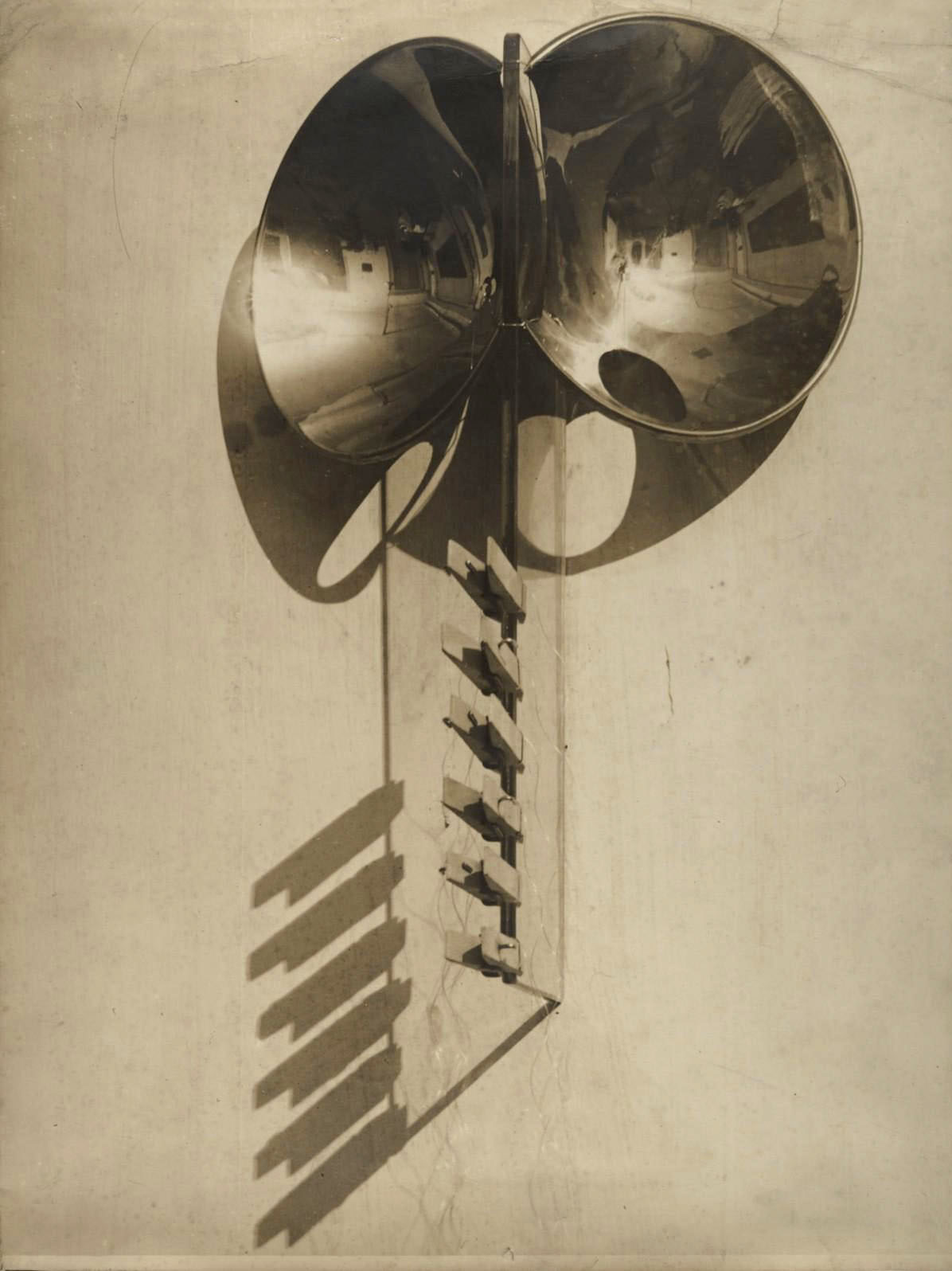
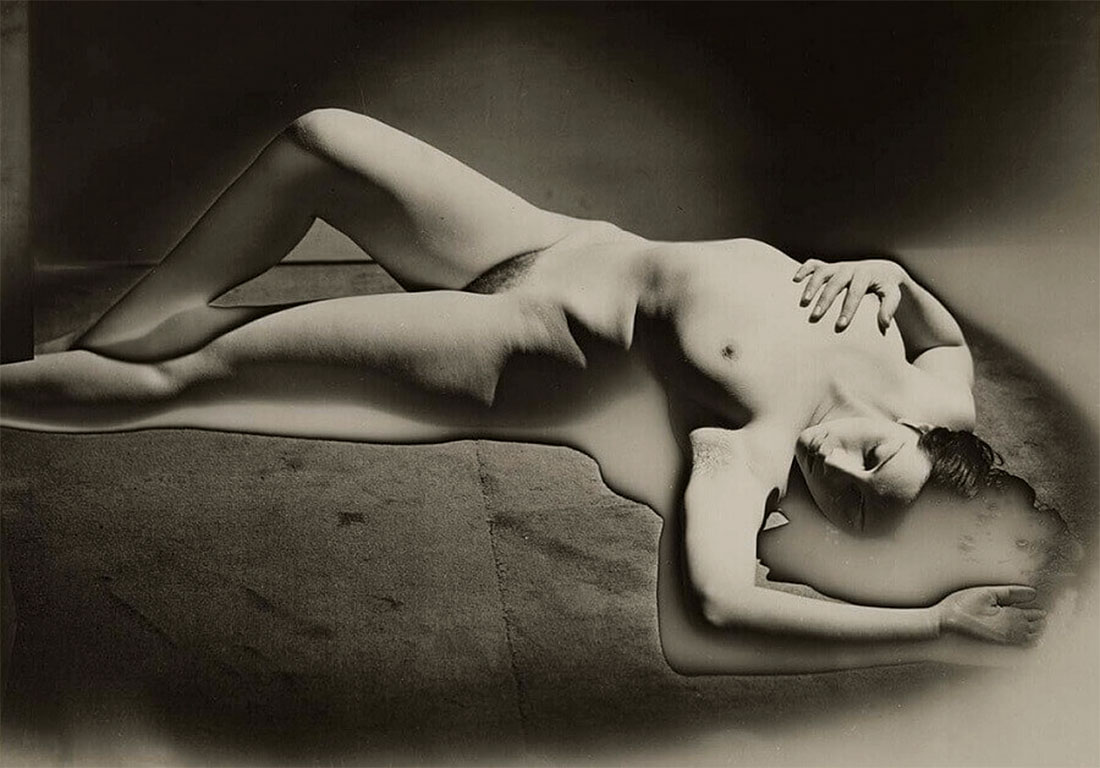
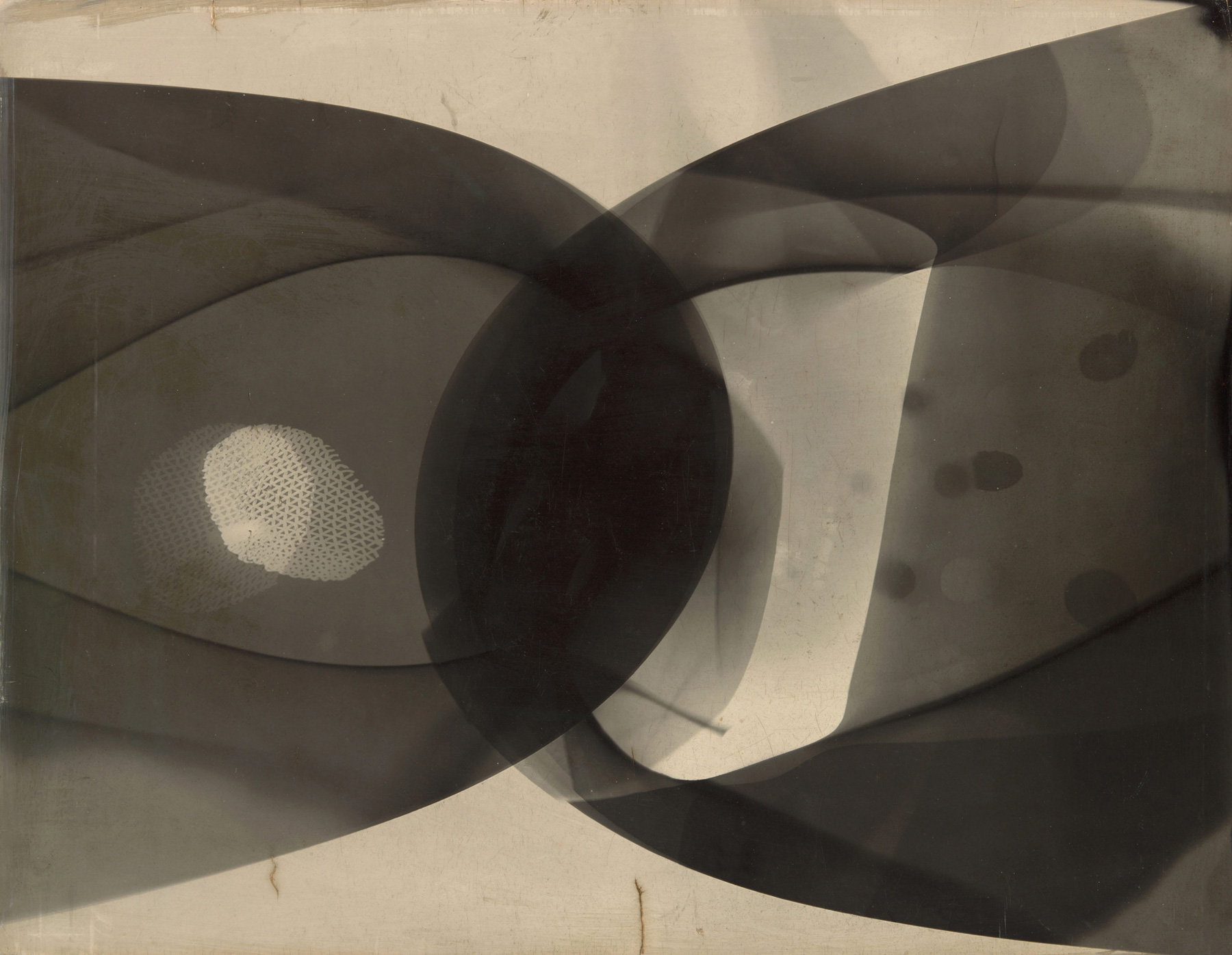
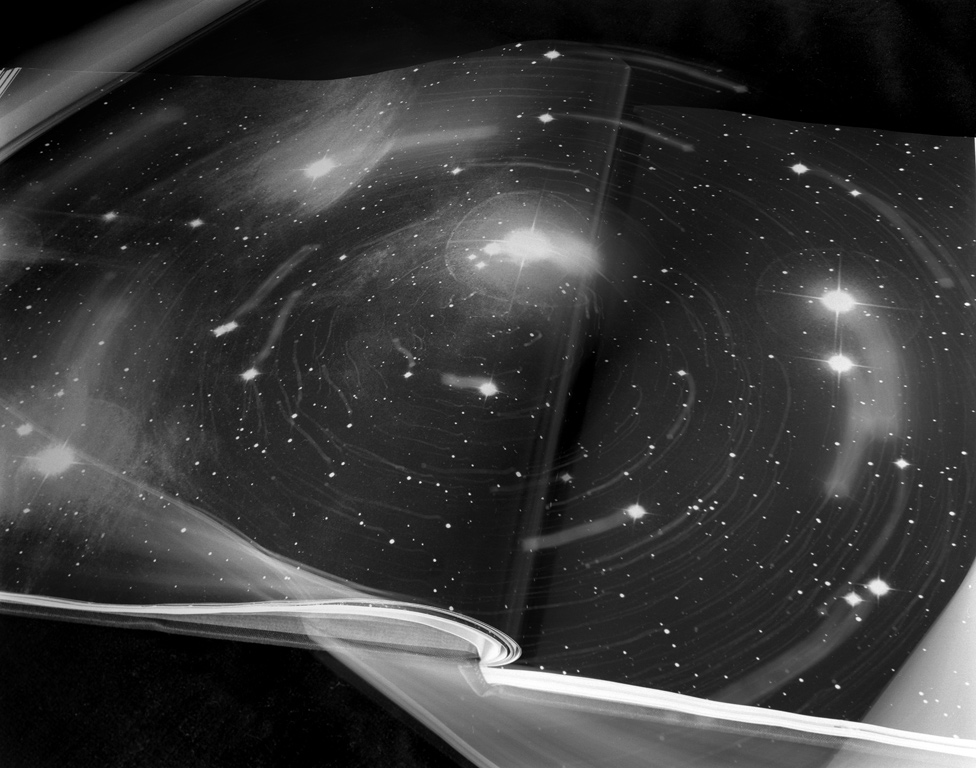
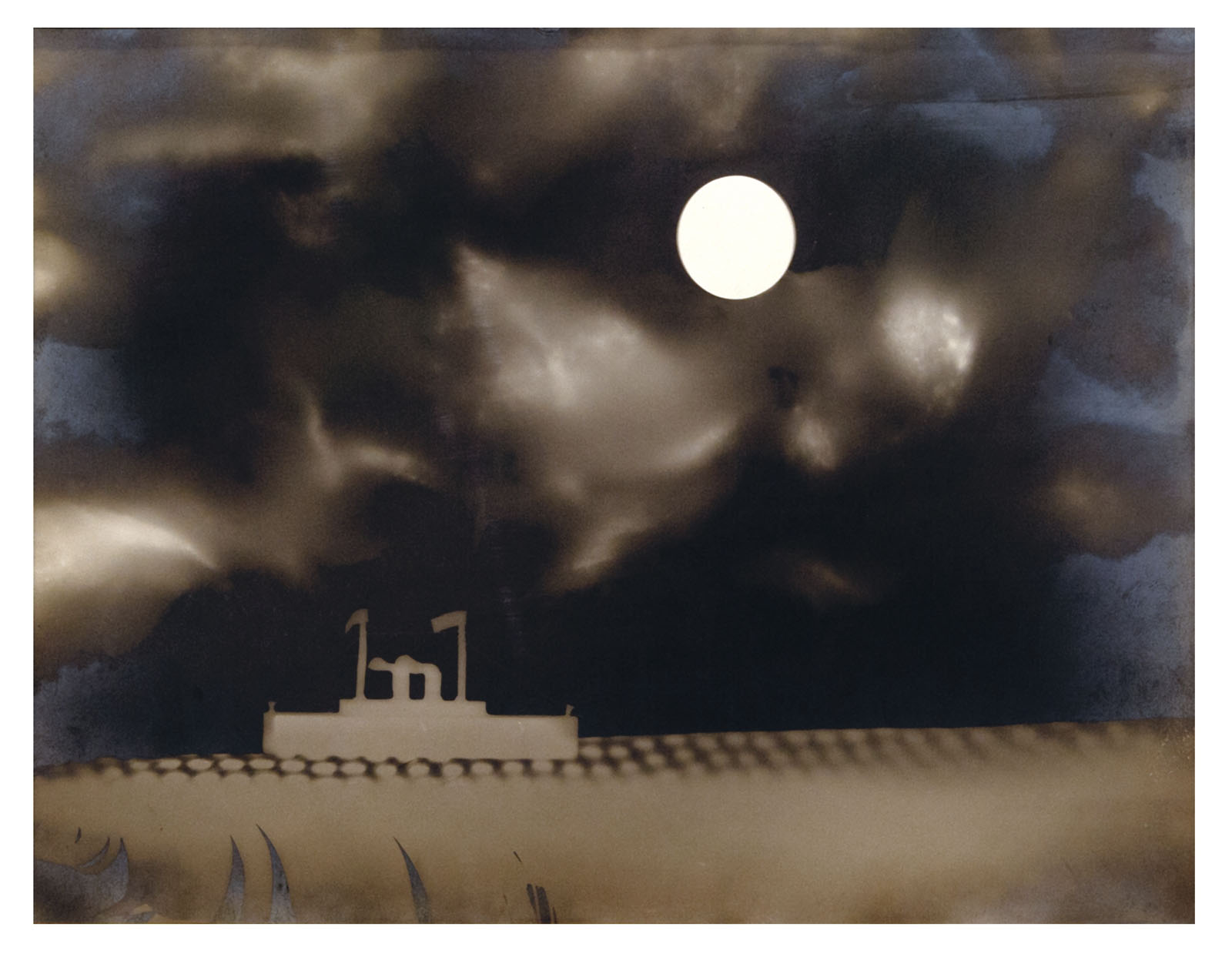
Man Ray (American, 1890-1976) 'Marine' c. 1925


Man Ray (American, 1890-1976) 
Marine 
c. 1925 
Gelatin silver print 
8 3/4 × 11 9/16 in. (22.2 × 29.3cm) 
Private collection; courtesy Galerie 1900-2000, Paris-New York 
© Man Ray 2015 Trust / Artists Rights Society (ARS), NY / ADAGP, Paris 2025 


“Like the undisturbed ashes of an object consumed by flames these images are oxidized residues fixed by light and chemical elements of an experience, an adventure, not an experiment. They are the result of curiosity, inspiration, and these words do not pretend to convey any information.”


Man Ray1


The rayographs

Although not the inventor of the photogram, a photograph made without the use of a camera by placing objects directly onto sensitised photographic paper and then exposing the paper to light, Man Ray’s rayographs have become the most recognisable and famous form that photograms have taken. This is because of their inventiveness, their subliminal connection to the psyche, and the use of “objects from the real world to make ambiguous dreamscapes.”7

It is interesting that Man Ray called his images rayographs, for a graph implies a topographical mapping, a laying out of statistics, whereas Lucia Moholy and László Moholy-Nagy’s photograms imply in the title of their technique the transmission of some form of message, like a telegram. The paradox is that, as the quotation above states, Man Ray always insisted that his rayographs imparted no information at all; perhaps they are only dreams made (un)stable. Contrary to this the other two artists believed that, “photographic images – cameraless and other – should not deal with conventional sentiments or personal feelings but should be concerned with light and form,”8 quite the reverse of the title of their technique.

After his arrival in Paris Man Ray started experimenting in his darkroom and discovered the technique for his rayographs by accident. With the help of his friend the Surrealist poet Tristan Tzara, he published a portfolio of twelve Rayographs in 1922 called Les champs délicieux (The delicious fields). “This title is a reference to ‘Les champs magnétiques’, a collection of writings by André Breton and Philippe Soupault composed from purportedly random thought fragments recorded by the two authors.”9 The rayographs are visual representations of random thought fragments, “photographic equivalents for the Surrealist sensibility that glorified randomness and disjunction.”10

Man Ray, “denied the camera its simplest joy: the ability to capture everything, all the distant details, all the ephemeral lights and shadows of the world”11 but, paradoxically, the rayographs are the most ephemeral of creatures, only being able to be created once, the result not being known until after the photographic paper has been developed. In fact, for Man Ray to create his portfolio Les champs délicieux (The delicious fields), he had to rephotograph the rayographs in order to make multiple copies.12

Man Ray “insisted in nearly every interview that the rayograph was not a photogram in the traditional sense. He did something that a photogram didn’t; he introduced depth into the images,”13 which denied the images their photographic objectivity by depicting an internal landscape rather than an external one.14 What the rayographs do not deny, however, is the subjectivity of the artist, his skill at placing the objects on the photographic paper, expressed in their dream-like nature, both a subjective ephemerality (because they could only be produced once) and an ephemeral subjectivity (because they were expressions of Man Ray’s fantasies, and therefore had little substance).

Through an alchemical process the latent images emerge from the photographic paper, representations of Man Ray’s fantasies as embodied in the ‘presence’ of the objects themselves, in the surface of the paper. Perhaps these objects offer, in Heidegger’s terms, ‘a releasement towards things’,15 “a coexistence between a conscious and unconscious way of perceiving which sustains the mystery of the object confusing the distinction between real time and sensual time, between inside and outside, input and output becoming neither here nor there.”16

Finally, within their depth of field the rayographs can be seen as both dangerous and delicious, for somehow they are both beautiful and unsettling at one and the same time. As Surrealism revels in randomness and chance these images enact the titles of other Man Ray photographs: Danger-Dancer, Anxiety, Dust Raising, Distorted House. The rayographs revel in chance and risk; Man Ray brings his fantasies to the surface, an interior landscape represented externally that can be (re)produced only once – those dangerous delicious fields.

Extract from Marcus Bunyan. “The Delicious Fields: Exploring Man Ray’s ‘Rayographs’ in a Digital Future,” published in The University of Queensland Vanguard magazine ‘Man Ray: Life, Work & Themes’, 2004


Footnotes

1/ Man Ray quoted in Janus (trans. Murtha Baca). Man Ray: The Photographic Image. London: Gordon Fraser, 1980, p. 213

7/ Mark Greenberg (ed.,). In Focus: Man Ray: Photographs from the J. Paul Getty Museum. Los Angeles, The J. Paul Getty Museum, 1998, p. 38

8/ Naomi Rosenblum. A World History of Photography. New York: Abbeville Press, 1997, 394

9/ Greenberg, op. cit., p. 28

10/ Jed Perl (ed.,). Man Ray: Aperture Masters of Photography. New York: Aperture, 1997 pp. 11-12

11/ Perl, op. cit., pp. 5-6

12/ Greenberg, op. cit., p. 28

13/ Greenberg, op. cit., p. 112

14/ Greenberg, op. cit., p. 28

15/ “We stand at once within the realm of that which hides itself from us, and hides itself just in approaching us. That which shows itself and at the same time withdraws is the essential trait of what we call the mystery … Releasement towards things and openness to the mystery belong together. They grant us the possibility of dwelling in the world in a totally different way…”

Martin Heidegger. Discourse on Thinking. New York: Harper & Row, 1966, pp. 55-56 quoted in Mauro Baracco. “Completed Yet Unconcluded: The Poetic Resistance of Some Melbourne Architecture,” in Leon van Schaik (ed.,). Architectural Design Vol. 72. No. 2 (‘Poetics in Architecture’). London: John Wiley and Sons, 2002, 74, Footnote 6.

16/ Marcus Bunyan. Spaces That Matter: Awareness and Entropia in the Imaging of Place (2002) [Online] Cited 07/07/2004.


Many thankx to The Metropolitan Museum of Art for allowing me to publish the photographs in the posting. Please click on the photographs for a larger version of the image.


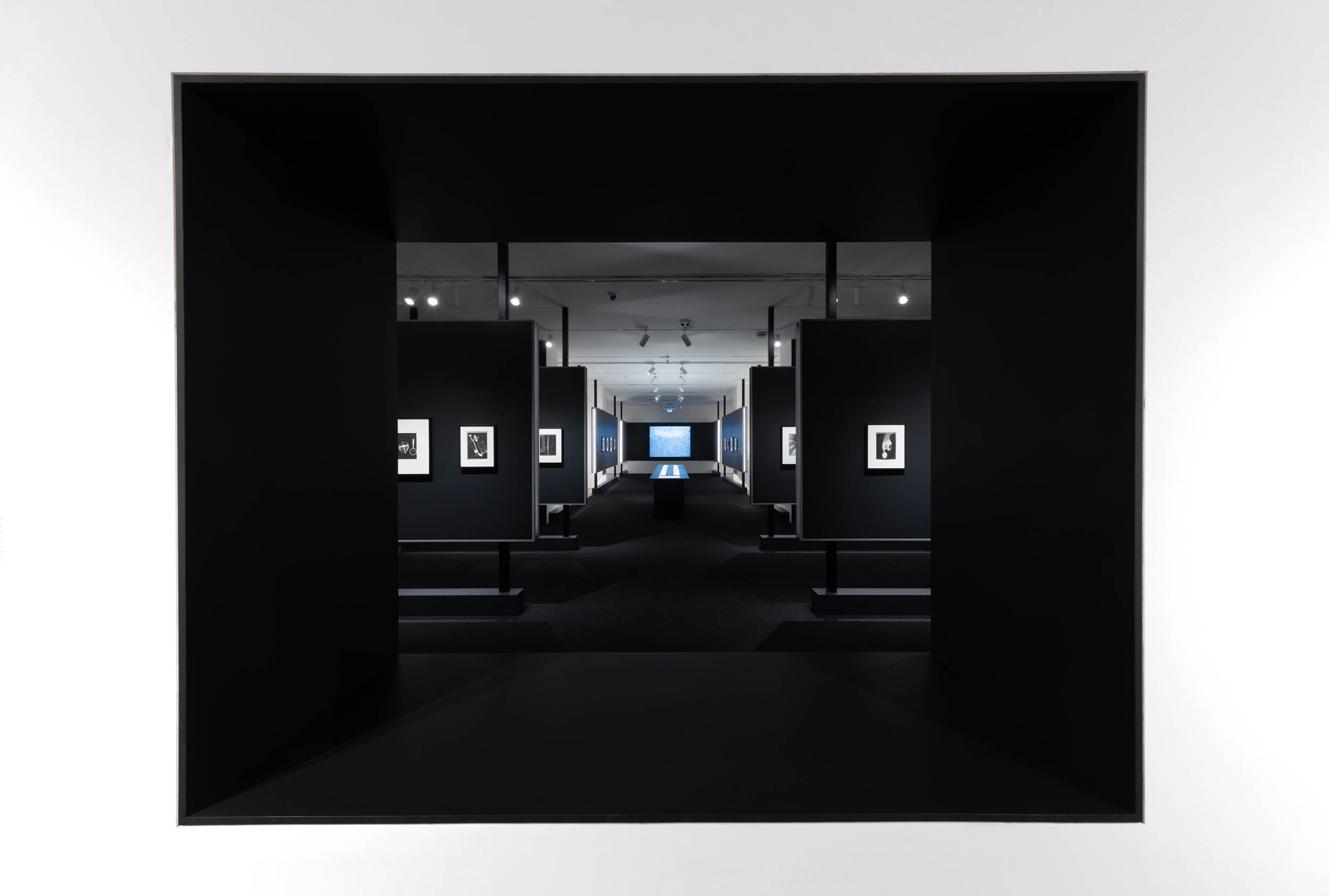
“Stepping into the exhibition Man Ray: When Objects Dream at The Metropolitan Museum of Art feels like entering the bellows of an old camera. Through a rectangular frame cut into the entry, the darkened walls unfold, accordion-like, to reveal a visual feast of the artist’s work, as Man Ray’s earliest film, “Retour à la raison (Return to Reason)” (1923), flickers across the screen opposite. Although the exhibition brings together approximately 160 works from an impressive array of lenders, it reveals itself gradually, taking the viewer through several turns before one can grasp its sheer enormity. When Objects Dream proves, thrillingly, that anyone left feeling jaded from the many, many recent exhibitions surrounding Surrealism’s centennial in 2024 can still see the movement’s key photographer with a fresh set of eyes.”


Julia Curl. “Man Ray Was So Much More Than a Photographer,” on the Hyperallergic website September 16, 2025 [Online] Cited 05/12/2025


“Objects to touch, to eat, to crunch, to apply to the eye, to the skin, to press, to lick, to break, to grind, objects to lie, to flee from, to honor, things cold or hot, feminine or masculine, objects of day or night which absorb through your pores the greater part of our life. … These are the projections surprised in transparence, by the light of tenderness, of objects that dream and talk in their sleep.” 

.
Tristan Tzara, “When Objects Dream,” 1934


“One sheet of paper got into the developing tray – a sheet unexposed that had been mixed with those already exposed under the negatives. … Regretting the waste of paper, I mechanically placed a small glass funnel, the graduate, and the thermometer in the tray on the wetted paper. I turned on the light; before my eyes an image began to form, not quite a simple silhouette of the objects as in a straight photograph, but distorted and refracted by the glass more or less in contact with the paper and standing out against a black background. … I remembered when I was a boy, placing fern leaves in a printing frame with proof paper, exposing it to sunlight, and obtaining a white negative of the leaves. This was the same idea, but with an added three-dimensional quality and tone graduation. I made a few more prints … taking whatever came to hand; my hotel-room key, a handkerchief, some pencils, a brush, a candle, a piece of twine … excitedly, enjoying myself immensely. In the morning I examined the results. … They looked startlingly new and mysterious.”


Man Ray 


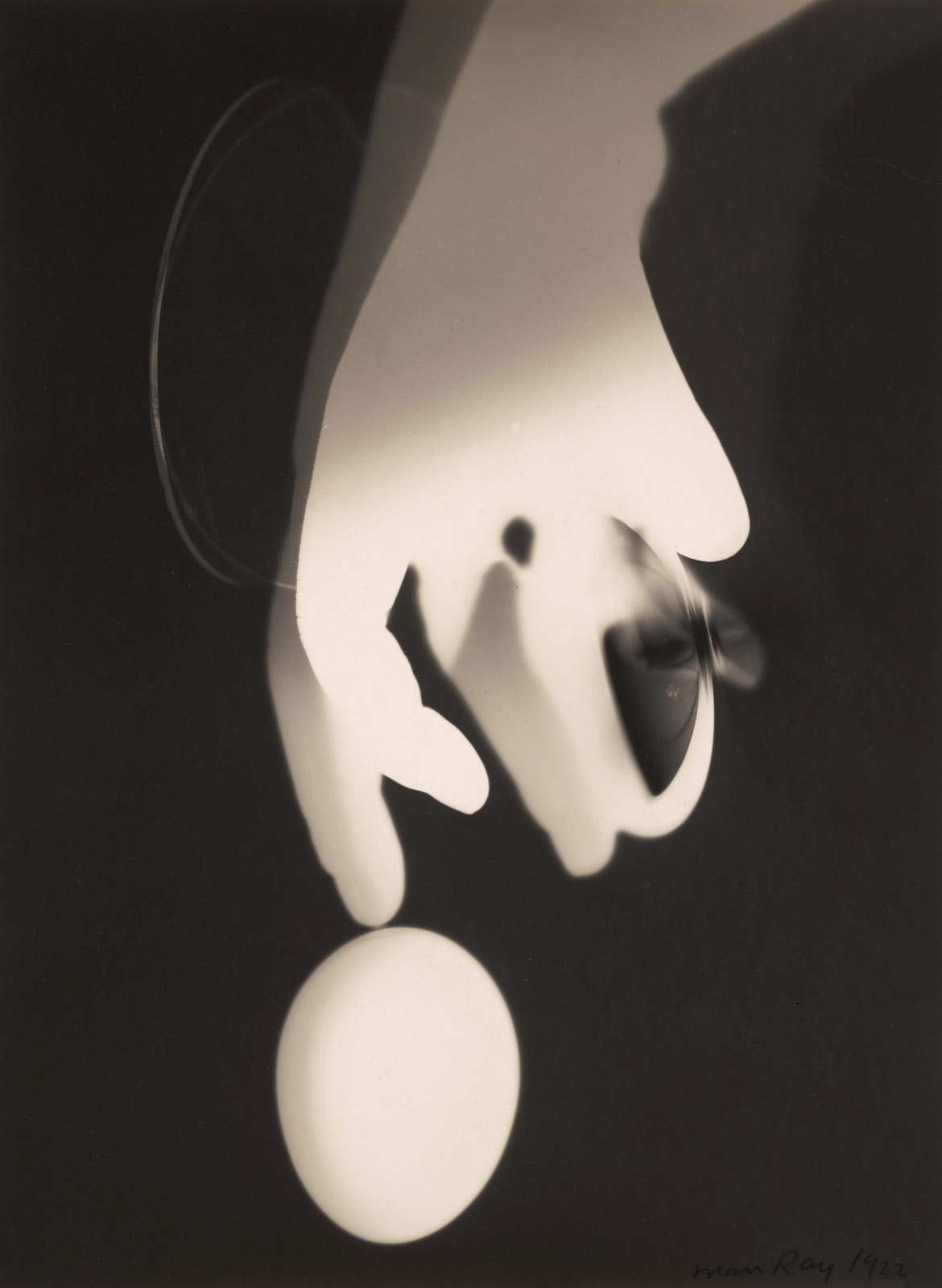
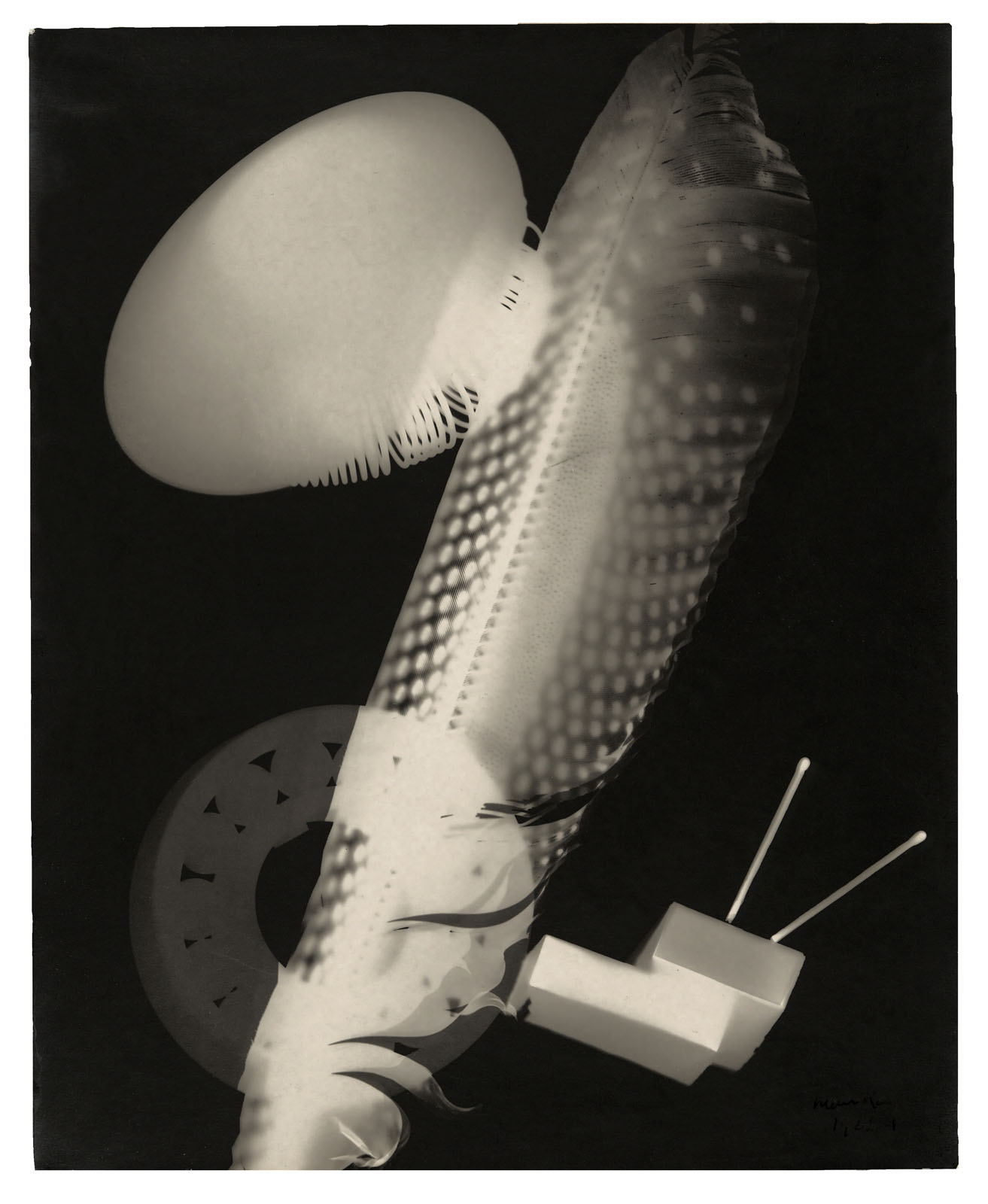
Man Ray (American, 1890-1976) 'Rayograph' 1922


Man Ray (American, 1890-1976) 
Rayograph
1922 
Gelatin silver print 
9 1/2 × 7 in. (24.1 × 17.8cm) 
The Metropolitan Museum of Art, New York, Bluff Collection, Promised Gift of John A. Pritzker 
© Man Ray 2015 Trust / Artists Rights Society (ARS), NY / ADAGP, Paris 2025
Photo by Ben Blackwell 


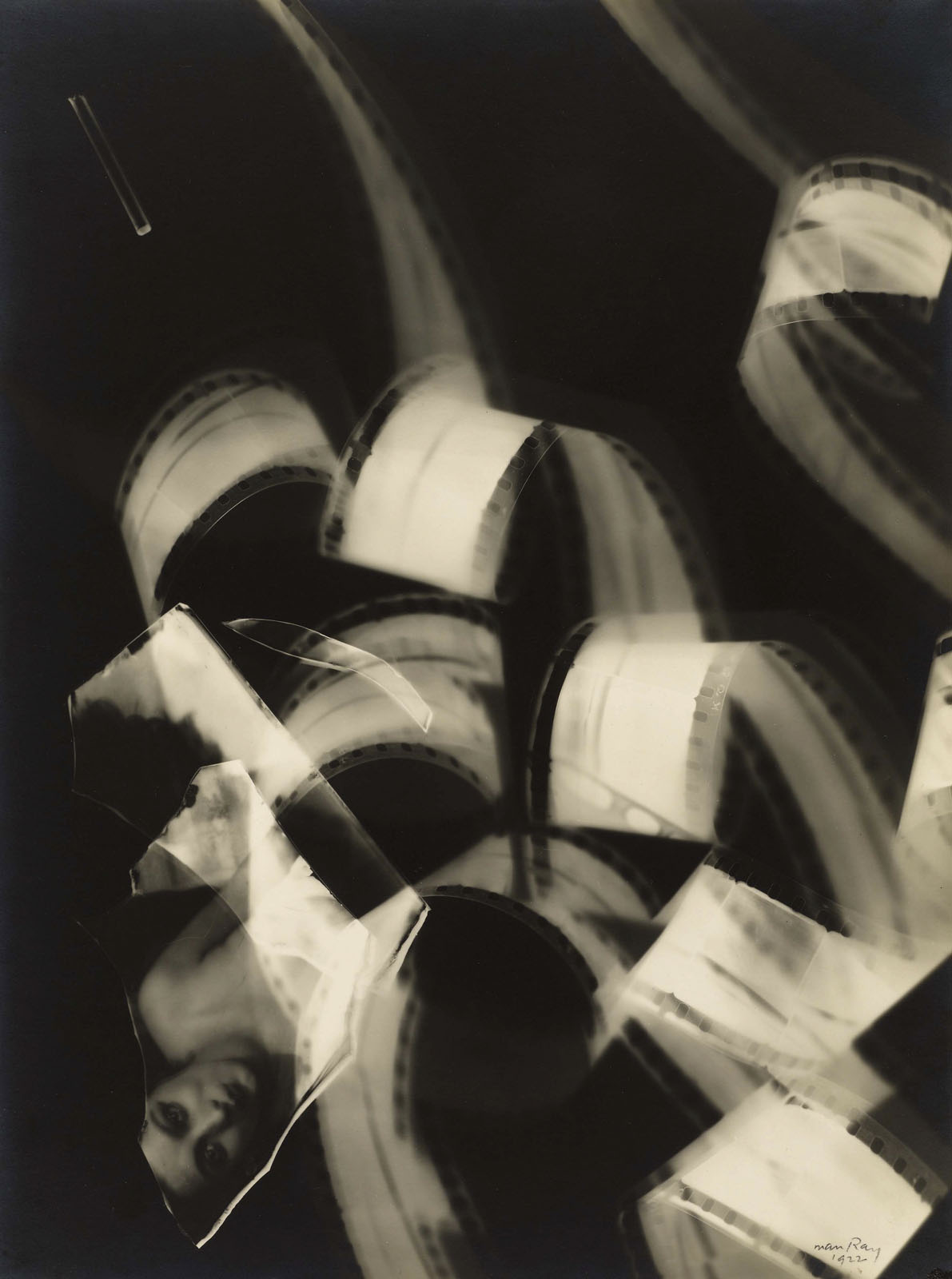
Man Ray (American, 1890-1976) 'Rayograph' 1922


Man Ray (American, 1890-1976) 
Rayograph
1922 
Gelatin silver print 
9 3/8 × 7 in. (23.8 × 17.8cm) 
The J. Paul Getty Museum, Los Angeles
Courtesy The J. Paul Getty Museum, Los Angeles 
© Man Ray 2015 Trust / Artists Rights Society (ARS), NY / ADAGP, Paris 2025


Man Ray (American, 1890-1976) 'Rayograph' 1922


Man Ray (American, 1890-1976) 
Rayograph
1922
Gelatin silver print
9 3/8 x 7 in. (23.8 x 17.8cm)
Private collection
© Man Ray 2015 Trust / Artists Rights Society (ARS), NY / ADAGP, Paris 2025


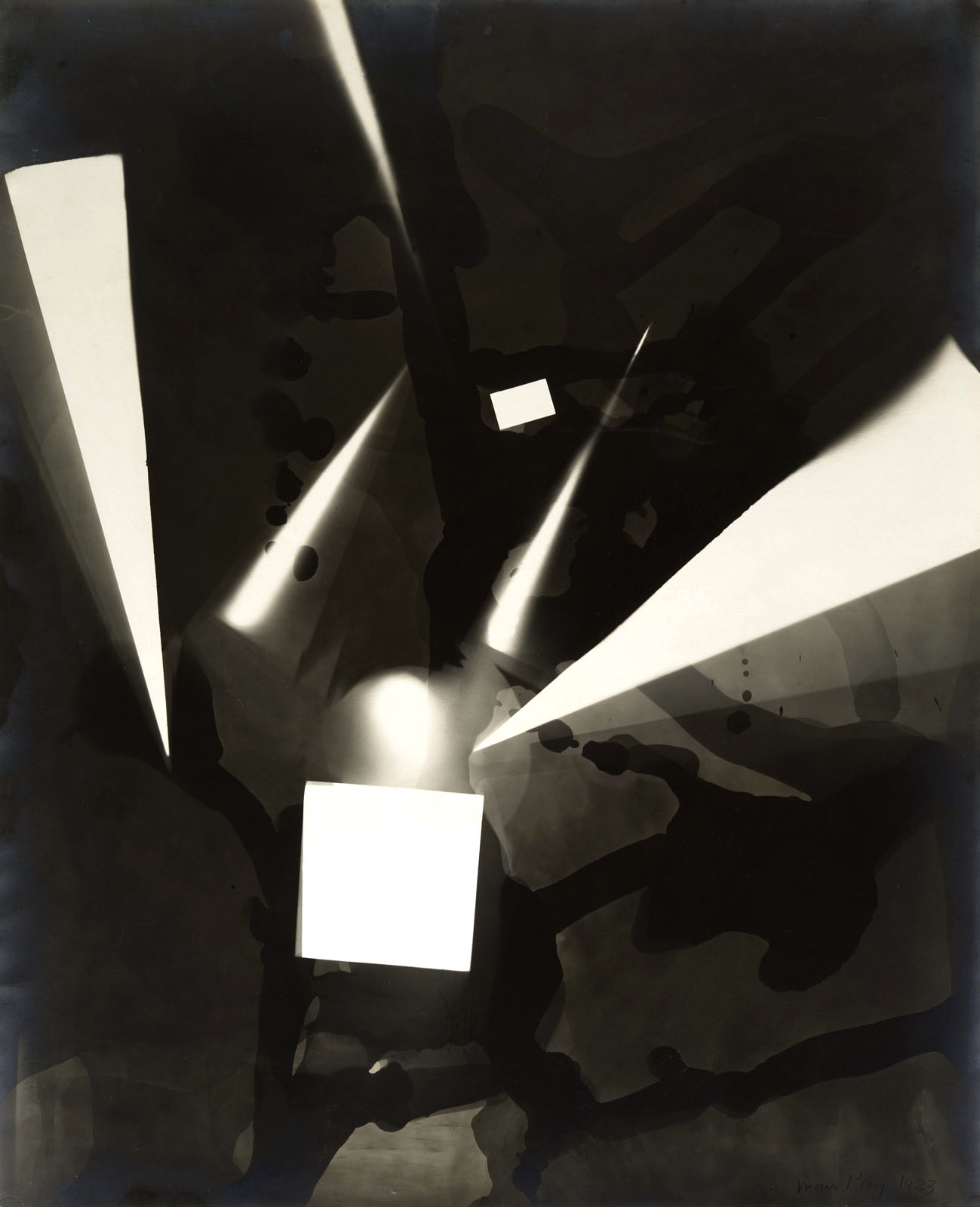
Man Ray (American, 1890-1976) 'Rayograph' 1923


Man Ray (American, 1890-1976) 
Rayograph 
1923 
Gelatin silver print 
11 1/2 × 9 5/16 in. (29.2 × 23.7cm) 
Yale University Art Gallery, New Haven, Gift of the Estate of Katherine S. Dreier 
© Man Ray 2015 Trust / Artists Rights Society (ARS), NY / ADAGP, Paris 2025
Photo: Yale University Art Gallery, Gift of Collection Société Anonyme 


Man Ray (American, 1890-1976) 'Rayograph' 1923-1928


Man Ray (American, 1890-1976) 
Rayograph
1923-1928 
Gelatin silver print 
19 5/16 x 15 11/16 in. (49 x 39.8cm) 
The Metropolitan Museum of Art, New York, Gilman Collection, Purchase, The Horace W. Goldsmith Foundation Gift, through Joyce and Robert Menschel, 2005
Image © The Metropolitan Museum of Art, photo by Mark Morosse 
© Man Ray 2015 Trust / Artists Rights Society (ARS), NY / ADAGP, Paris 2025 


Man Ray (American, 1890-1976) 'Rayography' 1925


Man Ray (American, 1890-1976) 
Rayograph 
1925 
Gelatin silver print 
19 15/16 × 15 13/16 in. (50.6 × 40.2cm) 
MAH Musée d’art et d’histoire, City of Geneva. Purchase, 1968
© Man Ray 2015 Trust / Artists Rights Society (ARS), NY / ADAGP, Paris 2025
Photo © Musée d’art et d’histoire, Ville de Genève, photo by André Longchamp


American artist Man Ray (1890-1976) was a visionary known for his radical experiments that pushed the limits of photography, painting, sculpture, and film. In the winter of 1921, he pioneered the rayograph, a new twist on a technique used to make photographs without a camera. By placing objects on or near a sheet of light-sensitive paper, which he exposed to light and developed, Man Ray turned recognisable subjects into wonderfully mysterious compositions. Introduced in the period between Dada and Surrealism, the rayographs’ transformative, magical qualities led the poet Tristan Tzara to describe them as capturing the moments “when objects dream.”

The exhibition will be the first to situate this signature accomplishment in relation to Man Ray’s larger body of work of the 1910s and 1920s. Drawing from the collections of The Met and more than 50 U.S. and international lenders, the exhibition will feature approximately 60 rayographs and 100 paintings, objects, prints, drawings, films, and photographs – including some of the artist’s most iconic works – to highlight the central role of the rayograph in Man Ray’s boundary-breaking practice.

“Before my eyes an image began to form, not quite a simple silhouette of the objects as in a straight photograph, but distorted and refracted … In the morning I examined the results, pinning a couple of the rayographs – as I decided to call them – on the wall. They looked startlingly new and mysterious.” ~ Man Ray

Text from The Metropolitan Museum of Art website


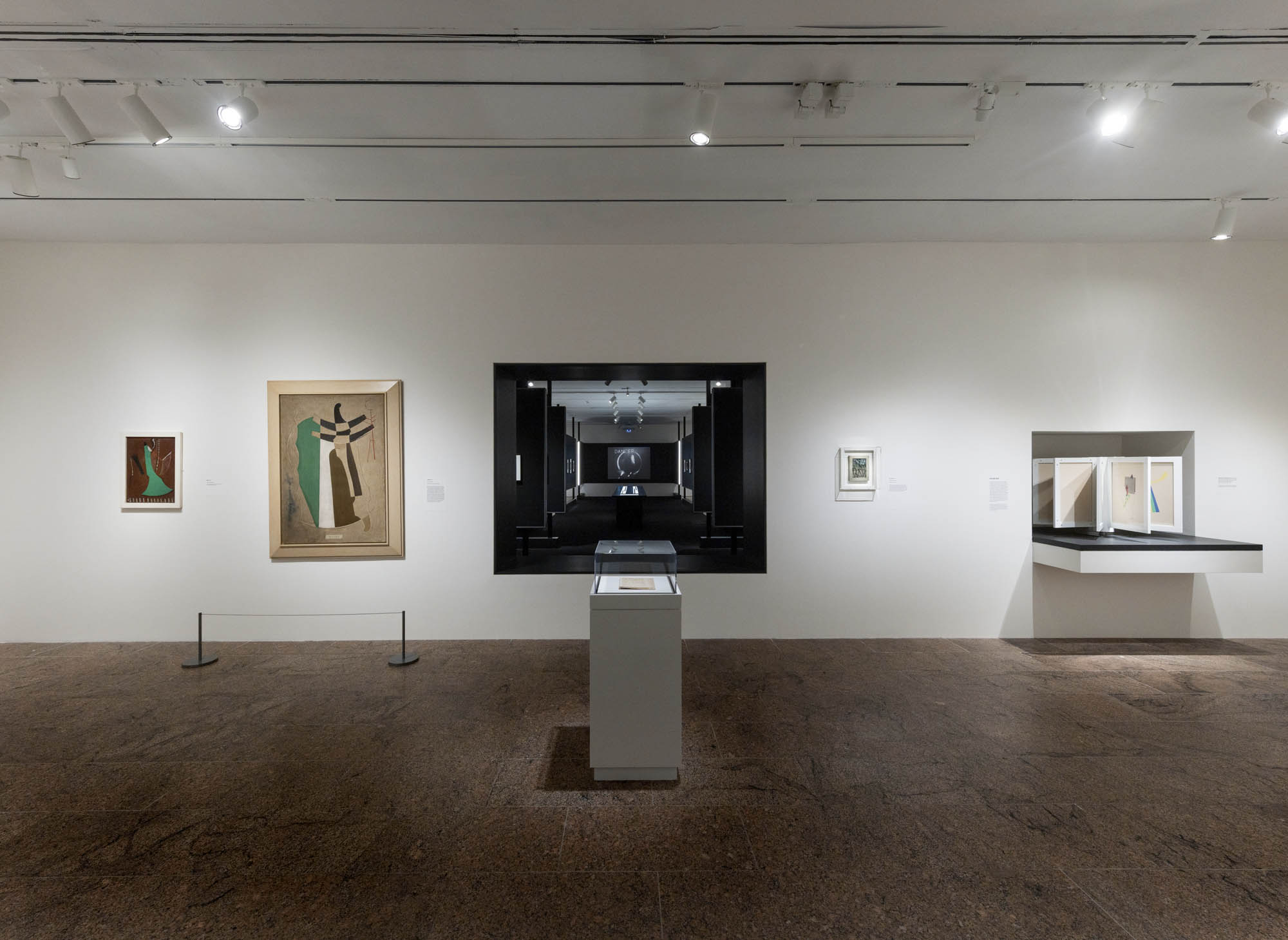
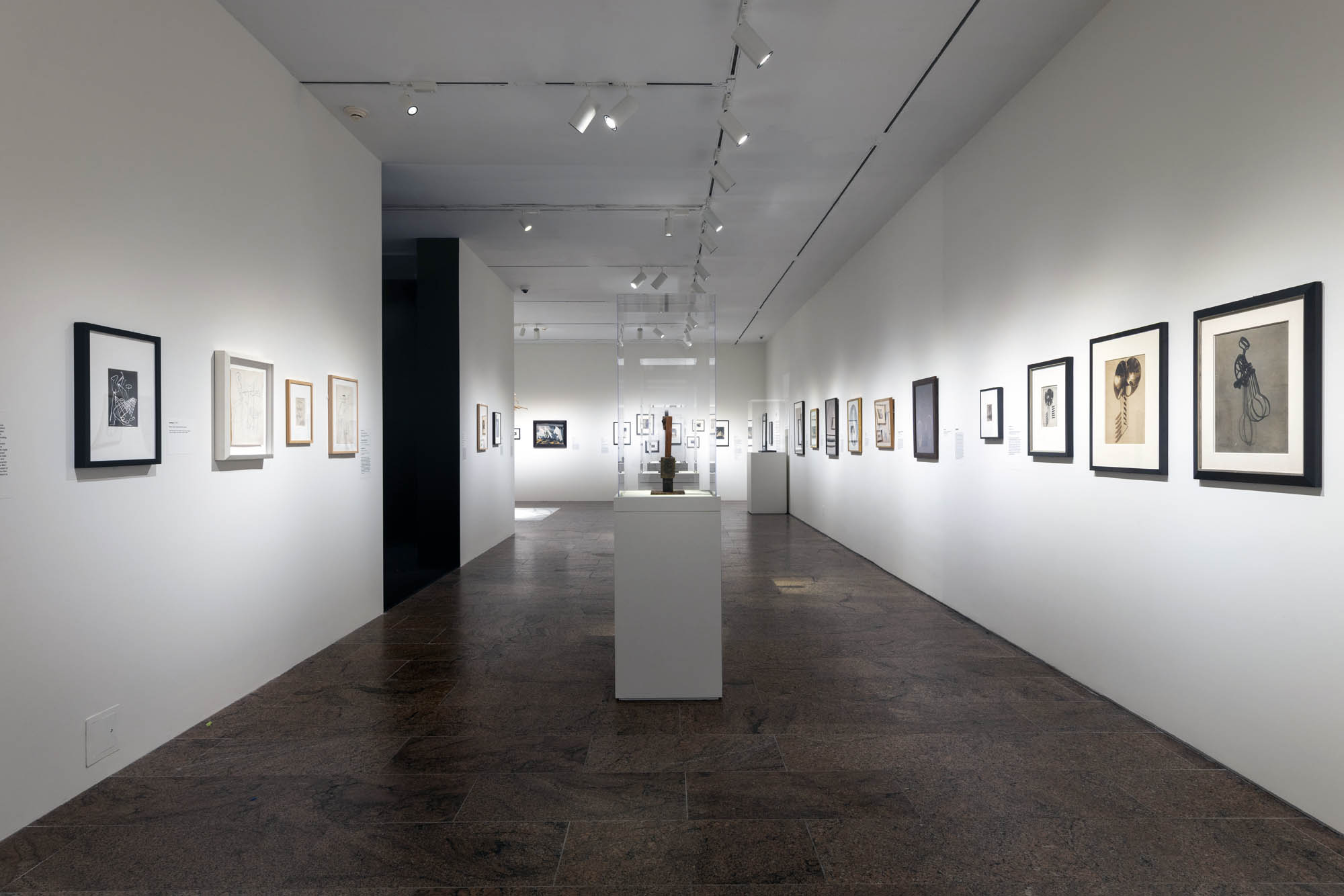
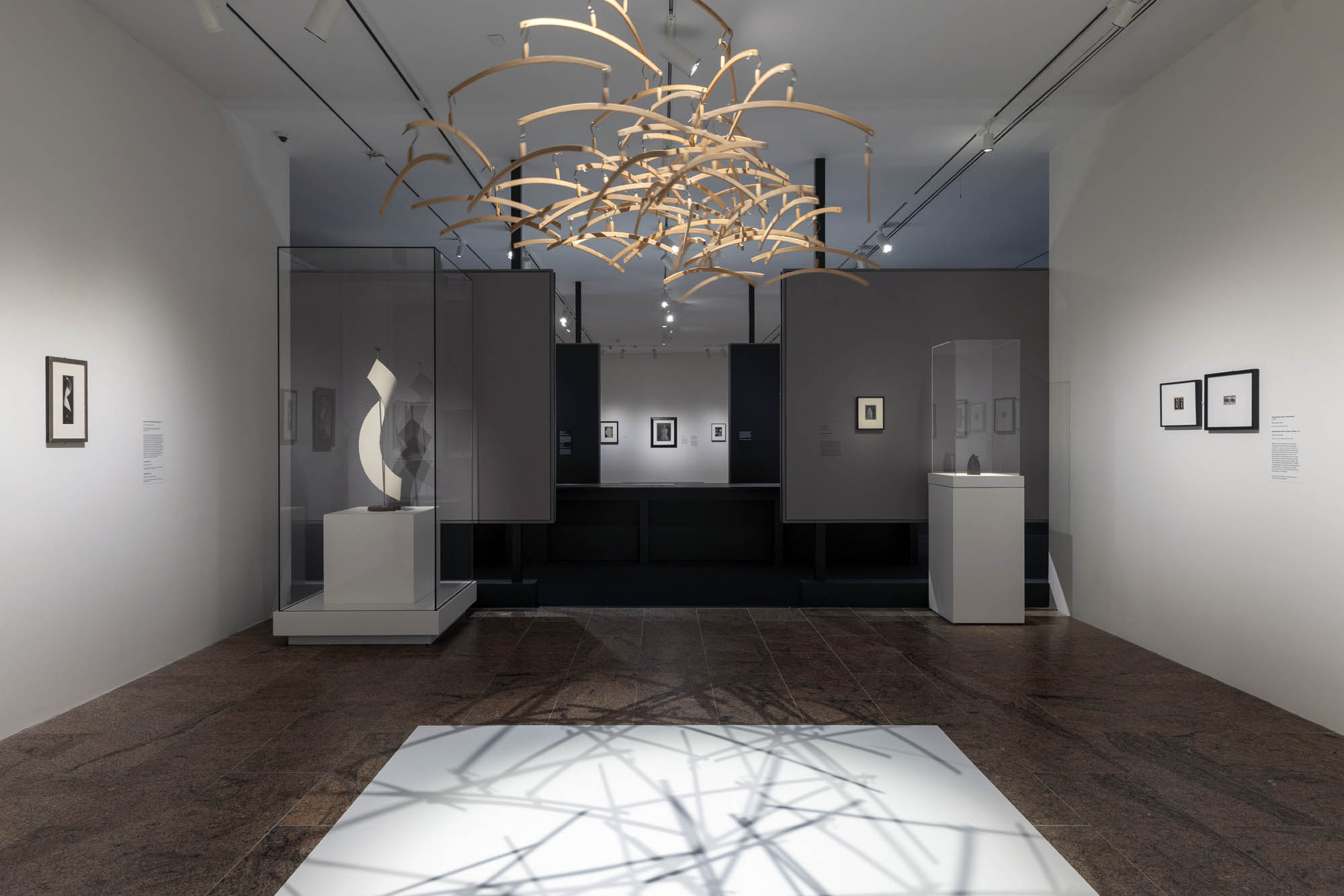
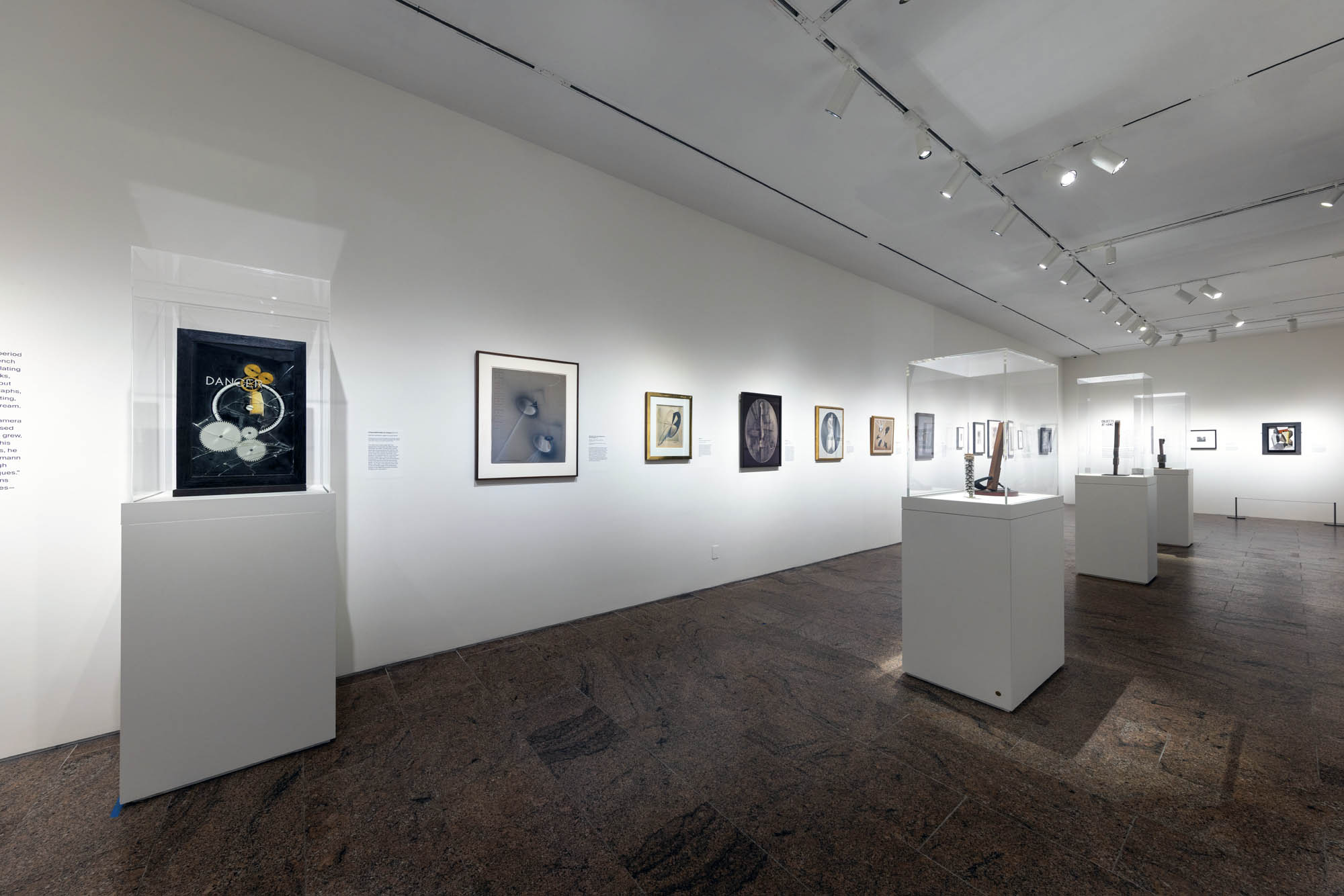
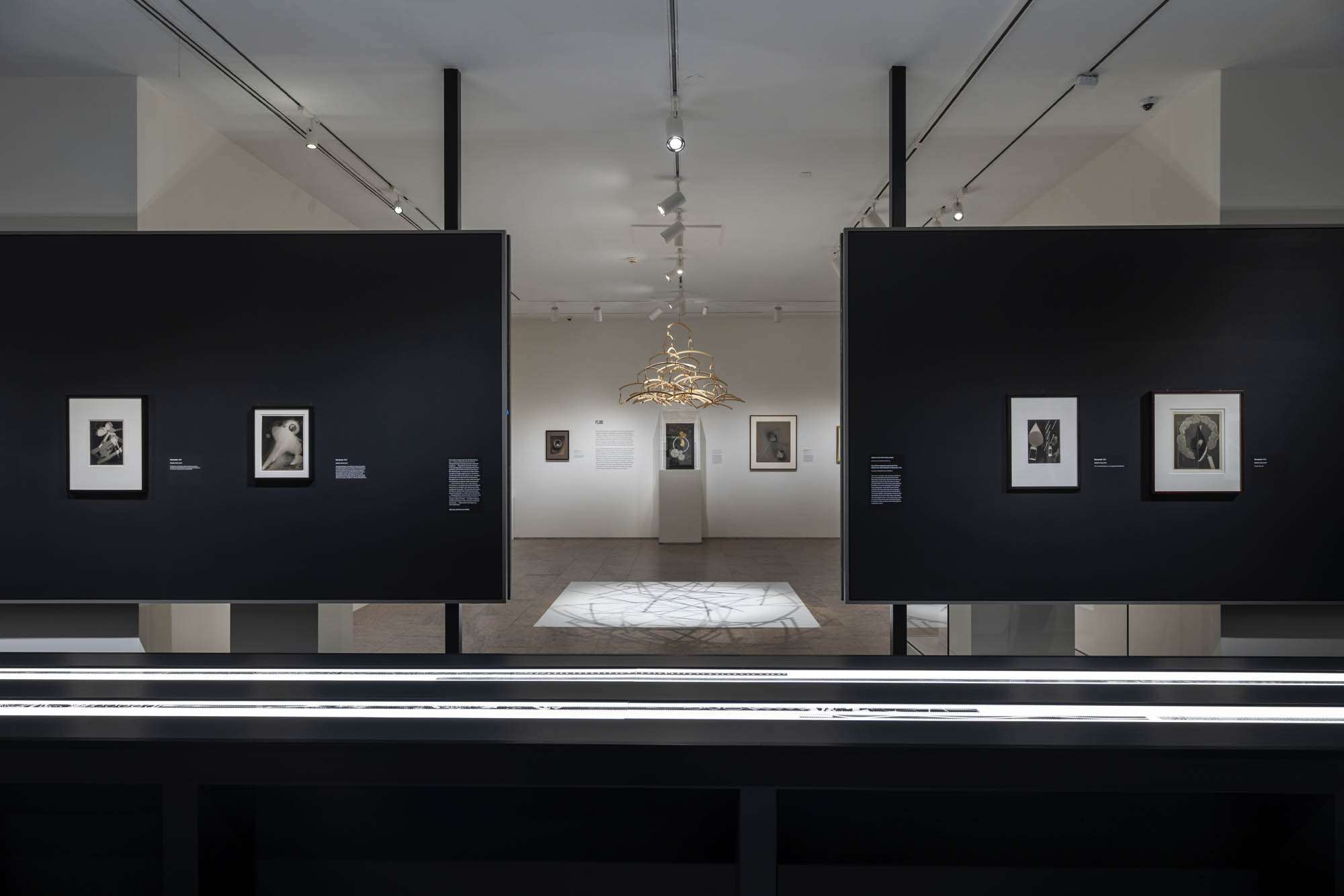
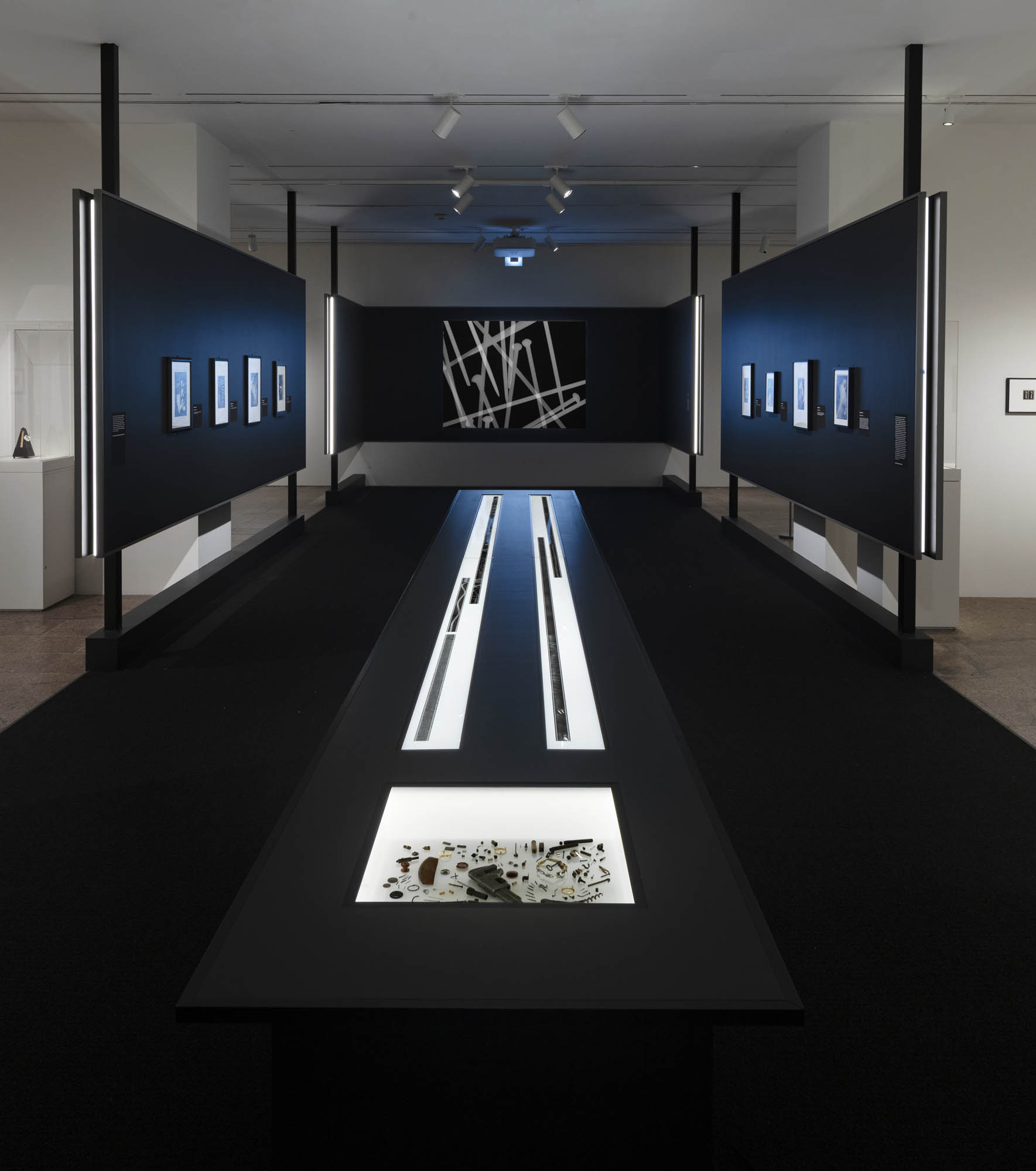
Installation view of the exhibition 'Man Ray: When Objects Dream' at The Metropolitan Museum of Art, New York, September 2025 - February 2026


Installation views of the exhibition Man Ray: When Objects Dream at The Metropolitan Museum of Art, New York, September 2025 – February 2026


Man Ray (American, 1890-1976)
'Torse (Retour à la raison)' (Torso [Return to Reason]) 1923, printed c. 1935


Man Ray (American, 1890-1976)
Torse (Retour à la raison) (Torso [Return to Reason])
1923, printed c. 1935
Gelatin silver print
8 1/4 × 6 3/8 in. (21 × 16.2cm)
Private collection
© Man Ray 2015 Trust / Artists Rights Society (ARS), NY / ADAGP, Paris 2025


In the 1923 silent short of the same title, Man Ray filmed barely discernible scenes of Paris at night along with his own enigmatic photograms and conglomerations of spiraling or gyrating objects. The resulting sequence of near-total abstractions seems devoid of sense or purpose. The “return to reason” in the film comes finally in the form of a woman’s torso – modelled by cabaret personality Kiki de Montparnasse – turning to and fro beside a rain-covered windowpane. Man Ray reproduced the seductive finale, as well as other moments from the film, as photographs, singly and in strips. A still from Man Ray’s film, this particular photograph appeared on its own in the first issue of the key avant-garde journal La Révolution surréaliste, in 1924.

Text from the Art Institute of Chicago website


Le retour à la raison (Return to Reason), Man Ray, 1923


Emak-Bakia (1926) – directed by Man Ray

Emak-Bakia (Basque for Leave me alone) is a 1926 film directed by Man Ray. Subtitled as a cinépoéme, it features many techniques Man Ray used in his still photography (for which he is better known), including rayographs, double exposure, soft focus and ambiguous features.

Emak-Bakia shows elements of fluid mechanical motion in parts, rotating artifacts showing his ideas of everyday objects being extended and rendered useless. Kiki of Montparnasse (Alice Prin) is shown driving a car in a scene through a town. Towards the middle of the film Jacques Rigaut appears dressed in female clothing and make-up. Later in the film a caption appears: “La raison de cette extravagance” (the reason for this extravagance). The film then cuts to a car arriving and a passenger leaving with briefcase entering a building, opening the case revealing men’s shirt collars which he proceeds to tear in half. The collars are then used as a focus for the film, rotating through double exposures.

The film features sculptures by Pablo Picasso, and some of Man Ray’s mathematical objects both still and animated using a stop motion technique.

Originally a silent film, recent copies have been dubbed using music taken from Man Ray’s personal record collection of the time. The musical reconstruction was by Jacques Guillot.

When the film was first exhibited, a man in the audience stood up to complain it was giving him a headache and hurting his eyes. Another man told him to shut up, and they both started to fight. The theatre turned into a frenzy, the fighting ended up out in the street, and the police were called in to stop the riot.

Emak bakia can also mean “give peace” (“emak” is the imperative form of the verb “eman”, which means “give”) in Basque.

Text from the YouTube website


L’étoile de mer, Man Ray, 1928

The film was based on Robert Desnon’s surrealist poem L’Étoile de mer.


The Met Presents First Major Exhibition on Man Ray’s Radical Reinvention of Art through the rayograph 

Featuring 160 rayographs, paintings, objects, prints, drawings, films, and photographs, Man Ray: When Objects Dream highlights the principal place of the rayograph – a type of cameraless photograph – within the context of many of the artist’s most important works 

This exhibition includes thirty-five works by Man Ray which are part of the major promised gift of nearly 200 works of Dada and Surrealist art from Trustee John Pritkzer 

Man Ray: When Objects Dream at The Metropolitan Museum of Art is the first major exhibition to examine the radical experimentation of American artist Man Ray (1890-1976) through one of his most significant bodies of work, the rayograph. Man Ray coined the term rayograph to name his version of the 19th-century technique of making photographs without a camera. He created them by placing objects on or near a sheet of light-sensitive paper, which he then exposed to light and developed. These photograms – as they are also called – appear as reversed silhouettes, or negative versions, of their subjects. They often feature recognisable items that become wonderfully mysterious in the artist’s hands. Their transformative nature led the Dada poet Tristan Tzara to describe rayographs as capturing the moments “when objects dream.” While Man Ray acknowledged the photographic origins of his new works, he did not think of them as strictly bound by medium. Taking Man Ray’s lead, this presentation is the first – more than a century since he introduced the rayograph – to situate this signature accomplishment in relation to his larger artistic output. The exhibition is on view September 14, 2025, through February 1, 2026. 

“As one of the most fascinating and multi-faceted artists in the avant-garde movements of the early 20th century, Man Ray challenged traditional narratives of modernism through his daring experimentation with diverse artistic mediums,” said Max Hollein, The Met’s Marina Kellen French Director and Chief Executive Officer. “Anchored by Man Ray’s innovative and mesmerising rayographs along with new research and discoveries, this exhibition invites visitors to explore his ground-breaking manipulation of objects, light, and media, which profoundly reframed his artistic practice and impacted countless other artists. We’re so thrilled to include thirty-five works by Man Ray in this exhibition as part of John’s incredible promised gift.” 

Drawing from the collections of The Met and more than 50 U.S. and international lenders, the presentation includes more than 60 rayographs, many of which were featured in important publications and exhibitions at the time of their making, and 100 paintings, objects, prints, drawings, collages, films, and photographs to highlight the central role of the rayograph in Man Ray’s boundary-breaking practice. The exhibition marks a collaboration with the recently closed Lens Media Lab, Yale University, under the direction of Paul Messier, and with photography conservators and curators at various lending institutions, to study more than fifty rayographs. 

In the winter of 1921, while working late in his Paris darkroom, Man Ray inadvertently produced a photogram by placing some of his glass equipment on top of an unexposed sheet of photographic paper he found among the prints in his developing tray. As he wrote in his 1963 autobiography, “Before my eyes an image began to form, not quite a simple silhouette of the objects as in a straight photograph, but distorted and refracted … In the morning I examined the results, pinning a couple of the rayographs – as I decided to call them – on the wall. They looked startlingly new and mysterious.” This supposed accident, now the stuff of legend, has obscured the fact that rayographs might be seen as the culmination of Man Ray’s work up to 1921 as well as the frame through which he would redefine his work thereafter. They harnessed his interests in working between dimensions, media, and artistic traditions, fittingly at the moment between Dada and Surrealism, which writer Louis Aragon once called the mouvement flou (flou means “hazy, blurry, or out of focus” in French). 

Unfolding in a series of spaces that intersect with a central, dramatic presentation of rayographs, the exhibition illuminates their connections with Man Ray’s work in other media, including assemblage, painting, photography, and film. In approaching the rayograph in this expansive way, the exhibition also offers a reappraisal of the most productive and creatively significant period of his long career, beginning in New York around 1915 with his ambitious paintings and concluding in Paris in 1929 with his fine-tuning of the solarization process with Lee Miller. A critical factor across the exhibition is the central role of objects for Man Ray’s career, both in the creation of many of the rayographs and in his work more generally.

At its core, Man Ray: When Objects Dream focuses new attention on some of the artist’s most recognised, but little-studied, works, most particularly the rayograph. The exhibition opens with Champs délicieux (Delicious Fields) (1922), a portfolio of 12 rayographs which marks the first time Man Ray presented his photograms to the public. Critics hailed them for putting photography on the same plane as original pictorial works. The presentation concludes with the working copy of Champs délicieux, which the artist canceled and dedicated to his friend, Dada artist Tristan Tzara, in 1959. 

Between these two works, twelve thematic sections of the exhibition explore such concepts as the silhouette, the dream, the body, the object, and the game, which are inspired by Man Ray’s experimentation with the rayograph. Other groupings will focus on specific media and techniques, and the artist’s studio, as well as watershed moments in the artist’s production, such as the years of 1923 and 1929, when Man Ray unexpectedly returned to painting. Three of his newly restored films, Retour à la raison (Return to Reason) (1923), Emak Bakia (1926), and L’étoile de mer (The Starfish) (1928), will be screened within the exhibition. 

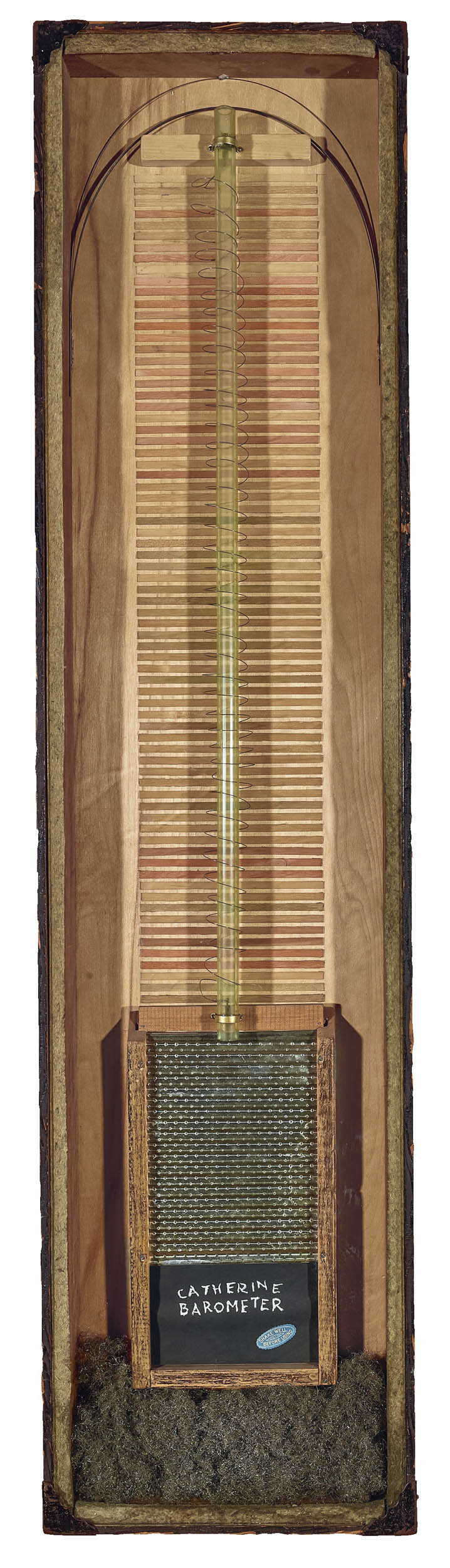
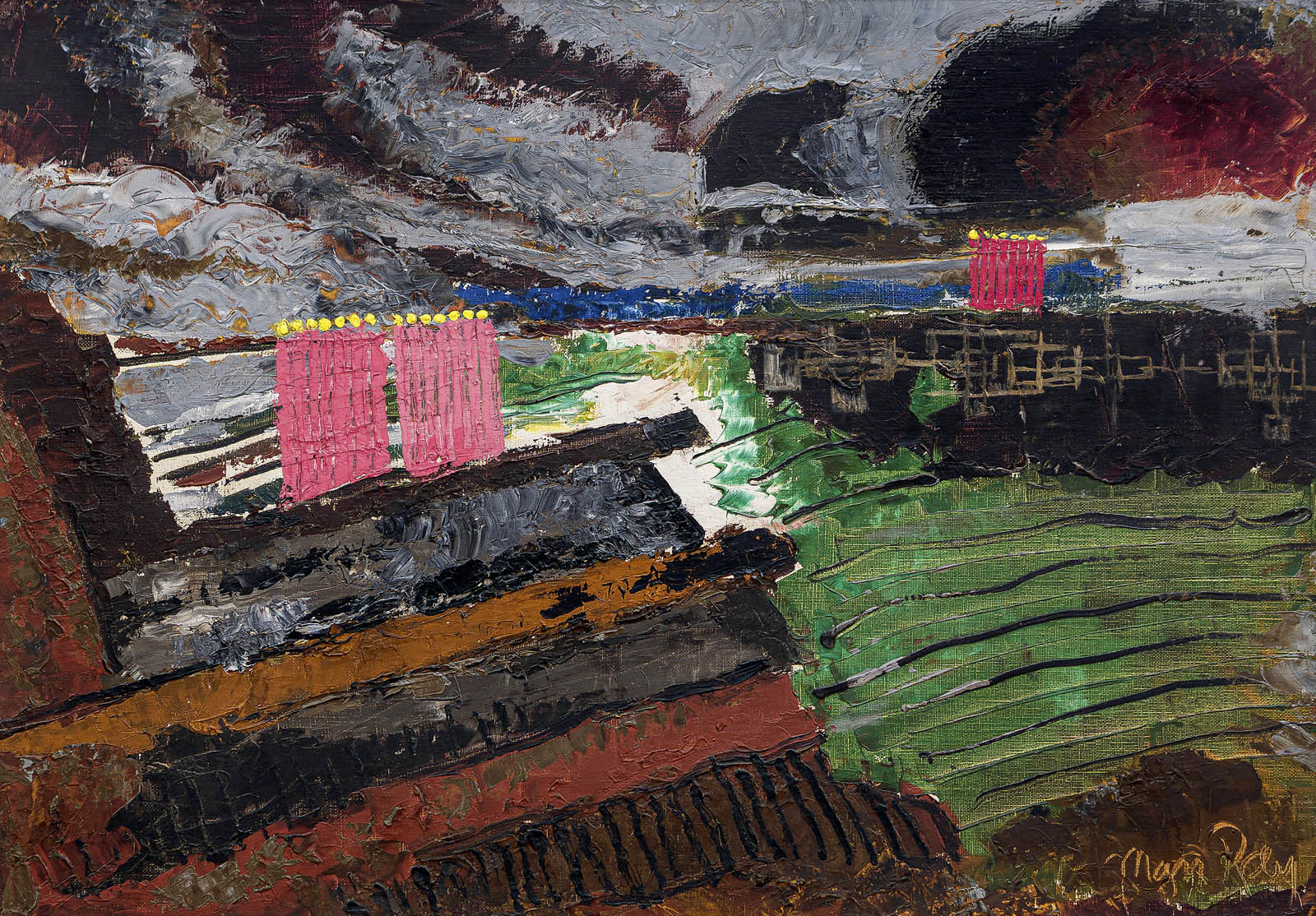
Highlights include such iconic objects like Man Ray’s iron studded with tacks, known as Cadeau (Gift) (1921), and his metronome, Object to be Destroyed (1923), that keeps time with the swinging eye of his companion, the photographer Lee Miller. Celebrated photographs, including his landmark Le violon d’Ingres (1924), in which the torso of the artist and performer Kiki de Montparnasse (Alice Prin) is depicted as a musical instrument, are also featured. The exhibition brings together some of his boldest but most refined experimental works – compositions like Aerograph (1919), a painting made with an airbrush and pigment sprayed through and around items from his studio. For Man Ray, objects could function as metaphors for the body, as demonstrated in works such as Catherine Barometer (1920) and L’homme (Man). Rarely seen paintings in the exhibition, including Paysage suédois (Swedish Landscape) (1926) record the artist’s great experimentation, working paint without a brush and in an almost sculptural way, building up and scraping down the surface that reflects his experiments in the darkroom.

Man Ray: When Objects Dream is curated by Stephanie D’Alessandro, Leonard A. Lauder Curator of Modern Art and Senior Research Coordinator in Modern and Contemporary Art at The Met, and Stephen C. Pinson, Curator in the Department of Photographs at The Met, with the assistance of Micayla Bransfield, Research Associate, Modern and Contemporary Art.
Press release from The Metropolitan Museum of Art


Man Ray (American, 1890-1976) 'La Femme (Woman)' c. 1918-1920


Man Ray (American, 1890-1976) 
La Femme (Woman)
c. 1918-1920
Gelatin silver print
43.7 x 33.5cm (17 3/16 x 13 3/16in.)
Gilman Collection, Gift of The Howard Gilman Foundation, 2005
© 2016 Man Ray Trust/Artists Rights Society (ARS), New York/ADAGP, Paris


Man Ray (American, 1890-1976) 'L'homme (Man)' 1918-1920


Man Ray (American, 1890-1976) 
L’homme (Man
1918-1920 
Gelatin silver print 
19 × 14 1/2 in. (48.3 × 36.8cm) 
The Metropolitan Museum of Art, New York, Bluff Collection, Promised Gift of John A. Pritzker
© Man Ray 2015 Trust / Artists Rights Society (ARS), NY / ADAGP, Paris 2025
Photo credit: Courtesy of The Bluff Collection, photo by Ben Blackwell


Man Ray (American, 1890-1976) 
'Élevage de poussière (Dust Breeding)' 1920


Man Ray (American, 1890-1976) 
Élevage de poussière (Dust Breeding)
1920
Gelatin silver print
2 13/16 × 4 5/16 in. (7.1 × 11 cm)
Private collection
© Man Ray 2015 Trust / Artists Rights Society (ARS), NY / ADAGP, Paris 2025
 

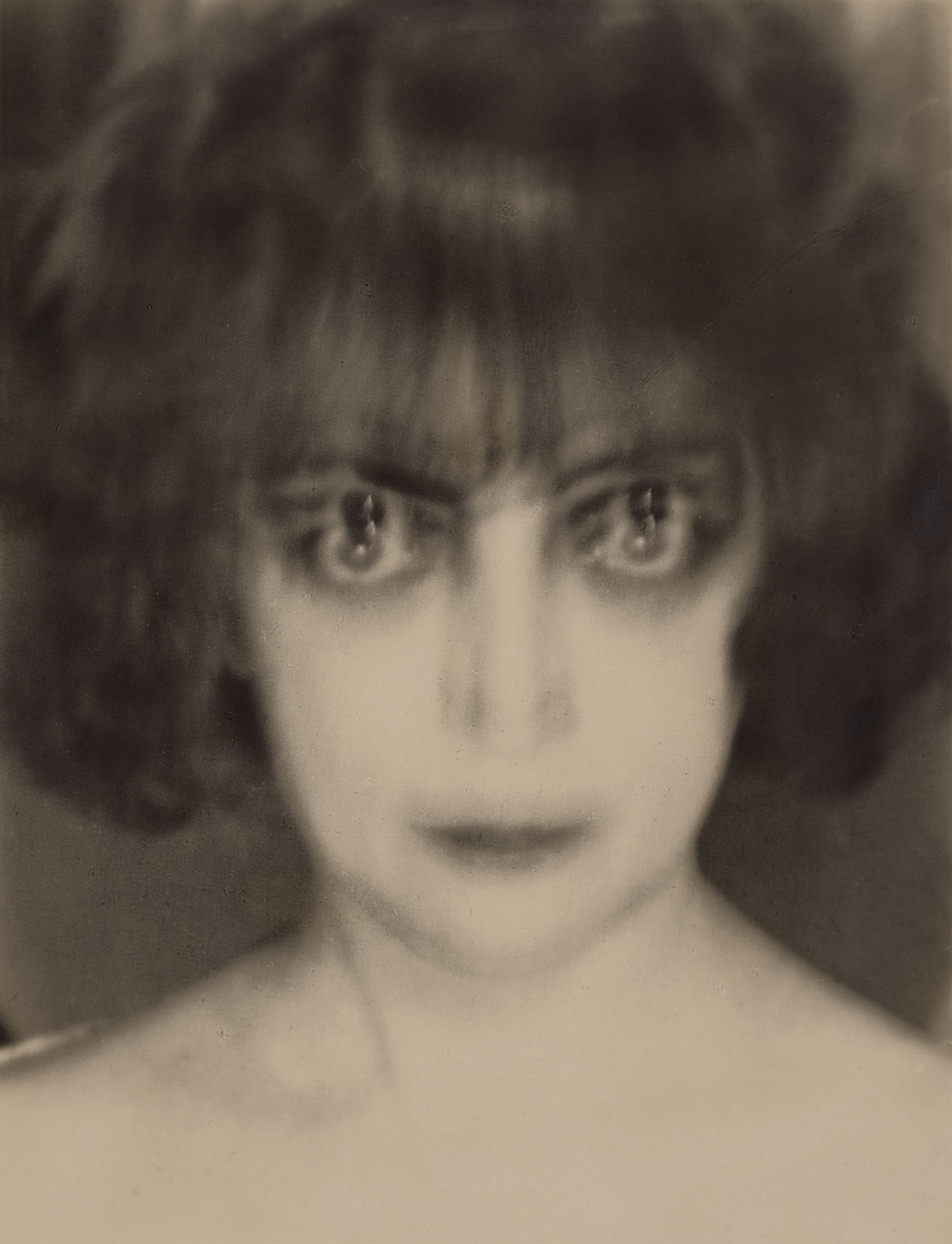
Man Ray (American, 1890-1976) 'Marchesa Luisa Casati' 1922


Man Ray (American, 1890-1976) 
Marchesa Luisa Casati 
1922 
Gelatin silver print 
8 1/2 × 6 9/16 in. (21.6 × 16.7 cm) 
Philadelphia Museum of Art: Gift of Carl Van Vechten
© Man Ray 2015 Trust / Artists Rights Society (ARS), NY / ADAGP, Paris 2025
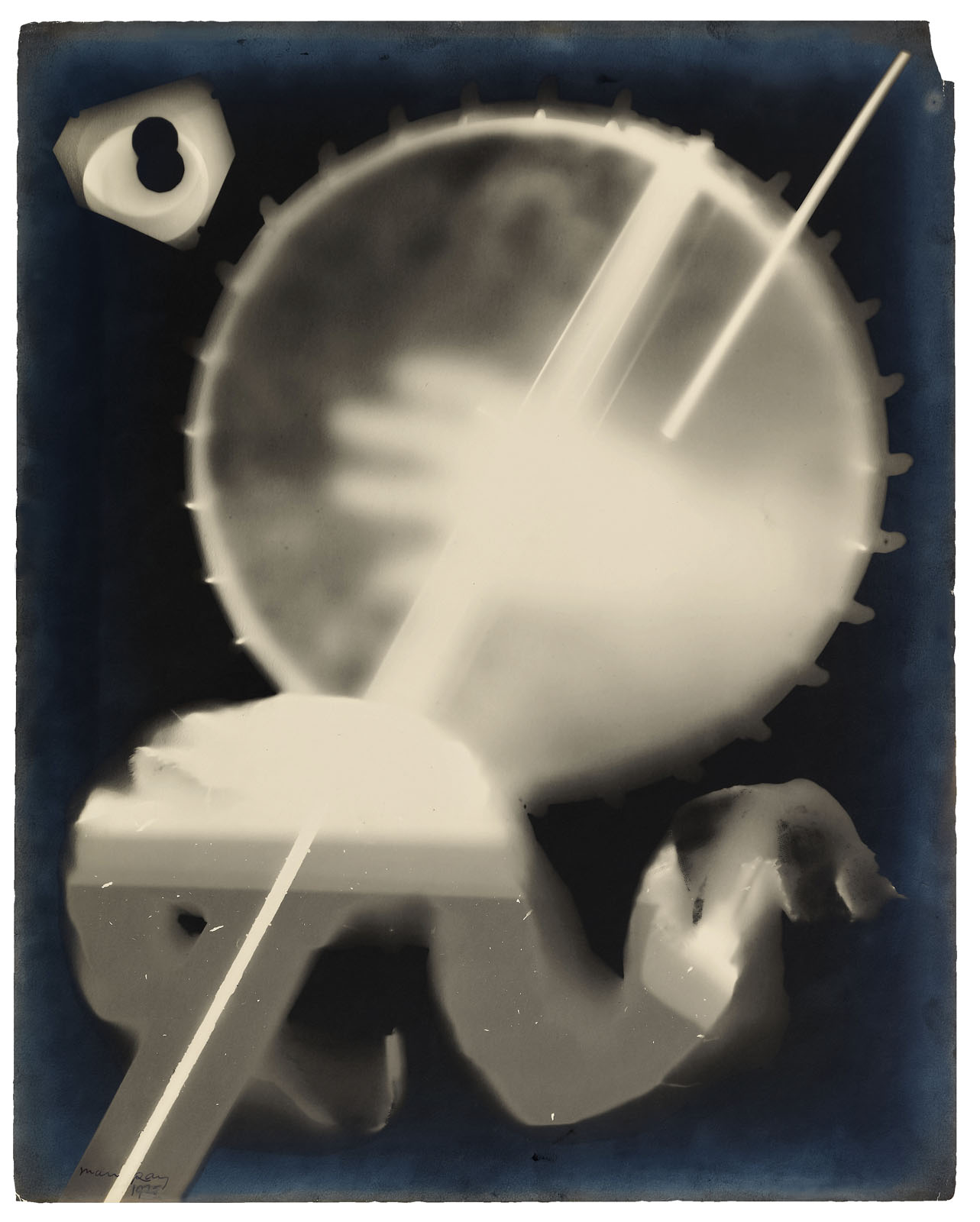
Photo courtesy of the Philadelphia Museum of Art


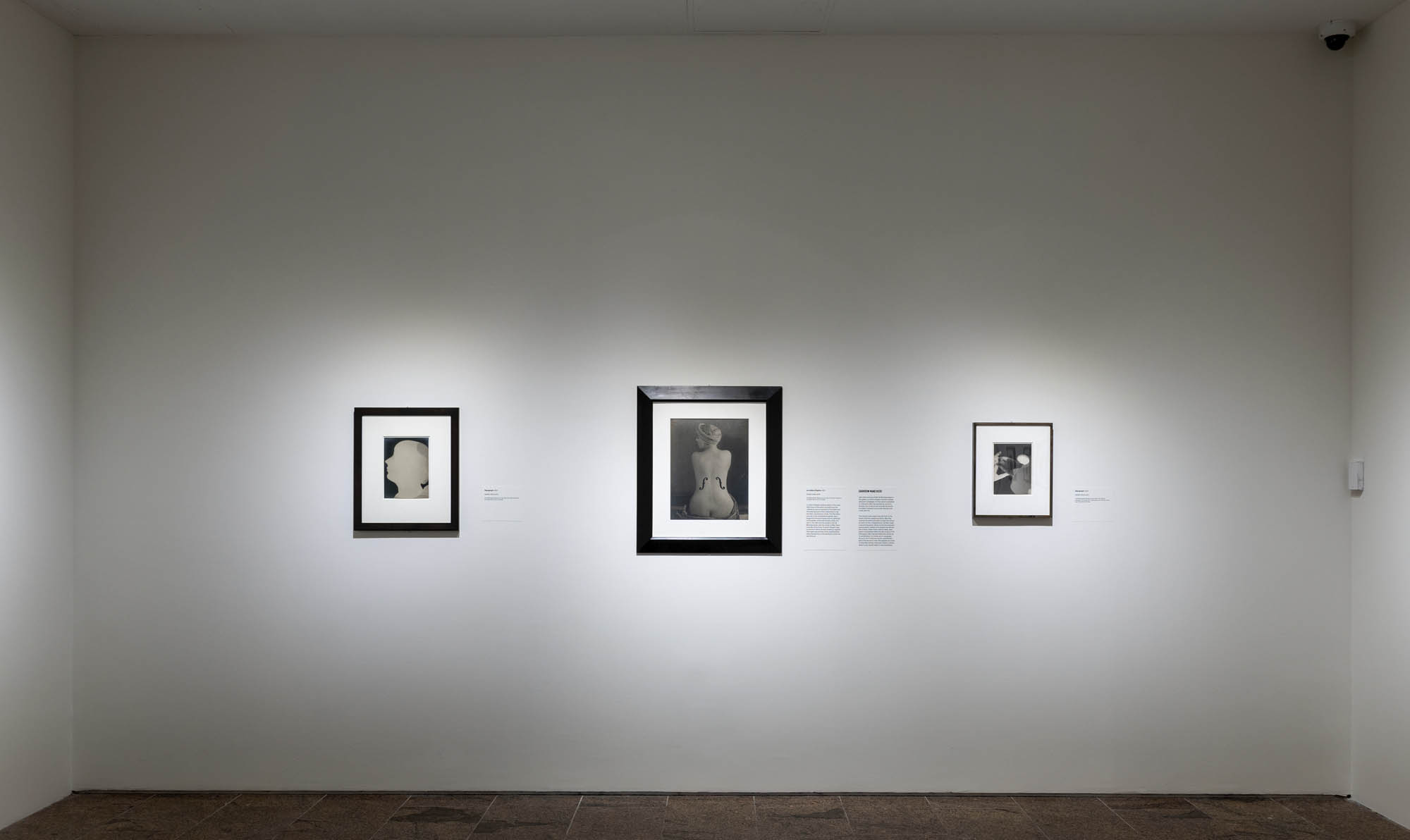
Installation view of the exhibition 'Man Ray: When Objects Dream' at The Metropolitan Museum of Art, New York, September 2025 - February 2026 showing at centre, Man Ray's photograph 'Le violon d'Ingres' 1924


Installation view of the exhibition Man Ray: When Objects Dream at The Metropolitan Museum of Art, New York, September 2025 – February 2026 showing at centre, Man Ray’s photograph Le violon d’Ingres 1924 (below)


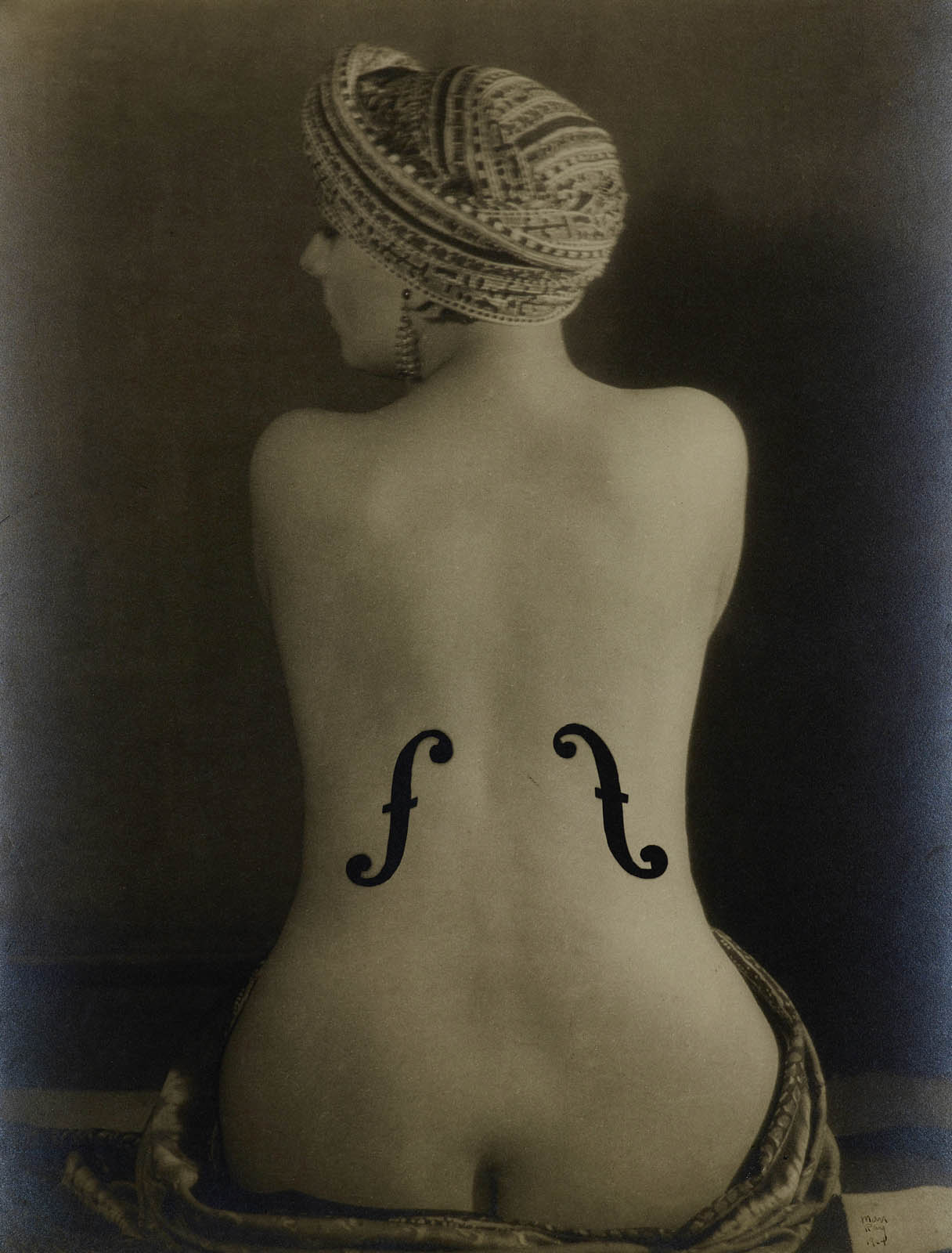
Man Ray (American, 1890-1976) 'Le violon d’Ingres' 1924


Man Ray (American, 1890-1976) 
Le violon d’Ingres
1924 
Gelatin silver print 
19 1/8 × 14 3/4 in. (48.5 × 37.5cm)
The Metropolitan Museum of Art, New York, Bluff Collection, Promised Gift of John A. Pritzker
© Man Ray 2015 Trust / Artists Rights Society (ARS), NY / ADAGP, Paris 2025
Photo by Ian Reeves


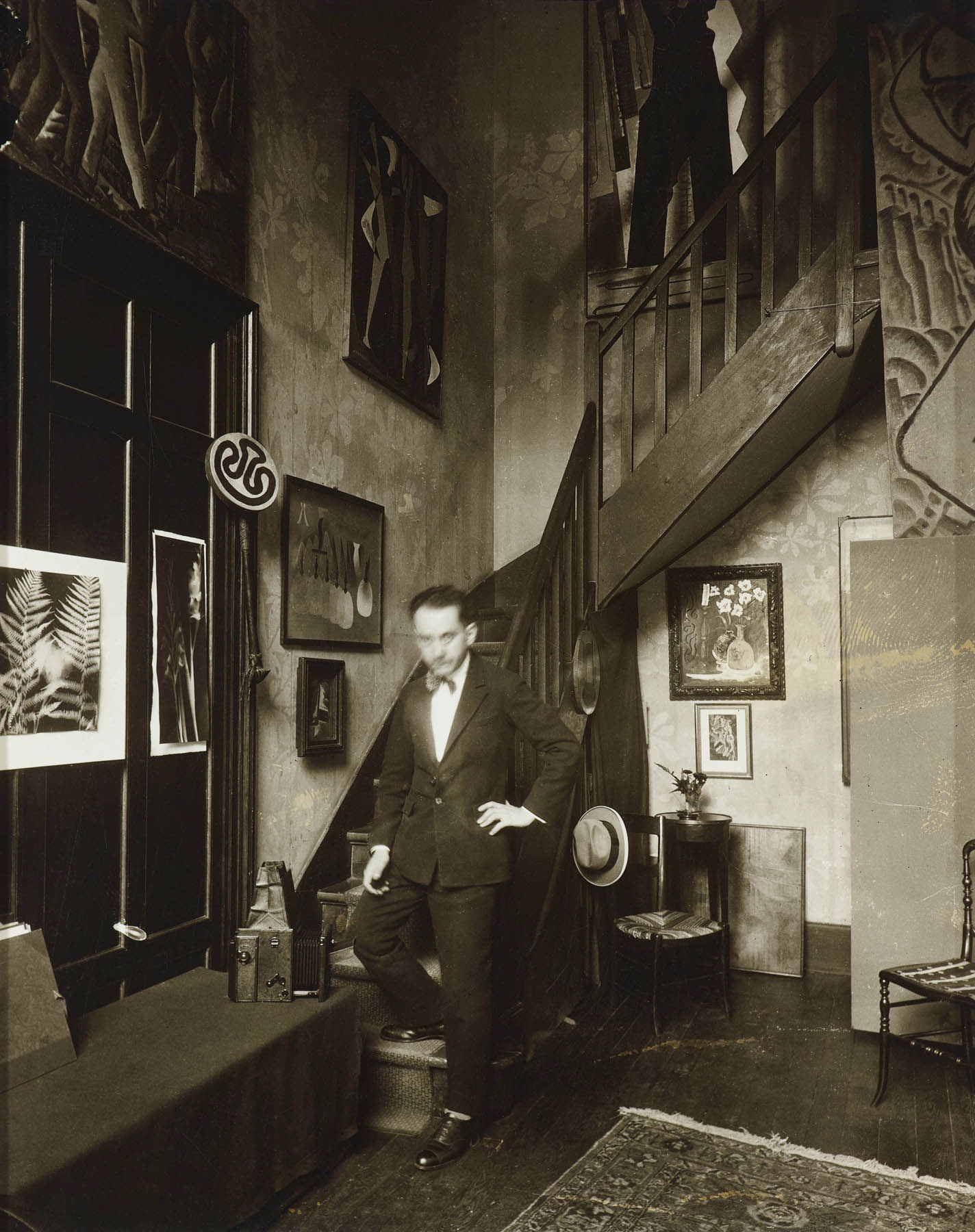
Man Ray (American, 1890-1976) 'Self-Portrait in 31 bis rue Campagne-Premiere Studio' 1925


Man Ray (American, 1890-1976) 
Self-Portrait in 31 bis rue Campagne-Première Studio
1925 
Gelatin silver print 
6 1/8 × 4 1/2 in. (15.6 × 11.4cm) 
The Metropolitan Museum of Art, New York, Bluff Collection, Promised Gift of John A. Pritzker
© Man Ray 2015 Trust / Artists Rights Society (ARS), NY / ADAGP, Paris 2025
Photo by Ian Reeves


Man Ray (American, 1890-1976) 'Noire et blanche' 1926


Man Ray (American, 1890-1976)
Noire et blanche
1926
Gelatin silver print
8 1/16 x 11 11/16 in. (20.5 x 29.7cm)
Private collection
© Man Ray 2015 Trust / Artists Rights Society (ARS), NY / ADAGP, Paris 2025


Man Ray (American, 1890-1976) 'Primat de la matière sur la pensée' (Primacy of Matter over Thought) 1929


Man Ray (American, 1890-1976)
Primat de la matière sur la pensée (Primacy of Matter over Thought)
1929
Gelatin silver print
10 1/2 x 14 7/8 in. (26.7 x 37.8cm)
Private collection, San Francisco
© Man Ray 2015 Trust / Artists Rights Society (ARS), NY / ADAGP, Paris 2025


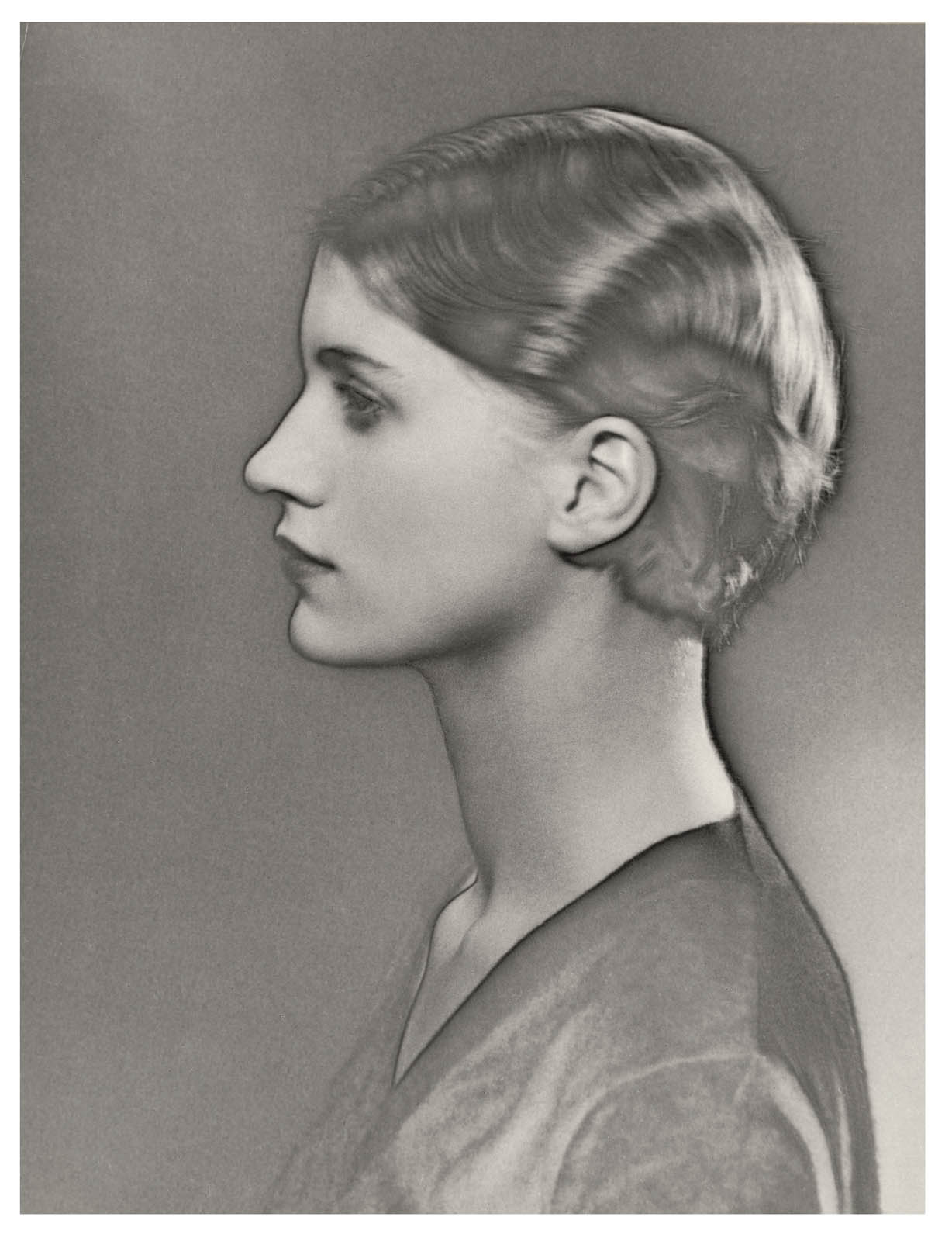
Man Ray (American, 1890-1976) 'Lee Miller' 1929


Man Ray (American, 1890–1976) 
Lee Miller 
1929 
Gelatin silver print 
10 1/2 × 8 1/8 in. (26.7 × 20.6cm) 
The Museum of Modern Art, New York, Gift of James Thrall Soby 
© Man Ray 2015 Trust / Artists Rights Society (ARS), NY / ADAGP, Paris 2025


Man Ray (American, 1890-1976) 'Self-Portrait with Camera' 1930


Man Ray (American, 1890-1976)
Self-Portrait with Camera
1930
Gelatin silver print
4 3/4 x 3 1/2 in. (12.1 x 8.9cm)
The Jewish Museum, New York
Purchase: Photography Acquisitions Committee Fund, Horace W. Goldsmith Fund, and Gift of Judith and Jack Stern
© Man Ray 2015 Trust / Artists Rights Society (ARS), NY / ADAGP, Paris 2025


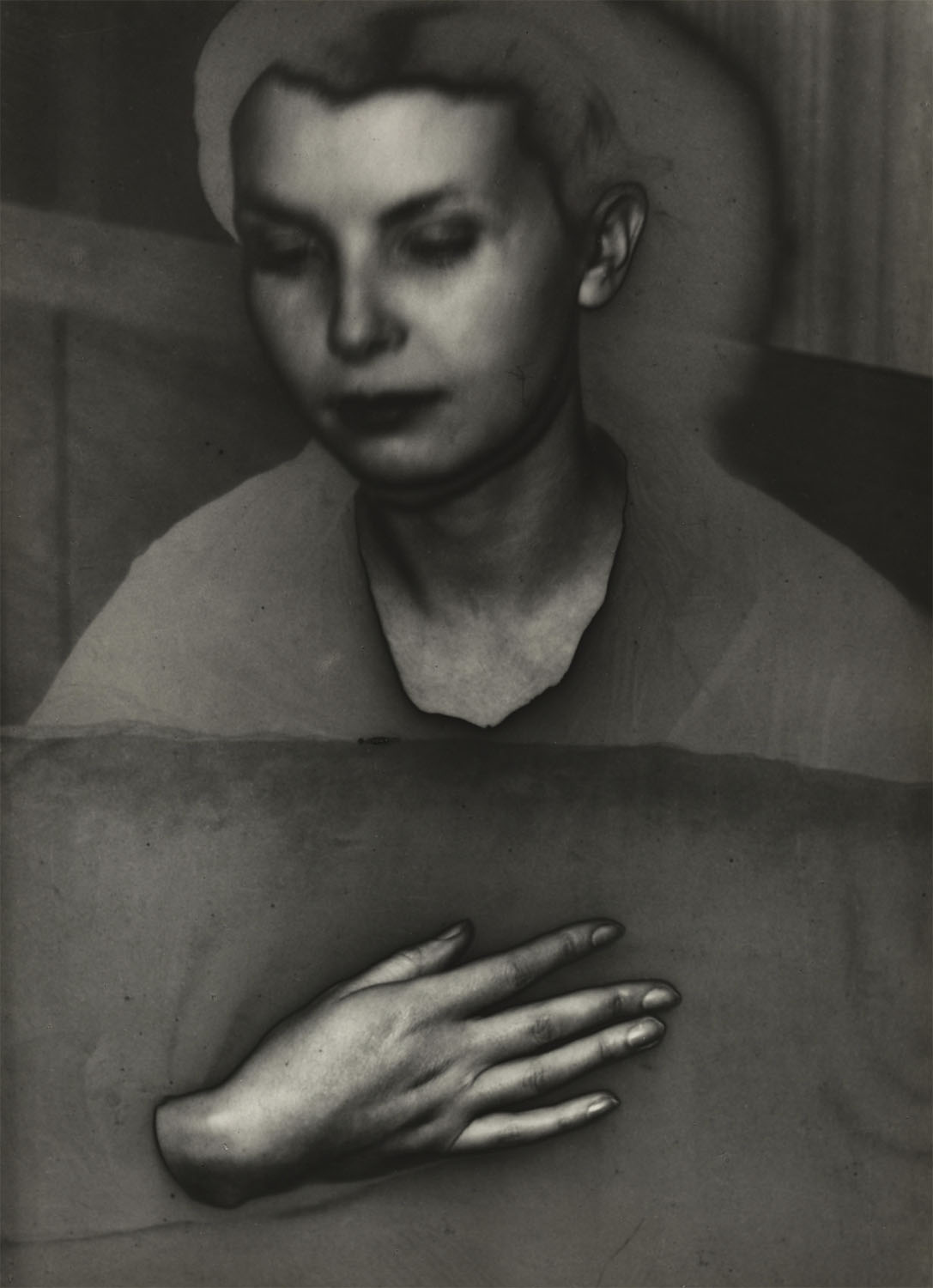
Man Ray (American, 1890-1976) 'Mary Gill' 1930


Man Ray (American, 1890-1976)
Mary Gill
1930
Gelatin silver print
11 1/2 x 8 1/2 in. (29.2 x 21.6cm)
Harvard Art Museums/Fogg Museum, Robert M. Sedgwick II Fund
© Man Ray 2015 Trust / Artists Rights Society (ARS), NY / ADAGP, Paris 2025


Man Ray (American, 1890-1976)
'Untitled (Glass Tears)' c. 1930-1933, printed 1935 or later


Man Ray (American, 1890-1976)
Untitled (Glass Tears)
c. 1930-1933, printed 1935 or later
Gelatin silver print
8 7/8 x 11 1/4 in. (22.5 x 28.6cm)
Private collection
© Man Ray 2015 Trust / Artists Rights Society (ARS), NY / ADAGP, Paris 2025


Man Ray: When Objects Dream

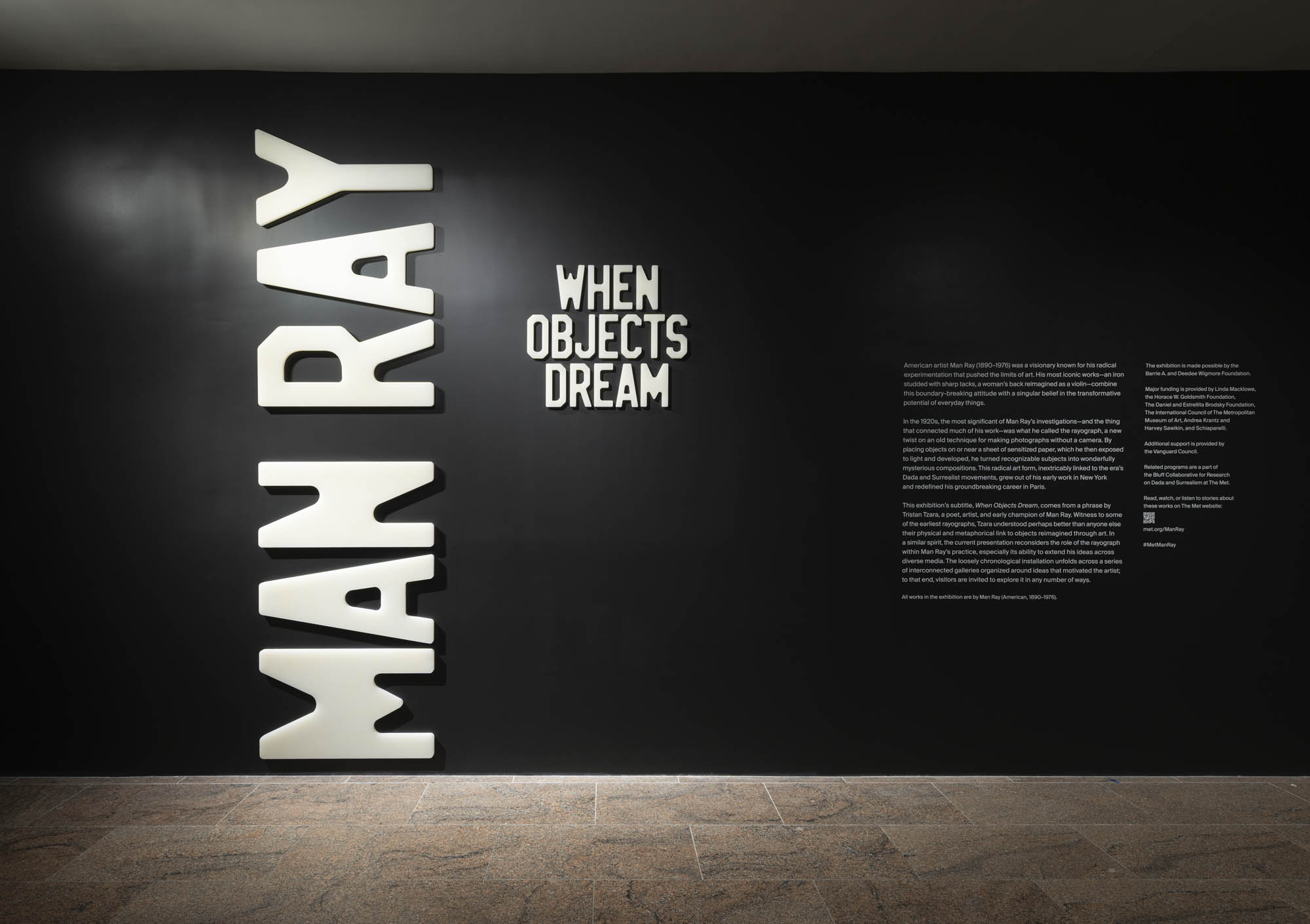
American artist Man Ray (1890-1976) was a visionary known for his radical experimentation that pushed the limits of art. His most iconic works – an iron studded with sharp tacks, a woman’s back reimagined as a violin – combine this boundary-breaking attitude with a singular belief in the transformative potential of everyday things. 

In the 1920s, the most significant of Man Ray’s investigations – and the thing that connected much of his work – was what he called the rayograph, a new twist on an old technique for making photographs without a camera. By placing objects on or near a sheet of sensitised paper, which he then exposed to light and developed, he turned recognisable subjects into wonderfully mysterious compositions. This radical art form, inextricably linked to the era’s Dada and Surrealist movements, grew out of his early work in New York and redefined his groundbreaking career in Paris.

Introduction

This exhibition’s subtitle, When Objects Dream, comes from a phrase by Tristan Tzara, a poet, artist, and early champion of Man Ray. Witness to some of the earliest rayographs, Tzara understood perhaps better than anyone else their physical and metaphorical link to objects reimagined through art. In a similar spirit, the current presentation reconsiders the role of the rayograph within Man Ray’s practice, especially its ability to extend his ideas across diverse media. The loosely chronological installation unfolds across a series of interconnected galleries organized around ideas that motivated the artist; to that end, visitors are invited to explore it in any number of ways.

All works in the exhibition are by Man Ray (American, 1890-1976).

Champs délicieux

In April 1922, readers of a French literary journal discovered a curious announcement for an album titled Champs délicieux (Delicious Fields). Its twelve “original photographs” by Man Ray feature objects from his studio – tongs, a comb, string, a hotel room key – composed in groupings. The images are ordered without clear logic or narrative. Instead, as advertised, they mark a “state of mind,” the artist’s free play, alone at night and without work obligations, in his studio darkroom. 

Man Ray introduced Champs délicieux in the period between two revolutionary movements that arose in the wake of World War I: Dada and Surrealism. Both challenged conventional art and society by upending traditional subjects, techniques, and expectations. Inspired in part by a collection of unconsciously driven, automatic writings by poets André Breton and Philippe Soupault, Man Ray sought to render everyday objects unfamiliar. As early subscriptions attest, the album found an enthusiastic audience who appreciated the language of the rayograph and its ability to open up a new visual world.

A New Art

Before Man Ray first picked up a camera in 1915, he was focused on painting. He set out to stake his claim in the exhilarating avant-garde scene, his interest fueled by cutting-edge exhibitions at Alfred Stieglitz’s gallery, 291, and thrilling examples of Cubism, Expressionism, Fauvism, and Futurism at the modern art presentation known as The Armory Show in 1913. Unexpectedly, photography offered Man Ray a path forward. Noting the way a camera lens could compress and flatten space, he determined to endow art with a similar “concentration of life” while simultaneously freeing it from the burden of illusionism. “The creative force and the expressiveness of painting,” he wrote at the time, “reside materially in the colour and texture of pigment, in the possibilities of form invention and organisation, and in the flat plane on which these elements are brought to play.” He made paintings using palette knives and other tools instead of brushes and employed patterns, cutouts, and collage to create a self-proclaimed “new art of two dimensions.”

Objects At Hand

NOT RESPONSIBLE FOR GOODS LEFT OVER THIRTY DAYS. So reads a sign in a photo, displayed nearby, of Man Ray’s West Eighth Street studio in New York. It was one of several items the artist discovered in the trash heap at his apartment building and brought up to his top-floor space. He considered retooling the sign to read LEFT OVER GOODS NOT RESPONSIBLE FOR THIRTY DAYS but decided it was perfect as is. This act – of elevating junk to art – is a familiar one in histories of the avant-garde, especially for the Dada movement. Art did not have to be painted or modelled or made with traditional materials and tools; it could be found in the everyday world and appreciated for the idea that it introduced, not for its beauty. 

As Man Ray developed his “new art,” he came to see the latent potential of all the objects within his studio. This spurred further investigations that likewise tested the limits of two and three dimensions and blurred the boundaries between media. At the same time, he continued to explore how the camera could be used not only to document his work but to open new perspectives onto ordinary objects and their creative possibilities.

Clichés-verre

While the rayograph is often described as Man Ray’s first experiment with cameraless photography, that moment occurred years earlier. Around 1917 he explored several photographically based techniques, including the cliché-verre, or “glass-plate” print. A nineteenth-century reproductive process that incorporates both photography and printmaking, a cliché-verre is traditionally made by covering a plate of glass with a darkened medium and drawing into it to produce clear lines. When set onto sensitised paper and exposed to a light source, the plate transmits the scratched away areas as dark lines. Man Ray chose to incise directly into the emulsion of an exposed photographic plate, which he then subjected to light again with paper below it to make a contact print. 

Photography

Man Ray first picked up a camera in 1915, to document his art. Through this experience, he discovered that the works acquired new qualities when reproduced in black and white. He made photographic portraits, too, which in Paris would become a dependable source of income. Revelling in the camera’s transformative optical abilities, Man Ray soon used it as a tool to facilitate his self-appointed role as a “marvellous explorer of those aspects that our retinas will never record.” He sought to reveal the creative potential of objects in his studio and in 1918 began a series of photographs using specifically arranged everyday items.

Aerographs

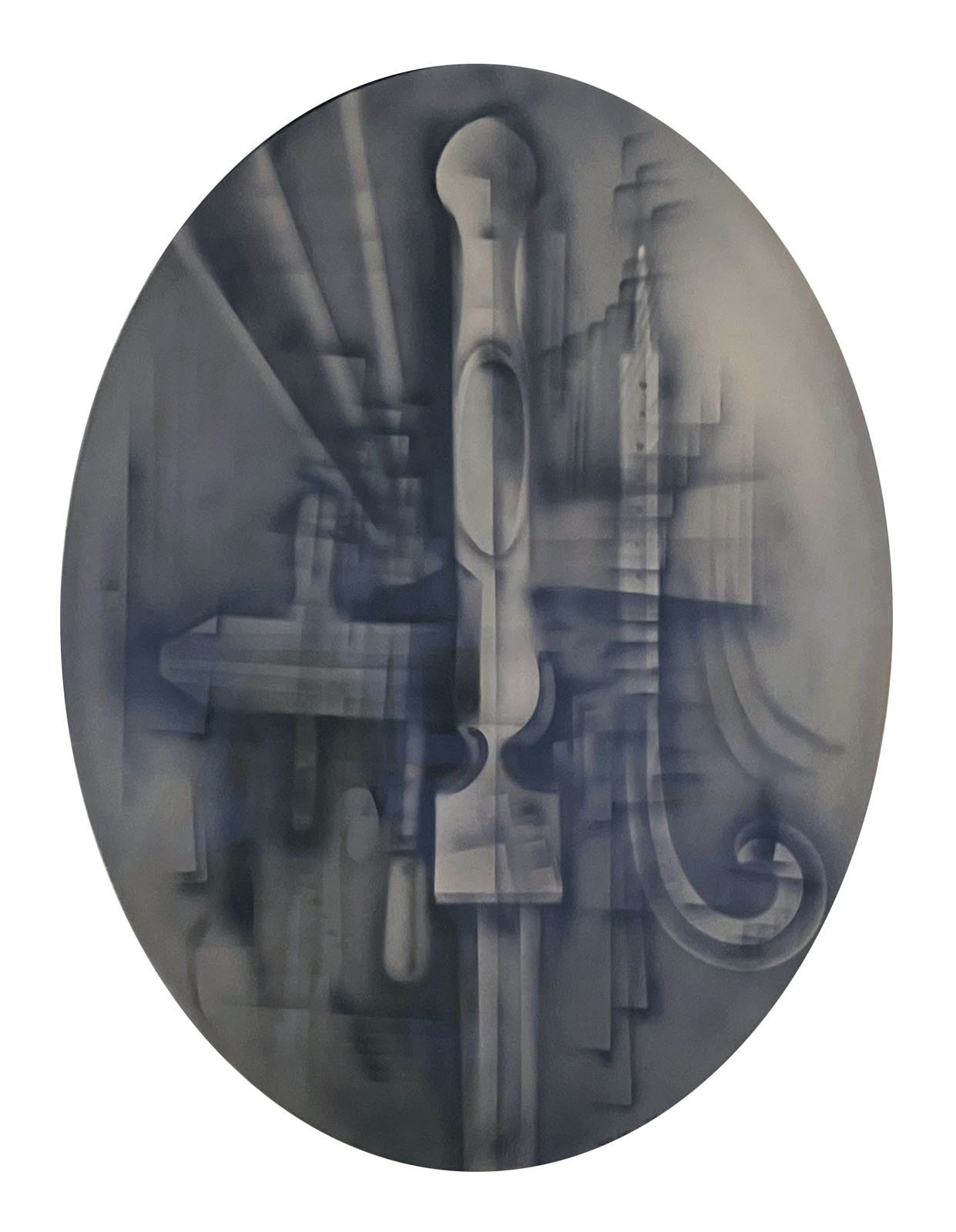
Still grappling with how to paint without a brush, Man Ray found inspiration at his day job working for an advertising agency, where he was introduced to an airbrush. He later brought the equipment back to his attic studio and began to experiment. Using an air compressor, the artist directed pigment through stencils and around masked areas and objects, which he rested on the composition board and repositioned as he worked. “It was thrilling,” he would later recount, “to paint a picture, hardly touching the surface – a purely cerebral act.” These works, which he termed “aerographs” were made, in effect, before they hit the paper. Objects were carved, shaped, and modeled in the air. Voids register as substance, and what we see on the paper is residue fused to the surface. “I tried above all,” Man Ray explained, “to create three-dimensional paintings on two-dimensional surfaces.”

Flou

Man Ray introduced his rayographs during a transitional period between the Dada and Surrealism movements that the French writer Louis Aragon called the mouvement flou – flou translating to “blurry” or “out of focus.” The term also suits these works, which viewers initially deemed curious and captivating but difficult to pin down. Rayographs, as cameraless photographs, exist in an indistinct place between photography and painting, the mechanical and the handmade, documentation and dream. 

During the 1920s Man Ray also explored blurriness in his camera images. Even as technical improvements facilitated increased focus and detail, and the preference for sharp photographs grew, he generally pursued a flattering, soft-focus technique in his growing business of portrait commissions. At other times, he sought more radical effects, which the director Claude Heymann described as “strange, troubling blurs” produced “through distortions, prolonged poses or special focusing techniques.” The anomalies in the resulting photographs are visible signs of the effort and time Man Ray spent to realise the images – even if he later called them unplanned or accidental.

A New Field of Gravity

In his preface introducing the album Champs délicieux (Delicious Fields), Tristan Tzara remarked that rayographs “present to space an image that exceeds it, and the air, with its clenched fists and superior intelligence, seizes it and holds it next to its heart.” Indeed, objects in Man Ray’s images beckon us in but keep us thrillingly at the edge – or put another way, they test our senses of proximity and location. His experiments in New York expanded the bounds of the photograph, object, painting, and installation, and he developed a novel relationship between object and viewer. These works demonstrate in their construction what the French writer Georges Ribemont-Dessaignes would identify in the artist’s rayographs as a “new field of gravity.”

The rayograph

The term rayograph designates Man Ray’s version of a technique for making photographs without a camera: by setting objects on or near sensitised paper and exposing it to light. In his autobiography, the artist described happening upon the process by chance, late one night, while developing prints in his makeshift darkroom. For subjects, he looked no further than the things in his studio. When exposed to a directed flash of light, they appear as reversed silhouettes – but in Man Ray’s hands they also gained new life. The nature of the image depended on the items’ translucency, reflectivity, density, placement, and distance from the sheet, as well as the source and location of the illumination and the number of exposures. Surfaces could cast unexpected reflections or eclipse elements in darkness. Forms might multiply or transform. Sometimes Man Ray’s objects and the space between them acquired an insistent, compressed volume that registered on the paper. The resulting works present what writer Pierre Migennes described as a “metamorphosis of the most vulgar utensils.” Everyday things became wonderfully unfamiliar as Man Ray wielded light in the darkroom like a brush in paint.

As he prepared to launch his rayographs in Champs délicieux, Man Ray also considered how to disseminate them for reproduction in magazines. On November 1, 1922, he wrote to Harold Loeb, editor of Broom: “Each print is an original, no plate or duplicate exists, as the process is manipulated directly on the paper, like a drawing. If you could assure me that the … originals would be safely handled and returned, I shall gladly send them on [to Berlin]. If, however, you cannot guarantee their safe return, I can re-photograph them … which, while not having the intensity and contrast of the originals, would nevertheless reproduce well.” Loeb offered to transport them personally and published these four in Broom the following March.

Man Ray transformed and energised ordinary objects in his rayographs by tapping their powers of translucency or reflectance. Bodies and their proxies, however, remain stubbornly recognisable. Hands reach out, hold things, and interact with objects; heads turn to kiss and drink, even if the action might be staged. The artist’s rayographs tie the body to a kind of specificity that his objects do not experience; this might explain why there are fewer of these works with bodies than without. As Tristan Tzara explained in his appreciation of the rayographs in 1934, Man Ray approached objects in a manner that allowed them to be free “to dream.”

Dangerous Games

Reactions to Man Ray’s cameraless photographs consistently identified them with the realm of play. The first to comment on the rayograph was French poet Jean Cocteau, who wrote in an open letter, “You, my dear Man Ray, will nourish our minds with those dangerous games it craves.” He was soon joined by Tristan Tzara, who likened the rayograph to a “game of chess with the sun.” 

Man Ray had a strong sense of the game as a strategy for producing art. For him, play was a state of readiness to engage. This comes through in the provocative humour of his objects and collages and in the invitation to chance embedded in the rayograph process – the “discovery” of which, he recounted, entailed real amusement. Marcel Duchamp once playfully defined his friend as synonymous with the joy of the game: “MAN RAY, n.m. synon. de joie, jouer, jouir” (joy, to play, to enjoy).

Chemical Paintings

In April 1922, the same month that the Champs délicieux album was announced, Man Ray proudly reported to friends and patrons that he had freed himself “from the sticky medium of paint.” His rayographs claimed a rebellious position aimed at the traditional hierarchy of fine art – and particularly its apex, painting. Critics asserted they had equal status, and New York’s Little Review even called them “chemical paintings.”

Just a year later, however, while his rayograph production remained steady, Man Ray quietly returned to painting. The works here show how his practice had changed. Abstract and relatively small, they were made on commercially available boards, wood, sandpaper, or metal supports. With their overlapping pictorial elements and dramatic contrasts of luminosity and shadow, angled and geometric forms, the compositions emulate aspects of rayographs. Each is a thorough exploration of depth on a flat surface and a bid to make paint reflect its own material reality.

Objects and Bodies

Man Ray’s experience of making rayographs informed his consideration of the human body, which he handled, at times, like an object, devoid of personhood and open for manipulation. Writing about the artist’s portraits and rayographs, André Breton noted that Man Ray considered the bodies of women in his work no different from the objects at hand in his darkroom: 

The very elegant, very beautiful women who expose their tresses night and day to the fierce lights in Man Ray’s studios are certainly not aware that they are taking part in any kind of demonstration. How astonished they would be if I told them that they are participating for exactly the same reasons as a quartz gun, a bunch of keys, hoar-frost or fern!

For Man Ray, a body could function as a kind of concentrated equivalence, like the essence represented by an object. This attitude is visible in some of the most iconic works of his career, in which his presentation of female models such as the artist and performer Kiki de Montparnasse (Alice Prin) also involved darkroom manipulation. While his approach to men’s bodies was notably less sexualised, they too were posed and set up like the objects in his rayographs.

Darkroom Manoeuvres 

Like other pictures of Kiki de Montparnasse in this gallery, Le violon d’Ingres involved multiple darkroom campaigns. For the version published in Littérature, Man Ray worked on a print to sharpen the contours and smooth the forms; he added f-shaped sound holes directly onto it with dark ink. 

The version here, larger than the first, is the result of further experimentation. Man Ray covered the entire print with a mask from which he hand cut two f-shaped forms. He then made a second exposure, which turned the exposed spaces black. Instead of ink shapes that disrupt the surface, these marks read as deep, dark space compressed within the flat surface of the photograph. Man Ray described this version as “a combination of a photo and a rayograph.” As such, the f-holes are eerily – seamlessly – part of the woman’s body. She appears as a kind of dreamlike human-instrument hybrid, a whole object to be visually taken in and possessed.

Dreams

Even before the Surrealist manifesto of 1924 claimed the fertile ground of the unconscious, many poets and artists in Man Ray’s circle focused on dreams. The same group, two years earlier, had followed André Breton’s experiments with hypnosis and trance states. They practiced séances and so‑called sleeping fits, writing down or drawing what came to them in order to reveal hidden desires. The poet Louis Aragon wrote of these slumberous escapades: “Dreams, dreams, dreams, the domain of dreams expands with every step.” 

Apart from photographing the sleep sessions, Man Ray remained an independent supporter of the group, explaining, “It has never been my object to record my dreams, just the determination to realise them.” Even so, Aragon included him in his multipage inventory of dreamers, with a nod to the rayographs: “Man Ray … dreams in his own way with knife rests and salt cellars: he gives meaning to light, which now knows how to speak.” The artist found great support among the Surrealist circle in Paris, whose members acquired his work and included him in exhibitions and publications.

Dream Objects 

Man Ray’s dreamlike rayographs have counterparts in the new kinds of hybrid objects he began to make at the same time. These mysterious works seize upon unexpected transformations: a fragile soap bubble rendered solid; the taut strings on a musical instrument’s neck turned loose and sensuous; or a budding plant metamorphosed into a pudgy hand. 

The strange bundle wrapped with string has long been associated with the power of objects to stir the unconscious. In 1920 Man Ray assembled, photographed, and deconstructed the original object. The Untitled photograph appeared in the first issue of La revolution surréaliste, in 1924, with the text “Surrealism opens the door of the dream to all those for whom night is miserly.” Over the next decade, the image came to embody another phrase popular among the Paris Surrealist group, by the poet Isidore Ducasse: “as beautiful … as the chance encounter of a sewing machine and an umbrella on a dissecting table.” 

“Objects to touch, to eat, to crunch, to apply to the eye, to the skin, to press, to lick, to break, to grind, objects to lie, to flee from, to honor, things cold or hot, feminine or masculine, objects of day or night which absorb through your pores the greater part of our life. … These are the projections surprised in transparence, by the light of tenderness, of objects that dream and talk in their sleep.” (Tristan Tzara, “When Objects Dream,” 1934)

Returns

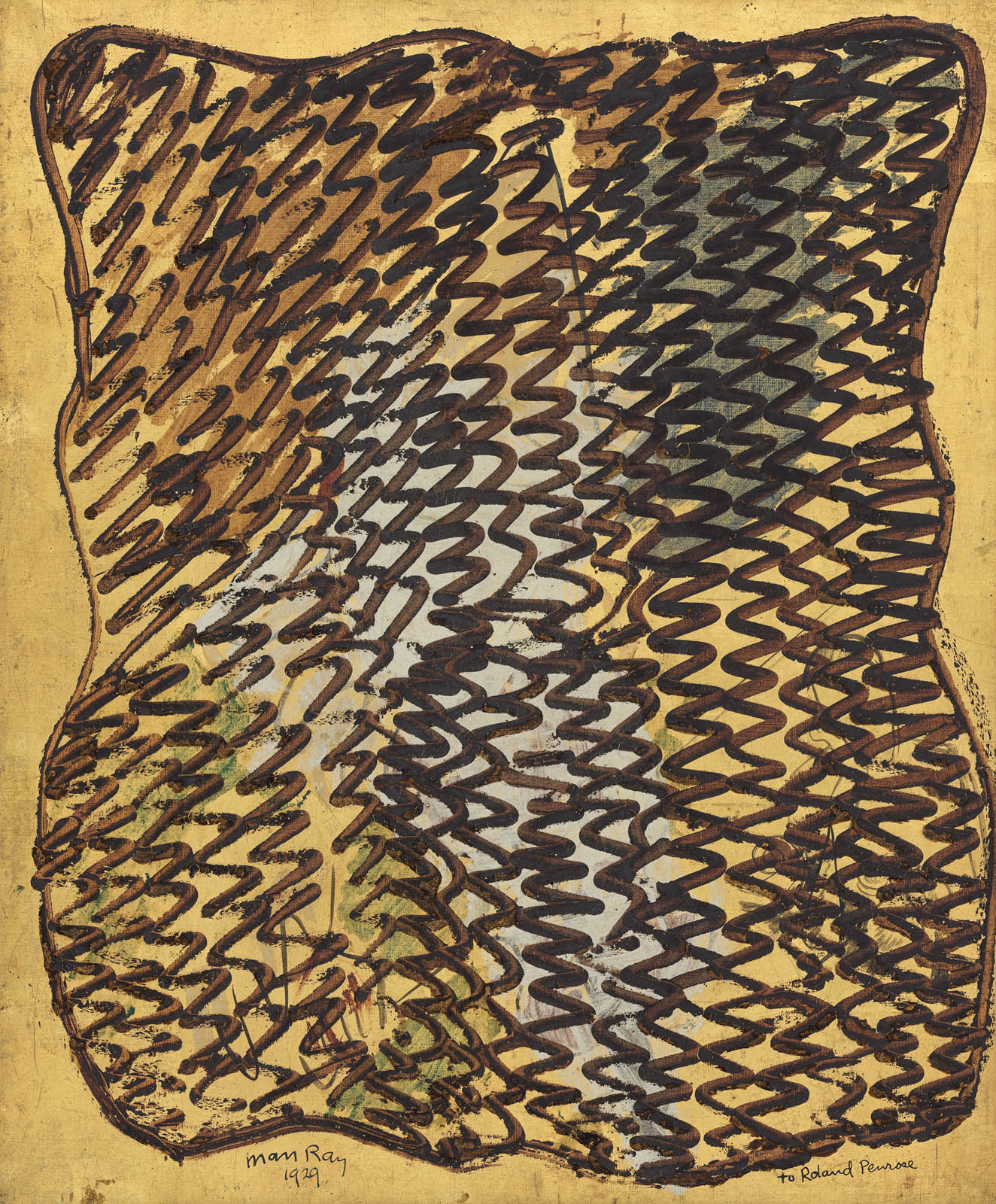
In 1929 Man Ray found himself “longing to touch paint again.” By the fall, he had taken a second Paris studio, near the Luxembourg Gardens, where he painted in the mornings before returning home to oversee photographic portraits and magazine work. In his new compositions, he let paint drip across a canvas from a poured line and squeezed pigment directly from the tube onto a support in a loose, calligraphic manner. Trading on narratives of chance and automatism, he later called these paintings “unpremeditated.” 

Another return accompanied the arrival in Paris of Lee Miller, who became Man Ray’s apprentice in photography and then his personal and professional partner. As a result, he again embraced the camera as his primary tool of photographic experimentation, after years of making rayographs without one. Together, Miller and Man Ray discovered a creative synergy that led to their joint development of the solarization process. The same year signalled the near culmination of Man Ray’s exploration of the rayograph: by some accounts, he made one hundred in 1922, but just one in 1929.

Solarization 

Together with Lee Miller, Man Ray developed a darkroom technique that complemented his return to painting. Like the rayograph, solarization was not entirely new, and both he and Miller claimed that it similarly resulted from an accident. The process involves exposing a negative a second time during development, which causes a reversal of the expected tonalities. Honed by Miller and Man Ray and applied to their portraits and nudes beginning in fall 1929, the process often endowed subjects with subtly glowing black contours that Miller called “halos.” This feature became so well-known – largely through reproductions of the solarized portrait of Miller shown nearby – that a 1932 article called it both “the beacon and despair of experimenters.” Like the drips and skeins in Man Ray’s 1929 paintings, these lines create a friction between the subject and surface of the image – a noted departure from the artist’s earlier approach to the flat plane.

Revisiting Champs délicieux 

Man Ray completed his Champs délicieux project nearly forty years after its debut. A handwritten inscription to Tristan Tzara in the final copy (number 41, displayed here) refers to the sparks set off by their initial exploration of the rayograph; he added an almost identical inscription in his 1922 working copy. This suggests a Dada game between the two artists: the announcement laid out the rules and the inscriptions signified its end. 

As promised in the 1922 first announcement of the album, the last copy features the canceled proofs (a practice meant to show that no further prints can be made from the originals). A canceled print edition is not unusual. In this case, however, a purposeful ambiguity was in play from the beginning of the project – when it was presented as an album of “original photographs” copied from unique rayographs – to the end. Only the negatives used to produce the album were canceled, meaning that the primary rayographs might still exist. Ever the prankster, Man Ray ensured that the game continues.

Text from The Metropolitan Museum of Art


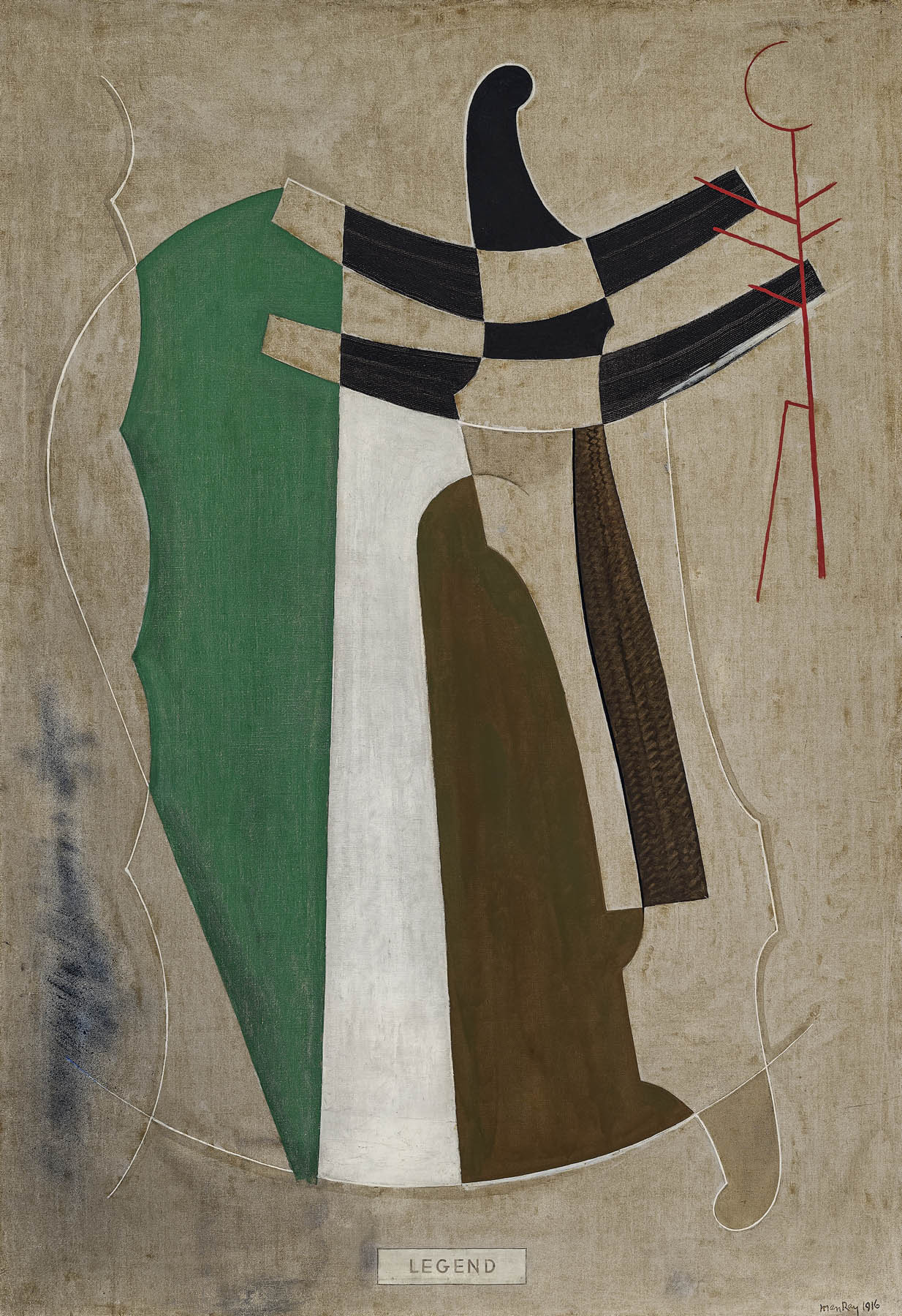
Man Ray (American, 1890-1976) 'Legend' 1916


Man Ray (American, 1890-1976) 
Legend 
1916 
Oil on canvas 
52 × 36 in. (132.1 × 91.4 cm) 
Collection of Deborah and Edward Shein
© Man Ray 2015 Trust / Artists Rights Society (ARS), NY / ADAGP, Paris 2025
Photo by Stephen Petegorsky


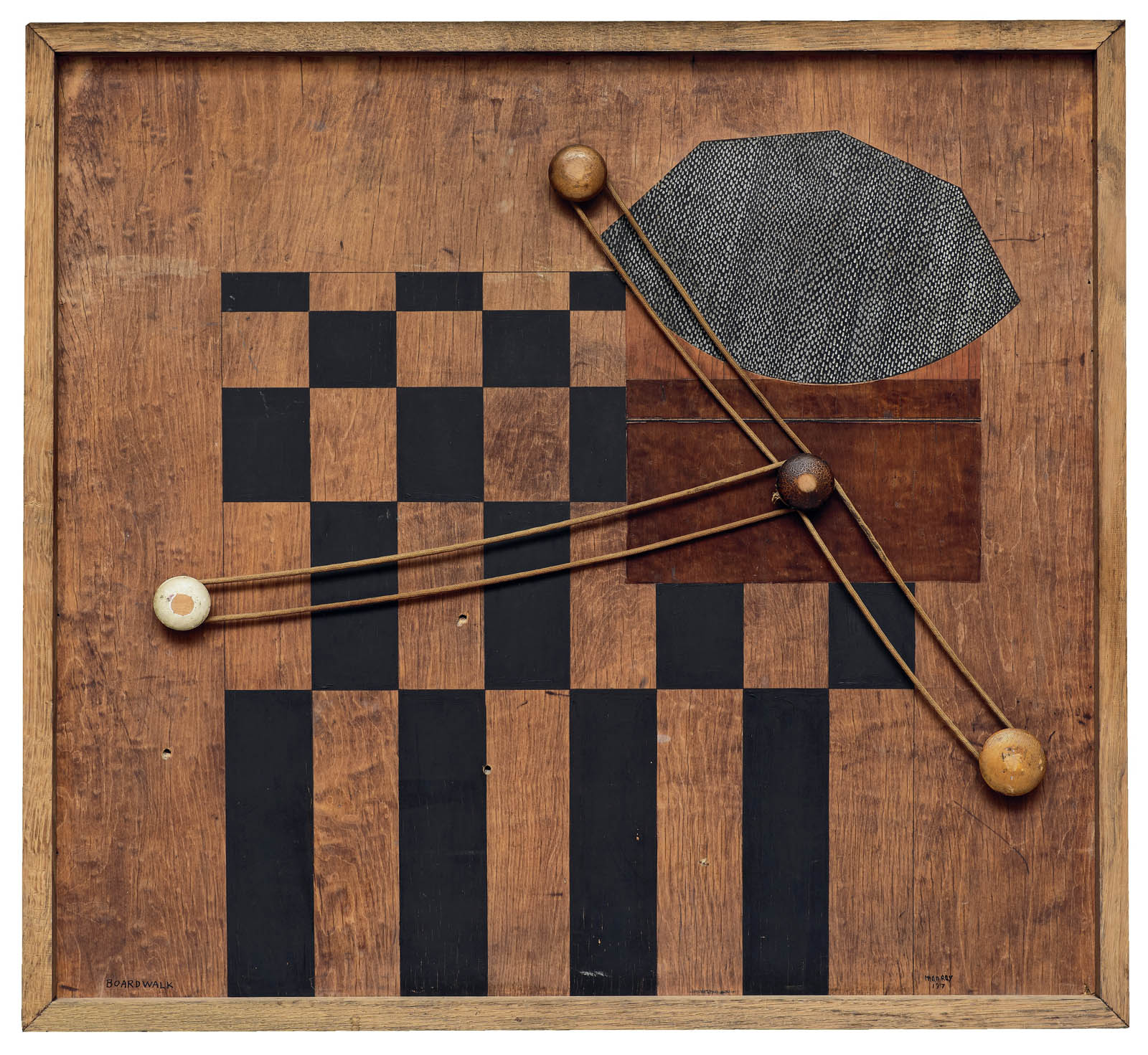
Man Ray (American, 1890-1976) 'Boardwalk' 1917


Man Ray (American, 1890-1976) 
Boardwalk 
1917 
Oil, wood handles, and yarn on wood 
26 9/16 × 29 × 15/16 in. (67.4 × 73.6 × 2.4cm) 
Staatsgalerie Stuttgart, acquired 1973 with Lotto Funds
© Man Ray 2015 Trust / Artists Rights Society (ARS), NY / ADAGP, Paris 2025


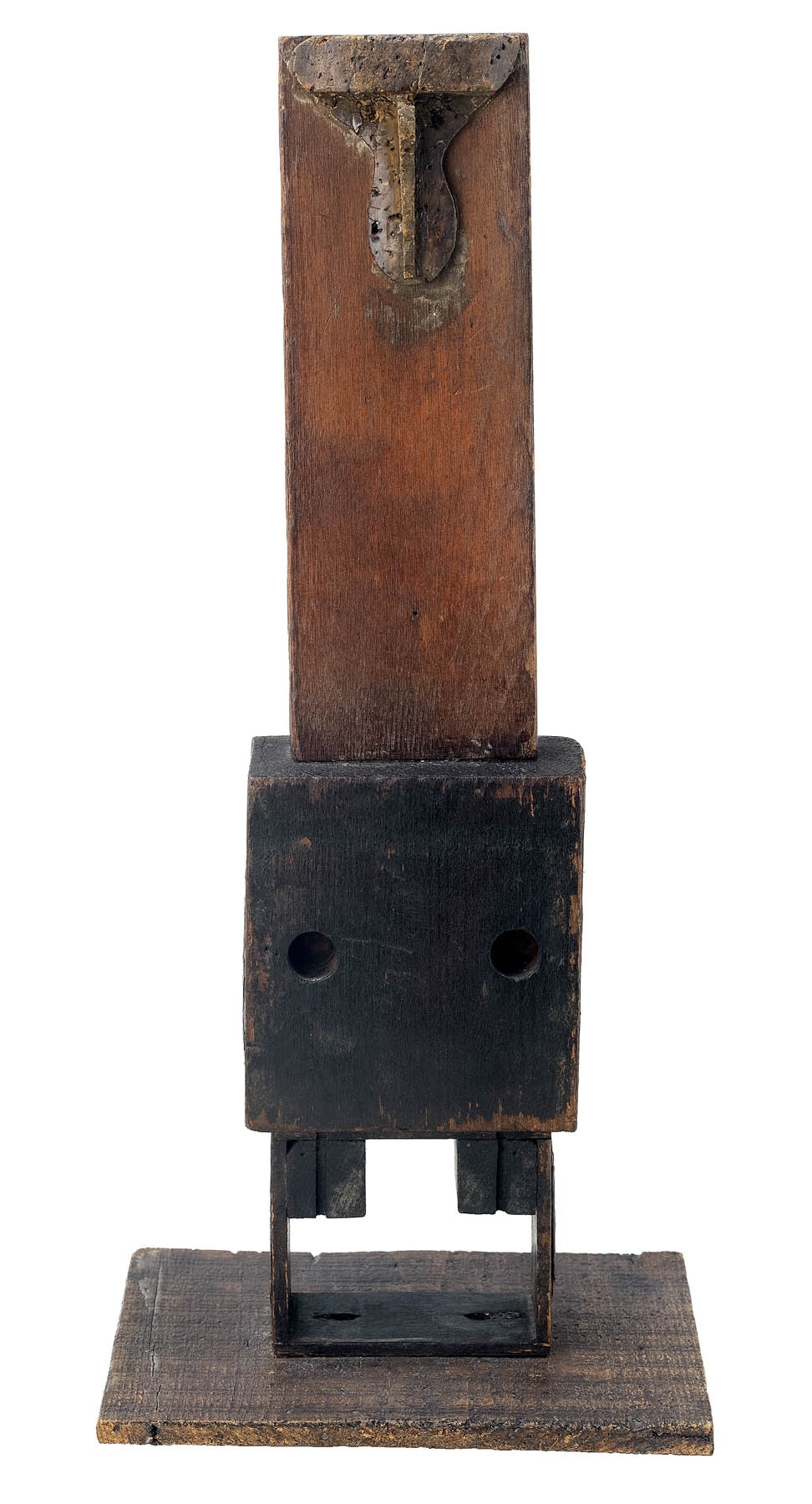
Man Ray (American, 1890-1976) 'By Itself I' 1918


Man Ray (American, 1890-1976) 
By Itself I 
1918 
Wood, iron, and cork 
17 1/4 × 7 11/16 × 7 5/16 in. (43.8 × 19.5 × 18.6cm) 
LWL–Museum für Kunst und Kultur, Münster, Germany 
© Man Ray 2015 Trust / Artists Rights Society (ARS), NY / ADAGP, Paris 2025 


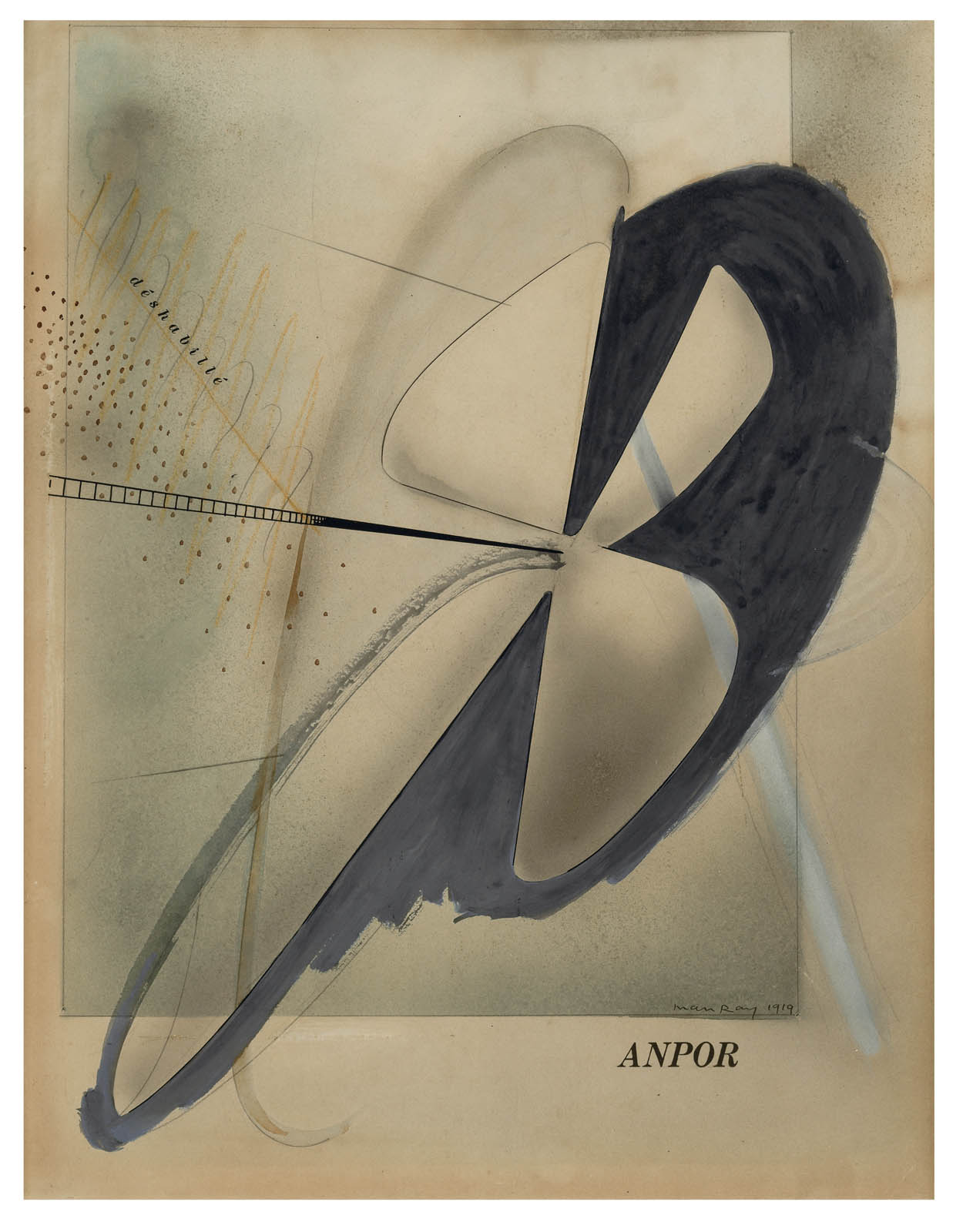
Man Ray (American, 1890-1976) 'ANPOR' 1919


Man Ray (American, 1890-1976) 
ANPOR 
1919 
Gouache, ink, and colored pencils on paper 
15 1/2 × 11 1/2 in. (39.4 × 29.2cm) 
Collection of Gale and Ira Drukier
© Man Ray 2015 Trust / Artists Rights Society (ARS), NY / ADAGP, Paris 2025 
Image © The Metropolitan Museum of Art, photo by Bruce Schwarz


Man Ray (American, 1890-1976) 'Aerograph' 1919


Man Ray (American, 1890-1976)
Aerograph
1919
Gouache on paperboard
26 3/8 x 19 11/16 in. (67 x 50cm)
Staatsgalerie Stuttgart, Graphische Sammlung, acquired 1987
© Man Ray 2015 Trust / Artists Rights Society (ARS), NY / ADAGP, Paris 2025


Man Ray (American, 1890-1976) 'Catherine Barometer' 1920


Man Ray (American, 1890-1976) 
Catherine Barometer 
1920 
Glass, metal, felt, washboard, tube, wire, wood, steel wool, gouache on paper, and paper stamp 
48 1/8 × 12 × 2 1/8 in. (122.2 × 30.5 × 5.4cm) 
The Metropolitan Museum of Art, New York, Bluff Collection, Promised Gift of John A. Pritzker 
Photo courtesy of The Bluff Collection, photo by Ian Reeves


Man Ray (American, 1890-1976) 'Cadeau (Gift)' 1921 reconstructed 1970 (installation view)


Man Ray (American, 1890-1976)
Cadeau (Gift) (installation view)
1921 reconstructed 1970
Iron with brass tacks and wooden base
Overall: 19.0 x 14.9 x 14.9cm; iron & base: 17.9 x 14.9 x 14.9cm; glass cover: 19.0cm (h.)
Photo: © Marcus Bunyan

An example of this art work, not the actual one in the exhibition


Man Ray (American, 1890-1976) 'Paysage suedois' (Swedish Landscape) 1926


Man Ray (American, 1890-1976) 
Paysage suédois (Swedish Landscape
1926 
Oil on canvas 
18 × 25 1/2 in. (45.7 × 64.8 cm) 
The Mayor Gallery, London
© Man Ray 2015 Trust / Artists Rights Society (ARS), NY / ADAGP, Paris 2025
Photo courtesy of The Mayor Gallery, London


Man Ray (American, 1890-1976) 'Torso' 1929


Man Ray (American, 1890-1976) 
Torso 
1929 
Oil and gouache on gold foil paper on canvas 
18 1/16 × 14 15/16 in. (45.9 × 38 cm) 
The Penrose Collection
© Man Ray 2015 Trust / Artists Rights Society (ARS), NY / ADAGP, Paris 2025
Image © The Metropolitan Museum of Art, photo by Mark Morosse 


The Metropolitan Museum of Art
1000 Fifth Avenue at 82nd Street
New York, New York 10028-0198
Phone: 212-535-7710

Opening hours:
Thursday – Tuesday 10am – 5pm
Closed Wednesday

The Metropolitan Museum of Art website
LIKE ART BLART ON FACEBOOK

Back to top

Exhibition: ‘The ’70s Lens: Reimagining Documentary Photography’ at the National Gallery of Art, Washington

Exhibition dates: 6th October, 2024 – 6th April, 2025

 Curator: Andrea Nelson, associate curator in the department of photographs, National Gallery of Art


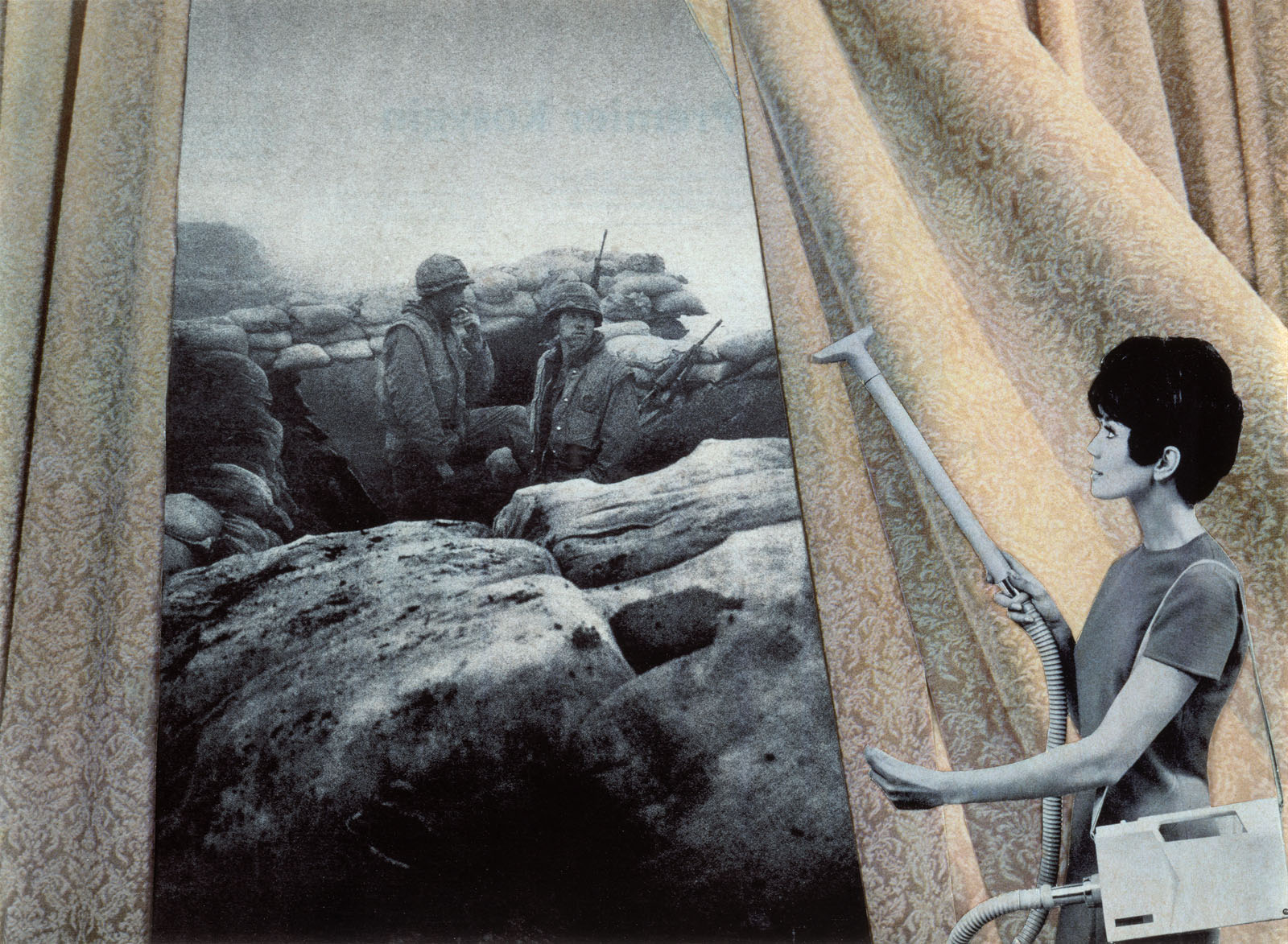
Martha Rosler (American, b. 1943) 'Cleaning the Drapes', from the series, 'House Beautiful: Bringing the War Home' 1967-1972 from the exhibition 'The '70s Lens: Reimagining Documentary Photography' at the National Gallery of Art, Washington


Martha Rosler (American, b. 1943)
Cleaning the Drapes
1967-1972, printed 2007
From the series House Beautiful: Bringing the War Home
Inkjet print
Image: 44.2 x 60.4cm (17 3/8 x 23 3/4 in.)
National Gallery of Art
Gift of the Collectors Committee and Pepita Milmore Memorial Fund


Martha Rosler originally distributed photocopies from this series, House Beautiful: Bringing the War Home, as flyers at anti – Vietnam War demonstrations. She made the original photomontages by combining gritty news photographs of fighting in Vietnam with homerelated advertisements culled from glossy women’s magazines. Here Rosler paired a woman cleaning patterned drapes with two tired soldiers smoking amid rocks and sandbags. The woman’s vacuum wand points to and echoes the soldiers’ rifles. The jolting collision of war imagery and affluent domestic space gives visual form to the description of the conflict as “the living room war” – so called because it appeared on television news nightly.

Wall text from the exhibition


“Ce n’est pas une pipe mais de la photographie, sous toutes ses formes variables et multivalentes”


René Magritte’s 1929 painting Ceci n’est pas une pipe is also known as La Trahison des images … The Treachery of Images.

Treachery – the betrayal of trust – is an apposite word in relation to photography of the 1970s. Finally, once and for all, documentary photography in America broke free of the West Coast fine art photography tradition of mainly white male artists and the “aura” of the fine art print (Walter Benjamin). Photography betrayed the trust placed in the authenticity of the image and its link to the “truth” of reality represented in the photograph to become a medium of variability, in concept, execution and outcome. Photography became whatever you wanted it to be.

Documentary photography and its link to the reality of the referent – its assumed representation of a truth that existed in reality – began to be subsumed into the whole of photography, just part of a conceptual, art, performative, staged, street, cameraless, documentary, fashion, photojournalist, activist, amoebic (from the Greek ἀμοιβή amoibe, meaning “change”), and viral (Paul Virilio) medium.

Photography had always been a medium of communication but now became multi-perspectival – whether that be imaginings of the mind relayed through photographs, conceptual ideas about the world and how we interact with it created and staged through photographs, or new colour photography that challenged the orthodoxy of fine art black and white West Coast American photography.

As Anne-Marie Willis observes on the On This Date In Photography website, “any curator who would challenge the orthodox Beaumont Newhall-style photo history limited to images that are distinctively photographic, aesthetic, and “Straight” … would open a Pandora’s box full of photographs pervasive across so many fields, of such limitless subject matters, and crossing so many disciplines that their histories in photography would be obscured.”1

This is the alleged treachery of multi-perspectival photography, the betraying of photographic histories that stretched back to the beginnings of the medium… but it had to be done for photography to fully open itself up to the imaginings of the human and the media flows of the world. “It was a time when photography challenged the art photography norm: photography should not, could not be restricted to what was considered ‘art’.”2

Thus, it is a great joy to see photographs from this stimulating exhibition, photographs that challenge the established “norm” of what photography should be. But what is surprising to me when looking at the complete list of photographs in this exhibition is the important artists who changed the face of photography in the 1970s who are not represented at all or only have one or two images on show:

Gordon Parks 0
Garry Winogrand 1
Lee Friedlander 2
Diane Arbus 1
Robert Mapplethorpe 0
Robert Heinecken 0
Richard Avedon 0
Andy Warhol 1 Polaroid
Cindy Sherman 0
Barbara Kruger 0
Nan Goldin 1
Stephen Shore 1

Diane Arbus, who was instrumental in changing portrait photography at the time, only has one photograph in the exhibition; Barbara Kruger and Robert Heinecken, both “para-photographers” whose work stood “beside” or “beyond” traditional ideas associated with photography have none; Stephen Shore who, along with William Eggleston, was responsible for making colour photography acceptable in art photography has only one photograph.

But most surprisingly of all, Cindy Sherman whose Untitled Film Stills were made predominantly between 1977-1980 and who casts herself as clichés or feminine types, becoming both the artist and subject in the work … is not there at all. Her loss, her evisceration, and the absence of “arguably one of the most significant bodies of work made in the twentieth century and thoroughly canonized by art historians, curators, and critics,”3 is unfathomable.

Dr Marcus Bunyan


1/ Anne-Marie Willis quoted in Dr James McArdle. “DECEMBER 14: CONTEXT,” on the On This Date In Photography website 15/12/2019 [Online] Cited 26/02/2025

2/ Ibid.,

3/ Exhibition Catalogue, New York, Museum of Modern Art, Cindy Sherman, 2012, p. 18 quoted in the “Untitled Film Stills” page on the Wikipedia website


Many thankx to the National Gallery of Art for allowing me to publish the photographs in the posting. Please click on the photographs for a larger version of the image.


Martha Rosler (American, b. 1943)
'Roadside Ambush' 1967-1972 from the exhibition 'The '70s Lens: Reimagining Documentary Photography' at the National Gallery of Art, Washington


Martha Rosler (American, b. 1943)
Roadside Ambush
1967-1972, printed 2007
Inkjet print
Image/sheet: 50.8 x 61cm (20 x 24 in.)
National Gallery of Art
Gift of the Artist and Mitchell-Innes and Nash


Rosler originally distributed photocopies of House Beautiful: Bringing the War Home at anti–Vietnam War demonstrations. “I saw House Beautiful not as art,” she later reflected. “I wanted it to be agitational.” The artist created the original photomontages, from which these collages are derived, by combining news photographs of scorched battlefields in Vietnam with glossy advertisements for US homes, layering images of soldiers within cut-out silhouettes of men from polo-shirt advertisements; and splicing pictures of soldiers’ burials with those of military marches. By tying the destruction abroad to untroubled affluence at home, Rosler gave visual form to the description of the conflict as “the living-room war” – so called because it was the first war to be televised.

MoMA gallery label from 2024


The exhibition The ’70s Lens: Reimagining Documentary Photography examines how new approaches to documentary photography that emerged during the 1970s reflected a radical shift in American life – and in the medium itself.

The 1970s was a decade of uncertainty in the US – soaring inflation, energy crises, the Watergate scandal, and protests about pressing social issues – and the profound upheaval that rocked the country formed the backdrop for a revolution in documentary photography. Now on view at @ngadc, The ’70s Lens: Reimagining Documentary Photography explores this compelling and contested moment of reinvention when the genre’s association with objectivity and truthfulness came into question. Featuring works from over eighty artists, the exhibition delves into how the camera was used to examine life in the US from a diverse range of perspectives, and in doing so, transformed the practice of documentary photography.


The ’70s Lens: A Conversation with Anthony Hernandez

Artist Anthony Hernandez discusses 50 years of work with curator Andrea Nelson on October 24, 2024. The conversation celebrates the exhibition The ’70s Lens: Reimagining Documentary Photography (October 2024 – April 2025).

Anthony Hernandez (b. 1947, Los Angeles, California) has crafted a richly varied oeuvre, ranging from a distinctive style of black-and-white street photography to colour photographs of abstracted details of his surroundings. Much of Hernandez’s work focuses on his native Los Angeles, revealing a unique insight into the people and landscape of the much-pictured city. Hernandez is a recipient of a Guggenheim Fellowship (2018), the Rome Prize (1999) and has been named a United States Artists Fellow (2009).


William Eggleston (American, b. 1939) 'Memphis' 1969-1970 from the exhibition 'The '70s Lens: Reimagining Documentary Photography' at the National Gallery of Art, Washington


William Eggleston (American, b. 1939)
Memphis
1969-1970, printed 1980
Dye imbibition print
Image: 30.2 x 44.2cm (11 7/8 x 17 3/8 in.)
National Gallery of Art, Corcoran Collection
Gift of Mr. Morris R. Garfinkle
© Eggleston Artistic Trust


Eggleston is celebrated for his use of colour photography, which he began experimenting with in the late 1960s. Eggleston’s 1976 exhibition Colour Photographs, held at the Museum of Modern Art, New York, is considered a pivotal moment in the development of colour photography as a contemporary art form and widely credited with increasing recognition of the medium.

Since first picking up a camera in 1957, Eggleston has photographed his family, friends and the people that he encountered in his everyday life, particularly in his native Memphis. Eggleston is said to find the beauty in the everyday and his work has inspired many present day photographers, artists and filmmakers, including Martin Parr, Sofia Coppola, David Lynch and Juergen Teller.

Text from the National Gallery of Victoria website


Anthony Friedkin (American, b. 1949) 'Young Man, Troupers Hall, Hollywood' 1969 From the series 'The Gay Essay'


Anthony Friedkin (American, b. 1949)
Young Man, Troupers Hall, Hollywood
1969
From the series The Gay Essay
Gelatin silver print
National Portrait Gallery
Gift of Mary and Dan Solomon


In 1969, Anthony Friedkin was only 19 years old when he set out to document the queer communities of San Francisco and Los Angeles. The resulting project, The Gay Essay, is an expressive and nuanced portrait. Friedkin charts various facets of the culture, from street life and protests to parades and drag performances.

Friedkin’s photographs record the beginnings of the gay liberation movement in California. With a respectful intimacy he pictures individuals living true to themselves while defying prevailing social norms.

Wall text from the exhibition


Mel Bochner (American, 1940-2025) 'Misunderstandings (A Theory of Photography)' 1970 (detail)


Mel Bochner (American, 1940-2025)
Misunderstandings (A Theory of Photography) (details)
1970
10 offset lithographs on notecards and envelope
Sheet (each): 12.7 x 20.32cm (5 x 8 in.)
National Gallery of Art, Gift of Mary and Dan Solomon


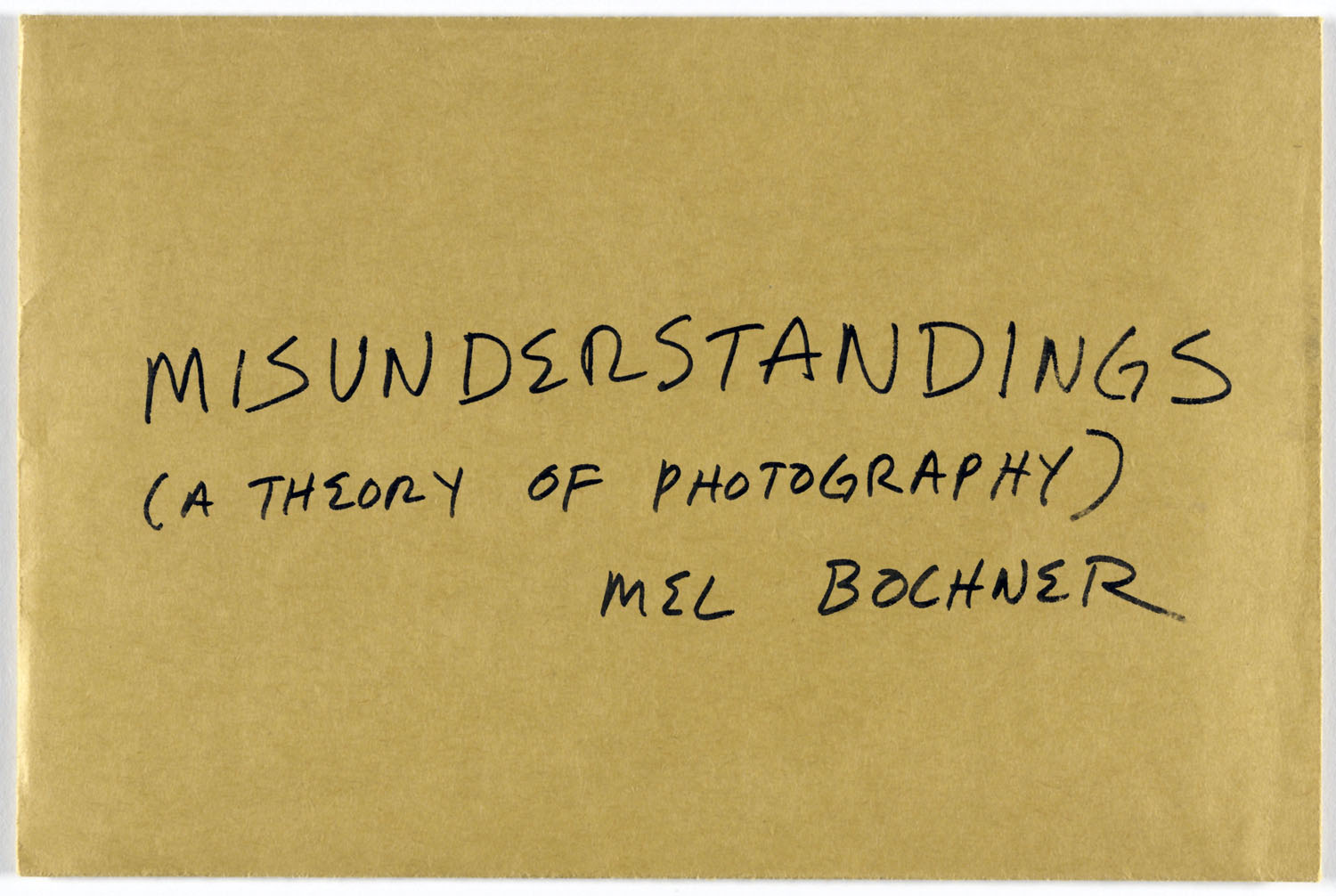
When Mel Bochner started documenting his works of sculpture with a camera, he realised that his practice had “become about photography without [my] wanting it to.” He studied the history of the medium and found conflicting ideas about what photography is or should be. By illustrating these “misunderstandings” with quotes from notable figures and sources, Bochner underscored the gap between a photograph itself and what it purports to represent. He even fabricated three of the quotations, further playing on photography’s tenuous relationship to truth. The photograph of the artist’s hand and forearm is also a misunderstanding: it is much smaller than the actual body part it depicts. It also appears to be a negative of a Polaroid photograph, but Polaroids exist only as positive prints.

Wall text from the exhibition


Mel Bochner was a key figure in the Conceptual Art movement of the 1960s and 70s. Bochner was part of a group of artists who challenged the traditional notion of art as a physical object to be admired for its aesthetic qualities and instead sought to explore the ideas and concepts behind the object, often using language and text as their medium.

Bochner’s early works were influenced by his interest in mathematics and logic, which he applied to create intricate geometric patterns. As his practice evolved, he incorporated language and words into his artwork, exploring the relationship between language, thought, and perception.

Text from the My Art Broker website


Anthony Barboza (American, b. 1944) 'New York City' 1970s from the exhibition 'The '70s Lens: Reimagining Documentary Photography' at the National Gallery of Art, Washington


Anthony Barboza (American, b. 1944)
New York City
1970s
Gelatin silver print
Image/sheet: 23.7 × 16.1cm (9 5/16 × 6 1/4 in.)
National Gallery of Art
Pepita Milmore Memorial Fund


Anthony Barboza’s photography has been integral in shaping the image of Black America. A founding member of the Kamoinge Workshop, a group of Black photographers formed in New York in 1963, Barboza went on to establish a thriving commercial and personal practice focused largely on Black subjects. His affirmative representations of African Americans in daily life – like this photograph of two ultra-stylish men standing in front of a hotel coffee shop in midtown Manhattan – contributed to an empowering narrative for the Black community in the face of inequality and adversity. Describing his approach to making pictures on the street, Barboza commented, “”The photograph finds you, you don’t find the photograph.”

Wall text from the exhibition


Anthony Barboza (American, b. 1944) 'New York City' 1970s from the exhibition 'The '70s Lens: Reimagining Documentary Photography' at the National Gallery of Art, Washington


Anthony Barboza (American, b. 1944)
New York City
1970s
Gelatin silver print
Image: 23.7 × 15.9cm (9 5/16 × 6 1/4 in.)
National Gallery of Art
Pepita Milmore Memorial Fund


Lee Friedlander (United States, b. 1934) 'Hillcrest, New York' 1970 from the exhibition 'The '70s Lens: Reimagining Documentary Photography' at the National Gallery of Art, Washington


Lee Friedlander (American, b. 1934)
Hillcrest, New York
1970
Gelatin silver print
Image: 20.3 x 30.5cm (8 x 12 in.)
National Gallery of Art
Patrons’ Permanent Fund


The fracturing of the image plane, where multiple, diverse realities are represented within one photograph, deconstructing the reality of fine art photography. ~ Marcus


Lee Friedlander’s layered compositions wittily observe connections between American life and commerce. In this dizzying photograph, Friedlander captures himself, at center, in a sideview mirror while at a filling station. In the reflection behind him we see a strip mall with the stores’ signs reversed. Near and far vie for attention and parts of the composition are blocked from our view.

The photograph with a World War I memorial similarly features vertical elements that break up the composition into separate frames. At left, the memorial’s soldier with rifle – who appears to be on guard – goes completely unnoticed as pedestrians make their way along a street full of storefronts.

Wall text from the exhibition


Kenneth Josephson (American, b. 1932) 'Wyoming' 1971 from the exhibition 'The '70s Lens: Reimagining Documentary Photography' at the National Gallery of Art, Washington


Kenneth Josephson (American, b. 1932)
Wyoming
1971
From the History of Photography series
Gelatin silver print
Image: 22.8 x 14.1cm (9 x 5 9/16 in.)
National Gallery of Art
Patrons’ Permanent Fund


Kenneth Josephson’s conceptual photography experiments with playful illusion to explore and question his medium. Josephson was a graduate among the first generation of photography candidates from the Illinois Institute of Design. A student of such masters as Aaron Siskind, Harry Callahan, and Minor White, Josephson went on to teach for 35 years at the Art Institute of Chicago, where he routinely taught the “Introduction to Photography” course as it inspired him to continue experimentation.

“This photograph of a photograph held in space causes the viewer to question assumptions about truthful representation according to size and scale; it also draws attention to the principle that photographic reality is constructed through an artist’s ideas and choices. The subject of the photograph is photography itself, and the ways that life is documented, manipulated, trivialised, and celebrated with photographs.”

Text from the Madison Museum of Contemporary Art website


Lewis Baltz (American, 1945-2014) 'Tract House #4' 1971 from the exhibition 'The '70s Lens: Reimagining Documentary Photography' at the National Gallery of Art, Washington


Lewis Baltz (American, 1945-2014)
Tract House #4
1971
From the portfolio The Tract Houses
Gelatin silver print
Image/sheet: 14.5 × 22.5cm (5 11/16 × 8 7/8 in.)
National Gallery of Art
Corcoran Collection (Gift of the artist)


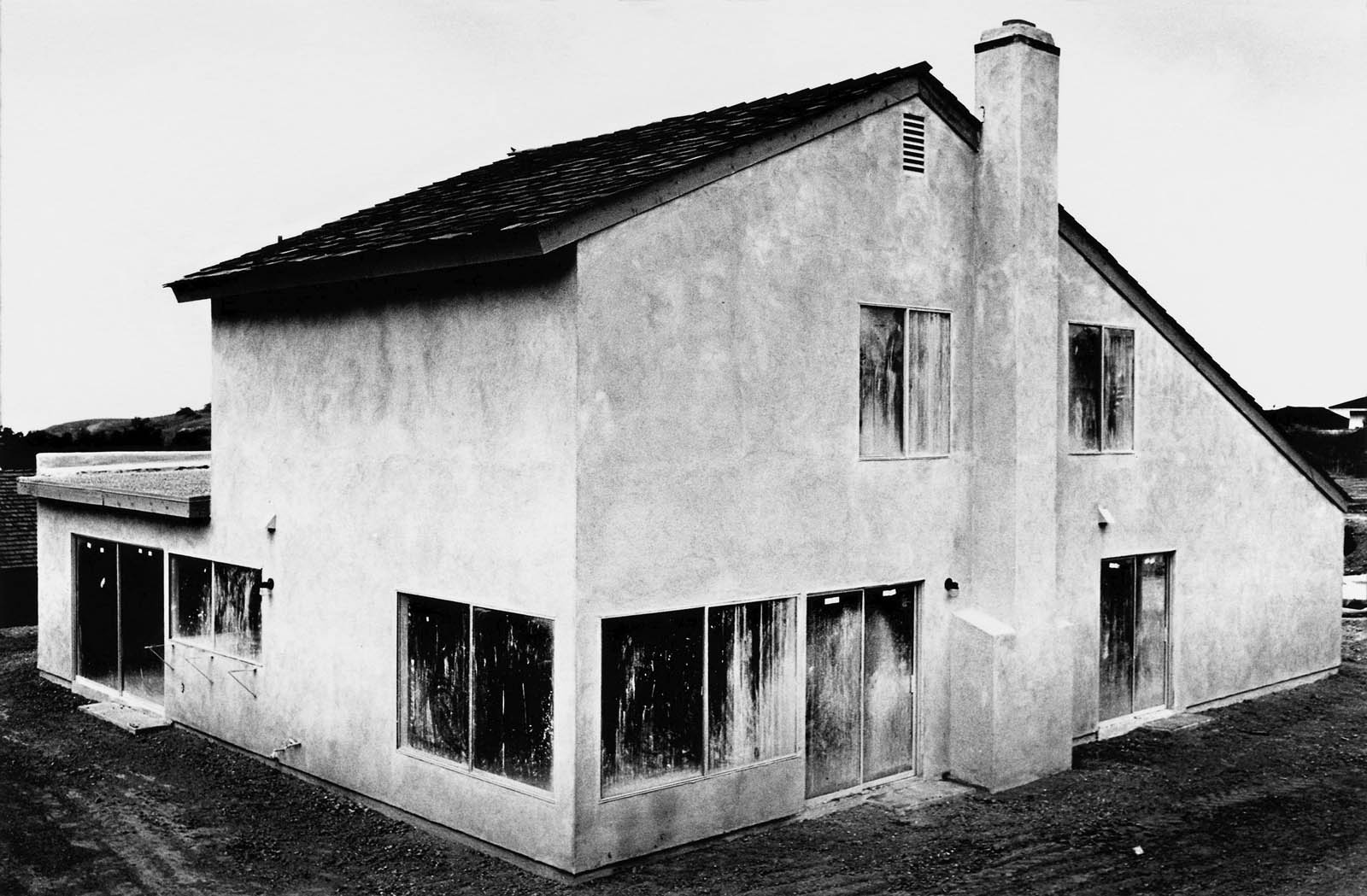
Lewis Baltz’s The Tract Houses captures the austere geometry of the shoddily built homes that sprang up in California’s suburban landscape beginning in the mid-1940s. Straight-edge architectural details, positioned strictly parallel to the picture plane, recall the reductive forms of minimalist art. Entire, recently constructed houses appear forlorn. None of the pictures include shadows, clouds, or people. Baltz’s series is a powerful critique of the transformation of the American landscape into an unending terrain of anonymous architecture. At the same time, the exquisitely rendered tones and textured surfaces emphasise the subtle beauty to be found in this bleak environment.

Wall text from the exhibition


With his iconic, minimalist photographs of suburban landscape, Lewis Baltz was at the forefront of a revolutionary shift in the medium of photography. Baltzs work exemplifies the ways in which photography started to loose the bonds of its isolation within its own segregated history and aesthetics and began to take its place among other media. In the late 1960s and early 1970s Baltz became fascinated by the stark, man-made landscape rolling over Californias then still-agrarian terrain. His earliest portfolio, The Tract Houses (1971), and his preliminary forays into a minimal aesthetic, The Prototype Works (1967-1976), illuminate his drive to capture the reality of a sprawling Western ecology gone wild.

Text from the Google Books website


Diane Arbus (American, 1923-1971) 'A young man and his girlfriend with hot dogs in the park' 1971


Diane Arbus (American, 1923-1971)
A young man and his girlfriend with hot dogs in the park
1971
Gelatin silver print
Image: 37.7 x 36.5cm (14 13/16 x 14 3/8 in.)
National Gallery of Art, Corcoran Collection
Gift of Stephen G. Stein


Diane Arbus prowled New York’s public spaces looking for humor and strangeness in the everyday. Here a young couple walks in Central Park, wearing similar clothes, hairstyles, and dejected expressions. Arbus’s carefully composed but disorienting photograph – the subjects are in crisp focus while the background is blurred – compels us to look anew at the familiar. Is this couple unhappy in love or expressing the uncertainty of the times? Arbus made this photograph the year she died. Her influence on documentary photography would continue through the decade.

Wall text from the exhibition


Eleanor Antin (American, b. 1935), Philip Steinmetz (American, 1944-2013) (photographer). '100 Boots' 1971-1973 (detail)


Eleanor Antin (American, b. 1935)
Philip Steinmetz (American, 1944-2013) (photographer)
100 Boots (details)
1971-1973
51 halftone prints (postcards)
image/sheet (each): 11.5 x 17.75cm (4 1/2 x 7 in.)
National Gallery of Art
Pepita Milmore Memorial Fund


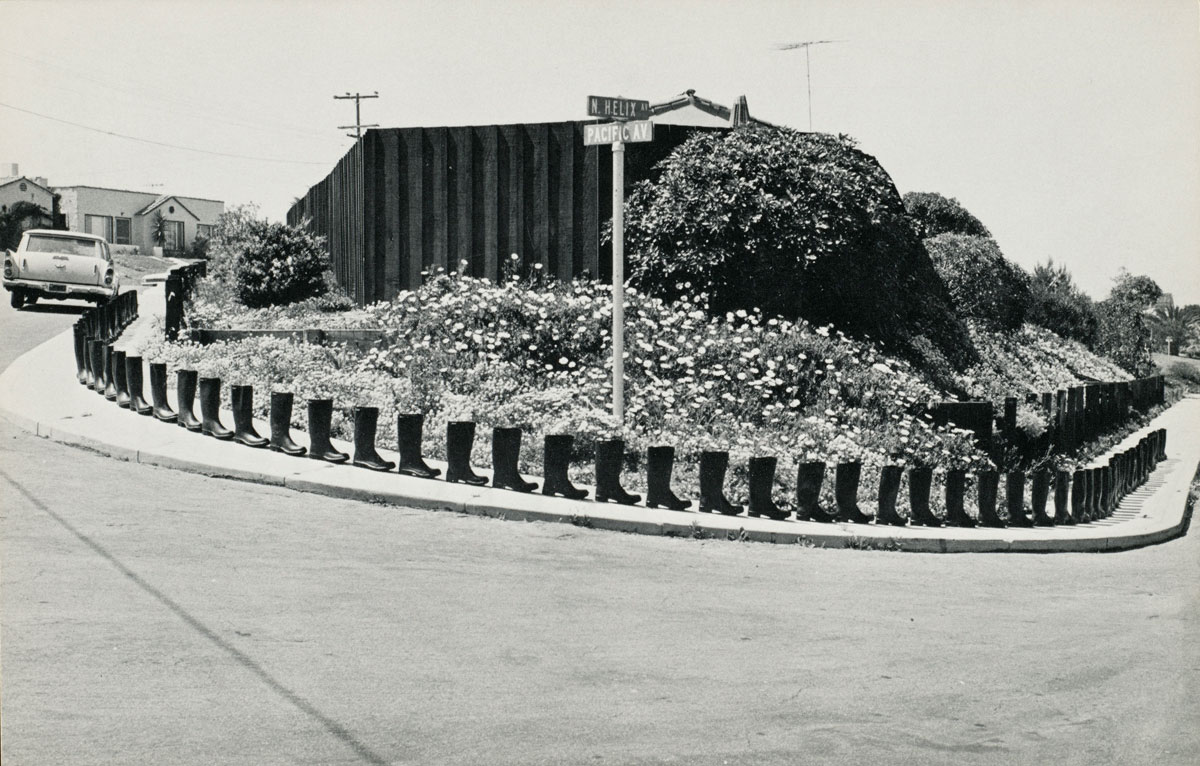
In this epic visual narrative, black rubber boots stand in for a fictional hero traveling from California to New York City. Eleanor Antin created temporary installations with the boots, had them photographed (by Philip Steinmetz), and made 51 postcards, copies of which she mailed to approximately 1,000 people and institutions involved in the arts. The journey starts at a Bank of America and ends at Central Park – after a visit to the Museum of Modern Art, where the boots and a set of postcards and photographs were later exhibited. Using the postal service, Antin bypassed the traditional gallery system, which had long overlooked women artists. While many of these scenes are humorous, the empty army boots also recall the Vietnam War and the soldiers who did not come home.

Wall text from the exhibition


100 Boots, 1971-1973

For her 51-piece instalment 100 Boots Eleonor Antin positioned one hundred ordinary black rubber boots on various locations all over Southern California and consequently in New York City. She took photos, printed them on postcards and assembled a mailing list of about a thousand names – mainly artists, writers, critics, galleries, universities and museums – who received the various postcards over a period of two and a half years between 1971 and 1973. The first card, 100 Boots Facing the Sea, was mailed on the Ides of March, 1971, unannounced and without further comment. A few weeks later it was followed by 100 Boots on the Way to Church and three weeks thereafter by the next one.

In a total of 51 photographs, Eleanor Antin documented the travels of the 100 Boots, her so called “hero” – from a beach close to San Diego to a church, to a bank, to the supermarket, trespassing, under the bridge, to a saloon and on their travels eastward. Finally, on May 15th, 1973 100 Boots arrived at the Museum of Modern Art in New York. By this time, 100 Boots had long become an epic visual narrative and a picaresque work of conceptual art.

Text from the exhibition open spaces | secret places: composite works from the collection at Museum Der Moderne Salzburg, October 2012 – March 2013


Henry Wessel (American, 1942-2018) 'Walapai, Arizona' 1971


Henry Wessel (American, 1942-2018)
Walapai, Arizona
1971
Gelatin silver print
Image: 26.51 x 39.85cm (10 7/16 x 15 11/16 in.)
National Gallery of Art
Gift of Mary and Dan Solomon and Patrons’ Permanent Fund


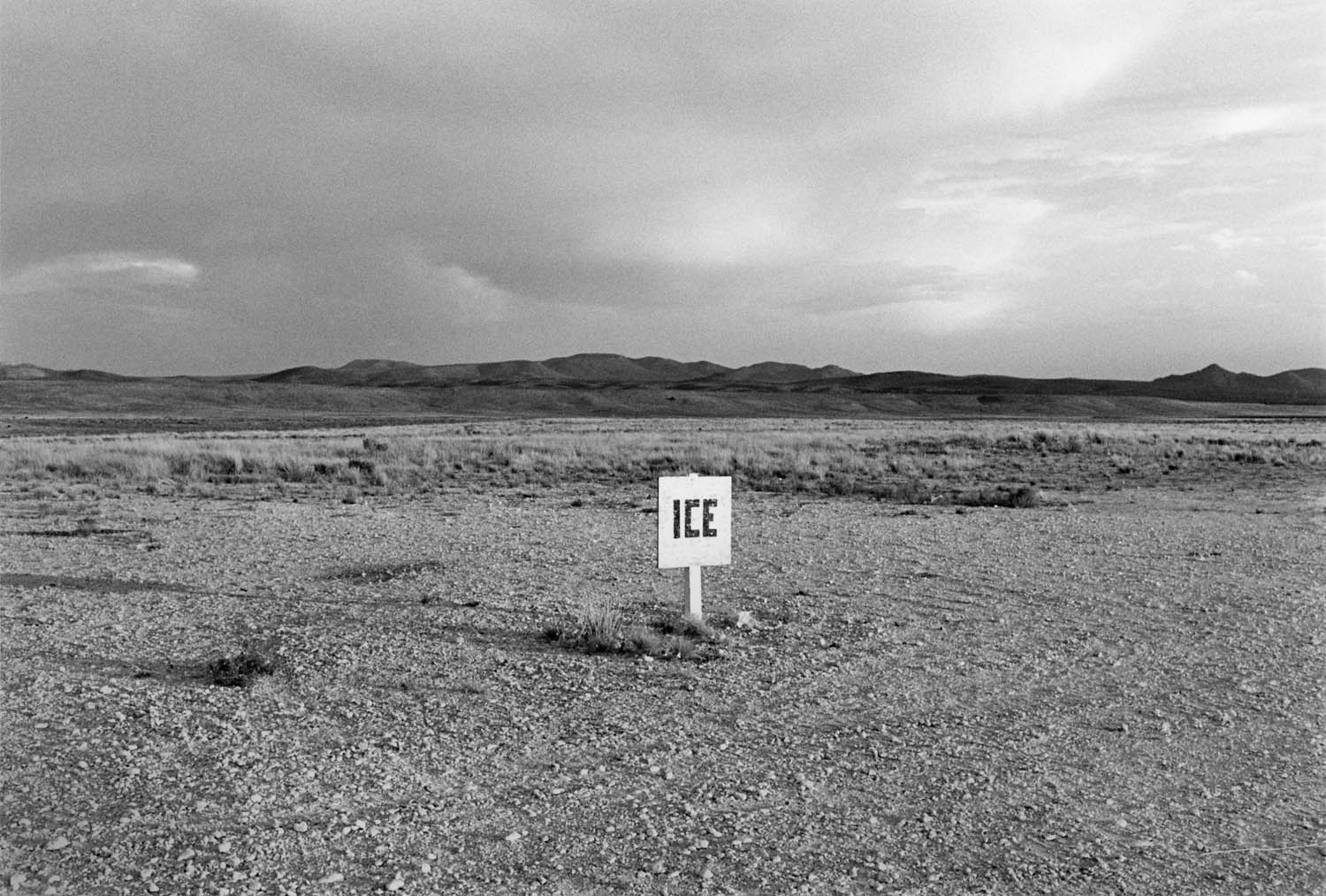
In 1975 New Topographics: Photographs of a Man-Altered Landscape opens at the International Museum of Photography in Rochester, N.Y. It includes photographs by Robert Adams, Lewis Baltz, Bernd and Hilla Becher, Joe Deal, Frank Gohlke, Nicholas Nixon, John Schott, Stephen Shore, and Henry Wessel Jr.

“Henry Wessel began taking photographs while majoring in psychology at Pennsylvania State University in the mid-1960s. Travel throughout the United States in subsequent years led him to direct his gaze increasingly to details of human interaction with the natural and man-made environment. Wessel’s move to the West Coast in the early 1970s inspired him to incorporate light and climate into his work. His inclusion in the seminal exhibition New Topographics: Photographs of a Man-Altered Landscape, organised in 1975 by the George Eastman House in Rochester, New York, solidified his reputation as a keen observer of the American topography.”

Text from Pacific Standard Time at the Getty


John Simmons (American, b. 1950)
'Will on Chevy, Nashville, Tennessee'
1971, printed 2024


John Simmons (American, b. 1950)
Will on Chevy, Nashville, Tennessee
1971, printed 2024
Gelatin silver print
Image: 30.48 x 20.32cm (12 x 8 in.)
National Gallery of Art
Alfred H. Moses and Fern M. Schad Fund


A fashionably dressed older man crosses the street with his umbrella. A young woman turns to look at the camera while holding hands with a man in uniform. These were people John Simmons encountered while studying art at Fisk University in Nashville. Raised on Chicago’s South Side, Simmons had first published photographs as a teenager in the African American newspaper Chicago Defender. Refuting white-centered media’s failure to show positive imagery of the Black experience, Simmons has focused on people enjoying everyday life.

“I always feel like my subject and I were meant to share that moment together,” he has said. “So many of the pictures I take, it was like our paths were meant to cross.”

Wall text from the exhibition


Simmons began his career at 15 as a photographer for the oldest African American-owned newspaper, The Chicago Daily Defender in 1965. Over his decades long career, he’s photographed icons of the Civil Rights Movement, turbulent protests and demonstrations, famed musicians and poignant intimate moments of everyday life. “I’m glad to see photographs I took back in my teens are still relevant today,” he says.

John Simmons quoted in Steve Simmons. “Photographer John Simmons, ‘Chronicler Of The Civil Rights Movement,’​ Featured In Three Exhibits,” on the Linkedin website August 4, 2021 [Online] Cited 11/09/2021.


Helen Levitt (American, 1913-2009) 'New York' 1972 from the exhibition 'The '70s Lens: Reimagining Documentary Photography' at the National Gallery of Art, Washington


Helen Levitt (American, 1913-2009)
New York
1972
Dye imbibition print
Image: 23.5 x 36cm (9 1/4 x 14 3/16 in.)
National Gallery of Art, Patrons’ Permanent Fund
© Film Documents LLC, courtesy Zander Galerie, Cologne


Helen Levitt frequently made photographs of children on the streets of New York City, exploring their relationships to the urban setting as they played, imagined, and discovered together. After decades of working in black and white, Levitt became an early advocate of color documentary photography. Color allowed her to tell a fuller story of everyday life. Here, the green of the boy’s T-shirt is echoed in the poster and frame behind him. “I thought my photographs would be closer to reality if I got the color of the streets,” she said. “Black and white is an abstraction.”

Wall text from the exhibition


Bill Owens (American, b. 1938)
'Ronald Reagan' 1972 from the exhibition 'The '70s Lens: Reimagining Documentary Photography' at the National Gallery of Art, Washington


Bill Owens (American, b. 1938)
Ronald Reagan
1972
From the series Suburbia
Gelatin silver print
Image: 16.4 x 21.6cm (6 7/16 x 8 1/2 in.)
National Gallery of Art
Patrons’ Permanent Fund


Over the course of a year, Bill Owens made photographs of the housing developments that had recently sprung up outside of Oakland and San Francisco. With an eye to humor, he captured the apparent conformity and materialism of the new suburbs. Here, a home is decorated for Christmas. At center, Nativity figures sit atop a television console showing an old film featuring Ronald Reagan, who had been a movie actor before becoming a politician. Owens also respected the liberation that many suburbanites felt, as well as their determination to build better lives. In his book Suburbia (1972), he included quotations from his subjects describing the opportunities and challenges they faced in their new environments.

Wall text from the exhibition


Owens began his photographic career in the late 1960s as a staff photographer for a local newspaper in Livermore, California. During this period, he began his most noteworthy project, “Suburbia,” which would become a major body of work in American documentary photography.

“Suburbia” was published as a book in 1973, featuring Owens’ images and conversations with suburban dwellers. The project’s goal was to investigate the goals, aspirations, and inconsistencies of suburbia life, offering a critical yet sympathetic study of the American Dream.

Owens’ images depicted scenes of backyard barbecues, family gatherings, children at play, and the myriad rituals and social interactions that constituted suburban areas. He highlighted both the humor and the underlying intricacies of suburban life through his good observation and direct attitude.

What distinguished Owens’ work was his ability to see past the surface and capture the soul of his subjects. His images conveyed a sense of realism by portraying suburbanites in their natural settings and enabling their tales to flow through genuine moments captured in time.

Owens’ art struck a chord with a large audience because it highlighted a huge societal transition in America during the 1970s. Owens’ images challenged the idealized image of suburban life by exposing the hardships, wants, and inconsistencies inherent in the pursuit of the American Dream.

Anonymous. “Bill Owens,” on the Photo.com website Nd [Online] Cited 06/20/2025


William Eggleston (American, b. 1939) 'Sumner, Mississippi, Cassidy Bayou in the Background' c. 1972


William Eggleston (American, b. 1939)
Sumner, Mississippi, Cassidy Bayou in the Background
c. 1972, printed 1986
Dye imbibition print
Image: 27.94 x 43.18cm (11 x 17 in.)
National Gallery of Art
Gift of Stephen G. Stein
© Eggleston Artistic Trust


See how documentary photography transformed during the 1970s.

The 1970s was a decade of uncertainty in the United States. Americans witnessed soaring inflation, energy crises, and the Watergate scandal, as well as protests about pressing issues such as the Vietnam War, women’s rights, gay liberation, and the environment. The country’s profound upheaval formed the backdrop for a revolution in documentary photography. Activism and a growing awareness and acceptance of diversity opened the field to underrepresented voices. At the same time, artistic experimentation fueled the reimagining of what documentary photographs could look like.

Featuring some 100 works by more than 80 artists, The ’70s Lens examines how photographers reinvented documentary practice during this radical shift in American life. Mikki Ferrill and Frank Espada used the camera to create complex portraits of their communities. Tseng Kwong Chi and Susan Hiller demonstrated photography’s role in the development of performance and conceptual art. With pictures of suburban sprawl, artists like Lewis Baltz and Joe Deal challenged popular ideas of nature as pristine. And Michael Jang and Joanne Leonard made interior views that examine the social landscape of domestic spaces.

The questions these artists explored – about photography’s ethics, truth, and power – continue to be considered today.

Text from the National Gallery of Art


Lee Friedlander (American, b. 1934)
'Doughboy. Stamford, Connecticut' 1973


Lee Friedlander (American, b. 1934)
Doughboy. Stamford, Connecticut
1973
Gelatin silver print
Image: 17.8 x 27cm (7 x 10 5/8 in.)
National Gallery of Art
Robert B. Menschel Fund


William Eggleston (American, b. 1939) 'Used Tires' 1973


William Eggleston (American, b. 1939)
Used Tires
1973
Dye imbibition print
Image: 33 x 48.5cm (13 x 19 1/8 in.)
National Gallery of Art
Patrons’ Permanent Fund
© Eggleston Artistic Trust


William Eggleston (American, b. 1939) 'Greenwood, Mississippi' 1973


William Eggleston (American, b. 1939)
Greenwood, Mississippi
1973
Dye imbibition print
Image: 32.2 x 48.2cm (12 11/16 x 19 in.)
National Gallery of Art, Corcoran Collection
Gift of the Women’s Committee of the Corcoran Gallery of
Art
© Eggleston Artistic Trust


William Eggleston has said that he has “a democratic way of looking around,” where nothing is more important or less important. For him, everyday subjects are not boring but instead offer visual richness. Here, that richness has a pronounced edge. Eggleston directed his lens up to a red ceiling with a single bare lightbulb at center. We glimpse only the top of a doorframe and a fragment of an explicit poster. The saturated, bloodlike color that dominates the composition is shocking, even menacing. It also challenged Eggleston technically as he developed his skills with dye imbibition printing. Commonly known as dye transfer, the process was labor intensive but allowed for customisation and a wide range of colours and tones.

Wall text from the exhibition


Mitchell Epstein (American, b. 1952)
'Massachusetts Turnpike' 1973, printed 2005 from the exhibition 'The '70s Lens: Reimagining Documentary Photography' at the National Gallery of Art, Washington


Mitchell Epstein (American, b. 1952)
Massachusetts Turnpike
1973, printed 2005
From the series Recreation
Chromogenic print
Image: 32.1 x 48.2cm (12 5/8 x 19 in.)
National Gallery of Art
Gift of Timothy and Suzanne Hyde in Honor of the 25th Anniversary of
Photography at the National Gallery of Art
© Black River Productions, Ltd.


Viewers of a certain age will recognize this setting as the parking lot of a Howard Johnson’s restaurant. HoJos, as they were nicknamed, were once ubiquitous along America’s highways. The cheery saturated colors belie the scene’s subject: a couple having a bad travel day. A man in suit and tie works under the hood of a beat-up Chevy Impala. His partner, wearing a pale pink skirt and top, arms crossed, appears frustrated. The cars zooming by seem to mock their immobility. Part of Mitch Epstein’s Recreation series, which documented Americans engaging in leisure activities, the photograph today evokes melancholy and nostalgia. Explaining his early turn to colour film, the artist said, “The world is in color, so why not photograph in color?”

Wall text from the exhibition


I started to work in colour, which was a radical, and some thought foolish, move in 1973. Colour photography was not yet a medium for serious photography – it was used almost exclusively for slick advertising and illustration. Within a month of shooting in colour, though, I wanted to do nothing else…

As I developed, I learned that a photograph is other than the thing itself photographed, and this freed me to think about how I could use photography to fictional effect, even while my pictures were drawn from the real world…

Photography remains a tool with which I form and sharpen my response to the world around me. Anything and everything is photographable in an infinite number of ways. That excites me.

Mitch Epstein in Lewis Blackwell. PhotoWisdom: Master Photographers on Their Art quoted quoted in “Mitch Epstein – Meet The Master Photographer,” on the Milkbooks website Nd [Online] Cited 06/02/2025


Robert Adams (American, b. 1937)
'Interstate 25, Denver, Colorado' 1973


Robert Adams (American, b. 1937)
Interstate 25, Denver, Colorado
1973
Gelatin silver print
Image: 15.2 x 19.3cm (6 x 7 5/8 in.)
National Gallery of Art
The Ahmanson Foundation and Gift of Robert and Kerstin Adams
© Robert Adams, Courtesy Fraenkel Gallery, San Francisco


Adams’ photographic vision is extra ordinary and I cannot fault his individual photographs. I become engrossed in them. I breathe their atmosphere. He has a resolution, both in terms of large format aesthetic, the aesthetic of beauty and of using materials, light and composition… that seems exactly right. He possesses that superlative skill of few great photographers, and by that I mean: sometimes he has true compassion** / parallel to a religious compassion, but not based on something higher / just perfect human. In some of his photographs (such as East from Flagstaff Mountain, Boulder County, Colorado 1975) he possesses real forgiveness, in others there is the perfection of cruel, the perfection of de/composition.

** achieved by Arbus, Atget and sometimes by Clift, Gowin.

And then, each image holds small clues vital to the overall conversation that is the accumulation of his work and it is in their collective accumulation of meaning that Adams’ photographs grow and build to shatter not just the American silence on environmental issues, but the deafening silence of the whole industrialised world. In their holistic nature, Adams’ body of work becomes punctum and because of this his work produces other “things”, things as great as anything the French literary theorist, essayist, philosopher, critic, and semiotician Roland Barthes wrote about. As in Barthes’ seminal work Camera Lucida, Adams’ work reminds us that the “photograph is evidence of ‘what has ceased to be’. Instead of making reality solid, it reminds us of the world’s ever changing nature.”1

Marcus Bunyan. “The quiet of the great beyond,” on the exhibition American Silence: The Photographs of Robert Adams at the National Gallery of Art, Washington, May – October 2022 on Art Blart: art and cultural memory archive website, September 25, 2022 [Online] Cited 06/02/2025

1/ Anonymous. “Roland Barthes,” on the Wikipedia website Nd [Online] Cited 23/09/2022


Michael Jang (American, b. 1951)
'Study Hall' 1973 from the exhibition 'The '70s Lens: Reimagining Documentary Photography' at the National Gallery of Art, Washington


Michael Jang (American, b. 1951)
Study Hall
1973
Gelatin silver print
15.5 × 23.5cm (6 1/8 × 9 1/4 in.)
National Gallery of Art
Charina Endowment Fund


In Study Hall, Michael Jang’s extended family sits together on a couch reading comics and a television guide, a messy tray of Kraft Teez Dip and potato chips on the table in front of them. The covers of the decidedly not studious publications block their faces, becoming stand-ins for their portraits. In Aunts and Uncles (nearby), relatives are caught joking around while posing for an official family portrait in silly sunglasses.

Jang’s humorous photographs of his Chinese American family and the trappings of their suburban lives offer a refreshing take on the often staid genre of family portraiture. They also debunk the 1970s stereotype – think The Brady Bunch – that the “all-American” family could only be white.

Wall text from the exhibition


In his series The Jangs, Michael Jang photographed family at home. His humorous photographs of their suburban lives expanded the concept of the “all-American” family – the Chinese American Jangs didn’t look like The Brady Bunch.

In Study Hall, Jang’s cousins and aunt sit together on a couch reading comics and a television guide, a messy tray of potato chips and dip on the table in front of them. The covers of decidedly not studious publications block their faces, becoming stand-ins for their portraits.

Jang’s delightful series was almost entirely forgotten. The photographs, which he had first made while a student, sat in a box in the artist’s house for decades while he established a career as a commercial photographer.

In the 2000s, Jang reconsidered this series and shared it with museums, which began adding the photographs to their collections. His photographs took on a new light in the wake of a rise of anti-Asian hate during the COVID-19 pandemic. In 2021, Jang wheat pasted images from The Jangs on buildings in San Francisco’s Chinatown.

Text from the National Gallery of Art website


Susan Meiselas (American, b. 1948)
'Lena on the Bally Box, Essex Junction, Vermont' 1973


Susan Meiselas (American, b. 1948)
Lena on the Bally Box, Essex Junction, Vermont
1973
Gelatin silver print
Image: 22 x 32.5cm (8 11/16 x 12 13/16 in.)
National Gallery of Art
Anonymous Gift in honor of Sarah Greenough and Andrea Nelson


The final and most essential selection in this posting – Susan Meiselas’ 1972-1975 Carnival Strippers series – goes behind the “front” to document the lives of women who performed striptease for small-town carnivals in New England, Pennsylvania and South Carolina. “Meiselas’ frank description of these women brought a hidden world to public attention, and explored the complex role the carnival played in their lives: mobility, money and liberation, but also undeniable objectification and exploitation. Produced during the early years of the women’s movement, Carnival Strippers reflects the struggle for identity and self-esteem that characterised a complex era of change.” (Booktopia)

Intense, intimate and revealing, the series proves that we can think we know something (the phenomenal) and yet photography reveals how strange and different each world is – whether that be in trying to understand the mind of the artist and what they intended in a constructed photograph or, in this case, having an impression of someone else’s life, a life we can perceive (through the “presence” of the photograph) but never truly know (the noumenal).

Marcus Bunyan on the exhibition Known and Strange: Photographs from the Collection at the V&A Photography Centre on the Art Blart: art and cultural memory archive website, May 7, 2022 [Online] Cited 06/20/2025


Susan Meiselas (American, b. 1948)
'Tentful of Marks, Tunbridge, Vermont'
1974


Susan Meiselas (American, b. 1948)
Tentful of Marks, Tunbridge, Vermont
1974
Gelatin silver print
Image: 19.7 x 29.4cm (7 3/4 x 11 9/16 in.)
National Gallery of Art, Corcoran Collection
Museum Purchase, Photography Acquisition Fund

In Tentful of Marks, Susan Meiselas trains her camera from backstage on the legs and high heels of a carnival dancer. The all-male audience – the “marks” of the title – are in sharp focus, and they crowd around the small stage, lustfully gawking up at her. Meiselas spent three summers documenting women who performed striptease at small-town carnivals in New England, Pennsylvania, and South Carolina. In addition to making photographs, she recorded audiotapesof conversations with the dancers, giving them agency to describe their experience. Meiselas saw her project as a collaboration. Merging listening and looking, it expanded perspectives on a largely invisible and – from the dancers’ perspective – misunderstood world.

Wall text from the exhibition


Installation view of the exhibition 'The '70s Lens: Reimagining Documentary Photography' at the National Gallery of Art, Washington showing at left, Milton Rogovin's photograph 'Jimmy Webster with His Father, Verne' (1973); and at right, 'Jimmy Webster' (1985)


Installation view of the exhibition The ’70s Lens: Reimagining Documentary Photography at the National Gallery of Art, Washington showing at left, Milton Rogovin’s photograph Jimmy Webster with His Father, Verne (1973, below); and at right, Jimmy Webster (1985)

With thankx to the official Milton Rogovin Facebook page for allowing me to publish this image.


Milton Rogovin (American, 1909-2011) 'Jimmy Webster with His Father, Verne' 1973


Milton Rogovin (American, 1909-2011)
Jimmy Webster with His Father, Verne
1973
Gelatin silver print
Image: 17.4 x 15.5cm (6 7/8 x 6 1/8 in.)
National Gallery of Art
Gift of Pierre Cremieux and Denise Jarvinen

With thankx to the official Milton Rogovin Facebook page for allowing me to publish this image.


Verne Webster, sitting on his front stoop, looks guardedly at the camera while sheltering his toddler son Jimmy in a protective embrace. This is an early work from Milton Rogovin’s 30-year series documenting Buffalo’s Lower West Side. The project focused on a six-block neighbourhood that was among Buffalo’s most diverse and most impoverished. Rogovin asked permission to photograph his subjects, let them choose their poses and settings, and gave them free prints. He returned every decade or so to photograph the same individuals. A nearby picture shows Jimmy 12 years later. Looking back at Rogovin’s photographs in 2003, Jimmy Webster said, “Whenever you look at his photographs, you just see people for who they are.”

Wall text from the exhibition


John Baldessari (American, 1931-2020) 'Throwing three balls in the air to get a straight line: (best of thirty-six attempts)' 1973


John Baldessari (American, 1931-2020)
Throwing three balls in the air to get a straight line: (best of thirty-six attempts)
1973
Colour offset photolithographs
National Gallery of Art Library
David K. E. Bruce Fund


West Coast conceptual art has a whimsical air. Artists such as John Baldessari and Ed Ruscha created scenarios that lampoon both the pretense of “high art” and the self-seriousness of conceptual art, particularly as the latter was developing in New York. Beneath the humor, however, their works spoke to more substantive issues like artistic failure and social mores. In 1973 Baldessari photographed his 36 attempts to throw three balls in the air to form a straight line. He never succeeded but included his 12 best attempts in a portfolio.

Wall text from the exhibition


Henry Wessel (American, 1942-2018) 'Utah' 1974


Henry Wessel (American, 1942-2018)
Utah
1974
gelatin silver print
Image: 26.5 x 39.7cm (10 7/16 x 15 5/8 in.)
National Gallery of Art
Patrons’ Permanent Fund


Stephen Shore (American, b. 1947)
'Holden Street' July 13, 1974


Stephen Shore (American, b. 1947)
Holden Street
July 13, 1974
Chromogenic print
Image: 20.5 x 25.4cm (8 1/16 x 10 in.)
National Gallery of Art
Diana and Mallory Walker Fund


Stephen Shore’s photograph may appear casual, but it is carefully constructed. The vertical of the lamppost draws our attention to the shadowed foreground. Buildings and sidewalks on each side act as perspective lines that meet in the brighter background. Shore was exploring how three-dimensional space is rendered in two dimensions, particularly in a colour photograph. He was also examining where a once-powerful New England industrial town abruptly ended and the verdant countryside began. The lack of people, saturated colours, and clarity of detail – made possible by using a large-format 8 × 10 camera – give the picture an air of timelessness but also hyperreality.

Wall text from the exhibition


Thomas Barrow (American, 1938-2024) 'Dart, Albuquerque' 1974 from the exhibition 'The '70s Lens: Reimagining Documentary Photography' at the National Gallery of Art, Washington


Thomas Barrow (American, 1938-2024)
Dart
1974, printed 1994
From the series Cancellations
Gelatin silver print
23.9 × 34.6cm (9 7/16 × 13 5/8 in.)
National Gallery of Art
Randi and Bob Fisher Fund


In Dart, Thomas Barrow photographed a huge arrow that appears to have plunged from the threatening clouds above into a parking lot shared by Snappy Photos, a Goodwill drop-off bin, and a K-Mart. The work is part of his series Cancellations, documenting the suburban sprawl overtaking much of the United States. Barrow “cancelled” his images before printing by slashing the negatives with an icepick. (“Cancelling” refers to the practice of defacing a printing plate or negative to ensure no more official prints can he made from it.) This action calls attention to the photograph’s surface and its materiality, which in turn emphasise the choices Barrow made in its production.

Wall text from the exhibition


Thomas F. Barrow is an artist working with photography more than he is a photographer… For Barrow, the ideas are what matter, not the material they are realized with.

Barrow’s Cancellations series is an early expression of this artistic philosophy. Created between 1973-1981, it began when Barrow moved from Rochester, New York to Albuquerque, New Mexico to teach at UNM. Like many photographers of this era (Lewis Baltz, Frank Gohlke, Robert Adams) Barrow was struck by the transformation underway with the (sub)urbanization of the Western landscape. However, he was inspired to do more than document with his camera; he wanted to challenge his viewers while subverting some fundamental truths of photography. Inspired by a cancelled Marcel Duchamp etching (a process where the etching plate is defaced to indicate that no more official prints may be made), he began defacing his negatives with an ice pick and hole punch, “cancelling” them before making the images.

Almost 40 years later, it’s still unclear whether Barrow is canceling the photograph or the scene in the picture. He is certainly calling attention to the matrix that produced the photograph, an unheard of practice at the time and still rare today. By defacing his negatives, he has created photographs that are as much about the physical image as they are about the subject in the photograph.

David Ondrik. “Cancellations by Thomas Barrow,” in Fraction Magazine Issue 49 on the Fraction Magazine website Nd [Online] Cited 07/02/2025


Blythe Bohnen (American, 1940-2022) 'Self-Portrait: Triangular Motion, Small' 1974 from the series 'Self-Portraits: Studies in Motion'


Blythe Bohnen (American, 1940-2022)
Self-Portrait: Triangular Motion, Small
1974
From the series Self-Portraits: Studies in Motion
Gelatin silver prints
National Gallery of Art
Gift of Herbert and Paula Molner


Most self-portraits offer some idea of the artist’s physical appearance and perhaps psychological state. The focus of Blythe Bohnen’s intentionally distorted self-portraits, however, is altogether different. Bohnen was interested in the physical element of artmaking – specifically, the role of her body’s movements or gestures in the creative process. Photographs usually capture an instant, but Bohnen instead used exposures of several seconds and the precise, predetermined gestures identified in her titles to distill the essence of motion. The portraits, blurry and disorienting, become more of a performance in time, condensed into a single image.

Wall text from the exhibition


John Pfahl (American, 1939-2020) 'Six Oranges, Buffalo, New York' 1975 from the exhibition 'The '70s Lens: Reimagining Documentary Photography' at the National Gallery of Art, Washington


John Pfahl (American, 1939-2020)
Six Oranges, Buffalo, New York
1975
Dye imbibition print
Image: 20.6 x 25.5cm (8 1/8 x 10 1/16 in.)
National Gallery of Art
Patrons’ Permanent Fund
© The John Pfahl Trust


For the works in his series Altered Landscape, John Pfahl playfully juxtaposed the organic and natural with the manipulated and constructed. In this picture, he placed six oranges on a path in the woods. Typically, if the fruits were all the same size they would appear to grow smaller the farther from the camera they were located. Here, however, the artist has reversed that expectation, with the smallest orange sitting nearest the camera and the largest in place at the top of the picture. Through his staging, Pfahl makes the viewer aware of how a camera, by recording three-dimensional space onto a two-dimensional surface, actually produces a distorted view.

Wall text from the exhibition


In 1981, Peter C. Bunnell observes in his Introduction to James Alinder’s book Altered Landscapes: The Photographs of John Pfahl, “Our momentary, fragmented and captured vision of disorder and emotion has been replaced by a cool rendering of purposefulness as if to accord another dimension of positivism to the moving force of contemporary human awareness. Pfahl’s work is an attack on the problems of space and, ultimately, existence from a rational point of view.”

Forty years later, these photographs seem not so much rational, or picturesque, as spiritual. The human construction touches the earth lightly, almost reverentially. As Pfahl notes, utmost care is taken not to alter the actual subject in a way he would consider harmful to his positivist respect for nature. In this delicate footprint, these photographs are very prescient of the dangers of our own Anthropocene – of climate change, of raging bushfires, drought, flood and bio-exinction. We are literally destroying this planet and its creatures. Bunnell states, “Pfahl’s imagery is a sure manifestation of the belief that society can produce an art suitable to its nature and, in this case, a specific kind of photographic presence that expresses current societal values.”

Unfortunately, it’s all too late. The lesson has not been learned.

Marcus Bunyan on the exhibition John Pfahl Altered Landscapes at Joseph Bellows Gallery, La Jolla, California, November – December 2019


Anthony Hernandez (American, b. 1947) 'Washington, DC #11' 1975 from the exhibition 'The '70s Lens: Reimagining Documentary Photography' at the National Gallery of Art, Washington


Anthony Hernandez (American, b. 1947)
Washington, DC #11
1975
Gelatin silver print
Image: 18.1 × 27.31cm (7 1/8 × 10 3/4 in.)
National Gallery of Art
Corcoran Collection (Museum Purchase)


Anthony Hernandez cleverly uses the crook of a woman’s raised arm to frame a fruit seller on the street behind her. A Los Angeles – based photographer, Hernandez was invited to Washington, DC, in 1975 to participate in The Nation’s Capital in Photographs, a bicentennial documentary project organized by the Corcoran Gallery of Art. Ignoring the city’s monuments, Hernandez captured life in commercial downtown areas where the architecture and people on the street defined the landscape. This sparsely populated composition evokes urban alienation. Neither figure seems aware of the other, and both look small against the austere modern building and grate-covered sidewalk that fill the background.

Wall text from the exhibition


Anthony Hernandez’s 1970s photographs of urban inhabitants are often focused on odd-looking people staring right at the camera. His subjects often appear surprised and slightly perturbed, as if caught unaware in private moments of thought or conversation.

Following two years of study at East Los Angeles College and two years of service in the United States Army as a medic in the Vietnam War, Hernandez took up photography in earnest around 1970. He walked the streets of his native Los Angeles, observing its inhabitants. In order to work quickly and intuitively, he would pre-focus the camera and then wait for subjects to come into the zone of focus – only briefly bringing the camera to his eye as he walked past them. He repeated this strategy in other cities, including London, Madrid, Saigon, and Washington, D.C.

Text from the J. Paul Getty Museum website


Joanne Leonard (American, b. 1940)
'Memo Center with Wall Plaque' c. 1975


Joanne Leonard (American, b. 1940)
Memo Center with Wall Plaque
c. 1975
Gelatin silver print
Image: 33.3 × 43.1cm (13 1/8 × 16 15/16 in.)
National Gallery of Art
Gift of the Artist in honor of her daughter, Julia Marjorie Leonard


Dotted curtains, a flowered light switch plate, and a humorous wall plaque add a personal touch to this carefully framed picture of a so-called memo center – an area near a wall phone where notes could be jotted down that was popular in 1970s homes. A practitioner of what she called “intimate documentary,” feminist artist Joanne Leonard recorded familiar but often overlooked domestic spaces traditionally associated with women. She explained, “Through my work as an artist I’ve discovered that the realms of the personal and the public are rarely as separate as I once imagined.”

Wall text from the exhibition


In the 1970s Leonard began examining how domestic spaces are transformed through the presence of technology by photographing the interiors of her neighbours’ homes in West Oakland, California, later moving on to other locations. She captured personal objects in bedrooms and found repetition in the common appliances present in kitchen after kitchen. She also documented the proliferation of “memo centers” – areas where notes could be jotted down near the location of a telephone, which at this time was still tethered in place by a cord.

Museum of Modern Art (MoMA) Gallery label from 2022


Joanne Leonard (American, b. 1940)
'Lupe's Kitchen Window, San Leandro, California' c. 1975


Joanne Leonard (American, b. 1940)
Lupe’s Kitchen Window, San Leandro, California
c. 1975
Gelatin silver print
Image: 41.8 x 43.1cm (16 7/16 x 16 15/16 in.)
National Gallery of Art
Gift of the Artist in honor of her daughter, Julia Marjorie Leonard


Peter Hujar (American, 1934-1987) 'Susan Sontag'
1975


Peter Hujar (American, 1934-1987)
Susan Sontag
1975
Gelatin silver print
Image: 37.15 x 37.15cm (14 5/8 x 14 5/8 in.)
National Gallery of Art
Stephen G. Stein Employee Benefit Trust


Robert Cumming (American, 1943-2021) '67-Degree Body Arc Off Circle Center' 1975, printed 2022


Robert Cumming (American, 1943-2021)
67-Degree Body Arc Off Circle Center
1975, printed 2022
Inkjet print
Image: 148.59 x 185.42cm (58 1/2 x 73 in.)
National Gallery of Art
Gift of David Knaus


Sometimes Cumming used his own body as an eccentric subject, as in “67-degree body arc off circle center” from 1975. Shown in profile with his hips thrust forward, his torso arched back and his neck and head awkwardly aligned with the angle of his legs, he’s a mathematical or scientific demonstration whose geometry turns the graceful rationality of Leonardo da Vinci’s “Vitruvian Man” on its ear. The title’s geometric forms drawn around his body on the surface of the photograph might have been made with an oversized pen-nib, into which the hand on Cumming’s hip is discreetly hidden.

The artist’s photograph, like a drawing, is an artifice.

His work as a painter, sculptor and performance artist informed his distinctive, often witty approach to images made with a camera, which Cumming began to explore in 1969 and continued for more than a decade. Artists as diverse as Eve Sonneman, Jan Groover, Lew Thomas, Judy Fiskin and Lewis Baltz were blurring traditional boundaries in different but Conceptually cogent ways. Photography would never be the same.

Christopher Knight. “Robert Cumming, whose photographs transformed camera work, dies at 78,” on the Los Angeles Times website Dec. 21, 2021 [Online] Cited 07/02/2025


Francesca Woodman (American, 1958-1981) 'House #3' c. 1975-1976, printed 1997-2004


Francesca Woodman (American, 1958-1981)
House #3
c. 1975-1976, printed 1997-2004
Gelatin silver print
Image: 16.1 x 16.3cm (6 5/16 x 6 7/16 in.)
National Gallery of Art
Gift of the Heather and Tony Podesta Collection


At the far end of a decrepit room, the phantom-like figure of the photographer appears to be merging with, or emerging from, the wall. In contrast to the sharply rendered interior, she is an ethereal blur whose face can barely be made out. Both the creator and subject of most of her work, Francesca Woodman staged dreamlike performances that explore self-portraiture, the female body, and architectural space. Although sometimes carefully planned, they more often represented her spontaneous, imaginative responses to an environment. Woodman made this photograph in an abandoned house in Providence when she was in her late teens.

 Wall text from the exhibition


The 1970s was a decade of uncertainty in the United States. Americans witnessed soaring inflation, energy crises, and the Watergate scandal, as well as protests about the Vietnam War, women’s rights, gay liberation, and the environment. The profound upheaval that rocked the country formed the backdrop for a revolution in documentary photography. Activism and growing support of multiculturalism opened the field to underrepresented voices, while artistic experimentation fuelled the reimagining of what documentary photographs could look like.

The ’70s Lens: Reimagining Documentary Photography examines this compelling and contested moment of reinvention when documentary photography’s automatic association with objectivity and truthfulness came into question. The photographs on view record subjects, communities, and landscapes previously overlooked and expand the boundaries of the genre. During this turbulent decade, documentary practice became more deeply entwined with fine art, while conceptual and performance artists used the medium to preserve their ideas and record their actions. An openness to individual expression and a turn from black and white to color film further transformed a field previously celebrated for accurately representing the world and its social ills.

Drawn primarily from the National Gallery’s collection and featuring some 100 photographs by more than 80 artists, The ’70s Lens is on view from October 6, 2024, through April 6, 2025, in the West Building.

“The profound upheaval in American life during the 1970s inspired artists to question the objective nature of documentary photography,” said Kaywin Feldman, director of the National Gallery. “The extraordinary photographs on view in this exhibition explore their diverse and compelling responses, revealing relevant connections to today’s thinking about community and who gets to represent it, as well as broader concepts including photographic truth, equity, and environmental responsibility.”

The Exhibition

Organised thematically, The ’70s Lens: Reimagining Documentary Photography examines how the many documentary approaches that emerged during the 1970s reflected a radical shift in American life – and in photography itself.

Seeing Community

Spurred by the civil rights movement and a growing recognition of the rich ethnic and cultural diversity within the United States, photographers – especially from the Black, Latinx, and LGBTQ+ communities – reclaimed documentary practice to represent the fullness of their lives. Responding to a history of misrepresentation by outsiders, Anthony Barboza, Frank Espada, Mikki Ferrill, Nan Goldin, Jeanne Moutoussamy-Ashe, John Simmons, among others, focused their cameras on close-knit neighborhoods, often their own, building trusting relationships with the people they photographed. These artists worked collaboratively with their subjects to challenge preconceived notions of their communities.

Experimental Forms

Influenced by the groundbreaking photographs made by Roy DeCarava and Robert Frank beginning in the 1950s, a new generation of documentary photographers used the camera to visualise the world and their place in it. By combining clear-eyed observation with individual expression, artists such as Jim Goldberg, Sophie Rivera, and Shawn Walker revealed the complexity of the human condition from a more personal perspective. Others, such as Diane Arbus, Lee Friedlander, Anthony Hernandez, and Garry Winogrand, focused their attention on the irony and ambivalence rooted in American culture of the time, depicting everyday life with a psychological frankness. Together their revitalization of portraiture and street photography merged documentary practice with fine-art photography.

Conceptual Documents

Documentary photography became central to the practice of many conceptual artists in the 1970s. For them, the idea behind a work was more important than the finished object. John Baldessari, Thomas Barrow, and Robert Cumming interrogated the conventions of photography’s widely assumed objectivity and truthfulness by highlighting the difference between photographic appearance and reality. Others, like Susan Hiller and Dennis Oppenheim, used the camera to record their creative process, often integrating photographs with texts to address larger social issues about gender and the environment.

Performance and the Camera

Documentary photography was also integral to performance-based art during the 1970s. Many artists used the medium to record their otherwise ephemeral actions – including those who made performances specifically for the camera. This photographic documentation became a new form of art inseparable from the overall conception of the performance. Senga Nengudi in collaboration with Maren Hassinger explored the elasticity of the body through choreographed actions. Ana Mendieta and Francesca Woodman examined their identities through interventions in the environment, while Tseng Kwong Chi, Marcia Resnick, and David Wojnarowicz staged journeys and constructed histories that pushed the boundaries between truth and fiction.

Life in Color

The art world’s embrace of color film in the 1970s transformed documentary photography. Commercial color processes had existed for more than 50 years, but serious documentary photography was strictly associated with black-and-white prints. Color photography’s status changed gradually over the decade, and especially in the wake of an exhibition of William Eggleston’s mundane but incisive photographs at the Museum of Modern Art in 1976. Pictures of everyday life made in color by William Christenberry, Mitch Epstein, Richard Misrach, and John Valadez held an immediacy that fascinated viewers and offered a new framework for reflecting on contemporary life.

Alternative Landscapes

The 1970s witnessed a radical shift in how landscapes were understood and photographed. Robert Adams, Lewis Baltz, and Joe Deal challenged popular ideas of nature as pristine and timeless with pictures of environmental destruction and suburban sprawl. From grain elevators to roadside motels, Frank Gohlke and John Schott focused on structures that form the built environment, revealing how humans have shaped their surroundings. The artists in this section documented with an austere eye, and at times subversive wit, a rampant consumer culture and the damage done in the name of progress.

Intimate Documentary

Many photographers in the 1970s turned their cameras on themselves and close family members to analyze the social landscape of domestic spaces. Often informed by second-wave feminism, they prioritized interiors and life at home as topics for artistic examination. Joanne Leonard has described her narrative-rich scenes of everyday life as “intimate documentary,” while Bill Owens observed the rise of suburbia as both a place and a mentality. Concerned that documentary photography was losing its activist force, Martha Rosler and Eleanor Antin engaged with politics – especially the home front during the Vietnam War – more directly.

Press release from the National Gallery of Art


Sunil Gupta (Canadian born India, b. 1953) 'Untitled #22' 1976, printed 2023 from the exhibition 'The '70s Lens: Reimagining Documentary Photography' at the National Gallery of Art, Washington


Sunil Gupta (Canadian born India, b. 1953)
Untitled #22
1976, printed 2023
From the series Christopher Street
Gelatin silver print
Image: 61 x 91.5cm (24 x 36 in.)
National Gallery of Art
Alfred H. Moses and Fern M. Schad Fund
© Sunil Gupta


Sunil Gupta documented the emergence of a gay public space in New York’s Greenwich Village during the 1970s. The India-born Gupta had arrived from his adopted home in Montreal in 1976 to study business, but quickly decided instead to fine-tune his photographic skills. Energized by the overtly gay environment – a result, in part, of LGBTQ+ demonstrations in 1969 known as the Stonewall uprising – he started photographing people on the streets. Not impartial, Gupta was enthralled by those he encountered, including two stylishly dressed men who seem to acknowledge Gupta’s camera. In the Christopher Street series, Gupta recorded the then extraordinary act of being openly gay – a practice both political and deeply personal.

Still moved by this project, the artist has recently started making large-scale prints from his original negatives.

Wall text from the exhibition


This series was shot in New York in 1976 when I spent a year  studying photography with Lisette Model in the New School… I spent my weekends cruising with my camera, it was the heady days after Stonewall and before AIDS when we were young and busy creating a gay public space such as hadn’t really been seen before.

Text from the Sunil Gupta website


Ana Mendieta (Cuban-American, 1948-1985) 'Untitled' 1977-1978


Ana Mendieta (Cuban-American, 1948-1985)
Untitled
1977-1978
From the Silueta Series
Gelatin silver print
Image: 33.8 x 49.5cm (13 5/16 x 19 1/2 in.)
National Gallery of Art
Gift of the Collectors Committee


In her Silueta Series, Cuban American artist Ana Mendieta used the outline of her body to carve and shape silhouettes into the land. Informed by her interest in Afro-Cuban ritual, her fusion of performance and earthworks explored spiritual connections between nature and the female body. Mendieta’s exile with her family from Communist Cuba to the United States in the 1960s left her with a deep sense of loss. She remarked, “I have no motherland; I feel a need to join with the earth.” Photography was crucial in documenting these ephemeral pieces, preserving them before they were lost to the elements. Hauntingly beautiful, the pictures enable Mendieta’s practice to be both transitory and enduring.

Wall text from the exhibition


Larry Fink (American, 1941-2023) 'Studio 54' 1977


Larry Fink (American, 1941-2023)
Studio 54, New York City
May 1977
From the series Social Graces
Gelatin silver print
37.2 × 38cm (14 5/8 × 14 15/16 in.)
National Gallery of Art
Gift of Tony Podesta Collection, Washington, DC


Lynne Cohen (American-Canadian, 1944-2014) 'Exhibition Hall' 1977


Lynne Cohen (American-Canadian, 1944-2014)
Exhibition Hall
1977
Gelatin silver print
Image (visible): 19 x 23.7cm (7 1/2 x 9 5/16 in.)
National Gallery of Art
Pepita Milmore Memorial Fund
© Estate of Lynne Cohen


In the photography of Lynne Cohen, you won’t see a single person. But you’ll find their traces everywhere. Her images feel haunted by people, as if the action has just ended or has yet to begin. Despite their absence, however, people are the true subject of the artist’s gaze. Former Gallery curator Ann Thomas explained in her essay for the 2001 National Gallery of Canada exhibition No Man’s Land: The Photography of Lynne Cohen: “While her photographs do not include human beings, they are on occasion more revealing about human behaviour than any group portrait.”

From her earliest photographs in 1971 to her final works before her death in 2014, Cohen made deadpan images of interior spaces, training her lens on the everyday peculiarities of living rooms, offices, banquet halls, social clubs, learning centres, salons, laboratories and shooting ranges. Her signature style used flat lighting, deep focus and symmetrical compositions to lend her works what she termed “a cool, dispassionate edge.” The works can be funny, sinister, maddening, familiar, bizarre and often surreal.

Although in later years Cohen would make prints large enough to envelope the viewer – introducing colour and shifting her choice of subject from domestic interiors and clubhouses to more restricted environments, such as military installations – her conceptual mission never wavered from the start. Her photography investigates how setting makes a simulation of experience, how reality is more engineered than we may care to recognize and how the spaces we design also design us in turn.

Chris Hampton. “Lynne Cohen: Art Surrounds Us,” on the National Gallery of Canada website November 22, 2024 [Online] Cite 07/02/2025


Joanne Leonard (American, b. 1940)
'Dining Area and Patterned Wallpaper, Blake Street, Berkeley, California' c. 1977


Joanne Leonard (American, b. 1940)
Dining Area and Patterned Wallpaper, Blake Street, Berkeley, California
c. 1977
Gelatin silver print
Image: 18 x 17.7cm (7 1/16 x 6 15/16 in.)
National Gallery of Art
Gift of the Artist in honor of her daughter, Julia Marjorie Leonard


David Wojnarowicz (American, 1954-1992) 'Arthur Rimbaud in New York (Diner)' 1978-1979


David Wojnarowicz (American, 1954-1992)
Arthur Rimbaud in New York (Diner)
1978-1979
Gelatin silver print
Image: 17.15 x 24.13cm (6 3/4 x 9 1/2 in.)
National Gallery of Art
Gift of Funds from Heather Muir Johnson


“Transition is always a relief. Destination means death to me. If I could figure out a way to remain forever in transition, in the disconnected and unfamiliar, I could remain in a state of perpetual freedom.”

~ David Wojnarowicz , Close to the Knives: A Memoir of Disintegration


David Wojnarowicz made a series of pictures featuring friends donning a homemade mask of the 19th-century French poet Arthur Rimbaud. Staged at sites around New York that were significant to the photographer, the surrogate self-portraits explore parallels between Wojnarowicz and Rimbaud – both gay artists who rebelled against the social mores of their times. The historical figure with its unchanging expression appears alone or apart from others, a man eerily out of time. The series also documents many of the then vibrant spaces of gay life shortly before the AIDS epidemic ravaged the city’s gay community. Wojnarowicz died from AIDS-related complications at the age of 37.

Wall text from the exhibition


Sophie Rivera (American, 1938-2021) 'Untitled' 1978


Sophie Rivera (American, 1938-2021)
Untitled
1978
Gelatin silver print
Image/sheet: 25.4 x 25.4cm (10 x 10 in.)
National Gallery of Art
Estate of Martin Hurwitz


Bathed in light against a dark background, each sitter in Sophie Rivera’s portrait series of fellow New Yorkers of Puerto Rican descent, known as Nuyoricans, addresses the viewer directly. To find her subjects, Rivera asked passersby in her Harlem neighborhood if theywere Puerto Rican. If so, she invited them to her home to have their pictures taken. The mutual trust between artist and subject is reflected in the sitters’ grace and dignity.

Rivera, who defined herself as “an artist, Latino, and feminist,” sought to make Nuyoricans part of the distinguished history of American portrait photography. As she noted, “I have attempted to integrate my cultural heritage into an artistic continuum.”

Wall text from the exhibition


Rivera’s monumental portraits of Puerto Ricans in New York (or Nuyoricans) counteract the stereotypes that have circulated in the mass media. The artist found her subjects by asking passersby outside her building if they were Puerto Ricans. If they said yes, she invited them to her studio and photographed them against a dark background. Rivera’s subjects remain anonymous but never powerless. Her direct photographs allow the unassuming individuality of everyday people to speak for itself.

Our America: The Latino Presence in American Art, 2013


John M. Valadez (American, b. 1951) 'Two Guys' c. 1978, printed 2016


John M. Valadez (American, b. 1951)
Two Guys
c. 1978, printed 2016
From the East Los Angeles Urban Portrait Portfolio
Inkjet print
Sheet and image: 16 × 24 in. (40.6 × 61cm)
Smithsonian American Art Museum, Museum purchase through the Smithsonian Latino Initiatives Pool, administered by the Smithsonian Latino Center
© 1978, John M. Valadez


Multidisciplinary artist John Valadez has long been committed to depicting the lived experiences of Chicanx Angelenos like himself. Using the camera to record the world around him, Valadez first made photographs principally as source material for his drawings and paintings. In 1978 he exchanged black and white for colour film and made a series of powerful full-length portraits. His subjects included people he knew, such as the stylish young couple dressed for a birthday party, as well as people he encountered on the street, like the two men sporting identical clothes. Valadez’s aim, he said, was to capture people who weren’t being seen – by doing so, he has become a key chronicler of Chicanx identity.

Wall text from the exhibition


John M. Valadez (American, b. 1951)
'Couple Balam' c. 1978, printed 2016


John M. Valadez (American, b. 1951)
Couple Balam
c. 1978, printed 2016
From the East Los Angeles Urban Portrait Portfolio
Inkjet print
Sheet and image: 16 × 24 in. (40.6 × 61cm)
Smithsonian American Art Museum, Museum purchase through the Smithsonian Latino Initiatives Pool, administered by the Smithsonian Latino Center
© 1978, John M. Valadez


Tseng Kwong Chi (American born Hong Kong, 1950-1990) 'New York, New York' 1979, printed 2008 from the exhibition 'The '70s Lens: Reimagining Documentary Photography' at the National Gallery of Art, Washington


Tseng Kwong Chi (American born Hong Kong, 1950-1990)
New York, New York
1979, printed 2008
From the series East Meets West
Gelatin silver print
Image: 91.44 x 91.44cm (36 x 36 in.)
National Gallery of Art
Alfred H. Moses and Fern M. Schad Fund and Gift of Funds from Renee Harbers
Liddell
© Muna Tseng Dance Projects Inc.. Courtesy Yancey Richardson, New York


Tseng Kwong Chi leaps into the air in front of the Brooklyn Bridge, mimicking the joy of a first time visitor to New York. This work is from Tseng’s series East Meets West, which was inspired in part by the thaw in Chinese – United States relations following President Nixon’s visit to Beijing in 1972. A performance artist and photographer, Tseng made self-portraits as his adopted persona, Ambiguous Ambassador, at popular spots across the country. Assuming the guise of a Chinese official, Tseng – wearing what is now called a Mao suit – mischievously exposed cultural biases and notions of “the other” in American society. He made his selfies with a shutter release cable, which is visible in his right hand.

Wall text from the exhibition


Tseng Kwong Chi, known as Joseph Tseng prior to his professional career (Chinese: 曾廣智; c. 1950 – March 10, 1990), was a Hong Kong-born American photographer who was active in the East Village art scene in the 1980s.

Tseng was part of a circle of artists in the 1980s New York art scene including Keith Haring, Kenny Scharf, and Cindy Sherman. Tseng’s most famous body of work is his self-portrait series, East Meets West, also called the “Expeditionary Series”. In the series, Tseng dressed in what he called his “Mao suit” and sunglasses (dubbed a “wickedly surrealistic persona” by the New York Times), and photographed himself situated, often emotionlessly, in front of iconic tourist sites. These included the Statue of Liberty, Cape Canaveral, Disney Land, Notre Dame de Paris, and the World Trade Center. Tseng also took tens of thousands of photographs of New York graffiti artist Keith Haring throughout the 1980s working on murals, installations and the subway. In 1984, his photographs were shown with Haring’s work at the opening of the Semaphore Gallery’s East Village location in a show titled “Art in Transit”. Tseng photographed the first Concorde landing at Kennedy International Airport, from the tarmac. According to his sister, Tseng drew artistic influence from Brassai and Cartier-Bresson.

Text from the Wikipedia website


In these images Tseng inhabits a persona he referred to as the “Ambiguous Ambassador.” Wearing a Mao suit (the grey uniform associated with the Chinese Communist Party) and mirrored sunglasses, he poses next to landmarks and monuments, many of them emblems of American national identity. Like the Untitled Film Stills of Cindy Sherman – also produced in the late 1970s – East Meets West is a groundbreaking photographic work that illuminates the changeable and socially constructed nature of identity. It is also a rare piece of conceptual art to specifically reflect on the racialised experiences of Asian people in the United States. …

A gay man, Tseng was well-aware of the signifying power of dress, gesture, and posture. His donning of the Mao suit can be understood as racial camp – a playful, self-protective manoeuvre that did not prevent Tseng from being misinterpreted but did allow him to take control of the manner of the misreading. To those who perceived the levity with which Tseng wore the suit, something was revealed about his ironic sensibility. The dissonance of his appearance – the fact that the suit looked both “natural” and “unnatural” on him was not effaced but highlighted, at least to the knowing beholder. But when people were unable to see past type, the misconception did not come at the cost of Tseng’s psychic humiliation.

Tseng went on to create roughly 150 images comprising East Meets West. His performance of “Chineseness” in these photographs reveals his acute awareness of the stereotypes of Euro-American Orientalism. His blank, robotic demeanour in images such as Disneyland, California invite stock associations of the Chinese as “Yellow Peril,” and the repetition of this pose in numerous photographs would seem to tap into White America’s century-long dread of being overrun by Asian immigrants. In other images, Tseng’s stylishness and humor come through – some of the earliest photographs picture him coolly strolling the boardwalk and beaches of the popular gay vacation spot of Provincetown, Massachusetts, appearing more like a character from a French New Wave film than a visitor from the People’s Republic of China. The shutter release Tseng plainly grasps in many pictures reminds us that he is the author of these varied depicted realities; that, even as he presents himself to the Orientalist gaze, he is in command of the means of representation. Given that racial identities circulate and perpetuate via staged images – and that European American assumptions have traditionally driven those images – this is a significant gesture.

Extract from Melissa Ho. “Performing Ambiguity: The Art of Tseng Kwong Chi,” on the Smithsonian American Art Museum website June 23, 2022 [Online] Cited 06/02/2025


Jeanne Moutoussamy-Ashe (American, b. 1951)
'An Afternoon with Aunt Tootie, Daufuskie Island, South Carolina'
1979, printed 2007


Jeanne Moutoussamy-Ashe (American, b. 1951)
An Afternoon with Aunt Tootie, Daufuskie Island, South Carolina
1979, printed 2007
Gelatin silver print
Image: 21.3 x 32.4cm (8 3/8 x 12 3/4 in.)
National Gallery of Art
Gift of Funds from Diana and Mallory Walker
© Jeanne Moutoussamy-Ashe


The Gullah Geechee – enslaved people who labored on the Sea Island plantations, and their descendants – built communities all along the eastern coast of the US, from North Carolina to Florida…

From 1977 to 1982, Moutoussamy-Ashe visited Daufuskie, building relationships with the Gullah Geechee people and snapshotting rare pictures of their quotidian life. Born in Chicago, Illinois, the photographer had just returned from a six-month independent study in west Africa before she traveled to the island. At the time of her initial visit, there were only 80 permanent residents left on Daufuskie, a drastic drop from the thousands of Gullah people who had once resided there. Today, just 3% of the island’s population is Black.

Moutoussamy-Ashe’s series of monochrome images include candids of weddings, stills of a church gathering and everyday portraits of the island, showing a way of life that is treasured and fast fading.

Like many historic Black alcoves, Daufuskie has been altered by decades of gentrification. After the American civil war, many Gullah people who were already on Daufuskie made the island their permanent home once the plantation owners had left. They cultivated the land and preserved their rich culture and language, an English-based creole. But development, unfair zoning practices and other challenges have caused a sharp decrease in the Black population on the island.

Moutoussamy-Ashe’s photos offer a more private understanding of Black folks in Daufuskie, one not defined by white developers who have turned Daufuskie into a destination for tourists. The area is a placid haven in Moutoussamy-Ashe’s images. Jake and his Boat Arriving on Daufuskie’s Shore, Daufuskie Island, SC, for instance, features a man paddling a boat across a rippling river. Swooping trees frame either side of the man, who peacefully rows the vessel. The landscape looks expansive, with the scenery appearing to go on for miles. Such scenes of stillness would become rare as residents were largely driven out by the encroachment of others.

Extract from Gloria Oladipo. “How an outsider captured the intimacy of Gullah Geechee life in 13 portraits,” on The Guardian website Sat 8 Feb 2025 [Online] Cited 06/02/2025


Jeanne Moutoussamy-Ashe (American, b. 1951)
'Maid of Honor with Bride in Slippers, Daufuskie Island, South Carolina'
1980, printed 2022


Jeanne Moutoussamy-Ashe (American, b. 1951)
Maid of Honor with Bride in Slippers, Daufuskie Island, South Carolina
1980, printed 2022
Gelatin silver print
Image: 56.9 x 37.4cm (22 3/8 x 14 3/4 in.)
National Gallery of Art
Gift of Funds from Diana and Mallory Walker
© Jeanne Moutoussamy-Ashe


Between 1977 and 1981, Jeanne Moutoussamy-Ashe made extended visits to Daufuskie Island in South Carolina. The island’s relative isolation from the mainland allowed its inhabitants, who descended directly from enslaved people, to keep their distinct Gullah language and culture. Moutoussamy Ashe’s landscapes, still lifes, and portraits convey a holistic impression of the community. She captured residents’ dignity and joy – as in this photograph of a bride in fuzzy slippers, sharing a laugh with her maid of honor – but she also recorded their uncertainty in the face of development. Daufuskie’s permanent Gullah population had dwindled to 85 residents by the time Moutoussamy-Ashe published her photographs as a book in 1982.

Wall text from the exhibition


Shawn Walker (American, b. 1940)
'Untitled (New York City)' c. 1980


Shawn Walker (American, b. 1940)
Untitled (New York City)
c. 1980
Gelatin silver print
Image: 52.5 x 35cm (20 11/16 x 13 3/4 in.)
National Gallery of Art
Charina Endowment Fund
© Shawn Walker


“I see myself as a fine-arts photographer with a documentary foundation,” Shawn Walker has explained. “I look for the truth within the image, the multi-layers of existence and the ironies in our everyday lives.” Walker grounded his photographic practice in the Harlem community where he was born and raised. He joined the Kamoinge Workshop and learned from a collective of Black photographers. Inspired by Ralph Ellison’s novel Invisible Man (1952), Walker created a series of self-portraits that reveal only his silhouette. Here, the photographer pictures his reflection in a window while looking directly at us: “I look into the intersections of dark and light, into the shadows that grow the seeds of existence.”

Wall text from the exhibition


Jim Goldberg (American, b. 1953)
'Vickie Figueroa' 1981


Jim Goldberg (American, b. 1953)
Vickie Figueroa
1981
Gelatin silver print
Image/sheet: 35.4 x 27.6cm (13 15/16 x 10 7/8 in.)
National Gallery of Art
Corcoran Collection, Gift of the Artist


“My dream was to become a schoolteacher.
Mrs. Stone is rich.
I have talents but not opportunity.
I am used to standing behind
Mrs. Stone.
I have been a servant for 40 years.
Vickie Figueroa.”


Jim Goldberg (American, b. 1953) 'Clyde Norbert' 1978 from the series 'Rich and Poor'


Jim Goldberg (American, b. 1953)
Clyde Norbert
1978
From the series Rich and Poor
Gelatin silver print
Corcoran Collection
Gift of the Artist, 1994


Framed against a tall window, Clyde Norbert appears slight, flanked by his modest but carefully ordered possessions. The caption in Norbert’s own words speaks to his contrasting bold ambition: “I am going to build an empire.” In his series Rich and Poor, Jim Goldberg made portraits of both wealthy and marginalised San Franciscans where they lived. He radically shifted the relationship between photographer and subject by asking the people he photographed to respond to his pictures by writing directly on them. He believed this collaboration, which he referred to as “total documentation,” “would bring an added dimension, a deeper truth” than a photograph alone.

Wall text from the exhibition


The '70s Lens


The ’70s Lens: Reimagining Documentary Photography poster


National Gallery of Art
National Mall between 3rd and 7th Streets
Constitution Avenue NW, Washington

Opening hours:
Daily 10am – 5pm

National Gallery of Art website

LIKE ART BLART ON FACEBOOK

Back to top

Exhibition: ‘Life Dances On: Robert Frank in Dialogue’ at the Museum of Modern Art (MoMA), New York

Exhibition dates: 15th September, 2024 – 11th January, 2025

Curator: Organised by Lucy Gallun, Curator, with Kaitlin Booher, Newhall Fellow, and Casey Li, 12 Month Intern, Department of Photography.


Robert Frank (Swiss-American, 1924-2019) 'From the Bus, New York' 1958 from the exhibition 'Life Dances On: Robert Frank in Dialogue' at the Museum of Modern Art (MoMA), New York


Robert Frank (Swiss-American, 1924-2019)
From the Bus, New York
1958
Gelatin silver print
13 15/16 × 13 1/4″ (35.4 × 33.7cm)
National Gallery of Art, Washington, DC.
Robert Frank Collection, Robert B. Menschel Fund
© 2024 The June Leaf and Robert Frank Foundation


The first posting on a new year…

In front of me I have the sea

While the photographs from his groundbreaking photobook The Americans (1958) have defined the artistic reputation and legacy of Swiss-American photographer Robert Frank and his influence on a later generation of documentary photographers, I am so grateful to the man for not retreating into his shell as so many artists do, finding a style which makes them famous and makes them money and then repeating the formula over and over again ad nauseam.

Frank was ever creative, always exploring new ways of filmic and photographic expression. I admire that. While “his perpetual experimentation and collaborations across various mediums” did not produce another seminal body of work – indeed Arthur Lubow has argued that if the aim of this exhibition is to reposition Frank’s reputation through showcasing six decades of later work the problem being that his genius as a photographer did not carry over into filmmaking1 – no matter!

Frank was not afraid to put himself out there as an artist, challenging himself to see differently, to develop further as an artist and as a human being. As he said, “I think of myself, standing in a world that is never standing still … I’m still in there fighting, alive because I believe in what I’m trying to do now.”

Critical to his new way of seeing after The Americans was Frank’s move beyond a single, static image into combining multiple negatives, images, text together. Recently I again delved through my copy of Frank’s 1972 photobook The Lines of My Hand, which “demonstrates Frank’s particular interest in the visual effects and meaning produced from combinations of images, either within a single photograph or formed by printing multiple negatives together to create a dense montage.” (Text from MoMA)

What’s so striking about the photobook is its tightly packed nature, its pages filled with ideas and images. Frank was using his intuition to construct a new language of photography: multiple, diverse and overlaid perspectives complicit with narratives not external to the self but an internal vision of a felt reality, visions that exist somewhere between documentary and fiction.

Here is abstraction and isolation, loneliness in the dream… the white line eternally disappearing into the distance in 34th Street (1949); tickertape floating in the air in Wall Street (1951); stiff men in bowler hats in City of London (1951) and the lines of the hand in Untitled [The Lines of the Hand] (Paris, 1949-1951, below) with the declaration ‘Sciences and Mysteries’. Sciences and mysteries, realities and abstractions, the known and unknown. The Lines of My Hand are the song lines of Frank’s life, the photographs breathing into existence his innermost thoughts and truths. Who am I? What do I believe in?

“Outside it is snowing, no waves at all. The beach is white, the fence posts are grey. I am looking back into a world gone forever. Thinking of a time that will never return. A book of photographs is looking at me. Twenty-five years of looking for the right road. Post cards from everywhere. If there are any answers I have lost them.” (Opening words from The Lines of My Hand)

“Frank felt trapped by the expectations and pigeonholing that the lionization of “The Americans” induced, and he recoiled in horror at the prospect of repeating himself. Beyond that, he gave various explanations over the years for why he abandoned the 35 mm camera that he brandished like a sorcerer’s wand. He explained that he had lost faith in the capacity of a single photograph to convey the truth. And his search had turned inward. “The truth is the way to reveal something about your life, your thoughts, where you stand,” he said.”2 This turning inwards was facilitated by his move in 1970 with his wife June Leaf to the rural town of Mabou on Cape Breton Island in Nova Scotia, Canada: “what I wanted to photograph was not really what was in front of my eyes but what was inside.”

Personally I don’t think it matters that the later photographs are not as memorable as those in The Americans. What matters is that Frank believed in what he was doing: it was his truth telling. “I am no longer the solitary observer turning away after the click of the shutter,” Frank declared. “Instead I’m trying to recapture what I saw, what I heard and what I feel. What I know!”

Finally, in the film Life Dances On (1980), his wife looks at the camera and asks Frank, “Why do you make these pictures?” In an introduction to the film’s screening, he answered: “Because I am alive.”

Because in front of him he had the sea…

Dr Marcus Bunyan


1/ Arthur Lubow. “‘The Americans’ Made the Photographer Robert Frank a Star. What Came Next?” on The New York Times website Sept. 12, 2024 [Online] Cited 15/12/2024

2/ Ibid.,


Many thanks to MoMA for allowing me to publish the photographs in the posting. Please click on the photographs for a larger version of the image.


Robert Frank (Swiss-American, 1924-2019) 'Untitled [The Lines of the Hand]' Paris, 1949-1951


Robert Frank (Swiss-American, 1924-2019)
Untitled [The Lines of the Hand]
Paris, 1949-1951
Gelatin silver print
© 2024 The June Leaf and Robert Frank Foundation

This photograph as far as I know is not in the exhibition. It is used under fair use conditions for the purposes of education and research.


Installation view of the exhibition 'Life Dances On: Robert Frank in Dialogue' at the Museum of Modern Art (MoMA), New York

Installation view of the exhibition 'Life Dances On: Robert Frank in Dialogue' at the Museum of Modern Art (MoMA), New York

Installation view of the exhibition 'Life Dances On: Robert Frank in Dialogue' at the Museum of Modern Art (MoMA), New York

Installation view of the exhibition 'Life Dances On: Robert Frank in Dialogue' at the Museum of Modern Art (MoMA), New York

Installation view of the exhibition 'Life Dances On: Robert Frank in Dialogue' at the Museum of Modern Art (MoMA), New York

Installation view of the exhibition 'Life Dances On: Robert Frank in Dialogue' at the Museum of Modern Art (MoMA), New York


Installation views, Life Dances On: Robert Frank in Dialogue, on view at The Museum of Modern Art, New York, from September 15, 2024, through January 11, 2025
Photos: Jonathan Dorado
© 2024 The Museum of Modern Art, New York


The Museum of Modern Art announces Life Dances On: Robert Frank in Dialogue, an exhibition that will provide new insights into the interdisciplinary and lesser-known aspects of photographer and filmmaker Robert Frank’s expansive career. The exhibition will delve into the six decades that followed Frank’s landmark photobook The Americans (1958) until his death in 2019, highlighting his perpetual experimentation and collaborations across various mediums. Coinciding with the centennial of his birth and taking its name from the artist’s 1980 film, Life Dances On will explore Frank’s artistic and personal dialogues with other artists and with his communities. The exhibition will feature more than 200 objects, including photographs, films, books, and archival materials, drawn from MoMA’s extensive collection alongside significant loans.

Text from the MoMA website


Unknown photographer. 'Robert Frank, shown from behind, making "Pull My Daisy"' 1959


Unknown photographer
Robert Frank, shown from behind, making “Pull My Daisy”
1959
John Cohen/John Cohen Irrevocable Trust, via The Museum of Modern Art, NY


Robert Frank (Swiss-American, 1924-2019) 'Pull My Daisy' 1959


Robert Frank (Swiss-American, 1924-2019)
Pull My Daisy
1959
Robert Frank/The June Leaf and Robert Frank Foundation, via the Museum of Modern Art


Pull My Daisy incorporated improvisation by actors, artists and poets.


“I think of myself, standing in a world that is never standing still,” the artist Robert Frank once wrote. “I’m still in there fighting, alive because I believe in what I’m trying to do now.” Life Dances On: Robert Frank in Dialogue – the artist’s first solo exhibition at MoMA – provides a new perspective on his expansive body of work by exploring the six vibrant decades of Frank’s career following the 1958 publication of his landmark photobook, The Americans.

Coinciding with the centennial of Frank’s birth, the exhibition will explore his restless experimentation across mediums including photography, film, and books, as well as his dialogues with other artists and his communities. It will include some 200 works made over 60 years until the artist’s death in 2019, many drawn from MoMA’s extensive collection, as well as materials that have never before been exhibited.

The exhibition borrows its title from Frank’s poignant 1980 film, in which the artist reflects on the individuals who have shaped his outlook. Like much of his work, the film is set in New York City and Cape Breton, Nova Scotia, where he and his wife, the artist June Leaf, moved in 1970. In the film, Leaf looks at the camera and asks Frank, “Why do you make these pictures?” In an introduction to the film’s screening, he answered: “Because I am alive.”

Text from the MoMA website


Robert Frank (Swiss-American, 1924-2019) 'Jack Kerouac' 1959


Robert Frank (Swiss-American, 1924-2019)
Jack Kerouac
1959
Gelatin silver print
10 7/8 x 8 5/16 inches (27.7 x 21.1cm)
National Gallery of Art, Washington, DC.
Robert Frank Collection, Gift of Robert Frank
© 2024 The June Leaf and Robert Frank Foundation


Robert Frank (Swiss-American, 1924-2019) 'Marvin Israel and Raoul Hague, Woodstock, New York' 1962 from the exhibition 'Life Dances On: Robert Frank in Dialogue' at the Museum of Modern Art (MoMA), New York


Robert Frank (Swiss-American, 1924-2019)
Marvin Israel and Raoul Hague, Woodstock, New York
1962
Gelatin silver print
11 1/8 × 16 7/8 inches (28.3 × 42.8cm)
The Museum of Modern Art, New York
Gift of the artist
© 2024 The June Leaf and Robert Frank Foundation


Robert Frank (Swiss-American, 1924-2019) 'James Baldwin' c. 1963


Robert Frank (Swiss-American, 1924-2019)
James Baldwin
c. 1963
Gelatin silver print
13 15/16 × 9 13/16 inches (35.4 × 24.9cm)
The Museum of Modern Art, New York
Gift of the artist
© 2024 The June Leaf and Robert Frank Foundation


The Museum of Modern Art presents Life Dances On: Robert Frank in Dialogue, an exhibition that provides new insights into the interdisciplinary and lesser-known aspects of photographer and filmmaker Robert Frank’s expansive career. On view from September 15, 2024, to January 11, 2025, the exhibition delves into the six decades that followed Frank’s landmark photobook The Americans (1958) until his death in 2019, highlighting his perpetual experimentation and collaborations across various mediums. Coinciding with the centennial of the artist’s birth, and taking its name from his 1980 film, Life Dances On explores Frank’s artistic and personal dialogues with other artists and with his communities. The exhibition features more than 250 objects, including photographs, films, books, and archival materials, drawn from MoMA’s extensive collection alongside significant loans. Life Dances On: Robert Frank in Dialogue is organised by Lucy Gallun, Curator, with Kaitlin Booher, Newhall Fellow, and Casey Li, 12 Month Intern, Department of Photography.

“This exhibition offers visitors a fresh perspective on this beloved and influential artist,” said Gallun. “The enormous impact of Frank’s book The Americans meant that he is often remembered as a solo photographer on a road trip, a Swiss artist making pictures of an America that he traversed as an outsider. And yet, in the six decades that followed, Frank continually forged new paths in his work, often in direct artistic conversation with others, and these contributions warrant closer attention. The pictures, films, and books he made in these years are evidence of Frank’s ceaseless creative exploration and observation of life, at once searing and tender.”

Organised loosely chronologically, Life Dances On focuses on the theme of dialogue in Frank’s work and reflects on the significance of individuals who shaped his outlook. Frank’s own words are present throughout the exhibition – in the texts he scrawled directly onto his photographic negatives, in the spoken narrative accompanying his films, and in quotes woven into the exhibition catalogue published by MoMA in conjunction with the exhibition. Also revealed throughout the exhibition is Frank’s innovation across multiple mediums, from his first forays into filmmaking alongside other Beat Generation artists, with films such as Pull My Daisy (1959), to the artist’s books he called “visual diaries,” which he produced almost yearly over the last decade of his life.

By focusing on dialogue and experimentation, the exhibition explores such enduring subjects as artistic inspiration, family, partnership, loss, and memory through the lens of Frank’s own personal traumas and life experiences. Among the works presented in the exhibition is a selection of photographs drawn from Frank’s footage for his 1980 film Life Dances On. These works reflect on the significance of individuals who shaped Frank’s own outlook – in this case, his daughter Andrea and his friend and film collaborator Danny Seymour. Like much of his work, the film finds its setting in Frank’s own communities in New York City and in Cape Breton, Nova Scotia, where he and his wife, the artist June Leaf, moved in 1970. An abundance of material was loaned to the exhibition by the June Leaf and Robert Frank Foundation, including works from the artist’s archives that are shown publicly for the first time, as well as personal artefacts, correspondence, and book maquettes. …

MoMA has been exhibiting Frank’s work since 1950, early in his career. In 1962, the Museum featured Frank’s work in a two-person exhibition alongside photographer Harry Callahan. Since then, the Museum has regularly collected and exhibited his work, and today the Museum’s collection includes over 200 of Frank’s photographs. That collection has been built through important gifts from Robert and Gayle Greenhill in 2013, and more recently, a promised gift to the Museum from Michael Jesselson, comprising a remarkable group of works, many of which are presented at MoMA for the first time in this exhibition. In 2015, the artist made an extraordinary gift of his complete film and video works, spanning the entirety of his career in filmmaking. MoMA’s Department of Film has since been engaged in a multiyear restoration project of these materials. Building upon this significant history with the Museum, Life Dances On: Robert Frank in Dialogue is the first solo exhibition of Robert Frank’s work at MoMA.

Publication

The accompanying publication, edited by Gallun, features photographs, films, books, and archival materials, layered with quotes from Frank on his influences and process. Three scholarly essays, excerpts from previously unpublished video footage, and a rich visual chronology together explore Frank’s ceaseless creative exploration and observation of life. 192 pages, 150 illustrations. Hardcover, $60. ISBN: 978-1-63345-164-3. Published by The Museum of Modern Art, New York

Press release from MoMA


Robert Frank (Swiss-American, 1924-2019) 'Beauty Contest, Chinatown' c. 1968


Robert Frank (Swiss-American, 1924-2019)
Beauty Contest, Chinatown
c. 1968
Robert Frank/The June Leaf and Robert Frank Foundation, via The Museum of Modern Art, NY


Frank collaged multiple prints of news photographers to convey a sense of the frenzy.


Robert Frank (Swiss-American, 1924-2019) 'Goodbye Mr. Brodovitch - I Am Leaving New York' 1971


Robert Frank (Swiss-American, 1924-2019)
Goodbye Mr. Brodovitch – I Am Leaving New York
1971
Gelatin silver print
15 7/8 × 19 15/16 inches (40.3 × 50.6cm)
The Museum of Modern Art, New York
Promised gift of Michael Jesselson
© 2024 The June Leaf and Robert Frank Foundation


Robert Frank (Swiss-American, 1924-2019) 'Untitled (bulletin board)' 1971


Robert Frank (Swiss-American, 1924-2019)
Untitled (bulletin board)
1971
Gelatin silver print
8 7/8 × 13 1/8 inches (22.6 × 33.4cm)
The June Leaf and Robert Frank Foundation
© 2024 The June Leaf and Robert Frank Foundation


When Frank was moving to Nova Scotia, Frank photographed a bulletin board in his East Village loft, making one picture out of many.


The Beginning of Something New

The summer of 1958 marked a shift in Frank’s work. He had already finalised the selection of pictures that would appear in his photobook The Americans. For a new series, Frank photographed passersby from the window of a New York bus as it traversed Fifth Avenue. The pictures – a sequence of frames that appear linked by his own movement – indicated a notable moment of change beyond a single, static image. In 1972 he reflected on their significance: “When I selected the pictures and put them together I knew and I felt that I had come to the end of a chapter. And in it was the beginning of something new.”

Frank was also on the lookout for cinematic scenes. On the night of Independence Day, he photographed revelers sleeping on the beach among the holiday detritus. The stillness of the nighttime images contrasts with the daylit beach scenes he captured of his family on Cape Cod, Massachusetts, where Frank also shot his first film that same summer. Although it would remain unfinished, the film anticipated the collaborative and experimental spirit of his work to come.

The Way These Painters Lived

From his window across a courtyard, Frank could watch the painter Willem de Kooning as he paced in his studio and contemplated his canvas. “I think that the people that influenced me most were the abstractionist painters I met; and what influenced me strongly was the way these painters lived,” Frank said of his time embedded in New York City’s vibrant arts community. “They were people who really believed in what they did. So it reinforced my belief that you could really follow your intuition. … You could photograph what you felt like.”

During these years, Frank continued to earn a living by photographing artists and writers for magazine print commissions, while also embracing the creative challenges of filmmaking alongside photography. His proximity to a diverse group of painters, sculptors, writers, and poets in the late 1950s would lead to boundary-pushing explorations like his first finished film, Pull My Daisy (1959), co-directed with artist Alfred Leslie, and filmed in Leslie’s own loft.

The Truth is Somewhere Between the Documentary and the Fictional

In 1968 Frank premiered his first feature-length film, Me and My Brother, at the Venice Film Festival. Built as a film within a film, the story prompts questions about participation in traditional society and culture, and about what experiences of life are understood as valid. “The truth is somewhere between the documentary and the fictional, and that is what I try to show,” Frank explained. “What is real one moment has become imaginary the next.”

In the late 1960s and early 1970s, as Frank turned his camera toward friends and neighbours, he also captured events of the time – manifested in political protests, music, poetry, and other aspects of social change and counterculture. During this period, Frank contributed cinematography to films directed by others and also spearheaded his own projects, which featured both recognisable figures and everyday folks on the street. In Me and My Brother, one character advises another: “Don’t make a movie about making a movie. MAKE IT. … Wouldn’t it be fantastic if you didn’t even have to have a piece of celluloid between you and what you saw?”

The Lines of My Hand

Frank’s photobook The Lines of My Hand offers a retrospective view of his career up until the date of its publication, in 1972. Pairing text and image, the book begins with early photographs made in Switzerland in the 1940s and ends with montages of film strips from Frank’s films of the 1950s and ’60s. Its title, perhaps a rumination on one’s past and one’s fate, is drawn from a sign pictured in a 1949 photograph of a Paris fortuneteller’s booth, on view here. This section of the exhibition also brings together a selection of older photographs that appear in the first Lustrum edition of the book.

The Lines of My Hand demonstrates Frank’s particular interest in the visual effects and meaning produced from combinations of images, either within a single photograph or formed by printing multiple negatives together to create a dense montage. In later editions, in keeping with his practice of revisiting and rearranging his images, Frank made changes to the photographs and graphic design and updated the book with his most recent works, using photocopies and notebooks to sequence the book’s new iterations.

In Front of Me I Have the Sea

In 1970 Frank and Leaf relocated from New York City to the rural town of Mabou on Cape Breton Island in Nova Scotia, Canada. The photographer Walker Evans, Frank’s friend and mentor, came to visit them soon after at their old fisherman’s cabin overlooking the sea. Evans’s photographs capture the house’s hulking wood stove and the clothesline strung outside it, elements of the couple’s daily routine that also became material for artistic work. Living there, they “learned a completely different rhythm of life.”

In Mabou, Frank’s work shifted its focus, becoming a means of processing his feelings, including profound grief. His change of environment, he acknowledged, had been significant: “All of a sudden you are in the company of something very powerful. … [But] what I wanted to photograph was not really what was in front of my eyes but what was inside.” For Frank, the sea was a dynamic ground against which to measure his life. He reflected, “I have a lot in back of me and that’s a tremendous pull, of what has happened in my life, backward. And in front of me I have the sea.”

There Are Ways of Strengthening the Feeling

In the 1970s, Frank began regularly incorporating an instant print process, commonly known by the brand name Polaroid, into his work. He valued the immediacy of Polaroids, which enabled him to create an image instantly but then consider a work’s full composition over time. “I am no longer the solitary observer turning away after the click of the shutter,” Frank declared. “Instead I’m trying to recapture what I saw, what I heard and what I feel. What I know!”

Throughout the rest of his career, Frank experimented with images by scratching words directly into the negatives and collaborating with printers to enlarge them into bigger prints and combinations. This process became especially significant for him after the sudden death of his daughter, Andrea, late in 1974. Frank began constructing monuments out of wood and materials around him in the landscape, which then figured into photographic memorials. “The Polaroid negative allows me to add that on it if it isn’t in the picture – I can put a word in it, I can combine two pictures – there are ways of strengthening the feeling I have,” Frank described.

The Video Camera Is Like A Pencil

In the early 1980s, Frank started using a Sony Portapak, a portable video camera that allowed him to instantly play back recordings. He could then erase, edit, and add new content on the tape. On video, Frank brought together fragments that at first seem unrelated, but through the choices he made while assembling them, offer a window into his personal preoccupations. Video, he noted, is “like a pencil. You can say things that you could never say with film.”

Home Improvements (1985), Frank’s first work in video, was made between New York City and Mabou. From it, the artist made a new work in which he captured still images of the footage using a large-format Polaroid camera. The resulting photographs feature snippets of found text; portraits of family members; and – in the last image – Frank himself, captured in a reflection behind his camera. “I’m always looking outside, trying to look inside,” Frank narrates in the video. “Trying to say something that’s true. But maybe nothing is really true. Except what’s out there. And what’s out there is always different.”

Memory Helps You – Like Stones In A River Help You To Reach The Shore

In his last decades, Frank’s work centered ever more upon his own life. Instead of travelling and looking outward, he found stories and compositions by panning his camera around his homes. His camera lingered on collected objects: figurines on the windowsill, postcards pinned to the wall, the typewriter on the table, and – always – photographs from years earlier. “I want to use these souvenirs of the past as strange objects from another age,” he once wrote. “They are partly hidden and curiously resonant, bringing information, messages which may or may not be welcome, may or may not be real.”

Frank also collected memories in his “visual diaries,” small, softcover books in which he, with his assistant, the photographer A-chan, arranged new and old pictures in sequences with personal resonance. Toward the end of his life, these photobooks became his main artistic output. Looking back at the souvenirs of his life – the settings in which it had taken place and the people who populated it – was incredibly generative: “Memory helps you,” he mused. “Like stones in a river help you to reach the shore.”

Text from MoMA


Robert Frank (Swiss-American, 1924-2019) 'Cocksucker Blues' 1972


Robert Frank (Swiss-American, 1924-2019)
Cocksucker Blues
1972
Gelatin silver print
19 7/8 × 15 7/8 inches (50.5 × 40.3cm)
The June Leaf and Robert Frank Foundation
© 2024 The June Leaf and Robert Frank Foundation


Robert Frank (Swiss-American, 1924-2019) 'Untitled (from Cocksucker Blues)' 1972


Robert Frank (Swiss-American, 1924-2019)
Untitled (from Cocksucker Blues)
1972
Gelatin silver print
8 × 9 15/16 inches (20.3 × 25.2cm)
The June Leaf and Robert Frank Foundation
© 2024 The June Leaf and Robert Frank Foundation


Robert Frank (Swiss-American, 1924-2019) 'Pablo's Bottle at Bleecker Street, New York City' 1973


Robert Frank (Swiss-American, 1924-2019)
Pablo’s Bottle at Bleecker Street, New York City
1973
Gelatin silver print
19 13/16 × 15 7/8 inches (50.3 × 40.3cm)
The Museum of Modern Art, New York
Promised gift of Michael Jesselson
© 2024 The June Leaf and Robert Frank Foundation


Robert Frank (Swiss-American, 1924-2019) 'Bonjour - Maestro, Mabou' 1974 from the exhibition 'Life Dances On: Robert Frank in Dialogue' at the Museum of Modern Art (MoMA), New York


Robert Frank (Swiss-American, 1924-2019)
Bonjour – Maestro, Mabou
1974
Robert Frank/The June Leaf and Robert Frank Foundation, via The Museum of Modern Art, NY


Frank hung an earlier landscape collage from a clothesline in a see-through frame, with the same landscape visible behind it.


Robert Frank (Swiss-American, 1924-2019) 'Andrea' 1975 from the exhibition 'Life Dances On: Robert Frank in Dialogue' at the Museum of Modern Art (MoMA), New York


Robert Frank (Swiss-American, 1924-2019)
Andrea
1975
Five gelatin silver prints and ink on paper
10 15/16 × 13 7/8 inches (27.8 × 35.2cm)
The Museum of Modern Art, NY
Gift of the June Leaf and Robert Frank Foundation in honor of Clément Chéroux and Lucy Gallun
© 2024 The June Leaf and Robert Frank Foundation


After the death of Andrea Frank, his young daughter, in a plane crash, Frank memorialised her in a collage that he embellished with paint and a heartfelt, handwritten message.


Robert Frank (Swiss-American, 1924-2019) 'Mabou' 1977


Robert Frank (Swiss-American, 1924-2019)
Mabou
1977
Gelatin silver print
7 5/16 × 19 5/16 inches (18.5 × 49cm)
The Museum of Modern Art, New York
Gift of Robert and Gayle Greenhill
© 2024 The June Leaf and Robert Frank Foundation


Robert Frank (Swiss-American, 1924-2019) 'Mabou Winter Footage' 1977 from the exhibition 'Life Dances On: Robert Frank in Dialogue' at the Museum of Modern Art (MoMA), New York


Robert Frank (Swiss-American, 1924-2019)
Mabou Winter Footage
1977
Gelatin silver print
23 11/16 × 14 3/4″ (60.1 × 37.5cm)
The Museum of Modern Art, New York. Purchase
© 2024 The June Leaf and Robert Frank Foundation


Robert Frank (Swiss-American, 1924-2019) 'Sick of Goodby's' 1978 from the exhibition 'Life Dances On: Robert Frank in Dialogue' at the Museum of Modern Art (MoMA), New York


Robert Frank (Swiss-American, 1924-2019)
Sick of Goodby’s
1978
Gelatin silver print
21 15/16 × 12 11/16 inches (55.8 × 32.3cm)
The Museum of Modern Art, New York
Purchase
© 2024 The June Leaf and Robert Frank Foundation


Robert Frank (Swiss-American, 1924-2019) 'Fire Below - to the East America, Mabou' 1979


Robert Frank (Swiss-American, 1924-2019)
Fire Below – to the East America, Mabou
1979
19 3/16 × 22 13/16 inches (48.8 × 57.9cm)
Gelatin silver print enlarged from six Polaroid negatives with paint and ink
Gift of the artist, by exchange
© 2024 The June Leaf and Robert Frank Foundation


Robert Frank (Swiss-American, 1924-2019) 'Look Out for Hope, Mabou - New York City' 1979


Robert Frank (Swiss-American, 1924-2019)
Look Out for Hope, Mabou – New York City
1979
Gelatin silver print
23 3/4 × 19 7/8 inches (60.3 × 50.5cm)
The Museum of Modern Art, New York
Promised gift of Michael Jesselson
© 2024 The June Leaf and Robert Frank Foundation


Robert Frank (Swiss-American, 1924-2019) 'Los Angeles - February 4th - I Wake Up - Turn On TV' 1979


Robert Frank (Swiss-American, 1924-2019)
Los Angeles – February 4th – I Wake Up – Turn On TV
1979
Robert Frank/The June Leaf and Robert Frank Foundation, via The Museum of Modern Art, NY


In words and pictures he expressed a forlorn mood in a hotel room.


Robert Frank never recovered from the success of “The Americans.” On its publication in the United States in 1959, the book was initially excoriated as un-American, particularly in the photography magazines, for its sour, disillusioned take on life in this country. The rich looked bored, the poor desperate, the city fathers fatuous, and the flags threadbare or soiled. What’s more, specialists in photography faulted his technique for muddiness, grain and blur.

But in a slow burn, Frank’s willful violation of the conventional rules of photography was understood to serve the purpose of personal expression, and his dissection of national alienation and social divides was deemed prophetic. The smoke blew away, and “The Americans” stood clearly as a towering monument, one of the most important and influential books in the history of photography.

Frank hated that. In the early ’60s, he renounced still photography in favor of filmmaking. When he went back in the ’70s to making photographs – “in the time left over between films or film projects,” as he put it – he eschewed the street photography that had established his reputation. Instead, he mostly made studio or landscape pictures, which he liked to splice together into montages or embellish with scratched and stenciled words.

It’s this late work – if such a rubric can be applied to the six decades of movie, video and photo production that preceded his death at 94 in 2019 – that is the focus of “Life Dances On: Robert Frank in Dialogue,” opening Sunday at the Museum of Modern Art. Curated by Lucy Gallun, the exhibition marks the centenary of Frank’s birth and is his first solo show at MoMA. Although there are some omissions (his return to documentary photography in Beirut in 1991, for example), it presents as eloquent a case as can be made for this later art, often left in the shade by what came before.

Frank felt trapped by the expectations and pigeonholing that the lionization of “The Americans” induced, and he recoiled in horror at the prospect of repeating himself. Beyond that, he gave various explanations over the years for why he abandoned the 35 mm camera that he brandished like a sorcerer’s wand. He explained that he had lost faith in the capacity of a single photograph to convey the truth. And his search had turned inward. “The truth is the way to reveal something about your life, your thoughts, where you stand,” he said. He believed film was a better way to do that.

Film (joined by video in the ’80s) allowed Frank to record his feelings directly. In addition to clips from his movies and videos, the museum is showing “Robert Frank’s Scrapbook Footage,” an assemblage of previously unseen diaristic moving images, stitched together by Frank’s longtime editor, Laura Israel, and art director Alex Bingham – most ambitiously, in a five-screen installation that jumps between shots taken in the house in Mabou, Nova Scotia, and the apartment on Bleecker Street in the East Village in New York that Frank shared with his wife, artist June Leaf, as well as visits he made to his parents in Switzerland (where he was born) and to Russia. Topping it off, MoMA, which received Frank’s entire film and video archive as a gift from the artist, will present a complete motion-picture retrospective, from Nov. 20 to Dec. 11.

The aim is to reposition Frank’s reputation by showcasing the art that occupied most of his life. The trouble is: His genius as a photographer did not carry over to filmmaking. That was evident from the outset. His first completed movie, “Pull My Daisy,” a collaboration with artist Alfred Leslie, incorporated improvisation by the actors within the framework of a rehearsed script. With a voice-over by Jack Kerouac and appearances by Allen Ginsberg, Peter Orlovsky, Gregory Corso and Larry Rivers, the film resonates as a historical document of the Beat movement. As a movie, though, its madcap bohemianism is a clunky, leaden bore. First screened publicly in 1959 on a double bill with John Cassavetes’ similarly improvised “Shadows,” it wilts, woefully dated, when viewed today alongside that other milestone of independent American cinema.

Arthur Lubow. “‘The Americans’ Made the Photographer Robert Frank a Star. What Came Next?” on The New York Times website Sept. 12, 2024 [Online] Cited 15/12/2024


Robert Frank (Swiss-American, 1924-2019) 'New York City, 7 Bleecker Street' September 1993


Robert Frank (Swiss-American, 1924-2019)
New York City, 7 Bleecker Street
September 1993
Gelatin silver print
15 15/16 × 19 13/16 inches (40.5 × 50.3cm)
The Museum of Modern Art, New York
Promised gift of Michael Jesselson
© 2024 The June Leaf and Robert Frank Foundation


A self-portrait of the artist, in September 1993. Frank caught himself studying a strip of filmed images.


Robert Frank (Swiss-American, 1924-2019) 'The Suffering, the Silence of Pablo' 1995


Robert Frank (Swiss-American, 1924-2019)
The Suffering, the Silence of Pablo
1995
Robert Frank/June Leaf and Robert Frank Foundation, via Museum of Modern Art, NY


After the suicide of his son, Pablo Frank, the photographer composed this testament to his young, painful life.


Robert Frank (Swiss-American, 1924-2019) 'Would Like to Exchange Cards with You, Souvenirs Preferred' 2002


Robert Frank (Swiss-American, 1924-2019)
Would Like to Exchange Cards with You, Souvenirs Preferred
2002
Gelatin silver print
10 13/16 × 13 7/8 inches (27.4 × 35.2cm)
The Museum of Modern Art, New York
Gift of the artist
© 2024 The June Leaf and Robert Frank Foundation


The Museum of Modern Art
11 West 53 Street
New York, NY 10019
Phone: (212) 708-9400

Opening hours:
10.30am – 5.30pm
Open seven days a week

MoMA website

LIKE ART BLART ON FACEBOOK

Back to top

Exhibition: ‘The Experimental Self: Edvard Munch’s Photography’ at the National Nordic Museum, Seattle

Exhibition dates: 29th October, 2020 – 31st January, 2021

Curator: Dr Patricia Berman


Edvard Munch (Norwegian, 1863-1944) 'Self-Portrait in Åsgårdstrand' 1904 from the exhibition 'The Experimental Self: Edvard Munch's Photography' at the National Nordic Museum, Seattle, Oct 2020 - Jan 2021


Edvard Munch (Norwegian, 1863-1944)
Self-Portrait in Åsgårdstrand
1904
Silver gelatin contact print


The camera is located so close to Munch that his looming head is out of focus. Reversing photographic norms, the background is in sharp focus, revealing a chest that had been given to the artist by his on-and-off-girlfriend Tulla Larsen, and a lithograph tacked to the wallpaper above it – a bitterly satirical commentary on their relationship.


Munch says to a woman friend – “What do you think of me?”
She says, “I think you are the Christ”


Peter Watkins (director) Edvard Munch (film) 1974


The semi-transparent self

What a fascinating study of an artist in motion – physically and spiritually.

Through his informal, experimental photographs, Munch explores issues of identity and self-representation, friendship, work and location. In his photographs, he “assumes a range of personalities, from the vulnerable patient at the clinic to the vital, naked artist on the beach”, many of which undermine “the function of a camera as a straight-forward documentary tool.”

“Faulty” focus, distorted perspectives and eccentric camera angles combined with low and selective depth of field allow Munch to create a body of self-images in which “the artist himself appears in some pictures as a shadow or a smear rather than a physical presence.” There is a subtle mystery to much of the artist’s photographic work, a sense of loneliness and isolation trading off visions of heroic creatures; mirror images questioning the stability of him/self playing off the vitalism of male body culture; and variations of melancholy opposing a better life which lay in nature and good health, stages in the theatre of life.

His ghost-like, semi-transparent self-image appears as if seen in a far off dream – flickering images in light – out of space and time / asynchronous with the effects of time and motion.

What strong, e-motionless photographs of self these are. Here is observation but not self pity. Here is Munch investigating, probing, the mirror stage of “the formation of the Ego via the process of identification, the Ego being the result of identifying with one’s own specular image.”1 (Lacan). Munch explores the tension between the subject and the image, between the whole and fragmented body as revealed in psychoanalytic experience, seeking access to representations of the unified self, in order to understand the human condition, of becoming. Who am I? How am I represented to myself, and to others?

The attempt to locate a fixed subject proves ever elusive. “The mirror stage is a drama… which manufactures for the subject, caught up in the lure of spatial identification, the succession of phantasies that extends from a fragmented body-image to a form of its totality.” (Écrits 4). With its link to a belief in spiritualism (popular in his day), Munch speculates that if we had different eyes we would be able to see our external astral casing, our different shapes. The exhibition text notes, “It is easy to read his layered, flickering images in light of such speculation.” Indeed it is. But the spectres that haunt Munch’s photographs are as much grounded in the reality of the everyday struggle to live a life on earth as they are in the spirit world. They are of the order of something, something that haunts and perturbs the mind, a questioning as to the nature of the self: am I a good person, am I worthy of a good life, where does the path lead me. I have been there, I am still there, I know his joy and pain.

Dr Marcus Bunyan


1/ The specular image refers to the reflection of one’s own body in the mirror, the image of oneself which is simultaneously oneself and other – the “little other”.


Many thankx to the National Nordic Museum for allowing me to publish the photographs in the posting. Please click on the photographs for a larger version of the image.


Edvard Munch (Norwegian, 1863-1944) 'Caricature: The Assault' 1903 from the exhibition 'The Experimental Self: Edvard Munch's Photography' at the National Nordic Museum, Seattle, Oct 2020 - Jan 2021


Edvard Munch (Norwegian, 1863-1944)
Caricature: The Assault
1903
Lithograph printed in black on medium heavy cream paper
Sheet: 237 x 487mm
Image: 180 x 415mm


Internationally celebrated for his paintings, prints, and watercolours, Norwegian artist Edvard Munch (1863-1944) also took photographs. This exhibition of his photographs, prints, and films emphasises the artist’s experimentalism, examining his exploration of the camera as an expressive medium. By probing and exploiting the dynamics of “faulty” practice, such as distortion, blurred motion, eccentric camera angles, and other photographic “mistakes,” Munch photographed himself and his immediate environment in ways that rendered them poetic. In both still images and in his few forays with a hand-held moving-picture camera, Munch not only archived images, but invented them.

On loan from the Munch Museum in Oslo, Norway, the 46 copy prints in the exhibition and the continuous screening of the DVD containing Munch’s films are accompanied by a small selection of prints from private collections, as well as contextualising panels and others that examine Munch’s photographic exploration. Similar to the ways in which the artist invented techniques and approaches to painting and graphic art, Munch’s informal photography both honoured the material before his lens and transmuted it into uncommon motifs.


” … these photographic images of the artist rise to the level of what Munch called “selfscrutinies”: emotional but hard-edged, and pierced with a dread of modern life that has outlived the Modernist era.” ~ New York Times

” … an unfinished playfulness with technical manipulation and subject matter that is not as readily seen in Munch’s more well-known work” ~ Hyperallergic


Edvard Munch (Norwegian, 1863-1944) 'Nurse at the Clinic, Copenhagen' 1908-1909


Edvard Munch (Norwegian, 1863-1944)
Nurse at the Clinic, Copenhagen
1908-1909
Scan from negative


One of the nurses at Daniel Jacobson’s clinic in Copenhagen posed in a fontal manner that mirrors representations of women throughout Munch’s work. The slight movement of the camera blurs the figure and her surroundings, undermining the function of a camera as a straight-forward documentary tool.


Edvard Munch (Norwegian, 1863-1944) 'Nurse at the Clinic, Copenhagen' 1908-1909


Edvard Munch (Norwegian, 1863-1944)
Nurse at the Clinic, Copenhagen
1908-09
Silver gelatin contact print


After a successful run at New York’s Scandinavia House that received great reviews from New York Times and others, the photography of Edvard Munch is currently on display at the National Nordic Museum in Seattle now through January 31, 2021. Curated by distinguished Munch scholar, Dr. Patricia Berman of Wellesley College, The Experimental Self: Edvard Munch’s Photography presents works from the rich collection of Oslo’s Munch Museum and shares new research on one of the most significant artists of his day.

“After displaying the journalistic photography of Jacob Riis this spring and discussing a picture’s power to change lives, it is wonderful to host another celebrated Nordic artist whose photography reflects the artistic potential found in the camera of the late 19th and early 20th century,” said Executive Director / CEO Eric Nelson.

Internationally celebrated for his paintings, prints, and watercolours, Norwegian artist Edvard Munch (1863-1944) experimented with both still photography and early motion picture cameras. The Experimental Self: Edvard Munch’s Photography displays his photographs and films in a way that emphasises the artist’s exploration of the camera as an expressive medium. By probing and exploiting the dynamics of “faulty” practice, such as distortion, blurred motion, eccentric camera angles, and other photographic “mistakes,” Munch photographed himself and his immediate environment in ways that rendered them poetic.

“In many ways, these works reveal an unknown Munch,” said Leslie Anne Anderson, Director of Collections, Exhibitions, and Programs at the National Nordic Museum. “The photographs were never displayed during the artist’s lifetime, and this exhibition invites visitors to peer into the keyhole of Munch’s private life.”

Press release from the National Nordic Museum


Ragnvald Vaering. 'Munch in his Winter Studio in Ekely on his seventy fifth birthday' 1938


Ragnvald Vaering
Munch in his Winter Studio in Ekely on his seventy fifth birthday
1938
Silver gelatin contact print


Introduction: The Experimental Self

Edvard Munch was among the first artists in history to take “selfies.” Like his paintings, prints and writings, his amateur photographs are often about self-representation. Munch assumes a range of personalities, from the vulnerable patient at the clinic to the vital, naked artist on the beach. Sometimes he staged himself and people around him almost theatrically. Munch pursued his informal photography as an experimental medium, just like his paintings and prints. The artist himself was more than often the experimental subject. This exhibition, containing around 60 photographs and movie fragments in dialogue with graphic works, highlights the connection between Munch’s amateur photography and his more recognised work as an artist.

Munch took up photography in 1902, months before he and his lover Tulla Larsen ended a multi-year relationship with a pistol shot that mutilated one of his fingers. This event, and an accelerating career, triggered a period of increasing emotional turmoil that culminated in a rest cure in the private Copenhagen clinic of Dr. Daniel Jacobson in 1908-09. After a pause of almost two decades, Munch picked up the camera again in 1927. This second period of activity lasted into the mid-1930s and was bracketed by triumphant retrospective exhibitions in Berlin and Oslo but also by a haemorrhage in his right eye, temporarily impairing his vision. This was also the time that Munch tried his hand at home movies.

Unlike his prints and paintings, however, Munch did not exhibit his tiny, copy-printed photographs. Yet he wrote in 1930, “I have an old camera with which I have taken countless pictures of myself, often with amazing results … Some day when I am old, and I have nothing better to do than write my autobiography, all my self-portraits will see the light of day again.”

The Amateur Photographer

Munch’s photographs are often out of focus, and the artist himself appears in some pictures as a shadow or a smear rather than a physical presence. As an amateur photographer, he seems to have exploited the expressive potential in photographic “mistakes” such as “faulty” focus, distorted perspectives and eccentric camera angles. By including the platforms on which he stabilised his small, hand-held camera, he created out-of-focus, undefined areas cutting across the foreground. What may have begun as accidents, eventually became a habitual element in his work.

In many of his self-portrait photographs, Munch moved during the camera’s exposure time, transforming his own body into a ghost-like figure. In the photographs from his studio, Munch and his work seem to exist out of space and time with one another. He often experimented with such effects: “Had we different, stronger eyes,” wrote Munch, “we would be able, like X-rays … to see our external astral casing – and we would have different shapes.” It is easy to read his layered, flickering images in light of such speculation. On the other hand, Munch also regarded his self-images with humour. Writing to his relative Ludvig Ravensberg in June 1904, he confessed: “When I saw my body photographed in profile, I decided, after consulting with my vanity, to dedicate more time to throwing stones, throwing the javelin, and swimming.”


Edvard Munch (Norwegian, 1863-1944) 'Self-Portrait on a Valise in the Studio, Berlin' 1902


Edvard Munch (Norwegian, 1863-1944)
Self-Portrait on a Valise in the Studio, Berlin
1902
Collodion contact print


Munch took up photography in 1902, the same year that this picture was taken. There are three preserved versions of the motif, with subtle variations. Munch sent two of the images to his aunt Karen in Norway with the description: “Here are two photographs taken with a little camera I procured. You can see that I have just shaved off my moustache.”


Edvard Munch (Norwegian, 1863-1944) 'Self-Portrait on a Valise in the Studio, Berlin' 1902


Edvard Munch (Norwegian, 1863-1944)
Self-Portrait on a Valise in the Studio, Berlin
1902
Collodion contact print


The artist stages himself amidst his paintings (see below) in the studio he rented in Berlin at the time. The valise doubles as furniture and a symbol of Munch’s restless nature – he was often on the move.


Edvard Munch (Norwegian, 1863-1944) 'Evening on Karl Johan' 1892


Edvard Munch (Norwegian, 1863-1944)
Evening on Karl Johan
1892
Oil on canvas
84.5cm (33.2 in) x 121cm (47.6 in)
KODE, Rasmus Beyers samlinger
Public domain


Edvard Munch (Norwegian, 1863-1944) 'The Back Yard at 30B Pilestredet, Kristiania' 1902(?)


Edvard Munch (Norwegian, 1863-1944)
The Back Yard at 30B Pilestredet, Kristiania
1902(?)
Silver gelatin contact print


Edvard Munch (Norwegian, 1863-1944) 'Nude Self-Portrait, Åsgårdstrand' 1903


Edvard Munch (Norwegian, 1863-1944)
Nude Self-Portrait, Åsgårdstrand
1903
Collodion contact print


Edvard Munch (Norwegian, 1863-1944) 'The Courtyard at 30B Pilestredet, Kristiania' 1902(?)


Edvard Munch (Norwegian, 1863-1944)
The Courtyard at 30B Pilestredet, Kristiania
1902(?)
Silver gelatin contact print


This is assumed to be one of Munch’s earliest photographs, taken in one of his childhood homes. An inscription on the back reads “Outhouse window. 30-40 years old. Photograph of Pilestredet 30. A swan on the wall.” The swan that Munch refers to is actually a stain on the wall by the door. Can you see it? In moving the camera during the exposure, Munch erased the communal outhouse of his childhood and transformed it into a kind of dream image. This effect was later explored in avant-garde photography.


Edvard Munch (Norwegian, 1863-1944) 'Karen Bjølstad and Inger Munch on the steps of 2 & 4 Olaf Ryes Plass, Kristiania' 1902(?)


Edvard Munch (Norwegian, 1863-1944)
Karen Bjølstad and Inger Munch on the steps of 2 & 4 Olaf Ryes Plass, Kristiania
1902(?)
Silver gelatin contact print


Munch has photographed his aunt Karen and his sister Inger on the steps of one of his childhood homes in Oslo. The camera is stabilised on a flat surface that dominates the foreground of the image. This is the case in several of Munch’s photographs, perhaps to mark the camera’s position, create a sense of distance and frame the subjects. What likely began as the accident of an amateur eventually became an aesthetic choice.


Edvard Munch (Norwegian, 1863-1944) 'Nude Self-Portrait, Åsgårdstrand' 1904(?)


Edvard Munch (Norwegian, 1863-1944)
Nude Self-Portrait, Åsgårdstrand
1904(?)
Collodion contact print


In the summer of 1904, Munch organised an informal “health vacation” for several of his friends in Åsgårdstrand by the Oslo fjord. Munch had owned a small fisherman’s cabin there since 1898. In that period, he worked on the painting Bathing Young Men. Munch described to his relative and close associate Ludvig Ravensberg “a huge canvas … ready to be populated by the strong men wandering among the waters. Here we train our muscles by swimming, boxing, and throwing rocks.”


Edvard Munch (Norwegian, 1863-1944) 'Ludvig Ravensberg in Åsgårdstrand' 1904


Edvard Munch (Norwegian, 1863-1944)
Ludvig Ravensberg in Åsgårdstrand
1904
Collodion contact print


Ludvig Ravensberg was Munch’s close friend and relative who helped him organise exhibitions and get other practical work done. He also assisted Munch when the artist took some of his self-portraits in Åsgårdstrand. Here Ravensberg gets to pose in front of the camera himself.


Edvard Munch (Norwegian, 1863-1944) 'Self-Portrait in the Garden, Åsgårdstrand' 1904


Edvard Munch (Norwegian, 1863-1944)
Self-Portrait in the Garden, Åsgårdstrand
1904
Collodion contact print


Was this picture taken by Munch himself or another person? The filtered light, the human shadow projected onto Munch’s body and the dynamics of his pose help set the stage for the subtle mystery.


Edvard Munch (Norwegian, 1863-1944) 'Self-Portrait in a Room on the Continent' 1906(?)


Edvard Munch (Norwegian, 1863-1944)
Self-Portrait in a Room on the Continent
1906(?)
Silver gelatin contact print


This photograph exists in two versions. One mirrors the other, probably a result of Munch flopping the negative as he developed the picture. The mirroring of motifs is something Munch often explored in his graphic work, such as the woodcuts Evening. Melancholy and Melancholy III – perhaps a dynamic he wanted to emulate in his photography. Chemical stains on the print testify to Munch’s hands-on approach to development and printing. In contrast to the products of a commercial printing house, he was not terribly concerned with a perfect print.


Edvard Munch (Norwegian, 1863-1944) 'Self-Portrait in a Room on the Continent (mirrored)' 1906(?)


Edvard Munch (Norwegian, 1863-1944)
Self-Portrait in a Room on the Continent (mirrored)
1906(?)
Silver gelatin contact print


Edvard Munch (Norwegian, 1863-1944) 'Evening. Melancholy I (Aften. Melankoli I)' 1896


Edvard Munch, Berlin (Norwegian, 1863-1944)
M.W. Lassally, Berlin (printer)
Evening. Melancholy I (Aften. Melankoli I)
1896
Woodcut
Composition: 16 1/4 x 18″ (41.2 x 45.7cm)
Sheet: 16 15/16 x 21″ (43 x 53.3cm)


Edvard Munch (Norwegian, 1863-1944) Melancholy III (Melankoli III)' 1902


Edvard Munch (Norwegian, 1863-1944)
Melancholy III (Melankoli III)
1902
Woodcut with gouache additions
Composition: 14 3/4 x 18 9/16″ (37.5 x 47.2cm)
Sheet: 20 1/2 x 25 7/8″ (52 x 65.8cm)


Variations of Melancholy

Edvard Munch made his first woodcuts and lithographs in 1896. He mastered an innovative technique in which he used the wood grain to emphasise his own lines. Using this technique, he created a number of related woodcuts on the theme of melancholy, including Evening. Melancholy I (1896), in which the brooding figure sits facing right, under an imposing crimson sky.


Edvard Munch (Norwegian, 1863-1944) 'Edvard Munch and Ludvig Ravensberg, Åsgårdstrand' 1904


Edvard Munch (Norwegian, 1863-1944)
Edvard Munch and Ludvig Ravensberg, Åsgårdstrand
1904
Collodion contact print


Munch used himself and his friends as models for his canvas Bathing Men. Here is a description by his friend Christian Gierløff: “The sun baked us all day and we let it do so. Munch worked a little on a painting of bathers, but for most of the day, we lay, overcome by the sun, in the sand by the water’s edge, between the large boulders, and we let our bodies drink in all of the sun they could. No one asked for a bathing suit.”


Edvard Munch (Norwegian, 1863-1944) 'The Painting "Bathing Young Men" in the Garden, Åsgårdstrand' 1904


Edvard Munch (Norwegian, 1863-1944)
The Painting “Bathing Young Men” in the Garden, Åsgårdstrand
1904
Collodion contact print


Several photographs from the summer of 1904 picture Munch’s painting Bathing Young Men. Shadows cast by leaves at the upper left of the painting seem integral to canvas and have the effect of linking the painting to its natural surroundings. Ludvig Ravensberg stands on the extreme right, seemingly holding the painting. The out-of-focus foreground, the painted figures, and the living man holding the canvas aloft document not only the painting but, playfully, photographic representation itself.


Edvard Munch (Norwegian, 1863-1944) 'Bathing Young Men' 1904


Edvard Munch (Norwegian, 1863-1944)
Bathing Young Men
1904
Oil on canvas
Munch Museum
Public domain


Bathers were a popular subject around the turn of the last century. Sojourns at health spas were fashionable and people pursued sports, nudism and the healthful effects of the natural environment. It was seen as cleansing to bathe in the sea, while the sun constituted a rejuvenating force of life.

In this painting we see a virile, muscular, naked man emerging from the cool, turquoise sea after a swim. The picture can be read as a reflection of the period’s “vitalism” – a world view that assumed all living things to be suffused with a magical life force. This philosophy found its pictorial expression in particular in dynamic motifs of naked men and youths.

As a cultural phenomenon, vitalism was a reaction against the decadence of the period, and against industrialism, with the great cities and ways of life it brought with it. Instead of cool-headed rationalism and scientific technology, vitalism preferred to emphasise instinct and intuition – and believed the key to a better life lay in nature and good health.

Text from the National Museum website


Edvard Munch (Norwegian, 1863-1944) 'Exhibition at Blomqvist, Kristiania' 1902


Edvard Munch (Norwegian, 1863-1944)
Exhibition at Blomqvist, Kristiania
1902
Collodion contact print


Munch took this image of his one-man exhibition at the influential art dealer Blomqvist in 1902. He also recorded himself, standing in the background, out of focus, hands in his pockets, facing directly into the camera.


Edvard Munch (Norwegian, 1863-1944) 'Model in the Studio, Berlin' 1902


Edvard Munch (Norwegian, 1863-1944)
Model in the Studio, Berlin
1902
Collodion contact print


This is among the few photographs that directly relate to Munch’s work in paint and graphic media. There are two versions of the motif, and subtle variations suggest that the photographer himself might have offered some instructions.


Edvard Munch (Norwegian, 1863-1944) 'Nude with Long Red Hair' 1902


Edvard Munch (Norwegian, 1863-1944)
Nude with Long Red Hair
1902
Oil on canvas


A Record of Healing

Munch often photographed in times and places where he struggled with his health and sought new energy. The pictures from the town of Warnemünde on Germany’s Baltic Coast show him as part of male body culture and include images of the artist naked and semi-naked on the beach. Munch also took tourist shots with his female models on the sand during the summers he spent there in 1907 and 1908.

In autumn 1908, Munch checked into a private clinic in Copenhagen managed by the physician Daniel Jacobson and his nurses. Munch was broken down by exhaustion, distress and alcoholism. The clinic became his home for over half a year. Within its walls, he painted, drew, created graphic motifs, organised exhibitions and took photographs in which he consistently appears semi-transparent. In the pictures of Munch’s room at the clinic we often get a glimpse of his paintings and prints. Sometimes he seems to have staged his body in postures that echo these paintings.


Edvard Munch (Norwegian, 1863-1944) 'Rosa Meissner at Hotel Rohn, Warnemünde' 1907


Edvard Munch (Norwegian, 1863-1944)
Rosa Meissner at Hotel Rohn, Warnemünde
1907
Silver gelatin contact print


Most of Munch’s photographs cannot be firmly associated with specific artworks. This photograph is however closely related to the motif Weeping Woman, which Munch rendered in several oil versions, a lithograph and a sculpture. While the foreground figure has remained static, the figure in the background has moved. Blurred movement is specific to photography and film, a phenomenon that Munch exploited repeatedly in his photographs. The effect of motion reproduces the appearance of spirit photographs – the spectral bodies of the departed allegedly registered on photographic plates and film. Munch expressed interest in such photographs in the 1890s. Ghosts and spectres also began to appear in cinema in the medium’s infancy.


Edvard Munch (Norwegian, 1863-1944) 'Edvard Munch and his Housekeeper, Warnemünde' 1907


Edvard Munch (Norwegian, 1863-1944)
Edvard Munch and his Housekeeper, Warnemünde
1907
Collodion contact print


In this picture, Munch has exploited the effects of movement and time. His housekeeper in Warnemünde has moved during exposure and is out of focus. Munch himself is sharply rendered in the background, and at the same time barely present. He has perched on a dark sofa long enough to be registered in detail and then moved out of the camera’s range. He now appears almost as a ghost where both the couch and the back wall are visible through his body. This effect mirrors his experimentation with layered woodblock printing in his graphic work, in which figures appear embedded in wood graining.


Edvard Munch (Norwegian, 1863-1944) 'Edvard Munch with Model on the Beach, Warnemünde' 1907


Edvard Munch (Norwegian, 1863-1944)
Edvard Munch with Model on the Beach, Warnemünde
1907
Collodion contact print


This photograph stages the beach at Warnemünde as Munch’s outdoor studio. The painter is strategically covered beside his monumental canvas Bathing Men. The naked man is one of Munch’s models holding a pose depicted in the painting.


Edvard Munch (Norwegian, 1863-1944) 'Bathing Men' 1907-1908


Edvard Munch (Norwegian, 1863-1944)
Bathing Men
1907-1908
Oil on canvas
206 x 227cm


Edvard Munch (Norwegian, 1863-1944) 'Nude Self-Portrait, Warnemünde' 1907


Edvard Munch (Norwegian, 1863-1944)
Nude Self-Portrait, Warnemünde
1907
Collodion contact print


Edvard Munch (Norwegian, 1863-1944) 'Canal in Warnemünde' 1907


Edvard Munch (Norwegian, 1863-1944)
Canal in Warnemünde
1907
Collodion contact print


Edvard Munch (Norwegian, 1863-1944) 'Self-Portrait with a Valise' c. 1906


Edvard Munch (Norwegian, 1863-1944)
Self-Portrait with a Valise
c. 1906
Collodion contact print


Back lit and smudged with chemicals, this photograph deviates from the instructions that accompanied the popular Kodak cameras intended for amateur use. Munch’s bodily envelopment by darkness and the light that dissolves the window in the background make this a staged image of isolation and longing. It echoes the mood and composition of the woodcut Evening. Melancholy I (above).


Edvard Munch (Norwegian, 1863-1944) 'Edvard Munch and Rosa Meissner on the Beach, Warnemünde' 1907


Edvard Munch (Norwegian, 1863-1944)
Edvard Munch and Rosa Meissner on the Beach, Warnemünde
1907
Collodion contact print


Munch posed for this photograph with Rosa Meissner, a model with whom he had worked in Berlin and later in in Warnemünde. Rosa’s sister Olga Meissner, who appears in another photograph in the same location, may have taken the image. A similar picture exists with double exposure, perhaps as a result of instructions given by Munch himself.


Edvard Munch (Norwegian, 1863-1944) 'Edvard Munch and Rosa Meissner, Warnemünde (mirrored)' 1907


Edvard Munch (Norwegian, 1863-1944)
Edvard Munch and Rosa Meissner, Warnemünde (mirrored)
1907
Collodion contact print


By flopping the negative Munch demonstrated a curiosity with the dynamics of motif. This is something he explored over many years when he translated one of his painted motifs into a graphic image – the result was always mirrored. Sometimes Munch went even further and mirrored the motif itself on the printing stone or block – just as he did with this negative.


Edvard Munch (Norwegian, 1863-1944) 'Self-Portrait at the Clinic, Copenhagen' 1908-1909


Edvard Munch (Norwegian, 1863-1944)
Self-Portrait at the Clinic, Copenhagen
1908-09
Silver gelatin contact print


In the autumn of 1908 Munch suffered a psychological and physical collapse and sought treatment at the private Copenhagen clinic of Dr. Daniel Jacobson. He remained there for over half a year. Some years earlier, he had been wounded by a shot from his own pistol in a quarrel with his then lover Tulla Larsen. Munch’s voluminous writings attribute this event to the beginning of the decline for which he sought treatment. Here, the wounded hand is sharply focused in the foreground. Towards the end of his stay at the clinic, Munch painted a self-portrait which is related in posture and gesture, if not in mood, with this photograph.


Edvard Munch (Norwegian, 1863-1944) 'Self-Portrait in the Clinic' 1909


Edvard Munch (Norwegian, 1863-1944)
Self-Portrait in the Clinic
1909
Oil on canvas
KODE, Rasmus Meyers samlinger


Edvard Munch (Norwegian, 1863-1944) 'Edvard Munch à la Marat at the Clinic, Copenhagen' 1908-1909


Edvard Munch (Norwegian, 1863-1944)
Edvard Munch à la Marat at the Clinic, Copenhagen
1908-09
Silver gelatin contact print


Munch has staged himself semi-naked next to a bathtub, suggesting a reference to Jacques-Louis David’s canonical painting of the murdered French revolutionary Jean-Paul Marat. Munch made several paintings with the title The Death of Marat. The photograph can also be seen in relation to Munch’s painting On the operating table, which he made following the accident that wounded his hand. Unlike in his heroically staged nude self-portraits from Åsgårdstrand and Warnemünde, Munch appears softened and vulnerable. Whether this is a homage or satire, we can only imagine.


Edvard Munch (Norwegian, 1863-1944) 'The Death of Marat' 1907


Edvard Munch (Norwegian, 1863-1944)
The Death of Marat
1907
Oil on canvas


The starting point for The Death of Marat was the harrowing break-up with Tulla Larsen, who Munch was engaged to from 1898 to 1902. During a huge quarrel at his summer house at Aagaardsstrand in 1902, a revolver went off by accident, injuring Munch’s left hand. Munch laid the lame on Tulla Larsen and the engagement was broken off. The episode developed into a trauma which was to haunt Munch for many years, and which he worked on in several paintings, such as The Death of Marat I and The Death of Marat II, also called The Murderess.

The title Death of Marat refers to the murder of the French revolutionary Jean Paul Marat who, in 1793, was murdered by Charlotte Corday when he was lying in the bathtub. This was a motif many artists had treated up through the years. Marat was often presented as a hero, whilst Corday was regarded as a traitor.

Text from the Google Arts and Culture website


Edvard Munch (Norwegian, 1863-1944) 'Self-portrait on the Operating Table' 1902-1903


Edvard Munch (Norwegian, 1863-1944)
Self-portrait on the Operating Table
1902-03
Oil on canvas


Edvard Munch (Norwegian, 1863-1944) 'Self-Portrait with a Sculpture Draft, Kragerø' 1909-1910


Edvard Munch (Norwegian, 1863-1944)
Self-Portrait with a Sculpture Draft, Kragerø
1909-10
Silver gelatin contact print


Following his return to Norway in 1909, Munch tried his hand at designing a monument for the centennial of Norway’s constitution. He identified this composition as “Old Mother Norway and Her Son.” It is one of the few informal images that picture the artist at work, or posing as though in the process of making his art.


Munch’s Selfies

When Munch picked up the camera again in 1927, after a pause of over fifteen years, he often posed in and around his life’s work at his home. The small size and flexibility of the popular camera models that he had chosen – about the size of a smartphone – made it easy to hold the apparatus in one hand and take a picture. Munch’s “selfies”, sometimes playful and always self-analytical, reveal a public life lived in private. They show us the artist outside of public scrutiny, as his camera recorded both staged and spontaneous moments of his everyday life. In his many self-portraits, we might recognise our own daily practices as we turn the camera back on ourselves.

In the late spring of 1930, Munch suffered a haemorrhage in his right eye, seriously compromising his vision. In that year, he created a series of “selfies.” In one photograph of great pathos, Munch closed his eyes, transforming his camera into both mirror and eye. “The camera cannot compete with brush and palette as long as it cannot be used in Heaven or in Hell,” Munch had written. With Munch’s eye closed and his aperture open, his own camera – disclosing both humour and pain – surely came close.


Edvard Munch (Norwegian, 1863-1944) 'Edvard Munch's Housekeeper, Ekely' 1932


Edvard Munch (Norwegian, 1863-1944)
Edvard Munch’s Housekeeper, Ekely
1932
Silver Gelatin


In the years 1927-1932, during Munch’s second period of photographic activity, the artist almost exclusively took photographs of himself and his work. This is a rare exception. Munch’s housekeeper is posing in a doorway and is doubled as a reflection on the shiny table on which the artist placed the camera. In fact, the woman is tripled, as a light, located behind her, throws her shadow onto the door to her left. The shadowing and expressive use of the foreground seem to have been strategic – an electrical plug and cord, snaking around the door jamb, appear to lead to a light source behind the model.


Edvard Munch (Norwegian, 1863-1944) 'Self-Portrait with Paintings, Ekely' 1930


Edvard Munch (Norwegian, 1863-1944)
Self-Portrait with Paintings, Ekely
1930
Silver gelatin contact print


In several of Munch’s pictures, his body is transparent or ghosted as he moved his body during a time exposure. The images in the background (below), on the other hand, are rendered sharply. Perhaps the photograph tells us something about how volatile a human life is, while art endures.


Edvard Munch (Norwegian, 1863-1944) 'Woman with a Samoyed' 1929-1930


Edvard Munch (Norwegian, 1863-1944)
Woman with a Samoyed
1929-30
Watercolour


Edvard Munch (Norwegian, 1863-1944) 'Self-Portrait with Paintings, Ekely' 1930


Edvard Munch (Norwegian, 1863-1944)
Self-Portrait with Paintings, Ekely
1930
Silver gelatin contact print


Edvard Munch (Norwegian, 1863-1944) 'Fips on the Veranda, Ekely' 1930


Edvard Munch (Norwegian, 1863-1944)
Fips on the Veranda, Ekely
1930
Silver gelatin contact print


This “self-portrait” with the artist’s dog together with his own shadow exploits the effects of architectural space and direct and reflected light. Charmingly, Fips’s head and right paw are perfectly aligned with the shadow of a wall and light thrown through its mullioned window. Munch often photographed motifs with his back to the sun, causing his shadow to fall into the frame. A similar exploration of shadows appears in his painting and prints, sometimes with foreboding or pathos, and sometimes, as seen here, with humour.


Edvard Munch (Norwegian, 1863-1944) 'Double Exposure of "Charlotte Corday", Ekely' c. 1930


Edvard Munch (Norwegian, 1863-1944)
Double Exposure of “Charlotte Corday”, Ekely
c. 1930
Silver gelatin contact print


In this photograph of the painting Charlotte Corday, Munch appears almost as a ghost. To achieve this affect, he used double exposure, taking two pictures on top of each other. Shadow figures such as this were emblematic of an absent presence, a kind of haunting, in Munch’s work. What began as a “mistake” in amateur snapshot photography became a common motif in experimental photography of the 1920s and ’30s as well as macabre effects in horror films from the same period.


Edvard Munch (Norwegian, 1863-1944) 'Charlotte Corday' 1930


Edvard Munch (Norwegian, 1863-1944)
Charlotte Corday
1930
Oil on canvas


Edvard Munch (Norwegian, 1863-1944) 'Self-Portrait at Ekely' 1930


Edvard Munch (Norwegian, 1863-1944)
Self-Portrait at Ekely
1930
Silver gelatin contact print


This is one of several prints that carries the words: “Photo: E. Munch 1931. After the eye disease.”


Edvard Munch (Norwegian, 1863-1944) 'Self-Portrait at Ekely' 1930


Edvard Munch (Norwegian, 1863-1944)
Self-Portrait at Ekely
1930
Silver gelatin contact print


In this image Munch is a spectral presence through which his well-lit paintings materialise. A similar union of body and material is found in the paintings and graphics, where figures become enmeshed in paint drips or wood grain patterning. Here the artist seems to stage himself as a figure in Evening. Melancholy (see above), embodying the contemplative state of mind conveyed by the title.


Edvard Munch (Norwegian, 1863-1944) 'Still Life with Cabbage and other Vegetables' 1926-1930


Edvard Munch (Norwegian, 1863-1944)
Still Life with Cabbage and other Vegetables
1926-30
Oil on wooden panel


Edvard Munch (Norwegian, 1863-1944) 'Self-Portrait in front of "Metabolism", Ekely' 1931-1932


Edvard Munch (Norwegian, 1863-1944)
Self-Portrait in front of “Metabolism”, Ekely
1931-32
Silver gelatin contact print


Munch stretches his arm outward and moves slightly to render himself out-of-focus. He appears almost transparent in this self-portrait at the feet of the figures in the painting Metabolism.


Edvard Munch (Norwegian, 1863-1944) 'Metabolism' 1898-1999


Edvard Munch (Norwegian, 1863-1944)
Metabolism
1898-99
Oil on canvas


Munch’s Films

Munch’s short films can best be described as the charming experiments of an amateur. This was, however, an amateur with a long-term exploration of motion in art and photography. Electrified by cinema, Munch had even announced his intention of opening his own movie house. The short sequences he shot both mirror popular cinema, such as the films of Charlie Chaplin, and explore the industrial aesthetic of Dziga Vertov’s silent documentary Man with a Movie Camera from 1929.

Munch shot his “home movies” in the summer of 1927 using a Pathé-Baby camera that he had purchased in Paris. The portable device, which had come on the market in 1922, had helped to spark a surge of amateur home movies all over the world. The 9.5 mm projector that accommodated the film, and which Munch also owned, was likewise inexpensive and marketed for home projection. “Every decade extends the influence of cinema, enlarges its domain and multiplies its applications,” stated the Pathé promotional literature, ” …Today, in order to enter our home, it has made itself small, simple, affordable.”

Munch’s camera had a spring-loaded drive, rather than a hand-driven crank, allowing for a uniform recording speed and simplifying his act of filming. His fascination with the effects of time and motion are played out with humour and deliberation in his few forays into motion pictures. The artist peering into his own lens is a performance knowingly looking at a self that will be projected later, an actor in his large body of self-images.


Munch’s Films
1927
3:40


Munch’s short amateur films, stitched together in this video, were shot in Dresden, Oslo and on his property Ekely. One segment, a panning shot in a park, includes a man and woman seated on a bench, echoing Munch’s 1904 painting Kissing Couples in the Park. The high-angle shot of the boys looking through a fence, as we watch them, points to the artist’s canny and humorous analysis of point of view. Munch’s fragmentary films share the experimental camerawork with the genre of “city symphony” films of the 1920s.


Munch’s cameras

Munch purchased his first camera in Berlin in February 1902. This was most likely a Kodak Bulls-Eye No. 2, a simple and hugely popular amateur’s model. Because his later prints exist in three additional formats, he probably owned or borrowed other cameras. The first Kodak hand-held film camera was marketed in 1888. Successive innovations by Kodak made picture taking increasingly simple and inexpensive, establishing a mass market of amateur photographers. Early amateur photography was marketed as “fun” and “sport.” Munch was an early and eccentric practitioner.

The photographic manuals instructed amateurs to avoid mistakes such as out-of-focus or tilted images, ghosted figures, or shadows laid across the subjects. These were the very photographic elements that Munch repeated, turning the rules of good picture taking upside down.

Munch likely made his own contact prints using an Eastman Kodak-marketed kit outfitted for home use. There are both fingerprints and chemical spills on some of the images. He occasionally double-exposed his photographs or flopped the negative to achieve mirror-image prints, demonstrating a curiosity about the printing process itself. Munch’s exploration of the means and materials of amateur photography extends his groundbreaking strategies in lithography and woodcut.


Kodak Bulls-Eye No. 2


Kodak Bulls-Eye No. 2

This popular portable model seems to have been the type that Munch had as his first camera. Because the camera used light-proof film cartridges, had a fixed focus lens, and a small window indicating the exposure number, Kodak advertised this model as “Easy Photography,” suitable for the unskilled amateur. An instruction manual from the Eastman Kodak Company was sold with each camera. It included helpful graphics to guide the aspiring amateur and warnings against “absolute failure” to follow instructions. These “failures” were the effects that Munch seemed to favour.


Kodak Vest-Pocket Autographic


Kodak Vest-Pocket Autographic

This small, lightweight camera could be folded to fit a shirt pocket. Released during the Great War, it was advertised by Kodak to be “as accurate as a watch and as simple to use.” Requiring just a small pressure on the shutter release, the modest size and flexibility of the camera was well suited to some of the intimate images taken by Munch in the 1920s and 1930s.


Kodak No. 3A Series III


Kodak No. 3A Series III

Eastman Kodak issued the No. 3A, its first postcard format camera, between 1903 and 1915. The company produced variants such as the Series III until 1943. A bellows that collapsed into a folding bed made the camera portable.


Kodak No. 3 Series III Folding Pocket Camera


Kodak No. 3 Series III Folding Pocket Camera

Munch took most of the “selfies” at Ekely using this model. First produced from 1900 to 1915, and then with variants issued though the early 1940s, it was a camera that, like the No. 3A, could be operated by direct touch or via a pneumatic release.


Pathé Baby Ciné Camera


Pathé Baby Ciné Camera

This is one of the first cinema cameras intended for home use. The lightweight apparatus had a built-in clockwork which enabled amateurs such as Munch to make hand-held films. Pathé’s projectors made it possible to view the results at home.


Unknown photographer. 'Portrait of Edvard Munch' Nd


Unknown photographer
Portrait of Edvard Munch
Nd


Edvard Munch (Norwegian, 1863-1944)

Edvard Munch (Norwegian, 12 December 1863 – 23 January 1944) was a Norwegian painter. His best known work, The Scream, has become one of the most iconic images of world art.

His childhood was overshadowed by illness, bereavement and the dread of inheriting a mental condition that ran in the family. Studying at the Royal School of Art and Design in Kristiania (today’s Oslo), Munch began to live a bohemian life under the influence of nihilist Hans Jæger, who urged him to paint his own emotional and psychological state (‘soul painting’). From this emerged his distinctive style.

Travel brought new influences and outlets. In Paris, he learned much from Paul Gauguin, Vincent van Gogh and Henri de Toulouse-Lautrec, especially their use of colour. In Berlin, he met Swedish dramatist August Strindberg, whom he painted, as he embarked on his major canon The Frieze of Life, depicting a series of deeply-felt themes such as love, anxiety, jealousy and betrayal, steeped in atmosphere.

The Scream was conceived in Kristiania. According to Munch, he was out walking at sunset, when he ‘heard the enormous, infinite scream of nature’. The painting’s agonised face is widely identified with the angst of the modern person. Between 1893 and 1910, he made two painted versions and two in pastels, as well as a number of prints. One of the pastels would eventually command the fourth highest nominal price paid for a painting at auction.

As his fame and wealth grew, his emotional state remained insecure. He briefly considered marriage, but could not commit himself. A breakdown in 1908 forced him to give up heavy drinking, and he was cheered by his increasing acceptance by the people of Kristiania and exposure in the city’s museums. His later years were spent working in peace and privacy. Although his works were banned in Nazi Germany, most of them survived World War II, securing him a legacy.

Text from the Wikipedia website


National Nordic Museum
2655 NW Market Street,
Seattle, WA 98107
Phone: 206.789.5707

Opening hours:
Tuesday – Sunday 10am – 5pm
Closed Monday

National Nordic Museum website

LIKE ART BLART ON FACEBOOK

Back to top

Exhibition: ‘Moholy-Nagy: Future Present’ at the Los Angeles County Museum of Art (LACMA)

Exhibition dates: 12th February – 18th June, 2017


László Moholy-Nagy (Hungarian, 1895-1946) 'F in Field' 1920 from the exhibition 'Moholy-Nagy: Future Present' at the Los Angeles County Museum of Art (LACMA), Feb - June, 2017


László Moholy-Nagy (Hungarian, 1895-1946)
F in Field
1920
Gouache and collage on paper
8 11/16 × 6 15/16 in.
Private collection, courtesy of Kunsthandel Wolfgang Werner, Bremen/Berlin
© 2017 Hattula Moholy-Nagy/Artists Rights Society (ARS), New York/VG Bild-Kunst, Bonn


“To meet the manifold requirements of this age with a definite program of human values, there must come a new mentality and a new type of personality. The common denominator is the fundamental acknowledgment of human needs; the task is to recognise the moral obligation in satisfying these needs, and the aim is to produce for human needs, not for profit.”


László Moholy-Nagy in Vision in Motion, published posthumously in 1947


New vision

One of the most creative human beings of the 20th century, and one of its most persuasive artists … “pioneering painter, photographer, sculptor, and filmmaker as well as graphic, exhibition, and stage designer, who was also an influential teacher at the Bauhaus, a prolific writer, and later the founder of Chicago’s Institute of Design.”

New visual creations, new combinations of technology and art: immersive installations featuring photographic reproductions, films, slides, posters, and examples of architecture, theatre, and industrial design that attempted to achieve a Gesamtwerk (total work) that would unify art and technology with life itself. Moholy’s “belief in the power of images and the various means by which to disseminate them” presages our current technological revolution.

It’s time another of his idioms – the moral obligation to satisfy human values by producing for human needs, not for profit – is acted upon.

The aim is to produce for human needs, not for profit.

Dr Marcus Bunyan


Many thankx to the Los Angeles County Museum of Art for allowing me to publish the photographs in the posting. Please click on the photographs for a larger version of the image.


The first comprehensive retrospective of the work of László Moholy-Nagy (1895-1946) in the United States in nearly 50 years, this long overdue presentation reveals a utopian artist who believed that art could work hand-in-hand with technology for the betterment of humanity. Moholy-Nagy: Future Present examines the career of this pioneering painter, photographer, sculptor, and filmmaker as well as graphic, exhibition, and stage designer, who was also an influential teacher at the Bauhaus, a prolific writer, and later the founder of Chicago’s Institute of Design. The exhibition includes more than 250 works in all media from public and private collections across Europe and the United States, some of which have never before been shown publicly in the U.S. Also on display is a large-scale installation, the Room of the Present, a contemporary construction of an exhibition space originally conceived by Moholy-Nagy in 1930. Though never realised during his lifetime, the Room of the Present illustrates Moholy’s belief in the power of images and the various means by which to disseminate them – a highly relevant paradigm in today’s constantly shifting and evolving technological world.


Moholy-Nagy: Future Present at LACMA

An exhibition walkthrough of Moholy-Nagy: Future Present at LACMA. Mark Lee, Principal of Johnston Marklee and Carol S. Eliel, Curator of Modern Art at LACMA discuss how Johnston Marklee’s design of the exhibition dialogues with the multiple mediums that constitute Moholy-Nagy’s vast body of work.


László Moholy-Nagy (Hungarian, 1895-1946) 'Title unknown' 1920/1921 from the exhibition 'Moholy-Nagy: Future Present' at the Los Angeles County Museum of Art (LACMA), Feb - June, 2017


László Moholy-Nagy (Hungarian, 1895-1946)
Title unknown
1920/1921
Gouache, collage, and graphite on paper
9 5/8 × 6 3/8 in.
Los Angeles County Museum of Art, Gift of Kate Steinitz
© 2017 Hattula Moholy-Nagy/Artists Rights Society (ARS), New York/VG Bild-Kunst, Bonn
Photo © Museum Associates/LACMA


László Moholy-Nagy (Hungarian, 1895-1946) 'Photogram' 1941


László Moholy-Nagy (Hungarian, 1895-1946)
Photogram
1941
Gelatin silver photogram
28 x 36cm
The Art Institute of Chicago, Gift of Sally Petrilli, 1985
© 2016 Hattula Moholy-Nagy/VG Bild-Kunst, Bonn/Artists Rights Society (ARS), New York


László Moholy-Nagy (Hungarian, 1895-1946) '19' 1921


László Moholy-Nagy (Hungarian, 1895-1946)
19
1921
Oil on canvas
44 × 36 1/2 in.
Harvard Art Museums/Busch-Reisinger Museum, Gift of Sibyl Moholy-Nagy
© 2017 Hattula Moholy-Nagy/Artists Rights Society (ARS), New York/VG Bild-Kunst, Bonn
Photo © President and Fellows of Harvard College


László Moholy-Nagy (Hungarian, 1895-1946) 'Red Cross and White Balls' 1921


László Moholy-Nagy (Hungarian, 1895-1946)
Red Cross and White Balls
1921
Collage, ink, graphite, and watercolour on paper
8 7/16 × 11 7⁄16 in.
Museum Kunstpalast Düsseldorf
© 2017 Hattula Moholy-Nagy/Artists Rights Society (ARS), New York/VG Bild-Kunst, Bonn, photo © Museum Kunstpalast – Horst Kolberg – ARTOTHEK


László Moholy-Nagy (Hungarian, 1895-1946) 'Construction' 1922


László Moholy-Nagy (Hungarian, 1895-1946)
Construction
1922
Oil and graphite on panel
21 3/8 × 17 15/16 in.
Harvard Art Museums/Busch-Reisinger Museum, Gift of Lydia Dorner in memory of Dr. Alexander Dorner
© 2017 Hattula Moholy-Nagy/Artists Rights Society (ARS), New York/VG Bild-Kunst, Bonn
Photo © President and Fellows of Harvard College


László Moholy-Nagy (Hungarian, 1895-1946) 'Q' 1922/23


László Moholy-Nagy (Hungarian, 1895-1946)
Q
1922/23
Collage, watercolour, ink, and graphite on paper attached to carbon paper
23 3⁄16 × 18 1⁄4 in.
National Gallery of Art, Washington, Ailsa Mellon Bruce Fund
© 2017 Hattula Moholy-Nagy/Artists Rights Society (ARS), New York/VG Bild-Kunst, Bonn


The Los Angeles County Museum of Art (LACMA) presents Moholy-Nagy: Future Present, the first comprehensive retrospective of the pioneering artist and educator László Moholy-Nagy (1895-1946) to be seen in the United States in nearly 50 years. Organised by LACMA, the Solomon R. Guggenheim Foundation, and the Art Institute of Chicago, this exhibition examines the rich and varied career of the Hungarian-born modernist. One of the most versatile figures of the twentieth century avant-garde, Moholy (as he is often called) believed in the potential of art as a vehicle for social transformation and in the value of new technologies in harnessing that potential. He was a pathbreaking painter, photographer, sculptor, designer, and filmmaker as well as a prolific writer and an influential teacher in both Germany and the United States. Among his innovations were experiments with cameraless photography; the use of industrial materials in painting and sculpture; research with light, transparency, and movement; work at the forefront of abstraction; fluidity in moving between the fine and applied arts; and the conception of creative production as a multimedia endeavour. Radical for the time, these are now all firmly part of contemporary art practice.

The exhibition includes approximately 300 works, including paintings, sculptures, drawings, collages, photographs, photograms, photomontages, films, and examples of graphic, exhibition, and theatre design. A highlight is the full-scale realisation of the Room of the Present, an immersive installation that is a hybrid of exhibition space and work of art, seen here for the first time in the United States. This work – which includes photographic reproductions, films, images of architectural and theatre design, and examples of industrial design – was conceived by Moholy around 1930 but realised only in 2009. The exhibition is installed chronologically with sections following Moholy’s career from his earliest days in Hungary through his time at the Bauhuas (1923-1928), his post-Bauhaus period in Europe, and ending with his final years in Chicago (1937-1946).

Moholy-Nagy: Future Present is co-organised by Carol S. Eliel, Curator of Modern Art, LACMA; Karole P. B. Vail, Curator, Solomon R. Guggenheim Museum; and Matthew S. Witkovsky, Richard and Ellen Sandor Chair and Curator, Department of Photography, Art Institute of Chicago. The exhibition’s tour began at the Solomon R. Guggenheim Museum in New York, continued at the Art Institute of Chicago, and concludes at LACMA.

“Moholy-Nagy is considered one of the earliest modern artists actively to engage with new materials and technologies. This spirit of experimentation connects to LACMA’s longstanding interest in and support of the relationship between art and technology, starting with its 1967-1971 Art and Technology Program and continuing with the museum’s current Art + Technology Lab,” according to Michael Govan, LACMA CEO and Wallis Annenberg Director. “This exhibition’s integrated view of Moholy’s work in numerous mediums reveals his relevance to contemporary art in our multi- and new media age.”

Moholy’s goal throughout his life was to integrate art, technology, and education for the betterment of humanity; he believed art should serve a public purpose. These goals defined the artist’s utopian vision, a vision that remained as constant as his fascination with light, throughout the many material changes in his oeuvre,” comments Carol S. Eliel, exhibition curator. “Light was Moholy’s ‘dream medium,’ and his experimentation employed both light itself and a range of industrial materials that take advantage of light.”


László Moholy-Nagy (Hungarian, 1895-1946) 'Photogram' 1925/28, printed 1929


László Moholy-Nagy (Hungarian, 1895-1946)
Photogram
1925/28, printed 1929
Gelatin silver print (enlargement from photogram) from the Giedion Portfolio
15 3/4 × 11 13/16 in.
The Museum of Fine Arts, Houston, museum purchase funded by the Mary Kathryn Lynch Kurtz Charitable Lead Trust, The Manfred Heiting Collection
© 2017 Hattula Moholy-Nagy/Artists Rights Society (ARS), New York/VG Bild-Kunst, Bonn


László Moholy-Nagy (Hungarian, 1895-1946) 'Photograph (Self-Portrait with Hand)' 1925/1929, printed 1940/1949


László Moholy-Nagy (Hungarian, 1895-1946)
Photograph (Self-Portrait with Hand)
1925/1929, printed 1940/1949
Gelatin silver print
9 5/16 × 7 in.
Galerie Berinson, Berlin
© 2017 Hattula Moholy-Nagy/Artists Rights Society (ARS), New York/VG Bild-Kunst, Bonn


László Moholy-Nagy (Hungarian, 1895-1946) 'Photogram' 1925/1926


László Moholy-Nagy (Hungarian, 1895-1946)
Photogram
1925/1926
Gelatin silver photogram
7 3/16 × 9 1/2 in.
Museum Folkwang, Essen
© 2017 Hattula Moholy-Nagy/Artists Rights Society (ARS), New York/VG Bild-Kunst, Bonn
Photo © Museum Folkwang Essen – ARTOTHEK


László Moholy-Nagy (Hungarian, 1895-1946) 'Photogram' 1926


László Moholy-Nagy (Hungarian, 1895-1946)
Photogram
1926
Gelatin silver print
9 3/8 x 7 in.
Los Angeles County Museum of Art, Ralph M. Parsons Fund
© 2017 Hattula Moholy-Nagy/Artists Rights Society (ARS), New York/VG Bild-Kunst, Bonn
Photo © Museum Associates/LACMA


Photogram (1926): In the 1920s Moholy was among the first artists to make photograms by placing objects – including coins, lightbulbs, flowers, even his own hand – directly onto the surface of light-sensitive paper. He described the resulting images, simultaneously identifiable and elusive, as “a bridge leading to a new visual creation for which canvas, paintbrush, and pigment cannot serve.”


László Moholy-Nagy (Hungarian, 1895-1946) 'Cover and design for Malerei Photographie Film (Painting Photography Film)' 1925


László Moholy-Nagy (Hungarian, 1895-1946)
Cover and design for Malerei Photographie Film (Painting Photography Film)
1st ed., Bauhausbücher (Bauhaus Books) 8 (Albert Langen Verlag, 1925), bound volume
9 1/16 × 7 1/16 in.
Collection of Richard S. Frary
© 2017 Hattula Moholy-Nagy/Artists Rights Society (ARS), New York/VG Bild-Kunst, Bonn


László Moholy-Nagy (Hungarian, 1895-1946) 'Once a Chicken, Always a Chicken' 1925


László Moholy-Nagy (Hungarian, 1895-1946)
Once a Chicken, Always a Chicken
1925
Photomontage (halftone reproductions, paper, watercolor, and grapite) on paper
15 × 19 in.
Alice Adam, Chicago
© 2017 Hattula Moholy-Nagy/Artists Rights Society (ARS), New York/VG Bild-Kunst, Bonn


About the artist

László Moholy-Nagy was born in Hungary in 1895. He enrolled as a law student at the University of Budapest in 1915, leaving two years later to serve as an artillery officer in the Austro-Hungarian army during World War I. He began drawing while on the war front; after his discharge in 1918 Moholy convalesced in Budapest, where he focused on painting. He was soon drawn to the cutting-edge art movements of the period, including Cubism and Futurism. Moholy moved to Vienna in 1919 before settling in Berlin in 1920, where he served as a correspondent for the progressive Hungarian magazine MA (Today).

The letters and glyphs of Dada informed Moholy’s visual art around 1920 while the hard edged geometries and utopian goals of Russian Constructivism influenced his initial forays into abstraction shortly thereafter, particularly works that explored the interaction among coloured planes, diagonals, circles, and other geometric forms. By the early 1920s Moholy had gained a reputation as an innovative artist and perceptive theorist through exhibitions at Berlin’s radical Galerie Der Sturm as well as his writings. His lifelong engagement with industrial materials and processes – including the use of metal plating, sandpaper, and various metals and plastics then newly-developed for commercial use – began at this time.

In 1923 Moholy began teaching at the Bauhaus, an avant-garde school that sought to integrate the fine and applied arts, where his colleagues included Wassily Kandinsky, Paul Klee, and other path breaking modernists. Architect Walter Gropius, founder of the Bauhaus, invited Moholy to expand its progressive curriculum, particularly by incorporating contemporary technology into more traditional methods and materials. He also had a part in Bauhaus graphic design achievements, collaborating with Herbert Bayer on stationery, announcements, and advertising materials.

Photography was of special significance for Moholy, who believed that “a knowledge of photography is just as important as that of the alphabet. The illiterates of the future will be ignorant of the use of the camera and pen alike.” In the 1920s he was among the earliest artists to make photograms by placing objects directly onto the surface of light-sensitive paper. He also made photographs using a traditional camera, often employing exaggerated angles and plunging perspectives to capture contemporary technological marvels as well as the post-Victorian freedom of the human body in the modern world. His photographs are documentary as well as observations of texture, captured in fine gradations of light and shadow. Moholy likewise made photomontages, combining assorted elements, typically newspaper and magazine clippings, resulting in what he called a “compressed interpenetration of visual and verbal wit; weird combinations of the most realistic, imitative means which pass into imaginary spheres.” Moholy-Nagy includes the largest grouping of the artist’s photomontages ever assembled.

After leaving the Bauhaus in 1928, Moholy turned to commercial, theatre, and exhibition design as his primary means of income. This work, which reached a broad audience, was frequently collaborative and interdisciplinary by its very nature and followed from the artist’s dictum “New creative experiments are an enduring necessity.”

Even as his commercial practice was expanding, Moholy’s artistic innovations and prominence in the avant-garde persisted unabated. He continued to bring new industrial materials into his painting practice, while his research into light, transparency, and movement led to his 35 mm films documenting life in the modern city, his early involvement with colour photography for advertising, and his remarkable kinetic Light Prop for an Electric Stage of 1930. An extension of his exhibition design work, Moholy’s Room of the Present was conceived to showcase art that embodied his “new vision” – endlessly reproducible photographs, films, posters, and examples of industrial design.

Forced by the rise of Nazism to leave Germany, in 1934 Moholy moved with his family to Amsterdam, where he continued to work on commercial design and to collaborate on art and architecture projects. Within a year of arriving the family was forced to move again, this time to London. Moholy’s employment there centred around graphic design, including prominent advertising campaigns for the London Underground, Imperial Airways, and Isokon furniture. He also received commissions for a number of short, documentary influenced films while in England. In 1937, the artist accepted the invitation (arranged through his former Bauhaus colleague Walter Gropius) of the Association of Arts and Industries to found a design school in Chicago, which he called the New Bauhaus – American School of Design. Financial difficulties led to its closure the following year, but Moholy reopened it in 1939 as the School of Design (subsequently the Institute of Design, today part of the Illinois Institute of Technology). Moholy transmitted his populist ethos to the students, asking that they “see themselves as designers and craftsmen who will make a living by furnishing the community with new ideas and useful products.”

Despite working full-time as an educator and administrator, Moholy continued his artistic practice in Chicago. His interest in light and shadow found a new outlet in Plexiglas hybrids of painting and sculpture, which he often called Space Modulators and intended as “vehicles for choreographed luminosity.” His paintings increasingly involved biomorphic forms and, while still abstract, were given explicitly autobiographical or narrative titles – the Nuclear paintings allude to the horror of the atomic bomb, while the Leuk paintings refer to the cancer that would take his life in 1946. Moholy’s goal throughout his life was to integrate art, technology, and education for the betterment of humanity. “To meet the manifold requirements of this age with a definite program of human values, there must come a new mentality,” he wrote in Vision in Motion, published posthumously in 1947. “The common denominator is the fundamental acknowledgment of human needs; the task is to recognise the moral obligation in satisfying these needs, and the aim is to produce for human needs, not for profit.”


László Moholy-Nagy (Hungarian, 1895-1946) 'AL 3' 1926


László Moholy-Nagy (Hungarian, 1895-1946)
AL 3
1926
Oil, industrial paint, and graphite on aluminium
15 3/4 × 15 3/4 in.
Norton Simon Museum, Pasadena, California, The Blue Four Galka Scheyer Collection
© 2017 Hattula Moholy-Nagy/Artists Rights Society (ARS), New York/VG Bild-Kunst, Bonn


László Moholy-Nagy (Hungarian, 1895-1946) 'Photograph (Berlin Radio Tower)' 1928/1929


László Moholy-Nagy (Hungarian, 1895-1946)
Photograph (Berlin Radio Tower)
1928/1929
Gelatin silver print
14 3/16 × 10 in.
The Art Institute of Chicago, Julien Levy Collection, Special Photography Acquisition Fund
© 2017 Hattula Moholy-Nagy/Artists Rights Society (ARS), New York/VG Bild-Kunst, Bonn
Digital image © The Art Institute of Chicago


Photograph (Berlin Radio Tower) (1928/29): Moholy used a traditional camera to take photos that often employ exaggerated angles and plunging perspectives to capture contemporary technological marvels such as the Berlin Radio Tower, which was completed in 1926. This photograph epitomises Moholy’s concept of art working hand-in-hand with technology to create new ways of seeing the world – his “new vision.”


László Moholy-Nagy (Hungarian, 1895-1946) 'Photograph (Light Prop)' 1930


László Moholy-Nagy (Hungarian, 1895-1946)
Photograph (Light Prop for an Electric Stage)
1930
Gelatin silver print
9 7/16 × 7 1/8 in.
The J. Paul Getty Museum, Los Angeles
© 2017 Hattula Moholy-Nagy/Artists Rights Society (ARS), New York/VG Bild-Kunst, Bonn


A short documentation from the replica of Moholy-Nagy’s Light Space Modulator in Van Abbe Museum in Eindhoven, Holland


Làslò Moholy Nagy film
1930


László Moholy-Nagy (Hungarian, 1895-1946) 'Photograph (Light Prop)' c. 1930


László Moholy-Nagy (Hungarian, 1895-1946)
Photograph (Light Prop for an Electric Stage)
c. 1930
Gelatin silver print
14 3/4 × 10 3/4 in.
The Museum of Modern Art, New York, Gift of the artist
© 2017 Hattula Moholy-Nagy/Artists Rights Society (ARS), New York/VG Bild-Kunst, Bonn
Digital image © The Museum of Modern Art / licensed by SCALA / Art Resource, NY


Installation view of Room 2, designed by László Moholy-Nagy, of the German section of the annual salon of the Society of Decorative Artists, Paris, May 14-July 13, 1930


Installation view of Room 2, designed by László Moholy-Nagy, of the German section of the annual salon of the Society of Decorative Artists, Paris, May 14-July 13, 1930
Bauhaus-Archiv Berlin
© 2017 Hattula Moholy-Nagy/Artists Rights Society (ARS), New York/VG Bild-Kunst, Bonn
Photo: Bauhaus-Archiv Berlin


László Moholy-Nagy (Hungarian, 1895-1946) 'Room of the Present' 1930, constructed 2009


László Moholy-Nagy (Hungarian, 1895-1946)
Room of the Present
Constructed 2009 from plans and other documentation, dated 1930
Mixed media
Inner dimensions: 137 3/4 x 218 7/8 x 318 3/4 in.
Van Abbemuseum, Eindhoven, 2953
© 2017 Hattula Moholy-Nagy/Artists Rights Society (ARS), New York/VG Bild-Kunst, Bonn
Photography by Peter Cox, Eindhoven, The Netherlands


The Room of the Present is an immersive installation featuring photographic reproductions, films, slides, posters, and examples of architecture, theatre, and industrial design, including an exhibition copy of Moholy’s kinetic Light Prop for an Electric Stage (1930). The Room exemplifies Moholy’s desire to achieve a Gesamtwerk (total work) that would unify art and technology with life itself. A hybrid between exhibition space and work of art, it was originally conceived around 1930 but realised only in 2009, based on the few existing plans, drawings, and related correspondence Moholy left behind.


László Moholy-Nagy (Hungarian, 1895-1946) 'Construction AL6 (Konstruktion AL6)' 1933-1934


László Moholy-Nagy (Hungarian, 1895-1946)
Construction AL6 (Konstruktion AL6)
1933-1934
Oil and incised lines on aluminum
60 × 50cm
IVAM, Institut Valencià d’Art Modern, Generalitat
© 2016 Hattula Moholy-Nagy/VG Bild-Kunst, Bonn/Artists Rights Society (ARS), New York


László Moholy-Nagy (Hungarian, 1895-1946) 'CH BEATA I' 1939


László Moholy-Nagy (Hungarian, 1895-1946)
CH BEATA I
1939
Oil and graphite on canvas
46 7/8 × 47 1/8 in.
Solomon R. Guggenheim Museum, New York, Solomon R. Guggenheim Founding Collection
© 2017 Hattula Moholy-Nagy/Artists Rights Society (ARS), New York/VG Bild-Kunst, Bonn
Photo © Solomon R. Guggenheim Foundation, New York, photography by Kristopher McKay


László Moholy-Nagy (Hungarian, 1895-1946) 'Photograph (Light Modulator in Motion)' 1943


László Moholy-Nagy (Hungarian, 1895-1946)
Photograph (Light Modulator in Motion)
1943
Gelatin silver print
6 9/16 x 4 7/16 in.
George Eastman Museum, Rochester, New York, purchase with funds provided by Eastman Kodak Company
© 2017 Hattula Moholy-Nagy/Artists Rights Society (ARS), New York/VG Bild-Kunst, Bonn


László Moholy-Nagy (Hungarian, 1895-1946) 'Photograph (Light Modulator in Repose)' 1943


László Moholy-Nagy (Hungarian, 1895-1946)
Photograph (Light Modulator in Repose)
1943
Gelatin silver print
6 7/16 x 4 1/2 in.
George Eastman Museum, Purchased with funds provided by Eastman Kodak Company
© 2017 Hattula Moholy-Nagy/Artists Rights Society (ARS), New York/VG Bild-Kunst, Bonn


László Moholy-Nagy (Hungarian, 1895-1946) 'Vertical Black, Red, Blue' 1945


László Moholy-Nagy (Hungarian, 1895-1946)
Vertical Black, Red, Blue
1945
Los Angeles County Museum of Art, purchased with funds provided by Alice and Nahum Lainer, the Ducommun and Gross Acquisition Fund, the Fannie and Alan Leslie Bequest, and the Modern and Contemporary Art Council, as installed in Moholy-Nagy: Future Present at the Los Angeles County Museum of Art
© 2017 Hattula Moholy-Nagy/Artists Rights Society (ARS), New York/VG Bild-Kunst, Bonn, photo
© 2017 Museum Associates/LACMA


László Moholy-Nagy (Hungarian, 1895-1946) 'Space Modulator CH for R1' 1942


László Moholy-Nagy (Hungarian, 1895-1946)
Space Modulator CH for R1
1942
Oil and incised lines on Formica
62 3/16 × 25 9/16 in.
Hattula Moholy-Nagy, Ann Arbor, Michigan
© 2017 Hattula Moholy-Nagy/Artists Rights Society (ARS), New York/VG Bild-Kunst, Bonn
Photography by Peter Schälchli


Los Angeles County Museum of Art (LACMA)
5905 Wilshire Boulevard (at Fairfax Avenue)
Los Angeles, CA, 90036
Phone: 323 857 6000

Opening hours:
Monday, Tuesday, Thursday: 11am – 5 pm
Friday: 11am – 8pm
Saturday, Sunday: 10am – 7pm
Closed Wednesday

LACMA website

LIKE ART BLART ON FACEBOOK

Back to top

Exhibition: ‘Francesca Woodman. On Being an Angel’ at Moderna Museet, Stockholm

Exhibition dates: 5th September, 2015 – 6th December, 2015

Curator: Anna Tellgren


Francesca Woodman (American, 1958-1981) 'On Being an Angel', Providence, Rhode Island, 1976 from the exhibition 'Francesca Woodman. On Being an Angel' at Moderna Museet, Stockholm, Sept - Dec, 2015


Francesca Woodman (American, 1958-1981)
On Being an Angel
Providence, Rhode Island, 1976
Gelatin silver print
© George and Betty Woodman


The artist as chimerical creature

Francesca Woodman (1958-1981) achieved more in eight years of artistic creativity than many artists achieve in a lifetime.

As a viewer you can read whatever you want into her photographs: feminism, surrealism, psychoanalytical theory, avant-garde, sexuality, gender, identity, sadness, happiness, joy. One of Francesca Woodman’s teachers was Aaron Siskind but you can also feel echoes of Diane Arbus, the conceptual, narrative mystery of Duane Michals, the postmodern generation of Cindy Sherman (1977 onwards) and, someone who nobody mentions as an influence, the darkness of Ralph Eugene Meatyard (family members enacting symbolic dramas in masks, often set in abandoned places). Woodman also places masks on or off of her face. Further, “There are similarities in style to surrealistic photography, such as Woodman’s frequent use of mirrors, doubles, shadows, gloves, hands, swans, fish, eels, masks, and sexual symbols. Photographers such as Hans Bellmer, Claude Cahun, and Man Ray spring to mind.”1

Here, I see the influence of Carl Jung in her work, specifically in Jungian psychology, the shadow or “shadow aspect” of the self (traces and silhouettes) which may refer to an unconscious aspect of the personality which the conscious ego does not identify in itself. This shadow aspect may be positive or negative. “Everyone carries a shadow,” Jung wrote, “and the less it is embodied in the individual’s conscious life, the blacker and denser it is.”2 This shadow aspect can be see in the photograph Untitled, Providence, Rhode Island, 1976 (below).

Another element embedded in the work is that of the Mirror stage, which is a concept in the psychoanalytic theory of Jacques Lacan. “The mirror stage is based on the belief that infants recognise themselves in a mirror (literal) or other symbolic contraption which induces apperception (the turning of oneself into an object that can be viewed by the child from outside themselves) from the age of about 15 to 18 months… Lacan believed that the mirror stage represented a permanent structure of subjectivity, or as the paradigm of “Imaginary order”.”3 The basis of the Imaginary order is the formation of the ego in the “mirror stage”. “Since the ego is formed by identifying with the counterpart or specular image, “identification” is an important aspect of the imaginary. The relationship whereby the ego is constituted by identification is a locus of “alienation”, which is another feature of the imaginary, and is fundamentally narcissistic.”4 This imaginary order can be seen in photographs such as Self-deceit #1, Rome, Italy, 1978 (below), where the image and even the title alludes to a form of self-alienation.

Riffing on the “highly influential writings of French philosophers and cultural critics such as Michel Foucault, Roland Barthes, and Julia Kristeva that were just beginning to be made available in translation. Among these thinkers’ central ideas was that identity was not organic and innate, but manufactured and learned through highly refined social constructions of gender, race, sexuality, and citizenship”5, Woodman’s work can also be seen to embody and ennoble these subjective and surrealist constructions (of self).

The artist is a CHIMERICAL CREATURE. Imaginary, visionary. Woodman’s transformations, her interior elements, become part of the wall or the house. She vanishes “from the room, out of the picture, at any given second.” A preoccupation with the body / her own body, and the dichotomy of subject-object, also adds multiple meanings and complexity to Woodman’s work. Her many angel images (and also images of umbrellas – Mary Poppins was released in 1964 when Woodman was growing up) suggest movement and the ability to fly, a fascination that found its ultimate expression when she jumped off a building in lower Manhattan at the age of 22.

We can read of all these things into the image/inary of Francesca Woodman if we want to. But they are not necessary to admire or appreciate her work. All we have to do is look at the photographs themselves; just return to the work. Here was a young artist, a young human being, expressing themselves through photography. She was just going for it and, as Corey Keller (a curator of photography at the San Francisco Museum of Modern Art) has noted, her youth was the source of her potency.

“Art students are drawn to the conviction she brought to her work and, in contrast to the cool slickness of the digital, it embraces tactility and decay in a very sensual and seductive way.” Keller sees Woodman’s youth not as a liability, but as the source of her potency, though she admits the issue of her self-portraits continues to be fraught. “They are certainly an expression of selfhood. She’s not interested in images of women in general, for example, and even when the subject of the photograph is not herself physically, one always has the sense it is about her psychically.””6

While she may not have fully understood the layered nuances of French philosophy and Jungian psychology she INTUITIVELY knew what she was doing and what she wanted to achieve and capture in her work. There are lots of other photographers around the world that work in this same idiom, at art school and as mature artists, but none have that special something that Woodman has, something that one cannot quite put your finger on.

It is … a gap we can see across but cannot map.

Woodman is one of the greats. In her few short years as an artist, she achieved immortality through her images. Her narrative – one of youth and vitality, of self exploration and transformation – is no myth. For she is legend.

Dr Marcus Bunyan


Footnotes

1/ Tellgren, Anna. Francesca Woodman: On Being an Angel (50kb pdf). 2015, pp. 13-14

2/ Shadow (psychology) on the Wikipedia website [Online] Cited 04/12/2015

3/ Mirror stage on the Wikipedia website [Online] Cited 04/12/2015

4/ The Imaginary (psychoanalysis) on the Wikipedia website [Online] Cited 04/12/2015

5/ Eklund, Douglas. “The Pictures Generation,” Heilbrunn Timeline of Art History on The Metropolitan Museum of Art website [Online] Cited 04/12/2015

6/ Corey Keller quoted in Cooke, Rachel. “Searching for the real Francesca Woodman,” on The Guardian website, Sunday 31 August 2014 [Online] Cited 04/12/2015


Many thankx to the Moderna Museet, Stockholm for allowing me to publish the photographs in the posting. Please click on the photographs for a larger version of the image.


Francesca Woodman (American, 1958-1981) 'On Being an Angel #1', Providence, Rhode Island, 1977 from the exhibition 'Francesca Woodman. On Being an Angel' at Moderna Museet, Stockholm, Sept - Dec, 2015


Francesca Woodman (American, 1958-1981)
On Being an Angel #1
Providence, Rhode Island, 1977
Gelatin silver print
© George and Betty Woodman


The American photographer Francesca Woodman (1958-1981) created a body of fascinating photographic works in a few intense years before her premature death. Her oeuvre has been the object of numerous in-depth studies and major exhibitions in recent years, and her photographs have inspired artists all over the world. Francesca Woodman began photographing in her teens and studied at the Rhode Island School of Design from 1975 to 1978. Her output is usually divided into periods, from her early works, her years as a student in Providence, Italy (1977-1978), the Mac Dowell Colony, and, lastly, New York from 1979 until she died. The collection she left behind consists of a few hundred gelatin silver prints, but she also tried other techniques, such as large-format diazotypes, colour photography and video.

Woodman’s photographs explore gender, representation, sexuality and body. Her production includes several self-portraits, using herself and her friends as models. The figures are often placed behind furniture and other interior elements; occasionally, the images are blurred in such a way that their identity is hidden from the viewer. The intimate nature of the subject matter is enhanced by the small formats. Woodman worked in unusual settings such as derelict buildings, using mirrors and glass to evoke surrealist and occasionally claustrophobic moods.

Moderna Museet will present some hundred photographs by Francesca Woodman, with a selection from the series and themes she explored. The exhibition is produced by Moderna Museet in association with Betty and George Woodman and the Estate of Francesca Woodman. Alongside this exhibition, Moderna Museet will present a compilation of photography from the same period from its collection, to show Francesca Woodman in context and expand the perspective on her oeuvre to the public.

Text from the Moderna Museet


Francesca Woodman (American, 1958-1981) From 'Angel' series, Rome, Italy, 1977


Francesca Woodman (American, 1958-1981)
From Angel series
Rome, Italy, 1977
Gelatin silver print
© George and Betty Woodman


Francesca Woodman (American, 1958-1981) From 'Angel' series, Rome, Italy, 1977-1978


Francesca Woodman (American, 1958-1981)
From Angel series
Rome, Italy, 1977-1978
Gelatin silver print
© George and Betty Woodman


Francesca Woodman (American, 1958-1981) 'Charlie the Model # 5', Providence, Rhode Island, 1976-1977


Francesca Woodman (American, 1958-1981)
Charlie the Model #5
Providence, Rhode Island, 1976-1977
Gelatin silver print
© George and Betty Woodman


Francesca Woodman (American, 1958-1981) From 'Eel' series, Venice, Italy, 1978


Francesca Woodman (American, 1958-1981)
From Eel series
Venice, Italy, 1978
Gelatin silver print
© George and Betty Woodman


Francesca Woodman (American, 1958-1981) 'House #4', Providence, Rhode Island, 1976


Francesca Woodman (American, 1958-1981)
House #4
Providence, Rhode Island, 1976
Gelatin silver print
© George and Betty Woodman


Francesca Woodman (American, 1958-1981) From the 'three kinds of melon in four kinds of light' series, Providence, Rhode Island, 1976


Francesca Woodman (American, 1958-1981)
From the three kinds of melon in four kinds of light series
Providence, Rhode Island, 1976
Gelatin silver print
© George and Betty Woodman


The American photographer Francesca Woodman (1958-1981) created a body of fascinating photographic works in a few intense years before her premature death. Her oeuvre has been shown in number of major exhibitions in recent years, and her photographs have inspired artists all over the world.

Woodman’s photographs explore gender, representation, sexuality and body. The intimate nature of the subject matter is enhanced by the small formats. Her production includes several portraits, using herself and her friends as models. The figures are often placed behind furniture and other interior elements; occasionally, the images are blurred and the models hidden from the viewer. Woodman worked in settings such as derelict buildings, using mirrors and glass, evoking surrealist and at times even claustrophobic moods.

Francesca Woodman began photographing in her teens and studied at the Rhode Island School of Design from 1975 to 1978. Her output is usually divided into periods: the early works, her years as a student in Providence, Italy (1977-1978), the Mac Dowell Colony, and, lastly, New York from 1979 until she died. The collection she left behind consists of several hundred gelatin silver prints, but she also tried other techniques, such as large-format diazotypes and video.

Francesca Woodman. On being an angel presents 102 photographs and one video, representing most of the artist’s series and themes. The exhibition is produced by Moderna Museet in association with the Estate of Francesca Woodman. Alongside this exhibition, Moderna Museet presents a compilation of photography from the same period from its collection, to show Francesca Woodman in context and expand the perspective on her oeuvre to the public.

Biography

Francesca Woodman was born into a family of artists in Denver, Colorado, on April 3, 1958. Her mother, Betty, was a sculptor, her father, George, a painter and photographer, and her brother, Charlie, was a video artist.

Italy

The family often traveled to Italy and lived in Florence for a year between 1965 and 1966. Then they returned home to Boulder, Colorado, and Francesca continued her schooling. In 1968 her parents bought a farmhouse outside of Florence in Antella, and there they would spend their summers. Italy and its language, culture, and art history were frequent sources of inspiration for Francesca Woodman.

Providence

Woodman started taking pictures as a teenager and had attended a few art courses before she moved to Providence to study at the Rhode Island School of Design (RISD) in 1975. The college is among the oldest art schools in the United States, and the well-known photographer Aaron Siskind was one of her teachers. While at college, she lived in her studio in an industrial area where many of her pictures from that time were created. Between 1977 and 1978 Francesca Woodman spent a year in Rome as part of the school’s honours program. In the fall of 1978, she earned her BFA and exhibited the series Swan Song (1978) at the graduate show in RISD’s Woods-Gerry Gallery.

New York

Months later, in January 1979, Woodman moved to New York, where she lived at various addresses while looking for work. She spent the summer together with her boyfriend, Benjamin Moore, in Stanwood, Washington. Over the course of the next year, she exhibited her work at a number of smaller galleries and experimented with new techniques such as large format diazotypes, and colour images. She was a fellow at the MacDowell Colony in Peterborough, New Hampshire, in the summer of 1980. There, she worked on a series of images exploring the relationship between nature and her body, among other projects. In early 1981, her artist’s book Some Disordered Interior Geometries was published by Synapse Press in Philadelphia. This was one of seven notebooks (including photographs that were glued in) that she worked with from 1976 onwards. Francesca Woodman took her own life on January 19, 1981.

Previous exhibitions

The first major retrospective of Francesca Woodman’s work was produced in 1986 by Ann Gabhart in collaboration with Rosalind Krauss for the Wellesley College Museum. It then toured a number of museums at American universities. Her first European exhibition was held in 1992 by Shedhalle in Zurich and the Westfälischer Kunstverein in Münster and was shown in the spring of 1993 at The Finnish Museum of Photography, in the Cable Factory in Helsinki. On its way there, it stopped for two months at Kulturhuset in Stockholm. The critic Lars O Ericsson wrote in Dagens Nyheter that the exhibition may have been the most important one to see in the capital at the time. To date, at least fifty separate exhibitions of Woodman’s photography have been held in Europe and the United States.

Photography from the Moderna Museet Collection

In connection to the exhibition with Francesca Woodman, Moderna Museet presents a selection of photographs from the same period from its collection, to show her in context. In Francesca Woodman’s active years in the late 1970s and early 1980s, photography was in a period of transition. Many photographers who had worked with classic black and white photography were experimenting with other forms and were pushing the documentary tradition towards more subjective and surrealist projects.

The United States paved the way in this development, and when many started working more professionally with photography, it was institutionalised. This shift in the field eventually spread to Europe. Major photographic exhibitions were held at The Museum of Modern Art in New York, featuring artists such as Diane Arbus, Robert Frank, and Lee Friedlander, all of whom were influential to many younger photographers.

One of Francesca Woodman’s teachers was Aaron Siskind. His photography is often compared to that of Harry Callahan, since both were active for many years as teachers at the Institute of Design at the Illinois Institute of Technology in Chicago, and later at the Rhode Island School of Design in Providence. Another figure in American post-war photography is Minor White, who also had influence as a teacher. White wrote about and taught methods for understanding and interpreting photographs. New Topographics. Photographs of a Man-Altered Landscape (1975) was a significant exhibition. It was held at the International Museum of Photography at George Eastman House in Rochester and one of the featured artists was Lewis Baltz. Other notable photographers in the new American wave were personalities as diverse as Robert Mapplethorpe, Melissa Shook, and Jerry Uelsmann.

But it was also then, from 1977 forward, that Cindy Sherman started working on her break-out series Untitled Film Stills. Sherman is an artist of the postmodern generation, and it is not known if Woodman had been aware of the so-called Pictures Generation. Duane Michals stood for a more conceptual approach. He was one of the photographers who we know interested Woodman.

Diazotype

In the spring of 1980 Francesca Woodman started working on Blueprint for a Temple, where she was recreating the facade of a Greek temple using models draped in tunics similar to caryatids. The series began with a collection of details from bathrooms in New York, reminiscent of classical motifs. From having worked on a smaller scale, she had now moved on to truly large formats, some several meters in size.

These pictures are often categorised as blueprints, referring to a method of reproduction most frequently used for architectural plans. This is a contact print process on photosensitive paper; white lines on a blue background distinguish the finished product. (Other types of paper produced different background colours.)

The technique Woodman used was diazotype: a dry photographic process on paper coated with diazonium compounds, which are sensitive to blue and UV light and developed by ammonia vapour. Woodman experimented with this technique. She created the largest of these images by hanging a long sheet of photosensitive diazo paper on the wall of a darkroom. A photographic slide was projected onto the paper from a slide projector, often for hours. The paper was then developed in a diazo processor at a company that made commercial reproductions of architectural plans. The result was a set of magnificent works in blue, purple, and sepia tones.

Text from the Moderna Museet, Stockholm website


Francesca Woodman (American, 1958-1981) 'About Being My Model', Providence, Rhode Island, 1976


Francesca Woodman (American, 1958-1981)
About Being My Model
Providence, Rhode Island, 1976
Gelatin silver print
© George and Betty Woodman


Francesca Woodman (American, 1958-1981) 'Spring in Providence # 2', Providence, Rhode Island, 1976


Francesca Woodman (American, 1958-1981)
Spring in Providence #2
Providence, Rhode Island, 1976
Gelatin silver print
© George and Betty Woodman


Francesca Woodman (American, 1958-1981) 'Self-deceit #1', Rome, Italy, 1978


Francesca Woodman (American, 1958-1981)
Self-deceit #1
Rome, Italy, 1978
Gelatin silver print
© George and Betty Woodman


Francesca Woodman (American, 1958-1981) 'Untitled', Providence, Rhode Island, 1975-1978


Francesca Woodman (American, 1958-1981)
Untitled
Providence, Rhode Island, 1975-78
Gelatin silver print
© George and Betty Woodman


Francesca Woodman (American, 1958-1981) 'Untitled', Rome, Italy, 1977-1978


Francesca Woodman (American, 1958-1981)
Untitled
Rome, Italy, 1977-1978
Gelatin silver print
© George and Betty Woodman


Francesca Woodman (American, 1958-1981) 'Untitled', New York, 1979-1980


Francesca Woodman (American, 1958-1981)
Untitled
New York, 1979-1980
Gelatin silver print
© George and Betty Woodman


Francesca Woodman (American, 1958-1981) 'Untitled', Providence, Rhode Island, 1976


Francesca Woodman (American, 1958-1981)
Untitled
Providence, Rhode Island, 1976
Gelatin silver print
© George and Betty Woodman


Francesca Woodman (American, 1958-1981) 'Untitled', New York, 1979-1980


Francesca Woodman (American, 1958-1981)
Untitled
New York, 1979-1980
Gelatin silver print
© George and Betty Woodman


Moderna Museet’s first exhibition this autumn features the American photographer Francesca Woodman, whose oeuvre has been the subject of numerous in-depth studies and major exhibitions in recent years. Her photography has inspired generations of artists and photographers around the world. Woodman has been called a prodigy, and those who met her testify to her as a young woman who was always working and looking for themes and material for her photographs. Examining Francesca Woodman’s aesthetic oeuvre is a challenge and an adventure.

Francesca Woodman’s (1958-1981) photographs explore gender, representation and body. Her aesthetic world reveals surrealist influences, with frequent use of mirrors, doubles, shadows, masks, and sexual symbols, bringing to mind the works of photographers such as Hans Bellmer, Claude Cahun and Man Ray. Woodman’s output includes several portraits using herself and her friends as models. The intimate nature of the subject matter is enhanced by the small formats. Transformation emerges as a theme in many of Woodman’s images, for example in one of her strongest and eeriest series, House from 1976, in which she gradually merges with the walls, the torn wallpaper and the open fireplace.

“Francesca Woodman created a body of fascinating photographic works in a few intense years before her premature death. Her images reference history and the history of photography, but they also reflect their time, while unlocking new interpretations. She is deeply personal, and so her themes become universal. All of this is what On Being an Angel is about,” says curator Anna Tellgren.

Francesca Woodman began photographing in her teens and studied at the Rhode Island School of Design from 1975 to 1978. Her output is usually divided into periods, from her early works, her years as a student in Providence, in Italy (1977-1978), at the MacDowell Colony, and, lastly, in New York from 1979 until she died. Analyses of her work are often linked to her biography and chronology. During her active years, Woodman produced thousands of images and she also tried other techniques such as large-format diazotypes, colour photography and video. Some eight hundred photographs have been preserved. The words, short sentences, or quotations she scrawled on many of her prints have since given those pieces their titles.

The exhibition Francesca Woodman. On Being an Angel is comprised of 102 photographs and one video by Francesca Woodman, and selections from most of her thematic groups and series are represented, including Polka Dots (1976), the From Angel series (1977), Swan Song (1978), Charlie the Model (1976-1977) and her large Caryatid (Study for a Temple Project) (1980). In Woodman’s active years in the late 1970s and early 1980s, photography was in a period of transition. Many photographers who had worked with classic black and white photography were experimenting with other forms, pushing the documentary tradition towards more subjective and surrealist projects. Alongside the exhibition, Moderna Museet will present a selection of photography from the same period from its collection, to show Francesca Woodman in context.

Text from the Moderna Museet


Francesca Woodman (American, 1958-1981) 'Untitled', Providence, Rhode Island, 1976


Francesca Woodman (American, 1958-1981)
Untitled
Providence, Rhode Island, 1976
Gelatin silver print
© George and Betty Woodman


Francesca Woodman (American, 1958-1981) 'Space2', Providence, Rhode Island, 1975-1976


Francesca Woodman (American, 1958-1981)
Space2
Providence, Rhode Island, 1975-1976
Gelatin silver print
© George and Betty Woodman


Francesca Woodman (American, 1958-1981) 'From Space2', Providence, Rhode Island, 1976


Francesca Woodman (American, 1958-1981)
From Space2
Providence, Rhode Island, 1976
Gelatin silver print
© George and Betty Woodman


Francesca Woodman (American, 1958-1981) 'Untitled', Providence, Rhode Island, 1975-1978


Francesca Woodman (American, 1958-1981)
Untitled
Providence, Rhode Island, 1975-1976
Gelatin silver print
© George and Betty Woodman


Francesca Woodman (American, 1958-1981) 'Untitled', New York, 1979-1980


Francesca Woodman (American, 1958-1981)
Untitled
New York, 1979-1980
Gelatin silver print
© George and Betty Woodman


Francesca Woodman (American, 1958-1981) 'Untitled', New York, 1979


Francesca Woodman (American, 1958-1981)
Untitled
New York, 1979
© George and Betty Woodman


Francesca Woodman (American, 1958-1981) 'Untitled', New York, 1979


Francesca Woodman (American, 1958-1981)
Untitled
New York, 1979
© George and Betty Woodman


Francesca Woodman (American, 1958-1981) '(Study for Temple Project)', New York, 1980


Francesca Woodman (American, 1958-1981)
(Study for Temple Project)
New York, 1980
© George and Betty Woodman


Moderna Museet, Stockholm

Moderna Museet is ten minutes away from Kungsträdgården, and twenty minutes from T-Centralen or Gamla Stan. Walk past Grand Hotel and Nationalmuseum on Blasieholmen, opposite the Royal Palace. After crossing the bridge to Skeppsholmen, continue up the hill. The entrance to Moderna Museet and Arkitekturmuseet is on the left-hand side.

Opening hours:
Tuesday – Sunday 10-18
Monday closed

Moderna Museet website

LIKE ART BLART ON FACEBOOK

Back to top

Exhibition: ‘Light, Paper, Process: Revolutionizing Photography’ at the J. Paul Getty Museum, Getty Center, Los Angeles

Exhibition dates: 14th April – 6th September, 2015

Curator: Virginia Heckert, Curator of Photographs at the J. Paul Getty Museum


Man Ray (Emmanuel Radnitsky) (American, 1890-1976) 'Untitled (Smoke)' 1928 from the exhibition 'Light, Paper, Process: Revolutionizing Photography' at the J. Paul Getty Museum, Getty Center, Los Angeles, April - Sept, 2015


Man Ray (Emmanuel Radnitsky) (American, 1890-1976)
Untitled (Smoke)
1928
Gelatin silver print
24.6 x 19.8cm (9 11/16 x 7 13/16 in.)
The J. Paul Getty Museum, Los Angeles
© Man Ray Trust ARS-ADAG


These days, photography can be anything your imagination, concept and process desires…

Whether that makes for interesting / lasting (ie. memorable) / good, (post)photographic outcomes is up to you to decide.

Marcus


Many thankx to the J. Paul Getty Museum for allowing me to publish the photographs in the posting. Please click on the photographs for a larger version of the image.


Chargesheimer (Karl Heinz Hargesheimer) (German, 1924-1971) 'Picturesque' 1949 from the exhibition 'Light, Paper, Process: Revolutionizing Photography' at the J. Paul Getty Museum, Getty Center, Los Angeles, April - Sept, 2015


Chargesheimer (Karl Heinz Hargesheimer) (German, 1924-1971)
Picturesque
1949
Gelatin silver print
49.5 x 39.6cm (19 1/2 x 15 9/16 in.)
The J. Paul Getty Museum, Los Angeles
© Museum Ludwig, Cologne


Henry Holmes Smith (American, 1909-1986) 'Man and Woman' 1976


Henry Holmes Smith (American, 1909-1986)
Man and Woman
1976
Dye imbibition print
33.2 x 26.2cm (13 1/16 x 10 5/16 in.)
The J. Paul Getty Museum, Los Angeles, Gift of the Smith Family Trust
© J. Paul Getty Trust


Edmund Teske (American, 1911-1996) 'Leaves on Glass, Topanga Canyon, California' 1952; print 1960s


Edmund Teske (American, 1911-1996)
Leaves on Glass, Topanga Canyon, California
1952; print 1960s
Gelatin silver duotone solarized print
35.4 x 27.9cm (13 15/16 x 11 in.)
The J. Paul Getty Museum, Los Angeles
© Edmund Teske Archives/Laurence Bump and Nils Vidstrand, 2001


Alison Rossiter (American, b. 1953) 'Gevaert Gevarto 47, exact expiration date unknown, about 1960s, processed 2013 (#37)' 2013


Alison Rossiter (American, b. 1953)
Gevaert Gevarto 47, exact expiration date unknown, about 1960s, processed 2013 (#37)
2013
Four gelatin silver print
Each image: 10.8 x 8.3cm (4 1/4 x 3 1/4 in.)
Courtesy of the artist and Yossi Milo Gallery, New York
© Alison Rossiter


Chris McCaw (American, b. 1971) 'Sunburned GSP #202 (San Francisco Bay)' 2008


Chris McCaw (American, b. 1971)
Sunburned GSP #202 (San Francisco Bay)
2008
Gelatin silver print
37.5 x 47.6cm (14 3/4 x 18 3/4 in.)
Santa Barbara Museum of Art, Museum Purchase
© Chris McCaw


Pierre Cordier (Belgian, b. 1933) 'Chemigram II' 1976


Pierre Cordier (Belgian, b. 1933)
Chemigram II
1976
Gelatin silver print
23.8 x 17.9cm (9 3/8 x 7 1/16 in.)
The J. Paul Getty Museum, Los Angeles
© 2015 Artists Rights Society (ARS), New York / SABAM, Brussels


From its very beginnings in the 19th century, photography has been shaped by the desire of the artist to continually explore and expand its possibilities through experimentation. Taking that spirit of invention and discovery as a point of departure, some artists today have chosen to distill photography to its most essential components of light-sensitivity and the chemical processing of photographic papers, challenging viewers to see the medium anew. Light, Paper, Process: Reinventing Photography, on view at the Getty Center April 14-September 6, 2015, features the work of seven contemporary artists – Alison Rossiter, Marco Breuer, James Welling, Lisa Oppenheim, Chris McCaw, John Chiara, and Matthew Brandt – all of whom have created inventive photographs that reveal aspects of their making (or unmaking).

The artists in the exhibition utilise an extensive array of practices – often achieved through trial and error, accident, or chance – that shift the understanding of photography from a medium that accurately records the world to one that revels in its materiality. Whether they use handmade cameras or none at all, work with expired papers or toxic chemicals, the images remain latent until processed, fixed, or otherwise coaxed from the paper.

“Each of the artists in this exhibition engages in some way with the process by which the photographic medium captures and transmutes light into a two-dimensional image on paper,” says Timothy Potts, director of the J. Paul Getty Museum. “But rather than seeing this process as something to be ‘perfected,’ or even neutralised, they exploit its ability to be manipulated and deconstructed, thus collapsing process and product into a single creative activity. I am particularly pleased that the Getty Museum Photographs Council has provided funds to acquire works by Matthew Brandt, Marco Breuer, John Chiara, and Allison Rossiter for our permanent collection that are included in the exhibition.”

The exhibition begins with an overview of 20th-century practices that were experimental in nature, featuring works by Man Ray, László Moholy-Nagy, Nathan Lerner, Edmund Teske, and others. The renewed interest of artists of this period in techniques such as camera-less photograms, chemigrams, and solarisation serves as inspiration for today’s artists. Each of the subsequent galleries in the Getty Museum’s Center for Photographs will be dedicated to the work of one of the seven featured contemporary artists, and follows a progression from abstract, camera-less works to representative images made with custom-built cameras.

“This exhibition is an excellent opportunity to feature the work of living artists alongside earlier photographs from our permanent collection,” says Virginia Heckert, department head of the Getty Museum’s Department of Photographs and curator of the exhibition. “By focusing on work of a more experimental nature, visitors will be reminded that the exploration of materiality and process has been an important aspect of photography since its inception and continues to motivate and inspire artists working with the medium today.”

Alison Rossiter (American, born 1953) takes a minimalist approach to the materials she uses to create her photographic works. She does not use a camera, film, or light, but instead only uses unprocessed sheets of expired gelatin silver paper and photographic chemicals in the darkroom. Through the simple acts of immersing or dipping a sheet of paper in developer or pouring and pooling developer onto the paper’s surface, she achieves a rich array or results. Some suggest faint impressions of primitive mark-making, others resemble landscapes, and still others call to mind abstract painting of the mid-20th-century.

Working since the early 1990s without a camera or film, Marco Breuer (German, born 1966) subjects light-sensitive paper to various acts that abrade, burn, or scrape away the emulsion layer. Completely nonrepresentational, his “photographs” look like no others; they elicit the hues and textures of rare metals, mineral deposits, or oil spills, and display marks ranging from fine incisions and abrasions to scar-like burns and gashes. His deliberate misuse of black-and-white and photographic papers is the starting point for a negotiation between the paper as recording material, the hand, and the tools employed.

James Welling (American, born 1951) spent the first ten years of his career exploring painting, sculpture, performance art, video art, conceptual art, and installation before he committed to thinking of himself as a photographer. For the past four decades, he has explored photography, from documentary to experimental, with and without a camera, using black-and-white, colour, and Polaroid films and papers, as well as digital files and printing. Since 1995 he has worked increasingly with colour, filters, and camera-less photography. Three bodies of recent work presented in the exhibition include variations on the photogram, chemigram, and printing-out process.

Influenced by her background in structural/materialist filmmaking, Lisa Oppenheim (American, born 1975) is interested in exploring the ways in which a photograph can record both its subject and the process by which it was made. In three bodies of work dating from 2010 to present, she enlists the very entities depicted in the negatives – the sun, the moon, and smoke / fire – in the act of exposing them. Although they sound scientific, the titles of two of these bodies of work, Heliograms and Lunagrams, are made up, combining the name of the camera-less photogram technique and the source of light by which the enlarged negatives have been contact-printed.

Chris McCaw (American, born 1971) establishes an immediate, visceral relationship between his subject, the sun, and his process, which involves loading photographic paper directly into the camera. The photographs in his Sunburn series record the sun’s movement, which literally sears its path into the paper in the form of dots, lines, or arcs, depending on its position, the weather conditions, and the length of the exposure(s). McCaw uses customised cameras outfitted with vintage military lenses pointed directly at the sun to function like a magnifying glass that burns through the emulsion layer and paper base, leaving behind singe marks and solarised passages.

John Chiara’s (American, born 1971) large-scale colour prints convey a hands-on – rather than pristine, mechanised – aesthetic. For the past decade his subjects have been both uninhabited landscapes and the built environment. He works with large custom-built cameras that he loads with colour photographic paper that he then processes himself by pouring chemicals into a six-foot-long section of PVC sewer pipe, sealing the tube, and then rolling it back and forth on the floor. Irregular streaks and drips characterise his prints, as do areas of overexposure and underexposure, flare from light leaks, and unevenly saturated colours.

Matthew Brandt (American, born 1982) has created diverse bodies of work, some of which are realised with photographic means and others that are more tangentially related to photographic images, techniques, or ideas. He may begin with a photograph that he has made with a 4 x 5-inch view camera, a digital camera, or his iPhone, one that he has sourced from archives in public libraries, or one that he has clicked and dragged from Ebay. His fascination with early photographic processes has led him to experiment with salted paper prints, gum bichromate prints, and heliographs, examples of which will be on view. Brandt’s interest in both photographic/visual and the physical/material forms of representation has led him to bring the two together, incorporating physical elements from his subjects into his photographic representations of them.

Light, Paper, Process: Reinventing Photography, is on view April 14-September 6, 2015 at the J. Paul Getty Museum, Getty Center. The exhibition is curated by Virginia Heckert, department head of the Museum’s Department of Photographs. A related publication of the same title will be produced by Getty Publications.

Press release from the J. Paul Getty Museum website


Alison Rossiter (American, b. 1953) 'Haloid Platina, exact expiration date unknown, about 1915, processed 2010' 2010


Alison Rossiter (American, b. 1953)
Haloid Platina, exact expiration date unknown, about 1915, processed 2010
2010
Gelatin silver print
Image (each): 21.6 x 16.5cm (8 1/2 x 6 1/2 in.)
The J. Paul Getty Museum, Los Angeles, Purchased with funds provided by the Photographs Council
© Alison Rossiter


Alison Rossiter (American, b. 1953) 'Fuji gaslight, exact expiration date unknown, about 1920s, processed 2010' 2010


Alison Rossiter (American, b. 1953)
Fuji gaslight, exact expiration date unknown, about 1920s, processed 2010
2010
Gelatin silver print
30.5 x 25.4cm (12 x 10 in.)
The J. Paul Getty Museum, Los Angeles, Purchased with funds provided by the Photographs Council
© Alison Rossiter


Alison Rossiter (American, b. 1953) 'Kilbourn Acme Kruxo, exact expiration date unknown, about 1940s, processed 2013' 2013


Alison Rossiter (American, b. 1953)
Kilbourn Acme Kruxo, exact expiration date unknown, about 1940s, processed 2013
2013
Gelatin silver print
12.7 x 17.8cm (5 x 7 in.)
The J. Paul Getty Museum, Los Angeles, Purchased with funds provided by the Photographs Council
© Alison Rossiter


Marco Breuer (German, b. 1966) 'Untitled (Heat/Gun)' 2001


Marco Breuer (German, b. 1966)
Untitled (Heat/Gun)
2001
Gelatin silver paper, burned
27.9 x 21.6cm (11 x 8 1/2 in.)
The J. Paul Getty Museum, Los Angeles, Purchased with funds provided by the Photographs Council
© Marco Breuer


Marco Breuer (German, b. 1966) 'Untitled (C-62)' 2002


Marco Breuer (German, b. 1966)
Untitled (C-62)
2002
Chromogenic paper, exposed and abraded
35.6 x 27.9cm (14 x 11 in.)
Courtesy of the artist and Yossi Milo Gallery, New York
© Marco Breuer


Marco Breuer (German, b. 1966) 'Spin (C-824)' 2008


Marco Breuer (German, b. 1966)
Spin (C-824)
2008
Chromogenic paper, embossed and scratched
34.6 x 27cm (13 5/8 x 10 5/8 in.)
The J. Paul Getty Museum, Los Angeles, Purchased with funds provided by the Photographs Council
© Marco Breuer


James Welling (American, b. 1951) 'Water' 2009


James Welling (American, b. 1951)
Water
2009
Chromogenic print
60.3 x 50.2cm (23 3/4 x 19 3/4 in.)
Courtesy of the artist and Regen Projects, Los Angeles
© James Welling


James Welling (American, b. 1951) 'Water' 2009


James Welling (American, b. 1951)
Water
2009
Chromogenic print
58.7 x 49.5cm (23 1/8 x 19 1/2 in.)
Courtesy of the artist and Regen Projects, Los Angeles
© James Welling


James Welling (American, b. 1951) 'Chemical' 2013


James Welling (American, b. 1951)
Chemical
2013
Chemigram on chromogenic paper
35.6 x 27.9cm (14 x 11 in.)
Courtesy of the artist and David Zwirner, New York/London
© James Welling


Lisa Oppenheim (American, b. 1975) 'Heliograms July 8, 1876 / October 16, 2011' 2011


Lisa Oppenheim (American, b. 1975)
Heliograms July 8, 1876 / October 16, 2011
2011
Gelatin silver print exposed with sunlight, toned
30 x 27.9cm (11 13/16 x 11 in.)
The J. Paul Getty Museum, Los Angeles
© Lisa Oppenheim


Lisa Oppenheim (American, b. 1975) 'A Handley Page Halifax of No. 4 Group flies over the suburbs of Caen, France, during a major daylight raid to assist the Normandy land battle. 467 aircraft took part in the attack, which was originally intended to have bombed German strongpoints north of Caen, but the bombing area was eventually shifted nearer the city because of the proximity of Allied troops to the original targets. The resulting bombing devastated the northern suburbs, 1944/2012' 2012


Lisa Oppenheim (American, b. 1975)
A Handley Page Halifax of No. 4 Group flies over the suburbs of Caen, France, during a major daylight raid to assist the Normandy land battle. 467 aircraft took part in the attack, which was originally intended to have bombed German strongpoints north of Caen, but the bombing area was eventually shifted nearer the city because of the proximity of Allied troops to the original targets. The resulting bombing devastated the northern suburbs, 1944/2012
2012
Gelatin silver print
Framed (approx.): 71.1 x 86.4 cm (28 x 34 in.)
Overall: Five gelatin silver prints (photograms)
Overall (approx.): 24 × 110″ (61 × 279.4 cm)
The Museum of Modern Art, New York. Fund for the Twenty-First Century
Digital Image © The Museum of Modern Art / Licensed by SCALA / Art Resource, NY
© Lisa Oppenheim


Lisa Oppenheim (American, b. 1975) 'A Handley Page Halifax of No. 4 Group flies over the suburbs of Caen, France, during a major daylight raid to assist the Normandy land battle. 467 aircraft took part in the attack, which was originally intended to have bombed German strongpoints north of' 2012 (detail)


Lisa Oppenheim (American, b. 1975)
A Handley Page Halifax of No. 4 Group flies over the suburbs of Caen, France, during a major daylight raid to assist the Normandy land battle. 467 aircraft took part in the attack, which was originally intended to have bombed German strongpoints north of Caen, but the bombing area was eventually shifted nearer the city because of the proximity of Allied troops to the original targets. The resulting bombing devastated the northern suburbs, 1944/2012 (detail)
2012
Gelatin silver print
Framed (approx.): 71.1 x 86.4 cm (28 x 34 in.)
Overall: Five gelatin silver prints (photograms)
Overall (approx.): 24 × 110″ (61 × 279.4 cm)
The Museum of Modern Art, New York. Fund for the Twenty-First Century
Digital Image © The Museum of Modern Art / Licensed by SCALA / Art Resource, NY
© Lisa Oppenheim


Oppenheim produces experimental films and photograms (photographs made without a camera). In Smoke and related works she uses the techniques of documentary photography to call the premises of the genre into question. She begins with the photo-sharing site Flickr, as a source for images of fire caused by natural or industrial disasters or bombing attacks (such as those over occupied France during World War II), and outputs segments of these pictures to create digital negatives. She then exposes photographic paper through the negatives, using firelight instead of the typical darkroom enlarger as a light source, then develops the photographic paper in solarol, a specially designed developer that creates a solarised effect, reversing lights and darks. The schism between the optical expressiveness of the pictures and the scientism of the captions (which are long, descriptive, and include the date and location of the event), shows that one’s understanding of the world is partial, that photography can only represent the world, and that the documentary genre is ultimately fraught with uncertainty.

Gallery label from New Photography 2013, September 14, 2013 – January 6, 2014, Museum of Modern Art website.


Chris McCaw (American, b.1971) 'Sunburned GSP #609 (San Francisco Bay)' 2012


Chris McCaw (American, b. 1971)
Sunburned GSP #609 (San Francisco Bay)
2012
Gelatin silver paper negatives
76.1 x 101.6cm (30 x 40 in.)
The J. Paul Getty Museum, Los Angeles


Chris McCaw (American, b. 1971) 'Sunburned GSP #555 (San Francisco Bay)' 2012


Chris McCaw (American, b. 1971)
Sunburned GSP #555 (San Francisco Bay)
2012
Gelatin silver paper negative
20.3 x 25.4cm (8 x 10 in.)
Courtesy of Stephen Wirtz Gallery San Francisco
© Chris McCaw


Chris McCaw (American, b. 1971) 'Poly-optic #10' 2012


Chris McCaw (American, b. 1971)
Poly-optic #10
2012
Gelatin silver paper negative
20.3 x 25.4cm (8 x 10 in.)
Collection of Leslie, Judith and Gabrielle Schreyer, Courtesy of Stephen Wirtz Gallery
© Chris McCaw


John Chiara (American, b. 1971) 'Longview at Panorama' 2007


John Chiara (American, b. 1971)
Longview at Panorama
2007
Dye destruction photograph on Ilfochrome paper
50.8 x 40.6cm (20 x 16 in.)
Rose Gallery and Von Lintel Gallery
© John Chiara


John Chiara (American, b. 1971) 'Grandview at Elysian' 2012


John Chiara (American, b. 1971)
Grandview at Elysian
2012
Dye destruction photographs on Ilfochrome paper
Each image: 85.1 x 71.1cm (33 1/2 x 28 in.)
The J. Paul Getty Museum, Los Angeles, Gift of Trish and Jan de Bont
© John Chiara


John Chiara (American, b. 1971) 'Starr King: 30th: Coral' 2013


John Chiara (American, b. 1971)
Starr King: 30th: Coral
2013
Dye destruction photograph on Ilfochrome paper
83.8 x 71.1cm (33 x 28 in.)
Kerstin Morehead
© John Chiara


John Chiara (American, b. 1971) 'Sierra at Edison' 2012


John Chiara (American, b. 1971)
Sierra at Edison
2012
Chromogenic photograph on Kodak Professional Endura Metallic paper
127 x 182.9cm (50 x 72 in.)
The J. Paul Getty Museum, Los Angeles, Purchased with funds provided by the Photographs Council
© John Chiara


Matthew Brandt (American, b. 1982) '00036082-3 "Mathers Department Store, Pasadena, 1971"' 2013


Matthew Brandt (American, b. 1982)
00036082-3 “Mathers Department Store, Pasadena, 1971”
2013
Gum bichromate print with dust from AT&T parking structure level 2
110.5 x 143.5cm (43 1/2 x 56 1/2 in.)
The J. Paul Getty Museum, Los Angeles, Gift of the artist and M+B
© Matthew Brandt, Source image courtesy of the Los Angeles Public Library Photo Collection


Matthew Brandt (American, b. 1982) 'Rainbow Lake, WY A4' Negative 2012; print 2013


Matthew Brandt (American, b. 1982)
Rainbow Lake, WY A4
Negative 2012; print 2013
Chromogenic print, soaked in Rainbow Lake water
76.2 x 101.6cm (30 x 40 in.)
The J. Paul Getty Museum, Los Angeles, Purchased with funds provided by the Photographs Council
© Matthew Brandt


Matthew Brandt (American, b.1982) 'Rainbow Lake, WY A20' Negative 2012; print 2013


Matthew Brandt (American, b. 1982)
Rainbow Lake, WY A20
Negative 2012; print 2013
Chromogenic print, soaked in Rainbow Lake water
76.2 x 101.6cm (30 x 40 in.)
The J. Paul Getty Museum, Los Angeles, Purchased with funds provided by the Photographs Council
© Matthew Brandt


The J. Paul Getty Museum
1200 Getty Center Drive
Los Angeles, California 90049

Opening hours:
Tuesday – Sunday 10am – 5.30pm
Closed Mondays

The J. Paul Getty Museum website

LIKE ART BLART ON FACEBOOK

Back to top

Exhibition: ‘Ray K. Metzker: One and Only: Unique photographs and works on paper’ at the Laurence Miller Gallery, New York

Exhibition dates: 4th September – 25th October 2014


Ray K. Metzker (American, 1931-2014) 'Untitled, family home outside Milwaukee, 1957 (#1)' 1957
 

Ray K. Metzker (American, 1931-2014)
Untitled, family home outside Milwaukee, 1957 (#1)
1957
Multiple exposure gelatin silver print
7 3/4 x 9 5/8″
Stamp Signature on verso
Copyright the Estate of Ray K. Metzker, Courtesy Laurence Miller Gallery


Vale Ray K. Metzker. An artist who made difference.

The one and only Ray K. Metzker has made his last photograph, passing away recently at the age of 83.

RESPECT. That is the word that springs to mind when I think of this artist. I utterly respect this man’s work for its integrity, vision, experimentation and intensity. He was committed to discovering the potential of black and white photography. In images that challenge our perception of what photography is, what photography can do, and what realities it can depict, Metzker produced sublimely beautiful and evocative images that were distinctly his own. They are formidable photographs. You cannot mistake his work for that of any other artist.

His handling of line and light is that of a master. His understanding of angle, camera placement, composition, composites, multiple-exposure, superimposition of negatives, juxtapositions of two images, solarisation and other formal elements AS A MEANS TO AN END are all superlative. He does not use these elements because they are gimmicky or fashionable but because they are an inherent part of his vocabulary as an artist. They help him produce avant-garde images that talk about the things he wants to talk about. Nothing is superfluous. Everything is focused, intense and passionate. A passionate engagement with reality.

Metzker’s drawing with light surely comes from an enlightened mind. Magical. Wonderful. And so another spirit passes on…

Dr Marcus Bunyan


~ Exhibition: ‘The Photographs of Ray K. Metzker and the Institute of Design’ at the J. Paul Getty Museum, Los Angeles, September 2012 – February 2013
~ Exhibition: ‘Two of a Mind’ at the Laurence Miller Gallery, New York, September – November 2012
~ Exhibition: ‘The Photographs of Ray K. Metzker’ at The Nelson-Atkins Museum of Art, Kansas City, Missouri, January – June 2011
~ Exhibition: ‘Ray K. Metzker: Automagic’ at the Laurence Miller Gallery, New York, November 2009 – January 2010


Many thankx to the Laurence Miller Gallery for allowing me to publish the photographs in the posting. Please click on the photographs for a larger version of the image. All photographs copyright the Estate of Ray K. Metzker, Courtesy Laurence Miller Gallery.


Ray K. Metzker (American, 1931-2014) 'Untitled, Chicago, February 1959 (#1)' 1959


Ray K. Metzker (American, 1931-2014)
Untitled, Chicago, February 1959 (#1)
1959
Multiple exposure gelatin silver print,
7 3/4 x 9 5/8″
Stamp Signature on verso
Copyright the Estate of Ray K. Metzker, Courtesy Laurence Miller Gallery


Ray K. Metzker (American, 1931-2014) 'Untitled multiple print, 69 KC-MX' 1969


Ray K. Metzker (American, 1931-2014)
Untitled multiple print, 69 KC-MX
1969
Gelatin silver print,
6 3/4 x 8 5/8″
Signed on verso
Copyright the Estate of Ray K. Metzker, Courtesy Laurence Miller Gallery


Ray K. Metzker (American, 1931-2014) 'Chicago, Multiple exposure' 1958


Ray K. Metzker (American, 1931-2014)
Chicago, Multiple exposure
1958
Gelatin silver print,
7 3/8 x 7 1/2″
Signed and inscribed “Unique” on verso
Copyright the Estate of Ray K. Metzker, Courtesy Laurence Miller Gallery


It is with great sadness that Laurence Miller Gallery announces the death of Ray K. Metzker. Ray passed away early this morning at the age of 83, after a long illness.

Ray K. Metzker had quietly been making extraordinary photographs for the better part of six decades. Today, he is recognised as one of the great masters of American photography, a virtuoso who has pursued his chosen medium passionately for fifty years. Metzker was born in 1931 in Milwaukee and attended the Institute of Design, Chicago – a renowned school that had a few years earlier been dubbed the New Bauhaus – from 1956 to 1959. He was thus an heir to the avant-garde photography that had developed in Europe in the 1920’s. Early in his career, his work was marked by unusual intensity. Composites, multiple-exposure, superimposition of negatives, juxtapositions of two images, solarisation and other formal means were part and parcel of his vocabulary. He was committed to discovering the potential of black and white photography during the shooting and the printing, and has shown consummate skill in each stage of the photographic process. Ray Metzker’s unique and continually evolving mastery of light, shadow and line transform the ordinary in the realm of pure visual delight.

Text from the Laurence Miller Gallery


Ray K. Metzker (American, 1931-2014) 'Strip Tease #11' c. 1968


Ray K. Metzker (American, 1931-2014)
Strip Tease #11
c. 1968
Gelatin silver print,
2 1/2 x 20 1/2″
Stamp signature on verso
Copyright the Estate of Ray K. Metzker, Courtesy Laurence Miller Gallery


Ray K. Metzker (American, 1931-2014) 'Atlantic City, 1966 (66 FD-2)' 1966


Ray K. Metzker (American, 1931-2014)
Atlantic City, 1966 (66 FD-2)
1966
Gelatin silver print,
6 x 6″
Signed on verso
Copyright the Estate of Ray K. Metzker, Courtesy Laurence Miller Gallery


Esteemed as a photographer, Ray Metzker’s creative practice was nevertheless unbounded by the conventional borders of the medium. Metzker sought out methods that allowed him access to the full potential of photography as an art form. He continually explored the medium’s untapped possibilities; at various times embracing the roll of film as a single picture, using the prints as building blocks for composite works, and even setting aside the camera to explore the expressive potential of the developing process itself.

Nowhere is his spirit of creative curiosity more evident than in the unique, non-editioned works that he crafted at every stage in his career. These one of a kind pieces are the focus of our new exhibition, many of them shown here for the first time.

A broad range of techniques and sensibilities are on display in this group of pictures. Even in some of the earliest pictures, dating from 1957, objects have been dissolved past the point of recognition leaving form and light as the subject. The world that comes back into focus later in the exhibition is often the natural one, as in his photograms from the 1990s where ghosts of leaves are traced onto the paper itself. Towards the end of the show’s chronology there are light-drawn “landscapes” where wind whipped clouds and darkened horizons rise up not out of a camera’s aperture but from light and the darkroom’s chemicals alone. There is an elemental quality to these later works: they seem to be striving to depict an essence more than an image.

Some of the most revealing works included are the pieces that employ only cut and folded paper. Metzker was always a very material photographer, as his darkroom manipulations attest, and in these works it is as if concerns of photographic exposure have fallen away and he is directly arranging light and shade in this most tactile of ways.

It is notable that the spirit of playful invention is unflagging across the six decades of work collected for this exhibition. There is an impassioned curiosity on display that seems continually refreshed by the act of making. It tells us a great deal about his conception of photography that, in a medium known for reproduction, Metzker never stopped making unique, non-reproducible works. An edition of one if you will, like the man himself.

On the occasion of Ray’s 83rd birthday, Laurence Miller Gallery invites you to experience more than three dozen of his one of a kind works, showing us that seeing is a unique act of creation.

Jacob Cartwright

Text from the Laurence Miller Gallery website


Ray K. Metzker (American, 1931-2014) 'Atlantic City, 1966 (66 FD-2)' 1966 'Untitled light drawing' 1996


Ray K. Metzker (American, 1931-2014)
Untitled light drawing
1996
Gelatin silver print,
4 x 5″
Signed on verso
Copyright the Estate of Ray K. Metzker, Courtesy Laurence Miller Gallery


Ray K. Metzker (American, 1931-2014) 'Untitled light drawing' 1996


Ray K. Metzker (American, 1931-2014)
Untitled light drawing
1996
Gelatin silver print,
10 3/4 x 13 1/4″
Signed on verso
Copyright the Estate of Ray K. Metzker, Courtesy Laurence Miller Gallery


Ray K. Metzker (American, 1931-2014) 'Untitled light drawing' 2007


Ray K. Metzker (American, 1931-2014)
Untitled light drawing
2007
Gelatin silver print,
11 x 13 1/2″, mounted
Signed and dated on mount recto
Copyright the Estate of Ray K. Metzker, Courtesy Laurence Miller Gallery


Ray K. Metzker (American, 1931-2014) 'Untitled light drawing' 1996


Ray K. Metzker (American, 1931-2014)
Untitled light drawing
1996
Gelatin silver print,
15 x 19 1/2″
Signed on verso
Copyright the Estate of Ray K. Metzker, Courtesy Laurence Miller Gallery


Ray K. Metzker (American, 1931-2014) 'Strip Tease #68' c. 1966


Ray K. Metzker (American, 1931-2014)
Strip Tease #68
c. 1966
Gelatin silver contact print,
30 3/4 x 1 1/8″
Stamp signature on verso
Copyright the Estate of Ray K. Metzker, Courtesy Laurence Miller Gallery


Laurence Miller Gallery

There is no longer a physical exhibition space for this gallery. Laurence Miller Gallery currently operates as a private fine art photography dealer.

Opening hours:
We are open by appointment only, with locations in New Hope, Pa. and New York City.

Laurence Millery Gallery website

LIKE ART BLART ON FACEBOOK

Back to top

Exhibition: ‘Abelardo Morell: The Universe Next Door’ at the J. Paul Getty Museum, Getty Center, Los Angeles

Exhibition dates: 1st October 2013 – 5th January 2014


Abelardo Morell (American born Cuba, b. 1948) 'Paper Bag' 1992


Abelardo Morell (American born Cuba, b. 1948)
Paper Bag
1992
Inkjet print
Image: 57.2 x 45.7cm (22 1/2 x 18 in.)
Courtesy of the artist and Edwynn Houk Gallery, New York
© Abelardo Morell, courtesy of Edwynn Houk Gallery, New York


The J. Paul Getty Museum puts on some amazing exhibitions, and this is no exception. For me the strength of this artist lies in his black and white work. I am not so enamoured with the camera obscura, unexpected juxtapositions of objects or tent-camera images. They seem prosaic and lack the magic of the black and white work.

The artist’s distinctive take on domestic interiors and family life is beguiling. Damp footprints on a bathroom floor with the most glorious light; the dark maw of a open paper bag; toy blocks ascending skywards; jumble of letters on a monolithic refrigerator door; the shadow of a house made into a house (amazing!); and the portents of darkness to come as Brady looks at his shadow. You cannot forget these images, they impinge on your consciousness. As for the colour images, they seem insignificant, superfluous when compared with these resonances.

Dr Marcus Bunyan


Many thankx to the J. Paul Getty Museum for allowing me to publish the photographs in the posting. Please click on the photographs for a larger version of the image.


Abelardo Morell (American born Cuba, b. 1948) 'Curiouser and Curiouser' 1998


Abelardo Morell (American born Cuba, b. 1948)
Curiouser and Curiouser
1998
Inkjet print
Image: 57.2 x 45.7cm (22 1/2 x 18 in.)
Courtesy of the artist and Edwynn Houk Gallery, New York
© Abelardo Morell, courtesy of Edwynn Houk Gallery, New York


Abelardo Morell (American born Cuba, b. 1948) 'Lisa and Brady Behind Glass' 1986


Abelardo Morell (American born Cuba, b. 1948)
Lisa and Brady Behind Glass
1986
Inkjet print
Image: 57.2 x 45.7cm (22 1/2 x 18 in.)
Courtesy of the artist and Edwynn Houk Gallery, New York
© Abelardo Morell, courtesy of Edwynn Houk Gallery, New York


Abelardo Morell (American born Cuba, b. 1948) 'Toy Blocks' 1987


Abelardo Morell (American born Cuba, b. 1948)
Toy Blocks
1987
Inkjet print
Image: 57.2 x 45.7cm (22 1/2 x 18 in.)
Courtesy of the artist and Edwynn Houk Gallery, New York
© Abelardo Morell, courtesy of Edwynn Houk Gallery, New York


Abelardo Morell (American born Cuba, b. 1948) 'Refrigerator' 1987


Abelardo Morell (American born Cuba, b. 1948)
Refrigerator
1987
Inkjet print
Image: 57.2 x 45.7cm (22 1/2 x 18 in.)
Courtesy of the artist and Edwynn Houk Gallery, New York
© Abelardo Morell, courtesy of Edwynn Houk Gallery, New York


Abelardo Morell (American born Cuba, b. 1948) 'Footprints' 1987


Abelardo Morell (American born Cuba, b. 1948)
Footprints
1987
Inkjet print
Image: 57.2 x 45.7 cm (22 1/2 x 18 in.)
High Museum of Art, Atlanta, purchased with funds from the Friends of Photography
© Abelardo Morell, courtesy of Edwynn Houk Gallery, New York


Abelardo Morell (American born Cuba, b. 1948) 'Laura and Brady in the Shadow of Our House' 1994


Abelardo Morell (American born Cuba, b. 1948)
Laura and Brady in the Shadow of Our House
1994
Gelatin silver print
Image: 45.7 x 57.2cm (18 x 22 1/2 in.)
The Art Institute of Chicago, gift of Abelardo Morell
© Abelardo Morell, courtesy of Edwynn Houk Gallery, New York


Abelardo Morell (American born Cuba, b. 1948) 'Book of Revolving Stars' 1994


Abelardo Morell (American born Cuba, b. 1948)
Book of Revolving Stars
1994
Inkjet print
Image: 45.7 x 57.2cm (18 x 22 1/2 in.)
Courtesy of the artist and Edwynn Houk Gallery, New York
© Abelardo Morell, courtesy of Edwynn Houk Gallery, New York


Abelardo Morell (American born Cuba, b. 1948) 'Light Bulb' 1991


Abelardo Morell (American born Cuba, b. 1948)
Light Bulb
1991
Gelatin silver print
Image: 45.7 x 57.2cm (18 x 22 1/2 in.)
The Art Institute of Chicago, Comer Foundation Fund
© Abelardo Morell, courtesy of Edwynn Houk Gallery, New York


Abelardo Morell (American born Cuba, b. 1948) 'Camera Obscura: Houses Across the Street in Our Bedroom, Quincy, MA' 1991


Abelardo Morell (American born Cuba, b. 1948)
Camera Obscura: Houses Across the Street in Our Bedroom, Quincy, MA
1991
Gelatin silver print
Image: 79.2 x 103.2 cm (31 3/16 x 40 5/8 in.)
The J. Paul Getty Museum, Los Angeles, promised gift of Daniel Greenberg and Susan Steinhauser
© Abelardo Morell, courtesy of Edwynn Houk Gallery, New York


Abelardo Morell (American born Cuba, b. 1948) 'Two Forks Under Water' 1993


Abelardo Morell (American born Cuba, b. 1948)
Two Forks Under Water
1993
Inkjet print
Image: 57.2 x 45.7cm (22 1/2 x 18 in.)
Courtesy of the artist and Edwynn Houk Gallery, New York
© Abelardo Morell, courtesy of Edwynn Houk Gallery, New York


Abelardo Morell (American born Cuba, b. 1948) 'Book with Wavy Pages' 2001


Abelardo Morell (American born Cuba, b. 1948)
Book with Wavy Pages
2001
Gelatin silver print
Image: 57.2 x 45.7cm (22 1/2 x 18 in.)
Lent by the artist, courtesy Edwynn Houk Gallery, New York
© Abelardo Morell, courtesy of Edwynn Houk Gallery, New York


Abelardo Morell (American born Cuba, b. 1948) 'Motion Study of Falling Pitchers' 2004


Abelardo Morell (American born Cuba, b. 1948)
Motion Study of Falling Pitchers
2004
Gelatin silver print
Image: 57.2 x 45.7cm (22 1/2 x 18 in.)
The Art Institute of Chicago, promised gift of Daniel Greenberg and Susan Steinhauser
© Abelardo Morell, courtesy of Edwynn Houk Gallery, New York


Abelardo Morell (American born Cuba, b. 1948) 'Brady Looking at his Shadow' 1991


Abelardo Morell (American born Cuba, b. 1948)
Brady Looking at his Shadow
1991
Inkjet print
Image: 57.2 x 45.7cm (22 1/2 x 18 in.)
High Museum of Art, Atlanta, purchased with funds from Bert and Cathy Clark
© Abelardo Morell, courtesy of Edwynn Houk Gallery, New York


Over the past 25 years, Abelardo Morell (American, born Cuba, 1948) has become internationally renowned for photographs that push the boundaries of the medium while exploring visual surprise and wonder. Throughout his career, he has looked at things with a fresh vision and investigated simple optics in myriad forms. Abelardo Morell: The Universe Next Door, on view October 1, 2013 – January 5, 2014 at the J. Paul Getty Museum, Getty Center, traces the artist’s innovative work as he has continued to mine the essential strangeness and complexity of photography. The exhibition was organised by The Art Institute of Chicago, in association with the J. Paul Getty Museum, Los Angeles, and the High Museum of Art, Atlanta.

“Abelardo Morell is one of this country’s great contemporary photographers whose very distinctive achievement is celebrated in this first major survey of his work,” explains Timothy Potts, director of the J. Paul Getty Museum. “The exhibition also celebrates the growth of the holdings of Morell at three major museums, which have recently been augmented through the generosity of Dan Greenberg and Susan Steinhauser, who have promised significant groups of works by the artist to each institution’s permanent collection.”

Morell came to the United States as a teenager. He attended Bowdoin College in Maine, and later completed an MFA in photography at Yale University. In 1986 he began creating large-format pictures around his home, examining common household objects with childlike curiosity. As a professor at the Massachusetts College of Art and Design, he experimented with optics in his teaching and initiated a series of images in which he turned entire rooms into camera obscuras, capturing the outside world as projected onto interior surfaces. These visual experiments and endless exploration of the medium are at the heart of the work on view in the exhibition.

From a Child’s Perspective

The earliest photographs in the exhibition date from the mid-1980s, when the birth of his son, Brady, led Morell to a radical shift in his work. Looking inward at his own family life, Morell found novel subject matter in domestic interiors. He set aside his hand-held camera in favor of a large-format view camera that necessitated a more deliberate style and elicited a wealth of tactile detail from his subjects. Of this shift, Morell writes: “I started making photographs as if I were a child myself. This strategy got me to look at things around me more closely, more slowly, and from vantage points I hadn’t considered before.” This technique can be seen in Refrigerator (negative, 1987; print, 2012), where Morell portrays a common refrigerator as a giant monolith with jumbled letters on it, evoking the preverbal vision of a child. This concept recurs in Toy Blocks (negative, 1987; print, 2012), where toy blocks photographed from a steep perspective on the floor are made to seem like a mysterious Tower of Babel, as they might to a small child.

Camera Obscura Experiments

The basis for all photography, the principle of the camera obscura (Latin for “dark chamber”) has been known since antiquity. In 1991, Morell began transforming entire rooms into cameras by covering the windows and inserting a small hole. He used a second camera to photograph the superimposition of the outside world as projected onto various interiors. Morell started by making black-and-white pictures in his own home before traveling before traveling in search of other compelling subjects for his uncanny, disorienting images. Morell made a pilgrimage to photograph Lacock Abbey, the country house of William Henry Fox Talbot (British, 1800-1877), one of the inventors of photography. Talbot’s era was an ideal model for the camera obscura work, as the general interest in a variety of intersecting subject matter at that time mirrored Morell’s own interest in uniting science, art, philosophy, and religion.

In 2005, Morell turned to creating camera obscura works in colour, eventually incorporating technical refinements that made his photographs less raw and immediate and more explicitly constructed. In View of the Brooklyn Bridge in the Bedroom (2009), bold red sheets serve as a reminder of the bed as a site of intimacy, contrasting with the public space of the Brooklyn Bridge. This strange juxtaposition also evokes a dreamlike state, as the outdoor image floats just above the bed.

Tent Camera Images

In 2010, following the example of 19th century photographers such as Carleton Watkins (American, 1829-1916) and William Henry Jackson (American, 1843-1942), Morell set out to capture the grandeur of the American wilderness. At Big Bend National Park in Texas, he began experimenting with a portable tent camera featuring a periscope lens on top, which projected the scene outside onto the ground. Morell found it appealing that what was overlooked because it was underfoot – something so common and shared – formed the backdrop for these images. In Tent Camera Image on Ground: El Capitan from Cathedral Beach, Yosemite National Park, California (2012), Morell followed Carleton Watkins’s path into Yosemite, where he used the tent camera to create a landscape that is no longer fresh and pristine, but set against such modern visual disruptions as bike tracks in the dirt.

Additional Experiments

Also on view in the exhibition are additional visual experiments employed by Morell, including a simulation of Eadweard Muybridge’s early use of stop-motion using a water pitcher and wine glass, as well as optical curiosities like dappled sunlight under trees, which Morell said results from hundreds of “tiny cameras” that form in the minute spaces between leaves. While in residence at two museums – the Isabella Stewart Gardner Museum in Boston in 1998, and the Yale University Art Gallery in New Haven in 2008 – Morell created photographs that involve unexpected juxtapositions that explore how the presentation of art affects its meaning. By moving sculptures and paintings in close proximity to one another, he created what he called “an impossible conversation” between works of art. In Nadelman / Hopper (negative, 2008; print, 2012), he positioned a bust by Elie Nadelman (American, 1882-1946) in front of a painting by Edward Hopper (American, 1882-1967) for a composition in the vein of Surrealist painter Giorgio de Chirico (Italian, 1888-1978).

“Morell is driven by his unflagging intellectual curiosity and his love of the medium of photography,” said Paul Martineau, associate curator of photographs and curator of the exhibition at the Getty Museum. “His work is grounded in the past, but it also contains an unexpected twist that causes us to reexamine what we think we know. I am delighted to be able to share this unique collection of photographs with our visitors.”

Abelardo Morell: The Universe Next Door is on view October 1, 2013 – January 5, 2014 at the J. Paul Getty Museum, Getty Center. The exhibition was on view at the the Art Institute of Chicago from June 1 – September 2, 2013, and will be on view at the High Museum of Art, Atlanta from February 22 – May 18, 2014. The exhibition is curated by Paul Martineau, associate curator in the Department of Photographs at the J. Paul Getty Museum, Elizabeth Siegel, associate curator of photography at the Art Institute of Chicago, and Brett Abbott, curator of photography at the High Museum of Art, Atlanta, where it travels after the Getty. Funding for the exhibition catalogue was provided by the Robert Mapplethorpe Foundation. Generous in-kind support for the exhibition was provided by Tru Vue Inc. and Gemini Moulding Incc.

Press release from the J. Paul Getty Museum website


Abelardo Morell (American born Cuba, b. 1948) 'Nadelman/Hopper, Yale University Art Gallery' 2008


Abelardo Morell (American born Cuba, b. 1948)
Nadelman/Hopper, Yale University Art Gallery
2008
Inkjet print
Image: 61 x 76.2cm (24 x 30 in.)
Courtesy of Bonni Benrubi Gallery, New York
© Abelardo Morell, courtesy of Edwynn Houk Gallery, New York


Abelardo Morell (American born Cuba, b. 1948) 'Tent-Camera Image On Ground: Rooftop View Of The Brooklyn Bridge' 2010


Abelardo Morell (American born Cuba, b. 1948)
Tent-Camera Image On Ground: Rooftop View Of The Brooklyn Bridge
2010
Inkjet print
Image: 76.2 x 101.6cm (30 x 40 in.)
Courtesy of the artist and Edwynn Houk Gallery, New York
© Abelardo Morell, courtesy of Edwynn Houk Gallery, New York


Abelardo Morell (American born Cuba, b. 1948) 'Tent-Camera Image on Ground: View of the Golden Gate Bridge from Battery Yates' 2012


Abelardo Morell (American born Cuba, b. 1948)
Tent-Camera Image on Ground: View of the Golden Gate Bridge from Battery Yates
2012
Inkjet print
Image: 57.2 x 76.2cm (22 1/2 x 30 in.)
Courtesy of the artist and Edwynn Houk Gallery, New York
© Abelardo Morell, courtesy of Edwynn Houk Gallery, New York


Abelardo Morell (American born Cuba, b. 1948) 'Tent-Camera Image on Ground: View of the Grand Canyon from Trailview Overlook' 2012


Abelardo Morell (American born Cuba, b. 1948)
Tent-Camera Image on Ground: View of the Grand Canyon from Trailview Overlook
2012
Inkjet print
Image: 57.2 x 76.2cm (22 1/2 x 30 in.)
Courtesy of Bonni Benrubi Gallery, New York
© Abelardo Morell, courtesy of Edwynn Houk Gallery, New York


Abelardo Morell (American born Cuba, b. 1948) 'Tent-Camera Image on Ground: View of the Yosemite Valley from Tunnel View' 2012


Abelardo Morell (American born Cuba, b. 1948)
Tent-Camera Image on Ground: View of the Yosemite Valley from Tunnel View
2012
Inkjet print
Image: 57.2 x 76.2cm (22 1/2 x 30 in.)
Courtesy of the artist and Edwynn Houk Gallery, New York
© Abelardo Morell, courtesy of Edwynn Houk Gallery, New York


Abelardo Morell (American born Cuba, b. 1948) 'Upright Camera Obscura Image of the Piazzeta San Marco Looking Southeast in Office' 2007


Abelardo Morell (American born Cuba, b. 1948)
Upright Camera Obscura Image of the Piazzeta San Marco Looking Southeast in Office
2007
Inkjet print
Image: 61 x 76.2cm (24 x 30 in.)
The Art Institute of Chicago, gift of the artist in memory of David Feingold, 2013.1
© Abelardo Morell, courtesy of Edwynn Houk Gallery, New York


Abelardo Morell (American born Cuba, b. 1948) 'Camera Obscura: View of the Brooklyn Bridge in Bedroom' 2009


Abelardo Morell (American born Cuba, b. 1948)
Camera Obscura: View of the Brooklyn Bridge in Bedroom
2009
Inkjet print
Image: 79 x 101.6cm (31 1/8 x 40 in.)
The J. Paul Getty Museum, Los Angeles, Purchased with funds provided by Richard and Alison Crowell, Daniel Greenberg and Susan Steinhauser and anonymous donors in honour of James N. Wood
© Abelardo Morell, courtesy of Edwynn Houk Gallery, New York


Abelardo Morell (American born Cuba, b. 1948) 'Camera Obscura Image of Santa Maria della Salute in Palazzo Bedroom, Venice, Italy' 2006


Abelardo Morell (American born Cuba, b. 1948)
Camera Obscura Image of Santa Maria della Salute in Palazzo Bedroom, Venice, Italy
2006
Inkjet print
Image: 101.6 x 76.2cm (40 x 30 in.)
Lent by the artist, courtesy Edwynn Houk Gallery, New York
© Abelardo Morell, courtesy of Edwynn Houk Gallery, New York


The J. Paul Getty Museum
1200 Getty Center Drive
Los Angeles, California 90049

Opening hours:
Tuesday – Friday 10am – 5.30pm
Saturday 10 am – 9pm
Sunday 10am – 5.30pm
Monday closed

The J. Paul Getty Museum website

LIKE ART BLART ON FACEBOOK

Back to top

Exhibition: ‘Alexander Rodchenko: 
Revolution in Photography’ at WestLicht Museum for Photography, Vienna

Exhibition dates: 11th June – 25th August 2013


Alexander Rodchenko (Russian, 1891-1956) 'Radio listeners' 1929


Alexander Rodchenko (Russian, 1891-1956)
Radio listeners
1929
Vintage print on Silver gelatin paper
Collection Museum Moscow House of Photography / Multimedia Art Museum, Moscow
© A. Rodchenko – W. Stepanova Archive
© Museum Moscow House of Photography


“The modern city with its multi-storey buildings, plants, factories […], all this […] has changed the psychology of the traditional perception to a great extent. It seems as if only a camera is able to illustrate modern life.”


“Photography – the new, fast and real reflection of the world – should make it possible to map the world from all points of view […]. In order to educate man to a new vision, everyday familiar objects must be shown to him with totally unexpected perspectives and in unexpected situations. New objects should be depicted from different sides in order to provide a complete impression of the object.”


“We must revolutionise our optical perception. We must remove the veil from our eyes.”


“Contradictions of perspective. Contrasts of light. Contrasts of form. Points of view impossible to achieve in drawing and painting. Foreshortenings with a strong distortion of the objects, with a crude handling of matter. Moments altogether new, never seen before… compositions whose boldness outstrips the imagination of painters… Then the creation of those instants which do not exist, contrived by means of photomontage. The negative transmits altogether new stimuli to the sentient mind and eye.”


Alexander Rodchenko


What an impression (on the sentient mind) this artist makes!

Dr Marcus Bunyan


Many thankx to the WestLicht Gallery for allowing me to publish the photographs in the posting. Please click on the photographs for a larger version of the image.


Alexander Rodchenko (Russian, 1891-1956) 'Marching column of the Dynamo Sports Club' 1932


Alexander Rodchenko (Russian, 1891-1956)
Marching column of the Dynamo Sports Club
1932
Vintage gelatin silver print on paper
Collection Museum Moscow House of Photography / Multimedia Art Museum, Moscow
© A. Rodchenko – W. Stepanova Archive
© Museum Moscow House of Photography


Alexander Rodchenko (Russian, 1891-1956) 'Levels' 1929


Alexander Rodchenko (Russian, 1891-1956)
Levels
1929
Vintage print on Silver gelatin paper
Collection Museum Moscow House of Photography / Multimedia Art Museum, Moscow
© A. Rodchenko – W. Stepanova Archive
© Museum Moscow House of Photography


Alexander Rodchenko (Russian, 1891-1956) 'Sportsmen on Red Square' 1935


Alexander Rodchenko (Russian, 1891-1956)
Sportsmen on Red Square
1935
Vintage print on Silver gelatin paper
Collection Museum Moscow House of Photography / Multimedia Art Museum, Moscow
© A. Rodchenko – W. Stepanova Archive
© Museum Moscow House of Photography


Alexander Rodchenko (Russian, 1891-1956) 'Horse racing' 1935


Alexander Rodchenko (Russian, 1891-1956)
Horse racing
1935
Vintage gelatin silver print on paper
Collection Museum Moscow House of Photography / Multimedia Art Museum, Moscow
© A. Rodchenko – W. Stepanova Archive
© Museum Moscow House of Photography


Alexander Rodchenko (Russian, 1891-1956) 'Sports parade. Girl with towels' 1935


Alexander Rodchenko (Russian, 1891-1956)
Sports parade. Girl with towels
1935
Vintage print on Silver gelatin paper
Collection Museum Moscow House of Photography / Multimedia Art Museum, Moscow
© A. Rodchenko – W. Stepanova Archive
© Museum Moscow House of Photography


Alexander Rodchenko (1891-1956) was a driving force in the Russian avant-garde and is considered one of the great innovators of photography in the first half of the 20th century. In 1924, already well-known as a painter, sculptor and graphic artist, he conquered traditional photography with the slogan “Our duty is to experiment!” Dynamic compositions, stark contrasts, unconventional angles and the use of photomontage are the defining characteristics of his photographic language.

Rodchenko’s visual compositions and constructivist manifestos have been highly influential in the development of modern photography. With more than 200 photographs on display, the exhibition explores Rodchenko’s dynamic vision and the extraordinary range of his work. Alongside renowned, iconic images like Portrait of the Artist’s Mother (1924), Steps (1929) or Girl with a Leica (1934) WestLicht presents many rare vintage prints, which are complemented by a selection of Rodchenko’s posters, publications and typographic works.

As a prominent figure of constructivism, Rodchenko significantly shaped the development of Russian art in the early years of the Revolution. He was also a catalyst of a photography movement, similar to the New Objectivity pioneered by Albert Renger-Patzsch in Germany and the Group f/64 in the USA. “New, unexpected foreshortenings, unusual perspectives, bold light and shadow combinations reproduce fragments of the social reality that are as sharp and clear as possible” (Catalogue for Film and Photo Exhibition, Stuttgart, 1929).

The development of this new reality involved a radical departure from traditional perspectives. As Rodchenko pointed out in an essay on Ways of Contemporary Photography, in 1928: “The modern city with its multi-storey buildings, plants, factories […], all this […] has changed the psychology of the traditional perception to a great extent. It seems as if only a camera is able to illustrate modern life.” Central to Rodenchko’s argumentation was the belief that the camera could act as an active eye of contemporaries, destroying the primacy of the normal view – the navel perspective – established by painting. For Rodchenko the camera lens was “the pupil of the educated person in socialist society.”

Just as the revolution created the new socialist man and swept away the old order, photography should overcome the outdated perception and allow a modern outlook. “Photography – the new, fast and real reflection of the world – should make it possible to map the world from all points of view […]. In order to educate man to a new vision, everyday familiar objects must be shown to him with totally unexpected perspectives and in unexpected situations. New objects should be depicted from different sides in order to provide a complete impression of the object.” According to Rodchenko’s significant and much-quoted claim: “We must revolutionise our optical perception. We must remove the veil from our eyes.”

Curated by Olga Sviblova, Director of the Moscow House of Photography Museum.”

Press release from the WestLicht Gallery website


Alexander Rodchenko (Russian, 1891-1956) 'Girl with Leica' 1934


Alexander Rodchenko (Russian, 1891-1956)
Girl with Leica
1934
Vintage print on Silver gelatin paper
Collection Museum Moscow House of Photography / Multimedia Art Museum, Moscow
© A. Rodchenko – W. Stepanova Archive
© Museum Moscow House of Photography


Alexander Rodchenko (Russian, 1891-1956) 'Balconies. Corner of the house' 1925


Alexander Rodchenko (Russian, 1891-1956)
Balconies. Corner of the house
1925
Vintage print on Silver gelatin paper
Collection Museum Moscow House of Photography / Multimedia Art Museum, Moscow
© A. Rodchenko – W. Stepanova Archive
© Museum Moscow House of Photography


Alexander Rodchenko (Russian, 1891-1956) 'Guard at the Shukhov Tower' 1929


Alexander Rodchenko (Russian, 1891-1956)
Guard at the Shukhov Tower
1929
Vintage print on Silver gelatin paper
Collection Museum Moscow House of Photography / Multimedia Art Museum, Moscow
© A. Rodchenko – W. Stepanova Archive
© Museum Moscow House of Photography


Alexander Rodchenko (Russian, 1891-1956) 'Pines. Puschkino' 1927


Alexander Rodchenko (Russian, 1891-1956)
Pines. Puschkino
1927
Vintage print on Silver gelatin paper
Collection Museum Moscow House of Photography / Multimedia Art Museum, Moscow
© A. Rodchenko – W. Stepanova Archive
© Museum Moscow House of Photography


Alexander Rodchenko (Russian, 1891-1956) 'Fire escape' 1925


Alexander Rodchenko (Russian, 1891-1956)
Fire escape
1925
Deduction on Silver gelatin paper
Collection Museum Moscow House of Photography / Multimedia Art Museum, Moscow
© A. Rodchenko – W. Stepanova Archive
© Museum Moscow House of Photography


Alexander Rodchenko (Russian, 1891-1956) 'Trumpeting pioneer' 1930


Alexander Rodchenko (Russian, 1891-1956)
Trumpeting pioneer
1930
Vintage print on Silver gelatin paper
Collection Museum Moscow House of Photography / Multimedia Art Museum, Moscow
© A. Rodchenko – W. Stepanova Archive
© Museum Moscow House of Photography


Alexander Rodchenko (Russian, 1891-1956) 'They gathered for the demonstration' 1928


Alexander Rodchenko (Russian, 1891-1956)
They gathered for the demonstration
1928
Vintage print on Silver gelatin paper
Collection Museum Moscow House of Photography / Multimedia Art Museum, Moscow
© A. Rodchenko – W. Stepanova Archive
© Museum Moscow House of Photography


Alexander Rodchenko (Russian, 1891-1956) 'Varvara Stepanova on a balcony' 1928


Alexander Rodchenko (Russian, 1891-1956)
Varvara Stepanova on a balcony
1928
Vintage print on Silver gelatin paper
Collection Museum Moscow House of Photography / Multimedia Art Museum, Moscow
© A. Rodchenko – W. Stepanova Archive
© Museum Moscow House of Photography


Alexander Rodchenko (Russian, 1891-1956) 'Portrait of the Artist's Mother' 1924


Alexander Rodchenko (Russian, 1891-1956)
Portrait of the Artist’s Mother
1924
Vintage print on Silver gelatin paper
Collection Museum Moscow House of Photography / Multimedia Art Museum, Moscow
© A. Rodchenko – W. Stepanova Archive


Alexander Rodchenko (Russian, 1891-1956) 'Pioneer' 1930


Alexander Rodchenko (Russian, 1891-1956)
Pioneer
1930
Vintage print on Silver gelatin paper
Collection Museum Moscow House of Photography / Multimedia Art Museum, Moscow
© A. Rodchenko – W. Stepanova Archive
© Museum Moscow House of Photography


Alexander Rodchenko (Russian, 1891-1956) 'Envelope for Vladimir Mayakovsky's poem "Pro eto" (Darüber)' 1923


Alexander Rodchenko (Russian, 1891-1956)
Envelope for Vladimir Mayakovsky’s poem “Pro eto” (Darüber)
1923
Reprint
Collection Museum Moscow House of Photography / Multimedia Art Museum, Moscow
© A. Rodchenko – W. Stepanova Archive
© Museum Moscow House of Photography


Alexander Rodchenko (Russian, 1891-1956) 'Lilya Brik. Portrait of the advertising poster "Knigi"' 1924


Alexander Rodchenko (Russian, 1891-1956)
Lilya Brik. Portrait of the advertising poster “Knigi”
1924
Vintage print on Silver gelatin paper, cut out and glued on pink paper.
Collection Museum Moscow House of Photography / Multimedia Art Museum, Moscow
© A. Rodchenko – W. Stepanova Archive
© Museum Moscow House of Photography


WestLicht Museum for Photography
Westbahnstraße 40,
1070 Vienna
Phone: +43 (0)1 522 66 36 -60

Opening hours:
Daily 11am – 7pm

WestLicht Gallery website

LIKE ART BLART ON FACEBOOK

Back to top