Exhibition: ‘Dark Fields of the Republic: Alexander Gardner Photographs, 1859-1872’ at the National Portrait Gallery, Washington

Exhibition dates: 18th September, 2015 – 13th March, 2016

Curators: David C. Ward, Portrait Gallery senior historian, and guest curator Heather Shannon, former photo archivist at the Smithsonian’s National Museum of the American Indian, with research assistance from Sarah Campbell


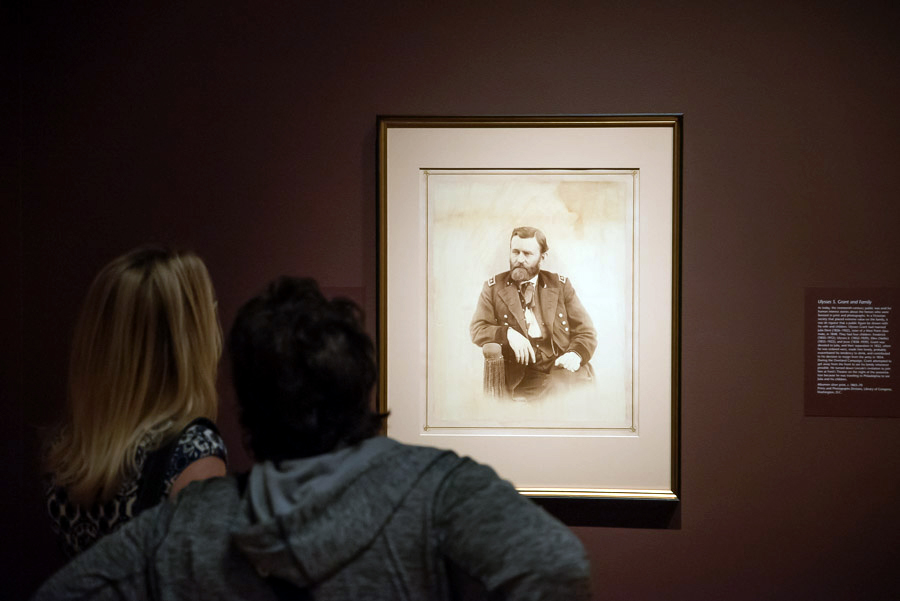
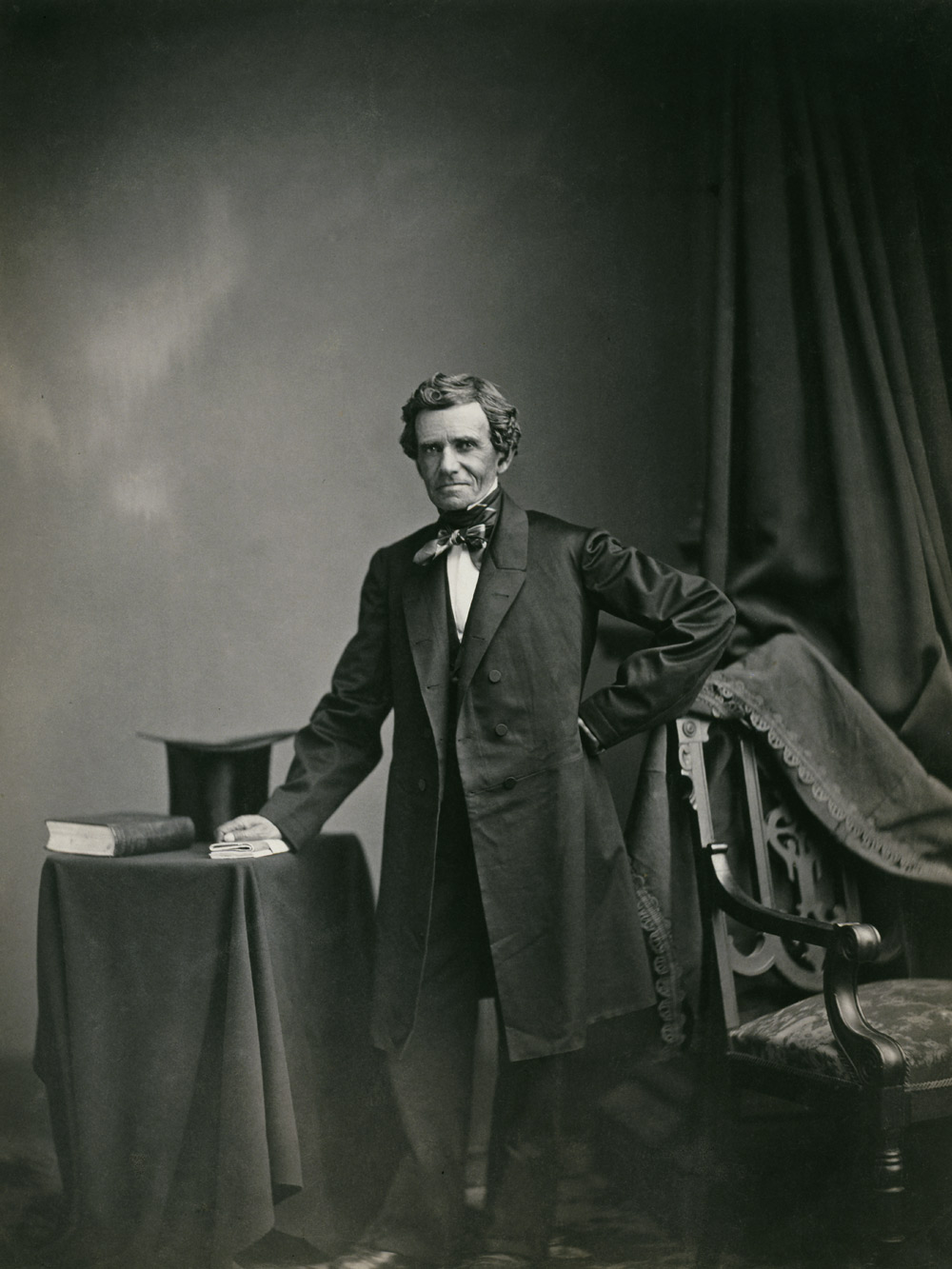
Alexander Gardner (American born Scotland, 1821-1882) 'Ulysses S. Grant' (1822-1885) c. 1864 from the exhibition 'Dark Fields of the Republic: Alexander Gardner Photographs, 1859-1872' at the National Portrait Gallery, Washington, Sept 2015 - March 2016


Alexander Gardner (American born Scotland, 1821-1882)
Ulysses S. Grant (1822-1885)
c. 1864
Albumen silver print
National Portrait Gallery, Smithsonian Institution


THIS IS THE FIRST OF THREE POSTINGS ABOUT (MAINLY AMERICAN) 19th CENTURY PHOTOGRAPHY.

This monster posting is both fascinating and gruesome by turns. They were certainly dark fields, stained crimson with the blood of men of opposing armies, left bloated and rotting in the hot sun. Can you imagine the smell one or two days later when Alexander Gardner arrived to photograph those very fields.

Particularly in the early war years (1861-62).”Gardner has often had his work misattributed to Brady.” Gardner worked for Mathew Brady, running his Washington office and working in the field (as many other operatives did) during the early part of the Civil War. Gardner’s negatives were published under the banner of the studio of Brady. He finished working for Brady in 1862 before setting up his own studio in May 1863 a few blocks from Brady’s Washington studio. This fluidity of authorship continues later in the war when Timothy H. O’Sullivan’s photographs, an assistant to Gardner, appeared under the masthead of Gardner’s studio. Evidence of this can be observed in the image Home of a Rebel Sharpshooter (July 1863, below) where, at least, Sullivan is credited with the negative at bottom left under the image.

Gardner changed the face of photography. He endowed it with an immediacy and energy that it had previously been lacking. His photographs of the battlefield brought the action “presently” into the lounge rooms of the well-heeled and, by engravings taken from the photographs, into newspapers of the time. His series of photographs of the hanging of the conspirators convicted of Abraham Lincoln’s assassination are “considered one of the first examples of photojournalism ever recorded.” But he wasn’t above rearranging the scene to his liking, as in the moving of the body in Home of a Rebel Sharpshooter (July 1863, below) to make a more advantageous “view” … much like Roger Fenton’s moving of the cannonballs in his epic photograph The Valley of the Shadow of Death (1855). Today this would be frowned upon, but in the era these photographs were taken it seemed the most “natural” thing to do, to make a better photograph, and nothing was thought of it.

The exhibition text states, “But his arrangement of the corpse reflects how difficult it was for Gardner and his contemporaries to process the reality of mass casualties in which the dead became anonymous. Caught at a transitional moment, Gardner did not trust the images his camera captured. That this photographic construction would be more marketable to a public still steeped in Victorian sentimentality only adds to Gardner’s malfeasance.” Malfeasance is a strong word. Malfeasance is defined as an affirmative act, “the performance by a public official of an act that is legally unjustified, harmful, or contrary to law; wrongdoing (used especially of an act in violation of a public trust).” (Dictionary.com) The exhibition text also states that “His actions are unforgivable from both a moral and artistic point of view,” and are a blot on Gardner’s career.

I don’t agree. Of course Gardner trusted the images that his camera captured, he was a photographer! This is a ludicrous statement… it is just that, arriving days after the battle, he wanted compositions that created news and views that were memorable. His affirmative action was not illegal or contrary to the law. Although morally it could be seen as a violation of public trust he was reporting the depravities of war within the first 25 years of the beginning of photography, and he was trying to get across to the general public the lonely desperation of death. In that era, at the very beginning of photographic reportage, who was to tell him it was wrong or illegal? We view these actions through retrospective eyes knowing that this kind of re-arrangement would not be tolerated today (but it is, in the digital manipulation of images!) and the condemnation of today is just a hollow statement. Photography has ALWAYS re-presented reality – through the hand of the author, through the eyes of the viewer.

Other interesting things to note in the posting are:

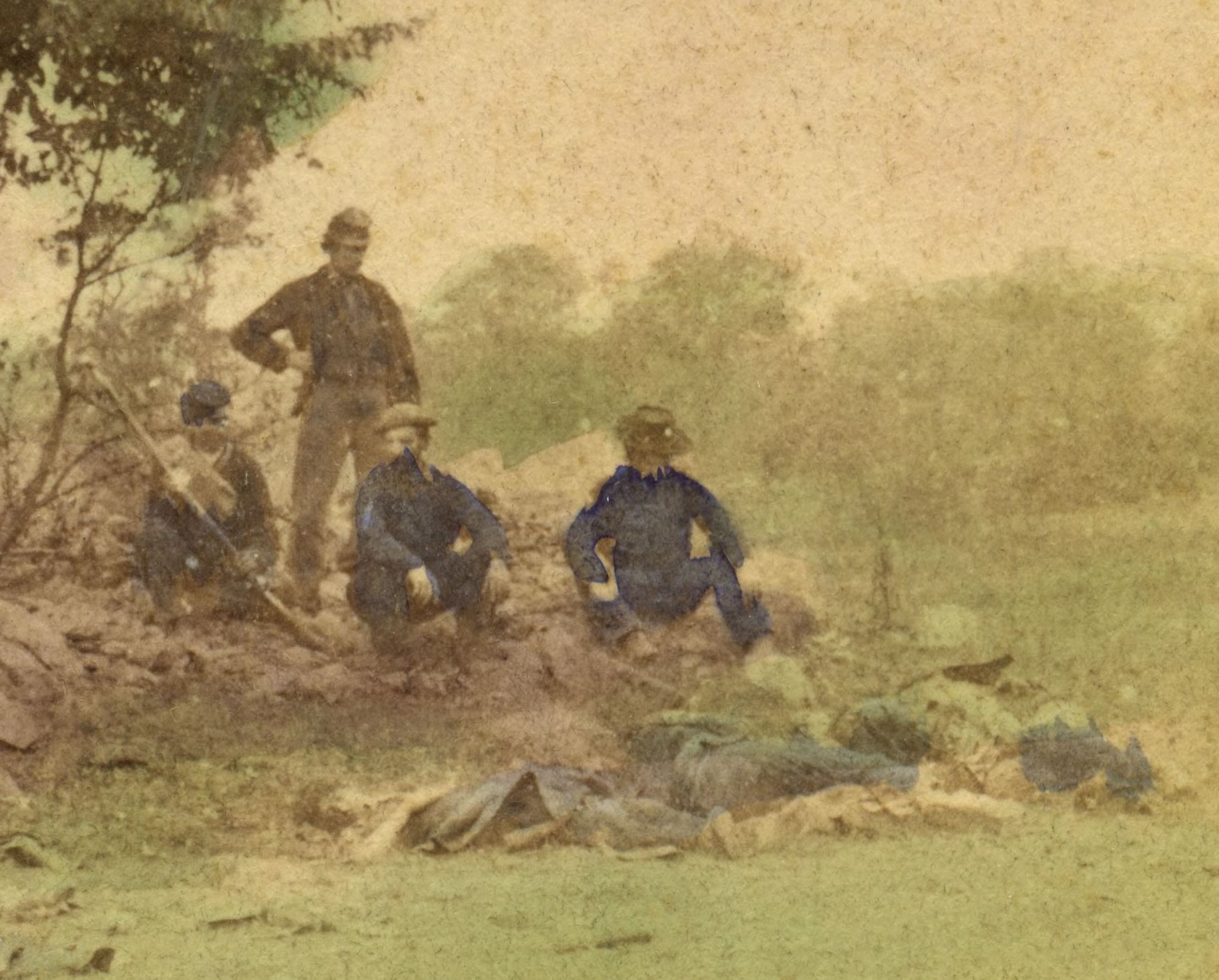
~ the mechanical overlaying of colour in the stereograph View on Battle Field of Antietam, Burial party at work (1862, below) where the colour is applied subtly in the left hand photograph while in the right hand image, the colour almost obliterates the figures

~ the attitude of the participants in Indian Peace Commissioners in council with the Northern Cheyenne and Northern Arapaho, Fort Laramie, Dakota Territory (1868, below). The military and civilian representatives of the government sit at right on boxes, four of them staring directly into the camera aware they are being photographed for prosperity (General William T. Sherman does not, looking pensive with his hands clasped) while on the left, the Native American Indian representatives sit on the ground wrapped in blankets with the backs of two interpreters towards the camera. They do not make eye contact with the camera except for one man, who has turned his head towards the camera and gives it a defiant stare (perhaps I am imagining, but I think not)


The strongest photographs in this posting, other than the masterpiece Home of a Rebel Sharpshooter are not the empirical scenes of the battlefield but two portraits: Ulysses S. Grant (1864, below) and the war weary “cracked plate” image of Abraham Lincoln (1865, below). Both are memorable not just for the low depth of field or the “capture” of remarkable leaders of men during war but for something essentially interior to themselves – their contemplation of self. With Grant you can feel the steely determination (this in the second last year of the war) and, yet, comprehend his statement,

“Though I have been trained as a soldier, and participated in many battles, there never was a time when, in my opinion, some way could not be found to prevent the drawing of the sword”

in this image. What must be done has to be done, but by God I wish it wasn’t so. The eyes have it.

With the Lincoln portrait – of which Gardner only pulled one print from the plate before he destroyed it, making this the rarest of images – the charismatic leader is shown with craggy, war weariness. The contextless space around the body is larger than is normal at this time, allowing us to focus on the “thing itself” … and then we have that prophetic crack. “During this sitting, Gardner created this portrait by accident,” says the text from the exhibition. How do you create a portrait like this by accident? With the length of the exposure, Lincoln would have had to remain immobile for seconds… not something that you do by accident. No, both Gardner and Lincoln knew that a portrait was being taken. This is previsualisation (depth of field, space around and above the body) at its finest. That the plate was accidentally cracked and then discarded in no way makes this portrait an accident. If this is a portrait of, “Lincoln between life and death, between his role as a historical actor and the mystical figure that he would become with his assassination,” it is also the face of a man that you could almost reach out and touch!

Dr Marcus Bunyan


Many thankx to the National Portrait Gallery, Washington for allowing me to publish the photographs in the posting. Please click on the photographs for a larger version of the image.



Alexander Gardner (American born Scotland, 1821-1882)

Gardner has often had his work misattributed to Brady, and despite his considerable output, historians have tended to give Gardner less than full recognition for his documentation of the Civil War. Lincoln dismissed McClellan from command of the Army of the Potomac in November 1862, and Gardner’s role as chief army photographer diminished. About this time, Gardner ended his working relationship with Brady, probably in part because of Brady’s practice of attributing his employees’ work as “Photographed by Brady”. That winter, Gardner followed General Ambrose Burnside, photographing the Battle of Fredericksburg. Next, he followed General Joseph Hooker. In May 1863, Gardner and his brother James opened their own studio in Washington, D.C, hiring many of Brady’s former staff. Gardner photographed the Battle of Gettysburg (July 1863) and the Siege of Petersburg (June 1864-April 1865) during this time.

In 1866, Gardner published a two-volume work, Gardner’s Photographic Sketch Book of the Civil War. Each volume contained 50 hand-mounted original prints. The book did not sell well. Not all photographs were Gardner’s; he credited the negative producer and the positive print printer. As the employer, Gardner owned the work produced, as with any modern-day studio. The sketchbook contained work by Timothy H. O’Sullivan, James F. Gibson, John Reekie, William Pywell, James Gardner (his brother), John Wood, George N. Barnard, David Knox and David Woodbury, among others. Among his photographs of Abraham Lincoln were some considered to be the last to be taken of the President, four days before his assassination, although later this claim was found to be incorrect, while the pictures were actually taken in February 1865, the last one being on the 5th of February. Gardner would photograph Lincoln on a total of seven occasions while Lincoln was alive. He also documented Lincoln’s funeral, and photographed the conspirators involved (with John Wilkes Booth) in Lincoln’s assassination. Gardner was the only photographer allowed at their execution by hanging, photographs of which would later be translated into woodcuts for publication in Harper’s Weekly.

Text from the Wikipedia website


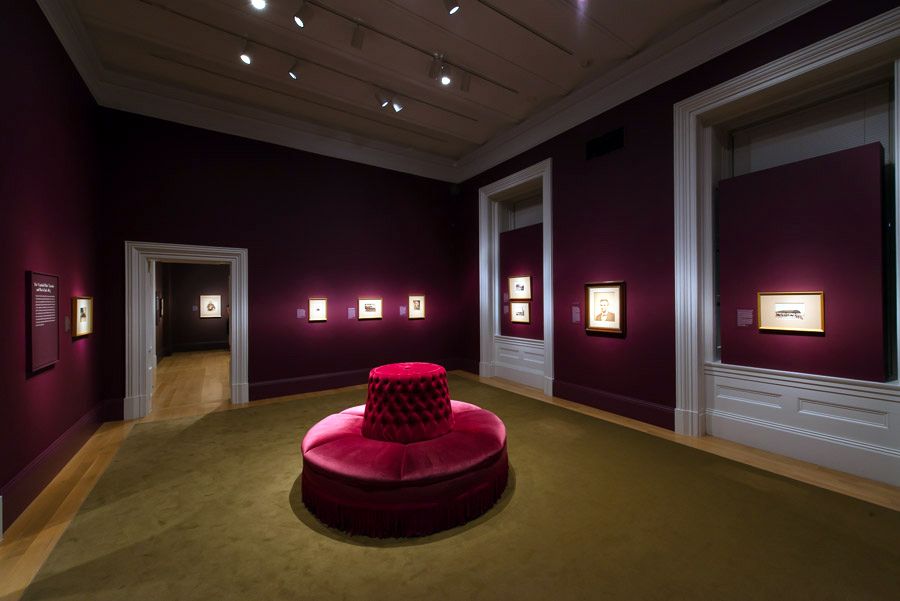
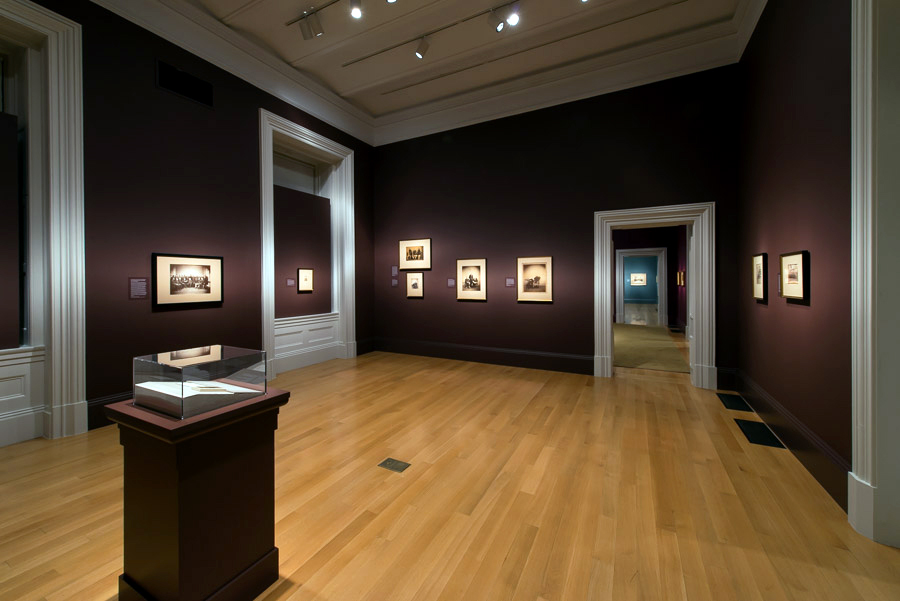
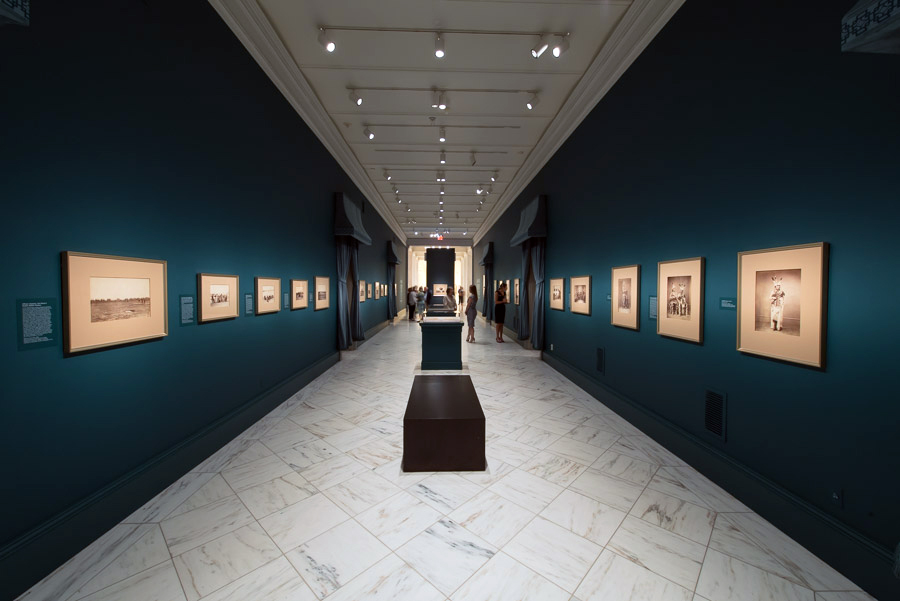
Installation view of the exhibition ‘Dark Fields of the Republic: Alexander Gardner Photographs, 1859-1872’ at the National Portrait Gallery, Washington

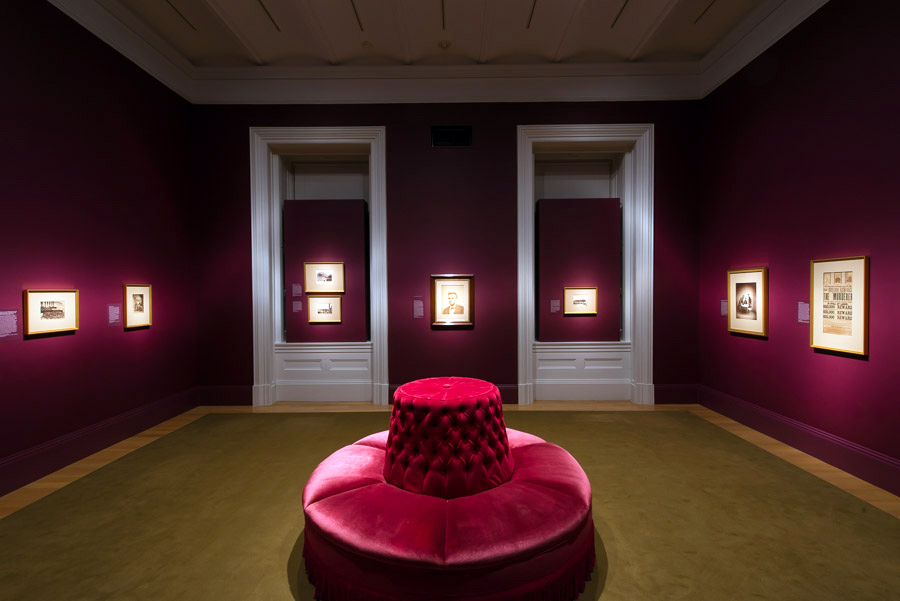
Installation view of the exhibition ‘Dark Fields of the Republic: Alexander Gardner Photographs, 1859-1872’ at the National Portrait Gallery, Washington

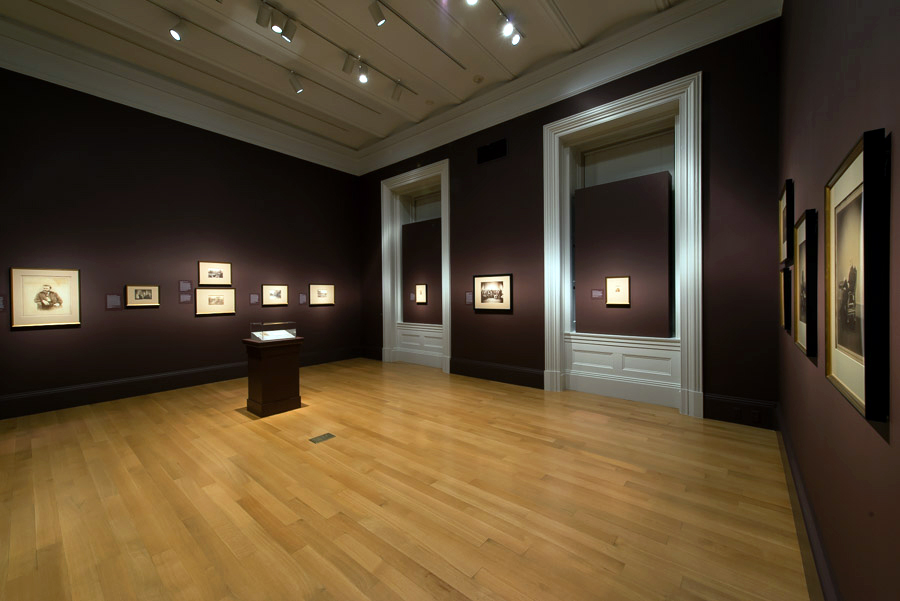
Installation view of the exhibition ‘Dark Fields of the Republic: Alexander Gardner Photographs, 1859-1872’ at the National Portrait Gallery, Washington

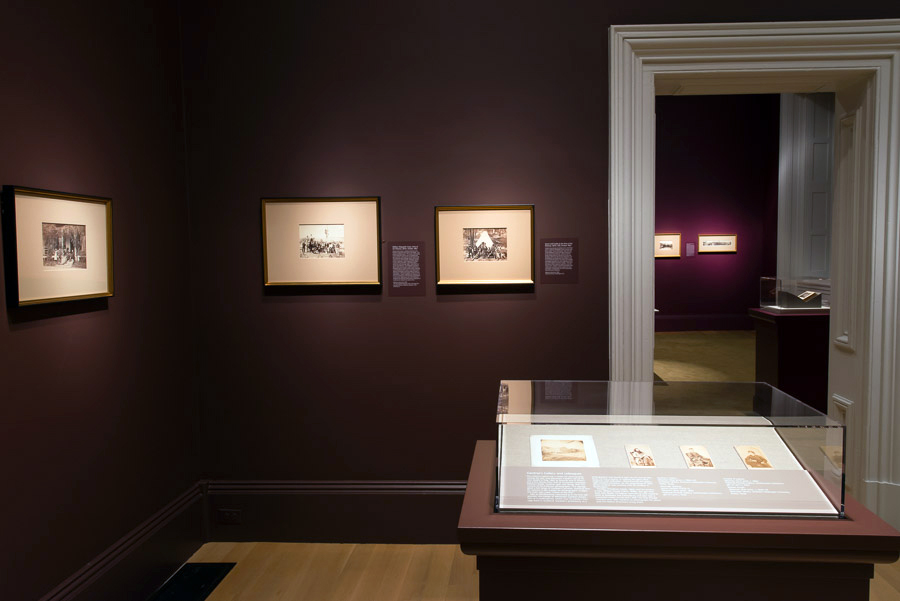
Installation view of the exhibition ‘Dark Fields of the Republic: Alexander Gardner Photographs, 1859-1872’ at the National Portrait Gallery, Washington

Installation view of the exhibition ‘Dark Fields of the Republic: Alexander Gardner Photographs, 1859-1872’ at the National Portrait Gallery, Washington

Installation view of the exhibition ‘Dark Fields of the Republic: Alexander Gardner Photographs, 1859-1872’ at the National Portrait Gallery, Washington

Installation view of the exhibition ‘Dark Fields of the Republic: Alexander Gardner Photographs, 1859-1872’ at the National Portrait Gallery, Washington

Installation view of the exhibition ‘Dark Fields of the Republic: Alexander Gardner Photographs, 1859-1872’ at the National Portrait Gallery, Washington

Installation view of the exhibition ‘Dark Fields of the Republic: Alexander Gardner Photographs, 1859-1872’ at the National Portrait Gallery, Washington

Installation view of the exhibition ‘Dark Fields of the Republic: Alexander Gardner Photographs, 1859-1872’ at the National Portrait Gallery, Washington


Installation views of the exhibition Dark Fields of the Republic: Alexander Gardner Photographs, 1859-1872 at the National Portrait Gallery, Washington


Dark Fields of the Republic: Alexander Gardner Photographs, 1859-1872

His photographs have “a terrible distinctness.” So wrote the New York Times about the work of trailblazing photographer Alexander Gardner (1821-1882). In a career spanning the critical years of the nineteenth century, Gardner created images that documented the crisis of the Union, the Civil War, the United States’ expansion into the western territories, and the beginnings of the Indian Wars.

As one of a pioneering generation of American photographers, Gardner helped revolutionise photography, both in his mastery of techniques and by recognising that the camera’s eye could be fluid and mobile. In addition to creating portraits of leaders and generals – he was Abraham Lincoln’s favourite photographer – Gardner followed the Union army, taking indelible images of battlefields and military campaigning. His battlefield photographs – including those of the newly dead – created a public sensation, contributing to the change under way in American culture from romanticism to realism, a realism that was the hallmark of his work.

At war’s end, Gardner went west. Fascinated, like many artists, by American Indians, he took a series of stunning images of the western tribes, setting set these figures in their native grounds: these photographs are the pictorial evocation of the seemingly limitless western land and sky. He also took images of the Indians in Washington, D.C., where they traveled to negotiate preservation of their way of life. Gardner’s portraits of Native Americans are dignified likenesses of a resistant people fighting for their way of life.

In their documentary clarity and startling precision, Alexander Gardner’s photographs – taken in the studio, on battlefields, and in the western territories – are a summons back into a darkly turbulent and heroic period in American history.”

Text from the exhibition website


Installation view of the exhibition ‘Dark Fields of the Republic: Alexander Gardner Photographs, 1859-1872’ at the National Portrait Gallery, Washington

Installation view of the exhibition ‘Dark Fields of the Republic: Alexander Gardner Photographs, 1859-1872’ at the National Portrait Gallery, Washington

Installation view of the exhibition ‘Dark Fields of the Republic: Alexander Gardner Photographs, 1859-1872’ at the National Portrait Gallery, Washington

Installation view of the exhibition ‘Dark Fields of the Republic: Alexander Gardner Photographs, 1859-1872’ at the National Portrait Gallery, Washington

Installation view of the exhibition ‘Dark Fields of the Republic: Alexander Gardner Photographs, 1859-1872’ at the National Portrait Gallery, Washington

Installation view of the exhibition ‘Dark Fields of the Republic: Alexander Gardner Photographs, 1859-1872’ at the National Portrait Gallery, Washington

Installation view of the exhibition ‘Dark Fields of the Republic: Alexander Gardner Photographs, 1859-1872’ at the National Portrait Gallery, Washington


Installation views of the exhibition Dark Fields of the Republic: Alexander Gardner Photographs, 1859-1872 at the National Portrait Gallery, Washington with, in the bottom photograph, two people looking at a photograph of Lieutenant General Grant.


Alexander Gardner (American born Scotland, 1821-1882) 'Ulysses S. Grant' (1822-1885) c. 1864 (detail)


Alexander Gardner (American born Scotland, 1821-1882)
Ulysses S. Grant (detail)
c. 1864
Albumen silver print
National Portrait Gallery, Smithsonian Institution


There is a story that when Ulysses S. Grant traveled east in 1864 to take command of all the Union armies, the desk clerk at Washington’s Willard Hotel did not recognise him and assigned him to a mean, nondescript room. (When Grant identified himself, he was upgraded to a suite.) The anecdote points out that likenesses were not yet widely distributed, even after the advent of photography. It was possible for famous people to remain unidentified. But fame meant that one had one’s photograph taken, as Grant did in this image Gardner took after the western general arrived in Washington. Grant was coming off a string of successes in the West, including the successful siege of Vicksburg, which made him the inevitable choice for overall command. In Grant, Lincoln finally found a general who would consistently engage the enemy’s forces. Indicative of Grant’s stature, Lincoln bestowed on him the rare title of lieutenant general, a rank previously held only by George Washington.

Text from the exhibition website


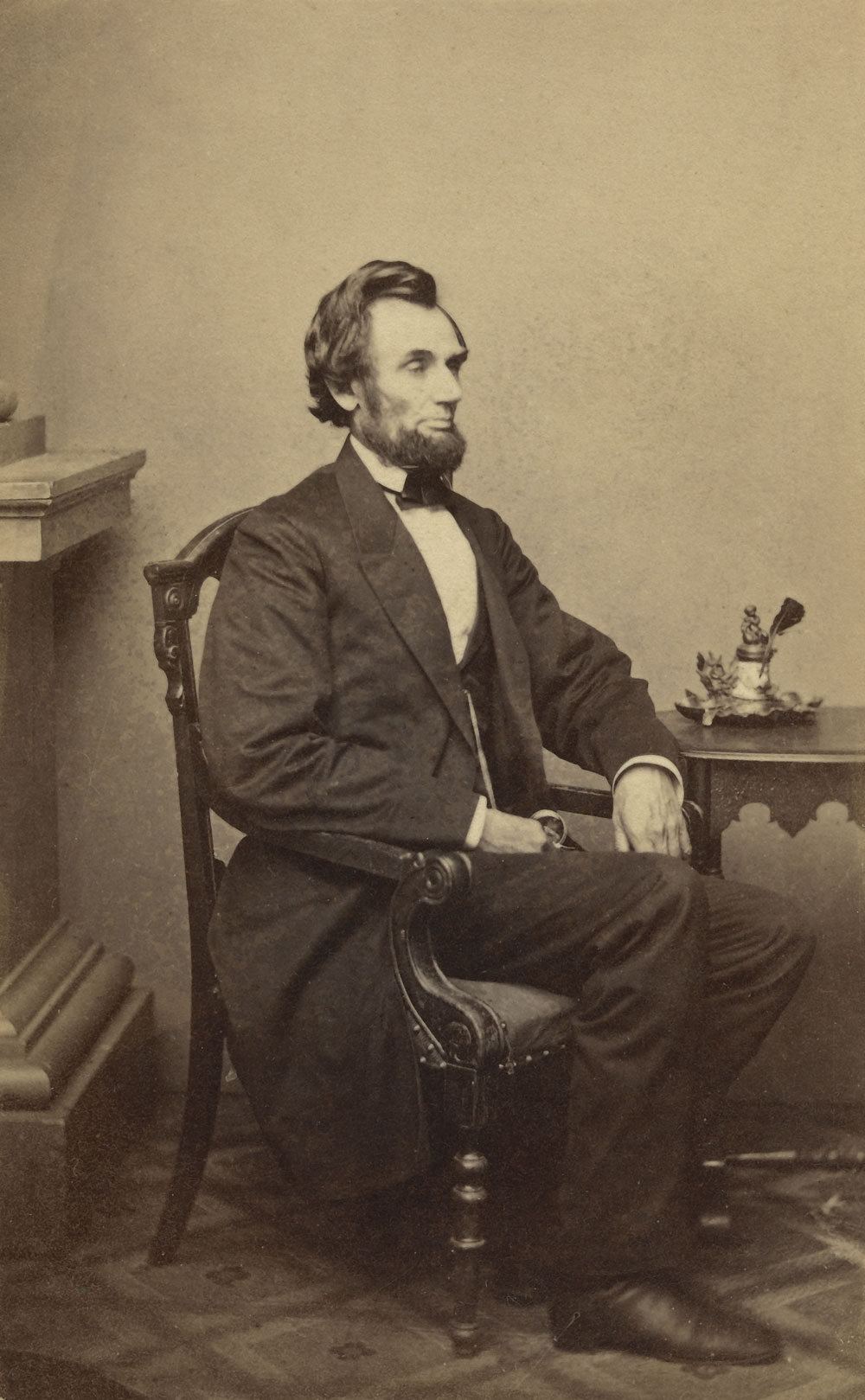
Alexander Gardner (American born Scotland, 1821-1882) 'Abraham Lincoln' 1863 from the exhibition 'Dark Fields of the Republic: Alexander Gardner Photographs, 1859-1872' at the National Portrait Gallery, Washington, Sept 2015 - March 2016


Alexander Gardner (American born Scotland, 1821-1882)
Abraham Lincoln
1861
Albumen silver print
National Portrait Gallery, Smithsonian Institution


Alexander Gardner (American born Scotland, 1821-1882) 'Abraham Lincoln' 1863 (detail)


Alexander Gardner (American born Scotland, 1821-1882)
Abraham Lincoln (detail)
1863
Albumen silver print
National Portrait Gallery, Smithsonian Institution


This portrait of Abraham Lincoln was taken on February 24, 1861, just before his inauguration on March 4. It has been conjectured that Lincoln is hiding his right hand in his lap because it was swollen from shaking so many hands during his travel from Illinois to Washington. This is also the first studio image depicting Lincoln with a full beard, which he had famously grown between the election and inauguration, purportedly at the behest of a little girl who wrote him from New York that it would improve his appearance. Lincoln was early to recognise the power of the relatively new medium of photography to mould and shape a public persona. He credited a photograph by Mathew Brady, taken when he came to New York City to present himself to Republican Party power brokers, as helping to confirm his suitability for the presidency by showing him well-dressed and dignified. Interestingly, the Brady photograph shows Lincoln standing; in this portrait he is seated, as if ready to begin work as president.

Text from the exhibition website


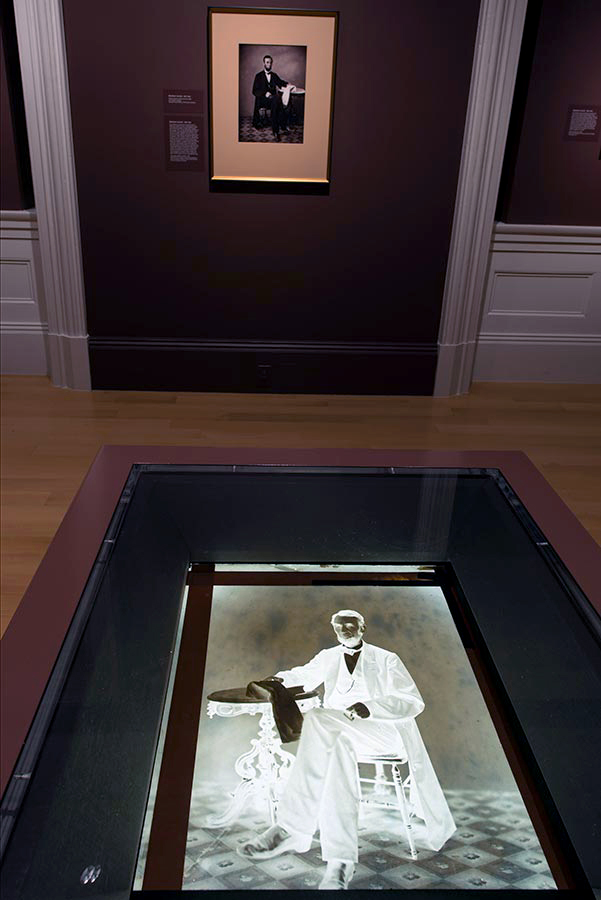
Installation view of the exhibition ‘Dark Fields of the Republic: Alexander Gardner Photographs, 1859-1872’ at the National Portrait Gallery, Washington showing the "Imperial" glass-plate negative of President Abraham Lincoln from his August 9, 1863, sitting at Gardner's Washington studio, with a print from the negative on the wall behind


Installation view of the exhibition Dark Fields of the Republic: Alexander Gardner Photographs, 1859-1872 at the National Portrait Gallery, Washington showing the “Imperial” glass-plate negative of President Abraham Lincoln from his August 9, 1863, sitting at Gardner’s Washington studio, with a print from the negative on the wall behind


This exhibition provides the rare opportunity to display the means by which a photographic image was produced on paper: the glass-plate negative that was the “film” of early photography. Because of their fragility, surviving glass-plate negatives of this size (the so-called “imperial”) are rare: this is one of two of Lincoln that have survived and dates from his August 9, 1863, sitting at Gardner’s Washington studio. The process Gardner used was relatively new to America and consisted of hand-coating a glass plate with collodion – a syrupy mixture of guncotton dissolved in alcohol and ether to which bromide and iodine salts had been added. The difficulty for the photographer was that the glass plate had to be coated with collodion, sensitised in a bath of silver nitrate, and exposed in the camera immediately, while the emulsion was still damp. Gardner was acknowledged as a master in evenly coating the plate, which resulted in prints of exceptional clarity.

Text from the exhibition website


Alexander Gardner (American born Scotland, 1821-1882) 'Abraham Lincoln' 1865


Alexander Gardner (American born Scotland, 1821-1882)
Abraham Lincoln
1865
Albumen silver print
National Portrait Gallery, Smithsonian Institution


The “cracked-plate” image of Abraham Lincoln, taken by Alexander Gardner on February 5, 1865, is one of the most important and evocative photographs in American history. In preparing for his second inaugural, Lincoln had a series of photographs taken at Gardner’s studio. During this sitting, Gardner created this portrait by accident: at some point, possibly when the glass-plate negative was heated to receive a coat of varnish, a crack appeared in the upper half of the plate. Gardner pulled a single print and then discarded the plate, so only one such portrait exists.

The portrait represents a radical departure from Gardner’s usual crisp empiricism. The shallow depth of field created when Gardner moved his camera in for a close-up yielded a photograph whose focus is confined to the plane of Lincoln’s cheeks, while the remainder of the image appears diffused and even out of focus. Lincoln is careworn and tired, his face grooved by the emotional shocks of war. Yet his face also bears a small smile, perhaps as he contemplates the successful conclusion of hostilities and the restoration of the Union. This is Lincoln between life and death, between his role as a historical actor and the mystical figure that he would become with his assassination. Although Lincoln looked forward to his second term, we know, as he could not, that he will soon be assassinated. This image inextricably links history and myth, creating one of the most powerful American portraits.

Text from the exhibition website


Alexander Gardner (American born Scotland, 1821-1882) 'Abraham Lincoln' 1865 (detail)


Alexander Gardner (American born Scotland, 1821-1882)
Abraham Lincoln (detail)
1865
Albumen silver print
National Portrait Gallery, Smithsonian Institution


Smithsonian’s First Major Retrospective of Alexander Gardner’s Photographs at the National Portrait Gallery

Exhibition Will Highlight Gardner’s Civil War Photographs, Including His One-of-a-Kind Image of President Lincoln

Considered America’s first modern photographer, just as the Civil War is considered the first modern war, Alexander Gardner created dramatic and vivid photographs of battlefields and played a crucial role in the transformation of American culture by injecting a sobering note of realism to American photography.

“Gardner’s photographs showed how the new medium and art form could develop to meet the challenges of modern society,” said Kim Sajet, director of the Portrait Gallery. “These are a record of the sacrifice and loss that occurred in the great national struggle over the Union. Our photograph of Lincoln by him, known as the ‘cracked-plate,’ is the museum’s ‘Mona Lisa.'” [see above]

The first section of the exhibition will highlight Gardner’s Civil War photographs, and his role as President Abraham Lincoln’s preferred photographer. Gardner photographed the president many times, recording the impact of the war on his face. Among these images is the “cracked-plate” portrait, a photograph that is arguably the most iconic image of Lincoln. In addition, the exhibition will encompass Gardner’s portraits of other prominent statesmen and generals, as well as private citizens.

Also in the exhibition are Gardner’s landscapes of the American West and portraits of American Indians. These document the course of American expansion as postwar settlers moved westward, challenged by geography and Indian tribes resistant to losing their ancestral homelands. Gardner’s landscapes are evocative studies of almost limitless horizons, giving a sense of the emptiness of western space. These are contrasted with his detailed portraits of Indian chiefs and tribal delegations.

Curated by David C. Ward, Portrait Gallery senior historian, and guest curator Heather Shannon, former photo archivist at the Smithsonian’s National Museum of the American Indian, with research assistance from Sarah Campbell, this exhibition will feature more than 140 objects, including photographs, prints and books. The exhibition will be the finale of the Portrait Gallery’s seven-part series commemorating the 150th anniversary of the Civil War.

Press release from the National Portrait Gallery


Alexander Gardner (American born Scotland, 1821-1882) 'Samuel Wilkeson' (1817-1889) c. 1859


Alexander Gardner (American born Scotland, 1821-1882)
Samuel Wilkeson (1817-1889)
c. 1859
Salted paper print
Smithsonian American Art Museum
Museum purchase from the Charles Isaacs Collection made possible in part by the Luisita L. and Franz H. Denghausen Endowment


On July 1, 1863, at the Battle of Gettysburg, nineteen-year-old Lieutenant Bayard Wilkeson and his men attempted to slow the Confederate forces. A shell mangled the lieutenant’s right knee as his unit, Battery G of the Fourth U.S. Artillery, drew the attention of Confederate cannons. After amputating his leg with a pocket knife and being carried to an almshouse, Wilkeson ordered his men to return to battle. A few days later, his father, Samuel Wilkeson, a journalist, wrote home to say he had found Bayard dead “from neglect and bleeding.” On the front page of the July 6 New York Times, Samuel wrote a moving, influential, and widely circulated account of the battle. Bayard’s story and his father’s grief became symbolic of the North’s suffering, sacrifice, and righteousness. The article concludes, “oh, you dead, who at Gettysburg have baptised with your blood the second birth of Freedom in America, how you are to be envied!”

Text from the exhibition website


Alexander Gardner (American born Scotland, 1821-1882) 'Samuel Wilkeson' (1817-1889) c. 1859


Alexander Gardner (American born Scotland, 1821-1882)
Samuel Wilkeson (1817-1889)
c. 1859
Salted paper print
Smithsonian American Art Museum
Museum purchase from the Charles Isaacs Collection made possible in part by the Luisita L. and Franz H. Denghausen Endowment


Alexander Gardner (American born Scotland, 1821-1882) 'Samuel Wilkeson' (1817-1889) c. 1859 (detail)


Alexander Gardner (American born Scotland, 1821-1882)
Samuel Wilkeson (1817-1889) (detail)
c. 1859
Salted paper print
Smithsonian American Art Museum
Museum purchase from the Charles Isaacs Collection made possible in part by the Luisita L. and Franz H. Denghausen Endowment


Alexander Gardner (American born Scotland, 1821-1882) 'Self-Portrait' c. 1861


Alexander Gardner (American born Scotland, 1821-1882)
Self-Portrait
c. 1861
Albumen silver print
National Portrait Gallery, Smithsonian Institution


In this self-portrait taken at Mathew Brady’s Washington studio, Alexander Gardner presents himself wearing the garb of a mountain man or trapper, sporting buckskins and a fur hat; Gardner’s trademark full, ungroomed beard only adds to the frontiersman image. Gardner holds a bow and arrow while standing on Indian rugs. The image captures America’s enduring fascination with the West and adopting the garb of Native peoples. It also shows Gardner, a man about whom we know little, in disguise, hiding himself in a fictional frontier persona. Although he is acting a role, Gardner, whose family had bought land in Iowa in the antebellum period, was genuinely interested in the western lands and the fate of the Indians. In the 1860s he began his project of photographing the western tribal delegations when they came to Washington. After the Civil War he went west to photograph Indians on their native grounds.

Text from the exhibition website


James Gardner (American born Scotland, c. 1832 - ?) 'Alexander Gardner' 1863


James Gardner (American born Scotland, c. 1832 – ?)
Alexander Gardner
1863
Albumen silver print
National Portrait Gallery, Smithsonian Institution; gift of Larry J. West


James Gardner (American born Scotland, c. 1832 - ?) 'Alexander Gardner' 1863 (detail)


James Gardner (American born Scotland, c. 1832 – ?)
Alexander Gardner (detail)
1863
Albumen silver print
National Portrait Gallery, Smithsonian Institution; gift of Larry J. West


Not as flamboyantly costumed as in his first self-portrait, this image of Alexander Gardner shows him as a workingman, which was his family’s heritage back in Scotland. Gardner’s proficiency as a photographer was based in part on his manual dexterity; he was a master at coating the glass-plate negatives with collodion, which formed the plate’s light-sensitive emulsion. By the beginnings of 1863 James Gardner was working with his brother in Washington.

Text from the exhibition website


Alexander Gardner (American born Scotland, 1821-1882) 'Rose Greenhow' (c. 1854-?) and 'Rose O'Neal Greenhow' (c. 1815-1864) 1862


Alexander Gardner (American born Scotland, 1821-1882)
Rose Greenhow  (c. 1854-?)
Rose O’Neal Greenhow  (c. 1815-1864)
1862
Albumen silver print
National Portrait Gallery, Smithsonian Institution


One of the Confederacy’s most successful female spies, Rose O’Neal Greenhow was a prominent Washington widow and a staunch southern sympathiser. The Confederacy recruited her as a spy after war erupted in 1861. Most notably, Greenhow is credited with passing along intelligence prior to the First Battle of Manassas, insuring a southern victory. Soon after, her covert activities were uncovered and she was placed under house arrest. Gardner took this photograph after “Rebel Rose” and her daughter, Little Rose, were transferred to the Old Capitol Prison in 1862. Greenhow served five months before being exiled to the South. She then traveled to Europe to promote the Confederate cause. Returning in September 1864, Greenhow drowned attempting to run the federal blockade of Wilmington, N.C. The Confederacy buried her with military honours.

Text from the exhibition website


Alexander Gardner (American born Scotland, 1821-1882) 'View on Battle Field of Antietam, Burial party at work' 1862


Alexander Gardner (American born Scotland, 1821-1882)
View on Battle Field of Antietam, Burial party at work
1862
Coloured Stereograph (Albumen silver print on stereo card)


Alexander Gardner (American born Scotland, 1821-1882) 'View on Battle Field of Antietam, Burial party at work' 1862 (detail)


Alexander Gardner (American born Scotland, 1821-1882)
View on Battle Field of Antietam, Burial party at work (detail)
1862
Coloured Stereograph (Albumen silver print on stereo card)


Alexander Gardner (American born Scotland, 1821-1882) 'View on Battle Field of Antietam, Burial party at work' 1862 (detail)

Alexander Gardner (American born Scotland, 1821-1882) 'View on Battle Field of Antietam, Burial party at work' 1862 (detail)


Alexander Gardner (American, 1821-1882)
View on Battle Field of Antietam, Burial party at work (details of left and right photographs)
1862
Coloured Stereograph (Albumen silver print on stereo card)


Alexander Gardner (American born Scotland, 1821-1882) 'Antietam Bridge, Maryland' 1862


Alexander Gardner (American born Scotland, 1821-1882)
Antietam Bridge, Maryland
1862
Albumen silver print
Photograph by Alexander Gardner, from Gardner’s Photographic Sketch Book of the War
Records of the War Department General and Special Staffs, Record Group 165, National Archives Still Picture Branch, College Park, Maryland


Antietam Bridge (not to be confused with the more famous Burnside Bridge located to the south, which was the site of a confused Union attack during the Battle of Antietam’s third phase) spanned Antietam Creek, roughly in the middle of the battlefield. Before the battle, some Union troops used it to move toward the Confederate lines arrayed just outside the village of Sharpsburg. The bridge was not brought into play during the battle since George McClellan, fearful of overcommitting his troops, kept a large reserve near his headquarters at the Pry House, a reserve that would have used the bridge in its attack if it had been sent against Robert E. Lee’s lines. Unlike Burnside Bridge, the original stone Antietam Bridge, with its three arches, has not survived and has been replaced by a modern span.

Text from the exhibition website


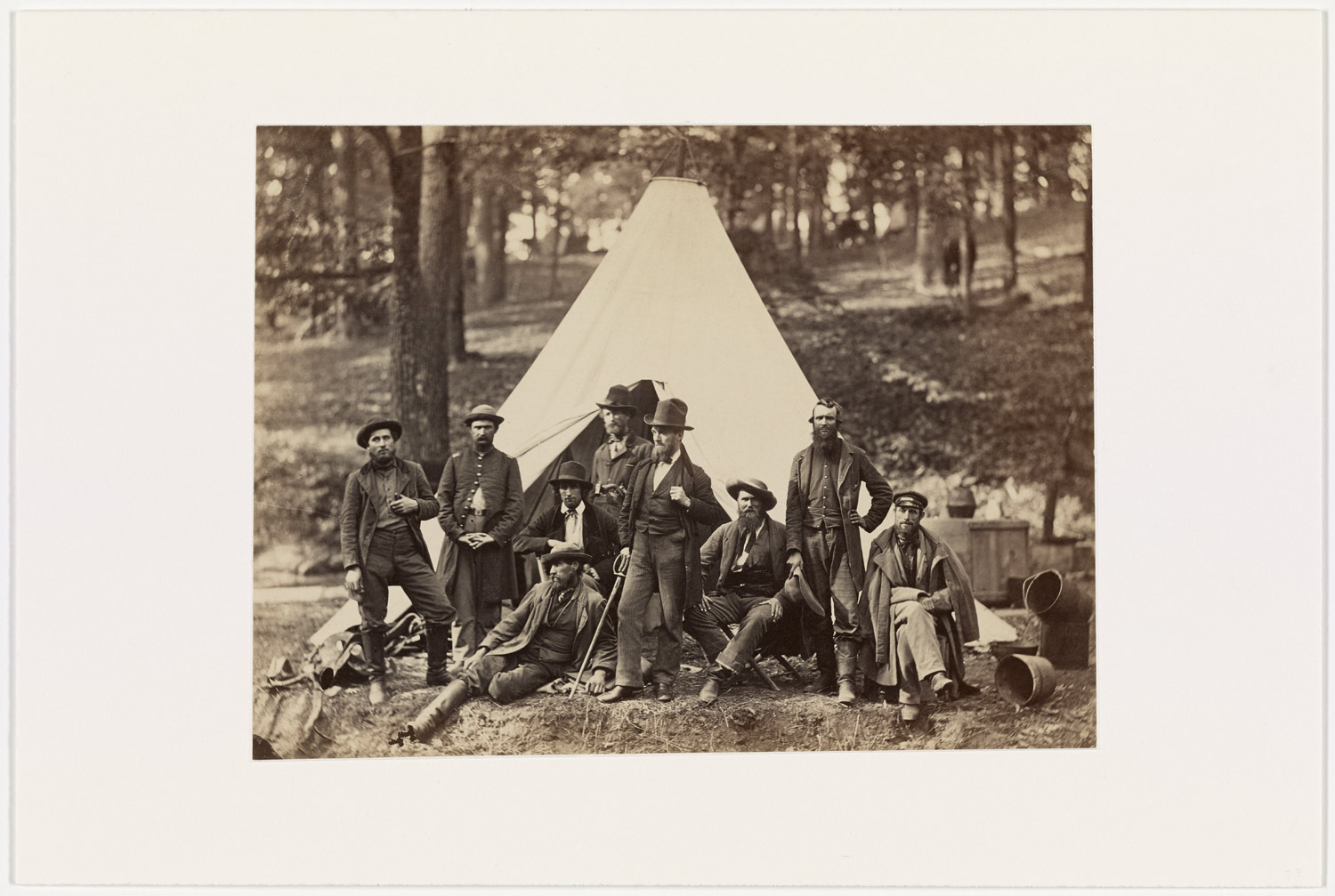
Alexander Gardner (American born Scotland, 1821-1882) 'Scouts and Guides to the Army of the Potomac, Berlin, MD, October, 1862' October 1862


Alexander Gardner (American born Scotland, 1821-1882)
Scouts and Guides to the Army of the Potomac, Berlin, MD, October, 1862
October 1862
Albumen silver print
Photograph by Alexander Gardner, from Gardner’s Photographic Sketch Book of the War
Records of the War Department General and Special Staffs, Record Group 165, National Archives Still Picture Branch, College Park, Maryland


Alexander Gardner (American born Scotland, 1821-1882) 'Scouts and Guides to the Army of the Potomac, Berlin, MD, October, 1862' October 1862


Alexander Gardner (American born Scotland, 1821-1882)
Scouts and Guides to the Army of the Potomac, Berlin, MD, October, 1862
October 1862
Albumen silver print
Photograph by Alexander Gardner, from Gardner’s Photographic Sketch Book of the War
Records of the War Department General and Special Staffs, Record Group 165, National Archives Still Picture Branch, College Park, Maryland


Alexander Gardner (American born Scotland, 1821-1882) 'Scouts and Guides to the Army of the Potomac, Berlin, MD, October, 1862' October 1862 (detail)


Alexander Gardner (American born Scotland, 1821-1882)
Scouts and Guides to the Army of the Potomac, Berlin, MD, October, 1862 (detail)
October 1862
Albumen silver print
Photograph by Alexander Gardner, from Gardner’s Photographic Sketch Book of the War
Records of the War Department General and Special Staffs, Record Group 165, National Archives Still Picture Branch, College Park, Maryland


Gardner documented specialised units in the Union army, as with the Telegraphic Corps, and here with the so-called “Scouts and Guides,” who were part of the intelligence service that Allan Pinkerton ran for the Army of the Potomac. Gardner took this group portrait when he returned to the area around Antietam; Berlin (now Brunswick), Maryland, is on the Potomac, just downstream from Harpers Ferry. In his Sketchbook Gardner wrote about the hardship and dangers faced by men who frequently acted as spies and could be executed if caught: “Their faces are indexes of the character required for such hazardous work.” Gardner’s statement exemplifies how connections are drawn between appearance and personality; a photograph was seen as particularly informative psychologically.

Text from the exhibition website


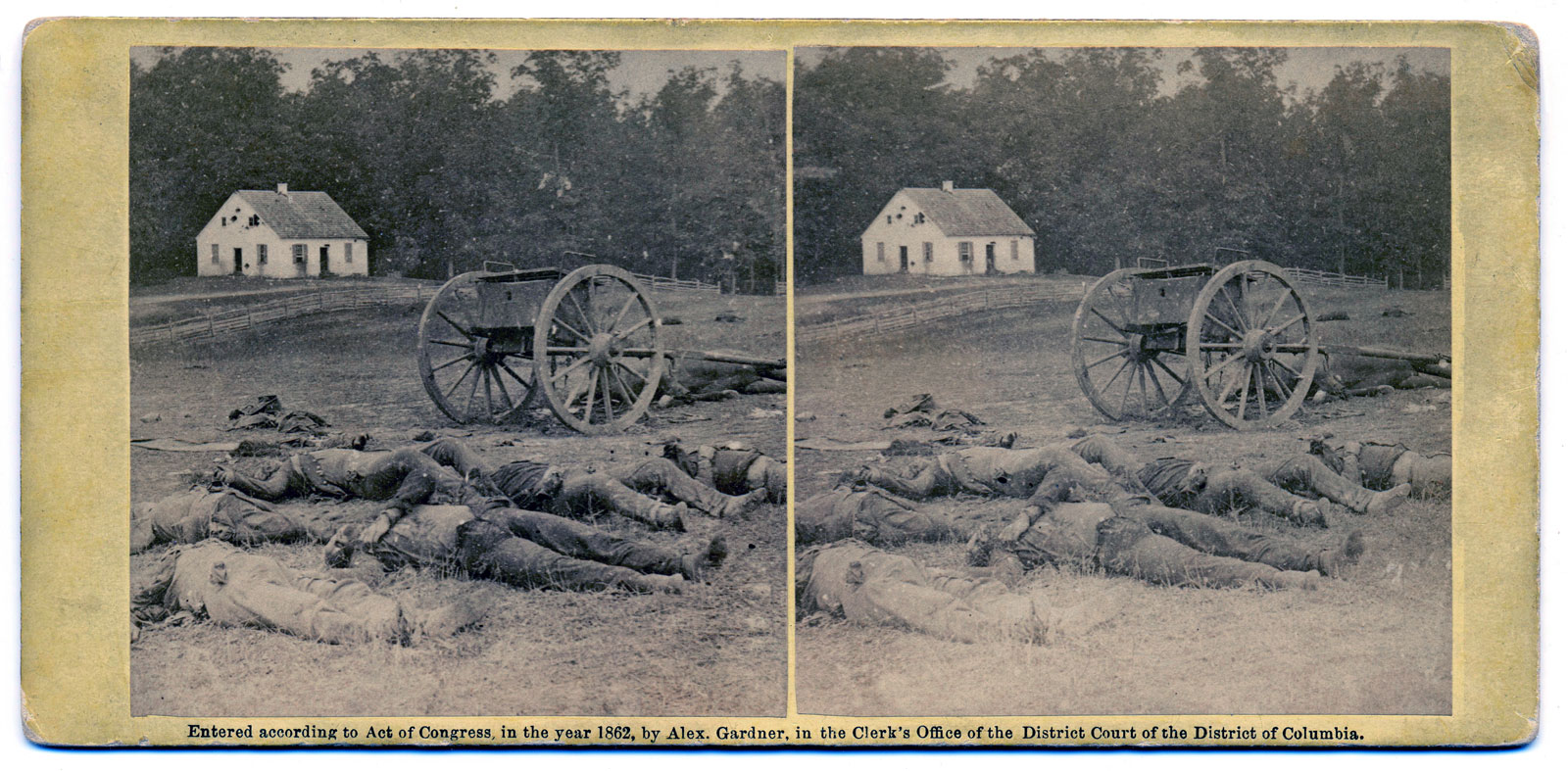
Alexander Gardner (American born Scotland, 1821-1882) 'Completely Silenced: Dead Confederate Artillerymen, as they lay around their battery after the Battle of Antietam' 1862


Alexander Gardner (American born Scotland, 1821-1882)
Completely Silenced: Dead Confederate Artillerymen, as they lay around their battery after the Battle of Antietam
1862
Stereograph (Albumen silver print on stereo card)
Collection of Bob Zeller


Alexander Gardner (American born Scotland, 1821-1882) 'Completely Silenced: Dead Confederate Artillerymen, as they lay around their battery after the Battle of Antietam' 1862 (detail)


Alexander Gardner (American born Scotland, 1821-1882)
Completely Silenced: Dead Confederate Artillerymen, as they lay around their battery after the Battle of Antietam (detail)
1862
Stereograph (Albumen silver print on stereo card)
Collection of Bob Zeller


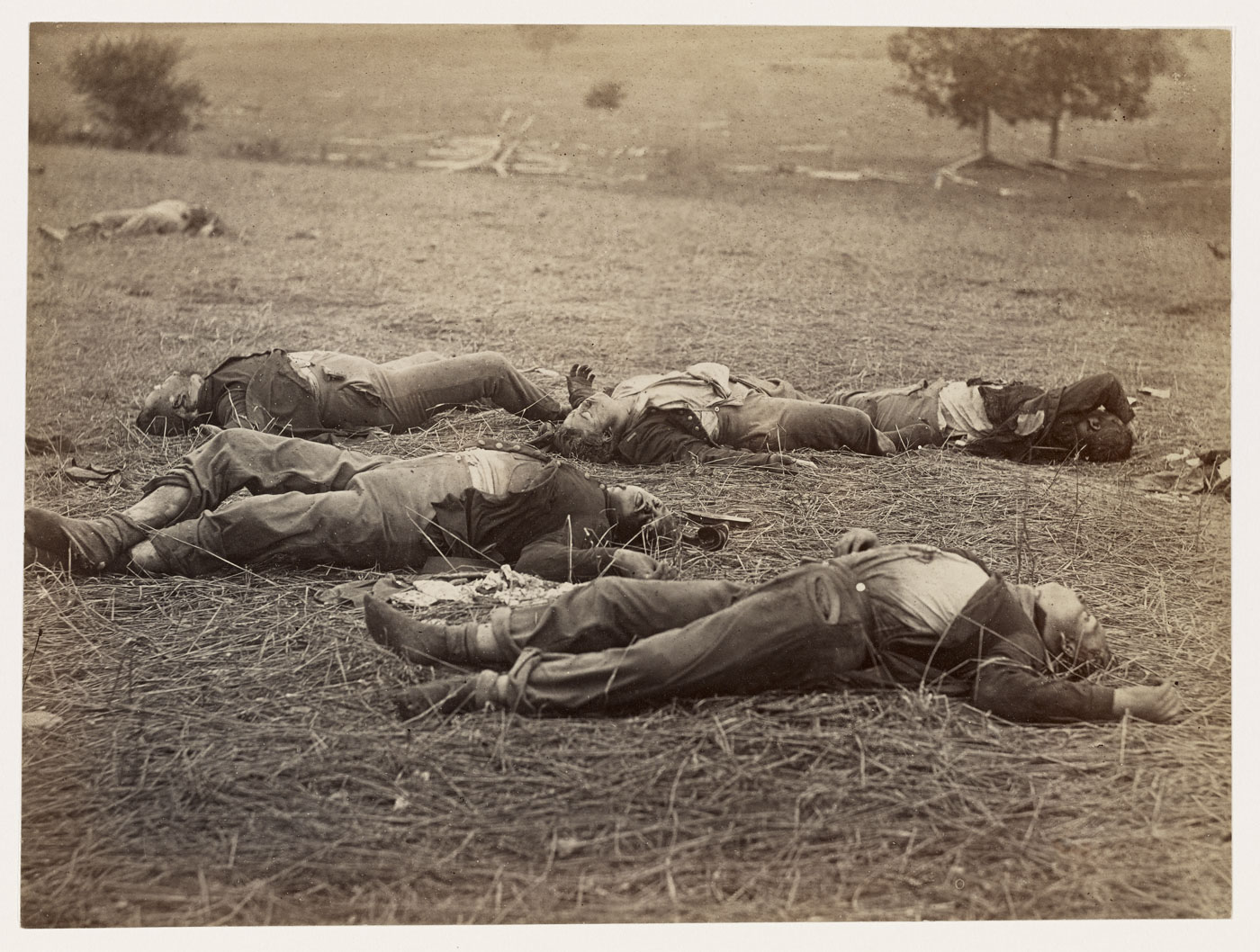
The Battle of Antietam (Maryland) occurred on September 17, 1862, and it is still America’s bloodiest day, with more than 25,000 combined casualties (killed and wounded) on both sides. Despite a nearly three-to-one numerical advantage, the Union forces were unable to score a decisive victory. The heavy casualties did force Robert E. Lee to withdraw, however, ending his first invasion of the North. Gardner probably arrived at the battlefield on September 18. He took this image of dead Confederates near the Dunker Church, a focal point of the Union attack, which began shortly after 7.00 am the day before.

Text from the exhibition website


Alexander Gardner (American born Scotland, 1821-1882) 'Gathered Together for Burial after the Battle of Antietam' 1862


Alexander Gardner (American born Scotland, 1821-1882)
Gathered Together for Burial after the Battle of Antietam (View in Ditch on the Right Wing after the Battle of Antietam)
1862
Stereograph (Albumen silver print on stereo card)
Collection of Bob Zeller


This photograph, probably taken on September 19, graphically exposes the savagery of the fighting that occurred at the “Sunken Road” during the second, midday phase of the Union assault on Lee’s defensive line. A worn-down cart path provided perfect cover for Confederate troops, who initially blunted the Union attack, inflicting tremendous casualties. However, once the northerners had flanked the road, southern troops were trapped and exposed to a withering fire that choked the road with their corpses; hereinafter, the “Sunken Road” was known as “Bloody Lane.”

Text from the exhibition website


Alexander Gardner (American born Scotland, 1821-1882) and Timothy O'Sullivan (American, 1840-1882) 'Field Where General Reynolds Fell, Gettysburg, July, 1863' July 1863


Alexander Gardner (American born Scotland, 1821-1882) and Timothy O’Sullivan (American, 1840-1882)
Field Where General Reynolds Fell, Gettysburg, July, 1863
July 1863
Albumen silver print
Photograph by Timothy O’Sullivan, from Alexander Gardner’s Photographic Sketch Book of the War. Records of the War Department General and Special Staffs, Record Group 165, National Archives Still Picture Branch, College Park, Maryland


General John Reynolds (1820-1863) of Pennsylvania was the highest-ranking casualty at Gettysburg. One of the Union’s best generals, Reynolds had been considered a potential replacement for George McClellan. On July 1, commanding the left wing of the Union forces, Reynolds moved his infantry forward to blunt the Confederate advance, bringing on a wholesale engagement of the two armies; his decisiveness bought time for the Union to consolidate its forces at Gettysburg. He was killed leading a charge by the Second Wisconsin just west of the town. Despite its title, it is unlikely that Gardner’s photograph depicted this spot since he did not photograph any of the sites from Gettysburg’s first day. Instead, documentary evidence indicates that it was probably taken near Rose Farm, south of the battlefield. Initially Gardner published the photograph without reference to Reynolds. That was added later when Gardner realised he had missed an opportunity and sought to capitalise on Reynolds’s heroism.

Text from the exhibition website


Alexander Gardner (American born Scotland, 1821-1882) 'Incidents of the War: Unfit for Service at the Battle of Gettysburg' July 1863


Alexander Gardner (American born Scotland, 1821-1882)
Incidents of the War: Unfit for Service at the Battle of Gettysburg
July 1863
Albumen silver print
Chrysler Museum of Art, Norfolk, VA
Gift of David L. Hack and Museum purchase, with funds from Walter P. Chrysler, Jr., by exchange


After the success of his series “The Dead of Antietam,” which he had made while working for Mathew Brady, Gardner paid special attention in his Gettysburg photography to concentrate on the casualties, both human and animal. He got to the battlefield quickly, probably by July 7, as the process of burying the dead was just under way. In addition to the more than 7,000 soldiers killed, it has been estimated that more than 1,500 artillery horses died during the battle. Disposal of the horses complicated the task of clearing the land; while attempts were made to deal respectfully with human remains, the horses were collected into piles and burned. Gardner’s title for this picture may be taken as ironically low-key: the graphic image needed no rhetorical embellishments.

Text from the exhibition website


Alexander Gardner (American born Scotland, 1821-1882) 'Panorama of Camp Winfield Scott, Yorktown, Virginia' 1863


Alexander Gardner (American born Scotland, 1821-1882)
Panorama of Camp Winfield Scott, Yorktown, Virginia
1863
Albumen silver prints from glass negatives
The Metropolitan Museum of Art, New York. Gilman Collection, Museum Purchase, 2005
Image copyright: © The Metropolitan Museum of Art. Image source: Art Resource, NY


Gardner and his family immigrated to the United States in 1856. Finding that many friends and family members at the cooperative he had helped to form were dead or dying of tuberculosis, he stayed in New York. He initiated contact with Brady and came to work for him that year, continuing until 1862. At first, Gardner specialised in making large photographic prints, called Imperial photographs, but as Brady’s eyesight began to fail, Gardner took on increasing responsibilities. In 1858, Brady put him in charge of his Washington, D.C. gallery. (Wikipedia)


“Before leaving home, he had seen and admired photographs by Mathew Brady, who was already famous and prosperous as a portraitist of American presidents and statesmen. It was Brady that likely paid Gardner’s passage to New York and soon after arriving, he went to visit the famous photographer’s studio and decided to stay.

Gardner was so successful there that Brady sent him to manage his Washington, D.C., studio, and soon after that, he was photographing Abraham Lincoln as the owner of his own studio [May 1863], and about to produce his historic images of the nation’s struggle. But there was more – after Appomattox, unknown to most of those who have praised his groundbreaking photographs of the war, he went on to record the westward march of the railroads and the Native American tribes scattering around them.

When the Civil War began, Mathew Brady sent more than 20 assistants into the field to follow the Union army. All of their work, including that of Gardner and the talented Timothy O’Sullivan, was issued with the credit line of the Brady studio. Thus the public assumed that Brady himself had lugged the fragile wagonload of equipment into the field, focused the big boxy camera and captured the images. Indeed, sometimes he had. But beginning with the battle of Antietam in September 1862, Gardner determined to take a step beyond his boss and his colleagues.

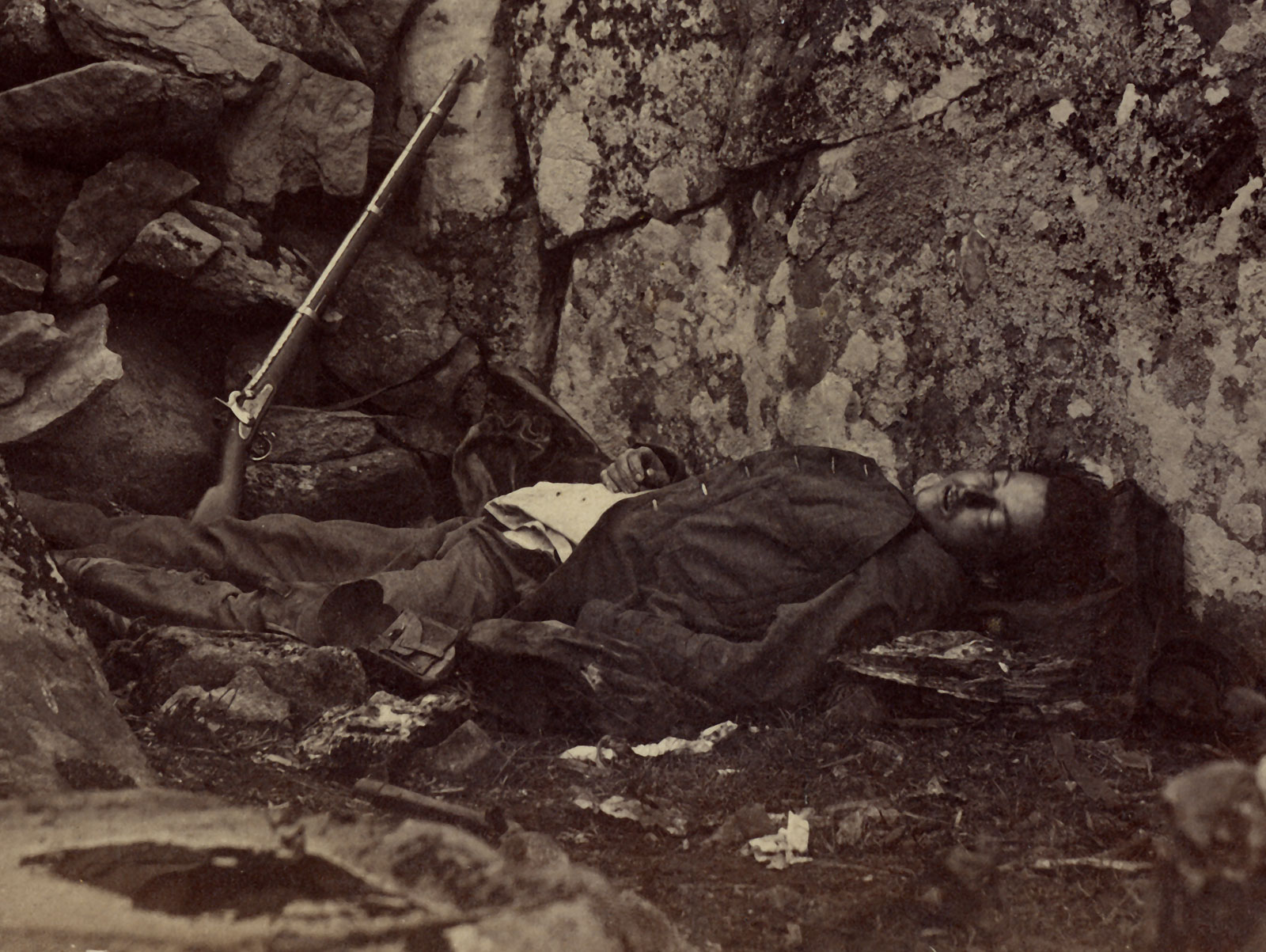
It pictured a dead Confederate soldier in a rocky den [see above], with his weapon propped nearby. Photographic historian William Frassanito has compared it to other images and believes that Gardner moved that body to a more dramatic hiding place to make the famous photo. Taking such license would blend with the dramatic way his album mused over the fallen soldier: “Was he delirious with agony, or did death come slowly to his relief, while memories of home grew dearer as the field of carnage faded before him? What visions, of loved ones far away, may have hovered above his stony pillow?”

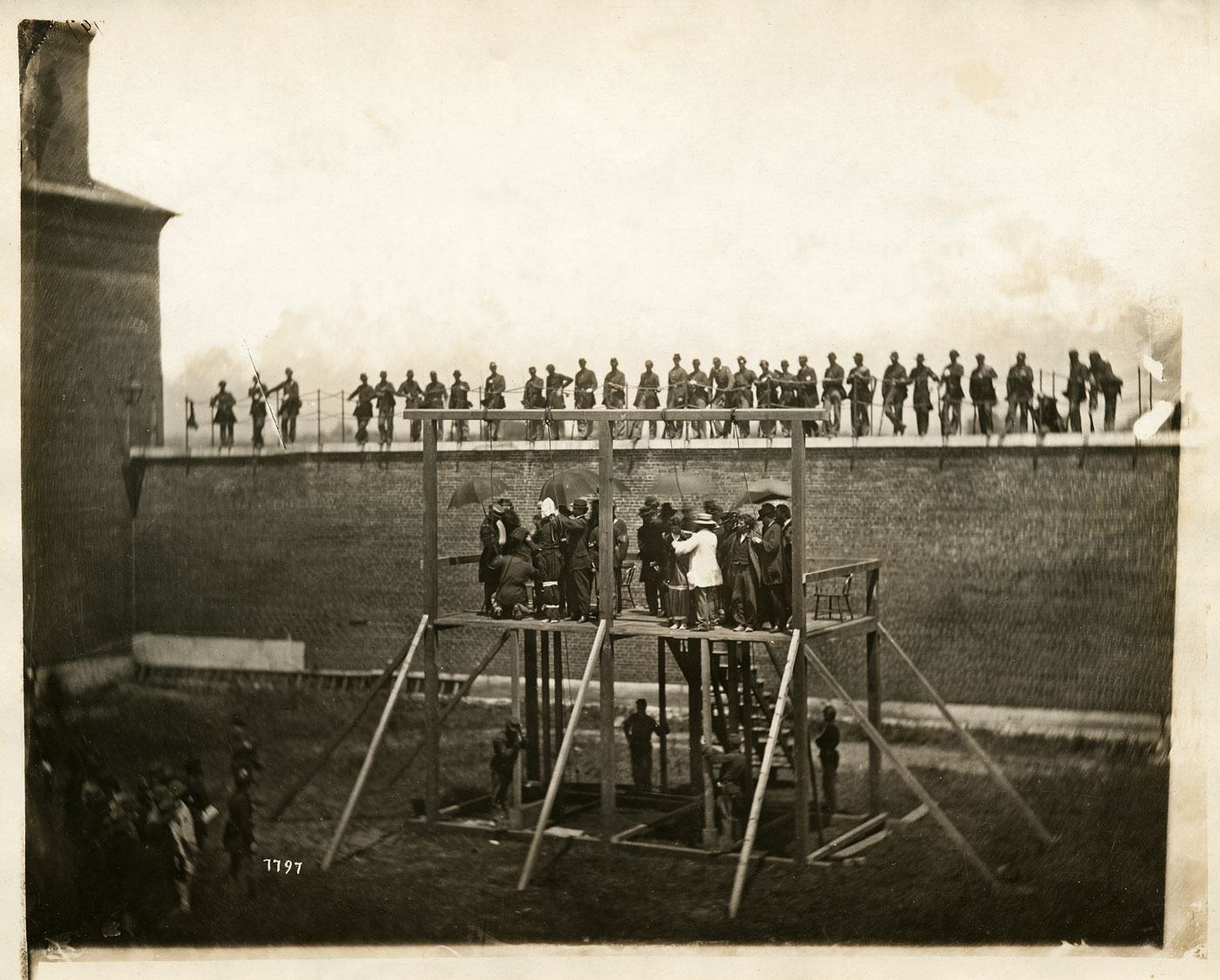
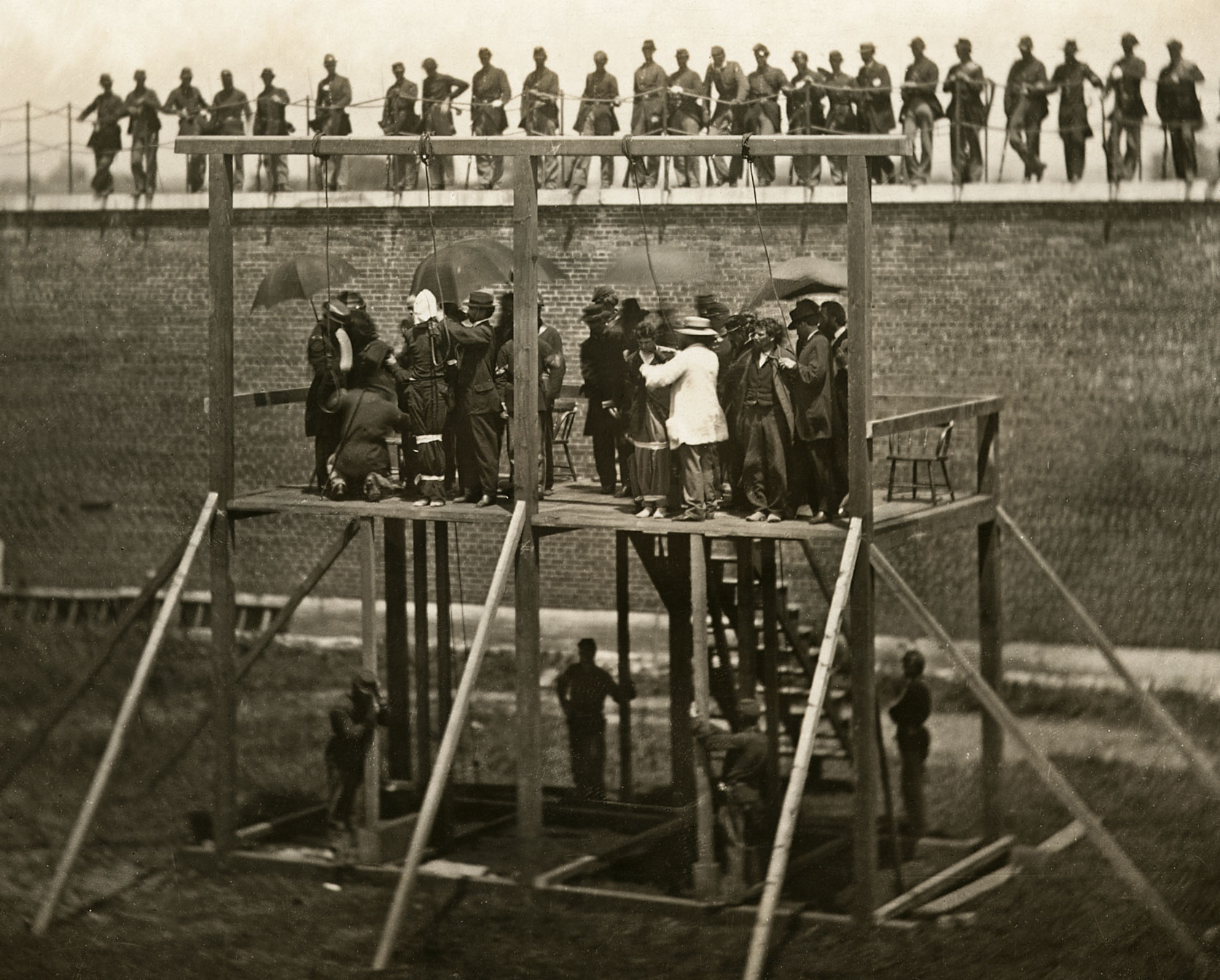
Significantly, as illustrated by that image and description, Gardner’s book spoke of himself as “the artist.” Not the photographer, journalist or artisan, but the artist, who is by definition the creator, the designer, the composer of a work. But of course rearranging reality is not necessary to tell a gripping story, as he showed conspicuously after the Lincoln assassination. First he made finely focused portraits that caught the character of many of the surviving conspirators (much earlier in 1863, he had done the slain assassin, the actor John Wilkes Booth). Then, on the day of execution, he pictured the four – Mary Surrat, David Herold, Lewis Powell and George Atzerodt – standing as if posing on the scaffold, while their hoods and ropes were adjusted. Then their four bodies are seen dangling below while spectators look on from the high wall of the Washington Arsenal – as fitting a last scene as any artist might imagine.

After all Gardner had seen and accomplished, the rest of his career was bound to be anticlimax, but he was only 43 years old, and soon took on new challenges. In Washington, he photographed Native American chieftains and their families when they came to sign treaties that would give the government control over most of their ancient lands. Then he headed west.

In 1867, Gardner was appointed chief photographer for the eastern division of the Union Pacific Railway, a road later called the Kansas Pacific. Starting from St. Louis, he traveled with surveyors across Kansas, Colorado, New Mexico and Arizona and on to California. In their long, laborious trek, he and his crew documented far landscapes, trails, rivers, tribes, villages and forts that had never been photographed before. At Fort Laramie in Wyoming, he pictured the far-reaching treaty negotiations between the government and the Oglala, Miniconjou, Brulé, Yanktonai, and Arapaho Indians. This entire historic series was published in 1869 in a portfolio called Across the Continent on the Kansas Pacific Railroad (Route of the 35th Parallel).

Those rare pictures and the whole expanse of Gardner’s career are now on display at the National Portrait Gallery in a show entitled Dark Fields of the Republic: Alexander Gardner Photographs, 1859-1872. Among the dozens of images included are not only his war pictures and those of the nation’s westward expansion, but the famous “cracked-plate” image that was among the last photographs of a war-weary Abraham Lincoln. With this show, which will run into next March, the gallery is recognising a body of photography – of this unique art – unmatched in the nation’s history.”

Ernest B. Furgurson. “Alexander Gardner Saw Himself as an Artist, Crafting the Image of War in All Its Brutality,” on the Smithsonian.com website October 8, 2015 [Online] Cited 27/02/2016.


Alexander Gardner (American born Scotland, 1821-1882) 'Gardner's Gallery' c. 1863-1865


Alexander Gardner (American born Scotland, 1821-1882)
Gardner’s Gallery
c. 1863-1865
Albumen silver print
DeGolyer Library, Southern Methodist University, Dallas, Texas


The nation’s capital was a centre for photography during the war, and Alexander Gardner set up his new studio in May 1863 at Seventh and D Streets, just a few blocks from that of his former employer, Mathew Brady. Gardner split with Brady after the success of his Antietam photographs. The signage gives a full range of Gardner’s services, showing how he catered to the market for photographic images; the main sign reads “News of the War.”

Text from the exhibition website


Alexander Gardner (American born Scotland, 1821-1882) 'Walt Whitman and Party' c. 1863


Alexander Gardner (American born Scotland, 1821-1882)
Walt Whitman and Party
c. 1863
Albumen silver print
The Western Reserve Historical Society, Cleveland, Ohio


“This picture comes from a time when materials worked for each other. If pictures from these times were enlarged we would find their sharpness to be disappointing … but as this concept was not imagined, it shouldn’t be considered. The lens, the paper, the chemistry, the contact process all worked together. It is a superb image. If it were possible to make images like this, it is no wonder that highly talented people wanted to be photographers. And with talent, there were some with this level of sensitivity.

Note how the enlargement shows us some details that were not easily visible, but the tonality of the original has not carried over. Look at how the tonality of the curved branch combines with the figure of Whitman in the original, but it has crumbled in the enlargement … it is probably not possible to scan the original and keep the tonality without spending a squillion. Anyhow, it is a moment that has not been lost. It is almost too big a step of faith to believe that this much of the “air” of the original scene could be preserved.”


Dr Marcus Bunyan, March 2016


Alexander Gardner (American born Scotland, 1821-1882) 'Walt Whitman and Party' c. 1863 (detail)


Alexander Gardner (American, 1821-1882)
Walt Whitman and Party (detail)
c. 1863
Albumen silver print
The Western Reserve Historical Society, Cleveland, Ohio


Walt Whitman (1819-1892) came to Washington from New York City in search of his brother George, who had been wounded on December 13, 1862, at the Battle of Fredericksburg. Whitman found his brother, whose wound was not serious, and decided to stay in Washington. Whitman had been in a funk in New York: Leaves of Grass was not selling, and he was finding it difficult to write or revise his poetry. In Washington, Whitman assumed the role of a hospital visitor, comforting wounded soldiers, bringing them small treats, and, most important, writing their letters. He observed Abraham Lincoln, whom he idolised, from afar. And he began a relationship with Peter Doyle, a former Confederate soldier, whom he met on a streetcar and lived with for eight years. The other people in this photograph cannot be identified. The leaves on the trees would indicate that it was taken in late spring or summer of 1863.

Text from the exhibition website


Alexander Gardner (American born Scotland, 1821-1882) 'Home of a Rebel Sharpshooter' July 1863


Alexander Gardner (American born Scotland, 1821-1882)
Home of a Rebel Sharpshooter
July 1863
Albumen silver print
Collection of Ron Perisho


Alexander Gardner (American born Scotland, 1821-1882) 'Home of a Rebel Sharpshooter' July 1863


Alexander Gardner (American born Scotland, 1821-1882)
Home of a Rebel Sharpshooter
July 1863
Albumen silver print
Collection of Ron Perisho


Alexander Gardner (American born Scotland, 1821-1882) 'Home of a Rebel Sharpshooter' July 1863 (detail)


Alexander Gardner (American born Scotland, 1821-1882)
Home of a Rebel Sharpshooter (detail)
July 1863
Albumen silver print
Collection of Ron Perisho


Gardner’s manipulation of this Confederate casualty to create a narrative vignette about the soldier’s fate indicates how unstable the line was between fiction and truth in the creation of photographs. Gardner’s intrusion shows that he thought he had to improve his images so that they would function as a sentimental narrative that could be more easily read by his audience. His actions are unforgivable from both a moral and artistic point of view. But his arrangement of the corpse reflects how difficult it was for Gardner and his contemporaries to process the reality of mass casualties in which the dead became anonymous. Caught at a transitional moment, Gardner did not trust the images his camera captured. That this photographic construction would be more marketable to a public still steeped in Victorian sentimentality only adds to Gardner’s malfeasance.

In his Sketchbook Gardner created an elaborate story around his photographs of a dead Confederate “sharpshooter” who apparently had fallen during fighting at the Devil’s Den. Gardner claimed that he took photographs when he returned to the battlefield in the fall of 1863 and “discovered” the corpse, along with the rifle propped against the stone wall, still undisturbed where the soldier had fallen. The story isn’t credible: four months after the battle, the body would have long since decayed, and souvenir hunters would have picked up the rifle. The truth, untangled by photographic historian William Frassanito, is a blot on Gardner’s career: Gardner and his assistants moved a dead soldier [below] from a nearby line of bodies being readied for burial. Shortly after the battle they posed it amid the boulders, including the carefully positioned rifle. The soldier was a regular infantryman, not a sharpshooter or sniper.

Text from the exhibition website


Alexander Gardner (American, 1821-1882) 'A Sharpshooter's Last Sleep, Gettysburg, July 1863' 1863


Alexander Gardner (American born Scotland, 1821-1882)
A Sharpshooter’s Last Sleep, Gettysburg, July 1863
1863
Albumen silver print
National Archives, Washington, D.C.


Alexander Gardner (American born Scotland, 1821-1882) 'Ruins of the Arsenal, Richmond, Virginia, April 1863 '1865


Alexander Gardner (American born Scotland, 1821-1882)
Ruins of the Arsenal, Richmond, Virginia, April 1863
1865
Albumen silver print
Bowdoin College Museum of Art, Brunswick, Maine, Museum Purchase, Lloyd O. and Marjorie Strong Coulter Fund


Ironically, destruction of the major Confederate armoury occurred not from a Union assault but by an accidental fire that started in Richmond after the government began to evacuate the city on April 1, 1865, leaving it vulnerable. Chaos and confusion reigned as panicked residents faced the prospect of being occupied by the invading northerners; looting and destruction of property occurred as well. In the breakdown of order, fires broke out and quickly spread, destroying as many as fifty city blocks, until Union soldiers acting as firefighters extinguished them in part. Among the major buildings destroyed were the Tredegar Iron Works and the Arsenal. The Arsenal had been built earlier in the century but had fallen into disuse. It was made operative again when the war broke out; among the weapons it housed were those taken from the federal arsenal at Harpers Ferry in 1861.

Text from the exhibition website


Alexander Gardner (American born Scotland, 1821-1882) 'Abraham Lincoln delivering his second inaugural address as President of the United States, Washington, D.C.' March 4, 1865


Alexander Gardner (American born Scotland, 1821-1882)
Abraham Lincoln delivering his second inaugural address as President of the United States, Washington, D.C.
March 4, 1865
Albumen silver print
Prints & Photographs Division, Library of Congress


Alexander Gardner (American born Scotland, 1821-1882) 'Abraham Lincoln delivering his second inaugural address as President of the United States, Washington, D.C.' March 4, 1865 (detail)


Alexander Gardner (American born Scotland, 1821-1882)
Abraham Lincoln delivering his second inaugural address as President of the United States, Washington, D.C. (detail)
March 4, 1865
Albumen silver print
Prints & Photographs Division, Library of Congress


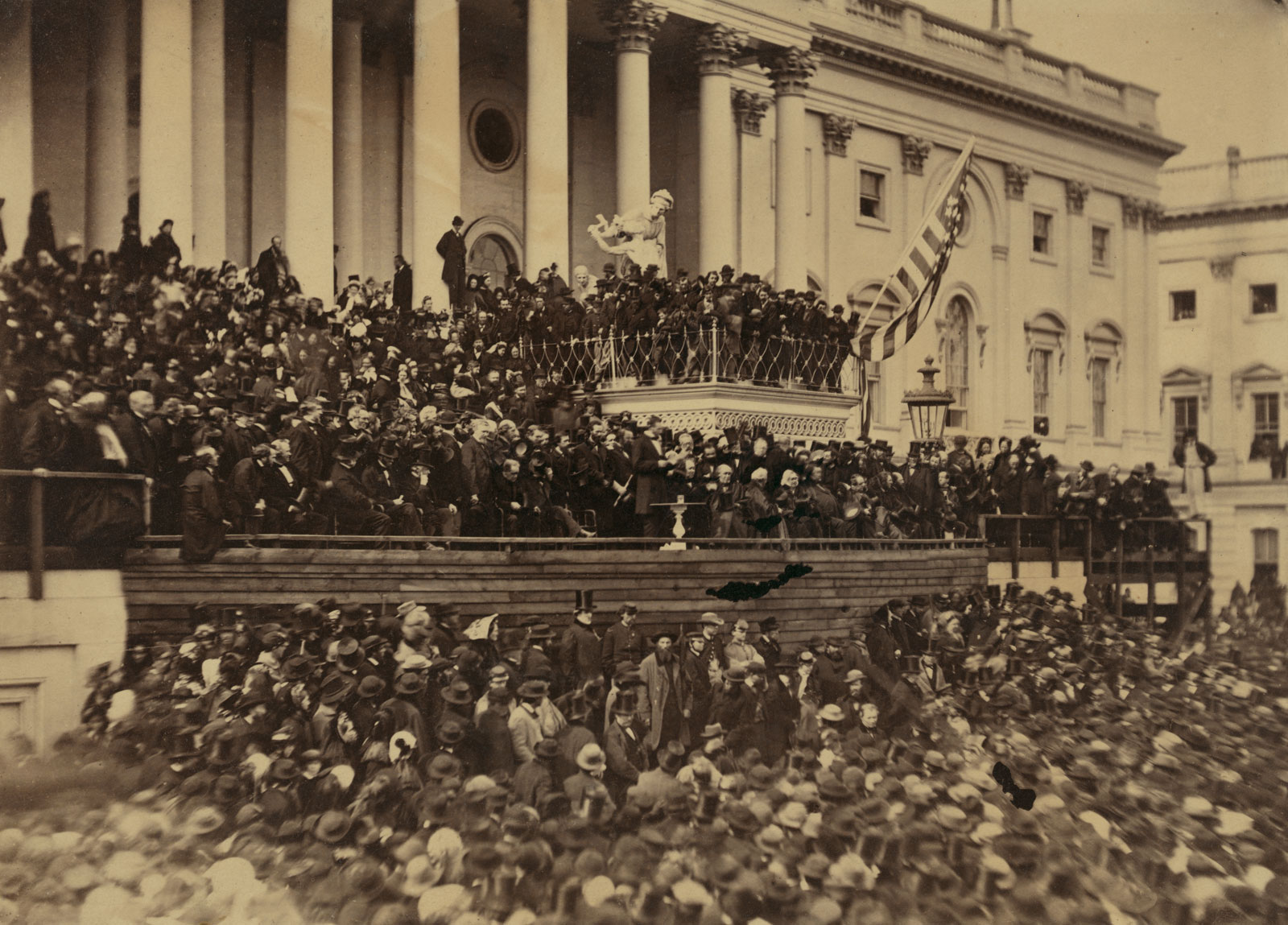
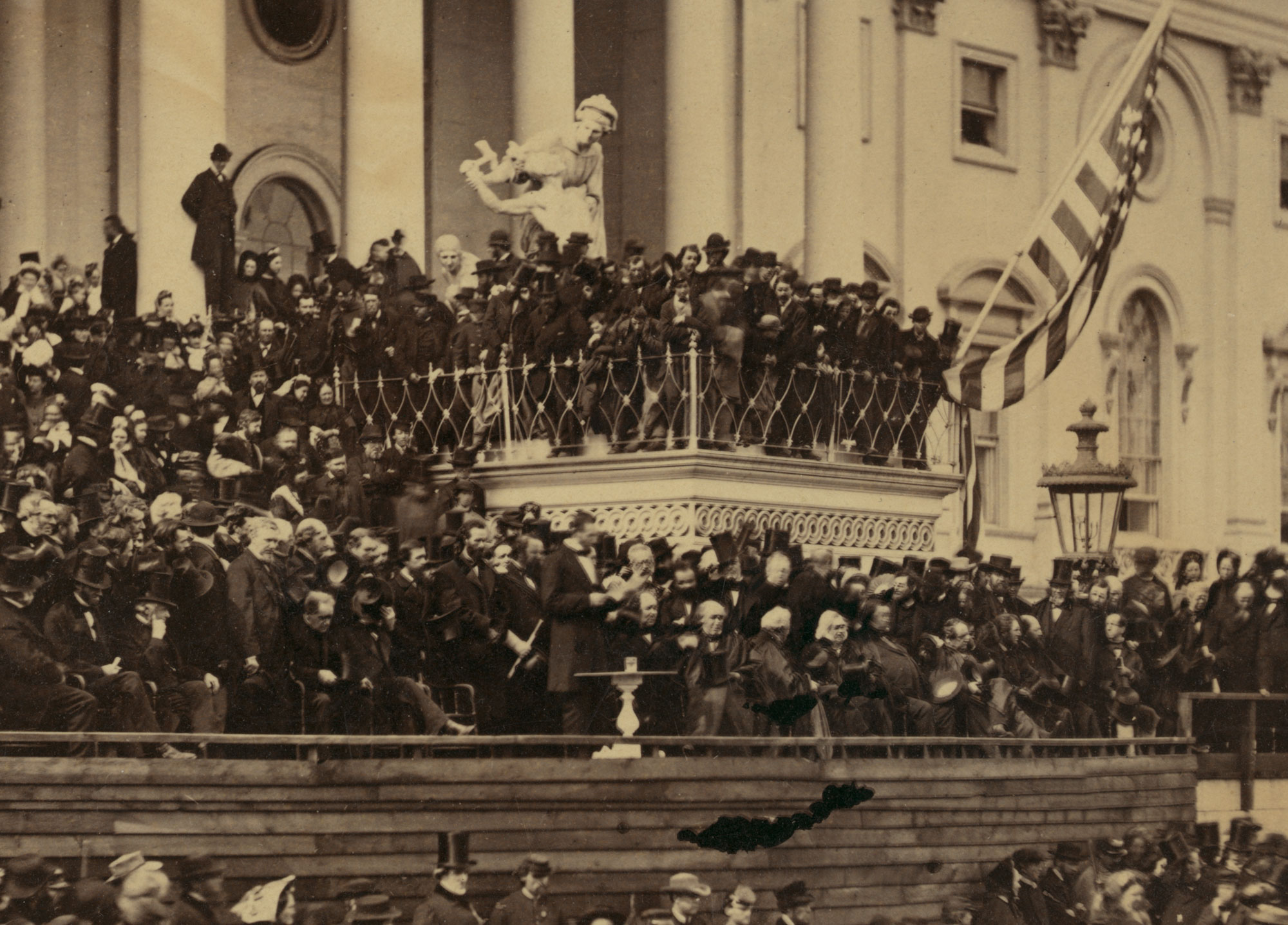
Abraham Lincoln’s major speeches as president – at both inaugurals and at Gettysburg – focused on large themes, in particular human nature and God’s will, as well as the character of the nation. The hard politics of formulating and implementing the details of, for instance, emancipation, civil rights, and reconstruction, were kept offstage in the day-to-day process of governing. So at his second inaugural on March 4, 1865, Lincoln delivered a moral homily on how neither side, North or South, could know God’s will for mankind, and that the war had unintended consequences. Both parties now had to accept living with those consequences, namely the end of slavery and the beginning of civil equality for African Americans, Lincoln hinted. He ended with his majestic call to move on from war to civic peace: “With malice toward none, with charity for all,” let us “bind up the nation’s wounds” to “achieve and cherish a just and lasting peace.” Flush with victory, many in the North were puzzled or displeased by the president’s conciliatory words.

Text from the exhibition website


Alexander Gardner (American born Scotland, 1821-1882) 'Adjusting the Ropes' July 7, 1865


Alexander Gardner (American born Scotland, 1821-1882)
Adjusting the Ropes
July 7, 1865
Albumen silver print
Indiana Historical Society (P0409)
Daniel R. Weinberg Lincoln Conspirators Collection


Alexander Gardner (American born Scotland, 1821-1882) 'Adjusting the Ropes' July 7, 1865 (detail)


Alexander Gardner (American born Scotland, 1821-1882)
Adjusting the Ropes (detail)
July 7, 1865
Albumen silver print
Indiana Historical Society (P0409)
Daniel R. Weinberg Lincoln Conspirators Collection


Of the eight Booth conspirators tried for their role in the assassination plot, four were sentenced to death: Mary Surratt, David Herold, Lewis Powell, and George Atzerodt. While the men had been major participants in the plot (even if Herold and Atzerodt had failed at their assignments), Mary Surratt’s sentence was more controversial, as it was argued that her boardinghouse was simply where the conspirators had met; that her son John was part of the conspiracy did not help her cause. The jury was also uneasy about the federal government executing a woman for the first time. Convicted and sentenced on June 30, the conspirators were executed on July 7 at Washington’s Old Arsenal Prison, out of public view. In a macabre display of chivalry, a man holding an umbrella shielded Mary Surratt from the sun before the traps were sprung.

Gardner was the only photographer allowed to document the executions, a recognition of his prominence as a documentarian. His camera position on the wall of the prison allowed him a panoramic view.

Text from the exhibition website


The date was July 7, 1865. Alexander Gardner and his assistant Timothy O’Sullivan took a series of ten photographs using both a large format camera with collodion glass-plate negatives and a stereo camera (used to make 3D stereoscope pictures). This series of photographs are considered one of the first examples of photojournalism ever recorded.

Mary Surratt, Lewis Powell, David Herold and Georg Atzerodt. The four conspirators are now standing (Mrs. Surratt is supported by two soldiers) and is being bound. A hood has already been placed over Lewis Powell’s head by Lafayette Baker’s detective John H. Roberts. The nooses are being fitted around the necks of David Herold and George Atzerodt.


Alexander Gardner (American born Scotland, 1821-1882) 'The Drop' July 7, 1865


Alexander Gardner (American born Scotland, 1821-1882)
The Drop
July 7, 1865
Albumen silver print
Stereograph (Albumen silver print on stereo card)
Library of Congress


On July 7, 1865, at 1.15 pm., a procession led by General Hartranft escorted the four condemned prisoners through the courtyard and up the steps to the gallows. Each had their ankles and wrists bound by manacles. Mary Surratt led the way, wearing a black bombazine dress, black bonnet, and black veil. More than 1,000 people – including government officials, members of the U.S. armed forces, friends and family of the accused, official witnesses, and reporters – watched. General Hancock limited attendance to those who had a ticket, and only those who had a good reason to be present were given a ticket. (Most of those present were military officers and soldiers, as fewer than 200 tickets had been printed.) Alexander Gardner, who had photographed the body of Booth and taken portraits of several of the male conspirators while they were imprisoned aboard naval ships, photographed the execution for the government. Hartranft read the order for their execution. Surratt, either weak from her illness or swooning in fear (perhaps both), had to be supported by two soldiers and her priests. The condemned were seated in chairs, Surratt almost collapsing into hers. She was seated to the right of the others, the traditional “seat of honor” in an execution. White cloth was used to bind their arms were bound to their sides, and their ankles and thighs together. The cloths around Surratt’s legs were tied around her dress below the knees. Each person was ministered to by a member of the clergy. From the scaffold, Powell said, “Mrs. Surratt is innocent. She doesn’t deserve to die with the rest of us”. Fathers Jacob and Wiget prayed over Mary Surratt, and held a crucifix to her lips. About 16 minutes elapsed from the time the prisoners entered the courtyard until they were ready for execution.

A white bag was placed over the head of each prisoner after the noose was put in place. Surratt’s bonnet was removed, and the noose put around her neck by a Secret Service officer. She complained that the bindings about her arms hurt, and the officer preparing said, “Well, it won’t hurt long.” Finally, the prisoners were asked to stand and move forward a few feet to the nooses. The chairs were removed. Mary Surratt’s last words, spoken to a guard as he moved her forward to the drop, were “Please don’t let me fall.” Surratt and the others stood on the drop for about 10 seconds, and then Captain Rath clapped his hands. Four soldiers of Company F of the 14th Veteran Reserves knocked out the supports holding the drops in place, and the condemned fell. Surratt, who had moved forward enough to barely step onto the drop, lurched forward and slid partway down the drop – her body snapping tight at the end of the rope, swinging back and forth. Surratt’s death appeared to be the easiest. Atzerodt’s stomach heaved once and his legs quivered, and then he was still. Herold and Powell struggled for nearly five minutes, strangling to death.

Each body was inspected by a physician to ensure that death had occurred. The bodies of the executed were allowed to hang for about 30 minutes. The bodies began to be cut down at 1.53 pm. A corporal raced to the top of the gallows and cut down Atzerodt’s body, which fell to the ground with a thud. He was reprimanded, and the other bodies cut down more gently. Herold’s body was next, followed by Powell’s. Surratt’s body was cut down at 1.58 pm. As Surratt’s body was cut loose, her head fell forward. A soldier joked, “She makes a good bow” and was rebuked by an officer for his poor use of humour.

Upon examination, the military surgeons determined that no one’s neck had been broken by the fall, as intended. The manacles and cloth bindings were removed (but not the white execution masks), and the bodies were placed into the pine coffins. The name of each person was written on a piece of paper by acting Assistant Adjutant R. A. Watts, and inserted in a glass vial (which was placed into the coffin). The coffins were buried against the prison wall in shallow graves, just a few feet from the gallows.

“Mary Surratt” text from the Wikipedia website


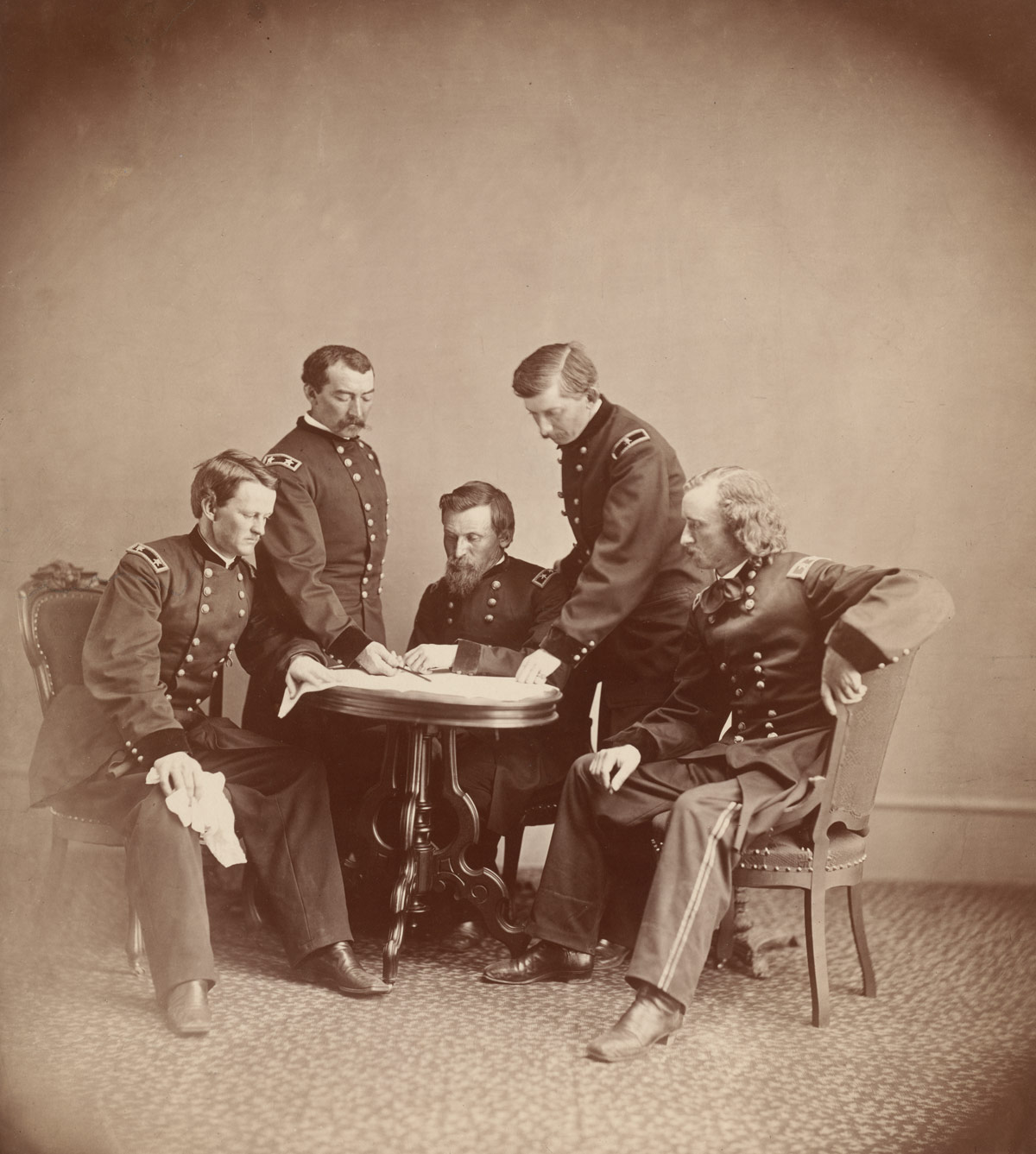
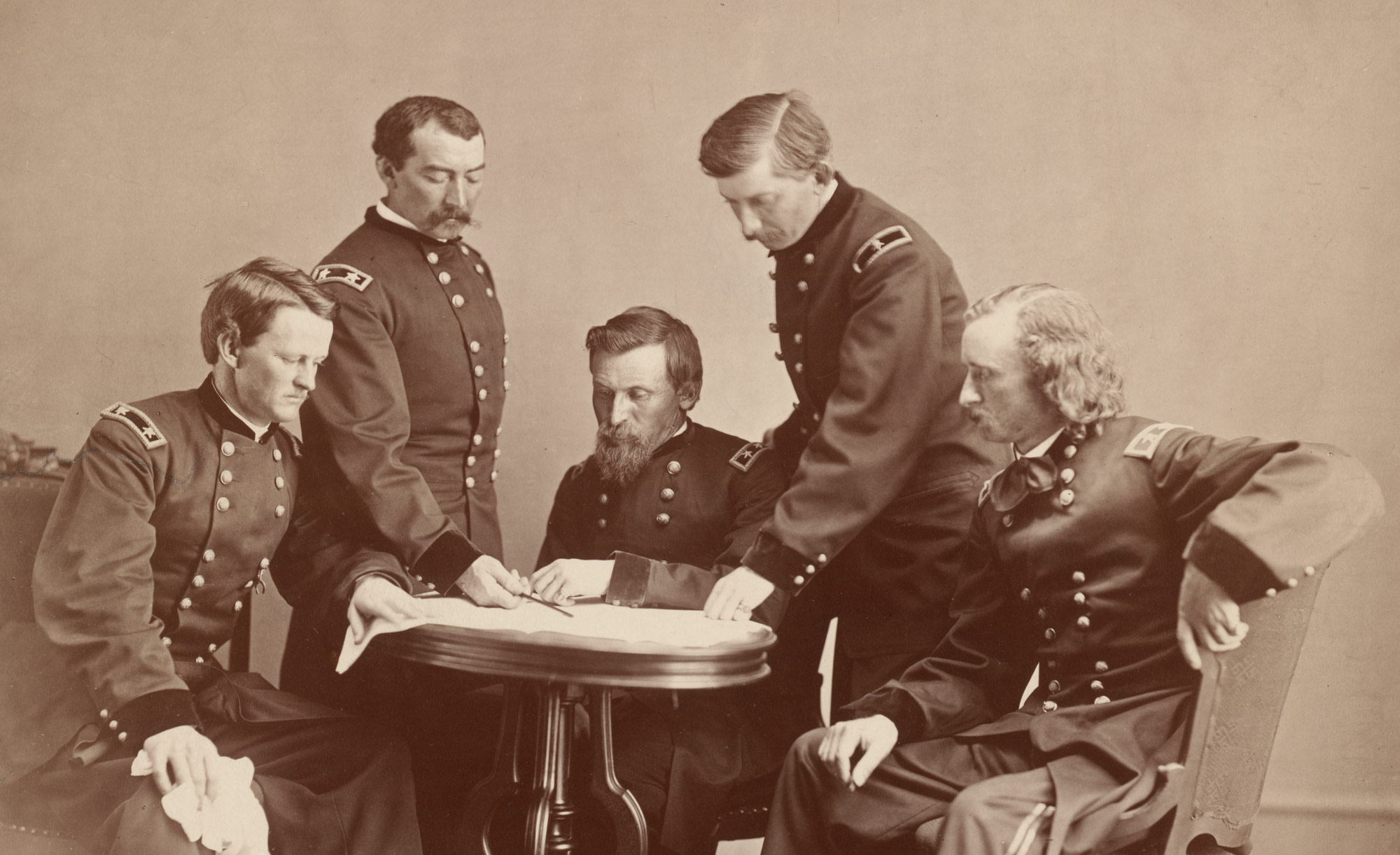
Alexander Gardner (American born Scotland, 1821-1882) 'General Sheridan and His Staff' c. 1865


Alexander Gardner (American born Scotland, 1821-1882)
General Sheridan and His Staff
c. 1865
Albumen silver print
National Portrait Gallery, Smithsonian Institution


Another in Alexander Gardner’s valedictory series of the major Union commanders in each theatre of the war, this photograph groups four of the figures from the 1864 campaign in the Shenandoah Valley under the command of Philip Sheridan (1831-1888). Sheridan is standing to the left; at the table are cavalry officer Wesley Merritt (1834-1910); George Crook (1830-1890), who had an independent force in western Virginia before joining Sheridan’s army; Sheridan’s chief of staff, James W. Forsyth (1835-1906); and perhaps America’s most famous cavalryman, George A. Custer (1839-1876).

This photograph brings together the men who would be major figures in the settlement of the Great Plains and the Indian Wars – none more emblematic than Custer. As such, it provides the bridge between the first half of Gardner’s career during the Civil War and the images of western land and people on which he focused during the rest of his photographic career. One war had ended; another was beginning.

Text from the exhibition website


Alexander Gardner (American born Scotland, 1821-1882) 'General Sheridan and His Staff' c. 1865


Alexander Gardner (American born Scotland, 1821-1882)
General Sheridan and His Staff
c. 1865
Albumen silver print
National Portrait Gallery, Smithsonian Institution


Alexander Gardner (American born Scotland, 1821-1882) 'General Sheridan and His Staff' c. 1865 (detail)


Alexander Gardner (American born Scotland, 1821-1882)
General Sheridan and His Staff (detail)
c. 1865
Albumen silver print
National Portrait Gallery, Smithsonian Institution


” … Gardner was born in Paisley in 1821 and trained as a jeweller before moving into the world of newspapers. An idealist and socialist, he formed the left-leaning newspaper the Glasgow Sentinel in 1851. His keen interest in photography led to him emigrating across the pond in the hope of furthering his career. He was headhunted by [Matthew] Brady and at the outbreak of the war was well-positioned in Washington.

He was recruited as a staff photographer by General George B. McClellan, commander of the Army of the Potomac, and made history on 19 September 1862 when he took the first photographs of casualties on the battlefield at Antietam. In 1863, Gardner split from Brady and formed his own gallery in Washington with his brother James [May 1863]. In July of that year, he photographed the aftermath of the Battle of Gettysburg, developing images in his travelling darkroom.

Author Keith Steiner said: ‘Gardner was essentially a photojournalist. He had to process and develop the photographs on the move and in the middle of a battlefield which was not easy. He was highly regarded and Walt Whitman once said that he ‘saw beyond his camera’… ‘He was an artist, in some ways a scientist and a publisher. He was the complete package.’

Gardner was also the official photographer to President Abraham Lincoln. He captured him seven times, including before his inauguration in March 1861 and in February 1865, just weeks before he was assassinated. The war-time leader personally visited Gardner to have his photograph taken every year instead of the Scotsman visiting the White House.

Keith said: ‘Most of the photographs you see of Lincoln were taken by Gardner and chart how he aged physically. He was pictured in 1861 then a few years later and it is like a different man. In February 1865, he is a broken man and has aged about 20 years through the stress of the civil war. It is an incredibly revealing photograph’.”

Anonymous. “How Abraham Lincoln’s Scottish photographer became the first man to capture the horrors of the Civil War but was robbed of the credit… until now,” on the Daily Mail Australia website 25 January 2014 [Online] Cited 27/02/2016.


The West, 1867-1872

After the war, Alexander Gardner photographed events and people associated with one of the most abiding preoccupations of the nineteenth century: westward expansion. From 1867 to 1872 he made portraits of American Indian leaders who traveled to Washington to negotiate preservation of their traditional lands and lifeways, even as white Americans flooded the frontier. In 1867, Gardner became the first photographer to document a transcontinental project, making views of the Kansas Pacific Railroad’s construction activities, bustling frontier towns and settlements, Army forts, Indian villages, and magnificent empty landscapes.

The federal government then hired Gardner to photograph the spring 1868 treaty negotiations between the Indian Peace Commission and leaders of the Crow, Northern Cheyenne, Northern Arapaho, and Lakota in the Dakota Territory. The Fort Laramie Treaty established reservations on the northern Plains, marking a watershed moment in the relationship between Native peoples and the government. Gardner’s images are the only photographs of treaty negotiations ever commissioned by the U.S. government.

Text from the exhibition website


Alexander Gardner (American born Scotland, 1821-1882) '"Westward the Course of Empire Takes its Way." Laying track, 300 miles west of Missouri River, 19th October, 1867' 1867


Alexander Gardner (American born Scotland, 1821-1882)
“Westward the Course of Empire Takes its Way.” Laying track, 300 miles west of Missouri River, 19th October, 1867
1867
Albumen silver print
William T. Sherman Collection of Alexander Gardner Photographs, National Museum of the American Indian, Smithsonian Institution (P10134)


Alexander Gardner (American born Scotland, 1821-1882) '"Westward the Course of Empire Takes its Way." Laying track, 300 miles west of Missouri River, 19th October, 1867' 1867 (detail)


Alexander Gardner (American born Scotland, 1821-1882)
“Westward the Course of Empire Takes its Way.” Laying track, 300 miles west of Missouri River, 19th October, 1867 (detail)
1867
Albumen silver print
William T. Sherman Collection of Alexander Gardner Photographs, National Museum of the American Indian, Smithsonian Institution (P10134)


Alexander Gardner quoted from the final stanza of a 1726 poem by Bishop George Berkeley for the title of this photograph. The Anglo-Irish philosopher had originally offered his verse as a lamentation on the decline of British influence in North America, but after the Civil War, as the United States turned with determination to its expansionist agenda, Americans found particular resonance in Berkeley’s line, “Westward the course of empire takes its way.” Constructing a transcontinental railroad was central to the achievement of these ambitions. Although the company survived into the 1870s, the Kansas Pacific Railroad was unable to rally federal support for a transcontinental route along the southerly thirty-fifth and thirty-second parallels. On May 10, 1869, at Promontory Point in the Utah Territory, the “Golden Spike” ceremony joined the more northern tracks of the Union Pacific Railroad with those of the Central Pacific Railroad, marking the completion of the first railroads to link the East and West coasts of the United States.

Text from the exhibition website


Alexander Gardner (American born Scotland, 1821-1882) 'Bridge over the Laramie River near its Junction with the North Platte River, Fort Laramie, Dakota Territory' 1868


Alexander Gardner (American born Scotland, 1821-1882)
Bridge over the Laramie River near its Junction with the North Platte River, Fort Laramie, Dakota Territory
1868
Albumen silver print
William T. Sherman Collection of Alexander Gardner Photographs, National Museum of the American Indian, Smithsonian Institution (P10128)


Alexander Gardner (American born Scotland, 1821-1882) 'Indian Peace Commissioners in council with the Northern Cheyenne and Northern Arapaho, Fort Laramie, Dakota Territory' 1868


Alexander Gardner (American born Scotland, 1821-1882)
Indian Peace Commissioners in council with the Northern Cheyenne and Northern Arapaho, Fort Laramie, Dakota Territory
1868
Albumen silver print
National Museum of the American Indian, Smithsonian Institution; William T. Sherman Collection of Alexander Gardner Photographs (P15390)


Alexander Gardner (American born Scotland, 1821-1882) 'Indian Peace Commissioners in council with the Northern Cheyenne and Northern Arapaho, Fort Laramie, Dakota Territory' 1868 (detail)

Alexander Gardner (American born Scotland, 1821-1882) 'Indian Peace Commissioners in council with the Northern Cheyenne and Northern Arapaho, Fort Laramie, Dakota Territory' 1868 (detail)


Alexander Gardner (American born Scotland, 1821-1882)
Indian Peace Commissioners in council with the Northern Cheyenne and Northern Arapaho, Fort Laramie, Dakota Territory (details)
1868
Albumen silver print
National Museum of the American Indian, Smithsonian Institution; William T. Sherman Collection of Alexander Gardner Photographs (P15390)


Left to right: Colonel Samuel F. Tappan (1831-1913), General William S. Harney (1800-1889), General William T. Sherman (1820-1891), General John B. Sanborn (1826-1904), General Christopher C. Augur (1821-1898), General Alfred H. Terry (1827-1890), and Commission Secretary Ashton S. H. White (life dates unknown)

In the summer of 1867, when Congress convened the Indian Peace Commission, popular opinion in the eastern United States supported a diplomatic resolution to the so-called “Indian problem” on both the northern and southern Plains. (The negotiations on the southern Plains were not photographed.) Consisting of civilians and army generals, the commission managed to secure treaties with the region’s “hostile” tribes and convened its final meeting on October 7, 1868. By then, public sentiment had taken an aggressive turn and demanded increased military intervention in Indian matters. Overruling their more diplomatically minded colleagues, the commission’s military members – led by General William T. Sherman – used the shift in the political landscape to advantage. As a body, the commission resolved that the government “should cease to recognise the Indian tribes as ‘domestic dependent nations.'” Treaty-making, or diplomacy, was at an end, and in the coming years, military conflict characterised U.S.-Indian relations on the Plains.

Text from the exhibition website


Alexander Gardner (American born Scotland, 1821-1882) 'Lakota delegates Medicine Bull, Iron Nation, and Yellow Hawk with their Agent-Interpreter, Washington, D.C.' 1867


Alexander Gardner (American born Scotland, 1821-1882)
Lakota delegates Medicine Bull, Iron Nation, and Yellow Hawk with their Agent-Interpreter, Washington, D.C.
1867
Albumen silver print
William T. Sherman Collection of Alexander Gardner Photographs, National Museum of the American Indian, Smithsonian Institution (P10139)


Alexander Gardner (American born Scotland, 1821-1882) 'Lakota delegates Medicine Bull, Iron Nation, and Yellow Hawk with their Agent-Interpreter, Washington, D.C.' 1867 (detail)


Alexander Gardner (American born Scotland, 1821-1882)
Lakota delegates Medicine Bull, Iron Nation, and Yellow Hawk with their Agent-Interpreter, Washington, D.C. (detail)
1867
Albumen silver print
William T. Sherman Collection of Alexander Gardner Photographs, National Museum of the American Indian, Smithsonian Institution (P10139)


Left to right: Medicine Bull (life dates unknown), unidentified interpreter, Iron Nation (1815-1894), and Yellow Hawk (life dates unknown)

Alexander Gardner made three portraits of each American Indian pictured here: a group portrait and two separate portraits of each delegate, one in his Native and one in his Western attire. (A suit was often among the gifts given to Native delegates to the capital.) It is unknown how Medicine Bull (Sicangu Lakota), Iron Nation (Sicangu Lakota), and Yellow Hawk (Itazipacola Lakota) were dressed when they arrived to sit for their portraits, but Gardner’s apparent desire to make two individual portraits of each in many ways anticipates the popular “before and after” photographs of Native people that circulated in the following decades. The photographs were made to document the supposed salutary benefits of the sitter’s exposure to American civilisation.

Text from the exhibition website


The Lakȟóta people (pronounced [laˈkˣota]; also known as Teton, Thítȟuŋwaŋ (“prairie dwellers”), and Teton Sioux (from Nadouessioux – ‘snake’ or ‘enemy’) are an indigenous people of the Great Plains of North America. They are part of a confederation of seven related Sioux tribes, the Očhéthi Šakówiŋ or seven council fires, and speak Lakota, one of the three major dialects of the Sioux language. The Lakota are the westernmost of the three Siouan language groups, occupying lands in both North and South Dakota. The seven bands or “sub-tribes” of the Lakota are:

Sičháŋǧu (Brulé, Burned Thighs)
Oglála (“They Scatter Their Own”)
Itázipčho (Sans Arc, Without Bows)
Húŋkpapȟa (“End Village”, Camps at the End of the Camp Circle)
Mnikȟówožu (“Plant beside the Stream”, Planters by the Water)
Sihásapa (“Black Feet”)
Oóhenuŋpa (Two Kettles)

Notable Lakota persons include Tȟatȟáŋka Íyotake (Sitting Bull) from the Húnkpapȟa band; Touch the Clouds from the Miniconjou band; and, Tȟašúŋke Witkó (Crazy Horse), Maȟpíya Lúta (Red Cloud), Heȟáka Sápa (Black Elk), Siŋté Glešká (Spotted Tail), and Billy Mills from the Oglala band.

Text from the Wikipedia website


Alexander Gardner (American born Scotland, 1821-1882) 'Ihanktonwan Nakota delegates Long Foot and Little Bird, Washington, D.C.' 1867


Alexander Gardner (American born Scotland, 1821-1882)
Ihanktonwan Nakota delegates Long Foot and Little Bird, Washington, D.C.
1867
Albumen silver print National Museum of the American Indian, Smithsonian Institution; William T. Sherman Collection of Alexander Gardner Photographs (P10149)


Alexander Gardner (American born Scotland, 1821-1882) 'Ihanktonwan Nakota delegates Long Foot and Little Bird, Washington, D.C.' 1867 (detail)


Alexander Gardner (American born Scotland, 1821-1882)
Ihanktonwan Nakota delegates Long Foot and Little Bird, Washington, D.C. (detail)
1867
Albumen silver print National Museum of the American Indian, Smithsonian Institution; William T. Sherman Collection of Alexander Gardner Photographs (P10149)


In a letter dated February 20, 1867, Smithsonian Institution Secretary Joseph Henry pressed Commissioner of Indian Affairs Lewis V. Bogy to fund a comprehensive effort to photograph Native delegates to Washington. Henry envisioned a kind of archive, a “trustworthy collection of likenesses of the principal tribes of the United States,” urgently adding that with the passing of “the Indian” only a few years remained to undertake such a project. Bogy apparently passed on the project, but the Smithsonian found an alternative collaborator in Englishman William Blackmore. (Blackmore posed before Alexander Gardner’s camera with Oglala Lakota leader Red Cloud. The portrait of the two men is on display nearby.) Blackmore commissioned local Washington photographers like Gardner to make portraits of visiting delegates such as the Ihanktonwan Nakota delegates Long Foot (life dates unknown) and Little Bird (life dates unknown), pictured here. Blackmore made his photographs available to the Smithsonian; they represent the institution’s very first photograph collection and are now housed in the National Anthropological Archives.

Text from the exhibition website


Smithsonian National Portrait Gallery
8th and F Sts NW
Washington, DC 20001

Opening hours:
11.30am – 7.00pm daily

Smithsonian National Portrait Gallery website

LIKE ART BLART ON FACEBOOK

Back to top

Exhibition: ‘Photography – A Victorian Sensation’ at the National Museum of Scotland, Edinburgh

Exhibition dates: 19th June – 22nd November, 2015

Curator: Dr. Alison Morrison-Low, Principal Curator of Science (and Photography) at National Museums Scotland


William Henry Fox Talbot (English, 1800-1877) 'The Open Door' 1844-1846 from the exhibition 'Photography – A Victorian Sensation' at the National Museum of Scotland, Edinburgh, June - Nov, 2015


William Henry Fox Talbot (English, 1800-1877)
The Open Door
1844-1846
Salt print from a calotype negative
Plate VI from the Pencil of Nature, the first book to be illustrated with photographs
© National Museums Scotland


In our contemporary image-saturated, comprehensively mediated way of life it is difficult for us to understand how “sensational” photography would have been in the Victorian era. Imagine never having seen a photograph of a landscape, city or person before. To then be suddenly presented with a image written in light, fixed before the eye of the beholder, would have been a profoundly magical experience for the viewer. Here was a new, progressive reality imaged for all to see. The society of the spectacle as photograph had arrived.

Here was the expansion of scopophilic society, our desire to derive pleasure from looking. That fetishistic desire can never be completely fulfilled, so we have to keep looking again and again, constantly reinforcing the ocular gratification of images. Photographs became shrines to memory. They also became shrines to the memory of desire itself.

Dr Marcus Bunyan


Many thankx to the National Museum of Scotland for allowing me to publish the photographs in the posting. Please click on the photographs for a larger version of the image.
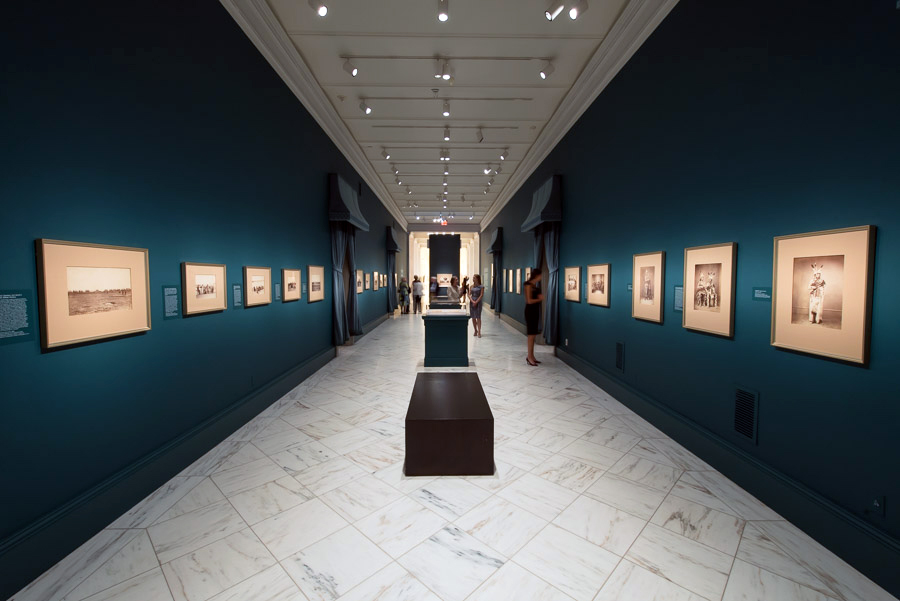


Hill and Adamson


Dr Sara Stevenson, photo historian, talks about the origins of Hill and Adamson’s partnership and their photography skills.


Scottish daguerreotypes


Dr Alison Morrison Low, Principal Curator of Science, National Museums Scotland, talks about daguerreotype portraits in Scotland and the work of Thomas Davidson.


Amateur photographers: Julia Margaret Cameron


Anne Lyden, International Photography Curator, National Galleries of Scotland, talks about photographer Julia Margaret Cameron.


George Washington Wilson


Emeritus Professor Roger Taylor talks about George Washington Wilson’s life and work.


TR Williams


Dr Brian May, CBE, musician and collector of stereo-photography talks about the photography of TR Williams.


William Henry Fox Talbot (English, 1800-1877) 'The Ladder' 1844-1846 from the exhibition 'Photography – A Victorian Sensation' at the National Museum of Scotland, Edinburgh, June - Nov, 2015


William Henry Fox Talbot (English, 1800-1877)
The Ladder
1844-1846
Salt print from a calotype negative
Plate XIV from the Pencil of Nature, the first book to be illustrated with photographs
© National Museums Scotland


Calotype images are not as pin-sharp as daguerreotypes, but they had one great advantage: more than one image could be produced from a single negative. Yet both processes were cumbersome and very expensive. What was needed was a faster, cheaper method to really fuel the fire of Victorian photomania.


Daguerreotype camera, made by A Giroux et Cie, 1839


Giroux et Cie
Daguerreotype camera
1839
© National Museums Scotland


This camera was bought by WHF Talbot in October 1839.


William Henry Fox Talbot (English, 1800-1877) 'Talbot's home-made camera' 1840s


William Henry Fox Talbot (English, 1800-1877)
Talbot’s home-made camera
1840s
© National Museums Scotland


Some of his early equipment appears to have been constructed to his design by the estate carpenter.


William Henry Fox Talbot (English, 1800-1877) 'Talbot's calotype photography equipment' c. 1840


William Henry Fox Talbot (English, 1800-1877)
Talbot’s calotype photography equipment
c. 1840
© National Museums Scotland


Camera, printing frame, small domestic iron and chemical balance.


Platt D Babbitt (American, 1822-1879) 'Niagara Falls from the American side' whole plate daguerreotype c.1855


Platt D Babbitt (American, 1822-1879)
Niagara Falls from the American side
c. 1855
Whole plate daguerreotype
Platt D Babbitt ensconced himself at a leading tourist spot beside Niagara Falls, from 1853
© Howarth-Loomes Collection at National Museums Scotland


Platt D Babbitt (American, 1822-1879) 'Niagara Falls from the American side' c. 1855 (detail)


Platt D Babbitt (American, 1822-1879)
Niagara Falls from the American side (detail)
c. 1855
Whole plate daguerreotype
© Howarth-Loomes Collection at National Museums Scotland


Platt D Babbitt ensconced himself at a leading tourist spot beside Niagara Falls, from 1853.


Ross and Thomson of Edinburgh. 'Unknown little girl sitting on a striped cushion holding a framed portrait of a man, possibly her dead father' 1847-1860


Ross and Thomson of Edinburgh
Unknown little girl sitting on a striped cushion holding a framed portrait of a man, possibly her dead father
1847-1860
Ninth-plate daguerreotype
© Howarth-Loomes Collection at National Museums Scotland


D.O. Hill (Scottish, 1802-1870) and Robert Adamson (Scottish, 1821-1848) 'Mrs Elizabeth (Johnstone) Hall, a Newhaven fishwife, famous for her beauty and self-confidence' 1843-1848


D.O. Hill (Scottish, 1802-1870) and Robert Adamson (Scottish, 1821-1848)
Mrs Elizabeth (Johnstone) Hall, a Newhaven fishwife, famous for her beauty and self-confidence
1843-1848
From an album presented by Hill to the Society of Antiquaries of Scotland in 1850
Salt print from a calotype negative,
© National Museums Scotland


Robert Howlett (British, 1831-1858) 'Isambard Kingdom Brunel Standing Before the Launching Chains of the Great Eastern' November 1857


Robert Howlett (British, 1831-1858)
Isambard Kingdom Brunel Standing Before the Launching Chains of the Great Eastern]
November 1857
Carte-de-visite
Sold by the London Stereoscopic Company
© Howarth-Loomes Collection at National Museums Scotland


Calotype photographs from an album compiled by Dr John Adamson, among the earliest in Scotland


Calotype photographs from an album compiled by Dr John Adamson, among the earliest in Scotland


Photograph burnt in on glass, a group of workmen, Paris 1858


Photograph burnt in on glass, a group of workmen, Paris 1858


A major exhibition at the National Museum of Scotland explores the Victorian craze for photography and examine how it has influenced the way we capture and share images today, when more photographs are taken in two minutes than were taken in the whole of the 19th century. Photography: A Victorian Sensation takes visitors back to the very beginnings of photography in 1839, tracing its evolution from a scientific art practised by a few wealthy individuals to a widely available global phenomenon, practised on an industrial scale.

The exhibition showcases National Museums Scotland’s extensive early photographic collections, including Hill and Adamson’s iconic images of Victorian Edinburgh, and the Howarth-Loomes collection, much of which has never been publicly displayed. Highlights include an early daguerreotype camera once owned by William Henry Fox Talbot; an 1869 photograph of Alfred, Lord Tennyson by Julia Margaret Cameron; a carte-de-visite depicting Queen Victoria and Prince Albert as a middle-class couple and an early daguerreotype of the Niagara Falls. The exhibition covers the period from 1839 to 1900, by which point photography had permeated the whole of society, becoming a global sensation. Images and apparatus illustrate the changing techniques used by photographers and studios during the 19th century, and the ways in which photography became an increasingly accessible part of everyday life.

From the pin-sharp daguerreotype and the more textured calotype process of the early years, to the wet collodion method pioneered in 1851, photography developed as both a science and an art form. Visitors can follow the cross-channel competition between photographic trailblazers Louis Daguerre and William Henry Fox Talbot, enter the world of the 1851 Great Exhibition and snap their own pictures inside the photographer’s studio. They can also discover the fascinating stories of some of the people behind hundreds of Victorian photographs. These range from poignant mementos of loved ones to comical shots and early attempts at image manipulation. Photographs of family members were important mementos for Victorians and on display is jewellery incorporating both images of deceased loved ones and elaborately woven locks of their hair.

Sharing images of loved ones drove the craze for collecting cartes-de-visite. The average middle class Victorian home would have had an album full of images of friends and family members as well as never-before-seen famous faces ranging from royalty to well-known authors and infamous criminals. Such images sold in their hundreds of thousands. Also hugely popular were stereoscopes, relatively affordable devices which allowed people to view 3D photographs of scenes from around the world from the comfort of their own homes. On display are a range of ornate stereoscopes as well as early photographs showing views from countries ranging from Egypt to Australia. The increasing affordability of photographs fuelled the demand for the services of photographic studios, and visitors have the opportunity to get a taste of a Victorian studio by posing for their own pictures. They also have the chance to see typical objects from the photographer’s studio, including a cast iron head rest, used to keep subjects still for a sufficient period of time to capture their image.

Alison Morrison Low, Principal Curator of Science at National Museums Scotland commented: “Just as today we love to document the world around us photographically, so too were the Victorians obsessed with taking and sharing photographs. Photography: A Victorian Sensation will transport visitors back to the 19th century, linking the Victorian craze for photography with the role it plays in everyday life today. The period we’re examining may be beyond living memory, but the people featured in these early images are not so different from us.”

A book, Scottish Photography: The First 30 Years by Sara Stevenson and Alison Morrison-Low has been published by NMSEnterprises Publishing to accompany Photography: A Victorian Sensation.

Text from the National Museum of Scotland website


Taken by a photographer of the London School of Photography, based at Newgate Street and Regent Circus, London. 'Portrait of a horse held by a groom' 1858-1860


Taken by a photographer of the London School of Photography, based at Newgate Street and Regent Circus, London
Portrait of a horse held by a groom
1858-1860
Quarter- plate ambrotype
© Howarth-Loomes Collection at National Museums Scotland


George Washington Wilson (Scottish, 1823-1893) 'Balmoral Castle from the N.W.' 1863


George Washington Wilson (Scottish, 1823-1893)
Balmoral Castle from the N.W.
1863
Stereo albumen prints from a wet collodion negative
© Howarth-Loomes Collection at National Museums Scotland


Staff photographer of the London Stereoscopic and Photographic Company (probably William England). 'The Armstrong Trophy and Naval Court' 1862


Staff photographer of the London Stereoscopic and Photographic Company (probably William England)
The Armstrong Trophy and Naval Court
1862
Stereo albumen prints from a wet collodion negative
From the series of International Exhibition of 1862, No. 133
© Howarth-Loomes Collection at National Museums Scotland


It shows material lent to the exhibition by the Northern Lighthouse Board, Edinburgh, now in the collections of National Museums Scotland.


Mayall, London & Brighton. 'The Queen, gazing at a bust of Prince Albert, together with the Prince and Princess of Wales, married 10 March 1863' 1863


Mayall, London & Brighton
The Queen, gazing at a bust of Prince Albert, together with the Prince and  Princess of Wales, married 10 March 1863
1863
Carte-de-visite
© Howarth-Loomes Collection at National Museums Scotland


Cramb Brothers, of Glasgow. 'Dr E W Pritchard, His Wife, Mother-in-Law and Family' 1865


Cramb Brothers, of Glasgow
Dr E W Pritchard, His Wife, Mother-in-Law and Family
1865
Carte-de-visite
© Howarth-Loomes Collection at National Museums Scotland


Edward William Pritchard (1825-1865) was notorious for poisoning with antimony his wife and mother-in-law, both seen in this family portrait in happier days. He was the last person to be publicly executed in Glasgow.


Cramb Brothers, of Glasgow. 'Dr E W Pritchard' 1865


Cramb Brothers, of Glasgow
Dr E W Pritchard
1865
Carte-de-visite
© Howarth-Loomes Collection at National Museums Scotland


Cramb Brothers advertised this image, Price 1 shilling each. They stated: These Portraits are all Copyright, and bear the Publishers’ Names. Legal Proceedings will be taken against any one offering Pirated Copies for Sale.


Marcus Guttenberg (British born Poland, 1828-1891) 'Portrait group of four unidentified children' 1860s-1870s


Marcus Guttenberg (British born Poland, 1828-1891)
Portrait group of four unidentified children
1860s-1870s
Carte-de-visite
© Howarth-Loomes Collection at National Museums Scotland


Elliot & Fry, 55 Baker Street, Portman Square, London. 'Alfred, Lord Tennyson' 1865-1886


Elliot & Fry, 55 Baker Street, Portman Square, London
Alfred, Lord Tennyson
1865-1886
Carte-de-visite
© Howarth-Loomes Collection at National Museums Scotland


Tennyson (1809-1892) became Poet Laureate in 1850, after the death of William Wordsworth; his poems In Memoriam (1850) and Idylls of the King (1859) were hugely popular during Victorian times, but less so today.


Julia Margaret Cameron (British born India, 1815-1879) 'Alfred Tennyson' 3 June 1870


Julia Margaret Cameron (British born India, 1815-1879)
Alfred Tennyson
3 June 1870
Albumen print from a wet collodion negative
© Howarth-Loomes Collection at National Museums Scotland


Henry Frederick Van Der Weyde, 182 Regent Street, London (English born Holland, 1838-1924) 'Richard Mansfield as Dr Jekyll and Mr Hyde' c. 1888


Henry Frederick Van Der Weyde, 182 Regent Street, London (English born Holland, 1838-1924)
Richard Mansfield as Dr Jekyll and Mr Hyde
c. 1888
© Howarth-Loomes Collection at National Museums Scotland


Mansfield made his name in the title role of R.L. Stevenson’s novella, made into a play and shown in London in 1888.


Henry Frederick Van Der Weyde, 182 Regent Street, London (English born Holland, 1838-1924) 'Richard Mansfield as Dr Jekyll and Mr Hyde' c. 1888 (detail)


Henry Frederick Van Der Weyde, 182 Regent Street, London (English born Holland, 1838-1924)
Richard Mansfield as Dr Jekyll and Mr Hyde (detail)
c. 1888
© Howarth-Loomes Collection at National Museums Scotland


Francis Bedford (English, 1815-1894) 'Lydstep – the Natural Arch' 1860s


Francis Bedford (English, 1815-1894)
Lydstep – the Natural Arch
1860s
Half of a stereoscopic albumen print
From his series South Wales Illustrated
© Howarth-Loomes Collection at National Museums Scotland


Peter Henry Emerson (British, 1856-1936) 'Gathering Water Lilies' 1886


Peter Henry Emerson (British, 1856-1936)
Gathering Water Lilies
1886
Platinum print
© Howarth-Loomes Collection at National Museums Scotland


Peter Henry Emerson (British, 1856-1936) 'Gathering Water Lilies' 1886 (detail)


Peter Henry Emerson (British, 1856-1936)
Gathering Water Lilies (detail)
1886
Platinum print
© Howarth-Loomes Collection at National Museums Scotland


National Museum of Scotland
Chambers Street,
Edinburgh,
EH1 1JF
Phone: 0300 123 6789

Opening hours:
Daily: 10.00 – 17.00
Christmas Day: Closed
Boxing Day: 12.00 – 17.00
New Year’s Day: 12.00 – 17.00

National Museum of Scotland website

LIKE ART BLART ON FACEBOOK

Back to top

Exhibition: ‘Julia Margaret Cameron: from the Victoria and Albert Museum, London’ at the Art Gallery of New South Wales (AGNSW), Sydney Part 1

Exhibition dates: 14th August – 25th October, 2015

Curator: Dr Marta Weiss


Julia Margaret Cameron (British born India, 1815-1879) 'Kept in the Heart/La Madonna della Ricordanza' 1864 from the exhibition 'Julia Margaret Cameron: from the Victoria and Albert Museum, London' at the Art Gallery of New South Wales (AGNSW), Sydney, Aug - Oct, 2015


Julia Margaret Cameron (British born India, 1815-1879)
Kept in the Heart/La Madonna della Ricordanza
1864
© Victoria and Albert Museum, London


I’m heading up to Sydney on Thursday night, especially to see this exhibition on Friday at the Art Gallery of New South Wales = excitement. I’ll limit my words here until I have seen the exhibition and give you some fuller thoughts next weekend. Suffice it to say, that I consider JMC to be one of the top ten photographers of all time.

Dr Marcus Bunyan


Many thankx to the AGNSW for allowing me to publish the photographs in the posting. Please click on the photographs for a larger version of the image.


Julia Margaret Cameron (British born India, 1815-1879) 'Whisper of the Muse' 1865


Julia Margaret Cameron (British born India, 1815-1879)
Whisper of the Muse
1865
© Victoria and Albert Museum, London


The Art Gallery of New South Wales is delighted to bring to Sydney a superb exhibition of works by one of the most influential and innovative photographers of the nineteenth century – Julia Margaret Cameron (1815-1879). Drawn from the extensive collection of London’s Victoria and Albert Museum, the exhibition features over 100 photographs that trace Cameron’s early ambition and mastery of the medium. A series of letters will also be on display, along with select photographs sourced from Australian institutions.

Judy Annear, Senior Curator of Photographs at the Art Gallery of NSW, said it was a privilege to be able to bring such a fine selection of Cameron’s photographs to Australia. “Using the camera to convey both tenderness and strength, Cameron introduced an emotive sensibility to early photographic portraiture. At the time, her work was controversial and her unconventional techniques attracted both praise and criticism,” Annear said. “It is timely to reflect upon Cameron’s significant contribution to art photography, with this year marking the bicentenary of her birth and 150 years since her first exhibition was held at the South Kensington Museum, now the Victoria and Albert Museum,” Annear added.

Across her brief but prolific career, Cameron produced penetrating character studies that memorialised the intellectual and artistic elite of Victorian England, including the poet laureate Alfred Lord Tennyson, scientists Charles Darwin and Sir John Herschel, and Julia Jackson, Cameron’s niece and the mother of Virginia Woolf. To this pantheon of intellectuals Cameron added housemaids and local children who were enlisted as cherubs, Madonnas and Christ figures in photographic tableaux that re-staged allegorical scenes derived from literary and biblical narratives.

Embracing imperfection, Cameron would leave fingerprints, streak marks and swirls of collodion on her negatives. Her use of soft focus and shallow depth of field defined the painterly tone of her aesthetic signature. Cameron took up photography at the age of 48 after she was given a camera by her daughter Julia in December 1863. She transformed her house into her workspace, converting a henhouse into a studio and a coalhouse into a darkroom. While Cameron had no interest in establishing a commercial studio, concentrating instead on elevating photography as high art, she nonetheless operated as an astute businesswoman, fastidiously marketing, publishing and exhibiting her work.

Within two years of taking up photography, she had both donated and sold work to the South Kensington Museum, London. She corresponded frequently with the museum’s founding director Henry Cole. Cameron’s self-promotion was not restricted to England. In 1874, 20 of her photographs were displayed in the Drawing Room of NSW Government House. Julia Margaret Cameron: from the Victoria and Albert Museum, London will be on display at the Art Gallery of New South Wales from 14 August – 25 October 2015 after touring from Moscow and Ghent. The exhibition is organised by the Victoria and Albert Museum, London.

Dr Marta Weiss, Cameron expert and curator of the exhibition, will be visiting Sydney for the exhibition’s opening and will give a public lecture at the Gallery on Saturday 15 August 2015. The exhibition is accompanied by the book Julia Margaret Cameron: Photographs to electrify you with delight and startle the world, by Marta Weiss. Published by Mack in partnership with V&A Publishing.

Press release from the AGNSW website


Julia Margaret Cameron (British born India, 1815-1879) 'Paul and Virginia' 1864


Julia Margaret Cameron (British born India, 1815-1879)
Paul and Virginia
1864
© Victoria and Albert Museum, London


Julia Margaret Cameron (British born India, 1815-1879) 'Paul and Virginia' 1864 (detail)


Julia Margaret Cameron (British born India, 1815-1879)
Paul and Virginia (detail)
1864
© Victoria and Albert Museum, London


Julia Margaret Cameron (British born India, 1815-1879) 'Portrait of Herschel' 1867


Julia Margaret Cameron (British born India, 1815-1879)
Portrait of Herschel
1867
© Victoria and Albert Museum, London


Art Gallery of New South Wales
Art Gallery Road, The Domain
Sydney NSW 2000, Australia

Opening hours:
Open every day 10am – 5pm
except Christmas Day and Good Friday

Art Gallery of New South Wales website

LIKE ART BLART ON FACEBOOK

Back to top

Exhibition: ‘Light, Paper, Process: Revolutionizing Photography’ at the J. Paul Getty Museum, Getty Center, Los Angeles

Exhibition dates: 14th April – 6th September, 2015

Curator: Virginia Heckert, Curator of Photographs at the J. Paul Getty Museum


Man Ray (Emmanuel Radnitsky) (American, 1890-1976) 'Untitled (Smoke)' 1928 from the exhibition 'Light, Paper, Process: Revolutionizing Photography' at the J. Paul Getty Museum, Getty Center, Los Angeles, April - Sept, 2015


Man Ray (Emmanuel Radnitsky) (American, 1890-1976)
Untitled (Smoke)
1928
Gelatin silver print
24.6 x 19.8cm (9 11/16 x 7 13/16 in.)
The J. Paul Getty Museum, Los Angeles
© Man Ray Trust ARS-ADAG


These days, photography can be anything your imagination, concept and process desires…

Whether that makes for interesting / lasting (ie. memorable) / good, (post)photographic outcomes is up to you to decide.

Marcus


Many thankx to the J. Paul Getty Museum for allowing me to publish the photographs in the posting. Please click on the photographs for a larger version of the image.
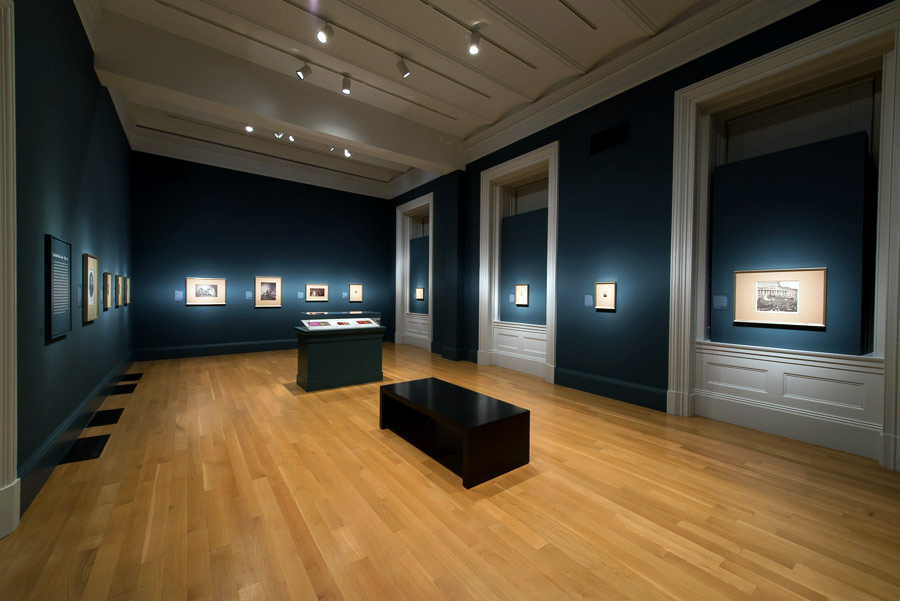


Chargesheimer (Karl Heinz Hargesheimer) (German, 1924-1971) 'Picturesque' 1949 from the exhibition 'Light, Paper, Process: Revolutionizing Photography' at the J. Paul Getty Museum, Getty Center, Los Angeles, April - Sept, 2015


Chargesheimer (Karl Heinz Hargesheimer) (German, 1924-1971)
Picturesque
1949
Gelatin silver print
49.5 x 39.6cm (19 1/2 x 15 9/16 in.)
The J. Paul Getty Museum, Los Angeles
© Museum Ludwig, Cologne


Henry Holmes Smith (American, 1909-1986) 'Man and Woman' 1976


Henry Holmes Smith (American, 1909-1986)
Man and Woman
1976
Dye imbibition print
33.2 x 26.2cm (13 1/16 x 10 5/16 in.)
The J. Paul Getty Museum, Los Angeles, Gift of the Smith Family Trust
© J. Paul Getty Trust


Edmund Teske (American, 1911-1996) 'Leaves on Glass, Topanga Canyon, California' 1952; print 1960s


Edmund Teske (American, 1911-1996)
Leaves on Glass, Topanga Canyon, California
1952; print 1960s
Gelatin silver duotone solarized print
35.4 x 27.9cm (13 15/16 x 11 in.)
The J. Paul Getty Museum, Los Angeles
© Edmund Teske Archives/Laurence Bump and Nils Vidstrand, 2001


Alison Rossiter (American, b. 1953) 'Gevaert Gevarto 47, exact expiration date unknown, about 1960s, processed 2013 (#37)' 2013


Alison Rossiter (American, b. 1953)
Gevaert Gevarto 47, exact expiration date unknown, about 1960s, processed 2013 (#37)
2013
Four gelatin silver print
Each image: 10.8 x 8.3cm (4 1/4 x 3 1/4 in.)
Courtesy of the artist and Yossi Milo Gallery, New York
© Alison Rossiter


Chris McCaw (American, b. 1971) 'Sunburned GSP #202 (San Francisco Bay)' 2008


Chris McCaw (American, b. 1971)
Sunburned GSP #202 (San Francisco Bay)
2008
Gelatin silver print
37.5 x 47.6cm (14 3/4 x 18 3/4 in.)
Santa Barbara Museum of Art, Museum Purchase
© Chris McCaw


Pierre Cordier (Belgian, b. 1933) 'Chemigram II' 1976


Pierre Cordier (Belgian, b. 1933)
Chemigram II
1976
Gelatin silver print
23.8 x 17.9cm (9 3/8 x 7 1/16 in.)
The J. Paul Getty Museum, Los Angeles
© 2015 Artists Rights Society (ARS), New York / SABAM, Brussels


From its very beginnings in the 19th century, photography has been shaped by the desire of the artist to continually explore and expand its possibilities through experimentation. Taking that spirit of invention and discovery as a point of departure, some artists today have chosen to distill photography to its most essential components of light-sensitivity and the chemical processing of photographic papers, challenging viewers to see the medium anew. Light, Paper, Process: Reinventing Photography, on view at the Getty Center April 14-September 6, 2015, features the work of seven contemporary artists – Alison Rossiter, Marco Breuer, James Welling, Lisa Oppenheim, Chris McCaw, John Chiara, and Matthew Brandt – all of whom have created inventive photographs that reveal aspects of their making (or unmaking).

The artists in the exhibition utilise an extensive array of practices – often achieved through trial and error, accident, or chance – that shift the understanding of photography from a medium that accurately records the world to one that revels in its materiality. Whether they use handmade cameras or none at all, work with expired papers or toxic chemicals, the images remain latent until processed, fixed, or otherwise coaxed from the paper.

“Each of the artists in this exhibition engages in some way with the process by which the photographic medium captures and transmutes light into a two-dimensional image on paper,” says Timothy Potts, director of the J. Paul Getty Museum. “But rather than seeing this process as something to be ‘perfected,’ or even neutralised, they exploit its ability to be manipulated and deconstructed, thus collapsing process and product into a single creative activity. I am particularly pleased that the Getty Museum Photographs Council has provided funds to acquire works by Matthew Brandt, Marco Breuer, John Chiara, and Allison Rossiter for our permanent collection that are included in the exhibition.”

The exhibition begins with an overview of 20th-century practices that were experimental in nature, featuring works by Man Ray, László Moholy-Nagy, Nathan Lerner, Edmund Teske, and others. The renewed interest of artists of this period in techniques such as camera-less photograms, chemigrams, and solarisation serves as inspiration for today’s artists. Each of the subsequent galleries in the Getty Museum’s Center for Photographs will be dedicated to the work of one of the seven featured contemporary artists, and follows a progression from abstract, camera-less works to representative images made with custom-built cameras.

“This exhibition is an excellent opportunity to feature the work of living artists alongside earlier photographs from our permanent collection,” says Virginia Heckert, department head of the Getty Museum’s Department of Photographs and curator of the exhibition. “By focusing on work of a more experimental nature, visitors will be reminded that the exploration of materiality and process has been an important aspect of photography since its inception and continues to motivate and inspire artists working with the medium today.”

Alison Rossiter (American, born 1953) takes a minimalist approach to the materials she uses to create her photographic works. She does not use a camera, film, or light, but instead only uses unprocessed sheets of expired gelatin silver paper and photographic chemicals in the darkroom. Through the simple acts of immersing or dipping a sheet of paper in developer or pouring and pooling developer onto the paper’s surface, she achieves a rich array or results. Some suggest faint impressions of primitive mark-making, others resemble landscapes, and still others call to mind abstract painting of the mid-20th-century.

Working since the early 1990s without a camera or film, Marco Breuer (German, born 1966) subjects light-sensitive paper to various acts that abrade, burn, or scrape away the emulsion layer. Completely nonrepresentational, his “photographs” look like no others; they elicit the hues and textures of rare metals, mineral deposits, or oil spills, and display marks ranging from fine incisions and abrasions to scar-like burns and gashes. His deliberate misuse of black-and-white and photographic papers is the starting point for a negotiation between the paper as recording material, the hand, and the tools employed.

James Welling (American, born 1951) spent the first ten years of his career exploring painting, sculpture, performance art, video art, conceptual art, and installation before he committed to thinking of himself as a photographer. For the past four decades, he has explored photography, from documentary to experimental, with and without a camera, using black-and-white, colour, and Polaroid films and papers, as well as digital files and printing. Since 1995 he has worked increasingly with colour, filters, and camera-less photography. Three bodies of recent work presented in the exhibition include variations on the photogram, chemigram, and printing-out process.

Influenced by her background in structural/materialist filmmaking, Lisa Oppenheim (American, born 1975) is interested in exploring the ways in which a photograph can record both its subject and the process by which it was made. In three bodies of work dating from 2010 to present, she enlists the very entities depicted in the negatives – the sun, the moon, and smoke / fire – in the act of exposing them. Although they sound scientific, the titles of two of these bodies of work, Heliograms and Lunagrams, are made up, combining the name of the camera-less photogram technique and the source of light by which the enlarged negatives have been contact-printed.

Chris McCaw (American, born 1971) establishes an immediate, visceral relationship between his subject, the sun, and his process, which involves loading photographic paper directly into the camera. The photographs in his Sunburn series record the sun’s movement, which literally sears its path into the paper in the form of dots, lines, or arcs, depending on its position, the weather conditions, and the length of the exposure(s). McCaw uses customised cameras outfitted with vintage military lenses pointed directly at the sun to function like a magnifying glass that burns through the emulsion layer and paper base, leaving behind singe marks and solarised passages.

John Chiara’s (American, born 1971) large-scale colour prints convey a hands-on – rather than pristine, mechanised – aesthetic. For the past decade his subjects have been both uninhabited landscapes and the built environment. He works with large custom-built cameras that he loads with colour photographic paper that he then processes himself by pouring chemicals into a six-foot-long section of PVC sewer pipe, sealing the tube, and then rolling it back and forth on the floor. Irregular streaks and drips characterise his prints, as do areas of overexposure and underexposure, flare from light leaks, and unevenly saturated colours.

Matthew Brandt (American, born 1982) has created diverse bodies of work, some of which are realised with photographic means and others that are more tangentially related to photographic images, techniques, or ideas. He may begin with a photograph that he has made with a 4 x 5-inch view camera, a digital camera, or his iPhone, one that he has sourced from archives in public libraries, or one that he has clicked and dragged from Ebay. His fascination with early photographic processes has led him to experiment with salted paper prints, gum bichromate prints, and heliographs, examples of which will be on view. Brandt’s interest in both photographic/visual and the physical/material forms of representation has led him to bring the two together, incorporating physical elements from his subjects into his photographic representations of them.

Light, Paper, Process: Reinventing Photography, is on view April 14-September 6, 2015 at the J. Paul Getty Museum, Getty Center. The exhibition is curated by Virginia Heckert, department head of the Museum’s Department of Photographs. A related publication of the same title will be produced by Getty Publications.

Press release from the J. Paul Getty Museum website


Alison Rossiter (American, b. 1953) 'Haloid Platina, exact expiration date unknown, about 1915, processed 2010' 2010


Alison Rossiter (American, b. 1953)
Haloid Platina, exact expiration date unknown, about 1915, processed 2010
2010
Gelatin silver print
Image (each): 21.6 x 16.5cm (8 1/2 x 6 1/2 in.)
The J. Paul Getty Museum, Los Angeles, Purchased with funds provided by the Photographs Council
© Alison Rossiter


Alison Rossiter (American, b. 1953) 'Fuji gaslight, exact expiration date unknown, about 1920s, processed 2010' 2010


Alison Rossiter (American, b. 1953)
Fuji gaslight, exact expiration date unknown, about 1920s, processed 2010
2010
Gelatin silver print
30.5 x 25.4cm (12 x 10 in.)
The J. Paul Getty Museum, Los Angeles, Purchased with funds provided by the Photographs Council
© Alison Rossiter


Alison Rossiter (American, b. 1953) 'Kilbourn Acme Kruxo, exact expiration date unknown, about 1940s, processed 2013' 2013


Alison Rossiter (American, b. 1953)
Kilbourn Acme Kruxo, exact expiration date unknown, about 1940s, processed 2013
2013
Gelatin silver print
12.7 x 17.8cm (5 x 7 in.)
The J. Paul Getty Museum, Los Angeles, Purchased with funds provided by the Photographs Council
© Alison Rossiter


Marco Breuer (German, b. 1966) 'Untitled (Heat/Gun)' 2001


Marco Breuer (German, b. 1966)
Untitled (Heat/Gun)
2001
Gelatin silver paper, burned
27.9 x 21.6cm (11 x 8 1/2 in.)
The J. Paul Getty Museum, Los Angeles, Purchased with funds provided by the Photographs Council
© Marco Breuer


Marco Breuer (German, b. 1966) 'Untitled (C-62)' 2002


Marco Breuer (German, b. 1966)
Untitled (C-62)
2002
Chromogenic paper, exposed and abraded
35.6 x 27.9cm (14 x 11 in.)
Courtesy of the artist and Yossi Milo Gallery, New York
© Marco Breuer


Marco Breuer (German, b. 1966) 'Spin (C-824)' 2008


Marco Breuer (German, b. 1966)
Spin (C-824)
2008
Chromogenic paper, embossed and scratched
34.6 x 27cm (13 5/8 x 10 5/8 in.)
The J. Paul Getty Museum, Los Angeles, Purchased with funds provided by the Photographs Council
© Marco Breuer


James Welling (American, b. 1951) 'Water' 2009


James Welling (American, b. 1951)
Water
2009
Chromogenic print
60.3 x 50.2cm (23 3/4 x 19 3/4 in.)
Courtesy of the artist and Regen Projects, Los Angeles
© James Welling


James Welling (American, b. 1951) 'Water' 2009


James Welling (American, b. 1951)
Water
2009
Chromogenic print
58.7 x 49.5cm (23 1/8 x 19 1/2 in.)
Courtesy of the artist and Regen Projects, Los Angeles
© James Welling


James Welling (American, b. 1951) 'Chemical' 2013


James Welling (American, b. 1951)
Chemical
2013
Chemigram on chromogenic paper
35.6 x 27.9cm (14 x 11 in.)
Courtesy of the artist and David Zwirner, New York/London
© James Welling


Lisa Oppenheim (American, b. 1975) 'Heliograms July 8, 1876 / October 16, 2011' 2011


Lisa Oppenheim (American, b. 1975)
Heliograms July 8, 1876 / October 16, 2011
2011
Gelatin silver print exposed with sunlight, toned
30 x 27.9cm (11 13/16 x 11 in.)
The J. Paul Getty Museum, Los Angeles
© Lisa Oppenheim


Lisa Oppenheim (American, b. 1975) 'A Handley Page Halifax of No. 4 Group flies over the suburbs of Caen, France, during a major daylight raid to assist the Normandy land battle. 467 aircraft took part in the attack, which was originally intended to have bombed German strongpoints north of Caen, but the bombing area was eventually shifted nearer the city because of the proximity of Allied troops to the original targets. The resulting bombing devastated the northern suburbs, 1944/2012' 2012


Lisa Oppenheim (American, b. 1975)
A Handley Page Halifax of No. 4 Group flies over the suburbs of Caen, France, during a major daylight raid to assist the Normandy land battle. 467 aircraft took part in the attack, which was originally intended to have bombed German strongpoints north of Caen, but the bombing area was eventually shifted nearer the city because of the proximity of Allied troops to the original targets. The resulting bombing devastated the northern suburbs, 1944/2012
2012
Gelatin silver print
Framed (approx.): 71.1 x 86.4 cm (28 x 34 in.)
Overall: Five gelatin silver prints (photograms)
Overall (approx.): 24 × 110″ (61 × 279.4 cm)
The Museum of Modern Art, New York. Fund for the Twenty-First Century
Digital Image © The Museum of Modern Art / Licensed by SCALA / Art Resource, NY
© Lisa Oppenheim


Lisa Oppenheim (American, b. 1975) 'A Handley Page Halifax of No. 4 Group flies over the suburbs of Caen, France, during a major daylight raid to assist the Normandy land battle. 467 aircraft took part in the attack, which was originally intended to have bombed German strongpoints north of' 2012 (detail)


Lisa Oppenheim (American, b. 1975)
A Handley Page Halifax of No. 4 Group flies over the suburbs of Caen, France, during a major daylight raid to assist the Normandy land battle. 467 aircraft took part in the attack, which was originally intended to have bombed German strongpoints north of Caen, but the bombing area was eventually shifted nearer the city because of the proximity of Allied troops to the original targets. The resulting bombing devastated the northern suburbs, 1944/2012 (detail)
2012
Gelatin silver print
Framed (approx.): 71.1 x 86.4 cm (28 x 34 in.)
Overall: Five gelatin silver prints (photograms)
Overall (approx.): 24 × 110″ (61 × 279.4 cm)
The Museum of Modern Art, New York. Fund for the Twenty-First Century
Digital Image © The Museum of Modern Art / Licensed by SCALA / Art Resource, NY
© Lisa Oppenheim


Oppenheim produces experimental films and photograms (photographs made without a camera). In Smoke and related works she uses the techniques of documentary photography to call the premises of the genre into question. She begins with the photo-sharing site Flickr, as a source for images of fire caused by natural or industrial disasters or bombing attacks (such as those over occupied France during World War II), and outputs segments of these pictures to create digital negatives. She then exposes photographic paper through the negatives, using firelight instead of the typical darkroom enlarger as a light source, then develops the photographic paper in solarol, a specially designed developer that creates a solarised effect, reversing lights and darks. The schism between the optical expressiveness of the pictures and the scientism of the captions (which are long, descriptive, and include the date and location of the event), shows that one’s understanding of the world is partial, that photography can only represent the world, and that the documentary genre is ultimately fraught with uncertainty.

Gallery label from New Photography 2013, September 14, 2013 – January 6, 2014, Museum of Modern Art website.


Chris McCaw (American, b.1971) 'Sunburned GSP #609 (San Francisco Bay)' 2012


Chris McCaw (American, b. 1971)
Sunburned GSP #609 (San Francisco Bay)
2012
Gelatin silver paper negatives
76.1 x 101.6cm (30 x 40 in.)
The J. Paul Getty Museum, Los Angeles


Chris McCaw (American, b. 1971) 'Sunburned GSP #555 (San Francisco Bay)' 2012


Chris McCaw (American, b. 1971)
Sunburned GSP #555 (San Francisco Bay)
2012
Gelatin silver paper negative
20.3 x 25.4cm (8 x 10 in.)
Courtesy of Stephen Wirtz Gallery San Francisco
© Chris McCaw


Chris McCaw (American, b. 1971) 'Poly-optic #10' 2012


Chris McCaw (American, b. 1971)
Poly-optic #10
2012
Gelatin silver paper negative
20.3 x 25.4cm (8 x 10 in.)
Collection of Leslie, Judith and Gabrielle Schreyer, Courtesy of Stephen Wirtz Gallery
© Chris McCaw


John Chiara (American, b. 1971) 'Longview at Panorama' 2007


John Chiara (American, b. 1971)
Longview at Panorama
2007
Dye destruction photograph on Ilfochrome paper
50.8 x 40.6cm (20 x 16 in.)
Rose Gallery and Von Lintel Gallery
© John Chiara


John Chiara (American, b. 1971) 'Grandview at Elysian' 2012


John Chiara (American, b. 1971)
Grandview at Elysian
2012
Dye destruction photographs on Ilfochrome paper
Each image: 85.1 x 71.1cm (33 1/2 x 28 in.)
The J. Paul Getty Museum, Los Angeles, Gift of Trish and Jan de Bont
© John Chiara


John Chiara (American, b. 1971) 'Starr King: 30th: Coral' 2013


John Chiara (American, b. 1971)
Starr King: 30th: Coral
2013
Dye destruction photograph on Ilfochrome paper
83.8 x 71.1cm (33 x 28 in.)
Kerstin Morehead
© John Chiara


John Chiara (American, b. 1971) 'Sierra at Edison' 2012


John Chiara (American, b. 1971)
Sierra at Edison
2012
Chromogenic photograph on Kodak Professional Endura Metallic paper
127 x 182.9cm (50 x 72 in.)
The J. Paul Getty Museum, Los Angeles, Purchased with funds provided by the Photographs Council
© John Chiara


Matthew Brandt (American, b. 1982) '00036082-3 "Mathers Department Store, Pasadena, 1971"' 2013


Matthew Brandt (American, b. 1982)
00036082-3 “Mathers Department Store, Pasadena, 1971”
2013
Gum bichromate print with dust from AT&T parking structure level 2
110.5 x 143.5cm (43 1/2 x 56 1/2 in.)
The J. Paul Getty Museum, Los Angeles, Gift of the artist and M+B
© Matthew Brandt, Source image courtesy of the Los Angeles Public Library Photo Collection


Matthew Brandt (American, b. 1982) 'Rainbow Lake, WY A4' Negative 2012; print 2013


Matthew Brandt (American, b. 1982)
Rainbow Lake, WY A4
Negative 2012; print 2013
Chromogenic print, soaked in Rainbow Lake water
76.2 x 101.6cm (30 x 40 in.)
The J. Paul Getty Museum, Los Angeles, Purchased with funds provided by the Photographs Council
© Matthew Brandt


Matthew Brandt (American, b.1982) 'Rainbow Lake, WY A20' Negative 2012; print 2013


Matthew Brandt (American, b. 1982)
Rainbow Lake, WY A20
Negative 2012; print 2013
Chromogenic print, soaked in Rainbow Lake water
76.2 x 101.6cm (30 x 40 in.)
The J. Paul Getty Museum, Los Angeles, Purchased with funds provided by the Photographs Council
© Matthew Brandt


The J. Paul Getty Museum
1200 Getty Center Drive
Los Angeles, California 90049

Opening hours:
Tuesday – Sunday 10am – 5.30pm
Closed Mondays

The J. Paul Getty Museum website

LIKE ART BLART ON FACEBOOK

Back to top

Exhibition: ‘Salt and Silver: Early Photography 1840-1860’ at Tate Britain, London

Exhibition dates: 25th February – 7th June, 2015

Curators: Carol Jacobi, Curator, British Art 1850-1915, Tate Britain, Simon Baker, Curator, Photography and International Art, Tate, and Hannah Lyons, Assistant Curator, 1850-1915, Tate


'Salt and Silver' exhibition at Tate Britain


“Salt prints are the very first photographs on paper that still exist today. Made in the first twenty years of photography, they are the results of esoteric knowledge and skill. Individual, sometimes unpredictable, and ultimately magical, the chemical capacity to ‘fix a shadow’ on light sensitive paper, coated in silver salts, was believed to be a kind of alchemy, where nature drew its own picture.”


These salted paper prints, one of the earliest forms of photography, are astonishing. The delicacy and nuance of shade and feeling; possessing a soft, luxurious aesthetic that is astounding today… but just imagine looking at these images at the time they were taken. The shock, the recognition, the delight and the romance of seeing aspects of your life and the world around you, near and far, drawn in light – having a physical presence in the photographs before your eyes. The aura of the original, the photograph AS referent – unlike contemporary media saturated society where the image IS reality, endlessly repeated, divorced from the world in which we live.

The posting has taken a long time to put together, from researching the birth and death dates of the artists (not supplied), to finding illustrative texts and biographies of each artist (some translated from the French). But the real joy in assembling this posting is when I sequence the images. How much pleasure does it give to be able to sequence Auguste Salzmann’s Terra Cotta Statuettes from Camiros, Rhodes followed by three Newhaven fishermen rogues (you wouldn’t want to meet them on a dark night!), and then the totally different feel of Fenton’s Group of Croat Chiefs. Follow this up with one of the most stunning photographs of the posting, Roger Fenton’s portrait Captain Mottram Andrews, 28th Regiment (1st Staffordshire) Regiment of Foot of 1855 and you have a magnificent, almost revelatory, quaternity/eternity.

Dr Marcus Bunyan


Many thankx to Tate Britain for allowing me to publish the photographs in the posting. Please click on the photographs for a larger version of the image.
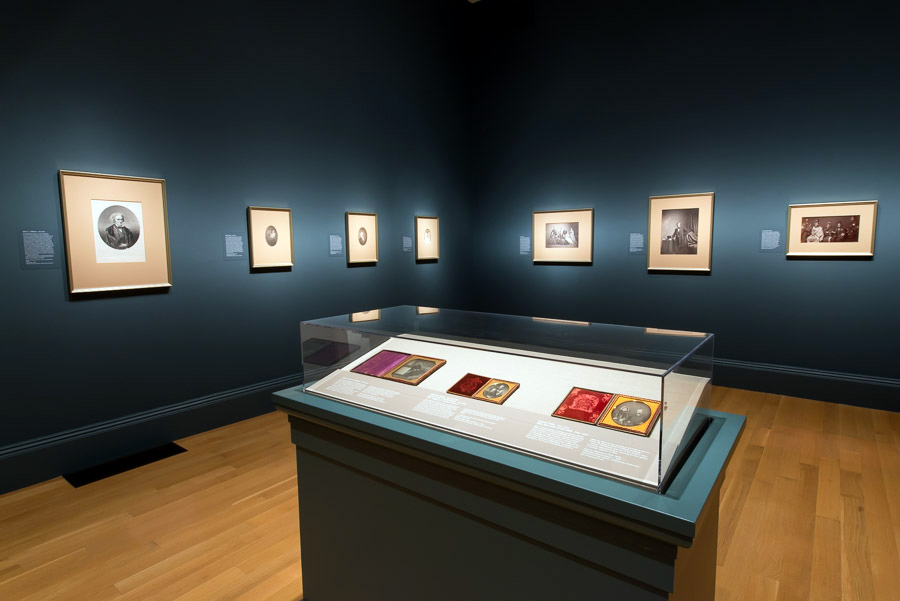


Calvert Jones (Welsh, December 4, 1804 - November 7, 1877) 'The Fruit Sellers' c. 1843 from the exhibition 'Salt and Silver: Early Photography 1840-1860' at Tate Britain, London, Feb - June, 2015


Calvert Jones (Welsh, December 4, 1804 – November 7, 1877)
The Fruit Sellers
c. 1843
Photograph, salted paper print from a paper negative


David Hill (Scottish, 1802-1870) and Robert Adamson (Scottish, 1821-1848) 'Five Newhaven fisherwomen' c. 1844 from the exhibition 'Salt and Silver: Early Photography 1840-1860' at Tate Britain, London, Feb - June, 2015


David Hill (Scottish, 1802-1870) and Robert Adamson (Scottish, 1821-1848)
Five Newhaven fisherwomen

c. 1844
Photograph, salted paper print from a paper negative


David Hill (Scottish, 1802-1870) and Robert Adamson (Scottish, 1821-1848) 'The Gowan [Margaret and Mary Cavendish]' c. 1843-1848


David Hill (Scottish, 1802-1870) and Robert Adamson (Scottish, 1821-1848)
The Gowan [Margaret and Mary Cavendish]
c. 1843-1844
Photograph, salted paper print from a paper negative


Salt and Silver: Early Photography 1840-1860 is the first major exhibition in Britain devoted to salt prints, the earliest form of paper photography. The exhibition features some of the rarest and best early photographs in the world, depicting daily activities and historic moments of the mid 19th century. The ninety photographs on display are among the few fragile salt prints that survive and are seldom shown in public. Salt and Silver: Early Photography 1840-1860 opens at Tate Britain on 25 February 2015.

In the 1840s and 50s, the salt print technique introduced a revolutionary new way of creating photographs on paper. It was invented in Britain and spread across the globe through the work of British and international photographers – artists, scientists, adventurers and entrepreneurs of their day. They captured historic moments and places with an immediacy not previously seen, from William Henry Fox Talbot’s images of a modern Paris street and Nelson’s Column under construction, to Linnaeus Tripe’s dramatic views of Puthu Mundapum, India and Auguste Salzmann’s uncanny studies of statues in Greece.

In portraiture, the faces of beloved children, celebrities, rich and poor were recorded as photographers sought to catch the human presence. Highlights include Fox Talbot’s shy and haunting photograph of his daughter Ela in 1842 to Nadar’s images of sophisticated Parisians and Roger Fenton’s shell-shocked soldiers in the Crimean war.

William Henry Fox Talbot unveiled this ground-breaking new process in 1839. He made the world’s first photographic prints by soaking paper in silver iodide salts to register a negative image which, when photographed again, created permanent paper positives. These hand-made photographs ranged in colour from sepia to violet, mulberry, terracotta, silver-grey, and charcoal-black and often had details drawn on like the swishing tail of a horse. Still lifes, portraits, landscapes and scenes of modern life were transformed into luxurious, soft, chiaroscuro images. The bold contrasts between light and dark in the images turned sooty shadows into solid shapes. Bold contrasts between light and dark turned shadows into abstract shapes and movement was often captured as a misty blur. The camera drew attention to previously overlooked details, such as the personal outline of trees and expressive textures of fabric.

In the exciting Victorian age of modern invention and innovation, the phenomenon of salt prints was quickly replaced by new photographic processes. The exhibition shows how, for a short but significant time, the British invention of salt prints swept the world and created a new visual experience.

Salt and Silver: Early Photography 1840 – 1860 is organised in collaboration with the Wilson Centre for photography. It is curated by Carol Jacobi, Curator, British Art 1850-1915, Tate Britain, Simon Baker, Curator, Photography and International Art, Tate, and Hannah Lyons, Assistant Curator, 1850-1915, Tate. ‘Salt and Silver’ – Early Photography 1840-1860 is published by Mack to coincide with the exhibition and will be accompanied by a programme of talks and events in the gallery.

Press release from the Tate website


William Henry Fox Talbot (British, 11 February 1800 - 17 September 1877) 'Scene in a Paris Street' 1843


William Henry Fox Talbot (British, 11 February 1800 – 17 September 1877)
Scene in a Paris Street
1843
Photograph, salted paper print from a paper negative


By 1841, Talbot had dramatically reduced, from many minutes to just seconds, the exposure time needed to produce a negative, and on a trip to Paris to publicise his new calotype process he took a picture from his hotel room window, an instinctive piece of photojournalism. The buildings opposite are rendered in precise and exquisite detail, the black and white stripes of the shutters neat alternations of light and shade. In contrast to the solidity of the buildings are the carriages waiting on the street below; the wheels, immobile, are seen in perfect clarity, while the skittish horses are no more than ghostly blurs.

Florence Hallett. “Salt and Silver, Tate Britain: Early photographs that brim with the spirit of experimentation,” on The Arts Desk website, Wednesday, 25 February 2015 [Online] Cited 03/06/2015. Used under fair use conditions for the purposes of education and research


William Henry Fox Talbot (British, 11 February 1800 - 17 September 1877) 'Nelson’s Column Under Construction, Trafalgar Square' 1844


William Henry Fox Talbot (British, 11 February 1800 – 17 September 1877)
Nelson’s Column Under Construction, Trafalgar Square
1844
Salted paper print from a glass plate negative


William Henry Fox Talbot (British, 11 February 1800 - 17 September 1877) 'Nelson's Column Under Construction, Trafalgar Square' 1844


William Henry Fox Talbot (British, 11 February 1800 – 17 September 1877)
Nelson’s Column Under Construction, Trafalgar Square
1844
Salted paper print from a glass plate negative


This is the first exhibition in Britain devoted to salted paper prints, one of the earliest forms of photography. A uniquely British invention, unveiled by William Henry Fox Talbot in 1839, salt prints spread across the globe, creating a new visual language of the modern moment. This revolutionary technique transformed subjects from still lifes, portraits, landscapes and scenes of daily life into images with their own specific aesthetic: a soft, luxurious effect particular to this photographic process. The few salt prints that survive are seldom seen due to their fragility, and so this exhibition, a collaboration with the Wilson Centre for Photography, is a singular opportunity to see the rarest and best early photographs of this type in the world.

“The technique went as follows: coat paper with a silver nitrate solution and expose it to light, thus producing a faint silver image. He later realised if you apply salt to the paper first and then spread on the silver nitrate solution the resulting image is much sharper. His resulting photos, ranging in colour from sepia to violet, mulberry, terracotta, silver-grey, and charcoal-black, were shadowy and soft, yet able to pick up on details that previously went overlooked – details like the texture of a horse’s fur, or the delicate silhouette of a tree.”

Priscilla Frank. “The First Paper Photographs Were Made With Salt, And They Look Like This,” on the Huffington Post website 03/06/2015 [Online] Cited 03/06/2015. Used under fair use conditions for the purposes of education and research


William Henry Fox Talbot (British, 11 February 1800 - 17 September 1877) 'Cloisters, Lacock Abbey' 1843


William Henry Fox Talbot (British, 11 February 1800 – 17 September 1877)
Cloisters, Lacock Abbey
1843


William Henry Fox Talbot (11 February 1800 – 17 September 1877)

William Henry Fox Talbot (11 February 1800 – 17 September 1877) was a British scientist, inventor and photography pioneer who invented the salted paper and calotype processes, precursors to photographic processes of the later 19th and 20th centuries. Talbot was also a noted photographer who made major contributions to the development of photography as an artistic medium. He published The Pencil of Nature (1844), which was illustrated with original prints from some of his calotype negatives. His work in the 1840s on photo-mechanical reproduction led to the creation of the photoglyphic engraving process, the precursor to photogravure. Talbot is also remembered as the holder of a patent which, some say, affected the early development of commercial photography in Britain. Additionally, he made some important early photographs of Oxford, Paris, Reading, and York.


William Henry Fox Talbot (British, 11 February 1800 - 17 September 1877) 'Study of China' 1844


William Henry Fox Talbot (British, 11 February 1800 – 17 September 1877)
Study of China
1844
© Wilson Centre for Photography


William Henry Fox Talbot (British, 11 February 1800 - 17 September 1877) 'Plaster Bust of Patroclus' before February 1846


William Henry Fox Talbot (British, 11 February 1800 – 17 September 1877)
Plaster Bust of Patroclus
before February 1846
© Wilson Centre for Photography


John Beasly Greene (French-American, 1832-1856) 'El Assasif, Porte de Granit Rose, No 2, Thébes' 1854


John Beasly Greene (French-American, 1832-1856)
El Assasif, Porte de Granit Rose, No 2, Thébes
1854
Salted paper print from a waxed plate negative


John Beasly Greene (French-American, 1832-1856)

A French-born archeologist based in Paris and a student of photographer Gustave Le Gray, John Beasly Greene became a founding member of the Société Française de Photographie and belonged to two societies devoted to Eastern studies. Greene became the first practicing archaeologist to use photography, although he was careful to keep separate files for his documentary images and his more artistic landscapes.

In 1853 at the age of nineteen, Greene embarked on an expedition to Egypt and Nubia to photograph the land and document the monuments and their inscriptions. Upon his return, Louis Désiré Blanquart-Evrard published an album of ninety-four of these photographs. Greene returned to Egypt the following year to photograph and to excavate at Medinet-Habu in Upper Egypt, the site of the mortuary temple built by Ramses III. In 1855 he published his photographs of the excavation there. The following year, Greene died in Egypt, perhaps of tuberculosis, and his negatives were given to his friend, fellow Egyptologist and photographer Théodule Devéria.

Text from the Getty Museum website


James Robertson (British, 1813-1888) and Felice Beato (Italian-British, 1832 - 29 January 1909) 'Pyramids at Giza' 1857


James Robertson (British, 1813-1888) and Felice Beato (Italian-British, 1832 – 29 January 1909)
Pyramids at Giza
1857
Photograph, salted paper print from a glass plate negative


James Robertson (British, 1813-1888)

James Robertson (1813-1888) was an English photographer and gem and coin engraver who worked in the Mediterranean region, the Crimea and possibly India. He was one of the first war photographers.

Robertson was born in Middlesex in 1813. He trained as an engraver under Wyon (probably William Wyon) and in 1843 he began work as an “engraver and die-stamper” at the Imperial Ottoman Mint in Constantinople. It is believed that Robertson became interested in photography while in the Ottoman Empire in the 1840s.

In 1853 he began photographing with British photographer Felice Beato and the two formed a partnership called Robertson & Beato either in that year or in 1854 when Robertson opened a photographic studio in Pera, Constantinople. Robertson and Beato were joined by Beato’s brother, Antonio on photographic expeditions to Malta in 1854 or 1856 and to Greece and Jerusalem in 1857. A number of the firm’s photographs produced in the 1850s are signed Robertson, Beato and Co. and it is believed that “and Co.” refers to Antonio.

In late 1854 or early 1855 Robertson married the Beato brothers’ sister, Leonilda Maria Matilda Beato. They had three daughters, Catherine Grace (born in 1856), Edith Marcon Vergence (born in 1859) and Helen Beatruc (born in 1861). In 1855 Robertson and Felice Beato travelled to Balaklava, Crimea where they took over reportage of the Crimean War from Roger Fenton. They photographed the fall of Sevastopol in September 1855. Some sources have suggested that in 1857 both Robertson and Felice Beato went to India to photograph the aftermath of the Indian Rebellion, but it is more probable that Beato travelled there alone. Around this time Robertson did photograph in Palestine, Syria, Malta, and Cairo with either or both of the Beato brothers.

In 1860, after Felice Beato left for China to photograph the Second Opium War and Antonio Beato went to Egypt, Robertson briefly teamed up with Charles Shepherd back in Constantinople. The firm of Robertson & Beato was dissolved in 1867, having produced images – including remarkable multiple-print panoramas – of Malta, Greece, Turkey, Damascus, Jerusalem, Egypt, the Crimea and India. Robertson possibly gave up photography in the 1860s; he returned to work as an engraver at the Imperial Ottoman Mint until his retirement in 1881. In that year he left for Yokohama, Japan, arriving in January 1882. He died there in April 1888.

Text from the Wikipedia website


James Robertson (British, 1813-1888) 'Base of the Obelisk of Theodosius, Constantinople' 1855


James Robertson (British, 1813-1888)
Base of the Obelisk of Theodosius, Constantinople
1855
Salted paper print from a glass plate negative


Exhibition of intriguing images that charts the birth of photography

Another week, another photography show about death. It’s not officially about death, mind you; it’s officially about the years 1840 to 1860, when photographers made their images on paper sensitised with silver salts. The process was quickly superseded, but the pictures created this way have a beautiful artistic softness and subtlety of tone, quite apart from the fact that every single new photograph that succeeded represented a huge leap forward in the development of the medium. You see these early practitioners start to grasp the scope of what might be possible. Their subjects change, from ivy-covered walls and carefully posed family groups to more exotic landscapes and subjects: Egypt, India, the poor, war.

By the time you get to Roger Fenton’s portrait Captain Lord Balgonie, Grenadier Guards of 1855 you have an inkling of how photography is changing how we understand life, for ever. Balgonie is 23. He looks 50. His face is harrowed by his service in the Crimean War, his eyes bagged with fatigue, fear and what the future may hold. He survived the conflict, but was broken by it, dying at home two years after this picture was taken. That is yet to come: for now, he is alive.

This sense of destiny bound within a picture created in a moment is what is new about photography, and you start to see it everywhere, not just in the images of war. It’s in William Henry Fox Talbot’s The Great Elm at Lacock: a huge tree against a mottled sky, battered by storms. It’s in John Beasly Greene’s near-abstract images of Egyptian statuary, chipped, cracked, alien. And it’s in the portraits of Newhaven fisherwomen by DO Hill and Robert Adamson (their cry was ‘It’s not fish, it’s men’s lives’). In a world where death is always imminent, photography arrives as the perfect way to preserve life, and the perfect way to leave your mark, however fleeting.

Chris Waywell. “Salt and Silver: Early Photography 1840-1860,” on the Time Out London website 22 July 2015 [Online] Cited 18/12/2022. Used under fair use conditions for the purposes of education and research


Eugene Piot (French, 1812-1890) 'Le Parthénon de l'Acropole d'Athens' 1852


Eugene Piot (French, 1812-1890)
Le Parthénon de l’Acropole d’Athens
1852
Photograph, salted paper print from a paper negative
© Wilson Centre for Photography


Eugène Piot was a French journalist, art critic, art collector and photographer. His pen name was Nemo. Piot was born in Paris.


Paul Marés. 'Ox cart in Brittany' c. 1857


Paul Marés (French)
Ox cart in Brittany
c. 1857
Photograph, salted paper print from a paper negative


One of the most beautiful photographs in this exhibition is Paul Marès Ox Cart, Brittany, c. 1857. At first it seems a picturesque scene of bucolic tranquillity, the abandoned cart an exquisite study in light and tone. But on the cottage wall are painted two white crosses, a warning – apparently even as recently as the 19th century – to passers-by that the household was afflicted by some deadly disease. Photography’s ability to indiscriminately aestheticise is a dilemma that has continued to present itself ever since, especially in the fields of reportage and war photography.

Florence Hallett. “Salt and Silver, Tate Britain: Early photographs that brim with the spirit of experimentation,” on The Arts Desk website, Wednesday, 25 February 2015 [Online] Cited 03/06/2015. Used under fair use conditions for the purposes of education and research


Jean-Baptiste Frénet (French - Lyon, 31 January 1814 - Charly, 12 August 1889) 'Horse and Groom' 1855


Jean-Baptiste Frénet (French – Lyon, 31 January 1814 – Charly, 12 August 1889)
Horse and Groom
1855
Salted paper print from a glass plate negative
© Wilson Centre for Photography


Around 1850 Frénet meets in Lyon personalities involved in the nascent photography, and he has to discover this technique to reproduce the frescoes he painted in Ainay. Curious, he is passionate about this new medium that offers him a respite space in the setbacks he suffers with his painting.

Frénet applies the stereotyped views taken of the time involving heavy stagings and is one of the first to practice the instant, the familiar and intimate subject. Five years before Nadar he produces psychological portraits and engages in close-up. He sees photography as an art, the opinion which has emerged in the first issue of the magazine La Lumière (The Light), text of the young and ephemeral gravure company founded in 1851. Frénet open a professional practice photography in 1866 and 1867 in Lyon. Unknown to the general public, his photographic work was discovered in 2000 at the sale of his photographic collection, many parts were purchased by the Musée d’Orsay.

Translated from the French Wikipedia website


Edouard Denis Baldus (French, 1813-1889) 'The Floods of 1856, Brotteaux Quarter of Lyon' 1856


Edouard Denis Baldus (French, 1813-1889)
The Floods of 1856, Brotteaux Quarter of Lyon
1856
Photograph, salted paper print from a waxed paper negative
© Wilson Centre for Photography


In June 1856, in the midst of his work at the Louvre, Baldus set out on a brief assignment, equally without precedent in photography, that was in many ways its opposite: to photograph the destruction caused by torrential rains and overflowing rivers in Lyon, Avignon, and Tarascon. From a world of magnificent man-made construction, he set out for territory devastated by natural disaster; from the task of re-creating the whole of a building in a catalogue of its thousand parts, he turned to the challenge of evoking a thousand individual stories in a handful of transcendent images. Baldus created a moving record of the flood without explicitly depicting the human suffering left in its wake. The “poor people, tears in their eyes, scavenging to find the objects most indispensable to their daily needs,” described by the local Courier de Lyon, are all but absent from his photographs of the hard-hit Brotteaux quarter of Lyon, as if the destruction had been of biblical proportions, leaving behind only remnants of a destroyed civilization.

Malcolm Daniel. “Édouard Baldus (1813-1889),” in Heilbrunn Timeline of Art History. New York: The Metropolitan Museum of Art, 2000 [Online] Cited 16/12/2022. Used under fair use conditions for the purposes of education and research


Auguste Salzmann (French, born April 14, 1824 in Ribeauvillé (Alsace) - died February 24, 1872 in Paris) 'Terra Cotta Statuettes from Camiros, Rhodes' 1863


Auguste Salzmann (French, born April 14, 1824 in Ribeauvillé (Alsace) – died February 24, 1872 in Paris)
Terra Cotta Statuettes from Camiros, Rhodes
1863
© Wilson Centre for Photography


Auguste Salzmann (French, 1824-1872) painter, photographer and archaeologist who pioneered the use of photography in the recording of historic sites. He excavated archaeological material in Rhodes in collaboration with Alfred Biliotti.


David Hill (Scottish, 1802-1870) and Robert Adamson (Scottish, 1821-1848) 'Newhaven fishermen' c. 1845


David Hill (Scottish, 1802-1870) and Robert Adamson (Scottish, 1821-1848)
Newhaven fishermen
c. 1845
Photograph, salted paper print from a paper negative
© Wilson Centre for Photography


Roger Fenton (British, 28 March 1819 - 8 August 1869) 'Cossack Bay, Balaclava' 1855


Roger Fenton (British, 28 March 1819 – 8 August 1869)
Cossack Bay, Balaclava
1855


It is likely that in autumn 1854, as the Crimean War grabbed the attention of the British public, that some powerful friends and patrons – among them Prince Albert and Duke of Newcastle, secretary of state for war – urged Fenton to go the Crimea to record the happenings. He set off aboard HMS Hecla in February, landed at Balaklava on 8 March and remained there until 22 June. The resulting photographs may have been intended to offset the general unpopularity of the war among the British people, and to counteract the occasionally critical reporting of correspondent William Howard Russell of The Times. The photographs were to be converted into woodblocks and published in the less critical Illustrated London News. Fenton took Marcus Sparling as his photographic assistant, a servant known as William and a large horse-drawn van of equipment…

Despite summer high temperatures, breaking several ribs in a fall, suffering from cholera and also becoming depressed at the carnage he witnessed at Sebastopol, in all Fenton managed to make over 350 usable large format negatives. An exhibition of 312 prints was soon on show in London and at various places across the nation in the months that followed. Fenton also showed them to Queen Victoria and Prince Albert and also to Emperor Napoleon III in Paris. Nevertheless, sales were not as good as expected.

Text from the Wikipedia website


Roger Fenton (British, 28 March 1819 - 8 August 1869) 'Group of Croat Chiefs' 1855


Roger Fenton (British, 28 March 1819 – 8 August 1869)
Group of Croat Chiefs
1855
Salted paper print from a glass plate negative


Roger Fenton (British, 28 March 1819 - 8 August 1869) 'Captain Mottram Andrews, 28th Regiment (1st Staffordshire) Regiment of Foot' 1855


Roger Fenton (British, 28 March 1819 – 8 August 1869)
Captain Mottram Andrews, 28th Regiment (1st Staffordshire) Regiment of Foot
1855
Salted paper print from a glass plate negative
© Wilson Centre for Photography


Roger Fenton (British, 28 March 1819 - 8 August 1869) 'Cantiniére' 1855


Roger Fenton (British, 28 March 1819 – 8 August 1869)
Cantiniére
1855
Salted paper print from a glass plate negative
© Wilson Centre for Photography


A woman who carries a canteen for soldiers; a vivandière.


Roger Fenton (British, 28 March 1819 - 8 August 1869) 'Captain Lord Balgonie, Grenadier Guards' 1855


Roger Fenton (British, 28 March 1819 – 8 August 1869)
Captain Lord Balgonie, Grenadier Guards
1855
Photograph, salted paper print from a paper negative


Roger Fenton (British, 28 March 1819 - 8 August 1869) 'Captain Lord Balgonie, Grenadier Guards' 1855


Roger Fenton (British, 28 March 1819 – 8 August 1869)
Captain Lord Balgonie, Grenadier Guards
1855
Photograph, salted paper print from a paper negative


If I had to choose a figure it would be the Franco-American, archaeological photographer John Beasly Greene. His career was short and dangerous, he died at 24, but he challenged the trend towards clarity that dominated his field. Instead, he used the limits of the medium – burn-out, shadow, halation and the beautiful grainy texture of the print itself – to explore the poetic ambiguity of Egyptian sites.

This revolutionary photographic process transformed subjects, still lifes, portraits, landscapes and scenes of daily life into images. It brings it’s own luxurious aesthetic, soft textures, matt appearance and deep rich red tones, the variations seen throughout this exhibition is fascinating to observe. It’s also an incredible opportunity to view the original prints in an exhibition format, which has never been done before on a scale like this before.

The process starts with dipping writing paper in a solution of common salt, then partly drying it, coating it with silver nitrate, then drying it again, before applying further coats of silver nitrate, William Henry Fox Talbot pioneered what became known as the salt print and the world’s first photographic print! The specifically soft and luxurious aesthetic became an icon of modern visual language.

The few salt prints that survive are rarely seen due to their fragility. This exhibition is extremely important to recognise this historical process as well as a fantastic opportunity to see the rarest and best up close of early photographs of this type in the world.

Anon. “Salt and Silver: Early Photography 1840-1860,” on the Films not dead website [Online] Cited 03/06/2015. No longer available online. Used under fair use conditions for the purposes of education and research


Félix Nadar (Gaspard Félix Tournachon) (French, 6 April 1820 - 23 March 1910) 'Mariette' c. 1855


Félix Nadar (Gaspard Félix Tournachon) (French, 6 April 1820 – 23 March 1910)
Mariette
c. 1855
Photograph, salted paper print from a glass plate negative
© Wilson Centre for Photography


Tournachon’s nickname, Nadar, derived from youthful slang, but became his professional signature and the name by which he is best known today. Poor but talented, Nadar began by scratching out a living as a freelance writer and caricaturist. His writings and illustrations made him famous before he began to photograph. His keenly honed camera eye came from his successful career as a satirical cartoonist, in which the identifying characteristic of a subject was reduced to a single distinct facet; that skill proved effective in capturing the personality of his photographic subjects.

Nadar opened his first photography studio in 1854, but he only practiced for six years. He focused on the psychological elements of photography, aiming to reveal the moral personalities of his sitters rather than make attractive portraits. Bust- or half-length poses, solid backdrops, dramatic lighting, fine sculpturing, and concentration on the face were trademarks of his studio. His use of eight-by-ten-inch glass-plate negatives, which were significantly larger than the popular sizes of daguerreotypes, accentuated those effects.

At one point, a commentator said, “[a]ll the outstanding figures of [the] era – literary, artistic, dramatic, political, intellectual – have filed through his studio.” In most instances these subjects were Nadar’s friends and acquaintances. His curiosity led him beyond the studio into such uncharted locales as the catacombs, which he was one of the first persons to photograph using artificial light.

Text from the Getty Museum website. For more information on this artist please see the MoMA website.


Lodoisch Crette Romet (1823-1872) 'A Lesson of Gustave Le Gray in His Studio' 1854


Lodoisch Crette Romet (1823-1872)
A Lesson of Gustave Le Gray in His Studio [Antoine-Emile Plassan]
1850-1853
24.2 x 17.7cm
Photograph, salted paper print from a paper negative


Jean-Baptiste Frénet (French - Lyon, 31 January 1814 - Charly, 12 August 1889) 'Women and girls with a doll' c. 1855


Jean-Baptiste Frénet (French – Lyon, 31 January 1814 – Charly, 12 August 1889)
Women and girls with a doll
c. 1855
© Wilson Centre for Photography


John S. Johnston (American, c. 1839 - December 17, 1899) 'One of Dr Kane’s Men [possibly William Morton]' c. 1857


John S. Johnston (American, c. 1839 – December 17, 1899)
One of Dr Kane’s Men [possibly William Morton]
c. 1857


John S. Johnston was a late 19th-century maritime and landscape photographer. He is known for his photographs of racing yachts and New York City landmarks and cityscapes. Very little is known about his life. He was evidently born in Britain in the late 1830s, and was active in the New York City area in the late 1880s and 1890s. He died in 1899.


William Morton

“Belief in the Open Polar Sea theory subsided until the mid-1800s, when Elisha Kent Kane set forth on a number of expeditions north with hopes of finding this theorised body of water. On an 1850s expedition organised by Kane, explorer William Morton, believing he discovered the Open Polar Sea, described a body of water containing

“Not a speck of ice… As far as I could discern, the sea was open… The wind was due N(orth) – enough to make white caps, and the surf broke in on the rocks in regular breakers.”

Morton, however, did not find the Open Polar Sea – he found a small oasis of water. Morton’s quote is likely tinged with a desire to raise the spirits of his boss, Kane, who saw the Polar Sea as a possible utopia, an area brimming with life amidst a harsh arctic world.”

Keith Veronese. “The Open Polar Sea, a balmy aquatic Eden at the North Pole?” on the Gizmodo website 4/20/12 [Online] Cited 03/06/2015. Used under fair use conditions for the purposes of education and research


David Hill (Scottish, 1802-1870) and Robert Adamson (Scottish, 1821-1848) 'Thought to be Elizabeth Rigby' c. 1844


David Hill (Scottish, 1802-1870) and Robert Adamson (Scottish, 1821-1848)
Thought to be Elizabeth Rigby
c. 1844
Photograph, salted paper print from a paper negative


Jean-Baptiste Frénet (French - Lyon, 31 January 1814 - Charly, 12 August 1889) 'Thought to be a Mother and Son' c. 1855


Jean-Baptiste Frénet (French – Lyon, 31 January 1814 – Charly, 12 August 1889)
Thought to be a Mother and Son
c. 1855
Photograph, salted paper print from a collodion negative transferred from glass to paper support


William Henry Fox Talbot (British, 11 February 1800 - 17 September 1877) 'The Photographer's Daughter, Ela Theresa Talbot' 1843-1844


William Henry Fox Talbot (British, 11 February 1800 – 17 September 1877)
The Photographer’s Daughter, Ela Theresa Talbot
1843-1844


Roger Fenton (British, 28 March 1819 - 8 August 1869) 'Portrait of a Woman' c. 1854


Roger Fenton (British, 28 March 1819 – 8 August 1869)
Portrait of a Woman
c. 1854
Photograph, salted paper print from a glass plate negative


John Wheeley Gough (British, 1809-1862) 'Gutch Abbey Ruins' c. 1858


John Wheeley Gough (British, 1809-1862)
Gutch Abbey Ruins
c. 1858
© Wilson Centre for Photography


John Wheeley Gough (British, 1809-1862)

John Wheeley Gough Gutch (1809-1862) was a British surgeon and editor. He was also a keen amateur naturalist and geologist, and a pioneer photographer.

In 1851, Dr. Gutch gave up his medical practice to become a messenger for Queen Victoria, and he began photographing the many cities he visited on his diplomatic missions. During a trip to Constantinople, he became seriously ill, resulting in permanent partial paralysis that ended his public service career. While undergoing experimental treatments in Malvern, England, Dr. Gutch again turned to photography as a cure for his melancholy. His works were exhibited throughout London and Edinburgh from 1856-1861, and he became a frequent contributor to the Photographic Notes publication. Dr. Gutch’s camera of choice was Frederick Scott Archer’s wet-plate camera because he liked the convenience of developing glass negatives within the camera, which eliminated the need for a darkroom. However, the camera proved too cumbersome for him to handle, and had to be manipulated by one of his photographic assistants. His photographs were printed on salt-treated paper and were placed into albums he painstakingly decorated with photographic collages.

Dr. Gutch’s “picturesque” photographic style was influenced by artist William Gilpin. Unlike his mid-nineteenth century British contemporaries who recorded urban expansion, he preferred focusing on ancient buildings, rock formations, archaeological ruins, and tree-lined streams. In 1857, an assignment for Photographic Notes took him to Scotland, northern Wales, and the English Lake District, where he photographed the lush settings, but not always to his satisfaction. Two years’ later, he aspired to photograph and document the more than 500 churches in Gloucestershire, a daunting and quite expensive task. He fitted his camera with a Ross Petzval wide-angle lens and managed to photograph more than 200 churches before illness forced him to abandon the ambitious project. Fifty-three-year-old John Wheeley Gough Gutch died in London on April 30, 1862.

Anonymous text. “John Wheeley Gough Gutch,” on the Historic Camera website Nd [Online] Cited 03/06/2015. Used under fair use conditions for the purposes of education and research


William Henry Fox Talbot (British, 11 February 1800 - 17 September 1877) 'The Great Elm at Lacock' 1843-1845


William Henry Fox Talbot (British, 11 February 1800 – 17 September 1877)
The Great Elm at Lacock
1843-1845
Photograph, salted paper print from a paper negative
© Wilson Centre for Photography


Tate Britain
Millbank, London SW1P 4RG
United Kingdom
Phone: +44 20 7887 8888

Opening hours:
10.00am – 18.00pm daily

Tate Britain website

LIKE ART BLART ON FACEBOOK

Back to top

Exhibition: ‘Hold That Pose: Erotic Imagery in 19th Century Photography’ at the Kinsey Institute, Bloomington, Indiana Part 2

Exhibition dates: 23rd January – 4th September, 2015

*PLEASE NOTE THIS POSTING CONTAINS ART PHOTOGRAPHS OF HUMAN EROTIC ACTIVITY AND NUDITY – IF YOU DO NOT LIKE PLEASE DO NOT LOOK, FAIR WARNING HAS BEEN GIVEN*


Unknown photographer. 'Female nude' 1850s from the exhibition 'Hold That Pose: Erotic Imagery in 19th Century Photography' at the Kinsey Institute, Bloomington, Indiana, January - September, 2015


Unknown photographer
Female nude
1850s
Daguerreotype in case


Part 2 of this special posting of photographs from the Kinsey Institute for Research in Sex, Gender, and Reproduction.

I especially like the allusion to Romanticism and class in Bijoux 118 (catalog card) (below) through the picture on the wall behind the copulating couple; and the allusion to the landscape and the sublime in Man performing analinctus on another man (1885-1900, below) through the painted studio backdrop. The sheer pleasure on the faces of some of the people in these photographs, such as in Clothed man kneeling behind a nude woman (1884-1886, below) is a joy to behold.

See Part 1 of the posting.

Dr Marcus Bunyan


Many thankx for the Kinsey Institute for allowing me to publish the photographs in the posting. Please click on the photographs for a larger version of the image.
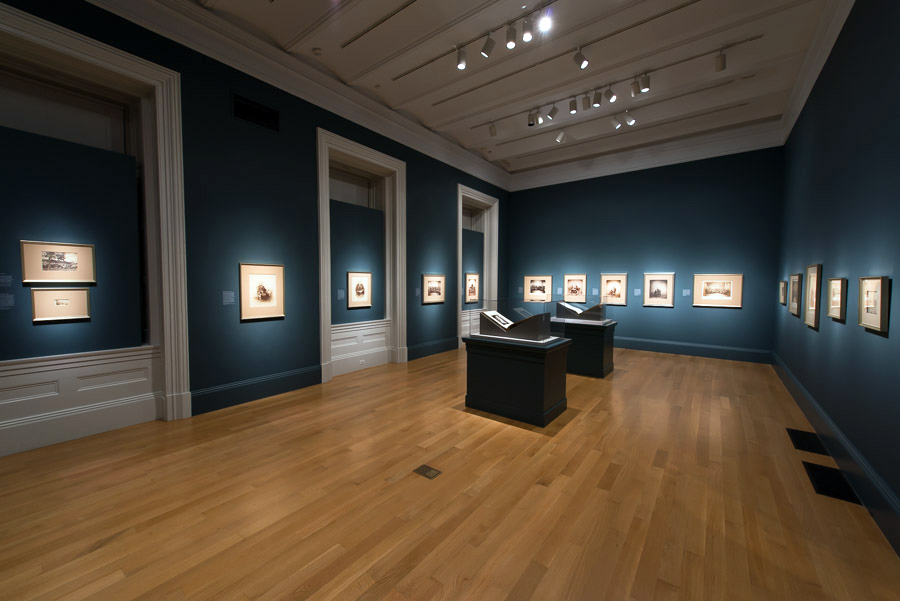


The Kinsey Institute research collection contains thousands of examples of erotic imagery produced over centuries by artists around the world. When the new technology of photography was announced in France in 1839, it was not long before it became the most popular medium for depictions of the nude figure, as well as erotic imagery. The first photographic process to be widely used was the daguerreotype, which produced a unique image. With the invention of other processes that used negatives to make multiple prints, the mass production of erotic photographs became possible. Hold That Pose features daguerreotypes, tintypes, albumen and gelatin silver prints, stereocards, and other examples of photographic processes that were used by professional photographers in the 19th century to produce and distribute erotic material.


W.H. Gilbert Tate (London, England) 'Portrait of an actress' c.1870 from the exhibition 'Hold That Pose: Erotic Imagery in 19th Century Photography' at the Kinsey Institute, Bloomington, Indiana, January - September, 2015


W.H. Gilbert Tate (London, England)
Portrait of an actress
c. 1870
Albumen print (carte de visite)


Cartes de visite and cabinet cards

Mass produced on cheap paper or cardstock, actress cards served as cartes de visite – photographic cards left as messages – and as collectible portraits of popular stars of the theatre in London and Paris. One could purchase larger photographs, known as cabinet cards, from the photography studio or the pocket-sized cartes de visite. In an era when women were expected to stay at home, living quiet lives as wives and mothers, actresses were seen as having turned their backs on their ‘God given duty’ to be devoted homemakers. Though looked down upon socially, some actresses achieved fame and notoriety, through their work on stage as well as their lives outside the theatre.


Wendt Studio, New Jersey, United States 'Helen Mathews, Length of hair 6 feet 4 inches' 19th century


Wendt Studio (New Jersey, United States)
Helen Mathews, Length of hair 6 feet 4 inches
19th century
Albumen print mounted on cabinet card


Guglielmo Plüschow (Wilhelm von Plüschow,1852-1930), Germany 'Female nude' Italy, c.1890


Guglielmo Plüschow (Wilhelm von Plüschow, Germany 1852-1930)
Female nude
Italy, c. 1890
Albumen print


Unknown photographer. 'Bijoux 118 (catalog card)' 19th century


Unknown photographer
Bijoux 118 (catalog card)
19th century
Gelatin silver print


Unknown photographer. 'Bijoux 118 (catalog card)' 19th century (detail)


Unknown photographer
Bijoux 118 (catalog card) (detail)
19th century
Gelatin silver print


Unknown photographer. 'Bijoux 118 (catalog card)' 19th century (detail)


Unknown photographer
Bijoux 118 (catalog card) (detail)
19th century
Gelatin silver print


Unknown photographer. 'Entre Forains/L'Apache en Rut' 1895


Unknown photographer
Entre Forains/L’Apache en Rut
1895
Gelatin silver print


Stillfried & Andersen (Baron Raimund von Stillfried-Ratenicz (1839-1911), Austria, and Hermann Andersen. 'Reclining female nude' Yokohama, Japan, 1880-1882?


Stillfried & Andersen (Baron Raimund von Stillfried-Ratenicz Austria, 1839-1911) and Hermann Andersen
Reclining female nude
Yokohama, Japan, 1880-1882?
Hand-colored albumen print mounted on cabinet card


Unknown photographer. 'Group sexual encounter between a man and two women dressed in clerical costumes' 1883-1885


Unknown photographer
Group sexual encounter between a man and two women dressed in clerical costumes
1883-1885
Gelatin silver print


Unknown photographer, France 'Clothed man kneeling behind a nude woman' 1884-1886


Unknown photographer (France)
Clothed man kneeling behind a nude woman
1884-1886
Albumen print


Unknown photographer. 'Man and woman kissing while seated on a chair' 1890-1893


Unknown photographer
Man and woman kissing while seated on a chair
1890-1893
Gelatin silver copy print
Donated in 1954


Unknown photographer. 'Woman sitting on a man to engage in coitus' 1895-1898


Unknown photographer
Woman sitting on a man to engage in coitus
1895-1898
Gelatin silver print


Unknown photographer, France 'Man performing analinctus on another man' 1885-1900


Unknown photographer (France)
Man performing analinctus on another man
1885-1900
Albumen print


Unknown photographer. 'Two men performing mutual masturbation' 1880


Unknown photographer
Two men performing mutual masturbation
1880
Albumen print


Unknown photographer. 'Woman masturbating with a bedpost' 1887


Unknown photographer
Woman masturbating with a bedpost
1887
Albumen print


Unknown photographer (France) 'Man in robe receiving oral sex from a kneeling man' c.1890


Unknown photographer (France)
Man in robe receiving oral sex from a kneeling man
c.1890
Gelatin silver print


Unknown photographer. 'Woman spanking another woman with birch rod' 1895-1898


Unknown photographer
Woman spanking another woman with birch rod
1895-1898
Gelatin silver print


Unknown photographer (France) 'Woman holding a birch rod over a kneeling nude man' 1890-1900


Unknown photographer (France)
Woman holding a birch rod over a kneeling nude man
1890-1900
Gelatin silver print


The Kinsey Institute
Morrison Hall 313, Indiana University
Bloomington, Indiana, USA

Opening hours
Monday – Friday 1 – 5pm

The Kinsey Institute website

LIKE ART BLART ON FACEBOOK

Back to top

Exhibition: ‘Hold That Pose: Erotic Imagery in 19th Century Photography’ at the Kinsey Institute, Bloomington, Indiana Part 1

Exhibition dates: 23rd January – 4th September, 2015

*PLEASE NOTE THIS POSTING CONTAINS ART PHOTOGRAPHS OF HUMAN EROTIC ACTIVITY AND NUDITY – IF YOU DO NOT LIKE PLEASE DO NOT LOOK, FAIR WARNING HAS BEEN GIVEN*


Gallery wall of the exhibition 'Hold That Pose' at the Kinsey Institute


Gallery wall of the exhibition Hold That Pose at the Kinsey Institute


A first for Art Blart – photographs from the world famous Kinsey Institute for Research in Sex, Gender, and Reproduction!

After visiting the Kinsey Institute as part of my PhD in 2001 I was not allowed to publish any photographs from the collection for my research, which was a pity. Things have changed over the last decade and a half I am happy to say. As I observed in an email to Catherine Johnson-Roehr, Curator of Art, Artifacts, and Photographs recently, I understood that they had to be more sensitive than most institutions, especially with some of the material they hold in their collection. In reply, Catherine noted that while the Kinsey still had to be careful with the use of their materials especially when they are made public online, things had improved in the last 15 years. “Although we have collected artworks since the 1940s, we did not exhibit any of the materials until the 1990s and then on a very limited basis until 2002. When I arrived here in 2000, we had only a few tame images on our website, but now we have online galleries for some of our exhibitions (including all the juried art shows).”

Therefore, after some negotiation for online release, it is with great pleasure that I can feature 40 images in this two-part posting. Nobody should be offended by these glorious, historic photographs of the human body and a human action that everyone does, and it is fantastic to see the Kinsey opening up their collection to the world. We must oppose bigoted views such as that of Nazi Germany where they destroyed the library of the Institut für Sexualwissenschaft (Institute for Sexology) headed by Magnus Hirschfeld, in 1933… by making these images visible in the world, not hiding them away behind closed doors. These are joyous photographs of the male and female body, a body in which every one of us lives, desires, and enjoys pleasure.

See Part 2 of the posting.

Dr Marcus Bunyan


Many thankx for the Kinsey Institute for allowing me to publish the photographs in the posting. Please click on the photographs for a larger version of the image.
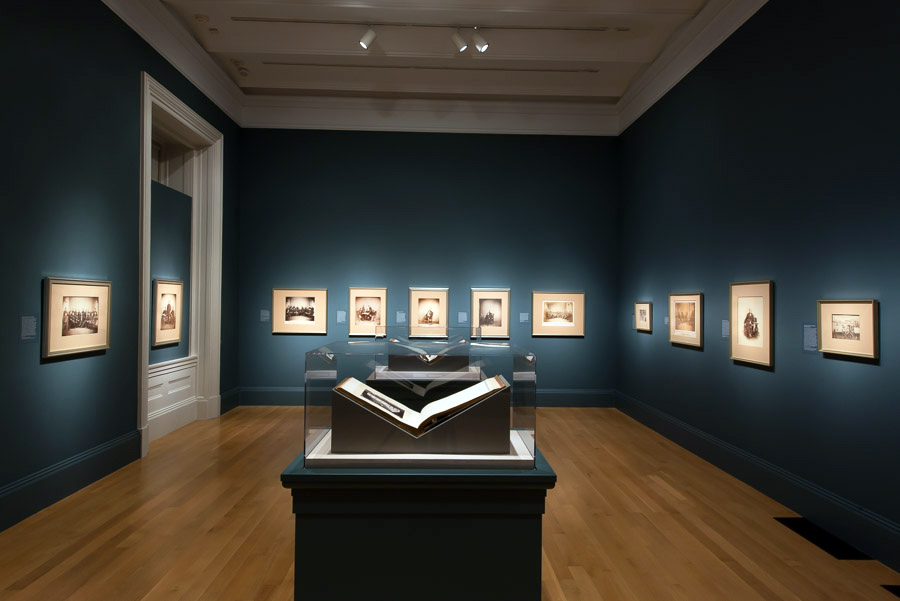


The Kinsey Institute research collection contains thousands of examples of erotic imagery produced over centuries by artists around the world. When the new technology of photography was announced in France in 1839, it was not long before it became the most popular medium for depictions of the nude figure, as well as erotic imagery. The first photographic process to be widely used was the daguerreotype, which produced a unique image. With the invention of other processes that used negatives to make multiple prints, the mass production of erotic photographs became possible. Hold That Pose features daguerreotypes, tintypes, albumen and gelatin silver prints, stereocards, and other examples of photographic processes that were used by professional photographers in the 19th century to produce and distribute erotic material.


Photo process display case from the exhibition 'Hold That Pose' at the Kinsey Institute


Photo process display case from the exhibition Hold That Pose at the Kinsey Institute


Stanhopes on display from the exhibition 'Hold That Pose' at the Kinsey Institute


Stanhopes on display from the exhibition Hold That Pose at the Kinsey Institute


Unknown photographers. 'Stanhope lenses and holders' 19th or early 20th century from the exhibition 'Hold That Pose: Erotic Imagery in 19th Century Photography' at the Kinsey Institute, Bloomington, Indiana, January - September, 2015

Unknown photographers 'Stanhope lenses and holders' 19th or early 20th century


Unknown photographers
Stanhope lenses and holders
19th or early 20th century


Unknown photographer. 'Stanhope lens and holder' (detail) 19th or early 20th century


Unknown photographer
Stanhope lens and holder (detail)
19th or early 20th century


Stanhope lenses and holders, 19th or early 20th century


Stanhope lenses and holders
19th or early 20th century


Stanhopes derive their name from Lord Stanhope, who created the tiny rod-shaped lens before the invention of photography. In 1859, an entrepreneurial French inventor named René Prudent Patrice Dagron patented a process for making “cylindres photomicroscopiques”, and then created a successful business selling them as inexpensive novelty items. A photograph smaller than the head of a pin was mounted on a Stanhope lens, and then both were placed in a holder such as a pen knife, ring, or other small object. Stanhopes were popular souvenir items – many featured photographs of places or famous monuments such as the Eiffel Tower, but images of nude women or explicit sexual activity were also produced.


Gallery wall from the exhibition 'Hold That Pose' at the Kinsey Institute


Gallery wall from the exhibition Hold That Pose at the Kinsey Institute showing at second left, Bathing in a Baetingplace (Japan, 1880-1890, below) by an unknown photographer; and at second right bottom, Nude woman reclining on a fallen tree (c. 1880, below) by an unknown photographer


Stereoscope display case from the exhibition 'Hold That Pose' at the Kinsey Institute


Stereoscope display case from the exhibition Hold That Pose at the Kinsey Institute


Stereoscope on display in the exhibition 'Hold That Pose' at the Kinsey Institute

Stereoscope on display in the exhibition 'Hold That Pose' at the Kinsey Institute


Stereoscope on display in the exhibition Hold That Pose at the Kinsey Institute


Stereo photography

The stereoscope, a device for viewing images in three dimensions, was invented in England in1838, just as the first photographic processes were being developed in France. The first stereo photographs were created using the daguerreotype process, which preserved an image on a highly polished silver plate. Initially a single camera was used to produce two nearly identical images that when viewed through a stereo device gave the illusion of seeing in 3-D, but soon a camera equipped with two lenses came into use for the production of stereo images. Stereoscopes became as popular as televisions are today, as a form of affordable home entertainment that could be enjoyed by children and adults.


Webster & Albee, Publishers, United States 'Woman standing on the back of a kneeling man' late 19th century from the exhibition 'Hold That Pose: Erotic Imagery in 19th Century Photography' at the Kinsey Institute, Bloomington, Indiana, January - September, 2015


Webster & Albee (Publishers, United States)
Woman standing on the back of a kneeling man
Late 19th century
Hand-colored stereocard


See the installation photograph above and the card in the Stereoscope


Unknown photographer, France 'Two nude women in a room with a mirror' c. 1850-1855


Unknown photographer (France)
Two nude women in a room with a mirror
c. 1850-1855
Stereo daguerreotype under glass


Underwood & Underwood, United States 'Oh ! you naughty man' 1900


Underwood & Underwood (United States)
Oh ! you naughty man
1900
Stereocard


Unknown photographer. 'The Entanglement' Mid 19th century


Unknown photographer
The Entanglement
Mid 19th century
Hand-coloured stereocard


Unknown photographer, France 'Nude woman in a room with a mirror' c.1850-1855


Unknown photographer (France)
Nude woman in a room with a mirror
c. 1850-1855
Copy photograph of stereo daguerreotype


Unknown photographer. 'Photomontage of men and women engaged in sexual activity' 1895-1900


Unknown photographer
Photomontage of men and women engaged in sexual activity
1895-1900
Gelatin silver print


Unknown photographer. 'Photomontage of men and women engaged in sexual activity' 1895-1900 (detail)


Unknown photographer
Photomontage of men and women engaged in sexual activity (detail)
1895-1900
Gelatin silver print


Unknown photographer. 'Woman penetrating a woman with a dildo' 1880-1885


Unknown photographer
Woman penetrating a woman with a dildo
1880-1885
Gelatin silver copy print


Unknown photographer. 'Bathing in a Baetingplace' Japan, 1880-1890


Unknown photographer
Bathing in a Baetingplace
Japan, 1880-1890
Hand-coloured albumen print


___ and ___ – bathing, attended by their ____ (maid) who is putting charcoal into the fire under the tub


Unknown photographer (United States) 'Nude woman reclining on a fallen tree' c. 1880


Unknown photographer (United States)
Nude woman reclining on a fallen tree
c. 1880
Modern platinum print from glass plate negative
(printed in 2012 by Herbert Ascherman, Jr.)


Unknown photographer, Indiana, United States 'Erect penis' 19th century


Unknown photographer (Indiana, United States)
Erect penis
19th century
Modern gelatin silver print from glass plate negative


Baron Wilhelm von Gloeden (1856-1931), Germany 'Man seated beside a tree' Taormina, Sicily, 1899


Baron Wilhelm von Gloeden (German, 1856-1931)
Man seated beside a tree
Taormina, Sicily, 1899
Albumen print


Baron Wilhelm von Gloeden (1856-1931), Germany 'Two nude men standing in a forest' Taormina, Sicily, 1899


Baron Wilhelm von Gloeden (German, 1856-1931)
Two nude men standing in a forest
Taormina, Sicily, 1899
Albumen print


The Kinsey Institute
Morrison Hall 313, Indiana University
Bloomington, Indiana, USA

Opening hours
Monday – Friday 1 – 5pm

The Kinsey Institute website

LIKE ART BLART ON FACEBOOK

Back to top

Exhibition: ‘Moriendo renascor: 19th century photography’ at the State Library of South Australia, Adelaide

Exhibition dates: 21st May – 31st July, 2014

Curator: Unknown


Captain Samuel White Sweet (Australian born England, 1825-1886) 'Planting the first pole of the Overland telegraph at Darwin on the 15th September, 1870' 1870 from the exhibition 'Moriendo renascor: 19th century photography' at the State Library of South Australia, Adelaide, May - July, 2014


Captain Samuel White Sweet (Australian born England, 1825-1886)
Planting the first pole of the Overland telegraph at Darwin on the 15th September, 1870
1870
From glass plate negative
B 4638


South Australian photography in the 19th century – daguerreotypes, ambrotypes, tintypes, glass plates and photographic equipment. A fascinating look at our visual past. Moriendo renascor is a latin phrase meaning In death I am reborn. The exhibition runs at the State Library of South Australia till the end of July.

Dr Marcus Bunyan


Many thankx to the State Library of South Australia for allowing me to publish the photographs in the posting. Please click on the photographs for a larger version of the image.


G.B. Goodman (English, ? - 1851) 'Daguerreotype of a group of actors' c. 1850 from the exhibition 'Moriendo renascor: 19th century photography' at the State Library of South Australia, Adelaide, May - July, 2014


G.B. Goodman (English, ? – 1851)
Daguerreotype of a group of actors
c. 1850
Daguerreotype of a group of men, possibly actors associated with the Adelaide stage
135mm x 185mm (image); 23cm x 18cm x 2.5cm (case)
B 46371


In January 1846, travelling daguerreotype photographer, G.B. Goodman took up a 40 day residency at the rear of Adelaide auctioneer, Emanuel Solomon’s home. Here he created 50 daguerreotype images for Adelaide patrons (Register 21 January 1846). At this time, it had become increasingly common to set up temporary studios at the rear of a building.

According to Jane Messenger in A century in focus: South Australian photography, 1840s-1940s, this daguerreotype differs from others of the period due to its informal nature and the way it flaunts contemporary social and pictorial conventions. Portraits of multiple figures were unusual at the time and usually reserved for family groups. This was due to technical complications related to focal distance, plate sizes and exposure times. Messenger suggests that this image is largely experimental in its composition, and is designed to reveal the photographers sophisticated image creation skills (p. 30). It is also suggested that the man second from right is George Selth Coppin – the father of Australian theatre who lived in Adelaide from 1846 to the end of 1851.

Developed in 1839 by Louis-Jacques-Mande Daguerre and given to the world by the French government, the Daguerreotype was the first photographic method of capturing a scene or a likeness. Despite the difficulty and expense of the Daguerreotype, the process spread rapidly around the world, being first demonstrated in Sydney in 1842 and Adelaide in 1845.


John W. Butler (publisher) 'Advertisement for Townsend Duryea's studios' Photographic Gallery of Townsend Duryea, south-east corner of Grenfell Street and King William Street National directory of South Australia for 1867-68' 1867


John W. Butler (publisher)
Advertisement for Townsend Duryea’s studios
Photographic Gallery of Townsend Duryea, south-east corner of Grenfell Street and King William Street National directory of South Australia for 1867-68
1867
Created in Melbourne
Object Source: The national directory of South Australia for 1867-68: including a squatters’ directory also a new and correct map of the Colony


In 1867 Townsend Duryea had his photographic gallery on the south-east corner of Grenfell Street and King William Street.

Born in 1823, New Yorker, Townsend Duryea, arrived in South Australia in 1855 and set up a studio on the corner of Grenfell Street and King William Street. He and his brother Sanford were the first photographers known to have worked outside of Adelaide. In a disaster for both the photographer and South Australia his studio caught fire in the early hours of 18 April 1875. Duryea’s entire collection of 60,000 negatives was destroyed.

The Register, reporting on the investigation into the cause of the fire wrote:

“Mr. J. M. Solomon, J.P., on Monday, April 19, held an investigation into the cause of the fire. As the Coroner remarked in summing up, the matter is involved in mystery, and it is just possible that the fire might have resulted from the spontaneous combustion of chemicals used by Mr. Duryea in the prosecution of his business. During the course of the proceedings the Coroner several times checked spectators eager to put questions to witnesses, and stated his view of their position. The Jury returned the following verdict:- “That the premises of Townsend Duryea were destroyed by fire, but that there is not sufficient evidence to show what was its origin.”

South Australian Register April 1875, p. 5.

After the fire he moved to New South Wales where he died in 1888.


Photographer unknown. 'Henry Ayers' c. 1848


Photographer unknown
Henry Ayers
c. 1848
Daguerreotype
PRG 67/48


The oldest known photograph in the State Library’s collection.

This example shows former South Australian Premier Henry Ayers, approximately ten years before he entered parliament. Born in England in 1821, he arrived in South Australia in 1840. He was elected to the first Legislative Council in 1857 and held several positions including chief secretary, premier, and president of the council during his 36 years as a member of parliament. Ayers died on 11 June 1897. Sir Henry Ayers was Premier of South Australia five times between the years 1863 and 1873.

This portrait was accompanied by a note signed by Ayers. It explained that the photo was taken a few years after his appointment as Secretary of the Burra Burra mines in 1845: This was taken by a travelling Artist at the Burra sometime in 1847 or 1848 when I was 26 or 27 years old. It was greatly esteemed by my Dear Wife as a capital likeness of H.A.

The daguerreotype is part of a collection of papers of Sir Henry Ayers, former Premier of South Australia, and of his granddaughter, Lucy Lockett Ayers.


Hammer and Co. 'Bust of a young woman' Rundle Street, c. 1895


Hammer and Co.
Bust of a young woman
Rundle Street, c. 1895
Albumen photograph, cabinet card
B58331/26


Saul Solomon (Australian born England, 1836-1929) 'Man dressed as Robinson Crusoe' 1888


Saul Solomon (Australian born England, 1836-1929)
Published by the Adelaide School of Photography
Man dressed as Robinson Crusoe
1888
Albumen photograph, cabinet card
99mm x 146mm
B 32878


On Monday 30 July 1888 a carnival was held at the Columbia Roller Skating Rink in the Jubilee Exhibition Building, North Terrace, Adelaide. The South Australia Weekly Chronicle, 4 August 1888, reported that over 2,000 persons attended and the floor was reserved for ladies and gentlemen in fancy costume or evening dress and that among the most successful gentlemen’s costumes was a “Robinson Crusoe with a gun and umbrella”.

Cabinet cards were a popular form of family photograph. They often featured the photographer’s details on the front and further description of their services on the reverse.


Photographer unknown. 'Leslie Quinn and W. Dunk' c. 1890


Photographer unknown
Leslie Quinn and W. Dunk
c. 1890
Tintype
B 47091


I just love how the jacket of the lad on the right is about two sizes too small for him. As though he is growing so fast into adulthood, his arms elongating so quickly, that he has outrun the life of his jacket ~ Marcus


Photographer unknown. 'Leslie Quinn and W. Dunk' c. 1890 (detail)


Photographer unknown
Leslie Quinn and W. Dunk (detail)
c. 1890
Tintype
B 47091


Unknown photographer. 'Tom Thumb' c. 1880


Unknown photographer
Tom Thumb
c. 1880
From a glass plate negative


Michael Pynn was born at Baker’s Flat in 1860. In his obituary, the Kapunda Herald (July 5 1929, p. 2), reported that Mickey was known from the late 1870s as the Australian Tom Thumb.

“It was toward the late seventies that General Tom Thumb, of England, visited Australia, and the tour of his little company included Kapunda. It was this circumstance that brought Micky Pynn into prominence, and later into almost world-wide notoriety. He made a career as a circus clown and travelled the world.”

Michael Pynn died in Sydney on 22 June 1929.


Frederick Charles Krichauff (Australian, 1861-1954) 'From the Adelaide Town Hall' c. 1880


Frederick Charles Krichauff (Australian, 1861-1954)
From the Adelaide Town Hall
c. 1880
Photograph


View of the General Post Office (GPO) from the Albert Tower of the Adelaide Town Hall, showing Victoria Square with horse drawn cabs, and the GPO clock showing 1.23 pm.

The State Library holds many thousands of glass plate negatives including a number by amateur photographer Frederick Krichauff (1861-1954). We also hold three of his photograph albums and these may be viewed online via the Library’s catalogue. Krichauff was an architect and a keen member of the Royal Philatelic Society. He lived at Portrush Road, Toorak Gardens.


State Library of South Australia
Kintore Ave, Adelaide SA 5000
Phone: (08) 8207 7250

Opening hours:
Monday: 10am – 5pm
Tuesday: 10am – 7pm
Wednesday to Friday: 10am – 5pm
Saturday and Sunday: 12 – 5pm

State Library of South Australia website

LIKE ART BLART ON FACEBOOK

Back to top

Exhibition: ‘Hiroshi Sugimoto: Past Tense’ at the J. Paul Getty Museum, Getty Center, Los Angeles

Exhibition dates: 4th February – 8th June, 2014

Curator: Arpad Kovacs, assistant curator in the Department of Photographs at the J. Paul Getty Museum


Hiroshi Sugimoto (Japanese, b. 1948) 'Sam Eric, Pennsylvania' 1978


Hiroshi Sugimoto (Japanese, b. 1948)
Sam Eric, Pennsylvania
1978
Gelatin silver print
42.5 x 54.5cm
Private collection, Frankfurt
© Hiroshi Sugimoto / Courtesy The Pace Gallery


I loved Sugimoto’s time lapse movie screens, where the exact length of a movie was captured by the open lens of the camera, the substance of time and space evidenced by a seemingly empty screen. There was something wonderfully poetic and transformational about that gesture, about the notion of compressing the narrative, reality and action of a movie into a single frame of light: “the ‘annihilation of time and space’ as a particular moment in a dynamic cycle of rupture and recuperation enables a deliberate focus on the process of transition.”1 The process of transition in the flow of space and time.

Sugimoto’s art since that ground breaking body of work has been a bit of a let down. Where the movie theatres photographs were transubstantiationalist, the three series presented here – Dioramas (1975-1994), Portraits (1999) and his newest series, Photogenic Drawings (2008-present) play, if that is the right word, with the re/animation of death. The stuffed animals, the wax figures, the redrawing of William Henry Fox Talbot photogenic drawings, the redrawing of a light already past, just seem DEAD to me – a kind of double death or even triple death – the death of the animal / the death of the photograph, the unreality (the undead) of the wax figures and their death in the photograph, the death of the plant, their capture not once but twice by the death of the photograph. We know exactly what Sugimoto is doing, but the images are stilted and lifeless and I am not convinced by them.

The diorama images are just OK – almost good undergraduate work but nothing more. My problem with the waxworks images and the pencil of nature is “other images”. We all know Cindy Sherman and her images of historical figures, and we know the work of William Henry Fox Talbot. Somehow these earlier images crowd Sugimoto’s work in a way that doesn’t often happen. Winogrand never crowded Friedlander or vice versa – and you can think of many other examples where comparing is actually beneficial… but not here.

I’m not saying Sugimoto is derivative but because of these other works, they don’t have much room to move. Indeed, they hardly move at all. They are so frozen in attitude that all the daring transcendence of light, the light! of space time travel, the transition from one state to another, has been lost. The Flame of Recognition (Edward Weston) – has gone.

Dr Marcus Bunyan


1/ McQuire, Scott. The Media City. London: Sage Publications, 2008, p. 14.


Many thankx to the J. Paul Getty Museum for allowing me to publish the photographs in the posting. Please click on the photographs for a larger version of the image.
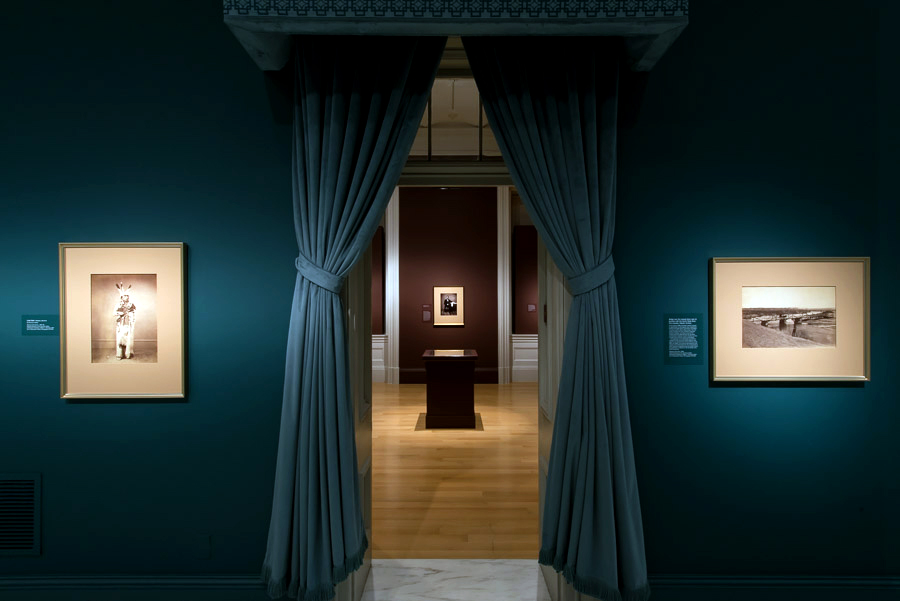


Hiroshi Sugimoto (Japanese, b. 1948) 'Polar Bear' 1976 from the exhibition 'Hiroshi Sugimoto: Past Tense' at the J. Paul Getty Museum, Getty Center, Los Angeles, February - June, 2014


Hiroshi Sugimoto (Japanese, b. 1948)
Polar Bear
1976
Gelatin silver print
42.1 x 54.6cm (16 9/16 x 21 1/2 in.)
The J. Paul Getty Museum, Los Angeles, Purchased with funds provided by the Photographs Council
© Hiroshi Sugimoto


Hiroshi Sugimoto (Japanese, b. 1948) 'Wapiti' 1980


Hiroshi Sugimoto (Japanese, b. 1948)
Wapiti
1980
Gelatin silver print
34.9 x 58.7cm (13 3/4 x 23 1/8 in.)
The J. Paul Getty Museum, Los Angeles, Purchased with funds provided by the Photographs Council
© Hiroshi Sugimoto


Hiroshi Sugimoto (Japanese, b. 1948) 'Sable Antelope' 1994


Hiroshi Sugimoto (Japanese, b. 1948)
Sable Antelope
1994
Gelatin silver print
42.4 x 54.1cm (16 11/16 x 21 5/16 in.)
The J. Paul Getty Museum, Los Angeles, Purchased with funds provided by the Photographs Council
© Hiroshi Sugimoto


Hiroshi Sugimoto (Japanese, b. 1948) 'Manatee' 1994


Hiroshi Sugimoto (Japanese, b. 1948)
Manatee
1994
Gelatin silver print
42.2 x 54.1cm (16 5/8 x 21 5/16 in.)
The J. Paul Getty Museum, Los Angeles, Purchased with funds provided by the Photographs Council
© Hiroshi Sugimoto


Hiroshi Sugimoto (Japanese, b. 1948) 'Birds of Japan' 1994


Hiroshi Sugimoto (Japanese, b. 1948)
Birds of Japan
1994
Gelatin silver print
38.7 x 58.4cm (15 1/4 x 23 in.)
The J. Paul Getty Museum, Los Angeles, Purchased with funds provided by the Photographs Council
© Hiroshi Sugimoto


Hiroshi Sugimoto (Japanese, b. 1948) 'Cheetah' 1980


Hiroshi Sugimoto (Japanese, b. 1948)
Cheetah
1980
Gelatin silver print
36.5 x 58.7cm (14 3/8 x 23 1/8 in.)
Courtesy Fraenkel Gallery, San Francisco
© Hiroshi Sugimoto


Hiroshi Sugimoto (Japanese, b. 1948) 'White Rhinoceros' 1980


Hiroshi Sugimoto (Japanese, b. 1948)
White Rhinoceros
1980
Gelatin Silver Print
34.1 x 58.6cm (13 7/16 x 23 1/16 in.)
Courtesy Fraenkel Gallery, San Francisco
© Hiroshi Sugimoto


Since the mid-1970s, Hiroshi Sugimoto (Japanese, born 1948) has used photography to investigate how history pervades the present. Featuring photographs of habitat dioramas, wax portraits, and early photographic negatives, Hiroshi Sugimoto: Past Tense, on view February 4 – June 8, 2014 at the J. Paul Getty Museum, Getty Center, brings together three separate bodies of work that present objects of historical and cultural significance in the collections of various museums. By photographing subjects that reimagine or replicate moments from the distant past and diverse geographical locations, Sugimoto critiques the medium’s presumed capacity to portray history with accuracy.

“This exhibition presents work that inventively reframes objects from the collections of a variety of museums, including from our extensive holdings of prints from the early days of photography,” explains Timothy Potts, director of the J. Paul Getty Museum. “Mr. Sugimoto has generously donated eighteen prints from his recent Photogenic Drawings series, which reprise a selection of important experiments by William Henry Fox Talbot that are in the Getty Museum’s collection.”

Sugimoto’s meticulously crafted prints are the result of a rigorous working method that includes extensive preparatory research, the use of a large-format view camera, and long exposures. Each of his projects is rooted in a sustained exploration of a singular motif and often carried out over many years. The exhibition will present a selection of prints from three bodies of work, Dioramas (1975-1994), Portraits (1999) and, his newest series, Photogenic Drawings (2008-present).

Dioramas

The diorama was first introduced in Paris in 1822 by the stage designer Jacques Louis Mandé Daguerre (French, 1787-1851), who later developed the daguerreotype photographic process. Situated in a darkened room, the first diorama consisted of a large painted scene on a semi-transparent curtain that was illuminated by the opening and closing of skylights and the constant shifting or dimming of lamps to create the impression of movement. In the early 20th century, habitat dioramas in natural history museums became popular, staging creatures in their faithfully replicated “natural” environments.

Sugimoto first encountered elaborate animal dioramas at the American Museum of Natural History after moving to New York in 1974, and began to focus his camera on individual scenes shortly thereafter. Omitting the educational text surrounding each display, the works heighten the illusion that animals such as manatees, wapiti, and sea lions were photographed in their natural habitats. While each photograph appears to be a candid moment captured by an experienced nature photographer, the subjects are – in actuality – depicted in poses they hold indefinitely.

Wax Portraits

While waxworks have a long history, contemporary wax museums can be traced to the French sculptor Marie Grosholz (French, 1761-1850), who achieved success in the Parisian entertainment market by creating waxworks of popular politicians and cultural figures. After moving to London in 1802, she established a commercial enterprise under the name Madame Tussaud, specialising in the production and display of full-length wax figures modelled after commissioned portraits.

Posed against pitch-black backdrops and framed by the camera in a manner suggesting old master portrait-painting traditions, each of Sugimoto’s subjects was captured with a nine-minute exposure that illuminates the finely modelled expressions and the sumptuous costumes. These life-size photographs record likenesses that have been distilled through multiple reproductions of the original sitter. The source material for the wax figures of Henry VIII and his wives is based on 16th-century panel paintings, while the portrait of Queen Victoria’s likeness is taken from a photograph of her from the 1890s, around the time of her Diamond Jubilee celebration.

“Hiroshi Sugimoto’s photographic practice is deeply rooted in a tradition of image making that was developed and perfected during the 19th century,” explains Arpad Kovacs, assistant curator in the Department of Photographs at the J. Paul Getty Museum and curator of the exhibition. “By employing century-old techniques and turning his lens to subjects and compositions that recreate or simulate moments from the past, Sugimoto intimately connects himself to the historical moments depicted.”

Photogenic Drawings

In the early 1830s, William Henry Fox Talbot (English, 1800-1877) began trying to create pictures without the aid of a pencil. After coating small pieces of writing paper with a salt solution and silver nitrate, he successfully captured the outlines of leaves and lace placed on the paper and exposed to sunlight. He continued his experiments with a camera obscura, placing a sheet of paper in this precursor to the camera to produce the first negatives, with highlights and shadows reversed. Talbot called the results of these experiments photogenic drawings.

In 2007, Hiroshi Sugimoto visited the J. Paul Getty Museum to study the earliest photographs in the collection. After photographing some of Talbot’s photogenic drawing negatives, he produced large-scale prints and coloured them with toning agents during the processing to replicate the often-bright hues of the original sheets. The scale of the enlarged prints reveals the fibres of the original writing paper, which create subtle and delicate patterns embedded in the images.

The artist’s gift of eighteen gelatin silver prints from his Photogenic Drawings series significantly enhances the Museum’s holdings of work by Sugimoto. His photographic practice, rooted in a serial approach and primarily concerned with the medium’s relationship to the passage of time, has long been an important source of influence for a younger generation of artists. The prints greatly enhance the Getty Museum’s growing collection of contemporary photographs.

Hiroshi Sugimoto: Past Tense is on view February 4 – June 8, 2014 at the J. Paul Getty Museum, Getty Center. The exhibition will run concurrently in the Center for Photographs with A Royal Passion: Queen Victoria and Photography, an exhibition featuring rare private and public photographs from the Victoria era.

Press release from the J. Paul Getty Museum website


Hiroshi Sugimoto (Japanese, b. 1948) 'Henry VIII' 1999 from the exhibition 'Hiroshi Sugimoto: Past Tense' at the J. Paul Getty Museum, Getty Center, Los Angeles, February - June, 2014


Hiroshi Sugimoto (Japanese, b. 1948)
Henry VIII
1999
Gelatin silver print
148.9 x 119.1cm (58 5/8 x 46 7/8 in.)
Solomon R. Guggenheim Museum, New York, Commissioned by Deutsche Bank AG in consultation with the Solomon R. Guggenheim Foundation for the Deutsche Guggenheim, Berlin
© Hiroshi Sugimoto


Hiroshi Sugimoto (Japanese, b. 1948) 'Queen Victoria' 1999


Hiroshi Sugimoto (Japanese, b. 1948)
Queen Victoria
1999
Gelatin silver print
148.9 x 119.1cm (58 5/8 x 46 7/8 in.)
Fraenkel Gallery, San Francisco
© Hiroshi Sugimoto


Hiroshi Sugimoto (Japanese, b. 1948) 'Anne Boleyn' 1999


Hiroshi Sugimoto (Japanese, b. 1948)
Anne Boleyn
1999
Gelatin silver print
148.9 x 119.1cm (58 5/8 x 46 7/8 in.)
Solomon R. Guggenheim Museum, New York, Commissioned by Deutsche Bank AG in consultation with the Solomon R. Guggenheim Foundation for the Deutsche Guggenheim, Berlin
© Hiroshi Sugimoto


Hiroshi Sugimoto (Japanese, b. 1948) 'Asplenium Halleri, Grande Chartreuse 1821 - Cardamine Pratensis, April 1839' 2008


Hiroshi Sugimoto (Japanese, b. 1948)
Asplenium Halleri, Grande Chartreuse 1821 – Cardamine Pratensis, April 1839
2008
Toned gelatin silver print
93.7 x 74.9cm (36 7/8 x 29 1/2 in.)
The J. Paul Getty Museum, Los Angeles,
Gift of the Artist
© Hiroshi Sugimoto


Hiroshi Sugimoto (Japanese, b. 1948) 'Roofline of Lacock Abbey, circa 1835-1839' 2008


Hiroshi Sugimoto (Japanese, b. 1948)
Roofline of Lacock Abbey, circa 1835-1839
2008
Gelatin silver print
93.7 x 74.9cm (36 7/8 x 29 1/2 in.)
The J. Paul Getty Museum, Los Angeles, Gift of the Artist
© Hiroshi Sugimoto


Hiroshi Sugimoto (Japanese, b. 1948) 'Bust of Venus, November 26, 1840' 2009


Hiroshi Sugimoto (Japanese, b. 1948)
Bust of Venus, November 26, 1840
2009
Gelatin silver print
93.7 x 74.9cm (36 7/8 x 29 1/2 in.)
The J. Paul Getty Museum, Los Angeles, Gift of the Artist
© Hiroshi Sugimoto


Hiroshi Sugimoto (Japanese, b. 1948) 'A Stem of Delicate Leaves of an Umbrellifer, circa 1843-1846' 2009


Hiroshi Sugimoto (Japanese, b. 1948)
A Stem of Delicate Leaves of an Umbrellifer, circa 1843-1846
2009
Gelatin silver print
93.7 x 74.9cm (36 7/8 x 29 1/2 in.)
The J. Paul Getty Museum, Los Angeles, Gift of the Artist
© Hiroshi Sugimoto


Hiroshi Sugimoto (Japanese, b. 1948) 'Arrangement of Botanical Specimens, 1839' 2008


Hiroshi Sugimoto (Japanese, b. 1948)
Arrangement of Botanical Specimens, 1839
2008
Toned gelatin silver print
93.7 x 74.9cm (36 7/8 x 29 1/2 in.)
The J. Paul Getty Museum, Los Angeles, Gift of the Artist
© Hiroshi Sugimoto


Hiroshi Sugimoto (Japanese, b. 1948) 'Nicolaas Henneman, circa 1841' 2008


Hiroshi Sugimoto (Japanese, b. 1948)
Nicolaas Henneman, circa 1841
2008
Toned gelatin silver print
93.7 x 74.9cm (36 7/8 x 29 1/2 in.)
The J. Paul Getty Museum, Los Angeles, Gift of the Artist
© Hiroshi Sugimoto


Hiroshi Sugimoto (Japanese, b. 1948) 'Bust of Patroclus, September 8, 1841' 2009


Hiroshi Sugimoto (Japanese, b. 1948)
Bust of Patroclus, September 8, 1841
2009
Toned gelatin silver print
93.7 x 74.9cm (36 7/8 x 29 1/2 in.)
The J. Paul Getty Museum, Los Angeles, Gift of the Artist
© Hiroshi Sugimoto


The J. Paul Getty Museum
1200 Getty Center Drive
Los Angeles, California 90049

Opening hours:
Tuesday – Friday, Sunday 10am – 5.30pm
Saturday 10am – 8pm
Monday Closed

The J. Paul Getty Museum website

LIKE ART BLART ON FACEBOOK

Back to top

Exhibition: ‘Edouard Baldus and the Modern Landscape. Important Salt Prints of Paris from the 1850s’ at James Hyman Gallery, London

Exhibition dates: 12th October – 9th November 2012


Edouard Baldus (French, 1813-1889) 'Vue generale de Paris pont neuf' c. 1855


Edouard Baldus (French, 1813-1889)
Vue generale de Paris pont neuf
c. 1855
Salt print mounted on card
33.6 x 43.9cm (13.20 x 17.25 ins)
Negative: Lower left inscribed in negative: no 82 Mount: Lower right beneath negative: stamped E. Baldus Lower left bottom: Vue generales des Paris pont neuf


A beautiful, complimentary post to the last one on the exhibition Eugène Atget: Old ParisIt is interesting to compare the styles of the two photographers and the change in photography that takes place between the 1850s and the 1890s. Baldus’ photographs are eloquent in their grandeur and frontality, tonality and texture. Atget’s photographs on the other hand are slightly claustrophobic in their intensity, the camera obliquely placed to capture old buildings, narrow cobbled streets and distant vanishing points. Both, in their own way, are very modern photographers. Baldus’ legacy, as Dr James Hyman correctly notes, was his influence on his German compatriots such as the Bechers, Thomas Struth and, to a lesser extent, Andreas Gursky. His rigorous frontality (the photographing of the thing itself) gives his photographs the simplicity of diagrams and emphasises their topographical state, while their density of detail offers encyclopaedic richness. This straightforward “objective” point of view was most notably used by Bernd and Hilla Becher in contemporary photography. Atget’s photographs, on the other hand, aroused an immediate interest “among the Surrealists because of the composition, ghosting, reflections, and its very mundanity.”

Conversely, it is the subjective signature of both artists that make their work truly great – not the mundanity, not the topographic objectivity but their intimate vision of this city, Paris. As I noted in an earlier posting on the Bechers,

“These are subjective images for all their objective desire. The paradox is the more a photographer strives for objectivity, the more ego drops away, the more the work becomes their own: subjective, beautiful, emotive… What makes great photographers, such as Eugène Atget, Walker Evans, August Sander and the Bechers, is the idiosyncratic “nature” of their vision: how Atget places his large view camera – at that particular height and angle to the subject – leaves an indelible feeling that only he could have made that image, to reveal the magic of that space in a photograph. It is their personal, unique thumbprint, recognisable in an instant.”

The same can be said of Baldus and these magnificent, ethereal photographs.

Dr Marcus Bunyan


Many thankx to James Hyman Gallery for allowing me to publish the photographs in the posting. Please click on the photographs for a larger version of the image.
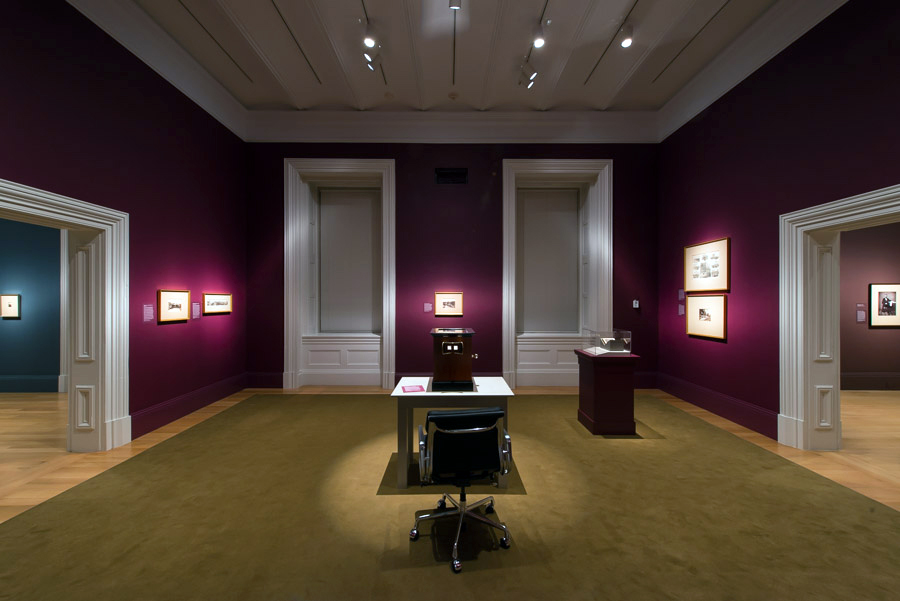


Edouard Baldus (French, 1813-1889) 'Le Nouveau Louvre' c. 1857


Edouard Baldus (French, 1813-1889)
Le Nouveau Louvre
c. 1857
Salt print mounted on card
31.6 x 44.3cm (12.42 x 17.41 ins)
Le Nouveau Louvre series: 1855-1857 Negative: Lower left inscribed in negative: no 107 Mount: Lower right beneath negative: stamped E. Baldus Lower left bottom: Le Nouveau Louvre


Mid-nineteenth century Paris was a city in the midst of modernisation, and as such, was ripe for documentation of its changing landscape. Counted as one of the premier photographers of his day, Edouard Baldus captured the aesthetic of the Second Empire’s ideology in his monumental views of both old and new Parisian landmarks. In 1855, Baldus received his largest commission, to document the construction of the Musee du Louvre. This rich salt print is a survey of the project as it nears almost full completion. Baldus produced over two thousand images of each part of the new Louvre, from large pavilions to small decorative statue. This photograph, however, takes a step back from the individual pieces of the lengthy project, and allows the viewer to appreciate the endeavour as a whole.


Edouard Baldus (French, 1813-1889) 'Le Pantheon' 1853


Edouard Baldus (French, 1813-1889)
Le Pantheon
1853
Salt print mounted on card
33.8 x 43.5cm (13.28 x 17.10 ins)
Negative: Lower left inscribed in negative: Le Pantheon Lower right inscribed in negative: Baldus Mount: Lower right beneath negative: stamped E. Baldus Lower left bottom: Le Pantheon


Due to the strength of his architectural imagery and work with the Mission Heliographique, Baldus would go on to gain the support of a government commission, Les Villes de France Photographies, which focused on the landmarks of Paris in particular, such as the Pantheon. Similar in style to the frontal views of the Louvre pavilions, this image is a precursor to that project, and also includes Saint Etienne du Mont in its background. The Pantheon is one of Paris’ best-known landmarks, and was originally built as a church dedicated to Saint Genevieve. Looking out over the whole of the city, it is now a mausoleum that houses the remains of distinguished French citizens.


Edouard Baldus (French, 1813-1889) 'Arc de Caroussel' c. 1853


Edouard Baldus (French, 1813-1889)
Arc de Caroussel
c. 1853
Salt print mounted on card
34.1 x 44.3 cms (13.40 x 17.41 ins)
Negative: Lower left inscribed in negative: signature of E.Baldus Lower right inscribed in negative: no.81 Mount: Lower right beneath negative: stamped E.Baldus Lower left bottom: Arc de Caroussel
Mount: 43.9 x 61 cms
Image: 34.1 x 44.3 cms


One of Baldus’ greatest projects was to provide a photographic inventory of the New Louvre and adjoing Tuilleries. A number of these works are of particular interest, expecially those of the Tuilleries Palace, which would be burnt down in 1870-1871. All that remains today is the central triumphal arch, the Caroussel, which is depicted here, still with the palace visible in the background. Built between 1806 and 1808, the Arc de Caroussel is a monument commemorating Napolean’s military victories, with Peace riding a triumphal chariot atop the central archway. Two guards flank the sides of the arch, each atop their own horse, which not only provide for a sense of scale, but, being slightly blurred, also hint at the length of Baldus’ exposure. This enhances the effects of the delicately carved sculptures that adorn the archway, presented here with a clarity that defined the standard Baldus set with his architectural images.


James Hyman is proud to present a loan exhibition of one of the greatest photographers of the nineteenth century, Edouard Baldus. Remarkably, this is the first major exhibition of Edouard Baldus ever to be staged in London. Baldus was famed for his monumental photographs of the buildings of Paris at a time of massive transition under Napoleon III, Baron Haussman and Viollet Le Duc, as well as the depiction of the contemporary landscape of France. Acclaimed as the greatest architectural photographer of the nineteenth century, Baldus’s prints were some of the largest photographs in existence and pioneered an aesthetic of presenting modernity and the modern city that would have a profound influence on later photographers from the Bechers to John Davies.

Baldus was one of the great calotypists of the 1850s, producing works of an unprecedented range and scale. He moved to Paris in 1838 to study painting alongside other future photographers such as Le Gray, Le Secq, and Negre. He frequently retouched his paper negatives, adding pencil and ink, to add clouds or clarify details, then printing his own large-scale negatives. He was also adept at stitching several negatives together to re-create architectural views, most famously in his views of the cloisters of Saint Trophime.

Famed especially for his depiction of architecture, Baldus not only documented the modernisation of Paris but also travelled widely through France recording modernity and new construction – including new railways and aqueducts, as well as the building of the new Louvre. In 1851 the Commission des Monuments Historiques cited Baldus as one of the five best architectural photographers and he was commissioned to record the monuments of France for what became known as the Mission heliographic. His beginnings in photography are not well documented before his participation in the Mission heliographique, although it is known that he took photographs of Montmajour in 1849.

In 1852 he began Villes de France photographies to which the minister of Beaux-Arts subscribed until 1860. In 1854 he travelled with his student Petiot-Groffier in Auvergne and in 1855 the Baron James de Rothschild commissioned him to photograph the new Northern train line from Paris to Boulogne as a gift, in the form of a commemorative album, for Queen Victoria before her visit to the Exposition Universelle. Later, in his commission to document the reconstruction of the Louvre, Baldus took more than two thousand views in a period of three years. His last big commission was from 1861-1863 documenting the Paris-Lyon-Mediterranean train line illustrating seventy views of the train’s track. After this, Baldus tried to provide more commercial alternatives to his large-format works, creating smaller prints and heliogravures of his earlier work. Unfortunately, the effort was unsuccessful and Baldus passed away in bankruptcy and relative obscurity.

Press release from the James Hyman website


Edouard Baldus (French, 1813-1889) 'Pavillon Colbert, Nouveau Louvre, Paris' c.1855


Edouard Baldus (French, 1813-1889)
Pavillon Colbert, Nouveau Louvre, Paris
c. 1855
Salt print mounted on card
43.2 x 34.1cm (16.98 x 13.40 ins)
Stamped ‘E. Baldus’ on the lower right of the mount and titled lower left ‘Pavillon Colbert Nouveau Louvre’


Of the many photographs Baldus took of the Louvre during the period 1855-1857, it is his large-format photographs of the main pavilions that best demonstrate the stretch of his artistic achievements. Commissioned by the French government once again, Baldus was charged with documenting every aspect of the new Palace’s construction, which was to be the Second Empire’s largest building project. Consequently, over the course of two years, it also evolved into the largest photographic commission to date, and Baldus took over two thousand photographs ranging in subject matter from individual statuary to the grand frontal views of each completed pavilion, such as this example of the Pavillon Colbert.

This particular photograph is an astounding example of the precision and clarity wet plate negatives afforded Baldus in capturing the texture of New Louvre’s stonework. Each part of the façade, from the temple relief statuary to the columns flanking the entryway, is bathed in a bright light that emphasises the three-dimensionality of the new pavilion. The sense of crisp stonework evident in this image is only heightened by the blurred tree in the bottom left corner, as well as the trace of a ghostly figure in the foreground – a horse and cart that paused long enough to be captured, just barely, in Baldus’ long exposure.

The subject of this picture brings to bear the importance of the symbolism of the architecture of the Nouveau Louvre for the reign of Napoleon III. The relief and figures on the façade of the Pavillon Colbert highlight France’s greatest realms of achievement, from the conquering of nature through to industry. The upmost relief represents Earth and Water, while the figures to either side personify Science and Industry. Baldus has also ensured that a human figure on the right-hand side of the central entrance has stood still long enough to provide the viewer with a sense of the imposing scale of the statuary, as well as the entire façade. The result is a striking image that is sharper than any contemporary enlargement, exemplary of Baldus’ ability to isolate and capture architecture while giving a slight hint to the life that continued to move around it.


Edouard Baldus (French, 1813-1889) 'Pavillon de la Bibliotheque, Rue de Rivoli, Paris' c. 1855


Edouard Baldus (French, 1813-1889)
Pavillon de la Bibliotheque, Rue de Rivoli, Paris
c. 1855
Salt print mounted on card
43.2 x 34.3cm (16.98 x 13.48 ins)
Inscribed ‘no 103’ in the negative, lower left. Stamped E. Baldus on the lower right of the mount and titled lower left ‘Nouveau Louvre Rue Rivoli’


Edouard Baldus (French, 1813-1889) 'Pavillon Richelieu, Nouveau Louvre, Paris' c. 1855


Edouard Baldus (French, 1813-1889)
Pavillon Richelieu, Nouveau Louvre, Paris
c. 1855
Salt print mounted on card
45 x 34.5cm (17.69 x 13.56 ins)
Inscribed ‘no 79’ in the negative, lower left and signed in the negative lower right ‘E. Baldus’ Stamped E. Baldus on the lower right of the mount and titled lower left ‘Pavillon Richelieu Nouveau Louvre’


An image that the Metropolitan Museum of Art describes as “among the most spectacular of all Baldus photographs,” it is clear that Baldus took full advantage of the opportunity to use larger equipment, which was necessary to capture his tremendous subject. The technical advantages afforded by glass plate negatives allowed him to create equally large contact prints without joining separate negatives, as was his practice with many of his earlier images. Here, the resulting photograph depicts the Pavillon Richelieu in a striking range of tonality, from the crisp texture of the street to the glowing reflection of the pavilion’s new tiled roof.


Edouard Baldus (French, 1813-1889) 'Pavillon Sully, Nouveau Louvre, Paris' c. 1857


Edouard Baldus (French, 1813-1889)
Pavillon Sully, Nouveau Louvre, Paris
c. 1857
Salt print mounted on card
44.5 x 34.5cm (17.49 x 13.56 ins)
Inscribed ‘no 92’ in the negative, lower left. Stamped E. Baldus on the lower right of the mount and titled lower left ‘Pavillon Sully Nouveau Louvre’


Baldus returned to this particular pavilion numerous times, his earliest images of the structure produced while he was photographing for the Mission Heliographique. The Pavillon Sully was originally built during the Classical Period of Louis XIV in 1625, and served as a model for the Second Empire additions. One of the grandest of all the completed facades, the Pavillon Sully acquired many sculptural additions during the reconstruction, but the central clock from which the pavilion derived its original name (Pavillon de l’Horloge) remained central.

Taking an elevated view, Baldus depicted the Pavillon Sully with exemplary precision that is sharper than any contemporary enlargement. The result is one of the most imposing images of the Nouveau Louvre pavilions, giving the entire façade a commanding sense of presence as it rises above trees in the foreground, which are just blurred enough to reveal Baldus’ long exposure.


Dr James Hyman text


Edouard Baldus (French, 1813-1889) 'Saint Etienne du Mont, Paris' c. 1858


Edouard Baldus (French, 1813-1889)
Saint Etienne du Mont, Paris
c. 1858
Salt print mounted on card
44.1 x 34.2cm (17.33 x 13.44 ins)
Stamped E Baldus on the lower right of the mount and titled lower left ‘St Etienne du Mont’
Mount: 61 x 43.9 cms
Image: 44.1 x 34.2 cms


Edouard Baldus (French, 1813-1889) 'Notre Dame, Facade Principale, Paris' 1857


Edouard Baldus (French, 1813-1889)
Notre Dame, Facade Principale, Paris
1857
Salt print mounted on card
44.5 x 34.2cm (17.49 x 13.44 ins)
Inscribed ‘no 34’ in the negative, lower right. Stamped E. Baldus on the lower right of the mount and titled lower left ‘Notre Dame Facade Principal’
Dimensions Mount: 61 x 44 cms Image: 44.5 x 34.2 cms


This iconic image of Notre Dame embodies the direct and frontal style that came to define Baldus’ architectural images. Here, he has captured the majesty of one of Paris’ most notable landmarks by elevating his vantage point and placing the viewer at eye level with its magnificent rose window. This print is a carefully executed example of the type of balance and symmetry Baldus aimed to capture while working on this commission.


James Hyman Gallery
16 Savile Row
London W1S 3PL
Telephone 020 7494 3857

Opening hours:
By appointment

James Hyman Gallery website

LIKE ART BLART ON FACEBOOK

Back to top