Exhibition: ‘The Radical Eye: Modernist Photography from the Sir Elton John Collection’ at Tate Modern, London

Exhibition dates: 10th November, 2016 – 7th May, 2017

Curators: Shoair Mavlian with Simon Baker and Newell Harbin, Director of The Sir Elton John Photography Collection


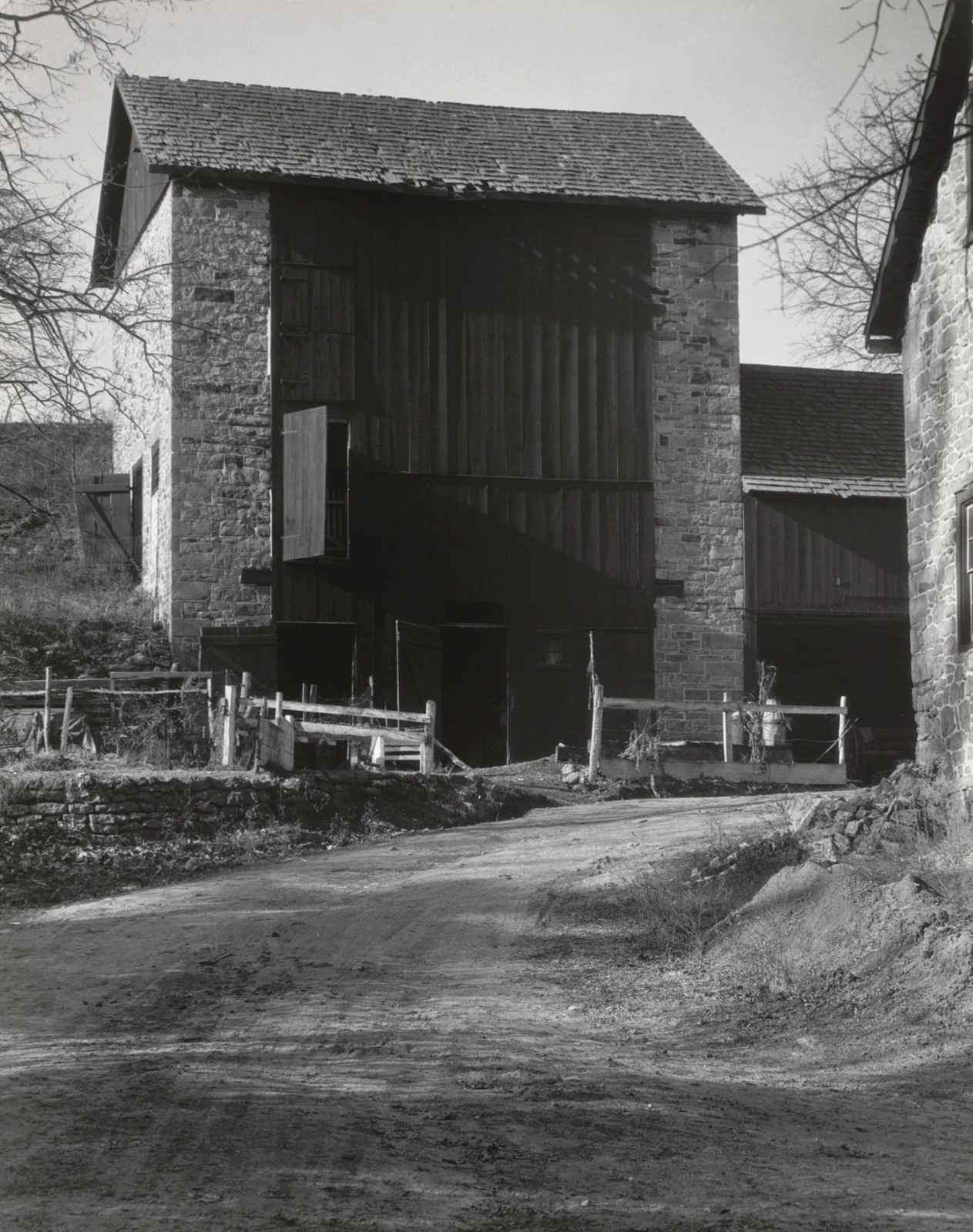
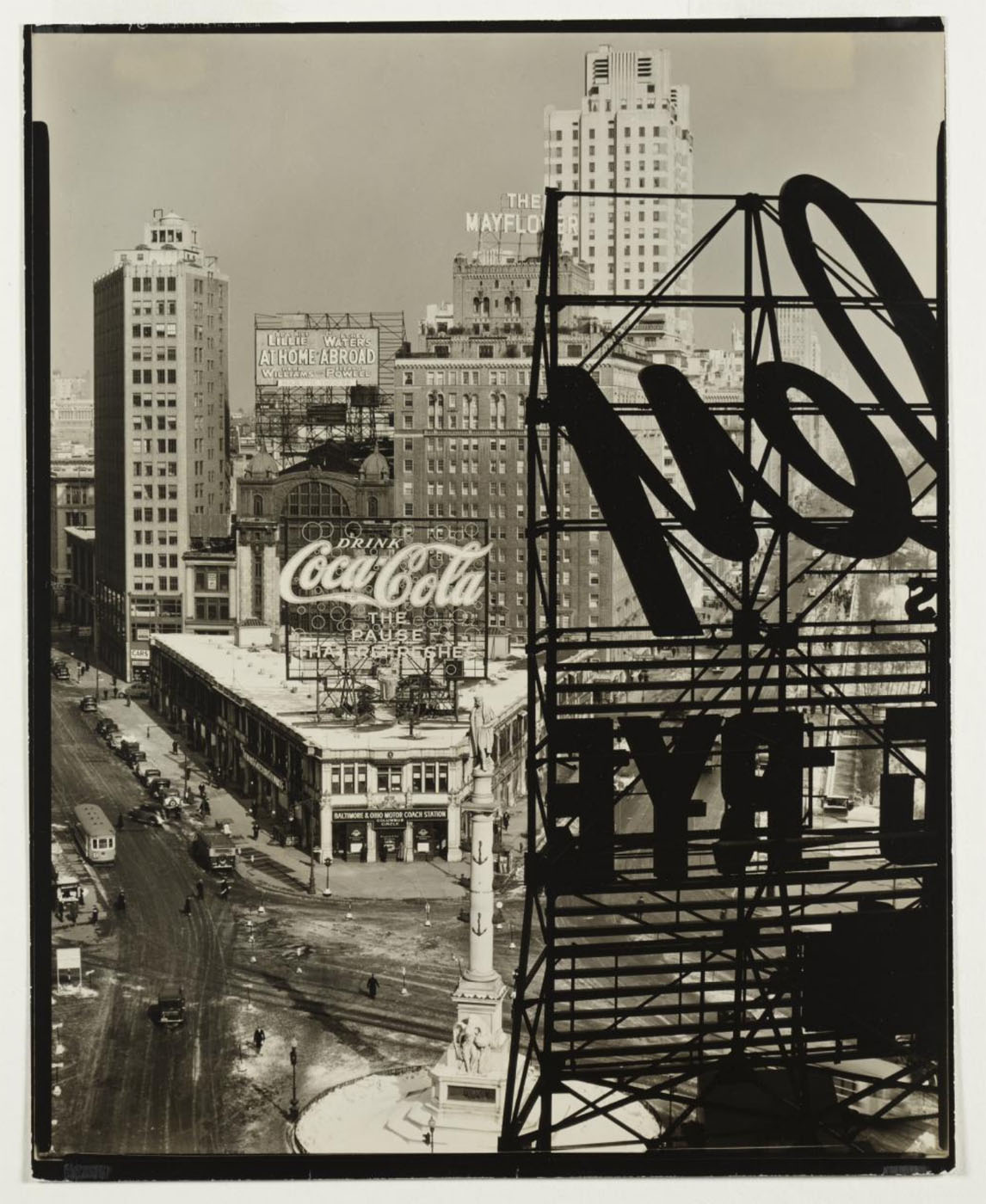
Paul Strand (American, 1890-1976) 'Wall Street, New York' 1915 from the exhibition 'The Radical Eye: Modernist Photography from the Sir Elton John Collection' at Tate Modern, London, Nov 2016 - May 2017


Paul Strand (American, 1890-1976)
Wall Street, New York
1915
Silver gelatin print
The Sir Elton John Photographic Collection


Many thankx to Tate Modern for allowing me to publish the photographs in the posting. Please click on the photographs for a larger version of the image.

“This is a once-in-a-lifetime chance to see one of the world’s greatest private collections of photography, drawn from the classic modernist period of the 1920s-50s. An incredible group of Man Ray portraits are exhibited together for the first time, having been brought together by Sir Elton John over the past twenty-five years, including portraits of Matisse, Picasso, and Breton. With over 70 artists and nearly 150 rare vintage prints on show from seminal figures including Brassai, Imogen Cunningham, André Kertész, Dorothea Lange, Tina Modotti, and Aleksandr Rodchenko, this is a chance to take a peek inside Elton John’s home and delight in seeing such masterpieces of photography.”

Text from the Tate Modern website
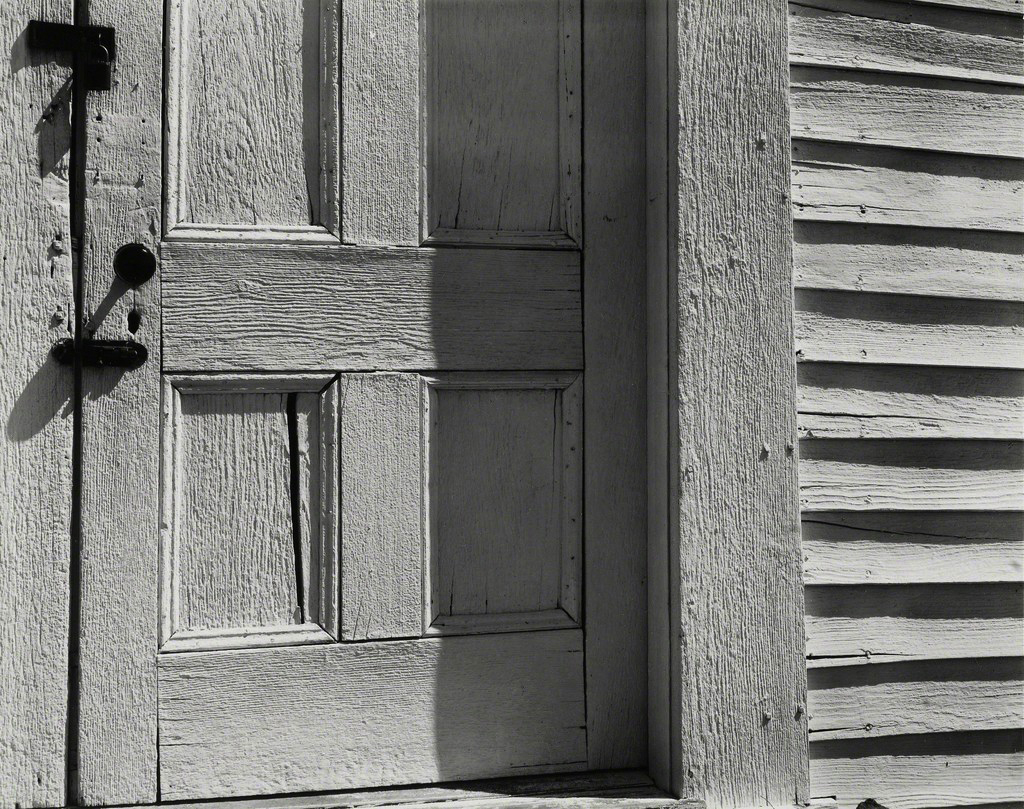


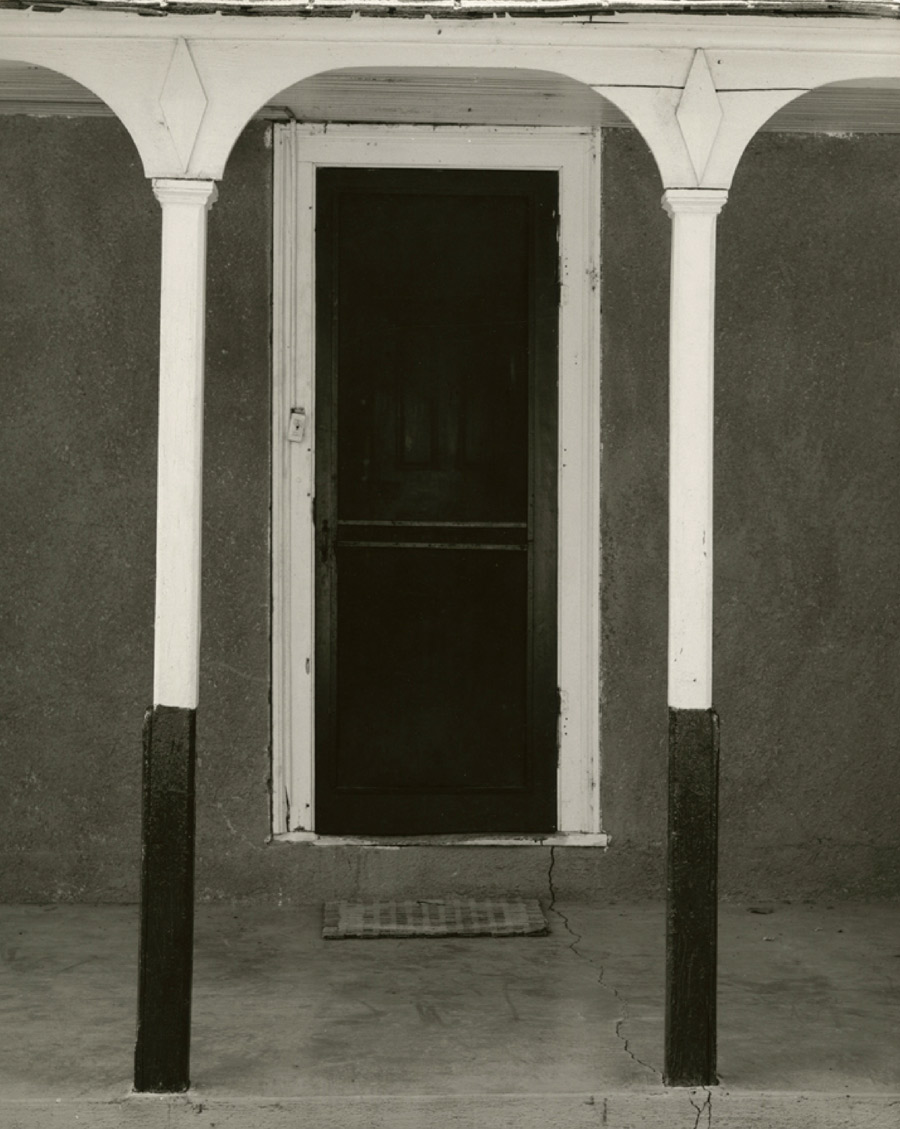
Edward Weston (American, 1886-1958) 'White Door, Hornitos, California' 1940 from the exhibition 'The Radical Eye: Modernist Photography from the Sir Elton John Collection' at Tate Modern, London, Nov 2016 - May 2017


Edward Weston (American, 1886-1958)
White Door, Hornitos, California
1940
Silver gelatin print
The Sir Elton John Photographic Collection


Tate Modern presents a major new exhibition, The Radical Eye: Modernist Photography from the Sir Elton John Collection, drawn from one of the world’s greatest private collections of photography. This unrivalled selection of classic modernist images from the 1920s to the 1950s features almost 200 works from more than 60 artists, including seminal figures such as Berenice Abbott, André Kertész, Man Ray, Alexandr Rodchenko and Edward Steichen among many others. The exhibition consists entirely of rare vintage prints, all created by the artists themselves, offering a unique opportunity to see remarkable works up close. The quality and depth of the collection allows the exhibition to tell the story of modernist photography in this way for the first time in the UK. It also marks the beginning of a long term relationship between Tate and The Sir Elton John Collection, as part of which Sir Elton and David Furnish have agreed to give important works to the nation.

The Radical Eye introduces a crucial moment in the history of photography – an exciting rupture often referred to as the ‘coming of age’ of the medium, when artists used photography as a tool through which they could redefine and transform visions of the modern world. Technological advancements gave artists the freedom to experiment and test the limits of the medium and present the world through a new, distinctly modern visual language. This exhibition reveals how the timeless genres of the portrait, nude and still life were reimagined through the camera during this period, also exploring photography’s unique ability to capture street life and architecture from a new perspective.

Featuring portraits of great cultural figures of the 20th century, including Georgia O’Keeffe by Alfred Stieglitz, Edward Weston by Tina Modotti, Jean Cocteau by Berenice Abbott and Igor Stravinsky by Edward Weston, the exhibition gives insight into the relationships and inner circles of the avant-garde. An incredible group of Man Ray portraits are exhibited together for the first time, having been brought together by Sir Elton John over the past twenty-five years, depicting key surrealist figures such as Andre Breton and Max Ernst alongside artists including Henri Matisse, Pablo Picasso and Dora Maar. Ground-breaking experimentation both in the darkroom and on the surface of the print, such as Herbert Bayer’s photomontage and Maurice Tabard’s solarisation, examine how artists pushed the accepted conventions of portraiture.

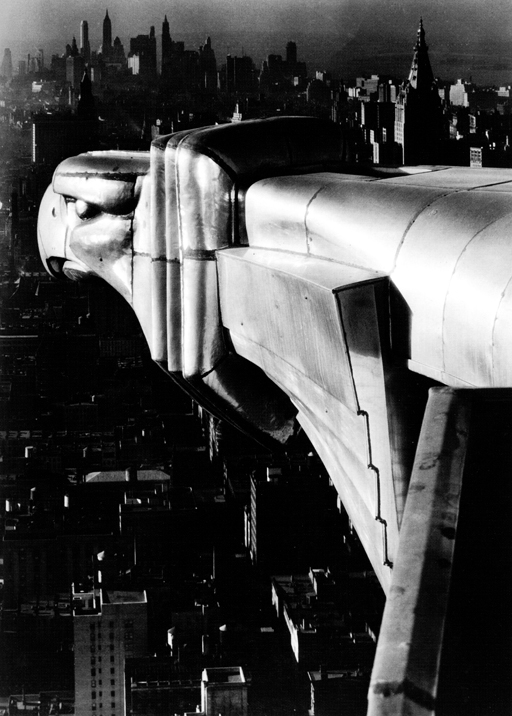
As life underwent rapid changes in the 20th century, photography offered a new means to communicate and represent the world. Alexandr Rodchenko, László Moholy-Nagy and Margaret Bourke-White employed the ‘worm’s eye’ and ‘bird’s eye’ views to create new perspectives of the modern metropolis – techniques associated with constructivism and the Bauhaus. The move towards abstraction is also explored, from isolated architectural elements to camera-less photography such as Man Ray’s rayographs and Harry Callahan’s light abstractions.

A dedicated section of the exhibition looks at the new approaches that emerged in capturing the human form, highlighted in rare masterpieces such as André Kertész’s Underwater Swimmer, Hungary 1917, while Imogen Cunningham’s Magnolia Blossom, Tower of Jewels 1925 and Tina Modotti’s Bandelier, Corn and Sickle 1927 feature in a large presentation dedicated to the Still Life. The important role of documentary photography as a tool of mass communication is demonstrated in Dorothea Lange’s Migrant Mother 1936 and Walker Evans’ Floyde Burroughs, Hale County, Alabama 1936, from the Farm Security Administration project.

The Radical Eye: Modernist Photography from the Sir Elton John Collection is at Tate Modern from 10 November 2016 until 7 May 2017. It is curated by Shoair Mavlian with Simon Baker and Newell Harbin, Director of The Sir Elton John Photography Collection. The exhibition is accompanied by an exclusive audio tour of the exhibition featuring commentary from Sir Elton John, and a major new catalogue from Tate Publishing including an interview with Sir Elton John by Jane Jackson.

Press release from Tate Modern
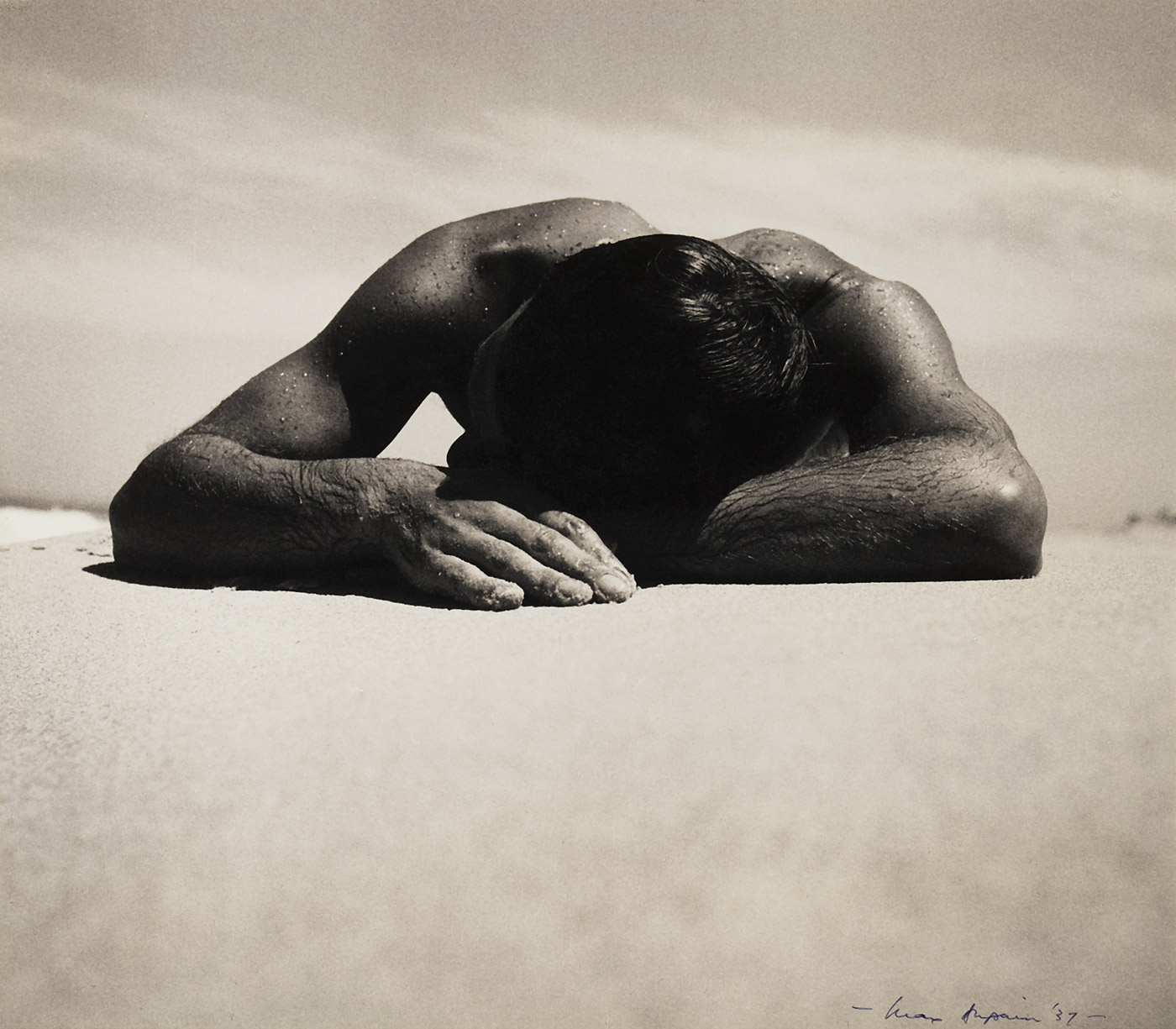
 

Max Dupain (Australian, 1911-1992) 'Sunbaker' 1937


Max Dupain (Australian, 1911-1992)
Sunbaker
1937
Silver gelatin print
The Sir Elton John Photographic Collection


“We possess an extraordinary instrument for reproduction. But photography is much more than that. Today it is … bringing something entirely new into the world.”


László Moholy-Nagy, 1932


Artists in the modernist period explored what the camera could do that the human eye alone could not, and how this could be harnessed to present a new modern perspective on the world. Artist and theorist László Moholy-Nagy proclaimed that photography could radically change not just what, but how we see. He called this the ‘new vision’. Rather than emulating other art forms, photography began to embrace qualities unique to itself, from its ability to reproduce the world in sharp detail to its capacity to create new realities through the manipulation of light, chemicals and paper.

This re-evaluation of photography coincided with a period of upheaval. War, revolution and economic depression led to mass movements of people and great social change. The idea of the avant-garde took hold and dada and surrealism emerged, challenging both the art and social norms that had come before. At the same time, new art schools such as the Bauhaus in Germany and Vkhutemas in Russia fostered the role of the professional artist and challenged divisions between art and design.

The Radical Eye is arranged thematically and charts a changing emphasis from the subject of an image to the visual qualities of the photograph itself, irrespective of what it represents. The many vintage prints in this exhibition – made soon after the photographs were taken – give a rare insight into the artists’ processes and creative decisions, and foreground the photograph as a physical object. All works are shown in the frames in which they are displayed in the home of Sir Elton John and David Furnish.

Together, the works in this exhibition show how photography pushed the boundaries of the possible, changing the world through the ways in which it was seen and understood. ‘Knowledge of photography is just as important as that of the alphabet. The illiterates of the future will be ignorant of the use of camera and pen alike,’ wrote Moholy-Nagy in 1927, foreseeing the cultural dominance of the photographic image. This extraordinary period still impacts how we, the photo-literate future, read and create images today.


Alfred Stieglitz (American, 1864-1946) 'Georgia O'Keeffe' 1922


Alfred Stieglitz (American, 1864-1946)
Georgia O’Keeffe
1922
Silver gelatin print
The Sir Elton John Photographic Collection


“They collect themselves. Carefully, as if tying a cravat, they compose their features. Insolent, serious and conscious of their looks they turn around to face the world.”

From ‘Men before the Mirror’, published alongside portraits by Man Ray, 1934


Portraits

Modernist portraiture harnessed photography’s capacity to render an accurate likeness in clear, sharp focus and detail. But at the same time, artists and sitters pushed the conventions of portraiture with innovations in pose, composition and cropping.

Many of the portraits in this room are of artists, writers and musicians, giving a cross section of key cultural players of the time. Issues of control and collaboration arise particularly when the subject is an artist, raising the question of who is responsible for conveying the sitter’s persona. The modernist period also saw a boom of the illustrated press. Magazines reproduced photographic portraits of well-known figures which were instrumental in shaping their public images.


Man Ray (American, 1890-1976) 'Nusch Éluard' 1928


Man Ray (American, 1890-1976)
Nusch Éluard
1928
Silver gelatin print
The Sir Elton John Photography Collection
Photograph: Man Ray Trust/ADAGP, Paris and DACS, London 2016


Nusch Éluard (born Maria Benz; June 21, 1906 – November 28, 1946) was a French performer, model and surrealist artist…

Nusch arrived in France as a stage performer, variously described as a small-time actress, a traveling acrobat, and a “hypnotist’s stooge”. She met Paul Éluard in 1930 working as a model, married him in 1934, produced surrealist photomontage and other work, and is the subject of “Facile,” a collection of Éluard’s poetry published as a photogravure book, illustrated with Man Ray’s nude photographs of her.

She was also the subject of several cubist portraits and sketches by Pablo Picasso in the late 1930s, and is said to have had an affair with him. Nusch worked for the French Resistance during the Nazi occupation of France during World War II. She died in 1946 in Paris, collapsing in the street due to a massive stroke.

Text from the Wikipedia website
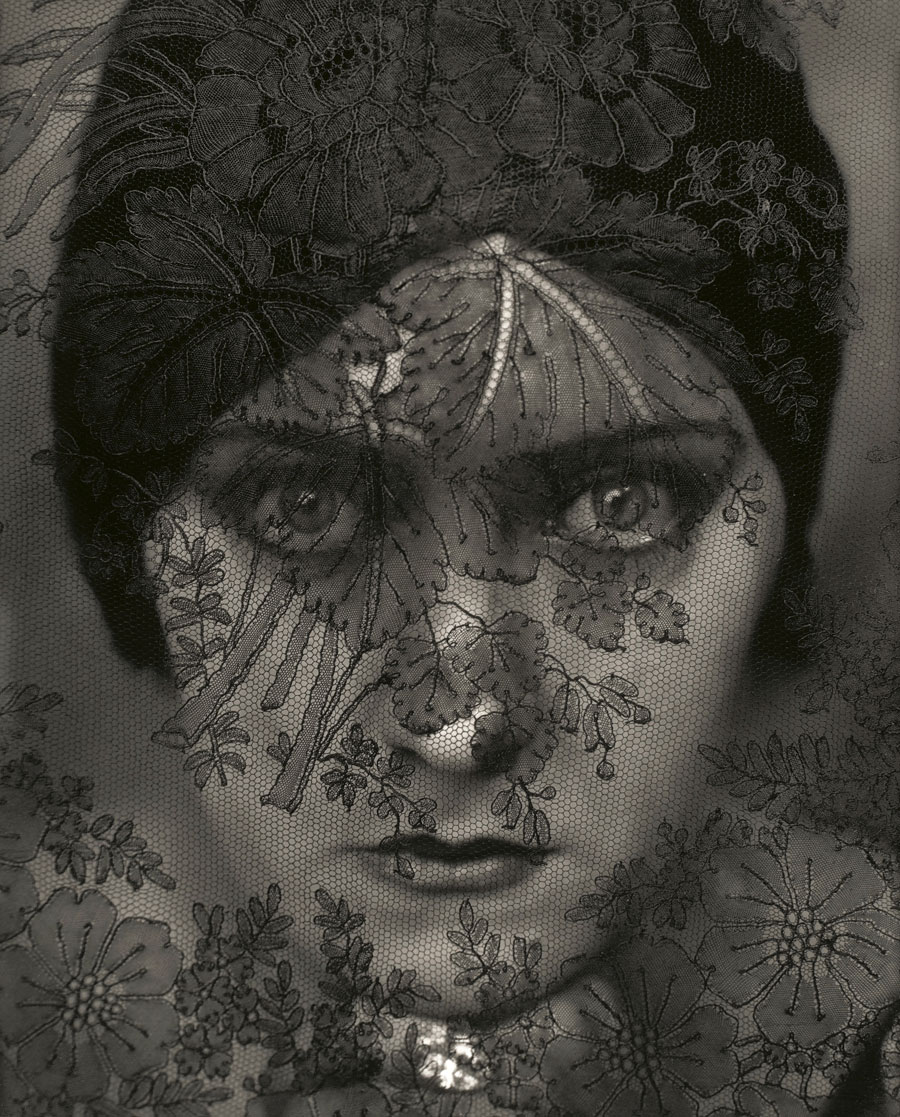
 

Edward Steichen (American 1879-1973, emigrated to United States 1881, worked in France 1906-23) 'Actress Gloria Swanson' 1924


Edward Steichen (American 1879-1973, emigrated to United States 1881, worked in France 1906-1923)
Actress Gloria Swanson
1924
Silver gelatin print
The Sir Elton John Photography Collection
© 1924 Condé Nast Publications
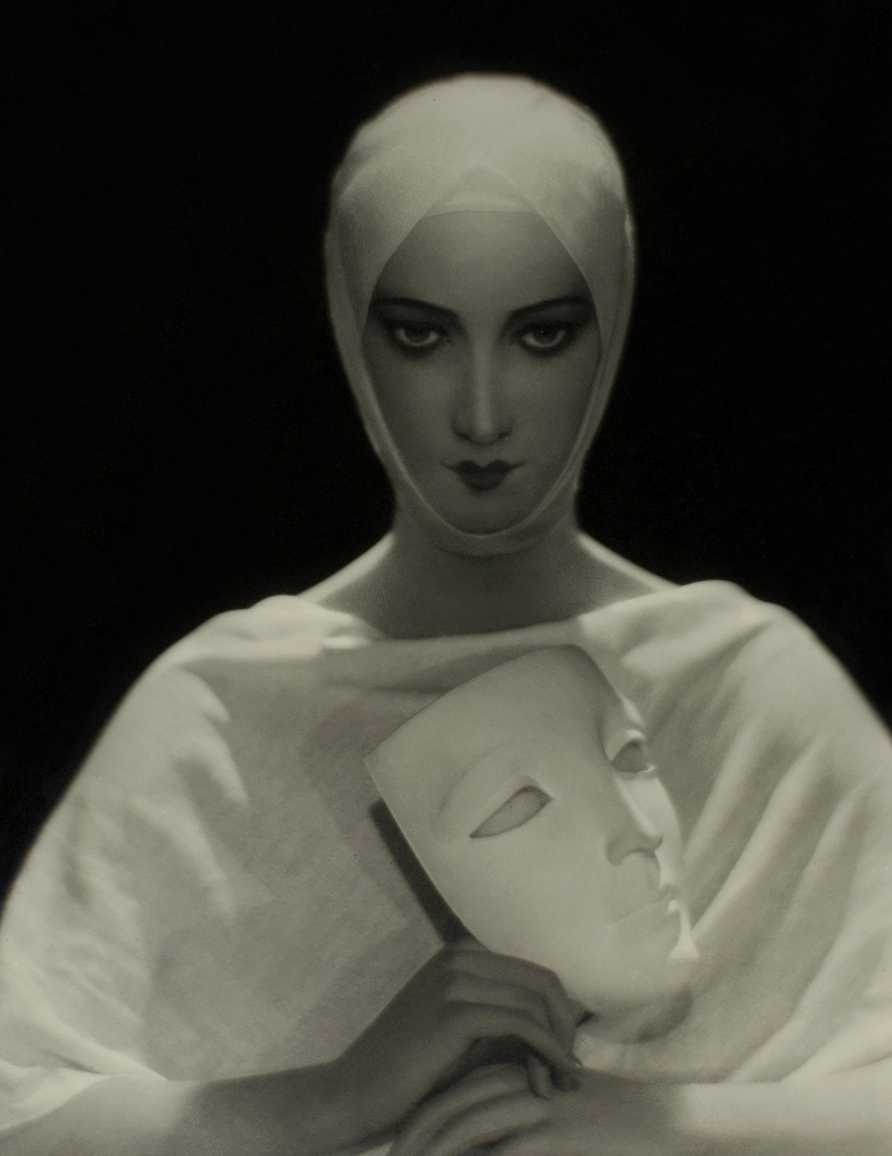
 

Adolph de Meyer (European / American, 1868-1946) 'For Elizabeth Arden (The Wax Head)' 1931


Adolph de Meyer (European / American, 1868-1946)
For Elizabeth Arden (The Wax Head)
1931
Silver gelatin print
The Sir Elton John Photography Collection
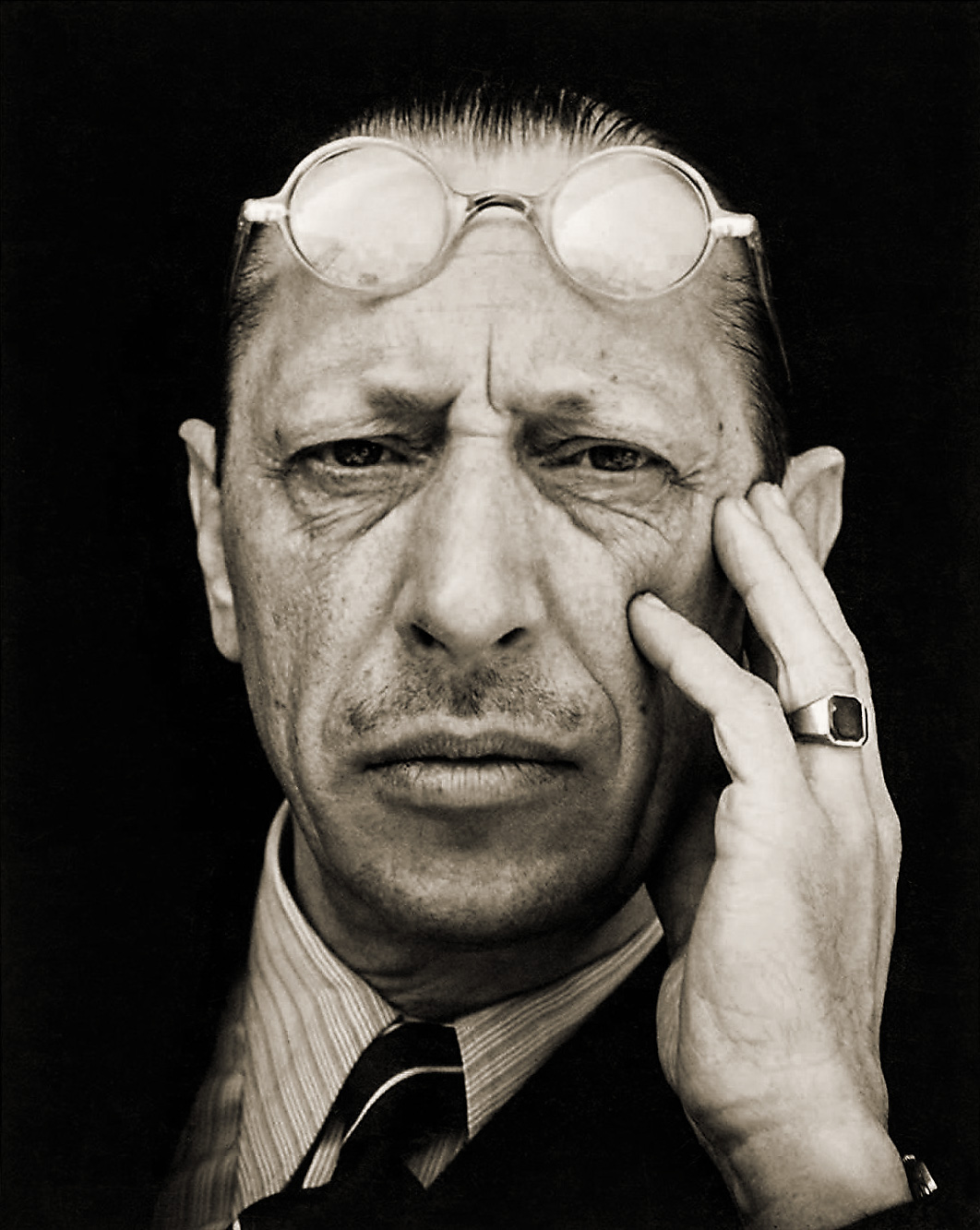
 

Edward Weston (American, 1886-1958) 'Igor Stravinsky' 1935


Edward Weston (American, 1886-1958)
Igor Stravinsky
1935
Silver gelatin print
© 1981 Center for Creative Photography


George Platt Lynes (American, 1907-1955) 'A Forgotten Model' c. 1937


George Platt Lynes (American, 1907-1955)
A Forgotten Model
c. 1937
Silver gelatin print
The Sir Elton John Photography Collection


Man Ray (American, 1890-1976) 'Juliet and Margaret Nieman in Papier-Mâché Masks' c. 1945


Man Ray (American, 1890-1976)
Juliet and Margaret Nieman in Papier-Mâché Masks
c. 1945
Gelatin silver print
The Sir Elton John Photography Collection
Photograph: © Man Ray Trust/ADAGP, Paris and DACS, London 2016


Irving Penn (American, 1917-2009) 'Salvador Dali in New York' 1947


Irving Penn (American, 1917-2009)
Salvador Dali in New York
1947
Silver gelatin print
The Sir Elton John Photography Collection
Photograph: The Irving Penn Foundation


“The enemy of photography is convention, the fixed rules ‘how to do’. The salvation of photography comes from the experiment.”


László Moholy-Nagy, c. 1940


Experiments

This was not a period of discovery but of rediscovery. Artists were rewriting the preceding century’s rules of photographic technique, harnessing ‘mistakes’ such as distortions and double exposures, or physically manipulating the printed image, cutting, marking and recombining photographs. These interventions could occur at any point in the process, from taking the image to the final print.

Used in portraiture, such experiments allowed for more psychologically charged representations. However, the transformative power of a particular technique often becomes much more important than the particular subject of the image. Above all, the rich creative possibilities of the photographic process come to the fore. While artists were seriously investigating the medium, the results are often surprising and playful.


Herbert Bayer (American born Austria, 1900-1985) 'Self-Portrait' 1932


Herbert Bayer (American born Austria, 1900-1985)
Self-Portrait
1932
Silver gelatin print
The Sir Elton John Photographic Collection
© DACS 2016


Otto Umbehr (German, 1902-1980) "Katz" – Cat 1927


Otto Umbehr (German, 1902-1980)
“Katz” – Cat
1927
Silver gelatin print
The Sir Elton John Photographic Collection
© Phyllis Umbehr/Galerie Kicken Berlin/DACS 2016
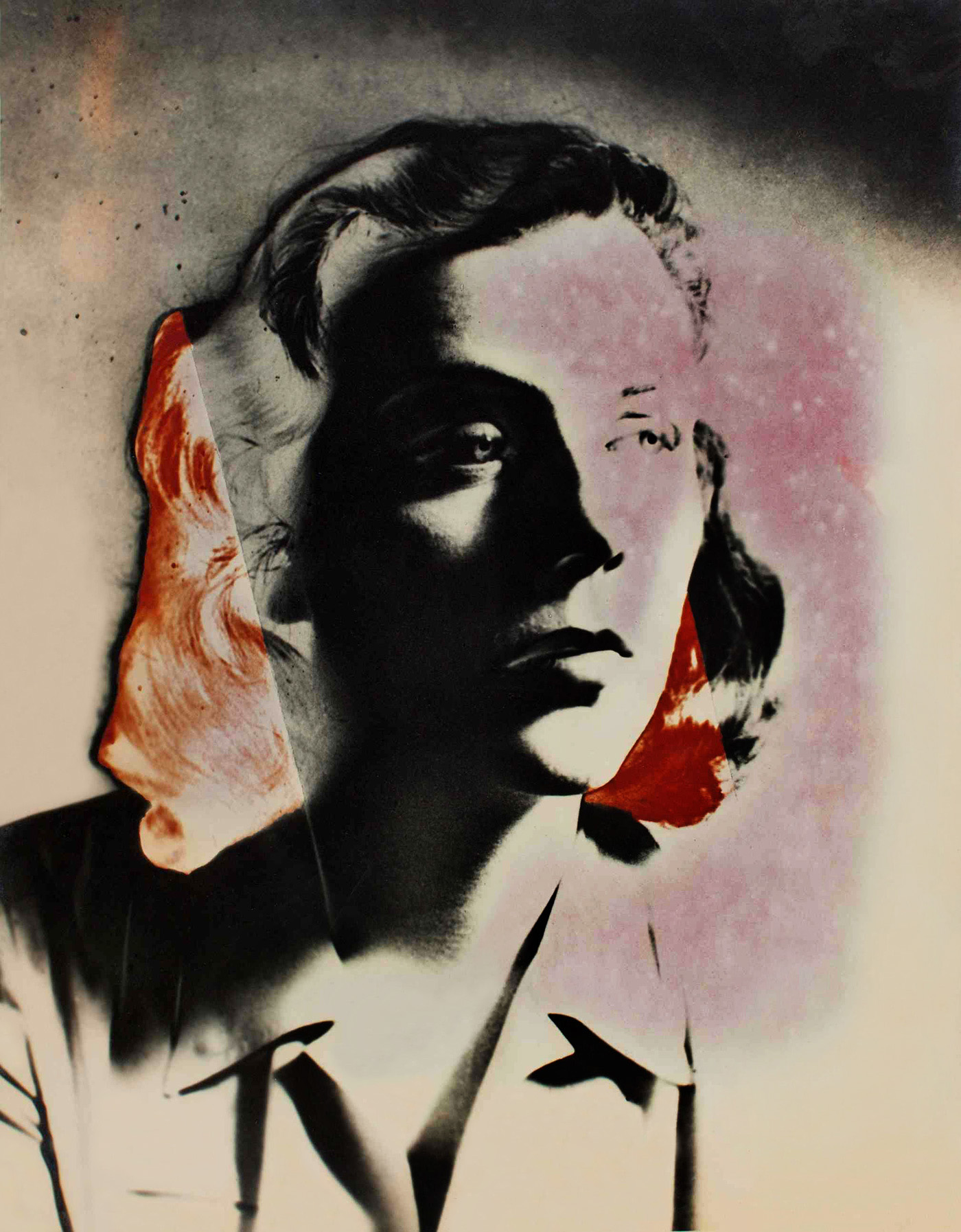
 

Josef Breitenbach (German, 1896-1984) 'Patricia, New York' c. 1942


Josef Breitenbach (German, 1896-1984)
Patricia, New York
c. 1942
Silver gelatin print
The Sir Elton John Photography Collection
Photograph: Josef and Yaye Breitenbach Charitable Foundation, Courtesy Gitterman Gallery


“The camera should be used for a recording of life, for rendering the very substance and quintessence of the thing itself, whether it be polished steel or palpitating flesh.”


Edward Weston, 1924


Bodies

Experimental approaches to shooting, cropping and framing could transform the human body into something unfamiliar. Photographers started to focus on individual parts of the body, their unconventional crops drawing attention to shape and form, accentuating curves and angles. Fragmented limbs and flesh were depersonalised and could be treated like a landscape or still life, dissolving distinctions between different genres. Thanks to faster shutter speeds and new celluloid roll film, photographers could also freeze the body in motion outside of the studio for the first time, capturing dancers and swimmers with a clarity impossible for the naked eye.


André Kertész (Hungarian, 1894-1985) 'Underwater Swimmer, Esztergom, Hungary, 30 June 1917' 1917


André Kertész (Hungarian, 1894-1985)
Underwater Swimmer, Esztergom, Hungary, 30 June 1917
1917
The Sir Elton John Photography Collection
© Estate of André Kertész/Higher Pictures


Rudolph Koppitz (Austrian, 1884-1936) 'Movement Study' 1925


Rudolph Koppitz (Austrian, 1884-1936)
Movement Study
1925
Gelatin silver print
The Sir Elton John Photography Collection
Photograph: ADAGP, Paris and DACS London 2016


Man Ray (American, 1890-1976) 'Noire et Blanche' 1926


Man Ray (American, 1890-1976)
Noire et Blanche
1926
Silver gelatin print
The Sir Elton John Photography Collection
Photograph: Man Ray Trust/ADAGP, Paris and DACS, London 2016


Man Ray (American, 1890-1976) 'Glass Tears (Les Larmes)' 1932


Man Ray (American, 1890-1976)
Glass Tears (Les Larmes)
1932
Gelatin silver print on paper
229 x 298 mm
Collection Elton John
© Man Ray Trust/ADAGP, Paris and DACS, London 2016


Edward Weston (American, 1886-1958) 'Nude' 1936


Edward Weston (American, 1886-1958)
Nude
1936
Silver gelatin print
The Sir Elton John Photography Collection
Photograph: 1981 Center for Creative Photography, Arizona Board of Regents
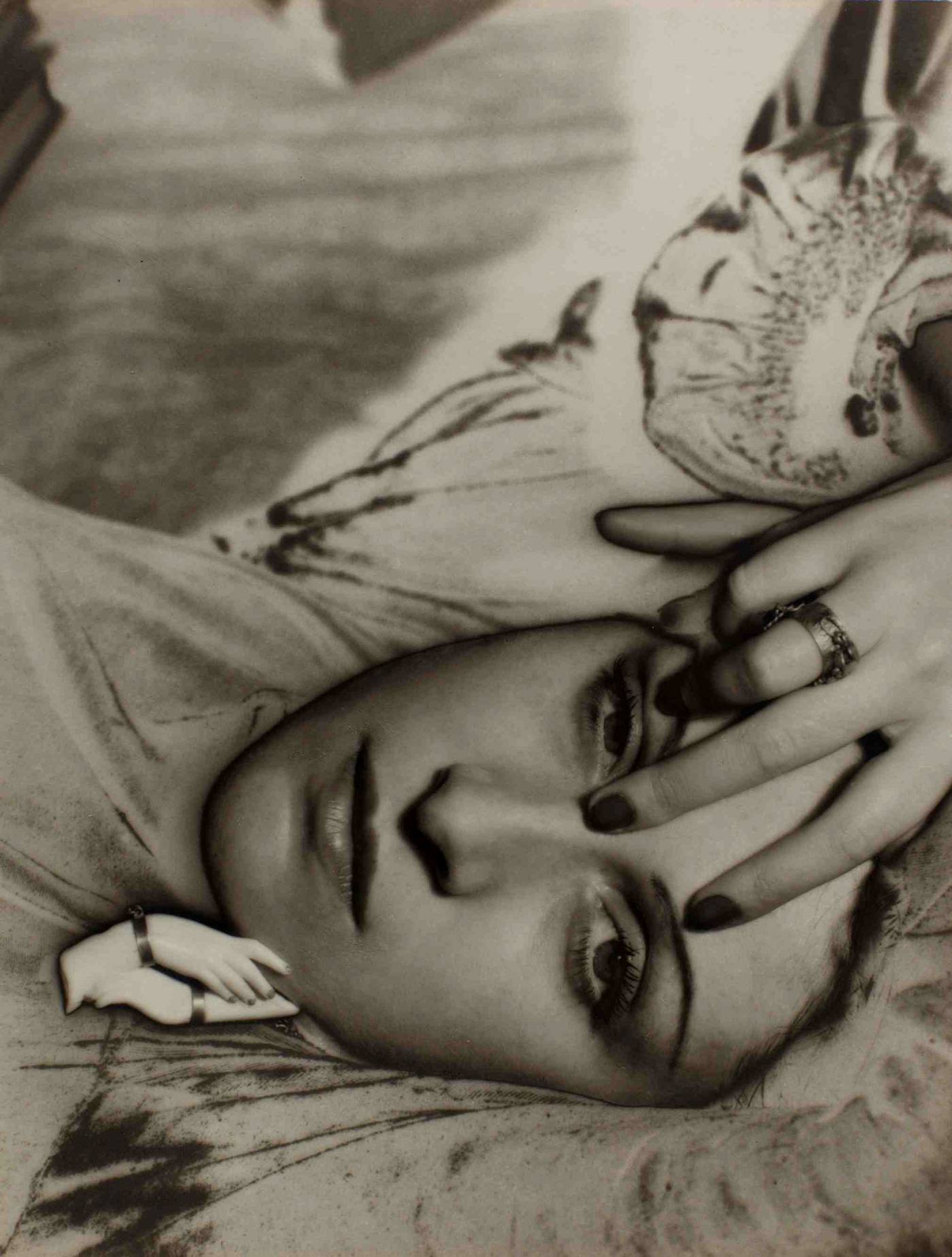
 

Man Ray (American, 1890-1976) 'Dora Maar' 1936


Man Ray (American, 1890-1976)
Dora Maar
1936
Silver gelatin print
The Sir Elton John Photography Collection
Photograph: Man Ray Trust/ADAGP, Paris and DACS, London 2016


Nino Migliori (Italian, b. 1926) 'Il Tuffatore' (The Diver) 1951


Nino Migliori (Italian, b. 1926)
Il Tuffatore (The Diver)
1951
Silver gelatin print
The Sir Elton John Photography Collection


“The documentary photographer is trying to speak to you in terms of everyone’s experience.”


Dorothea Lange, 1934


Documents

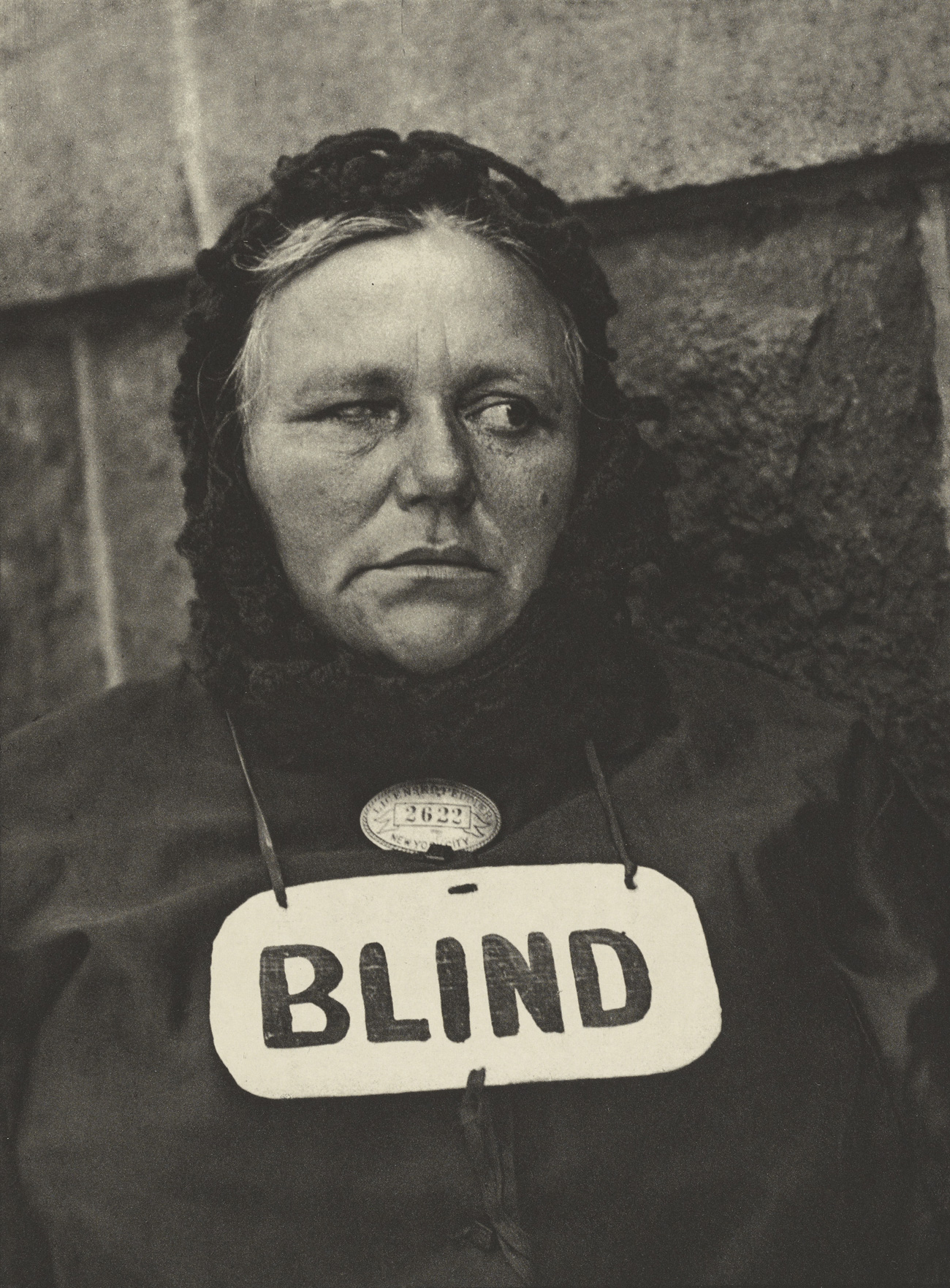
During the 1930s, photographers refined the formula for what we now know as social documentary. To compel the public to look at less palatable aspects of contemporary society they married creative manipulation with an appeal to viewers’ trust in the photograph as an objective visual record. This combination proved itself uniquely capable of eliciting empathy but is fraught with artistic and ethical complexity. These works highlight the vexed position of documentary photographs: historical evidence, instruments of propaganda and, latterly, works of art.

The development of new technology – particularly the portable camera and roll film – allowed photographers to capture spontaneous moments unfolding in the everyday world. Taking viewers into neighbourhoods where they might never set foot, street photography and documentary opened up new perspectives socially as much as visually.
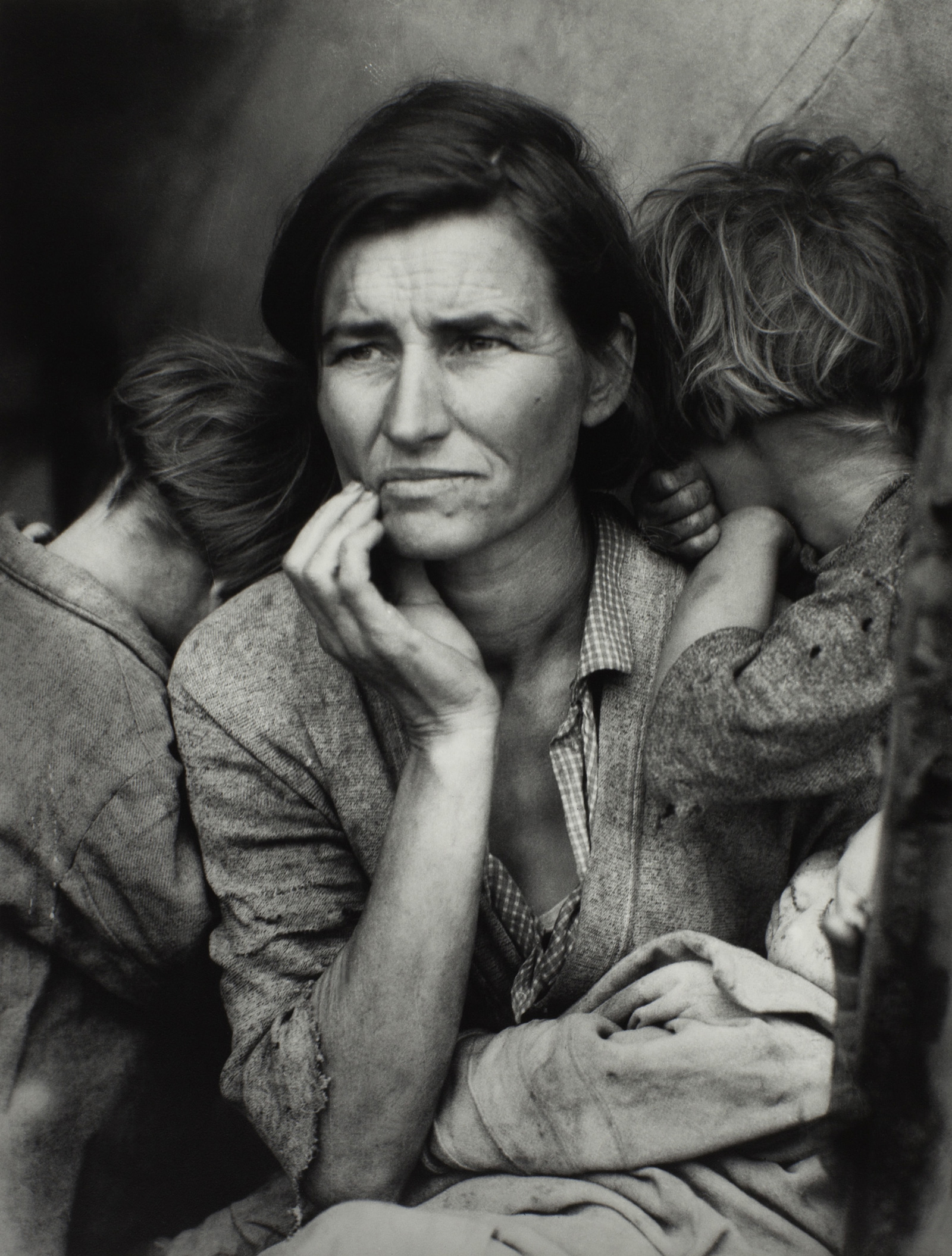
 

Dorothea Lange (American, 1895-1965) 'Migrant Mother' 1936


Dorothea Lange (American, 1895-1965)
Migrant Mother
1936
Silver gelatin print
The Sir Elton John Photographic Collection
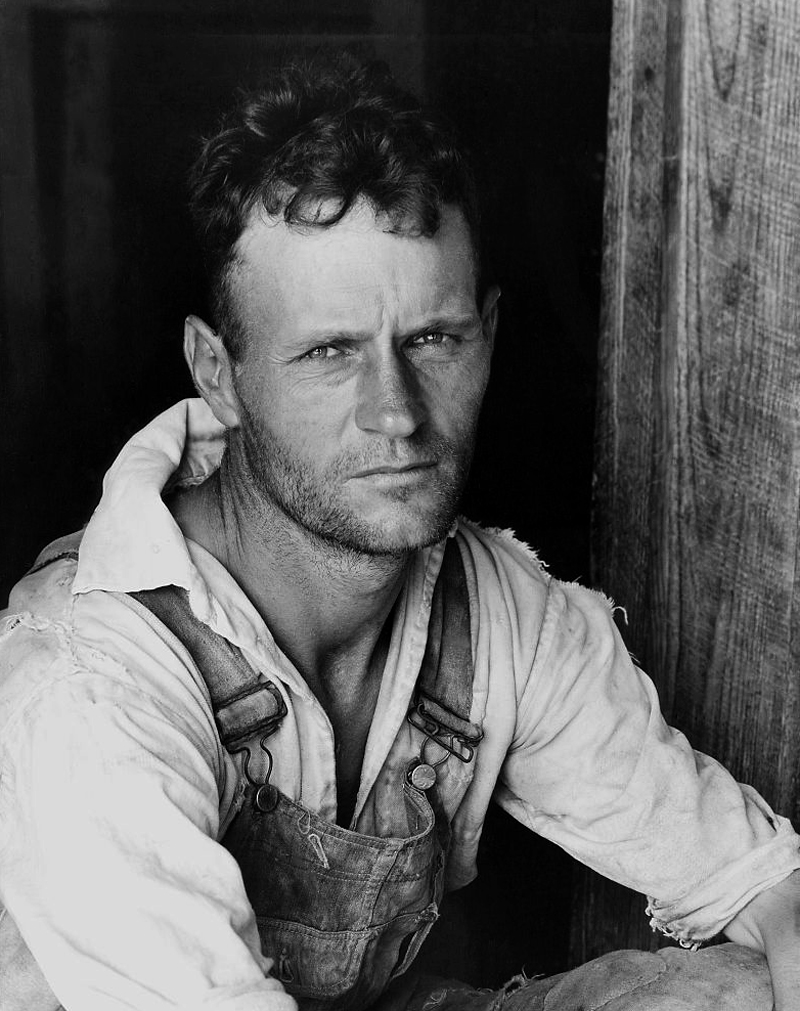
 

Walker Evans (American, 1903-1975) 'Floyde Burroughs, a cotton sharecropper, Hale County, Alabama' 1936


Walker Evans (American, 1903-1975)
Floyde Burroughs, a cotton sharecropper, Hale County, Alabama
1936
Silver gelatin print
The Sir Elton John Photography Collection


Dorothea Lange (American, 1895-1965) 'A young girl living in a shack town near Oklahoma City, Oklahoma' 1936


Dorothea Lange (American, 1895-1965)
A young girl living in a shack town near Oklahoma City, Oklahoma
1936
Silver gelatin print
The Sir Elton John Photography Collection


Walker Evans (American, 1903-1975) 'Christ or Chaos?' 1946


Walker Evans (American, 1903-1975)
Christ or Chaos?
1946
Gelatin silver print
The Sir Elton John Photography Collection
Photograph: Walker Evans Archives, The Metropolitan Museum of Art


“Contradictions of perspective. Contrasts of light. Contrasts of form. Points of view impossible to achieve in drawing and painting.”


Aleksandr Rodchenko, 1920s


Objects, Perspectives, Abstractions

The subjects and approaches of modernist photography vary widely, but are united by a fascination with the medium itself. Every image asks what photography is capable of and how it can be pushed further. This final room brings together three interlinked approaches. It shows the still life genre reimagined by photographers who used the technical capabilities of the camera to reveal the beauty of everyday things. Objects captured at unconventional angles or extreme close-up become strange, even unrecognisable.

A similar effect of defamiliarisation was accomplished by taking photographs from radically new perspectives, positioning a camera at the point of view of the ‘worm’s eye’ or ‘bird’s eye’. This created extreme foreshortening that transformed photographs from descriptive images of things into energetic compositions hovering between abstraction and representation.

Abstraction pushes against photography’s innate ability to record objectively. Radical techniques such as cameraless image-making simplified the medium to the point of capturing the play of light on photosensitive paper. By stripping it back to its most basic components, artists celebrated photography, not as a tool for reproduction, but as a creative medium capable of producing new imagery.


Alexander Rodchenko (Russian, 1891-1956) 'Shukov Tower' 1920


Alexander Rodchenko (Russian, 1891-1956)
Shukov Tower
1920
Silver gelatin print
The Sir Elton John Photographic Collection
© A. Rodchenko & V. Stepanova Archive, DACS, RAO 2016
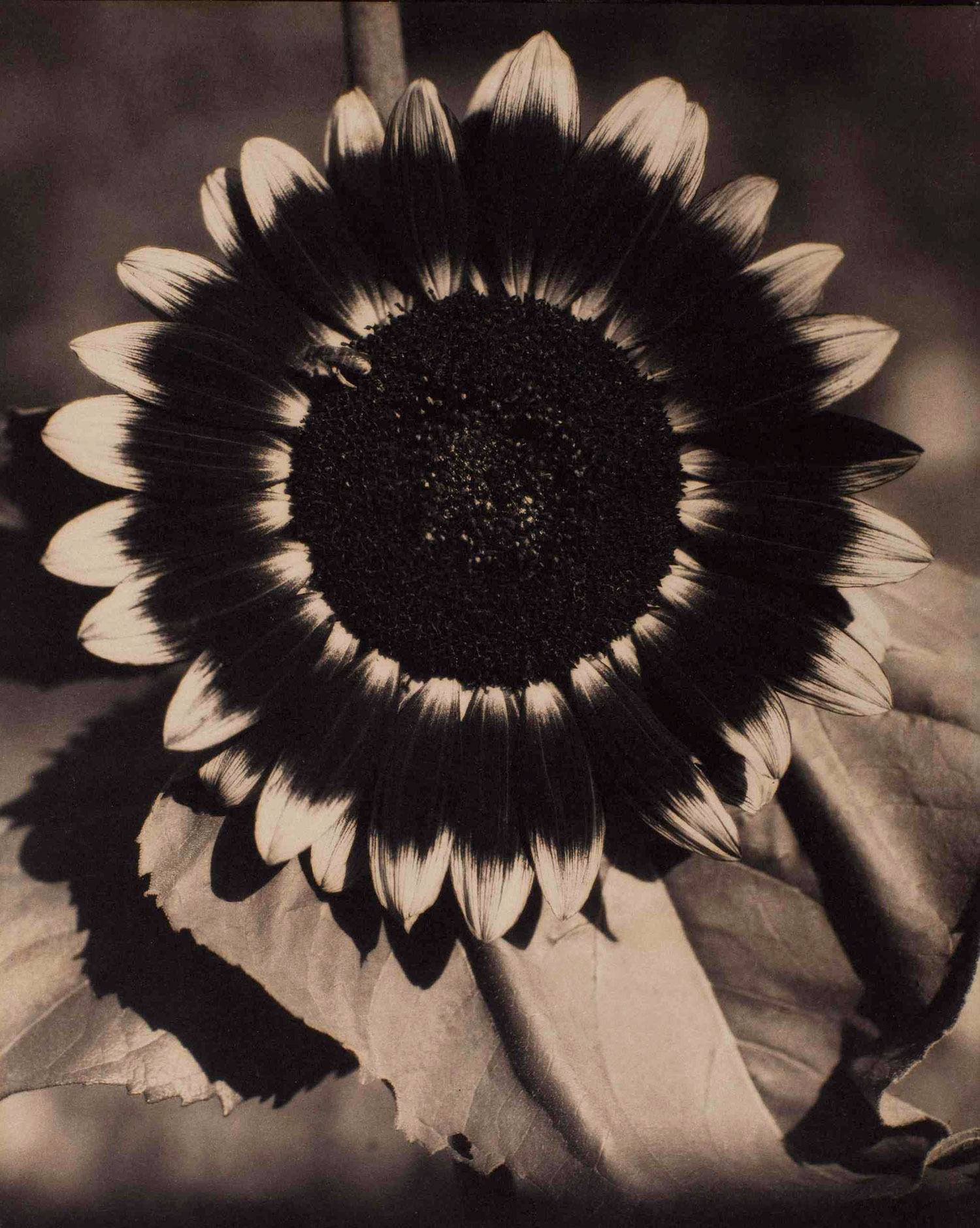
 

Edward Steichen (American, 1879-1973) 'A Bee on a Sunflower' c. 1920


Edward Steichen (American, 1879-1973)
A Bee on a Sunflower
c. 1920
Gelatin silver print
The Sir Elton John Photography Collection


Man Ray (American, 1890-1976) "Rayograph" 1923


Man Ray (American, 1890-1976)
“Rayograph”
1923
Silver gelatin print
The Sir Elton John Photography Collection
Photograph: Man Ray Trust/ADAGP, Paris and DACS, London 2016


André Kertész (Hungarian, 1894-1985) 'Mondrian's Glasses and Pipe' 1926


André Kertész (Hungarian, 1894-1985)
Mondrian’s Glasses and Pipe
1926
Gelatin silver print
The Sir Elton John Photography Collection
© Estate of André Kertész/Higher Pictures
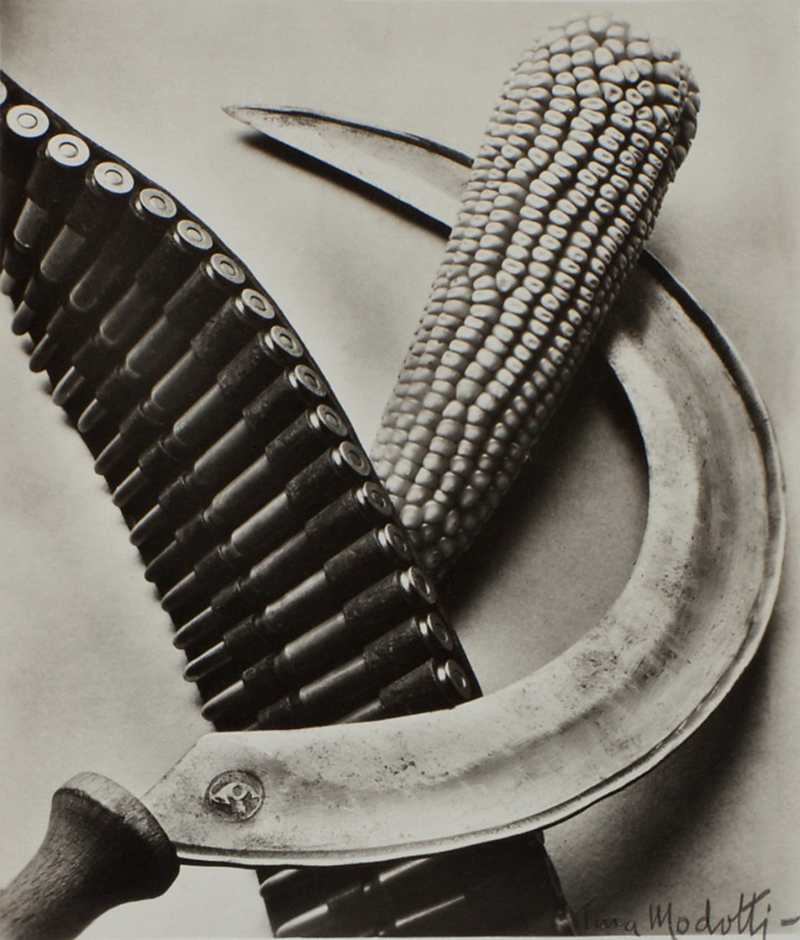
 

Tina Modotti (Italian American, 1896-1942) 'Bandelier, Corn and Sickle' 1927


Tina Modotti (Italian American, 1896-1942)
Bandelier, Corn and Sickle
1927
Silver gelatin print
The Sir Elton John Photographic Collection


Werner Mantz. 'Staircase Ursuliner Lyzeum Cologne 1928'


Werner Mantz (German, 1901-1983)
Staircase Ursuliner Lyzeum Cologne 1928
1928
Silver gelatin print
The Sir Elton John Photography Collection


Margaret Bourke-White (American, 1904-1971) 'George Washington Bridge' 1933


Margaret Bourke-White (American, 1904-1971)
George Washington Bridge
1933
Silver gelatin print
The Sir Elton John Photography Collection


László Moholy-Nagy (Hungarian, 1895-1946) 'View from the Berlin tower' 1928


László Moholy-Nagy (Hungarian, 1895-1946)
View from the Berlin tower
1928
Silver gelatin print
The Sir Elton John Photographic Collection
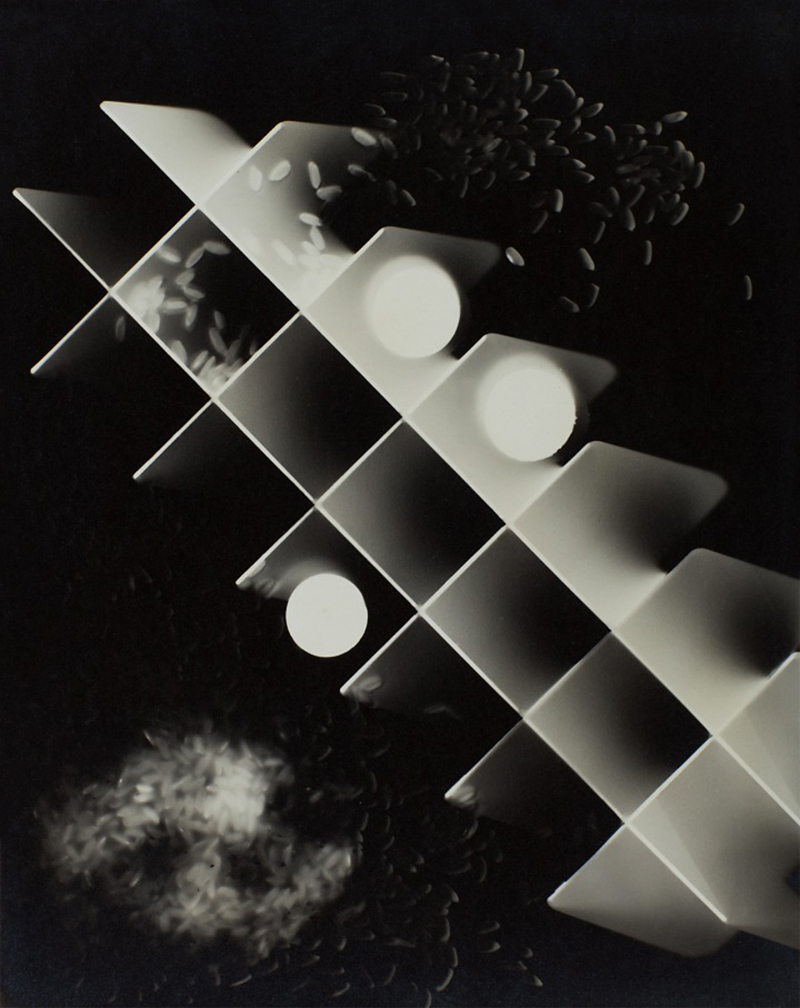
 

Margaret de Patta (American, 1903-1964) 'Ice Cube Tray with Marbles and Rice' 1939


Margaret de Patta (American, 1903-1964)
Ice Cube Tray with Marbles and Rice
1939
The Sir Elton John Photographic Collection
© Estate of Margaret de Patta


Tate Modern
Bankside
London SE1 9TG
United Kingdom

Opening hours:
Sunday – Thursday 10.00 – 18.00
Friday – Saturday 10.00 – 22.00
Tate Modern website

LIKE ART BLART ON FACEBOOK

Back to top

Selection of images part 1

April 2015


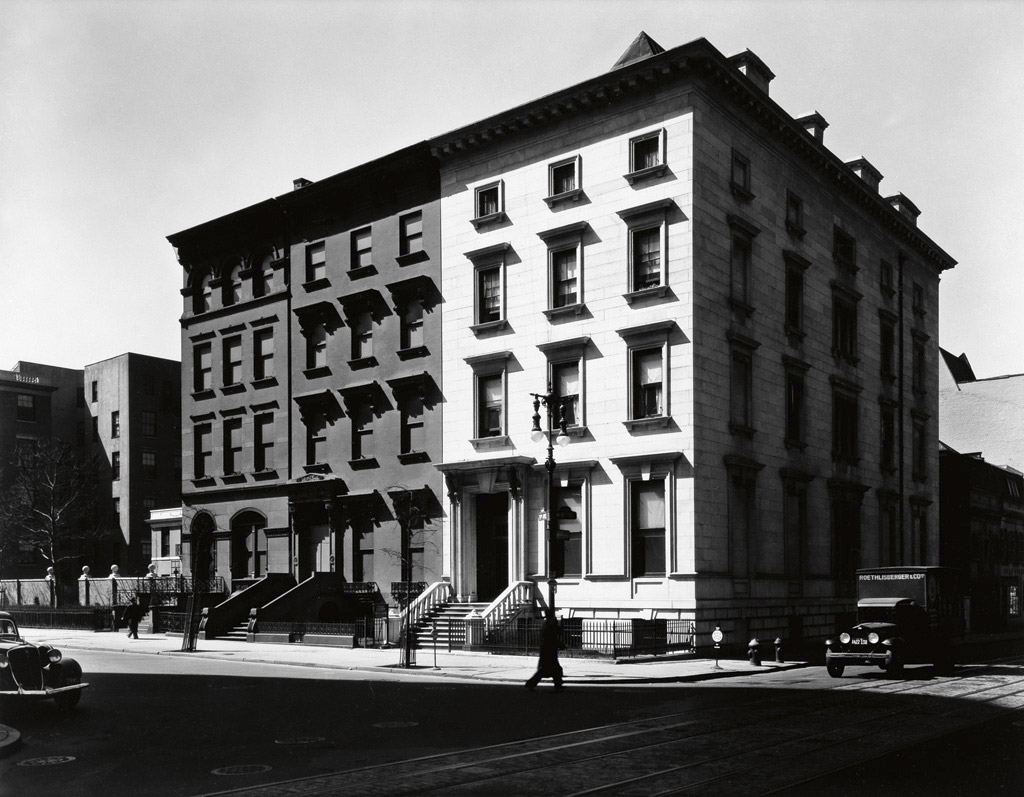
Berenice Abbott (American, 1898-1991) 'Fifth Avenue Houses' 1936


Berenice Abbott (American, 1898-1991)
Fifth Avenue Houses (5th Avenue and 8th Street)
1936, printed later
Silver gelatin print


A selection of interesting images.

The Vanishing Race by Edward S. Curtis is simple, yet one of the best. Already their shadows seem more substantial than their owners.

Any photographer worth their salt would recognise the light on the foliage in a certain location that they know, but the chance of it being as perfect as this are about a billion to one. Notice how the original frame extends the synthesis of man and landscape as well. Such a great amalgam of image and frame, such a perfect marriage where one complements the other without the frame being overpowering, as though the frame were an extension of the image (and organic nature of the landscape).

The line of the riders in the image as well… they would have virtually ridden over the photographer and the tripod if they had kept that line! And the outrider – magnificent!!

Marcus


Please click on the photographs for a larger version of the image.


Edward S. Curtis (American, 1868-1952) 'The Vanishing Race' 1904


Edward S. Curtis (American, 1868-1952)
The Vanishing Race – Navaho
1904
Orotone (in original frame)


“The passing of every old man or woman means the passing of some tradition, some knowledge of sacred rites possessed by no other… consequently the information that is to be gathered, for the benefit of future generations, respecting the mode of life of one of the great races of mankind, must be collected at once or the opportunity will be lost for all time.”

~ Edward S. Curtis


Ansel Adams (American, 1902-1984) 'Surf Sequence #4' 1940


Ansel Adams (American, 1902-1984)
Surf Sequence #4
1940, printed later
Silver gelatin print


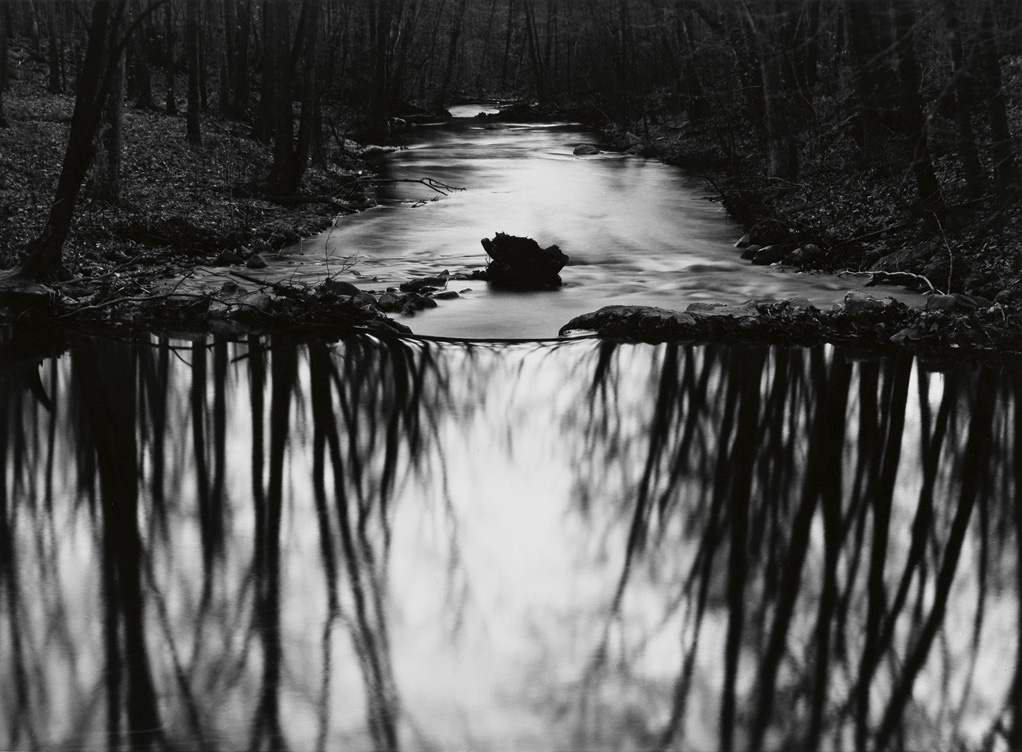
Paul Caponigro (American, 1932-2024) 'Redding Stream, Redding, Connecticut' 1968


Paul Caponigro (American, 1932-2024)
Redding Stream, Redding, Connecticut
1968, printed later
Gelatin silver print


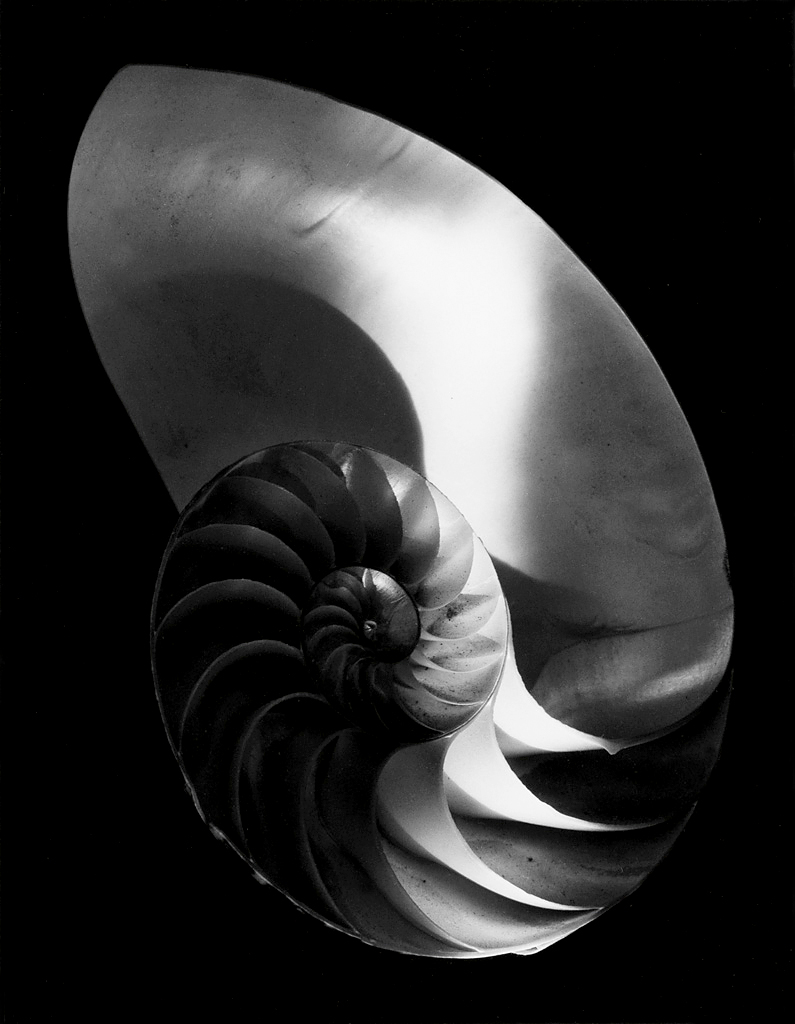
Paul Caponigro (American, 1932-2024) 'Nautilus Shell, Ipswich, Mass' 1960


Paul Caponigro (American, 1932-2024)
Nautilus Shell, Ipswich, Mass
1960
Silver gelatin print


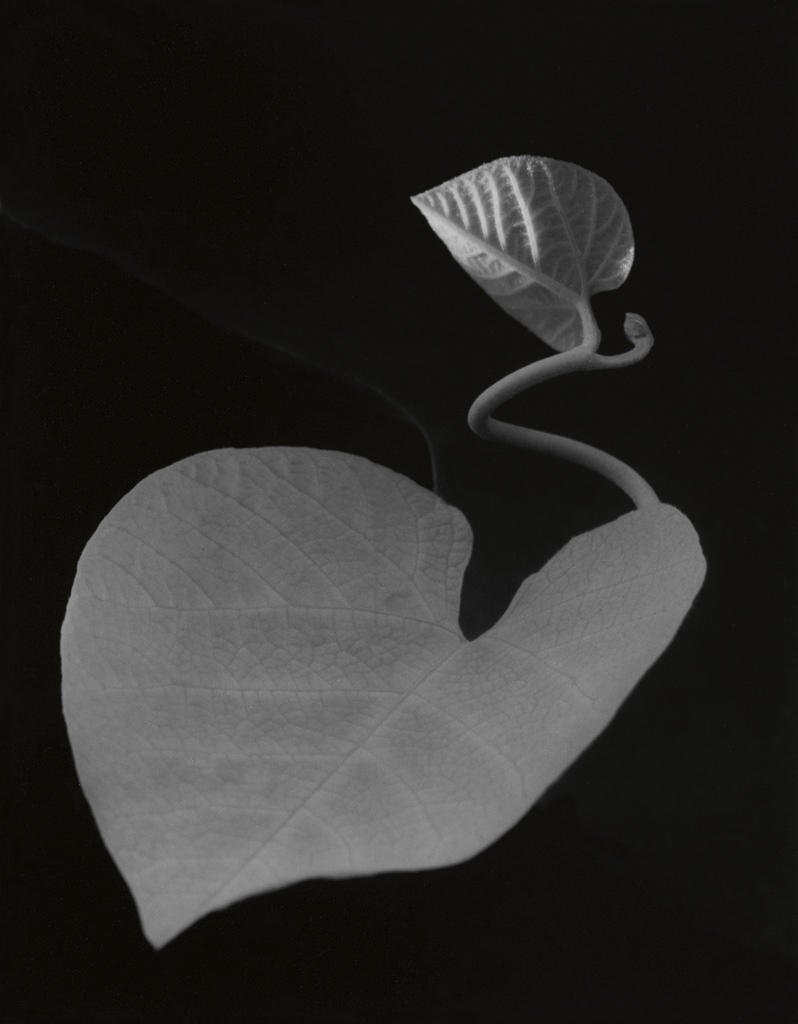
Paul Caponigro (American, 1932-2024) 'Two Leaves, Brewster, New York' 1963


Paul Caponigro (American, 1932-2024)
Two Leaves, Brewster, New York
1963
Silver gelatin print


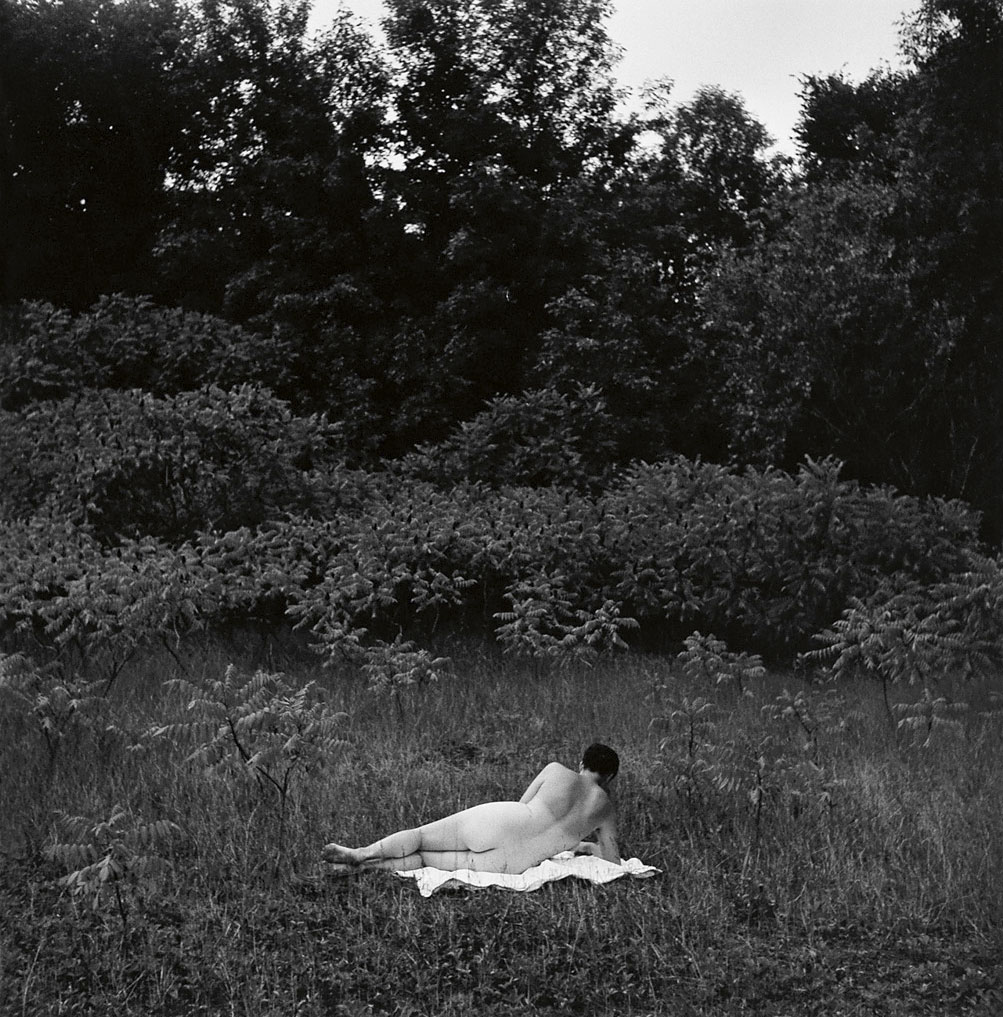
Harry Callahan (American, 1912-1999) 'Eleanor, Port Huron' c. 1954


Harry Callahan (American, 1912-1999)
Eleanor, Port Huron
c. 1954
Silver gelatin print


With her raven hair and ripe figure, Eleanor Callahan is one of the most recognisable models in the history of 20th-century photography, an inseparable part of both the life and work of one of its most renowned artists. Clothed and standing among trees in a public park, or nude and turned to the wall while clutching a radiator in an empty room, she served as a formal element within Mr. Callahan’s austere compositions as well as a symbol of womanhood. From 1941 to his death in 1999, she allowed herself to be photographed by him, without complaint, hundreds of times…

“He just liked to take the pictures of me,” she told an interviewer in 2008. “In every pose. Rain or shine. And whatever I was doing. If I was doing the dishes or if I was half asleep. And he knew that I never, never said no. I was always there for him. Because I knew that Harry would only do the right thing.”

Text from Richard B. Woodward. “Eleanor Callahan, Photographic Muse, Dies at 95,” on the New York Times website 28th February 2012.


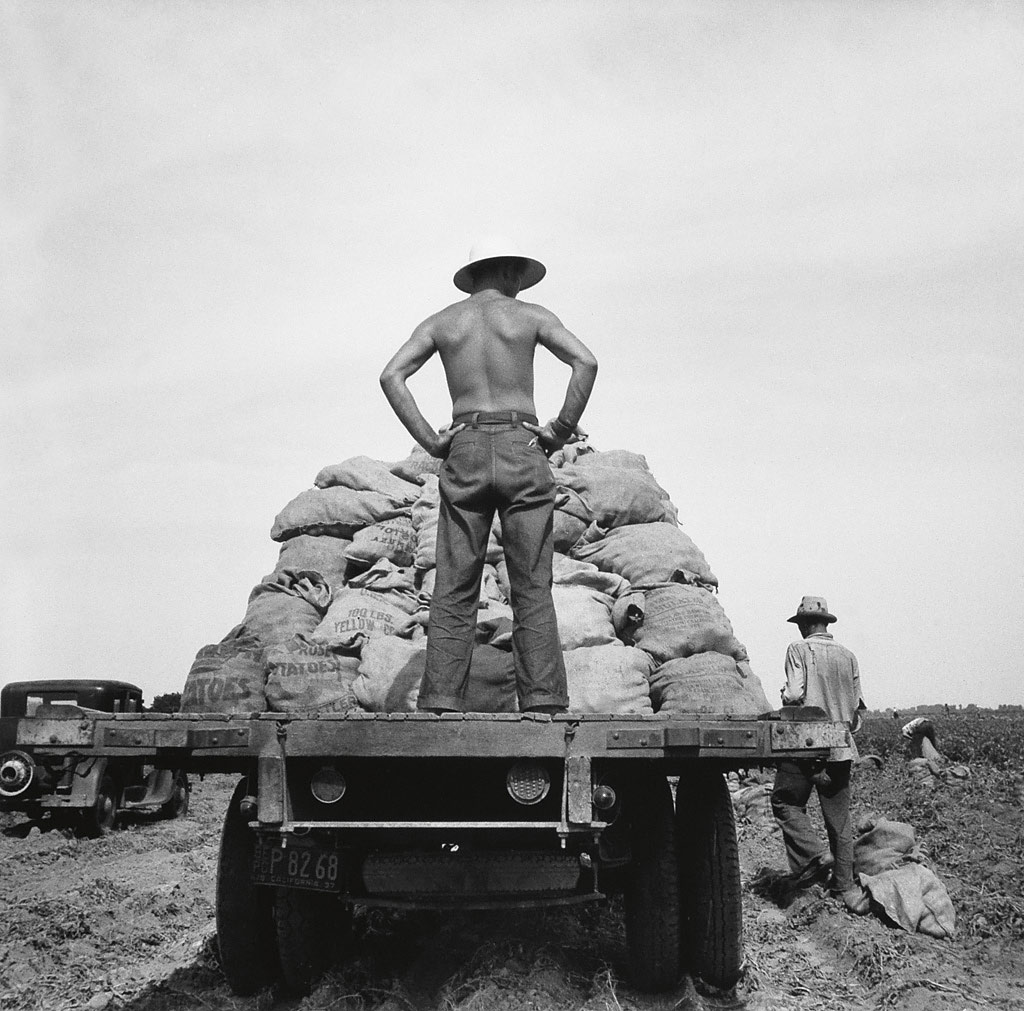
Dorothea Lange (American, 1895-1965) 'Potato truck in the field near Shafter, California' 1937


Dorothea Lange (American, 1895-1965)
Potato truck in the field near Shafter, California
1937
Ferrotyped silver print


Walker Evans (American, 1903-1975) 'Fish Market near Birmingham, Alabama' 1936


Walker Evans (American, 1903-1975)
Fish Market near Birmingham, Alabama
1936
Silver gelatin print


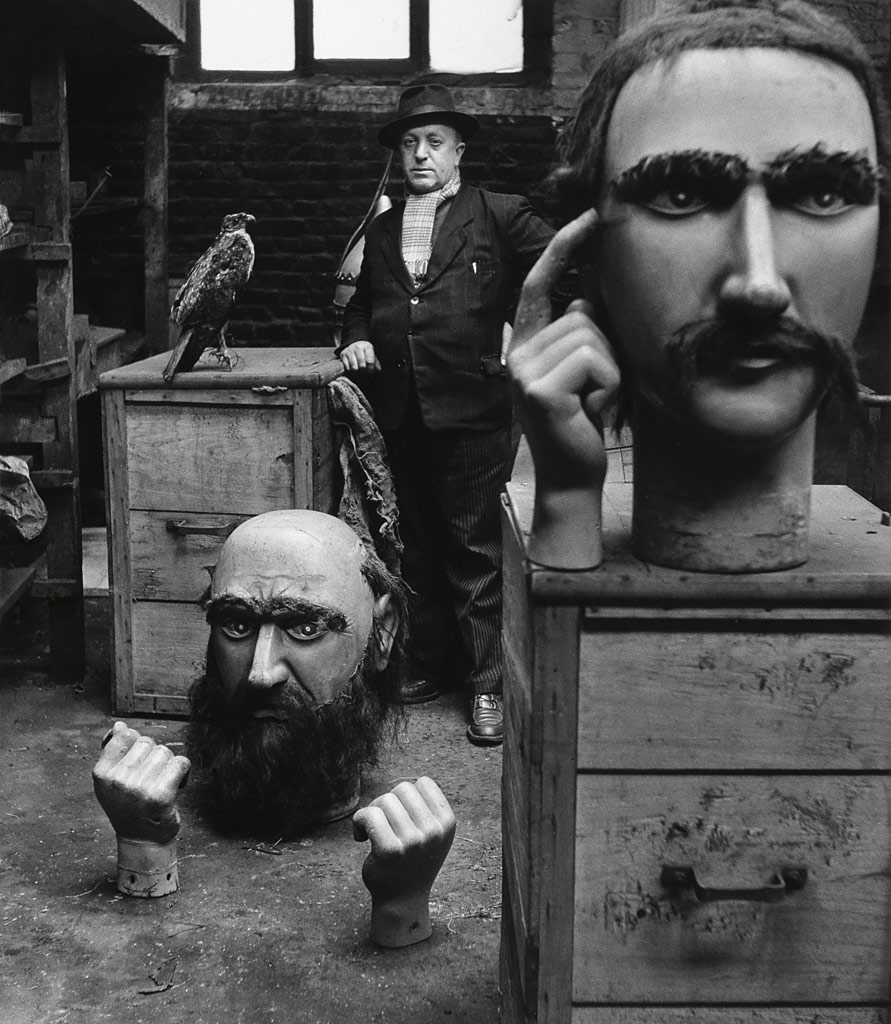
Robert Doisneau (French, 1912-1994) 'Le gardien des géants du Nord' Nd


Robert Doisneau (French, 1912-1994)
Le gardien des géants du Nord
Nd
Silver gelatin print


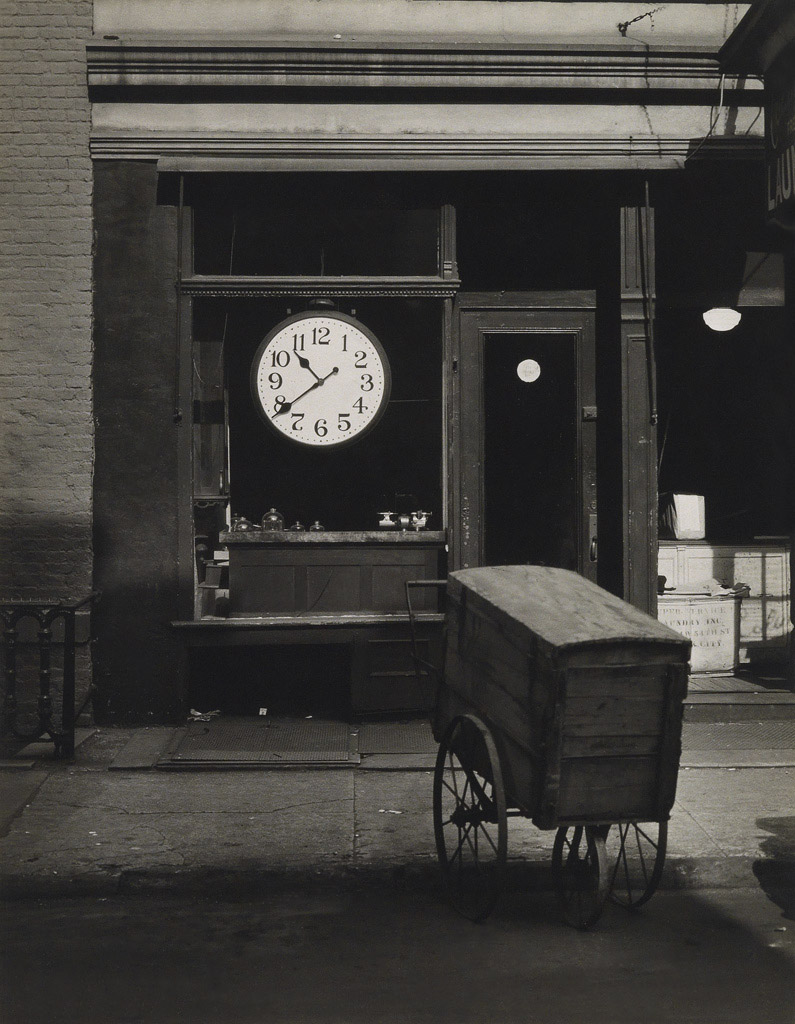
Berenice Abbott (American, 1898-1991) 'Christopher Street Shop' late 1940s


Berenice Abbott (American, 1898-1991)
Christopher Street Shop
late 1940s
Silver gelatin print


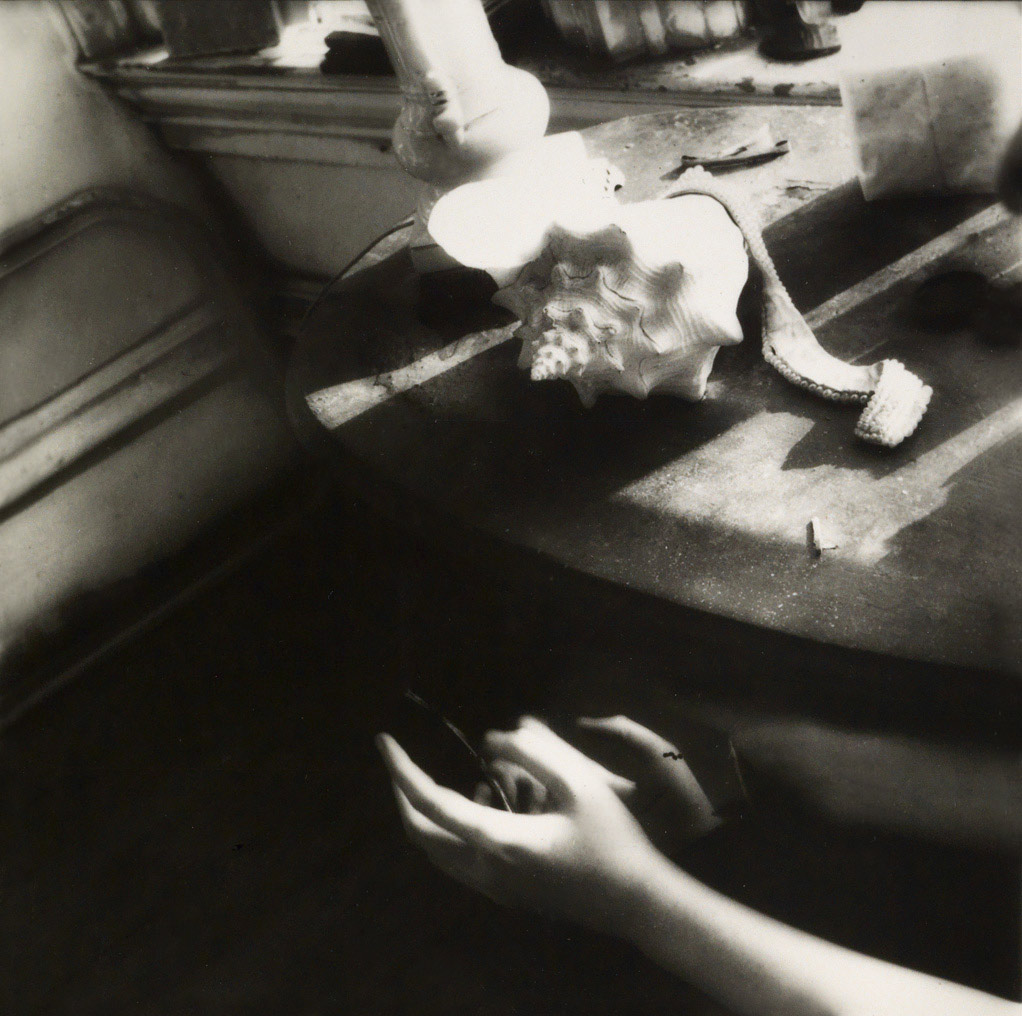
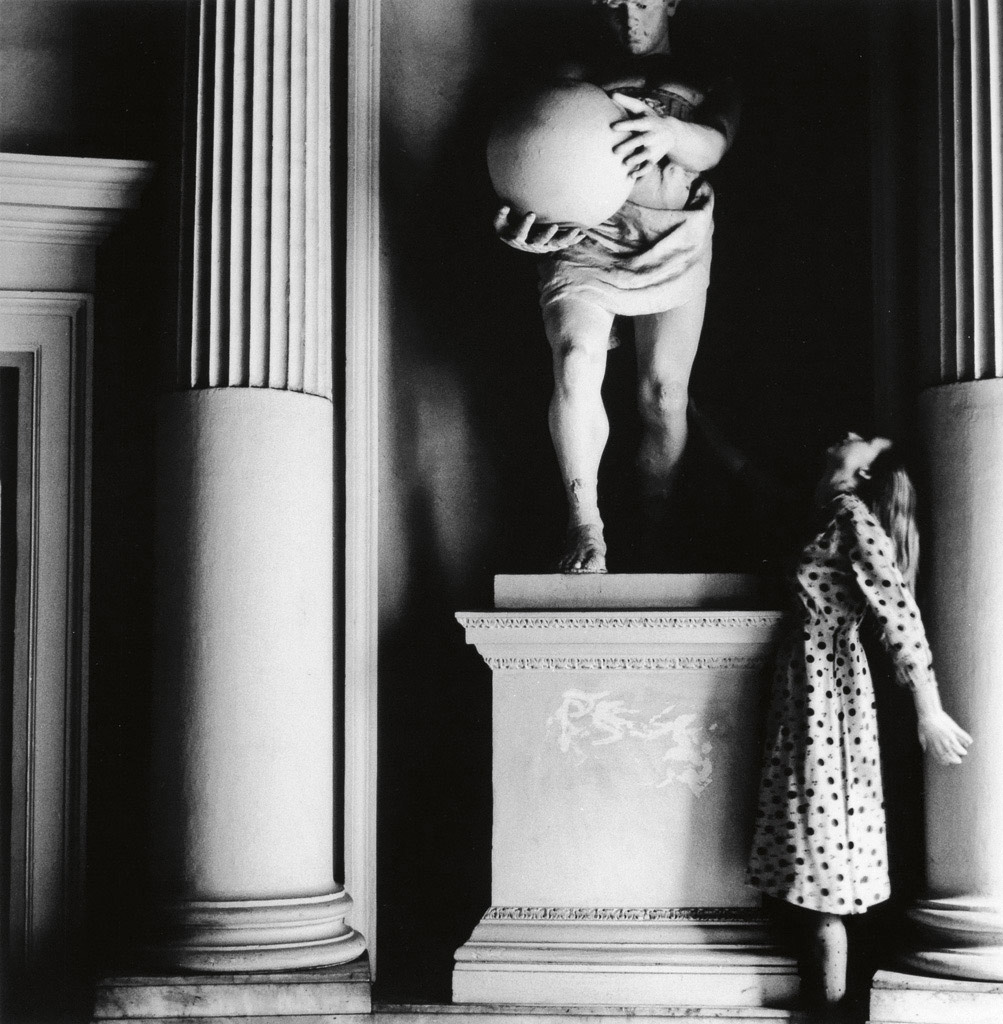
Francesca Woodman (American, 1958-1981) 'But Lately I Find a Sliver of a Mirror is Simply to Slice an Eyelid' 1979/1980


Francesca Woodman (American, 1958-1981)
But Lately I Find a Sliver of a Mirror is Simply to Slice an Eyelid
1979-1980
Silver gelatin print


Francesca Woodman (American, 1958-1981) 'Untitled, Rome, Italy' 1977/1978


Francesca Woodman (American, 1958-1981)
Untitled, Rome, Italy
1977-1978
Silver gelatin print


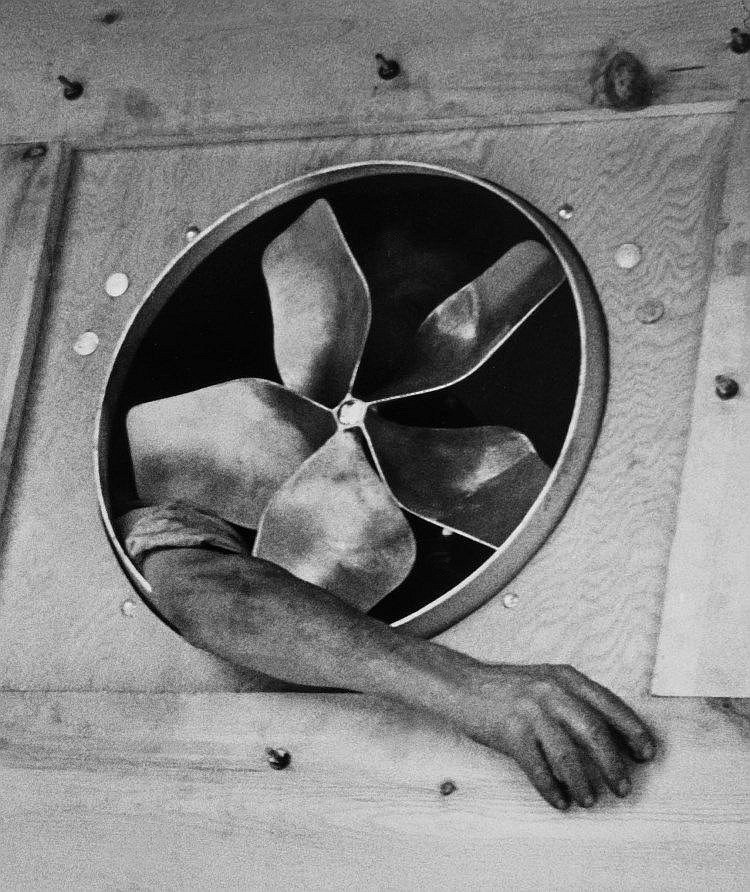
André Kertész (Hungarian, 1894-1985) 'Fan, December 1937' 1937


André Kertész (Hungarian, 1894-1985)
Fan, December 1937
1937
Silver gelatin print


“I am an amateur and I intend to stay that way for the rest of my life.”

~ André Kertész


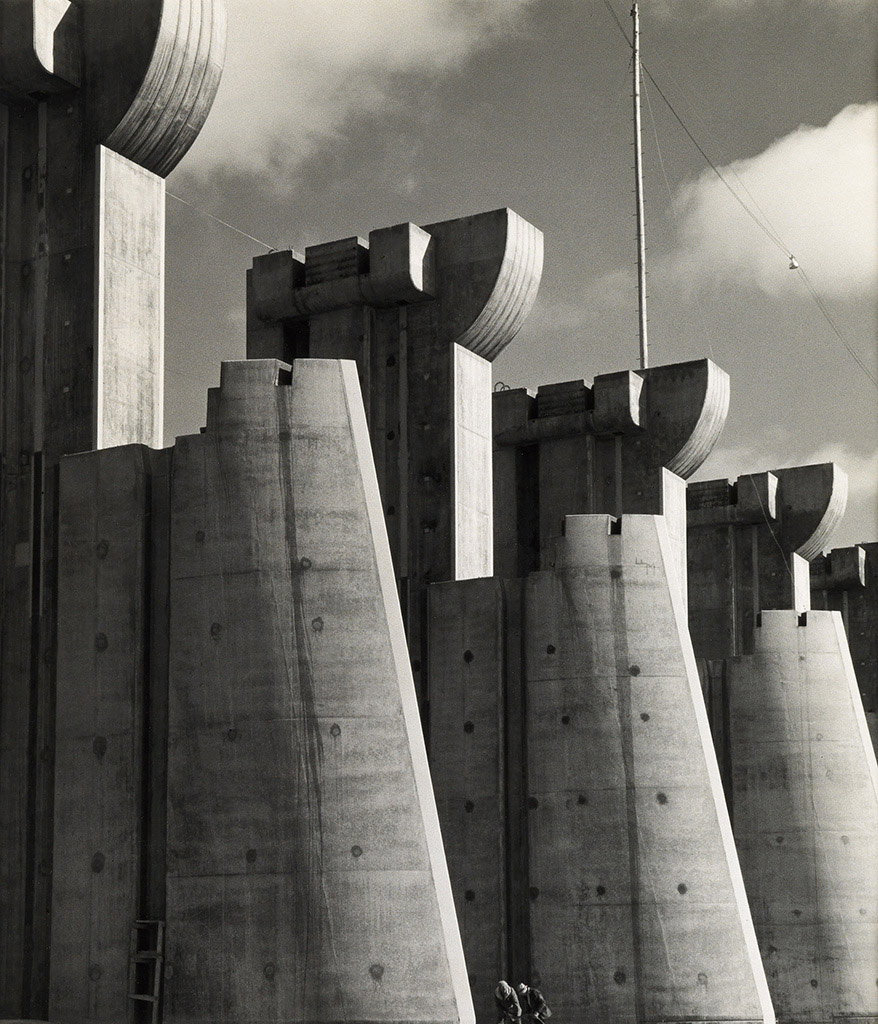
Margaret Bourke-White (American, 1904-1971) 'Fort Peck Dam, Montana' 1936


Margaret Bourke-White (American, 1904-1971)
Fort Peck Dam, Montana
1936
Silver gelatin print


This photograph became an icon of the machine age, not only because it was printed as the cover of the first issue of Life magazine (November 23, 1936), but also because it showed the power of modern technology to dwarf humankind. The giant buttresses and what seem to be crenellated battlements (actually the supports for an elevated highway) are meant to be as raw and impressive as the towering walls of ancient monuments. The engineers on the spillway provide the necessary indication of scale.


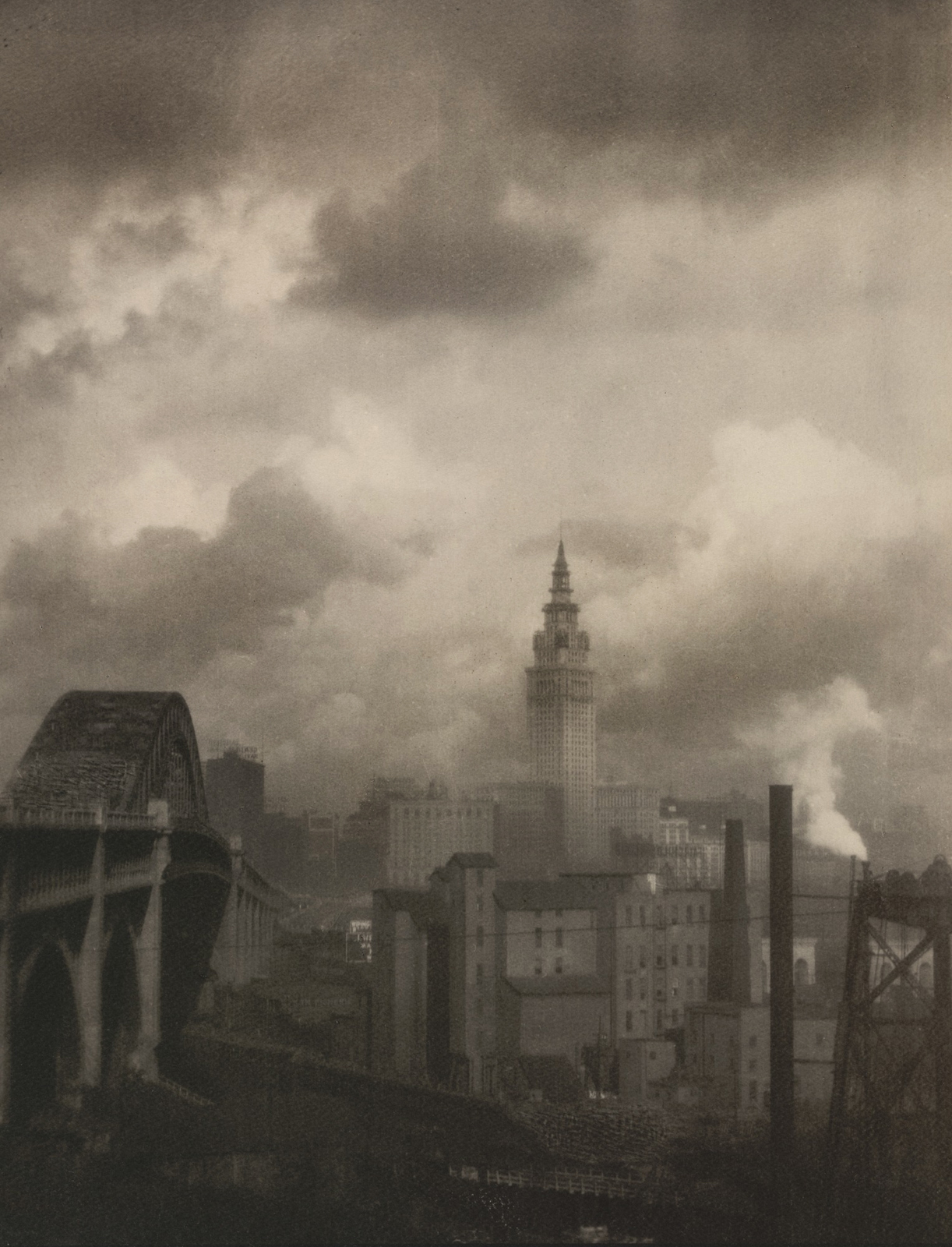
Margaret Bourke-White (American, 1904-1971) 'Terminal Tower [Cleveland]' c. 1928


Margaret Bourke-White (American, 1904-1971)
Terminal Tower [Cleveland]
c. 1928
Silver gelatin print


“I stood on the deck to watch the city [Cleveland] come into view. As the skyline took form in the morning mist, I felt I was coming to my promised land … columns of machinery gaining height as we drew toward the pier, derricks swinging like living creatures. Deep inside I knew these were my subjects.”

~ Margaret Bourke-White 1927


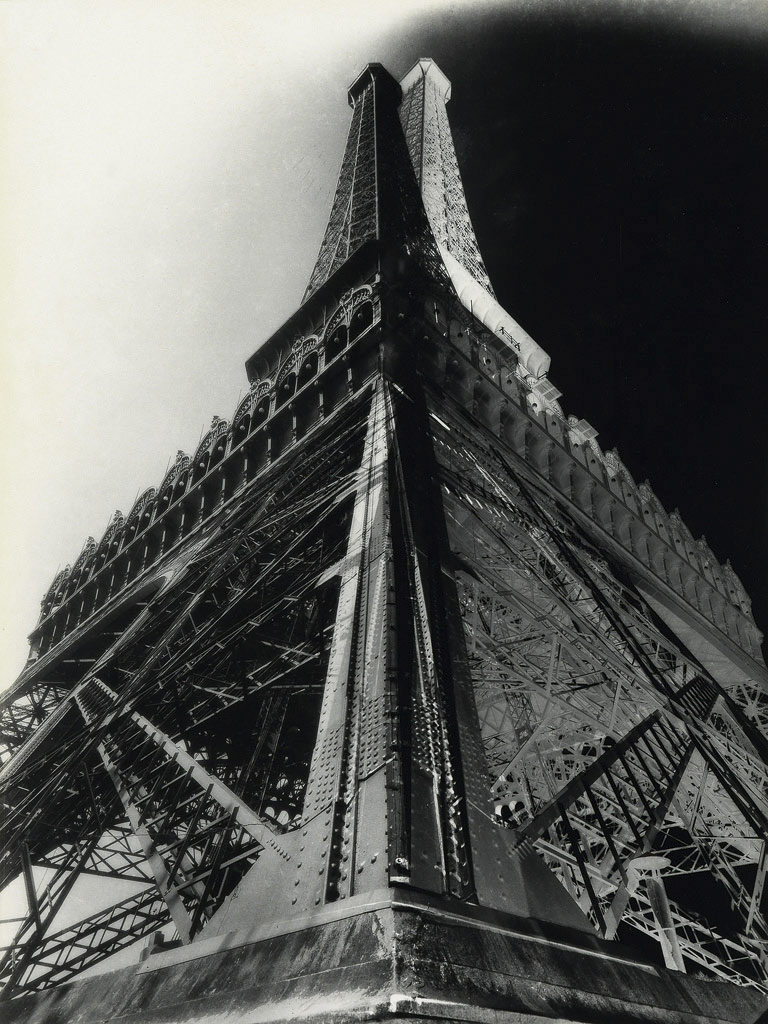
François Kollar (Hungarian, 1904-1979) 'Double-impression of the Eiffel Tower' 1931


François Kollar (Hungarian, 1904-1979)
Double-impression of the Eiffel Tower
1931
Solarised silver gelatin print


In this unique and widely-reproduced photograph, the French modernist photographer has overlaid positive and negative images of the magnificent Eiffel Tower. The iconic structure is depicted from an unusual perspective, thrusting upward, with Kollar’s special solarised effect.


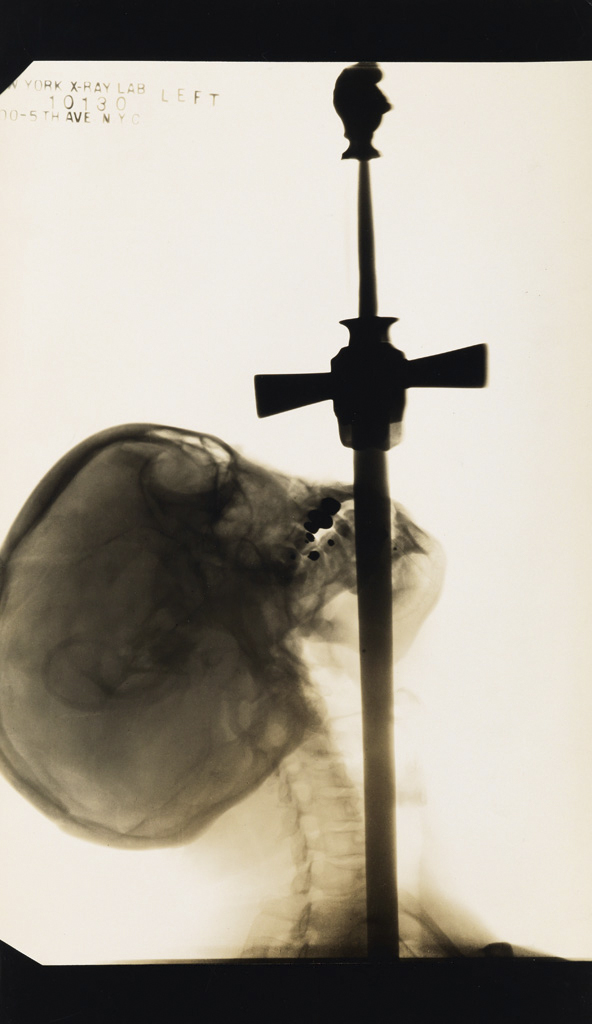
Edward J. Kelty (American, 1888-1967) 'X-ray of Ajax, the sword swallower' 1928


Edward J. Kelty (American, 1888-1967)
X-ray of Ajax, the sword swallower
1928
 Silver print
18 × 11 inches (45.7 × 27.9cm)
With a New York X-ray lab credit in the negative


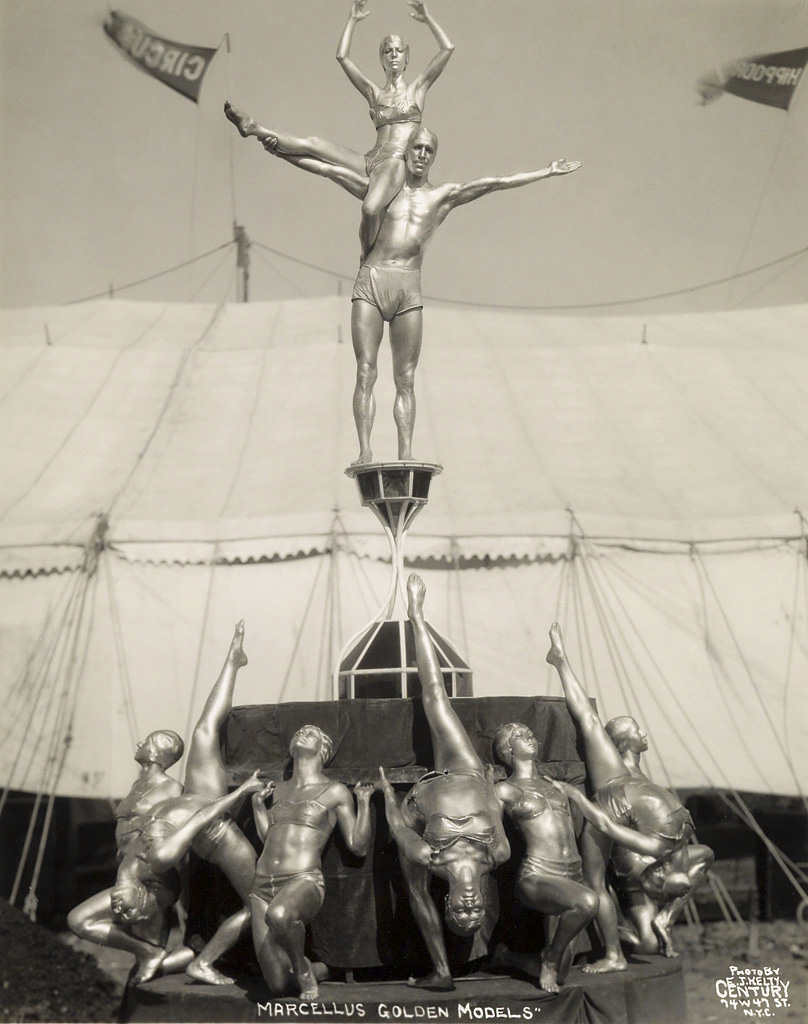
Edward J. Kelty (American, 1888-1967) 'Marcellus Golden Models' 1933


Edward J. Kelty (American, 1888-1967)
Marcellus Golden Models
1933
Silver print
11 1/4 × 8 7/8 inches (28.6 × 22.5cm)
With Kelty’s credit and title in the negative


LIKE ART BLART ON FACEBOOK

Back to top

Exhibition: ‘Manzanar: The Wartime Photographs Of Ansel Adams’ at the Jundt Art Gallery, Gonzaga University, Spokane, WA

Exhibition dates: 4th January – 29th March 2014


Ansel Adams (American, 1902-1984) 'Birds on wire, evening, Manzanar Relocation Center' 1943


Ansel Adams (American, 1902-1984)
Birds on wire, evening, Manzanar Relocation Center
1943
Silver gelatin print


Just a small celebration = this is the 900th posting on Art Blart since it started…

I sifted through all the photographs of the “war relocation center” (euphemism for concentration camp) named Manzanar that Ansel Adams took – over 220 photographs on the Library of Congress website – to bring you these, the best of the bunch. Adams wasn’t a particularly good documentary photographer and it was a struggle to come up with these images, but sprinkled in with the prosaic are some absolutely stunning landscape and still life images.

What is noteworthy however, is Adams moral stance towards the unlawful incarceration of Japanese Americans, something that went against everything American citizenship is supposed to stand for. In 1944 he published a book called Born Free and Equal which protests the treatment of these American citizens. Through photography and text he showed how they suffered under a great injustice – by portraying “Japanese American internees as loyal Americans going about their lives like regular citizens, not as dangerous aliens.”

As curator Robert Flynn Johnson notes, “Adams saved his harshest attack on their unjust imprisonment for the language of his book… In the text Adams struggled with the argument that the incarceration of these citizens was not just but justified by military necessity. However, he rejected that argument, clearly and forcefully articulating his opposition to the internment. The book was not well received. Adams was called a “Jap lover” and copies of the book were burned. To fully understand the “profiles in Courage” stand Ansel Adams took by publishing Born Free and Equal while the war was still raging, one must understand the emotionally volatile nature of those times in which it was published. Adams’s strong convictions are fully apparent when one reads his forceful words while viewing his beautiful photographic imagery…”

Can you imagine what courage it must have taken to publish a book in the middle of the Second World War – with all that was going on with America and the war in the Pacific against Japan – titled Born Free and Equal, a book that lays bare the hypocrisy of democracy as only contingent on those in power. This man and his supporters have my utmost admiration. In Australia it’s a pity – no, it’s shameful – that those elected people on both sides of major politics do not possess similar fortitude. The guts to stand up for justice and freedom against the evils of incarceration and oppression when they see it staring them in the face.

Dr Marcus Bunyan

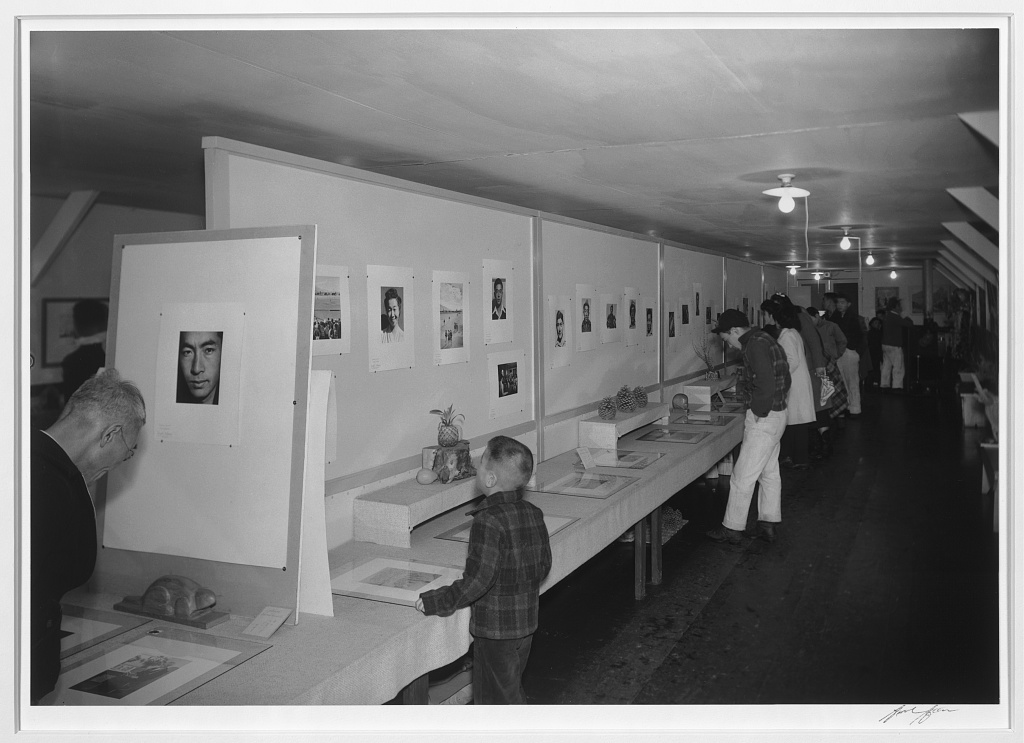
PS. What is also interesting is how Adams laid out this work for exhibition in the camp itself. The size of the prints, how they are displayed both vertically and horizontally, and how they move up and down and are not hung ‘on the line’ – plus the artefacts they are also displayed with. Fascinating stuff.


These photographs were sourced from the Prints & Photographs Online Catalog of the Library of Congress. The online archive contains all of Ansel Adams photographs of Manzanar War Relocation Center to download in high resolution, with no known restrictions on publication. Please note: publication of these images in the posting does NOT mean that these images are in the exhibition.


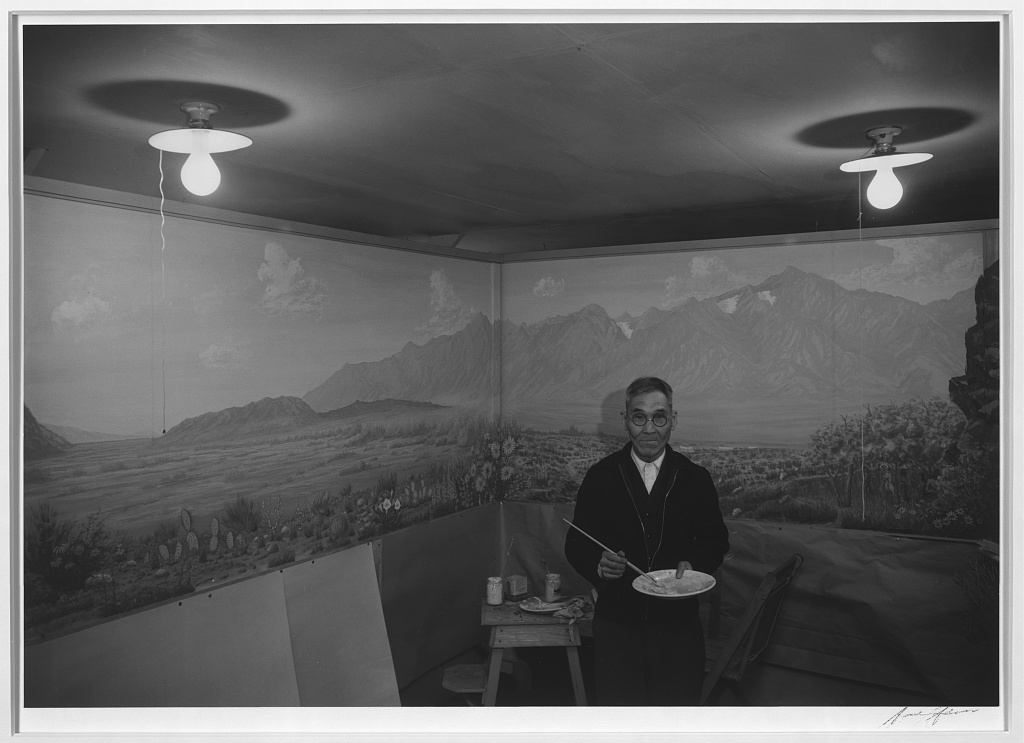
Ansel Adams (American, 1902-1984) 'C.T. Hibino, artist, Manzanar Relocation Center' 1943


Ansel Adams (American, 1902-1984)
C.T. Hibino, artist, Manzanar Relocation Center
1943
Silver gelatin print


Ansel Adams (American, 1902-1984) 'Frank Hirosama [i.e., Hirosawa] in laboratory, Manzanar Relocation Center' 1943


Ansel Adams (American, 1902-1984)
Frank Hirosama [i.e., Hirosawa] in laboratory, Manzanar Relocation Center
1943
Silver gelatin print


Foreword to Born Free and Equal

“Moved by the human story unfolding in the encirclement of desert and mountains, and by the wish to identify my photography in some creative way with the tragic momentum of the times, I came to Manzanar with my cameras in the fall of 1943. For many years, I have photographed the Sierra Nevada, striving to reveal by the clear statement of the lens those qualities of the natural scene which claim the emotional and spiritual response of the people. In these years of strain and sorrow, the grandeur, beauty, and quietness of the mountains are more important to us than ever before. I have tried to record the influence of the tremendous landscape of Inyo on the life and spirit of thousands of people living by force of circumstance in the Relocation Center of Manzanar. …

I believe that the acrid splendour of the desert, ringed with towering mountains, has strengthened the spirit of the people of Manzanar. I do not say all are conscious of this influence, but I am sure most have responded, in one way or another, to the resonances of their environment. From the harsh soil they have extracted fine crops; they have made gardens glow in the firebreaks and between the barracks. Out of the jostling, dusty confusion of the first bleak days in raw barracks they have modulated to a democratic internal society and a praiseworthy personal adjustment to conditions beyond their control. The huge vistas and the stern realities of sun and wind and space symbolise the immensity and opportunity of America – perhaps a vital reassurance following the experience of enforced exodus. …

I trust the content and message of this book will suggest that the broad concepts of American citizenship, and of liberal, democratic life the world over, must be protected in the prosecution of the war, and sustained in the building of the peace to come.”

Ansel Adams, Foreword to Born Free and Equal, 1944


Library of Congress text

Well-known fine art and landscape photographer, Ansel Adams, took on several war-related assignments. When offering the Manzanar photos to the Library in 1965, Adams wrote in an accompanying letter, “The purpose of my work was to show how these people, suffering under a great injustice … had overcome the sense of defeat and dispair [sic] by building for themselves a vital community in an arid (but magnificent) environment.”

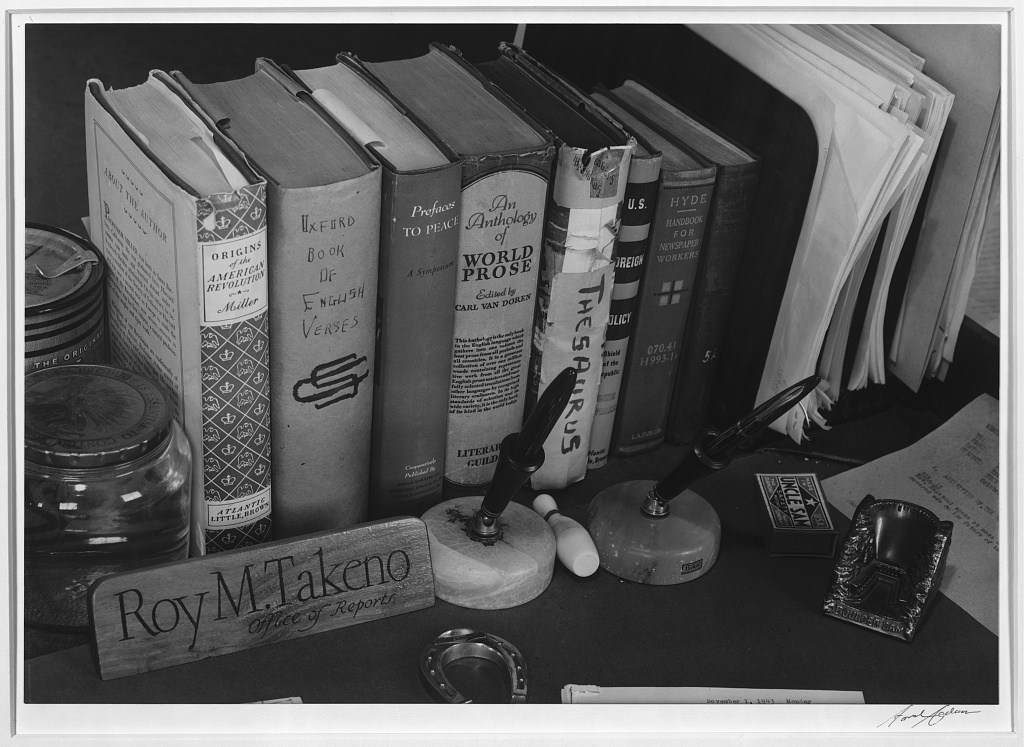
Summary: Photographs document the lives of Japanese Americans interned during World War II at the Manzanar Relocation Center, in Inyo County, California. There are numerous close-up and occupational portraits of individuals, including Roy Takeno, editor of the Manzanar Free Press, and photographer Tōyō Miyatake. Group portraits include families, women and children. Other photographs show people posed in their living quarters and engaged in indoor daily life such as shopping, religious services, health care, and education; more informal views portray outdoor agricultural scenes and sports and leisure activities. Landscape views feature the background mountains and desert as well as camp facilities and buildings.

Text from the Library of Congress website


Ansel Adams (American, 1902-1984) 'Manzanar street scene, spring, Manzanar Relocation Center' 1943


Ansel Adams (American, 1902-1984)
Manzanar street scene, spring, Manzanar Relocation Center
1943
Silver gelatin print


Ansel Adams (American, 1902-1984) 'Benji Iguchi driving tractor in field, Manzanar Relocation Center' 1943


Ansel Adams (American, 1902-1984)
Benji Iguchi driving tractor in field, Manzanar Relocation Center
1943
Silver gelatin print


“… that all Japanese, whether citizens or not, be placed in inland concentration camps. As justification for this, I submit that if an American born Japanese, who is a citizen, is really patriotic and wishes to make his contribution to the safety and welfare of this country, right here is his opportunity to do so, namely, by permitting himself to be placed in a concentration camp, he would be making his sacrifice. … Millions of other native-born citizens are willing to lay down their lives, which is a far greater sacrifice, of course, than being placed in a concentration camp.”


Secretary of War Henry Stinson, January 16, 1942


The Jundt Art Museum will display Manzanar: The Wartime Photographs of Ansel Adams in the Jundt Galleries Jan. 4 through March 29. The exhibition features 50 of the renowned photographer’s images of the Japanese-American relocation camp in Manzanar, Calif. during World War II. The photographs are included in the controversial book Born Free and Equal, which protests the treatment of these American citizens. The book was published in 1944 while the war was in progress. Also included in the exhibition are various photographs, documents and other works of art that further contextualise the images. Robert Flynn Johnson, curator emeritus for the Achenbach Foundation for Graphic Arts at the Fine Arts Museums of San Francisco, curated the exhibition.

Born in San Francisco, Adams was a visionary in nature photography and wilderness preservation. He has become an environmental folk hero for his work in conservation as well as a symbol of the American West, particularly for his photographs of Yosemite National Park. Adams’ Manzanar work is a departure from his signature style of landscape photography. Most of the Manzanar photographs are portraits, views of daily life, agricultural scenes, and sports and leisure activities. The Ansel Adams photographs taken between 1943-1944 are prints made from the original negatives in the Library of Congress. They were previously exhibited in the exhibition, Born Free and Equal: An Exhibition of Ansel Adams Photographs, organised by the Fresno Metropolitan Museum of Art, History and Science in 1984.

Robert Flynn Johnson, Curator Emeritus, Achenbach Foundation for Graphic Arts, Fine Arts Museums of San Francisco, in his essay for the exhibition writes, “This exhibition recounts one of the darkest moments in the history of the United States, one that the distinguished author John hersey referred to as ‘a mistake of terrifyingly horrible proportions.’ It is a story of ignorance and prejudice, but also a story of perseverance and nobility. What happened should never be forgotten so that it should never happen again.” Johnson continues, “This is not only an art exhibition, a history lesson, or a study in race relations; it is all three. My hope is that it educates us about an unfortunate moment in our country’s history that must be better understood. It also should serve as a warning as to what can occur when emotion and fear overwhelm clarity and courage.”

Also included in the exhibition is a first edition copy of Adams’s 1944 book, Born Free and Equal; a vintage gelatin silver print by Adams titled A Photograph of Yosemite, c. 1938; three reproductions of Dorothea Lange photographing Japanese-Americans being evacuated; a watercolour painting of a camp by an internee; an original 1942 poster of the Civilian Exclusion Order that announced that Japanese-Americans were to be rounded up for imprisonment; seven original magazine covers and a poster that documents the virulent anti-Japanese attitudes present at the time; a watercolour by Henry Minakata of one of the Relocation Camps; and three original drawings by the famous artist Chiura Obata, who was imprisoned in the Topaz Camp. The exhibition, which will tour museums in the United States over the next few years, was organised by Photographic Traveling Exhibitions of Los Angeles.”

Press release from the Jundt Art Gallery website


Ansel Adams (American, 1902-1984) 'Manzanar from guard tower, summer heat, view SW, Manzanar Relocation Center' 1943


Ansel Adams (American, 1902-1984)
Manzanar from guard tower, summer heat, view SW, Manzanar Relocation Center
1943
Silver gelatin print


Ansel Adams (American, 1902-1984) 'Manzanar from Guard Tower, view west (Sierra Nevada in background), Manzanar Relocation Center' 1943


Ansel Adams (American, 1902-1984)
Manzanar from Guard Tower, view west (Sierra Nevada in background), Manzanar Relocation Center
1943
Silver gelatin print


The first morning in Manzanar when I woke up and saw what Manzanar looked like, I just cried. And then I saw the high Sierra mountain, just like my native country’s mountain, and I just cried, that’s all.” Haruko Niwa, interned at Manzanar from 1942 until 1945.

Ten war relocation centres were built in remote deserts, plains, and swamps of seven states; Arkansas, Arizona, California, Colorado, Idaho, Utah, and Wyoming. Manzanar, located in the Owens Valley of California between the Sierra Nevada on the west and the Inyo mountains on the east, was typical in many ways of the 10 camps. About two-thirds of all Japanese Americans interned at Manzanar were American citizens by birth. The remainder were aliens, many of whom had lived in the United States for decades, but who, by law, were denied citizenship.

The first Japanese Americans to arrive at Manzanar, in March 1942, were men and women who volunteered to help build the camp. On June 1 the War Relocation Authority (WRA) took over operation of Manzanar from the U.S. Army. The 500-acre housing section was surrounded by barbed wire and eight guard towers with searchlights and patrolled by military police. Outside the fence, military police housing, a reservoir, a sewage treatment plant, and agricultural fields occupied the remaining 5,500 acres. By September 1942 more than 10,000 Japanese Americans were crowded into 504 barracks organised into 36 blocks. There was little or no privacy in the barracks – and not much outside. The 200 to 400 people living in each block, consisting of 14 barracks each divided into four rooms, shared men’s and women’s toilets and showers, a laundry room, and a mess hall. Any combination of eight individuals was allotted a 20-by-25-foot room. An oil stove, a single hanging light bulb, cots, blankets, and mattresses filled with straw were the only furnishings provided.

Coming from Los Angeles and other communities in California and Washington, Manzanar’s internees were unaccustomed to the harsh desert environment. Summer temperatures soared as high as 110ºF. In winter, temperatures frequently plunged below freezing. Throughout the year strong winds swept through the valley, often blanketing the camp with dust and sand. Internees covered knotholes in the floors with tin can lids, but dust continued to blow in between the floorboards until linoleum was installed in late 1942…

Two thirds of the Japanese Americans interned at Manzanar were under the age of 18. 541 babies were born at Manzanar. A total of 11,070 Japanese Americans were processed through Manzanar. From a peak of 10,046 in September 1942, the population dwindled to 6,000 by 1944. The last few hundred internees left in November 1945, three months after the war ended. Many of them had spent three-and-a-half years at Manzanar.

Anon. “Japanese Americans at Manzanar,” on the Manzanar National Historic Site (U. S. National Park Service) website [Online] Cited 08/03/2014


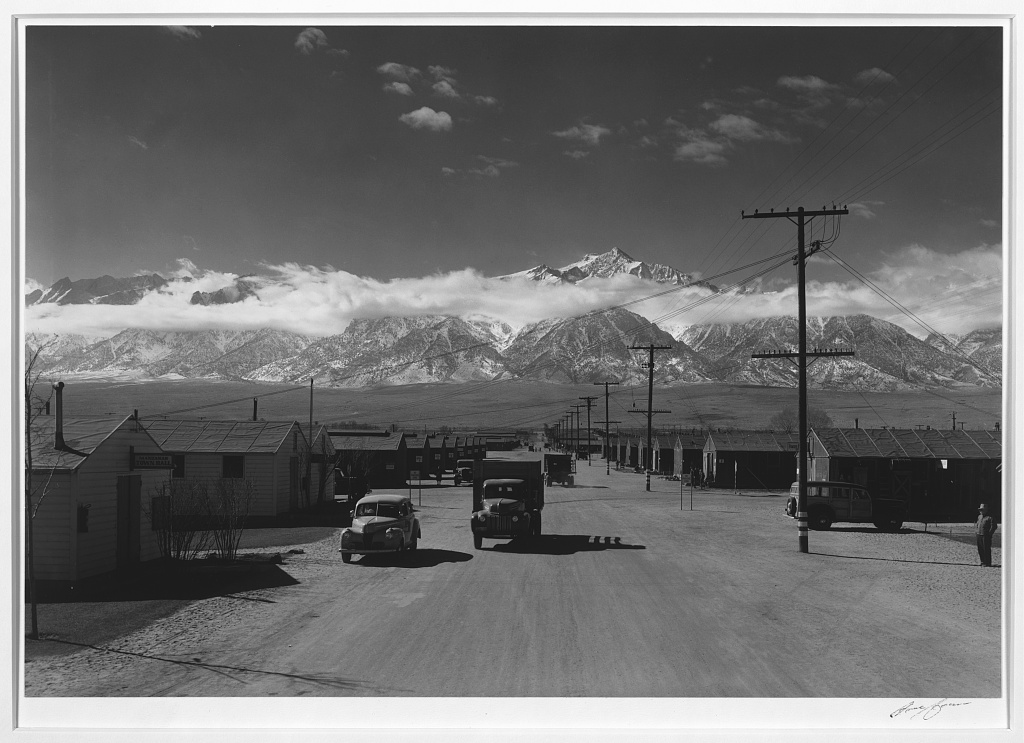
Ansel Adams (American, 1902-1984) 'Manzanar street scene, clouds, Manzanar Relocation Center' 1943


Ansel Adams (American, 1902-1984)
Manzanar street scene, clouds, Manzanar Relocation Center
1943
Silver gelatin print


Ansel Adams (American, 1902-1984) 'Manzanar street scene, winter, Manzanar Relocation Center' 1943


Ansel Adams (American, 1902-1984)
Manzanar street scene, winter, Manzanar Relocation Center
1943
Silver gelatin print


Ansel Adams (American, 1902-1984) 'View south from Manzanar to Alabama Hills, Manzanar Relocation Center' 1943


Ansel Adams (American, 1902-1984)
View south from Manzanar to Alabama Hills, Manzanar Relocation Center
1943
Silver gelatin print


Ansel Adams (American, 1902-1984) 'View SW over Manzanar, dust storm, Manzanar Relocation Center' 1943


Ansel Adams (American, 1902-1984)
View SW over Manzanar, dust storm, Manzanar Relocation Center
1943
Silver gelatin print


This exhibition recounts one of the darkest moments in the history of the United States, one that the distinguished author John Hersey referred to as “a mistake of terrifyingly horrible proportions.”1 It is a story of ignorance and prejudice, but it is also a story of perseverance and nobility. What happened should never be forgotten so that it should never happen again.

Background

In the aftermath of the Japanese surprise attack on Pearl Harbor and the subsequent declaration of war by the United States, a wave of fear and paranoia swept the western United States and the Hawaiian Islands. Anxiety over possible invasion by Japanese forces or sabotage by fifth columnist Japanese and Japanese Americans living amongst the general American population overrode common sense in Government circles. Despite the protestations of Attorney General Francis Biddle, Interior Secretary Harold Ickes, and even F.B.I. Director J. Edgar Hoover.

President Franklin Delano Roosevelt, in the most unfortunate act of an otherwise admirable presidency, allowed public opinion and biased, racist attitudes of elements within the U.S. Army to induce him into issuing on February 19, 1942, Executive Order 9066: the forced evacuation of persons of Japanese ancestry from the West Coast. This evacuation was done despite the fact that the F.B.I. had, within three days of Pearl Harbor, rounded up and arrested 857 Germans, 147 Italians, and 1,291 Japanese (367 in Hawaii and 924 on the mainland) for subversive activities. The government did not inter Germans, Italians, nor, with few exceptions, Japanese residing in Hawaii. Instead they rounded up Japanese and Japanese Americans residing in the western United States. In the end, these individuals were interred in ten camps spread over underpopulated areas of the West and in Arkansas in the Midwest…

The act of rounding up civilians and imprisoning them in camps had occurred in earlier centuries. The term “concentration camp” was first used to describe the actions of the British against the Boers during the Second Boer War (1899-1902), but today it is indistinguishable from the horrors of the extermination camps perpetrated by the Nazis against Jews, Russians, and other victims of the Reich in World War II. American authorities euphemistically labeled the Japanese internments as “war relocation centers,” but given the harsh conditions Japanese Americans suffered, a more appropriate term might be war relocation “camps.”

Mine Okubo describes the conditions: “The camps represented a prison: no freedom, no privacy, no America. Internment camps were also guarded by U.S. military personnel and had a barbed wire perimeter.”2

Manzanar

The brilliant social activist photographer Dorothea Lange (1895-1965) was hired by the U.S. government in the spring of 1942 to document this forced relocation. Her assignment included the camp at Manzanar, located in the remote Owens Valley in the northern reaches of Death Valley, California. However, when her photographs were submitted, they were viewed with alarm for showing the government in a bad light; the decision was made to impound (censor) her images until the end of the war.

It was only in 1943 that Ralph Merritt, the enlightened second director at Manzanar, invited his old friend Ansel Adams to come and photograph there. By that time, the internees had settled into their lives there coping as best they could. In 1942 a confrontation with camp guards had led to shots being fired, resulting in the deaths of two internees and the wounding of nine. There were no further incidents. Some historians have criticised Adams’s photographs, comparing them to the more politicised imagery of Lange. Linda Gordon wrote,

“Ansel Adams photographed at Manzanar a year after Lange did, producing work that, by contrast, reveals much about Lange’s perspective. He tried to walk a cramped line, opposing anti-Asian racism, but avoiding identification with the opposition to the internment. Adams’s pictures, primarily portraits – surprisingly for a landscape photographer – emphasised the internees’ stoic, polite, even cheerful making the best of it. His subjects were almost exclusively happy, smiling. His goal was to establish the internees as unthreatening, Americanised, open – scrutable rather than inscrutable. By making mainly individual portraits, he masked collective racial discrimination. The resultant hiding of the internment’s violation of human rights was not an unintended consequence of this goal, but an expression of Adams’s patriotism.”3

There is no question that Lange was the stronger documentary photographer. However, Adams was working out of his comfort zone as a landscape photographer and his point was not to use his images to indict the authorities. Instead, he wished to portray the Japanese American internees as loyal Americans going about their lives like regular citizens, not as dangerous aliens. Adams saved his harshest attack on their unjust imprisonment for the language of his book, Born Free and Equal, published the following year, 1944.

In the text Adams struggled with the argument that the incarceration of these citizens was not just but justified by military necessity. However, he rejected that argument, clearly and forcefully articulating his opposition to the internment. The book was not well received. Adams was called a “Jap lover” and copies of the book were burned. To fully understand the “profiles in Courage” stand Ansel Adams took by publishing Born Free and Equal while the war was still raging, one must understand the emotionally volatile nature of those times in which it was published. Adams’s strong convictions are fully apparent when one reads his forceful words while viewing his beautiful photographic imagery…

Conclusion

This is not only an art exhibition, a history lesson, or a study in race relations; it is all three. My hope is that it educates us about an unfortunate moment in our country’s history that must be better understood and should serve as a warning against allowing emotion, prejudice and fear to overwhelm clarity and courage. Harold L. Ickes, the Secretary of the Interior, in his 1944 foreword to Born Free and Equal sums up the essence of this human drama,

“It has long been my belief that the greatness of America has arisen in large part out of the diversity of her peoples. Before the war, peoples of Japanese ancestry were a small but valuable element in our population. Their record of law-abiding, industrious citizenship was surpassed by no other group. Their contributions to the arts, agriculture, and science were indisputable evidence that the majority of them believed in America and were growing with America.

Then war came with the nation of their parental origin. The ensuing two and a half years have brought heartaches to many in our population. Among the causalities of war has been America’s Japanese minority. It is my hope that the wounds which it has received in the great uprooting will heal. It is my prayer that other Americans will fully realise that to condone the whittling away of the rights of any one minority group is to pave the way for us all to lose the guarantees of the Constitution.”4

Robert Flynn Johnson
Curator Emeritus
Achenbach Foundation for Graphic Arts, Fine Arts Museums of San Francisco


1/ John Hersey, “A Mistake of Terrifically Horrible proportions,” in Manzanar, by John Armor and Peter Wright (New York Times Books, 1988)
2/ Sara Ann McGill, “Internment of Japanese Americans,” accessed May 3, 2010. No longer available online
3/ Linda Gordon and Gary Y. Okihiro, ed., Impounded: Dorothea Lange and the Censored Images of Japanese American Internment (New York: W. W. Norton and Co., 2006), 34
4/ Ansel Adams, Born Free and Equal: The Story of Loyal Japanese-Americans (New York: U.S. Camera, 1944), 7


Ansel Adams (American, 1902-1984) 'Pictures and mementoes on phonograph top - Yonemitsu home, Manzanar Relocation Center' 1943


Ansel Adams (American, 1902-1984)
Pictures and mementoes on phonograph top – Yonemitsu home, Manzanar Relocation Center
1943
Silver gelatin print


Ansel Adams (American, 1902-1984) 'Roy Takeno's desk, Manzanar Relocation Center' 1943


Ansel Adams (American, 1902-1984)
Roy Takeno’s desk, Manzanar Relocation Center
1943
Silver gelatin print


Ansel Adams (American, 1902-1984) 'Manzanar museum (Ansel Adams exhibit), Manzanar Relocation Center' 1943


Ansel Adams (American, 1902-1984)
Manzanar museum (Ansel Adams exhibit), Manzanar Relocation Center
1943
Silver gelatin print


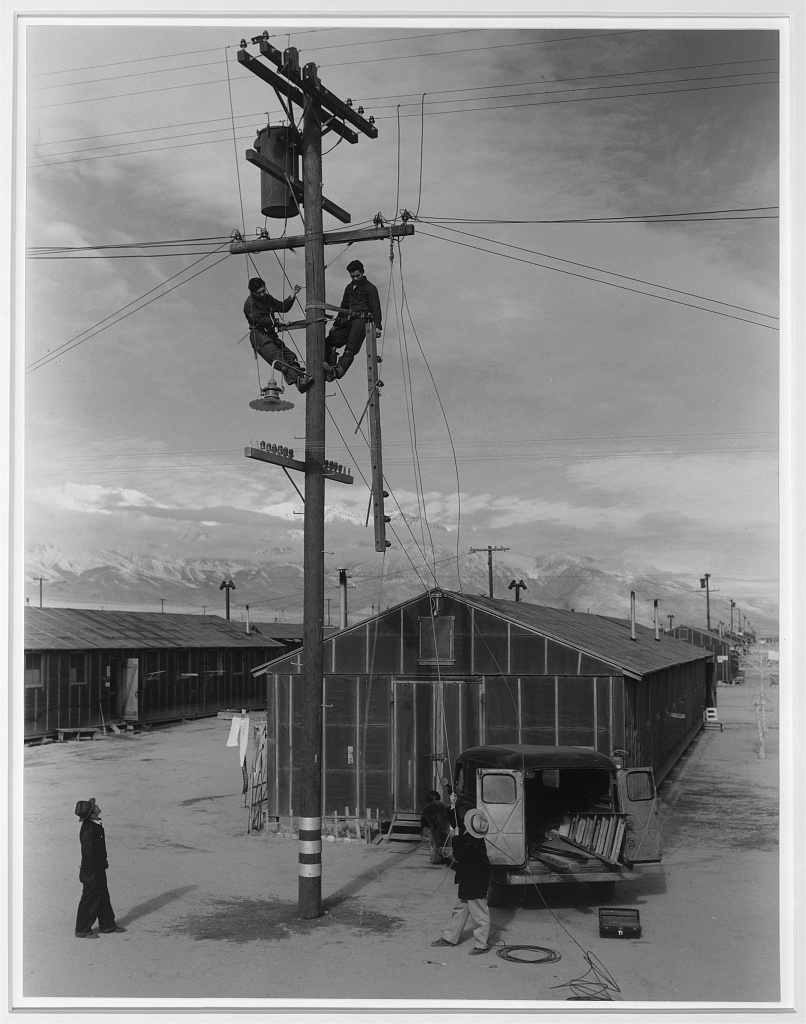
Ansel Adams (American, 1902-1984) 'Line crew at work in Manzanar, Manzanar Relocation Center' 1943


Ansel Adams (American, 1902-1984)
Line crew at work in Manzanar, Manzanar Relocation Center
1943
Silver gelatin print


Jundt Art Gallery
502 East Boone Avenue
Spokane, WA 99258-0001
This is the main address for Gonzaga University

Opening hours:
Monday – Saturday 10am – 4pm

Jundt Art Gallery website

LIKE ART BLART ON FACEBOOK

Back to top

Exhibitions: ‘Howard Greenberg, Collection’ and ‘Freaks, The Monstrous Parade: Photographs from Enrico Praloran Collection’ at the Musée de l’Elysée, Lausanne

Exhibition dates: both 21st September 2012 – 6th January 2013


Dorothea Lange (American, 1895-1965) 'Migratory Cotton Picker' Eloy, Arizona 1940


Dorothea Lange (American, 1895-1965)
Migratory Cotton Picker
Eloy, Arizona, 1940
Gelatin silver print
© Library of Congress
Courtesy of Howard Greenberg Collection


This is a meta-post where I have brought together photographs from the second exhibition Freaks, The Monstrous Parade: Photographs from Enrico Praloran Collection and all the good quality images of Todd Browning’s cult film Freaks (1932) that were available online, since the museum only provided me with three media images (the first three) on a fascinating subject. By reflection, the photographs from Freaks have a strange correlation to the photographs that appear in the Howard Greenberg, Collection.

There is an interesting discussion by Amanda Ann Klein on her blog (see link below) about her students reaction to the film that she taught as part of her Trash Cinema class. She observes that, “Freaks preaches acceptance and… the belief that we are all “God’s children.” And yet, the film was intended to “out horror” Frankenstein through its fantastic display of disabled bodies…” but that her students did not see it as an exploitation film, in fact they approved of the revenge taken by the freaks on Cleopatra and Hercules at the end of the film, even though this seemed to replicate the very imagery Browning denounced earlier in the film. Klein insightfully notes that “it did prove to be an interesting example of how a film’s reception can change dramatically over time.”

The content of a work of art is never fixed by the author as the context and meaning of the work is never fixed by the viewer. As David Smail notes the truth changes according to, among other things, developments in our values and understandings. There can be many truths depending on our line-of-sight and point-of-view but a subjective non-final truth has to be actively struggled for:

“Where objective knowing is passive, subjective knowing is active – rather than giving allegiance to a set of methodological rules which are designed to deliver up truth through some kind of automatic process [in this case the image], the subjective knower takes a personal risk in entering into the meaning of the phenomena to be known … Those who have some time for the validity of subjective experience but intellectual qualms about any kind of ‘truth’ which is not ‘objective’, are apt to solve their problem by appealing to some kind of relativity. For example, it might be felt that we all have our own versions of the truth about which we must tolerantly agree to differ. While in some ways this kind of approach represents an advance on the brute domination of ‘objective truth’, it in fact undercuts and betrays the reality of the world given to our subjectivity. Subjective truth has to be actively struggled for: we need the courage to differ until we can agree. Though the truth is not just a matter of personal perspective, neither is it fixed and certain, objectively ‘out there’ and independent of human knowing. ‘The truth’ changes according to, among other things, developments and alterations in our values and understandings … the ‘non-finality’ of truth is not to be confused with a simple relativity of ‘truths’.”

Smail, David. Illusion and Reality: The Meaning of Anxiety. London: J.M. Dent & Sons, 1984, pp.152-153.

Dr Marcus Bunyan


Many thankx to the Musée de l’Elysée, Lausanne for allowing me to publish some of the photographs in the posting. Please click on the photographs for a larger version of the image.


Henri Cartier-Bresson (French, 1908-2004) 'Madrid' 1933


Henri Cartier-Bresson (French, 1908-2004)
Madrid
1933
Gelatin silver print
© Henri Cartier-Bresson/Magnum Photos
Courtesy of Fondation HCB and Howard Greenberg Collection


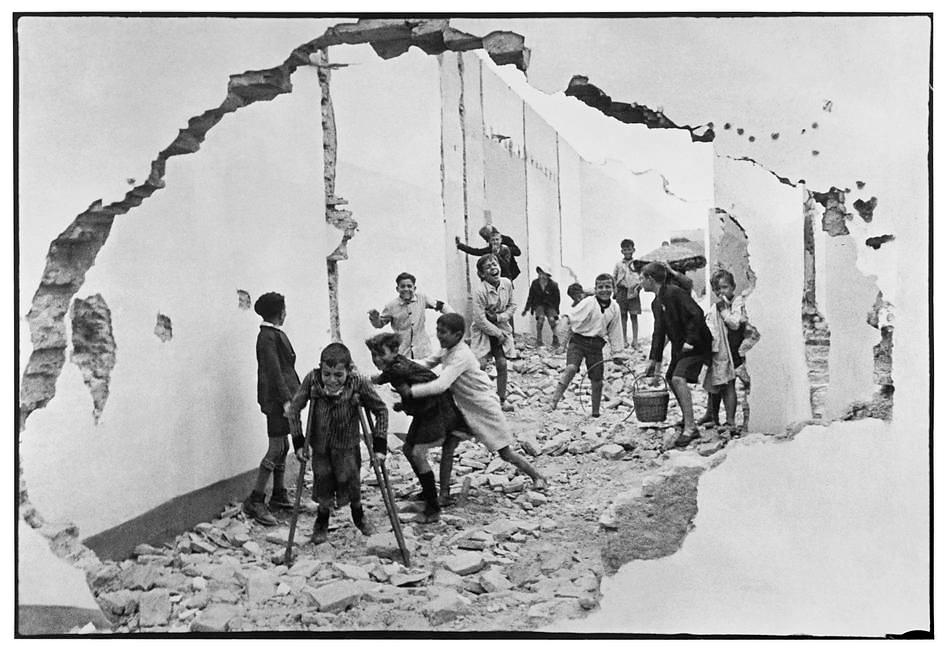
Henri Cartier-Bresson (French, 1908-2004) 'Children in Seville' 1933


Henri Cartier-Bresson (French, 1908-2004)
Seville
1933
Gelatin silver print
© Henri Cartier-Bresson/Magnum Photos
Courtesy of Fondation HCB and Howard Greenberg Collection


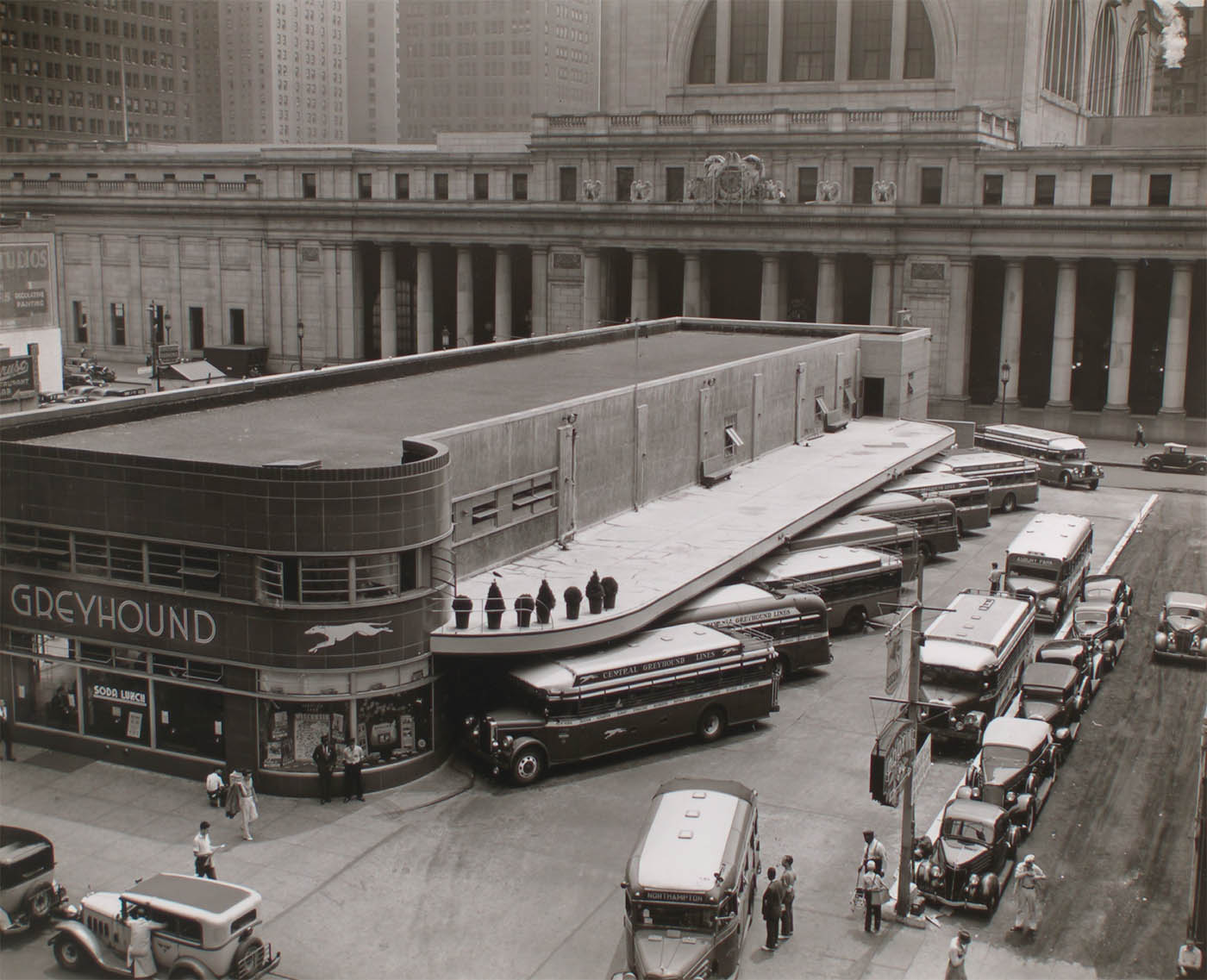
Berenice Abbott (American, 1898-1991) 'Greyhound Bus Terminal, 33rd and 34th Streets between Seventh and Eighth Avenues, Manhattan' 1936


Berenice Abbott (American, 1898-1991)
Greyhound Bus Terminal, 33rd and 34th Streets between Seventh and Eighth Avenues, Manhattan
1936
Gelatin silver print
Courtesy of Howard Greenberg Collection


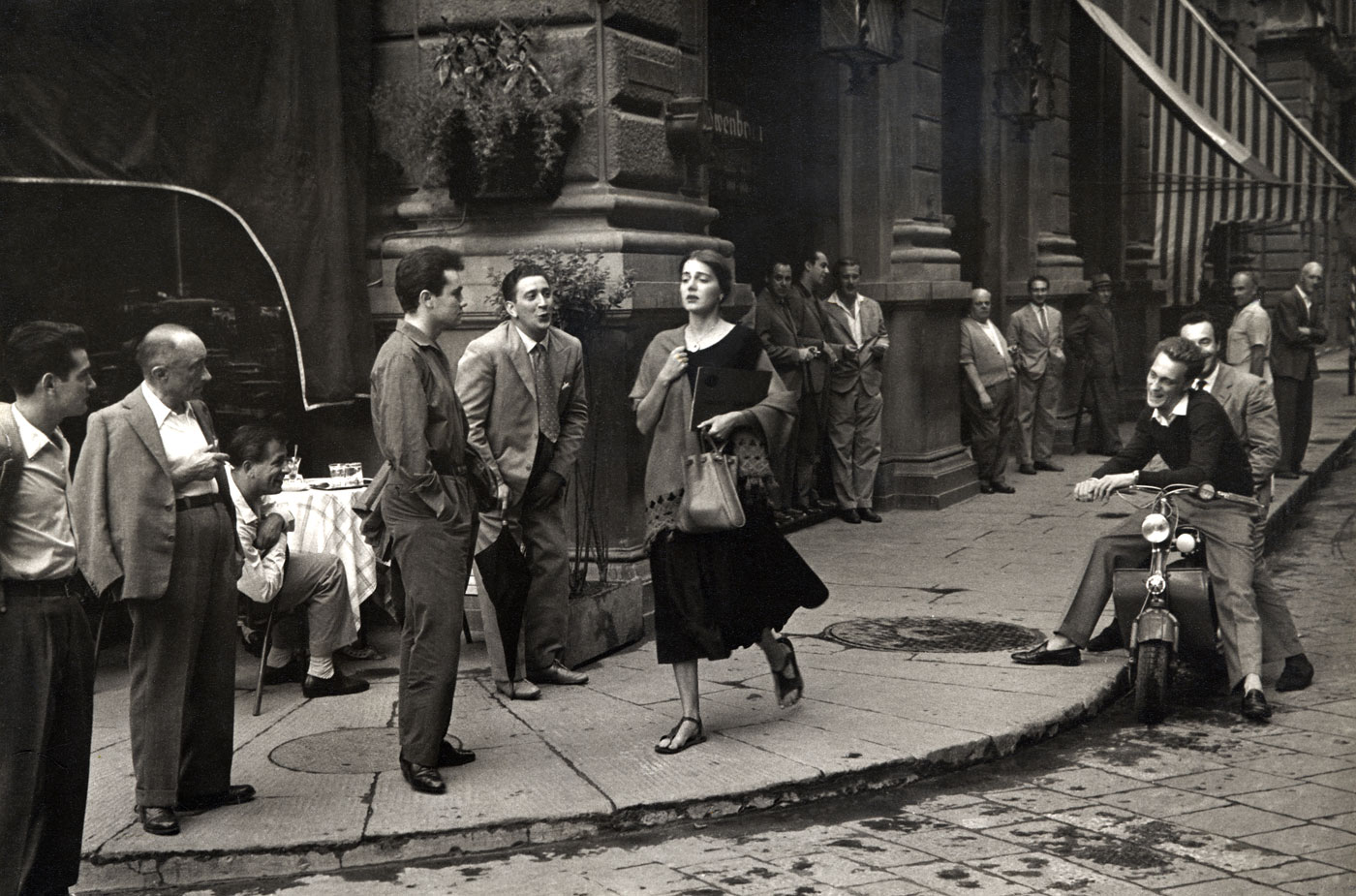
Ruth Orkin (American, 1921-1985) 'American Girl in Italy' 1951


Ruth Orkin (American, 1921-1985)
American Girl in Italy
1951
Gelatin silver print
© Ruth Orkin
Courtesy of Howard Greenberg Collection


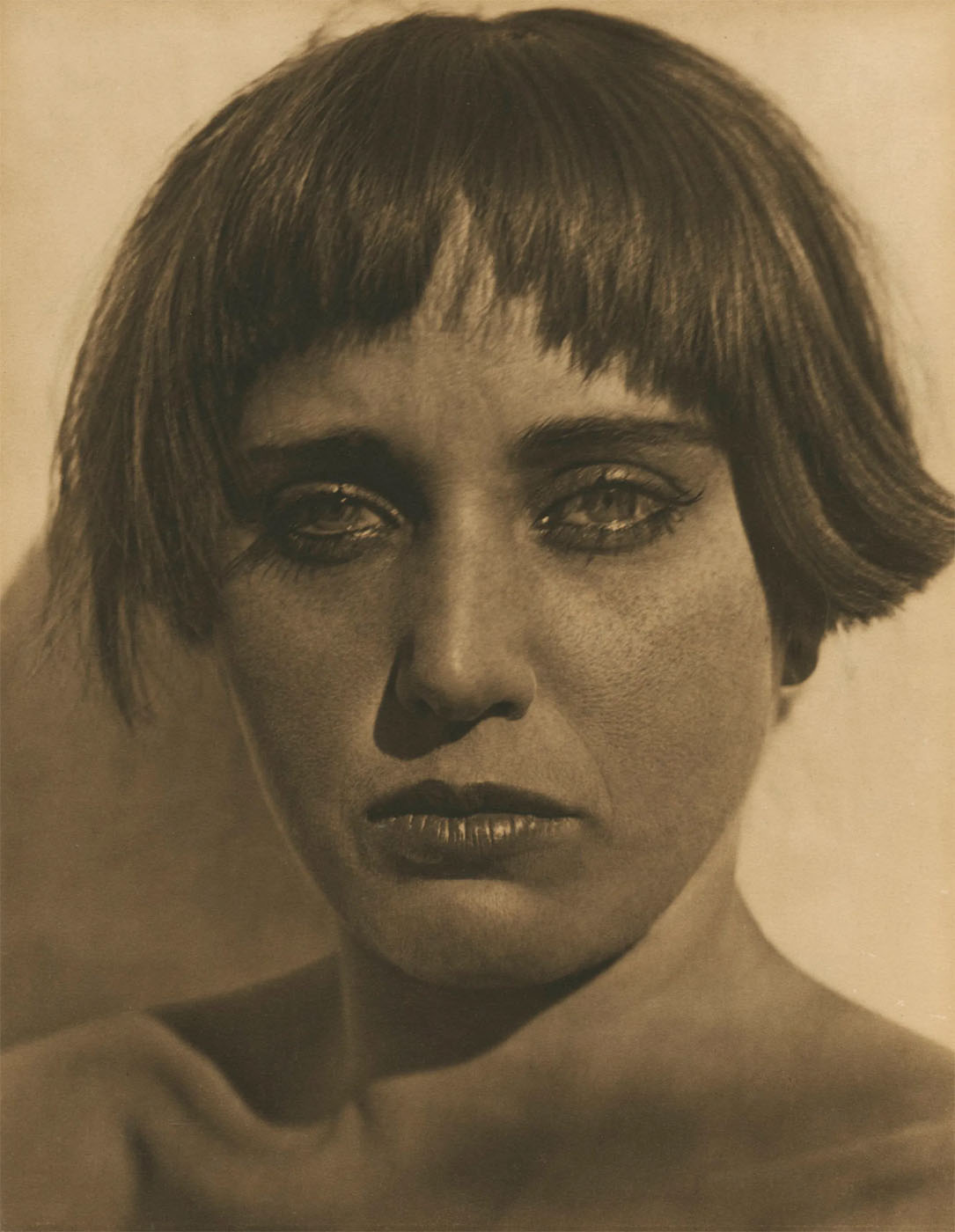
Edward Weston (American, 1886–1958) 'Nahui Olin' 1923


Edward Weston (American, 1886–1958)
Nahui Olin
1923
Platinum print
Courtesy of Howard Greenberg Collection


Edward Steichen (American born Luxembourg, 1879–1973) 'Gloria Swanson' 1924


Edward Steichen (American born Luxembourg, 1879–1973)
Gloria Swanson
1924
Gelatin silver print
Courtesy of Howard Greenberg Collection


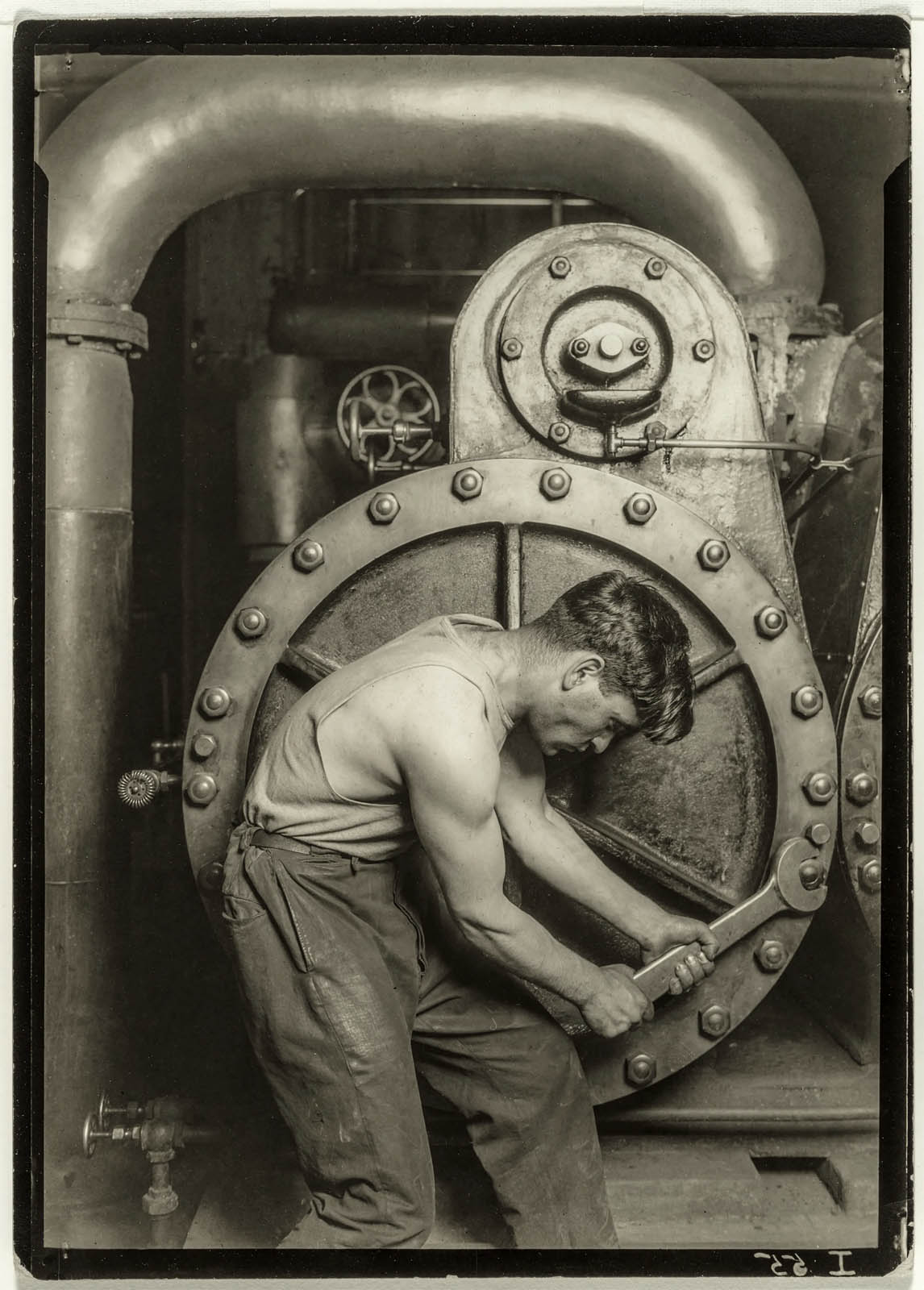
Lewis W. Hine (American, 1874-1940) 'Powerhouse Mechanic' 1924


Lewis W. Hine (American, 1874–1940)
Powerhouse Mechanic
1924
Gelatin silver print
Courtesy of Howard Greenberg Collection


André Kertész (American born Hungary, 1894-1985) 'Chez Mondrian' 1926


André Kertész (American born in Hungary, 1894-1985)
Chez Mondrian
1926
Gelatin silver print on carte postale
The Howard Greenberg Collection


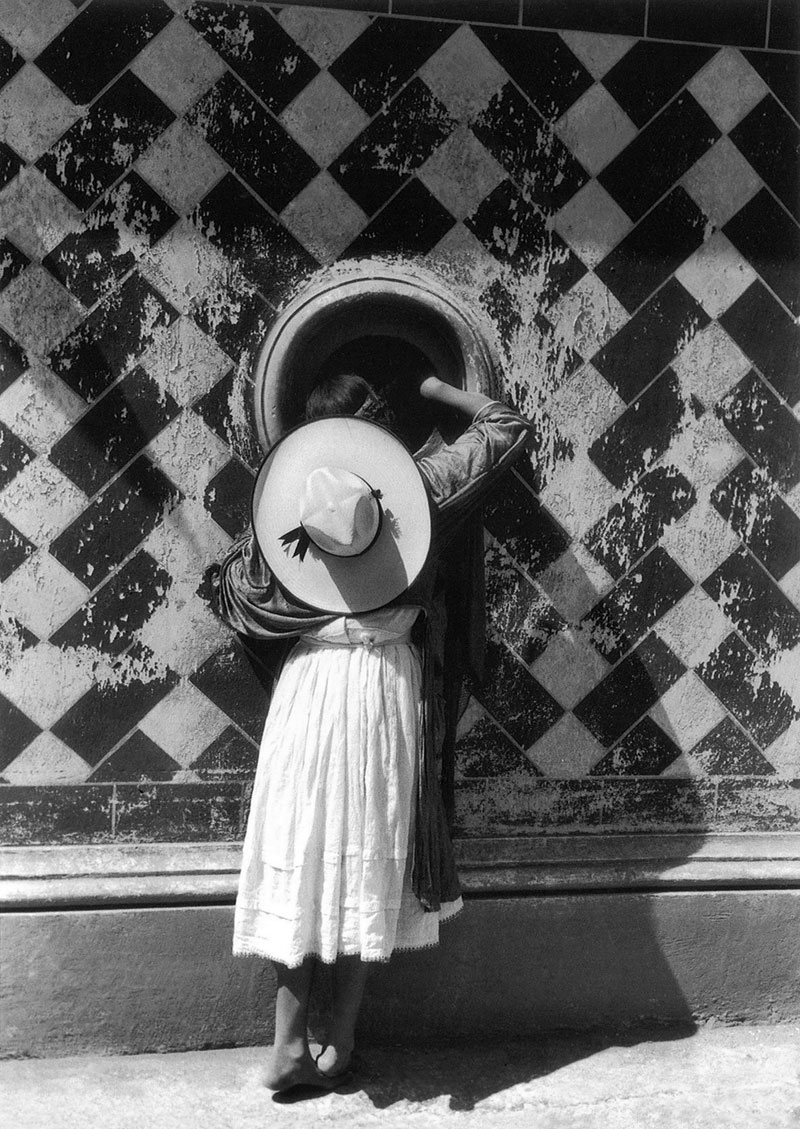
Manuel Álvarez Bravo (Mexican, 1902-2002) 'The Daughter of the Dancers' (La hija de los danzantes) 1933


Manuel Alvarez Bravo (Mexican, 1902–2002)
The Daughter of the Dancers
1933
Gelatin silver print
Courtesy of Howard Greenberg Collection


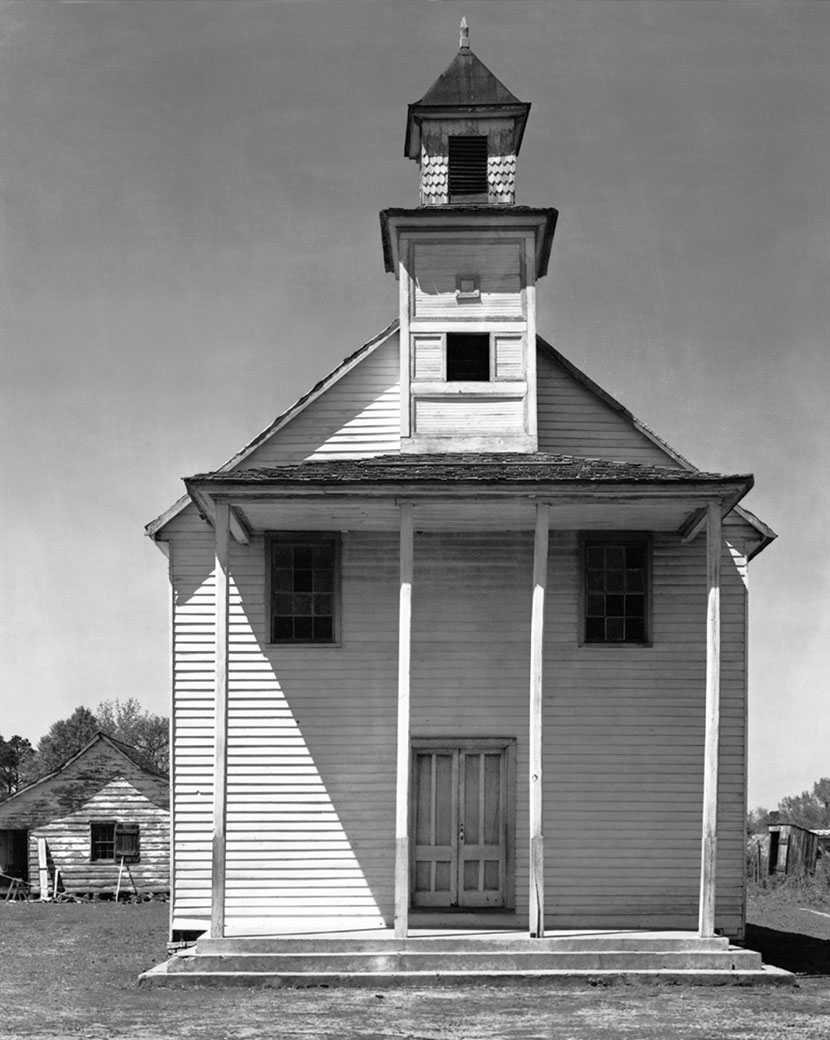
Walker Evans (American, 1903-1975) 'Negro Church, South Carolina' 1936


Walker Evans (American, 1903-1975)
Negro Church, South Carolina
1936
Gelatin silver print
© Library of Congress
Courtesy of Howard Greenberg Collection


Dorothea Lange (American, 1895-1965) 'Migrant Mother, Nipomo, California' 1936


Dorothea Lange (American, 1895-1965)
Migrant Mother, Nipomo, California
1936
Gelatin silver print
© Library of Congress
Courtesy of Howard Greenberg Collection


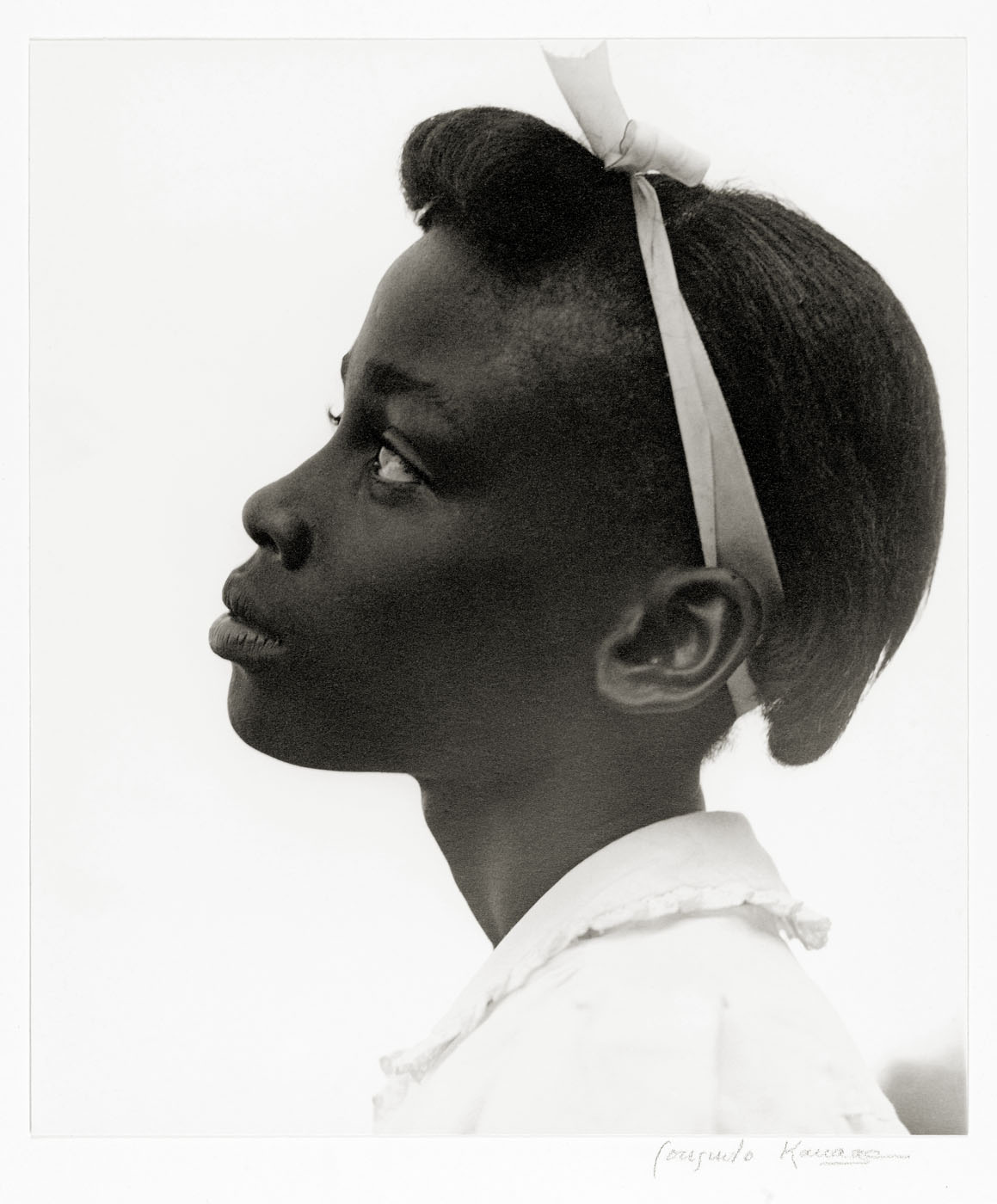
Consuelo Kanaga (American, 1894-1978) 'Young Girl in Profile' 1948


Consuelo Kanaga (American, 1894-1978)
Young Girl in Profile
1948
Gelatin silver print
Courtesy of Howard Greenberg Collection


Leon Levinstein (American, 1910-1988) 'Fifth Avenue' c. 1959


Leon Levinstein (American, 1910-1988)
Fifth Avenue
c. 1959
© Howard Greenberg Gallery
Courtesy of Howard Greenberg Collection


The Musée de l’Elysée presents different approaches to collecting photography by means of these original exhibitions.

Howard Greenberg, Collection

Howard Greenberg has been a gallery owner for over thirty years and is considered today one of the pillars of the New York photography scene. While his position as a dealer is well established, little was known of his passion for collecting, presently revealed to the public for the first time. The primary reason to explain why it took so long to discover this collection is because building such a collection demands time. Only in time can the maturity of a collection be measured; the time necessary to smooth trends, confirm the rarity of a print, and in the end, validate the pertinence of a vision. In an era of immediacy, when new collectors exhibit unachieved projects or create their own foundation, great original collections are rare. Howard Greenberg’s is certainly one of the few still to be discovered.

The quality of a collection does not rely on the sole accumulation of master pieces but can best be assessed through a dialectical movement: a collection is the collector’s oeuvre, a set of images operating a transformation in the perception not only of the photographs, but also of photography. This renewed perception is two-fold in the Greenberg collection; through the surprising combination of two approaches, the experimental practice of photography that questions the medium as such, bringing it to the limits of abstraction on one hand, and on the other, a documentary practice, carried out through its recording function of the real. This apparently irreconcilable duality takes on a particular signification in the Greenberg collection, an investigation of the possibilities offered by photography, a quest for photography itself, questioning what it is.

Howard Greenberg and his collection have largely contributed to the writing of a chapter of history. While contributing to the recognition of long neglected figures of the New York post-war photography scene, filling a gap, as gallery owner, Howard Greenberg, the collector, ensured the preservation of a coherent body by building over that period a unique collection of major photographs.

This collection of over 500 photographs was patiently built over the last thirty years and stands out for the high quality of its prints. A set of some 120 works are exhibited for the first time at the Musée de l’Elysée, revealing different aspects of Howard Greenberg’s interests, from the modernist aesthetics of the 20s and 30s, with works by Edward Steichen, Edward Weston or the Czech School, to contemporary photographers such as Minor White, Harry Callahan and Robert Frank. Humanist photography is particularly well represented, including among others, Lewis Hine and Henri Cartier-Bresson. An important section is dedicated to the Farm Security Administration’s photographers, such as Walker Evans or Dorothea Lange, witnesses to the Great Depression years of the 30s. Above all, the collection demonstrates the great influence of New York in the history of 20th century photography with the images of Berenice Abbott, Weegee, Leon Levinstein or Lee Friedlander conveying its architecture and urban lifestyle. Commending its work and prominent position, and wishing to make his private collection available to a large audience, Howard Greenberg selected the Musée de l’Elysée to host his collection.

The Musée de l’Elysée and the Fondation Henri Cartier-Bresson jointly produce this exhibition which, after Lausanne, will subsequently be presented in Paris.

Press release from the Musée de l’Elysée website


Freaks, The Monstrous Parade: Photographs from Enrico Praloran Collection

American director Tod Browning (1880-1962) has a particular attraction for the uncanny. Freaks, his cult movie shot in 1932, is inspired by a short story written by Clarence Aaron “Tod” Robbins. Set in a circus, the performers are disabled actors. The movie caused a scandal when it was released and Freaks was soon censored, reedited, shortened, sometimes removed from theatres, and in cases banned in some countries. Not until the 60s, when it was presented at the Cannes Festival, was the movie acclaimed to the point of becoming a reference for artists such as Diane Arbus or David Lynch.

The Musée de l’Elysée presents a selection of some fifty vintage black and white silver prints, gathered by Enrico Praloran, a collector based in Zurich. This unique set is the opportunity for an encounter with the movie’s strange protagonists, Johny Eck, the Half Boy, Daisy and Violet Hilton, the Siamese sisters, Martha Morris, the “Armless Marvel”, or the Bearded Lady and the Human Skeleton. They all are artists for real, coming from the Barnum Circus.

The plot is transcribed in images through stills from the movie’s major scenes, completed by set or shooting photographs, taking us behind the scenes, including on the footsteps of Tod Browning himself.

Press release from the Musée de l’Elysée website


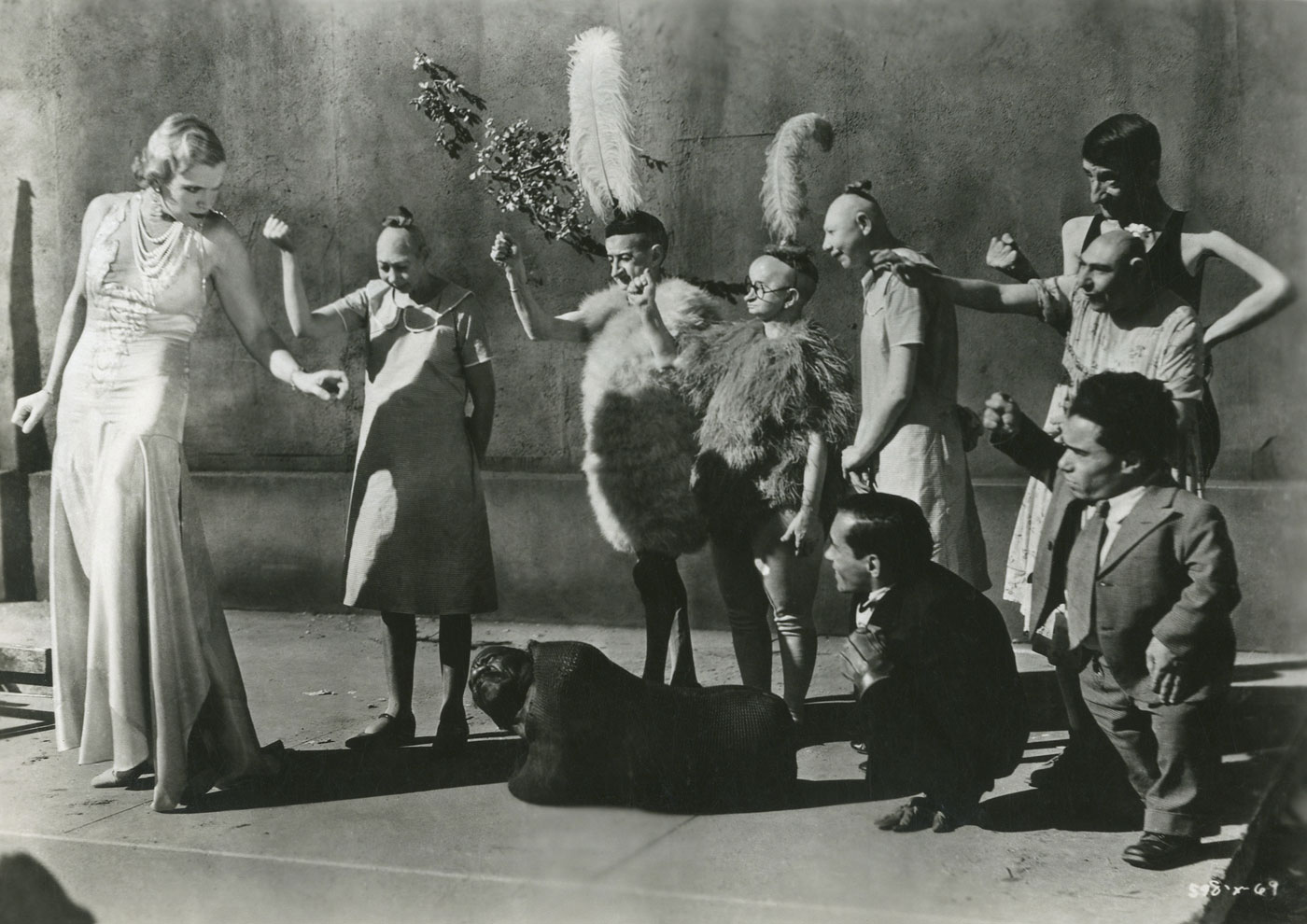
Tod Browning (director) 'Freaks' 1932 Still photograph Courtesy of Praloran Collection, Zurich


Tod Browning (director)
Freaks (Cleopatra followed by the freaks)
1932
Still photograph
1932
Courtesy of Praloran Collection, Zurich


Tod Browning (director) 'Freaks' 1932 Still photograph Courtesy of Praloran Collection, Zurich


Tod Browning (director)
Freaks (Johnny Eck)
1932
Still photograph
Courtesy of Praloran Collection, Zurich


Tod Browning (director) 'Freaks' 1932 Still photograph Courtesy of Praloran Collection, Zurich


Tod Browning (director)
Freaks
1932
Still photograph
Courtesy of Praloran Collection, Zurich


Freaks centres on an enchanting performer, Cleopatra, who entices a “midget,” named Hans, into falling in love with her. They were called midgets then, now they are referred to as little people. The “midget” is in fact engaged to another woman who is incidentally, also a “midget,” named Freida. Cleopatra was at first only trying to fool around with Hans and get money from him occasionally. She soon realised that Hans had inherited quite a large amount of money. She devises a plan to marry Hans and later poison him to inherit the money. Arguably, the most famous scene in Freaks is Hans and Cleo’s wedding reception. The “freaks” reluctantly decide to accept her despite her “normality” and chant the notoriously disturbing yet hilarious quote, “We accept you, one of us! Gooble Gobble!” Afterwards, Hans then becomes very ill by Cleo’s hand. He soon figures out her plan and the freaks become offended. They knew she could not be one of them. The film ends with a horrific and disturbing chase in the rain where the “freaks” follow her slowly and Cleo screams for her life. Her and her lover, the “muscle man,” are caught and not killed, but worse. They become freaks themselves. They are mutilated, castrated, and deformed until they are the subject of a freak show. They became one of the “freaks” they hated so much…

One of the most gut-wrenching things about this films is the fact that every “freak” in the film was a real person with the same deformity their characters had. This gives the story a profound sense of reality, making the betrayal of Hans by Cleo all the more tragic. The film was extremely controversial when released and hated by audiences. The scenes where Cleo and the muscle man were mutilated had to be cut from the film in order to be shown in theatres. That footage has since been lost. In a viewing of the film, a sudden jump takes place after the freaks catch Cleo. The audience feels cheated. We have waited so long to see Cleo get her punishment. Part of that dissatisfaction adds to the mystique of this bizarre trip. The film was forgotten about until the mid 1970s where it was rediscovered as a counterculture cult film. A counterculture film runs counter to the the norm of society. Freaks is a great example of fame by taboos and controversy. It explores themes of humanity that are still relatively unexplored today.

Text from the Cult Films and Cultural Significance website December 6, 2011 [Online] Cited 14/09/2020


Freaks is a tale of love and vengeance in a traveling circus…

In her essay “Intolerable Ambiguity: Freaks as/at the Limit,” Elizabeth Grosz attempts to unpack our fascination with freak shows. She concludes that the individuals most frequently showcased in these spectacles, including Siamese twins, hermaphrodites, “pinheads” (microcephalics), midgets, and bearded ladies “imperil the very definitions we rely on to classify humans, identities and sexes – our most fundamental categories of self-definition and boundaries dividing self from otherness” (57). In other words, while we comfort ourselves by breaking down the world into neat binary oppositions, such as Male/Female, Self/Other, Human/Animal, Child/Adult, “freaks” blur the boundaries between these reassuring oppositions. She concludes, “The freak confirms the viewer as bounded, belonging to a ‘proper’ social category. The viewer’s horror lies in the recognition that this monstrous being is at the heart of his or her identity, for it is all that must be ejected or abjected from self-image to make the bounded, category-obeying self possible” (65). We need the freak to confirm our own static, bounded identities. And yet, I think there is a certain terror that we may not be as bounded as we think. If the hermaphrodite can transcend traditional gender categories, then perhaps our own genders are more fluid. For many that is a truly horrifying thought.

For example, in one of the film’s earliest scenes we witness the “pinheads” Schlitze, Elvira and Jenny Lee dancing and playing in the forest. From a distance they look like innocent, happy children. But as the camera approaches, it is clear that they are neither children, nor are they quite adults either. Thus it is the ambiguity here, rather than the disability itself, which is momentarily disturbing…

Grosz also mentions that “Any discussion of freaks brings back into focus a topic that has had a largely underground existence in contemporary cultural and intellectual life, partly because it is considered below the refined sensibilities of ‘good taste’ and ‘personal politeness’ in a civilised and politically correct milieu” (55).

Amanda Ann Klein. “Teaching Todd Browning’s FREAKS,” on the Judgemental Observer blog, September 13, 2009 update September 1, 2014 [Online] Cited 14/09/2020


~ Grosz, Elizabeth. “Intolerable Ambiguity: Freaks as/at the Limit,” in Rosemarie Garland Thomson (ed.). Freakery: Cultural Spectacles of the Extraordinary Body. New York: New York University Press, 1996, pp. 55-68

~ Hawkins, Joan. “‘One of Us’: Tod Browning’s Freaks,” in Rosemarie Garland Thomson (ed.). Freakery: Cultural Spectacles of the Extraordinary Body. New York: New York University Press, 1996, pp. 265-276

~ Norden, Martin F. The Cinema of Isolation: A History of Physical Disability in the Movies. New Brunswick: Rutgers University Press, 1994


Tod Browning (director) 'Freaks (Cleopatra and freaks)' 1932 (still photograph)


Tod Browning (director)
Freaks (Cleopatra and freaks)
1932
Still photograph


Tod Browning (director) 'Publicity photo for Freaks, featuring much of the cast with director, Tod Browning' 1932


Tod Browning (director)
Publicity photo for Freaks, featuring much of the cast with director, Tod Browning
1932
Still photograph


Tod Browning (director) 'Freaks (with Siamese Twins Daisy and Violet Hilton)' 1932 (still photograph)


Tod Browning (director)
Freaks (with Siamese Twins Daisy and Violet Hilton)
1932
Still photograph


Tod Browning (director) 'Freaks' 1932 (still photograph)


Tod Browning (director)
Freaks
1932
Still photograph


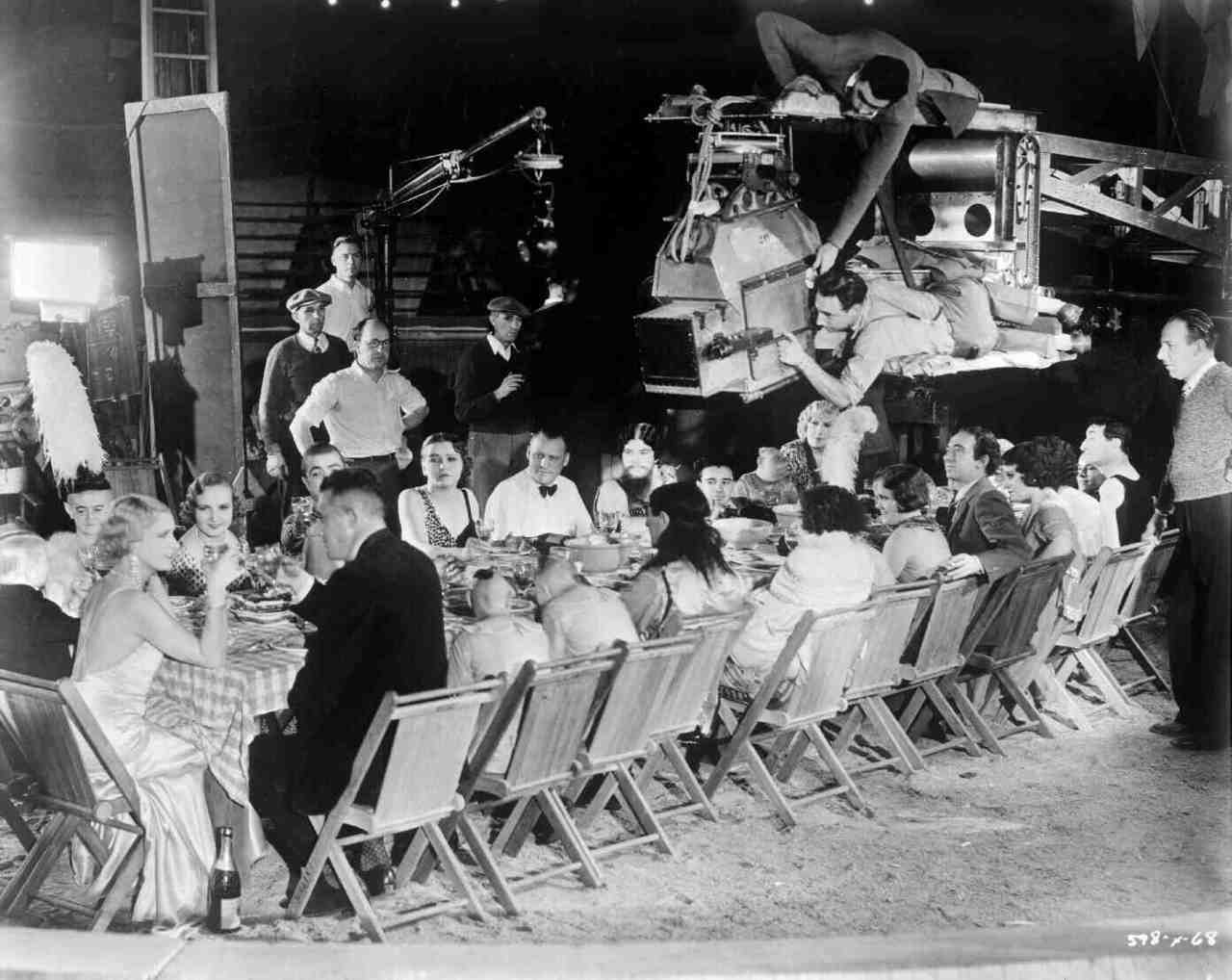
Tod Browning (director) 'Freaks (shooting the wedding banquet)' 1932 (still photograph)


Tod Browning (director)
Freaks (shooting the wedding banquet)
1932
Still photograph


Tod Browning (director) 'Freaks (with Cleopatra and Hans at the wedding banquet)' 1932 (still photograph)


Tod Browning (director)
Freaks (with Cleopatra and Hans at the wedding banquet)
1932
Still photograph


Tod Browning (director) 'Freaks (Olga Baclanova as Cleopatra after her transformation into chicken woman)' 1932 (still photograph)


Tod Browning (director)
Freaks (Olga Baclanova as Cleopatra after her transformation into chicken woman)
1932
Still photograph


Theatrical poster for 'Freaks' 1932


Theatrical poster for Freaks
1932


God’s Children

In this scene from Freaks (1932, Tod Browning), we meet several of the film’s characters.


The Freaks Revenge

In this scene from Freaks (1932, Tod Browning), the freaks take their revenge on Hercules and Cleopatra.


The Musée de l’Elysée 
18, avenue de l’Elysée
CH – 1014 Lausanne
Phone: + 41 21 316 99 11

Opening hours:
Wednesday – Monday 10am – 6pm
Closed Tuesdays

The Musée de l’Elysée website

LIKE ART BLART ON FACEBOOK

Back to top

Exhibition: ‘In Focus: The Sky’ at the J. Paul Getty Museum, Getty Center, Los Angeles

Exhibition dates: 26th July – 4th December 2011


Col. Henry Stuart Wortley (British, 1832-1890) 'The Day is Done, and the Darkness Falls from the Wings of Night.' about 1862


Col. Henry Stuart Wortley (British, 1832-1890)
The Day is Done, and the Darkness Falls from the Wings of Night.,
about 1862
Albumen silver print
29.5 x 35.2cm (11 5/8 x 13 7/8 in.)
The J. Paul Getty Museum, Los Angeles


Many thankx to Melissa Abraham for her help and to the J. Paul Getty Museum for allowing me to publish the photographs in the posting. Please click on the photographs for a larger version of the image.


With its immensity, immateriality, and variability, the sky has been an enduring subject in art history, fascinating and challenging generations of artists. As soon as the medium of photography was introduced in 1839, photographers attempted to represent the sky and its natural phenomena.

Atmospheric light and its constant mutability have always been hard to capture, but by the 1850s the greater light sensitivity of collodion negatives (compared to the daguerreotype and calotype processes) allowed the spectacles of the sky to be more easily transposed to photography.

With further technical improvements such as the development of instantaneous processes in the 1880s and the advent of Kodachrome colour film around 1935, photographers have continued to explore this theme in diverse and imaginative ways.

Text from the J. Paul Getty Museum website


Gustave Le Gray (French, 1820-1884) 'Cloudy Sky – Mediterranean Sea' 1857


Gustave Le Gray (French, 1820-1884)
Cloudy Sky – Mediterranean Sea
1857
Albumen silver print
12 1/4 x 16 7/16 in.
The J. Paul Getty Museum, Los Angeles


Clouds

The collodion process (in which a syrupy, light-sensitive mixture was applied to glass-plate negatives) was advantageous for its short exposure time and sharpness, but its sensitivity to blue light could also pose a challenge. By the time the camera captured detail in the foreground, the sky was often overexposed and thus printed as blank space.

To create his sweeping seascape, Cloudy Sky – Mediterranean Sea, Gustave Le Gray combined two slightly overlapping negatives: one for the sky and one for the sea.

Text from the J. Paul Getty Museum website


Carleton Watkins (American, 1829-1916) '[Solar Eclipse]' January 1, 1889


Carleton Watkins (American, 1829-1916)
[Solar Eclipse]
January 1, 1889
Albumen silver print
16.5 × 21.6cm (6 1/2 × 8 1/2 in.)
The J. Paul Getty Museum, Los Angeles


Standing atop Mount Santa Lucia in northern California at approximately 3.50 p.m. on January 1, 1889, Carleton Watkins was able to make only one exposure during the instant of complete eclipse. Accompanied by professors from the newly created University of California and the United States Naval Observatory, Watkins waited slightly more than an hour for the moon to begin its movement and assume its temporary position directly in front of the sun. The radiating sun, its brilliance hidden by the black moon, lies suspended over a sea of clouds whose rippling waves dominate the sky. Only the inclusion of the treetops in the foreground serves to ground the image in a familiar reality.

Text from the J. Paul Getty Museum website


The J. Paul Getty Museum presents In Focus: The Sky, a thematically-installed exhibition of permanent collection photographs, on view at the Getty Center from July 26 – December 4, 2011.

“The sky has fascinated and challenged photographers since the invention of the medium,” said Anne Lyden, associate curator, Department of Photographs, the J. Paul Getty Museum, and curator of the exhibition. “This exhibition showcases a wide range of approaches to capturing the many moods and effects of the sky – things we usually take for granted.”

The selection of 22 artworks provides visitors with an opportunity to explore the Getty Museum’s world-renowned photographs collection through the pictorial subject of the sky, with the works loosely organised under four different themes: urban skies, clouds, dark skies, and colourful skies.

The exhibition features photographs by artists such as: Ansel Adams, John Divola, André Kertész, Joel Meyerowitz, Alfred Stieglitz, and Carleton Watkins, among others. The Getty’s collection includes exemplary objects that demonstrate both technological and aesthetic innovations in photography. Among the different processes highlighted are daguerreotypes, albumen silver prints, palladium prints, platinum prints, and more contemporary inkjet prints.

One of the most well-known works in the exhibition is Ansel Adams’ Moonrise, Hernandez, New Mexico, (negative made November 1, 1941; printed December 16, 1948). Traveling by car through New Mexico, Adams was inspired by light from the setting sun illuminating crosses in the graveyard at the side of the road. By carefully considering the composition, visualising the printed image before creating the photograph, understanding the required exposure needed in response to the available light, and exerting a certain degree of control in the printing process so that detail and shadows were retained, Adams succeeded in capturing the fleeting moment when the sun was setting and the bright moon appeared in the darkening sky.

The summer sky of Cape Cod features in Meyerowitz’s photograph Fence, Truro, negative 1976; printed 1992. Having recently acquired a large view camera, Meyerowitz spent two summers recording the structures and light of the coastal area that ultimately resulted in the 1978 book, Cape Light. Noting the shifting shadows as they played across the picket fence, his use of colour aptly describes the very subject of light itself.

Included in the exhibition is a selection from John Divola’s Zuma Beach series. In the fall of 1977, after discovering an abandoned lifeguard headquarters at Zuma Beach, California, Divola began visiting the site mornings and evenings to photograph. Bringing paints, using flash, and depending on the Pacific Ocean and the ever-changing sky for a dramatic backdrop, he created spontaneous scenes in this seaside theatre.

Also on view is a small group of three photographs by Alfred Stieglitz. From 1922 to 1934, Stieglitz photographed clouds and created a series of abstract configurations which reflected the fluctuation of his subjective state. By simply titling each piece Equivalent, he invited an open reading of the images and their content.

In Focus: The Sky is the ninth installation of the ongoing In Focus series of exhibitions, thematic presentations of photographs from the Getty’s permanent collection.

Press release from the J. Paul Getty Museum website


Alfred Stieglitz (American, 1864-1946) 'Songs of the Sky' 1924


Alfred Stieglitz (American, 1864-1946)
Songs of the Sky
1924
Gelatin silver print
11.7 x 9.2cm (4 5/8 x 3 5/8 in.)
The J. Paul Getty Museum, Los Angeles
© J. Paul Getty Trust


Edward Weston (American, 1886-1958) 'Cloud, Mexico' 1926


Edward Weston (American, 1886-1958)
Cloud, Mexico
1926
Palladium print
14.9 × 24cm (5 7/8 × 9 7/16 in.)
© 1981 Arizona Board of Regents, Center for Creative Photography


The first image with artistic intention that Edward Weston made in Mexico was of a cloud. Stopped in the port of Mazatlan on his way to Mexico City in 1923, Weston, for the first time in his career, was moved to photograph the sky, a theme that would occupy him intermittently throughout his entire sojourn in Mexico. Working with his Graflex, which allowed for greater flexibility than his tripod-mounted eight-by-ten-inch camera, he shot clouds spontaneously and maintained a personal collection of prints that he referred to as his “cloud series.” He noted in his daybook, “Next to the recording of a fugitive expression, or revealing the pathology of some human being, is there anything more elusive to capture than cloud forms! And the Mexican clouds are so swift and ephemeral, one can hardly allow the thought, ‘Is this worth doing?’ or, ‘ls this placed well?’ – for an instant of delay and what was, is not!”

The economy of form achieved in this 1926 image through the isolation of a single strip of stratus clouds oriented diagonally within the frame was not new to Weston’s aesthetic; his 1924 picture of Tina Modotti (1896-1942) nude on the roof of their home (see 86.XM.710.8) employs a remarkably similar composition. If Mexico provided Weston the inspiration to explore and expand the range of his oeuvre, adding clouds, still lifes, and landscapes to his repertoire of portraits and nudes, it simultaneously served as the place where his visual approach to the world was honed. His time in Mexico came to an end the same year he made this picture, but many of the principles he developed there would last him throughout his career.

Brett Abbott. Edward Weston, In Focus: Photographs from the J. Paul Getty Museum (Los Angeles: J. Paul Getty Museum, 2005), 48. ©2005, J. Paul Getty Trust


Alfred Stieglitz (American, 1864-1946) 'Equivalent' 1926


Alfred Stieglitz (American, 1864-1946)
Equivalent
1926
Gelatin silver print
11.6 × 9.1cm (4 9/16 × 3 9/16 in.)
The J. Paul Getty Museum, Los Angeles
© Georgia O’Keeffe Museum


Alfred Stieglitz (American, 1864-1946) 'Equivalent' 1926


Alfred Stieglitz (American, 1864-1946)
Equivalent
1926
Gelatin silver print
11.7 × 9.2cm (4 5/8 × 3 5/8 in.)
The J. Paul Getty Museum, Los Angeles


Paul Strand (American, 1890-1976) 'Sangre de Cristo, New Mexico' 1930


Paul Strand (American, 1890-1976)
Sangre de Cristo, New Mexico
1930
Platinum print
9.2 × 11.9cm (3 5/8 × 4 11/16 in.)
© Aperture Foundation


Berenice Abbott (American, 1898-1991) 'Night View, New York City' 1932


Berenice Abbott (American, 1898-1991)
[The West Side, Looking North from the Upper 30s / Nightview]
1932
Gelatin silver print
33.8 × 26.8cm (13 5/16 × 10 9/16 in.)
© Estate of Berenice Abbott


“If [photography] is to be utterly honest and direct, it should be related to the pulse of the times – the pulse of today.” ~ Berenice Abbott

Nowhere is Berenice Abbott’s statement better demonstrated than in this photograph of the pulsating vibrancy of New York City, alive at night with thousands of glittering lights. The flashes of illumination perforate the frame, reflecting the dynamism of the world’s fastest-changing city. Abbott set about documenting New York when she returned there in 1929 after nine years spent in Europe. Abbott made this photograph from a high vantage point in the Empire State Building on Fifth Avenue looking north.

Text from the J. Paul Getty Museum website


André Kertész (American born Hungary, 1894-1985) 'The Lost Cloud, New York' negative 1937; print 1970s


André Kertész (American born Hungary, 1894-1985)
The Lost Cloud, New York
Negative 1937; print 1970s
Gelatin silver print
24.8 x 16.5cm
The J. Paul Getty Museum, Los Angeles
© Estate of André Kertész


Urban Skies

Soon after arriving in New York in October 1936, André Kertész spent time searching the city streets for fresh material, just as he had done in Paris for a decade. One afternoon he observed a solitary white cloud in a vast blue sky, dwarfed by the monolithic presence of the Rockefeller Center. Kertész later recounted that he was “very touched when he saw the cloud, as it “didn’t know which way to go” (Bela Ugrin, Dialogues with Kertész, ” 1978-1985, the Getty Research Institute) – a sentiment he strongly identified with as a new immigrant.

From the lyrical to the abstract, photography has often been an apt medium with which to capture the fleeting nature of skies.

Text from the J. Paul Getty Museum website


The impenetrable façade of Rockefeller Center in New York dominates the frame of this photograph, filling the lower and right sides of the image with its cold, hard, modern lines. The other third of the composition belongs to the sky, in which a lone puff of white cloud hangs isolated like a cotton ball, holding sway against the force of the skyscraper. The brilliant white form is “lost” in this scene that is otherwise devoid of natural, spirited shapes. The cloud possesses an innate impermanence; it will be gone with the next gust of wind, blown along on its path to some other expanse of sky. Andre Kertész’s juxtaposition of the whimsical cloud and unforgiving architecture seems to emphasise his own sense of isolation; the photograph was made soon after he had emigrated from Europe.

Text from the J. Paul Getty Museum website


Ansel Adams (American, 1902-1984) 'Moonrise, Hernandez, New Mexico' 1941


Ansel Adams (American, 1902-1984)
Moonrise, Hernandez, New Mexico
Negative November 1, 1941; print December 16, 1948
Gelatin silver print
34.9 × 44cm (13 3/4 × 17 5/16 in.)
© The Ansel Adams Publishing Rights Trust


Arguably Ansel Adams’s most famous image, this photograph is titled Moonrise rather than Sunset, even though the moon technically does not rise in the sky. As a scholar noted: The factuality and, moreover, the meaning of the setting sun were rejected by him in favour of the expressive symbolism of the rising moon; of the shining luminescence ablaze with greatness in its primal mystery, dramatically isolated in the infinity of darkness.

Instead of making an unmanipulated print from the negative, Adams selectively printed the sky black and the foreground dark in order to achieve a particular illumination and spiritual transcendence. The photographer’s skill and vision transformed the tiny town of Hernandez, dotted with glowing white cemetery and church crosses, into a spectral landscape.

Text from the J. Paul Getty Museum website


William A. Garnett (American, 1916-2006) 'Smog, Los Angeles' 1949


William A. Garnett (American, 1916-2006)
Smog, Los Angeles
1949
Gelatin silver print
25.2 × 34cm (9 15/16 × 13 3/8 in.)
© Estate of William A. Garnett


An ardent conservationist, Garnett became concerned about land use and air pollution in the early 1940s. He made this photograph in an attempt to raise public awareness. Over the years Garnett came to believe that he was more likely to inspire positive change by pointing out nature’s enduring beauty than by showing the ugliness caused by poor choices.

Text from the J. Paul Getty Museum website


Dorothea Lange (American, 1895-1965) 'Full Moon, Southwestern Utah' 1953


Dorothea Lange (American, 1895-1965)
Full Moon, Southwestern Utah
1953
Gelatin silver print
15.6 x 15.3cm (6 1/8 x 6 in.)
The J. Paul Getty Museum, Los Angeles, Gift of the John Dixon Collection
© Oakland Museum of California, the City of Oakland


Dorothea Lange suffered health problems in the late 1940s, but she wanted to travel again and be part of the current documentary effort. Since the federal government was no longer funding such projects, this meant working for the thriving picture magazines. Lange proposed to Life that she and Ansel Adams do a project in Utah. They would travel with her son Daniel, who would write text for the article, and her husband, who had a continuing interest in the survival of utopian communities. Their purpose was to record the landscape, built environment and inhabitants of three towns in southwestern Utah settled in the mid-nineteenth century by Mormons. The grandchildren of some of these pioneers were Lange’s subjects during her visit to Gunlock, Toquerville, and St. George in 1953.

Adapted from Judith Keller, Dorothea Lange, In Focus: Photographs from the J. Paul Getty Museum (Los Angeles: J. Paul Getty Museum, 2002), p. 64. © 2002 J. Paul Getty Trust


Joel Meyerowitz (American, b. 1938) 'Fence, Truro' negative 1976; print 1992


Joel Meyerowitz (American, b. 1938)
Fence, Truro
negative 1976; print 1992
Chromogenic print
59.7 x 47.3cm (23 1/2 x 18 5/8 in.)
The J. Paul Getty Museum, Los Angeles, Gift of Nancy and Bruce Berman
© Joel Meyerowitz, courtesy Edwynn Houk Gallery, NY


John Divola (American, b. 1949) 'Untitled' 1977 From the 'Zuma Beach' series


John Divola (American, b. 1949)
Untitled
From the Zuma Beach series
1977
Chromogenic print
24.8 x 30.4cm (9 3/4 x 11 15/16 in.)
The J. Paul Getty Museum, Los Angeles, Gift of Michael and Jane Wilson
© John Divola


Skies in Color

In the fall of 1977, after discovering an abandoned lifeguard headquarters at Zuma Beach, California, John Divola began visiting the site to photograph. Painting the walls, incorporating props, using flash, and depending on the Pacific Ocean and the sky for a dramatic backdrop, he created a series of makeshift scenes.

Discussing his work in 1980, Divola said, “These photographs are the product of my involvement with an evolving situation. The house evolving in a primarily linear way toward its ultimate disintegration, the ocean and light evolving and changing in a cyclical and regenerative manner.”

Text from the J. Paul Getty Museum website


John Divola (American, b. 1949) 'Untitled' 1977 From the 'Zuma Beach' series


John Divola (American, b. 1949)
Untitled
1977
From the Zuma Series
Chromogenic print
24.6 × 30.5cm (9 11/16 × 12 in.)
The J. Paul Getty Museum, Los Angeles, Gift of Michael and Jane Wilson
© John Divola


Robert Weingarten (American, b. 1941) '6:30 A.M. 10/06/03, #98, Malibu, CA' 2003


Robert Weingarten (American, b. 1941)
6:30 A.M. 10/06/03, #98, Malibu, CA
2003
Inkjet print
76.4 × 76.4cm (30 1/16 × 30 1/16 in.)
© Robert Weingarten
Gift of Alvin and Heidi Toffler


The horizon at dawn, looking southeast over Santa Monica Bay, from the artist’s home in Malibu.


The J. Paul Getty Museum
1200 Getty Center Drive
Los Angeles, California 90049

Opening hours:
Tuesday – Friday, Sunday 10am – 5.30pm
Saturday 10am – 8pm
Monday Closed

The J. Paul Getty Museum website

LIKE ART BLART ON FACEBOOK

Back to top

Review: ‘American Dreams: 20th century photography from George Eastman House’ at Bendigo Art Gallery, Victoria

Exhibition dates: 16th April – 10th July 2011


Gertrude Käsebier (American, 1852-1934) 'The Sketch (Beatrice Baxter)' 1903


Gertrude Käsebier (American, 1852-1934)
The Sketch (Beatrice Baxter)
1903
Platinum print
Gift of Hermine Turner
Collection of George Eastman House, International Museum of Photography and Film


This is a fabulous survey exhibition of the great artists of 20th century American photography, a rare chance in Australia to see such a large selection of vintage prints from some of the masters of photography. If you have a real interest in the history of photography you must see this exhibition, showing as it is just a short hour and a half drive (or train ride) from Melbourne at Bendigo Art Gallery.

I talked with the curator, Tansy Curtin, and asked her about the exhibition’s gestation. This is the first time an exhibition from the George Eastman House has come to Australia and the exhibition was 3-4 years in the making. Tansy went to George Eastman House in March last year to select the prints; this was achieved by going through solander box after solander box of vintage prints and seeing what was there, what was available and then making work sheets for the exhibition – what a glorious experience this would have been, undoing box after box to reveal these magical prints!

The themes for the exhibition were already in the history of photography and Tansy has chosen almost exclusively vintage prints that tell a narrative story, that make that story accessible to people who know little of the history of photography. With that information in mind the exhibition is divided into the following sections:

Photography becomes art; The photograph as social document; Photographing America’s monuments; Abstraction and experimentation; Photojournalism and war photography; Fashion and celebrity portraiture; Capturing the everyday; Photography in colour; Social and environmental conscience; and The contemporary narrative.


There are some impressive, jewel-like contact prints in the exhibition. One must remember that, for most of the photographers working after 1940, exposure, developing and printing using Ansel Adams Zone System (where the tonal range of the negative and print can be divided into 11 different ‘zones’ from 0 for absolute black and to 10 for absolute white) was the height of technical sophistication and aesthetic choice, equal to the best gaming graphics from today’s age. It was a system that I used in my black and white film development and printing. Film development using a Pyrogallol staining developer (the infamous ‘pyro’, a developer I tried to master without success in a few trial batches of film) was also technically difficult but the ability of this developer to obtain a greater dynamic range of zones in the film itself was outstanding.

“The Zone System provides photographers with a systematic method of precisely defining the relationship between the way they visualise the photographic subject and the final results… An expressive image involves the arrangement and rendering of various scene elements according to photographer’s desire. Achieving the desired image involves image management (placement of the camera, choice of lens, and possibly the use of camera movements) and control of image values. The Zone System is concerned with control of image values, ensuring that light and dark values are rendered as desired. Anticipation of the final result before making the exposure is known as visualisation.”1

Previsualisation, the ability of the photographer to see ‘in the mind’s eye’ the outcome of the photograph (the final print) before even looking through the camera lens to take the photograph, was an important skill for most of these photographers. This skill has important implications for today’s photographers, should they choose to develop this aspect of looking: not as a mechanistic system but as a meditation on the possibilities of each part of the process, the outcome being an expressive print.


A selection of the best photographs in the exhibition could include,

1/ An original 1923 Alfred Steiglitz Equivalent contact print – small (approx. 9cm x 12cm, see below), intense, the opaque brown blacks really strong, the sun shining brightly through the velvety clouds. In the Equivalents series the photograph was purely abstract, standing as a metaphor for another state of being, in this case music. A wonderful melding of the technical and the aesthetic the Equivalents “are generally recognised as the first photographs intended to free the subject matter from literal interpretation, and, as such, are some of the first completely abstract photographic works of art.”2

2/ Paul Strand Blind (1915, printed 1945) – printed so dark that you cannot see the creases in the coat of the blind woman with a Zone 3 dark skin tone.

3/ Lewis Hine [Powerhouse mechanic] see below, vintage 1920 print full of subtle tones. Usually when viewing reproductions of this image it is either cropped or the emphasis is on the body of the mechanic; in this print his skin tones are translucent, silvery and the emphasis is on the man in unison with the machine. The light is from the top right of the print and falls not on him directly, but on the machinery at upper right = this is the emotional heart of this image!

4/ Three tiny vintage Tina Modotti prints from c. 1929 – so small, such intense visions. I have never seen one original Modotti before so to see three was just sensational.

5/ Walker Evans View of Morgantown, West Virginia vintage 1935 print – a cubist dissection of space and the image plane with two-point perspective of telegraph pole with lines.

6/ An Edward S. Curtis photogravure Washo Baskets (1924, from the portfolio The North American Indian) – such a sumptuous composition and the tones…

7/ Ansel Adams 8″ x 10″ contact print of Winter Storm (1944, printed 1959, see above) where the blackness of the mountain on the left hand side of the print was almost impenetrable and, because of the large format negative, the snow on the rock in mid-distance was like a sprinkling of icing sugar on a cake it was that sharp.

8/ A most splendid print of the Chrysler Building (vintage 1930 print, approx. 48 x 34cm) by Margaret Bourke-White – tonally rich browns, smoky, hazy city at top; almost like a platinum print rather than a silver gelatin photograph. The bottom left of the print was SO dark but you could still see into the shadows just to see the buildings.

9/ An original Robert Capa 1944 photograph from the Omaha Beach D Day landings!

10/ Frontline soldier with canteen, Saipan (1944, vintage print) by W Eugene Smith where the faces of the soldiers were almost Zone 2-3 and there was nothing in the print above zone 5 (mid-grey) – no physical and metaphoric light.

11/ One of the absolute highlights: two vintage Edward Weston side by side, the form of one echoing the form of the other; Nude from the 50th Anniversary Portfolio 1902-1952 (1936, printed 1951), an 8″ x 10″ contact print side by side with an 8″ x 10″ contact print of Pepper No. 30 (vintage 1930 print). Nothing over zone 7 in the skin tones of the nude, no specular highlights; the sensuality in the pepper just stunning – one of my favourite prints of the day – look at the tones, look at the light!

12/ Three vintage Aaron Siskind (one of my favourite photographers) including two early prints from 1938 – wow. Absolutely stunning.

13/ Harry Callahan. That oh so famous image of Eleanor and Barbara, Chicago (vintage 1953 print) that reminds me of the work of Jeffrey Smart (or is it the other way around). The wonderful space around the figures, the beautiful composition, the cobblestones and the light – just ravishing.

14/ The absolute highlight: Three vintage Diane Arbus prints in a row – including a 15″ square image from the last series of work Untitled (6) (vintage 1971 print, see above) – the year in which she committed suicide. This had to be the moment of the day for me. This has always been one of my favourite photographs ever and it did not disappoint; there was a darkness to the trees behind the three figures and much darker grass (zone 3-4) than I had ever imagined with a luminous central figure. The joyousness of the figures was incredible. The present on the ground at the right hand side was a revelation – usually lost in reproductions this stood out from the grass like you wouldn’t believe in the print. Being an emotional person I am not afraid to admit it, I burst into tears…

15/ And finally another special… Two vintage Stephen Shore chromogenic colour prints from 1976 where the colours are still true and have not faded. This was incredible – seeing vintage prints from one of the early masters of colour photography; noticing that they are not full of contrast like a lot of today’s colour photographs – more like a subtle Panavision or Technicolor film from the early 1960s. Rich, subtle, beautiful hues. For a contemporary colour photographer the trip to Bendigo just to see these two prints would be worth the time and the car trip/rail ticket alone!


Not everything is sweetness and light. The print by Dorothea Lange Migrant Mother, Nipomo, California is a contemporary print from 2003, the vintage print having just been out on loan; the contemporary section, ‘The contemporary narrative’, is very light on, due mainly to the nature of the holdings of George Eastman House; and there are some major photographers missing from the line up including Minor White, Fredrick Sommer, Paul Caponigro, Wynn Bullock and William Clift to name just a few.

Of more concern are the reproductions in the catalogue, the images for reproduction supplied by George Eastman House and the catalogue signed off by them. The reproduction of Margaret Bourke-White’s Chrysler Building (1930, see below) bears no relationship to the print in the exhibition and really is a denigration to the work of that wonderful photographer. Other reproductions are massively oversized, including the Alfred Stieglitz Equivalent, Lewis Hine’s Powerhouse mechanic (see below) and Tina Modotti’s Woman Carrying Child (c. 1929). In Walter Benjamin’s terms (The Work of Art in the Age of Mechanical Reproduction) the aura of the original has been lost and these reproductions further erode the authenticity of the original in their infinite reproducability. Conversely, it could be argued that the reproduction auraticizes the original:

“The original artwork has become a device to sell its multiply-reproduced derivatives; reproductability turned into a ploy to auraticize the original after the decay of aura…”3

In other words, after having seen so many reproductions when you actually see the original – it is like a bolt of lightning, the aura that emanates from the original. This is so true of this exhibition but it still begs the question: why reproduce in the catalogue at a totally inappropriate size? Personally, I believe that the signification of the reproduction (in terms of size and intensity of visualisation) is so widely at variance with the original one must question the decision to reproduce at this size knowing that this variance is a misrepresentation of the artistic interpretation of the author.

In conclusion, this is a sublime exhibition well worthy of the time and energy to journey up to Bendigo to see it. A true lover of classical American black and white and colour photography would be a fool to miss it!

Dr Marcus Bunyan


1/ Anon. “Zone System,” on Wikipedia [Online] Cited 13/06/2011
2/ Anon. “Equivalents,” on Wikipedia [Online] Cited 13/06/2011
3/ Huyssen, Andreas. Twilight Memories: Marking Time in a Culture of Amnesia. London: Routledge, 1995, pp. 23-24


Many thankx to Tansy Curtin, Senior Curator, Programs and Access at Bendigo Art Gallery for her time and knowledge when I visited the gallery; and to Bendigo Art Gallery for allowing me to publish the text and photographs in the posting. Please click on the photographs for a larger version of the image.


Alfred Stieglitz (American, 1864-1946) 'Equivalent' 1923


Actual size of print: 9.2 x 11.8 cm
Size of print in catalogue: 18.5 x 13.9 cm

These two photographs represent a proportionate relation between the two sizes as they appear in print and catalogue but because of monitor resolutions are not the actual size of the two prints.


Alfred Stieglitz (American, 1864-1946) 'Equivalent' 1923


Alfred Stieglitz (American, 1864-1946)
Equivalent
1923
Gelatin silver print
Collection of George Eastman House, International Museum of Photography and Film 


Lewis Hine (American, 1874-1940) '[Powerhouse mechanic]' 1920 catalogue size


Actual size of print: 16.9 x 11.8cm
Size of print in catalogue: 23.2 x 15.8cm

These two photographs represent a proportionate relation between the two sizes as they appear in print and catalogue but because of monitor resolutions are not the actual size of the two prints.


Lewis Hine (American, 1874-1940) '[Powerhouse mechanic]' 1920 catalogue size


Lewis Hine (American, 1874-1940)
[Powerhouse mechanic]
1920
Gelatin silver print
Transfer from the Photo League Lewis Hine Memorial Committee, ex-collection Corydon Hine
Collection of George Eastman House, International Museum of Photography and Film


Margaret Bourke-White (American, 1904-1971) 'Chrysler Building' New York City, 1930


As it approximately appears in the exhibition (above, from my notes, memory and comparing the print in the exhibition with the catalogue reproduction)

Below, as the reproduction appears in the catalogue (scanned)


Margaret Bourke-White (American, 1904-1971) 'Chrysler Building' New York City, 1930


Margaret Bourke-White (American, 1904-1971)
Chrysler Building
New York City
1930
Silver gelatin photograph


An exhibition of treasures from arguably the world’s most important photographic museum, George Eastman House, has been developed by Bendigo Art Gallery. The exhibition American Dreams will bring, for the first time, eighty of some of the most iconic photographic images from the 20th Century to Australia.

The choice of works highlights the trailblazing role these American artists had on the world stage in developing and shaping the medium, and the impact these widely published images had on the greater community.

Curator Tansy Curtin, who worked closely with George Eastman House developing the exhibition commented, “Through these images we can recognise the extraordinary ability of these artists, and their pivotal role influencing the evolution of photography. Their far-reaching images helped shape American culture, and impacted on the fundamental role photography has in communications today. Even more than this we can see through these artists the burgeoning love of photography that engaged a nation.”

Through these images we can see not only the development of photography, but also as some of the most powerful social documentary photography of last century, we see extraordinary moments captured in the lives of a wide range of Americans. The works distil the dramatic transformation that affected people during the 20th century – the affluence, degradation, loss, hope and change – both personally and throughout society.

The role of photography in nation building is exemplified in Ansel Adams’ majestic portraits of Yosemite national park, Bourke-White’s Chrysler building and images of migrants and farm workers during the Depression. Tansy Curtin added, “We see the United States ‘growing up’ through photography. We see hopes raised and crushed and the inevitable striving for the American Dream.” Director of Bendigo Art Gallery Karen Quinlan said, “We are thrilled to have been given this unprecedented opportunity to work with this unrivalled photographic archive. The resulting exhibition American Dreams, represents one of the most important and comprehensive collections of American 20th Century photography to come to Australia.”

George Eastman House holds over 400,000 images from the invention of photography to the present day. George Eastman, one time owner of the home in which the archives are housed, founded Kodak and revolutionised and democratised photography around the world. Eastman is considered the grandfather of snapshot photography.

American Dreams is one of the first exhibitions from this important collection to have been curated by an outside institution. It will be the first time Australian audiences have been given the opportunity to engage with this vast archive.

Press release from the Bendigo Art Gallery


Paul Strand (American, 1890-1976) 'Photograph - New York' Negative 1916; print June 1917


Paul Strand (American 1890-1976)
Blind woman, New York
1916
Platinum print
Collection of George Eastman House, International Museum of Photography and Film


Edward S. Curtis (American, 1868-1952) 'Washo Baskets' 1924


Edward S. Curtis (American, 1868-1952)
Washo Baskets
1924
From the portfolio The North American Indian
Photogravure
Collection of George Eastman House, International Museum of Photography and Film


Tina Modotti (Italian / American / Mexican, 1896-1942) 'Woman Carrying Child' c. 1929


Tina Modotti (Italian / American / Mexican, 1896-1942)
Woman Carrying Child
c. 1929
Gelatin silver print
Collection of George Eastman House, International Museum of Photography and Film


Edward Weston (American, 1886-1958) 'Pepper No. 30' 1930


Edward Weston (American, 1886-1958)
Pepper No. 30
1930
Vintage silver gelatin print
Collection of George Eastman House, International Museum of Photography and Film


Walker Evans (American, 1903-1975) 'Torn Poster, Truro, Massachusetts' 1930


Walker Evans (American, 1903-1975)
Torn Poster, Truro, Massachusetts
1930
Gelatin silver contact print
Purchased with funds from National Endowment for the Arts
Collection of George Eastman House, International Museum of Photography and Film


Alfred Steiglitz (American, 1864-1946) '[Georgia O'Keefe hand on back tire of Ford V8]' 1933


Alfred Steiglitz (American, 1864-1946)
[Georgia O’Keefe hand on back tire of Ford V8]
1933
gelatin silver print
Part purchase and part gift from Georgia O’Keefe
Collection of George Eastman House, International Museum of Photography and Film


Walker Evans (American, 1903-1975) 'View of Morgantown, West Virginia' June, 1935


Walker Evans (American, 1903-1975)
View of Morgantown, West Virginia
June, 1935
Gelatin silver print
Collection of George Eastman House, International Museum of Photography and Film


Dorothea Lange (American, 1895-1965) 'Migrant Mother, Nipomo, California' 1936, printed c. 2003


Dorothea Lange (American, 1895-1965)
Migrant Mother, Nipomo, California
1936, printed c. 2003
Photogravure print
Gift of Sean Corcoran
Collection of George Eastman House, International Museum of Photography and Film


Edward Weston (American, 1886-1958) 'Nude' 1936


Edward Weston (American, 1886-1958)
Nude
1936, printed 1951
From the Fiftieth Anniversary Portfolio: 1902-1952, c. 1952
Vintage silver gelatin print
Collection of George Eastman House, International Museum of Photography and Film


Dorothea Lange (American, 1895-1965) 'Kern County California' 1938


Dorothea Lange (American, 1895-1965)
Kern County California
1938
Gelatin silver print
Exchange with Roy Stryker
Collection of George Eastman House, International Museum of Photography and Film


Ansel Adams (American, 1902-1984) 'Clearing Winter Storm, Yosemite National Park' c. 1938


Ansel Adams (American, 1902-1984)
Clearing Winter Storm, Yosemite National Park
c. 1938
Gelatin silver print
Collection of George Eastman House, International Museum of Photography and Film


W. Eugene Smith (American, 1918-1978) '[Frontline Soldier with Canteen at Saipan]' June 1944


W. Eugene Smith (American, 1918-1978)
[Frontline Soldier with Canteen at Saipan]
June 1944
Gelatin silver print
41.1 × 32.4cm
Collection of George Eastman House, International Museum of Photography and Film


Harry Callahan (American, 1912-1999) 'Eleanor and Barbara, Chicago' 1953


Harry Callahan (American, 1912-1999)
Eleanor and Barbara, Chicago
1953
Vintage gelatin silver print
Collection of George Eastman House, International Museum of Photography and Film


Diane Arbus (American, 1923-1971) 'Untitled (6)' 1971


Diane Arbus (American, 1923-1971)
Untitled (6)
1971
Gelatin silver print
Collection of George Eastman House, International Museum of Photography and Film


Bendigo Art Gallery
42 View Street Bendigo
Victoria Australia 3550
Phone: 03 5434 6088

Opening hours:
Bendigo Art Gallery is open daily 10 am – 5 pm

Bendigo Art Gallery website

LIKE ART BLART ON FACEBOOK

Back to top

Exhibition: ‘Dorothea Lange’s Three Mormon Towns’ at Brigham Young University Museum of Art, Provo, Utah

Exhibition dates: 20th January – 30th April 2011


Dorothea Lange. 'Couple Seated on Porch, Gunlock, Utah' 1953


Dorothea Lange (American, 1895-1965)
Couple Seated on Porch, Gunlock, Utah
1953
Silver gelatin photograph
Brigham Young University Museum of Art, purchased with funds provided by Jack and Mary Lois Wheatley


“The camera is an instrument that teaches people how to see without a camera.”


Dorothea Lange


Lange observes the minutiae, the precise details that go to make up the lives of these three towns and puts them together in a wonderful symphony of beautifully calculated, seemingly happenstance associations. Masterful!

Dr Marcus Bunyan


Many thankx to the Brigham Young University Museum of Art for allowing me to publish the photographs in the posting. Please click on the photographs for a larger version of the image. All photographs by Dorothea Lange © Dorothea Lange Collection, Oakland Museum of California, City of Oakland. Gift of Paul S. Taylor.


Toquerville, Utah

Dorothea Lange. 'Doorway, Toquerville, Utah' 1953


Dorothea Lange (American, 1895-1965)
Doorway, Toquerville, Utah
1953
Silver gelatin photograph
Brigham Young University Museum of Art, purchased with funds provided by Jack and Mary Lois Wheatley


Dorothea Lange. 'Mulberry Tree, Neagle Home, Toquerville, Utah' 1953


Dorothea Lange (American, 1895-1965)
Mulberry Tree, Neagle Home, Toquerville, Utah
1953
Silver gelatin photograph
Brigham Young University Museum of Art, purchased with funds provided by Jack and Mary Lois Wheatley


Dorothea Lange. 'Riley Savage, Toquerville, Utah' 1953


Dorothea Lange (American, 1895-1965)
Riley Savage, Toquerville, Utah
1953
Silver gelatin photograph
Brigham Young University Museum of Art, purchased with funds provided by Jack and Mary Lois Wheatley


Dorothea Lange. 'Hands, Toquerville, Utah' 1953


Dorothea Lange (American, 1895-1965)
Hands, Toquerville, Utah
1953
Silver gelatin photograph
Brigham Young University Museum of Art, purchased with funds provided by Jack and Mary Lois Wheatley


Dorothea Lange. 'Eggs, Toquerville, Utah' 1953


Dorothea Lange (American, 1895-1965)
Eggs, Toquerville, Utah
1953
Silver gelatin photograph
Collection of John and Lolita Dixon


In August 1953, renowned American photographer Dorothea Lange travelled to southern Utah where she met up with her long-time friend Ansel Adams. The two photographers spent three weeks photographing the landscape and people of Toquerville, Gunlock and St. George with the intention of publishing the work in LIFE magazine.

Lange’s enthusiasm for her subject yielded hundreds of photographs from which she composed an extended essay of 135 photographs, including images by Ansel Adams. Thirty-five of those photographs with text by Daniel Dixon appeared under the title Three Mormon Towns in the September 6, 1954 issue of LIFE.

“Dorothea Lange’s Three Mormon Towns,” a new exhibition at the Brigham Young University Museum of Art, features 21 of Lange’s photographs from this series acquired by the museum. The exhibition also draws from the collections of the J. Paul Getty Museum of Art, the Museum of Contemporary Photography, Columbia College Chicago, and the collection of John and Lolita Dixon.

The 62 vintage prints in the exhibition, accompanied by excerpts from Dixon’s original text, examine Lange’s lasting interest in the people of southern Utah and their relationship with the land, their heritage and the transformation of the West in post-war America.

“Subtle and poetic, the series of photographs that has come to be known as Three Mormon Towns is a bridge between Lange’s famous Depression Era photographs and her detailed photo essays of the 1950s,” Diana Turnbow, Curator of Photography at Brigham Young University Museum of Art, said.

Utah attracted Lange’s interest when she and her first husband, Maynard Dixon, spent the summer of 1933 camping and working in Zion National Park. She originally intended to photograph southern Utah with the support of a Guggenheim Foundation fellowship in 1941; however, a family crisis, followed by the onset of World War II prevented Lange from traveling to Utah. Yet, the desire to photograph the Mormon towns of southern Utah never faded. In 1953, Lange returned to the place that had captured her attention decades earlier.

“While Lange’s photographs depict communities bound together by hard work and religion in the formidable landscape of the Colorado Plateau, they also explore the changes that were beginning to affect not only Utah, but rural communities throughout the United States,” Turnbow said. “Three Mormon Towns was a study of contrasts – of old and new, of quiet villages and a growing city, of deep roots and transient highways. In this series, Lange memorialised the dignity and simplicity of agrarian life in light of post-war urbanisation.”

Published in the September 6, 1954 issue of LIFE magazine, the series of photographs that has come to be known as Three Mormon Towns bridges Dorothea Lange’s famous Depression era photographs with her detailed photo essays of the 1950s. Featuring sixty-two vintage photographs from the series, this exhibition considers Dorothea Lange’s lasting interest in the people of southern Utah and their relationship with the land, their heritage, and the transformation of the West in post-war America.

Known for her candid and sympathetic depiction of people, Dorothea Lange (1895-1965) is one of the most revered photographers of the twentieth century. For over four decades she explored the human psyche through portraiture and documentary photography. The probing portraits of her early career prepared Lange to photograph the people involved in the tumultuous events of the San Francisco labor strikes of 1934, the Great Depression, and the Japanese internment during World War II. Her 1935 photograph, The Migrant Mother, is one of the great icons of the American century.

In the 1950s, Lange began to create photographic essays for the popular picture and news magazine LIFE. She eventually completed five major essays for publication, with two of the essays, including Three Mormon Towns, printed in LIFE. In addition, Lange was a founding member of Aperture magazine and played a role in organising the influential Family of Man exhibition that premiered in New York in 1955.

In the later part of her life, Lange photographed and traveled extensively with her husband, Paul Taylor, in conjunction with his work in international development. Her photographs of South America, Africa, and Asia were deft and subtle, exploring a rich visual landscape populated with diverse objects and people.

In 1964, Lange was diagnosed with terminal cancer. Sustained by determination, she worked steadily to complete a number of projects including a retrospective exhibition of her work at the Museum of Modern Art in New York City. She passed away on October 11, 1965, content with the life that she had been able to live.

Text from the Brigham Young University Museum of Art website [Online] Cited 24/03/2011 no longer available online


Gunlock, Utah

Dorothea Lange. 'Sky and Clouds, Gunlock, Utah' 1953


Dorothea Lange (American, 1895-1965)
Sky and Clouds, Gunlock, Utah
1953
Silver gelatin photograph
Brigham Young University Museum of Art, purchased with funds provided by Jack and Mary Lois Wheatley


Dorothea Lange. 'Jake Jones’ Hands, Gunlock, Utah' 1953


Dorothea Lange (American, 1895-1965)
Jake Jones’ Hands, Gunlock, Utah
1953
Silver gelatin photograph
Brigham Young University Museum of Art, purchased with funds provided by Jack and Mary Lois Wheatley


Dorothea Lange. 'Horseplay, Gunlock, Utah' 1953


Dorothea Lange (American, 1895-1965)
Horseplay, Gunlock, Utah
1953
Silver gelatin photograph
Brigham Young University Museum of Art, purchased with funds provided by Jack and Mary Lois Wheatley


Dorothea Lange. 'Four Young Riders in Summer' 1953


Dorothea Lange (American, 1895-1965)
Four Young Riders in Summer
1953
Silver gelatin photograph
Museum of Contemporary Photography, Columbia College Chicago


St. George, Utah

Dorothea Lange. 'Anne Carter Johnson, St. George, Utah' 1953


Dorothea Lange (American, 1895-1965)
Anne Carter Johnson, St. George, Utah
1953
Silver gelatin photograph
Brigham Young University Museum of Art, purchased with funds provided by Jack and Mary Lois Wheatley


Dorothea Lange. 'Young Woman, St. George, Utah' 1953


Dorothea Lange (American, 1895-1965)
Young Woman, St. George, Utah
1953
Silver gelatin photograph
Brigham Young University Museum of Art, purchased with funds provided by Jack and Mary Lois Wheatley


Brigham Young University Museum of Art
North Campus Drive, Provo, UT 84602-1400

Opening hours:
Monday – Thursday: 10am – 6pm
Friday: 10am – 9pm
Saturday: 10am – 4pm
Sunday: Closed

Brigham Young University Museum of Art website

LIKE ART BLART ON FACEBOOK

Back to top

Exhibition: ‘Pictures by Women: A History of Modern Photography’ at The Museum of Modern Art (MoMA), New York

Exhibition dates: 7th May, 2010 – 4th April 2011


Ilse Bing (American born Germany, 1899-1998) 'Self-Portrait in Mirrors' 1931


Ilse Bing (American born Germany, 1899-1998)
Self-Portrait in Mirrors
1931
Gelatin silver print
10 1/2 x 12″ (26.8 x 30.8cm)
The Museum of Modern Art, New York
Joseph G. Mayer Fund
© 2010 The Ilse Bing Estate / Courtesy Edwynn Houk Gallery


How I wish I could have been in New York to see this exhibition!

Marcus


Many thankx to the Museum of Modern Art (MoMA) for allowing me to publish the photographs in the posting. Please click on the photographs for a larger version of the image.


Frances Benjamin Johnston (American, 1864-1952) 'Physiology. Class in emergency work' 1899-1900


Frances Benjamin Johnston (American, 1864-1952)
Physiology. Class in emergency work
1899-1900
Platinum print
7 9/16 × 9 1/2″ (19.2 × 24.2cm)
The Museum of Modern Art, New York
Gift of Lincoln Kirstein


“It is wrong to regard photography as purely mechanical. Mechanical it is, up to a certain point, but beyond that there is great scope for individual and artistic expression.” ~ Frances Benjamin Johnston


After setting up her own photography studio in 1894, in Washington, D.C., Frances Benjamin Johnston was described by The Washington Times as “the only lady in the business of photography in the city.”1 Considered to be one of the first female press photographers in the United States, she took pictures of news events and architecture and made portraits of political and social leaders for over five decades. From early on, she was conscious of her role as a pioneer for women in photography, telling a reporter in 1893, “It is another pet theory with me that there are great possibilities in photography as a profitable and pleasant occupation for women, and I feel that my success helps to demonstrate this, and it is for this reason that I am glad to have other women know of my work.”2

In 1899, the principal of the Hampton Normal and Agricultural Institute in Virginia commissioned Johnston to take photographs at the school for the 1900 Exposition Universelle in Paris. The Hampton Institute was a preparatory and trade school dedicated to preparing African American and Native American students for professional careers. Johnston took more than 150 photographs and exhibited them in the Exposition Nègres d’Amerique (American Negro Exhibit) pavilion, which was meant to showcase improving race relations in America. The series won the grand prize and was lauded by both the public and the press.

Years later, writer and philanthropist Lincoln Kirstein discovered a leather-bound album of Johnston’s Hampton Institute photographs. He gave the album to The Museum of Modern Art, which reproduced 44 of its original 159 photographs in a book called The Hampton Album, published in 1966. In its preface, Kirstein acknowledged the conflict inherent in Johnston’s images, describing them as conveying the Institute’s goal of assimilating its students into Anglo-American mainstream society according to “the white Victorian ideal as criterion towards which all darker tribes and nations must perforce aspire.”3 The Hampton Institute’s most famous graduate, educator, leader, and presidential advisor Booker T. Washington, advocated for black education and accommodation of segregation policies instead of political pressure against institutionalized racism, a position criticized by anti-segregation activists such as author W. E. B. Du Bois.

Johnston’s pictures neither wholly celebrate nor condemn the Institute’s goals, but rather they reveal the complexities of the school’s value system. This is especially clear in her photographs contrasting pre- and post-Hampton ways of living, including The Old Well and The Improved Well (Three Hampton Grandchildren). In both images, black men pump water for their female family members. The old well system is represented by an aged man, a leaning fence, and a wooden pump that tilts against a desolate sky, while the new well is handled by an energetic young boy in a yard with a neat fence, a thriving tree, and two young girls dressed in starched pinafores. Johnston’s photographs have prompted the attention of artists like Carrie Mae Weems, who has incorporated the Hampton Institute photographs into her own work to explore what Weems described as “the problematic nature of assimilation, identity, and the role of education.”4

Kristen Gaylord, Beaumont and Nancy Newhall Curatorial Fellow, Department of Photography, 2016

1/ “Washington Women with Brains and Business,” The Washington Times, April 21, 1895, 9
2/ Clarence Bloomfield Moore, “Women Experts in Photography,” The Cosmopolitan XIV.5 (March 1893), 586
3/ Lincoln Kirstein, “Introduction,” in The Hampton Album: 44 photographs by Frances B. Johnston from an album of Hampton Institute (New York: The Museum of Modern Art, 1966), 10
4/ Quoted in Denise Ramzy and Katherine Fogg, “Interview: Carrie Mae Weems,” Carrie Mae Weems: The Hampton Project (New York: Aperture, 2000), 78


Cindy Sherman (American, b. 1954) 'Untitled #92' 1981


Cindy Sherman (American, b. 1954)
Untitled #92
1981
Chromogenic colour print
24 x 47 15/16″ (61 x 121.9cm)
The Museum of Modern Art, New York
The Fellows of Photography Fund
© 2010 Cindy Sherman


Nan Goldin (American, b. 1953) 'Nan One Month After Being Battered' 1984


Nan Goldin (American, b. 1953)
Nan One Month After Being Battered
1984
Silver dye bleach print (printed 2008)
15 1/2 x 23 1/8″ (39.4 x 58.7cm)
The Museum of Modern Art, New York
Purchase
© 2010 Nan Goldin


JoAnn Verburg (American, b. 1950)
'Still Life with Serial Killers' 1991


JoAnn Verburg (American, b. 1950)
Still Life with Serial Killers
1991
Chromogenic print
19 9/16 × 27 11/16″ (49.7 × 70.4cm)
The Museum of Modern Art, New York
Horace W. Goldsmith Fund through Robert B. Menschel
© 2025 JoAnn Verburg


One day I went to the market in Spoleto, Italy, where my husband and I spent every summer and my flowers were wrapped up in a newspaper that I brought home and realised had a photograph of the serial killers, Charlie Manson and Jeffrey Dahmer, and an article in Italian that asked why these things happen in America. I knew immediately that I wanted to incorporate it into a photograph. And in our bedroom, I had leaned some jumbo postcards from the Courtauld Museum in London on the dresser.

Although the photograph could have a lot of traditional still life elements in it, you know, the bottle or the fruit, or the flowers, I like the fact that an aspect of the still life work that I’m able to bring in is the news that’s going on in another part of the world.

In my still lives, bringing in the newspaper allows me to connect these things that might seem very disparate, a fragment of a painting by a French painter from another century, put together with a news article about murder. But in fact, the nature of our contemporary lives is that we’re flipping the channels all the time. We’re experiencing so many things at once, and we’re not able to selectively engage only one thing at a time.

Text from the The Museum of Modern Art website


The Museum of Modern Art draws from its rich collection of photography to present the history of the medium from the dawn of the modern period to the present with the exhibition Pictures by Women: A History of Modern Photography, from May 7 to August 30, 2010. Filling the entire third-floor Edward Steichen Photography Galleries with photographs made exclusively by women artists, this installation comprises more than 200 works by approximately 120 artists, including a selection of exceptional recent acquisitions and works on view for the first time by such artists as Anna Atkins, Claude Cahun, Rineke Dijkstra, VALIE EXPORT, Nan Goldin, Helen Levitt, and Judith Joy Ross. The exhibition also includes masterworks by such luminaries as Berenice Abbott, Diane Arbus, Gertrude Käsebier, Dorothea Lange, Lisette Model, Tina Modotti, Cindy Sherman, and Carrie Mae Weems, as well as pictures, collages, video, and photography-based installations drawn from other curatorial departments by artists such as Hannah Höch, Barbara Kruger, Annette Messager, Yoko Ono, Lorna Simpson, Kiki Smith, and Hannah Wilke. The exhibition is organised by Roxana Marcoci, Curator; Sarah Meister, Curator; and Eva Respini, Associate Curator, Department of Photography, The Museum of Modern Art.

The Edward Steichen Photography Galleries comprise a circuit of six rooms devoted to a rotating selection of photographs from the Museum’s collection. The galleries featuring works from 1850 to the 1980s open on May 7, 2010, and remain on view through March 21, 2011. The most contemporary works in the exhibition are currently on view in The Robert and Joyce Menschel Gallery, and they remain on view through August 30, 2010.

For much of photography’s 170-year history, women have contributed to its development as both an art form and a means of communication, expanding its parameters by experimenting with every aspect of the medium. Self-portraits and representations of women by a variety of women practitioners are a recurring motif, as seen in works by artists ranging from Julia Margaret Cameron to Lucia Moholy, and from Germaine Krull to Katy Grannan. Significant groups of works by individual photographers are highlighted within this chronological survey, including in-depth presentations of the work of Frances Benjamin Johnston, Käsebier, Modotti, Lange, Levitt, Arbus, Goldin, and Ross.

Marking the entrance to The Edward Steichen Photography Galleries is a large-scale photographic wallpaper, Fluxus Wallpaper, realised by Yoko Ono and George Maciunas in the early 1970s. This work depicts the serial repetition of a set of buttocks, an image originating from a provocative Fluxus film made by Ono in 1966.

Pictures by Women opens with a gallery of nineteenth and early twentieth-century work, representing the variety of photography’s applications. The earliest photograph in the installation was made in the 1850s by British photographer Anna Atkins, who used the cyanotype process to record her many plant specimens. Presented side by side are in-depth groupings of work by American photographers Frances Benjamin Johnston and Gertrude Käsebier. In 1899 the Hampton Institute commissioned Johnston to take photographs at the school that were featured in an exhibition about contemporary African American life at the Paris Exposition of 1900. On view is a selection of pictures taken from a larger album of 156, which exemplify Johnston’s talent for balancing pictorial delicacy and classical composition with the demands of working on assignment. Käsebier – another woman who produced photographic works of art while operating a successful commercial studio – is best known for her portraits and symbolic, soft-focus pictures of the mother-and-child theme.

The rise of photographic modernism in the 1920s and 1930s is traced in the second gallery primarily with the work of European women artists. A wall of portraits of women showing the range of artistic expression and experimentation during this period includes Claude Cahun’s radical gender-bending self-portrait in drag (1921); Lucia Moholy’s striking portrait of fellow Bauhaus student Florence Henri (1927); and Hannah Höch’s Indian Dancer: From an Ethnographic Museum (1930), a collage evoking the modern woman. Included here is also a photocollage by the little known Japanese artist Toshiko Okanoue, titled In Love (1953). Cannibalising images from U.S. magazines such as Life and Vogue, this surreal collage represents a young Japanese woman’s perception of the Western way of life. A group of pictures taken in Mexico in the late 1920s by Italian photographer Tina Modotti possess an aesthetic clarity and beauty that reflect her increasing political involvement within her adopted country. Also included is Ilse Bing’s Self-Portrait in Mirrors (1931), a picture staging a complex mise-en-scène between two reflections – one in the mirror and the other in the camera’s eye – as well as similarly powerful works by Imogen Cunningham, Florence Henri, Germaine Krull, and Lee Miller, who experimented with mobile perspectives of the handheld camera and graphic compositions.

The third gallery features photographers who devoted themselves to the complex challenge of exploring the social world in the interwar and postwar periods. Largely comprising work by American women, this gallery includes comprehensive presentations of two of America’s leading photographers, Dorothea Lange and Helen Levitt. The breadth of Lange’s accomplishments is represented through a selection of approximately 20 photographs, all of women, including her iconic Depression-era picture Migrant Mother, Nipomo, California (1936); the memorable One Nation, Indivisible, San Francisco (1942); and pictures capturing the bustle of postwar life in America, such as Mother and Child, San Francisco (1952). Opposite these works is a wall of colour photographs taken by Levitt in the 1970s on the streets of New York City. These lively, spontaneous pictures are full of humour and drama, and continue the rich tradition of the American documentary genre that Levitt helped establish in the 1940s with her black-and-white photographs. The rest of the gallery includes a variety of work made during the period, including Berenice Abbott’s documents of the changing architecture and character of New York City in the 1930s, and Barbara Morgan’s elegant 1940 photograph of dancer Martha Graham performing her dramatic piece “Letter to the World,” based on the love life of American poet Emily Dickinson.

Photography’s documentary tradition in the postwar period continues in the fourth gallery, most notably with a selection of Diane Arbus’s portraits of women, such as A Widow in Her Bedroom, New York City (1963); Identical Twins, Roselle, New Jersey (1966); and Girl in Her Circus Costume, Maryland (1967). This gallery also includes work by artists of the 1960s and 1970s who embraced photography not just as a way of describing experience, but as a conceptual tool for appropriating and manipulating existing photographs. Examples include Martha Rosler’s collage Cleaning the Drapes (1969-1972), which juxtaposes images of domestic bliss taken from women’s magazines with news pictures of the war in Vietnam. The gallery also introduces several notable examples of acts performed for the camera, including Adrian Piper’s self-portrait series Food for the Spirit (1971), a meditation on transcendental being through an analysis of Kant’s Critique of Pure Reason; and VALIE EXPORT’s provocative Action Pants: Genital Panic (1969). Presented as a set of posters, this work memorialised a performance in which the Austrian artist marched into an experimental art-film house in Munich wearing crotchless trousers, challenging mostly male viewers to “look at the real thing” instead of passively enjoying images of women on the screen.

The emergence of colour photography as a major force in the 1970s is seen in the fifth gallery, with large photographs, including Tina Barney’s Sunday New York Times (1982) and a picture from Cindy Sherman’s celebrated Centerfolds (1981) series. This gallery also includes the work of postmodern artists associated with The Pictures Generation, such as Barbara Kruger, Louise Lawler, Sherrie Levine, and Laurie Simmons, who played with photography’s potential to comment on the increasingly image-saturated world of the late twentieth century. Representing the other end of the photographic spectrum is the diaristic aesthetic of Nan Goldin. A group of Goldin photographs dating from 1978 to 1985 capture the shared experience of an artistic downtown New York community – a generation ravaged by drug abuse and AIDS. These pictures of the artist’s friends, lovers, and Goldin herself explore the highs and the lows of amorous relationships. These are presented opposite work by Gay Block, Sally Mann, and Sheron Rupp, who use the probing vision of straightforward photography to explore the world around us.

Concluding the installation in The Robert and Joyce Menschel Gallery are major groups of works that suggest the diversity of artistic strategies and forms in contemporary photography. A group of Judith Joy Ross portraits of very different women – a graduation guest (1993), a soldier (1990), a congresswoman (1987), and a visitor to the Vietnam Veterans Memorial (1984) – invite us to reflect upon the relationship between social roles and the unique identities of the individuals who fulfil them. Presented on the same wall is Rineke Dijkstra’s ongoing series Almerisa, comprising 11 photographs made over a period of 14 years. Dijkstra first photographed Almerisa – a six-year-old Bosnian girl whose family had relocated from their war-torn native country to Amsterdam – as part of a project documenting children of refugees. Dijkstra continued to photograph her at one- or two-year intervals, chronicling not only her development from childhood through adolescence and into adulthood but also her cultural assimilation from Eastern to Western Europe. A selection from Carrie Mae Weems’s series From Here I Saw What Happened and I Cried (1995) superimpose sand-blasted text over found photographs to dissect photography’s historical role in imposing stereotypes upon African Americans. Rounding out this gallery is a wall dedicated to portraits of women, including work by Valérie Belin, Tanyth Berkeley, Katy Grannan, and Cindy Sherman, suggesting the plasticity of photography and, indeed, of female identity itself.

Press release from the MoMA website


Julia Margaret Cameron (British born India, 1815-1879) 'Untitled' c. 1867


Julia Margaret Cameron (British, 1815-1879)
Untitled
c. 1867
Albumen silver print
13 3/16 x 11″ (33.5 x 27.9cm)
The Museum of Modern Art, New York
Gift of Shirley C. Burden


Gertrude Käsebier (American, 1852-1934) 'The Manger' 1899


Gertrude Käsebier (American, 1852-1934)
The Manger
1899
Platinum print
12 13/16 x 9 5/8″ (32.5 x 24.4cm)
The Museum of Modern Art, New York
Gift of Mrs. Hermine M. Turner


Tina Modotti (Italian, 1896-1942) 'Campesinos (Workers' Parade)' 1926


Tina Modotti (Italian, 1896-1942)
Workers Parade
1926
Gelatin silver print
8 7/16 x 7 5/16″ (21.5 x 18.6cm)
The Museum of Modern Art, New York
Given anonymously


Lucia Moholy (British, 1894-1989) 'Untitled (Florence Henri)' 1927


Lucia Moholy (British, 1894-1989)
Untitled (Florence Henri)
1927
Gelatin silver print
14 5/8 x 11″ (37.1 x 28cm)
The Museum of Modern Art, New York
Thomas Walther Collection. Gift of Thomas Walther
© 2010 Lucia Moholy Estate/Artists Rights Society (ARS), New York/VG Bild-Kunst, Bonn


Hannah Höch (German, 1889-1978) 'Indian Dancer: From an Ethnographic Museum' 1930


Hannah Höch (German, 1889-1978)
Indian Dancer: From an Ethnographic Museum (Indische Tänzerin: Aus einem ethnographischen Museum)
1930
Cut-and-pasted printed paper and metallic foil on paper
10 1/8 x 8 7/8″ (25.7 x 22.4cm)
The Museum of Modern Art, New York
Frances Keech Fund
© 2019 Hannah Höch / Artists Rights Society (ARS), New York / VG Bild-Kunst, Germany


Through the cut-and-pasted elements of Indian Dancer, Höch assembled references to film, Central African sculpture, and the domestic sphere. Her collaged model is the actress Renée (Maria) Falconetti (also known simply as “Falconetti”), appearing in a publicity still for Carl Theodor Dreyer’s 1928 film The Passion of Joan of Arc. Half of Falconetti’s face is replaced with the ear, eye, and mouth of a wooden dance mask from Cameroon. Atop her head rests a crown of cutlery: cutout shapes of spoons and knives, set against glinting metallic foil.

This work belongs to a series of photomontages called From an Ethnographic Museum (1924-1934), in which Höch juxtaposed images of women with reproductions of tribal art cut from magazines. The artist cited a visit to the ethnographic museum in Leiden, in the Netherlands, as an influence in the conception of this series; however, she used material from other cultures mostly as a point of departure for commentary on the status of women in contemporary German society. Invoking an androgynous fifteenth-century French martyr as embodied by a glamorous movie star, capping her with the finery of a domestic goddess, and aligning her with a cultural Other, this composite representation examines the complex facets of modern femininity.

Publication excerpt from MoMA Highlights: 375 Works from The Museum of Modern Art, New York (New York: The Museum of Modern Art, 2019)


Grete Stern (Argentine born Germany, 1904-1999) 'Photomontage for Madí, Ramos Mejía, Argentina' 1946-1947


Grete Stern (Argentine born Germany, 1904-1999)
Photomontage for Madí, Ramos Mejía, Argentina
1946-1947
Gelatin silver print
23 9/16 × 19 7/16″ (59.8 × 49.4cm)
The Museum of Modern Art, New York
Latin American and Caribbean Fund and partial gift of Mauro Herlitzka
© 2025 Galería Jorge Mara-La Ruche


Toshiko Okanoue (Japan, b. 1928) 'In Love' 1953


Toshiko Okanoue (Japan, b. 1928)
In Love
1953
Cut-and-pasted printed papers on printed paper
14 x 9 5/8″ (35.6 x 24.4cm)
The Museum of Modern Art, New York
Committee on Photography Fund and Committee on Drawings Funds
© 2019 Toshiko Okanoue


Martha Rosler (American, b. 1943) 'Cleaning the Drapes' from the series 'House Beautiful: Bringing the War Home' c. 1967-1972


Martha Rosler (American, b. 1943)
Cleaning the Drapes from the series House Beautiful: Bringing the War Home
c. 1967-1972
Pigmented inkjet print (photomontage), printed 2011
17 5/16 x 23 3/4″ (44 x 60.3cm)
The Museum of Modern Art, New York
Committee on Photography and The Modern Women’s Fund
© Martha Rosler


Rosler conceived Bringing the War Home during a time of increased intervention in Vietnam by the United States military. Splicing together pictures of Vietnamese citizens maimed in the war, published in Life magazine, with images of the homes of affluent Americans culled from the pages of House Beautiful, Rosler made literal the description of the conflict as the “living-room war,” so called in the USA because the news of ongoing carnage in Southeast Asia filtered into tranquil American homes through television reports. By urging viewers to reconsider the “here” and “there” of the world picture, these activist photomontages reveal the extent to which a collective experience of war is shaped by media images.

Gallery label from The Shaping of New Visions: Photography, Film, Photobook, April 16, 2012 – April 29, 2013


Helen Levitt (American, 1913-2009)
'New York' 1977


Helen Levitt (American, 1913-2009)
New York
1977
Chromogenic print, printed c. 2005
17 15/16 × 11 15/16″ (45.6 × 30.4cm)
The Museum of Modern Art, New York
Gift of Marvin Hoshino
© 2025 Film Documents LLC


The Museum of Modern Art
11 West 53 Street
New York, NY 10019
Phone: (212) 708-9400

Opening hours:
Daily 10.30am – 5.30pm

MoMA website

LIKE ART BLART ON FACEBOOK

Back to top

Exhibition: ‘Icons of American Photography: A Century of Photographs from the Cleveland Museum of Art’ at the Frick Art and Historical Center, Pittsburgh

Exhibition dates: 3rd October, 2009 – 3rd January, 2010

Curator: Tom Hinson, Curator of Photography


Many thankx to the Frick Art and Historical Center for allowing me to publish the photographs in the posting. Please click on the photographs for a larger version of the image.

Dr Marcus Bunyan


Matthew Brady (American 1823-1896) 'Prosper Whetmore' 1857


Matthew Brady (American, 1823-1896)
Prosper M. Wetmore
1857
Salted paper print from wet collodion negative
47 x 39.4cm (18 1/2 x 15 1/2 in.)
CC0 1.0 Universal


A popular author, legislator, and general in the New York State militia, Wetmore, here at age 59, still resembles Edgar Allen Poe’s description of him from a decade earlier: “about five feet eight in height, slender, neat; with an air of military compactness.” Brady’s portrait studio, with branches in New York and Washington, DC, was the most important of its era in America, thanks in part to its success in photographing political, social, and cultural figures. These early celebrity portraits, such as those of the wedding of performer Tom Thumb (seen in the centre of the gallery), could sell thousands of copies. Brady is now best known for images of the Civil War, most taken by photographers he hired.

Text from The Cleveland Museum of Art website


Anne W. Brigman (American, 1869-1950) 'The Hamadryads' c. 1910 from the exhibition Exhibition: 'Icons of American Photography: A Century of Photographs from the Cleveland Museum of Art' at the Frick Art and Historical Center, Pittsburgh, Oct 2009 - Jan 2010


Anne W. Brigman (American, 1869-1950)
The Hamadryads
c. 1910
Platinum print


Charles Sheeler (American, 1883-1965) 'Bucks County Barn' 1915 from the exhibition Exhibition: 'Icons of American Photography: A Century of Photographs from the Cleveland Museum of Art' at the Frick Art and Historical Center, Pittsburgh, Oct 2009 - Jan 2010


Charles Sheeler (American, 1883-1965)
Bucks County Barn
1915
Gelatin silver print
9 1/4 x 7 5/16″ (23.5 x 18.6cm)


Margaret Bourke-White (American 1904-1971) 'Terminal Tower' 1928


Margaret Bourke-White (American 1904-1971)
Terminal Tower
1928
13 1/4 x 10″ (33.7 x 25.4cm)
Gelatin silver print


Imogen Cunningham (American, 1883-1976) 'Black and White Lilies III' 1928


Imogen Cunningham (American, 1883-1976)
Black and White Lilies III
1928
Gelatin silver print


Alfred Steiglitz (American, 1864-1946) 'Georgia O'Keefe' 1933


Alfred Steiglitz (American, 1864-1946)
Georgia O’Keefe
1933
Gelatin silver photograph


Dorothea Lange (American 1895-1965) 'Resident, Conway, Arkansas' 1938


Dorothea Lange (American, 1895-1965)
Resident, Conway, Arkansas
1938
Gelatin silver print
11 15/16 x 9 1/2 in. (30.32 x 24.13cm)


Laszlo Moholy-Nagy (Hungarian, 1895-1946) 'Untitled' 1939


Laszlo Moholy-Nagy (Hungarian, 1895-1946)
Untitled
1939
Photogram
Gelatin silver print


On October 3, 2009, Icons of American Photography: A Century of Photographs from the Cleveland Museum of Art opens at The Frick Art Museum. This exhibition is composed of fifty-nine photographs from Cleveland’s extraordinary collection that chronicle the evolution of photography in America from a scientific curiosity in the 1850s to one of the most potent forms of artistic expression of the twentieth century.

Icons of American Photography presents some of the best work by masters of the medium, like Mathew Brady, William Henry Jackson, Eadweard Muybridge, Alfred Stieglitz, Edward Steichen, Paul Strand, Edward Weston, Imogen Cunningham, Margaret Bourke-White, Dorothea Lange, Walker Evans, and Robert Frank, encompassing themes of portraiture, the Western landscape, Pictorialism, documentary photography, and abstraction.

The exhibition explores the technical developments of photography, starting with outstanding examples of daguerreotypes – a sheet of copper coated with light sensitive silver. The daguerreotype gave way to salt, albumen, and then gelatin silver prints. Technologies improved to accommodate larger sizes, easy reproduction of multiple prints from a single negative, and commercially available negative film and print papers. As we move into an increasingly digitised twenty-first century, the lure of the photographer’s magic and the mysteries of making photographic images appear on paper is still strong.

Icons of American Photography presents a remarkable chronicle of American life seen through the camera’s lens. The earliest days of photography saw a proliferation of portraiture – intimately personal and honest in composition. A rare multiple-exposure daguerreotype by Albert Southworth (1811-1894) and Josiah Hawes (1808-1901) presents the sitter in variety of poses and expressions, while the formal portrait of Prosper M. Wetmore, 1857, by Civil War-era photographer Mathew Brady (1823-1896) is more typical of early portraiture. The carefully staged daguerreotype, Dead Child on a Sofa, c. 1855, is an outstanding example of the postmortem portrait. The high rate of infant mortality throughout the 1800s made this variety of portraiture common, satisfying the emotional need of the parents to have a lasting memory of their loved one.

Advances in photographic processes allowed for a range of expressive qualities that were exploited by photographers with an artistic flair. In a style known as Pictorialism, works such as Hamadryads, 1910, by Anne Brigman (1869-1950) imitated the subject matter of painting. In Greek mythology a hamadryad is a nymph whose life begins and ends with that of a specific tree. In this work, two nudes representing wood nymphs were carefully placed among the flowing forms of an isolated tree in the High Sierra. The platinum print method used by Brigman allowed for a detailed, yet warm and evocative result. Edward Steichen’s Rodin the Thinker, 1902 (see below), was created from two different negatives printed together using the carbon print process. This non-silver process provided a continuous and delicate tonal range. For even greater richness, these prints were often toned, producing dense, glossy areas in either black or warm brown.

During the late nineteenth century, the U.S. Congress commissioned photographers to document the American West. Photographs by Timothy O’Sullivan (1840-1882) and William Henry Jackson (1843-1942) are the most celebrated from among this era. The exhibition includes O’Sullivan’s East Humbolt Mountains, Utah, 1868 (see below), and Jackson’s Mystic Lake, M.T., 1872 (see below), as well as Bridal Veil, Yosemite, c. 1866 (see below), by Carleton Watkins (1829-1916). Photographers carried large-format cameras with heavy glass negatives to precarious vantage points to create their sharply focused and detailed views. Decades later, Ansel Adams (1902-1984) carried on the intrepid tradition when he swerved to the side of the road and hauled his view camera to the roof of his car to make the famous image Moonrise, Hernandez, New Mexico, 1941.

Responding to the rapid growth of the twentieth century, many photographers shifted their attention from depictions of the natural world to the urban landscape. The power, energy, and romance of the city inspired varied approaches, from sweeping vistas to tight, close-up details and unusual camera angles. Margaret Bourke-White (1904-1971) established her reputation during the late 1920s by photographing industrial subjects in Cleveland. Her Terminal Tower, 1928, documents what was then the second tallest building in America. Berenice Abbot’s (1898-1991) New York, 1936 (see below), is one of many depictions of this vibrant metropolis. The human life of the city intrigued many photographers, including Helen Levitt (1913-2009) whose photographs of children are direct, unsentimental and artful; Weegee [Arthur Fellig] (1899-1968) who unflinchingly documented crime and accident scenes; and Gordon Parks (1912-2006) who chronicled the life of African Americans.

Exploiting the new medium, numerous photography projects were instituted as part of FDR’s New Deal. The most legendary was that of the Farm Security Administration (FSA) run by Roy Stryker, who hired such important photographers such as Walker Evans, Dorothea Lange, and Arthur Rothstein. One of the most iconic images of the New Deal was Dust Storm, Cimarron County, 1936 (see below), by Arthur Rothstein (1915-1985). In the spring of 1936, Rothstein made hundreds of photographs in Cimarron County in the Oklahoma panhandle, one of the worst wind-eroded areas in the United States. Out of that body of work came this gripping, unforgettable image. Dorothea Lange’s (1895-1965) work chronicled the human toll wrought by hardship in Resident, Conway, Arkansas, 1938.

As an art form, photography kept in step with formalist modern styles and an increasing trend toward abstraction. Known for his precisionist paintings, Charles Sheeler’s (1883-1965) Bucks County Barn, 1915, features a geometric composition, sharp focus, and subtle tonal range. In Black and White Lilies III, c. 1928 (see above), Imogen Cunningham (1883-1976) combined the clarity and directness of Modernism with her long-held interest in botanical imagery. For two decades she created a remarkable group of close-up studies of plants and flowers that identified her as one of the most sophisticated and experimental photographers working in America.

Photographers such as Edward Weston (1886-1958) and Paul Strand (1890-1976) employed a straight-on clarity that highlighted the abstract design of everyday objects and the world around us. A completely abstract work by artist László Moholy-Nagy (1894-1946), Untitled, 1939 (see above), is a photogram made by laying objects onto light-sensitive photographic paper and exposing it to light. The objects partially block the light to create an abstract design on the paper.

By 1960, photography had attained a prominent place not only among the fine arts, but in popular culture as well, ushering in a new era of image-based communication that has profoundly affected the arts as well as everyday life.

Icons of American Photography: A Century of Photographs from the Cleveland Museum of Art is organised by the Cleveland Museum of Art. The exhibition is curated by Tom Hinson, Curator of Photography.

Press release from the The Frick Art and Historical Center website [Online] Cited 06/12/2009 no longer available online


Unknown photographer (American) 'Dead child on a sofa' c. 1855


Unknown photographer (American)
Dead child on a sofa
c. 1855
Quarter plate daguerreotype with applied colour


Carelton Watkins (American, 1829-1916) 'Yosemite Valley from the Best General View No. 2.' 1866


Carelton Watkins (American, 1829-1916)
Yosemite Valley from the Best General View No. 2
1866
Albumen silver print


Carleton Watkins had the ability to photograph a subject from the viewpoint that allowed the most information to be revealed about its contents. In this image, he captured what he considered the best features of Yosemite Valley: Bridal veil Falls, Cathedral Rock, Half Dome, and El Capitan. By positioning the camera so that the base of the slender tree appears to grow from the bottom edge of the picture, Watkins composed the photograph so that the canyon rim and the open space beyond it seem to intersect. Although he sacrificed the top of the tree, he was able to place the miniaturised Yosemite Falls at the visual centre of the picture. To alleviate the monotony of an empty sky, he added the clouds from a second negative. This image was taken while Watkins was working for the California Geological Survey. His two thousand pounds of equipment for the expedition, which included enough glass for over a hundred negatives, required a train of six mules.

Text from the J. Paul Getty Museum website [Online] Cited 14/05/2019


Carelton Watkins (American, 1829-1916) 'Bridal Veil, Yosemite' 1866


Carelton Watkins (American, 1829-1916)
Bridal Veil, Yosemite
1866
Albumen silver print


Eadweard J. Muybridge (American born England, 1830-1904) 'Valley of Yosemite, from Rocky Ford' 1872


Eadweard J. Muybridge (American born England, 1830-1904)
Valley of Yosemite, from Rocky Ford
1872
Albumen silver print


Timothy H. O'Sullivan (American, 1840-1882) 'East Humboldt Mountains, Utah' 1868


Timothy H. O’Sullivan (American, 1840-1882)
East Humboldt Mountains, Utah
1868
Albumen print from wet collodion negative
Image: 19.7 x 27cm (7 3/4 x 10 5/8 in.)
The Cleveland Museum of Art
James Parmelee Fund


By nature and by experience gained during the Civil War, O’Sullivan was ideally suited for the physical and creative demands required of the official photographer for the geological exploration of the fortieth parallel, led by the enterprising Yale geologist Clarence King. The goal of the expedition was to survey the geological structure and natural resources of a swath of territory 100 miles wide, from the eastern slopes of the Sierra Nevada Mountains across the Great Basin to the Rocky Mountains. While on the expedition in 1867-1869 and 1872, O’Sullivan simultaneously pursued his own interest in perfecting a balanced, aesthetic style of landscape photography while providing a faithful record of the natural terrain. As typified in this print, he positioned the camera at a distance parallel to the majestic scenery, presenting a shallow, flattened depiction of space. The image describes in sharp detail the sheer beauty and rugged scale of this Western landscape.

Text from The Cleveland Museum of Art website


William Henry Jackson (American, 1843-1942) 'Mystic Lake, M.T.' 1872


William Henry Jackson (American, 1843-1942)
Mystic Lake, M.T.
1872
Albumen print from wet collodion negative
Image: 23.3 x 50.7cm (9 3/16 x 19 15/16 in.)
The Cleveland Museum of Art
John L. Severance Fund


One of the best-known 19th-century landscape photographers of the American West, Jackson took thousands of negatives between 1870 and 1888 while working for the federal government and the railroads. Beginning in 1870, he began an eight-year assignment as official photographer to the U.S. Geological and Geographical Survey of the Territories led by Ferdinand V. Hayden. This beautiful view of Mystic Lake, located at the head of the East Gallatin River, is one of the most picturesque photographs of the mountainous American West. Jackson used for the first time 11-by-14-inch negatives that captured the scene’s rich textures, the brilliant play of light and shade, and the power and romance of this enthralling vista. Jackson described the scenic lake as “well stocked with most excellent trout, it is quite a pleasure-resort, despite the difficulties to encounter in reaching it.”

Text from The Cleveland Museum of Art website


Edward Steichen (American 1879-1973) 'Rodin The Thinker' 1902


Edward Steichen (American, 1879-1973)
Rodin The Thinker
1902
Gum bichromate print


When Edward Steichen arrived in Paris in 1900, Auguste Rodin (1840-1917) was regarded not only as the finest living sculptor but also perhaps as the greatest artist of his time. Steichen visited him in his studio in Meudon in 1901 and Rodin, upon seeing the young photographer’s work, agreed to sit for his portrait. Steichen spent a year studying the sculptor among his works, finally choosing to show Rodin in front of the newly carved white marble of the “Monument to Victor Hugo,” facing the bronze of “The Thinker.” In his autobiography, Steichen describes the studio as being so crowded with marble blocks and works in clay, plaster, and bronze that he could not fit them together with the sculptor into a single negative. He therefore made two exposures, one of Rodin and the “Monument to Victor Hugo,” and another of “The Thinker.” Steichen first printed each image separately and, having mastered the difficulties of combining the two negatives, joined them later into a single picture, printing the negative showing Rodin in reverse.

“Rodin – The Thinker” is a remarkable demonstration of Steichen’s control of the gum bichromate process and the painterly effects it encouraged. It is also the most ambitious effort of any Pictorialist to emulate art in the grand tradition. The photograph portrays the sculptor in symbiotic relation to his work.

Suppressing the texture of the marble and bronze and thus emphasiSing the presence of the sculptures as living entities, Steichen was able to assimilate the artist into the heroic world of his creations. Posed in relief against his work, Rodin seems to contemplate in “The Thinker” his own alter ego, while the luminous figure of Victor Hugo suggests poetic inspiration as the source of his creativity. Recalling his response to a reproduction of Rodin’s “Balzac” in a Milwaukee newspaper, Steichen noted: “It was not just a statue of a man; it was the very embodiment of a tribute to genius.” Filled with enthusiasm and youthful self-confidence, Steichen wanted in this photograph to pay similar tribute to Rodin’s genius.

Text from the Metropolitan Museum of Art website [Online] Cited 14/05/2019


Arthur Rothstein (American 1915-1985) 'Dust Storm, Cimarron County' 1936


Arthur Rothstein (American, 1915-1985)
Dust Storm, Cimarron County
1936
Gelatin silver photograph
40.4 × 39.6cm


Berenice Abbott (American, 1898-1991) 'Columbus Circle' 1936


Berenice Abbott (American, 1898-1991)
Columbus Circle
1936
Gelatin silver print
Image: 24.6 x 19.6cm (9 11/16 x 7 11/16 in.)
The Cleveland Museum of Art
Sundry Purchase Fund


A native of Springfield, Ohio, Abbott studied art and photography in Paris. Arriving in New York in 1929, she was shocked by the past decade’s vertical building boom, and dedicated herself to documenting the city’s new structures and fast-disappearing historic ones. She made this image from the ninth floor of the General Motors building in New York while working for the Federal Art Project, a governmental agency that employed artists during the Depression. The statue of Columbus, at centre, is dwarfed by two advertising signs: one for Schenley rye whiskey and a landmark 80-x-50-foot display for Coca-Cola that required 3,000 incandescent bulbs.

Text from The Cleveland Museum of Art website


The Frick Art and Historical Center
7227 Reynolds Street
Pittsburgh PA 15208

Opening hours:
Tuesday – Sunday 10am – 5pm
Friday 10am – 9pm
Closed Monday

The Frick Art and Historical Center website

LIKE ART BLART ON FACEBOOK

Back to top