Marcus Bunyan (Australian, b. 1958) Lake District, England 1994 Silver gelatin print
I finally got around to scanning some more of my black and white archive, this time from a trip to England in 1994. Beautiful, poignant and funny (people wearing their solidarity with people living with HIV/AIDS, with ribbons on their crotch), these images make me laugh and reflect at the same time. To all those that we have lost, we remember them.
Dr MarcusBunyan
I am scanning my negatives made during the years 1991-1997 to preserve them in the form of an online archive as a process of active memory, so that the images are not lost forever. These photographs were images of my life and imagination at the time of their making, the ideas I was thinking about and the people and things that surrounded me.
Photographs are available from this series for purchase. As a guide, a vintage 8″ x 10″ silver gelatin print costs $700 plus tracked and insured shipping. For more information please see my store web page.
Marcus Bunyan (Australian, b. 1958) Lake District, England 1994 Silver gelatin print
Marcus Bunyan (Australian, b. 1958) Lake District, England 1994 Silver gelatin print
Marcus Bunyan (Australian, b. 1958) Manchester Mardi Gras 1994 Silver gelatin print
Marcus Bunyan (Australian, b. 1958) Manchester Mardi Gras 1994 Silver gelatin print
Marcus Bunyan (Australian, b. 1958) Untitled 1994 Silver gelatin print
Marcus Bunyan (Australian, b. 1958) Lake District, England 1994 Silver gelatin print
Marcus Bunyan (Australian, b. 1958) Lake District, England 1994 Silver gelatin print
Marcus Bunyan (Australian, b. 1958) Untitled 1994 Silver gelatin print
Marcus Bunyan (Australian, b. 1958) Manchester Mardi Gras 1994 Silver gelatin print
Marcus Bunyan (Australian, b. 1958) Manchester Mardi Gras 1994 Silver gelatin print
Marcus Bunyan (Australian, b. 1958) Manchester Mardi Gras 1994 Silver gelatin print
Marcus Bunyan (Australian, b. 1958) Manchester Mardi Gras 1994 Silver gelatin print
Marcus Bunyan (Australian, b. 1958) Untitled 1994 Silver gelatin print
Marcus Bunyan (Australian, b. 1958) Manchester Mardi Gras 1994 Silver gelatin print
Marcus Bunyan (Australian, b. 1958) Untitled 1994 Silver gelatin print
Marcus Bunyan (Australian, b. 1958) Manchester Mardi Gras 1994 Silver gelatin print
Marcus Bunyan (Australian, b. 1958) Untitled 1994 Silver gelatin print
Marcus Bunyan (Australian, b. 1958) Lake District, England 1994 Silver gelatin print
Marcus Bunyan (Australian, b. 1958) Manchester Mardi Gras 1994 Silver gelatin print
Francesca Woodman (1958-1981) achieved more in eight years of artistic creativity than many artists achieve in a lifetime.
As a viewer you can read whatever you want into her photographs: feminism, surrealism, psychoanalytical theory, avant-garde, sexuality, gender, identity, sadness, happiness, joy. One of Francesca Woodman’s teachers was Aaron Siskind but you can also feel echoes of Diane Arbus, the conceptual, narrative mystery of Duane Michals, the postmodern generation of Cindy Sherman (1977 onwards) and, someone who nobody mentions as an influence, the darkness of Ralph Eugene Meatyard (family members enacting symbolic dramas in masks, often set in abandoned places). Woodman also places masks on or off of her face. Further, “There are similarities in style to surrealistic photography, such as Woodman’s frequent use of mirrors, doubles, shadows, gloves, hands, swans, fish, eels, masks, and sexual symbols. Photographers such as Hans Bellmer, Claude Cahun, and Man Ray spring to mind.”1
Here, I see the influence of Carl Jung in her work, specifically in Jungian psychology, the shadow or “shadow aspect” of the self (traces and silhouettes) which may refer to an unconscious aspect of the personality which the conscious ego does not identify in itself. This shadow aspect may be positive or negative. “Everyone carries a shadow,” Jung wrote, “and the less it is embodied in the individual’s conscious life, the blacker and denser it is.”2 This shadow aspect can be see in the photograph Untitled, Providence, Rhode Island, 1976 (below).
Another element embedded in the work is that of the Mirror stage, which is a concept in the psychoanalytic theory of Jacques Lacan. “The mirror stage is based on the belief that infants recognise themselves in a mirror (literal) or other symbolic contraption which induces apperception (the turning of oneself into an object that can be viewed by the child from outside themselves) from the age of about 15 to 18 months… Lacan believed that the mirror stage represented a permanent structure of subjectivity, or as the paradigm of “Imaginary order”.”3 The basis of the Imaginary order is the formation of the ego in the “mirror stage”. “Since the ego is formed by identifying with the counterpart or specular image, “identification” is an important aspect of the imaginary. The relationship whereby the ego is constituted by identification is a locus of “alienation”, which is another feature of the imaginary, and is fundamentally narcissistic.”4 This imaginary order can be seen in photographs such as Self-deceit #1, Rome, Italy, 1978 (below), where the image and even the title alludes to a form of self-alienation.
Riffing on the “highly influential writings of French philosophers and cultural critics such as Michel Foucault, Roland Barthes, and Julia Kristeva that were just beginning to be made available in translation. Among these thinkers’ central ideas was that identity was not organic and innate, but manufactured and learned through highly refined social constructions of gender, race, sexuality, and citizenship”5, Woodman’s work can also be seen to embody and ennoble these subjective and surrealist constructions (of self).
The artist is a CHIMERICAL CREATURE. Imaginary, visionary. Woodman’s transformations, her interior elements, become part of the wall or the house. She vanishes “from the room, out of the picture, at any given second.” A preoccupation with the body / her own body, and the dichotomy of subject-object, also adds multiple meanings and complexity to Woodman’s work. Her many angel images (and also images of umbrellas – Mary Poppins was released in 1964 when Woodman was growing up) suggest movement and the ability to fly, a fascination that found its ultimate expression when she jumped off a building in lower Manhattan at the age of 22.
We can read of all these things into the image/inary of Francesca Woodman if we want to. But they are not necessary to admire or appreciate her work. All we have to do is look at the photographs themselves; just return to the work. Here was a young artist, a young human being, expressing themselves through photography. She was just going for it and, as Corey Keller (a curator of photography at the San Francisco Museum of Modern Art) has noted, her youth was the source of her potency.
“Art students are drawn to the conviction she brought to her work and, in contrast to the cool slickness of the digital, it embraces tactility and decay in a very sensual and seductive way.” Keller sees Woodman’s youth not as a liability, but as the source of her potency, though she admits the issue of her self-portraits continues to be fraught. “They are certainly an expression of selfhood. She’s not interested in images of women in general, for example, and even when the subject of the photograph is not herself physically, one always has the sense it is about her psychically.””6
While she may not have fully understood the layered nuances of French philosophy and Jungian psychology she INTUITIVELY knew what she was doing and what she wanted to achieve and capture in her work. There are lots of other photographers around the world that work in this same idiom, at art school and as mature artists, but none have that special something that Woodman has, something that one cannot quite put your finger on.
It is … a gap we can see across but cannot map.
Woodman is one of the greats. In her few short years as an artist, she achieved immortality through her images. Her narrative – one of youth and vitality, of self exploration and transformation – is no myth. For she is legend.
Many thankx to the Moderna Museet, Stockholm for allowing me to publish the photographs in the posting. Please click on the photographs for a larger version of the image.
The American photographer Francesca Woodman (1958-1981) created a body of fascinating photographic works in a few intense years before her premature death. Her oeuvre has been the object of numerous in-depth studies and major exhibitions in recent years, and her photographs have inspired artists all over the world. Francesca Woodman began photographing in her teens and studied at the Rhode Island School of Design from 1975 to 1978. Her output is usually divided into periods, from her early works, her years as a student in Providence, Italy (1977-1978), the Mac Dowell Colony, and, lastly, New York from 1979 until she died. The collection she left behind consists of a few hundred gelatin silver prints, but she also tried other techniques, such as large-format diazotypes, colour photography and video.
Woodman’s photographs explore gender, representation, sexuality and body. Her production includes several self-portraits, using herself and her friends as models. The figures are often placed behind furniture and other interior elements; occasionally, the images are blurred in such a way that their identity is hidden from the viewer. The intimate nature of the subject matter is enhanced by the small formats. Woodman worked in unusual settings such as derelict buildings, using mirrors and glass to evoke surrealist and occasionally claustrophobic moods.
Moderna Museet will present some hundred photographs by Francesca Woodman, with a selection from the series and themes she explored. The exhibition is produced by Moderna Museet in association with Betty and George Woodman and the Estate of Francesca Woodman. Alongside this exhibition, Moderna Museet will present a compilation of photography from the same period from its collection, to show Francesca Woodman in context and expand the perspective on her oeuvre to the public.
The American photographer Francesca Woodman (1958-1981) created a body of fascinating photographic works in a few intense years before her premature death. Her oeuvre has been shown in number of major exhibitions in recent years, and her photographs have inspired artists all over the world.
Woodman’s photographs explore gender, representation, sexuality and body. The intimate nature of the subject matter is enhanced by the small formats. Her production includes several portraits, using herself and her friends as models. The figures are often placed behind furniture and other interior elements; occasionally, the images are blurred and the models hidden from the viewer. Woodman worked in settings such as derelict buildings, using mirrors and glass, evoking surrealist and at times even claustrophobic moods.
Francesca Woodman began photographing in her teens and studied at the Rhode Island School of Design from 1975 to 1978. Her output is usually divided into periods: the early works, her years as a student in Providence, Italy (1977-1978), the Mac Dowell Colony, and, lastly, New York from 1979 until she died. The collection she left behind consists of several hundred gelatin silver prints, but she also tried other techniques, such as large-format diazotypes and video.
Francesca Woodman. On being an angel presents 102 photographs and one video, representing most of the artist’s series and themes. The exhibition is produced by Moderna Museet in association with the Estate of Francesca Woodman. Alongside this exhibition, Moderna Museet presents a compilation of photography from the same period from its collection, to show Francesca Woodman in context and expand the perspective on her oeuvre to the public.
Biography
Francesca Woodman was born into a family of artists in Denver, Colorado, on April 3, 1958. Her mother, Betty, was a sculptor, her father, George, a painter and photographer, and her brother, Charlie, was a video artist.
Italy
The family often traveled to Italy and lived in Florence for a year between 1965 and 1966. Then they returned home to Boulder, Colorado, and Francesca continued her schooling. In 1968 her parents bought a farmhouse outside of Florence in Antella, and there they would spend their summers. Italy and its language, culture, and art history were frequent sources of inspiration for Francesca Woodman.
Providence
Woodman started taking pictures as a teenager and had attended a few art courses before she moved to Providence to study at the Rhode Island School of Design (RISD) in 1975. The college is among the oldest art schools in the United States, and the well-known photographer Aaron Siskind was one of her teachers. While at college, she lived in her studio in an industrial area where many of her pictures from that time were created. Between 1977 and 1978 Francesca Woodman spent a year in Rome as part of the school’s honours program. In the fall of 1978, she earned her BFA and exhibited the series Swan Song (1978) at the graduate show in RISD’s Woods-Gerry Gallery.
New York
Months later, in January 1979, Woodman moved to New York, where she lived at various addresses while looking for work. She spent the summer together with her boyfriend, Benjamin Moore, in Stanwood, Washington. Over the course of the next year, she exhibited her work at a number of smaller galleries and experimented with new techniques such as large format diazotypes, and colour images. She was a fellow at the MacDowell Colony in Peterborough, New Hampshire, in the summer of 1980. There, she worked on a series of images exploring the relationship between nature and her body, among other projects. In early 1981, her artist’s book Some Disordered Interior Geometries was published by Synapse Press in Philadelphia. This was one of seven notebooks (including photographs that were glued in) that she worked with from 1976 onwards. Francesca Woodman took her own life on January 19, 1981.
Previous exhibitions
The first major retrospective of Francesca Woodman’s work was produced in 1986 by Ann Gabhart in collaboration with Rosalind Krauss for the Wellesley College Museum. It then toured a number of museums at American universities. Her first European exhibition was held in 1992 by Shedhalle in Zurich and the Westfälischer Kunstverein in Münster and was shown in the spring of 1993 at The Finnish Museum of Photography, in the Cable Factory in Helsinki. On its way there, it stopped for two months at Kulturhuset in Stockholm. The critic Lars O Ericsson wrote in Dagens Nyheter that the exhibition may have been the most important one to see in the capital at the time. To date, at least fifty separate exhibitions of Woodman’s photography have been held in Europe and the United States.
Photography from the Moderna Museet Collection
In connection to the exhibition with Francesca Woodman, Moderna Museet presents a selection of photographs from the same period from its collection, to show her in context. In Francesca Woodman’s active years in the late 1970s and early 1980s, photography was in a period of transition. Many photographers who had worked with classic black and white photography were experimenting with other forms and were pushing the documentary tradition towards more subjective and surrealist projects.
The United States paved the way in this development, and when many started working more professionally with photography, it was institutionalised. This shift in the field eventually spread to Europe. Major photographic exhibitions were held at The Museum of Modern Art in New York, featuring artists such as Diane Arbus, Robert Frank, and Lee Friedlander, all of whom were influential to many younger photographers.
One of Francesca Woodman’s teachers was Aaron Siskind. His photography is often compared to that of Harry Callahan, since both were active for many years as teachers at the Institute of Design at the Illinois Institute of Technology in Chicago, and later at the Rhode Island School of Design in Providence. Another figure in American post-war photography is Minor White, who also had influence as a teacher. White wrote about and taught methods for understanding and interpreting photographs. New Topographics. Photographs of a Man-Altered Landscape (1975) was a significant exhibition. It was held at the International Museum of Photography at George Eastman House in Rochester and one of the featured artists was Lewis Baltz. Other notable photographers in the new American wave were personalities as diverse as Robert Mapplethorpe, Melissa Shook, and Jerry Uelsmann.
But it was also then, from 1977 forward, that Cindy Sherman started working on her break-out series Untitled Film Stills. Sherman is an artist of the postmodern generation, and it is not known if Woodman had been aware of the so-called Pictures Generation. Duane Michals stood for a more conceptual approach. He was one of the photographers who we know interested Woodman.
Diazotype
In the spring of 1980 Francesca Woodman started working on Blueprint for a Temple, where she was recreating the facade of a Greek temple using models draped in tunics similar to caryatids. The series began with a collection of details from bathrooms in New York, reminiscent of classical motifs. From having worked on a smaller scale, she had now moved on to truly large formats, some several meters in size.
These pictures are often categorised as blueprints, referring to a method of reproduction most frequently used for architectural plans. This is a contact print process on photosensitive paper; white lines on a blue background distinguish the finished product. (Other types of paper produced different background colours.)
The technique Woodman used was diazotype: a dry photographic process on paper coated with diazonium compounds, which are sensitive to blue and UV light and developed by ammonia vapour. Woodman experimented with this technique. She created the largest of these images by hanging a long sheet of photosensitive diazo paper on the wall of a darkroom. A photographic slide was projected onto the paper from a slide projector, often for hours. The paper was then developed in a diazo processor at a company that made commercial reproductions of architectural plans. The result was a set of magnificent works in blue, purple, and sepia tones.
Moderna Museet’s first exhibition this autumn features the American photographer Francesca Woodman, whose oeuvre has been the subject of numerous in-depth studies and major exhibitions in recent years. Her photography has inspired generations of artists and photographers around the world. Woodman has been called a prodigy, and those who met her testify to her as a young woman who was always working and looking for themes and material for her photographs. Examining Francesca Woodman’s aesthetic oeuvre is a challenge and an adventure.
Francesca Woodman’s (1958-1981) photographs explore gender, representation and body. Her aesthetic world reveals surrealist influences, with frequent use of mirrors, doubles, shadows, masks, and sexual symbols, bringing to mind the works of photographers such as Hans Bellmer, Claude Cahun and Man Ray. Woodman’s output includes several portraits using herself and her friends as models. The intimate nature of the subject matter is enhanced by the small formats. Transformation emerges as a theme in many of Woodman’s images, for example in one of her strongest and eeriest series, House from 1976, in which she gradually merges with the walls, the torn wallpaper and the open fireplace.
“Francesca Woodman created a body of fascinating photographic works in a few intense years before her premature death. Her images reference history and the history of photography, but they also reflect their time, while unlocking new interpretations. She is deeply personal, and so her themes become universal. All of this is what On Being an Angel is about,” says curator Anna Tellgren.
Francesca Woodman began photographing in her teens and studied at the Rhode Island School of Design from 1975 to 1978. Her output is usually divided into periods, from her early works, her years as a student in Providence, in Italy (1977-1978), at the MacDowell Colony, and, lastly, in New York from 1979 until she died. Analyses of her work are often linked to her biography and chronology. During her active years, Woodman produced thousands of images and she also tried other techniques such as large-format diazotypes, colour photography and video. Some eight hundred photographs have been preserved. The words, short sentences, or quotations she scrawled on many of her prints have since given those pieces their titles.
The exhibition Francesca Woodman. On Being an Angel is comprised of 102 photographs and one video by Francesca Woodman, and selections from most of her thematic groups and series are represented, including Polka Dots (1976), the From Angel series (1977), Swan Song (1978), Charlie the Model (1976-1977) and her large Caryatid (Study for a Temple Project) (1980). In Woodman’s active years in the late 1970s and early 1980s, photography was in a period of transition. Many photographers who had worked with classic black and white photography were experimenting with other forms, pushing the documentary tradition towards more subjective and surrealist projects. Alongside the exhibition, Moderna Museet will present a selection of photography from the same period from its collection, to show Francesca Woodman in context.
Moderna Museet is ten minutes away from Kungsträdgården, and twenty minutes from T-Centralen or Gamla Stan. Walk past Grand Hotel and Nationalmuseum on Blasieholmen, opposite the Royal Palace. After crossing the bridge to Skeppsholmen, continue up the hill. The entrance to Moderna Museet and Arkitekturmuseet is on the left-hand side.
Exhibition dates: 7th November – 23rd December, 2015
Wayne Gudmundson (American, b. 1949) Saizy, France #13 2014 Gelatin silver print 16 x 20 inches
There is a Cartier Bresson of a group of roadside trees that makes a heart. There is the photography of Wim Wenders in “Kings of the Road.” There is Robert Adams and a 19th century European sensibility (eg. Gustave Le Gray) all rolled into one.
The more expansive vistas such as #4 and #14 don’t really work for me, but the darker, more chthonic narratives such as #6-9 are excellent. They need some more “tiny work” – but they are very good.
The prints are 16 x 20 inch gelatin silver prints from a 4 x 5 view camera negative.
Dr Marcus Bunyan
Many thankx to Joseph Bellows Gallery for allowing me to publish the photographs in the posting. Please click on the photographs for a larger version of the image.
Henri Cartier-Bresson (French, 1908-2004) Brie, France, June 1968 1968 Silver gelatin print
Kings of the Road (German: Im Lauf der Zeit) is a 1976 German road movie directed by Wim Wenders.
Gustave Le Gray (French, 1820-1884) Trees along the Pavé de Chailly 1852 Salted paper print from paper negative 9-7/16 x 13 inches
Wayne Gudmundson (American, b. 1949) Saizy, France #3 2014 Gelatin silver print 16 x 20 inches
Wayne Gudmundson (American, b. 1949) Saizy, France #12 2014 Gelatin silver print 16 x 20 inches
Wayne Gudmundson (American, b. 1949) Saizy, France #6 2014 Gelatin silver print 16 x 20 inches
Wayne Gudmundson (American, b. 1949) Saizy, France #7 2014 Gelatin silver print 16 x 20 inches
Wayne Gudmundson (American, b. 1949) Saizy, France #8 2014 Gelatin silver print 16 x 20 inches
Wayne Gudmundson (American, b. 1949) Saizy, France #9 2014 Gelatin silver print 16 x 20 inches
Joseph Bellows Gallery is pleased to announce its upcoming exhibition, Wayne Gudmundson: Trees of Burgundy. This exhibition will open on November 7th and continue through December 23rd, 2015. Accompanying and complementing this solo exhibition will be a group themed show, entitled Regarding Trees. It will feature a remarkable collection of both vintage and contemporary tree images by a selection of the medium’s most celebrated photographers.
In the exhibition Trees of Burgundy, Gudmundson depicts the beauty of the French countryside through observing the tree-lined roads within Saizy, a small farming community in the Burgundy region of France. In his eloquently organised photographs, he shows the viewer how these trees interact with, and in some measure create the landscape to which they belong; a richly layered landscape that suggests the possibility of narrative, real or imagined.
Wayne Gudmundson is a highly regarded photographer whose work has been written about by such luminaries in the field as Robert Adams, Ben Lifson, and Frank Gohlke. His photographs have been featured in numerous books including his 2007 monograph, A Considered View: The Photographs of Wayne Gudmundson.
Serving as a counterpart to Gudmundson’s exhibition, Regarding Trees will comprise a diverse survey of exceptional tree photographs. The exhibition presents vintage and contemporary works that encompass many styles and processes of picture making. It will feature photographs by: Ansel Adams, Edward Weston, Paul Caponigro, John Szarkowski, Barbara Bosworth, Gregory Conniff, Linda Connor, Koichiro Kurita, Ben Nixon, Debbie Fleming Caffery, Rhondal Mckinney, Tom Zetterstrom and others.
Press release from the Joseph Bellows Gallery
Wayne Gudmundson (American, b. 1949) Saizy, France #14 2014 Gelatin silver print 16 x 20 inches
Wayne Gudmundson (American, b. 1949) Saizy, France #4 2014 Gelatin silver print 16 x 20 inches
Wayne Gudmundson (American, b. 1949) Saizy, France #1 2014 Gelatin silver print 16 x 20 inches
Wayne Gudmundson (American, b. 1949) Saizy, France #5 2014 Gelatin silver print 16 x 20 inches
Wayne Gudmundson (American, b. 1949) Saizy, France #2 2014 Gelatin silver print 16 x 20 inches
Joseph Bellows Gallery 7661 Girrard Avenue La Jolla, California Phone: 858 456 5620
Opening hours: Tuesday – Saturday 11am – 5pm and by appointment
Exhibition dates: 25th September – 22nd November, 2015
Judges: The 2015 William and Winifred Bowness Photography Prize was judged by MGA Senior Curator Stephen Zagala, renowned artist Bill Henson, and Bendigo Art Gallery Director Karen Quinlan
Installation photograph of the William and Winifred Bowness Photography Prize 2015 at the Monash Gallery of Art Photo: Marcus Bunyan
Reality, passing
In terms of the professional quality of work, the pristine printing and framing, and the “less is more” nature of the hang, this is the best William and Winifred Bowness Photography Prize I have seen at the Monash Gallery of Art. The surprise about the nature of this year’s finalists is the surfeit of landscape work and the weakness of the portrait photographs. Key words when looking at the landscape work are: the sublime, internal terrain, elision, fear, darkness, constructed landscapes, aesthetic hyper reality, unreachable worlds, presence and absence, layering, pigment prints.
There is a heavy sense of un/reality about all of the landscape work, as though there is no such thing as the unmediated, straight landscape photograph any more. Reality passes (passing itself off for something else), and the viewer is left to tease out what is constructed (or not), how many layers (both mental and physical) are involved, and what the possible outcomes might be. In this post-landscape photography even straight digital photographs or analogue photographs of the landscape take on this desiccated view complete with surface flatness and “air” of unreality.
For example, look at Murray Fredericks’ North Stradbroke (2014), Silvi Glattauer’s Altiplano 1 (2015) Anne Algar’s Eruption (2015) and numerous others throughout the exhibition. These places exist in real life yet feel so un/real in these photographs – through scale, through colour, through surface – that you are left wondering what’s it all about. There is certainly no link to traditional notions of the sublime and little connection to the elemental (as in the object as itself). As I have said before about contemporary photography, these photographs are all about the photographers ideas and desires, not about the world itself. The photographs are flat are rather uninteresting with no depth of feeling or ambiguity of meaning. I found it hard to get excited about any of the landscape photographs.
And when photographers do use traditional techniques, such as black and white printing, silver gelatin prints or the analogue / digital combo, the results are similarly underwhelming. It is as if the aesthetic of the digital realm, this aesthetic hyper reality, has taken over how people use analogue photography as well. Robert Ashton’s Opening (2015) (analogue/digital), David Bibby’s Untitled #1 (2014) (black and white digital) and Virginia Cummins’ Gone tender, river’s edge (2015) (silver gelatin print) all evidence this cut-up, layering, obscure non-seeing where the magic of the traditional print has been lost.
Another surprise to me was that the two works that I found most successful in the exhibition were two of the most heavily conceptual. These images were both beautiful and intellectually stimulating. Brook Andrew’s Possessed II (2015) left me wondering about the original slides, marvelling at the technique used to create the image and wanting to see the rest of the series and interrogate further the artist’s background and “the tradition of the psychological in depiction and stories of the Australian alien landscape.” There was ambiguity and feeling here!
The work that I thought should have won was Peta Clancy’s She carries it all like a map on her skin (2014-2015). I have always liked Clancy’s work for there is so much sensitivity to subject matter embedded in her work. Clancy probes the boundaries of the photograph and the skin through punctures made using a fine silver needle to create a lace-like effect or ‘internalised landscape’ which is visible from both the emulsion and non-emulsion sides of the print. She then re-photographs the photograph and punctures the print again, the print becoming a palimpsest of punctures, of wounds, of the journey of life (with the needles link to woman’s work and the lips relation to desire). The installation of the work then emphasises the physicality of the print, Clancy “activating the materiality of the photographic medium by exploring photographs in terms of what the image content depicts as well as three-dimensional objects that exist in space and time.” Such a wonderfully tactile, sensual and conceptual work of negative / positive, presence / absence that kept drawing me back to hidden worlds.
As for the winner, Joseph McGlennon’s Florilegium #1 (2014), according to gallery staff some people love it and some people don’t. I am of the latter camp. The photograph is beautiful and “pretty” in a superficial, constructed way but flat like a piece of Florence Broadhurst wallpaper in another. Basically it’s an illustrated plate from a 19th century colour plate book made out of multiple negatives and digitally rendered. These images are taken in the exotic locations of Madagascar, Tahiti and Singapore and one could apply the critique of “Orientalism” to this piece of work… the proposal of lush landscapes and unreachable worlds as ‘Other’ – the imitation or depiction of aspects in Middle Eastern, South Asian, African and East Asian landscapes and cultures evidenced by a patronising Western attitude towards them. Further, photographs such as Valerie Sparks’ Le vol 1 (2014) imagine this exotic ‘Other’ by pasting taxidermy birds into “hybrid” (in other words, artist made) environments, while work such as Carolyn Young’s Reference grassy woodland: spring (Bookham) (2014) topographically map a uniform, constructed, imagined terrain of becoming that will never exist.
Most of the landscape work could be associated with a de-territorialization and re-territorialization of meaning across locations and through technologies (Deleuze, Gilles and Guattari, Felix. A Thousand Plateaus: Capitalism and Schizophrenia. Minneapolis and London: University of Minneapolis Press, 1987), where moments of connectivity and the assemblages that form them, “are the processes by which various configurations of linked components function in an intersection with each other, a process that can be both productive and disruptive. Any such process involves a territorialization; there is a double movement where something accumulates meanings (re-territorialization), but does so co-extensively with a de-territorialization where the same thing is disinvested of meanings.”1 Unfortunately in this exhibition, the intensification of these processes around a particular site through a multiplicity of intersections in these landscape photographs, are mostly dead ends. They lead nowhere of much interest and they fail to speak to me, which is what I want art to do.
What I have picked up from all this viewing is another couple of insights. It’s a sad state of affairs to see “Collection of the artist” on most of these works. Hardly a single one is in a collection. It’s difficult to be a contemporary photographic artist in Australia. You will make no money at it, even if you are represented by commercial gallery for, unlike America, there are simply not the collectors in Australia for the art of contemporary photography. Even as I critique the work, I admire the artist’s for producing it, for I know the cost, courage and dedication needed to keep making work that hardly ever gets purchased.
And secondly, all of these “pigment” prints. A pigment is a colouring matter or substance which when suspended in a liquid vehicle becomes a paint, ink, etc. or whose presence in the tissues or cells of animals or plants colours them. In other words, it is an additive which has no real body of its own. No wonder all of these pigment prints look so flat and have the feeling of a lack of depth. Show me a Stephen Shore original photograph and I will show you more presence than all of these digital prints put together.
Dr Marcus Bunyan
Word count: 1,220
1/ Wood, Aylish. “Fresh Kill: Information technologies as sites of resistance,” in Munt, Sally (ed.,). Technospaces: Inside the New Media. London: Continuum, 2001, p. 166.
Installation photographs of the William and Winifred Bowness Photography Prize 2015 at the Monash Gallery of Art Photos: Marcus Bunyan
Peta Clancy (Australian, b. 1970) She carries it all like a map on her skin 2014-2015 From the series Punctures Chromgenic prints 55 x 80cm (each) Reproduction courtesy of the artist
The series Punctures which explores skin, mortality and ageing expands on my long-term preoccupation with probing the boundaries of the photograph and the skin. Comprised of images of a woman’s lips punctured with a fine silver needle to create a lace-like effect or ‘internalised landscape’ and visible from both the emulsion and non-emulsion sides of the print. I am interested in activating the materiality of the photographic medium by exploring photographs in terms of what the image content depicts as well as three-dimensional objects that exist in space and time.
Installation photographs of Peta Clancy’s She carries it all like a map on her skin (2014-2015) Photos: Marcus Bunyan
In 2006 the MGA Foundation established the William and Winifred Bowness Photography Prize to promote excellence in contemporary Australian photography. The annual $25,000 non-acquisitive William and Winifred Bowness Photography Prize is an initiative of the MGA Foundation.
MGA Senior Curator, Stephen Zagala was joined by two of Australia’s most notable art world figures, Bill Henson and Karen Quinlan, to select the finalists for this year. The prize is open to any Australian photographer, whether amateur or professional, and all genres of photography are eligible, provided that the work has been produced in the last 12 months. Each year a panel of three judges considers hundreds of entries and curates an exhibition of finalists, before settling on a single winner.
The panel selected the shortlist of 47 works to be exhibited, and will convene again when the exhibition has been installed to choose a winner, which will be announced on Thursday 1 October. Bill Henson said of the selection process: ‘In the end, it really just comes down to how compelling I find a work to be. Matters of subject, issue or agenda have to find a form which is their equal for without that we’re left with something that simply holds no interest for us.’
Finalists: Anne Algar, Brook Andrew, Robert Ashton, Svetlana Bailey, Del Kathryn Barton, Clare Bedford, David Bibby, Devika Bilimoria, Frederico Câmara, Peter Campbell, Danica Chappell, Che Chorley, Peta Clancy, Virginia Cummins, Rebecca Dagnall, Cherine Fahd, David Flanagan, Murray Fredericks, Silvi Glattauer, Wayne Grivell, Molly Harris, Kern Hendricks, Lyndal Irons, Mark Kimber, Courtney Krawec, Michael Krzanich, Cathy Laudenbach, Jon Lewis, David Manley, AHC McDonald, Joseph McGlennon, Rod McNicol, Bill Moseley, Ward Roberts, Daniel Shipp, Valerie Sparks, Rodney Stewart, Rebekah Stuart, Ian Tippett, Justine Varga, John Watson, Kim Westcott, Peter Whyte, Amanda Williams, Rudi Williams, Melissa Williams-Brown and Carolyn Young.
On Thursday 1 October Joseph McGlennon was announced as the $25,000 winner of the William and Winifred Bowness Photography Prize. Colour Factory Honourable Mentions were awarded to Peter Campbell, Daniel Shipp and Valerie Sparks.
Text from the MGA website
Brook Andrew (Australian, b. 1970) Possessed II 2015 Gelatin silver print 137 x 127cm Reproduction courtesy of the artist, Tolarno Galleries (Melbourne) and Galerie Nathalie Obadia (Paris and Brussels)
Possessed is a black-and-white photographic series inspired by a rare collection of late 19th-century glass lantern slides depicting images of landscapes from Tasmania and Victoria. Recreated in a trompe l’oeil visual effect – some aspects of this work are akin to Rorschach imagery practice and reference the tradition of the psychological in depiction and stories of the Australian alien landscape.
Robert Ashton (Australian, b. 1950) Opening 2015 Pigment ink-jet print 60 x 95cm Reproduction courtesy of the artist
I have lived close to the scrubby coastal bush for many years and watched it continually transform through fire, drought and habitation. This landscape can be an unsettling place and I am continually drawn to it, trying to describe the beauty and menace. For these images I have used a 4 x 5 field camera to facilitate a slower and more concise way of working. Looking for the place where the literal meets the abstract. Taking only a couple of exposures, committing to the moment. Embracing the limitations of the medium and letting the result be defined by the practice. As a diptych the images form a complimentary pair. Each distinct but instructing the other, to make a series of fractured dioramas.
David Bibby (Australian, b. 1970) Untitled #1 2014 From the series Darkness Pigment ink-jet print 50 x 75cm Reproduction courtesy of the artist
Fear of dark places gave our ancient ancestors an evolutionary advantage, by priming brains and bodies for a fight-or-flight response when faced with the threat of danger or the unknown. These primal fears also had a strong influence on our cultures. Our fear of darkness and of forests, as dark places that conceal the unknown, has placed them at the centre of many of our myths, legends and folktales.
Despite, or perhaps because of our fear we seem to have an attraction to the darkness and there is something intrinsically beautiful in many dark images. Maybe the darkness has become a refuge in the modern world for those things we can’t control, including mystery and imagination.
Virginia Cummins Gone tender, river’s edge 2015 From the series Spirit work Gelatin silver print 70 x 70cm reproduction courtesy of the artist
This image was shot in remote South Gippsland, where I grew up. It’s part of the Spirit work series, exploring the positive power of nature and how our immersion in this world can move and change us. This work calls on the old-world landscape tradition of Romanticism and the quest for ‘the sublime’. To acknowledge the strength and transformative qualities of nature seems vital right now, in light of society’s blinkered approach to environmental concerns and our preoccupation with communication through technology.
This series was shot with obscure film cameras from the 1950s and 1960s. I enjoy the meditative qualities of traditional photographic practices and the potential for a bit of magic in these revelations.
Rebecca Dagnall (Australian, b. 1972) Pioneer pool 2015 From the series In the presence of absence – states of being in the Australian landscape Pigment ink-jet print 100 x 150cm Reproduction courtesy of the artist
There is certain darkness in the Australian imaginary of the landscape that is tangled in a history that holds both a presence and an absence, a knowledge and yet a denial of past colonial deeds. It is as though this history haunts the landscape, like a ‘ghost’ with unfinished business. My current work is an exploration of how the Australian Gothic informs our response to the Australian landscape. The images respond to myths and stories about the landscape that focus on an understanding of the things that we cannot see.
Svetlana Bailey (German born Russia, b. 1984) Utah 2015 From the series All dreams come true Pigment ink-jet print 114 x 91cm Reproduction courtesy of the artist
I work with images or artefacts that I find, such as on walls, billboards or shop window displays. They present an alternative reality, and I photograph them with their surroundings, and flatten these two spaces into one. Often the images I find are a montage, creating a reality that never truly existed. I collect them into a personal global album of images created by strangers in response to a common dream. Perhaps their makers considered place and interpreted its environment and beliefs, or were trying to shape our perception of reality. I wonder if these images exist for us or against us, if they beautify our life or mislead us, and if believing in their deception adds to our satisfaction.
Frederico Cãmara (Brazilian, b. 1971) Sydney Sealife Aquarium, Sydney, Australia 2014 From the series Views of Paradise Pigment ink-jet print 150 x 120cm Reproduction courtesy of the artist
Views of Paradise is a research project that aims to create a world atlas of the artificial environments of zoos and aquariums, as an investigation on the relations between the zoo and the concepts of paradise, utopia, dystopia and heterotopia. This project signals the possibility of a meaningful existence for the empty zoo, either as image or an actual site, by shifting the viewer’s gaze from the animal to humans, as principal agents in the destruction of the environment, and our failed attempt at its re-creation.
Currently, the focus of this project is Oceania (Australia, New Zealand, Papua New Guinea and New Caledonia), where it will identify the characteristics that are related to this region’s natural and cultural environments.
Murray Fredericks (Australian, b. 1970) North Stradbroke 2014 From the series Origins Pigment ink-jet print 90 x 250cm Reproduction courtesy of the artist, ARC One (Melbourne) and Annandale Galleries (Sydney)
This work is drawn from my current series Origins. In Origins fire has become the central subject, specifically with regards to fire’s place in the social and cultural imagination of Australia. ‘North Stradbroke’ records the scene of a wildfire sparked by lightning, causing holidaymakers to flee their bush campsites under a thunderstorm as it moves up the coast.
Silvi Glattauer (Australian born Argentina, b. 1977) Altiplano 1 2015 From the series Altiplano Pigment ink-jet print 100 x 140cm Reproduction courtesy of the artist
A personal narrative of identity that pendulates between Australia and South America. I am drawn to these elusive Altiplanic landscapes as abstract topographical storyboards that read like textural braille. The aesthetic hyper reality that is often associated with classical landscape photography is replaced here with a ‘visual text’.
Anne Algar Eruption 2015 From the series Night sky Pigment ink-jet print 60.0 x 90.0cm Reproduction courtesy of the artist
This image reflects my interest in low light landscape and night sky photography. We have scientific knowledge and understanding of the night sky but there is also an emotional element, whereby our human experience of it has no bearing on its material make up. For example many Indigenous Australians refer to the Milky Way as the ’emu’.
For me, there is a certain wonder, excitement and sometimes trepidation when photographing at night. What intrigues me is how objects, vistas and other things, only dimly visible to the human eye in darkness, can be captured in infinite detail by the camera, due to its greater light sensitivity and colour spectrum. It truly does open up another world.
Rebekah Stuart Dreaming in reverse 2 2014 From the series Pictures of elision Pigment ink-jet print 102 x 140cm Reproduction courtesy of the artist
I am a contemporary visual artist who explores an alternative aesthetic to the traditional and romantic landscape. Constructing fragments of nature via digital media I create landscapes that do not exist in reality. The images evolve in a similar fashion to painting, over long duration. I build and refine details for a new whole to emerge, disorientating the observer’s position in a subtle way to reflect on their own internal terrain. The landscapes are a reflection of the horizons carried within – an intimate sublime for a time when wilderness is perhaps uninhabitable.
Valerie Sparks (Australian, b. 1960) Le vol 1 2014 From the series Le vol Pigment ink-jet print 140 x 229cm Reproduction courtesy of the artist and THIS IS NO FANTASY + dianne tanzer gallery (Melbourne)
I am interested in hybrid environments as a reflection of migration as an ongoing natural and cultural occurrence. The birds in this work were photographed at the Vienna and La Rochelle Natural History Museums. These extraordinary collections include birds collected on Cook’s voyages to the Pacific, as well as many collected from South East Asia, Indonesia, Brazil and other South and Central American locations as far back as the mid 1700s. The French term le vol translates as flight, flying, theft or burglary. For the birds in this work, life and flight have been stolen and yet reanimated by the taxidermist. Whereas collecting practices have changed dramatically, the work raises questions about early collecting practices as acts of theft.
Carolyn Young Reference grassy woodland: spring (Bookham) 2014 From the series Grassy woodlands Pigment ink-jet print 70 x 84.9cm Reproduction courtesy of the artist and Weswal Gallery (Tamworth)
For a number of years I have been documenting grassy woodlands in NSW and Victoria. Once common, these ecosystems have been reduced to small pockets amongst farmed land, along roadsides, across reserves and in tucked away cemeteries. Responding to ecologists and landholders, I return to the same sites and shoot seasonally. Represented in my photographs are intact (reference) grassy woodlands, and woodlands that have been altered by agriculture. The repetitive still life structure across my photographs highlights the change in plant diversity as land management changes. The images urge viewers to reflect on the past, present and future of these woodlands.
Joseph McGlennon (Australian born Scotland, b. 1957) Florilegium #1 2014 From the series Florilegium Pigment ink-jet print 127 x 100cm Reproduction courtesy of the artist and Michael Reid (Sydney)
A Latin term reconfigured in the Middle Ages; florilegium (to gather flowers), had its early language roots in the gathering together of scholarly church writings, into the one tome. In the 16th and 17th centuries, Botanical Gardens emerged across Europe, privately hoarding exotic world flowers and animals, signalling the rise of the illustrated colour plate book. The growing desire to corral and record the world’s flora and fauna, alongside the growing confidence in science, all fused to produce a notion of the florilegium as a luxurious record of the rare; of important beauties to be viewed in the one vista.
Photographed in Madagascar, Tahiti and Singapore, in ‘Florilegium #1’, I have captured each bird, flower, vine and butterfly and created a florolegium landscape straight from the Age of Enlightenment. There is an enchanting clash of empirical scientific observation coupled with a deep romantically lush and diffused spotlight of compassion for something wild, observed for a brilliant moment before vanishing into the fog of time. This lush landscape dwells in a most complex, beautiful and sadly unreachable world.
$25,000 winner
Monash Gallery of Art 860 Ferntree Gully Road, Wheelers Hill Victoria 3150 Australia Phone: + 61 3 8544 0500
Alfred Elliott (Australian, 1870-1954) Brisbane Botanic Gardens, near the Edward Street entrance 1895 City of Brisbane Collection, Museum of Brisbane
This is more like it… what a find!
There are some fascinating punctum (which denote the wounding, personally touching detail which establishes a direct relationship with the object or person within the image), contained among this recently discovered treasure trove of photographs by Alfred Elliott.
At first, what looks like a real dog is actually a toy sitting in front of Alfred Goldsbrough Elliott, Stanley Terrace, Taringa (1908). And then you notice the hard-nosed stare of the little girl in Dorothy Elliott (1911). She is not a happy camper. Then the scruffy, bare-footed urchin in ‘Welcome to Brisbane’ arch, Queen Street (1895). Or the unhappy woman staring directly into the camera in Grand Arch, Queen Street, visit of the Duke of York (1901), as though her thoughts are being transmitted to us from beyond the grave. And finally, to the two young, blurred children running in front of a white picket fence in Windmill, Wickham Terrace (1895), the smaller of the children noticing the photographer and camera and looking towards both. Just a joy!
And don’t forget, all of these early photographs were taken with a large plate camera (the photographs after 1921 were taken with a film camera and have a totally different feel to them). For an artist to obtain the street photographs and portraits out in the field with this type of camera is superb. Just look at the image Members of the QLD League of Wheelmen, Wellington Point (1897). You can tell the personality of every individual in this image through the clarity, not just of the image but of the thought of the photographer, before he exposed his plate. It is so Australian in its iconography, it could come from nowhere else in the world. This photograph deserves to be up there with one of the seminal images of Australian photography.
Dr Marcus Bunyan
Many thanks to the Museum of Brisbane for allowing me to publish the photographs in the posting. Please click on the photographs for a larger version of the image.
The view from here: The photographic world of Alfred Elliott 1890-1940
Alfred Elliott (Australian, 1870-1954) Brisbane, from the Windmill 1895 City of Brisbane Collection, Museum of Brisbane
Alfred Elliott (Australian, 1870-1954) Aborigines fishing in the Maroochy River 1890 City of Brisbane Collection, Museum of Brisbane
Alfred Elliott (Australian, 1870-1954) Central Railway Station, from Edward Street 1922 City of Brisbane Collection, Museum of Brisbane
Alfred Elliott (Australian, 1870-1954) ‘Citizens’ Welcome’ arch, Queen Street 1927 City of Brisbane Collection, Museum of Brisbane
Alfred Elliott (Australian, 1870-1954) ‘Citizens’ Welcome’ arch, Queen Street (detail) 1927 City of Brisbane Collection, Museum of Brisbane
Museum of Brisbane’s latest exhibition offers an amazing visual portrait of a lost city – Brisbane at the turn of the 20th century – through a rare collection of photographs, all shot by a single resident and left forgotten under an inner-city house for decades. The view from here: The photographic world of Alfred Elliott 1890-1940 showcases the life’s work of the avid Brisbane-based photographer, offering a fascinating chronicle of the places he visited, major events he witnessed and intimate glimpses into his family life.
The historic collection of glass-plate and film negatives remained stored in cigar boxes under a house in Red Hill until they were uncovered in 1983 and acquired by Museum of Brisbane. For the past 30 years ‘The Elliott Collection’ was thought to comprise 285 glass plate negatives, until a neglected cigar box with more than 400 film negatives was uncovered at the Museum’s storage facility last year. This significant discovery has allowed the Museum to further piece together fragments of the passionate amateur photographer’s past. The collection provides a window into both his life and the life of a quickly changing city.
Elliott’s work also captures significant moments in Brisbane’s history, including the Duke and Duchess of York’s visit in 1901 and the farewell of the troops aboard SS Cornwall from Pinkenba in 1899. Museum of Brisbane Director Peter Denham said the collection was an exceptional record of one man’s perspective of Brisbane at a very exciting time.
“These unseen photographs offer a unique view of Brisbane at a significant turning point – the city’s population was booming, grand civic structures were erected and huge social change was occurring,” Mr Denham said. “The interactive elements of The view from here offer visitors the chance to get up close with buildings from our past, as well as investigate the photographic technology from the turn of last century.”
“With the discovery of hundreds of new photos, we have learned a lot about Elliott and his family and were even able to locate his much-loved home in Taringa. It is part of our mission as the city’s museum to uncover new stories and we are thrilled to share these findings with visitors. The exhibition wonderfully captures how much our city has changed and I think it will encourage people to reflect on their own perceptions of Brisbane.” The view from here will run until 30 August 2015.
Press release from the Museum of Brisbane website
Alfred Elliott (Australian, 1870-1954) Dorothy Elliott, Amy Lock, Mrs Lock and Elizabeth Ellen Elliott Nd City of Brisbane Collection, Museum of Brisbane
Alfred Elliott (Australian, 1870-1954) Elizabeth Ellen Elliott w the Dillon sisters Mary, Clare, Margo Nd City of Brisbane Collection, Museum of Brisbane
Alfred Elliott (Australian, 1870-1954) Government House, George Street 1908 City of Brisbane Collection, Museum of Brisbane
Alfred Elliott (Australian, 1870-1954) Maroochy 1890 City of Brisbane Collection, Museum of Brisbane
Alfred Elliott (Australian, 1870-1954) Maroochy (detail) 1890 City of Brisbane Collection, Museum of Brisbane
Alfred Elliott (Australian, 1870-1954) Members of the QLD League of Wheelmen, Wellington Point 1897 City of Brisbane Collection, Museum of Brisbane
The first shipment of tricycles arrived in Brisbane in 1870 and the first race is reported to have been between a cyclist and a Cobb and Co coach from Brisbane to Sandgate. No official timing was recorded.
The initial Brisbane Bicycle Club meeting was held in 1881 at the Belle Vue Hotel. High wheel bicycles including the Penny Farthing were the only bikes available and novelty Penny Farthing races were held in the Brisbane Botanic Gardens where more riders fell off than stayed on. By 1886 Brisbane had 200 bicycles and 50 of these were used for racing…
The first Queensland championship was held at the Breakfast Creek Sports Ground in 1891 and was won by Lou Isles. Isles also rode long distance, riding from Brisbane to Sydney in 1891 a 700 mile trek which he completed in 7 days. Imported bicycles cost £30 although local bicycles could be bought for two pound ten. Successful Queensland riders of the day included Ben Goodsen, Billy Dowd and Percy Davies.
In 1895 a record of 1 hour 2 minutes and 10 seconds was set by George Stombaco for a 34 kilometre race over rough dirt roads from Brisbane and Cleveland. That same year, The League of Queensland Wheelmen held a Christmas Carnival with over 8000 attendees. Brisbane wasn’t the only town with a club as Maryborough, Townsville, Ipswich and Rockhampton also had successful clubs.
Alfred Elliott (Australian, 1870-1954) Treasury Building, William Street 1895 City of Brisbane Collection, Museum of Brisbane
Alfred Elliott (Australian, 1870-1954) Victoria Bridge, decorated for the Duke of York 1901 City of Brisbane Collection, Museum of Brisbane
Alfred Elliott (Australian, 1870-1954) Victoria Bridge, decorated for the Duke of York (detail) 1901 City of Brisbane Collection, Museum of Brisbane
The images chronicle a broad range of Elliott’s life – from private moments with friends on family trips and picnics at the Glasshouse Mountains to key moments in Brisbane’s history such as the construction of Central Railway Station in 1899 and the visit from the Duke and Duchess of York in 1901. Images were captured in locations including Mt Coot-tha, the city’s Botanic Gardens, Tweeds Heads just south of the border and the Moreton Bay Region – all undertaken by train, bus, boat, car and possibly even by horse and bicycle.
Curator Phil Manning, who discovered the last cigar box, said it was evident from the body of work that Elliott was proud of his city.
“He documented the city by walking the streets and going on travels with his family,” Mr Manning said. “He had a strong connection to the British Empire, that was probably the area he was most drawn to documenting … royal visits and the Queensland troops going off to the Boer War. But he’s also photographed Brisbane’s new buildings and structures such as the bridges that went up following the 1893 flood.”
Elliot’s first photographs were dated 1890 and captured on dry-plate glass negatives, including both single image and stereograph negatives. They were a mixture of amateur and professionally produced plates. Elliot used glass plates until 1921 when it appeared he changed to a camera with film.
Very little was known about Alfred Henrie Elliott. He was born in Paignton in England in 1870 and was the youngest of seven children. His family came to Queensland when he was seven years old, with his father taking up post as principal of Humpybong Primary School in Redcliffe, north of Brisbane. Elliott was known to have worked in Brisbane as a civil servant in a variety of roles. His working life also included jobs as a law clerk, professional shorthand writer and a bank clerk.
Alfred Elliott (Australian, 1870-1954) Eight hour day procession on Queen Street in Brisbane city 1893 City of Brisbane Collection, Museum of Brisbane
Alfred Elliott (Australian, 1870-1954) Alfred Goldsbrough Elliott, Stanley Terrace, Taringa 1908 City of Brisbane Collection, Museum of Brisbane
Alfred Elliott (Australian, 1870-1954) Dorothy Elliott 1911 City of Brisbane Collection, Museum of Brisbane
Alfred Elliott (Australian, 1870-1954) Dorothy Elliott (detail) 1911 City of Brisbane Collection, Museum of Brisbane
Alfred Elliott (Australian, 1870-1954) Grand Arch, Queen Street, visit of the Duke of York 1901 City of Brisbane Collection, Museum of Brisbane
Alfred Elliott (Australian, 1870-1954) Grand Arch, Queen Street, visit of the Duke of York (detail) 1901 City of Brisbane Collection, Museum of Brisbane
Alfred Elliott (Australian, 1870-1954) Picnic party on Brisbane River at Seventeen Mile Rocks 1898 City of Brisbane Collection, Museum of Brisbane
Alfred Elliott (Australian, 1870-1954) Picnic party on Brisbane River at Seventeen Mile Rocks (detail) 1898 City of Brisbane Collection, Museum of Brisbane
Alfred Elliott (Australian, 1870-1954) Queen Street, Brisbane 1899 City of Brisbane Collection, Museum of Brisbane
Alfred Elliott (Australian, 1870-1954) Treasury Building, Queen and William Street 1901 City of Brisbane Collection, Museum of Brisbane
Alfred Elliott (Australian, 1870-1954) ‘Welcome to Brisbane’ arch, Queen Street 1920 City of Brisbane Collection, Museum of Brisbane
Alfred Elliott (Australian, 1870-1954) ‘Welcome to Brisbane’ arch, Queen Street (detail) 1920 City of Brisbane Collection, Museum of Brisbane
Alfred Elliott (Australian, 1870-1954) Windmill, Wickham Terrace 1895 City of Brisbane Collection, Museum of Brisbane
Alfred Elliott (Australian, 1870-1954) Windmill, Wickham Terrace (detail) 1895 City of Brisbane Collection, Museum of Brisbane
Alfred Elliott (Australian, 1870-1954) Alfred Henry Elliott (1870-1954) 1899 City of Brisbane Collection, Museum of Brisbane
Alfred Elliott (Australian, 1870-1954) Elizabeth Ellen Elliott and Alfred Elliott 1899 City of Brisbane Collection, Museum of Brisbane
Museum of Brisbane
Museum of Brisbane is located on Level 3, Brisbane City Hall (Adelaide and Ann Street, Brisbane QLD)
These images are good to see… but not really what I want to see.
I want to see some of the early work, and some of the S/M photographs. You never get to see these online. It’s almost as though the Robert Mapplethorpe Foundation is too scared to authorise the online publication of these works, for fear of – heaven forbid – letting people understand all the facets of Mapplethorpe’s work.
Its the origin story and the picturing of his sexual proclivities that are some of his most powerful work… and we never get to see them. Eros (denied).
Dr Marcus Bunyan
Many thankx to the Museum of Contemporary Art Kiasma for allowing me to publish the photographs in the posting. Please click on the photographs for a larger version of the image.
The American photographer Robert Mapplethorpe (1946-1989) lived a life of passion in the New York underground and rock scenes in the 1970s and ’80s. That passion also made its way into his art.
Consisting of more than 250 works, the retrospective exhibition in the Museum of Contemporary Art Kiasma offers a broad overview of the key periods of Mapplethorpe’s career. In their aspiration for perfection, Mapplethorpe’s pictures blend beauty and eroticism with pain, pleasure and death. Mapplethorpe also photographed his celebrity friends such as Patti Smith, Andy Warhol and Richard Gere. Although solidly anchored in their time, his photographs are also universal and topical even today.
Arriving from Paris to Helsinki, the high-profile exhibition is a unique opportunity to learn about the art and life of one of the most important photographic artists of our time. The exhibition is curated by Jérôme Neutres from Paris with Director Pirkko Siitari and Chief Curator Marja Sakari from Kiasma.
This exhibition is organised by The Finnish National Gallery – Museum of Contemporary Art Kiasma and the Réunion des Musées Nationaux – Grand Palais, with the collaboration of the Robert Mapplethorpe Foundation New York.
Exhibition themes
Body sculpture
“If I had been born one hundred or two hundred years ago, I might have been a sculptor, but photography is a very quick way to see, to make sculpture.”
~ Robert Mapplethorpe
Mapplethorpe became interested in photographing sculpture during his first trip to Paris in the early 1970s. He also began taking pictures of people in poses that imitated classical sculptures. Lisa Lyon, the first World Women’s Bodybuilding Champion, was the subject in many of the pictures.
Body and geometry
Mapplethorpe prized order and purity of form in his art. He was also particular about the frames of his pictures, which he often designed himself. He had great respect for the long history of art. Some of his nude studies echo Leonardo da Vinci’s Vitruvian Man which shows an idealised human body inside a circle and a square
Still lifes and body details
“I am looking for perfection in form. I do that with portraits. I do it with cocks. I do it with flowers.”
~ Robert Mapplethorpe
Mapplethorpe’s still lifes and pictures of body parts play with stormy associations. They are distinctly corporeal and vitalistic, whether the subject is an exposed penis or an aubergine on a table. Mapplethorpe said he looked at all objects in precisely the same way. According to Patti Smith, “Robert infused objects, whether for art or life, with his creative impulse, his sacred sexual power. He transformed a ring of keys, a kitchen knife, or a simple wooden frame into art.”
Chapel and Colour bracket
“I was a Catholic boy, I went to church every Sunday. A church has a certain magic and mystery for a child.”
~ Robert Mapplethorpe
Mapplethorpe came from a Roman Catholic family, but his interest in the church was primarily aesthetic. He said he wanted his pictures to be viewed like altars. The figure of a crucified Christ appears in some of his works, as does the human skull, a traditional reminder of death. Instead of suffering, however, the images convey a sense of sinful pleasure. Mapplethorpe worked with colour film starting in the late 1970s, but did not routinely exhibit his colour photos until the end of the 1980s.
Mapplethorpe and women
“Lisa Lyon reminded me of Michelangelo’s subjects, because he did muscular women.”
~ Robert Mapplethorpe
Poet and musician Patti Smith was Mapplethorpe’s first and last model and muse. Mapplethorpe photographed covers for Smith’s albums and books of poems. Another important model was the body builder Lisa Lyon, who is the subject of Mapplethorpe’s book Lady: Lisa Lyon. Both women could be described as androgynous. Locating himself in the same intermediate space between femininity and masculinity, Mapplethorpe photographed himself in drag.
Portraits
New York and the Chelsea Hotel in particular were places where the American cultural intelligentsia used to gather in the 1970s. There Mapplethorpe met writers, musicians and artists such as William Burroughs, Iggy Pop and David Hockney, and enjoyed the attention lavished on him. He became the court photographer of certain cultural circles, his camera capturing friends, celebrities and famous figures in the art world.
Eros
“I don’t think anyone understands sexuality. It’s about an unknown, which is why it’s so exciting.”
~ Robert Mapplethorpe
Sadomasochism, S&M, was both sex and magic for Mapplethorpe. Like the French writer Jean Genet, he too wanted to elevate things into art that were not yet considered art. Mapplethorpe’s depiction of fetishes in his photographs was deliberately formal. He documented spontaneous acts only very infrequently. The sex he captured in his pictures was neither malicious nor repugnant. S&M is about desire and pleasure, and above all about trust.
Polaroids
“I’m trying to record the moment I’m living in and where I’m living, which happens to be in New York. These pictures could not have been done at any other time.”
~ Robert Mapplethorpe
Mapplethorpe got his first Polaroid camera in 1970 and fell in love with its simplicity: there were few adjustments to make and you could see the results instantly. Because the film was expensive, Mapplethorpe felt that every picture had to be perfect. Precision and economy became a habit that endured throughout his career. In 1975, he switched over to the more versatile Hasselblad 500.
Still moving
“We were like two children playing together, like the brother and sister in Cocteau’s ‘Enfants Terribles’.”
~ Patti Smith
Robert Mapplethorpe and Patti Smith began their creative careers together. Frequently they would not plan their projects in advance. The experimental short Still Moving had no script, and Smith improvised her movements and lines. The camera operator was Lisa Rinzler. “He wordlessly guided me. I was an oar in the water and his the steady hand,” Smith has said.
Robert Mapplethorpe – Portraits
New York was home to America’s cultural intelligentsia in the 1970s. Mapplethorpe was the court photographer of the cultural elite. His portraits feature his friends, celebrities and influential figures on the art scene.
Installation views of the exhibition Robert Mapplethorpe at the Museum of Contemporary Art Kiasma, Helsinki Finnish National Gallery / Pirje Mykkänen
Who’s who?
~ Princesse Diane de Beauvau French aristocrat, model and fashion muse
~ Bruno Bischofberger Swiss gallerist and art dealer known for bringing American Pop Art to Europe, long-term associate of Andy Warhol
~ Louise Bourgeois French-born sculptor known for her gigantic spider sculptures
~ Miep Brons Dutch porn dealer
~ William Burroughs Writer and primary figure of the Beat Generation
~ Alistair Butler New York dancer
~ Patrice Calmettes French photographer
~ Truman Capote American author and journalist whose best known titles include Breakfast at Tiffany’s and In Cold Blood
~ Leo Castelli American-Italian gallerist, influential promoter of contemporary art in New York
~ Katherine Cebrian San Francisco socialite
~ Francesco Clemente Italian-born contemporary artist
~ Ed and Melody Mapplethorpe’s brother Edward and his girlfriend at the time, Melody, a friend of Mapplethorpe’s
~ Richard Gere American actor, idolised at the time of this portrait following his performance in American Gigolo
~ Philip Glass and Robert Wilson Glass is a contemporary composer, Wilson a director and playwright. At the time of this portrait, they had worked together on their opera Einstein on the Beach
~ Keith Haring American Pop and graffiti artist
~ Deborah Harry Singer and actress, best known as lead singer of Blondie
~ David Hockney and Henry Geldzahler Hockney is a British artist and Pop Art pioneer. Belgian-born Geldzahler was a curator, critic and art historian
~ Grace Jones Jamaican-born singer, producer, actress and model
~ Amanda Lear French singer, performer, painter and author, friend of celebrities such as David Bowie, Salvador Dalí and Brian Jones
~ Annie Leibovitz American photographer whose work featured on the cover Rolling Stone and Vanity Fair
~ Roy Lichtenstein American painter, sculptor and leading Pop artist
~ Lisa and Robert Mapplethorpe and his long-term muse, bodybuilder Lisa Lyon
~ John McKendry Curator of prints and photographs at the Metropolitan Museum of Art and personal friend who first introduced Mapplethorpe to the MET’s fine art photography collection
~ Louise Nevelson American sculptor
~ Yoko Ono Japanese-born artist and musician
~ Philippe French socialite
~ Iggy Pop Singer, songwriter and actor known for his energetic stage presence as lead singer of The Stooges
~ Robert Rauschenberg American artist who inspired later generations of artists including Andy Warhol and Roy Lichtenstein, regarded as a major figure in the transition from Abstract Expressionism to Pop Art
~ Isabella Rossellini Italian-born actress, model, filmmaker, author, and philanthropist
~ Giorgio di Sant’Angelo Italian-born fashion designer
~ Arnold Schwarzenegger Budding actor and award-winning bodybuilder at the time of this portrait, he later achieved world renown as a Hollywood star and Governor of California
~ Cindy Sherman American contemporary artist, known for photographs analysing women’s roles and place in society
~ Holly Solomon A self-anointed ‘Pop princess’, Solomon was a prominent collector and subsequent dealer of contemporary art. She was famously immortalised by other artists such as Andy Warhol and Roy Lichtenstein
~ Susan Sontag American writer and essayist
~ Tom of Finland Finnish artist and illustrator. His drawings had a major influence on gay culture from the 1970s onwards. Mapplethorpe and Andy Warhol were among his admirers
~ Sam Wagstaff Curator, collector, Mapplethorpe’s lifetime companion and artistic mentor
~ Andy Warhol Pop Art pioneer and filmmaker, greatly admired by Mapplethorpe
~ Edmund White American author, known for his work on gay themes
Please click on the photography for a larger version of the image.
Marcus
Thomas Eakins (American, 1844-1916) (Thomas Eakins and John Laurie Wallace on a Beach) c. 1883 Public domain
The great American painter and photographer Thomas Eakins was devoted to the scientific study of the human form and committed to its truthful representation. While he and his students at the Pennsylvania Academy of the Fine Arts were surrounded by casts of classical sculpture, Eakins declared that he did not like “a long study of casts. … At best they are only imitations, and an imitation of imitations cannot have so much life as an imitation of life itself.” Photography provided an obvious solution.
This photograph, in which Eakins and a student affected the elegant contrapposto stances of classical sculpture, was probably taken during an excursion with students to Manasquan Inlet at Point Pleasant, New Jersey, during the summer of 1883. Valuing his photographs not only as studies for paintings but also for their own sake, Eakins carefully printed the best images on platinum paper. In this case, he went to the additional trouble of enlarging the original, horizontally formatted image and cropping it vertically to better contain the perfectly balanced figures.
Thomas Eakins (American, 1844-1916) Nude, Playing Pipes c. 1883 Platinum print 22.7 x 16.6cm (8 15/16 x 6 9/16 in.) irregular Metropolitan Museum of Art David Hunter McAlpin Fund, 1943 Public domain
Thomas Eakins (American, 1844-1916) Standing Male Nude with Pipes 1880s Platinum print 22.9 x 17.3cm (9 x 6 13/16 in.) Metropolitan Museum of Art David Hunter McAlpin Fund, 1943 Public domain
Thomas Eakins (American, 1844-1916) Bill Duckett nude, reclining on side, hand on knee c. 1889 Platinum print 2 15/16 x 4 5/16 in. (7.46252 x 10.95502cm) Pennsylvania Academy of the Fine Arts Charles Bregler’s Thomas Eakins Collection, purchased with the partial support of the Pew Memorial Trust Public domain
In January 1886, Thomas Eakins removed the loincloth from a male model while lecturing about the pelvis to an anatomy class that included female students at the Pennsylvania Academy of the Fine Arts. Angry protests by parents and students soon forced him to resign from the Academy at the request of the board. Following Eakins’ departure, however, thirty-eight of his male students resigned from the Academy and formed the Art Students’ League of Philadelphia, providing him with a new forum for his life classes and for the creation of many of the paintings and photographs of the 1880s, including this nude study of Bill Duckett, an amateur athlete. The relaxed atmosphere of the Art Students’ League, where Eakins and his students governed themselves, permitted greater freedom in the photography of models than had prevailed at the Pennsylvania Academy. This photograph is an excellent example of Eakins’ unabashed exploration of frontal male nudity.
For Eakins, the camera was a teaching device comparable to anatomical drawing, a tool the modern artist should use to train the eye to see what was truly before it.
In the 1880s, through a series of technical advances that greatly simplified its practice, photography had expanded from being the province solely of the specialist into an activity accessible to the millions. To define photography as a discipline distinct from its casual, commercial, and scientific applications became the overriding goal of many American artists in the last two decades of the century, who claimed for it a place commensurate with those artistic endeavours that celebrated the complex, irreducible subjectivity of their makers. The photographs of Thomas Eakins are a perfect example of this development.
In addition to being an accomplished painter, watercolorist, and teacher, Thomas Eakins was a dedicated and talented photographer. Working with a wooden view camera, glass plate negatives, and the platinum print process, he distinguished himself from most other painters of his generation by mastering the technical aspects of the new medium and requiring his students to do the same. For Eakins, the camera was a teaching device comparable to anatomical drawing (43.87.23; 43.87.19), a tool the modern artist should use to train the eye to see what was truly before it.
Although it is not known from whom or when Eakins learned photography, it is clear that by 1880 he had already incorporated the camera into his professional and personal life. The vast majority of photographs attributed to Eakins are figure studies (nude and clothed) and portraits of his pupils (43.87.17), extended family (including himself) (43.87.23), and immediate friends (41.142.2). More than 225 negatives survive in the Bregler collection at the Pennsylvania Academy of the Fine Arts and approximately 800 images are currently attributed to Eakins and his circle – ample proof of the intensity with which Eakins worked with the camera.
Eakins did not generally use photographs as a preparatory aid to painting, although there are a small number of oils which have direct counterparts in existing photographs: the Amon Carter Museum’s The Swimming Hole [below] and the Metropolitan’s Arcadia [below] being the foremost examples. To the contrary, Eakins saw a different role for photography – one related to his extraordinary interest in knowing the figure and improving his sensitivity to complex figure-ground relationships. Committed to teaching close observation through the practice of dissection and preparatory wax and plaster sculpture, Eakins introduced the camera to the American art studio. At first his photographs were likely quick studies of pose and gesture; later, perhaps during the process of editing and cropping the negatives, and then making enlarged platinum prints, he saw the photographs as discrete works of art on paper, at their best on equal status with his watercolours.
The artistic freedom of the classical world that Eakins strove to bring to life in his academic programs at the Pennsylvania Academy of the Fine Arts (and in his Arcadian paintings) also appears as an important element in many of his nude studies (43.87.19) with the camera. These photographs, far more than the paintings, celebrate the male physique; even today, more than a century after their creation, their unabashed frontal nudity still has the power to shock contemporary eyes.
Citation: Department of Photographs. “Thomas Eakins (1844-1916): Photography, 1880s-90s,” in Heilbrunn Timeline of Art History. New York: The Metropolitan Museum of Art, 2000
Thomas Eakins (American, 1844-1916) Thomas Eakins and J. Laurie Wallace at the Shore 1883 Public domain
Thomas Eakins (American, 1844-1916) Thomas Eakins and J. Laurie Wallace at the Shore 1883 Public domain
Thomas Eakins (American, 1844-1916) Thomas Eakins and J. Laurie Wallace at the Shore 1883 Public domain
Thomas Eakins (American, 1844-1916) Unidentified model, Thomas Anschutz and J. Laurie Wallace 1883 Public domain
Thomas Eakins (American, 1844-1916) Unidentified model, Thomas Anschutz and J. Laurie Wallace 1883 Public domain
Thomas Eakins (American, 1844-1916) (Three Boys Wading in a Creek)
In 1882, Thomas Eakins was promoted to the post of director of schools at the Pennsylvania Academy of the Fine Arts, where he became known as a charismatic and innovative teacher who advocated intensive study of the nude figure. Committed to teaching close observation through every means possible, Eakins turned his school into a laboratory of photographic experimentation. He and his students (male and female) made negatives of each other – in lithe repose or in action, nude or in costume. At times, Eakins must have realised that he was pushing the limits of Philadelphia decorum. This small 4 x 5 albumen silver print shows several of Eakins’ nephews playing in a creek on the property of the artist’s sister Frances and her husband, William J. Crowell. In the 1880s, Eakins spent much of his free time at the Crowell family home in Avondale, Pennsylvania, thirty miles southwest of Philadelphia. Distant from urban distractions, the idyllic farm soon became a refuge for him. The Crowell children delighted Eakins and he made many photographs of their spirited games.
Thomas Eakins (American, 1844-1916) Arcadia c. 1883 Oil on canvas 98.1 × 114.3cm (38.6 × 45 in) Metropolitan Museum of Art
Circle of Thomas Eakins (American, 1844-1916) Thomas Eakins and students, swimming nude c. 1883 Public domain
The Swimming Hole (1884-1885) features Eakins’ finest studies of the nude, in his most successfully constructed outdoor picture. The figures are those of his friends and students, and include a self-portrait. Although there are photographs by Eakins which relate to the painting, the picture’s powerful pyramidal composition and sculptural conception of the individual bodies are completely distinctive pictorial resolutions. The work was painted on commission, but was refused.
Thomas Eakins (American, 1844-1916) Swimming / The swimming hole 1885 Oil on canvas 27.625 × 36.625 in (70.2 × 93cm) Amon Carter Museum of American Art
Thomas Eakins (American, 1844-1916) Wrestlers in Eakins’s studio 1899 Platinum print on paper 3 5/8 x 6 in. (9.0 x 15.2cm) Hirshhorn Museum and Sculpture Garden, Smithsonian Institution, Washington, DC Gift of Joseph H. Hirshhorn, 1966 Public domain
On May 22, 1899, Eakins had two wrestlers pose in his 4th-floor studio at 1729 Mount Vernon Street, Philadelphia. Three days earlier, he had written to his friend, sportswriter Clarence Cranmer: “I am going to start the wrestling picture on Monday at half past two. I wish you could find it convenient to be at the studio and help us with advice as to positions and so forth.” The artist’s protégé Samuel Murray may have been present; he modelled a small sculpture of the wrestlers that is also dated 1899. Eakins painted the works from the live models and from a nearly identical photograph, that may have been taken that day. The photograph shows the wrestler on top holding the other in a half nelson and crotch hold.
Thomas Eakins (American, 1844-1916) Wrestlers 1899 Oil on canvas 48 3/8 x 60 in. (122.87 x 152.4cm) Image: Museum Associates/LACMA Los Angeles County Museum of Art (LACMA) Image Library
Circle of Thomas Eakins (American, 1844-1916) Reclining Male Nude from The Grafly Album 1886 Albumen print Mounting Sheet: 6 7/8 x 10 in. (17.5 x 25.4cm) Photo: 4 1/2 x 7 in. (11.5 x 17.8cm) Acquired by the Clark, 2001 The Clark Art Institute Public domain
Circle of Thomas Eakins (American, 1844-1916) Three Male Nude Models Supporting a Reclining Fourth Model, from The Grafly Album 1886 Albumen print Mounting Sheet: 6 7/8 x 10 in. (17.5 x 25.4cm) Photo: 4 1/2 x 7 in. (11.5 x 17.8cm) Acquired by the Clark, 2001 The Clark Art Institute Public domain
Circle of Thomas Eakins (American, 1844-1916) Four Standing Male Nudes, Frontal View, from The Grafly Album 1886 Albumen print Mounting Sheet: 6 7/8 x 10 in. (17.5 x 25.4cm) Photo: 4 1/2 x 7 in. (11.5 x 17.8cm) Acquired by the Clark, 2001 The Clark Art Institute Public domain
Circle of Thomas Eakins (American, 1844-1916) Two Male Nude Models Posing as Boxers, from The Grafly Album 1886 Albumen print Mounting Sheet: 6 7/8 x 10 in. (17.5 x 25.4cm) Photo: 4 1/2 x 7 in. (11.5 x 17.8cm) Acquired by the Clark, 2001 The Clark Art Institute Public domain
Andy Warhol (American, 1928-1987) Air France Jun 21 1982 Unique gelatin silver print 8 x 10 in. (20.3 x 25.4cm)
Andy Warhol being, well … Andy Warhol.
Artist, tourist, celebrity, poofter, man about town and spontaneous, thoughtful snapper. The photograph of the Prado at night is superb as are the multiple, stitched together photographs. Warhol certainly loved his high key, 35mm images.
Marcus
Please click on the photographs for a larger version of the image.
Andy Warhol (American, 1928-1987) Cessna Plane c. 1977 Four stitched gelatin silver prints Each: 11 x 14 in. (27.9 x 35.6cm) Overall: 2 1 1/4 x 27 3/8 in. (54 x 69.5cm)
Andy Warhol (American, 1928-1987) City View May 07 1984 Unique gelatin silver print 8 x 10 in. (20.3 x 25.4cm)
Andy Warhol (American, 1928-1987) Houston Skyline c. 1979 Unique gelatin silver print 8 x 10 in. (20.3 x 25.4cm)
Andy Warhol (American, 1928-1987) German Trolley Jun 23 1980 Unique gelatin silver print 8 x 10 in. (20.3 x 25.4cm)
Andy Warhol (American, 1928-1987) Limousine Interior c. 1980 Unique gelatin silver print 8 x 10 in. (20.3 x 25.4cm)
Andy Warhol (American, 1928-1987) Luxor Temple c. 1977 Two unique gelatin silver prints Each: 8 x 5 in. (20.3 x 12.7cm)
Andy Warhol (American, 1928-1987) Luxor Temple (detail) c. 1977 Two unique gelatin silver prints Each: 8 x 5 in. (20.3 x 12.7cm)
Andy Warhol (American, 1928-1987) Ocean Landscape 1986 Four stitched gelatin silver prints Each: 11 x 14 in. (27.9 x 35.6cm) Overall: 2 1/4 x 27 1/2 in. (54 x 69.9cm)
Andy Warhol (American, 1928-1987) Statues Outside Musée D’Orsay c. 1980 Unique gelatin silver print 8 x 10 in. (20.3 x 25.4cm)
Andy Warhol (American, 1928-1987) Monastery of Saint John of the Kings, Toledo Jan 24 1983 Unique gelatin silver print 8 x 10 in. (20.3 x 25.4 cm)
Andy Warhol (American, 1928-1987) Museo del Prado Exterior, Madrid, Spain Jan 24 1983 Unique gelatin silver print 8 x 10 in. (20.3 x 25.4cm)
Andy Warhol (American, 1928-1987) Spanish Portico Jan 24 1983 Unique gelatin silver print 8 x 10 in. (20.3 x 25.4cm)
Andy Warhol (American, 1928-1987) Richard Coeur de Lion at Westminster c. 1980 Unique gelatin silver print 8 x 10 in. (20.3 x 25.4cm)
Andy Warhol (American, 1928-1987) Pyramid c. 1977 Unique gelatin silver print 5 x 8 in. (12.7 x 20.3cm)
Andy Warhol (American, 1928-1987) Street Scene c. 1982 Unique gelatin silver print 8 x 10 in. (20.3 x 25.4cm)
Andy Warhol (American, 1928-1987) Riders from the Car c. 1979 Two unique polaroid prints mounted on board Each: 4 1/4 x 3 3/8 in. (10.8 x 8.6cm)
Andy Warhol (American, 1928-1987) Unidentified Men c. 1980 Unique gelatin silver print 8 x 10 in. (20.3 x 25.4cm)
Andy Warhol (American, 1928-1987) Venetian Canal 1977 Unique gelatin silver print 8 x 10 in. (20.3 x 25.4cm)
Andy Warhol (American, 1928-1987) Table Setting c. 1980 Unique gelatin silver print 8 x 10 in. (20.3 x 25.4cm)
Andy Warhol (American, 1928-1987) Beach Scene c. 1975 Unique polaroid print 4¼ x 3½ in. (10.8 x 8.8cm)
Andy Warhol (American, 1928-1987) Place de la Concorde c. 1980 Unique gelatin silver print 10 x 8 in. (25.4 x 20.3cm)
Andy Warhol (American, 1928-1987) Rockefeller Center c. 1984 Unique gelatin silver print 10 x 8 in. (25.4 x 20.3cm)
Andy Warhol (American, 1928-1987) Sears Tower c. 1980 Unique gelatin silver print 10 x 8 in. (25.4 x 20.3cm)
Andy Warhol (American, 1928-1987) Max Delys at the Saloon c. 1980 Unique polaroid print mounted on board 4 1/4 x 3/ 3/8 in. (10.8 x 8.5cm)
Andy Warhol (American, 1928-1987) Union Square c. 1975 Unique polaroid print 4 1/4 x 3 3/8 in. (10.8 x 8.5cm)
Andy Warhol (American, 1928-1987) Tunnel c. 1980 Unique gelatin silver print 8 x 10 in. (20.3 x 25.4cm)
Berenice Abbott (American, 1898-1991) Fifth Avenue Houses (5th Avenue and 8th Street) 1936, printed later Silver gelatin print
A selection of interesting images.
The Vanishing Race by Edward S. Curtis is simple, yet one of the best. Their shadows seem more substantial than their owners.
Any photographer worth their salt would recognise the light on the foliage in a certain location that they know, but the chance of it being as perfect as this are about a billion to one. Notice how the original frame extends the synthesis of man and landscape as well. Such a great amalgam of image and frame, such a perfect marriage where one complements the other without the frame being overpowering, as though the frame were an extension of the image (and organic nature of the landscape).
The line of the riders in the image … they would have virtually ridden over the photographer and the tripod if they had kept that line! And the outrider – magnificent!!
Marcus
Please click on the photographs for a larger version of the image.
Edward S. Curtis (American, 1868-1952) The Vanishing Race – Navaho 1904 Orotone (in original frame)
“The passing of every old man or woman means the passing of some tradition, some knowledge of sacred rites possessed by no other… consequently the information that is to be gathered, for the benefit of future generations, respecting the mode of life of one of the great races of mankind, must be collected at once or the opportunity will be lost for all time.”
Paul Caponigro (American, 1932-2024) Redding Stream, Redding, Connecticut 1968, printed later Gelatin silver print
Paul Caponigro (American, 1932-2024) Nautilus Shell, Ipswich, Mass 1960 Silver gelatin print
Paul Caponigro (American, 1932-2024) Two Leaves, Brewster, New York 1963 Silver gelatin print
Harry Callahan (American, 1912-1999) Eleanor, Port Huron c. 1954 Silver gelatin print
With her raven hair and ripe figure, Eleanor Callahan is one of the most recognisable models in the history of 20th-century photography, an inseparable part of both the life and work of one of its most renowned artists. Clothed and standing among trees in a public park, or nude and turned to the wall while clutching a radiator in an empty room, she served as a formal element within Mr. Callahan’s austere compositions as well as a symbol of womanhood. From 1941 to his death in 1999, she allowed herself to be photographed by him, without complaint, hundreds of times…
“He just liked to take the pictures of me,” she told an interviewer in 2008. “In every pose. Rain or shine. And whatever I was doing. If I was doing the dishes or if I was half asleep. And he knew that I never, never said no. I was always there for him. Because I knew that Harry would only do the right thing.”
Text from Richard B. Woodward. “Eleanor Callahan, Photographic Muse, Dies at 95,” on the New York Times website 28th February 2012. Used under fair use conditions for the purposes of education and research
Dorothea Lange (American, 1895-1965) Potato truck in the field near Shafter, California 1937 Ferrotyped silver print
Walker Evans (American, 1903-1975) Fish Market near Birmingham, Alabama 1936 Silver gelatin print
Robert Doisneau (French, 1912-1994) Le gardien des géants du Nord Nd Silver gelatin print
Berenice Abbott (American, 1898-1991) Christopher Street Shop late 1940s Silver gelatin print
Francesca Woodman (American, 1958-1981) But Lately I Find a Sliver of a Mirror is Simply to Slice an Eyelid 1979-1980 Silver gelatin print
André Kertész (Hungarian, 1894-1985) Fan, December 1937 1937 Silver gelatin print
“I am an amateur and I intend to stay that way for the rest of my life.”
~ André Kertész
Margaret Bourke-White (American, 1904-1971) Fort Peck Dam, Montana 1936 Silver gelatin print
This photograph became an icon of the machine age, not only because it was printed as the cover of the first issue of Life magazine (November 23, 1936), but also because it showed the power of modern technology to dwarf humankind. The giant buttresses and what seem to be crenellated battlements (actually the supports for an elevated highway) are meant to be as raw and impressive as the towering walls of ancient monuments. The engineers on the spillway provide the necessary indication of scale.
Margaret Bourke-White (American, 1904-1971) Terminal Tower [Cleveland] c. 1928 Silver gelatin print
“I stood on the deck to watch the city [Cleveland] come into view. As the skyline took form in the morning mist, I felt I was coming to my promised land … columns of machinery gaining height as we drew toward the pier, derricks swinging like living creatures. Deep inside I knew these were my subjects.”
~ Margaret Bourke-White 1927
François Kollar (Hungarian, 1904-1979) Double-impression of the Eiffel Tower 1931 Solarised silver gelatin print
In this unique and widely-reproduced photograph, the French modernist photographer has overlaid positive and negative images of the magnificent Eiffel Tower. The iconic structure is depicted from an unusual perspective, thrusting upward, with Kollar’s special solarised effect.
Edward J. Kelty (American, 1888-1967) X-ray of Ajax, the sword swallower 1928 Silver print 18 × 11 inches (45.7 × 27.9cm) With a New York X-ray lab credit in the negative
Edward J. Kelty (American, 1888-1967) Marcellus Golden Models 1933 Silver print 11 1/4 × 8 7/8 inches (28.6 × 22.5cm) With Kelty’s credit and title in the negative
This is the most successful, long running group portrait series in the history of photography. I have always liked the images because of their stunning clarity, delicate tonality and wonderful arrangement of the figures. Much as they shield their privacy, as a viewer I feel like I have grown up with these women, the sisters I never had. Some images are more successful than others, but as a body of work that focuses on the “face” we present to the world, they are without peer.
Just imagine being these women (and being the photographer), taking on this project and not knowing where it would lead, still not knowing where it will lead. There is a fascinating period in the photographs between 1986 and 1990, as we see the flush of youth waning, transitioning towards the beginning of middle age. As they grow older and closer I feel that I know their characters. I look for that inflection and nuance of presentation that make them more than just faces, more than just photographic representation. The lines on their faces are the handwriting of their travails and I love them all for that.
In each photograph they are as beautiful as the next, not in a Western sense, but in the sense of archetypal beauty, the Platonic form of all beauty – the beauty of women separated from the individuality of the object and considered by itself. In each of these images you can contemplate that form through the faces of these women – they are transcendent and pure. It is as if they live beyond space and time, that the photographs capture this sense of the sublime. Usually the sublime is regarded as beyond time… but not here.
A simply magnificent series.
Dr Marcus Bunyan
PS. Let’s hope that there are more images from the series that we can eventually see and that there are some platinum prints being produced. The images deserve such a printing.
Many thankx to MoMA for allowing me to publish the photographs in the posting. Please click on the photographs for a larger version of the image.
“Throughout this series, we watch these women age, undergoing life’s most humbling experience. While many of us can, when pressed, name things we are grateful to Time for bestowing upon us, the lines bracketing our mouths and the loosening of our skin are not among them. So while a part of the spirit sinks at the slow appearance of these women’s jowls, another part is lifted: They are not undone by it. We detect more sorrow, perhaps, in the eyes, more weight in the once-fresh brows. But the more we study the images, the more we see that ageing does not define these women. Even as the images tell us, in no uncertain terms, that this is what it looks like to grow old, this is the irrefutable truth, we also learn: This is what endurance looks like. …
These subjects are not after attention, a rare quality in this age when everyone is not only a photographer but often his own favourite subject. In this, Nixon has pulled off a paradox: The creation of photographs in which privacy is also the subject. The sisters’ privacy has remained of utmost concern to the artist, and it shows in the work. Year after year, up to the last stunning shot with its triumphant shadowy mood, their faces and stances say, Yes, we will give you our image, but nothing else.”
Susan Minot. “Forty Portraits in Forty Years: Photographs by Nicholas Nixon,” on the ‘New York Times’ website, October 2014 [Online] Cited 01/01/2015. No longer available online. Used under fair use conditions for the purposes of education and research
In August 1974, Nicholas Nixon made a photograph of his wife, Bebe, and her three sisters. He wasn’t pleased with the result and discarded the negative. In July 1975 he made one that seemed promising enough to keep. At the time, the Brown sisters were 15 (Mimi), 21 (Laurie), 23 (Heather), and 25 (Bebe). The following June, Laurie Brown graduated from college, and Nick made another picture of the four sisters. It was after this second successful picture that the group agreed to gather annually for a portrait, and settled on the series’ two constants: the sisters would always appear in the same order – from left to right, Heather, Mimi, Bebe, and Laurie – and they would jointly agree on a single image to represent a given year. Also significant, and unchanging, is the fact that each portrait is made with an 8 x 10″ view camera on a tripod and is captured on a black-and-white film negative.
The Museum has exhibited and collected the Brown Sisters from the beginning; since 2006, acquiring the series both as lusciously tactile contact prints and as striking 20 x 24″ enlargements (a new scale for Nixon). This installation – featuring all 40 images – marks the first time the Museum has displayed these larger prints.
In his first published statement about photography, written the year he made the first of the Brown Sisters portraits, Nixon remarked, “The world is infinitely more interesting than any of my opinions about it.” If he was modest about his opinions, though, his photographs clearly show how the camera can capture that infinitely interesting world. And to the attentive viewer, these silent records, with their countless shades of visual and emotional grey, can promote a new appreciation of an intangible part of it: the world of time and age, of commitment and love.


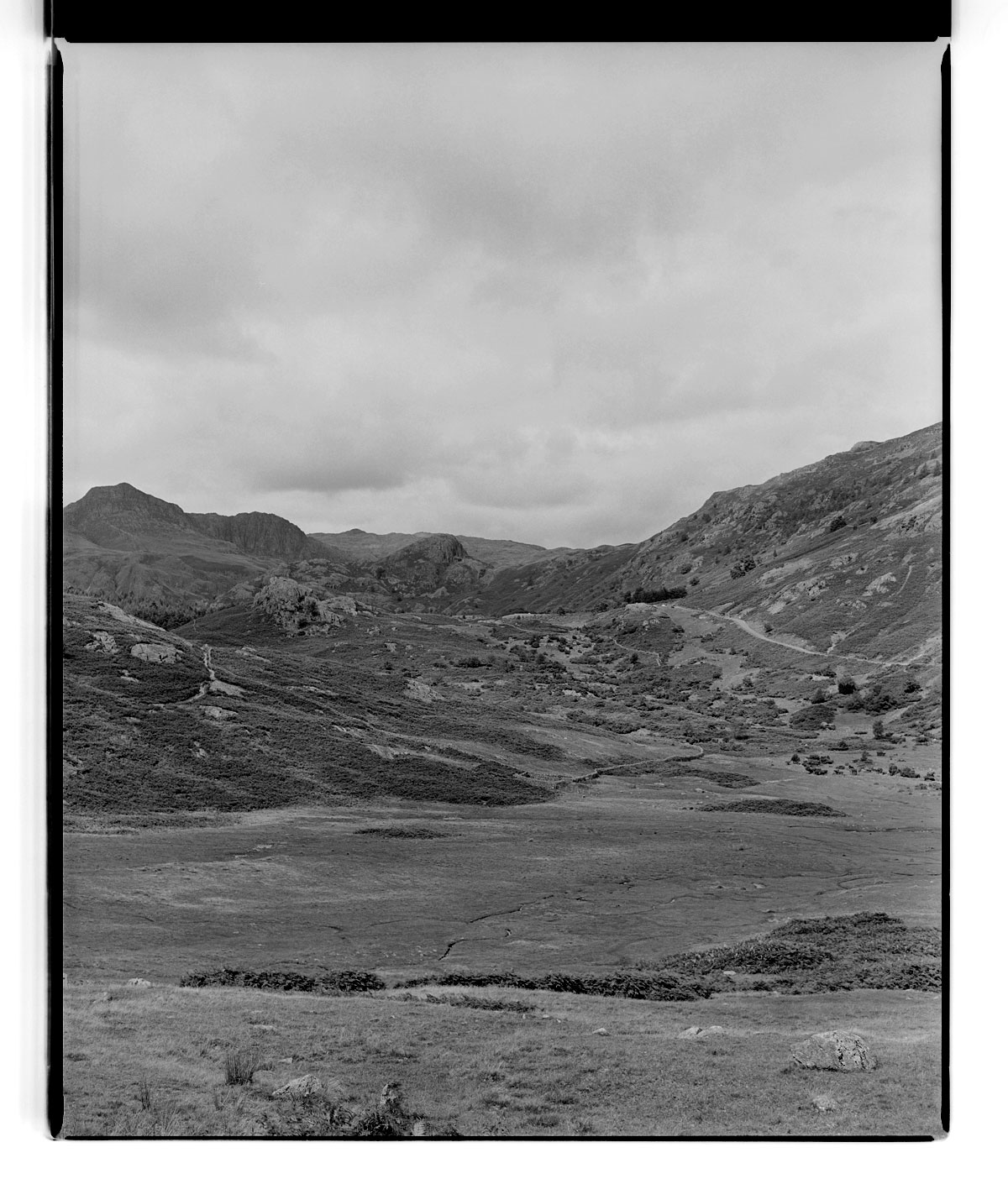


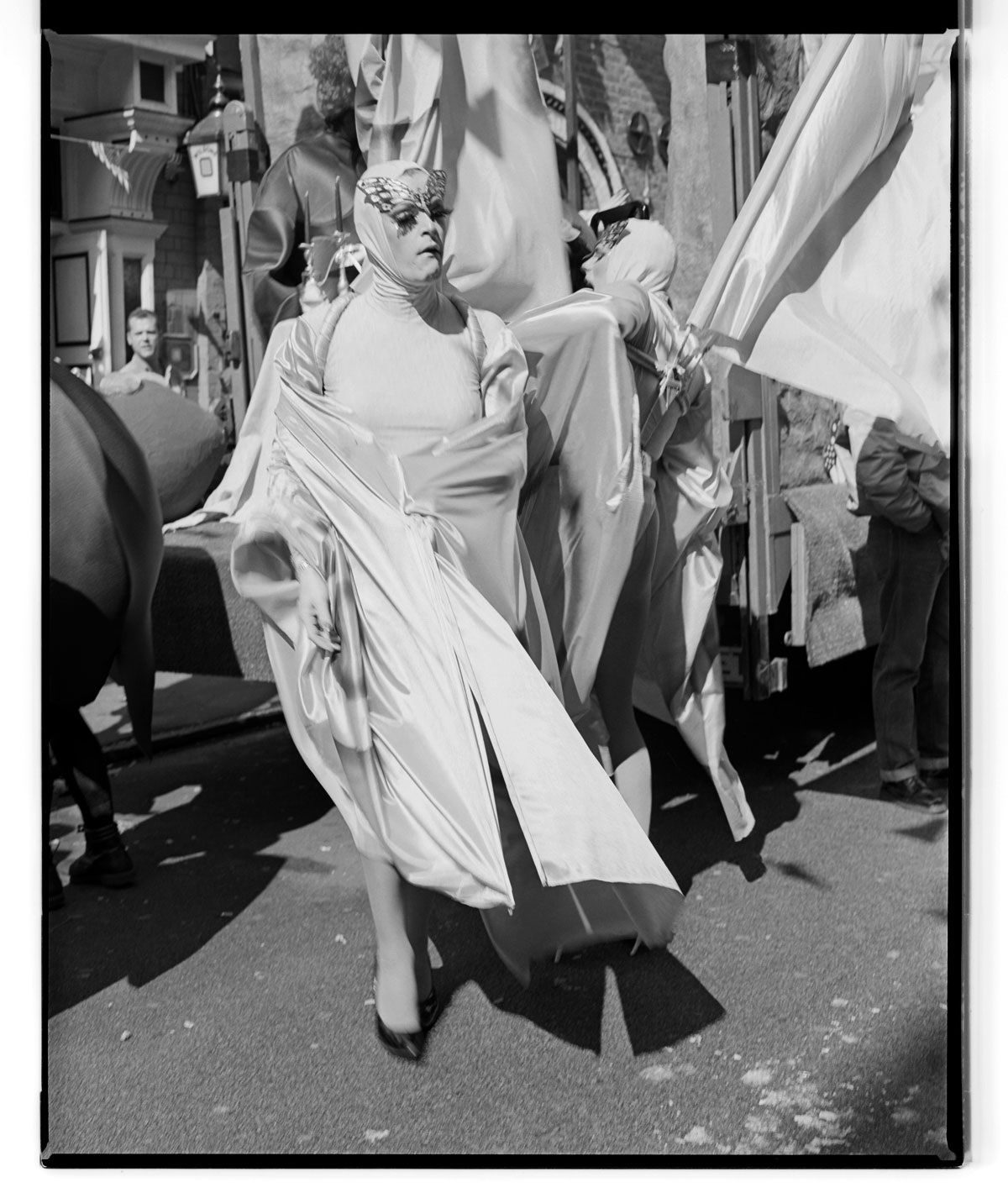
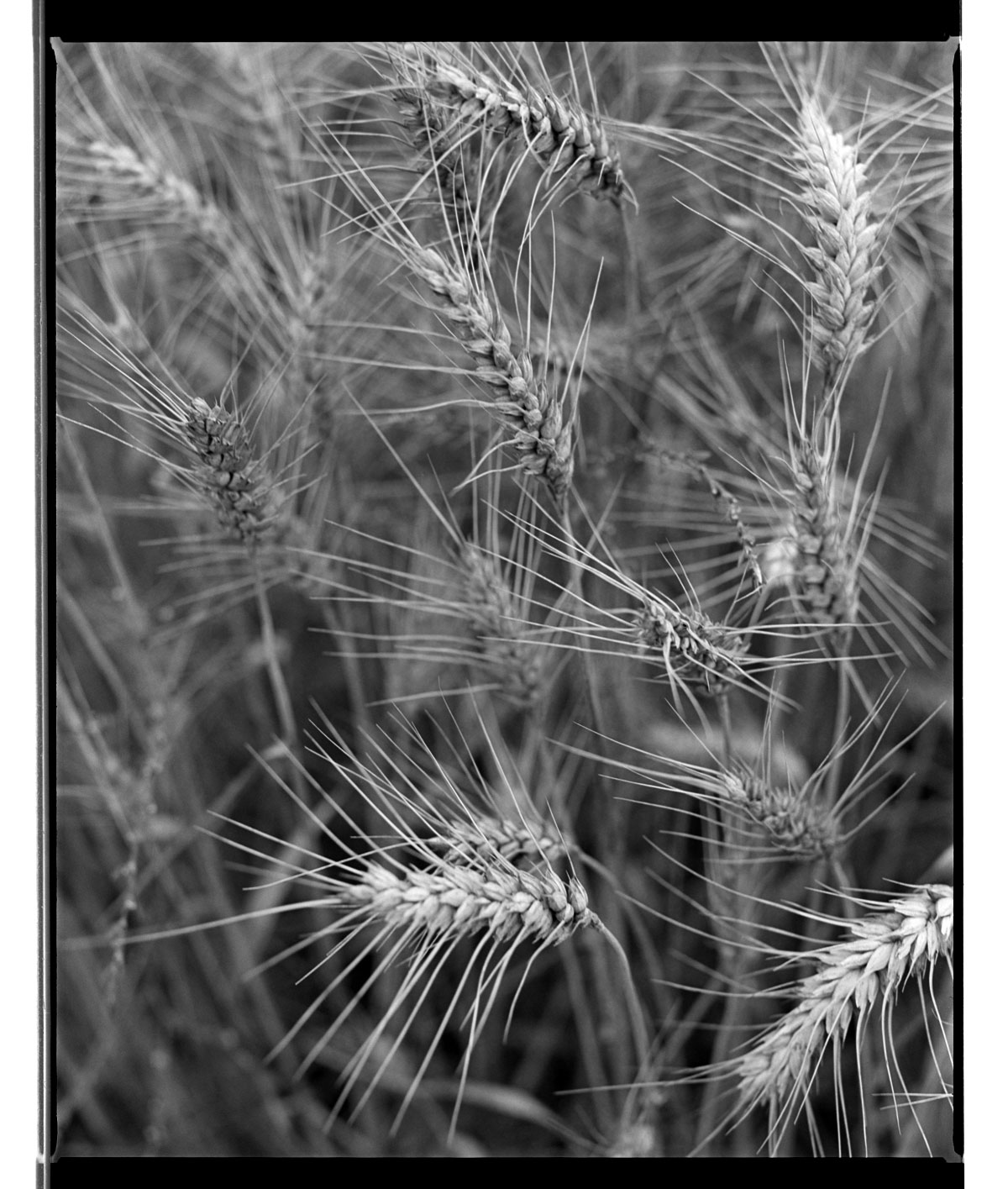
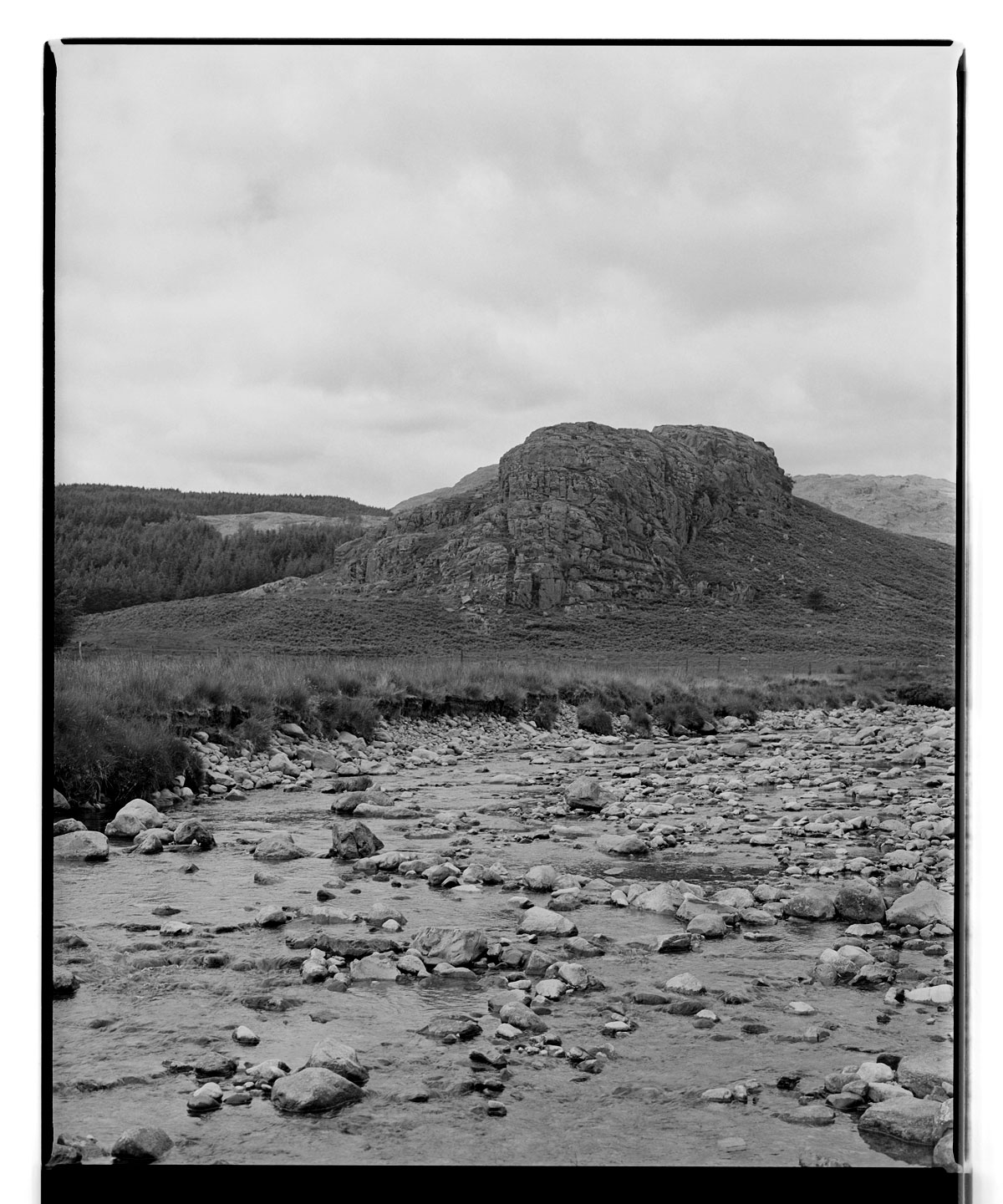
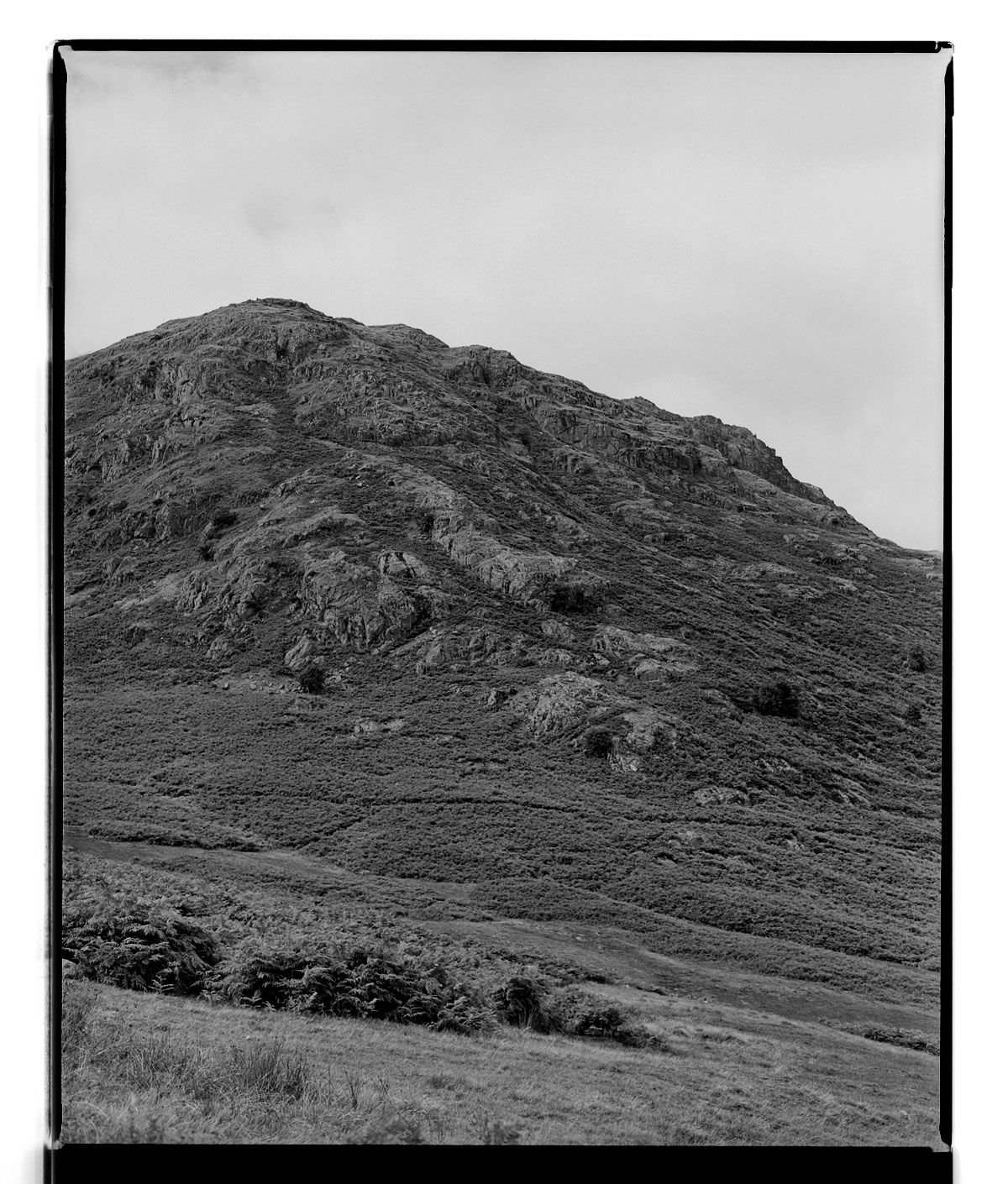
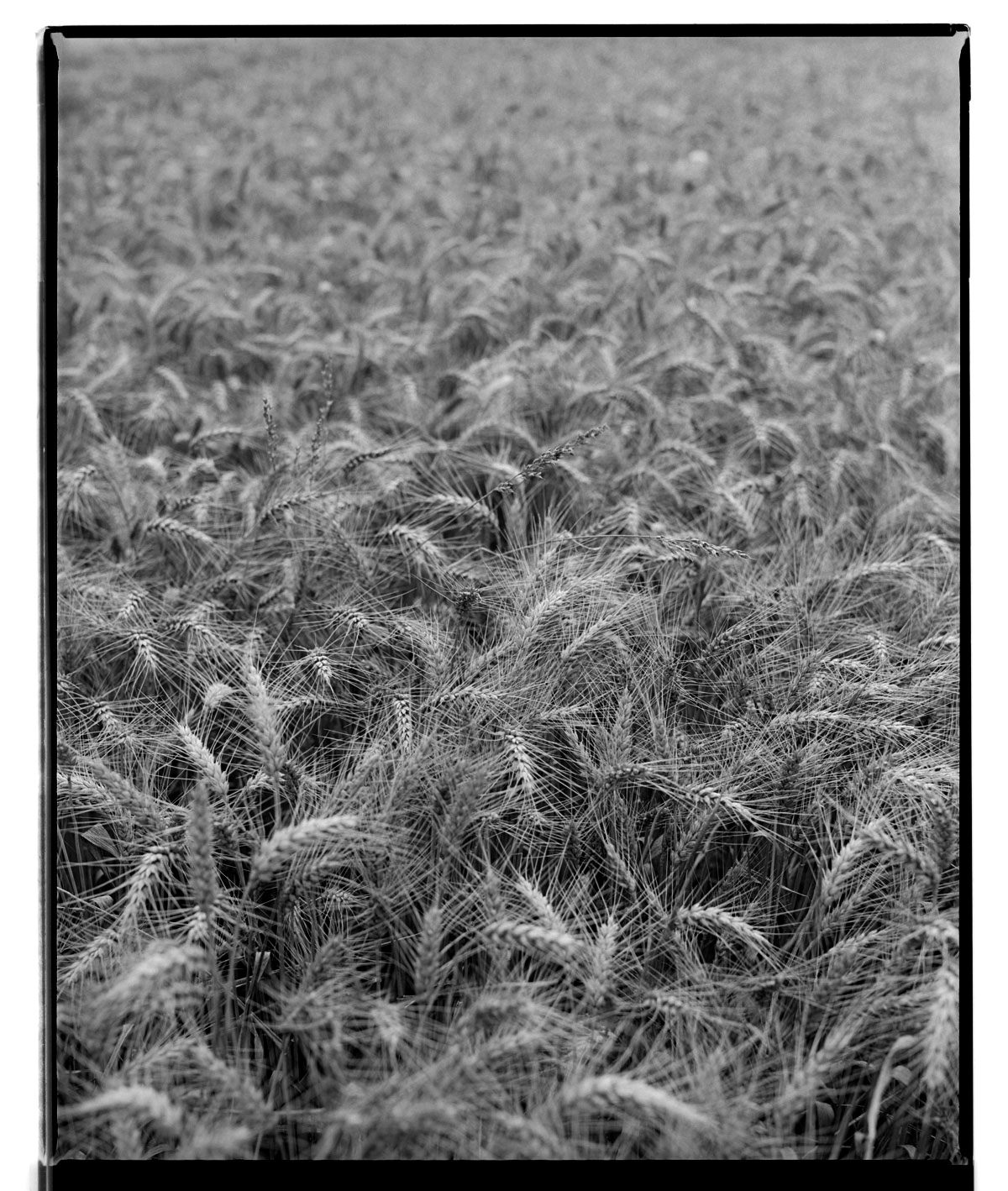
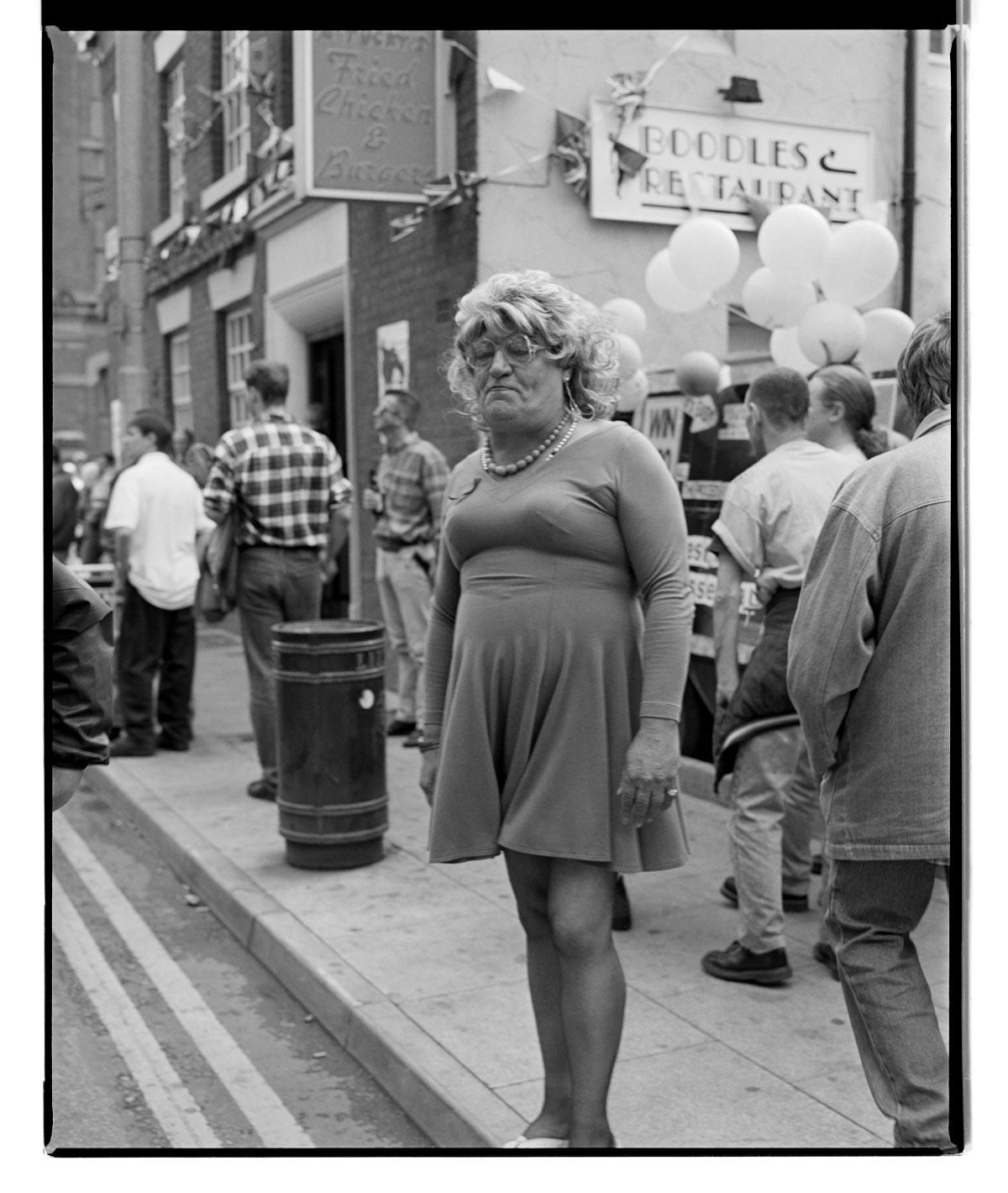
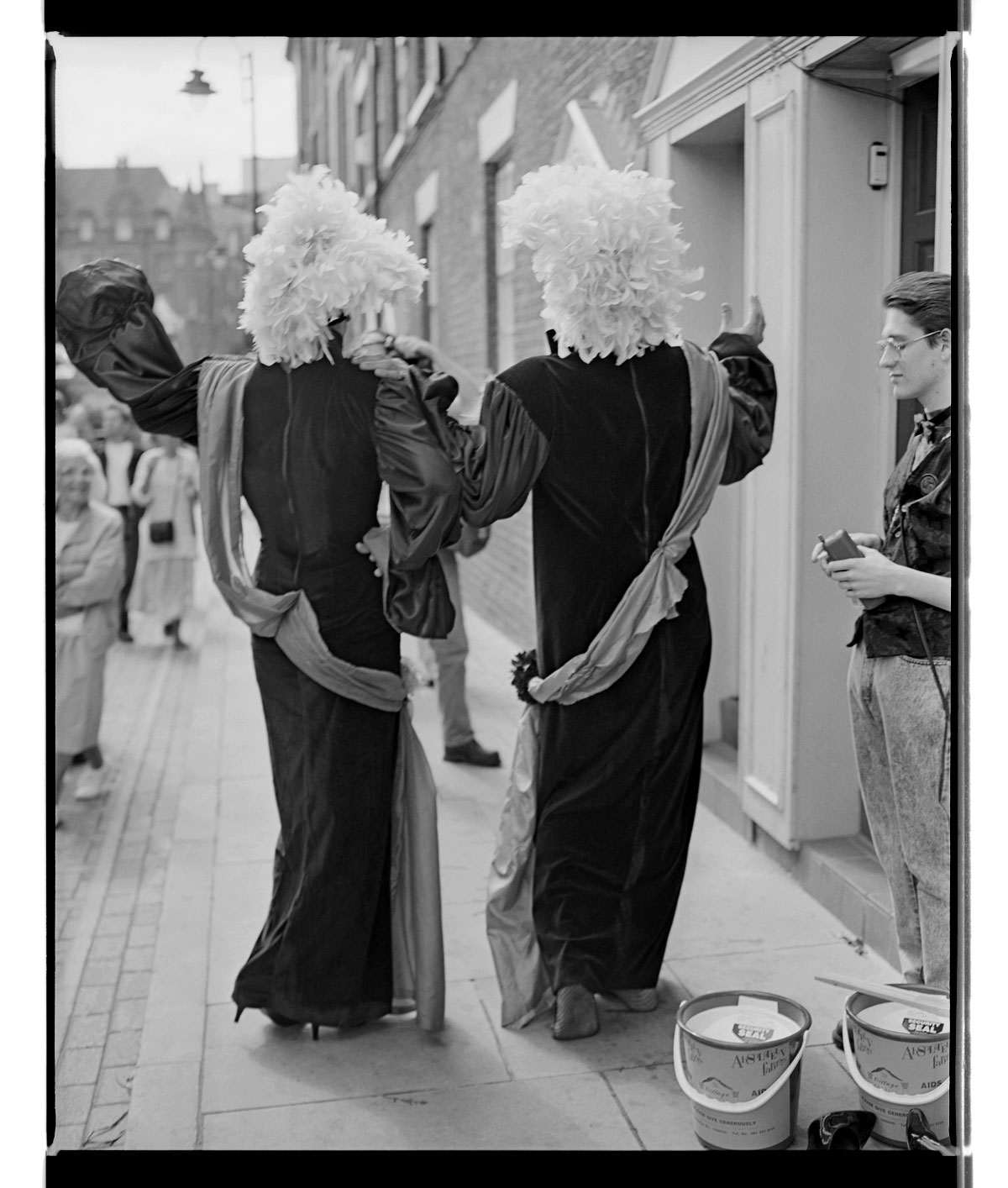

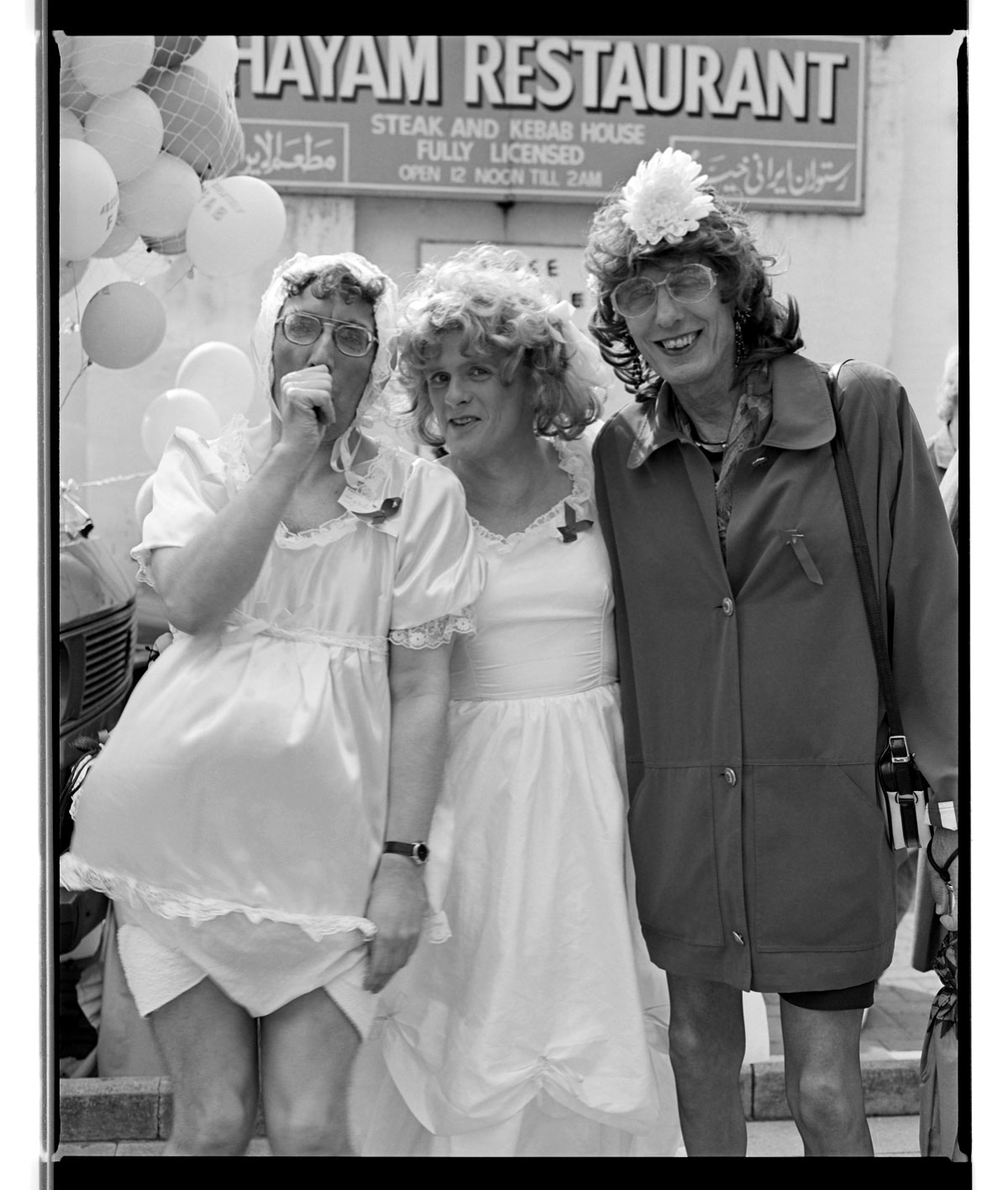

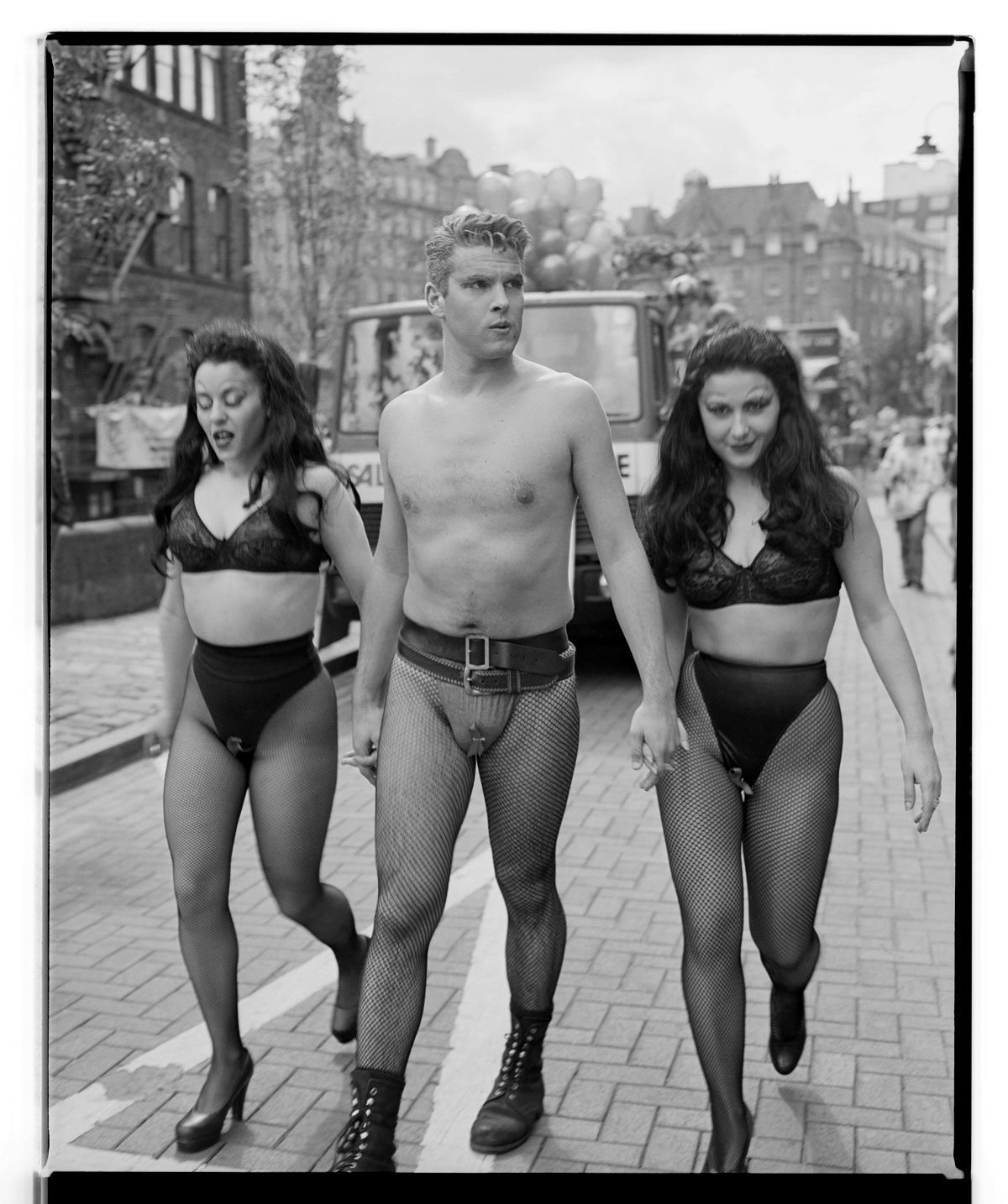
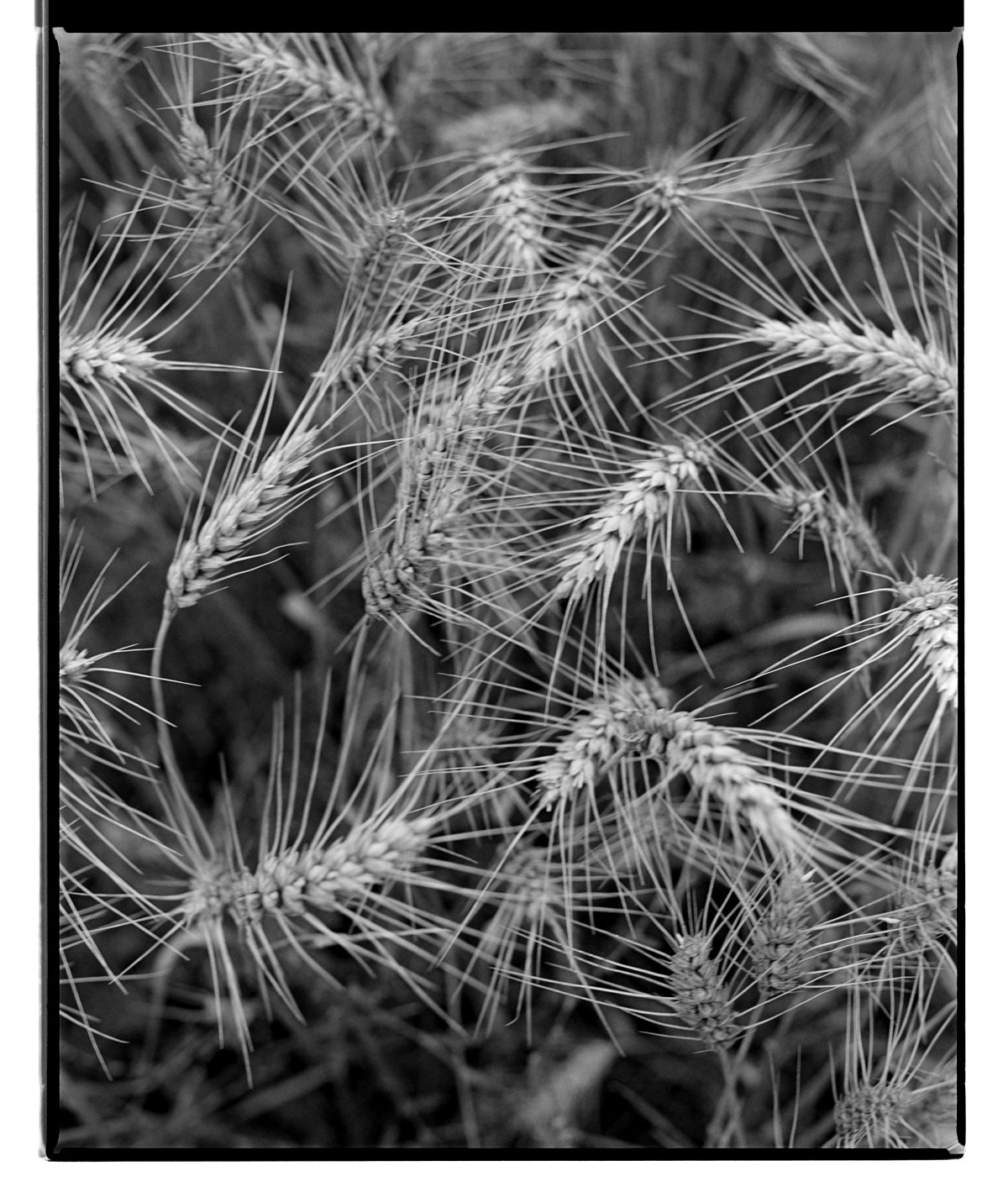
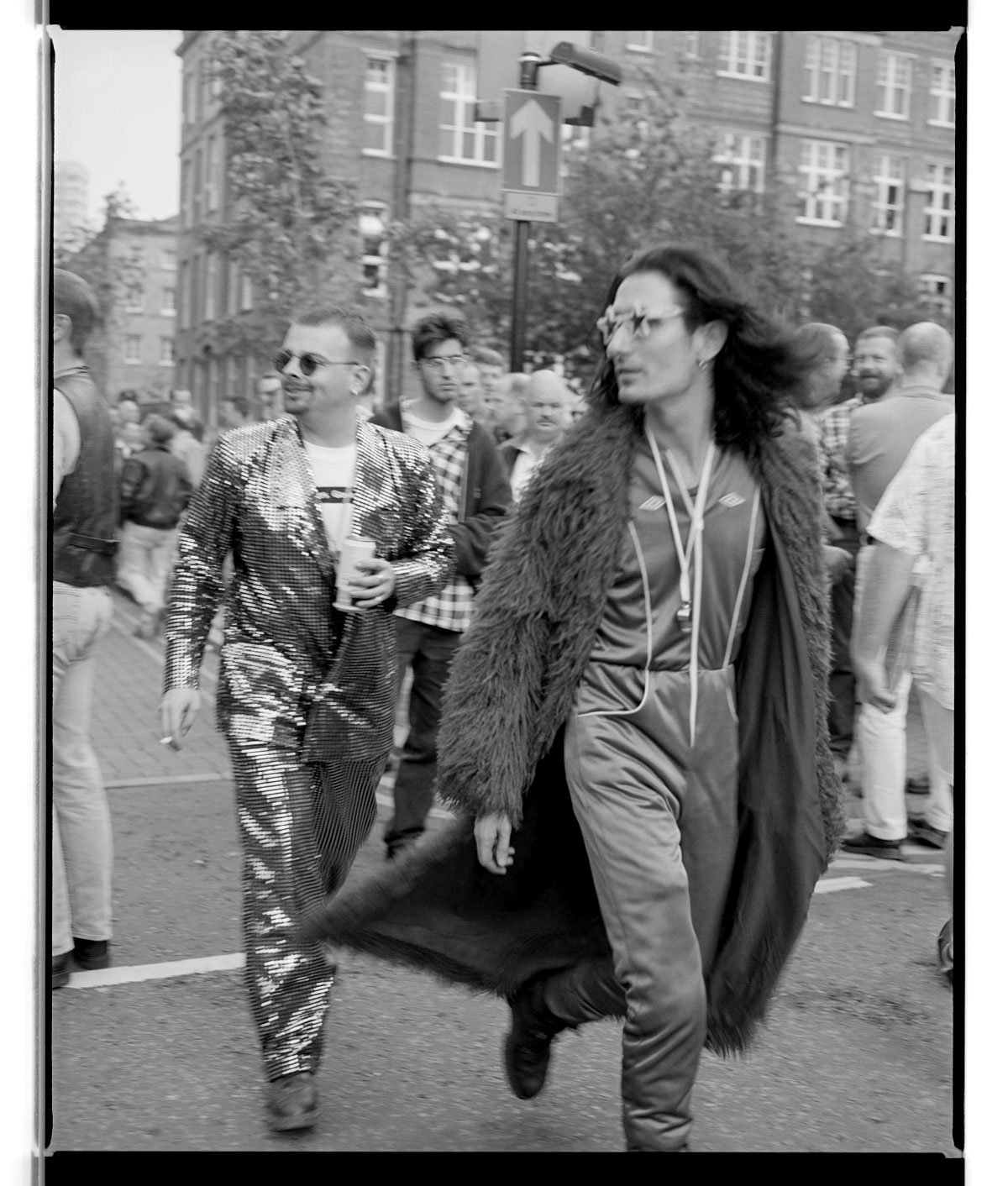
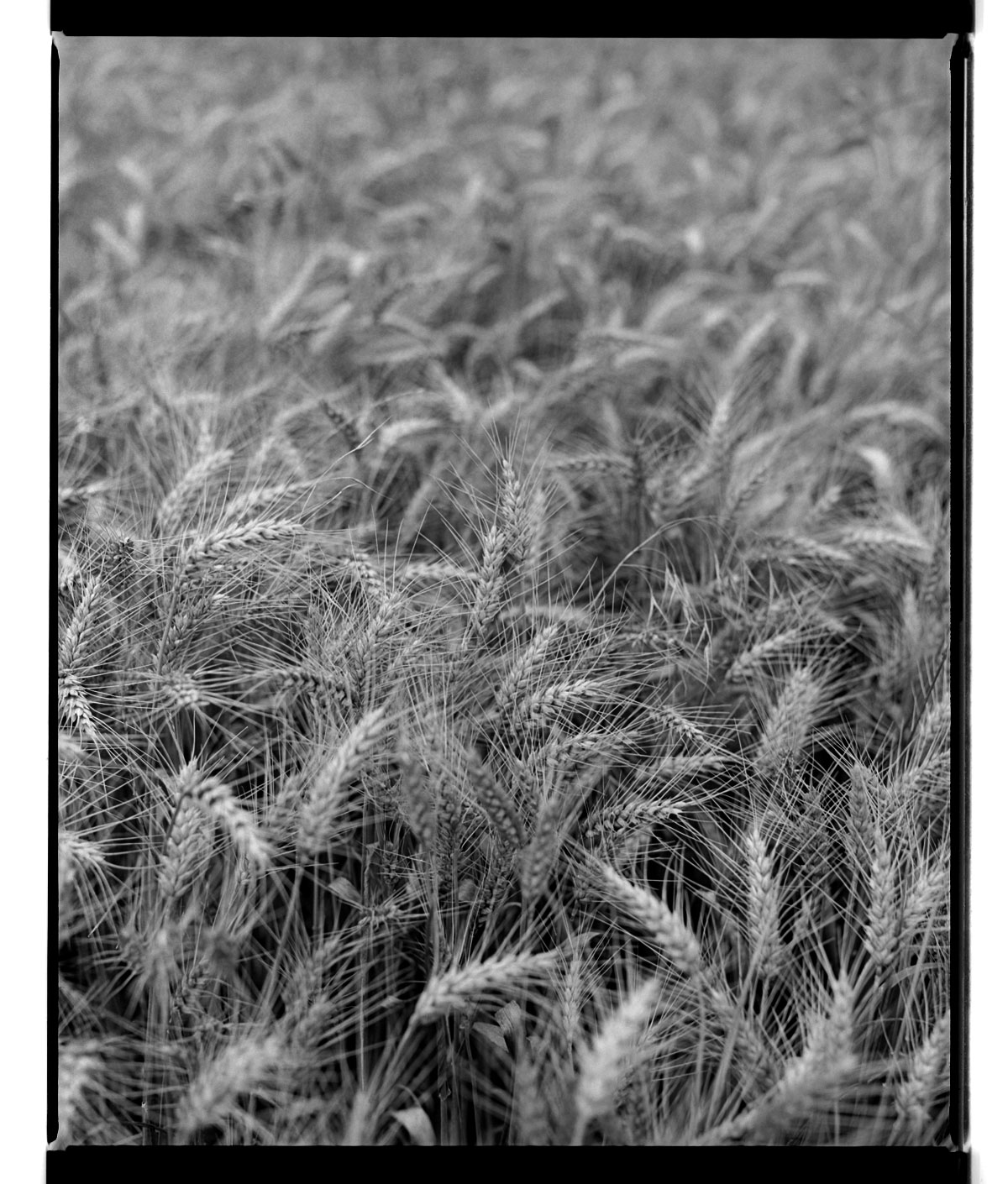

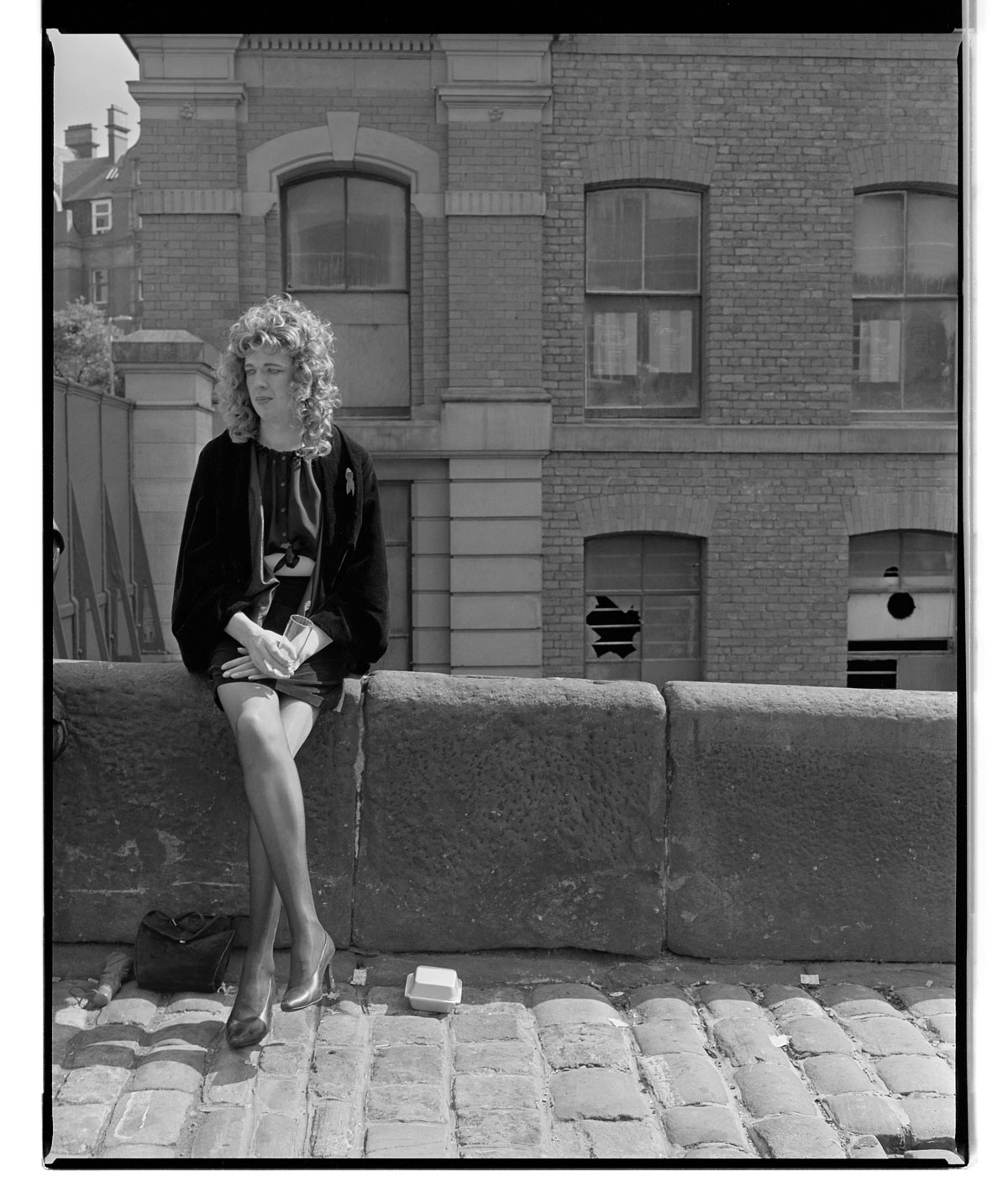


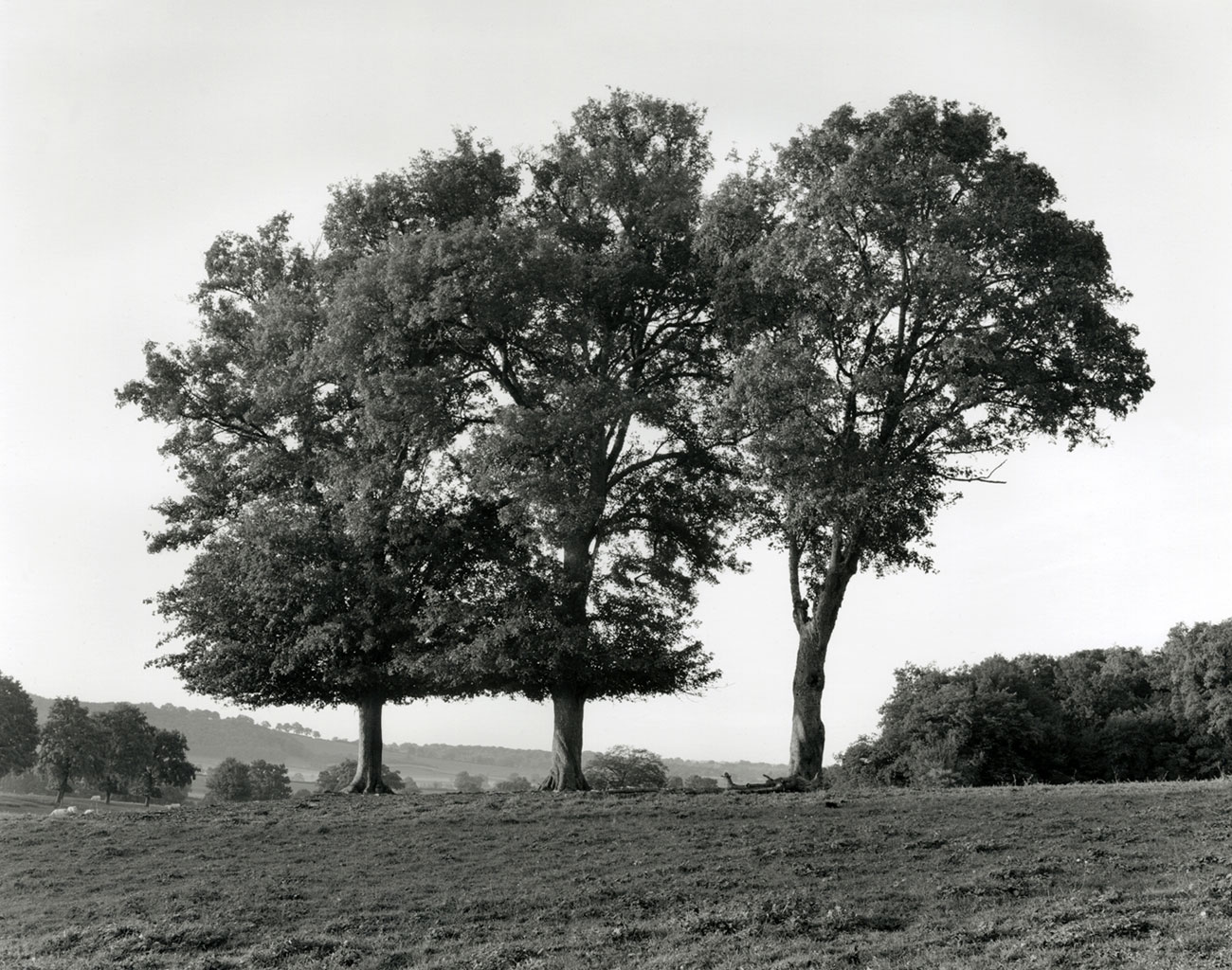
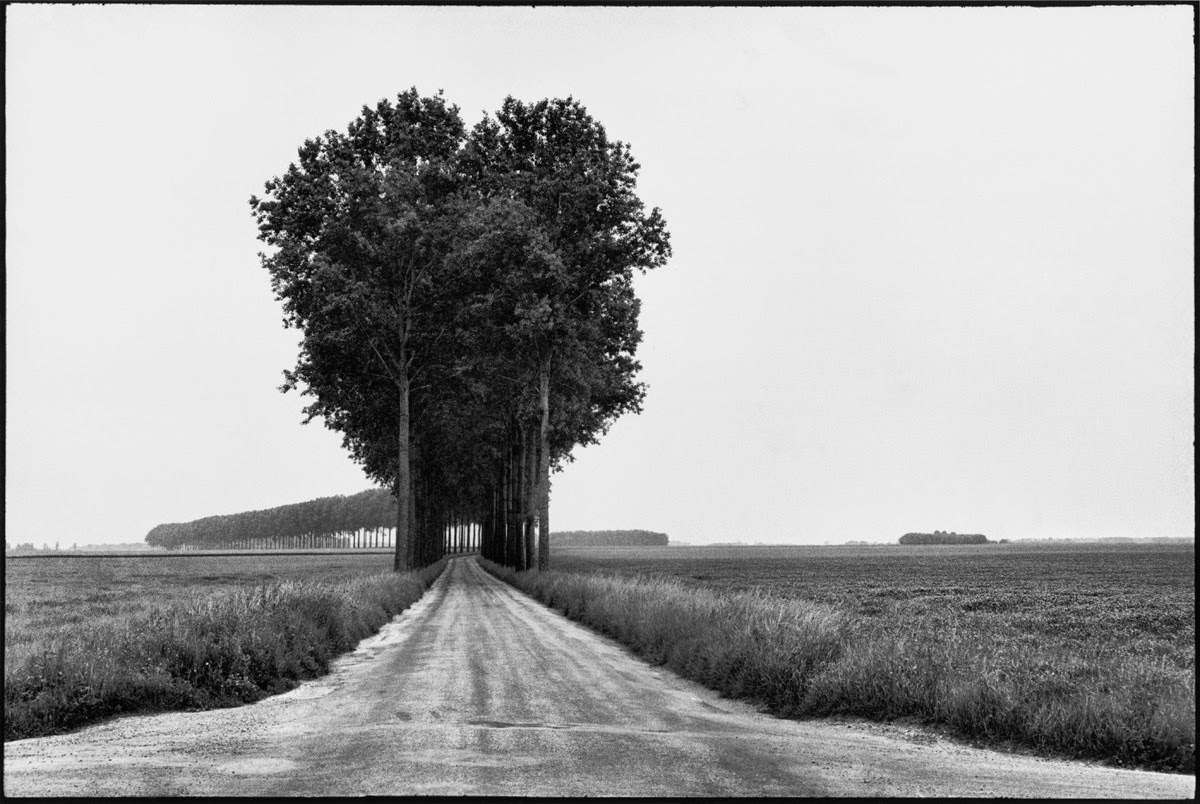
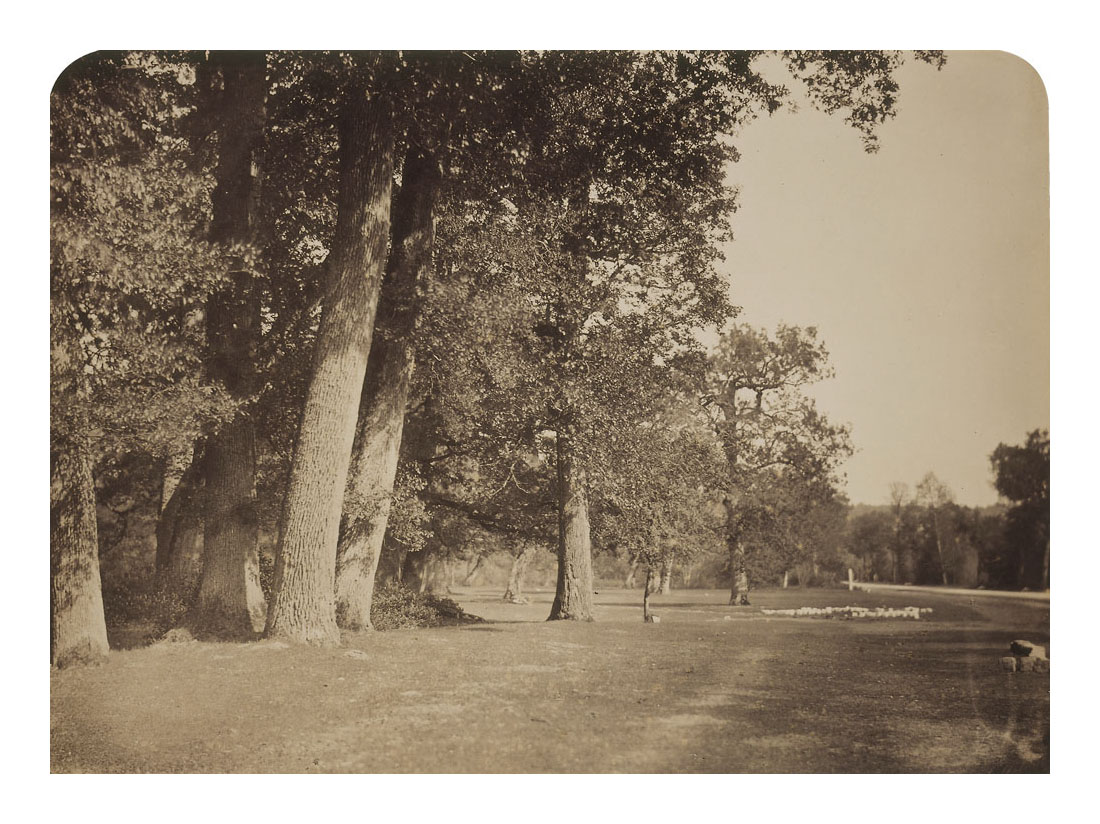
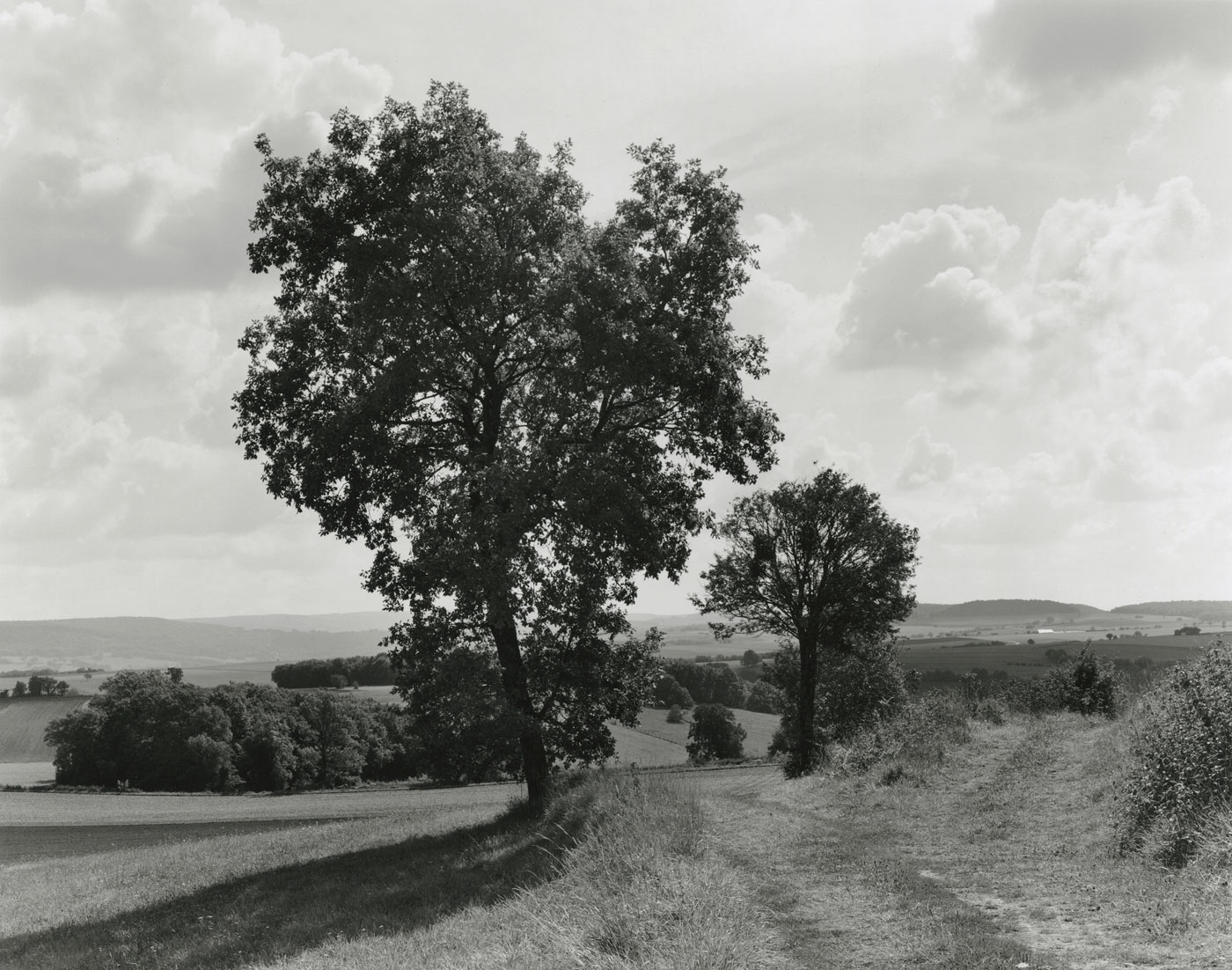
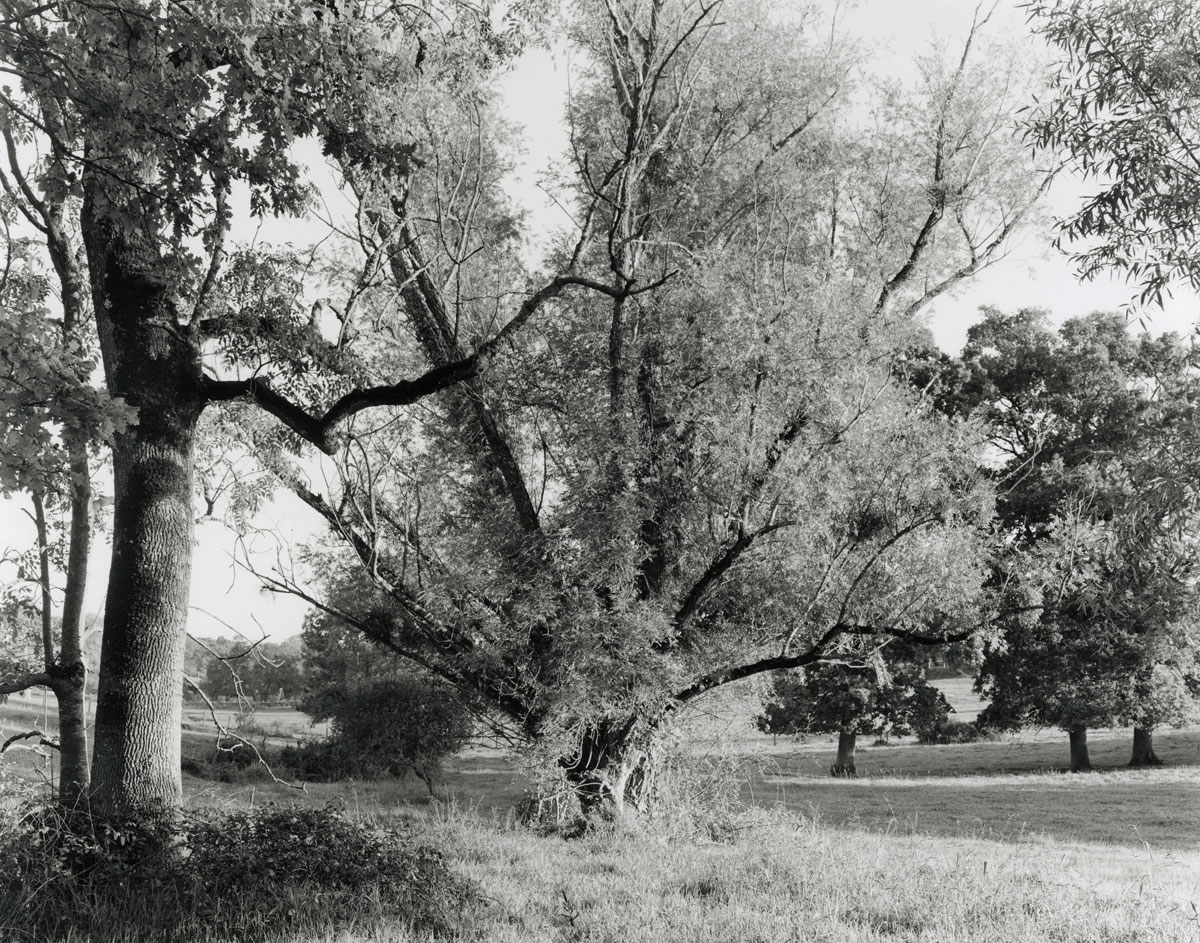
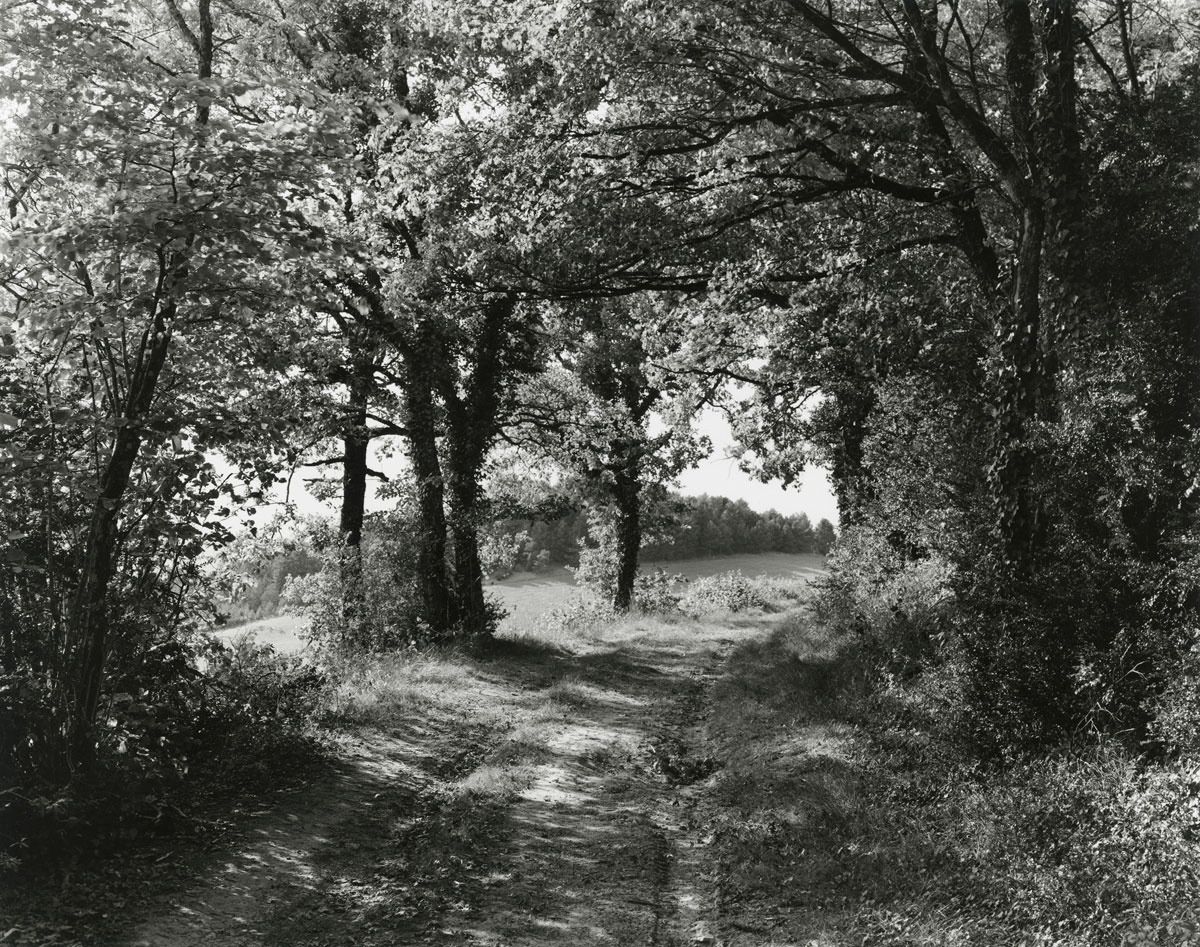
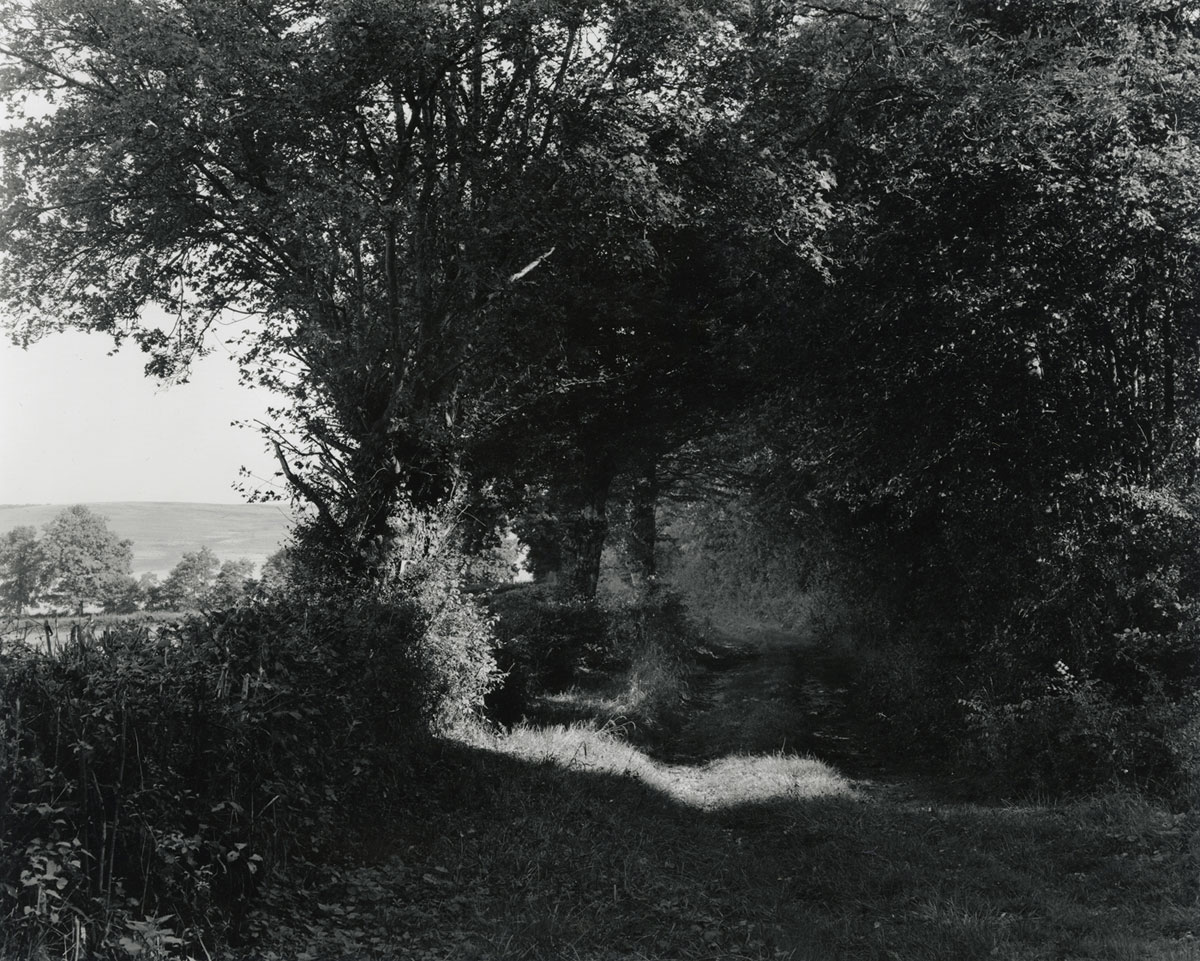
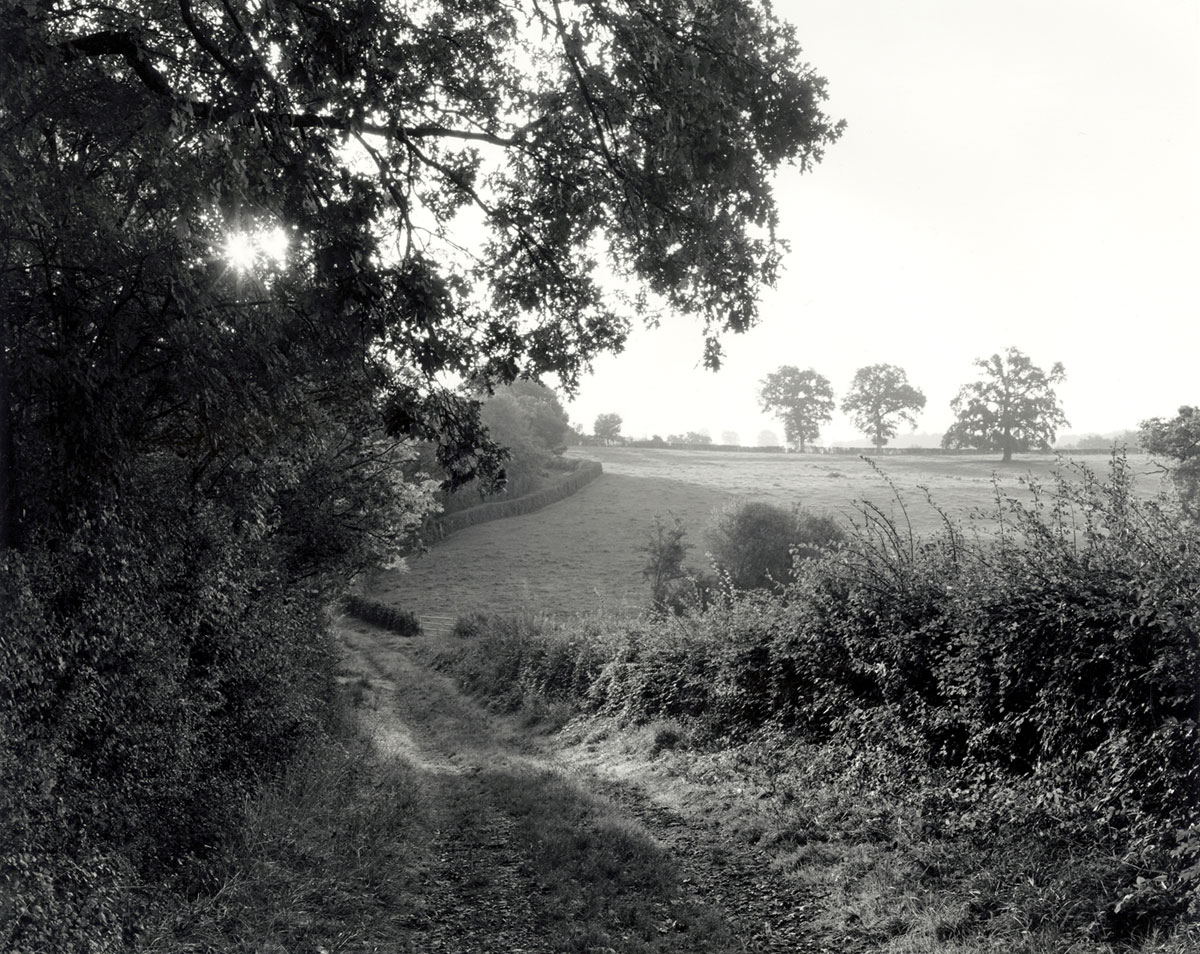
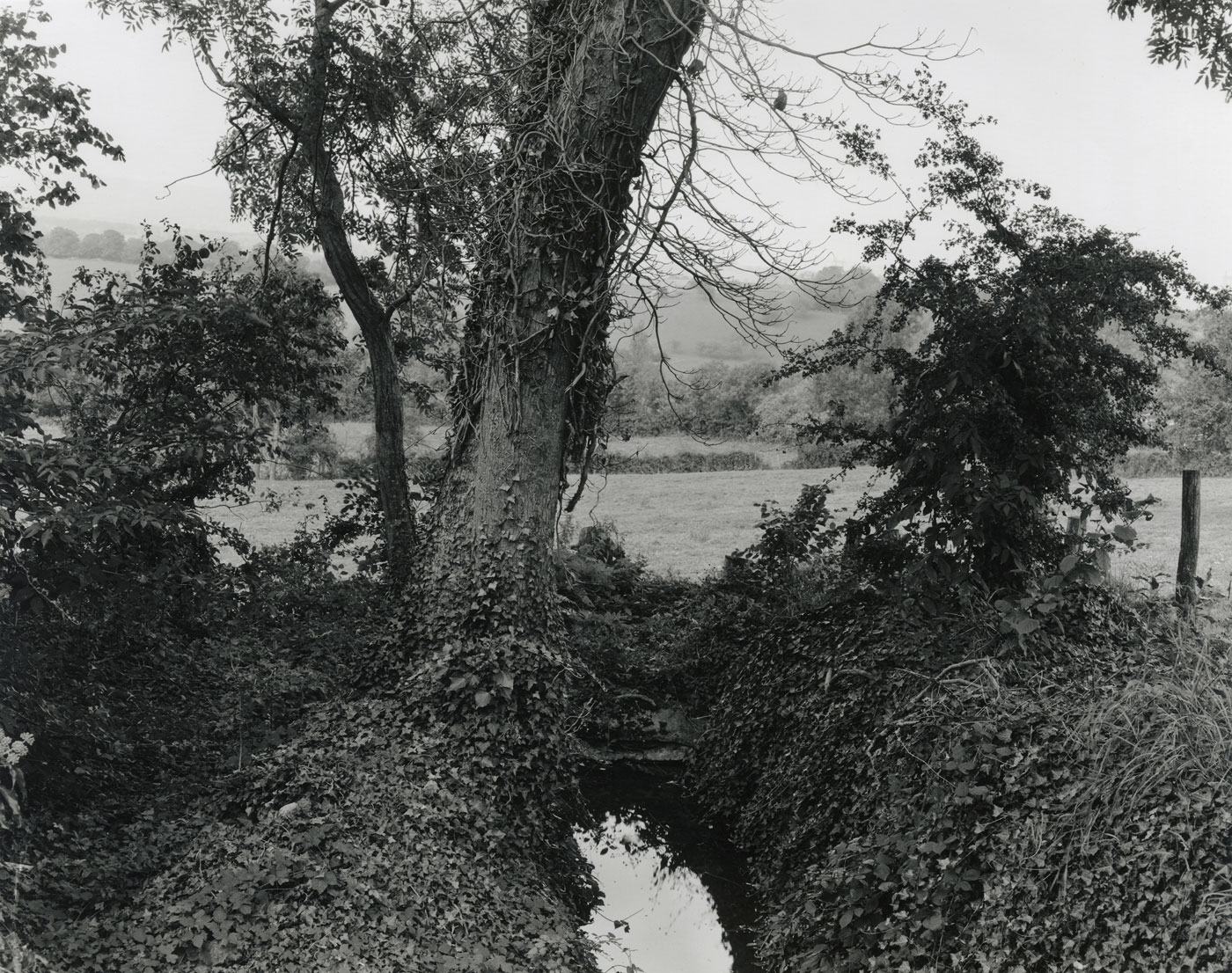
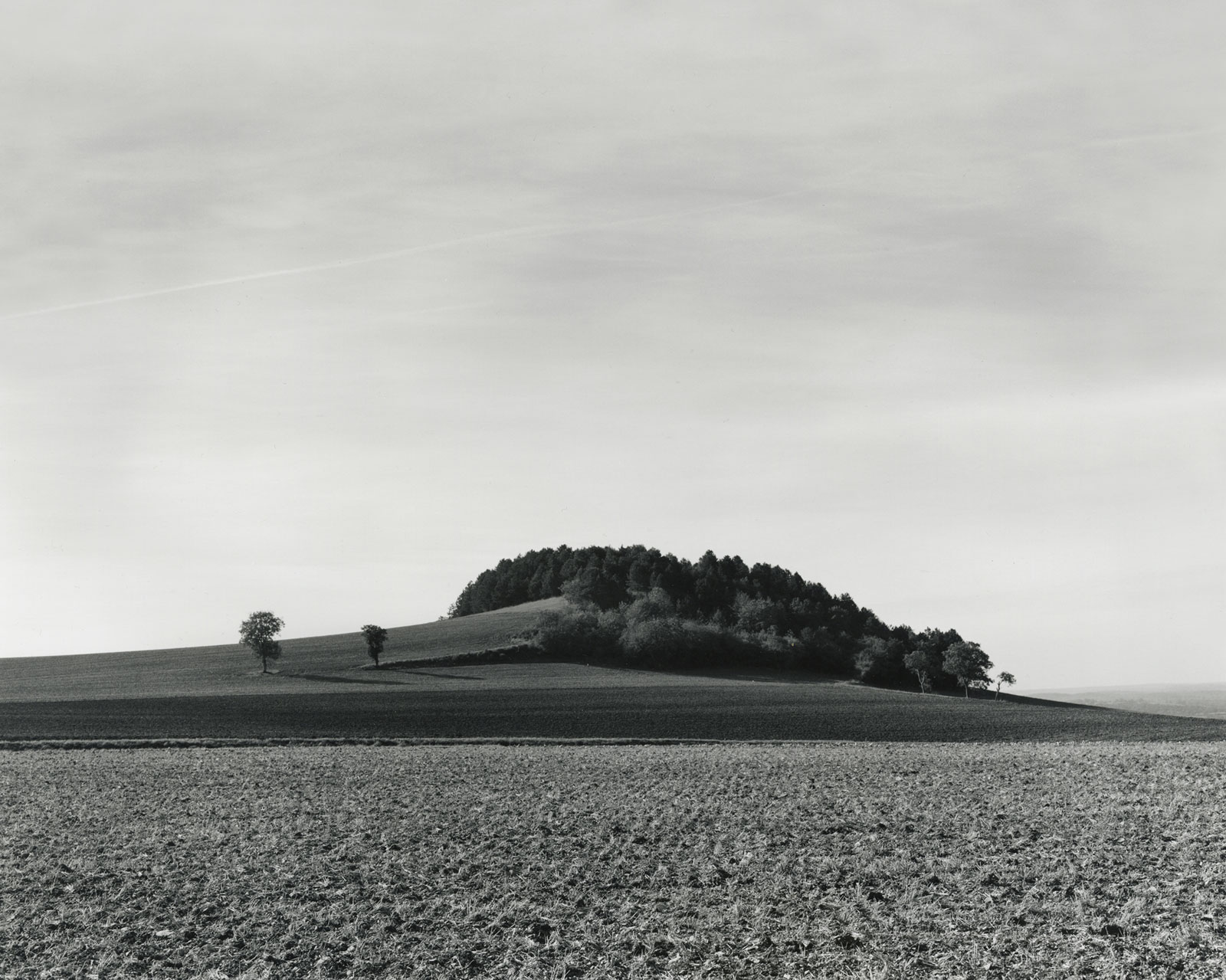
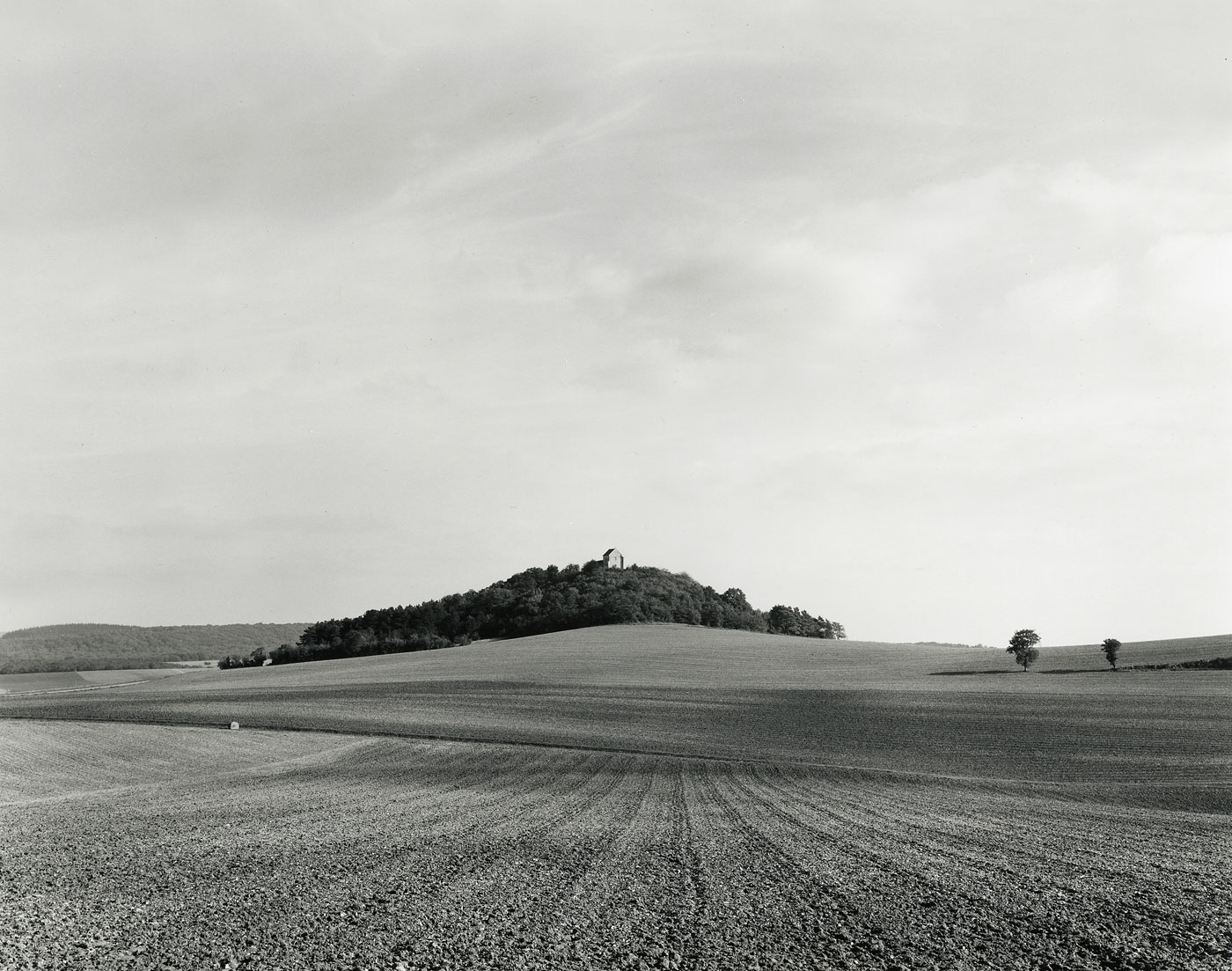
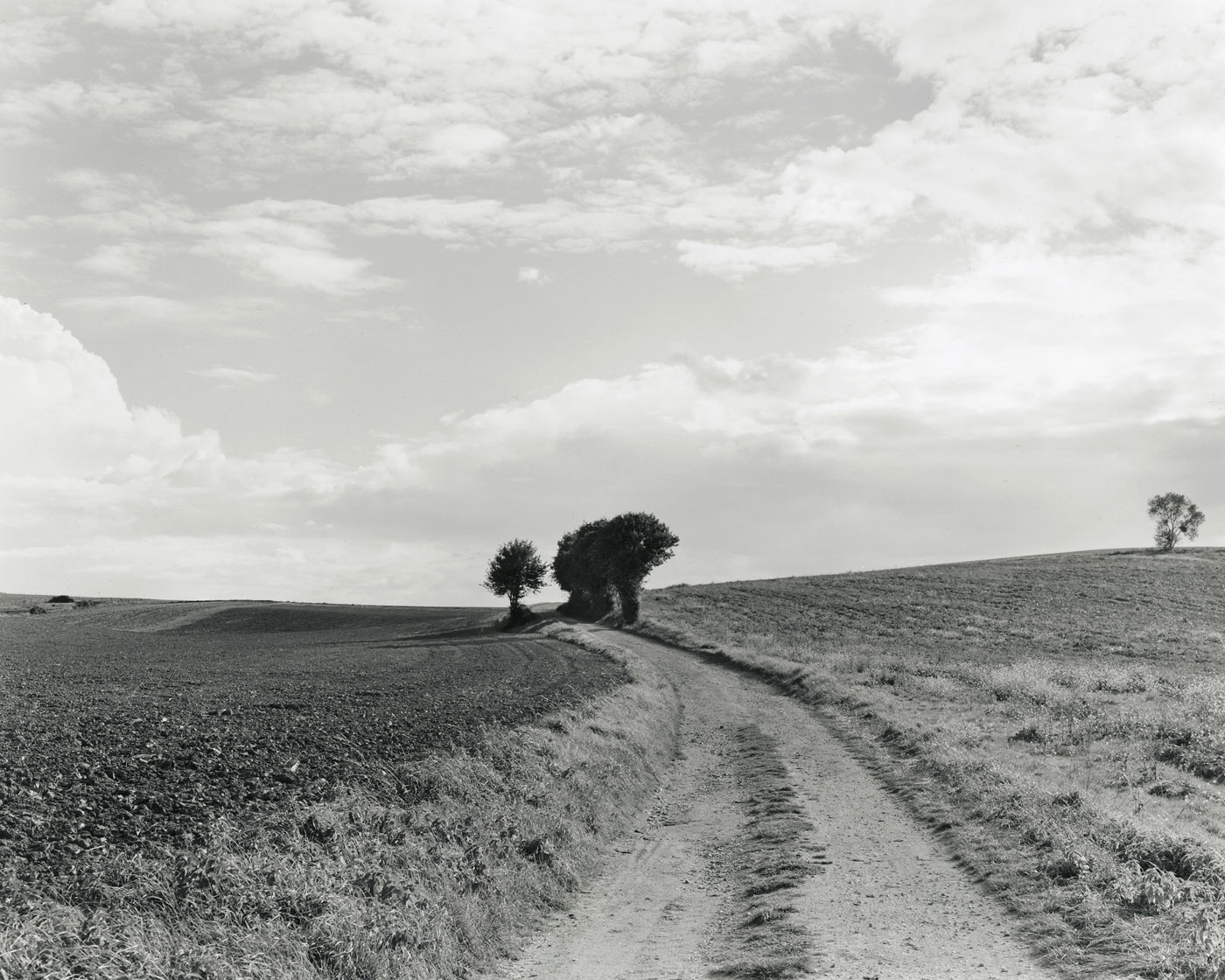
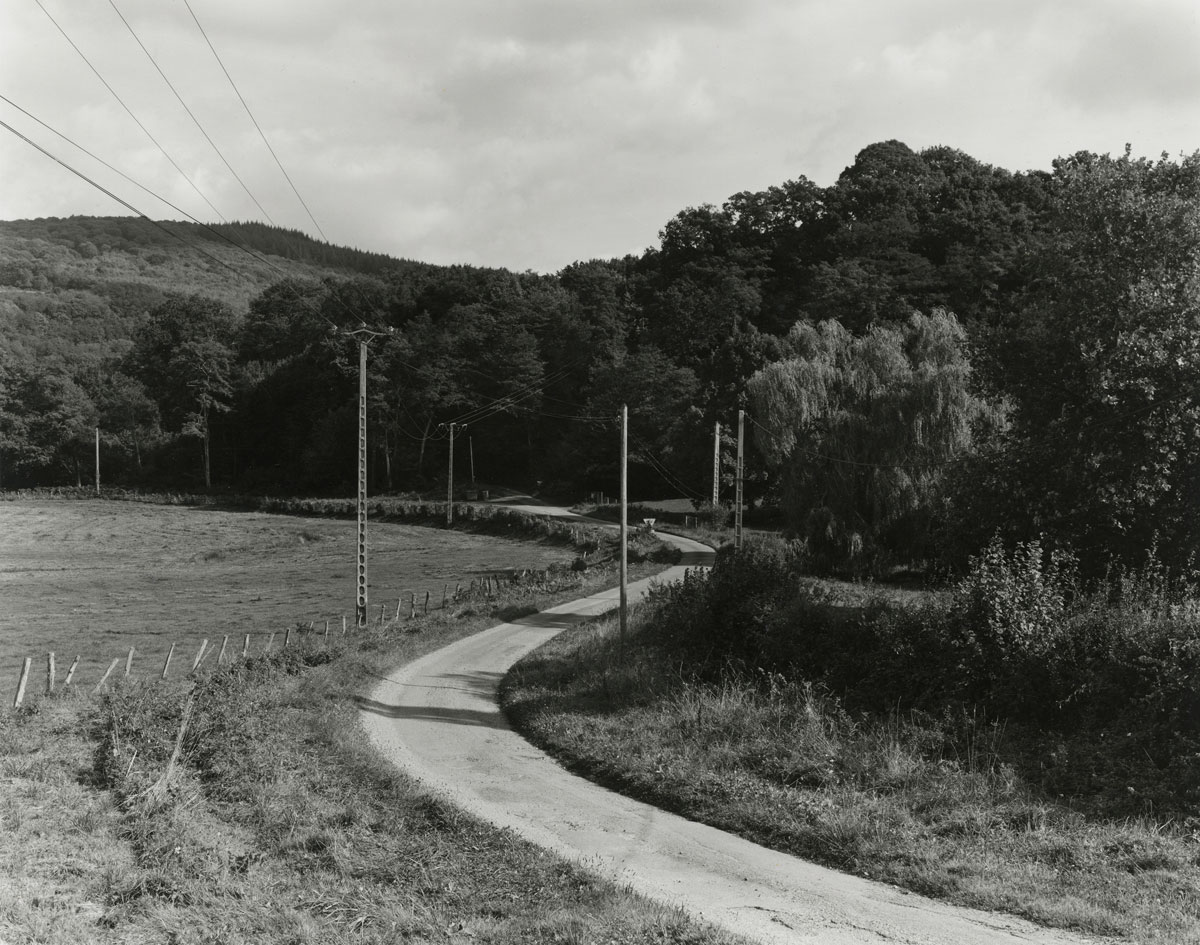
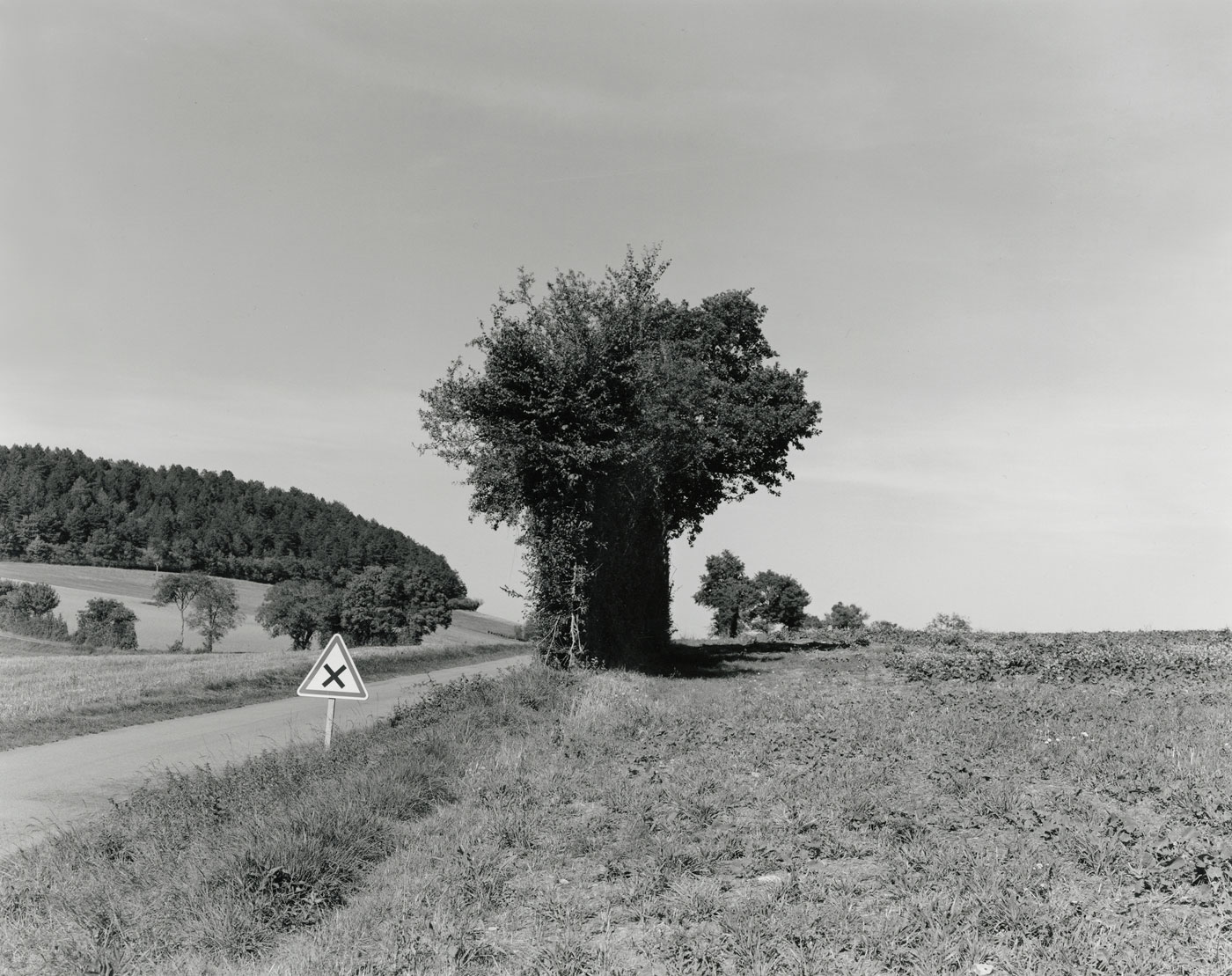


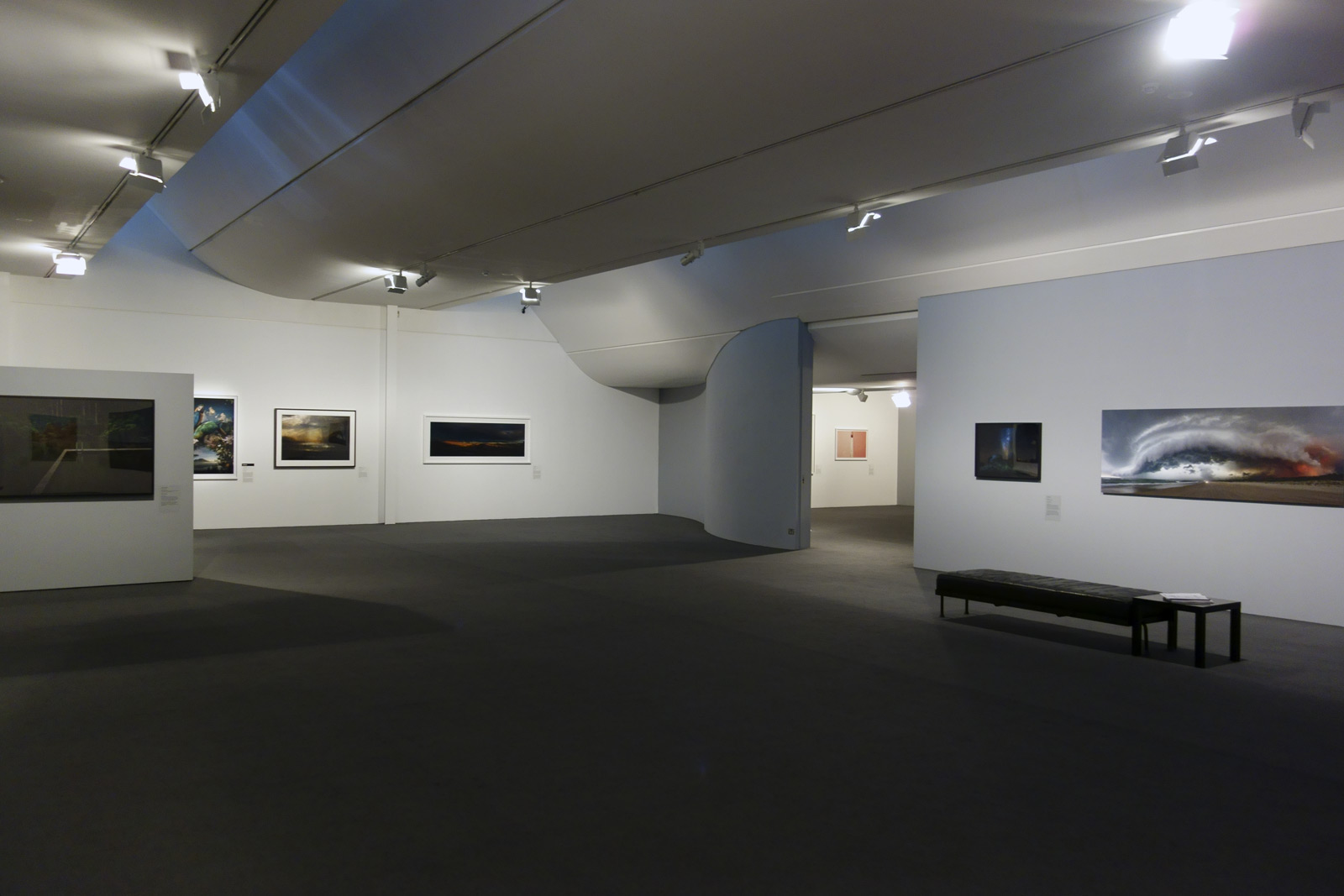
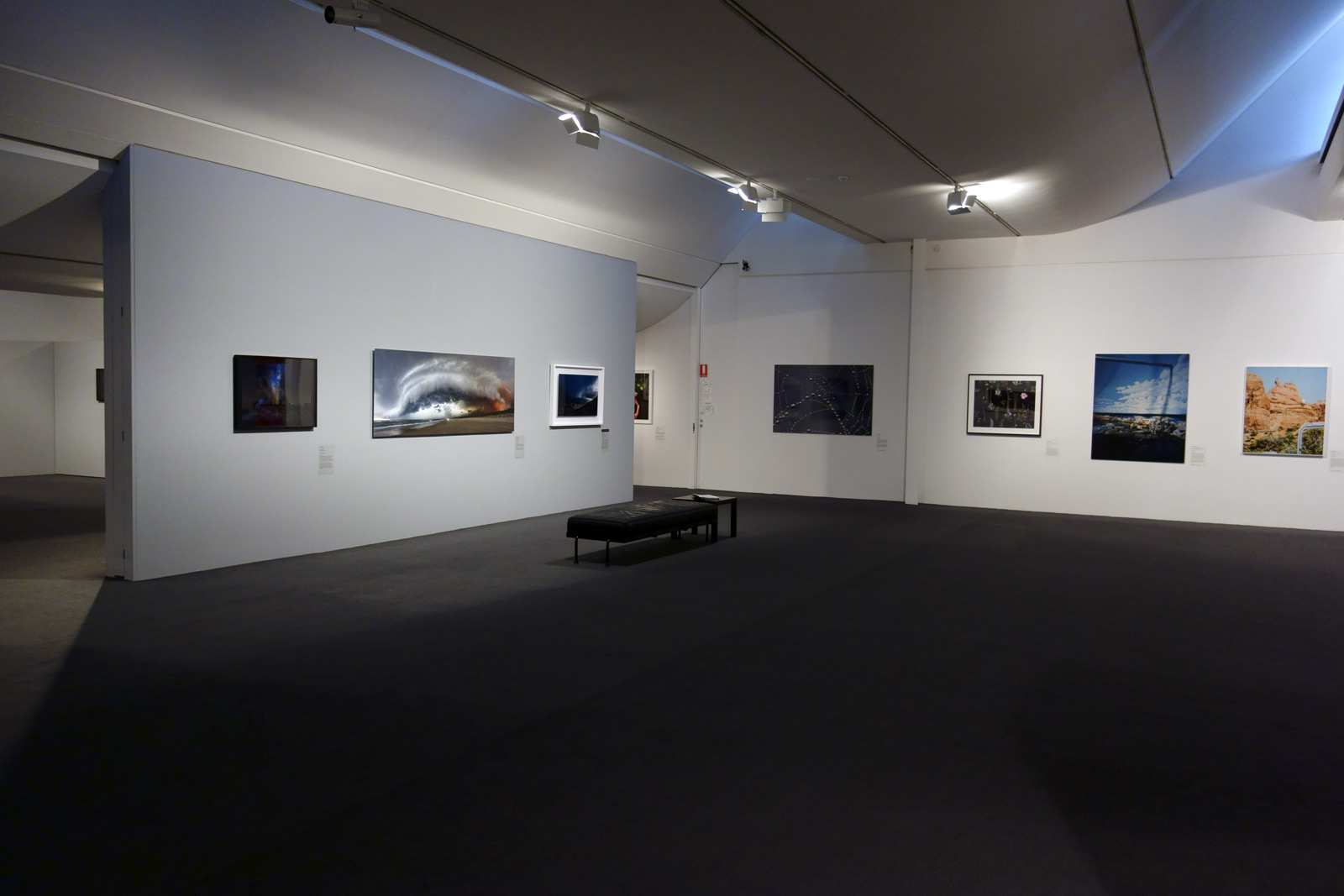

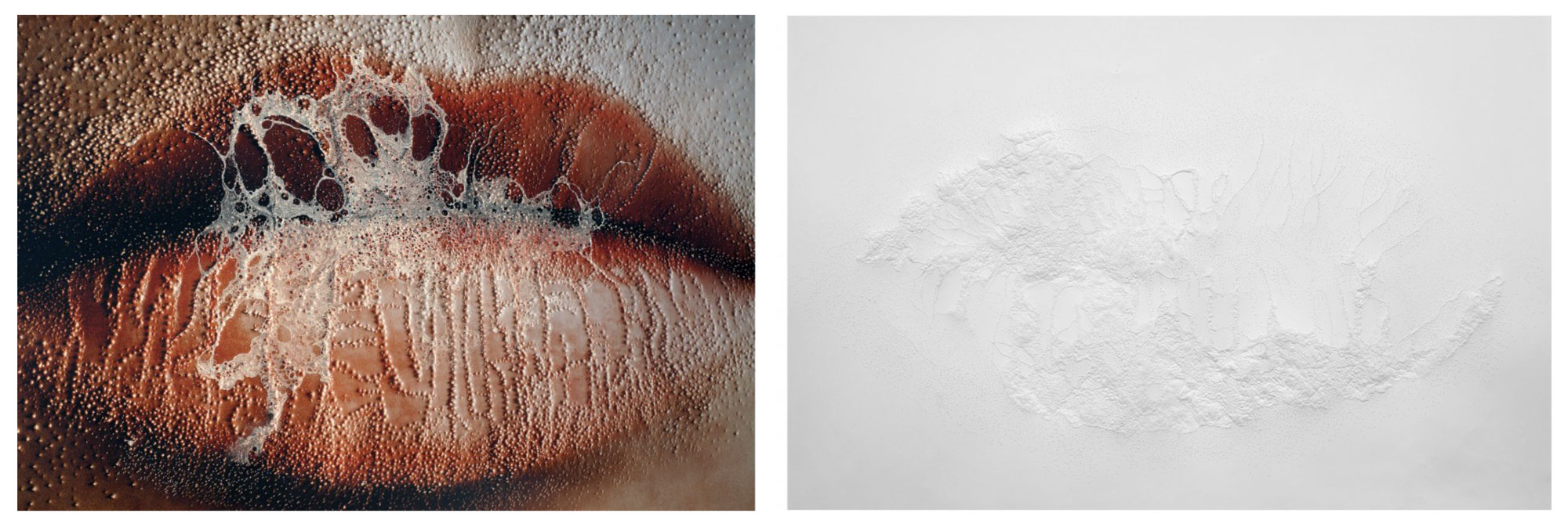


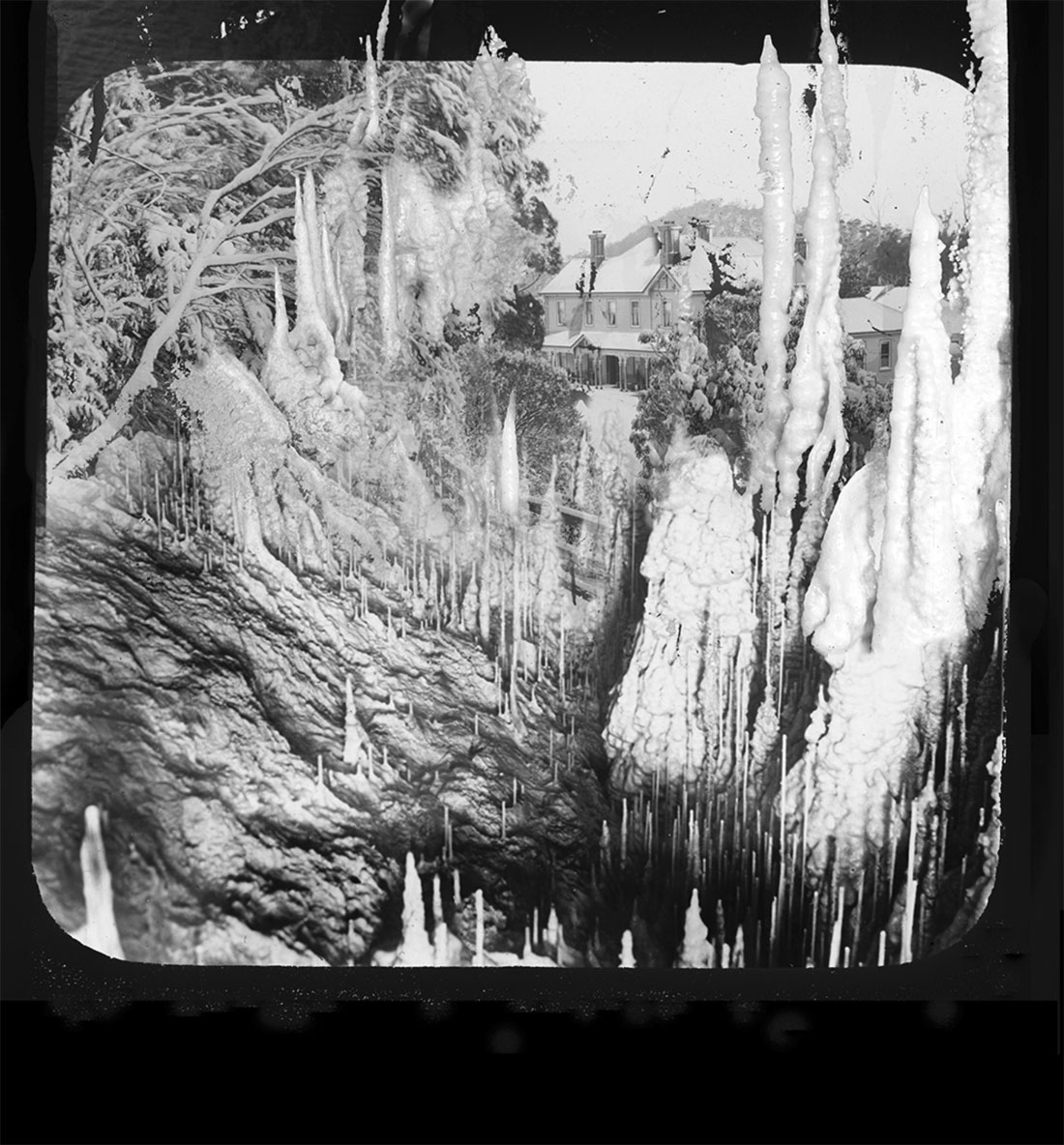


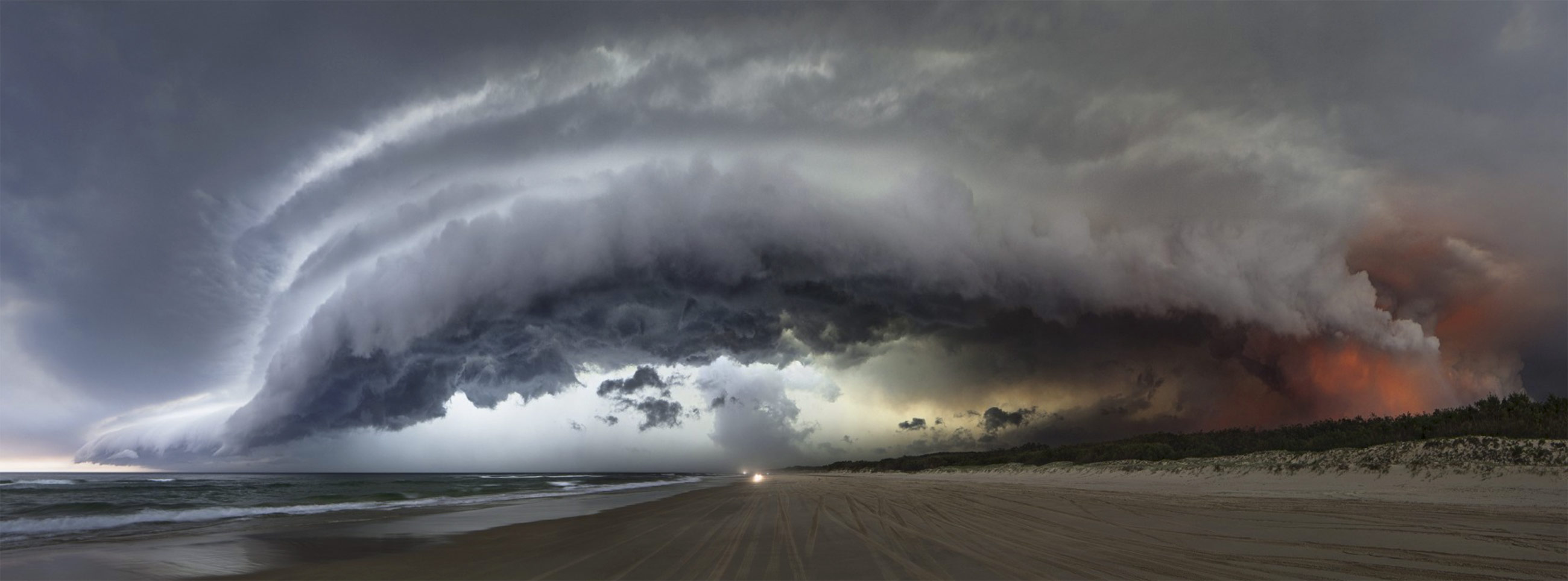

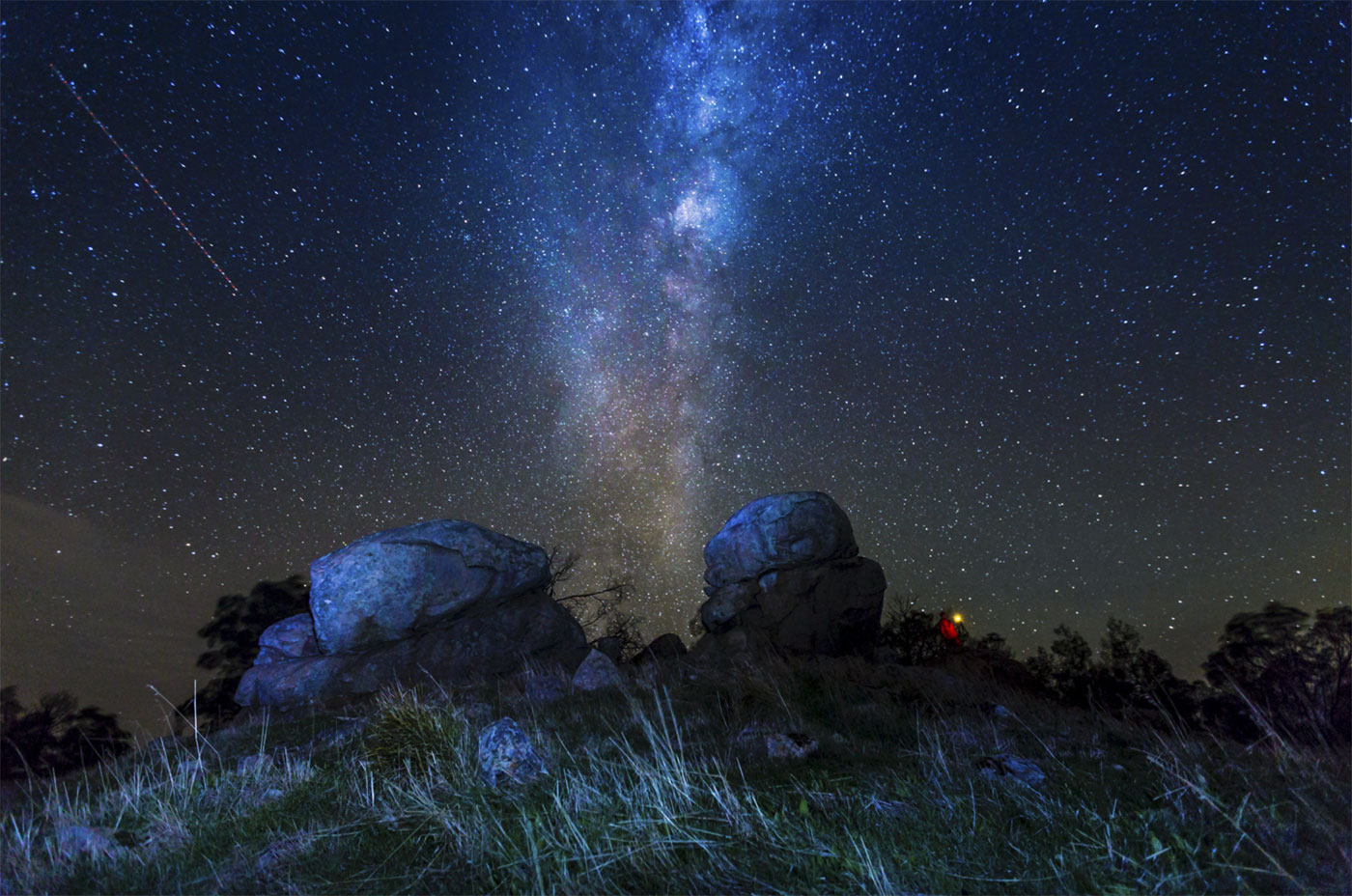


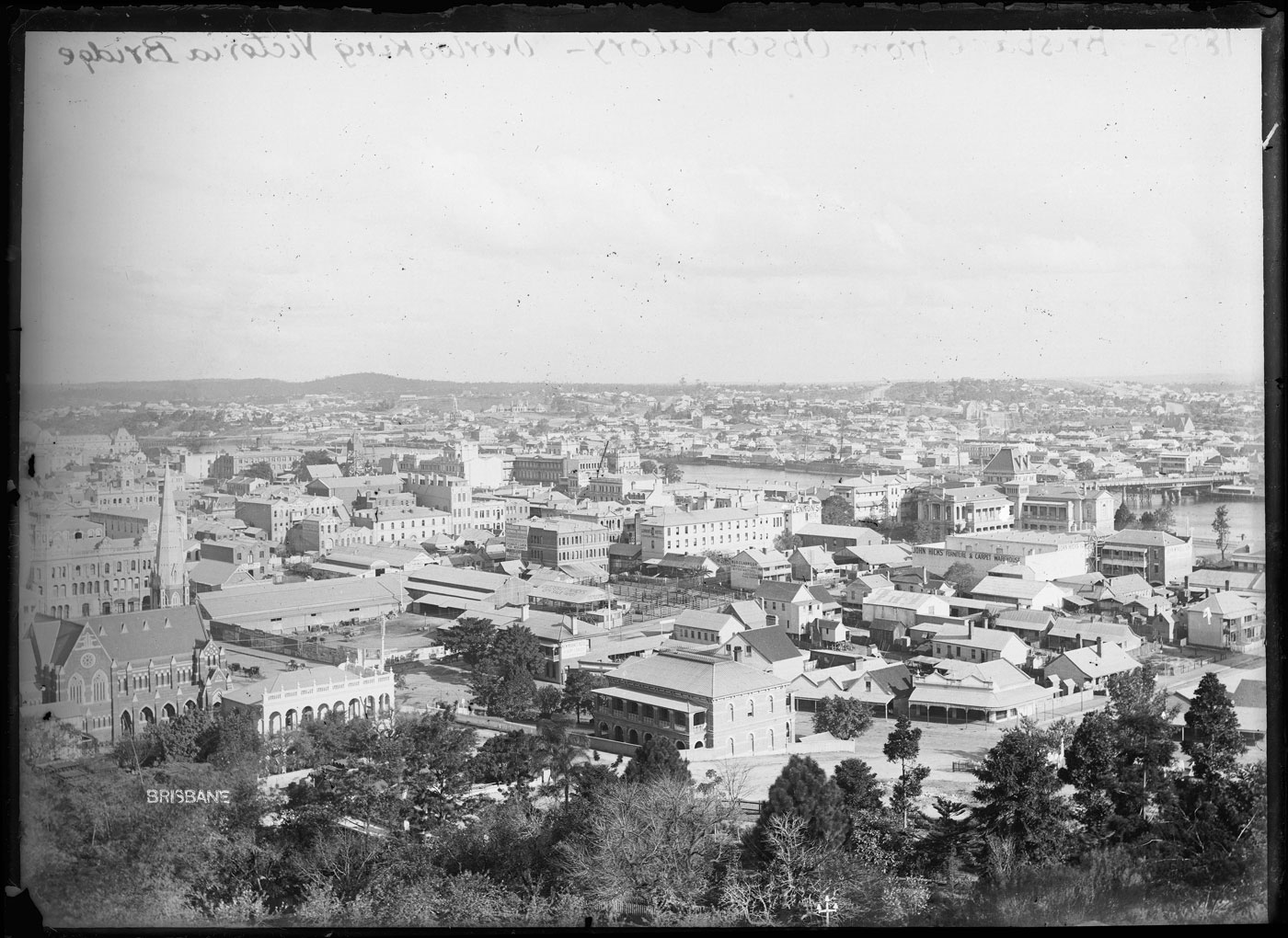
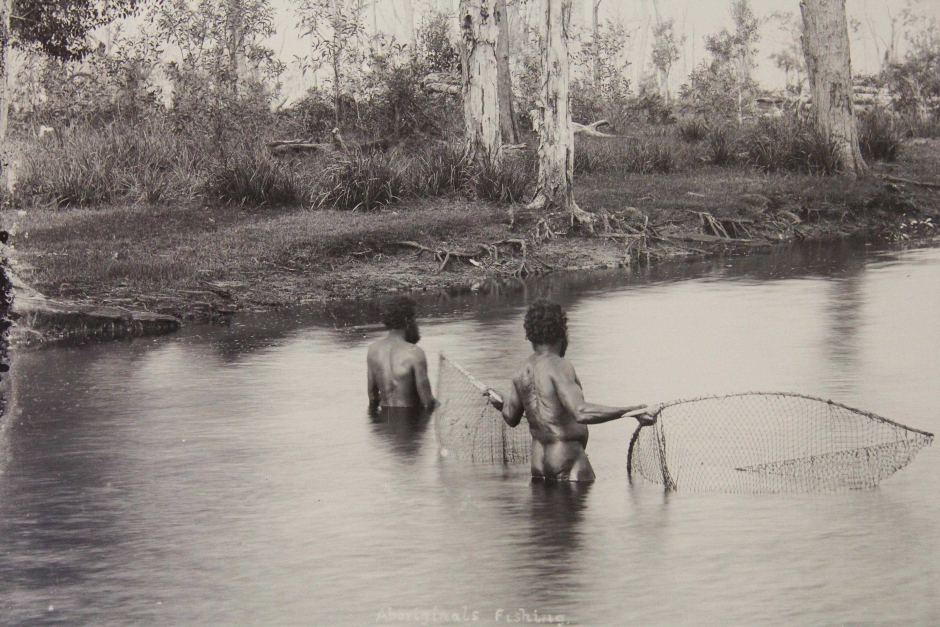
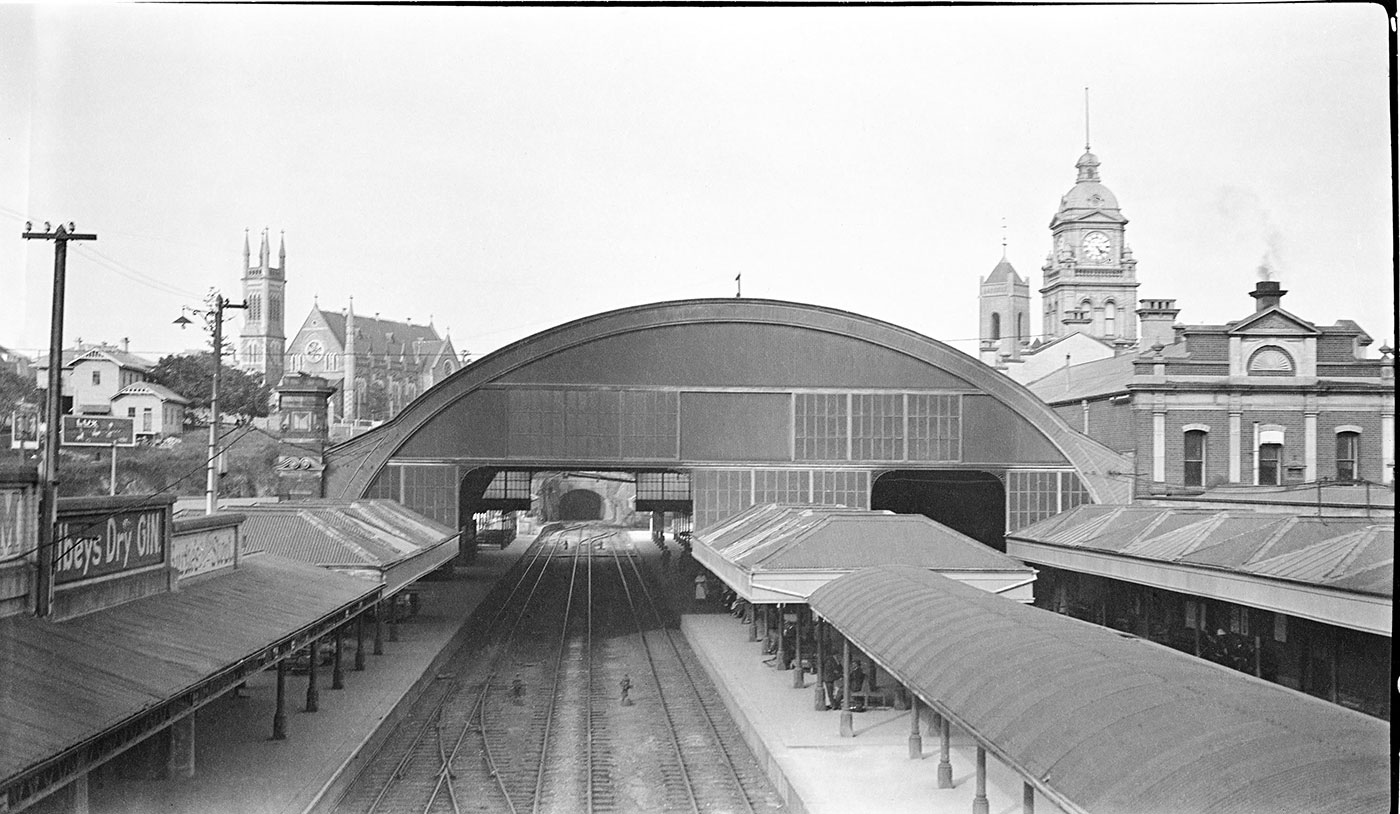


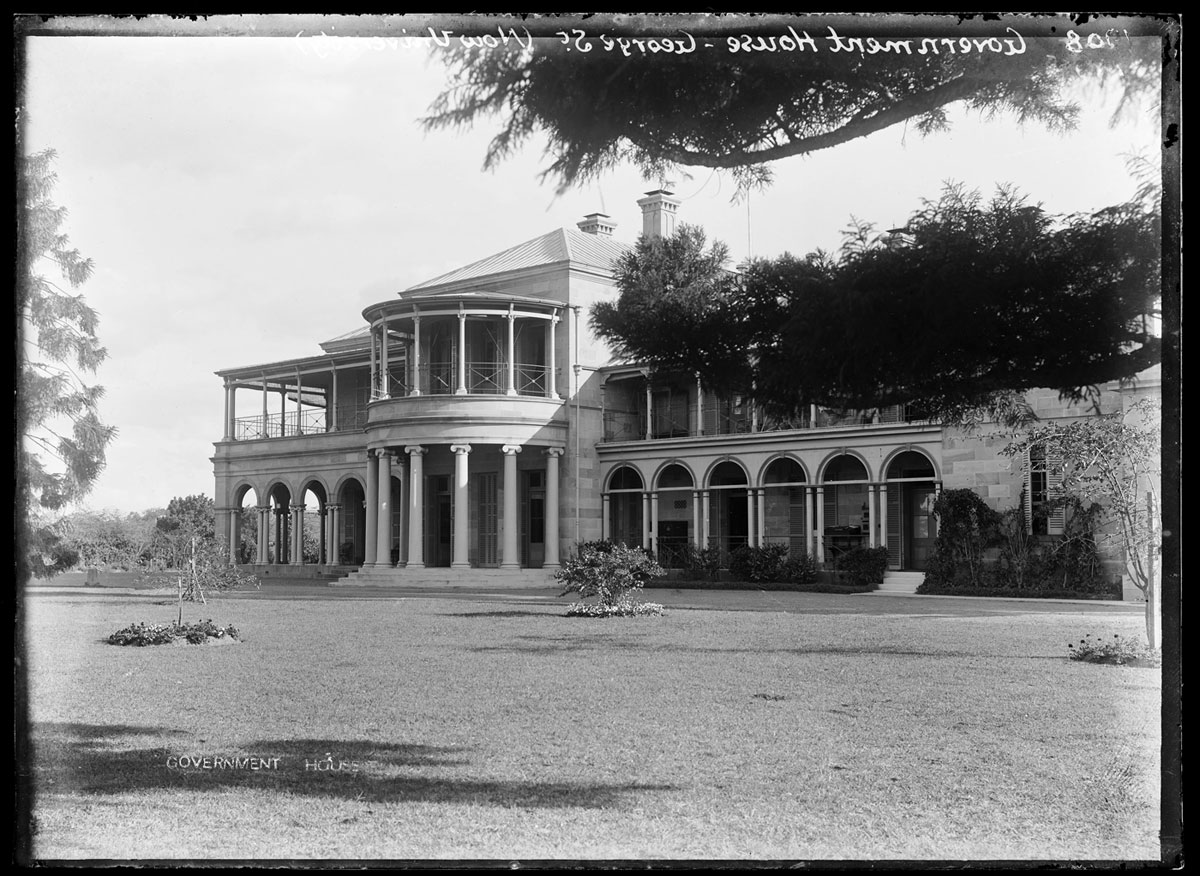
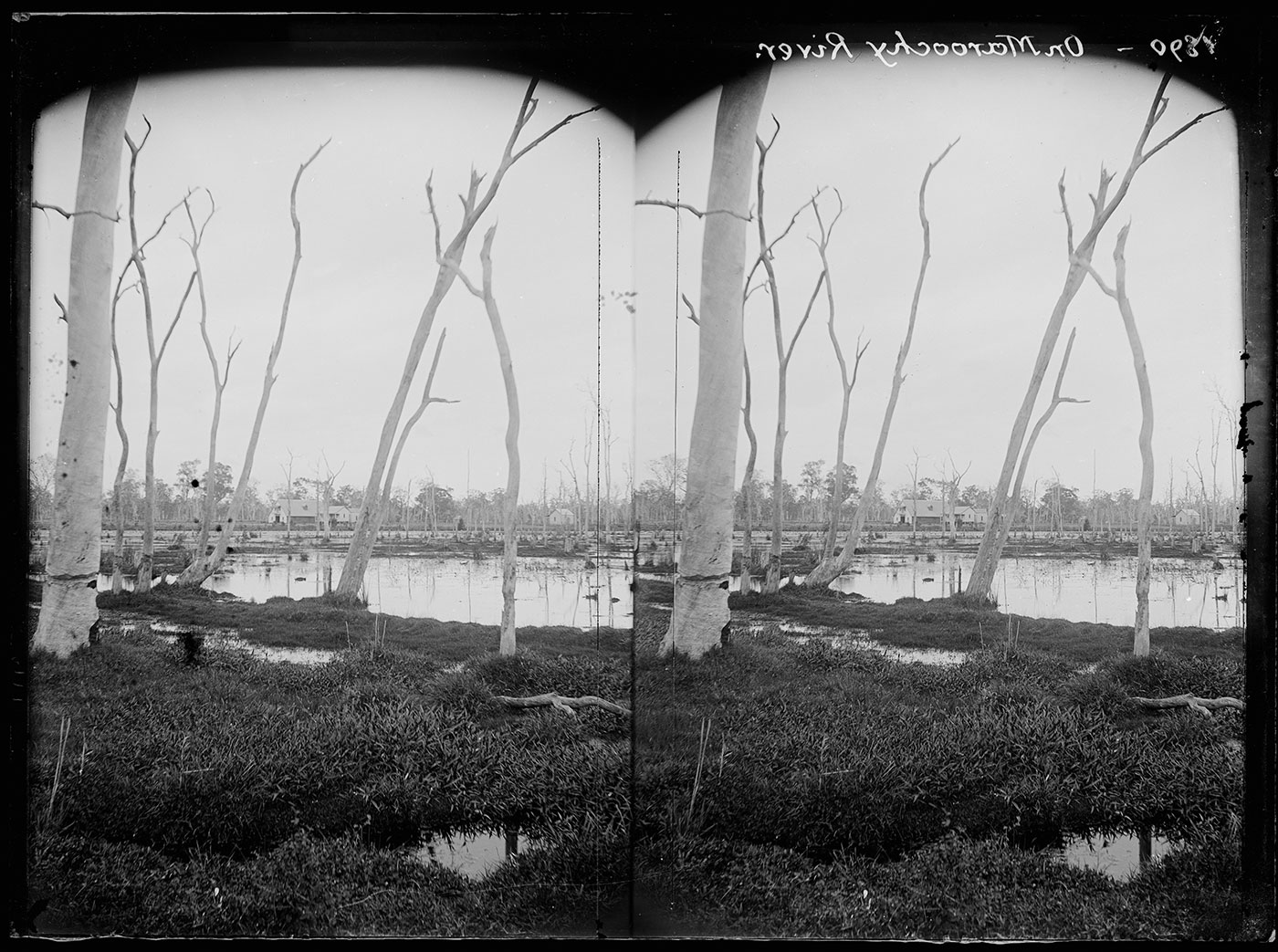

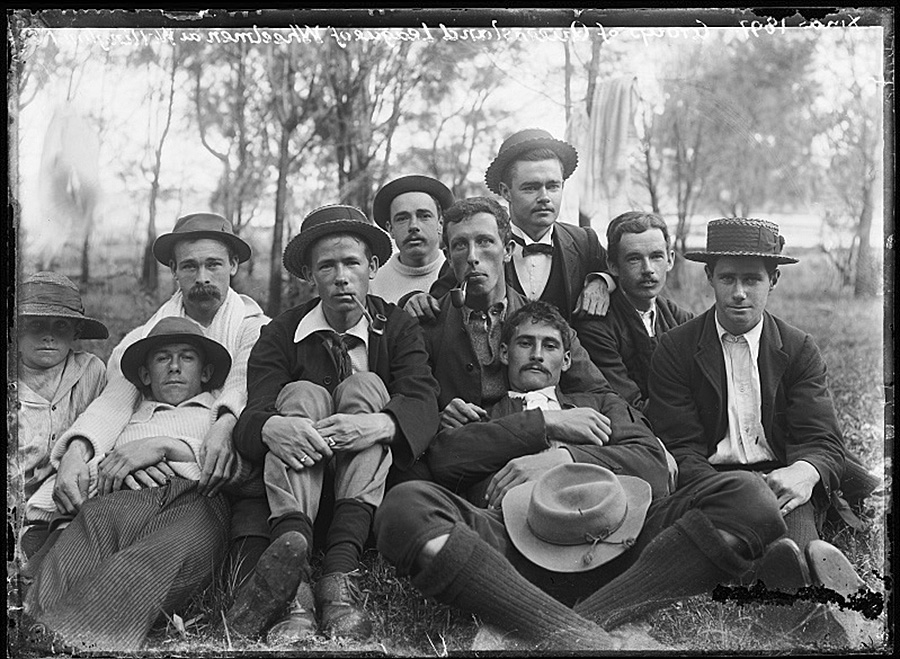
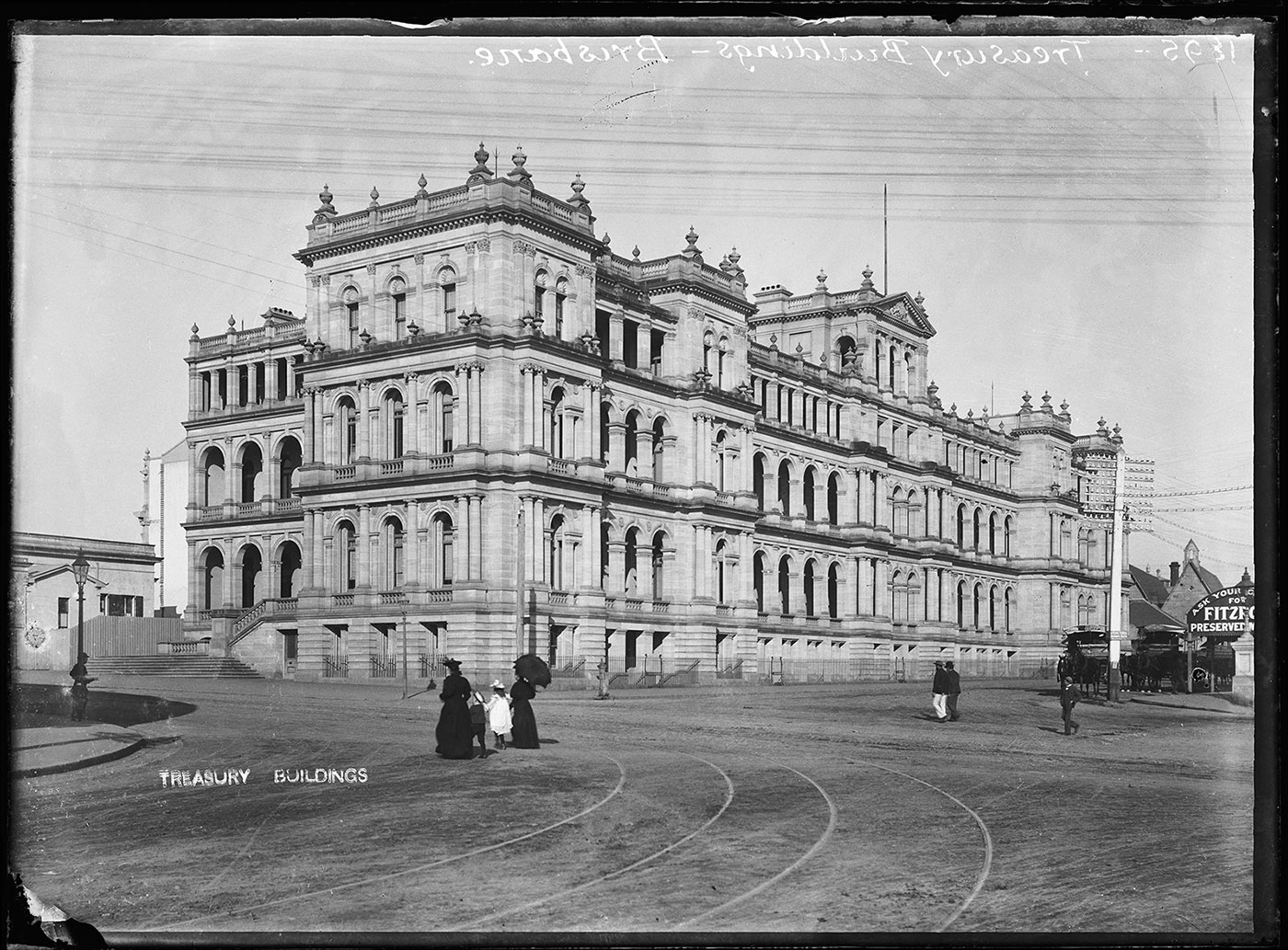

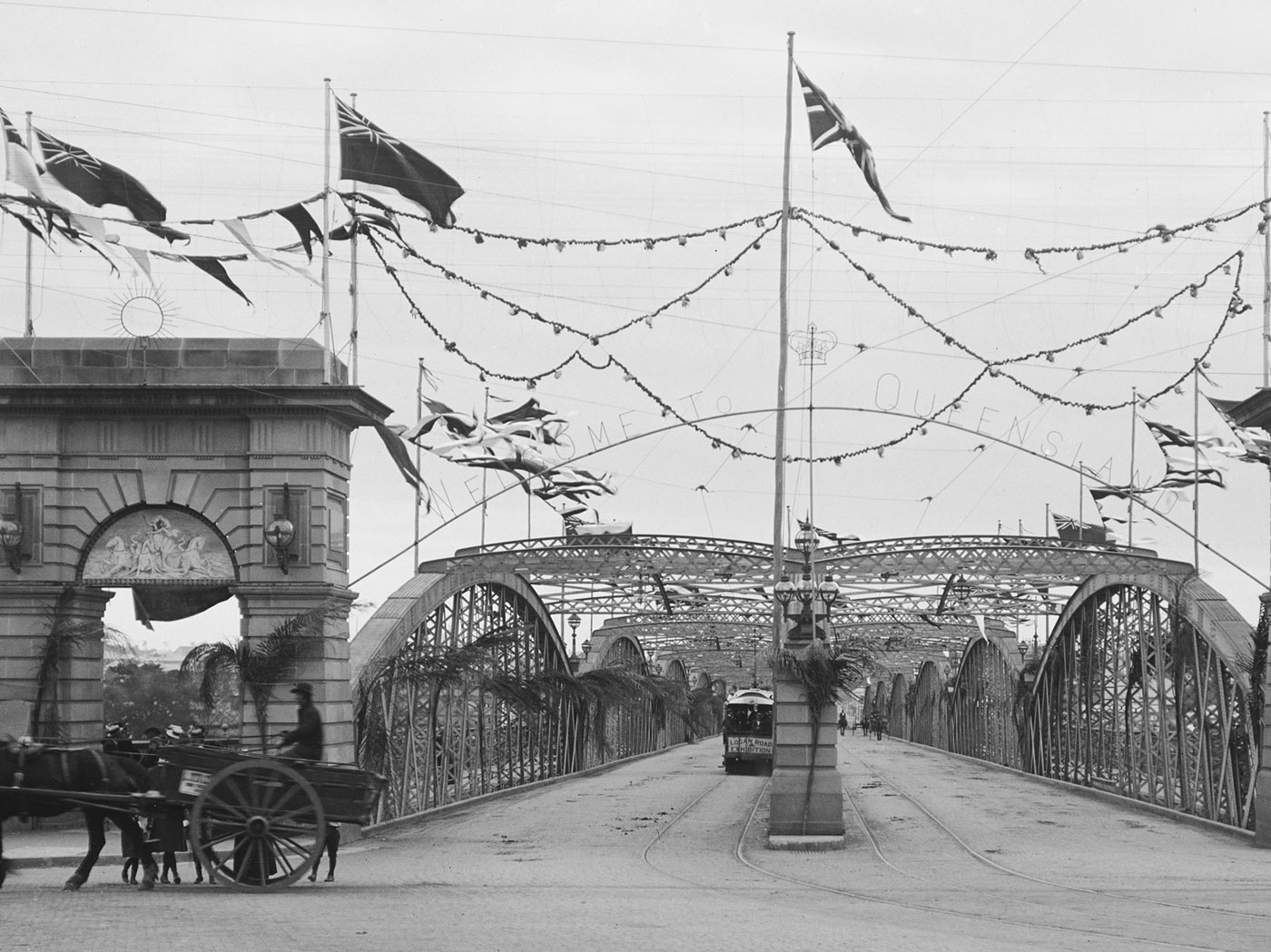
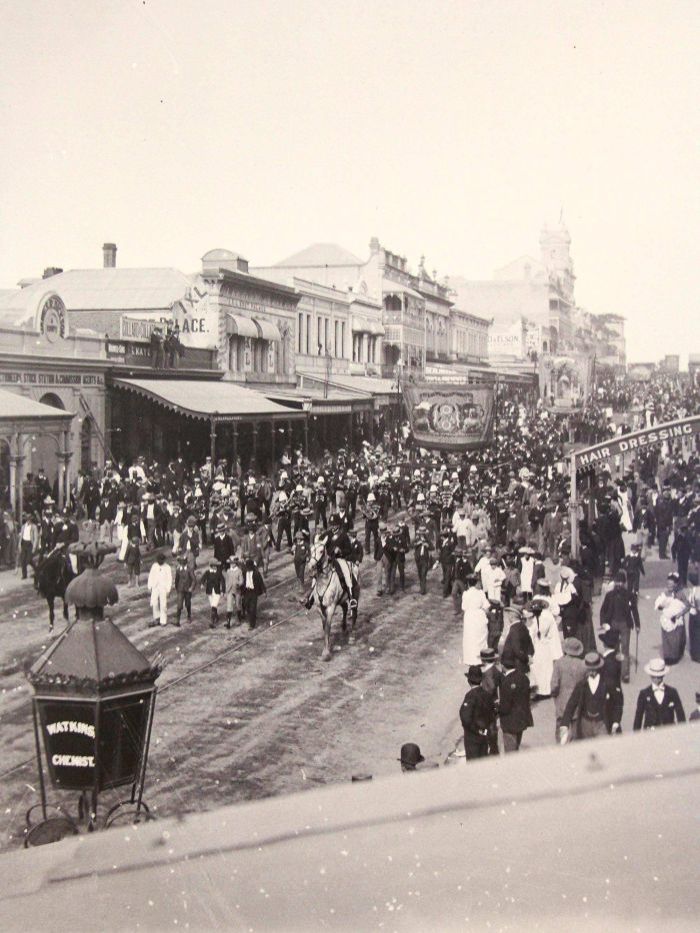

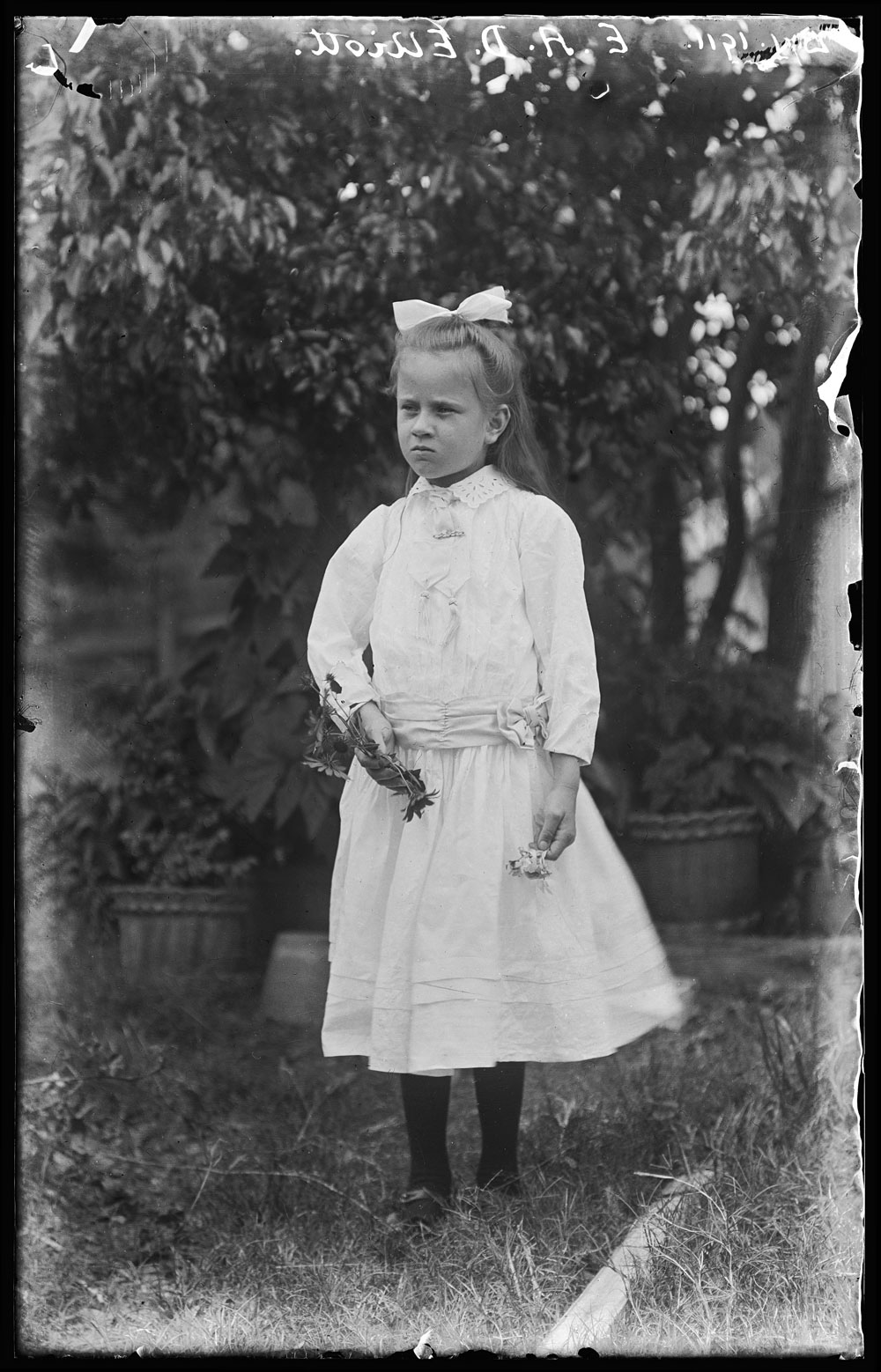
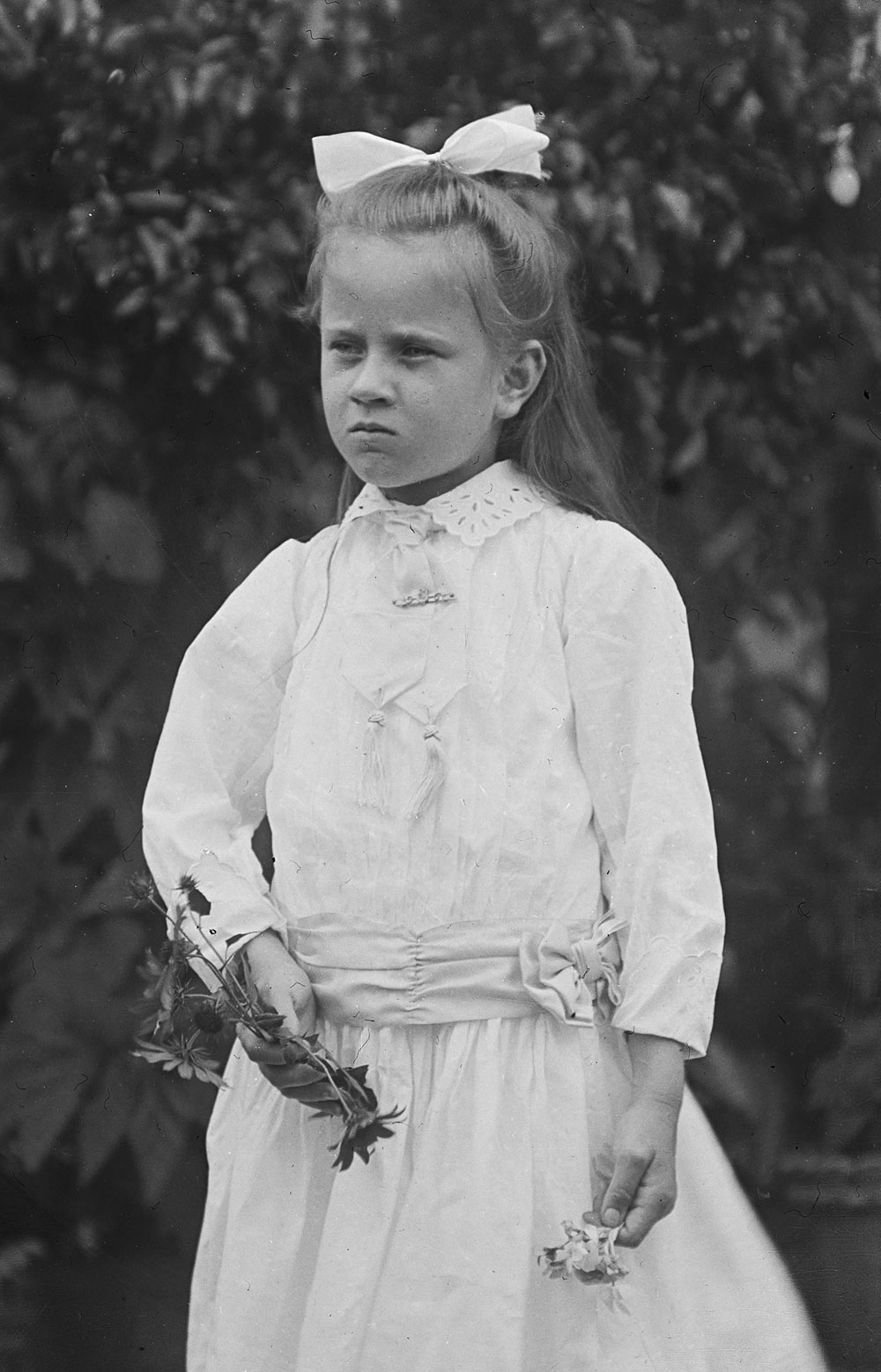

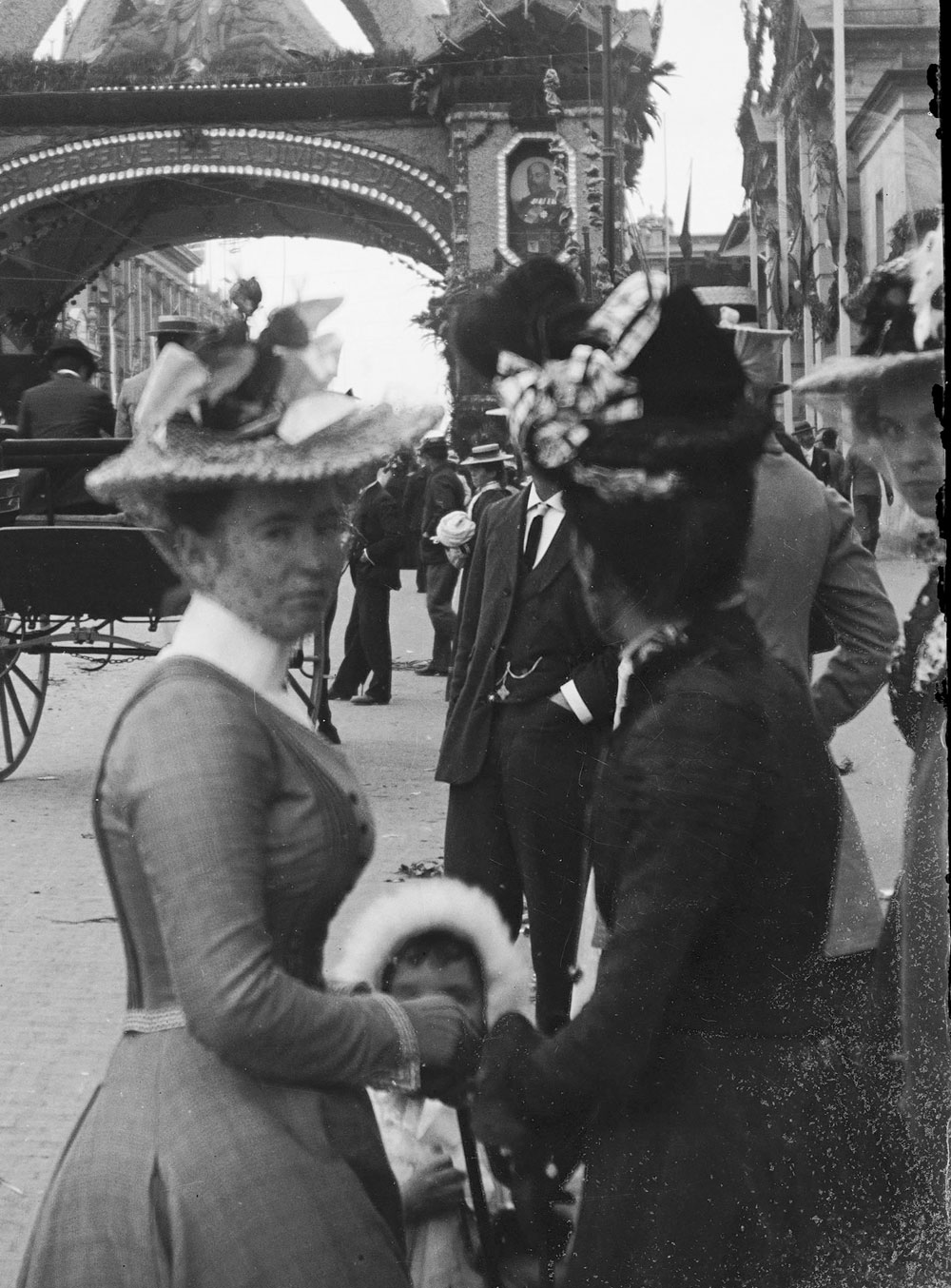
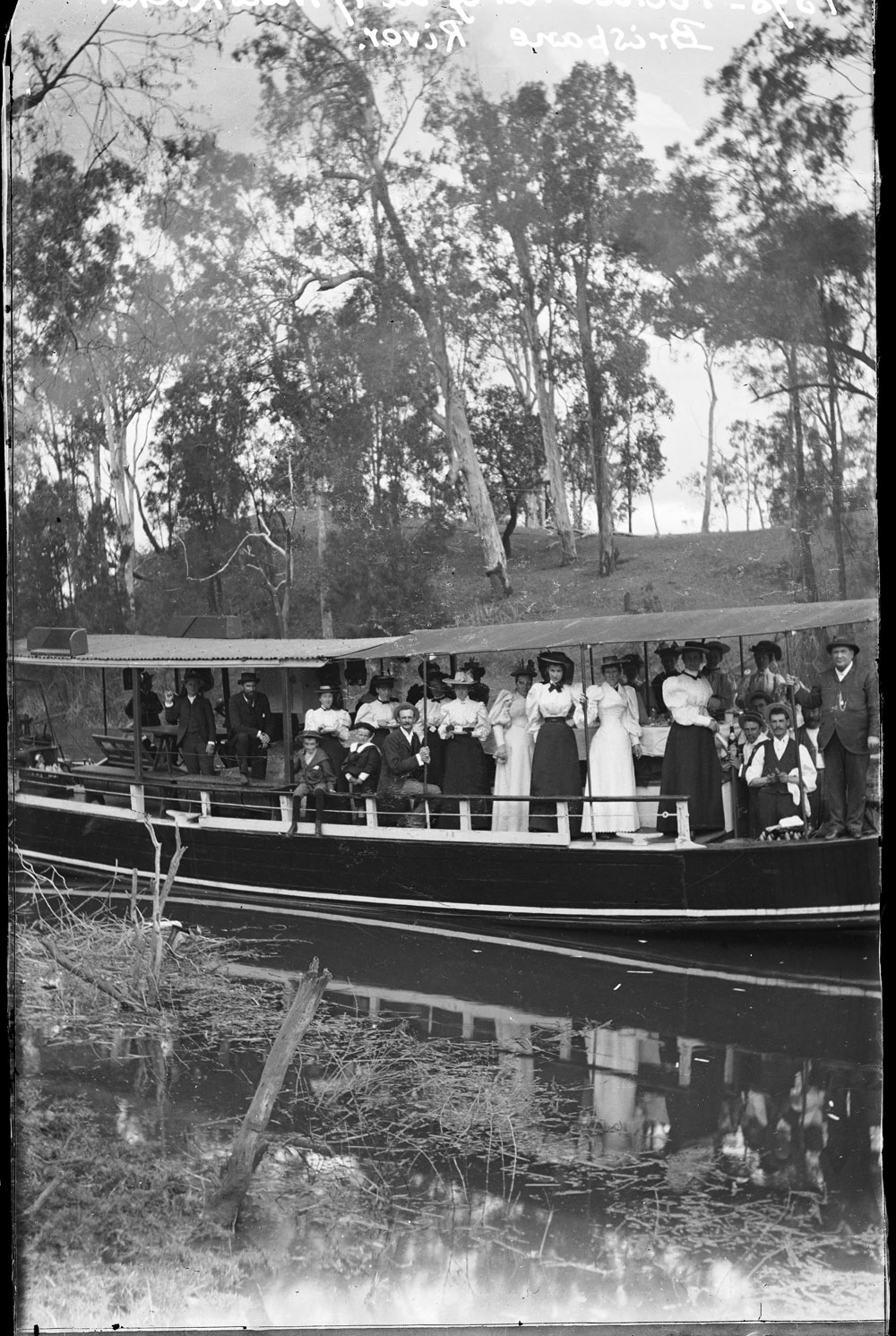
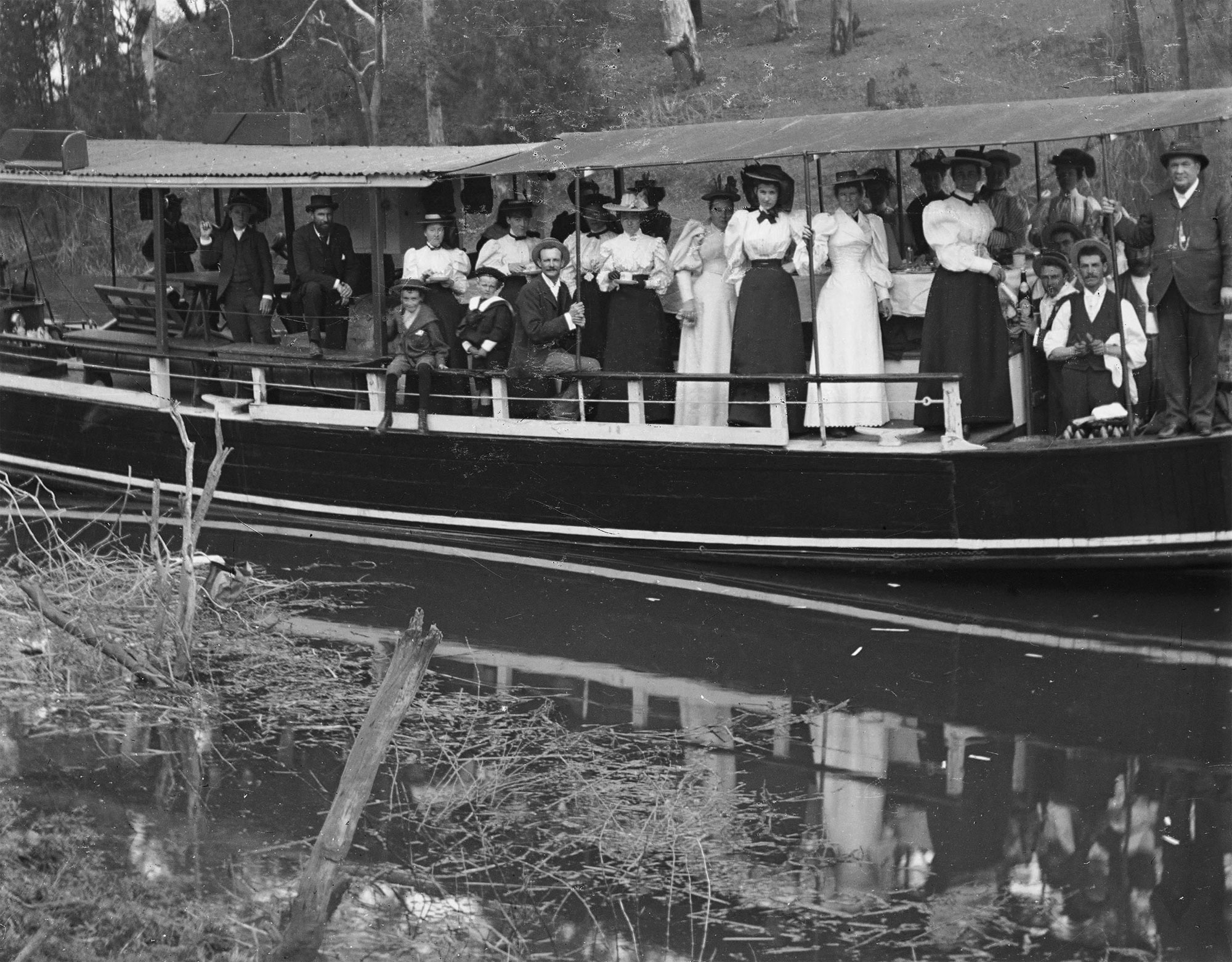


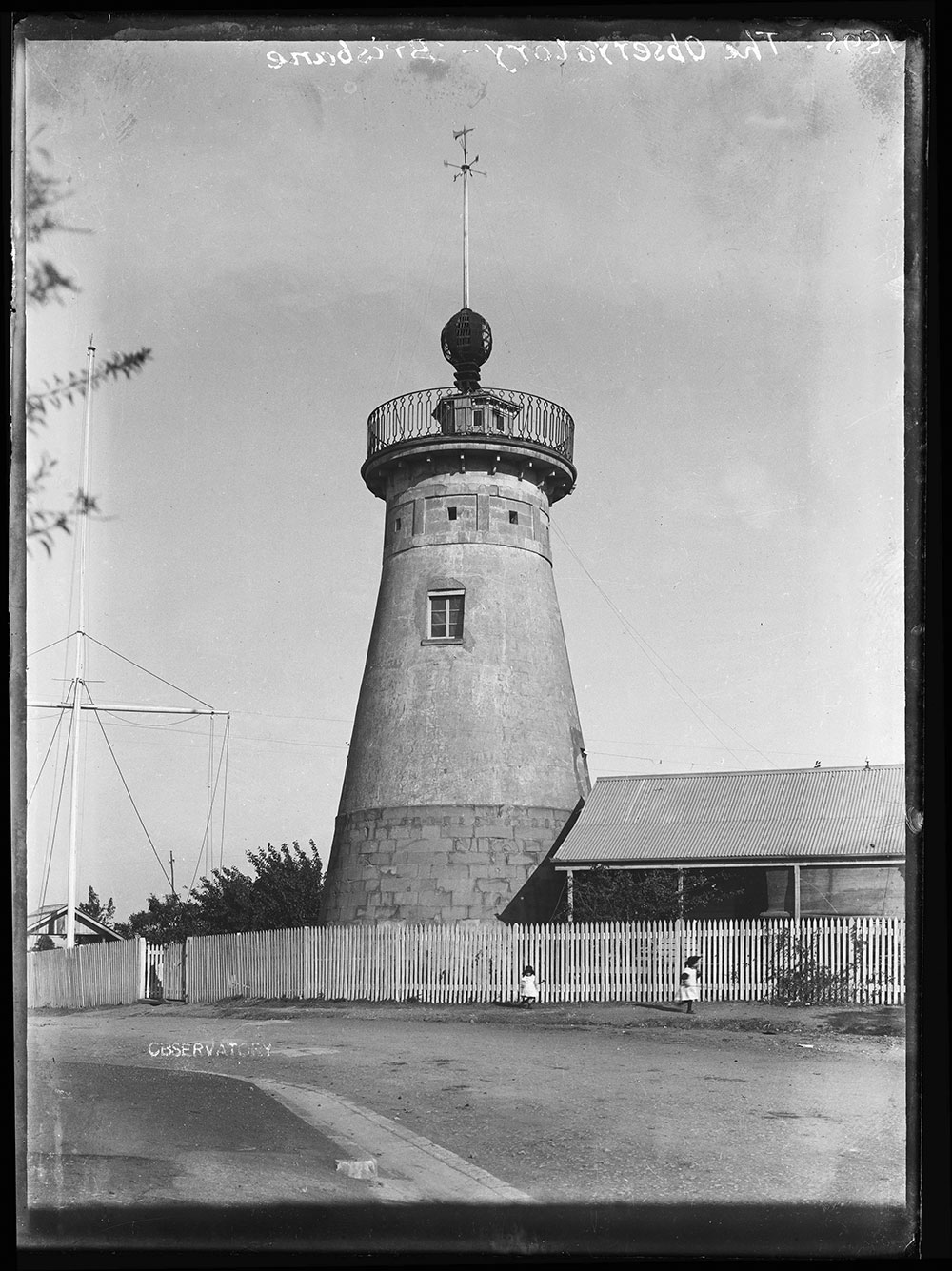
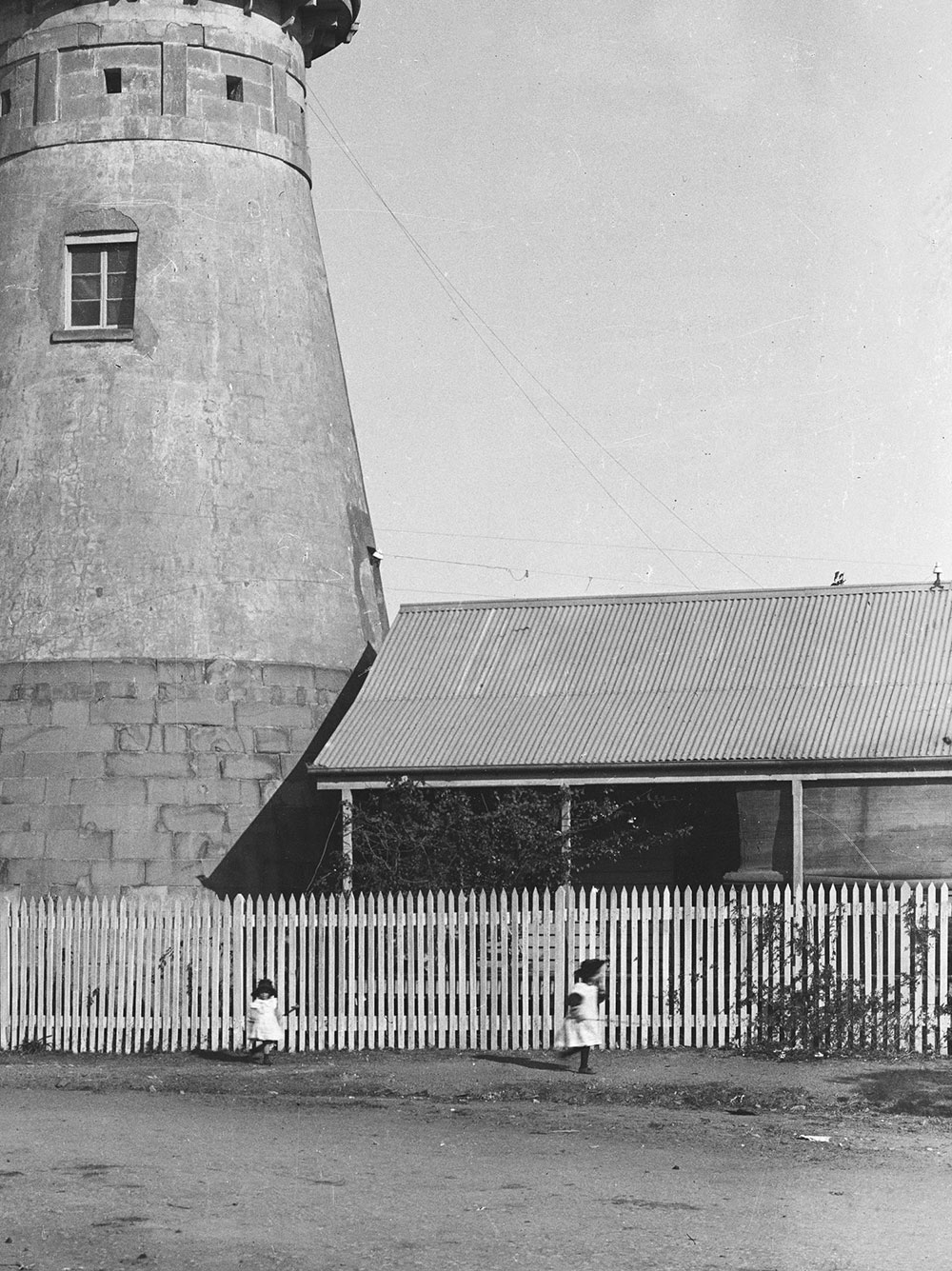


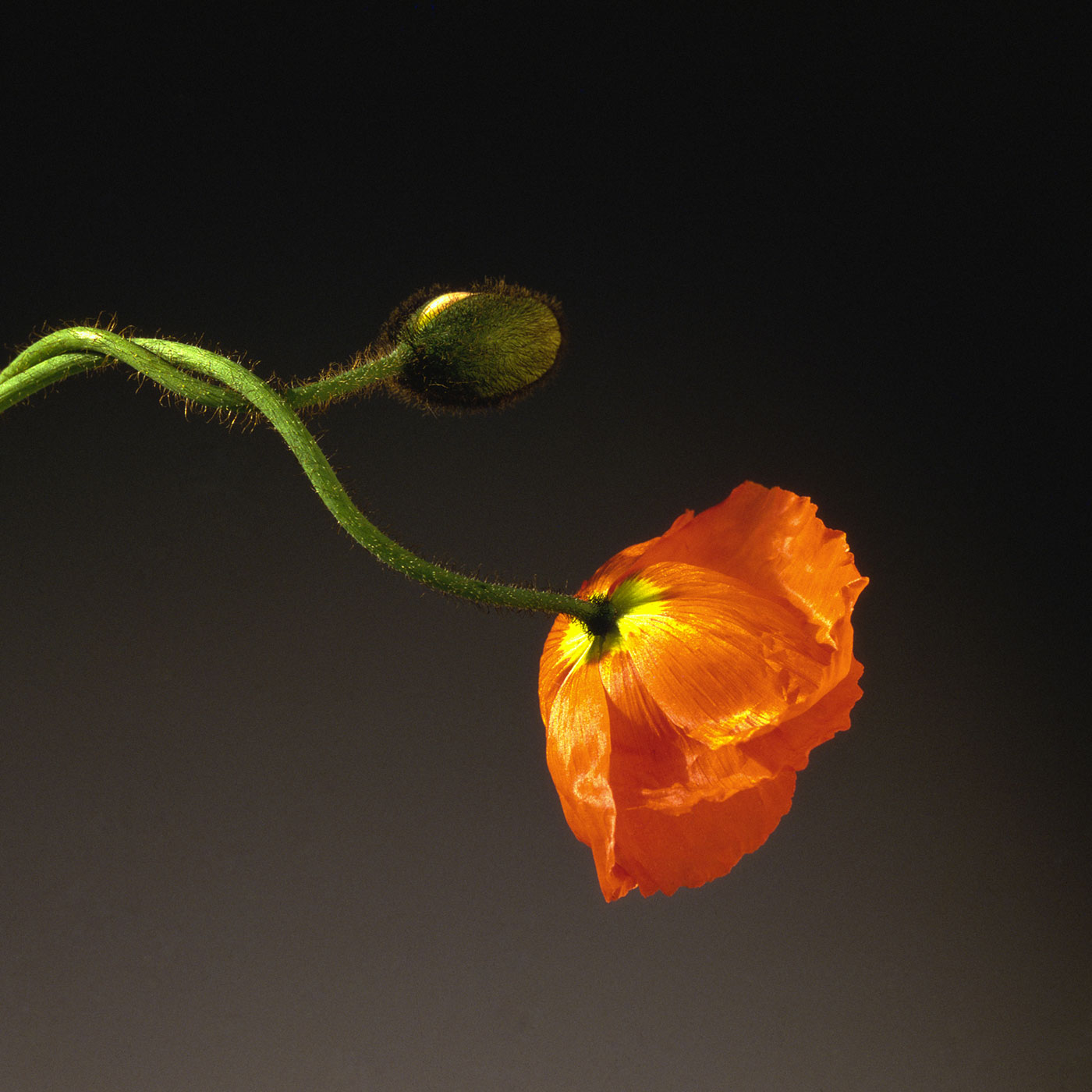


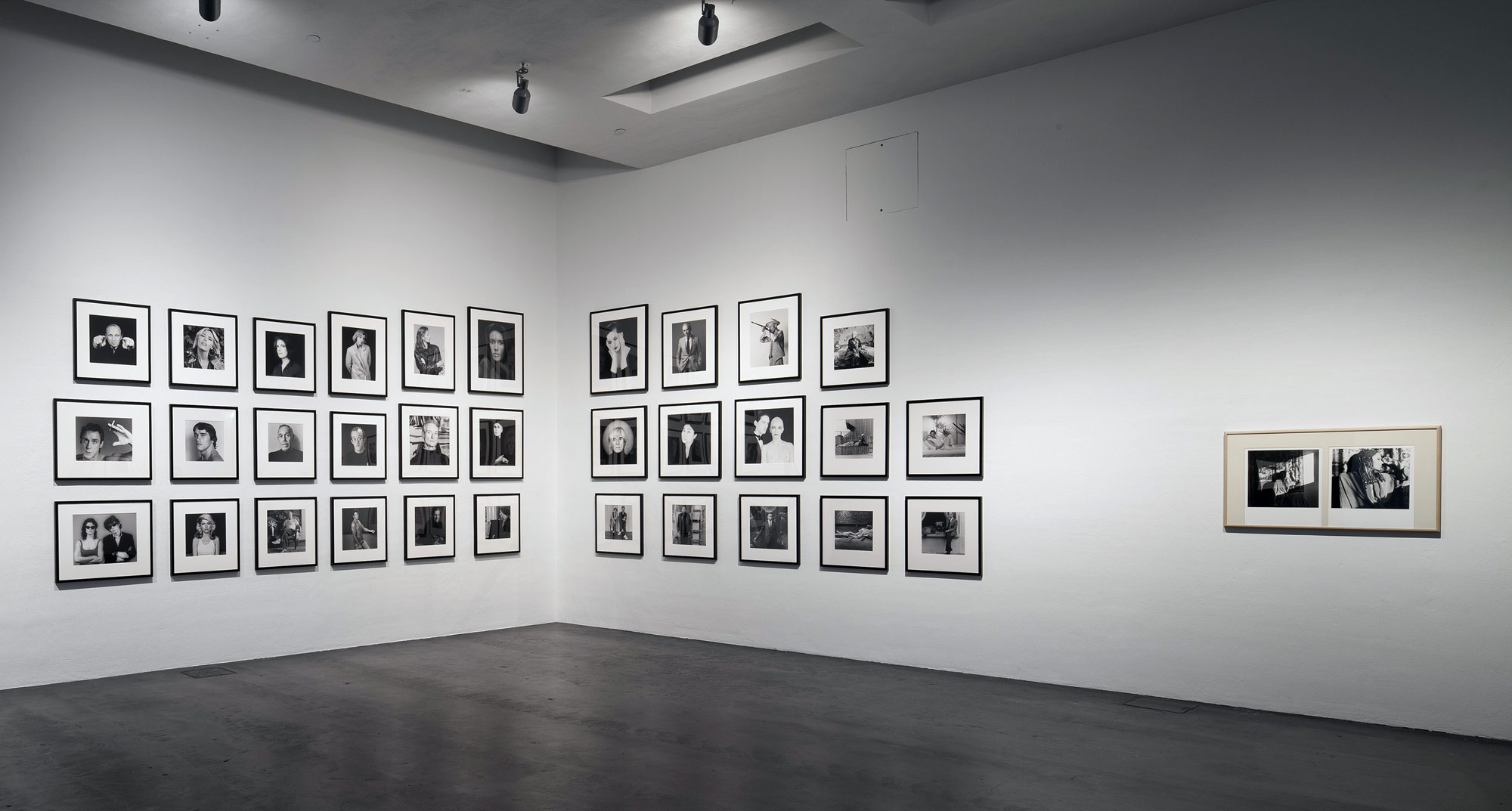

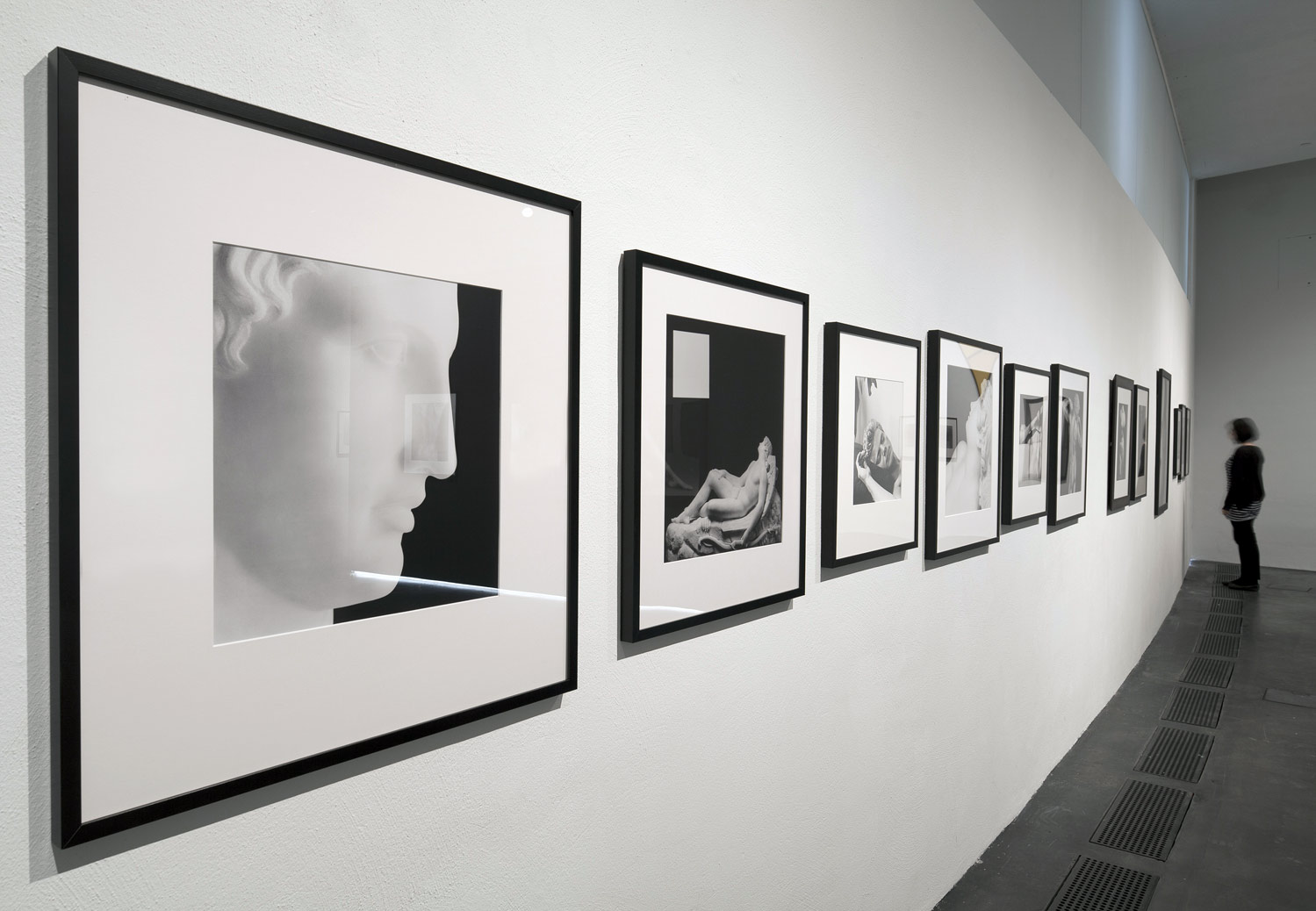
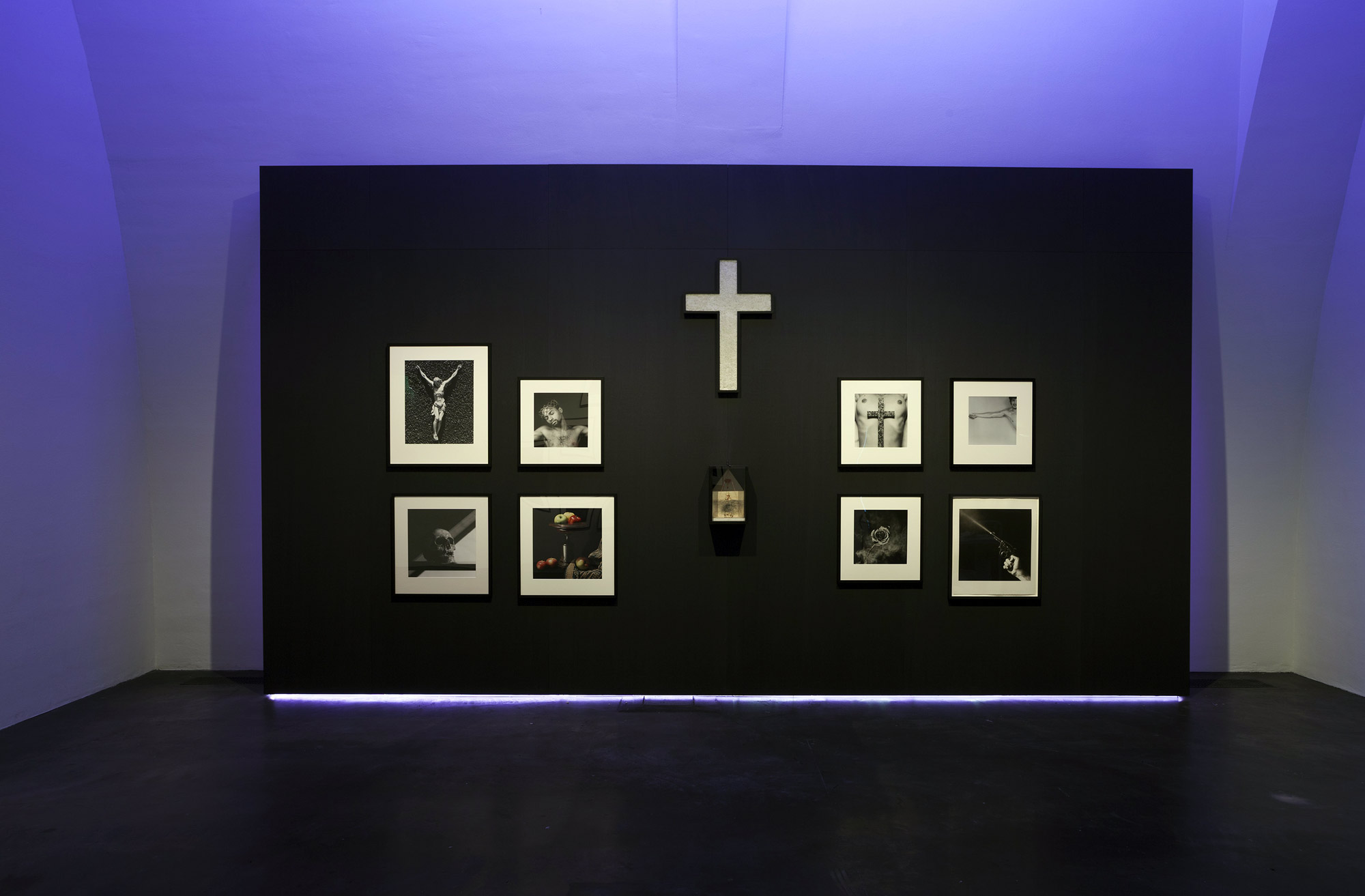


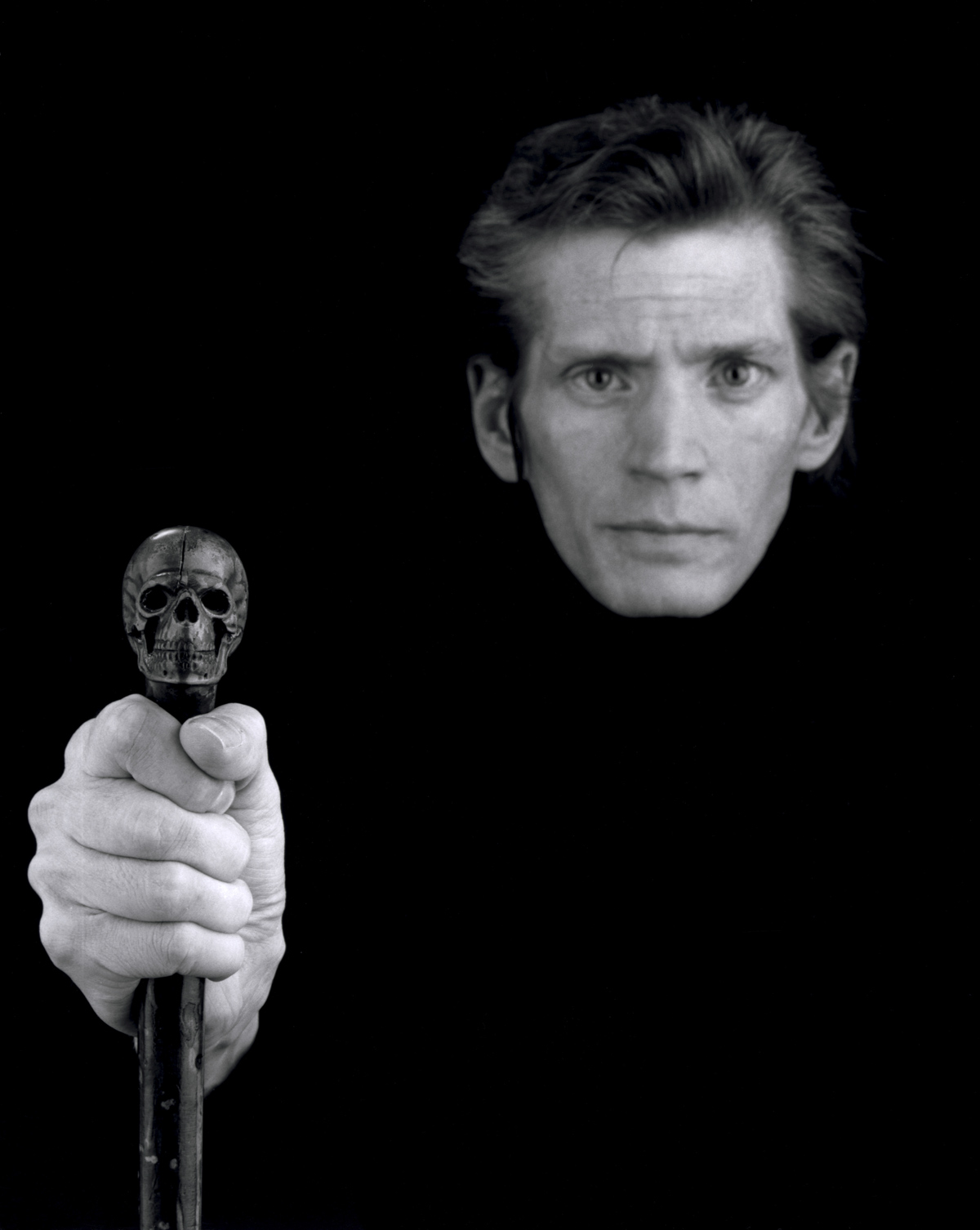
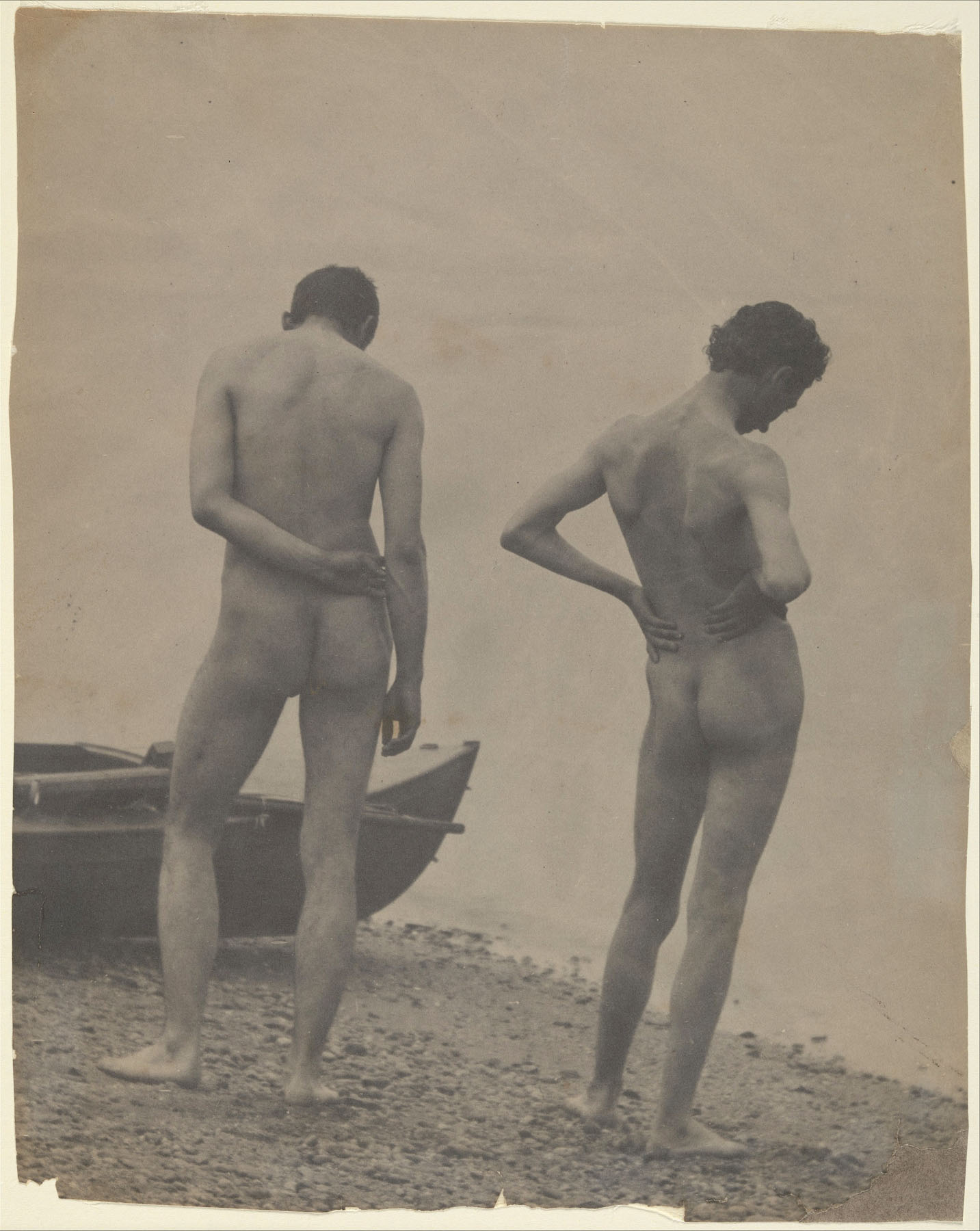


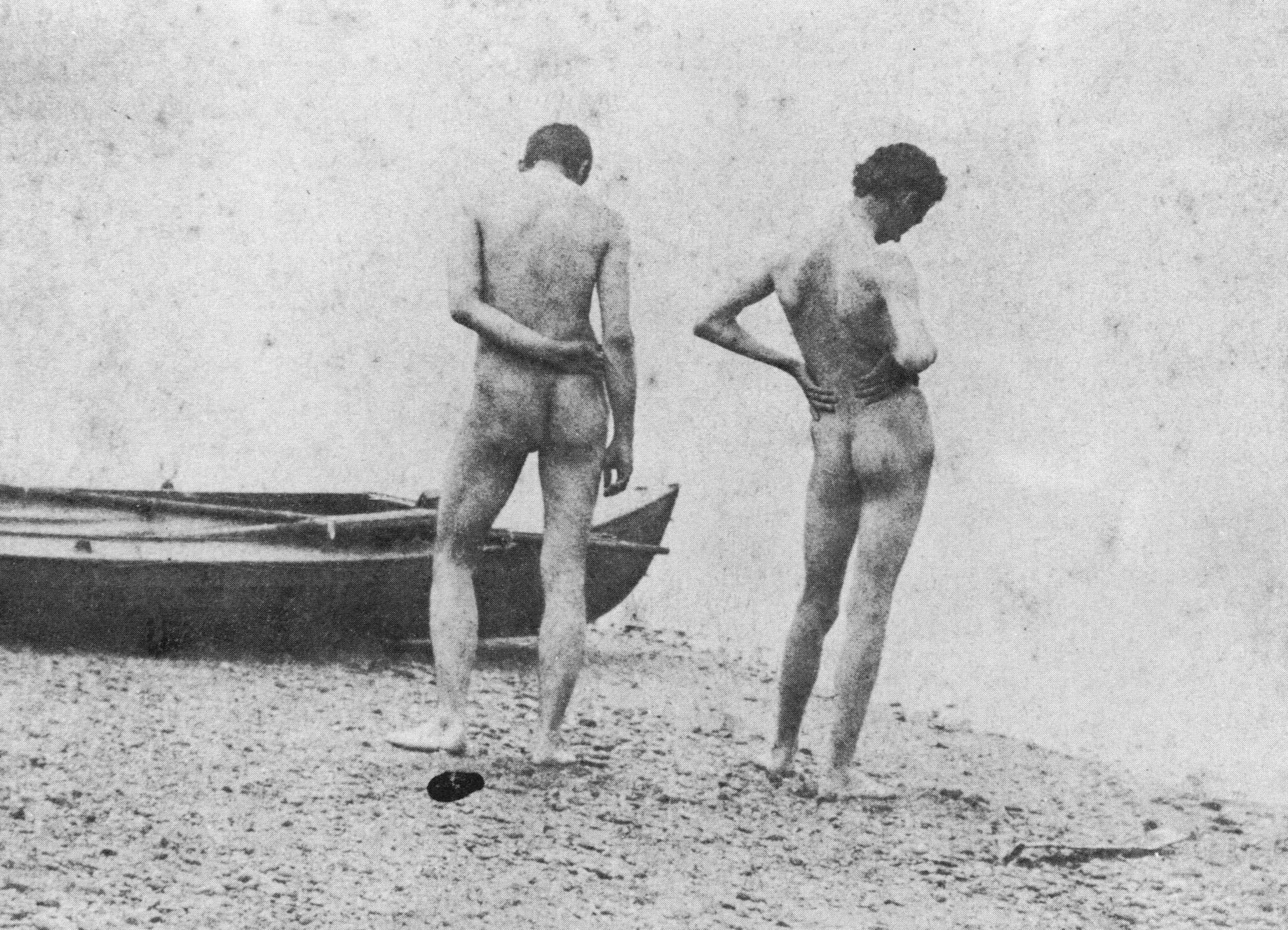
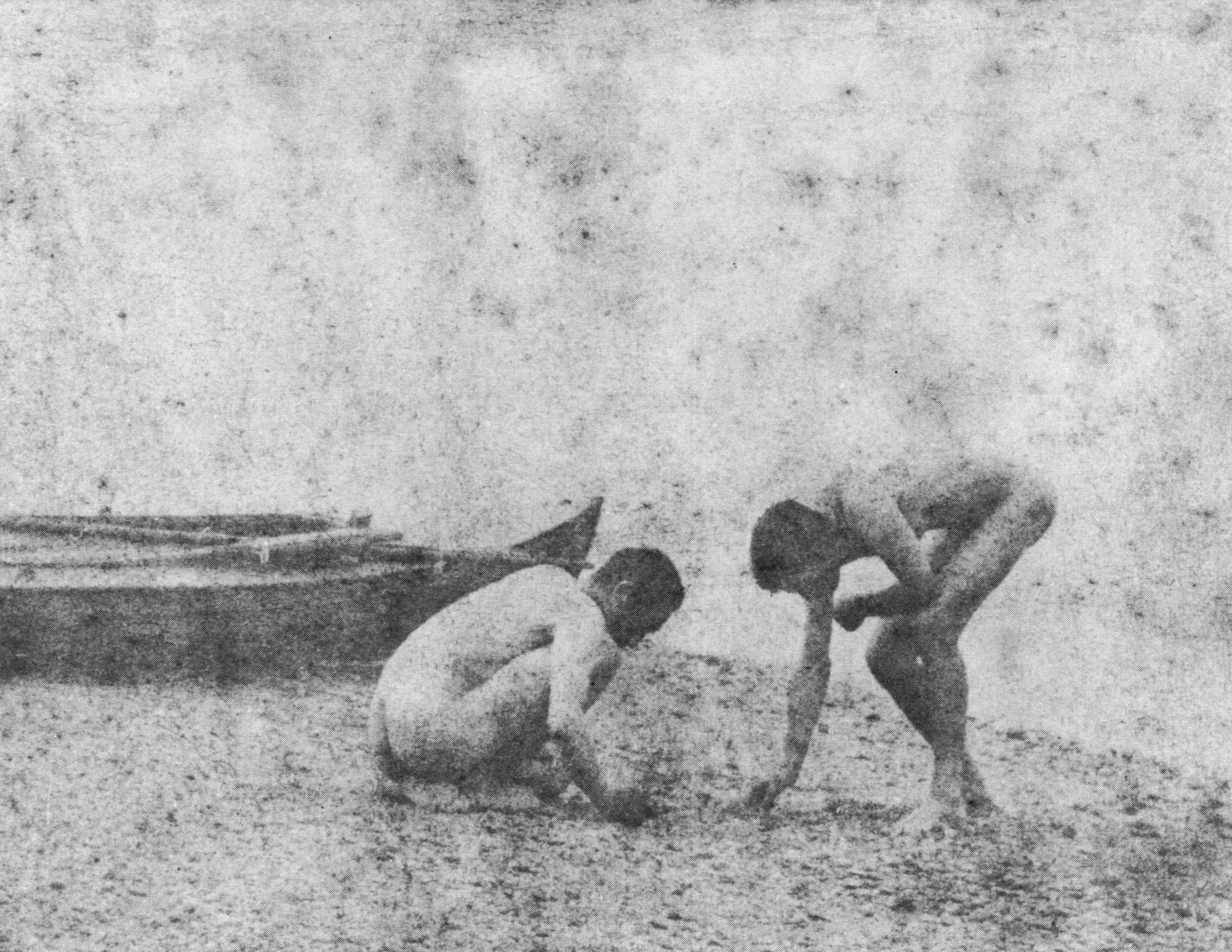
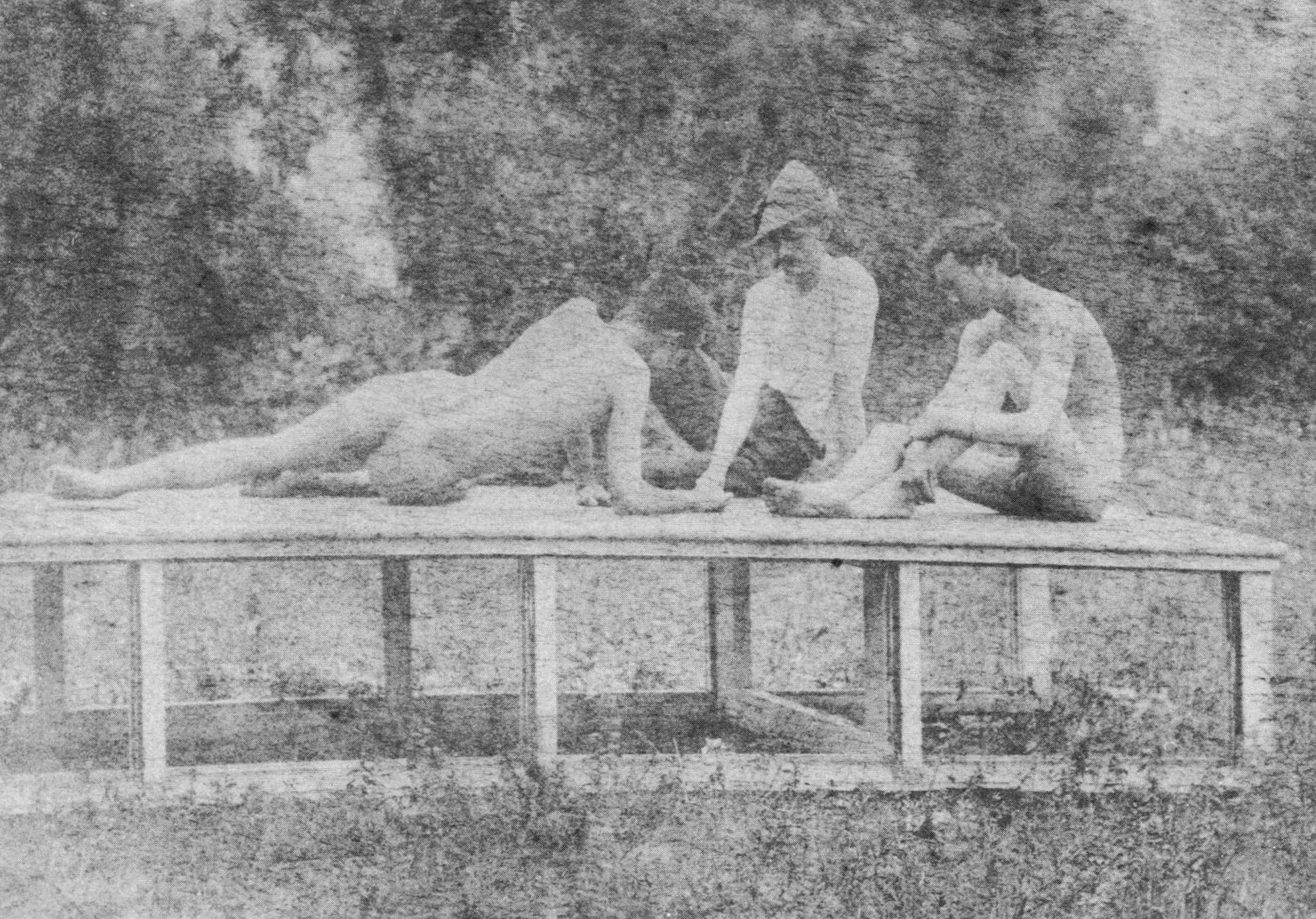

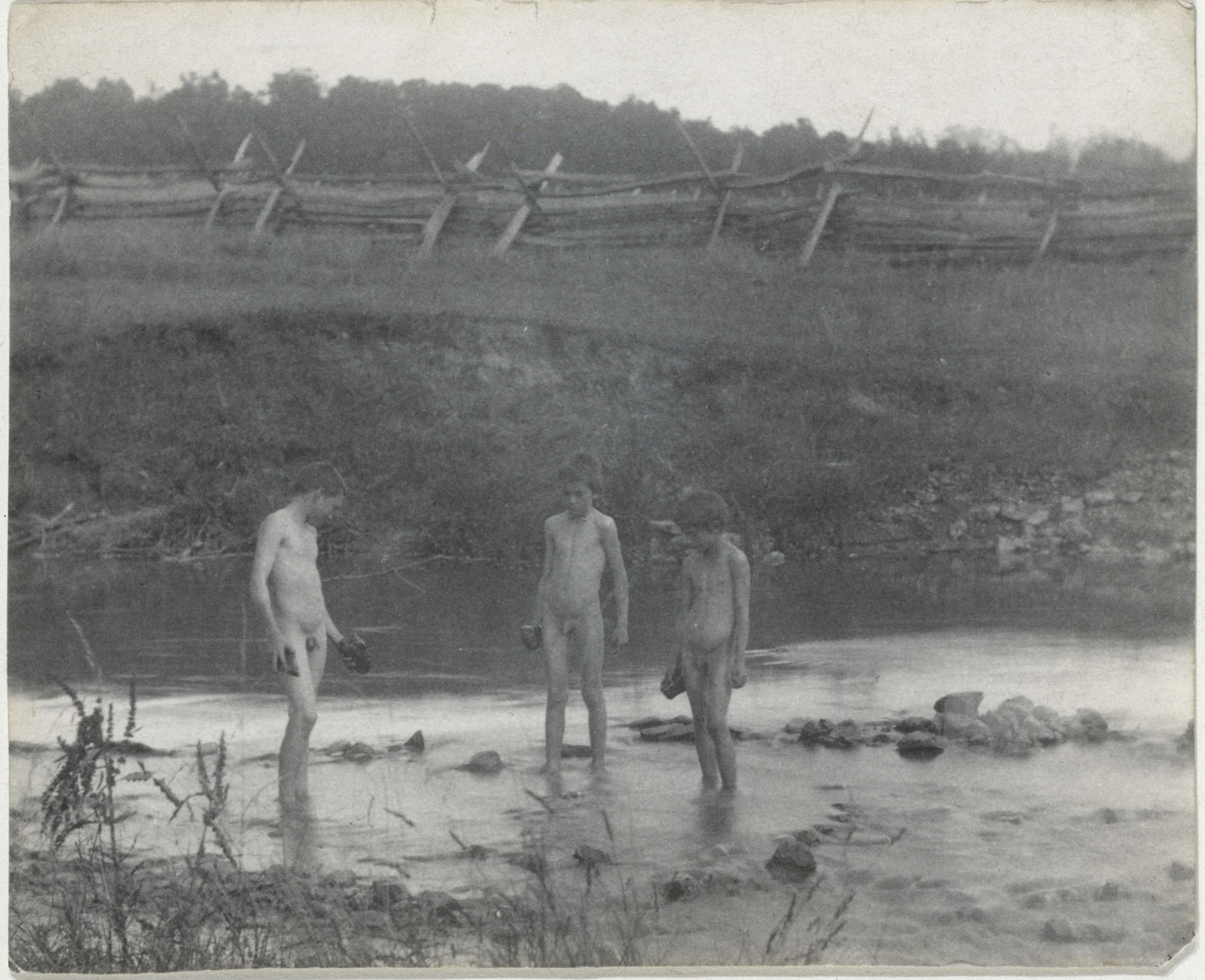


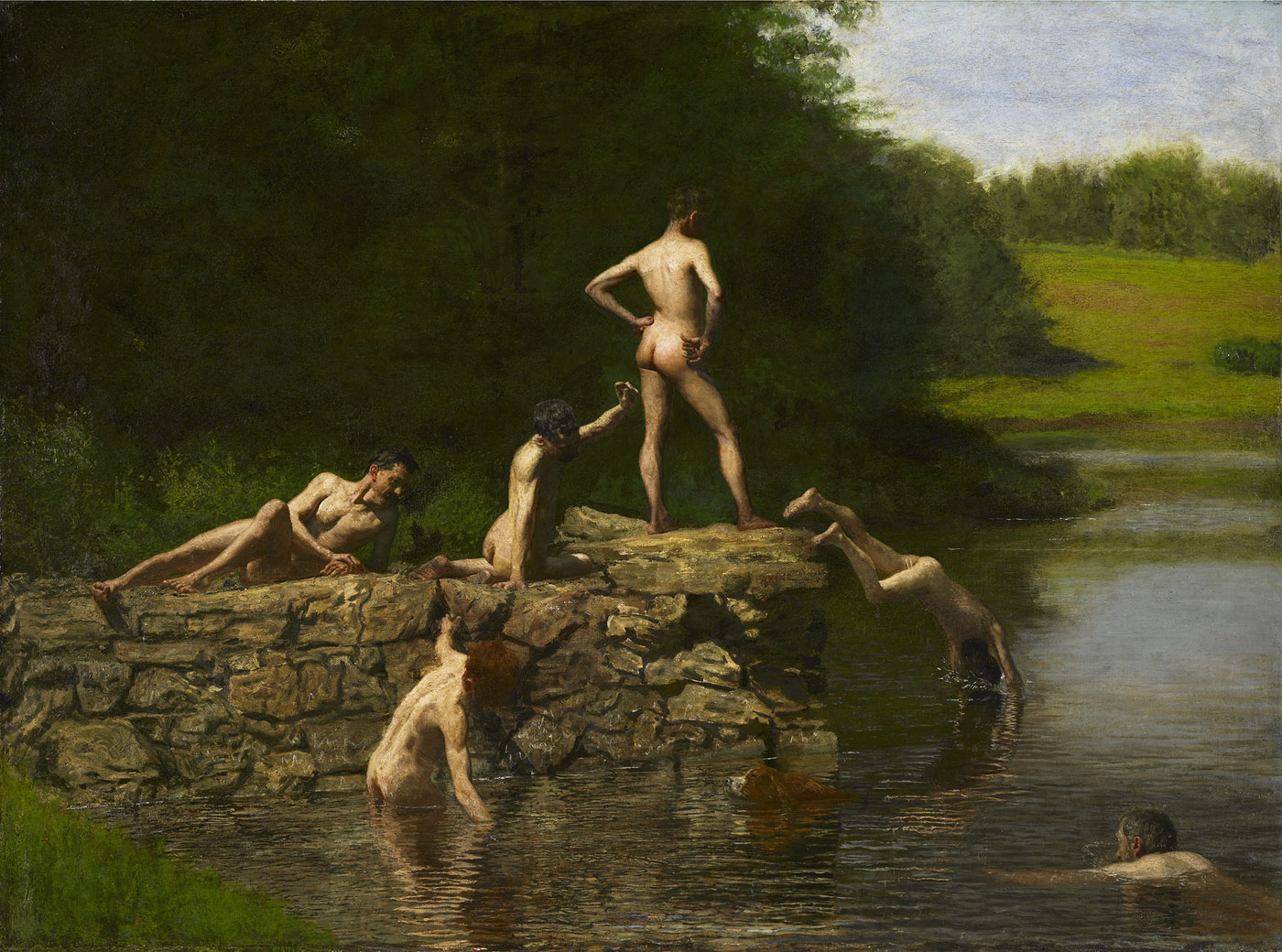

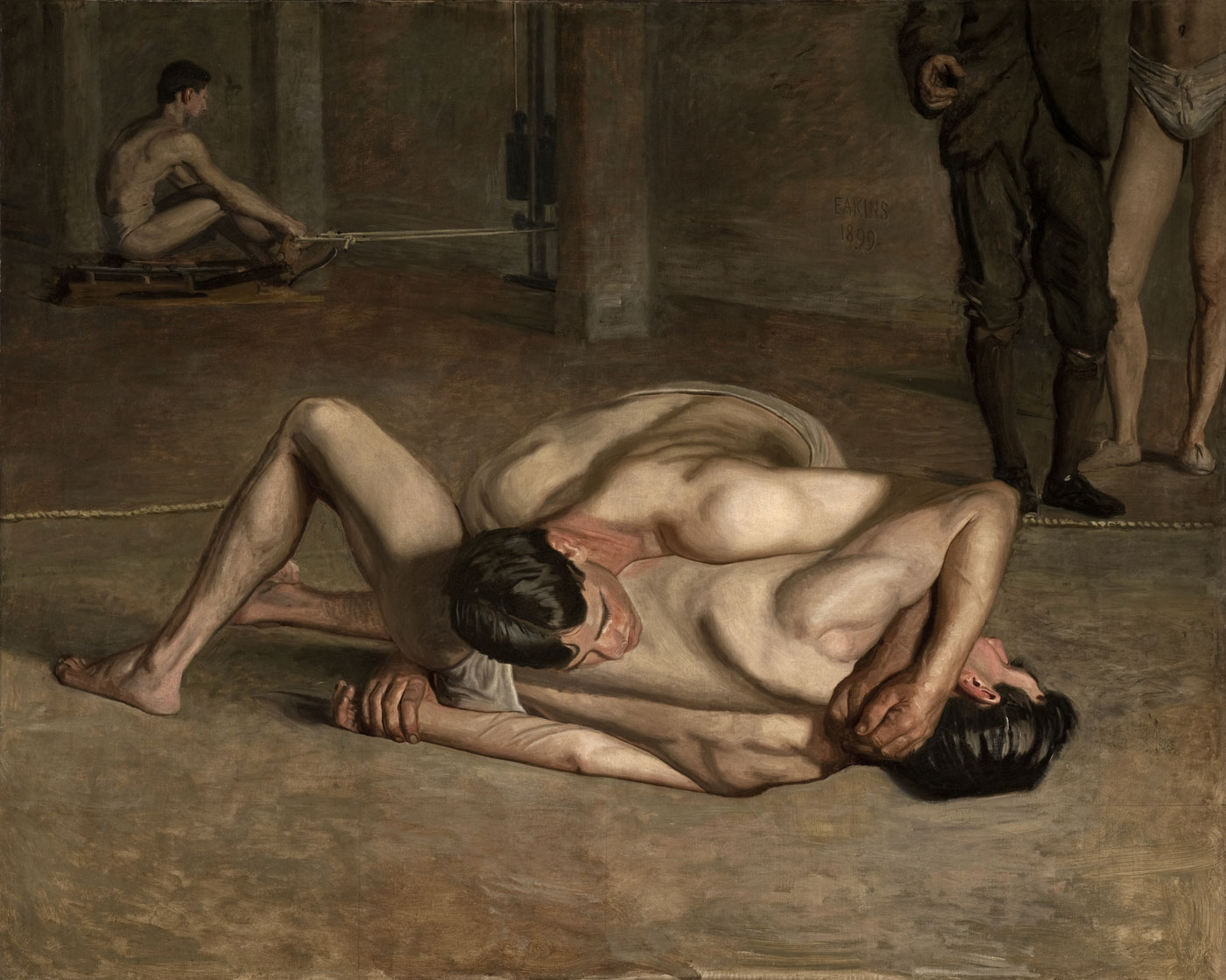

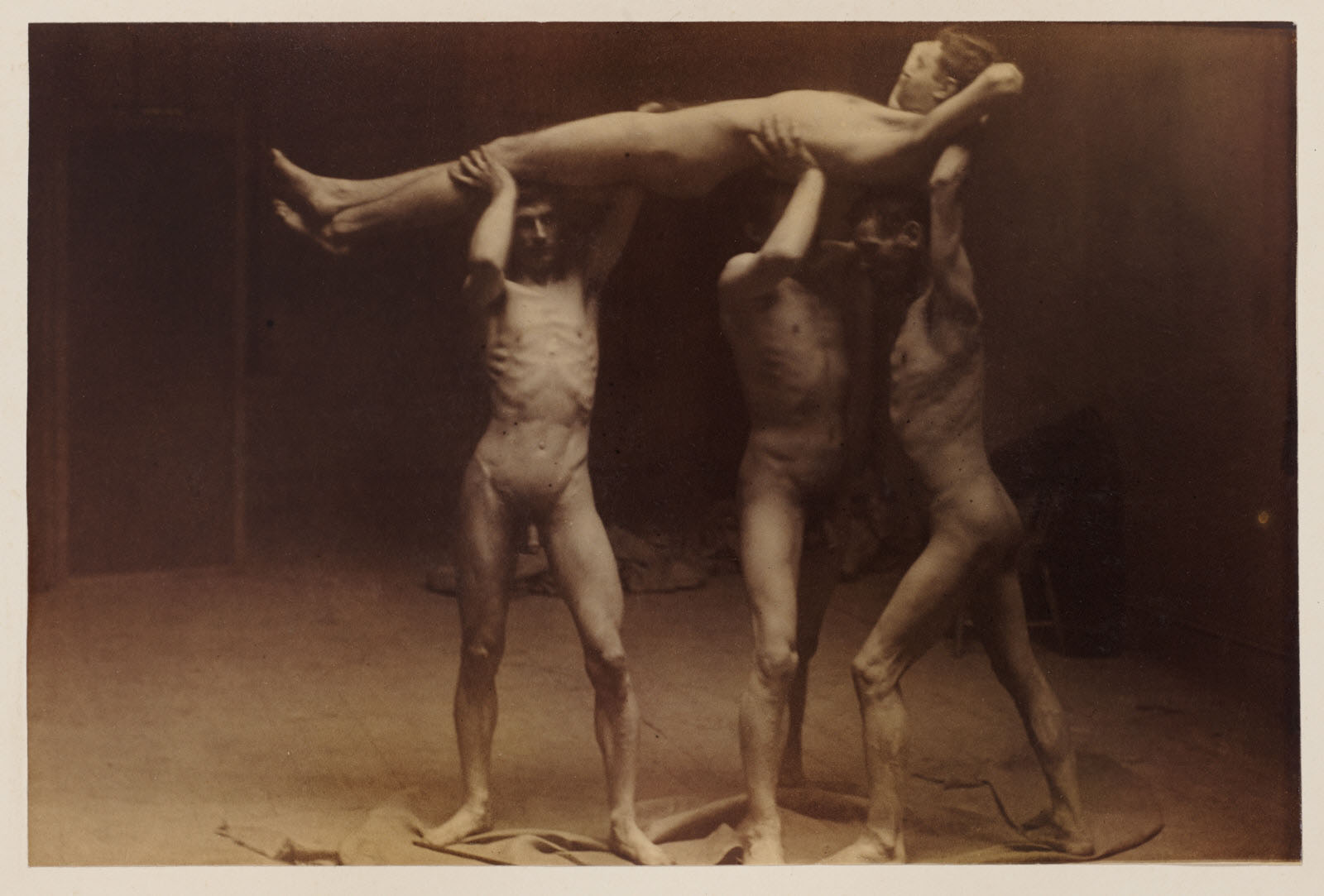

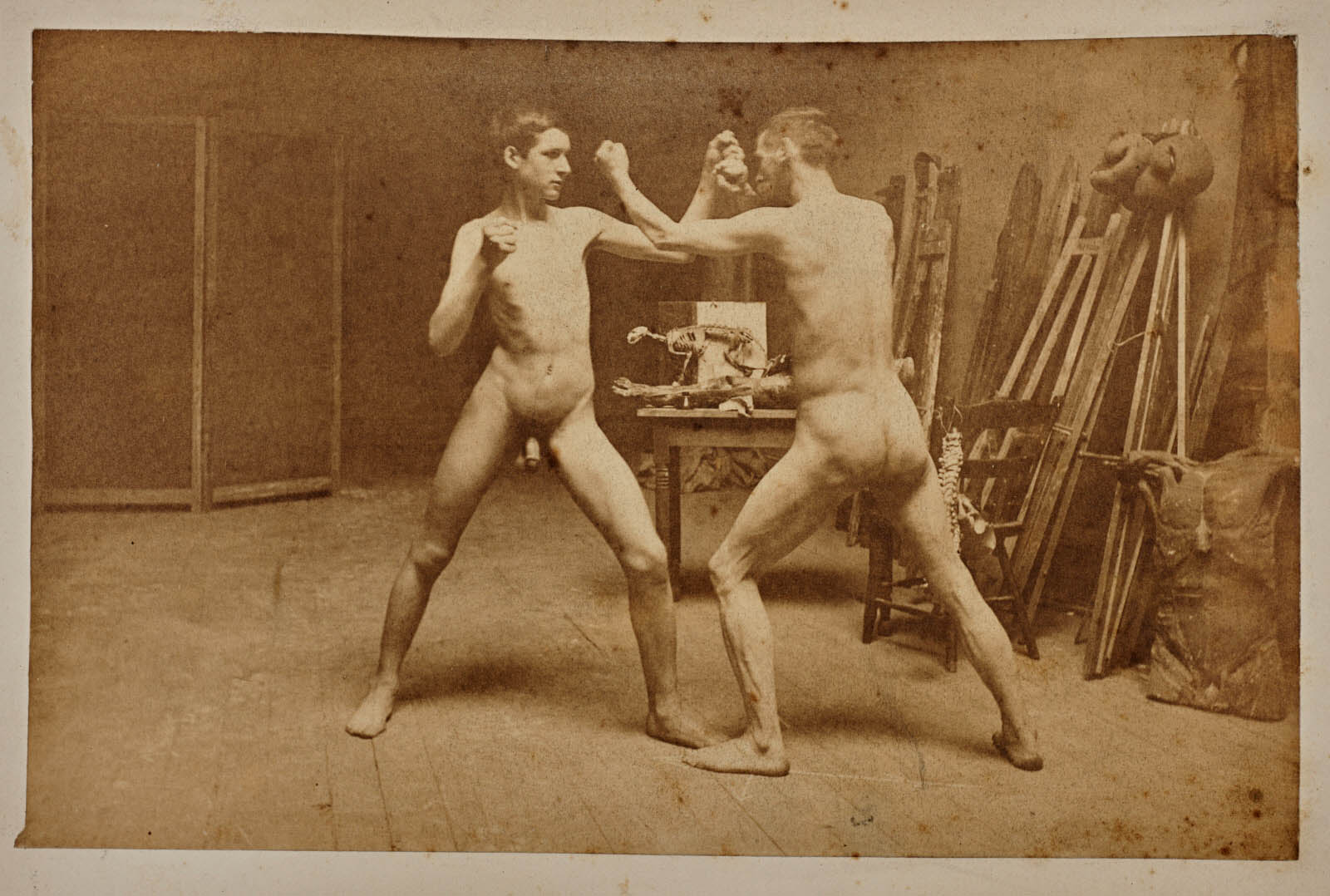



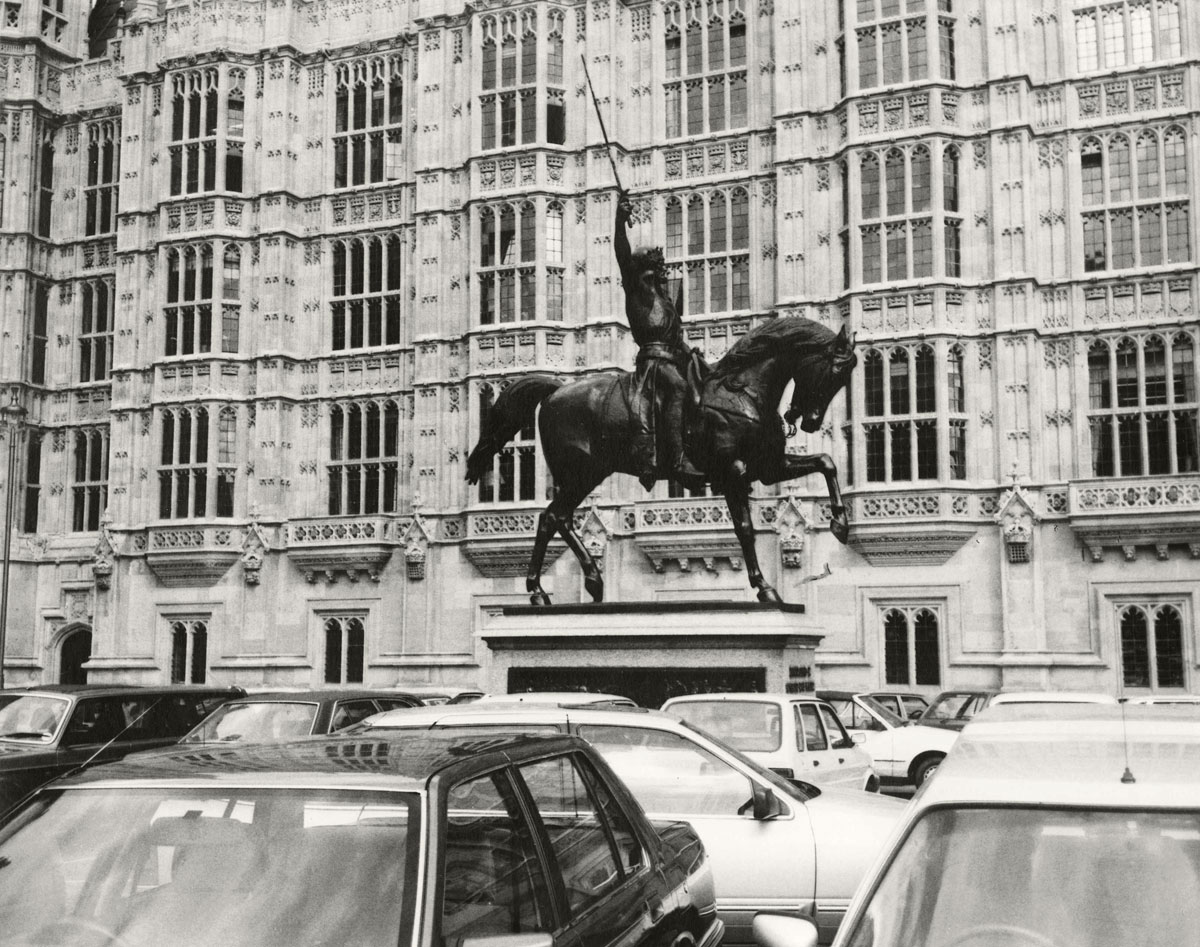
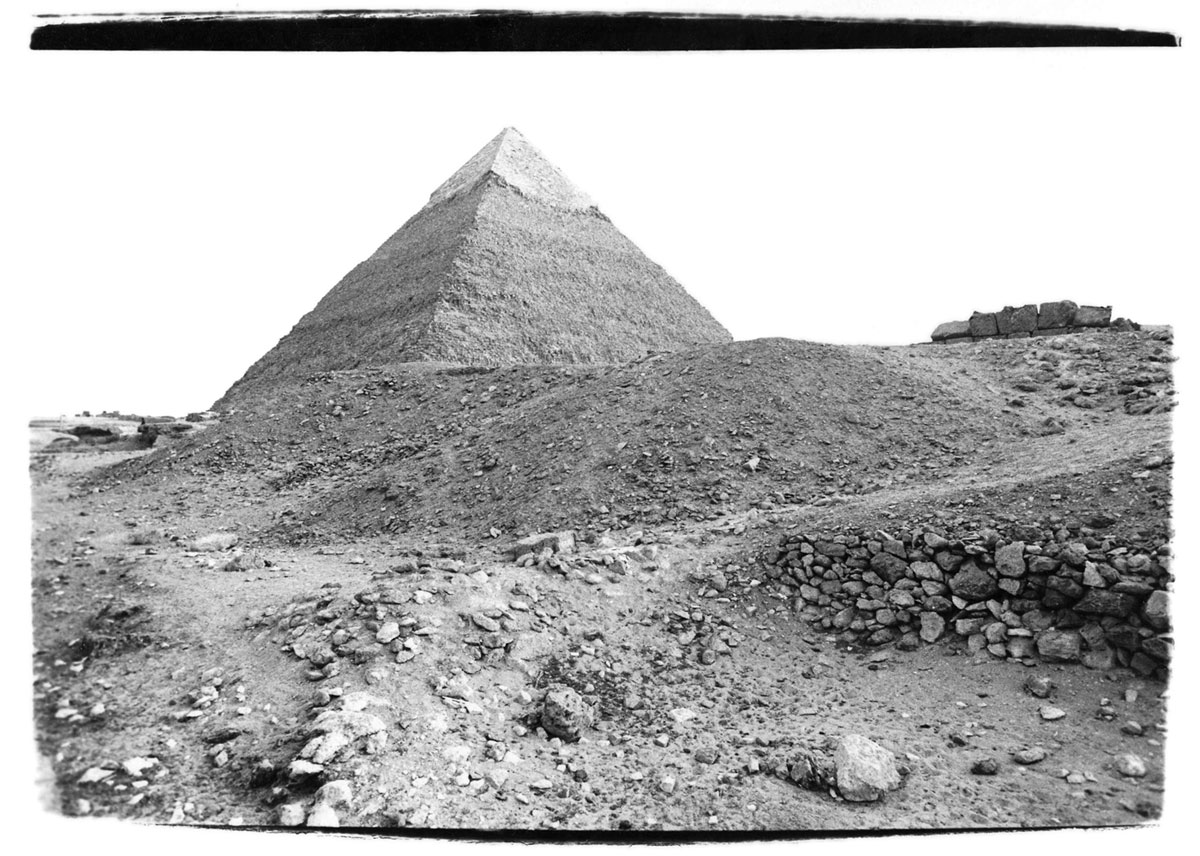

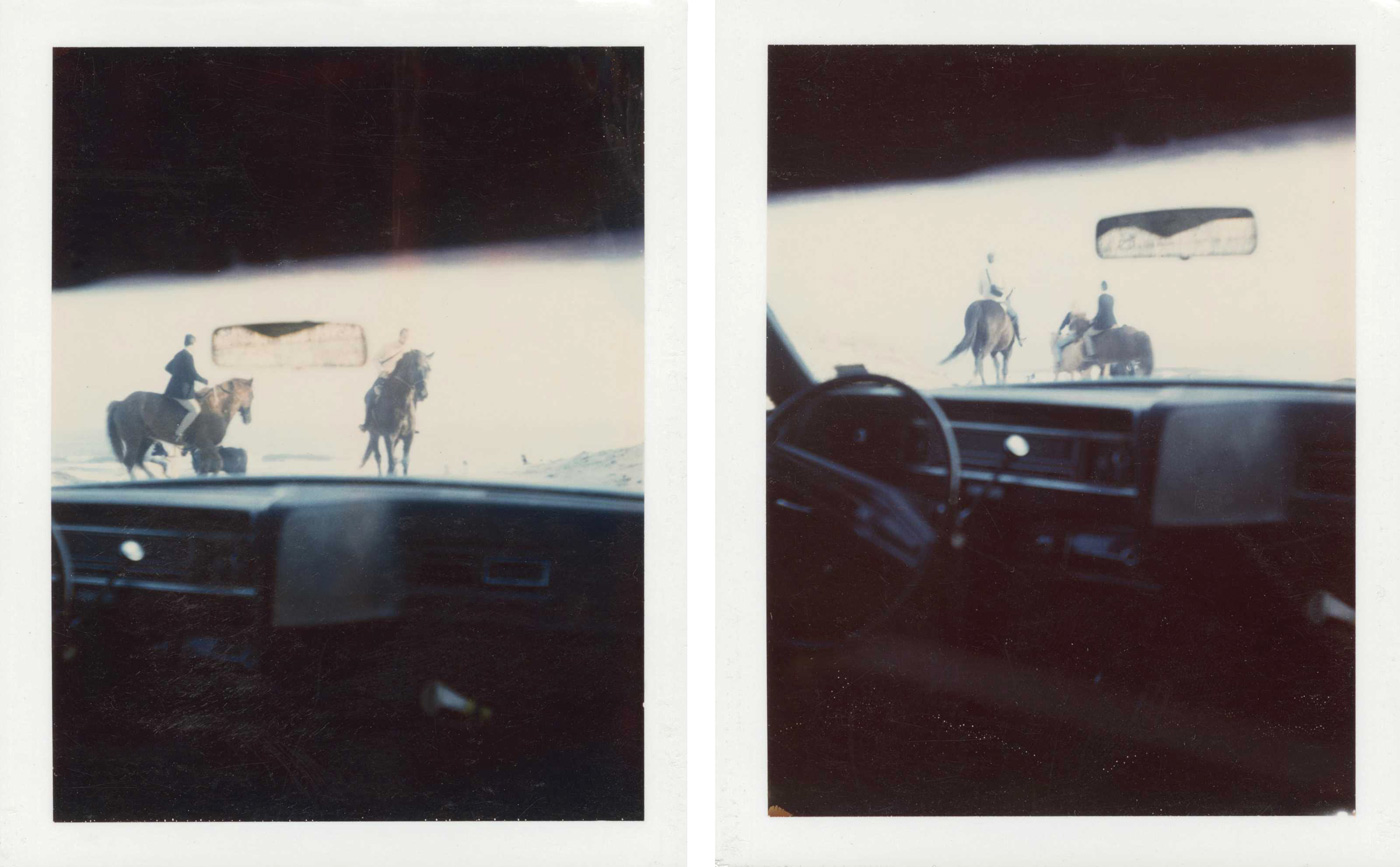
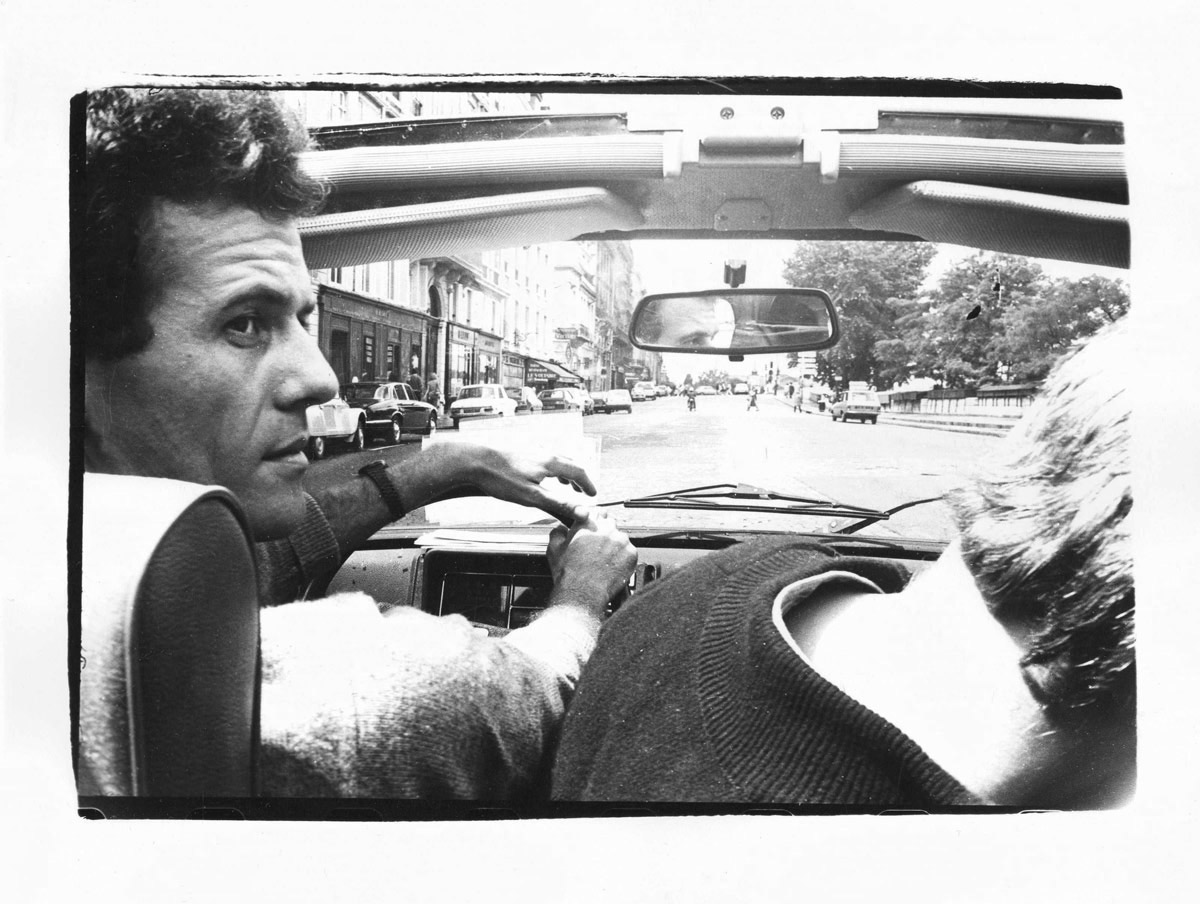

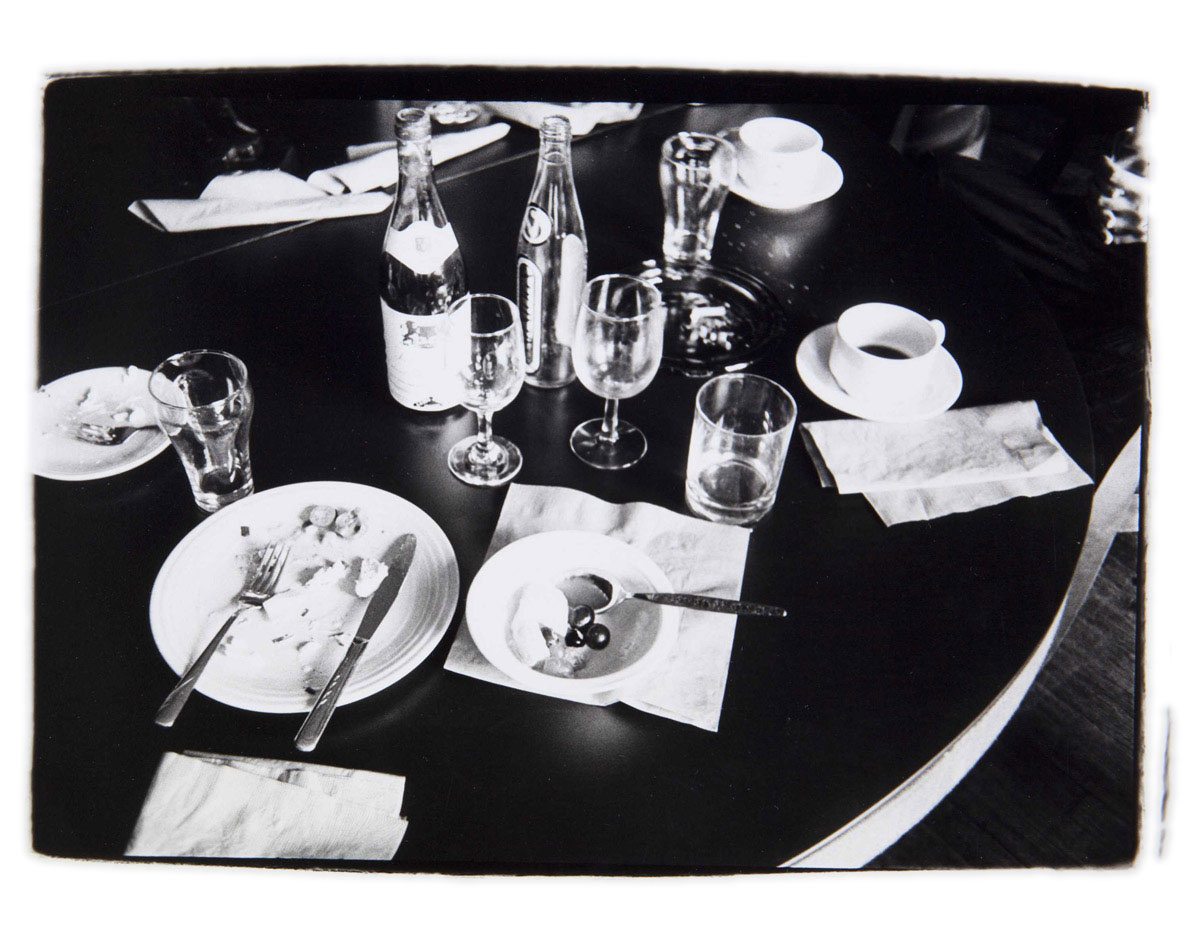


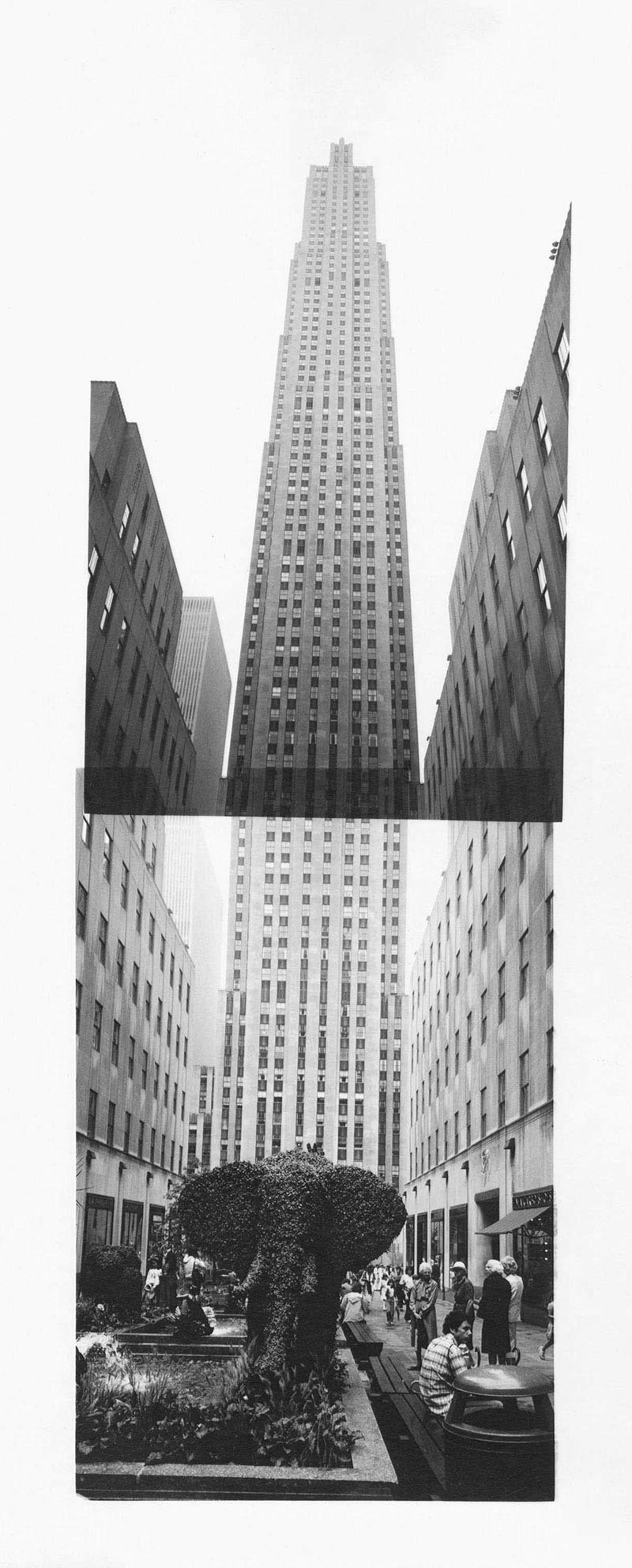

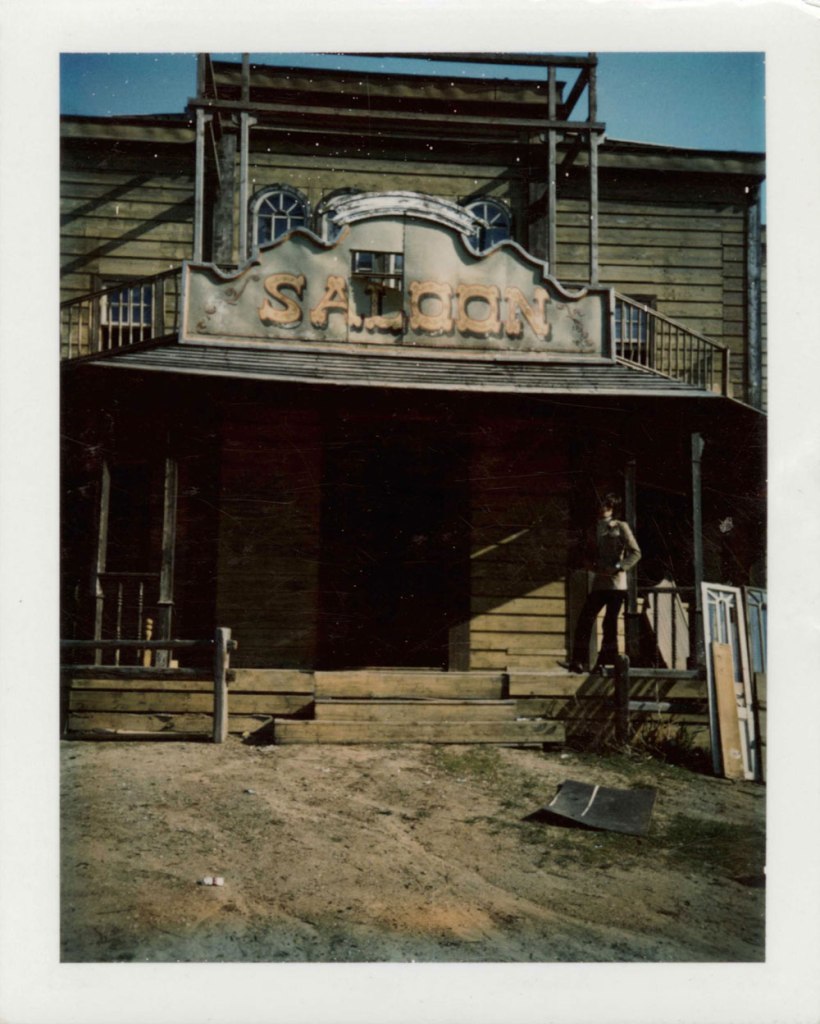
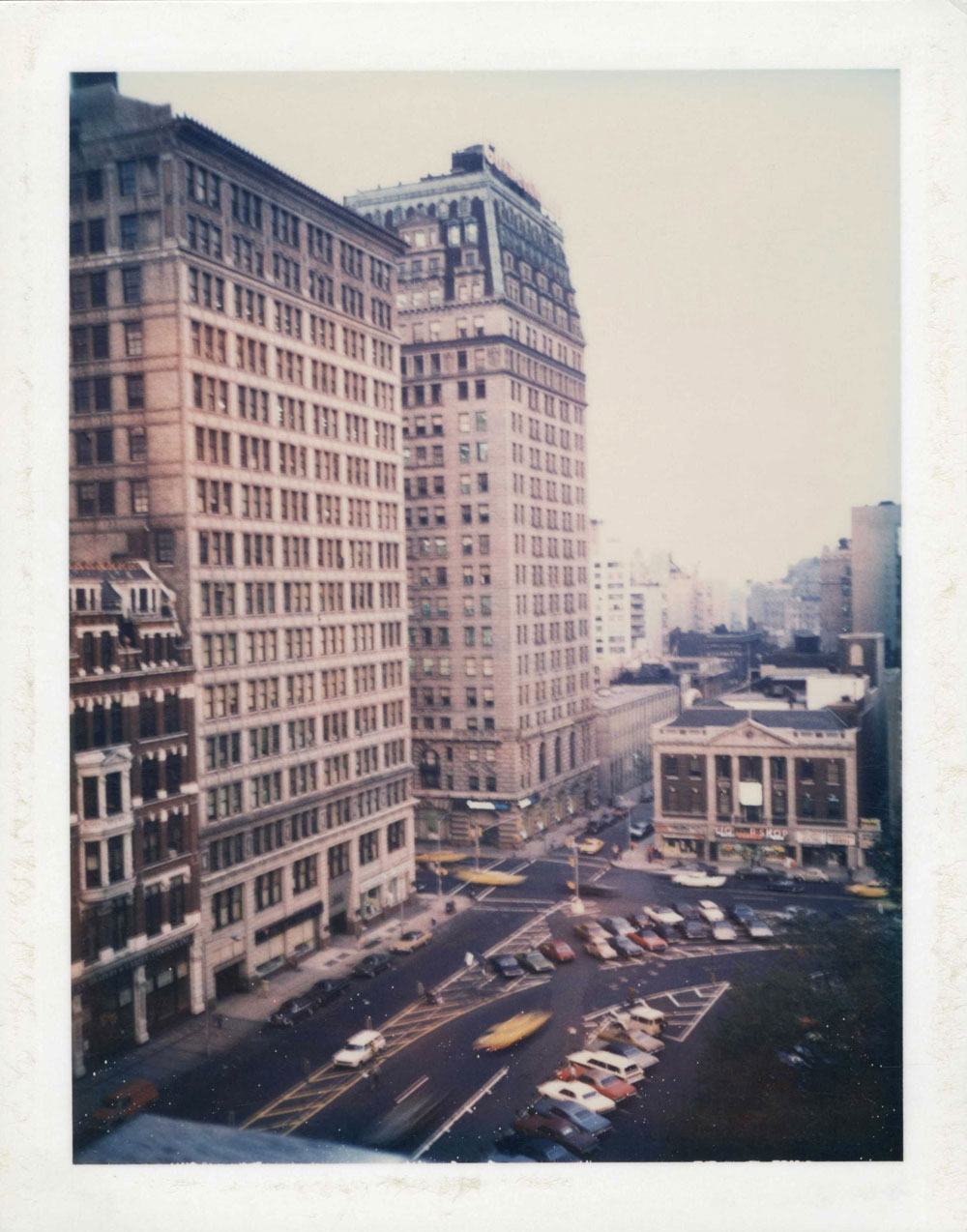

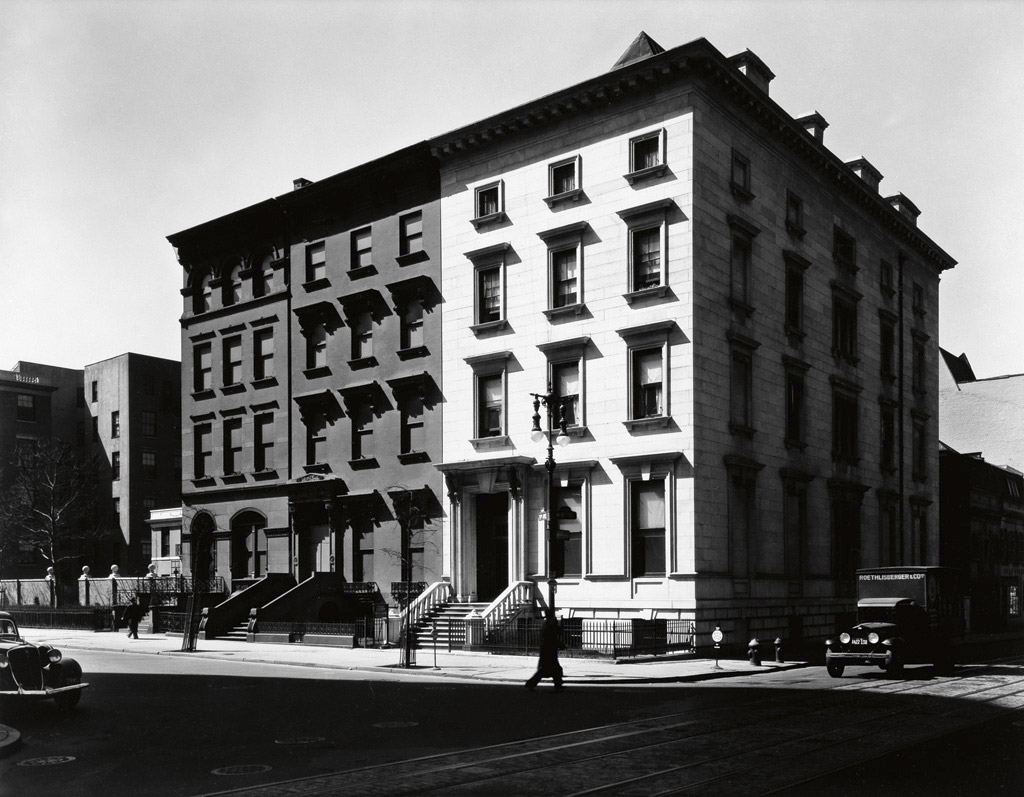


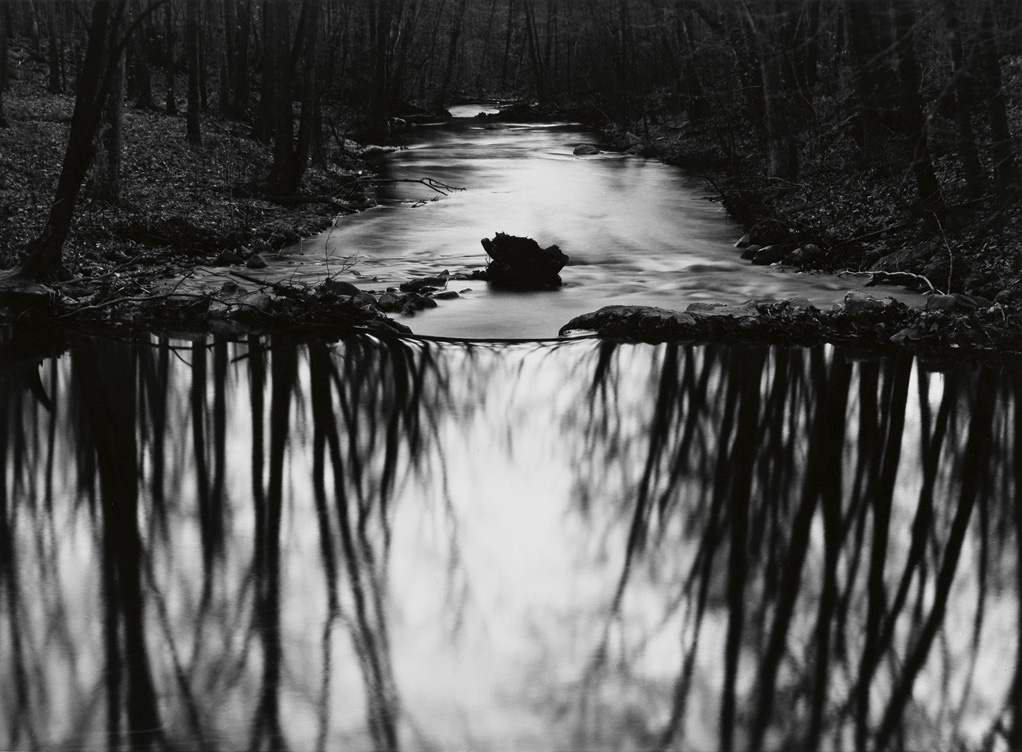
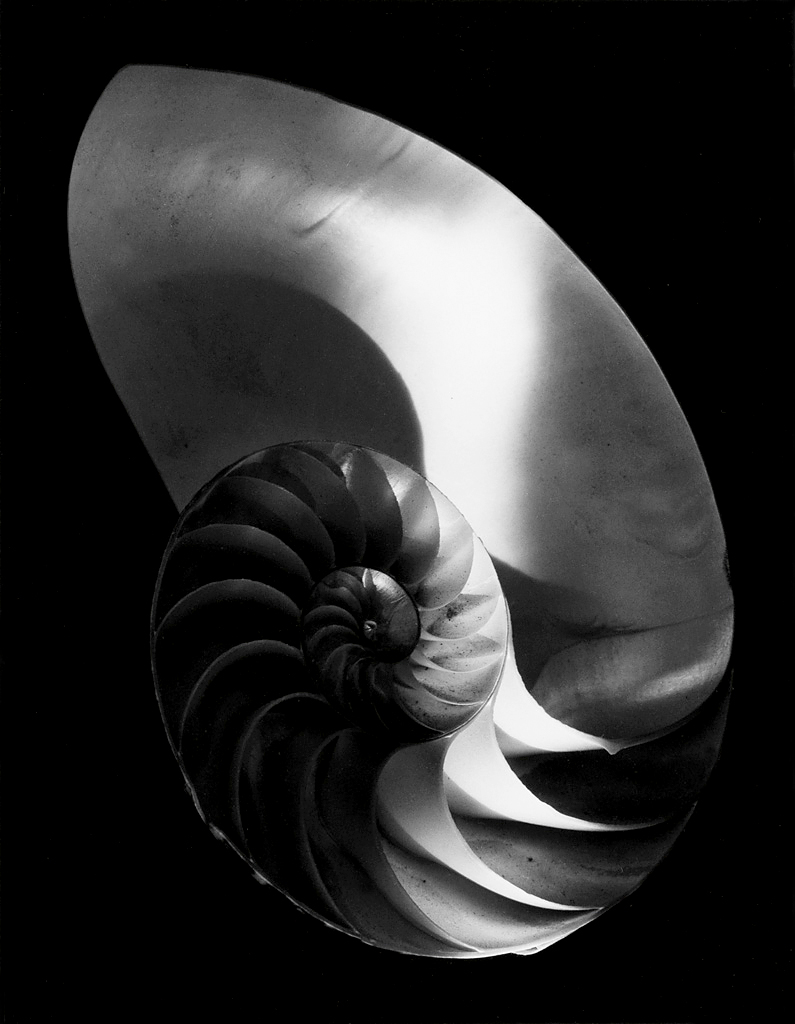
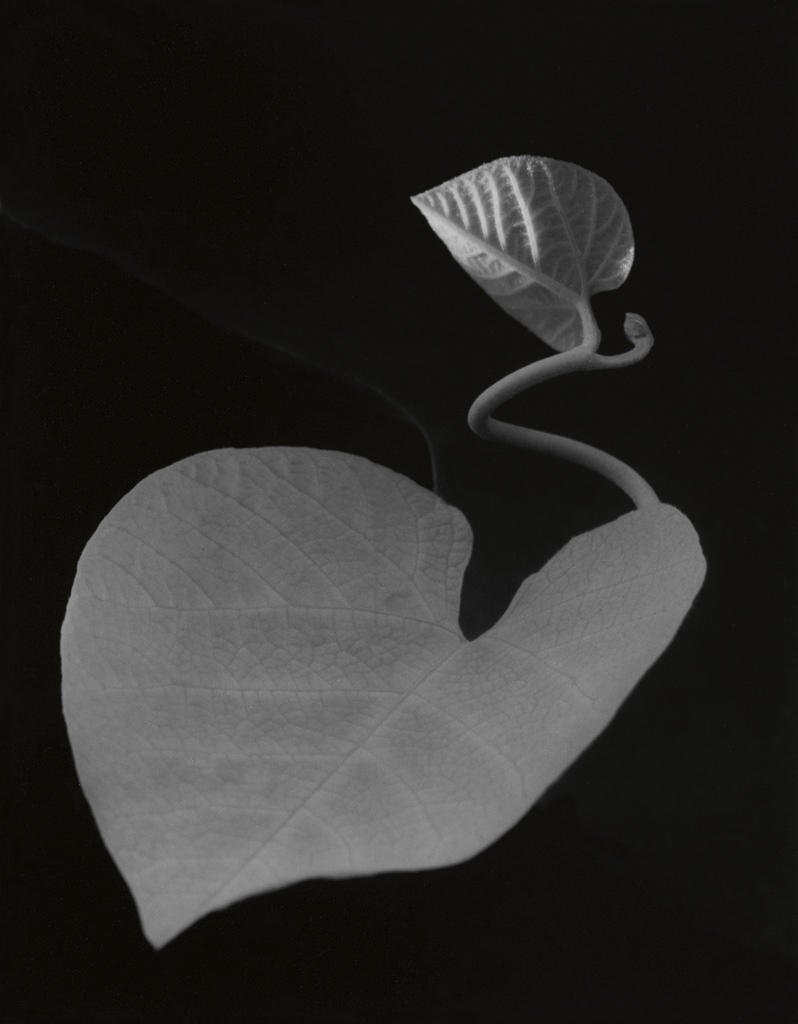
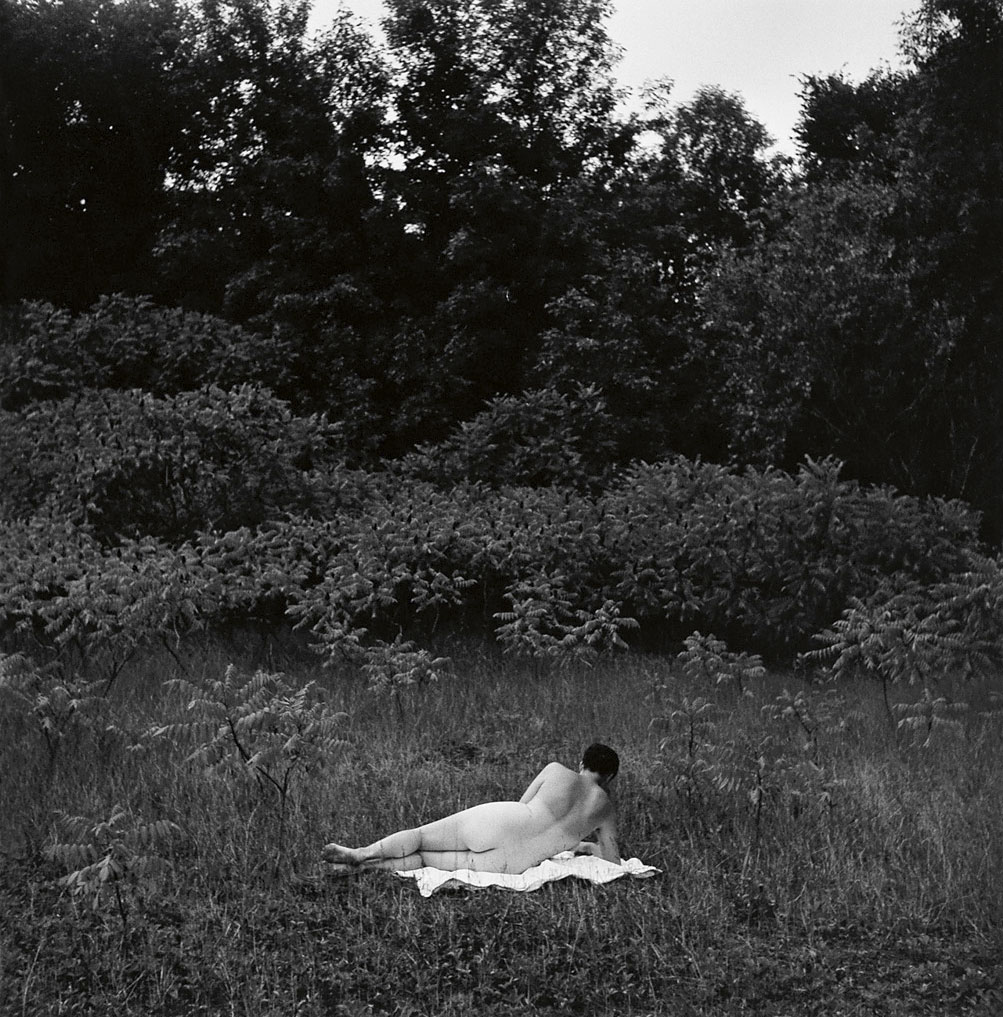
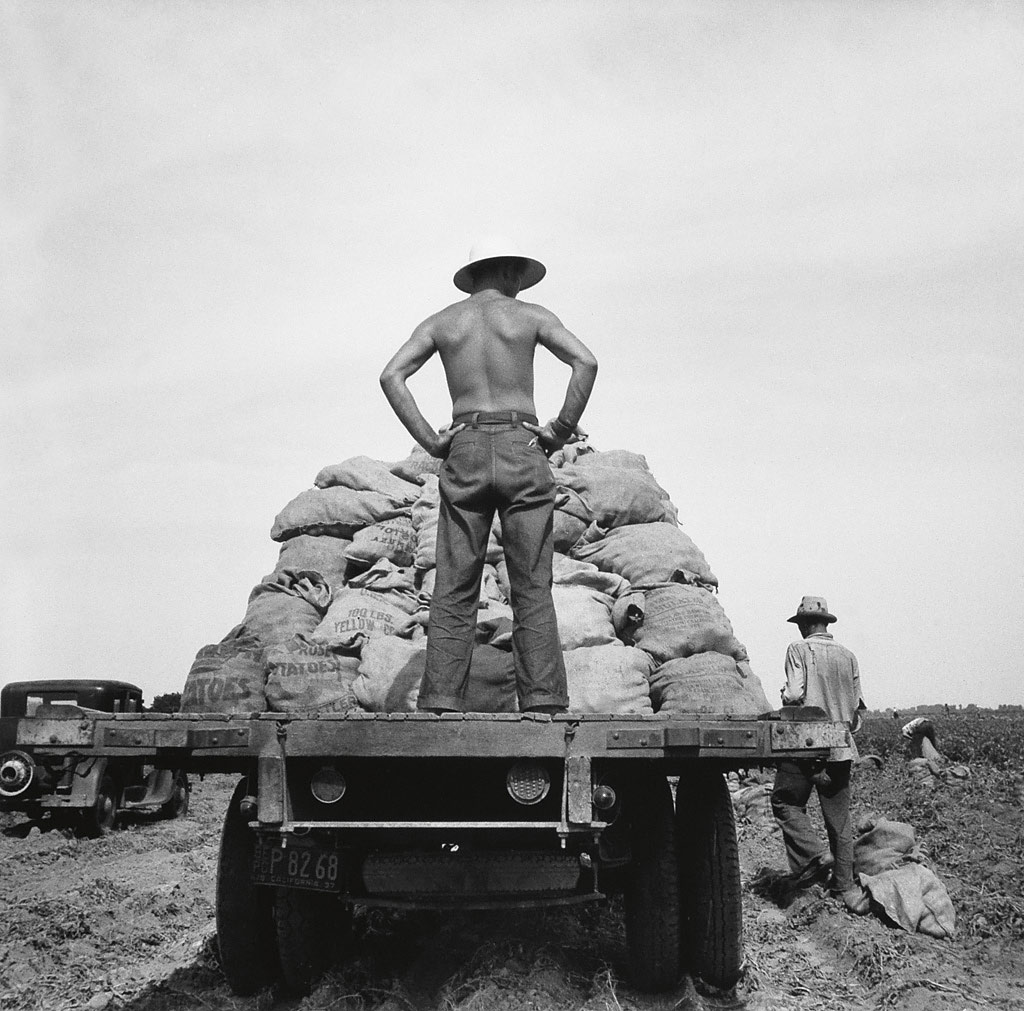

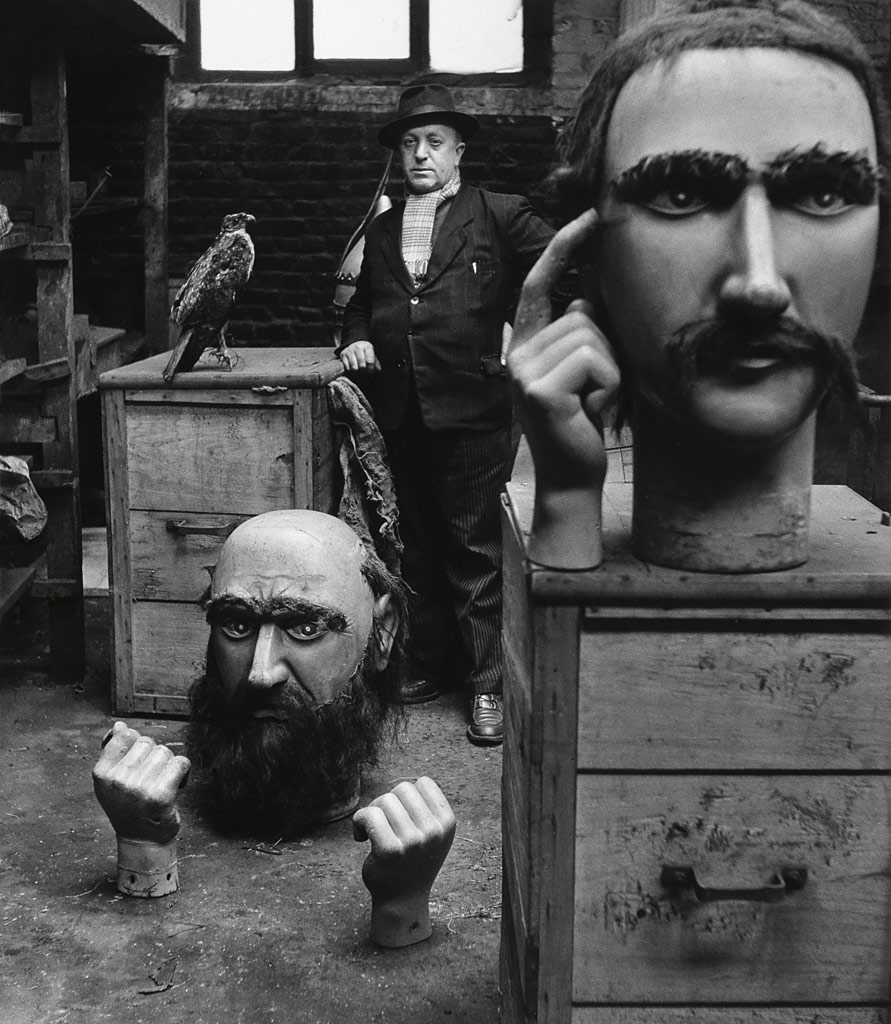
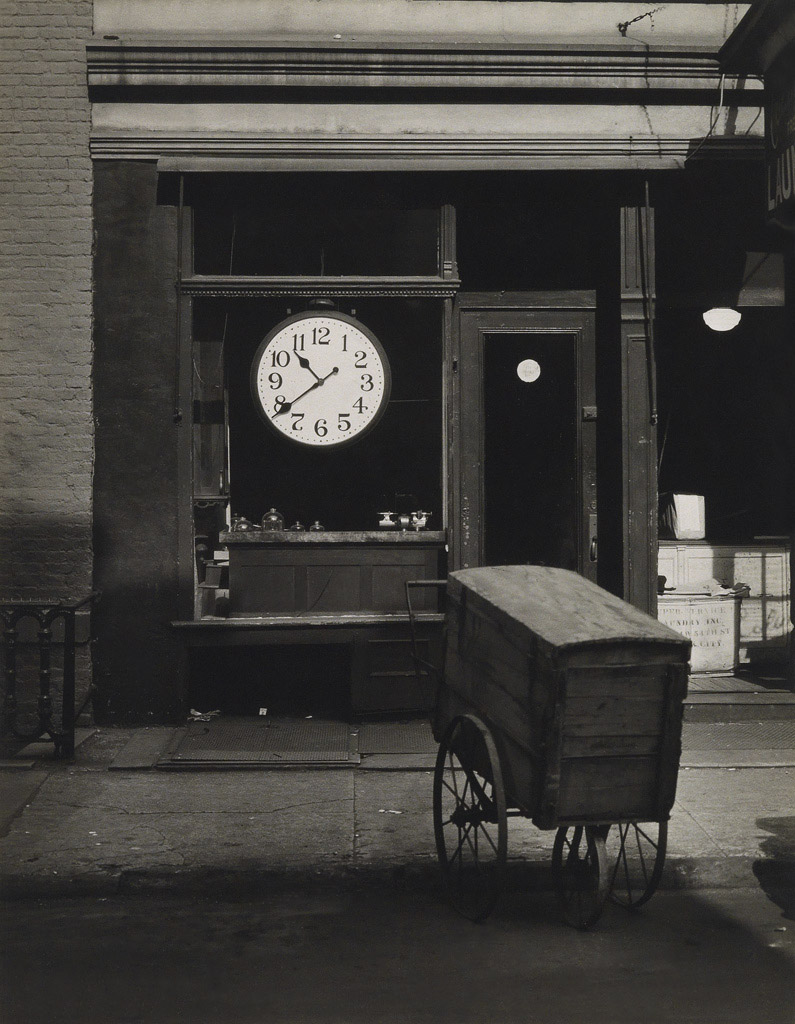
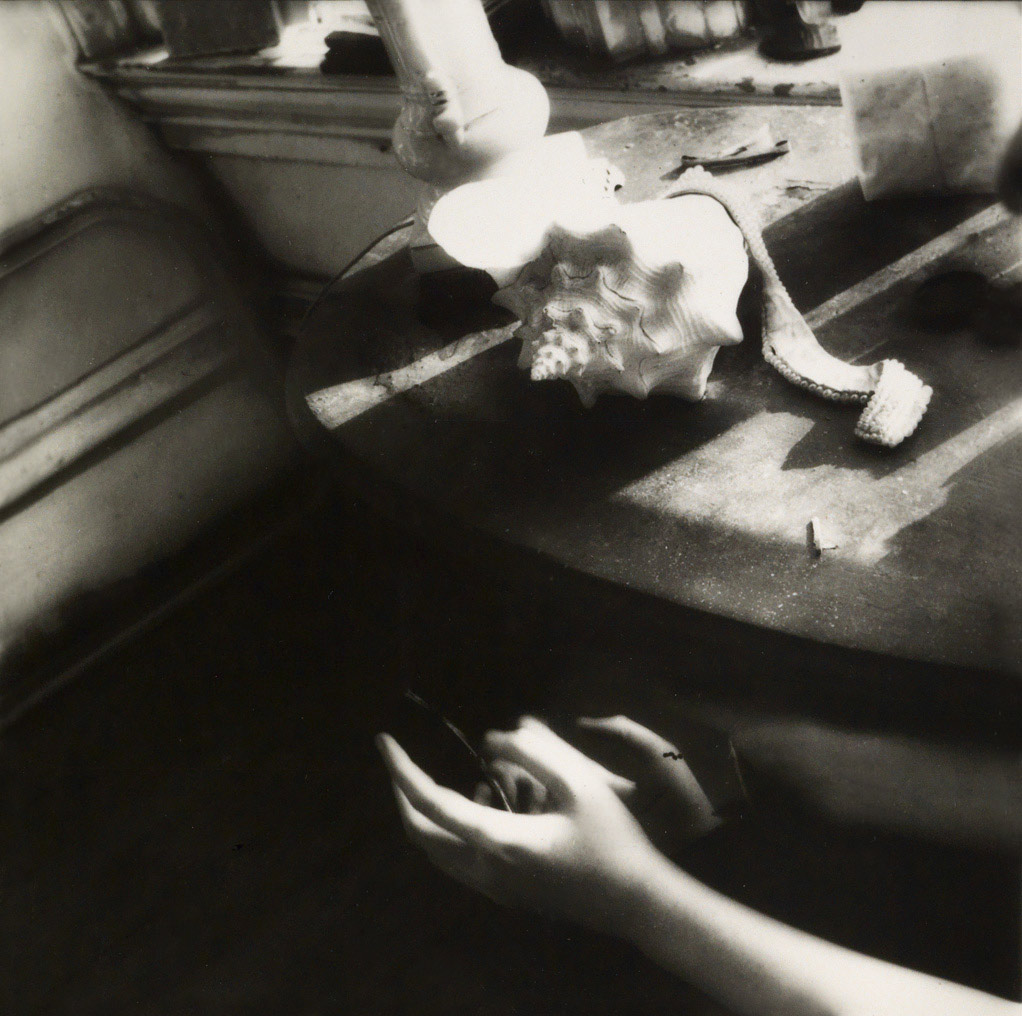
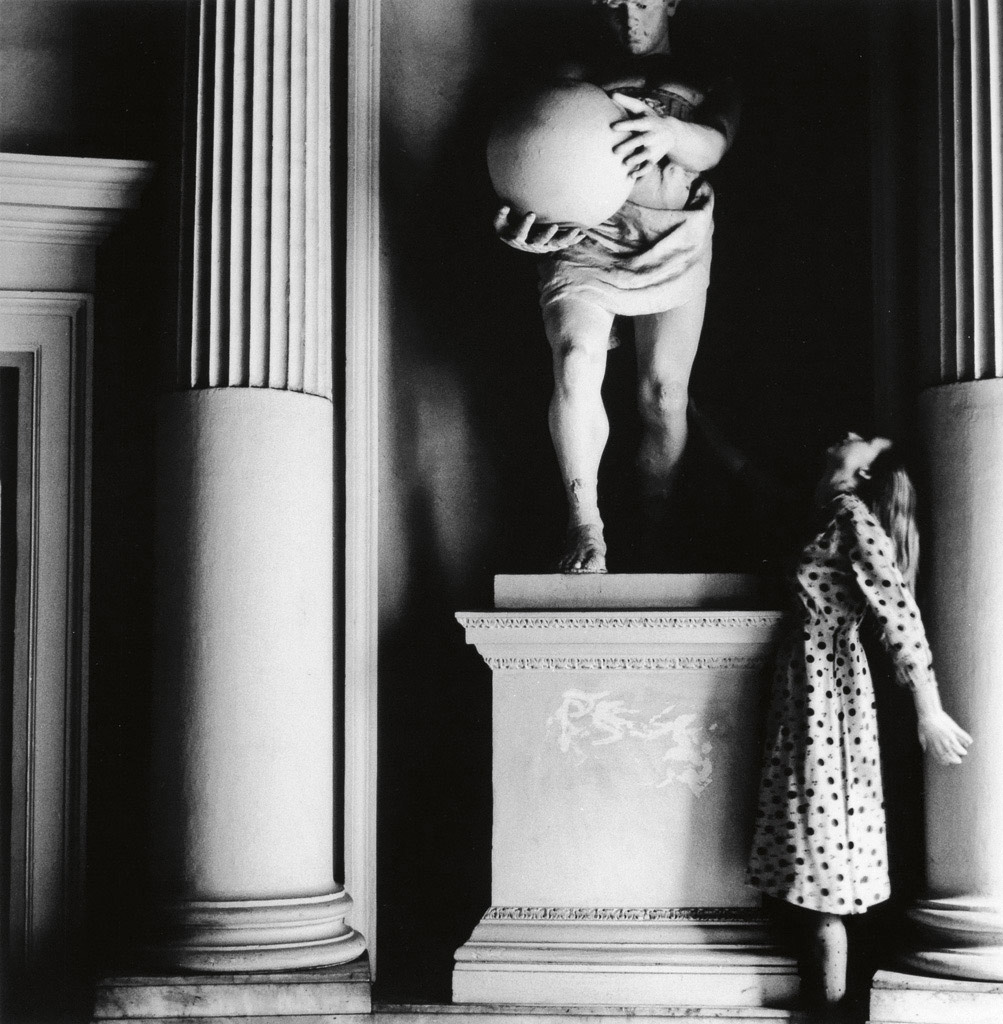
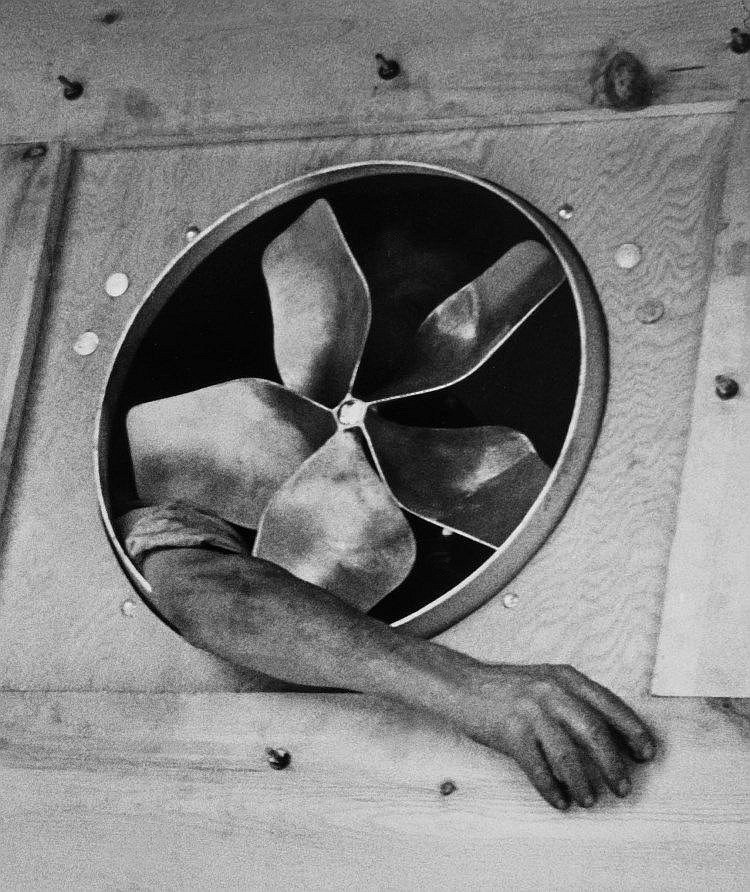
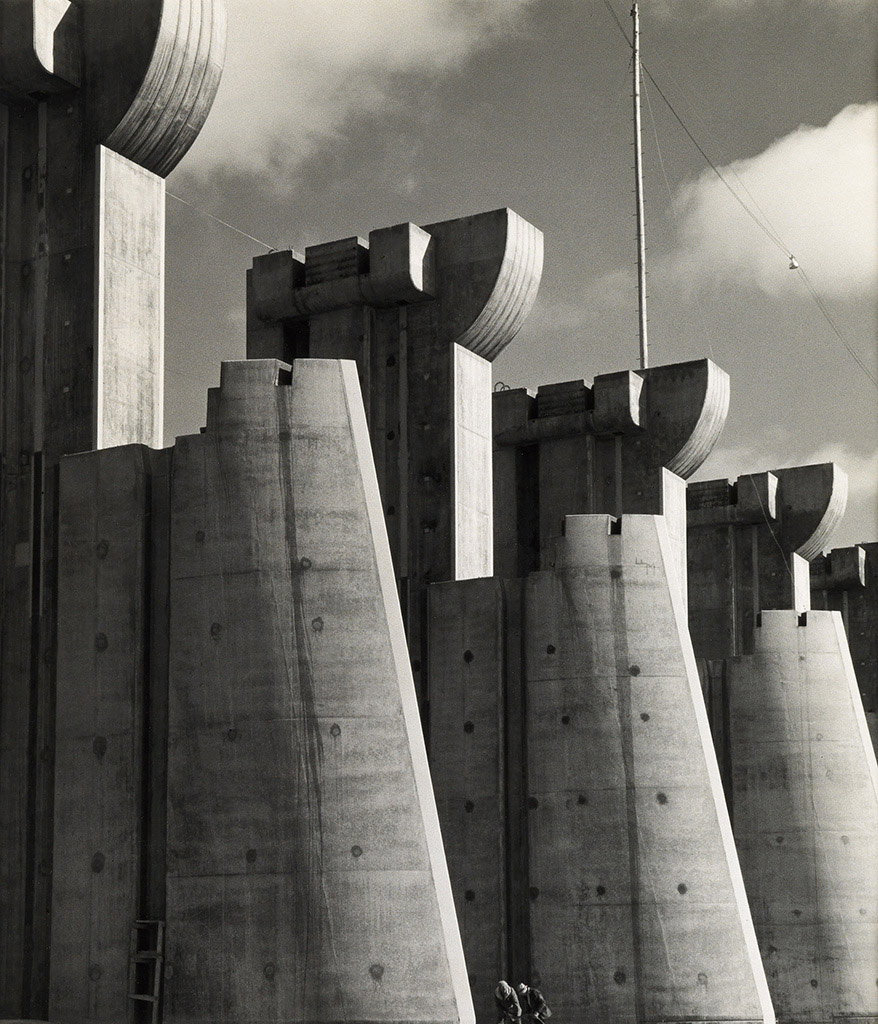
![Margaret Bourke-White (American, 1904-1971) 'Terminal Tower [Cleveland]' c. 1928](https://artblart.com/wp-content/uploads/2015/03/margaret-bourke-white-terminal-tower-cleveland-web.jpg "Margaret Bourke-White (American, 1904-1971) 'Terminal Tower [Cleveland]' c. 1928")
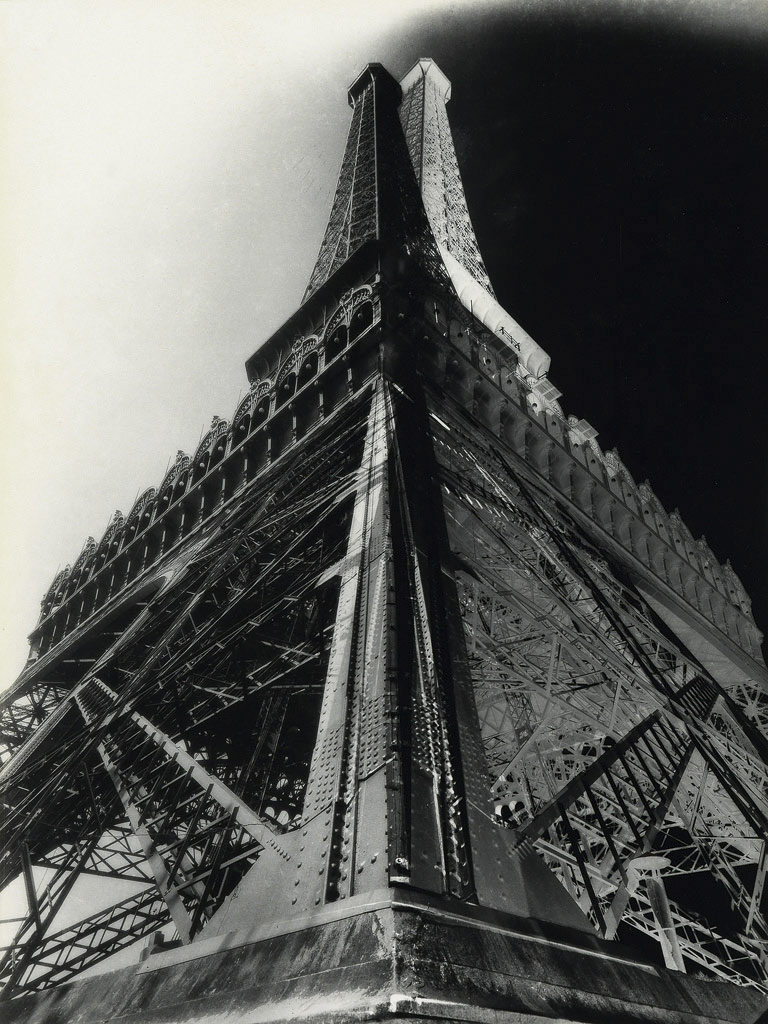
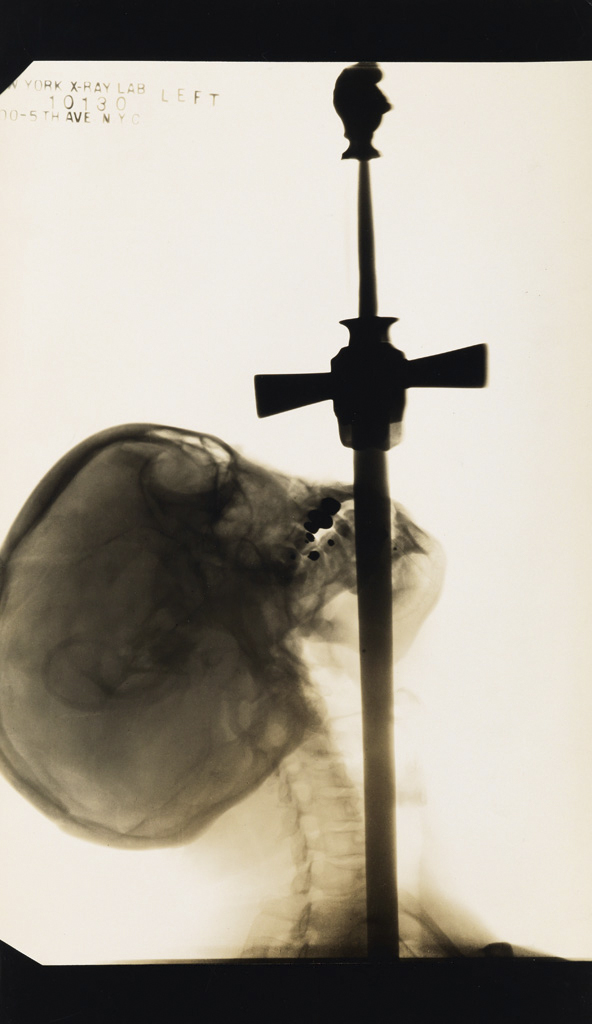
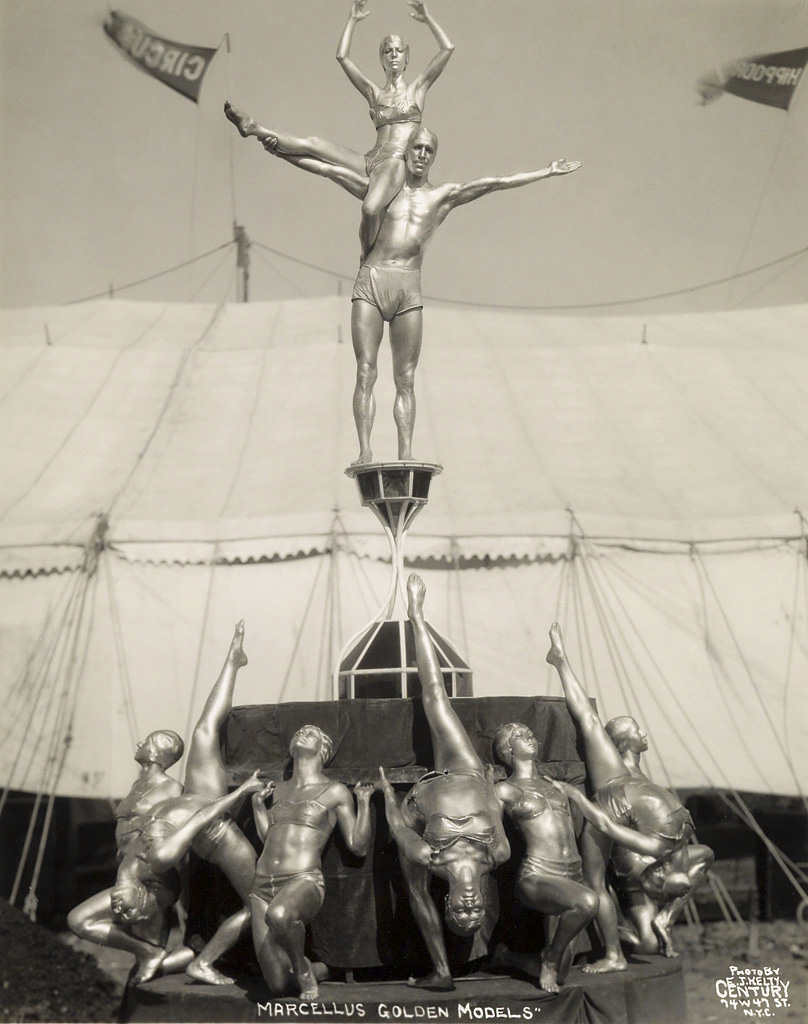
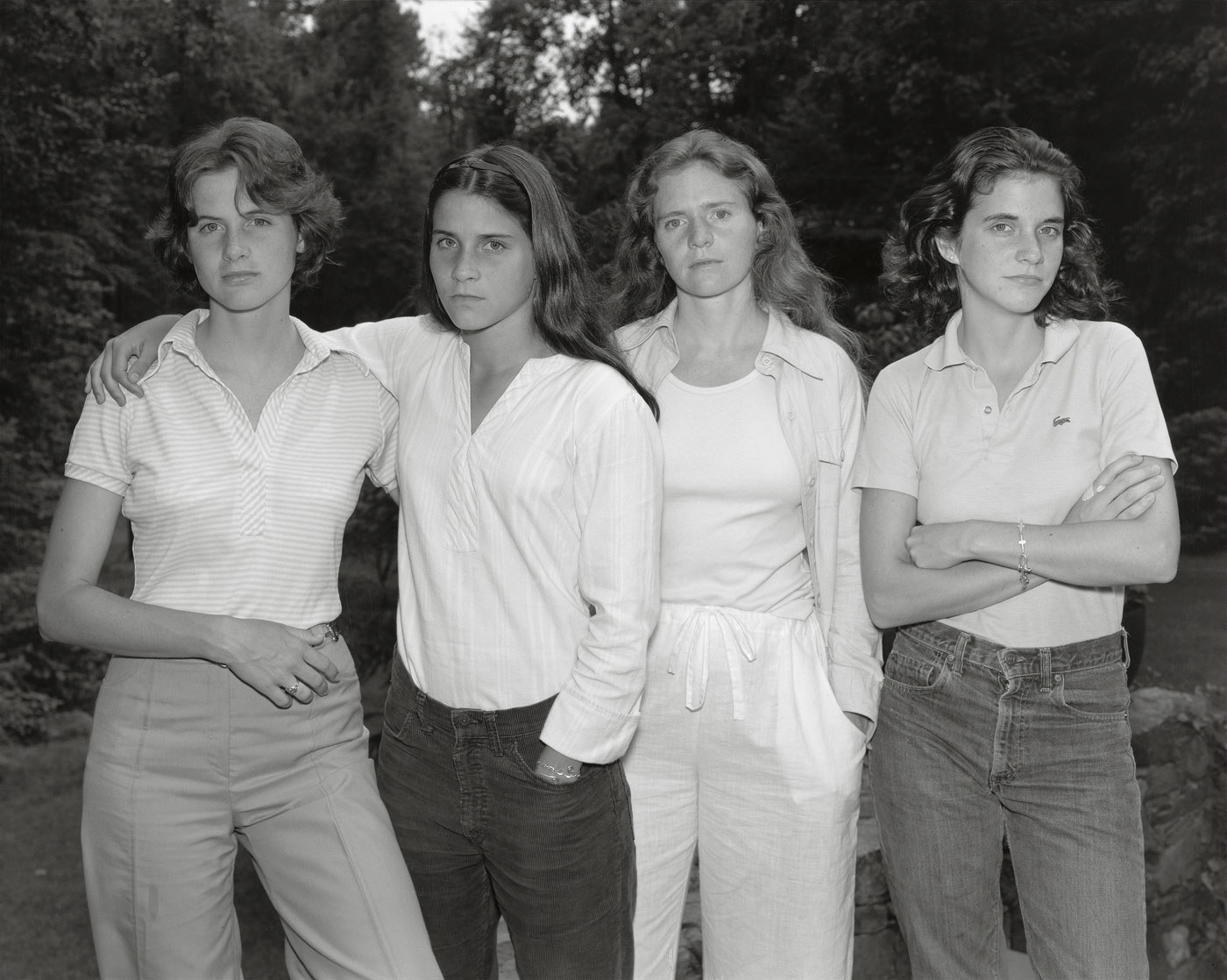









 Art Blart _ art and cultural memory archive
You must be logged in to post a comment.