Photographs: ‘Venice Views’ by Fratelli Gajo c. 1880s

June 2022

A photographic album


Fratelli Gajo – Piazza S.Marco 139 – Venezia. 'Castelo canal with a view of the Church of San Geremia' 1880s


Fratelli Gajo – Piazza S.Marco 139 – Venezia
Castelo canal with a view of the Church of San Geremia 
1880s
Hand-coloured albumen print mounted on cardboard
Image: 20 x 26cm
Support: 27 x 36cm


I bought this album of 30 hand-coloured albumen prints by Fratelli Gajo together with numerous other black and white albumen prints at auction. Unfortunately the album had no cover but to save it for prosperity I had it rebound in leather at one of the only bookbinders left in Melbourne: White’s Law Bindery. They did a superb job.

I cannot find out anything about the Venetian photographer Fratelli Gajo except the address of his business. No dates, no bibliographic information.

What I do know is that these hand-coloured photographs are rare and exceptionally beautiful. They add an early chapter to the story of hand-coloured photography, which stretches from daguerreotypes, albumen prints, and silver gelatin prints to hand-coloured digital photographs with an equally varied subject matter – aerial photographs, landscapes, portraits, bodies, social documentary photographs and architectural renderings to name but a few.

The photographs in the posting are in the order they appear in the album. I have interleaved the albumen photographs with historical and contemporary images giving us a vista of Venice through time. Enjoy.

Dr Marcus Bunyan


Please click on the photographs for a larger version of the image.


Fratelli Gajo – Piazza S.Marco 139 – Venezia. '153 Rivo delle Maravege' 1880s


Fratelli Gajo – Piazza S.Marco 139 – Venezia
153 Rivo delle Maravege
1880s
Hand-coloured albumen print mounted on cardboard
Image: 20 x 26cm
Support: 27 x 36cm


Fratelli Gajo – Piazza S.Marco 139 – Venezia. 'Untitled [The Doges' Palace and the Piazzetta]' 1880s


Fratelli Gajo – Piazza S.Marco 139 – Venezia
Untitled [The Doges’ Palace and the Piazzetta]
1880s
Hand-coloured albumen print mounted on cardboard
Image: 20 x 26cm
Support: 27 x 36cm
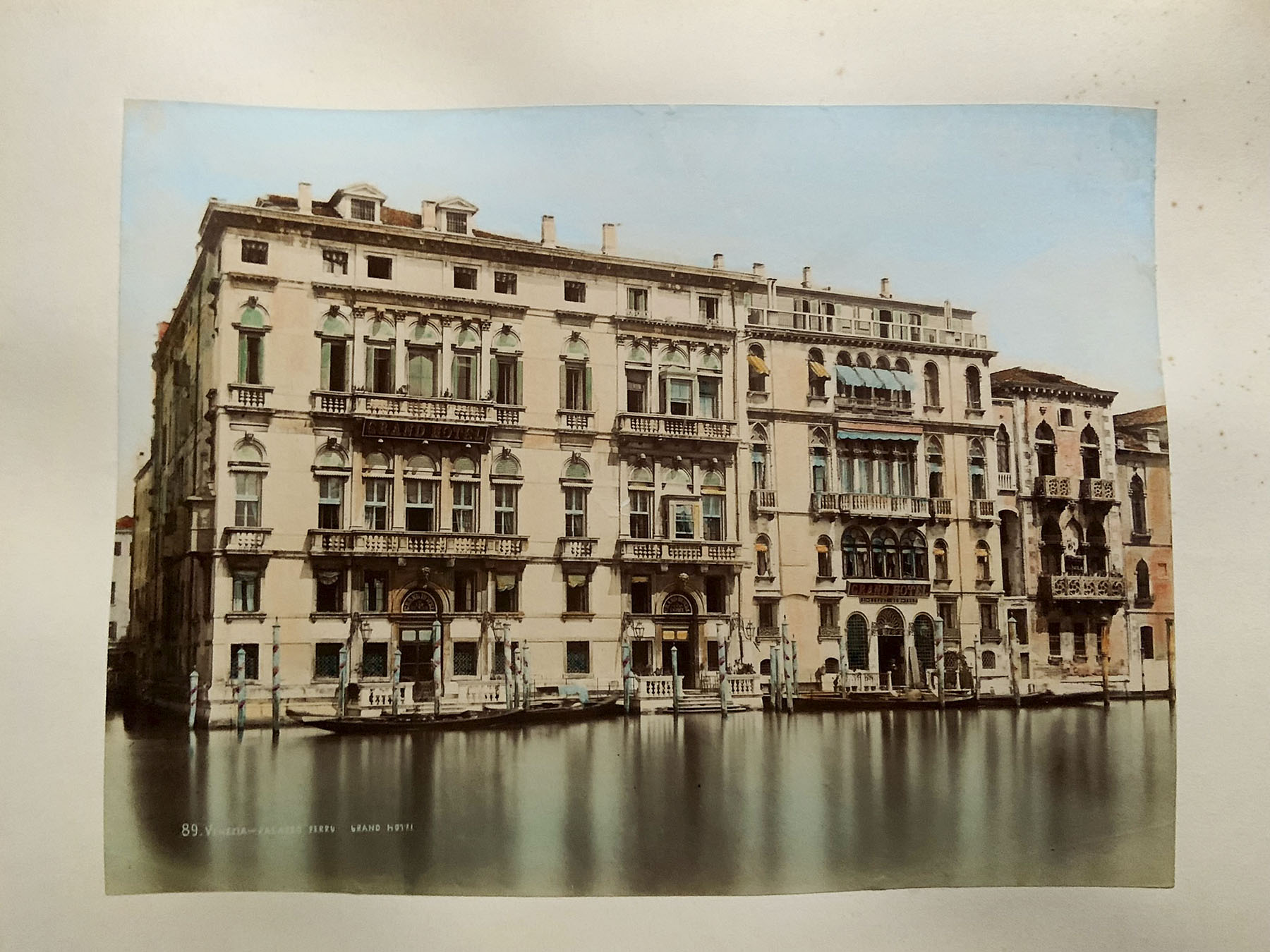
 

Fratelli Gajo – Piazza S.Marco 139 – Venezia. '89 Venezia – Palazzo Ferry, Grand Hotel' 1880s


Fratelli Gajo – Piazza S.Marco 139 – Venezia
89 Venezia – Palazzo Ferry, Grand Hotel
1880s
Hand-coloured albumen print mounted on cardboard
Image: 20 x 26cm
Support: 27 x 36cm


Wolfgang Moroder. 'Palazzo Ferro Fini in Venice. Facade on Grand Canal' 18 April 2016


Wolfgang Moroder
Palazzo Ferro Fini in Venice. Facade on Grand Canal
18 April 2016
CC BY-SA 3.0


Fratelli Gajo – Piazza S.Marco 139 – Venezia. '680 Venezia' 1880s


Fratelli Gajo – Piazza S.Marco 139 – Venezia
680 Venezia
1880s
Hand-coloured albumen print mounted on cardboard
Image: 20 x 26cm
Support: 27 x 36cm


Fratelli Gajo – Piazza S.Marco 139 – Venezia. 'Untitled [St Mark's Basilica]' 1880s


Fratelli Gajo – Piazza S.Marco 139 – Venezia
Untitled [St Mark’s Basilica]
1880s
Hand-coloured albumen print mounted on cardboard
Image: 20 x 26cm
Support: 27 x 36cm
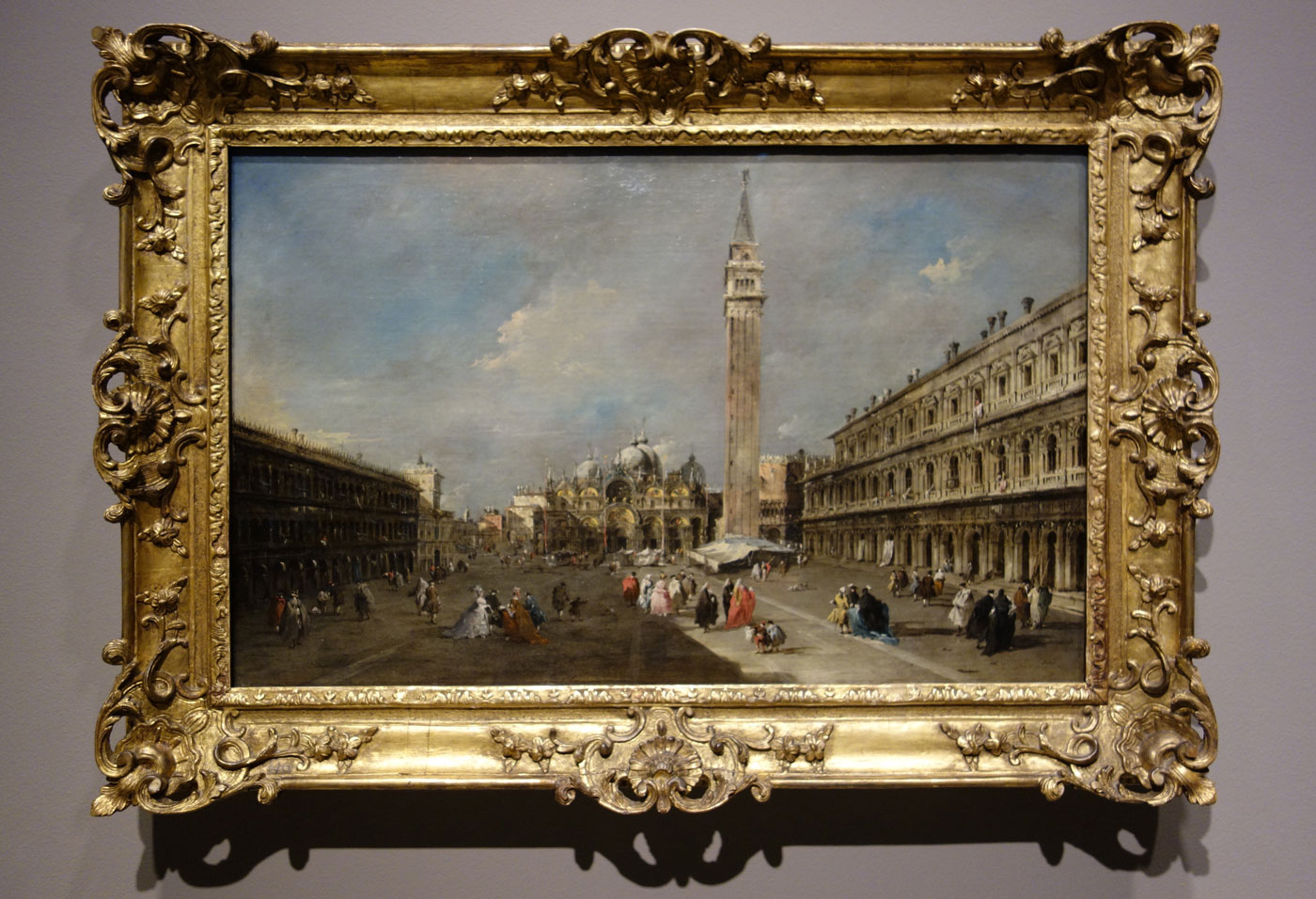
 

Francesco Guardi (Italy, 1712-93) 'The Piazza San Marco, Venice' c. 1770-1775

Francesco Guardi (Italy, 1712-93) 'The Piazza San Marco, Venice' c. 1770-1775


Francesco Guardi (Italy, 1712-1793)
The Piazza San Marco, Venice (installation views)
c. 1770-1775
Oil on canvas
55.2 x 85.4cm
Scottish National Gallery, Edinburgh Accepted by HM Government in lieu of inheritance tax and allocated to the Scottish National Gallery, 1978
© Trustees of the National Galleries of Scotland
Photos: © Marcus Bunyan and the Art Gallery of New South Wales


Fratelli Gajo – Piazza S.Marco 139 – Venezia. 'Untitled' 1880s


Fratelli Gajo – Piazza S.Marco 139 – Venezia
Untitled
1880s
Hand-coloured albumen print mounted on cardboard
Image: 20 x 26cm
Support: 27 x 36cm


Fratelli Gajo – Piazza S.Marco 139 – Venezia. 'Untitled' 1880s


Fratelli Gajo – Piazza S.Marco 139 – Venezia
Untitled
1880s
Hand-coloured albumen print mounted on cardboard
Image: 20 x 26cm
Support: 27 x 36cm
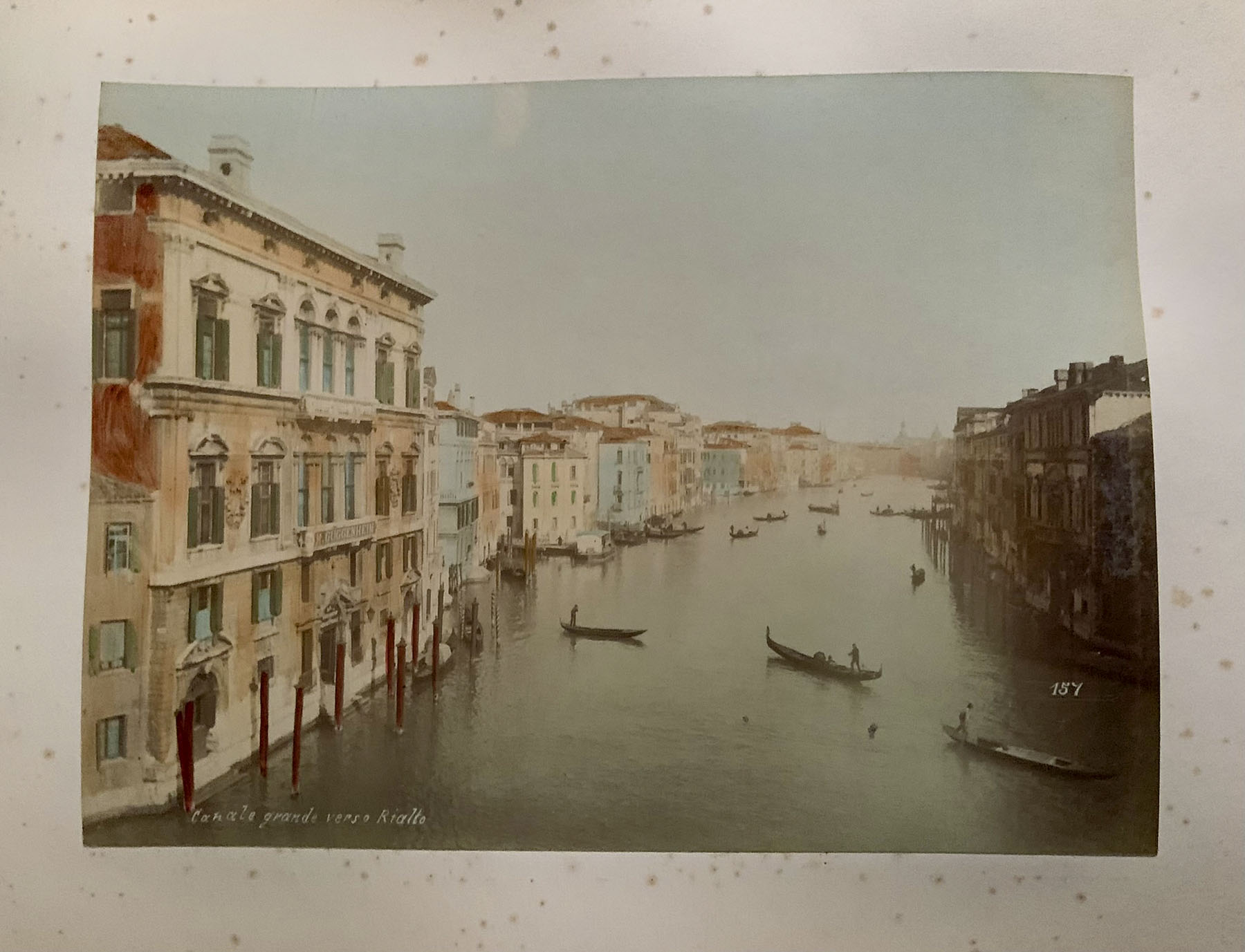
 

Fratelli Gajo – Piazza S.Marco 139 – Venezia. 'Canale grande verso Rialto' 1880s


Fratelli Gajo – Piazza S.Marco 139 – Venezia
Canale grande verso Rialto
1880s
Hand-coloured albumen print mounted on cardboard
Image: 20 x 26cm
Support: 27 x 36cm


Canaletto (Italian, 1697-1768) 'Grand Canal from Palazzo Balbi towards the Rialto' between 1720 and 1723


Canaletto (Italian, 1697-1768)
Grand Canal from Palazzo Balbi towards the Rialto
Between 1720 and 1723
Oil on canvas
Height: 144cm (56.6 in)
Width: 207cm (81.4 in)
Museum of 18th-century Venice
Public domain


Fratelli Gajo – Piazza S.Marco 139 – Venezia. 'Untitled [Bridge of Sighs]' 1880s


Fratelli Gajo – Piazza S.Marco 139 – Venezia
Untitled [Bridge of Sighs]
1880s
Hand-coloured albumen print mounted on cardboard
Image: 20 x 26cm
Support: 27 x 36cm


Fratelli Gajo – Piazza S.Marco 139 – Venezia. 'A. Paoletti, Venezia' 1880s


Fratelli Gajo – Piazza S.Marco 139 – Venezia
After the painting by A. Paoletti, Venezia
1880s
Hand-coloured albumen print mounted on cardboard
Image: 20 x 26cm
Support: 27 x 36cm


Antonio Ermolao Paoletti (Venezia, 1834-1912) 'A Venetian ice cream seller' Nd


Antonio Ermolao Paoletti (Venezia, 1834-1912)
A Venetian ice cream seller
Nd
Oil on canvas
50.2 x 74.9cm (19.8 x 29.5 in.)


Fratelli Gajo – Piazza S.Marco 139 – Venezia. 'Untitled [The Courtyard of the Doge's Palace looking towards the Torricella]' 1880s


Fratelli Gajo – Piazza S.Marco 139 – Venezia
Untitled [The Courtyard of the Doge’s Palace looking towards the Torricella]
1880s
Hand-coloured albumen print mounted on cardboard
Image: 20 x 26cm
Support: 27 x 36cm


Fratelli Gajo – Piazza S.Marco 139 – Venezia. 'No. 5 Piazza S. Marco dai Leoni' 1880s


Fratelli Gajo – Piazza S.Marco 139 – Venezia
No. 5 Piazza S. Marco dai Leoni
1880s
Hand-coloured albumen print mounted on cardboard
Image: 20 x 26cm
Support: 27 x 36cm
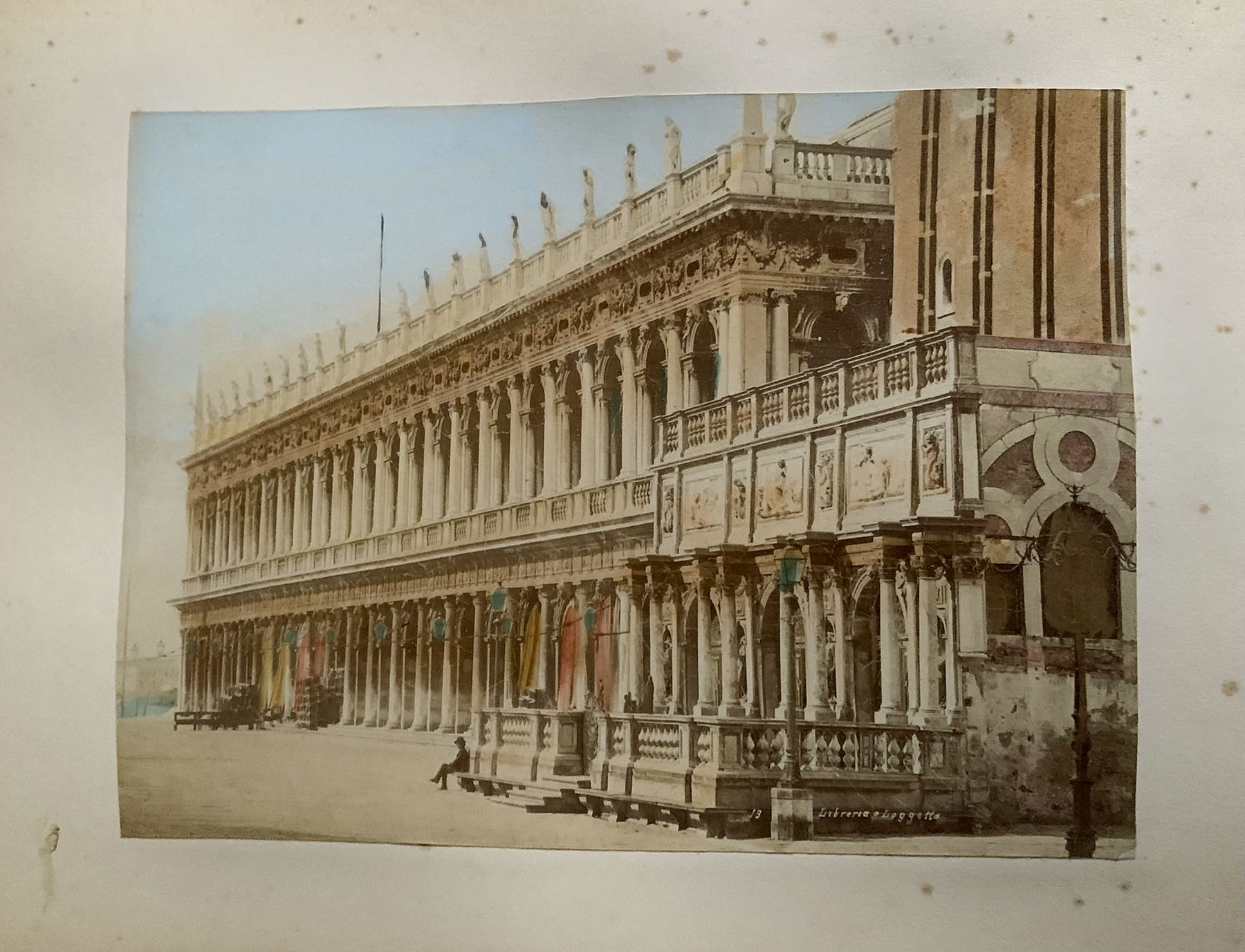
 

Fratelli Gajo – Piazza S.Marco 139 – Venezia. '13 Libreria e Loggetto' 1880s


Fratelli Gajo – Piazza S.Marco 139 – Venezia
13 Libreria e Loggetto
1880s
Hand-coloured albumen print mounted on cardboard
Image: 20 x 26cm
Support: 27 x 36cm
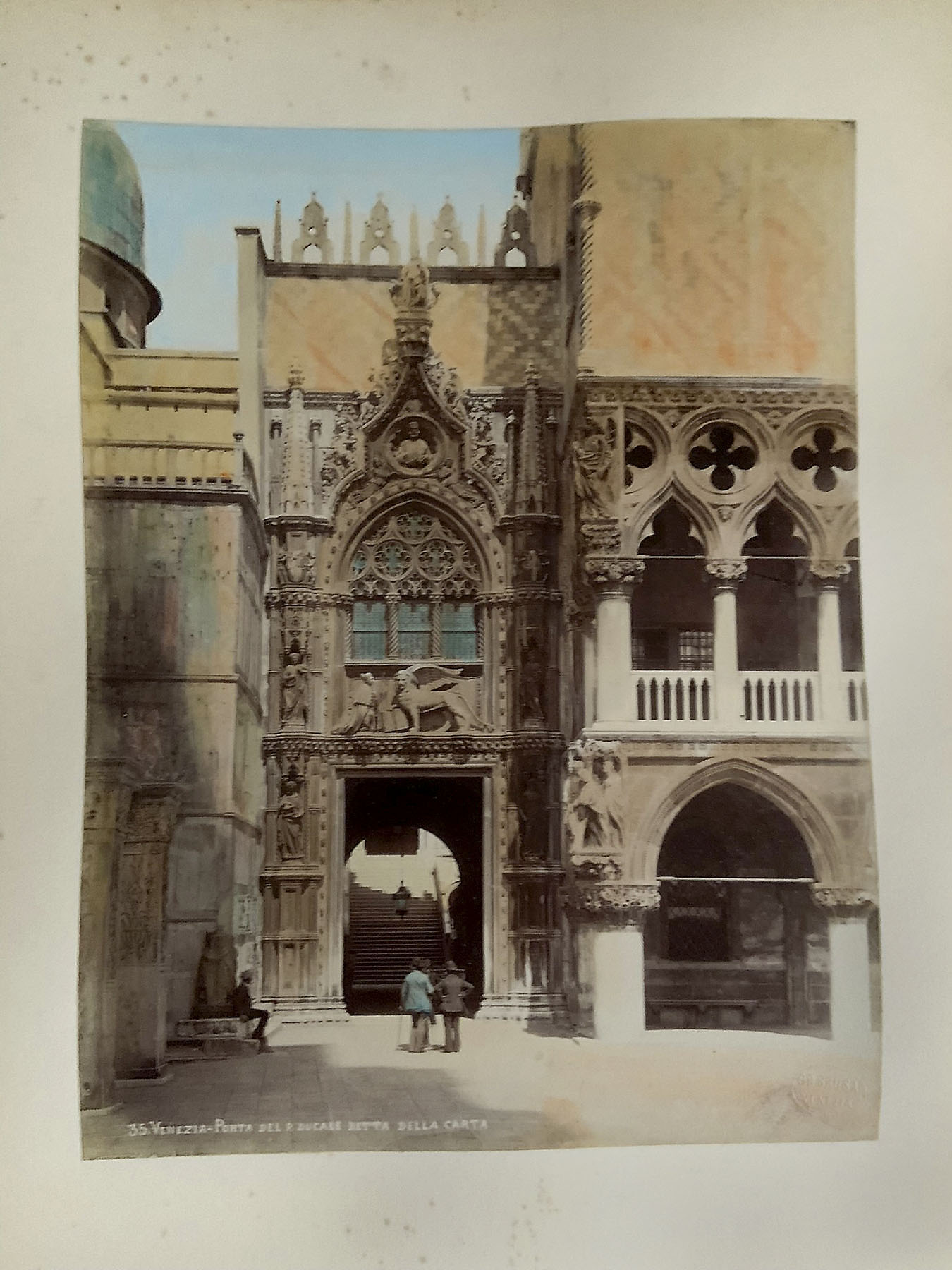
 

Fratelli Gajo – Piazza S.Marco 139 – Venezia. '35. Venezia – Porta del P. Ducale detta della Carta' 1880s


Fratelli Gajo – Piazza S.Marco 139 – Venezia
35. Venezia – Porta del P. Ducale detta della Carta
1880s
Hand-coloured albumen print mounted on cardboard
Image: 20 x 26cm
Support: 27 x 36cm


Jean-Pol Grandmont. 'The Porta della Carta of the Doges Palace on Piazzetta San Marco in Venice' 1 June 2013


Jean-Pol Grandmont
The Porta della Carta of the Doges Palace on Piazzetta San Marco in Venice
1 June 2013
CC BY-SA 4.0


Fratelli Gajo – Piazza S.Marco 139 – Venezia. '230 [Interior of the Doges Palace]' 1880s


Fratelli Gajo – Piazza S.Marco 139 – Venezia
230 [Interior of the Doges Palace]
1880s
Hand-coloured albumen print mounted on cardboard
Image: 20 x 26cm
Support: 27 x 36cm


Torre dell'Orologio, Piazza san Marco, Venice


Torre dell’Orologio, Piazza san Marco, Venice


Fratelli Gajo – Piazza S.Marco 139 – Venezia. '101. Torre del Orologio' 1880s


Fratelli Gajo – Piazza S.Marco 139 – Venezia
101. Torre del Orologio
1880s
Hand-coloured albumen print mounted on cardboard
Image: 20 x 26cm
Support: 27 x 36cm


Fratelli Gajo – Piazza S.Marco 139 – Venezia. '141. Venezia Chiesa della Salute' 1880s


Fratelli Gajo – Piazza S.Marco 139 – Venezia
141. Venezia Chiesa della Salute
1880s
Hand-coloured albumen print mounted on cardboard
Image: 20 x 26cm
Support: 27 x 36cm


Walter Richard Sickert (British, 1860-1942) 'Santa Maria della Salute, Venice' c. 1901


Walter Richard Sickert (British, 1860-1942)
Santa Maria della Salute, Venice
c. 1901
Oil on canvas
56 x 46cm
Royal Academy of Arts


Fratelli Gajo – Piazza S.Marco 139 – Venezia. 'Untitled' 1880s


Fratelli Gajo – Piazza S.Marco 139 – Venezia
Untitled
1880s
Hand-coloured albumen print mounted on cardboard
Image: 20 x 26cm
Support: 27 x 36cm


Fratelli Gajo – Piazza S.Marco 139 – Venezia. '65 Monumento Collooni' 1880s


Fratelli Gajo – Piazza S.Marco 139 – Venezia
65 Monumento Collooni
1880s
Hand-coloured albumen print mounted on cardboard
Image: 20 x 26cm
Support: 27 x 36cm
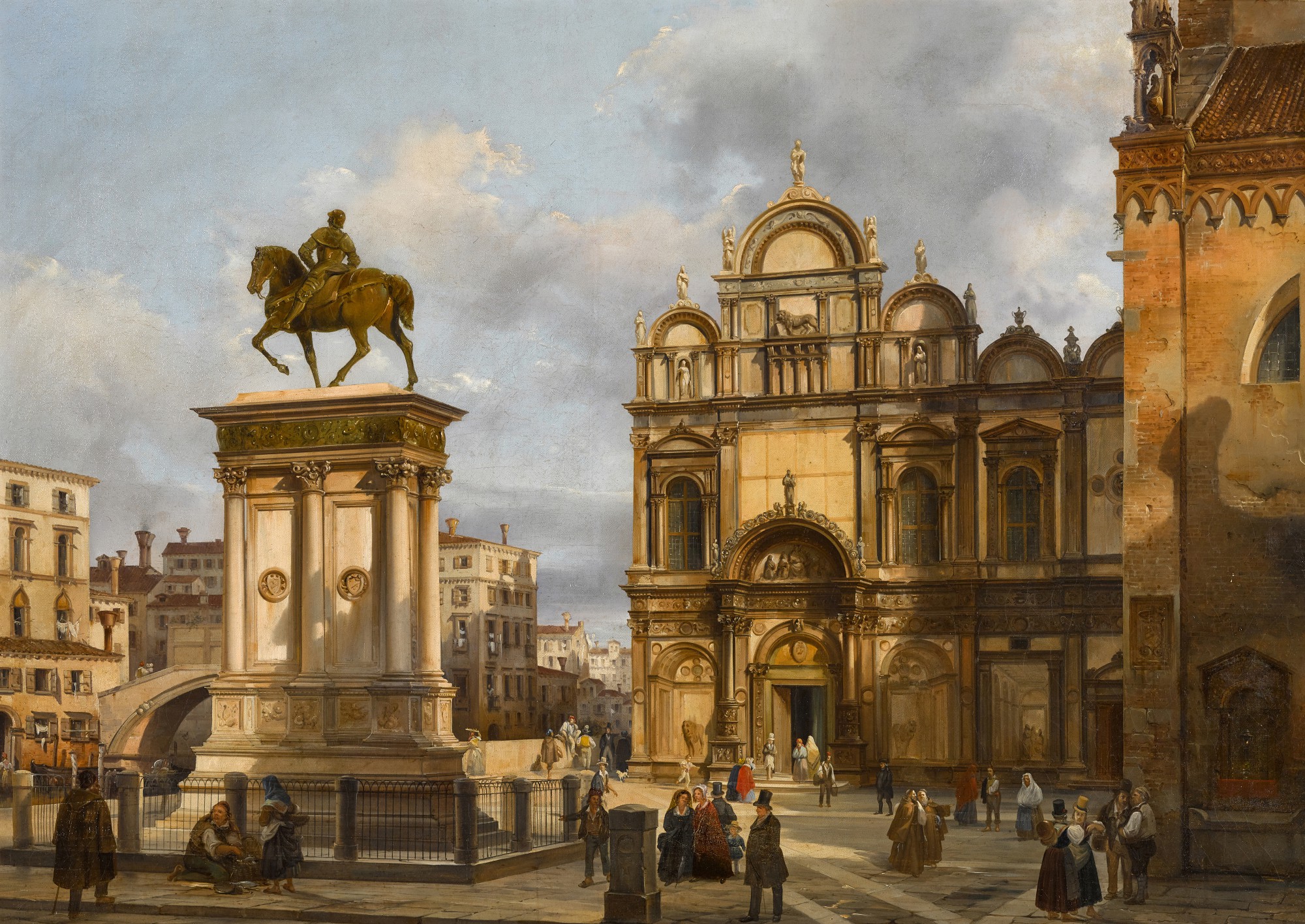
 

Federico Moja (Italian, 1802-1885) 'Venice, a View of the Campo Santi Giovanni e Paolo, with the Equestrian Monument to Bartolomeo Colleoni and the Scuola Grande di San Marco in the Background' 1848


Federico Moja (Italian, 1802-1885)
Venice, a View of the Campo Santi Giovanni e Paolo, with the Equestrian Monument to Bartolomeo Colleoni and the Scuola Grande di San Marco in the Background
1848
Oil on canvas
Unframed: 74.5 by 104.5cm
Framed: 89 by 118.5cm


Fratelli Gajo – Piazza S.Marco 139 – Venezia. 'No. 30 Rivo di Canonica' 1880s


Fratelli Gajo – Piazza S.Marco 139 – Venezia
No. 30 Rivo di Canonica
1880s
Hand-coloured albumen print mounted on cardboard
Image: 20 x 26cm
Support: 27 x 36cm


Fratelli Gajo – Piazza S.Marco 139 – Venezia. 'Untitled [Entry to the presbytery of St Mark's Basilica]' 1880s


Fratelli Gajo – Piazza S.Marco 139 – Venezia
Untitled [Entry to the presbytery of St Mark’s Basilica]
1880s
Hand-coloured albumen print mounted on cardboard
Image: 20 x 26cm
Support: 27 x 36cm


Fratelli Gajo – Piazza S.Marco 139 – Venezia. 'Untitled [Bridge of Sighs]' 1880s


Fratelli Gajo – Piazza S.Marco 139 – Venezia
Untitled [Bridge of Sighs]
1880s
Hand-coloured albumen print mounted on cardboard
Image: 20 x 26cm
Support: 27 x 36cm


Fratelli Gajo – Piazza S.Marco 139 – Venezia. 'Untitled' 1880s


Fratelli Gajo – Piazza S.Marco 139 – Venezia
Untitled
1880s
Hand-coloured albumen print mounted on cardboard
Image: 20 x 26cm
Support: 27 x 36cm


Fratelli Gajo – Piazza S.Marco 139 – Venezia. '58. Rio S. Agostino' 1880s


Fratelli Gajo – Piazza S.Marco 139 – Venezia
58. Rio S. Agostino
1880s
Hand-coloured albumen print mounted on cardboard
Image: 20 x 26cm
Support: 27 x 36cm


Didier Descouens. 'Rio di S. Agostino seen from the S. Agostino Bridge in Venice' 11 May 2015


Didier Descouens
Rio di S. Agostino seen from the S. Agostino Bridge in Venice
11 May 2015
CC BY-SA 4.0


Fratelli Gajo – Piazza S.Marco 139 – Venezia. 'Untitled [Torre del Orologio]' 1880s


Fratelli Gajo – Piazza S.Marco 139 – Venezia
Untitled [Torre del Orologio]
1880s
Hand-coloured albumen print mounted on cardboard
Image: 20 x 26cm
Support: 27 x 36cm


Fratelli Gajo – Piazza S.Marco 139 – Venezia. 'Untitled [The Doge's Palace]' 1880s


Fratelli Gajo – Piazza S.Marco 139 – Venezia
Untitled [The Doge’s Palace]
1880s
Hand-coloured albumen print mounted on cardboard
Image: 20 x 26 cm
Support: 27 x 36 cm


Fratelli Gajo – Piazza S.Marco 139 – Venezia. '87 Venezia – Palazzo Contarini Fasan' 1880s


Fratelli Gajo – Piazza S.Marco 139 – Venezia
87 Venezia – Palazzo Contarini Fasan
1880s
Hand-coloured albumen print mounted on cardboard
Image: 20 x 26cm
Support: 27 x 36cm


Wolfgang Moroder. 'Palazzo Contarini Fasan in Venice. Facade on Grand Canal' 31 July 2010


Wolfgang Moroder
Palazzo Contarini Fasan in Venice. Facade on Grand Canal
31 July 2010
CC BY-SA 4.0


Fratelli Gajo – Piazza S.Marco 139 – Venezia. 'Venezia – Palazzo Pisaro' 1880s


Fratelli Gajo – Piazza S.Marco 139 – Venezia
Venezia – Palazzo Pisaro
1880s
Hand-coloured albumen print mounted on cardboard
Image: 20 x 26cm
Support: 27 x 36cm


Fratelli Gajo – Piazza S.Marco 139 – Venezia. '100. Venezia – Palazzo Rezzonico' 1880s


Fratelli Gajo – Piazza S.Marco 139 – Venezia
100. Venezia – Palazzo Rezzonico
1880s
Hand-coloured albumen print mounted on cardboard
Image: 20 x 26cm
Support: 27 x 36cm


Didier Descouens. 'Ca 'Rezzonico, Venice facade of Giorgio Massari on the Grand Canal' 7 May 2012


Didier Descouens
Ca ‘Rezzonico, Venice facade of Giorgio Massari on the Grand Canal
7 May 2012
CC BY-SA 4.0


Fratelli Gajo – Piazza S.Marco 139 – Venezia. 'Untitled [Statue of King Vittorio Emanuel II by the sculptor Ettore Ferrari 1887]' c. 1887


Fratelli Gajo – Piazza S.Marco 139 – Venezia
Untitled [Statue of King Vittorio Emanuel II by the sculptor Ettore Ferrari 1887]
c. 1887
Hand-coloured albumen print mounted on cardboard
Image: 20 x 26cm
Support: 27 x 36cm


Didier Descouens. 'The main gate at the Venetian Arsenal' 9 May 2012


Didier Descouens
The main gate at the Venetian Arsenal
9 May 2012
CC BY-SA 4.0


The so-called “Solid ground entrance” of the Arsenale in Venice was built between 1692 and 1694 on a project by Alessandro Tremignon. Eight standing figures on pedestals on the ground: At the front row: from left to right: La Giustizia by Giovanni Antonio Comino, Marte by Giovanni Antonio Comino, Nettuno by Giovanni Antonio Comino, Bellona by Francesco Cabianca At the the second and the third rows: L’Abbondanza by Francesco Cabianca (last row on the right), La Vigilanza by Francesco Cabianca (second row on the right), Two more Allegorical statues by Giovanni Antonio Comino, (second and third row on the left)


Fratelli Gajo – Piazza S.Marco 139 – Venezia. '157 33 Arsenale' 1880s


Fratelli Gajo – Piazza S.Marco 139 – Venezia
157 33 Arsenale
1880s
Hand-coloured albumen print mounted on cardboard
Image: 20 x 26cm
Support: 27 x 36cm
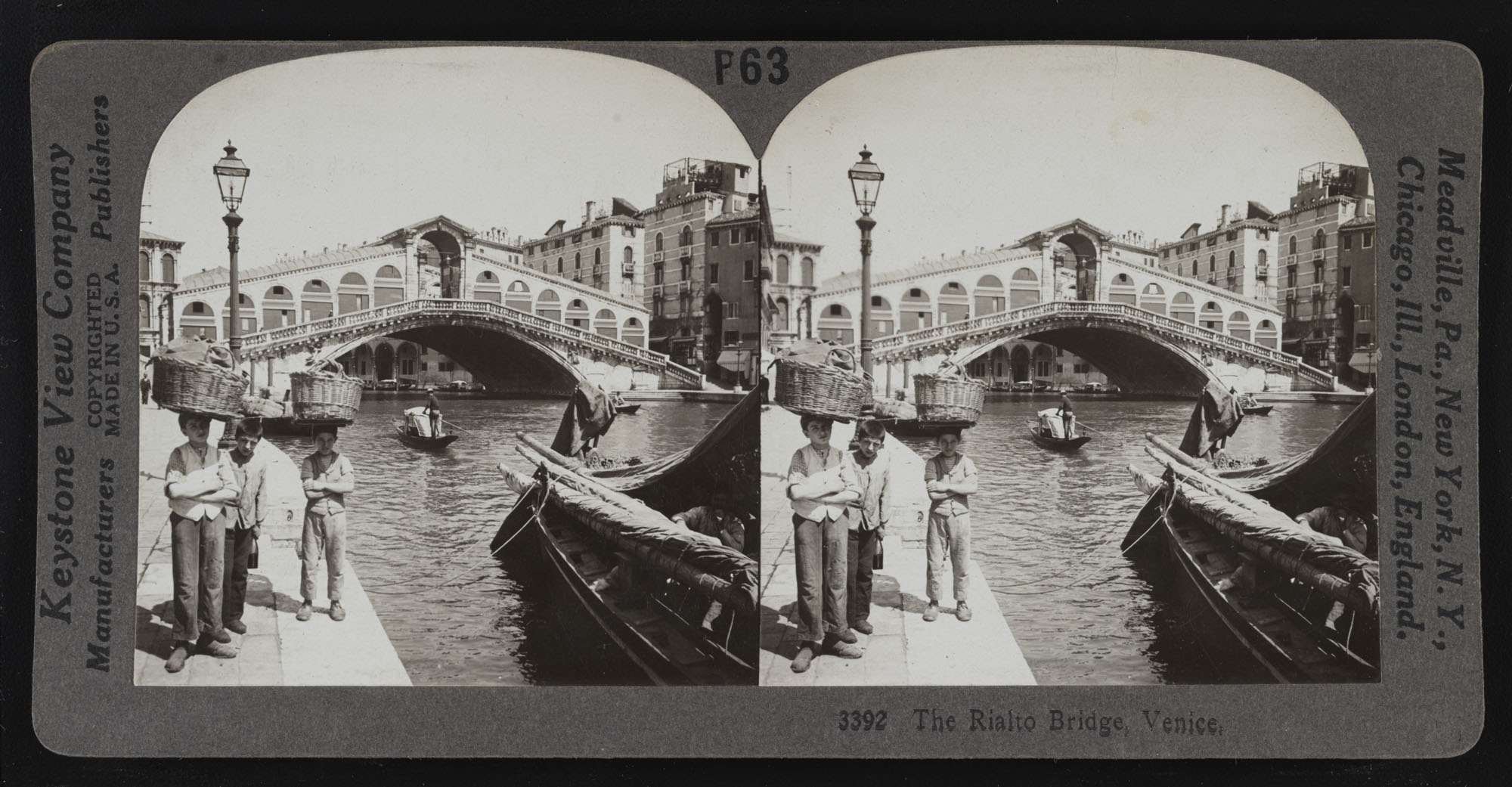
 

Keystone View Company (American, Manufacturers and Publishers) 'The Rialto Bridge, Venice' 1929


Keystone View Company (American, Manufacturers and Publishers)
The Rialto Bridge, Venice
1929
Stereograph print on card mount
Mount: 9 x 18cm


Fratelli Gajo – Piazza S.Marco 139 – Venezia 'Untitled [Rialto Bridge]' 1880s


Fratelli Gajo – Piazza S.Marco 139 – Venezia
Untitled [Rialto Bridge]
1880s
Hand-coloured albumen print mounted on cardboard
Image: 20 x 26cm
Support: 27 x 36cm


Fratelli Gajo – Piazza S.Marco 139 – Venezia. '211. Bis- Venezia – Chiesa S. Marco – Interno' (Interior of the San Marco Church) 1880s


Fratelli Gajo – Piazza S.Marco 139 – Venezia
211. Bis- Venezia – Chiesa S. Marco – Interno (Interior of the San Marco Church)
1880s
Hand-coloured albumen print mounted on cardboard
Image: 20 x 26cm
Support: 27 x 36cm


Fratelli Gajo – Piazza S.Marco 139 – Venezia. 'Untitled' c. 1880


Fratelli Gajo – Piazza S.Marco 139 – Venezia
Untitled
1880s
Hand-coloured albumen print mounted on cardboard
Image: 20 x 26cm
Support: 27 x 36cm


LIKE ART BLART ON FACEBOOK

Back to top

Season’s greetings from Art Blart 2021

December 2021


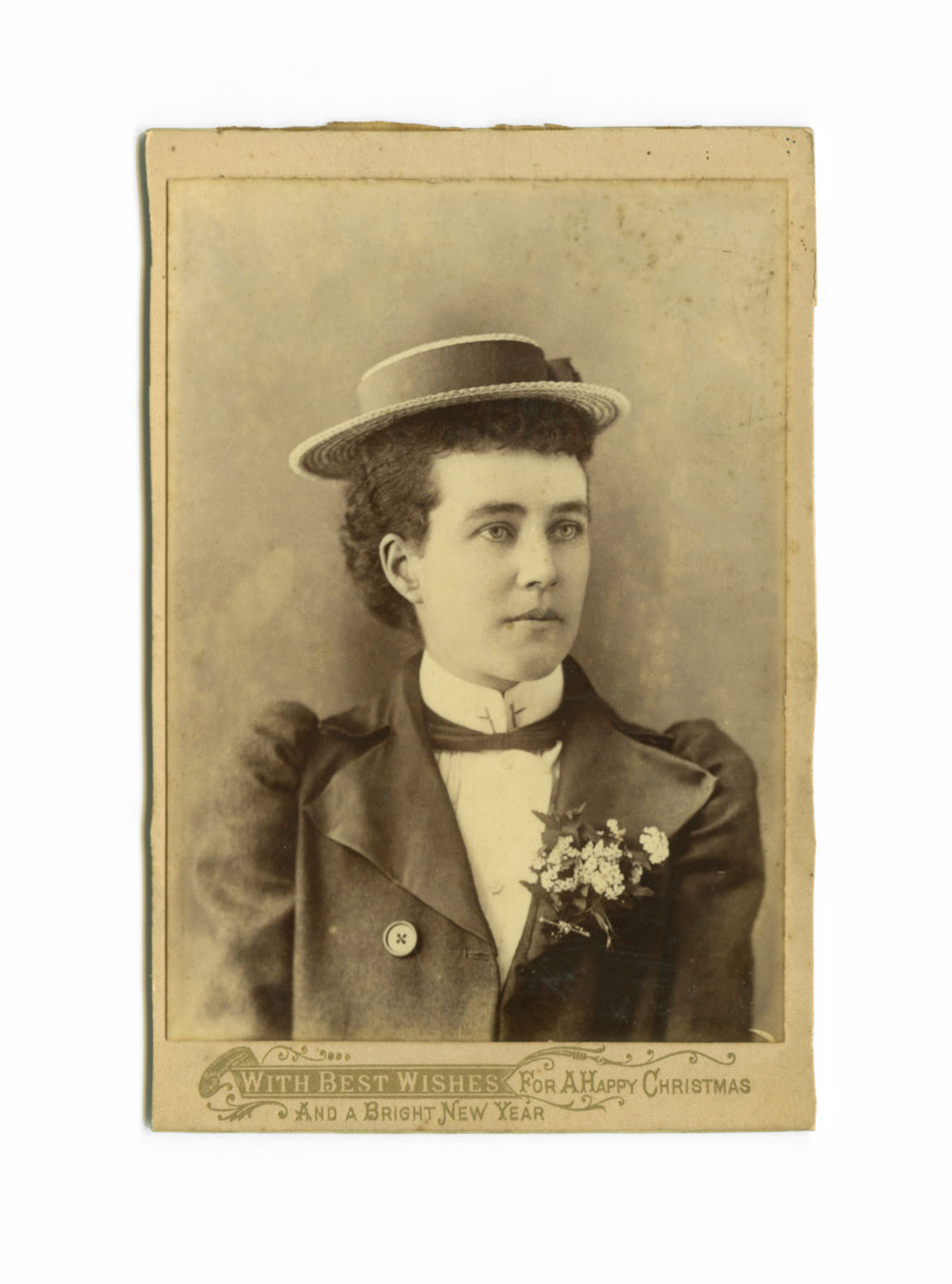
Unknown photographer (Australian) 'Untitled (With Best Wishes for a Happy Christmas and a Bright New Year)' c. 1900


Unknown photographer (Australian)
Untitled (With Best Wishes for a Happy Christmas and a Bright New Year)
c. 1900
Cabinet card


Season’s Greetings from Art Blart

Thank you to all Art Blart readers for their support in 2021!

Marcus


LIKE ART BLART ON FACEBOOK

Back to top

Photographs: ‘Lusannah and Francis Wadsworth Hubbard, Wadsworth Hall, Hiram, Maine; and Moat Mt and Saco River, North Conway N.H.’

September 2020


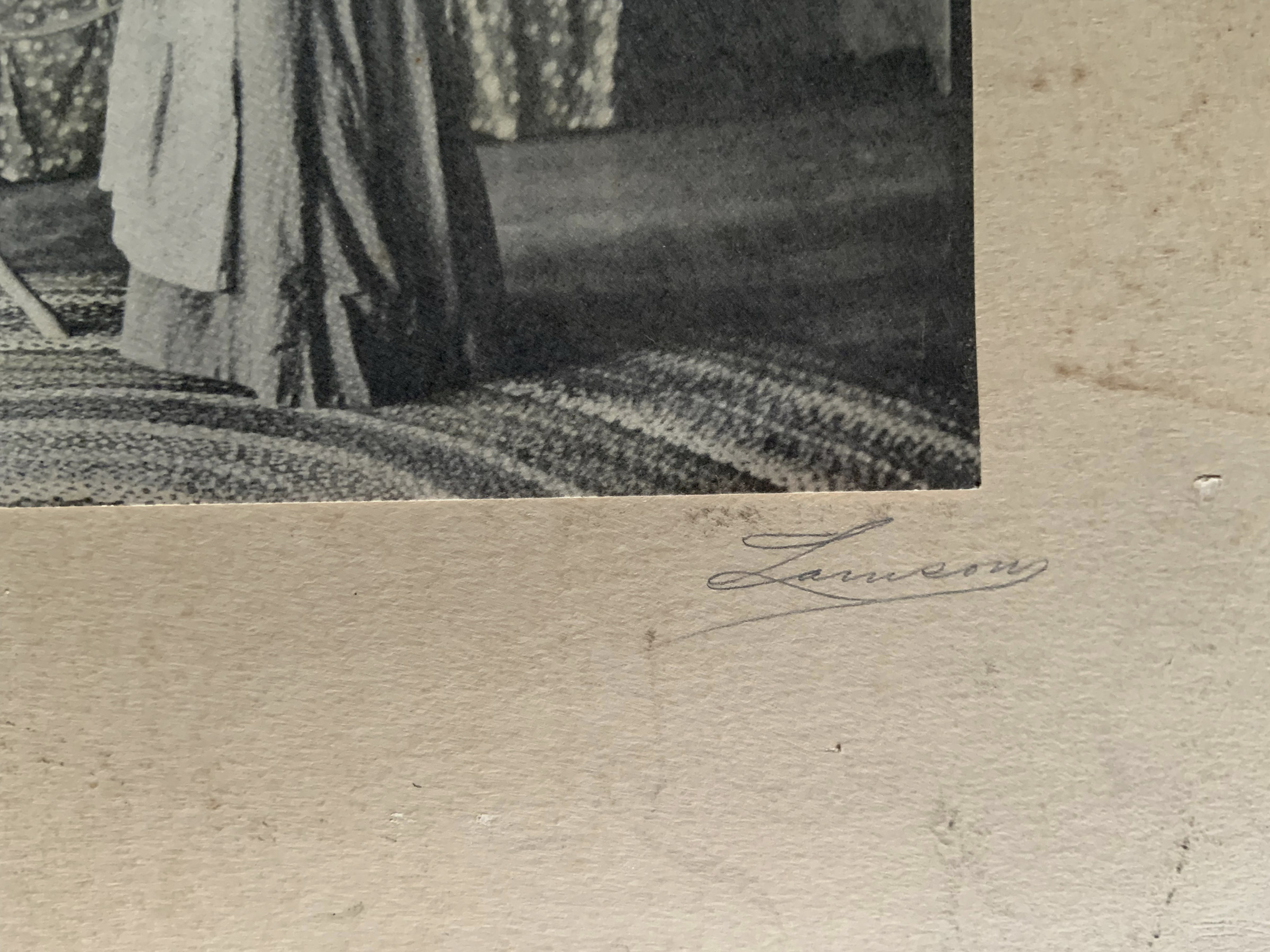
Lawson (American) 'Spinning Days (Mrs. Lusannah Wadsworth Hubbard of Hiram, Maine)' 1927


Lamson Studios (American)
Spinning Days (Mrs. Lusannah Wadsworth Hubbard of Hiram, Maine)
Nd, presented 1927
Tipped in silver gelatin print
Image: 22.5 x 17cm


These special images are a bit of a mystery. I purchased them as a lot from an op shop (charity shop) here in Melbourne, Australia.

How such quintessential, historic American photographs come to be in Australia is beyond me.

With their links to the American Revolution, Brigadier General Peleg Wadsworth of the Revolution, Wadsworth Hall, Wadsworth-Longfellow house, General Peleg Wadsworth Jr., and the daughters and granddaughters of the Republic, they could turn out to be very important images.

After research I can find no birth and death dates for George Wadsworth Davis, and no information on the photographers “Lawson” or “Huntings Studio, North Conway N.H.”

I believe the photograph Spinning Days to be earlier than the text on the back of the photograph which is dated Dec. 26th 1927, mainly because Brigadier General Peleg Wadsworth died in 1829, and taking 30 years per generation, the photograph of the granddaughter would place the image c. 1890-1900 (her dates are 1830-1908). The type of frame and the silver, patterned paper on the rear of the frame would support this supposition.

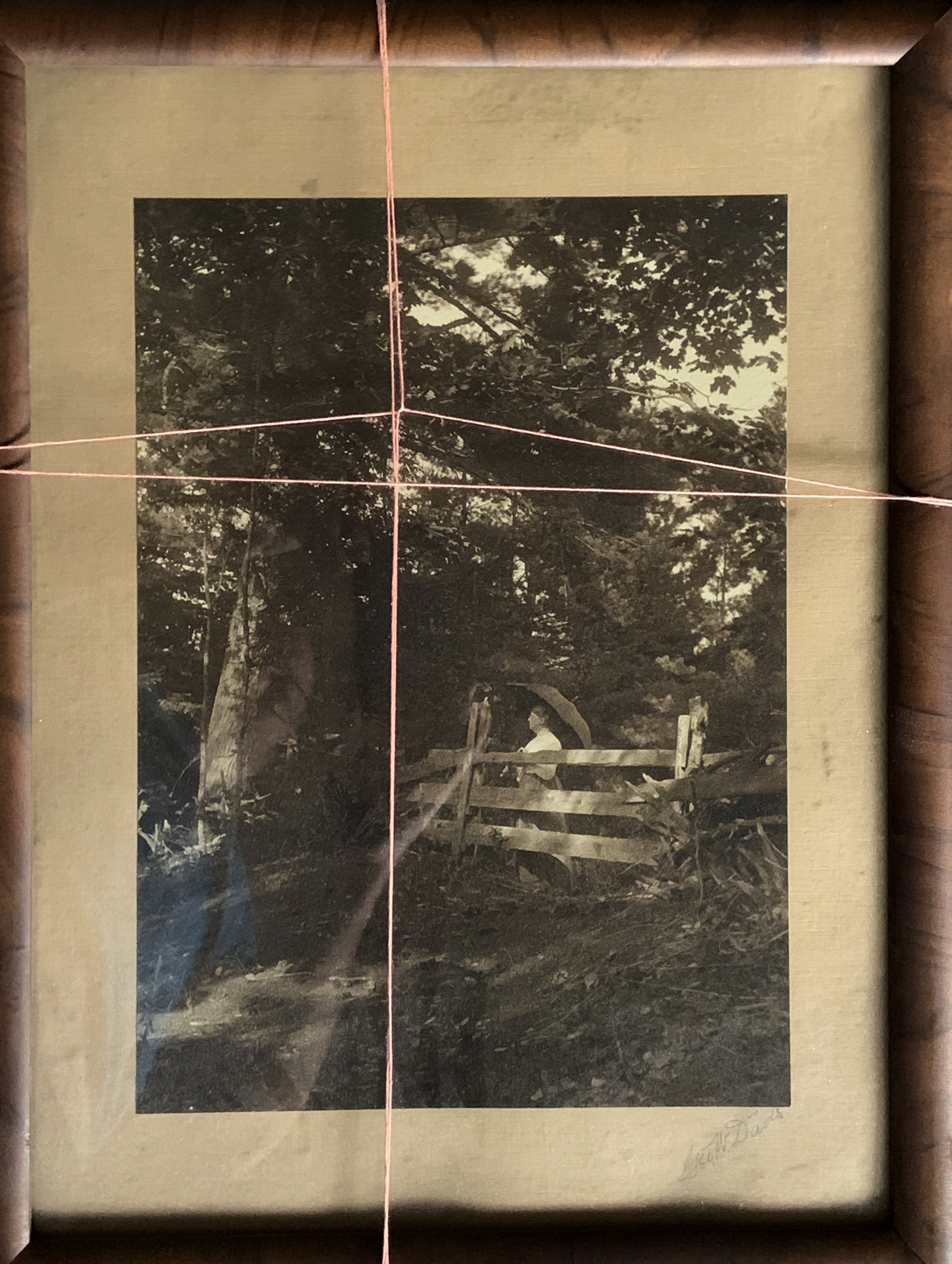
I also believe that the beautiful photograph Moat Mt and Saco River, North Conway N.H. dates to the late nineteenth or early twentieth century due to the nature of its original frame. This looks to be a platinum palladium print as well.

The poem by the son George Wadsworth Davis about his mother Francis Wadsworth Davis is just delightful: his feelings for his ageing mother captured in a picture of her – tender, romantic, loving.

If anyone has more information on these images, please email me at bunyanth@netspace.net.au. Thank you!

Dr Marcus Bunyan

PS. September 2026 via email. Thank you so much to David Spencer for more information on the photographer of ‘Spinning Days’ (above and below). He notes: ‘The photographer is Lamson, not Lawson. The studio was originally founded by Joseph Harrison Lamson (1840-1901) and then taken over by his sons, J.H., Jr and Frank Lamson. The studio was then purchased by the Fred Thompson Art Co around 1905. They produced “Lamson Nature Prints”, which were hand-painted photographs like “Spinning Days” in the Colonial Revival style similar to Wallace Nutting.


Please click on the photographs for a larger version of the image.


Lawson (American) 'Spinning Days (Mrs. Lusannah Wadsworth Hubbard of Hiram, Maine)' 1927


Lamson Studios (American)
Spinning Days (Mrs. Lusannah Wadsworth Hubbard of Hiram, Maine)
Nd, presented 1927
Tipped in silver gelatin print
Image: 22.5 x 17cm


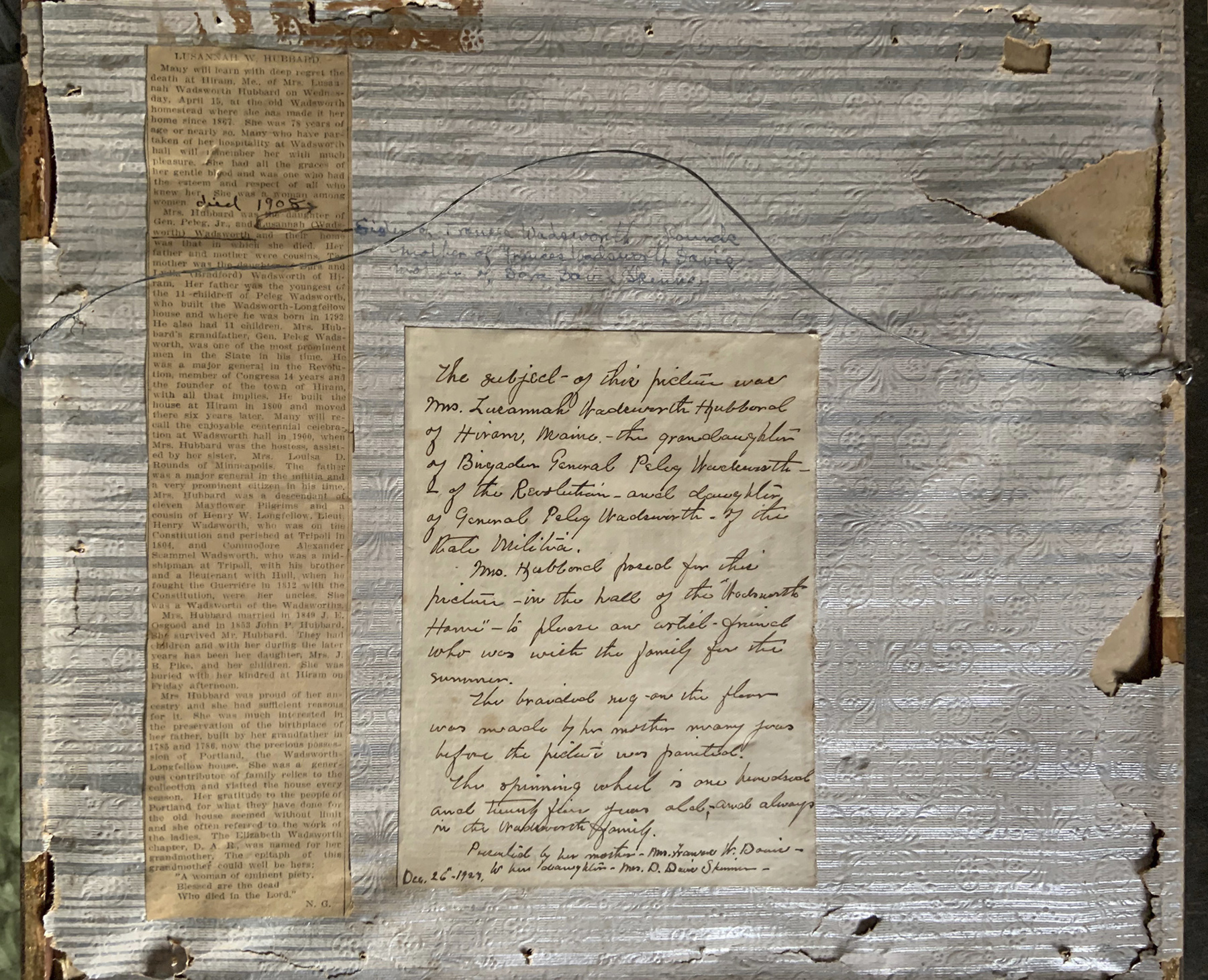
The subject of this picture was Mrs. Lusannah Wadsworth Hubbard of Hiram, Maine – the granddaughter of Brigadier General Peleg Wadsworth of the Revolution – and daughter of General Peleg Wadsworth of the ? Militia.

Mrs Hubbard posed for this picture – in the hall of the Wadsworth Home – to please our artist-friend who was with the family for the summer.

The braided rug on the floor was made by her mother many years before the picture was painted.

The spinning wheel is one hundred and twenty five years old, and always in the Wadsworth family.

Presented by her mother – Mrs Francis(?) W. Davis – W her daughter – Mrs. D. Davis Skinner

Dec. 26th 1927


Text from the verso of the framed photograph


Lawson (American) 'Spinning Days (Mrs. Lusannah Wadsworth Hubbard of Hiram, Maine)' 1927 (verso detail)


Lamson Studios (American)
Spinning Days (Mrs. Lusannah Wadsworth Hubbard of Hiram, Maine) (verso detail)
Nd, presented 1927
Tipped in silver gelatin print


Lawson (American) 'Spinning Days (Mrs. Lusannah Wadsworth Hubbard of Hiram, Maine)' 1927 (detail)

Lawson (American) 'Spinning Days (Mrs. Lusannah Wadsworth Hubbard of Hiram, Maine)' 1927 (detail)


Lamson Studios (American)
Spinning Days (Mrs. Lusannah Wadsworth Hubbard of Hiram, Maine) (details)
Nd, presented 1927
Tipped in silver gelatin print


Lawson (American) 'Spinning Days (Mrs. Lusannah Wadsworth Hubbard of Hiram, Maine)' 1927 (verso)


Lamson Studios (American)
Spinning Days (Mrs. Lusannah Wadsworth Hubbard of Hiram, Maine) (verso)
Nd, presented 1927
Tipped in silver gelatin print


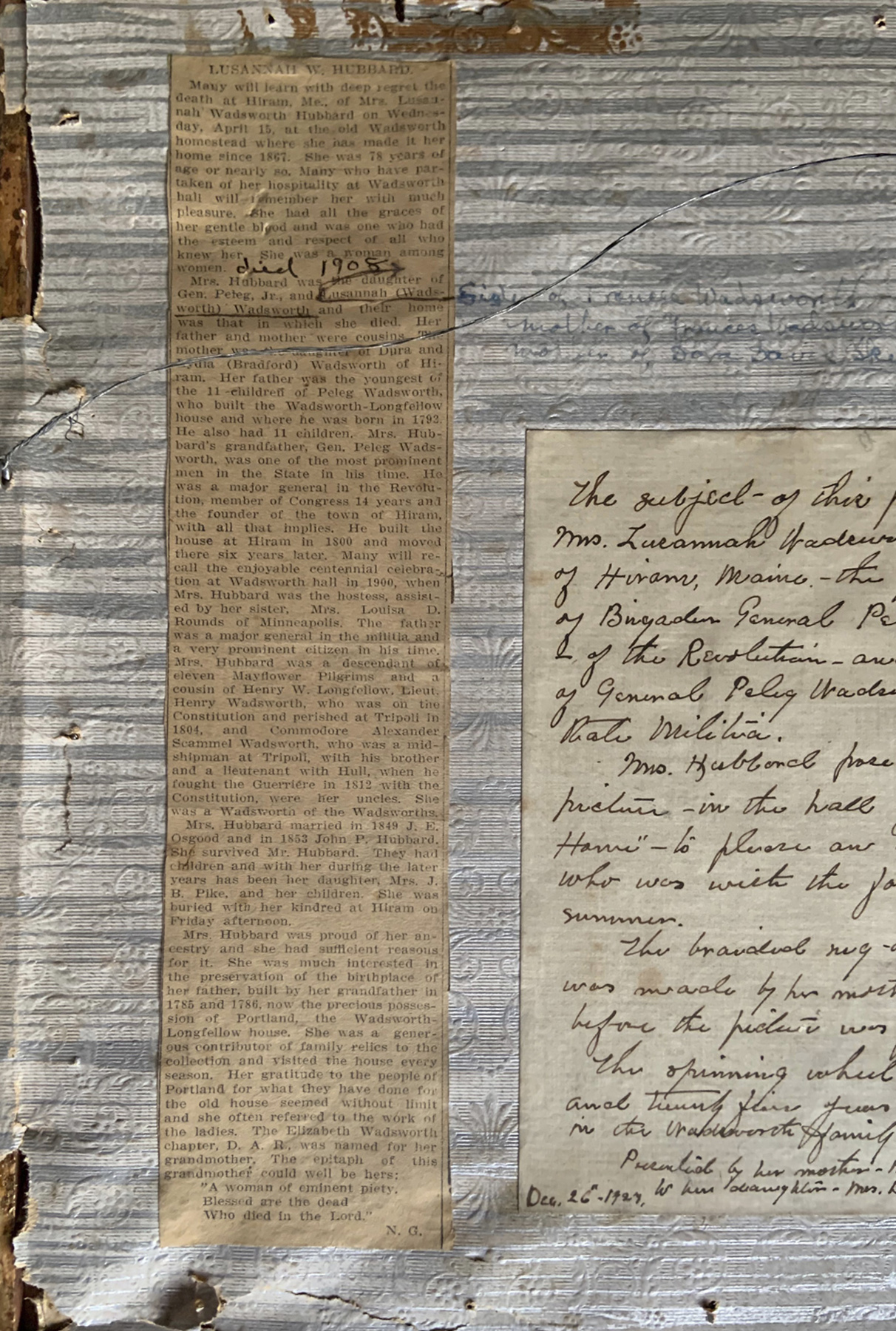
Lawson (American) 'Spinning Days (Mrs. Lusannah Wadsworth Hubbard of Hiram, Maine)' 1927 (verso detail)

Lawson (American) 'Spinning Days (Mrs. Lusannah Wadsworth Hubbard of Hiram, Maine)' 1927 (verso detail)


Lamson Studios (American)
Spinning Days (Mrs. Lusannah Wadsworth Hubbard of Hiram, Maine) (verso details)
Nd, presented 1927
Tipped in silver gelatin print


LUSANNAH W. HUBBARD (Osgood) (American, b. March 28, 1830 – died April 14, 1908)

Many will learn with deep regret the death at Hiram, Me., of Mrs Lusannah Wadsworth Hubbard on Wednesday, April 15, at the old Wadsworth homestead where she has made it her home since 1867. She was 78 years of age or nearly so. Many who have partake of her hospitality at Wadsworth hall will remember her with much pleasure. She had all the graces of her gently blood and was one who had the esteem and respect of all who knew her. She was a woman among women.

Mrs. Hubbard was the daughter of Gen. Peleg Jr., [1793-1875] and Lusannah (Wadsworth) Wadsworth [1797-1879] [Mrs. Hubbard died 1908 – ? of Francis Wadsworth – Rounds(?) mother of Francis Wadsworth Davis, mother of Dora Davis Skinner(?)] and their home was that in which she died. Her father and mother were cousins. The mother was the daughter of ?ura and Lydia (Bradford) Wadsworth of Hiram. Her father was the youngest of the 11 children of Peleg Wadsworth, who built the Wadsworth-Longfellow house and where he was born in 1792. He also had 11 children. Mrs Hubbard’s grandfather, Gen. Peleg Wadsworth [1748-1829], was one of the most prominent men in the State in his time. He was a major general in the Revolution, member of Congress 14 years and the founder of the town of Hiram, with all that implies. He built the house at Hiram in 1800 and moved there six years later. Many with recall the enjoyable centennial celebration at Wadsworth hall in 1900, when Mrs. Hubbard was the hostess, assisted by her sister, Mrs. Louisa Rounds of Minneapolis. The father was a major general in the militia and a very prominent citizen in his time. Mrs. Hubbard was a descendant of eleven Mayflower Pilgrims and a cousin of Henry W. Longfellow [1807-1882]. Lieut. Henry Wadsworth, who as on the Constitution and perished at Tripoli in 1804, and Commodore Alexander Scammel Wadsworth [1790-1851], who was a mid-shipman at Tripoli, with his brother and a lieutenant with Hull, when he fought the Guerriere in 1812 with the Constitution, were he uncles. She was a Wadsworth of the Wadsworths.

Mrs. Hubbard married in 1849 J. E. Osgood and in 1853 John P. Hubbard. She survived Mr. Hubbard. They had children and with her during the later years has been her daughter, Mrs. J. B. Pike, and her children. She was buried with her kindred at Hiram on Friday afternoon.

Mrs. Hubbard was proud of her ancestry and she had sufficient reasons for it. She was much interested in the preservation of the birthplace of her father, built by her grandfather in 1783 and 1786, now the precious possession of Portland, the Wadsworth-Longfellow house. She was a generous contributor of family relics to the collection and visited the house every season. Her gratitude to the people of Portland for what they have done for the old house seemed without limit and she often referred to the world of the ladies. The Elizabeth Wadsworth chapter, D. A. R., was named for her grandmother. The epitaph of this grandmother could well be hers:

“A woman of eminent piety.
Blessed are the dead
Who died in the Lord.”

N.G.


Text from the verso of the framed photograph, no attribution or source.


George Wadsworth Davis (American) 'Francis Wadsworth Davis, Hiram, Maine' Nd


George Wadsworth Davis (American)
Francis Wadsworth Davis, Hiram, Maine
Nd
Toned silver gelatin print(?)
Image: 36 x 25.7cm


Francis Wadsworth Davis (1852-1940), Photo taken by her son George Wadsworth Davis in Hiram, Maine.


George Wadsworth Davis (American) 'Francis Wadsworth Davis, Hiram, Maine' Nd (detail)


George Wadsworth Davis (American)
Francis Wadsworth Davis, Hiram, Maine (detail)
Nd
Toned silver gelatin print(?)
Image: 36 x 25.7cm


George Wadsworth Davis (American) 'Francis Wadsworth Davis [1852-1940], Hiram, Maine' Nd (verso)


George Wadsworth Davis (American)
Francis Wadsworth Davis [1852-1940], Hiram, Maine (verso)
Nd
Toned silver gelatin print(?)
Image: 36 x 25.7cm


Tho her hair is streaked with silver
and she has stouter grown

I fair would fancy her thoughts
have backward turned
in the flight of time

To tho days of forty years ago,
when her dark-haired southern love
came up the winding road.

And today her son comes up the shaded pathway
And sees his mother here at the bar, standing
With the wistful eyes, the tender smile
of girlhood days.

As the sun sends its level rays around the
fragrant earth to light her silvered hair
with the golden sheen of youth again

It is this view of mother
Taken as I saw it that afternoon
that I have tried to picture here.

GHD


Text from the verso of the framed photograph


George Wadsworth Davis (American) 'Francis Wadsworth Davis, Hiram, Maine' Nd (verso detail)


George Wadsworth Davis (American)
Francis Wadsworth Davis [1852-1940], Hiram, Maine (verso detail)
Nd
Toned silver gelatin print(?)
Image: 36 x 25.7cm


George Wadsworth Davis (American) 'Francis Wadsworth Davis, Hiram, Maine' Nd (verso detail)


George Wadsworth Davis (American)
Francis Wadsworth Davis [1852-1940], Hiram, Maine (verso detail)
Nd
Toned silver gelatin print(?)
Image: 36 x 25.7cm


Francis Wadsworth Rounds Davis (American, 1852-1940)

Born Peoria, Peoria, Illinois, United States June 24, 1852
Died Bridgton, Cumberland, Maine, United States November 23, 1940 aged 88)

George Wadsworth Davis (b. 1870?)


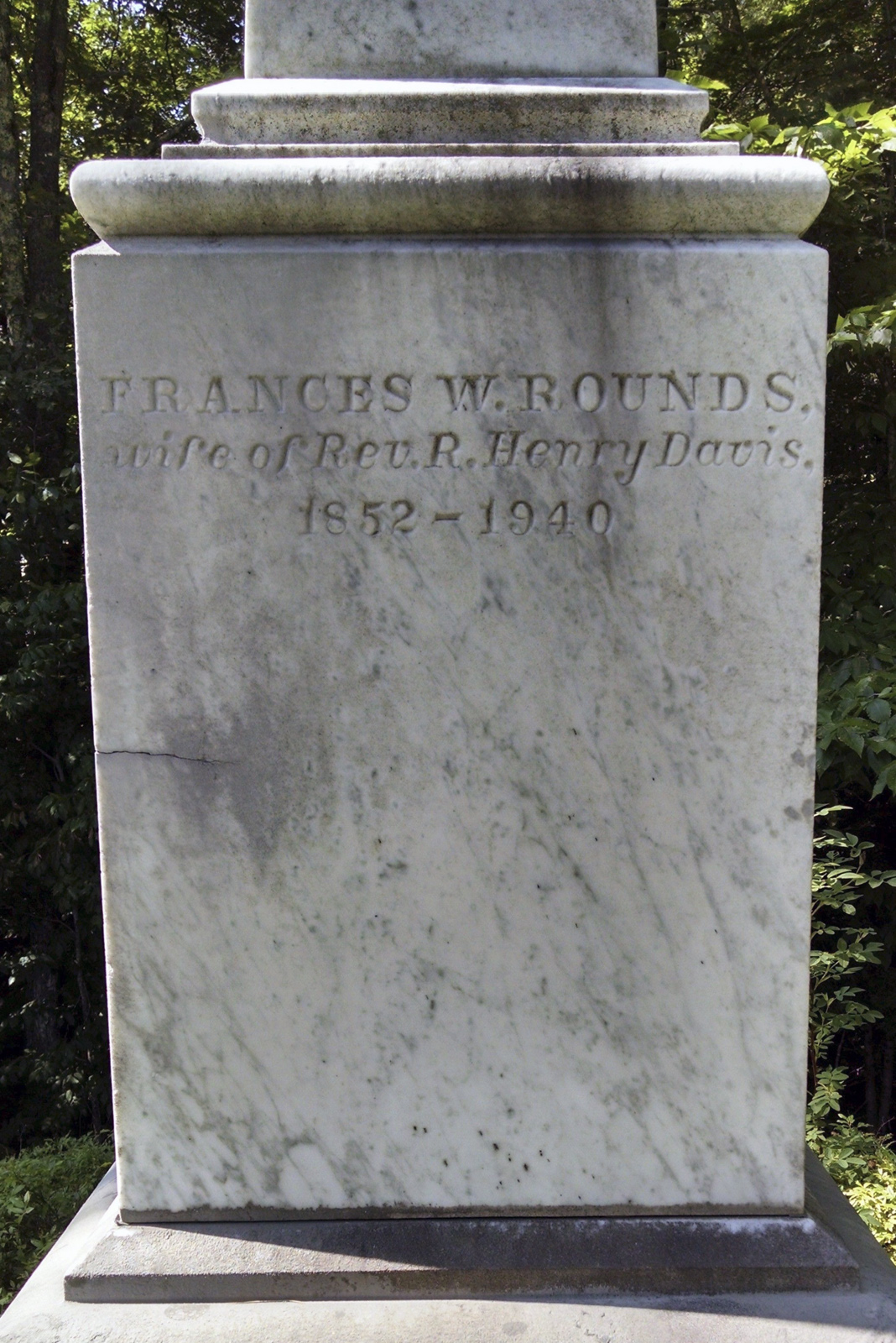
Frances Wadsworth Rounds Davis, Wadsworth Cemetery Hiram, Oxford County, Maine, USA

Wadsworth Cemetery Hiram, Oxford County, Maine, USA


Frances Wadsworth Rounds Davis and the Wadsworth memorial
Wadsworth Cemetery
Hiram, Oxford County, Maine, USA


From Huntings Studio, North Conway N.H. 'Moat Mt and Saco River, North Conway N.H.' Nd


From Huntings Studio, North Conway N.H.
Moat Mt and Saco River, North Conway N.H.
Nd
Platinum palladium print(?)
Image: 27.5 x 36cm
 

Photograph in it’s original 1890-1920 frame.


From Huntings Studio, North Conway N.H. 'Moat Mt and Saco River, North Conway N.H.' Nd


From Huntings Studio, North Conway N.H.
Moat Mt and Saco River, North Conway N.H.
Nd
Platinum palladium print(?)
Image: 27.5 x 36cm


From Huntings Studio, North Conway N.H. 'Moat Mt and Saco River, North Conway N.H.' Nd (verso)


From Huntings Studio, North Conway N.H.
Moat Mt and Saco River, North Conway N.H. (verso)
Nd
Platinum palladium print(?)
Image: 27.5 x 36cm
 

From Hunting's Studio, North Conway N.H. 'Moat Mt and Saco River, North Conway N.H.' Nd (verso detail)


From Hunting’s Studio, North Conway N.H.
Moat Mt and Saco River, North Conway N.H. (verso detail)
Nd
Platinum palladium print(?)
Image: 27.5 x 36cm
 

Label

From Hunting’s Studio
North Conway N.H.
Moat Mt and Saco River
North Conway N.H.

I cannot find any information about this photographic studio online.


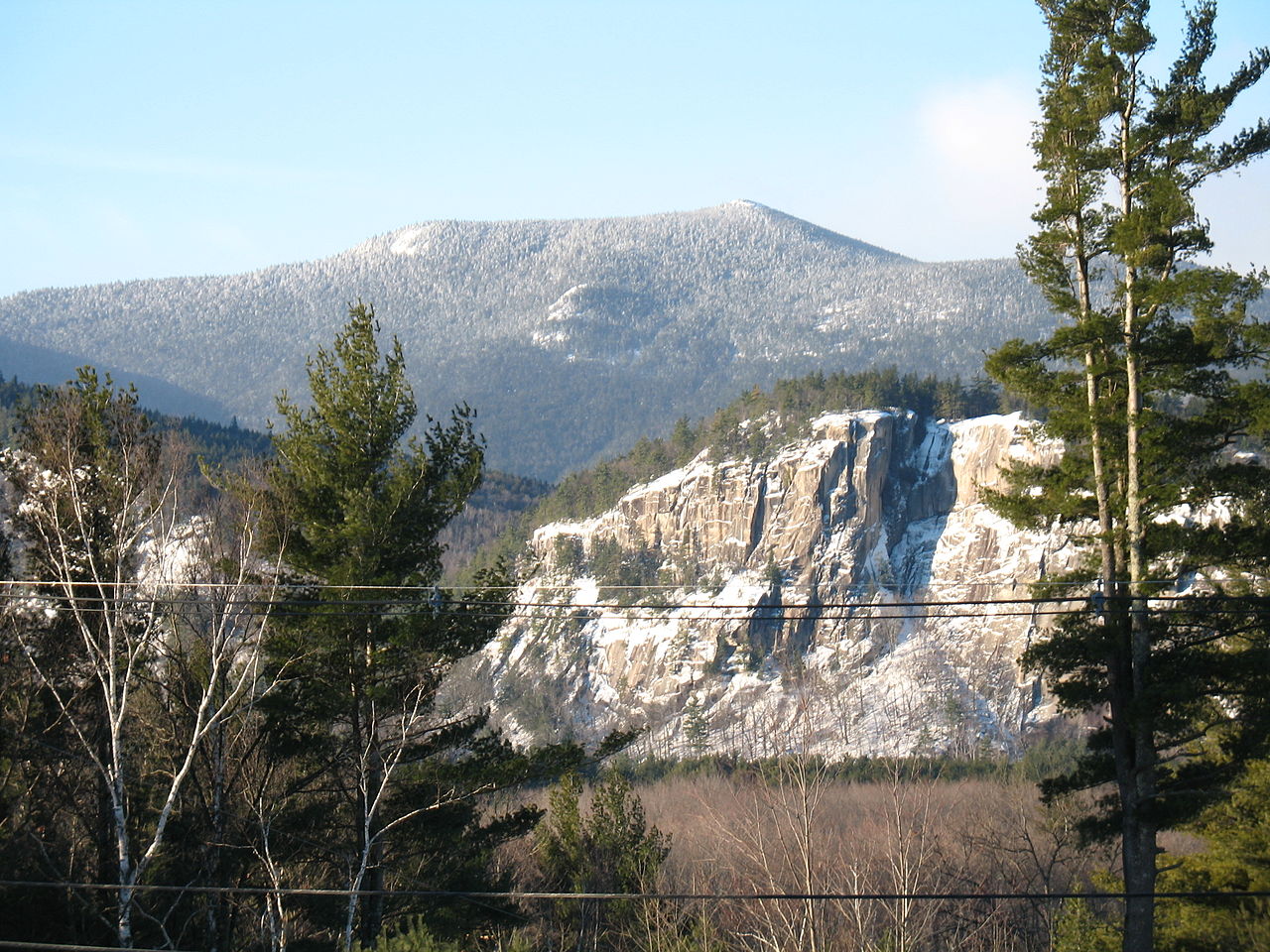
W. Woods. 'North Moat Mountain, looking southwest from Intervale. Cathedral Ledge cliff is in right middle ground' 2006


W. Woods
North Moat Mountain, looking southwest from Intervale. Cathedral Ledge cliff is in right middle ground
2006
CC BY-SA 3.0


North Moat Mountain

North Moat Mountain is a mountain located in Carroll County, New Hampshire. North Moat is flanked to the south by Middle Moat Mountain, and to the west by Big Attitash Mountain.

North Moat Mountain stands within the watershed of the upper Saco River, which drains into the Gulf of Maine at Saco, Maine. The northwest side of North Moat Mtn. drains into Lucy Brook, thence into the Saco River. The east side of North Moat drains into Moat Brook, thence into the Saco. The southwest side of North Moat drains into Deer Brook, thence into the Swift River, a tributary of the Saco.

Text from the Wikipedia website


Ken Gallager. 'The Saco River in Conway, New Hampshire' 2006


Ken Gallager
The Saco River in Conway, New Hampshire
2006
Public domain


Saco River

The Saco River is a river in northeastern New Hampshire and southwestern Maine in the United States. It drains a rural area of 1,703 square miles (4,410 km2) of forests and farmlands west and southwest of Portland, emptying into the Atlantic Ocean at Saco Bay, 136 miles (219 km) from its source. It supplies drinking water to roughly 250,000 people in thirty-five towns; and historically provided transportation and water power encouraging development of the cities of Biddeford and Saco and the towns of Fryeburg and Hiram. The name “Saco” comes from the Eastern Abenaki word [sɑkohki], meaning “land where the river comes out”. The Jesuit Relations, ethnographic documents from the 17th century, refer to the river as Chouacoet.

Text from the Wikipedia website


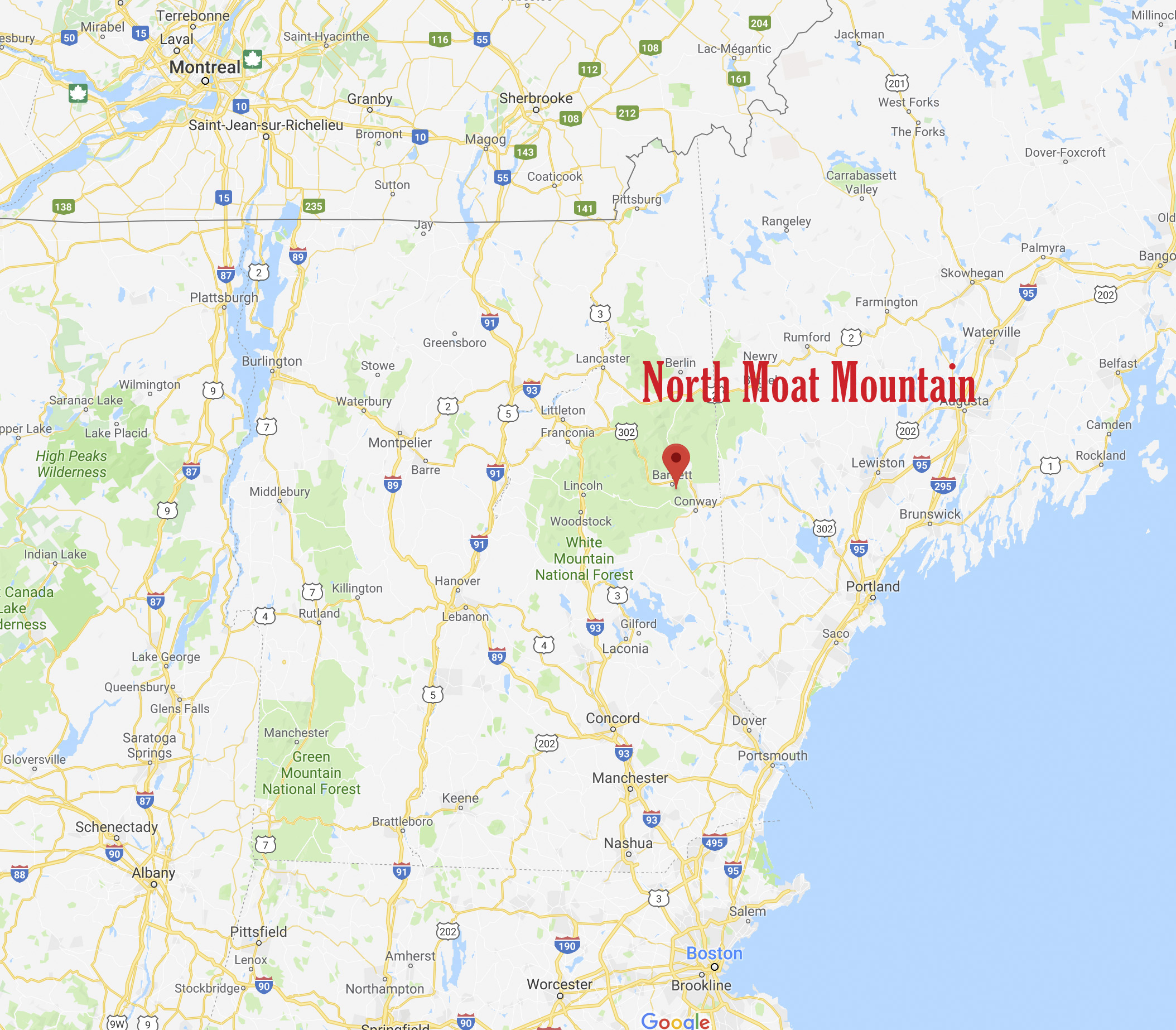
North Moat Mountain map


North Moat Mountain map showing Portland and Boston


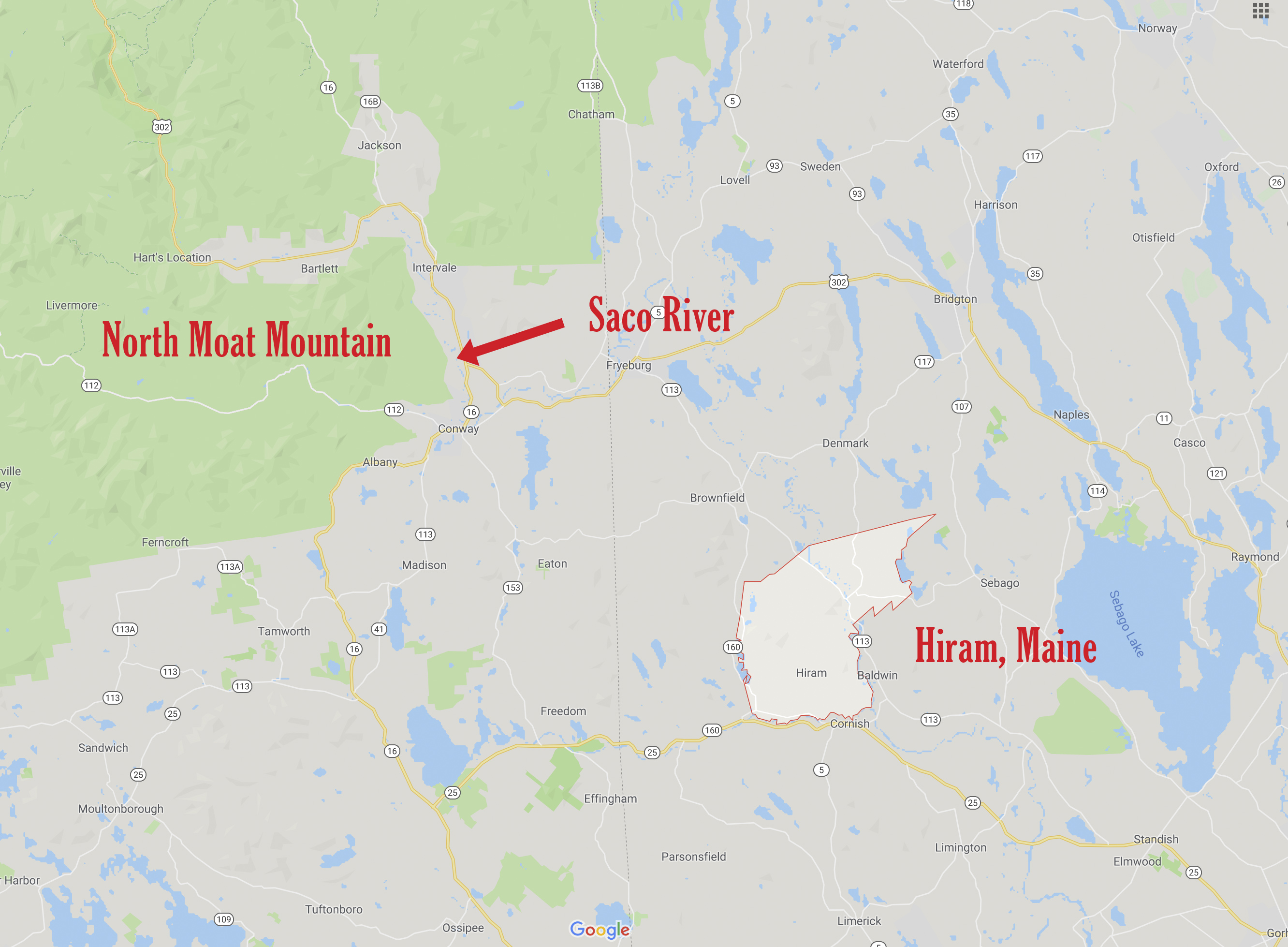
Map of Hiram, Maine showing North Moat Mountain and Saco River


Map of Hiram, Maine showing North Moat Mountain and Saco River


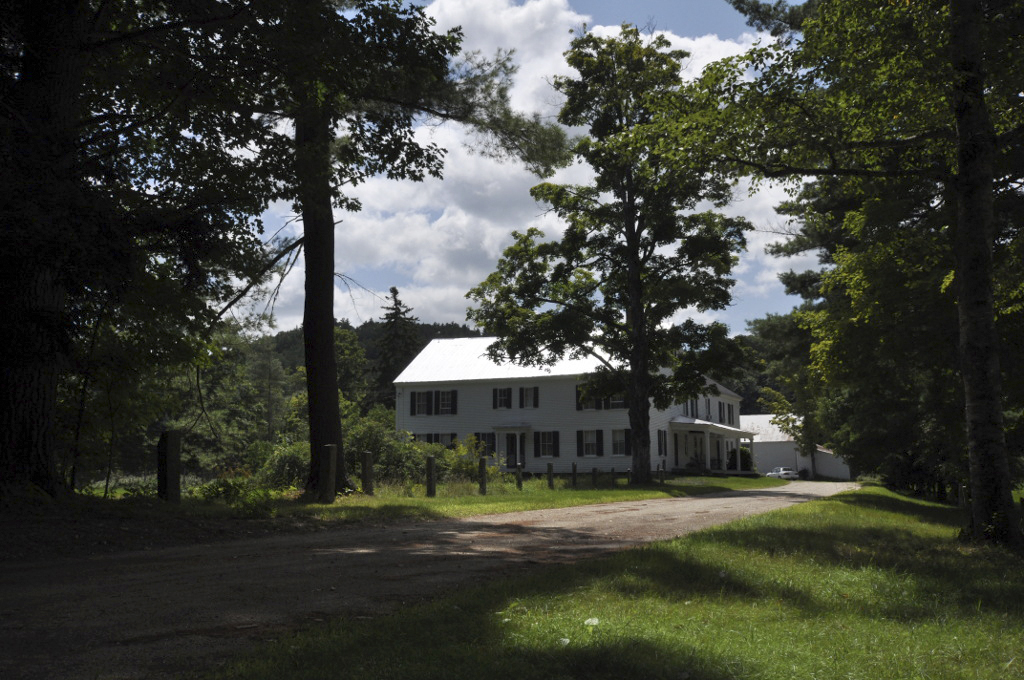
Wadsworth Hall, Hiram, Maine


Wadsworth Hall, Hiram, Maine
CC BY-SA 3.0


Wadsworth Hall

Wadsworth Hall, also known as the Peleg Wadsworth House, is a historic house at the end of Douglas Road in Hiram, Maine, United States. A massive structure for a rural setting, it was built for General Peleg Wadsworth between 1800 and 1807 on a large tract of land granted to him for his service in the American Revolutionary War. Wadsworth was the leading citizen of Hiram, and important town meetings took place at the house. He was also the grandfather of poet Henry Wadsworth Longfellow, who visited the estate as a youth. The house remains in the hands of Wadsworth descendants. The house was listed on the National Register of Historic Places in 1974.

The main block of the house is a rectangular 2-1/2 story wood frame structure set on a massive granite foundation, with a gabled roof. Its main facade is seven bays wide, notably larger than the five more typically found in rural settings. The main entrance is centred on this face, sheltered by a 19th-century portico. A pair of small windows are above the doorway, with larger paired windows on either side on the second level. The left side of the house has three windows on each of three levels, and a doorway leading to the cellar. The right side has two windows on each of three levels. A two-story ell extends to the rear of the house, with a later two-story addition extending it further. There are a number of farm-related outbuildings, including 19th-century barns, behind the house.

The interior of the house is rustic and relatively simple. Its main feature on the first floor is a large chamber with a high ceiling, which was used by General Wadsworth for public meetings. The house is finished in plain pine boards, with modest Federal styling.

General Wadsworth’s primary residence, now known as the Wadsworth-Longfellow House and a National Historic Landmark, is located on Congress Street in Portland, and was built in 1785-86. Wadsworth was granted 7,800 acres (3,200 ha) by the state in 1790 for his war service; this property extended from the Ossipee River to the Saco River in what is now the town of Hiram. The house was built between 1800 and 1807 by Stephen Jewett, a carpenter, and Theophilus Smith, a mason, both of whom were from nearby Cornish. After its completion, Wadsworth gave his Portland home to his daughter Zilpah and her husband Stephen Longfellow, parents of the poet Henry Wadsworth Longfellow. Longfellow is known to have frequently summered at his grandfather’s estate as a child.

Wadsworth, in his role as a leading citizen in Hiram, opened his house for meetings and town functions, and even used the large hall for militia drills during bad weather. The house and surviving property retain a rural setting, accessed via a narrow dirt road.

Text from the Wikipedia website


LIKE ART BLART ON FACEBOOK

Back to top

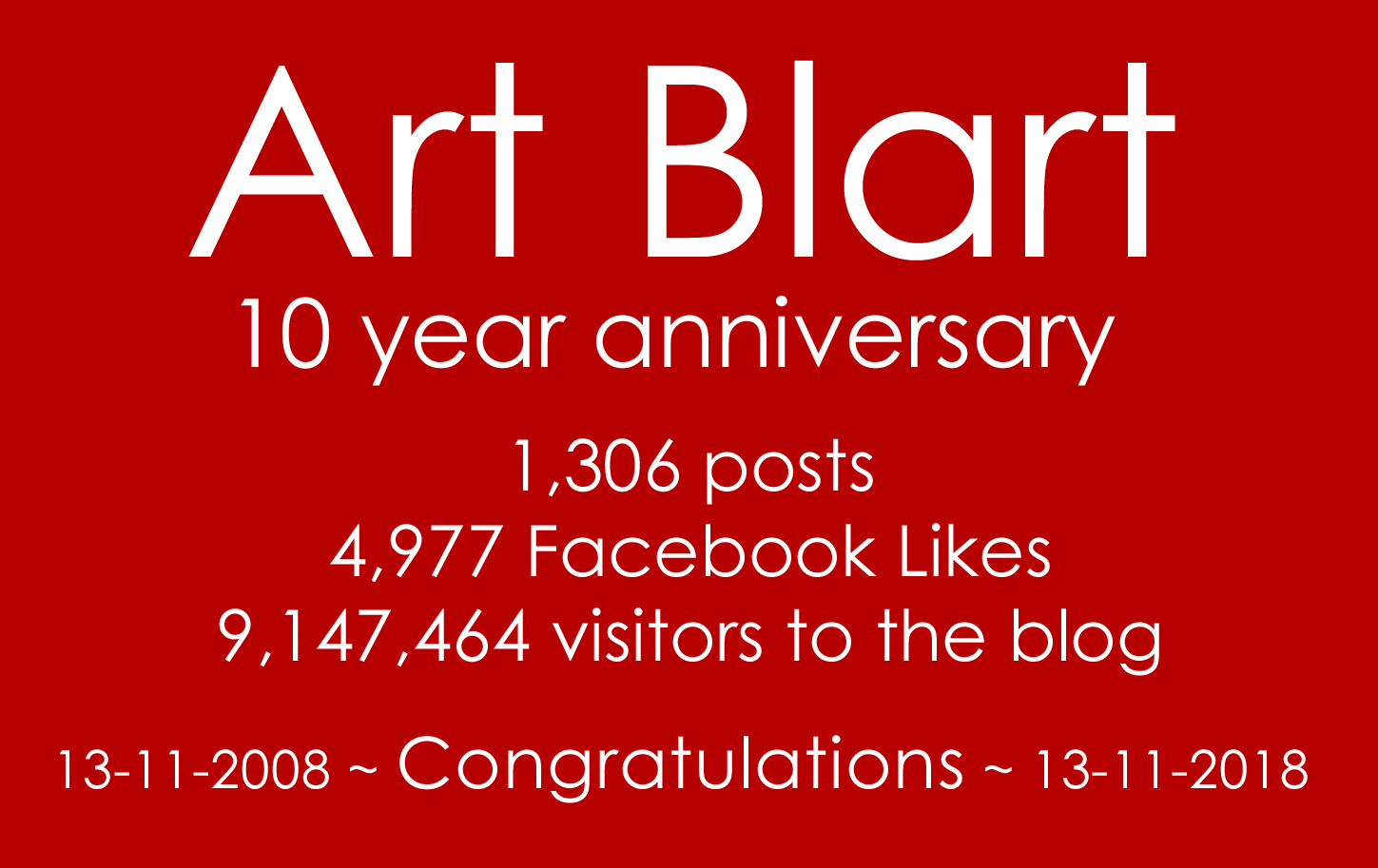
10th year anniversary of Art Blart

13th November, 2008 – 13th November, 2018


Art Blart 10 year anniversary


A big effort

Art Blart has a readership of 1,500 a day. It has become a research tool for artists and photographers around the world. It is also an important form of cultural memory, with over 1,300 posts in its archive. The site is itself being archived by Pandora from the National Library of Australia.

What I find most important about the archive is that it gives me the opportunity to promote artists, to promote ideas and thoughts about art and life and, most importantly, to shine a light on different aspects of art, from the under recognised concepts to the disenfranchised and forgotten artists.

Reproduced below is the first ever post on Art Blart with the key tags, life and death. Not a lot has changed in 10 years. My concerns in that first post are still present – what we are doing to the planet and to our culture, how we construct our histories and memories, and how we can embrace diversity and equality the world over. Text and images and powerful tools for promoting such egalitarian ideals.

I must thank all the amazing galleries around the world for suppling text and media images. Your efforts are truly appreciated, for without you the archive would be nothing. Your enthusiasm and willingness to help has been incredible.

And to you, the readers, I must thank you for your for your attention and continued patronage. While the website is a personal form of expression there is also a good dose of altruism amongst its postings. I hope my musings have enlightened your ideas on art and life for the better. I hope you have all enjoyed the ride as much as I have enjoyed making and writing the website.

I will continue to write into history and memory as much as I can in the following years.

Dr Marcus Bunyan


First ever post

13th November 2008


“We are such spendthrifts with our lives,” Newman once told a reporter. “The trick of living is to slip on and off the planet with the least fuss you can muster.”


Paul Newman


See the original posting

LIKE ART BLACK ON FACEBOOK

Back to top

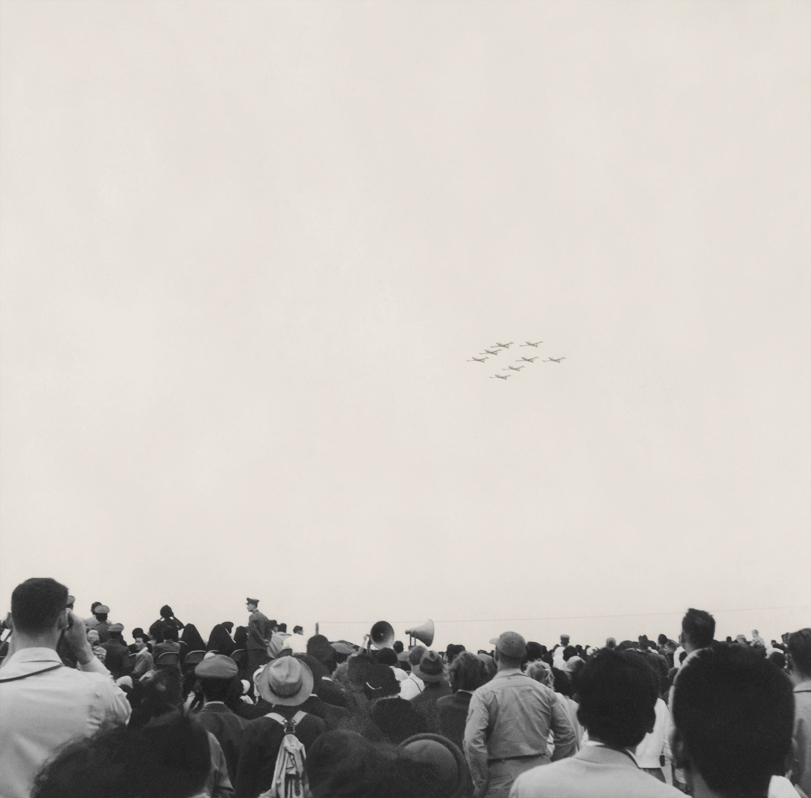
In conversation: Marcus Bunyan and Elizabeth Gertsakis discuss his new work, ‘The Shape of Dreams’ 2013-2017

December 2017


Marcus Bunyan (Australian, b. 1958) 'Untitled' from the series 'The Shape of Dreams' 2013 - 2017


Marcus Bunyan (Australian, b. 1958)
Untitled from the series The Shape of Dreams 
2013-2017
Silver gelatin print
© Marcus Bunyan


In conversation

EG: Just saw your most recent Art Blart and your work. It’s very beautiful. Congratulations. At first I didn’t know whose they were. Then I went through them one by one, and only after responding to them ‘unknown’ I saw it was your work. SO BEAUTIFUL, so potent and yet, within the ambivalence and questioning there was space for great stillness and contemplation. Powerful and so poetic. The one of the children, close up is dazzling, but so are the open fields, mountains, roadways and minute images of flight.

MB: Thank you so much Elizabeth. Yes, my work would you believe. I can now believe after 4 years hard work. A poem to the uncertainty of human dreams. It’s a conceptual series in the vein of my hero Minor White – contemplative, poetic as always with me, but with an edge under the poetry as you so correctly observe EG – you are caught in the dream in the end image, suspended in time and space, in your imagination. You are always so spot on with your observations.

EG: Your own tendency is also closely linked to language and ideas?

MB: This is very true. The basis for all my work is body, time, space, environment and their link to language and ideas… and how conceptual work can be spiritual as well.

EG: I’m with you on that one, and political as well.

MB: Indeed – all my work, including this series, is very anti-war.

EG: What is unseen, invisible in these images is definitely the dark quiet hole of hell that war is. Or at least those that invest in it.

MB: The key image in this regard is the one of the explosion.

EG: But the ones of the distant and misdirected aerial machines also…

MB: Indeed, and the second one, where all the men are looking away while the cloud expands in the background.

EG: Yes, the casual indifference and banality of it.

MB: You have it perfectly Elizabeth!

EG: But the children, oh those children, and the innocent implacability of the natural world.

MB: To find these images on Ebay and then spend four years of my life cleaning and saving them was an incredible experience. It was almost like I was breathing these images as I was saving them, looking into each one and being immersed in them. Thus, the art demands contemplation from the viewer in order to begin to understand its resonances.


Many thankx to Elizabeth Gertsakis for her wisdom, knowledge, friendship and advice throughout the year. These observations of my work mean a great deal to me.

See the full sequence including the spacing of images (enlarge and use scroll bar)

See the full images on my website

Photographs are available from this series for purchase. As a guide, a digital colour 16″ x 20″ costs $1000 plus tracked and insured shipping. For more information please see my Store web page.


Marcus Bunyan (Australian, b. 1958) 'Untitled' from the series 'The Shape of Dreams' 2013 - 2017

Marcus Bunyan (Australian, b. 1958) 'Untitled' from the series 'The Shape of Dreams' 2013 - 2017

Marcus Bunyan (Australian, b. 1958) 'Untitled' from the series 'The Shape of Dreams' 2013 - 2017

Marcus Bunyan (Australian, b. 1958) 'Untitled' from the series 'The Shape of Dreams' 2013 - 2017


Marcus Bunyan (Australian, b. 1958)
Untitled from the series The Shape of Dreams
2013-2017
Silver gelatin print
© Marcus Bunyan


Marcus Bunyan website

LILKE ART BLART ON FACEBOOK

Back to top

Exhibition: ‘Walker Evans’ at the Centre Pompidou, Paris

“Evans’ art of an alternate order, his vision of a terrain of becoming is so particular, so different it has entered the lexicon of America culture.’ Dr Marcus Bunyan

Exhibition dates: 26th April – 14th August, 2017

Curator: Mnam/Cci, Clément Cheroux


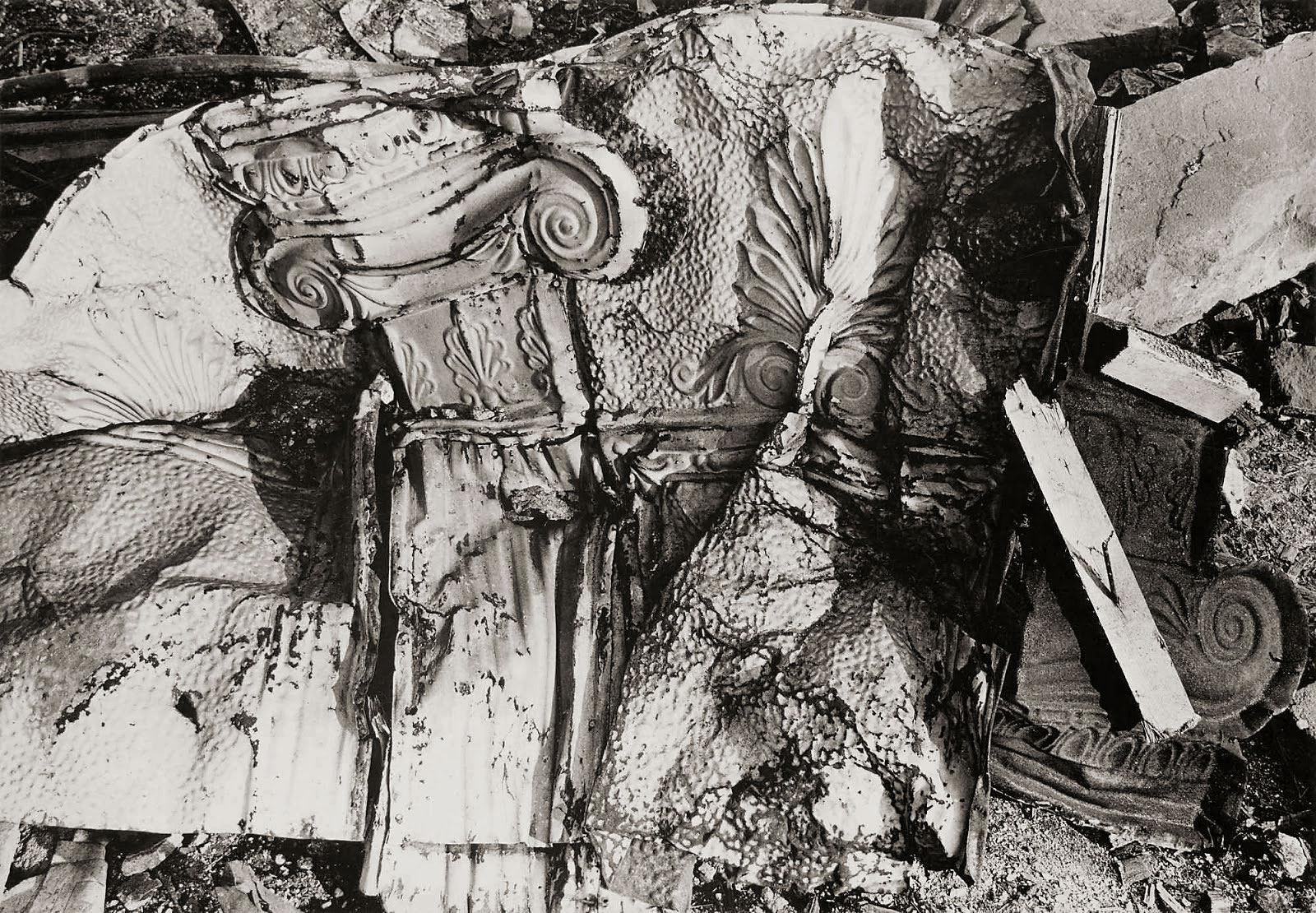
Walker Evans (American, 1903-1975) 'Stamped Tin Relic' 1929 from the exhibition 'Walker Evans' at the Centre Pompidou, Paris, April - August, 2017


Walker Evans (American, 1903-1975)
Stamped Tin Relic
1929
Gelatin silver print
23.3 x 28cm
Collection Centre Pompidou, Paris Achat en 1996
© Walker Evans Archive, The Metropolitan Museum of Art
Photo: © Centre Pompidou / Dist.RMN-GP


The un/ordinariness of ordinariness

What a pleasure.

I’ve never liked the term ‘”vernacular” photography’ because, for me, every time someone presses the shutter of the camera they have a purpose: to capture a scene, however accidental or incidental. That context may lie outside recognised networks of production and legitimation but it does not lie outside performance and ritual. As Catherine Lumby observes, what the promiscuous flow of the contemporary image culture opens up, “is an expanded and abstracted terrain of becoming… whereby images exceed, incorporate or reverse the values that are presumed to reside within them in a patriarchal social order.”1 Pace Evans.

His art of an alternate order, his vision of a terrain of becoming is so particular, so different it has entered the lexicon of America culture.

Dr Marcus Bunyan

1/ Lumby, Catharine. “Nothing Personal: Sex, Gender and Identity in The Media Age,” in Matthews, Jill (ed.,). Sex in Public: Australian Sexual Cultures. St. Leonards: Allen and Unwin, 1997, pp. 14-15.


Walker Evans: “The passionate quest to identify the fundamental features of American vernacular culture… the term “vernacular” designates those popular or informal forms of expression used by ordinary people for everyday purposes – essentially meaning all that falls outside art, outside the recognised networks of production and legitimation, and which in the US thus serves to define a specifically American culture. It is all the little details of the everyday environment that make for “Americanness”: wooden roadside shacks, the way a shopkeeper lays out his wares in the window, the silhouette of the Ford Model T, the pseudo-cursive typography of Coca-Cola signs. It is a crucial notion for the understanding of American culture.”

Text from press release


Many thankx to the Centre Pompidou for allowing me to publish the artwork in the posting. Please click on the art work for a larger version of the image.


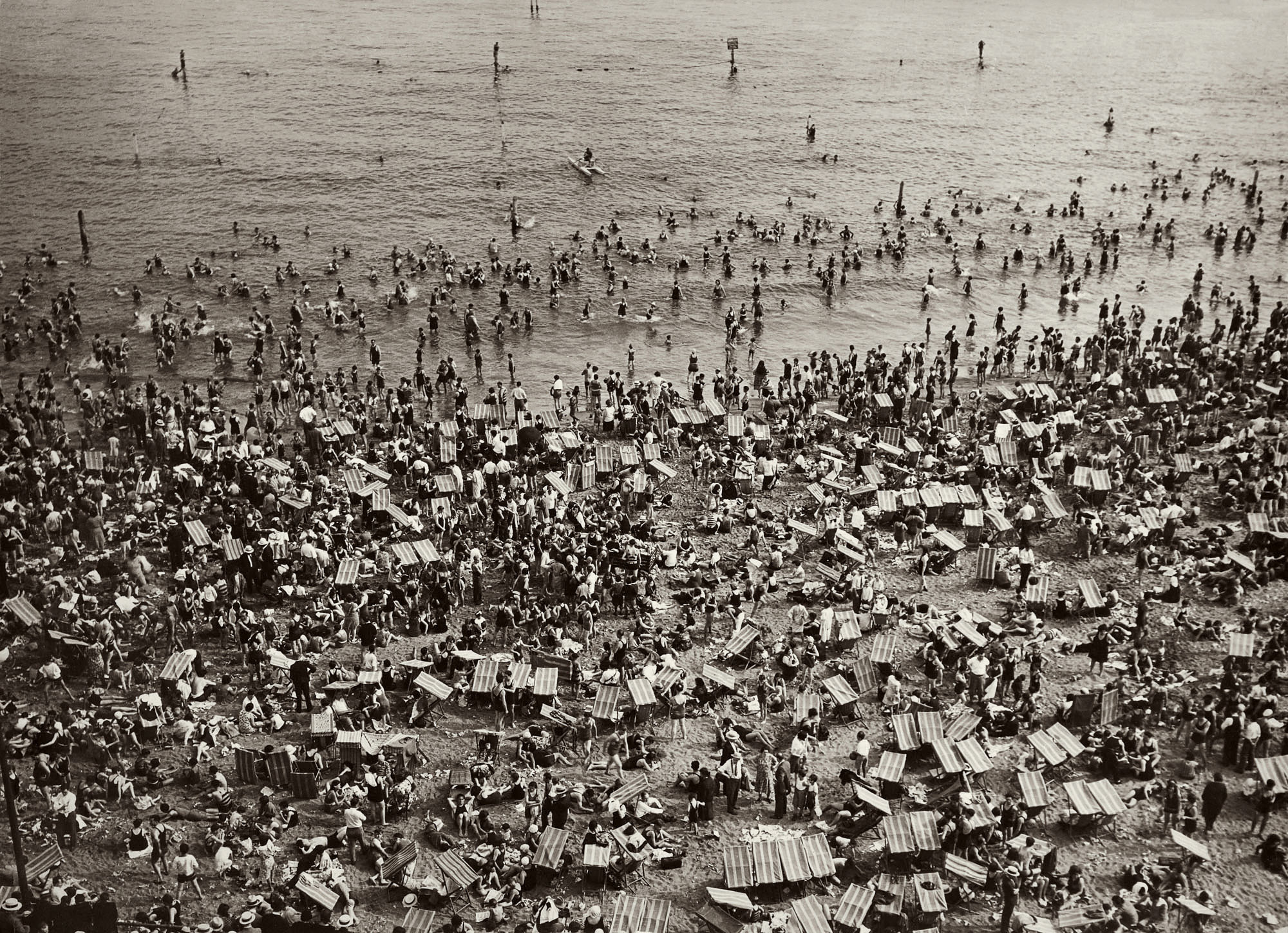
Walker Evans (American, 1903-1975) 'Coney Island Beach' c. 1929 from the exhibition 'Walker Evans' at the Centre Pompidou, Paris, April - August, 2017


Walker Evans (American, 1903-1975)
Coney Island Beach
c. 1929
Gelatin silver print
22.5 x 31cm
The J.Paul Getty Museum, Los Angeles, Los Angeles
© Walker Evans Archive, The Metropolitan Museum of Art
Photo: © The J. Paul Getty Museum, Los Angeles


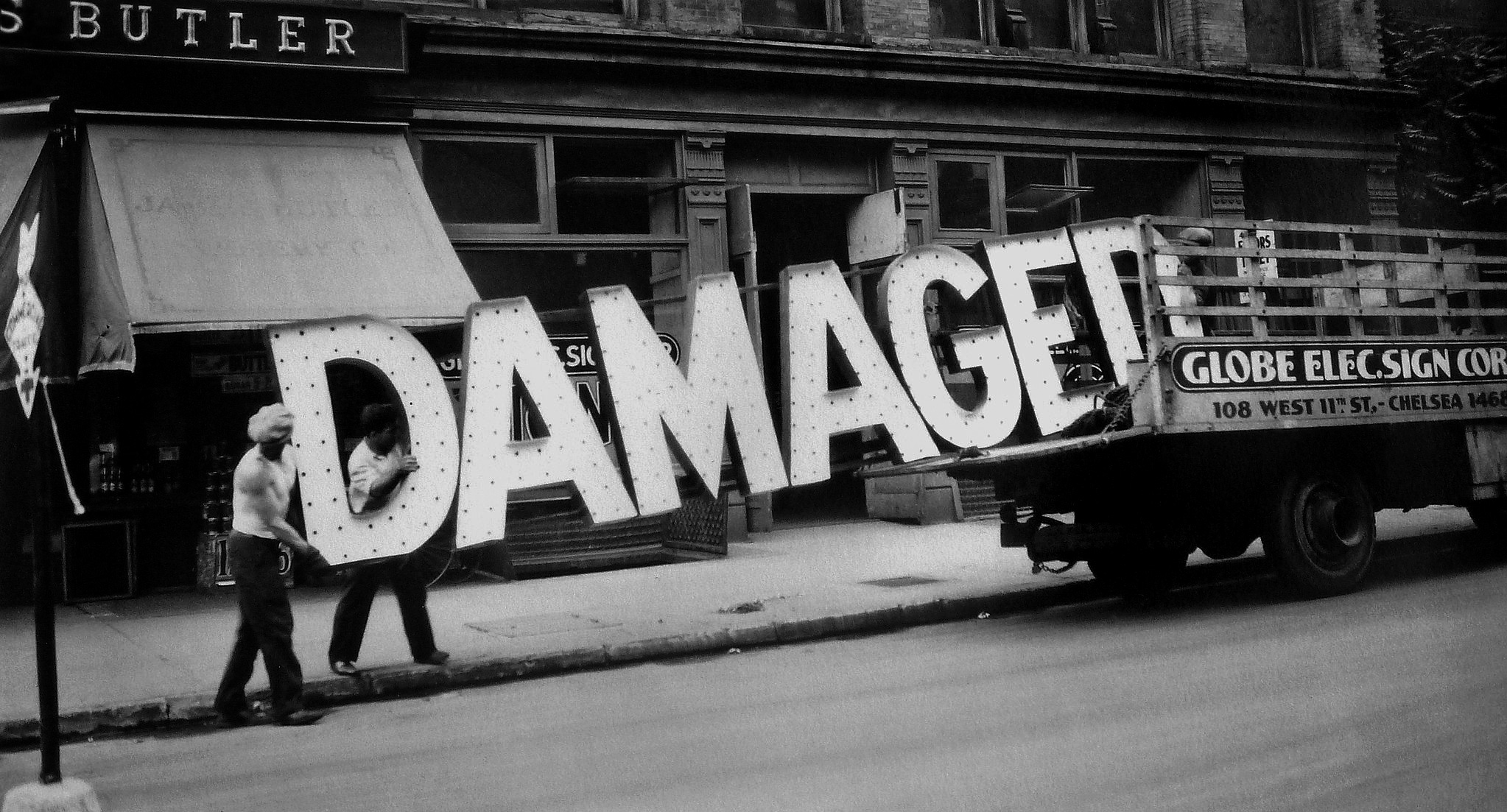
Walker Evans (American, 1903-1975) 'Truck and Sign' 1928-1930


Walker Evans (American, 1903-1975)
Truck and Sign
1928-1930
Gelatin silver print
16.5 x 22.2cm
Collection particulière, San Francisco
© Walker Evans Archive, The Metropolitan Museum of Art
Photo: © Fernando Maquieira, Cromotex


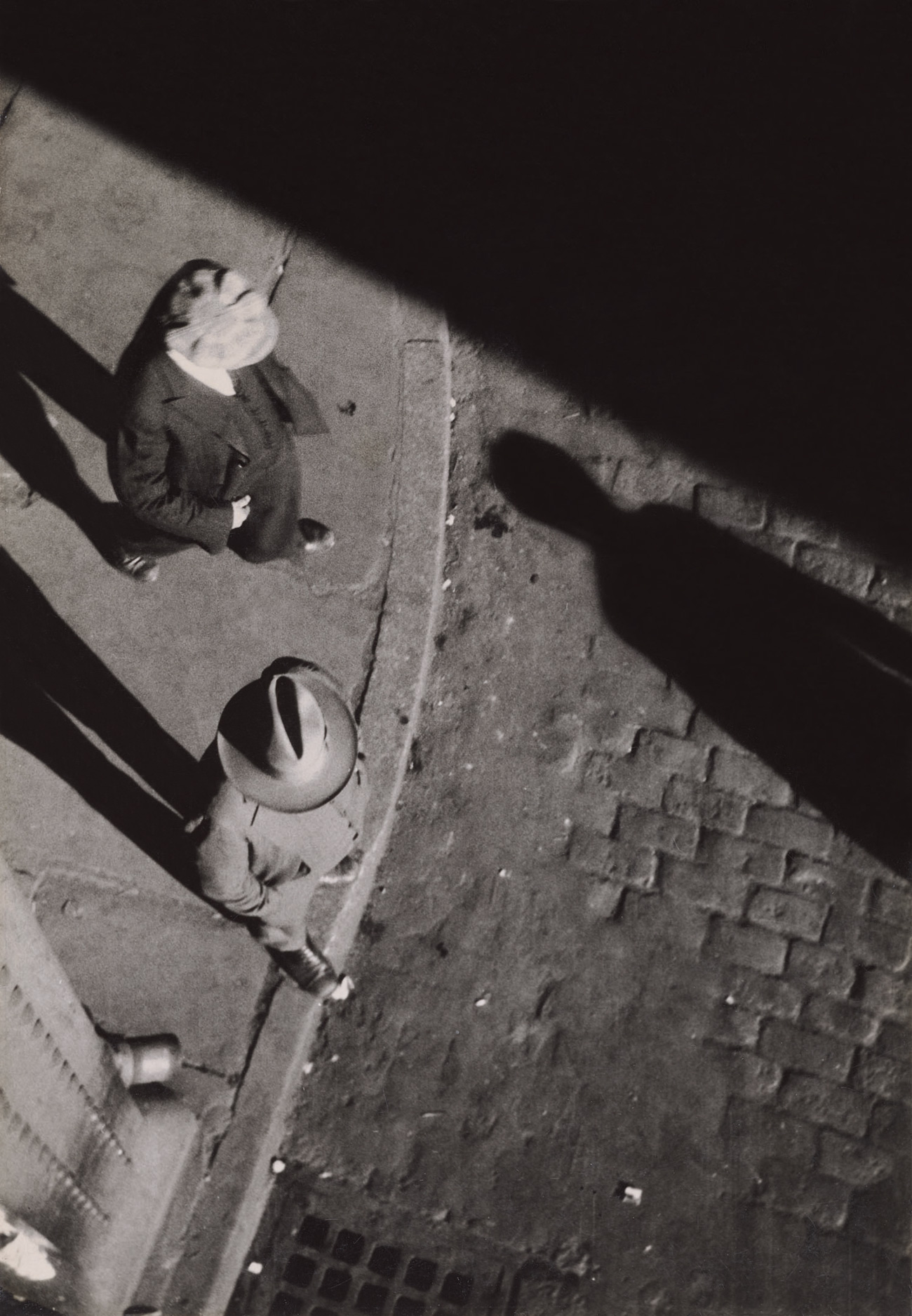
Walker Evans (American, 1903-1975) 'New York City Street Corner' 1929


Walker Evans (American, 1903-1975)
New York City Street Corner
1929
Gelatin silver print
18.4 x 12.7cm
The J. Paul Getty Museum, Los Angeles
© Walker Evans Archive, The Metropolitan Museum of Art
Photo: © The J. Paul Getty Museum, Los Angeles


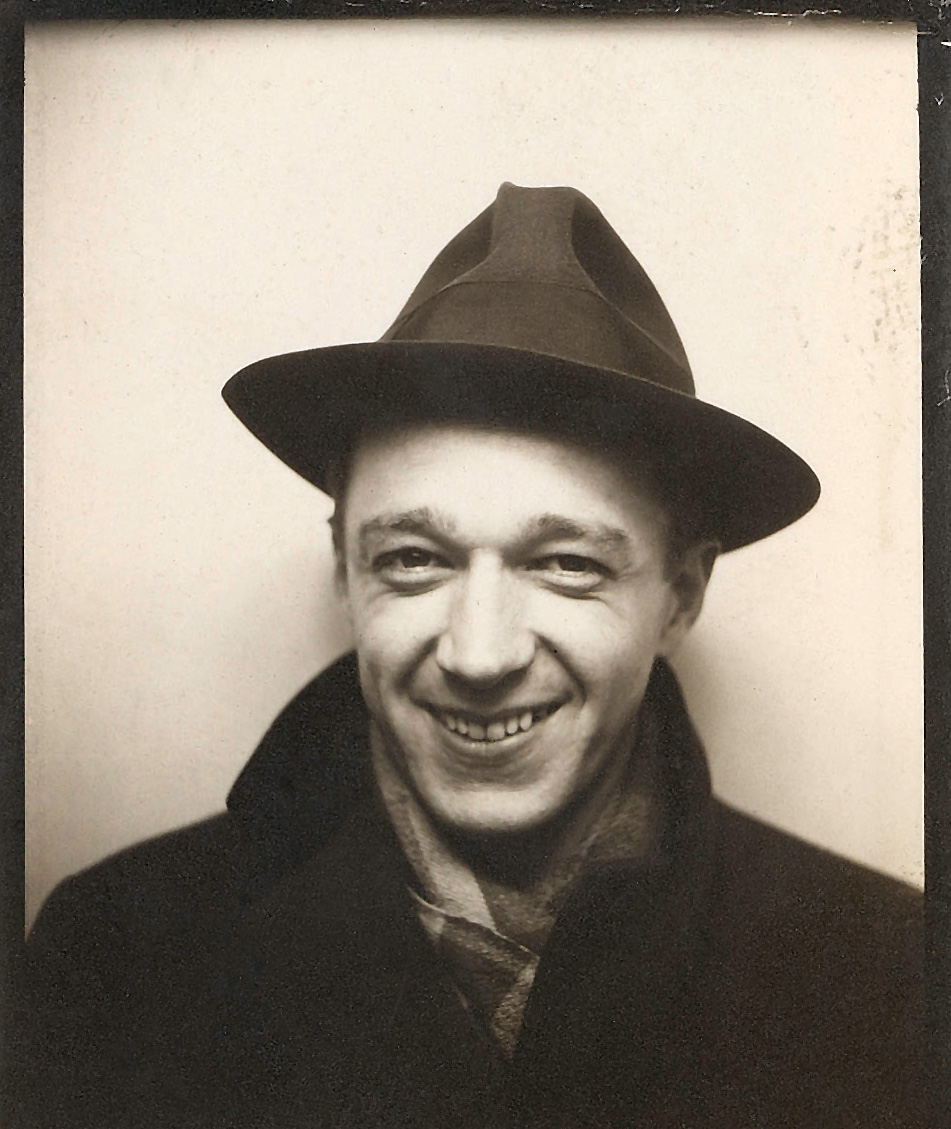
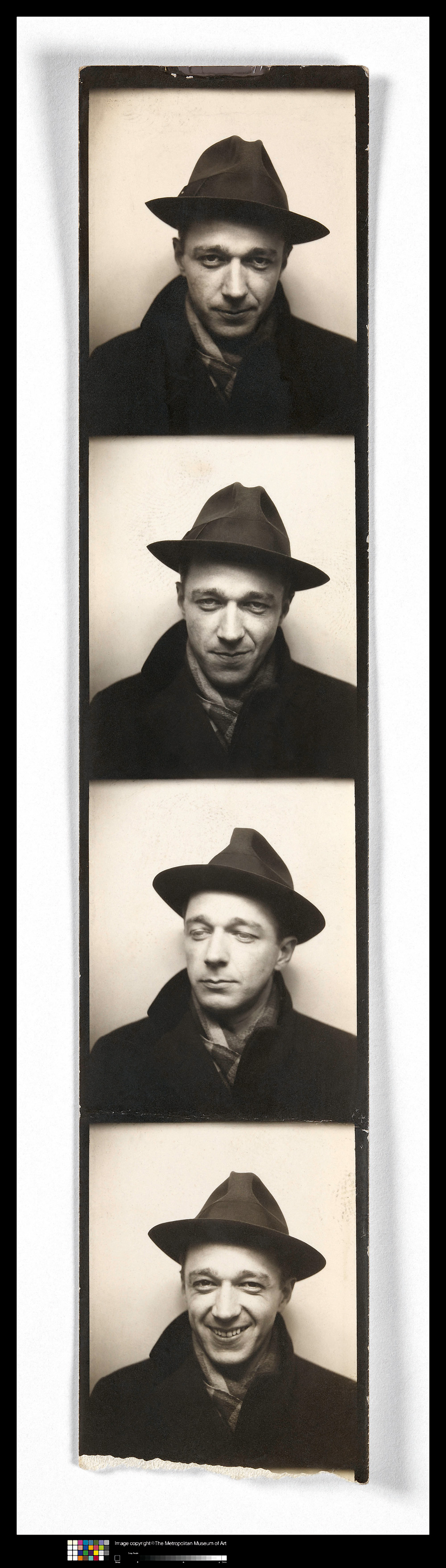
Walker Evans (American, 1903-1975) 'Self-Portrait in Automated Photobooth' 1930


Walker Evans (American, 1903-1975)
Self-Portrait in Automated Photobooth
1930
Gelatin silver print
18.3 x 3.8cm
The Metropolitan Museum of Art, New York
© Walker Evans Archive, The Metropolitan Museum of Art
Photo: © The Metropolitan Museum of Art, Dist-RMN-GP/Image of the MMA


Walker Evans (American, 1903-1975) 'Self-Portrait in Automated Photobooth' 1930 (detail)

Walker Evans (American, 1903-1975) 'Self-Portrait in Automated Photobooth' 1930 (detail)


Walker Evans (American, 1903-1975)
Self-Portrait in Automated Photobooth (details)
1930
Gelatin silver print
18.3 x 3.8cm
The Metropolitan Museum of Art, New York
© Walker Evans Archive, The Metropolitan Museum of Art
Photo: © The Metropolitan Museum of Art, Dist-RMN-GP/Image of the MMA


Walker Evans (1903-1975) was one of the most important of twentieth-century American photographers. His photographs of the Depression years of the 1930s, his assignments for Fortune magazine in the 1940s and 1950s, and his “documentary style” influenced generations of photographers and artists. His attention to everyday details and the commonplace urban scene did much to define the visual image of 20th-century American culture. Some of his photographs have become iconic.

Conceived as a retrospective of Evans’s work as a whole, the Centre Pompidou exhibition presents three hundred vintage prints in a novel and revelatory thematic organisation. It highlights the photographer’s recurrent concern with roadside buildings, window displays, signs, typography and faces, offering an opportunity to grasp what no doubt lies at the heart of Walker Evans’ work: the passionate quest to identify the fundamental features of American vernacular culture. In an interview of 1971, he explained the attraction as follows: “You don’t want your work to spring from art; you want it to commence from life, and that’s in the street now. I’m no longer comfortable in a museum. I don’t want to go to them, don’t want to be ‘taught’ anything, don’t want to see ‘accomplished’ art. I’m interested in what’s called vernacular. For example, finished, I mean educated, architecture doesn’t interest me, but I love to find American vernacular”.

In the English-speaking countries, and in America more notably, the term “vernacular” designates those popular or informal forms of expression used by ordinary people for everyday purposes – essentially meaning all that falls outside art, outside the recognised networks of production and legitimation, and which in the US thus serves to define a specifically American culture. It is all the little details of the everyday environment that make for “Americanness”: wooden roadside shacks, the way a shopkeeper lays out his wares in the window, the silhouette of the Ford Model T, the pseudo-cursive typography of Coca-Cola signs. It is a crucial notion for the understanding of American culture. It is to be found in the literature as early as the 19th century, but it is only in the late 1920s that it is first deployed in a systematic study of architecture. Its importance in American art would be theorised in the 1940s, by John Atlee Kouwenhoven, a professor of English with a particular interest in American studies who was close to Walker Evans himself.

After an introductory section that looks at Evans’s modernist beginnings, the exhibition introduces the subjects that would fascinate him throughout his career: the typography of signs, the composition of window displays, the frontages of little roadside businesses, and so on. It then goes on to show how Evans himself adopted the methods or visual forms of vernacular photography in becoming, for the time of an assignment, an architectural photographer, a catalogue photographer, an ambulant portrait photographer, while all the time explicitly maintaining the standpoint of an artist.

This exhibition is the first major museum retrospective of Evans’s work in France. Unprecedented in its ambition, it retraces the whole of his career, from his earliest photographs in the 1920s to the Polaroids of the 1970s, through more than 300 vintage prints drawn from the most important American institutions (among them the Metropolitan Museum and the Museum of Modern Art, New York, the J. Paul Getty Museum, Los Angeles, the Art Institute of Chicago, and the National Gallery of Art, Washington D.C.) and also more than a dozen private collections. It also features a hundred or so other exhibits drawn from the post cards, enamel signs, print images and other graphic ephemera that Evans collected his whole life long.

Press release from the Centre Pompidou


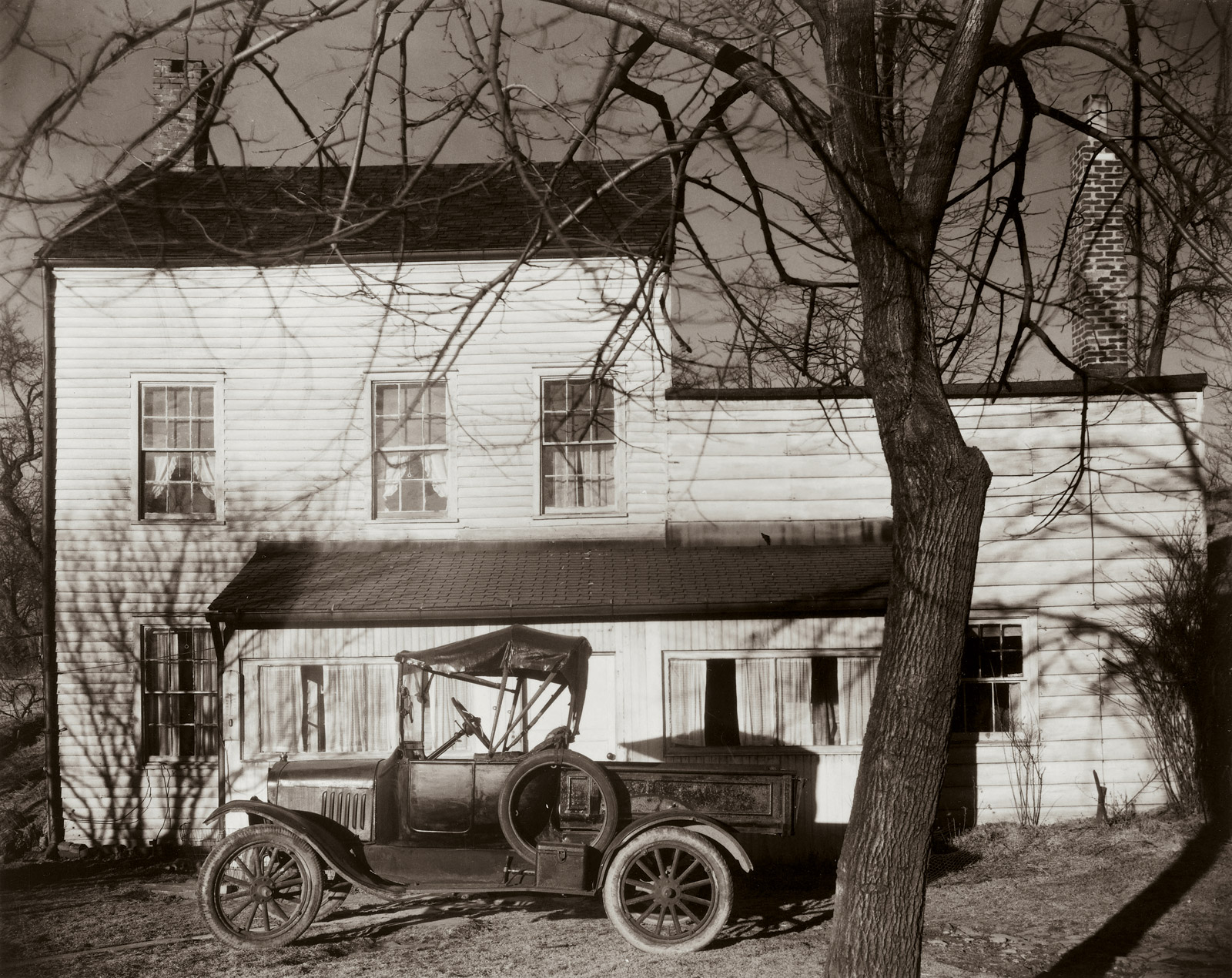
Walker Evans (American, 1903-1975) 'Westchester, New York, farmhouse' 1931


Walker Evans (American, 1903-1975)
Westchester, New York, farmhouse
1931
Gelatin silver print pasted on cardboard
18 x 22.1cm
Collection Centre Pompidou, Paris
© W. Evans Arch., The Metropolitan Museum of Art
Photo: © Centre Pompidou / Dist. RMN-GP


Walker Evans (American, 1903-1975) 'Main Street, Saratoga Springs, New York' 1931


Walker Evans (American, 1903-1975)
Main Street, Saratoga Springs, New York
1931
Gelatin silver print
18.73 x 16.19cm
Collection particulière, San Francisco
© Walker Evans Archive, The Metropolitan Museum of Art
Photo: © Fernando Maquieira, Cromotex


Walker Evans (American, 1903-1975) 'License Photo Studio, New York' 1934


Walker Evans (American, 1903-1975)
License Photo Studio, New York
1934
Gelatin silver print
27.9 x 21.6cm (image: 18.3 x 14.4cm)
The J. Paul Getty Museum, Los Angeles
© Walker Evans Archive, The Metropolitan Museum of Art
Photo: © The J. Paul Getty Museum, Los Angeles


Walker Evans (American, 1903-1975) 'Penny Picture Display, Savannah' 1936


Walker Evans (American, 1903-1975)
Penny Picture Display, Savannah
1936
Gelatin silver print
21.9 x 17.6cm
The Museum of Modern Art, New York Gift of Willard Van Dyke
© Walker Evans Archive, The Metropolitan Museum of Art
Photo: © 2016. Digital Image, The Museum of Modern Art, New York / Scala, Florence


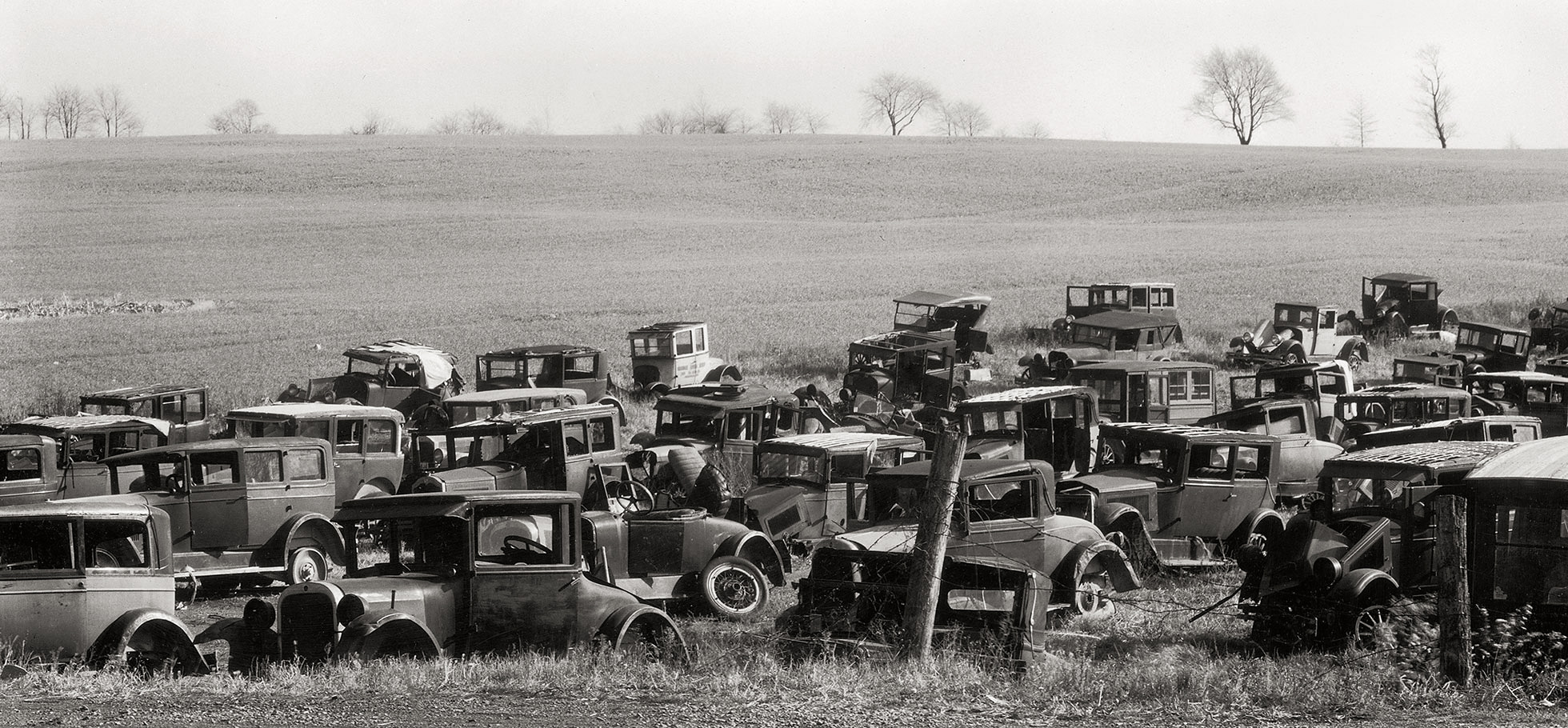
Walker Evans (American, 1903-1975) 'Joe's Auto Graveyard' 1936


Walker Evans (American, 1903-1975)
Joe’s Auto Graveyard
1936
Gelatin silver print
11.43 x 18.73cm
Collection particulière, San Francisco
© Walker Evans Archive, The Metropolitan Museum of Art
Photo: © Ian Reeves


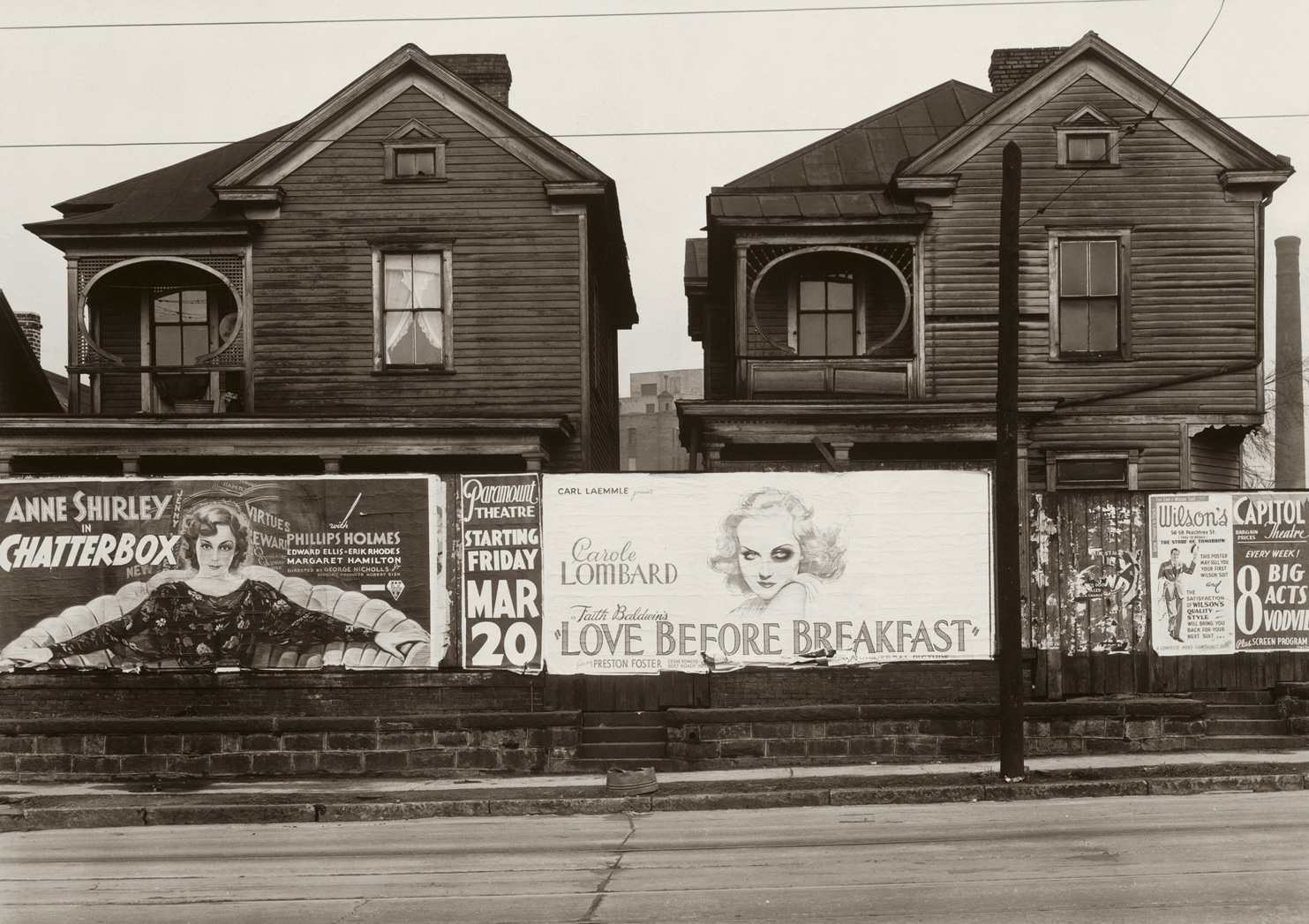
Walker Evans (American, 1903-1975) 'Houses and Billboards in Atlanta' 1936


Walker Evans (American, 1903-1975)
Houses and Billboards in Atlanta
1936
Gelatin silver print
16.5 x 23.2cm
The Museum of Modern Art, New York
© Walker Evans Archive, The Metropolitan Museum of Art
Photo: © 2016. Digital Image, The Museum of Modern Art, New York / Scala, Florence


Curator’s point of view


“You don’t want your work to spring from art; you want it to commence from life, and that’s in the street now. I’m no longer comfortable in a museum. I don’t want to go to them, don’t want to be ‘taught’ anything, don’t want to see ‘accomplished’ art. I’m interested in what’s called vernacular.”

Walker Evans, interviewed by Leslie Katz (1971)


Through more than 400 photographs and documents, this retrospective of the work of Walker Evans (1903-1975) explores the American photographer’s fascination with his country’s vernacular culture. Evans was one of the most important of twentieth-century American photographers. His photographs of the Depression years of the 1930s, his “documentary style” and his interest in American popular culture influenced generations of photographers and artists. Bringing together the best examples of his work, drawn from the most important private and public collections, the exhibition also accords a large place to the artefacts that Evans himself collected throughout his life, to offer a fresh approach to the work of one of the most significant figures in the history of photography.

Study of his images – from the very first photographs of the 1920s to the Polaroids of his last years – reveals a fascination with the utilitarian, the domestic and the local. This interest in popular forms and practices emerged very early, when he started to collect postcards as a teenager. More than ten thousand items he had gathered by the time of his death are now held by the Metropolitan Museum, New York. Other everyday objects from his personal collection – enamel signs, handbills and adverts – are exhibited here.

Walker Evans’s attraction to the vernacular finds expression, above all, in his choice of subjects: Victorian architecture, roadside buildings, shopfronts, cinema posters, placards, signs, etc. His pictures also feature the faces and bodies of ordinary people, whether victims of the Depression or anonymous passers-by. Something else “typically American” was the underside of progress. During the 1930s in particular, the American landscape was strewn with ruin and waste. Evans kept an eye on them ever after. Industrial waste, building debris, automobile carcases, wooden houses in ruins, Louisiana mansions fallen in the world, antiques, garbage, faded interiors, bare patches in exterior render: these were the other face of America. Just as much as the towering skyscraper or the gleaming motor car, all this was an element of the modern. This concern with decline and obsolescence gave the photographer a critical edge and reveals a profound fascination with the mechanisms of overproduction and consumption characteristic of the age.

Evans didn’t just collect the forms of the vernacular, he also borrowed its methods. In many of his images, he adopts the codes of applied photography: the shots in series, the frontality, the apparent objectivity. Waiting, camera in hand on the corner of the street or in the subway, he accumulated portraits of city-dwellers by the dozen, releasing his shutter with the mechanical regularity of a photo booth. Working like a post-card photographer or architectural photographer, Evans built up, in surprisingly systematic fashion, a catalogue of churches, doors, monuments and small-town main streets. Sculptures, wrought-iron chairs, household tools: all seem to have been selected for their unique qualities as objects. The repetitivity, the apparent objectivity and the absence of emphasis in these images are typical of commercial photographs produced to order. In 1935, the Museum of Modern Art, New York, asked Evans to photograph the six hundred sculptures of the exhibition of “African Negro Art”. The method he adopted was that of the catalogue photographer, rigorously avoiding dramatic effects by eliminating shadow; tightly framed and set against a neutral background, the pieces find a new elegance. The photographer would often have recourse to this regime in the years that followed, notably for a portfolio entitled “Beauties of the Common Tool”, published in Fortune magazine in July 1955. This adoption of the forms and procedures of non-artistic photography even as Evans laid claim to art prefigures – some decades in advance! – the practices of the conceptual artists of the 1960s.

Clément Chéroux
Julie Jones
in Code Couleur, No. 28, May – August 2017, pp. 14-17


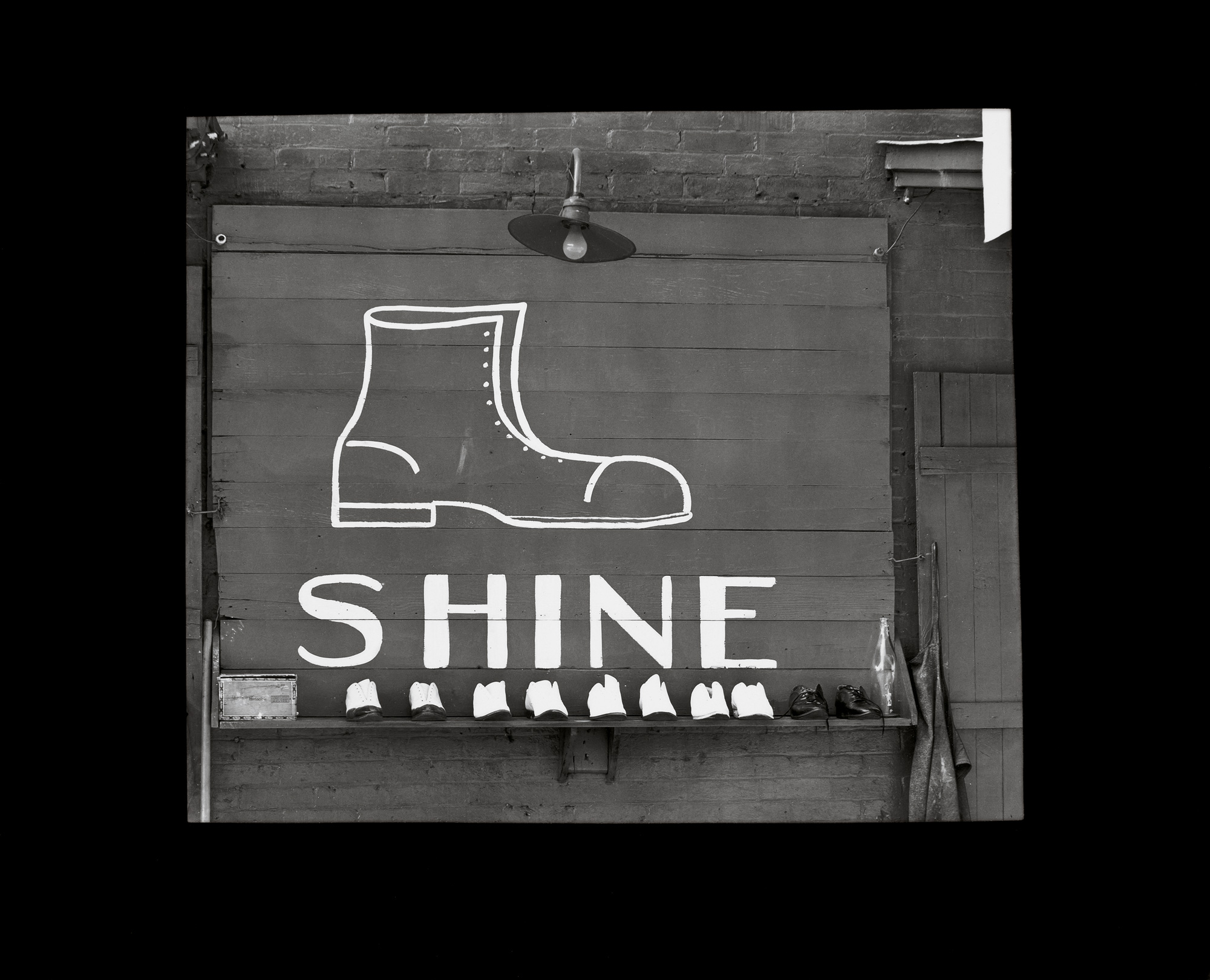
Walker Evans (American, 1903-1975) 'Shoeshine Stand Detail in Southern Town' 1936


Walker Evans (American, 1903-1975)
Shoeshine Stand Detail in Southern Town
1936
Gelatin silver print
14.5 x 17cm
The Metropolitan Museum of Art, New York Anonymous Gift
© Walker Evans Archive, The Metropolitan Museum of Art
Photo: © The Metropolitan Museum of Art, Dist-RMN-GP/Image of the MMA


Walker Evans (American, 1903-1975) 'Negroes' Church, South Carolina' March 1936


Walker Evans (American, 1903-1975)
Negroes’ Church, South Carolina
March 1936, circulation April 1969
Gelatin silver print
25.2 x 20.2cm
Musée des beaux-arts du Canada, Ottawa Acheté en 1969
© Walker Evans Archive, The Metropolitan Museum of Art
Photo: © Musée des Beaux-Arts du Canada, Ottawa


Walker Evans (American, 1903-1975) 'Alabama Tenant Farmer Floyd Bourroughs' 1936


Walker Evans (American, 1903-1975)
Alabama Tenant Farmer Floyd Bourroughs
1936
Gelatin silver print
22.9 x 18.4cm
Collection particulière, San Francisco
© Walker Evans Archive, The Metropolitan Museum of Art
Photo: © Fernando Maquieira, Cromotex


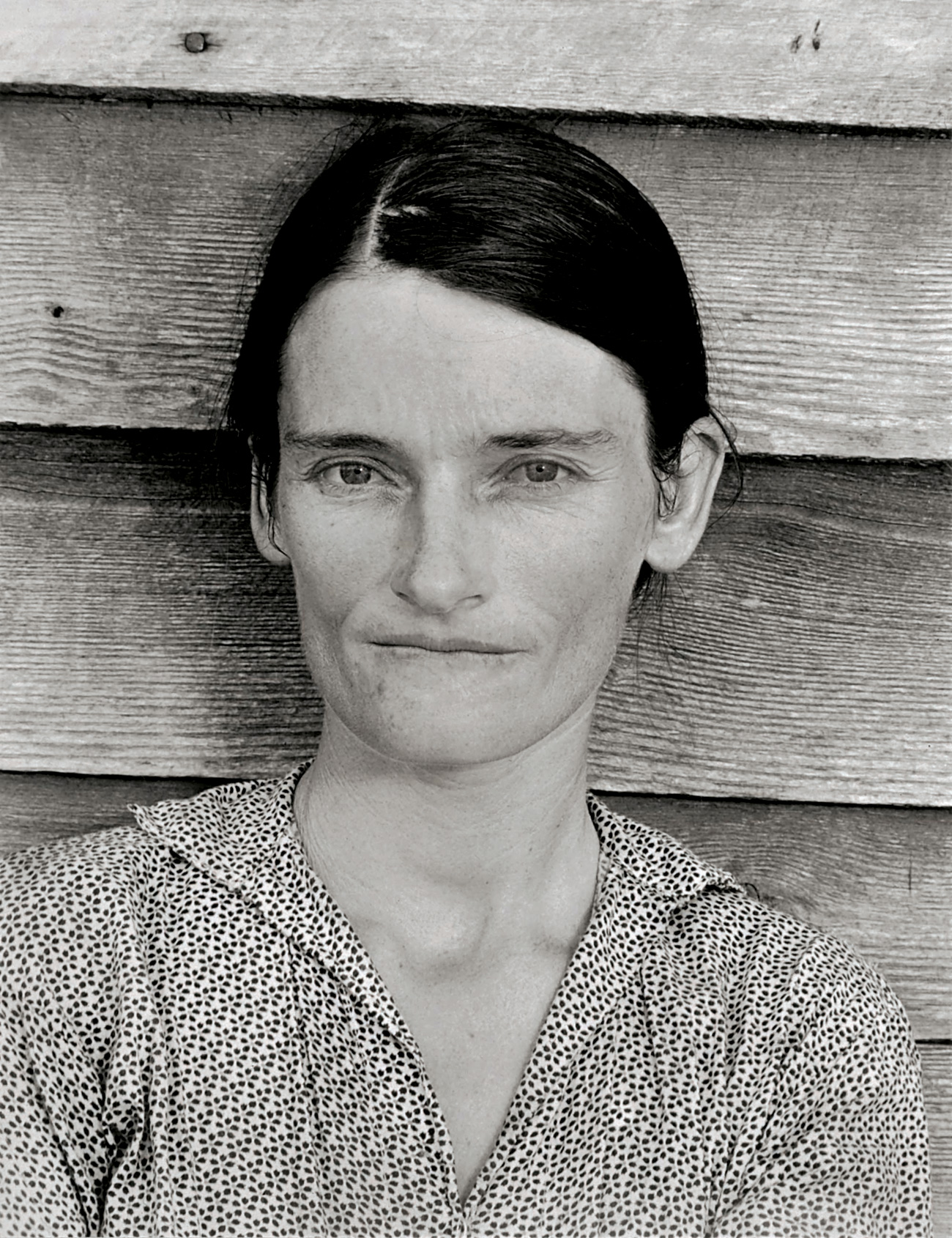
Walker Evans (American, 1903-1975) 'Allie Mae Burroughs, Wife of a Cotton Sharecropper, Hale Country, Alabama' 1936


Walker Evans (American, 1903-1975)
Allie Mae Burroughs, Wife of a Cotton Sharecropper, Hale Country, Alabama
1936
Gelatin silver print
22.3 x 17.3cm
Collection particulière
© Walker Evans Archive, The Metropolitan Museum of Art
Photo: © Collection particulière


Walker Evans (American, 1903-1975) 'Subway Portrait' January 1941


Walker Evans (American, 1903-1975)
Subway Portrait
January 1941
Gelatin silver print
20.9 x 19.1cm
National Gallery of Art, Washington Gift of Kent and Marcia Minichiello, in Honour of the 50th Anniversary of the National Gallery of Art
© Walker Evans Archive, The Metropolitan Museum of Art
Photo: © National Gallery of Art, Washington


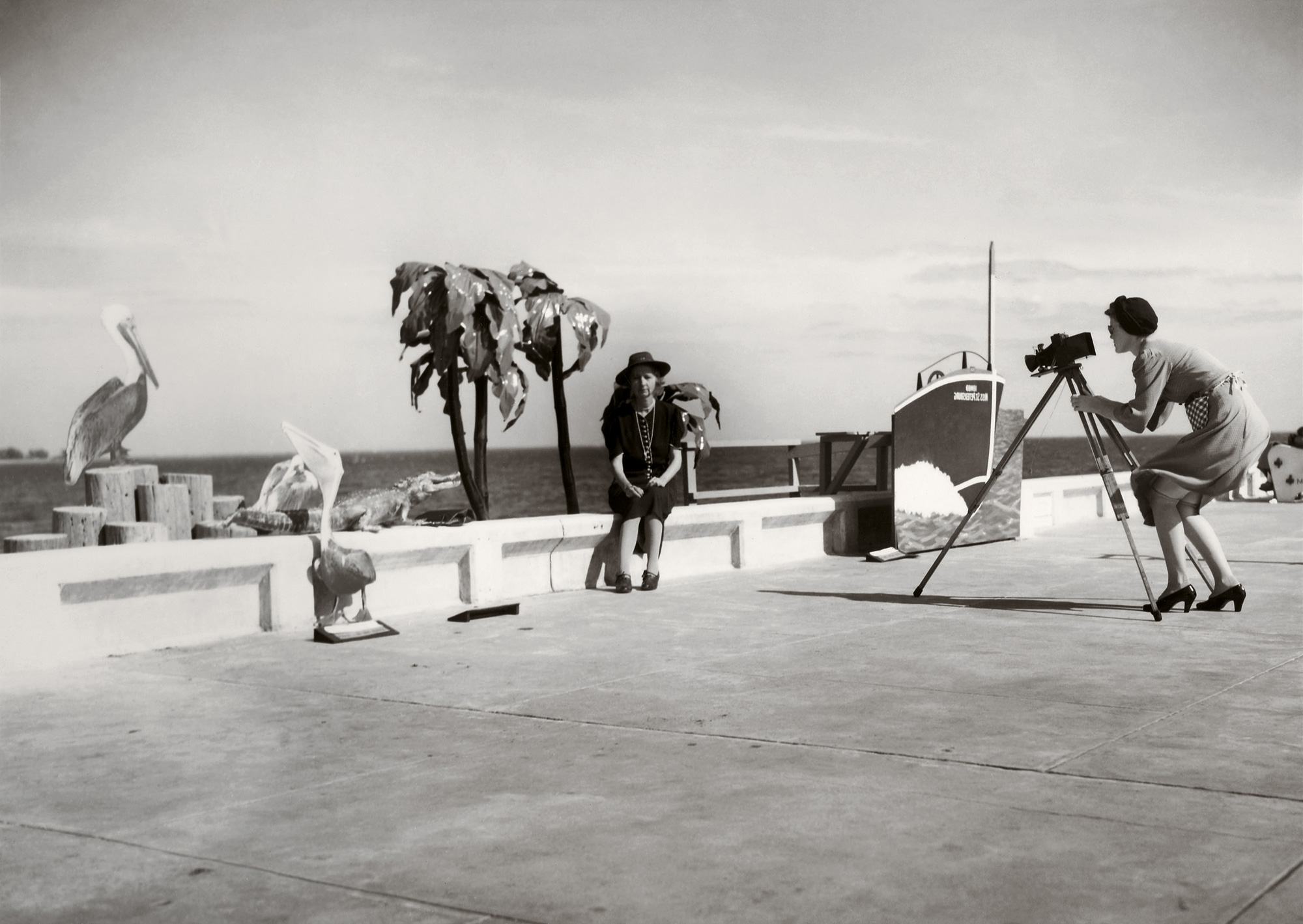
Walker Evans (American, 1903-1975) 'Resort Photographer at Work' 1941


Walker Evans (American, 1903-1975)
Resort Photographer at Work
1941
Gelatin silver print, later print
15.9 x 22.4cm
The J. Paul Getty Museum, Los Angeles
© Walker Evans Archive, The Metropolitan Museum of Art
Photo: © The J. Paul Getty Museum, Los Angeles


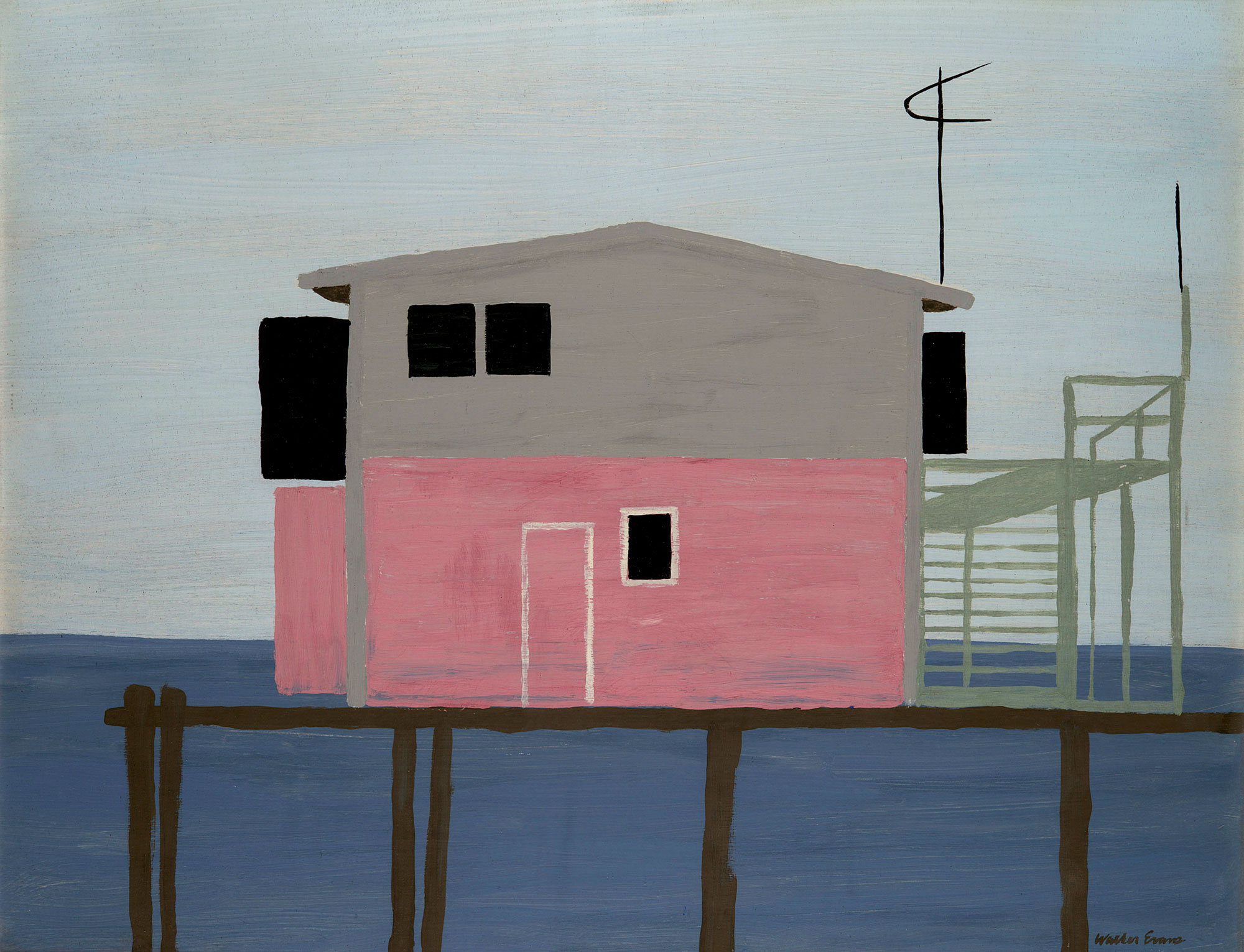
Walker Evans (American, 1903-1975) 'Anna Maria, Florida' October 1958


Walker Evans (American, 1903-1975)
Anna Maria, Florida
October 1958
Oil on fibreboard
40 × 50.2cm
The Metropolitan Museum of Art, New York. Walker Evans Archive, 1994
© Walker Evans Archive, The Metropolitan Museum of Art
Photo: © The Metropolitan Museum of Art, Dist. RMN-Grand Palais / image of the MMA


Walker Evans (American, 1903-1975) 'Untitled, Detroit' 1946


Walker Evans (American, 1903-1975)
Untitled, Detroit
1946
Gelatin silver print
16 x 11.4cm
Fondation A.Stichting, Bruxelles
© Walker Evans Archive, The Metropolitan Museum of Art
Photo: © Fondation A.Stichting, Bruxelles


Walker Evans (American, 1903-1975) 'Tin Snips by J. Wiss and Sons Co., $1.85' 1955


Walker Evans (American, 1903-1975)
Tin Snips by J. Wiss and Sons Co., $1.85
1955
Gelatin silver print
25.2 x 20.3cm
The J. Paul Getty Museum, Los Angeles
© Walker Evans Archive, The Metropolitan Museum of Art
Photo: © The J. Paul Getty Museum, Los Angeles


Centre Pompidou 
75191 Paris cedex 04
Phone: 00 33 (0)1 44 78 12 33

Opening hours:
Exhibition open every day from 11am – 9pm except on Tuesday
Closed on May 1st

Centre Pompidou website

LIKE ART BLART ON FACEBOOK

Back to top