Exhibition: ‘William Eggleston, Paris’ at Fondation Cartier, Paris

Exhibition dates: 4th April – 21st June, 2009


William Eggleston (American, b. 1939) 'Untitled', Paris series, 2006-2008 from the exhibition 'William Eggleston, Paris' at Fondation Cartier, Paris, April - June, 2009


William Eggleston (American, b. 1939)
Untitled from the Paris series
2006-2008
Colour print
27.9 x 35.6cm
Series of 32 works: 27 colour prints, 4 diptychs and 1 painting
Commission for the exhibition William Eggleston, Paris, Fondation Cartier pour l’art contemporain, Paris, 2009
Gift of the artist 2009
© Eggleston Artistic Trust, Memphis


Perhaps it’s just me, but I seem to have become a little jaded towards the recent photographs of William Eggleston.

Other than the green reflection of lights in rainwater (above) the photographs seem to have lost their unique voice, the social insight that gave his earlier work it’s zing – provocative images that challenged how we live through a meditation on subject matter, construction of space, and tone of “colour”. How the colour that surrounds us inflects our very being.

In these photographs it feels like there has been little development in his style over the years with a consequent lessening of their visual impact. Now Eggleston’s colour just feels like a party trick, performed by rote with little consequential meaning to either the colour or the image. Perhaps the way we look at the world (and how we picture it) has finally overtaken the director’s prescient creative vision – his auteurship, his authorship.

Dr Marcus Bunyan


Many thankx to the Fondation Cartier for allowing me to publish the photographs in the posting.


“In Eggleston’s best work, the work that made him famous, color is intrinsic to the meaning of the photograph. Its not simply a garnish to draw the eye. His best photographs are not ‘about’ the color; they are about larger issues that the color is used in the service of.  This is whats missing in his Paris pictures. The color here is pure ornament, eye candy to seduce you into forgetting that the picture has nothing to say.”

Anonymous. “William Eggleston Mails It In From Paris,” on the Leicaphilia website April 21, 2014 [Online] Cited 06/02/2019


William Eggleston (American, b. 1939) 'Untitled', Paris series, 2006-2008 from the exhibition 'William Eggleston, Paris' at Fondation Cartier, Paris, April - June, 2009


William Eggleston (American, b. 1939)
Untitled from the Paris series
2006-2008
Colour print
27.9 x 35.6cm
Series of 32 works: 27 colour prints, 4 diptychs and 1 painting
Commission for the exhibition William Eggleston, Paris, Fondation Cartier pour l’art contemporain, Paris, 2009
Gift of the artist 2009
© Eggleston Artistic Trust, Memphis
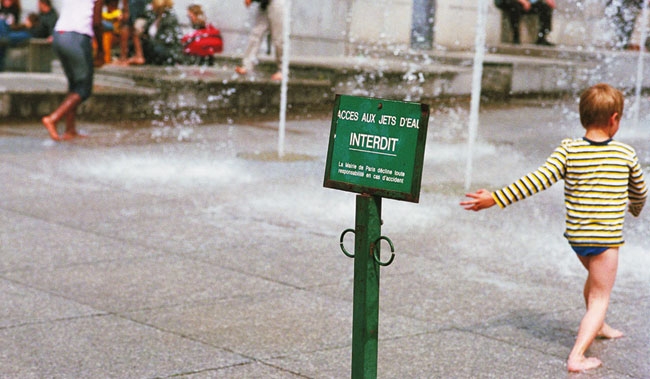
 

William Eggleston (American, b. 1939) 'Untitled', Paris series, 2006-2008


William Eggleston (American, b. 1939)
Untitled from the Paris series
2006-2008
Colour print
27.9 x 35.6cm
Series of 32 works: 27 colour prints, 4 diptychs and 1 painting
Commission for the exhibition William Eggleston, Paris, Fondation Cartier pour l’art contemporain, Paris, 2009
Gift of the artist 2009
© Eggleston Artistic Trust, Memphis


William Eggleston (American, b. 1939) 'Untitled', Paris series, 2006-2008


William Eggleston (American, b. 1939)
Untitled from the Paris series
2006-2008
Colour print
27.9 x 35.6cm
Series of 32 works: 27 colour prints, 4 diptychs and 1 painting
Commission for the exhibition William Eggleston, Paris, Fondation Cartier pour l’art contemporain, Paris, 2009
Gift of the artist 2009
© Eggleston Artistic Trust, Memphis


William Eggleston (American, b. 1939) 'Untitled', Paris series, 2006-2008


William Eggleston (American, b. 1939)
Untitled from the Ωris series
2006-2008
Colour print
27.9 x 35.6cm
Series of 32 works: 27 colour prints, 4 diptychs and 1 painting
Commission for the exhibition William Eggleston, Paris, Fondation Cartier pour l’art contemporain, Paris, 2009
Gift of the artist 2009
© Eggleston Artistic Trust, Memphis


For the last three years, American photographer William Eggleston has photographed the city of Paris as part of a commission for the Fondation Cartier pour l’art contemporain. Taken throughout different seasons, these new images by one of the fathers of colour photography portray the local and the cosmopolitan, the glamorous and the gritty, the everyday and the extraordinary.

This exhibition also provides an exceptional occasion to bring together William Eggleston’s distinctive pictures and his recent paintings, an unknown aspect of his work that has never before been presented to the public.

Text from the Fondation Cartier website
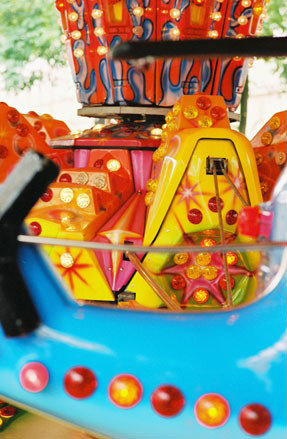
 

William Eggleston (American, b. 1939) 'Untitled', Paris series, 2006-2008


William Eggleston (American, b. 1939)
Untitled from the Paris series
2006-2008
Colour print
35.6 x 27.9cm
Series of 32 works: 27 colour prints, 4 diptychs and 1 painting
Commission for the exhibition William Eggleston, Paris, Fondation Cartier pour l’art contemporain, Paris, 2009
Gift of the artist 2009
© Eggleston Artistic Trust, Memphis
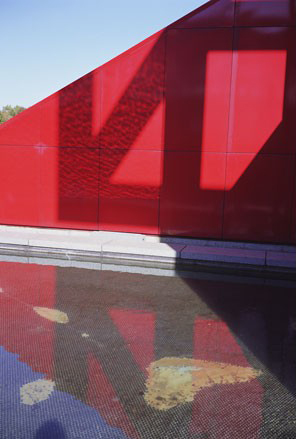
 

William Eggleston (American, b. 1939) 'Untitled', Paris series, 2006-2008


William Eggleston (American, b. 1939)
Untitled from the Paris series
2006-2008
Colour print
35.6 x 27.9cm
Series of 32 works: 27 colour prints, 4 diptychs and 1 painting
Commission for the exhibition William Eggleston, Paris, Fondation Cartier pour l’art contemporain, Paris, 2009
Gift of the artist 2009
© Eggleston Artistic Trust, Memphis


William Eggleston (American, b. 1939) 'Untitled', Paris series, 2006-2008


William Eggleston (American, b. 1939)
Untitled from the Paris series
2006-2008
Colour print
35.6 x 27.9cm
Series of 32 works: 27 colour prints, 4 diptychs and 1 painting
Commission for the exhibition William Eggleston, Paris, Fondation Cartier pour l’art contemporain, Paris, 2009
Gift of the artist 2009
© Eggleston Artistic Trust, Memphis


William Eggleston’s recent book Paris, published by Steidl and commissioned by Foundation Cartier, is a collective body of work that comprises his oeuvre of color drawings and recent Paris photographs. Similar to Ben Shahn, Charles Scheeler, Diego Rivera, Man Ray, Robert Rauschenberg and Ed Ruscha, Eggleston has reached out beyond photography to express his creative talents.

The photographs and drawings are intertwined throughout the book, creating an interesting visual cadence. The page spreads illustrate various layout designs, including a single image of either a photograph or drawing on a spread, pairs of drawings and photographs and pairs of drawing facing a photograph. All of the drawings and photographs are contained within the boundaries of the page. …

We know mostly of Eggleston’s photographs, but from the dating on one of the drawings included in this book, we can determine that Eggleston has been working with the drawing medium since 1968. It is interesting to speculate as to how one medium may have influenced the other for Eggleston. As an example, the earlier photographs by Shahn and Scheeler seem to have had an influence on how these two artists subsequently worked their framing, pictorial space, mass & line quality in their subsequent paintings.

The Paris photographs that Eggleston made of graffiti or his tight framing in conjunction with a longer lens to compress the pictorial space are visually similar in style to his drawings. The subjects he photographs are framed to create similar vibrant color masses and lines as his drawing, abstracting reality into basic graphic components. …

Eggleston’s photographs are constructed like spontaneous glances; partial views of what might be consider a traditional subject, creating color abstractions of lines, patterns and mass. Trees, pipes, people, walls, garbage, décor, wall paper, display windows are bisected and truncated, with edges and lines following out of the photographs borders. These images seem to be created by a restless and nervous energy.

With these drawings, paintings and photographs, Eggleston shows a interesting handling of these mediums and offers an insight as to how influential the period of Abstract Expressionism is to his photographic process.

Extract from Douglas Stockdale. “William Eggleston – Paris,” on The PhotoBook Journal website September 12, 2009 [Online] Cited 06/02/2019


William Eggleston (American, b. 1939) 'Untitled', Paris series, 2006-2008


William Eggleston (American, b. 1939)
Untitled from the Paris series
2006-2008
Colour print
35.6 x 27.9cm
Series of 32 works: 27 colour prints, 4 diptychs and 1 painting
Commission for the exhibition William Eggleston, Paris, Fondation Cartier pour l’art contemporain, Paris, 2009
Gift of the artist 2009
© Eggleston Artistic Trust, Memphis


William Eggleston (American, b. 1939) 'Untitled', Paris series, 2006-2008


William Eggleston (American, b. 1939)
Untitled from the Paris series
2006-2008
Colour print
35.6 x 27.9cm
Series of 32 works: 27 colour prints, 4 diptychs and 1 painting
Commission for the exhibition William Eggleston, Paris, Fondation Cartier pour l’art contemporain, Paris, 2009
Gift of the artist 2009
© Eggleston Artistic Trust, Memphis


Fondation Cartier
261, Boulevard Raspail
75014 Paris, France

Opening hours:
Open from Tuesday to Sunday, from 11am – 8pm
Closed on Mondays
Late closing on Tuesday, at 10 pm

Fondation Cartier website

LIKE ART BLART ON FACEBOOK

Back to top

Exhibition: ‘Diane Arbus’ at the National Museum of Wales, Cardiff

Exhibition dates: 9th May – 31st August, 2009


Diane Arbus (American, 1923-1971) 'Tattooed Man at a Carnival, Md.' 1970 from the exhibition 'Diane Arbus' at the National Museum of Wales, Cardiff, may-  Aug, 2009


Diane Arbus (American, 1923-1971)
Tattooed Man at a Carnival, Md.
1970
Gelatin silver print
15 x 14 5/8 in. (38.3 x 37.3 cm)


Diane Arbus is one of my favourite photographs – how I would love to see this exhibition!

I have posted some photographs from the exhibition, including all ten images from the Box of Ten 1971 that features in the show.

Dr Marcus Bunyan


Many thankx to the National Museum of Wales for allowing me to publish the photographs in the posting. Please click on the photographs for a larger version of the image.


“A photograph is a secret about a secret. The more it tells you, the less you know.”


Diane Arbus


Diane Arbus (American, 1923-1971) 'A young man in curlers at home on West 20th St., N.Y.C. 1966' 1966 from the exhibition 'Diane Arbus' at the National Museum of Wales, Cardiff, may-  Aug, 2009


Diane Arbus (American, 1923-1971)
A young man with curlers at home on West 20th Street, N.Y.C.
1966
Gelatin silver print


One of National Museum Cardiff’s main art exhibitions in 2009 reveals the work of legendary New York photographer Diane Arbus (1923 -1971), who transformed the art of photography. Diane Arbus, which comprises 69 black and white photographs including the rare and important portfolio of ten vintage prints: Box of Ten, 1971, is one of the best collections of Arbus’s work in existence. A large selection of these images will be on display at the Museum from 9 May until 31 August 2009.

Capturing 1950s and 1960s America, Arbus is renowned for portraits of people who were then classed on the outskirts of society nudists, transvestites, circus performers and zealots. In one of her most famous works, Identical Twins, Roselle, NJ of 1967, the twins are photographed as if joined at the shoulder and hip with only three arms between them.

Her powerful, sometimes controversial, images often frame the familiar as strange and the strange or exotic as familiar. This singular vision and her ability to engage in such an uncompromising way with her subjects has made Arbus one of the most important and influential photographers of the twentieth century.

This singular vision and her ability to engage in such an uncompromising way with her subjects has made Arbus one of the most important and influential photographers of the twentieth century.

Text from the National Museum of Cardiff website [Online] Cited 18/05/2009. No longer available online


Diane Arbus (American, 1923-1971) 'A Jewish Giant at home with his parents in the Bronx' 1967


Diane Arbus (American, 1923-1971)
A Jewish Giant at home with his parents in the Bronx
1967
Gelatin silver print


From 1969 to 1971 Arbus was absorbed in the creation of a limited edition portfolio, A box of ten photographs. The portfolio was intended to present her work as an artist in the manner of the special print editions offered by new artists’ presses such as Crown Point and Universal Limited Art Editions (ULAE). This group of pictures and its presentation was a very conscious statement of what she stood for, and how she regarded her own photography. The pictures range from the relatively early ones of the Nudists in their summer home and Xmas tree in a living room in Levittown, L.I., both of 1963; through the now iconic Identical twins, Roselle, N.J., 1967 and Westchester Couple sunning themselves on their lawn, to the later pictures of the Jewish giant, the Mexican Dwarf in his hotel room, N.Y.C. and the King and Queen of a senior citizens’ dance, N.Y.C., all of 1970. There is clearly an attempt to be representative of the general idea, the larger plan behind her work. There is also a significant stylistic range, from the graceful daylight in the picture of the older couple in the nudist camp, to the later picture of the elderly king and queen, whom she photographed with sharp flash. She included Xmas tree, a work without human subjects. The prints for this portfolio were selected three years after the New Documents exhibition, before there was thought of another show. But the pictures constituted a kind of exhibition in and of themselves, to be examined one at a time, rather than all at once. From her letters, we know that the idea of a clear box was very important; it was to serve as both a container and a display case allowing the owner to reorder and display the pictures easily. Just as she had wanted the black border of the print to show in the New Documents exhibition, here she wished to exhibit the entire print as it appeared on the photographic paper …

Most of the pictures in the portfolio either depict families or refer to the family. Even the corner of the cellophane-looking room in Levittown is made by peering over the two outstretched arms of a family armchair, posed like the trousered knees of the empty chair in the picture of the Jewish giant. The idea of the family album was a private but expressive metaphor for her. As in a family album, each member is part of the larger group; they are related, perhaps even tolerated, and harmony may be rare and perhaps even uninteresting. But they are all considered with the same intelligent and human regard. She photographed the Jewish giant as a mythic figure, enclosed in a modest Bronx living room, an unconventional member of an otherwise conventional family: ‘I know a Jewish giant who lives in Washington Heights or the Bronx with his little parents. He is tragic with a curious bitter somewhat stupid wit. The parents are orthodox and repressive and classic and disapprove of his carnival career…They are truly a metaphorical family. When he stands with his arms around each he looks like he would gladly crush them. They fight terribly in an utterly typical fashion which seems only exaggerated by their tragedy… Arrogant, anguished, even silly.’

Sandra S. Phillips, senior curator of photography at the San Francisco Museum of Modern Art from the book Diane Arbus Revelations.1

1/ Phillips, Sandra. “The Question of Belief,” in Diane Arbus Revelations. London: Random House, 2003, pp. 66-67.


Diane Arbus (American, 1923-1971) 'Mexican dwarf in his hotel room N.Y.C. 1970' 1970


Diane Arbus (American, 1923-1971)
Mexican Dwarf in his hotel room, N.Y.C.
1970
Gelatin silver print


Diane Arbus (American, 1923-1971) 'Xmas tree in a living room in Levittown, L.I. 1963' 1963


Diane Arbus (American, 1923-1971)
Xmas tree in a living room in Levittown, L.I.
1963
Gelatin silver print


Diane Arbus (American, 1923-1971) 'Identical twins, Roselle, N.J., 1966' 1966


Diane Arbus (American, 1923-1971)
Identical twins, Roselle, N.J.
1967
Gelatin silver print


Diane Arbus (American, 1923-1971) 'King and Queen of a senior citizens' dance, N.Y.C.' 1970


Diane Arbus (American, 1923-1971)
King and Queen of a senior citizens’ dance, N.Y.C.
1970
Gelatin silver print


Diane Arbus (American, 1923-1971) 'A family on their lawn one Sunday in Westchester, N.Y.,' 1968


Diane Arbus (American, 1923-1971)
A family on their lawn one Sunday in Westchester, N.Y., 1968
1968
Gelatin silver print


Diane Arbus (American, 1923-1971) 'Retired man and his wife at home in a nudist camp one morning, N.J.' 1963


Diane Arbus (American, 1923-1971)
Retired man and his wife at home in a nudist camp one morning, N.J.
1963
Gelatin silver print


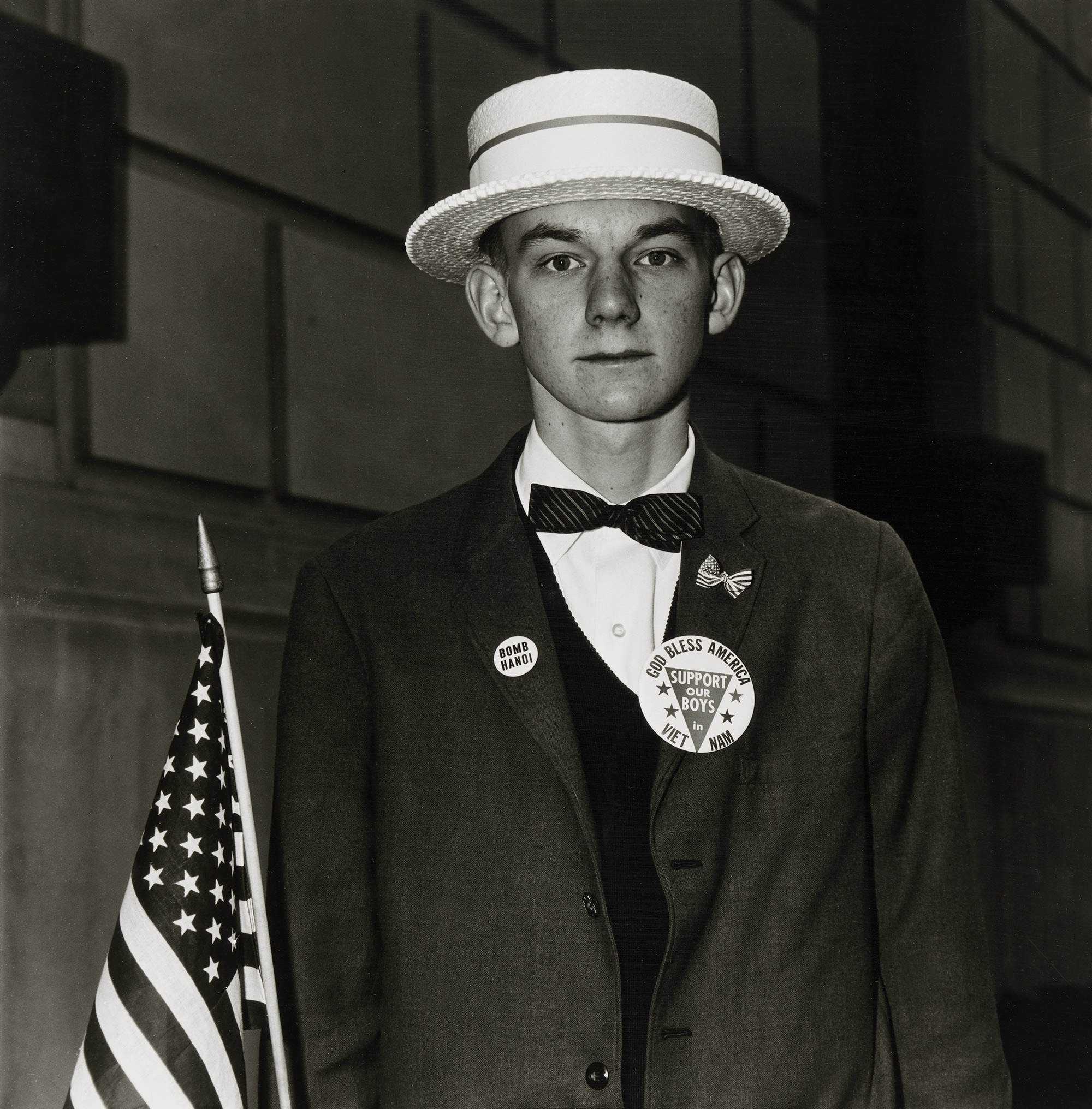
Diane Arbus (American, 1923-1971) 'Boy with a straw hat waiting to march in a pro-war parade, N.Y.C., 1967' 1967


Diane Arbus (American, 1923-1971)
Boy with a straw hat waiting to march in a pro-war parade, N.Y.C., 1967
1967
Gelatin silver print


Diane Arbus (American, 1923-1971) 'A young Brooklyn family going for a Sunday outing, NYC., 1966' 1966


Diane Arbus (American, 1923-1971)
A young Brooklyn family going for a Sunday outing, NYC., 1966
1966
Gelatin silver print


Diane Arbus (American, 1923-1971) 'A child crying, N.J.' 1967


Diane Arbus (American, 1923-1971)
A child crying, N.J.
1967
Gelatin silver print


Diane Arbus (American, 1923-1971) 'A young man and his pregnant wife in Washington Square Park, N.Y.C., 1965' 1965


Diane Arbus (American, 1923-1971)
A young man and his pregnant wife in Washington Square Park, N.Y.C., 1965
1965
Gelatin silver print


Diane Arbus (American, 1923-1971) 'Untitled (1)' 1970-1971


Diane Arbus (American, 1923-1971)
Untitled (1)
1970-1971
Gelatin silver print


Diane Arbus (American, 1923-1971) 'Untitled (1)' 1970-1971


Diane Arbus (American, 1923-1971)
Untitled
1970-1971
Gelatin silver print


National Museum of Wales, Cardiff
Cathays Park, Cardiff CF10 3NP

Opening hours:
Tuesday – Sunday, 10 – 5pm

National Museum of Wales website

LIKE ART BLART ON FACEBOOK

Back to top

Two exhibitions by photographer John Wood: ‘On the Edge of Clear Meaning’ at Grey Art Gallery, New York and ‘Quiet Protest’ at the International Center of Photography, New York

Exhibition dates: Grey Art Gallery, 12th May – 18th July, 2009; International Center of Photography, 15th May – 6th September, 2009


Fantastic to see such a talented artist, a truly ground breaking artist, get the recognition he so richly deserves!


Grey Art Gallery

John Wood (American, 1922-2012) 'Untitled' 1986-1989 from the exhibition 'On the Edge of Clear Meaning' at Grey Art Gallery, New York, May - July, 2009


John Wood (American, 1922-2012)
Untitled
1986-1989
Stained gelatin silver print from paper stencil


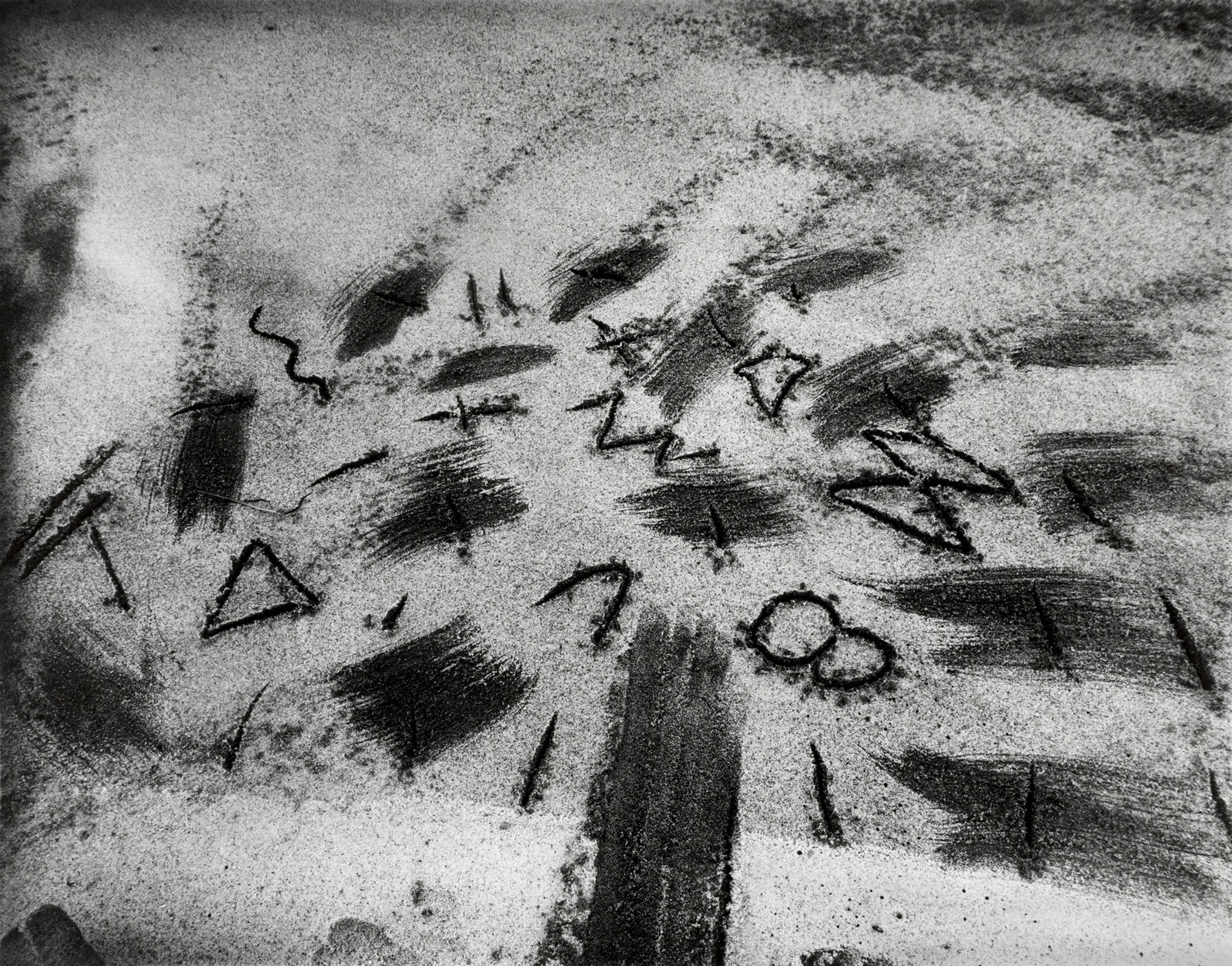
John Wood (American, 1922-2012) 'Beach Drawing' 1983 from the exhibition 'On the Edge of Clear Meaning' at Grey Art Gallery, New York, May - July, 2009


John Wood (American, 1922-2012)
Beach Drawing
1983
Gelatin silver print
14 15/16 x 19 1/8″ (37.8 x 48.5cm)


John Wood: On the Edge of Clear Meaning, on view at the Grey Art Gallery from May 12 through July 18, 2009, is the most comprehensive exhibition of the artist’s work to date. Featuring the full range of his career from the 1960s to the present, the show includes over 150 photographs, mixed-media works, and artists’ books. A selection of Wood’s photomontages, Quiet Protest, will be on view concurrently at the International Center of Photography.

John Wood (born 1922) has consistently challenged traditional photography, often incorporating painting, drawing, and collage as well as cliché verre, solarisation, and offset lithography. The artist emphasises the role of drawing in his work: “Mark making, calligraphy, the kinetic motion of the movement of the hand, are very important to me; probably more important than anything else.” Transgressing the boundaries of “pure photography,” his eclectic practice has helped usher in alternative approaches to the medium. With their adroit manipulations of picture and text, his diaristic, multi-media compositions anticipate today’s digital imagery. On the Edge of Clear Meaning is Wood’s first museum retrospective, spanning his career from the early 1960s to the present.

His early childhood was marked by the Depression, and his family moved frequently. After serving in the Army Air Corps as a B-17 pilot during World War II, he enrolled at the Institute of Design in Chicago. Wood trained as a visual designer and photographer, studying with Harry Callahan and Art Sinsabaugh to hone both conceptual and formal issues in his work. He left Chicago to teach photography and printmaking at the School of Art and Design at Alfred University in Alfred, New York, where he would live for thirty-five years. He now resides in Baltimore, Maryland with his wife, Laurie Snyder, who teaches photography at the Maryland Institute College of Art. They migrate each summer to their home and studio in Ithaca, New York.

In keeping with the Grey Art Gallery’s tradition of presenting the work of under-represented artists, this exhibition introduces John Wood as a master of various multi-media processes and testifies to his insatiable curiosity about new materials and repeated use of favourite sources. Through disciplined but lively investigation of different media, the artist eroded traditional definitions of photography and produced work that is both powerful and subtle. As Lynn Gumpert, Director of the Grey, notes, “John Wood has been a life-long teacher, inspiring and training numerous students, artists, and arts professionals. We are honoured to bring the breadth of his work to New York City, home to many art schools, colleges, and universities.”

Text from the Grey Art Gallery website and press release [Online] Cited 10/05/2009. No longer available online


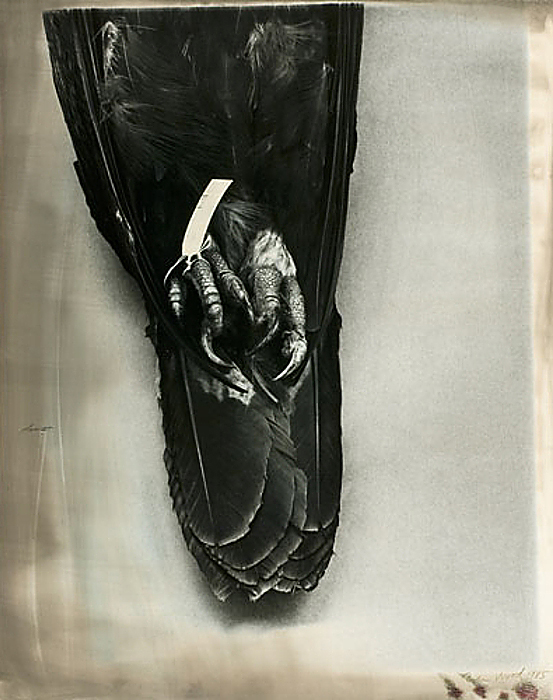
John Wood (American, 1922-2012) 'Eagle Pelt' 1985


John Wood (American, 1922-2012)
Eagle Pelt
1985
Gelatin silver print
20 1/8 x 15 3/8″


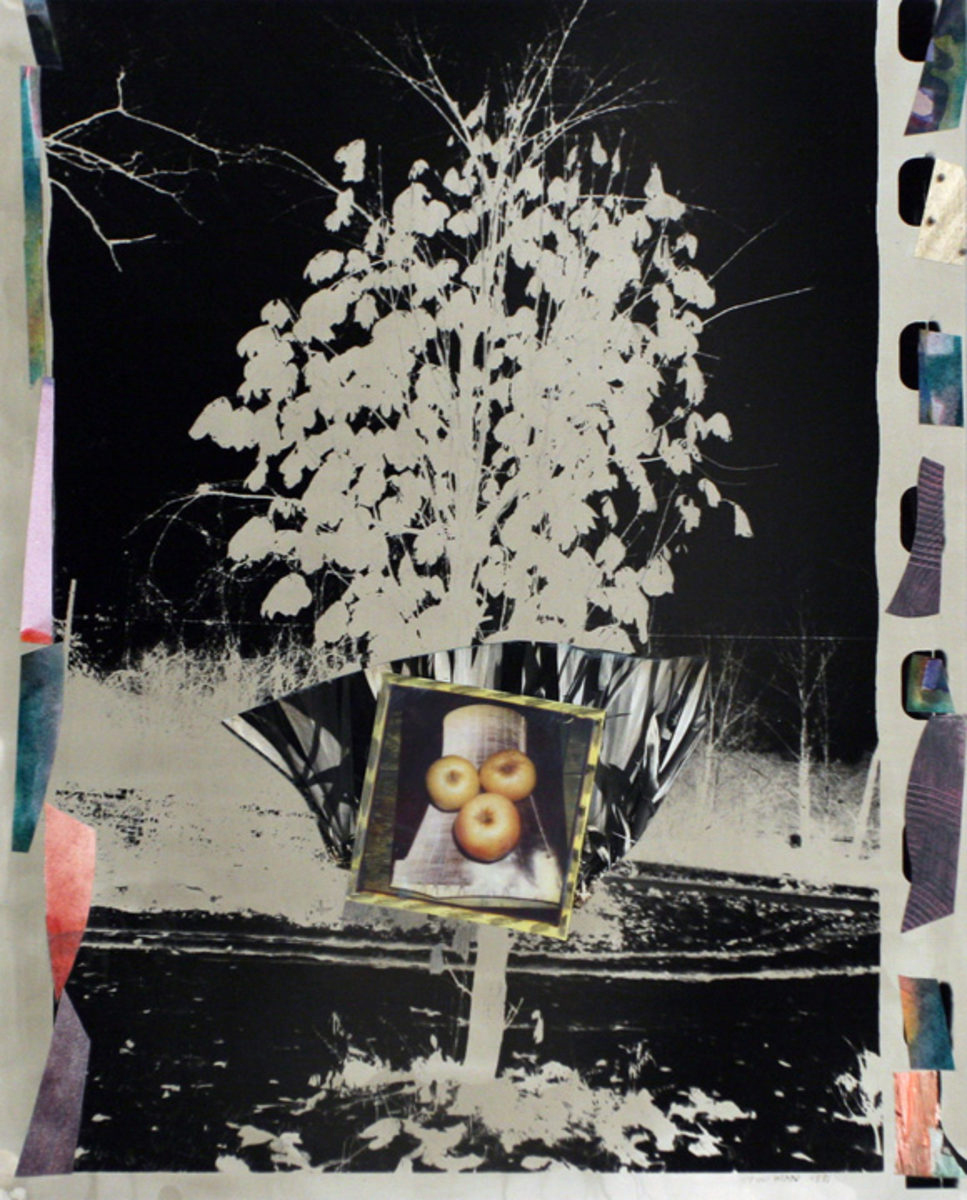
John Wood (American, 1922-2012) 'Pear Tree, Cooling Tower, and Apples' 1991


John Wood (American, 1922-2012)
Pear Tree, Cooling Tower, and Apples
1991
Collage, gelatin silver print, Polaroid SX70, and paper
19 1/4 x 15 3/8″


John Wood (American, 1922-2012) 'Blackbird, Some Have Hunger' 1986


John Wood (American, 1922-2012)
Blackbird, Some Have Hunger
1986
Collage, cyanotype, and graphite
20 x 24″


International Center of Photography

Quiet Protest is a series of photographic works by the noted mixed media artist and educator John Wood, spanning a period from the 1960s through the 1990s. Part of a larger retrospective at New York University’s Grey Art Gallery, the “Quiet Protest” series explores political and social issues of the day through thoughtful photo montage pieces that exist in marked contrast to more traditional aggressive documentary photography. Rather than offering explanations or promoting solutions, Wood’s manipulated photographs present contemplative routes into issues ranging from the Vietnam War to domestic gun violence to ecological concerns. As Wood wrote in 1970, ” …maybe the time has come for creative photography to encompass the large problems without propaganda or journalism…”

Text from the International Center of Photography website [Online] Cited 10/05/2009. No longer available online


John Wood (American, 1922-2012) 'Rifle, Bullets and Daises' 1967 from the exhibition 'Quiet Protest' at the International Center of Photography, New York, May - Sept, 2009


John Wood (American, 1922-2012)
Rifle, Bullets and Daises
1967


John Wood (American, 1922-2012) 'Triangle in the Landscape: Eleven Second 90 Degree Turn of a Paper Triangle' August 6, 1985 (Hiroshima Day) from the exhibition 'Quiet Protest' at the International Center of Photography, New York, May - Sept, 2009


John Wood (American, 1922-2012)
Triangle in the Landscape: Eleven Second 90 Degree Turn of a Paper Triangle
August 6, 1985 (Hiroshima Day)


John Wood (1922-2012)

John Cheney Wood (July 10, 1922 – July 20, 2012) was an American artist and educator who challenged traditional photography and often incorporated other mediums into his work. He was born in California in 1922. In 1943 he volunteered for the Army Air Corps, where he served as a B-17 pilot until 1945. At the time of his death he lived in Baltimore, Maryland, with artist Laurie Snyder.

Wood had the ability to work across a variety of artistic forms, from straight photography, collage, cliché verre, solarization, mixed media, offset lithography to drawing. Wood moved freely between conceptual and visual exploration, not adhering to a single style. Although he often raised questions about political, social and environmental issues, he avoided promoting personal solutions or adding narratives to the images. The artist instead preferred to focus on the viewer’s interpretation and the possibility for multiple meanings.

Text from the Wikipedia website


John Wood (American, 1922-2012) 'Loon, Drawer and Bomb' 1987


John Wood (American, 1922-2012)
Loon, Drawer and Bomb
1987
Collage, cyanotype, and toned silver gelatin print


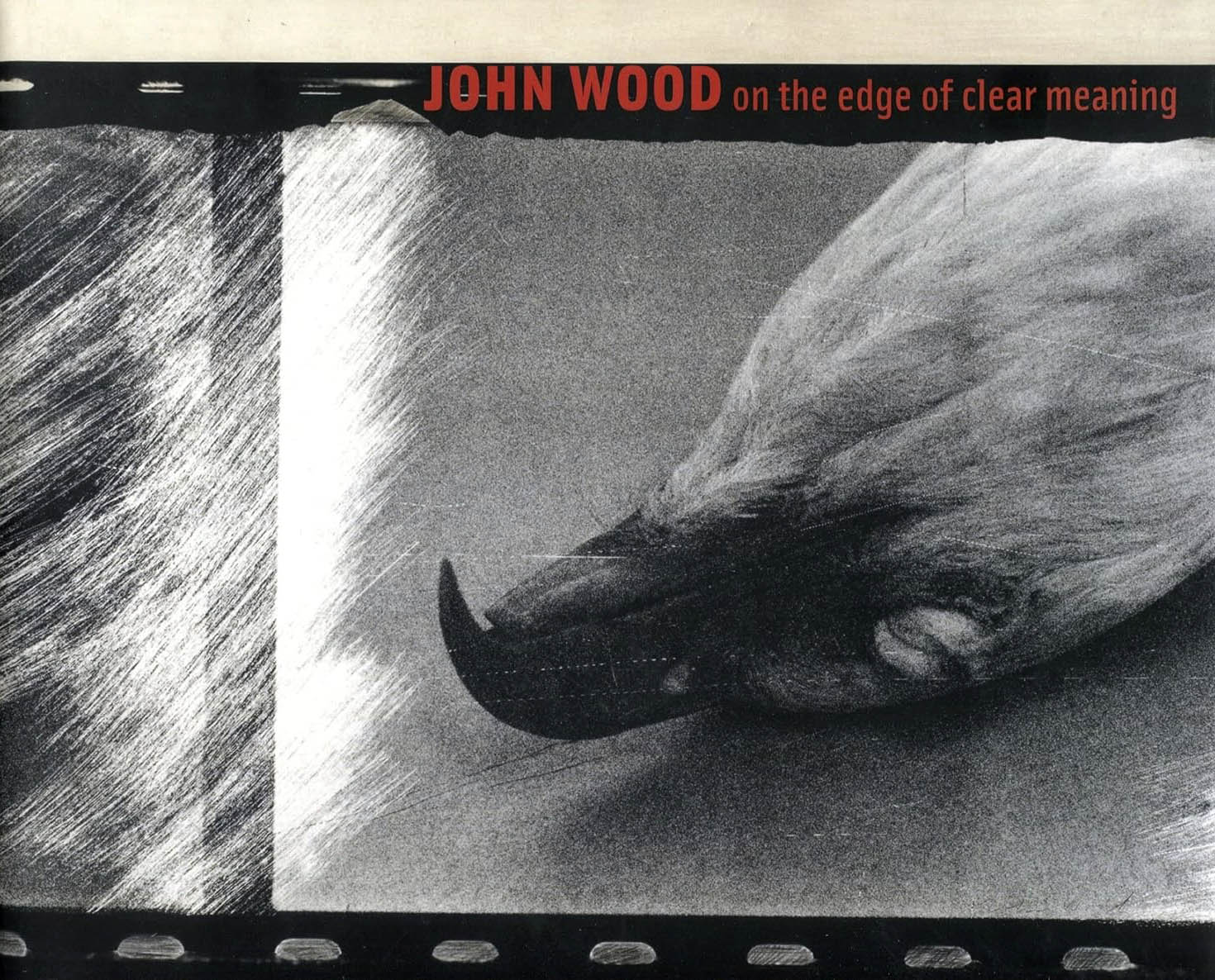
'John Wood: On the Edge of Clear Meaning' book cover


John Wood: On the Edge of Clear Meaning book cover


Book

In his introductory essay to this monograph – featuring the diverse photo practice that has characterised John Wood’s nearly 50-year career – David Levi Strauss states, “In photo-historical terms, Wood is thought of as one of those renegades who went against ‘pure photography’ by incorporating drawing, painting, collage and every other technique he could get his hands on (not to mention explicit political content), into his practice, thus ushering in the multi-media of the 1960s that caused crisis in ‘straight photography.’ Long before it became the signal medium of the avant-garde, collage was a folk art, practiced by children, lovers and grandmothers.” This comprehensive volume accompanies a retrospective that begins in Rochester, New York at The George Eastman House, The Memorial Art Gallery and the Visual Studies Workshop, then travels to The International Center for Photography and The Grey Art Gallery in New York before concluding at Syracus’ Light Work gallery.

John Wood: On the Edge of Clear Meaning by David Strauss et al (Hardcover) 2008

Available from the Amazon website


Grey Art Gallery
New York University
100 Washington Square East

Opening hours:
Monday – Friday: 12.00 – 5.00pm
Closed weekends

Grey Art Gallery website

International Center of Photography
79 Essex Street New York, NY 10002
between Delancey Street and Broome Street

Opening hours:
Wednesday – Monday: 11.00am – 7.00pm
Closed Tuesdays

International Center of Photography website

LIKE ART BLART ON FACEBOOK

Back to top

Exhibition: ‘Helen Levitt: A Memorial Tribute’ at the Laurence Miller Gallery, New York

Exhibition dates: 9th May – 26th June, 2009


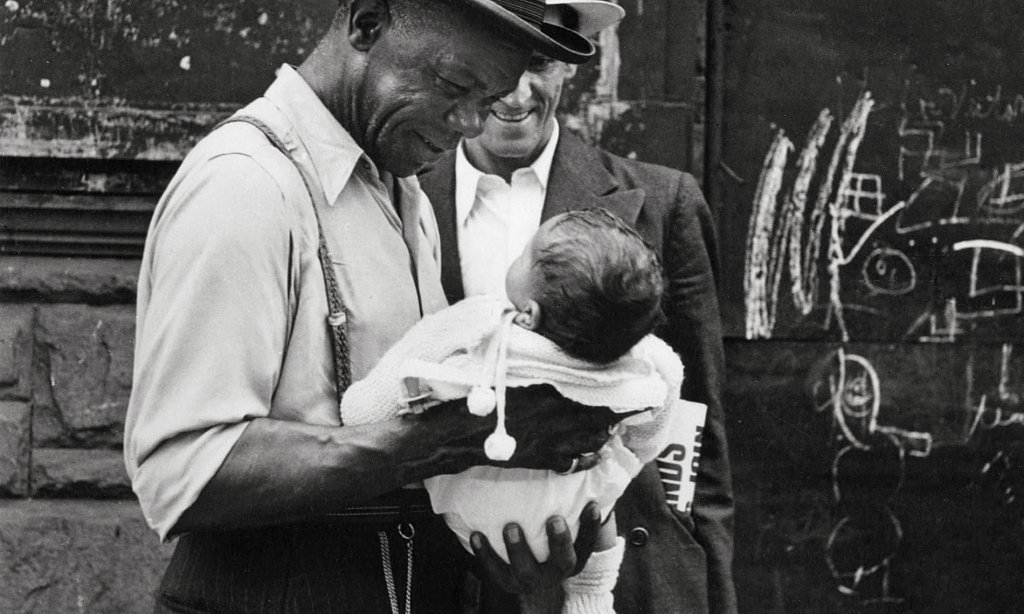
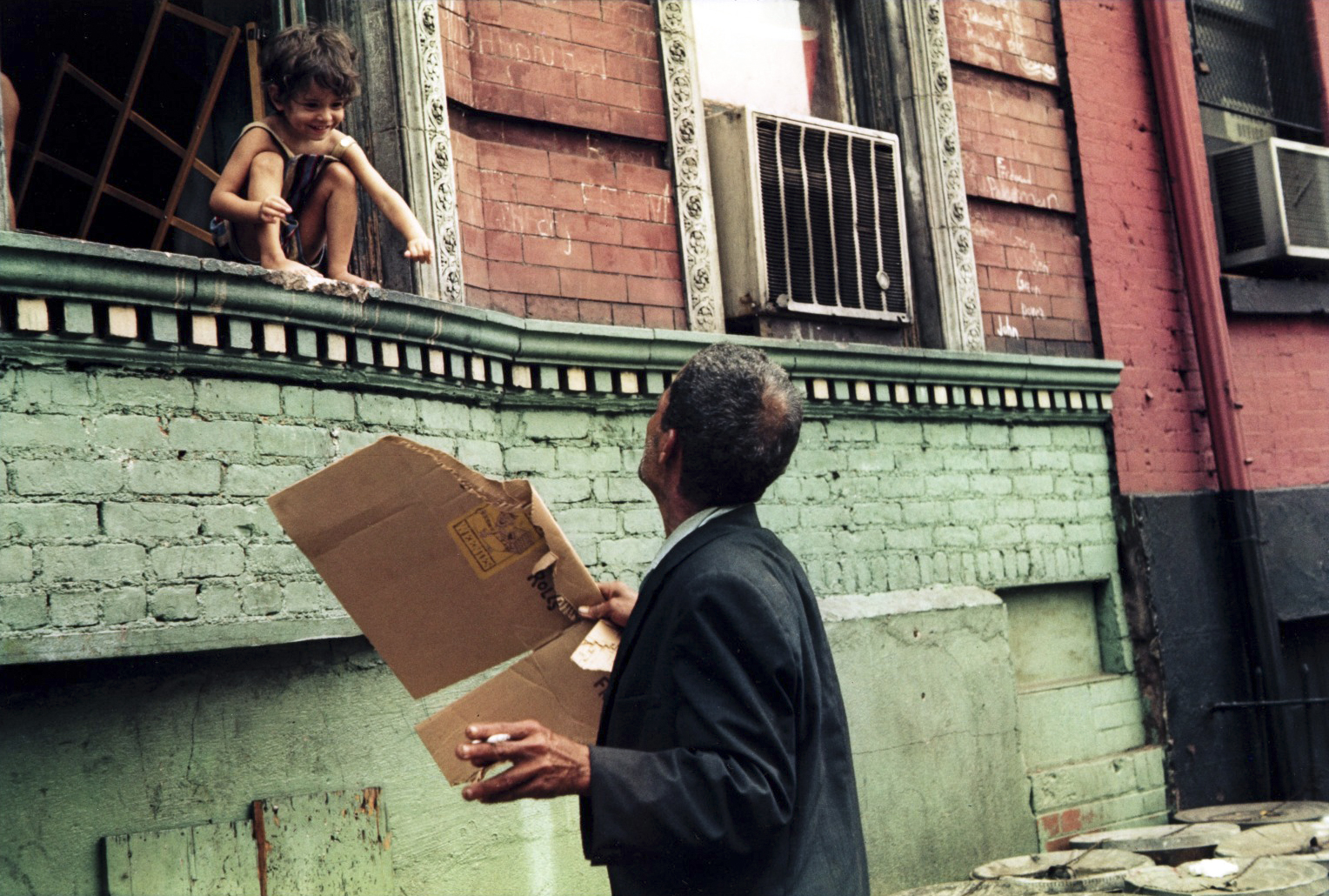
Helen Levitt (American, 1913-2009) 'New York, NY' 1945 from the exhibition 'Helen Levitt: A Memorial Tribute' at the Laurence Miller Gallery, New York, May - June, 2009


Helen Levitt (American, 1913-2009)
New York, NY
1945
Gelatin silver print


Further to my earlier posting about the passing of renowned New York photographer Helen Levitt comes this wonderful exhibition at the Laurence Miller Gallery in New York. How I wish I was in that city to see it – what a joy!

Below are a selection of 1940’s black and white photographs from the exhibition.

Dr Marcus Bunyan


Many thankx to Laurence Miller Gallery for allowing me to publish the photographs in the posting. Please click on the photographs for a larger version of the image.


Helen Levitt (American, 1913-2009) 'Kids Dancing, New York' c. 1940 from the exhibition 'Helen Levitt: A Memorial Tribute' at the Laurence Miller Gallery, New York, May - June, 2009


Helen Levitt (American, 1913-2009)
Kids Dancing, New York
c. 1940
Gelatin silver print


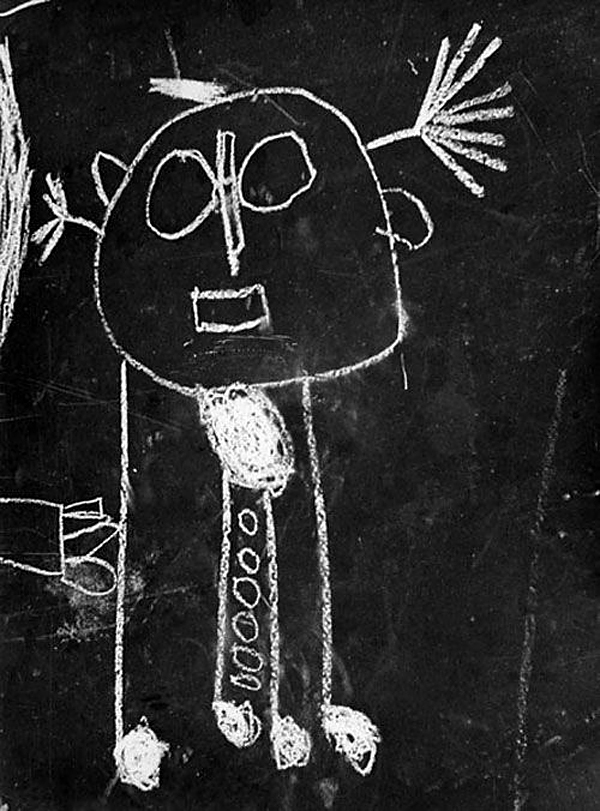
Helen Levitt (American, 1913-2009) 'Kids graffiti, New York' c. 1938


Helen Levitt (American, 1913-2009)
Kids graffiti, New York
c. 1938
Gelatin silver print


Laurence Miller Gallery will present a memorial tribute to Helen Levitt from May 9 – June 26, 2009. Helen Levitt passed away in her Greenwich Village home on March 29, at the age of 95. Ironically, or perhaps fittingly, a show of her work entitled Passages, which Helen had approved, was already in the works, and her death caused a momentary pause in how to proceed. It was decided that Helen would not have wanted her passing to intrude upon best laid plans. Hence, guided by her spirit, we celebrate her legacy with this exhibition, her twelfth at Laurence Miller Gallery.

Helen Levitt: A Memorial Tribute will present a series of passages, in both colour and black-and-white, from her extraordinary 70-year career. Featured will be her pictures of animals, which were among her earliest as well as last pictures taken; a little-known series of portraits taken on the subway using Walker Evans’ camera; children’s street drawings; elderly folks in conversation; and children at play, the photographs for which she is most well-known. Helen Levitt’s classic and rarely seen silent film, In the Street, from 1948, will be shown as well.

One of the tribute’s highlights will be a selection of never-before-exhibited “first proofs.” These early documents of her working methods are often unique. Some are vintage, others were printed as late as the 1970’s, but all were printed by Helen in her bathroom that doubled as the darkroom. Often they are variants of iconic images, and often they are sequences of several shots taken at the same time. They all reveal the photographer’s “dance” as she observes boys climbing up a tree, a large family gathering on the front stoop, two men seated beside a curious cat, or four boys peering into a pool hall. In combination with the film In the Street, the early sequences reinforce her reputation as a cinematographer, and are genuine and valuable records of the working methods of a canny and poetic photographer.”

Text from the Laurence Miller Gallery website [Online] Cited 12/05/2009. No longer available online


In the Street
1948
Directed and edited by Helen Levitt
Cinematography by NYC photographers James Agee, Helen Levitt, Janice Loeb
Re-edited version rereleased by Levitt in 1952 with musical score by Arthur Kleiner
16mm film photographed in Harlem


Helen Levitt (American, 1913-2009) 'New York' c. 1942


Helen Levitt (American, 1913-2009)
New York
c. 1942
Gelatin silver print


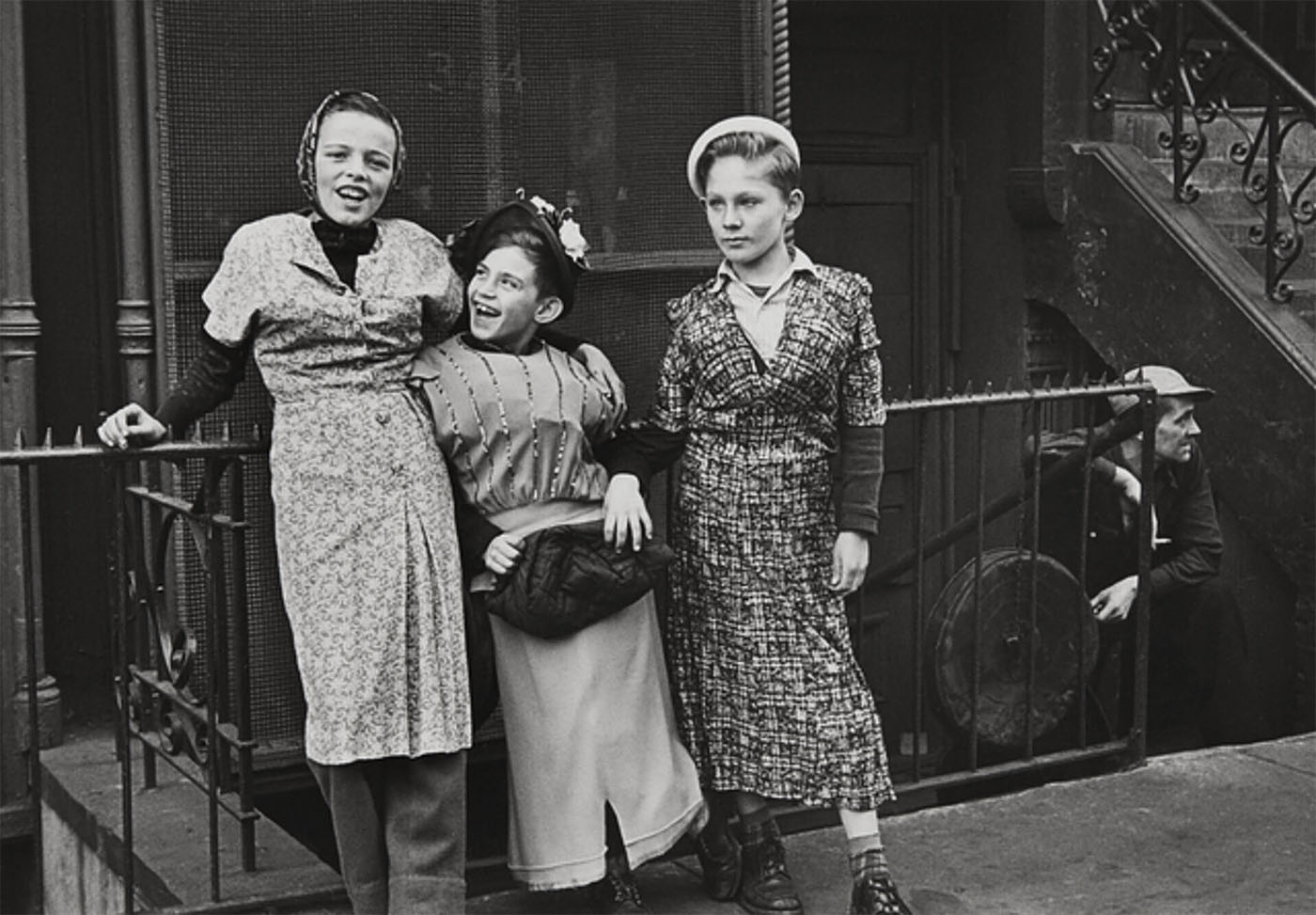
Helen Levitt (American, 1913-2009) 'Three Girls Playing Dress Up, New York' c. 1940


Helen Levitt (American, 1913-2009)
Three Girls Playing Dress Up, New York
c. 1940
Gelatin silver print


Helen Levitt (1913-2009) short biography

Helen Levitt’s playful and poetic photographs, made over the course of sixty years on the streets of New York City, have delighted generations of photographers, students, collectors, curators, and lovers of art in general. The New York Times described her as: “a major photographer of the 20th century who caught fleeting moments of surpassing lyricism, mystery and quiet drama on the streets of her native New York”. Throughout her long career, Helen Levitt’s photographs have consistently reflected her poetic vision, humour, and inventiveness as much as they have honestly portrayed her subjects – men, women, and children acting out a daily drama on the sidewalks and stoops of New York City’s tenements.

She shot and edited the film In the Street with Janice Loeb and James Agee, providing a moving portrait of her still photography. Levitt’s first major museum exhibition was at the Museum of Modern Art in 1943, and a second solo show, of colour work only, was held there in 1974. Major retrospectives of her work have been held at several museums: first in 1991, jointly at the San Francisco Museum of Modern Art and the Metropolitan Museum of Art in New York; in 1997 at the International Center for Photography in New York; and in 2001 at the Centre National la Photographie in Paris.

In 2007 “Helen Levitt: Un Art de l’accident poetique” opened at the Fondation Henri Cartier-Bresson in Paris; in 2008, the Sprengel Museum, Hannover, Germany chose Ms. Levitt as the recipient for the Spectrum International Photography Prize which was accompanied by a major retrospective; and FOAM Museum Amsterdam, mounted another major retrospective in October, 2008. She was a 2008 recipient of the Francis Greenburger award for excellence in the arts.

Text from the Laurence Miller Gallery website [Online] Cited 29/01/2019


Helen Levitt (American, 1913-2009) 'New York [Children with Soap Bubbles, New York City]' c. 1940


Helen Levitt (American, 1913-2009)
New York [Children with Soap Bubbles, New York City]
c. 1940
Gelatin silver print


Helen Levitt (American, 1913-2009) 'New York' c. 1940


Helen Levitt (American, 1913-2009)
New York
c. 1940
Gelatin silver print


Helen Levitt (American, 1913-2009) 'Kid in Tree with Mask, New York' c. 1942


Helen Levitt (American, 1913-2009)
Kid in Tree with Mask, New York
c. 1942
Gelatin silver print


Laurence Miller Gallery

Laurence Miller Gallery is now operating as a private dealer and consultant with no physical exhibition space.

Laurence Miller Gallery website

LIKE ART BLART ON FACEBOOK

Back to top

Exhibition: ‘Frida Kahlo: Through the Lens of Nickolas Muray’ at the Albright-Knox Art Gallery, Buffalo NY

Exhibition dates: 8th May – 5th July, 2009


Nickolas Muray (American, 1892-1965) 'Frida with Olmeca Figurine, Coyoacan' 1939 from the exhibition 'Frida Kahlo: Through the Lens of Nickolas Muray' at the Albright-Knox Art Gallery, Buffalo NY, May - July, 2009


Nickolas Muray (American, 1892-1965)
Frida with Olmeca Figurine, Coyoacan
1939
Colour print, assembly (Carbro) process


Forty-seven exquisite colour and black-and-white photographs of the Mexican artist Frida Kahlo by the American photographer Nickolas Muray are featured in this exhibition organised and circulated by Smith Kramer Fine Art Services. Muray and Kahlo first met in Mexico in 1931 and soon began a love affair that lasted ten years and continued as an enduring friendship throughout their lives. The photographs, selected from the Nickolas Muray Archives, capture the exotic mystery and proud beauty of Frida Kahlo through the eyes of this accomplished portrait photographer, who loved her deeply. Organised at the Albright-Knox by Associate Curator Holly E. Hughes, the exhibition will also include reproductions of Kahlo’s letters to Muray, explanatory wall texts, and an educational brochure.

Text from the Albright-Knox Art Gallery website [Online] Cited 01/05/2009. No longer available online


Many thankx to the Albright-Knox Art Gallery for allowing me to publish the photographs in the posting. Please click on the photographs for a larger version of the image.


Nickolas Muray (American, 1892-1965) 'Frida, Mexico, 1940' c. 1940 from the exhibition 'Frida Kahlo: Through the Lens of Nickolas Muray' at the Albright-Knox Art Gallery, Buffalo NY, May - July, 2009


Nickolas Muray (American, 1892-1965)
Frida, Mexico, 1940
c. 1940
Colour print, assembly (Carbro) process


Nickolas Muray (American, 1892-1965) 'Frida with her sister Cristina, Nickolas Muray, and Rosa Covarrubias, Coyoacán' 1939


Nickolas Muray (American, 1892-1965)
Frida with her sister Cristina, Nickolas Muray, and Rosa Covarrubias, Coyoacán
1939
Colour print, assembly (Carbro) process


Nickolas Muray (American, 1892-1965) 'Frida Painting the Two Fridas, Coyoacan' 1939


Nickolas Muray (American, 1892-1965)
Frida Painting the Two Fridas, Coyoacan
1939
Silver gelatin print


Nickolas Muray (American, 1892-1965) 'Frida with Nick in her Studio, Coyoacán' 1941


Nickolas Muray (American, 1892-1965)
Frida with Nick in her Studio, Coyoacán
1941
Silver gelatin print


Nickolas Muray (American, 1892-1965) 'Frida with Granizo, Coyoacán' 1939


Nickolas Muray (American, 1892-1965)
Frida with Granizo, Coyoacán
1939
Silver gelatin print


Nickolas Muray (American, 1892-1965) 'Frida in the Dining Area, Coyoacán' 1941


Nickolas Muray (American, 1892-1965)
Frida in the Dining Area, Coyoacán
1941
Gelatin silver print


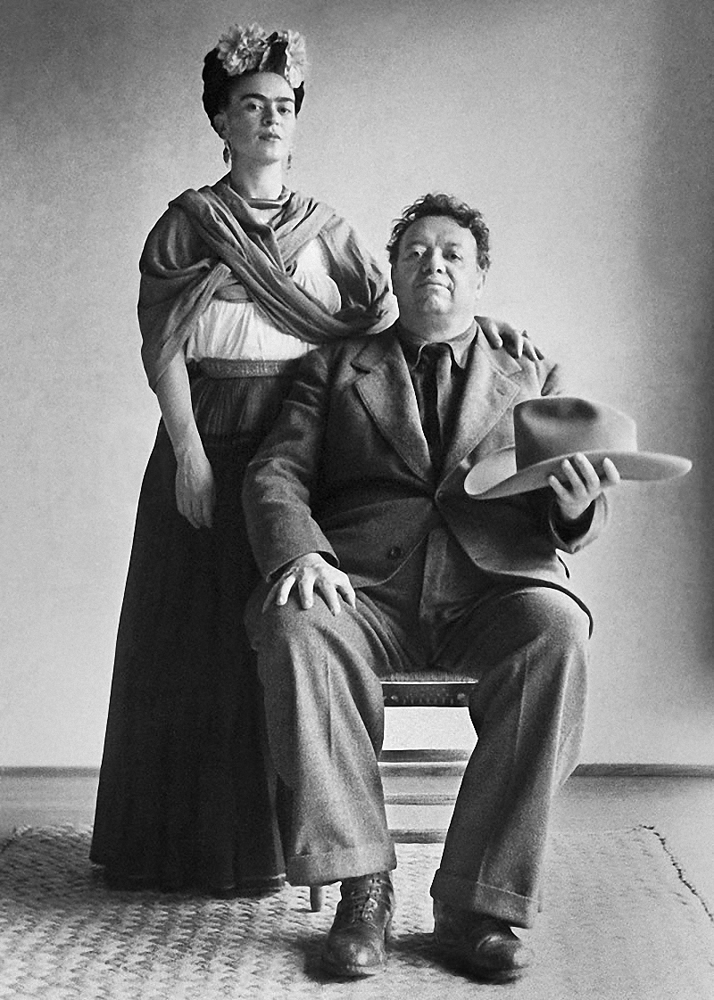
Nickolas Muray (American, 1892-1965) 'Frida and Diego, San Angel' 1941


Nickolas Muray (American, 1892-1965)
Frida and Diego, San Angel
1941
Gelatin silver print


Nickolas Muray (American, 1892-1965) 'Frida Kahlo' c. 1940


Nickolas Muray (American, 1892-1965)
Frida Kahlo
c. 1940
Colour print, assembly (Carbro) process


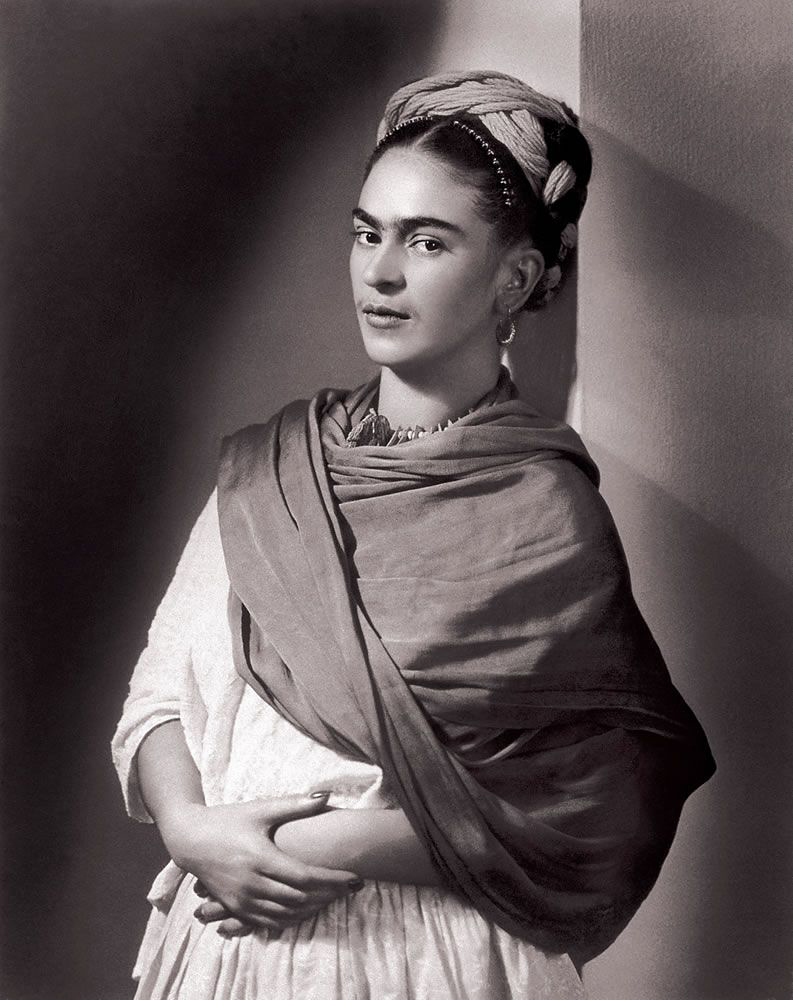
Nickolas Muray (American, 1892-1965) 'The Breton Portrait' 1939


Nickolas Muray (American, 1892-1965)
The Breton Portrait
1939
Silver gelatin print


Nickolas Muray (American, 1892-1965) 'Frida with Magenta Rebozo, New York' 1939


Nickolas Muray (American, 1892-1965)
Frida with Magenta Rebozo, New York
1939
Colour print, assembly (Carbro) process


Nickolas Muray (American, 1892-1965) 'Frida with Magenta Rebozo, New York' 1939


Nickolas Muray (American, 1892-1965)
Frida with Magenta Rebozo, New York
1939
Colour print, assembly (Carbro) process


Nickolas Muray

In 1913, with the threat of war in Europe, Muray sailed to New York City, and was able to find work as a colour printer in Brooklyn.

By 1920, Muray had opened a portrait studio at his home in Greenwich Village, while still working at his union job as an engraver. In 1921 he received a commission from Harper’s Bazaar to do a portrait of the Broadway actress Florence Reed; soon after he was having photographs published each month in Harper’s Bazaar, and was able to give up his engraving job. In 1922 he also made a portrait of the dancer Desha Delteil.

Muray quickly became recognised as an important portrait photographer, and his subjects included most of the celebrities of New York City. In 1926, Vanity Fair sent Muray to London, Paris, and Berlin to photograph celebrities, and in 1929 hired him to photograph movie stars in Hollywood. He also did fashion and advertising work. Muray’s images were published in many other publications, including Vogue, Ladies’ Home Journal, and The New York Times.

Between 1920 and 1940, Muray made over 10,000 portraits. His 1938 portrait of Frida Kahlo, made while Kahlo sojourned in New York, attending her exhibit at the Julien Levy Gallery, became the best known and loved portrait made by Muray. Muray and Kahlo were at the height of a ten-year love affair in 1939 when the portrait was made. Their affair had started in 1931, after Muray was divorced from his second wife and shortly after Kahlo’s marriage to Mexican muralist painter Diego Rivera. It outlived Muray’s third marriage and Kahlo’s divorce and remarriage to Rivera by one year, ending in 1941. Muray wanted to marry, but when it became apparent that Kahlo wanted Muray as a lover, not a husband, Muray took his leave for good and married his fourth wife, Peggy Muray. He and Kahlo remained good friends until her death, in 1954.

After the market crash, Muray turned away from celebrity and theatrical portraiture, and become a pioneering commercial photographer, famous for his creation of many of the conventions of colour advertising. He was considered the master of the three-color carbro process. His last important public portraits were of Dwight David Eisenhower in the 1950s.

Text from the Wikipedia website


Nickolas Muray (American, 1892-1965) 'Frida With Hand at Her Throat, Mexico City' 1940


Nickolas Muray (American, 1892-1965)
Frida With Hand at Her Throat, Mexico City
1940
Colour print, assembly (Carbro) process


Nickolas Muray (American, 1892-1965) 'Frida leaning on a sculpture by Mardonio Magaña, Coyoacán, Mexico' 1940


Nickolas Muray (American, 1892-1965)
Frida leaning on a sculpture by Mardonio Magaña, Coyoacán, Mexico
1940
Colour print, assembly (Carbro) process


Nickolas Muray (American, 1892-1965) 'Frida in Pink and Green Blouse, Coyoacán' 1938


Nickolas Muray (American, 1892-1965)
Frida in Pink and Green Blouse, Coyoacán
1938
Colour print, assembly (Carbro) process


Nickolas Muray (American, 1892-1965) 'Friday on White Bench, New York' 1939


Nickolas Muray (American, 1892-1965)
Frida on White Bench, New York
1939
Colour print, assembly (Carbro) process


An exhibition of photographs of the acclaimed Mexican artist Frida Kahlo taken by her friend and lover, the internationally renowned portrait photographer Nickolas Muray (1892-1965), will be on view at the Albright-Knox Art Gallery from May 8 through July 5, 2009. Frida Kahlo: Through the Lens of Nickolas Muray, From the Collection of the Nickolas Muray Archives celebrates Kahlo’s life and work and comprises approximately fifty colour and black-and-white photographs, along with archival material, including excerpts from letters between Kahlo and Muray. The installation in Buffalo will feature Frida Kahlo’s Self- Portrait with Monkey, 1938, from the Albright-Knox Art Gallery’s Permanent Collection.

Born in Hungary in 1892, Nickolas Muray came to the United States in 1913, marking the beginning of his forty-five-year career living and working in New York City. Originally hired by Condé Nast Publications to prepare illustrations for magazines, in 1920 Muray set up a photography studio at his home in Greenwich Village. Following an assignment in 1921 for Harper’s Bazaar magazine to photograph the Broadway star Florence Reed, Muray’s career as a portrait and celebrity photographer took off. Soon he was photographing “everybody who was anybody” and his work was regularly featured in such publications as Vanity Fair, Vogue, and Ladies’ Home Journal.

Nickolas Muray and Frida Kahlo first met in Mexico in 1931 and soon began a love affair that lasted ten years and continued as a friendship that endured all their lives. The images included in this exhibition, dating from 1937 to 1940, were taken during the height of the couple’s on-again, off-again, ten-year love affair. The photographs included were selected from the Nickolas Muray Archives and capture the exotic mystery and proud beauty of Frida Kahlo through the eyes of this accomplished portrait photographer who loved her deeply.

Text from the Artdaily.org website


Frida Kahlo (Mexican, 1907-1954) 'Self-Portrait with Monkey' 1938


Frida Kahlo (Mexican, 1907-1954)
Self-Portrait with Monkey
1938
Oil on masonite
40.6 cm × 30.5cm (16.0 in × 12.0 in)
Albright-Knox Art Gallery, Buffalo, New York


Of her 143 self-portraits, 55 include Kahlo’s pets. It is as though she saw them as an extension of her own self and being. Spider monkeys are known to have long, spindly legs and arms that look almost disproportionate to their body. Their strange appearance may have reflected Kahlo’s own discomfort with her physical body. Having contracted polio at an early age, she had one leg that was thinner than the other. She used colourful, large skirts to cover the disfigurement.

Kahlo doted on her pet monkeys. In her self-portraits, they are often shown sitting close to her, physically enfolding or grasping her in some way. They appear to be protective, friendly and gentle.

In many cultures, monkeys are used to symbolise lascivious, or primal behaviour. They are a mirror image of man, reminding him of his animal nature and close proximity to the natural world. Through monkeys, man sees his own connection to the animal kingdom with its uncontrollable, primal urges. In renaissance art, fettered monkeys were often used to symbolise men who are entrapped or bound by their desires.

In Kahlo’s paintings, monkeys do not appear in this way. They are more gentle, child-like and tender. Partially due to their wild natures, monkeys are often associated with fertility or lust in Mexican mythology. Kahlo’s trust and connection with her pets may have been in part due to her own feelings of inadequacy and frustration around her inability to carry to children. One of the reasons feminists celebrate Kahlo’s work is her unabashed claim to her own sexuality. She was not afraid to acknowledge her own sexual feelings or desires.

In Kahlo’s painting, the monkeys appear loyal. It feels as though Kahlo is connected with the creatures in some way. There is a bond there. Never the less, the monkeys also often appear by Kahlo’s shoulder or back, reflecting the image of a ‘monkey on your back’, a phrase commonly used to describe a problem or burden of some kind. With their association with animal nature, disfigured or primal humanity and lascivious primal urges, Kahlo may have felt at once supported by and burdened by her connection to her animal ancestors.

Extract from Kitty Jackson. “Symbolism in Art: Frida Kahlo – Self Portrait with Monkey,” on the ArtDependence Magazine website, September 4, 2017 [Online] Cited 20/01/2019


Nickolas Muray (American, 1892-1965) 'Frida in Front of the Cactus Organ Fence, San Angel' 1938


Nickolas Muray (American, 1892-1965)
Frida in Front of the Cactus Organ Fence, San Angel
1938
Colour print, assembly (Carbro) process


Nickolas Muray (American, 1892-1965) 'Frida with Blue Satin Blouse, New York' 1939


Nickolas Muray (American, 1892-1965)
Frida with Blue Satin Blouse, New York
1939
Colour print, assembly (Carbro) process


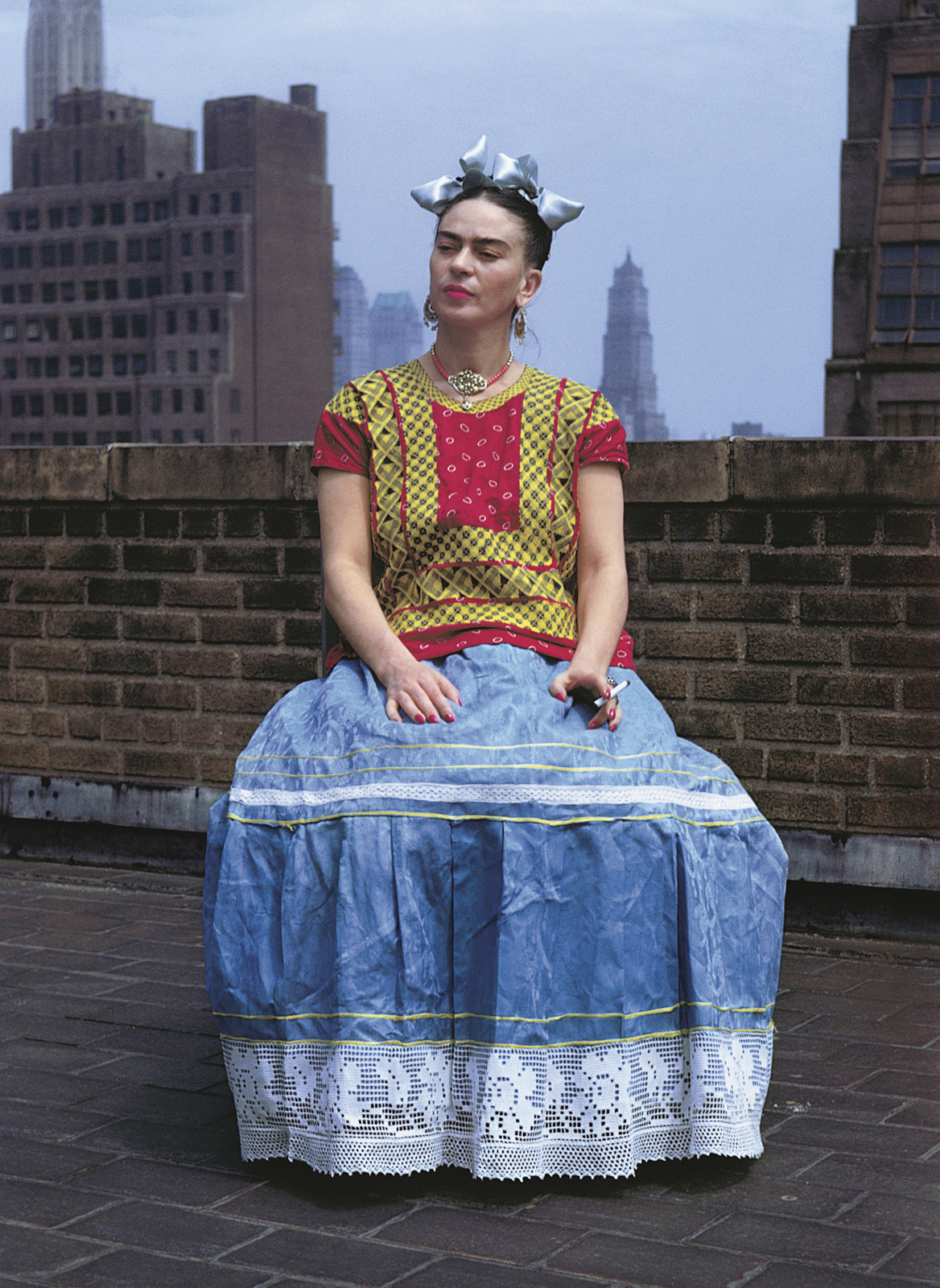
Nickolas Muray (American, 1892-1965) 'Frida on Rooftop, New York' 1946


Nickolas Muray (American, 1892-1965)
Frida on Rooftop, New York
1946
Colour print, assembly (Carbro) process


Nickolas Muray (American, 1892-1965) 'Cristina and Frida, New York' 1946


Nickolas Muray (American, 1892-1965)
Cristina and Frida, New York
1946
Colour print, assembly (Carbro) process


Albright-Knox Art Gallery
1285 Elmwood Avenue
Buffalo, New York 14222-1096

Opening hours:
Tuesday – Sunday 10am – 5pm
Closed Mondays, Tuesdays, and Independence, Thanksgiving, Christmas, and New Year’s Days

Albright-Knox Art Gallery website

LIKE ART BLART ON FACEBOOK

Back to top

Vale Helen Levitt: Always ‘Here and There’

April 2009


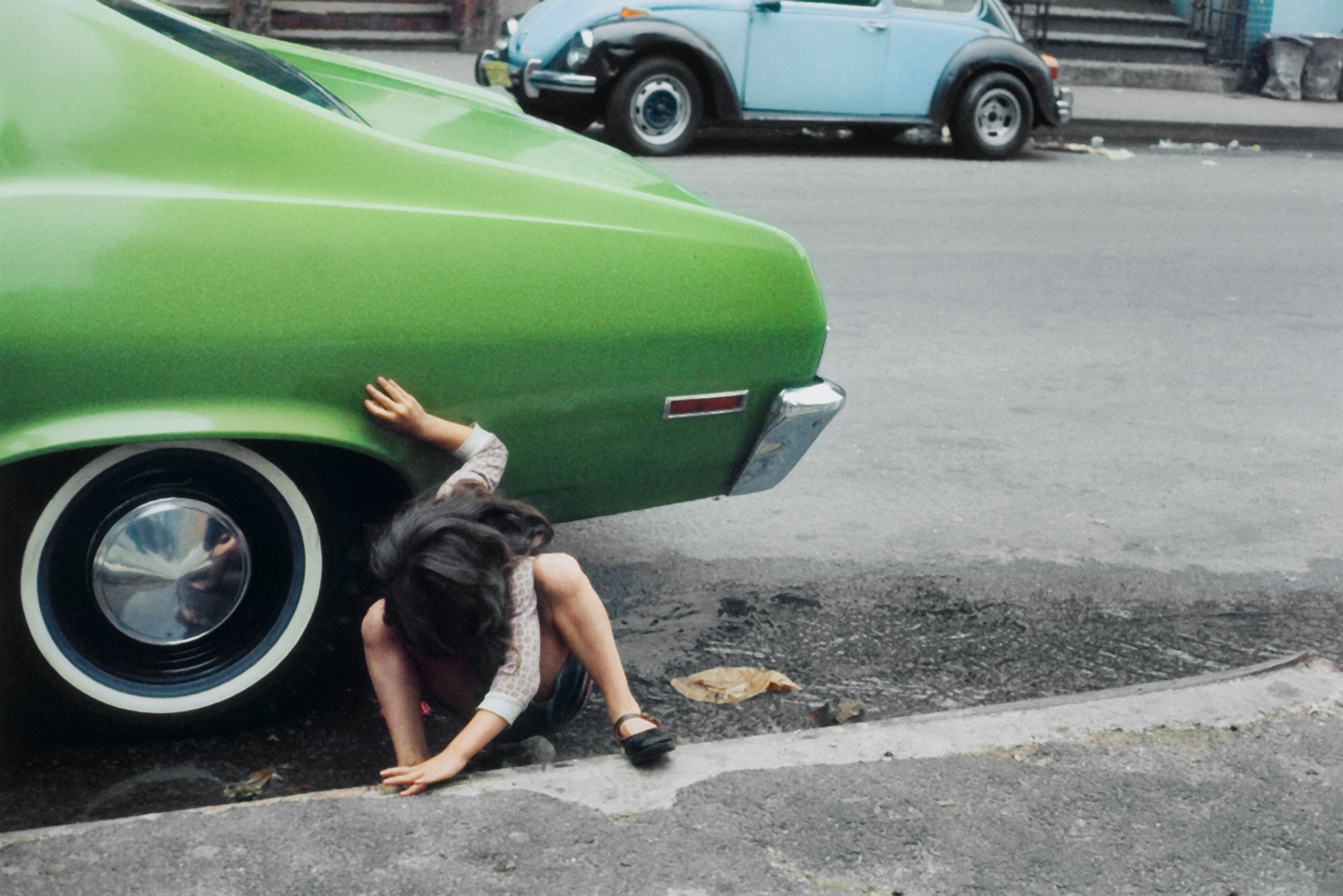
Helen Levitt (American, 1913-2009) 'New York' c. 1971


Helen Levitt (American, 1913-2009)
New York
c. 1971
© Helen Levitt


“For the perfect flaneur, for the passionate spectator, it is an immense joy to set up house in the heart of the multitude, amid the ebb and flow of movement, in the midst of the fugitive and infinite. To be away from home and yet to feel oneself everywhere at home; to see the world, to be at the centre of the world, and yet to remain hidden from the world … Thus the lover of universal life enters into the crowd as though it were an immense reservoir of electrical energy …”


Charles Baudelaire. The Painter of Modern Life 1863


“At least a dozen of Helen Levitt’s photographs seem to me as beautiful, perceptive, satisfying, and enduring as any lyrical work that I know. In their general quality and coherence, moreover, the photographs as a whole body, as a book, seem to me to combine into a unified view of the world, an uninsistent but irrefutable manifesto of a way of seeing, and in a gently and wholly unpretentious way, a major poetic work.”


James Agee


Speaking of pioneers of colour photography the wonderful American photographer Helen Levitt died recently at the end of March. Here is a selection of her colour work from the 1970s – 1980s. With two Guggenheim Foundation grants in 1959 and 1960 she switched from black and white to colour dye-transfer prints photographing the theatre of the street, the serendipity of the decisive moment previsualised and captured through awareness and an intimate knowledge of her subject matter. Unfortunately in a burglary in 1970 most of her colour transparencies and prints were stolen from that initial period.

What remains, as Sally Mann would say, are the eloquent bones of the matter: superb lush colour photographs taken after 1970 that engage the viewer not in memory but in the moment, not in nostalgia but in joy. In colour she found “beauty in correspondences.”

Dr Marcus Bunyan


Please click on some of the photographs for a larger version of the image.


Helen Levitt (American, 1913-2009) 'New York' c. 1971


Helen Levitt (American, 1913-2009)
New York
c. 1971
© Helen Levitt


Helen Levitt (American, 1913-2009) 'New York' 1972


Helen Levitt (American, 1913-2009)
New York
1972
© Helen Levitt


Helen Levitt (American, 1913-2009) 'New York' c. 1971


Helen Levitt (American, 1913-2009)
New York
c. 1971


Helen Levitt (American, 1913-2009) 'New York' 1971


Helen Levitt (American, 1913-2009)
New York
1971
© Helen Levitt


Helen Levitt

… Her pictures were mostly of Spanish Harlem and the Lower East Side. She shot them in black and white, as silver gelatin prints, in the 1930s and 1940s and in colour dye-transfer prints in the 1960s and 1970s. In between, she got into movie-making for a while. Her theme was the same, the streets of New York. Apart from a trip in 1941 to Mexico City, she never found a better subject in her life.

The grittier parts were her particular joy. Her world was run-down streets, rubble-filled building sites, warehouses and litter-strewn front steps. This was urban photography with a vengeance: small scraps of sky, no trees. When she was going with Walker Evans in 1938, borrowing his camera as well (“of course”) as sleeping with him, he used to be afraid of going as far uptown as she did. Some of her young male subjects, lounging around in their zoot suits and fedoras, had an unmistakable air of menace. But mostly she brought back images of gossiping women and her favourite, scrambling children. A right-angle viewfinder allowed her to take the picture without them knowing, even, as Evans showed her, when riding right beside them in the subway.

Here and there

Her birthplace was in Brooklyn, where her father was in the wholesale knitwear business. She aspired to something more artistic, but found she couldn’t draw. For a time she trained in ballet, which taught her to appreciate the musculature of posing bodies and the spontaneous grace of her child subjects. After dropping out of high school she went to work in the darkroom of Florian Mitchell’s commercial portrait-photography studio on $6 a week. There she was hooked.

A good image, she thought, was just lucky. But her New Yorker’s instinct seemed to tell her exactly where to wait for one. A broken-down car would soon attract people to lie under it, peer under the hood or try to push it. A cane chair, put out on the sidewalk, would draw an elderly man with cigar and newspaper, or a plump young woman in a housecoat wilting in the heat. With luck dogs would come out too, rough-haired mutts or poodles with fresh-shampooed coats. The open back of a truck would reveal delivery men moping on piles of sacks, or dozing among pink and blue bales of cloth. Any abandoned thing – a tea-chest, a mirror frame, the pillared entry of an empty building – would soon sport knots of children diving in, climbing up, fighting and contorting their small bodies in every kind of way.

Her pictures did not have names. “New York”, and the year, was the label on most of them. They did not need explaining; they were “just what you see”. Many had a backdrop of posters, graffiti or billboards, which gave a commentary of sorts. “Special Spaghetti 25 cents.” “Post No Bills.” “Nuts roasted daily.” “Buttons and Notions, One Flight Up.” “Bill Jones Mother is a Hore.” Her earliest project with her first, secondhand camera was to photograph children’s chalk drawings on the pavements. She never tried to speculate on them. What mattered was the patterns they made.

In the 1960s, when she got two Guggenheim grants, she began to shoot the streets in colour. The tricky developing ultimately frustrated her, and the streets, too, had changed. The children had retreated indoors to watch television. But where she had found grace and texture in black and white, colour now provided beauty in correspondences. The multi-coloured balls in bubble-gum machines could be picked up in a girl’s dress, or the red of a stiletto shoe matched with the frame of a shop window. Her broken-down cars were now lurid beasts against the stucco walls. And out of her peeling, greenish doorways could come women in furs, or pink hair-curlers, or orange-striped socks.

She did not rate her own work highly. Though her original prints eventually sold for tens of thousands of dollars, she let them pile up in her apartment in boxes labelled “Nothing good” or “Here and there”. Her hopes when she started were for photographs that would make a socialist statement of some sort, but she abandoned that on Cartier-Bresson’s advice. A “nice picture”, as she reluctantly admitted some of hers were, was a work of art that had value in itself, as well as a celebration of the random, teeming work of art that is the city of New York.

Anonymous. “Helen Levitt,” on The Economist website April 8th 2009 [Online] Cited 16/04/2009. No longer available online


Helen Levitt (American, 1913-2009) 'New York' c. 1972


Helen Levitt (American, 1913-2009)
New York
c. 1972
© Helen Levitt


Helen Levitt (American, 1913-2009) 'New York' c. 1972


Helen Levitt (American, 1913-2009)
New York
c. 1972
© Helen Levitt


Helen Levitt (American, 1913-2009) 'New York' 1972


Helen Levitt (American, 1913-2009)
New York
1972
© Helen Levitt


Helen Levitt (American, 1913-2009) 'New York' 1980


Helen Levitt (American, 1913-2009)
New York
1980
© Helen Levitt


Helen Levitt (American, 1913-2009) 'New York' 1971


Helen Levitt (American, 1913-2009)
New York
1971
© Helen Levitt


Slide Show: The Color Photographs of Helen Levitt by John Szarkowski, Powerhouse Books, 2005 is available from the Amazon website. The photograph above is used on the cover of the book.

LIKE ART BLART ON FACEBOOK

Back to top

Exhibition: ‘Paul Outerbridge: New Color Photographs from Mexico and California’ at the Downtown Central Library, Los Angeles

Exhibition dates: 28th March – 28th June, 2009

Curated by William Ewing and Phillip Prodger


Paul Outerbridge. 'Women by Car, Laguna Beach, California' c. 1950


Paul Outerbridge (American, 1896-1958)
Women by Car, Laguna Beach, California
c. 1950
Pigment dyed digital print
16″ x 20″


“Art is life seen through man’s inner craving for perfection and beauty – his escape from the sordid realities of life into a world of his imagining. Art accounts for at least a third of our civilization, and it is one of the artist’s principal duties to do more than merely record life or nature. To the artist is given the privilege of pointing the way and inspiring towards a better life.”


Paul Outerbridge


If Outerbridge only photographed intermittently after 1943, then what photographs they are. Perhaps some of the most important colour photographs of their generation were made after he moved to California influencing the next generation of colour photographers (as noted below in the press release). What else can one say – his aesthetic sensibility is sensational, so far ahead of his time, so prescient of future colour spaces in photography. I know how “no regular income” feels as an artist, but he still had the courage and vision to make the work. I am in awe of the man: the visual complexity but eloquent simplicity of his photographs is simply amazing, simply… his own.

Dr Marcus Bunyan


Many thankx to the Downtown Central Library for allowing me to publish the photographs in the posting. Please click on the photographs for a larger version of the image.


Recently discovered colour images of California and Mexico taken during the 1940s and 1950s by the late visionary photographer Paul Outerbridge, who was considered “a master of colour photography,” will be exhibited at the Central Library’s First Floor Galleries, 630 W. Fifth St., downtown, from March 28 through June 28 2009.


Paul Outerbridge. 'Balboa Beach, California' c. 1950


Paul Outerbridge (American, 1896-1958)
Balboa Beach, California
c. 1950
Pigment dyed digital print
16″ x 20″


“[Outerbridge] was a designer and illustrator in New York before turning to photography in the 1920s. In 1925, having established himself as an innovative advertising photographer and graphic designer, he moved to Paris and worked for the French edition of Vogue magazine. There he met Edward Steichen, with whom he developed a friendly rivalry. Around 1930, having returned to New York, Outerbridge began to experiment with colour photography, in particular the carbro-colour process. He focused primarily on female nudes – striking, full-colour images that were ahead of their time. The growing popularity of the dye transfer process lead to cheaper color photographs and Outerbridge, who stuck fast to the carbro process as superior in its richness and permanence, saw his commercial work dry up, leaving him without a regular source of income. In 1943 Outerbridge moved to California, where he photographed only intermittently.”

Text from the Getty Museum website [Online] Cited 14/04/2009. No longer available online


Paul Outerbridge (American, 1896-1958) 'Reclining Nude' c. 1937


Paul Outerbridge (American, 1896-1958)
Reclining Nude
c. 1937
Pigment dyed digital print


Paul Outerbridge (American, 1896-1958) 'Motel Bar, Mazatlán, Mexico' c. 1948


Paul Outerbridge (American, 1896-1958)
Motel Bar, Mazatlán, Mexico
c. 1948
Dye transfer print
16″ x 20″


Paul Outerbridge (American, 1896-1958) 'Hotel Lobby, Mazatlán, Mexico' c. 1950


Paul Outerbridge (American, 1896-1958)
Hotel Lobby, Mazatlán, Mexico
c. 1950
Pigment dyed digital print
16″ x 20″


As one of America’s earliest masters of colour photography, Paul Outerbridge established his reputation by making virtuoso carbro-colour prints of nudes and still-lives in the 1930s. As pictures, they are as brilliant and innovative today as when they earned their place as classics in the history of photography.

Outerbridge left New York in the 1940s, choosing to settle in California, and eventually taking up residency in the Mediterranean-style ocean side town of Laguna Beach. Little is known of Outerbridge’s last body of work in the 8 years preceding his death in 1958. But Outerbridge’s recently printed transparencies from the 1950s affirms that he fully understood the possibilities inherent in colour photography despite it being the early days of its use in photographic art. Outerbridge went on to make a body of work that presaged the style and imagery of colour photographers working a full quarter of a century later.

Employing a 35mm camera rather than the large-format equipment of the studio, Outerbridge captured vivid pictures while on the fly. His images were composed using the same precision of form and colour that characterised his 1930s studio work, but, in this series, Outerbridge applied his earlier techniques to the energetic world of the street. This was a new landscape for Outerbridge, who, seeing in the new spectrum of colour, depicted the people and places from his adopted Southern California, and, with great relish and sensitivity, from the Mexican towns just south of the border. In the tradition of such photographers as Edward Weston, Paul Strand, Anton Bruehl, and Henri Cartier-Bresson, all of whom made significant photographic forays into Mexico, Outerbridge ventured south from Laguna. In his 1949 black Cadillac, Outerbridge frequented the seaport towns along the Baja peninsula. One of his favourite stops was Mazatlan, on Mexico’s western coast, where he took particular pleasure in surveying the urban architecture, absorbing – and documenting – the city streets teeming with people, the brightly coloured topography.

Among the scenes Outerbridge etched onto film: carnival carriages with passengers dressed and bound for a grand party; a group of fashionable men relaxing in an outdoor hotel lobby drinking Cokes and beer while a small orchestra plays on in the afternoon sun; and a lone girl in a lime-green dress and white sweater walking past a gas station whose painted-red details add vibrant flourishes to the scene. Outerbridge was keenly aware that the beauty of everyday objects was also tied to the larger meanings anchored in the social landscape, but he cared less for this fact than for the expression of pure colour and form as seen through and by the lens.

These extraordinary pictures recall the 1970s photographs of William Eggleston and Stephen Shore, who strove to codify these same formal and subjective aesthetics into a bold definition of the new colour vocabulary. Paul Outerbridge: New Color Photographs from California and Mexico will bring a heretofore undiscovered and unrecognised sequence of photographs that bridges the formal gap between the past and the present. Outerbridge’s visionary handling of colour confirmed that he had instinctively known the potential of the colour medium, and, luckily for us, he created an astounding body of photographs to prove it.

Text from the Curatorial Assistance website [Online] Cited 19/01/2019


Paul Outerbridge (American, 1896-1958) 'Gas Station, Mazatlán, Mexico' c. 1950


Paul Outerbridge (American, 1896-1958)
Gas Station, Mazatlán, Mexico
c. 1950
Dye transfer print
16″ x 20″


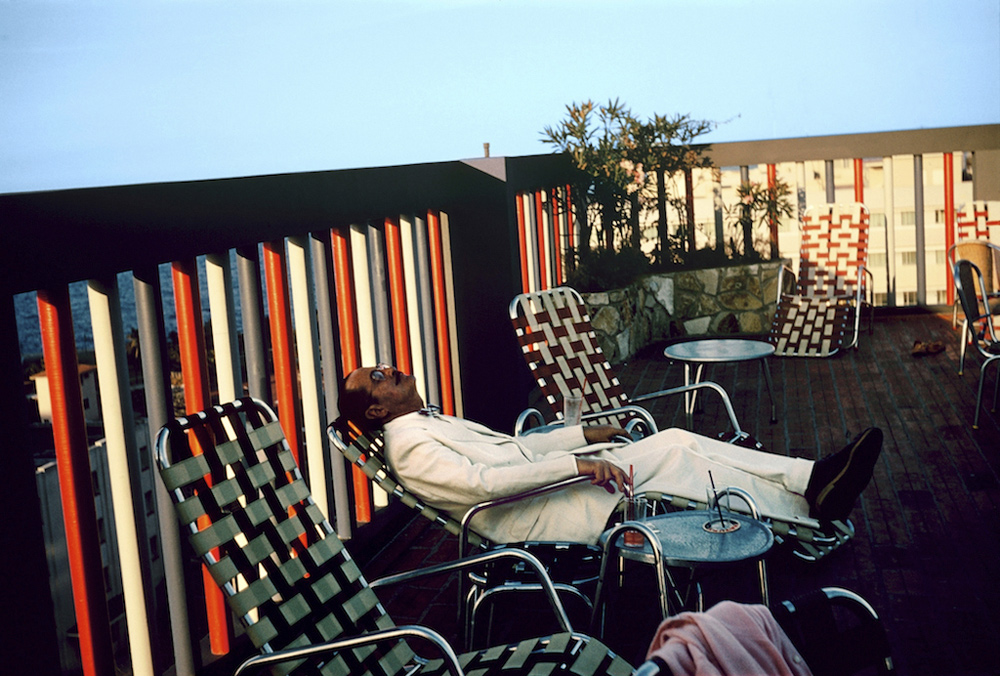
Paul Outerbridge (American, 1896-1958) 'Self-portrait on Lounge, Oceanside Resort, California' c. 1950


Paul Outerbridge (American, 1896-1958)
Self-portrait on Lounge, Oceanside Resort, California
c.1950
Pigment dyed digital print
16″ x 20″


“Outerbridge, who died in 1958, built his reputation in the early 1920s in New York and Paris making elegant black and white photo abstractions primarily of nudes and still lifes that rivalled those of his peers, Alfred Stieglitz, Edward Steichen, and Edward Weston. In the 1930s, Outerbridge mastered the exquisite tri-carbro-colour print process and went on to make some of the most important colour photographs in art and advertising of that time.

Moving to California in 1943 and taking up residence in Laguna Beach, Outerbridge made his last important body of work throughout California and Mexico. Between 1948 and until his death in 1958 he codified a new language in colour photographs that anticipated the work of William Eggleston, Stephen Shore, Joel Sternfeld and others known for their “New Color” work in the 1970s.

“The curious position of prosperous American tourists amid the daily poverty experienced by some Mexicans is one of the recurring themes in the work, but with Outerbridge there is no political polemic,” says co-curator Phillip Prodger. “Outerbridge was thinking of his photographs as jig-saw puzzles made up of many different highly coloured pieces, each placed with meticulous care.”

Among Outerbridge’s subjects are carnival carriages with passengers dressed and headed for a grand party; a group of fashionable men relaxing in an outdoor hotel lobby drinking Coke and beer while a small orchestra plays; a girl in a lime-green dress and white sweater walking past a gas station whose painted-red details add a vibrant flourish to the scene.”

Text from the Downtown Central Library press release [Online] Cited 14/04/2009. No longer available online


Paul Outerbridge (American, 1896-1958) 'Model with Satin Dress, Laguna Beach, California' c. 1950


Paul Outerbridge (American, 1896-1958)
Model with Satin Dress, Laguna Beach, California
c. 1950
Tricolor carbon print
20″ x 16″


Paul Outerbridge (American, 1896-1958) 'Party, Laguna Beach' c. 1950


Paul Outerbridge (American, 1896-1958)
Party, Laguna Beach
c. 1950
Tricolor carbon print
20″ x 16″


Los Angeles Central Library
630 W. 5th St., Los Angeles, CA 90071
Phone: (213) 228-7000

Opening hours:
Monday 10am – 8pm
Tuesday 10am – 8pm
Wednesday 10am – 8pm
Thursday 10am – 8pm
Friday 9.30am – 5.30pm
Saturday 9.30am – 5.30pm
Sunday 1 – 5pm

Los Angeles Central Library website

LIKE ART BLART ON FACEBOOK

Back to top

Jeff Gusky photographs from the exhibition ‘Of Life and Loss: The Polish Photographs of Roman Vishniac and Jeffrey Gusky’ at the Detroit Institute of Arts

Exhibition dates: 15th April – 12th July, 2009


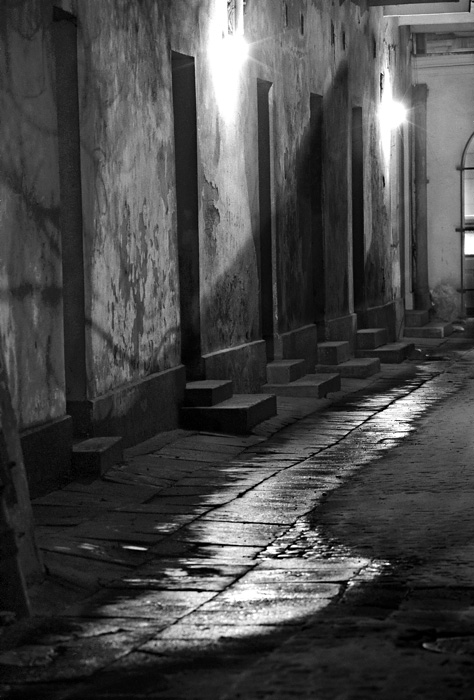
Jeff Gusky. 'Corridor in Kazimierz (Former Jewish District)' Cracow, Poland 1996


Jeff Gusky (American)
Corridor in Kazimierz (Former Jewish District)
Cracow, Poland 1996


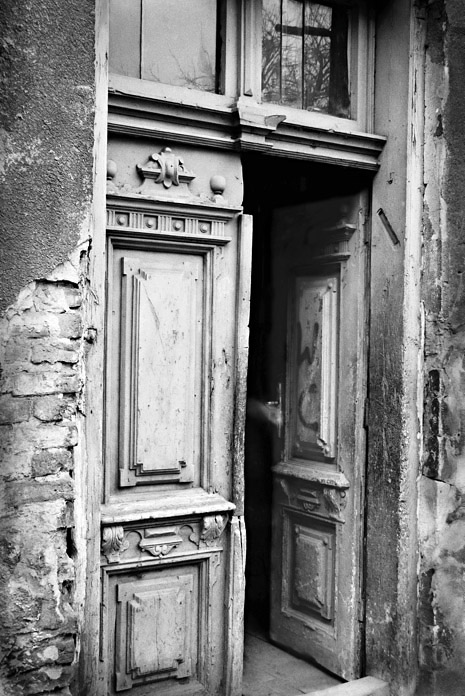
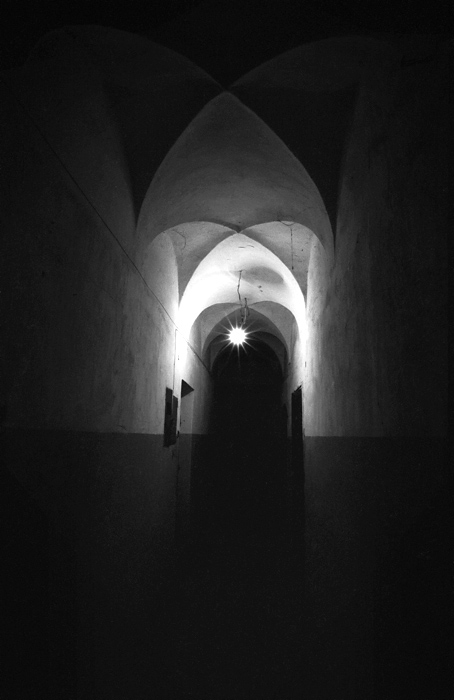
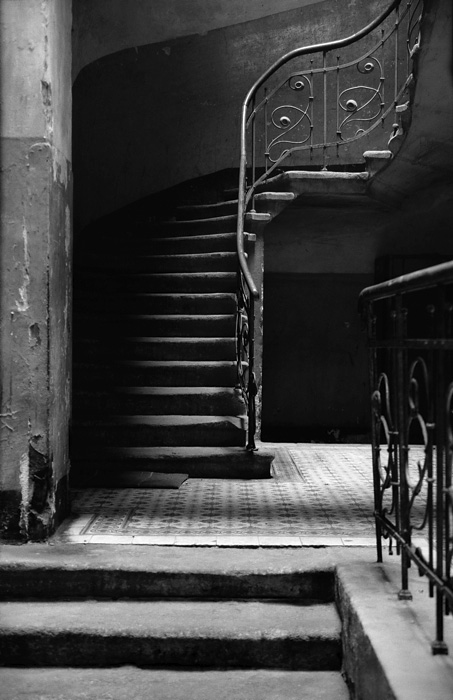
As promised photographs by Jeff Gusky from the exhibition Of Life and Loss: The Polish Photographs of Roman Vishniac and Jeffrey Gusky. Many thanks to Jeff for making them available to me. I have tried to form a small narrative from some of the photographs that Jeff sent me, like a piece of music. The flow through passageways and doorways forming rivers of light and dark ends in the ascending stairs that hold the possibility of deliverance and redemption. The image is reminiscent of photographs by Eugene Atget.

The most beautiful video and music (see below) is entirely appropriate for this post: Gorecki Symphony No. 3 “Sorrowful Songs” – Lento e Largo.

Dr Marcus Bunyan


Jeff Gusky. 'Former Jewish Home in Use as a Public Toilet' Dzialoszyce, Poland 1996


Jeff Gusky (American)
Former Jewish Home in Use as a Public Toilet
Dzialoszyce, Poland 1996


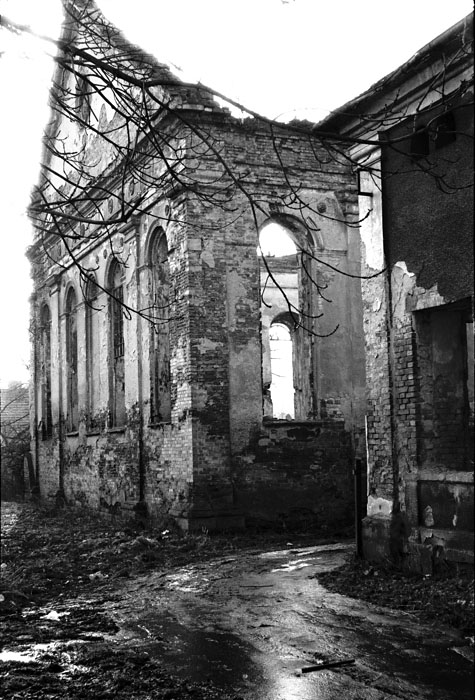
Jeff Gusky. 'Desecrated Synagogue and Jewish School' Dzialoszyce, Poland 1999


Jeff Gusky (American)
Desecrated Synagogue and Jewish School
Dzialoszyce, Poland 1999


Jeff Gusky. 'Lublin Corridor #1' Lublin, Poland 1999


Jeff Gusky (American)
Lublin Corridor #1
Lublin, Poland 1999


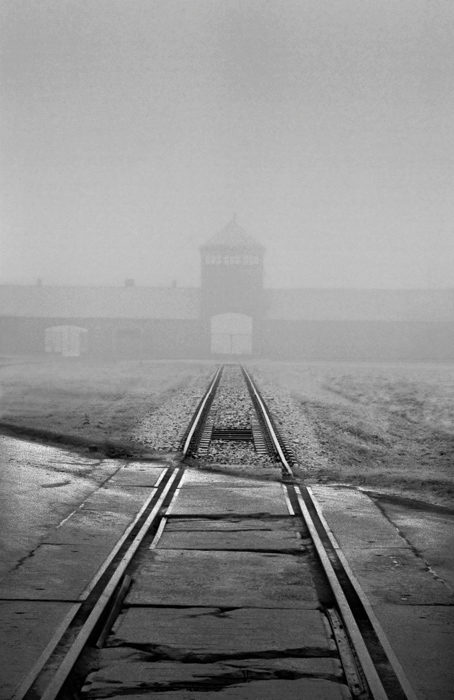
Jeff Gusky. 'Birkenau Silhouette' Auschwitz, Poland 1996


Jeff Gusky (American)
Birkenau Silhouette
Auschwitz, Poland 1996


Jeff Gusky. 'Where They Lived #4' Cracow, Poland 2001


Jeff Gusky (American)
Where They Lived #4
Cracow, Poland 2001


Gorecki Symphony No. 3 “Sorrowful Songs” – Lento e Largo


Detroit Institute of Arts
5200 Woodward Avenue
Detroit, Michigan 48202
Phone: 313.833.7900

Opening hours:
Tuesday – Thursday 9am – 4pm
Friday 9am – 9pm
Saturday – Sunday 10am – 5pm
Monday Closed

Detroit Institute of the Arts website

LIKE ART BLART ON FACEBOOK

Back to top

Exhibition: ‘Hyper’ by Denis Darzacq at Australian Centre for Photography (ACP), Sydney

Exhibition dates: 13th March – 12th April, 2009


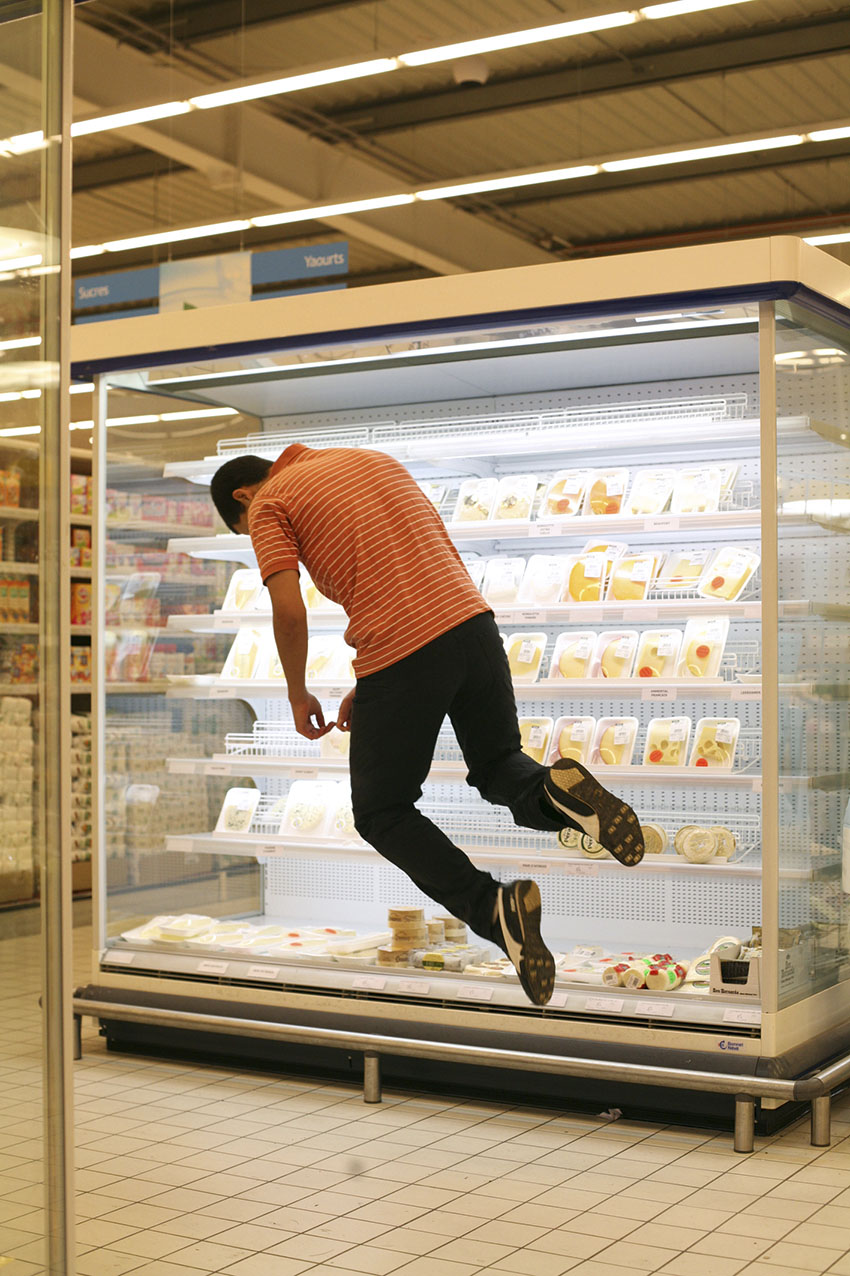
Denis Darzacq (French, b. 1961) 'Hyper #4' 2007 from the exhibition 'Hyper' by Denis Darzacq at Australian Centre for Photography (ACP), Sydney, March - April, 2009


Denis Darzacq (French, b. 1961)
Hyper #4
2007


These images form an interesting body of work: levitating bodies suspended between heaven and earth, neither here nor there, form a hyper-real image grounded in the context of the fluorescent isles of French supermarkets. The mainly anonymous humans look like mannequins in their inertness, frozen at the moment of throwing themselves/being thrown into the consumer environment. After his brilliant series La Chute (The Fall) Darzacq has taken people gathered in a casting call from around the town of Rouen and made their frozen bodies complicit in the mass production of the supermarket and the mass consumption of the image as tableaux vivant: the mise en scène directed by the photographer to limited effect. There is something unsettling about these images but ultimately they are unrewarding, as surface as the environment the bodies are suspended in, and perhaps this is the point.

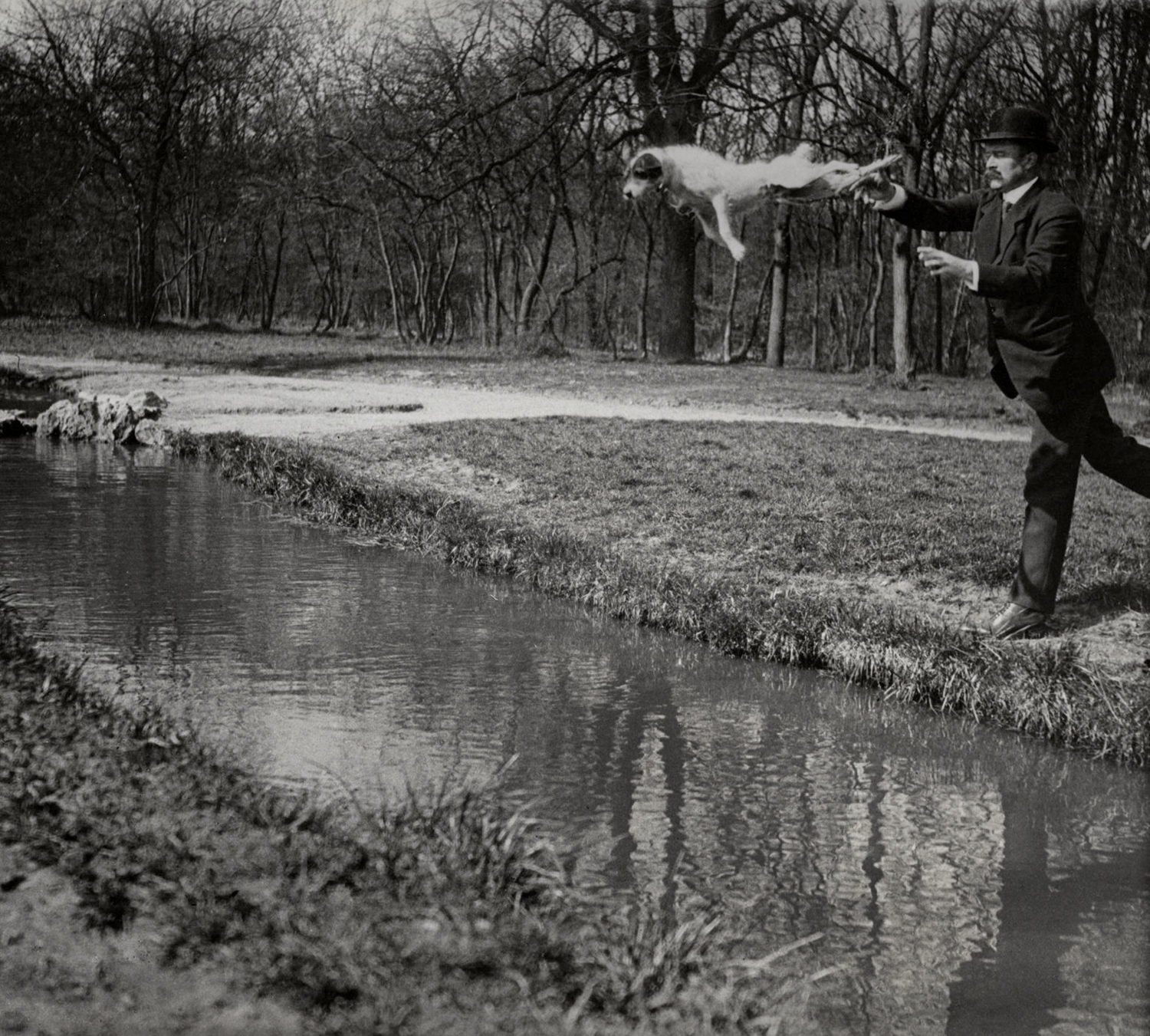
Suspension of bodies is not a new idea in photography. Jacques Henri Lartigue used the freeze frame to good effect long before Henri Cartier-Bresson came up with his ‘decisive moment’: playing with the effect of speed and gravity in an era of Futurism, Lartigue used the arrested movement of instant photography then afforded by smaller cameras and faster film to capture the spirit of liberation in the ‘Belle Epoque’ period before the First World War.

“All the jumping and flying in Lartigue’s photographs, it looks like the whole world at the turn of the century is on springs or something. There’s a kind of spirit of liberation that’s happening at the time and Lartigue matches that up with what stop action photography can do at the time, so you get these really dynamic pictures. And for Lartigue part of the joke, most of the time, is that these people look elegant but they are doing these crazy stunts.”1


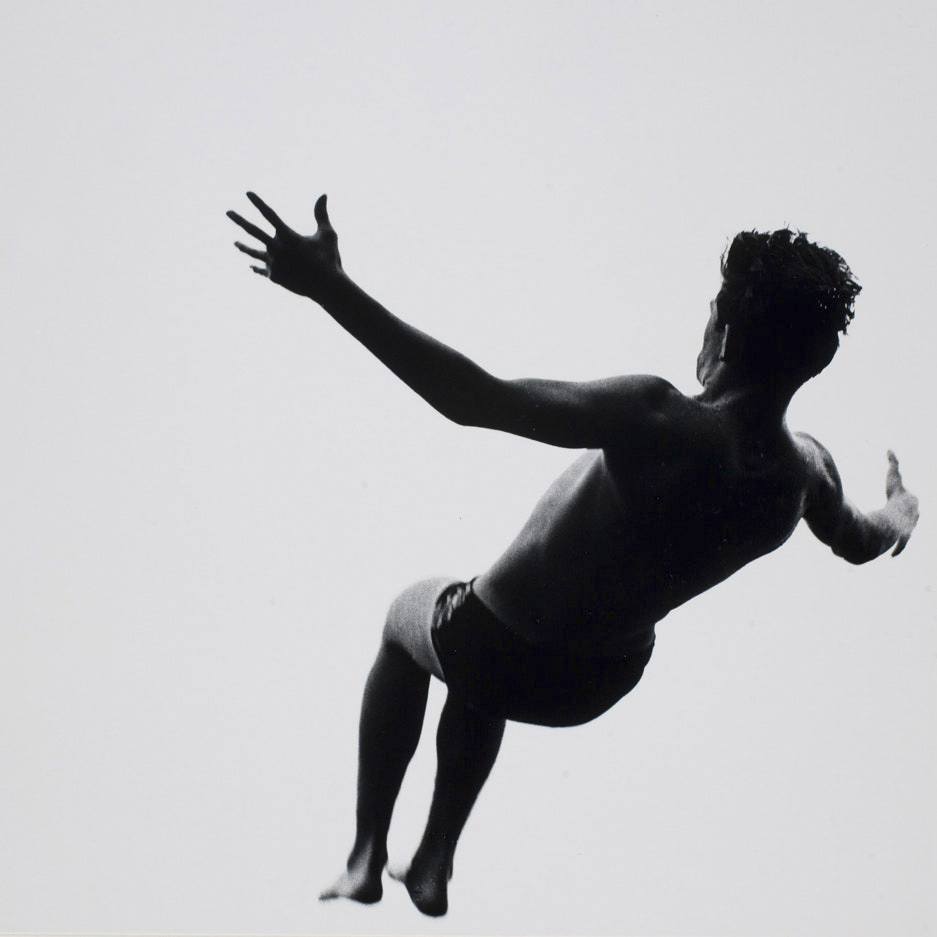
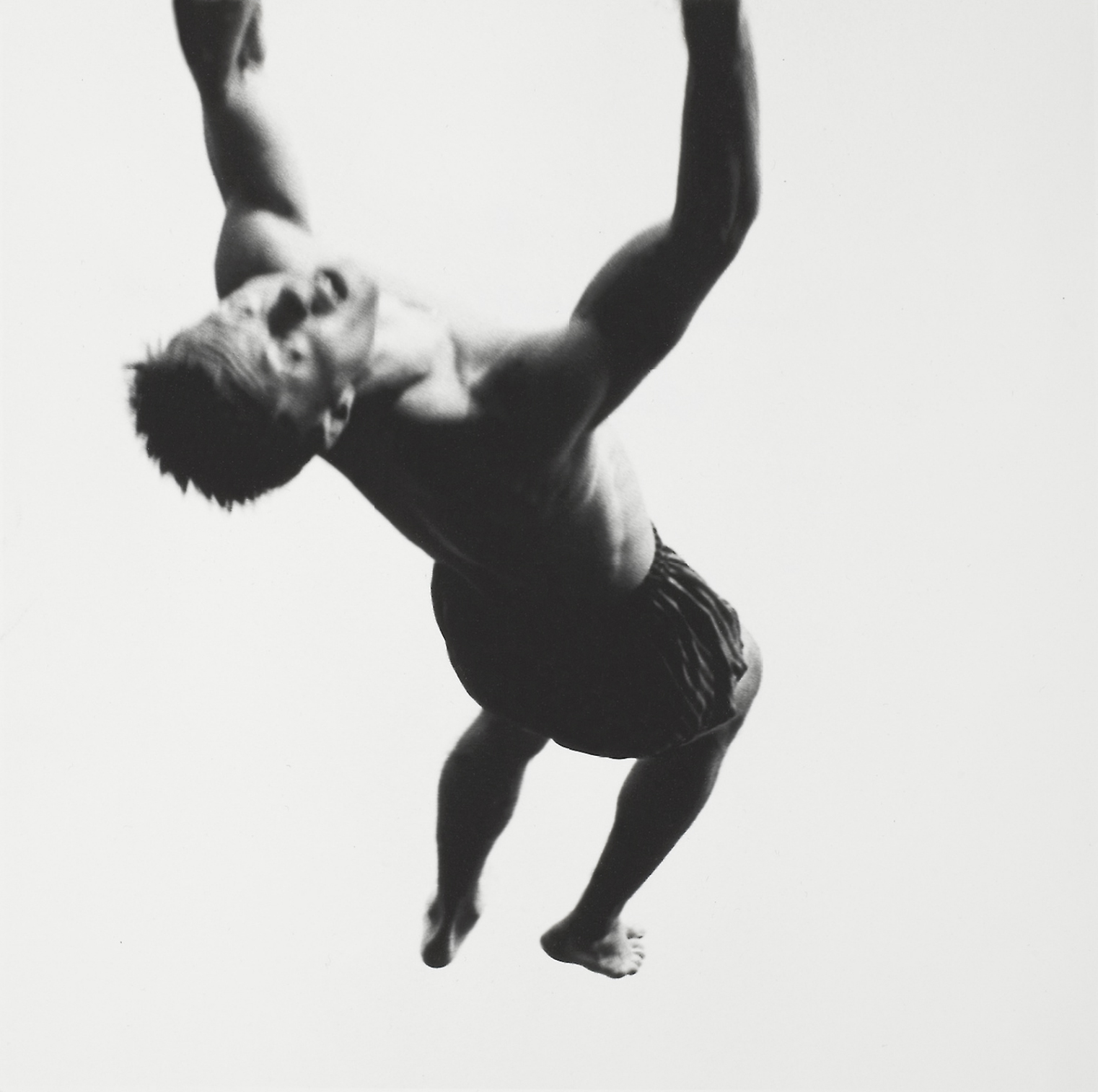
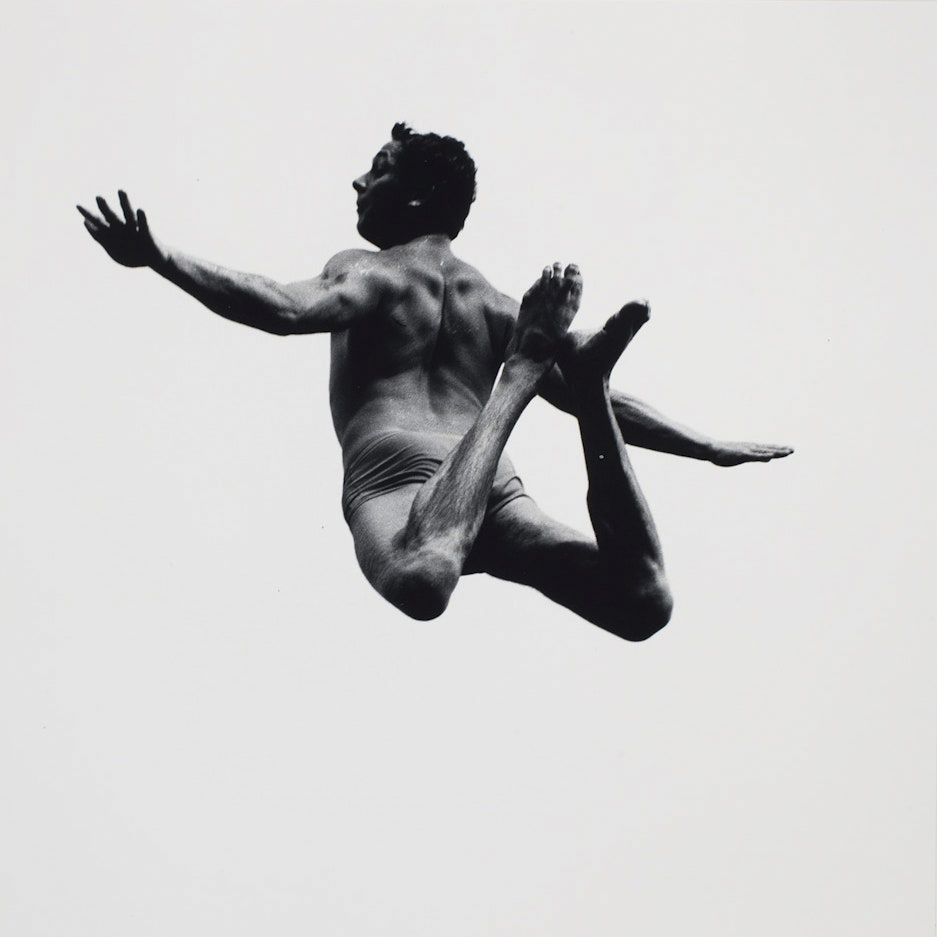
One of the greatest, if not the greatest ever, series of photographs of levitating bodies is that by American photographer Aaron Siskind. Called Pleasures and Terrors of Levitation (sometimes reversed as Terrors and Pleasures of Levitation as on the George Eastman House website) the images feature divers suspended in mid-air with the sky as their blank, background canvas. The images formal construction makes the viewer concentrate on the state of the body, its positioning in the air, and the look on the face of some of the divers caught between joy and fear.

“Highly formal, yet concerned with their subject as well as the idea they communicate, the ‘Pleasures and Terrors of Levitation’ photographs depict the dark shapes of divers suspended mid-leap against a blank white sky. Shot with a hand-held twin-lens reflex camera at the edge of Lake Michigan in Chicago, the balance and conflict suggested by the series’ title is evident in the divers’ sublime contortions.”2


Perhaps because of their air of balance and conflict we can return to these vibrant images again and again and they never loose their freshness, intensity and wonder. The same cannot be said of Denis Darzacq’s Hyper photographs. Slick and surface like the consumer society on which they comment the somnambulistic bodies are more like floating helium balloons, perhaps even tortured souls leaving the earth. Reminiscent of the magicians trick where the girl is suspended and a hoop passed around her body to prove the suspension is real these photographs really are more smoke and mirrors than any comment on the binary between being and having as some commentators (such as Amy Barrett-Lennard, Director Perth Institute of Contemporary Arts) have suggested. There is no spirit of liberation here, no sublime revelation as the seemingly lifeless bodies are trapped between the supermarket shelves, as oblivious to and as anonymous as the products that surround them. The well shot images perhaps possess a sense of fun, if I am being generous, as Darzacq plays with our understanding of reality… but are they more than that or is the Emperor just wearing very thin consumer clothing?

Dr Marcus Bunyan


1/ Kevin Moore (Lartigue biographer) quoted in “Genius of Photography,” on the BBC website [Online] Cited 15/03/2009

2/ Text from the Museum of Contemporary Photography website [Online] Cited 15/03/2009 (no longer available)


Many thankx to the Australian Centre for Photography for allowing me to publish the Darzacq photographs in the posting. Please click on the photographs for a larger version of the image. All other images are used under “fair use” for the purpose of education, research and critical discourse.


    Denis Darzacq (French, b. 1961) 'Hyper #8' 2007 from the exhibition 'Hyper' by Denis Darzacq at Australian Centre for Photography (ACP), Sydney, March - April, 2009


    Denis Darzacq (French, b. 1961)
    Hyper #8
    2007


    “The astonishing photographs that make up Hyper involve no digital manipulation, just close collaboration between young dancers and sportspeople as they jump for the camera to form strange, exaggerated poses and body gestures. Denis Darzacq was drawn to the trashy, consumerist nature of the French Hypermarkets (the equivalent of our supermarkets) and the hyper coloured backgrounds they provided. These supermarkets offered a sharp juxtaposition to the sublime, almost-spiritual bodies that appear to float in their aisles.

    Hyper is the latest series of works by French photographer Denis Darzacq, who continues to explore the place of the individual in society, a theme which has been crucial to his work in the last few years.”

    Text from the ACP website [Online] Cited 15/03/2009. No longer available online


    Jacques Henri Lartigue (French, 1894-1986) 'L'envol de Bichonnade' 1905


    Jacques Henri Lartigue (French, 1894-1986)
    Bichonnade, 40, Rue Cortambert, Paris
    1905
    Gelatin silver print


    Jacques Henri Lartigue (French, 1894-1986) 'Mr Folletete (Plitt) et Tupy, Paris, March 1912' 1912


    Jacques Henri Lartigue (French, 1894-1986)
    Mr Folletete (Plitt) et Tupy, Paris, March 1912
    1912
    Gelatin silver print


    Jacques Henri Lartigue (French, 1894-1986) 'Fuborg' 1929


    Jacques Henri Lartigue (French, 1894-1986)
    Fuborg
    1929
    Gelatin silver print


    Herni Cartier-Bresson (French, 1908-2004) 'Behind Saint Lazare Station, Paris, France' 1932


    Herni Cartier-Bresson (French, 1908-2004)
    Behind Saint Lazare Station, Paris, France
    1932
    Gelatin silver print


    Aaron Siskind (American, 1903-1991) 'Pleasures and Terrors of Levitation #37' 1954


    Aaron Siskind (American, 1903-1991)
    Pleasures and Terrors of Levitation #37
    1956
    Gelatin silver print


    Aaron Siskind (American, 1903-1991) 'Pleasures and Terrors of Levitation #47' 1954


    Aaron Siskind (American, 1903-1991)
    Pleasures and Terrors of Levitation #47
    1954
    Gelatin silver print


    Aaron Siskind (American, 1903-1991) 'Pleasures and Terrors of Levitation #93' 1961


    Aaron Siskind (American, 1903-1991)
    Pleasures and Terrors of Levitation #93
    1961
    Gelatin silver print


    Aaron Siskind (American, 1903-1991) 'Pleasures and Terrors of Levitation #99' 1953


    Aaron Siskind (American, 1903-1991)
    Pleasures and Terrors of Levitation #99
    1956
    Gelatin silver print


    Aaron Siskind (American, 1903-1991) 'Pleasures and Terrors of Levitation #491' 1954


    Aaron Siskind (American, 1903-1991)
    Pleasures and Terrors of Levitation #491
    1956
    Gelatin silver print


    Denis Darzacq (French, b. 1961) 'Hyper #3' 2007


    Denis Darzacq (French, b. 1961)
    Hyper #3
    2007


    Hyper picks up on La Chute while explicitly focusing the artist’s message on the consumerism which hovered in the background of several previous series. In Casques de Thouars Darzacq explored the connecting power and the limits of a consumer product; here the critique is more biting. Hyper opposes bodies in movement and the saturated, standardised space of mass distribution outlets. In this totally commercial setting, the body’s leap expresses the freedom and unhampered choice of its movement. It is a clear challenge to the marketing strategies which seek to control our behaviour. Some of the figures, glowing with an aura, impose glory and give off a sense of spirituality in total contrast with the temples of consumption in which they are found.

    “Hyper 1, 2007-2010,” on the Denis Darzacq website Nd [Online] Cited 13/06/2022


    Denis Darzacq (French, b. 1961) 'Hyper #14' 2007


    Denis Darzacq (French, b. 1961)
    Hyper #14
    2007


    Australian Centre for Photography

    This gallery has now closed

    Denis Darzacq website

    Denis Darzacq Hyper images

    LIKE ART BLART ON FACEBOOK

    Back to top

    Exhibition: ‘Walker Evans and the Picture Postcard’ at The Metropolitan Museum of Art, New York

    Exhibition dates: 3rd February – 25th May 2009


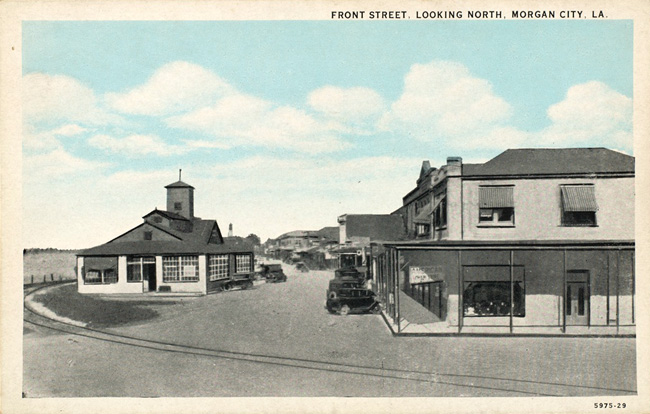
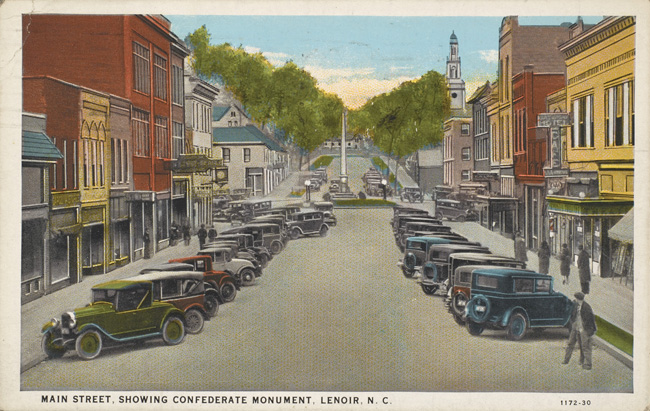
    Unknown Artist. 'Front Street, Looking North, Morgan City, LA' 1929 from the exhibition 'Walker Evans and the Picture Postcard' at The Metropolitan Museum of Art, New York, Feb - March, 2009


    Unknown artist (American)
    Front Street, Looking North, Morgan City, LA
    1929
    Postcard, Photomechanical reproduction
    3 1/2 x 5 1/2 in. (8.9 x 14 cm)
    The Metropolitan Museum of Art, New York, Walker Evans Archive, 1994


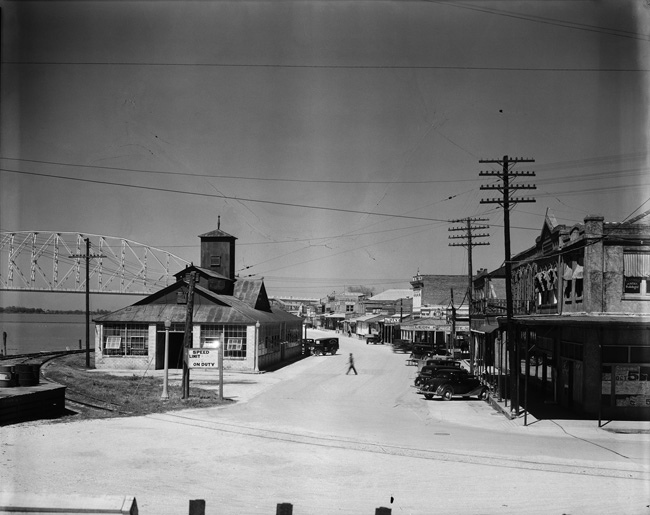
    This looks a very interesting exhibition – I wish I could see the actual thing!


    Many thankx to The Metropolitan Museum of Art for allowing me to publish the photographs and art work in the posting. Please click on the photographs for a larger version of the image.


    This exhibition will focus on a collection of 9,000 picture postcards amassed and classified by the American photographer Walker Evans (1903-1975), now part of the Metropolitan’s Walker Evans Archive. The picture postcard represented a powerful strain of indigenous American realism that directly influenced Evans’s artistic development. The dynamic installation of hundreds of American postcards drawn from Evans’s collection will reveal the symbiotic relationship between Evans’s own art and his interest in the style of the postcard. This will also be demonstrated with a selection of about a dozen of his own photographs printed in 1936 on postcard format photographic paper.

    Text from The Metropolitan Museum of Art website


    Walker Evans (American, 1903-1975) 'Street Scene, Morgan City, Louisiana' 1935 from the exhibition 'Walker Evans and the Picture Postcard' at The Metropolitan Museum of Art, New York, Feb - March, 2009


    Walker Evans (American, 1903-1975)
    Street Scene, Morgan City, Louisiana
    1935
    Film negative
    8 x 10 in. (20.3 x 25.4cm)
    The Metropolitan Museum of Art, New York, Walker Evans Archive, 1994


    “Sold in five-and-dime stores in every small town in America, postcards satisfied the country’s need for human connection in the age of the railroad and Model T when, for the first time, many Americans regularly found themselves traveling far from home. At age twelve, Walker Evans began to collect and classify his cards. What appealed to the nascent photographer were the cards’ vernacular subjects, the simple, unvarnished, “artless” quality of the pictures, and the generic, uninflected, mostly frontal style that he later would borrow for his own work with the camera. Both the picture postcard and Evans’s photographs seem equally authorless – quiet documents that record the scene with an economy of means and with simple respect. Walker Evans and the Picture Postcard proposes that the picture postcard represented a powerful strain of indigenous American realism that directly influenced Evans’s artistic development.”

    Text from the Steidl website


    The American postcard came of age around 1907, when postal deregulations allowed correspondence to be written on the address side of the card. By 1914, the craze for picture postcards had proved an enormous boon for local photographers, as their black-and-white pictures of small-town main streets, local hotels and new public buildings were transformed into handsomely coloured photolithographic postcards that were reproduced in great bulk and sold in five-and-dime stores in every small town in America. Postcards met the nation’s need for communication in the age of the railroad and Model T, when, for the first time, many Americans often found themselves traveling far from home. In the Walker Evans Archive at New York’s Metropolitan Museum of Art, there is a collection of 9,000 such postcards amassed by the great American photographer, who began his remarkable collection at the age of 10. What appealed to Evans, even as a boy, were the vernacular subjects, the unvarnished, “artless” quality of the pictures and the generic, uninflected, mostly frontal style that he later would borrow for his own work. The picture postcard and Evans’ photographs seem equally authorless, appearing as quiet documents that record a scene with both economy of means and simple respect. This volume demonstrates that the picture postcard articulated a powerful strain of indigenous American realism that directly influenced Evans’ artistic development.

    Text from the Amazon website


    Unknown artist (American) 'Main Street, Showing Confederate Monument, Lenoir, N. C.,' 1930s


    Unknown artist (American)
    Main Street, Showing Confederate Monument, Lenoir, N. C.
    1930s
    Postcard, Photomechanical reproduction
    3 1/2 x 5 1/2 in. (8.9 x 14cm)
    The Metropolitan Museum of Art, New York, Walker Evans Archive, 1994


    Walker Evans was the progenitor of the documentary style in American photography, and he argued that picture postcard captured a part of America that was not recorded in any other medium. In the early 20th century, picture postcards, sold in five-and-dime stores across America, depicted small towns and cities with realism and hometown pride – whether the subject was a local monument, a depot, or a coal mine.

    Evans wrote of his collection: “The very essence of American daily city and town life got itself recorded quite inadvertently on the penny picture postcards of the early 20th century .… Those honest direct little pictures have a quality today that is more than mere social history .… The picture postcard is folk document.”

    Walker Evans and the Picture Postcard is the first exhibition to focus primarily on works drawn from The Walker Evans Archive. The installation is designed to convey the incredible range of his collection and to reflect the eclectic and obsessional ways in which the artist organised his picture postcards. For example, Evans methodically classified his collection into dozens of subject categories, such as “American Architecture,” “Factories,” “Automobiles,” “Street Scenes,” “Summer Hotels,” “Lighthouses,” “Outdoor Pleasures,” “Madness,” and “Curiosities”.

    Marty Weil. “Walker Evans’ Picture Postcard Collection on the ephemera: exploring the world of old paper website Feb 24, 2009 [Online] Cited 12/06/2022. No longer available online


    Unknown artist (American) 'Tennessee Coal, Iron, & R. R. Co.'s Steel Mills, Ensley, Ala.,' 1920s


    Unknown artist (American)
    Tennessee Coal, Iron, & R. R. Co.’s Steel Mills, Ensley, Ala.
    1920s
    Postcard, Photomechanical reproduction
    3 1/2 x 5 1/2 in. (8.9 x 14cm)
    The Metropolitan Museum of Art, New York, Walker Evans Archive, 1994


    Walker Evans (American, 1903-1975) 'View of Easton, Pennsylvania' 1935


    Walker Evans (American, 1903-1975)
    View of Easton, Pennsylvania
    1935
    Postcard format gelatin silver print


    Walker Evans (American, 1903-1975) 'View of Ossining, New York' 1930-1931


    Walker Evans (American, 1903-1975)
    View of Ossining, New York
    1930-1931
    Gelatin silver print
    4 1/8 x 7 13/16 in. (10.5 x 19.8cm)
    The Metropolitan Museum of Art, New York, Purchase, The Horace W. Goldsmith Foundation Gift through Joyce and Robert Menschel, 1999


    Unknown artist (American) 'Holland Vehicular Tunnel, New York City' 1920s


    Unknown artist (American)
    Holland Vehicular Tunnel, New York City
    1920s
    Postcard, Photomechanical reproduction
    3 9/16 x 5 1/2 in. (9 x 14cm)
    The Metropolitan Museum of Art, New York, Walker Evans Archive, 1994


    Unknown artist (American) 'Santa Fe station and yards, San Bernardino, California' c. 1910


    Unknown artist (American)
    Santa Fe station and yards, San Bernardino, California
    c. 1910
    Postcard, Photomechanical reproduction
    3 9/16 x 5 1/2 in. (9 x 14cm)
    The Metropolitan Museum of Art, New York, Walker Evans Archive, 1994


    Unknown artist (American) 'Men's Bathing Department, Bath House, Hot Springs National Park, Ark.' 1920s


    Unknown artist (American)
    Men’s Bathing Department, Bath House, Hot Springs National Park, Ark.
    1920s
    Postcard, Photomechanical reproduction
    3 9/16 x 5 1/2 in. (9 x 14cm)
    The Metropolitan Museum of Art, New York, Walker Evans Archive, 1994


    Walker Evans and the Picture Postcard


    Walker Evans and the Picture Postcard


    In 1903, the year Walker Evans was born, the US Postal service handled 700 million picture postcards. Evans would later recall his fondness for those “honest, direct, little pictures that once flooded the mail.” By the age of twelve he was a collector and through his lifetime, an obsessive. “Yes, I was a postcard collector at an early age. Every time my family would take me around for what they thought was my education, to show me the country in a touring car, to go to Illinois, to Massachusetts, I would rush into Woolworth’s and buy all the postcards.” For Evans, the addition of hand-colouring added a great deal of aesthetic value. …

    Walker Evans and the Picture Postcard reproduces hundreds of cards from his collection including the three magazine features mentioned above. Also the fine addition of an “illustrated transcript” of his now famous Lyric Documentary lecture at Yale in 1964 makes this a bit more interesting than the title may suggest. …

    Later in life Evans had friends around the country while on photo trips keeping an eye for postcards that might interest. He had a particular love for ones produced by the Detroit Publishing Company which were considered the “Cadillac” of postcards. Lee Friedlander related the following from a recent interview: “The Detroit Publishing Company had a formula. If a town had 2,000 people or so, it got a main street postcard; if it had 3,500, it got the main street and also a courthouse square. Walker liked the formula. He had everyone looking for this or that. He told me once in Old Lyme, “If you run across any ‘Detroits,’ get them for me.” I found sixty or seventy cards for him. He loved them.”

    “Walker Evans and the Picture Postcard by Jeff L. Rosenheim,” on the 5B4: Photography and Books blog, March 1, 2009 [Online] Cited 12/06/2022


    Walker Evans (American, 1903-1975) 'Stable, Natchez, Mississippi' March 1935


    Walker Evans (American, 1903-1975)
    Stable, Natchez, Mississippi
    March 1935
    Gelatin silver print
    10 x 8 in. (25.4 x 20.3cm)
    The Metropolitan Museum of Art, New York, Gilman Collection, Purchase, The Horace W. Goldsmith Foundation Gift through Joyce and Robert Menschel, 2005


    Unknown artist (American) 'Future New York, The City of Skyscrapers' 1910s


    Unknown artist (American)
    Future New York, The City of Skyscrapers
    1910s
    Postcard, Photomechanical reproduction
    3 9/16 x 5 1/2 in. (9 x 14cm)
    The Metropolitan Museum of Art, New York, Walker Evans Archive, 1994


    Unknown artist (American) 'Woolworth and Municipal Buildings from Brooklyn Bridge, New York' 1910s


    Unknown artist (American)
    Woolworth and Municipal Buildings from Brooklyn Bridge, New York
    1910s
    Postcard, Photomechanical reproduction
    3 9/16 x 5 1/2 in. (9 x 14cm)
    The Metropolitan Museum of Art, New York, Walker Evans Archive, 1994


    Unknown artist (American) 'Curve at Brooklyn Terminal, Brooklyn Bridge, New York' 1907


    Unknown artist (American)
    Curve at Brooklyn Terminal, Brooklyn Bridge, New York
    1907
    Postcard, Photomechanical reproduction
    3 9/16 x 5 1/2 in. (9 x 14cm)
    The Metropolitan Museum of Art, New York, Walker Evans Archive, 1994


    Unknown artist (American) 'Empire State Building, New York' 1930s


    Unknown artist (American)
    Empire State Building, New York
    1930s
    Postcard, Photomechanical reproduction
    3 9/16 x 5 1/2 in. (9 x 14cm)
    The Metropolitan Museum of Art, New York, Walker Evans Archive, 1994


    The Metropolitan Museum of Art
    1000 Fifth Avenue at 82nd Street
    New York, New York 10028-0198
    Phone: 212-535-7710

    Opening hours:
    Sunday – Tuesday and Thursday: 10am – 5pm
    Friday and Saturday: 10am – 9pm
    Closed Wednesday

    Walker Evans and the Picture Postcard (Hardcover)
    by Jeff Rossenheim and Walker Evans

    The Metropolitan Museum of Art website

    LIKE ART BLART ON FACEBOOK

    Back to top