Curators: Hujar’s biographer John Douglas Millar, Hujar’s close friend the artist and master printer Gary Schneider, with Raven Row’s director Alex Sainsbury
And then there is Peter Hujar (American, 1934-1987).
Using contextless backgrounds and simple settings, Hujar’s non-judgmental portraits of friends and lovers rely on the slight twist of the head, the drop of a shadow, the photographer’s look and subjects pose, performance, that curves and bends reality into a presence that is magnetic, magical, eternal.
Hujar’s direct, intimate photographs, suggestive of both love and loss, proffer a mirror to strength and determination / to friendship / to love. His pictures gather, together, a feeling for the freedom of people and places, that essence of being true to yourself (getting to the bone as Harrison Adams puts it). A direct connection between the photographer and subject captured by the camera revealed to the world.
You might have guessed I am in love with his photographs.
Thus, it is a great delight to post on this exhibition at Raven Row in London which looks to be an absolute delight, Hujar’s photographs simply and beautifully presented in the space.
His images reveal themselves over time, expounding his love of life and his intimate and free engagement with the world around him.
That is Hujar’s music, his signature.
Dr Marcus Bunyan
1/ Harrison Adams. Photography in the First Person: Robert Mapplethorpe, Peter Hujar, Nan Goldin and Sally Mann (Dissertation). Yale University, 2018 quoted on the “Peter Hujar” Wikipedia page Nd [Online] Cited 14/03/2025
Further postings on this incredible artist on Art Blart can be found at
Many thankx to Raven Row for allowing me to publish the photographs in the posting. Please click on the photographs for a larger version of the image.
One aspect of this intimate quality was Hujar’s ability to connect with his sitters. One of his models was quoted after an unsuccessful session as saying:
“We couldn’t ‘reveal’. As an actor you have to reveal. And Hujar’s big thing was that you had to reveal. I know that now, but I didn’t know it at the time. In other words, blistering, blazing honesty directed towards the lens. No pissing about. No posing. No putting anything on. No camping around. Just flat, real who-you-are…You must strip down all the nonsense until you get to the bone. That’s what Peter wanted and that was his great, great talent and skill.”
This is the first exhibition to take on the full breadth of Peter Hujar’s later photography. Hujar was a central figure in the downtown scene of 1970s and early 80s New York, but at his death in 1987 from AIDS-related pneumonia his work was largely unknown to a broader art world. Now it is widely admired for its austere elegance and emotional charge. Hujar’s principal concern was with forms of portraiture – of his friends and denizens of the downtown scene, whom he encountered on the street, shot in his apartment studio or sought out backstage. He also turned his attention to animals, whom he photographed with particular empathy, as well as to architectural, landscape and street photography.
Eyes Open in the Dark concentrates on his later work, when his emergence from a debilitating depression in 1976 brought about a new expansiveness. The exhibition also reveals the darkening tone of his photography in the early 1980s, as the AIDS crisis devastated his community, and his work entered into dialogue with the younger artist David Wojnarowicz. Peter Hujar – Eyes Open in the Dark is curated by Hujar’s biographer John Douglas Millar, and Hujar’s close friend, the artist and master printer Gary Schneider, with Raven Row’s director Alex Sainsbury. As well as lifetime prints it will include prints of little-known works specially prepared by Gary Schneider, working closely with the artist’s Estate.
Stephen Lloyd Varble (American, 1946-1984) was a notorious American performance artist, playwright, and fashion designer in lower Manhattan during the 1970s. His work challenged mainstream conceptions of gender and exposed the materialism of the established, institutionalised world.
This is the first exhibition to take on the full breadth of Peter Hujar’s later photography. Hujar was a central figure in the downtown scene of 1970s and early 80s New York, but at his death in 1987 from AIDS-related pneumonia his work was largely unknown to a broader art world. Now it is widely admired for its austere elegance and emotional charge.
Hujar’s principal concern was with forms of portraiture – of his friends and denizens of the downtown scene, whom he encountered on the street, shot in his apartment studio or sought out backstage. He also turned his attention to animals, whom he photographed with particular empathy, as well as to architectural, landscape and street photography. Eyes Open in the Dark concentrates on his later work, when his emergence from a debilitating depression in 1976 brought about a new expansiveness. The exhibition also reveals the darkening tone of his photography in the early 1980s, as the AIDS crisis devastated his community, and his work entered into dialogue with the younger artist David Wojnarowicz.
Peter Hujar – Eyes Open in the Dark is curated by Hujar’s biographer John Douglas Millar, and Hujar’s close friend, the artist and master printer Gary Schneider, with Raven Row’s director Alex Sainsbury. As well as lifetime prints it will include prints of little-known works specially prepared by Gary Schneider, working closely with the artist’s Estate.
The exhibition is free to attend and open Wednesday to Sunday, 11am to 6pm, no booking required. Please note that some images in this exhibition feature explicit sexual content.
David Wojnarowicz (American, 1954-1992) Untitled 1989 From Sex Series (for Marion Scemama) 1988-1989 Gelatin silver print
One of Wojnarowicz’s most remarkable pieces here is the “Sex Series (for Marion Scemama),” a miracle of technical prowess and visual intensity. Wojnarowicz began it in 1988, a year after the photographer Peter Hujar, his close friend and former lover, died of AIDS. These photomontages combine stock photographs with circular insets salvaged from Hujar’s porn collection [among other insets of, for example, police, medical, money, religion and life], which he’d thrown away after his diagnosis.
Much of Wojnarowicz’s work is about sex in an age of death. During the AIDS crisis, sexual activity, particularly that of gay men, was demonized. Resisting the dogma and censorship of the Right’s conservatism and the Left’s moralism alike, the “Sex Series” vibrates with anxious and desirous energy, a mood amplified by the eerie reversal of the printing process, in which light and dark have been inverted to create a near negative.
Exhibition dates: 20th February – 17th May 2020? Coronavirus
Participating artists: Bas Jan Ader, Laurie Anderson, Kenneth Anger, Knut Åsdam, Richard Avedon, Aneta Bartos, Richard Billingham, Cassils, Sam Contis, John Coplans, Jeremy Deller, Rienke Dijkstra, George Dureau, Thomas Dworzak, Hans Eijkelboom, Fouad Elkoury, Rotimi Fani-Kayode, Hal Fischer, Samuel Fosso, Anna Fox, Masahisa Fukase, Sunil Gupta, Peter Hujar, Liz Johnson Artur, Isaac Julien, Kiluanji Kia Henda, Karen Knorr, Deana Lawson, Hilary Lloyd, Robert Mapplethrope, Peter Marlow, Ana Mendieta, Anenette Messager, Duane Michals, Tracey Moffat, Andrew Moisey, Richard Mosse, Adi Nes, Catherine Opie, Elle Pérez, Herb Ritts, Kalen Na’il Roach, Collier Schorr, Paul Mpagi Sepuya, Clarie Strand, Michael Subotzky, Larry Sultan, Hank Willis Thomas, Wolfgang Tillmans, Piotr Uklański, Andy Warhol, Karlheinz Weinberger, Marianne Wex, David Wojnarowicz, Akram Zaatari.
“As a writer Berger recognised that experience – whether it be personal, historical or aesthetic – will never conform to theories and systems. To read him today is to accept his failures and detours as a unique willingness to take risks.”
John MacDonald. “John Berger,” in the Sydney Morning Herald, 6 June, 2020
D-Construction: deliberate masculinities in a discontinuous world
Reviewers of this exhibition (see quotations below) have noted the preponderance of images of “traditional masculinity” – defined as “idealised, dominant (and) heterosexual” – and the paucity of images that show men as working, intelligent, sensitive human beings, “that men ever earned a living, cooked a meal or read a book… scarcely anything about the heart or intellect. Men are represented here almost entirely in terms of their bodies, sexuality or supposed type.” I need make no further comment. What I will say is that I believe the title of the exhibition to be a misnomer: a person cannot be “liberated” through photography, for photography is only a tool of a personal liberation. Liberation comes through an internal struggle of acceptance (thence liberation), one that is foremost FELT (for example, the double life one leads before you acknowledge that you are gay; or experiencing discrimination aimed at others and by proxy, yourself) and SEEN (the bashing of a mother as seen by a small child). Photographs picture the outcomes of this struggle for liberation, are a tool of that process not, I would argue, liberation itself.
What I can say is that I believe in masculinities, plural. Fluid, shifting, challenging, loving, working, intimate, spiritual masculinities that challenge normalcy and hegemonic masculinity, which is defined as “a practice that legitimises men’s dominant position in society and justifies the subordination of the common male population and women, and other marginalised ways of being a man.”
What I don’t believe in is masculinities, plural, that seek to fit into this [dis]continuous world (for we are born and then die) through the stability of their outward appearance, conforming to theories and systems – personal, historical or aesthetic – without reference to subversion, small intimacies, the toil of work, love and the passion of sexual bodies. In other words, masculinities that are not afraid to push the boundaries of being and becoming. To take risks, to experience, to feel.
While I was overjoyed at the “YES” vote on gay marriage that took place in December 2017 in Australia because I felt it was a victory for love, and equality… another part of me rejected as anathema the concept of a gay person buying into a historically patriarchal, heterosexual and monogamous institution such as marriage – too honour and obey. This is an untenable concept for a person who wants to be liberated. Coming out as I did in 1975, only 6 short years after the Stonewall Riots, the last thing I EVER wanted to be, was to be the same as a “straight” person. I was different. I fought for my difference and still believe in it.
Of course, in 2020 it’s another world. Today we all mix in together. But there is still something about “masculinities”, which in some varieties, have a sense of privilege and entitlement. Of power and control over others; of violence towards women, trans, other men and anyone who threatens their little ego, who leaves them, or jilts them. Their jealousy, their ego, bruised – they are so insecure, so insular, that they can only see their own world, their own minuscule problems (but massive in their eyes), and enforce their will on others.
My advice to “masculinities’, in fact any human being, is to go out, get yourself informed, experience, accept, and be the person that nobody thinks you can be. Be a human being. Examine your inner self, look at your dark side, your other side, your empathetic side, and try and understand the journey that you are on. Then, and only then, you might begin on that great path of personal enlightenment, that golden path on which there is no turning back.
Below I discuss some of these ideas with my good friend Nicholas Henderson, curator and archivist at the Australian Lesbian and Gay Archives.
Dr Marcus Bunyan
Many thankx to the Barbican Art Gallery for allowing me to publish the photographs in the posting. Please click on the photographs for a larger version of the image.
Masculinities: Liberation through Photography is a major group exhibition that explores how masculinity is experienced, performed, coded and socially constructed as expressed and documented through photography and film from the 1960s to the present day.
Through the medium of film and photography, this major exhibition considers how masculinity has been coded, performed, and socially constructed from the 1960s to the present day. Examining depictions of masculinity from behind the lens, the Barbican brings together the work of over 50 international artists, photographers and filmmakers including Laurie Anderson, Sunil Gupta, Rotimi Fani-Kayode, Isaac Julien and Catherine Opie.
In the wake of #MeToo the image of masculinity has come into sharper focus, with ideas of toxic and fragile masculinity permeating today’s society. This exhibition charts the often complex and sometimes contradictory representations of masculinities, and how they have developed and evolved over time. Touching on themes including power, patriarchy, queer identity, female perceptions of men, hypermasculine stereotypes, tenderness and the family, the exhibition shows how central photography and film have been to the way masculinities are imagined and understood in contemporary culture.
In fact, while there are a few gender-fluid figures here, they’re vastly outnumbered by manifestations of “traditional masculinity” – defined as “idealised, dominant (and) heterosexual”. Lebanese militiamen (in Fouad Elkoury’s perky full-length portraits from 1980), US marines (in Wolfgang Tillmans’ epic montage Soldiers – The Nineties), Taliban fighters, SS generals, Israel Defence Force grunts, footballers, cowboys and bullfighters fairly spring out of the walls from every direction. And what’s evident from the outset isn’t so much their diversity, as a unifying demeanour: a threatening intentness that comes wherever men are asked to perform their masculinity, but also a childlike vulnerability. …
Masculinity, the viewer is made to feel, criminalises men (Mikhael Subotzky’s images of South African gangsters on morgue slabs); isolates them (Larry Sultan’s poignant image of his elderly father practising his golf swing in his sitting room); renders them stupid (Richard Billingham’s excruciating, but now classic photo essay on his alcoholic father, ‘Ray’s a Laugh’). To be a man, it seems, is to be condemned to endlessly act out archetypal “masculine” behaviour, whether you’re an elderly drunk in a Birmingham high-rise or the elite American students taking part in the shouting competition staged by Irish photographer Richard Mosse.
Mark Hudson. “Does the Barbican’s Masculinities exhibition have important things to say about men?” on the Independent website Friday 21 February 2020 [Online] Cited 03/03/2020
There is not much here about work – unless you count the wall of Hollywood actors playing Nazis. You would never think, from this show, that men ever earned a living, cooked a meal or read a book (though there is a sententious vitrine of ‘Men Only’ magazines). Beyond the exceptions given, there is scarcely anything about the heart or intellect. Men are represented here almost entirely in terms of their bodies, sexuality or supposed type.
Laura Cumming. “Masculinities: Liberation Through Photography review – men as types,” on the Guardian website Sun 23 Feb 2020 [Online] Cited 03/03/2020
“The body can be taken as a reflection of the self because it can and should be treated as something to be worked upon … in order to produce it as a commodity. Overweight, slovenliness and even unfashionability, for example, are now moral disorders,” notes Don Slater
“The state of the body is seen as a reflection of the state of its owner, who is responsible for it and could refashion it. The body can be taken as a reflection of the self because it can and should be treated as something to be worked upon, and generally worked upon using commodities, for example intensively regulated, self-disciplined, scrutinized through diets, fitness regimes, fashion, self-help books and advice, in order to produce it as a commodity. Overweight, slovenliness, and even unfashionability, for example, are now moral disorders; even acute illnesses such as cancer reflect the inadequacy of the self and indeed of its consumption. One gets ill because one has consumed the wrong (unnatural) things and failed to consume the correct (‘natural’) ones: self, body, goods and environment constitute a system of moral choice.”
Slater, Don. Consumer Culture and Modernity. London: Polity Press, 1997, p. 92.
Installation view of Masculinities: Liberation through Photography at Barbican Art Gallery on February 19, 2020 in London, England showing John Coplans’ work Self-portrait, Frieze No 2, Four Panels 1994 Photo: Tristan Fewings/Getty Images for Barbican Art Gallery
Plan of the Masculinities: Liberation through Photography exhibition spaces
Introduction
Masculinities: Liberation through Photography explores the diverse ways masculinity has been experienced, performed, coded and socially constructed in photography and film from the 1960s to the present day.
Simone de Beauvoir’s famous declaration that ‘one is not born a woman, but rather becomes one’ provides a helpful springboard for considering what it means to be a male in today’s world, as well as the place of photography and film in shaping masculinity. What we have thought of as ‘masculine’ has changed considerably throughout history and within different cultures. The traditional social dominance of the male has determined a gender hierarchy which continues to underpin societies around the world.
In Europe and North America, the characteristics and power dynamics of the dominant masculine figure – historically defined by physical size and strength, assertiveness and aggression – though still pervasive today, began to be challenged and transformed in the 1960s. Amid a climate of sexual revolution, struggle for civil rights and raised class consciousness, the growth of the gay rights movement, the period’s counterculture and opposition to the Vietnam War, large sections of society argued for a loosening of the straitjacket of narrow gender definitions.
Set against the backdrop of the #MeToo movement, when manhood is under increasing scrutiny and terms such as ‘toxic’ and ‘fragile’ masculinity fill endless column inches, an investigation of this expansive subject is particularly timely, especially given current global politics characterised by male world leaders shaping their image as ‘strong’ men.
Touching on queer identity, race, power and patriarchy, men as seen by women, stereotypes of dominant masculinity as well as the family, the exhibition presents masculinity in all its myriad forms, rife with contradictions and complexities. Embracing the idea of multiple ‘masculinities’ and rejecting the notion of a singular ‘ideal man’, the exhibition argues for an understanding of masculinity liberated from societal expectations and gender norms.
Room 1-4
Disrupting the Archetype
Over the last six decades, artists have consistently sought to destabilise the narrow definitions of gender that determine our social structures in order to encourage new ways of thinking about identity, gender and sexuality. ‘Disrupting the Archetype’ explores the representation of conventional and at times clichéd masculine subjects such as soldiers, cowboys, athletes, bullfighters, body builders and wrestlers. By reconfiguring the representation of traditional masculinity – loosely defined as an idealised, dominant heterosexual masculinity – the artists presented here challenge our ideas of these hypermasculine stereotypes.
Across different cultures and spaces, the military has been central to the construction of masculine identities – which has been explored through the work of Wolfgang Tillmans (below) and Adi Nes (below) among others, while Collier Schorr (below) and Sam Contis’s powerful works (below) address the dominant and enduring representation of the lone cowboy. Athleticism, often perceived as a proxy for strength which is associated with masculinity, is called into question by Catherine Opie’s and Rineke Dijkstra’s tender portraits (below). The male body, a cornerstone for artists such as John Coplans (above), Robert Mapplethorpe and Cassils (below), is meanwhile exposed as a fleshy canvas, constantly in flux.
Historically, the non-western male body has undergone a complex process of subjectification through the Western gaze – invariably presented as either warlike or sexually charged. Viewed against this context, the work of Fouad Elkoury and Akram Zaatari, as well as the found photographs of Taliban fighters that Thomas Dworzak discovered in Afghanistan (below), can be read as deconstructing the Orientalist gaze.
Installation view of Masculinities: Liberation through Photography at Barbican Art Gallery on February 19, 2020 in London, England showing a detail from Wolfgang Tillmans’ epic montage Soldiers – The Nineties Photo: Tristan Fewings/Getty Images for Barbican Art Gallery
Installation view of Masculinities: Liberation through Photography at Barbican Art Gallery on February 19, 2020 in London, England showing a detail from trans masculine artist Cassils’ series Time Lapse, 2011 Photo: Tristan Fewings/Getty Images for Barbican Art Gallery
Installation view of Masculinities: Liberation through Photography at Barbican Art Gallery on February 19, 2020 in London, England showing at left a detail from trans masculine artist Cassils’ series Time Lapse, 2011, and at right the work of Rineke Dijkstra Photo: Tristan Fewings/Getty Images for Barbican Art Gallery
Installation views of Masculinities: Liberation through Photography at Barbican Art Gallery on February 19, 2020 in London, England showing photographs from Adi Nes’ series Soldiers, 1999 Photo: Tristan Fewings/Getty Images for Barbican Art Gallery
Adi Nes (Israeli, b. 1966) Untitled 2000 From the series Soldiers Courtesy Adi Nes & Praz-Delavallade Paris, Los Angeles
Adi Nes (Israeli, b. 1966) Untitled 1999 From the series Soldiers Courtesy Adi Nes & Praz-Delavallade Paris, Los Angeles
Adi Nes was born in Kiryat Gat. His parents are Jewish immigrants from Iran. He is openly gay. Nes is notable for series “Soldiers”, in which he mixes masculinity and homoerotic sexuality, depicting Israeli soldiers in a fragile way.
Nes creates cinematic images that reference war, sexuality, life, and death with the kind of stylised polish you might expect from a photographer whose images have appeared in the pages of Vogue Hommes. His partially autobiographical work is deliberate and staged in an attempt to raise questions about sexuality, masculinity and identity in Israeli culture. “The beginning point of my art is who I am,” he says. “Since I’m a man and I’m an Israeli, I deal with issues of identity with ‘Israeli-ness’ and masculinity, but my photographs are multi-layered.”
“The challenge of the photographer is to catch the viewer for more than one second in front of the picture,” says Nes, explaining his provocative images. “If you catch the viewer in front of the picture, it can touch the viewer.”
Anonymous text “Adi Nes on masculinity, sexuality and war,” from the Phaidon website 2012 [Online] Cited 07/03/2020
Thomas Dworzak (Germany, b. 1972) Taliban portraits 2002 Kandahar, Afghanistan
While covering the US invasion of Afghanistan in 2001, Magnum photographer Thomas Dworzak came across a handful of photo studios in Kandahar which despite the Taliban’s ban on photography had been authorised to remain open, for the sole purpose of taking identity photos. Complicating the conventional image of the hypermasculine soldier, the colour portraits Dworzak found in the back rooms of these studios depict Taliban fighters variously posing in front of scenic backdrops, holding hands, using guns or flowers as props or enveloped in a halo of vibrant colours, their eyes heavily made up with black kohl. These stylised photographs directly contradict the public image of the soldier in this overwhelmingly male-dominated patriarchal society.
Masculinities: Liberation through Photography catalogue cover
Installation view of Masculinities: Liberation through Photography at Barbican Art Gallery on February 19, 2020 in London, England showing photographs from Catherine Opie’s series High School Football, 2007-2009 Photo: Tristan Fewings/Getty Images for Barbican Art Gallery
‘Male Order’ invites the viewer to reflect on the construction of male power, gender and class. The artists gathered here have all variously attempted to expose and subvert how certain types of masculine behaviour have created inequalities both between and within gender identities. Two ambitious, multi-part works, Richard Avedon’s The Family, 1976, and Karen Knorr’s Gentlemen, 1981-1983, focus on typically besuited white men who occupy the corridors of power, while foregrounding the historic exclusion not only of women but also of other marginalised masculinities.
Male-only organisations, such as the military, private members’ clubs and college fraternities, have often served as an arena for the performance of ‘toxic’ masculinity, as chronicled in Andrew Moisey’s The American Fraternity: An Illustrated Ritual Manual, 2018. This startling book charts the misdemeanours of fraternity members alongside an indexical image bank of US Presidents, alongside leaders of government and industry who have belonged at one time or another to these fraternities. Richard Mosse’s film, Fraternity, 2007, takes a different tack by painting a portrait of male rage that is both playful and alarming.
Installation view of Masculinities: Liberation through Photography at Barbican Art Gallery on February 19, 2020 in London, England showing photographs from Richard Avedon’s series The Family (1976) Photo: Tristan Fewings/Getty Images for Barbican Art Gallery
Early in 1976, with both the post-Watergate political atmosphere and the approaching bicentennial celebration in mind, Rolling Stone asked Richard Avedon to cover the presidential primaries and the campaign trail. Avedon counter-proposed a grander idea – he had always wanted to photograph the men and women he believed to have constituted political, media and corporate elite of the United States.
For the next several months, Avedon traversed the country from migrant grape fields of California to NFL headquarters in Park Avenue and returned with an amazing portfolio of soldiers, spooks, potentates, and ambassadors that was too late for the bicentennial but published in Rolling Stone’s Oct. 21, 1976, just in time for the November elections.
Sixty-nine black-and-white portraits … were in Avedon’s signature style – formal, intimate, bold, and minimalistic. Appearing in them are President Ford and his three immediate successors – Carter, Reagan, and Bush. Other familiars of the American polity such as Kennedys and Rockefellers are here, and as are giants who held up the nation’s Fourth Pillar during that challenging decade: A. M. Rosenthal of the New York Times who decided to publish the Pentagon Papers, and Katharine Graham who led Woodward and Bernstein at Washington Post.
Alex Selwyn-Holmes. “The Family, 1976; Richard Avedon” on the Iconphotos website May 18, 2012 [Online] Cited 03/03/2020
Installation views of Masculinities: Liberation through Photography at Barbican Art Gallery on February 19, 2020 in London, England showing photographs from Karen Knorr’s series Gentlemen, 1981-1983 Photo: Tristan Fewings/Getty Images for Barbican Art Gallery
Installation view of Masculinities: Liberation through Photography at Barbican Art Gallery on February 19, 2020 in London, England showing Piotr Uklanski’s Untitled (The Nazis), 1998, a collage of actors dressed as Nazis, courtesy of Massimo De Carlo Photo: Tristan Fewings/Getty Images for Barbican Art Gallery
Room 7-8
Too Close to Home: Family and Fatherhood
Since its invention photography has been a powerful vehicle for the construction and documentation of family narratives. In contrast to the conventions of the traditional family portrait, the artists gathered here deliberately set out to record the ‘messiness’ of life, reflecting on misogyny, violence, sexuality, mortality, intimacy and unfolding family dramas, presenting a more complex and not always comfortable vision of fatherhood and masculinity.
Loss and the ageing male figure are central to the work of both Masahisa Fukase and Larry Sultan (both below). Their respective projects marked a new departure in the way men photographed each other, serving as a commentary on how old age engenders a loss of masculinity. An examination of everyday life, Richard Billingham’s tender yet bleak portraits of his father, as chronicled in Ray’s a Laugh, cast a brutally honest eye on his alcoholic father Ray against a backdrop of social decline (below).
Anna Fox’s disturbing autobiographical work undermines expectations of the traditional family album while revealing the mechanics of paternalistic power. Meanwhile, the father-daughter relationship is brought into sharp focus in Aneta Bartos’s sexually charged series Family Portrait which unsettles traditional family boundaries (below).
Installation view of Masculinities: Liberation through Photography at Barbican Art Gallery on February 19, 2020 in London, England showing the photographs of Larry Sultan from the series Pictures from Home Photo: Tristan Fewings/Getty Images for Barbican Art Gallery
Installation view of Masculinities: Liberation through Photography at Barbican Art Gallery on February 19, 2020 in London, England showing Richard Billingham’s photographs from the series Ray’s a Laugh Photo: Tristan Fewings/Getty Images for Barbican Art Gallery
Installation view of Masculinities: Liberation through Photography at Barbican Art Gallery on February 19, 2020 in London, England showing the photographs of Aneta Bartos’s sexually charged series Family Portrait Photo: Tristan Fewings/Getty Images for Barbican Art Gallery
Aneta Bartos (Born Poland, lives New York) Mirror 2015 From the series Family Portrait Archival inkjet print 30 x 30.65 inches
Aneta Bartos (Born Poland, lives New York) Apple 2015 From the series Family Portrait Archival inkjet print 30 x 30.65 inches
Since 2013 New York based artist Aneta Bartos has been traveling back to her hometown Tomaszów Mazowiecki, where she was raised by her father as a single parent from the age of eight until fourteen. Then 68 years old, and having spent a lifetime as a competitive body builder, Bartos’ father asked her to take a few shots documenting his physique before it degenerated and inevitably ran its course. The original request of her father inspired Bartos to transform his idea into a long-term project called Dad. A few summers later Dad developed into a new series of portraits, titled Family Portrait, exploring the complex dynamics between father and daughter.
Text from the Antwerp Art website [Online] Cited 01/03/2020
“The pastoral setting is a romanticised portal to Bartos’s past. Her father’s poses are often heroic; at times the pictures are playful and flirty, almost seductive. Seen together, they display the sadness of a man who knows he is ageing, with the subtext of his waning sexuality. They are bittersweet, images of time passing and memories being preserved.”
Elisabeth Biondi quoted on the Postmasters website 2017 [Online] Cited 01/03/2020
Installation views of Masculinities: Liberation through Photography at Barbican Art Gallery on February 19, 2020 in London, England showing photographs from Peter Hujar’s series Orgasmic Man 1969 (see below) Photo: Tristan Fewings/Getty Images for Barbican Art Gallery
Room 9-12
Queer Masculinity
In defiance of the prejudice and legal constraints against homosexuality in Europe, the United States and beyond over the last century, the works presented in ‘Queering Masculinity’ highlight how artists from the 1960s onwards have forged a new politically charged queer aesthetic.
In the 1970s, artists such as Peter Hujar (below), David Wojnarowicz, Sunil Gupta (below) and Hal Fischer (below) photographed gay lifestyles in New York and San Francisco in a bid to claim public visibility and therefore legitimacy at a time when homosexuality was still a criminal offence. Reflecting on their own queer experience and creating sensual bodies of work, artists such as Rotimi Fani-Kayode (below) and Isaac Julien (below) portrayed black gay desire while Catherine Opie’s seminal work Being and Having, 1991 (below), documented members of the dyke, butch and BDSM communities in San Francisco playing with the physical attributes associated with hypermasculinity in order to overturn traditional binary understandings of gender.
Installation views of Masculinities: Liberation through Photography at Barbican Art Gallery on February 19, 2020 in London, England showing photographs by Karlheinz Weinberger Photo: Tristan Fewings/Getty Images for Barbican Art Gallery
Installation view of Masculinities: Liberation through Photography at Barbican Art Gallery on February 19, 2020 in London, England showing photographs from Sunil Gupta’s series Christopher Street 1976 Photo: Tristan Fewings/Getty Images for Barbican Art Gallery
Gupta went on to study under Lisette Model at the New School and take his place among the most accomplished photographers, editors, and curators of his generation, exploring the way identities flower under various sexual, geographical, and historical conditions. But Christopher Street is where it all began. His subjects are engaged in an unprecedented moment in which it seemed possible to build a world of their own. He shows inner lives, barely concealed within the downturned face of a mustachioed man with his hands in his pockets, and outer ones as well, as other men cruise the lens right back, or laugh with each other, unbothered by the stranger with the camera. They were often just engaged in the everyday and extraordinary act of simply existing as gay. In each photograph, Gupta somehow projects a protective and versatile desire: to remember and be remembered at once.
Extract from Jesse Dorris. “Christopher Street Revisited,” on the Aperture website May 30th, 2019 [Online] Cited 29/02/2020
The 1976 Christopher Street series marks the first set of photographs Gupta made as a practicing artist, using the camera as a tool for open expression. His decision to use black and white film was partly aesthetic, yet also practical, as he was developing the prints in his bathroom. Although he uses a documentarian style, Gupta was by no means an impartial observer behind the camera, he was a participant, enthralled by his subjects.
The series … captures a specific moment in history – a cross section of a thriving community in one of New York’s most dynamic areas – Manhattan’s Christopher Street. Dressed in the latest fashions, moving confidently and relaxing on street corners, their visible presence is a signifier of a specific period of public consciousness. Un-staged and spontaneous, most of the artist’s subjects are unaware of the camera and are simply going about their day. Now, with hindsight, Gupta is struck by the routineness of the images, stating:
‘There is a poignancy they never had at the time… A few years later, the AIDS crisis took hold. The public nature of gay life was forced back into the shadows. Thousands of men died. New York shut down its bathhouses, gay parties became private, and this whole world became hidden again.’
Fusing the public with the personal, the Christopher Street series reflects the openness of the gay liberation movement, as well as Gupta’s own “coming out” as an artist. More than a nostalgic time capsule, the photographs reveal a community that shaped Gupta as a person and cemented his lifelong dedication to portraying people who have been denied a space to be themselves.
Extract from Anonymous. “Sunil Gupta: Christopher Street,” on the Monovisions website 24 May 2019 [Online] Cited 29/02/2020
Hal Fischer (American, b. 1950) Handkerchiefs 1977 From the series Gay Semiotics Gelatin silver print
Hal Fischer (American, b. 1950) Street Fashion Jock 1977 From the series Gay Semiotics Gelatin silver print
Installation view of Masculinities: Liberation through Photography at Barbican Art Gallery on February 19, 2020 in London, England showing at left, photographs from Isaac Julien’s series After Mazatlàn, 1999/2000 Photo: Tristan Fewings/Getty Images for Barbican Art Gallery
Installation view of Masculinities: Liberation through Photography at Barbican Art Gallery on February 19, 2020 in London, England showing Catherine Opie’s series Being and Having 1991 Photo: Tristan Fewings/Getty Images for Barbican Art Gallery
The exhibition brings together over 300 works by over 50 pioneering international artists, photographers and filmmakers such as Richard Avedon, Peter Hujar, Isaac Julien, Rotimi Fani-Kayode, Robert Mapplethorpe, Annette Messager and Catherine Opie to show how photography and film have been central to the way masculinities are imagined and understood in contemporary culture. The show also highlights lesser-known and younger artists – some of whom have never exhibited in the UK – including Cassils, Sam Contis, George Dureau, Elle Pérez, Paul Mpagi Sepuya, Hank Willis Thomas, Karlheinz Weinberger and Marianne Wex amongst many others. Masculinities: Liberation through Photography is part of the Barbican’s 2020 season, Inside Out, which explores the relationship between our inner lives and creativity.
Jane Alison, Head of Visual Arts, Barbican, said: ‘Masculinities: Liberation through Photography continues our commitment to presenting leading twentieth century figures in the field of photography while also supporting younger contemporary artists working in the medium today. In the wake of the #MeToo movement and the resurgence of feminist and men’s rights activism, traditional notions of masculinity has become a subject of fierce debate. This exhibition could not be more relevant and will certainly spark conversations surrounding our understanding of masculinity.’
With ideas around masculinity undergoing a global crisis and terms such as ‘toxic’ and ‘fragile’ masculinity filling endless column inches, the exhibition surveys the representation of masculinity in all its myriad forms, rife with contradiction and complexity. Presented across six sections by over 50 international artists to explore the expansive nature of the subject, the exhibition touches on themes of queer identity, the black body, power and patriarchy, female perceptions of men, heteronormative hypermasculine stereotypes, fatherhood and family. The works in the show present masculinity as an unfixed performative identity shaped by cultural and social forces.
Seeking to disrupt and destabilise the myths surrounding modern masculinity, highlights include the work of artists who have consistently challenged stereotypical representations of hegemonic masculinity, including Collier Schorr, Adi Nes, Akram Zaatari and Sam Contis, whose series Deep Springs, 2018 draws on the mythology of the American West and the rugged cowboy. Contis spent four years immersed in an all-male liberal arts college north of Death Valley meditating on the intimacy and violence that coexists in male-only spaces. Complicating the conventional image of the fighter, Thomas Dworzak‘s acclaimed series Taliban consists of portraits found in photographic studios in Kandahar following the US invasion of Afghanistan in 2001, these vibrant portraits depict Taliban fighters posing hand in hand in front of painted backdrops, using guns and flowers as props with kohl carefully applied to their eyes. Trans masculine artist Cassils‘ series Time Lapse, 2011, documents the radical transformation of their body through the use of steroids and a rigorous training programme reflecting on ideas of masculinity without men. Elsewhere, artists Jeremy Deller, Robert Mapplethorpe and Rineke Dijkstra dismantle preconceptions of subjects such as the wrestler, the bodybuilder and the athlete and offer an alternative view of these hyper-masculinised stereotypes.
The exhibition examines patriarchy and the unequal power relations between gender, class and race. Karen Knorr‘s series Gentlemen, 1981-83, comprised of 26 black and white photographs taken inside men-only private members’ clubs in central London and accompanied by texts drawn from snatched conversations, parliamentary records and contemporary news reports, invites viewers to reflect on notions of class, race and the exclusion of women from spaces of power during Margaret Thatcher’s premiership. Toxic masculinity is further explored in Andrew Moisey‘s 2018 photobook The American Fraternity: An Illustrated Ritual Manual which weaves together archival photographs of former US Presidents and Supreme Court Justices who all belonged to the fraternity system, alongside images depicting the initiation ceremonies and parties that characterise these male-only organisations.
With the rise of the Gay Liberation Movement through the 1960s followed by the AIDS epidemic in the early 1980s, the exhibition showcases artists such as Peter Hujar and David Wojnarowiz, who increasingly began to disrupt traditional representations of gender and sexuality. Hal Fischer‘s critical photo-text series Gay Semiotics, 1977, classified styles and types of gay men in San Francisco and Sunil Gupta’s street photographs captured the performance of gay public life as played out on New York’s Christopher Street, the site of the 1969 Stonewall Uprising. Other artists exploring the performative aspects of queer identity include Catherine Opie‘s seminal series Being and Having, 1991, showing her close friends in the West Coast’s LGBTQ+ community sporting false moustaches, tattoos and other stereotypical masculine accessories. Elle Pérez‘s luminous and tender photographs explore the representation of gender non-conformity and vulnerability, whilst Paul Mpagi Sepuya‘s fragmented portraits explore the studio as a site of homoerotic desire.
During the 1970s women artists from the second wave feminist movement objectified male sexuality in a bid to subvert and expose the invasive and uncomfortable nature of the male gaze. In the exhibition, Laurie Anderson‘s seminal work Fully Automated Nikon (Object/Objection/Objectivity), 1973, documents the men who cat-called her as she walked through New York’s Lower East Side while Annette Messager‘s series The Approaches, 1972, covertly captures men’s trousered crotches with a long-lens camera. German artist Marianne Wex‘s encyclopaedic project Let’s Take Back Our Space: ‘Female’ and ‘Male’ Body Language as a Result of Patriarchal Structures, 1977, presents a detailed analysis of male and female body language and Australian indigenous artist Tracey Moffatt‘s awkwardly humorous film Heaven, 1997, portrays male surfers changing in and out of their wet suits.
Further highlights include New York based artist Hank Willis Thomas, whose photographic practice examines the complexities of the black male experience; celebrated Japanese photographer Masahisa Fukase‘s The Family, 1971-1989, chronicles the life and death of his family with a particular emphasis on his father; and Kenneth Anger‘s technicolour experimental underground film Kustom Kar Kommandos, 1965, explores the fetishist role of hot rod cars amongst young American men.
Press release from the Barbican Art Gallery
Installation view of Masculinities: Liberation through Photography at Barbican Art Gallery on February 19, 2020 in London, England showing Hank Willis Thomas’ series Unbranded: Reflections in Black by Corporate America 1968-2008 2005-2008 (below) Photo: Tristan Fewings/Getty Images for Barbican Art Gallery
Room 13-14
Reclaiming the Black Body
Giving visual form to the complexity of the black male experience, this section foregrounds artists who over the last five decades have consciously subverted expectations of race, gender and the white gaze by reclaiming the power to fashion their own identities.
From Samuel Fosso’s playfully staged self-portraits, taken in his studio, in which he performs to the camera sporting flares and platforms boots or flirtatiously revealing his youthful male physique (below) to Kiluanji Kia Henda’s fictional scenarios in which he adopts the troubled personas of African men of power, the works presented here reflect on how black masculinity challenges the status quo (below).
The representation of black masculinity in the US is born out of a violent history of slavery and prejudice. Unbranded: Reflections in Black by Corporate America 1968-2008 by Hank Willis Thomas (below) draws attention to the ways in which corporate America has commodified the African American male experience while simultaneously perpetuating and reinforcing cultural stereotypes. Similarly, Deana Lawson’s powerful work Sons of Cush, 2016, highlights how the black male figure is often ‘idealised (in their physical beauty) and pathologised by the culture (as symbols of violence or fear)’.
Hank Willis Thomas (American, b. 1976) The Johnson Family 1981/2006 From the series Unbranded: Reflections in Black by Corporate America 1968-2008 2005-08
Concerned with the literal and figural objectifications of the African American male body, in his complex series Unbranded Hank Willis Thomas redeploys magazine adverts featuring African Americans made between 1968 – a pivotal moment in the struggle for civil rights – and 2008, which witnessed the accession of Barack Obama to the US presidency. By digitally stripping the ads of all text, branding and logos, Thomas draws attention to the ways in which corporate America has commodified the African American experience while simultaneously perpetuating and reinforcing cultural stereotypes.
Hank Willis Thomas (American, b. 1976) It’s the Real Thing! 1978/2008 From the series Unbranded: Reflections in Black by Corporate America 1968-2008 2005-2008
Installation view of Masculinities: Liberation through Photography at Barbican Art Gallery on February 19, 2020 in London, England showing a photograph from Kiluanji Kia Henda’s series The Last Journey of the Dictator Mussunda Nzombo Before the Great Extinction Act I Photo: Tristan Fewings/Getty Images for Barbican Art Gallery
Installation view of Masculinities: Liberation through Photography at Barbican Art Gallery on February 19, 2020 in London, England showing part of Marianne Wex’s encyclopaedic project Let’s Take Back Our Space: ‘Female’ and ‘Male’ Body Language as a Result of Patriarchal Structures, 1977 Photo: Tristan Fewings/Getty Images for Barbican Art Gallery
Room 15-16
Women on Men: Reversing the Male Gaze
As the second-wave feminist movement gained momentum through the 1960s and ’70s, female activists sought to expose and critique entrenched ideas about masculinity and to articulate alternative perspectives on gender and representation. Against this background, or motivated by its legacy, the artists gathered here have made men their subject with the radical intention of subverting their power, calling into question the notion that men are active and women passive.
In the early 1970s pioneers of feminist art such as Laurie Anderson (below) and Annette Messager consciously objectified the male body in a bid to expose the uncomfortable nature of the dominant male gaze. In contrast, filmmakers such as Tracey Moffatt (below) and Hilary Lloyd (above) turn the tables on male representations of desire to foreground the power of the female gaze.
In his humorous series The Ideal Man, 1978 (below), Hans Eijkelboom invited ten women to fashion him into their image of the ‘ideal’ man. Through this act Eijkelboom reverses the male to female power dynamic and inverts the traditional gender hierarchy.
Laurie Anderson (American, b. 1947) Man with a Cigarette 1973 From the series Fully Automated Nikon (Object/Objection/Objectivity)
Laurie Anderson (American, b. 1947) Two men in a car 1973 From the series Fully Automated Nikon (Object/Objection/Objectivity)
Anderson photographed men who called to her or whistled her on the street. In her artist statement she writes about one experience,
“As I walked along Houston Street with my fully automated Nikon. I felt armed, ready. I passed a man who muttered ‘Wanna fuck?’ This was standard technique: the female passes and the male strikes at the last possible moment forcing the woman to backtrack if she should dare to object. I wheeled around, furious. ‘Did you say that?’ He looked around surprised, then defiant ‘Yeah, so what the fuck if I did?’ I raised my Nikon, took aim began to focus. His eyes darted back and forth, an undercover cop? CLICK.
As it turned out, most of the men I shot that day had the opposite reaction. When i confronted them, the acted innocent, then offended, like some nasty invisible ventriloquist had ticked them into saying dirty words against their will. By the time I took their pictures they were posing, like taking their picture was the least I could do.”
“I decided to shoot pictures of men who made comments to me on the street. I had always hated this invasion of my privacy and now I had the means of my revenge. As I walked along Houston Street with my fully automated Nikon, I felt armed, ready. I passed a man who muttered ‘Wanna fuck?’ This was standard technique: the female passes and the male strikes at the last possible moment forcing the woman to backtrack if she should dare to object. I wheeled around, furious. ‘Did you say that?’ He looked around surprised, then defiant. ‘Yeah, so what the fuck if I did?’ I raised my Nikon, took aim, began to focus. His eyes darted back and forth, an undercover cop? CLICK.”
Anderson takes the power from her male pursuers, allowing them nothing more than the momentary fear that their depravity has just been captured in a picture.
“A playful video that glories in the female gaze and objectification of men. It zeros in on the Australian national sport, surfing, and in particular on several dozen good-looking muscular men changing into or out of their swimming trunks. This ritual is usually conducted in parking lots or on sidewalks, always near cars and sometimes inside them; it usually but not always involves a beach towel wound carefully around the torso. Ms Moffatt begins by shooting her subject unseen from inside a house and gradually moves closer and closer, engaging some in conversations that are never heard. The soundtrack alternates between the ocean surf and the sounds of drumming and chanting, male rituals of another, more authentic Australian culture. By the tape’s end, the artist’s voyeurism has shifted to participation; the camera shows her free hand, the one not holding the camera, darting into view, trying to undo the towel of the last surfer.”
New York Times
Installation view of Masculinities: Liberation through Photography at Barbican Art Gallery on February 19, 2020 in London, England showing part of Hans Eijkelboom’s series The Ideal Man, 1978
Glossary of Terms by CN Lester
Homosociality: Typically non-romantic and/or non-sexual same-sex relationships and social groupings – may sometimes include elements of homoeroticism, as they are frequently interdependent phenomena.
Normativity: The process by which some groups of people, forms of expression and types of behaviour are classified according to a perceived standard of what is ‘normal’, ‘natural’, desirable and permissible in society. Inevitably, this process designates people, expressions and behaviours that do not fit these norms as abnormal, unnatural, undesirable and impermissible.
Hegemonic Masculinity: ‘Hegemonic’ means ‘ruling’ or ‘commanding’ – hegemonic masculinity, therefore, indicates male dominance and the forms of masculinity occupying and perpetuating this dominant position. The term was coined in the 1980s by the scholar R. W. Connell, drawing on the Marxist philosopher Antonio Gramsci’s notion of cultural hegemony.
Hierarchy: Across many cultures throughout history, and continuing into the present moment throughout large parts of the world, gender functions as a hierarchy: some gender categories and gender expressions are granted higher value and more power than others. Men are often higher up the gender hierarchy than women, but the gender hierarchy is affected by racism, disablism, ageism, transphobia and other factors; in the West, men in their thirties are likely to be considered higher up the gender hierarchy than men in their eighties, for example.
Gender roles: Specific cultural roles defined by the weight of gendered ideas, restrictions and traditions. Men and women are often expected, sometimes forced, to occupy oppositional gender roles: aggressor versus victim, protector versus nurturer and so on. Many gender roles are specific to intersections of race, class, sexuality, religion and disabled status – examples of these types of gender roles can be seen in the stereotypes of the Jezebel or the Dragon Lady.
Patriarchy: Literally ‘the rule of the father’, a patriarchy is a society or structure centred around male dominance and in which women (and those of other genders) are not treated as or considered equal.
Queer: A slur, a term of reclamation and a specific and radical site of community and activism in solidarity with many kinds of difference, and specifically opposed to heteronormativity and cisnormativity. Queer studies and queer theory are important emerging fields of study.
Gender identity: Identity refers to what, who, and how someone or something is, both in the way this is understood as selfhood by an individual, and also the self as it is shaped and positioned by the world. Gender identity can be a surprisingly difficult term to pin down and is perhaps best understood as the stated truth of a person’s gender (or lack of gender), which is in itself the sum of many different factors.
Fetishisation: To turn the subject into a fetish, sexually or otherwise. Fetishisation in terms of gender and desire frequently occurs in conjunction with objectification and power. Men and women of colour are frequently fetishised by white people, in society and in artistic practice, through different stereotypes and limitations. Trans and disabled people are also subject to fetishisation, particularly in bodily terms. Kobena Mercer’s critical essay on Robert Mapplethorpe, ‘Reading Radical Fetishism’,1 and David Henry Hwang’s play and afterword to M. Butterfly (1988) both explore the notion of fetishisation.
1/ Kobena Mercer, ‘Reading Racial Fetishism: The Photographs of Robert Mapplethorpe’, in Emily Apter and William Pietz, eds, Fetishism as Cultural Discourse (Ithaca, NY: Cornell University Press, 1993), pp. 307-29.
Critical race theory: A branch of scholarship emerging from the application of critical theory to the study of law in the 1980s, critical race theory (CRT) is now taken as an approach and theoretical foundation across both academic and popular discourse. CRT names, examines and challenges the social constructions and functions of race and racism. Rejecting the idea of race as a ‘natural’ category, CRT looks instead to the cultural, structural and legal creation and maintenance of difference and oppression. Scholars working in this field include Kimberlé Williams Crenshaw, Eduardo Bonilla-Silva and Patricia Williams.
Me Too movement: ‘#MeToo is a movement that was founded in 2006 to support survivors of sexual violence, in particular black and brown girls, who were in the program that we were running. It has grown since then to include supporting grown people, women, and men, and other survivors, as well as helping people to understand what community action looks like in the fight to end sexual violence’ – Tarana Burke, founder of the Me Too movement.
Male gaze: A term coined by film critic Laura Mulvey, the notion of the male gaze develops Jean-Paul Sartre’s concept of le regard (the gaze) to take into account the power differentials and gender stereotyping inherent in ways of looking within patriarchal, sexist culture. The male gaze refers to how the world – and women in particular – are looked at and presented from a cisgender, straight, frequently white male perspective. In visual art the male gaze can be understood in multiple ways, from the male creator of the work, to men within the work viewing women or the world around them, to the (assumed) male viewer of the work itself. Many women artists have countered the male gaze through deconstruction and through the creation and promotion of works that centre the ‘female gaze’.
Installation views of Masculinities: Liberation through Photography at Barbican Art Gallery on February 19, 2020 in London, England Photo: Tristan Fewings/Getty Images for Barbican Art Gallery
“Varble’s total irreverence is no more evident than in his willingness to “cross party lines,” as he did when he wore his Suit of Armor, constructed with gold VO labels from Seagram’s boxes, to both the 1975 Easter Parade and to West Village leather bars! He was an equal opportunity offender, rubbing up against conformity in all forms.”
Bob Nickas. “Stephen Varble: Now More Than Ever,” on the Affidavit website [Online] Cited 10/04/2019
Confusing queen reigns, on parade
I love doing these posts on artists that certainly I, and I suspect a lot of the readers of this website, would have never have heard of. Artists full of spunk, full of daring-do, artists who rise to challenge the patrons of patriarchy, and the colluders of capitalism (Varble became ever-more critical of commodification and capitalism). Artists who declaim the value of the individual, who shine a light on the plight of the downtrodden and those discriminated against. Can you not once bring yourself to utter the word “AIDS” you bigoted president?
In an era of reactionary religious and right wing hypocrisy – Christian sleaze and paedophilia anyone, anti-Muslim and anti-gay Facebook posts in the Australian election, murderous right wing rampage in New Zealand – now more than ever, we need artists like Stephen Varble (American, 1946-1984). Human beings that speak up and speak out against bigotry, discrimination, and awful men in high places.
“Varble made the recombination of signs for gender a central theme in his increasingly outrageous costumes and performances… [He] sought to make a place for himself outside of art’s institutions and mainstream cultures all the while critiquing them both.” Australian artists such as Leigh Bowery and Brenton Heath-Kerr have a lot to thank Varble for.
He might have risen from the gutter, but his intentions were full of stars.
Dr Marcus Bunyan
Many thankx to the ONE Gallery for allowing me to publish the photographs in the posting. Please click on the photographs for a larger version of the image.
Varble’s work wasn’t drag in the conventional cross-dressing sense, or “gay art,” which was often defined from a predominantly masculine perspective in the immediate post-Stonewall years. His intention was to stretch and break down the very idea of binary identities, confuse the concept of gender, leave it optional. And this goal puts him well in the framework of queer and transgender thinking now. …
For a series of mid-1970s performances he called “Gutter Art,” he would arrive, elaborately dressed, by limousine (paid for by a Japanese patron, Miyazaki Morihiro) in front of luxury stores on the Upper East Side. Once parked, he unloaded old kitchen utensils from the trunk and started washing them with black ink, as if referring to the domestic life of sweatshop labor. He soon gained notoriety as a kind of cultural terrorist. (Tiffany’s hired guards to keep him out.) He turned up, uninvited, at red carpet events – film premieres, the Met’s Costume Institute gala – to dazzle and deride the guests.
“A chauffeured Rolls Royce glides glacially to the curb in front of the Chemical Bank at New York’s Sheridan Square. The uniformed driver, out in an instant, holds open the passenger door. Rather than a well-heeled person to which such a car would belong, a more hallucinatory sight will emerge, equally glamorous and ridiculous. Two legs appear, only one of which has a shoe. The full length of the body gradually appears, improbably covered in netting and not much else, the entwined nets adorned with crumpled bills. What seem to be bare breasts droop from the chest of a figure of otherwise unidentifiable gender, further confused by a toy fighter jet, poised for takeoff, at crotch level. While no words are spoken, a cartoon speech bubble overhead proclaims, cheerily but with a disgruntled undertow: Even Though You May Be Forged, Chemical Still Banks Best!”
Bob Nickas. “Stephen Varble: Now More Than Ever,” on the Affidavit website [Online] Cited 10/04/2019
The Chemical Bank Protest was Varble’s most notorious and widely reported disruption, and it encapsulated his disdain for commerce, capitalism, and propriety. To contest a forgery against him, Varble went to the Sheridan Square bank to demand his money returned. He created his Demonstration Costume with Only One Shoe from Christmas tree packaging, gold leaf wrappers, and fake money. His costumes often combined different signs of gender, and here he wore tow condoms filled with cow’s blood for breasts and a toy jet fighter as a codpiece. The toy referenced the plane ticket the forger purchase with the money, and one shoe was missing to “symbolise his economic loss.” Hovering over his head, a speech bubble touted, “Even Though You May Be Forged, Chemical Still Banks Best!”
Varble’s performances often affected an ironic enthusiasms for his targets (be it a bank, a boutique, a gallery, or a presidential candidate), and his insincere flattery was meant to provide cover for his disruption of business as usual.
Arriving in a borrowed limousine, Varble boldly entered to make his demands as the line of customers at the teller window gawked. On being told by the manager that he could not be helped, Varble punctured the blood-filled condoms and dipped a pen in the spilled blood to write checks (for “none-million dollars”) in his dramatic, mime-like movements before sweeping out to the sound of applause from the customers.
Wall text from the exhibition
“Varble began to truly set himself apart from other gender-focused 1970s performance artists with his outré 1976 performance at Chemical Bank in Sheridan Square. After hearing that someone had forged his signature and emptied out his bank account, Varble walked into the bank dressed in fake money, with breasts made out of condoms and filled with cow’s blood. He demanded his money back. When the bank teller could not comply, Varble punctured his condom-breasts, spilling blood all over the floor, and wrote checks in blood for “none-million dollars,” which he addressed to his companion at the bank, Peter Hujar. The exhibition includes a photograph Hujar took that day, evoking a time when the lax security in banks allowed artists to perform and express themselves, however outrageously (although Varble was then escorted out of the cow’s blood-filled bank by security).”
Installation views of the exhibition The Gutter Art of Stephen Varble: Genderqueer Performance Art in the 1970s, photographs by Greg Day at ONE Gallery
Installation view of the exhibition The Gutter Art of Stephen Varble: Genderqueer Performance Art in the 1970s, photographs by Greg Day at ONE Gallery showing, at left top, Greg Day’s Stephen Varble with the Enormous Pink Satin and baby Doll (1975); left below Stephen Varble Performing in a Garbage Can at his Loft on Franklin Street (1975); and at centre, Closing Party with Varble’s Enormous Pink Satin Skirt (1975)
Franklin Street Exhibition and Party Performance
in 1976, Varble organised an exhibition of his own work in the loft her share with Jim McWilliams on Franklin Street. He painted the interiors pink, built large decorations, and displayed all his costumes on cut-out mannequins mounted on the walls. The largest piece in the exhibition was a new work the Enormous Pink Satin Skirt, some fifteen feet in length. The object played a central role in the “Gala Ending” party that closed the exhibition, as can be seen in the photograph (main above). For this major event Varble enlisted the help of established gender non-conforming performers such as Mario Montez, Jackie Curtis, and Taylor Mead to act as living mannequins for his most iconic costumes. Modelling Varble’s art they paraded with his satin silhouette dolls through the crowd and did impromptu performances – such as when Agusta Machado enacted a campy drama of claustrophobia in Varble’s refrigerator. Day was there to capture the wild party, managing to take individual portraits of some of the major performers in attendance…
In the midst of the playful chaos, Varble gathered these Warhol stars and others (such as Paul Ambrose and New York drag personality Ruth Truth) inside the Enormous Pink Satin Skirt, and at a designated time they al burst forth dancing. As the exhibition gave attendees a retrospective view of his output the performance provided a testament to Varble’s place in the queer performance culture of New York. As the art critic Gregory Battock remarked, “It was the kind of event only Stephen Varble could have planned: chaotic, meandering, spurious and very New York […] Even though invitations were hard to come by, everybody was there.”
Wall text from the exhibition
Installation view of the exhibition The Gutter Art of Stephen Varble: Genderqueer Performance Art in the 1970s, photographs by Greg Day at ONE Gallery with, at left, Greg Day’s Stephen Varble Destroying his Blue and Green Corrugated Paper Dress from the Camera (October 1975); at second left, Stephen Varble in the Elizabethan Farthingale; and at third left, Stephen Varble in the Suit of Armor (October 1975)
Installation view of the exhibition The Gutter Art of Stephen Varble: Genderqueer Performance Art in the 1970s, photographs by Greg Day at ONE Gallery
Stephen Varble, Gutter Art flyer [recto] 1975 Xerographic print on paper Courtesy Greg Day and the Leslie-Lohman Museum Photo: Courtesy Greg Day and the Leslie-Lohman Museum
Installation view of the exhibition The Gutter Art of Stephen Varble: Genderqueer Performance Art in the 1970s, photographs by Greg Day at ONE Gallery
In costumes made from street trash, food waste, and stolen objects, Stephen Varble (1946-1984) took to the streets of 1970s New York City to perform his “Gutter Art.” With disruption as his aim, he led uninvited costumed tours through the galleries of SoHo, occupied Fifth Avenue gutters, and burst into banks and boutiques in his gender-confounding ensembles. Varble made the recombination of signs for gender a central theme in his increasingly outrageous costumes and performances. While maintaining he/him as his pronouns, Varble performed gender as an open question in both his life and his work, sometimes identifying as a female persona, Marie Debris, and sometimes playing up his appearance as a gay man. Only later would the term “genderqueer” emerge to describe the kind of self-made, non-binary gender options that Varble adopted throughout his life and in his disruptions of the 1970s art world.
At the pinnacle moment of Varble’s public performances, the photographer Greg Day (b. 1944) captured the inventiveness and energy of his genderqueer costume confrontations. Trained as an artist and anthropologist and with a keen eye for documenting ephemeral culture as it flourished, Day took hundreds of photographs of Varble’s trash couture, public performances, and events in 1975 and 1976. Varble understood the importance of photographers, and Day was his most important photographic collaborator. This exhibition brings together a selection of Day’s photographs of Varble performing his costume works and also includes Day’s photographs of Varble’s friends and collaborators such as Peter Hujar, Jimmy DeSana, Shibata Atsuko, Agosto Machado, and Warhol stars Jackie Curtis, Taylor Mead, and Mario Montez.
Varble sought to make a place for himself outside of art’s institutions and mainstream cultures all the while critiquing them both. The story of Varble told through Day’s photographs is both about their synergistic artistic friendship and about the queer networks and communities that made such an anti-institutional and genderqueer practice imaginable. Together, Varble and Day worked to preserve the radical potential of Gutter Art for the future.
The Gutter Art of Stephen Varble builds upon the 2018 retrospective exhibition of Stephen Varble’s work at the Leslie-Lohman Museum of Gay and Lesbian Art, New York, titled Rubbish and Dreams: The Genderqueer Performance Art of Stephen Varble, as featured in the New York Times on January 11, 2019. The new ONE Gallery exhibition, with its focus on the collaboration of Varble with the photographer Greg Day, will explore the ways in which Varble’s disruptive guerrilla performance art has lived on primarily through vibrant photographs that captured his inventive costumes, transformed trash, and public confrontations.
The Gutter Art of Stephen Varble: Genderqueer Performance Art in the 1970s photographs by Greg Day is curated by David J. Getsy, Goldabelle McComb Finn Distinguished Professor of Art History at the School of the Art Institute of Chicago. The Gutter Art of Stephen Varble is organised by the ONE Archives Foundation, Inc. Generous support is provided by the City of West Hollywood.
About the ONE Archives Foundation, Inc.
The ONE Archives Foundation, Inc. is an independent 501(c)(3) dedicated to telling the accurate and authentic stories of LGBTQ people, history and culture through public exhibitions, educational projects and trainings, and community outreach programs. Our exhibitions, school programs, and community outreach programs are free. We depend entirely on members of the public and private foundations for support.
Press release from the ONE Gallery [Online] Cited 10/04/2019
Installation view of the exhibition The Gutter Art of Stephen Varble: Genderqueer Performance Art in the 1970s, photographs by Greg Day at ONE Gallery showing, at left, a still from Stephen Varble’s video Journey to the Sun (1978-1983); and at right Greg Day’s Stephen Varble in the Piggy Bank Dress (1975)
Stephen Varble (American, 1946-1984) Journey to the Sun 1978-1983 U-matic video transferred to digital, 2018 Courtesy David J. Getsy
Varble receded from the art world and from street performance around 1977, becoming ever-more critical of commodification and capitalism. As he told an interviewer that year, “This is the age of pornography and contempt. The dollar is good. […] The end of capitalism is coming.” Varble instead began to develop private performances and videos about his private mythologies and messianic dreams. His last five years were consumed with working on an epic, operatic work of video art: Journey to the Sun. It started in 1978 as a performance about the mythology of Greta Garbo, and Varble invited friends to his Riverside Drive apartment to view his monologues accompanied by project slides. His ambitions soon outgrew this format, and he turned to video for its ability to combine text, image and performance. He considered these videos to be revivals of illuminated Medieval manuscripts with their rich visual play between words and pictures, and he called his group of collaborators in the video the “Happy Arts School of Manuscript Illumination.” The aim of the “school” was to promote Varble’s vision of societal transformation through the making of modern fables in the form of videos, books, and prints. His “video books,” as he called the tapes, offered an “antidote to nature’s ruin on this heavenly globe.”
Journey to the Sun tells the story of a musician, the Grey Crowned Warbler, who undergoes tribulation and metamorphosis on a journey to transcendence. The tale is a loosely autobiographical fable of an artist who encounters a stern mystical teacher, Sage Purple Pythagoras (played by his partner, Daniel Cahill) who tests the Warbler. Many of Varble’s iconic costumes feature in the video, and he combined elements of his own history with references to literature, religion, and popular culture (notably, Garbo). Combining heavily scripted monologues with improvised performances. Journey to the Sun does not offer a tidy or easily understood narrative. Rather, it sketches a fantastic and surreal visual world in which dreams are realised through the transformations of everyday objects, popular imagery, and rubbish.
To make this “rodeo-paced” video, Varble filled his apartment with drawings and writings on the walls, blacked out the windows, and began filming scenes both scripted and improvised with collaborators. Journey to the Sun is remarkable for its time due to the complexity and density of the video editing – all of which was done by Varble in his apartment. He only completed about thirty percent of his planned work before his death from AIDS-related complications in January 1984. This screening copy presents a continuous segment of around 80 minutes that has been selected from the three surviving U-matic master tapes, but no changes have been made other than the choice of where to begin and end this combined excerpt. This is but a fragment of the much longer video epic Varble hoped would be his major contribution.
Wall text from the exhibition
Installation view of the exhibition The Gutter Art of Stephen Varble: Genderqueer Performance Art in the 1970s, photographs by Greg Day at ONE Gallery showing Stephen Varble’s Blue Boy
“One afternoon, Stephen invited me to accompany him to a performance in midtown Manhattan. He bought Blue Boy with him. We took the F train uptown from Washington Square. Sitting on the subway car bench and wearing his Chemical Bank Protest attire. Stephen hugged, kissed, fondled and poked Blue Boy. He spoke to him in an affectionate and sometimes argumentative language of moans, “ohs” and clicks. I sat across from him and watched as people entered the car. They stared, laughed, gasped, and made disparaging remarks about his sanity before moving to another part of the subway car. Even riding the train was an opportunity for Stephen to shock.”
Exhibition dates: 13th July – 30th September, 2018
Curators: This exhibition is co-curated by David Kiehl, Curator Emeritus, and David Breslin, DeMartini Family Curator and Director of the Collection.
David Wojnarowicz (American, 1954-1992) with Tom Warren Self-Portrait of David Wojnarowicz 1983-1984 Acrylic and collaged paper on gelatin silver print 60 × 40 in. (152.4 × 101.6cm) Collection of Brooke Garber Neidich and Daniel Neidich Photo: Ron Amstutz
Man on fire
… and two important ones I forgot: earth and spirit!
What an unforgettable, socially aware artist.
His work, and the concepts it investigates, have lost none of their relevance. With the rise of the right, Trump, fake news, discrimination and the ongoing bigotry of religion his thoughts and ideas, his writing, and his imagination are as critical as ever to understanding the dynamics of power and oppression. As Olivia Laing observes, ” …the forces he spoke out against are as lively and malevolent as ever.”
Remember: silence is the voice of complicity.
Although in his lifetime he never achieved the grace he desired, through his art the grace of his spirit lives on. Love and respect.
Dr Marcus Bunyan
Many thankx to the Whitney Museum of American Art for allowing me to publish the photographs in the posting. Please click on the photographs for a larger version of the image.
“I want to throw up because we’re supposed to quietly and politely make house in this killing machine called America and pay taxes to support our own slow murder, and I’m amazed that we’re not running amok in the streets and that we can still be capable of gestures of loving after lifetimes of all this.”
“It is exhausting, living in a population where people don’t speak up if what they witness doesn’t directly threaten them…”
“When I was told that I’d contracted this virus it didn’t take me long to realise that I’d contracted a diseased society, as well.”
“I’ve always painted what I see, and what I experience, and what I perceive, so it naturally has a place in the work. I think not all the work I do is about AIDS or deals with AIDS, but I think the threads of it are in the other work as well.”
“I think what I really fear about death is the silencing of my voice… I feel this incredible pressure to leave something of myself behind.”
“To make the private into something public is an action that has terrific ramifications.”
“I’m beginning to believe that one of the last frontiers for radical gesture is the imagination…”
“Smell the flowers while you can.”
“All I want is some kind of grace.”
David Wojnarowicz
The image of Rimbaud as a loner bad boy – shooting up, masturbating, prowling Times Square – embodied Wojnarowicz’s early view of what an artist should be: a guerrilla infiltrator, disrupter of what he called the “pre-invented world” that we’re all told is normal, a world of fake borders, gated hierarchies and controlling insider laws. …
A salon-like central gallery is lined with large-scale pictures from the mid-1980s that are basically the equivalent of the history paintings produced by Nicolas Poussin and Thomas Cole, big-thinking panoramas that addressed contemporary politics in a classical language of mythology and landscape. …
Wojnarowicz unabashedly turned, as he said, “the private into something public.” He collapsed political, cultural and personal history in a way that he hadn’t before. He took his outsider citizenship as a subject and weaponized it. The move was strategically effective: It got a lot of attention, including a barrage of right-wing attacks that have persisted into the near-present.”
“Wojnarowicz, the writer, painter, photographer, poet, printmaker and activist, was gay himself, and in his work addressed same-sex desire, the Aids crisis, the persecution of sexual minorities and the Reagan administration’s refusal to acknowledge their existence. But his work is really about America, a place he had described in his 1991 essay collection ‘Close to the Knives’ as an “illusion”, a “killing machine”, a “tribal nation of zombies … slowly dying beyond our grasp”.
“Long before the word intersectionality was in common currency, Wojnarowicz was alert to people whose experience was erased by what he called “the pre‑invented world” or “the one-tribe nation”. Politicised by his own sexuality, by the violence and deprivation he had been subjected to, he developed a deep empathy with others, a passionate investment in diversity.”
“AIDS is not history. The AIDS crisis did not die with David Wojnarowicz,” reads a mission statement displayed by protesters at the museum. “We are here tonight to honor David’s art and activism by explicitly connecting them to the present day. When we talk about HIV/AIDS without acknowledging that there’s still an epidemic – including in the United States – the crisis goes quietly on and people continue to die… The danger is when you look right now at young people, they think AIDS is over with. They don’t think anyone is living with HIV. They go to the museum and they see it as art – they don’t see AIDS as an urgent problem…”
This exhibition will be the first major, monographic presentation of the work of David Wojnarowicz (1954-1992) in over a decade. Wojnarowicz came to prominence in the East Village art world of the 1980s, actively embracing all media and forging an expansive range of work both fiercely political and highly personal. Although largely self-taught, he worked as an artist and writer to meld a sophisticated combination of found and discarded materials with an uncanny understanding of literary influences. First displayed in raw storefront galleries, his work achieved national prominence at the same moment that the AIDS epidemic was cutting down a generation of artists, himself included. This presentation will draw upon recently-available scholarly resources and the Whitney’s extensive holdings of Wojnarowicz’s work.
David Wojnarowicz’s Untitled (Buffalo) is one of the artist’s best-known works and perhaps one of the most haunting artistic responses to the AIDS crisis of the 1980s. The work depicts a herd of buffalo falling off a cliff to their deaths. The artist provides very little context for why and how the creatures got there. The work is in reality, a photograph of a diorama from a museum in Washington, DC depicting an early Native American hunting technique. Through appropriation of this graphic image, the artist evokes feelings of doom and hopelessness, making the work extremely powerful and provocative. Made in the wake of the artist’s HIV-positive diagnosis, Wojnarowicz’s image draws a parallel between the AIDS crisis and the mass slaughter of buffalo in America in the nineteenth century, reminding viewers of the neglect and marginalisation that characterised the politics of HIV/AIDS at the time.
Anonymous text from the Paddle 8 website Nd [Online] Cited 26/09/2022. No longer available online
Beginning in the late 1970s, David Wojnarowicz (1954-1992) created a body of work that spanned photography, painting, music, film, sculpture, writing, and activism. Largely self-taught, he came to prominence in New York in the 1980s, a period marked by creative energy, financial precariousness, and profound cultural changes. Intersecting movements – graffiti, new and no wave music, conceptual photography, performance, and neo-expressionist painting – made New York a laboratory for innovation. Wojnarowicz refused a signature style, adopting a wide variety of techniques with an attitude of radical possibility. Distrustful of inherited structures – a feeling amplified by the resurgence of conservative politics – he varied his repertoire to better infiltrate the prevailing culture.
Wojnarowicz saw the outsider as his true subject. Queer and later diagnosed as HIV-positive, he became an impassioned advocate for people with AIDS when an inconceivable number of friends, lovers, and strangers were dying due to government inaction. Wojnarowicz’s work documents and illuminates a desperate period of American history: that of the AIDS crisis and culture wars of the late 1980s and early 1990s. But his rightful place is also among the raging and haunting iconoclastic voices, from Walt Whitman to William S. Burroughs, who explore American myths, their perpetuation, their repercussions, and their violence. Like theirs, his work deals directly with the timeless subjects of sex, spirituality, love, and loss. Wojnarowicz, who was thirty-seven when he died from AIDS-related complications, wrote: “To make the private into something public is an action that has terrific ramifications.”
Text from the Whitney Museum of American Art
David Wojnarowicz in 1988
David Wojnarowicz (History Keeps Me Awake at Night) Whitney Museum of American Art
Beginning in the late 1970s, David Wojnarowicz (1954-1992) created a body of work that spanned photography, painting, music, film, sculpture, writing, and activism. Largely self-taught, he came to prominence in New York in the 1980s, a period marked by creative energy, financial precariousness, and profound cultural changes. Intersecting movements – graffiti, new and no wave music, conceptual photography, performance, and neo-expressionist painting – made New York a laboratory for innovation. Wojnarowicz refused a signature style, adopting a wide variety of techniques with an attitude of radical possibility. He saw the outsider as his true subject. Queer and later diagnosed as HIV-positive, he became an impassioned advocate for people with AIDS when an inconceivable number of friends, lovers, and strangers were dying due to government inaction.
Whitney Museum of American Art
This summer, the most complete presentation to date of the work of artist, writer, and activist David Wojnarowicz will be on view in a full-scale retrospective organised by the Whitney Museum of American Art. David Wojnarowicz: History Keeps Me Awake at Night is the first major re-evaluation since 1999 of one of the most fervent and essential voices of his generation.
Beginning in the late 1970s, David Wojnarowicz (1954-1992) created a body of work that spanned photography, painting, music, film, sculpture, writing, performance, and activism. Joining a lineage of iconoclasts, Wojnarowicz (pronounced Voyna-ROW-vich) saw the outsider as his true subject. His mature period began with a series of photographs and collages that honoured – and placed himself among – consummate countercultural figures like Arthur Rimbaud, William Burroughs, and Jean Genet. Even as he became well-known in the East Village art scene for his mythological paintings, Wojnarowicz remained committed to writing personal essays. Queer and HIV-positive, Wojnarowicz became an impassioned advocate for people with AIDS at a time when an inconceivable number of friends, lovers, and strangers – disproportionately gay men – were dying from the disease and from government inaction.
Scott Rothkopf, Deputy Director for Programs and Nancy and Steve Crown Family Chief Curator, remarked, “Since his death more than twenty-five years ago, David Wojnarowicz has become an almost mythic figure, haunting, inspiring, and calling to arms subsequent generations through his inseparable artistic and political examples. This retrospective will enable so many to confront for the first time, or anew, the groundbreaking multidisciplinary body of work on which his legacy actually stands.”
David Breslin noted, “With rage and beauty, David Wojnarowicz made art that questioned power, particularly why some lives are visible and others are hidden. Wojnarowicz wrote, ‘To make the private into something public is an action that has terrific ramifications.’ Present throughout his work and this exhibition is the will to show the desires, dreams, and politics of outsiders – like him – queer, economically marginalised, sick, vulnerable, and vibrantly idiosyncratic.”
Largely self-taught, Wojnarowicz came to prominence in New York in the 1980s, a period marked by great creative energy and profound cultural changes. Intersecting movements – graffiti, new and no wave music, conceptual photography, performance, neo-expressionist painting – made New York a laboratory for innovation. Unlike many artists, Wojnarowicz refused a signature style, adopting a wide variety of techniques with an attitude of radical possibility. Distrustful of inherited structures, a feeling amplified by the resurgence of conservative politics, Wojnarowicz varied his repertoire to better infiltrate the culture.
Wojnarowicz was a poet before he was a visual artist. His mature period began with Rimbaud in New York (1978-1979), in which he photographed friends wearing a mask of the nineteenth-century French poet’s face and posing throughout New York City. He became, in the 1980s, a figure in the East Village art scene, showing his paintings, photographs, and installations at galleries like Civilian Warfare, Gracie Mansion, and P.P.O.W. During a time when AIDS was ravaging the artistic community of New York, Wojnarowicz emerged as a powerful activist and advocate for the rights of people with AIDS and the queer community, becoming deeply entangled in the culture wars.
His essay for the catalogue accompanying the exhibition Witnesses: Against Our Vanishing (curated by Nan Goldin at Artists Space in 1989-1990) came under fire for its vitriolic attack on politicians and leaders who were preventing AIDS treatment and awareness. The National Endowment for the Arts (NEA) threatened to defund the exhibition, and Wojnarowicz fought against this and for the first amendment rights of artists.
The Whitney retrospective will include an excerpt of footage shot by Phil Zwickler, a filmmaker, fellow activist, and friend of Wojnarowicz who also died of AIDS, in which Wojnarowicz is seen preparing to talk to the press in the wake of the NEA controversy. Important text-photo works from this period, which incorporated writings from Close to the Knives: A Memoir of Disintegration, a collection of essays published a year prior to Wojnarowicz’s death, will also be in the Whitney show, including When I Put My Hands on Your Body (1990), Untitled (One day this kid…) (1989), and the iconic photograph Untitled (Falling Buffalo) (1988-1989).
The Whitney exhibition begins with the artist’s early experiments in collage and photography that were contemporaneous with the Rimbaud in New York series and features three of Wojnarowicz’s original journals that he kept during the time he was living in Paris and conceiving the Rimbaud photographs. Also on view will be the original Rimbaud mask the artist had his friends wear to pose for the photographs.
Wojnarowicz’s early stencil works first appeared on the streets of downtown Manhattan. These show him developing an iconographic language that he also used on the walls of the abandoned piers on the Hudson River and would figure in the more complex studio paintings that characterise his art later in the decade. An important group of spray and collage paintings in 1982 focus on an image of the artist Peter Hujar, his great friend and mentor. A group of Hujar’s photographs of Wojnarowicz will be shown in conversation with these paintings. By the mid-1980s, Wojnarowicz’s paintings combined mythological subject matter with elements that explored urbanism, technology, religion, and industry.
His masterful suite of four paintings from 1987, each named for one of the four elements, will be shown in their own gallery both to emphasise the centrality of painting and image-making during this moment and to mark the beginning of a period of mourning, rage, and action (both aesthetic and activist) marked by the death of Hujar and others to AIDS-related complications. His never-completed film, Fire in My Belly, will be shown among other unfinished film work that later would become the source for much of his photographic work from 1988-89: the Ant Series, The Weight of the World, and Spirituality (for Paul Thek). A gallery will be devoted to a recording of Wojnarowicz reading from his own writings in 1992 at The Drawing Center in Soho.
Installation view of David Wojnarowicz: History Keeps Me Awake at Night (Whitney Museum of American Art, New York, July 13-September 30, 2018). Clockwise, from top left: Andreas Sterzing, Something Possible Everywhere: Pier 34, NYC, 1983-1984; David Wojnarowicz, Fuck You Faggot Fucker, 1984; Peter Hujar, Untitled (Pier), 1983; Peter Hujar, Canal Street Piers: Krazy Kat Comic on Wall (by David Wojnarowicz), 1983; David Wojnarowicz, Untitled, 1982; David Wojnarowicz, Untitled (Slam Click), 1983 Photograph by Ron Amstutz
Installation view of David Wojnarowicz: History Keeps Me Awake at Night (Whitney Museum of American Art, New York, July 13-September 30, 2018) Photograph by Ron Amstutz
Installation view of David Wojnarowicz: History Keeps Me Awake at Night (Whitney Museum of American Art, New York, July 13-September 30, 2018)
Installation view of David Wojnarowicz: History Keeps Me Awake at Night (Whitney Museum of American Art, New York, July 13-September 30, 2018). From left to right: He Kept Following Me, 1990; I Feel A Vague Nausea, 1990; Americans Can’t Deal with Death, 1990; We Are Born into a Preinvented Existence, 1990. Photograph by Ron Amstutz
About the Artist
After hitchhiking across the U.S. and living for several months in San Francisco, and then in Paris, David Wojnarowicz settled in New York in 1978 and soon after began to exhibit his work in East Village galleries. He was included in the 1985 and 1991 Whitney Biennials, and was shown in numerous museum and gallery exhibitions throughout the United States and Europe. Previous exhibitions to focus on Wojnarowicz include “Tongues of Flame” at the University Galleries of Illinois State University (1990) and “Fever: The Art of David Wojnarowicz” at the New Museum (1999). Wojnarowicz was the author of a number of books, including Close to the Knives: A Memoir of Disintegration (1991). His artwork is in numerous private and public collections including the Whitney Museum of American Art; the Metropolitan Museum of Art; The Museum of Modern Art, New York; The Art Institute of Chicago; the Broad Art Foundation, Los Angeles; and Museo Nacional Centro de Arte Reina Sofía, Madrid, Spain.
Press release from the Whitney Museum of American Art
Gallery 1
Wojnarowicz, who aspired to be a writer in the 1970s, immersed himself in the work of William S. Burroughs and Jean Genet – two collages here feature them – but he felt a particular kinship to the iconoclastic nineteenth-century French poet Arthur Rimbaud. In the summer of 1979, just back from a stay in Paris with his sister, the twenty-four-year-old Wojnarowicz photographed three of his friends roaming the streets of New York wearing life-size masks of Rimbaud. Using a borrowed camera, Wojnarowicz staged the images in places important to his own story: the subway, Times Square, Coney Island, all-night diners, the Hudson River piers, and the loading docks in the Meatpacking District, just steps away from the Whitney Museum. Born one hundred years, almost to the month, before Wojnarowicz, Rimbaud rejected established categories and wanted to create new and sensuous ways to participate in the world. He, like Wojnarowicz, was the forsaken son of a sailor father, made his queerness a subject of his work, and knowingly acknowledged his status as an outsider (“Je est un autre” – “I is an other” – is perhaps Rimbaud’s most famous formulation).
David Wojnarowicz (American, 1954-1992) Arthur Rimbaud in New York 1978-1979 (printed 1990) Gelatin silver print 8 × 10 in. (20.3 × 25.4cm) Collection of the Estate of David Wojnarowicz Courtesy P.P.O.W, New York
David Wojnarowicz (American, 1954-1992) Arthur Rimbaud in New York (On Subway) 1978-1979 (printed 1990) Gelatin silver print 8 × 10 in. (20.3 × 25.4cm) Collection of the Estate of David Wojnarowicz Courtesy P.P.O.W, New York
David Wojnarowicz (American, 1954-1992) Arthur Rimbaud in New York (Duchamp, Pier) 1978-1979 (printed 2004) Gelatin silver print 10 × 8 in. (25.4 × 20.3cm) Collection of Philip E. Aarons and Shelley Fox Aarons Image courtesy the Estate of David Wojnarowicz and P.P.O.W., New York
David Wojnarowicz (American, 1954-1992) Untitled (Genet after Brassaï) 1979 Collage of offset-lithographs and coloured pencil 12 × 15 in. (30.5 × 38.1cm) Private collection Photo: Carson Zullinger
At the same time as he conceived the Rimbaud series, Wojnarowicz created homages to other personal heroes, including Jean Genet (1910-1986), the French novelist, poet, and political activist. Genet resonated with Wojnarowicz for his erotic vision of the universe, his embrace of the outsider, and his frank writing on gay sex. For Untitled (Genet after Brassaï), Wojnarowicz transforms the iconoclast writer into a saint; in the background, a Christ figure appears to be shooting up with a syringe. When later criticised by religious conservatives, Wojnarowicz explained that he saw drug addiction as a contemporary struggle that an empathetic Christ would identify with and forgive.
Gallery 2
In the early 1980s Wojnarowicz had no real income. He scavenged materials like supermarket posters and trashcan lids as well as cheap printed materials available in his Lower East Side neighbourhood. Incorporating them in his art, Wojnarowicz found radical possibilities in these discarded, forgotten artefacts and in the city itself. He embraced the abandoned piers on the Hudson River, particularly Pier 34 just off Canal Street, for the freedom they offered. He cruised for sex there, and he also wrote and made art on site. He appreciated their proximity to nature and the solitude he could find there.
Wojnarowicz began using stencils out of necessity. He was a member of the band, 3 Teens Kill 4, whose album, No Motive, can be played on the website. He produced posters for their shows, and to prevent their removal started making templates to spray-paint his designs on buildings, walls, and sidewalks. These images – the burning house, a falling man, a map outline of the continental United States, a dive-bombing aircraft, a dancing figure – became signature elements in his visual vocabulary, creating an iconography of crisis and vulnerability. Wojnarowicz frequently railed against what he called the “pre-invented world”: a world colonised and corporatised to such an extent that it seems to foreclose any alternatives. For him, using found objects, working at the abandoned piers for an audience of friends and strangers, and creating a language of his own were ways to shatter the illusion of the pre-invented world and make his own reality.
David Wojnarowicz (American, 1954-1992) Diptych II 1982 Spray paint with acrylic on composition board 48 × 96 in. (121.9 × 243.8cm) Collection of Raymond J. Learsy Image courtesy Raymond J. Learsy Photo: Brian Wilcox
David Wojnarowicz (American, 1954-1992) Jean Genet Masturbating in Metteray Prison (London Broil) 1983 Screenprint on supermarket poster 34 × 25 in. (86.4 × 63.5cm) Whitney Museum of American Art, New York Purchase, with funds from the Print Committee Photo: Mark-Woods.com
David Wojnarowicz (American, 1954-1992) Fuck You Faggot Fucker 1984 Four black-and-white photographs, acrylic, and collaged paper on Masonite 48 × 48 in. (121.9 × 121.9cm) Collection of Barry Blinderman Image courtesy Barry Blinderman, Normal, Illinois Photo: Jason Judd
This work was one of Wojnarowicz’s first to directly tackle homophobia and gay bashing and to embrace same-sex love. Its title comes from a scrap of paper containing a homophobic slur that Wojnarowicz found and affixed below the central image of two men kissing. Made with one of his stencils, these anonymous men are archetypes, stand-ins for a multitude of personal stories. Using photographs taken at the piers and in an abandoned building on Avenue B, Wojnarowicz also includes himself and his friends John Hall and Brian Butterick in this constellation. Maps like those in the background here often appear in Wojnarowicz’s work; for him, they represented a version of reality that society deemed orderly and acceptable. He often cut and reconfigured the maps to gesture toward the groundlessness, chaos, and arbitrariness of both man-made borders and the divisions between “civilisation” and nature.
David Wojnarowicz (American, 1954-1992) Fuck You Faggot Fucker (details) 1984 Four black-and-white photographs, acrylic, and collaged paper on Masonite 48 × 48 in. (121.9 × 121.9cm) Collection of Barry Blinderman Image courtesy Barry Blinderman, Normal, Illinois
David Wojnarowicz (American, 1954-1992) Prison Rape 1984 Acrylic and spray paint on posters on composition board 48 × 48 in. (121.9 × 121.9cm) Private collection Image courtesy Ted Bonin Photo: Joerg Lohse
Andreas Sterzing Something Possible Everywhere: Pier 34, NYC [Wojnarowicz’s Gagging Cow at the Pier] 1983 Courtesy the artist and Hunter College Art Galleries, New York
“So simple, the appearance of night in a room full of strangers, the maze of hallways wandered as in films, the fracturing of bodies from darkness into light, sounds of plane engines easing into the distance.”
~ David Wojnarowicz
Peter Hujar (American, 1934-1992) Canal Street Piers: Krazy Kat Comic on Wall (by David Wojnarowicz) 1983 Gelatin silver print 8 x 8 inches (20.3 x 20.3cm) Peter Hujar Archive, courtesy Pace/MacGill Gallery, New York, and Fraenkel Gallery, San Francisco
David Wojnarowicz (American, 1954-1992) Untitled (Two Heads) 1984 Acrylic on commercial screenprint poster 41 × 47 1/2 in. (104.1 × 120.7cm) Collection of the Ford Foundation Image courtesy the Fales Library and Special Collections, New York University
David Wojnarowicz (American, 1954-1992) Incident #2 – Government Approved 1984 Acrylic and collaged paper on composition board 51 × 51 × 7/8 in. (129.5 × 129.5 × 2.2cm) framed Collection of Howard Bates Johnson
Gallery 3
For his exhibition at the East Village gallery Civilian Warfare in May 1984, Wojnarowicz created a group of cast-plaster heads that he individualised by applying torn maps and paint. He made twenty-three of them, a reference to the number of chromosome pairs in human DNA, and explained that the series was about “the evolution of consciousness.” At the gallery, he installed these “alien heads” on long shelves on a wall painted with a bull’s-eye. Suggesting a ring line, the installation evoked the conflicts then ravaging Central and South America, from the Contra War in Nicaragua to the Salvadoran Civil War to the Argentine Dirty War. The spectre of torture, disappearance, and human-rights abuses cast a shadow over all of the Americas.
David Wojnarowicz (American, 1954-1992) Untitled 1984 From the Metamorphosis series Collaged paper and acrylic on plaster 9 1/2 × 9 1/2 × 9 1/2 in. (24.1 × 24.1 × 24.1cm) Collection of Beth Rudin DeWoody Image courtesy Beth Rudin DeWoody Photo: Monica McGivern
Gallery 4
Wojnarowicz met Peter Hujar in 1980. They were briefly lovers, but the relationship soon transitioned and intensified into a friendship that defied categorisation. The two frequently made artworks using the other as subject. Twenty years Wojnarowicz’s senior, Hujar was a photographer and a known figure in the New York art world, esteemed for his achingly beautiful, technically flawless portraits. At the time of their meeting, Wojnarowicz was still finding his way. It was Hujar who convinced him that he was an artist and, specifically, encouraged him to paint – something Wojnarowicz had never done. After Hujar’s death in 1987 due to complications from AIDS, Wojnarowicz would claim him as “my brother, my father, my emotional link to the world.”
David Wojnarowicz (American, 1954-1992) Peter Hujar Dreaming/Yukio Mishima: Saint Sebastian 1982 Acrylic and spray paint on Masonite 48 × 48 in. (121.9 × 121.9cm) Collection of Matthijs Erdman Image courtesy the Estate of David Wojnarowicz and P.P.O.W, New York
In this painting from 1982, Wojnarowicz composes a meditation on male desire. His friend and mentor Peter Hujar stretches across the bottom, reclining with his eyes closed, apparently dreaming the scene above. An image of the Japanese author Yukio Mishima (1925-1970) masturbating dominates the centre of the composition; it is inspired by the writer’s description of his first masturbatory experience, initiated by a reproduction of a Renaissance painting of Saint Sebastian. The torso of the Christian martyr – young, statuesque, and pierced with arrows – rises above, a glowing aura linking him to the night sky and offering him up as an icon of queerness.
This photograph of Wojnarowicz with his head bowed appeared on the cover of the June 28, 1983, edition of The Village Voice. It accompanied the article “Heartsick: Fear and Loving in the Gay Community” by Richard Goldstein. At the time of publication, very little was known about HIV and AIDS, including how it spread. Goldstein wrote: “If one were to devise a course of action based on incontrovertible evidence alone, there would be no conclusion to draw. Should I screen out numbers who look like they’ve been around? Should I travel to have sex? Should I look for lesions before I leap? How do I know my partner doesn’t have the illness in its (apparently protracted) dormant stage?” By the end of 1983, there were 2,118 reported AIDS-related deaths in the United States.
Peter Hujar (American, 1934-1992) David Wojnarowicz with Hand Touching Eye 1981 Gelatin silver print 14 3/4 x 14 3/4″ (37.4 x 37.4cm) The Museum of Modern Art, New York The Fellows of Photography Fund
Peter Hujar (American, 1934-1992) David Wojnarowicz Reclining (II) 1981 Gelatin silver print 14 11/16 x 14 13/16 in. (37.3 x 37.6cm) Princeton University Art Museum, Princeton, NJ Gift of Stephen Koch
David Wojnarowicz (American, 1954-1992) Untitled (Green Head) 1982 Acrylic on composition board 48 × 96 in. (121.9 × 243.8cm) Collection of Hal Bromm and Doneley Meris
Gallery 5
In the mid-1980s Wojnarowicz began to incorporate his disparate signs and symbols into complex paintings. A fierce critic of a society he saw degrading the environment and ostracising the outsider, Wojnarowicz made compositions that were dense with markers of industrial and colonised life. These include railroad tracks and highways, sprawling cities and factory buildings, maps and currency, nuclear power diagrams and crumbling monuments. Interspersed among them are symbols that he connected to fragility, such as blood cells, animals and insects, and the natural world. Wojnarowicz used these depictions as metaphors for a culture that devalues the lives of those on the periphery of mainstream culture. He made these paintings at a time when AIDS was ravaging New York, particularly the gay community. Although AIDS was first identified in 1981, President Ronald Reagan did not mention it publicly until 1985. By the end of that year, in New York alone there already had been 3,766 AIDS-related deaths.
David Wojnarowicz (American, 1954-1992) History Keeps Me Awake at Night (For Rilo Chmielorz) 1986 Acrylic, spray paint, and collaged paper on composition board 72 x 84 in. (170.2 x 200cm) Collection of John P. Axelrod Photo: Ron Cowie
In History Keeps Me Awake at Night (for Rilo Chmielorz) Wojnarowicz presents a dystopic vision of American life. Presenting simulated American currency and bureaucratic emblems alongside symbols of crime, monstrosity, and chaos, the painting’s threatening imagery runs counter to the apparently placid sleep of the man below. If the painting is about fear, perhaps the fear of staring down AIDS, Wojnarowicz presents it as an endemic condition in which new fears are built upon historical ones.
A nightmarish allegory of violence and capitalism, Das Reingold: New York Schism makes reference to Richard Wagner’s opera Das Rheingold (1854), in which the holder of a magical ring will gain the power to rule the world should he renounce love. This narrative assumed particular power at a moment when artists were joining the group ACT UP (AIDS Coalition to Unleash Power) to protest the profiteering of pharmaceutical companies and government mismanagement of the AIDS crisis.
The Death of American Spirituality contains a number of Wojnarowicz’s recurring symbols and imagery densely layered in a single composition. With its radically juxtaposed motifs that suggest different temporalities – from geologic landforms to emblems of the American West and the Industrial Revolution – the mythical tableau depicts destruction proliferating alongside technological advancement and geographic conquest.
David Wojnarowicz (American, 1954-1992) I Use Maps Because I Don’t Know How to Paint 1984 Acrylic and collaged paper on composition board 48 x 48 in. (121.9 x 121.9cm) Rubell Family Collection, Miami
David Wojnarowicz (American, 1954-1992) The Birth of Language II 1986 Acrylic, spray paint, and collaged paper on wood 67 x 79 in. (170.2 x 200.7cm) Collection of Matthijs Erdman
David Wojnarowicz (American, 1954-1992) Earth, Wind, Fire, and Water 1986 Acrylic and spray paint on canvas 78 3/4 in. × 157 1/2 in. (200 × 400cm) Private collection Image courtesy Daniel Buchholz and Christopher Müller, Cologne Photo: Nick Ash
Gallery 6
Wojnarowicz filmed constantly during this period, bringing his Super 8 camera with him on his frequent travels. At the end of October 1986, he went to Mexico where he filmed the Day of the Dead festivities and other scenes at Teotihuacán. This footage includes fire ants climbing on objects such as clocks, currency, and a crucifix that Wojnarowicz brought with him. Wojnarowicz, who was raised Roman Catholic, would later speak of Jesus Christ as one who “took on the suffering of all people.” As the AIDS crisis intensified, he sought to find a symbolic language that encapsulated ideas of spirituality, mortality, vulnerability, and violence. He began to edit the Mexican footage into a film entitled A Fire in My Belly, but it was never finished. Ravenous for the world and its offerings, Wojnarowicz used film as form of second sight, a visual notebook, and a record for us to see the world – at least in ashes – as he did.
David Wojnarowicz (American, 1954-1992) Still from an unfinished film Super 8 film, black and white, silent, 3 minutes Courtesy the Fales Library and Special Collections, New York University
David Wojnarowicz (American, 1954-1992) Unfinished Film (A Fire in My Belly) 1986-1987 Super 8 film transferred to digital video, black-and-white and colour, silent; 20:56 min. Fales Library and Special Collections, New York University
Original Silent Version of “A Fire in My Belly” by the late David Wojnarowicz. This film was censored by The National Portrait Gallery in early December, 2010.
Gallery 7
On September 17, 1987, Gracie Mansion Gallery opened an exhibition of Wojnarowicz’s work called The Four Elements. These symbolically and technically dense paintings – allegorical representations of earth, water, fire, and wind – are Wojnarowicz’s take on a theme with a long history in European art. By linking his contemporary moment to a historical subject, he claims a lineage for his work as he suggests the particularity – and particular violence – of his time.
David Wojnarowicz (American, 1954-1992) Water 1987 Acrylic, ink, and collaged paper on composition board 72 × 96 in. (182.9 × 243.8cm) Second Ward Foundation Image courtesy the Estate of David Wojnarowicz and P.P.O.W, New York
David Wojnarowicz (American, 1954-1992) Water (details) 1987 Acrylic, ink, and collaged paper on composition board 72 × 96 in. (182.9 × 243.8cm) Second Ward Foundation Image courtesy the Estate of David Wojnarowicz and P.P.O.W, New York
David Wojnarowicz (American, 1954-1992) Earth 1987 Acrylic and collaged paper on wood, two panels 72 × 96 in. (182.9 × 243.8cm) The Museum of Modern Art, New York Gift of Agnes Gund
David Wojnarowicz (American, 1954-1992) Wind (For Peter Hujar) 1987 Acrylic and collaged paper on composition board, two panels 72 × 96 in. (182.9 × 243.8cm) Collection of the Second Ward Foundation
Wind (For Peter Hujar) is the most personal and self-referential of Wojnarowicz’s Four Elements paintings. A red line running through an open window connects a baby – based on a photograph of his brother Steven’s newborn – to a headless paratrooper. Wojnarowicz, in his only painted self-portrait, stands behind. The bird’s wing dominating the upper left quarter of the painting is a copy of one of Hujar’s favorite works – a 1512 drawing by the German artist Albrecht Dürer. Hujar would die less than two months after this painting was first exhibited and Wojnarowicz later had the wing carved into his friend’s tombstone. Three days after Hujar’s death, Wojnarowicz wrote in his journal after visiting his grave: “He sees me, I know he sees me. He’s in the wind in the air all around me.”
David Wojnarowicz (American, 1954-1992) Fire 1987 Acrylic and collaged paper on wood, two panels 72 x 96 in. (182.9 x 243.8cm) The Museum of Modern Art, New York Gift of Agnes Gund and Barbara Jakobson Fund
Gallery 8: Sound Gallery
Writing and engaging in readings was an important part of David Wojnarowicz’s practice. The transcript on the website is text from audio recordings of Wojnarowicz reading his own work in 1992 at the Drawing Center, New York, at a benefit for Needle Exchange. He read excerpts from his books Close to the Knives: A Memoir of Disintegration (1991) and Memories That Smell Like Gasoline (1992); a short work, “Spiral,” which appeared in Artforum in 1992; and another brief piece that begins with the phrase “When I put my hands on your body,” which also appears in one of his photo-based works.
Gallery 9
Wojnarowicz was in the hospital room when Peter Hujar died from complications related to AIDS. He asked the others who were there to leave so that he could film and photograph his friend for the last time. The three tender images of Hujar’s head, hands, and feet installed here come from this final encounter. While Wojnarowicz would continue to draw and paint after Hujar’s death, photography and writing would preoccupy him until the end of his life. He moved into Hujar’s loft, which had a darkroom, enabling him to reconsider – and experiment with – the vast number of negatives he had accumulated over the years.
Wojnarowicz found himself at the centre of political debates involving the National Endowment for the Arts (NEA). In a newsletter that the American Family Association distributed to criticise NEA funding of exhibitions with gay content, the religious lobby group excerpted Wojnarowicz’s work out of context. He sued for copyright infringement and won. Wojnarowicz’s hand-edited affdavit and related materials are included here. The searing essay he contributed to the catalogue for Witnesses: Against Our Vanishing, an exhibition curated by artist Nan Goldin in 1989, triggered the NEA to withdraw its funding. In it Wojnarowicz strenuously criticised – and personally demonised conservative policy-makers for failing to halt the spread of AIDS by discouraging education about safe sex practices. One of its most memorable passages is the pronouncement: “WHEN I WAS TOLD THAT I’D CONTRACTED THIS VIRUS IT DIDN’T TAKE ME LONG TO REALIZE THAT I’D CONTRACTED A DISEASED SOCIETY AS WELL.”
David Wojnarowicz (American, 1954-1992) Bad Moon Rising 1989 Four gelatin silver prints, acrylic, string, and collage on composition board 36 3/4 x 36 5/8 x 2 1/4 in. (93.3 x 93 x 5.7cm) Collection of Steven Johnson and Walter Sudol Courtesy Second Ward Foundation
Phil Zwickler (b. 1954; Alexandria, VA; d. 1991; New York, NY) Footage of Wojnarowicz speaking about the National Endowment for the Arts controversy (extract) 1989 Video transferred to digital video, color, sound; 7:23 min. Fales Library and Special Collections, New York University; courtesy the Estate of Phil Zwickler
Artist David Wojnarowicz discusses right-wing backlash against the NEA and arts funding (circa 1989).
This 1989 video by Phil Zwickler, a filmmaker, journalist, and AIDS activist, was shot in Wojnarowicz’s apartment days before the opening of Witnesses: Against Our Vanishing, an exhibition that presented artists’ responses to the AIDS crisis. John Frohnmayer, the chairman of the National Endowment for the Arts (NEA), withdrew the NEA’s $10,000 grant to the exhibition in response to the essay that Wojnarowicz wrote for the catalogue. The grant was later partially reinstated, but with the stipulation that no money was to be used to support the catalogue. Zwickler filmed Wojnarowicz while the controversy was unfolding.
David Wojnarowicz (American, 1954-1992) Untitled (Hujar Dead) 1988-1989 Black-and-white photograph, acrylic, screenprint, and collaged paper on Masonite 39 × 32 in. (99.1 × 81.3cm) Whitney Museum of American Art, New York Gift of Steven Johnson and Walter Sudol in memory of David Wojnarowicz Image courtesy the Estate of David Wojnarowicz and P.P.O.W, New York
This painting presents an urgent condemnation of systemic homophobia and government inattention to people with AIDS – including, by that point, Wojnarowicz himself – and expresses the artist’s extreme anger at being at the mercy of those in power. The nine photographs at the centre of the painting are of Peter Hujar, taken shortly after his death. The painting was included in Witnesses: Against Our Vanishing at New York’s Artists Space from November 16, 1989, to January 6, 1990. Curated by Nan Goldin, the exhibition also included work by other artists responding to the AIDS crisis: David Armstrong, Tom Chesley, Dorit Cypris, Jane Dickson, Philip-Lorca DiCorcia, Darrel Ellis, Allen Frame, Peter Hujar, Greer Lankton, Siobhan Liddel, James Nares, Perico Pastor, Margo Pelletier, Clarence Elie Rivera, Vittorio Scarpati, Jo Shane, Kiki Smith, Janet Stein, Stephen Tashjian, Shellburne Thurber, and Ken Tisa.
David Wojnarowicz (American, 1954-1992) Childhood 1988 Acrylic, watercolour, and collaged paper on canvas 42 × 47 1/2 in. (106.7 × 120.7cm) Collection of Eric Ceputis and David W. Williams Photo: Michael Tropea
David Wojnarowicz (American, 1954-1992) Something from Sleep III (For Tom Rauffenbart) 1989 Acrylic and spray paint on canvas 48 1/2 x 39 x 1 5/8 in. (123.2 x 99.1 x 4.1cm) Collection of Tom Rauffenbart
Installation view of David Wojnarowicz: History Keeps Me Awake at Night at the Whitney Museum of American Art, New York showing some of the Ant series
David Wojnarowicz (American, 1954-1992) Untitled (Time and Money) 1988-1989 From the Ant Series Gelatin silver print 16 × 20 in. (40.6 × 50.8cm) Collection of Steve Johnson and Walter Sudol Courtesy Second Ward Foundation Image courtesy the Estate of David Wojnarowicz and P.P.O.W, New York
David Wojnarowicz (American, 1954-1992) Untitled (Desire) 1988-1989 From the Ant Series Gelatin silver print 16 x 20 in. (40.6 x 50.8cm) Collection of Steven Johnson and Walter Sudol Courtesy Second Ward Foundation
David Wojnarowicz (American, 1954-1992) Untitled (Violence) 1988-1989 From the Ant Series Gelatin silver print 16 x 20 in. (40.6 x 50.8cm) Collection of Steven Johnson and Walter Sudol Courtesy Second Ward Foundation
David Wojnarowicz (American, 1954-1992) Spirituality (For Paul Thek) 1988-1989 Gelatin silver prints on museum board 41 × 32 1/2 in. (104.1 × 82.6cm) Collection of Steve Johnson and Walter Sudol Courtesy Second Ward Foundation Image courtesy the Estate of David Wojnarowicz and P.P.O.W, New York
Wojnarowicz often presented a series of photographs as a single composition, as he does with Spirituality (For Paul Thek). This method allows the images to retain their singularity as they merge into one entity, and to serve as potent metaphors for the role – and importance – of the individual in the larger society. The central image of the crucifix was taken while Wojnarwicz was in Teotihuacán, north of Mexico City. He wanted to stage an image that suggested the eternal conflict between nature and man-made culture. Wojnarowicz considered ants to be evolved beings, writing in a 1989 text that they “are the only insects to keep pets, use tools, make war, and capture slaves.” The photograph of the reclining man was taken in 1980 and depicts Wojnarowicz’s friend Iola Carew, then a coworker at the nightclub Danceteria. Carew was the first person Wojnarowicz knew to be diagnosed with AIDS. The work is dedicated to the artist Paul Thek, who died of AIDS-related complications in 1988.
David Wojnarowicz (American, 1954-1992) Spirituality (For Paul Thek) (details) 1988-1989 Gelatin silver prints on museum board 41 × 32 1/2 in. (104.1 × 82.6cm) Collection of Steve Johnson and Walter Sudol Courtesy Second Ward Foundation Image courtesy the Estate of David Wojnarowicz and P.P.O.W, New York
The works in Wojnarowicz’s Sex Series are punctuated with circular insets containing an array of cropped details, including pornographic imagery. For Wojnarowicz, these voyeuristic “peepholes” evoked surveillance photos or objects under a microscope. This was one of his first projects after Hujar’s death and Wojnarowicz’s own diagnosis with HIV. “It came out of loss,” he said. “I mean every time I opened a magazine there was the face of somebody else who died. It was so overwhelming and there was this huge backlash about sex, even within the activist community… And it essentially came out of wanting some sexy images on the wall – for me. To keep me company. To make me feel better.”
The sole survey of Wojnarowicz’s work during his lifetime, David Wojnarowicz: Tongues of Flame, was held in 1990 at Illinois State University in Normal. In the lead-up to the exhibition, he began work on the four large-scale paintings of exotic flowers. Equating the beauty of the body with its very fragility, Wojnarowicz uses the flower as an allusion to the AIDS crisis, his own illness, and a continuum of loss. Importantly, the flower also suggests the possibility and necessity of beauty. The artist Zoe Leonard recalls showing Wojnarowicz, at the height of the AIDS crisis, her small work prints of clouds. Leonard, also an activist, recalls: “I felt guilty and torn. I felt detached – my work was so subtle and abstract, so apolitical on the surface. I remember showing those pictures to David and talking things over with him and he said – I’m paraphrasing – Don’t ever give up beauty. We’re fighting so that we can have things like this, so that we can have beauty again.”
David Wojnarowicz (American, 1954-1992) Weight of the Earth I 1988 Fourteen gelatin silver prints and watercolour on paper on board 39 x 41 1/4 in. (99.1 x 104.8cm) The Museum of Modern Art, New York; The Family of Man Fund
David Wojnarowicz (American, 1954-1992) Weight of the Earth II 1988-1989 Fourteen gelatin silver prints and watercolor on paper on board 39 x 41 1/4 in. (99.1 x 104.8cm) Collection of Dunja Siegel
Through compositions like these Wojnarowicz sought to create a language out of images. To him, the combination of images described something painful but also mysterious about the experience of being alive – “about captivity in all that surrounds us,” in his words, and the “heaviness of the pre-invented experience we are thrust into.”
David Wojnarowicz (American, 1954-1992) Fever 1988-1989 Three gelatin silver prints on museum board 31 × 25 in. (78.7 × 63.5cm) Collection of Michael Hoeh Image courtesy the Estate of David Wojnarowicz and P.P.O.W, New York
David Wojnarowicz (American, 1954-1992) Something from Sleep IV (Dream) 1988-1989 Gelatin silver print, acrylic, and collaged paper on Masonite 16 × 20 1/2 in. (40.6 × 52.1cm) Collection of Luis Cruz Azaceta and Sharon Jacques Image courtesy Luis Cruz Azaceta and Sharon Jacques Photo: by Dylan Cruz Azaceta
David Wojnarowicz (American, 1954-1992) I Feel A Vague Nausea 1990 Five gelatin silver prints, acrylic, string, and screenprint on composition board 62 × 50 × 3 in. (157.5 × 127 × 7.6cm) Collection of Michael Hoeh Image courtesy the Estate of David Wojnarowicz and P.P.O.W, New York
David Wojnarowicz (American, 1954-1992) Americans Can’t Deal with Death 1990 Two black-and-white photographs, acrylic, string, and screenprint on Masonite 60 × 48 in. (152.4 × 121.9cm) Collection of Eric Ceputis and David W. Williams Image courtesy the Estate of David Wojnarowicz and P.P.O.W, New York
“Americans can’t deal with death unless they own it. If they own it they will celebrate it…”
Gallery 11
Wojnarowicz’s work concerns itself with the mechanisms, politics, and manipulations of power that make some lives visible and others not. The will to make bodies present – the compulsion to clear a space for queer representations not commonly seen through language and image – was threaded throughout his work, exacerbated by the AIDS crisis, and crystallised in his work. Untitled (One Day This Kid… ) (1990-1991) is perhaps Wojnarowicz’s best-known work. Black script shapes the boundary of a boy’s body – a boy whom we know, with his high forehead, prominent teeth, and electric eyes, is Wojnarowicz as a child. He sits for what we assume is a school picture, and he’s no older than eight. The text that surrounds him projects the child into a future scarred by abuse and homophobia. This artwork, like many by Wojnarowicz, has rightly come to embody the spirit of protest, struggle, and resistance. Wojnarowicz died on July 22, 1992. By the end of that year, 38,044 others in New York had died from AIDS-related complications. In his essay “Postcards from America: X Rays from Hell,” Wojnarowicz states what is equally true of art and protest: “With enough gestures we can deafen the satellites and lift the curtains surrounding the control room.”
David Wojnarowicz (American, 1954-1992) Sub-Species Helms Senatorius 1990 Silver dye bleach print (Cibachrome) 16 x 20 in. (40.6 x 50.8cm) Whitney Museum of American Art, New York Gift of Steven Johnson and Walter Sudol
In this work, Senator Jesse Helms of North Carolina appears as a spider with a swastika on his back. In 1989, in response to the controversy regarding his essay for the Witnesses: Against Our Vanishing catalogue, Wojnarowicz drafted a press release that included a description of Helms as one of seven particularly bad actors in the fight against AIDS. It read, in part:
‘One of the more dangerous homophobes in the continental United States… Has introduced legislation that denies federal funding for any program that mentions homosexuality… Cut out any and all AIDS education funding that relates to gays and lesbians. Introduced legislation that we must now live with that prevents any HIV-positive people or PWA’s [people with AIDS] from entering any border of the U.S.A. as well as deporting people with green cards forcibly tested and found to be HIV-positive.’
David Wojnarowicz (American, 1954-1992) Bread Sculpture 1988-1989 Bread, string, and needle with newspaper 11 1/2 × 14 1/8 in. × 6 in. (29.2 × 35.9 × 15.2cm) Collection of Gail and Tony Ganz Photo: Ed Glendinning
Wojnarowicz used red string as a material throughout his practice. From his early supermarket posters to the flower paintings, he stitched red string into the surface of his compositions to suggest the seams and irreconcilable breaks in culture. In his unfinished film A Fire in My Belly (1986-1987, see above), Wojnarowicz included footage of the stitching together of a broken loaf of bread. This sculpture is a physical manifestation of that earlier idea. The film also included footage of what appeared to be a man’s lips being sewn together. A version of that image by Andreas Sterzing – picturing Wojnarowicz himself – would become one of the most galvanising images to come out of the AIDS crisis.
David Wojnarowicz (American, 1954-1992) What Is This Little Guy’s Job in the World 1990 Gelatin silver print 13 3/4 × 19 1/8 in. (34.9 × 48.6cm) Collection of Penelope Pilkington Image courtesy the Estate of David Wojnarowicz and P.P.O.W, New York
David Wojnarowicz (American, 1954-1992) Untitled (When I Put My Hands on Your Body) 1990 Gelatin silver print and screenprint on board 26 x 38 in. (66 x 96.5cm) Collection of Eric Ceputis and David W. Williams Promised gift to the Art Institute of Chicago
Wojnarowicz visited Dickson Mounds, a museum on the site of an ancient Indigenous community in Lewistown, Illinois, around the time of his 1989 exhibition at Illinois State University. There, he photographed a burial site displaying skeletons and artefacts that had been excavated in 1927. Wojnarowicz, facing his own mortality and the deaths of many whom he loved, returned to the photograph a few years later and layered it with his own text about loss to create this work. The exhibit at Dickson Mounds closed in 1992 after years of protests by Native American activists and their supporters who objected to the public display of human remains. Activists also were fighting at the national level around this time for legislation affirming Indigenous peoples’ right to protect the graves and remains of their ancestors. Wojnarowicz, who frequently wrote and spoke out in support of those who had been forgotten and disenfranchised due to U.S. policies, including Native Americans, recorded the following in an audio journal from 1989: “If I’m making a painting about the American West and I want to talk about the railroad bringing culture – white culture – across the country and exploiting or destroying Indian culture… I see that there’s a certain amount of information that is totally ignored in this country. That all this is built on blood.”
David Wojnarowicz (American, 1954-1992) Untitled (Face in Dirt) 1991 (printed 1993) Gelatin silver print 19 × 23 in. (48.3 × 58.4cm) Collection of Ted and Maryanne Ellison Simmons Image courtesy the Estate of David Wojnarowicz and P.P.O.W, New York
This photograph was taken in late May 1991 at Chaco Canyon in New Mexico while Wojnarowicz and his friend Marion Scemama took a road trip around the American Southwest. Cynthia Carr, Wojnarowicz’s biographer, describes how the photograph came to be:
‘He had been there before and knew exactly where he wanted to stage this. “We’re going to dig a hole,” he told her, “and I’m going to lie down.” They began digging without saying a word, a hole for his upper body and a bit for the legs. They used their hands. The dirt was loose and dry. He lay down and closed his eyes. Marion put dirt around his face till it was halfway up his cheeks and then stood over him, photographing his half buried face first with his camera and then with hers.’
Whitney Museum of American Art 99 Gansevoort Street New York, NY 10014 Phone: (212) 570-3600
Curator: Joel Smith, “Richard L. Menschel Curator” and Director of the Department of Photography at the Morgan Library & Museum
Peter Hujar: Speed of Life has been organised by Fundación MAPFRE, Barcelona, and The Morgan Library & Museum, New York. The exhibition and its travelling schedule have been made possible by the Terra Foundation for American Art.
Many thankx to Fundación MAPFRE for allowing me to publish the photographs in the posting. Please click on the photographs for a larger version of the image.
I want you to talk about me in a low voice. When people talk about me, I want them to do it by whispering.
Peter Hujar
He was charismatic and complicated and, it turned out, deeply insecure, with a damaging family history he kept mostly to himself… Peter was, in a way, at his most moving when taking photographs. He was so absorbed by it. Peter was in many ways a very tortured man, and I felt like when he was taking photographs, he wasn’t. I had other friends who were photographers, but not like Peter. Peter was so profoundly absorbed and engaged by it. He was never not a photographer.
Vince Aletti
Installation views of Peter Hujar: Speed of Life at Fundación MAPFRE, Barcelona
Fundación MAPFRE is delighted to be presenting Peter Hujar: Speed of Life, a retrospective exhibition on the American photographer Peter Hujar. Offering the most detailed account of the artist’s work to date, from the 1950s to his death in New York in 1987, it will be on display between January 27 and April 30, 2017 at the Fundación MAPFRE’s Casa Garriga i Nogués exhibition space (Calle Diputació, 250) in Barcelona.
Hujar was a portraitist in everything he did. Regardless of the subject of the work – a lover, an underground theatre actor, a goose, the surface of the Hudson River, or the placid features of his own face – what moved and motivated him was the spark of encounter and exchange between artist and other. Hujar’s serene, meditative, square-format photographs confer gravity on the object of his attention, granting it an eternal moment’s pause within the rush of passing time.
Little recognised during his own lifetime, Hujar published only one book of photographs, Portraits in Life and Death, but his output is today recognised as distinctive. His portraits combine disclosure and secrecy, ferocity and peace. Hujar’s career involved both a quest for recognition in the world of fashion photography – the photographers he admired most were Irving Penn and Richard Avedon – and a more solitary, almost completely uncompensated body of work in which he depicted the creative and intellectual New York that he knew and admired.
The present exhibition follows Peter Hujar’s method of presenting his work. Rather than show his photographs in isolation or in an linear or chronological arrangements, he preferred to present them in dynamic, surprising and sometimes disconcerting juxtapositions.
Press release from Fundación MAPFRE
Four keys
Peter Hujar’s work falls within the photographic tradition of portraiture: he was a portraitist in everything he did. Whatever the subject – a lover, an actor, a horse, the surface of the Hudson River, or the gentle features of his own face – what moved and motivated Hujar was the spark in the encounter and the exchange between the artist and his subject, establishing a direct relationship with whatever he portrayed thereby revealing its true nature.
One of the themes reflected in Hujar’s work is homosexuality. These were the years of the first Gay Liberation movements and the famous Stonewall riots. Hujar lived close to the Stonewall Inn, and his partner at the time, Jim Fouratt, came onto the scene the night of the police raid and founded the Gay Liberation Front. Hujar was not an activist, though he attended the group’s first meeting and contributed his well-known photograph which would become the image for the Gay Liberation Front Poster, 1970.
The route followed by the exhibition reflects the preferences of the artist, who systematically chose to present his photographs in vibrant, surprising and sometimes disturbing Most of the photographs are grouped into sets, some of which reflect the artist’s recurrent concerns, while others exemplify his interest in emphasising diversity and the internal contradictions in his work.
A distinguishing feature of his art is the invisibility of technique in his photographs and yet simultaneously his preoccupation with and care over it. Hujar produced his own copies and was also considered a good printer.
Peter Hujar was born in Trenton, New Jersey, in 1934 and grew up in the countryside with his Polish immigrant grandparents. When he was eleven his mother, a waitress, brought him to live with her in Manhattan.
Interested in photography from childhood, after graduating from high school in 1953 Hujar worked as an assistant in the studios of magazine professionals and aspired to work in fashion like his idols Lisette Model, Irving Penn, and Richard Avedon.
Between 1958 and 1963 Hujar lived mainly in Italy with two successive partners, artists Joseph Raffael and Paul Thek. After studying for a year at a filmmaking school in Rome he returned to Manhattan, where he moved in the circles of writer Susan Sontag and Andy Warhol’s Factory. From 1968 to 1972 he pursued a freelance career in fashion photography, publishing over a dozen features in Harper’s Bazaar and GQ before concluding that the hustle of magazine work “wasn’t right for me.”
In 1973 Hujar definitively renounced his professional aspirations for a life of creative poverty in New York’s East Village. Living in a loft above a theatre at Twelfth Street and Second Avenue, he took paying jobs only when necessary in order to focus on the work that truly motivated him. He photographed the artists he knew and respected, animals, the nude body, and New York as he knew it, a city then in serious economic decline. In his book Portraits in Life and Death (1976) he combined intimate studies of his rarefied downtown coterie (painters, performers, choreographers, and writers such as Sontag and William S. Burroughs) with portraits of mummies in the Palermo Catacombs that he had made during a visit with Thek thirteen years earlier. His focus on mortality would intensify and find its purpose in the 1980s, when the AIDS epidemic ravaged gay populations in New York and worldwide.
Briefly a lover and subsequently a mentor to the young artist David Wojnarowicz, in his last seven years Hujar continued chronicling a creative downtown subculture that was fast becoming unsustainable in the context of the increasing power of money. His most frequent subject in these years was his neighbour and friend Ethyl Eichelberger, a drag performer whom he called “the greatest actor in America.” With Wojnarowicz, Hujar made expeditions to the depressed areas around New York, photographing industrial ruins in Queens, neighbourhoods of Newark, New Jersey, that had been destroyed in the riots of the late 1960s, and the abandoned Hudson River piers of lower Manhattan, sites of sexual exploits by night and guerilla art installations by day. Hujar died in New York on Thanksgiving Day, 1987, around eleven months after being diagnosed with AIDS.
Throughout his life Hujar stubbornly aligned himself with what he called the “All-In people”: artists committed to a creative course all their own, unconcerned with mass-market acclaim. At the same time he both disdained and bitterly wished for public recognition such as that achieved by his famous contemporaries Diane Arbus – eleven years his senior and respected by him – and Robert Mapplethorpe, who was twelve years younger and whom he considered a facile operator. During the thirty years since Hujar’s death the highly localised downtown public that knew his work has all but completely passed into history, while a vastly expanded photography audience around the world has become familiar with specific facets of his work, such as his indelible 1973 image Candy Darling on her Deathbed, and his soulful portraits of animals. In Peter Hujar: Speed of Life what comes to light is a broader assessment of his unique oeuvre, which was diverse and enduring. Many of the subjects populating this retrospective are familiar, even iconic faces of their era, but what can be seen more clearly today is the vision of the artist who unites them, himself a great and singular talent of the post-war decades in American art.
The exhibition includes 160 photographs that offer an exploration of the career of this American photographer, with works loaned from the collection of the Morgan Library & Museum and nine other collections. The result is the most detailed account of Peter Hujar’s work presented to date.
In its structure the exhibition takes account of Hujar’s preference for presenting his photographs in vivid, startling, and even puzzling juxtapositions. Although following a broadly chronological order, with formative work from the 1950s and 1960s concentrated in the first half and later photographs at the end, the visual and creative continuities that spanned the duration of Hujar’s artistic life are emphasised as the visitor follows the sequence of works.
Most of the photographs are presented in groups of three to eight images, some of which showcase enduring preoccupations of the artist while others exemplify his desire to stress the diversity and internal contradictions of his work.
Thus, for the final exhibition of his life, held at the Gracie Mansion Gallery in the East Village in January 1986, Hujar spent several days arranging seventy photographs into thirty-five tightly spaced vertical pairs, taking care not to let any single genre of image appear twice in a row. At the start of the present exhibition, a six-photograph grid pays homage to this method by presenting a checkerboard-format conversation between three images made in controlled indoor conditions and three exterior views. The subjects, in order, are: a man’s bare leg with the foot planted firmly on the studio floor; waves rolling in on an ocean beach; a portrait of an unidentified young man; the World Trade Center at sunset; Ethyl Eichelberger applying makeup before a performance; and a dark burned-out hallway in the ruins of the Canal Street pier.
The catalogue
The catalogue that accompanies the exhibition includes texts by its curator Joel Smith and by Philip Gefter and Steve Turtell, making it a reference work for a detailed knowledge of Peter Hujar’s work from the 1950s until his death in 1987.
This “seminal” body of work by Nan Goldin allegedly changed the course of photography. In my opinion, not for the better.
There is little love and tenderness here, little magic or generosity of spirit. Goldin’s attitude to the world at the time seems to be one of hostility and resentment. It’s all very well portraying the underbelly of society – the depravity, violence and degradation – but if your point of departure is one of anger and animosity, this is always going to be reflected in your art. I remember going out with my friends partying in the 1980s, the drugs, the sex, the pushing it to the edge, but you know what – we cared about each other. Nothing could be further from the truth in Goldin’s hedonistic (not heuristic) approach to her aura.
Shooting indiscriminately, hoping to find the rough diamond of an image, cuts both ways. In the arbitrary voyeurism of this work – do I snap now or a second later, what is happening outside of the frame – you never know what you are missing. Often you get nothing, or you get a reflection of yourself that is not very appealing. (Today is a very different world from the 1980s, we just snap and upload everything. These images are very of their time). There is so much more that could have been said other than through this controlling, diaristic approach to the subject matter.
I repeat, there seems to be a less than generous spirit captured in this work, of how Goldin looked at the world at that time, and it is reflected back to us in her images. Nothing to do with HIV / AIDS, nothing to do with bohemianism – everything to do with the spirit of the artist.
Dr Marcus Bunyan
PS. The minimal hang of the exhibition adds nothing to the energy of the photographs, isolated as they are in the white walled gallery spaces.
Many thankx to the Museum of Modern Art for allowing me to publish the photographs in the posting. Please click on the photographs for a larger version of the image.
“Since David Armstrong and I were young he always referred to photography as “diving for pearls.” If you took a million pictures you were lucky to come out with one or two gems. … I never learned control over my machines. I made every mistake in the book. But the technical mistakes allowed for magic. … Random psychological subtexts that I never would have thought to intentionally create. The subconscious made visible – though whether mine or the camera’s I don’t know …”
Nan Goldin. “Diving for Pearls,” quoted in Hilton Als. “Nan Goldin’s Life in Progress,” on The New Yorker website, July 4, 2016 [Online] Cited 18/11/2021
Installation views of the exhibition Nan Goldin: The Ballad of Sexual Dependency at the Museum of Modern Art (MoMA), New York, June 2016 – February 2017
Comprising almost 700 snapshot-like portraits sequenced against an evocative music soundtrack, Nan Goldin’s The Ballad of Sexual Dependency is a deeply personal narrative, formed out of the artist’s own experiences around Boston, New York, Berlin, and elsewhere in the late 1970s, 1980s, and beyond. Titled after a song in Bertolt Brecht and Kurt Weill’s The Threepenny Opera, Goldin’s Ballad is itself a kind of downtown opera; its protagonists – including the artist herself – are captured in intimate moments of love and loss. They experience ecstasy and pain through sex and drug use; they revel at dance clubs and bond with their children at home; and they suffer from domestic violence and the ravages of AIDS.
“The Ballad of Sexual Dependency is the diary I let people read,” Goldin wrote. “The diary is my form of control over my life. It allows me to obsessively record every detail. It enables me to remember.”
The Ballad developed through multiple improvised live performances, for which Goldin ran through the slides by hand and friends helped prepare the soundtrack – from Maria Callas to The Velvet Underground – for an audience not unlike the subjects of the pictures. The Ballad is presented in its original 35mm format, along with photographs from the Museum’s collection that also appear as images in the slide show. Introducing the installation is a selection of materials from the artist’s archive, including posters and flyers announcing early iterations of The Ballad. Live performances will periodically accompany The Ballad during the course of the Museum’s presentation; performance details will be announced during the course of the exhibition presentation.
Janet Stein (designer) Poster for ‘The Ballad of Sexual Dependency’, slide show by Nan Goldin, with ‘Desperate Living’, a film by John Waters O.P. Screening Room, New York, March 29, 1982 Photocopy 11 × 8 1/2″ (27.9 × 21.6cm) Collection Nan Goldin
The Museum of Modern Art 11 West 53 Street New York, NY 10019 Phone: (212) 708-9400
Opening hours: 10.30am – 5.30pm Open seven days a week
Co-curators: Rock Hushka, Chief Curator, Tacoma Art Museum and Dr. Jonathan D. Katz
Living and breathing
This is the biggest exhibition on art relating to HIV/AIDS since the seminal exhibition Art in the Age of AIDSat the National Gallery of Australia, Canberra in 1995, which I was a part of.
I was lucky to survive the initial wave of HIV/AIDS infections. The Centers for Disease Control issued its first statement about a cluster of 19 cases of Kaposi’s sarcoma (a rare skin cancer most common in elderly men from southern Italy) and Pneumocystis carinii pneumonia in young, gay men in New York, Los Angeles, and San Francisco in July 1981… and I had my first HIV test in London in 1983. In those days, as the wall text from the exhibition spells out above, you had to wait 16 days to get the result of a blood test. I vividly remember sitting outside a doctor’s office knowing that when I went in, if he said yes you have it, it was a death sentence. In those early days, there was no treatment. You were going to die. I only survived by luck. Many of my friends and lovers didn’t.
“Art reflects and reacts to social, cultural, and political climates, and in the past 30 years, HIV and AIDS has been a constant presence,” says exhibition co-curator Rock Hushka. “So many of us recall friends, family, and partners we have lost and the terror of the early years of the crisis, while younger people are just learning this story. We seek to create a deeper understanding of the legacy of HIV / AIDS in contemporary American art, and encourage our visitors to see their experiences in these works.” (Press release)
This deep understanding can be supplemented by this posting. I spent many hours securing more images than were sent to me in the press pack, because I think it is really important to have as great a cross-section as possible of work online from this exhibition, as a record of this time and space in the ongoing HIV / AIDS story.
In terms of the art, I find the earlier narratives are much more powerful and focused than the contemporary work. One of the most moving of these, and one that I have never seen before, is Keith Haring’s Altar Piece (1990, cast 1996, below). Can you imagine being an artist, being Haring, working on the wax mould in hospital being treated for AIDS-related illness, thinking that this could possibly be the last art work that you would ever complete. That you would never see it produced. And then to make something that is so compassionate, so beautiful that it is almost beyond belief… my heart is full of admiration and, like the crowd in the triptych, I am washed with tears.
By comparison, some of the contemporary works seem to have become mere graphic symbolism (leaves, milk and flowers) rather than engaging activism. For example, Tino Rodriguez’s Eternal Lovers (2010, below) – while referencing his Mexican heritage through skull imagery from Dia de los Muertos, the Day of the Dead – is not about loss with presence but loss without presence: a febrile graphic activity that is pure decoration. Other works such as Derek Jackson’s Perfect Kiss (2007, below) or LADZ’s Eden #31 (2012, below) enact only the most tenuous link to HIV/AIDS and only when it is spelled out in text. Again, while not denying the pain of the death of her mother, her persecution when growing up or the problems with living with HIV, Kia Labeija’s 24 (Mourning Sickness; Kia and Mommy; In my room) (2014, below) propositions us with a women photographed in deadpan photography style as glamorous mother with vivid pink lipstick or a Beyonce music star in sequin dress and 6 inch heels. Only in the last photograph is there any hint of vulnerability and, funnily enough, it is the only photograph that I care about and engage with.
In all of these works the key word is enact, for these works are performances of gender and sexuality conceptualised for the viewer, where living with HIV/AIDS is shown to us at a distance. Instead of ACTing up, unleashing the power of the oppressed, artists are now acting out in this (supposed) post-death HIV/AIDS climate. Look at me, I can be whoever I want to be (and still have HIV). Nothing wrong with that I hear you say, and you would be completely right… if only the art commenting on this post-death resurrection of the author, was memorable.
While 1,218,400 persons aged 13 years and older are living with HIV infection in the USA and an estimated 47, 352 people were diagnosed with the disease in 2013, people are still dying by the thousands in America (an estimated 13,712 people died in 2012 of an AIDS related disease – source Centers for Disease Control and Prevention website).
This is not pretty pink lipstick and sequin dresses, this is 13 thousand people a year still DYING from this disease.
Just think about that for a while.
Dr Marcus Bunyan
Many thankx to the Tacoma Art Museum, Mark I. Chester and Steven Miller for allowing me to publish the photographs in the posting. Please click on the photographs for a larger version of the image.
ACT UP NY/Gran Fury (active New York, New York, 1987-1995) Let the Record Show… 1987/recreated 2015 Mixed media installation, dimensions variable Courtesy of Gran Fury and the New Museum, New York Photo courtesy of the artists
In 1987, the New Museum’s curator William Olander invited ACT UP (the AIDS Coalition to Unleash Power) to create a work about AIDS. ACT UP, a diverse, nonpartisan, grassroots organisation, responded with Let the Record Show… providing information about the crisis.
At the time, the only visual presence of AIDS activism was the Silence=Death stickers. Let the Record Show… recreated here in full for the first time, included an LED reader board with statistics about the unfolding medical and political crisis, the neon pink triangle with “Silence=Death,” a photomural from the Nuremberg trials, and photographs of contemporary public figures with their statements about AIDS.
Using the 1986 graphics from the Silence=Death Project, ACT UP appropriated the pink triangle from the badges assigned to gay prisoners in Nazi Germany during World War II. The artists combined this historic symbol of powerlessness along with the photomural of the Nuremberg courtroom to make an explicit comparison between the severity of the AIDS crisis and government inaction and the Holocaust.
The complicated installation asked whether simple silence in a crisis is as culpable as actively encouraging one. The anonymous collective Gran Fury formed as a committee of ACT UP, as a result of Olander’s invitation. Gran Fury continued to make provocative and important works about the AIDS crisis.
For the installation of Let the Record Show… at the New Museum, quotes were cast in concrete under the photograph of the irresponsible speaker:
“The logical outcome of testing is a quarantine of those infected.” Jesse Helms, U.S. Senator
“It is patriotic to have the AIDS test and be negative.” Cory Servass, Presidential AIDS Commission
“We used to hate faggots on an emotional basis. Now we have a good reason.” Anonymous Surgeon
“AIDS is God’s judgment of a society that does not live by His rules.” Jerry Falwell, Televangelist
“Everyone detected with AIDS should be tattooed in the upper forearm to protect common needle users, and on the buttocks to prevent the victimization of other homosexuals.” William F. Buckley, Columnist
” …” Ronald Reagan, President of the United States
ACT UP NY/Gran Fury (active New York, New York, 1987-1995) Let the Record Show… (detail) 1987/recreated 2015 Mixed media installation, dimensions variable Courtesy of Gran Fury and the New Museum, New York Photo courtesy of the artists
Carrie Yamaoka (American, born Glen Cove, New York, 1957) Steal This Book #2 1991 Unique chemically altered gelatin silver print Courtesy of the artist
Carrie Yamaoka takes inspiration from Abbie Hoffman’s iconic Steal This Book, a counterculture manual for social revolution. By photographing a page spread and then obliterating all of the words except “slaughter” and “history,” Yamaoka rejects any passive understanding of history. As an activist and artist, Yamaoka will use any means necessary to affect change. Steal This Book #2 may be considered as referring to Yamaoka’s experience as an AIDS activist and her desire to reshape our understanding of our relations with HIV.
Jerome Caja (American, 1958-1995) Bozo Fucks Death 1988 Nail polish on plastic tray Collection of Ed Frank and Sarah Ratchye
One of Jerome Caja’s alter egos was the clown Bozo. Here Caja aggressively turns the tables on death and seeks to gain some control and power over the inevitable, even if only a transgressive, psychological fantasy.
Working with collaborator Professor Silvio Barandun, Niki de Saint Phalle wrote and illustrated AIDS: You Can’t Catch It Holding Hands for young adults. Using her characteristically colourful and joyous style, de Saint Phalle offers unusually straightforward information about the transmission of HIV from unprotected sex and unclean needles in intravenous drug use. She also uses the same frank approach to assuring her readers that casual contact from flowers, doorknobs, and toilet seats does not transmit AIDS, notions that were not widely understood in the early years of the AIDS crisis.
Jenny Holzer (American, born Gallipolis, Ohio, 1950) Untitled (In a Dream You Saw a Way To Survive and You Were Full of Joy) 1983-1985 Packaged latex condoms with printed text, each is 2 x 2 inches Mildred Lane Kemper Art Museum, Washington University in St. Louis, Anonymous gift, 2001
Jenny Holzer (American, born Gallipolis, Ohio, 1950) Untitled (Expiring for Love Is Beautiful but Stupid) 1983-1985 Packaged latex condoms with printed text, each is 2 x 2 inches Mildred Lane Kemper Art Museum, Washington University in St. Louis, Anonymous gift, 2001
Art AIDS America aims to abolish the silence about the pervasive presence of HIV / AIDS in American art and open meaningful and respectful dialogues about our experiences with the ongoing epidemic. For too long, we have considered art about AIDS as a tragic, closed chapter in the history of American art. This exhibition demonstrates the deep and continued impact of the AIDS crisis on American art from the early 1980s and continuing to today.
For more than thirty years, artists have actively responded with exquisite sensitivity to HIV / AIDS. They have adopted a broad spectrum of styles and messages from politically activist to quietly mournful art that nonetheless thrums with political content. Through poignant portraits, some artists brought much needed attention to personal suffering and loss from the AIDS crisis. Others employed abstraction and coded imagery to reveal the social and political factors that exacerbated the spread of HIV / AIDS. Artists also widely appropriated various art historical traditions to speak about the devastating impact of the epidemic. Art AIDS America offers an overview of how these various approaches redirected the course of American art from postmodern “art for art’s sake” formulas to art practice that highlights the personal experience and expertise of the artist.
Since the first reports of mysterious illnesses in the early 1980s, HIV and AIDS have touched nearly every American in some way, and operated as an undeniable (though often unacknowledged) force in shaping politics, medicine, and culture. Art AIDS America presents the full spectrum of artistic responses to AIDS, from the politically outspoken to the quietly mournful. HIV and AIDS are not just past-tense problems. As we persist in the struggle with HIV/AIDS, these artworks remind us of humanity’s resilience, responsibility, and history. The legacy of the AIDS crisis and our new relationships with the virus continue to inform contemporary art and American culture.
Text from the Tacoma Art Museum website
Keith Haring (American, 1958-1990) Apocalypse I 1988 From the series Apocalypse, 1988 Silkscreen, Edition of 90 Courtesy of the Keith Haring Foundation
In their first collaboration, Keith Haring illustrated William S. Burroughs’ dystopic poem Apocalypse by mixing references to advertising, art history, and Catholic theology. Haring included his “devil sperm,” the black, horned symbol he created to give shape to HIV and its reign of death and terror.
Burroughs introduced the chaos unfolding:
“The final Apocalypse is when every man sees what he sees, feels what he feels, and hears what he hears. The creatures of all your dreams and nightmares are right here, right now, solid as they ever were or ever will be, electric vitality of careening subways faster faster faster stations flash by in a blur.”
Keith Haring (American, 1958-1990) Apocalypse III 1988 From the series Apocalypse, 1988 Silkscreen, Edition of 90 Courtesy of the Keith Haring Foundation
Grassroots Activism
Artists provided the early warnings of the AIDS crisis with their artworks deployed at the street level. Posters, stickers, T-shirts and other projects made it impossible to ignore messages about AIDS. These activist artists were informed by earlier precedents of feminist art and artists working on issues of identity politics. Communities coalesced around the calls to action.
The most prominent group to address the AIDS crisis was the anonymous artist collective Gran Fury in New York, a committee of ACT UP (the AIDS Coalition to Unleash Power). The collective used techniques and ideas from advertising, marketing, and the art world to raise awareness and affect political change. Their bold graphic style and refined text continues to influence politically-themed art.
Gran Fury and other activists changed how Americans thought about AIDS. The political and social pressure instigated by their actions and artworks played important roles in changing the approval process for AIDS drugs and treatment protocols. Women’s health issues were brought to the forefront. As a result, American society positively changed their opinions about HIV / AIDS when they had correct information.
Memento Mori
The AIDS crisis compelled contemporary American artists to address death with urgency. Artists witnessed a plague sweep through their communities and wipe out their friends, colleagues, and lovers. They used art to express their rage and terror when AIDS had no effective treatment. Their artwork provided a vitally important way to mourn their losses and share their sorrow.
Artists looked back to European and American artistic traditions of memento mori, Latin for “Remember that you must die,” to share their experiences, feelings, and stories. They adapted symbols like skulls and flowers to depict the fragility and fleeting nature of life.
Artists in this section shifted the intent of memento mori away from concepts of death and the afterlife. They refocused on the preciousness and precariousness of life, without forgetting the political and social realities behind the massive wave of death. Nayland Blake’s clock marks the passing of so many individuals with a call to action. David Wojnarowicz rages against the senseless death of Peter Hujar. Bill Jacobson and Karen Finley give form to the fragility of memory. Latino folk traditions connect the living and the dead in the paintings of Tino Rodriguez and Thomas Woodruff.
Poetic Postmodernism
In the early 1980s, American art was dominated by a new, postmodern theory. It held that meaning belongs not to the artist who made the work but to their audiences who interpret the works. Called “the death of the author,” the theory was named after a 1967 essay by the French postmodernist thinker Roland Barthes.
As AIDS actually caused the death of thousands of authors and artists by the late 1980s, this metaphor became a terrifying reality. At the same time, a powerful Christian conservative movement aggressively politicised AIDS. Using homophobia and fear of the disease, these politicians passed Federal laws that made it illegal to “promote, encourage, or condone homosexual sexual activities or the intravenous use of illegal drugs” in an AIDS awareness and education bill.
The ramifications for artists and art exhibitions were equally prohibitive. Federal laws were passed that made it impossible for museums to receive government support if an exhibition included obscene content, which was understood to mean gay themes among others, including AIDS-specific art. In this climate, artists knew that overt political content would result in censorship. So they developed a new way to smuggle political meaning into art.
In his research for Art AIDS America, Jonathan David Katz named this new approach “poetic postmodernism.” Artists used the postmodern theory “death of the author” to camouflage their own personal, expressive meanings. Many of the works in this exhibition have the same title format, the word “untitled” followed by a more specific description in parentheses such as in “Untitled” (Water), Untitled (Hujar Dead), or Untitled (Corrupt HIV Activism). The first term, “untitled,” signals the prevailing postmodernist idea that all meanings come from the audience. But the phrase inside the parentheses reveals clues to the artist’s associations and intentions. Because recognition of AIDS content was a product of the viewer’s thought and not the artist’s explicit claim, such works could be shown in museums without fear of being censored under the new laws.
Andres Serrano (American, b. 1950) Milk/Blood 1989, printed 2015 Chromogenic colour print Exhibition print Courtesy of the artist
Milk/Blood recall the pure, flat colour of hard edged abstract painters such as Ellsworth Kelly. But the simple saturated colour fields in Serrano’s photograph bear the evocative title Milk / Blood, the two main body fluids that transmit HIV. Serrano appropriates the formal language of modernism for political purposes, a means of potentially slipping AIDS consciousness into a museum context without fear of exclusion or censure. As with HIV infection itself, the photograph underscores how our key sense, vision, is unreliable in the face of AIDS.
Andres Serrano (American, b. 1950) Blood and Semen III 1990 Chromogenic colour print, edition 1 of 4 40 × 60 inches Courtesy of the artist Photo courtesy of the artist
Like his Milk/Blood in this exhibition, Blood and Semen III also appears to be a rigorously formal composition, this time evoking the gestural appearance of an abstract expressionist painting. Again, the title references two body fluids that transmit HIV. As examples of poetic postmodernism, Serrano activates meaning in Blood and Semen III and Milk / Blood using formal arrangements and references to earlier artistic styles to inform his photographs with personal and potentially political content.
After an extensive period working in Europe memorialising the Holocaust, Shimon Attie returned to San Francisco in 1996 and began his series Untitled Memory. Attie projected old photographs of his friends and lovers onto places with special meaning to him, including this room of a former apartment. His photographs of these projections became personal studies of loss and melancholy.
David Wojnarowicz (American, 1954-1992) Untitled (Hujar Dead) 1988-89 Black and white photograph, acrylic, text and collage on Massonite Collect of Steven Johnson and Walter Sudol Courtesy Second Ward Foundation
Wojnarowicz was briefly lovers with and then became a close friend of the famous photographer Peter Hujar, who died of AIDS-related causes in 1987. Untitled (Hujar Dead) incorporates still images from a film by Wojnarowicz of Hujar’s lifeless body on his hospital bed. Wojnarowicz then overprinted the text of one of his famous “rants.” In these politically-charged performances and texts, he laid blame for the AIDS crisis squarely on the conservative right-wing demagogues who politicised the disease and continually spewed homophobic rhetoric which only exacerbated the crisis.
Tino Rodriguez (Mexican-American born Guadalajara, Mexico, b. 1965) Eternal Lovers 2010 Oil on wood Private collection
Tino Rodriguez (Mexican-American, born Guadalajara, Mexico, b. 1965) Eternal Lovers (detail) 2010 Oil on wood Private collection
Tino Rodriguez’s Eternal Lovers incorporates aspects of his Mexican heritage, and especially the tradition of skull imagery from Dia de los Muertos, the Day of the Dead. This family-oriented celebration of ancestors brings the living and dead into affectionate proximity. Rodriguez here exuberantly conflates familiar American oppositions such as death and life, growth and decay, and even good and evil. Inherently androgynous, the gender of the skulls remains unknown as does their cause of death. But as in the Dia de los Muertos celebration itself, Rodriguez’s image supplants horror with humour and loss with presence, offering the triumph of love and memory over death in the age of AIDS.
David Wojnarowicz (American, 1954-1992) Untitled (Buffalo) 1988-1989 Vintage gelatin silver print, signed on verso Collection of Michael Sodomick
For Untitled (Buffalo), David Wojnarowicz simply photographed a diorama in a museum in Washington, DC. This image of buffalo being herded off a cliff served as a chilling metaphor of the politics of AIDS in the US in the late 1980s. Rather than an illustration of traditional Native American hunting techniques, Wojnarowicz eloquently expressed his rage, desperation, and helplessness through the great symbol of American identity. His shifting and layering of meaning onto this symbol is a classic example of poetic postmodernism.
One example of how artists hid their message is David Wojnarowicz’s Untitled (Buffalo). It’s a diorama of a buffalo fall, a traditional method of harvesting large numbers of buffalo by chasing herds off cliffs. The buffalo are made from plastic. Wojnarowicz photographed the diorama and cropped it. “This is appropriation,” Hushka said. “He used it as this extraordinarily eloquent cry about the state of American politics at the time.” Katz added, “It’s telling that even an artist of Wojnarowicz’s activist fervour engaged in a metaphor that only cohered in the mind’s eye. You needed to be attentive to what it might be saying to read it. There’s nothing specifically AIDS about it.”
Spiritual Forces
Because of the overwhelming number of deaths, the unspeakable losses, and the constant presence of disease, it should not be surprising that artists also turned to issues of spirituality. Yet, the art history of AIDS often neglects this important aspect. Across the United States, faith communities tended to the spiritual needs of people with AIDS and provided critical services for them. These communities continue to support people living with HIV.
The AIDS crisis exposed deep division within many spiritual traditions. Artists such as Jerome Caja, Robert Gober, and Barbara Kruger expressed discomfort and displeasure in how some religious ideologies oppressed gays and lesbians and worsened the AIDS crisis. Others made inspiring works within long-established traditions like Keith Haring’s altar piece. In other artworks, artists created symbols for the dignity of people suffering from AIDS, ranging from Christian saints and Biblical texts to imagery inspired by Buddhism and healing traditions from India.
This altar piece by Keith Haring is the last work the artist completed. He worked on the wax mould while he was hospitalised for AIDS-related illnesses. The triptych format echoes traditional Roman Catholic altar pieces. The image of the crying mother holding an infant speaks to the inconsolable losses from AIDS. The mother’s tears fall on the crowds, seeking solace and mercy from the AIDS epidemic.
Barbara Kruger (American, born Newark, New Jersey, 1945) Untitled (It’s our pleasure to disgust you) 1991 Photographic silkscreen on vinyl The Museum of Contemporary Art, Los Angeles, Gift of Eric and Nannette Brill
Despite provocative imagery and text, Barbara Kruger intends no specific meaning to her artworks. Rather, Kruger wants to demonstrate how the reader generates meaning each time the text is read. She activates ambiguity and political charge with the phrase “It’s our pleasure to disgust you.” Kruger underscores the gulf between and image and its possible meanings, an issue brought into high relief in the culture wars promoted by religious conservatives, during the period when this work was made.
The work may be interpreted as evidence that artists like Kruger were deliberately insensitive to cultural norms. Alternatively, it could be read as proof that artworks were deliberately manipulated for political purpose by others. Because AIDS was framed in political terms from its earliest moment, Kruger’s Untitled (It’s our pleasure to disgust you) reflects the complexity and deliberate uses of language about AIDS.
Robert Gober (American, born Wallingford, Connecticut, 1954) Drains 1990 Cast pewter Edition of 8, with 2 artist’s proofs, artist’s proof 1 of 2 Collection of the artist
Robert Gober’s Drains is meticulously handcrafted to resemble a mass-produced consumer good. Because we think about drains primarily as a tool to remove waste often associated with personal hygiene and cleaning, connections to HIV/AIDS are obvious. By placing the sculpture in an unexpected position on a gallery wall, Gober seeks to generate unanswerable, metaphorical questions about the functions of a drain and the unknown space behind it. The cruciform shape at the back of the drain recalls his childhood and his complicated relationship with Catholicism.
Izhar Patkin (American born Israel, b. 1955) Unveiling of a Modern Chastity 1981 Rubber paste, latex theatrical wounds, and printing ink on a stretched linen canvas Courtesy of the artist
Izhar Patkin painted Unveiling of a Modern Chastity one year before there was any public announcement about a new disease striking formerly healthy young men. This is the earliest work in the exhibition, and, in retrospect, one of the earliest AIDS paintings ever. Troubled by the sight of a group of such young men with similar dark purple skin lesions waiting in his dermatologist’s office, he presciently titled the work to reflect what he felt might be a forthcoming change in sexual culture. The painting’s skin-like surface erupts in what looks like Kaposi’s sarcoma lesions.
Patkin’s heavily textured surface and use of artificial wounds was his effort to destroy minimalism and other traditions of pure abstraction. He wanted to expose the inability of modernist art to contain pressing social and contextual significance.
DID YOU KNOW? The Centers for Disease Control issued its first statement about a cluster of 19 cases of Kaposi’s sarcoma (a rare skin cancer most common in elderly men from southern Italy) and Pneumocystis carinii pneumonia in young, gay men in New York, Los Angeles, and San Francisco in July 1981.
Albert J. Winn (American, 1947-2014) Akedah 1995 Gelatin silver print 171/2 × 21 3/4 inches Courtesy of Scott R. Portnoff Photo courtesy of the Estate of Albert J. Winn
In the artist’s own words: “Every month, because of my illness, I need to undergo a blood test. During the process, a tourniquet is bound tightly about my upper arm. At times when I’ve been on a study protocol for an experimental medicine, I’ve had my blood drawn every day. Having my blood drawn has become a ritual in what sometimes seems is a new religious practice, an AIDS ritual.
“Over time, I’ve transformed this ritual in relation to my Judaism. I wonder if like Isaac, I am being sacrificed. This time to science. I pray that an angel will intercede and spare my life. When my arm is bound with a tourniquet and the veins bulge, I am reminded that I am bound to my illness. I look at the rubber strap and see tefillin. Sometimes the impression of the leather straps from the tefillin are still visible on my skin by the time the tourniquet is wrapped around my arm. The binding of the tefillin is a reminder of being bound to my heritage. The straps also make my veins bulge. Except for the needle stick the binding feels the same.”
Art AIDS America at the Tacoma Art Museum
Politics, sex, religion, loss, and beauty – all of the topics that you can’t talk about over dinner but can at a museum – are open for discussion in Art AIDS America, an exhibition that reveals for the first time how the AIDS crisis forever changed American art. Since the first reports of mysterious illnesses in the early 1980s, HIV and AIDS have touched nearly every American in some way, and operated as an undeniable (though often unacknowledged) force in shaping politics, medicine, and culture. Art AIDS America presents the full spectrum of artistic responses to AIDS, from the politically outspoken to the quietly mournful.
Art AIDS America is a story of resilience and beauty revealed through art, and the community that gathered to bring hope and change. While recognising and honouring loss and grief, it refutes the narrative that AIDS is only a tragic tangent in American art, exploring how artists’ responses to the crisis and its legacy continue to inform contemporary American art. These artworks offer a vibrant representation of community, caring, creativity and activism. And, Art AIDS America will serve as a vivid reminder that the crisis is not over; HIV infections are increasing. According to the Centers for Disease Control and Prevention (CDC), more than 1.2 million Americans are living with HIV.
A decade in the making, this exhibition is co-curated by TAM’s Chief Curator, Rock Hushka, and Jonathan D. Katz, PhD, Director, Visual Studies Doctoral Program, University at Buffalo.
“AIDS fundamentally changed American art, remaking its communicative strategies, its market, its emotional pitch and – not least – its political possibilities. But we’ve repressed the role of AIDS in the making of contemporary American culture, as we’ve repressed the role of AIDS in every other aspect of our lives. This exhibition underscores how powerfully a plague that is still with us has changed us,” says Katz. “Art AIDS America creates spaces for mourning and loss, yes, but also for anger and for joy, for political resistance and for humor, for horror, and for eroticism.”
The exhibition assembles 125 significant works in a wide range of media. The artists are diverse, including the internationally acclaimed such as Robert Gober, Felix Gonzalez-Torres, Keith Haring, Jenny Holzer, Annie Leibovitz, Robert Mapplethorpe, and Martin Wong, and those not yet as widely celebrated such as Luis Cruz Azaceta, Chloe Dzubilo, Derek Jackson, Kia Labeija, and Joey Terrill. The works date from 1981 to today, and some, like Catherine Opie’s photographs of the 1986 AIDS / ARC vigil in San Francisco, will be on public view for the first time.
“Art reflects and reacts to social, cultural, and political climates, and in the past 30 years, HIV and AIDS has been a constant presence,” says Hushka. “So many of us recall friends, family, and partners we have lost and the terror of the early years of the crisis, while younger people are just learning this story. We seek to create a deeper understanding of the legacy of HIV / AIDS in contemporary American art, and encourage our visitors to see their experiences in these works.”
Works in the exhibition will generally fall into two categories: art with a clear tie to AIDS, and art that requires the viewer to look beyond the surface to understand its connection to HIV / AIDS. Some artists addressed the AIDS crisis through activist works, community projects, graphics, and direct political statements. For example, the collective ACT UP NY / Gran Fury’s installation Let the Record Show… sears the words of public officials whose actions inflamed the crisis, including the silence of President Ronald Reagan, who would not speak publicly about AIDS until 1987. Other artists use camouflage, coding, misdirection, symbols, or other covert strategies to address the social, political, and physical impacts of HIV. An example is Robert Sherer’s beautifully rendered Sweet Williams, a basket of cut flowers, painted in HIV-negative and HIV-positive blood, about the untimely deaths of so many young men. The exhibition will be organised roughly by works created pre- and post-cocktail (in this case, ‘cocktail’ refers to the combination of drugs and therapies used to manage HIV and prevent the development of AIDS).
“Tacoma Art Museum is a safe space where people are able to address important and challenging issues. We are proud to present Art AIDS America. It is fitting that the exhibition debuts in Tacoma, the city that established the nation’s first government-sanctioned needle exchange program in a proactive approach toward controlling the spread of AIDS,” said Stephanie Stebich, TAM’s Executive Director. “TAM also has the scholarship to support this exhibition through our chief curator Rock Hushka and the exhibition’s co-curator Dr. Jonathan D. Katz, who also co-curated the award-winning Hide/Seek: Difference and Desire in American Portraiture, which we brought to TAM in 2012.”
The Art AIDS America catalogue is a significant component of the exhibition, with 15 contributors, nearly 300 pages, and more than 200 illustrations. It is published in association with the University of Washington Press of Seattle and London and designed by Marquand Books, Seattle. Art AIDS America is organised by TAM in partnership with the Bronx Museum of the Arts and will tour nationally. See it first at TAM, on view October 3, 2015 through January 10, 2016. The exhibition will then travel to Zuckerman Museum of Art, Kennesaw State University, GA; and The Bronx Museum of the Arts, NY.
Press release from the Tacoma Art Museum website
Bill Jacobson (American, b. 1955) Interim Portrait #373 1992 Chromogenic colour print 24 × 20 inches Courtesy of the artist Photo courtesy of the artist
Alon Reininger (American born Tel Aviv, Israel, b. 1947) Ken Meeks, PWA 1985 Archival pigment print Courtesy of Contact Press Images, New York
Mark I. Chester (American, born Milwaukee, Wisconsin, 1950) Robert Chesley – ks portraits with harddick & superman spandex, #1-#6 from the series Diary of a Thought Criminal 1989, printed 2015 Pigment print Courtesy of the artist
Mark I. Chester gives us the first portrait of a sexually active person with AIDS. Robert Chesley (1943-1990) was a playwright, theatre critic for the San Francisco Bay Guardian, and music composer. Perhaps his most celebrated play was Jerker, or The Helping Hand: A Pornographic Elegy with Redeeming Social Value and a Hymn to the Queer Men of San Francisco in Twenty Telephone Calls, Many of Them Dirty. At a time when many gay men had come to associate their own sexuality with death, the artist showed Chesley as a vibrant, active person with AIDS, intended as a rebuke to the routine AIDS portraits of mortally ill people. With this series, Chester rewrote the late-1980s codes for representing gay male sexuality from sexlessness and death towards a renewed embrace of life and its pleasure.
Steven Miller (American, b. 1968) Robert from the series Milky 2004 Inkjet print Edition 2 of 10 Tacoma Art Museum, Museum purchase with funds from Curtis Man
For his series Milky, photographer Steven Miller asked his friends if he could photograph them as he poured milk over their heads. These portraits capture the different reactions to the sensation and convey a sense of discomfort from being drenched by fluids like milk. Miller likens these two aspects to a symbolic infection of HIV. For many gay artists of his generation, HIV looms as a constant presence, and body fluids remain deeply ingrained as transmitters of the virus.
Portraiture
Artists used portraits to directly convey the devastating effects of the crisis on individuals. Even if we do not know the subject, portraits remind us that someone we know was likely affected by AIDS. Because the science about the retrovirus was new and extremely complicated and frightening, such portraits humanised the disease so it could be understood through personal stories.
Early portraits brought attention to the physical symptoms of AIDS such as the deep purple lesions of the skin cancer Kaposi’s sarcoma and the devastating weakness caused by AIDS-related wasting syndrome. Artists soon refocused on portraits of defiant individuals living with HIV. Refusing to show people as victims of an incurable disease, these portraits depicted fighters and survivors.
From pure abstract representations to straightforward photographic likenesses, portraits continue to illuminate how individuals respond to and overcome even the most complex aspects of HIV/AIDS such as stigma, racism, sexism, and poverty.
The Legacy of the AIDS Crisis
HIV is no longer an immediate life-or-death issue facing American artists, but one that quietly and continually persists in intriguing ways. The legacy of the AIDS crisis can be traced either through the motifs and influences of earlier artists or by understanding the psychological trauma and challenges that result from living in a world with HIV.
Artworks made after antiretroviral medicines became available in the mid-1990s beg the questions: If HIV is undetectable in a body and all but invisible in society, why should visibility in art be any different? How do you identify HIV if an artist is unwilling to speak about it but doesn’t live a moment of his or her intimate life without being aware of its near-certain presence?
Artists such as John Arsenault, Kalup Linzy, Patte Loper, and Donald Moffett bring their personal histories as activists and care givers into their artwork. They also use their art to express the discomfort and complexities of living in a world with the constant presence of HIV.
Works of art should be read with empathy and compassion to understand the fullness and richness of the artist’s experience. We need to remind ourselves of the stresses, anxieties, fears, and realities caused by the burden of HIV. To honor these artists’ experiences, we must insist that HIV inform at least part of the meaning of their work. This will ensure an understanding of their art as part of an art history of deep social engagement and connection.
Julie Tolentino (American, b. 1964) THE SKY REMAINS THE SAME: Tolentino Archives Ron Athey’s Self-Obliteration #1 2008 Chromogenic colour print Edition 1 of 5 Documentation courtesy of Leon Mostovoy Courtesy of the artist and Commonwealth & Council, Los Angeles
Section 1 (left): The work begins with Athey’s solo performance of Self-Obliteration #1 while Tolentino, from a nearby platform, aims to capture his performance movements and affect (a reading of tones, gestures, and movements) as an archival action.
This work involves a long blond wig pierced onto the scalp with hidden needles. The needles are removed, causing blood to stream and pool onto two panes of glass. Ultimately, these glass pieces are positioned to encase the individual body.
Section 2 (center and right): Tolentino and Athey “repeat” his performance, a true impossibility in the live form – displaying a disrupted mirroring of the other.
Like a low current running throughout the work, THE SKY REMAINS THE SAME‘s tension opens to the spectator’s subjectivity. A range of issues are activated: Athey’s openly HIV positive status; the actions performed on a differently-gendered person of colour; and the intimate act of bleeding. This becomes entangled with Tolentino’s practice, history of activism and advocacy, caregiving and artist-to-artist relations as a living archive.
Catherine Opie (American, b. 1961) Ron Athey/The Sick Man (from Deliverance) 2000 Polaroid Private collection
This work by Catherine Opie, taken with the world’s largest polaroid camera, was made in collaboration with the performance artist Ron Athey. Athey achieved both fame and censure as an HIV positive performance artist whose work involved physical and psychic trials, along with, on occasion, blood.
Clearly a response to AIDS, the pose of Ron Athey/The Sick Man recalls the traditional iconography of the Pieta, in which the Virgin Mary supports the body of the dead Christ. Athey is held by his performance partner Darryl Carlton (a.k.a. Divinity Fudge), two heavily tattooed men in place of the holy family. The implications of self-sacrifice and transcendence through pain and suffering animate both the original scene and this more contemporary incarnation. Opie situated the figures in a beautiful, richly saturated black space. She offers a contemporary allegory of the excluded sufferer whose exile and death can be laid at the feet of those who consider themselves pious.
Eric Rhein (American, b. 1961) Life Altering Spencer from Leaves 2013 Wire and paper Addison Gallery of American Art, Phillips Academy, Andover, Massachusetts Purchased as the gift of Louis Wiley, Jr. (PA 1963) in Memory of Paul Monette (PA 1963) and his partner Roger Horwitz
Eric Rhein began The Leaf Project in 1996 to raise awareness around HIV/AIDS and chose to memorialise his friends who had died of AIDS-related causes. He selected the leaf motif to honour the individuality of each person, while also evoking the countless leaves shed by trees in autumn. Life Altering Spencer honours AIDS activist Spencer Cox (1968-2012), a member of ACT UP, Treatment Action Group, and the Food and Drug Administration’s Anti-Viral Advisory Committee. In this capacity, Cox and others became experts on drug trials and approval, successfully lobbying to hasten the approval time for new HIV medications. Cox and his group thus changed the course of medicine in America – the first non-physicians to do so – and, not coincidentally, these new treatments saved the life of artist Eric Rhein.
fierce pussy (formed New York, New York, 1991) For the Record 2013 Two offset prints on newsprint, two panels, installed: 22⅝ x 70 inches Courtesy of the artists Photo courtesy of the artists
The collaborative group fierce pussy created this work for the organisation Visual AIDS in New York City. Playing off Gran Fury’s 1987 Let the Record Show… and evoking postmodern text based art, fierce pussy asks that we remember the thousands of people who died of HIV-related causes before antiretroviral drugs became available to control the virus. They insist that we continue the work to end HIV/AIDS despite these new drugs.
The horse with no rider at the centre of the composition represents individuals on the reservation who have died of AIDS-related causes. Using the 19th-century tradition of ledger drawing, with a riderless horse as symbolic of a warrior who fell in battle, Haukaas weaves together the complicated issues of stigma surrounding HIV / AIDS and the Native American experience with the disease.
Robert Sherer (American, b. 1957) Sweet Williams 2013 HIV- and HIV+ blood on paper Courtesy of the artist
The title Sweet Williams comes from Robert Sherer’s childhood. His grandmother, an avid gardener, often asked him to help gather flowers from her garden and instructed, “Now, honey, cut down the most beautiful ones first.” Upon reflection, Sherer realised that AIDS was deeply correlated to beauty and sexual attraction. He remembers his many handsome friends and acquaintances who died too early – the Williams, the Billys, the Wills, the Willies – memorialising them in an image drawn in HIV negative and positive blood. Of all his colleague friends, two of whom were named William, only Sherer is still alive.
Joey Terrill (American, b. 1955) Still-Life with Forget-Me-Nots and One Week’s Dose of Truvada 2012 Mixed media on canvas Leslie-Lohman Museum of Gay and Lesbian Art, Foundation purchase
Long-time Latino queer rights and AIDS activist Joey Terrill makes paintings that resemble the work of such well-known pop artists as Tom Wesselmann. Departing from Wesselmann’s 1960s pop still-life paintings, Terrill subverts the genre through his many queer references, not least the regular inclusion of the HIV medication Truvada. In these his appropriations of the American dream, Terrill shows himself to be a political activist – a role he has inhabited since the 1970s.
Terrill’s addition of the forget-me-nots at the centre of the composition pays homage to his artistic hero David Wojnarowicz. He also alludes to the daily routine of the antiviral medicine Truvada and pointedly questions why changes in the social and political realms have allowed this to be a normal part of so many people’s lives.
Derek Jackson (American, b. 1972) Perfect Kiss 2007 Slideshow with found music and original still imagery Courtesy of the artist
Derek Jackson enacts a series of “hookups” in which his sexual activity should necessarily raise issues of HIV. Although not explicitly mentioned, HIV is evoked by the lyrics of his soundtrack. Jackson relies on New Order’s 1987 hit Perfect Kiss to equate unsafe sex with a suicide. The lyrics of the chorus plead with a suicidal friend, “I know, you know, you believe in a land of love.” Jackson’s hookups demonstrate how self-esteem, mutual respect, and communication are necessary to avoid becoming HIV positive.
LADZ (John Arsenault and Adrian Gilliland) John Arsenault, b. 1971 Adrian Gilliland, b. 1980 Eden #31 2012 Chromogenic colour print Courtesy of the artists
LADZ coined their name after a humorous autocorrect of “ladies” while texting on their smart phones. The artist group finds virtually abandoned industrial spaces where they enact elaborate scenarios reflecting the complexities of life in Los Angeles. The heightened sexual tension combined with the boxing gloves provides a glimpse into the daily navigation of sexual activity and HIV.
Kalup Linzy (American, born Stuckey, Florida, 1977) Lollypop 2006 Single-channel video 3 minutes, 24 seconds Collection of Driek and Michael Zirinsky
Kalup Linzy and his friend, artist Shaun Leonardo, lip sync the 1933 Hunter & Jenkins tune. Laden with the sexual innuendo of the song’s lyrics, Linzy attempts to coax treats from Leonardo. The artist playfully raises issues of gender and performance.
Given the high rates of HIV infection of men of colour who have sex with men particularly in urban centres, a viewer should keep in mind that individuals like Linzy continually navigate HIV in all their sexual encounters. Unlike a generation ago, young men and women have come to have a different relationship with HIV and no longer fear the virus as a death sentence. Empathy toward their experiences is key to understanding how they cope and survive.
Deborah Kass painted Still Here as part of a group of paintings called Feel Good Paintings for Feel Bad Times, beginning in 2006. A response to the ongoing foreign wars and domestic political issues after the second election of George W. Bush, Kass underscored the gulf between the literal and metaphorical significance of the phrases she painted. Still Here comes from the Stephen Sondheim musical Follies in which a faded film star recalls how she persevered. The song opens “Good times and bum times, I’ve seen them all, and, my dear, I’m still here.”
The sentiment of the song speaks to the resilience of the many people who lived through the AIDS crisis and those who continue the struggle against the virus and social injustice. Kass’s title may also recall Still/Here, a dance about perseverance, dying, and HIV by the HIV positive choreographer Bill T. Jones.
Kia Labeija (American, b. 1990) 24 (Mourning Sickness; Kia and Mommy; In my room) 2014 Inkjet prints 13 × 19 inches Courtesy of the artist
Artist and performer Kia Labeija was born HIV positive. She struggled with HIV throughout her childhood, including the side effects of the medications, the stigma associated with the disease, and the death of her mother. In her three photographs titled 24, she celebrates coming to terms with the disease and her new-found role as advocate and spokesperson for AIDS awareness. The title also commemorates her 24th birthday and her home on the 24th floor of a Manhattan apartment building.
Tacoma Art Museum 1701 Pacific Avenue Tacoma, WA 98402
Curators: Ann Temkin, The Marie-Josée and Henry Kravis Chief Curator of Painting and Sculpture, and Paulina Pobocha, Assistant Curator, Department of Painting and Sculpture
Many thankx to MoMA for allowing me to publish the photographs in the posting. Please click on the photographs for a larger version of the image.
“Begun in 1984, the sink series appeared during the darkest period of the AIDS epidemic. Gober, who is gay, responded to the tragedy with poetic indirection: the sinks’ cold air of clinical hygiene. The Times critic John Russell nailed the artistic effect: “Minimal forms with maximum content.” The fact that the content must be intuited by the viewer, who is free to regard the sinks as just cleverly manufactured found objects, typifies Gober’s circumspection. His works are enigmatic but not coy, morally driven but not aggrieved. They radiate a quality that is as rare in life as it is in art: character. …
The heart is an excitable physical organ that registers sensations of fight or flight and of love or aversion: the first and last unimpeachable witness to what can’t help but matter, for good and for ill, in every life.”
Peter Schjeldahl. “Found Meanings: A Robert Gober Retrospective,” October 6, 2014 in ‘The Art World’ October 13, 2014 Issue on ‘The New Yorker’ website [Online] Cited 09/07/2021. Used under fair use conditions for the purposes of education and research
Chronicling a 40-year career, Robert Gober: The Heart Is Not a Metaphor is the first large-scale survey of Robert Gober’s (American, b. 1954) work to take place in the United States. The exhibition is on view from October 4, 2014 to January 18, 2015, and features approximately 130 works across several mediums, including individual sculptures, immersive sculptural environments, and a distinctive selection of drawings and prints. Robert Gober: The Heart Is Not a Metaphor is organised by Ann Temkin, The Marie-Josée and Henry Kravis Chief Curator, and Paulina Pobocha, Assistant Curator, Department of Painting and Sculpture, MoMA, working in close collaboration with the artist.
Early on, Gober’s sculptures declared themselves an indispensable part of the landscape of late-twentieth century art; since then they have continued to evolve while remaining tightly bound to the principles outlined by the artist almost four decades ago. Gober places narrative at the centre of his endeavour, embedding themes of sexuality, religion, and politics into work drawn from everyday life. Spare in its use of images and motifs while protean in its capacity to generate meaning, Gober’s work is an art of contradictions: intimate yet assertive, straightforward yet enigmatic. Taking imagery familiar to anyone – doors, sinks, legs – Gober dislocates, alters, and estranges what we think we know. Although a first glance might suggest otherwise, all of Gober’s objects are entirely handmade, by the artist and by collaborators with the necessary expertise.
The earliest works in the exhibition date from the mid-to-late 1970s when Gober was largely working in two dimensions. A painting of the house he grew up in Connecticut hangs at the entrance to the galleries. The first room of the exhibition offers an introduction to Gober’s career, as told through five works: a sculpture of a paint can, a man’s leg, and a closet, as well as a drawing and a small print.
Between 1983 and 1986, Gober created more than 50 sculptures of sinks and scores of related drawings. Based on real sinks, including one in the artist’s childhood home, Gober built them from wood, plaster, and wire lath, and finished them with multiple coats of paint to mimic the appearance of enamel. But, crucially, they lack faucets and plumbing. The sinks’ appearance coincided with the early years of the AIDS epidemic, and their uselessness spoke to the impossibility of cleansing oneself. The sculptures on view in the second gallery of the exhibition were featured in Gober’s first show of sinks, held at the Daniel Weinberg Gallery, Los Angeles, in 1985.
Gober’s early and straightforward sink sculptures gave way in 1985 to a group of distorted sinks whose bodies are variably stretched, bent, multiplied, and divided. The evolution of form registers in the works’ titles: self-evident descriptions become increasingly expressive (eg. The Sink Inside of Me). By the mid-1980s, the artist’s preoccupation with domestic objects expanded to include sculptures of furniture such as beds and playpens, as well as an armchair, on view in the third gallery. Between 1986 and 1987, Gober created Two-Partially Buried Sinks, among the last sink sculptures of the decade. This work is positioned outside the walls of the Museum on a scaffold, and can be viewed through the gallery’s window.
In 1989 at the Paula Cooper Gallery, Gober exhibited his first room-sized installations. Each is framed by wallpapers: a pattern pairing a sleeping white man and a lynched black man in one, and line drawings of male and female genitalia in the other, both of which are on view in the following galleries. These backdrops powerfully inflect the sculptures contained within: a freestanding bridal gown and hand-painted plaster cat litter bags in the first room and a bag of donuts with cast-pewter drains inset into the walls in the second. With characteristic concision, Gober sets off a complex swirl of questions about the unease surrounding issues to everyday life in America.
Gober made Slides of a Changing Painting between 1982 and 1983. During this year, he painted on a small Masonite board and photographed the imagery as it changed over time. Eventually, he had accumulated more than 1,000 slides, which he edited down and organised into a slide projection that he showed in 1984. After the exhibition, Gober put the slides away. When he revisited the project around 1990, he realised that he had unknowingly employed many of the same images in his subsequent sculptures. Slides of a Changing Painting has continued to be generative; it provides a nearly complete index of Gober’s visual themes and vocabulary. The work is on view in a gallery centrally located within the exhibition.
The human figure was absent from Gober’s sculptural repertoire until 1989, when he made his first sculpture of a man’s leg, a breakthrough that ushered in many related works. Single legs wearing trousers and shoes and truncated at mid-shin were followed by pairs of legs that Gober left whole to the waist. He showed these surreal sculptures in a 1991 exhibition in Paris, recreated in the following gallery. Three pairs of legs, augmented by candles, drains, and a musical score, are positioned around the perimeter of a room wallpapered with a kaleidoscopic landscape of a beech forest in autumn. In the centre of the gallery sits a human-sized cigar composed of tobacco sheafs purchased from a Pennsylvania supplier. To learn how to preserve this organic material as it aged, Gober consulted an expert at the American Museum of Natural History. Seeking out specialists’ advice on complicated projects is a hallmark of the artist’s craft based practice.
The works on view in the following gallery were made by artists Anni Albers, Robert Beck, Cady Noland, and Joan Semmel; photographs by Nancy Shaver hang in the adjoining space. Gober brought these objects together for the first time in an exhibition he organised at the Matthew Marks Gallery, New York in 1999. Gober has been curating exhibitions since the mid-1980s, most recently focusing on monographic presentations of the works by American artists Charles Burchfield and Forrest Bess. The contemporary artists included in this gallery share with Gober daring approaches to the representation of sexuality, violence, and American culture.
The immersive installation Gober conceived for a 1992 exhibition at the Dia Center for the Arts, New York is on view nearby. All three rooms of that original presentation are reconstructed: an antechamber, a central gallery, and a dark cul-de-sac. The main space features a hand-painted mural, executed in a paint-by-number method by scenic painters, depicting a forest inspired by the landscape of Long Island’s North Fork. Barred prison windows, through which a blue sky is visible, interrupt the verdant panorama. Placed throughout the gallery are hand-painted plaster sculptures of boxes of rat bait and bundles of newspapers – actually photolithographic facsimiles of newspapers featuring real and invented content. After a six-year absence from Gober’s work, sinks reappeared in the installation at Dia, water now running freely from their faucets.
Following the introduction of mens’ legs into his sculptural vocabulary, Gober cast the leg of a young boy and used that mould as the basis for several subsequent works, including a fireplace where legs take the place of firewood, a vision invoking childhood nightmares and uncensored fairy tales. Also on view is a sculpture of a suitcase that occupies space below ground as well as above. Its lid opens to reveal a sewer grate and a brick shaft that leads to a subterranean tidal pool complete with seaweed, mussel shells, and starfish. Visible through the depths of the water, amid the marine life, are the legs of a man and baby, one holding the other in a manner suggestive of baptism. While primarily a sculptor, Gober has worked across a range of media throughout his career including drawing and printmaking. Drawings sit the closest to his work in three dimensions; most of his sculptures and installations are preceded by preparatory drawings. A selection of Gober’s works on paper is also on view in this gallery.
The final installation included in the exhibition was made in response to the attacks of September 11, 2001, and results from Gober’s desire to create a space of refuge and reflection. The overall structure evokes the interior of a church: a central aisle separating rows of pews leads to an altar-like area flanked by two chapels. From the nipples of a headless Christ, regenerative “living water” flows into a large hole jackhammered into the floor. In the pastel drawings hanging on the side walls, the power of human embrace confronts the harrowing news contained within the photo-lithographed pages of the September 12, 2001, issue of The New York Times. In this installation, the overt references to Catholicism explore the vitality of such symbolism in the wake of contemporary tragedy.
Over the past decade, Gober’s sculptures have become increasingly complex, both technically and iconographically. The artist sometimes uses casts of existing sculptures and combines them to create hybrid objects, as in the conjunction of a chest, a stool, and a twisted network of children’s legs. Elsewhere, Gober pushes recognisable imagery into unpredictable terrain: a sink’s backsplash morphs into gnarled planks of wood interwoven with casts of fragmented arms. New motifs, such as a surrealistically melting rifle, also have entered the artist’s visual universe. The strangeness of these new sculptures is presaged by Prayers Are Answered (1980-1981), an early work loosely based on a Catholic church on 7th Street and Avenue B in the East Village. Rather than the traditional religious scenes to be found in paintings lining the walls, Gober has furnished the church with murals depicting the harshness of daily life in the city.
The exhibition’s final gallery presents works made as early as 1979 and as recently as this past spring. Images of domestic objects and architecture and themes of childhood and the body reverberates across the decades. The dollhouse placed on the floor is one of several that Gober designed and built during his first years in New York City, as one way of earning a living. The sculpture and installations that would follow may be considered life-size realisations of the imaginative potential contained within these small structures.
Published in conjunction with the exhibition and prepared in close collaboration with the artist, Robert Gober: The Heart Is Not a Metaphor traces the development of his work, highlighting themes and motifs to which he has returned throughout the decades. The book features an essay by Hilton Als – a text both wide-ranging and personal – and an in-depth narrative of Gober’s life. The rich selection of images illustrates every phase of the artist’s career, and includes previously unpublished photographs from his own archive. Hardcover. 6.5″w x 9.75″h; 272 pages; 169 illustrations. ISBN: 978-0-87070-946-3. $45.
Ann Temkin
The Marie-Josée and Henry Kravis Chief Curator of Painting and Sculpture The Museum of Modern Art
Ms. Temkin assumed the role of Chief Curator of Painting and Sculpture in 2008, after joining The Museum of Modern Art in 2003 as Curator. During her tenure, Ms. Temkin has worked extensively with her colleagues on reimagining the Painting and Sculpture collection galleries at the Museum. Along with Robert Gober: The Heart Is Not A Metaphor, her exhibitions at MoMA include Ileana Sonnabend: Ambassador for the New (2013); Abstract Expressionist New York(2010); Gabriel Orozco (2009); and Color Chart: Reinventing Color, 1950 to Today (2008). Prior to MoMA, Ms. Temkin was the curator of modern and contemporary art at the Philadelphia Museum of Art from 1990 to 2003, where she organised such exhibitions as Barnett Newman (2002), Constantin Brancusi (1995), and Thinking is Form: The Drawings of Joseph Beuys (1994).
Paulina Pobocha
Assistant Curator, Department of Painting and Sculpture The Museum of Modern Art
Ms. Pobocha is an assistant curator in the Department of Painting and Sculpture at The Museum of Modern Art. She joined the Museum in 2008 and has worked on the exhibitions Gabriel Orozco (2009) and Abstract Expressionist New York (2010). In 2013 she co-organised Claes Oldenburg: The Street and The Store. She has also worked extensively with the Museum’s collection. Prior to MoMA, Ms. Pobocha was a Joan Tisch Fellow at the Whitney Museum of American Art, where she lectured on a broad range of subjects in contemporary and modern art. In 2011, she was appointed Critic at the Yale University School of Art.
Press release from the MoMA website
Robert Gober (American, b. 1954)
X Pipe Playpen 2013-14
Wood and bronze
26 1/8 x 55 x 55″ (66.4 x 139.7 x 139.7cm)
Collection the artist
Co-curators: Simon Maidment, NGV and Dr Sally Gray, guest curator
Unidentified photographer David McDiarmid at his first one-man show ‘Secret Love’, Hogarth Gallery, Sydney, 1976 1976 Silver gelatin photograph Dennis Altman Collection, Australian Lesbian and Gay Archives (ALGA)
Here’s winking at you, sweetie…
My apologies for the slightly out of focus nature of some of the installation photographs, but I had to take them quickly as I walked through the gallery with co-curator Simon Maidment. If you relied on the nine press images supplied by the NGV (bottom of the posting), you would have no idea of the complexity of this artists work nor would you possess an understanding of the scale, intimacy, brashness, beauty and confrontational visibility of the art. You would also have no idea what a stunning installation the NGV has produced to display the work.
Simply put, this is the best exhibition I have seen in Melbourne this year.
David McDiarmid – activist (the first gay person ever to be arrested in Australia) and multi-dimensional artist – proves the personal IS political AND influential. His work moves from early personal narratives through decorative to visually commanding and confrontational art. As homosexual identity transits from camp to gay to queer, McDiarmid deconstructs and redefines this identity using context as a FOIL for his art making. As Robert Nelson in his excellent review of the exhibition in The Age newspaper observes, “McDiarmid’s expression of the erotic is an act of protest as well as festivity. When McDiarmid began in full fervour, gay sex was not only reviled but illegal; and as he ended his career, homosexuality seemed to pass from the police to the undertaker. He began his expose of gay eroticism in the spirit of a demonstration and ended it as an act of compassion.”1
Well said. Homosexuality was illegal were McDairmid started making art and was deathly when he himself succumbed to the Grim Reaper. But during the journey that he took the key thing to remember is that McDiarmid never “passed” as something he was not. He was always up front, out there, doing his thing since he was first arrested in 1971. He was always pushing the boundaries, offering a wider perspective on social histories and political contexts. He questioned the marginalisation of minorities (Secret Love, 1976), the boundaries of self and society and examined taboo and transgression in a conservative society. He lived at the cutting edge of culture. Later, he waged a life and death struggle for HIV/AIDS funding, awareness and compassion with a fierce determination combined with sparkling wit, humour and sardonic aphorisms. Sexual politics and safe sex campaigns went hand in hand.
Of course, sexuality and sexual identity were at the core of his creativity. He explored the urban gay male world and the struggle for gay rights, sexual and emotional sensibilities and the cultural politics of HIV/AIDS. Early work was influenced by time spent in New York (where he knew Keith Haring) and San Francisco, where he experienced the development of the clone scene and the music of the clubs. His mode of construction has a lot in common with folk and women’s art (in particular patchwork and quilting) coupled with the use of contemporary materials (such as holographic foil).
McDiarmid’s later work becomes more symbolic and universal but still contains that cutting edge of the personal (DEMENTED QUEEN REMEMBERS HER NAME – forgets to die; POSITIVE QUEEN FEELS NEGATIVE – goes shopping). In the most amazing room of art I have seen this year, McDiarmid uses reflective cut and tiled holographic foils to create moving tribute and biting comment on the HIV/AIDS epidemic. In this darkened room the viewer is surrounded by tiles that “scintillate in spectral transience, changing their colours holographically according to your movement. The image is blunt and horny but also melancholy and scary; and similarly the medium impenetrable, deflecting the gaze and forcing you to change perspective.” (Robert Nelson)
But it’s more than that. You are surrounded by metallic flesh and embedded amongst the iridescence is both love and hate, life and death, winking eyes and holographic rainbow coloured skulls. Body language (1990, below) contains the names of McDairmid’s dead lovers woven into its fabric, a Swastika with the word AIDS for a head and the desire for the anus as a man pulls his arse cheeks apart. But here’s the rub – the tiny, puckered hole contains a holographic image of a winking eye, inviting you in, sharing the death/life joke with you. It’s a classic. In this room it feels as though you are surrounded by the fires of hell as the opalescence of the work changes from footstep to footstep, from positive to negative, from love to hate – and the pure beauty of the work is overwhelming. These are absolutely stunning works of art by any mark of the imagination, up there with the very best art ever made in Australia. His famous Rainbow Aphorisms series 1994 (below) are strong but they are are not a patch on the silver foil works. Less successful are the textile and costume designs, the weakest part of the exhibition.
One question springs to mind. Would his art have been as strong without the impetus of “death art” behind it? What would it have looked like?
I wonder which direction his art would have taken after his initial investigation of gay male identity had he not contracted HIV / AIDS and started making art about the disease. This strong focus gives the work the impetus and grunt it needed to move from the purely decorative and graphic, ney camp in some cases, to work with serious gravitas. In these later works McDiarmid lays it all on the line and just goes for it. I am so glad he did. They are powerful, concise, confrontational, beautiful, shimmering renditions of a soul living life to the full while he still had time.
It’s a pity the NGV has not advertised and promoted this exhibition more extensively. With a stunning catalogue, insightful research, amazing installation and world class art this is one exhibition you shouldn’t miss in Melbourne this winter.
Dr Marcus Bunyan
ART BLART: THE ONLY PLACE TO SEE INSTALLATION PHOTOGRAPHS OF THIS EXHIBITION ON THE WEB.
David McDiarmid (Australian 1952-1995, worked in United States 1979-1987) Installation photograph of early works including, in the case, Vest (c. 1972), hand-embroidered by McDiarmid with the words ‘sydney gay liberation’ as a gift for John Lee with photographs of McDiarmid and artist Peter Tully used as a wallpaper on the wall behind at the exhibition David McDiarmid: When This You See Remember Me at NGV Australia, Melbourne Photos: Marcus Bunyan
David McDiarmid (Australian 1952-1995, worked in United States 1979-1987) Installation photograph of early works including Secret Love art show, poster (1976, far left), Secret Love (1976, top centre left), Ken’s Karate Klub (1976, centre below left) and Tube of joy (1976, above right) – all from the Secret Love series, 1976 except KKK – at the exhibition David McDiarmid: When This You See Remember Me at NGV Australia, Melbourne Photo: Marcus Bunyan
David McDiarmid (Australian 1952-1995, worked in United States 1979-1987) Secret Love (installation view) 1976 From the Secret Love series, 1976 Metallic paint, red fibre-tipped pen, coloured pencil, collage of cut photo-offset lithograph and red and black ink on graph paper 78 x 66cm Collection of Paul Menotti and Bryce Kerr, Sydney Photo: Marcus Bunyan
David McDiarmid (Australian 1952-1995, worked in United States 1979-1987) Secret Love (installation view) 1978 Collage of cut colour photo-offset lithographs on plastic, metal and plastic 135 x 142.8cm Collection of Bernard Fitzgerald, Sydney Photo: Marcus Bunyan
David McDiarmid (Australian 1952-1995, worked in United States 1979-1987) Secret Love (installation view detail) 1978 Collage of cut colour photo-offset lithographs on plastic, metal and plastic 135 x 142.8cm Collection of Bernard Fitzgerald, Sydney Photo: Marcus Bunyan
David McDiarmid (Australian 1952-1995, worked in United States 1979-1987) Installation view of various artworks from 1978 including Strangers in the night (top second left), Mardi Gras (top fourth left), Juicy fruit (top second right) and Real confessions (bottom second left) All National Gallery of Victoria Photo: Marcus Bunyan
Bush Couture, Sydney (fashion house) (front) Linda Jackson (designer) David McDiarmid (Australian 1952-1995, worked in United States 1979-1987) (painter) Paua kimono (installation view) 1984 National Gallery of Victoria, Melbourne Photo: Marcus Bunyan
Interview with co-curator Simon Maidment
MB: First of all Simon, can I ask how long have you been at the National Gallery of Victoria and what brought you to the institution?
SM: I’ve been at the NGV since June 2013 and I joined because of a new vision for the gallery which is making contemporary art a priority, both in collecting practices in the exhibitions that the NGV holds. Recently, there has been a real push for change, precipitated by the appointment of Max Delany who is a friend and colleague I respect a lot and who has been really supportive of my career.
MB: So what was your background in terms of training?
SM: I studied as an artist and immediately before coming to the NGV I was undertaking my PhD at The University of Melbourne’s Victorian College of the Arts Centre for Ideas with Elizabeth Presa as one of my supervisors.
MB: And what new knowledge was your PhD based around?
SM: It investigated curatorial practices that could be thought of as context responsive, looking at artists who seek to enact some sort of social and/or political change.
MB: So this exhibition would be perfect to fit into that…
SM: Yes, indeed… so largely my background has been working with living artists. I have done a few shows in which I have worked with existing bodies of work, but I have done a lot of shows where I have been facilitating artists works. I started as an artist working in media arts – sound, video, projection and digital technologies – and often worked as a studio assistant for more senior artists, people like Sue Ford, Susan Fereday, Ian de Gruchy and my role with them became more and more about facilitation. Then the directorship of Westspace came up and I got that, and my focus turned more from collaboration and working as a studio assistant to facilitation. I became a curator because basically that is what I was doing.
MB: So can you tell me Simon, what was the lead in time for this exhibition? I know it was postponed and delayed at various times, what were the reasons for that?
SM: It was kind of before my time so I am not really sure, but there have been different curators at different times from the NGV involved with the project. So Ted Gott was involved with the exhibition, even before he began work at the NGV. Ted was involved with David’s estate with Sally Gray, my co-curator, right from the start, so he’s been an advisor to Sally right from the start of this long journey. I think the initial discussion about the show was with Ted, and then when Jason Smith was in my position he was involved in this project. When I was talking with Sally the very first discussions about holding the exhibition at the NGV was maybe 15 years ago…
MB: So to finally get it here and up on the walls…
SM: So when I started 11 months ago there was really very little in place. So Max Delany and Sally started a conversation about working towards this show probably about 14 months ago. When Tony Ellwood started he was like, “We’re doing this show.” He’s a big fan of David McDiarmid. He was very familiar with his work so I think that helped speed things along and he really facilitated getting this exhibition done. It was scheduled for 2011.
MB: To get it together from start to finish in 14 months is pretty amazing really…
SM: It was a lot of work but bearing in mind how familiar Sally is with the material we kind of had a real head start.
MB: But then you have to pull it all together from lenders and institutions that hold works and that would have been very intensive. Then to design it all and to make it look like it does. It looks fantastic! Everyone at the opening was just smiling and having a good time, looking at the work, remembering.
SM: I knew the work en masse would blow people away.
MB: Reading the catalogue, you can see that David comes from a period where there was a ground swell of social movements, which was almost like one movement. Everybody went to everyone else’s rallies and they all protested together. David McDiarmid was the very first gay person to get arrested in Australia and at the moment I am digitally restoring the image of him being marched away by two policemen at the ABC protest in Sydney. It is so degraded it will take a long time to restore but it is a really important image. Out of that there comes a real social conscience, fighting for your rights and freedom. So leading on from that, when you think about having this exhibition here now (after Ted Gott’s seminal exhibition Don’t Leave Me This Way: Art in the Age of AIDS at the National Gallery of Australia in 1994), you observe that marginalised voices rarely enter institutional centres of art, rarely enter the mainstream art. It’s usually ARI’s or small public galleries. Not that the artist is gay (because they are just artists) but that the CONTENT addresses gay issues – which is why it’s so fantastic to see this exhibition here at the NGV.
So were there any barriers here to doing David’s show?
SM: No, not really. I think one of the really important things to note is that they show would not have really happened without the large gift from the estate. Becoming the key holder and custodian of David McDiarmid’s work added extra emphasis and responsibility about doing the right thing. At that point the organisation is implicated in that legacy and somehow we have to disseminate the work out into the community.
MB: It is quite a confronting show, how do you think the general public will respond to it?
SM: I have done a couple of tours of people through the exhibition, members and other, and one of the things that has been surprising to me, in a way, which has only become apparent when I have been describing the show in which David makes work in response to particular social and political conditions and contexts… is how different things are. AIDS is now not a terminal illness. To speak to a younger generation than even myself, they have no idea about dying from lack of a viable treatment, of AIDS being a death sentence.
MB: Last night I had a cry for all the people I had loved and lost. But it’s not just the public coming in to see this exhibition, it’s young gay men who don’t ever see anybody ill, don’t understand about the side effects of taking the medication, about what living with HIV is like. They don’t understand the struggle that went on for them to live as they do now. Do you think they will engage with that?
SM: We have structured the show in a way that teases those things out. One of the aspects of McDiarmid as a figure that I find very interesting is that, in 20 short years of practice, he spanned incredible key moments and periods of change in broader society and also within gay society. The legal, medical, institutional change… and really looking at that 20 years is looking at a period of immense social change. The narrative of the exhibition is then to reflect on that broader cultural shift through the biography of one person.
MB: It’s interesting when I looked at the show, when you start making work as an artist it’s always about personal narratives – lovers, friends, places – which then widens out into more universal concerns. You can see in David’s early work him scribbling, writing and really intimately notating his world, investigating his self and his relations to the world around him. And then to take that insight and then to mould it into these reflective images into the Rainbow Aphorisms at the end is an incredible journey. Stephen Alkins was saying to be last night that even the last works were still grounded in this humorous, ironic look at life. He as a really important multimedia artist when you actually study the work.
SM: Just to pick up on one aspect that you are mentioning, and going back into my own background, one of things that Max Delany and I have been talking about that has in some ways illuminated this project is that, in the 1970s and 80s that saying ‘The personal is political’, is very important. David’s work is talking very much about the political as his own biography. Perhaps there is a shift in his later work to a more symbolic realm, and I would argue that nowadays artists working in a political and social context and to affect social change is not so much now as a personal identity – a woman, a black man, a gay man – it’s not necessarily about individual identities anymore, in some ways those battles seem to have been won within Western society. Actually for artists now in this context it’s more about neo-liberalism or capitalism. So it tends to be more on an institutional level and people tackling that in a much more symbolic realm. For instance I am thinking of such people as Jeremy Deller, an English artist who engages with British history and in particular his Battle of Orgreave, a reenactment of the actual Battle of Orgreave which occurred during the UK miners’ strike in 1984.
MB: People like Tom Nicholson in Australia, then, who did the Monument for the flooding of Royal Park (2008-2010), a proposition for the scattering of nardoo sporocarp throughout Royal Park, a vast Park in Melbourne’s inner north which was Burke and Wills departure point, now commemorated by a small cairn.
SM: Exactly. Artists like Tom are working in very propositional ways about memory, social imagination, monuments and memorialisation. All those kind of things are very much within a symbolic realm now. McDiarmid’s work fills the personal and then moves into the symbolic.
MB: But then Stephen Alkins said it was always personal to David, still based in the personal. He was very loyal to his friends, he was a very quiet person, very loving person with great energy. But he didn’t suffer fools gladly, and I think that this comes out of that culture of standing up for yourself and being strong because of the stuff we had to go through to where we are today. Seeing this exhibition actually shows you that difference and what we had to fight for.
SM: There’s a real drive there in that last room. He made so much work, across so much media, at the end of his life – that impending death drive was the source of so much creativity.
MB: McDiarmid was heavily influenced by international artists such as Keith Haring but he never really showed overseas. What do you think about that diaspora, that going overseas and then returning home to then begin exhibiting?
SM: Well the earlier work is, as you say, heavily influenced by the New York scene, the clone scene that was prevalent in the 80s – San Francisco, New York – so he’s definitely channelling those places… Interestingly, unlike many other artists, his art practice is nearly all Australian.
MB: Finally, what do you think is is his legacy in terms of his standing as an artist?
SM: In the last ten years of his life he was heavily involved as a community artist. He was incredibly busy and incredibly involved with things like the organisation of the Sydney Gay Mardi Gras and the design of the posters and floats. He was director of Mardi Gras from 1988-90 and he worked up float designs for various groups. You really get a sense of, as you said, of the solitary work of an artist and a real commitment to that work. In terms of his legacy as an artist, I don’t think that we will know until the exhibition is over. His work, such as the Rainbow Aphorisms, has been distributed widely but not really in an art context, and certainly not in a museum show such as this. People have not had the opportunity to visualise his work as a whole body of work until now.
MB: That brings me to the international context. The Keith Haring Foundation relentlessly promotes his work through books, exhibitions and conferences throughout the world. Do you think that you will start promoting his work overseas to other galleries and getting it into international exhibitions?
SM: I think the book will open a lot of doors. Because his work reproduces so well, because his writing is so interesting there is a broad range of voices for the scholars to investigate. But I think because the work reproduces so beautifully that will be hugely important. One of the aspects that the book will hopefully communicate to a younger audience is that of an infected muscular, sexually active, virile man not an emaciated artist… but to understand that and where that came from, and how radical that was at the time. I think that is one of the legacies that people will take away from David’s work. He is one of the artists that has been really instrumental in redefining that imaginary representation of a dying gay man.
MB: I remember seeing those + and – posters in gay sex venues, and thinking to myself, wow those are so amazing, who did those!
SM: Yes, those posters are about not closing down, about always been open to possibilities.
MB: Thank you so much Simon for taking the time to talk to me, it’s been great.
SM: Always a pleasure.
Dr Marcus Bunyan with Simon Maidment for Art Blart, June 2014
Simon Maidment is Curator of Contemporary Art at the NGV.
David McDiarmid (Australian 1952-1995, worked in United States 1979-1987) Installation views of various Sydney party posters with a black and white background wallpaper of David and the HIV Living group’s Day of the dead skeleton for the Sydney Gay and Lesbian Mardi Gras, 1992 (commissioned by the AIDS Council of NSW) at the exhibition David McDiarmid: When This You See Remember Me at NGV Australia, Melbourne Photos: Marcus Bunyan
David McDiarmid (Australian 1952-1995, worked in United States 1979-1987) Sleaze Ball, Horden Pavilion, 12 October 1985 (installation view) 1985 Screenprint printed in black and gold ink 91.2 x 65cm (sheet) National Gallery of Australia, Canberra Gift of the artist, 1991 Photo: Marcus Bunyan
David McDiarmid (Australian 1952-1995, worked in United States 1979-1987) So I walked into the theatre (installation view) 1984-1985 Synthetic polymer paint, iron-on transfer, and cotton thread on cotton Heide Museum of Modern Art, Melbourne Gift of the Estate of David McDiarmid, 1998 Photo: Marcus Bunyan
David McDiarmid (Australian 1952-1995, worked in United States 1979-1987) So I walked into the theatre (installation view detail) 1984-1985 Synthetic polymer paint, iron-on transfer, and cotton thread on cotton Heide Museum of Modern Art, Melbourne Gift of the Estate of David McDiarmid, 1998 Photo: Marcus Bunyan
So I walked into the
theatre and lit a cigarette
I looked around. Then I
saw Tony. He lives in
Brooklyn and has a nice
beard and greasy hair.
He didn’t acknowledge
me, but I expected that.
I’d already made it with
him several times before
and each time, he pretended
was the first. He had
even told me his name
once, and that he lived
with a lover. We always
have great sex, but he doesn’t
want me to do anything
but stand there. He has
an incredible mouth…
David McDiarmid (Australian 1952-1995, worked in United States 1979-1987) Disco kwilt (installation view) c. 1980 Artbank collection Photo: Marcus Bunyan
David McDiarmid (Australian 1952-1995, worked in United States 1979-1987) Installation view of works from the series Kiss of Light, 1990-1992 including at left Mighty real 1991 with Kiss of Light 1990 right at the exhibition David McDiarmid: When This You See Remember Me at NGV Australia, Melbourne Collage of cut self-adhesive holographic film on enamel paint on plywood Photo: Marcus Bunyan
David McDiarmid (Australian 1952-1995, worked in United States 1979-1987) Mighty real (installation view detail) 1991 From the Kiss of light series 1990-1992 Collage of cut self-adhesive holographic film on enamel paint on plywood 144.5 x 123.6cm Collection of Bernard Fitzgerald, Sydney Photo: Marcus Bunyan
Detail of one of David McDiarmid’s holographic film art works showing the winking eyes Photo: Marcus Bunyan
David McDiarmid (Australian 1952-1995, worked in United States 1979-1987) Body language (installation view) 1990 From the Kiss of light series 1990-1992 Collage of cut self-adhesive holographic film on enamel paint on plywood 152.4 x 121.8cm National Gallery of Victoria, Melbourne Photo: Marcus Bunyan
There is a holographic winking eye in the arsehole of this work
David McDiarmid (Australian 1952-1995, worked in United States 1979-1987) Thinking of you (installation view detail) 1990 Collage of cut self-adhesive holographic film on enamel paint on plywood 140 x 120cm Collection of Steven Alkins, Mullumbimby, New South Wales Photo: Marcus Bunyan
Installation photograph of the last room showing, at left on the wall, work from the Rainbow Aphorisms series 1994 with in front Totem works 1992-1995 at the exhibition David McDiarmid: When This You See Remember Me at NGV Australia, Melbourne Photo: Marcus Bunyan
David McDiarmid (Australian 1952-1995, worked in United States 1979-1987) Standard bold condensed (installation view) 1994 Screenprint on mylar on colour laser print 255.7 x 242.3cm (overall) National Gallery of Victoria, Melbourne Gift of the Estate of David McDiarmid, 1998 Photo: Marcus Bunyan
David McDiarmid (Australian 1952-1995, worked in United States 1979-1987) Works from the Rainbow Aphorisms series (installation views) 1994, printed 2014 Computer generated colour inkjet prints 149.1 x 110cm (image and sheet each) Collection of the McDiarmid Estate, Sydney Photos: Marcus Bunyan
Peter Tully (Australian, 1947-1992)
David McDiarmid (Australian 1952-1995, worked in United States 1979-1987) Lived in United States 1979-1987
Ron Smith(Australian, b. 1950s) Totem works 1992-1995 Anodised aluminium, found objects (installation) Dimensions variable Collection of Ron Smith, Woonona, New South Wales
Installation photograph of the last room showing, at right on the wall, work from the Rainbow Aphorisms series 1994 with in front Totem works 1992-1995, then at left on the wall Pictograms 1995 at the exhibition David McDiarmid: When This You See Remember Me at NGV Australia, Melbourne Photo: Marcus Bunyan
David McDiarmid (Australian 1952-1995, worked in United States 1979-1987) Pictograms 1995 Vinyl and reflective plastic on aluminium Photo: Marcus Bunyan
“I never saw art as being a safe thing. I know that exists but that’s not something that involves me.”
~ David McDiarmid, 1993
The vibrant, provocative and pioneering work of leading Australian artist, designer and gay activist David McDiarmid will be presented in a retrospective exhibition at the National Gallery of Victoria. Defying classification, McDiarmid’s work encompasses the complex and interconnected histories of art, craft, fashion, music, sex, gay liberation and identity politics.
David McDiarmid: When This You See Remember Me will bring together more than 200 works, including the artist’s early gay liberation work; New York graffiti and disco quilts; fashion collaborations with Linda Jackson; his pioneering Rainbow aphorisms and Gothic aphorisms digital work; material he produced as Sydney Mardi Gras Artistic Director; posters created for the AIDS Council of NSW; and, his significant and highly influential international campaigns developed in the context of AIDS, sexual politics and safe sex in the 1990s.
Tony Ellwood, Director, NGV, said, “The NGV is pleased to be staging this retrospective of an artist whose work had enormous impact on both the gay liberation movement and the international dialogue around AIDS, and whose clear messages of liberation, equality and emancipation continue to resonate today. David McDiarmid: When This You See Remember Me explores the social history, as well as political and art historical context, that informed McDiarmid’s work, which inspires through its courage, poetry, exuberance and cultural impact.”
Defying classification, the work of David McDiarmid encompasses the complex and interconnected histories of art, craft, fashion, music, sex, gay liberation and identity politics; happily residing in the spaces between high and low art, popular culture and community engagement. At once kaleidoscopic, celebratory and darkly humorous in tone, the artist’s idiosyncratic, highly personal and at times, confessional work highlights the redefinition and deconstruction of identities – “from camp to gay to queer” – drawing on the experiences of a life intensely lived in Melbourne, Sydney and New York. Charting the shifts in politics and individual and community expression that unfold across the decades of the 1970s, 80s and 90s, this exhibition also reveals McDiarmid’s artistic and grassroots political response to the impact of HIV/AIDS during the 1980s and beyond, for which he is best known internationally.
Recognising the cultural climate in which the artist worked, including the burgeoning of the gay rights movement, and a decade later, the advent of the AIDS crisis, the playful and provocative nature of McDiarmid’s work was critically related to changes that were occurring throughout this time to sexual identity and politics in Australia.
Dr Sally Gray, Guest Curator, said, “McDiarmid’s work speaks so eloquently of its time yet its importance and relevance endures today.David McDiarmid: When This You See Remember Me is the first exhibition in which the full scope of McDiarmid’s creative oeuvre is on display and is the culmination of painstaking research, with the support of many of his collaborators, friends and fans.”
David McDiarmid: When This You See Remember Me will coincide with the 20th International AIDS Conference in Melbourne in July 2014.
This exhibition includes coarse language and sexual content. Press release from the NGV
Artists include: Marcus Bunyan, Juan Davila, Andrew Foster, Brent Harris, Mathew Jones, Peter Lyssiotis, Lex Middleton, Andi Nellsün, Marcus O’Donnell, Scott Redford, and Ross T Smith.
Opening: Wednesday 16 July 5.30 pm – 7.30 pm
Unknown photographer ACT UP D-Day on the steps of Flinders St. Station, 6 June 1991
1991
Image courtesy of the Australian Queer Archives
Another important exhibition to coincide with the 20th International AIDS Conference to be held in Melbourne this July. The exhibition – which focuses on the seminal exhibition Don’t Leave Me This Way: Art In The Age Of AIDS, curated by Ted Gott at the National Gallery of Australia in Canberra in 1994 – is supported by an extensive program of public events (see below) some of which I hope to get to. The community lost so many good people.
I just want to say ‘good on ya, Andi’, hope your smiling up there somewhere!
Dr Marcus Bunyan
Many thankx to Michael Graf and The George Paton Gallery for allowing me to publish the art work in the posting. Please click on the photographs for a larger version of the image. The exhibition will be open until 9pm on Wednesday 23 July as part of the Nite Art Walk.
Andi Nellsün (Australian) Matr’x 1993
To coincide with the 20th International AIDS Conference to be held in Melbourne in July, TRANSMISSIONS | Archiving HIV/AIDS | Melbourne 1979-2014 is an exhibition of artworks, manuscripts, and other material from private collections and public archives. It will focus on the partnership between government, health professionals, and Melbourne’s gay community, and on relations between activism, art and design.
Australia is recognised for having implemented one the world’s most successful HIV/AIDS prevention campaigns. The exhibition and conference, however, coincide with a twenty-year high in infection rates. To be able to reach a younger generation,current health promotion campaigns have become increasingly sophisticated. TRANSMISSIONS will investigate several of these campaigns in relation to others from the past thirty years.
TRANSMISSIONS will feature artworks by Marcus Bunyan, Juan Davila, Andrew Foster, Brent Harris, Mathew Jones, Peter Lyssiotis, Lex Middleton, Andi Nellsün, Marcus O’Donnell, Scott Redford, and Ross T Smith.
A publication and a comprehensive public program will accompany this two-week exhibition.
Exhibition curated by Michael Graf and Russell Walsh.
~ Thursday 17 July, 5.30 pm – 6.30 pm – Introduction to the archives
Nick Henderson (Australian Queer Archives) and Katie Wood (University of Melbourne Archives) in conversation with Russell Walsh.
~ Friday 18 July, 5.30 pm – 6.30 pm – Activism, archives and history
Graham Willett (Australian Lesbian & Gay Archives) in conversation with Russell Walsh.
~ Saturday 19 July, 3 pm – 4 pm – Curator floor-talk with Michael Graf and Russell Walsh
~ Wednesday 23 July – exhibition open till 9pm for Nite Art Walk
~ Wednesday 23 July 7.00 pm – 8.00 pm – Hares and Hyenas Word is Out presents: Charles Roberts, Infected Queer – 20 years on
Melbourne writer Javant Biarujia will read from the polemical AIDS diary that he helped edit and publish in 1994.
~ Thursday 24 July, 5.30 pm – 6.30 pm – Don’t Leave Me This Way: Art In The Age Of AIDS: 20 years on
Ted Gott, Curator of the seminal exhibition at the National Gallery of Australia in 1994, in conversation with Michael Graf, with several of the exhibition’s artists present for comment.
~ Friday 25 July, 5.30 pm – 6.30 pm – The Face of HIV/AIDS: Photographic Portraiture and HIV/AIDS 1984-1994
Susannah Seaholm-Rolan reflecting on why many of the artists featured in Don’t Leave Me This Way: Art In The Age Of AIDS worked in the medium of photographic portraiture and self-portraiture (includes exhibition closing drinks).
Please note: all events will commence sharply at advertised times owing to the early closure of the Student Union Building
The central theme of the exhibition is the response from Melbourne’s LGBT community to the HIV/AIDS epidemic. It will contain artworks from this period as well as activist, government and other cultural responses – some of the works have never been exhibited before.
Michael Graf is co-curator of Transmissions, along with Russell Walsh. Both Graf and Walsh have spent the past seven months trawling through the Australian Queer Archives (AQuA) and the University of Melbourne Archives, where they have discovered some of the most moving and unique stories in Melbourne’s LGBT history.
“We wanted to focus on some of the cultural responses to the crisis,” Graf says. “The main part of that has been Ted Gott’s exhibition at the National Gallery of Australia in 1994: Don’t leave me this way: art in the age of AIDS. That exhibition became an incredibly important event for a lot of people. The NGA actually thought they would get 10,000 people through the space in four or five months – they got 140,000 people.
“It became a kind of pilgrimage for people from Melbourne and Sydney and other places around Australia. They went to Canberra specifically to see that exhibition. It was the first time a national gallery anywhere in the world put on an exhibition about HIV/AIDS.”
Transmissions includes copies of the visitors books from Don’t leave me this way: art in the age of AIDS. As the exhibition became a place where people remembered those they had lost, they poured their emotions and their experiences of the exhibition into the visitors books.
“There are some extraordinary accounts,” Graf says. “They had this experience in a national gallery to actually grieve.”
Graf and Walsh also tracked down artists from this exhibition. While many concede that Don’t leave me this way has been long forgotten, the milieu surrounding Transmissions is that it is time for this work to be considered again.
“They [the artists] have also said this is the perfect time to remember it,” Graf says. “Sometimes these things have to wait until they have receded enough back into history before they can be looked at again.” …
Graf hopes people visiting Transmissions will take away the richness of these collections. He also hopes they attract a younger audience as well as those who will remember what life was like in the gay community at the height of the HIV/AIDS epidemic.
“We’re hoping people might be inspired to access places such as the Australia Lesbian and Gay Archives and for a younger generation of people in Melbourne to be exposed to this incredible important history.”
Rachel Cook. “Transmissions: Archiving HIV/AIDS – Melbourne 1979 – 2014,” on the Gay News Network website, 2nd July 2014 [Online] Cited 06/07/2014. No longer available online. Used under fair use conditions for the purposes of education and research
Marcus Bunyan (Australian, b. 1958) How will it be when you have changed 1994 Silver gelatin photograph
Marcus Bunyan (Australian, b. 1958) Tell me your face before you were born 1994 Silver gelatin photograph
George Paton Gallery Level 1 Arts and Cultural Building Monash Road, the University of Melbourne



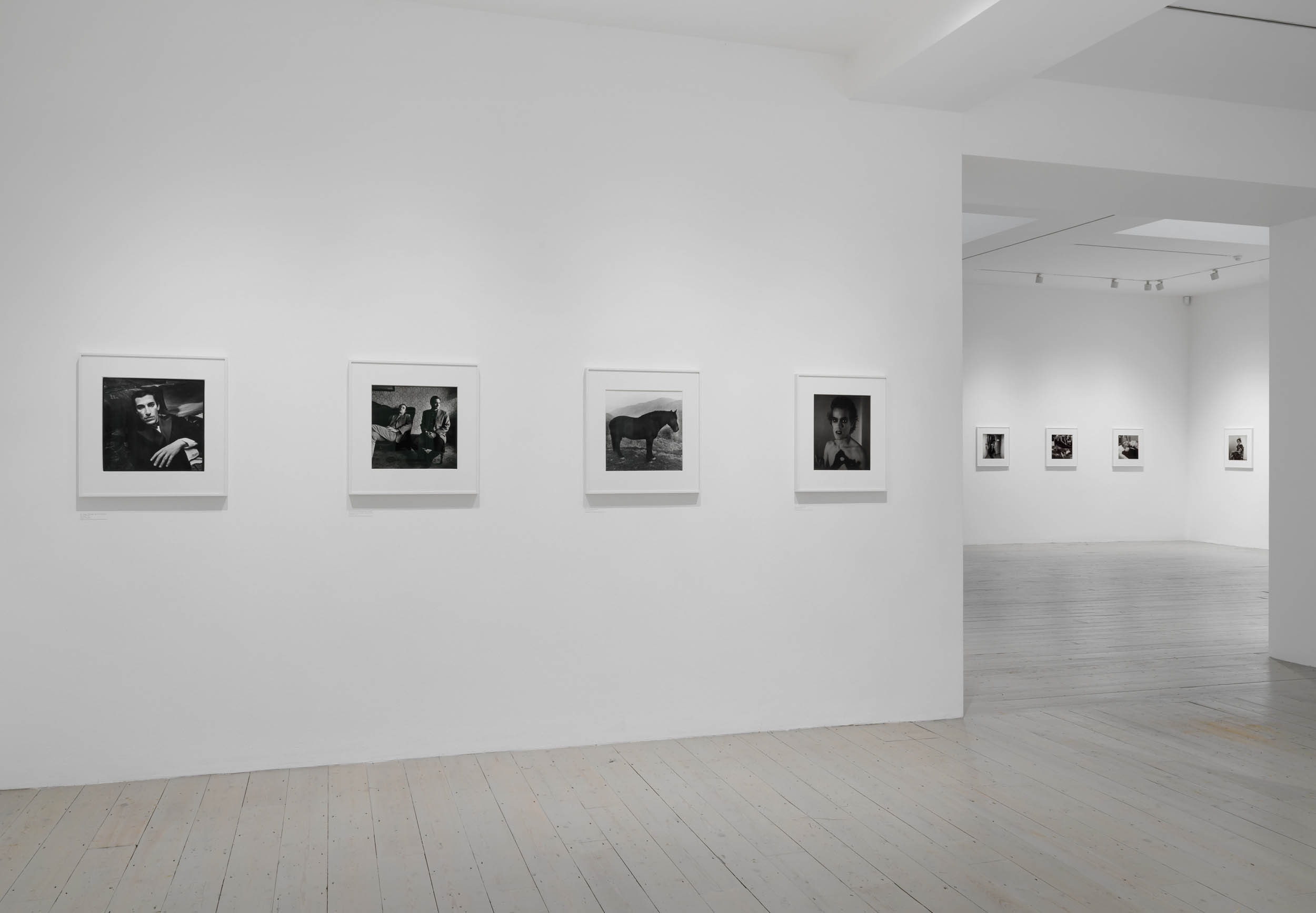
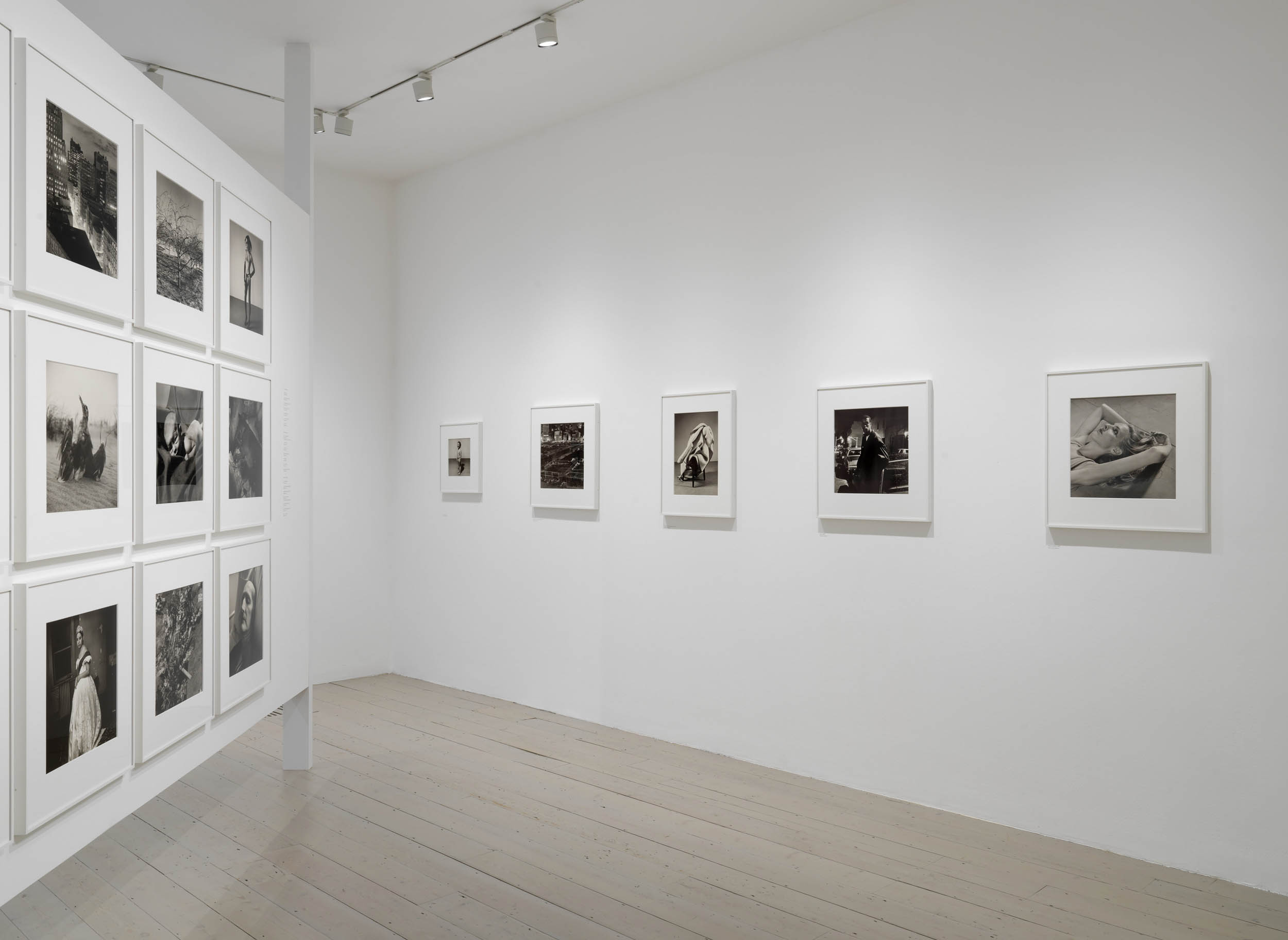
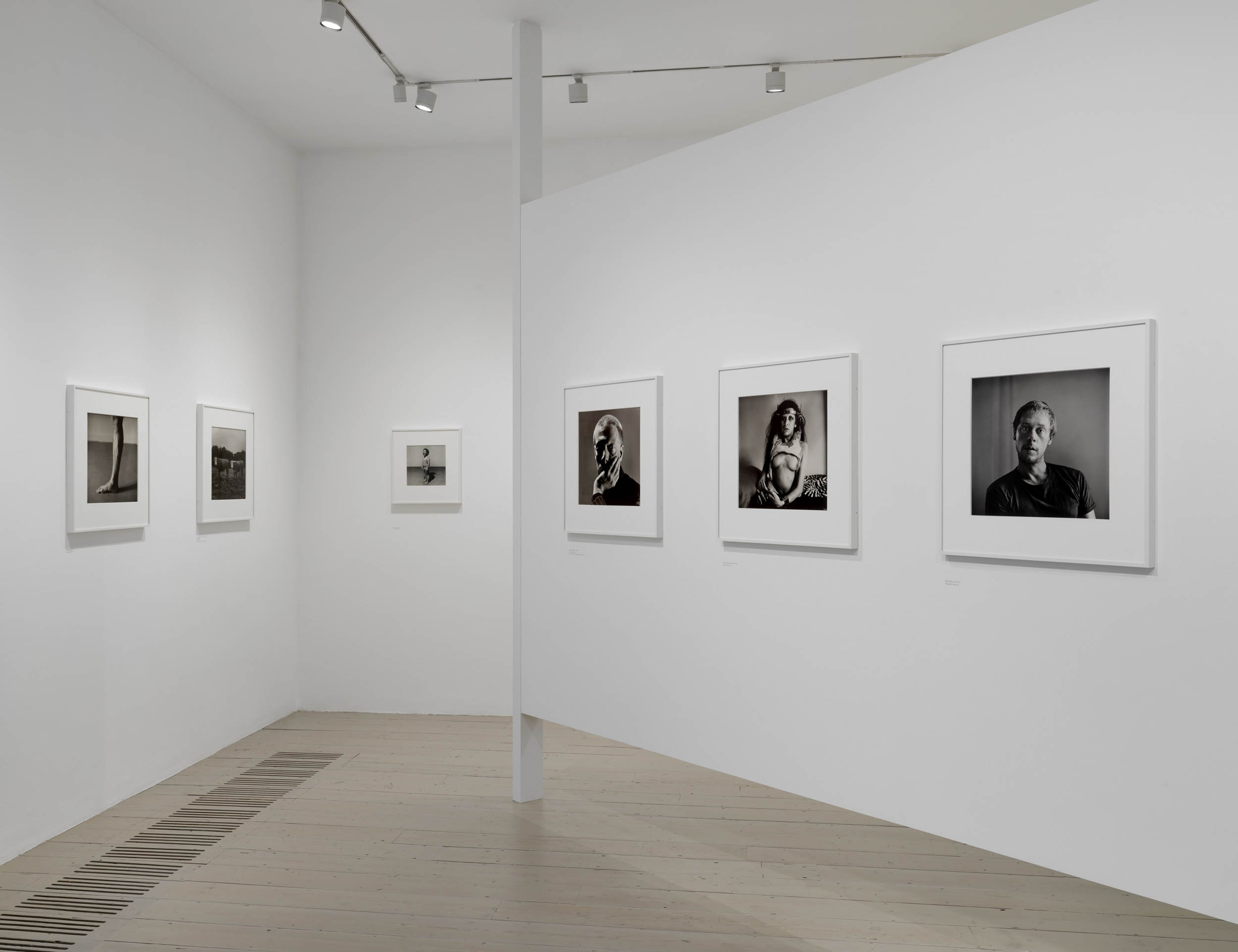
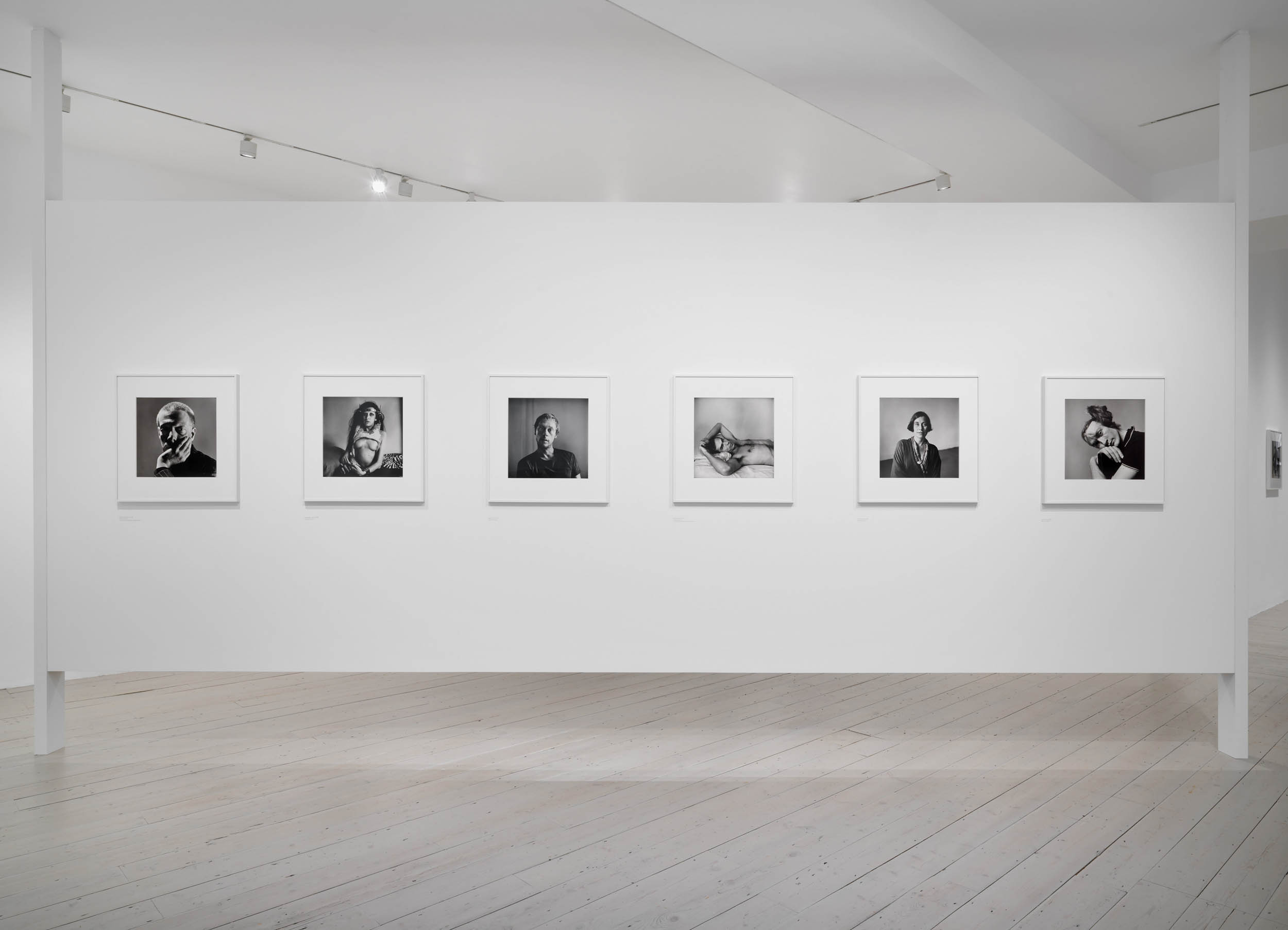
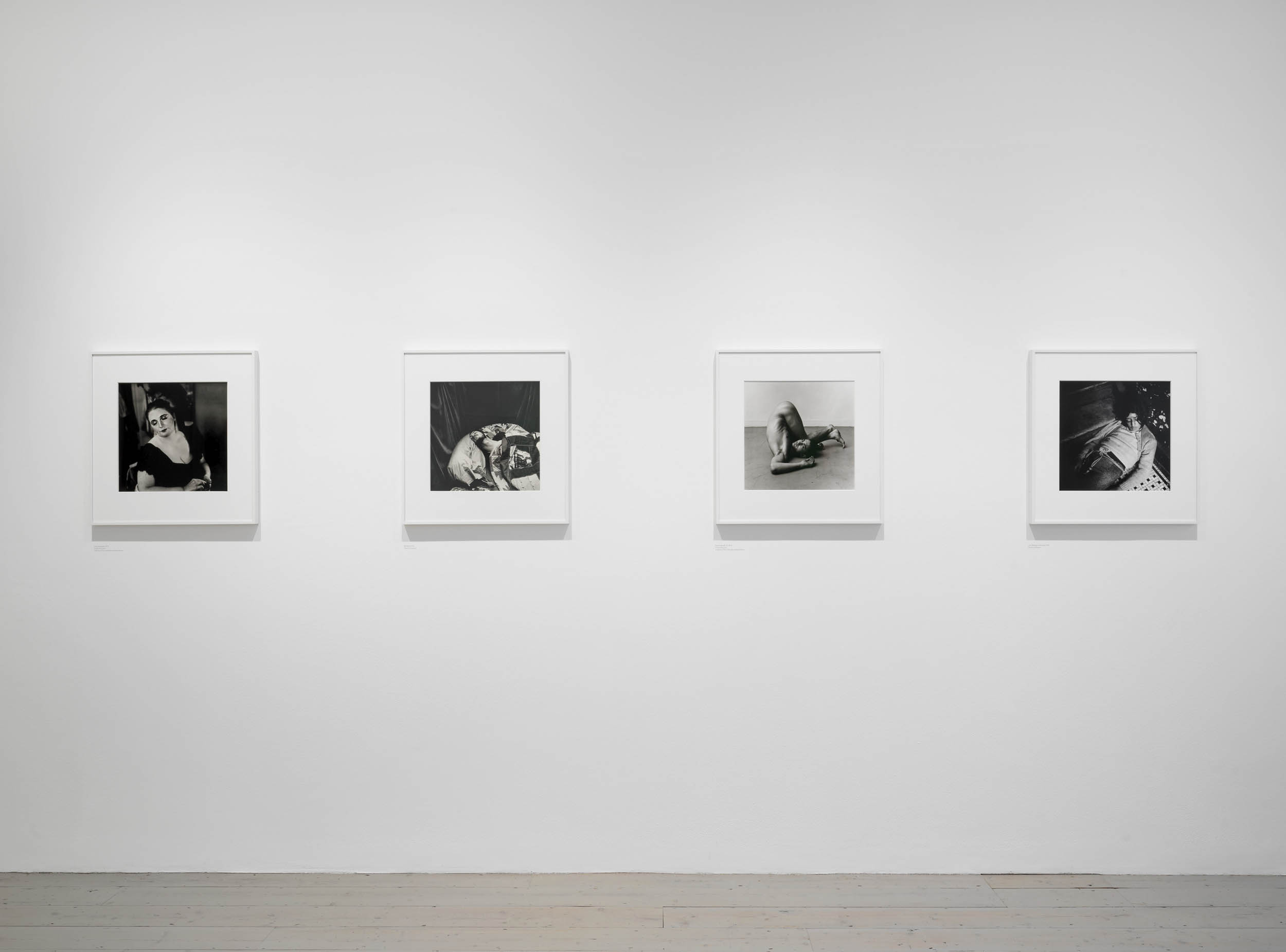
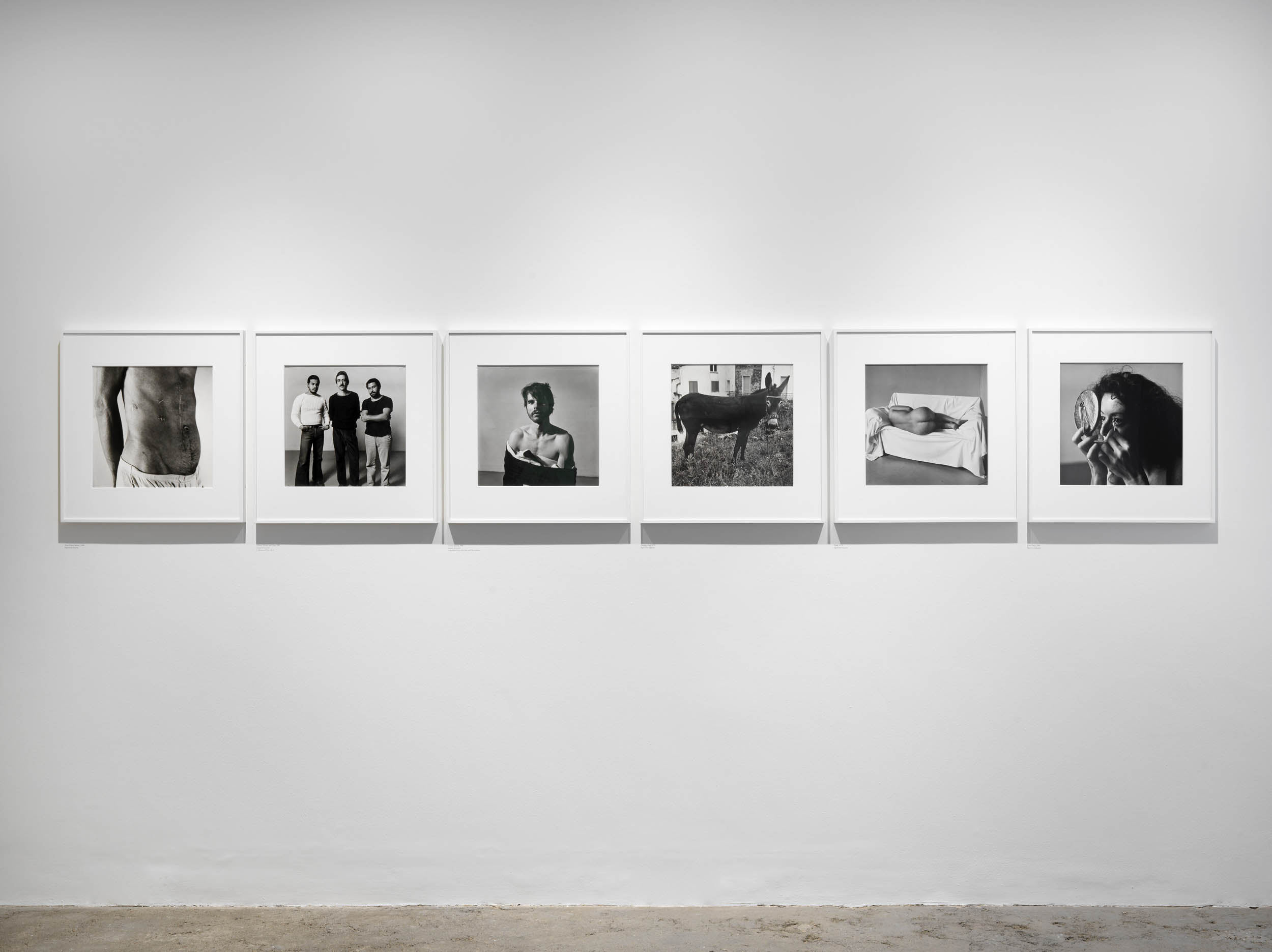


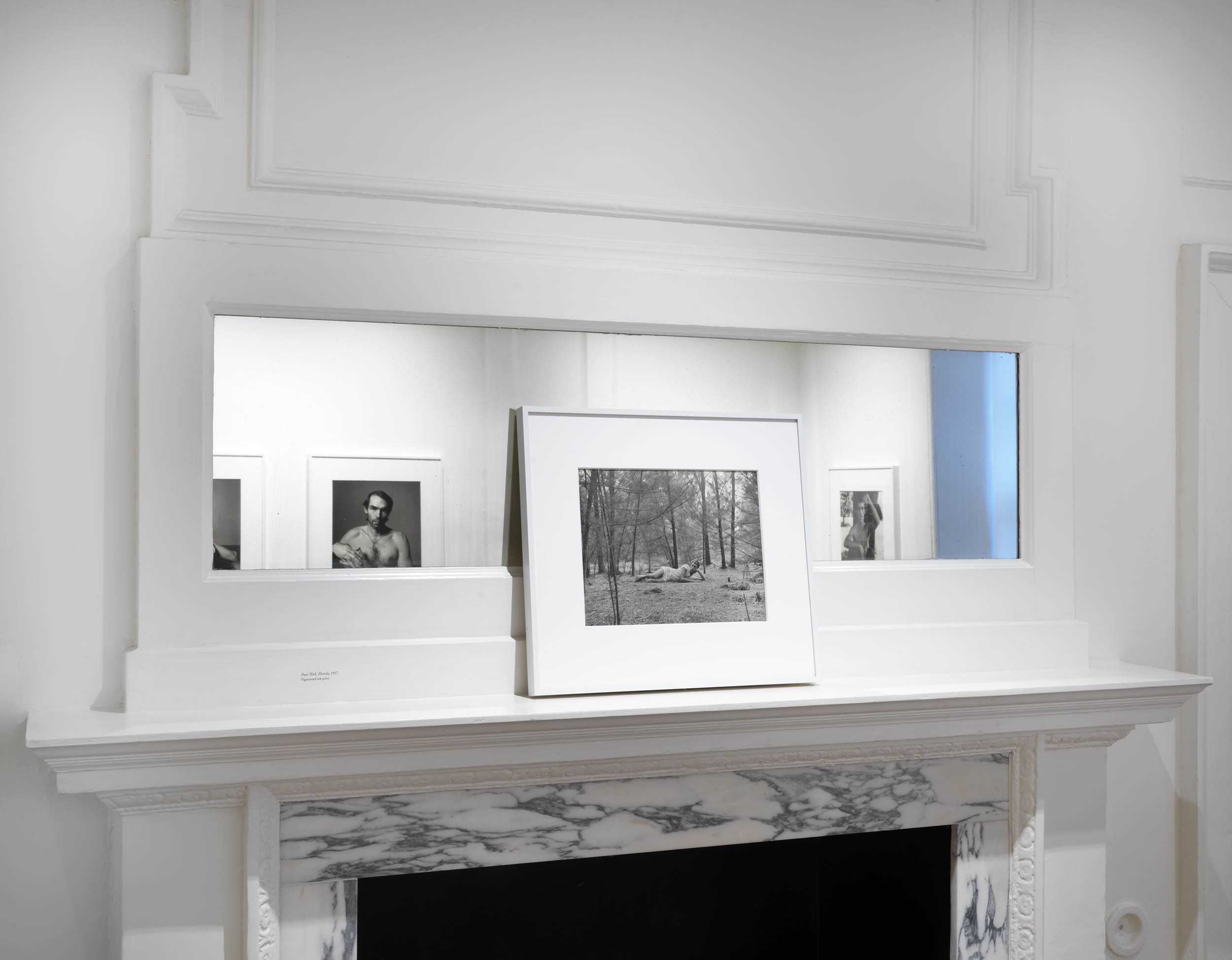
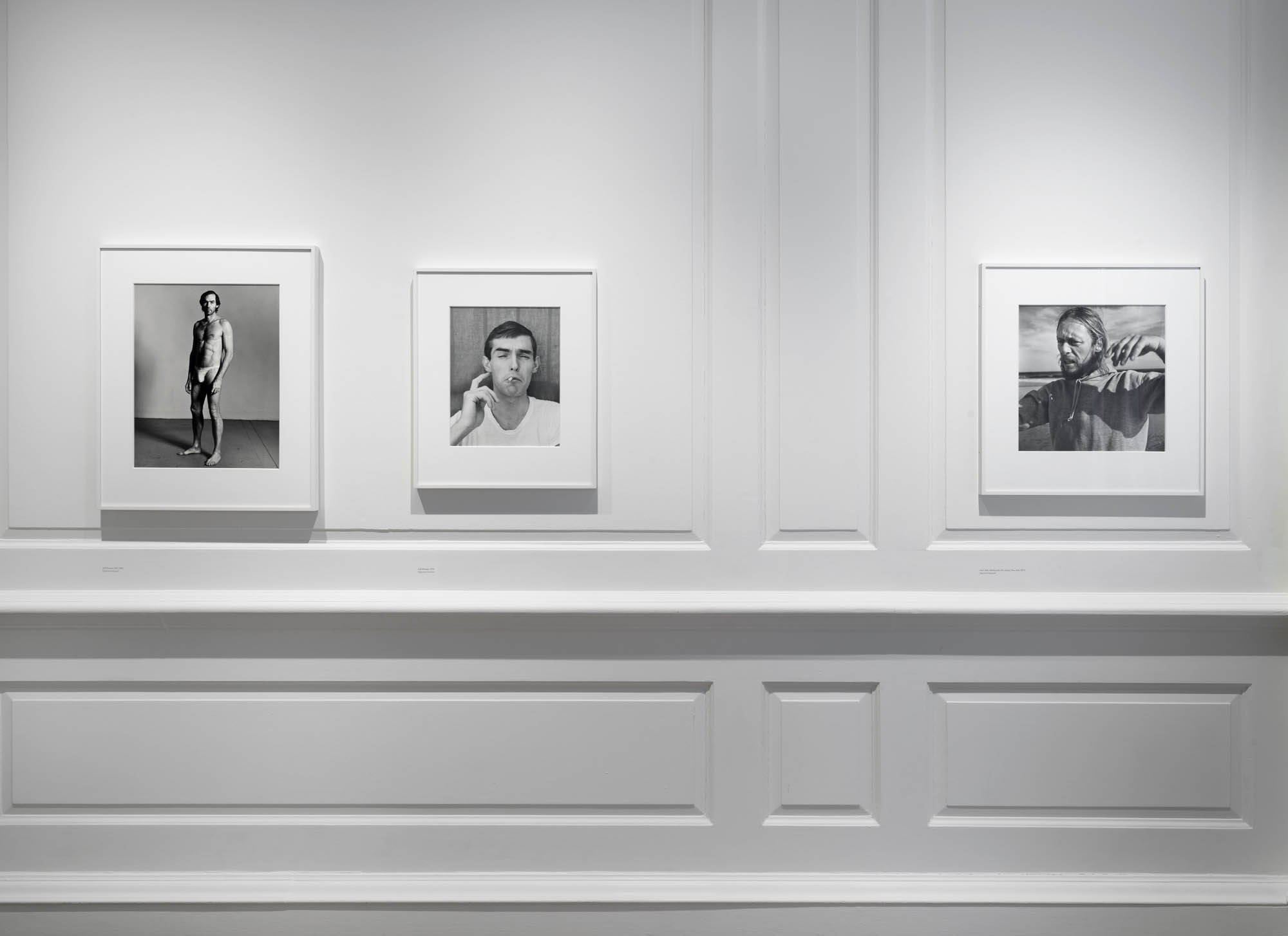

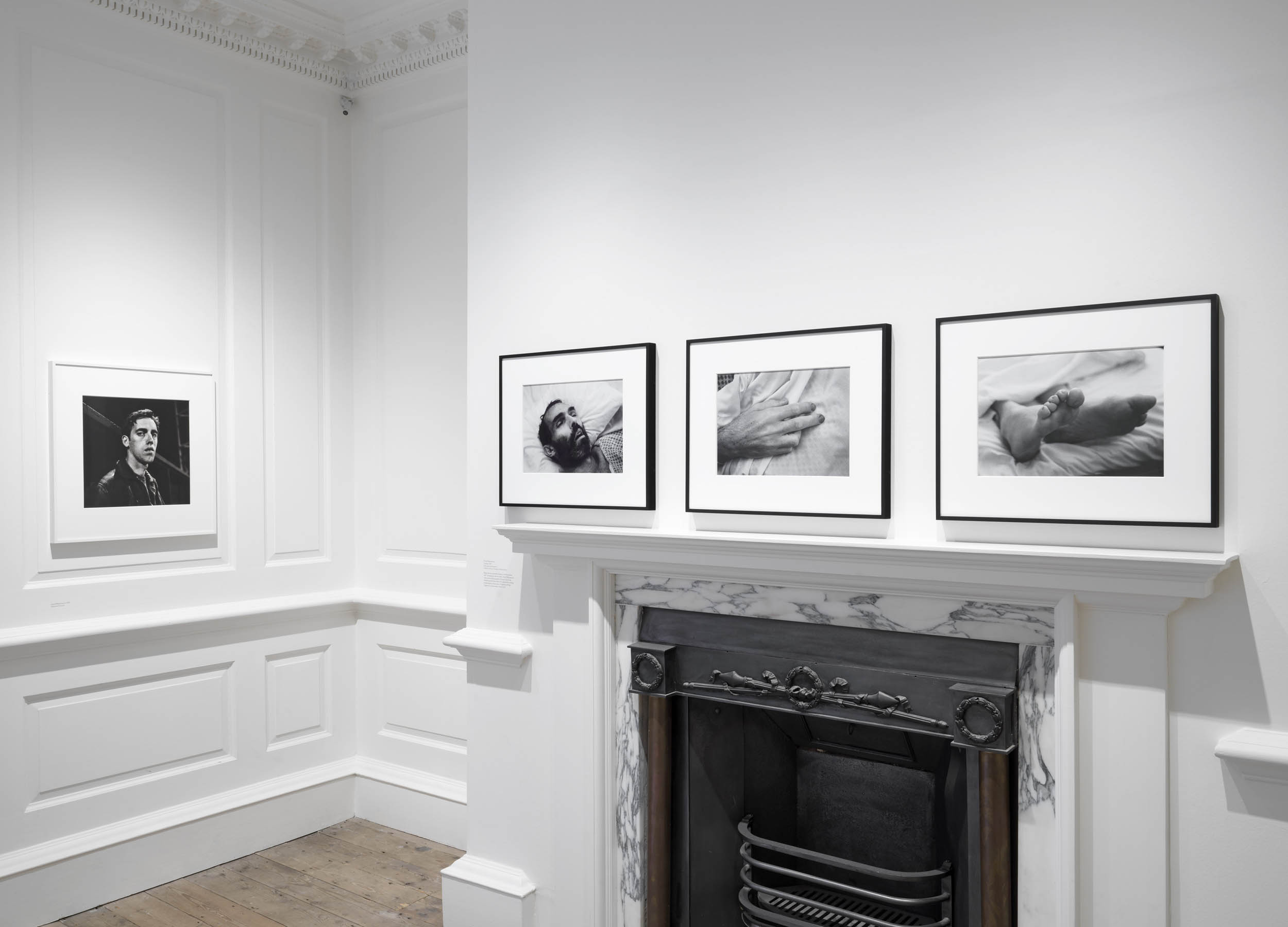
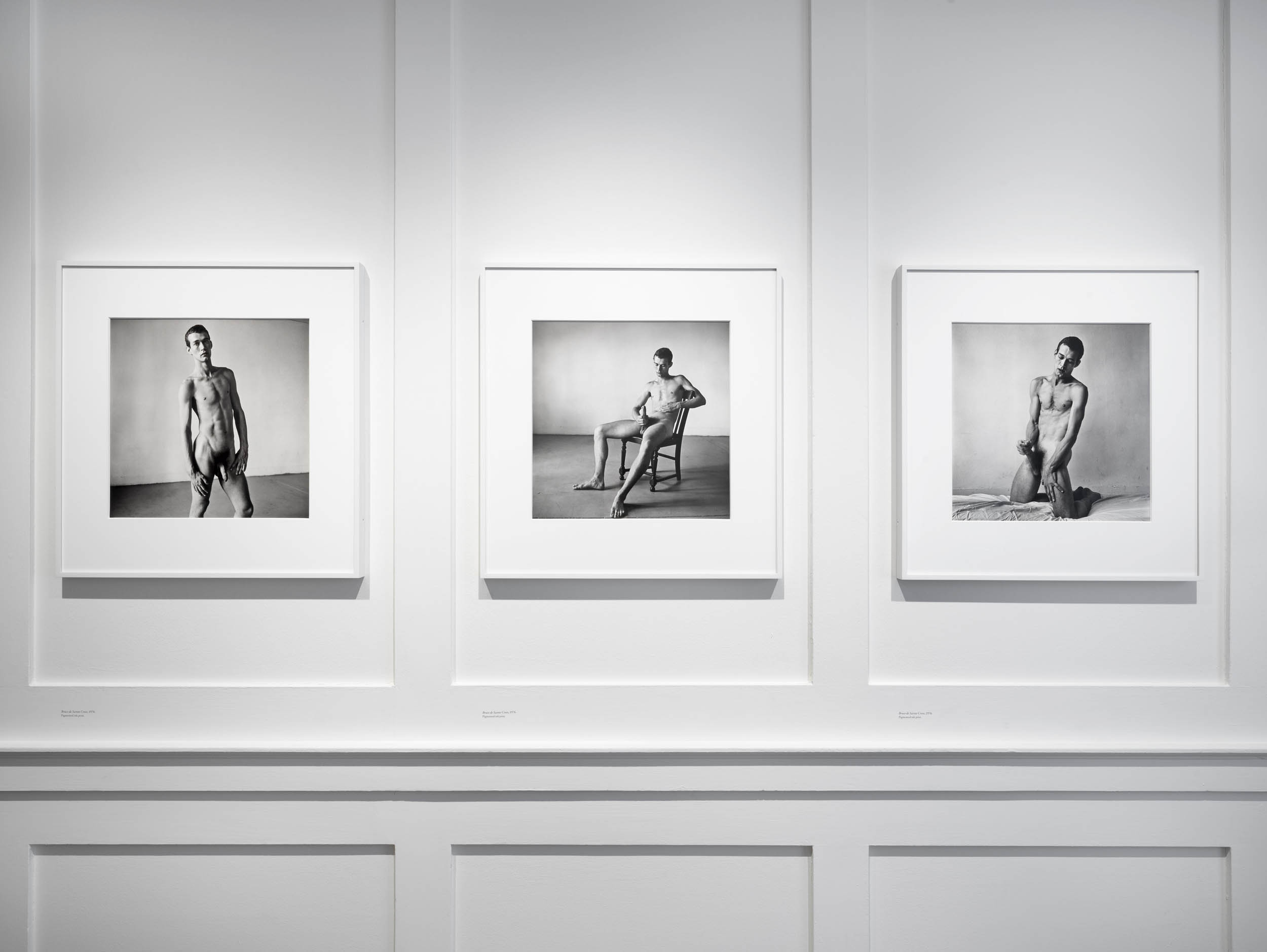
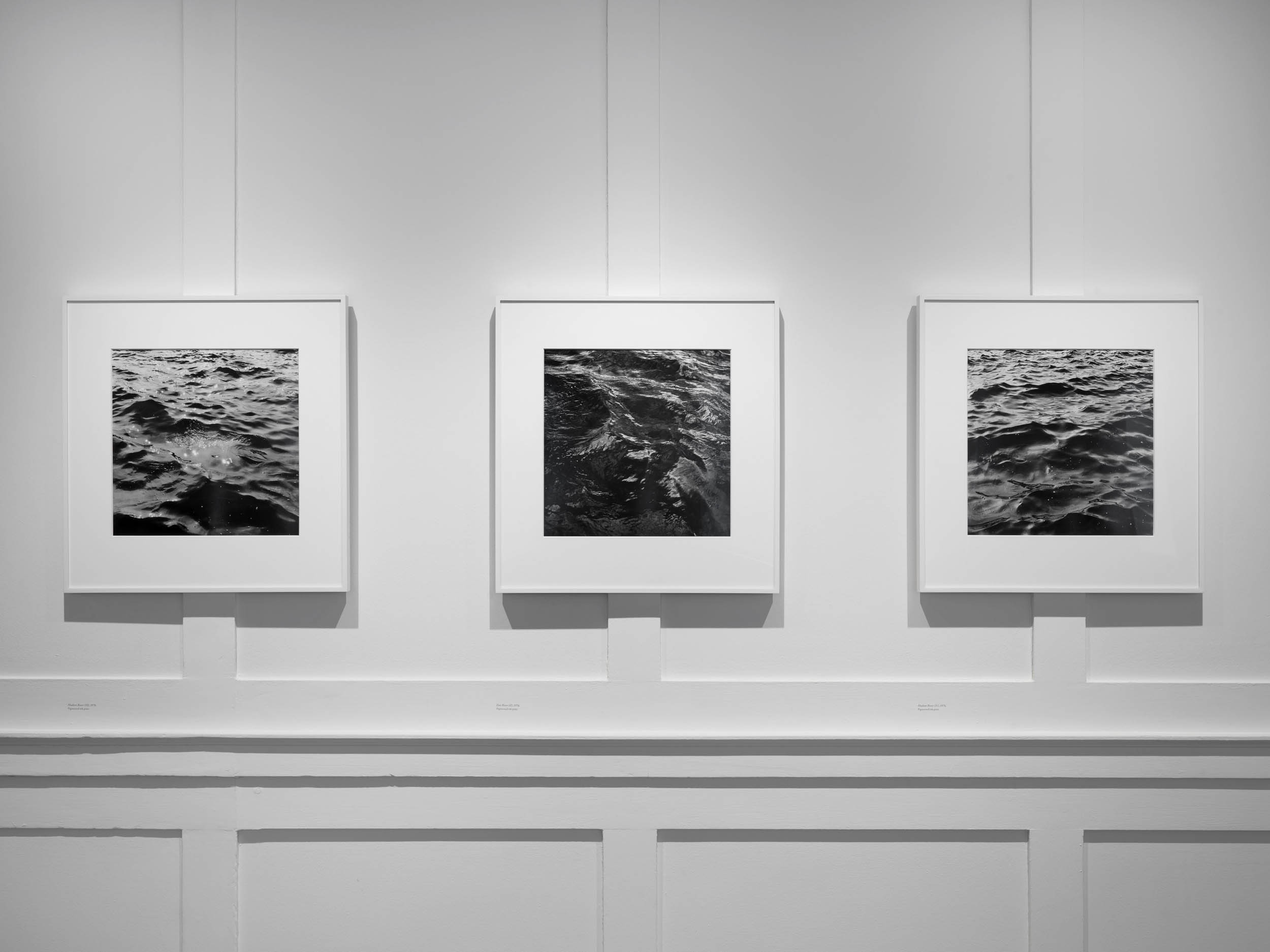
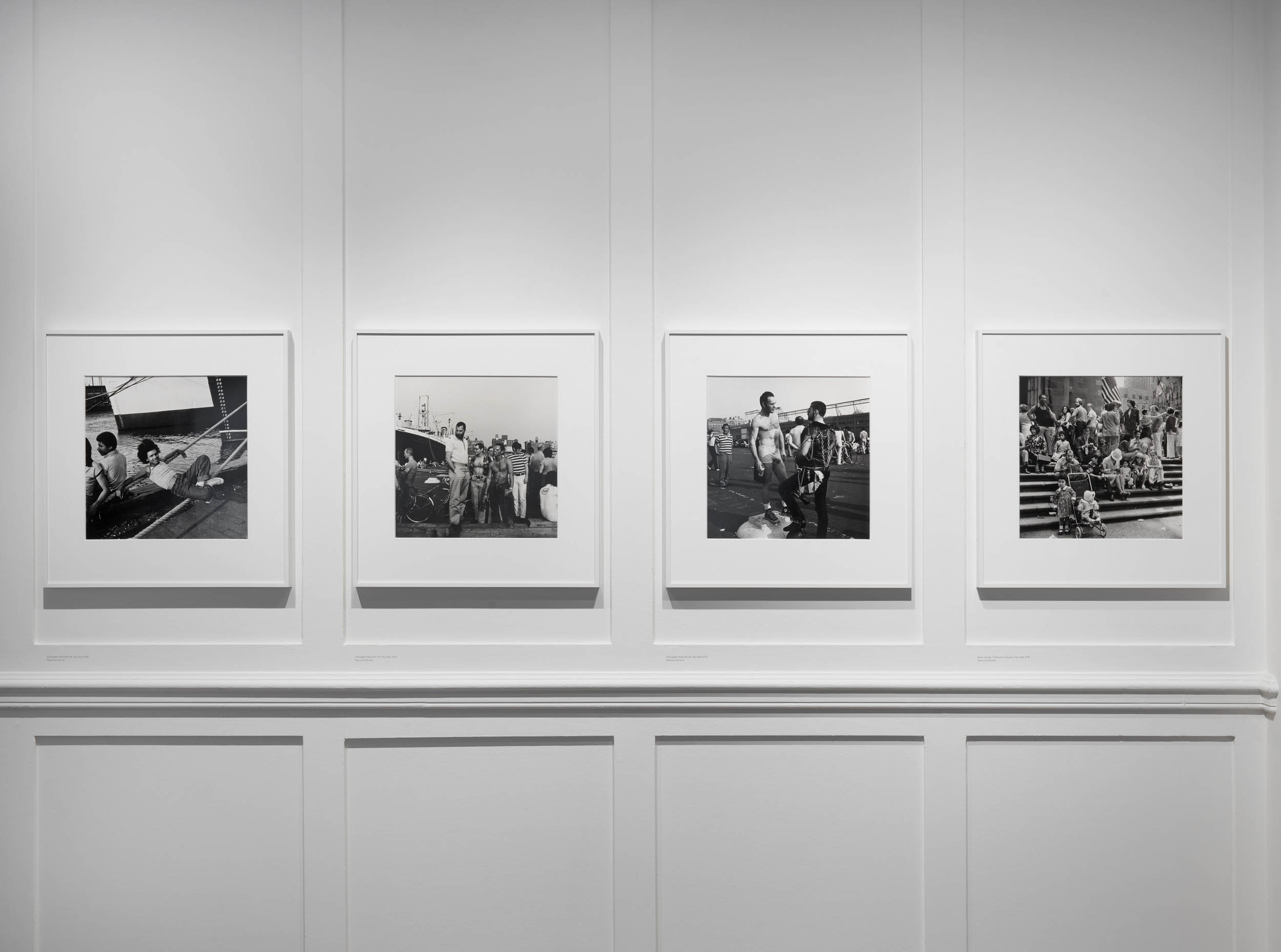


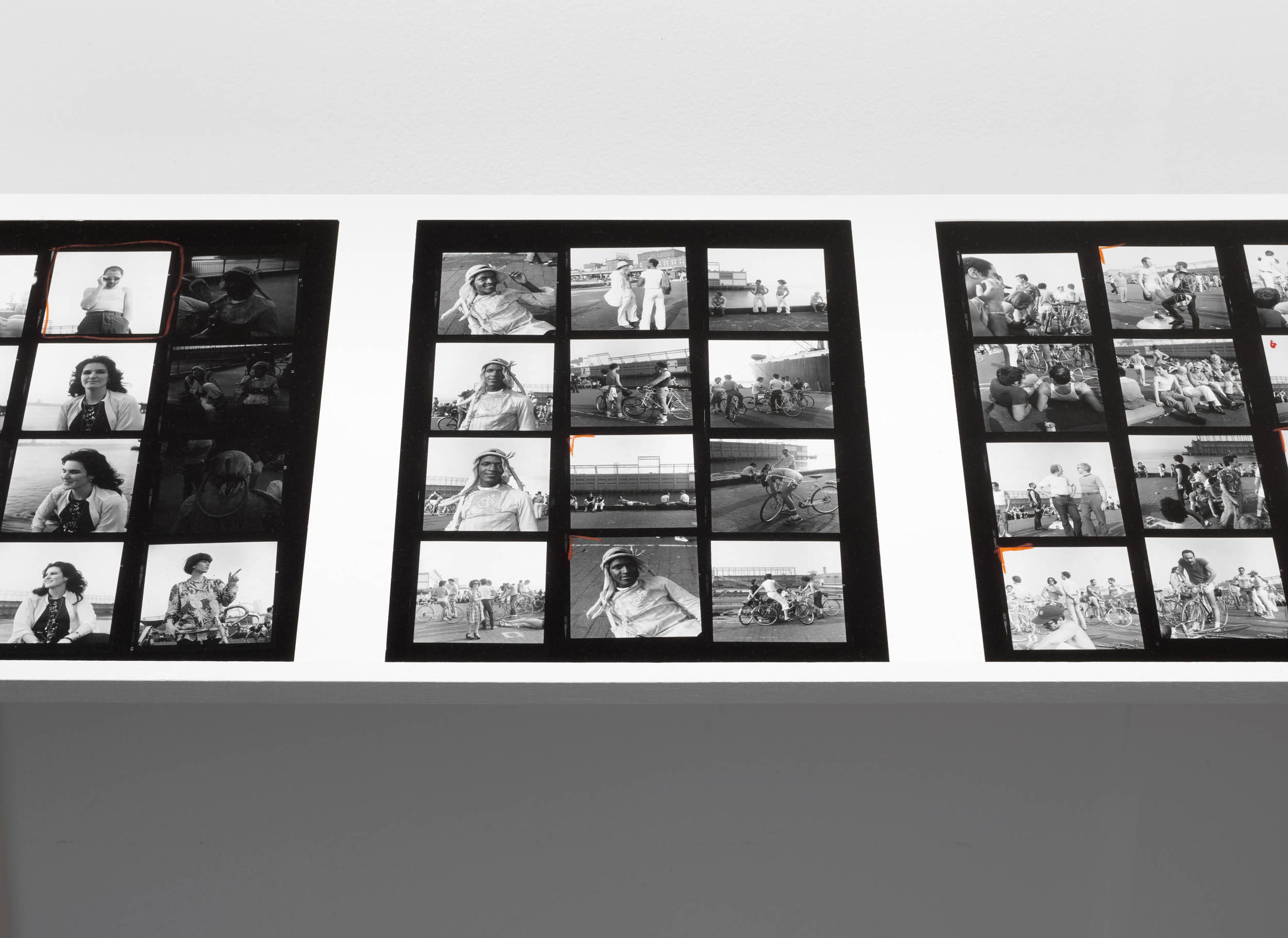


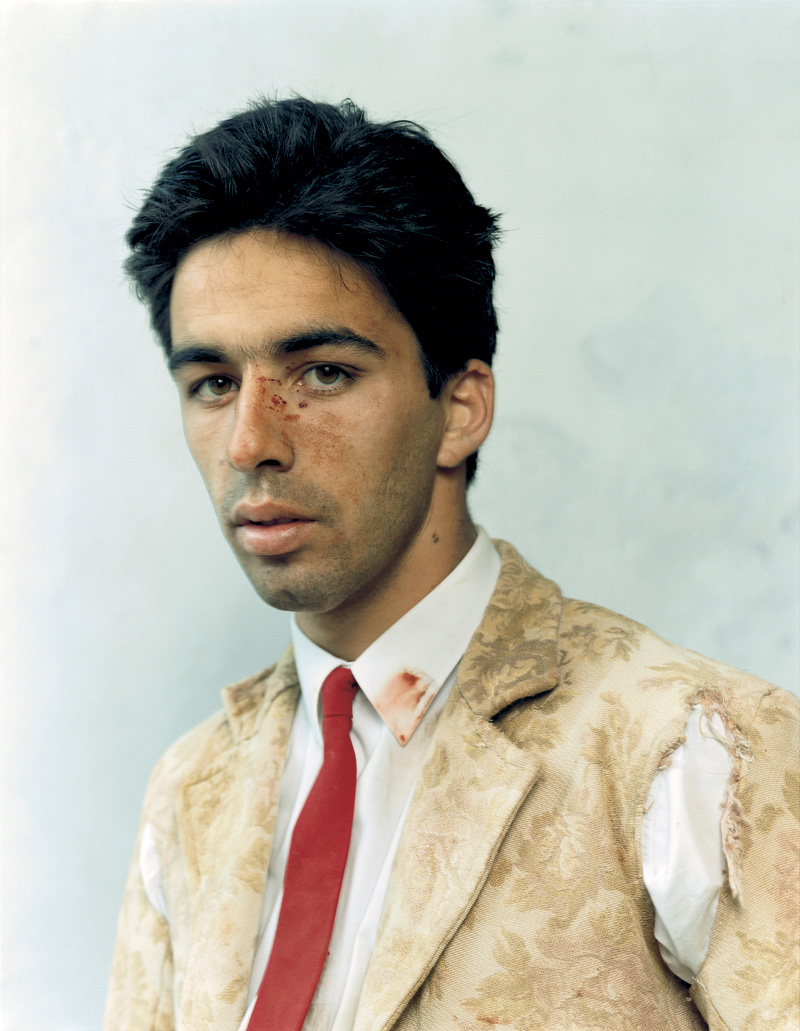


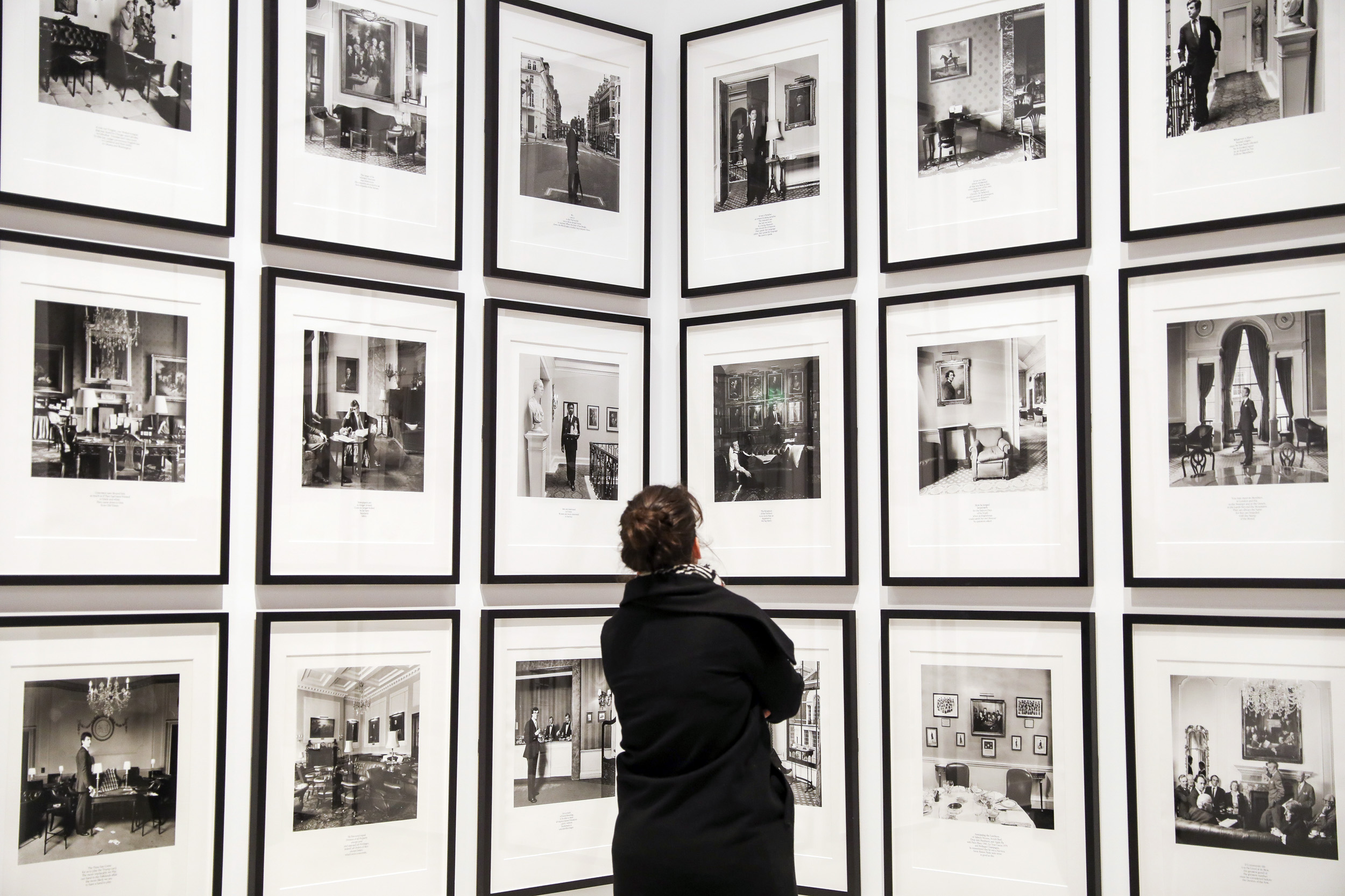


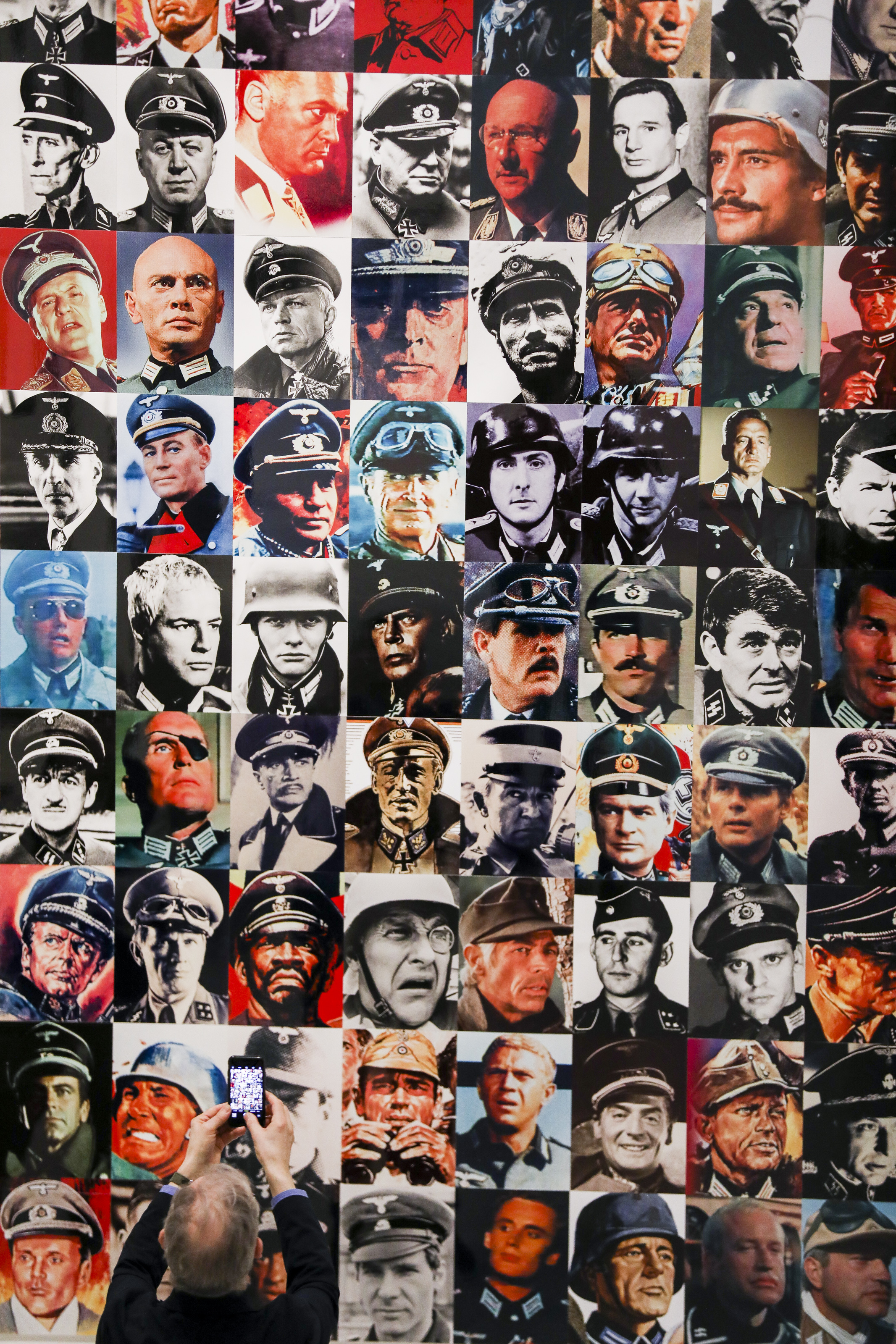


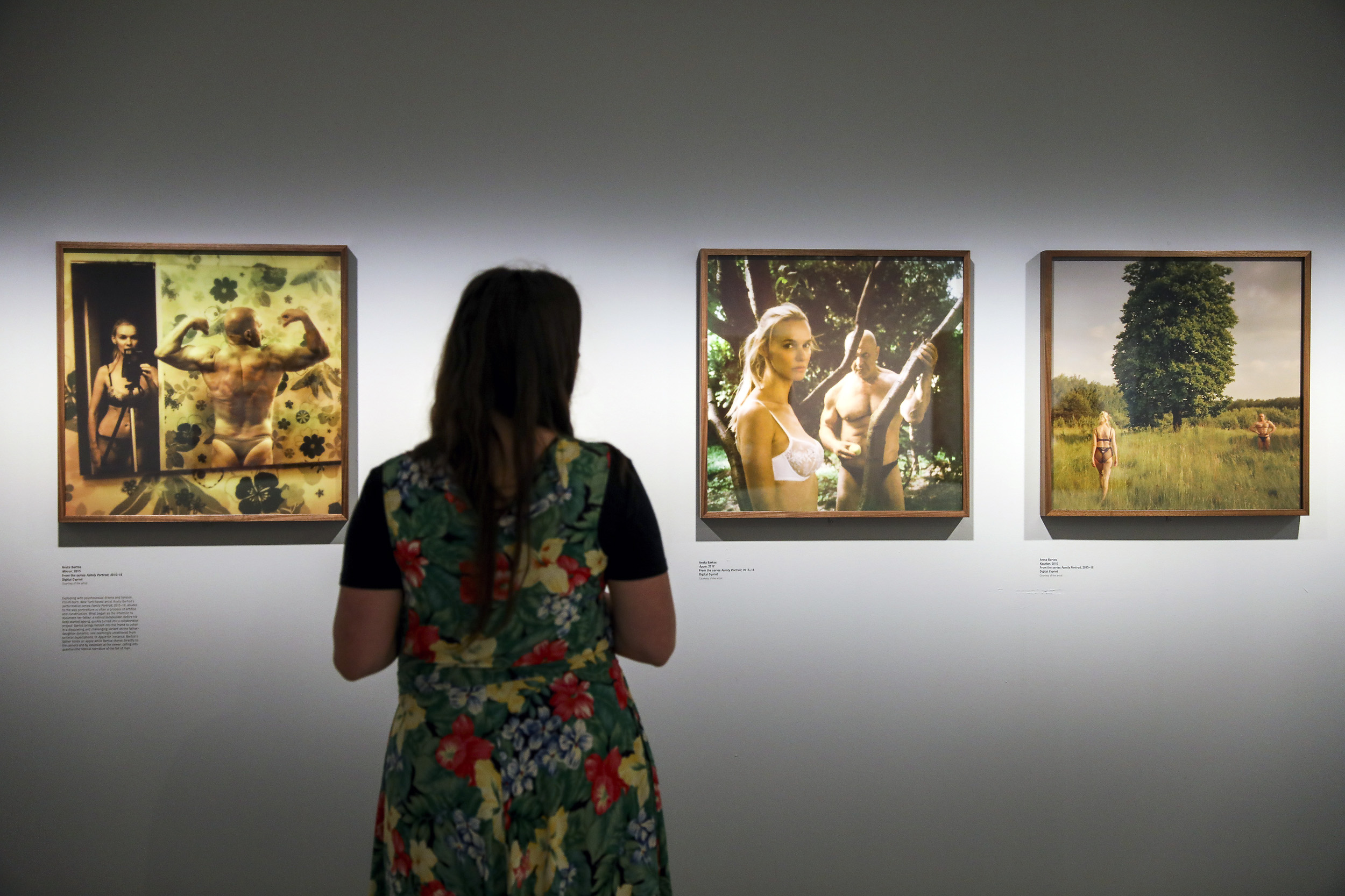


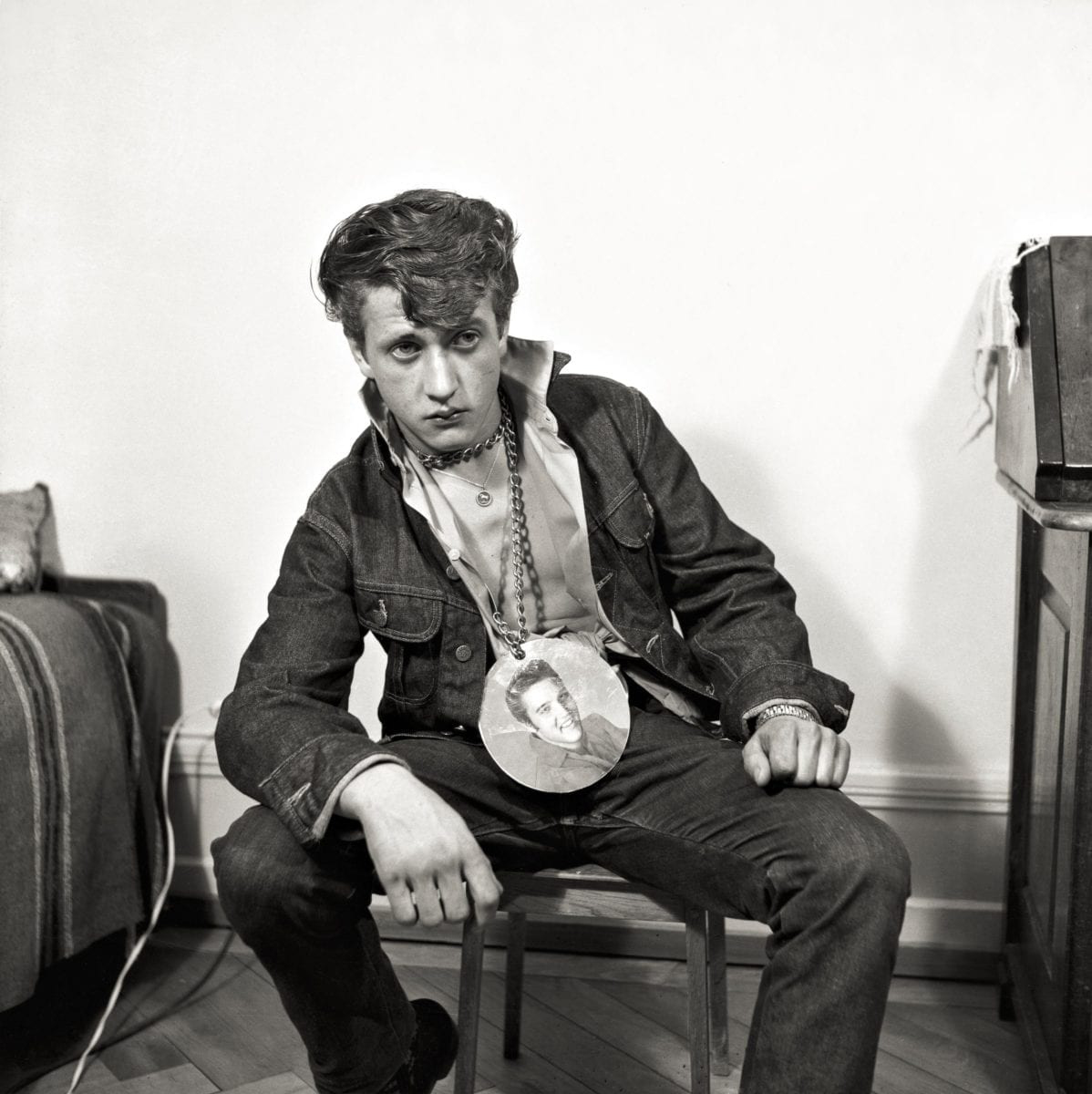

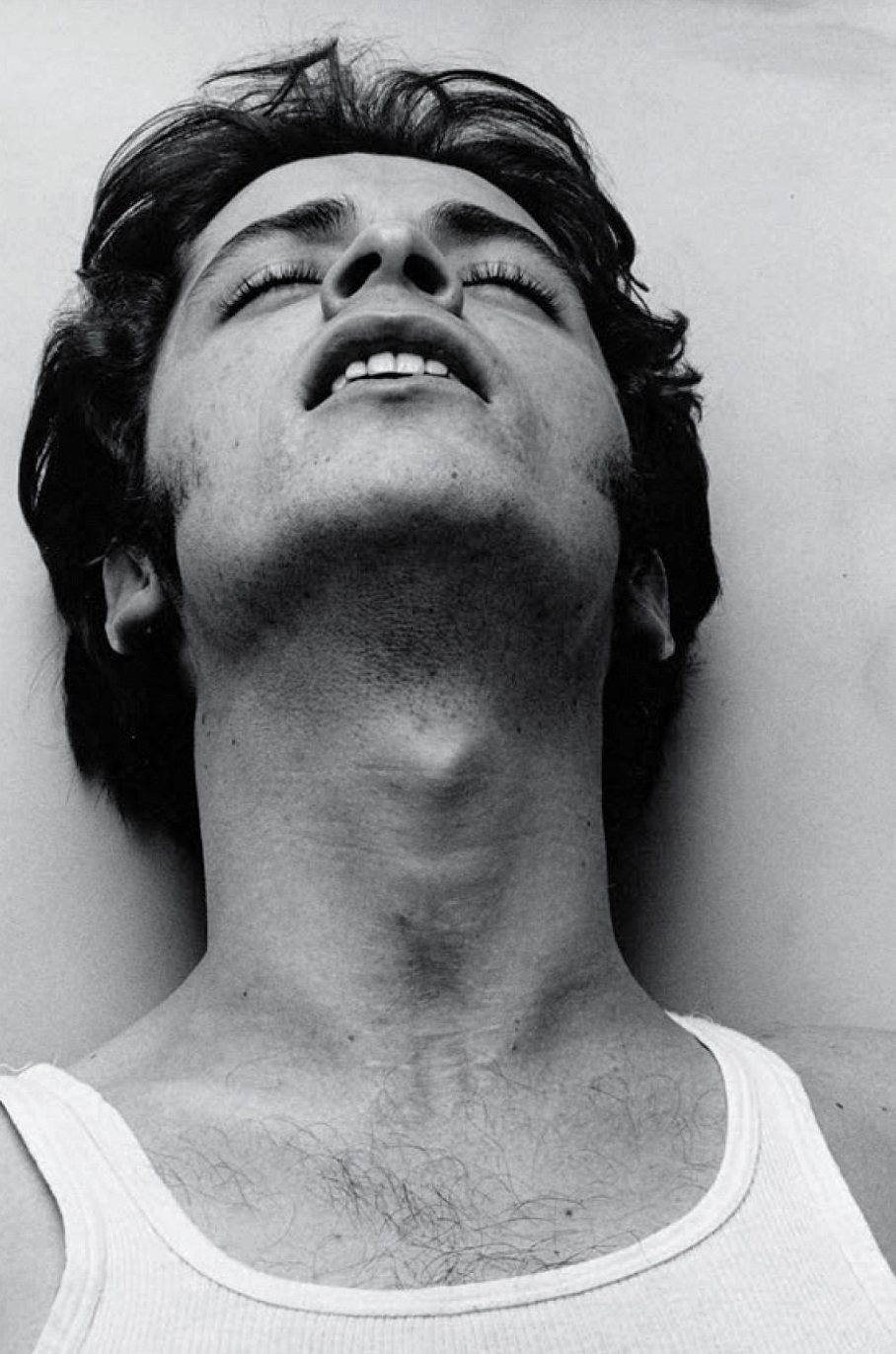
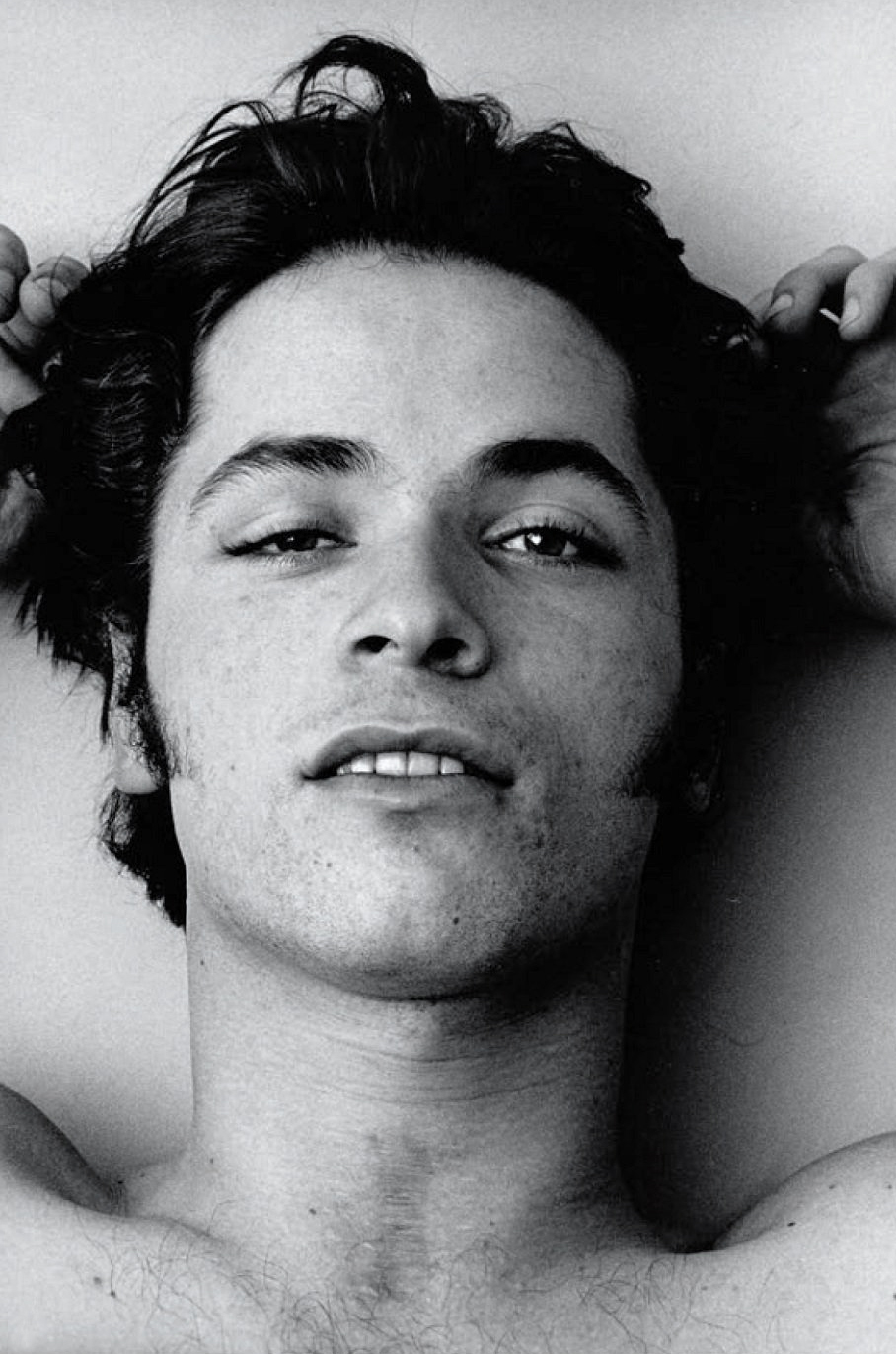
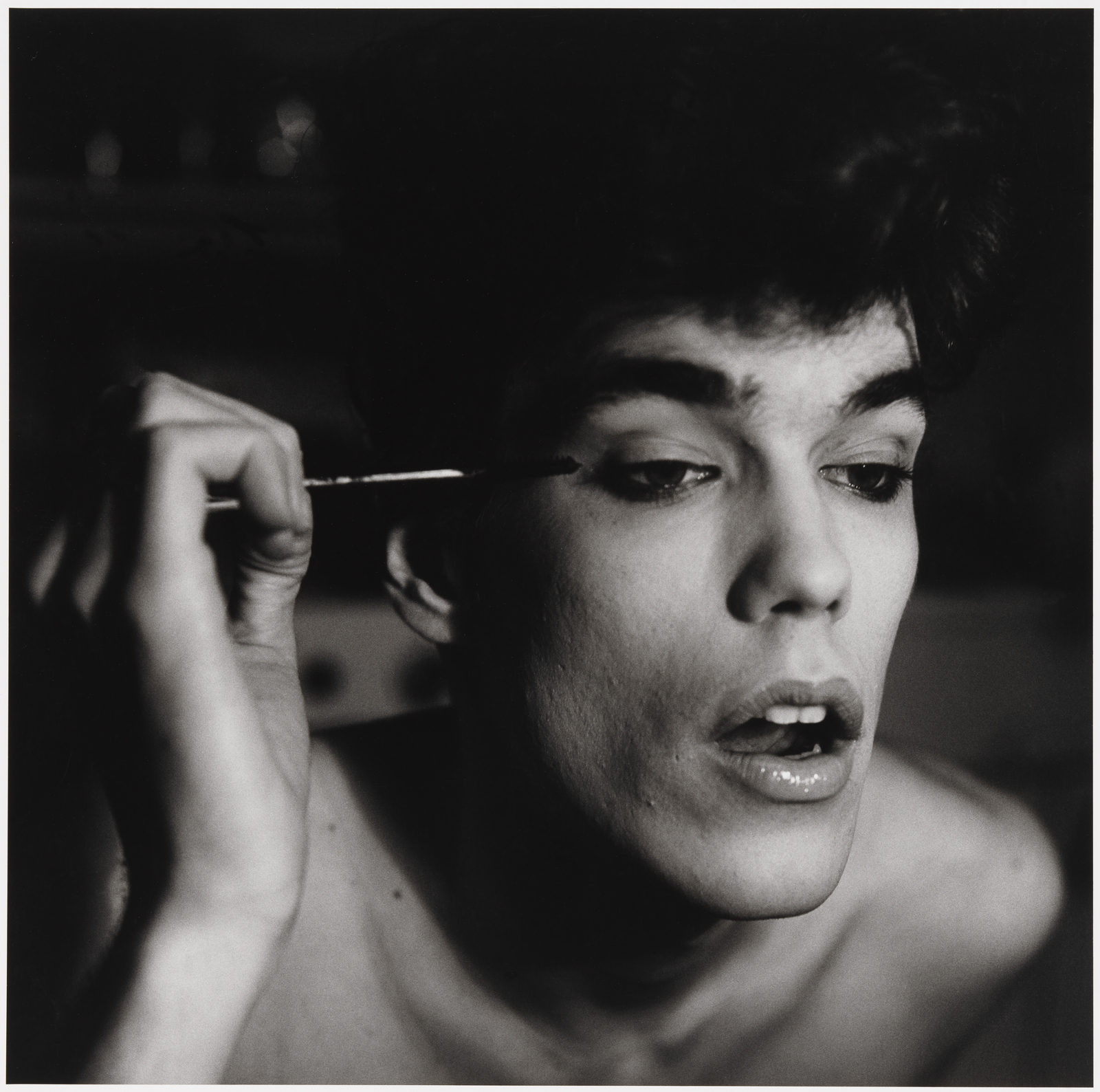


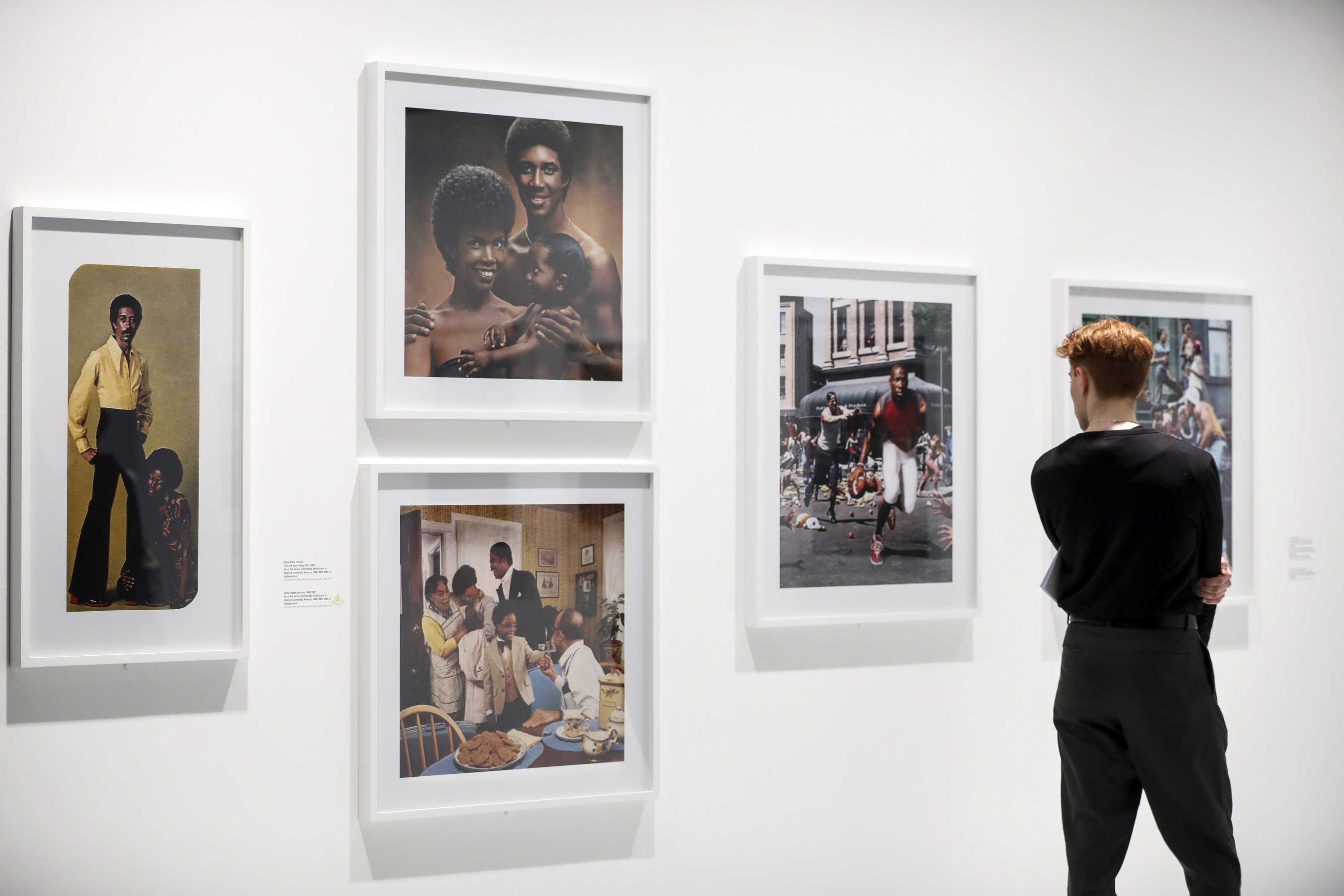


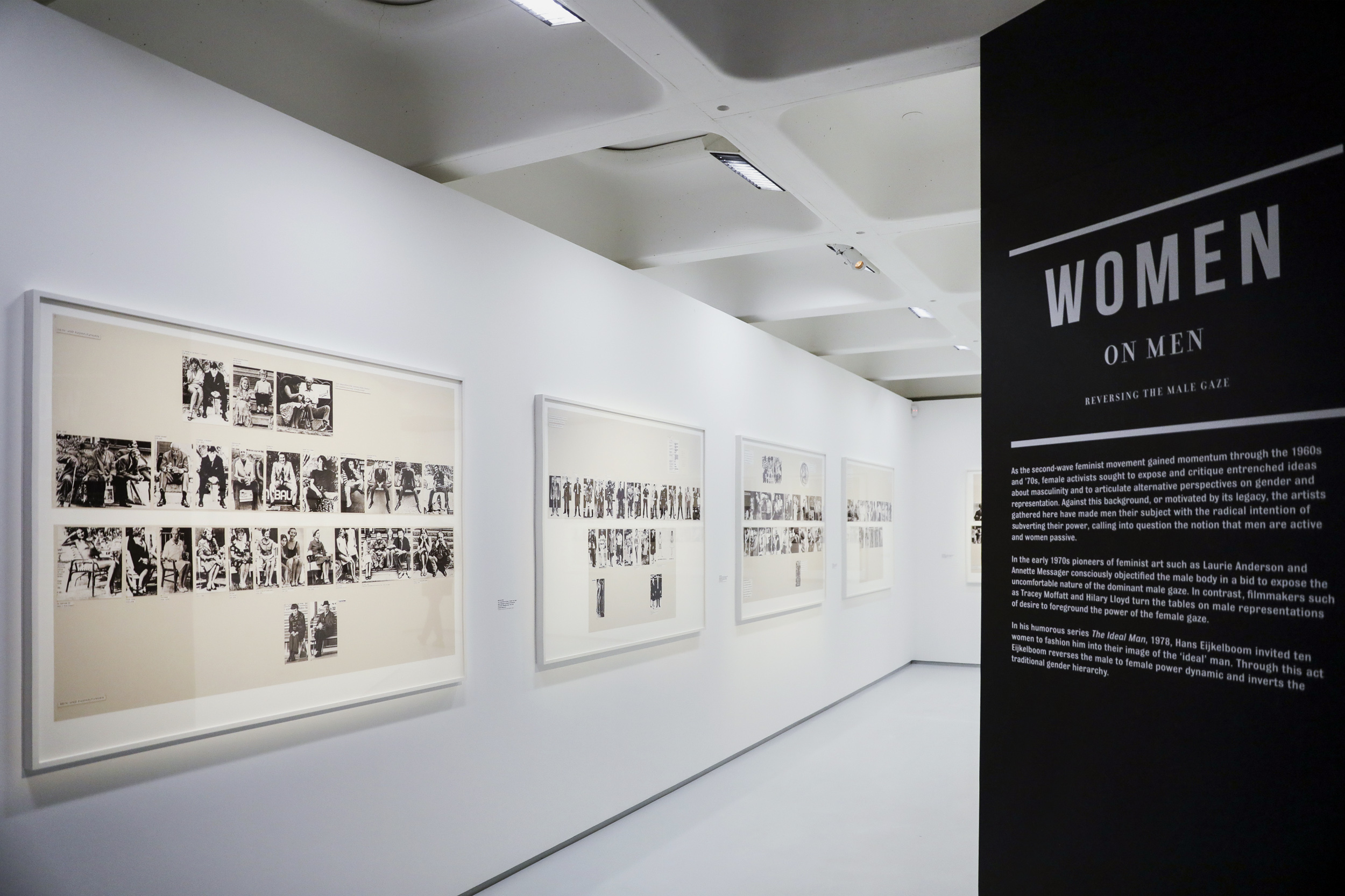


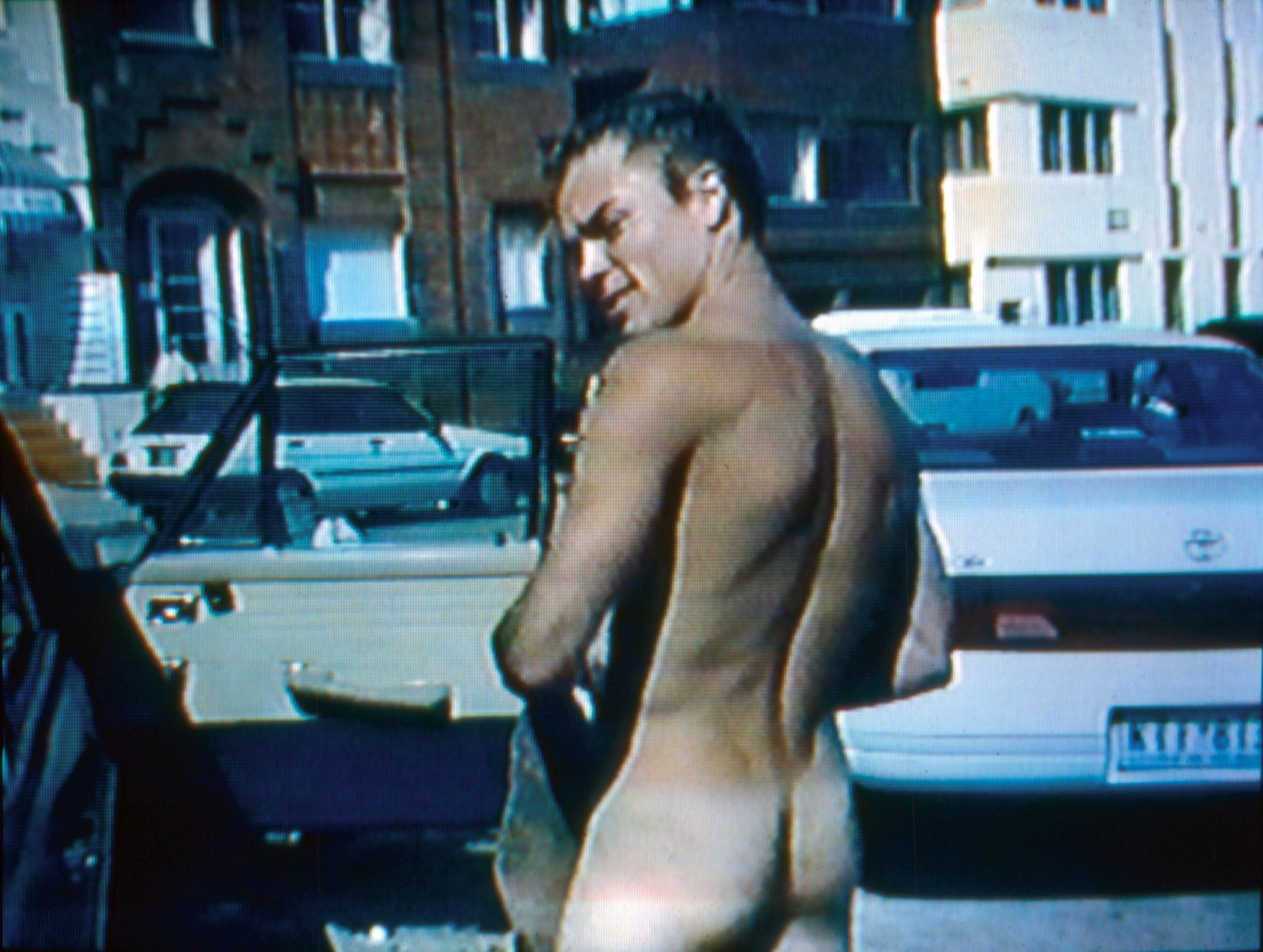


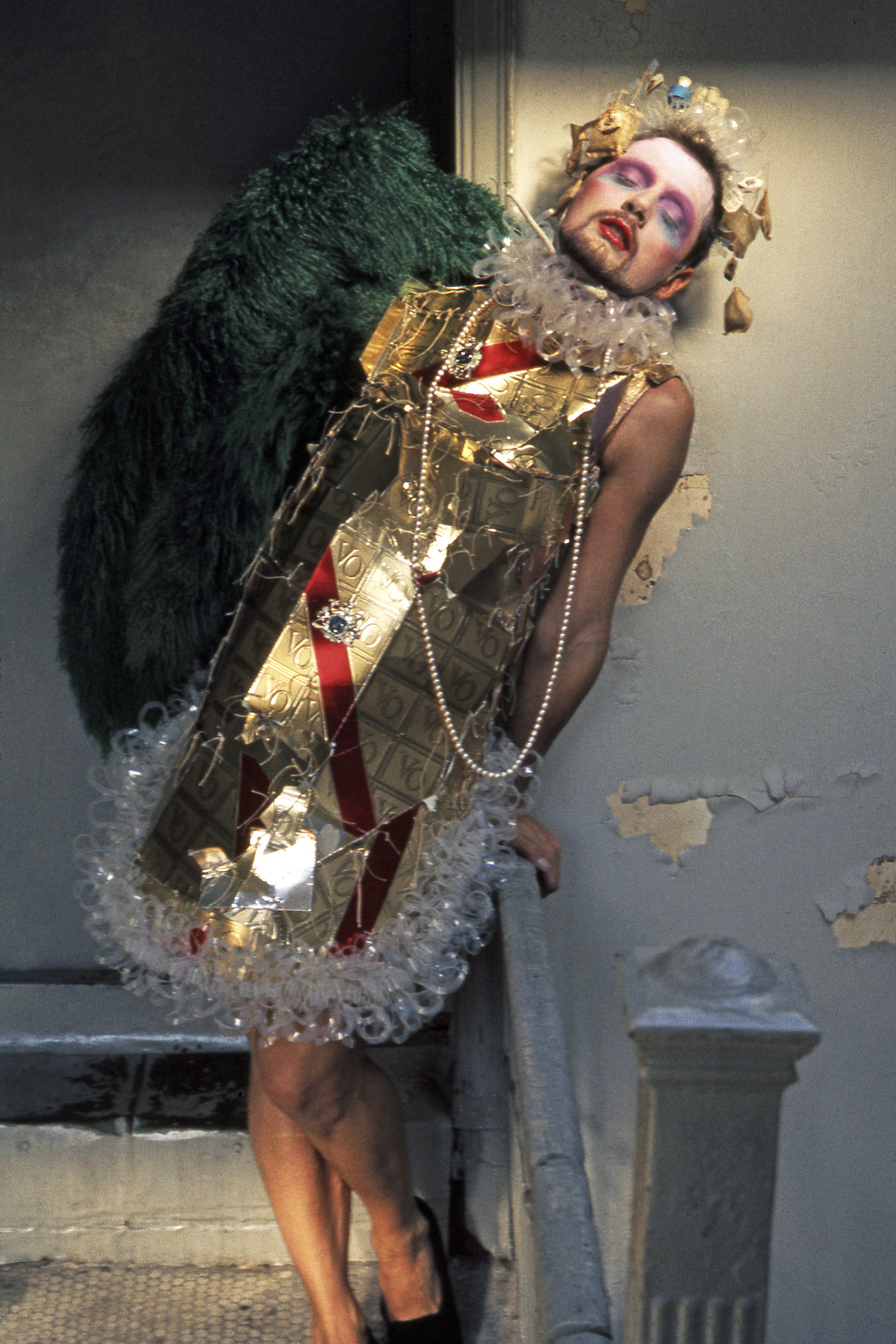
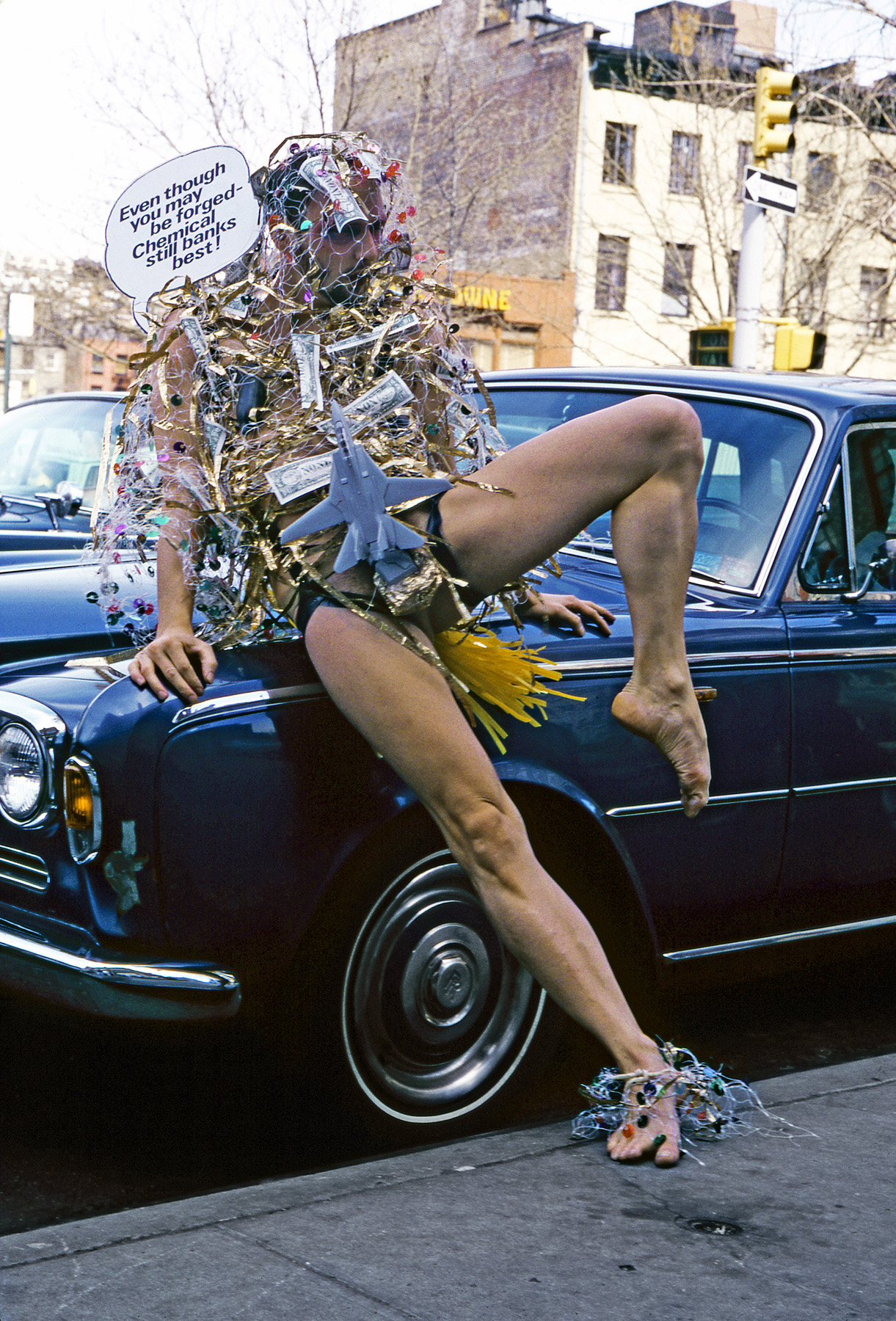
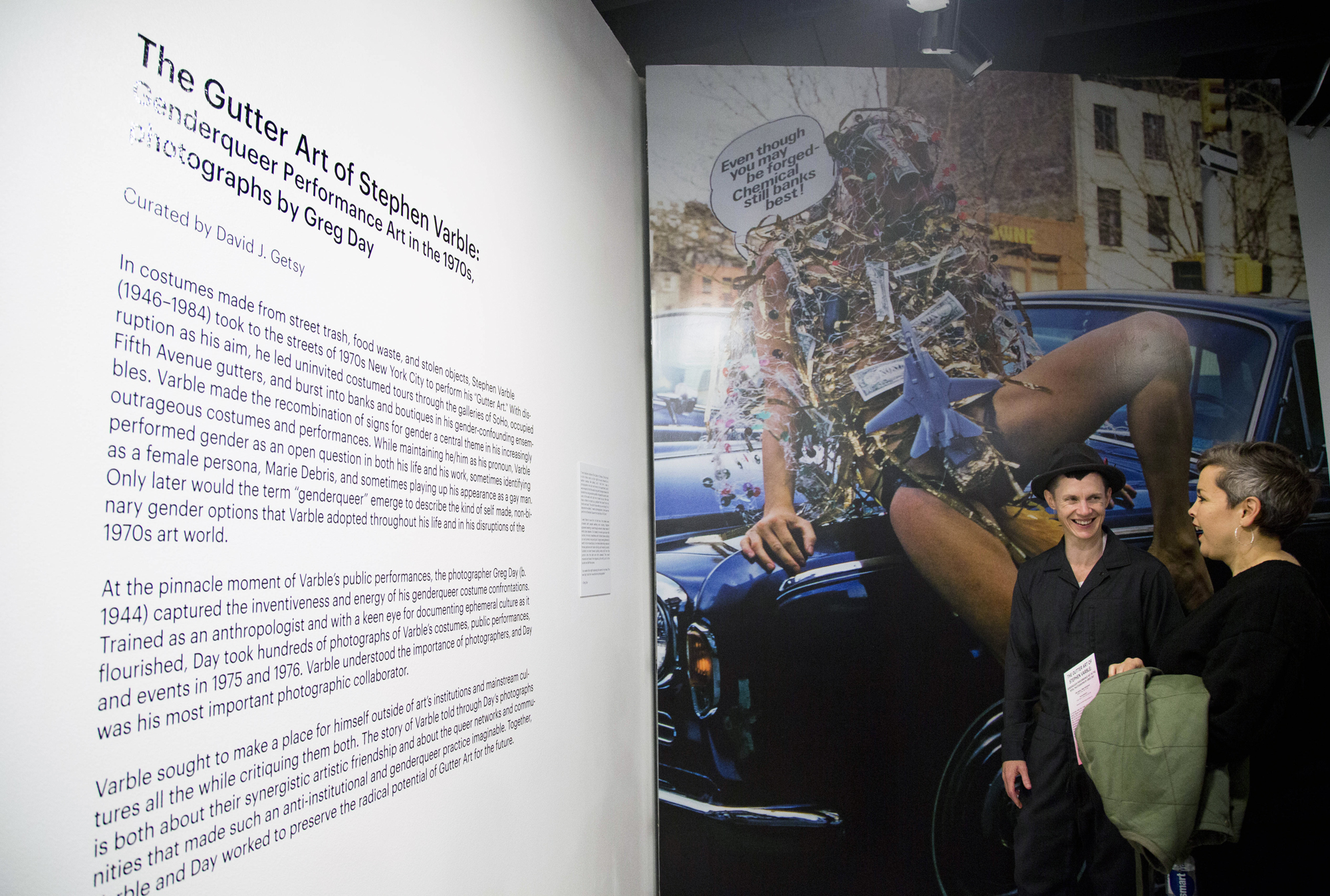
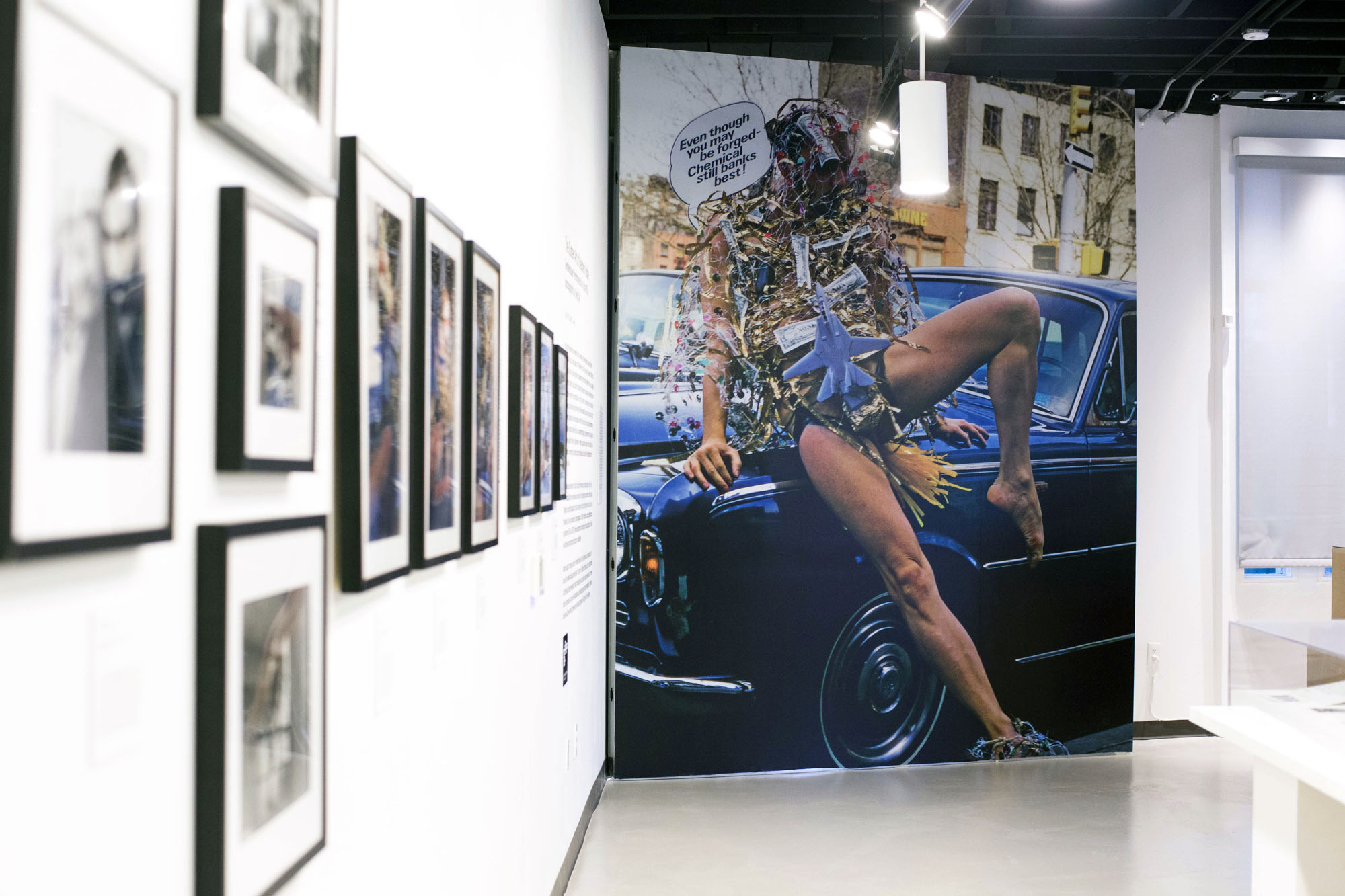
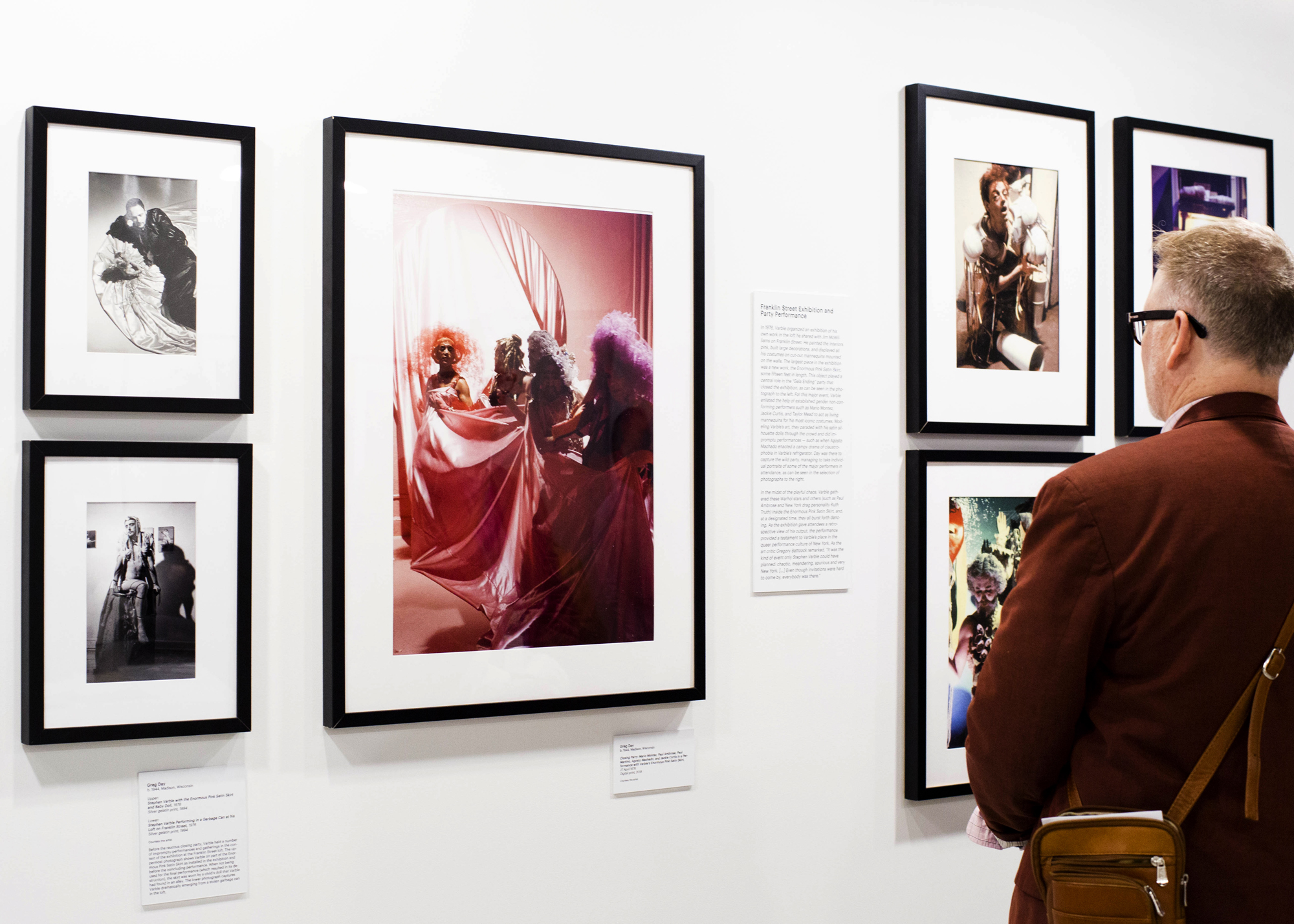
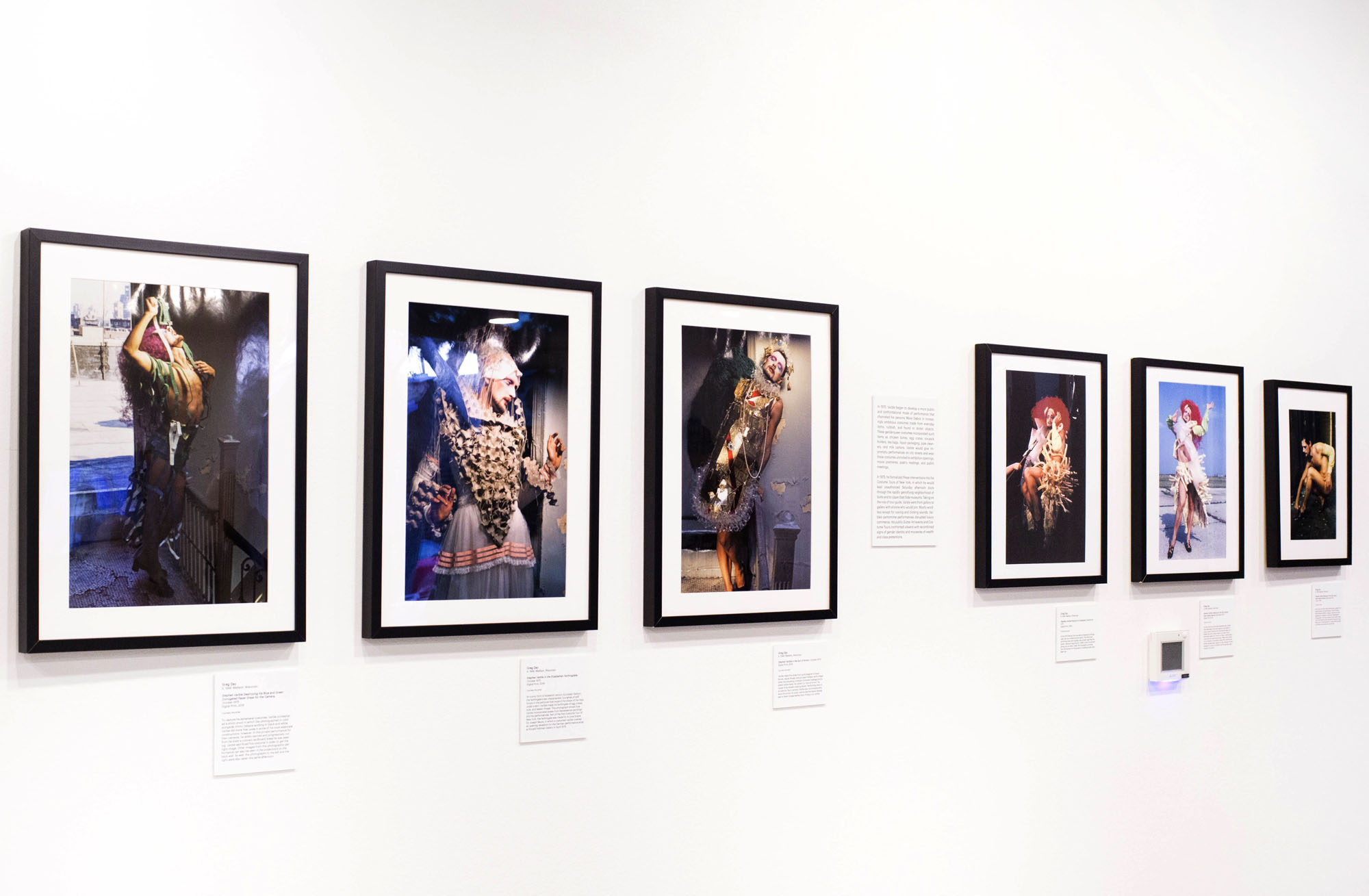
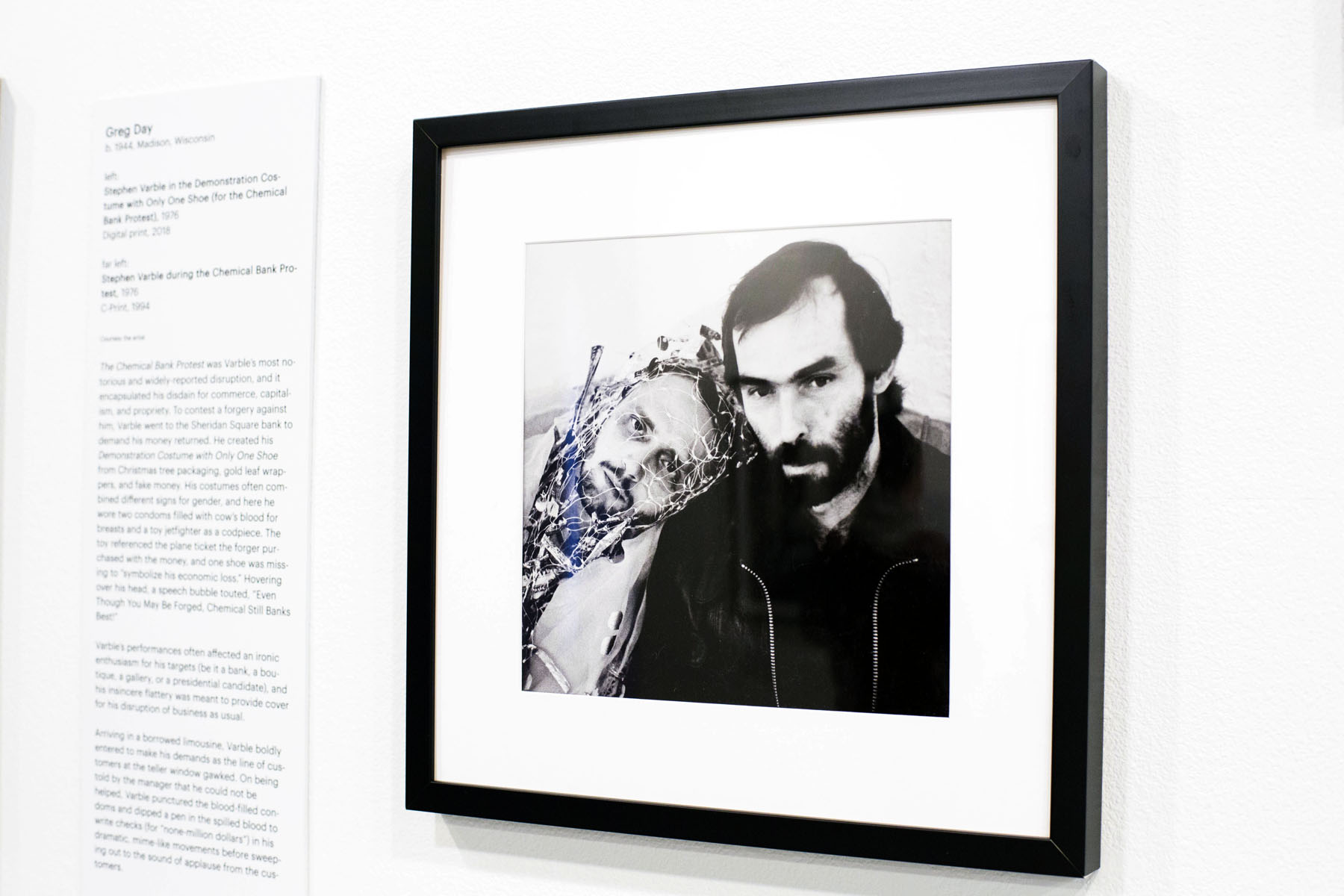
!['Stephen Varble, Gutter Art flyer' [recto] 1975](https://artblart.com/wp-content/uploads/2019/05/stephen-varble-in-the-gutter-web.jpg "'Stephen Varble, Gutter Art flyer' [recto] 1975")
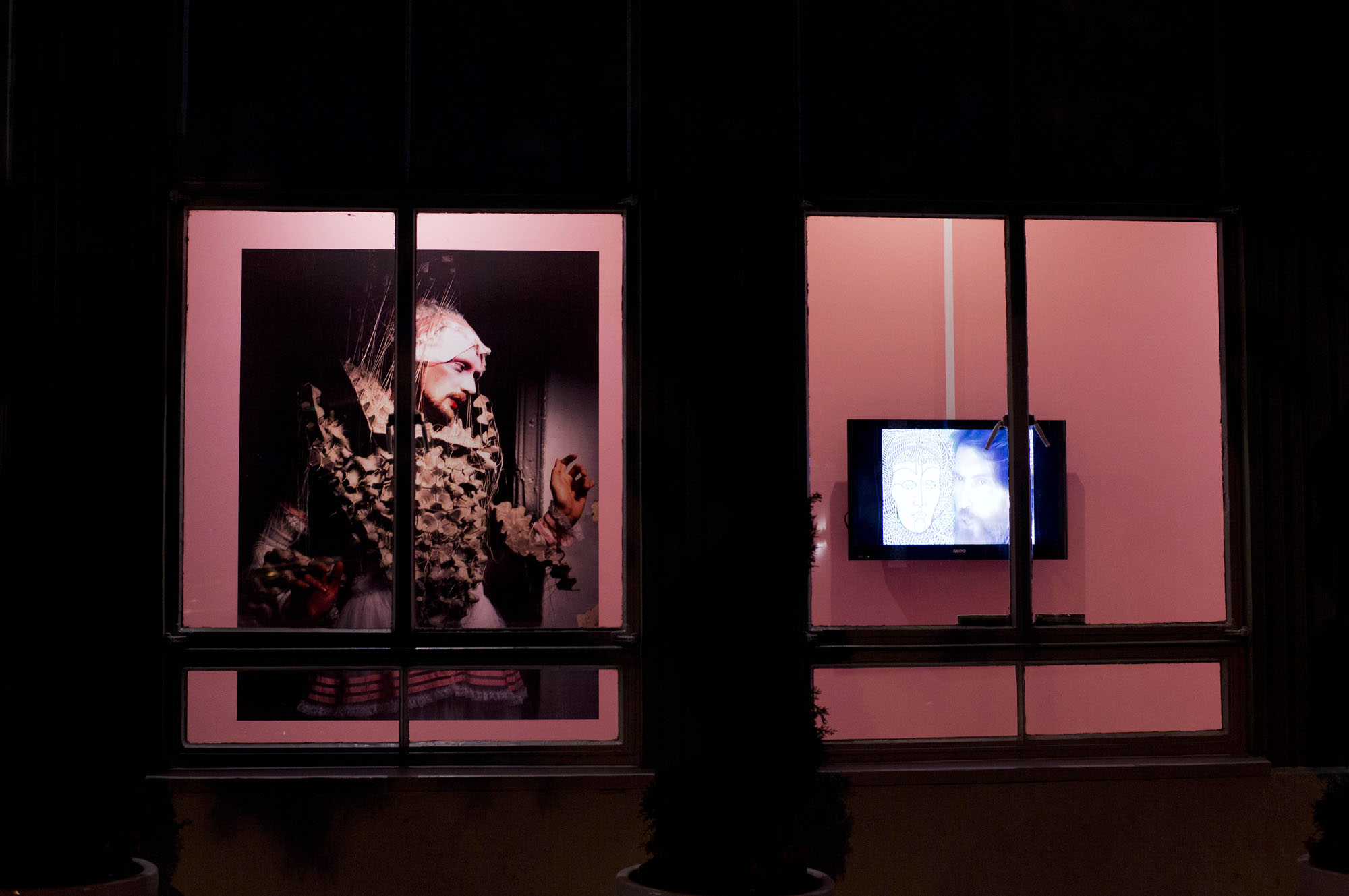
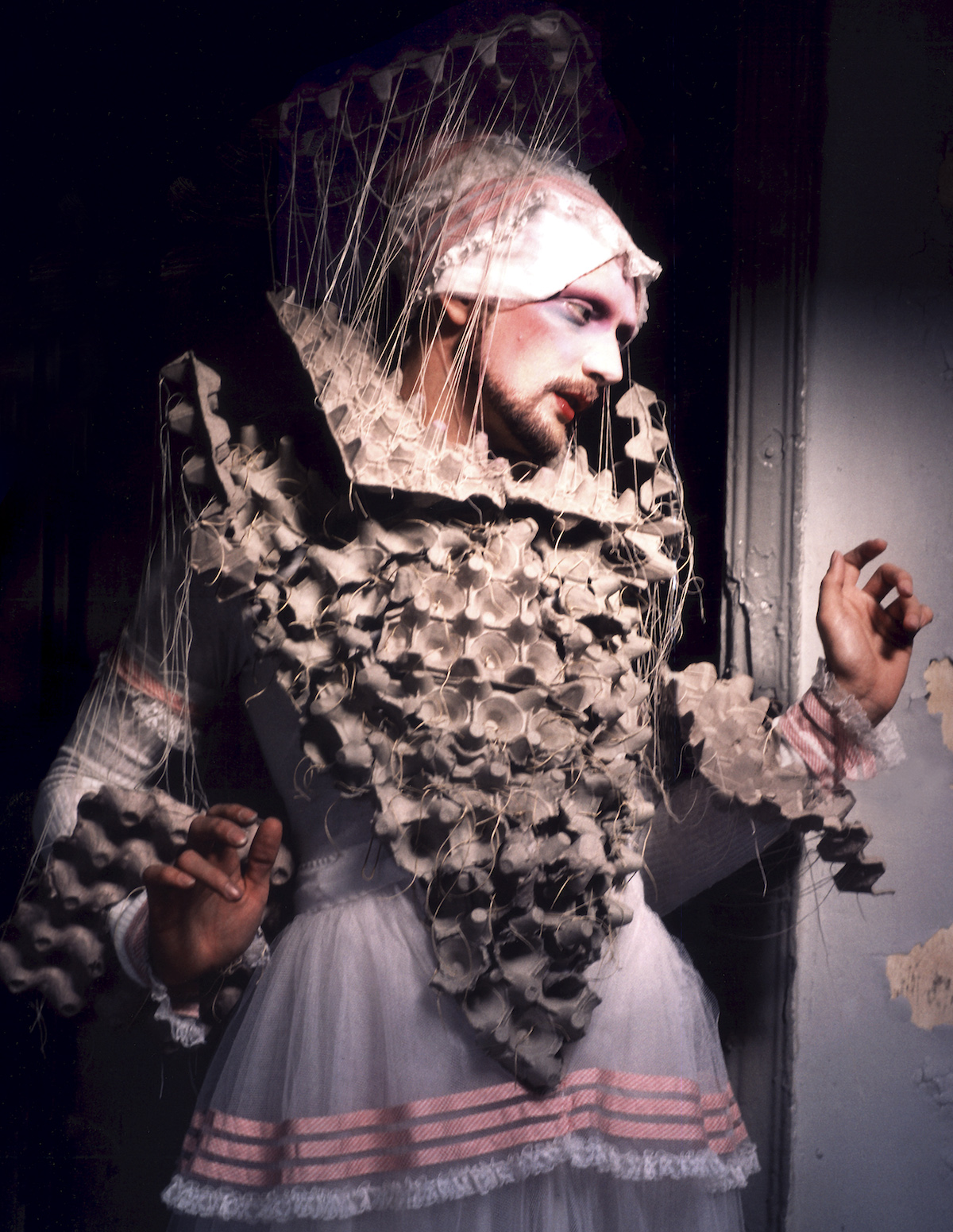
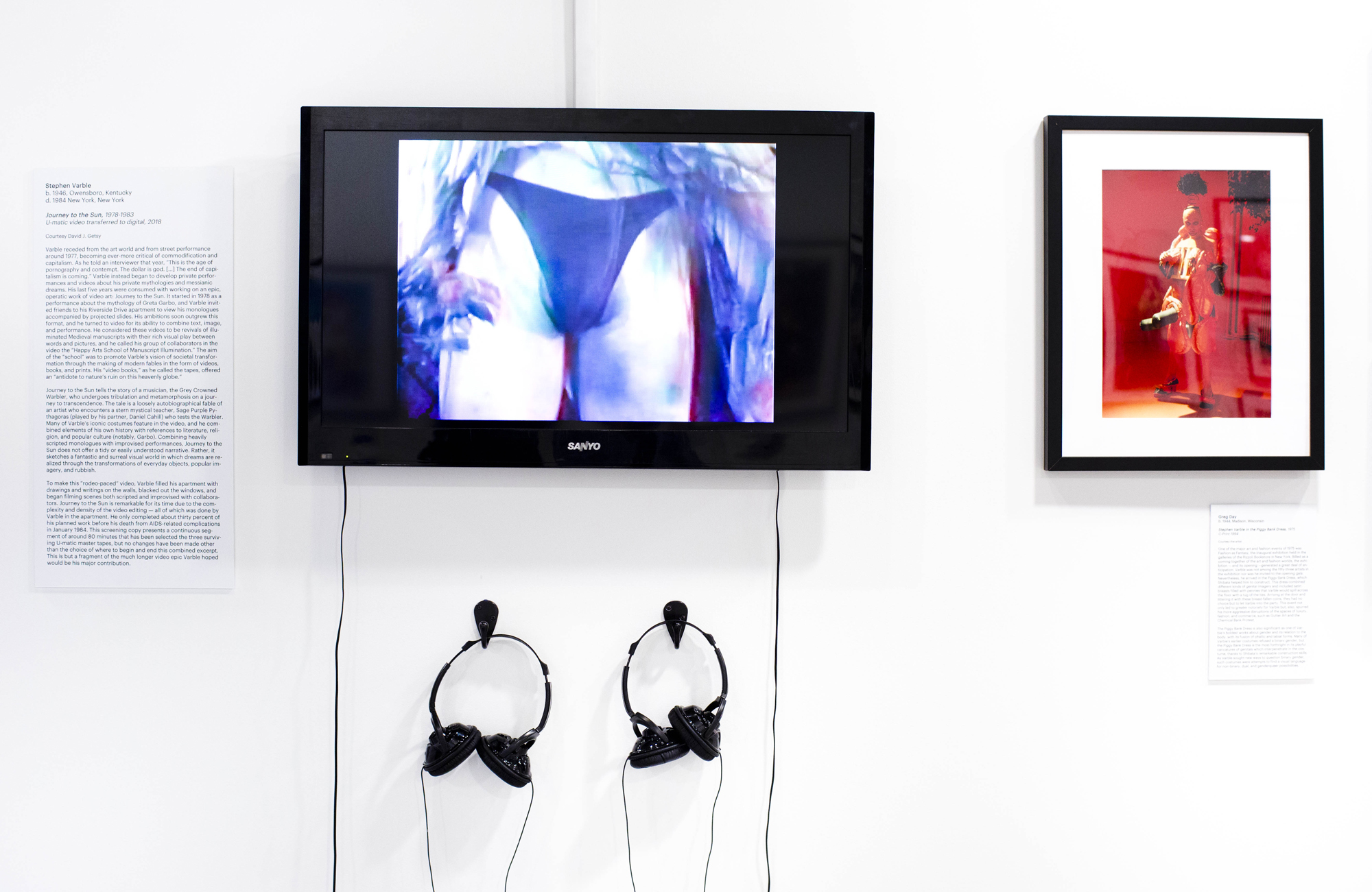
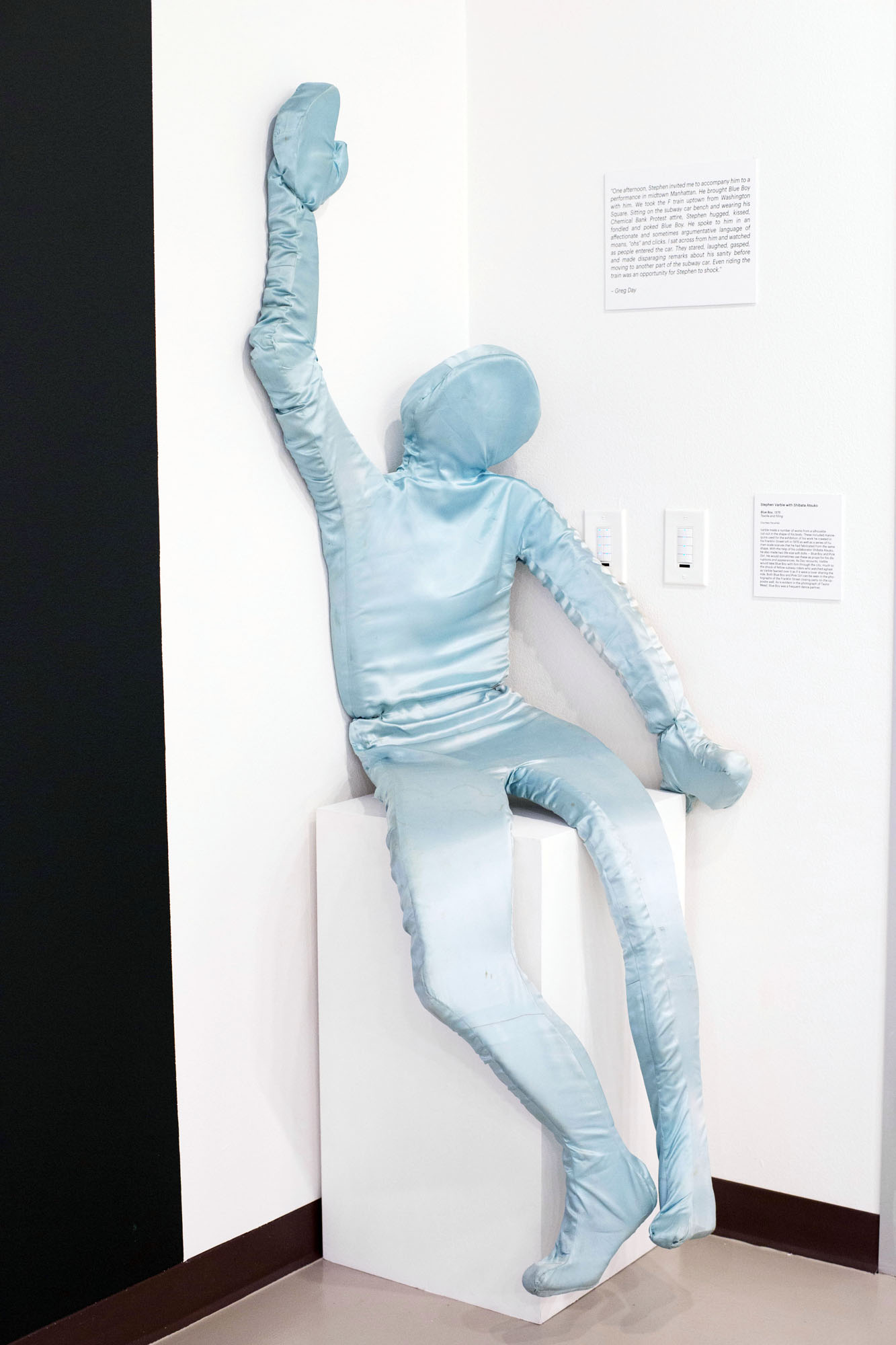
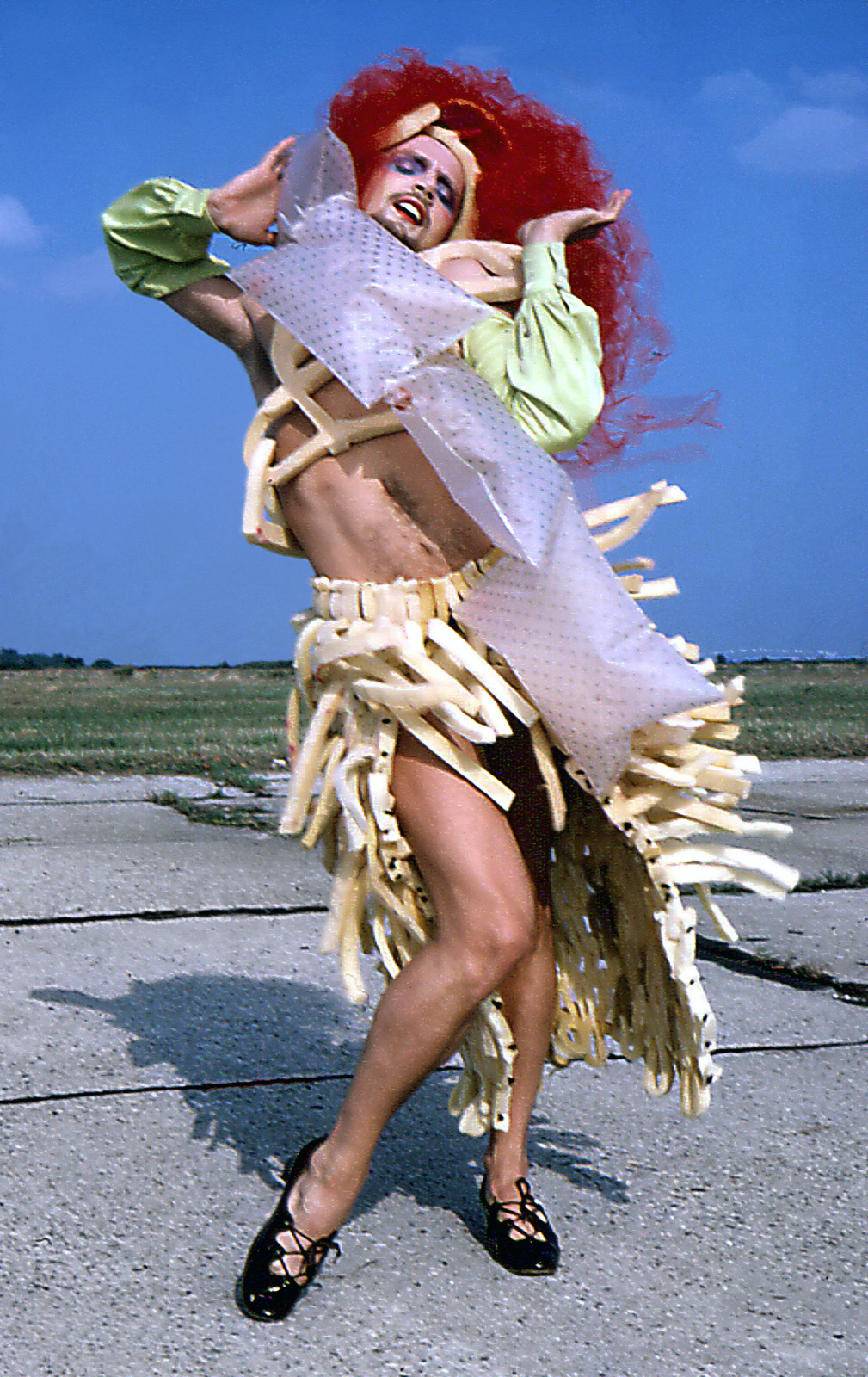
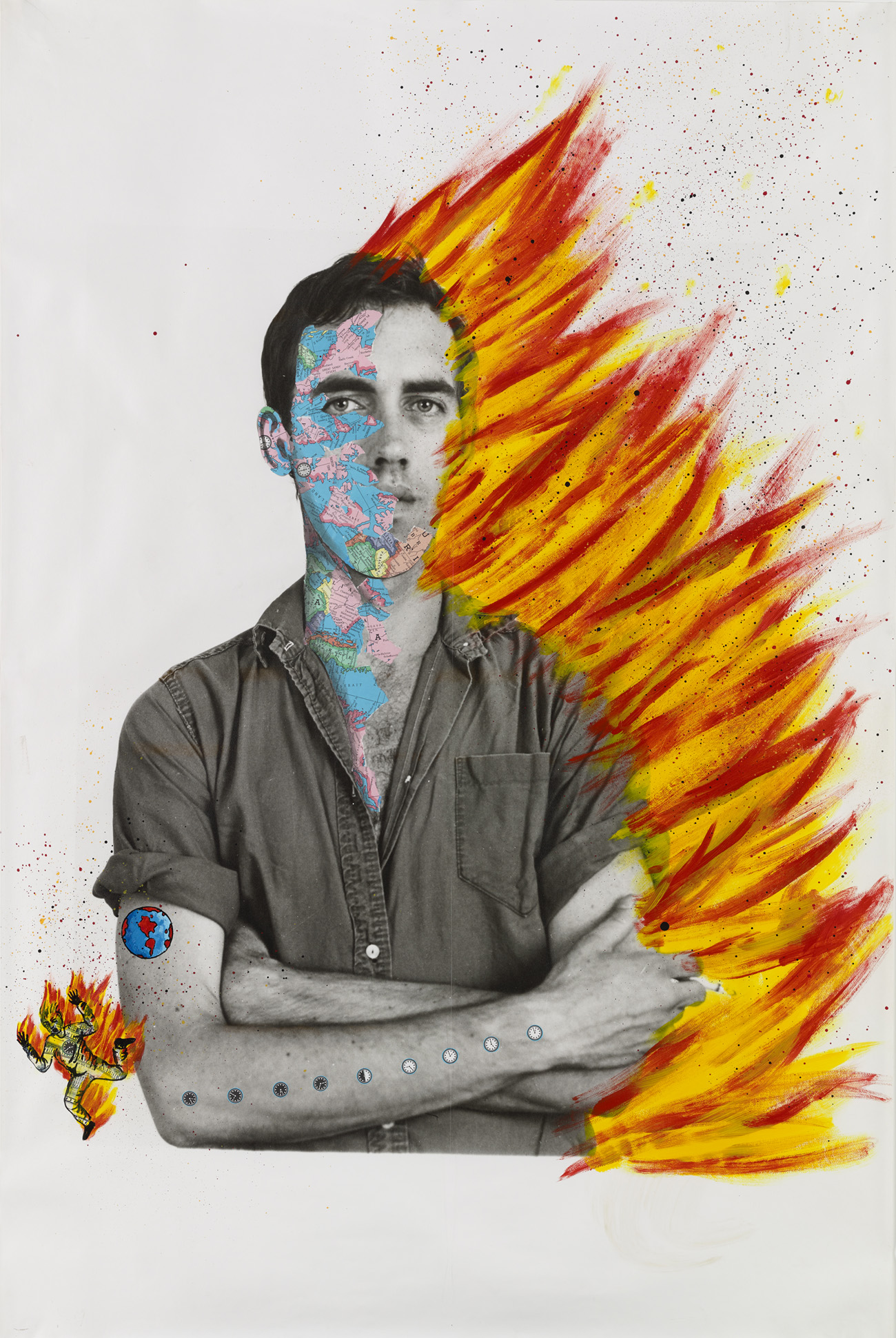
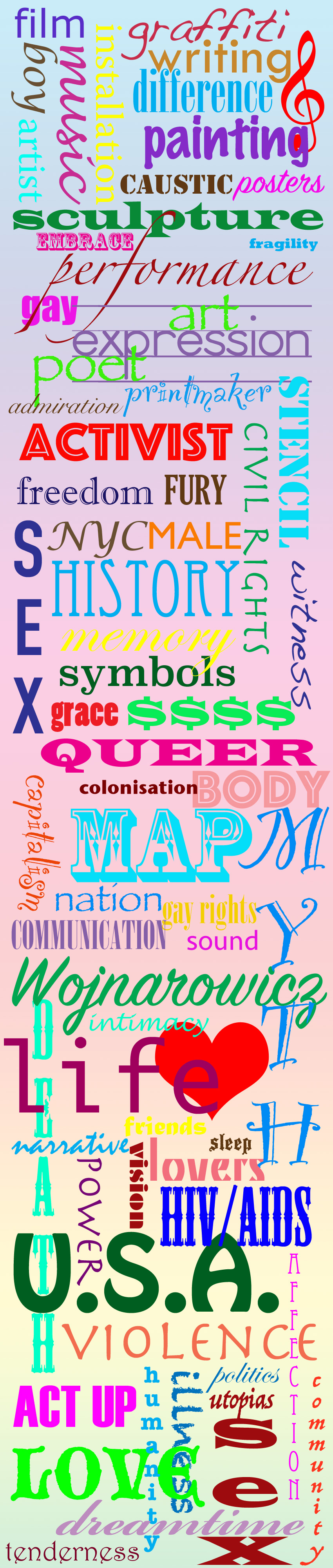


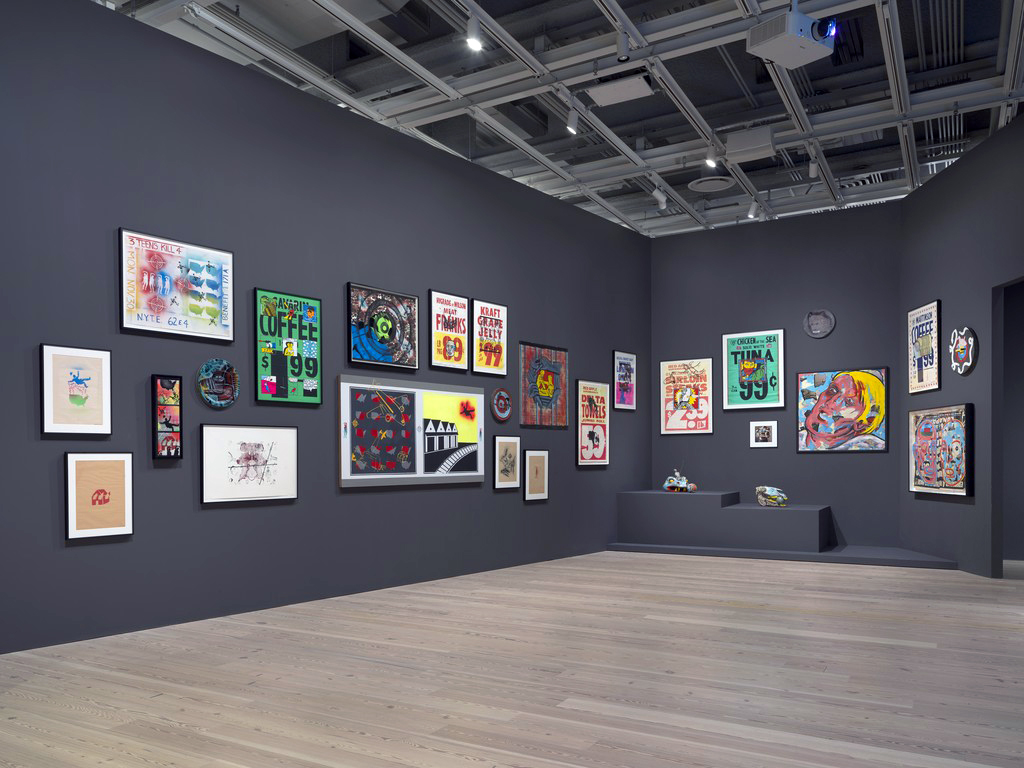


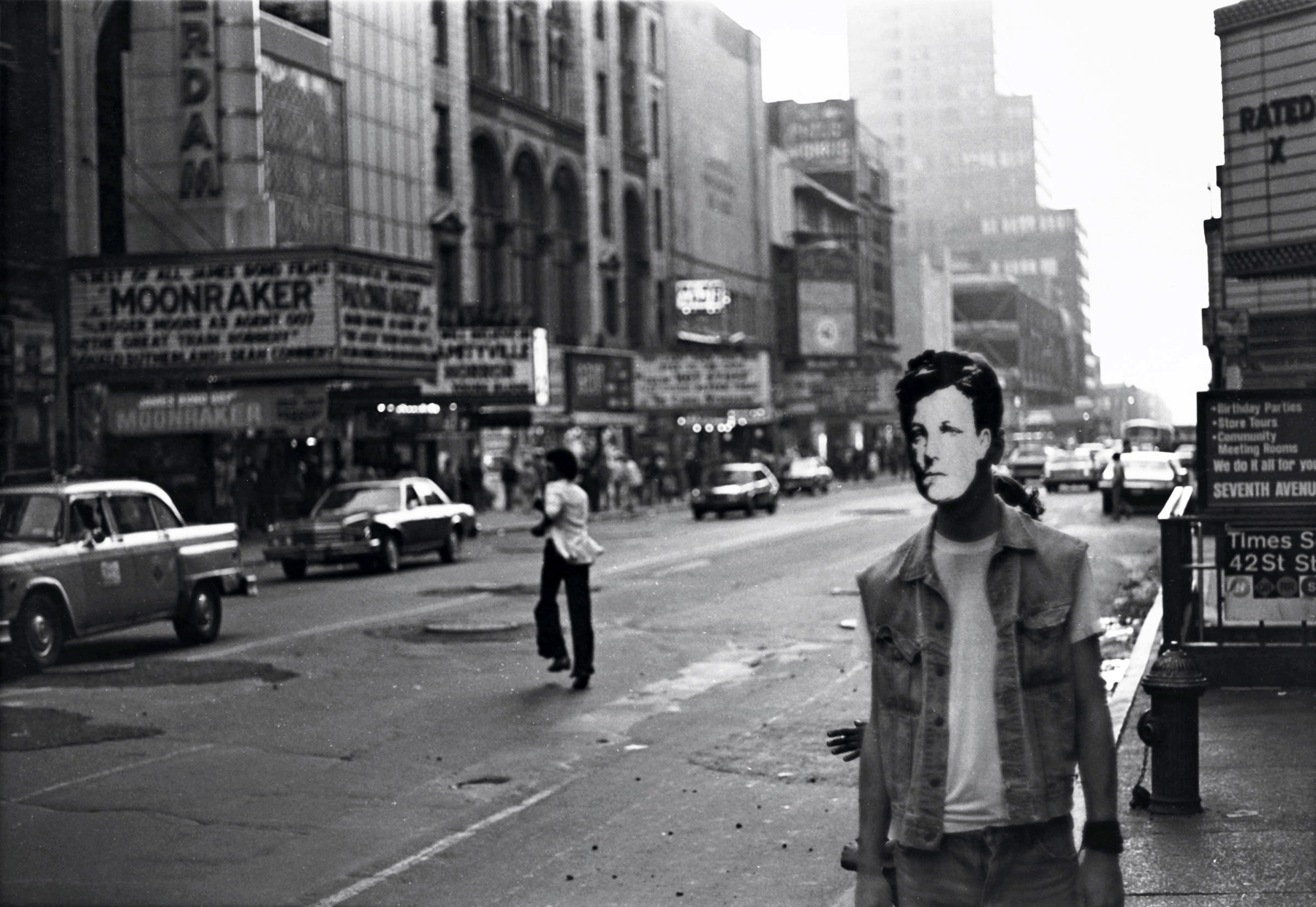

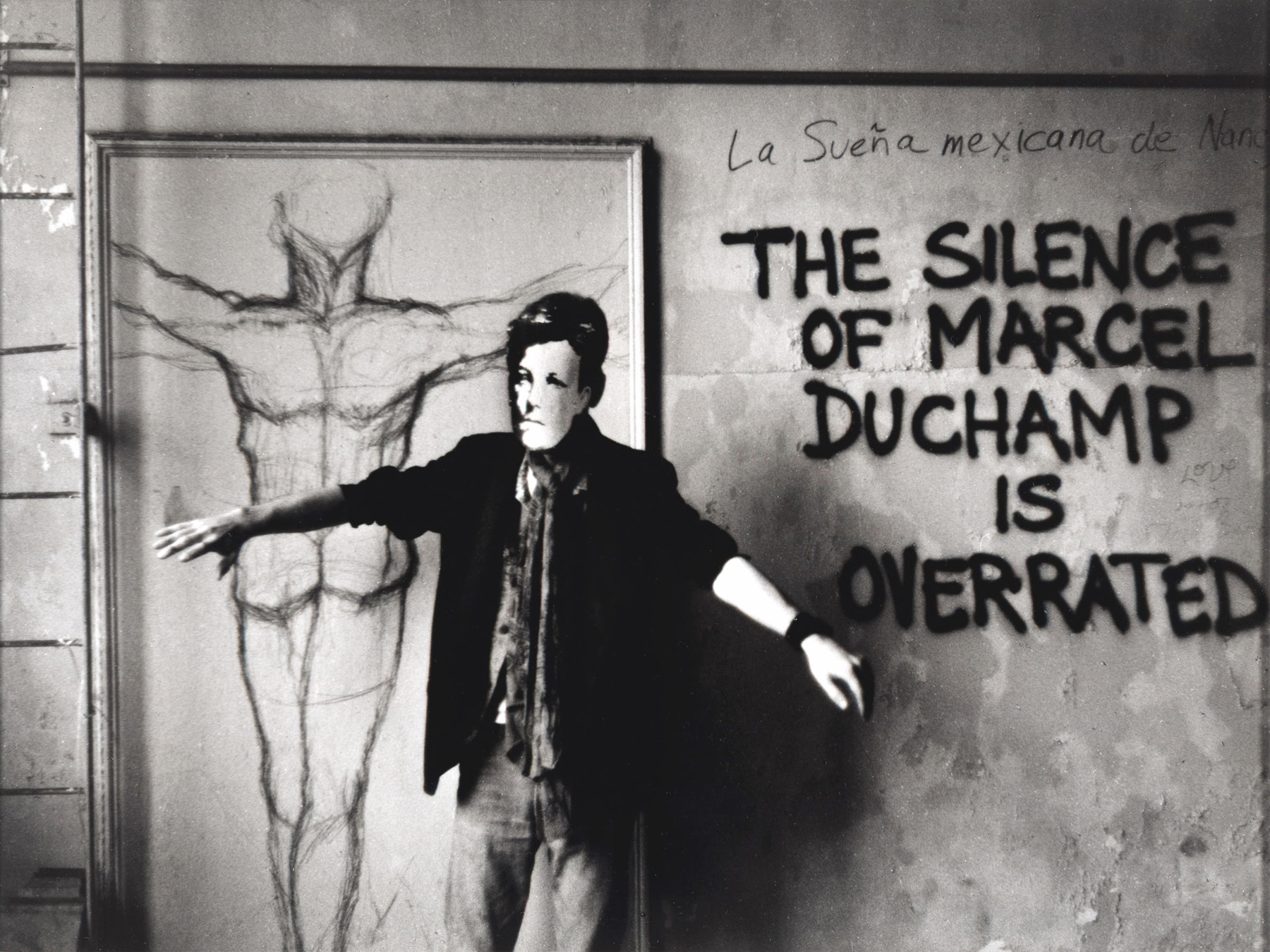
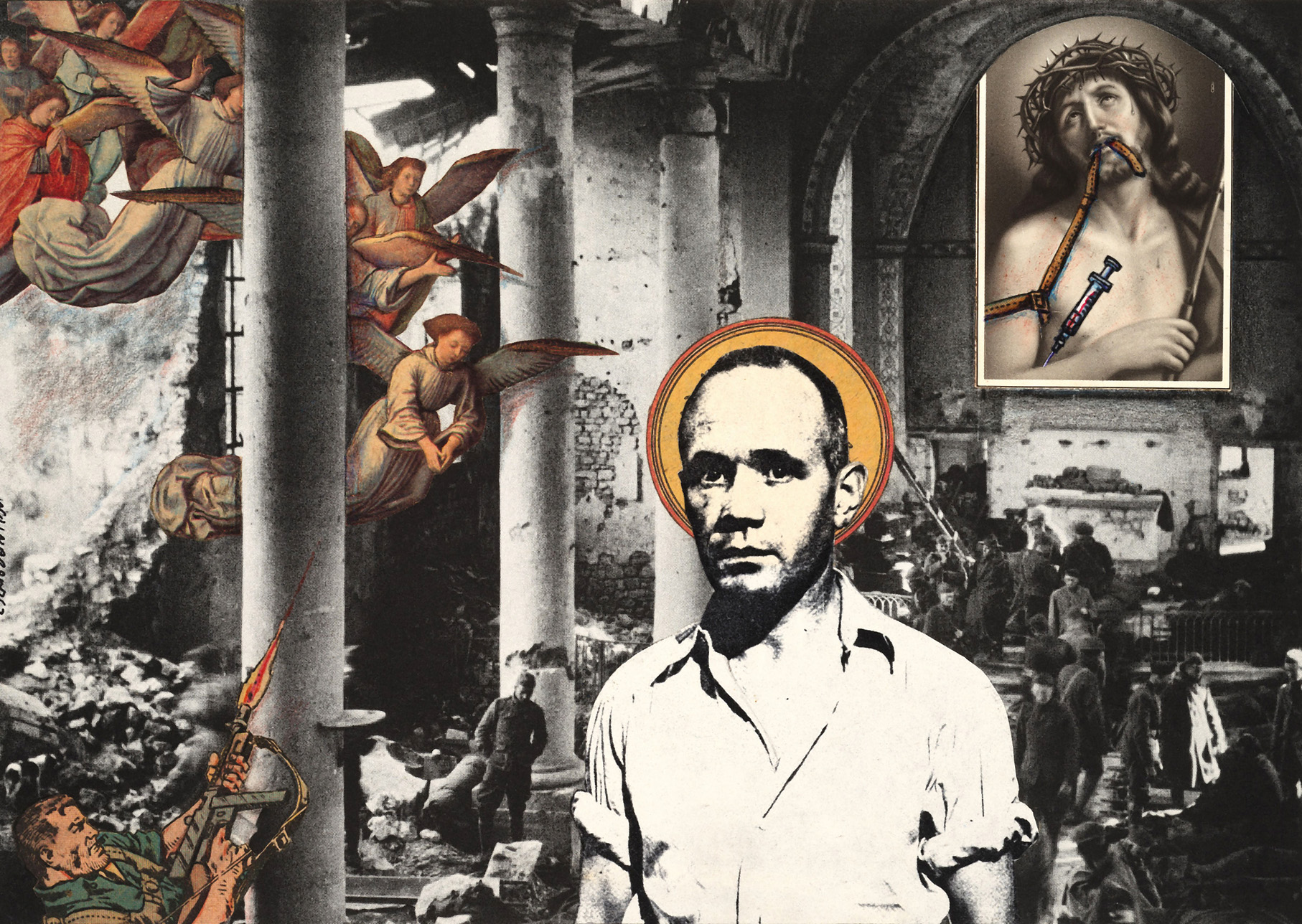
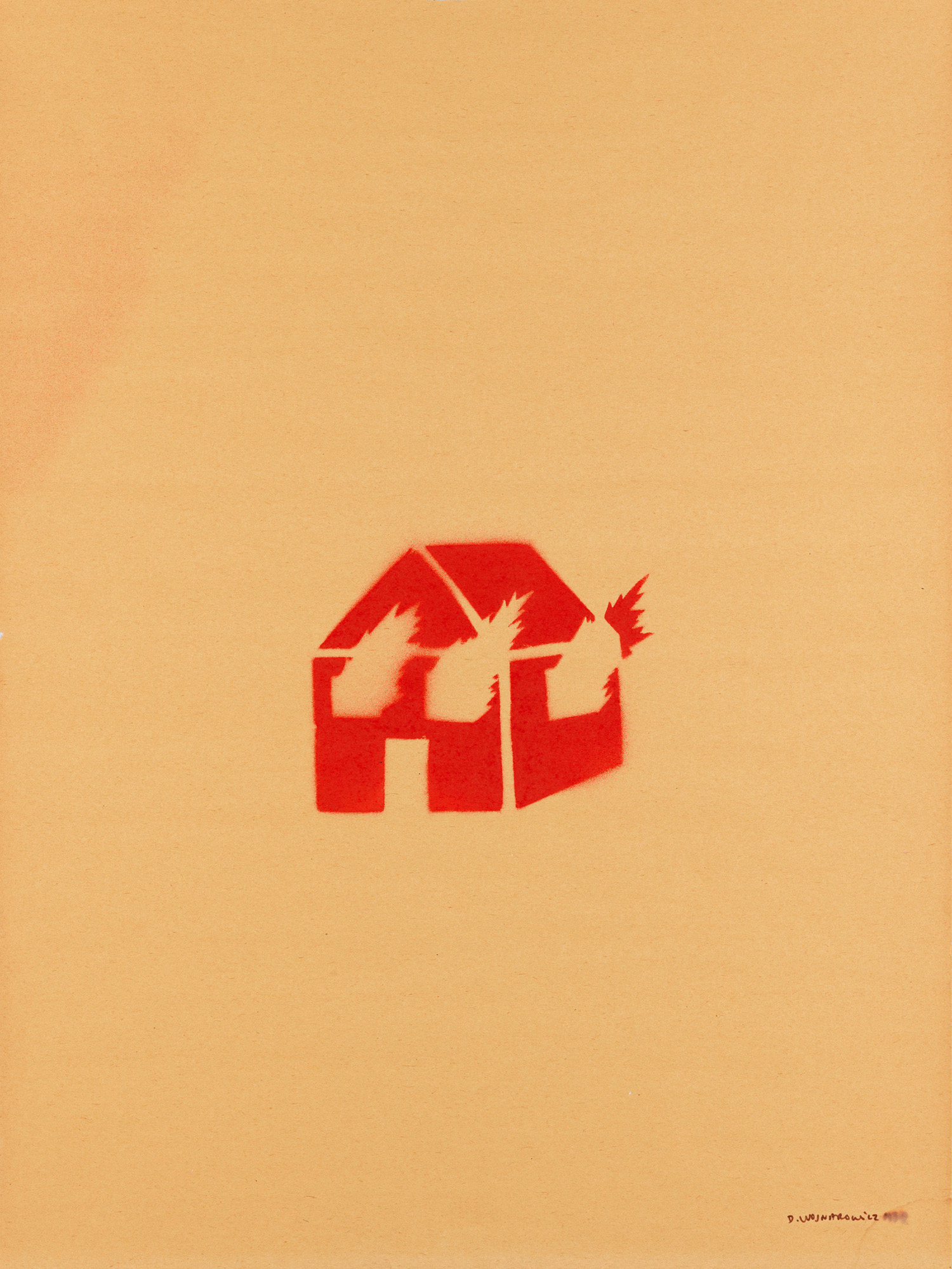
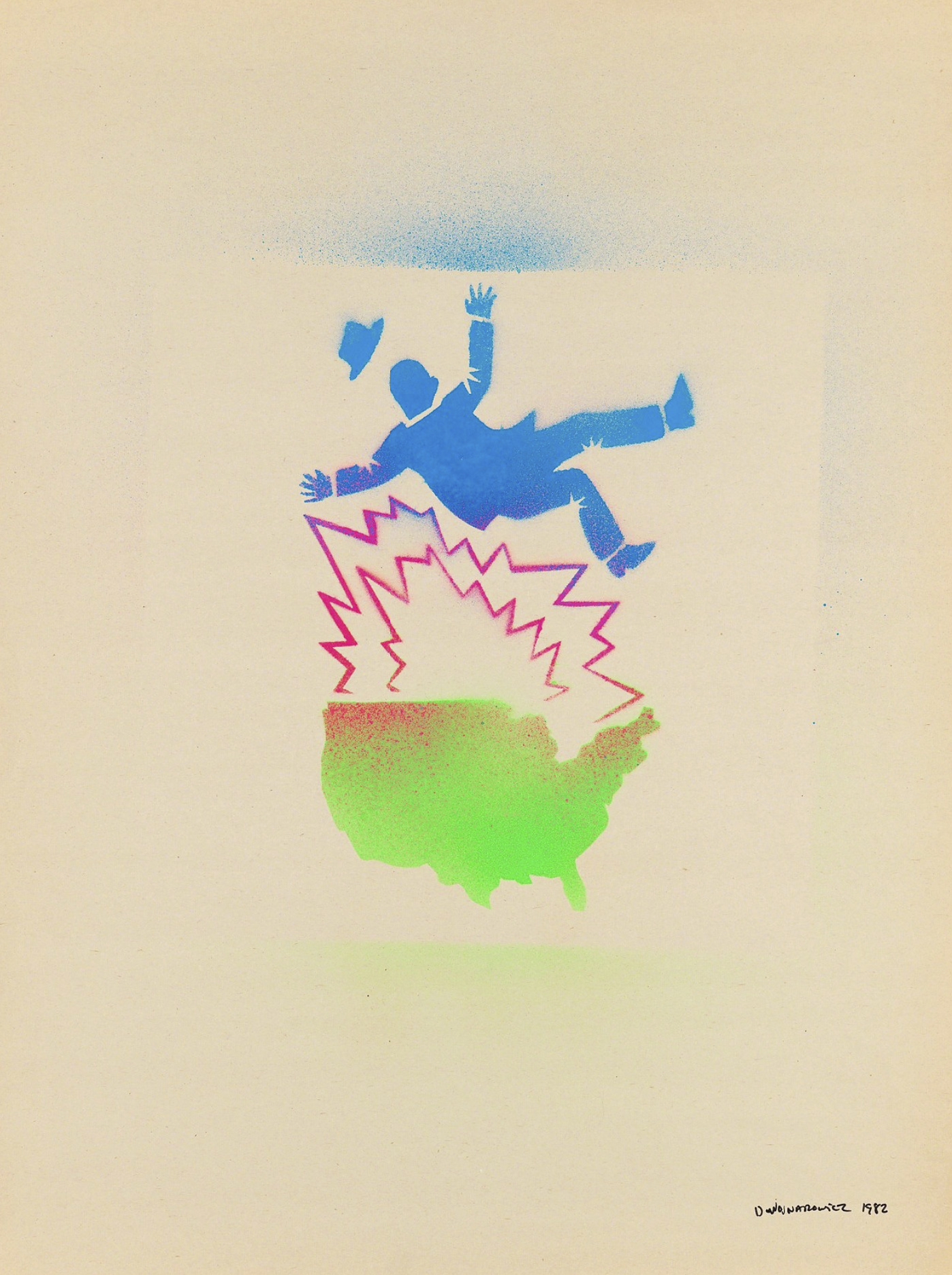
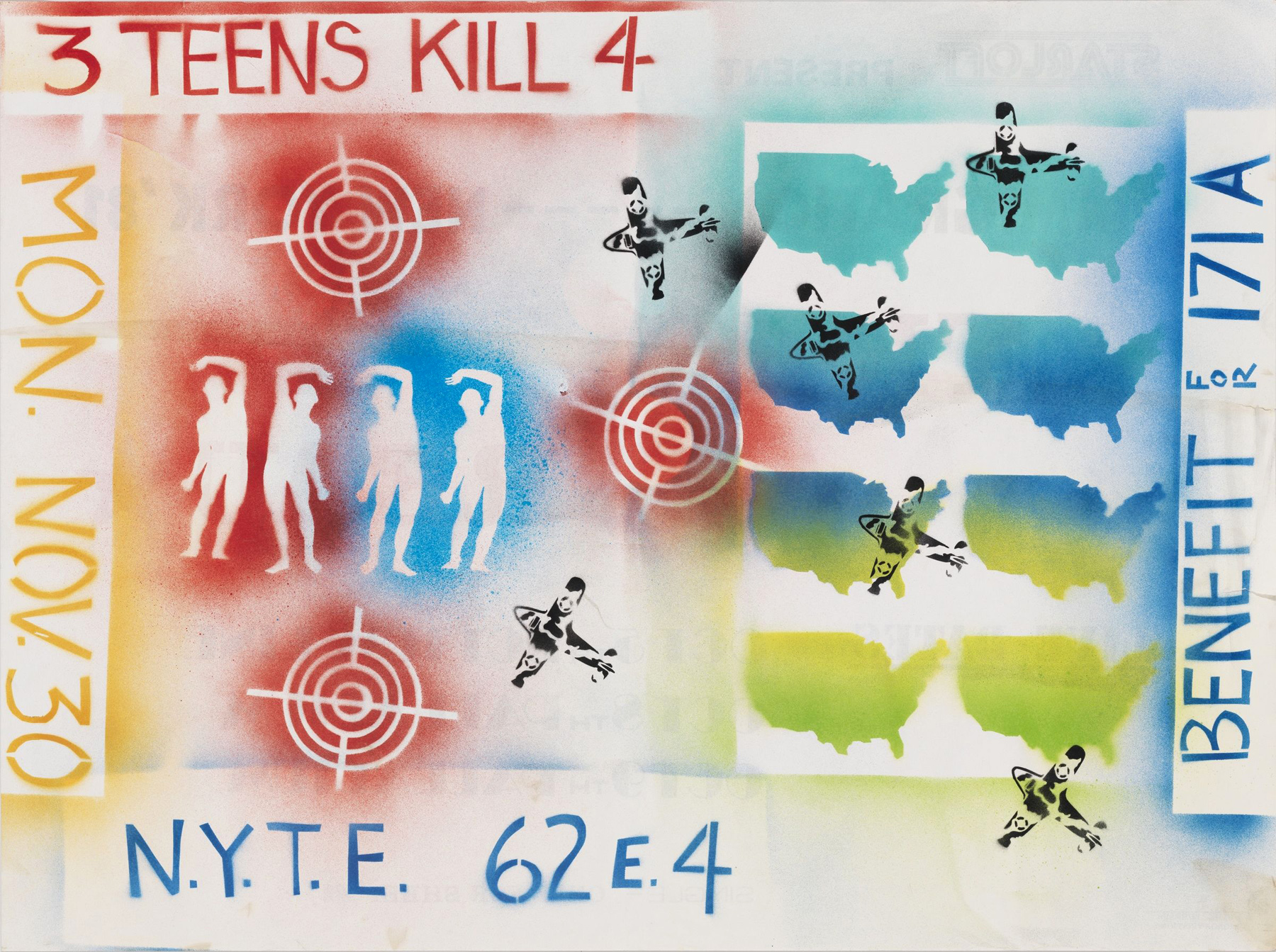


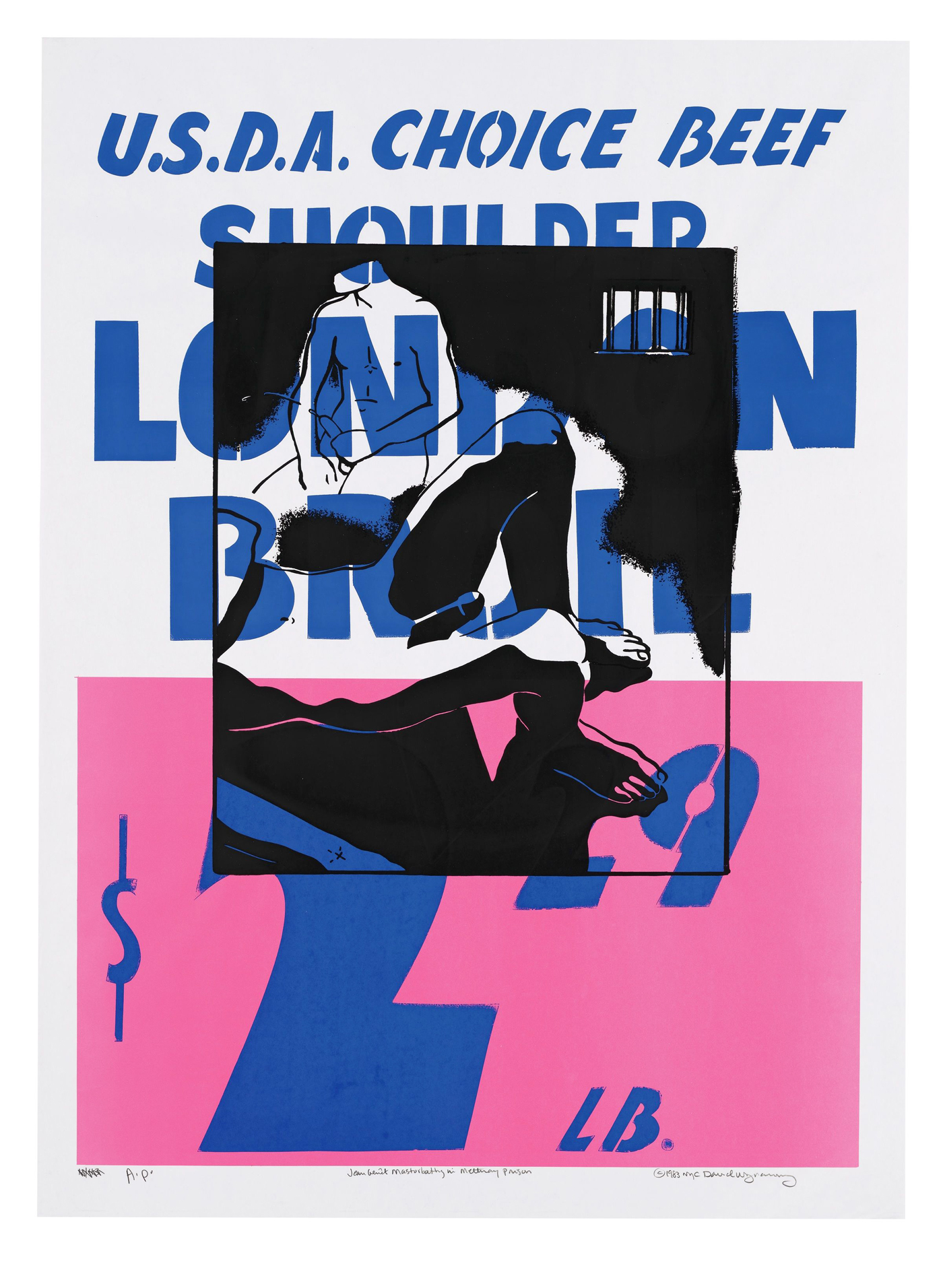
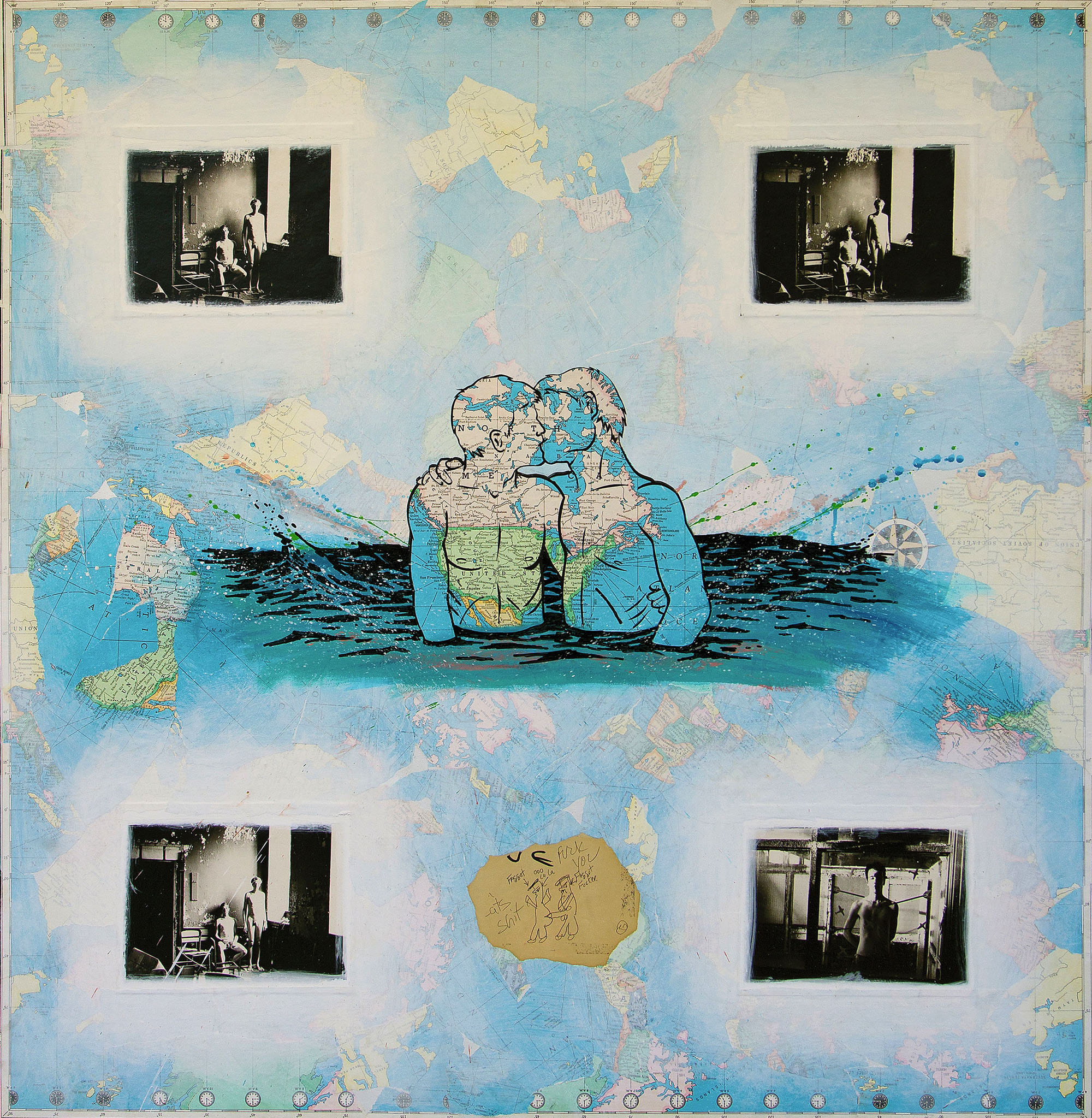
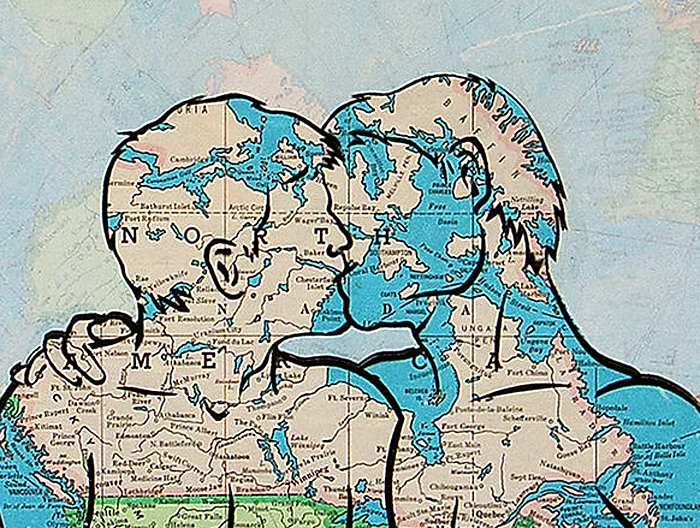
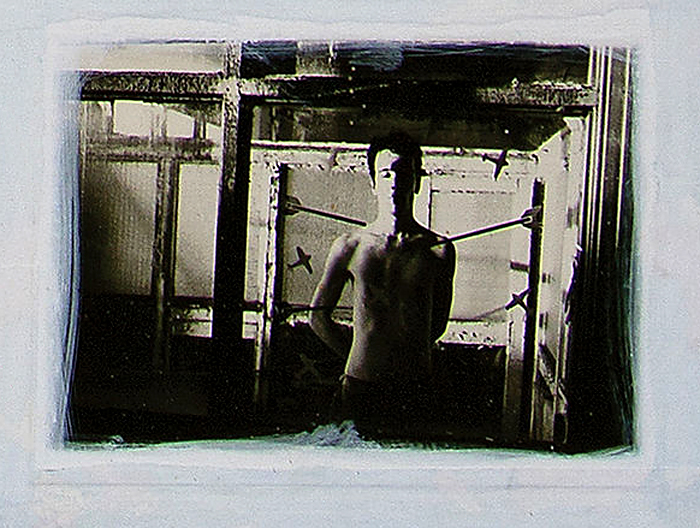
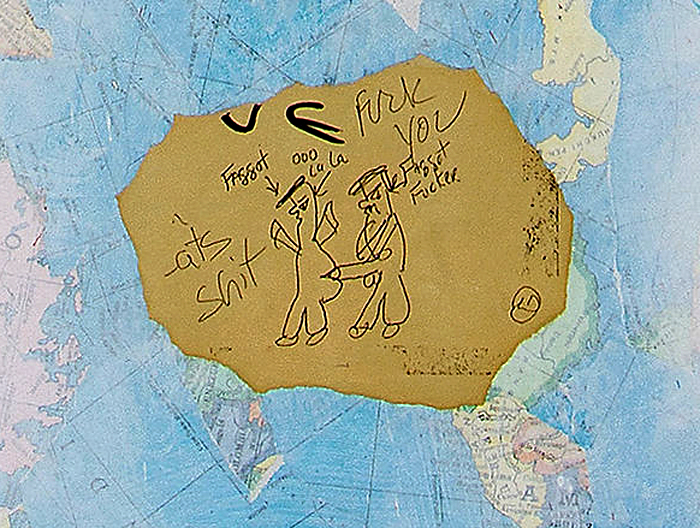
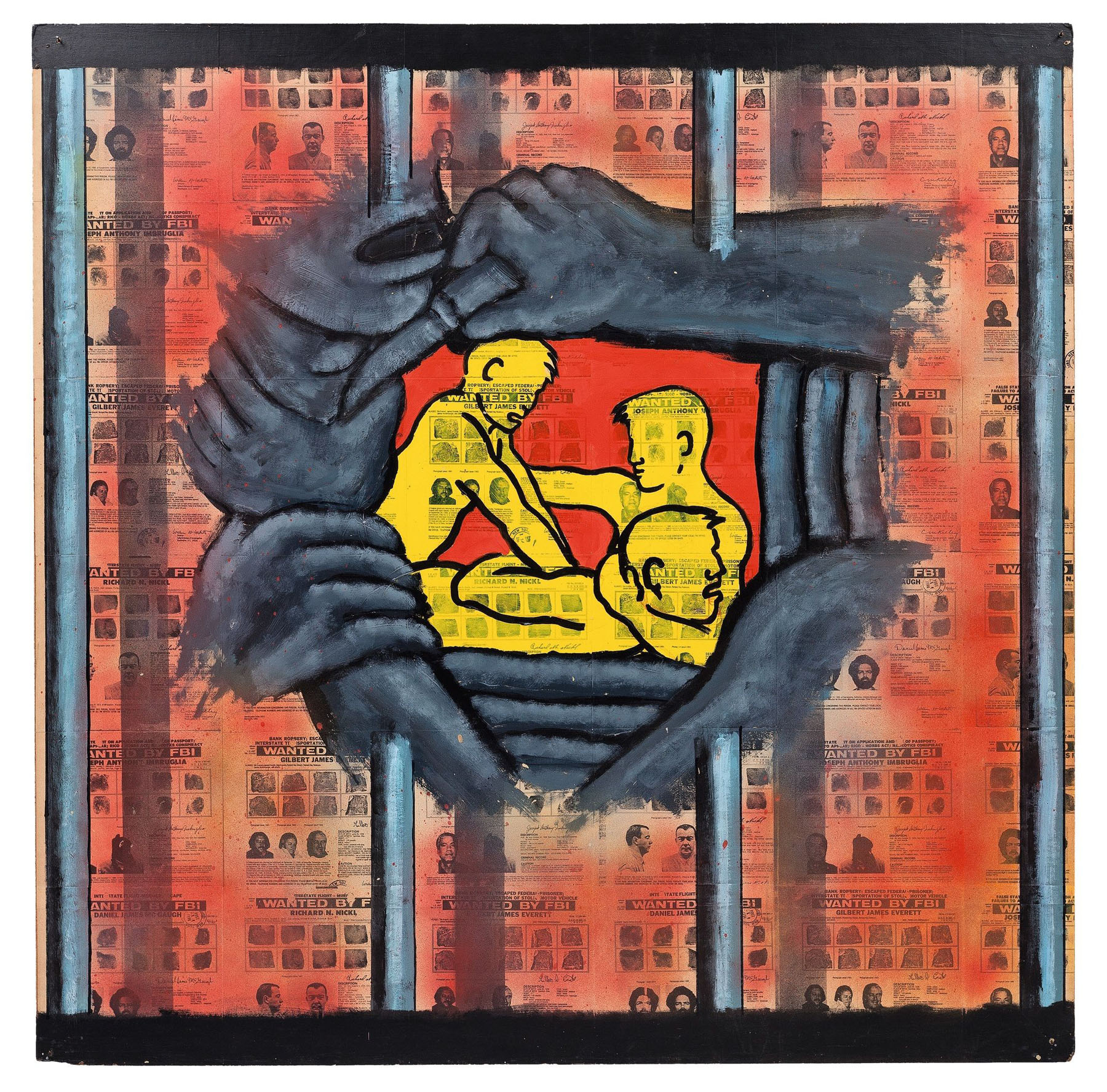

![Peter Hujar (American, 1934-1992) 'Canal Street Piers: Krazy Kat Comic on Wall [by David Wojnarowicz]' 1983](https://artblart.com/wp-content/uploads/2018/07/peter-hujar-canal-street-piers-krazy-kat-comic-on-wall-by-david-wojnarowicz-web.jpg "Peter Hujar (American, 1934-1992) 'Canal Street Piers: Krazy Kat Comic on Wall [by David Wojnarowicz]' 1983")


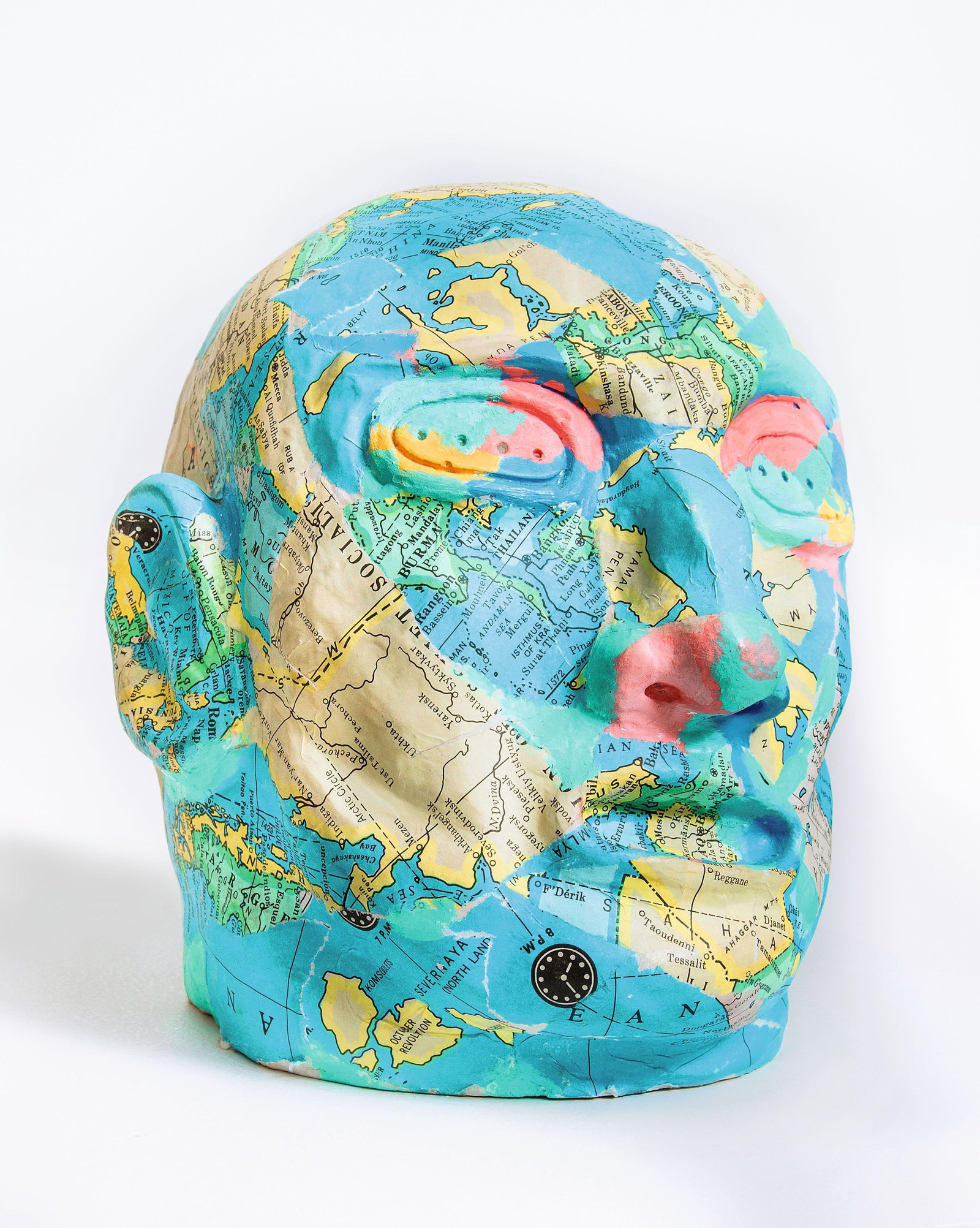
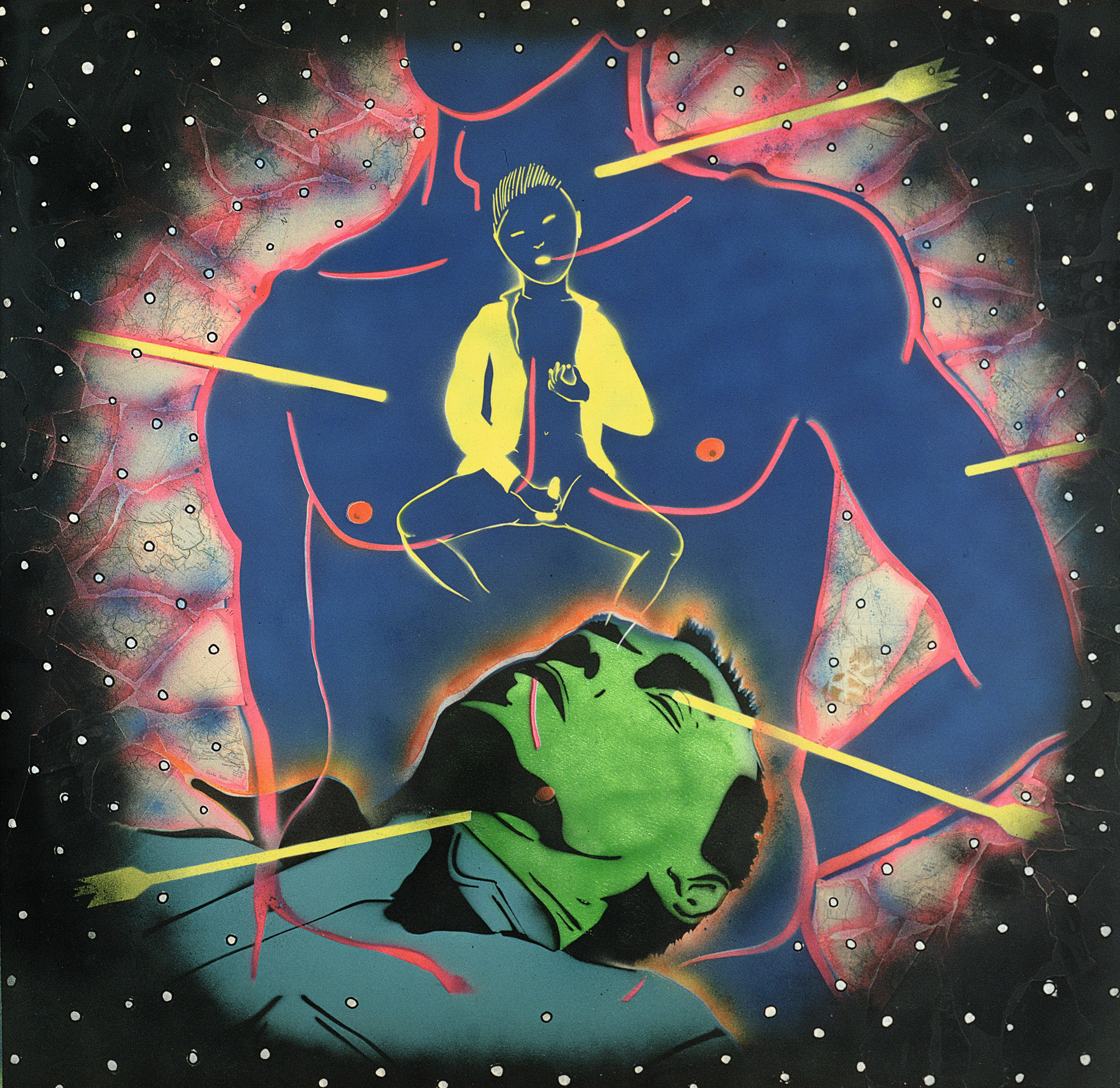
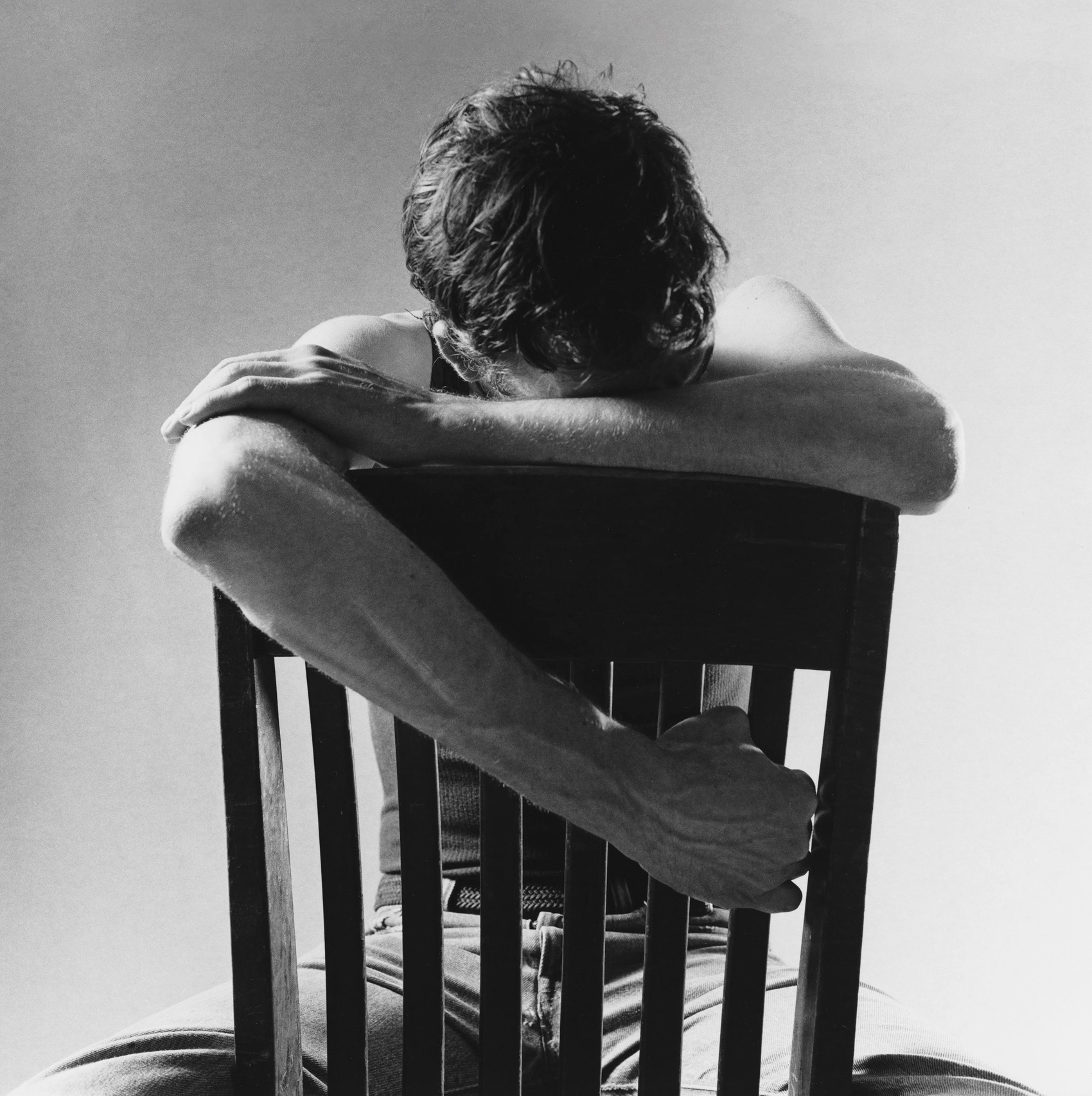

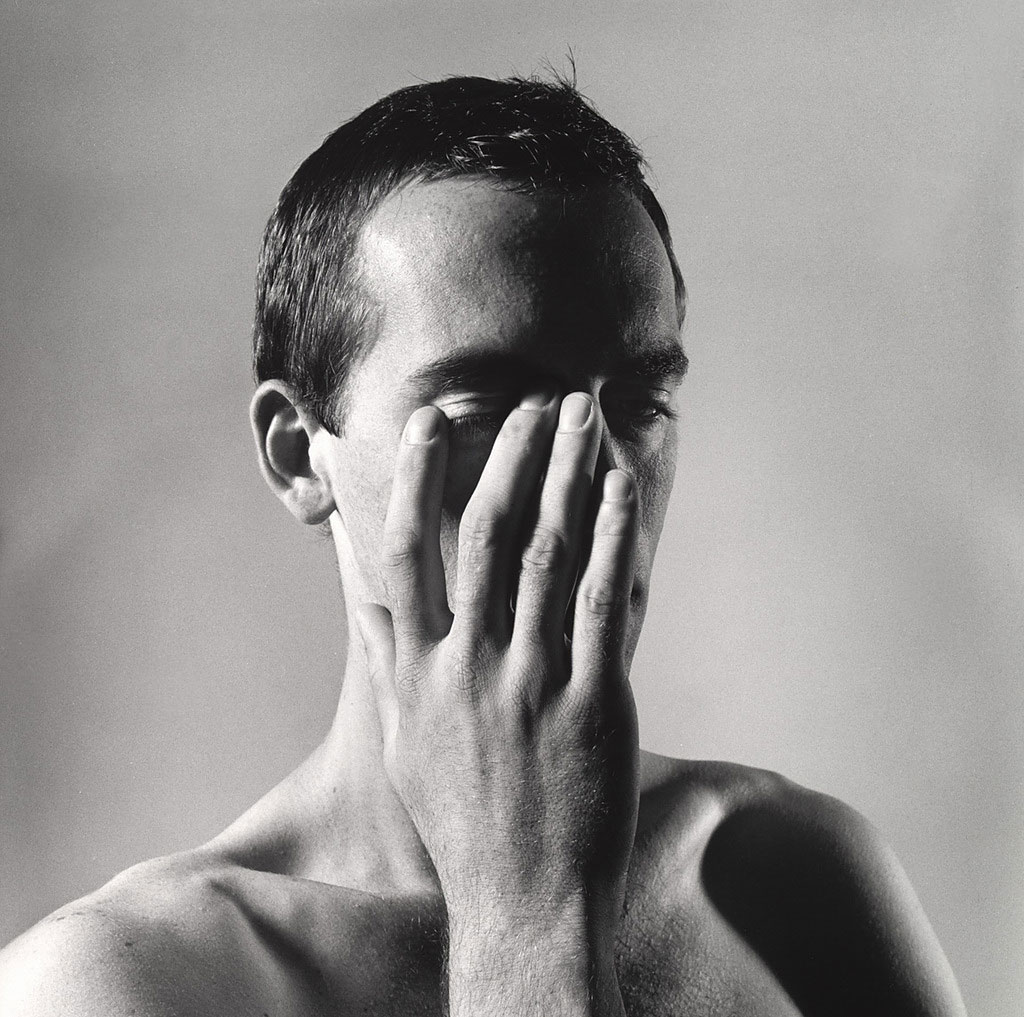

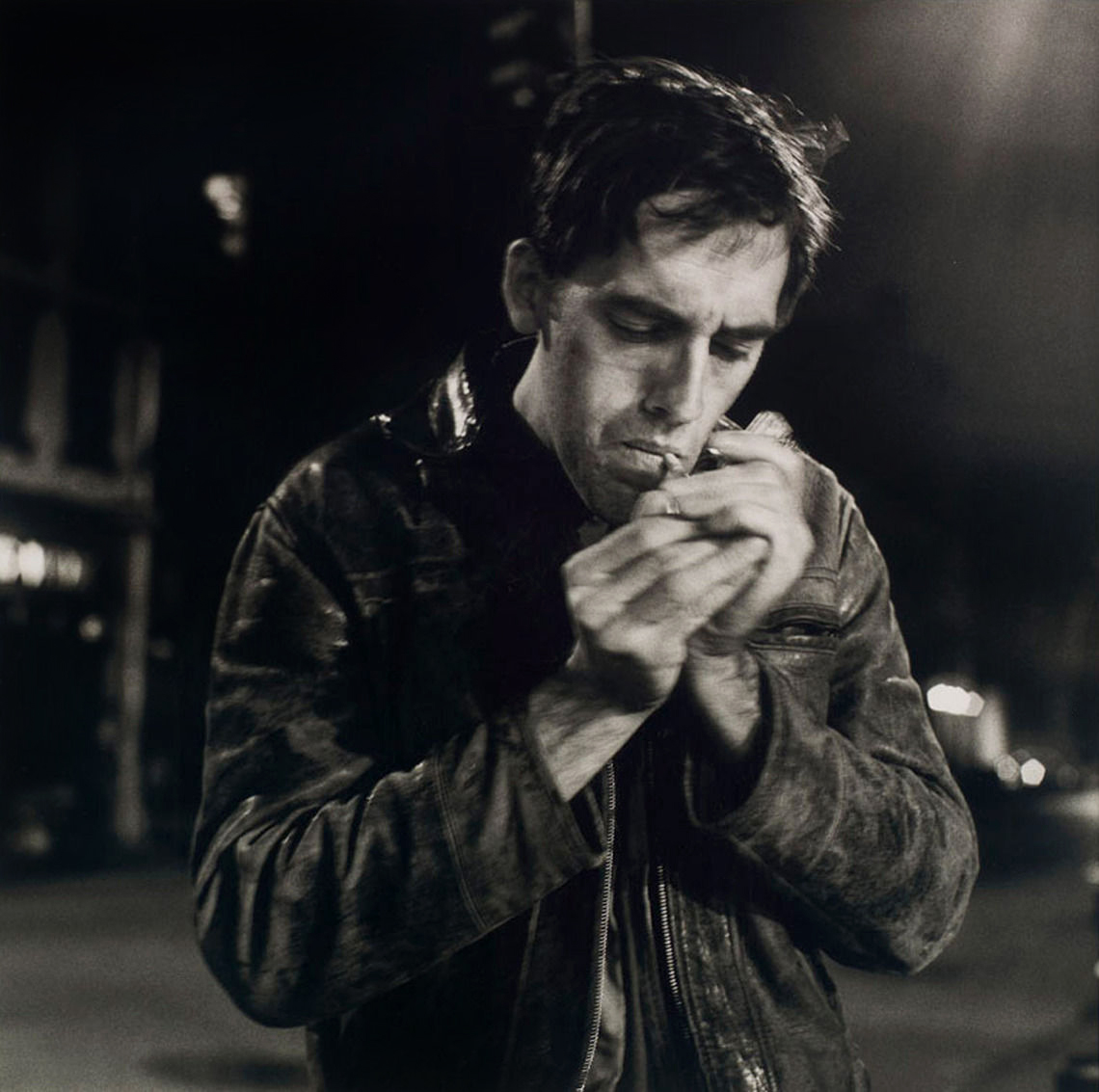

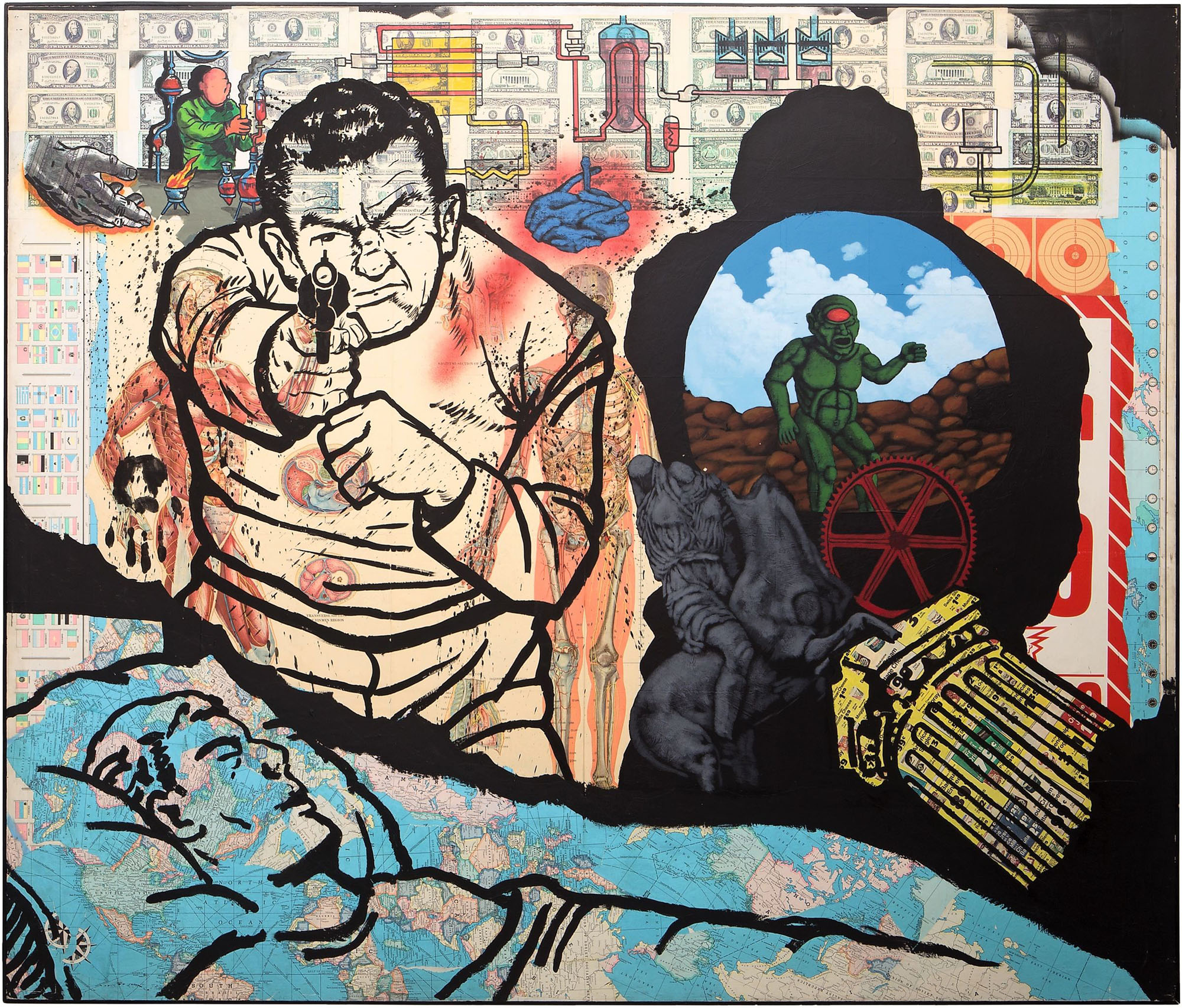
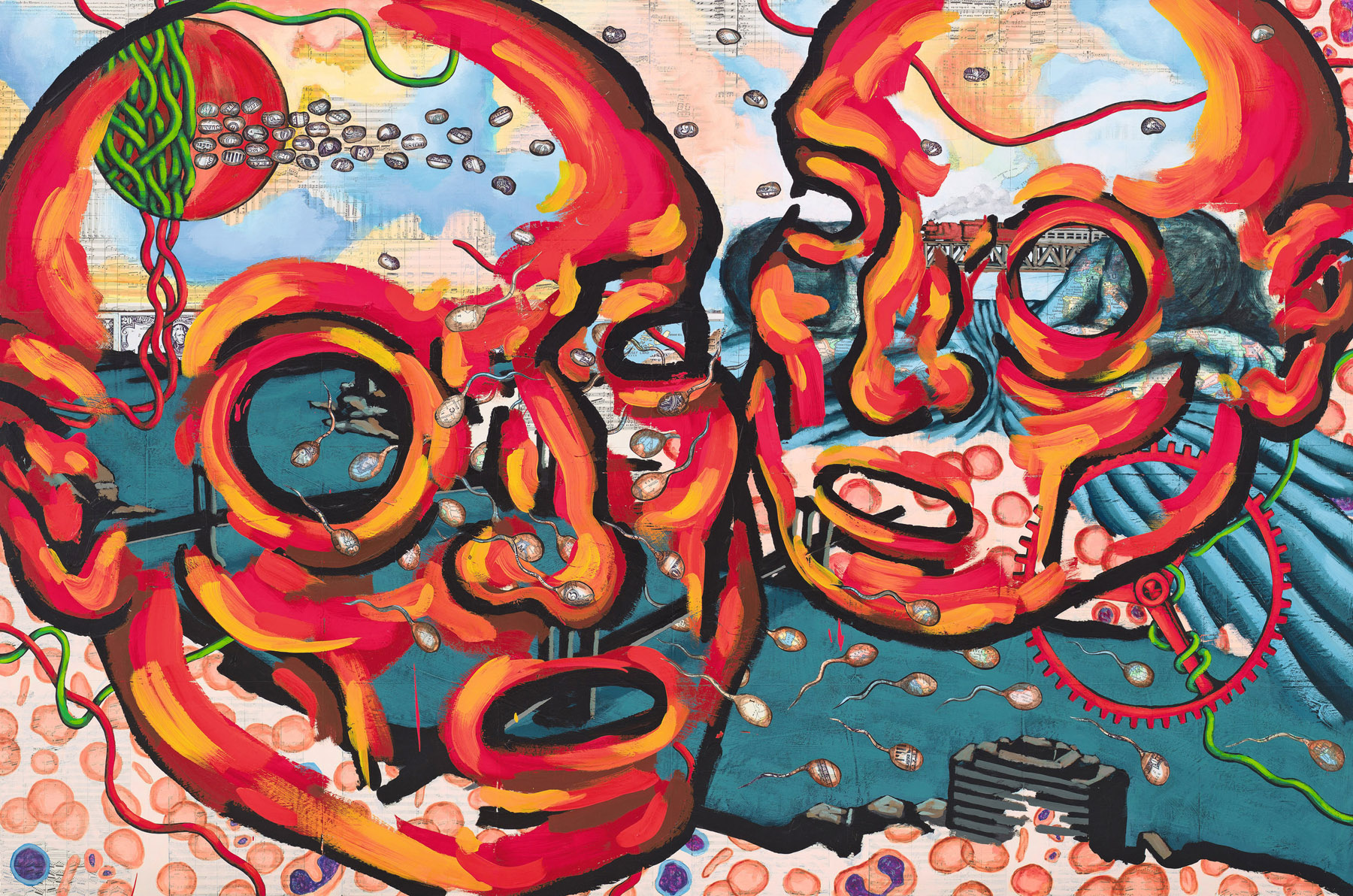
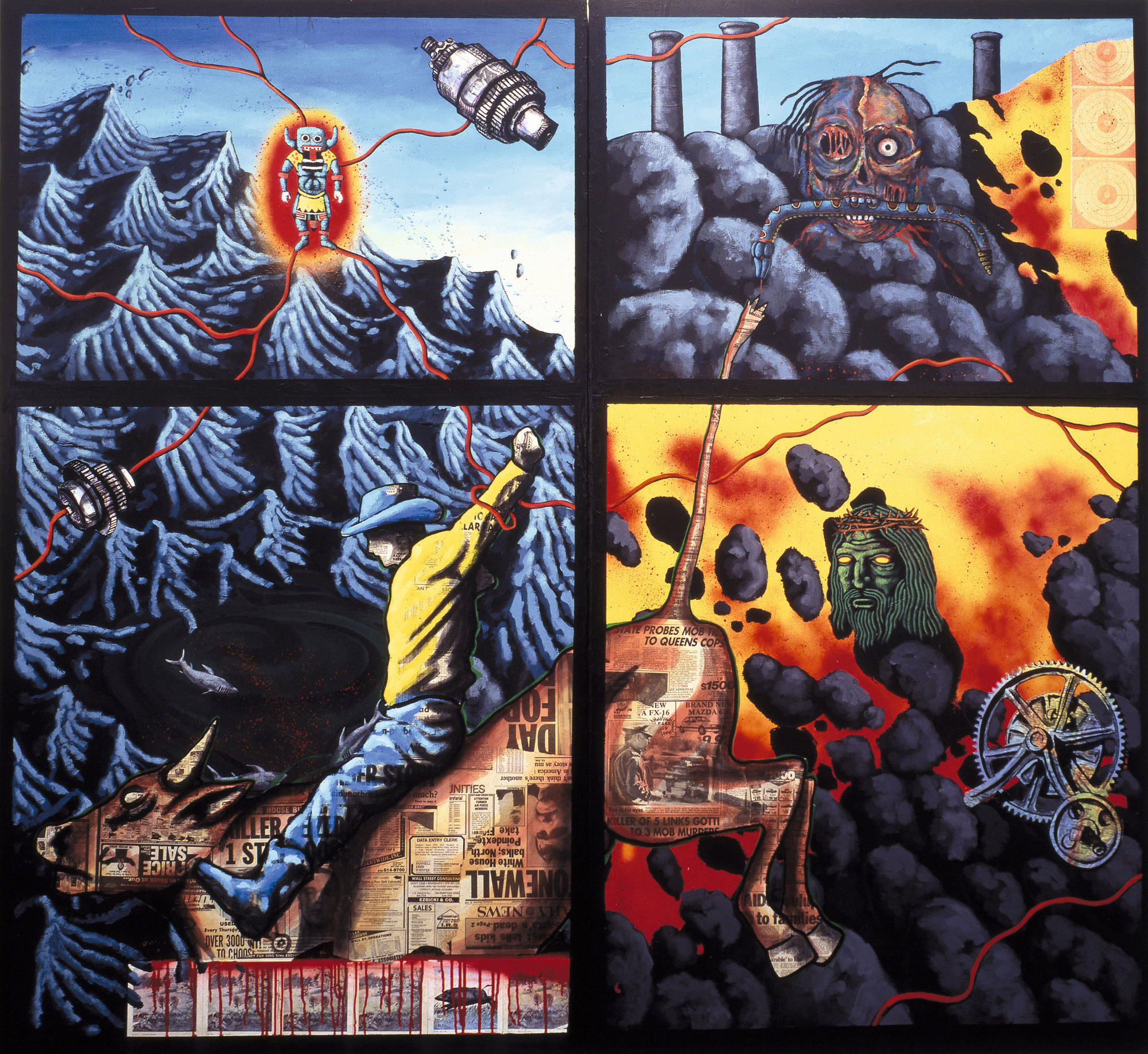


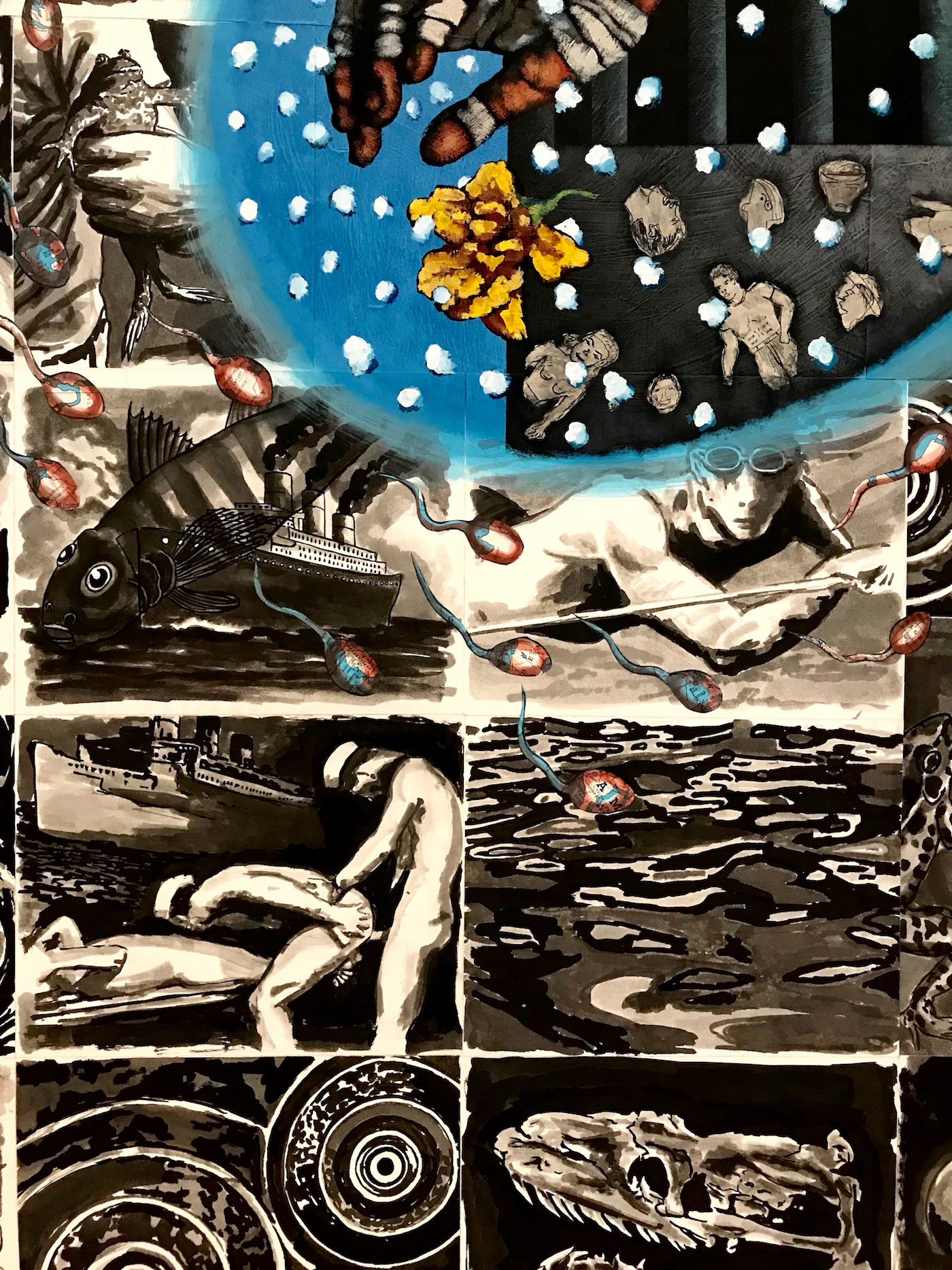
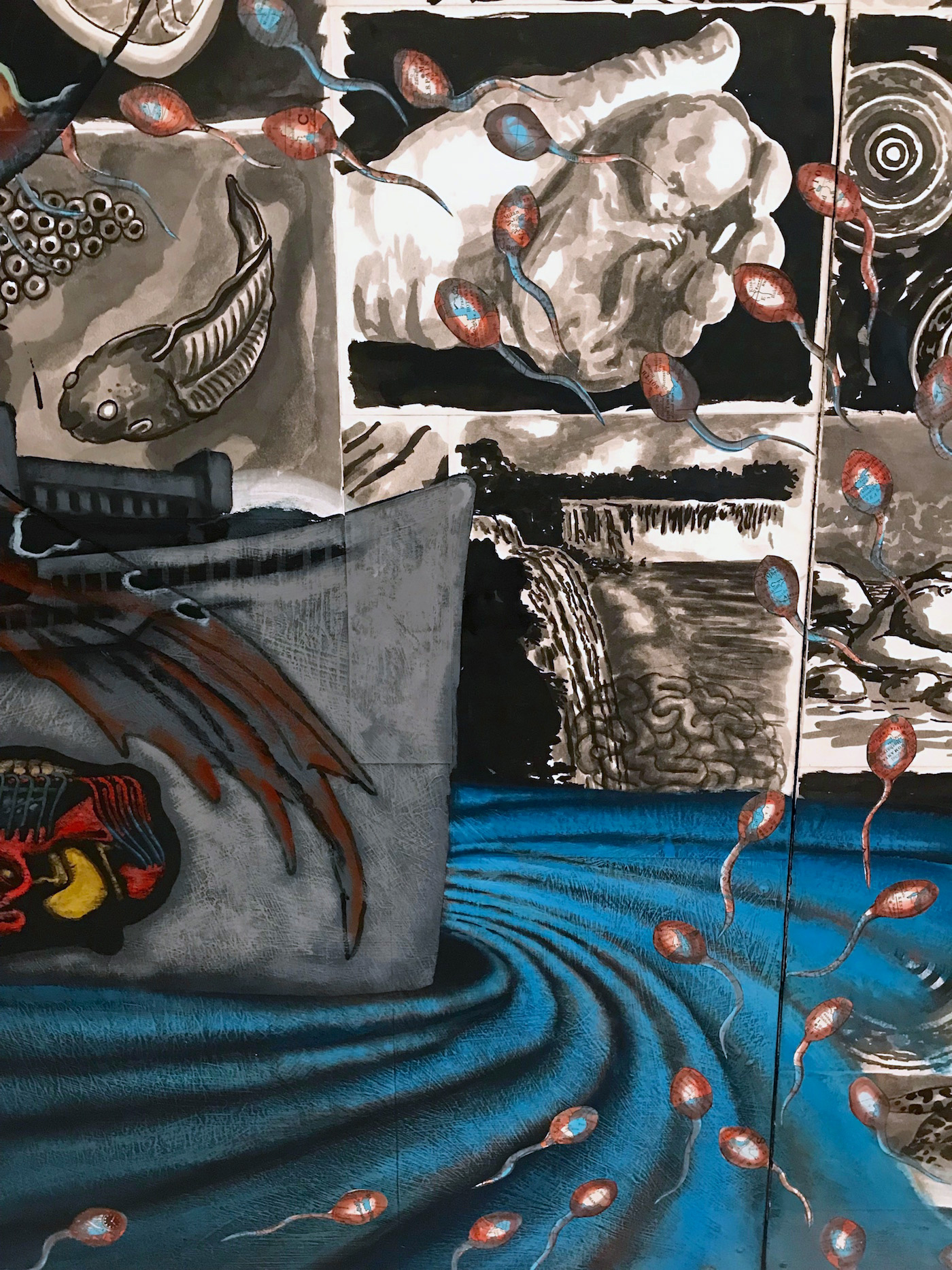

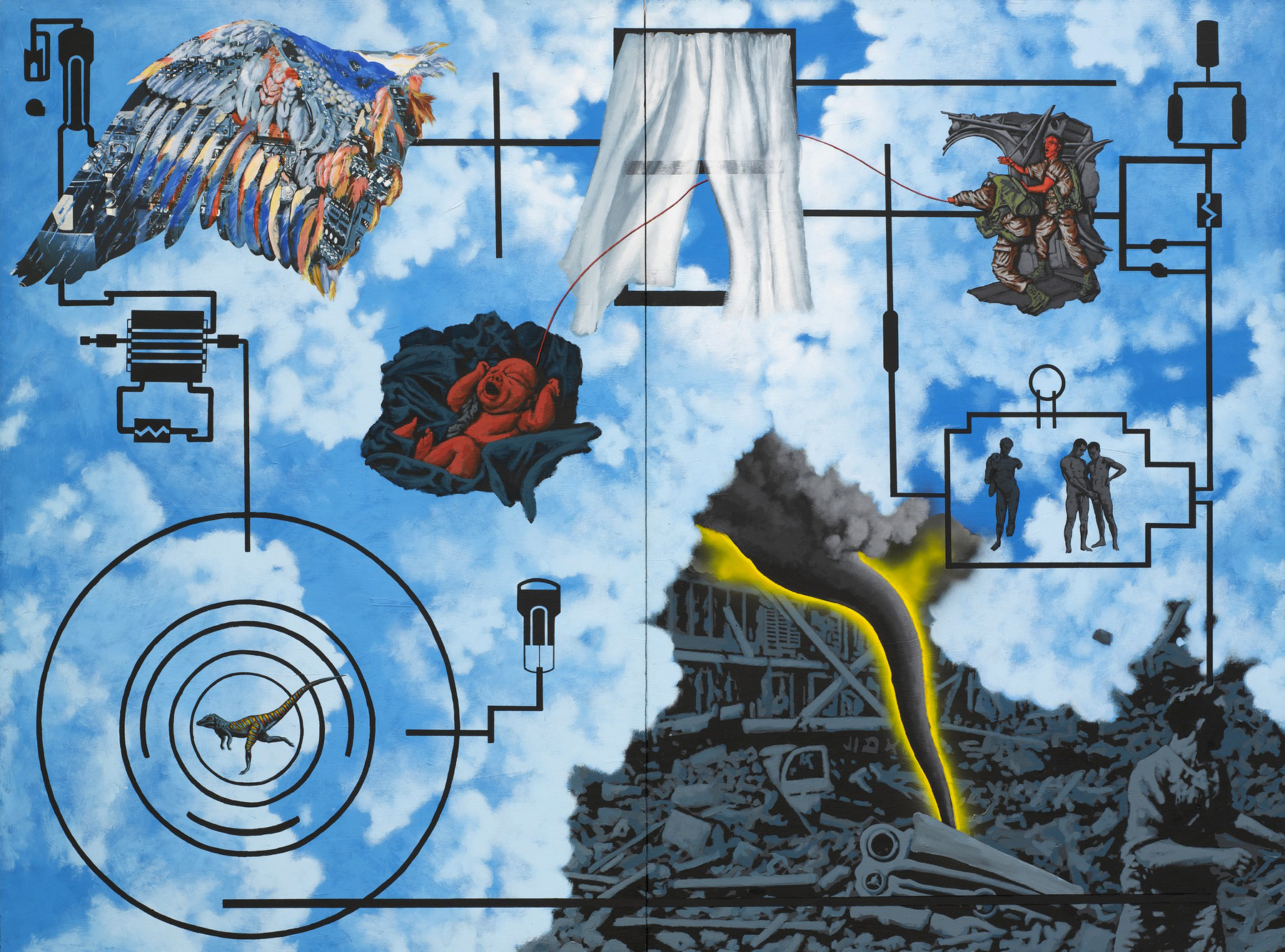

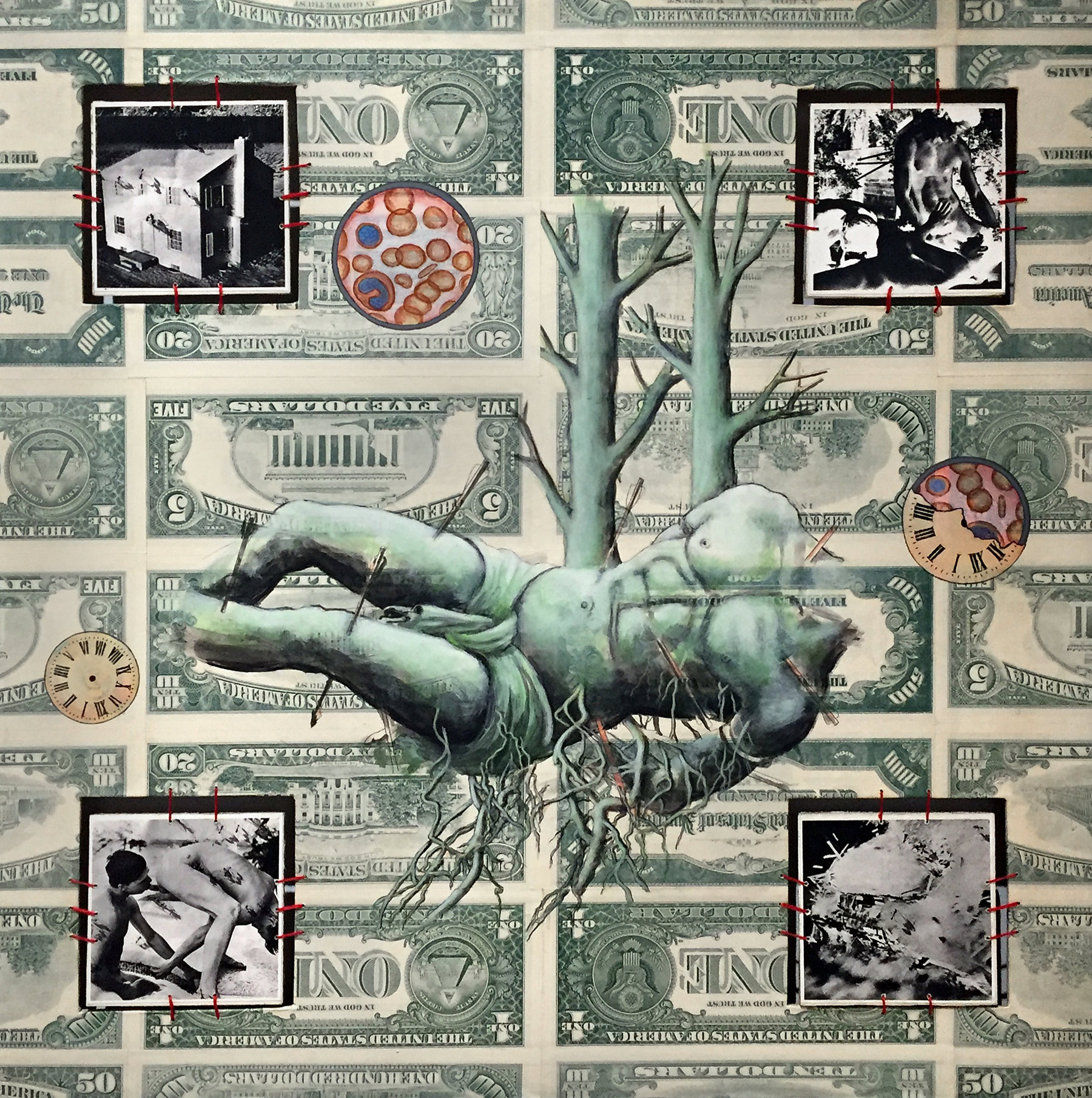
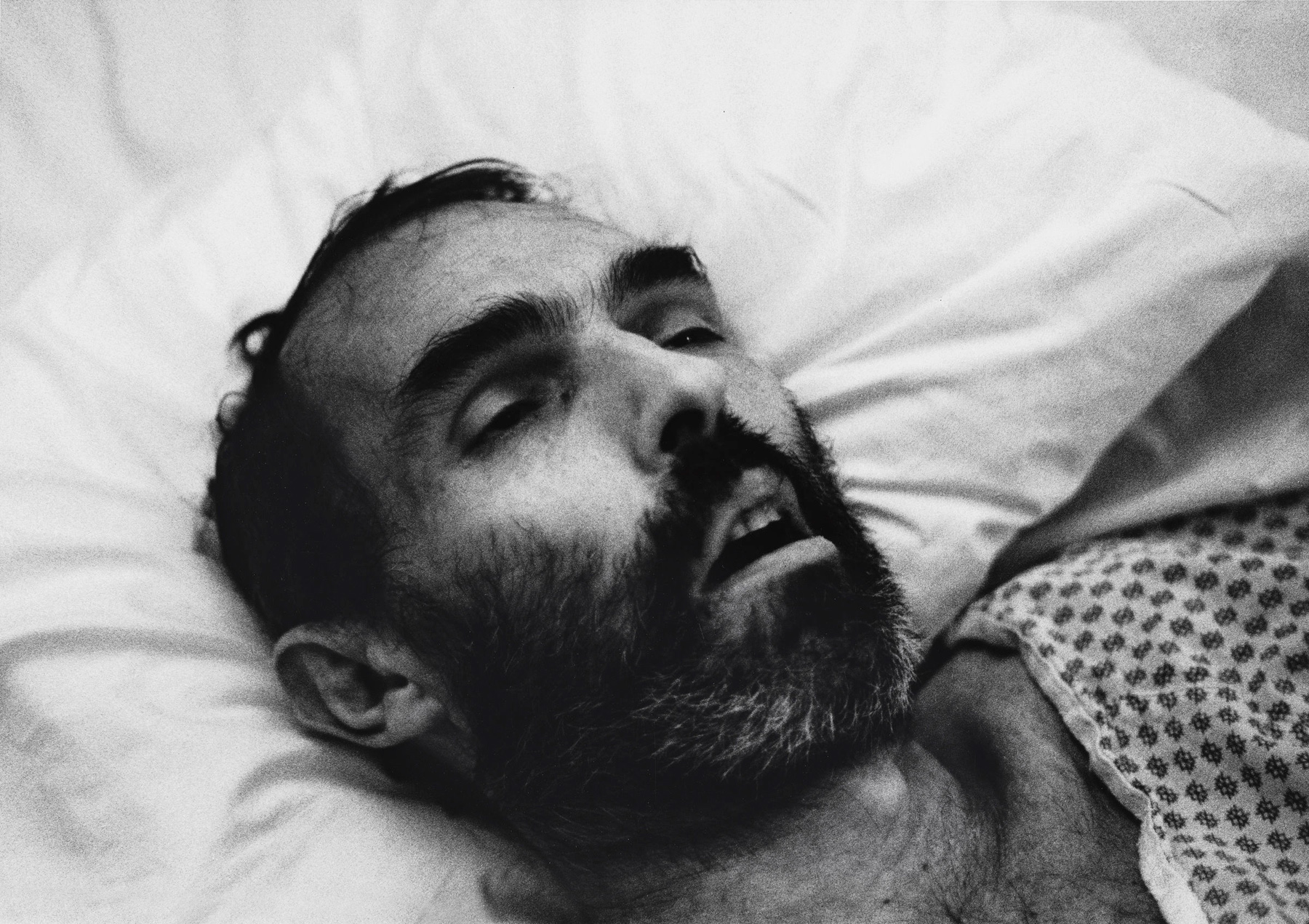
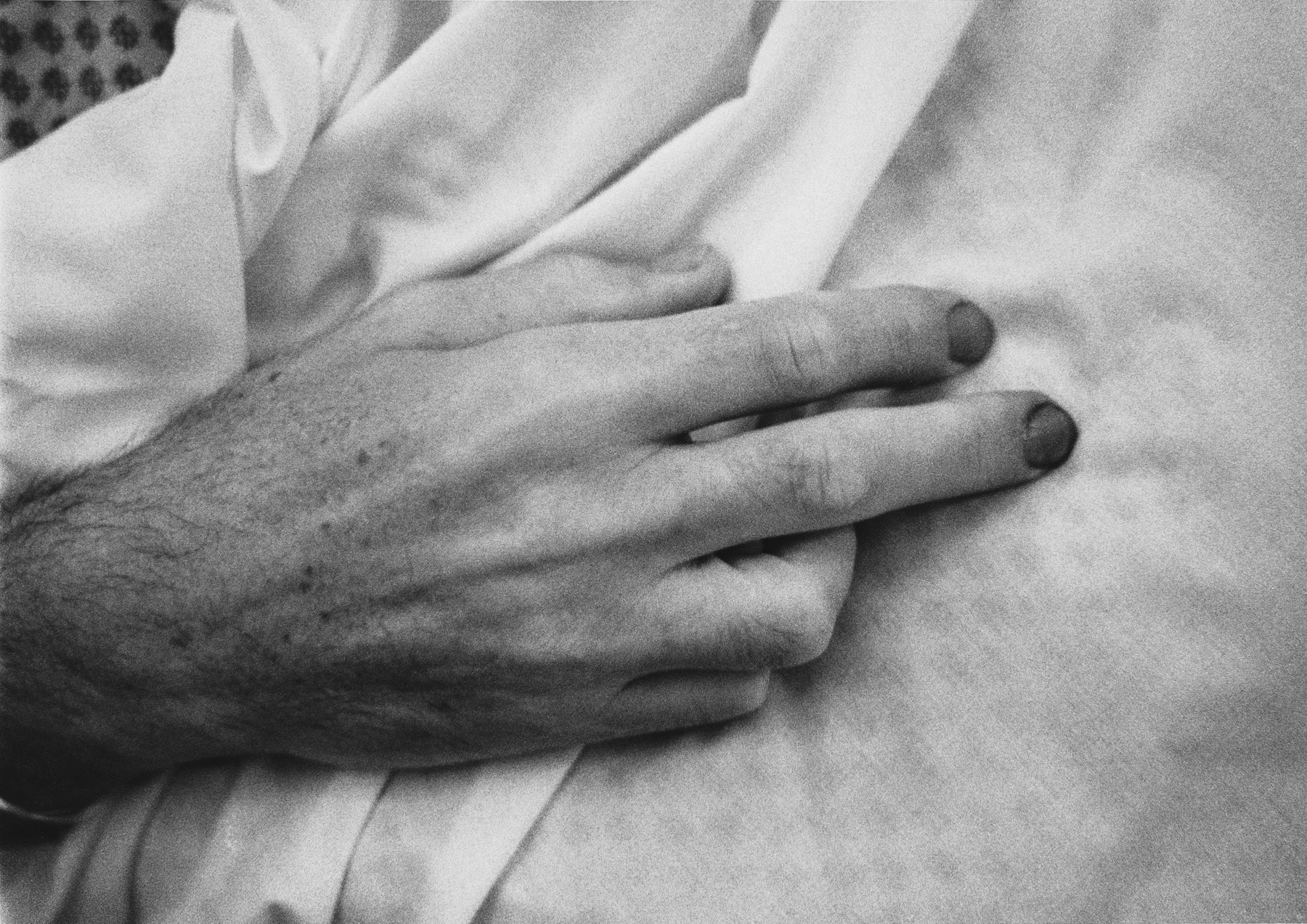
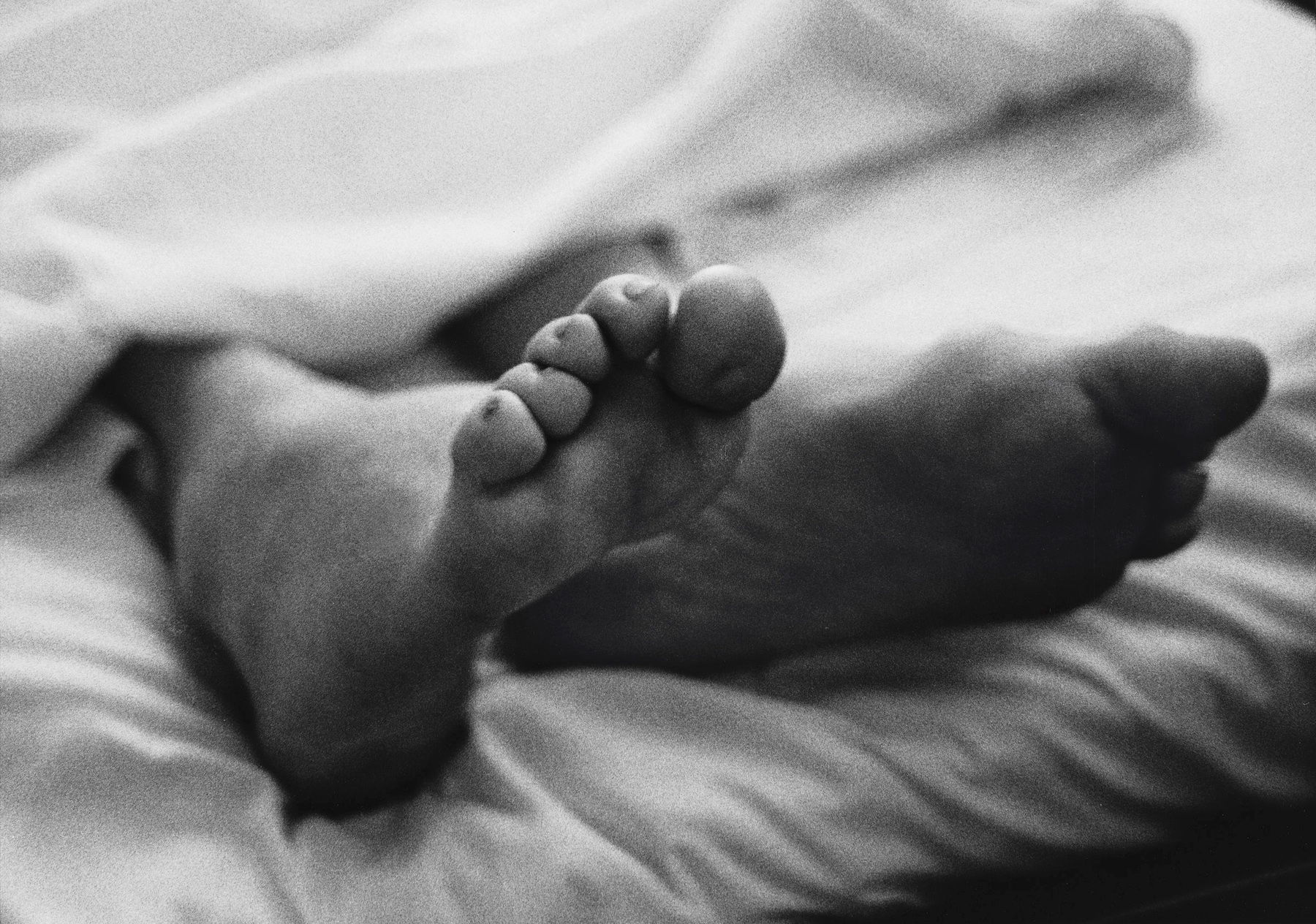
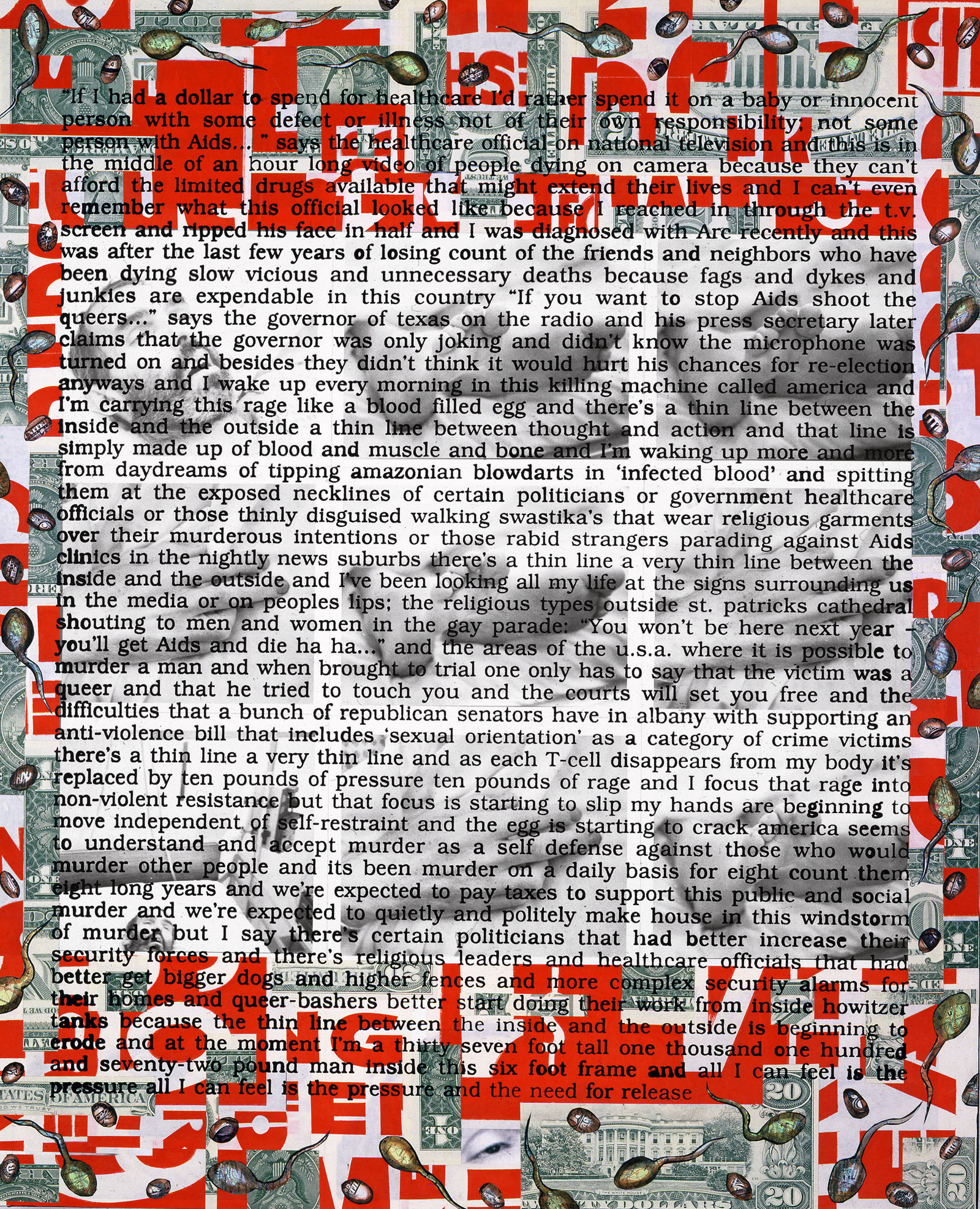
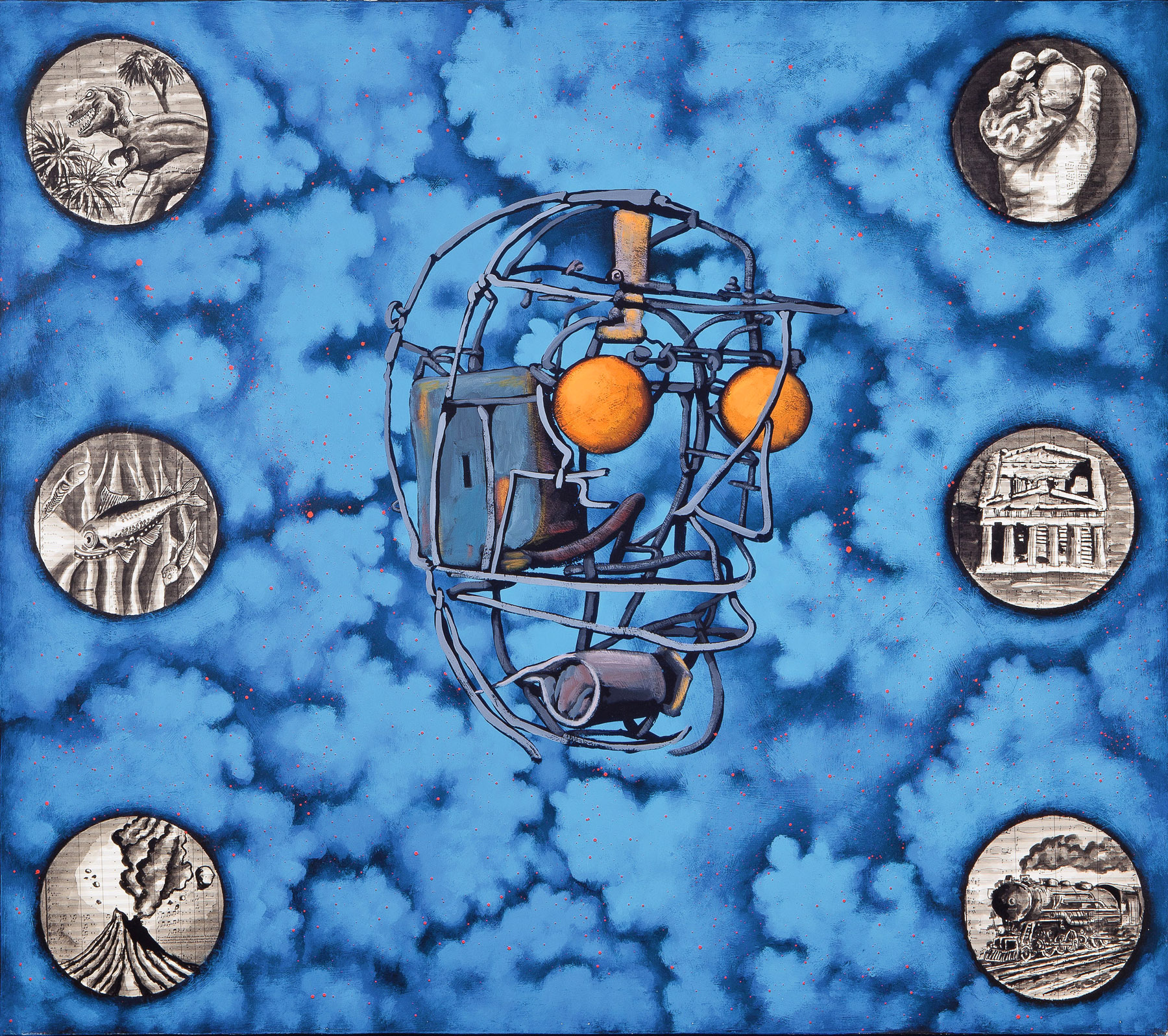

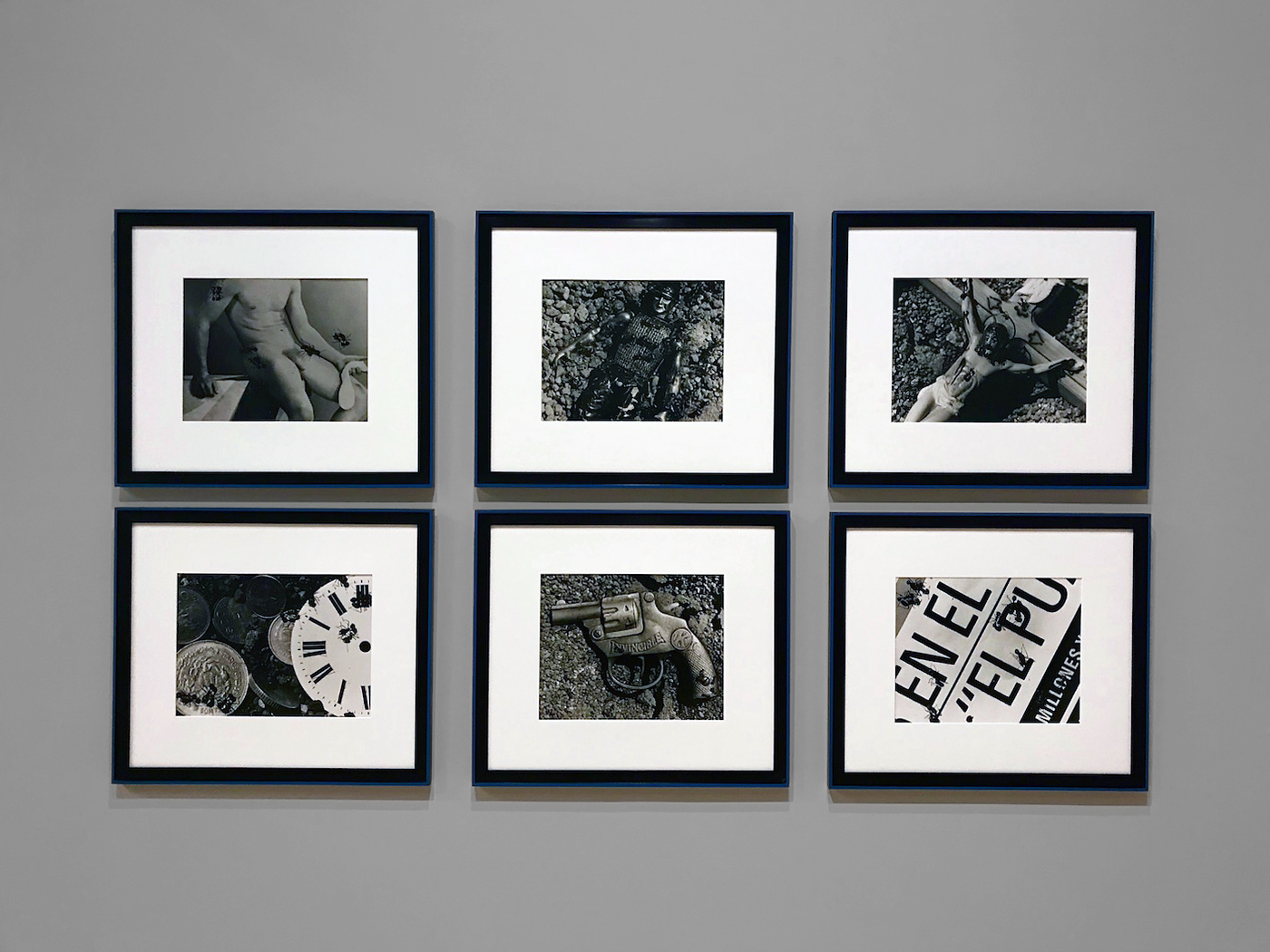
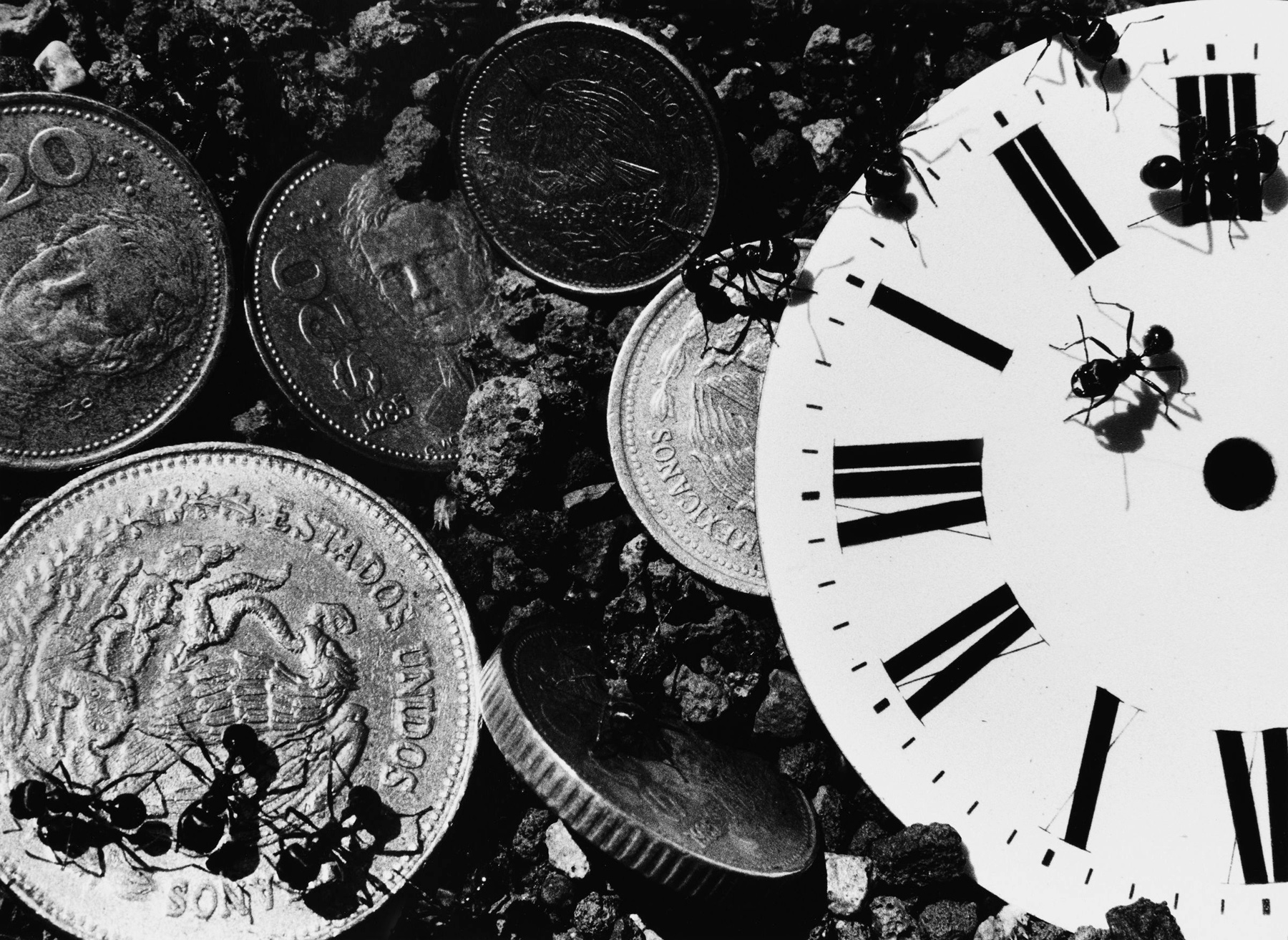

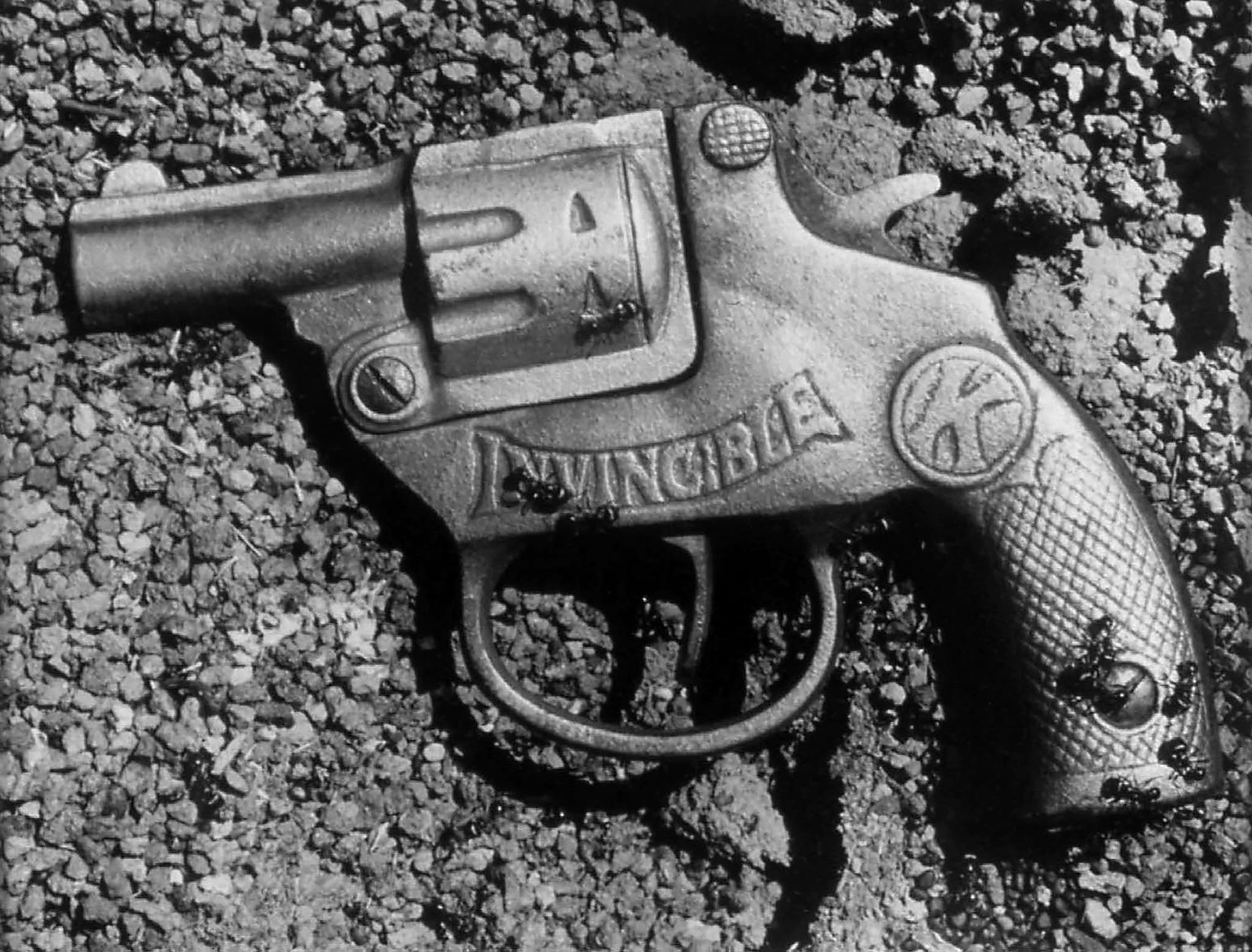
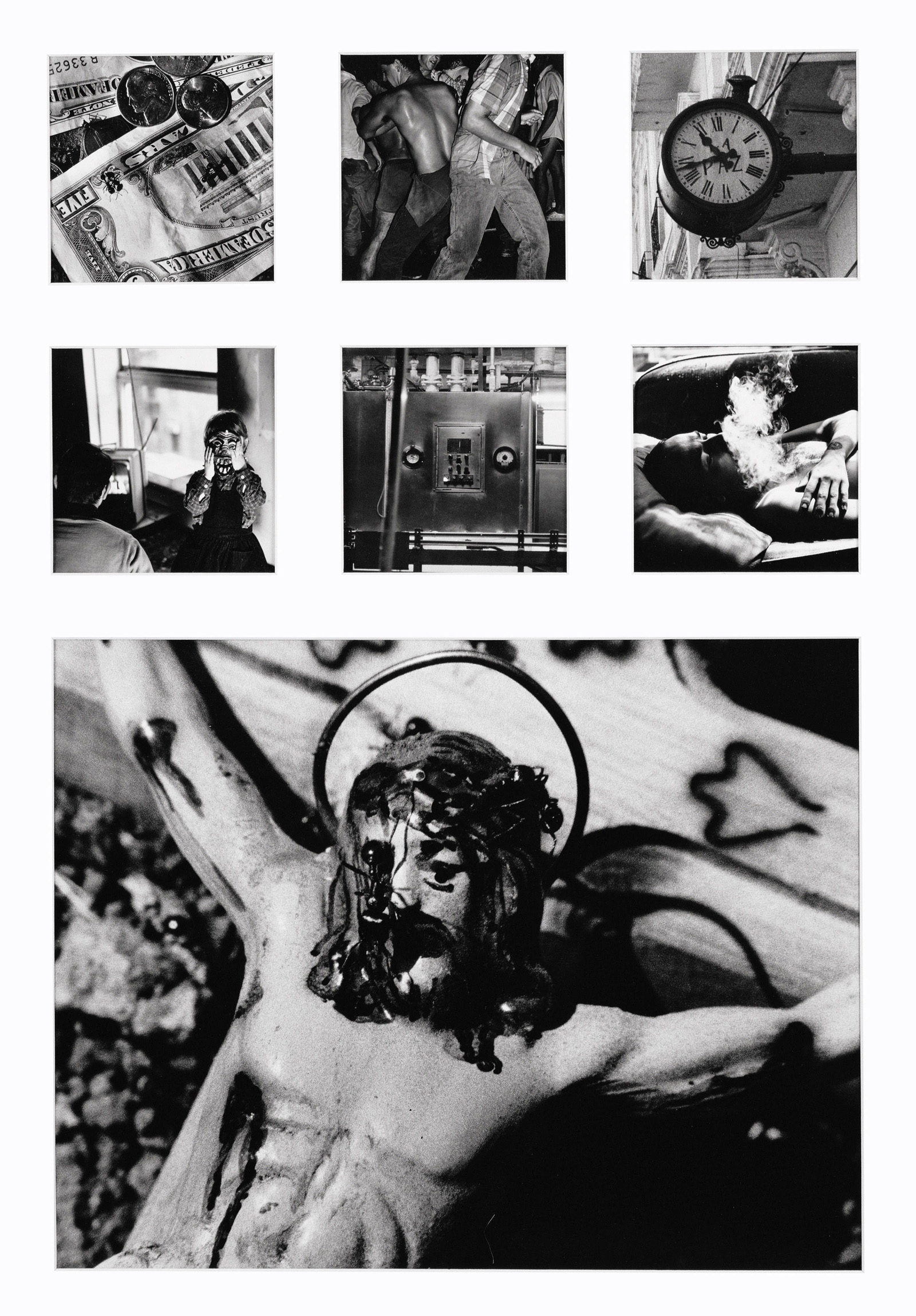


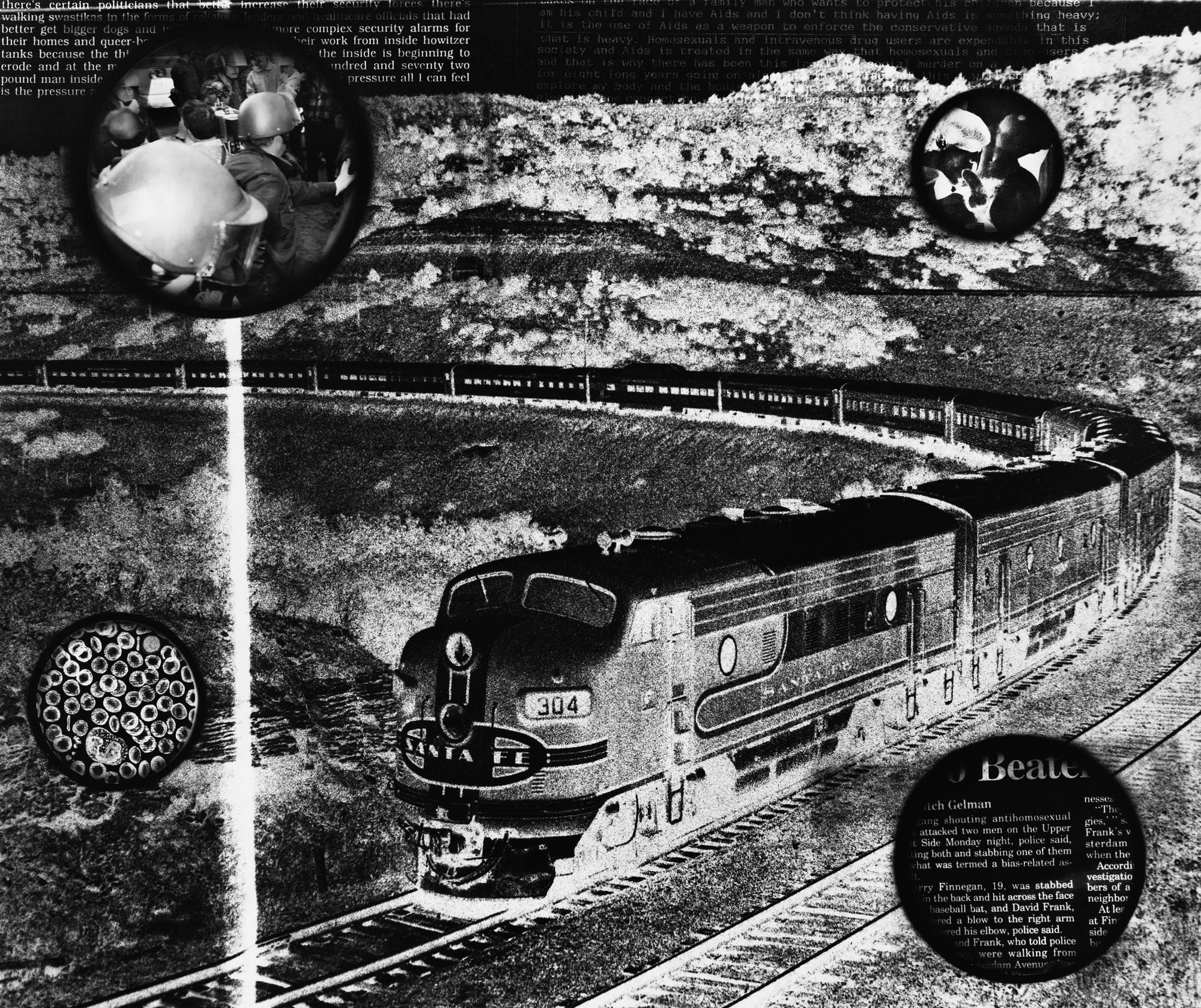


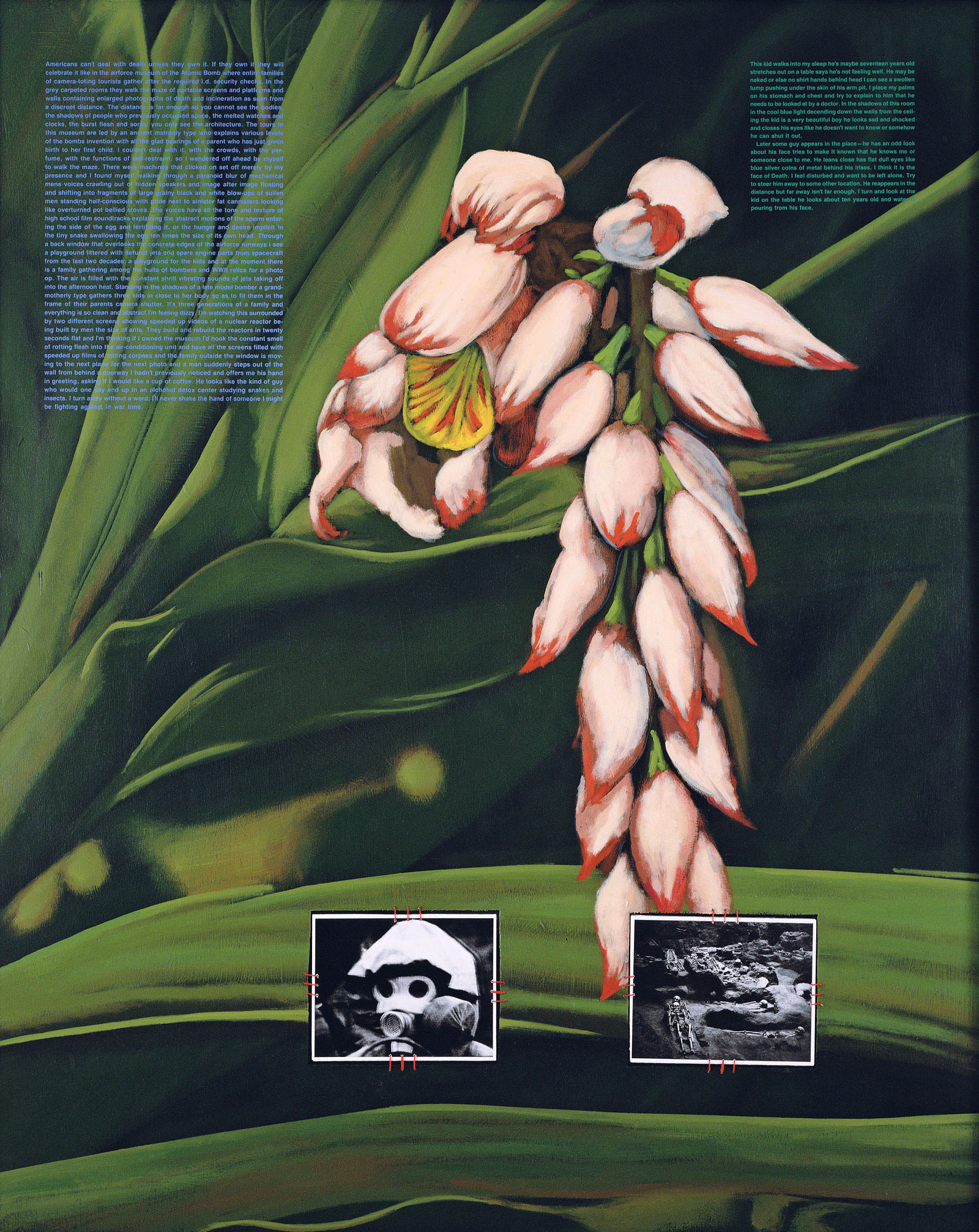
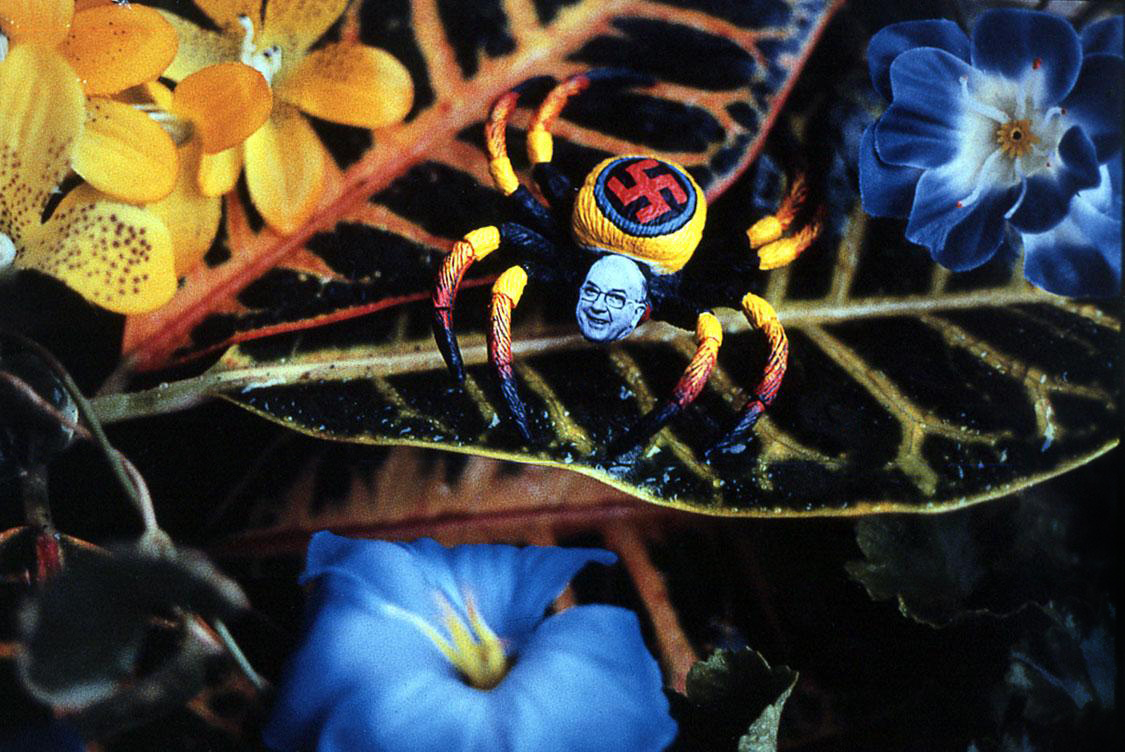

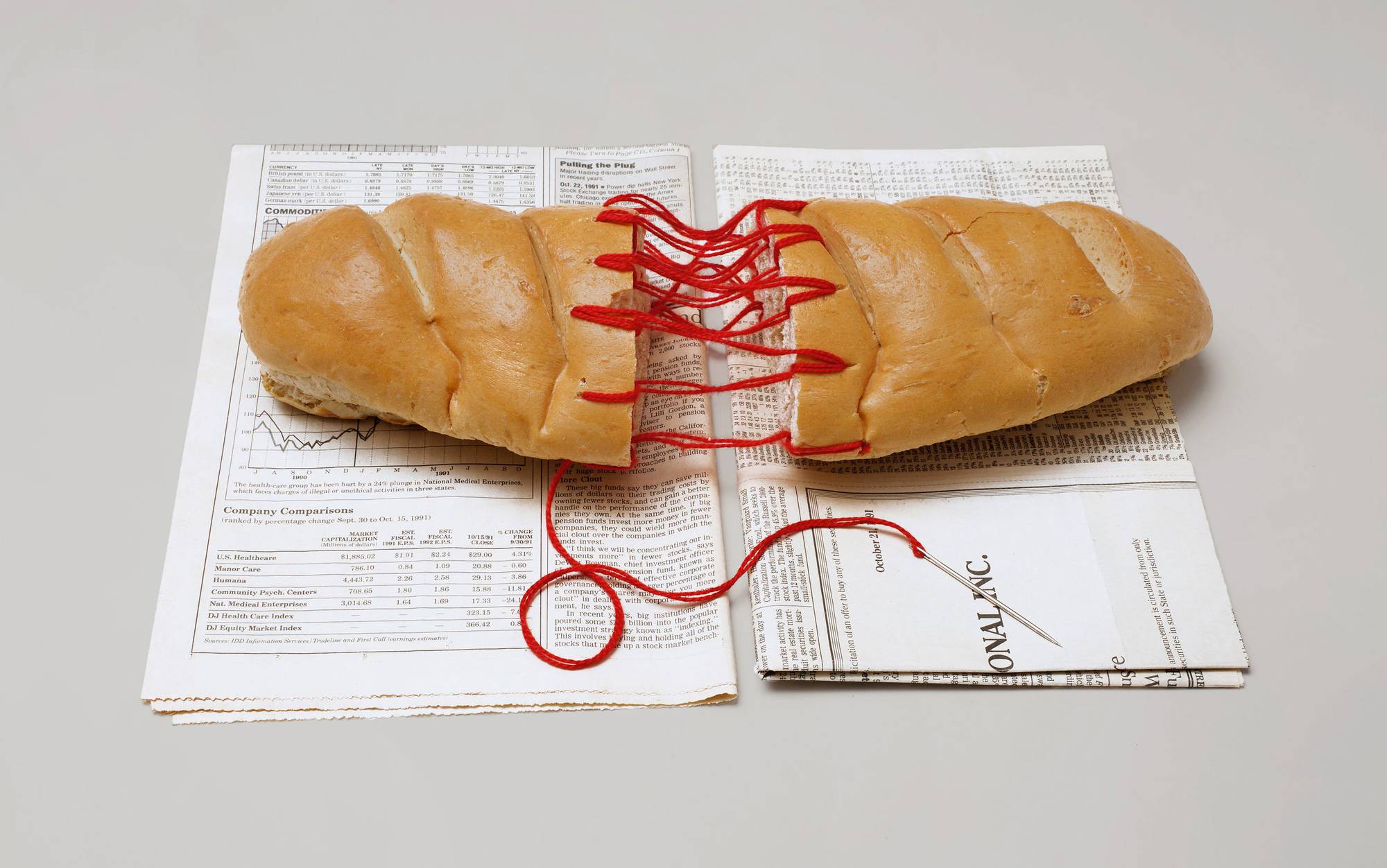


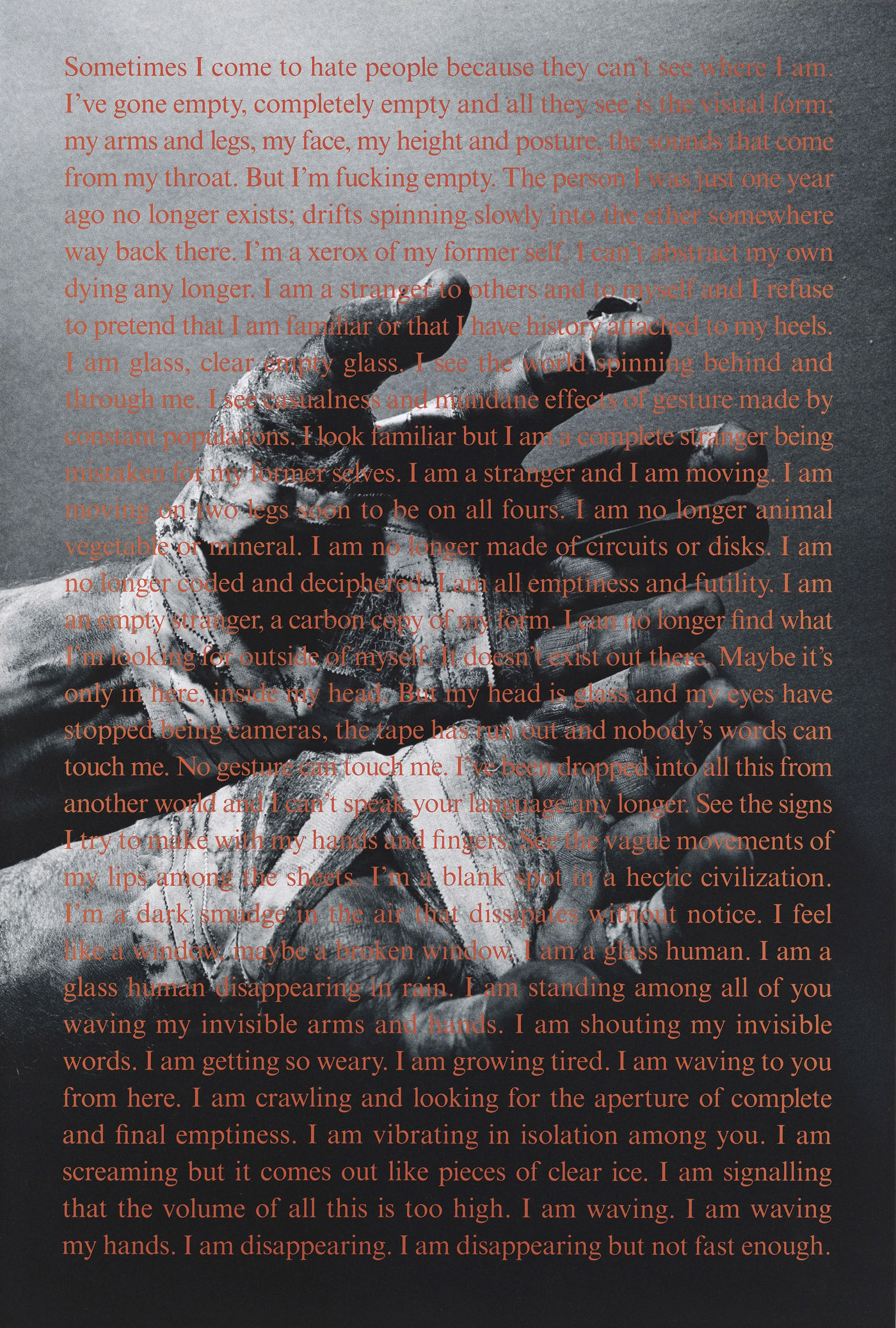
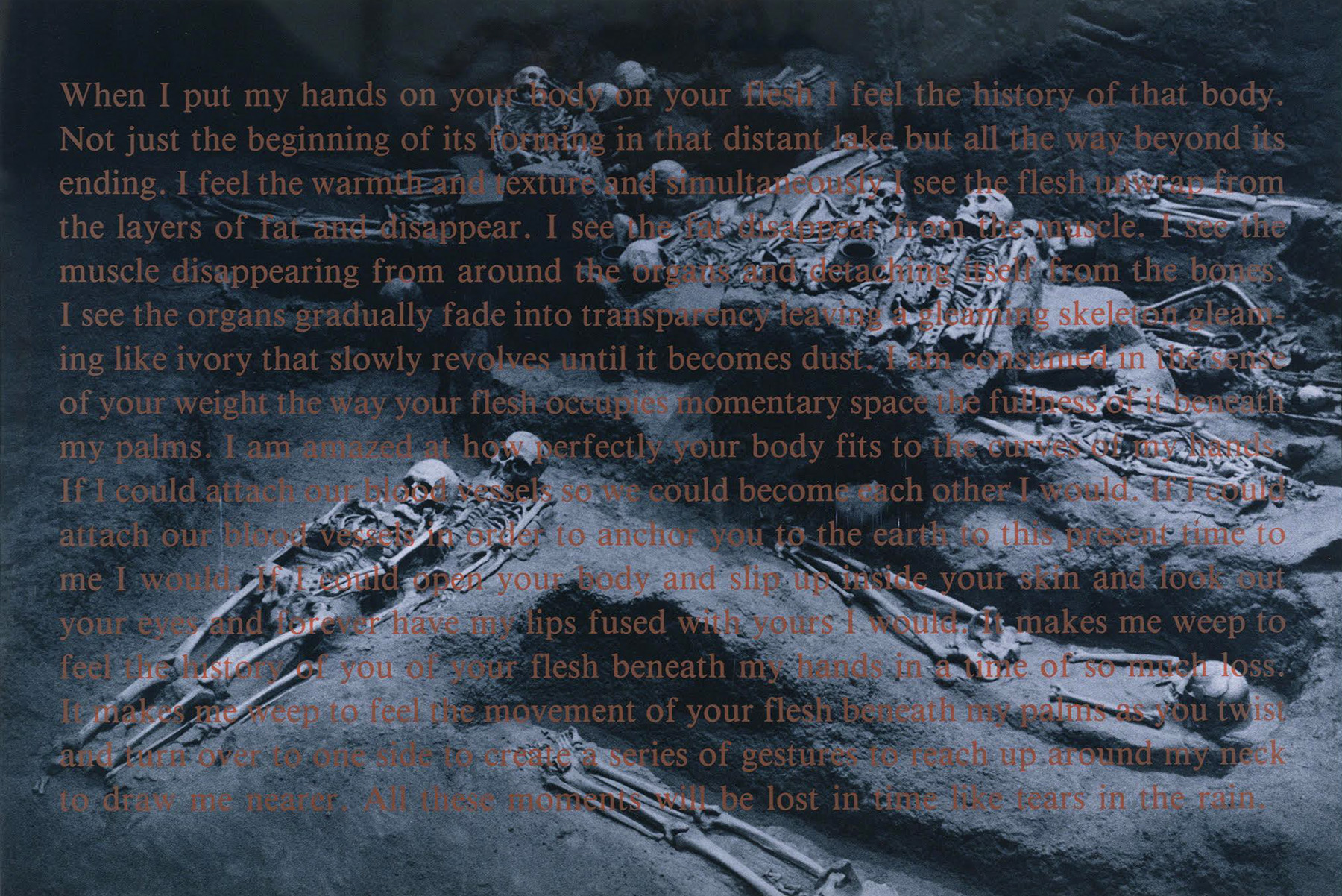
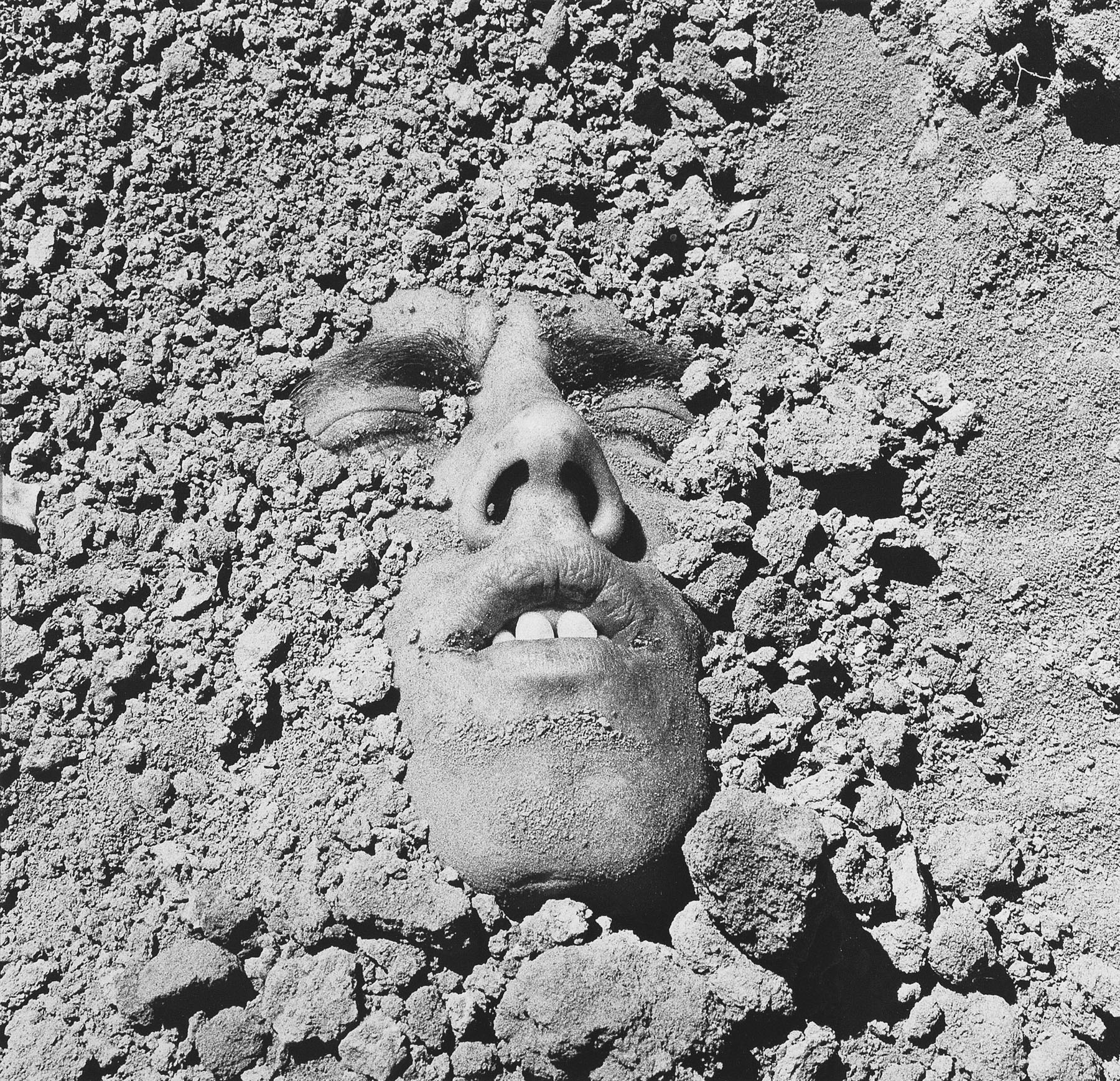


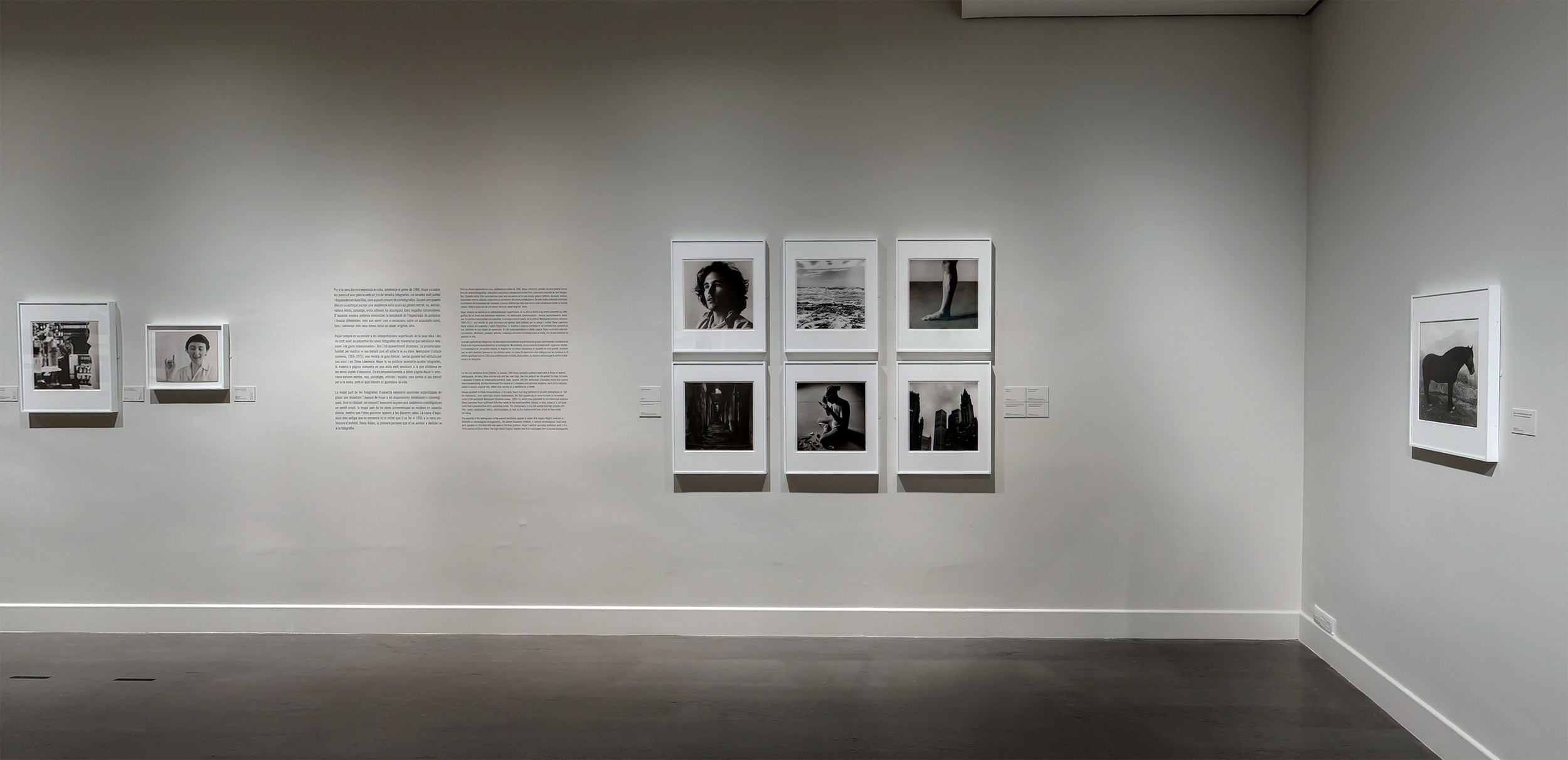
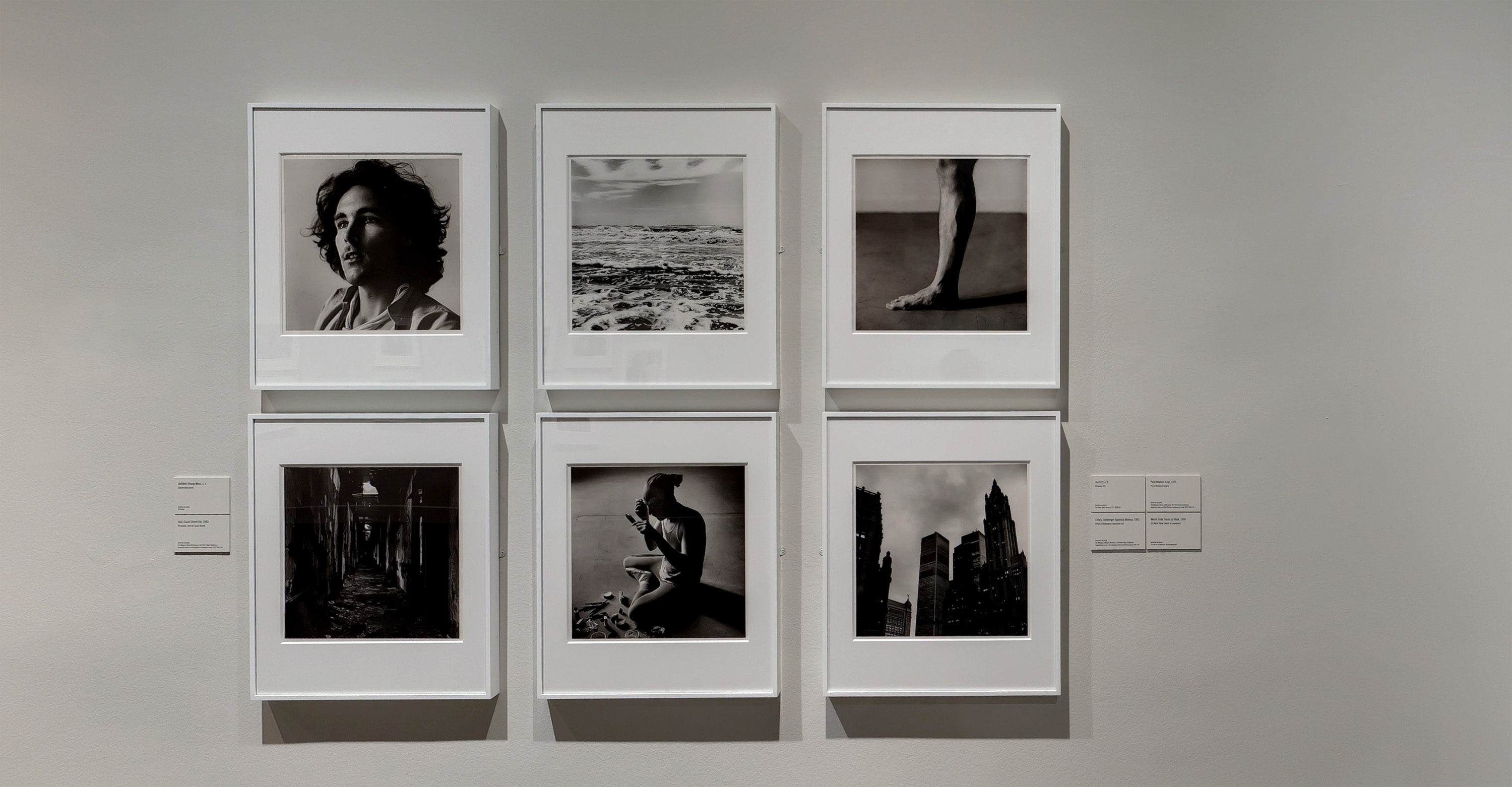


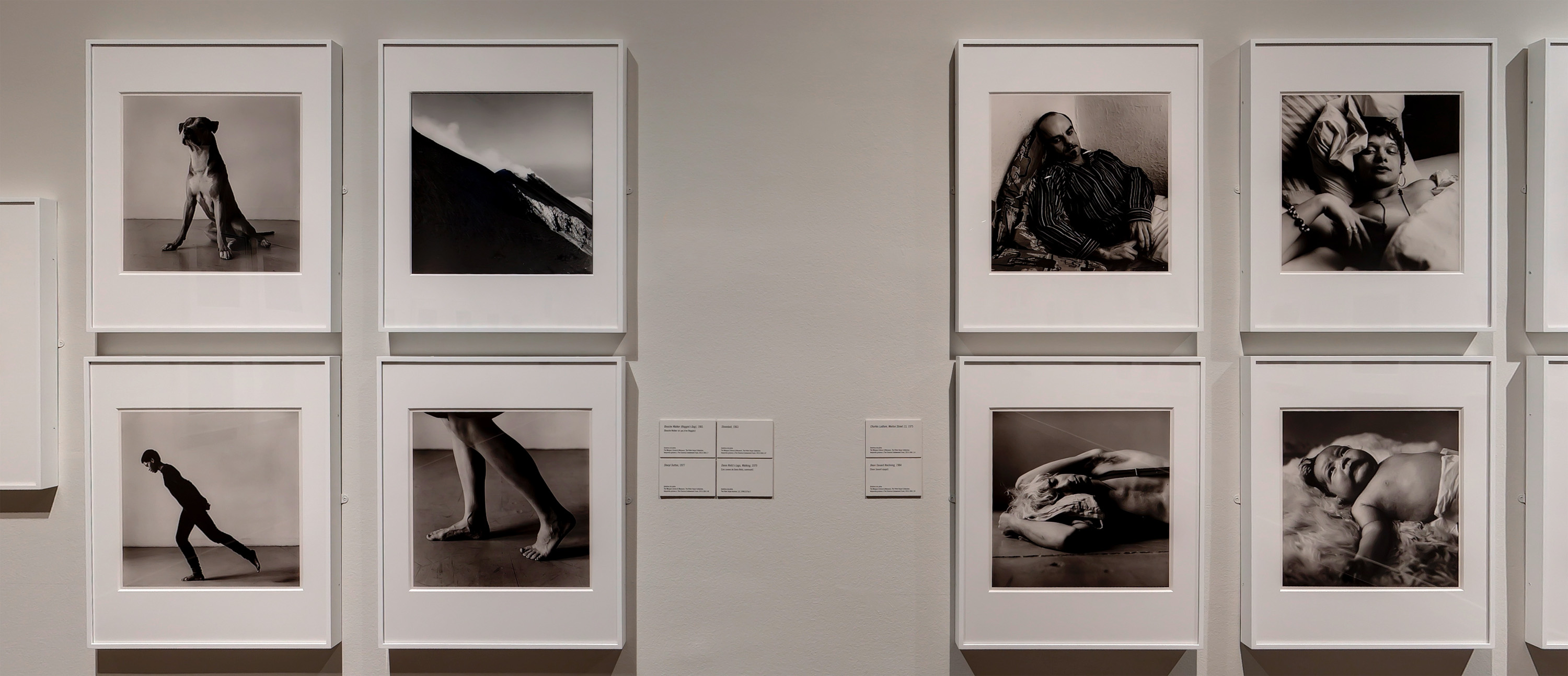
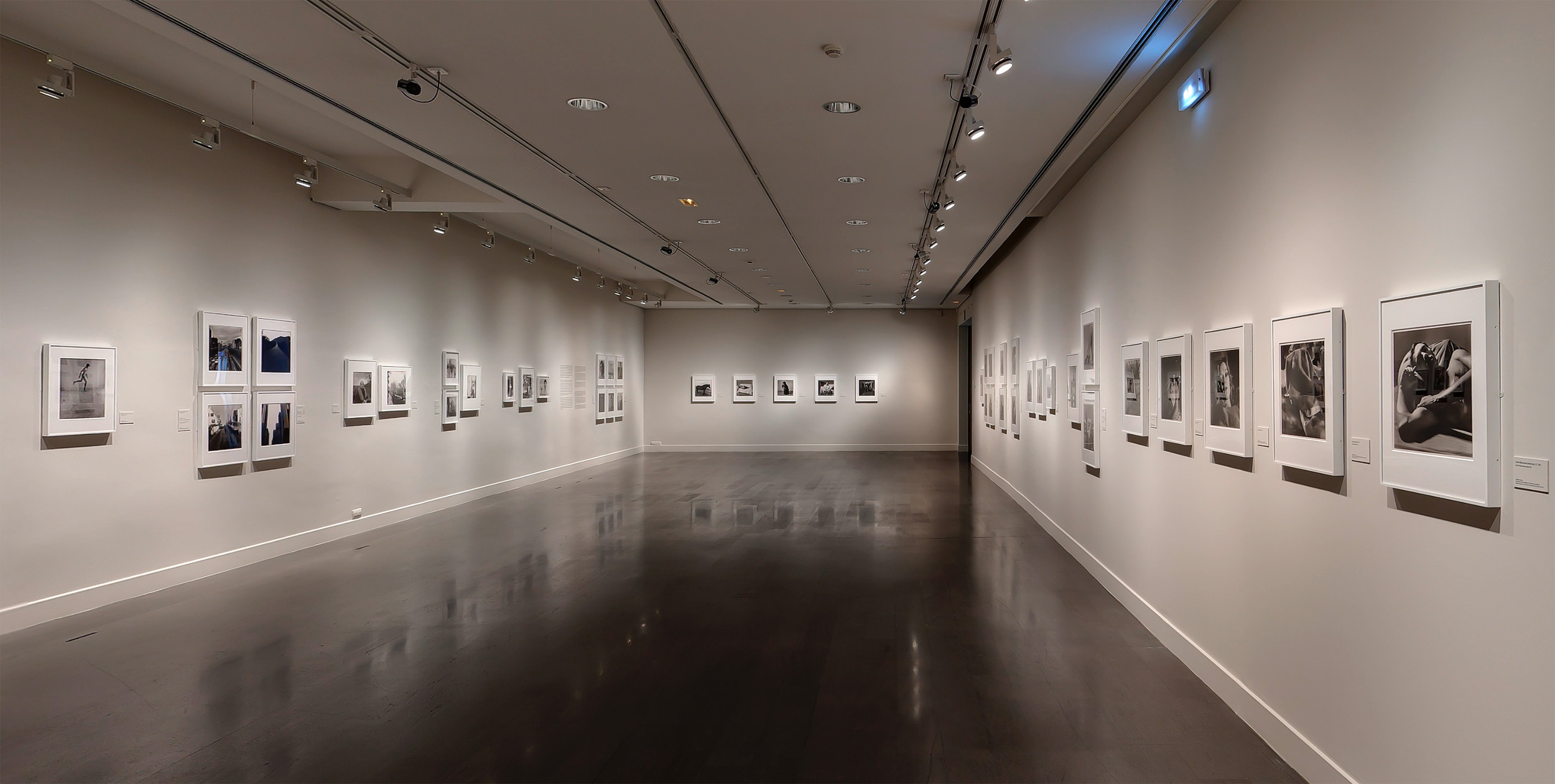


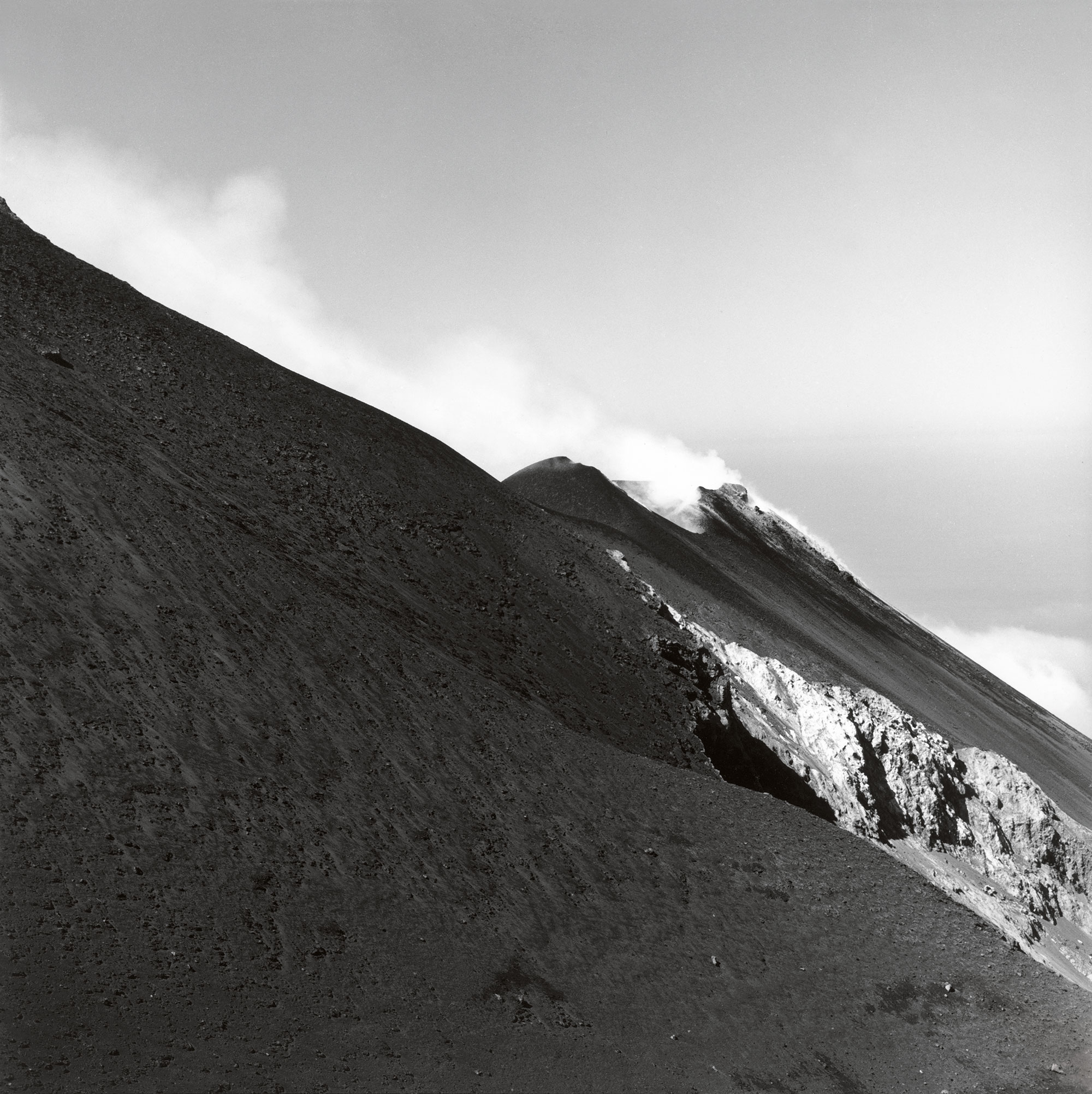
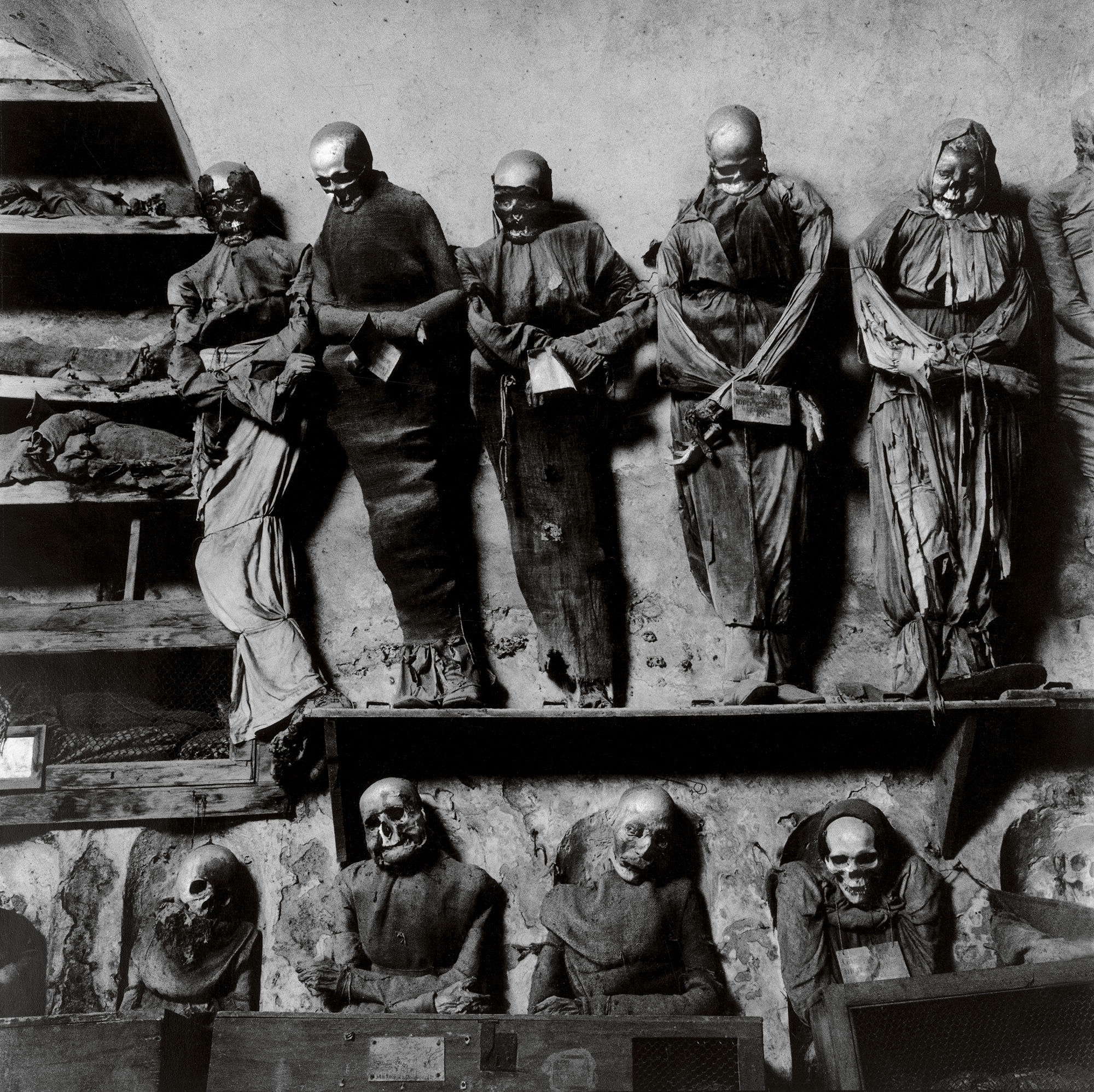

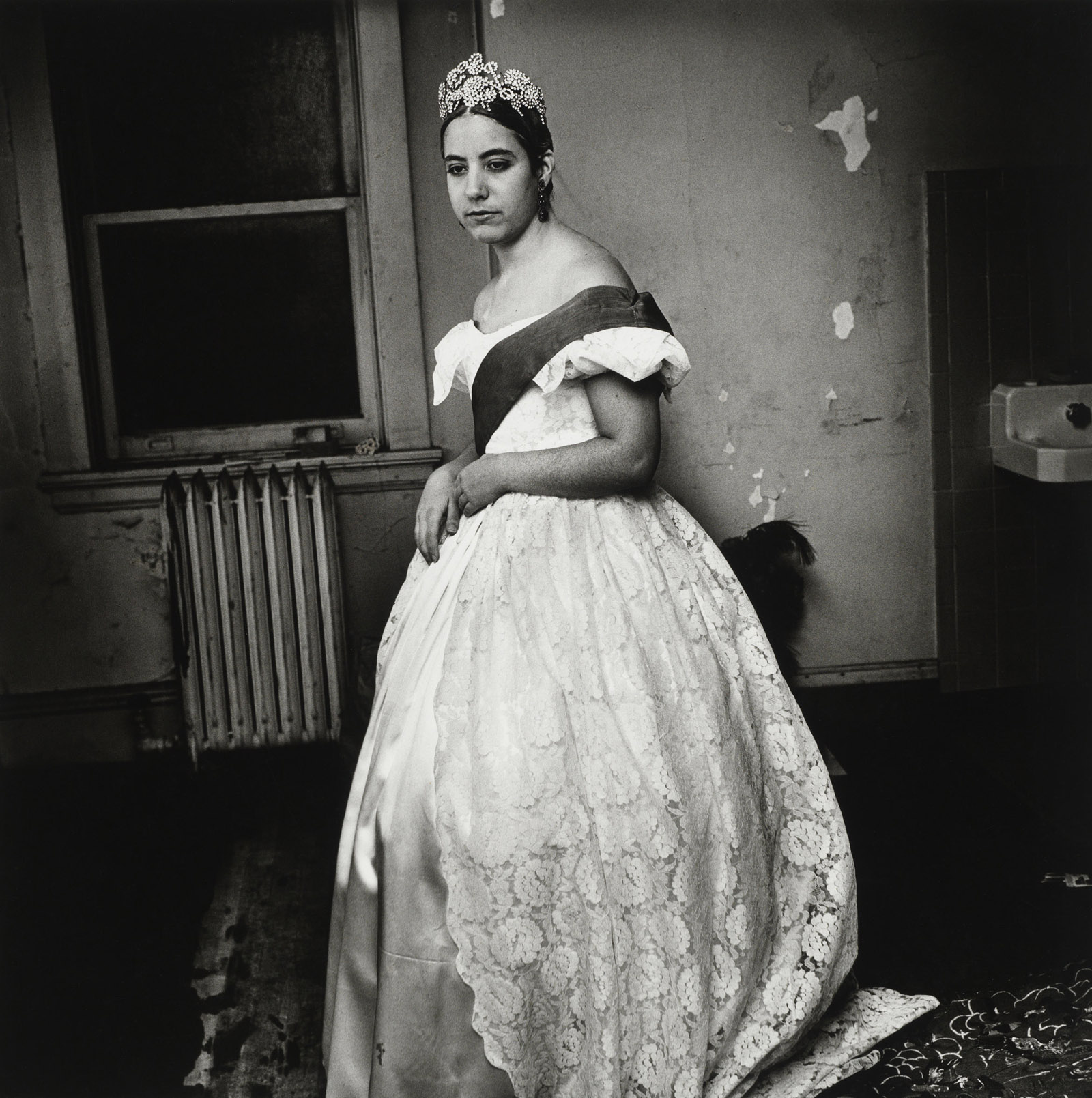

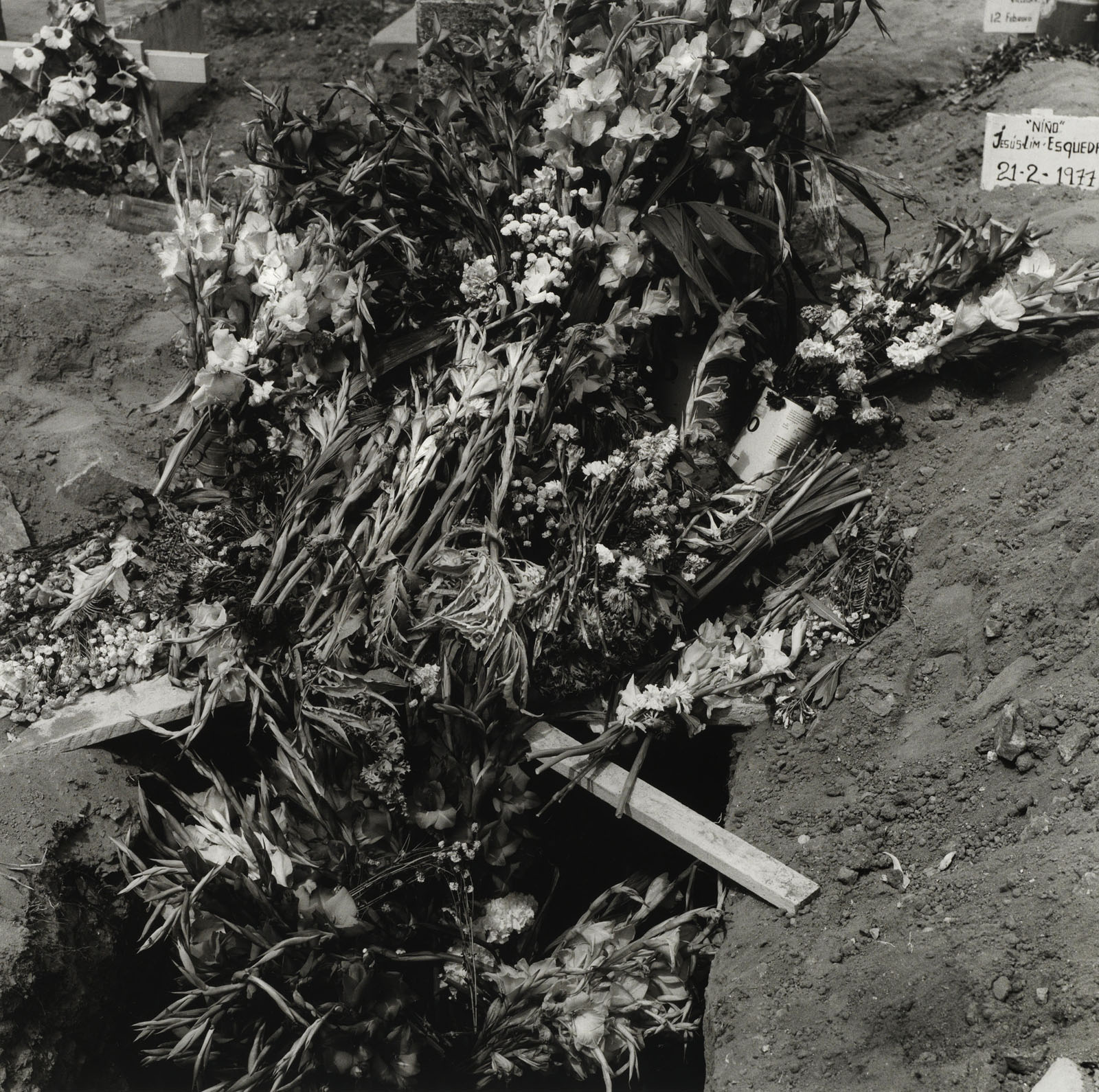

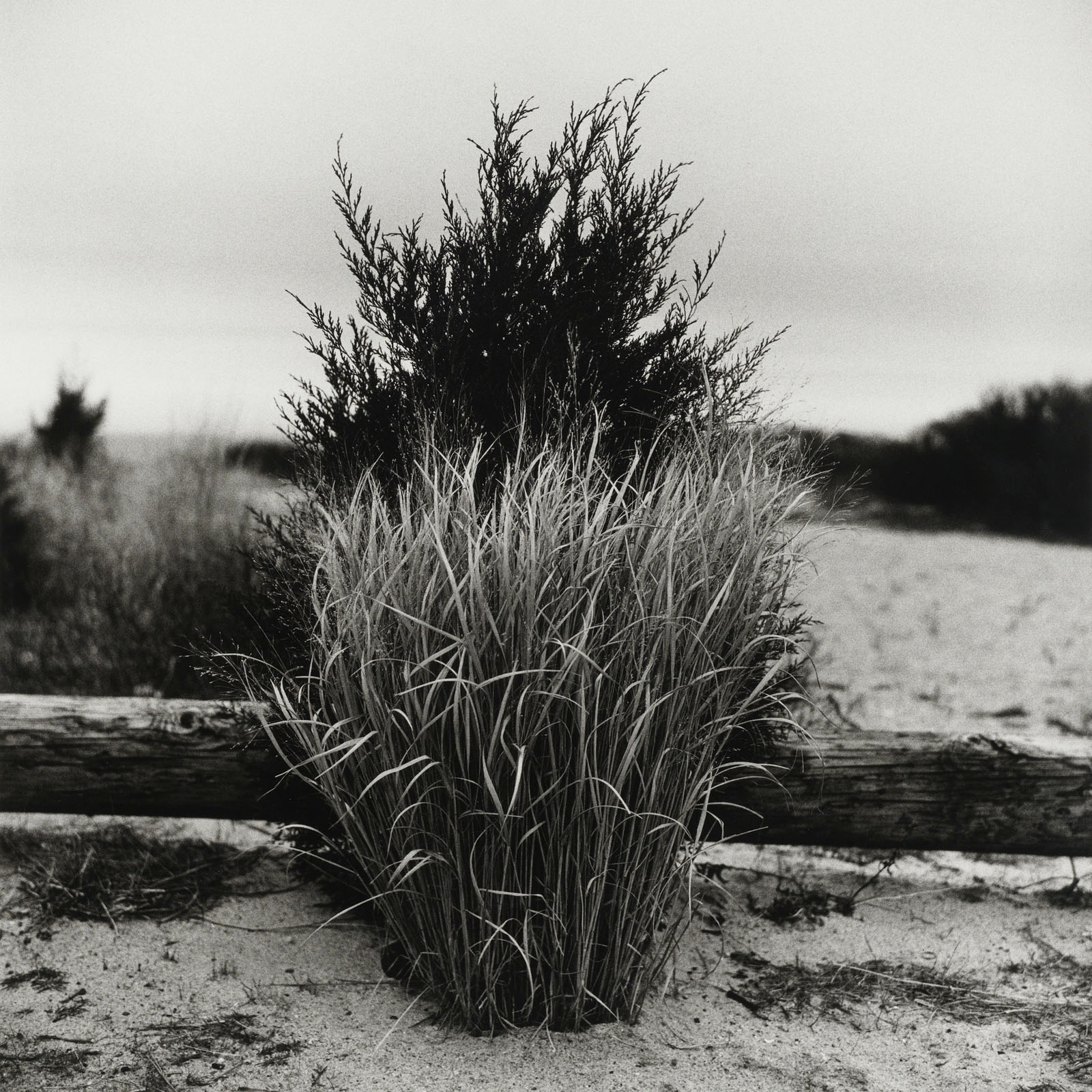


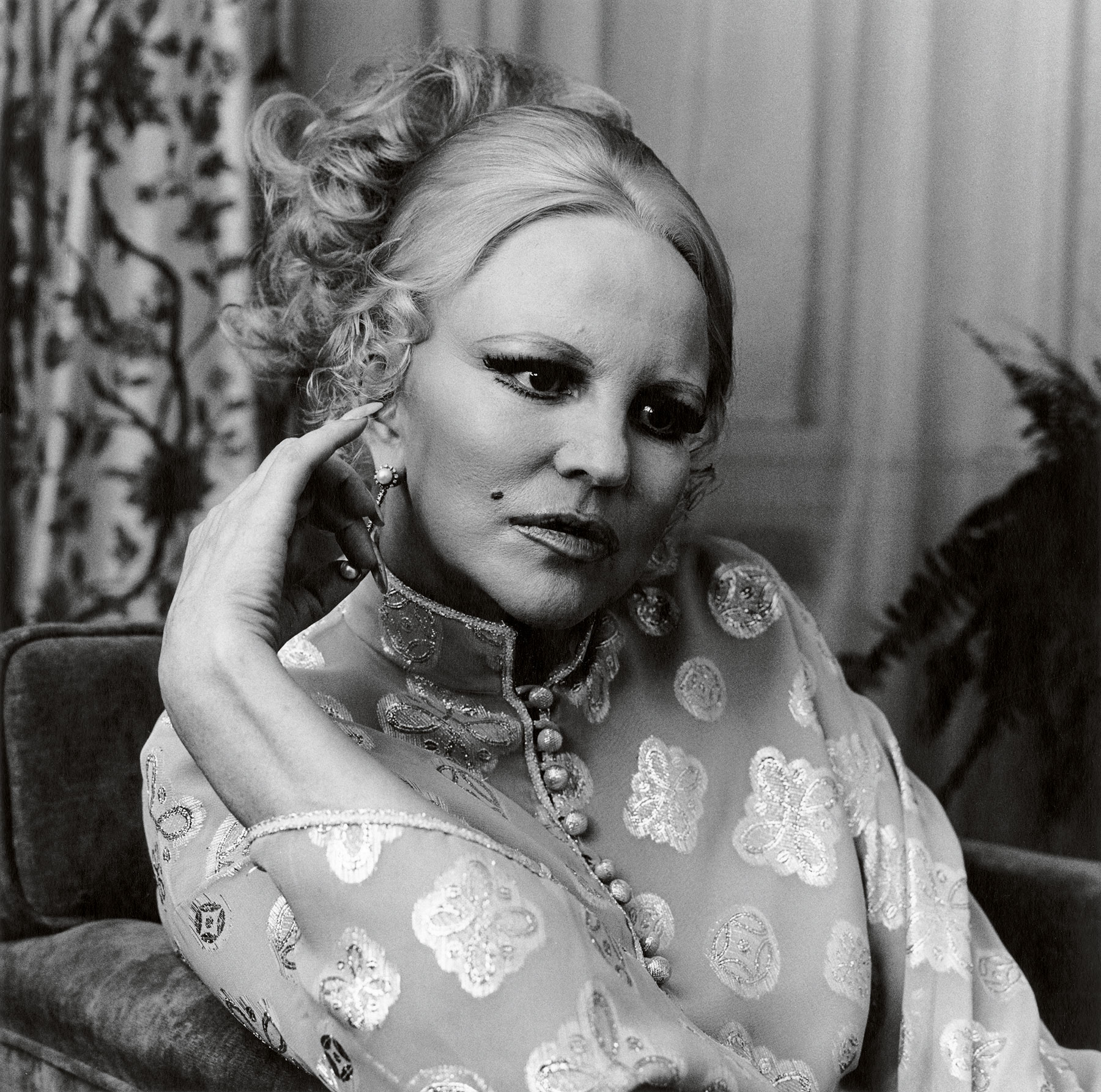


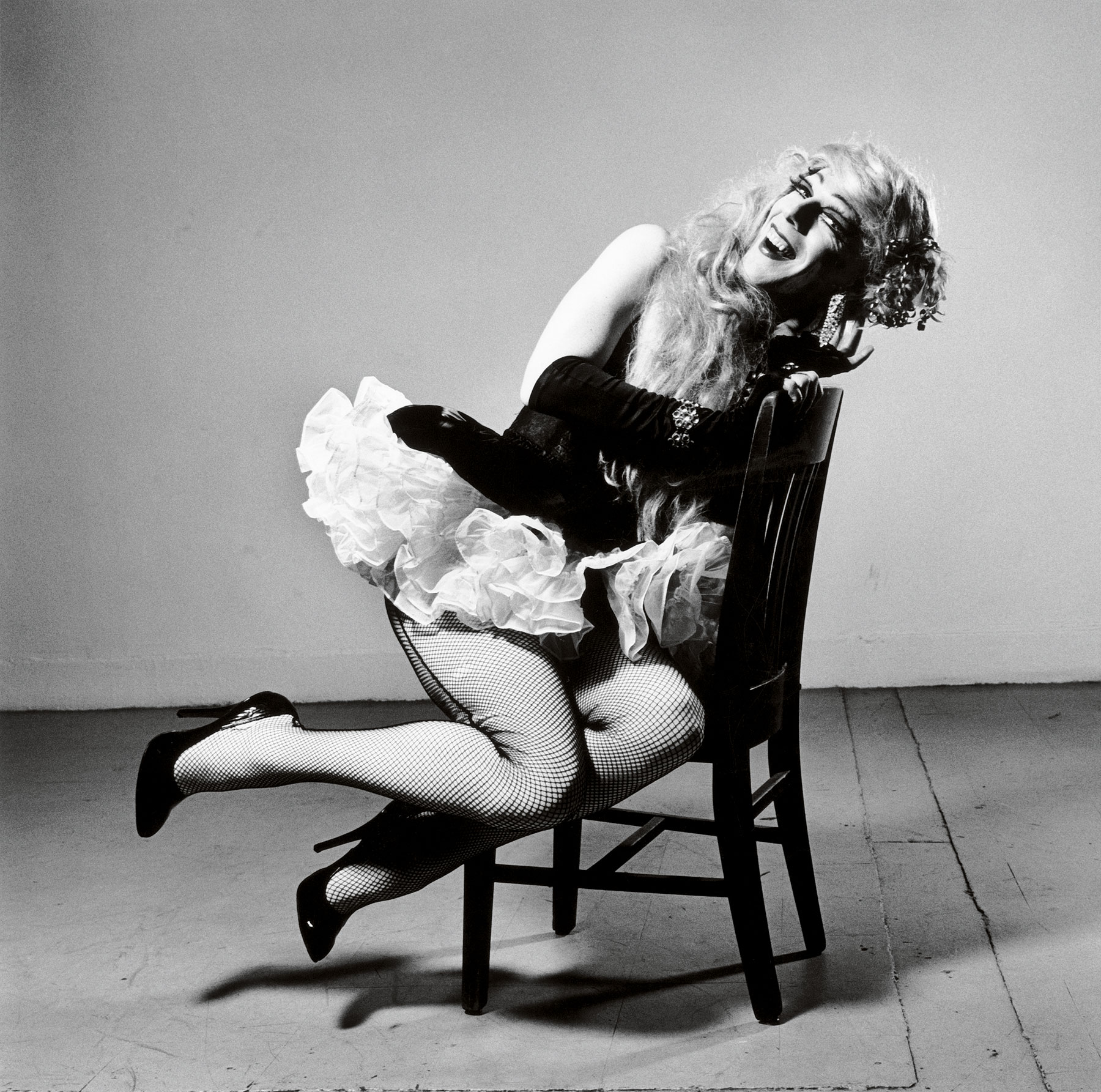
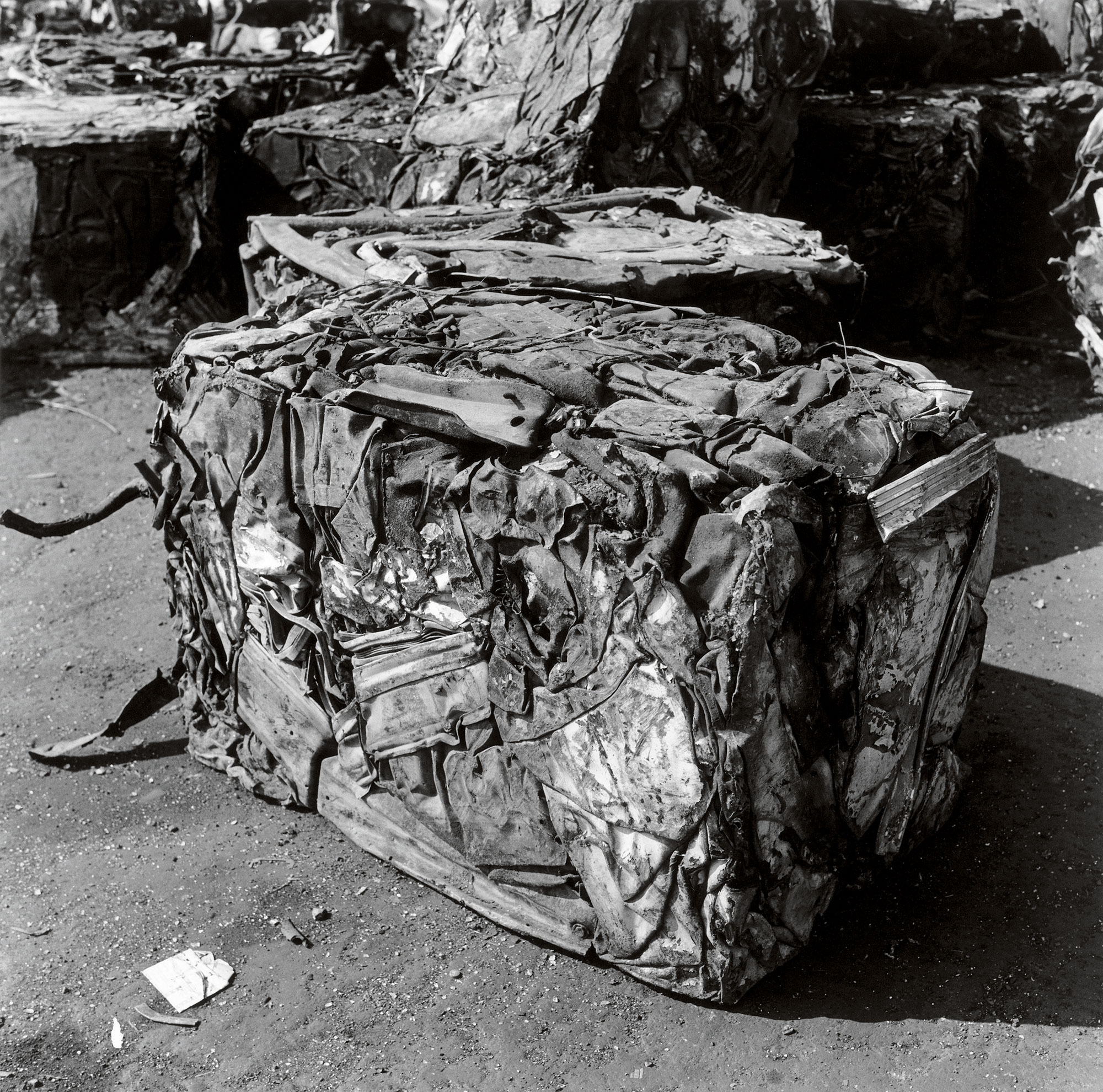


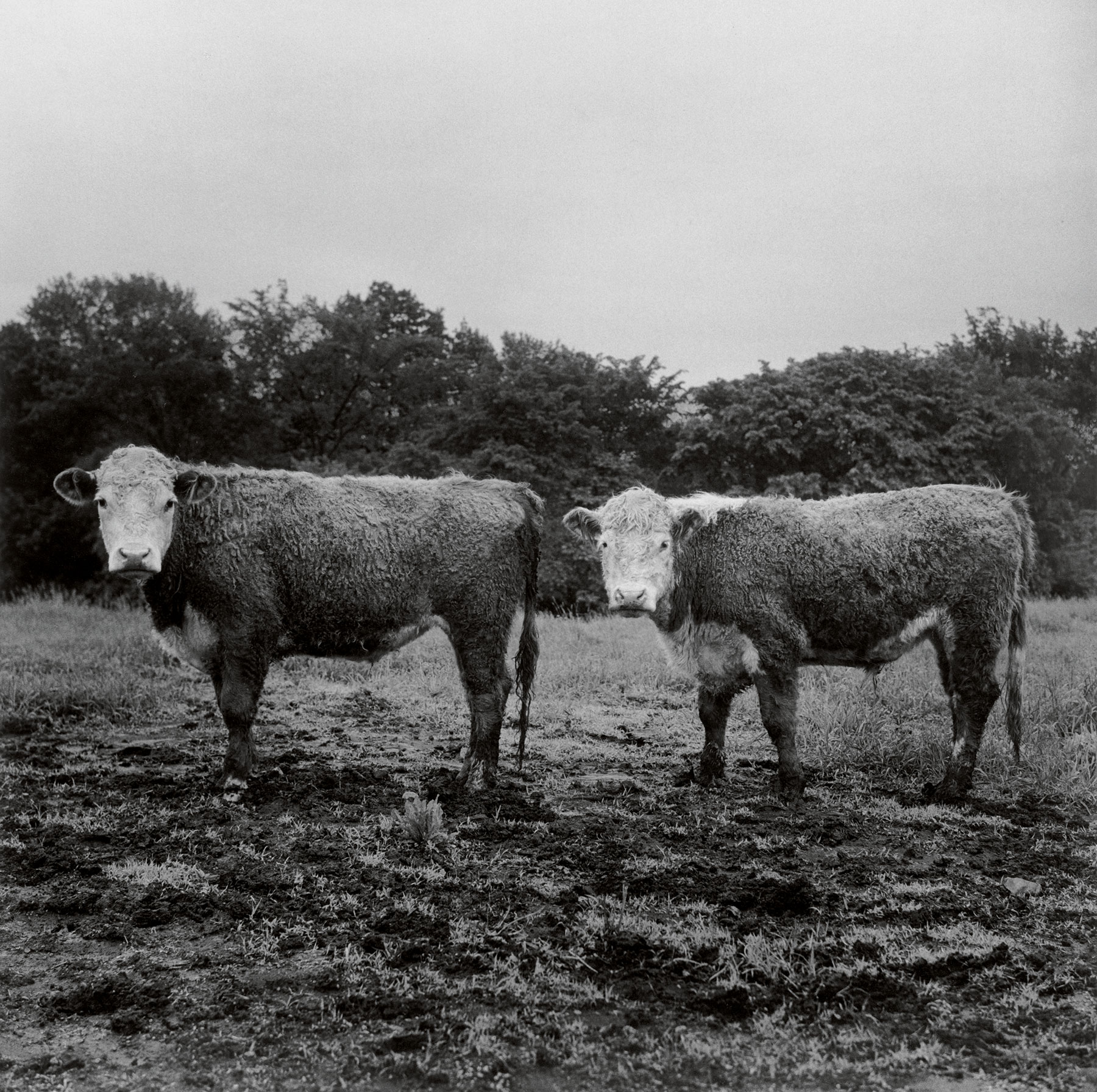
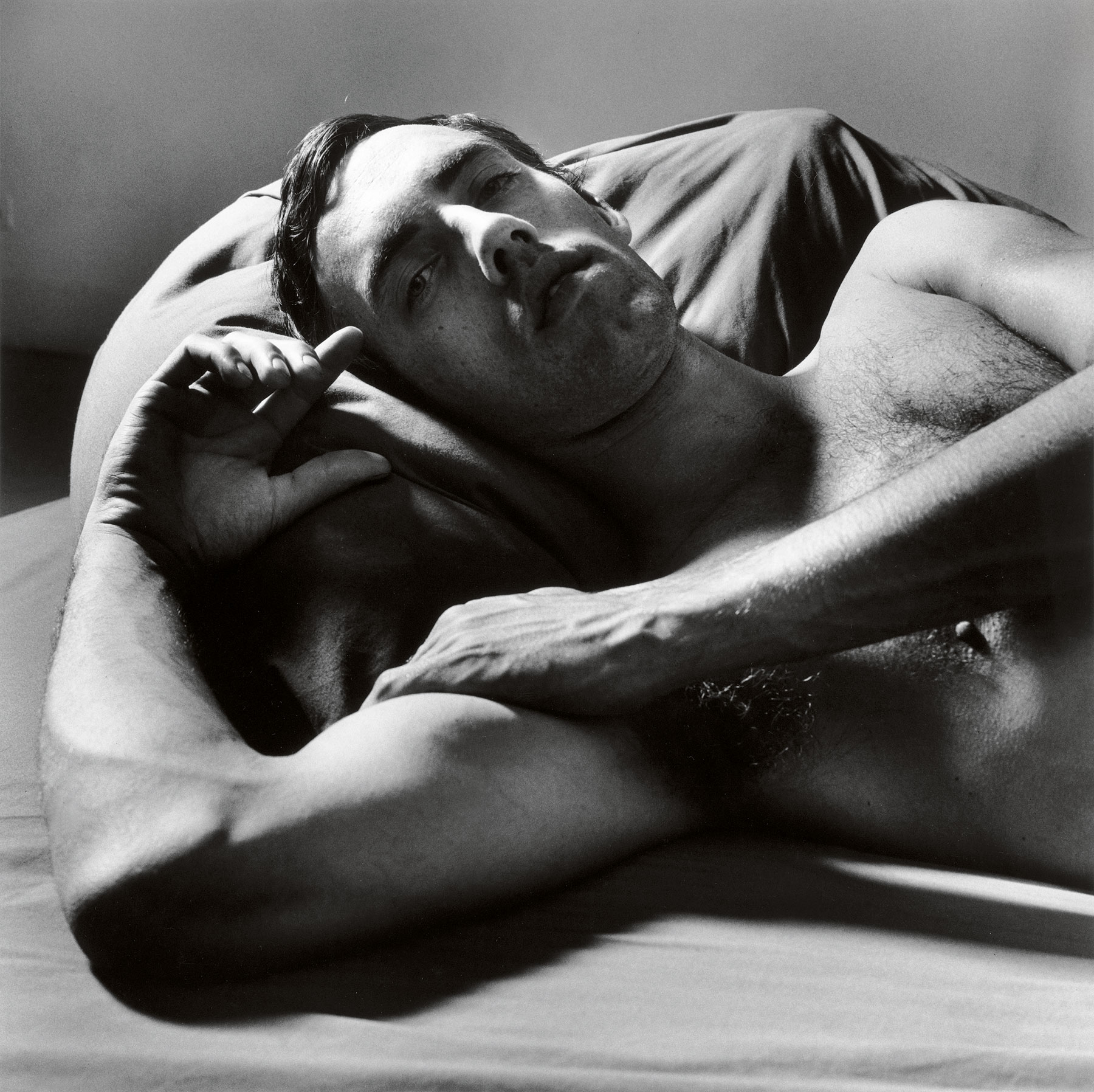
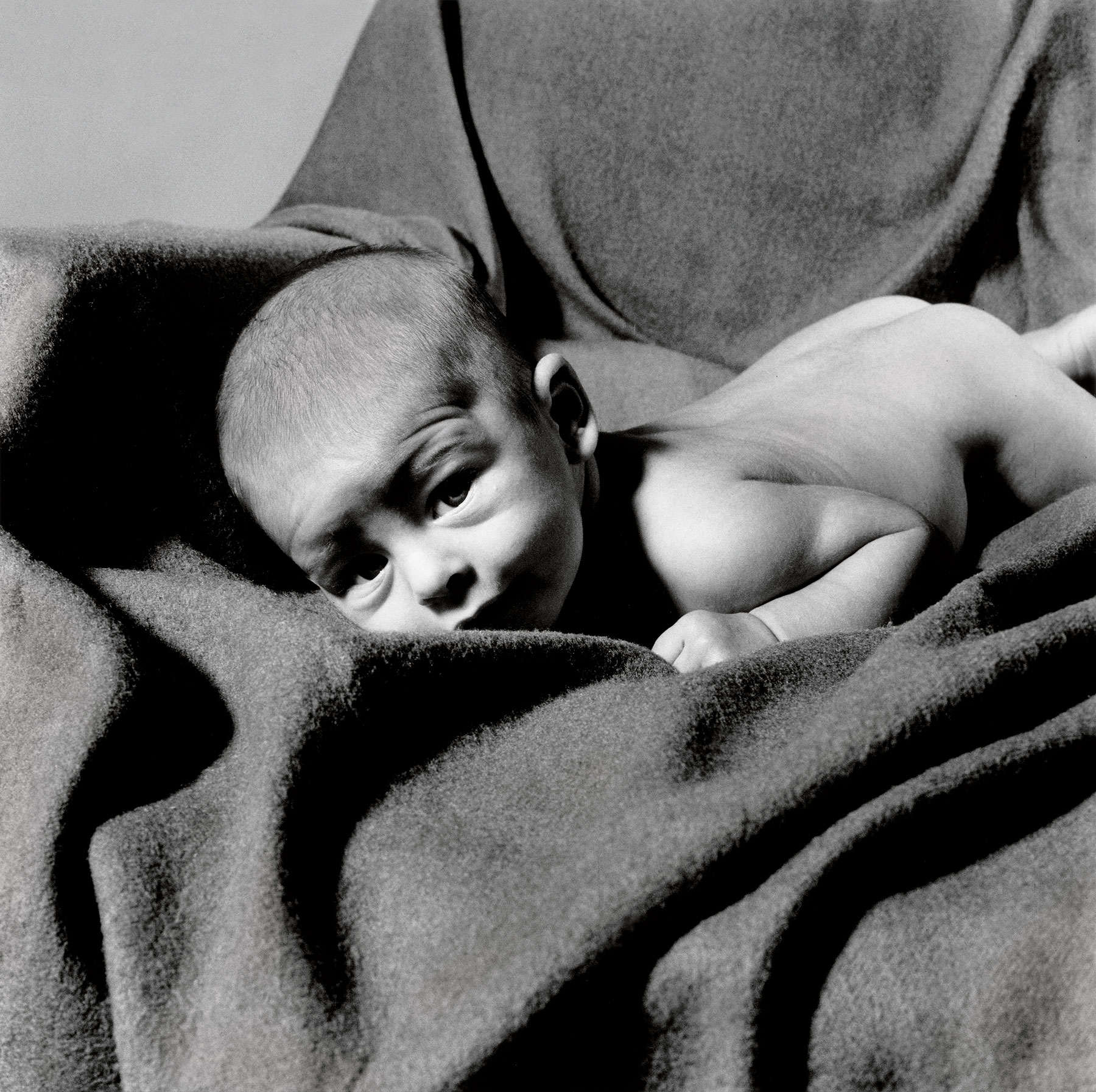

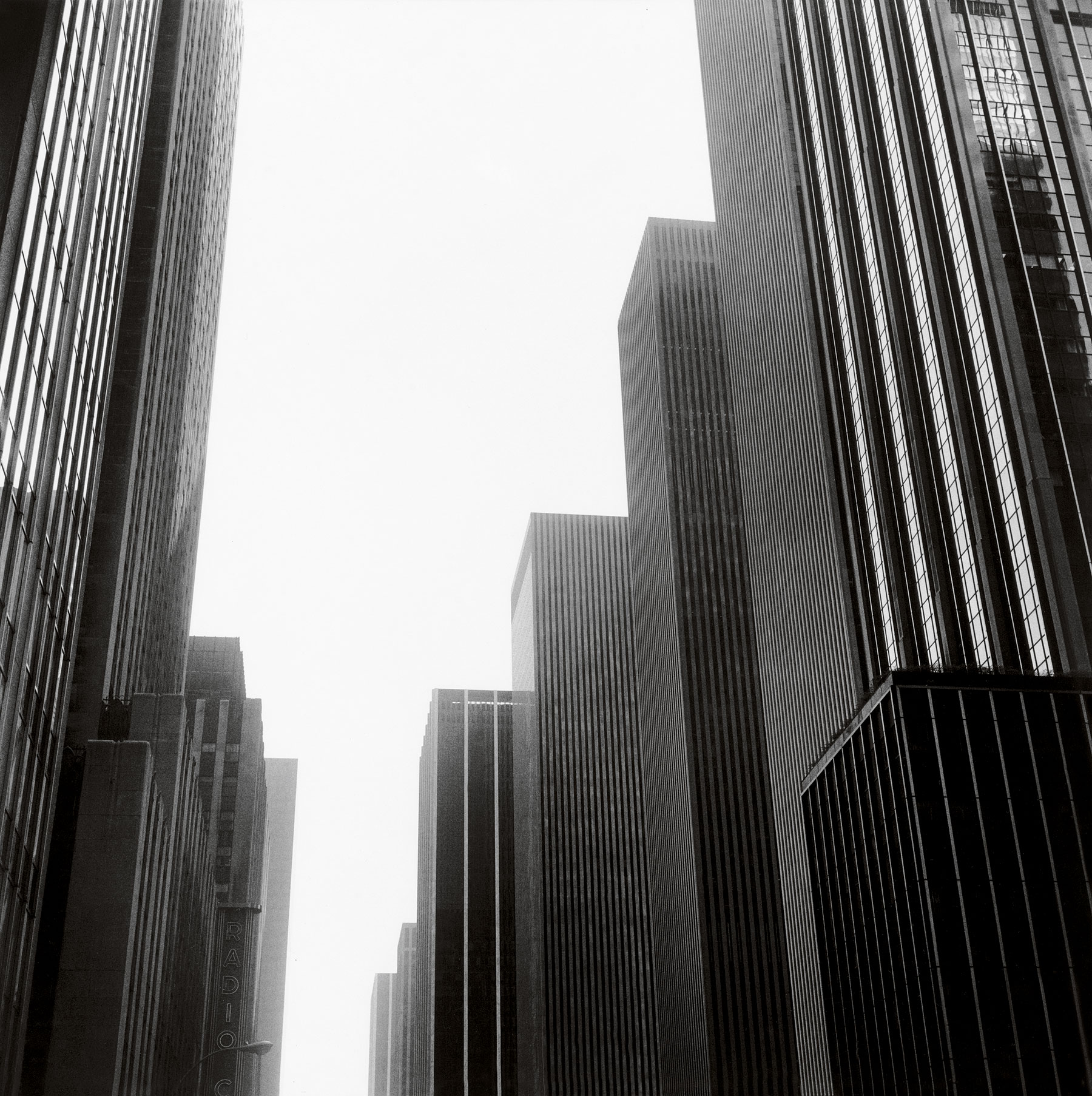
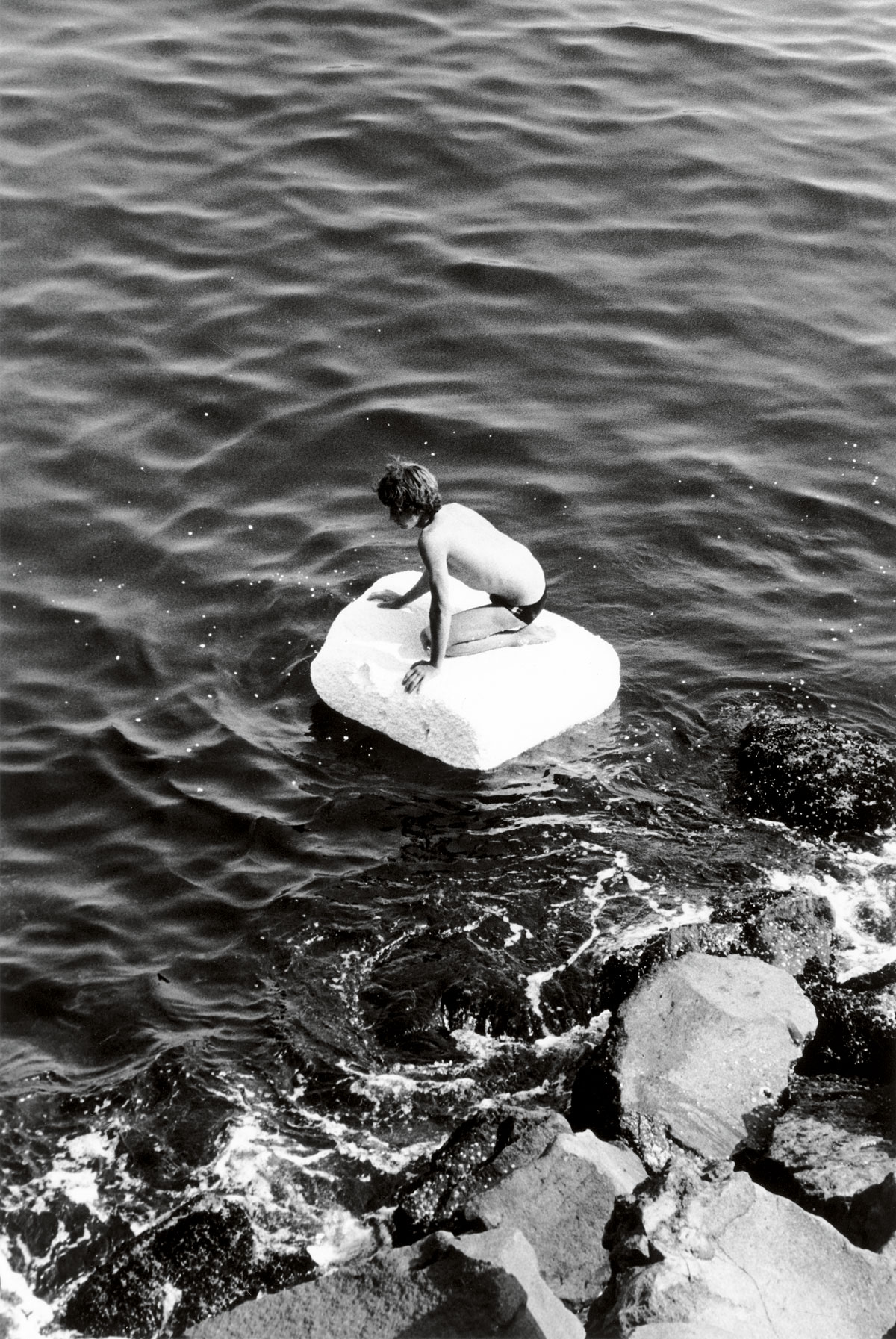
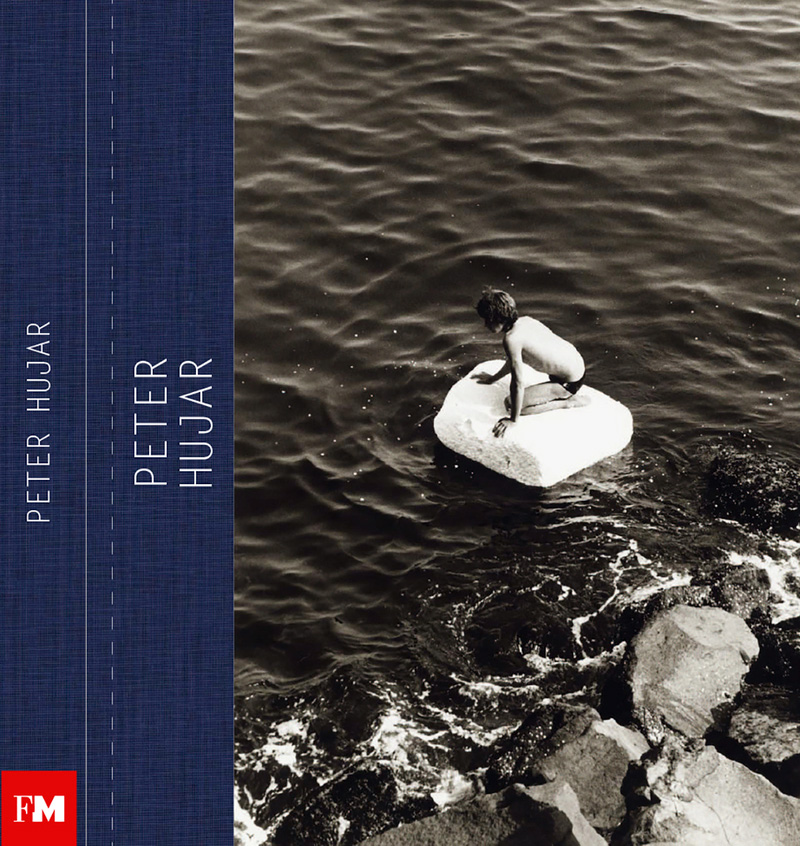
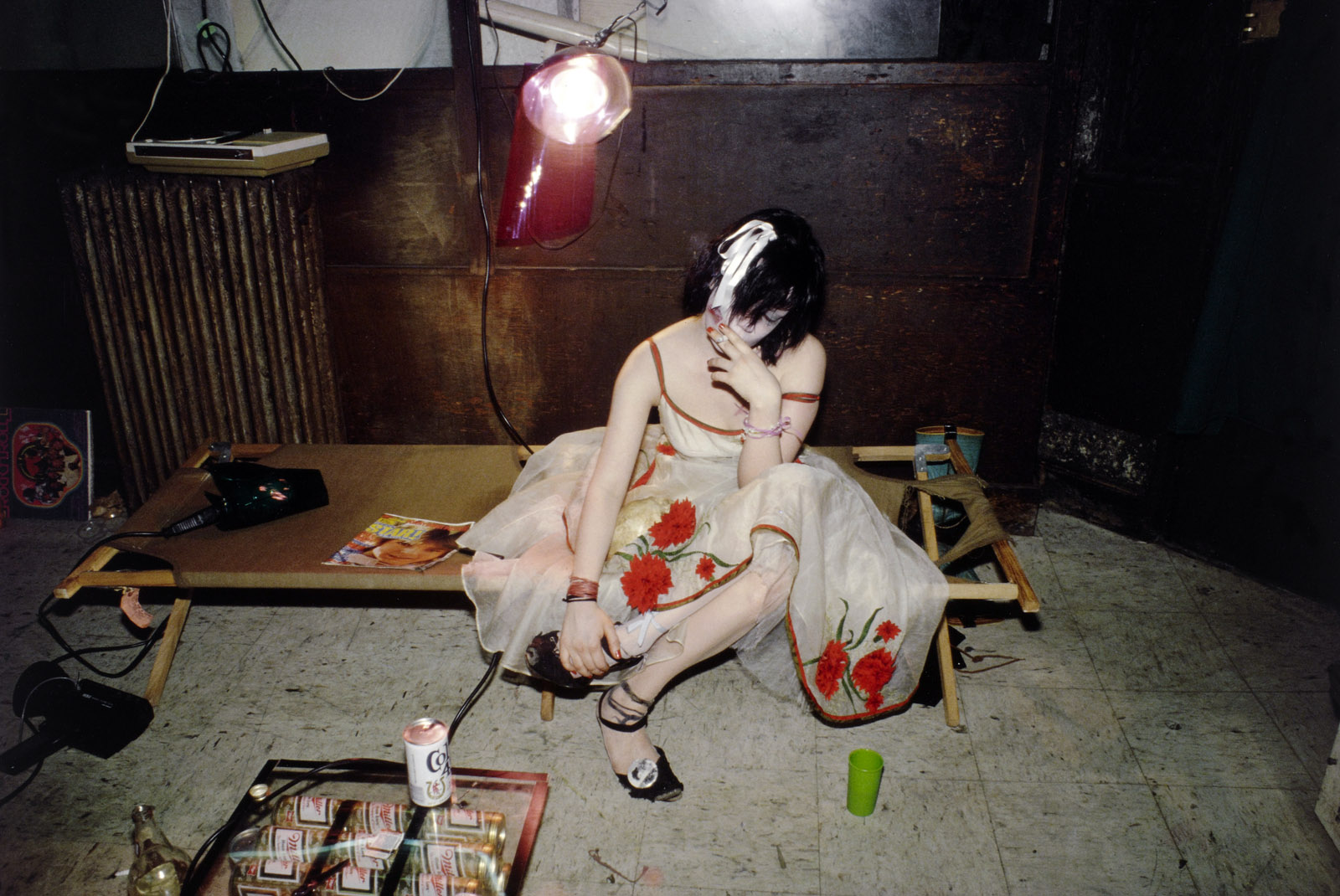
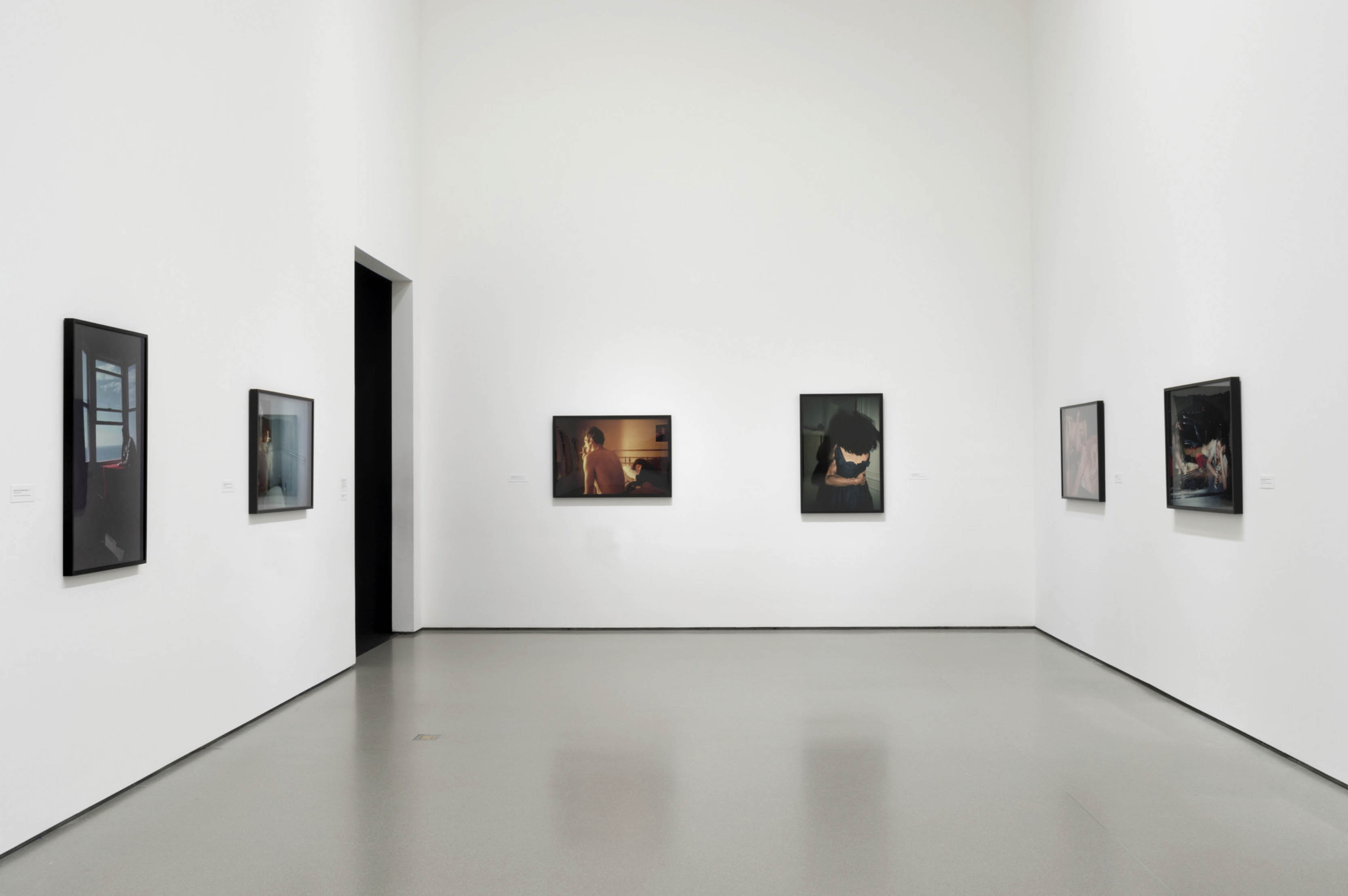
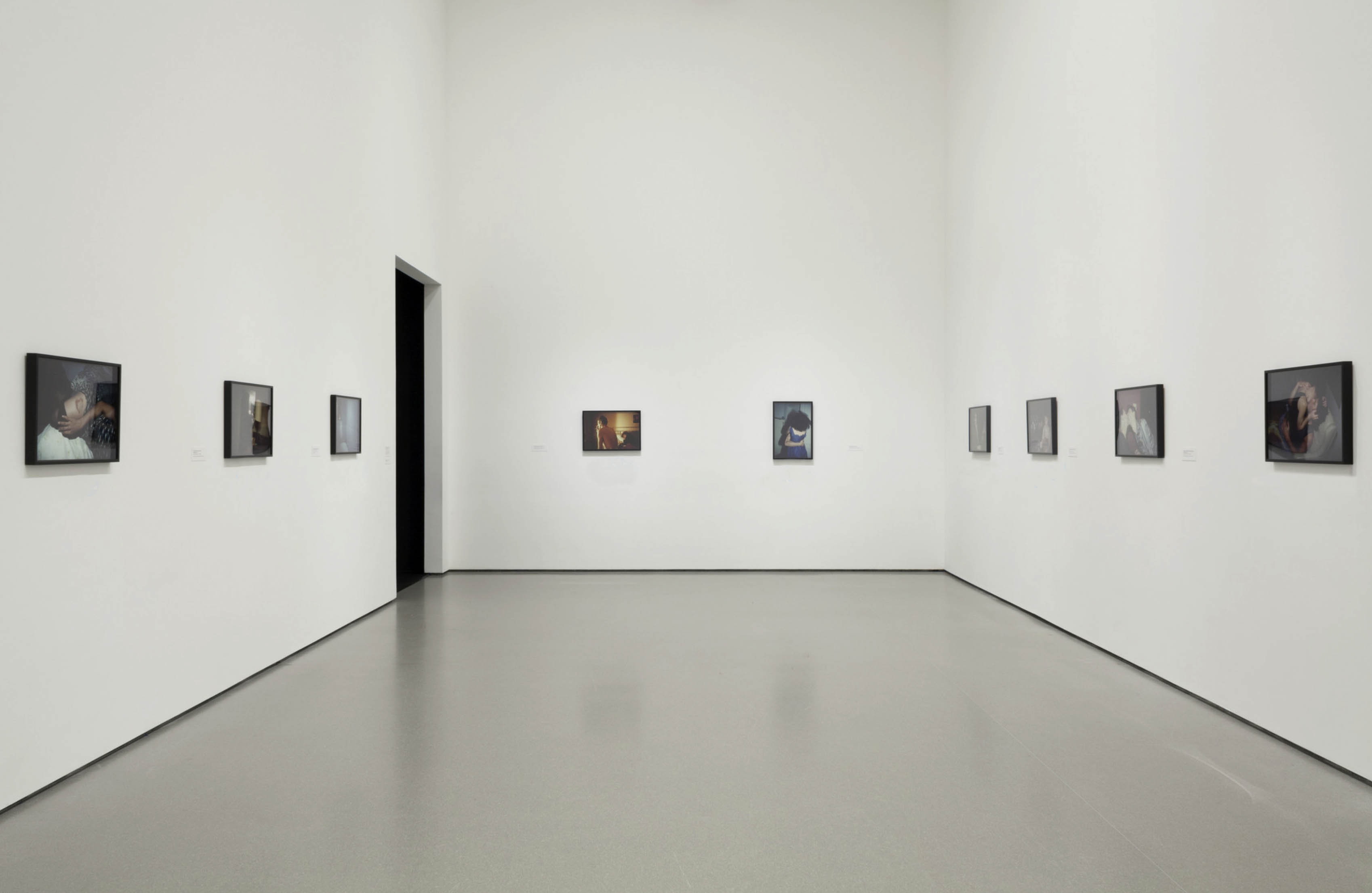
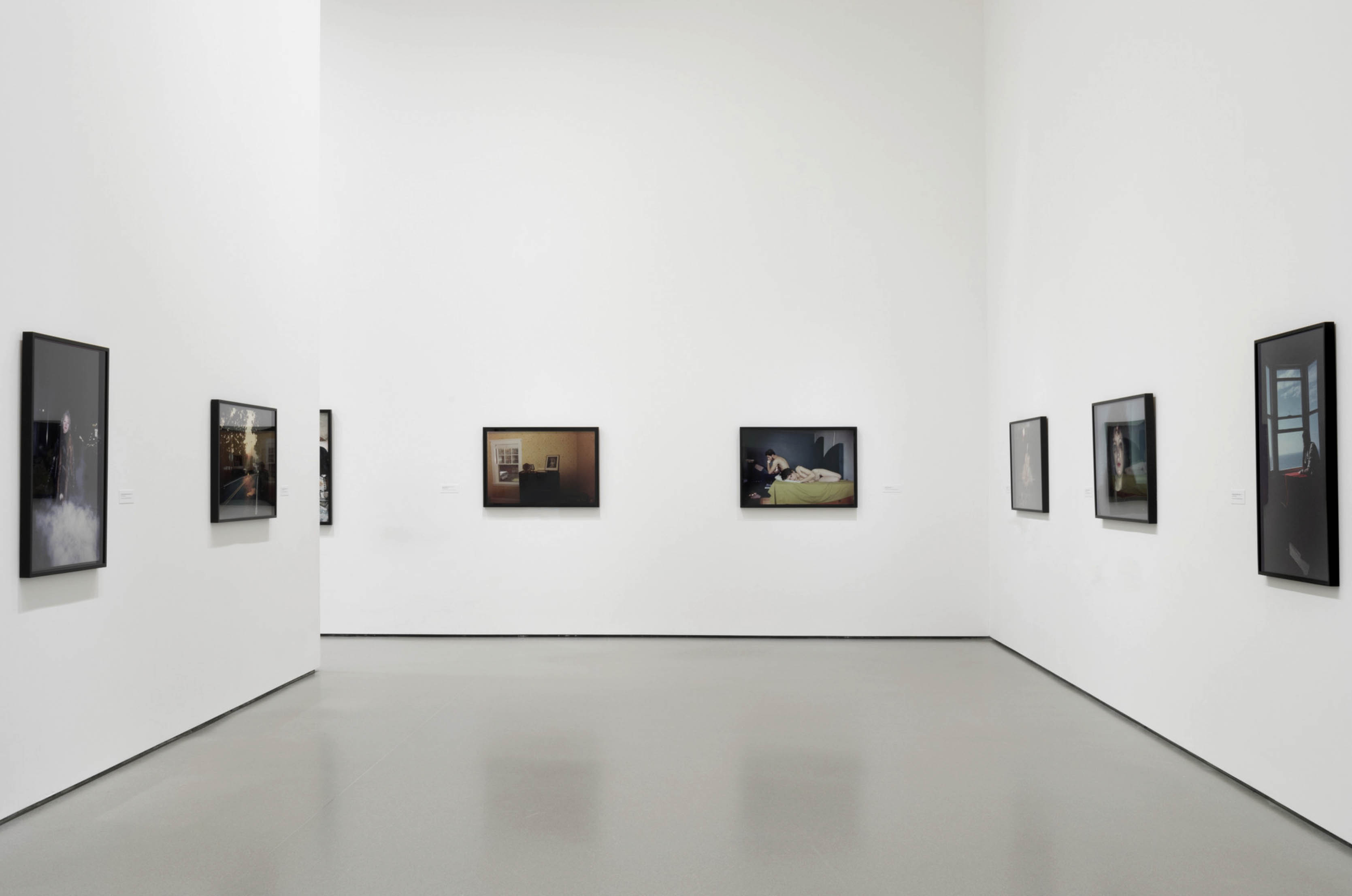

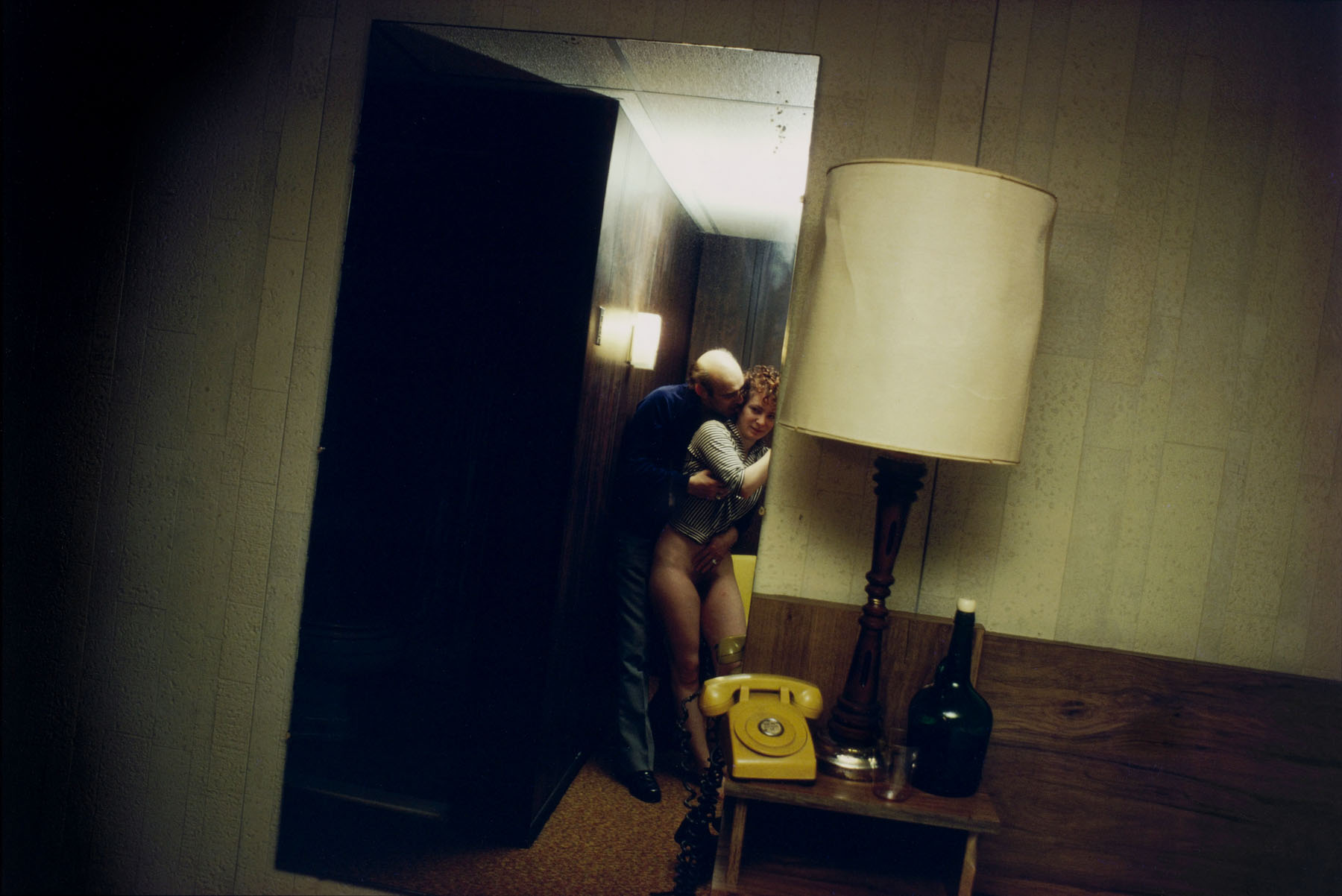
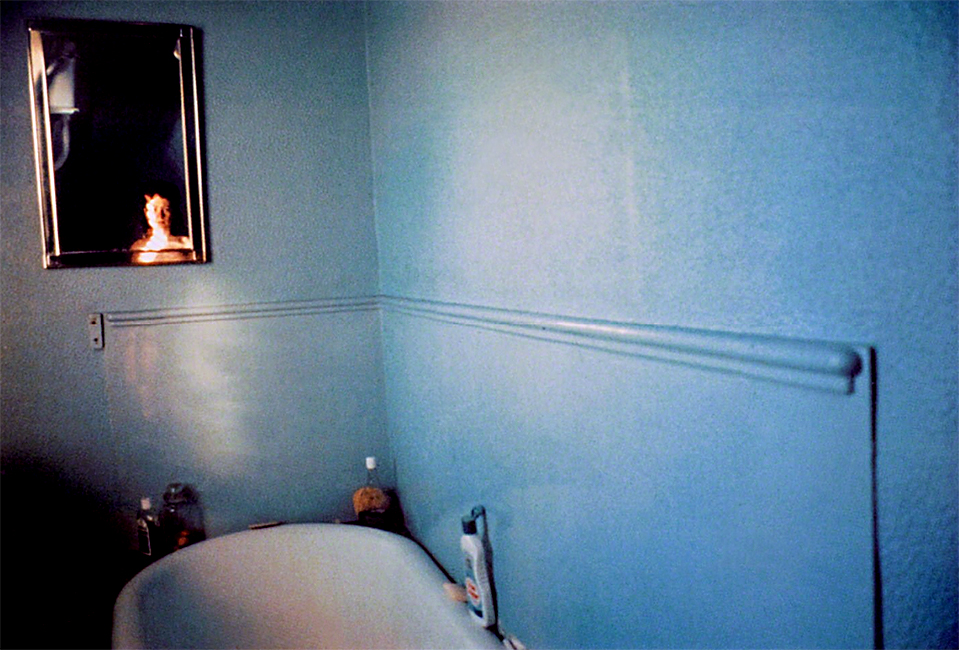
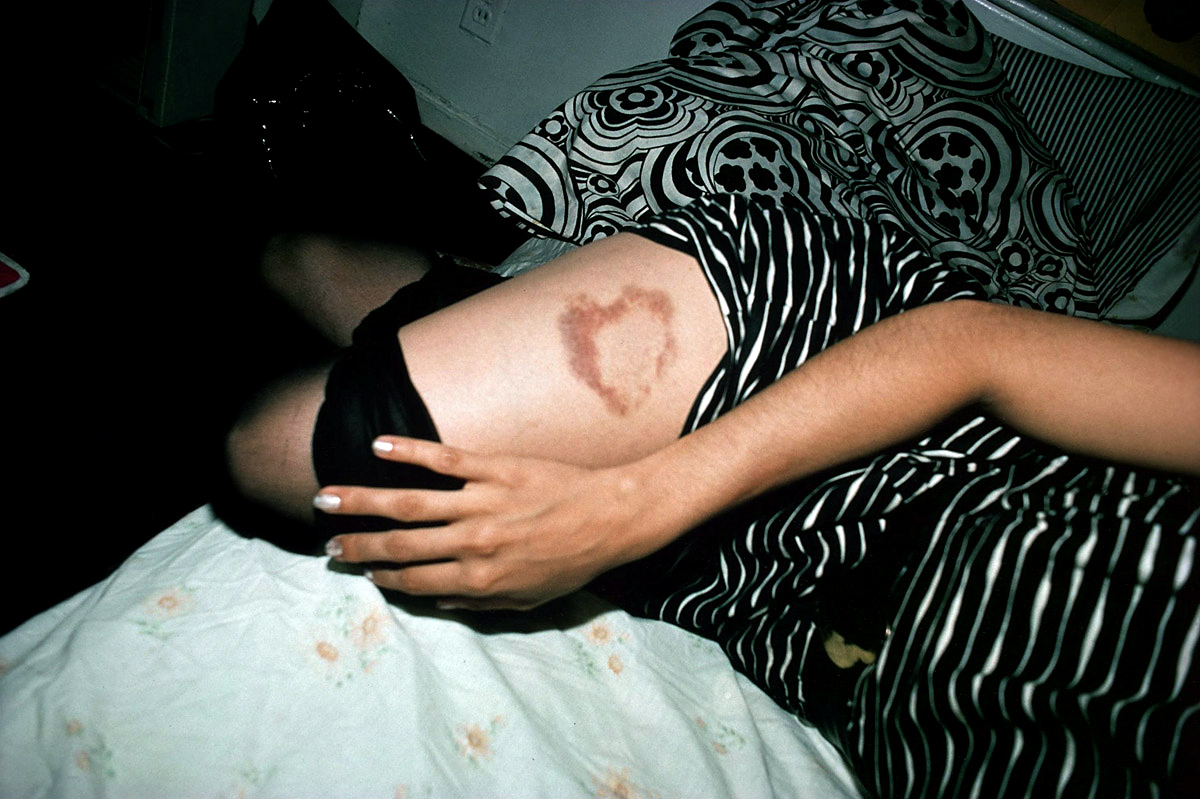


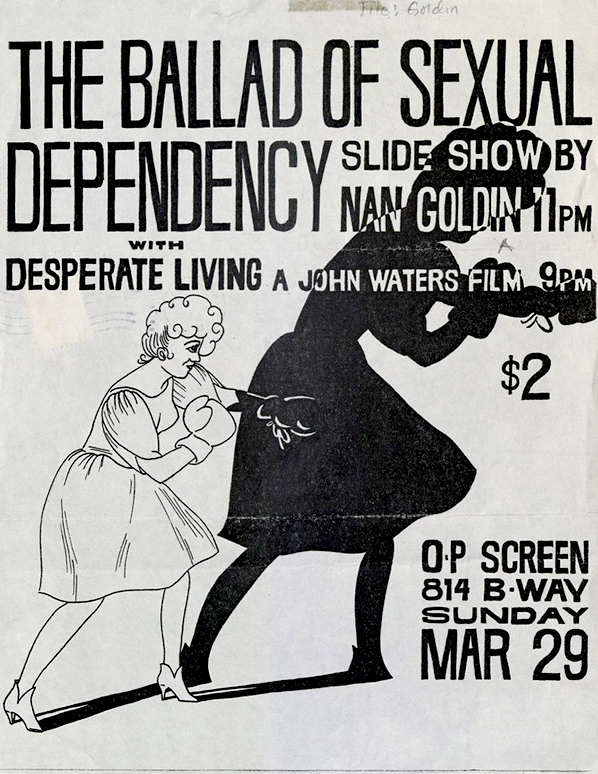
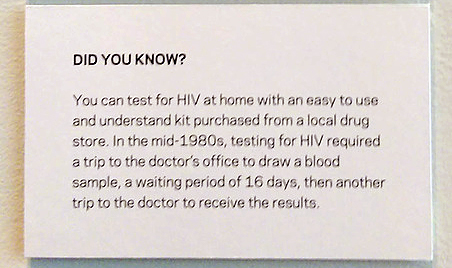


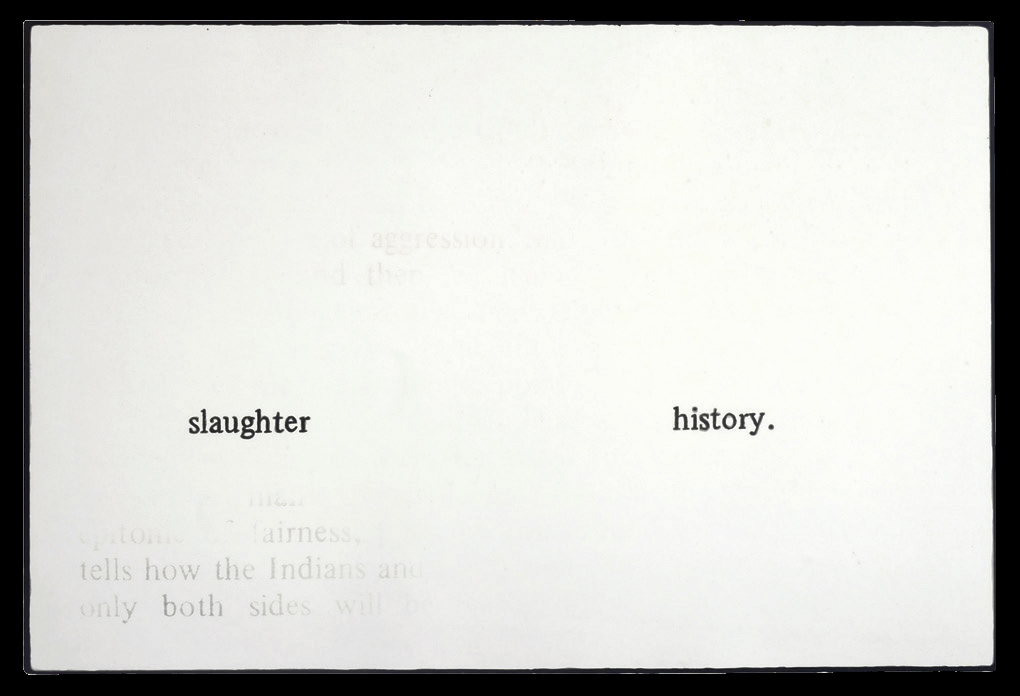


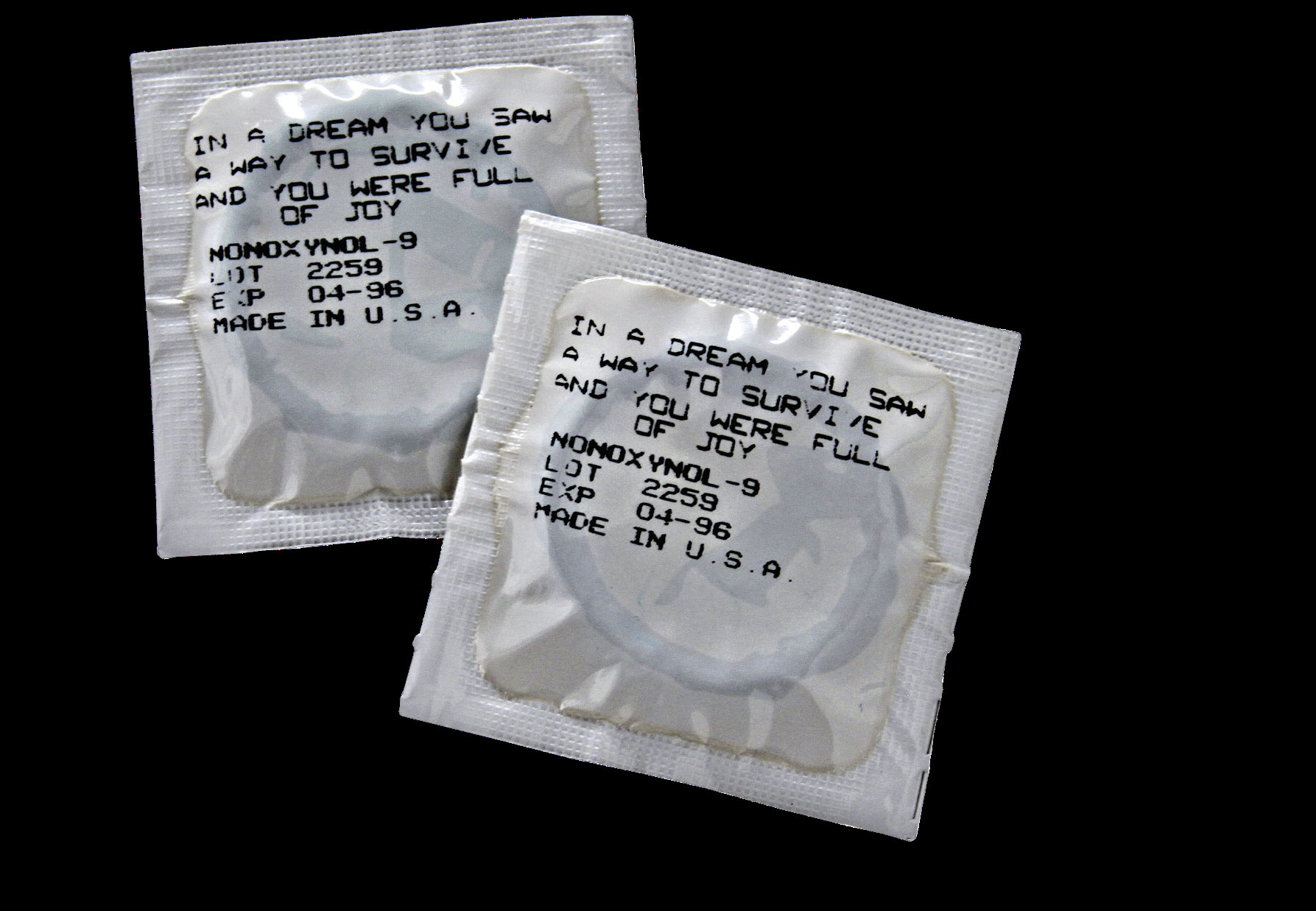

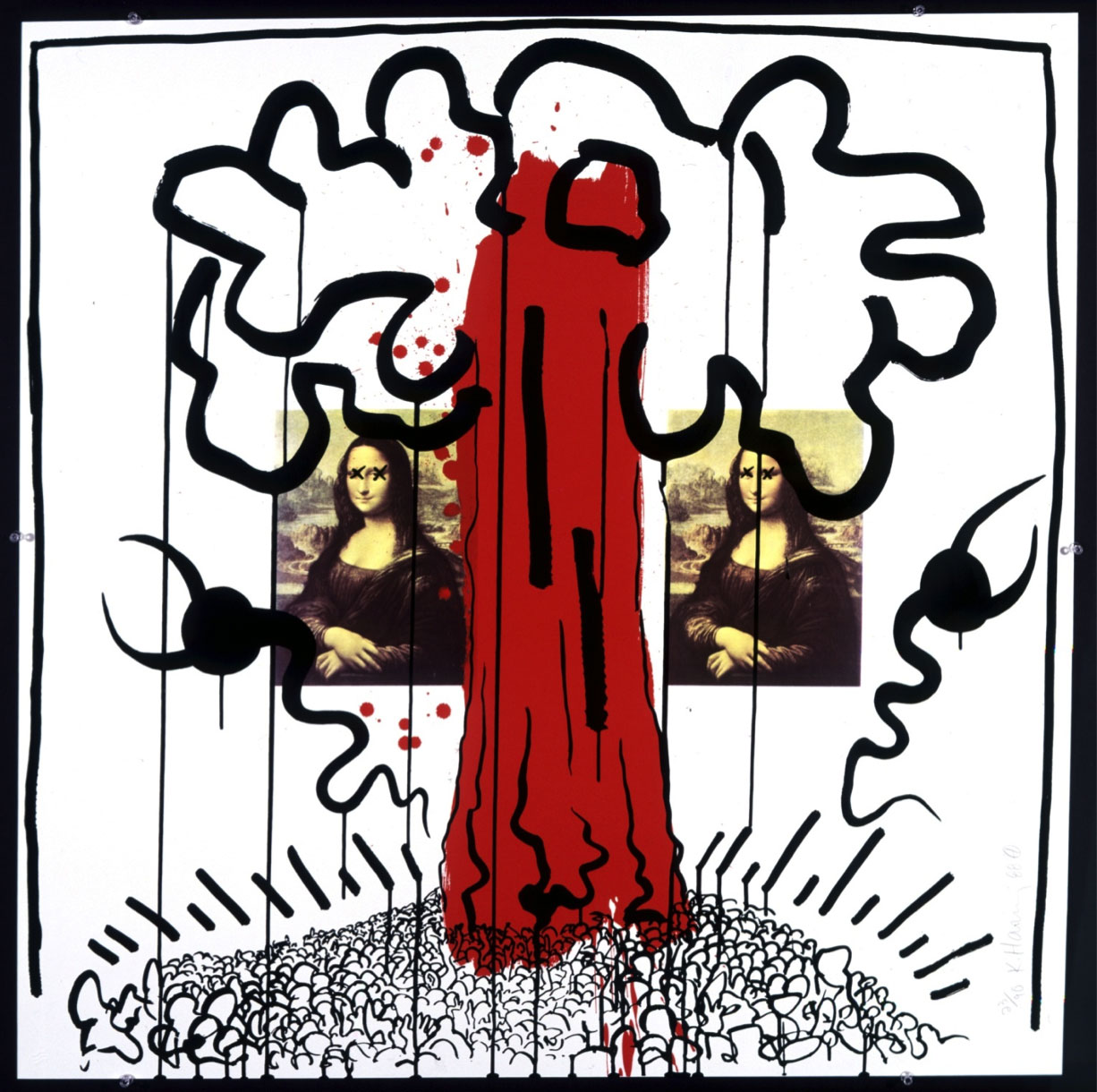
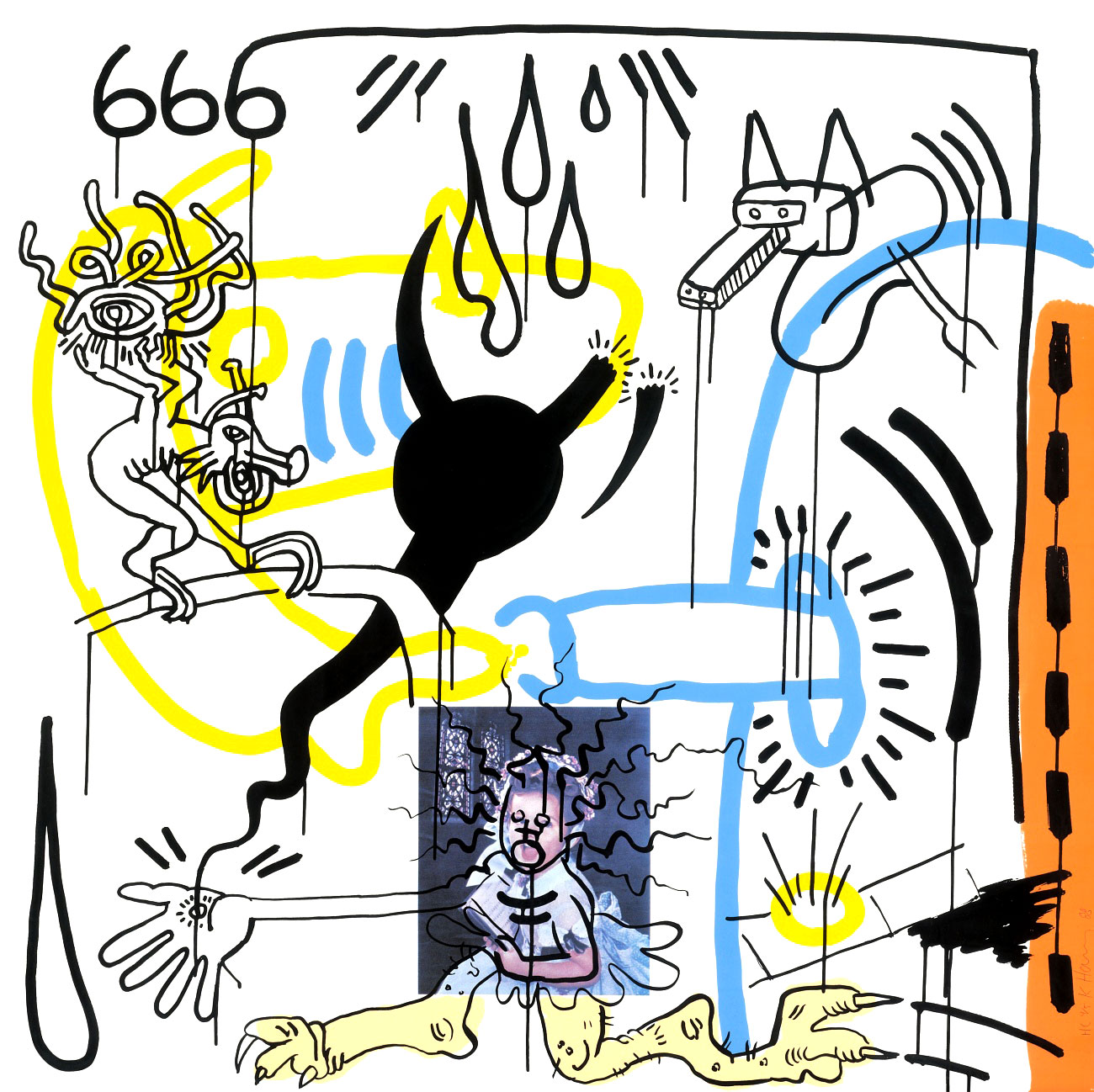


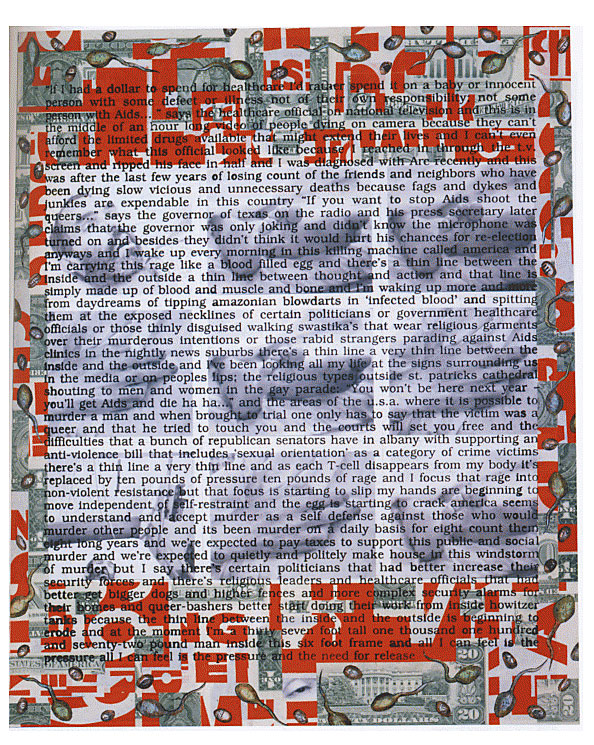

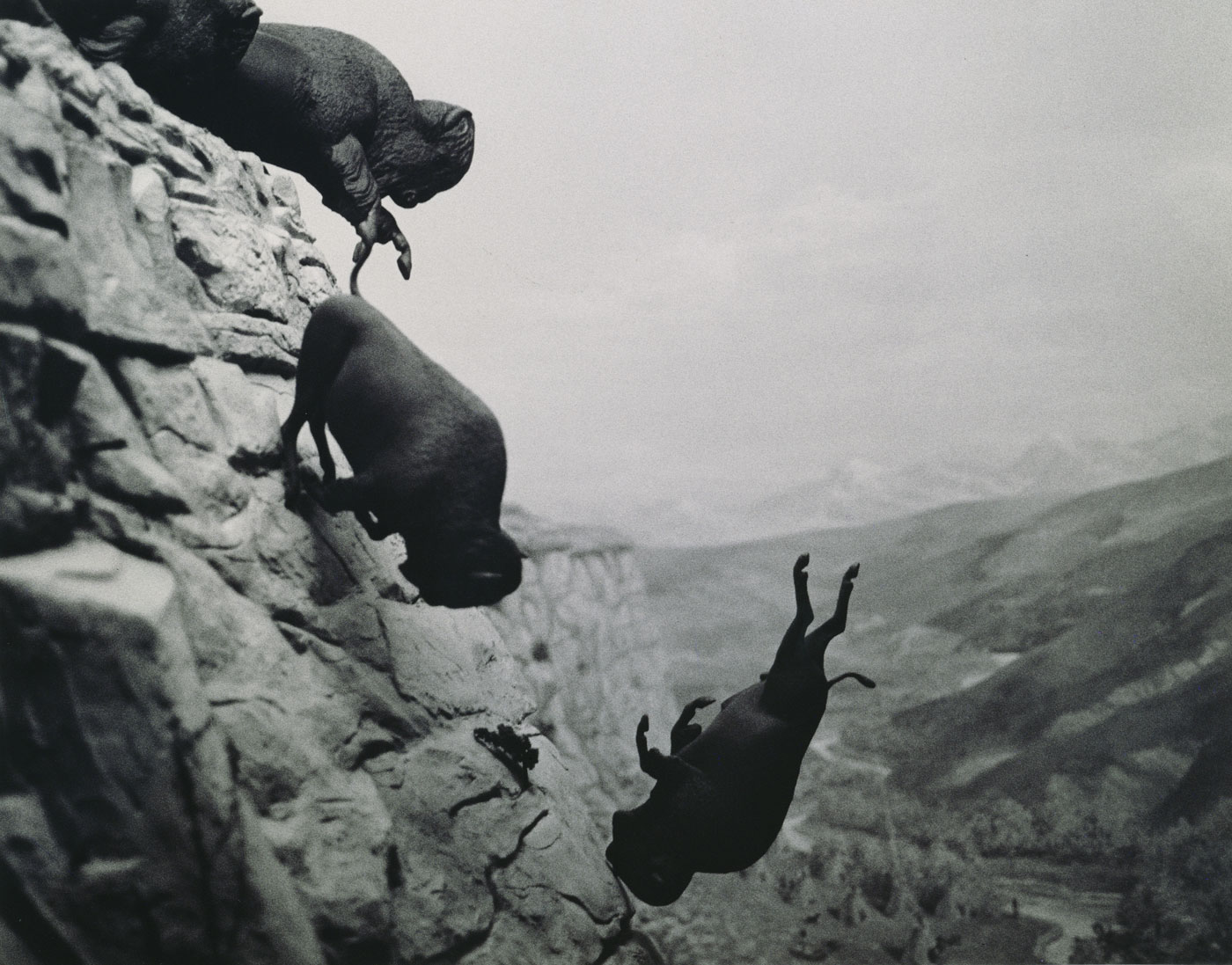
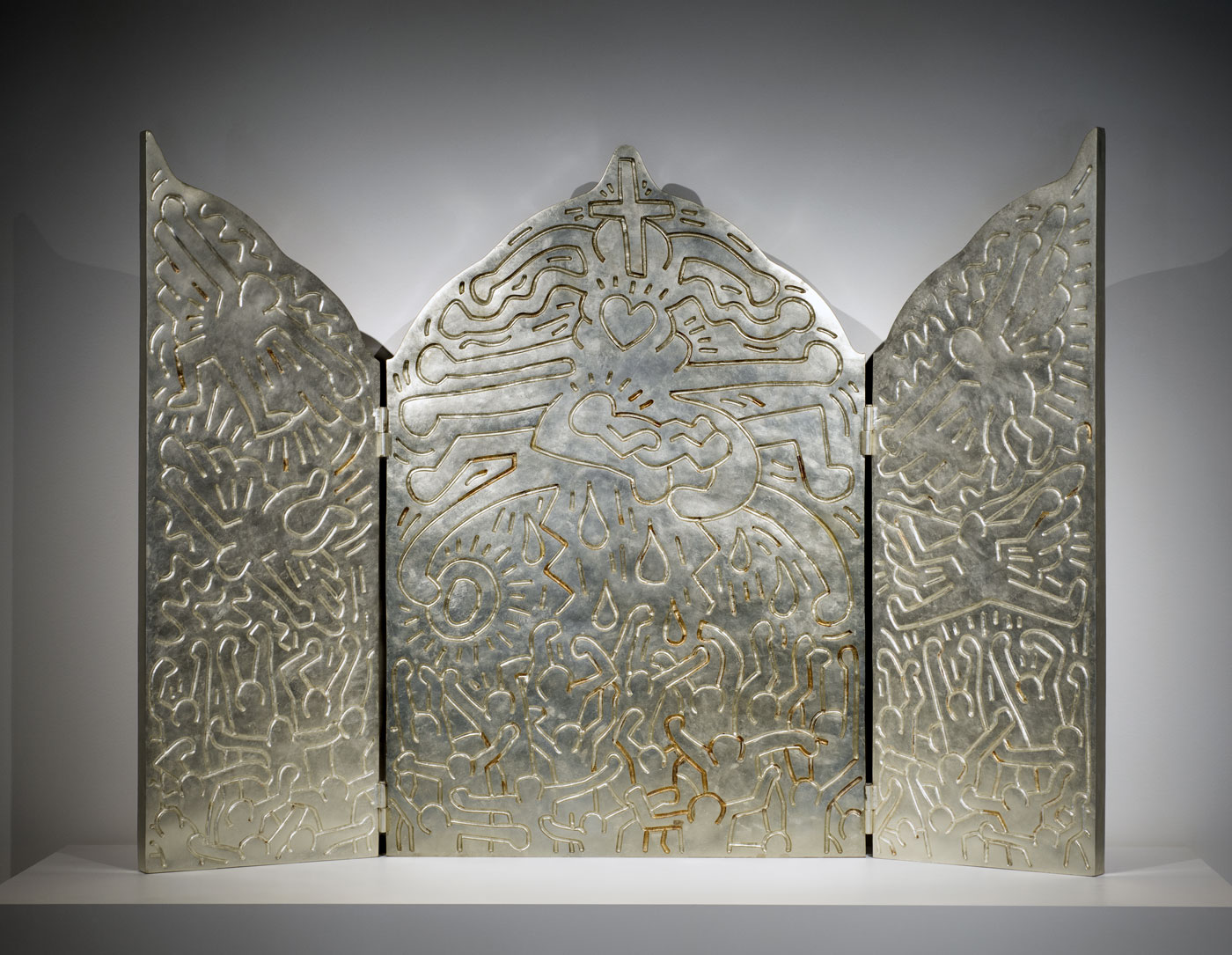


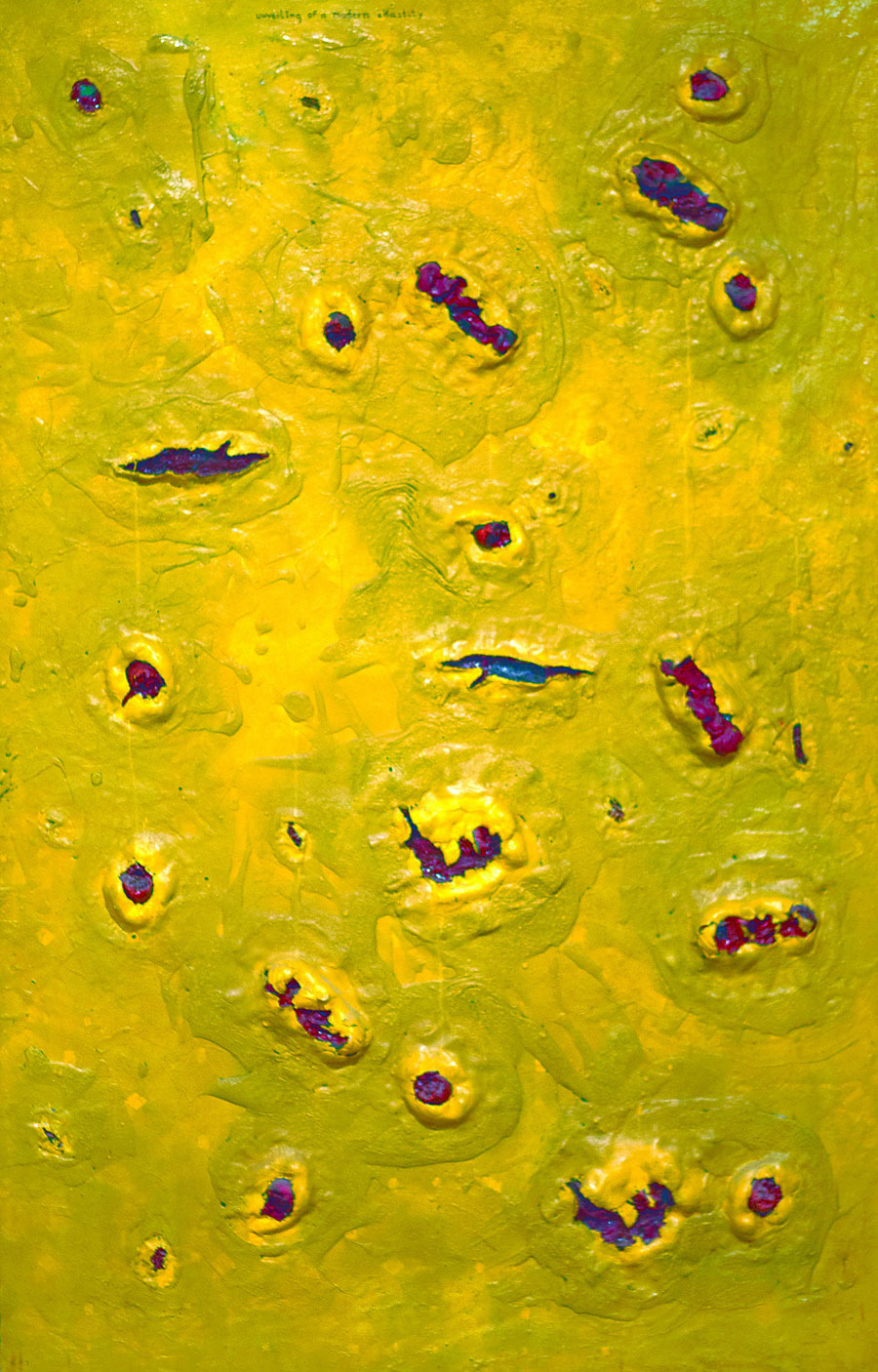


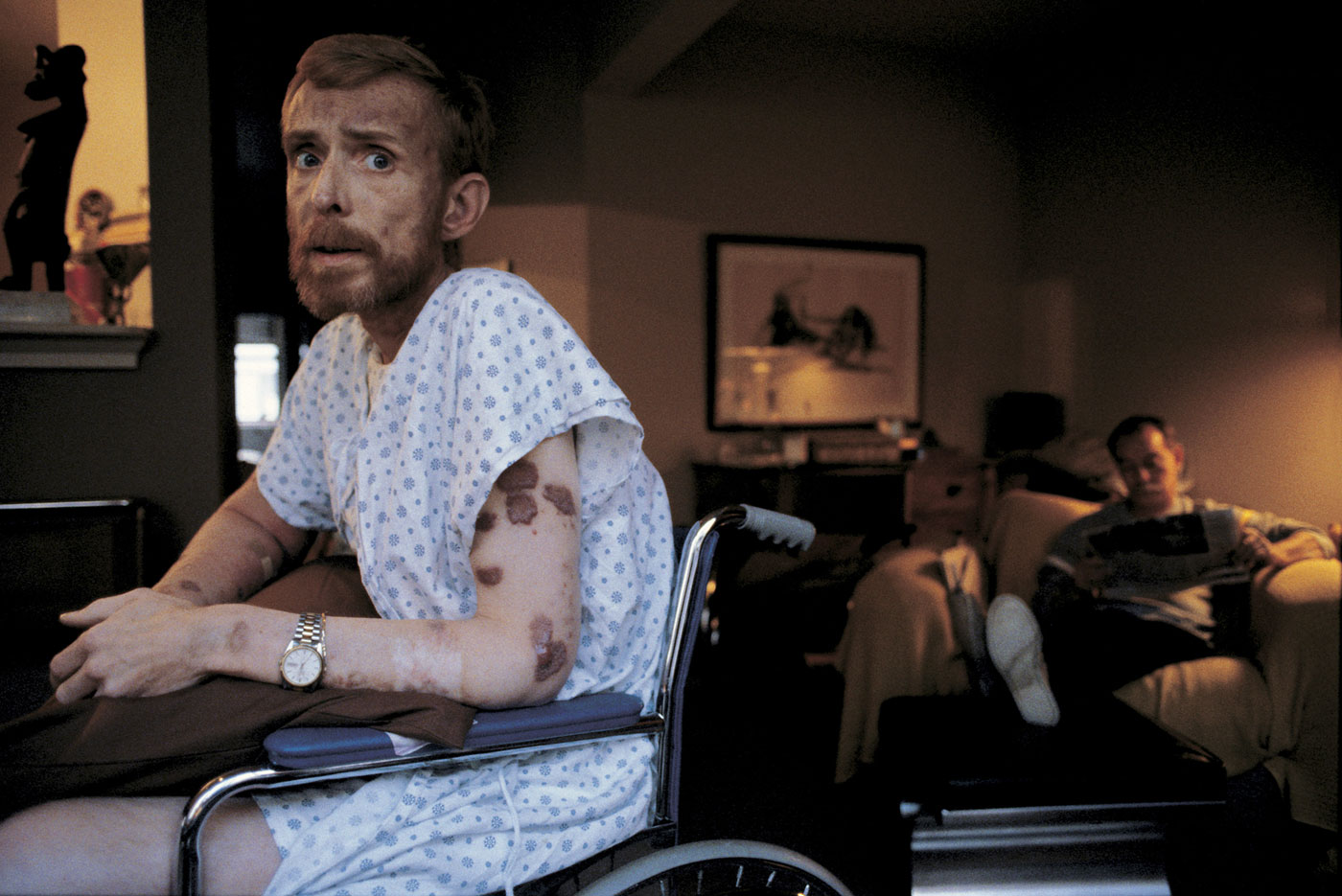

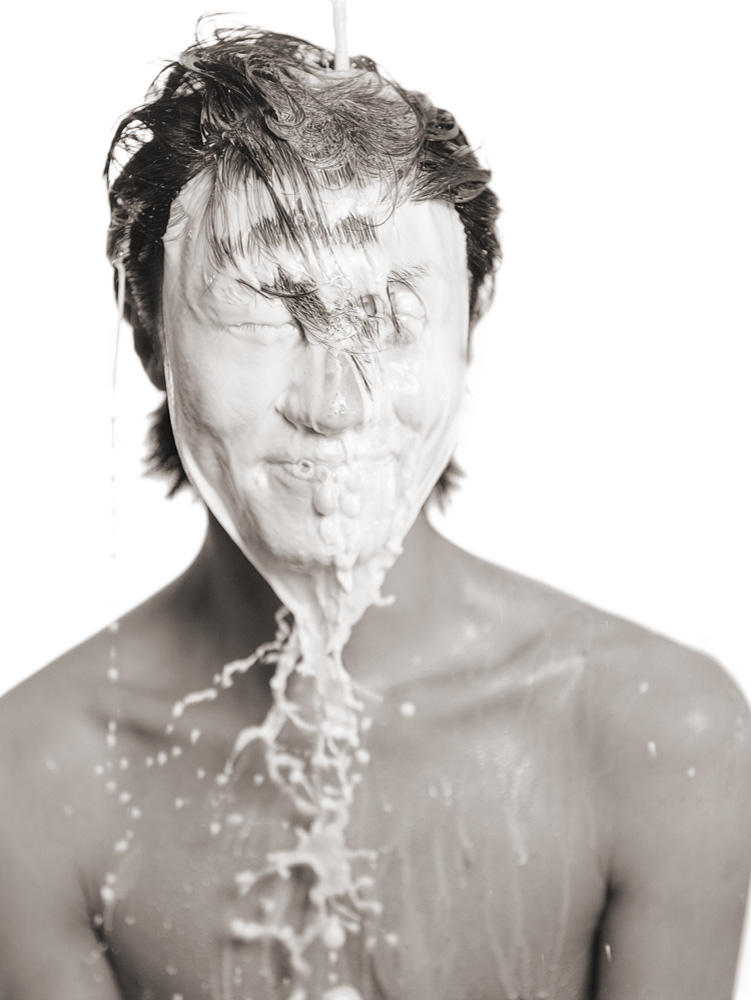


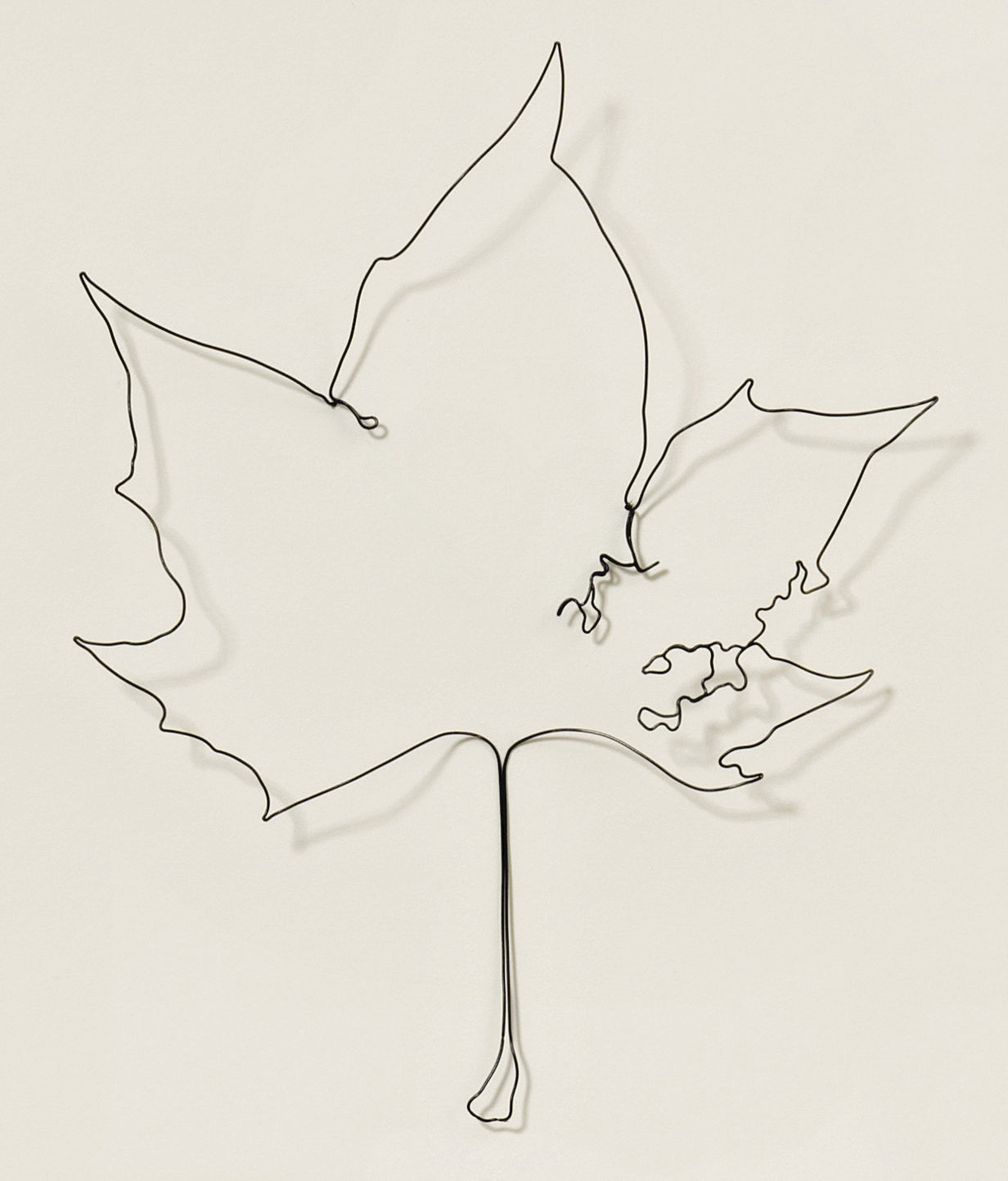
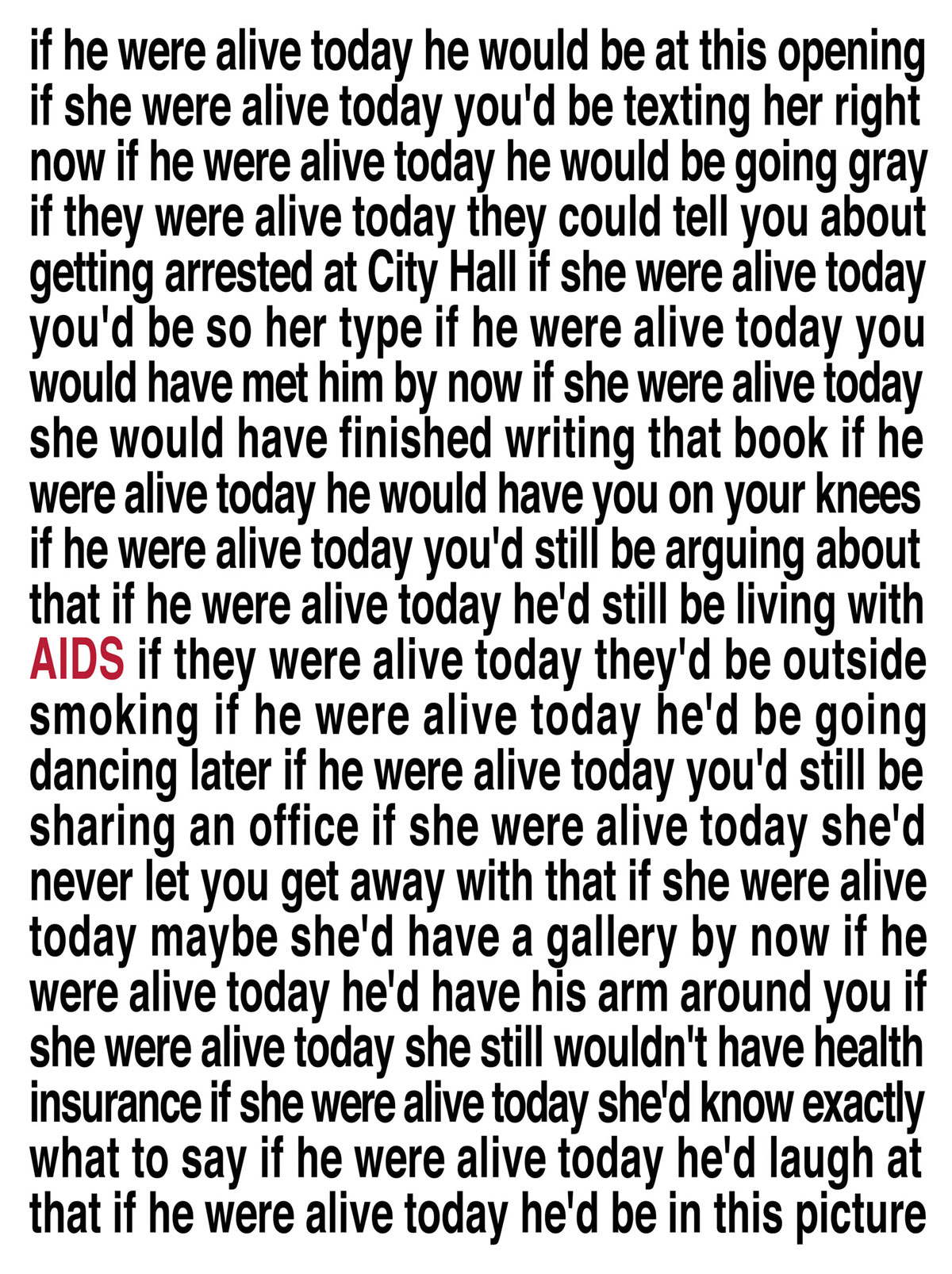
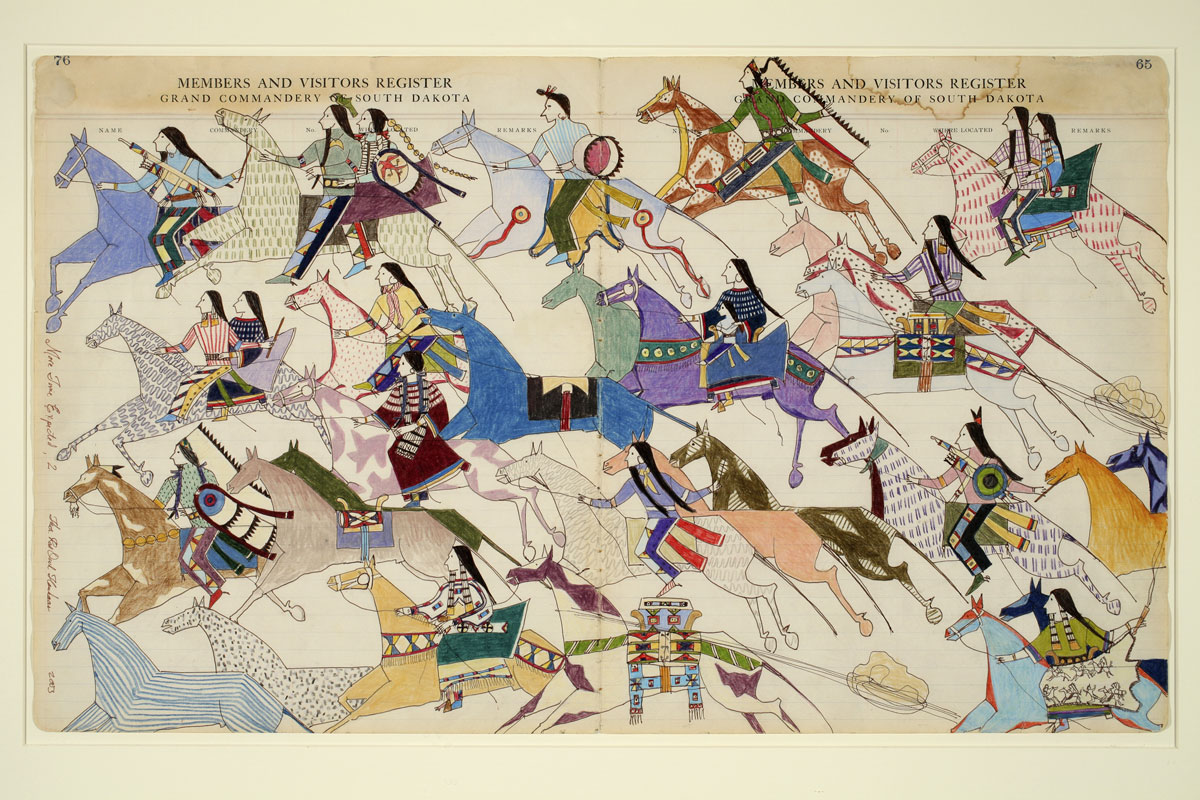

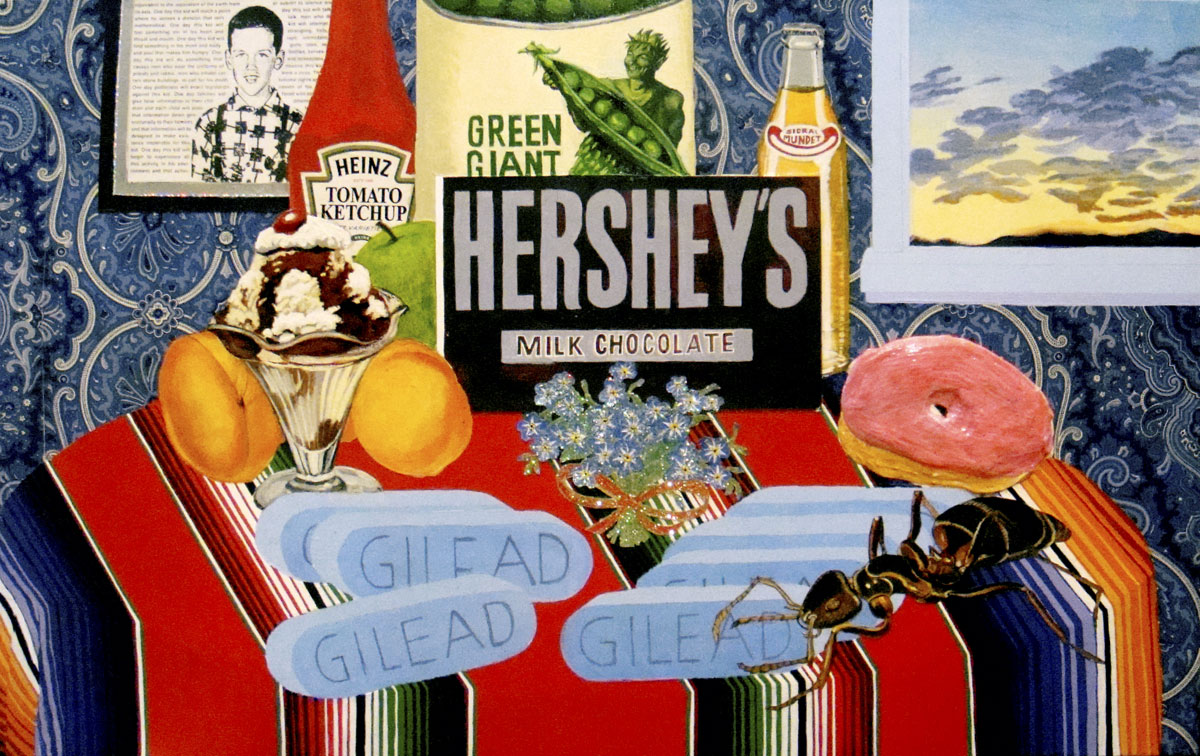
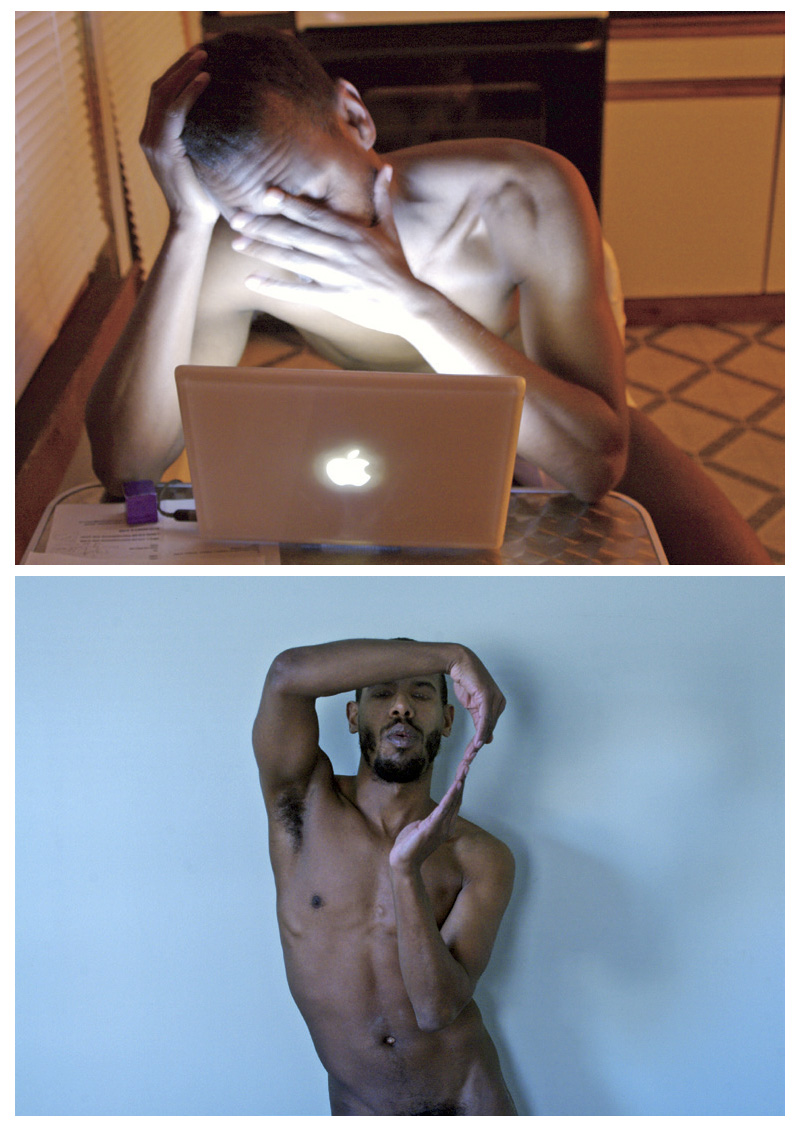
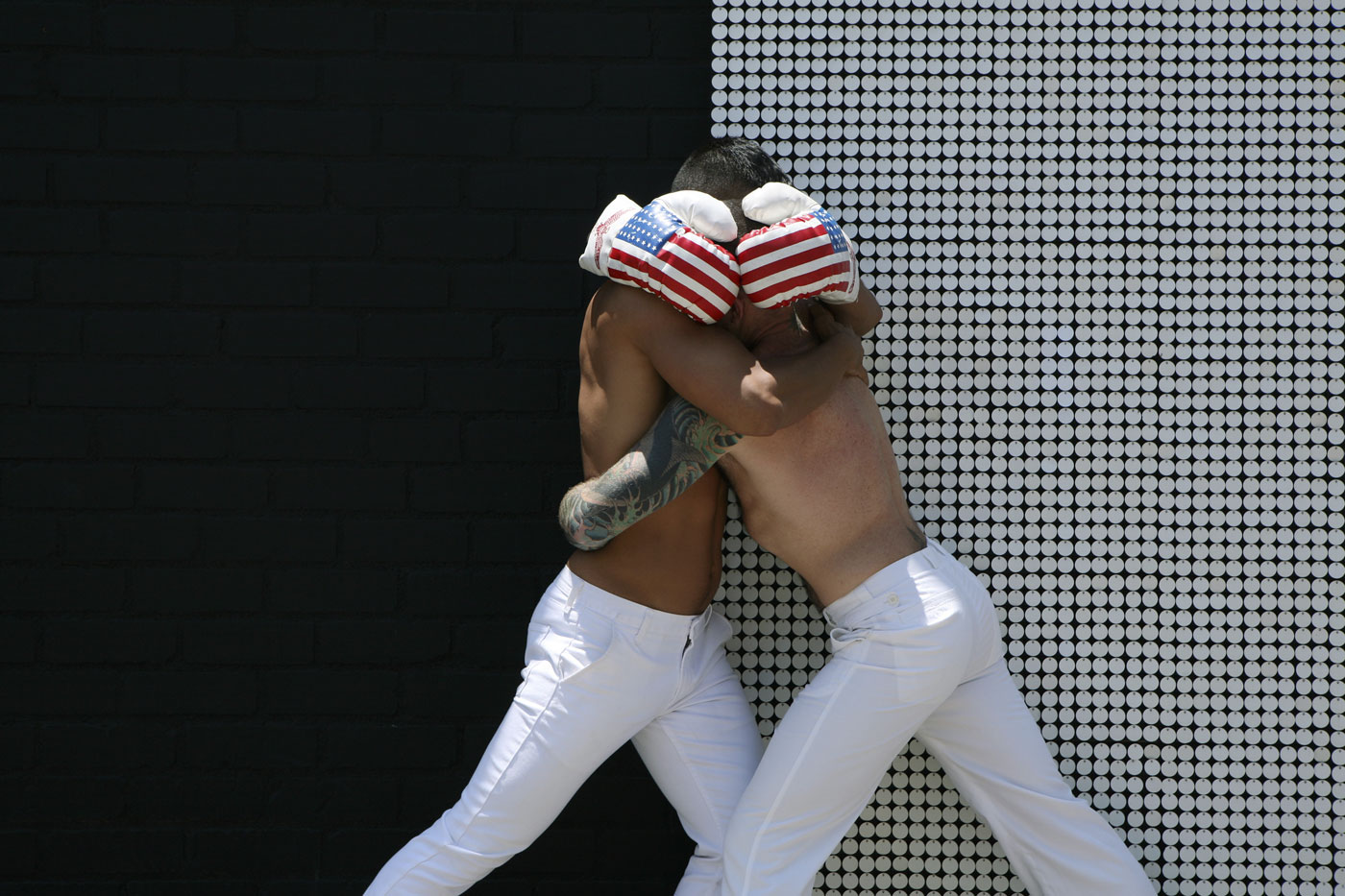
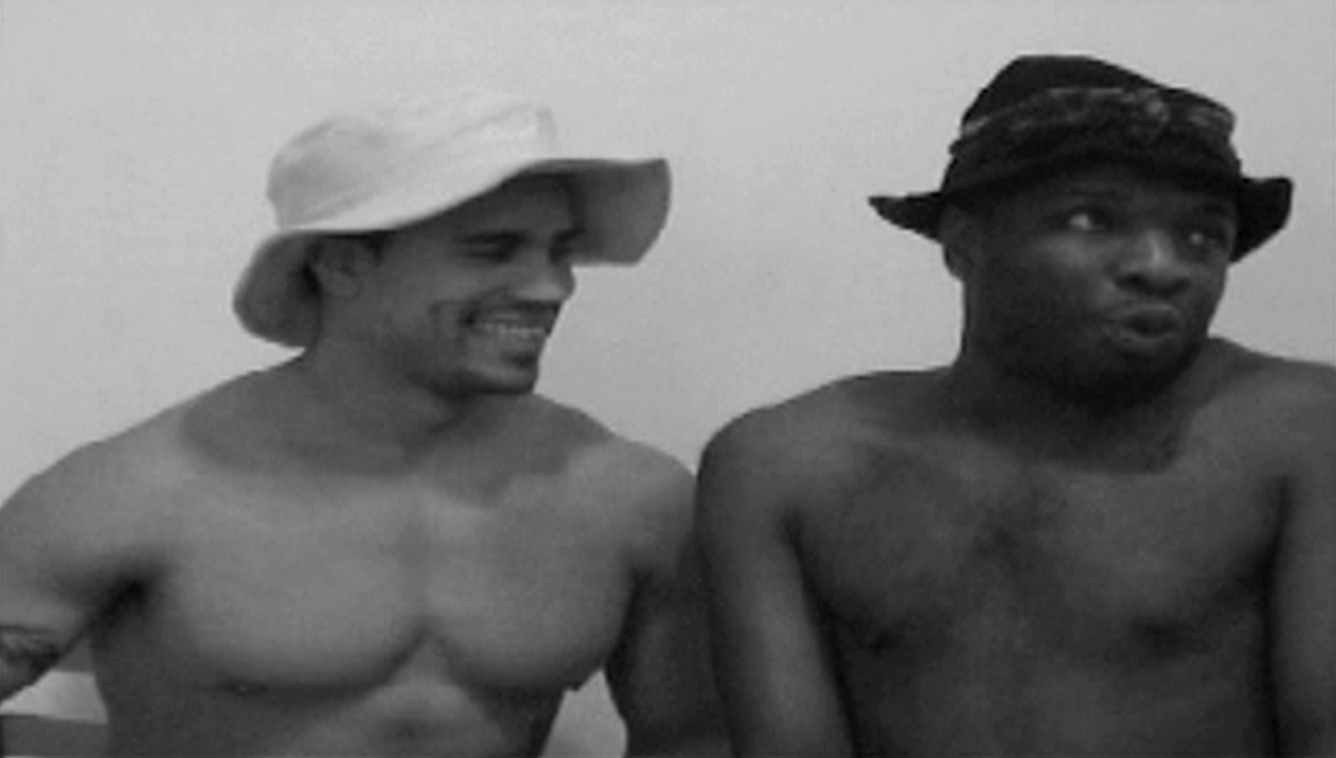

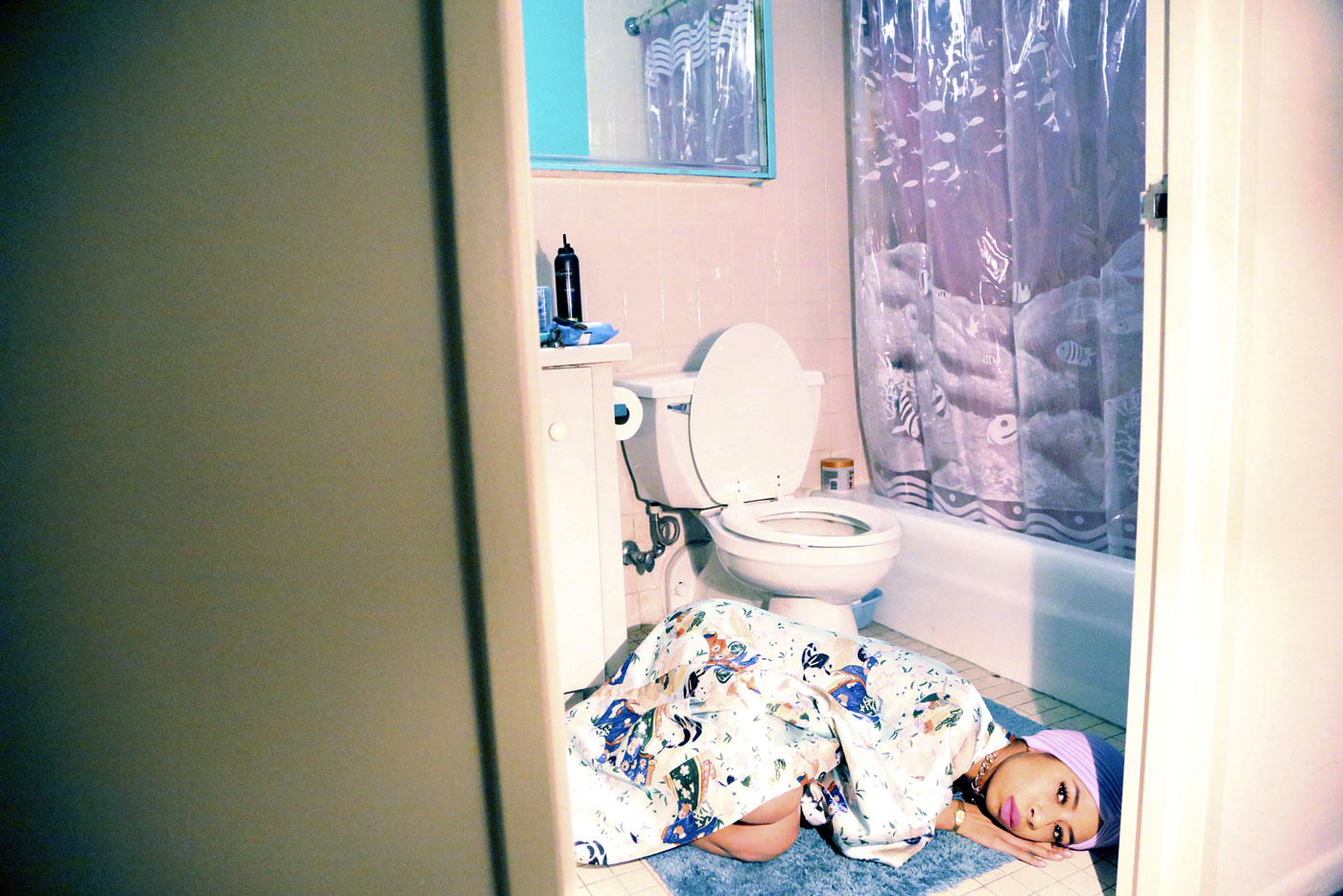
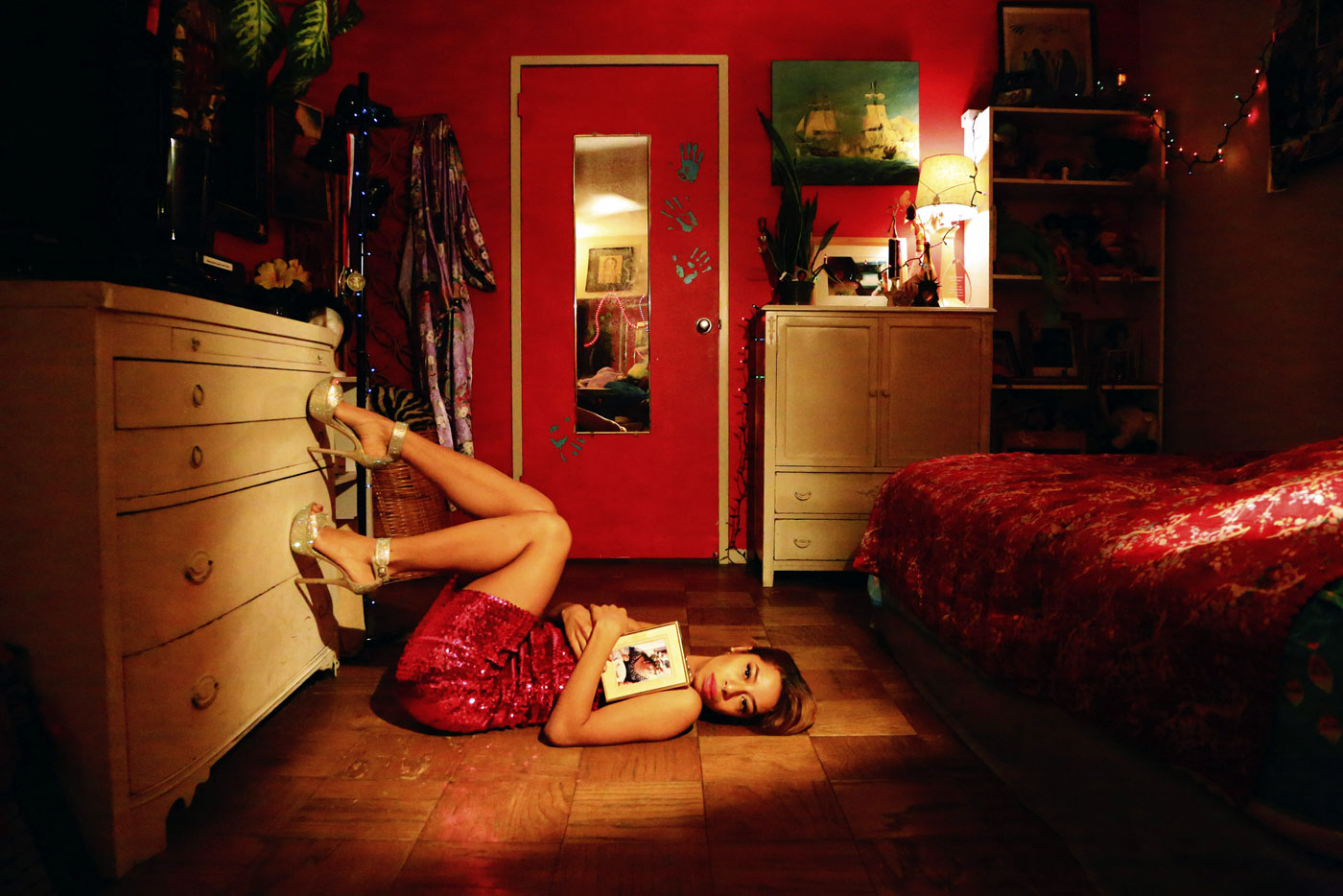
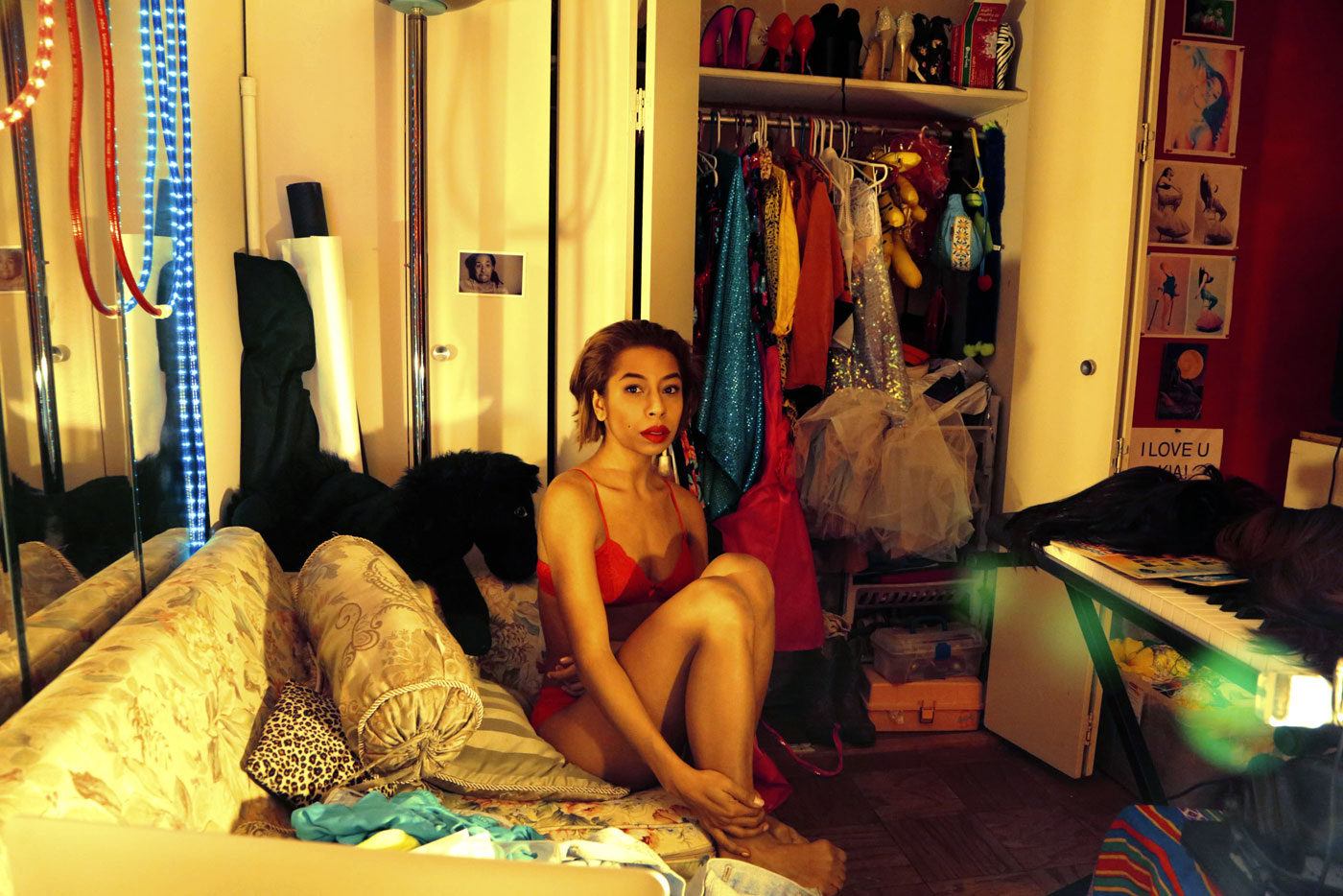


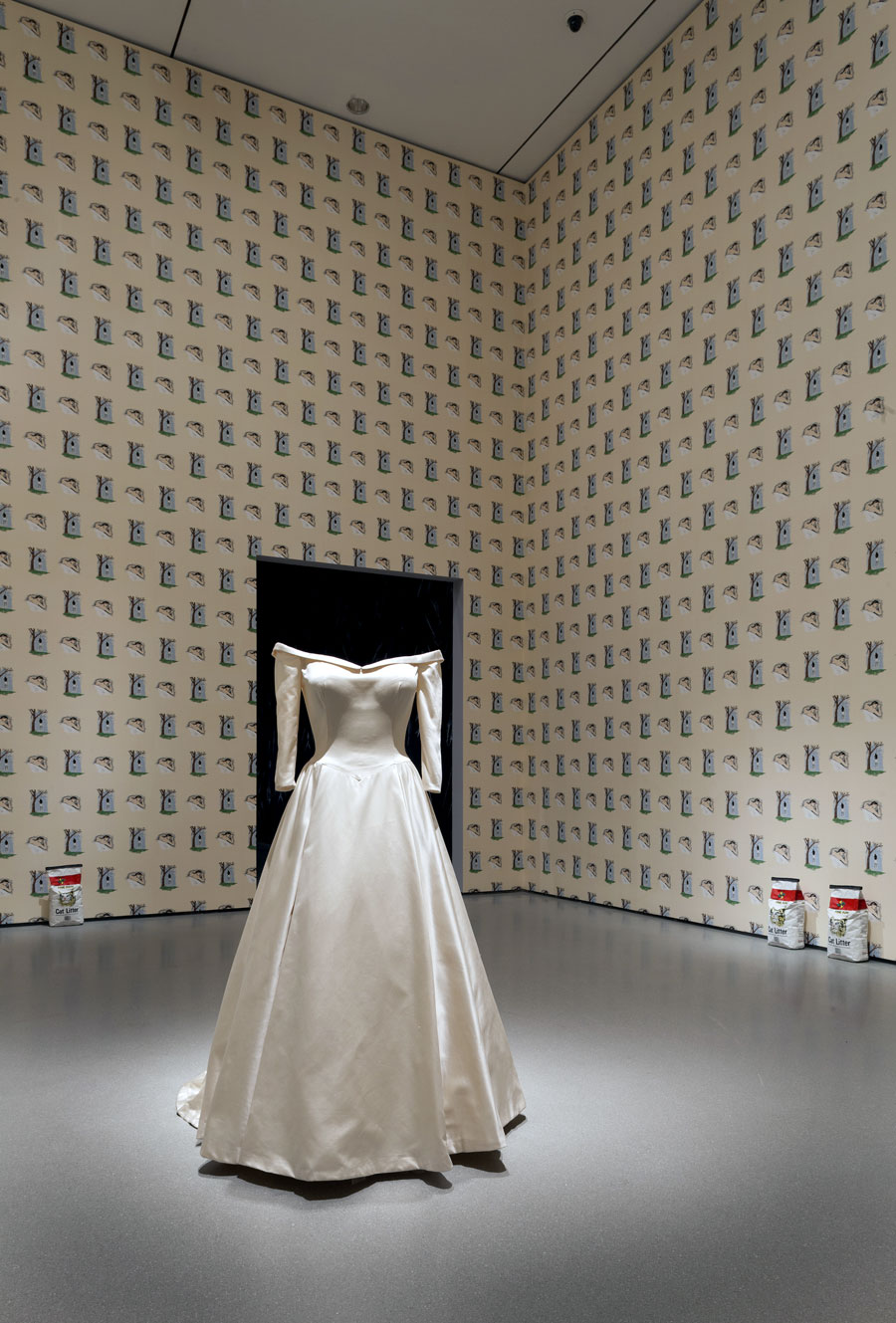

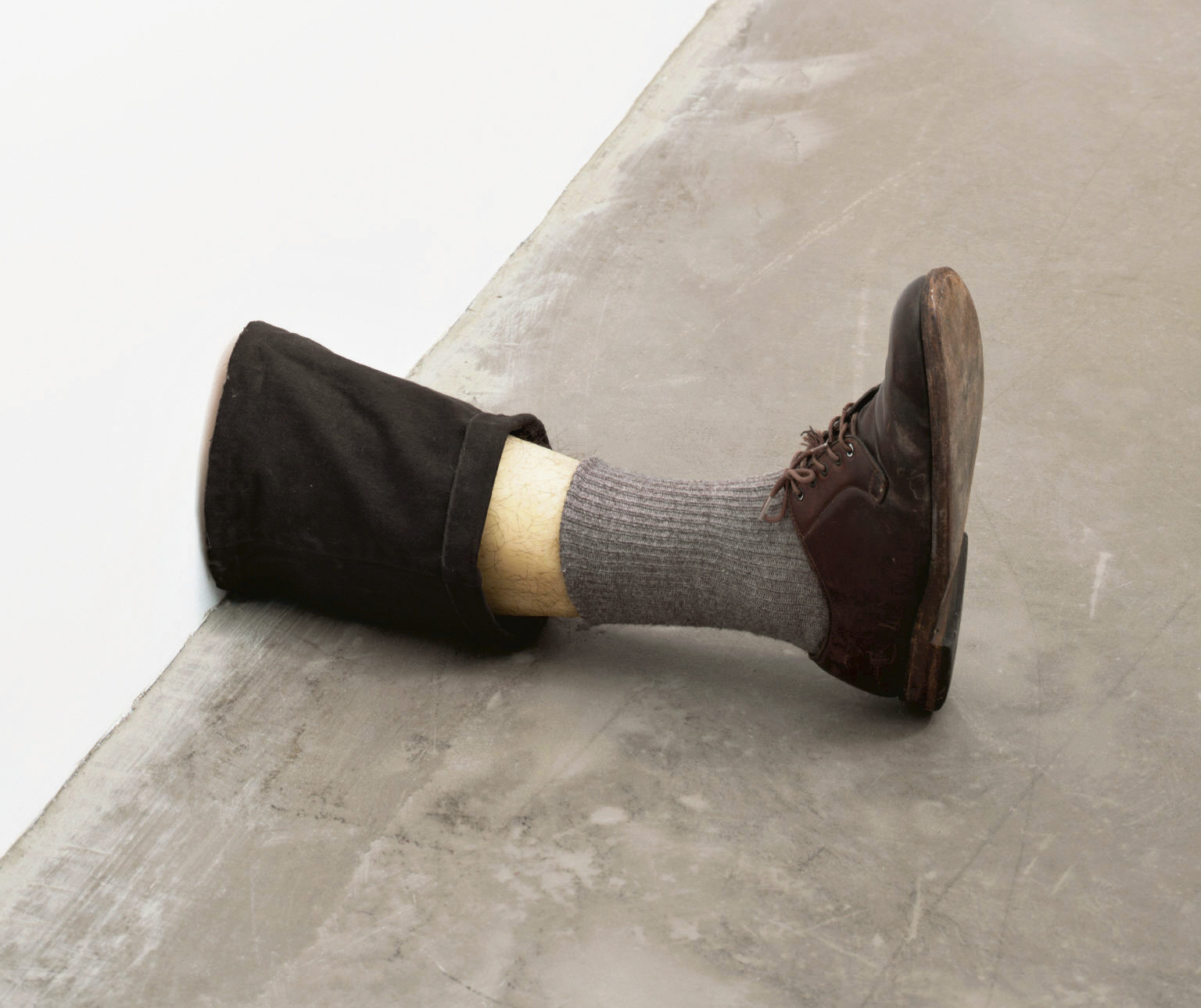

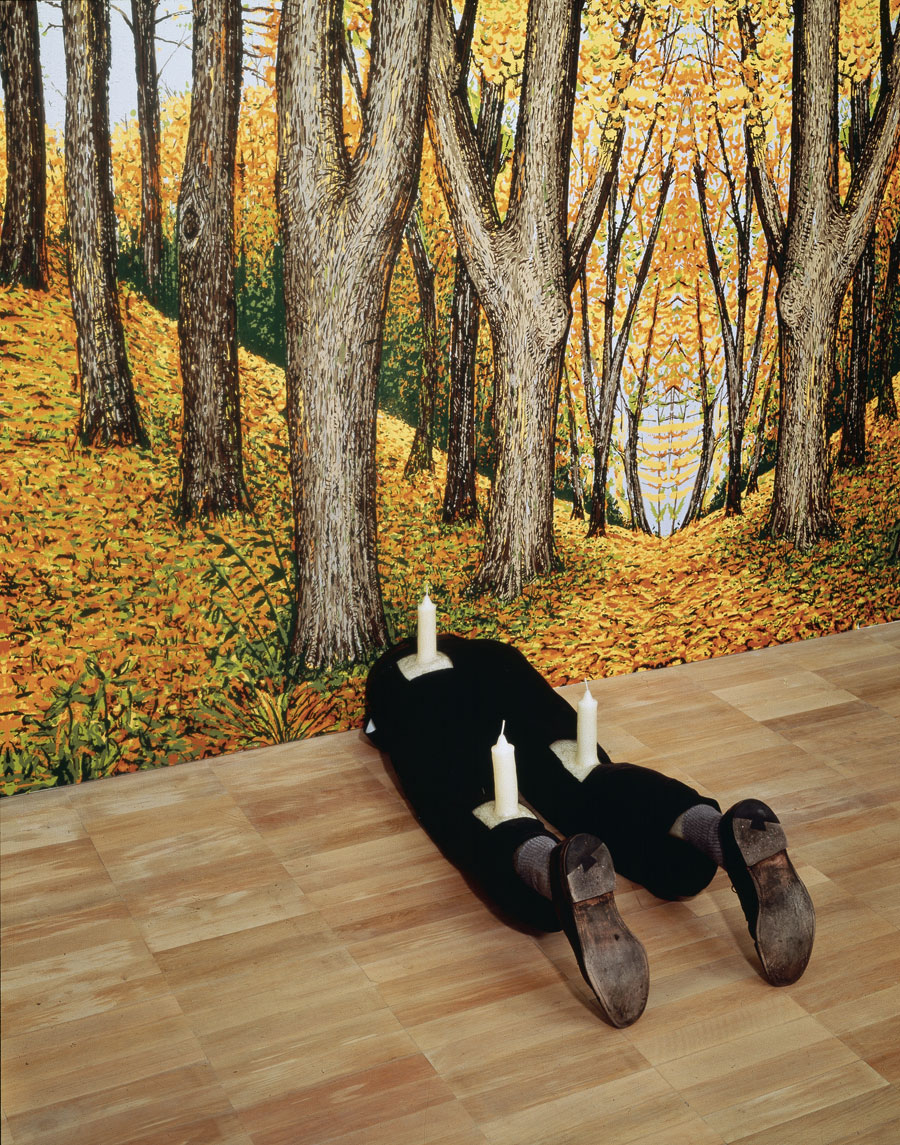


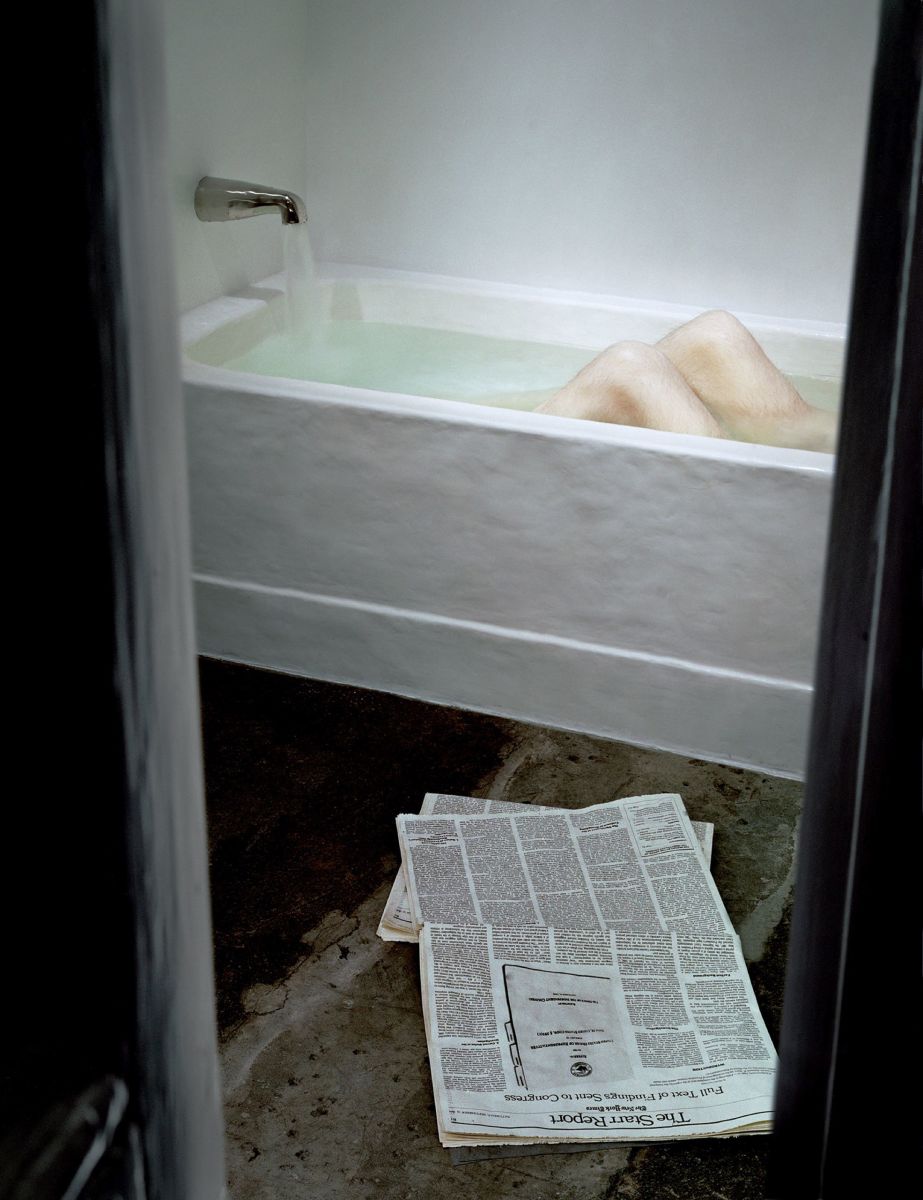


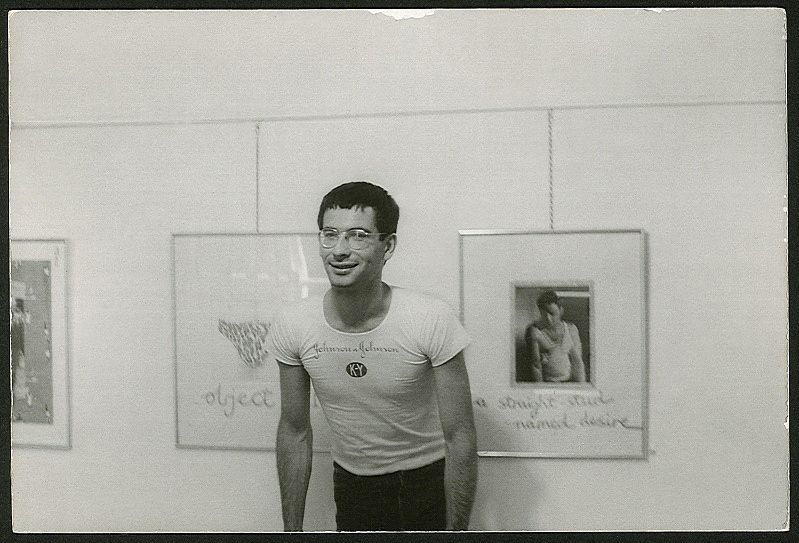
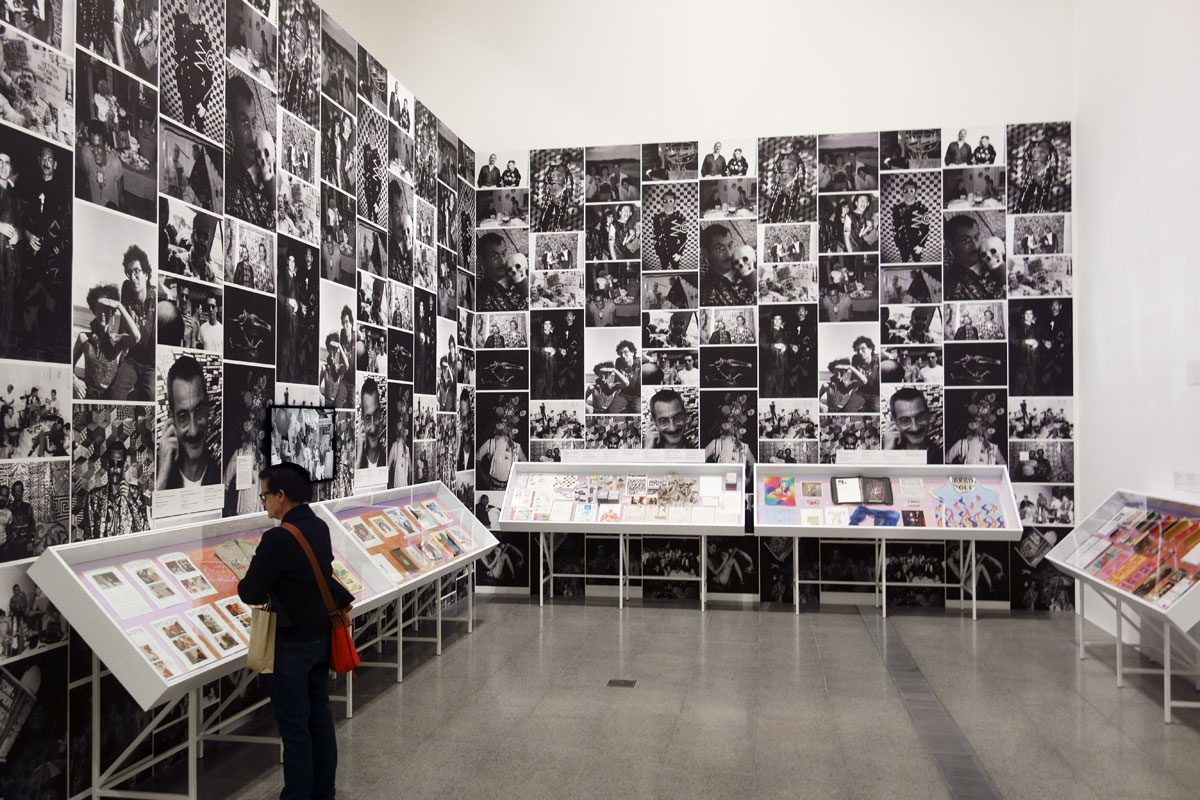
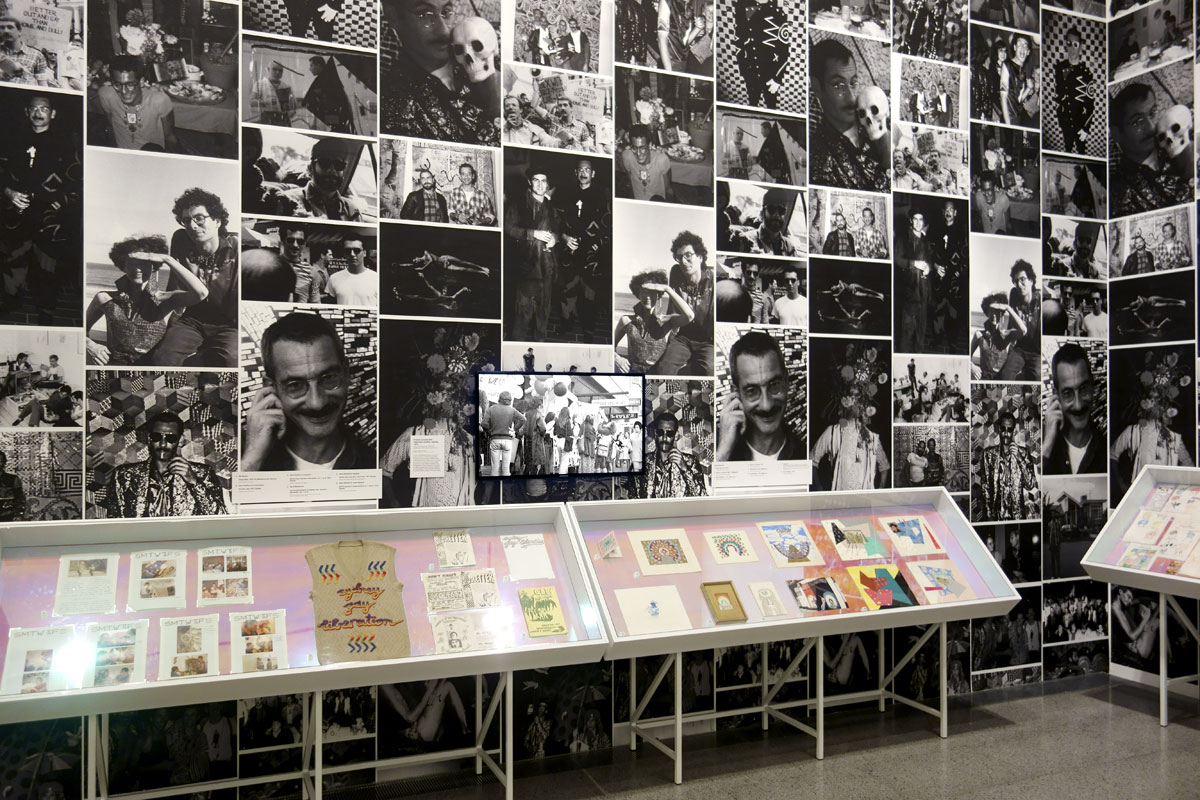


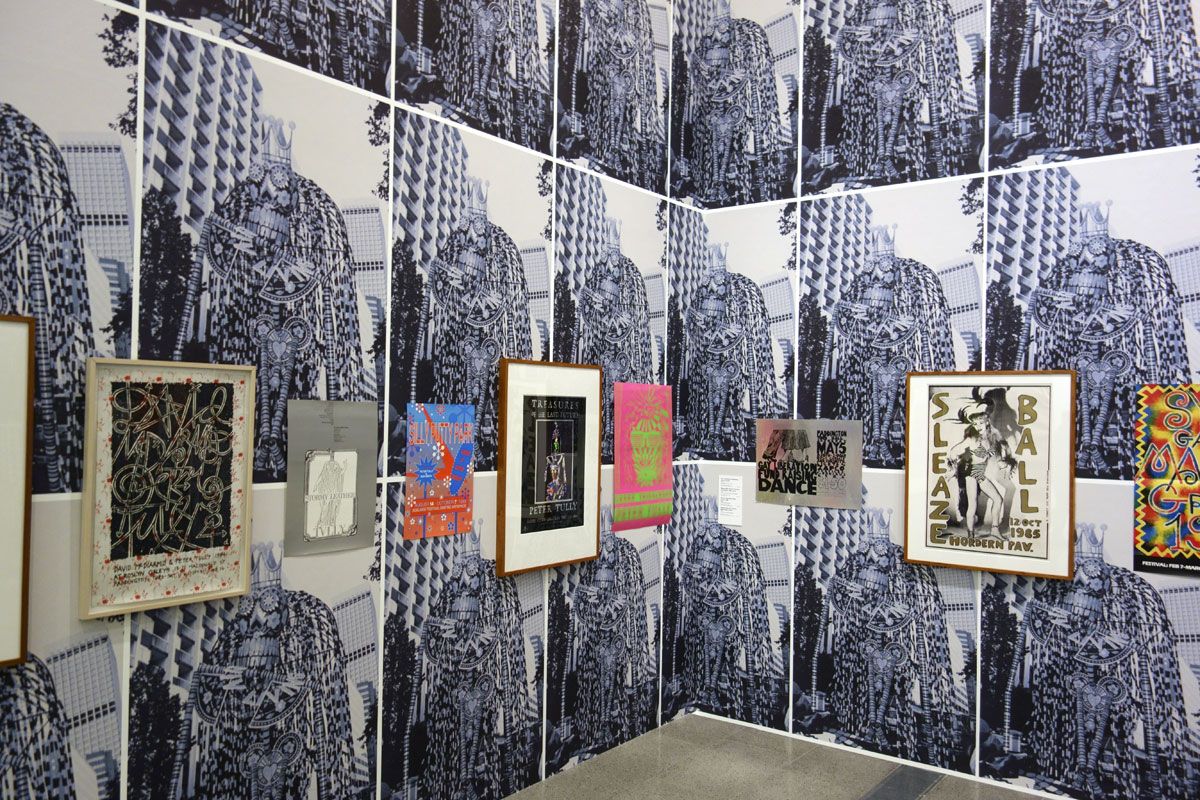


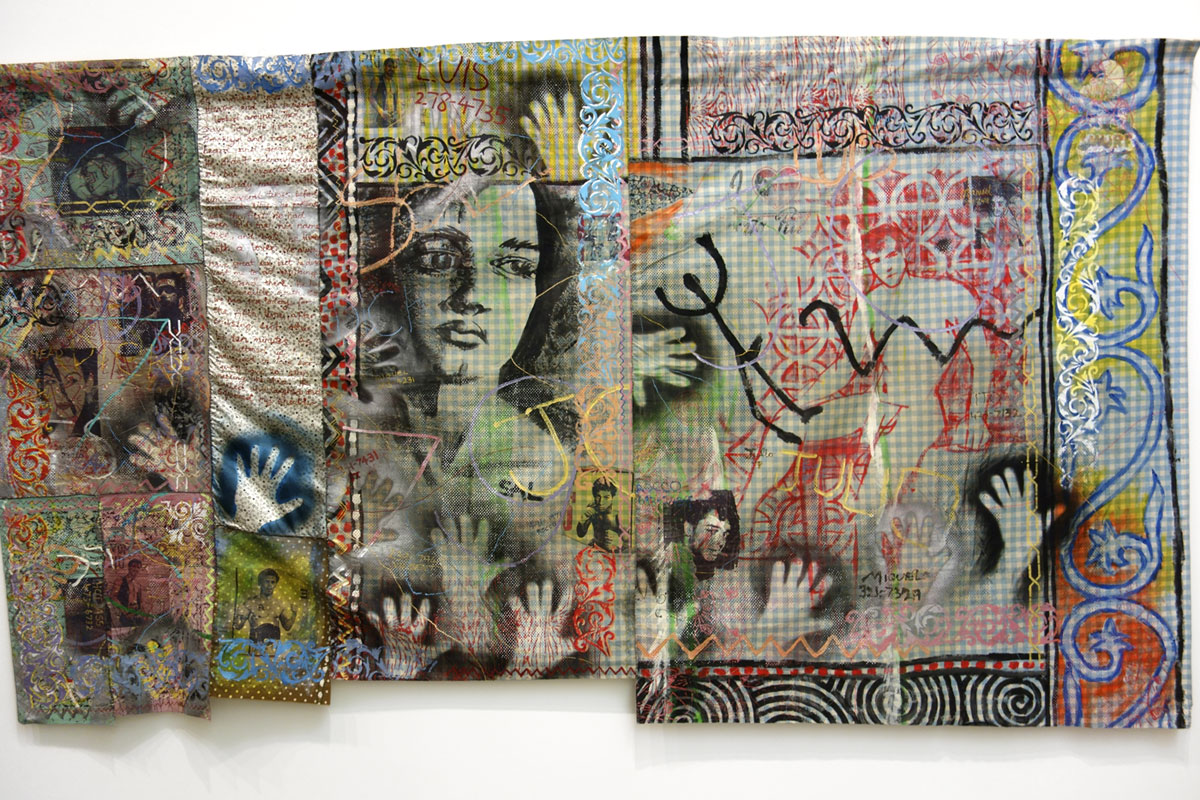



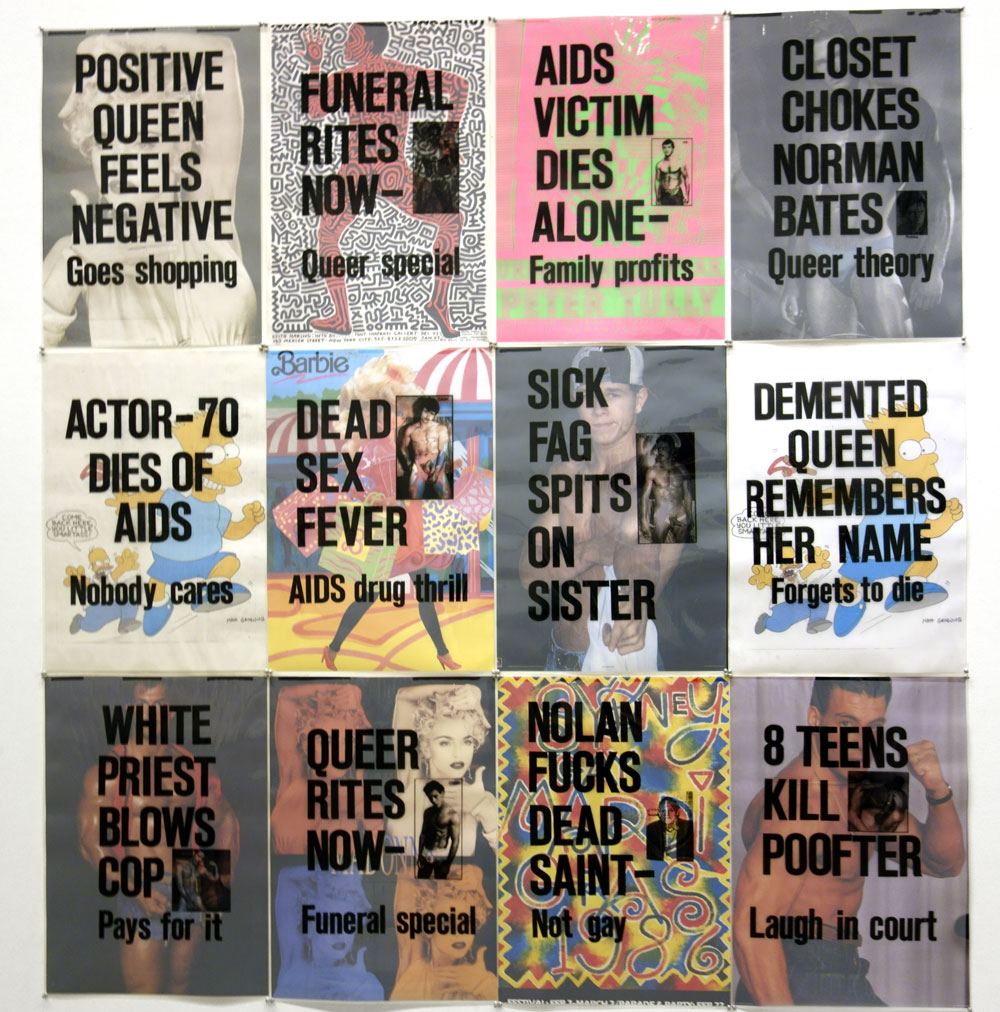

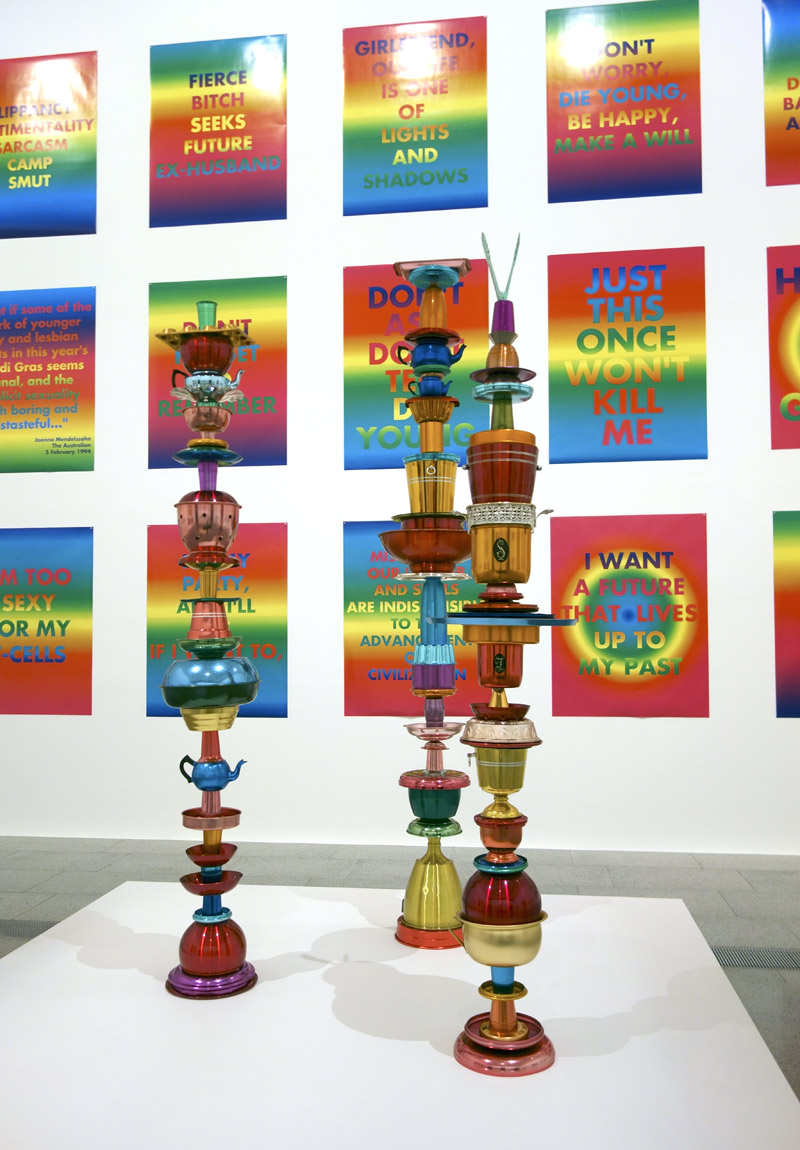
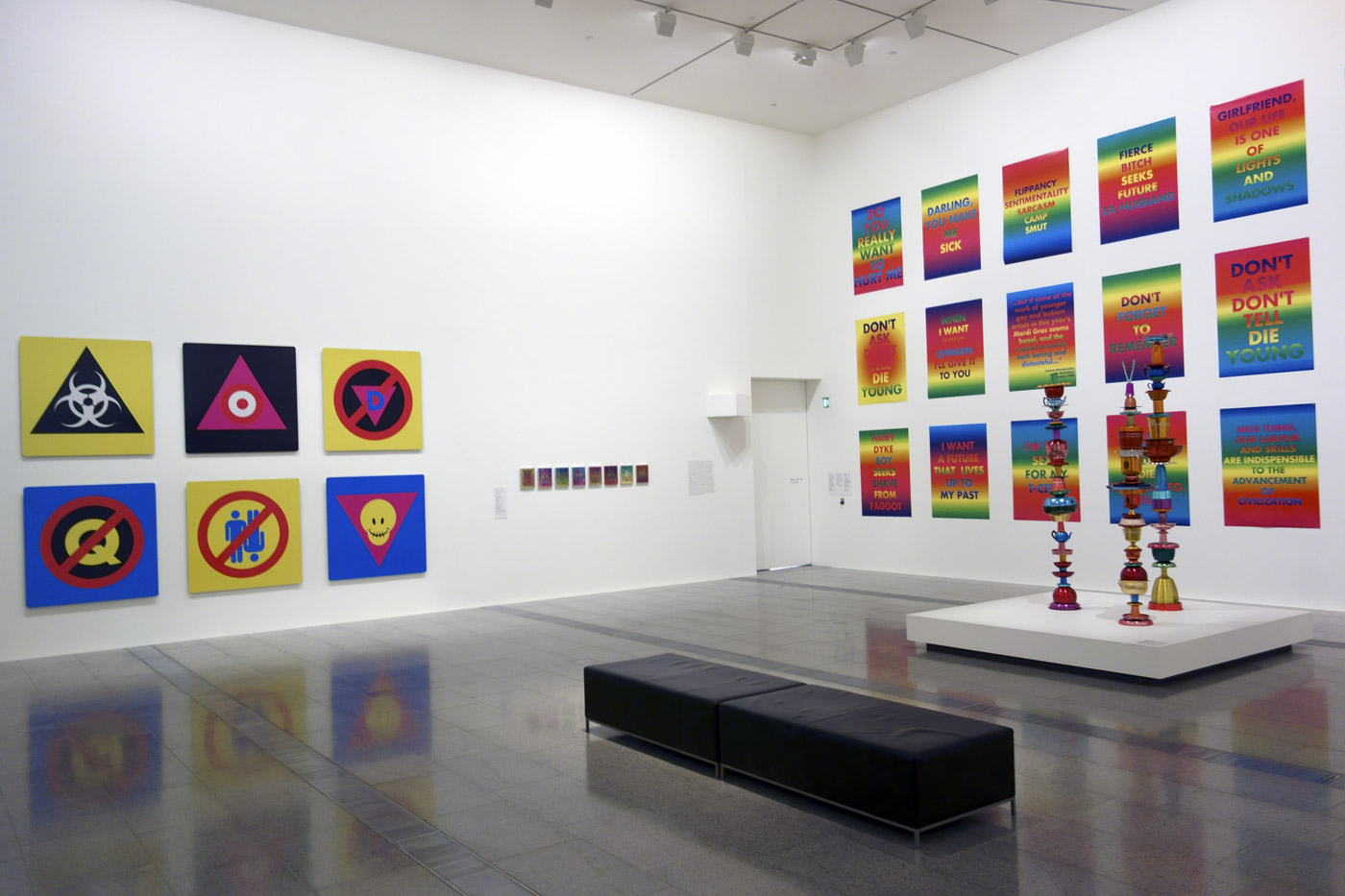

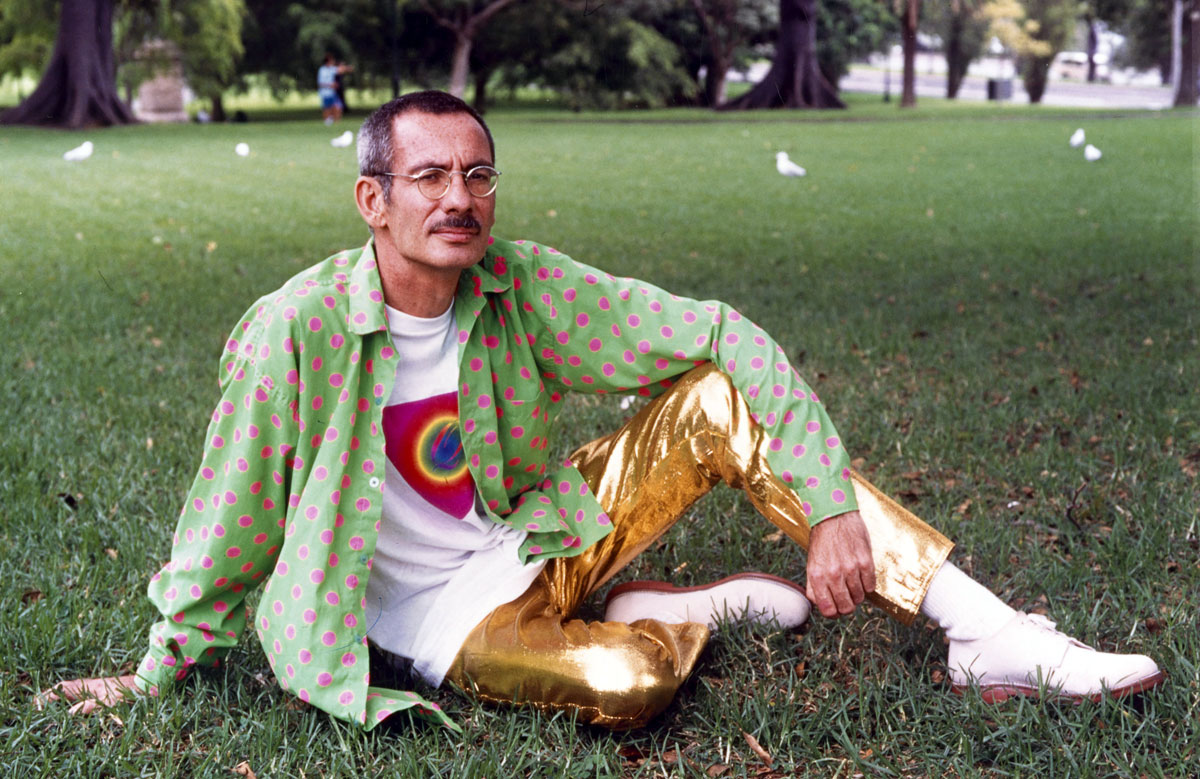
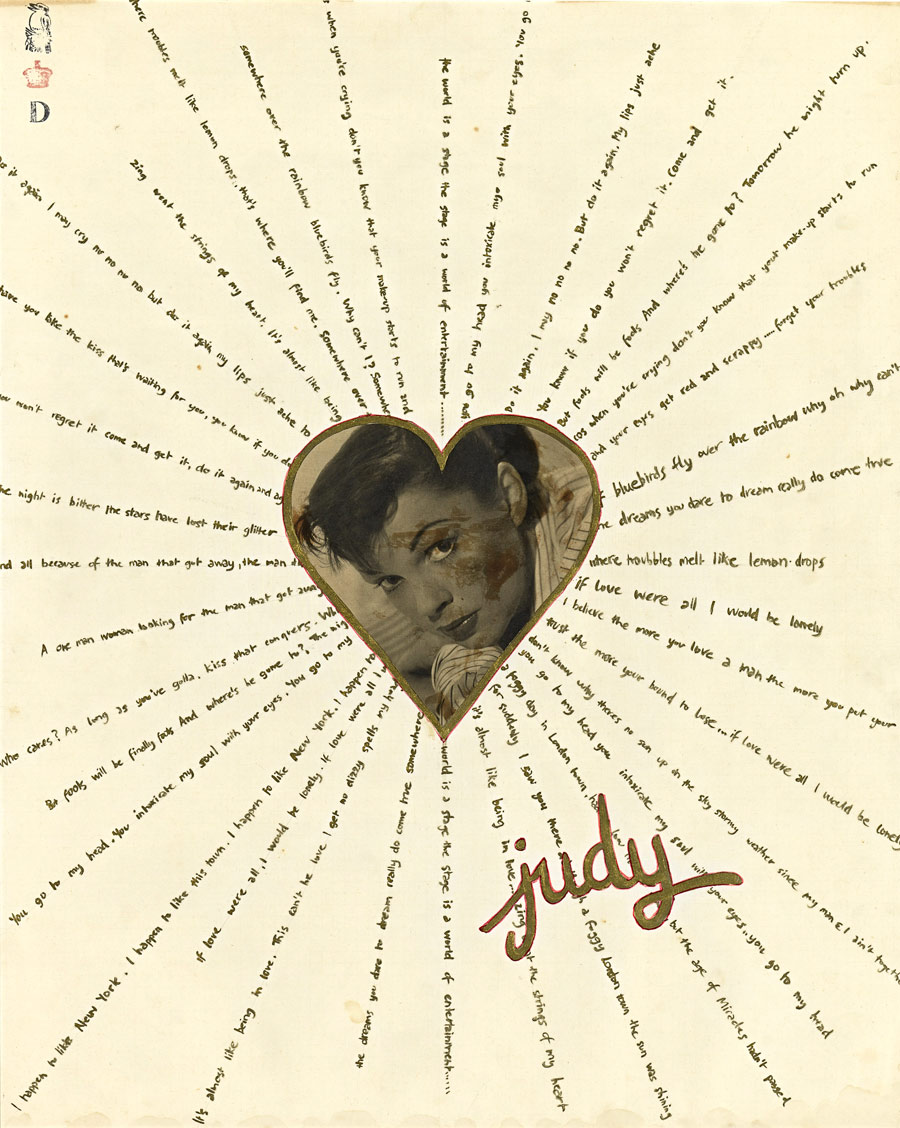

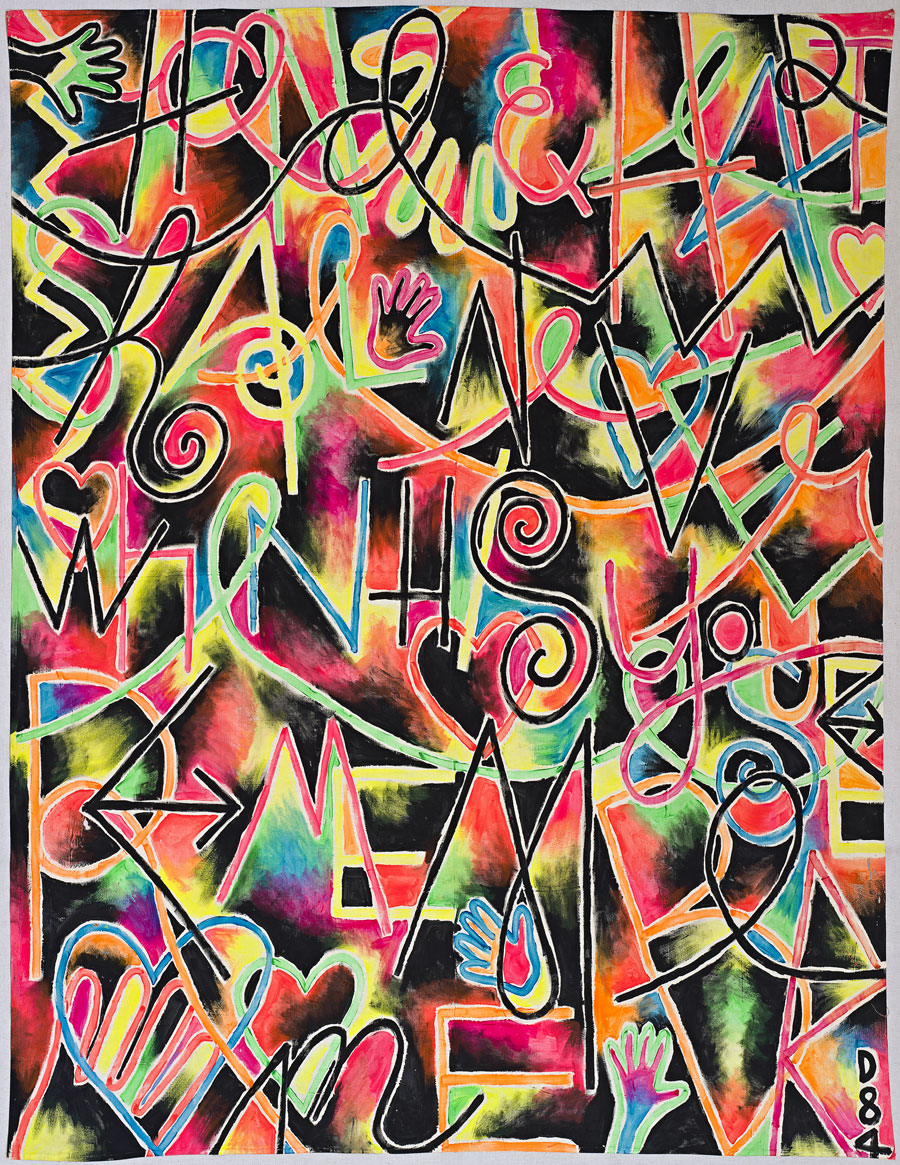


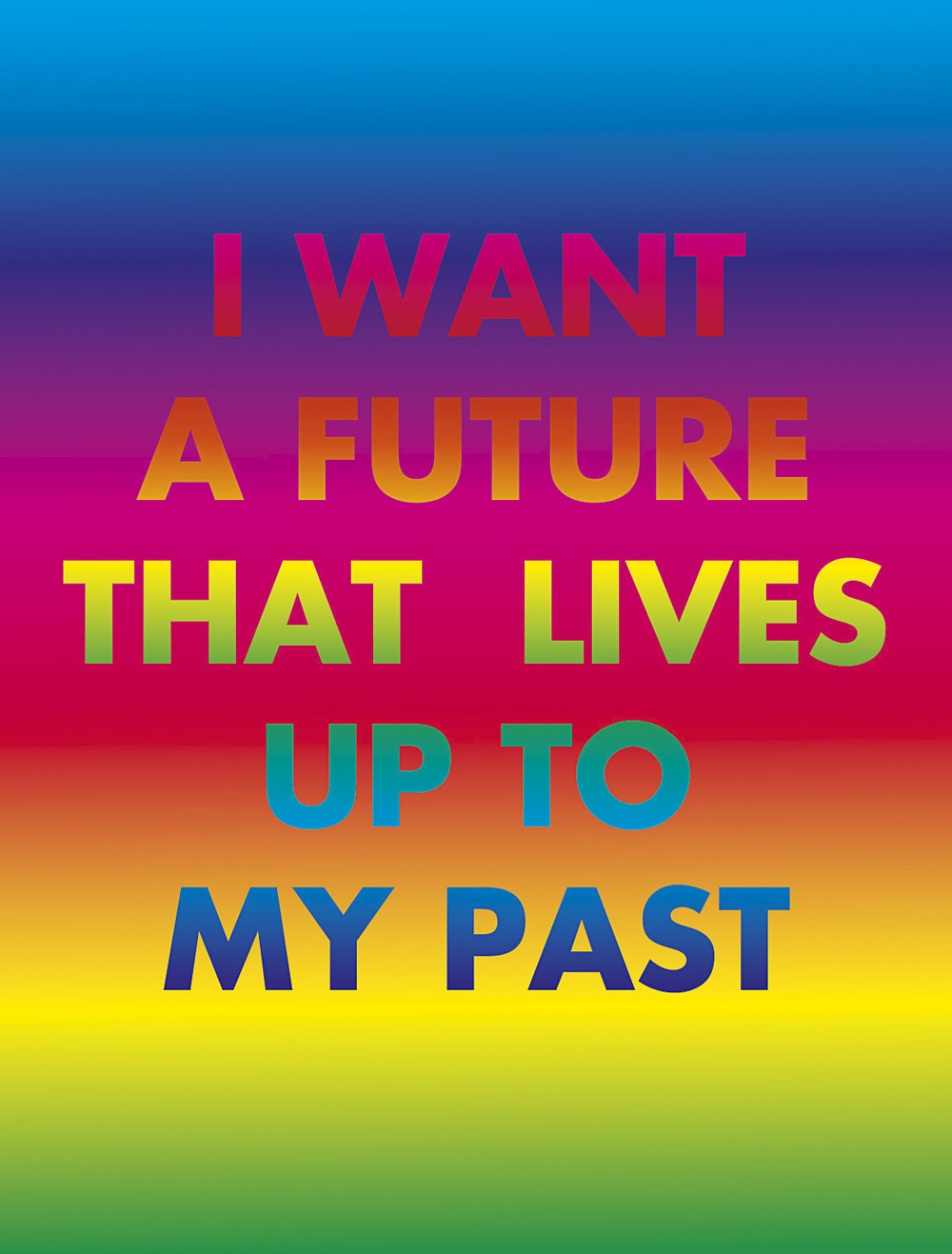

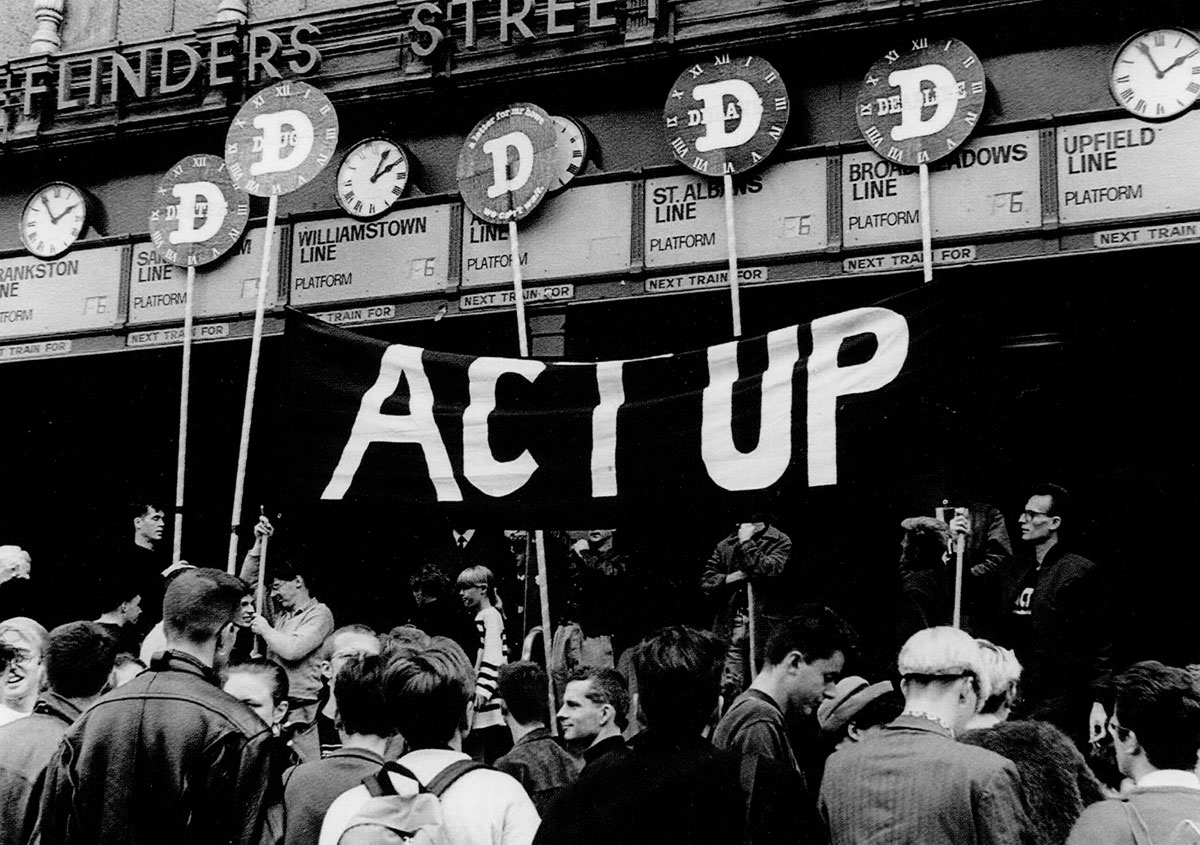
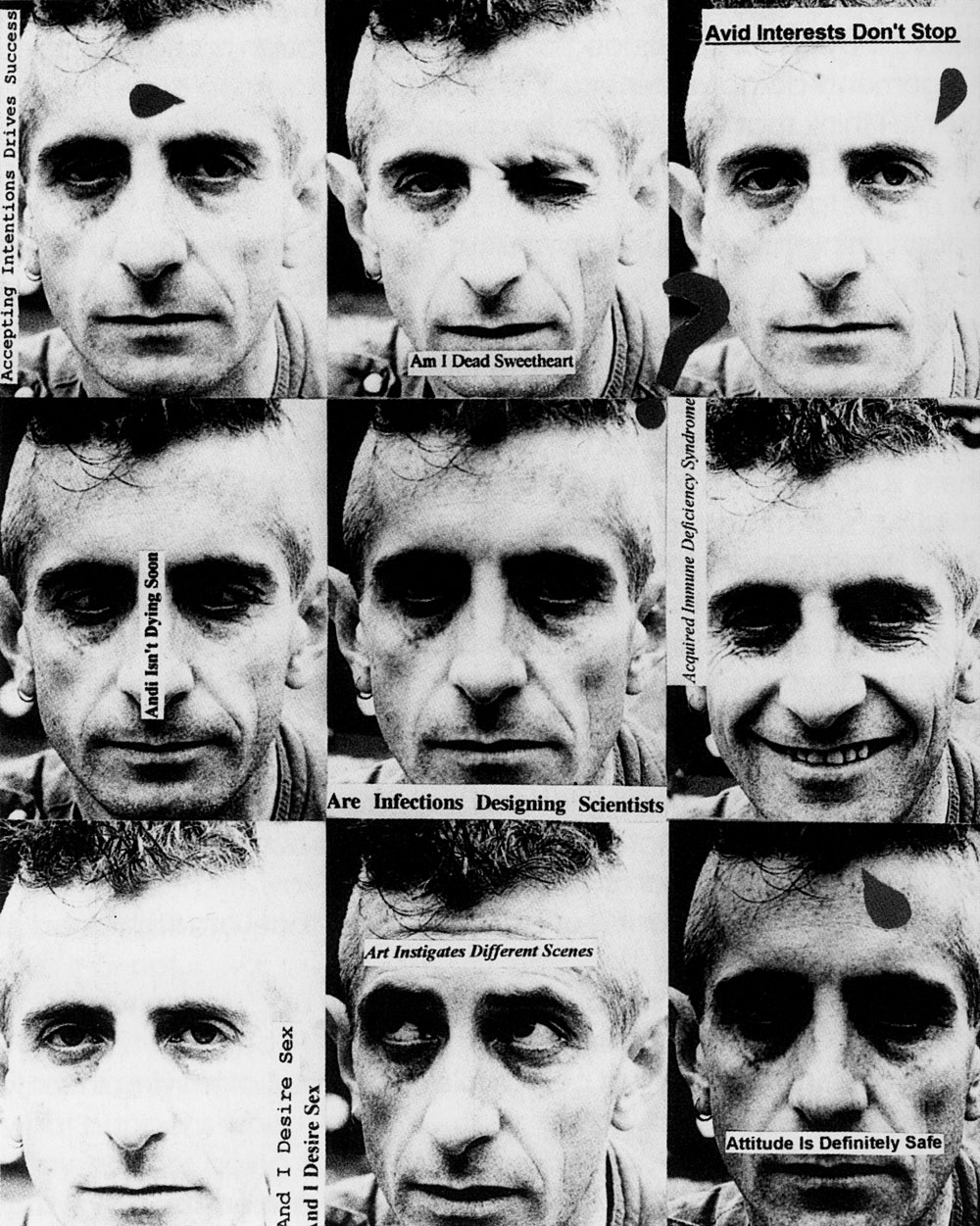
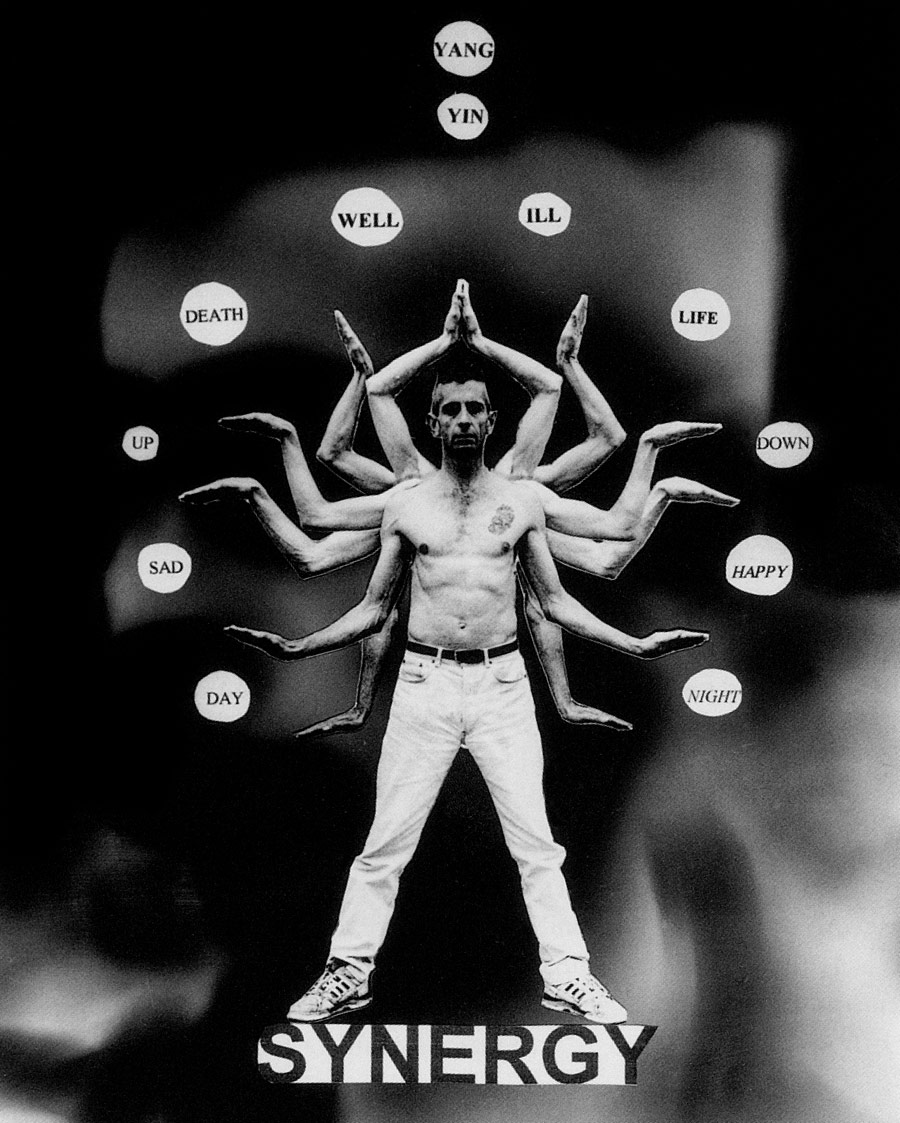
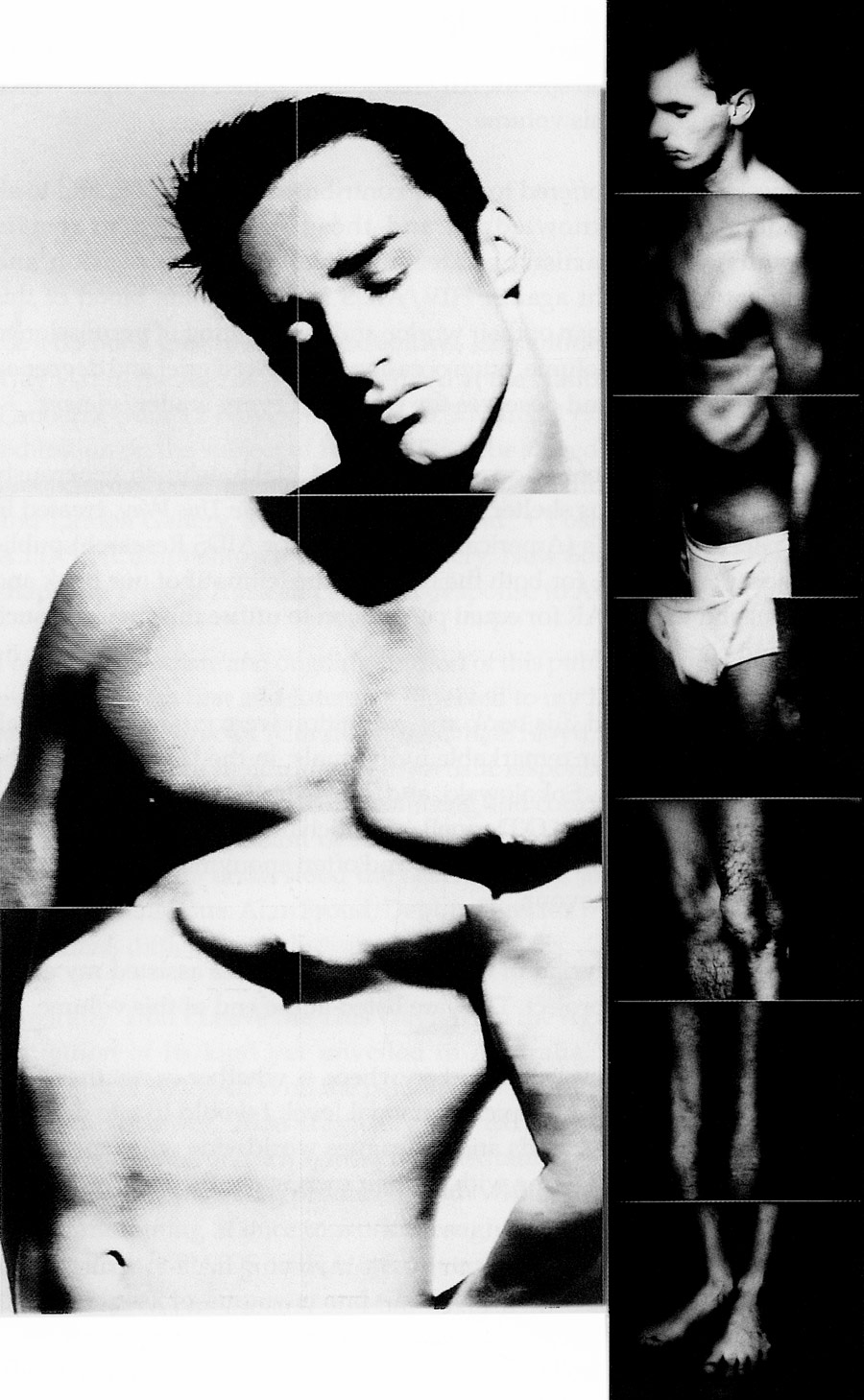
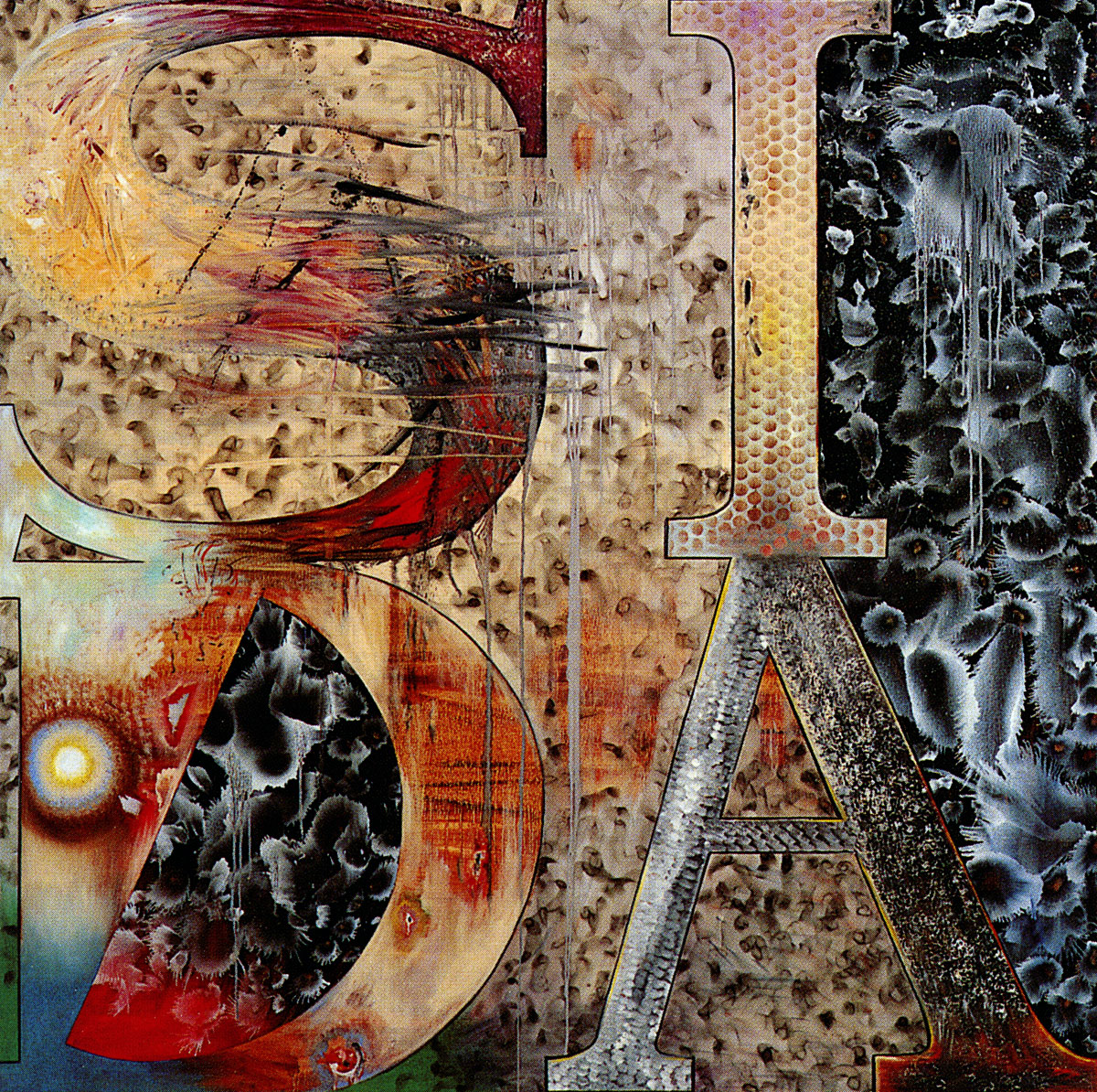
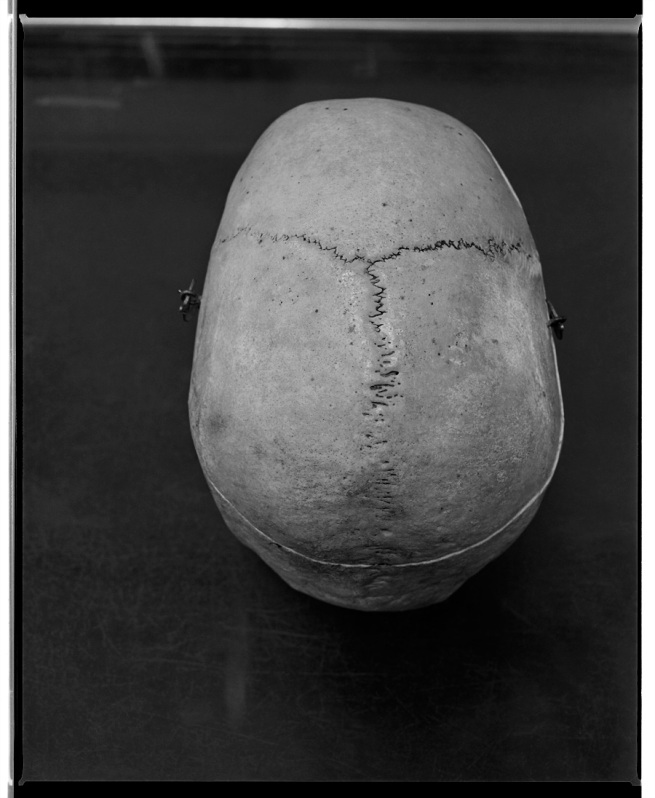
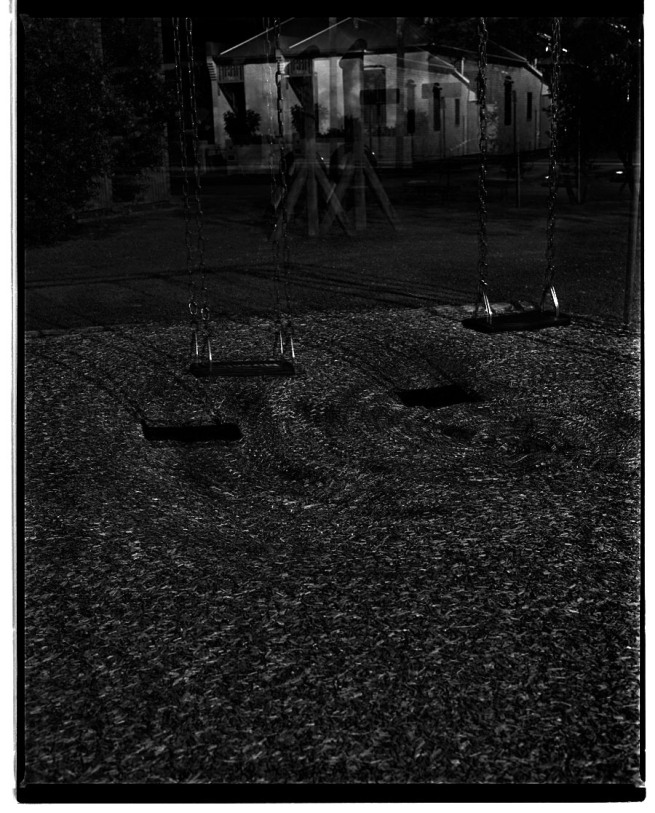







 Art Blart _ art and cultural memory archive
You must be logged in to post a comment.