Exhibition: ‘Man Ray: When Objects Dream’ at The Metropolitan Museum of Art, New York

Exhibition dates: 14th September, 2025 – 1st February, 2026

Curators: Stephanie D’Alessandro, Leonard A. Lauder Curator of Modern Art and Senior Research Coordinator in Modern and Contemporary Art at The Met, and Stephen C. Pinson, Curator in the Department of Photographs at The Met, with the assistance of Micayla Bransfield, Research Associate, Modern and Contemporary Art. 


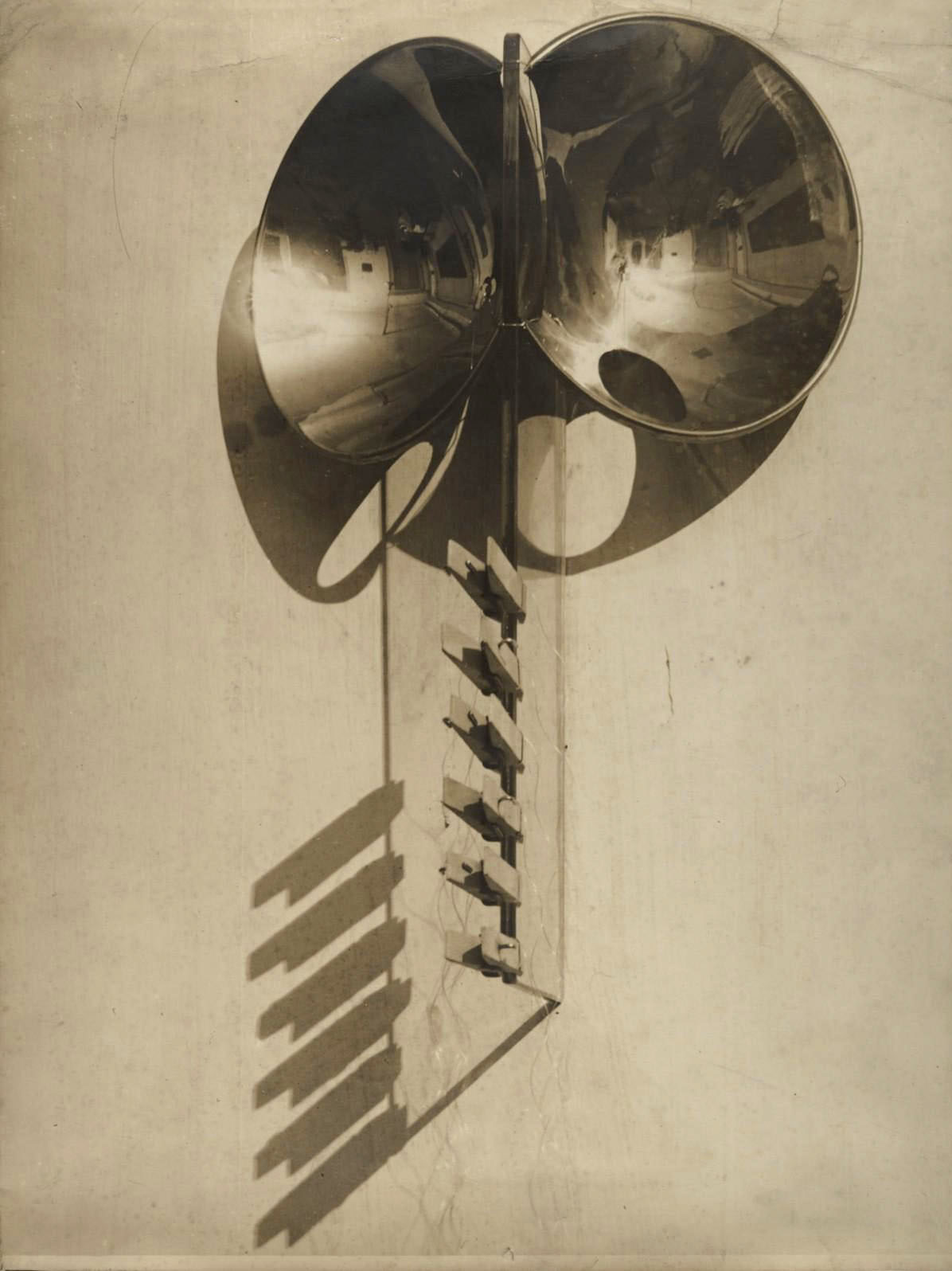
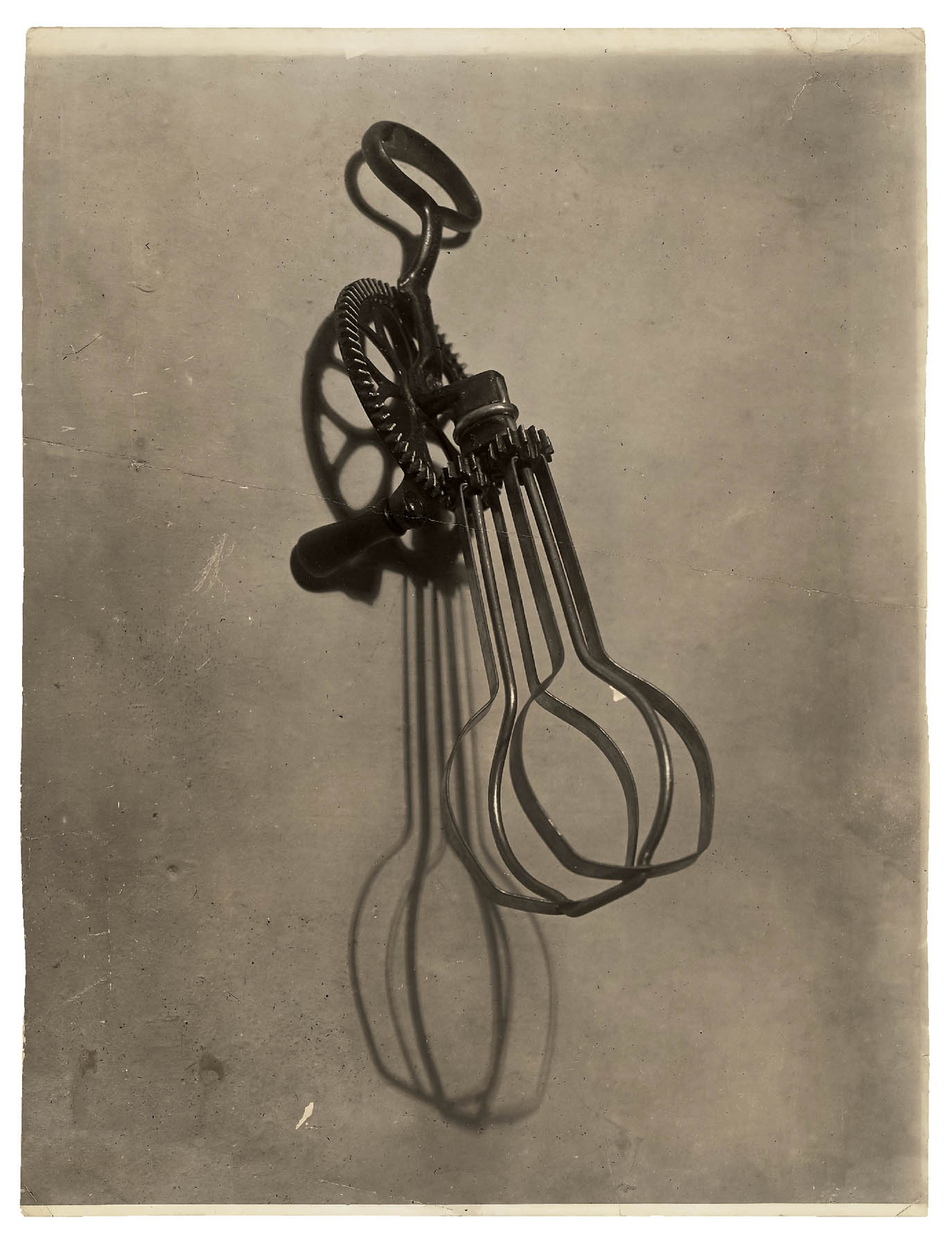
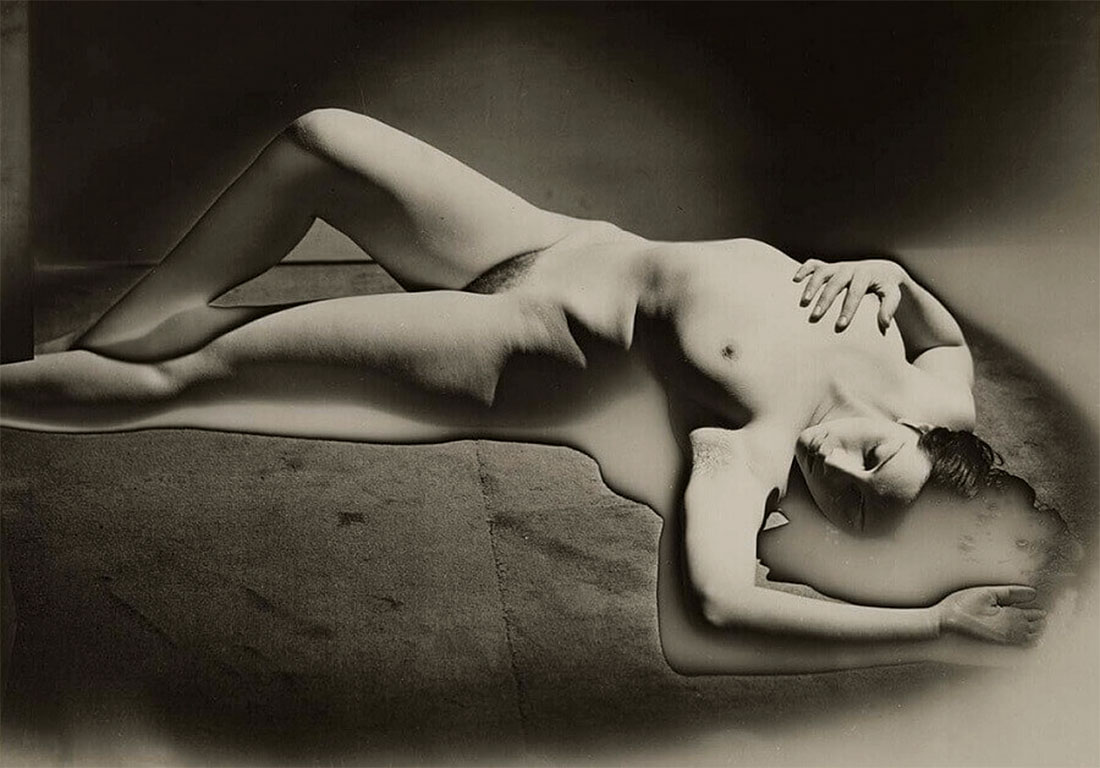
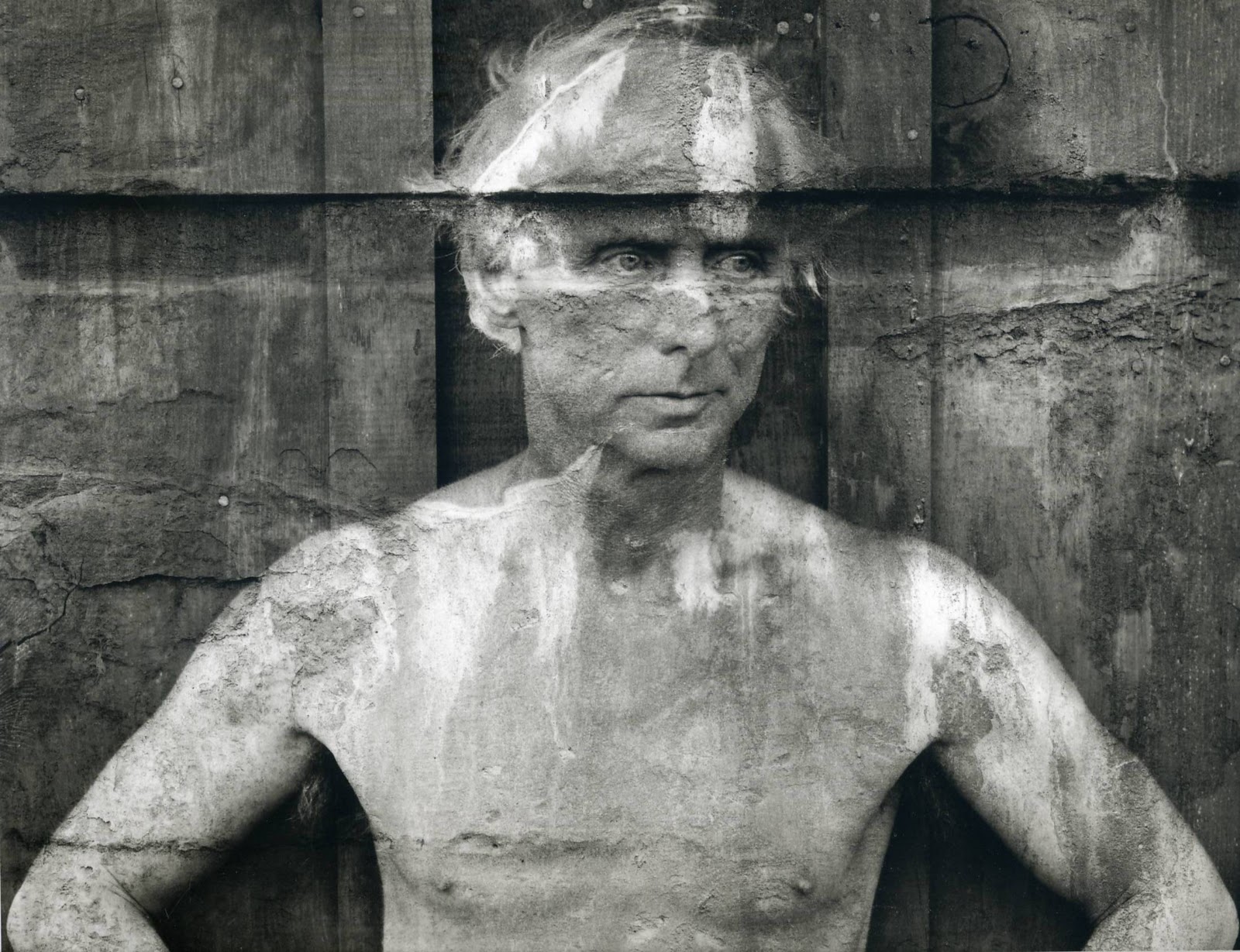
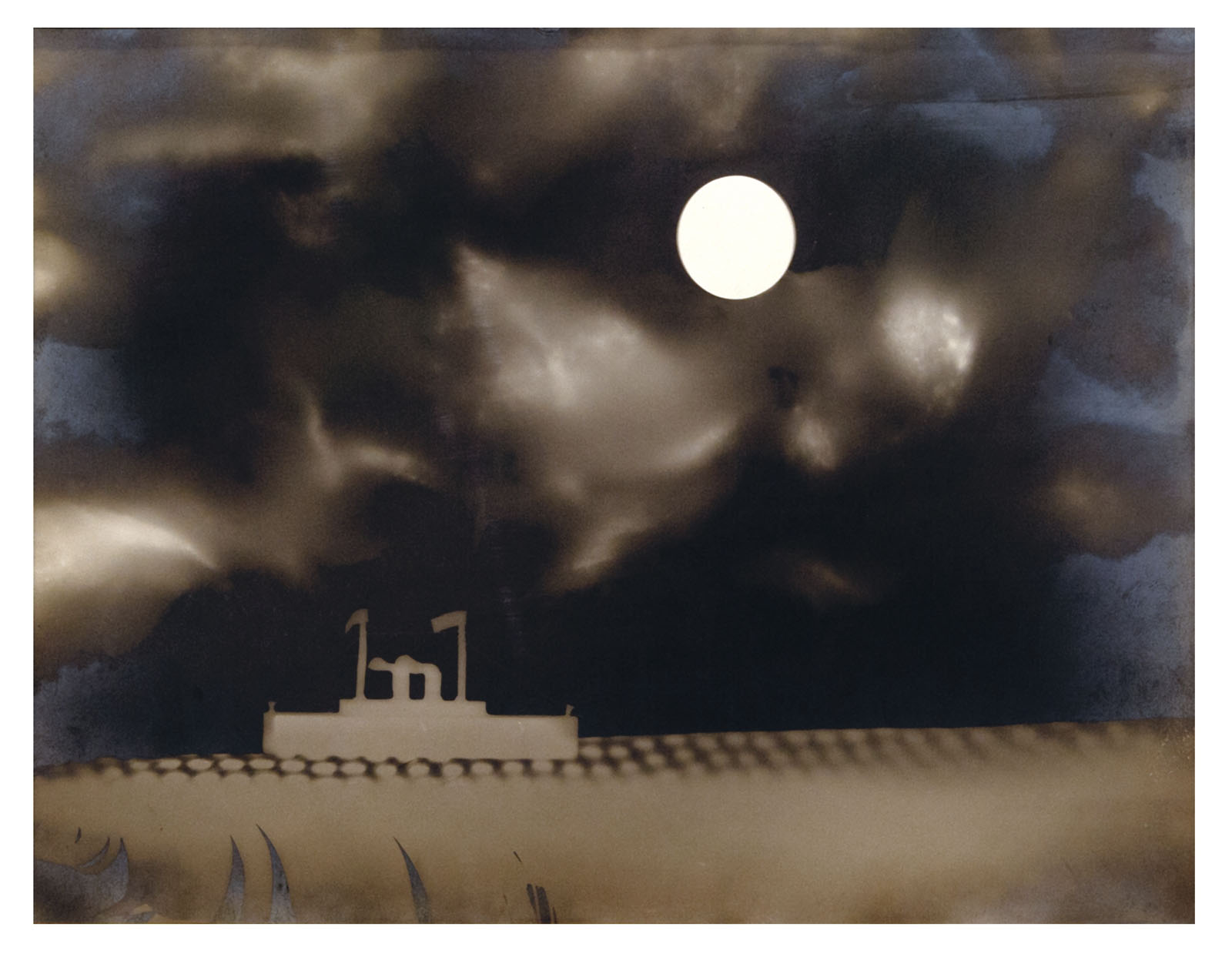
Man Ray (American, 1890-1976) 'Marine' c. 1925


Man Ray (American, 1890-1976) 
Marine 
c. 1925 
Gelatin silver print 
8 3/4 × 11 9/16 in. (22.2 × 29.3cm) 
Private collection; courtesy Galerie 1900-2000, Paris-New York 
© Man Ray 2015 Trust / Artists Rights Society (ARS), NY / ADAGP, Paris 2025 


“Like the undisturbed ashes of an object consumed by flames these images are oxidized residues fixed by light and chemical elements of an experience, an adventure, not an experiment. They are the result of curiosity, inspiration, and these words do not pretend to convey any information.”


Man Ray1


The rayographs

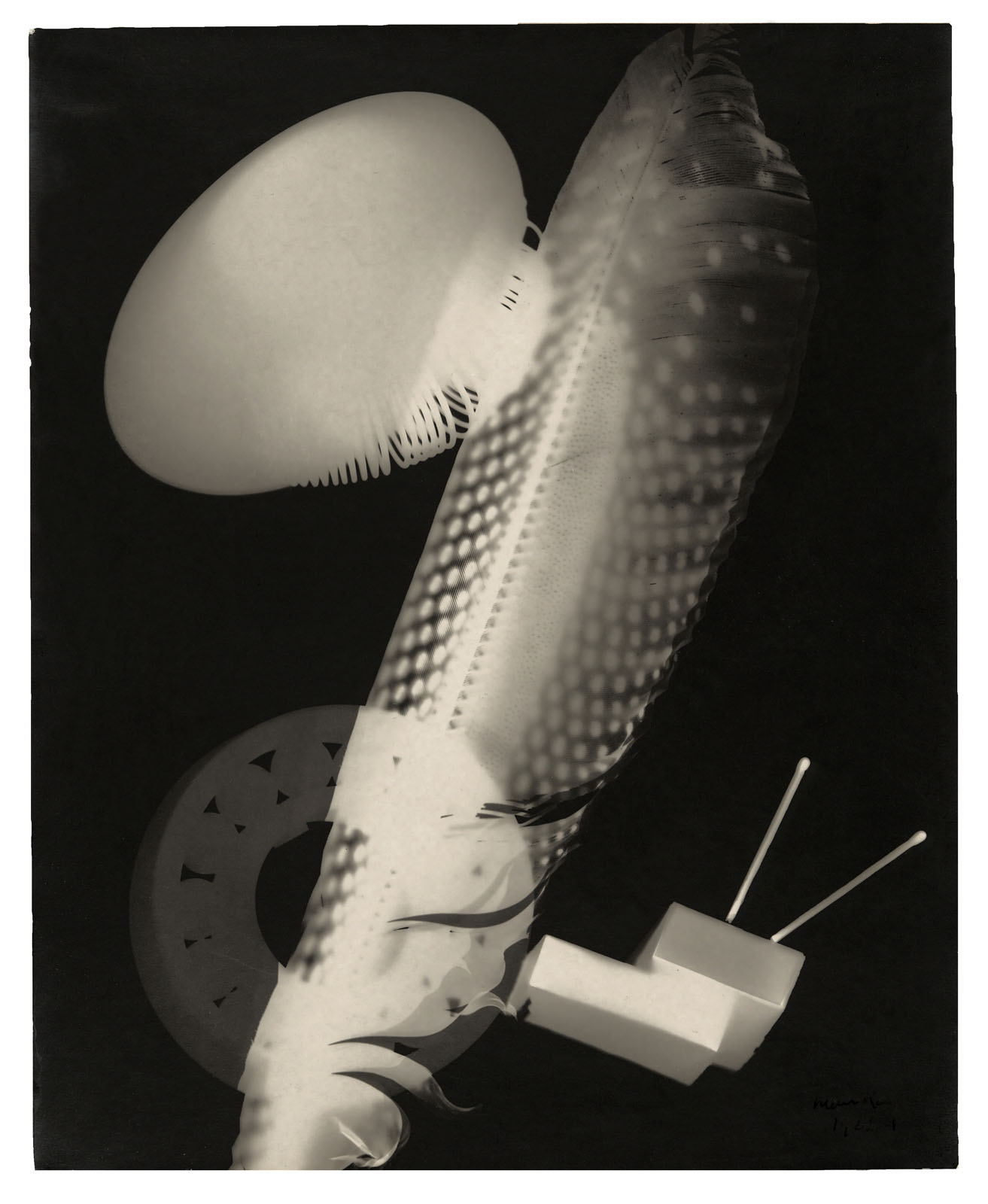
Although not the inventor of the photogram, a photograph made without the use of a camera by placing objects directly onto sensitised photographic paper and then exposing the paper to light, Man Ray’s rayographs have become the most recognisable and famous form that photograms have taken. This is because of their inventiveness, their subliminal connection to the psyche, and the use of “objects from the real world to make ambiguous dreamscapes.”7

It is interesting that Man Ray called his images rayographs, for a graph implies a topographical mapping, a laying out of statistics, whereas Lucia Moholy and László Moholy-Nagy’s photograms imply in the title of their technique the transmission of some form of message, like a telegram. The paradox is that, as the quotation above states, Man Ray always insisted that his rayographs imparted no information at all; perhaps they are only dreams made (un)stable. Contrary to this the other two artists believed that, “photographic images – cameraless and other – should not deal with conventional sentiments or personal feelings but should be concerned with light and form,”8 quite the reverse of the title of their technique.

After his arrival in Paris Man Ray started experimenting in his darkroom and discovered the technique for his rayographs by accident. With the help of his friend the Surrealist poet Tristan Tzara, he published a portfolio of twelve Rayographs in 1922 called Les champs délicieux (The delicious fields). “This title is a reference to ‘Les champs magnétiques’, a collection of writings by André Breton and Philippe Soupault composed from purportedly random thought fragments recorded by the two authors.”9 The rayographs are visual representations of random thought fragments, “photographic equivalents for the Surrealist sensibility that glorified randomness and disjunction.”10

Man Ray, “denied the camera its simplest joy: the ability to capture everything, all the distant details, all the ephemeral lights and shadows of the world”11 but, paradoxically, the rayographs are the most ephemeral of creatures, only being able to be created once, the result not being known until after the photographic paper has been developed. In fact, for Man Ray to create his portfolio Les champs délicieux (The delicious fields), he had to rephotograph the rayographs in order to make multiple copies.12

Man Ray “insisted in nearly every interview that the rayograph was not a photogram in the traditional sense. He did something that a photogram didn’t; he introduced depth into the images,”13 which denied the images their photographic objectivity by depicting an internal landscape rather than an external one.14 What the rayographs do not deny, however, is the subjectivity of the artist, his skill at placing the objects on the photographic paper, expressed in their dream-like nature, both a subjective ephemerality (because they could only be produced once) and an ephemeral subjectivity (because they were expressions of Man Ray’s fantasies, and therefore had little substance).

Through an alchemical process the latent images emerge from the photographic paper, representations of Man Ray’s fantasies as embodied in the ‘presence’ of the objects themselves, in the surface of the paper. Perhaps these objects offer, in Heidegger’s terms, ‘a releasement towards things’,15 “a coexistence between a conscious and unconscious way of perceiving which sustains the mystery of the object confusing the distinction between real time and sensual time, between inside and outside, input and output becoming neither here nor there.”16

Finally, within their depth of field the rayographs can be seen as both dangerous and delicious, for somehow they are both beautiful and unsettling at one and the same time. As Surrealism revels in randomness and chance these images enact the titles of other Man Ray photographs: Danger-Dancer, Anxiety, Dust Raising, Distorted House. The rayographs revel in chance and risk; Man Ray brings his fantasies to the surface, an interior landscape represented externally that can be (re)produced only once – those dangerous delicious fields.

Extract from Marcus Bunyan. “The Delicious Fields: Exploring Man Ray’s ‘Rayographs’ in a Digital Future,” published in The University of Queensland Vanguard magazine ‘Man Ray: Life, Work & Themes’, 2004


Footnotes

1/ Man Ray quoted in Janus (trans. Murtha Baca). Man Ray: The Photographic Image. London: Gordon Fraser, 1980, p. 213

7/ Mark Greenberg (ed.,). In Focus: Man Ray: Photographs from the J. Paul Getty Museum. Los Angeles, The J. Paul Getty Museum, 1998, p. 38

8/ Naomi Rosenblum. A World History of Photography. New York: Abbeville Press, 1997, 394

9/ Greenberg, op. cit., p. 28

10/ Jed Perl (ed.,). Man Ray: Aperture Masters of Photography. New York: Aperture, 1997 pp. 11-12

11/ Perl, op. cit., pp. 5-6

12/ Greenberg, op. cit., p. 28

13/ Greenberg, op. cit., p. 112

14/ Greenberg, op. cit., p. 28

15/ “We stand at once within the realm of that which hides itself from us, and hides itself just in approaching us. That which shows itself and at the same time withdraws is the essential trait of what we call the mystery … Releasement towards things and openness to the mystery belong together. They grant us the possibility of dwelling in the world in a totally different way…”

Martin Heidegger. Discourse on Thinking. New York: Harper & Row, 1966, pp. 55-56 quoted in Mauro Baracco. “Completed Yet Unconcluded: The Poetic Resistance of Some Melbourne Architecture,” in Leon van Schaik (ed.,). Architectural Design Vol. 72. No. 2 (‘Poetics in Architecture’). London: John Wiley and Sons, 2002, 74, Footnote 6.

16/ Marcus Bunyan. Spaces That Matter: Awareness and Entropia in the Imaging of Place (2002) [Online] Cited 07/07/2004.


Many thankx to The Metropolitan Museum of Art for allowing me to publish the photographs in the posting. Please click on the photographs for a larger version of the image.


“Stepping into the exhibition Man Ray: When Objects Dream at The Metropolitan Museum of Art feels like entering the bellows of an old camera. Through a rectangular frame cut into the entry, the darkened walls unfold, accordion-like, to reveal a visual feast of the artist’s work, as Man Ray’s earliest film, “Retour à la raison (Return to Reason)” (1923), flickers across the screen opposite. Although the exhibition brings together approximately 160 works from an impressive array of lenders, it reveals itself gradually, taking the viewer through several turns before one can grasp its sheer enormity. When Objects Dream proves, thrillingly, that anyone left feeling jaded from the many, many recent exhibitions surrounding Surrealism’s centennial in 2024 can still see the movement’s key photographer with a fresh set of eyes.”


Julia Curl. “Man Ray Was So Much More Than a Photographer,” on the Hyperallergic website September 16, 2025 [Online] Cited 05/12/2025


“Objects to touch, to eat, to crunch, to apply to the eye, to the skin, to press, to lick, to break, to grind, objects to lie, to flee from, to honor, things cold or hot, feminine or masculine, objects of day or night which absorb through your pores the greater part of our life. … These are the projections surprised in transparence, by the light of tenderness, of objects that dream and talk in their sleep.” 

.
Tristan Tzara, “When Objects Dream,” 1934


“One sheet of paper got into the developing tray – a sheet unexposed that had been mixed with those already exposed under the negatives. … Regretting the waste of paper, I mechanically placed a small glass funnel, the graduate, and the thermometer in the tray on the wetted paper. I turned on the light; before my eyes an image began to form, not quite a simple silhouette of the objects as in a straight photograph, but distorted and refracted by the glass more or less in contact with the paper and standing out against a black background. … I remembered when I was a boy, placing fern leaves in a printing frame with proof paper, exposing it to sunlight, and obtaining a white negative of the leaves. This was the same idea, but with an added three-dimensional quality and tone graduation. I made a few more prints … taking whatever came to hand; my hotel-room key, a handkerchief, some pencils, a brush, a candle, a piece of twine … excitedly, enjoying myself immensely. In the morning I examined the results. … They looked startlingly new and mysterious.”


Man Ray 


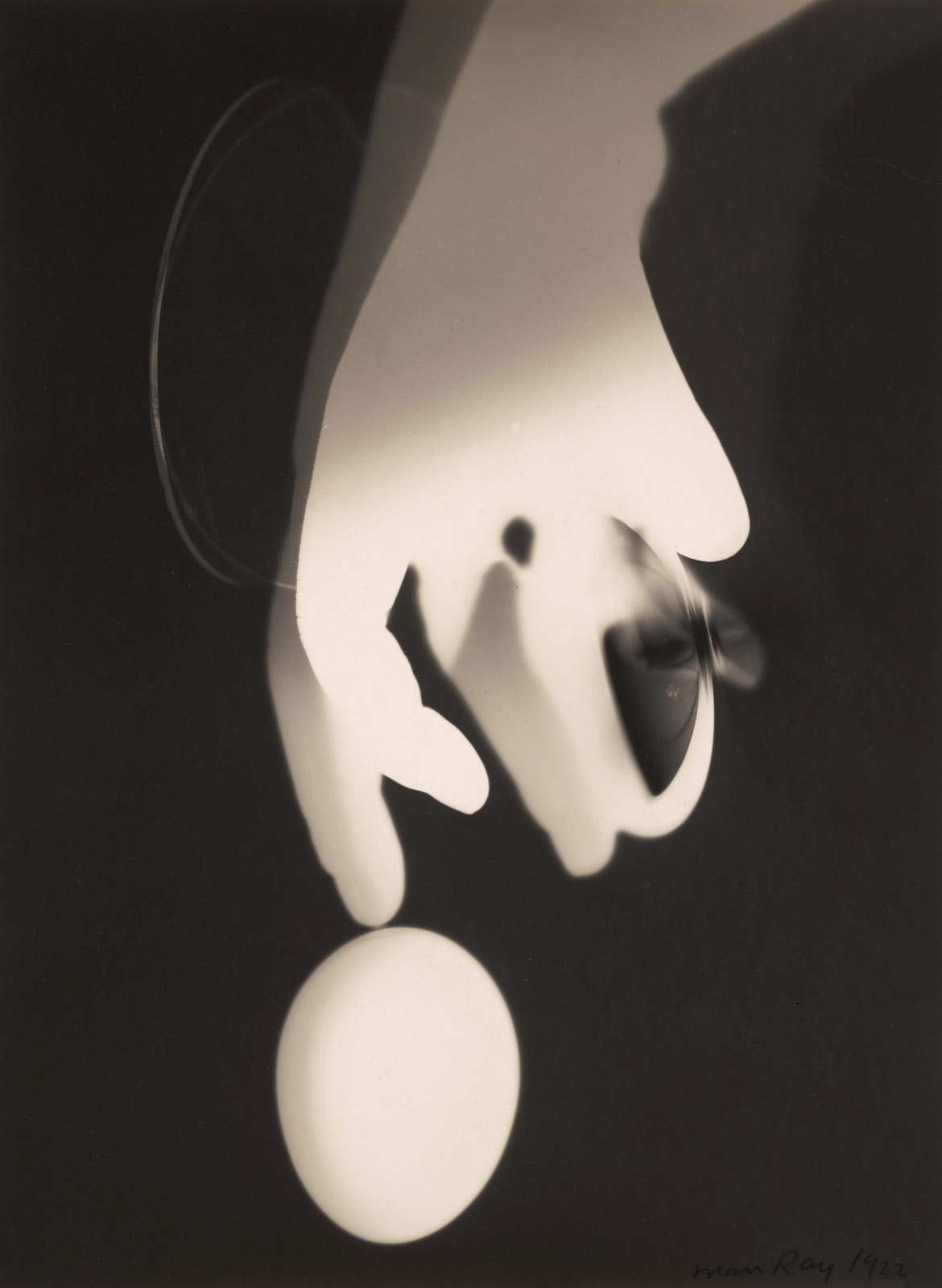
Man Ray (American, 1890-1976) 'Rayograph' 1922


Man Ray (American, 1890-1976) 
Rayograph
1922 
Gelatin silver print 
9 1/2 × 7 in. (24.1 × 17.8cm) 
The Metropolitan Museum of Art, New York, Bluff Collection, Promised Gift of John A. Pritzker 
© Man Ray 2015 Trust / Artists Rights Society (ARS), NY / ADAGP, Paris 2025
Photo by Ben Blackwell 


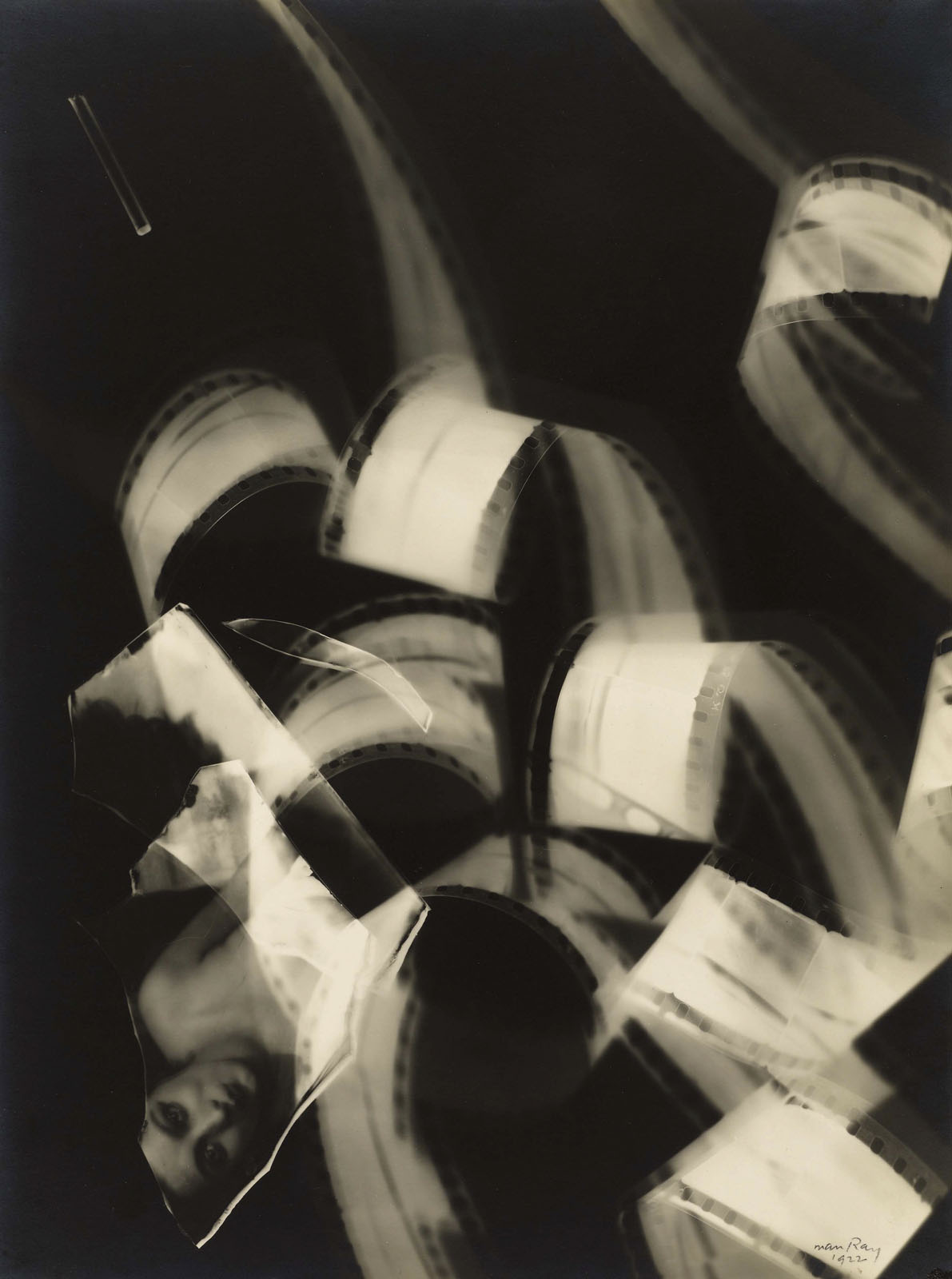
Man Ray (American, 1890-1976) 'Rayograph' 1922


Man Ray (American, 1890-1976) 
Rayograph
1922 
Gelatin silver print 
9 3/8 × 7 in. (23.8 × 17.8cm) 
The J. Paul Getty Museum, Los Angeles
Courtesy The J. Paul Getty Museum, Los Angeles 
© Man Ray 2015 Trust / Artists Rights Society (ARS), NY / ADAGP, Paris 2025


Man Ray (American, 1890-1976) 'Rayograph' 1922


Man Ray (American, 1890-1976) 
Rayograph
1922
Gelatin silver print
9 3/8 x 7 in. (23.8 x 17.8cm)
Private collection
© Man Ray 2015 Trust / Artists Rights Society (ARS), NY / ADAGP, Paris 2025


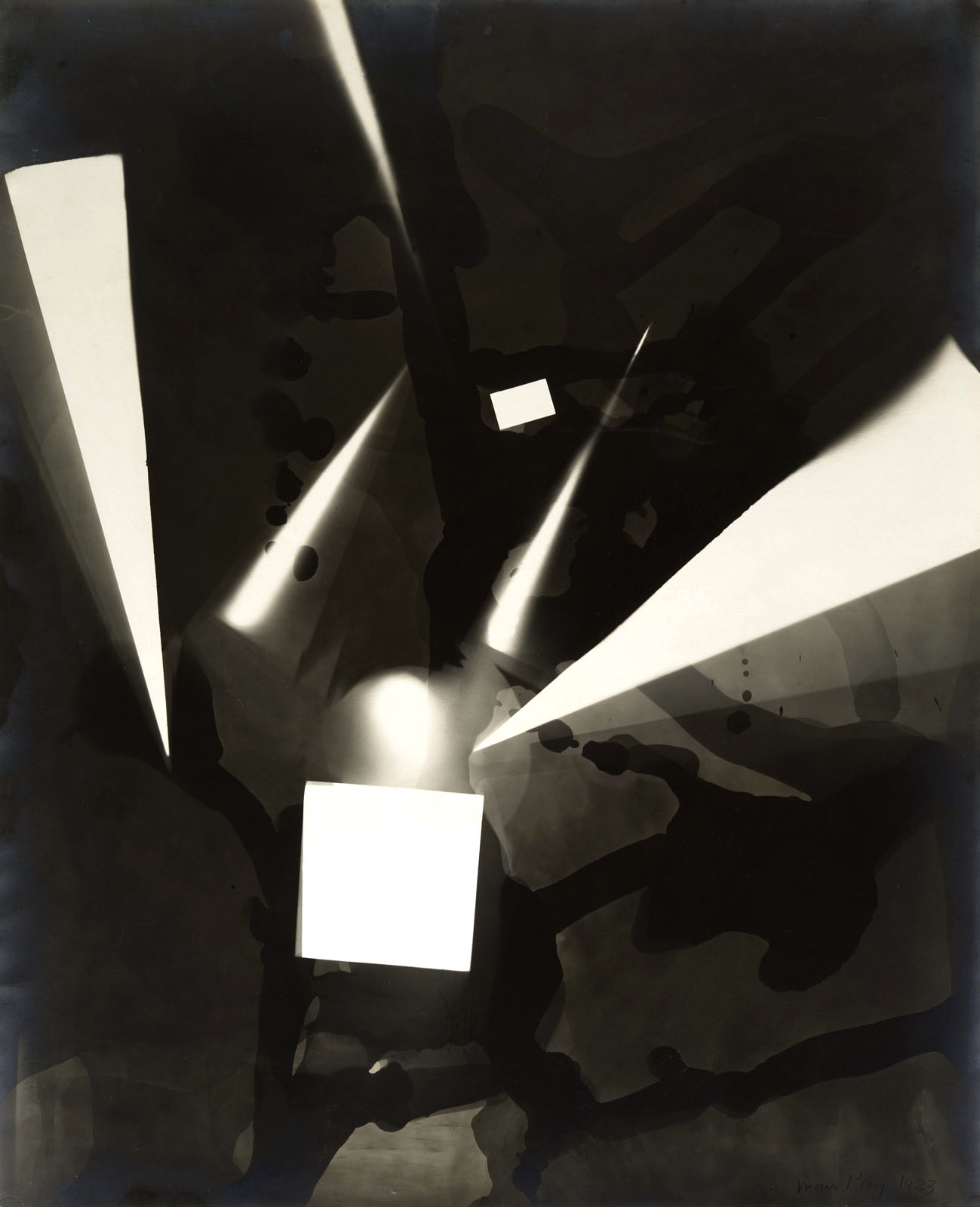
Man Ray (American, 1890-1976) 'Rayograph' 1923


Man Ray (American, 1890-1976) 
Rayograph 
1923 
Gelatin silver print 
11 1/2 × 9 5/16 in. (29.2 × 23.7cm) 
Yale University Art Gallery, New Haven, Gift of the Estate of Katherine S. Dreier 
© Man Ray 2015 Trust / Artists Rights Society (ARS), NY / ADAGP, Paris 2025
Photo: Yale University Art Gallery, Gift of Collection Société Anonyme 


Man Ray (American, 1890-1976) 'Rayograph' 1923-1928


Man Ray (American, 1890-1976) 
Rayograph
1923-1928 
Gelatin silver print 
19 5/16 x 15 11/16 in. (49 x 39.8cm) 
The Metropolitan Museum of Art, New York, Gilman Collection, Purchase, The Horace W. Goldsmith Foundation Gift, through Joyce and Robert Menschel, 2005
Image © The Metropolitan Museum of Art, photo by Mark Morosse 
© Man Ray 2015 Trust / Artists Rights Society (ARS), NY / ADAGP, Paris 2025 


Man Ray (American, 1890-1976) 'Rayography' 1925


Man Ray (American, 1890-1976) 
Rayograph 
1925 
Gelatin silver print 
19 15/16 × 15 13/16 in. (50.6 × 40.2cm) 
MAH Musée d’art et d’histoire, City of Geneva. Purchase, 1968
© Man Ray 2015 Trust / Artists Rights Society (ARS), NY / ADAGP, Paris 2025
Photo © Musée d’art et d’histoire, Ville de Genève, photo by André Longchamp


American artist Man Ray (1890-1976) was a visionary known for his radical experiments that pushed the limits of photography, painting, sculpture, and film. In the winter of 1921, he pioneered the rayograph, a new twist on a technique used to make photographs without a camera. By placing objects on or near a sheet of light-sensitive paper, which he exposed to light and developed, Man Ray turned recognisable subjects into wonderfully mysterious compositions. Introduced in the period between Dada and Surrealism, the rayographs’ transformative, magical qualities led the poet Tristan Tzara to describe them as capturing the moments “when objects dream.”

The exhibition will be the first to situate this signature accomplishment in relation to Man Ray’s larger body of work of the 1910s and 1920s. Drawing from the collections of The Met and more than 50 U.S. and international lenders, the exhibition will feature approximately 60 rayographs and 100 paintings, objects, prints, drawings, films, and photographs – including some of the artist’s most iconic works – to highlight the central role of the rayograph in Man Ray’s boundary-breaking practice.

“Before my eyes an image began to form, not quite a simple silhouette of the objects as in a straight photograph, but distorted and refracted … In the morning I examined the results, pinning a couple of the rayographs – as I decided to call them – on the wall. They looked startlingly new and mysterious.” ~ Man Ray

Text from The Metropolitan Museum of Art website


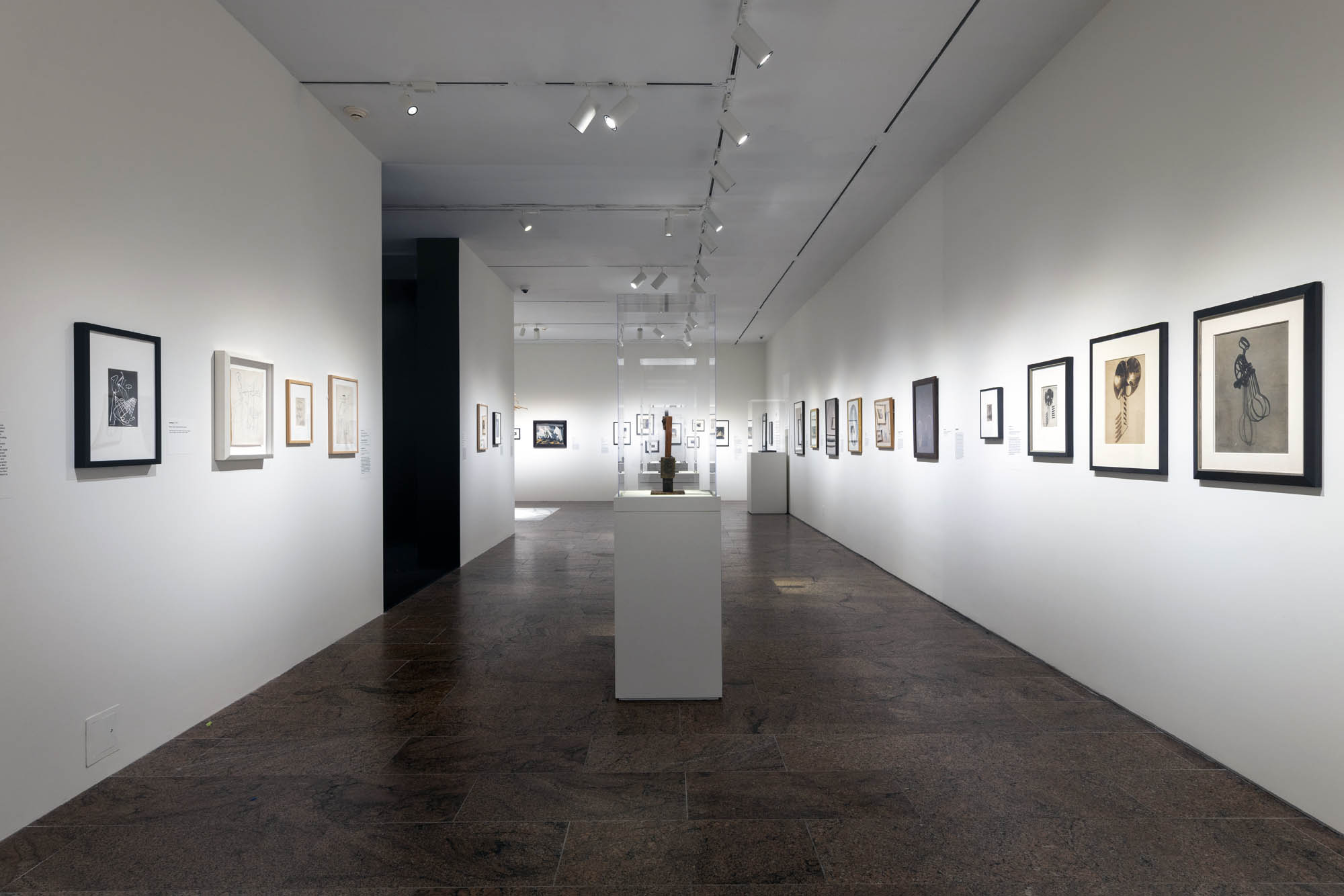
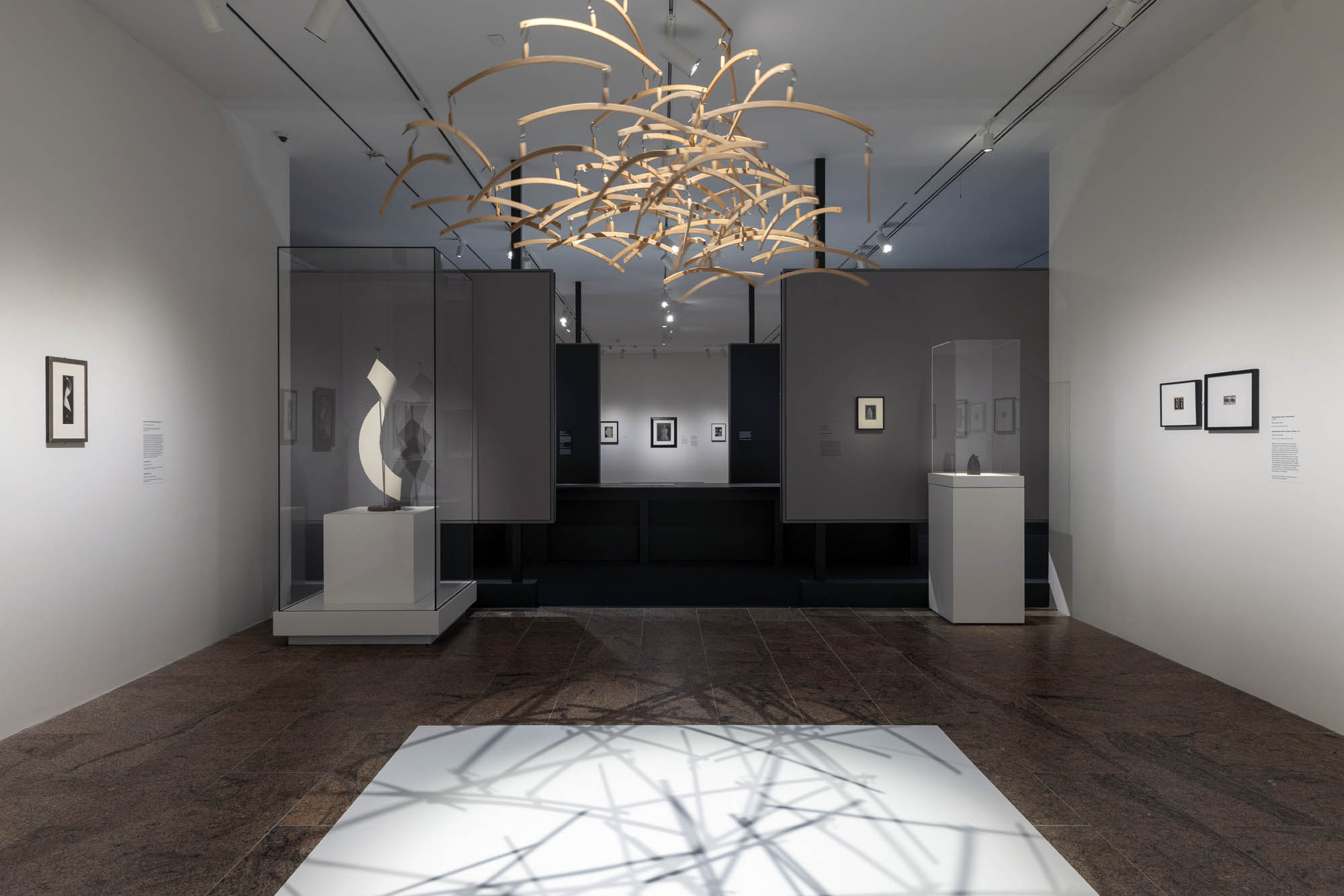
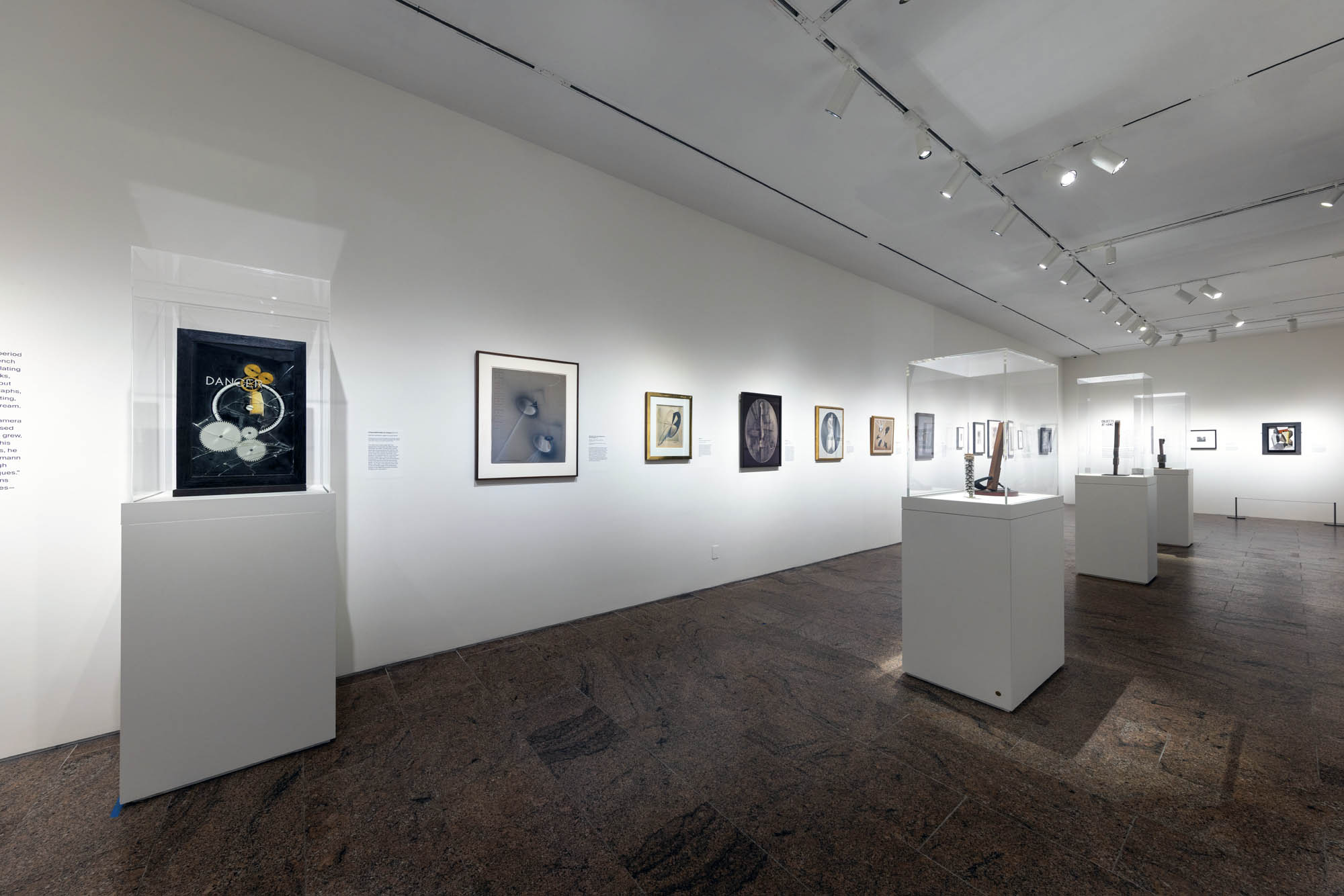
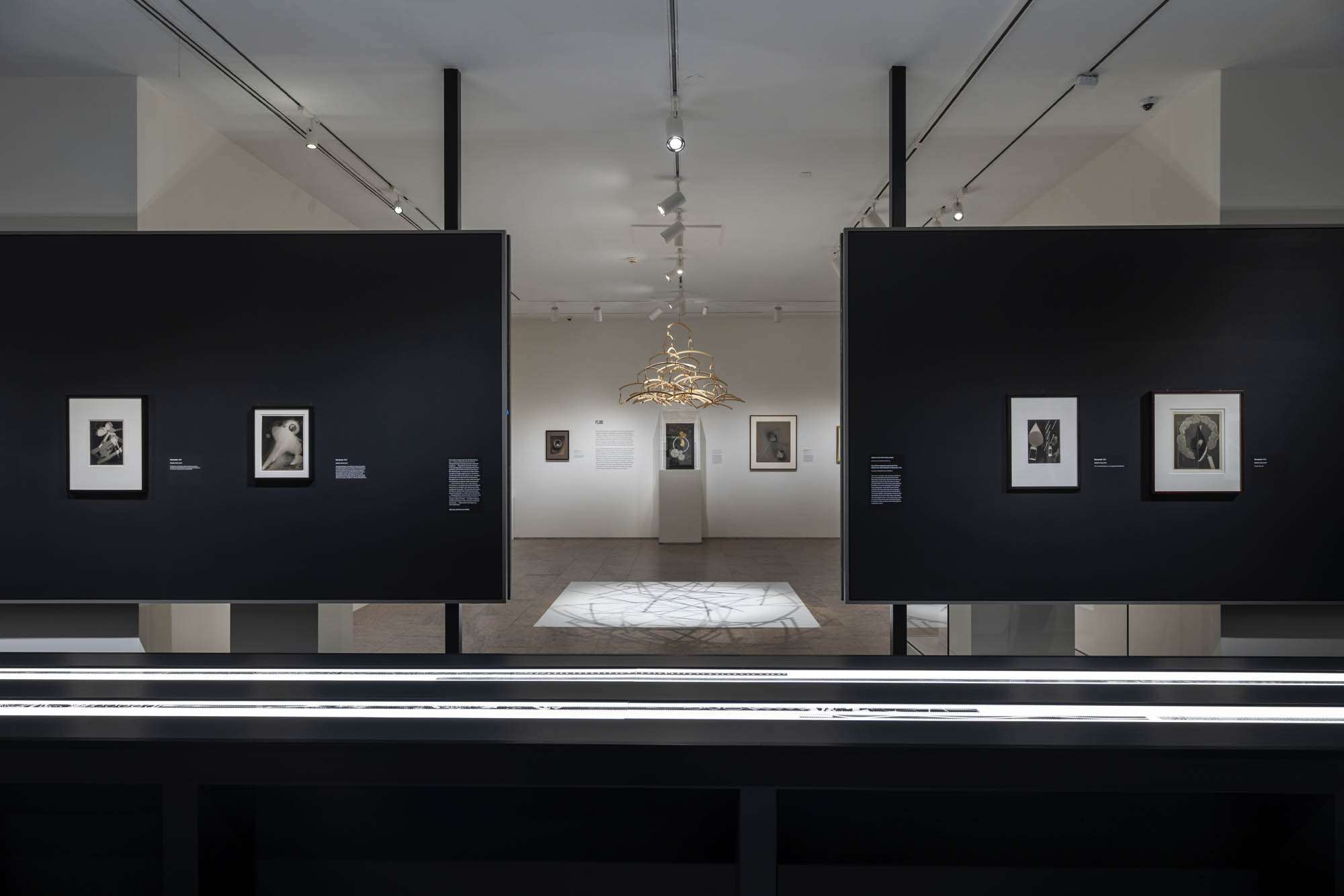
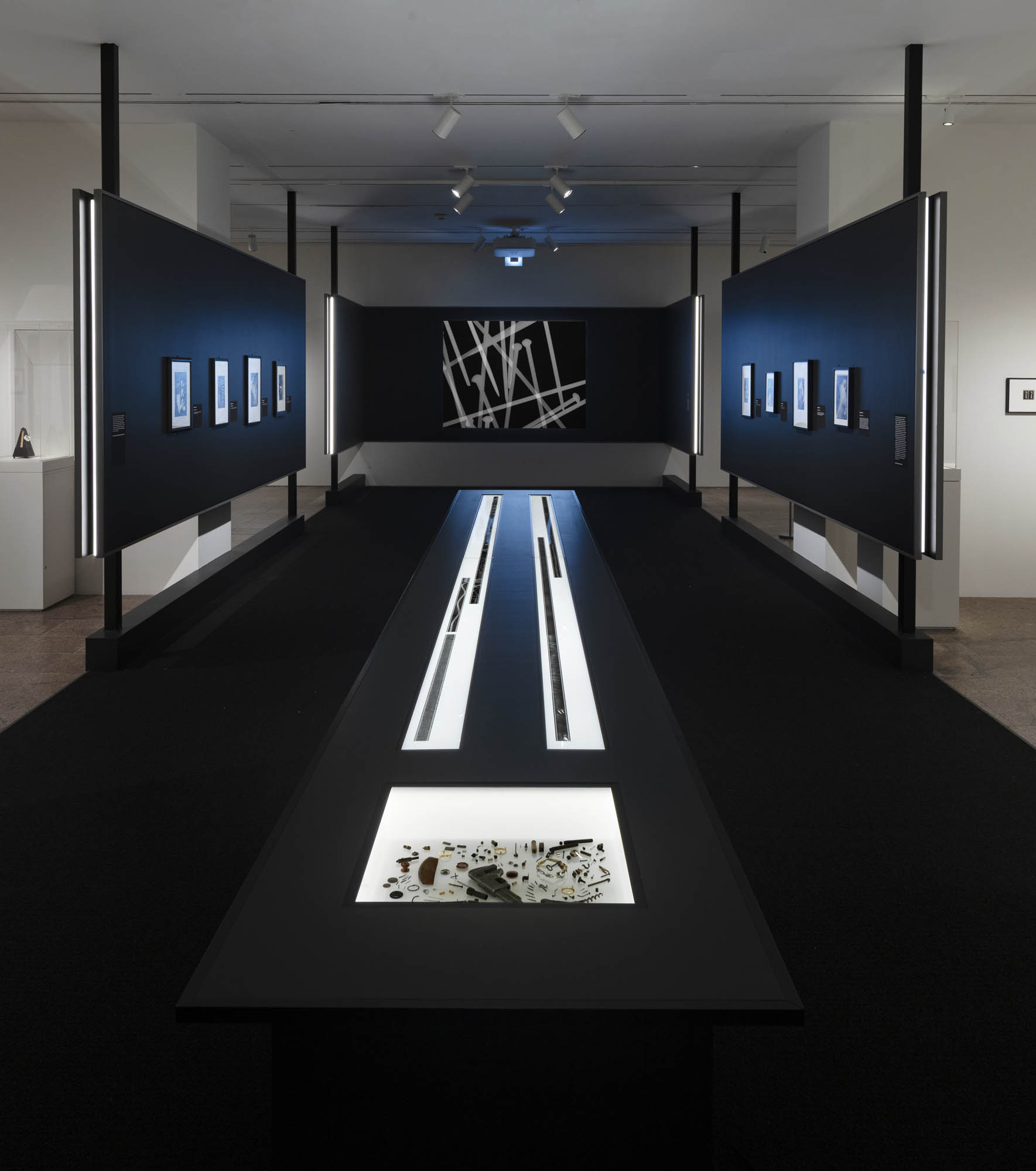
Installation view of the exhibition 'Man Ray: When Objects Dream' at The Metropolitan Museum of Art, New York, September 2025 - February 2026


Installation views of the exhibition Man Ray: When Objects Dream at The Metropolitan Museum of Art, New York, September 2025 – February 2026


Man Ray (American, 1890-1976)
'Torse (Retour à la raison)' (Torso [Return to Reason]) 1923, printed c. 1935


Man Ray (American, 1890-1976)
Torse (Retour à la raison) (Torso [Return to Reason])
1923, printed c. 1935
Gelatin silver print
8 1/4 × 6 3/8 in. (21 × 16.2cm)
Private collection
© Man Ray 2015 Trust / Artists Rights Society (ARS), NY / ADAGP, Paris 2025


In the 1923 silent short of the same title, Man Ray filmed barely discernible scenes of Paris at night along with his own enigmatic photograms and conglomerations of spiraling or gyrating objects. The resulting sequence of near-total abstractions seems devoid of sense or purpose. The “return to reason” in the film comes finally in the form of a woman’s torso – modelled by cabaret personality Kiki de Montparnasse – turning to and fro beside a rain-covered windowpane. Man Ray reproduced the seductive finale, as well as other moments from the film, as photographs, singly and in strips. A still from Man Ray’s film, this particular photograph appeared on its own in the first issue of the key avant-garde journal La Révolution surréaliste, in 1924.

Text from the Art Institute of Chicago website


Le retour à la raison (Return to Reason), Man Ray, 1923


Emak-Bakia (1926) – directed by Man Ray

Emak-Bakia (Basque for Leave me alone) is a 1926 film directed by Man Ray. Subtitled as a cinépoéme, it features many techniques Man Ray used in his still photography (for which he is better known), including rayographs, double exposure, soft focus and ambiguous features.

Emak-Bakia shows elements of fluid mechanical motion in parts, rotating artifacts showing his ideas of everyday objects being extended and rendered useless. Kiki of Montparnasse (Alice Prin) is shown driving a car in a scene through a town. Towards the middle of the film Jacques Rigaut appears dressed in female clothing and make-up. Later in the film a caption appears: “La raison de cette extravagance” (the reason for this extravagance). The film then cuts to a car arriving and a passenger leaving with briefcase entering a building, opening the case revealing men’s shirt collars which he proceeds to tear in half. The collars are then used as a focus for the film, rotating through double exposures.

The film features sculptures by Pablo Picasso, and some of Man Ray’s mathematical objects both still and animated using a stop motion technique.

Originally a silent film, recent copies have been dubbed using music taken from Man Ray’s personal record collection of the time. The musical reconstruction was by Jacques Guillot.

When the film was first exhibited, a man in the audience stood up to complain it was giving him a headache and hurting his eyes. Another man told him to shut up, and they both started to fight. The theatre turned into a frenzy, the fighting ended up out in the street, and the police were called in to stop the riot.

Emak bakia can also mean “give peace” (“emak” is the imperative form of the verb “eman”, which means “give”) in Basque.

Text from the YouTube website


L’étoile de mer, Man Ray, 1928

The film was based on Robert Desnon’s surrealist poem L’Étoile de mer.


The Met Presents First Major Exhibition on Man Ray’s Radical Reinvention of Art through the rayograph 

Featuring 160 rayographs, paintings, objects, prints, drawings, films, and photographs, Man Ray: When Objects Dream highlights the principal place of the rayograph – a type of cameraless photograph – within the context of many of the artist’s most important works 

This exhibition includes thirty-five works by Man Ray which are part of the major promised gift of nearly 200 works of Dada and Surrealist art from Trustee John Pritkzer 

Man Ray: When Objects Dream at The Metropolitan Museum of Art is the first major exhibition to examine the radical experimentation of American artist Man Ray (1890-1976) through one of his most significant bodies of work, the rayograph. Man Ray coined the term rayograph to name his version of the 19th-century technique of making photographs without a camera. He created them by placing objects on or near a sheet of light-sensitive paper, which he then exposed to light and developed. These photograms – as they are also called – appear as reversed silhouettes, or negative versions, of their subjects. They often feature recognisable items that become wonderfully mysterious in the artist’s hands. Their transformative nature led the Dada poet Tristan Tzara to describe rayographs as capturing the moments “when objects dream.” While Man Ray acknowledged the photographic origins of his new works, he did not think of them as strictly bound by medium. Taking Man Ray’s lead, this presentation is the first – more than a century since he introduced the rayograph – to situate this signature accomplishment in relation to his larger artistic output. The exhibition is on view September 14, 2025, through February 1, 2026. 

“As one of the most fascinating and multi-faceted artists in the avant-garde movements of the early 20th century, Man Ray challenged traditional narratives of modernism through his daring experimentation with diverse artistic mediums,” said Max Hollein, The Met’s Marina Kellen French Director and Chief Executive Officer. “Anchored by Man Ray’s innovative and mesmerising rayographs along with new research and discoveries, this exhibition invites visitors to explore his ground-breaking manipulation of objects, light, and media, which profoundly reframed his artistic practice and impacted countless other artists. We’re so thrilled to include thirty-five works by Man Ray in this exhibition as part of John’s incredible promised gift.” 

Drawing from the collections of The Met and more than 50 U.S. and international lenders, the presentation includes more than 60 rayographs, many of which were featured in important publications and exhibitions at the time of their making, and 100 paintings, objects, prints, drawings, collages, films, and photographs to highlight the central role of the rayograph in Man Ray’s boundary-breaking practice. The exhibition marks a collaboration with the recently closed Lens Media Lab, Yale University, under the direction of Paul Messier, and with photography conservators and curators at various lending institutions, to study more than fifty rayographs. 

In the winter of 1921, while working late in his Paris darkroom, Man Ray inadvertently produced a photogram by placing some of his glass equipment on top of an unexposed sheet of photographic paper he found among the prints in his developing tray. As he wrote in his 1963 autobiography, “Before my eyes an image began to form, not quite a simple silhouette of the objects as in a straight photograph, but distorted and refracted … In the morning I examined the results, pinning a couple of the rayographs – as I decided to call them – on the wall. They looked startlingly new and mysterious.” This supposed accident, now the stuff of legend, has obscured the fact that rayographs might be seen as the culmination of Man Ray’s work up to 1921 as well as the frame through which he would redefine his work thereafter. They harnessed his interests in working between dimensions, media, and artistic traditions, fittingly at the moment between Dada and Surrealism, which writer Louis Aragon once called the mouvement flou (flou means “hazy, blurry, or out of focus” in French). 

Unfolding in a series of spaces that intersect with a central, dramatic presentation of rayographs, the exhibition illuminates their connections with Man Ray’s work in other media, including assemblage, painting, photography, and film. In approaching the rayograph in this expansive way, the exhibition also offers a reappraisal of the most productive and creatively significant period of his long career, beginning in New York around 1915 with his ambitious paintings and concluding in Paris in 1929 with his fine-tuning of the solarization process with Lee Miller. A critical factor across the exhibition is the central role of objects for Man Ray’s career, both in the creation of many of the rayographs and in his work more generally.

At its core, Man Ray: When Objects Dream focuses new attention on some of the artist’s most recognised, but little-studied, works, most particularly the rayograph. The exhibition opens with Champs délicieux (Delicious Fields) (1922), a portfolio of 12 rayographs which marks the first time Man Ray presented his photograms to the public. Critics hailed them for putting photography on the same plane as original pictorial works. The presentation concludes with the working copy of Champs délicieux, which the artist canceled and dedicated to his friend, Dada artist Tristan Tzara, in 1959. 

Between these two works, twelve thematic sections of the exhibition explore such concepts as the silhouette, the dream, the body, the object, and the game, which are inspired by Man Ray’s experimentation with the rayograph. Other groupings will focus on specific media and techniques, and the artist’s studio, as well as watershed moments in the artist’s production, such as the years of 1923 and 1929, when Man Ray unexpectedly returned to painting. Three of his newly restored films, Retour à la raison (Return to Reason) (1923), Emak Bakia (1926), and L’étoile de mer (The Starfish) (1928), will be screened within the exhibition. 

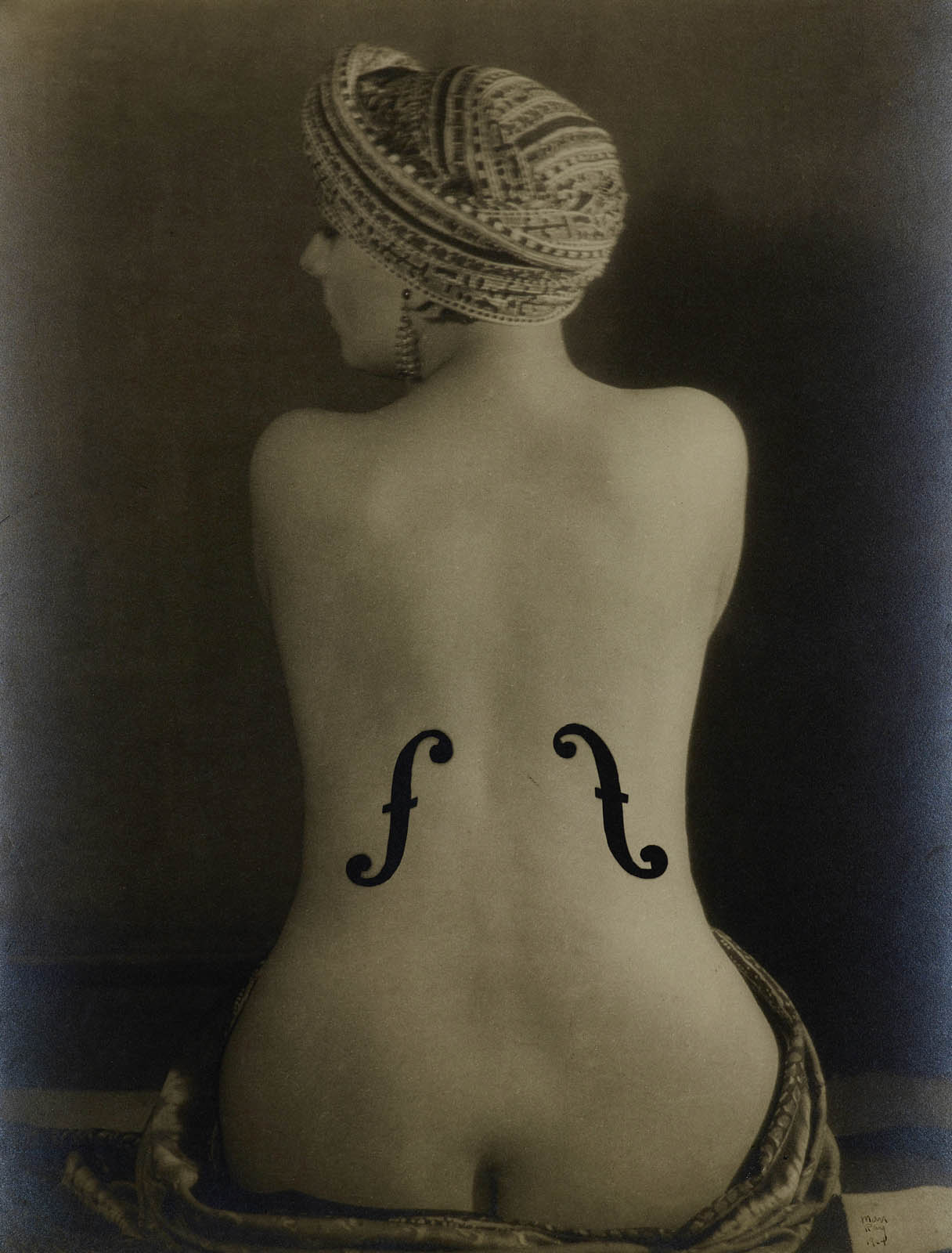
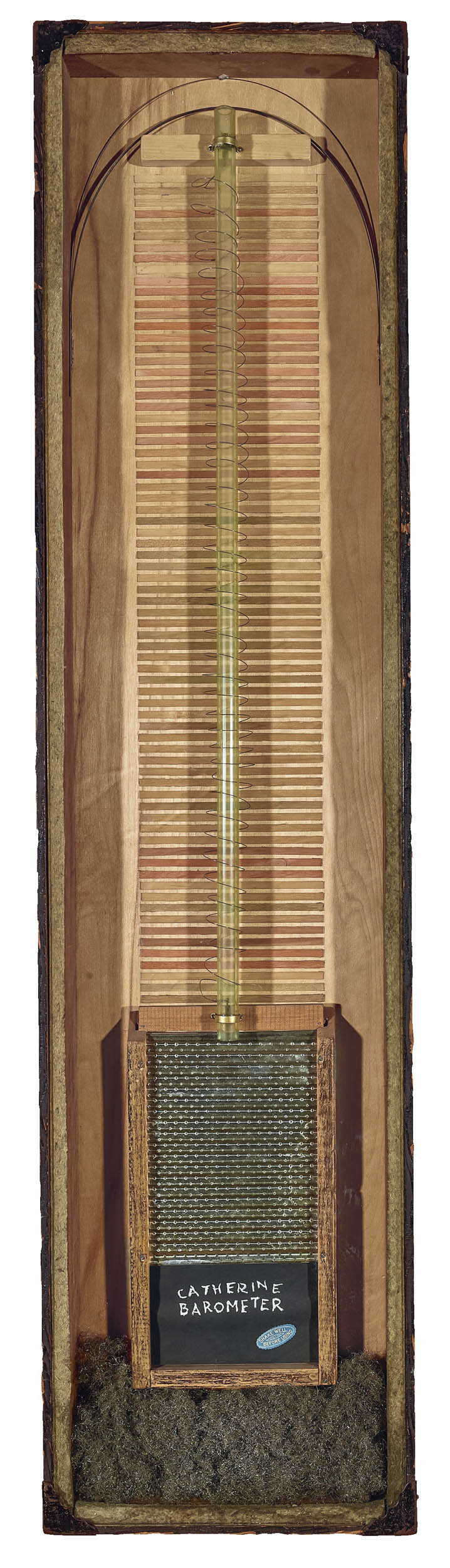
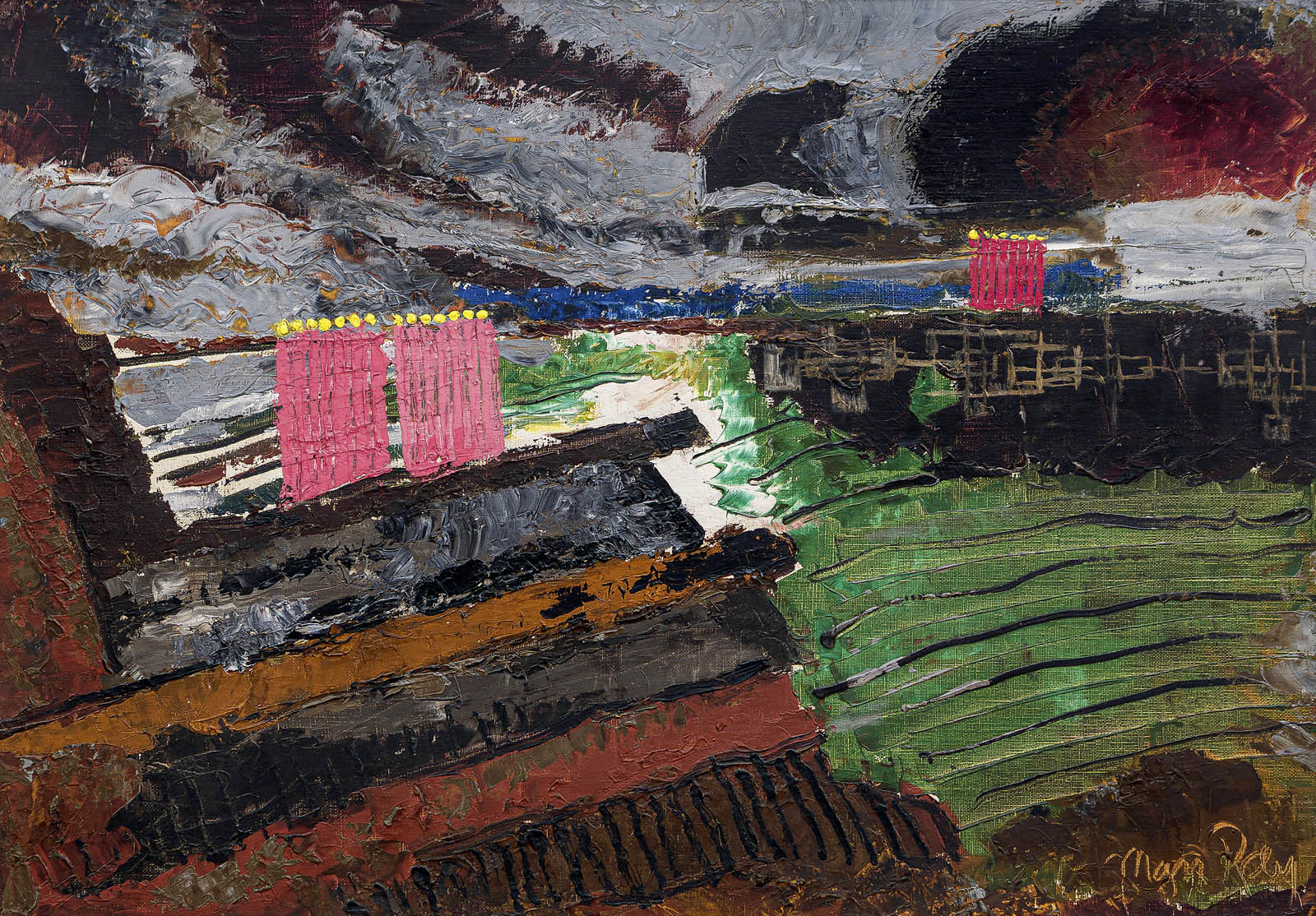
Highlights include such iconic objects like Man Ray’s iron studded with tacks, known as Cadeau (Gift) (1921), and his metronome, Object to be Destroyed (1923), that keeps time with the swinging eye of his companion, the photographer Lee Miller. Celebrated photographs, including his landmark Le violon d’Ingres (1924), in which the torso of the artist and performer Kiki de Montparnasse (Alice Prin) is depicted as a musical instrument, are also featured. The exhibition brings together some of his boldest but most refined experimental works – compositions like Aerograph (1919), a painting made with an airbrush and pigment sprayed through and around items from his studio. For Man Ray, objects could function as metaphors for the body, as demonstrated in works such as Catherine Barometer (1920) and L’homme (Man). Rarely seen paintings in the exhibition, including Paysage suédois (Swedish Landscape) (1926) record the artist’s great experimentation, working paint without a brush and in an almost sculptural way, building up and scraping down the surface that reflects his experiments in the darkroom.

Man Ray: When Objects Dream is curated by Stephanie D’Alessandro, Leonard A. Lauder Curator of Modern Art and Senior Research Coordinator in Modern and Contemporary Art at The Met, and Stephen C. Pinson, Curator in the Department of Photographs at The Met, with the assistance of Micayla Bransfield, Research Associate, Modern and Contemporary Art.
Press release from The Metropolitan Museum of Art


Man Ray (American, 1890-1976) 'La Femme (Woman)' c. 1918-1920


Man Ray (American, 1890-1976) 
La Femme (Woman)
c. 1918-1920
Gelatin silver print
43.7 x 33.5cm (17 3/16 x 13 3/16in.)
Gilman Collection, Gift of The Howard Gilman Foundation, 2005
© 2016 Man Ray Trust/Artists Rights Society (ARS), New York/ADAGP, Paris


Man Ray (American, 1890-1976) 'L'homme (Man)' 1918-1920


Man Ray (American, 1890-1976) 
L’homme (Man
1918-1920 
Gelatin silver print 
19 × 14 1/2 in. (48.3 × 36.8cm) 
The Metropolitan Museum of Art, New York, Bluff Collection, Promised Gift of John A. Pritzker
© Man Ray 2015 Trust / Artists Rights Society (ARS), NY / ADAGP, Paris 2025
Photo credit: Courtesy of The Bluff Collection, photo by Ben Blackwell


Man Ray (American, 1890-1976) 
'Élevage de poussière (Dust Breeding)' 1920


Man Ray (American, 1890-1976) 
Élevage de poussière (Dust Breeding)
1920
Gelatin silver print
2 13/16 × 4 5/16 in. (7.1 × 11 cm)
Private collection
© Man Ray 2015 Trust / Artists Rights Society (ARS), NY / ADAGP, Paris 2025
 

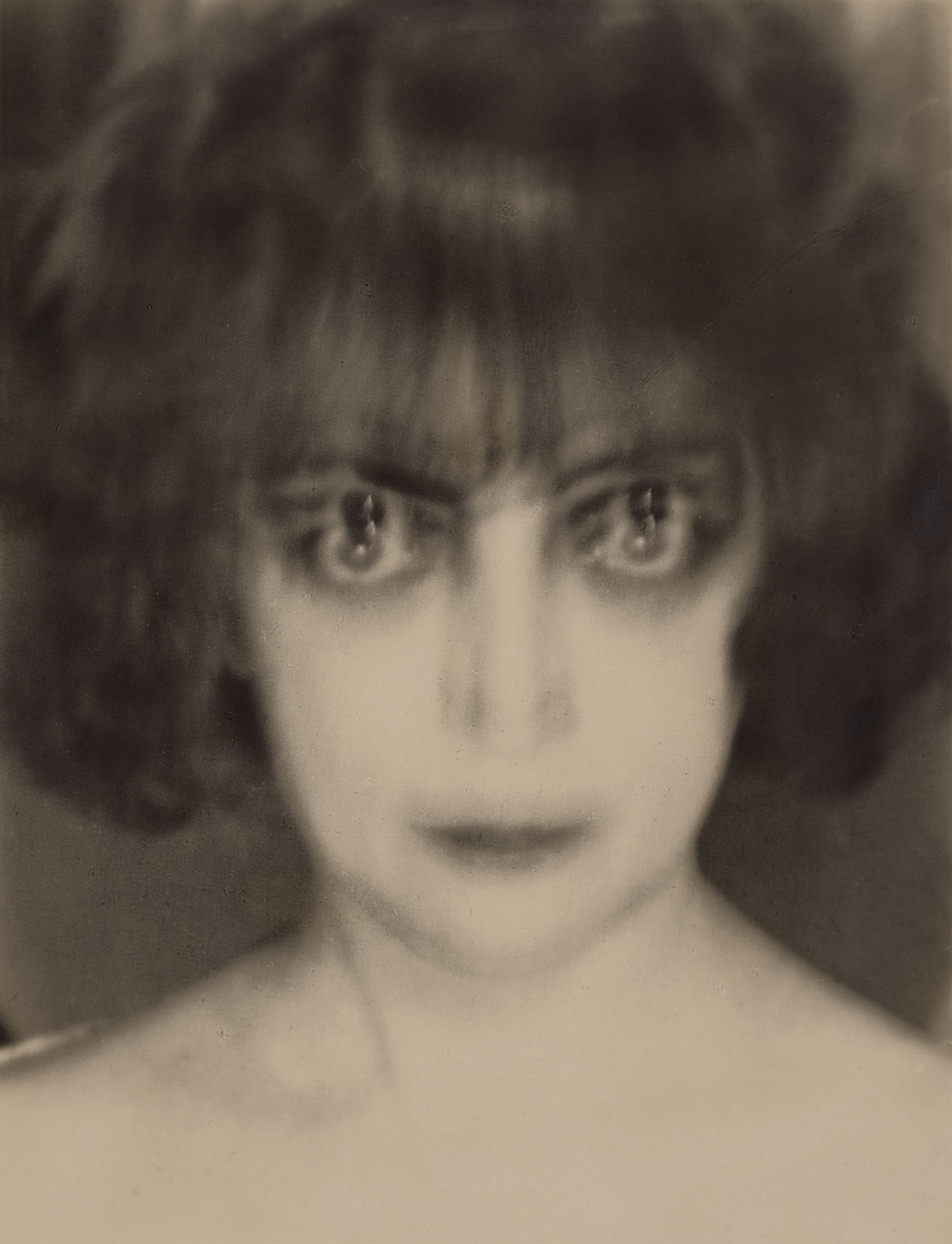
Man Ray (American, 1890-1976) 'Marchesa Luisa Casati' 1922


Man Ray (American, 1890-1976) 
Marchesa Luisa Casati 
1922 
Gelatin silver print 
8 1/2 × 6 9/16 in. (21.6 × 16.7 cm) 
Philadelphia Museum of Art: Gift of Carl Van Vechten
© Man Ray 2015 Trust / Artists Rights Society (ARS), NY / ADAGP, Paris 2025
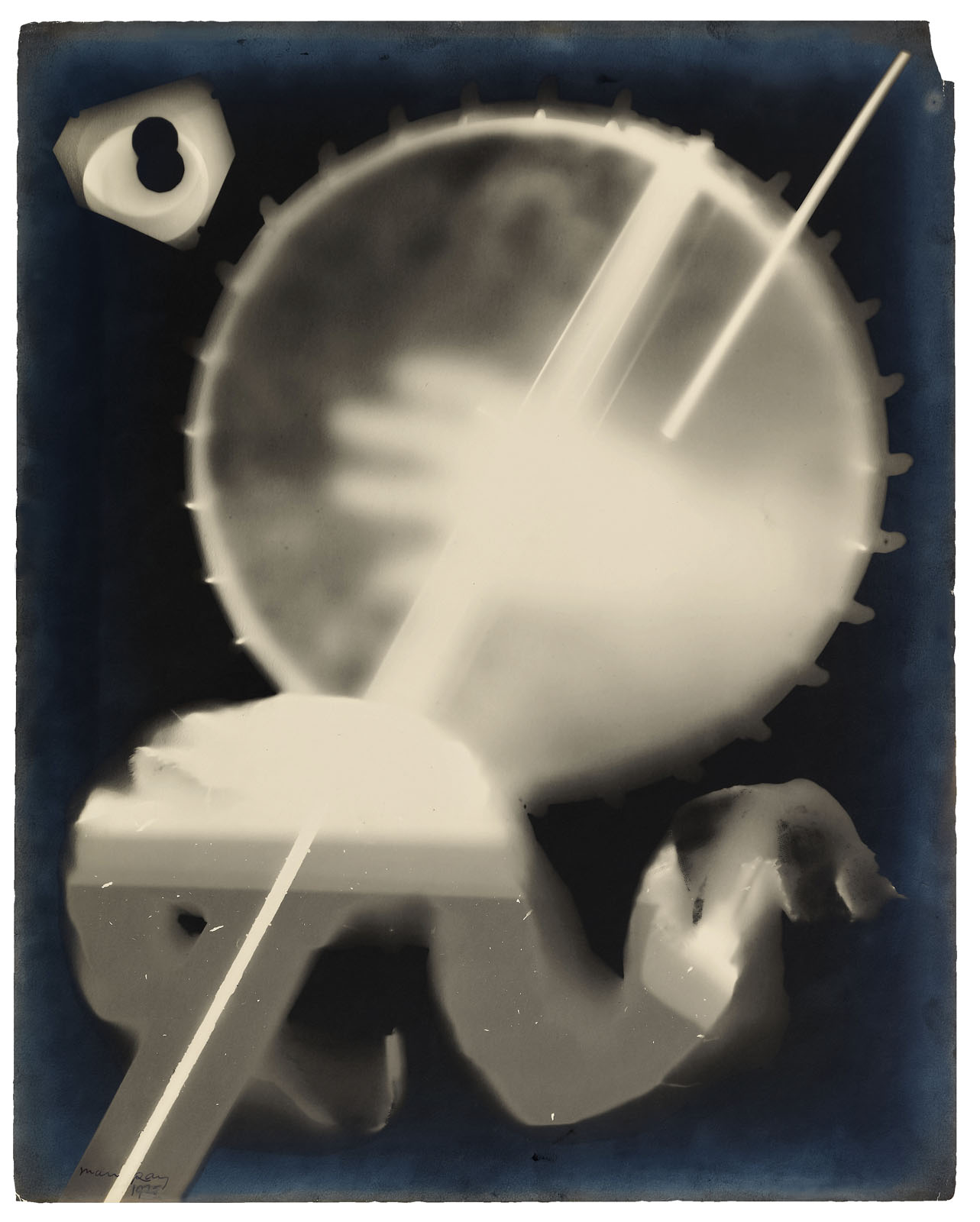
Photo courtesy of the Philadelphia Museum of Art


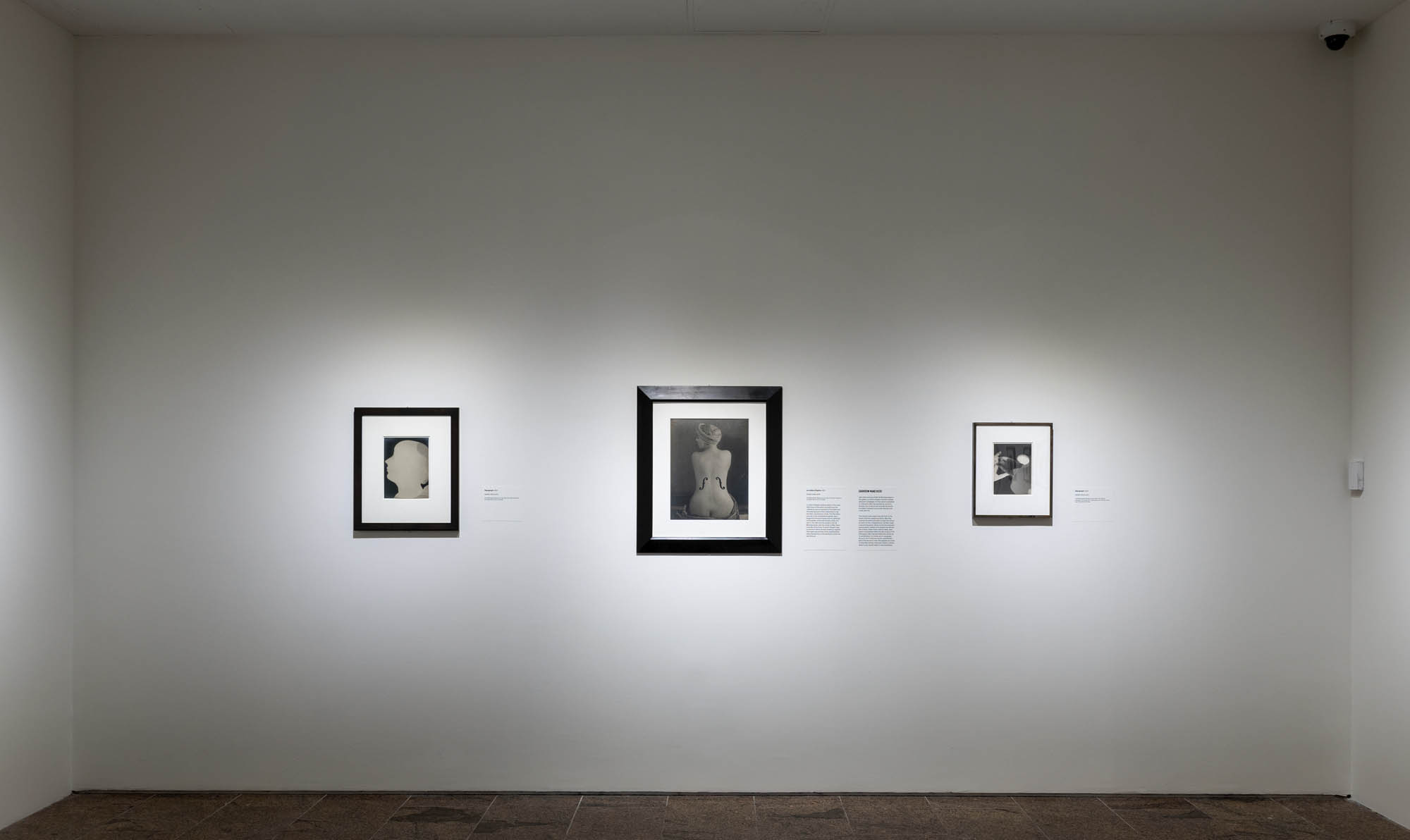
Installation view of the exhibition 'Man Ray: When Objects Dream' at The Metropolitan Museum of Art, New York, September 2025 - February 2026 showing at centre, Man Ray's photograph 'Le violon d'Ingres' 1924


Installation view of the exhibition Man Ray: When Objects Dream at The Metropolitan Museum of Art, New York, September 2025 – February 2026 showing at centre, Man Ray’s photograph Le violon d’Ingres 1924 (below)


Man Ray (American, 1890-1976) 'Le violon d’Ingres' 1924


Man Ray (American, 1890-1976) 
Le violon d’Ingres
1924 
Gelatin silver print 
19 1/8 × 14 3/4 in. (48.5 × 37.5cm)
The Metropolitan Museum of Art, New York, Bluff Collection, Promised Gift of John A. Pritzker
© Man Ray 2015 Trust / Artists Rights Society (ARS), NY / ADAGP, Paris 2025
Photo by Ian Reeves


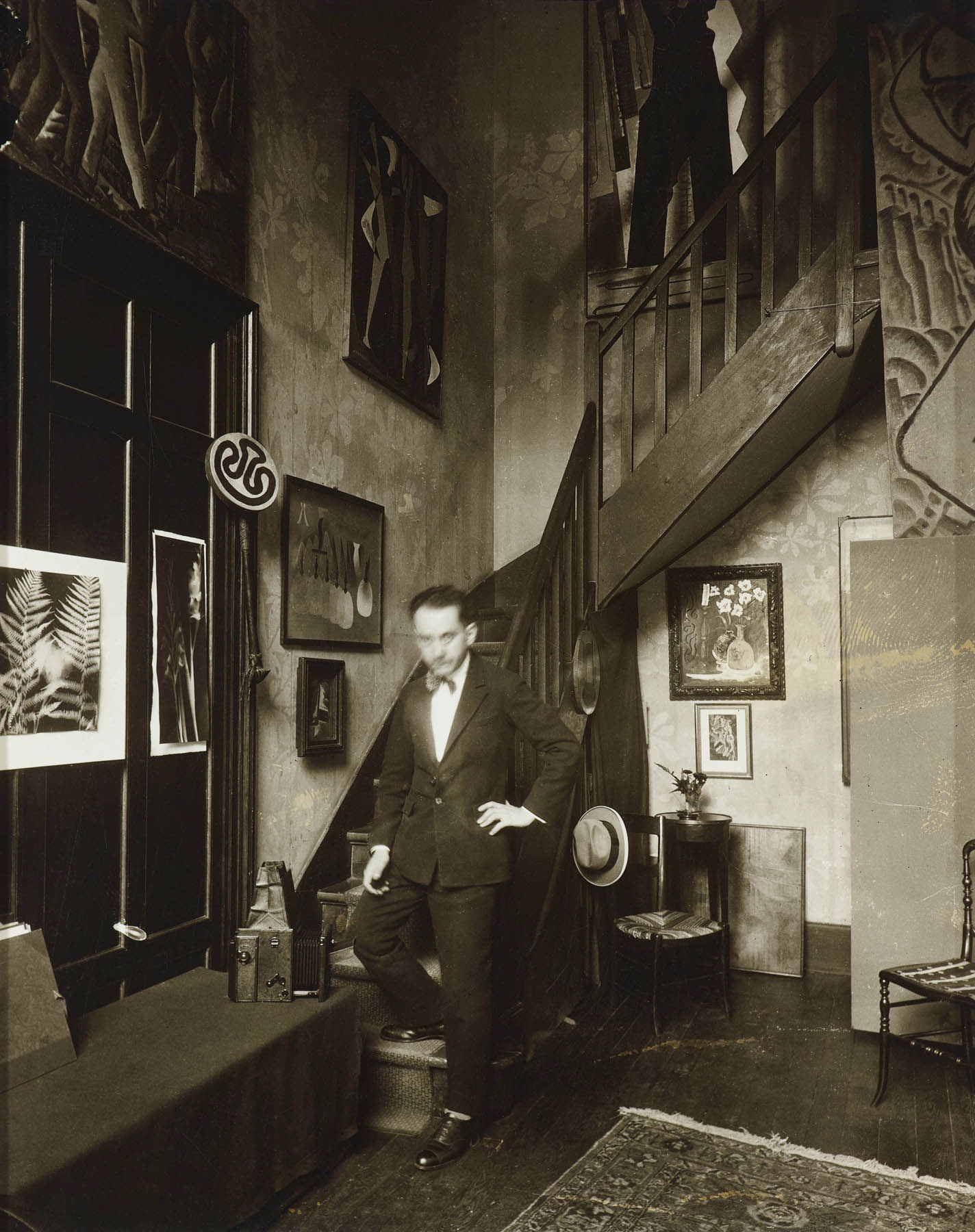
Man Ray (American, 1890-1976) 'Self-Portrait in 31 bis rue Campagne-Premiere Studio' 1925


Man Ray (American, 1890-1976) 
Self-Portrait in 31 bis rue Campagne-Première Studio
1925 
Gelatin silver print 
6 1/8 × 4 1/2 in. (15.6 × 11.4cm) 
The Metropolitan Museum of Art, New York, Bluff Collection, Promised Gift of John A. Pritzker
© Man Ray 2015 Trust / Artists Rights Society (ARS), NY / ADAGP, Paris 2025
Photo by Ian Reeves


Man Ray (American, 1890-1976) 'Noire et blanche' 1926


Man Ray (American, 1890-1976)
Noire et blanche
1926
Gelatin silver print
8 1/16 x 11 11/16 in. (20.5 x 29.7cm)
Private collection
© Man Ray 2015 Trust / Artists Rights Society (ARS), NY / ADAGP, Paris 2025


Man Ray (American, 1890-1976) 'Primat de la matière sur la pensée' (Primacy of Matter over Thought) 1929


Man Ray (American, 1890-1976)
Primat de la matière sur la pensée (Primacy of Matter over Thought)
1929
Gelatin silver print
10 1/2 x 14 7/8 in. (26.7 x 37.8cm)
Private collection, San Francisco
© Man Ray 2015 Trust / Artists Rights Society (ARS), NY / ADAGP, Paris 2025


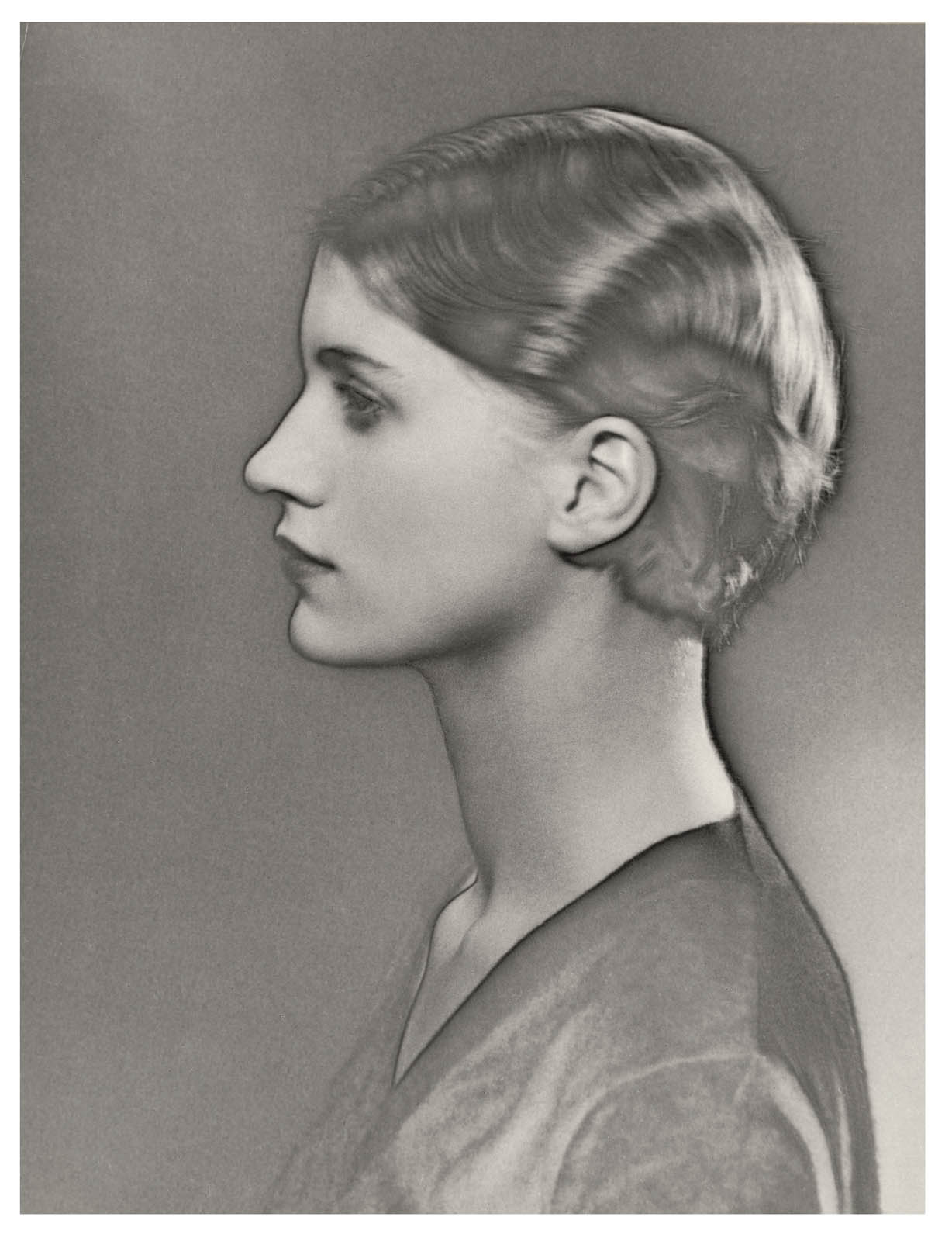
Man Ray (American, 1890-1976) 'Lee Miller' 1929


Man Ray (American, 1890–1976) 
Lee Miller 
1929 
Gelatin silver print 
10 1/2 × 8 1/8 in. (26.7 × 20.6cm) 
The Museum of Modern Art, New York, Gift of James Thrall Soby 
© Man Ray 2015 Trust / Artists Rights Society (ARS), NY / ADAGP, Paris 2025


Man Ray (American, 1890-1976) 'Self-Portrait with Camera' 1930


Man Ray (American, 1890-1976)
Self-Portrait with Camera
1930
Gelatin silver print
4 3/4 x 3 1/2 in. (12.1 x 8.9cm)
The Jewish Museum, New York
Purchase: Photography Acquisitions Committee Fund, Horace W. Goldsmith Fund, and Gift of Judith and Jack Stern
© Man Ray 2015 Trust / Artists Rights Society (ARS), NY / ADAGP, Paris 2025


Man Ray (American, 1890-1976) 'Mary Gill' 1930


Man Ray (American, 1890-1976)
Mary Gill
1930
Gelatin silver print
11 1/2 x 8 1/2 in. (29.2 x 21.6cm)
Harvard Art Museums/Fogg Museum, Robert M. Sedgwick II Fund
© Man Ray 2015 Trust / Artists Rights Society (ARS), NY / ADAGP, Paris 2025


Man Ray (American, 1890-1976)
'Untitled (Glass Tears)' c. 1930-1933, printed 1935 or later


Man Ray (American, 1890-1976)
Untitled (Glass Tears)
c. 1930-1933, printed 1935 or later
Gelatin silver print
8 7/8 x 11 1/4 in. (22.5 x 28.6cm)
Private collection
© Man Ray 2015 Trust / Artists Rights Society (ARS), NY / ADAGP, Paris 2025


Man Ray: When Objects Dream

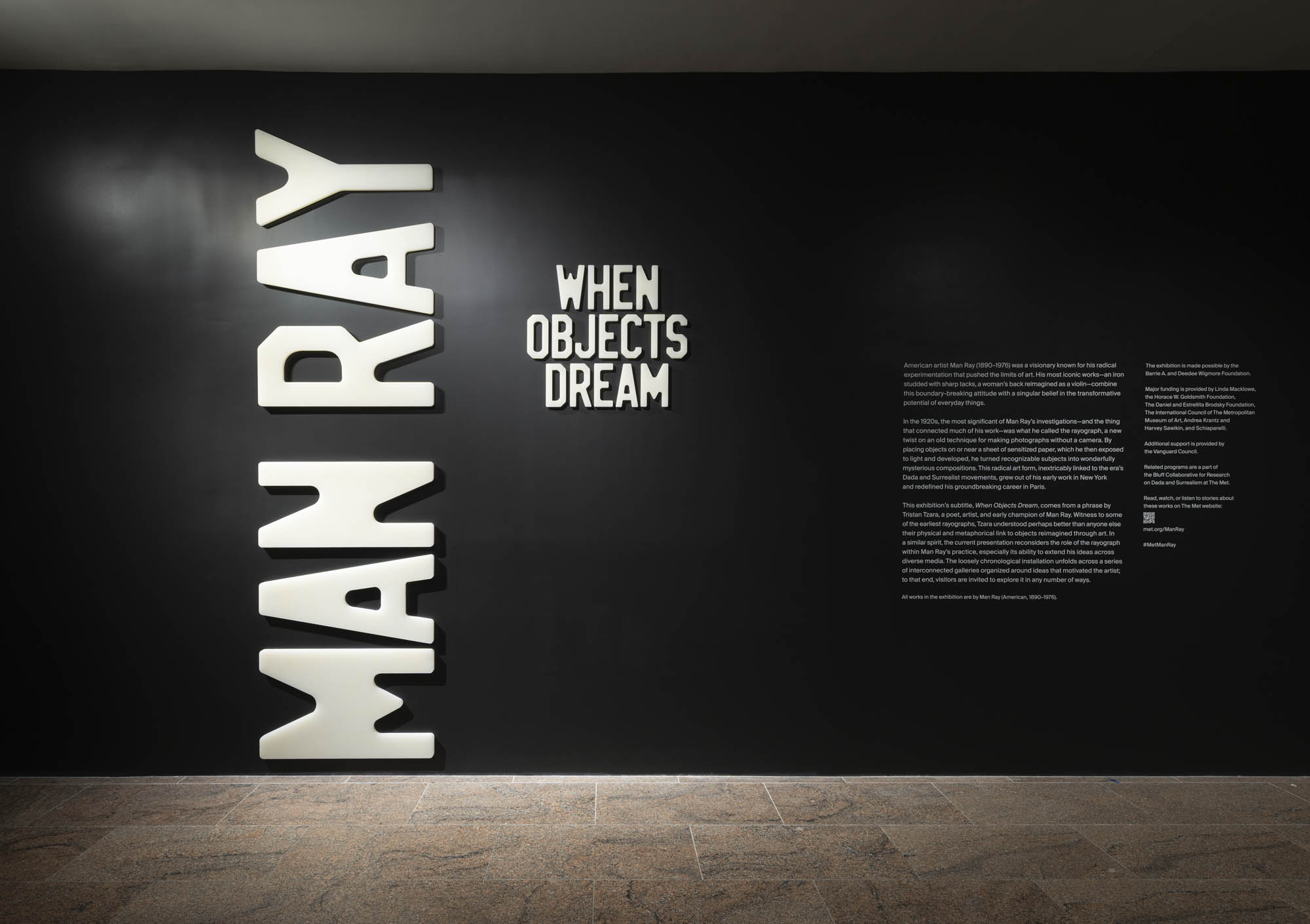
American artist Man Ray (1890-1976) was a visionary known for his radical experimentation that pushed the limits of art. His most iconic works – an iron studded with sharp tacks, a woman’s back reimagined as a violin – combine this boundary-breaking attitude with a singular belief in the transformative potential of everyday things. 

In the 1920s, the most significant of Man Ray’s investigations – and the thing that connected much of his work – was what he called the rayograph, a new twist on an old technique for making photographs without a camera. By placing objects on or near a sheet of sensitised paper, which he then exposed to light and developed, he turned recognisable subjects into wonderfully mysterious compositions. This radical art form, inextricably linked to the era’s Dada and Surrealist movements, grew out of his early work in New York and redefined his groundbreaking career in Paris.

Introduction

This exhibition’s subtitle, When Objects Dream, comes from a phrase by Tristan Tzara, a poet, artist, and early champion of Man Ray. Witness to some of the earliest rayographs, Tzara understood perhaps better than anyone else their physical and metaphorical link to objects reimagined through art. In a similar spirit, the current presentation reconsiders the role of the rayograph within Man Ray’s practice, especially its ability to extend his ideas across diverse media. The loosely chronological installation unfolds across a series of interconnected galleries organized around ideas that motivated the artist; to that end, visitors are invited to explore it in any number of ways.

All works in the exhibition are by Man Ray (American, 1890-1976).

Champs délicieux

In April 1922, readers of a French literary journal discovered a curious announcement for an album titled Champs délicieux (Delicious Fields). Its twelve “original photographs” by Man Ray feature objects from his studio – tongs, a comb, string, a hotel room key – composed in groupings. The images are ordered without clear logic or narrative. Instead, as advertised, they mark a “state of mind,” the artist’s free play, alone at night and without work obligations, in his studio darkroom. 

Man Ray introduced Champs délicieux in the period between two revolutionary movements that arose in the wake of World War I: Dada and Surrealism. Both challenged conventional art and society by upending traditional subjects, techniques, and expectations. Inspired in part by a collection of unconsciously driven, automatic writings by poets André Breton and Philippe Soupault, Man Ray sought to render everyday objects unfamiliar. As early subscriptions attest, the album found an enthusiastic audience who appreciated the language of the rayograph and its ability to open up a new visual world.

A New Art

Before Man Ray first picked up a camera in 1915, he was focused on painting. He set out to stake his claim in the exhilarating avant-garde scene, his interest fueled by cutting-edge exhibitions at Alfred Stieglitz’s gallery, 291, and thrilling examples of Cubism, Expressionism, Fauvism, and Futurism at the modern art presentation known as The Armory Show in 1913. Unexpectedly, photography offered Man Ray a path forward. Noting the way a camera lens could compress and flatten space, he determined to endow art with a similar “concentration of life” while simultaneously freeing it from the burden of illusionism. “The creative force and the expressiveness of painting,” he wrote at the time, “reside materially in the colour and texture of pigment, in the possibilities of form invention and organisation, and in the flat plane on which these elements are brought to play.” He made paintings using palette knives and other tools instead of brushes and employed patterns, cutouts, and collage to create a self-proclaimed “new art of two dimensions.”

Objects At Hand

NOT RESPONSIBLE FOR GOODS LEFT OVER THIRTY DAYS. So reads a sign in a photo, displayed nearby, of Man Ray’s West Eighth Street studio in New York. It was one of several items the artist discovered in the trash heap at his apartment building and brought up to his top-floor space. He considered retooling the sign to read LEFT OVER GOODS NOT RESPONSIBLE FOR THIRTY DAYS but decided it was perfect as is. This act – of elevating junk to art – is a familiar one in histories of the avant-garde, especially for the Dada movement. Art did not have to be painted or modelled or made with traditional materials and tools; it could be found in the everyday world and appreciated for the idea that it introduced, not for its beauty. 

As Man Ray developed his “new art,” he came to see the latent potential of all the objects within his studio. This spurred further investigations that likewise tested the limits of two and three dimensions and blurred the boundaries between media. At the same time, he continued to explore how the camera could be used not only to document his work but to open new perspectives onto ordinary objects and their creative possibilities.

Clichés-verre

While the rayograph is often described as Man Ray’s first experiment with cameraless photography, that moment occurred years earlier. Around 1917 he explored several photographically based techniques, including the cliché-verre, or “glass-plate” print. A nineteenth-century reproductive process that incorporates both photography and printmaking, a cliché-verre is traditionally made by covering a plate of glass with a darkened medium and drawing into it to produce clear lines. When set onto sensitised paper and exposed to a light source, the plate transmits the scratched away areas as dark lines. Man Ray chose to incise directly into the emulsion of an exposed photographic plate, which he then subjected to light again with paper below it to make a contact print. 

Photography

Man Ray first picked up a camera in 1915, to document his art. Through this experience, he discovered that the works acquired new qualities when reproduced in black and white. He made photographic portraits, too, which in Paris would become a dependable source of income. Revelling in the camera’s transformative optical abilities, Man Ray soon used it as a tool to facilitate his self-appointed role as a “marvellous explorer of those aspects that our retinas will never record.” He sought to reveal the creative potential of objects in his studio and in 1918 began a series of photographs using specifically arranged everyday items.

Aerographs

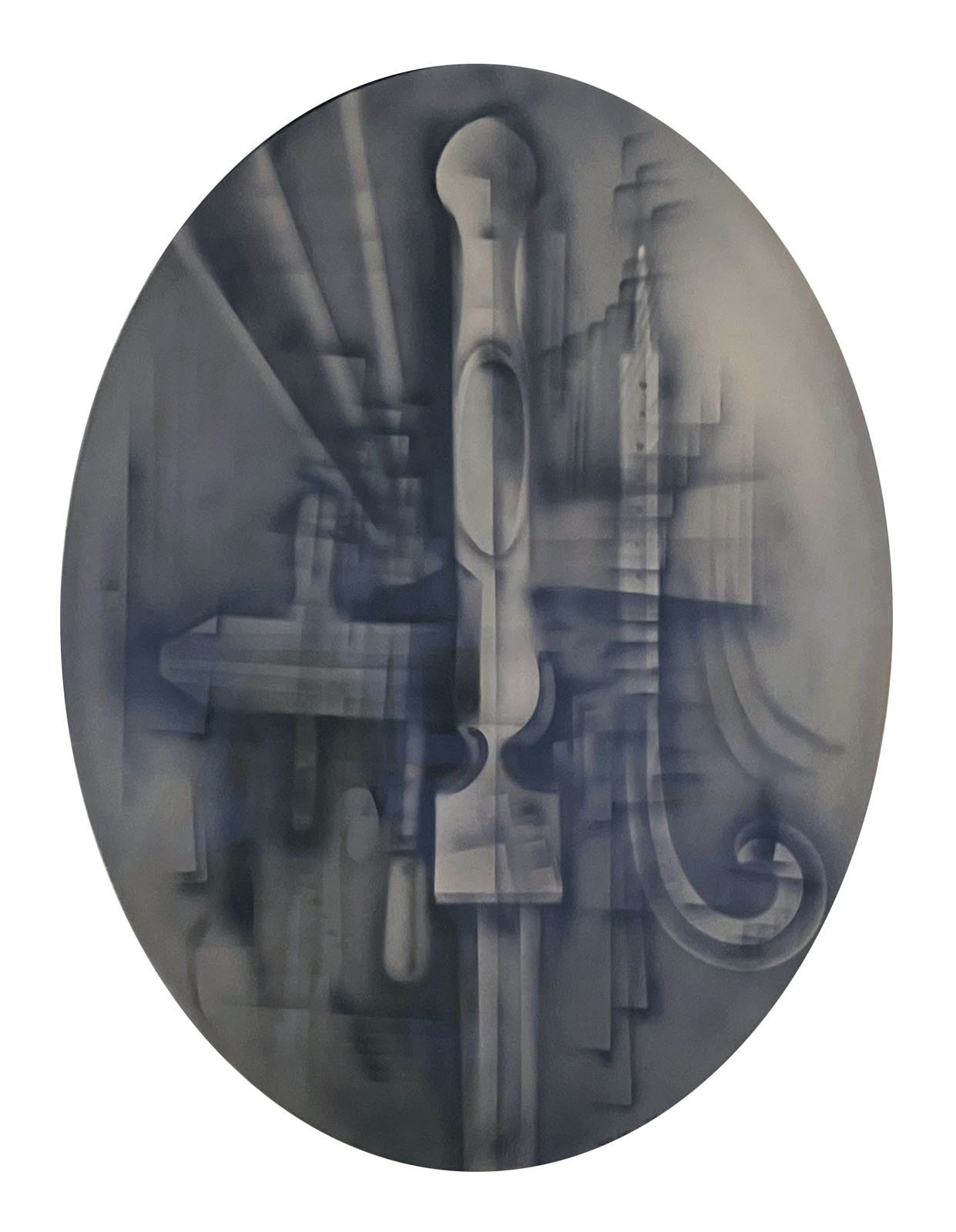
Still grappling with how to paint without a brush, Man Ray found inspiration at his day job working for an advertising agency, where he was introduced to an airbrush. He later brought the equipment back to his attic studio and began to experiment. Using an air compressor, the artist directed pigment through stencils and around masked areas and objects, which he rested on the composition board and repositioned as he worked. “It was thrilling,” he would later recount, “to paint a picture, hardly touching the surface – a purely cerebral act.” These works, which he termed “aerographs” were made, in effect, before they hit the paper. Objects were carved, shaped, and modeled in the air. Voids register as substance, and what we see on the paper is residue fused to the surface. “I tried above all,” Man Ray explained, “to create three-dimensional paintings on two-dimensional surfaces.”

Flou

Man Ray introduced his rayographs during a transitional period between the Dada and Surrealism movements that the French writer Louis Aragon called the mouvement flou – flou translating to “blurry” or “out of focus.” The term also suits these works, which viewers initially deemed curious and captivating but difficult to pin down. Rayographs, as cameraless photographs, exist in an indistinct place between photography and painting, the mechanical and the handmade, documentation and dream. 

During the 1920s Man Ray also explored blurriness in his camera images. Even as technical improvements facilitated increased focus and detail, and the preference for sharp photographs grew, he generally pursued a flattering, soft-focus technique in his growing business of portrait commissions. At other times, he sought more radical effects, which the director Claude Heymann described as “strange, troubling blurs” produced “through distortions, prolonged poses or special focusing techniques.” The anomalies in the resulting photographs are visible signs of the effort and time Man Ray spent to realise the images – even if he later called them unplanned or accidental.

A New Field of Gravity

In his preface introducing the album Champs délicieux (Delicious Fields), Tristan Tzara remarked that rayographs “present to space an image that exceeds it, and the air, with its clenched fists and superior intelligence, seizes it and holds it next to its heart.” Indeed, objects in Man Ray’s images beckon us in but keep us thrillingly at the edge – or put another way, they test our senses of proximity and location. His experiments in New York expanded the bounds of the photograph, object, painting, and installation, and he developed a novel relationship between object and viewer. These works demonstrate in their construction what the French writer Georges Ribemont-Dessaignes would identify in the artist’s rayographs as a “new field of gravity.”

The rayograph

The term rayograph designates Man Ray’s version of a technique for making photographs without a camera: by setting objects on or near sensitised paper and exposing it to light. In his autobiography, the artist described happening upon the process by chance, late one night, while developing prints in his makeshift darkroom. For subjects, he looked no further than the things in his studio. When exposed to a directed flash of light, they appear as reversed silhouettes – but in Man Ray’s hands they also gained new life. The nature of the image depended on the items’ translucency, reflectivity, density, placement, and distance from the sheet, as well as the source and location of the illumination and the number of exposures. Surfaces could cast unexpected reflections or eclipse elements in darkness. Forms might multiply or transform. Sometimes Man Ray’s objects and the space between them acquired an insistent, compressed volume that registered on the paper. The resulting works present what writer Pierre Migennes described as a “metamorphosis of the most vulgar utensils.” Everyday things became wonderfully unfamiliar as Man Ray wielded light in the darkroom like a brush in paint.

As he prepared to launch his rayographs in Champs délicieux, Man Ray also considered how to disseminate them for reproduction in magazines. On November 1, 1922, he wrote to Harold Loeb, editor of Broom: “Each print is an original, no plate or duplicate exists, as the process is manipulated directly on the paper, like a drawing. If you could assure me that the … originals would be safely handled and returned, I shall gladly send them on [to Berlin]. If, however, you cannot guarantee their safe return, I can re-photograph them … which, while not having the intensity and contrast of the originals, would nevertheless reproduce well.” Loeb offered to transport them personally and published these four in Broom the following March.

Man Ray transformed and energised ordinary objects in his rayographs by tapping their powers of translucency or reflectance. Bodies and their proxies, however, remain stubbornly recognisable. Hands reach out, hold things, and interact with objects; heads turn to kiss and drink, even if the action might be staged. The artist’s rayographs tie the body to a kind of specificity that his objects do not experience; this might explain why there are fewer of these works with bodies than without. As Tristan Tzara explained in his appreciation of the rayographs in 1934, Man Ray approached objects in a manner that allowed them to be free “to dream.”

Dangerous Games

Reactions to Man Ray’s cameraless photographs consistently identified them with the realm of play. The first to comment on the rayograph was French poet Jean Cocteau, who wrote in an open letter, “You, my dear Man Ray, will nourish our minds with those dangerous games it craves.” He was soon joined by Tristan Tzara, who likened the rayograph to a “game of chess with the sun.” 

Man Ray had a strong sense of the game as a strategy for producing art. For him, play was a state of readiness to engage. This comes through in the provocative humour of his objects and collages and in the invitation to chance embedded in the rayograph process – the “discovery” of which, he recounted, entailed real amusement. Marcel Duchamp once playfully defined his friend as synonymous with the joy of the game: “MAN RAY, n.m. synon. de joie, jouer, jouir” (joy, to play, to enjoy).

Chemical Paintings

In April 1922, the same month that the Champs délicieux album was announced, Man Ray proudly reported to friends and patrons that he had freed himself “from the sticky medium of paint.” His rayographs claimed a rebellious position aimed at the traditional hierarchy of fine art – and particularly its apex, painting. Critics asserted they had equal status, and New York’s Little Review even called them “chemical paintings.”

Just a year later, however, while his rayograph production remained steady, Man Ray quietly returned to painting. The works here show how his practice had changed. Abstract and relatively small, they were made on commercially available boards, wood, sandpaper, or metal supports. With their overlapping pictorial elements and dramatic contrasts of luminosity and shadow, angled and geometric forms, the compositions emulate aspects of rayographs. Each is a thorough exploration of depth on a flat surface and a bid to make paint reflect its own material reality.

Objects and Bodies

Man Ray’s experience of making rayographs informed his consideration of the human body, which he handled, at times, like an object, devoid of personhood and open for manipulation. Writing about the artist’s portraits and rayographs, André Breton noted that Man Ray considered the bodies of women in his work no different from the objects at hand in his darkroom: 

The very elegant, very beautiful women who expose their tresses night and day to the fierce lights in Man Ray’s studios are certainly not aware that they are taking part in any kind of demonstration. How astonished they would be if I told them that they are participating for exactly the same reasons as a quartz gun, a bunch of keys, hoar-frost or fern!

For Man Ray, a body could function as a kind of concentrated equivalence, like the essence represented by an object. This attitude is visible in some of the most iconic works of his career, in which his presentation of female models such as the artist and performer Kiki de Montparnasse (Alice Prin) also involved darkroom manipulation. While his approach to men’s bodies was notably less sexualised, they too were posed and set up like the objects in his rayographs.

Darkroom Manoeuvres 

Like other pictures of Kiki de Montparnasse in this gallery, Le violon d’Ingres involved multiple darkroom campaigns. For the version published in Littérature, Man Ray worked on a print to sharpen the contours and smooth the forms; he added f-shaped sound holes directly onto it with dark ink. 

The version here, larger than the first, is the result of further experimentation. Man Ray covered the entire print with a mask from which he hand cut two f-shaped forms. He then made a second exposure, which turned the exposed spaces black. Instead of ink shapes that disrupt the surface, these marks read as deep, dark space compressed within the flat surface of the photograph. Man Ray described this version as “a combination of a photo and a rayograph.” As such, the f-holes are eerily – seamlessly – part of the woman’s body. She appears as a kind of dreamlike human-instrument hybrid, a whole object to be visually taken in and possessed.

Dreams

Even before the Surrealist manifesto of 1924 claimed the fertile ground of the unconscious, many poets and artists in Man Ray’s circle focused on dreams. The same group, two years earlier, had followed André Breton’s experiments with hypnosis and trance states. They practiced séances and so‑called sleeping fits, writing down or drawing what came to them in order to reveal hidden desires. The poet Louis Aragon wrote of these slumberous escapades: “Dreams, dreams, dreams, the domain of dreams expands with every step.” 

Apart from photographing the sleep sessions, Man Ray remained an independent supporter of the group, explaining, “It has never been my object to record my dreams, just the determination to realise them.” Even so, Aragon included him in his multipage inventory of dreamers, with a nod to the rayographs: “Man Ray … dreams in his own way with knife rests and salt cellars: he gives meaning to light, which now knows how to speak.” The artist found great support among the Surrealist circle in Paris, whose members acquired his work and included him in exhibitions and publications.

Dream Objects 

Man Ray’s dreamlike rayographs have counterparts in the new kinds of hybrid objects he began to make at the same time. These mysterious works seize upon unexpected transformations: a fragile soap bubble rendered solid; the taut strings on a musical instrument’s neck turned loose and sensuous; or a budding plant metamorphosed into a pudgy hand. 

The strange bundle wrapped with string has long been associated with the power of objects to stir the unconscious. In 1920 Man Ray assembled, photographed, and deconstructed the original object. The Untitled photograph appeared in the first issue of La revolution surréaliste, in 1924, with the text “Surrealism opens the door of the dream to all those for whom night is miserly.” Over the next decade, the image came to embody another phrase popular among the Paris Surrealist group, by the poet Isidore Ducasse: “as beautiful … as the chance encounter of a sewing machine and an umbrella on a dissecting table.” 

“Objects to touch, to eat, to crunch, to apply to the eye, to the skin, to press, to lick, to break, to grind, objects to lie, to flee from, to honor, things cold or hot, feminine or masculine, objects of day or night which absorb through your pores the greater part of our life. … These are the projections surprised in transparence, by the light of tenderness, of objects that dream and talk in their sleep.” (Tristan Tzara, “When Objects Dream,” 1934)

Returns

In 1929 Man Ray found himself “longing to touch paint again.” By the fall, he had taken a second Paris studio, near the Luxembourg Gardens, where he painted in the mornings before returning home to oversee photographic portraits and magazine work. In his new compositions, he let paint drip across a canvas from a poured line and squeezed pigment directly from the tube onto a support in a loose, calligraphic manner. Trading on narratives of chance and automatism, he later called these paintings “unpremeditated.” 

Another return accompanied the arrival in Paris of Lee Miller, who became Man Ray’s apprentice in photography and then his personal and professional partner. As a result, he again embraced the camera as his primary tool of photographic experimentation, after years of making rayographs without one. Together, Miller and Man Ray discovered a creative synergy that led to their joint development of the solarization process. The same year signalled the near culmination of Man Ray’s exploration of the rayograph: by some accounts, he made one hundred in 1922, but just one in 1929.

Solarization 

Together with Lee Miller, Man Ray developed a darkroom technique that complemented his return to painting. Like the rayograph, solarization was not entirely new, and both he and Miller claimed that it similarly resulted from an accident. The process involves exposing a negative a second time during development, which causes a reversal of the expected tonalities. Honed by Miller and Man Ray and applied to their portraits and nudes beginning in fall 1929, the process often endowed subjects with subtly glowing black contours that Miller called “halos.” This feature became so well-known – largely through reproductions of the solarized portrait of Miller shown nearby – that a 1932 article called it both “the beacon and despair of experimenters.” Like the drips and skeins in Man Ray’s 1929 paintings, these lines create a friction between the subject and surface of the image – a noted departure from the artist’s earlier approach to the flat plane.

Revisiting Champs délicieux 

Man Ray completed his Champs délicieux project nearly forty years after its debut. A handwritten inscription to Tristan Tzara in the final copy (number 41, displayed here) refers to the sparks set off by their initial exploration of the rayograph; he added an almost identical inscription in his 1922 working copy. This suggests a Dada game between the two artists: the announcement laid out the rules and the inscriptions signified its end. 

As promised in the 1922 first announcement of the album, the last copy features the canceled proofs (a practice meant to show that no further prints can be made from the originals). A canceled print edition is not unusual. In this case, however, a purposeful ambiguity was in play from the beginning of the project – when it was presented as an album of “original photographs” copied from unique rayographs – to the end. Only the negatives used to produce the album were canceled, meaning that the primary rayographs might still exist. Ever the prankster, Man Ray ensured that the game continues.

Text from The Metropolitan Museum of Art


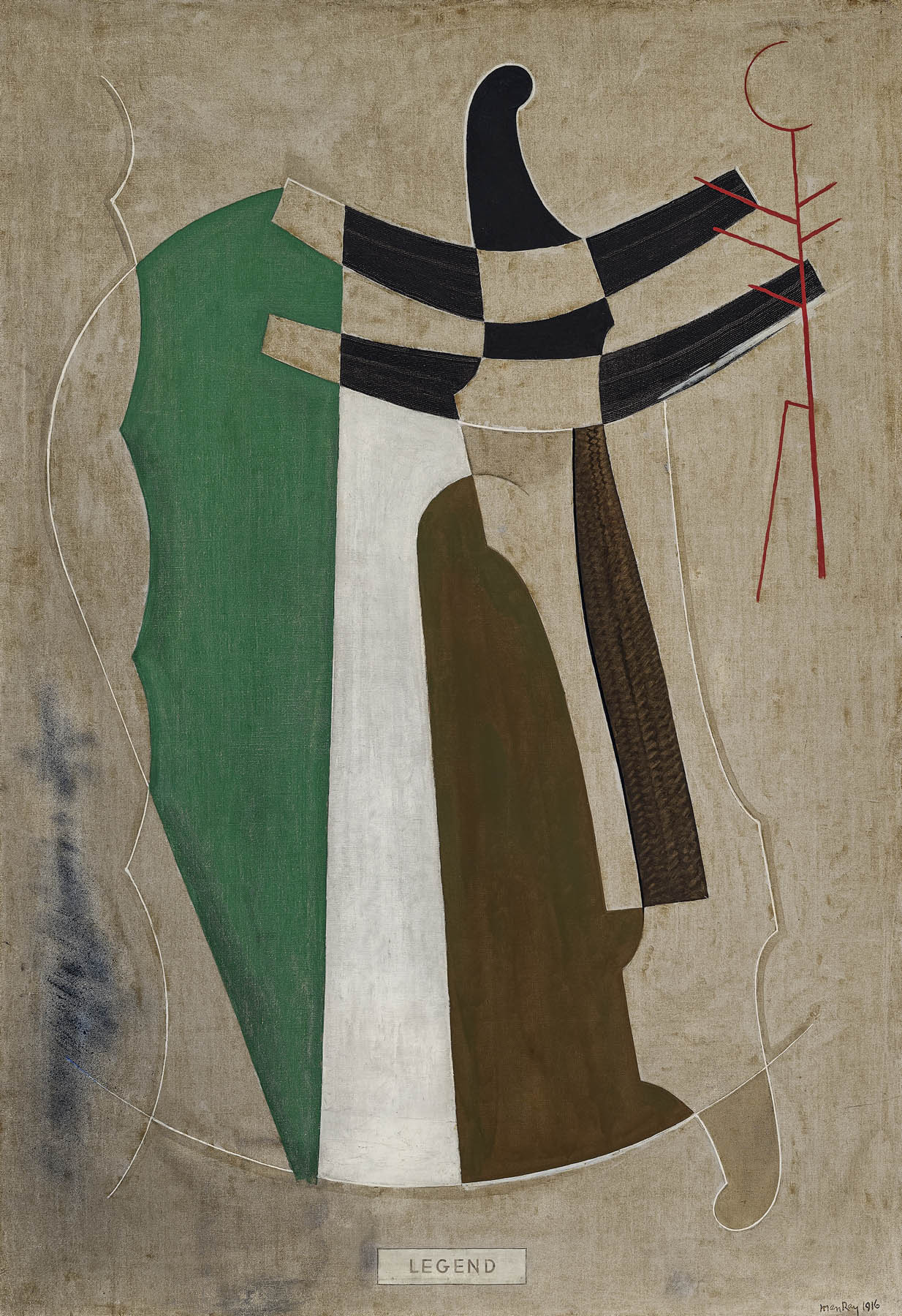
Man Ray (American, 1890-1976) 'Legend' 1916


Man Ray (American, 1890-1976) 
Legend 
1916 
Oil on canvas 
52 × 36 in. (132.1 × 91.4 cm) 
Collection of Deborah and Edward Shein
© Man Ray 2015 Trust / Artists Rights Society (ARS), NY / ADAGP, Paris 2025
Photo by Stephen Petegorsky


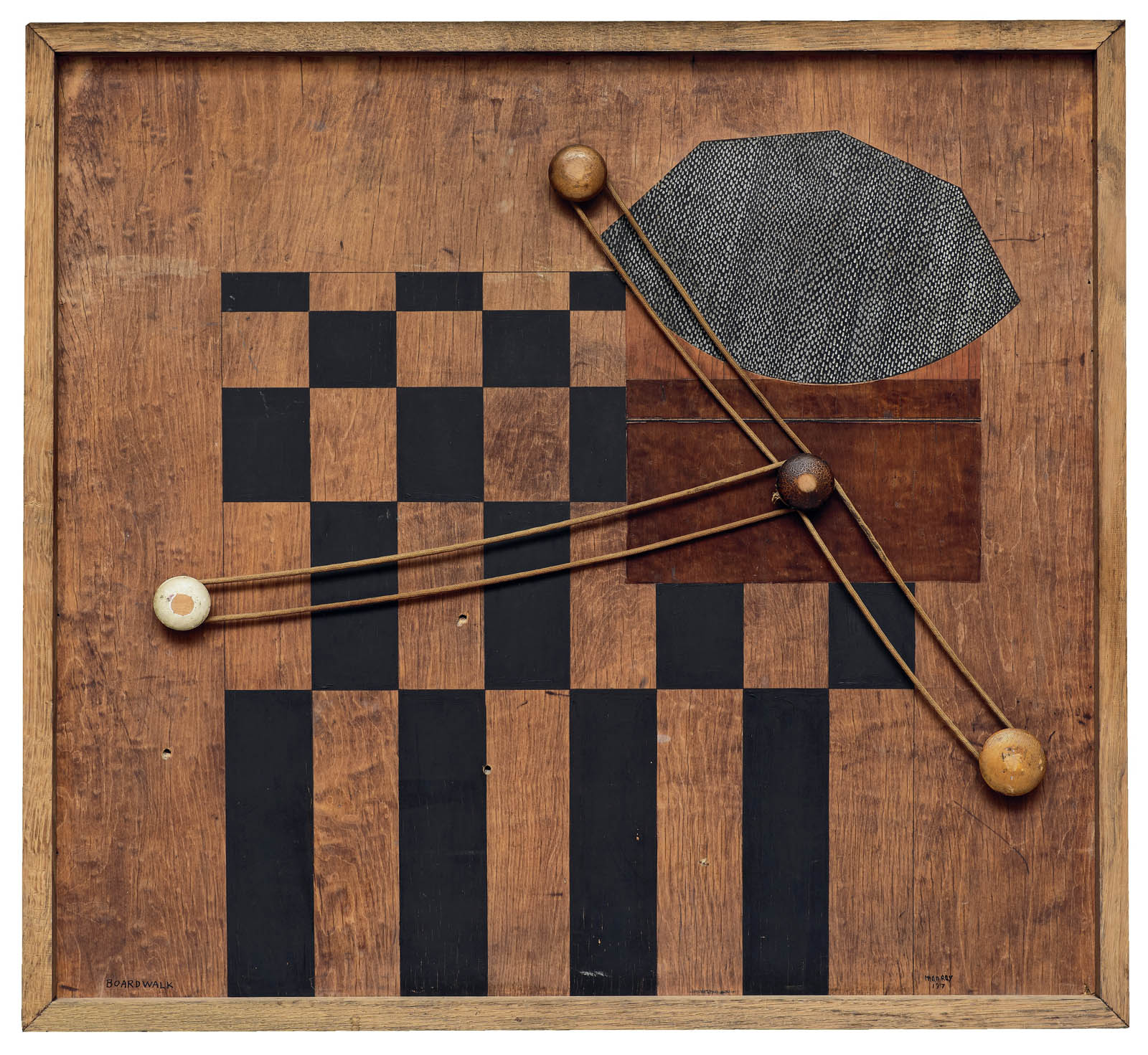
Man Ray (American, 1890-1976) 'Boardwalk' 1917


Man Ray (American, 1890-1976) 
Boardwalk 
1917 
Oil, wood handles, and yarn on wood 
26 9/16 × 29 × 15/16 in. (67.4 × 73.6 × 2.4cm) 
Staatsgalerie Stuttgart, acquired 1973 with Lotto Funds
© Man Ray 2015 Trust / Artists Rights Society (ARS), NY / ADAGP, Paris 2025


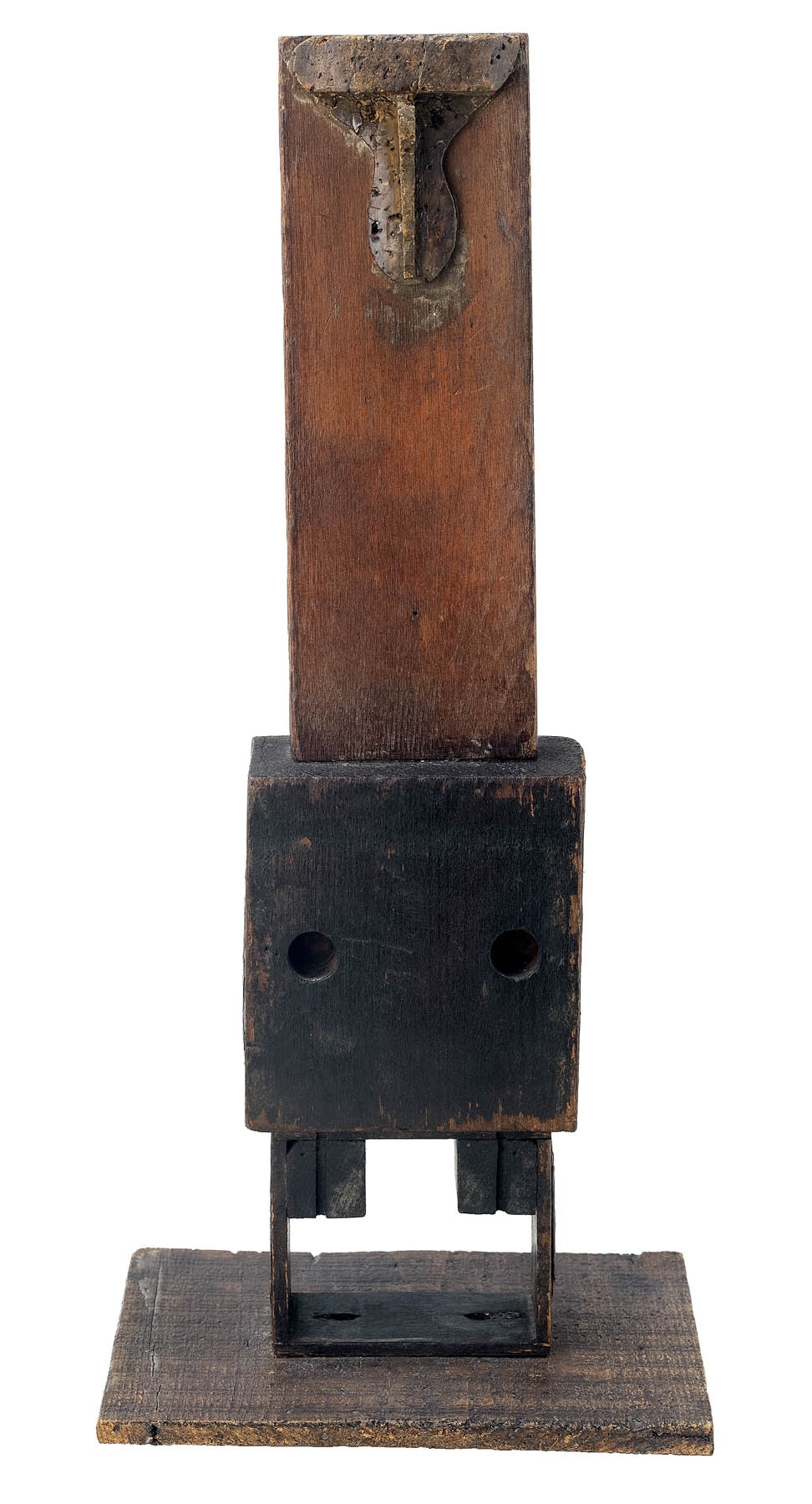
Man Ray (American, 1890-1976) 'By Itself I' 1918


Man Ray (American, 1890-1976) 
By Itself I 
1918 
Wood, iron, and cork 
17 1/4 × 7 11/16 × 7 5/16 in. (43.8 × 19.5 × 18.6cm) 
LWL–Museum für Kunst und Kultur, Münster, Germany 
© Man Ray 2015 Trust / Artists Rights Society (ARS), NY / ADAGP, Paris 2025 


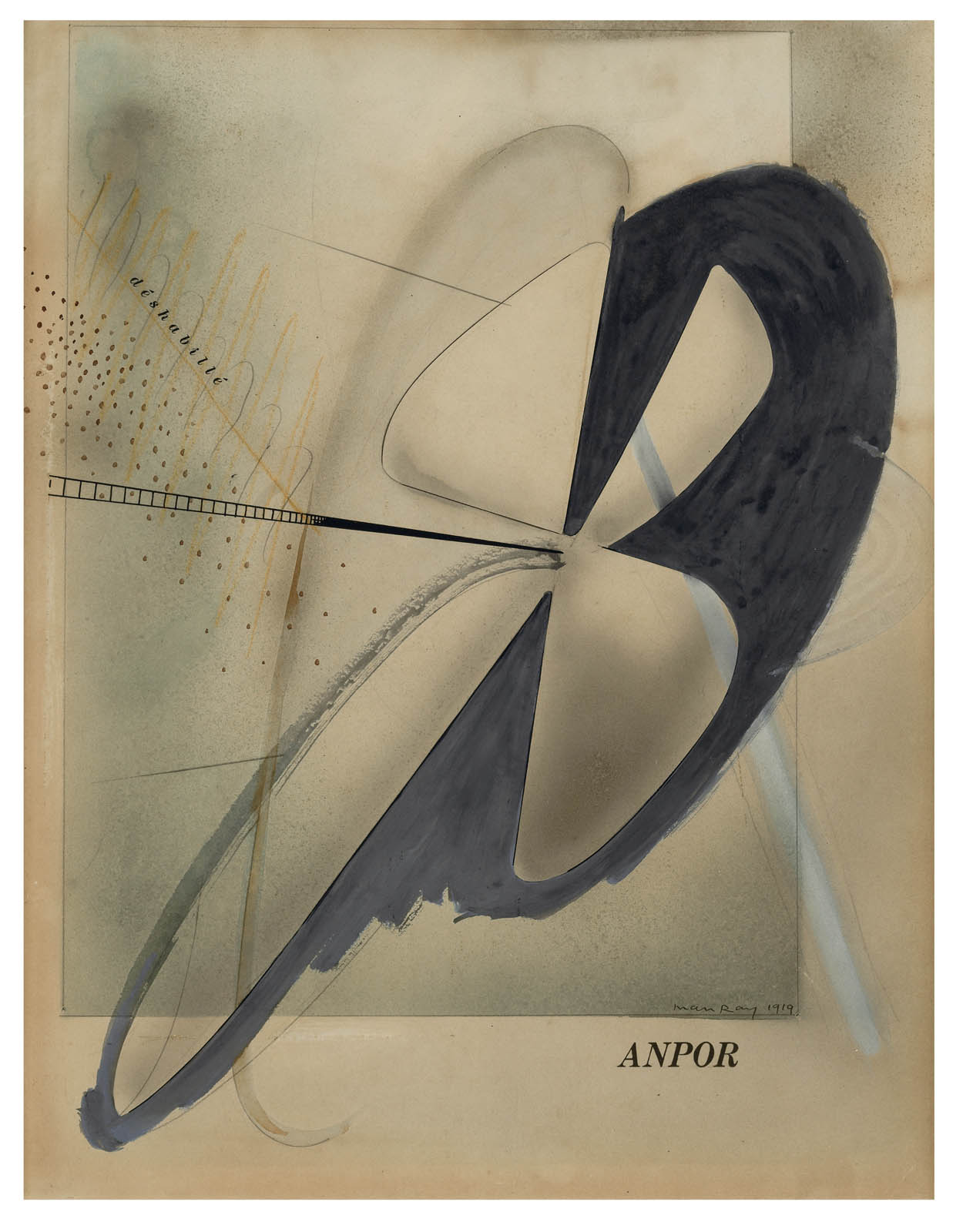
Man Ray (American, 1890-1976) 'ANPOR' 1919


Man Ray (American, 1890-1976) 
ANPOR 
1919 
Gouache, ink, and colored pencils on paper 
15 1/2 × 11 1/2 in. (39.4 × 29.2cm) 
Collection of Gale and Ira Drukier
© Man Ray 2015 Trust / Artists Rights Society (ARS), NY / ADAGP, Paris 2025 
Image © The Metropolitan Museum of Art, photo by Bruce Schwarz


Man Ray (American, 1890-1976) 'Aerograph' 1919


Man Ray (American, 1890-1976)
Aerograph
1919
Gouache on paperboard
26 3/8 x 19 11/16 in. (67 x 50cm)
Staatsgalerie Stuttgart, Graphische Sammlung, acquired 1987
© Man Ray 2015 Trust / Artists Rights Society (ARS), NY / ADAGP, Paris 2025


Man Ray (American, 1890-1976) 'Catherine Barometer' 1920


Man Ray (American, 1890-1976) 
Catherine Barometer 
1920 
Glass, metal, felt, washboard, tube, wire, wood, steel wool, gouache on paper, and paper stamp 
48 1/8 × 12 × 2 1/8 in. (122.2 × 30.5 × 5.4cm) 
The Metropolitan Museum of Art, New York, Bluff Collection, Promised Gift of John A. Pritzker 
Photo courtesy of The Bluff Collection, photo by Ian Reeves


Man Ray (American, 1890-1976) 'Cadeau (Gift)' 1921 reconstructed 1970 (installation view)


Man Ray (American, 1890-1976)
Cadeau (Gift) (installation view)
1921 reconstructed 1970
Iron with brass tacks and wooden base
Overall: 19.0 x 14.9 x 14.9cm; iron & base: 17.9 x 14.9 x 14.9cm; glass cover: 19.0cm (h.)
Photo: © Marcus Bunyan

An example of this art work, not the actual one in the exhibition


Man Ray (American, 1890-1976) 'Paysage suedois' (Swedish Landscape) 1926


Man Ray (American, 1890-1976) 
Paysage suédois (Swedish Landscape
1926 
Oil on canvas 
18 × 25 1/2 in. (45.7 × 64.8 cm) 
The Mayor Gallery, London
© Man Ray 2015 Trust / Artists Rights Society (ARS), NY / ADAGP, Paris 2025
Photo courtesy of The Mayor Gallery, London


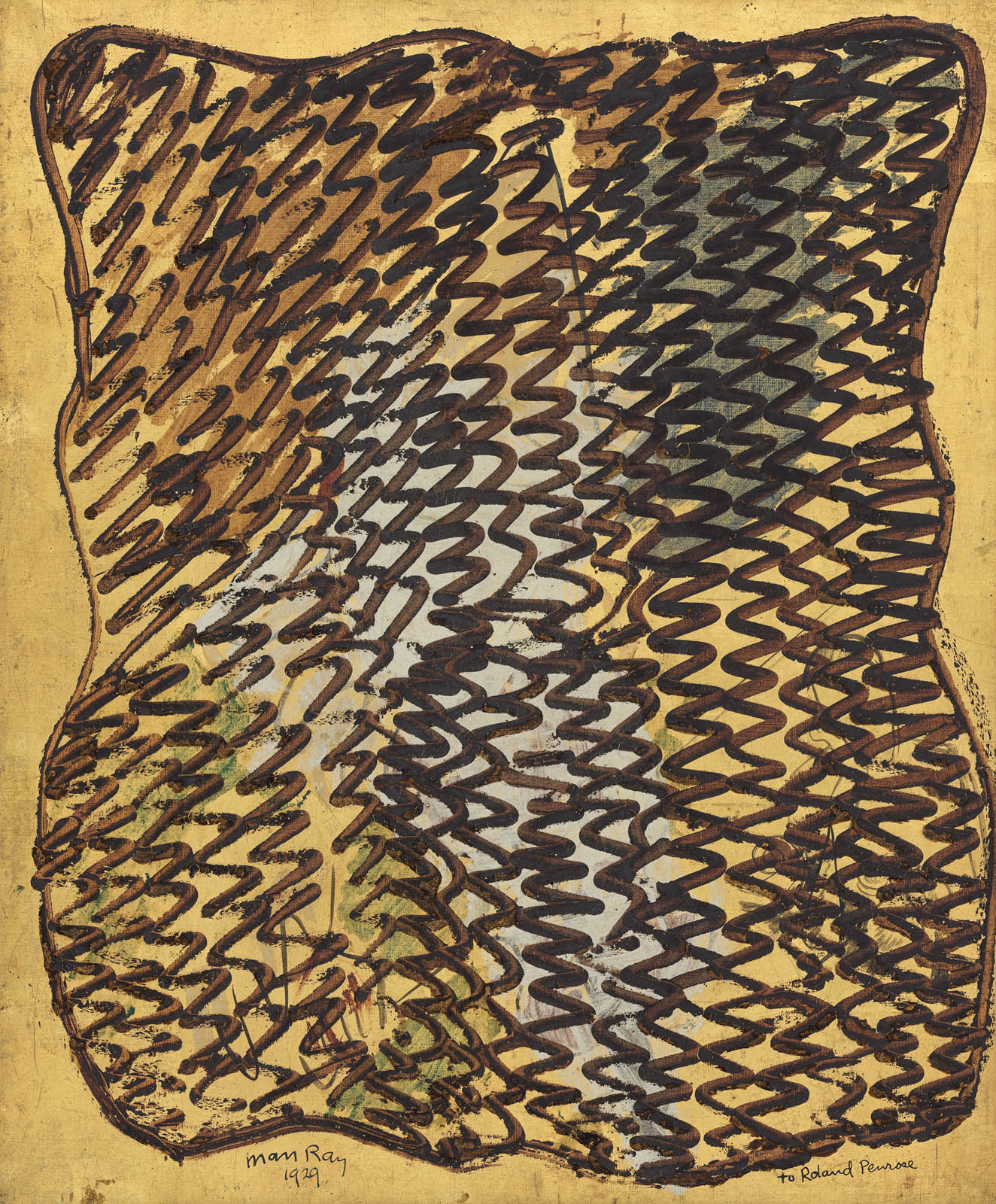
Man Ray (American, 1890-1976) 'Torso' 1929


Man Ray (American, 1890-1976) 
Torso 
1929 
Oil and gouache on gold foil paper on canvas 
18 1/16 × 14 15/16 in. (45.9 × 38 cm) 
The Penrose Collection
© Man Ray 2015 Trust / Artists Rights Society (ARS), NY / ADAGP, Paris 2025
Image © The Metropolitan Museum of Art, photo by Mark Morosse 


The Metropolitan Museum of Art
1000 Fifth Avenue at 82nd Street
New York, New York 10028-0198
Phone: 212-535-7710

Opening hours:
Thursday – Tuesday 10am – 5pm
Closed Wednesday

The Metropolitan Museum of Art website
LIKE ART BLART ON FACEBOOK

Back to top

Exhibition: ‘Bernd & Hilla Becher – History of a Method’ at Die Photographische Sammlung/SK Stiftung Kultur, Cologne

Exhibition dates: 5th September, 2025 – 1st February, 2026

An exhibition by Die Photographische Sammlung/SK Stiftung Kultur in cooperation with the Bernd & Hilla Becher Studio, Düsseldorf


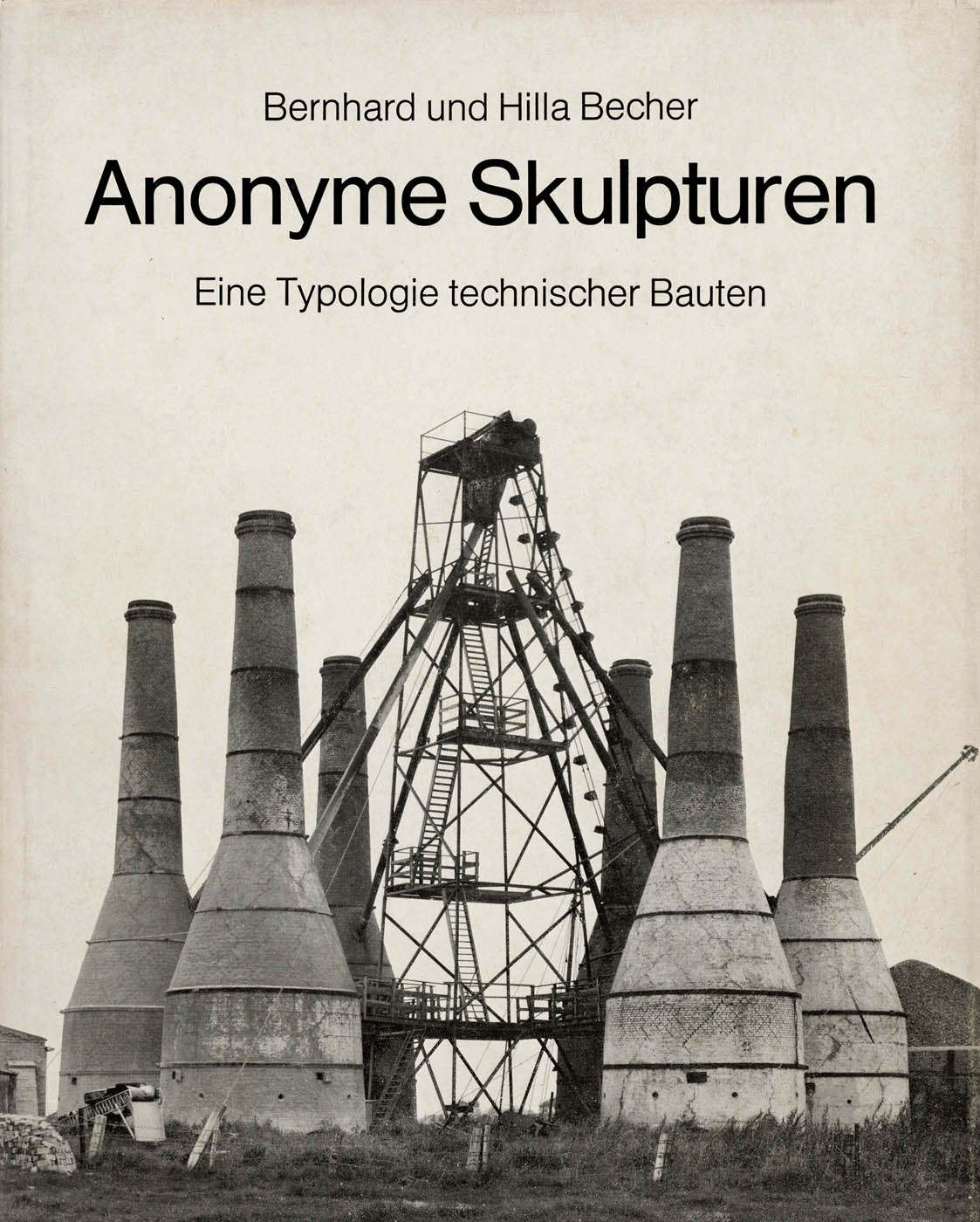
'Anonyme Skulpturen. Eine Typologie technischer Bauten, Düsseldorf: Art-Press' (Anonymous Sculptures: A Typology of Technical Buildings) Düsseldorf: Art-Press 1970 (Buchcover)


Anonyme Skulpturen. Eine Typologie technischer Bauten, Düsseldorf: Art-Press
Anonymous Sculptures: A Typology of Technical Buildings, Düsseldorf: Art-Press
1970 (Buchcover)
Courtesy Die Photographische Sammlung/SK Stiftung Kultur, Köln


When we think about the most influential photographers of the first five decades of the 20th century we conjure up names such as Eugène Atget, Alfred Stieglitz, Paul Strand, Walker Evans, László Moholy-Nagy, Dorothea Lange, and Berenice Abbott, to name just a few – and by influential, I mean those photographers that altered the intensification of the medium – the conceptualisation, creation, veracity, meaning and reception of the image.

In the last 50 years of the 20th century there are less of these medium-shifting artists that have really made a difference. Diane Arbus and Lee Friedlander are the two that readily spring to mind. And then there are the Bechers, Bernd & Hilla Becher. These German photographers changed the course of contemporary photographic practice, their conceptual art / objective photographic raison d’être still embedded at the heart of fine art photography today.

But, as I have argued elsewhere, their typologies and grids, their topographic state, their same same photographs and perspectives of industrial sculptures and landscapes are anything but objective. Their pictorial grammar, underlaid by a conceptual approach to subject matter, continuously reflected in the systematics of capture and display (the juxtaposition of works together), is constantly undermined by the ghost in the machine – those viral codes of mutation and difference which cannot be controlled.

While they professed to “eschew entirely entirely the aspects of beauty, emotion and opinion,” every photograph they took involves a subjective point of view, an element of uniqueness and beauty that can never be repeated.

“Despite protestations to the contrary (appeals to the objectivity of the image, eschewing entirely the aspects of beauty, emotion and opinion; the rigorous frontality of the individual images giving them the simplicity of diagrams, while their density of detail offers encyclopaedic richness) these are subjective images for all their objective desire. The paradox is the more a photographer strives for objectivity, the more ego drops away, the more the work becomes their own: subjective, beautiful, emotive.

Even though the Bechers’ demonstrate great photographic restraint with regard to documenting the object, the documentary gaze is always corrupted / mutated / distorted by personal interpretation: where to position the camera, what to include or exclude, how to interpret the context of place, how to crop or print the image, and how to display the image, in grids, sequences or singularly. In other words there are always multiple (con)texts to which artists conform or transgress. What makes great photographers, such as Eugène Atget, Walker Evans, August Sander and the Bechers, is the idiosyncratic “nature” of their vision: how Atget places his large view camera – at that particular height and angle to the subject – leaves an indelible feeling that only he could have made that image, to reveal the magic of that space in a photograph. It is their personal, unique thumbprint, recognisable in an instant. So it is with the Bechers.”1

For a deeper dive into the work of the Bechers, please see my text “Ghosts in the machine,” on the exhibition Bernd and Hilla Becher at the Metropolitan Museum of Art, New York, July – November, 2022.

Dr Marcus Bunyan


1/ Marcus Bunyan text on the exhibition Bernd and Hilla Becher: Mines and Mills – Industrial Landscapes at Fotomuseum Winterthur, Zurich, November 2011 – February 2012 [Online] Cited 05/12/2025


Many thankx to Die Photographische Sammlung/SK Stiftung Kultur, Cologne for allowing me to publish the photographs in the posting. Please click on the photographs for a larger version of the image.


Installation view of the exhibition 'Bernd & Hilla Becher – History of a Method' at Die Photographische Sammlung/SK Stiftung Kultur, Cologne September, 2025 – February, 2026


Installation view of the exhibition Bernd & Hilla Becher – History of a Method at Die Photographische Sammlung/SK Stiftung Kultur, Cologne


Installation view of the exhibition 'Bernd & Hilla Becher – History of a Method' at Die Photographische Sammlung/SK Stiftung Kultur, Cologne September, 2025 – February, 2026


Installation view of the exhibition Bernd & Hilla Becher – History of a Method at Die Photographische Sammlung/SK Stiftung Kultur, Cologne


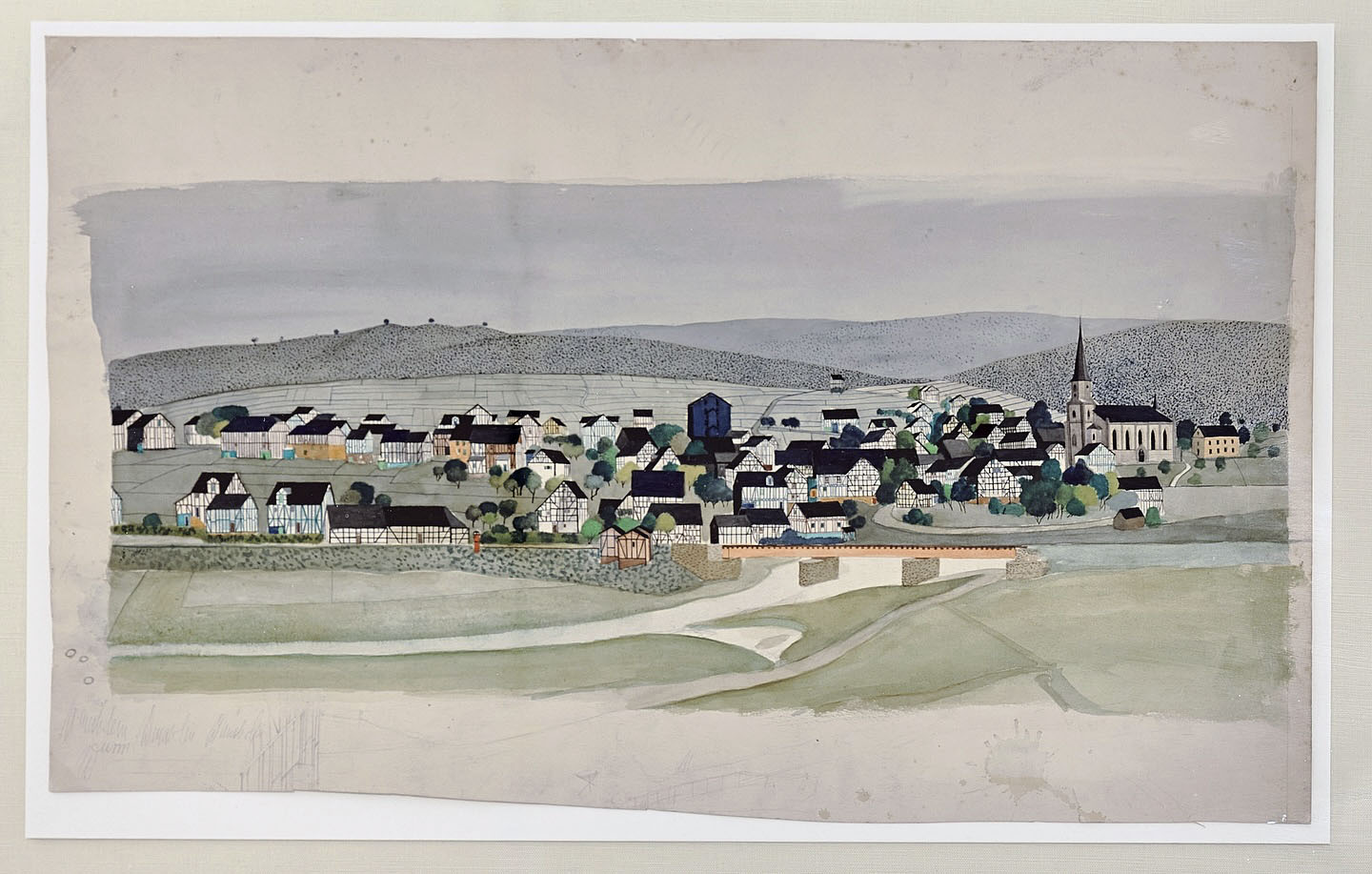
Bernd Becher (German, 1931-2007) 'Mudersbach' 1950s


Bernd Becher (German, 1931-2007)
Mudersbach
1950s
Watercolour
35.5 x 59.9cm
© Estate Bernd & Hilla Becher, vertreten durch Max Becher
Courtesy Die Photographische Sammlung/SK Stiftung Kultur – Bernd und Hilla Becher Archiv, Köln


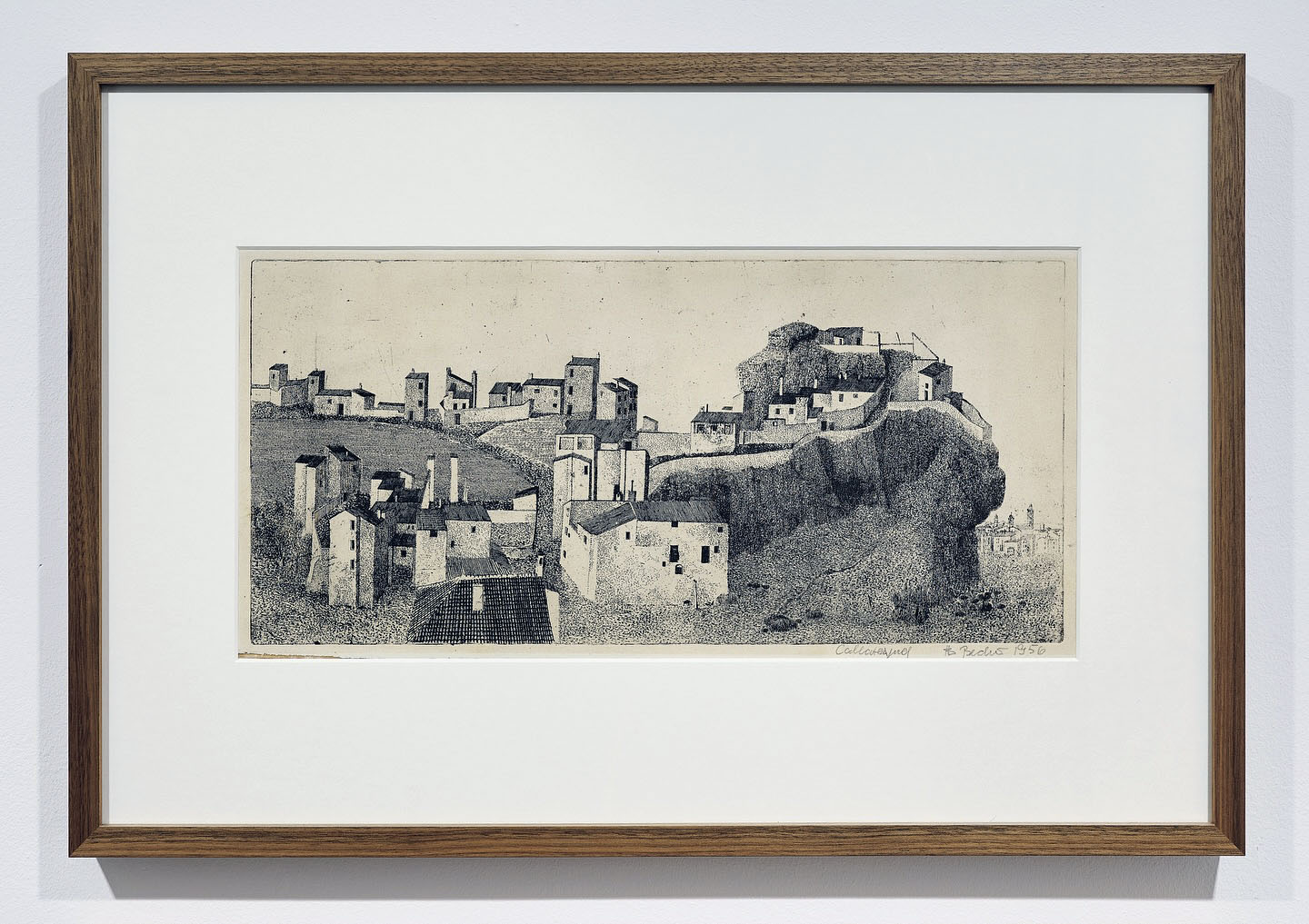
Installation view of the exhibition 'Bernd & Hilla Becher – History of a Method' at Die Photographische Sammlung/SK Stiftung Kultur, Cologne September, 2025 – February, 2026 showing Bernd Becher's 'Calatayud' 1956


Installation view of the exhibition Bernd & Hilla Becher – History of a Method at Die Photographische Sammlung/SK Stiftung Kultur, Cologne showing Bernd Becher’s Calatayud 1956 (below)


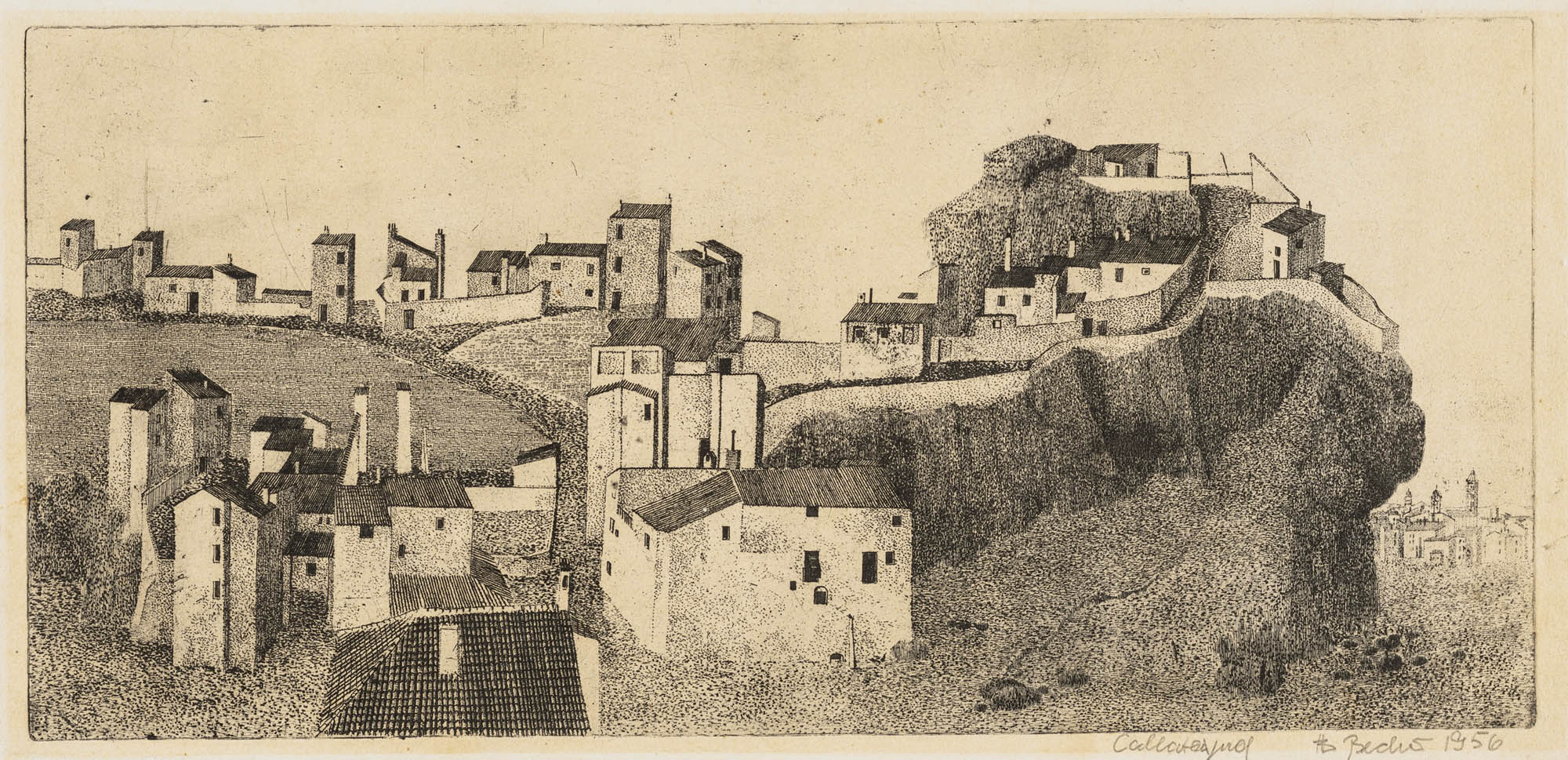
Bernd Becher (German, 1931-2007) 'Calatayud' 1956


Bernd Becher (German, 1931-2007)
Calatayud
1956
Aquatint on laid paper
20.8 x 44.0cm
© Estate Bernd & Hilla Becher, vertreten durch Max Becher
Courtesy Die Photographische Sammlung/SK Stiftung Kultur – Bernd und Hilla Becher Archiv, Köln


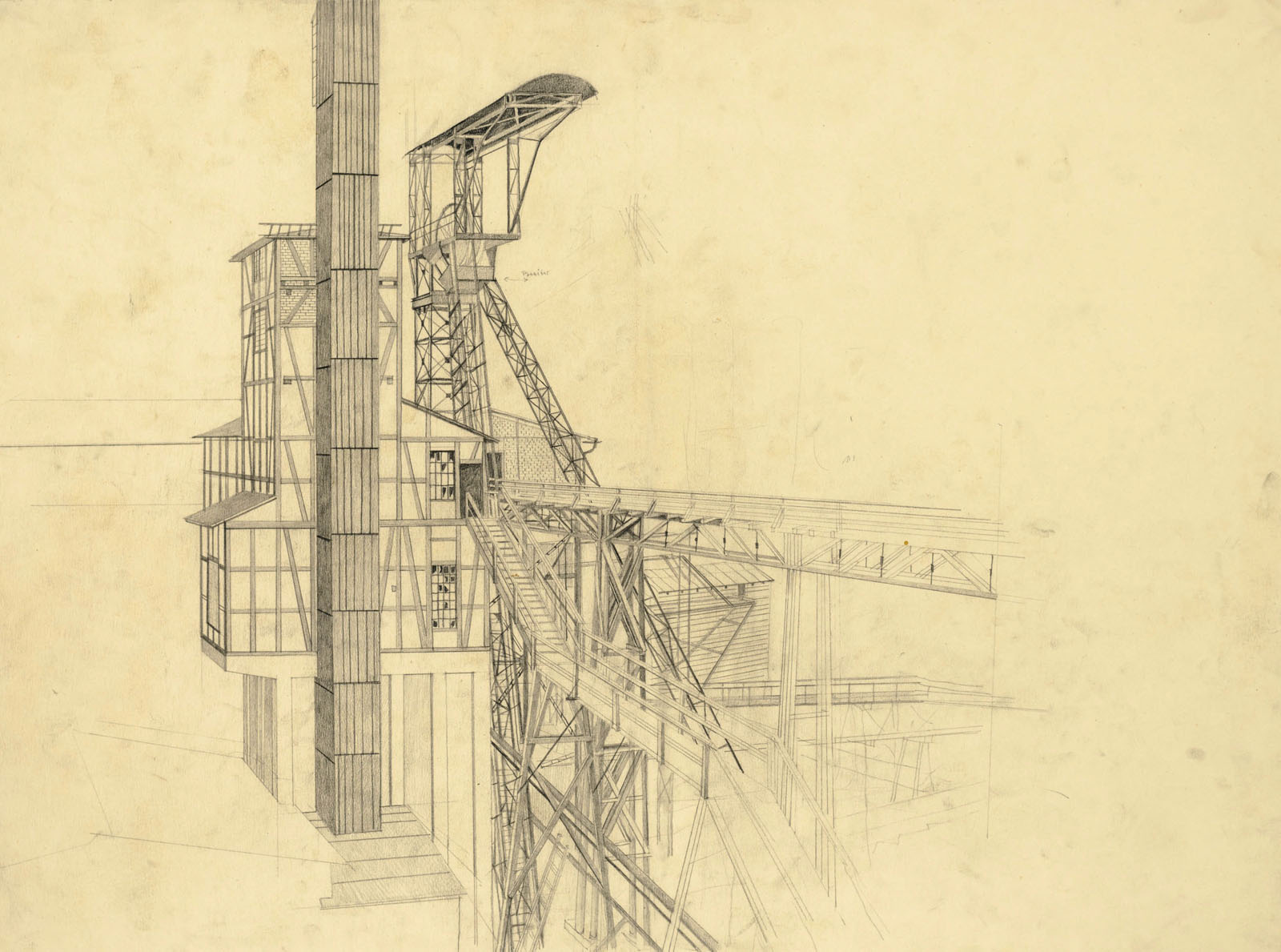
Bernd Becher (German, 1931-2007) 'Grube Eisernhardter Tiefbau, Eisern, D' (Eisernhardter Tiefbau mine, Eisern, Germany) 1955/56


Bernd Becher (German, 1931-2007)
Grube Eisernhardter Tiefbau, Eisern, D (Eisernhardter Tiefbau mine, Eisern, Germany)
1955/56
Pencil on paper
42.0 x 56.5cm
© Estate Bernd & Hilla Becher, vertreten durch Max Becher
Courtesy Die Photographische Sammlung/SK Stiftung Kultur – Bernd und Hilla Becher Archiv, Köln


Installation view of the exhibition 'Bernd & Hilla Becher – History of a Method' at Die Photographische Sammlung/SK Stiftung Kultur, Cologne September, 2025 – February, 2026


Installation view of the exhibition Bernd & Hilla Becher – History of a Method at Die Photographische Sammlung/SK Stiftung Kultur, Cologne


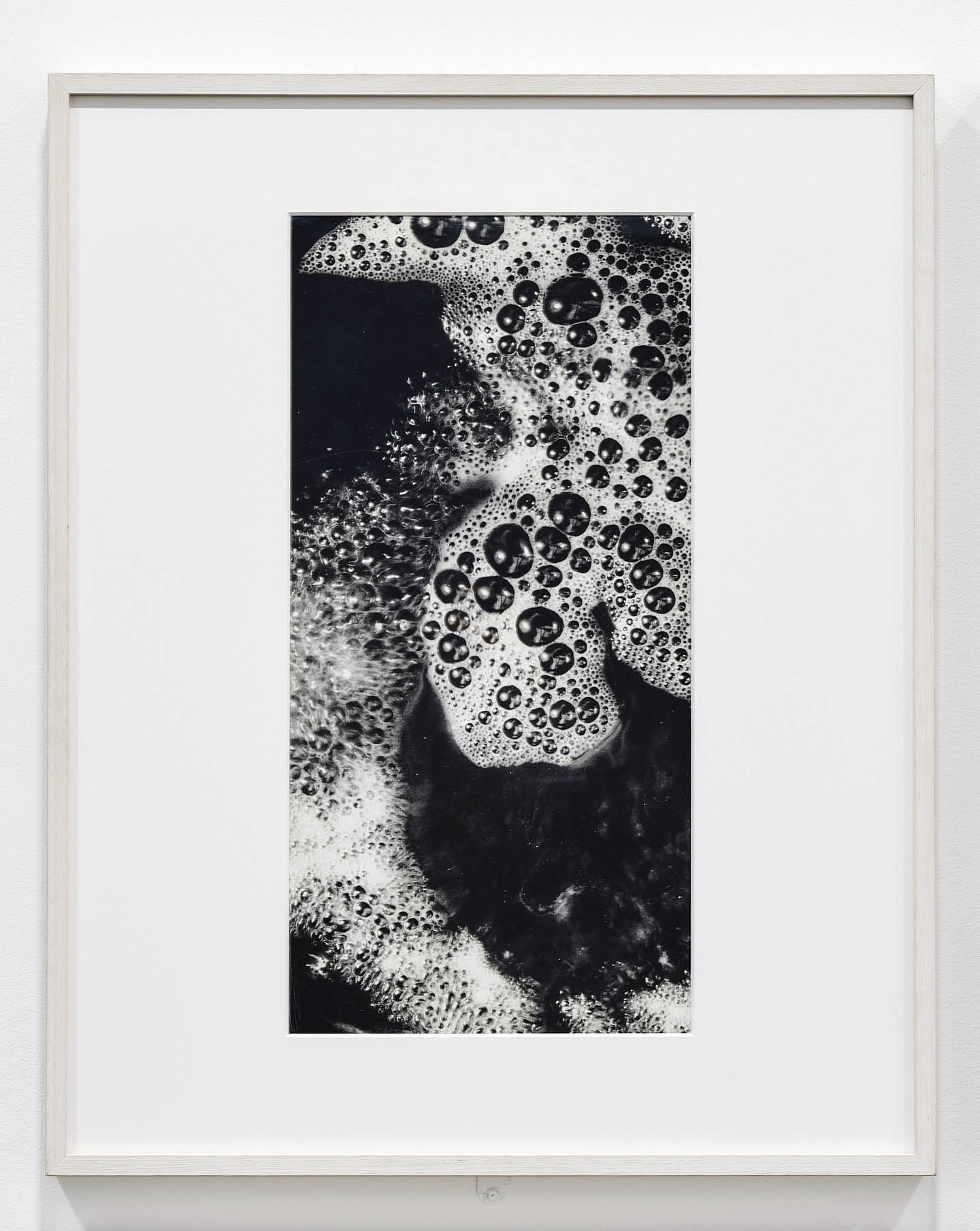
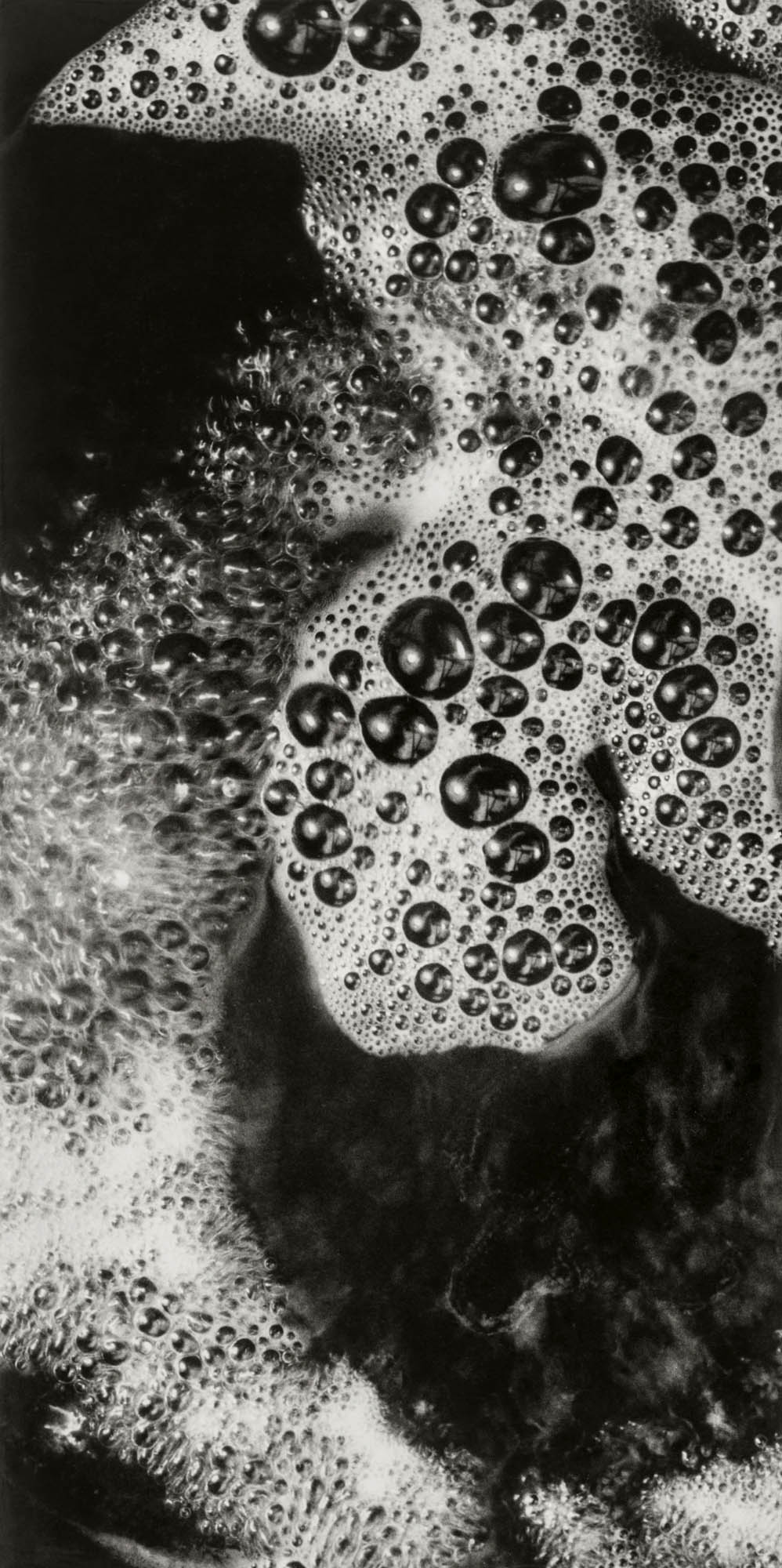
Installation view of the exhibition 'Bernd & Hilla Becher – History of a Method' at Die Photographische Sammlung/SK Stiftung Kultur, Cologne September, 2025 – February, 2026 showing Hilla Becher's 'Untitled (Makroaufnahme von Schaum)' (Macro shot of foam) c. 1960


Installation view of the exhibition Bernd & Hilla Becher – History of a Method at Die Photographische Sammlung/SK Stiftung Kultur, Cologne showing Hilla Becher’s Untitled (Makroaufnahme von Schaum) (Macro shot of foam) c. 1960


Hilla Becher (German, 1934-2015) 'Untitled (Makroaufnahme von Schaum)' (Macro shot of foam) c. 1960


Hilla Becher (German, 1934-2015)
Untitled (Makroaufnahme von Schaum) (Macro shot of foam)
c. 1960
Gelatin silver print
38.9 x 19.4cm
© Estate Bernd & Hilla Becher, vertreten durch Max Becher
Courtesy Die Photographische Sammlung/SK Stiftung Kultur – Bernd und Hilla Becher Archiv, Köln


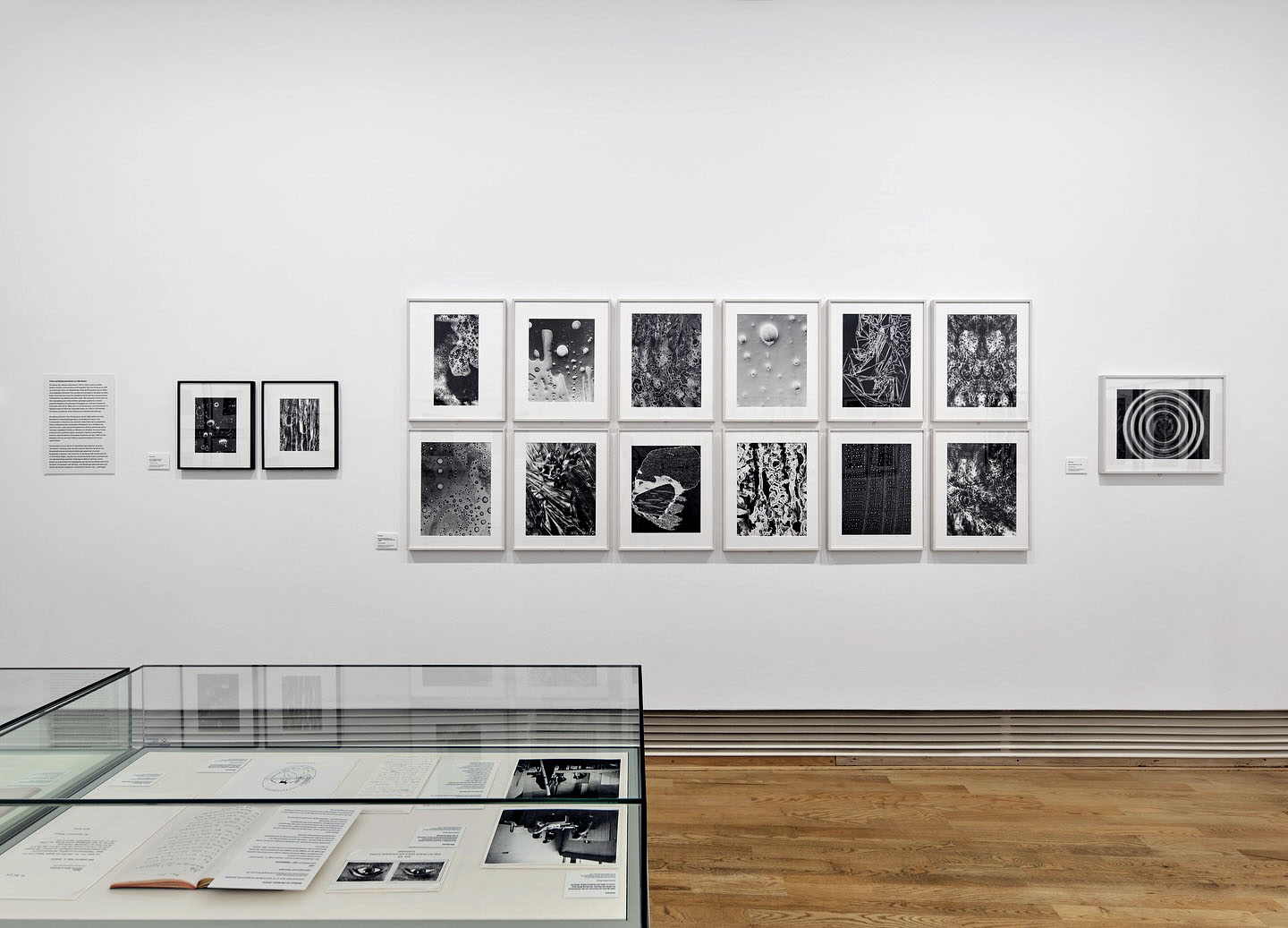
Hilla Becher (née Wobeser) discovered photography as a teenager. Her mother had trained as a photographer at the Lette Verein in Berlin and supported her daughter’s interest. Accordingly, from 1951 to 1953, Hilla completed an apprenticeship as a photographer at the Walter Eichgrün studio in her hometown of Potsdam. In 1953, the family fled East Germany, and Hilla continued her career in West Germany. For example, in 1957 she worked at the Troost advertising agency in Düsseldorf, where she also met Bernd Becher.

The photograph shown above belongs to a series of surface and structural studies from around 1960. Nothing is known about the exact context of the photographs; however, their stylistic affinity to the “Subjective Photography” movement, which gained influence from the early 1950s onward, is interesting. Distortion techniques were an important tool in “Subjective Photography,” and Hilla Becher’s macro photographs utilise extreme proximity to the subject as a means of creating a sense of alienation.

Text from the SK Stiftung Kultur Die Photographische Sammlung Instagram page


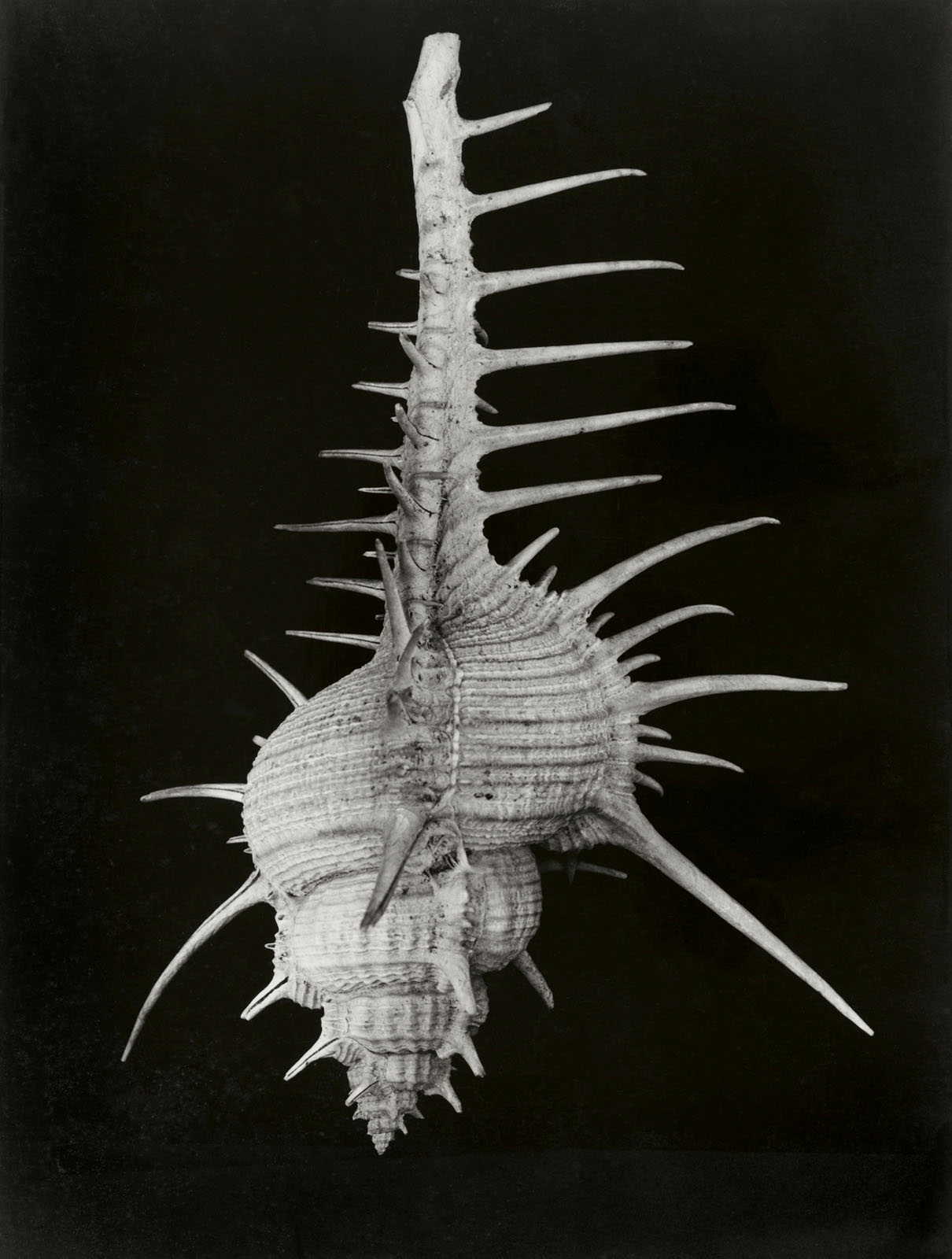
Hilla Becher (German, 1934-2015) 'Meeresschnecke (Venuskamm)' (Sea snail (Venus comb)) 1960s


Hilla Becher (German, 1934-2015)
Meeresschnecke (Venuskamm) (Sea snail (Venus comb))
1960s
Gelatin silver print
39.6 x 30cm
© Estate Bernd & Hilla Becher, vertreten durch Max Becher
Courtesy Die Photographische Sammlung/SK Stiftung Kultur – Bernd und Hilla Becher Archiv, Köln


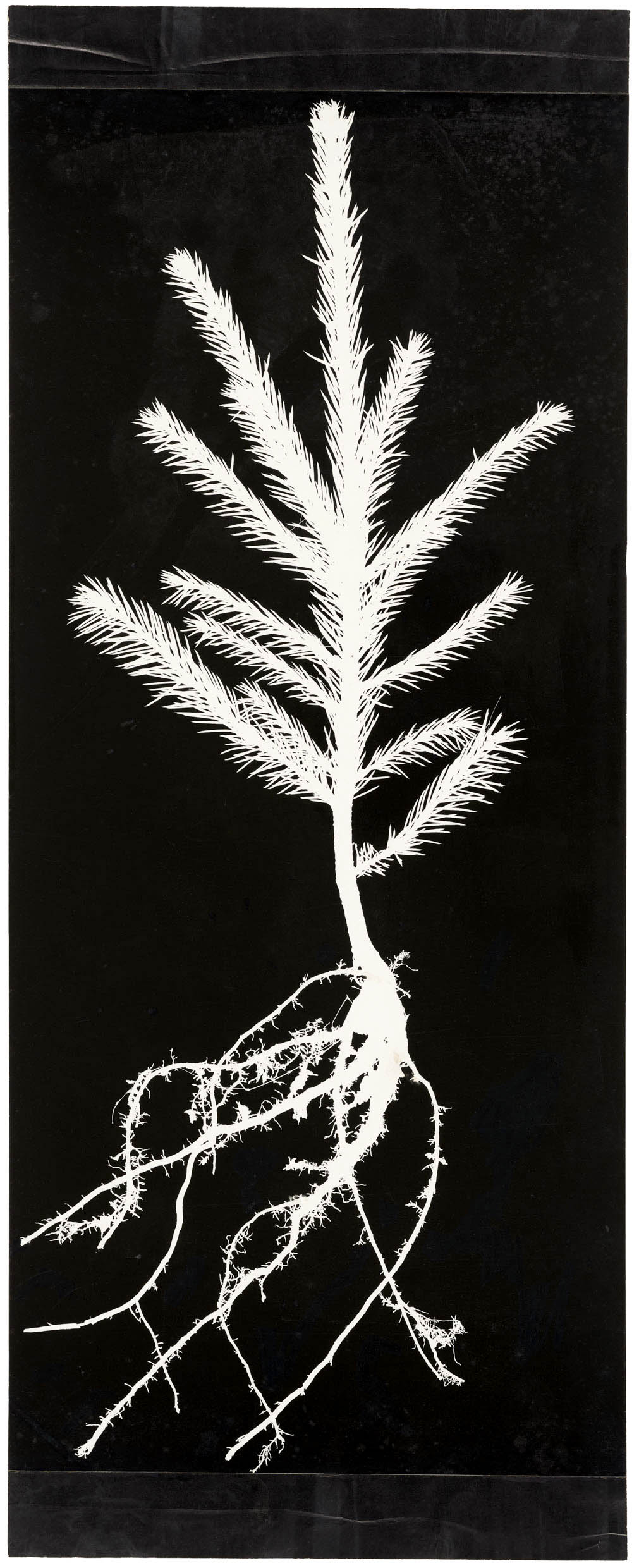
Hilla Becher (German, 1934-2015) 'Pflanzenstudie, Photogramme' (Plant study, photograms) 1960s


Hilla Becher (German, 1934-2015)
Pflanzenstudie, Photogramme (Plant study, photograms)
1960s
© Estate Bernd & Hilla Becher, vertreten durch Max Becher
Courtesy Die Photographische Sammlung/SK Stiftung Kultur – Bernd und Hilla Becher Archiv, Köln


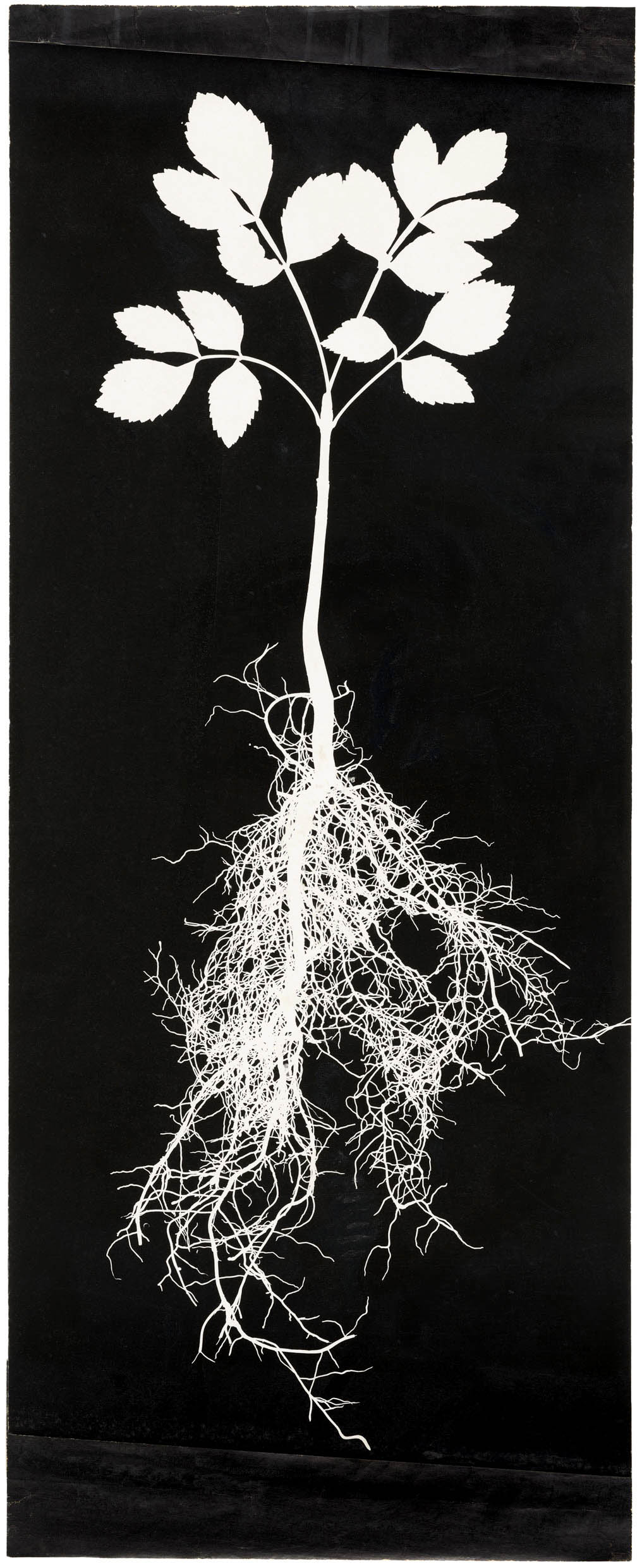
Hilla Becher (German, 1934-2015) 'Pflanzenstudie, Photogramme' (Plant study, photograms) 1960s


Hilla Becher (German, 1934-2015)
Pflanzenstudie, Photogramme (Plant study, photograms)
1960s
© Estate Bernd & Hilla Becher, vertreten durch Max Becher
Courtesy Die Photographische Sammlung/SK Stiftung Kultur – Bernd und Hilla Becher Archiv, Köln


An exhibition of Die Photographische Sammlung/SK Stiftung Kultur in cooperation with the Bernd & Hilla Becher Studio, Düsseldorf

The artist couple Bernd and Hilla Becher (1931-2007/1934-2015) has written photographic history. With their joint work, which they developed from 1959 until the 2000s on the basis of an almost uninterrupted photographic activity in the industrial regions of Germany, the Benelux countries, Great Britain, France, Italy, the USA and Canada, they created a new artistically motivated documentary style.

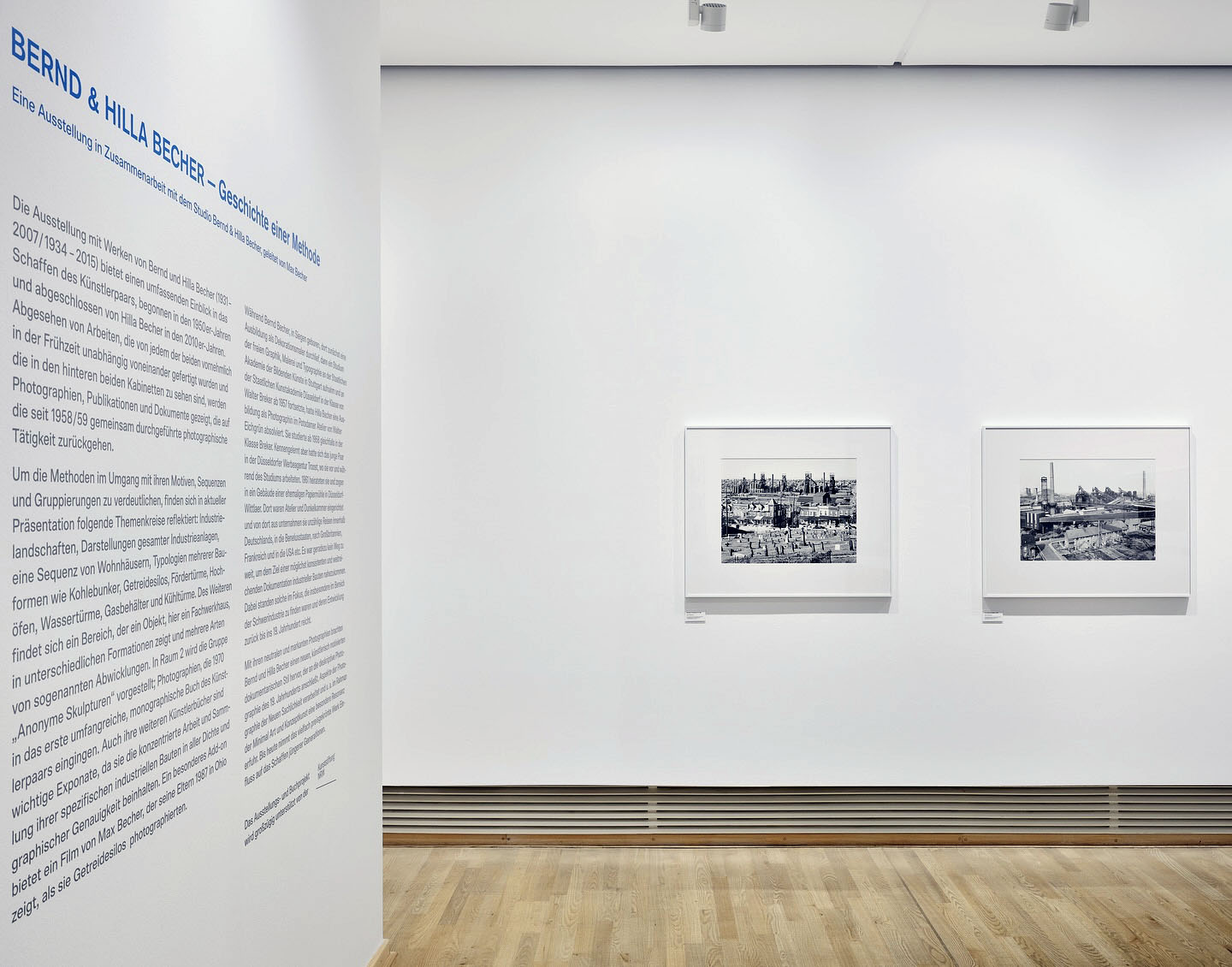
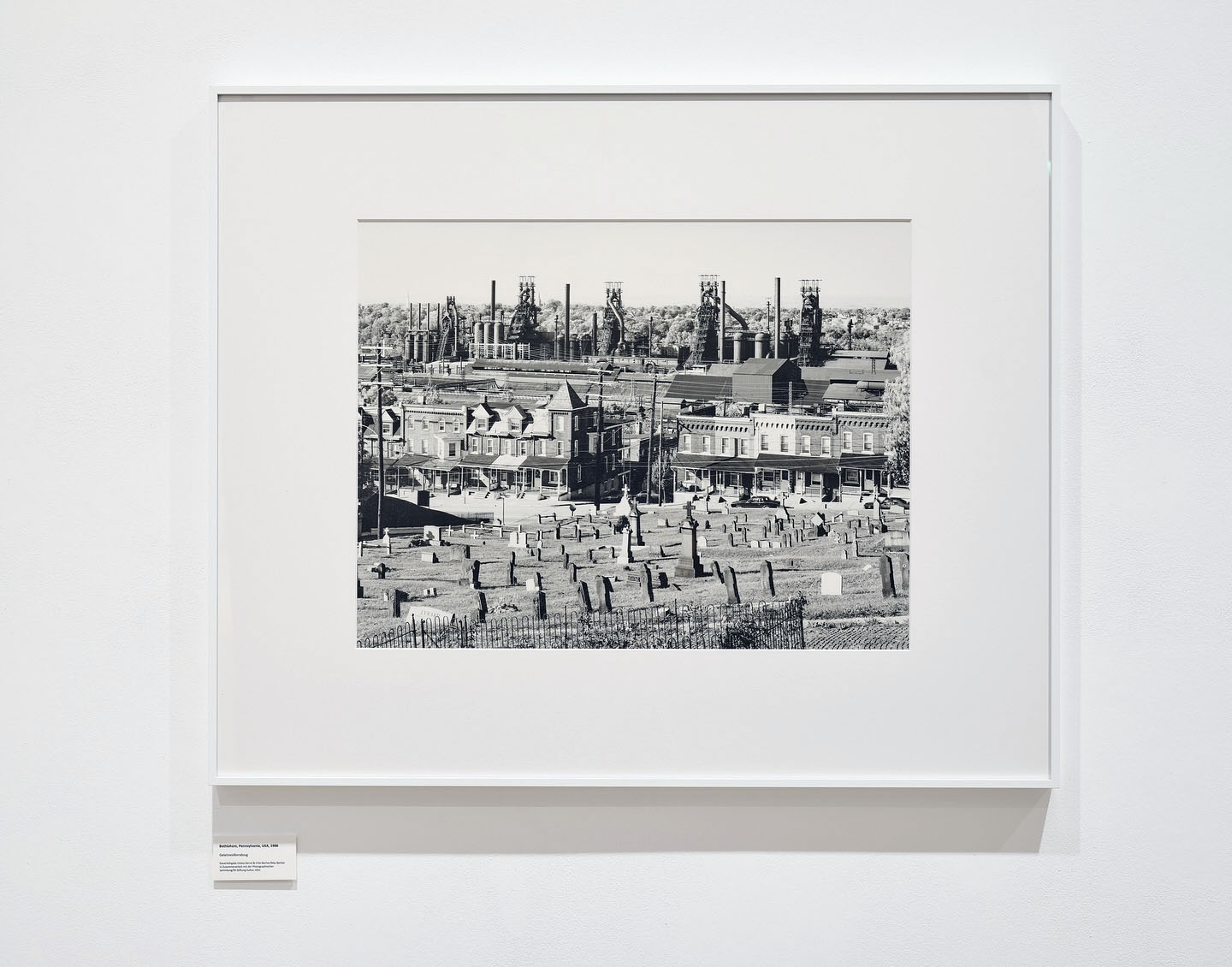
For the first time in Europe, this exhibition will present the methodological and thematic range of their oeuvre in great detail with over 300 original black and white photographs and other exhibits by the artist couple. In the individual sections, almost all of Becher’s found subjects can be located in a compilation and sequencing largely determined by themselves. Photographs of landscapes, winding towers, blast furnaces, cooling towers, gas tanks or even views of entire collieries etc. are considered her trademark. The juxtaposition of the groups of works authentically conveys the pictorial grammar developed by Bernd and Hilla Becher and their continuously reflected systematics and conceptual approach.

The exhibits come from the Bernd and Hilla Becher Archive in Die Photographische Sammlung/SK Stiftung Kultur and the Bernd & Hilla Becher Studio, Düsseldorf, in collaboration with Max Becher under the supervision of the Bernd & Hilla Becher Estate. There are also loans from Sprüth Magers and the LVR-Landesmuseum Bonn.

The publication accompanying the exhibition will be published by Schirmer / Mosel Verlag, with texts by Max Becher, Gabriele Conrath-Scholl, Marianne Kapfer and Urs Stahel.

Text from the Die Photographische Sammlung/SK Stiftung Kultur, Cologne website


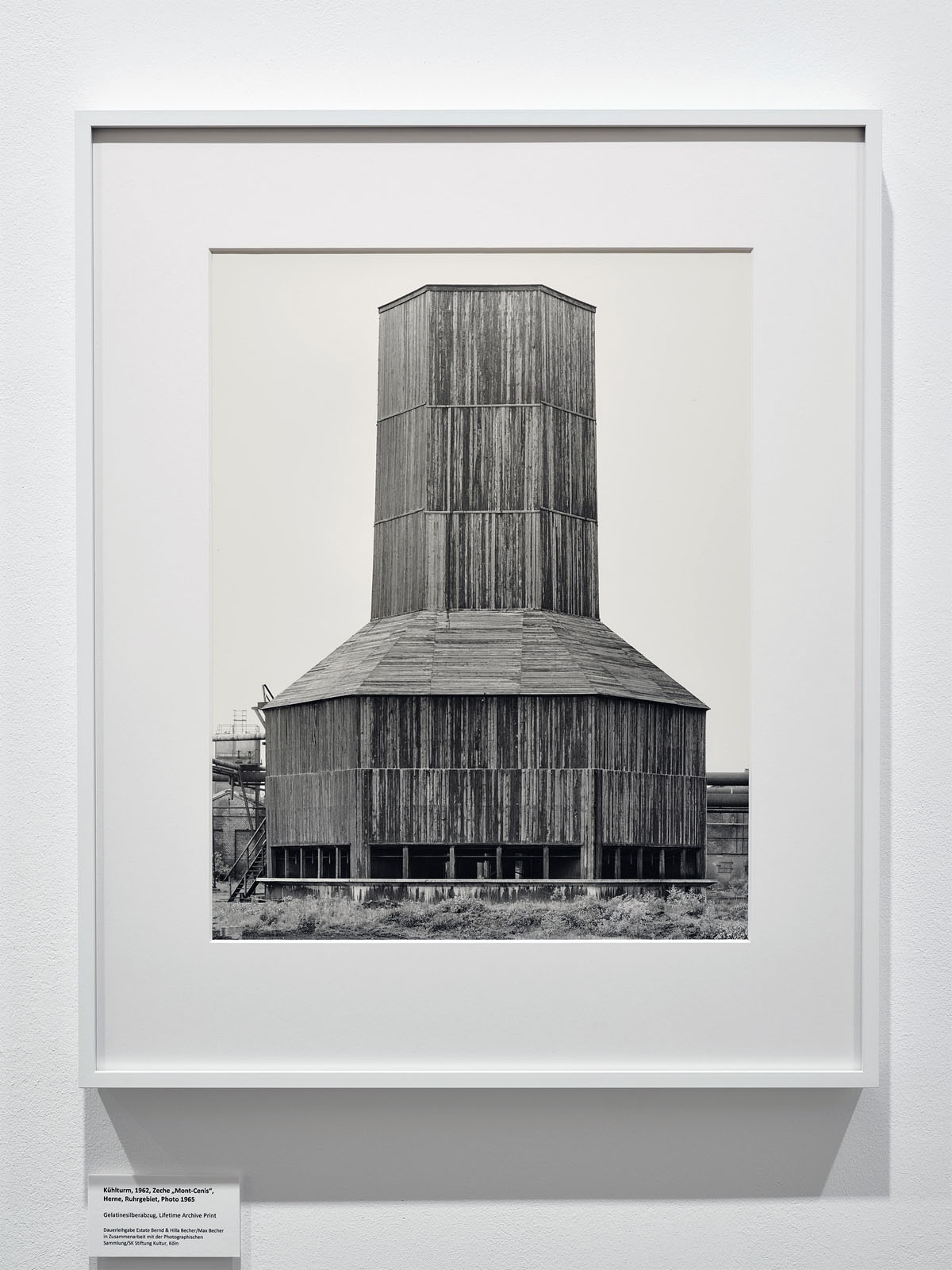
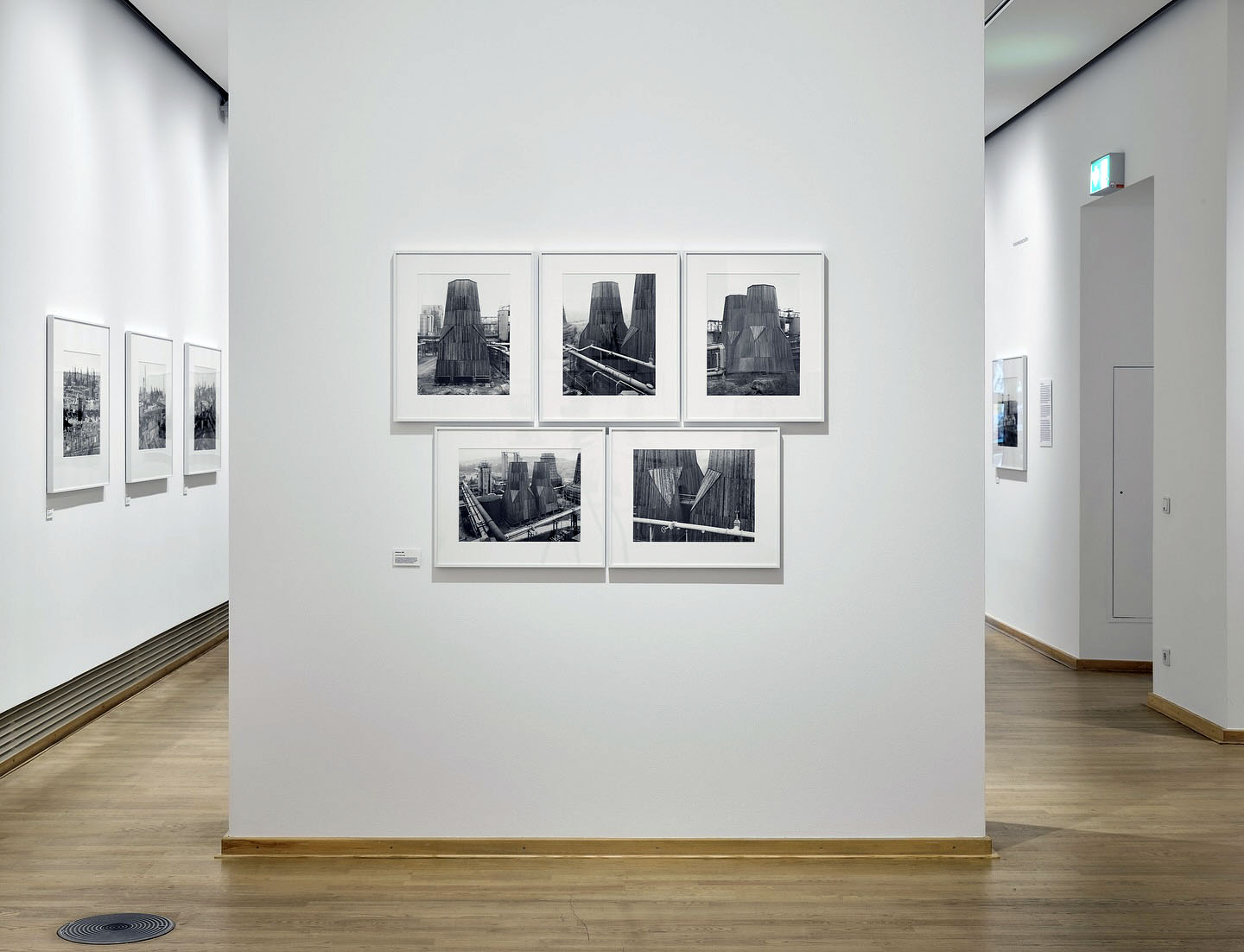
Installation view of the exhibition 'Bernd & Hilla Becher – History of a Method' at Die Photographische Sammlung/SK Stiftung Kultur, Cologne September, 2025 – February, 2026 showing Bernd and Hilla Becher's photograph 'Kühlturm (Cooling tower) 1962, "Mont-Cenis" mine, Herne, Ruhr area' 1965


Installation view of the exhibition Bernd & Hilla Becher – History of a Method at Die Photographische Sammlung/SK Stiftung Kultur, Cologne showing Bernd and Hilla Becher’s photograph Kühlturm (Cooling tower) 1962, “Mont-Cenis” mine, Herne, Ruhr area 1965 (below)


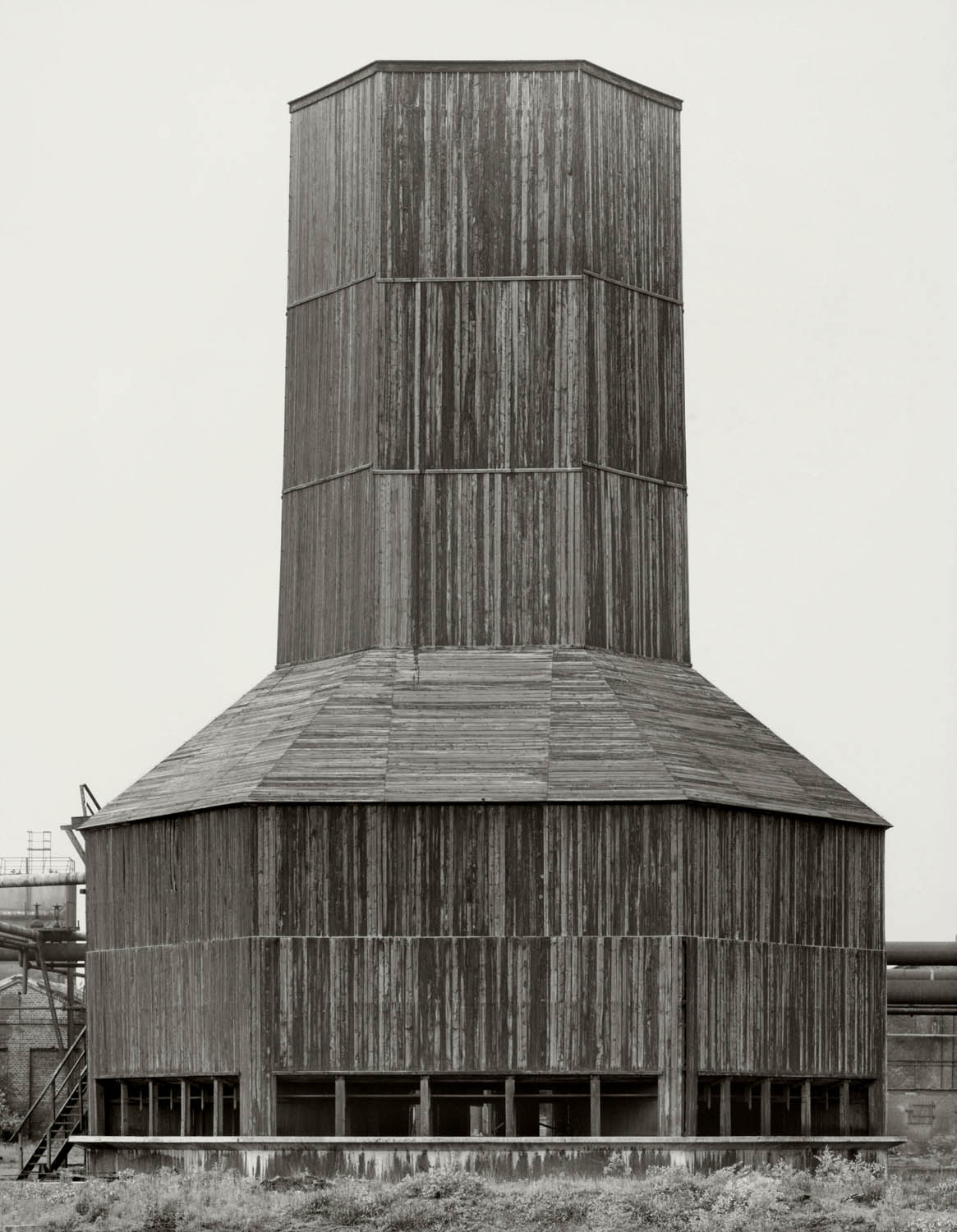
Bernd and Hilla Becher (German, 1931-2007/1934-2015) 'Kühlturm (Cooling tower) 1962, "Mont-Cenis" mine, Herne, Ruhr area' 1965


Bernd and Hilla Becher (German, 1931-2007/1934-2015)
Kühlturm (Cooling tower) 1962, “Mont-Cenis” mine, Herne, Ruhr area
1965
Gelatin silver print
40.3 x 31.5cm
© Estate Bernd & Hilla Becher, vertreten durch Max Becher
Courtesy Die Photographische Sammlung/SK Stiftung Kultur – Bernd und Hilla Becher Archiv, Köln


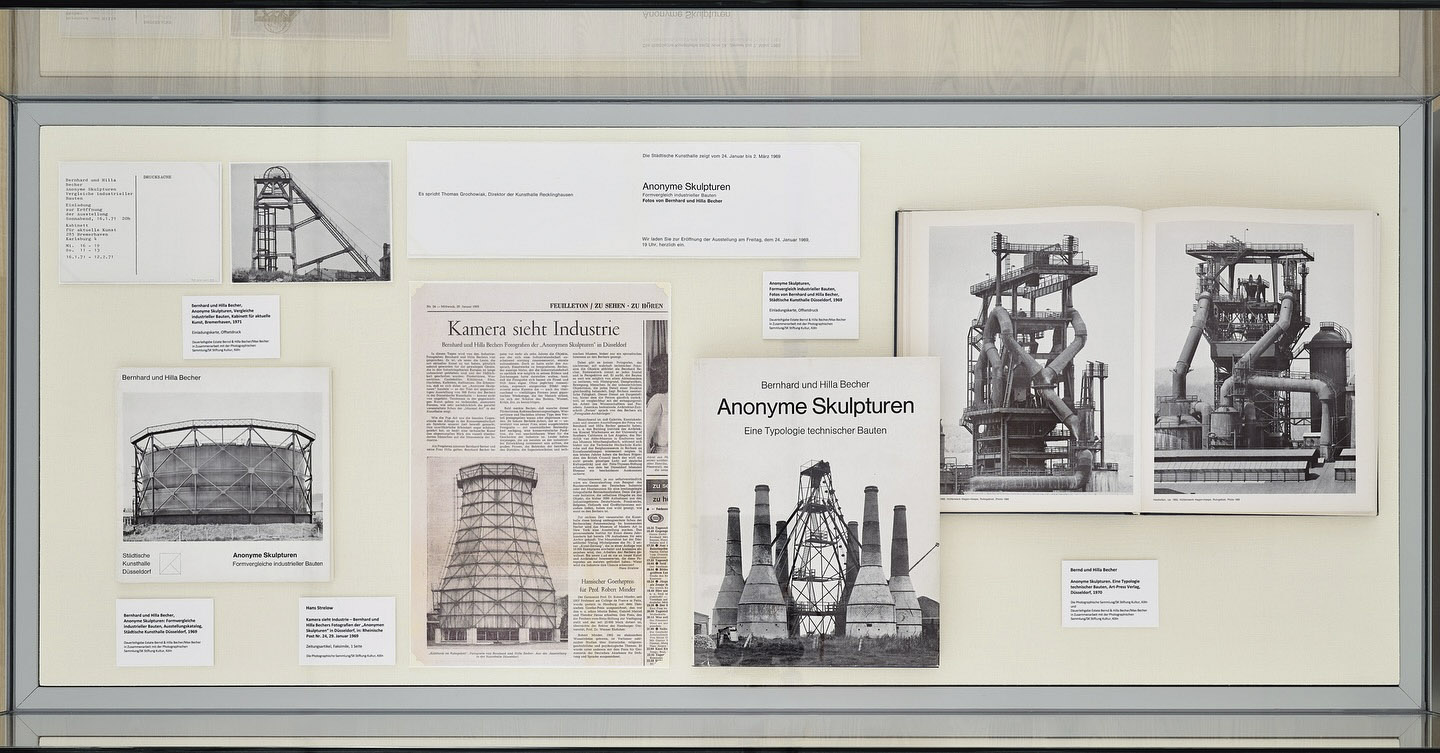
We have dedicated an entire room of our current exhibition to the group of “Anonymous Sculptures.” With this series of images, Bernd and Hilla Becher defined the building types that were important to them, such as cooling towers. The fundamental principle of the comparability of the motifs was introduced, and the work on publications, so crucial to Bernd and Hilla Becher’s artistic output, was also initiated.

You can trace the artists’ approach using 41 photographs that exemplify the building types presented in seven chapters of the 1970 publication “Anonymous Sculptures: A Typology of Technical Structures.” An exhibition at the Düsseldorf Municipal Art Gallery preceded the book in 1969 [see the book cover at the top of the posting].

The term “Anonymous Sculptures” establishes a link to conceptual art. This connection between Bernd and Hilla Becher’s work and the visual arts was important for their subsequent work and its presentation in museums and galleries.

Text from the SK Stiftung Kultur Die Photographische Sammlung Instagram page


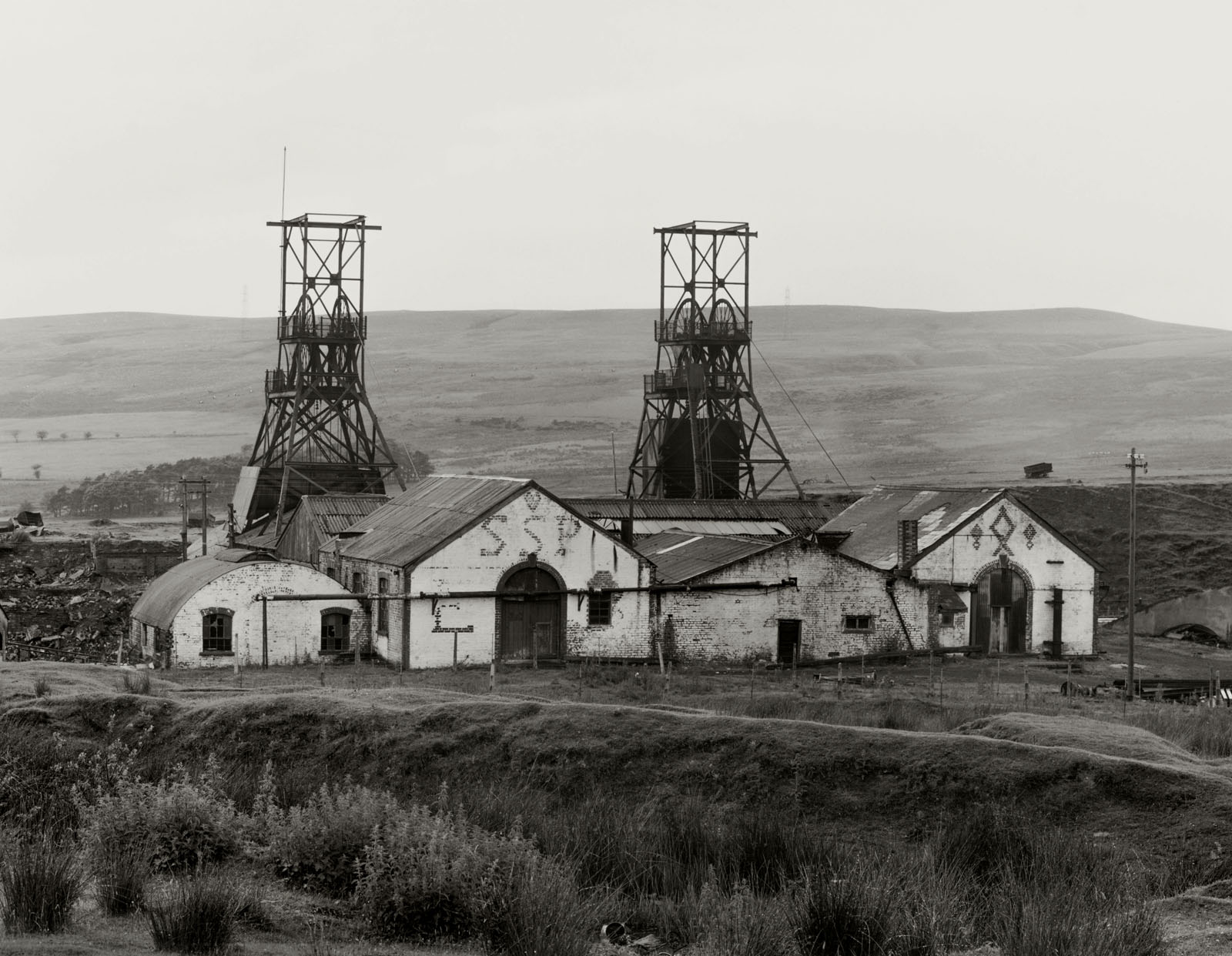
Bernd and Hilla Becher (German, 1931-2007/1934-2015) 'Seven Sisters Pit, South Wales, GB' 1966


Bernd and Hilla Becher (German, 1931-2007/1934-2015)
Seven Sisters Pit, South Wales, GB
1966
Gelatin silver print
© Estate Bernd & Hilla Becher, vertreten durch Max Becher
Courtesy Die Photographische Sammlung/SK Stiftung Kultur – Bernd und Hilla Becher Archiv, Köln, 2025


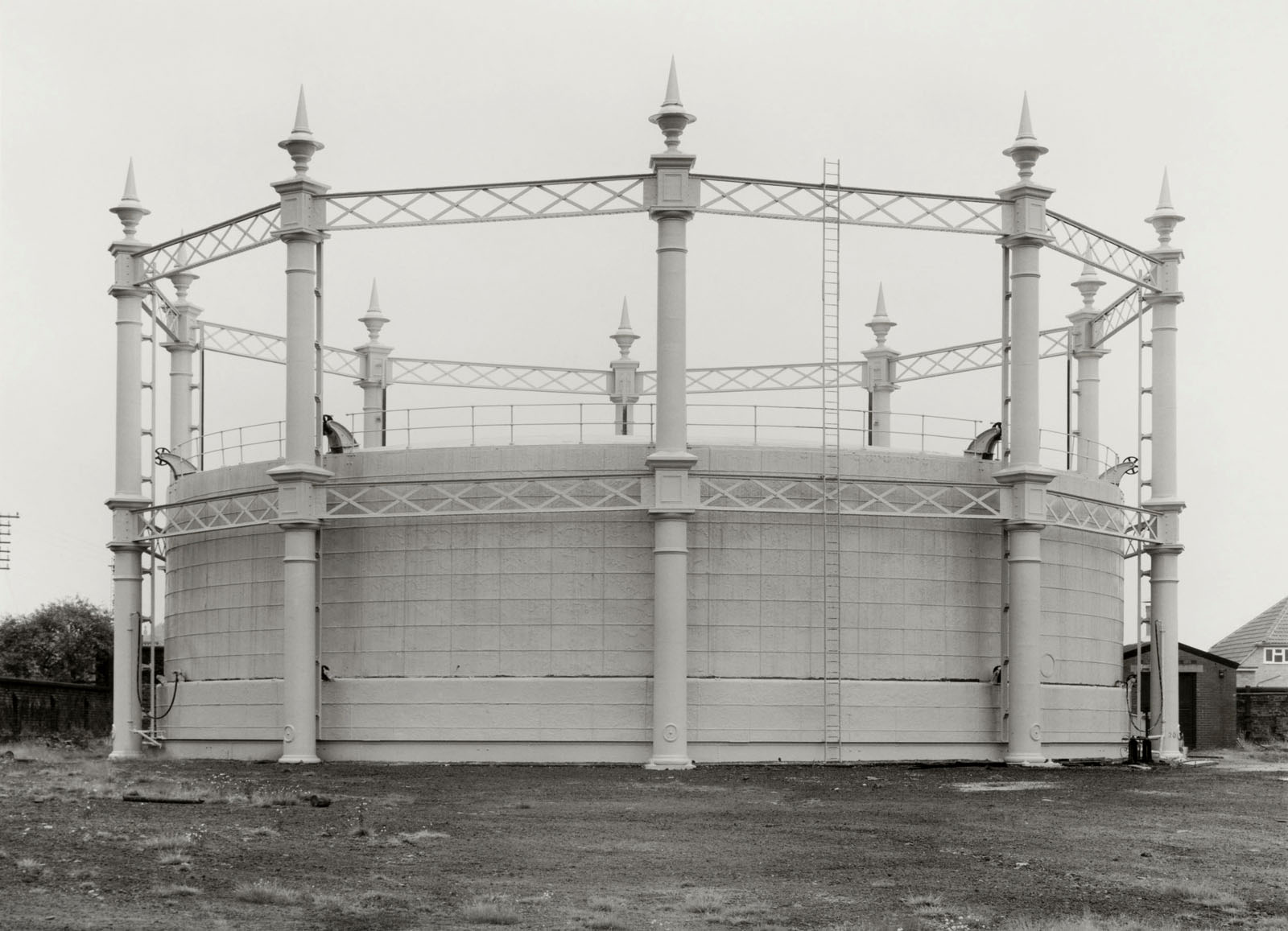
Bernd and Hilla Becher (German, 1931-2007/1934-2015) 'Gasbehälter (Gas container) 1886 Tyldesley near Manchester, UK' 1966


Bernd and Hilla Becher (German, 1931-2007/1934-2015)
Gasbehälter (Gas container) 1886 Tyldesley near Manchester, UK
1966
Gelatin silver print
30.4 x 41.5cm
© Estate Bernd & Hilla Becher, vertreten durch Max Becher
Courtesy Die Photographische Sammlung/SK Stiftung Kultur – Bernd und Hilla Becher Archiv, Köln


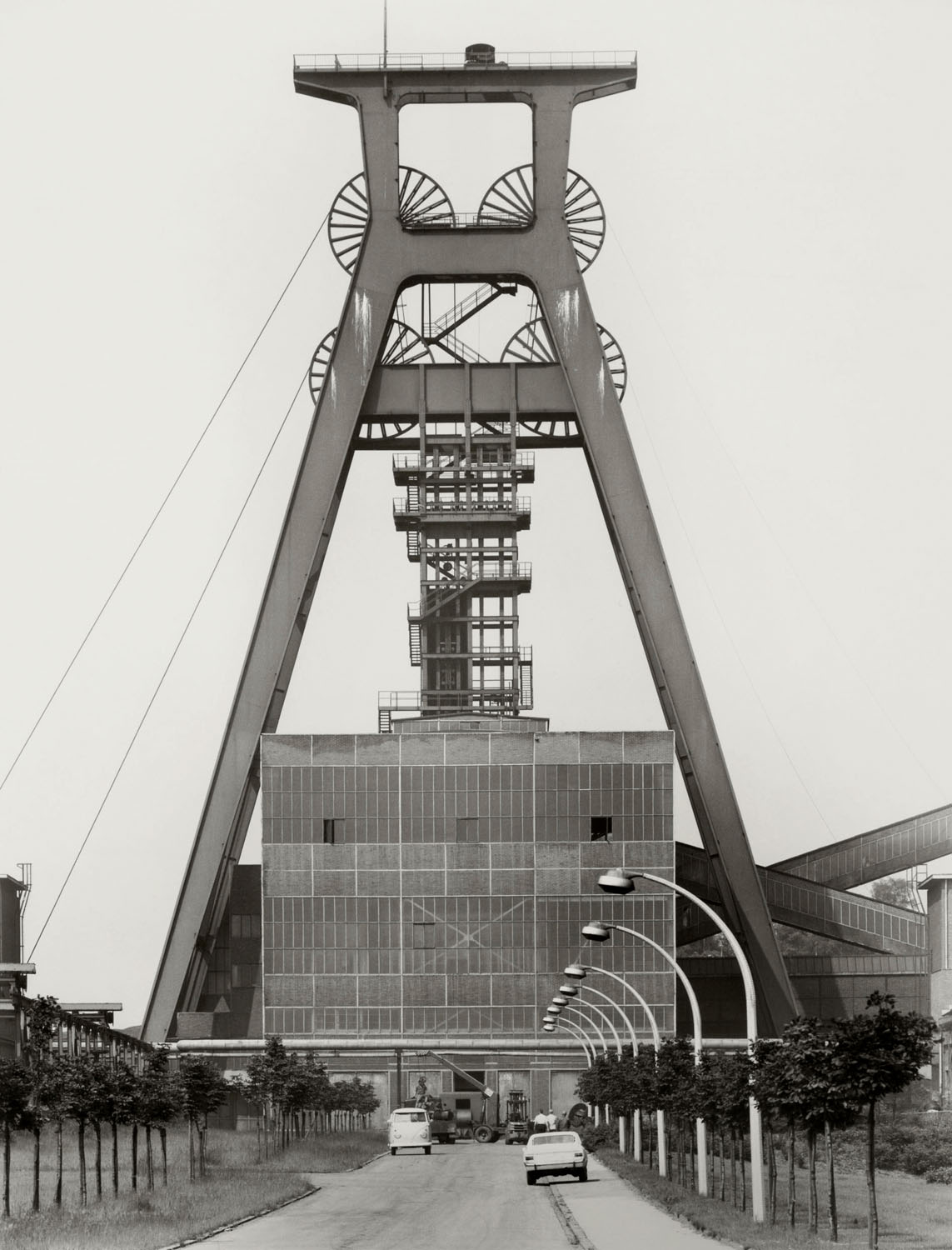
Bernd and Hilla Becher (German, 1931-2007/1934-2015) 'Förderturm (Conveyor tower) 1958 "Graf Bismarck" mine, Gelsenkirchen, Ruhr area' 1967


Bernd and Hilla Becher (German, 1931-2007/1934-2015)
Förderturm (Conveyor tower) 1958 “Graf Bismarck” mine, Gelsenkirchen, Ruhr area
1967
Gelatin silver print
40.3 x 31.1cm
© Estate Bernd & Hilla Becher, vertreten durch Max Becher
Courtesy Die Photographische Sammlung/SK Stiftung Kultur – Bernd und Hilla Becher Archiv, Köln


Bernd and Hilla Becher (German, 1931-2007/1934-2015) 'Hochofen (Blast furnace) c. 1930, Blast furnace plant, Esch, Luxembourg' 1969


Bernd and Hilla Becher (German, 1931-2007/1934-2015)
Hochofen (Blast furnace) c. 1930, Blast furnace plant, Esch, Luxembourg
1969
Gelatin silver print
40.4 x 31.5 cm
© Estate Bernd & Hilla Becher, vertreten durch Max Becher
Courtesy Die Photographische Sammlung/SK Stiftung Kultur – Bernd und Hilla Becher Archiv, Köln


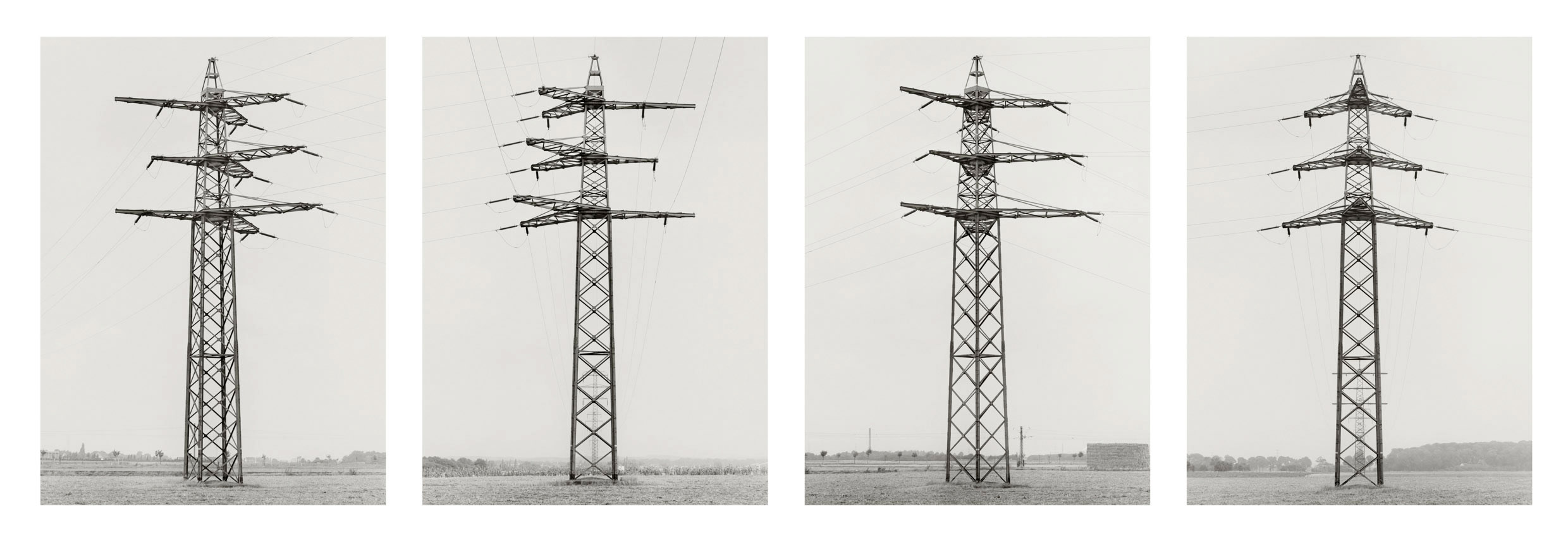
Bernd and Hilla Becher (German, 1931-2007/1934-2015) 'Hochspannungsmast, Düsseldorf, D' (High-voltage pylon, Düsseldorf, Germany) 1969


Bernd and Hilla Becher (German, 1931-2007/1934-2015)
Hochspannungsmast, Düsseldorf, D (High-voltage pylon, Düsseldorf, Germany)
1969
4 gelatin silver prints
Each approx. 41.3 x 30.4cm
© Estate Bernd & Hilla Becher, vertreten durch Max Becher
Courtesy Die Photographische Sammlung/SK Stiftung Kultur – Bernd und Hilla Becher Archiv, Köln


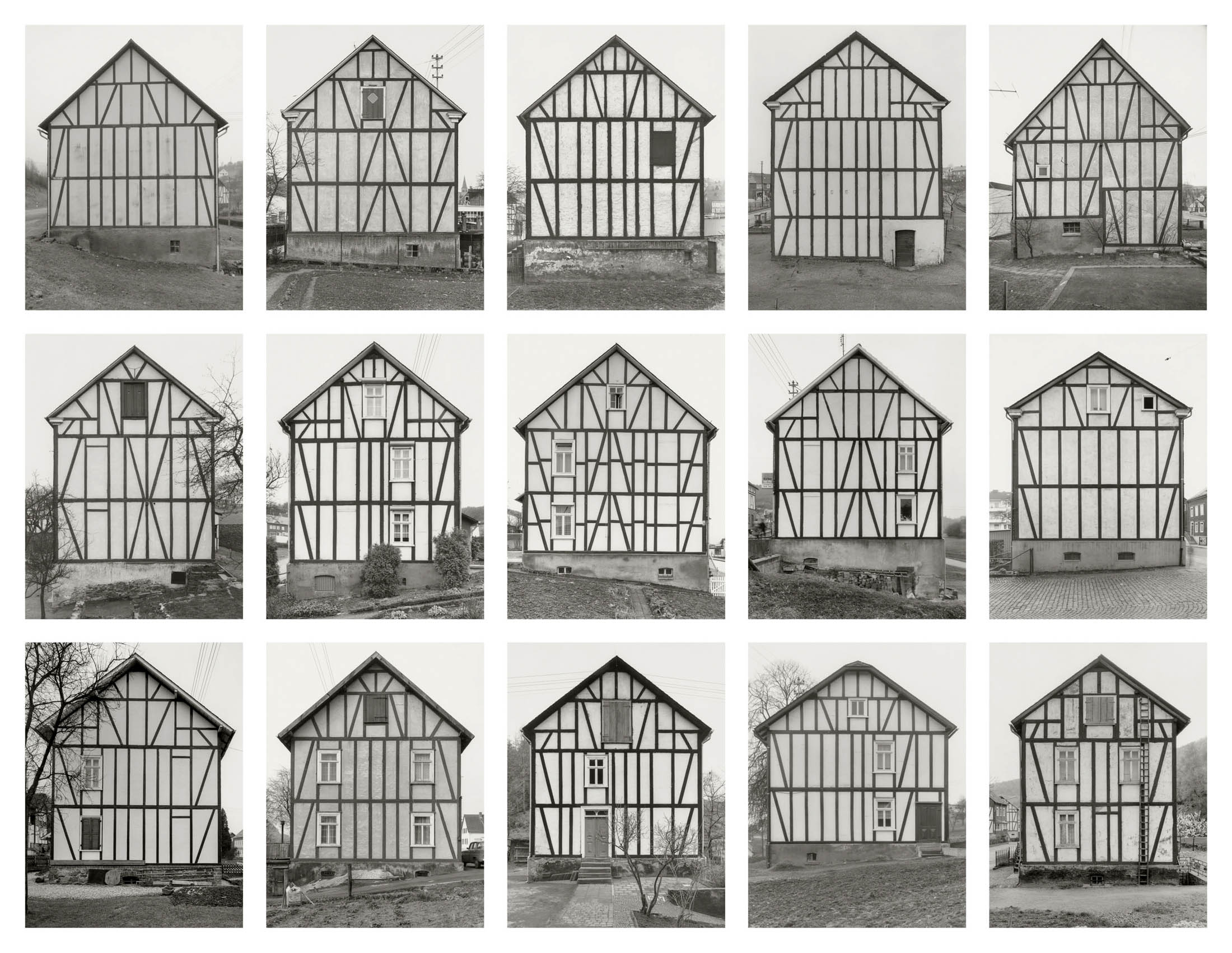
Bernd and Hilla Becher (German, 1931-2007/1934-2015) 'Giebelseiten Fachwerk, Siegerland D' (Gable sides half-timbered, Siegerland D) 1959-1973


Bernd and Hilla Becher (German, 1931-2007/1934-2015)
Giebelseiten Fachwerk, Siegerland D (Gable sides half-timbered, Siegerland D)
1959-1973
15 gelatin silver prints
Each approx. 40 x 31cm
© Estate Bernd & Hilla Becher, vertreten durch Max Becher
Courtesy Museum für Gegenwartskunst Siegen und Die Photographische Sammlung/SK Stiftung Kultur, Köln

The first subjects Bernd and Hilla Becher photographed on their nearly fifty-year journey to documenting industrial buildings were half-timbered houses in the Siegerland region. For Bernd Becher, it was natural to photograph these “poor people’s houses,” as Hilla called them, from his childhood and youth. For the film “The Photographers Bernd and Hilla Becher,” we attempted to identify the Bechers’ subjects using the book “Siegerland Half-Timbered Houses” by Schirmer/Mosel. We asked locals and showed them the book. Although the Bechers provided the exact address of each house, they were often unrecognisable. Many, being drafty and cold, had been clad with asbestos cement, thus obscuring their exposed timber framing. Their original appearance is preserved only in the Bechers’ photographs.

Text from the Text from the SK Stiftung Kultur Facebook page


Bernd and Hilla Becher (German, 1931-2007/1934-2015) 'Bottrop, D' 1976


Bernd and Hilla Becher (German, 1931-2007/1934-2015)
Bottrop, D
1976
© Estate Bernd & Hilla Becher, vertreten durch Max Becher
Courtesy Die Photographische Sammlung/SK Stiftung Kultur – Bernd und Hilla Becher Archiv, Köln, 2025


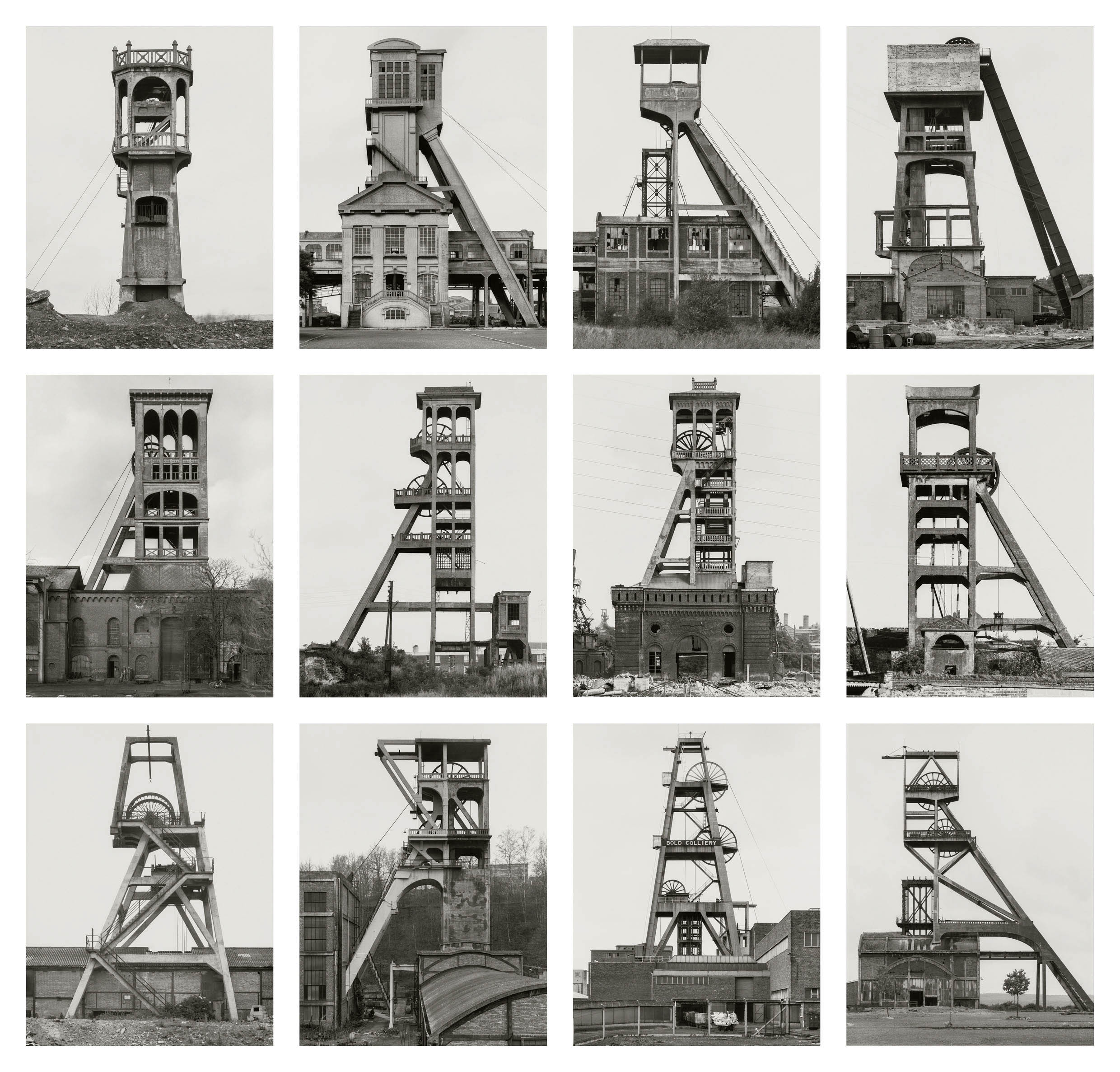
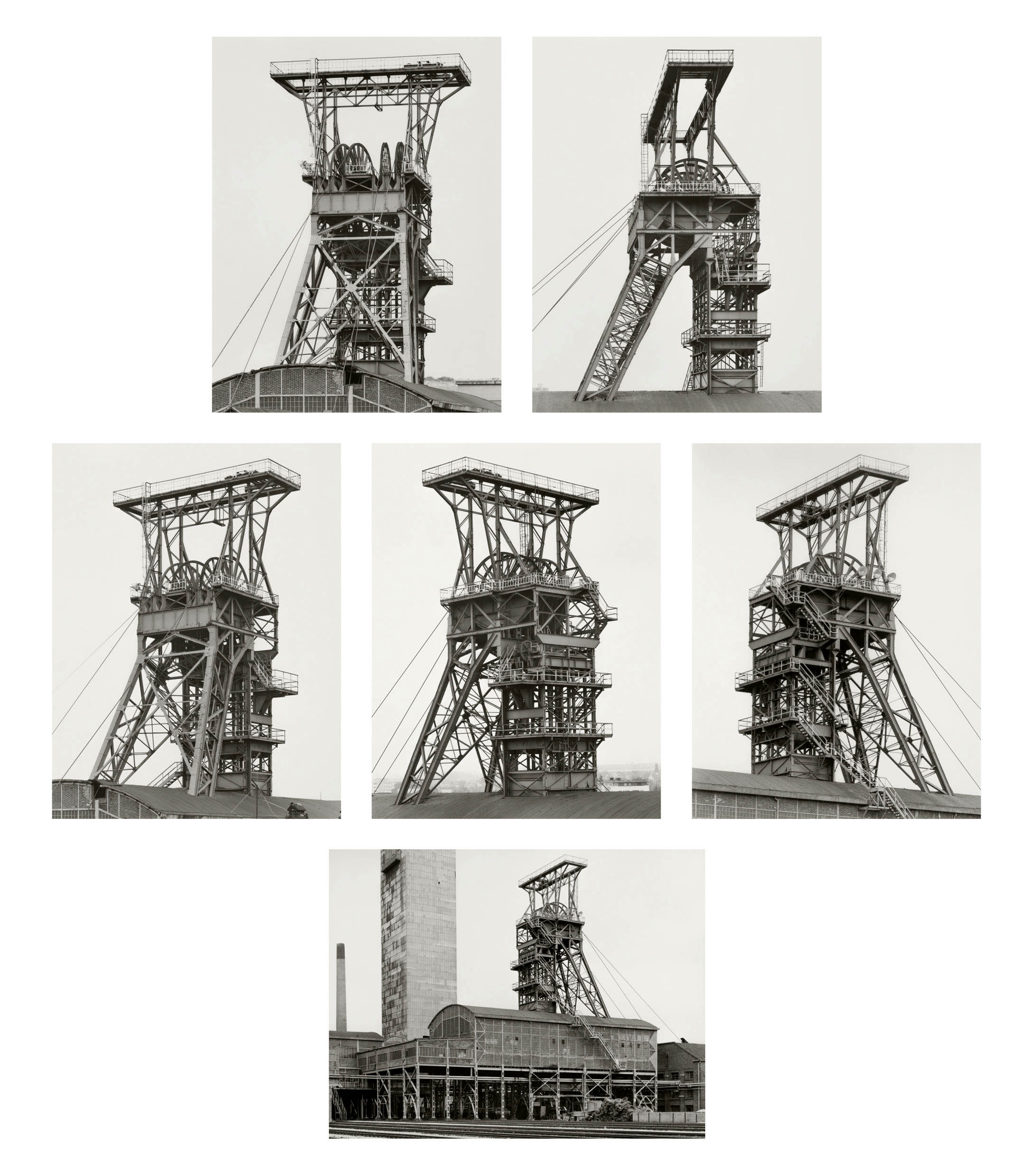
Bernd and Hilla Becher (German, 1931-2007/1934-2015) 'Fördertürme' (Winding towers) 1966-1979


Bernd and Hilla Becher (German, 1931-2007/1934-2015)
Fördertürme (Winding towers)
1966-1979
12 gelatin silver print
Each approx. 41 x 31cm
© Estate Bernd & Hilla Becher, vertreten durch Max Becher
Courtesy Die Photographische Sammlung/SK Stiftung Kultur – Bernd und Hilla Becher Archiv, Köln


Bernd and Hilla Becher (German, 1931-2007/1934-2015) 'auf der Grube Ensdorf, Saarland' (at the Ensdorf mine, Saarland) 1979


Bernd and Hilla Becher (German, 1931-2007/1934-2015)
auf der Grube Ensdorf, Saarland (at the Ensdorf mine, Saarland)
1979
Gelatin silver print
12 x 14.1cm
© Estate Bernd & Hilla Becher, vertreten durch Max Becher
Courtesy Die Photographische Sammlung/SK Stiftung Kultur – Bernd und Hilla Becher Archiv, Köln


The artist couple Bernd and Hilla Becher (1931-2007/1934-2015) set a benchmark in the history of photography with their work. Beginning in 1959, they collaborated almost continuously for decades on a joint oeuvre, developed across Germany, the Benelux countries, the United Kingdom, France, Italy, the United States, and Canada. Their artistic style, characterised by a precise, documentary visual language and methodical systematisation, resonated significantly with movements such as Minimal Art and Conceptual Art. Against the backdrop of New Objectivity and inspired by 19th-century documentary photography, they created a visual grammar whose influence remains palpable in contemporary photography.

For the first time in Europe, Die Photographische Sammlung/SK Stiftung Kultur presents an extensive retrospective featuring over 300 original black-and-white photographs and complementary exhibits, showcasing the formal and thematic breadth and depth of Bernd and Hilla Becher’s work. The exhibition centers on the themes and methods developed by the Bechers: consistent methodical approaches to the photographic motif that evolved and were variably applied over decades. The exhibition explores how these methods emerged, how they developed, and how they reflected the Bechers’ perspective on the different shapes, functions, and integration of industrial buildings into the landscape.

Rare early works from both artists – created between the 1950s and 1970s – are on view, many for the first time. These pieces provide insight into the evolution of their shared aesthetic.

Room 2 is dedicated to the book Anonyme Skulpturen. Eine Typologie technischer Bauten (Anonymous Sculptures. A Typology of Technical Constructions), 1970, considered the foundation of their work. This publication systematically catalogued industrial structures and remains a key reference point. Quoted texts on the function of the objects and original prints illuminate its significance within their oeuvre.

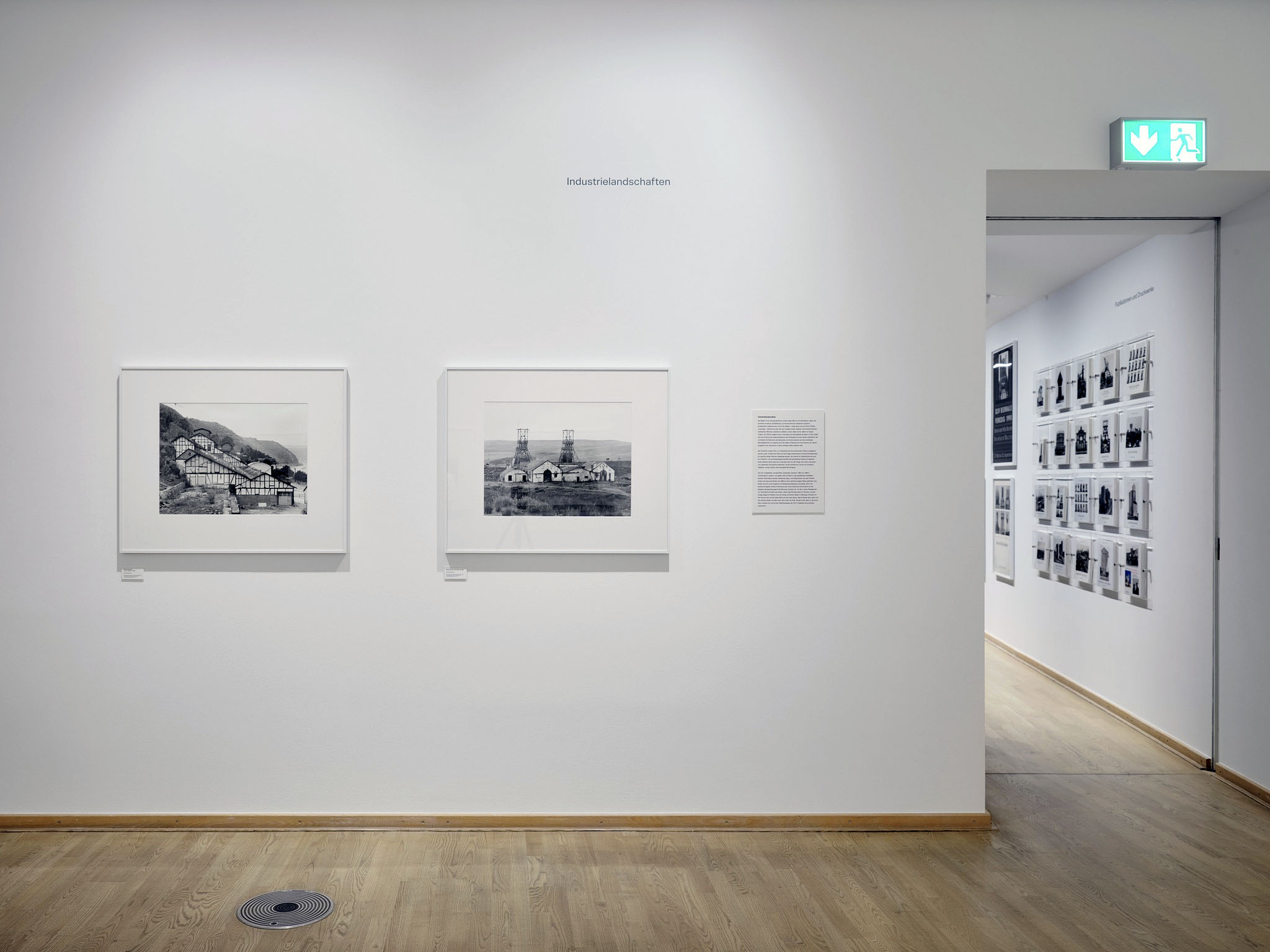
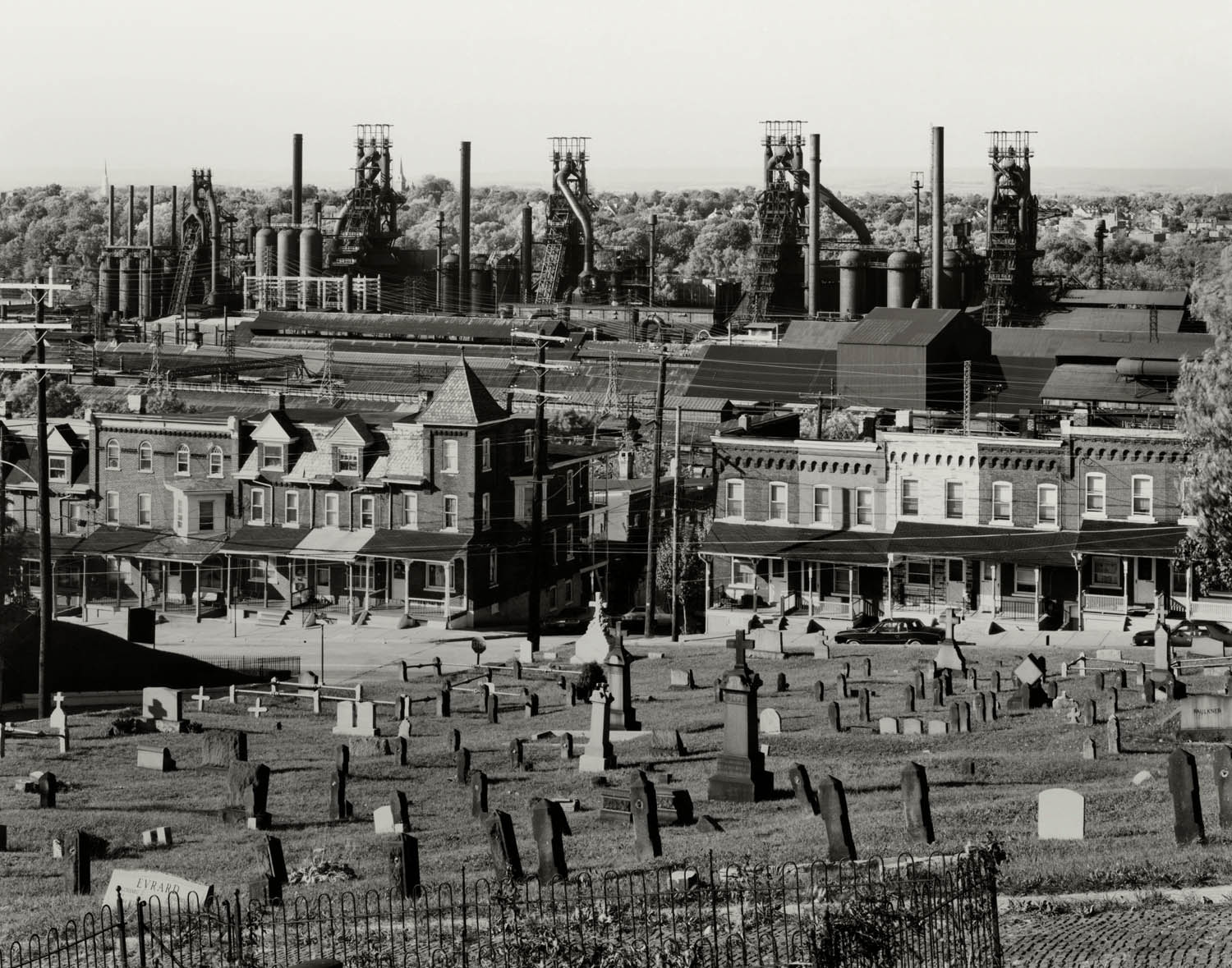
Industrial Landscapes and photographs of entire sites form another focus and demonstrate that the Bechers did not merely document isolated buildings, but also functional and spatial relationships. Featured works include views of the Zollern 2 coal mine in Dortmund (published 1977) and the Ewald Fortsetzung mine in Recklinghausen (1982-1985).

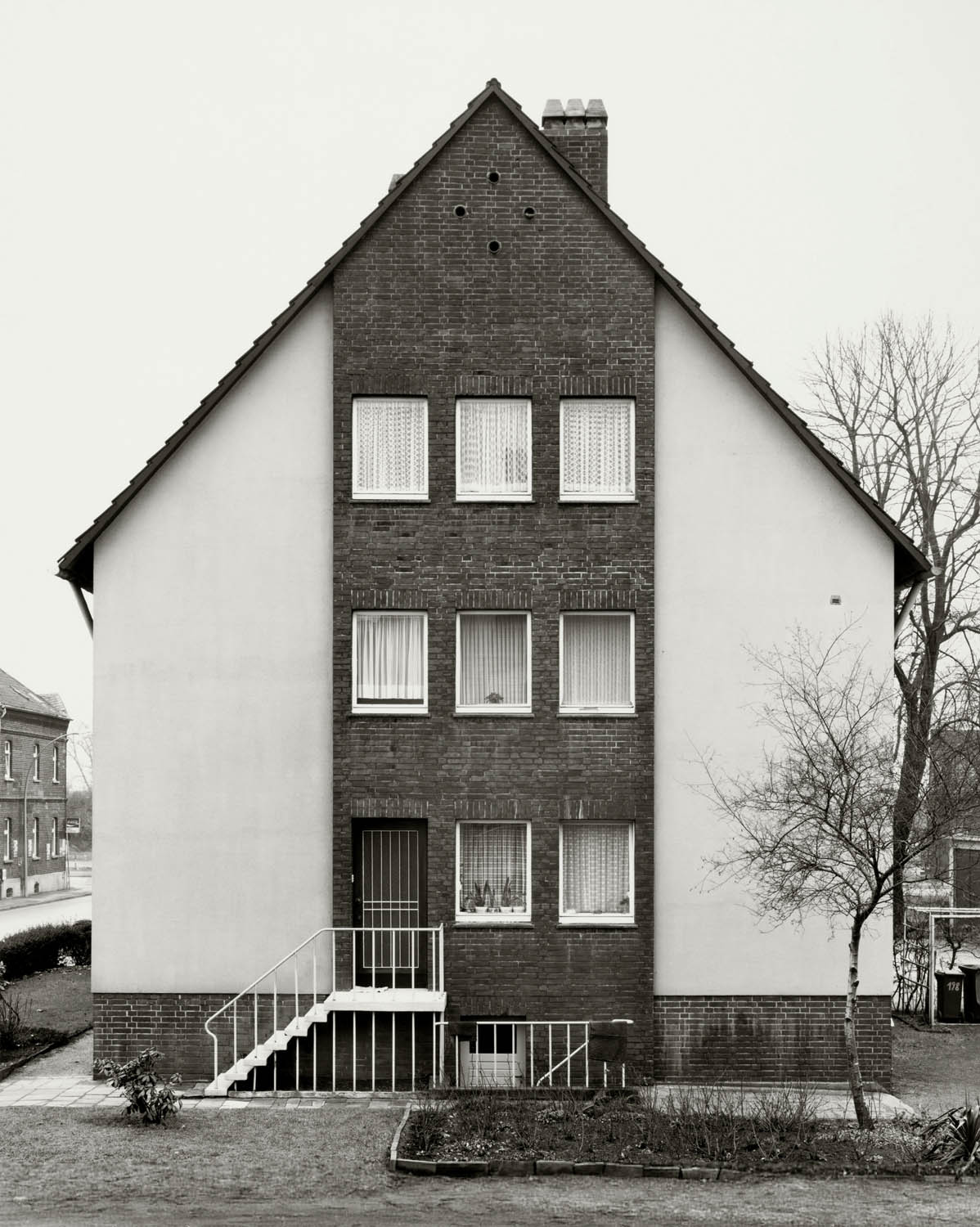
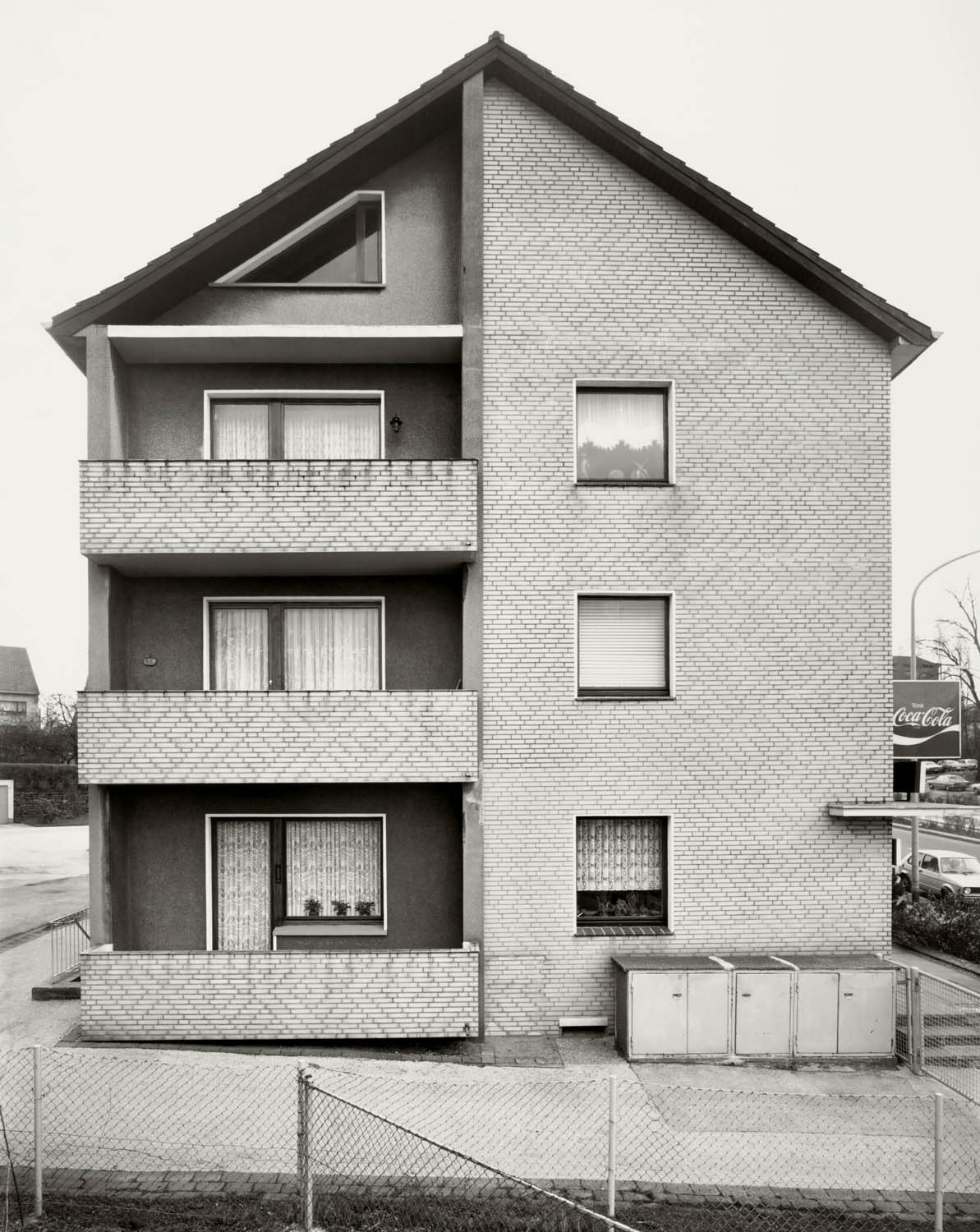
The exhibition also includes “portraits” of residential and settlement houses from the Ruhr region – especially from the post-war era – reflecting the everyday life and environment of industrial workers. A framework house from the Siegerland region is used to show how a single subject can take on different meanings depending on presentation and context.

“Sequences” or “unfoldings” are illustrated using various building groups, presenting structures from multiple perspectives, so that a sculptural image of the motifs is created.

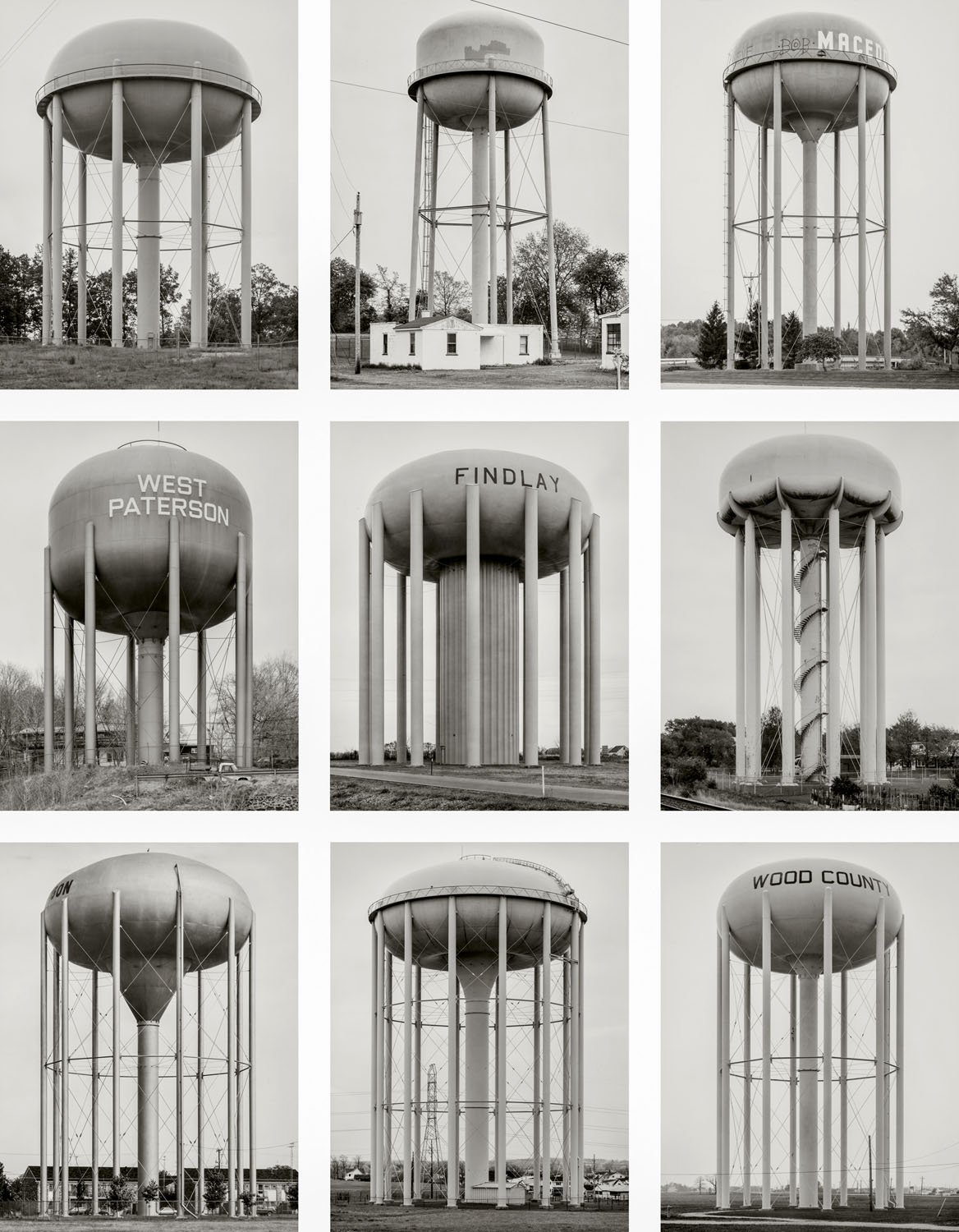
Lastly, the exhibition presents typologies – photographic series of coal bunkers, grain silos, winding and water towers, blast furnaces, and cooling towers. These highlight how the Bechers used specific representational strategies, systematic arrangement, and variation to achieve artistic expression. Created between the 1960s and early 2000s across different countries, the works powerfully demonstrate the visual grammar developed by the Bechers.

A kind of “cinematic epilogue” is provided by a video created by Max Becher, who accompanied his parents on a work trip to Ohio in 1987, offering an evocative glimpse into their working process.

The works are drawn from the Bernd and Hilla Becher Archive at Die Photographische Sammlung/SK Stiftung Kultur and the Bernd & Hilla Becher Studio in Düsseldorf, directed by Max Becher. Additional loans are provided by Sprüth Magers and the LVR-Landesmuseum Bonn.

A catalogue will accompany the exhibition, published by Schirmer/Mosel Verlag, Munich, with texts by Max Becher, Gabriele Conrath-Scholl, Marianne Kapfer, and Urs Stahel. (Will be released in early November.)

Press release from Die Photographische Sammlung/SK Stiftung Kultur


Bernd and Hilla Becher (German, 1931-2007/1934-2015) 'Essen-Schönebeck, D' 1981


Bernd and Hilla Becher (German, 1931-2007/1934-2015)
Essen-Schönebeck, D
1981
© Estate Bernd & Hilla Becher, vertreten durch Max Becher
Courtesy Die Photographische Sammlung/SK Stiftung Kultur – Bernd und Hilla Becher Archiv, Köln


Bernd and Hilla Becher (German, 1931-2007/1934-2015) 'Wassertürme, USA' (Water towers, USA) 1974-1983


Bernd and Hilla Becher (German, 1931-2007/1934-2015)
Wassertürme, USA (Water towers, USA)
1974-1983
Gelatin silver prints
© Estate Bernd & Hilla Becher, vertreten durch Max Becher
Courtesy Die Photographische Sammlung/SK Stiftung Kultur – Bernd und Hilla Becher Archiv, Köln, 2025


Bernd Becher (German, 1931-2007) 'Untitled (Water tower, Béziers, Hérault, F)' c. 1984


Bernd Becher (German, 1931-2007)
Untitled (Water tower, Béziers, Hérault, F)
c. 1984
Ink on paper
9 x 5.1cm
© Estate Bernd & Hilla Becher, vertreten durch Max Becher
Courtesy Die Photographische Sammlung/SK Stiftung Kultur – Bernd und Hilla Becher Archiv, Köln, 20255


Bernd and Hilla Becher (German, 1931-2007/1934-2015) 'Wassertürme' (Water tower) 1960s-1980s


Bernd and Hilla Becher (German, 1931-2007/1934-2015)
Wassertürme (Water tower)
1960s-1980s
Drawings with felt-tip pen, pencil, ballpoint pen on cardboard, paper, index cards
Various sizes around 10.5 x 8.5cm
© Estate Bernd & Hilla Becher, vertreten durch Max Becher
Courtesy Die Photographische Sammlung/SK Stiftung Kultur – Bernd und Hilla Becher Archiv, Köln


Walker Evans (United States of America 1903 - 1975) 'Graveyard and steel mill, Bethlehem, Pennsylvania' 1935


Walker Evans (United States of America 1903-1975)
Graveyard and steel mill, Bethlehem, Pennsylvania
1935
Gelatin silver print


Installation view of the exhibition 'Bernd & Hilla Becher – History of a Method' at Die Photographische Sammlung/SK Stiftung Kultur, Cologne September, 2025 – February, 2026 showing at left Bernd and Hilla Becher's photograph 'Bethlehem, Pennsylvania, USA' 1986


Installation view of the exhibition Bernd & Hilla Becher – History of a Method at Die Photographische Sammlung/SK Stiftung Kultur, Cologne showing at left Bernd and Hilla Becher’s photograph Bethlehem, Pennsylvania, USA 1986 (below)


Installation view of the exhibition 'Bernd & Hilla Becher – History of a Method' at Die Photographische Sammlung/SK Stiftung Kultur, Cologne September, 2025 – February, 2026 showing Bernd and Hilla Becher's photograph 'Bethlehem, Pennsylvania, USA' 1986


Installation view of the exhibition Bernd & Hilla Becher – History of a Method at Die Photographische Sammlung/SK Stiftung Kultur, Cologne showing Bernd and Hilla Becher’s photograph Bethlehem, Pennsylvania, USA 1986 (below)


Bernd and Hilla Becher (German, 1931-2007/1934-2015) 'Bethlehem, Pennsylvania, USA' 1986


Bernd and Hilla Becher (German, 1931-2007/1934-2015)
Bethlehem, Pennsylvania, USA
1986
Gelatin silver print
46.7 x 60cm
© Estate Bernd & Hilla Becher, vertreten durch Max Becher
Courtesy Die Photographische Sammlung/SK Stiftung Kultur – Bernd und Hilla Becher Archiv, Köln


With their blast furnaces, chimneys, pipes, and conveyor belts, steelworks are less buildings than gigantic machines. They are among the most imposing industrial structures that Bernd and Hilla Becher have photographed since the late 1950s. Anatomically speaking, blast furnaces are like a body without skin, the artist couple wrote in 1990: excessively high temperatures, too much pressure, too many gases make cladding the steel shell impossible; they are nothing but function. In Bethlehem, Pennsylvania, the enormous work practically hangs over the town. Photographed from an elevated vantage point (similar to the one Walker Evans had chosen in 1935), the blast furnaces, houses, and the cemetery – work, life, death – are compressed into an inescapable proximity. Space compressed, time compressed.

Dr. Maria Müller-Schareck, art historian and member of the PS/SK management team

Text from the SK Stiftung Kultur Die Photographische Sammlung Instagram page


Bernd and Hilla Becher (German, 1931-2007/1934-2015) 'Förderturm, Schacht 2' (Winding tower, shaft 2) 1982


Bernd and Hilla Becher (German, 1931-2007/1934-2015)
Förderturm, Schacht 2 (Winding tower, shaft 2)
1982
6 gelatin silver prints,
Each approx. 40 x 31cm
© Estate Bernd & Hilla Becher, vertreten durch Max Becher
Courtesy Die Photographische Sammlung/SK Stiftung Kultur – Bernd und Hilla Becher Archiv, Köln


Installation view of the exhibition 'Bernd & Hilla Becher – History of a Method' at Die Photographische Sammlung/SK Stiftung Kultur, Cologne September, 2025 – February, 2026 showing Bernd and Hilla Becher's 'Zeche Ewald Fortsetzung, Kühlturm/-türme' (Ewald mine continuation, cooling tower(s)) 1985


Installation views of the exhibition Bernd & Hilla Becher – History of a Method at Die Photographische Sammlung/SK Stiftung Kultur, Cologne showing Bernd and Hilla Becher’s Zeche Ewald Fortsetzung, Kühlturm/-türme (Ewald mine continuation, cooling tower(s)) 1985 (below)


Bernd and Hilla Becher (German, 1931-2007/1934-2015) 'Zeche Ewald Fortsetzung, Kühlturm/-türme' (Ewald mine continuation, cooling tower(s)) 1985


Bernd and Hilla Becher (German, 1931-2007/1934-2015)
Zeche Ewald Fortsetzung, Kühlturm/-türme (Ewald mine continuation, cooling tower(s))
1985
5 gelatin silver prints
Each approx. 40.0 x 31.0cm
© Estate Bernd & Hilla Becher, vertreten durch Max Becher
Courtesy Die Photographische Sammlung/SK Stiftung Kultur – Bernd und Hilla Becher Archiv, Köln


Over the course of their artistic career, Bernd and Hilla Becher documented approximately 200 industrial sites, including the Ewald Fortsetzung coal mine in Recklinghausen, which we are featuring in our exhibition.

These documentations are based on systematic walks through the industrial sites and surrounding areas. A panoramic photograph, often central to each site, provides an overview of the grounds and allows the individual buildings to be located and understood in relation to one another.

The subsequent photographs portray the individual building types, in this case, two cooling towers. The five images in this group clearly demonstrate how Bernd and Hilla Becher approach their subject, photographing the building from different sides and perspectives, and highlighting a specific detail. The aim of this approach was to depict the industrial buildings in a way that is both technically clear and aesthetically pleasing.

Text from the SK Stiftung Kultur Die Photographische Sammlung Instagram page


Bernd and Hilla Becher (German, 1931-2007/1934-2015) 'Kühltürme' (Cooling towers) 1964-1993


Bernd and Hilla Becher (German, 1931-2007/1934-2015)
Kühltürme (Cooling towers)
1964-1993
9 gelatin silver prints
Each approx. 41 x 31cm
© Estate Bernd & Hilla Becher, vertreten durch Max Becher
Courtesy Die Photographische Sammlung/SK Stiftung Kultur – Bernd und Hilla Becher Archiv, Köln


Bernd and Hilla Becher (German, 1931-2007/1934-2015) 'Kies- und Schotterwerk, Oberbüren/St. Gallen, CH' (Gravel and crushed stone works, Oberbüren/St. Gallen, CH) 2001


Bernd and Hilla Becher (German, 1931-2007/1934-2015)
Kies- und Schotterwerk, Oberbüren/St. Gallen, CH (Gravel and crushed stone works, Oberbüren/St. Gallen, CH)
2001
3 gelatin silver print
Each approx. 30 x 40cm
© Estate Bernd & Hilla Becher, vertreten durch Max Becher
Courtesy Sprüth Magers


Installation view of the exhibition 'Bernd & Hilla Becher – History of a Method' at Die Photographische Sammlung/SK Stiftung Kultur, Cologne September, 2025 – February, 2026


Installation view of the exhibition Bernd & Hilla Becher – History of a Method at Die Photographische Sammlung/SK Stiftung Kultur, Cologne September, 2025 – February, 2026


'Bernd & Hilla Becher – History of a Method' book cover


Bernd & Hilla Becher – History of a Method book cover


Die Photographische Sammlung/SK Stiftung Kultur
Im Mediapark 7, 50670 Cologne
Phone: +49 221/888 95 300

Opening hours: Daily (except Wednesdays): 2pm – 7pm

Die Photographische Sammlung/SK Stiftung Kultur website

LIKE ART BLART ON FACEBOOK

Back to top

Exhibition: ‘FOTOGAGA: Max Ernst and Photography. A Visit from the Würth Collection’ at Museum für Fotografie, Staatliche Museen zu Berlin

Exhibition dates: 18th October, 2024 – 27th May, 2025

Curators: Katja Böhlau and Ludger Derenthal, Kunstbibliothek – Staatliche Museen zu Berlin


Max Ernst (German, 1891-1976) 'Frontispiece' 1921 From 'Paul Éluard: Répétitions' from the exhibition 'FOTOGAGA: Max Ernst and Photography. A Visit from the Würth Collection' at Museum für Fotografie, Oct 2024 - May 2025


Max Ernst (German, 1891-1976)
Frontispiece
1921
From Paul Éluard: Répétitions
Print from collage
5.5 x 10.3cm
Sammlung Würth
© VG Bild-Kunst, Bonn 2024


“Although these artists were explicitly not dealing with mundane reality but instead with what lies beneath, behind and in-between, the still relatively new medium of photography was of great importance for many. Last but not least, they also used it to make visible what remains hidden to the naked eye without technical means: the distant, the tiny, the moving.” (Press release)

Expressing the unconscious mind through illogical, dreamlike imagery and ideas, exploring the irrational, challenging notions of reality through a technical instrument – the camera – to create “a rich and multifarious cosmos of idiosyncratic realities that radically transcended traditional aesthetics.”

In the dream of the mind and the camera’s eye. Over and above the real.

Dr Marcus Bunyan


Many thankx to the Museum für Fotografie for allowing me to publish the photographs in the posting. Please click on the photographs for a larger version of the image.


“The invention of modern photomontage in the early twentieth century by Max Ernst with his Dada colleagues Hannah Höch, John Heartfield, George Grosz and Raoul Hausmann established new history in a variety of ways. Expanding modern art with multimedia as well as placing found photographs into art cut from printed magazines, rather than chemical made prints from the darkroom. Redefining final works of art without the paint brush or canvas. Ernst freed imagery into the unconscious by self-made combinations of drawing with torn and pasted photographic fragments, evoking memories and other responses by viewers that continue today.”


Steve Yates, Fulbright scholar, photographic artist, author and curator


Max Ernst (German, 1891-1976)
Die chinesische Nachtigall / Le rossignol chinois / The Chinese Nightingale 1920 from the exhibition 'FOTOGAGA: Max Ernst and Photography. A Visit from the Würth Collection' at Museum für Fotografie, Oct 2024 - May 2025


Max Ernst (German, 1891-1976)
Die chinesische Nachtigall / Le rossignol chinois / The Chinese Nightingale
1920
Collage and ink on paper
15.5 x 9cm
Musée de Grenoble
© VG Bild-Kunst, Bonn 2024


Max Ernst (German, 1891-1976) Lichtrad / la roue de la lumière / The wheel of light 1926 from the exhibition 'FOTOGAGA: Max Ernst and Photography. A Visit from the Würth Collection' at Museum für Fotografie, Oct 2024 - May 2025


Max Ernst (German, 1891-1976)
Lichtrad / la roue de la lumière / The wheel of light
1926
From Histoire Naturelle, sheet 29
Photogravure after frottage
32.5 x 50cm
Sammlung Würth
© VG Bild-Kunst, Bonn 2024


Max Ernst (German, 1891-1976) Max Ernst, Marie-Berthe Aurenche und Jean Aurenche / Max Ernst, Marie-Berthe Aurenche and Jean Aurenche, Photomaton c. 1929


Max Ernst (German, 1891-1976)
Max Ernst, Marie-Berthe Aurenche und Jean Aurenche / Max Ernst, Marie-Berthe Aurenche and Jean Aurenche, Photomaton
c. 1929
Silver gelatin paper
20.9 x 3.7cm
Sammlung Würth
© VG Bild-Kunst, Bonn 2024


Max Ernst (German, 1891-1976) "…unter meinem weißen Gewand, in meinem Taubenhaus, werdet ihr nicht mehr arm sein, ihr tonsurierten Tauben. Ich werde euch zwölf Tonnen Zucker bringen. Aber berührt nicht mein Haar“ / "…sous mon blanc vêtement, dans mon colombodrôme, vous ne serez plus pauvres, pigeons tonsurés. Je vous apporterai douze tonnes de sucre. Mais ne touchez pas à mes cheveux!" / "…you won't be poor anymore, head-shaven pigeons, under my white dress, in my columbarium. I'll bring you a dozen tons of sugar. But don't you touch my hair!" 1930


Max Ernst (German, 1891-1976)
“…unter meinem weißen Gewand, in meinem Taubenhaus, werdet ihr nicht mehr arm sein, ihr tonsurierten Tauben. Ich werde euch zwölf Tonnen Zucker bringen. Aber berührt nicht mein Haar“ / “…sous mon blanc vêtement, dans mon colombodrôme, vous ne serez plus pauvres, pigeons tonsurés. Je vous apporterai douze tonnes de sucre. Mais ne touchez pas à mes cheveux!” / “…you won’t be poor anymore, head-shaven pigeons, under my white dress, in my columbarium. I’ll bring you a dozen tons of sugar. But don’t you touch my hair!”
1930
From Das Karmelienmädchen. Ein Traum / Rêve d’une petite fille qui voulut entrer au Carmel / Dream of a little girl who wanted to enter Carmel
Print from collage
7.7 x 11.3cm
Sammlung Würth
© VG Bild-Kunst, Bonn 2024


Max Ernst (German, 1891-1976) Das Innere der Sicht 3 / A l'intérieur de la vue 3 / Inside View 3 1931/1947


Max Ernst (German, 1891-1976)
Das Innere der Sicht 3 / A l’intérieur de la vue 3 / Inside View 3
1931/1947
From Paul Éluard : A l’intérieur de la vue. 8 Poèmes visibles
Collage
22.3 x 15.5cm
Sammlung Würth
© VG Bild-Kunst, Bonn 2024


Max Ernst (German, 1891–1976) …des vollständig auf sie beschränkten, des vom Rest der Welt isolierten / … d'absolument limité à eux, d'isolant du reste du monde / of the one who is completely confined to them, isolated from the rest of the world 1936


Max Ernst (German, 1891–1976)
…des vollständig auf sie beschränkten, des vom Rest der Welt isolierten / … d’absolument limité à eux, d’isolant du reste du monde / of the one who is completely confined to them, isolated from the rest of the world
1936
From André Breton: Le château étoilé
Photogram after frottage
25 x 20cm
Sammlung Würt
© VG Bild-Kunst, Bonn 2024


Max Ernst (German, 1891-1976) Eine weitere Laune der Venus / Un autre caprice de Venus / Another whim of Venus 1961


Max Ernst (German, 1891-1976)
Eine weitere Laune der Venus / Un autre caprice de Venus / Another whim of Venus
1961
Oil on canvas
27 x 22cm
Sammlung Würth
© VG Bild-Kunst, Bonn 2024


Max Ernst holds a prominent position within Dada and Surrealist Art. His name stands for genre-bending works that combine dream and reality. The exhibition FOTOGAGA: Max Ernst and Photography. A Visit from the Würth Collection is the first to search for points of intersection between his work and photography. Commemorating Surrealism’s centenary, the Museum für Fotografie (Museum of Photography) is showing a representative overview of Max Ernst’s artworks from the Würth Collection. These are complemented by works from the Kunstbibliothek, Kupferstichkabinett, Sammlung Scharf-Gerstenberg and the Staatsbibliothek zu Berlin, and other exceptional loans from museums and private collections in France and Germany.

Max Ernst and Photography – A Special Connection

The art of Max Ernst (1891-1976) was created at a time characterised by a new, creative approach to photography. Snapshots, scientific photographs and images of war machinery inspired him and served as working materials, especially for his collages. Technical and artistic developments in the medium of photography significantly influenced his work. He used photographic reproduction techniques to increase the visual impact of his works: enlargements allowed his small-format collages to hold their own alongside paintings in exhibitions; the production of photo postcards of the collages ensured that the works could be distributed quickly and easily; and the inversion of the tonal values in a photogram enhanced the effect of his frottages.

Max Ernst himself never used a camera for his art, but he liked to pose for the camera, whether for images taken by well-known photographers or made in photo booths. At times serious, at times a little “gaga”, the portraits illustrate not just the artist’s love for playfulness but also an occasionally strategic use of photography to promote his artistic agenda. The title of the exhibition – “FOTOGAGA” – is derived from a group of works by Hans Arp and Max Ernst, which they called “FATAGAGA”: the “FAbrication de TAbleaux GAsométriques Garantis (Fabrication of Guaranteed Gasometric Images)”. One of these photocollages, in which the two artists address their relationship as friends, can be seen in the exhibition.

A Century of Surrealism

Some 270 works will be exhibited, primarily works on paper but also paintings by Max Ernst and photographs, photograms, collages, and illustrated books by his Surrealist contemporaries. Although these artists were explicitly not dealing with mundane reality but instead with what lies beneath, behind and in-between, the still relatively new medium of photography was of great importance for many. Last but not least, they also used it to make visible what remains hidden to the naked eye without technical means: the distant, the tiny, the moving.

Max Ernst’s works are framed within the context of both contemporary and historical references. There are numerous and surprising parallels to photographs by other artists. An avid delight in experimentation and a creative game played with chance characterise the works selected for the exhibition. Their originators reflected on forgotten photographic processes from the 19th century and developed new techniques using light-sensitive materials. Semi-automatic methods, working with found objects, unusual combinations, and the blurring of traces have equally shaped the work of Max Ernst and the photographic oeuvres of many of his contemporaries and other artists that followed. Even a century after André Breton published the first Surrealist Manifesto on 15 October 1924, they have not lost any of their fascination.

A cooperation with tradition

The Staatliche Museen zu Berlin look back on a longstanding cooperation with the Würth Collection. FOTOGAGA: Max Ernst and Photography is the fourth exhibition in a series that began in 2019‒2020 with Anthony Caro: The Last Judgement Sculpture from the Würth Collection at the Gemä-ldegalerie. It was followed in 2021‒2022 by Illustrious Guests: Treasures from the Kunstkammer Würth in the Kunstgewerbemuseum and David Hockney – Landscapes in Dialogue. “The Four Seasons” from the Würth Collection in 2022, also shown at the Gemäldegalerie. The exhibition at the Museum für Fotografie draws on the Würth Collection’s extensive holdings, especially of Max Ernst’s graphic works, which are now being shown in Berlin for the first time.

Press release from the Museum für Fotografie


Max Ernst (German, 1891-1976) 'Above the Clouds Midnight Passes' 1920


Max Ernst (German, 1891-1976)
Above the Clouds Midnight Passes
1920
Photographic enlargement of a collage and ink, facsimile, 2024
73 x 55cm
Kunsthaus Zürich
Public domain


László Moholy-Nagy (Hungarian, 1895-1946) 'The broken marriage' 1925


László Moholy-Nagy (Hungarian, 1895-1946)
The broken marriage
1925
Photomontage
16.5 x 12.2cm
Sammlung Siegert, München
Public domain


Max Ernst (German, 1891-1976) 'The Stall of the Sphinx' 1925


Max Ernst (German, 1891-1976)
The Stall of the Sphinx
1925
Pencil on paper
16.4 x 15.2cm
Sammlung Ulla und Heiner Pietzsch, Berlin


Max Ernst (German, 1891-1976) 'Little Tables around the Earth' (Petites tables autour de la terre) 1926


Max Ernst (German, 1891-1976)
Little Tables around the Earth (Petites tables autour de la terre)
1926
From Natural History (Histoire naturelle)
Collotype of a frottage
50 x 32.5 cm (sheet)
Paris: Éditions Jeanne Bucher
Portfolio with 34 collotypes of frottages
51.7 x 35 x 1cm


Jean Painlevé (French, 1902-1989)
Hummerschere / Pince d'homard, Port-Blanc, Bretagne / Lobster claw, Port-Blanc, Brittany 1929


Jean Painlevé (French, 1902-1989)
Hummerschere / Pince d’homard, Port-Blanc, Bretagne / Lobster claw, Port-Blanc, Brittany
1929
Silver gelatin paper
23 x 16.7cm
Sammlung Dietmar Siegert
© Archives Jean Painlevé/Les Documents cinématographiques, Paris
Repro: Christian Schmieder


Aenne Biermann (German, 1898-1933) 'Cactus' 1929


Aenne Biermann (German, 1898-1933)
Cactus
1929
Silver gelatin paper
12.4 x 17.3cm


“The object, which, in its surroundings, is never seen other than in its most mundane aspect, is given new life when isolated in the lens of the viewfinder. […] It seemed to me that the clarity of a constructed form, when removed from its overly distracting surroundings, could be depicted convincingly through the use of photography.”

~ Aenne Biermann


Max Ernst (German, 1891–1976) 'Quiétude' from 'The Hundred-Headless Woman' 1929


Max Ernst (1891–1976)
Quiétude from The Hundred-Headless Woman
1929
Collage novel with 147 reproductions of collages
Paris: Éditions du Carrefour
25 x 19cm


The Hundred Headless Woman is Ernst’s first collage novel. It features a loosely narrative sequence of uncanny Surrealist collages, made by cutting up and reassembling nineteenth-century illustrations, accompanied by Ernst’s equally strange captions. Ernst’s French title, La Femme 100 têtes, is a double entendre; when read aloud it can be understood as either “the hundred-headed woman” or “the headless woman.” Along with this enigmatic title character, the book marks the introduction of Ernst’s favourite alter ego, Loplop, “the Bird Superior.” Ernst was deeply engaged with illustrated books during the 1930s; in addition to collage novels, he created many etchings and lithographs to complement the poems and stories of Surrealist writers with whom he was closely associated.

Gallery label from Max Ernst: Beyond Painting, September 23, 2017-January 1, 2018 on the MoMA website Nd [online] Cited 31/03/2025


Max Ernst (German, 1891-1976) 'Loplop presents the members of the Surrealist group' 1931


Max Ernst (German, 1891-1976)
Loplop presents the members of the Surrealist group
1931
Reproduction of a collage in Le Surréalisme au service de la revolution, No. 4
27.4 x 19.9cm


Claude Cahun (French, 1894-1954) / Marcel Moore (French, 1892-1972)
'Aveux non avenus' / Disavowals (frontispiece) 1930 Paris: Éditions du Carrefour


Claude Cahun (French, 1894-1954) / Marcel Moore (French, 1892-1972)
Aveux non avenus / Disavowals (frontispiece)
1930
Paris: Éditions du Carrefour
Book with 11 heliogravures of collages
22 x 17 x 2.8cm
Sammlung Siegert, München


Man Ray (American, 1890-1976) 'Untitled'
1931 from 'Électricité. Dix rayogrammes de Man Ray et un texte de Pierre'


Man Ray (American, 1890-1976)
Untitled
1931
From Électricité. Dix rayogrammes de Man Ray et un texte de Pierre
Bost, Paris: La Compagnie Parisienne de Distribution d’Électricité
Heliogravure after photogram
Collotype
38.8 x 29.3cm
Kunstbibliothek – Staatliche Museen zu Berlin
© Man Ray Trust / VG Bild-Kunst, Bonn 2024
Repro: Dietmar Katz


Hans Bellmer (German, 1902-1975) 'The Doll' 1935


Hans Bellmer (German, 1902-1975)
The Doll
1935
Silver gelatin paper
17.5 x 16 cm
Sammlung Siegert, München


Brassaï (British born Germany, 1899-1984) 'Night Moth' 1935


Brassaï (British born Germany, 1899-1984)
Night Moth
1935
Reproduction in Minotaure No. 7
31.6 x 24.8cm
Kunstbibliothek


Joseph Breitenbach (German, 1896-1984) 'Max Ernst, Paris' 1936


Joseph Breitenbach (German, 1896-1984)
Max Ernst, Paris
1936
Silver gelatin paper
35.3 x 27.8cm
Sammlung Würth
© The Josef and Yaye Breitenbach Charitable Foundation


Raoul Ubac (Belgian, 1910-1985) 'The Battle of the Penthesilea II' 1937


Raoul Ubac (Belgian, 1910-1985)
The Battle of the Penthesilea II
1937
Photomontage, silver gelatin paper
18 x 24.2cm
Sammlung Siegert, München


Max Ernst (1891-1976) is one of the most important representatives of Dadaism and Surrealism, two artistic movements that turned traditional norms on their head from the 1920s onwards. His boundary-crossing works combine dream and reality. His art also was created at a time characterized by a new, creative approach to photography. Snapshots, scientific photographs and images of war machinery inspired him and served as working materials, especially for his collages. Although he never used a camera for his art himself, technical and artistic developments in the medium of photography significantly influenced his work. Last but not least, Max Ernst liked to pose for the camera, whether for images taken by well-known photographers or made in photo booths. 

Some 270 works will be exhibited, primarily works on paper but also paintings by Max Ernst and photographs, photograms, collages, and illustrated books by his Surrealist contemporaries. Although these artists were explicitly not dealing with mundane reality but instead with what lies beneath, behind and in-between, the still relatively new medium of photography was of great importance for many. Last but not least, they also used it to make visible what remains hidden to the naked eye without technical means: the distant, the tiny, the moving. 

Max Ernst’s works are framed within the context of both contemporary and historical references. There are numerous and surprising parallels to photographs by other artists. Semi-automatic methods, working with found objects, unusual combinations, and the blurring of traces have equally shaped the work of Max Ernst and the photographic oeuvres of many of his contemporaries and other artists that followed. Even a century after André Breton published the first Surrealist Manifesto on 15 October 1924, they have not lost any of their fascination.

Gazes and Visions 

The Motif of the Eye as a Surrealist Symbol

For the Surrealists, free, wild seeing opened up perspectives on an untamed world beyond reality – provided that the eyes were used in the right way or equipped with appropriate devices. Thus the motif of the eye symbolizes the translation of visions into perceptible images. Max Ernst’s frottages show radically enlarged, wide-open eyes hovering over a flat horizon. Visionary seeing can also be assisted by various instruments. In a coloured collage for Les malheurs des immortels, a young man gazes through two pipes, cheeks flushed with excitement: what might he be looking at? 

The focus on inner vision becomes the theme of a 1929 collage, in which the portrait photos of the Surrealists, all shown with eyes closed, are arranged around the reproduction of a nude painting by René Magritte. In so doing, a very masculinely connoted group activity is simulated in which sexual desire makes possible the liberation of thought. A violent variation – a blinding, likewise understood as liberation – appears in the famous eyeball-slicing scene in the prologue of the 1928 film Un chien andalou by Luis Buñuel and Salvador Dalí. 

Flora, fauna, firmament 

Frottage, Nature Printing, and Plant Photography

Plantlike animals, seashell flowers, fishbone forests, crocheted stars – the visual world of Max Ernst is full of fantastic forms. For him, nature served as both inspiration and material. In his frottages, he used wood, leaves and much more for rubbings on paper. This is how the portfolio Histoire naturelle (Natural History) was created in 1926. The frottages were reproduced as collotype prints, photomechanically produced prints using an exposed glass plate as a printing block. 

With Histoire Naturelle, Max Ernst drew on natural history encyclopaedias, but reworked the originals to create his own natural history. In so doing he dissected nature, showed the tiny and the distant, and created planar structures rather than views. This interest in the formal language of nature also resonates in the photography of the New Objectivity from around the same time, which reveal the aesthetic power of natural forms. That also made them interesting to the Surrealist movement. 

In his artist’s book Maximiliana or the Illegal Practice of Astronomy from 1964, Max Ernst devoted himself entirely to celestial phenomena. As in photograms, Ernst used objects here like spirals or gears as stencils to evoke comets and nebulas.

Between Positive and Negative 

Photogram, Cliché Verre, and Other Darkroom Experiments

The play of positive and negative effects is a recurring theme in Max Ernst’s oeuvre. Early works created using fine lines incised on a black ground show motifs that appear fragile and vague. He also used photographic techniques for some of his works and transformed his frottages into negative forms in Man Ray’s studio. In 1931, for example, he created dark photograms as illustrations for René Crevel’s text Mr. Knife, Miss Fork

Max Ernst’s use of manually produced prototypes relates to a technique borrowed from the early days of photography: cliché verre, or glass printing. In this hybrid process, an etching is created on a glass plate coated with paint or ink, which then serves as a negative for the print. The twentieth century witnessed a rediscovery of cliché verre and the further amalgamation of photographic and drawing processes. The growing interest in camera-less photography led to a wide range of experiments using light and unconventional materials in various avant-garde circles.

Invisible Cuts 

(Photo-) Collages, Collage Novels, and Surrealist Photography

For Max Ernst, collage is the fundamental mode of artistic production. It encompasses a colorful variety of methods for combining materials of all kinds, initiating an open-ended artistic process. Max Ernst had already experimented with collages of printed photographs during his Dada years. The combination of the most diverse illustrations and their fusion into a new image by painting and drawing over them all took place within the working process. 

For his wood engraving collages, Max Ernst made use of old-fashioned illustrations from popular scientific magazines of the nineteenth century. Many of these images were also based on photographs; at that time, however, photos could not yet be reproduced and thus had to be rendered as wood engravings. His three collage novels featured visions and hallucinations alongside blasphemy, the critique of bourgeois morals, and the glorification of free love and revolution. 

Photographers of the Surrealist movement from Claude Cahun to Karel Teige, from Georges Hugnet to Emila Medková created with the help of camera and darkroom as well as scissors and glue, a rich and multifarious cosmos of idiosyncratic realities that radically transcended traditional aesthetics. 

Max Ernst in Front of the Camera 

From Studio Portrait to Photo Booth

Max Ernst is one of the most frequently photographed artists of the twentieth century. He posed for the cameras of important photographers such as Berenice Abbott, Arnold Newman, Lee Miller, Irving Penn, and Man Ray. Their portraits demonstrate just how individual the view of a person can be. A whole series of photographs shows the artist at work, with his art, or in the studio. Whether in focused concentration wearing his painter’s smock, in the midst of creative chaos, or in intimate relation to his sculptures – such photographs reinforce or even create the iconic conception of the artist. 

Another group of images shows Max Ernst with female companions such as the artists Leonora Carrington or Dorothea Tanning, which convey the intensity of their relations. As a member of the Surrealists Max Ernst frequently appears in group portraits. These images bear witness to the various stations of the movement – its beginnings in Paris or exile in America – as well as to constellations of fashion and gender. Whether individually or in a group, pensive, playful, joyful or serious, the photographs tell of Max Ernst’s delight in self-representation and in theatrical play.

Text from the Museum für Fotografie


George Platt Lynes (American, 1907-1955) 'Max Ernst, New York' 1941


George Platt Lynes (American, 1907-1955)
Max Ernst, New York
1941
Silver gelatin paper, new print
25.1 x 20.1cm


Josef Breitenbach (German, 1896-1984) 'Max Ernst and the seahorse, New York' 1942


Josef Breitenbach (German, 1896-1984)
Max Ernst and the seahorse, New York
1942
Silver gelatin paper
24 x 19cm


Arnold Newman (American, 1918-2006) 'Max Ernst, New York' 1942


Arnold Newman (American, 1918-2006)
Max Ernst, New York
1942
Silver gelatin paper
24.2 x 18.6cm


Frederick Sommer (American, 1905-1999) 'Max Ernst' 1946


Frederick Sommer (American, 1905-1999)
Max Ernst
1946
Gelatin silver print

A reproduction of this image on postcard for the Max Ernst retrospective: 30 Years of his Work – A Survey, Copley Galleries, Beverly Hills 1949 is included in the exhibition.


John Kasnetzis. 'Dorothea Tanning and Max Ernst with the sculpture Capricorne, Arizona' 1948


John Kasnetzis
Dorothea Tanning and Max Ernst with the sculpture Capricorne, Arizona
1948
Silver gelatin print, later print
23.6 x 18.8cm


In the summer of 1947, Max Ernst, exuberant and inspired by the arrival of water piped to our house (up to then we had hauled it daily from a well 5 miles away), began playing with cement and scrap iron with assists from box tops, eggshells, car springs, milk cartons and other detritus, The result: Capricorn, a monumental sculpture of regal but benign deities that consecrated our “garden” and watched over its inhabitants. Years later, when we had gone, a sculptor friend made molds and sent them to their creator in Huismes, France where he reassembled his Capricorn for casting in bronze. The above photo is a one-shot, spur-of-the-moment caper made after taking a people-less documentary photo.

Dorothea Tanning from Birthday, Santa Monica: The Lapis Press, 1986


Emila Medková (Czech, 1928-1985)
Schwarz / Black 1949


Emila Medková (Czech, 1928-1985)
Schwarz / Black
1949
Silver gelatin paper
17.7 x 23cm
Sammlung Dietmar Siegert
© Eva Kosakova Medkova
Repro: Christian Schmieder


Denise Colomb (French, 1902-2004) 'Max Ernst on the roof terrace on the Quai Saint-Michel in Paris' 1953


Denise Colomb (French, 1902-2004)
Max Ernst on the roof terrace on the Quai Saint-Michel in Paris
1953
Silver gelatin paper, later print
28 x 22cm


Fritz Kempe (German, 1909-1988) 'Max Ernst, Hamburg' 1964


Fritz Kempe (German, 1909-1988)
Max Ernst, Hamburg
1964
Silver gelatin print
12.8 x 17.7cm


Max Ernst (German, 1891-1976) 'Seen at the Neuilly fair' 1971


Max Ernst (German, 1891-1976)
Seen at the Neuilly fair
1971
Colour reproduction of a collage, sheet 3 from the portfolio: Commonplaces. Eleven Poems and Twelve Collages
49 x 34.5cm


Museum für Fotografie
Jebensstraße 2, 10623 Berlin

Opening hours:
Tuesday + Wednesday 11am – 7pm
Thursday 11am – 8pm
Friday – Sunday 11am – 7pm

Museum für Fotografie website

LIKE ART BLART ON FACEBOOK

Back to top

Exhibition: ‘Collecting Inspiration: Edward C. Moore at Tiffany & Co.’ at The Metropolitan Museum of Art, New York

Exhibition dates: 9th June – 20th October, 2024


Edo period (1615-1868) 'Group of Inrō' 18th century from the exhibition 'Collecting Inspiration: Edward C. Moore at Tiffany & Co.' at The Metropolitan Museum of Art, New York, June - Oct 2024


Edo period (1615-1868)
Group of Inrō
18th century
Metropolitan Museum of Art, New York
Edward C. Moore Collection, Bequest of Edward C. Moore, 1891
Public domain


Inrō are small, light, tightly nested boxes worn hanging from a man’s obi sash, as a Japanese kimono had no pockets. The term’s literal meaning, “seal basket,” probably refers to an early function, but later they held small amounts of medicine. Once they became fashion items, inrō were carefully selected according to the season or occasion and coordinated with the attached ojime (sliding bead) and netsuke (toggle) as well as with the kimono and obi. Moore and his team surely studied the rich motifs and sophisticated production methods of the inrō he collected.


A change of pace this weekend.

Just because… I love beautiful things; I am a collector of antiques and object d’art; and I have a wonderful standing Tiffany picture frame at home.

Roman glass, Italian Murano glass, Austrian and German glass, Arabic and Persian metalwork, glass and earthenware, Japanese lacquer, wicker, metalware and pottery, Chinese glass and porcelain. All used as inspiration by Edward C. Moore, “the creative force who led Tiffany & Co. to unparalleled originality and success during the second half of the 19th century.”

Enjoy!

Dr Marcus Bunyan


Many thankx to The Metropolitan Museum of Art for allowing me to publish the photographs in the posting. All the text in the posting is from the Metropolitan Museum of Art website. Please click on the photographs for a larger version of the image.


Exhibition Tour – Collecting Inspiration: Edward C. Moore at Tiffany & Co. | Met Exhibitions

Edward C. Moore (1827-1891) – the creative force who led Tiffany & Co. to unparalleled originality and success during the second half of the 19th century – amassed a vast collection of decorative arts of exceptional quality and in various media, from Greek and Roman glass and Japanese baskets to metalwork from the Islamic world. These objects were a source of inspiration for Moore, a noted silversmith in his own right, and the designers he supervised. The exhibition Collecting Inspiration: Edward C. Moore at Tiffany & Co. will feature more than 180 extraordinary examples from Moore’s personal collection, which was donated to the Museum, alongside 70 magnificent silver objects designed and created at Tiffany & Co. under his direction.


Overview

Edward C. Moore (1827-1891) – the creative force who led Tiffany & Co. to unparalleled originality and success during the second half of the 19th century – amassed a vast collection of decorative arts of exceptional quality and in various media, from Greek and Roman glass and Japanese baskets to metalwork from the Islamic world. These objects were a source of inspiration for Moore, a noted silversmith in his own right, and the designers he supervised. The exhibition Collecting Inspiration: Edward C. Moore at Tiffany & Co. will feature more than 180 extraordinary examples from Moore’s personal collection, which was donated to the Museum, alongside 70 magnificent silver objects designed and created at Tiffany & Co. under his direction. Drawn primarily from the holdings of The Met, the display will also include seldom seen examples from a dozen private and public lenders. A defining figure in the history of American silver, Moore played a pivotal role in shaping the legendary Tiffany design aesthetic and the evolution of The Met’s collection.

Text from The Metropolitan Museum of Art website


Edward C. Moore (American, New York 1827 - 1891 New York) 'Cup' 1853 from the exhibition 'Collecting Inspiration: Edward C. Moore at Tiffany & Co.' at The Metropolitan Museum of Art, New York, June - Oct 2024


Edward C. Moore (American, New York 1827 – 1891 New York)
Cup
1853
Silver and silver-gilt
3 3/4 x 3 1/4 x 4 3/4 in. (9.5 x 8.3 x 12.1cm); 6 oz. 14 dwt. (208.2 g)
Metropolitan Museum of Art, New York
Gift of Jerome B. Dwight, in memory of Charles Noyes de Forest and Henry Wheeler de Forest Jr., 2005
Public domain


This cup is an early example of Moore’s sophisticated design sensibilities and technical skills. While it was first thought to be the work of his father, a recently discovered sketch signed “E. C. M.” confirms the twenty-six-year-old Edward as its designer. Characteristic of his inventive eye and hand are the fluidity of the fuchsia vine and the dynamic play between the high-relief flowers and smooth, undecorated ground, which lend it a compositional coherence and show his understanding of the power of negative space. Engraved as a baby gift for Julia Brasher de Forest, sister of artist Lockwood de Forest, and marked “Moore,” the cup appears to have been a commission he considered a personal project.


Tiffany & Co. (1837-present) 'Mustard Pot' c. 1879

Tiffany & Co. (1837-present) 'Mustard Pot' c. 1879


Tiffany & Co. (1837-present)
Mustard Pot
c. 1879
Silver, copper, gold, patinated copper-gold alloy, patinated copper-platinum-iron alloy, and niello
3 3/16 × 2 1/2 × 2 in. (8.1 × 6.4 × 5.1cm)
Metropolitan Museum of Art, New York
Purchase, Friends of the American Wing Fund and Emma and Jay A. Lewis Gift, 2016
Public domain


Following the opening of Japan to the West in the 1850s and the subsequent display of Japanese art at international expositions, the Japanese taste began to captivate American consumers. In response, designers such as Edward C. Moore at New York’s Tiffany & Co. introduced a range of objects inspired by Japanese art works, including ceramics, metalwork, textiles, prints, lacquerware, and netsuke. The decoration on this mustard pot is particularly unusual and innovative. Its baluster form is completely transformed by the asymmetrical inset panels of mixed metal alloys – one of patinated copper and gold (a direct attempt to imitate Japanese Shakudō), and another of patinated copper, platinum, and iron – enclosed by scrolled “Snake Skin” borders. The mottled, multicoloured surface also evokes the swirling array of colours observed in Moore’s collection of ancient mosaic and core-formed glass. Labeled in the Tiffany & Co. Archives as “Mustard to go with Pepper 5493,” this is one of only six decorated versions produced. The Tiffany Archives also retains the Hammering & Inlaying Design drawings for this particular version (#853), which at a cost of $35 was the most expensive iteration.


Tiffany & Co. (1837-present) 'Cup and saucer' c. 1881


Tiffany & Co. (1837-present)
Cup and saucer
c. 1881
Silver, patinated copper, patinated copper-platinum-iron alloy, and gold
Cup: 2 1/8 × 2 1/2 × 1 7/8 in. (5.4 × 6.4 × 4.8cm)
Saucer: 1/2 × 4 in. (1.3 × 10.2 cm)
Metropolitan Museum of Art, New York
Purchase, Friends of the American Wing Fund and Emma and Jay A. Lewis Gift, 2016
Public domain


This cup and saucer represent a rare aspect of Tiffany & Co.’s production. As early as 1845 Tiffany & Co. was selling items they promoted as “Indian Goods,” including pipes, belts, pouches, moccasins, and “various fancy articles, made of Birch Bark.” Native American imagery and decorative vocabulary also appeared in Tiffany silver designs, particularly in works conceived by Eugene Soligny (1832-1901) and Paulding Farnham (1859-1927), two of the firm’s leading designers. Here the pattern of alternating red and black triangles is reminiscent of Navajo blankets. During the later decades of the nineteenth century, Tiffany & Co. designers drew inspiration from a diverse array of sources. They had access to the vast collection of books and objects from around the world assembled by the head of the silver division, Edward C. Moore. The decorative pattern on this cup and saucer bears striking similarity to a rendering of floor patterns in one of Moore’s books, The Basilica of San Marco in Venice. Whether referencing Navajo blankets, Venetian floors, or both, the cup and saucer are testaments to the fertile environment in which Tiffany & Co. designers and craftsmen created their innovative work.


Tiffany & Co. (1837-present) 'Cup and saucer' c. 1881


Tiffany & Co. (1837-present)
Cup and saucer
c. 1881
Silver, patinated copper, patinated copper-platinum-iron alloy, and gold
Cup: 2 1/8 × 2 1/2 × 1 7/8 in. (5.4 × 6.4 × 4.8cm)
Saucer: 1/2 × 4 in. (1.3 × 10.2 cm)
Metropolitan Museum of Art, New York
Purchase, Friends of the American Wing Fund and Emma and Jay A. Lewis Gift, 2016
Public domain


Camillo Boito (editor) Ferdinando Ongania (1842-1911) (publisher) 'La Basilica di San Marco in Venezia illustrata nella storia e nell'arte da scrittori veneziani: [volume 3]' 1881


Camillo Boito (editor)
Ferdinando Ongania (1842-1911) (publisher)
La Basilica di San Marco in Venezia illustrata nella storia e nell’arte da scrittori veneziani: [volume 3]
1881
41.3 x 34.1 x 3cm
Metropolitan Museum of Art, New York
Public domain


Moore assembled an extensive library, which includes a rare, lavish fourteen-volume publication on the Basilica of San Marco in Venice. Produced between 1881 and 1888 under the direction of Italian restoration architect and art historian Camillo Boito, it documents in text and chromolithograph illustrations virtually every detail of the centuries-old basilica. The volume on view here is devoted to the mosaic floors. The image replicates multicoloured geometric patterns from borders that frame some of the floors’ rectangular fields. Their variety and rhythmic energy would have resonated with Moore’s aesthetic sensibilities. Figure IX, in the lower right, bears striking similarities to the Tiffany cup and saucer displayed nearby.


Tiffany & Co. (1837-present) 'Two cups and saucers from the Mackay Service' 1878


Tiffany & Co. (1837-present)
Two cups and saucers from the Mackay Service
1878
Silver-gilt and enamel
2 1/4 × 2 × 2 3/4 in. (5.7 × 5.1 × 7cm)
Metropolitan Museum of Art, New York
Purchase, Cranshaw Corporation Gift, 2017
Public domain


These gilded and enamelled cups and saucers are part of one of the most renowned and lavish dinner services ever created in America.

Commissioned in 1877 by John W. (1831-1902) and Marie Louise Hungerford (1843-1928) Mackay, the dinner service for twenty-four consisted of over 1,250 pieces. A poor Irish immigrant with little education, John W. Mackay became one of the wealthiest men in America when he and three partners, James Fair, James Flood, and William O’Brien, struck a silver deposit known as “The Big Bonanza” at Nevada’s Comstock Lode in 1873. During a visit to the mine, Marie Louise asked her husband for a silver dinner service “made by the finest silversmith in the country.” Her husband responded, “You shall have it. I like the notion of eating off silver brought straight from the Comstock.” He proceeded to have a half ton of silver delivered from the mine to Tiffany & Co., where two hundred men worked for almost two years to complete the commission. After being snubbed by New York City society, the Mackays established themselves in Paris. In 1878 the service was sent to be featured in Tiffany’s award-winning display at the Paris Exposition Universelle before being delivered to the Mackay’s home at 9 Rue de Tilsitt near the Arc de Triomphe. In an era of extravagant social affairs, Mrs. Mackay’s dinners and balls were legendary. The Mackay dinner service would have been at the centre of banquets that included royalty, aristocracy, President and Mrs. Ulysses S. Grant, and one of the most prominent celebrities of the day, Buffalo Bill. Identified in firm records as “Indian” in style, the Mackay service reflects the sophisticated and innovative design sensibilities of Edward C. Moore, the head of Tiffany’s silver division, and the team of designers, chasers, and craftsmen who conceived and realised this commission. The exquisite cloisonné enamelled decoration on these cups embodies Gilded Age extravagance and would have offered a dazzling finale to a meal served on a sea of elaborately chased silver wares in an “exotic” Indian and Near Eastern taste.


Tiffany & Co. (1837-present) 'Two cups and saucers from the Mackay Service' 1878


Tiffany & Co. (1837-present)
Two cups and saucers from the Mackay Service
1878
Silver-gilt and enamel
2 1/4 × 2 × 2 3/4 in. (5.7 × 5.1 × 7cm)
Metropolitan Museum of Art, New York
Purchase, Cranshaw Corporation Gift, 2017
Public domain


Tiffany & Co. (1837-present) 'Ice Cream Dish from Mackay Service' 1878


Tiffany & Co. (1837-present)
Ice Cream Dish from Mackay Service
1878
Silver, silver gilt
6 × 15 3/8 in. (15.2 × 39.1cm)
Metropolitan Museum of Art, New York
Purchase, Anonymous Gift, 2023
Public domain


This silver ice cream dish and accompanying plates are part of one of the most renowned and lavish dinner services ever created in America. Commissioned in 1877 by John W. (1831-1902) and Marie Louise Hungerford (1843-1928) Mackay, the dinner service for twenty-four consisted of over 1,250 pieces.


Tiffany & Co. (1837-present) 'Ice Cream Dish from Mackay Service' 1878


Tiffany & Co. (1837-present)
Ice Cream Dish from Mackay Service
1878
Silver, silver gilt
6 × 15 3/8 in. (15.2 × 39.1cm)
Metropolitan Museum of Art, New York
Purchase, Anonymous Gift, 2023
Public domain


Tiffany & Co. (1837-present) 'Pitcher' 1874-1875


Tiffany & Co. (1837-present)
Pitcher
1874-1875
Silver
9 3/8 × 7 × 8 3/8 in. (23.8 × 17.8 × 21.3cm)
Metropolitan Museum of Art, New York
Sansbury-Mills Fund, 2018
Public domain


This pitcher exemplifies the technical virtuosity and creativity that characterised Tiffany & Co.’s finest silver during the 1870s and 1880s. Under the direction of Edward C. Moore (1827-1891), the silver division at Tiffany & Co. produced a diverse array of exquisitely wrought and highly original work. Created in 1874 or 1875, this pitcher is an early example of Tiffany & Co.’s engagement with Near Eastern and Indian works of art. Edward C. Moore was a passionate and discerning collector of metalwork, glass, ceramics, and textiles from the Islamic world and the Indian subcontinent, and these objects had a profound impact on his creative vision and deigns. The elephant head draped with garlands and the surrounding panels of dahlias, lotus flowers, and other exotic vegetation reflect careful study of Indian and Near Eastern sources and attest to the masterful chasing skills of Eugene Soligny (1832-1901). Together with a matching pitcher that was made several years later, this pitcher was presented in 1883 by Julia Rhinelander (d. 1890) to her niece Mary Rhinelander Stewart (1859-1949) on the occasion of her wedding to Frank Spencer Witherbee (1852-1917).

This pitcher is an especially dynamic and successful example of Tiffany’s engagement with works of art from the Islamic world and the Indian subcontinent. The firm produced numerous versions of this form, most of which feature dahlias and other “Persian” motifs like those seen here. The exquisitely rendered details, particularly the elephant head, attest to the skills of Eugene Soligny, one of Tiffany’s most accomplished chasers. They also reflect ideals promoted by the silver workshop supervisor, Charles Grosjean, who urged careful consideration of the relationship between form and decoration: the pitcher’s curves define the swirling panels of ornament, and the scale and shape of the floral motifs have been carefully calibrated to complement and conform to the undulations.


Tiffany & Co. (1837-present) 'Pitcher' 1874-1875 (detail)


Tiffany & Co. (1837-present)
Pitcher (detail)
1874-1875
Silver
9 3/8 × 7 × 8 3/8 in. (23.8 × 17.8 × 21.3cm)
Metropolitan Museum of Art, New York
Sansbury-Mills Fund, 2018
Public domain


Tiffany & Co. (1837-present) Charles Osborne (1847-1920) (designer) 'Pitcher' c. 1880


Tiffany & Co. (1837-present)
Charles Osborne (1847-1920) (designer)
Pitcher
c. 1880
Silver
6 × 4 5/8 × 4 1/4 in. (15.2 × 11.7 × 10.8cm)
Metropolitan Museum of Art, New York
Purchase, Friends of the American Wing Fund and Emma and Jay A. Lewis Gift, 2016
Public domain


Ceramic vessels may have inspired the organic form of this pitcher, which was described in company records as “Pitcher Top thrown over.” Between 1878 and 1889, Tiffany offered variations of it in at least three decorative schemes. The crabs and crayfish scuttling across this version likely owe their lifelike detail to the designers’ careful study of living creatures alongside Japanese objects and books such as Katsushika Hokusai’s Manga. The silversmith Charles Osborne joined Tiffany around the time this pitcher was made, and similar animal forms and spirals appear on many of the designs produced during his collaboration with Moore: see, for example, the chocolate pot on view nearby, which features spirals and identical crayfish castings.

Tiffany & Co. began retailing and producing silver early in its history, quickly establishing itself as the preeminent silversmithing firm in the United States. This pitcher exemplifies the unprecedented innovation and creativity that characterised Tiffany & Co.’s work during the 1870s and 1880s. Under the direction of Edward C. Moore (1827-1891), the silver division at Tiffany & Co. produced a diverse array of exquisitely wrought and highly original silver, which in turn attracted many of the finest craftsmen and designers to the firm. Indeed, Charles Osborne (1847-1920), who is credited with designing this pitcher, left his position as the chief designer at one of Tiffany’s competitors, the Whiting Manufacturing Company, in order to learn from and work with Moore at Tiffany & Co. The silver that resulted from this mentorship and collaboration is among the finest produced during the second half of the nineteenth century.


Tiffany & Co. (1837-present) 'Vase' 1877

Tiffany & Co. (1837-present) 'Vase' 1877


Tiffany & Co. (1837-present)
Vase
1877
Made in New York, New York, United States
Silver
8 1/8 x 4 1/4 x 4 1/4 in. (20.6 x 10.8 x 10.8cm); 14 oz. 19 dwt. (464.5 g)
Metropolitan Museum of Art, New York
Purchase, Mr. and Mrs. H. O. H. Frelinghuysen Gift, 1982
Public domain


Although largely inspired by Japanese art, this group of objects demonstrates that Tiffany’s designers looked to a variety of sources when creating innovative designs. Manufacturing ledgers describe the creamer and sugar bowl as having “Persian Pierced Handles,” while the splayed feet on the vase mimic those seen on a thirteenth-century Iranian brass casket in Moore’s collection. The firm’s staff also devoted significant time to studying the natural world. The silver workshop supervisor, Charles Grosjean, recorded in his diary that he visited the city’s aquarium and also purchased fish from the Fulton Market, which he then had a colleague sketch. This dedication to close observation resulted in the highly accurate depictions of sunfish, pickerel, and yellow perch on the creamer and sugar bowl and Chinese Brama fish on the vase.

The opening of Japan to the West in the 1850s and subsequent displays of Japanese art at world’s fairs inspired great demand for Japanese-style objects in the United States. Edward C. Moore, the director of Tiffany’s silver department, was an early proponent and collector of Japanese art. The decorative motifs on this vase and their asymmetrical arrangement were clearly inspired by Japanese design. Originally, the vase had a lightly pebbled ground and oxidised accents that emulated Japanese metalwork.


Tiffany & Co. (1837-present) 'Tray' 1879-1880


Tiffany & Co. (1837-present)
Tray
1879-1880
Silver, copper, brass, gold-copper alloy, and copper-platinum-iron alloy
9 1/8 × 7/8 in., 544.3g (23.2 × 2.2cm, 17.5 oz.)
Metropolitan Museum of Art, New York
Rogers Fund, 1966
Public domain


Buoyed by the phenomenal success of their Japanese-inspired wares at the 1878 Paris Exposition, Tiffany continued producing innovative designs featuring experimental mixed-metal techniques. A note on the meticulously annotated design drawing for this tray describes the sun or moon as “inlaid red gold, not coloured,” which according to the firm’s technical manual is a combination of “American Gold” and “Fine Copper.” Analysis of the metals reveals that each detail corresponds precisely with the formulas and techniques specified in the drawing. Moore had a particular penchant for objects depicting frogs. Reportedly frogs were kept in an aquarium at the studio for designers to study, so the one leaping and catching mosquitoes here may have been modelled from life.

This lively scene, featuring a frog leaping from the water to catch a mosquito in its open mouth, was part of a series of objects created by Tiffany & Co. in a distinctive Japanese style. The imagery both engraved and rendered in relief was derived from European print sources depicting the arts of Japan and art objects made in Japan collected by Edward C. Moore, head of the silver division and creative director at Tiffany. For example, the swarm of insects depicted on this tray mirrors a small mosquito printed as a page filler in L’Art Japonais, written by Louis Gonse and published in 1883 in Paris. The copy of this publication held in the Thomas J. Watson Library at the Met was Moore’s personal copy, donated in 1891.

Along with his copy of L’Art Japonais, Moore gave his collection of more than five hundred books and two thousand objects, collected from around the world, to The Metropolitan Museum of Art in 1891. His collection offers ample evidence of his interest in animal imagery, particularly frogs. Indeed, it included many objects depicting frogs and toads, including several small Japanese netsuke. Furthermore, live frogs were kept in the silver studio at Tiffany for designers to study. Rendering this frog from life rather than from a print source likely led to its dynamic pose and sense of movement.

The use of multiple metals and mixed-metal alloys to animate both the frog and rising sun were inspired by Japanese metalwork and Moore’s passion for innovative metalworking techniques and virtuosic craftsmanship. Looking closely at the body of the jumping frog, yellow, pink, and silver coloured metals have been used together to give the appearance of a lifelike, textured amphibian body. XRF (x-ray fluorescence) analysis was used to identify the metals and exact composition of the alloys used on this tray. This analysis, together with Tiffany’s design drawing for this tray and a surviving technical manual – allows for an understanding of what alloys Tiffany used to render certain colours and the shorthand for these mixtures. The rising sun was to be inlaid with “red gold,” determined to be a copper-gold alloy, the frog’s body was to be cast in “Y.M.;” (yellow metal), identified as an alloy of copper and zinc. The designer did not indicate what metal would comprise the pink coloured spots along the frog’s body and legs, but analysis revealed them to be an alloy of copper, platinum, and iron, which is similar to “Metal no, 47,” which the technical manual also describes as Japanese Gold #2 and “Shakado.”


Tiffany & Co. (1837-present) Charles Osborne (1847-1920) (designer) 'Chocolate Pot' 1879


Tiffany & Co. (1837-present)
Charles Osborne (1847-1920) (designer)
Chocolate Pot
1879
Silver, patinated copper, gold, and ivory
11 5/8 × 7 × 5 1/2 in. (29.5 × 17.8 × 14cm)
Metropolitan Museum of Art, New York
Purchase, Louis and Virginia Clemente Foundation Inc. and Emma and Jay A. Lewis Gifts, 2017
Public domain


The luminous red surface of this vessel, evoking Asian lacquer and ceramic glazes, established a new paradigm for silverwares. Tiffany records indicate that “Chocolate Pot Big Belly” was offered in two versions, the one seen here and another in silver with copper, gold, and “yellow metal” decoration. With a wholesale cost of $175, the copper version was more than twice as expensive to produce. The firm’s technical manual documents the painstaking experimentation undertaken to achieve red surfaces. References to Japanese sources include the inlaid silver pattern on the neck, which resembles the auspicious shippō pattern, as seen in a seventeenth-century incense box earlier in this exhibition, and the applied silver and gold kirimon (paulownia-tree crest), the emblem of the Japanese government.

This chocolate pot exemplifies the unprecedented innovation and creativity that characterised Tiffany & Co.’s work during the 1870s and 80s. Under the direction of Edward C. Moore (1827-1891), Tiffany’s produced exquisitely wrought and highly original silver, which in turn attracted many of the finest craftsmen and designers to the firm. Indeed, Charles Osborne (1847-1920), who is credited with designing this chocolate pot, left his position as chief designer at one of Tiffany’s competitors, the Whiting Manufacturing Company, in order to learn from and work with Moore at Tiffany’s. The silver that resulted from this mentorship and collaboration is among the finest produced during the second half of the nineteenth century. The spiral motifs accenting the pot’s body together with the masterfully chased leaves wrapping the spout are signatures of Osborne’s work. The lifelike cast ornaments of crawfish and crabs further demonstrate technical virtuosity and inventive aesthetic sensibilities, as does the rich red colour, the result of painstaking experimentation and innovative use of electrolytic technology to achieve new surface tones and effects. Moore and Osborne were inspired by Japanese objects; however, their work is in no way imitative. This striking chocolate pot makes clear why The Connoisseur celebrates Tiffany & Co. in an 1885 article entitled “Artistic Silverware” for having “raised the making of artistic silver to a height never reached to my knowledge by silversmiths in preceding ages.”


Tiffany & Co. (1837-present) 'Vase' 1879


Tiffany & Co. (1837-present)
Vase
1879
Silver, copper, gold, and silver-copper-zinc alloy
11 1/2 × 6 3/8 in. (29.2 × 16.2cm)
Metropolitan Museum of Art, New York
Sansbury-Mills Fund, 2019
Public domain


An accomplished manifestation of Tiffany’s mastery of techniques to redden copper, this bold vase presents an imaginative take on East Asian art and sensibilities. Surviving design drawings reveal that each detail was carefully planned. The seemingly random splatters on the body are all meticulously noted, with an indication that they should be made with fine silver. The trompe-l’oeil effect of cascading liquid spilling over the lip of the vase and down the body references Asian bronzes in Moore’s collection. Charles Grosjean, the workshop supervisor, recorded in his diary, “E. C. M. showed me … a Bronze with ‘drip’ ornament,” which could well be the vase surrounded by waves displayed nearby. Thereafter, Grosjean proudly declared the firm’s designs with drip motifs to be great successes.

This vase exemplifies the creativity and innovation that characterised Tiffany & Co.’s work during the 1870s and 1880s. Under the direction of Edward C. Moore (1827-1891), the silver division at Tiffany & Co. produced a diverse array of exquisitely wrought and highly original work, and this vase is a bold example of their experimentation with novel techniques and Asian-inspired designs. First conceived and created in 1879, this vase was produced both in copper with silver drips, as seen here, and in silver with copper drips. Surviving drawings for the vase reveal that the seemingly random splotches on the red surface and the layered, cascading drips were meticulously planned. Notes on the drawings also specify that the fine gold was to be “inlaid by chasers,” while the copper and green gold ornament was to be “inlaid by battery,” evidence of Tiffany’s progressive engagement with innovative electrolytic processes. Inspired by the colours in Asian ceramics as well as glass and ceramics from the ancient and Islamic worlds that Moore collected and made available to his staff, Tiffany’s craftsmen worked tirelessly to produce coloured surfaces. As one of very few extant examples of Tiffany’s work with red surface treatments and the only significant object currently known that employs drip ornament inspired by Japanese works of art in Moore’s collection (see Japanese bronze vase amid waves), this vase is a rare and important illustration of the firm’s imaginative and technically sophisticated responses to Asian art.


Tiffany & Co. (1837–present) 'Pair of Candelabra' 1884


Tiffany & Co. (1837–present)
Pair of Candelabra
1884
Silver
70 1/4 × 22 1/2 in. (178.4 × 57.2cm)
Metropolitan Museum of Art, New York
Purchase, Lila Acheson Wallace Gift, 2024
Public domain


Ideas inspired by the full range of Moore’s collections inform the design of these monumental candelabra. Tiffany records describe the form as “Roman,” and the female figures, paw feet, and baluster-shaped stand all evoke ancient Roman art. Yet the decorative scheme is also manifestly non-Western – the dense floral and vegetal composition enlivening the surface draws on East and West Asian sources as well as close study of natural specimens. Commissioned by Mary J. Morgan, one of Tiffany’s most avid and progressive patrons, these candelabra are the grandest works produced during Moore’s tenure.

These dazzling, monumental candelabra are the most ambitious and virtuosic examples of nineteenth-century American silver known. Created at Tiffany & Co. under the direction of Edward C. Moore (1827-1891), they exemplify the technical and artistic preeminence the firm had achieved by the late nineteenth century. The dynamic decoration that enlivens the almost six-foot high forms incorporates masterfully executed sinuous floral and vegetal ornament, informed by Moore’s extensive collection of works of art from Ancient Greece and Rome, Europe, East Asia, and the Islamic world that Moore’s heirs donated to The Met in 1891. The candelabra were commissioned by one of Tiffany & Co.’s most enthusiastic and progressive patrons, Mary Jane (Sexton) Morgan (1823-1885), wife of railroad, steamship, and iron magnate Charles Morgan (1795-1878). Like Moore, Morgan was an avid collector, and they appear to have been kindred spirits with respect to their passion for Asian art and innovative silver design. Upon her husband’s death, Morgan was reported to have a net worth of over five million dollars, and she set about assembling a significant collection of fine and decorative arts that ranged from paintings by Delacroix to Tiffany silver, European ceramics, and East Asian bronzes, ceramics, lacquerwares, and jades. In an era dominated by men, Morgan was a rare, pioneering collector. The Tiffany silver made for her is among the firm’s most technically and artistically innovative work, suggesting she was a sophisticated connoisseur of silver with an eye for avant-garde designs. Surviving ledger books in the Tiffany & Co. archives indicate 3050 ounces of silver were used to create these candelabra and that the cost associated with producing them was far more than any other works Tiffany had created. After Morgan’s death in 1885, her collection was sold at an auction attended by thousands. At the time, The New York Times reported: “The more the collection is viewed the greater one’s regret that she should have been taken before willing her treasures in a block to some established museum or to one to be established.”


Manufactured by Tiffany & Co. (1837-present) Designer: Designed by James Horton Whitehouse (1833-1902) Decorator: Chased by Eugene J. Soligny (1832-1901) Designer: Medallions by Augustus Saint-Gaudens (American, Dublin 1848–1907 Cornish, New Hampshire) 'The Bryant Vase' 1876


Tiffany & Co. (1837-present)
Designer: Designed by James Horton Whitehouse (1833-1902)
Decorator: Chased by Eugene J. Soligny (1832-1901)
Designer: Medallions by Augustus Saint-Gaudens (American, Dublin 1848–1907 Cornish, New Hampshire)
The Bryant Vase
1876
Silver and gold
33 1/2 x 14 x 11 5/16 in. (85.1 x 35.6 x 28.7cm); Diam. 11 5/16 in. (28.7cm); 452 oz. 16 dwt. (14084.2 g)
Metropolitan Museum of Art, New York
Gift of William Cullen Bryant, 1877
Public domain


To honour the poet and newspaper editor William Cullen Bryant (1794-1878) on his eightieth birthday, a group of his friends commissioned “a commemorative Vase of original design and choice workmanship” that would “embody … the lessons of [his] literary and civic career.” Its design, which combines Renaissance Revival sensibilities with those of the Aesthetic movement, consists of a Greek vase form ornamented with symbolic imagery and motifs. The fretwork of American flora covering the body of the vase, including apple branches and blossoms, represents the beauty and wholesome quality of Bryant’s poetry, while the scenes in the oval medallions allude to his life and works. From the moment the commission was announced until well after its completion, the vase was widely publicised and celebrated. After it was presented to Bryant in 1876, Tiffany & Co. displayed it at the Centennial Exhibition in Philadelphia. The following year, the vase was presented to the Metropolitan Museum, making it the first acquisition of American silver to enter the Museum’s collection.


Manufactured by Tiffany & Co. (1837-present) Designer: Designed by James Horton Whitehouse (1833-1902) Decorator: Chased by Eugene J. Soligny (1832-1901) Designer: Medallions by Augustus Saint-Gaudens (American, Dublin 1848–1907 Cornish, New Hampshire) 'The Bryant Vase' 1876 (detail)


Manufactured by Tiffany & Co. (1837-present)
Designer: Designed by James Horton Whitehouse (1833-1902)
Decorator: Chased by Eugene J. Soligny (1832-1901)
Designer: Medallions by Augustus Saint-Gaudens (American, Dublin 1848–1907 Cornish, New Hampshire)
The Bryant Vase (detail)
1876
Silver and gold
33 1/2 x 14 x 11 5/16 in. (85.1 x 35.6 x 28.7cm); Diam. 11 5/16 in. (28.7cm); 452 oz. 16 dwt. (14084.2 g)
Metropolitan Museum of Art, New York
Gift of William Cullen Bryant, 1877
Public domain


Tiffany & Co. (1837-present) (manufacturer) 'The Magnolia Vase' 1893


Tiffany & Co. (1837-present) (manufacturer)
The Magnolia Vase
1893
Silver, enamel, gold, and opals
Overall: 30 7/8 x 19 1/2 in. (78.4 x 49.5cm); 838 oz. 11 dwt. (26081.6 g)
Foot Diameter: 13 1/2 in. (34.3cm)
Metropolitan Museum of Art, New York
Gift of Mrs. Winthrop Atwill, 1899
Public domain


A triumph of enamelling that reflects Moore’s enduring legacy, this commanding vase presided over Tiffany’s celebrated display at the 1893 Chicago World’s Fair. In keeping with the event’s theme, the anniversary of Columbus’s voyage, Tiffany touted the work’s “American” materials and design. Pueblo pottery was cited as inspiration for the shape, and Toltec or Aztec objects for the handles. The decoration references different regions – pinecones and needles symbolise the North and East, magnolias the South and West, and cacti the Southwest, while the ubiquitous goldenrod unifies the composition. The enamelled blossoms captivated visitors, and one critic declared Tiffany’s display “the greatest exhibit in point of artistic beauty and intrinsic value that any individual firm has ever shown.”

The Magnolia Vase was the centrepiece of Tiffany & Co.’s display at the 1893 World’s Columbian Exposition in Chicago – a display Godey’s Magazine described as “the greatest exhibit in point of artistic beauty and intrinsic value, that any individual firm has ever shown.” The design of the vase was a self-conscious expression of national pride. Pueblo pottery inspired the form, while Toltec motifs embellish the handles. The vegetal ornament refers to various regions of the United States: pinecones and needles symbolise the North and East; magnolias, the South and West; and cacti, the Southwest. Representing the country as a whole is the ubiquitous goldenrod, fashioned from gold mined in the United States. The exceptional craftsmanship and innovative techniques manifested in the vase – particularly the naturalism of the enamelled magnolias – were much discussed in the contemporary press. Indeed, the work was heralded by the editor of the New York Sun as “one of the most remarkable specimens of the silversmith … art that has ever been produced anywhere.”


Tiffany & Co. (1837-present) (manufacturer) 'The Magnolia Vase' 1893 (detail)


Tiffany & Co. (1837-present) (manufacturer)
The Magnolia Vase (detail)
1893
Silver, enamel, gold, and opals
Overall: 30 7/8 x 19 1/2 in. (78.4 x 49.5cm); 838 oz. 11 dwt. (26081.6 g)
Foot Diameter: 13 1/2 in. (34.3cm)
Metropolitan Museum of Art, New York
Gift of Mrs. Winthrop Atwill, 1899
Public domain


Tiffany & Co. (1837-present) John T. Curran (1859-1933) (designer) '"Umbrella" Magnolia' 1891


Tiffany & Co. (1837-present)
John T. Curran (1859-1933) (designer)
“Umbrella” Magnolia
1891
Opaque and transparent watercolour, and graphite on paper
Overall: 13 7/8 x 8 5/8 in. (35.2 x 21.9cm)
Design: 13 7/8 x 8 5/8 in. (35.2 x 21.9cm)
Matted: 19 1/4 x 14 1/4 in. (48.9 x 36.2cm)
Metropolitan Museum of Art, New York
Gift of Tiffany & Co., 1985
Public domain


Introduction

Edward C. Moore was the creative force behind the magnificent and inventive silver produced at Tiffany & Co. during the second half of the nineteenth century. His is a tale of phenomenal artistry, ambition, innovation, and vision. In his drive to study and create beauty, Moore sought inspiration in diverse cultures and geographies. He amassed a vast collection of artworks from ancient Greece and Rome, Asia, Europe, and the Islamic world with the aim of educating and sparking creativity among artists and artisans in the United States, particularly those at Tiffany. He believed American design could be transformed through engagement with historical and international exemplars, and his collection not only revolutionised Tiffany’s silver but also came to influence generations of artists and craftspeople.

Moore’s commitment to education led him to designate that his collection be bequeathed to a museum. Upon his death in 1891, his family donated his more than two thousand objects and five hundred books to The Met so that they would continue to be available to all. The Museum displayed the works together in a dedicated gallery until 1942, after which they were dispersed to specialised departments that had developed in the intervening decades.

This exhibition reunites more than 180 works from Moore’s collection, presenting them alongside Tiffany silver created under his direction. The juxtapositions reveal that Moore and his team engaged with these objects in dynamic ways, producing hybrid designs with experimental techniques that endowed silver with new colours, textures, decorative vocabularies, and aesthetic sensibilities.

Early Years

Throughout his career, Edward C. Moore guided the design and manufacture of silver bearing the Tiffany mark. Trained in his family’s New York City silversmithing shop, he proved to be a gifted designer and silversmith at an early age, and in 1849 he joined his father in the partnership John C. Moore and Son. Two years later, Tiffany, Young & Ellis, the firm that would later become Tiffany & Co., secured an agreement to be the sole retail outlet for Moore silver. Edward soon took charge of the family business and served as Tiffany’s exclusive supplier; later, in 1868, his silver manufactory was transferred to Tiffany & Co. in exchange for cash and shares in the newly incorporated company.

Moore’s position afforded him opportunities to travel and access to social and artistic circles that informed his collecting. His holdings became integral to the training and working methods of Tiffany designers and silversmiths; he set up a design room where a vast array of objects and an extensive library were made available to apprentices and staff. He created a collaborative work environment, and each exquisite piece reflects the contributions of many individuals. Their work soon attracted international attention, receiving awards and accolades at world’s fairs and enjoying avid patronage in the United States and around the globe.

Tiffany silver and Greek and Roman Art

Throughout the nineteenth century, Western collectors were captivated by the art of ancient Greece and Rome. Moore amassed an impressive assemblage of Greek and Roman glass vessels and fragments as well as terracotta vases, jugs, and lamps. Much of the silver produced under his direction reflects classical sources, as seen in the symmetrical forms, figural compositions inspired by black- and red-figure Greek vases, and distinctive decorative vocabulary such as helmets, shields, and stylised plant motifs.

Moore embraced the trend of collecting ancient glass; of the approximately 650 classical objects he left to The Met, 618 of them are glass. Spanning a range of manufacturing techniques from the late sixth century BCE through the sixth century CE, the exceptional collection features core-formed, cast, blown, and mold-blown vessels and fragments. Their lustrous surfaces and rich colours fuelled Moore’s experiments with mixed metal compositions and surface treatments for silver. Although Moore and his team were on the vanguard of looking beyond the canon that had defined Euro-American art for centuries – exploring more progressive and non-Western styles – Greek and Roman art remained foundational for Tiffany designers, and classically inspired silver continued to be a mainstay of the company’s production.

Tiffany silver and European Glass

Moore had a particular passion for glass. While his collection features a broad range of art forms, the modern European works are primarily glass. The selection on view here, drawn from the larger group of 116, conveys Moore’s fascination with the variety of colours and forms that could be realised through different glass working techniques.

Ranging in date from the 1500s to the mid-nineteenth century, Moore’s European glass collection is particularly strong in Venetian and façon de Venise (Venetian style) objects. The revival of the Venetian glass industry in the 1860s aligned with his own interest in invigorating contemporary design and artistic practice. He was clearly drawn to the dynamic hot-working techniques that exploited glass’s molten state to create new forms, integrate colours, and shape energetic decorative details. While some direct parallels in vessel shape and decoration exist between the glass and the silver produced at Tiffany, this part of the collection appears to have offered inspiration on a more abstract, visceral level, encouraging Moore and his designers to transcend silver’s traditionally monochromatic palette with the use of enamels, mixed metals, and tonal surface treatments.

Tiffany silver and Arts of the Islamic World

A pioneering American collector of art from the Islamic world, Moore created designs inspired by Islamic sources from his earliest days at Tiffany. He began acquiring outstanding examples of Islamic ceramics, glass, textiles, jewellery, and metalwork at a time when there was neither a U.S. market for this art nor notable domestic interest in it. His bequest of approximately four hundred works from Islamic lands remains the largest and most comprehensive collection of material of this type to have entered The Met.

This gallery reflects the quality and diversity of the objects he collected, marked by a chronological and geographic scope that ranges from the 1100s to the 1800s and from Spain to the Middle East and India. Sinuous forms, brilliant colours, and interlaced motifs appealed to Moore and reinvigorated Tiffany’s designs with new sensibilities and artistic vocabularies. The mixed-metal wares in Moore’s collection inspired experiments with what Tiffany called “chromatically decorated” silver, inlaid with reddish copper and black niello, while the firm’s success with enamelling techniques recalls the colourful enamelled glassware and Iznik ceramics. Inventive designs identified in company records as “Moresque,” “Persian,” and “Saracenic” brought Tiffany new patrons and critical acclaim.

Tiffany silver and Arts of East Asia

The decorative arts of East Asia captured Moore’s imagination and inspired inventive flights of fancy from Tiffany designers and craftspeople. About eight hundred Japanese works of art that he collected are now at The Met, including metalwork, textiles, lacquerware, ceramics, bamboo basketry, and sword fittings, and he gave an equally varied group of more than one hundred Chinese works. A fashion for Japanese art, or “Japanism,” swept through Europe and the United States following the 1854 opening of several ports in Japan for trade with the West, and many regarded Japanese artistic practices as an exemplar for avant-garde design reform. Guided by his desire to spark creativity and innovation, Moore acquired a range of exceptional objects and relatively inexpensive collectibles from the Edo (1615-1868) and Meiji (1868-1912) periods.

Moore and his team carefully studied materials, techniques, decorative vocabularies, and compositions in East Asian art. The related silver designs incorporate novel methods for creating multicoloured alloys and mixed-metal laminates, as well as fresh combinations of imagery – and they made Tiffany an international sensation. One critic wrote in 1878 that the artists’ study of “Japanese forms and styles … has led not to imitation of those models, but to adaptations that have resulted in the creation of a new order of production.”

Legacy

Moore’s legacy of creativity and innovation endured well beyond his death in 1891, as exemplified by the famed Magnolia Vase. Toward the end of his life, he was deeply engaged in planning for the 1893 Chicago World’s Fair. One of his last designs would be the centrepiece of the Tiffany & Co. exhibit, a grand vase embellished with exquisitely rendered enamelled magnolia blossoms.

A newspaper account heralding the vase and Moore’s role in its design reported, “It is a triumph of the goldsmith’s art to have overcome the difficulty of representing a dull surface by means of enamel.” Moore had long been passionate about perfecting and advancing the art of enamelling, experimenting especially with ways to achieve naturalistic effects with matte enamels. After much trial and error, his staff succeeded in replicating the velvety texture of magnolia petals through the controlled use of fluoric acid fumes. In a remarkable technical feat, they managed to adhere the enamels to an undulating, convex metal surface, while enlivening the design with subtle tonal shifts in the blossoms. Guided by Moore’s protégé and successor John Curran, more than fifteen different craftspeople, including lead enamelist Godfrey Swamby, worked for nearly two years to create a tour de force that fulfilled Moore’s ambitious vision.

Text from The Metropolitan Museum of Art website
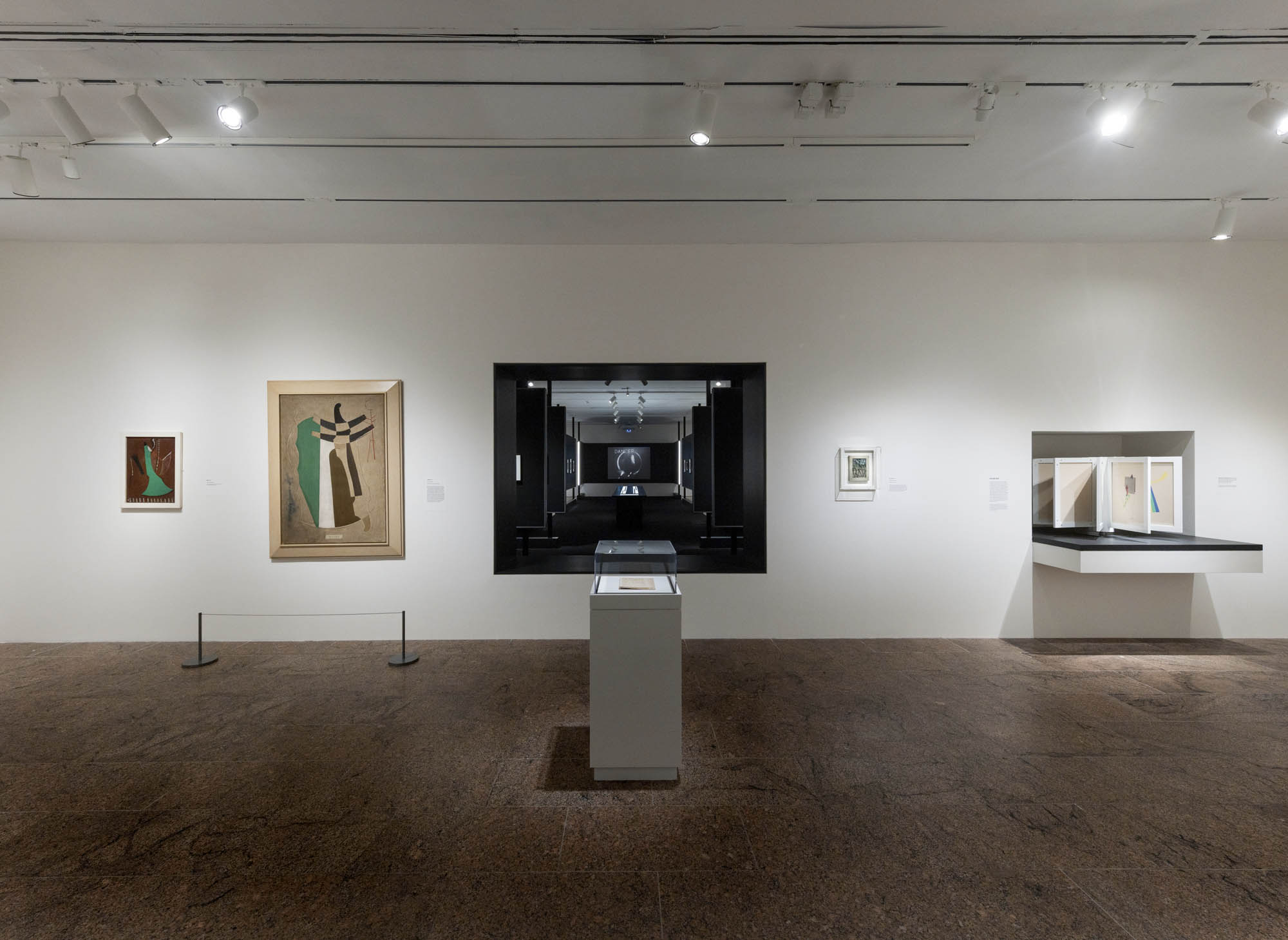
 

Roman. 'Fragments of ancient glass' Late 1st century BCE - early 1st century CE


Roman
Fragments of ancient glass
Late 1st century BCE – early 1st century CE


In addition to collecting intact glass vessels, Moore acquired 410 fragments of ancient glass. These fifteen pieces from cast mosaic bowls display a delightful variety of colours, shapes, and techniques. Moore recognised the differences, though he was more likely enticed by the bright patterns and diverse hues than by their technical features. While many of the pieces are small, almost all were repolished to bring out the vibrant colours and motifs.


'Glass mosaic ribbed bowl fragment' Period: Early Imperial Late 1st century BCE - early 1st century CE


Glass mosaic ribbed bowl fragment
Period: Early Imperial
Late 1st century BCE – early 1st century CE
Culture: Roman
Glass; cast and tooled
1 15/16 x 1 3/16 in. (4.9 x 3cm)
Metropolitan Museum of Art, New York
Edward C. Moore Collection, Bequest of Edward C. Moore, 1891
Public domain


Body fragment. Translucent cobalt blue, purple, and opaque white. Convex curving side tapering downward. Marbled mosaic pattern formed from sections of a single cane in blue ground with irregular white and purple threads and streaks; on exterior, vertical rib, tapering and becoming deeper with rounded outer edge. Polished exterior and edge along rib; pitting of surface bubbles on interior; pitting and dulling on interior; some weathering on jagged edges.


'Glass mosaic ribbed bowl fragment' Period: Early Imperial Late 1st century BCE - early 1st century CE


Glass mosaic ribbed bowl fragment
Period: Early Imperial
Late 1st century BCE – early 1st century CE
Culture: Roman
Glass; cast and tooled
2 3/8 x 1 7/16 in. (6.1 x 3.7cm)
Metropolitan Museum of Art, New York
Credit Line: Edward C. Moore Collection, Bequest of Edward C. Moore, 1891
Public domain


Body fragment. Translucent honey brown, cobalt blue, and opaque white. Slightly outsplayed neck; straight side tapering downward and curving in at bottom. Ribbon mosaic pattern formed from sections of a single cane in brown ground with irregular wavy white and blue threads in parallel lines; on exterior, two broad vertical ribs, fairly widely spaced, with flattened tops and rounded outer edges. Polished interior; pitting of surface bubbles on interior; dulling and patches of creamy iridescent weathering on exterior; some weathering and chipping of jagged edges.


'Glass striped mosaic bowl fragment' Period: Early Imperial Late 1st century BCE - early 1st century CE


Glass striped mosaic bowl fragment
Period: Early Imperial
Late 1st century BCE – early 1st century CE
Culture: Roman
Glass; cast
1 9/16 x 1 1/4 in. (4 x 3.2cm)
Metropolitan Museum of Art, New York
Edward C. Moore Collection, Bequest of Edward C. Moore, 1891
Public domain


Rim fragment. Translucent blue, turquoise blue, purple appearing opaque brick red, yellow, and white, with colourless glass. Applied coil rim with rounded, vertical lip; slightly convex side, curving inward at bottom. Rim in blue with white spiral thread; body decorated with bands slanting slightly from top right to bottom left, forming a pattern: yellow, colourless, yellow, blue with single spiral white thread, blue layered with white, blue, red, yellow, red, blue, blue layered with white, colourless with double spiral yellow threads, turquoise, colourless, and turquoise. Pinprick bubbles; exterior polished, with pitting of surface bubbles; creamy weathering on interior and some iridescent weathering on edges.


'Glass mosaic ribbed bowl fragment' Period: Early Imperial Late 1st century BCE - early 1st century CE


Glass mosaic ribbed bowl fragment
Period: Early Imperial
Late 1st century BCE – early 1st century CE
Culture: Roman
Glass; cast and tooled
1 11/16 x 2 3/16 in. (4.2 x 5.5cm)
Metropolitan Museum of Art, New York
Edward C. Moore Collection, Bequest of Edward C. Moore, 1891
Public domain


Body fragment. Translucent cobalt blue, purple, and opaque white. Slightly outsplayed neck; deep, slightly convex curving side, tapering downward. Composite mosaic pattern formed from polygonal sections of a single cane in a blue ground with a circle of white rods around a white circle surrounding a purple ground with a central white rod; on exterior, two broad vertical ribs, fairly widely spaced, with flattened tops and rounded outer edges, tapering downward. Polished interior; pitting of surface bubbles and iridescent weathering in one chip on interior; dulling and iridescent weathering on exterior and jagged edges.


'Glass network mosaic fragment' Period: Early Imperial Late 1st century BCE - early 1st century CE


Glass network mosaic fragment
Period: Early Imperial
late 1st century BCE – early 1st century CE
Culture: Roman
Glass; cast
15/16 x 1 1/16 in. (2.4 x 2.7cm)
Metropolitan Museum of Art, New York
Edward C. Moore Collection, Bequest of Edward C. Moore, 1891
Public domain


Rim fragment. Translucent blue, opaque yellow, and colourless. Applied coil rim with vertical rounded lip; slightly tapering side. Rim in blue with white spiral thread; body decorated with ten colourless vertical narrow canes, decorated with double spiral yellow threads. Pinprick bubbles; exterior polished, with slight pitting of surface bubbles; dulling and creamy iridescence weathering on interior; jagged, weathered edges.


'Glass ribbed bowl and Glass ribbed bottle' 1st century CE


Glass ribbed bowl and Glass ribbed bottle
1st century CE
Culture: Roman
Metropolitan Museum of Art, New York
Edward C. Moore Collection, Bequest of Edward C. Moore, 1891
Public domain


'Glass ribbed bowl' Period: Early Imperial Mid-1st century CE


Glass ribbed bowl
Period: Early Imperial
Mid-1st century CE
Culture: Roman
Glass; blown, trailed, and tooled
Height: 2 9/16 in. (6.5cm)
Diameter: 3 5/8 in. (9.2cm)
Metropolitan Museum of Art, New York
Edward C. Moore Collection, Bequest of Edward C. Moore, 1891
Public domain


Translucent deep purple; trail in opaque white. Outsplayed rim, with cracked off and ground lip; short concave neck; broad, globular body curving in to slightly convex and thicker bottom. Thick trail applied on bottom and wound spirally eleven times up side to neck, ending in a large blob; side tooled into fourteen widely-spaced, vertical ribs. Intact, except for one chip in rim, and short sections of trail on body missing through weathering; pinprick bubbles and one glassy inclusion on interior of bottom; some pitting, dulling, and iridescence, with creamy weathering covering most of trail on exterior, little weathering on interior.

Examples of this type of glass bowl are known from many sites across the Roman Empire. Those found in the eastern provinces are generally in pale, almost colourless, transparent glass, but those found in the West are made in rich, deep colours and usually have an opaque white trail decoration.

The ribs on these blown-glass vessels appear on earlier cast-glass versions and were likely added for decorative effect. Ribbed bowls and bottles reveal how shapes and styles of blown glass quickly spread throughout the Roman Empire in the first century CE, as a result of the invention of blowing and demand for glass vessels. The bowl is typical of examples found in Italy and the western provinces, while the rarer bottle has parallels from Cyprus.


'Glass ribbed bottle' Period: Early Imperial 1st century CE


Glass ribbed bottle
Period: Early Imperial
1st century CE
Culture: Roman
Glass; blown and tooled
Height: 3 1/2 in. (8.9cm)
Diameter: 3 1/4 in. (8.3cm)
Metropolitan Museum of Art, New York
Edward C. Moore Collection, Bequest of Edward C. Moore, 1891
Public domain


Translucent blue. Everted rim, folded over and in; cylindrical neck, expanding downwards; pushed-in shoulder; squat, globular body; thick, slightly concave bottom. Twelve, regularly-spaced vertical ribs extending from rim down neck and body, ending above bottom, and forming projecting solid fins on side of body. Intact; pinprick bubbles; pitting, dulling, iridescence, and patches of limy encrustation and brownish weathering.


'Glass perfume bottle' Period: Early Imperial 1st century CE


Glass perfume bottle
Period: Early Imperial
1st century CE
Culture: Roman
Glass; blown
Height: 4 1/4 in. (10.8cm)
Diameter: 2 1/2 in. (6.4cm)
Metropolitan Museum of Art, New York
Edward C. Moore Collection, Bequest of Edward C. Moore, 1891
Public domain


Translucent purple. Thin, everted rim; slender cylindrical neck, with slightly bulging profile and tooled indent around base; horizontal shoulder, with rounded edge; carinated body, with side to long, upper body tapering downward and lower side curving in sharply; concave bottom. Body intact, but half of rim missing, with weathered edges; some bubbles; severe pitting and brilliant iridescence.

The free-blowing technique developed by the Romans made glass bottles relatively simple and quick to produce. Moore collected some unusual examples of this common type. The brightly striped container, made by fusing together slices of various colours before the bottle was shaped by blowing, resembles cast mosaic glass. The dark iridescent vessel imitates the shape of expensive cast bottles that incorporated gold leaf.


'Glass garland bowl' Period: Early Imperial, Augustan Late 1st century BCE


Glass garland bowl
Period: Early Imperial, Augustan
Late 1st century BCE
Culture: Roman
Glass; cast and cut
Height: 1 13/16 in. (4.6cm)
Diameter: 7 1/8 in. (18.1cm)
Metropolitan Museum of Art, New York
Edward C. Moore Collection, Bequest of Edward C. Moore, 1891
Public domain


Colourless, translucent purple, translucent honey yellow, translucent cobalt blue, opaque yellow, and opaque white. Vertical, angular rim; convex curving side, tapering downwards; base ring and concave bottom.

Four large segments of colourless, purple, yellow, and blue, and applied to the interior of the bowl at the centre of each segment a hanging garland, comprising an inverted V-shaped white string above a U-shaped swag made up of a mosaic pattern formed from polgonal or circular sections of four different composite canes: one in a yellow ground with a white spiral, a second in a purple ground with yellow rods, the third in a colourless ground with white lines radiating from a central yellow rod, and the fourth in a blue ground a white spiral. The four different canes are arranged in pairs side by side but the order in which they are placed differs in each swag. On interior, a single narrow horizontal groove below rim.

Intact, except for one small chip in rim; pinprick and larger bubbles; dulling, pitting of surface bubbles, faint iridescence on interior, and creamy iridescent weathering on exterior.

This cast glass bowl is a tour-de-force of ancient glass production. It comprises four separate slices of translucent glass – purple, yellow, blue, and colourless – of roughly equal size that were pressed together in an open casting mold. Each segment was then decorated with an added strip of millefiori glass representing a garland hanging from an opaque white cord. Very few vessels made of large sections or bands of differently coloured glass are known from antiquity, and this bowl is the only example that combines the technique with millefiori decoration. As such it represents the peak of the glass worker’s skill at producing cast vessels.

With its exceptional workmanship and design, this cast bowl is the most important ancient glass vessel in Moore’s collection. Few vessels with large sections of coloured glass survive from antiquity, and this is the only intact example that combines the technique with mosaic-inlay decoration. Four separate pieces of translucent glass – purple, yellow, blue, and colourless – of roughly equal size were pressed together in an open casting mold. Each segment was then embellished with mosaic glass representing a garland hanging from a white cord. Glass canes (rods) of four different colour combinations arranged in pairs form the individual swags. Bowls decorated with garlands have been found in Italy, Cyprus, and Egypt.


'Situla' Early 16th century


Situla
Early 16th century
Culture: Italian, Venice (Murano)
Glass, enamelled and gilt
Dimensions: confirmed, glass bowl only: 3 13/16 × 8 × 8 in. (9.7 × 20.3 × 20.3cm)
Confirmed, as mounted, handle raised: 10 5/16 × 8 3/4 × 8 in. (26.2 × 22.2 × 20.3cm)
Metropolitan Museum of Art, New York
Edward C. Moore Collection, Bequest of Edward C. Moore, 1891
Public domain


Influenced by Islamic craftsmen, Venetian glassblowers began making gilt and enamelled vessels as early as the fifteenth century. The decorative scales on this situla resulted from a multi-step process, which entailed reheating the piece a second time after the vessel was blown. The crudely finished handle is most likely not original.

Moore collected several examples of colourful enamelled glass from both the Islamic and Venetian worlds, seeking decorative inspiration for his silver production. Influenced by craftspeople from Islamic lands, Venetian glassblowers started making gilt and enamelled vessels as early as the fifteenth century. The decoration on this situla is the result of a multistep process, which entailed reheating the piece a second time in the furnace. The crudely finished handle is most likely not original.


'Footed vase (Vasenpokal)' c. 1570-1590


Footed vase (Vasenpokal)
c. 1570-1590
Culture: Austrian, Innsbruck
Glass; blown, applied mold-blown, impressed, and milled decoration, engraved, cold-painted, and gilded
12 3/4 × 8 1/2 in. (32.4 × 21.6cm)
Metropolitan Museum of Art, New York
Edward C. Moore Collection, Bequest of Edward C. Moore, 1891
Public domain


This vase is ambitiously ornamented in the Venetian style with engraved decoration and gold, red, and green cold painting. It also shows key characteristics of pieces from the glassworks that served the Innsbruck court in the late sixteenth century. Archduke Ferdinand II of Austria secured skilled glassworkers and raw materials from Venice, famed for its thin and clear glass known as cristallo. Glass was valued for the technical artistry that transformed humble sand, soda ash, and lime into a nearly weightless, translucent object precious enough to be adorned with gold.

Glassware made outside of Venice but in the same style is known as façon de Venise. This incredibly ambitious Austrian example of a footed vase with engraved decoration and gold, red, and green cold-painting likely came from the Innsbruck court glasshouse of Archduke Ferdinand II. At the time Moore purchased this piece, it had several missing pieces and cracks, which are now restored. The cold-painting is extremely well preserved considering the inherently fragile nature of the technique.


'Tankard' 1716


Tankard
1716
Culture: probably South German
Glass; blown, applied and marvered decoration; pewter mount
7 9/16 × 5 1/2 × 4 5/8 in. (19.2 × 14 × 11.7cm)
Metropolitan Museum of Art, New York
Edward C. Moore Collection, Bequest of Edward C. Moore, 1891
Public domain


The shape of this tankard, with its bulbous bottom and flared foot, is typical of German pewter and stoneware vessels. The lid features a crudely engraved symbol of what appears to be carpenter’s tools, suggesting that the piece served as a guild vessel, possibly for a carpenters’ association. Its charm derives from the striking contrast between the rough-hewn pewter mounts and the calligraphic trails of white glass decorating the transparent purple glass body.


'Beaker' Mid-19th century


Beaker
Mid-19th century
Culture: Italian, Venice (Murano)
3 3/8 × 2 5/8 in. (8.6 × 6.7cm)
Metropolitan Museum of Art, New York
Edward C. Moore Collection, Bequest of Edward C. Moore, 1891
Public domain


One of the great Venetian innovations in glassblowing is filigrana. Drawn-out canes of colourless, white, and coloured glass were fused together to create the patterned structure of the vessel. Moore had several examples in his collection. This small beaker of more complex canes with multiple spiralling threads, referred to as filigrana a retorti, was made in Venice.


'Tray Stand' Mid-14th century (after 1342)


Tray Stand
Mid-14th century (after 1342)
Attributed to Egypt or Syria
Brass; hammered, turned, and chased, inlaid with silver, copper, and black compound
Height: 10 1/4 in. (26 cm)
Diameter: 9 5/8 in. (24.4 cm)
Metropolitan Museum of Art, New York
Edward C. Moore Collection, Bequest of Edward C. Moore, 1891
Public domain


Similar stands were widely employed in the Mamluk period to host large rounded metal trays, on which fruits and other food were displayed.

The cup motif inlaid with copper stands out among the richly decoration of this tray. It was a blazon of the cupbearer, one of the differentiated offices of the court of the Mamluk sultans. The inscription reads Husain, son of Qawsun, who was cupbearer to Muhammad b. Qalawun (al-Malik al-Nasir) (1294-1340/41). Despite having been ousted after the sultan’s death, Qawsun’s prestige must have endured, as his sons continued to use his emblem of the ringed cup set within a divided shield.

This work consists of two truncated cones soldered together with a central ring and a flared foot and rim. It belongs to a group of medieval inlaid brass works from the Islamic world that are commonly identified as tray stands, and which supported circular metal platters that displayed and served food. French collectors introduced treasures like this one to the art market in Paris beginning in the 1860-1870s. Moore was likely drawn to them for the visual effects of the inlaid mixed metalwork.


'Tray Stand' Mid-14th century (after 1342) (detail)


Tray Stand (detail)
Mid-14th century (after 1342)
Brass; hammered, turned, and chased, inlaid with silver, copper, and black compound
Height: 10 1/4 in. (26 cm)
Diameter: 9 5/8 in. (24.4 cm)
Metropolitan Museum of Art, New York
Edward C. Moore Collection, Bequest of Edward C. Moore, 1891
Public domain


'Umar ibn al-Hajji Jaldak (maker) 'Ewer with Inscription, Horsemen, and Vegetal Decoration' Dated 623 AH/1226 CE


‘Umar ibn al-Hajji Jaldak (maker)
Ewer with Inscription, Horsemen, and Vegetal Decoration
Dated 623 AH/1226 CE
Brass; inlaid with silver and black compound
Height: 14 1/2 in. (36.8 cm)
Width: 12 1/16 in. (30.6 cm)
Diameter: 8 3/8 in. (21.3 cm)
Metropolitan Museum of Art, New York
Edward C. Moore Collection, Bequest of Edward C. Moore, 1891
Public domain


This lavishly decorated object is inscribed around the neck: “Made by ‘Umar ibn al-Hajji Jaldak, the apprentice of Ahmad al-Dhaki al-Naqqash al-Mawsili in the year 623 [1226 A.D.].” Ahmad al-Mawsili, originally from Mosul in Upper Mesopotamia, was a famous metalworker who had a number of pupils.

Moore was particularly interested in lavish works made by mixing and inlaying metals, techniques that artists in the Middle East had developed to a high art centuries earlier for the upper echelons of society. Blending complex geometric and vegetal compositions with fine calligraphy or expressive imagery, they created polychromatic effects comparable to those achieved in painting. The objects here hail from three different Islamic regions around 1100-1400, when the art form flourished.

The ewer is among the earliest dated examples of a prominent school of inlaid metalwork known as “al-Mawsili” (from Mosul) that thrived during the thirteenth and fourteenth centuries, first in Mosul and later in centres such as Cairo and Damascus. Their work often features thin foils of precious metals inlaid on a gleaming brass body. This example includes detailed scenes of the courtly activities of an ideal ruler and interlacing medallions.


'Umar ibn al-Hajji Jaldak (maker) 'Ewer with Inscription, Horsemen, and Vegetal Decoration' Dated 623 AH/1226 CE (detail)


‘Umar ibn al-Hajji Jaldak (maker)
Ewer with Inscription, Horsemen, and Vegetal Decoration (detail)
Dated 623 AH/1226 CE
Brass; inlaid with silver and black compound
Height: 14 1/2 in. (36.8 cm)
Width: 12 1/16 in. (30.6 cm)
Diameter: 8 3/8 in. (21.3 cm)
Metropolitan Museum of Art, New York
Edward C. Moore Collection, Bequest of Edward C. Moore, 1891
Public domain


'Inscribed Pen Box' Made in early - late 14th century; altered shortly before mid-15th century

'Inscribed Pen Box' Made in early - late 14th century; altered shortly before mid-15th century


Inscribed Pen Box
Made in early – late 14th century; altered shortly before mid-15th century
Probably originally from Northern Iraq or Western Iran. Attributed to Afghanistan, probably Herat
Brass; engraved and inlaid with silver, gold, and black compound
Length: 11 1/2 in. (29.2cm)
Height: 2 3/8 in. (6cm)
Width: 2 1/2 in. (6.4cm)
Metropolitan Museum of Art, New York
Edward C. Moore Collection, Bequest of Edward C. Moore, 1891
Public domain


Luxurious writing tools inlaid with precious metals reflected the literary culture of the upper classes from Cairo to Herat, including a respect for the transmission of knowledge. This pen box with its combination of techniques – filigree in relief on the lid and classical inlay on the body – made a fitting acquisition for a collector with a passion for inlaid metal.

This brass pen box was made in the late fourteenth century but significantly altered by the mid-fifteenth century. The interior decoration of a small-scale pattern of roundels with flying birds and running motifs provides a glimpse into the original decoration of the box. After the exterior surface was burnished to remove this original decoration, new patterns, including a series of interlocking medallions and cartouches and incised lotus blossoms, were set against a cross-hatched background. The inkwell and surrounding insert were added at a yet later date. The inscriptions in thuluth and naskh scripts include poetic verses and good wishes to the owner.


'Inscribed Pen Box' Made in early - late 14th century; altered shortly before mid-15th century

'Inscribed Pen Box' Made in early - late 14th century; altered shortly before mid-15th century


Inscribed Pen Box
Made in early – late 14th century; altered shortly before mid-15th century
Probably originally from Northern Iraq or Western Iran. Attributed to Afghanistan, probably Herat
Brass; engraved and inlaid with silver, gold, and black compound
Length: 11 1/2 in. (29.2cm)
Height: 2 3/8 in. (6cm)
Width: 2 1/2 in. (6.4cm)
Metropolitan Museum of Art, New York
Edward C. Moore Collection, Bequest of Edward C. Moore, 1891
Public domain


'Plate with Vegetal Decoration in a Seven-pointed Star' c. 1655-1680


Plate with Vegetal Decoration in a Seven-pointed Star
c. 1655-1680
Made in Iran, Kirman
Stonepaste; polychrome-painted under transparent glaze
H. 2 1/2 in. (6.4 cm)
Diam. 18 1/4 in. (46.4cm)
Metropolitan Museum of Art, New York
Edward C. Moore Collection, Bequest of Edward C. Moore, 1891
Public domain


Moore collected ceramics from Iran, which during the 1870s and 1880s were shipped in great quantities to London, as well as a few pieces from the Ottoman lands (Iznik), Egypt, Syria, and Spain. The large platter from seventeenth-century Kirman, Iran, combines a central star with densely applied Chinese-inspired motifs and colours, features that Moore favoured and incorporated into his own designs.


'Dish' c. 1500


Dish
c. 1500
Spanish, Valencia
Tin-glazed and luster-painted earthenware
Irregular diameter: 3 1/8 × 18 7/8 in. (7.9 × 47.9cm)
Metropolitan Museum of Art, New York
Edward C. Moore Collection, Bequest of Edward C. Moore, 1891
Public domain


Moore clearly appreciated lusterware, with its distinctive shiny metallic surfaces. He owned a number of pieces; this dish and other examples from Spain are among the first works he collected. Braseros typically feature radial designs filled with dense patterns, and often present a heraldic emblem – here, a rising eagle, symbol of power and royalty across the Mediterranean.

Tin-glazed earthenware, of which lusterware is one type, was developed in the Middle East in the ninth and tenth centuries to imitate the porcelains produced in China. The opaque white glaze concealed the clay body, which could range from pale buff to brick red, allowing for brilliant effects created by painting the white surface with metal oxides that fired to a range of colours. This technique, as well as the use of metallic luster – an iridescent, coppery painted glaze – spread throughout the Muslim world, arriving among the potters of Valencia in the thirteenth century. The so-called Hispano-Moresque lusterware, with its fusion of Islamic and Gothic styles and motifs, often in shaped imitating those of metal vessels, was treasured by the elite in Spain during the fifteenth century and exported to the courts of Europe. The Valencian industry declined in the late sixteenth century, as colourful Italian Renaissance maiolica gained in popularity among the fashionable and as Spanish centres were founded to produce versions of its pictorial forms. Adding to this decline was the expulsion from Valencia in 1609 of all the remaining Moriscos (Muslims converted to Christianity), though Christian potters reestablished the industry shortly thereafter.

On the front of the dish, Manises lusterware braseros were decorated with radial designs and filled with dense, regularised vegetal motifs and other patterns, all organised around a central device. On the back, they were also luster-painted, usually with larger-scale designs and often with more exuberance. Puncture holes in the rims indicate that such dishes were sometimes displayed on walls when not in use.


'Footed Bowl with Eagle Emblem' Mid-13th century


Footed Bowl with Eagle Emblem
Mid-13th century
Attributed to probably Syria
Glass; dip-moulded, blown, enamelled, and gilded
Height: 7 3/16 in. (18.3cm)
Maximum Diameter: 8 in. (20.3cm)
Diameter of Base: 5 in. (12.7cm)
Metropolitan Museum of Art, New York
Edward C. Moore Collection, Bequest of Edward C. Moore, 1891
Public domain


Along with gilded examples, the most treasured glass objects in the Islamic world were enamelled ones. Developed during the thirteenth and fourteenth centuries in Syria and Egypt under the Ayyubids and Mamluks, they were rediscovered in the 1800s and copied extensively by Western manufactories. When Moore was collecting, this vessel was already celebrated among collectors, dealers, and artists. It was displayed at the 1867 Paris Exposition together with a glass copy by renowned French glassmaker Philippe Joseph Brocard. Moore acquired it from a leading French collector and scholar of Islamic glass, Charles Schefer. After it entered The Met, the bowl was lauded as “the gem of the collection” and “the most beautiful as well as valuable” example of enamelled glass.

Vessels of this characteristic shape, a rounded bowl with a pronounced, tall foot, were sometimes called tazze and were thought to evoke Christian chalices. They became popular in the Islamic eastern Mediterranean during the twelfth and thirteenth centuries, a period of active exchange between the Islamic and Christian worlds. This piece is among the earliest known examples of enamelled glass. Its ornament and iconography is part of the “courtly cycle” referring to the lifestyle of the rulers and elites of medieval Islamic societies from Egypt to Anatolia.

The design features four circular medallions with a bird of prey. While no particular ruler or officer can be associated with the emblem, such birds of prey were common symbols of power, kingship, and to a certain extent, protection in both Muslim and Christian contexts. Flanking the inscription band and on the foot, rows of dogs chasing hares evoke the hunt, while a frieze of seated musicians and feasting figures replaces part of the inscription. Both the hunt and the feast pertain to the courtly cycle and evoke ideals of kingship.


'Footed Bowl with Eagle Emblem' Mid-13th century (detail)


Footed Bowl with Eagle Emblem (detail)
Mid-13th century
Attributed to probably Syria
Glass; dip-moulded, blown, enamelled, and gilded
Height: 7 3/16 in. (18.3cm)
Maximum Diameter: 8 in. (20.3cm)
Diameter of Base: 5 in. (12.7cm)
Metropolitan Museum of Art, New York
Edward C. Moore Collection, Bequest of Edward C. Moore, 1891
Public domain


'Mosque Lamp' 14th century


Mosque Lamp
14th century
Probably from Egypt (Cairo) or Syria
Glass; blown, enamelled, and gilded
Height: 12 1/2 in. (31.8cm)
Maximum Diameter: 8 13/16 in. (22.4cm)
Diameter with handles: 9 1/8 in. (23.2 cm)
Metropolitan Museum of Art, New York
Edward C. Moore Collection, Bequest of Edward C. Moore, 1891
Public domain


Enamelled and gilded glass objects from Syria and Egypt are among the most sophisticated crafts created during the Middle Ages. This example has a characteristic shape that was used for portable lamps from Iran to Egypt. During Mamluk rule, enamelled “mosque lamps” were commissioned for many mosques, madrasas (public schools), tombs, and other buildings in the capital city of Cairo. In the nineteenth century, French individuals established in Cairo introduced treasures like these to the European market. Moore was likely intrigued by the lamp’s colours, sheen, and detailed ornamentation.

One of the conventions of Mamluk mosque lamp decoration was to execute one inscription band in blue and the other in reserve against a blue ground. On this lamp, the neck and foot repeat the phrase al‑’alim (“The Wise”), punctuated by an as yet unassigned emblem, while the body bears a formulaic dedicatory inscription but no name.


'Swan-Neck Bottle (Ashkdan)' Probably 19th century


Swan-Neck Bottle (Ashkdan)
Probably 19th century
Attributed to Iran
Glass; mold-blown, tooled
Height: 15 1/8 in. (38.4 cm)
Maximum Diameter: 4 7/16 in. (11.2cm)
Metropolitan Museum of Art, New York
Edward C. Moore Collection, Bequest of Edward C. Moore, 1891
Public domain


During Moore’s lifetime, European and American collectors were particularly drawn to glass made fairly recently in Iran or by the Ottomans at Beykoz in Istanbul. Moore and other collectors purchased many of these readily available and affordable wares and donated them to European and American museums. Moore’s eagerness to explore new shapes is evident in his later glass holdings. He often collected multiple examples of the same type, such as rosewater sprinklers, in different shapes and colours. Many were available for study at his Prince Street manufactory and a few directly inspired his designs.

The variety of forms and colours featured in this selection show the eclectic approach of Iranian glassmakers and their tendency to look both locally and globally for inspiration. The Qajar vessels’ shapes either follow Iranian metal and ceramic models or echo Venetian glass. For instance, the swan-neck bottle mimics Venetian glass, while the gulabpash and the ewer likely inherited their forms from long-standing design traditions in different media.


'Two Rosewater Sprinklers' Late 18th - 19th century


Two Rosewater Sprinklers
Late 18th – 19th century
Probably from Turkey, Beykoz, Istanbul
Glass; blown
Metropolitan Museum of Art, New York
Edward C. Moore Collection, Bequest of Edward C. Moore, 1891
Public domain


'Rosewater Sprinkler' Late 18th - 19th century


Rosewater Sprinkler
Late 18th – 19th century
Probably from Turkey, Beykoz, Istanbul
Glass; blown
Height: 8 3/4 in. (22.2cm)
Width: 3 3/8 in. (8.5cm)
Diameter: 2 3/8 in. (6cm)
Metropolitan Museum of Art, New York
Edward C. Moore Collection, Bequest of Edward C. Moore, 1891
Public domain


This bottle is typical of the objects that were displayed in open niches in reception rooms of Ottoman-period upper-class Syrian homes.

During Moore’s lifetime, European and American collectors were particularly drawn to glass made fairly recently in Iran or by the Ottomans at Beykoz in Istanbul. Moore and other collectors purchased many of these readily available and affordable wares and donated them to European and American museums. Moore’s eagerness to explore new shapes is evident in his later glass holdings. He often collected multiple examples of the same type, such as rosewater sprinklers, in different shapes and colours. Many were available for study at his Prince Street manufactory and a few directly inspired his designs.

These two marbled Ottoman sprinklers reveal Moore’s keen eye for nuances in glassmaking techniques and patterns. In one, a mixture of red and brown opaque glass served as the base material, and the spiral marbling was created as the body was blown and turned into its distinctive onion-like form with cylindrical neck. In the other, a hot gather of greenish iridescent glass was rolled in crushed red glass and then blown into the final shape. This led to the patchy marbled pattern on the body that develops into alternating lines on the elongated neck.


'Rosewater Sprinkler' Late 18th - 19th century


Rosewater Sprinkler
Late 18th – 19th century
Probably from Turkey, Beykoz, Istanbul
Glass; blown
Height: 7 3/16 in. (18.2cm)
Maximum Diameter: in. 2 13/16in. (7.2cm)
Metropolitan Museum of Art, New York
Edward C. Moore Collection, Bequest of Edward C. Moore, 1891
Public domain


'Jar' 14th century


Jar
14th century
Attributed to Syria
Stonepaste; polychrome-painted under transparent glaze
Height: 13 1/4 in. (33.7cm)
Maximum Diameter: 9 1/4 in. (23.5cm)
Metropolitan Museum of Art, New York
Edward C. Moore Collection, Bequest of Edward C. Moore, 1891
Public domain


This pear-shaped jar is characteristic of medieval ceramics from the eastern Mediterranean. The body is dominated by a cursive inscription wishing “Lasting glory, abundant power, and good fortune.” Messages on utilitarian vessels were intended to protect the owner as well as the contents. The blue-and-white colour palette derives from Chinese porcelain, which Mamluk rulers in Egypt and Syria collected for use during festive and ceremonial occasions or for diplomatic gifts. This jar thus reflects the taste of the elite, adjusted for a broader middle-class market.

Underglaze painting in blue and black on a white stonepaste body is characteristic of Mamluk production in Syria. The main decoration on this jar is the large inscription in thuluth: “Lasting glory, increasing prosperity, and good fortune.”


'Vase in the Form of a Double Gourd' Second half of the 17th century


Vase in the Form of a Double Gourd
Second half of the 17th century
Attributed to Iran
Stonepaste; painted under transparent glaze
Height: 5 1/2 in. (14cm)
Diameter: 2 3/4 in. (7cm)
Metropolitan Museum of Art, New York
Edward C. Moore Collection, Bequest of Edward C. Moore, 1891
Public domain


In the seventeenth century, as the Ming dynasty declined in China, Iranian potters in Kirman and Nishapur increased the production of blue-and-white stonepaste ceramics for domestic use and export. Some of these wares closely follow Chinese prototypes, while others, such as this small gourd-shaped vase, show ideas developed by Chinese potters used as a catalyst for distinctive creations. One side of the vase depicts a sketchily drawn walking crane in a Chinese style, while on the other side decorative rock forms, vegetation, and other floating elements follow Iranian tradition. The result resonates with Moore’s diverse collecting interests and the hybrid designs they inspired.


'Bottle' Late 17th century


Bottle
Late 17th century
Made in Iran
Stonepaste; luster-painted on opaque blue glaze, with silver fitting
Height: 11 in. (27.9cm)
Maximum Diameter: 6 1/2 in. (16.5cm)
Metropolitan Museum of Art, New York
Edward C. Moore Collection, Bequest of Edward C. Moore, 1891
Public domain


An invention of the Islamic world, lusterware ceramics have distinctive shiny metallic surfaces that particularly appealed to Moore. An early inventory of the Moore collection suggests that the bottle may have been acquired from the Castellani Collection, evidence of Moore’s engagement with networks of European collectors. To compensate for breakage, a silver mount and lid with embossed decoration and niello were added to this piece at some point. While decorated in an “Islamic” style, the mount was most likely made in the West, in either Europe or North America.

Very few pieces of Iranian lusterware survive from the fifteenth and sixteenth centuries, but this technique was revived in the seventeenth century. During this period, lusterware was produced in a relatively limited range of shapes, including elegant bottles, such as the one here, as well as dishes, bowls, cups, ewers and sand-shakers. This bottle may have been used for wine, and has a molded, pear-shaped body with a long neck, and is covered with a silver fitting and sealed with a silver top.


'Bottle' Late 17th century


Bottle
Late 17th century
Attributed to Iran
Stonepaste; luster-painted on yellow glaze ground with cobalt blue glaze
Height: 15 in. (38.1cm)
Maximum Diameter: 5 1/4 in. (13.3cm)
Metropolitan Museum of Art, New York
Edward C. Moore Collection, Bequest of Edward C. Moore, 1891
Public domain


This colourful lusterware bottle in yellow, ruby, and blue tones depicts myriad motifs, such as trees, flowering plants growing out of a grassy ground, birds, and lush vegetation with sinuous vines, poppy flowers, and a large iris. The combination of colours, sheen, and dense decoration aligns with Moore’s design sensibilities.


Edo period (1615-1868) 'Inrō with Stylised Flower Patterns in Interconnected Roundels' 18th century


Edo period (1615-1868)
Inrō with Stylised Flower Patterns in Interconnected Roundels
18th century
Culture: Japan
Inrō; four cases; lacquered wood with gold, silver, yellow, and red togidashimaki-e, mother-of-pearl inlay on black lacquer ground; ojime: malachite bead; netsuke: openwork (ryūsa); ivory
Height: 2 7/8 in. (7.3cm)
Width: 2 1/16 in. (5.2cm)
Depth: 7/8 in. (2.2cm)
Metropolitan Museum of Art, New York
Edward C. Moore Collection, Bequest of Edward C. Moore, 1891
Public domain


The rare, early example in tortoiseshell was made at the beginning of the Edo period, when inrō were first developed.


Edo period (1615-1868) 'Inrō with Shells and Seaweeds amid Rocks and Waves' 17th-18th century


Edo period (1615-1868)
Inrō with Shells and Seaweeds amid Rocks and Waves
17th-18th century
Culture: Japan
Inrō; four cases; lacquered wood, gold and silver takamaki-e, hiramaki-e, togidashimaki-e, cutout gold foil application, silver inlay on gold ground; metal cord runners; ojime: copper with mixed-metal inlay and gilded details; netsuke: carved ivory
Height: 3 1/16 in. (7.8cm)
Width: 2 1/2 in. (6.3cm)
Depth: 1 in. (2.5cm)
Metropolitan Museum of Art, New York
Edward C. Moore Collection, Bequest of Edward C. Moore, 1891
Public domain


Meiji period (1868-1912) 'Inrō with Lotus and Crab (obverse); Lotus and Tadpole (reverse)' Second half 19th century


Meiji period (1868-1912)
Inrō with Lotus and Crab (obverse); Lotus and Tadpole (reverse)
Second half 19th century
Culture: Japan
Inrō; four cases; wood with gold and silver takamaki-e, hiramaki-e, lead, mixed-metal inlay; ojime: tadpoles in a stream; copper alloy with mixed-metal inlays; netsuke: turtle in a lotus leaf; carved ivory with gilded copper
Height: 3 1/16 in. (7.7cm)
Width: 1 15/16 in. (5cm)
Depth: 1 in. (2.5cm)
Metropolitan Museum of Art, New York
Edward C. Moore Collection, Bequest of Edward C. Moore, 1891
Public domain


Edo period (1615-1868) 'Inrō with Butterflies and Pampas Grass' Mid-19th century


Edo period (1615-1868)
Inrō with Butterflies and Pampas Grass
Mid-19th century
Culture: Japan
Inrō; three cases; lacquered wood with cherry bark, gold and silver hiramaki-e, gold and silver foil application; ojime: semiprecious stone bead; netsuke: Chinese boy (karako) with covered brazier; carved wood with red lacquer
Height: 3 3/16 in. (8.1cm)
Width: 1 15/16 in. (5cm)
Depth: 1 in. (2.5cm)
Metropolitan Museum of Art, New York
Edward C. Moore Collection, Bequest of Edward C. Moore, 1891
Public domain


Some inrō likely served as inspiration for Tiffany design elements: the butterflies here are similar to those populating a colourful silver tray nearby, while the wisteria pattern could have inspired the silver vase embellished with the same motif.


Meiji period (1868-1912) 'Sake Bottle (Tokkuri)' Mid-19th century


Meiji period (1868-1912)
Sake Bottle (Tokkuri)
Mid-19th century
Porcelain with overglaze enamel, gold and silver hiramaki-e (Kyoto ware)
Height: 6 in. (15.2cm)
Diameter: 2 3/4 in. (15.2 × 7cm)
Diameter of rim: 7/8 in. (2.2cm)
Diameter of base: 2 in. (5.1cm)
Metropolitan Museum of Art, New York
Edward C. Moore Collection, Bequest of Edward C. Moore, 1891
Public domain


The small porcelain sake bottle appears to be made of wood covered in lacquer. Its dark brown glaze, mimicking a black lacquer surface, is embellished with a gold and silver “sprinkled picture” (maki-e) bird-and-flower composition. The design may be based on a traditional pattern showing a warbler on a plum tree, an auspicious symbol of the new year that refers to the “First Song of Spring” (Hatsune) chapter of The Tale of Genji. Moore and his team designed a tea and coffee set around 1870-1875, on view nearby, that incorporates a similar composition.


Meiji period (1868-1912) 'Tea Caddy (Natsume)' Second half 19th century


Meiji period (1868-1912)
Tea Caddy (Natsume)
Second half 19th century
Culture: Japan
Stoneware with polychrome overglaze enamels and gold
Height: 3 in. (7.6cm)
Diameter: 3 in. (7.6cm)
Metropolitan Museum of Art, New York
Edward C. Moore Collection, Bequest of Edward C. Moore, 1891
Public domain


The surface of the unusual ceramic tea caddy shows fish and crabs behind a fishing net. The net pattern may have been inspired by lacquer tea caddies. Both the technique and the playful design bear resemblances to compositions by Makuzu Kōzan, one of the master potters of the period. Fish, crabs, and lobsters often appear on Moore’s silverwares. Examples include a creamer and sugar bowl designed in 1876 and a rectangular vase made in 1877 – both featuring a scene with fish and seaweed – and a chocolate pot from 1879 decorated with a lobster.


Meiji period (1868-1912) 'Brush Holder (Fude-zutsu)' Early 1870s


Meiji period (1868-1912)
Brush Holder (Fude-zutsu)
Early 1870s
Culture: Japan
Cast iron with relief inlay in silver, gold and shibuichi
Height: 6 3/4 in. (17.1cm)
Diameter of rim: 3 3/8 in. (8.6cm)
Diameter of foot: 4 in. (10.2cm)
Metropolitan Museum of Art, New York
Edward C. Moore Collection, Bequest of Edward C. Moore, 1891
Public domain


On the patinated cast-iron surface of this vessel, various metal alloys are inlaid in relief to create effects of light and colour. Moonlight seems to glisten on the web executed in shibuichi (an alloy of roughly three parts copper and one part silver) that fans out over the cylindrical form. A spider, in patinated shibuichi, scurries toward the outer edge of the web, where a dragonfly of inlaid copper alloy and silver with gilt copper eyes is caught on the other side. A Tiffany vase displayed nearby closely replicates this decorative scheme. In response to sociocultural changes in the 1870s, Japanese craftspeople began to produce fine ornamental wares like this one with a focus on the Western market.


Edo period (1615–1868) 'Buddhist Altar Cloth (Uchishiki)' First half 19th century


Edo period (1615–1868)
Buddhist Altar Cloth (Uchishiki)
First half 19th century
Culture: Japan
Twill-weave silk with supplementary weft patterning
28 x 27 in. (71.12 x 68.58cm)
Metropolitan Museum of Art, New York
Edward C. Moore Collection, Bequest of Edward C. Moore, 1891
Public domain


The Buddhist altar cloth (uchishiki) serves to cover the tops of tables and altars, especially the one placed in front of the temple’s main icon. This example here is decorated with lotus flowers in a roundel surrounded by large geometric patterns (hakogata) on a dark blue ground. Lotus flowers are revered in Japan for their ability to rise from muddy waters to become beautiful blossoms, and they are commonly associated with purity and the Buddhist achievement of enlightenment.


Edo period (1615–1868) 'Fragment' 18th century


Edo period (1615–1868)
Fragment
18th century
Culture: Japan
Twill-weave silk with brocading in silk and supplementary weft patterning in silk (karaori)
Dimensions: Overall (a): 12 1/4 x 11 1/4 in. (31.1 x 28.6cm)
Overall (b): 11 x 9 1/4 in. (27.9 x 23.5cm)
Overall (c): 11 x 8 1/4 in. (27.9 x 21cm)
Overall (d): 11 1/2 x 2 1/4 in. (29.2 x 5.7cm)
Overall (f): 31 x 11 in. (78.7 x 27.9cm)
Metropolitan Museum of Art, New York
Edward C. Moore Collection, Bequest of Edward C. Moore, 1891
Public domain


This textile fragment features a pattern with a stylised fence or lattice and moonflowers (yūgao; literally, “evening faces”) of various colours against a white ground. Originally, it may have been part of a Noh theater costume. The moonflower plays a role in chapter 4 of The Tale of Genji, “The Lady of the Evening Faces.” Collecting textile samples as a kind of visual dictionary of motifs and a resource for technical analysis was common among Western collectors in Moore’s era.


Yuan dynasty (1271-1368) 'Incense Box' 14th century

Yuan dynasty (1271-1368) 'Incense Box' 14th century


Yuan dynasty (1271-1368)
Incense Box
14th century
Culture: China
Carved lacquer
Height: 1 1/4 in. (3.2cm)
Diameter: 3 3/8 in. (8.6cm)
Metropolitan Museum of Art, New York
Edward C. Moore Collection, Bequest of Edward C. Moore, 1891
Public domain


This box exemplifies a sophisticated type of Chinese carved lacquer known as tixi, a term referring to the marbled appearance of its layers. The elegant design and skilful carving distinguish the box as the work of a master, and the signature of the fourteenth-century master Yang Mao is incised on the underside. Moore’s small but carefully selected collection of Chinese lacquer reflects the designer’s refined taste for the art form.


Meiji period (1868-1912) 'Plate' Mid-19th century


Meiji period (1868-1912)
Plate
Mid-19th century
Culture: Japan
Copper
Height: 7/8 in. (2.2cm)
Diameter: 12 in. (30.5cm)
Metropolitan Museum of Art, New York
Edward C. Moore Collection, Bequest of Edward C. Moore, 1891
Public domain


During the Edo and Meiji periods, several Japanese artists experimented with trompe l’oeil effects by simulating the appearance of one material with another. This plate’s copper body is covered with enamels to create a rich, shiny surface recalling the texture of ceramics. The eggplant motif is executed in gold and silver maki-e, a lacquer technique. In addition to its unusual combination of materials, the vessel has a shape that resembles that of a Western plate. A similar inquisitiveness and interest in bringing together East and West can also be found in Moore’s methods.


Edo (1615-1868) or Meiji period (1868-1912) 'Basketwork Box with Ivy' Mid-19th century


Edo (1615-1868) or Meiji period (1868-1912)
Basketwork Box with Ivy
Mid-19th century
Culture: Japan
Bamboo, and lacquer, with gold and silver hiramaki-e with red lacquer accents
Height: 1 1/2 in. (3.8cm)
Width: 5 1/2 in. (14cm)
Length: 3 7/8 in. (9.8cm)
Metropolitan Museum of Art, New York
Edward C. Moore Collection, Bequest of Edward C. Moore, 1891
Public domain


The lid of this document box features fine strips of bamboo covered in lacquer and then decorated with a stylised autumn ivy vine design. A similar ivy motif appears on a silver Tiffany teapot (combined with a dragonfly) made about 1878; an early inventory suggests that Moore may have acquired this box that year at the Paris Exposition. A box like this is also mentioned in discussions of the colours Tiffany aspired to create in the Conglomerate Vase on view nearby.


Edo (1615-1868) or Meiji period (1868-1912) 'Basketwork Box with Ivy' Mid-19th century


Edo (1615-1868) or Meiji period (1868-1912)
Basketwork Box with Ivy
Mid-19th century
Culture: Japan
Bamboo, and lacquer, with gold and silver hiramaki-e with red lacquer accents
Height: 1 1/2 in. (3.8cm)
Width: 5 1/2 in. (14cm)
Length: 3 7/8 in. (9.8cm)
Metropolitan Museum of Art, New York
Edward C. Moore Collection, Bequest of Edward C. Moore, 1891
Public domain


'Knife Handle (Kozuka) With Lotus Motif' (蓮図小柄) 19th century


Knife Handle (Kozuka) With Lotus Motif (蓮図小柄)
19th century
Culture: Japanese
Copper, copper-silver alloy (shibuichi), gold
Length: 3 7/8 in. (9.8cm)
Width: 9/16 in. (1.4cm)
Thickness: 1/4 in. (0.6cm); Wt. 1 oz. (28.3 g)
Metropolitan Museum of Art, New York
Edward C. Moore Collection, Bequest of Edward C. Moore, 1891
Public domain


Moore amassed a study collection of nearly 150 Japanese sword fittings along with complete mounts and blades for Tiffany’s designers to consult. A selection of the sword guards (tsuba) and utility knife handles (kozuka) is presented here. Regarded as autonomous works of art, the component parts of Japanese sword mounts were often signed by makers. Embellished with a wide range of decorative techniques, they typically feature representations of the natural world as well as depictions of social customs, scenes from popular stories, and religious symbols. They served as sources of inspiration for many of Tiffany’s Japanesque mixed-metal wares, as seen throughout this gallery.

The upper plate of this kozuka is of copper and carved in high relief, representing lotus, whose leaves and seeds are highlighted in gold. The reverse is of shibuichi, polished, and decorated with file marks (yasurime).

A kozuka is a handle of a by-knife that is part of a sword mounting. It is kept in a slot on the reverse of a katana scabbard, often with a matching kōgai (hairdressing tool).


Minzan (artist) Edo (1615-1868) or Meiji period (1868-1912) 'Mosquito Smoker (Katori)' First half 19th century


Minzan (artist)
Edo (1615-1868) or Meiji period (1868-1912)
Mosquito Smoker (Katori)
First half 19th century
Culture: Japan
Earthenware with white lead glaze and polychrome overglaze enamels (Sanuki ware)
Height: 11 1/8 in. (28.3cm)
Diameter: 3 in. (7.6cm)
Width of base: 4 1/4 in. (7.6cm)
Metropolitan Museum of Art, New York
Edward C. Moore Collection, Bequest of Edward C. Moore, 1891
Public domain


Mosquito smokers were filled with plant material that was burned and then doused with water to produce insect-repelling smoke. The iris, a symbol of early summer in Japan, also refers to an episode in a famed tenth-century literary work The Tales of Ise. An inscription on the underside indicates that Moore purchased the smoker from his son William, an early dealer of Asian decorative arts.


Makuzu Kōzan I (Miyagawa Toranosuke) (Japanese, 1842-1916) Meiji period (1868–1912) 'Jar (Mizusashi)' 1870-1880s


Makuzu Kōzan I (Miyagawa Toranosuke) (Japanese, 1842-1916)
Meiji period (1868–1912)
Jar (Mizusashi)
1870-1880s
Culture: Japan
Stoneware with polychrome overglaze enamels and gold, wood lid, ivory knob (Makuzu ware)
Height: 5 5/8 in. (14.3cm)
Diameter: 6 1/4 in. (5.9cm)
Height (with cover and finial): 7 1/2 in. (19.1cm)
Metropolitan Museum of Art, New York
Edward C. Moore Collection, Bequest of Edward C. Moore, 1891
Public domain


A star of the Moore ceramic collection, this freshwater jar features a whimsical composition with a procession of grasshoppers and a few wasps. The grasshoppers, carrying flowers as weapons or insignia, accompany an insect cage that echoes the palanquin of a high-ranking lady in a wedding procession or feudal lord’s procession. Inspired by paintings of the same subject, the theme must have appealed to Moore, who gravitated to anthropomorphic insects and animals. The Makuzu workshop exhibited a wide range of ceramics at the Philadelphia Centennial Exhibition of 1876.


Makuzu Kōzan I (Miyagawa Toranosuke) (Japanese, 1842-1916) Meiji period (1868–1912) 'Jar (Mizusashi)' 1870-1880s (detail)


Makuzu Kōzan I (Miyagawa Toranosuke) (Japanese, 1842-1916)
Meiji period (1868–1912)
Jar (Mizusashi) (detail)
1870-1880s
Culture: Japan
Stoneware with polychrome overglaze enamels and gold, wood lid, ivory knob (Makuzu ware)
Height: 5 5/8 in. (14.3cm)
Diameter: 6 1/4 in. (5.9cm)
Height (with cover and finial): 7 1/2 in. (19.1cm)
Metropolitan Museum of Art, New York
Edward C. Moore Collection, Bequest of Edward C. Moore, 1891
Public domain


Meiji period (1868-1912) 'Vase' Second half 19th century


Meiji period (1868-1912)
Vase
Second half 19th century
Culture: Japan
Copper alloy with inlaid silver and gold
Height: 11 in. (27.9cm)
Width (at handles): 7 1/4 in. (18.4cm)
Depth: 6 in. (15.2cm)
Metropolitan Museum of Art, New York
Edward C. Moore Collection, Bequest of Edward C. Moore, 1891
Public domain


After their goods began to appear at world’s fairs, metal smiths in Japan must have realised that Westerners appreciated not only their traditional, stylised motifs but also their more naturalistic designs. At the same time, decorative patterns of flowers, plants, birds, and insects proved to suit the Victorian taste. The resulting “hybrid” sensibility of the period is well represented by this vase imitating a bamboo basket, decorated with climbing vines and gourds as well as butterflies with fine inlaid patterns.


Hayakawa Shōkosai I (Japanese, 1815–1897) Meiji period (1868–1912) 'Karamono-Style Flower Basket (Hanakago)' c. 1870s-1880s


Hayakawa Shōkosai I (Japanese, 1815–1897)
Meiji period (1868–1912)
Karamono-Style Flower Basket (Hanakago)
c. 1870s-1880s
Culture: Japan
Timber bamboo and rattan
Height: 19 3/4 in. (50.2cm)
Diameter: 16 in. (40.6cm)
Metropolitan Museum of Art, New York
Edward C. Moore Collection, Bequest of Edward C. Moore, 1891
Public domain


Shōkosai is believed to be the first master basket craftsman to sign his name to his compositions. This would also have verified that his Chinese-inspired (karamono) works were made by a Japanese individual. He concentrated mainly on tea utensils, reflecting the needs of participants in the period’s thriving sencha tea culture. Of the varied bamboo works Moore collected, most were made in the Osaka-Kyoto region around 1870-1890, in the Chinese style, and relate to the sencha tea tradition or ikebana flower arranging.


Meiji period (1868-1912) 'Flower Basket in the Shape of a Cicada' Mid-19th century


Meiji period (1868-1912)
Flower Basket in the Shape of a Cicada
Mid-19th century
Culture: Japan
Bamboo, rattan
Height: 9 3/4 in. (24.8cm)
Width: 7 1/2 in. (19.1cm)
Metropolitan Museum of Art, New York
Edward C. Moore Collection, Bequest of Edward C. Moore, 1891
Public domain


In Japan, the cicada represents summer. Since, depending on the species, this insect may take as long as seventeen years to develop underground before it emerges as a nymph, it has come to represent concepts such as hope for rebirth and immortality. Displayed on the pillar of the tokonoma (alcove) in the tearoom, this hanging flower basket would recall a cicada on a tree – a summer scene expressing the seasonal setting of the tea gathering.


Qing dynasty (1644-1911), Qianlong mark and period (1736-1795) 'Vase' Mid-18th century


Qing dynasty (1644-1911), Qianlong mark and period (1736-1795)
Vase
Mid-18th century
Culture: China
Glass, blown and ground
Height: 5 3/4 in. (14.6cm)
Diameter: 3 in. (7.6cm)
Diameter of foot: 1 3/4 in. (4.4cm)
Metropolitan Museum of Art, New York
Edward C. Moore Collection, Bequest of Edward C. Moore, 1891
Public domain


Glass works made in the Qing imperial workshops in Beijing reflect both the royal taste for a substance not local to China and the dynamic technical exchange between that country and Europe. Under the direction of Jesuit missionaries, imperial glass production peaked between 1740 and 1760. The sleek octagonal shape and uniform blue tone of this vase exemplify this short but exciting era of Chinese glass production. This vessel enriched Moore’s extensive glass holdings.


Qing dynasty (1644–1911), Kangxi mark and period (1662–1722) 'Water coupe' Late 17th century


Qing dynasty (1644–1911), Kangxi mark and period (1662–1722)
Water coupe
Late 17th century
Culture: China
Porcelain (Jingdezhen ware)
Height: 3 1/4 in. (8.3cm)
Diameter: 5 in. (12.7cm)
Metropolitan Museum of Art, New York
Edward C. Moore Collection, Bequest of Edward C. Moore, 1891
Public domain


The lush, pinkish-red glaze on this writing desk accessory is known as “peach bloom.” Works decorated in this way are arguably the most cherished type of imperial porcelain from the Kangxi period. In addition to being highly prized in China, peach-bloom porcelain enjoyed popularity among collectors in the United States during the late nineteenth and early twentieth centuries. Its presence in Moore’s collection reflects this collecting trend.


The Metropolitan Museum of Art
1000 Fifth Avenue at 82nd Street
New York, New York 10028-0198
Phone: 212-535-7710

Opening hours:
Thursday – Tuesday 10am – 5pm
Closed Wednesday

The Metropolitan Museum of Art website
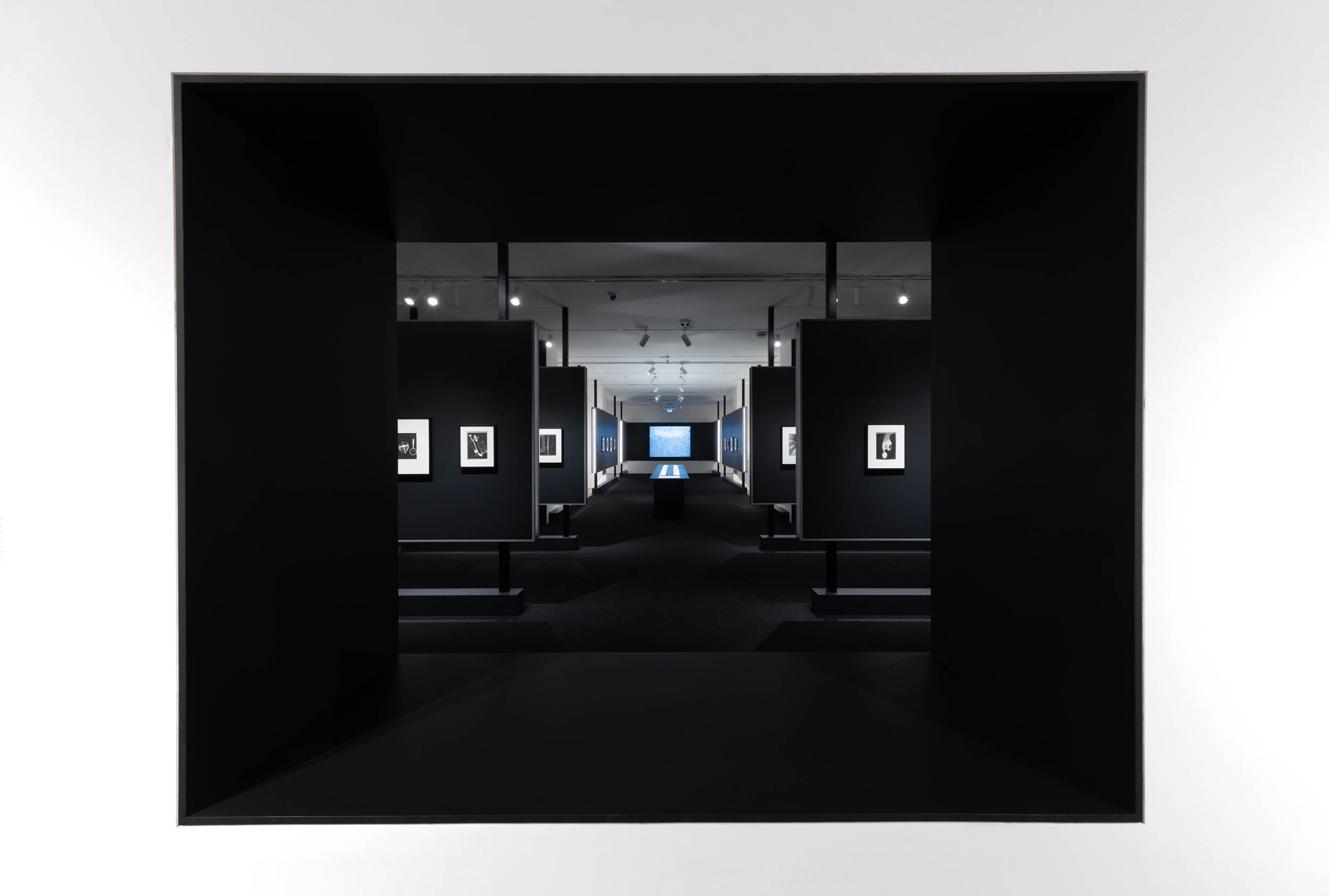
LIKE ART BLART ON FACEBOOK

Back to top

Exhibition: ‘Álbum de salón y alcoba (The Bedroom and Dressing Room Album). Instalación de David Trullo’ at Museo Nacional de Artes Decorativas, Madrid

Exhibition dates: 24th April – 22nd September, 2024


Kaulak (Antonio Cánovas del Castillo y Vallejo) (Spanish, 1862-1933) 'Studio portrait' 1921-1922


Kaulak (Antonio Cánovas del Castillo y Vallejo) (Spanish, 1862-1933)
Studio portrait
1921-1922
Photographic positive
Museo Nacional de Artes Decorativas, Madrid


Kaulak (22 December 1862 – 13 September 1933), was a Spanish photographer, art critic, editor and amateur painter. His uncle was prime minister Antonio Cánovas del Castillo, assassinated in 1897 by an anarchist, hence his use of a pseudonym; the meaning of which is unexplained, although the word appears to be of Basque origin.


What fabulousesness!

An archive of ‘galant photography’ and other art works illustrating the intimate public and private scenes of a couple in Spain in the 1920s-1930s which builds a memory, a narrative. The exhibition combines photographs and documentation of the most varied kinds, with elements of the daily life of its time.

“… above all [the exhibition] makes us reflect on our own archives: what we keep and what we discard, what we hide and what we reveal, how we build and invent our own history, how we want to be remembered and what we leave to those who come after us.”

The appreciation and enjoyment of difference pictured through photography and art, telling a story otherwise long forgotten.

I have added appropriate bibliographic text where possible.

Dr Marcus Bunyan


Many thankx to the Museo Nacional de Artes Decorativas for allowing me to publish the photographs in the posting. Please click on the photographs for a larger version of the image.


Anonymous photographer. 'Portrait' c. 1935


Anonymous photographer
Portrait
c. 1935
Photographic positive
Museo Nacional de Artes Decorativas, Madrid


The Museo Nacional de Artes Decorativas (MNAD) in Madrid, a state museum of the Ministry of Culture of Spain, joins the PHotoESPAÑA 2024 festival with the opening of Álbum de salón y alcoba. Una instalación de David Trullo, which can be visited free of charge until September 22.

From a forgotten collection that contained public -or living room- photographs and private -or bedroom- scenes of a couple in the 20s and 30s of the last century, the visual artist David Trullo has made this exhibition. The installation is “the result of opening an unnoticed time capsule and putting it in context with pieces from the museum and other collections to explore the limits of intimacy, leading the viewer to surpass them.”

In addition to putting a “rediscovered treasure” into context, the installation offers a review of how photographic documentation is exhibited and interpreted. It also proposes to reflect “on our own archives: what we keep and what we discard, what we hide and what we reveal, how we construct and invent our own history, how we want to be remembered and what we leave to those who come after us.”

The installation is, in itself, an album that captures the intimacy and public life of the 1920s and 1930s, combining the most varied photographs and documentation with elements of the everyday life of her time. It includes pieces and archives from several private collections, the Museo Sorolla, the Muséu del Pueblo d’Asturies, the Museo Nacional del Teatro de Almagro, the Asociación para la Enseñanza de la Mujer-Fundación Fernando de Castro and the Museo de Historia de Madrid, among others.

Between “the living room” and “the bedroom” a route is traced that goes from the preservation of intimate albums – among which a positive by Kaulak stands out, – through the first advances in amateur photography, to the ‘galant photography’, more or less erotic, and other genres of popular culture that include among its protagonists Tórtola Valencia, Sara Montiel, Conchita Piquer or the queer copla singer Miguel de Molina.

Text from the Museo Nacional de Artes Decorativas website


'Advertising design for 'Florido y Cía'' (Florido and Co.) c. 1930


Advertising design for ‘Florido y Cía’ (Florido and Co.)
c. 1930
Watercolour on paper
Museo Nacional de Artes Decorativas, Madrid


Anonymous photographer. 'Miguel de Molina' 1937


Anonymous photographer
Miguel de Molina
1937
Photographic positive
Colección Pedro Víllora


Miguel Frías de Molina (Málaga, April 10, 1908 – Buenos Aires, March 4, 1993), known artistically as Miguel de Molina, was a Spanish singer of copla. Tortured, expelled from Spain and later persecuted by the Franco dictatorship for being a “faggot and a red”, he settled in Argentina in 1946, invited by Eva Perón.

He had an unmistakable personal style combining cabaret, flamenco dancing, deep vocal emotionalism, spectacular costumes and a narcissistic stage persona that made him extremely popular with audiences. His gay identity was openly acknowledged with a sense of humour that was very close to what today would be recognised as ‘low camp.’ Between 1936 and 1942 Molina spent most of the Spanish Civil War on Republican ground. This together with his homosexuality and sympathies for the Left had disastrous consequences for his career. He left Spain for Argentina, where he was hugely successful. But life in exile was not easy and the Argentinean government soon threatened him with expulsion. Molina credited the direct intervention of Eva Perón with helping him stay in the country and continue his career. Unfortunately his overt support for the Perón government made him a despised figure once the Peróns were driven from power. The rampant homophobia of the changed political climate and the cultural shift that accompanied it proved detrimental to his mental and emotional health, prompting him to withdraw from artistic life in 1960. While many personalities who were faced with persecution under Francoism were being rediscovered in the 1980s, Molina, by then bitter and withdrawn, languished in obscurity. It was not until two films that celebrated his life were released a decade later that his uniquely stylised performances and colourful life would finally be celebrated.

Anonymous. “Miguel de Molina – Nominee,” on The Legacy Project website Nd [Online] Cited 21/08/2024


Anonymous maker. 'Fan' c. 1925


Anonymous maker
Fan

c. 1925
Lacquered wood and painted and corrugated paper
Museo Nacional de Artes Decorativas, Madrid
Photo: Masú del Amo


Bruno Zach (Austrian born Ukraine, 1891-1935) (designer) 'Figure of a woman with a fur coat' c. 1920


Bruno Zach (Austrian born Ukraine, 1891-1935) (designer)
Figure of a woman with a fur coat
c. 1920
Cast bronze
Museo Nacional de Artes Decorativas, Madrid
Photo: Fabián Álvarez


Bruno Zach (6 May 1891 – 20 February 1935) was an Austrian art deco sculptor of Ukrainian birth who worked in the early-to-mid 20th century. His output included a wide repertoire of genre subjects, however he is best known for his erotic sculptures of young women.


'Muchas Gracias' (Thank You) Magazine, Year VII - No. 344' September 13, 1930


Muchas Gracias (Thank You) Magazine, Year VII – No. 344
September 13, 1930
Museo Nacional de Artes Decorativas, Madrid


Translated text at the bottom of the magazine:

Thank you very much
For this rascal
We want to tell this little bitch that it fits her well. But we stumbled upon the fit.


Oswald Haerdtl (Austrian, 1899-1959) 'Cocktail set' 1924


Oswald Haerdtl (Austrian, 1899-1959)
Cocktail set
1924
mouth-blown glass
Museo Nacional de Artes Decorativas, Madrid
Photo: Lucía Morate


Oswald Haerdtl was an important Austrian architect, designer, and architecture teacher.

He studied under Kolo Moser and Oskar Strnad at the Wiener Kunstgewerbeschule, and entered Josef Hoffmann’s master class in 1922, soon becoming his assistant. From 1935 to 1959, he was head of the architecture department. His teaching, architectural projects, and international connections, to Italy and France in particular, made him a lasting influence on post-war Modernism in Vienna, bringing a sense of lightness and elegance into the design vocabulary.

Text from the J & L Lobmeyr website


Ramón Peinador Checa (Spanish, 1897-1964) Advertising design for 'Perfumes Oriente' 1925


Ramón Peinador Checa (Spanish, 1897-1964)
Advertising design for ‘Perfumes Oriente’
1925
Wash on paper
Museo Nacional de Artes Decorativas, Madrid
Photo: Javier Rodríguez Barrera


Ramón Peinador Checa (Madrid, December 25, 1897 – Mexico City, May 26, 1964) was a Spanish painter, draftsman, engraver, illustrator, designer and decorator who, exiled in Mexico, became a naturalised citizen of that country.


Photography lies and deceives us. What the camera shows us is staged, either by us or by the eye of the person who creates the images. What we commonly call a “photographic archive” is nothing more than a fragmented collection transformed over the years, with which a memory, a narrative, is built.

From a forgotten collection containing public photographs -or from the living room- and private scenes -or from the bedroom- of a couple in the twenties and thirties of the last century, the visual artist David Trullo proposes this installation.

It is the result of opening an unnoticed time capsule and putting it in context with the pieces of the twentieth century that put an end to the monopoly of the professional photographer. Cameras and processes are simplified and photography is becoming an essential accessory for any occasion, and not only for amateurs, including the female sector: the Kodak Petite from 1926 is promoted as a camera ‘for smart and modern girls’.

In addition to putting a rediscovered treasure into context, the installation proposes a review of the way photographic documentation is displayed and interpreted, but above all it makes us reflect on our own archives: what we keep and what we discard, what we hide and what we reveal, how we build and invent our own history, how we want to be remembered and what we leave to those who come after us.

During this period, Madrid reinvented itself and became as cosmopolitan as other European cities, although it was the bourgeois and aristocratic elites who truly enjoyed it. A surprising and varied sexual atmosphere also emerged, along with new ways of understanding bodies, identities and relationships that were reflected in publications, advertising and photography, with the so-called ‘galant photography’ flourishing within it.

The National Museum of Decorative Arts joins PHotoESPAÑA 2024 with David Trullo’s installation ‘Album of living room and bedroom’

~ With a selection of images from the public and the private, the visual artist discovers a photographic capsule that time has preserved to be reread from the present day

~ The tour includes everything from photographic positives by Kaulak to portraits of Sara Montiel, Conchita Piquer or the queer copla singer Miguel de Molina

The National Museum of Decorative Arts (MNAD), a state museum of the Ministry of Culture, is joining the PHotoESPAÑA 2024 festival with the inauguration of ‘Album of living room and bedroom. Installation by David Trullo’, which can be visited free of charge until September 22.

From a forgotten collection containing public photographs  – or from the living room –  and private scenes  – or from the bedroom – of a couple in the 1920s and 1930s, the visual artist David Trullo has created this proposal. The installation is “the result of opening an unnoticed time capsule and putting it in context with the pieces from the museum and from other collections to explore the limits of intimacy, leading the viewer to surpass them.”

In addition to putting a “rediscovered treasure” into context, the installation offers a review of the way of exhibiting and interpreting photographic documentation. It also suggests reflecting “on our own archives: what we keep and what we discard, what we hide and what we reveal, how we build and invent our own history, how we want to be remembered and what we leave to those who come after us.”
From living room to bedroom

The installation is, in itself, an album that captures the intimacy and public life of the 1920s and 1930s, combining photographs and documentation of the most varied kinds, with elements of the daily life of its time. It features pieces and archives from various private collections, from the Sorolla Museum, the Muséu del Pueblo d’Asturies, the Museo Nacional del Teatro de Almagro, the Asociación para la Enseñanza de la Mujer-Fundación Fernando de Castro or the Museo de Historia de Madrid, among others. Between “the living room” and “the bedroom” there is a journey that goes from the conservation of intimate albums – among which a positive by Kaulak stands out – through the first advances in photography for amateurs, to reaching ‘galant photography’, more or less erotic, and other genres of popular culture that include among their protagonists Tórtola Valencia, Sara Montiel, Conchita Piquer or the queer copla singer Miguel de Molina.

Text from the National Museum of Decorative Arts exhibition press dossier


Antonio Peyró (Spanish, 1882-1954) 'The Baticola (Elena Plá Toda)' 1934


Antonio Peyró (Spanish, 1882-1954)
The Baticola (Elena Plá Toda)
1934
Glazed ceramic
Museo Nacional de Artes Decorativas, Madrid
Photo: Masú del Amo


Antonio Peyró Mezquita was a Spanish ceramist.


''Reciprocal pleasure', cover by Josep Renau Berenguer' 1933


‘Reciprocal pleasure’, cover by Josep Renau Berenguer
1933
Museo Nacional de Artes Decorativas, Madrid
Photo: Masú del Amo


Josep Renau Berenguer (Spanish, 1907-1982) was an artist and communist revolutionary, notable for his propaganda work during the Spanish Civil War. Among his production, he is remarkable for his art deco period, his political propaganda during the Spanish Civil War, the photo murals of the Spanish Pavilion in the International Exhibition of 1937 in Paris, a series of photomontages titled Fata Morgana or The American Way of Life, and murals and paintings made in Mexico, such as Tropic, dated in 1945.

Text from the Wikipedia website


Louis Majorelle (French, 1859-1926) (designer) 'Sofa' 1901-1926


Louis Majorelle (French, 1859-1926) (designer)
Sofa
1901-1926
Silk velvet
Museo Nacional de Artes Decorativas, Madrid
Photo: Lucía Morate


Louis-Jean-Sylvestre Majorelle, usually known simply as Louis Majorelle, (26 September 1859 – 15 January 1926) was a French decorator and furniture designer who manufactured his own designs, in the French tradition of the ébéniste. He was one of the outstanding designers of furniture in the Art Nouveau style, and after 1901 formally served as one of the vice-presidents of the École de Nancy.

Louis Majorelle is one of those who contributed the most to the transformation of furniture. Thanks to posterity, we recognise today a piece of furniture from him as we recognise a piece of furniture from André Charles Boulle and Charles Cressent, the french Prince regent’s favourite artists. During the early 18th century, Cressent replaced the magnificence of ebony and tortoiseshell associated with tin and copper by the softer harmonies of foreign woods. Like him, Louis Majorelle dressed the elegant structure of Art Nouveau furniture with exotic wood inlays.

Text from the Wikipedia website


Álvaro Retana (Spanish born Philippines, 1890-1970) 'Figure for Celia Gámez' c. 1920


Álvaro Retana (Spanish born Philippines, 1890-1970)
Figure for Celia Gámez
c. 1920
Ink and graphite on paper
Colección Pedro Víllora


Álvaro Retana Ramírez de Arellano (Batangas, Philippines, August 26, 1890 – Torrejón de Ardoz, Madrid, February 10, 1970) was a writer, journalist, cartoonist, fashion designer, musician, libertine and Spanish couplet lyricist.

Celia Gámez Carrasco (August 25, 1905 – December 10, 1992) was an Argentinian film actress, and one of the icons of the Golden Age of Spanish theatre. She was more commonly known in Franco’s Spain, particularly in her later years, as La Protegida.


Vitín Cortezo (Spanish, 1908-1978) 'Figure for Celia Gámez' 1939


Vitín Cortezo (Spanish, 1908-1978)
Figure for Celia Gámez
1939
Mixed technique on paper
Colección Pedro Víllora


Víctor María Cortezo Martínez-Junquera, also known as Vitín Cortezo (Madrid, June 10, 1908 – March 2, 1978) was a Spanish painter, illustrator, costume designer and set designer.


Anonymous maker. 'Bloomers and cotton slip with silk knit stockings' c. 1930


Anonymous maker
Bloomers and cotton slip with silk knit stockings
c. 1930
Museo Nacional de Artes Decorativas, Madrid
Photo: Fabián Álvarez


Karl Klaus and Franz Staudigl 'Figure (Serapis Wahliss series)' 1913-1914


Karl Klaus and Franz Staudigl
Figure (Serapis Wahliss series)
1913-1914
Painted and glazed ceramic
Museo Nacional de Artes Decorativas, Madrid
Photo: Fabián Álvarez


Karl Klaus (Austrian, 1889-1925) was a student of Josef Hoffmann. The figure was designed for Serapis-Wahliss, a noted Viennese retailer and manufacturer of porcelain. Franz Staudigl was an Austrian painter born 1885 – died 1944.


Anonymous photographer. 'Concha Piquer' 1927


Anonymous photographer
Concha Piquer
1927
Photographic positive
Museo Nacional del Teatro, Almagro


María de la Concepción Piquer López (13 December 1906 – 12 December 1990), better known as Concha Piquer (and sometimes billed as Conchita Piquer), was a Spanish singer and actress. She was known for her work in the copla form, and she performed her own interpretations of some of the key pieces in the Spanish song tradition, mostly works of the mid-20th century trio of composers Antonio Quintero, Rafael de León y Manuel Quiroga.


Anonymous maker. 'Perfume bottles' 1850-1900


Anonymous maker
Perfume bottles
1850-1900
Engraved and gilded silver and blown glass
Museo Nacional de Artes Decorativas. Madrid
Photo: Fabián Álvarez


Anonymous maker / Paul Koruna, Paris (no dates) (photographer). 'Promotional poster for 'Rosalío'' Nd


Anonymous maker
Paul Koruna, Paris
(no dates) (photographer)
Promotional poster for ‘Rosalío’
Nd
Montage of photographic positives
Colección Ramón Gato


Anonymous maker / Paul Koruna, Paris (no dates) (photographer). 'Promotional poster for 'Rosalío'' Nd. 'Promotional poster for 'Rosalío'' Nd (detail)

Anonymous maker / Paul Koruna, Paris (no dates) (photographer). 'Promotional poster for 'Rosalío'' Nd. 'Promotional poster for 'Rosalío'' Nd (detail)

Anonymous maker / Paul Koruna, Paris (no dates) (photographer). 'Promotional poster for 'Rosalío'' Nd. 'Promotional poster for 'Rosalío'' Nd (detail)

Anonymous maker / Paul Koruna, Paris (no dates) (photographer). 'Promotional poster for 'Rosalío'' Nd. 'Promotional poster for 'Rosalío'' Nd (detail)


Anonymous maker
Paul Koruna, Paris (no dates) (photographer)
Promotional poster for ‘Rosalío’ (details)
Nd
Montage of photographic positives
Colección Ramón Gato


Anonymous maker. 'Manila shawl' 1876-1925


Anonymous maker
Manila shawl
1876-1925
Embroidered silk
Museo Nacional de Artes Decorativas, Madrid
Photos: Javier Rodríguez Barrera


National Museum of Decorative Arts
c/ Montalbán, 12. Madrid

Opening hours
Tuesday – Saturday: 9.30am – 3.00pm
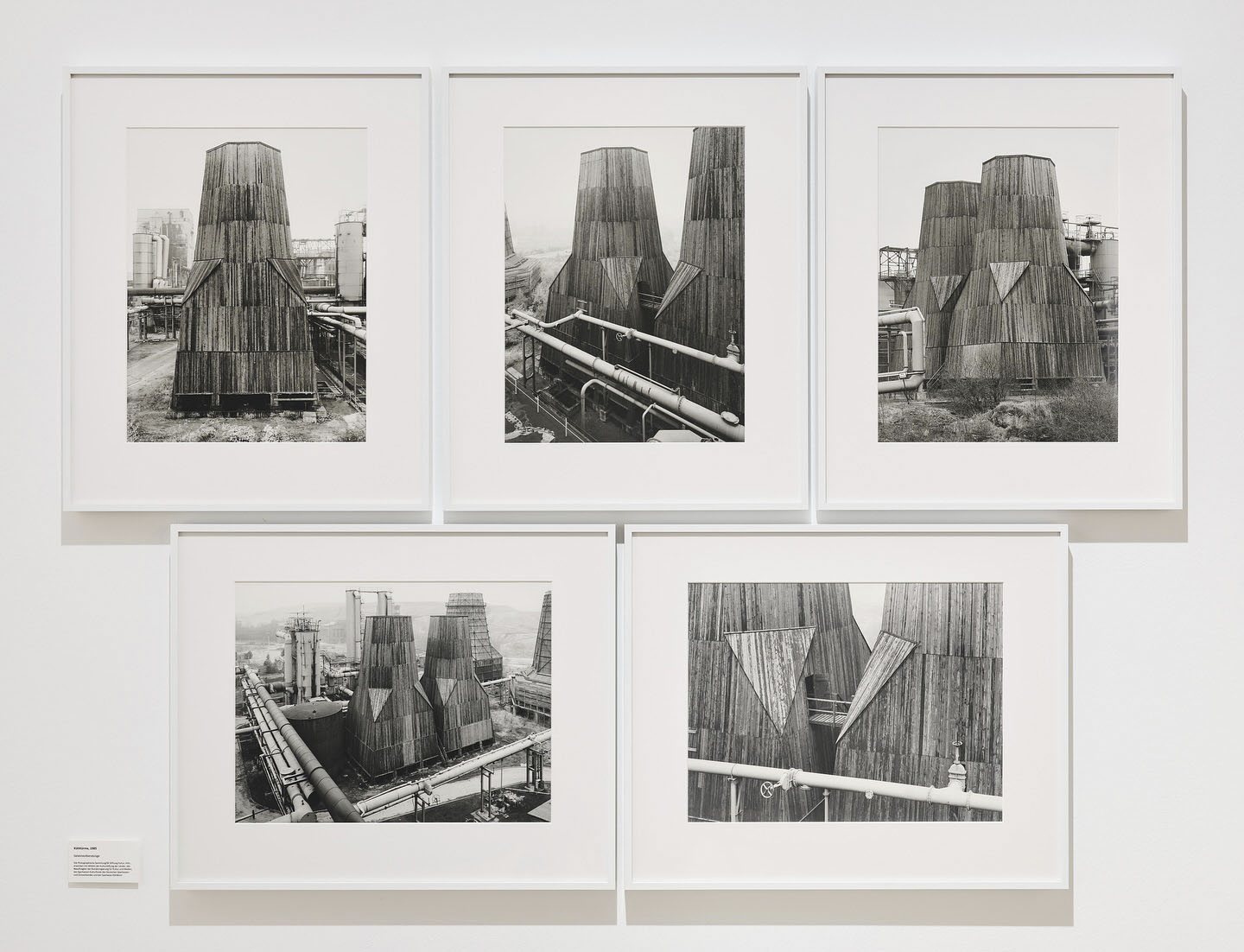
Sundays and holidays: 10.00am – 3.00pm
Afternoons (Thursday): 5.00pm – 8.00pm

National Museum of Decorative Arts website

LIKE ART BLART ON FACEBOOK

Back to top

Exhibition: ‘Suburbia. Building the American Dream’ at the Centre de Cultura Contemporània de Barcelona | CCCB

Exhibition dates: 20th March – 8th September 2024

Curators: Philipp Engel and Francesc Muñoz


'Suburbia. Building the American Dream' exhibition poster


Suburbia. Building the American Dream exhibition poster


An offer you can’t refuse

“The “American dream” can be summed up in a mental image that seems frozen in time: a home of one’s own, surrounded by lawns, with a pool in the back garden and a couple of cars slumbering in the garage… Suburbia. Building the American Dream draws us into the imaginary of the idyllic family home and shows how this lifestyle has been sold and promoted by fiction and the entertainment industry.” (Text from the CCCB website)


To me, there has always be something slightly askew, slightly out of kilter about the “American dream”. It promotes a generalised simulation of a imaginary reality, sold as a lifestyle, more fiction than fact. It is the ghost of desire that haunts the everyday reality of life, entirely on the side of demand: I want therefore I must have.

This desire must be satiated in the nuclear family, the white picket fence, the idyllic family home, the loveable children – as much a surface that reflects the approbation of others as for the sustenance of the self. As Anthony Giddens observes we are inescapably involved in a

“‘reflexive project of the self’: this project is reflexive because it involves unremitting self-monitoring, self-scrutiny, planning and ordering of all elements of our lives appearances and performances in order to marshal them into a coherent narrative called ‘the self’. We have to interpret the past and plan the future in relation to an identity we are attempting to constitute in a particularly immediate and transient social present. Consumerism is central to this self-obsession. This is partly because we not only have to choose a self, but (as Foucault’s line of argument also indicates) have to constitute ourselves as a self who choses, a consumer.”1


The American Dream endeavours to direct the identity we are attempting to constitute (through consumerism), so that it fits into a particularly conformist idea of a wholesome life: patriarchal, hegemonic, puritan (most important in America), god fearing, white – a particularly hyperreal simulation of a world that never existed in the first place. An imaginary construction.2

Photographs reinforce this “imaginary” state of being, this desire for the American Dream. As the wonderful Victor Burgin observes,

“The structure of presentation – point-of-view and frame – is intimately implicated in the reproduction of ideology (the ‘frame of mind’ of our ‘points-of-view’). More than any other textual system, the photograph presents itself as ‘an offer you can’t refuse’. The characteristics of the photographic apparatus position the subject in such a way that the object photographed serves to conceal the textuality of the photograph itself – substituting passive receptivity for active (critical) reading. … With most photographs we see, […] decoding and investiture takes place instantaneously, unselfconsciously, ‘naturally’; but it does take place – the wholeness, coherence, identity, which we attribute to the depicted scene is a projection, a refusal of an impoverished reality in favour of an imaginary plenitude. The imaginary object here, however, is not ‘imaginary’ [as in fictive] in the usual sense of the word, it is seen, it has a projected image.”3 (My bold and italics)


The photographs of the American Dream, then, deny an impoverished reality in favour of a desired imaginary plenitude. You too can live the dream, because you have seen the evidence of the projected image, and this imaginary identification can have very real effects.

In the desire for the dream we witness (elsewhere in the world) the egocentric obsession of some of the builders in the British series “Grand Designs” where people mortgage themselves up to the hilt, become sick, have marriage breakdowns and can’t finish the project, because of a dream… to build huge houses with 7 bedrooms and 4 bathrooms that no one in their right mind needs to build for 2 people. Or the case of the Australian Melissa Caddick who, in a Ponzi scheme stole A$30 million from investors, including her friends and family, in order to appear a successful business woman. “Caddick used the proceeds of her crimes to acquire “all the trappings of wealth” and that her “success was all a façade and the financial services business was an elaborate front for Ms. Caddick’s Ponzi scheme”.”4

Ego is reinforced by the image reflected back to us by the photograph.

Christopher Lasch comments that, “The proliferation of recorded images undermines our sense of reality. As Susan Sontag observes in her study of photography, “Reality has come to seem more and more like what we are shown by cameras.” We distrust our perceptions until the camera verifies them. Photographic images provide us with the proof of our existence, without which we would find it difficult even to reconstruct a personal history…”5

Photographs posit a reality that promotes the dream, that verifies the dream, as ‘an offer you can’t refuse’.

Thankfully, some of the contemporary artists in this posting (I particularly like the work of Weronika Gęsicka) undermine the utopian ideal through wit, humour and critical inquiry.

Dr Marcus Bunyan


1/ Anthony Giddens. Modernity and Self-Identity: Self and Society in the Late Modern Age. Polity Press, Cambridge, 1991

2/ “In sociology, the imaginary as a Lacanian term refers to an illusion and fascination with an image of the body as coherent unity, deriving from the dual relationship between the ego and the specular or mirror image… “The term ‘imaginary’ is obviously cognate with ‘fictive’ but in its Lacanian sense it is not simply synonymous with fictional or unreal; on the contrary, imaginary identifications can have very real effects.””

David Macey, “Introduction”, Jacques Lacan, The Four Fundamental Concepts of Psycho-Analysis. London, 1994, p. xxi  quoted in “Imaginary (sociology)” on the Wikipedia website [Online] Cited 01/09/2024

3/ Victor Burgin (ed.,). Thinking Photography. Macmillan, Basingstoke, 1982, pp. 146-148.

4/ Farid Assaf SC quoted in Kate McClymont. “Melissa Caddick’s ‘trappings of wealth’ a front for her Ponzi scheme”. The Sydney Morning Herald 29 June 2021 in “Melissa Caddick,” on the Wikipedia website [Online] Cited 01/09/2024

5/ Christopher Lasch. The Culture of Narcissism. W.W.Norton and Company, New York, 1978, p. 48.


Many thankx to the Centre de Cultura Contemporània de Barcelona for allowing me to publish the photographs in the posting. Please click on the photographs for a larger version of the image.


Inside the exhibition: Suburbia. Building the American Dream 

Philipp Engel, curator of the exhibition “Suburbia”, examines the origin and vast expansion of residential neighbourhoods in the United States, an urban model centred on constructing large swathes of single-family homes on the outskirts of cities. Engel reflects on the allure that suburban landscapes have stirred in Western culture while highlighting the main issues and contradictions of the model, including segregation, safety paranoia and unsustainable consumption of water and energy.


Introduction

Greg Stimac (American, b. 1976) 'Chandler, Arizona' 2006 From 'Mowing the Lawn' portfolio


Greg Stimac (American, b. 1976)
Chandler, Arizona
2006
From Mowing the Lawn portfolio
Impressió digital Museum of Contemporary Photography, Columbia College Chicago


Who hasn’t longed for the American dream? A big house with a garden, a swimming pool and a couple of cars in the garage. A quiet, safe place to live as a family, close to nature in a people-friendly neighbourhood. This exhibition traces the cultural history of a lifestyle ideal that has been endlessly reproduced on television, in advertising and in cinema, and analyses the validity and the most controversial aspects of its urban planning model.

Suburbia. Building the American Dream draws us into the imaginary of the idyllic family home and shows how this lifestyle has been sold and promoted by fiction and the entertainment industry. The exhibition goes back to the origins of residential neighbourhoods in the early nineteenth century, explains how they developed massively in the 1950s, and reviews the economic, political and social context of their relentless expansion across the United States.

Now, when more and more families are pursuing their own version of the dream on the outskirts of cities, it is a good moment to analyse the contradictions of an urban planning model based on social, ethnic and gender segregation.

The dream of living in a house with a swimming pool is still very much alive today and has been exported all over the world. The exhibition shows the impact of this highly unsustainable model, based on constant car use, with examples of developments around Barcelona and Madrid.

With abundant historical material, period documentaries, photographs, paintings, films and series, novels and magazines, works of art and everyday objects, the exhibition places us in the mental paradise of the suburb and invites us to rethink the value of the city and public space today.

Suburbia. Building the American Dream presents the work of foremost creators who, from different points of view, help us to take a critical look at the famed American way of life: Jessica Chou, Gregory Crewdson, Thomas Doyle, Gerard Freixes, Rodrigo Fresán, Gabriele Galimberti, Weronika Gesicka, Benjamin Grant, Todd Hido, Joel Meyerowitz, Matthias Müller, Blanca Munt, Alberto Ortega, Bill Owens, Sheila Pree Bright, León Siminiani, Todd Solondz, Amy Stein, Greg Stimac, Angela Strassheim, Deborah Stratman, Ed & Deanna Templeton, Kate Wagner and Christopher Willan.

Text from the CCCB website


Joel Meyerowitz (American, b. 1938) 'Land. Provincetown' 1976


Joel Meyerowitz (American, b. 1938)
Land. Provincetown
1976
Archival pigment print
Collecció Pancho Saula i Michelle Ferrara / Galeria Alta, Andorra


Joel Meyerowitz (American, b. 1938) 'Dusk, New Jersey' 1978


Joel Meyerowitz (American, b. 1938)
Dusk. New Jersey
1978
Archival pigment print
Collecció Pancho Saula i Michelle Ferrara / Galeria Alta, Andorra


The “American dream” can be summed up in a mental image that seems frozen in time: a home of one’s own, surrounded by lawns, with a pool in the back garden and a couple of cars slumbering in the garage. Suburbia. Building the American Dream traces the cultural history of a lifestyle ideal shared far and wide by literature, television, advertising and cinema, and analyses the most controversial aspects of an urban planning model that has spread beyond US territory and reached our shores. Journalist Philipp Engel curates this exhibition with geographer Francesc Muñoz collaborating as adviser on the model in the local context.

Suburbia. Building the American Dream draws us into the imaginary of the idyllic family home and shows how this lifestyle has been sold and promoted by fiction and the entertainment industry. The exhibition goes back to the origins of residential neighbourhoods in the early nineteenth century, explains how they developed massively in the 1950s, and reviews the economic, political and social context of their relentless expansion across the United States.

Since the 1990s most of the American population has lived in this sprawling urban mass that has continued to spread, even beyond US borders. At a time when more and more families are pursuing their own version of the dream on city outskirts, the exhibition analyses the contradictions of an urban planning model based on social, ethnic and gender segregation. It also shows the impact of this highly unsustainable model, based on constant car use, with examples of developments around Barcelona and Madrid. With abundant historical material, photographs, paintings, audiovisuals, literature, works of art and everyday objects, the exhibition situates us in the mental paradise of the model of residential development inspired by American suburbia, and invites us to rethink the value of the city and public space today.

Suburbia. Building the American Dream decodes an almost abstract landscape that is still valid in pop culture. It does so through the work of foremost creators who help us take a critical look at the famed American way of life. It includes works by Jessica Chou, Gregory Crewdson, Thomas Doyle, Gerard Freixes, Gabriele Galimberti, Weronicka Gęsicka, Benjamin Grant, Todd Hido, Joel Meyerowitz, Matthias Müller, Blanca Munt, Alberto Ortega, Bill Owens, Sheila Pree Bright, León Siminiani, Amy Stein, Greg Stimac, Angela Strassheim, Deborah Stratman, Ed & Deanna Templeton, Kate Wagner and Christopher Willan, among others.


Installation view of the exhibition 'Suburbia. Building the American Dream' at the Centre de Cultura Contemporània de Barcelona | CCCB

Installation view of the exhibition 'Suburbia. Building the American Dream' at the Centre de Cultura Contemporània de Barcelona | CCCB

Installation view of the exhibition 'Suburbia. Building the American Dream' at the Centre de Cultura Contemporània de Barcelona | CCCB

Installation view of the exhibition 'Suburbia. Building the American Dream' at the Centre de Cultura Contemporània de Barcelona | CCCB showing photographs by Charlotte Brooks

Installation view of the exhibition 'Suburbia. Building the American Dream' at the Centre de Cultura Contemporània de Barcelona | CCCB showing visitors looking at satellite images of US cities and suburbs that show their grid layout


Installation views of the exhibition Suburbia. Building the American Dream at the Centre de Cultura Contemporània de Barcelona | CCCB showing in the second image photographs by Charlotte Brooks (below); and in the bottom image, visitors looking at satellite images of US cities and suburbs that show their grid layout
© Alice Brazzit, CCCB, 2024


Charlotte Brooks (American, 1918-2014) '[Image from LOOK - Job 57-7621 titled Myers family]' 20th December 1957


Charlotte Brooks (American, 1918-2014)
[Image from LOOK – Job 57-7621 titled Myers family]
20th December 1957
Film negative
Look magazine photograph collection (Library of Congress)
Library of Congress Prints and Photographs Division Washington, D.C.


Installation view of the exhibition 'Suburbia. Building the American Dream' at the Centre de Cultura Contemporània de Barcelona | CCCB showing photographs by Gregory Crewdson


Installation view of the exhibition Suburbia. Building the American Dream at the Centre de Cultura Contemporània de Barcelona | CCCB showing photographs by Gregory Crewdson (below)


Gregory Crewdson (American, b. 1962) 'Untitled (Dream House)' 2002


Gregory Crewdson (American, b. 1962)
Untitled (Dream House)
2002
Digital C-print
29 x 44 inches


American photographer Gregory Crewdson is best known for his uncanny images of deceptively serene suburban life.  Using Hollywood film techniques and elaborate sets, Crewdson creates what he calls “frozen moments”: meticulously staged scenes whose narrative meaning remains a mystery.  Throughout this series, special attention is paid to light.  The twilight setting favoured by the photographer functions as a metaphor, an eerie evocation of the darkness on the edge of town.

Crewdson created this twelve-part portfolio, Dream House, as a commission for The New York Times Magazine in 2002.  The cinematic character of these frozen vignettes is underscored by the use of Hollywood actors (Gwyneth Paltrow, Tilda Swinton, and Philip Seymour Hoffman among others) whose celebrity contrasts with the “Anytown” anonymity of their environments.

Text from the Mutual Art website


Gregory Crewdson (American, b. 1962) 'Julianne Moore (Dream House)' 2002


Gregory Crewdson (American, b. 1962)
Julianne Moore (Dream House)
2002
Digital C-print
29 x 44 inches


Sections of the exhibition

Planning A Dream

When the Industrial Revolution reached the USA in the first half of the 19th century, big cities became engines of progress, but they were also seen as dangerous places, in contrast with the opulent nature of the New World. With the emergence of the railway, the tram and the automobile, the mobility revolution prompted the gradual colonisation of city outskirts, transforming the countryside into residential neighbourhoods.

From Llewellyn Park (New Jersey) to Tuxedo Park (New York), throughout the 19th century the first gated communities began to pop up across the United States. At the end of the century, after the West was won, the appearance of the tram gave the middle classes access to the periphery, giving rise to a new type of housing that led to an orderly arrangement of city grids. But it wasn’t until the popularisation of the famous Ford Model T that the US landscape was radically transformed, crisscrossed by roads that became freeways. The automobile became a symbol of freedom, marking the birth of the suburbs that were to spring up everywhere.

This first section includes historical material like the original lithograph View of New York by John William Hill (1836); The American Woman’s Home by Catharine Beecher, the bible of “domestic feminism”; a Ford T Touring (1923) produced by General Motors, and films like The Suburbanite (1908), among other Harold Lloyd and Buster Keaton classics.


Alexander Jackson Davis (American, 1803–1892) 'Villa for David Codwise, near New Rochelle, NY (project; elevation and four plans)' 1835


Alexander Jackson Davis (American, 1803–1892)
Villa for David Codwise, near New Rochelle, NY (project; elevation and four plans)
1835
Pen and ink, watercolour, graphite
Sheet: 14 5/16 x 9 in. (36.4 x 22.9 cm)
Metropolitan Museum of Art, New York
Harris Brisbane Dick Fund, 1924
Public domain


Alexander Jackson Davis (American, 1803-1892) 'Ericstan, for John J. Herrick, Tarrytown, New York (perspective)' 1855


Alexander Jackson Davis (American, 1803–1892)
Ericstan, for John J. Herrick, Tarrytown, New York (perspective)
1855
Watercolour, ink, and graphite on paper
25 5/16 x 30in. (64.3 x 76.2cm)
Metropolitan Museum of Art, New York
Harris Brisbane Dick Fund, 1924
Public domain


Davis’ most successful castellated villa was built for dry-goods merchant John J. Herrick. The design was dominated by an enormous three-story circular tower facing west over the Hudson River. The tower housed an extraordinary circular parlor that had an intricately vaulted ceiling springing from a massive central cluster of delicate Gothic columns. Ericstan was demolished in 1944.


After Alexander Jackson Davis (American, 1803-1892) Friend & Aub (Publisher Philadelphia, Pennsylvania) 'Map of Llewellyn Park and Villa Sites, on Eagle Ridge in Orange & West Bloomfield' 1857


After Alexander Jackson Davis (American, 1803-1892)
Friend & Aub (Publisher Philadelphia, Pennsylvania)
Map of Llewellyn Park and Villa Sites, on Eagle Ridge in Orange & West Bloomfield
1857
Lithograph
14 7/16 x 23 7/16 in. (36.7 x 59.6cm)
Metropolitan Museum of Art, New York
Harris Brisbane Dick Fund, 1924
Public domain


Morse & Fronti (Charles W. Morse and J. Fronti) 'Residence of Mr. E. Hooker, Fremont Ave., Orange, N.J.' 1860


Morse & Fronti (Charles W. Morse and J. Fronti)
Residence of Mr. E. Hooker, Fremont Ave., Orange, N.J.
1860
The Miriam and Ira D. Wallach Division of Art, Prints and Photographs: Photography Collection
The New York Public Library
Public domain


Currier & Ives (Publisher, New York active between 1856-1907) 'Sunnyside on the Hudson' 1856-1871


Currier & Ives (Publisher, New York active between 1856-1907)
Sunnyside on the Hudson
1856-1871
Hand coloured lithograph
Library of Congress Prints and Photographs Division Washington, D.C.
Public domain


Currier & Ives (Publisher, New York active between 1856-1907) 'Sunnyside on the Hudson' 1856-1871 (detail)


Currier & Ives (Publisher, New York active between 1856-1907)
Sunnyside on the Hudson (detail)
1856-1871
Hand coloured lithograph
Library of Congress Prints and Photographs Division Washington, D.C.
Public domain


Currier & Ives (Publisher, New York active between 1856-1907) 'American railroad scene: lightning express trains leaving the junction' 1874


Currier & Ives (Publisher, New York active between 1856-1907)
American railroad scene: lightning express trains leaving the junction
1874
Hand coloured lithograph
Library of Congress Prints and Photographs Division Washington, D.C.
Public domain


Advertising by Samuel. E. Gross 'August Gast & Co. New York' c. 1900


Advertising by Samuel. E. Gross.
August Gast & Co. New York
c. 1900
Lithography
Library of Congress


Advertising by Samuel. E. Gross 'August Gast & Co. New York' c. 1900 (detail)


Advertising by Samuel. E. Gross.
August Gast & Co. New York (detail)
c. 1900
Lithography
Library of Congress


Anonymous photographer / Bain News Service (publisher) 'Skaters on the lake at Tuxedo Park' 1910


Anonymous photographer
Bain News Service
(publisher)
Skaters on the lake at Tuxedo Park
1910
Glass negative
Library of Congress Prints and Photographs Division Washington, D.C.
Public domain


Anonymous photographer. 'Thomas Edison in the garden of his residence in Glenmont' 1917


Anonymous photographer
Thomas Edison in the garden of his residence in Glenmont
1917
Thomas Edison National Historical Park, West Orange, New Jersey


Anonymous photographer. 'General Motors Pavilion: Futurama, Norman Bel Geddes. New York World's Fair. General Motors – Crowds leading into Futurama' 1939


Anonymous photographer
General Motors Pavilion: Futurama, Norman Bel Geddes. New York World’s Fair. General Motors – Crowds leading into Futurama
1939
New York World’s Fair 1939-1940 records
Manuscripts and Archives Division, The New York Public Library
Public domain


'Catalog of the Aladdin company selling houses by mail' 1950


Catalog of the Aladdin company selling houses by mail
1950
Courtesy Historic New England


'Federal Housing Administration, Minneapolis and St. Paul, Minnesota' c. 1950


Federal Housing Administration, Minneapolis and St. Paul, Minnesota
c. 1950
Courtesy Minnesota Streetcar Museum, Minneapolis


The advertisement reads, “With a small down payment your rent money will buy a home. Consult your architect, builder, material dealer or any participating financial institution. Federal Housing Administration.”


The Suburban Room

The suburban explosion was first and foremost demographic, occurring as World War II soldiers returned, eager to set up home. There was no room for them in the crowded cities. With the support of the state, which offered generous loans, suburbs were built using the Fordist assembly-line production logic. It was the “American way of life”, the start of a collective dream that fascinated the whole world.

And so the baby boom took place in 11 million single-family homes fitted with all kinds of electrical domestic appliances, presided over by a brand new television set on which the new suburbanites watched idealised versions of themselves with identical skin colour and the same war experiences, age, mortgage and feeling of uprootedness. The media echoed this phenomenon, and cinema and literature reflected this standardised landscape in which a wife waited at home for her husband with a drink for him in her hand, children went everywhere by bicycle, and everyone had barbecues on Sundays.

Sponsored by the state, Suburbia became a paradise that excluded racial minorities. But little by little, by the sixties, the gates of paradise were opened to African Americans and other minorities, giving rise to a white exodus, the white flight.

As well as a variety of historical material, this section reviews sitcoms portraying the suburbs, from the 1940s to the present day. It also includes the famous illustration New Kids in the Neighborhood by Norman Rockwell and a broad selection of the photographs that make up Bill Owens’ Suburbia (1972), the first book of photographs about this American urban planning model.


Arthur S. Siegel (American, 1913-1978) 'Detroit, Michigan. Riot at the Sojourner Truth homes, a new U.S. federal housing project, caused by white neighbours' attempt to prevent Negro tenants from moving in. Mounted police and whites' Detroit 1942


Arthur S. Siegel (American, 1913-1978)
Detroit, Michigan. Riot at the Sojourner Truth homes, a new U.S. federal housing project, caused by white neighbours’ attempt to prevent Negro tenants from moving in. Mounted police and whites
Detroit 1942
Library of Congress
Public domain


General Electric advertisement 'It's a promise' 1945


General Electric advertisement
It’s a promise
1945
Private collection, Barcelona


Anonymous photographer. 'Aerial view of Levittown' 1949


Anonymous photographer
Aerial view of Levittown
1949
Courtesy Levittown Public Library


'Mural of household appliance advertisements published in different American magazines' 1947-1962


Mural of household appliance advertisements published in different American magazines
1947-1962


'Mural of household appliance advertisements published in different American magazines' 1947-1962 (detail)

'Mural of household appliance advertisements published in different American magazines' 1947-1962 (detail)

'Mural of household appliance advertisements published in different American magazines' 1947-1962 (detail)

'Mural of household appliance advertisements published in different American magazines' 1947-1962 (detail)


Mural of household appliance advertisements published in different American magazines (details)
1947-1962


Getting to Work. The Trials to U.S. commuters 'Time', January 18, 1960


Getting to Work. The Trials to U.S. commuters
Time, January 18, 1960
Library of Catalonia, Barcelona


John Cheever 'Time', March 27, 1964


John Cheever
Time, March 27, 1964
Library of Catalonia, Barcelona


Norman Rockwell (American, 1894-1978) 'New Kids in the Neighbourhood' 1967


Norman Rockwell (American, 1894-1978)
New Kids in the Neighbourhood
1967
Lithograph
Norman Rockwell Museum Collection


Bill Owens (American, b. 1938) 'Suburbia, Cul de sac, Pleseanton, California' 1972


Bill Owens (American, b. 1938)
Suburbia, Cul de sac, Pleseanton, California
1972
Gelatin silver
Bill Owens Archive, Milan


Bill Owens (American, b. 1938) 'I don't feel that Richie playing with guns will have a negative effect on his personality. (He already wants to be a policeman.)' 1972


Bill Owens (American, b. 1938)
I don’t feel that Richie playing with guns will have a negative effect on his personality. (He already wants to be a policeman.)
1972
Gelatin silver
Bill Owens Archive, Milan


The Residential Nightmare

And night fell on Suburbia. What had been a dream became a nightmare. The idea of a safe, healthy, happy place was gradually contaminated with fears, terrors and paranoias. Doors were bolted and alarms installed. After all, in the American Gothic tradition, the house, often haunted, had always been a source of horror – evil lurked there. With the appearance of mass-produced housing, a new sub genre called Suburban Gothic was consolidated, and began to manifest itself both in literature and in cinema. Unlike the traditional Gothic, in this new landscape the family residence was no longer tied to a specific territory, as it had been in New England; now, with its white picket fence and green lawn, it could be anywhere in the country. And evil came from outside, it threatened to invade the home and even undermine it. Under the guise of shiny normality, American suburbs always conceal cracks through which terror creeps.

To illustrate this residential nightmare, we take in historical materials of the atomic age, photographs of the dark side of suburbia by Amy Stein, Todd Hido, Gregory Crewdson, Angela Strassheim and Gabriele Galimberti, and Kate Wagner’s installation, McMansionHell. Alberto Ortega, an artist from Seville resident in the US who has devoted himself to painting the suburbs at night, presents two works for the first time at the CCCB.


Todd Hido (American, b. 1968) 'Untitled #2214' 1998


Todd Hido (American, b. 1968)
Untitled #2214
1998
From the series House Hunting


Angela Strassheim (American, b. 1969) 'Untitled (Elsa)' 2005


Angela Strassheim (American, b. 1969)
Untitled (Elsa)
2005
Left Behind series
Courtesy of the artist


Installation view of the exhibition 'Suburbia. Building the American Dream' at the Centre de Cultura Contemporània de Barcelona | CCCB showing the work of Gabriele Galimberti from the series 'The Ameriguns' with at top right, 'Joel, Lynne, Paige and Joshua (44, 43, 5 and 11 years old) – central Texas' 2021; and at bottom right, 'Eric Arnsberger (30) and Morgan Gagnier (22) – Lake Forest, California' 2021


Installation view of the exhibition Suburbia. Building the American Dream at the Centre de Cultura Contemporània de Barcelona | CCCB showing the work of Gabriele Galimberti from the series The Ameriguns with at top right, Joel, Lynne, Paige and Joshua (44, 43, 5 and 11 years old) – central Texas 2021; and at bottom right, Eric Arnsberger (30) and Morgan Gagnier (22) – Lake Forest, California 2021
© Alice Brazzit, CCCB, 2024


Gabriele Galimberti (Italian, b. 1977) 'Joel, Lynne, Paige and Joshua (44, 43, 5 and 11 years old) – central Texas' 2021


Gabriele Galimberti (Italian, b. 1977)
Joel, Lynne, Paige and Joshua (44, 43, 5 and 11 years old) – central Texas
2021
Digital printing
Courtesy of the artist


Gabriele Galimberti (Italian, b. 1977) 'Avery Skipalis (33) – Tampa, Florida' 2021


Gabriele Galimberti (Italian, b. 1977)
Avery Skipalis (33) – Tampa, Florida
2021
Digital printing
Courtesy of the artist


Avery Skipalis (33) stands with her firearms in front of her house in Tampa, Florida, USA. Her son looks on from a window. Avery joined the US Air Force when she was 17, and after serving in the UAE, Japan and Germany, left to start a company that offers firearms safety classes to adults and children.


Alberto Ortega (American born Spain, b. 1976) 'Annunciation' 2023


Alberto Ortega (American born Spain, b. 1976)
Annunciation
2023
Oil on aluminium panel
Courtesy of the artist


Alberto Ortega (Sevilla, Spain 1976) creates oil paintings made after miniature sets that he builds as references. The small-scale sets enable him to recreate suburban scenes using details that recall the 1950s. Since he’s able to control the angle and point of view, the lighting, the location of every element, much like a film director would do, his works have a strong cinematic feel.

As an immigrant to the United States, Alberto is intrigued by American suburban life as depicted in film, literature, and visual art. Through these images of American homes, buildings, and neighbourhoods, he portrays society and some of its contradictions. These scenes represent hopes and dreams, the threat of their failure, and alienation.

Text from the Alberto Ortega website


Kate Wagner (American, b. 1993) 'Observations from McMansion Hell' 2023


Kate Wagner (American, b. 1993)
Observations from McMansion Hell
2023
Digital print on palboard
Courtesy of the artist


McMansion Hell is a blog that humorously critiques McMansions, large suburban homes typically built from the 1980s to 2008 and known for their stylistic attempt to create the appearance of affluence using mass-produced architecture. The website is run by Kate Wagner, an architectural writer. …

The blog uses Wagner’s commentary atop images of the interiors and exteriors of McMansions, using arrows to note features she finds questionable or in poor taste. Besides critiquing the homes themselves, the website also criticises the perceived material culture of wastefulness McMansions can represent, gives anecdotes of situations when McMansions have been a poor financial investment, and provides other essays on urban planning and architectural history. The blog offers subscriptions with bonus content, generating sufficient funding for Wagner to work on the blog full-time.

Text from the Wikipedia website


Post-Suburbia?

The appearance of New Urbanism in the 1990s began to herald the inevitable death of Suburbia due to the announced depletion of oil that has not yet occurred. Meanwhile, Suburbia continues to spread, transform and diversify. Today, 8 out of 10 Americans live in sprawl and single-family homes, representing 75% of the residential areas where new generations continue to dream of living. This is a new suburbia that is more open but also more unequal.

This suburb is made up of very diverse communities, as captured by the cameras of the photographers Sheila Pree Bright (who portrays African American life around Atlanta) and Jessica Chou (who immortalises the Asian community in Monterrey Park, California). New lifestyles also proliferate there, like at Huntington Beach, a “contemporary suburb” and surfing capital featured in the works of artist and skateboarder Ed Templeton.

This section also focuses on the environmental impact of this highly polluting city model, through the apocalyptic bonsai of artist Thomas Doyle and the satellite photographs of Benjamin Grant, a lethal panorama of the effects of the sprawling city.


Thomas Doyle (American, b. 1976) 'Proxy (Haven Ln.)' 2012


Thomas Doyle (American, b. 1976)
Proxy (Haven Ln.)
2012
Mixed media
Courtesy of the artist


Thomas Doyle work mines the debris of memory through the creation of intricate worlds sculpted in 1:43 scale and smaller. Often sealed under glass, the works depict the remnants of things past – whether major, transformational experiences, or the quieter moments that resonate loudly throughout a life. In much the way the mind recalls events through the fog of time, the works distort reality through a warped and dreamlike lens.

Text from the Ronchini Gallery website


Weronika Gęsicka (Polish, b. 1984) 'Untitled #16' 2015-2017 From the series 'Traces'


Weronika Gęsicka (Polish, b. 1984)
Untitled #16
2015-2017
From the series Traces
Digital printing
Courtesy of the artist and Jednostka Gallery, Warsaw


For her series “Traces”, Polish artist Weronika Gęsicka searched through various online image databases for photographs from the 1940s to the 1960s that in her eyes reflect the American way of life at that time. Many of these scenes are full of clichés, showing happy-looking people in an apparently perfect world. The exact origin of the pictures is not verifiable. As a result, they are a mixture of advertisements and private photos. Gęsicka manipulates the idyllic scenes in a playful way by digitally distorting the images. In doing so, she does not follow a strict pattern, but instead decides intuitively what detail she finds fascinating and will edit. In this way, the rather stereotypical scenes of suburban American life are transformed into a humorous, but also uncomfortable reality. Covered faces, deformed bodies and peculiar superimpositions create a distorted version of the American dream. Gęsicka’s photos are characterised by a discomforting, almost oppressive mood that sometimes only reveals itself at second glance: young men at a tea dance, whose heads are submerged in the cleavages of their oversized female partners, family members hidden behind a curtain at the dinner table, or a father coming home from work, separated by a trench from his children, who are running towards him.

In “Traces”, Weronika Gęsicka questions how we perceive images. In doing so, she makes us aware that even the medium of photography, which allegedly reflects reality, is not objective. Each photograph merely satisfies a perception of what is happening and, in the photographer’s eye, remains a subjective likeness. By modifying the images, she is playing with the observer, who is initially confident that he can quickly classify and identify the scene – until he notices that nothing in these pictures is as it seems at first glance.

Anonymous. “Weronika Gęsicka: A Disconcerting Idyll,” on the Deutsche Börse Photography Foundation website Nd [Online] Cited 13/08/2024


Weronika Gęsicka (Polish, b. 1984) 'Untitled #52' 2015-2017 From the series 'Traces'


Weronika Gęsicka (Polish, b. 1984)
Untitled #52
2015-2017
From the series Traces
Digital printing
Courtesy of the artist and Jednostka Gallery, Warsaw


Ed Templeton (American, b. 1972) 'Contemporary Suburbium' 2017


Ed Templeton (American, b. 1972)
Contemporary Suburbium
2017
Digital printing on baryta paper
Courtesy of Roberts Projects, Los Angeles


Jessica Chou (American born Taiwan, b. 1985) 'The Mark Keppel High School Dance Team at the 2019 Miss Dance Drill Team USA National Dance Competition' 2019


Jessica Chou (American born Taiwan, b. 1985)
The Mark Keppel High School Dance Team at the 2019 Miss Dance Drill Team USA National Dance Competition
2019
Digital printing
Courtesy of the artist


Benjamin Grant (American, b. 1984) 'Berwyn, Illinois' 2023


Benjamin Grant (American, b. 1984)
Berwyn, Illinois
2023
Digital printing
Images created by Overview, source images
© Nearmap


Overview takes its inspiration from Daily Overview – an Instagram account established by author Benjamin Grant. Since he began the project in December 2013, his daily posts have both delighted and challenged his audience from all corners of the globe. For Overview, Grant has curated and created more than 200 original images by stitching together numerous high-resolution satellite photographs. With each Overview, Grant aims to not only inspire a fresh perspective of our planet but also encourage a new understanding of what human impact looks like. He lives and rides his bike in New York City.

Text from the Penguin Books website


Benjamin Grant (American, b. 1984) 'Berwyn, Illinois' 2023 (detail)


Benjamin Grant (American, b. 1984)
Berwyn, Illinois (detail)
2023
Digital printing
Images created by Overview, source images
© Nearmap


Sprawl Reaches Our Shores

The formation of Suburbia as a cultural phenomenon in Catalonia is a reality historically ignored by narratives about the Catalan process of urbanisation, too focused on city growth and the ideological differentiation between an urban, Barcelona-based Catalonia and an “inner” Catalonia, the birthplace of what still today we call the “countryside”.

Suburban Catalonia shows how, in many territories, urban growth no longer corresponds to the well-known metaphor of city growth as an “oil stain”. In fact, an endless mass of oil stains has spread across the territory, giving rise to the same cloned reality everywhere: regional urban sprawl. The sprawl that is so commonplace today developed with the motorisation of society starting in the latter half of the 20th century as part and parcel of a very heterogeneous cultural discourse: the ideological propaganda of the American way of life mixed with local traditions derived from criticism of the built-up, crowded industrial city popularly disseminated in expressions such as “la caseta i l’hortet” (a little house and a garden) that idealised rural life. The path leading from those initial suburban choices to today’s regional urban sprawl is not a straight one, making the Catalan suburb a world yet to be discovered.

Christopher Willan has made a photographic reportage about the Catalan suburban world specially for the exhibition, which also includes Blanca Munt’s installation Mira-Sol Alert about the neighbourhood’s paranoid state of alert and an audiovisual piece by filmmaker León Siminiani that closes the exhibition.


Pere Torné Esquius (Spanish, 1879-1936) 'The rocking chair' 1913


Pere Torné Esquius (Spanish, 1879-1936)
The rocking chair (El balancí)
1913
Oil on canvas
National Art Museum of Catalonia, Barcelona


For different reasons, the singular work of the painter, illustrator and cartoonist Pere Torné Esquius (Barcelona 1879 – Flavancourt, France, 1936) doesn’t fit in with either the modernist proposals or the noucentista style (turn of the century), even though the latter considered him to be one of theirs.

Settled in Paris from 1905 onwards, although he would often return to Barcelona to regularly exhibit there, his work, of apparent simplicity, responded to a certain primitivism which was somewhat naive and with a strong French influence. His painting, highly singular, maintained pictorial and atmospheric values which provided the whole production with a sense of unity.

The favourite topics of Torné Esquius were interior or secluded spaces, such as gardens or living rooms, humble or of artisan extraction. It is worth highlighting, very often, the absence of the human figure and the main presence of inanimate elements that on occasions would cause a disturbing or even alarming effect. He also produced other genres such as landscapes or portraits.

Despite the fact that he was a painter, his professional work was based on illustration, focused on three main lines: children’s literature, the illustration of literary texts and the collaboration in magazines and periodical publications, often satirical, such as Papitu, Picarol or Le Rire, amongst others.

Anonymous. “Torné Esquius. Poetics of the Everyday,” on the Museu Nacional D’Art De Catalunya website 2017 [Online] Cited 13/08/2024


'XXIII Barcelona International Exhibition Fair, 1955. USA Pavilion. OITF: Office of International Trade Fair. Single-family house model: "house beautiful prefabricated"' 1955


XXIII Barcelona International Exhibition Fair, 1955. USA Pavilion. OITF: Office of International Trade Fair. Single-family house model: “house beautiful prefabricated”
1955
Historical Archive of the College of Architects of Catalonia


Barcelona Metropolitan Area. 'Orthophoto. Dispersed urbanisation in the municipality of Corbera de Llobregat' 2015


Barcelona Metropolitan Area
Orthophoto. Dispersed urbanisation in the municipality of Corbera de Llobregat
2015


Blanca Munt (Spanish, b. 1997) 'Mira-sol alert' 2023


Blanca Munt (Spanish, b. 1997)
Mira-sol alert
2023
Digital printing
Courtesy of the artist


In 2019, photographer Blanca Munt engaged in a neighbourhood chat group created to surveil her own neighbourhood and alert to any potential home burglaries or other suspicious activity. What is initially presented as an effective tool for the neighbours soon becomes a source of speculation, suspicion and paranoia. The seemingly quiet community life in a neighbourhood of well-lit streets and conventional homes founders due to the actual burglaries, but also due to the disintegration of the idea of community when personal security is at stake: mistrust, typically based on suspicious appearance or behaviour, now extends to any neighbours who fail to rigorously conform to the group’s purpose.

With a clean and sober design reminiscent of a real estate or security company brochure, the dispassionate pictures portrayed in Mira-sol Alert intertwine with the mental images stemming from an inflamed rhetoric, which gradually take shape as we learn the self-interested views of the different actors in this landscape – neighbours, suspects, police officers, local authorities – and which appeal strongly to our fears and contradictions. In her own words, Blanca Munt calls for a “reflection on the tension between the privilege of living in a peaceful place and the constant sense of lurking threat encouraged by our current culture of fear.”

Text from the Dalpine website


Christopher Willan (British lives Spain) 'Sant Quirze del Vallès' 2023


Christopher Willan (British lives Spain)
Sant Quirze del Vallès
2023
Digital printing
Courtesy of the artist


Christopher Willan (British lives Spain) 'Els Trullols Park-1' 2023


Christopher Willan (British lives Spain)
Els Trullols Park-1
2023
Digital printing
Courtesy of the artist


The Curators

Philipp Engel: Graduate in Modern Literature from the University of Toulouse, with a thesis on Bret Easton Ellis. After ten years in the music sales and distribution business, he started to work as a cultural journalist, specializing in cinema and literature. He is currently a contributor to various periodicals, such as Cultura(s), El Mundo, Cinemanía, Sofilm and Coolt.

Francesc Muñoz: Lecturer in Urban Geography, director of the Observatory of Urban Planning at the Universitat Autònoma de Barcelona, and professor at the Università IUAV di Venezia. He has received prizes such as the Prize for the Best Doctoral Thesis Attending to Human Values in Engineering (UPC, 2004) and the Bonaplata Award for the exhibition The Light Factory, about the power station in Sant Adrià de Besòs (2014). He has curated shows such as the commemorative exhibition of 30 years of democratic town councils, Local, Local! The City to Come (CCCB, 2010), and the exhibition Architectures on the Waterfront (Fundació Mies van der Rohe, 2019), and was a member of the Cerdà Year Advisory Board (2010).

Press release from the CCCB


Centre de Cultura Contemporània de Barcelona | CCCB
Montalegre, 5 – 08001 Barcelona
Phone: (+34) 933 064 100

Opening hours:
From Tuesday to Sunday and bank holidays 11.00 – 20.00
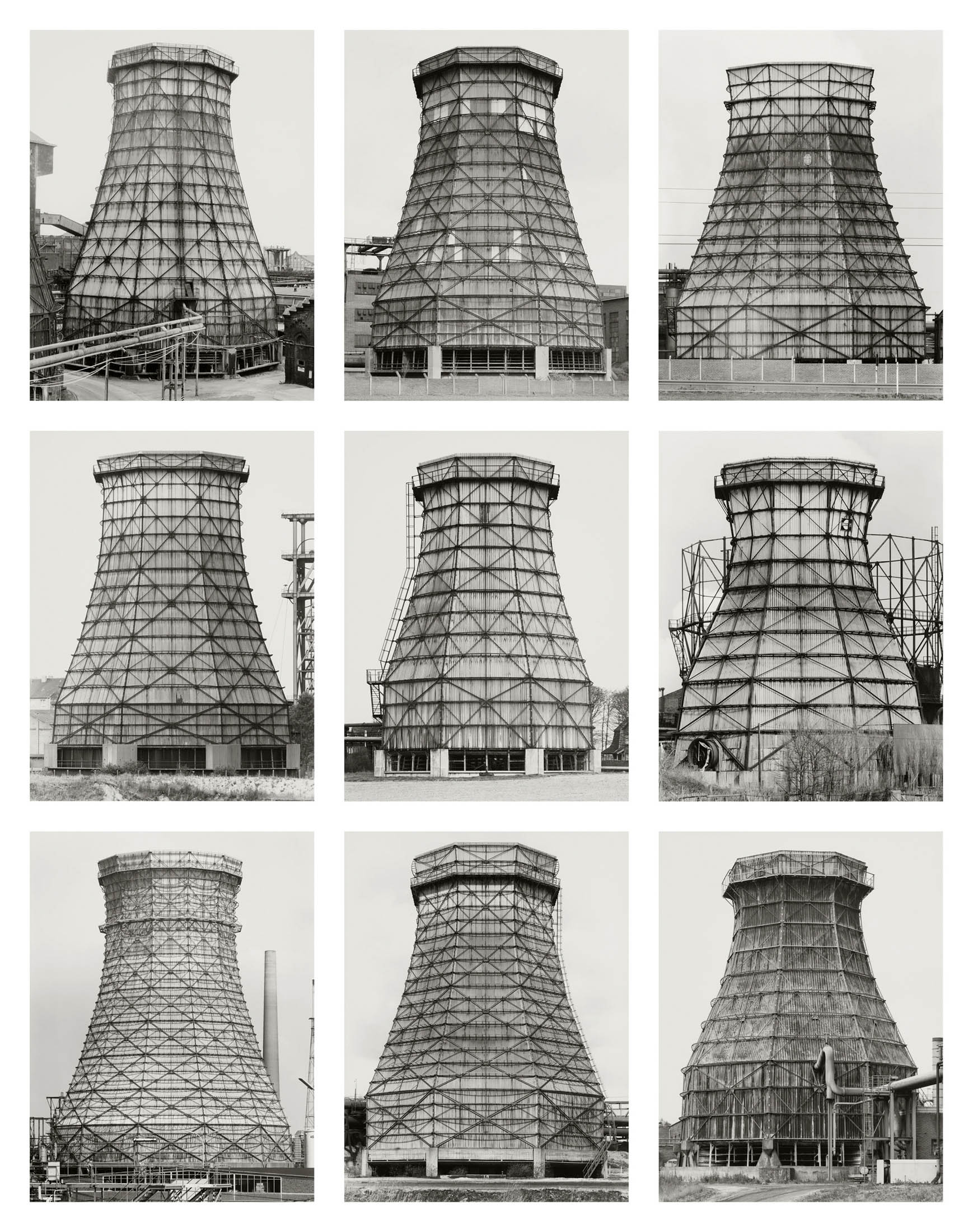
Closed Monday
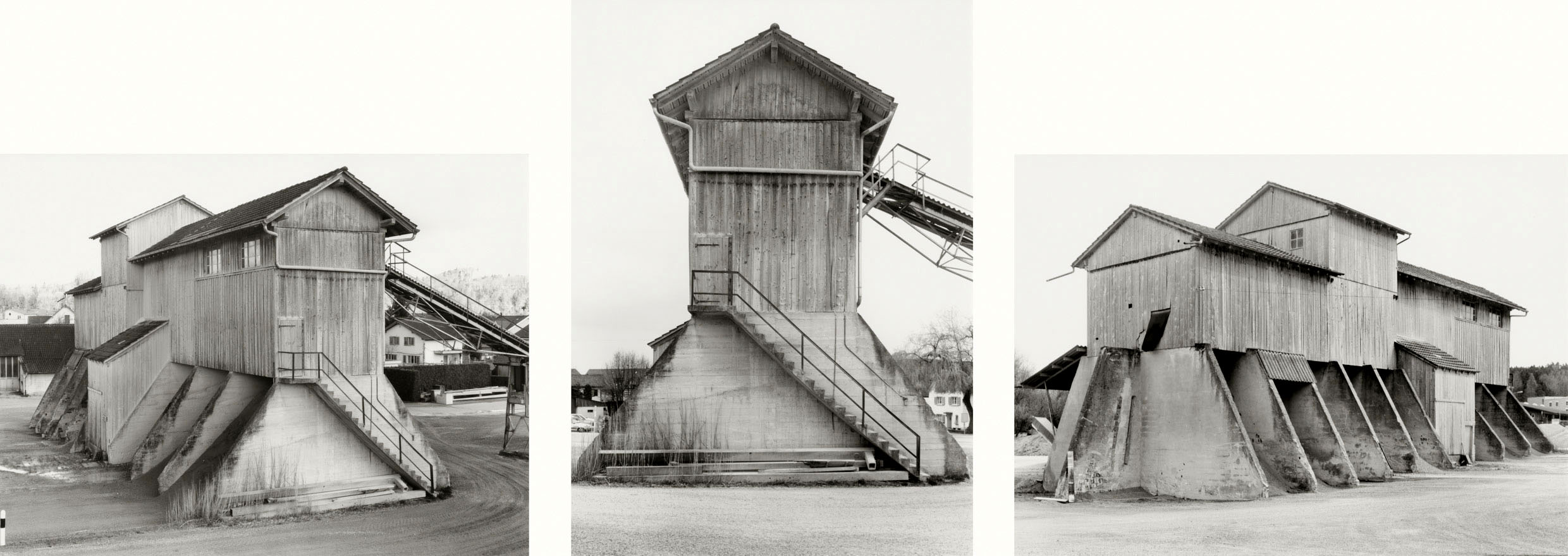
Centre de Cultura Contemporània de Barcelona | CCCB website

LIKE ART BLART ON FACEBOOK

Back to top

Exhibition: ‘Hoda Afshar: A Curve is a Broken Line’ at the Art Gallery of New South Wales, Sydney
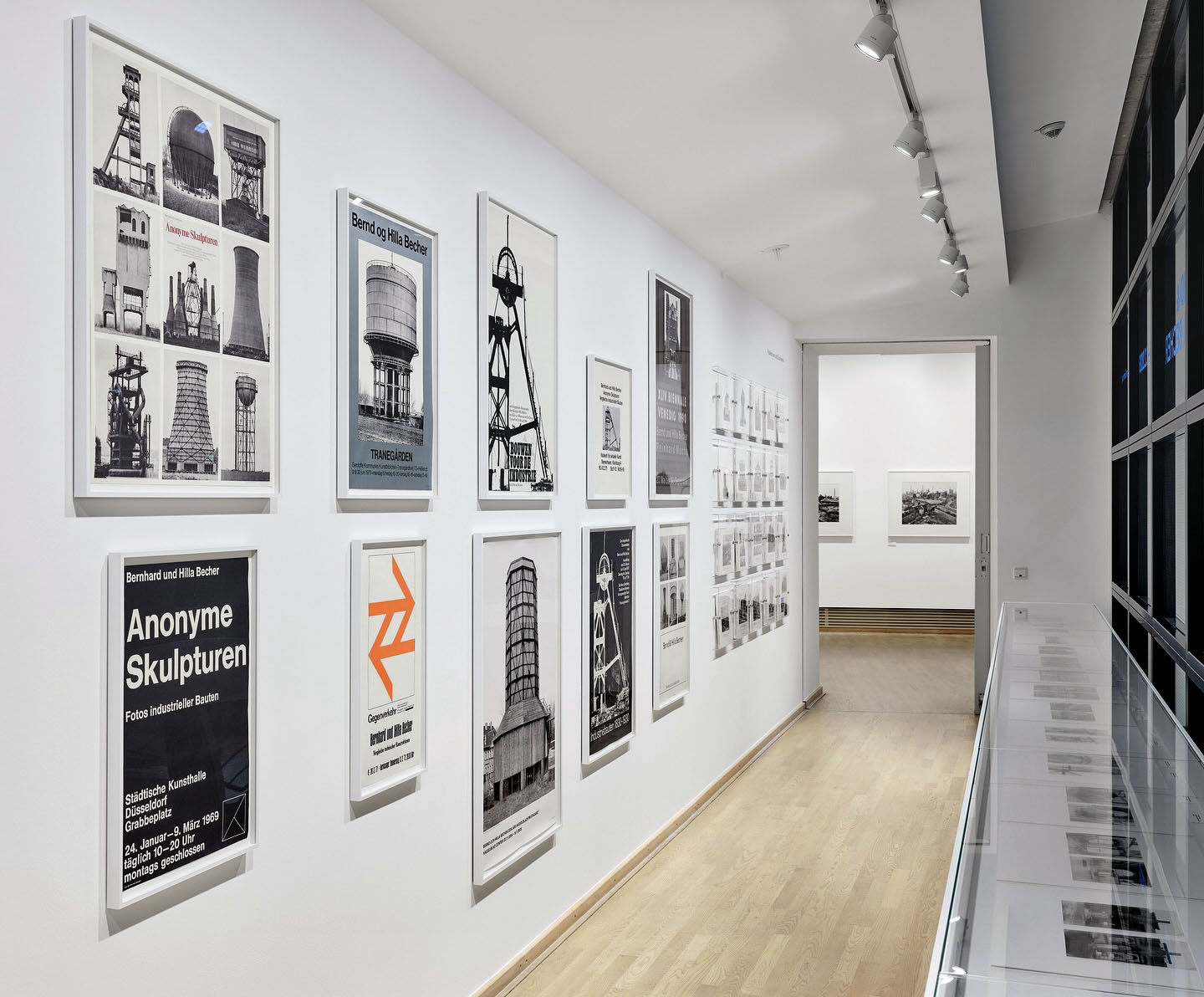
Exhibition dates: 2nd September 2023 – 21st January 2024


Hoda Afshar (Iran, Australia, b. 1983) 'Portrait #3' 2014 From the series 'In the exodus, I love you more' 2014 - ongoing
 

Hoda Afshar (Iran, Australia, b. 1983)
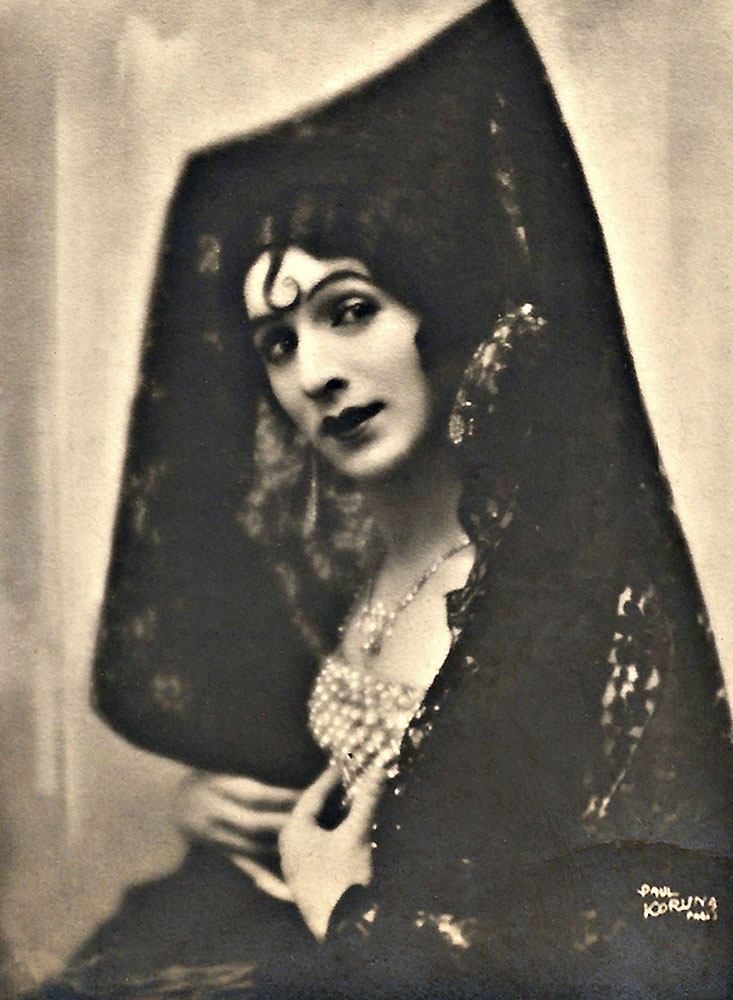
Portrait #3
2014
From the series In the exodus, I love you more 2014 – ongoing
Pigment photographic print
47 x 59cm
© Hoda Afshar, image courtesy the artist


“Mixed-up times are overflowing with both pain and joy – with vastly unjust patterns of pain and joy, with unnecessary killing of ongoingness but also with necessary resurgence. The task is to make kin in lines of inventive connection as a practice of learning to live and die well with each other in a thick present. Our task is to make trouble, to stir up potent response to devastating events, as well as to settle troubled waters and rebuild quiet places.”


Donna Haraway, 2016


“… according to one’s structure and position, each of us sees certain facets, certain parts of facets (…).”


Alberto Giacometti


It’s great to see Melbourne artist Hoda Afshar have a mid-career survey exhibition at the Art Gallery of New South Wales. With her strong bodies of work over recent years she surely deserves such an accolade.

Unfortunately I can’t make any comment on the exhibition Hoda Afshar: A Curve is a Broken Line itself – its flow from body of work to body of work, from space to space; the colours used behind the photographs; the sequencing of the work; and how the different sizes of the photographs bring the viewer forward and push them back – because I have not seen the exhibition. But, as always with the work of Afshar, it would seem her compassionate, lyrical, conceptual images are displayed with a clear seeing and focus on the stories that the artist wishes to tell.

Many words have been written by others (below) about significant aspects of Afshar’s work: the layers of displacement, difference and marginality; othering and image-making; war, statelessness, diaspora, oppression, corruption, torment, identity, place … which relate to the “relativity of reality” (the view that people are active participants in the construction of their own reality) imbued in her work. Indeed, “concepts of identity develop across the social spectrum – from within the self, within the culture, and within the political arena.”1  You can read these texts at your leisure. But from what I can see in the media images the exhibition exemplifies, as writer Celina Lei notes, “how her practice has matured while still carrying forth that visual pull – aesthetically, intellectually and emotionally.”

From what I can observe and feel the images are strongly composed, rigorously conceived and carry emotional weight when combined in sequences. Single images are ambiguous but when combined into a flow of images the narrative comes alive. People are framed against contextless backgrounds, they turn away from the camera, they shield their eyes and their identity or have their faces obscured by tree branches – so much of Afshar’s work is about absence, loss, longing, persecution, the impermanence of identity and the conflicting perceptions of a constructed, lived reality.

What I take issue with is John McDonald’s comparison of Afshar’s work with that of William Eggleston: works in her ongoing series In the exodus, I love you more (2014-) which capture diverse images of Iran “have the same mixture of ordinariness and oddity one finds in the work of a photographer such as William Eggleston.”2 Nothing could be farther from a form of reality. Eggleston’s images are never ordinary, are frequently surreal and bizarre, shot from a low or high angle (often with lurid colour ways) and possess a cutting social commentary on American culture … whereas Afshar’s photographs are poetic, sublime, lyrical emanations of ‘reality’ and if they do picture some oddity they lack the intense “bite” of an Eggleston image – something I would like to see Afshar reintroduce into her image making.

Many of her images are reflective, meditative, and approach the subject matter in an oblique manner which illuminates “how photography can activate new ways of thinking” … all well and good, but I long for a little more guts and directness to some of her individual images (physically, literally not intellectually). Her early series Under Western Eyes for example, contains biting, quirky creativity but for obvious reasons has not been included in this exhibition because it doesn’t fit the style of the smooth, polished, buffed, ambiguous and other worldly later work.

I also take issue with Tom Williams’ observation. “Even in her early, nominally “documentary” series, you can sense an embracing of the ambiguity of the still image, and an interest in composing a reality more vivid (and perhaps genuine) than dispassionate reportage might be capable of.”3 I disagree with the second part of this statement.

Having recently spent hours assembling a huge posting of photographs on the war in Ukraine – images which picture the ordinariness and atrocity of war – nothing, literally nothing, can be more vivid and genuine than the images of that war captured by brave Ukrainian photographers (see examples below). The same can be said of the genocide happening in Gaza and the photographs emerging from that massacre.

But as John McDonald intelligently observes, “The tragic events that have unfolded in Israel and Gaza over the past month should be enough to remind us that art is powerless in the face of real political upheaval. The most an artist can do to effect social and political change is to create a few striking images that circulate beyond the thought-absorbing walls of the art museum. Even then, any change to people’s attitudes is bound to be incremental and highly personal.”4

Most images then, have little power to change public and personal opinion… all they can do is proffer alternate visions and interpretations of the world and hope that some glimmer of recognition of injustice, difference and otherness will permeate the mind of the viewer. And while Afshar’s photographs do not effect social and political change what they do is bring to consciousness in the viewer “other” aspects of the realities of the world. Through the visibility of her images she exposes the phallocracy of the masculine, singular definition of truth. As David Smail suggests when speaking on the nature of ‘truth’,

“Though the truth is not just a matter of personal perspective, neither is it fixed and certain, objectively ‘out there’ and independent of human knowing. ‘The truth’ changes according to, among other things, developments and alterations in our values and understandings… the ‘non-finality’ of truth is not to be confused with a simple relativity of ‘truths’.”5

Afshar’s photographs address the simple relativity of many ‘truths’, the tension between “forms” … of truth and reality. Truths and reality, what is seen and not seen. So much of being alive is breaking…

Dr Marcus Bunyan


Footnotes

1/ Ari Hakkarainen. “‘The Urgency of Resistance’: Rehearsals of Death in the Photography of David Wojnarowicz” 2018

2/ John McDonald. “Politically charged or aesthetically ambitious? This show is the best of both worlds,” on The Sydney Morning Herald website November 3, 2023 [Online] Cited 05/02/2024

3/ Tom Williams. “How photography can reveal, overlook and manipulate truth: the fearless work of Australian Iranian artist Hoda Afshar,” on The Conversation website September 8, 2023 [Online] Cited 05/02/2024

4/ McDonald, op cit.,

5/ David Smail. Illusion & Reality: The Meaning of Anxiety. London: J.M. Dent & Sons, 1984, p. 152.


Many thankx to the Art Gallery of New South Wales for allowing me to publish the photographs in the posting. Please click on the photographs for a larger version of the image.


Mstyslav Chernov (Ukrainian, b. 1985) / AP 'Doctors unsuccessfully try to resuscitate a girl hit by Russian shelling in Mariupol, Ukraine. February 27, 2022' 2022


Mstyslav Chernov (Ukrainian, b. 1985) / AP
Doctors unsuccessfully try to resuscitate a girl hit by Russian shelling in Mariupol, Ukraine. February 27, 2022
2022

Used under fair use conditions for the purposes of education, research, criticism and review


Alexey FurmanAlexey Furman (Ukrainian, b. 1991) / Getty Images 'A young girl cries as a man bids his daughter goodbye at the railway station in Lviv, Ukraine, on March 22, 2022. Lviv has served as a stopover and shelter for the millions of Ukrainians fleeing the Russian invasion, either to the safety of nearby countries or the relative security of western Ukraine' 2022


Alexey FurmanAlexey Furman (Ukrainian, b. 1991) / Getty Images
A young girl cries as a man bids his daughter goodbye at the railway station in Lviv, Ukraine, on March 22, 2022. Lviv has served as a stopover and shelter for the millions of Ukrainians fleeing the Russian invasion, either to the safety of nearby countries or the relative security of western Ukraine’
2022

Used under fair use conditions for the purposes of education, research, criticism and review


Sergi Mykhalchuk (Ukrainian, b. 1972) 'Evacuation of civilians from Irpіn, Ukraine. March 4-5, 2022'


Sergi Mykhalchuk (Ukrainian, b. 1972)
Evacuation of civilians from Irpіn, Ukraine. March 4-5, 2022
2022

Used under fair use conditions for the purposes of education, research, criticism and review


Mstyslav Chernov (Ukrainian, b. 1985) / AP 'Mariana Vishegirskaya stands outside a maternity hospital that was damaged by shelling in Mariupol, Ukraine, March 9, 2022. Vishegirskaya survived the shelling and later gave birth to a girl in another hospital in Mariupol' 2022


Mstyslav Chernov (Ukrainian, b. 1985) / AP
Mariana Vishegirskaya stands outside a maternity hospital that was damaged by shelling in Mariupol, Ukraine, March 9, 2022. Vishegirskaya survived the shelling and later gave birth to a girl in another hospital in Mariupol
2022

Used under fair use conditions for the purposes of education, research, criticism and review


“I see art-making as a process of “unselfing” – you can be outside of your body, less focused on what’s inside, and see yourself in relation to the broader world.”⁠


Hoda Afshar


“In co-opting the documentary genre, Afshar harnesses its truth-telling power while simultaneously telling another story – one that is often unspoken or at odds with what we are told by those in power.”


Susan Acret. “Hoda Afshar’s Fragments of Reality,” on the Ocula website Sydney, 3 February 2023 [Online] Cited 11/12/2023


Through her poetically constructed images, Hoda Afshar illuminates a world overshadowed by history and atrocity. Yet we never see despair: we see defiance, comradeship, reinvention and a search for how photography can activate new ways of thinking. …

What unites her materially diverse work is a concern with visibility: who is denied it, what is made visible by media, and how photography can reveal, overlook and manipulate truth.

Much of her work addresses critical humanitarian issues of our time: war, statelessness, diaspora, oppression, corruption. She challenges stereotypes. We don’t see passive victims or closed narratives: we are introduced to new perspectives that might lead us to reappraise the world we inhabit.


Anonymous. “How photography can reveal, overlook and manipulate truth,” on the University of Wollongong website September 8, 2023 [Online] Cited 11/01/2023


The title of the exhibition was inspired by lines in a poem by Kaveh Akbar:

a curve is a straight line broken at all its points so much
of being alive is breaking.


Through her photographs and moving image works, Iranian-born, Melbourne-based Hoda Afshar examines the politics of image-making. Deeply researched yet emotionally sensitive, her work can be seen as a form of activism as much as an artistic inquiry.

Afshar uses the camera to give visibility to those who have been denied it, resolutely insisting on the humanity of her subjects. She makes us contend with violence and brutality, not through blunt imagery but through evocation. Her work is anchored in empathy yet also radical in the way it wrestles with injustice.

This exhibition will feature photography and film from the past decade to present a comprehensive overview of Afshar’s recent practice, including a newly commissioned series. Amassed together in dialogue for the first time in a major public institution, these works offer a poignant reminder of the power of images and their coercive potential.

An accompanying publication offers critical insight into Afshar’s work as well as creative and experimental responses from a range of writers.

Text from the Art Gallery of New South Wales website


“The tragic events that have unfolded in Israel and Gaza over the past month should be enough to remind us that art is powerless in the face of real political upheaval. The most an artist can do to effect social and political change is to create a few striking images that circulate beyond the thought-absorbing walls of the art museum. Even then, any change to people’s attitudes is bound to be incremental and highly personal. …

Like Valamanesh, Afshar has never been able to let go of her brutalised, much-maligned country. In her ongoing series, In the exodus, I love you more (2014-), which takes its title from a line by Palestinian poet Mahmoud Darwish, she returns time and again to Iran, capturing diverse images that have the same mixture of ordinariness and oddity one finds in the work of a photographer such as William Eggleston. Landscapes, street scenes, portraits, horses, peacocks, a building draped in heavy curtains, a hose in a courtyard … nothing is disqualified from an idiosyncratic overview that digs under the skin of her birthplace. The same applies, but with added eeriness, to the series Speak to the wind (2015-22), set on the island of Hormuz, off the southern coast of Iran.”

John McDonald. “Politically charged or aesthetically ambitious? This show is the best of both worlds,” on The Sydney Morning Herald website November 3, 2023 [Online] Cited 05/02/2024


“Through her poetically constructed images, Hoda Afshar illuminates a world overshadowed by history and atrocity. Yet we never see despair: we see defiance, comradeship, reinvention and a search for how photography can activate new ways of thinking. …

Even in her early, nominally “documentary” series, you can sense an embracing of the ambiguity of the still image, and an interest in composing a reality more vivid (and perhaps genuine) than dispassionate reportage might be capable of. …

What unites her materially diverse work is a concern with visibility: who is denied it, what is made visible by media, and how photography can reveal, overlook and manipulate truth.

Much of her work addresses critical humanitarian issues of our time: war, statelessness, diaspora, oppression, corruption. She challenges stereotypes. We don’t see passive victims or closed narratives: we are introduced to new perspectives that might lead us to reappraise the world we inhabit. …

Hoda Afshar’s work addresses conflict, injustice, mobility and the often fragile state of being alive. It reminds us that dominant powers can be challenged by exposing truth and envisioning something new.”

Tom Williams. “How photography can reveal, overlook and manipulate truth: the fearless work of Australian Iranian artist Hoda Afshar,” on The Conversation website September 8, 2023 [Online] Cited 05/02/2024


“Social and political commentary is a given in much of her work, but her lens remains sympathetic, never othering. This is highlighted in sections throughout Hoda Afshar: A Curve is a Broken Line. Her portraits of stateless asylum seekers on Manus Island, Papua New Guinea, taken in 2018, display power and dignity in visibility, despite lived experiences of harshness and torment.”

Celina Lei. “Exhibition review: Hoda Afshar – A Curve is a Broken Line, AGNSW,” on the Artshub website 13 Sep 2023 [Online] Cited 05/02/2024


Installation view of the exhibition 'Hoda Afshar: A Curve is a Broken Line' at the Art Gallery of New South Wales, 2023 showing work from the series 'In the exodus, I love you more' 2014- ongoing

Installation view of the exhibition 'Hoda Afshar: A Curve is a Broken Line' at the Art Gallery of New South Wales, 2023 showing work from the series 'In the exodus, I love you more' 2014- ongoing


Installation views of the exhibition Hoda Afshar: A Curve is a Broken Line at the Art Gallery of New South Wales, 2023 showing work from the series In the exodus, I love you more 2014- ongoing
Photo: © Art Gallery of New South Wales, Christopher Snee


Hoda Afshar (Iran, Australia, b. 1983) 'Untitled' 2014 From the series 'In the exodus, I love you more' 2014- ongoing


Hoda Afshar (Iran, Australia, b. 1983)
Untitled
2014
From the series In the exodus, I love you more 2014- ongoing
Pigment photographic print
© Hoda Afshar, image courtesy the artist


Hoda Afshar (Iran, Australia, b. 1983) 'Grace' 2014 From the series 'In the exodus, I love you more' 2014- ongoing


Hoda Afshar (Iran, Australia, b. 1983)
Grace
2014
From the series In the exodus, I love you more 2014- ongoing
Pigment photographic print
47 x 59cm
© Hoda Afshar, image courtesy the artist


In the exodus, I love you more (2014-) is a portrait of her home country formed by experiences of familiarity and distance. The artist is both at home and searching, like an outsider. Images suggest at times an intimate proximity, and at others a separation akin to the one made by raising a camera to your eye.

Afshar examines her experience of migration and, she tells me, seeks to “dismantle the idea of there being one way of seeing Iran.”

The final image in this series shows the erasure of a woman’s face in a painted Persian miniature.

Tom Williams. “How photography can reveal, overlook and manipulate truth: the fearless work of Australian Iranian artist Hoda Afshar,” on The Conversation website September 8, 2023 [Online] Cited 08/11/2023


Hoda Afshar (Iran, Australia, b. 1983) 'Crease' 2014 From the series 'In the exodus, I love you more' 2014 - ongoing


Hoda Afshar (Iran, Australia, b. 1983)
Crease
2014
From the series In the exodus, I love you more 2014 – ongoing
Pigment photographic print
23 x 29cm
© Hoda Afshar, image courtesy the artist


Hoda Afshar (Iran, Australia, b. 1983) 'Draw' 2016 From the series 'In the exodus, I love you more' 2014 - ongoing


Hoda Afshar (Iran, Australia, b. 1983)
Draw
2016
From the series In the exodus, I love you more 2014 – ongoing
Pigment photographic print
81 x 102cm
© Hoda Afshar, image courtesy the artist


Hoda Afshar (Iran, Australia, b. 1983) 'Twofold' 2014, printed 2023 From the series 'In the exodus, I love you more' 2014 - ongoing


Hoda Afshar (Iran, Australia, b. 1983)
Twofold
2014, printed 2023
From the series In the exodus, I love you more 2014 – ongoing
Digital print on vinyl, installation dimensions variable
© Hoda Afshar, image courtesy the artist


In September, the Art Gallery of New South Wales will present Hoda Afshar: A Curve is a Broken Line, the first major solo exhibition of one of Australia’s most innovative and unflinching photo-media artists, Iranian-born, Melbourne-based Hoda Afshar.

Featuring photographs and moving image works from the past decade, including a newly commissioned series, the comprehensive exhibition provides an overview of the artist’s recent practice and examines the politics of art making. Amassed together in dialogue for the first time by a major public institution, these works offer a poignant reminder of the power of images and their coercive potential.

Art Gallery of NSW director Michael Brand said it is a great pleasure to present Afshar’s first major solo exhibition at the Art Gallery of NSW.

‘Hoda Afshar is one of the most exciting artists working in Australia today. While her work explores themes of violence and pain, it also speaks to the transformative potential of image-making which is of profound importance to art institutions, as agents of advocacy and emotional encounter,’ said Brand.

‘Her work gives visibility to marginalised voices and serves as a powerful reminder of art’s capacity to embolden, inspire, and move. Her own voice as an artist is a defiantly international one.’

Since she first began working with photography in the early 2000s, Afshar has resolutely insisted on the humanity of her subjects. She is sensitive to the camera’s status as an imperialist tool that has long been used to define how history is told and how power is consolidated. Throughout her practice, she has involved her subjects in the act of photographing them in order to equalise the power dynamic that exists between photographer and photographed and return agency to those she depicts.

Exhibition curator, Art Gallery of NSW senior curator of contemporary Australian art Isobel Parker Philip said: ‘Hoda Afshar’s work is both deeply researched and poetically resonant and can be seen as a form of activism as much as an artistic inquiry.

‘Hoda’s approach is unique in that she makes us contend with brutality, not through blunt imagery but through evocation. Her work is anchored in compassion yet also radical in the way it wrestles with injustice.

‘Hoda’s photographs and videos are emotionally embroiled in the world they depict. It is this fact that makes a survey of her work both compelling and timely.’

Hoda Afshar: A Curve is a Broken Line includes the reveal of a new body of work commissioned for the exhibition, titled In turn 2023, which is a series of large-scale photographs depicting Iranian women who, like Afshar, live in Australia and have watched, from afar, the women-led Iranian uprising that began in September 2022. Presented one year on from when the uprising started, the portrait series is something of an elegy, speaking to their shared grief and their shared hope.

Among the most recognisable works featured in the exhibition, is Behrouz Boochani – Manus Island 2018, which was acquired by the Art Gallery in 2020 from Afshar’s pivotal series Remain 2018, which comprises a video and suite of photographs. Made on Manus Island, Papua New Guinea with a group of stateless asylum seekers, the video and photographs of Remain serve as testimony to the lived impact of Australia’s border protection policy.

The exhibition is accompanied by a publication, Hoda Afshar: A Curve is a Broken Line (RRP$65) featuring new writing by curator Isobel Parker Philip and writers including Hala Alyan, Elyas Alavi, Behrouz Boochani, Andrew Brooks and Astrid Lorange (working as the duo Snack Syndicate), Taous Dahmani, Shahram Khosravi and Sarah Sentilles.

Press release from the Art Gallery of New South Wales


Hoda Afshar (Iran, Australia, b. 1983) 'Untitled #4' From the series 'Behold' 2016


Hoda Afshar (Iran, Australia, b. 1983)
Untitled #4
From the series Behold 2016
Pigment photographic print
95 x 120cm
© Hoda Afshar, image courtesy the artist


Hoda Afshar (Iran, Australia, b. 1983) 'Untitled #6' rom the series 'Behold' 2016


Hoda Afshar (Iran, Australia, b. 1983)
Untitled #6
rom the series Behold 2016
Pigment photographic print
95 x 120cm
© Hoda Afshar, image courtesy the artist


Behold (2016)

The series Behold was made while the artist was travelling in the Middle East and befriended a group of young gay men who invited her to photograph them in a local male-only bathhouse.

The title Behold is alluding to the role of the viewer, the camera, in partially constructing the meaning of these images. For instance, the visible expressions of male intimacy tend to be viewed through a very narrow sexualized frame in the West, but in Iran, like elsewhere in the East, it is quite normal to see men engaged in physical contact, embracing each other and kissing cheeks, physically massaging each other in bathhouses, without it being sexualized. It is like public displays of breastfeeding and images of naked infants or adolescents – and also male intimacy – it is always interesting for me the reactions that these things engender in the West – the weird sort of prohibitions, and paranoias that surround the displaying of certain bodies or their interactions.⁠

Picking up on something that John Berger said for example – if we were to replace the men in these images with women then of course the reaction would be very different. So returning to the idea of viewing: this work for me (now, upon reflection) is also about challenging the viewer – or different viewers – about these things. because despite the points just mentioned, the dominant reading of the work will still likely be about the censorship of bodies and identities in a particularly religious environment. But again what I am suggesting is that this has something, though not everything, to do with our own framing.

Hoda Afshar Instagram page


In Behold (2016), once more we see acts of resolute defiance by people performing for the camera. Afshar was invited by a group of gay men to observe re-enacted gestures of protection and intimacy outlawed in most of the Middle East.

Unable to freely express their love in society, they disclose and affirm it for Afshar and her lens.

Tom Williams. “How photography can reveal, overlook and manipulate truth: the fearless work of Australian Iranian artist Hoda Afshar,” on The Conversation website September 8, 2023 [Online] Cited 08/11/2023


Behold was made unexpectedly, and without design. I was travelling in a city that I sometimes return to, and I got to know a group of gay men. There, where they live, these men (and many others like them) are mostly left to be. But only on the condition that they lead one part of their lives in secret. Rarely, that is, do their bodies ever meet in open honesty outside, in public. Only here, in this bathhouse, where their desire to be seen and embraced by others – just to be and to be held – is played out the partial openness of these four closed walls.

The bathhouse no longer exists. But while it still did, these men invited me to document it and a little glimpse of their lives in it. We arrived, but I was not allowed to enter. So we rented the place, and for a few hours I took pictures while these men played themselves performing their lives for my peering camera, in order that their desire to be seen might be realised, in part at least, here in the world of the images – in the act of beholding, where the bare thereness of life is transformed from mere appearing or appearance, into something more meaningful … into recognition.

Hoda Afshar. “11 Works by Hoda Afshar,” on the Cordite website 1 August 2018 [Online] Cited 09/11/2023


Hoda Afshar (Iran, Australia, b. 1983) 'Untitled #7' From the series 'Behold' 2016


Hoda Afshar (Iran, Australia, b. 1983)
Untitled #7
From the series Behold 2016
Pigment photographic print
95 x 120cm
© Hoda Afshar, image courtesy the artist


Installation view of the exhibition 'Hoda Afshar: A Curve is a Broken Line' at the Art Gallery of New South Wales, 2023 showing 'Ibrahim Mahjid – Manus Island' from the series 'Remain' 2018


Installation view of the exhibition Hoda Afshar: A Curve is a Broken Line at the Art Gallery of New South Wales, 2023 showing Ibrahim Mahjid – Manus Island from the series Remain 2018
Photo: © Art Gallery of New South Wales, Christopher Snee


Hoda Afshar (Iran, Australia, b. 1983) 'Remain' (video still) 2018


Hoda Afshar (Iran, Australia, b. 1983)
Remain (video still)
2018
From the series Remain 2018
Dual channel digital video, colour, sound
Two-channel digital video, colour, sound, duration 23:33 min, aspect ratio 16:9, installation dimensions variable
Art Gallery of New South Wales
Purchased with funds provided by the Contemporary Collection Benefactors 2020
© Hoda Afshar


Hoda Afshar | Remain (excerpt)


Remain (2018)

Remain addresses Australia’s contentious border protection policy and the human rights of asylum seekers. The work was made in collaboration with several of the men who remained on Manus Island, Papua New Guinea, six or more years after they left their homelands to seek asylum in Australia, but instead were sent to languish in the remote offshore detention centre. The work involves these men retelling their individual and shared stories through staged images, words, and poetry, and bearing witness to life in the Manus camps: from the death of friends and dreams of freedom, to the strange air of beauty, boredom, and violence that surrounds them on the island.

Afshar believes ‘typical images of refugees only reinforce in the eyes of the viewer their inferior image and position’. Afshar, in collaboration with the people in her
portraits, attempted to create ‘an artwork – using the language of poetry, performance, and song – that defies such logic, and forces the viewer to confront their
own incomprehension, as well as the very inexplicableness of the situation that these men face.’ Collaboration, trust and empathy is an important aspect of Afshar’s art practice. She says:

One portrait shows a stateless Kurdish refugee called Emad struggling under a downpour of sand. When I asked him what natural element he wanted to use in his image, he chose soil. He said: ‘It reminds me of land; the land that I was torn from; the land that has been torn from me. From us. Soil is the most precious idea in Kurdish culture. But we are stateless. I’ve been stateless my whole life.’

Afshar’s criticism of documentary photography isn’t aimed at photographers themselves, or their intentions: ‘It’s important for all of us to look at the visual languages that we inherited, that are predominantly imperial visual languages, and ask questions about why we’re framing things in a certain way.’

Anonymous. “Counihan Gallery learning resource – Means Without End Hoda Afshar,” on the Merri-bek City Council website [Online] Cited 08/11/2023


Hoda Afshar – Introduction to Remain

Hoda Afshar’s 2018 body of work Remain is an unflinchingly political commentary on Australia’s border protection policy and serves as testimony to its assault of human rights. Encompassing a film and a suite of photographic portraits, Remain speaks the stories of a group of stateless men who remained on Manus Island, Papua New Guinea, after the immigration detention centre closed in October 2017. In the film, their experiences are recounted as episodic fragments shot through with violence in voice overs that are by turns lyrical and brutal. Some recite poetry, some sing, some remember the riots and the suicides. As their stories unfold, the camera pans over a picturesque landscape – lush foliage and crystal-clear water. A ‘green hell’ as one man describes it. It is the abrupt collision of these two registers, the haunting narrative and the idyllic imagery, that carries the emotional force of the work. It is beautiful and horrifying at the same time.

The accompanying photographic portraits of the same protagonists are insistent and powerful. They stand before us, in the foreground of the image, against a dark backdrop. In these photographs, there is nothing to distract us from the figures themselves. Nothing to detract from the simple fact of their presence. They each assert their right to be seen. The bluntness of this gesture is itself a political act. For that is what detention does; it makes individuals invisible. In these portraits, Afshar acknowledges the plight of these men metaphorically. They are beset by the elements, by fire, water and earth. But at no point is their humanity questioned.

Text from the Art Gallery of New South Wales website


Hoda Afshar (Iran, Australia, b. 1983) 'Behrouz Boochani – Manus Island' 2018 From the series 'Remain'


Hoda Afshar (Iran, Australia, b. 1983)
Behrouz Boochani – Manus Island
2018
From the series Remain
Inkjet archival print
130 x 104cm
Art Gallery of New South Wales
Purchased with funds provided by the Contemporary Collection Benefactors 2020
© Hoda Afshar


Behrouz Boochani (Persian, b. 1983)

Behrouz Boochani (Persian: بهروز بوچانی; born 23 July 1983) is a Kurdish-Iranian journalist, human rights defender, writer and film producer living in New Zealand. He was held in the Australian-run Manus Island detention centre in Papua New Guinea from 2013 until its closure in 2017. He remained on the island before being moved to Port Moresby along with the other detainees around September 2019. On 14 November 2019 he arrived in Christchurch on a one-month visa, to speak at a special event organised by WORD Christchurch on 29 November, as well as other speaking events. In December 2019, his one month visa to New Zealand expired and he remained on an expired visa until being granted refugee status in July 2020, at which time he became a Senior Adjunct Research Fellow at the University of Canterbury.

Boochani is the co-director, along with Iranian film maker Arash Kamali Sarvestani, of the documentary Chauka, Please Tell Us the Time, has published numerous articles in leading media internationally about the plight of refugees held by the Australian government on Manus Island, and has won several awards.

His memoir, No Friend But the Mountains: Writing from Manus Prison, won the Victorian Prize for Literature and the Victorian Premier’s Prize for Nonfiction in January 2019. The book was tapped out on a mobile phone in a series of single messages over time and translated from Persian into English by Omid Tofighian.

After the November 2022 publication of his second collection of writings, Freedom, Only Freedom: The Prison Writings of Behrouz Boochani, Boochani visited Australia for the first time to promote the book in December 2022.

Text from the Wikipedia website


Hoda Afshar (Iran, Australia, b. 1983) 'Emad Moradi – Manus Island' 2018 From the series 'Remain'


Hoda Afshar (Iran, Australia, b. 1983)
Emad Moradi – Manus Island
2018
From the series Remain
Inkjet archival print
130 x 83cm
Art Gallery of New South Wales
Purchased with funds provided by the Contemporary Collection Benefactors 2020
© Hoda Afshar


Hoda Afshar’s 2018 body of work Remain is an unflinchingly political commentary on Australia’s border protection policy and serves as testimony to its assault of human rights. Encompassing a film and a suite of photographic portraits, Remain speaks the stories of a group of stateless men who remained on Manus Island, Papua New Guinea, after the immigration detention centre closed in October 2017. In the film, their experiences are recounted as episodic fragments shot through with violence in voice overs that are by turns lyrical and brutal. Some recite poetry, some sing, some remember the riots and the suicides. As their stories unfold, the camera pans over a picturesque landscape – lush foliage and crystal-clear water. A ‘green hell’ as one man describes it. It is the abrupt collision of these two registers, the haunting narrative and the idyllic imagery, that carries the emotional force of the work. It is beautiful and horrifying at the same time.

The accompanying photographic portraits of the same protagonists are insistent and powerful. They stand before us, in the foreground of the image, against a dark backdrop. In these photographs, there is nothing to distract us from the figures themselves. Nothing to detract from the simple fact of their presence. They each assert their right to be seen. The bluntness of this gesture is itself a political act. For that is what detention does; it makes individuals invisible. In these portraits, Afshar acknowledges the plight of these men metaphorically. They are beset by the elements, by fire, water and earth. But at no point is their humanity questioned.

Text from the Art Gallery of New South Wales website


Hoda Afshar (Iran, Australia, b. 1983) 'Ari Sirwan – Manus Island' 2018 From the series 'Remain'


Hoda Afshar (Iran, Australia, b. 1983)
Ari Sirwan – Manus Island
2018
From the series Remain
Inkjet archival print
130 x 83cm
Art Gallery of New South Wales
Purchased with funds provided by the Contemporary Collection Benefactors 2020
© Hoda Afshar


Installation view of the exhibition 'Hoda Afshar: A Curve is a Broken Line' at the Art Gallery of New South Wales, 2023 showing work from the series 'Speak the wind' 2015-2022


Installation view of the exhibition Hoda Afshar: A Curve is a Broken Line at the Art Gallery of New South Wales, 2023 showing work from the series Speak the wind 2015-2022 (see below)
Photo: © Art Gallery of New South Wales, Christopher Snee


Hoda Afshar (Iran, Australia, b. 1983) 'Untitled' From the series 'Speak the wind' 2015-2022


Hoda Afshar (Iran, Australia, b. 1983)
Untitled
From the series Speak the wind 2015-2022
Pigment photographic print
100 x 80cm
© Hoda Afshar, image courtesy the artist


Hoda Afshar (Iran, Australia, b. 1983) 'Untitled' From the series 'Speak the wind' 2015-2022


Hoda Afshar (Iran, Australia, b. 1983)
Untitled
From the series Speak the wind 2015-2022
Pigment photographic print
100 x 80cm
© Hoda Afshar, image courtesy the artist


Installation view of the exhibition 'Hoda Afshar: A Curve is a Broken' Line at the Art Gallery of New South Wales, 2023 showing work from the series 'Speak the wind' 2015-2022


Installation view of the exhibition Hoda Afshar: A Curve is a Broken Line at the Art Gallery of New South Wales, 2023 showing work from the series Speak the wind 2015-2022 (see below)
Photo: © Art Gallery of New South Wales, Christopher Snee


Hoda Afshar (Iran, Australia, b. 1983) 'Untitled' From the series 'Speak the wind' 2015-2022


Hoda Afshar (Iran, Australia, b. 1983)
Untitled
From the series Speak the wind 2015-2022
Pigment photographic print
100 x 80cm
© Hoda Afshar, image courtesy the artist


Hoda Afshar (Iran, Australia, b. 1983) 'Untitled #88' From the series 'Speak the wind' 2015-2022


Hoda Afshar (Iran, Australia, b. 1983)
Untitled #88
From the series Speak the wind 2015-2022
Pigment photographic print
80 x 100cm
© Hoda Afshar, image courtesy the artist


Hoda Afshar (Iran, Australia, b. 1983) 'Untitled' From the series 'Speak the wind' 2015-2022


Hoda Afshar (Iran, Australia, b. 1983)
Untitled
From the series Speak the wind 2015-2022
Pigment photographic print
80 x 100cm
© Hoda Afshar, image courtesy the artist


Hoda Afshar (Iran, Australia, b. 1983) 'Untitled #18' From the series 'Speak the wind' 2015-2022


Hoda Afshar (Iran, Australia, b. 1983)
Untitled #18
From the series Speak the wind 2015-2022
Pigment photographic print
80 x 100cm
© Hoda Afshar, image courtesy the artist


Speak the wind 2015-2022

On the islands in the Strait of Hormuz, a belief exists that a wind, known as zār, can possess a person, and can be exorcised from them through an intense ceremony of dance and music.

On the islands of the Strait of Hormuz, near the southern coast of Iran, there is a belief that the winds – generally believed to be harmful – can possess a person, causing them to experience illness or disease. As part of a ritual placating the winds’ harmful effects, the islands’ inhabitants practice a ceremony involving incense, music and movement, in which a hereditary cult leader speaks with the wind through the afflicted patient in order to negotiate its exit.⁠

When artist Hoda Afshar first visited the islands in 2015, she found herself drawn not only to these distinctive customs practiced by its inhabitants but also to its otherworldly landscapes – the strange valleys and statue-like mountains, themselves sculpted by the wind over many millennia. While the exact origins remain unclear, the existence of similar beliefs in many African countries suggests that the cult may have been brought to the south of Iran from southeast Africa through the Arab slave trade. This seldom spoken history became a starting point into an intriguing project for Afshar, who sought to document the story of these winds and the traces they have left on these islands and inhabitants.⁠

Mack Books on Intagram


Hoda Afshar (Iran, Australia, b. 1983) 'Untitled #11' From the series 'Speak the wind' 2015-2022


Hoda Afshar (Iran, Australia, b. 1983)
Untitled #11
From the series Speak the wind 2015-2022
Pigment photographic print
80 x 100cm
© Hoda Afshar, image courtesy the artist


Hoda Afshar (Iran, Australia, b. 1983) 'Untitled' From the series 'Speak the wind' 2015-2022


Hoda Afshar (Iran, Australia, b. 1983)
Untitled
From the series Speak the wind 2015-2022
Pigment photographic print
80 x 100cm
© Hoda Afshar, image courtesy the artist


Hoda Afshar (Iran, Australia, b. 1983) 'Untitled #2' From the series 'Speak the wind' 2015-2022


Hoda Afshar (Iran, Australia, b. 1983)
Untitled #2
From the series Speak the wind 2015-2022
Pigment photographic print
100 x 80cm
© Hoda Afshar, image courtesy the artist


Installation view of the exhibition 'Hoda Afshar: A Curve is a Broken Line' at the Art Gallery of New South Wales, 2023 showing work from the series 'Agonistes' 2020


Installation view of the exhibition Hoda Afshar: A Curve is a Broken Line at the Art Gallery of New South Wales, 2023 showing work from the series Agonistes 2020 with, from left to right, A General Practitioner / A Writer Who Was Born Into A Closed Christadelphian Community / A Solicitor and Barrister, and Former Attorney General / A Disability Care Worker Employed at Autism Spectrum Australia
Photo: © Art Gallery of New South Wales, Christopher Snee


With 110 cameras functioning instantaneously in a photo studio, Afshar created 3D images of her subjects and used a 3D printer to convert them into statues.


Hoda Afshar (Iran, Australia, b. 1983) 'Portrait #3' From the series 'Agonistes' 2020


Hoda Afshar (Iran, Australia, b. 1983)
Portrait #3
From the series Agonistes 2020
Pigment photographic print, text
69 x 55cm
© Hoda Afshar, image courtesy the artist


An officer and lawyer in the Australian Special Forces

While serving in Afghanistan, he raised concerns that the Australian government were covering up the corruption of Australia’s defence force for political gain, and sacrificing the lives of Australian soldiers. After his concerns were consistently ignored, he copied over a hundred secret documents and distributed them to several journalists and to the ABC. He faces trial on five charges relating to National Security. If found guilty, he will face lifetime imprisonment.

Hoda Afshar Instagram page


Hoda Afshar (Iran, Australia, b. 1983) 'A writer who was born into a closed Christadelphian community' From the series 'Agonistes' 2020


Hoda Afshar (Iran, Australia, b. 1983)
A writer who was born into a closed Christadelphian community
From the series Agonistes 2020
Pigment photographic print, text
69 x 55cm
© Hoda Afshar, image courtesy the artist


Portrait of Janet Galbraith, a survivor of family sexual abuse


Hoda Afshar (Iran, Australia, b. 1983) 'An occupational health and safety manager working for security firm G4S at Manus Island Immigration Detention Centre' From the series 'Agonistes' 2020


Hoda Afshar (Iran, Australia, b. 1983)
An occupational health and safety manager working for security firm G4S at Manus Island Immigration Detention Centre
From the series Agonistes 2020
Pigment photographic print, text
69 x 55cm
© Hoda Afshar, image courtesy the artist


Portrait of Rod St George, who exposed atrocious conditions at the Manus Island detention centre


Agonistes (2020)

Hoda Afshar explores the experiences of people who have spoken out. The artist worked with people known as whistle-blowers, who have brought to light various transgressions perpetrated in Australian institutions today. Although whistleblowing in Australia is considered a hallmark of our democracy, whistle blowers take great personal risks when drawing attention to institutional wrongdoing.

Agonistes is based on the experiences of several men and women – former employees in the areas of immigration, youth detention, disability care, and other government agencies – who chose to speak out, and who now live with the consequences. They describe the personal and professional ruin, the breakdown of friendships and family relationships, and the physical and mental anguish that followed their decision to call out alleged abuses, and the reasons that led them to do so, despite knowing their possible fate. They explain that if they could go back, they would do it all again.

While their individual stories differ, the shared struggle of these men and women and their portraits expose the same agonizing truth: that the choice between responsibility and obligation – between morality and the law – is, in a very real sense, the essence of tragedy. Afshar produced a 3D scan of each of the whistle blowers. This was then 3D printed to create a bust. Afshar created studio photographs of the busts, which resulted in a suite of images that abstracts the identity of each subject. The eyes – a feature we usually use to identify people in photographs – become curiously blank.

Anonymous. “Counihan Gallery learning resource – Means Without End Hoda Afshar,” on the Merri-bek City Council website [Online] Cited 08/11/2023


“It took me 14 years to find that level of courage, or knowledge or connection to the place [Australia] to make a work like the Agonistes, to turn the lens inward, to feel like I’m authorised to talk about it as a citizen,” says Afshar.

To identify the whistleblowers to approach for the project, Afshar worked with Claire Loughnan, a lecturer in criminology at the University of Melbourne.

She flew each person to Melbourne and photographed them using a system of 110 cameras – which allowed her to essentially create a 360-degree portrait. She used this composite image to generate a 3D-printed sculpture of each whistleblower. …

Afshar was fascinated to discover that the one thing that the 110 cameras could not capture was the details of her subjects’ eyes – resulting in a glazed-over effect.

This accidental byproduct of the process had a certain poetic resonance for the photographer: it reminded her of the eyes on ancient Greek busts.

She points out that democracy and tragedy emerged in ancient Greece at the same time.

“Often in the tragic narratives, the main character is the one that is caught between two conflicting choices: responsibility and obligation, or morality and the law … [or] the public and the state.”

“The reality of Athens at the time was a system that was rooted in patriarchy, slavery, xenophobia, refugee crisis – which are still the struggles of our time. And the function of tragedy then was to give voice to the excluded voices.”

In the Agonistes video work, we hear the excluded voices of the whistleblowers while Afshar zooms in on her subjects’ eyes, mouths, hands.

Hannah Reich. “Hoda Afshar documents Australian government whistleblowers in new photography and film project,” on the ABC News website Sat 6 Mar 2021 [Online] Cited 08/11/2023


Hoda Afshar (Iran, Australia, b. 1983) 'Agonistes' (video still) From the series 'Agonistes' 2020


Hoda Afshar (Iran, Australia, b. 1983)
Agonistes (video still)
From the series Agonistes 2020
Single-channel digital video, colour, sound, duration 20 min, aspect ratio 16:9, installation dimensions variable
© Hoda Afshar, image courtesy the artist


Installation view of the exhibition 'Hoda Afshar: A Curve is a Broken Line' at the Art Gallery of New South Wales, 2023 showing work from the series 'In turn' 2023

Installation view of the exhibition 'Hoda Afshar: A Curve is a Broken Line' at the Art Gallery of New South Wales, 2023 showing work from the series 'In turn' 2023

Installation view of the exhibition 'Hoda Afshar: A Curve is a Broken Line' at the Art Gallery of New South Wales, 2023 showing work from the series 'In turn' 2023


Installation views of the exhibition Hoda Afshar: A Curve is a Broken Line at the Art Gallery of New South Wales, 2023 showing work from the series In turn 2023
Photo: © Art Gallery of New South Wales, Christopher Snee


Hoda Afshar (Iran, Australia, b. 1983) 'Untitled #2' From the series 'In turn' 2023


Hoda Afshar (Iran, Australia, b. 1983)
Untitled #2
From the series In turn 2023
Pigment photographic print
169 x 128cm
© Hoda Afshar, image courtesy the artist


Hoda Afshar (Iran, Australia, b. 1983) 'Untitled #4' From the series 'In turn' 2023


Hoda Afshar (Iran, Australia, b. 1983)
Untitled #4
From the series In turn 2023
Pigment photographic print
169 x 128cm
© Hoda Afshar, image courtesy the artist


In the adjoining room, the new series In turn (2023) is a suite of large, framed photographs of Iranian women based in Australia. Many images show them as they tenderly braid one another’s hair. These women are unidentifiable, apart from artist and activist Mahla Karimian, who appears airborne with a pair of flying doves.

This work was catalysed by the women-led protest movement sparked by the death of Mahsa Jina Amini, an Iranian Kurdish woman arrested in September 2022 for not following Iran’s strict female dress codes. The uprising filled the streets with women chanting “Women, Life, Freedom!” and “Say her name!” in fearless defiance of authorities, who responded with murderous retaliation.

Afshar was observing her homeland from afar. She says she wanted to “share voices the media was ignoring”. She was inspired by social media images of women plaiting each other’s hair in public: a rebellious act that echoes a practice of female Kurdish fighters preparing for battle.

But the images aren’t violent. They’re quietly peaceful, showing solidarity in grief, hope and determination. In making this “visual letter” to her Iranian sisters, Afshar has risked long-term exile from her country of birth.

Tom Williams. “How photography can reveal, overlook and manipulate truth: the fearless work of Australian Iranian artist Hoda Afshar,” on The Conversation website September 8, 2023 [Online] Cited 08/11/2023


Hoda Afshar (Iran, Australia, b. 1983) 'Untitled #10' From the series 'In turn' 2023


Hoda Afshar (Iran, Australia, b. 1983)
Untitled #10
From the series In turn 2023
Pigment photographic print
169 x 128cm
© Hoda Afshar, image courtesy the artist


Art Gallery of New South Wales
Art Gallery Road, The Domain
Sydney NSW 2000, Australia

Opening hours:
Open every day 10am – 5pm
except Christmas Day and Good Friday

Art Gallery of New South Wales website

LIKE ART BLART ON FACEBOOK

Back to top

Exhibition: ‘Hiroshi Sugimoto: Time Machine’ at the Hayward Gallery, London

Exhibition dates: 11th October 2023 -⁠ 7th January 2024

Curators: Hiroshi Sugimoto: Time Machine is curated by Hayward Gallery Director Ralph Rugoff with Assistant Curators Thomas Sutton and Gilly Fox, and Curatorial Assistant Suzanna Petot.


Rachael Smith. 'Hiroshi Sugimoto in the Hayward Gallery with his 'Seascapes' series' 2023 from the exhibition 'Hiroshi Sugimoto: Time Machine' at the Hayward Gallery, London, Oct 2023 - Jan 2024


Rachael Smith
Hiroshi Sugimoto in the Hayward Gallery with his ‘Seascapes’ series
2023


The world is a reality,
not because of the way it is,
but because
of the possibilities it presents


Frederick Sommer


Almost real

I have an ambivalent relationship with the work of Hiroshi Sugimoto.

On the one hand I truly admire the beauty and presence of Sugimoto’s photographs; how his images “contradict the medium’s conventional tasks – to record reality as precisely as possible”; and how his work, through an investigation of “fundamental questions of space and time, past and present, art and science, imagination and reality” push at the boundaries of what a photograph is and can be through an exploration of the very nature of photography.

Through this erudite, conceptual, scientific and creative investigation, Sugimoto’s staged images proffer a reorientation of the referent – of the world, in the world – unsettling the certainty of the truth of the photograph as a visual record of the world.

In my favourite series – such as the movie in a moment Theaters (1976 – ), the stuffed animal Dioramas (1974 – ), some of the wax works dead pan Portraits (1999 -) (particularly Oscar Wilde, Queen Victoria and Princess Diana), and the Seascapes (1980 -) – I feel released from the bounds of reality as we perceive it. The artist takes me out of myself and into a new plane of existence. He has reanimated the in/animate through an alchemical process, a mystery of mysteries, to create new life – a transubstantiation of the elements earth, air, water, fire.

On the other hand I am less impressed with bodies of work that simply do not work for me… that leave me feeling cold, lifeless. Series such as Revolution (1990/2012), Lightning Fields (2009), Photogenic Drawings (2009), Architecture (1997 – below) and the recent Opticks (2018 – below), while not derivative, owe a great debt to other artists that have already strode that golden path… and have done it better.

As I have observed in another review of Sugimoto’s work: “I’m not saying Sugimoto is derivative but because of these other works, they don’t have much room to move. Indeed, they hardly move at all. They are so frozen in attitude that all the daring transcendence of light, the light! of space time travel, the transition from one state to another, has been lost. The Flame of Recognition (Edward Weston) – has gone.”

Taking his work as a whole, we observe in Sugimoto’s work a slightly malevolent aura – follow my argument here – not in the sense of the work “showing a wish to do evil to others” but through the photographs unsettling ability to confound the reality of others. The artist’s work is very male/volent, very masculine and in the Latin etymology of the word “volent” (present participle of velle to will, wish) very much (reality) constructed at the will and wish of the artist.

While Sugimoto’s volition (from Latin volo ‘I wish’) creates beautiful and subversive images of true presence and power, it is the artist’s ability to will into existence images that engage with mystical forces beyond the apparent and the factual but which live as completely real and part of the total world of man and nature … that is his most impressive attribute as an artist. Through his photographs he brings to consciousness things only a small portion of which most of us experience directly.1

Dr Marcus Bunyan


1/ Adapted from Ansel Adams’ essay for The Flame of Recognition 1964 in “Edward Weston’s The Flame of Recognition” on the Aperture website August 12, 2015 [Online] Cited 22/12/2023


Many thankx to the Hayward Gallery for allowing me to publish the photographs in the posting. Please click on the photographs for a larger version of the image.


“All my life I have made a habit of never believing my eyes.”


Hiroshi Sugimoto


“Sugimoto’s unique accomplishments in his genre contradict the medium’s conventional tasks – to record reality as precisely as possible. In Sugimoto’s work, one is confronted with the formal reduction of conceptual images, in which he addresses fundamental questions of space and time, past and present, art and science, imagination and reality. “I was concerned,” noted the artist in 2002, “with revealing an ancient stage of human memory through the medium of photography. Whether it is individual memory or the cultural memory of mankind itself, my work is about returning to the past and remembering where we came from and how we came about.” His pictures, which leave a lasting impression through their beauty and their auratic effect, interweave Japanese traditions with Western ideas. This East-West dialogue remains characteristic of his work today, which is captivating in its exceptional craftsmanship and strong aesthetic presence, and can exercise an almost magical effect on viewers.”


Anonymous. “Hiroshi Sugimoto. Revolution,” on the Museum Brandhorst website February 8, 2013


Hiroshi Sugimoto | curator tour with Ralph Rugoff | Hayward Gallery


Hiroshi Sugimoto: ‘My camera works as a time machine’ | Hayward Gallery


‘A camera can be able to stop the world, in that we stop the world and then investigate what is there, carefully.’

~ Hiroshi Sugimoto


Ahead of the opening of Hiroshi Sugimoto: Time Machine at the Hayward Gallery – the largest survey to date of the Sugimoto’s works – we travelled to meet the photographer at the Enoura Observatory in Japan. Situated against the outer rim of the country’s Hakone Mountains, the observatory was designed by Sugimoto as a forum for disseminating art and culture.

In this short video interview Sugimoto considers the impact of the invention of the camera – with this new ability to pause the world around us – and explains how his own photography, such as his Seascapes series, draws on this idea of the camera’s ability to distort linear time.


Dioramas (1974 – )


Installation view of Hiroshi Sugimoto, 'Dioramas' (1974) from the exhibition 'Hiroshi Sugimoto: Time Machine' at the Hayward Gallery, London, Oct 2023 - Jan 2024


Installation view of Hiroshi Sugimoto, Dioramas (1974 – ) Silver gelatin prints
Photo: Mark Blower. Courtesy the artist and the Hayward Gallery


‘My life as an artist began the moment I saw that I had succeeded in bringing the bear back to life on film,’ said Sugimoto about his 1976 work Polar Bear. The image is of an Arctic diorama in the American Museum of Natural History in New York, but through clever use of framing and exposure, Sugimoto was able to make the scene appear real. As well as revisiting the museum, and others across the US, to expand his Dioramas series, Sugimoto later took a similar approach to the waxworks of Madame Tussauds in his Portraits. By removing the figures from their staged displays, and photographing them against a black backdrop with sympathetic lighting, the artist gave the impression that these famous faces had themselves modelled for his portraiture.


Installation view of Hiroshi Sugimoto, 'Polar Bear', 1976 from the 'Dioramas' series (1974 - ) from the exhibition 'Hiroshi Sugimoto: Time Machine' at the Hayward Gallery, London, Oct 2023 - Jan 2024

Installation view of Hiroshi Sugimoto, 'Polar Bear', 1976 from the 'Dioramas' series (1974 - ) from the exhibition 'Hiroshi Sugimoto: Time Machine' at the Hayward Gallery, London, Oct 2023 - Jan 2024


Installation view of Hiroshi Sugimoto, Polar Bear, 1976. Silver gelatin print
Photo: Mark Blower. Courtesy the artist and the Hayward Gallery


Hiroshi Sugimoto (Japanese, b. 1948) 'Polar Bear' 1976 from the exhibition 'Hiroshi Sugimoto: Time Machine' at the Hayward Gallery, London, Oct 2023 - Jan 2024


Hiroshi Sugimoto (Japanese, b. 1948)
Polar Bear
1976
From the Dioramas series
Gelatin silver print
© Hiroshi Sugimoto, courtesy of the artist


“Polar Bear” (1976) shows the majestic white animal roaring over a fresh kill: the bloodied body of a seal whose inert form is bulky and dark against an Arctic white background that stretches into the distance. Look closely and behind the bear – with its luscious coat of fur, its big paws so heavy in the snow you can almost hear it crunch – the line between two and three dimensions is just visible: a jagged crevasse in the ice floe beneath the two animals merges almost seamlessly with a painted backdrop of receding icy peaks.

The eye judders between these realities. The dead bear, momentarily brought to life by the vividness of the photograph, dies again, and is preserved again, a copy of a copy, frozen between past and present. Similar fates await a pair of ostriches defending their new hatchlings against a family of wart hogs (“Ostrich-Wart Hog,” 1980) and a placidly floating mother manatee and her calf (“Manatee,” 1994).

Emily LaBarge. “What Is Photography? (No Need to Answer That),” on the New York Times website Nov. 21, 2023 [Online] Cited 23/11/2023


Hiroshi Sugimoto (Japanese, b. 1948) 'Manatee' 1994 from the exhibition 'Hiroshi Sugimoto: Time Machine' at the Hayward Gallery, London, Oct 2023 - Jan 2024


Hiroshi Sugimoto (Japanese, b. 1948)
Manatee
1994
From the Dioramas series
Gelatin silver print
© Hiroshi Sugimoto, courtesy of the artist


Hiroshi Sugimoto (Japanese, b. 1948) 'Earliest Human Relatives' 1994 from the exhibition 'Hiroshi Sugimoto: Time Machine' at the Hayward Gallery, London, Oct 2023 - Jan 2024


Hiroshi Sugimoto (Japanese, b. 1948)
Earliest Human Relatives
1994
From the Dioramas series
Gelatin silver print
© Hiroshi Sugimoto, courtesy of Marian Goodman Gallery


Theaters (1976 – ) and Abandoned Theaters (2015 – )


Hiroshi Sugimoto (Japanese, b. 1948) 'UA Playhouse, New York' 1978


Hiroshi Sugimoto (Japanese, b. 1948)
UA Playhouse, New York
1978
Gelatin silver print
© Hiroshi Sugimoto, courtesy of the artist


Installation view of Hiroshi Sugimoto, 'Theaters' series (1976 - )


Installation view of Hiroshi Sugimoto, Theaters series (1976 – ) Gelatin silver prints
Photo: Mark Blower. Courtesy the artist and the Hayward Gallery


Installation view of Hiroshi Sugimoto, 'Goshen Indiana' 1980. Gelatin silver print


Installation view of Hiroshi Sugimoto, Goshen Indiana, 1980. Gelatin silver print
Photo: Mark Blower. Courtesy the artist and the Hayward Gallery


Installation view of Hiroshi Sugimoto, 'Cabot Street Cinema, Beverly, Massachusetts' 1978


Installation view of Hiroshi Sugimoto, Cabot Street Cinema, Beverly, Massachusetts 1978. Gelatin silver print


Installation view of Hiroshi Sugimoto, 'Abandoned Theaters' series (2015 - )


Installation view of Hiroshi Sugimoto, Abandoned Theaters series (2015 – ). Gelatin silver prints
Photo: Mark Blower. Courtesy the artist and the Hayward Gallery


Hiroshi Sugimoto (Japanese, b. 1948) 'Kenosha Theater, Kenosha' 2015


Hiroshi Sugimoto (Japanese, b. 1948)
Kenosha Theater, Kenosha
2015
Gelatin silver print
© Hiroshi Sugimoto, courtesy of the artist


Installation view of Hiroshi Sugimoto, 'Union City Drive-in, Union City' 1993

Installation view of Hiroshi Sugimoto, 'Union City Drive-in, Union City' 1993


Installation view of Hiroshi Sugimoto, Union City Drive-in, Union City, 1993. Gelatin silver print
Photo: Mark Blower. Courtesy the artist and the Hayward Gallery


Hiroshi Sugimoto (Japanese, b. 1948) 'Union City Drive-in, Union City' 1993


Hiroshi Sugimoto (Japanese, b. 1948)
Union City Drive-in, Union City
1993
Gelatin silver print
© Hiroshi Sugimoto, courtesy of the artist


The largest survey to date of Hiroshi Sugimoto, an artist renowned for creating some of the most alluringly enigmatic photographs of our time. Over the past 50 years, Sugimoto has created pictures which are meticulously crafted, deeply thought-provoking and quietly subversive.

Featuring key works from all of the artist’s major photographic series, this survey highlights Sugimoto’s philosophical yet playful inquiry into our understanding of time and memory, and photography’s ability to both document and invent.

The exhibition also includes lesser-known works that reveal the artist’s interest in the history of photography, as well as in mathematics and optical sciences.

Often employing a large-format wooden camera and mixing his own darkroom chemicals, Sugimoto has repeatedly re-explored ideas and practices from 19th century photography while capturing subjects including dioramas, wax figures and architecture. His work has stretched and rearranged concepts of time, space and light that are integral to the medium.

Born and raised in Tokyo, Japan, Hiroshi Sugimoto divides his time between Tokyo and New York City. Over the past five decades, his photographs have received international acclaim and have been presented in major institutions across the globe.

While best known as a photographer, Sugimoto has more recently added architecture and sculpture to his multidisciplinary practice, as well as being artistic director on performing arts productions.

Text from the Hayward Gallery website


Seascapes (1980 -)


Installation view of Hiroshi Sugimoto, 'Seascapes' series


Installation view of Hiroshi Sugimoto, Seascapes series. Gelatin silver prints
Photo: Mark Blower. Courtesy the artist and the Hayward Gallery


Installation view of Hiroshi Sugimoto, 'Seascapes' series


Installation view of Hiroshi Sugimoto, Seascapes series. Gelatin silver prints
Photo: Mark Blower. Courtesy the artist and the Hayward Gallery


Hiroshi Sugimoto (Japanese, b. 1948) 'Bay of Sagami, Atami' 1997


Hiroshi Sugimoto (Japanese, b. 1948)
Bay of Sagami, Atami
1997
From the Seascapes series
Gelatin silver print
© Hiroshi Sugimoto, courtesy of the artist


Architecture (1997 – )


Installation view of Hiroshi Sugimoto, 'Chrysler Building' 1997


Installation view of Hiroshi Sugimoto, Chrysler Building 1997. Gelatin silver print
Photo: Mark Blower. Courtesy the artist and the Hayward Gallery


Installation view of Hiroshi Sugimoto, 'Chrysler Building' 1997


Installation view of Hiroshi Sugimoto, Chrysler Building 1997. Gelatin silver print
Photo: Mark Blower. Courtesy the artist and the Hayward Gallery


Hiroshi Sugimoto (Japanese, b. 1948) 'Chrysler Building' 1997


Hiroshi Sugimoto (Japanese, b. 1948)
Chrysler Building
1997
Gelatin silver print
© Hiroshi Sugimoto, courtesy of the artist


Hiroshi Sugimoto (Japanese, b. 1948) 'World Trade Center' 1997


Hiroshi Sugimoto (Japanese, b. 1948)
World Trade Center
1997
Gelatin silver print
© Hiroshi Sugimoto, courtesy of the artist


Hiroshi Sugimoto (Japanese, b. 1948) 'Eiffel Tower' 1998


Hiroshi Sugimoto (Japanese, b. 1948)
Eiffel Tower
1998
Gelatin silver print
© Hiroshi Sugimoto, courtesy of the artist


Over the past 50 years, Hiroshi Sugimoto has created some of the most alluringly enigmatic photographs of our time: pictures that are precisely crafted and deeply thought-provoking, familiar yet tantalisingly ambiguous. Featuring key works from all of the artist’s major photographic series, this survey highlights the artist’s philosophical yet playful inquiry into our understanding of time and memory, and the ambiguous character of photography as a medium suited to both documentation and invention.

The exhibition also includes lesser-known works that illuminate the artist’s interest in the history of photography as well as in mathematics and optical sciences. Often employing a large-format wooden camera, mixing his own darkroom chemicals and developing his black-and-white prints by hand, Sugimoto has repeatedly re-explored ideas and practices from 19th century photography, including subjects such as dioramas, wax figures and architecture. In the process, his work has stretched and rearranged concepts of time, space and light that are integral to the medium.

Hiroshi Sugimoto says: “The camera is a time machine capable of representing the sense of time… The camera can capture more than a single moment, it can capture history, geological time, the concept of eternity, the essence of time itself… The more I think about that sense of time, the more I think this is probably one of the key factors of how humans became humans.”

Ralph Rugoff, Director of the Hayward Gallery, says: “Hiroshi Sugimoto is a brilliant visual poet of paradox, a polymath postmodern who embraces meticulous old school craftsmanship to produce exquisite, uncanny pictures that reference science and maths as well as abstract art and Renaissance portraits. Juggling different conceptions of time, and evoking visions ranging from primordial prehistory to the end of civilisation, his photographs ingeniously recalibrate our basic assumptions about the medium, and alter our sense of history, time and existence itself. Amidst all his peers, his work stands apart for its depth and striking originality of thought.”

Time Machine commences with a selection of Sugimoto’s black-and-white photographs of natural history dioramas, a series he began in the mid-1970s. The Dioramas photos draw attention less to the natural world than to its theatrical representation in museums, whilst at the same time conjuring what the artist has called the ‘fragility of existence’.

The subject of time is also explored in two subsequent bodies of work featured in the exhibition: shot in movie palaces as well as drive-ins, Sugimoto’s Theaters (1976 – ) capture entire films with a single long exposure, thus compressing all the dramatic action that appeared on screen into a single image of radiant whiteness. His renowned Seascapes (1980 -), which depict evenly divided expanses of sea and sky unmarked by any trace of human existence, are equally beguiling in their temporal reference, evoking the immediacy of abstract painting even as they speak to Sugimoto’s interest in focusing on vistas that, as he remarks, “are before human beings and after human beings.”

For Architecture (1997 – ), a series of deliberately out-of-focus studies of iconic modernist buildings – ranging from the Eiffel Tower to the Twin Towers – Sugimoto displays the expansive ambiguity that informs his art, at the same time conveying a sense of the visual germ of an idea in an architect’s imagination, as well as fashioning ghostly images of what he has described as “architecture after the end of the world.” For his subsequent Portraits (1999) series, meanwhile, the artist focused his camera on wax models of famous historical figures from Madame Tussauds; rendered more life-like in black-and-white, figures ranging from Queen Elizabeth II to Oscar Wilde and Salvador Dali take on a disarmingly lively appearance, underscoring the camera’s potential for altering our perception. As the artist has noted, “However fake the subject, once photographed, it’s as good as real.”

A final section of Hiroshi Sugimoto: Time Machine focuses on photographs that evoke different notions of timelessness, including his Sea of Buddha (1995) series, which portrays an installation in a 12th century Kyoto temple featuring 1001 gilded wooden statues of Buddha; and Lightning Fields (2006 – ), spectacular camera-less photographs created by exposing sensitised paper to electrical impulses produced by a Van der Graaf generator.

The exhibition comes to a stunning conclusion with a gallery dedicated to Sugimoto’s Opticks (2018 – ), intensely coloured photographs of prism-refracted light. Taking inspiration from Newton’s research into the properties of light whilst calling to mind colour field painting and artists like Mark Rothko, Opticks presents deeply immersive fields of subtly varying hues.

Alongside his photographs, two of Sugimoto’s elegantly contoured and polished aluminium sculptural models are presented, alluding to both mathematical equations and the abstract forms favoured by modernists such as Constantin Brâncuși.

The exhibition is accompanied by a fully-illustrated, 216pp catalogue with newly commissioned essays and an illustrated chronology, co-published with Hatje Cantz. Texts by Ralph Rugoff (on Dioramas), James Attlee (on Theaters), Mami Kataoka (on Seascapes), Lara Strongman (on Portraits), Geoffrey Batchen (on Lightning Fields), Edmund de Waal (on Sea of Buddha), Margaret Wertheim (on Conceptual Forms), Allie Biswas (on Opticks) and David Chipperfield (in conversation, on Architecture).

The show is set to tour internationally in 2024, at the UCCA Center for Contemporary Art (23 March – 23 June 2024) and The Museum of Contemporary Art Australia (2 August – 27 October 2024).

Press release from the Hayward Gallery


Sea of Buddha (1995)


Installation view of Hiroshi Sugimoto, 'Sea of Buddha' series

Installation view of Hiroshi Sugimoto, 'Sea of Buddha' series

Installation views of Hiroshi Sugimoto, Sea of Buddha series. Gelatin silver prints
Photo: Mark Blower. Courtesy the artist and the Hayward Gallery


Installation view of Hiroshi Sugimoto, 'Sea of Buddha 049 (Triptych)' 1995


Installation view of Hiroshi Sugimoto, Sea of Buddha 049 (Triptych) 1995. Gelatin silver print
Photo: Mark Blower. Courtesy the artist and the Hayward Gallery


Hiroshi Sugimoto (Japanese, b. 1948) 'Sea of Buddha 049 (Triptych)' 1995


Hiroshi Sugimoto (Japanese, b. 1948)
Sea of Buddha 049 (Triptych)
1995
Gelatin silver print
© Hiroshi Sugimoto, courtesy of the artist


Chamber of Horrors (1994 – ) and Portraits (1999 -)


Installation view of Hiroshi Sugimoto, 'Chamber of Horrors' series


Installation view of Hiroshi Sugimoto, Chamber of Horrors series. Gelatin silver prints
Photo: Mark Blower. Courtesy the artist and the Hayward Gallery


Installation view of Hiroshi Sugimoto, 'The Garrote' 1994


Installation view of Hiroshi Sugimoto, The Garrote 1994. Gelatin silver print
Photo: Mark Blower. Courtesy the artist and the Hayward Gallery


Installation view of Hiroshi Sugimoto, 'The Electric Chair' 1994


Installation view of Hiroshi Sugimoto, The Electric Chair 1994. Gelatin silver print
Photo: Mark Blower. Courtesy the artist and the Hayward Gallery


Hiroshi Sugimoto (Japanese, b. 1948) 'The Electric Chair' 1994


Hiroshi Sugimoto (Japanese, b. 1948)
The Electric Chair
1994
From the series The Chamber of Horrors
Gelatin silver print
© Hiroshi Sugimoto, courtesy of the artist


Installation view of Hiroshi Sugimoto, 'The Plague' 1994


Installation view of Hiroshi Sugimoto, The Plague, 1994. Gelatin silver print
Photo: Mark Blower. Courtesy the artist and the Hayward Gallery


Installation view of Hiroshi Sugimoto, 'Portraits' series


Installation view of Hiroshi Sugimoto, Portraits series. Gelatin silver prints
Photo: Mark Blower. Courtesy the artist and the Hayward Gallery


Installation view of Hiroshi Sugimoto, 'Anne Boleyn' 1999


Installation view of Hiroshi Sugimoto, Anne Boleyn 1999. Gelatin silver print
Photo: Mark Blower. Courtesy the artist and the Hayward Gallery


Hiroshi Sugimoto (Japanese, b. 1948) 'Anne Boleyn' 1999


Hiroshi Sugimoto (Japanese, b. 1948)
Anne Boleyn
1999
Gelatin silver print
© Hiroshi Sugimoto, courtesy of the artist


Installation view of Hiroshi Sugimoto, 'Queen Victoria' 1999


Installation view of Hiroshi Sugimoto, Queen Victoria 1999. Gelatin silver print
Photo: Mark Blower. Courtesy the artist and the Hayward Gallery


Hiroshi Sugimoto (Japanese, b. 1948) 'Queen Victoria' 1999


Hiroshi Sugimoto (Japanese, b. 1948)
Queen Victoria
1999
Gelatin silver print
© Hiroshi Sugimoto, courtesy of the artist


Hiroshi Sugimoto (Japanese, b. 1948) 'Salvador Dali' 1999


Hiroshi Sugimoto (Japanese, b. 1948)
Salvador Dali
1999
Gelatin silver print
© Hiroshi Sugimoto, courtesy of the artist


Hiroshi Sugimoto (Japanese, b. 1948) 'Oscar Wilde' 1999


Hiroshi Sugimoto (Japanese, b. 1948)
Oscar Wilde
1999
Gelatin silver print
© Hiroshi Sugimoto, courtesy of the artist


Installation view of Hiroshi Sugimoto, 'Diana, Princess of Wales' 1999

Installation view of Hiroshi Sugimoto, 'Diana, Princess of Wales' 1999


Installation views of Hiroshi Sugimoto, Diana, Princess of Wales 1999. Gelatin silver print
Photo: Mark Blower. Courtesy the artist and the Hayward Gallery


Hiroshi Sugimoto (Japanese, b. 1948) 'Diana, Princess of Wales' 1999


Hiroshi Sugimoto (Japanese, b. 1948)
Diana, Princess of Wales
1999
Gelatin silver print
© Hiroshi Sugimoto, courtesy of the artist


Lightning Fields (2006 – )


Installation view of Hiroshi Sugimoto, 'Lightning Fields 163' 2009


Installation view of Hiroshi Sugimoto, Lightning Fields 163 2009. Gelatin silver print
Photo: Mark Blower. Courtesy the artist and the Hayward Gallery


Installation view of Hiroshi Sugimoto, 'Lightning Fields 163' 2009


Installation view of Hiroshi Sugimoto, Lightning Fields 163 2009. Gelatin silver print
Photo: Mark Blower. Courtesy the artist and the Hayward Gallery


Hiroshi Sugimoto (Japanese, b. 1948) 'Lightning Fields 225' 2009


Hiroshi Sugimoto (Japanese, b. 1948)
Lightning Fields 225
2009
Gelatin silver print
© Hiroshi Sugimoto, courtesy of the artist


Hiroshi Sugimoto: formative years and significant works

For five decades the work of photographer Hiroshi Sugimoto has received international acclaim, whilst being presented in major galleries and institutions the world over.

Sugimoto’s photographs are meticulously crafted, often stretching and rearranging the concept of time, and our understanding of the world around us, and he has often re-explored ideas and practices from photography’s earliest exponents. Over the past 50 years, he has often revisited and expanded upon his own ideas, and series, which we take a closer look at, along with the artist’s formative years, here.

Hiroshi Sugimito: early years

Hiroshi Sugimoto was born in Tokyo in 1948 to a family of merchants. Among the young Sugimoto’s interests were trains, electronics, carpentry and photography, with his early fascination with the latter further enhanced by one of his elementary school science teachers, who showed Sugimoto and his classmates how to use photosensitive paper to make photograms. ‘He used spoons and forks and other items and he exposed the paper under the light for five or six minutes.’ explained Sugimoto, looking back. ‘When he removed it, the shapes of the spoons and forks remained on the paper. It was an amazing experience for me that left a lasting impression’.

At the age of 12 Sugimoto was given his first camera, a Mamiya 6 medium-format, by his father, which he would use to take photographs of trains and gather reference material for model-making. When he moved on to high school, Sugimoto joined the photography club and also began developing an interest in the cinema, which he would visit regularly. It wasn’t long before his love of film and photography combined, as he recalls, ‘Audrey Hepburn was beautiful and I fell in love with her on the screen. I wanted her portrait so I brought my Minolta SR7 camera into a movie theatre, and I studied how to stop the image on the screen. I found that one-fifteenth and one-thirteenth of a second stops the image’.

In 1970, after graduating in Economics from Tokyo’s Rikkyo University, Sugimoto backpacked across Russia and Europe. Influenced by communist ideology, and the writings of Karl Marx and Friedrich Engels as a student, he had wanted to experience Russian society, but disillusioned by what he found, he duly continued on to Europe. ‘I kept moving westwards. I stayed in Moscow for a few weeks and took another train to Poland, and then to Czechoslovakia, Bulgaria and other Eastern European countries. After several weeks I arrived in Vienna for my first taste of Western civilization’.

Hiroshi Sugimoto in America

Later in 1970 Sugimoto would get another taste of Western civilisation as he travelled to the US, and California. Here he studied at Los Angeles’ ArtCentre College of Design, specialising in photography. Speaking of his studies here, Sugimoto has said ‘ArtCenter College was more like a training school for technicians: car design and advertising. For photography you trained to be a commercial photographer, which is what I wanted. I wasn’t interested in academic study at all’.

After completing his study in Los Angeles Sugimoto moved to New York in 1974 in order to pursue a full-time career in photography. Here, Sugimoto soon became part of the city’s hippy counter-culture. ‘I got serious about using photography as a tool in my art after I moved to New York’, says Sugimoto. ‘I saw many good shows, mainly minimalist shows: Sol LeWitt, Dan Flavin, Donald Judd. When I moved to the East Coast I found so many interesting people that I decided to stay. I’d just finished my photographic studies and was hungry to work. Since photography was considered a second-class citizen in the art world then why not use photography? It was more interesting for me to start with something a step down and bring it up’.

Dioramas

In 1974, Sugimoto made his first visit to the American Museum of Natural History in New York, it was a visit that would inspire his first major breakthrough in photography. ‘I made a curious discovery while at the exhibition of animal dioramas,’ the artist explains. ‘The stuffed animals positioned before painted backdrops looked utterly fake, yet by taking a quick peek with one eye closed, all perspective vanished, and suddenly they looked very real. I had found a way to see the world as a camera does. However fake the subject, once photographed, it’s as good as real’.

Inspired by these taxidermy dioramas, he went on to commence his Dioramas series, which among its initial works included Polar Bear (1976) and Hyena – Jackal – Vulture (1976). Sugimoto would return to this idea two decades on, adding more works to Dioramas in the 1990s including 1994’s Earliest Human Relatives. In 1978 Polar Bear was acquired by The Museum of Modern Art, representing Sugimoto’s first photographic sale. The work was also exhibited in the museum’s Recent Acquisitions show, that same year.

Theaters

It was whilst working on his Dioramas series, that Sugimoto also found the inspiration for his next series, Theaters, as he would later detail. ‘I am a habitual self-interlocutor. One evening while taking photographs at the American Museum of Natural History, I had a near-hallucinatory vision. My internal question-and-answer session leading up to this vision went something like this: ‘Suppose you shoot a whole movie in a single frame?’ The answer: ‘You get a shining screen.’ Immediately I began experimenting in order to realise this vision’.

He began this series in 1976, by photographing St. Marks Cinema in Manhattan’s East Village, and the first group of works would also see Sugimoto capture other movie theatres and cinemas in the Northeast and Midwest of the US. It was an approach that the photographer has returned to again and again over the course of his career, firstly in 1993 when he broadened the Theaters series to include depictions of Drive-Ins across the US. The photographer later travelled to Europe, primarily Italy, to replicate the approach with Opera Houses in 2014, and then in 2015 began photographing Abandoned Theaters.

Seascapes

The seeds for Sugimoto’s Seascapes series were sown in 1980. ‘One New York night, during another of my internal question-and-answer sessions I pictured two great mountains’, the photographer has explained. ‘One, today’s Mount Fuji, and the other, Mount Hakone in the days before its summit collapsed, creating the Ashinoko crater lake. When hiking up from the foothills of Hakone, one would see a second freestanding peak as tall as Mount Fuji. Two rivals in height – what a magnificent sight that must have been! Unfortunately, the topography has changed. Although the land is forever changing its form, the sea, I thought, is immutable. Thus began my travels back through time to the ancient seas of the world’.

Sugimoto began the series that same year with a photograph of the Caribbean Sea, taken from a bluff in Jamaica while on a family holiday to the island. Seascapes would subsequently lead Sugimoto across the globe, photographing bodies of water from the Ligurian Sea viewed from Italy to the North Pacific Ocean viewed from Japan.

Chamber of Horrors and Portraits

In 1994 Sugimoto made his first visit to Madame Tussaud’s in London, where he photographed his Chamber of Horrors series on location. ‘I saw the blade that guillotined Louis XVI and Marie Antoinette, and the electric chair that executed the Lindbergh baby’s kidnapper, among other exhibits. They all looked very real to me’, Sugimoto said. ‘To corroborate these various murderous instruments invented by civilised men, I took the requisite eye-witness photographs: thus did people in times past face death head on’.

Sugimoto would return to the wax museum five years later to photograph his Portraits series, for which he was given special permission to remove selected figures from the display to photograph individually, among them Diana, Princess of Wales (1999), Fidel Castro (1999) and Anne of Cleeves (1999). However, he found that the exhibits he had previously captured for Chamber of Horrors had now been removed from the museum. ‘When I asked why,’ he said ‘I was told they’d been removed in a gesture to political correctness. Must we moderns be so sheltered from death?’

Opticks

In 2018 Sugimoto began printing his Opticks series, which was inspired by an 1704 work of the same name by Isaac Newton, in which Newton, through his experiments with prisms presented proof that natural light was not purely white. Drawing on Newton’s approach, Sugimoto used a batch of Polaroid film he had been gifted – one of the last batches of film Polaroid ever produced – along with a glass prism and a mirror to create condensed vivid compositions of pure colour. Sugimoto then enlarged these works into chromogenic prints. Opticks was presented for the first time in 2020 at the Kyoto City KYOCERA Museum of Art in Japan, and received its first UK presentation here at the Hayward Gallery.

Anonymous. “Hiroshi Sugimoto: formative years and significant works,” on the Hayward Gallery website Fri Nov 17, 2023 [Online] Cited 19/11/2023


Opticks (2018 – )


Installation view of Hiroshi Sugimoto, 'Opticks' series

Installation view of Hiroshi Sugimoto, 'Opticks' series

Installation view of Hiroshi Sugimoto, 'Opticks' series

Installation view of Hiroshi Sugimoto, 'Opticks' series


Installation views of Hiroshi Sugimoto, Opticks series. Chromogenic prints
Photo: Mark Blower. Courtesy the artist and the Hayward Gallery


Opticks isn’t the only series in which Sugimoto has experimented with historic techniques. In his 2006 series Lightning Fields, informed by the work of 19th century photography pioneer Henry Fox Talbot, Sugimoto captured the lightning-like shapes of electrical currents as they passed across a negatively-charged metal plate.

In his commitment to historic approaches the artist had initially attempted to supply the current to the plates using a hand-operated 18th century Wimshurst Electrostatic Machine, before switching to a more consistent Van de Graaff Generator.

In 2009, Sugimoto was gifted a batch of colour Polaroid film to see how a photographer who worked primarily in black and white might use it. This proved to be one of the last batches of the film ever produced (Polaroid went out of business in that same year) and would eventually find use in Sugimoto’s 2018 series, Opticks.

The images in Opticks – Sugimoto’s newest series, which has yet to be featured in any surveys of the artist’s work – are inspired by Isaac Newton’s seminal 1704 work of the same name, in which he presented proof that natural light was not purely white. Taking his cue from Newton’s experiments with prisms, Sugimoto used the Polaroid, along with glass and a mirror, to create condensed yet vivid compositions of colour in its purest form, before later enlarging these works into chromogenic prints.


Installation view of Hiroshi Sugimoto, 'Opticks' series

Installation view of Hiroshi Sugimoto, 'Opticks' series


Installation views of Hiroshi Sugimoto, Opticks series. Chromogenic print
Photo: Mark Blower. Courtesy the artist and the Hayward Gallery


Installation view of Hiroshi Sugimoto, 'Opticks' series

Installation view of Hiroshi Sugimoto, 'Opticks' series


Installation views of Hiroshi Sugimoto, Opticks series. Chromogenic print
Photo: Mark Blower. Courtesy the artist and the Hayward Gallery


Installation view of Hiroshi Sugimoto, 'Opticks' series


Installation view of Hiroshi Sugimoto, Opticks series. Chromogenic print
Photo: Mark Blower. Courtesy the artist and the Hayward Gallery


Installation view of Hiroshi Sugimoto, 'Opticks' series

Installation view of Hiroshi Sugimoto, 'Opticks' series


Installation view of Hiroshi Sugimoto, Opticks series. Chromogenic print
Photo: Mark Blower. Courtesy the artist and the Hayward Gallery


Rachael Smith. 'Hiroshi Sugimoto in the Hayward Gallery with his 'Opticks' series' 2023


Rachael Smith
Hiroshi Sugimoto in the Hayward Gallery with his ‘Opticks’ series
2023


Installation view of Hiroshi Sugimoto, 'Conceptual Forms 0003 and Mathematical Model 002'


Installation view of Hiroshi Sugimoto, Conceptual Forms 0003 and Mathematical Model 002. Gelatin silver print, aluminium and steel
Photo: Mark Blower. Courtesy the artist and the Hayward Gallery


Installation view of Hiroshi Sugimoto, 'Conceptual Forms 0003' 2004


Installation view of Hiroshi Sugimoto, Conceptual Forms 0003 2004. Gelatin silver print
Photo: Mark Blower. Courtesy the artist and the Hayward Gallery


Hiroshi Sugimoto, 'Conceptual Forms 0003 Dini’s surface – a surface of constant negative curvature obtained by twisting a pseudosphere' 2004


Hiroshi Sugimoto (Japanese, b. 1948)
Conceptual Forms 0003 Dini’s surface – a surface of constant negative curvature obtained by twisting a pseudosphere
2004
Gelatin silver print
© Hiroshi Sugimoto, courtesy of the artist


Hiroshi Sugimoto (Japanese, b. 1948) 'Mathematical Model 002 Dini's Surface' 2005


Hiroshi Sugimoto (Japanese, b. 1948)
Mathematical Model 002 Dini’s Surface
2005
Aluminium and steel
© Hiroshi Sugimoto, courtesy of the artist


Installation view of Hiroshi Sugimoto, 'Conceptual Forms and Mathematical Model 006'


Installation view of Hiroshi Sugimoto, Conceptual Forms and Mathematical Model 006. Gelatin silver print, aluminium and steel
Photo: Mark Blower. Courtesy the artist and the Hayward Gallery


Installation view of Hiroshi Sugimoto, 'Conceptual Form Surface 0001 Helicoid: Minimal Surface' 2004


Installation view of Hiroshi Sugimoto, Conceptual Form Surface 0001 Helicoid: Minimal Surface 2004. Gelatin silver print
Photo: Mark Blower. Courtesy the artist and the Hayward Gallery


Hiroshi Sugimoto (Japanese, b. 1948) 'Conceptual Form Surface 0001 Helicoid: Minimal Surface' 2004


Hiroshi Sugimoto (Japanese, b. 1948)
Conceptual Form Surface 0001 Helicoid: Minimal Surface
2004
Gelatin silver print
© Hiroshi Sugimoto, courtesy of the artist


Hiroshi Sugimoto. Photo credit: Sugimoto Studio


Hiroshi Sugimoto
Photo credit: Sugimoto Studio


Hayward Gallery
Southbank Centre, Belvedere Road,
London SE1 8XX

Wed – Fri 10am – 6pm
Sat 10am – 8pm
Sun 10am – 6pm
Closed Monday and Tuesday

Southbank Centre website

LIKE ART BLART ON FACEBOOK

Back to top

Exhibition: ‘Images of Italy: Places of Longing in Early Photography’ at the Städel Museum, Frankfurt

Exhibition dates: 23rd February – 3rd September 2023

Curator: Dr Kristina Lemke (Head of Photography, Städel Museum)


Giorgio Sommer (Italian born Germany, 1834-1914) 'Pompeii: The Oil Merchant's Shop' After 1873 from the exhibition 'Images of Italy: Places of Longing in Early Photography' at the Städel Museum, Frankfurt, February - September 2023


Giorgio Sommer (Italian born Germany, 1834-1914)
Pompeii: The Oil Merchant’s Shop
After 1873
Albumen print mounted on cardboard
20.5 x 25.3cm
Städel Museum, Frankfurt am Main
Acquired in the 19th century


Perhaps I was born in the wrong age for the more I view the wonders of 19th century photography the more disappointed I am at the vacuousness of a large proportion of contemporary photography.

In these photographs there seems to be a secret language of the photograph … where a certain piece of paper has a certain aesthetics of the image inherently buried in its structure which is then revealed. This is the place I long to be.

Thinking of the exhibition listings and texts for a recent major photographic biennale, the vacuousness of the concepts/themes and the resulting photographs was astounding. This, given the utter tsunami of the photo-digital and primacy of the visual in every day life, and every other aspect of our existence, is not a good situation. As my friend and artist Elizabeth Gertsakis observed, “‘Vacuousness’ is like a mirror without a capacity for reflection.” Or too much (self) reflection.

‘Self’ alone lacks both knowledge and authenticity.


Contemporary conceptual photography is full of false prophecies.

Perhaps the photographers need to ask: what really matters? What are the things in my life that I will not negotiate on. That I hold onto at the core of my being. Then perhaps the images that emerge from that investigation will again begin to mean something to them… and to others.

Dr Marcus Bunyan


Many thankx to the Städel Museum for allowing me to publish the photographs in the posting. Please click on the photographs for a larger version of the image.


Gondoliers on the Grand Canal, the Leaning Tower of Pisa, and the antiquities of Rome: numerous photographs by Giorgio Sommer, the Alinari brothers, Carlo Naya, and Robert Macpherson, among others, shaped the image of Italy as a place of longing. The Städel Museum is presenting a selection of early photographs of Italy. The exhibition unites altogether ninety major photos of the years 1850 to 1880 from the museum’s own collection.


About the exhibition

People have been dreaming their way to Italy for generations: the Mediterranean climate, multifaceted natural environment, and wealth of culture and art treasures have long since made the country a favourite travel destination. When the development of the railway system led to a boom in tourism in the second half of the nineteenth century, photography studios opened in the vicinity of the most popular sights. Even before the invention of the picture postcard, the photographic views on sale there were a prized souvenir for travellers, and also sold internationally by mail order. Johann David Passavant, then director of the Städel, began purchasing photos for the museum’s collection as far back as the 1850s. From these prints, both the art-interested public and students of the affiliated art academy were able to get an idea of southern Europe and its artistic and natural treasures. This brought distant countries closer while, simultaneously, the motifs in circulation determined what was considered worth seeing. To this day, the sceneries captured in photographs at that time continue to have an impact.

Text from the Städel Museum, Frankfurt


Installation view of the exhibition 'Images of Italy: Places of Longing in Early Photography' at the Städel Museum, Frankfurt

Installation view of the exhibition 'Images of Italy: Places of Longing in Early Photography' at the Städel Museum, Frankfurt

Installation view of the exhibition 'Images of Italy: Places of Longing in Early Photography' at the Städel Museum, Frankfurt

Installation view of the exhibition 'Images of Italy: Places of Longing in Early Photography' at the Städel Museum, Frankfurt


Installation views of the exhibition Images of Italy: Places of Longing in Early Photography at the Städel Museum, Frankfurt showing in the bottom image at left, Venice, Ca’ d’Oro (c. 1870-1880, below); and at centre, Carla Naya’s Venice: View of the Marciana Library, the Campanile and the Doge’s Palace (c. 1875, below)


Carlo Ponti (Italian 1823-1893) 'Venice, Ca' d'Oro' c. 1870-1880


Carlo Ponti (Italian 1823-1893)
Venice, Ca’ d’Oro
c. 1870-1880
Albumen print mounted on cardboard
24.9 x 33.1cm
Städel Museum, Frankfurt am Main
Acquired in 2012 as a gift from Alexander Rasor


The Ca’ d’Oro is the most famous of the more than 200 palaces lining the Canal Grande on both sides. Even today, a ride down the main waterway is one of the most popular tourist attractions in Venice. Captured in a frontal view from the canal and for the part isolated from its surroundings, the facade offers an opportunity for in-depth study of the architectural details. The rich decoration, complete with colonnades, tracery, and reliefs, is distinct down to the tiniest detail. The objective character of the view is underscored by the text on the back, which provides basic information on the building and its owners in a few sentences. By accompanying his prints with remarks of this kind in at least two languages, Carlo Ponti catered to a broad public – not only tourists but also exponents fo the young discipline of art history.

Wall text from the exhibition


Carlo Naya (Italian, 1816-1882) 'Venice: View of the Marciana Library, the Campanile and the Doge's Palace' c. 1875


Carlo Naya (Italian, 1816-1882)
Venice: View of the Marciana Library, the Campanile and the Doge’s Palace
c. 1875
Albumen print mounted on cardboard
41.3 x 54.1cm
Städel Museum, Frankfurt am Main


Against the backdrop of the Doge’s Palace on the Piazza San Marco, the gondola glides across the surface of the water, seemingly without a sound. At first sight, what we have before us is a snapshot bearing close resemblance to those taken by present-day visitors to Venice in their effort to capture the special charm of the onetime maritime republic. However, closer inspection reveals that there is nothing at all spontaneous about this image. The two gondoliers merely stage the poses required to propel the vessel forwards. In fact, they are using their oars to hold the gondola in place so that the shot of it will be in focus. Over the course of his long career, Carlo Naya photographed nearly eery one of Venice’s architectural landmarks – and thus advanced to become the city’s most prominent chronicler in the second half of the nineteenth century

Wall text from the exhibition


Installation view of the exhibition 'Images of Italy: Places of Longing in Early Photography' at the Städel Museum, Frankfurt

Installation view of the exhibition 'Images of Italy: Places of Longing in Early Photography' at the Städel Museum, Frankfurt

Installation view of the exhibition 'Images of Italy: Places of Longing in Early Photography' at the Städel Museum, Frankfurt

Installation view of the exhibition 'Images of Italy: Places of Longing in Early Photography' at the Städel Museum, Frankfurt


Installation views of the exhibition Images of Italy: Places of Longing in Early Photography at the Städel Museum, Frankfurt showing in the bottom image at centre, Robert Macpherson’s Tivoli: Waterfall (c. 1860-1865, below); and at right, Adolphe Braun’s Rome: Detail of Michelangelo’s Moses (c. 1875, below)


Robert Macpherson (Scottish lived Italy, 1814-1872) 'Tivoli: Waterfall' c. 1860-1865 from the exhibition 'Images of Italy: Places of Longing in Early Photography' at the Städel Museum, Frankfurt, February - September 2023


Robert Macpherson (Scottish lived Italy, 1814-1872)
Tivoli: Waterfall
c. 1860-1865
Albumen print mounted on cardboard
40 x 30.5cm
Städel Museum, Frankfurt am Main, property of the Städelscher Museums-Verein e.V.


Adolphe Braun (French, 1811-1877) 'Rome: Detail of Michelangelo's Moses' c. 1875 from the exhibition 'Images of Italy: Places of Longing in Early Photography' at the Städel Museum, Frankfurt, February - September 2023


Adolphe Braun (French, 1811-1877)
Rome: Detail of Michelangelo’s Moses
c. 1875
Carbon print
48.6 x 36.1cm
Acquired in 2011 with support from the Kulturstiftung der Länder and the Hessischer Kulturstiftung, property of the Städelscher Museums-Verein e.V.


Owing to their immovability, sculptures were gratifying motifs for photographers. Every shot nevertheless posed many challenges. Meticulous calculations of the light were necessary to capture the plasticity of the three-dimensional works in the best way possible. Depending on the surface structure, various reflections might appear, and they were to be avoided. In the case of Michelangelo’s famous Moses from the tomb of Pope Julius II in Rome, Adolphe Braun concentrated on the upper body. The indeterminate dark background sets off the silhouette and three-dimensional forms of the white marble to particularly striking effect. To conceal the niche behind the sculpture, the photographer applied an asphalt solution to the negative. He moreover retraced certain details – for example the prophet’s left eye and the tip of his beard – with grey ink to heighten the contrasts.

Text from the Städel Museum website


Adolphe Braun (French, 1811-1877) 'Rome: Detail of Michelangelo's Moses' c. 1875 (detail)


Adolphe Braun (French, 1811-1877)
Rome: Detail of Michelangelo’s Moses (detail)
c. 1875
Carbon print
48.6 x 36.1cm
Acquired in 2011 with support from the Kulturstiftung der Länder and the Hessischer Kulturstiftung, property of the Städelscher Museums-Verein e.V.


Installation view of the exhibition 'Images of Italy: Places of Longing in Early Photography' at the Städel Museum, Frankfurt


Installation view of the exhibition Images of Italy: Places of Longing in Early Photography at the Städel Museum, Frankfurt showing Giorgio Sommer’s Gulf of Naples: View of Sorrento (c. 1880-1890, below)


Giorgio Sommer (Italian born Germany, 1834-1914) 'Sorrento: View of the City from the West [Gulf of Naples: View of Sorrento'' c. 1880-1890


Giorgio Sommer (Italian born Germany, 1834-1914)
Sorrento: View of the City from the West [Gulf of Naples: View of Sorrento]
c. 1880-1890
Albumen print mounted on cardboard
20.9 x 25.5cm
Städel Museum, Frankfurt am Main
Acquired in the 19th century


Giorgio Sommer (Italian born Germany, 1834-1914) 'Gulf of Naples: View of Sorrento' c. 1880-1890


Giorgio Sommer (Italian born Germany, 1834-1914)
Sorrento: View of the City from the West [Gulf of Naples: View of Sorrento]
c. 1880-1890
Albumen print mounted on cardboard
20.9 x 25.5cm
Städel Museum, Frankfurt am Main
Acquired in the 19th century


Installation view of the exhibition 'Images of Italy: Places of Longing in Early Photography' at the Städel Museum, Frankfurt


Installation view of the exhibition Images of Italy: Places of Longing in Early Photography at the Städel Museum, Frankfurt showing at top left, Carlo Naya’s Venice. Cavalli Palace and the Grand Canal looking towards the Santa Maria della Salute church (c. 1877, below); and at bottom left, Carlo Naya’s Venice: View of the Canal Grande and Santa Maria della Salute from the Ponte della Carità (Moonlight Effect) (c. 1870, below)


Carlo Naya (Italian, 1816-1882) 'Venice. Cavalli Palace and the Grand Canal looking towards the Santa Maria della Salute church' c. 1877


Carlo Naya (Italian, 1816-1882)
Venice. Cavalli Palace and the Grand Canal looking towards the Santa Maria della Salute church
c. 1877
Albumen print mounted on cardboard
Städel Museum, Frankfurt am Main


Carlo Naya (Italian, 1816-1882) 'Venice: View of the Canal Grande and Santa Maria della Salute from the Ponte della Carità (Moonlight Effect)' c. 1870


Carlo Naya (Italian, 1816-1882)
Venice: View of the Canal Grande and Santa Maria della Salute from the Ponte della Carità (Moonlight Effect)
c. 1870
Albumen print mounted on cardboard
Städel Museum, Frankfurt am Main
Acquired in the 19th century


The mysterious aura of the “Floating City” in the silvery light of the moon had already been discovered in painting. The painter Friedrich Nerly, for example, had made a name for himself with nocturnal views of Venice. In the photography medium, it was Carlo Naya who specialised in this area. He had to go to tremendous pains, however, to achieve comparable effects. He shot the buildings and the cloudy sky separately during the day, strongly underexposing the film, and then assembled the negatives. When the print was developed on bluish prepared photo paper, the lighter zones took on the appearance of reflected moonlight. The scenes were extremely popular with tourists because they intensified the myth of Venice conveyed by romantic literature – as a place of intrigues and secret love affairs. Naya and Nerly were acquainted, and the photographer reproduced the works of the painter from 1865 onwards.

Text from the Städel Museum website


Giorgio Sommer (Italian born Germany, 1834-1914) (attributed) 'Venice: View of the Canal Grande and Santa Maria della Salute from the Ponte della Carità' c. 1860-1870


Giorgio Sommer (Italian born Germany, 1834-1914) (attributed)
Venice: View of the Canal Grande and Santa Maria della Salute from the Ponte della Carità
c. 1860-1870
Albumen print mounted on cardboard
18.0 x 23.9cm
Städel Museum, Frankfurt am Main
Acquired in the 19th century


Early photographers took orientation from veduta painting, which owed its development to eighteenth-century tourism. As in Nerly’s composition, the dome of Santa Maria della Salute also dominates the scene in the shot by Carlo Naya. Here, however, it does not mark the centre of the composition but has been shifted to the right, drawing the viewer’s gaze somewhat further into the depths towards the Adriatic Sea. Owing to technical limitations, photographers had to do without the reproduction of atmospheric phenomena. The long exposure times transformed the waves into a smooth surface. To prevent the movement of the clouds in the sky from causing streaks, the photographer covered that area of the negative with black or red ink before exposure. The result was an evenly bright background that sets off the minute details of the pin-sharp architecture to especially good effect.

Text from the Städel Museum website


Installation view of the exhibition 'Images of Italy: Places of Longing in Early Photography' at the Städel Museum, Frankfurt


Installation views of the exhibition Images of Italy: Places of Longing in Early Photography at the Städel Museum, Frankfurt showing various photographers’ views (including Carlo Naya, Giovanni Battista Brusa and Carlo Ponti) of the Bridge of Sighs (see below)
Photo: Städel Museum – Norbert Miguletz


Giovanni Battista Brusa (Italian, active in Italy c. 1860-1880) 'Venice, Bridge of Sighs' c. 1860


Giovanni Battista Brusa (Italian, active in Italy c. 1860-1880)
Venice, Bridge of Sighs
c. 1860
Albumen print mounted on cardboard
26.4 x 19.7cm
Städel Museum, Frankfurt am Main
Acquired in the 19th century


The so-called Bridge of Sighs led from the Doge’s Palace to the Prigioni Nuove, the “New Prison”. On their way across, convicts are said to have issued a sigh at the brief glimpse of freedom. The famous Venice landmark is one of the world’s most photographed bridges – and that was already the case in the nineteenth century. Countless photographers have adopted the same slightly oblique angle of view from the pedestrian bridge Ponte della Paglia opposite the south façade of the Bridge of Sighs. Their photos differ in the play of shadows – as determined by the respective position of the sun – the tonal richness, and the number of gondolas. This perspective on the bridge has etched itself in the collective visual memory and is still encountered in the social media today as the ideal angle for holiday pics.

Text from the Städel Museum website


Carlo Ponti (Italian, 1823-1893) 'Venice: Bridge of Sighs' c. 1860-1870


Carlo Ponti (Italian, 1823-1893)
Venice, Bridge of Sighs
c. 1860-1870
Albumen print mounted on cardboard
35.2 x 25.5cm
Städel Museum, Frankfurt am Main
Acquired in the 19th century


Travel routes to art: owing to its ancient past and wealth of art treasures, Italy had already long been a favourite destination for artists, scholars, and affluent citizens. In the mid-nineteenth century, the new medium of photography further inflamed the yearning for Italy. In the years that followed,thanks to the invention of the railway, more people than ever were able to set off for the South and the land of their dreams. Photographic views of the most popular destinations were sold as souvenirs right on site or marketed all over Europe by way of mail-order trade. The spread and technical refinement of photography moreover offered art scholars a means of studying artworks in faithful reproductions independently of location. It was in the 1850s that then director Johann David Passavant acquired the first photographs for the Städel collection. In the German art-historical perception, Italy and its art were outstanding and exemplary. Photographic views of the same accordingly account for a large proportion of the Städel Museum’s photography holdings. They have lost nothing of their appeal to this day.

Text from the Städel Museum website


Enrico Van Lint (Italian, 1808-1884) 'Pisa: The Leaning Tower' c. 1855


Enrico Van Lint (Italian, 1808-1884)
Pisa: The Leaning Tower
c. 1855
Albumen print mounted on cardboard
14.5 x 10.9cm
Städel Museum, Frankfurt am Main


To this day, the Leaning Tower of Pisa is one of the most photographed sights in Italy. In the 1850s, the trained sculptor Enrico Van Lint repeatedly photographed the tower and the other buildings on the Cathedral Square from different perspectives. Under good weather conditions, the exposure times ranged between 20 seconds and 7 minutes, on overcast days up to 18 minutes. In the second half of the nineteenth century – long before the invention of the picture postcard – travellers to Italy could purchase the small-scale prints as souvenirs. This view by Enrico Van Lint is one of the oldest objects in the Städel Museum’s ancient photography collection which, like the photo itself, dates back to around 1850.

Text from the Städel Museum website


Jakob August Lorent (American lived Italy, 1813-1884) 'Venice: View of Santa Maria della Salute from the Molo' c. 1853


Jakob August Lorent (American lived Italy, 1813-1884)
Venice: View of Santa Maria della Salute from the Molo
c. 1853
Albumen print from wax-paper negative
38.4 x 47.7cm
Städel Museum, Frankfurt am Main
Acquired in 2011 with support from the Kulturstiftung der Länder and the Hessische Kulturstiftung, property of the Städelscher Museums-Verein e.V.


Gondoliers on the Grand Canal, the Leaning Tower of Pisa, and the antiquities of Rome: Numerous photographs by Giorgio Sommer, the Alinari brothers, Carlo Naya, and Robert Macpherson, among others, shaped the image of Italy as a place of longing. From 23 February to 3 September 2023, the Städel Museum is presenting a selection of early photographs of Italy. The exhibition unites altogether ninety major photos of the years 1850 to 1880 from the museum’s own collection, taking visitors on a photographic tour along the best-known routes with stops in Milan, Venice, Florence, Rome, and Naples.

People have been dreaming their way to Italy for generations: the Mediterranean climate, multifaceted natural environment, and wealth of culture and art treasures have long since made the country a favourite travel destination. When the development of the railway system led to a boom in tourism in the second half of the nineteenth century, photography studios opened in the vicinity of the most popular sights. Even before the invention of the picture postcard, the photographic views on sale there were a prized souvenir for travellers, and also sold internationally by mail order. Johann David Passavant, then director of the Städel, began purchasing photos for the museum’s collection as far back as the 1850s. From these prints, both the art interested public and students of the affiliated art academy were able to get an idea of southern Europe and its artistic and natural treasures. This brought distant countries closer while, simultaneously, the motifs in circulation determined what was considered worth seeing. To this day, the sceneries captured in photographs at that time continue to have an impact.

Philipp Demandt, director of the Städel Museum, on the exhibition: “‘Images of Italy’ invites visitors along on a photographic journey: from Milan, Venice, and Florence to Rome and Naples. At the same time, the show offers insights into the history of the Städel Museum’s photography collection. Johann David Passavant, the museum’s director at the time, recognised the possibility of providing unlimited access to artworks and cultural treasures with the help of the photography medium early on – thus upholding our founder Johann Friedrich Städel’s guiding principle in splendid manner.”

The beginnings of the photography collection

With reproductions of artworks, photography also created new possibilities for the developing discipline of art history. It was in the 1850s that Johann David Passavant (1787-1861), then director of the Städelsches Kunstinstitut, acquired the first photographs for the museum. Amassed from a range of different sources, the prints convey the wealth of motifs and forms distinguishing a cultural region appreciated at the time as one of Europe’s most important. In the German art-historical perception, Italy and its art were outstanding and exemplary. Photographic views of them accordingly account for a large proportion of the Städel Museum’s photography holdings. They served visitors and students alike as study objects and a means of exploring proportions, light conditions, and perspectives.

“The exhibition retraces the unique history of the development of photography in nineteenth-century Italy. The first section looks at how the medium entered the Städel Museum in the form of collection items and took on ever greater importance in connection with the emerging tourist industry. From there the show proceeds to images of Italy’s most important destinations, thus presenting a comprehensive – and singularly striking – stocktaking of its cultural landscape in the period in question. The sights of those days still attract the photographic eye today. The views are often the same ones we travel to now,” comments exhibition curator Kristina Lemke.

A tour of Italy in pictures

After crossing the Alps, the classical route of a trip to Italy for purposes of education and enjoyment took travellers through the North to Milan, Genoa, and Venice, onwards from there to Florence and Rome, and finally to Naples and Pompeii. Starting in the 1850s, photographers recorded the main architectural and natural attractions in pictures. In terms of visual language, the photographs exhibit a close similarity to paintings, drawings, and prints. To lend images an idyllic mood, the photographers chose their vantage points with care, waited for a time of day that would produce a finely gradated play of light and shade, and integrated models to enliven their compositions. Many of them, such as Pompeo Pozzi (1817-1880), Gioacchino Altobelli (1814-1878), and Enrico Van Lint (1808-1884) had initially trained as artists. The rapidly growing photography trade also offered numerous emigrants a source of income: Robert Macpherson (1814-1872), Eugène Constant (active in Rome 1848-1852), Jakob August Lorent (1813-1884), Alfred August Noack (1833-1895), and Giorgio Sommer (1834-1914), for example, came to Italy from the United Kingdom, France, and Germany. The widely circulating motifs shaped the travel canon.

The photographic views popular back then convey an image of Italy as a timeless place of longing. Only to an extent can they be understood as mirrors of reality. The region was shaped above all by a national unification movement that got underway after 1815: the Risorgimento, which – punctuated by frequent military disputes – would only end in 1870 with the capture of Rome. Yet the political conflicts did little to discourage the development of tourism and photography taking place in the same decades.

Photographers and motifs – a selection

To this day, the Leaning Tower of Pisa is one of the most photographed sights in Italy. In the 1850s, the trained sculptor Enrico Van Lint (Pisa 1808-1884) repeatedly photographed the tower and the other buildings on the Cathedral Square from different perspectives. Under good light conditions, the exposure times ranged between 20 seconds and 7 minutes, on overcast days between 8 and 18 minutes. Dating from around 1855, the view by Van Lint on display in the show is one of the oldest objects in the Städel Museum’s photography collection.

Alfred Noack (Dresden 1833 – Genoa 1895) completed artistic training in Dresden before emigrating to Italy in the late 1850s. After four years in Rome, he opened a photo studio in Genoa that served him as a base for explorations of the Ligurian Riviera. Here he captured the Sestri Levante section of the coast, a popular holiday destination, in photos he composed in painting-like manner. By reducing the depth of field after the manner of traditional landscape painting, Noack was able to create suggestive atmospheric images.

In 1856, the photographer Georg Sommer (1834 – Naples 1914) moved to Italy and, under the name Giorgio Sommer, became one of Naples’s most successful entrepreneurs. The exhibition presents, among others, his views of the Galleria Vittorio Emanuele II (c. 1868-1873) in Milan, the island of Capri, and a spectacular series of shots capturing the eruption of Mount Vesuvius in April 1872. Sommer photographed the rare natural spectacle at half-hour intervals from a boat lying at anchor a safe distance away in the Gulf of Naples. The Leipzig Illustrierte Zeitung featured woodcut reproductions of these images that can be regarded as forerunners of the later emerging field of photojournalism.

Carlo Naya (Tronzano Vercellese 1816 – Venice 1882) advanced to become the most prominent chronicler of Venice in the second half of the nineteenth century. At first sight, his photo of a gondola against the backdrop of the Library of Saint Mark, Campanile, and Doge’s Palace (c. 1875) looks like a snapshot, but nothing about it is spontaneous. Over the course of his long career, Naya captured nearly every one of Venice’s architectural landmarks, among them the so-called Bridge of Sighs. In the nineteenth century, the famous sight was one of the world’s most photographed bridges. Countless photographers have set up their camera on the same spot. The resulting view of the bridge has etched itself in the collective visual memory and is still encountered in the social media today as the ideal angle for holiday pics.

Carlo Ponti (Sagno 1823 – Venice 1893) produced views of popular architectural sights in Venice. Among the photos by Ponti on display in the exhibition is one of the Ca’ d’Oro (c. 1870-1880) providing information about the edifice in two languages on the back. With this souvenir, the photographer catered not only to tourists, but also to persons interested or specialising in the history of art and culture. In the image, the building’s rich decoration – with colonnades, tracery, and reliefs – is distinct down to the tiniest detail.

Leopoldo Alinari, who had trained as an engraver, went into business for himself as a photographer in 1852. Two years later he founded a studio with his brothers Romualdo and Giuseppe. In addition to portraits, the Fratelli Alinari offered views of the city’s famous monuments. In 1859, they came to international fame with reproductions of drawings by Raphael. From that time forward, photographic reproductions of artworks, for example from the Uffizi, were a permanent feature of the family company’s product range – and likewise among the Städelsches Kunstinstitut’s purchases.

The exhibition also presents the remarkable photographic composition entitled Rome: Fishermen on the Tiber near the Castel Sant’Angelo (c. 1860) by Gioacchino Altobelli (Terni 1814 – Rome 1878), who had previously been active as a history and portrait painter. Altobelli was one of Rome’s most successful photographers. The Ponte Sant’Angelo with its Baroque sculptures by Gian Lorenzo Bernini divides the pictorial field about halfway between top and bottom, leaving plenty of space for the reflections of St Peter’s Basilica and the Castel Sant’Angelo in the smooth surface of the Tiber. The photographer was judicious in his choice of staffage in the foreground: the figures serve to point the viewer’s gaze to the main monuments.

Meticulous calculations of the light were necessary to capture the plasticity of sculptures in the best way possible. That is because, depending on the surface structure, various reflections might appear, and they were to be avoided. In the case of Michelangelo’s figure of Moses from the tomb of Pope Julius II in Rome, Adolphe Braun (Besançon 1811 – Dornach 1877) concentrated on the upper body. To conceal the niche behind the sculpture, the photographer applied an asphalt solution to the negative. He moreover retraced certain details – for example the prophet’s left eye and the tip of his beard – with grey ink to heighten the contrasts.

In the shot of the Pantheon (c. 1870) by the Fratelli D’Alessandri, the building still boasts a feature today no longer extant – the bell towers by the great Roman Baroque artist Gian Lorenzo Bernini. Thanks to the angle of view, the photograph captures not only the temple façade with its rectangular outline, but also the domed rotunda. At the same time it portrays the urban setting, complete with cafés, shops, and pedestrians, creating a suspenseful contrast between the permanence of the structure and the fugacity of the moment.

For nineteenth-century travellers to Rome, an excursion to the surrounding region was a must. In Tivoli, the great waterfall in the park of the Villa Gregoriana had already been attracting artists since the eighteenth century. They usually concentrated on staging the spectacular natural scenery in interplay with the remains of ancient culture. In Tivoli: Waterfall (c. 1860-1865), Robert Macpherson (Edinburgh 1814 – Rome 1872) – a surgeon by training – focussed solely on the plunging water and the bright reflections off the mist it causes. The oval shape heightens the image’s poetic effect and draws all the more attention to the motif.

Press release from the Städel Museum


A. De Bonis (Italian, active 1850-1870) (attributed) 'Rome: Man Reading in the Garden of the Cloister of San Giovanni in Laterano' c. 1855-1860


A. De Bonis (Italian, active 1850-1870) (attributed)
Rome: Man Reading in the Garden of the Cloister of San Giovanni in Laterano
c. 1855-1860
Albumen print mounted on cardboard
25.5 x 19.6cm
Städel Museum, Frankfurt am Main
Acquired in 2011 with support from the Kulturstiftung der Länder and the Hessischer Kulturstiftung, property of the Städelscher Museums-Verein e.V.


Fratelli D'Alessandri (Italian, 1858-1930) Antonio D'Alessandri (Italian, 1818-1893) Paolo Francesco D'Alessandri (Italian, 1827-1889) 'Rome: Pantheon' c. 1870


Fratelli D’Alessandri (Italian, 1858-1930)
Antonio D’Alessandri (Italian, 1818-1893)
Paolo Francesco D’Alessandri (Italian, 1827-1889)
Rome: Pantheon
c. 1870
Albumen print mounted on cardboard
17.1 x 21.9cm
Städel Museum, Frankfurt am Main
Acquired in the 19th century


No other metropolis offered a comparable rich and closely interwoven legacy of built monuments and art treasures from antiquity to the modern age. The Pantheon is a prime manifestation of Rome’s special status as the “Eternal City”. The best-preserved edifice of Roman antiquity, it was converted into a Christian church in AD 609. Since the Renaissance it has moreover served as the final resting place of prominent personages, among them Raphael. In this shot, the building still boasts a feature today no longer extant – the bell towers by the great Roman Baroque artist Gian Lorenzo Bernini. Thanks to the angle of view, the photograph by the D’Alessandri brothers captures not only the temple façade with its rectangular outline, but also the domed rotunda. At the same time it portrays the urban setting, complete with cafés, shops, and pedestrians, creating a suspenseful contrast between the permanence of the structure and the fugacity of the moment.

Text from the Städel Museum website


Jakob August Lorent (American lived Italy, 1813-1884) 'Venice: The Horses of San Marco' c. 1853


Jakob August Lorent (American lived Italy, 1813-1884)
Venice: The Horses of San Marco
c. 1853
Salt print mounted on cardboard
33.6 x 46.4cm
Städel Museum, Frankfurt am Main
Acquired in 2011 with support from the Kulturstiftung der Länder and the Hessische Kulturstiftung, property of the Städelscher Museums-Verein e.V.


Robert Macpherson (Scottish lived Italy, 1814-1872) 'Rome: The Fountain of the Dioscuri on Quirinal Hill' 1860


Robert Macpherson (Scottish lived Italy, 1814-1872)
Rome: The Fountain of the Dioscuri on Quirinal Hill
1860
39.6 x 30.9cm
Albumen print mounted on cardboard
Städel Museum, Frankfurt am Main
Acquired in 2011 with support from the Kulturstiftung der Länder and the Hessischer Kulturstiftung, property of the Städelscher Museums-Verein e.V.


Carlo Naya (Italian, 1816-1882) 'Venice: Riva degli Schiavoni (with Carlo Naya's studio in the left foreground)' c. 1865-1875


Carlo Naya (Italian, 1816-1882)
Venice: Riva degli Schiavoni (with Carlo Naya’s studio in the left foreground)
c. 1865-1875
Albumen print mounted on cardboard
43.7 x 53.9cm
Städel Museum, Frankfurt am Main
Acquired in 2011 with support from the Kulturstiftung der Länder and the Hessischer Kulturstiftung, property of the Städelscher Museums-Verein e.V.


August Alfred Noack (Italian, 1833-1895) 'Genoa: Fishing Boat on the Beach of Nervi, View of Torre Gropallo and Monte Fasce' c. 1870


August Alfred Noack (Italian, 1833-1895)
Genoa: Fishing Boat on the Beach of Nervi, View of Torre Gropallo and Monte Fasce
c. 1870
Albumen print mounted on cardboard
20.5 x 28.0cm
Städel Museum, Frankfurt am Main
Acquired in the 19th century


In the 1850s Alfred Noack immigrated to Italy, like Giorgio Sommer. After four years in Rome he opened a photographic studio in Genoa and intensely studied the landscapes of the coast of Liguria. His photographs of the beach of Nervi, with rocky bits of land reaching diagonally into the picture plane, appear exceptionally modern. The angle he chose draws the viewer into the picture, an effect heightened by the abandoned boat. The careful tinting makes the single elements of the landscape melt into monotone areas, clearly distinguished by sharp contours.

Text from the Städel Museum website


August Alfred Noack (Italian, 1833-1895) 'Riviera di Levante: The Coast near Sestri Levante' c. 1870


August Alfred Noack (Italian, 1833-1895)
Riviera di Levante: The Coast near Sestri Levante
c. 1870
Albumen print mounted on cardboard
21.6 x 27.8cm
Städel Museum, Frankfurt am Main


Alfred Noack completed artistic training in Dresden before emigrating to Italy in the late 1850s. After four years in Rome, he opened a photo studio in Genoa which served him as a base for explorations of the Ligurian Riviera. Here he captured the Sestri Levante section of the coast, a popular holiday destination, in a photo composed in painting-like manner. The splendid agave blossom in the foreground leads the gaze from lower left to upper right, close up to far away. By reducing the depth of field after the manner of traditional landscape painting, Noack has achieved a suggestive atmospheric image. This effect is further enhanced by the path alluded to at the lower left, which prompts the viewers to stroll through the Mediterranean landscape themselves – at least in their imaginations.

Text from the Städel Museum website


Gioacchino Altobelli (Italian, 1814-1878?) 'Rome: Fishermen on the Tiber near the Castel Sant'Angelo' c. 1860

Gioacchino Altobelli (Italian, 1814-1878?) 'Rome: Fishermen on the Tiber near the Castel Sant'Angelo' c. 1860


Gioacchino Altobelli (Italian, 1814-1878?)
Rome: Fishermen on the Tiber near the Castel Sant’Angelo
c. 1860
Albumen print mounted on cardboard
27.7 x 38.0cm
Städel Museum, Frankfurt am Main
Acquired in the 19th century


Gioacchino Altobelli had previously been active as a history and portrait painter. Here he staged Christian Rome in a photographic composition distinguished by the utmost harmony. The Ponte Sant’Angelo with its Baroque sculptures by Gian Lorenzo Bernini divides the pictorial field about halfway between top and bottom, leaving plenty of space for the reflections of St Peter’s Basilica and the Castel Sant’Angelo in the smooth surface of the Tiber. The photographer was judicious in his choice of staffage in the foreground. The pipe smoker’s fishing rod and the long stick leaning against the shoulder of the man on the bank point the viewer’s gaze to the main monuments, which appear all the more imposing as a result. At the same time, with the fishing motif Altobelli was alluding to symbolic imagery widespread in the Christian pictorial tradition. He was one of the city’s most successful photographers.

Text from the Städel Museum website


Edizioni Brogi (Italian, active 1860s-1920s publisher) Giacomo Brogi (Italian, 1822-1881) Carlo Brogi (Italian, 1850-1925) son of Giacomo Brogi. 'Naples: Macaroni Maker' c. 1880-1890


Edizioni Brogi (Italian, active 1860s-1920s publisher)
Giacomo Brogi (Italian, 1822-1881)
Carlo Brogi (Italian, 1850-1925) son of Giacomo Brogi
Naples: Macaroni Maker
c. 1880-1890
Albumen print mounted on cardboard
19.9 x 25.2cm
Städel Museum, Frankfurt am Main
Acquired in the 19th century


Naples held great appeal for tourists not only because of its charming coastal scenery and awe-inspiring Mount Vesuvius, but also thanks to its customs and traditions. Particularly from the 1880s onwards, Italian-based photographers increasingly marketed studies of human beings that shaped and continually fuelled the cliché of the poor but carefree population of Southern Italy. The Edizioni Brogi company staged its native performers against the backdrop of an osteria. In the foreground, a scruffy-looking man and two barefoot boys stand side by side, grinning cheerfully into the camera while eating macaroni with their hands as if it was the most natural thing in the world. To lend the artificial arrangement a connection to reality, Brogi claims in the printed text above that the photograph had been made “from life”.

Text from the Städel Museum website


Fratelli Alinari (founded 1852) Leopoldo Alinari (Italian, 1832-1865) Romualdo Alinari (Italian, 1830-1891) Giuseppe Alinari (Italian, 1836-1890) 'Florence: Loggia dei Lanzi' c. 1870


Fratelli Alinari (founded 1852)
Leopoldo Alinari (Italian, 1832-1865)
Romualdo Alinari (Italian, 1830-1891)
Giuseppe Alinari (Italian, 1836-1890)
Florence: Loggia dei Lanzi
c. 1870
Albumen print mounted on cardboard
41.2 x 32.5cm
Städel Museum, Frankfurt am Main
Acquired in the 19th century


Along with Venice, Rome, and Naples, Florence also made a name for itself as an important centre for photography in Italy. It was there that Leopoldo Alinari, who had trained as an engraver, set up his own business in 1852. Two years later his brothers Romualdo and Giuseppe founded a photo studio. In addition to portraits, the Alinari offered views of the city’s famous monuments which they sold primarily to tourists. In 1859, they came to international fame with reproductions of drawings by Raphael in photographs of “high artistic value”, as the Photographisches Journal reported. From that time forward, photographic reproductions of artworks, for example from the Uffizi, were a permanent feature of the family company’s product range. Still in existence today, the Alinari Archive is a unique document of Italian art and architecture.

Text from the Städel Museum website


Giorgio Sommer


Giorgio Sommer (Italian born Germany, 1834-1914) 'Florence: Fountain of Neptune' c. 1860-1870


Giorgio Sommer (Italian born Germany, 1834-1914)
Florence: Fountain of Neptune
c. 1860-1870
Albumen print mounted on cardboard
18.1 x 24.5cm
Städel Museum, Frankfurt am Main


Giorgio Sommer (Italian born Germany, 1834-1914) 'Rome: The Market on Piazza Navona' c. 1862


Giorgio Sommer (Italian born Germany, 1834-1914)
Rome: The Market on Piazza Navona
c. 1862
Albumen print mounted on cardboard
27.4 x 37.4cm
Städel Museum, Frankfurt am Main
Acquired in 2011 with support from the Kulturstiftung der Länder and the Hessischer Kulturstiftung, property of the Städelscher Museums-Verein e.V.


Giorgio Sommer (Italian born Germany, 1834-1914) 'Amalfi: Valle dei Mulini' c. 1860-1870


Giorgio Sommer (Italian born Germany, 1834-1914)
Amalfi: Valle dei Mulini
c. 1860-1870
Albumen print mounted on cardboard
17.6 x 23.5cm
Städel Museum, Frankfurt am Main
Acquired in the 19th century


Giorgio Sommer (Italian born Germany, 1834-1914) 'Amalfi: View from the Coast' c. 1860-1870


Giorgio Sommer (Italian born Germany, 1834-1914)
Amalfi: View from the Coast
c. 1860-1870
Albumen print mounted on cardboard
18.4 x 24.3cm
Städel Museum, Frankfurt am Main
Acquired in the 19th century


The area on the Gulf of Salerno figured prominently in Giorgio Sommer’s product range. By photographing striking sites from different perspectives, he amassed a large repertoire of multifarious views. Here we see the harbour of the once-powerful maritime republic Amalfi from a slightly elevated vantage point. On the beach, nets have been spread out between the boats for patching. The long masts of the sailing vessels point our gaze to the characteristic steep cliffs. According to the Baedeker travel guide of 1867, the region offers “a charming new landscape scene at almost every turn”. The intricately interleaved and overlapping houses have carved out a place for themselves at the foot of the rugged slopes.

Text from the Städel Museum website


Giorgio Sommer (Italian born Germany, 1834-1914) (attributed) 'Amalfi: Seaside Promenade' c. 1860-1870


Giorgio Sommer (Italian born Germany, 1834-1914) (attributed)
Amalfi: Seaside Promenade
c. 1860-1870
Albumen print mounted on cardboard
17.8 x 24.1cm
Städel Museum, Frankfurt am Main
Acquired in the 19th century


The area on the Gulf of Salerno figured prominently in Giorgio Sommer’s product range. By photographing striking sites from different perspectives, he amassed a large repertoire of multifarious views. Here we see the harbour of the once-powerful maritime republic Amalfi from a slightly elevated vantage point. On the beach, nets have been spread out between the boats for patching. The long masts of the sailing vessels point our gaze to the characteristic steep cliffs. According to the Baedeker travel guide of 1867, the region offers “a charming new landscape scene at almost every turn”. The intricately interleaved and overlapping houses have carved out a place for themselves at the foot of the rugged slopes.

Wall text from the exhibition


Giorgio Sommer (Italian born Germany, 1834-1914) 'Milan: Galleria Vittorio Emanuele II' c. 1868-1873


Giorgio Sommer (Italian born Germany, 1834-1914)
Milan: Galleria Vittorio Emanuele II
c. 1868-1873
Albumen print mounted on cardboard
24.0 x 18.2cm
Städel Museum, Frankfurt am Main
Acquired in the 19th century


The shopping mall erected in Milan between 1865 and 1867 inspired praise from the author of Baedeker’s Handbook for Travellers (1870): “Among Europe’s glass arcades, this is the most beautiful and magnificent by far.” Giorgio Sommer captured the prestigious edifice in a single shot. On the one hand the angle of view emphasises the longitudinal axis connecting the Piazza della Scala and the Piazza del Duomo. On the other hand, the choice of a vantage point to the left of the centre enables the onlooker to appreciate the richly ornamented arcades. Sommer moreover made use of the light entering from above to bring out the delicate structure of the architecture.

Wall text


Giorgio Sommer (Italian born Germany, 1834-1914) 'Milan: Galleria Vittorio Emanuele II' c. 1868-1873


Giorgio Sommer (Italian born Germany, 1834-1914)
Milan: Galleria Vittorio Emanuele II
c. 1868-1873
Albumen print mounted on cardboard
24.0 x 18.2cm
Städel Museum, Frankfurt am Main
Acquired in the 19th century


Giorgio Sommer (Italian born Germany, 1834-1914) 'Naples: The Eruption of Mount Vesuvius on 26 April 1872, 3.00 pm, 1872' 1872


Giorgio Sommer (Italian born Germany, 1834-1914)
Naples: The Eruption of Mount Vesuvius on 26 April 1872, 3.00 pm, 1872
1872
Albumen print mounted on cardboard
18.1 x 24.1cm
Städel Museum, Frankfurt am Main, property of the Städelscher Museums-Verein e.V.


When Mount Vesuvius began emitting masses of lava in April 1872, Giorgio Sommer photographed the rare natural spectacle at half-hour intervals from a boat lying at anchor a safe distance away in the Gulf of Naples. In the end he had created a series of shots documenting the volcanic emission. A display of the omnipotence of natural forces, the tower of ash several kilometres high sends shivers down the viewer’s spine. The photographs met with keen interest not only from tourists. In the Illustrierte Zeitung (Leipzig) they were also reproduced as woodcuts that can be regarded as forerunners of photojournalism. Unlike the relatively matter-of-fact photos that served as their basis, the printed reproductions turn the scene into an emotionally charged landscape veduta. The gulf and the city of Naples fill the foreground; the fire-spewing mountain looms up behind them like a mighty omen.

Text from the Städel Museum website


Giorgio Sommer (Italian born Germany, 1834-1914) (attributed) 'Naples: View of Capri from Massa Lubrense' c. 1860-1865


Giorgio Sommer (Italian born Germany, 1834-1914) (attributed)
Naples: View of Capri from Massa Lubrense
c. 1860-1865
Albumen print mounted on cardboard
18.0 x 23.8cm
Städel Museum, Frankfurt am Main
Acquired in the 19th century


On his wanderings in Southern Italy, Giorgio Sommer concentrated more than most of his photographer colleagues on the beauty of the landscape. He had the help of natural circumstances to arrive at this especially striking shot of Capri, an island in the Gulf of Naples that is still as popular with tourists as ever. The olive trees at the left and right frame it in such a way as to create a picture within a picture. The use of treetops for this purpose is a classical element of landscape painting. The two barefoot boys at the left not only enliven the composition but also serve as scale figures and underscore the vastness of natural setting. At the same time, they point to another area of Sommer’s repertoire: genre scenes from what was imagined to be typical everyday life in Southern Italy.

Text from the Städel Museum website


Giorgio Sommer (Italian born Germany, 1834-1914) (attributed) 'Naples: Largo del Municipio' c. 1860-1870


Giorgio Sommer (Italian born Germany, 1834-1914) (attributed)
Naples: Largo del Municipio
c. 1860-1870
Albumen print mounted on cardboard
18.1 x 23.9cm
Städel Museum, Frankfurt am Main
Acquired in the 19th century


Giorgio Sommer (Italian born Germany, 1834-1914) 'Pompeii: Panoramic View' c. 1860-1870


Giorgio Sommer (Italian born Germany, 1834-1914)
Pompeii: Panoramic View
c. 1860-1870
Albumen print mounted on cardboard
18.2 x 24.1cm
Städel Museum, Frankfurt am Main
Acquired in the 19th century


Giorgio Sommer (Italian born Germany, 1834-1914) 'Monreale: Panoramic View' Before 1886

Giorgio Sommer (Italian born Germany, 1834-1914) 'Monreale: Panoramic View' Before 1886


Giorgio Sommer (Italian born Germany, 1834-1914)
Monreale: Panoramic View
Before 1886
Albumen print mounted on cardboard
20.2 x 25.6cm
Städel Museum, Frankfurt am Main
Acquired in the 19th century


Städel Museum
Schaumainkai 63
60596 Frankfurt

Opening hours:
Tuesday, Wednesday, Friday – Sunday 10.00am – 6.00pm
Thursday 10.00am – 9.00pm
Monday closed

Städel Museum website

LIKE ART BLART ON FACEBOOK

Back to top

Exhibition: ‘Barbara Hepworth: In Equilibrium’ at the Heide Museum of Modern Art, Melbourne

Exhibition dates: 4th November 2022 – 13th March 2023

Curators: Lesley Harding and Kendrah Morgan


Barbara Hepworth (British, 1903-1975) 'Sculpture with Colour and Strings' 1939/1961 from the exhibition 'Barbara Hepworth: In Equilibrium' at the Heide Museum of Modern Art, Melbourne, Nov 2022 - March 2023


Barbara Hepworth (British, 1903-1975)
Sculpture with Colour and Strings
1939/1961
Bronze, string
19 x 25 x 18cm
Ingram Collection, London, Barbara Hepworth
© Bowness


Out of balance or, how to kill the love for an artist in one easy lesson

I have always had an innate, incendiary love for the work of British artist Barbara Hepworth ever since I first saw her work in books and online, especially the stunning string sculptures full of tensioned negative and positive space. Therefore, I was so excited to visit Heide Museum of Modern Art to see my first Hepworth exhibition in the flesh. The work itself was as superb as I knew it would be, but the installation of it totally ruined my feeling for the art.

Usually when I write about art I follow the maxim if you can’t say anything positive, don’t say anything at all. A good principle to follow. But here I am having to write not about the art but its installation in the gallery spaces which crushed the soul – of the work and of this viewer.

The salient points are thus:

1/ Stygian gloom in the main gallery, so dark the sculptures were drained of life. Why? They are not going to fade being made of bronze and wood! And the iPhone images in this posting are, as usual, way too bright, about 3 times brighter than it actually was…

2/ Two thirds of the small sculptures were encased in Perspex casting shadows over them which again drained them of any “presence”. Walking around the main gallery I felt like I was all at sea, the Titanic surrounded by sea of floating icebergs, afraid of stepping backwards for fear of knocking into one of the plinths and the sculpture being sunk without trace. There was no room, or light, or “air” to let the sculptures actually breathe…

3/ The small galleries at the end of the main galleries hung with drab, overpowering floor to ceiling curtains. I felt like I was in a cheap multiplex cinema. The sculptures were asymmetrically placed in the spaces so you could not see them in the round there being only a foot or so to walk between the plinth and the curtains. Ridiculous.

4/ And in the second gallery (and this was the worst), poo brown walls which clashed terribly with the work… She lived and worked in St Ives for gods’s sake = light, bright, sea, clouds, energy – not poo brown shock, horror


The late Dame Barbara Hepworth was not an average British artist living in St Ives. She never set foot in Australia but her work has surely been murdered here, leaving her rolling in her grave. As an artist friend of mine said on the Art Blart Facebook page: ‘What a missed opportunity’

I sadly concur with that sentiment.

Dr Marcus Bunyan


All installation photographs by Marcus Bunyan. Please click on the photographs for a larger version of the image.


Gallery one


Installation view of the exhibition 'Barbara Hepworth: In Equilibrium' at the Heide Museum of Modern Art, Melbourne

Installation view of the exhibition 'Barbara Hepworth: In Equilibrium' at the Heide Museum of Modern Art, Melbourne

Installation view of the exhibition 'Barbara Hepworth: In Equilibrium' at the Heide Museum of Modern Art, Melbourne

Installation view of the exhibition 'Barbara Hepworth: In Equilibrium' at the Heide Museum of Modern Art, Melbourne

Installation view of the exhibition 'Barbara Hepworth: In Equilibrium' at the Heide Museum of Modern Art, Melbourne


Installation views of the exhibition Barbara Hepworth: In Equilibrium at the Heide Museum of Modern Art, Melbourne
Photos: Marcus Bunyan


Barbara Hepworth (British, 1903-1975) 'Spring' 1966 (installation view) from the exhibition 'Barbara Hepworth: In Equilibrium' at the Heide Museum of Modern Art, Melbourne, Nov 2022 - March 2023

Barbara Hepworth (British, 1903-1975) 'Spring' 1966 (installation view)


Barbara Hepworth (British, 1903-1975)
Spring (installation views)
1966
Bronze, paint and string
Arts Council Collection, Southbank Centre, London
Photos: Marcus Bunyan


Installation view of the exhibition 'Barbara Hepworth: In Equilibrium' at the Heide Museum of Modern Art, Melbourne showing at left 'Sculpture with Colour (Deep Blue and Red) [6]' 1940; and at right 'Eidos' 1947


Installation view of the exhibition Barbara Hepworth: In Equilibrium at the Heide Museum of Modern Art, Melbourne showing at left Sculpture with Colour (Deep Blue and Red) [6] 1940; and at right Eidos 1947
Photo: Marcus Bunyan


Barbara Hepworth (British, 1903-1975) 'Sculpture with Colour (Deep Blue and Red) [6]' 1940 (installation view)

Barbara Hepworth (British, 1903-1975) 'Sculpture with Colour (Deep Blue and Red) [6]' 1940 (installation view) from the exhibition 'Barbara Hepworth: In Equilibrium' at the Heide Museum of Modern Art, Melbourne, Nov 2022 - March 2023

Barbara Hepworth (British, 1903-1975) 'Sculpture with Colour (Deep Blue and Red) [6]' 1940 (installation view)

Barbara Hepworth (British, 1903-1975) 'Sculpture with Colour (Deep Blue and Red) [6]' 1940 (installation view)

Barbara Hepworth (British, 1903-1975) 'Sculpture with Colour (Deep Blue and Red) [6]' 1940 (installation view)

Barbara Hepworth (British, 1903-1975) 'Sculpture with Colour (Deep Blue and Red) [6]' 1940 (installation view)


Barbara Hepworth (British, 1903-1975)
Sculpture with Colour (Deep Blue and Red) [6] (installation views)
1940
Plaster, paint and string
Private collection, United Kingdom
Photos: Marcus Bunyan


Barbara Hepworth (British, 1903-1975) 'Eidos' 1947 (installation view)

Barbara Hepworth (British, 1903-1975) 'Eidos' 1947 (installation view)

Barbara Hepworth (British, 1903-1975) 'Eidos' 1947 (installation view) from the exhibition 'Barbara Hepworth: In Equilibrium' at the Heide Museum of Modern Art, Melbourne, Nov 2022 - March 2023


Barbara Hepworth (British, 1903-1975)
Eidos (installation views)
1947
Portland stone and paint
National Gallery of Victoria, Melbourne
Purchased with the assistance of the Samuel E. Wills Bequest to commemorate the retirement of Dr E. Westbrook, Director of Arts for Victoria 1981
Photos: Marcus Bunyan


Installation view of the exhibition 'Barbara Hepworth: In Equilibrium' at the Heide Museum of Modern Art, Melbourne showing at left 'Curved Form (Wave II)' 1959; and at right 'Eidos' 1947


Installation view of the exhibition Barbara Hepworth: In Equilibrium at the Heide Museum of Modern Art, Melbourne showing at left Curved Form (Wave II) 1959; and at right Eidos 1947
Photo: Marcus Bunyan


Barbara Hepworth (British, 1903-1975) 'Curved Form (Wave II)' 1959 (installation view)

Barbara Hepworth (British, 1903-1975) 'Curved Form (Wave II)' 1959 (installation view)


Barbara Hepworth (British, 1903-1975)
Curved Form (Wave II) (installation views)
1959
Bronze and steel
The State Art Collection, The Art Gallery of Western Australia, Perth
Purchased 1963
Photos: Marcus Bunyan


The doyenne of modernist sculpture, Barbara Hepworth was one of the leading British artists of her generation and the first woman sculptor to achieve international recognition. The first exhibition of her work in Australia, Barbara Hepworth: In Equilibrium brings together more than forty works from prestigious international and national collections, including sculptures in stone, wood, bronze and other metals and a select group of paintings. Introducing Australian audiences to her remarkable oeuvre, the exhibition has been developed in consultation with the Hepworth Estate and has been designed by award-winning architecture firm Studio Bright.

Married to the painter Ben Nicholson, from 1938 to 1951, Hepworth was a central figure in a network of major international abstract artists and closely linked with the School of Paris. From 1939 she was based in the creative community of St Ives, Cornwall, where she drew much inspiration from the natural environment. An early practitioner of the avant-garde method of direct carving, which dispensed with the tradition of preparatory models or maquettes, she later made large-scale cast and constructed sculptures. Her pioneering practice and technique of piercing the form had an enduring influence on the development of new sculptural vocabularies.

The exhibition demonstrates the shift in Hepworth’s approach from figurative and naturalistic to increasingly simplified and abstract forms. Though concerned with abstraction, she created work that was predominantly about relationships: between the human figure and the landscape; between forms presented side-by-side; between colour and texture; and between individuals and groups of people.

Text from the Heide Museum of Modern Art website


Gallery 1 continued…


Barbara Hepworth (British, 1903-1975) 'Disc with Strings (Moon)' 1969 (installation view)

Barbara Hepworth (British, 1903-1975) 'Disc with Strings (Moon)' 1969 (installation view)

Barbara Hepworth (British, 1903-1975) 'Disc with Strings (Moon)' 1969 (installation view)


Barbara Hepworth (British, 1903-1975)
Disc with Strings (Moon) (installation views)
1969
Aluminium and string
Private collection, Oxford, United Kingdom
Photos: Marcus Bunyan


Sculptures with strings wall text from the exhibition 'Barbara Hepworth: In Equilibrium' at the Heide Museum of Modern Art


Sculptures with strings wall text


Barbara Hepworth (British, 1903-1975) 'Orpheus (Maquette 2) Version II' 1956 (installation view)

Barbara Hepworth (British, 1903-1975) 'Orpheus (Maquette 2) Version II' 1956 (installation view)

Barbara Hepworth (British, 1903-1975) 'Orpheus (Maquette 2) Version II' 1956 (installation view)


Barbara Hepworth (British, 1903-1975)
Orpheus (Maquette 2) Version II (installation views)
1956, 1959 edition, edition 1/3
Brass and string on wooden base
Art Gallery of New South Wales, Sydney
Purchased 1959


Installation view of the exhibition 'Barbara Hepworth: In Equilibrium' at the Heide Museum of Modern Art, Melbourne showing at front 'Stringed Figure (Curlew) (Maquette)' 1956; and at rear 'Maquette for Winged Figure' 1957


Installation view of the exhibition Barbara Hepworth: In Equilibrium at the Heide Museum of Modern Art, Melbourne showing at front Stringed Figure (Curlew) (Maquette) 1956; and at rear Maquette for Winged Figure 1957
Photo: Marcus Bunyan


Barbara Hepworth (British, 1903-1975) 'Stringed Figure (Curlew) (Maquette)' 1956 (installation view)

Barbara Hepworth (British, 1903-1975) 'Stringed Figure (Curlew) (Maquette)' 1956 (installation view)


Barbara Hepworth (British, 1903-1975)
Stringed Figure (Curlew) (Maquette) (installation views)
1956
Brass and string on wooden base
Private collection, United Kingdom
Photos: Marcus Bunyan


Barbara Hepworth (British, 1903-1975) 'Maquette for Winged Figure' 1957 (installation view)

Barbara Hepworth (British, 1903-1975) 'Maquette for Winged Figure' 1957 (installation view)


Barbara Hepworth (British, 1903-1975)
Maquette for Winged Figure (installation views)
1957
Brass and string on wooden base
British Council Collection, London
Purchased 1960
Photos: Marcus Bunyan


Barbara Hepworth (British, 1903-1975) 'Sculpture with Colour and Strings' 1939 (installation view)

Barbara Hepworth (British, 1903-1975) 'Sculpture with Colour and Strings' 1939 (installation view)

Barbara Hepworth (British, 1903-1975) 'Sculpture with Colour and Strings' 1939 (installation view)

Barbara Hepworth (British, 1903-1975) 'Sculpture with Colour and Strings' 1939 (installation view)

Barbara Hepworth (British, 1903-1975) 'Sculpture with Colour and Strings' 1939 (installation view)


Barbara Hepworth (British, 1903-1975)
Sculpture with Colour and Strings (installation views)
1939, cast 1961, edition 1/9
Bronze and string
The Ingram Collection of Modern British Art, London
Photos: Marcus Bunyan


Barbara Hepworth (British, 1903-1975) 'Landscape Sculpture' 1944 (installation view)

Barbara Hepworth (British, 1903-1975) 'Landscape Sculpture' 1944 (installation view)

Barbara Hepworth (British, 1903-1975) 'Landscape Sculpture' 1944 (installation view)

Barbara Hepworth (British, 1903-1975) 'Landscape Sculpture' 1944 (installation view)


Barbara Hepworth (British, 1903-1975)
Landscape Sculpture (installation views)
1944, cast 1961
Bronze on bronze base
Photos: Marcus Bunyan


Early Years: Towards Abstraction wall text


Early Years: Towards Abstraction wall text


Barbara Hepworth (British, 1903-1975) 'Kneeling Figure' 1932 (installation view)


Barbara Hepworth (British, 1903-1975)
Kneeling Figure (installation view)
1932
Rosewood
The Hepworth Wakefield, Yorkshire
Wakefield Council Permanent Art Collection
Purchased with aid from the Wakefield Permanent Art Fund (Friend of Wakefield Art Galleries and Museums,) V&A Purchase Grant Fund and Wakefield Girls’ High School 1944
Photos: Marcus Bunyan


Installation view of the exhibition 'Barbara Hepworth: In Equilibrium' at the Heide Museum of Modern Art, Melbourne showing at left 'Three Forms (Carving in Grey Alabaster)' 1935; at centre 'Mother and Child' 1934; and at right 'Pierced Hemisphere II' 1937-1938

Installation view of the exhibition 'Barbara Hepworth: In Equilibrium' at the Heide Museum of Modern Art, Melbourne showing at left 'Three Forms (Carving in Grey Alabaster)' 1935; at centre 'Mother and Child' 1934; and at right 'Pierced Hemisphere II' 1937-1938


Installation views of the exhibition Barbara Hepworth: In Equilibrium at the Heide Museum of Modern Art, Melbourne showing at left Three Forms (Carving in Grey Alabaster) 1935; at centre Mother and Child 1934; and at right Pierced Hemisphere II 1937-1938
Photos: Marcus Bunyan


Barbara Hepworth (British, 1903-1975) 'Three Forms (Carving in Grey Alabaster)' 1935 (installation view)

Barbara Hepworth (British, 1903-1975) 'Three Forms (Carving in Grey Alabaster)' 1935 (installation view)


Barbara Hepworth (British, 1903-1975)
Three Forms (Carving in Grey Alabaster) (installation views)
1935
Alabaster on marble base
Tate, London
Presented by the executors of the artist’s estate, in accordance with her wishes 1980
Photos: Marcus Bunyan


Barbara Hepworth (British, 1903-1975) 'Mother and Child' 1934 (installation view)


Barbara Hepworth (British, 1903-1975)
Mother and Child (installation view)
1934
Pink Ancaster stone
The Hepworth Wakefield, Yorkshire
Wakefield Council Permanent Art Collection
Purchased by Wakefield Corporation 1951
Photo: Marcus Bunyan


Barbara Hepworth (British, 1903-1975) 'Pierced Hemisphere II' 1937-1938 (installation view)

Barbara Hepworth (British, 1903-1975) 'Pierced Hemisphere II' 1937-1938 (installation view)

Barbara Hepworth (British, 1903-1975) 'Pierced Hemisphere II' 1937-1938 (installation view)


Barbara Hepworth (British, 1903-1975)
Pierced Hemisphere II (installation views)
1937-1938
Hoptonwood stone on Portland stone base
Tate, London
Accepted by HM Government in lieu of inheritance tax and allocated to Tate 2004
Photos: Marcus Bunyan


Installation view of the exhibition 'Barbara Hepworth: In Equilibrium' at the Heide Museum of Modern Art, Melbourne showing at front 'Pierced Hemisphere II' 1937-1938; at background left 'Conicoid' 1937; and at background right 'Pierced Round Form' 1959-1960


Installation view of the exhibition Barbara Hepworth: In Equilibrium at the Heide Museum of Modern Art, Melbourne showing at front Pierced Hemisphere II 1937-1938; at background left Conicoid 1937; and at background right Pierced Round Form 1959-1960
Photo: Marcus Bunyan


Barbara Hepworth (British, 1903-1975) 'Conicoid' 1937 (installation view)

Barbara Hepworth (British, 1903-1975) 'Conicoid' 1937 (installation view)

Barbara Hepworth (British, 1903-1975) 'Conicoid' 1937 (installation view)

Barbara Hepworth (British, 1903-1975) 'Conicoid' 1937 (installation view)

Barbara Hepworth (British, 1903-1975) 'Conicoid' 1937 (installation view)


Barbara Hepworth (British, 1903-1975)
Conicoid (installation views)
1937
Teak
Leeds Museums and Galleries, Leeds, United Kingdom
Purchased from the artist 1943
Photos: Marcus Bunyan


Barbara Hepworth (British, 1903-1975) 'Pierced Round Form' 1959-1960 (installation view)

Barbara Hepworth (British, 1903-1975) 'Pierced Round Form' 1959-1960 (installation view)

Barbara Hepworth (British, 1903-1975) 'Pierced Round Form' 1959-1960 (installation view)


Barbara Hepworth (British, 1903-1975)
Pierced Round Form (installation views)
1959-1960
Bronze on wooden base
British Council Collection, London
Purchased 1960
Photos: Marcus Bunyan


Barbara Hepworth (British, 1903-1975) 'Figure' 1933 (installation view)

Barbara Hepworth (British, 1903-1975) 'Figure' 1933 (installation view)


Barbara Hepworth (British, 1903-1975)
Figure (installation views)
1933
Alabaster on slate base
Tate, London
Lent from a private collection 2016
On long term loan
Photos: Marcus Bunyan


Barbara Hepworth (British, 1903-1975) 'Rock Face' 1973 (installation view)

Barbara Hepworth (British, 1903-1975) 'Rock Face' 1973 (installation view)


Barbara Hepworth (British, 1903-1975)
Rock Face (installation views)
1973
Ancaster stone on beechwood base
Tate, London
Bequeathed by the artist 1976
Photos: Marcus Bunyan


Barbara Hepworth (British, 1903-1975) 'Two Heads' 1932 (installation view)

Barbara Hepworth (British, 1903-1975) 'Two Heads' 1932 (installation view)


Barbara Hepworth (British, 1903-1975)
Two Heads (installation views)
1932
Cumberland alabaster
Photos: Marcus Bunyan


Barbara Hepworth (British, 1903-1975) 'Maquette for 'The Unknown Political Prisoner' 1952 (installation view)

Barbara Hepworth (British, 1903-1975) 'Maquette for 'The Unknown Political Prisoner' 1952 (installation view)

Barbara Hepworth (British, 1903-1975) 'Maquette for 'The Unknown Political Prisoner' 1952 (installation view)

Barbara Hepworth (British, 1903-1975) 'Maquette for 'The Unknown Political Prisoner' 1952 (installation view)

Barbara Hepworth (British, 1903-1975) 'Maquette for 'The Unknown Political Prisoner' 1952 (installation view)


Barbara Hepworth (British, 1903-1975)

Maquette for ‘The Unknown Political Prisoner’ (Truth)
1952
Mahogany
Tate, London
Accepted by HM Government in lieu of inheritance tax and allocated to Tate 2005

Maquette for ‘The Unknown Political Prisoner’ (Prisoner)
1952
Beechwood and iron
Tate, London
Accepted by HM Government in lieu of inheritance tax and allocated to Tate 2005

Maquette for ‘The Unknown Political Prisoner’ (Knowledge)
1952
Mahogany
Tate, London
Collection of the Lucas family, United Kingdom

(installation views)
Photos: Marcus Bunyan


Barbara Hepworth (British, 1903-1975) 'Corinthos' 1954-1955 (installation view)

Barbara Hepworth (British, 1903-1975) 'Corinthos' 1954-1955 (installation view)

Barbara Hepworth (British, 1903-1975) 'Corinthos' 1954-1955 (installation view)

Barbara Hepworth (British, 1903-1975) 'Corinthos' 1954-1955 (installation view)

Barbara Hepworth (British, 1903-1975) 'Corinthos' 1954-1955 (installation view)

Barbara Hepworth (British, 1903-1975) 'Corinthos' 1954-1955 (installation view)

Barbara Hepworth (British, 1903-1975) 'Corinthos' 1954-1955 (installation view)


Barbara Hepworth (British, 1903-1975)
Corinthos (installation views)
1954-1955
Guarea wood and paint on wooden base
Tate, London
Purchased 1962
Photos: Marcus Bunyan


Heide Museum presents first major Australian survey of pioneering modernist British sculptor Barbara Hepworth

Heide Museum of Modern Art today announced the first major survey in Australia of the celebrated British artist Dame Barbara Hepworth DBE (1903-1975). A leading figure of modernist sculpture in Britain in the 20th century, Hepworth is best known for her abstract sculptures and pioneering method of ‘piercing’ the form. Presented at Heide from 5 November 2022 to 13 March 2023, the exhibition Barbara Hepworth: In Equilibrium brings together more than forty works from significant international and national collections, introducing Australian audiences to Hepworth’s enduring oeuvre and remarkable story.

Presented throughout Heide’s main galleries, the exhibition charts the trajectory of Hepworth’s artistic career. From early figurative marble carvings through to large-scale purely abstract forms, the exhibition will feature works on loan from the the collections of Tate Britain, Hepworth Wakefield and the British Council, as well as prominent Australian and New Zealand public collections including the National Gallery of Victoria, Art Gallery of South Australia, Art Gallery of New South Wales, and Te Papa Tongarewa, Museum of New Zealand.

Heide Museum of Modern Art Director Lesley Harding said: “It is with great pleasure that Heide brings together works by one of the most important artists of the 20th century, many never-before-seen here in Australia. The exhibition reflects our commitment to foregrounding modernist women artists, and is the result of extensive research and support from national and international organisations and the Hepworth Estate.”

A key figure of the abstract art movement in Britain, Hepworth’s pioneering practice enriched the language of modern sculpture. While the artist’s early works featured figurative and naturalistic forms, her sculptures would become increasingly simplified and abstract. Highlighted in the exhibition is Hepworth’s significant exploration of the tension between mass and negative space, with sculptures that are ‘pierced’ by large holes. This technique of piercing the form exemplifies Hepworth’s revolutionary contribution to the development of new sculptural vocabularies that influenced not only her contemporaries, but future generations of sculptors.

Heide Museum of Modern Art Head Curator Kendrah Morgan said: “A true pioneer, Barbara Hepworth’s contribution to the evolution of modern art cannot be underestimated. Hepworth’s combination of modernist reductive form and timeless materials produces its own particular magic.”

Heide has enlisted award-winning Melbourne-based architecture practice Studio Bright to design the exhibition, with a focus on connecting the museum’s inside galleries to the surrounding landscape. Central to Hepworth’s practice was the influence of nature, with the artist inspired by the coastal landscape of St Ives in Cornwall, where she lived and worked for much of her career. From the movement of tides to the ancient standing stones of west Cornwall, the artist’s later sculptures are grounded in references to patterns and forms found in nature.

Barbara Hepworth: In Equilibrium brings together more than forty artworks by British artist Barbara Hepworth, in what is a rare chance for Australian audiences to experience a major survey of one of the world’s greatest woman sculptors.

Press release from Heide Museum of Modern Art


Gallery two


Installation view of the exhibition 'Barbara Hepworth: In Equilibrium' at the Heide Museum of Modern Art, Melbourne showing at left 'Sea Form (Porthmeor)' 1958; and at right 'Twin Forms in Echelon' 1961


Installation view of the exhibition Barbara Hepworth: In Equilibrium at the Heide Museum of Modern Art, Melbourne showing at left Sea Form (Porthmeor) 1958; and at right Twin Forms in Echelon 1961
Photos: Marcus Bunyan


Barbara Hepworth (British, 1903-1975) 'Sea Form (Porthmeor)' 1958 (installation view)

Barbara Hepworth (British, 1903-1975) 'Sea Form (Porthmeor)' 1958 (installation view)

Barbara Hepworth (British, 1903-1975) 'Sea Form (Porthmeor)' 1958 (installation view)


Barbara Hepworth (British, 1903-1975)
Sea Form (Porthmeor) (installation views)
1958
Bronze on bronze base on wood veneer base
Tate, London
Presented by the artist 1967
Photos: Marcus Bunyan


Barbara Hepworth (British, 1903-1975) 'Twin Forms in Echelon' 1961 (installation view)

Barbara Hepworth (British, 1903-1975) 'Twin Forms in Echelon' 1961 (installation view)

Barbara Hepworth (British, 1903-1975) 'Twin Forms in Echelon' 1961 (installation view)

Barbara Hepworth (British, 1903-1975) 'Twin Forms in Echelon' 1961 (installation view)

Barbara Hepworth (British, 1903-1975) 'Twin Forms in Echelon' 1961 (installation view)


Barbara Hepworth (British, 1903-1975)
Twin Forms in Echelon (installation views)
1961, edition of 7
Bronze
The State Art Collection, The Art Gallery of Western Australia, Perth
Purchased 1979
Photos: Marcus Bunyan


Later Works: Figures in the Landscape wall text


Later Works: Figures in the Landscape wall text


Barbara Hepworth (British, 1903-1975) 'Forms in Movement (Galliard)' 1956 (installation view)


Barbara Hepworth (British, 1903-1975)
Forms in Movement (Galliard) (installation view)
1956
Copper and bronze
Wairarapa Cultural Collection
Aratoi Wairarapa Museum of Art and History, Masterton, New Zealand
Photo: Marcus Bunyan


Barbara Hepworth (British, 1903-1975) 'Head (Ra)' 1971 (installation view)

Barbara Hepworth (British, 1903-1975) 'Head (Ra)' 1971 (installation view)


Barbara Hepworth (British, 1903-1975)
Head (Ra) (installation views)
1971
Bronze on wooden base
Art Gallery of South Australia, Adelaide
Gift of Lesley Lynn through the Art Gallery of South Australia Foundation, in memory of her husband Dr Kenneth Lynn 2001
Photos: Marcus Bunyan


Installation view of the exhibition 'Barbara Hepworth: In Equilibrium' at the Heide Museum of Modern Art, Melbourne showing at centre 'Twin Forms in Echelon' 1961; and at right 'Maquette (Variation on a Theme)' and 'Figure (Oread)' both 1958


Installation view of the exhibition Barbara Hepworth: In Equilibrium at the Heide Museum of Modern Art, Melbourne showing at centre Twin Forms in Echelon 1961; and at right Maquette (Variation on a Theme) and Figure (Oread) both 1958
Photo: Marcus Bunyan


Installation views\ of the exhibition 'Barbara Hepworth: In Equilibrium' at the Heide Museum of Modern Art, Melbourne showing at left 'Maquette (Variation on a Theme)' 1958; and at right 'Figure (Oread)' 1958

Installation views\ of the exhibition 'Barbara Hepworth: In Equilibrium' at the Heide Museum of Modern Art, Melbourne showing at left 'Maquette (Variation on a Theme)' 1958; and at right 'Figure (Oread)' 1958


Installation views of the exhibition Barbara Hepworth: In Equilibrium at the Heide Museum of Modern Art, Melbourne showing at left Maquette (Variation on a Theme) 1958; and at right Figure (Oread) 1958
Photos: Marcus Bunyan


Barbara Hepworth (British, 1903-1975) 'Maquette (Variation on a Theme)' 1958 (installation view)


Barbara Hepworth (British, 1903-1975)
Maquette (Variation on a Theme) (installation view)
1958
Bronze on a wooden base
British Council Collection, London
Purchased 1950
Photo: Marcus Bunyan


Barbara Hepworth (British, 1903-1975) 'Figure (Oread)' 1958 (installation view)


Barbara Hepworth (British, 1903-1975)
Figure (Oread) (installation view)
1958
Bronze
British Council Collection, London
Purchased 1950
Photo: Marcus Bunyan


Barbara Hepworth (British, 1903-1975) 'Two Figures (Menhirs)' 1964 (installation view)

Barbara Hepworth (British, 1903-1975) 'Two Figures (Menhirs)' 1964 (installation view)

Barbara Hepworth (British, 1903-1975) 'Two Figures (Menhirs)' 1964 (installation view)

Barbara Hepworth (British, 1903-1975) 'Two Figures (Menhirs)' 1964 (installation view)


Barbara Hepworth (British, 1903-1975)
Two Figures (Menhirs) (installation views)
1964
Slate on wooden base
Tate, London
Purchased 1964
Photos: Marcus Bunyan


Installation view of the exhibition 'Barbara Hepworth: In Equilibrium' at the Heide Museum of Modern Art, Melbourne showing at left 'Oval form (Trezion)' 1964; and at right 'Single Form (Chûn Quoit)' 1961


Installation view of the exhibition Barbara Hepworth: In Equilibrium at the Heide Museum of Modern Art, Melbourne showing at left Oval form (Trezion) 1964; and at right Single Form (Chûn Quoit) 1961
Photo: Marcus Bunyan


Barbara Hepworth (British, 1903-1975) 'Oval form (Trezion)' 1964 (installation view)

Barbara Hepworth (British, 1903-1975) 'Oval form (Trezion)' 1964 (installation view)

Barbara Hepworth (British, 1903-1975) 'Oval form (Trezion)' 1964 (installation view)


Barbara Hepworth (British, 1903-1975)
Oval form (Trezion) (installation views)
1964
Bronze on wooden base
Te Papa Tongarewa Museum of New Zealand, Wellington
Purchased with assistance from the Queen Elizabeth II Arts Council of New Zealand, Contemporary Art Society, London, and Lindsay Buick Bequest funds 1964
Photos: Marcus Bunyan


Barbara Hepworth (British, 1903-1975) 'Single Form (Chûn Quoit)' 1961 (installation view)

Barbara Hepworth (British, 1903-1975) 'Single Form (Chûn Quoit)' 1961 (installation view)


Barbara Hepworth (British, 1903-1975)
Single Form (Chûn Quoit) (installation views)
1961
Bronze, edition of 7
The Hepworth Wakefield, Yorkshire
Wakefield Council Permanent Art Collection
On loan from the Hepworth Estate
Photos: Marcus Bunyan


Barbara Hepworth (British, 1903-1975) 'Group of Three Magic Stones' 1973 (installation view)

Barbara Hepworth (British, 1903-1975) 'Group of Three Magic Stones' 1973 (installation view)

Barbara Hepworth (British, 1903-1975) 'Group of Three Magic Stones' 1973 (installation view)


Barbara Hepworth (British, 1903-1975)
Group of Three Magic Stones (installation views)
1973
Silver on ebony base
Kettle’s Yard, University of Cambridge, Cambridge
Bequest of Priaulx Rainier 1986
Photos: Marcus Bunyan


Barbara Hepworth (British, 1903-1975) short biography

Barbara Hepworth, in full Dame Jocelyn Barbara Hepworth, (born January 10, 1903, Wakefield, Yorkshire, England – died May 20, 1975, St. Ives, Cornwall), sculptor whose works were among the earliest abstract sculptures produced in England. Her lyrical forms and feeling for material made her one of the most influential sculptors of the mid-20th century.

Fascinated from early childhood with natural forms and textures, Hepworth decided at age 15 to become a sculptor. In 1919 she enrolled in the Leeds School of Art, where she befriended fellow student Henry Moore. Their lifelong friendship and reciprocal influence were important factors in the parallel development of their careers.

Hepworth’s earliest works were naturalistic with simplified features. Purely formal elements gradually gained greater importance for her until, by the early 1930s, her sculpture was entirely abstract. Works such as Reclining Figure (1932) resemble rounded biomorphic forms and natural stones; they seem to be the fruit of long weathering instead of the hard work with a chisel they actually represent. In 1933 Hepworth married (her second husband; the first was the sculptor John Skeaping) the English abstract painter Ben Nicholson, under whose influence she began to make severe, geometric pieces with straight edges and immaculate surfaces.

As Hepworth’s sculpture matured during the late 1930s and ’40s, she concentrated on the problem of the counterplay between mass and space. Pieces such as Wave (1943-1944) became increasingly open, hollowed out, and perforated, so that the interior space is as important as the mass surrounding it. Her practice, increasingly frequent in her mature pieces, of painting the works’ concave interiors further heightened this effect, while she accented and defined the sculptural voids by stretching strings taut across their openings.

During the 1950s Hepworth produced an experimental series called Groups, clusters of small anthropomorphic forms in marble so thin that their translucence creates a magical sense of inner life. In the next decade she was commissioned to do a number of sculptures approximately 20 feet (6 metres) high. Among the more successful of her works in this gigantic format is the geometric Four-Square (Walk Through) (1966).

“Barbara Hepworth,” on the Britannica website Last Updated: Jan 6, 2023 [Online] Cited 13/02/2023


Descending walk way


Installation view of the exhibition 'Barbara Hepworth: In Equilibrium' at the Heide Museum of Modern Art, Melbourne

Installation view of the exhibition 'Barbara Hepworth: In Equilibrium' at the Heide Museum of Modern Art, Melbourne

Installation view of the exhibition 'Barbara Hepworth: In Equilibrium' at the Heide Museum of Modern Art, Melbourne

Installation view of the exhibition 'Barbara Hepworth: In Equilibrium' at the Heide Museum of Modern Art, Melbourne

Installation view of the exhibition 'Barbara Hepworth: In Equilibrium' at the Heide Museum of Modern Art, Melbourne

Installation view of the exhibition 'Barbara Hepworth: In Equilibrium' at the Heide Museum of Modern Art, Melbourne

Installation view of the exhibition 'Barbara Hepworth: In Equilibrium' at the Heide Museum of Modern Art, Melbourne

Installation view of the exhibition 'Barbara Hepworth: In Equilibrium' at the Heide Museum of Modern Art, Melbourne

Installation view of the exhibition 'Barbara Hepworth: In Equilibrium' at the Heide Museum of Modern Art, Melbourne

Installation view of the exhibition 'Barbara Hepworth: In Equilibrium' at the Heide Museum of Modern Art, Melbourne

Installation view of the exhibition 'Barbara Hepworth: In Equilibrium' at the Heide Museum of Modern Art, Melbourne

Installation view of the exhibition 'Barbara Hepworth: In Equilibrium' at the Heide Museum of Modern Art, Melbourne


Installation views of the exhibition Barbara Hepworth: In Equilibrium at the Heide Museum of Modern Art, Melbourne
Photos: Marcus Bunyan


Heide Museum of Modern Art
7, Templestowe Road
Bulleen, Victoria 3105

Opening hours:
(Heide II and Heide III)
Tuesday – Sunday 10.00am – 5.00pm

Heide Museum of Modern Art website

LIKE ART BLART ON FACEBOOK

Back to top