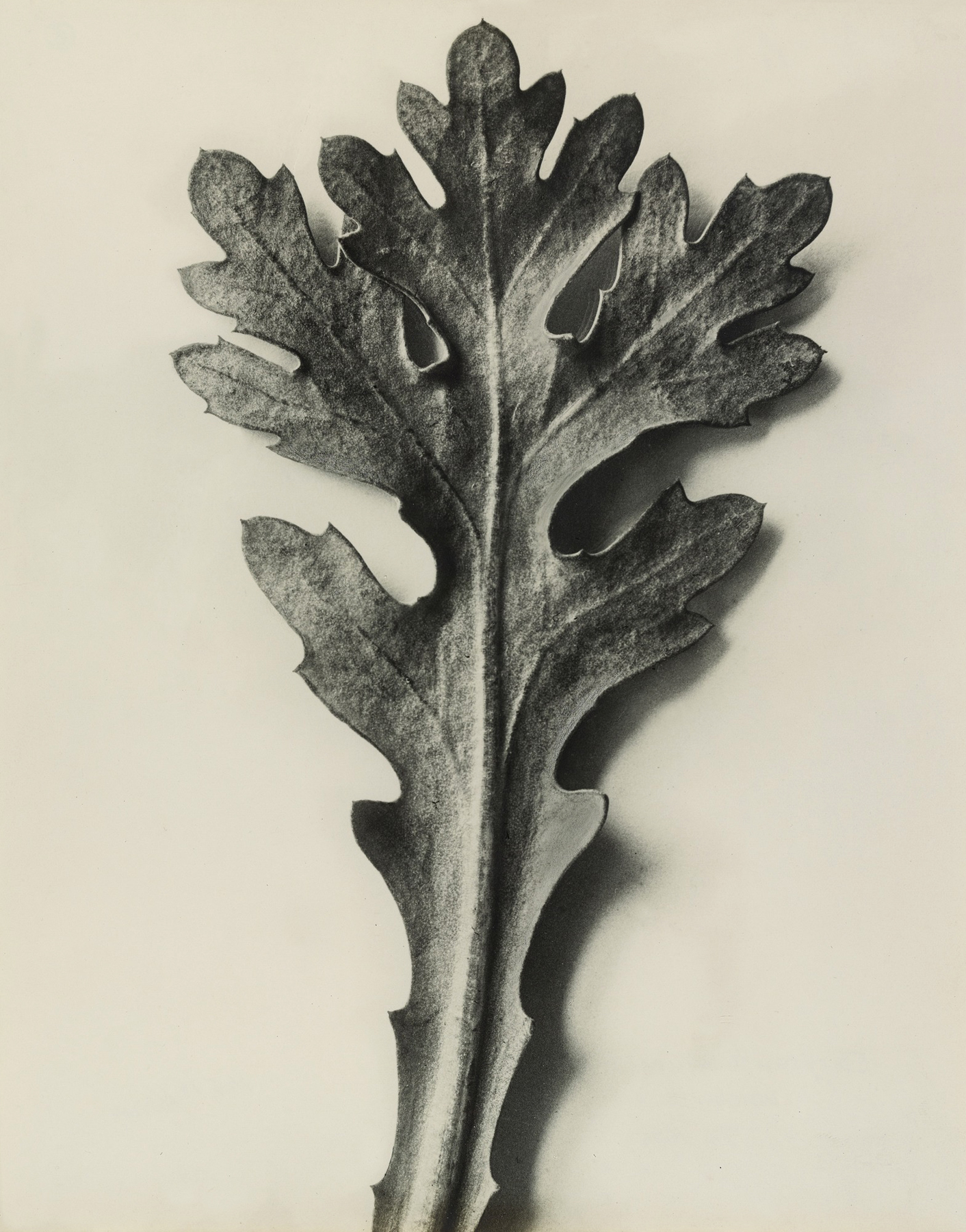
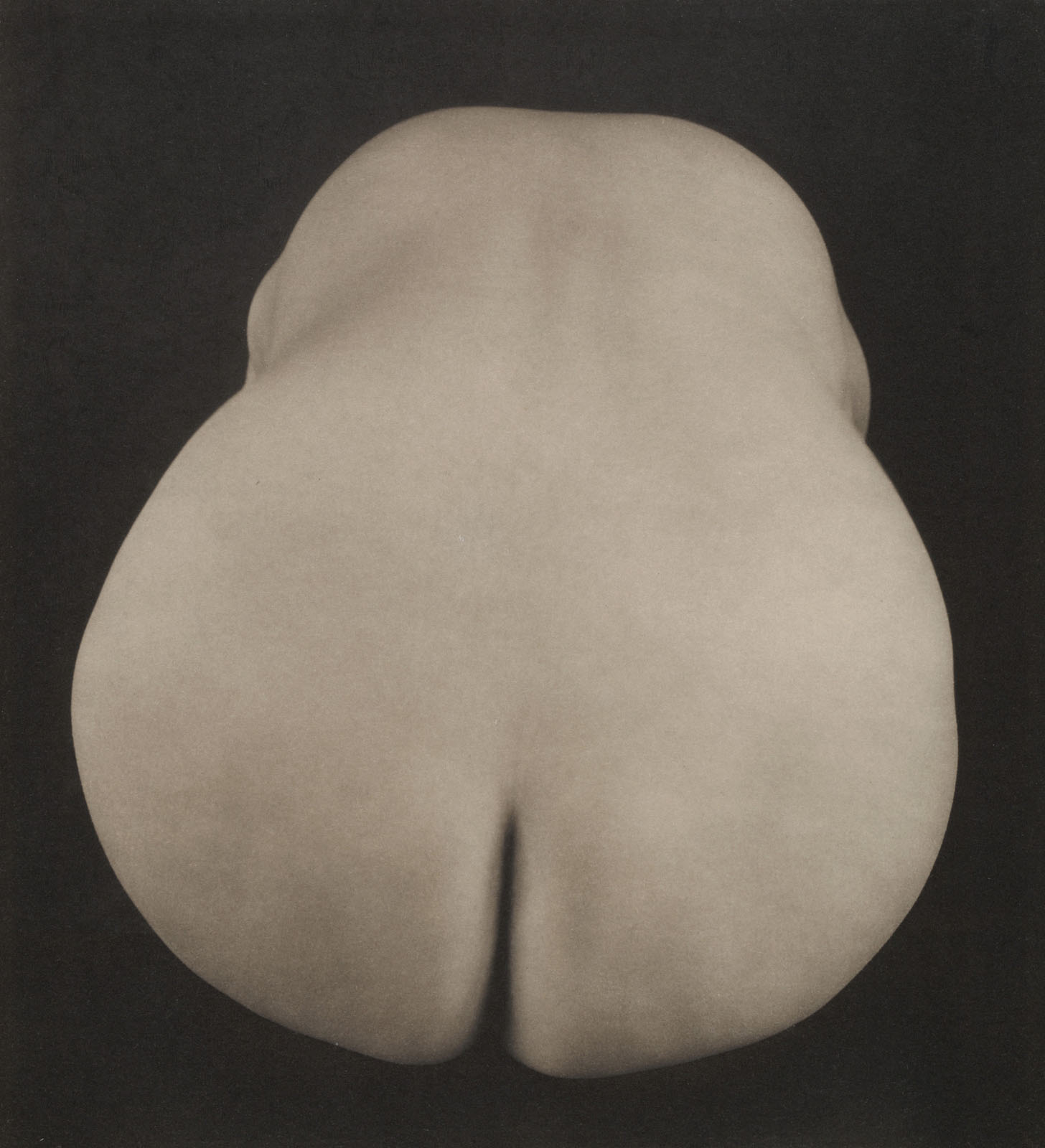
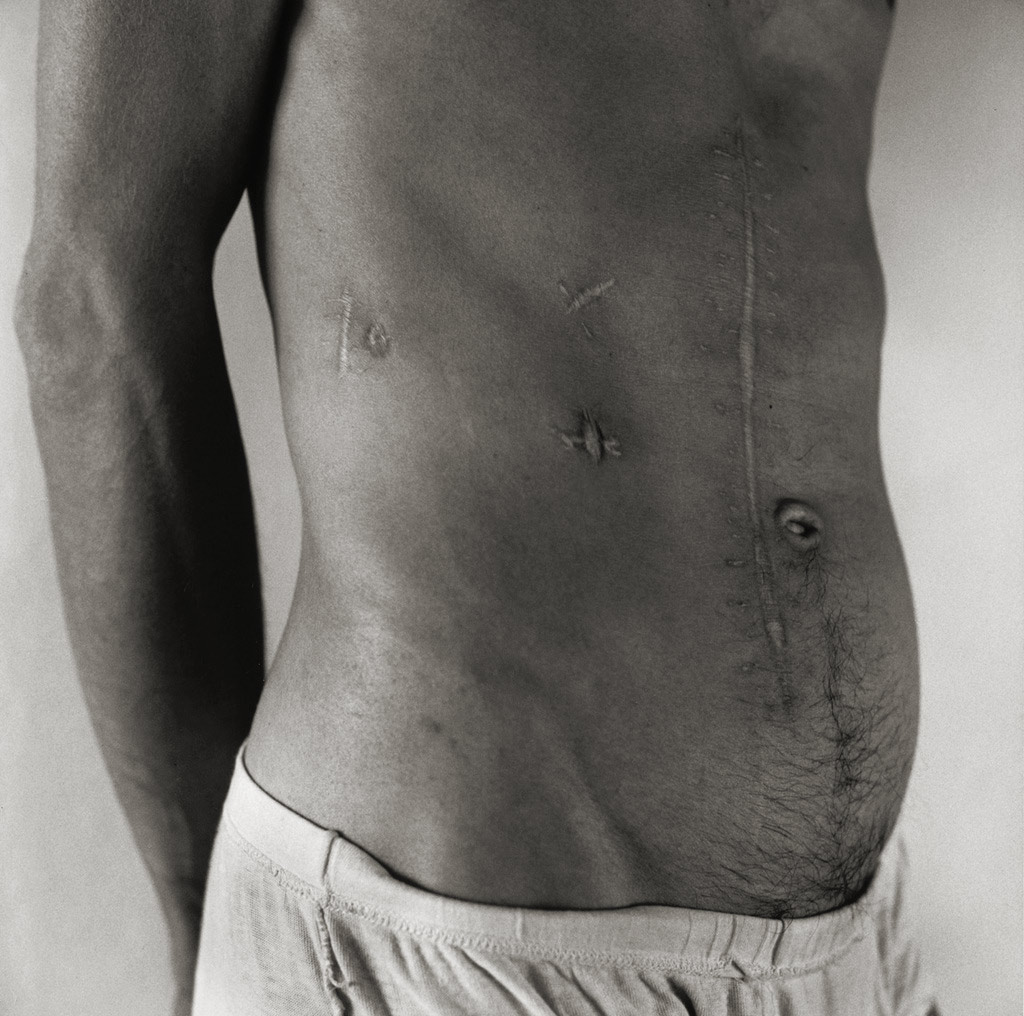
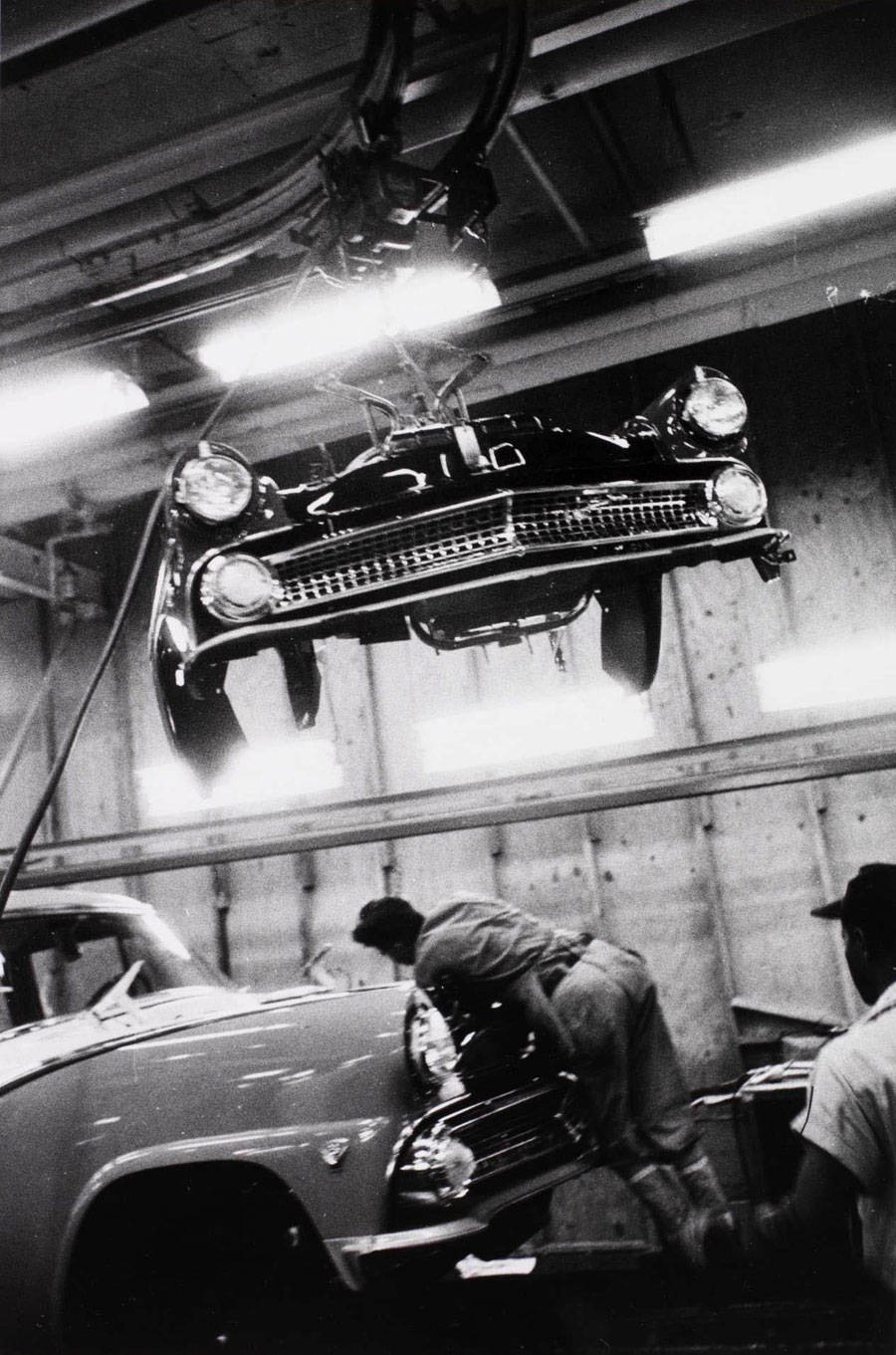
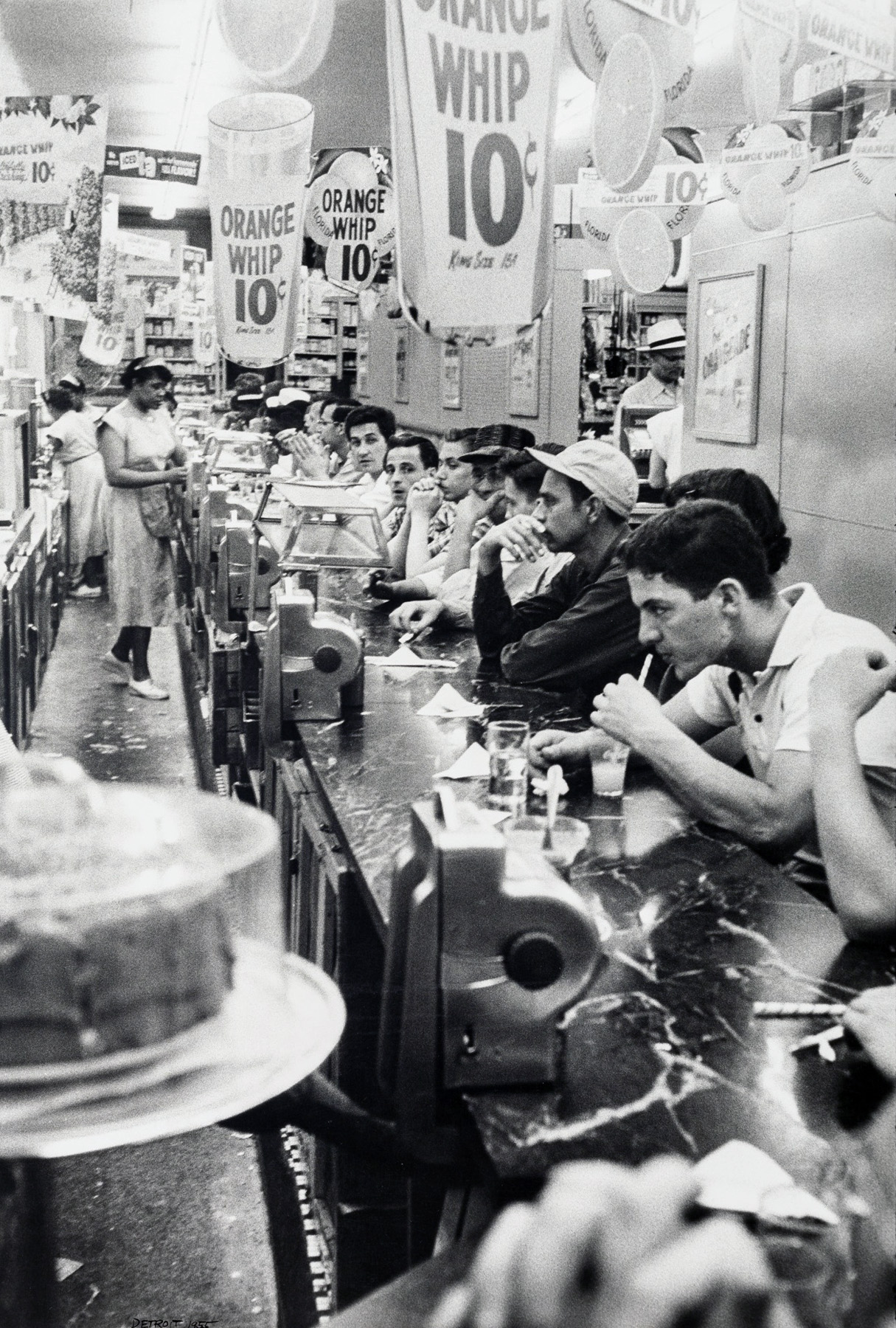
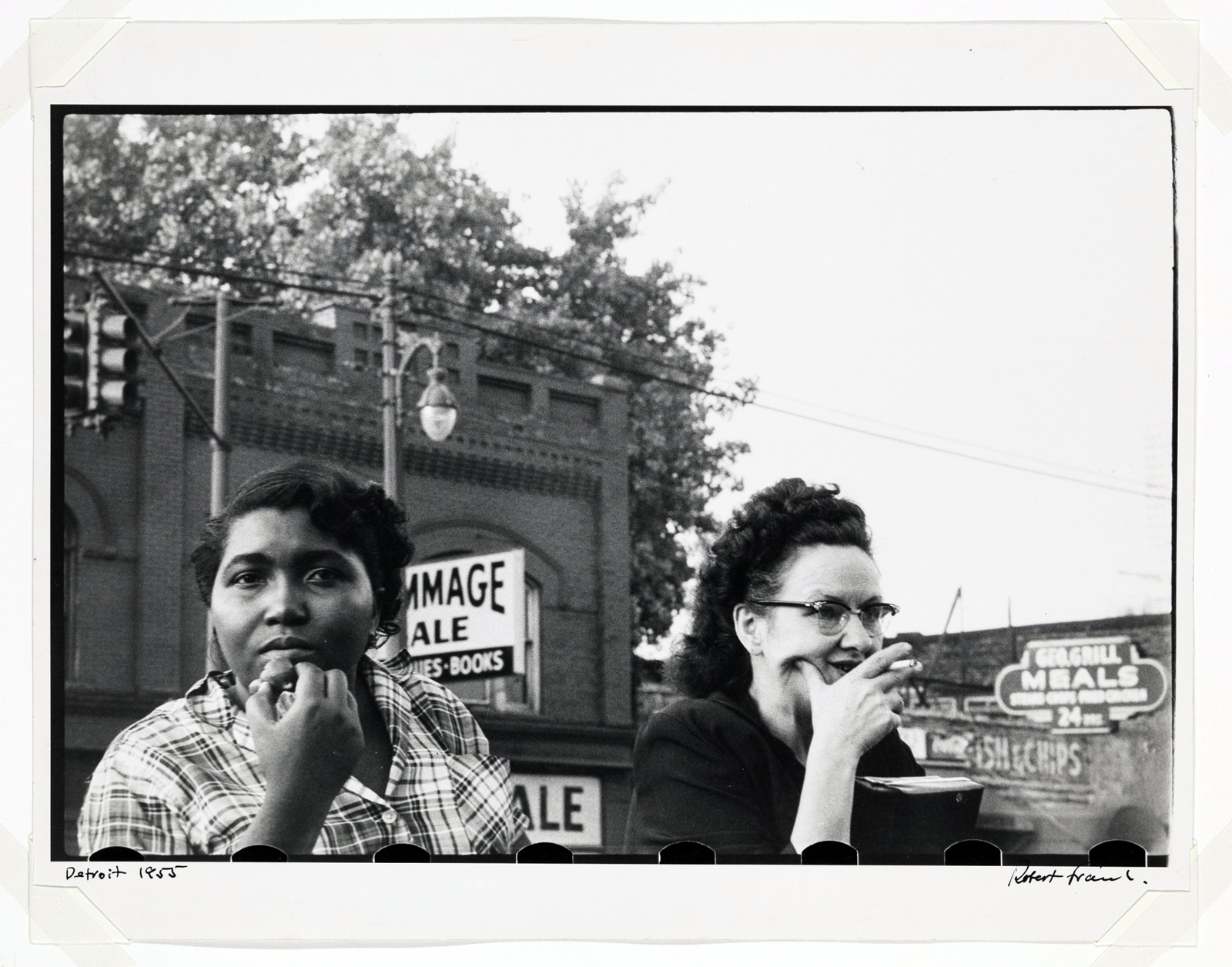
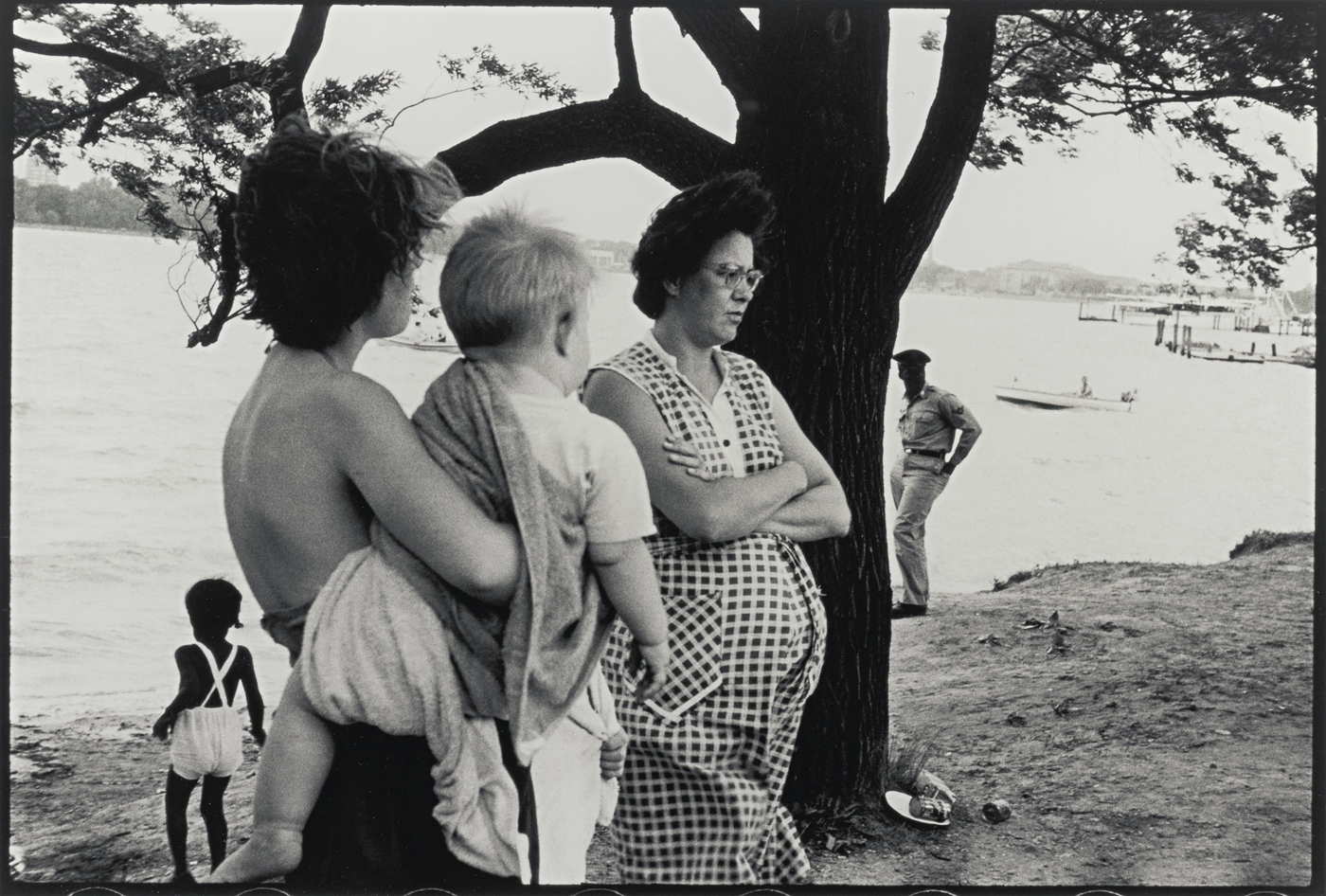
Exhibition: ‘In Light of the Past: Celebrating 25 Years of Photography at the National Gallery of Art’ at the National Gallery of Art, Washington

Exhibition dates: 3rd May – 26th July, 2015

Curators: Sarah Greenough, Senior Curator and Head of the Department of Photographs, and Diane Waggoner, Associate Curator, Department of Photographs, National Gallery of Art


Charles Nègre (French, 1820-1880) 'Market Scene at the Port of the Hotel de Ville, Paris' before February 1852 from the exhibition 'In Light of the Past: Celebrating 25 Years of Photography at the National Gallery of Art' at the National Gallery of Art, Washington, May - July, 2015


Charles Nègre (French, 1820-1880)
Market Scene at the Port of the Hotel de Ville, Paris
before February 1852
Salted paper print
14.7 x 19.9cm
National Gallery of Art, Washington, Patrons’ Permanent Fund, 2003


What a great title for an exhibition. Photography always evidences light of the past, we live in light of the past (the light of the Sun takes just over 8 minutes to reach Earth) and, for whatever reason, human beings never seem to learn from mistakes, in light of the past history of the human race.

My favourites in this postings are the 19th century photographs, to which I am becoming further attuned the more I look at them. There is almost a point when you become psychologically enmeshed with their light, with the serenity of the images, a quality that most contemporary photographs seem to have lost. There is a quietness to their presence, a contemplation on the nature of the world through the pencil of nature that is captivating. You only have to look at Gustave Le Gray’s The Pont du Carrousel, Paris: View to the West from the Pont des Arts (1856-1858, below) to understand the everlasting, transcendent charisma of these images. Light, space, time, eternity.

Dr Marcus Bunyan


Many thankx to the National Gallery of Art for allowing me to publish the photographs in the posting. Please click on the photographs for a larger version of the image.

The Collection of Photographs at the National Gallery of Art, Washington (110kb Word doc)


William Henry Fox Talbot (English, 1800-1877) 'A Scene in York: York Minster from Lop Lane' 1845 from the exhibition 'In Light of the Past: Celebrating 25 Years of Photography at the National Gallery of Art' at the National Gallery of Art, Washington, May - July, 2015


William Henry Fox Talbot (English, 1800-1877)
A Scene in York: York Minster from Lop Lane
1845
Salted paper print
16.2 x 20.4cm
National Gallery of Art, Washington, Edward J. Lenkin Fund, Melvin and Thelma Lenkin Fund and Stephen G. Stein Fund, 2011


A British polymath equally adept in astronomy, chemistry, Egyptology, physics, and philosophy, Talbot spent years inventing a photographic process that created paper negatives, which were then used to make positive prints – the conceptual basis of nearly all photography until the digital age. Calotypes, as he came to call them, are softer in effect than daguerreotypes, the other process announced in 1839. Though steeped in the sciences, Talbot understood the ability of his invention to make striking works of art. Here the partially obstructed view of the cathedral rising from the confines of the city gives a sense of discovery, of having just turned the corner and encountered this scene.
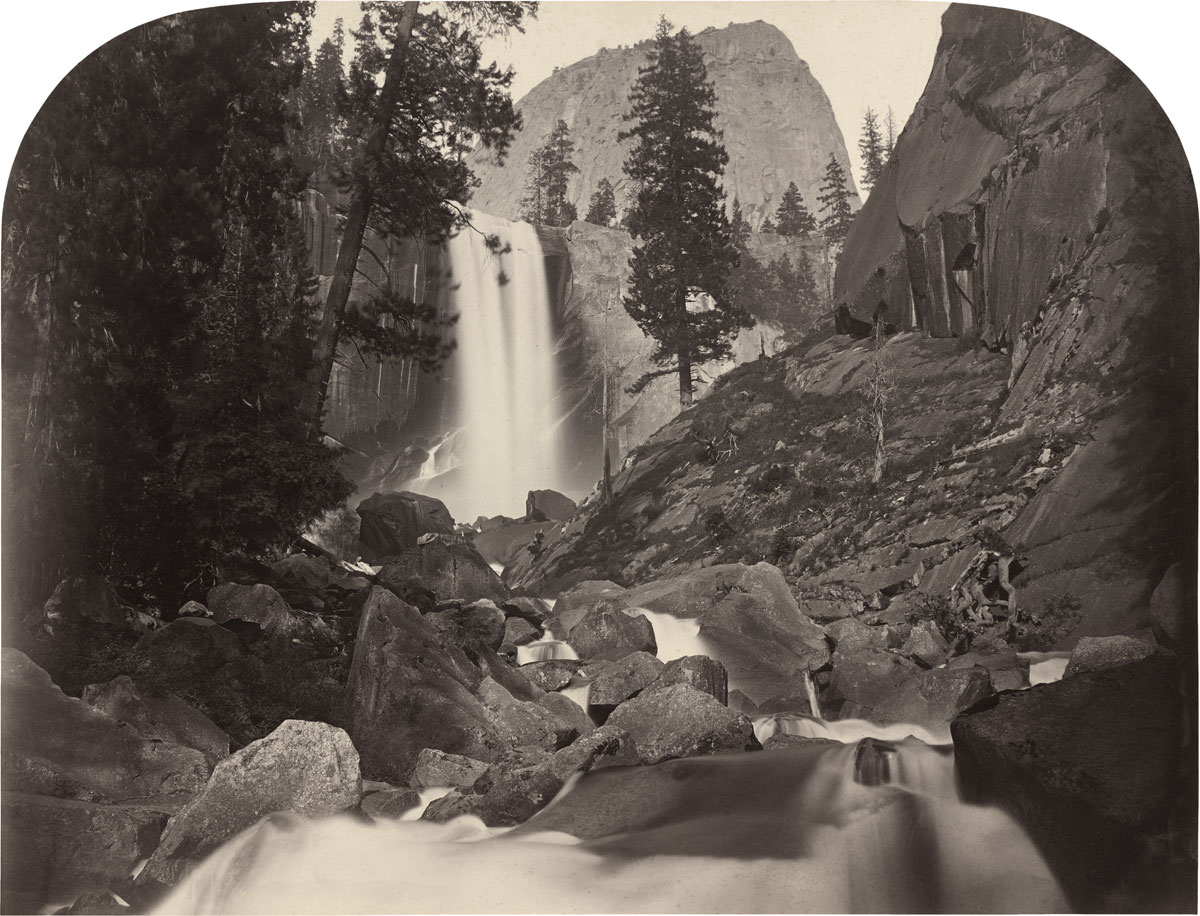
 

Carleton E. Watkins (American, 1829-1916) 'Piwac, Vernal Falls, 300 feet, Yosemite' 1861


Carleton E. Watkins (American, 1829-1916)
Piwac, Vernal Falls, 300 feet, Yosemite
1861
Albumen print
39.9 x 52.3cm
National Gallery of Art, Washington, Gift of Mary and David Robinson, 1995


The westward expansion of America opened up new opportunities for photographers such as Watkins and William Bell. Joining government survey expeditions, hired by railroad companies, or catering to tourists and the growing demand for grand views of nature, they created photographic landscapes that reached a broad audience of scientists, businessmen, and engineers, as well as curious members of the middle class. Watkins’s photographs of the sublime Yosemite Valley, which often recall landscape paintings of similar majestic subjects, helped convince Congress to pass a bill in 1864 protecting the area from development and commercial exploitation.
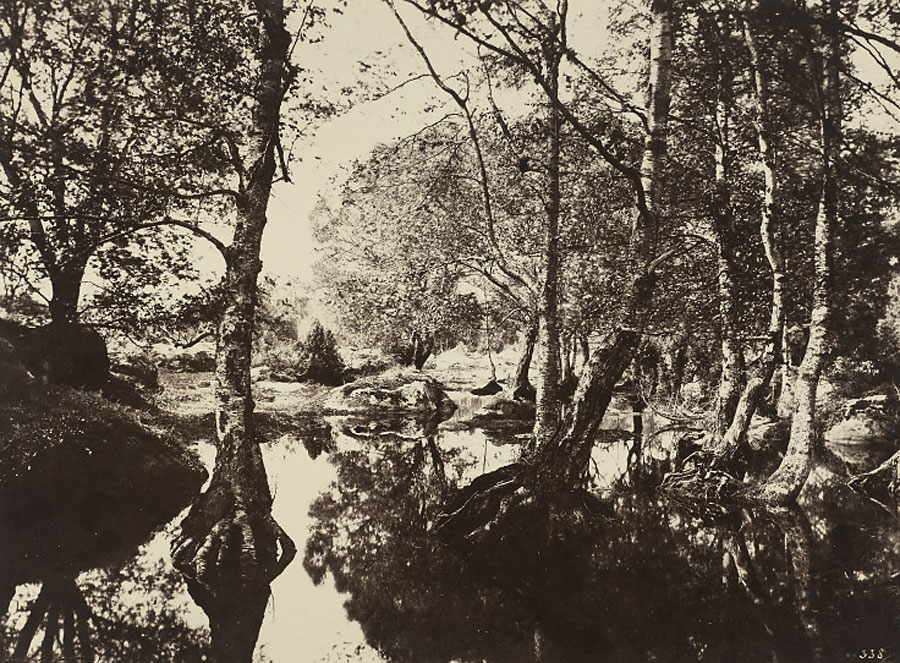
 

Eugène Cuvelier (French, 1837-1900) 'Belle-Croix' 1860s


Eugène Cuvelier (French, 1837-1900)
Belle-Croix
1860s
Albumen print
25.4 x 34.3cm
National Gallery of Art, Washington, Gail and Benjamin Jacobs for the Millennium Fund, 2007


In the second half of the nineteenth century, some photographers in France, hired by governmental agencies to make photographic inventories or simply catering to the growing demand for pictures of Paris, drew on the medium’s documentary abilities to record the nation’s architectural patrimony and the modernisation of Paris. Others explored the camera’s artistic potential by capturing the ephemeral moods of nature in the French countryside. Though photographers faced difficulties in carting around heavy equipment and operating in the field, they learned how to master the elements that directly affected their pictures, from securing the right vantage point to dealing with movement, light, and changing atmospheric conditions during long exposure times.


Gustave Le Gray (French, 1820-1884) 'The Pont du Carrousel, Paris: View to the West from the Pont des Arts' 1856-1858


Gustave Le Gray (French, 1820-1884)
The Pont du Carrousel, Paris: View to the West from the Pont des Arts
1856-1858
Albumen print
37.8 x 48.8cm
National Gallery of Art, Washington, Patrons’ Permanent Fund, 1995


Édouard-Denis Baldus (French, 1813-1889) 'Toulon, Train Station' c. 1861


Édouard-Denis Baldus (French, 1813-1889)
Toulon, Train Station
c. 1861
Albumen print
27.4 x 43.1cm
National Gallery of Art, Washington, Patrons’ Permanent Fund, 1995


In Light of the Past: Celebrating 25 Years of Photography at the National Gallery of Art, on view in the West Building from May 3 through July 26, 2015, will commemorate more than two decades of the Gallery’s robust photography program. Some 175 of the collection’s most exemplary holdings will reveal the evolution of the art of photography, from its birth in 1839 to the late 1970s. In Light of the Past is one of three stellar exhibitions that will commemorate the 25th anniversary of the National Gallery of Art’s commitment to photography acquisitions, exhibitions, scholarly catalogues, and programs.

In Light of the Past includes some of the rarest and most compelling photographs ever created,” said Earl A. Powell III, director, National Gallery of Art, Washington. “It also honours the generous support of our donors who have enabled us to achieve this new place of prominence for photography at the Gallery.

About the exhibition

In Light of the Past begins with exceptional 19th-century salted paper prints, daguerreotypes, and albumen prints by acclaimed early practitioners such as William Henry Fox Talbot (1800-1877), Gustave Le Gray (1820-1884), Roger Fenton (1819-1869), Julia Margaret Cameron (1815-1879), Albert Sands Southworth (1811-1894), and Josiah Johnson Hawes (1808-1901). It also displays works by American expeditionary photographers, including William Bell (1830-1910) and Carleton E. Watkins (1829-1916).

The exhibition continues with late 19th- and early 20th-century American Pictorialist photographs by Alfred Stieglitz (1864-1946), Clarence H. White (1871-1925), Gertrude Käsebier (1852-1934), and Alvin Langdon Coburn (1882-1966), among others, as well as European masters such as Eugène Atget (1857-1927). The exhibition also examines the international photographic modernism of artists such as Paul Strand (1890-1976), André Kertész (1894-1985), Marianne Brandt (1893-1983), László Moholy-Nagy (1895-1946), and Ilse Bing (1899-1998) before turning to the mid-20th century, where exceptional work by Walker Evans (1903-1975), Robert Frank (b. 1924), Harry Callahan (1912-1999), Irving Penn (1917-2009), Lee Friedlander (b. 1934), and Diane Arbus (1923-1971) will be on view.

The exhibition concludes with pictures from the 1960s and 1970s, showcasing works by photographers such as Robert Adams (b. 1937), Lewis Baltz (1945-2014), and William Eggleston (b. 1939), as well as Mel Bochner (b. 1940) and Sol LeWitt (1928-2007), which demonstrate the diverse practices that invigorated photography during these decades.

Press release from the National Gallery of Art
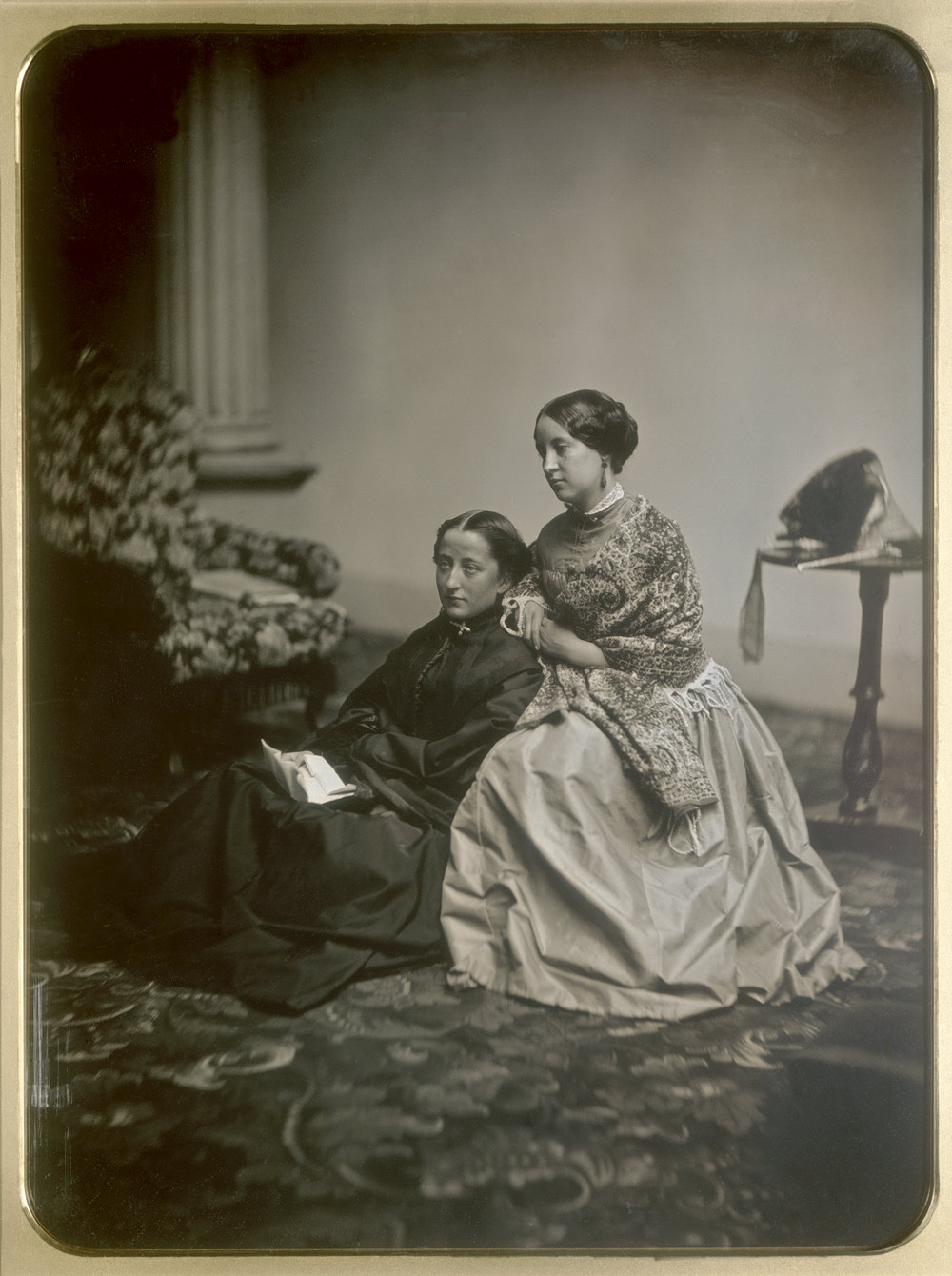
 

Albert Sands Southworth (American, 1811-1894) and Josiah Johnson Hawes (American, 1808-1901) 'The Letter' c. 1850


Albert Sands Southworth (American, 1811-1894) and Josiah Johnson Hawes (American, 1808-1901)
The Letter
c. 1850
Daguerreotype
Plate: 20.3 x 15.2cm
National Gallery of Art, Washington, Patrons’ Permanent Fund, 1999


Working together in Boston, the portrait photographers Southworth and Hawes aimed to capture the character of their subjects using the daguerreotype process. Invented in France and one of the two photographic processes introduced to the public in early 1839, the daguerreotype is made by exposing a silver-coated copper plate to light and then treating it with chemicals to bring out the image. The heyday of the technique was the 1840s and 1850s, when it was used primarily for making portraits. The daguerreotype’s long exposure time usually resulted in frontal, frozen postures and stern facial expressions; this picture’s pyramidal composition and strong sentiments of friendship and companionship are characteristic of Southworth and Hawes’s innovative approach.


Clarence H. White (American, 1871-1925) 'The Hillside' c. 1898


Clarence H. White (American, 1871-1925)
The Hillside
c. 1898
Gum dichromate print
20.8 x 15.88cm
National Gallery of Art, Washington, Patrons’ Permanent Fund, 2008


The Photo-Secession

At the turn of the century in America, Alfred Stieglitz and his colleague Edward Steichen led the movement to establish photography’s status as a fine art. In 1902 Stieglitz founded an organisation called the Photo-Secession, consisting of young artists who shared his belief in the creative potential of the medium. Many of the photographers featured here were members of the group, including Gertrude Käsebier, Clarence White, and Alvin Langdon Coburn. Through the exhibitions Stieglitz organised in his New York gallery, called 291, and the essays he published in his influential quarterly, Camera Work, he and the Photo-Secession promoted the Pictorialist aesthetic of softly textured, painterly pictures that elicit emotion and appeal to the imagination. Occasionally the photographers’ compositions refer to other works of art, such as Steichen’s portrait of his friend Auguste Rodin, whose pose recalls one of the sculptor’s most famous works, The Thinker. Influenced by the modern European and American painting, sculpture, and drawing he exhibited at 291, Stieglitz lost interest in the Photo-Secession in the early 1910s and began to explore a more straightforward expression.
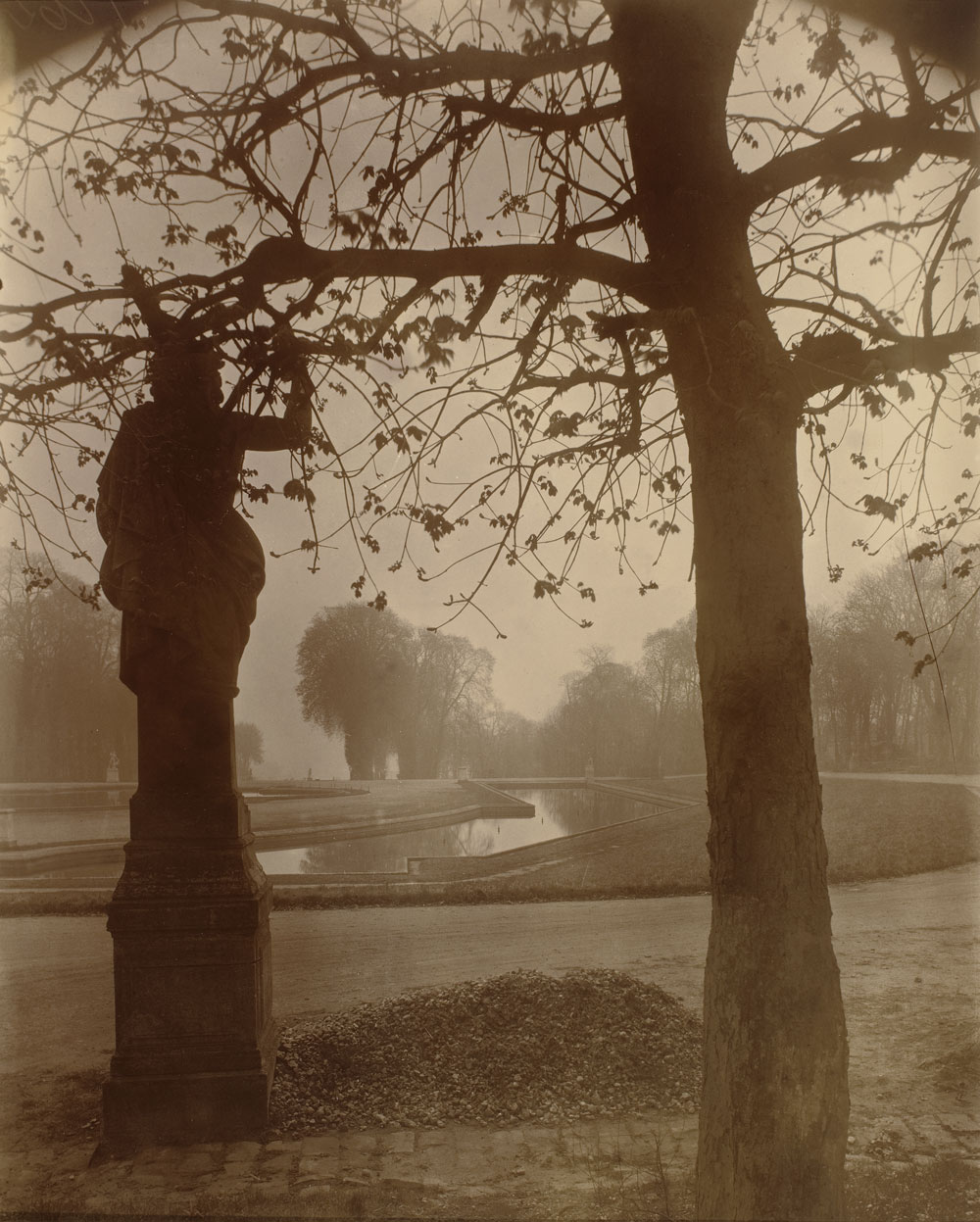
 

Eugène Atget (French, 1857-1927) 'Saint-Cloud' 1926


Eugène Atget (French, 1857-1927)
Saint-Cloud
1926
Albumen print
22.2 x 18.1cm
National Gallery of Art, Washington, Gift of Mary and Dan Solomon and Patrons’ Permanent Fund, 2006


Using a cumbersome camera mounted on a tripod, Atget recorded the myriad facets of Paris and its environs at the turn of the century. Transforming ordinary scenes into poetic evocations, he created a visual compendium of the objects, architecture, and landscapes that were expressive of French culture and its history. He sold his photographs to artists, architects, and craftsmen, as well as to libraries and museums interested in the vanishing old city. Throughout his career he returned repeatedly to certain subjects and discovered that the variations caused by changing light, atmosphere, and season provided inexhaustible subjects for the perceptive photographer.
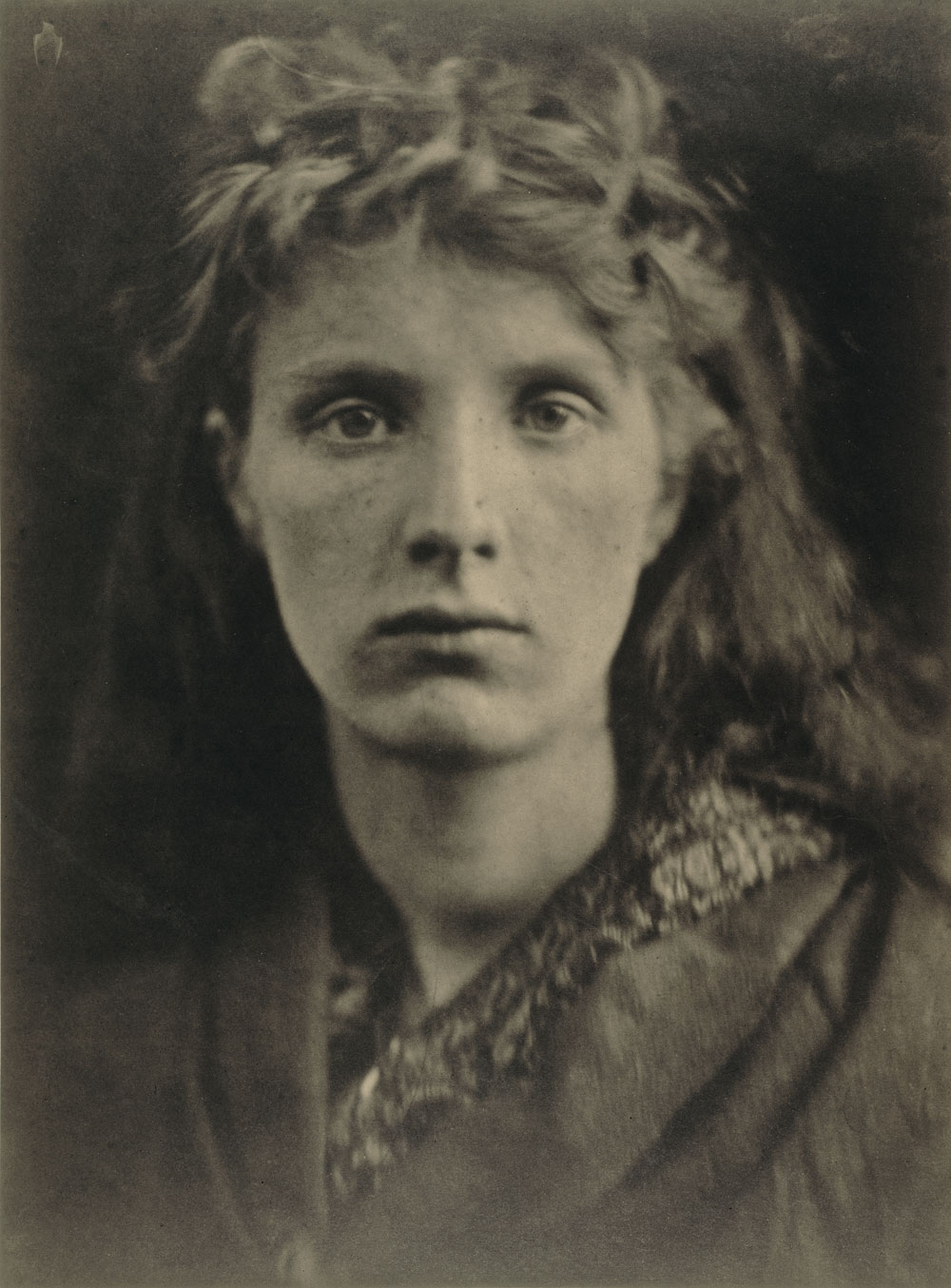
 

Julia Margaret Cameron (British, 1815-1879) 'The Mountain Nymph, Sweet Liberty' June 1866


Julia Margaret Cameron (British, 1815-1879)
The Mountain Nymph, Sweet Liberty
June 1866
Albumen print
36.1 x 26.7cm
National Gallery of Art, Washington, New Century Fund, 1997


Ensconced in the intellectual and artistic circles of midcentury England, Cameron manipulated focus and light to create poetic pictures rich in references to literature, mythology, and history. Her monumental views of life-sized heads were unprecedented, and with them she hoped to define a new mode of photography that would rival the expressive power of painting and sculpture. The title of this work alludes to John Milton’s mid-seventeenth-century poem L’Allegro. Describing the happy life of one who finds pleasure and beauty in the countryside, the poem includes the lines:

Come, and trip it as ye go
On the light fantastic toe;
And in thy right hand lead with thee,
The mountain nymph, sweet Liberty.
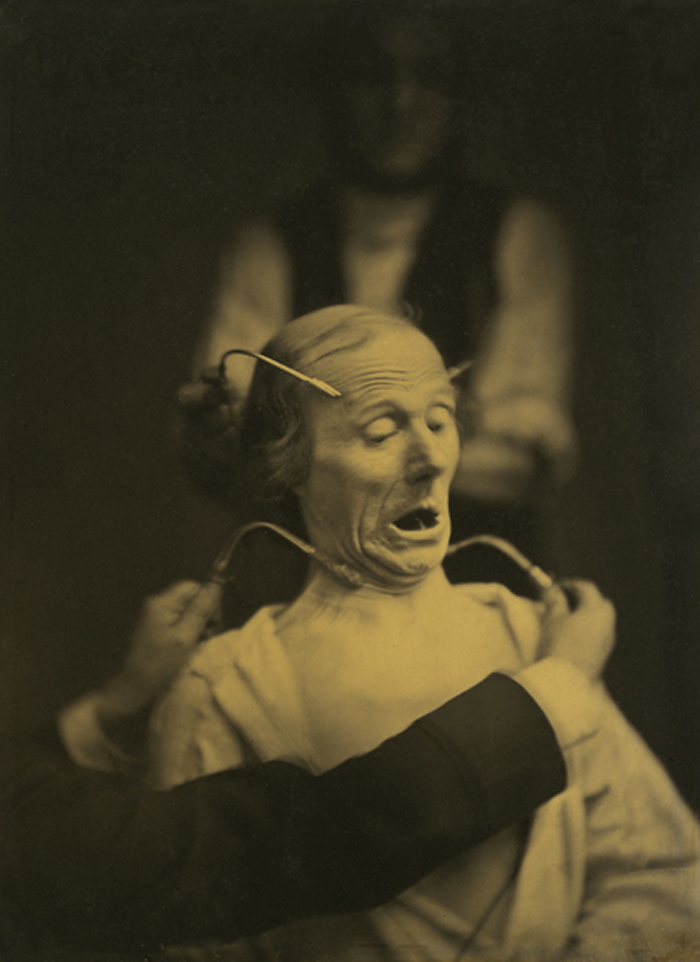
 

Dr Guillaume-Benjamin-Amant Duchenne (de Boulogne) (French, 1806-1875) 'Figure 63, "Fright" from "Mécanisme de la physionomie humaine (Mechanism of human physiognomy)" (1862)' 1854-1855


Dr Guillaume-Benjamin-Amant Duchenne (de Boulogne) (French, 1806-1875)
Figure 63, “Fright” from “Mécanisme de la physionomie humaine (Mechanism of human physiognomy)” (1862)
1854-1855
Albumen print
21.5 × 16cm
National Gallery of Art, Washington, Pepita Milmore Memorial Fund, 2015


A neurologist, physiologist, and photographer, Duchenne de Boulogne conducted a series of experiments in the mid-1850s in which he applied electrical currents to various facial muscles to study how they produce expressions of emotion. Convinced that these electrically-induced expressions accurately rendered internal feelings, he then photographed his subjects to establish a precise visual lexicon of human emotions, such as pain, surprise, fear, and sadness. In 1862 he included this photograph representing fright in a treatise on physiognomy (a pseudoscience that assumes a relationship between external appearance and internal character), which enjoyed broad popularity among artists and scientists.
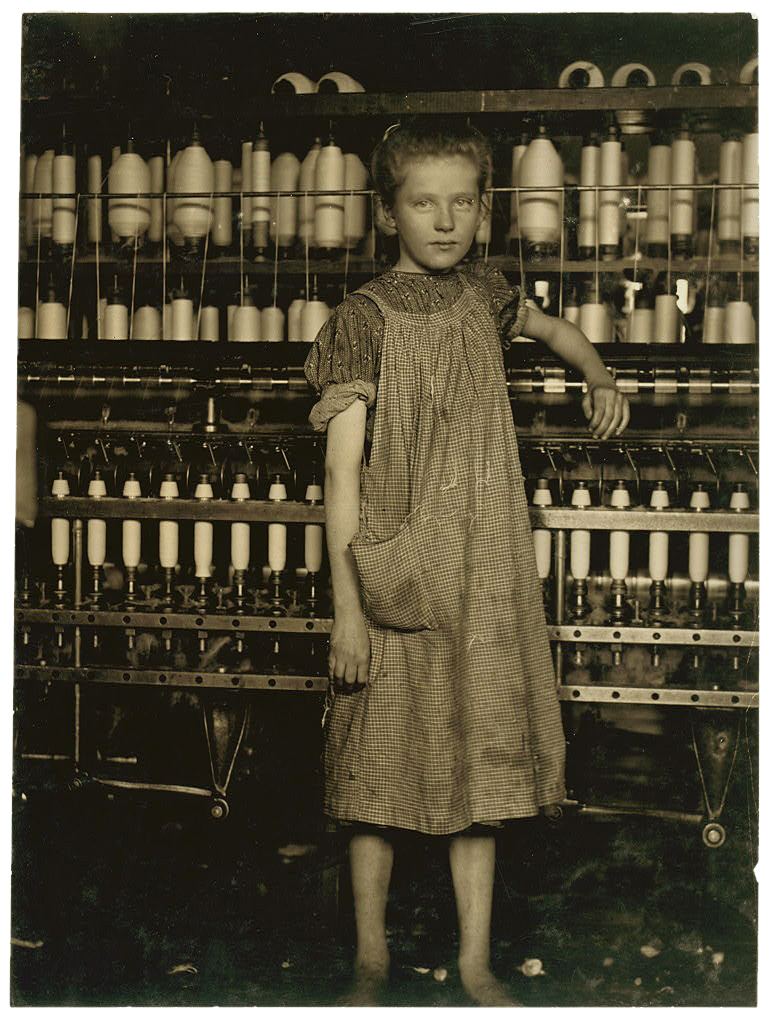
 

Lewis Hine (American, 1874-1940) 'An Anaemic Little Spinner in a New England Cotton Mill (North Pownal, Vermont)' 1910


Lewis Hine (American, 1874-1940)
An Anaemic Little Spinner in a New England Cotton Mill (North Pownal, Vermont)
1910
Gelatin silver print
24.1 × 19.2cm
National Gallery of Art, Washington, Pepita Milmore Memorial Fund, 2015


Trained as a sociologist and initially employed as a teacher, Hine used the camera both as a research tool and an instrument of social reform. One of the earliest and most influential social documentary photographers of his time, he made many pictures under the auspices of the National Child Labor Committee, an organisation formed in 1904 to promote better working conditions for children. Hine’s focus on the thin, frail body of this barefoot twelve-year-old spinner, who stands before rows of bobbins in the mill where she worked, was meant to illustrate the unhealthy effects of her employment. Photographs like this one were crucial to the campaign to change American child labor laws in the early twentieth century.


In Light of the Past: Twenty-Five Years of Photography at the National Gallery of Art

Georgia O’Keeffe and the Alfred Stieglitz Estate laid the foundation of the photography collection of the National Gallery of Art in 1949 with their donation of 1,650 Stieglitz photographs, an unparalleled group known as the Key Set. Yet the Gallery did not start actively acquiring photographs until 1990, when it launched an initiative to build a collection of works by European and American photographers from throughout the history of the medium and mount major exhibitions with scholarly publications. Now including nearly fifteen thousand prints, the collection encompasses the rich diversity of photographic practice from fine art to scientific and amateur photography, as well as photojournalism. It is distinguished by its large holdings of works by many of the medium’s most acclaimed masters, such as Paul Strand, Walker Evans, André Kertész, Ilse Bing, Robert Frank, Harry Callahan, Lee Friedlander, Gordon Parks, Irving Penn, and Robert Adams, among others.

In Light of the Past celebrates the twenty-fifth anniversary of the 1990 initiative by presenting some of the Gallery’s finest photographs made from the early 1840s to the late 1970s. It is divided into four sections arranged chronologically. The first traces the evolution of the art of photography during its first decades in the work of early British, French, and American practitioners. The second looks at the contributions of late nineteenth and early twentieth-century photographers, from Stieglitz and the American Pictorialists to European masters such as Eugène Atget. The third section examines the international photographic modernism of the 1920s and 1930s, and the fourth features seminal mid-twentieth-century photographers. The exhibition concludes with pictures representing the varied practices of those working in the late 1960s and 1970s.

The Nineteenth Century: The Invention of Photography

In 1839 a new means of visual representation was announced to a startled world: photography. Although the medium was immediately and enthusiastically embraced by the public at large, photographers themselves spent the ensuing decades experimenting with techniques and debating the nature of this new invention. The works in this section suggest the range of questions addressed by these earliest practitioners. Was photography best understood as an art or a science? What subjects should photographs depict, what purpose should they serve, and what should they look like? Should photographers work within the aesthetics established in other arts, such as painting, or explore characteristics that seemed unique to the medium? This first generation of photographers became part scientists as they mastered a baffling array of new processes and learned how to handle their equipment and material. Yet they also grappled with aesthetic issues, such as how to convey the tone, texture, and detail of multicoloured reality in a monochrome medium. They often explored the same subjects that had fascinated artists for centuries – portraits, landscapes, genre scenes, and still lifes – but they also discovered and exploited the distinctive ways in which the camera frames and presents the world.

Photography at the Turn of the Twentieth Century

In the late nineteenth century, improvements in technology and processing, along with the invention of small handheld cameras such as the Kodak, suddenly made it possible for anyone of middle-class means to take photographs. Many amateurs took up the camera to commemorate family, friends, and special events. Others, such as the sociologist Lewis Hine, used it as a tool for social and political change. Partially in response to the new ease of photography, more serious practitioners in America and Europe banded together to assert the artistic merit of the medium. Called Pictorialists, they sought to prove that photography was just as capable of poetic, subjective expression as painting. They freely manipulated their prints to reveal their authorial control, often resulting in painterly effects, and consciously separated themselves from amateur photographers and mechanised processes.

Photography Between the Wars

In the aftermath of World War I – the first modern, mechanised conflict – sweeping changes transformed photography. Avant-garde painters, graphic designers, and journalists turned to the medium, seeing it as the most effective tool to express the fractured, fast-paced nature of modernity and the new technological culture of the twentieth century. A wide variety of new approaches and techniques flourished during these years, especially in Europe. Photographers adopted radical cropping, unusual angles, disorienting vantage points, abstraction, collage, and darkroom alchemy to achieve what the influential Hungarian teacher László Moholy-Nagy celebrated as the “new vision.” Other photographers, such as the German August Sander or the Americans Alfred Stieglitz, Edward Weston, and Walker Evans, sought a more rigorous objectivity grounded in a precise examination of the world.

Postwar Photography

Photography thrived in the decades after World War II, invigorated by new ideas, practices, and expanding venues for circulating and displaying pictures. Immediately after the war, many photographers sought to publish their pictures in illustrated magazines, which prospered during these years. Some, such as Gordon Parks, made photographs highlighting racial, economic, and social disparities. Others, such as Louis Faurer, Sid Grossman, and Robert Frank, turned to the street to address the conditions of modern life in pictures that expose both its beauty and brutality. Using handheld cameras and available light, they focused on the random choreography of sidewalks, making pictures that are often blurred, out of focus, or off-kilter.

In the later 1950s and 1960s a number of photographers pushed these ideas further, mining the intricate social interactions of urban environments. Unlike photographers from the 1930s, these practitioners, such as Garry Winogrand, Lee Friedlander, and Diane Arbus, sought not to reform American society but to record it in all its complexity, absurdity, and chaos. By the late 1960s and 1970s, other photographers, such as Robert Adams and Lewis Baltz, looked beyond conventional notions of natural beauty to explore the despoliation of the urban and suburban landscape. Their pictures of tract houses, highways, and motels are stripped of any artistic frills, yet they are exquisitely rendered and replete with telling details. Also starting in the 1960s, many conceptual or performance artists working in a variety of media embraced what they perceived to be photography’s neutrality and turned to it as an essential part of their experiments to expand traditional notions of art. In the late 1960s, improvements in colour printing techniques led others, such as William Eggleston, to explore the artistic potential of colour photography.


Edward Steichen (American, 1879-1973) 'An Apple, A Boulder, A Mountain' 1921


Edward Steichen (American, 1879-1973)
An Apple, A Boulder, A Mountain
1921
Platinum print
National Gallery of Art, Washington, Patrons’ Permanent Fund, 2014


After World War I, Steichen became disillusioned with the painterly aesthetic of his earlier work and embarked on a series of experiments to study light, form, and texture. Inverting an apple, he demonstrated how a small object, when seen in a new way, can assume the monumentality and significance of a much larger one. His close-up scrutiny of a natural form closely links this photograph with works by other American modernists of the 1920s, such as Edward Weston, Paul Strand, and Georgia O’Keeffe.
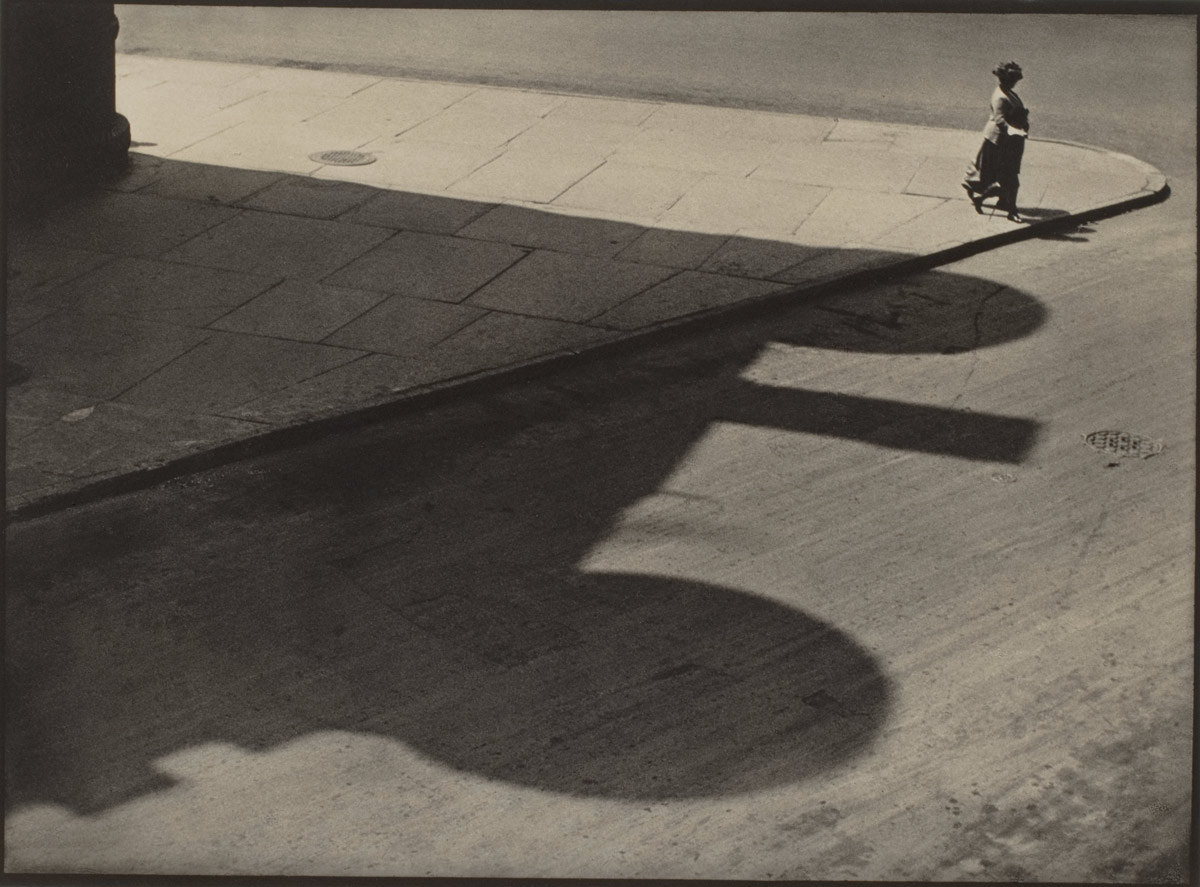
 

Paul Strand (American, 1890-1976) 'People, Streets of New York, 83rd and West End Avenue' 1916


Paul Strand (American, 1890-1976)
People, Streets of New York, 83rd and West End Avenue
1916
Platinum print
24.2 x 33cm
National Gallery of Art, Washington, Patrons’ Permanent Fund, 1990


Strand was introduced to photography in high school by his teacher Lewis Hine, who instilled in him a strong interest in social issues. In 1907, Hine took his pupil to Alfred Stieglitz’s 291 gallery in New York, which launched Strand’s desire to become a fine art photographer. By the early 1910s, influenced by Stieglitz, he began to make clearly delineated portraits, pictures of New York, and nearly abstract still lifes. Strand came to believe that photography was a gift of science to the arts, that it was an art of selection, not translation, and that objectivity was its very essence.
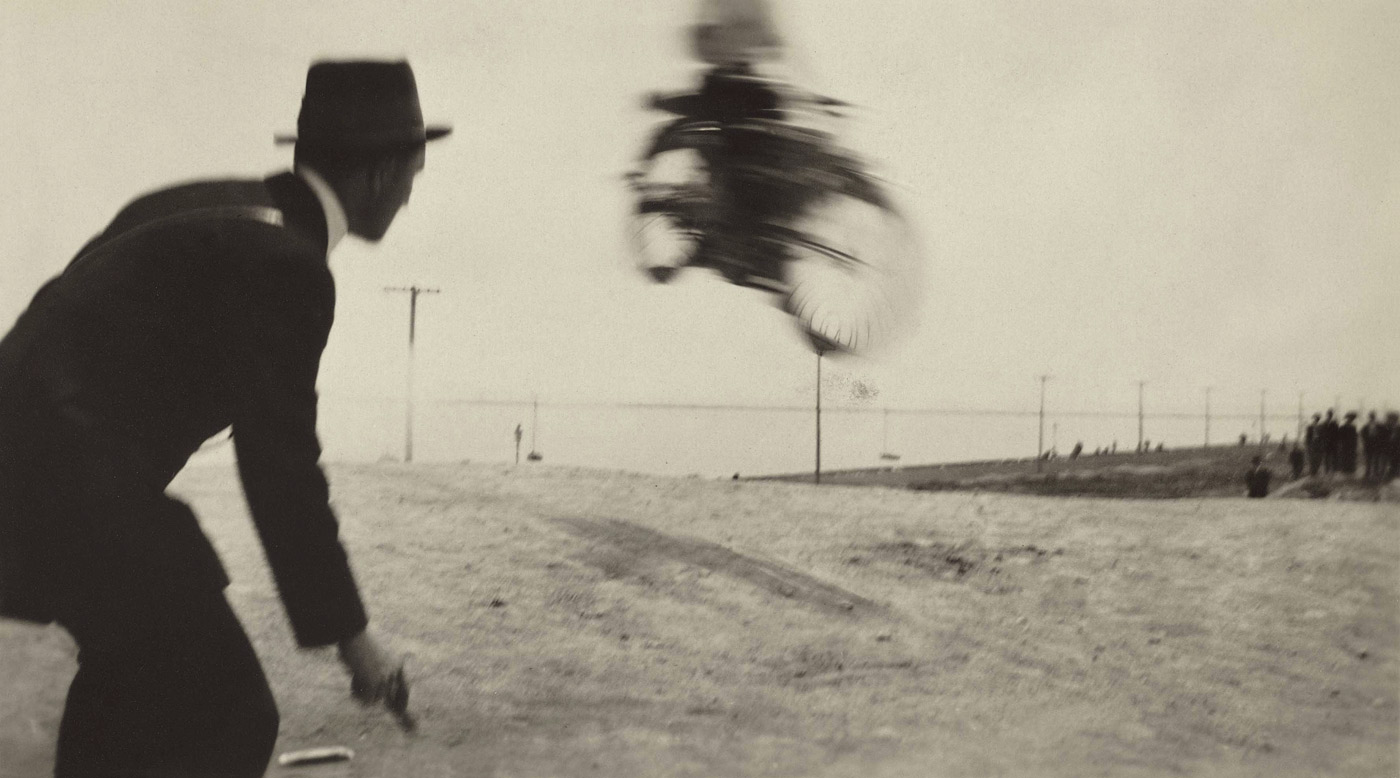
 

American 20th Century. 'Untitled' c. 1930


American 20th Century
Untitled
c. 1930
Gelatin silver print
5.7 x 10cm
National Gallery of Art, Washington, Gift of Robert E. Jackson, 2007


Snapshots

After World War I, a parade of technological improvements transformed the practice of photography. With smaller cameras, faster shutter speeds, and more sensitive film emulsions, both amateurs and more serious practitioners could now easily record motion, investigate unexpected angles and points of view, and work in dim light and inclement weather. The amateur’s less staid, more casual approach began to play an important role in the work of modernist photographers as they explored spontaneity and instantaneity, seeking to capture the cacophony and energy of modern life. Blurriness, distorted perspectives, and seemingly haphazard cropping-once considered typical amateur mistakes-were increasingly embraced as part of the modern, vibrant way of picturing the world.
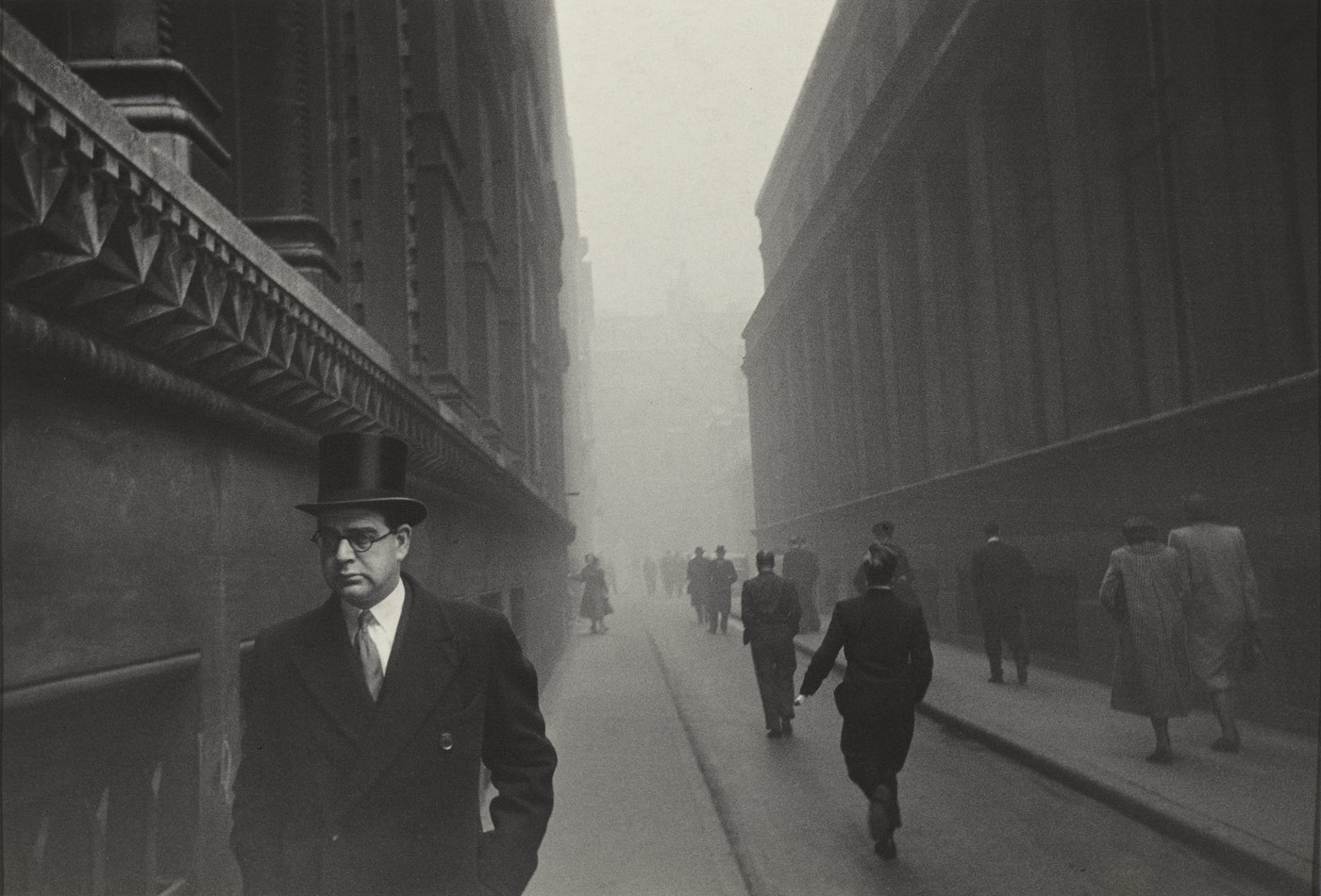
 

Robert Frank (Swiss, 1924-2019) 'City of London' 1951


Robert Frank (Swiss, 1924-2019)
City of London
1951
Gelatin silver print
23 x 33.6cm
National Gallery of Art, Washington, Robert Frank Collection, Purchased as a Gift of The Howard Gilman Foundation, in Honor of the 50th Anniversary of the National Gallery of Art, 1991
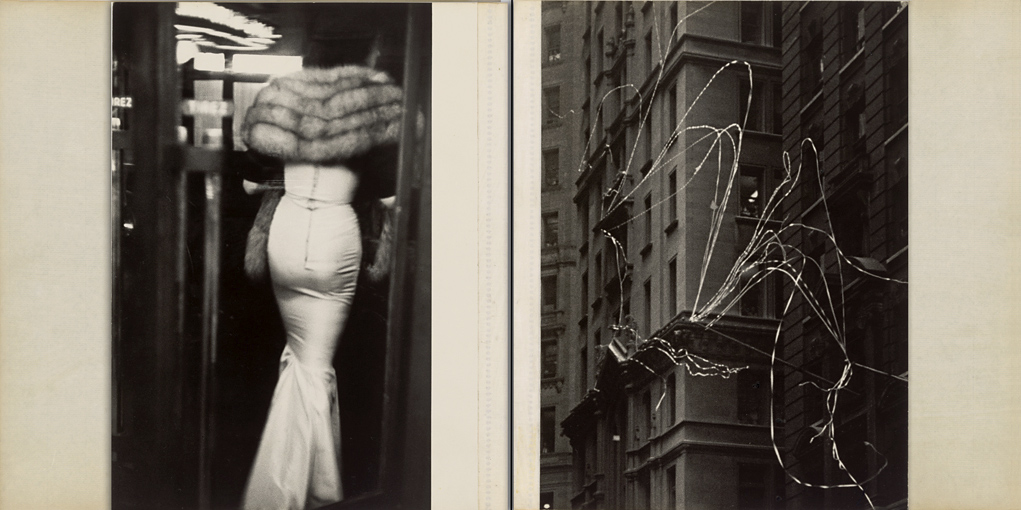
 

Robert Frank (Swiss, 1924-2019) 'Woman/Paris' 1952


Robert Frank (Swiss, 1924-2019)
Woman/Paris
1952
Gelatin silver print in bound volume
Image: 35.1 x 25.4cm
National Gallery of Art, Washington, Robert Frank Collection, Gift (Partial and Promised) of Robert Frank, in Honor of the 50th Anniversary of the National Gallery of Art, 1990


In the late 1940s and early 1950s, Frank made several handbound volumes of photographs, exploring different ways to link his pictures through non-narrative sequences. While in Zurich in October 1952, he assembled pictures taken in Europe, South America, and the United States in a book called Black White and Things. With a brief introductory quote from Antoine de Saint-Exupéry – “it is only with the heart that one can see rightly; what is essential is invisible to the eye” – the photographs are arranged in a sophisticated sequence that uses formal repetition, conceptual contrasts, and, as here, witty juxtapositions to evoke a range of ideas …

While in Zurich in October of 1952, Frank assembled photographs taken in Europe, South America, and the United States in the preceding years into a bound book called Black White and Things. Designed by Frank’s friend Werner Zryd, and with only a brief introductory statement describing the three sections, the photographs appear in a sophisticated sequence that relies on subtle, witty juxtapositions and powerful visual formal arrangements to evoke a wide range of emotions.

Frank made three copies of this book, all identical in size, construction, and sequence. He gave one copy to his father, gave one to Edward Steichen, and kept one. The book that belonged to his father is now in a private collection; Steichen’s copy resides at the Museum of Modern Art, New York; and in 1990 Frank gave his copy to the Robert Frank Collection at the National Gallery of Art.
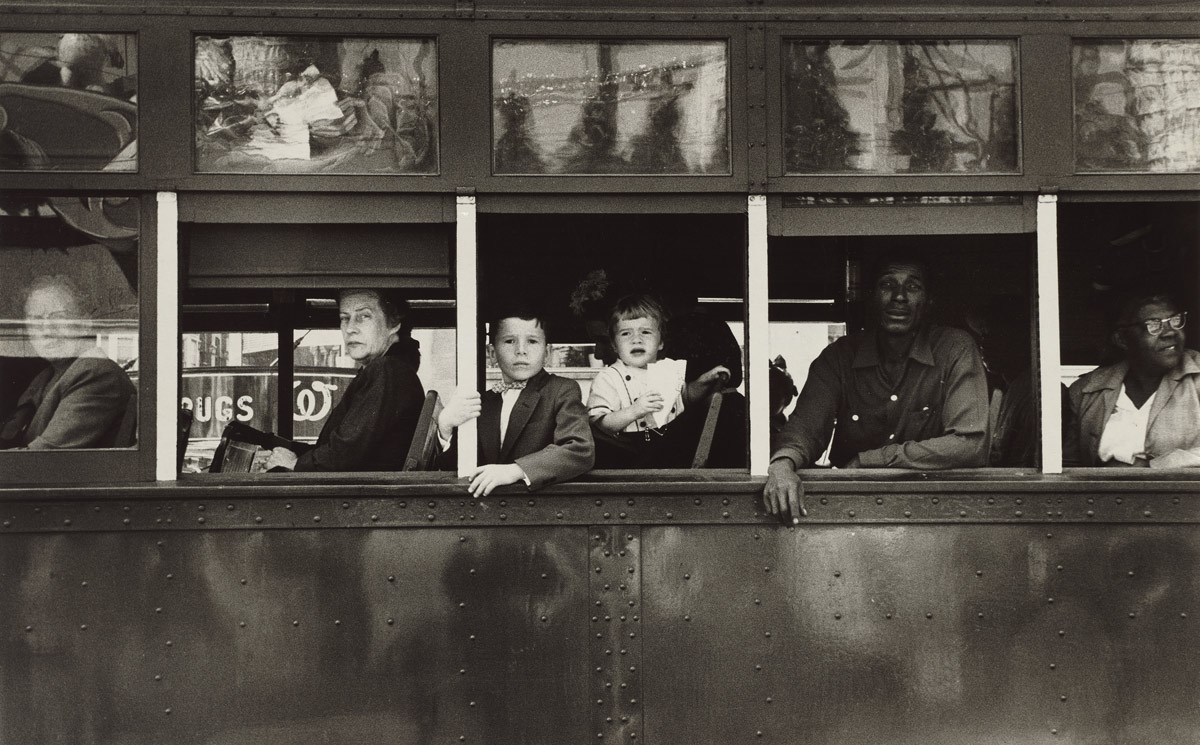
 

Robert Frank (Swiss, 1924-2019) 'Trolley - New Orleans' 1955


Robert Frank (Swiss, 1924-2019)
Trolley – New Orleans
1955
Gelatin silver print
Sheet: 21 x 31.6cm
National Gallery of Art, Washington, Gift of Maria and Lee Friedlander, 2001
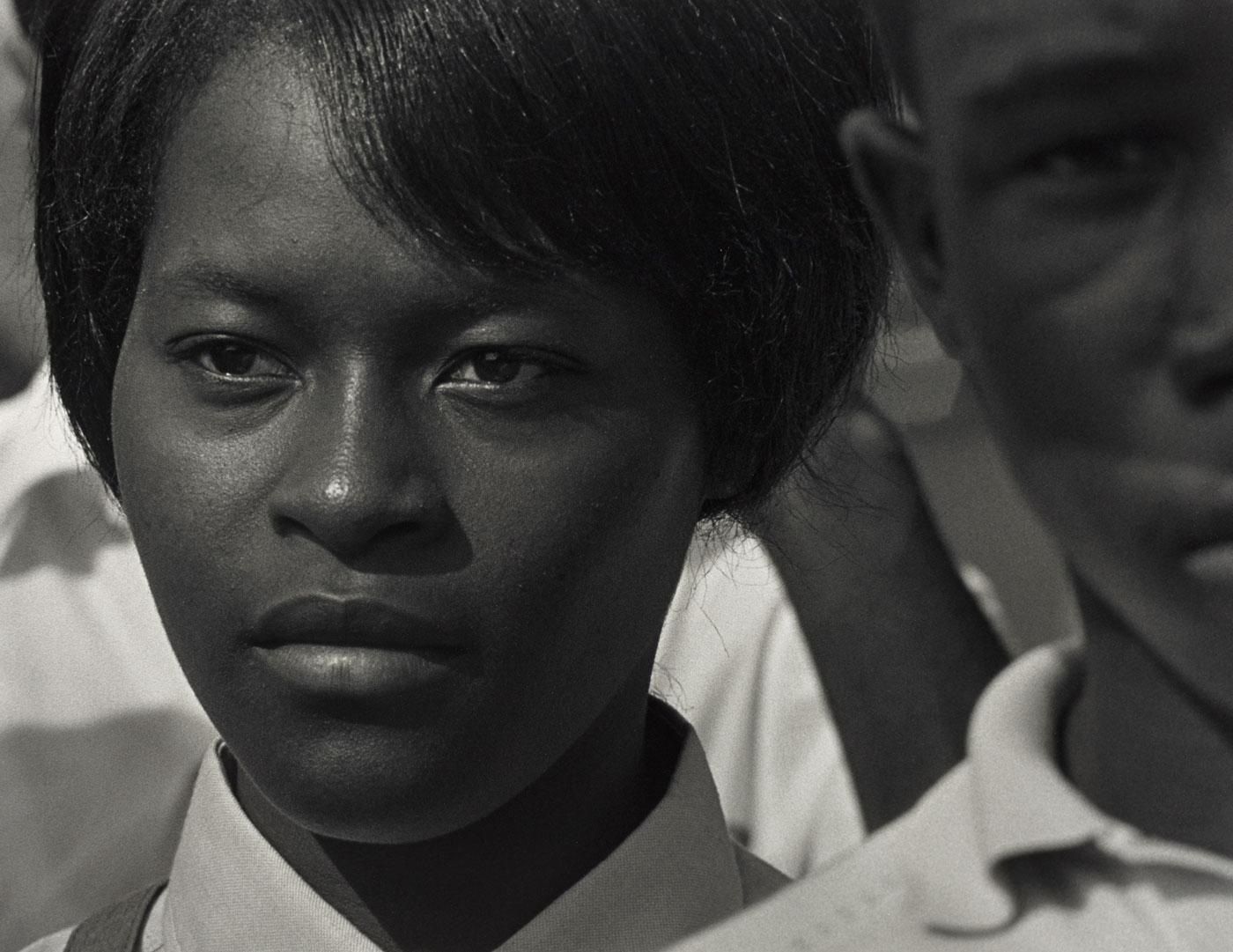
 

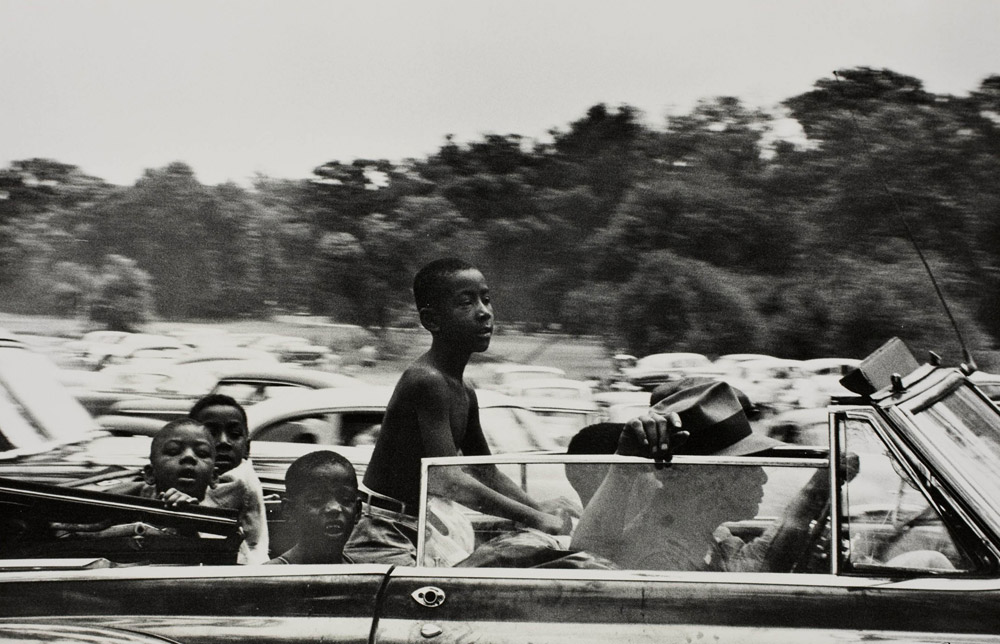
Roy DeCarava (American, 1919-2009) 'Mississippi Freedom Marcher, Washington, D.C.' 1963


Roy DeCarava (American, 1919-2009)
Mississippi Freedom Marcher, Washington, D.C.
1963
Gelatin silver print
25.5 x 33cm
National Gallery of Art, Washington, Horace W. Goldsmith Foundation through Robert and Joyce Menschel, 1999


Lee Friedlander (American, b. 1934) 'New York City' 1966


Lee Friedlander (American, b. 1934)
New York City
1966
Gelatin silver print
Image: 13.3 x 20.6 cm
National Gallery of Art, Washington, Trellis Fund, 2001


Heir to the tradition of documentary photography established by Eugène Atget, Walker Evans, and Robert Frank, Friedlander focuses on the American social landscape in photographs that can seem absurd, comical, and even bleak. In dense, complex compositions, he frequently depicts surprising juxtapositions that make the viewer look twice. He has made numerous self-portraits, yet he appears in these pictures in oblique and unexpected ways, for example reflected in a mirror or window. The startling intrusion of Friedlander’s shadow onto the back of a pedestrian’s coat, at once threatening and humorous, slyly exposes the predatory nature of street photography.


Giovanni Anselmo (Italian, 1934-2023) 'Entering the Work' 1971


Giovanni Anselmo (Italian, 1934-2023)
Entering the Work
1971
Photographic emulsion on canvas
49 x 63.5cm
National Gallery of Art, Washington, Glenstone in honor of Eileen and Michael Cohen, 2008


Conceptual Photography

In the 1960s, many painters and sculptors questioned the traditional emphasis on aesthetics and turned to creating art driven by ideas. Photography’s association with mechanical reproduction appealed to them as they sought to downplay the hand of the artist while promoting his or her role as idea maker. Some conceptual artists, such as Sol Lewitt and Mel Bochner, used photographs to explore an interest in perspective, scale, and mathematics. Others turned to photography as a tool to record performances and artistic undertakings, the resulting pictures acting as an integral part of those projects.

Anselmo was a member of the Italian Arte Povera group, which sought to break down the separation of art and life through experimental performances and the use of natural materials such as trees and leaves. To make this work, Anselmo set his camera up with a timed shutter release, and raced into view so that his running figure creates a modest yet heroic impression on the landscape.


Robert Adams (American, b. 1937) 'Colorado Springs, Colorado' 1974


Robert Adams (American, b. 1937)
Colorado Springs, Colorado
1974
Gelatin silver print, printed 1983
15.2 x 15.2cm
National Gallery of Art, Washington, Gift of Mary and Dan Solomon and Patrons’ Permanent Fund, 2006


For more than forty years, Adams has recorded the changing American landscape, especially the ongoing settlement of the West. Although he has photographed roads, tract houses, and strip malls that have utterly transformed the landscape, he has also captured the beauty that remains and indeed, that refuses to die, as in his poetic picture of morning fog over California hills. He is convinced, as he wrote in 1974, that “all land, no matter what has happened to it, has over it a grace, an absolutely persistent beauty.”
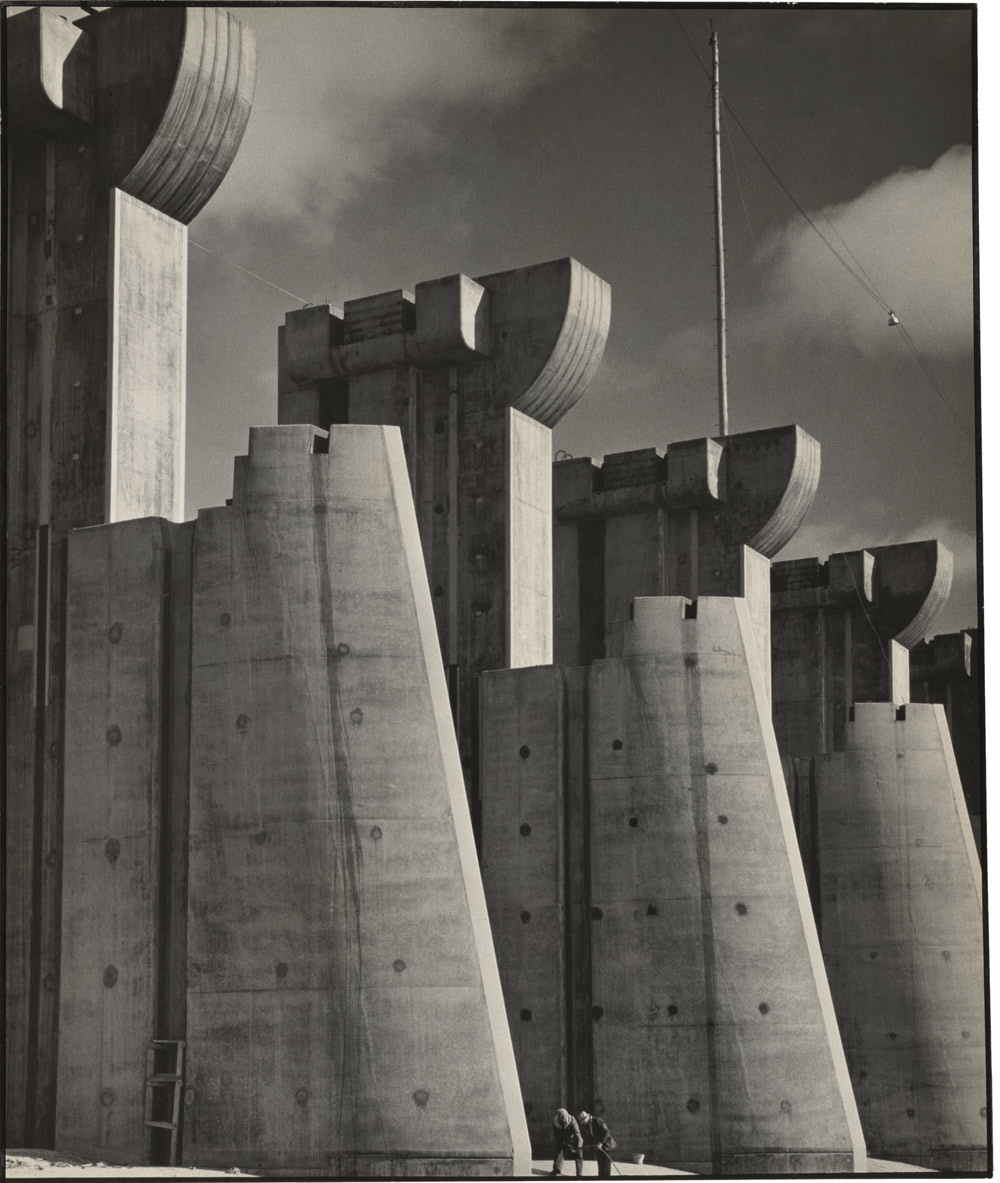
 

Margaret Bourke-White (American, 1904-1971) 'Fort Peck Dam, Montana' 1936


Margaret Bourke-White (American, 1904-1971)
Fort Peck Dam, Montana
1936
Gelatin silver print
33.02 × 27.31cm
National Gallery of Art, Washington, Patrons’ Permanent Fund, 2014


One of the most iconic photographs by the pioneering photojournalist Bourke-White, Fort Peck Dam, Montana was published on the cover of the inaugural issue of Life magazine on November 23, 1936. A striking representation of the machine age, the photograph depicts the stark, massive piers for an elevated highway over the spillway near the dam. The two men at the bottom of the print indicate the piers’ massive scale while revealing the vulnerable position of the worker in the modern industrial landscape.
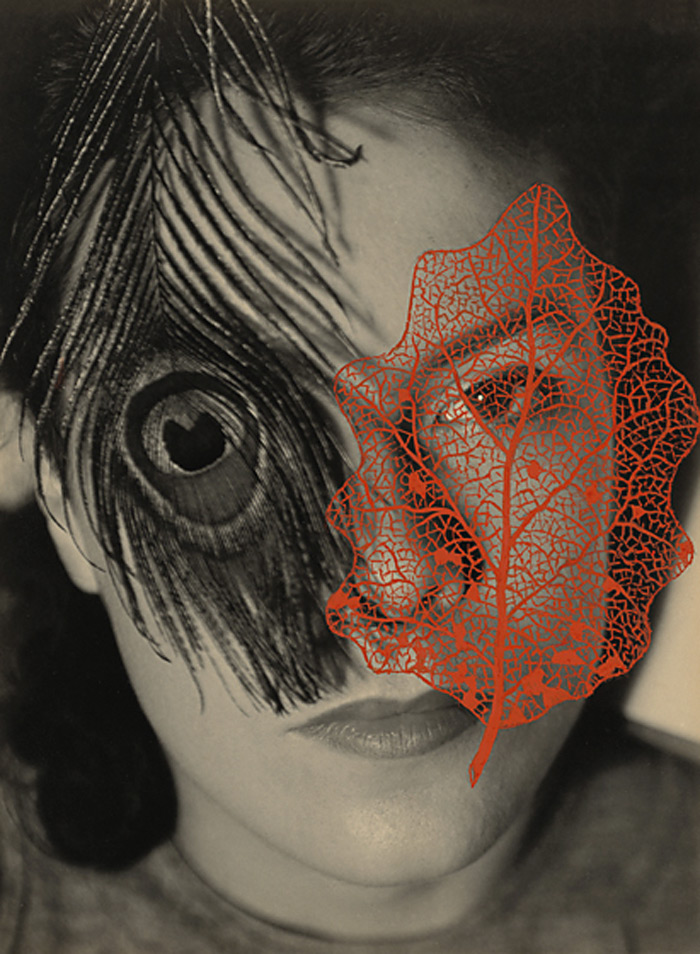
 

György Kepes (American born Hungary, 1906-2001) 'Juliet with Peacock Feather and Red Leaf' 1937-1938


György Kepes (American born Hungary, 1906-2001)
Juliet with Peacock Feather and Red Leaf
1937-1938
Gelatin silver print with gouache
15.7 × 11.6cm
National Gallery of Art, Washington, Pepita Milmore Memorial Fund, 2014


Trained as a painter at the Academy of Fine Arts in Budapest, Kepes was an influential designer, educator, aesthetic theorist, and photographer. In 1930 he moved to Berlin, where he worked with László Moholy-Nagy, but eventually settled in Chicago and later Cambridge, Massachusetts. Created soon after his arrival in America, this startling photograph is both an intimate depiction of Kepes’s wife and a study of visual perception. Like the red leaf that seems to float above the image, the peacock feather – its eye carefully lined up with Juliet’s – obscures not only her vision but also the viewer’s ability to see her clearly.
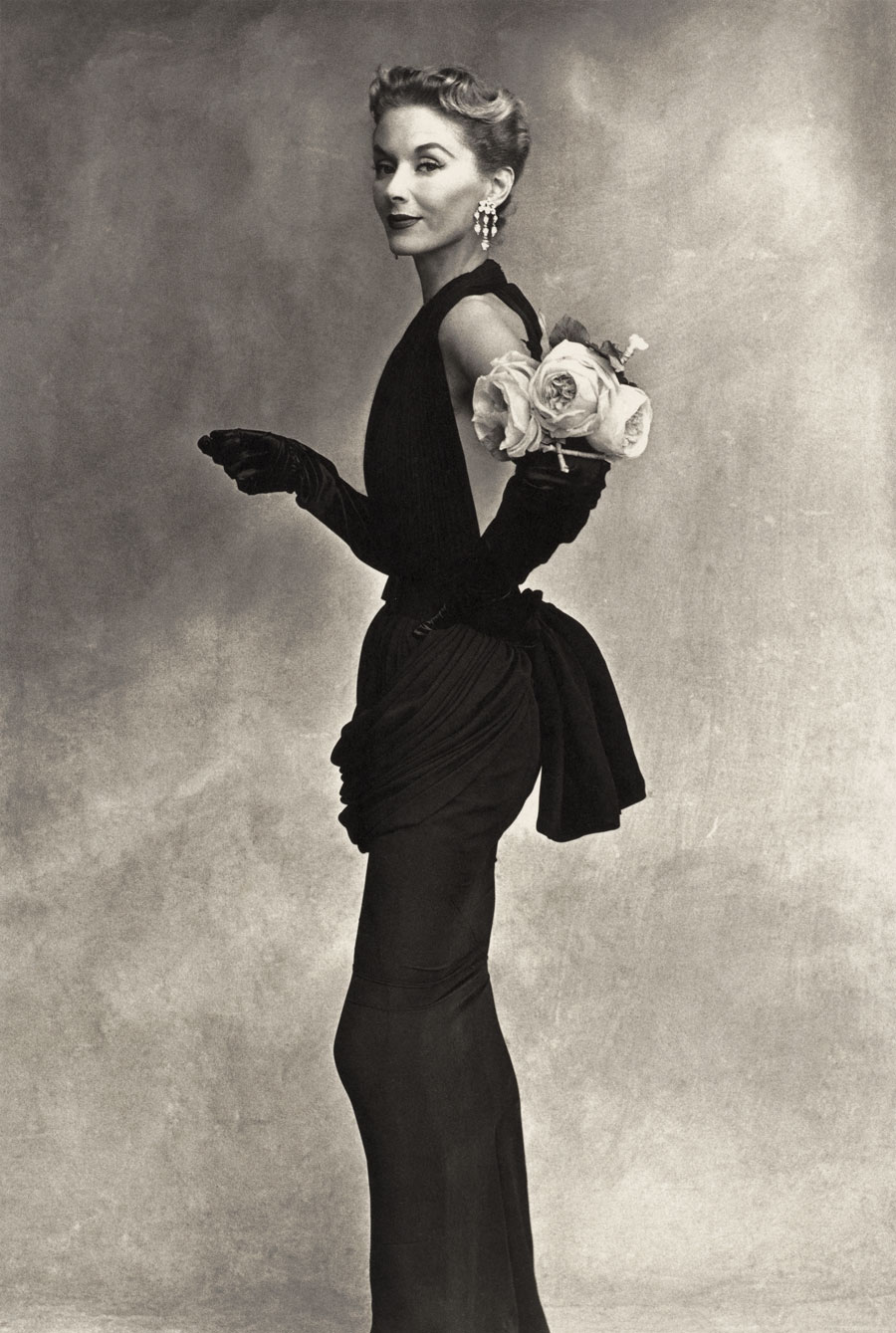
 

Irving Penn (American, 1917-2009) 'Woman with Roses (Lisa Fonssagrives-Penn in Lafaurie Dress), Paris' 1950


Irving Penn (American, 1917-2009)
Woman with Roses (Lisa Fonssagrives-Penn in Lafaurie Dress), Paris
1950
Platinum/palladium print, 1977
55.1 x 37cm
National Gallery of Art, Washington, Gift of Irving Penn, 2002


One of the most influential fashion and portrait photographers of his time, Penn made pictures marked by refinement, elegance, and clarity. Trained as a painter and designer, he began to photograph in the early 1940s while working at Vogue; more than 150 of his photographs appeared on the cover of the magazine during his long career. A perfectionist, Penn explored earlier printing techniques, such as a late nineteenth-century process that used paper coated with solutions of platinum or palladium rather than silver, to achieve the subtle tonal range he desired.


National Gallery of Art
National Mall between 3rd and 7th Streets
Constitution Avenue NW, Washington

Opening hours:
Open daily 10.00 am – 5.00pm

National Gallery of Art website

LIKE ART BLART ON FACEBOOK

Back to top

Exhibition: ‘Robert Frank in America’ at the Cantor Arts Center, Stanford University Part 2

Exhibition dates: 10th September 2014 – 5th January 2015

Curator: Peter Galassi


Robert Frank (American born Switzerland, 1924-2019) 'New York' City 1951


Robert Frank (American born Switzerland, 1924-2019)
New York City
1951
Gelatin silver print Cantor Arts Center Collection, Gift of Raymond B. Gary


The lunatic sublime of America

See Part 1 for comment on this exhibition.

Marcus


Many thankx to the Cantor Arts Center for allowing me to publish the photographs in the posting. Please click on the photographs for a larger version of the image.


“This desire of Frank’s to hold the shape of his feelings in what he made is an ambition found in all Romantic art, one that his style brilliantly encompasses and describes. There is a wonderful illusion of speed trapped in his photographs, a sense of rapidity usually created not by the movement of Frank’s subjects, but by the gesture that he made as he framed his pictures. To photographers who have followed Frank, this autographic gesture incorporates a mystery, one that is distorted, and certainly not explained, by saying that he “shot on the run” or “from the hip.” For the beauty of this gesture is that, caught by such speed, his subjects remain clear, fully recognised, as if the photographer had only glanced at what he wanted to show, but was able to seize it at the moment it unhesitantly revealed itself.”


Tod Papageorge. “Walker Evans And Robert Frank: An Essay On Influence.”


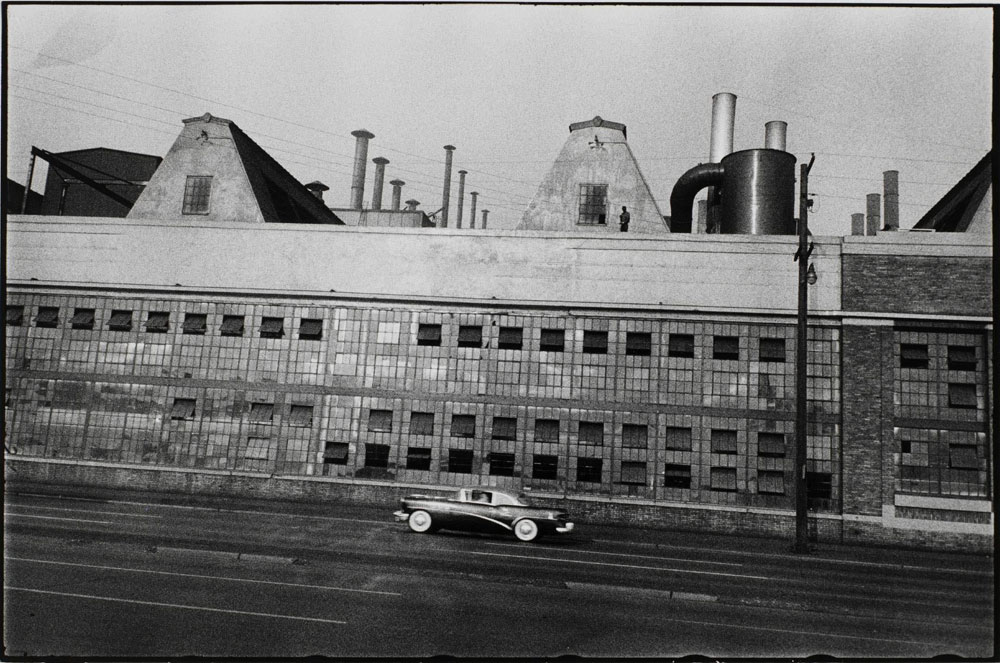
Robert Frank (American born Switzerland, 1924-2019) 'Detroit' 1955


Robert Frank (American born Switzerland, 1924-2019)
Detroit
1955
Gelatin silver print
Cantor Arts Center Collection, Gift of Bowen H. McCoy


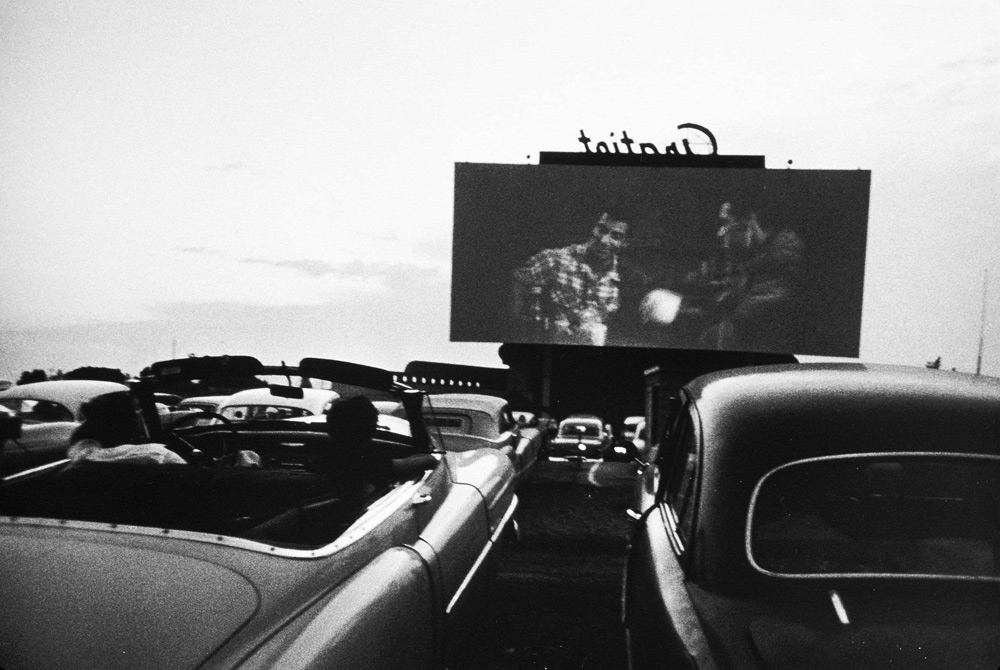
Robert Frank (American born Switzerland, 1924-2019) 'Miami' 1955


Robert Frank (American born Switzerland, 1924-2019)
Miami
1955
Gelatin silver print
Cantor Arts Center Collection, Gift of Raymond B. Gary


Robert Frank (American born Switzerland, 1924-2019) 'New York City' 1950-1951


Robert Frank (American born Switzerland, 1924-2019)
New York City
1950-1951
Gelatin silver print
Cantor Arts Center Collection, Gift of Raymond B. Gary


Robert Frank (American born Switzerland, 1924-2019) 'Hollywood' 1958


Robert Frank (American born Switzerland, 1924-2019)
Hollywood
1958
Gelatin silver print
Cantor Arts Center Collection, Gift of Bowen H. McCoy


“Frank’s photos highlight everything from prosperity to poverty, multitudes to desolation, new life to finality of death, and happiness to sorrow which all occur during our lifetimes making his photos easy for the viewers to understand and relate…

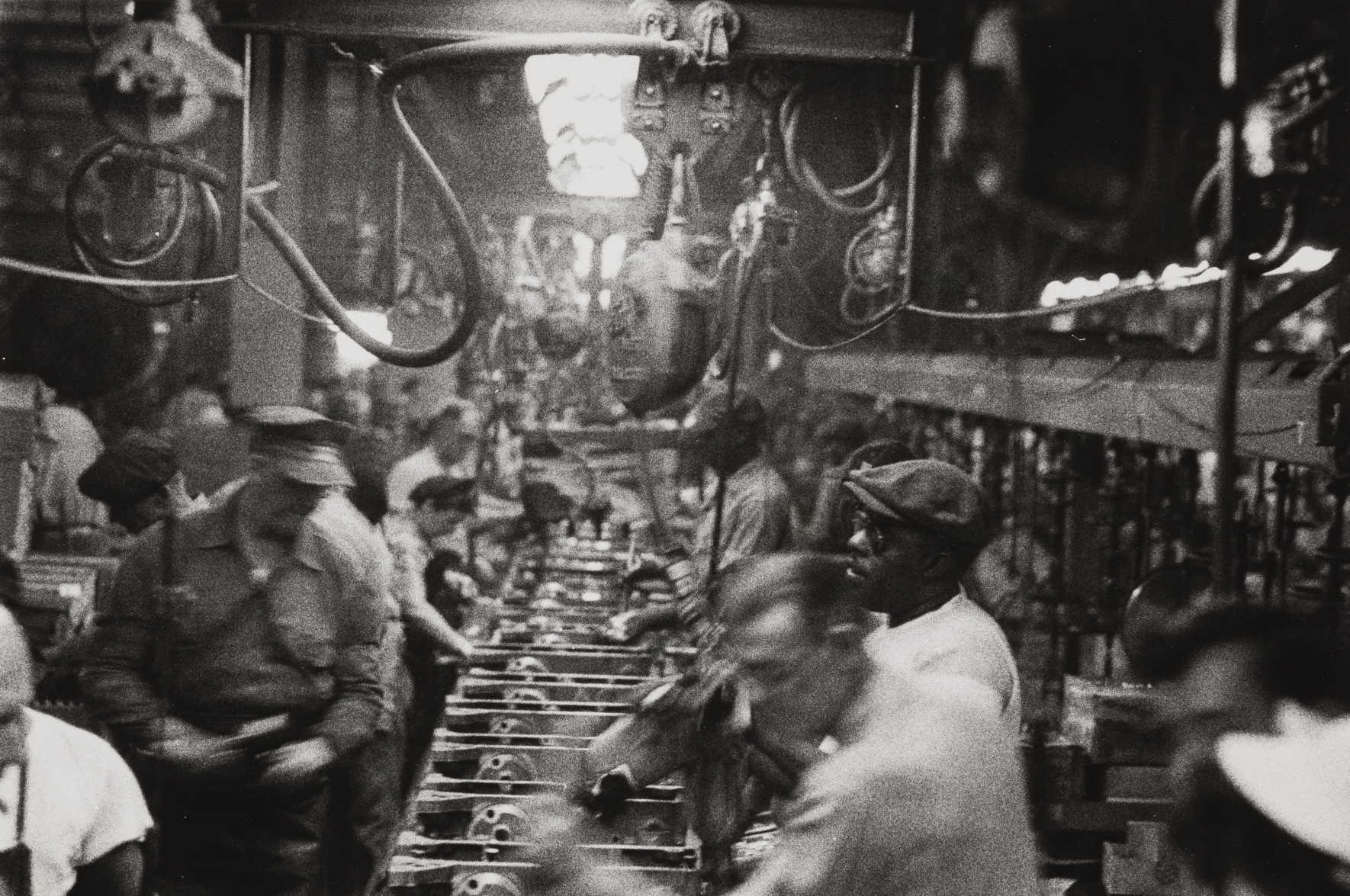
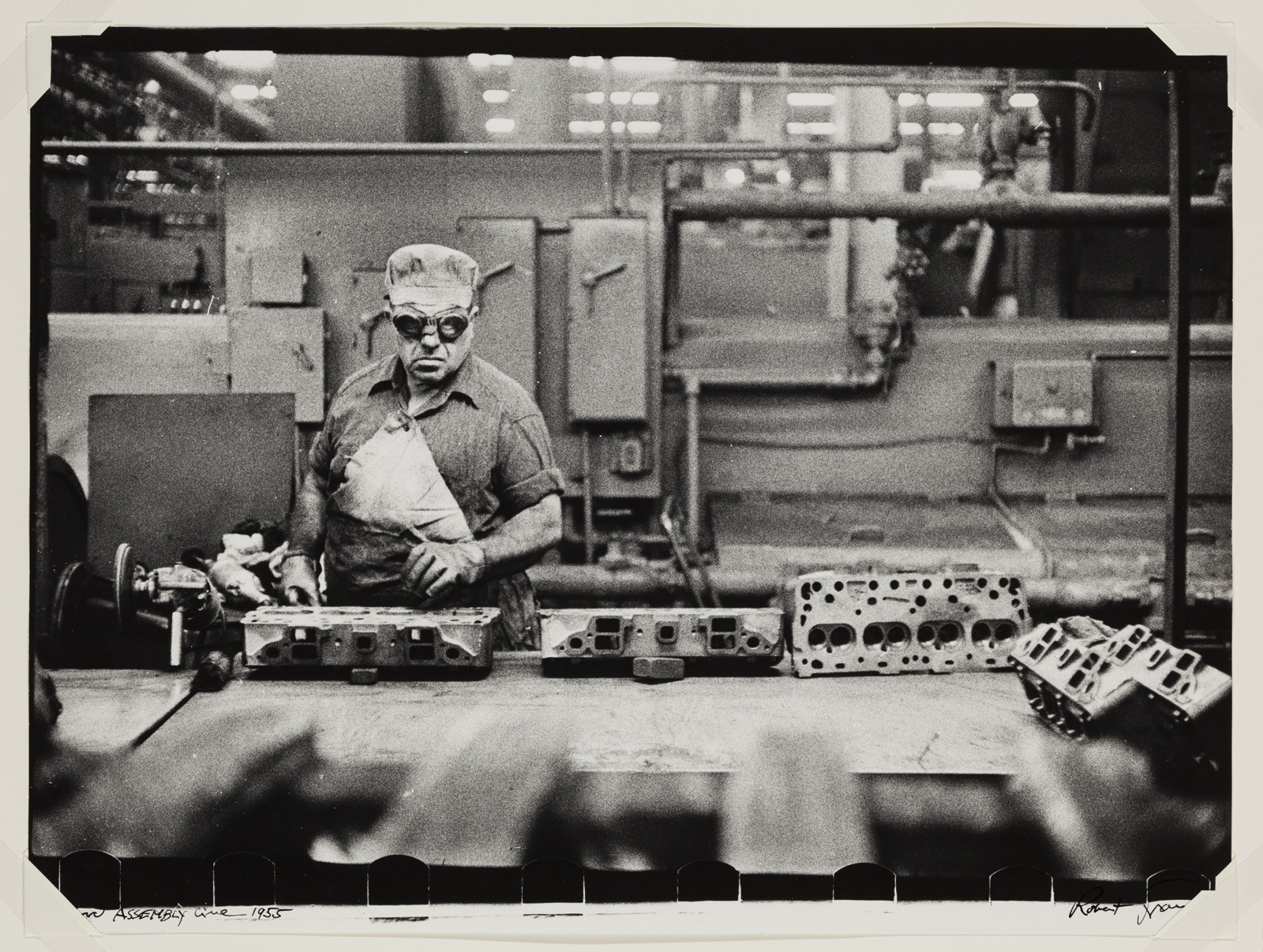
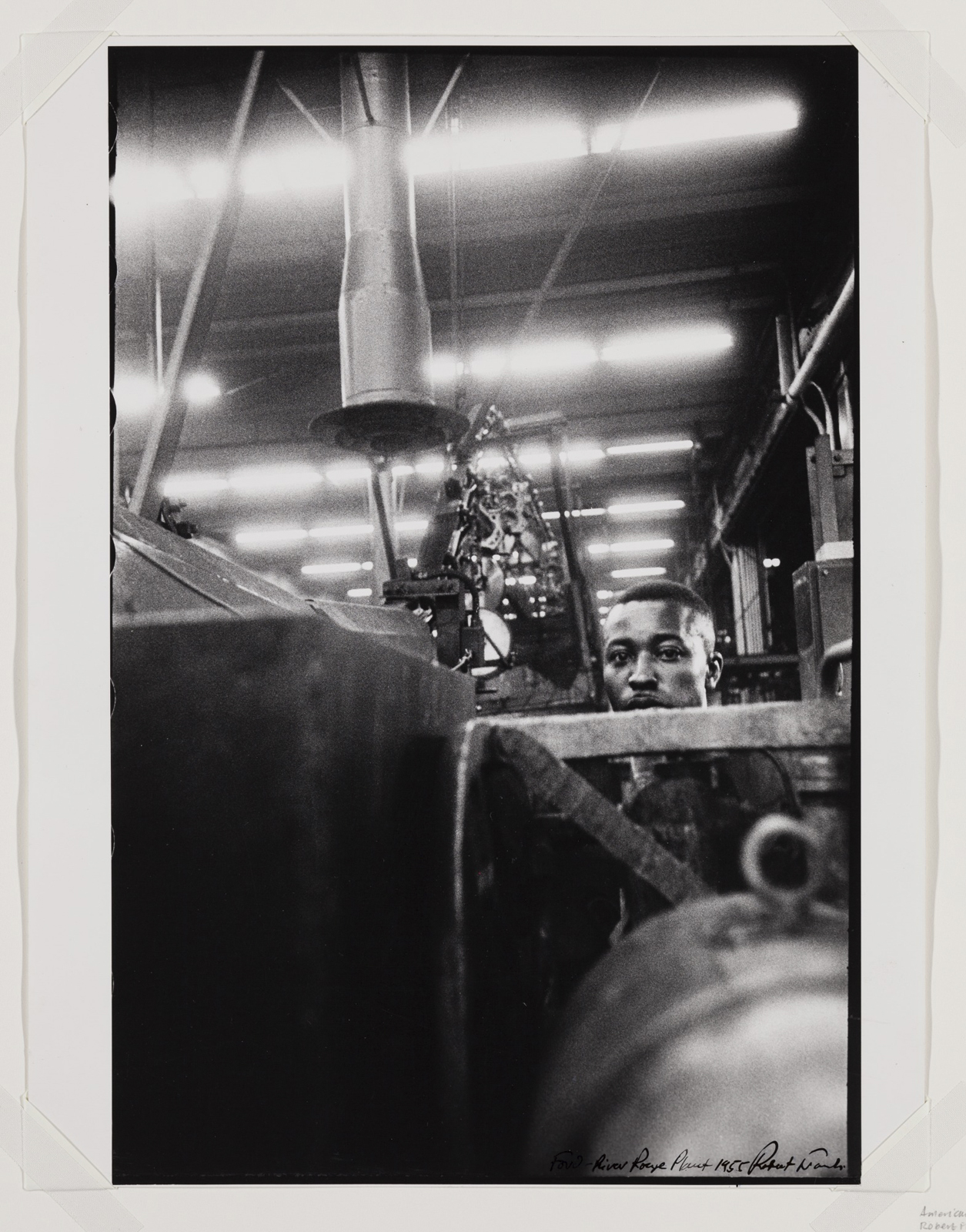
Furthermore, Frank was able to emphasise some of the issues of his era, especially segregation, patriotism, and generational gaps. For example, the New Orleans photo on the cover shows a trolley car obviously segregated with white riders in the front and black riders in the back. However, Frank also shows blacks and whites working side by side in an assembly line photo taken in Detroit as well as a black nurse holding a white baby in Charleston, South Carolina with undertones of hope for equality further highlighted by the photo taken in Detroit bar of Presidents Lincoln and Washington bookending an American flag…

American patriotism seems to be a universal theme throughout Frank’s photos as well. Many of the photos in the book contain an American flag which shows the high level of patriotism felt by Americans in the era after defeating Germany and Japan in the Second World War and at the beginning of the Cold War with the rising Soviet Union as a communist superpower. Flags are hung on an apartment building during a parade in Hoboken, on the wall in a Navy Recruiting Station in Butte, Montana, hanging outdoors during a Fourth of July celebration in Jay, New York, on the wall in the Detroit bar, hanging from the building in a political rally in Chicago, and there are star lights in the background of a club car headed to Washington DC.

The most important theme within Frank’s photos is that of “Americans.” Frank photographed people from different cultures, including blacks, Hispanics, Jews, and whites; celebrating different religious and civil ceremonies from funerals to weddings. He included biker groups, prostitutes, celebrities, high-class socialites, rural farmlands, cowboys, soldiers, teenagers, politicians, families, senior citizens, children, gamblers, and travellers among others within the photos. This variety of people from different backgrounds living and socialising in different settings is truly American in that it is a blend of all different types of people living together as one nation.”

Cindy Coffey. “The Americans: An Analysis of the Photography of Robert Frank,” on the History thru Hollywood blog Saturday, May 11, 2013 [Online] No longer available online


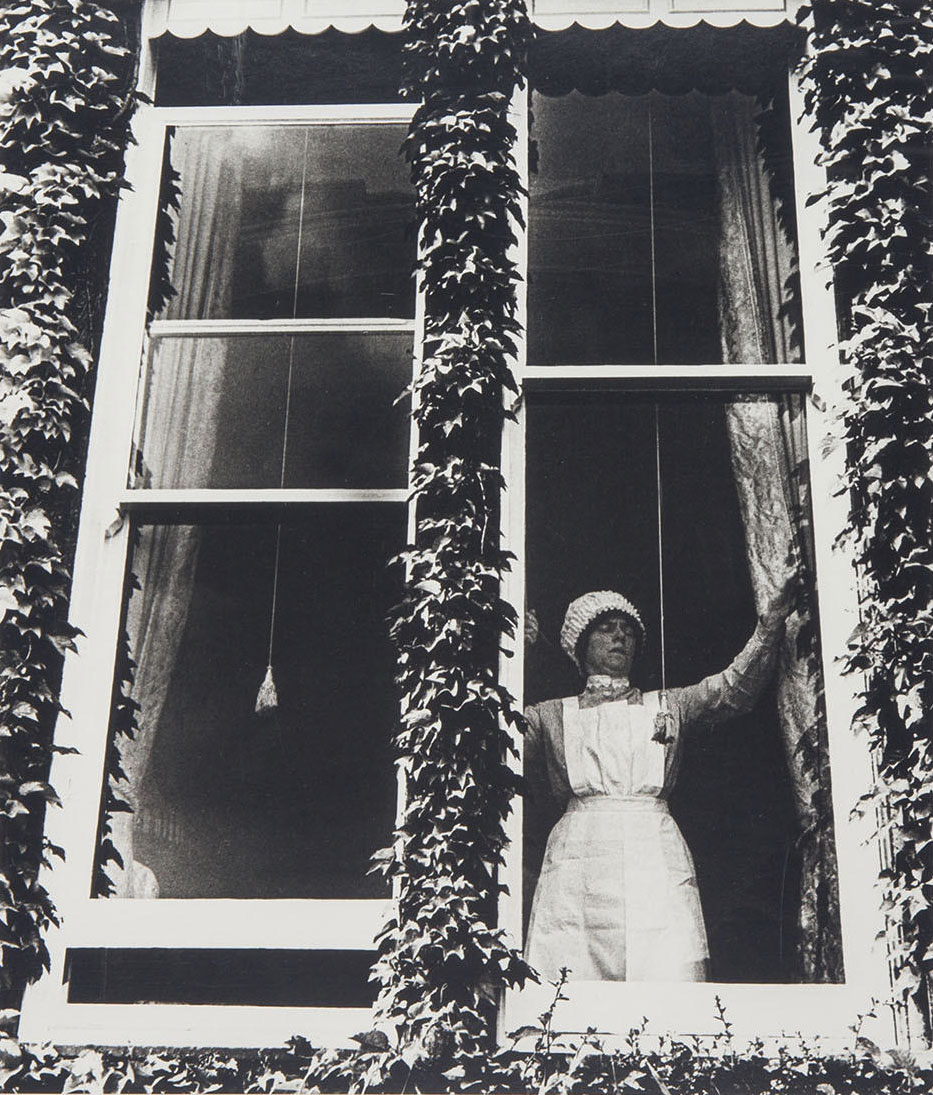
Bill Brandt (British, 1904-1983) 'Parlourmaid at the Window in Kensington' 1935


Bill Brandt (British, 1904-1983)
Parlourmaid at the Window, Kensington
1935 (printed later)
Silver gelatin print


“The first critics of The Americans condemned its content; recent critics have attacked it by attempting to describe Frank’s photographic style. Possibly reacting to the variations in cropping that appear in the later editions of the book, or, more probably, looking for the “snapshot aesthetic” under any available stone, they have assumed this style to be haphazard and contemptuously casual. One writer, for example, has said that Frank “produced pictures that look as if a kid had taken them while eating a Popsicle and then had them developed and printed at the corner drugstore.”

The things in Frank’s pictures which have bothered these critics – occasional blur, obvious grain, the use of available light, the cutting off of objects by the frame – are all, however, characteristic of picture journalism, and, arguably, of the entire history of hand-camera photography: Erich Salomon’s work, for example, done for the most part in the twenties, could be discussed in similar terms. The form of Frank’s work, then, is not radical in the true sense of the word: it does not strike to the root of the tradition it serves. The stylistic exaggerations which occur in his pictures serve only to retain that sense of resident wildness we recognise in great lyric poetry – they are present to call attention not to themselves, but to the emotional world of Frank’s subjects, and to his response to those subjects. When, in the statement he wrote shortly before The Americans was published, Frank said: “It is important to see what is invisible to others. Perhaps the look of hope or the look of sadness. Also it is always the instantaneous reaction to oneself that produces a photograph,” he was expressing his belief that both his perceptions (it is significant that he does not mention an intervening camera in these sentences) and the photographs which result from them are essentially unmediated and true.

This desire of Frank’s to hold the shape of his feelings in what he made is an ambition found in all Romantic art, one that his style brilliantly encompasses and describes. There is a wonderful illusion of speed trapped in his photographs, a sense of rapidity usually created not by the movement of Frank’s subjects, but by the gesture that he made as he framed his pictures. To photographers who have followed Frank, this autographic gesture incorporates a mystery, one that is distorted, and certainly not explained, by saying that he “shot on the run” or “from the hip.” For the beauty of this gesture is that, caught by such speed, his subjects remain clear, fully recognised, as if the photographer had only glanced at what he wanted to show, but was able to seize it at the moment it unhesitantly revealed itself.

Despite the grace of this notational style (or perhaps because of it), Frank seems to have felt that movement within the frames of his photographs would only disturb their sense, and, with a few exceptions, ignored the use of dramatic gesture and motion in The Americans (a fact which again suggests his feeling about Cartier-Bresson’s work). In two of his pictures of convention delegates, and in one of a woman in a gambling casino, he shows emphatic hand gestures. In another photograph, he looks down onto a man striding forward under a neon arrow, and, in yet another, describes two girls skipping away from his camera. Otherwise, his subjects move, if at all, toward, and, in a single memorable case, by him – studies in physiognomy, rather than disclosures of a gathering beauty.

The characteristic gestures in his pictures are the slight, telling motions of the head and upper body: a glance, a stare, a hand brought to the face, an arched neck, pursed lips. They suggest that Frank, like Evans, believed significance in a photograph might be consonant with the repose of the things it described. His pictures, of course, are not acts of contemplation – they virtually catalogue the guises of anxiety – but they are stilled, and their meanings found not in broad rhythms of gesture and form, but in the constellations traced by the figures or objects they show, and the short, charged distances between them.

One of the unacknowledged achievements of The Americans is the series of group portraits – odd assemblages of heads, usually seen in profile, that gather in quick, serried cadences and push at the cutting edges of their frames. In the soft muted light that illuminates them, these heads are drawn with the sculptural brevity of those found on worn coins. But, even in this diminishment, as they cluster and fill the shallow space of Frank’s pictures, they assume the unfurling, cursive shapes of great Romantic art.

As this book shows, these photographs beautifully elaborate Evans’ hand-camera pictures, pictures which are not as judgmental as Frank’s, but also not as formally complex and moving. Although Frank’s most literal recastings of American Photographs occur when he is remembering Evans’ view camera pictures – for example, a gas station, a parked car, a statue – these extravagant translations of the older photographer’s bluntest work eloquently reveal one aspect of Frank’s extraordinary gifts as a photographer.”

Tod Papageorge. “Walker Evans And Robert Frank: An Essay On Influence.”

Download the complete essay (100kb pdf)


Cantor Arts Center at Stanford University
328 Lomita Drive at Museum Way
Stanford, CA 94305-5060
Phone: 650-723-4177

Opening hours:
Wednesday – Sunday 11am – 5pm
Closed Monday and Tuesday

Cantor Arts Center at Stanford University website

LIKE ART BLART ON FACEBOOK

Back to top

Exhibition: ‘Robert Frank in America’ at the Cantor Arts Center, Stanford University Part 1

Exhibition dates: 10th September 2014 – 5th January 2015

Curator: Peter Galassi


Robert Frank (American born Switzerland, 1924-2019) 'En route from New York to Washington, Club Car' 1954


Robert Frank (American born Switzerland, 1924-2019)
En route from New York to Washington, Club Car
1954
Gelatin silver print
Cantor Arts Center Collection, Gift of Raymond B. Gary


The lunatic sublime of America

This is the first part of a bumper two-part posting. View Part 2 of the posting.

Robert Frank (1924-2019) is one of the most important photographic artists of the twentieth century. He was born in Switzerland but he emigrated to American in 1947. He soon gained a job as a fashion photographer for Harper’s Bazaar. He honed his craft as a photographer in England where he took formal, classical images of British life during a trip to Europe and South America in 1947.

He became friends with Edward Steichen and Walker Evans, and it was Evans who supported him in his Guggenheim Fellowship application in 1955 which enabled him “to travel across the United States and photograph all strata of its society. Cities he visited included Detroit and Dearborn, Michigan; Savannah, Georgia; Miami Beach and St. Petersburg, Florida; New Orleans, Louisiana;Houston, Texas; Los Angeles, California; Reno, Nevada; Salt Lake City, Utah; Butte, Montana; and Chicago, Illinois. He took his family along with him for part of his series of road trips over the next two years, during which time he took 28,000 shots. 83 of these were selected by him for publication in The Americans.”1

In The Americans, Frank documents, “the tensions between the optimism of the 1950s and the realities of class and racial differences. The irony that Frank found in the gloss of American culture and wealth over this tension gave his photographs a clear contrast to those of most contemporary American photojournalists, as did his use of unusual focus, low lighting and cropping that deviated from accepted photographic techniques.2

Originally published as Les Américains in 1958 by Robert Delpire in Paris, and finally in 1959 in the United States by Grove Press, reaction in America was initially hostile. They American critics did not like Frank’s shoot from the hip style of photography, nor the mirror that was being held up to their society, especially by a Jewish foreigner. Over time The Americans came to be seen as a seminal work of American photography and social history. Like many artists, Frank only took photographs for a relatively short period of time, before moving on to become a filmmaker.

One cannot forget the era in which Frank took these photographs – that of McCarthyism and “the Second Red Scare, lasting roughly from 1950 to 1956 and characterised by heightened political repression against communists, as well as a campaign spreading fear of their influence on American institutions and of espionage by Soviet agents.”3 Americans were suspicious of foreigners, especially ones with cameras, and this was still the era of racial segregation pre the civil rights movement of the 1960s.

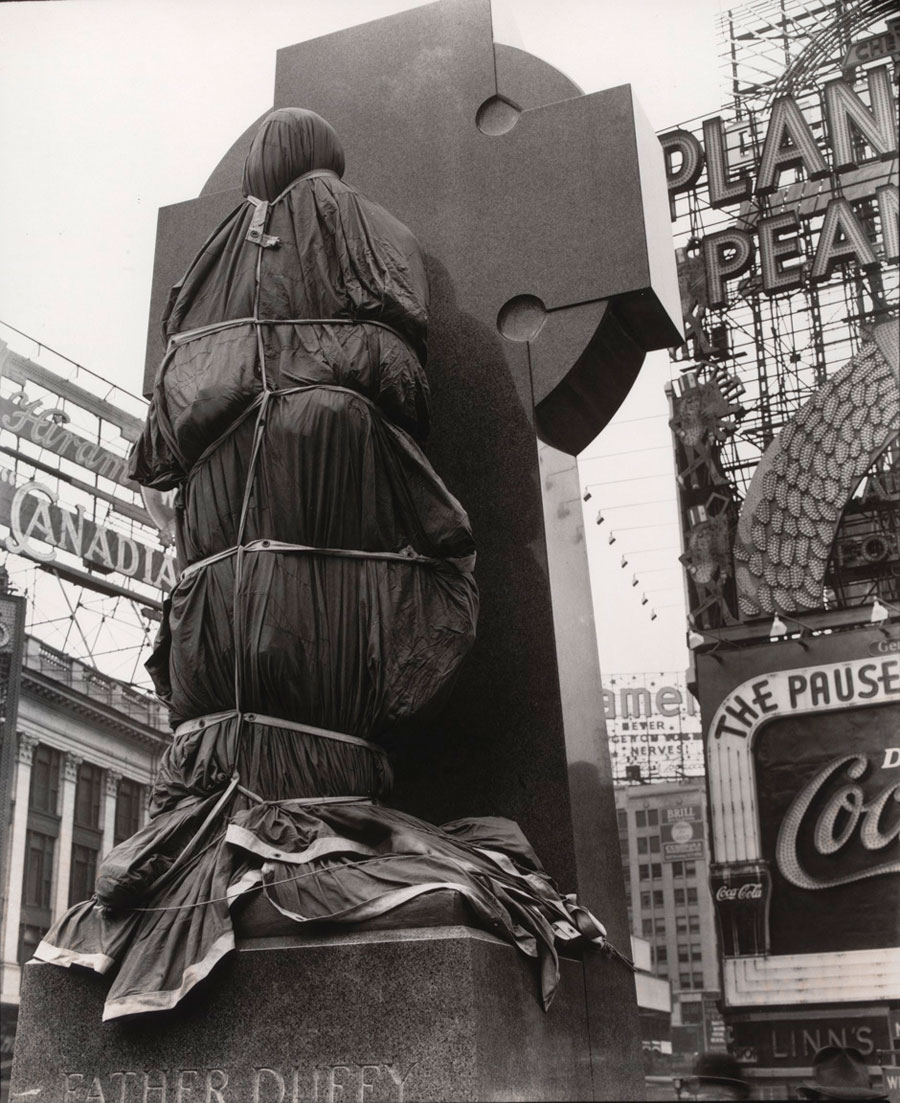
With regard to the structure of the photographs, their origin is based in classicism. This was Frank’s training. It was his skill as an artist, his intuitive and prescient vision of America – how he saw America like no one else before him had – that enabled him to ramp up the intensity, shoot from weird angles, low lighting, cropping, depth of field, unusual focus – and focus on the iconography of America as never seen before: jukeboxes, American flags, cars, highways, death, racial segregation – that was so revolutionary. But he could not have done that without his formal training. You only have to look at the comparison between the photographs of Robert Frank and Walker Evans. Formal and elegant in Evans Church Organ and Pews (1936) and Downtown street, New Orleans (December 1935) with lines vertical and clean… and then Frank, with hardly a straight line or neat angle to be seen. But the one does inform the other, otherwise Frank’s photographs would just become snapshots, vernacular photographs with very little meaning. Which they are not.

This is one of the most powerful, lyrical, humanist photo essays of a country that has ever been taken. Critic Sean O’Hagan, writing in The Guardian in 2014, said The Americans “changed the nature of photography, what it could say and how it could say it. […] it remains perhaps the most influential photography book of the 20th century.”4 As an artist, Frank became the great connector for he is the critical link in the chain that stretches from Lewis Hine through Walker Evans… and on to Lee Friedlander, Garry Winogrand and Joel Meyerowitz.

As an artist you marvel at his intuition and inspiration, to look at the world as no one else had done before, to push the boundaries of medium and message. To photograph people, alone and in groups; politics; religion; race; automobiles and the road; and the media and thrust them into the white, bright, happy world of 1950s consumerist America saying: this is what this country is really like, this is my “impression” of you in all your fleeting madness, “America as an often bleak and lonely place.” You only have to look at the “eye” in U.S. 91, leaving Blackfoot, Idaho (1956, below) or look at the photograph of the grave by the side of the road to know that you are in Blue Velvet territory (David Lynch, director 1986, the title is taken from The Clovers’ 1955 song of the same name).

I am not sure yet how one world pierces the other but believe me they surely do.

Dr Marcus Bunyan


Footnotes

1/ “Robert Frank” on the Wikipedia website

2/ Ibid.,

3/ “McCarthyism,” on the Wikipedia website

4/ Sean O’Hagan. “Robert Frank at 90: the photographer who revealed America won’t look back,” on The Guardian website Sat 8 Nov 2014 [Online] Cited 06/07/2021


Many thankx to the Cantor Arts Center for allowing me to publish the photographs in the posting. Please click on the photographs for a larger version of the image.


“It was the vision that emanated from the book that lead not only me, but my whole generation of photographers out into the American landscape, in a sense, the lunatic sublime of America.”


Joel Meyerowitz


“Like a boxer trains for a fight, a photographer by walking the streets, and watching and taking pictures, and coming home and going out the next day, the same thing again, taking pictures. It doesn’t matter how many he takes, or if he takes any at all, it gets you prepared to know what you should take pictures of, or what is the right thing to do and when.”


Robert Frank


Walker Evans (American, 1903-1975) 'Main St., Ossining, New York' 1932


Walker Evans (American, 1903-1975)
Main St., Ossining, New York
1932
Gelatin silver print


Robert Frank (American born Switzerland, 1924-2019) 'Detroit' 1955


Robert Frank (American born Switzerland, 1924-2019)
Detroit
1955
Gelatin silver print
Cantor Arts Center Collection, Gift of Raymond B. Gary


In 1955 and 1956, Swiss-born photographer Robert Frank (b. 1924) traveled throughout the United States on a Guggenheim Fellowship, photographing ordinary people in their everyday lives. His book The Americans – 83 photographs, mostly from those travels, published in 1959 – repudiated the bland good cheer of the magazines with an image of the country that was starkly at odds with the official optimism of postwar prosperity. The book became a landmark of photographic history; but Frank soon turned to filmmaking, and the rest of his early photographic career was largely forgotten. An important group of unknown or unfamiliar photographs in the Cantor Arts Center’s collection provides the core of the exhibition Robert Frank in America, which sheds new light on the making of The Americans and presents, for the first time, Frank’s American photographs from the 1950s as a coherent body of work.

“We are delighted that the Cantor’s collection has provided the basis for a fresh look at one of the great achievements of 20-century photography,” said Connie Wolf, John and Jill Freidenrich Director of the Cantor Arts Center. “We are also deeply grateful to Robert Frank, who has generously contributed to the project.”

The exhibition Robert Frank in America, on view September 10, 2014 through January 5, 2015, features 130 photographs drawn primarily from the Cantor’s collection as well as from other public and private collections and from Frank himself. Peter Galassi, former chief curator of photography at the Museum of Modern Art, New York, is the exhibition’s guest curator and author of the accompanying publication.

The Exhibition’s Development from the Cantor’s Collection

In the summer of 2012, Wolf invited Galassi to offer his thoughts on one of the museum’s hidden treasures: more than 150 photographs by Robert Frank given to the Cantor in the mid-1980s by Stanford alumnus Bowen H. McCoy and his colleague Raymond B. Gary. This remarkable collection spans the full range of Frank’s photographic career before he turned to filmmaking in the early 1960s. It is especially rich in Frank’s American work of the 1950s, including scores of photographs that are unknown or unfamiliar even to scholars. Wolf and Galassi saw an opportunity to share this work with Stanford students, faculty, scholars at large and the general public.

Research began at the National Gallery of Art, Washington, where more than two decades ago the artist established the archive of his photographic career prior to 1970. Studying more than 1,000 contact sheets enabled Galassi to determine the locations and dates of dozens of previously unidentified photographs in the Cantor collection. He then selected works for the exhibition so as to identify Frank’s major themes and artistic strategies. The compelling sequence of The Americans poetically weaves diverse images into a seamless whole, but Robert Frank in America groups related pictures to explore the pictorial strategies that Frank developed as he worked, and also to highlight important subjects – people, alone and in groups; politics; religion; race; automobiles and the road; and the media.

Frank repeatedly photographed isolated figures so that they seemed trapped by pictorial forces, for example. This powerful metaphor for Frank’s vision of lonely individuals imprisoned by social circumstances is announced in the first picture, The Americans, where the flag obliterates a spectator’s face (Parade – Hoboken, New Jersey, 1955). In Robert Frank in America, that photograph is juxtaposed with another that uses the identical pictorial scheme but a different subject; the interior of a bar (New York City, 1955).

“Although The Americans is famous – partly because it is famous – Robert Frank’s American work of the 1950s has never been considered as a whole,” said Galassi. “The full range of the work shows just how Frank turned the vocabulary of magazine photojournalism on its head and used it to speak in a personal, poetic voice.”

Inviting Galassi to organise the exhibition was part of the museum’s renewed commitment to collecting, studying and presenting photography, Wolf says. The Cantor has been adding to its already strong holdings, presenting innovative exhibitions of work by distinguished artists and providing a valuable opportunity for Stanford students and faculty to work directly with photographs. Leland Stanford’s commission more than a century ago for Eadweard Muybridge’s pioneering work on animal locomotion serves as a foundation for the museum’s extensive collection today.

Exhibition catalogue

The major catalogue accompanying this exhibition is published by the Cantor Arts Center in association with international publisher Steidl, with whom Frank has worked closely on most of his books. All 130 photographs in the exhibition are reproduced as full-page tritone plates. Galassi’s extensive essay traces the evolution of Frank’s work from his arrival in the United States in 1947 until he abandoned his first photographic career in the early 1960s. The text provides a thorough outline of the photographic context in which Frank at first sought success as a magazine photojournalist as well as a detailed analysis of the methods and strategies that lie behind The Americans. The essay features 24 illustrations, including an unprecedented map of Frank’s 1955-56 Guggenheim travels, which locates the sites of nearly all of the photographs in The Americans and in Robert Frank in America. The 200-page book, with a foreword by Connie Wolf, is designed by Katy Homans, New York.

Robert Frank

Robert Frank was born in 1924 in Zürich, Switzerland. The conclusion of World War II ended his vulnerability (his father was a German-born Jew) and enabled him to escape what he regarded as a narrow, antiquated culture. Soon after reaching New York in March 1947, he was hired by Harper’s Bazaar, but his distaste for photographing fashion led him to quit after six months. Over the next five or six years, in Europe and the United States, Frank aimed to establish himself as a freelance photojournalist, with limited success. A Guggenheim Fellowship, awarded in March 1955 and renewed a year later, freed him to pursue his work independently, and he soon began to travel in hopes of making a book. Les Américains was published by Robert Delpire in Paris in 1958 and, as The Americans, by Grove Press in New York in 1959. The latter included an introduction by Jack Kerouac, author of On the Road.

Film and video have formed a central aspect of Frank’s work since 1959, when he collaborated with Allen Ginsberg, Jack Kerouac and Alfred Leslie on Pull My Daisy. In 1972, however, he resumed making photographs, often using Polaroid positive-negative materials and incorporating text and multiple images. That same year he published the first of several editions of The Lines of My Hand, a book that surveyed his career in all mediums and initiated reconsiderations of his early photographic career. The first full-scale retrospective of his photographs was organised at the Museum of Fine Arts, Houston, in 1986. In 1990, a major gift by Frank established the Robert Frank Collection at the National Gallery of Art, Washington, which has since presented two major exhibitions, each accompanied by an important book: Robert Frank: Moving Out (1994) and Looking In: Robert Frank’s “The Americans” (2009).

Press release from the Cantor Arts Center


Robert Frank (American born Switzerland, 1924-2019) 'Beaufort, South Carolina' 1955


Robert Frank (American born Switzerland, 1924-2019)
Beaufort, South Carolina
1955
Gelatin silver print
Cantor Arts Center Collection, Gift of Raymond B. Gary


Guggenheim proposal summary

“To photograph freely throughout the United States, using the miniature camera exclusively. The making of a broad, voluminous picture record of things American, past and present. This project is essentially the visual study of a civilization and will include caption notes; but it is only partly documentary in nature: one of its aims is more artistic than the word documentary implies.”

The full statement

“I am applying for a Fellowship with a very simple intention: I wish to continue, develop and widen the kind of work I already do, and have been doing for some ten years, and apply it to the American nation in general. I am submitting work that will be seen to be documentation - most broadly speaking. Work of this kind is, I believe, to be found carrying its own visual impact without much work explanation. The project I have in mind is one that will shape itself as it proceeds, and is essentially elastic. The material is there: the practice will be in the photographer’s hand, the vision in his mind. One says this with some embarrassment but one cannot do less than claim vision if one is to ask for consideration.

“The photographing of America” is a large order - read at all literally, the phrase would be an absurdity. What I have in mind, then, is observation and record of what one naturalized American finds to see in the United States that signifies the kind of civilization born here and spreading elsewhere. Incidentally, it is fair to assume that when an observant American travels abroad his eye will see freshly; and that the reverse may be true when a European eye looks at the United States. I speak of the things that are there, anywhere and everywhere - easily found, not easily selected and interpreted. A small catalog comes to the mind’s eye: a town at night, a parking lot, a supermarket, a highway, the man who owns three cars and the man who owns none, the farmer and his children, a new house and a warped clapboard house, the dictation of taste, the dream of grandeur, advertising, neon lights, the faces of the leaders and the faces of the followers, gas tanks and post offices and backyards.

The uses of my project would be sociological, historical and aesthetic. My total production will be voluminous, as is usually the case when the photographer works with miniature film. I intend to classify and annotate my work on the spot, as I proceed. Ultimately the file I shall make should be deposited in a collection such as the one in the Library of Congress. A more immediate use I have in mind is both book and magazine publication.”


Robert Frank (American born Switzerland, 1924-2019) 'Florida' 1958


Robert Frank (American born Switzerland, 1924-2019)
Florida
1958
Gelatin silver print
Cantor Arts Center Collection, Gift of Raymond B. Gary


“I am grateful to the Guggenheim Foundation for their confidence and the provisions they made for me to work freely in my medium over a protracted period. When I applied for the Guggenheim Fellowship, I wrote: “To produce an authentic contemporary document, the visual impact should be such as will nullify explanation.”

With these photographs, I have attempted to show a cross-section of the American population. My effort was to express it simply and without confusion. The view is personal and, therefore, various facets of American life and society have been ignored. The photographs were taken during 1955 and 1956; for the most part in large cities such as Detroit, Chicago, Los Angeles, New York and in many other places during my Journey across the country. My book, containing these photographs, will be published in Paris by Robert Delpire, 1958.

I have been frequently accused of deliberately twisting subject matter to my point of view. Above all, I know that life for a photographer cannot be a matter of indifference. Opinion often consists of a kind of criticism. But criticism can come out of love. It is important to see what is invisible to others – perhaps the look of hope or the look of sadness. Also, it is always the instantaneous reaction to oneself that produces a photograph.

My photographs are not planned or composed in advance and I do not anticipate that the on-looker will share my viewpoint. However, I feel that if my photograph leaves an image on his mind – something has been accomplished.

It is a different state of affairs for me to be working on assignment for a magazine. It suggests to me the feeling of a hack writer or a commercial illustrator. Since I sense that my ideas, my mind and my eye are not creating the picture but that the editors’ minds and eyes will finally determine which of my pictures will be reproduced to suit the magazines’ purposes.

I have a genuine distrust and “mefiance” toward all group activities. Mass production of uninspired photojournalism and photography without thought becomes anonymous merchandise. The air becomes infected with the “smell” of photography. If the photographer wants to be an artist, his thoughts cannot be developed overnight at the corner drugstore.

I am not a pessimist, but looking at a contemporary picture magazine makes it difficult for me to speak about the advancement of photography, since photography today is accepted without question, and is also presumed to be understood by all – even children. I feel that only the integrity of the individual photographer can raise its level.

The work of two contemporary photographers, Bill Brandt of England and the American, Walker Evans, have influenced me. When I first looked at Walker Evans’ photographs, I thought of something Malraux wrote: “To transform destiny into awareness.” One is embarrassed to want so much for oneself. But, how else are you going to justify your failure and your effort?”

Robert Frank, U.S. Camera Annual, 1958, p. 115


Robert Frank (American born Switzerland, 1924-2019) 'Lusk, Wyoming' 1956


Robert Frank (American born Switzerland, 1924-2019)
Lusk, Wyoming
1956
Gelatin silver print
Cantor Arts Center Collection, Gift of Raymond B. Gary


Robert Frank (American born Switzerland, 1924-2019) 'Main Street - Savannah, Georgia' 1955


Robert Frank (American born Switzerland, 1924-2019)
Main Street – Savannah, Georgia
1955
Gelatin silver print
Cantor Arts Center Collection, Gift of Raymond B. Gary


Walker Evans (American, 1903-1975) 'Downtown street, New Orleans' December 1935


Walker Evans (American, 1903-1975)
Downtown street, New Orleans
December 1935
Gelatin silver print


Robert Frank (American born Switzerland, 1924-2019) 'New York City' 1949


Robert Frank (American born Switzerland, 1924-2019)
New York City
1949
Gelatin silver print
Lent by Peter Steil


Robert Frank (American born Switzerland, 1924-2019) 'New York City' early 1950s


Robert Frank (American born Switzerland, 1924-2019)
New York City
early 1950s
Gelatin silver print
Cantor Arts Center Collection, Gift of Bowen H. McCoy


Cantor Arts Center at Stanford University
328 Lomita Drive at Museum Way
Stanford, CA 94305-5060
Phone: 650-723-4177

Opening hours:
Wednesday – Sunday 11am – 5pm
Closed Monday and Tuesday

Cantor Arts Center at Stanford University website

LIKE ART BLART ON FACEBOOK

Back to top

Exhibition: ‘Walker Evans. A Life’s Work’ at Martin-Gropius-Bau Berlin

Exhibition dates: 25th July – 9th November 2014


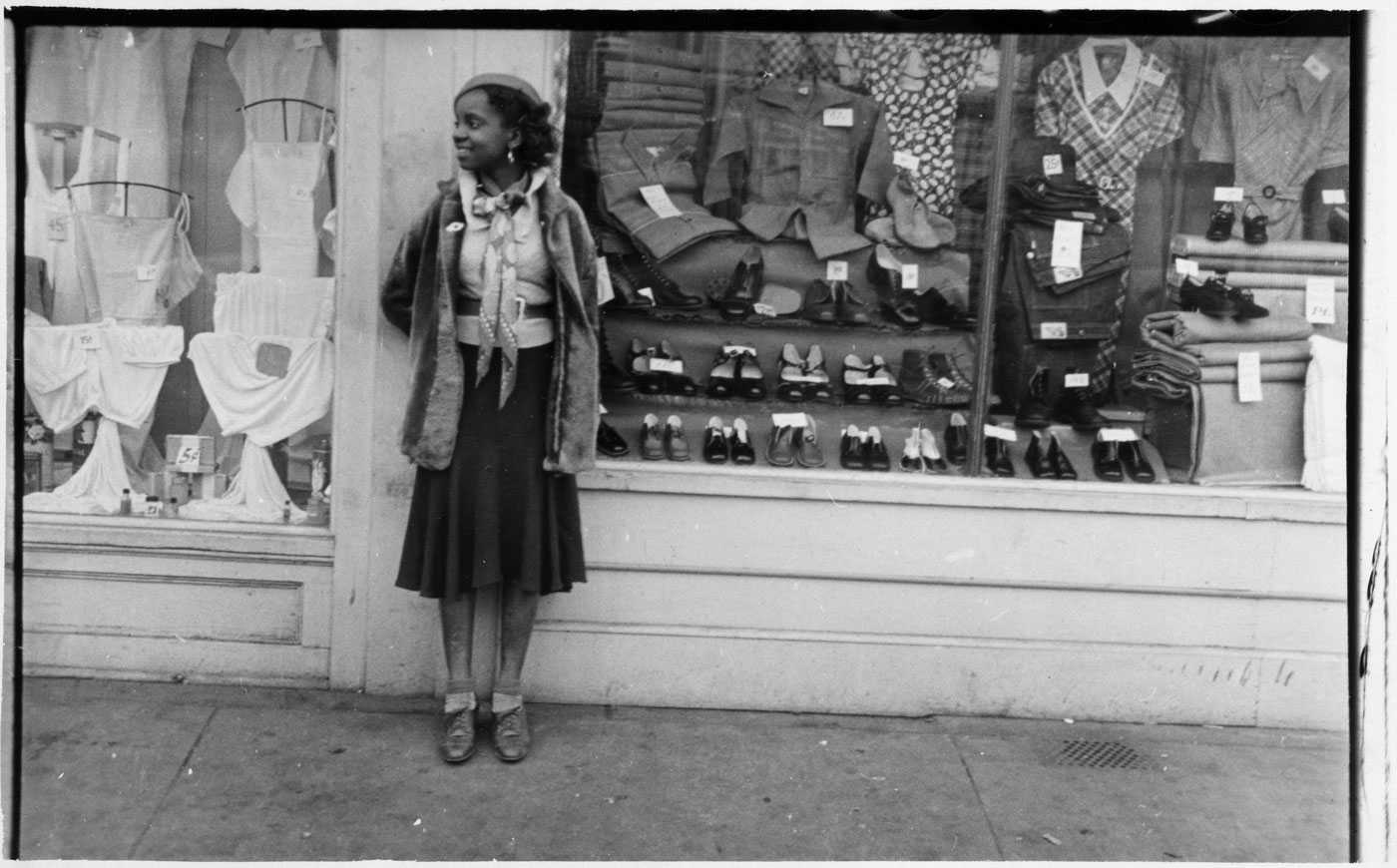
Walker Evans (American, 1903-1975) 'Young Women Outside Clothing Store' 1934-1935


Walker Evans (American, 1903-1975)
Young Women Outside Clothing Store
1934-1935
114 x 184mm
Lunn Gallery Stamp (1975)
© Walker Evans Archive, The Metropolitan Museum of Art


End of the week. Not a lot of energy or time to write an in depth piece on the wonders of Walker Evans, so just a few observations…

I like this photographer, I like him a lot. No histrionics, little subjectivity being thrown at the audience. The images are -just -so. The compositions are seemingly simple but are actually very complex. Only a skilled craftsman can make the difficult look simple. As Thomas Struth has said of his photography: ‘for me it is more interesting to try and find out something from the real than to throw something subjective in front of the audience.’

“The uninflected image gives no hints as to how it is to be interpreted, and the viewer is led to linger over what might otherwise seem an un-noteworthy, everyday vista.” It’s recognising that vista in the first place for what it is, and what else it can be, so that it ‘gives pause’ to the viewer.

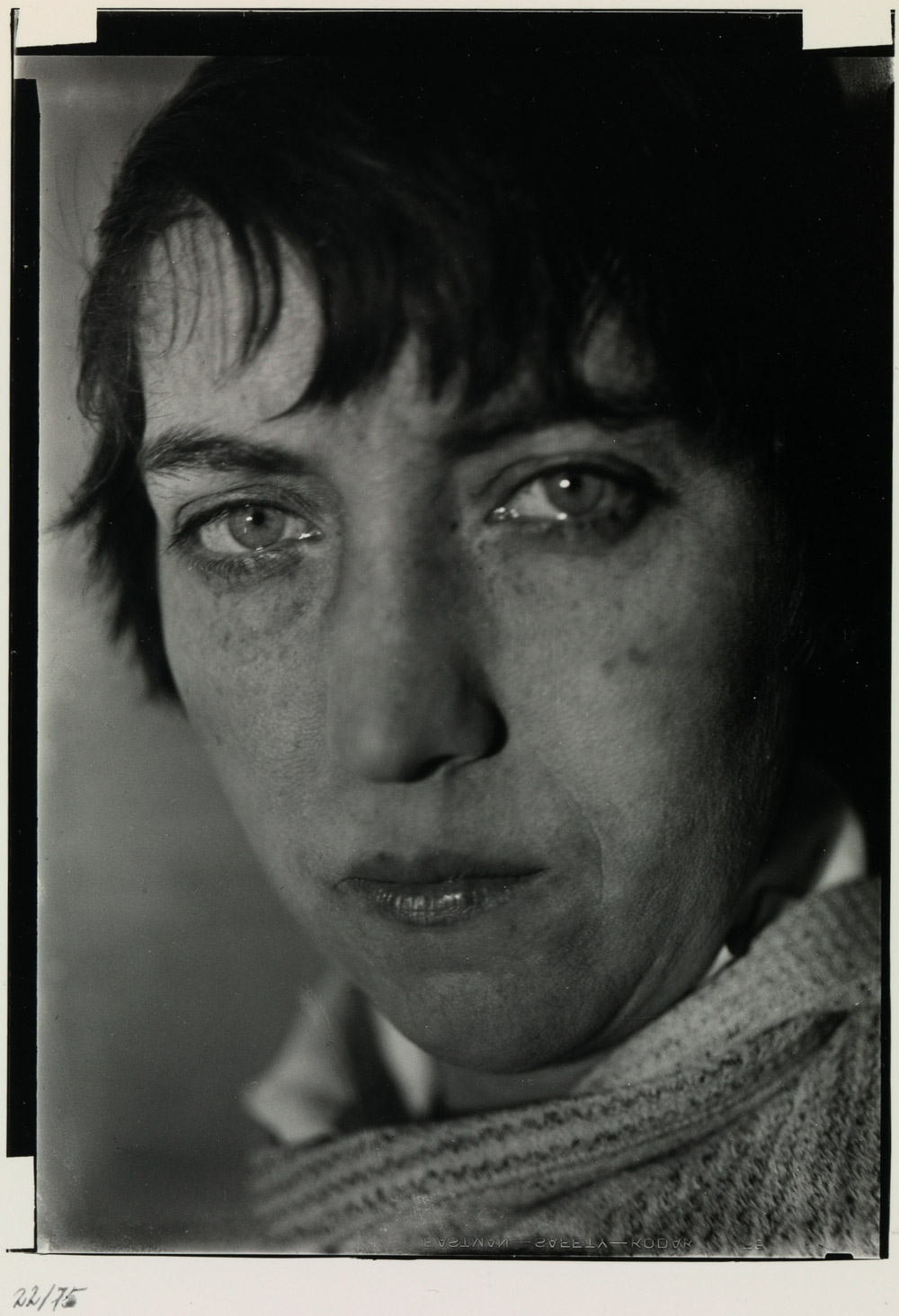
I really like the portrait of Berenice Abbott and it is also very educational. Look at the depth of field, with the view camera probably one stop past wide open. The sharpness plane is very tiny but look at the quality of the lens and how it renders the values that are slightly out of focus. What a very beautiful image and I suspect a top drawer lens. Notice also it is print 22. Walker Evans would keep a lot of prints and they were not the same. The next copy of this print might have been better (he might have worked out something to do) or it might be worse – the developer might have gone off. So it is not strictly an “edition” it is just the numbering of the prints he made.

He used every sort of camera: 8 x 10 and the smaller view formats, roll film cameras, Colour polaroid! hence the different sizes of his prints. Occasionally he did crop his images but on other occasions he took “a stance” where you knew he was about to perform and there would be no cropping. If you are really interested in this master photographer, the best Walker Evans book to get is First and Last (1978, available cheaply as a hardback on Amazon) which contains many pictures and “threads” that are dynamite… and the John Szarkowski book Walker Evans (1972) is a good one as well.

Dr Marcus Bunyan


Many thankx to Martin-Gropius-Bau for allowing me to publish the photographs in the posting. Please click on the photographs for a larger version of the image.


Walker Evans (American, 1903-1975) 'Two Women' Frenchquarter, New Orleans, February - March 1935


Walker Evans (American, 1903-1975)
Two Women
Frenchquarter, New Orleans, February – March 1935
155 x 219mm
Lunn Gallery Stamp (1975)
© Walker Evans Archive, The Metropolitan Museum of Art


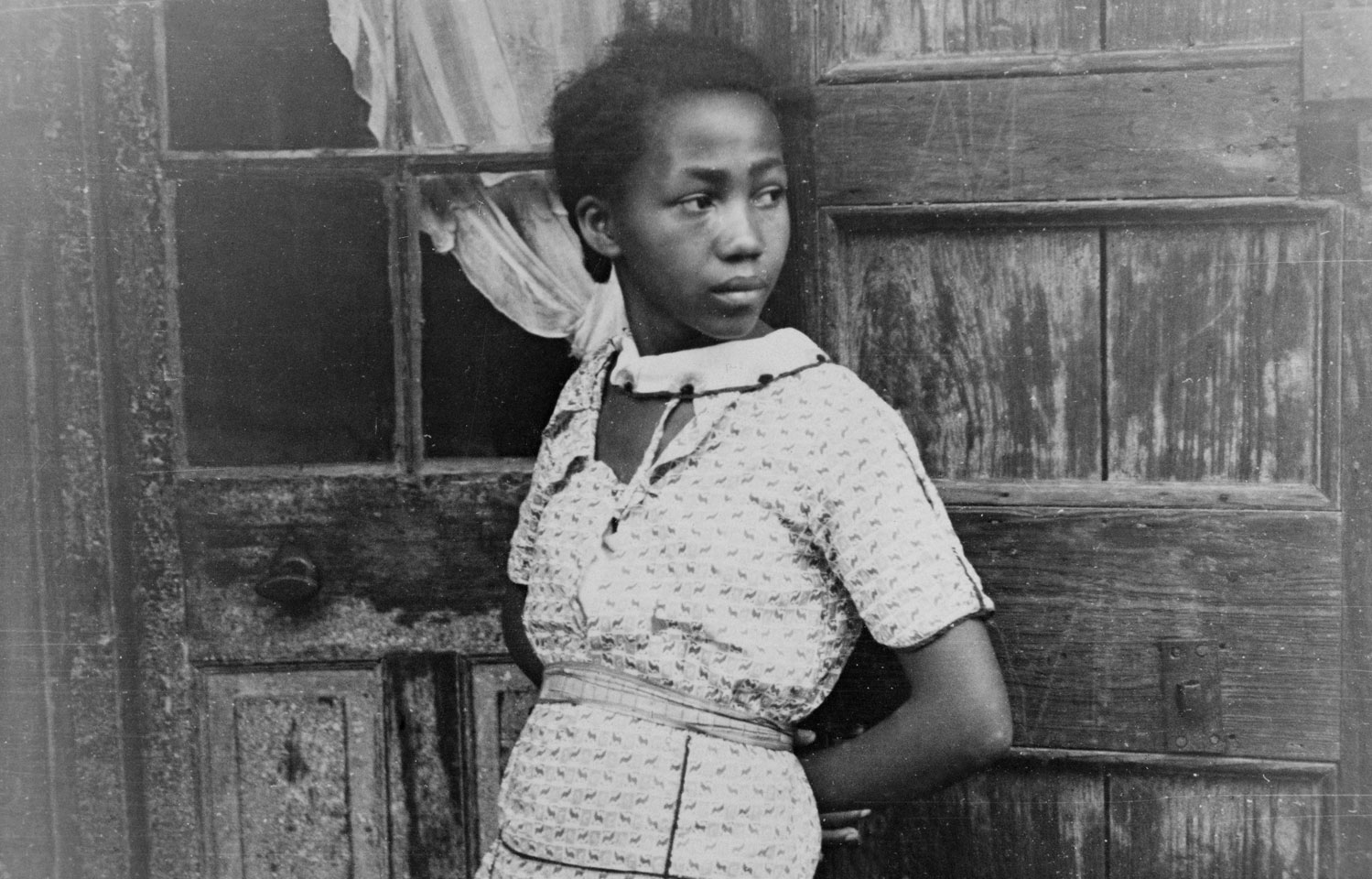
Walker Evans (American, 1903-1975) 'Girl In French Quarter' New Orleans, February - March 1935


Walker Evans (American, 1903-1975)
Girl In French Quarter
New Orleans, February – March 1935
117 x 178mm
Lunn Gallery Stamp (1975)
© Walker Evans Archive, The Metropolitan Museum of Art


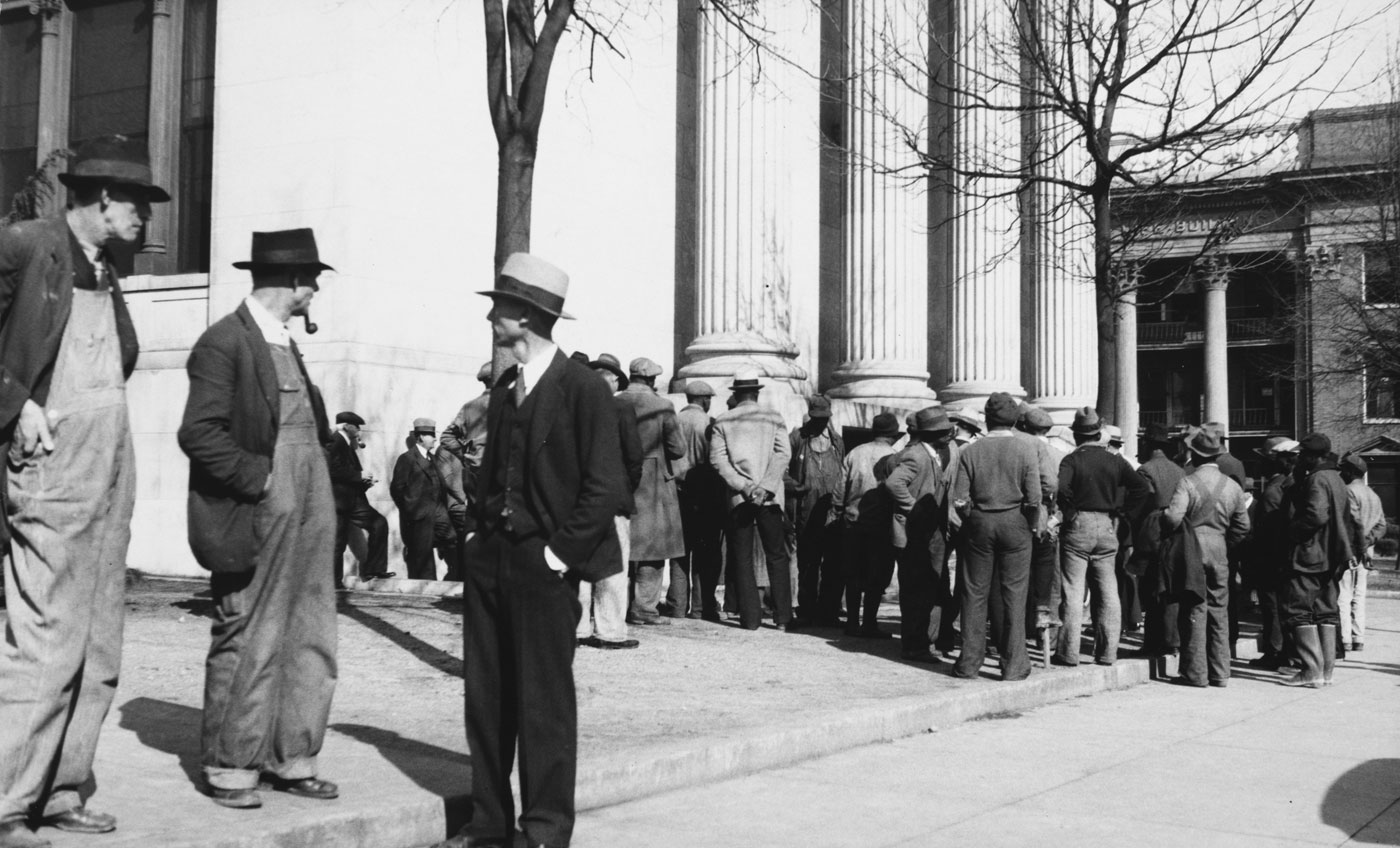
Walker Evans (American, 1903-1975) 'Crowd In Public Square' 1930s


Walker Evans (American, 1903-1975)
Crowd In Public Square
1930s
143 x 248mm
Lunn Gallery Stamp (1975)
© Walker Evans Archive, The Metropolitan Museum of Art


Walker Evans (American, 1903-1975) 'Berenice Abbott' 1929-1930


Walker Evans (American, 1903-1975)
Berenice Abbott
1929-1930
© Walker Evans Archive, The Metropolitan Museum of Art


Walker Evans (1903-1975) was one of the great personalities of 20th century photography, being an exponent of what is called the “documentary style”. His work, which spans a period of over fifty years, will be represented by well over 200 original prints from the years 1928 to 1974, taken mostly from the considerable private collection of Clark and Joan Worswick, but also from various German collections.

For decades, right up to the present, the prolific photographic oeuvre of Walker Evans has acquired an increasingly model character. In the half century of his creative activity the photographer documented in sober documentary fashion a uniquely authentic picture of America, and like no other before him showed a particular feel for both the everyday and the subtle – the American Vernacular – creating a sense of identity and historic significance.

Visitors follow both Evans’ biography and the changing face of America, from the Great Depression to the onset of stability and business as usual: early impressions of the 1920s from the New York neighbourhood he lived in; portraits of his friends and fellow artists which give some indication of the ramified cultural ambience he inhabited; specimens of 19th century architecture that have blended into the evolving cultural life about them; picture cycles from Tahiti and Cuba; images of African sculptures and masks commissioned by the New York Museum of Modern Art; and numerous photographs taken in the 1930s in the rural south of the USA, which contrast starkly with the lifestyles of those who may be seen promenading in the fashionable streets of cities like New York.

In addition to street scenes, American monuments and shop window displays far from the world of “big business”, examples of his significant subway photographs are to be seen, taken with a hidden camera. We also see interiors whose modest appointments tell of the life of those who live in them, pictures that inevitably recall Evans’ remark that “I do like to suggest people by absence”. Evans’ predilection for typography, advertising and mass-produced articles give rise to strangely fascinating shots which seem to anticipate the soon-to-emerge Pop Art and its assemblages.

While the exhibition shows icons in the history of photography, it also highlights some of the photographer’s lesser known motifs dating from the 1940s, 1950s and 1960s. These include works done for Fortune, the magazine founded by Henry Luce in 1930; pictures taken on trips to London from 1945 onwards for the periodical Architectural Forum; or during stays at Robert Frank’s Nova Scotia house in the late 1960s.

Text from the Martin-Gropius-Bau website


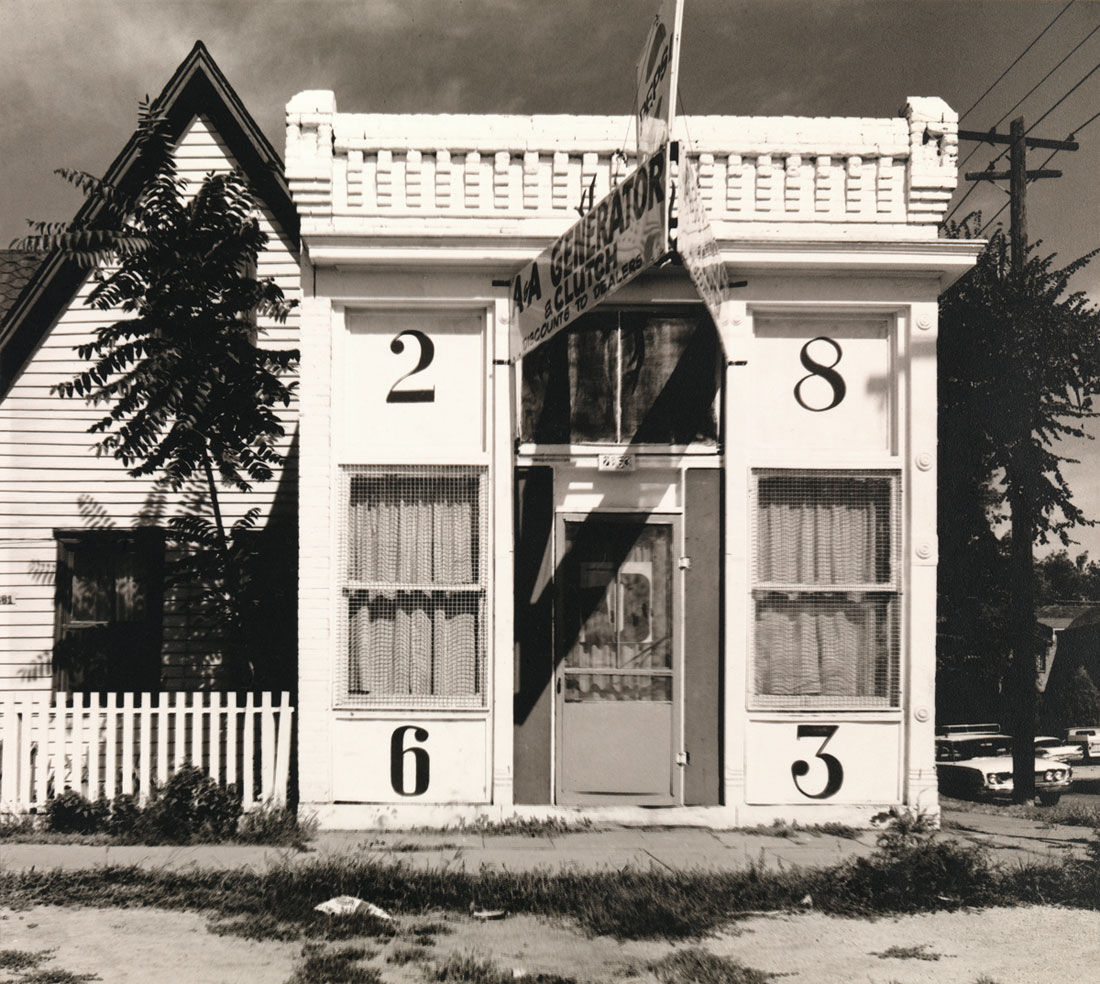
Walker Evans (American, 1903-1975) 'Façade of House with Large Numbers' Denver, Colorado, August 1967


Walker Evans (American, 1903-1975)
Façade of House with Large Numbers
Denver, Colorado, August 1967
Collection of Clark and Joan Worswick
© Walker Evans Archive, The Metropolitan Museum of Art


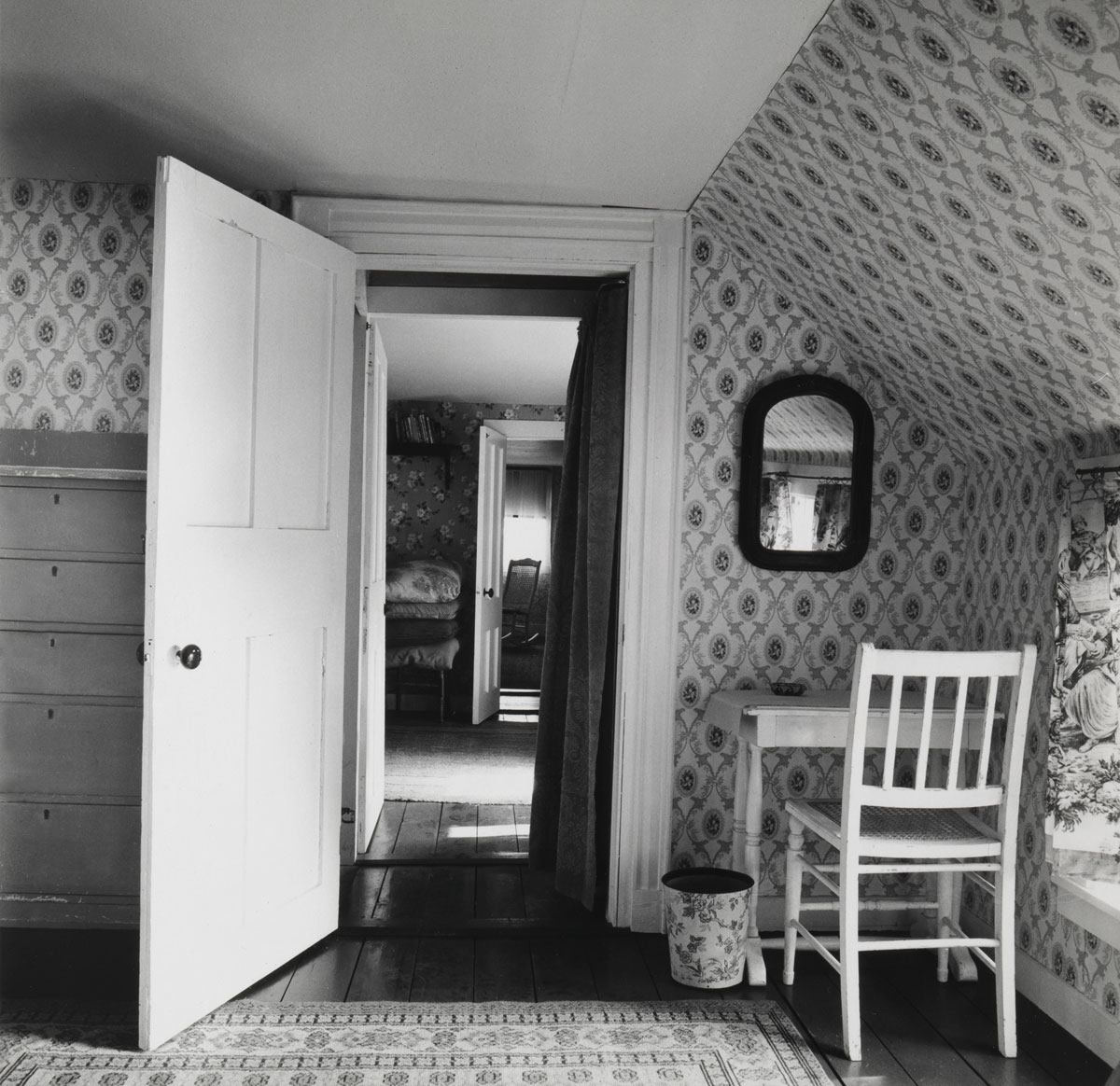
Walker Evans (American, 1903-1975) 'Interior View of Heliker/Lahotan House' Walpole, Maine, 1962


Walker Evans (American, 1903-1975)
Interior View of Heliker/Lahotan House
Walpole, Maine, 1962
Collection of Clark and Joan Worswick
© Walker Evans Archive, The Metropolitan Museum of Art


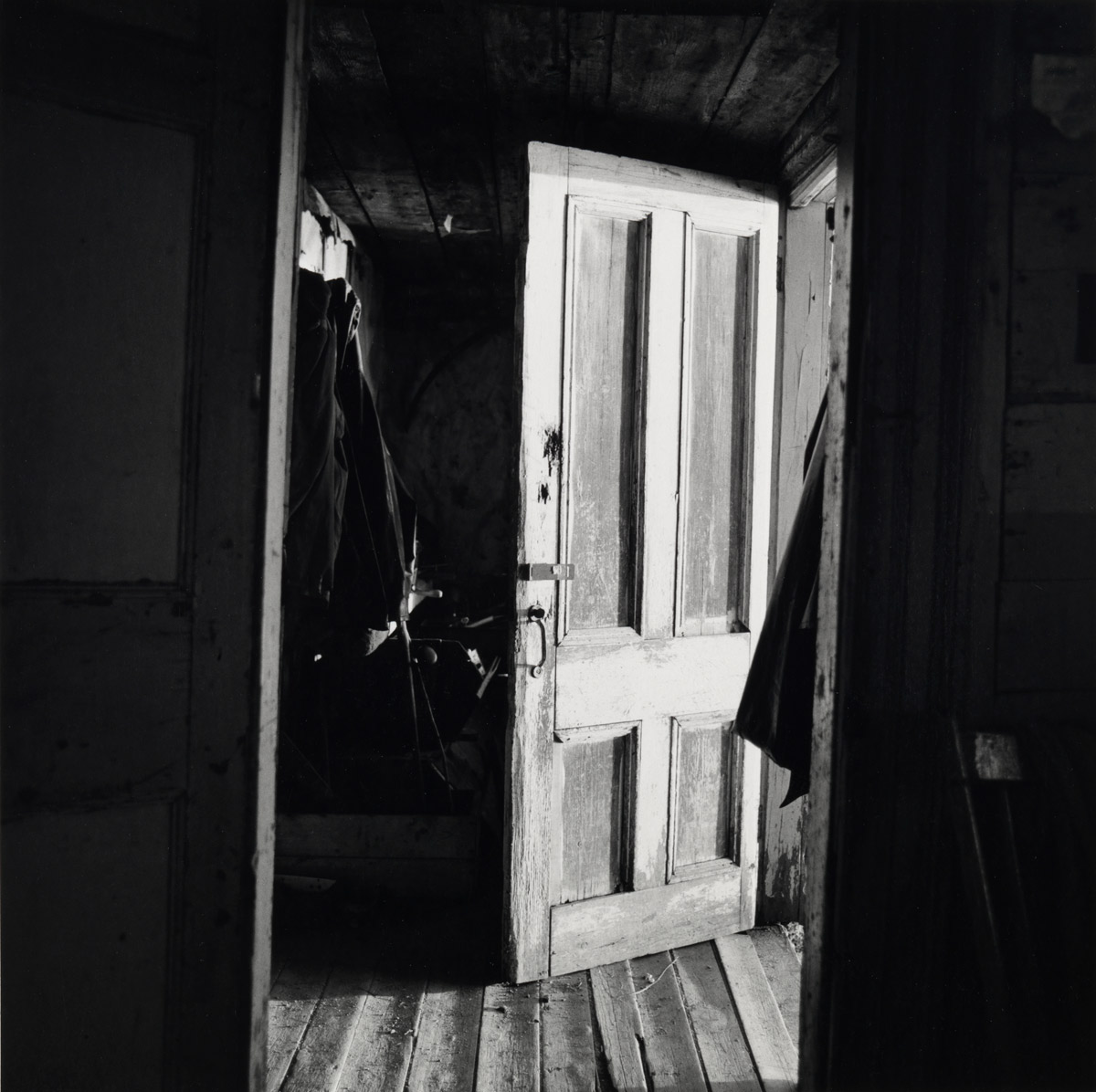
Walker Evans (American, 1903-1975) 'Interior View of Robert Frank’s House' Nova Scotia, 1969-1971


Walker Evans (American, 1903-1975)
Interior View of Robert Frank’s House
Nova Scotia, 1969-1971
Collection of Clark and Joan Worswick
© Walker Evans Archive, The Metropolitan Museum of Art


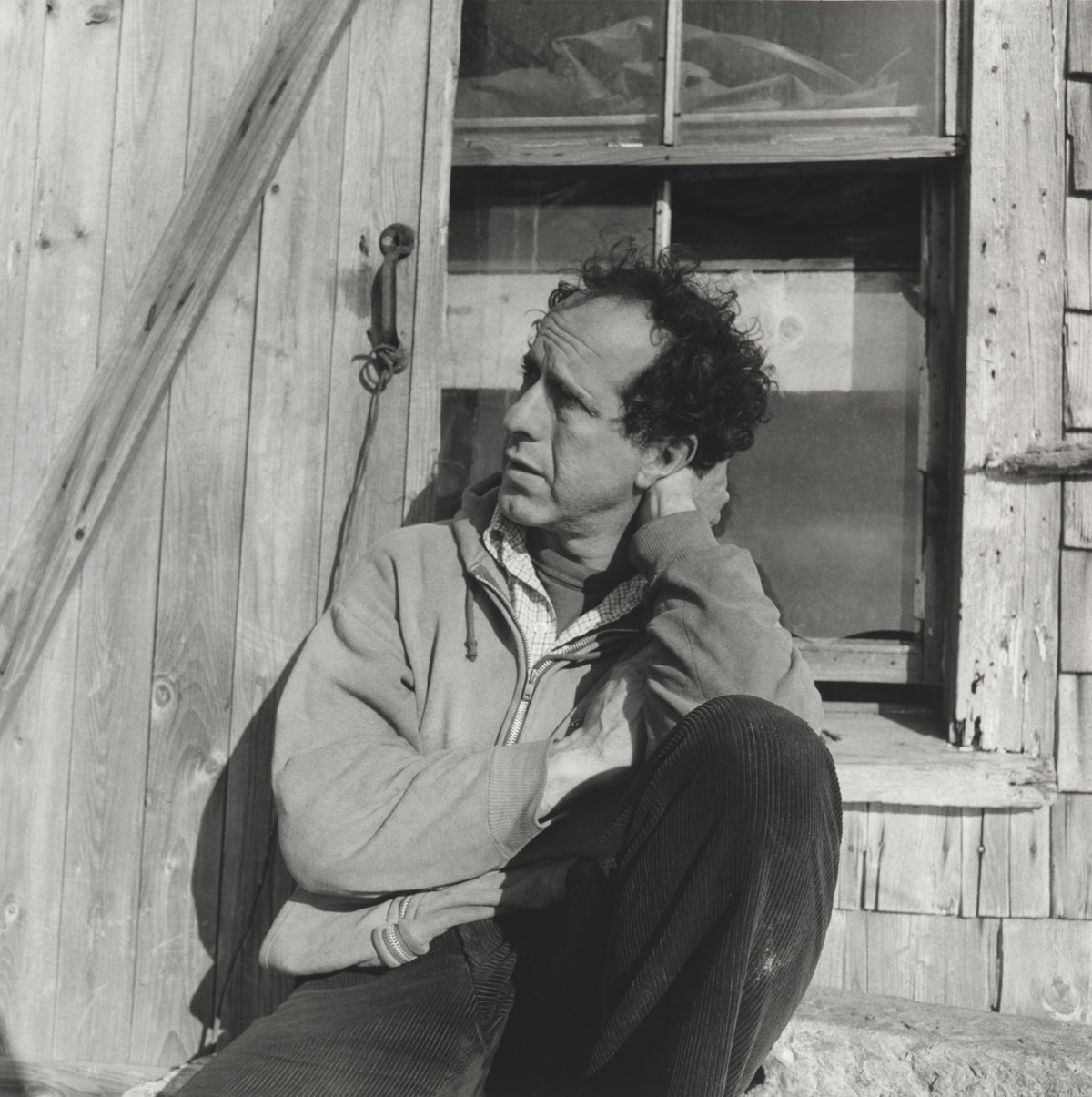
Walker Evans (American, 1903-1975) 'Robert Frank' Nova Scotia, 1969-1971


Walker Evans (American, 1903-1975)
Robert Frank
Nova Scotia, 1969-1971
Collection of Clark and Joan Worswick
© Walker Evans Archive, The Metropolitan Museum of Art


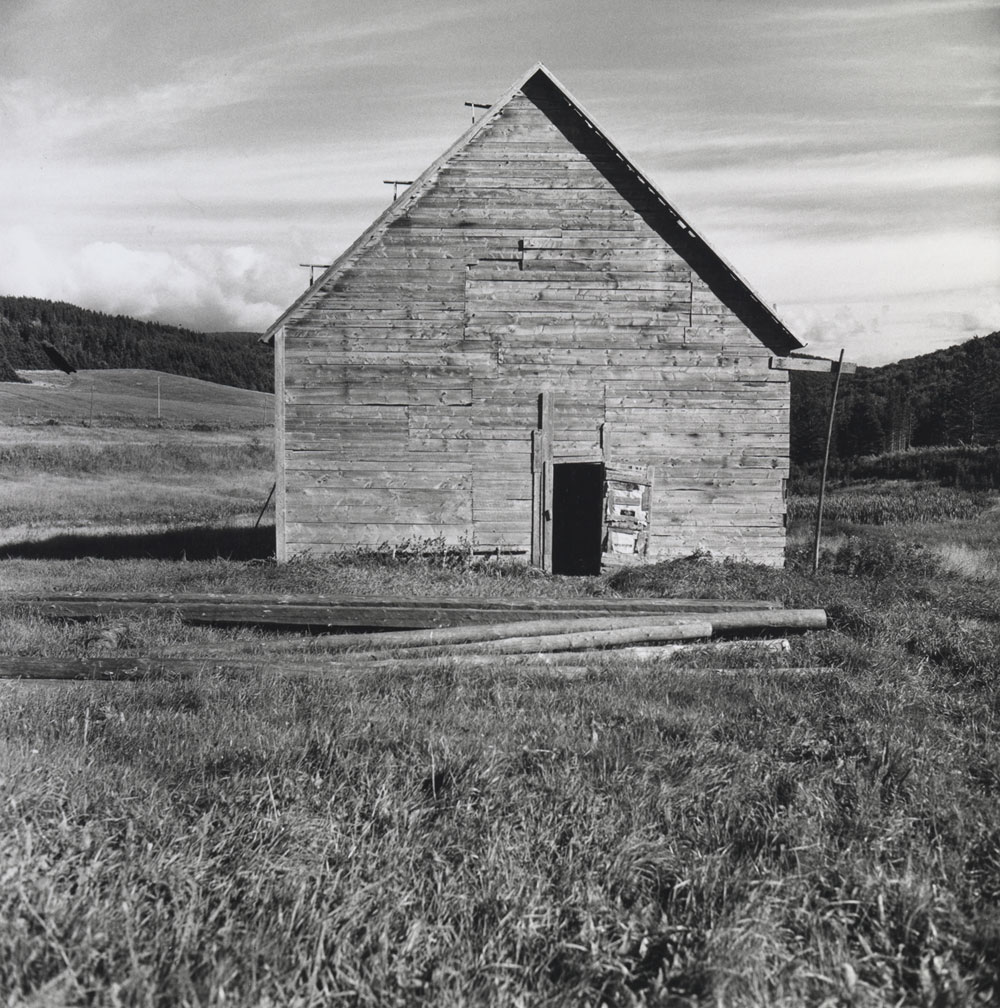
Walker Evans (American, 1903-1975) 'Barn' Nova Scotia, 1969-1971


Walker Evans (American, 1903-1975)
Barn
Nova Scotia, 1969-1971
Collection of Clark and Joan Worswick
© Walker Evans Archive, The Metropolitan Museum of Art


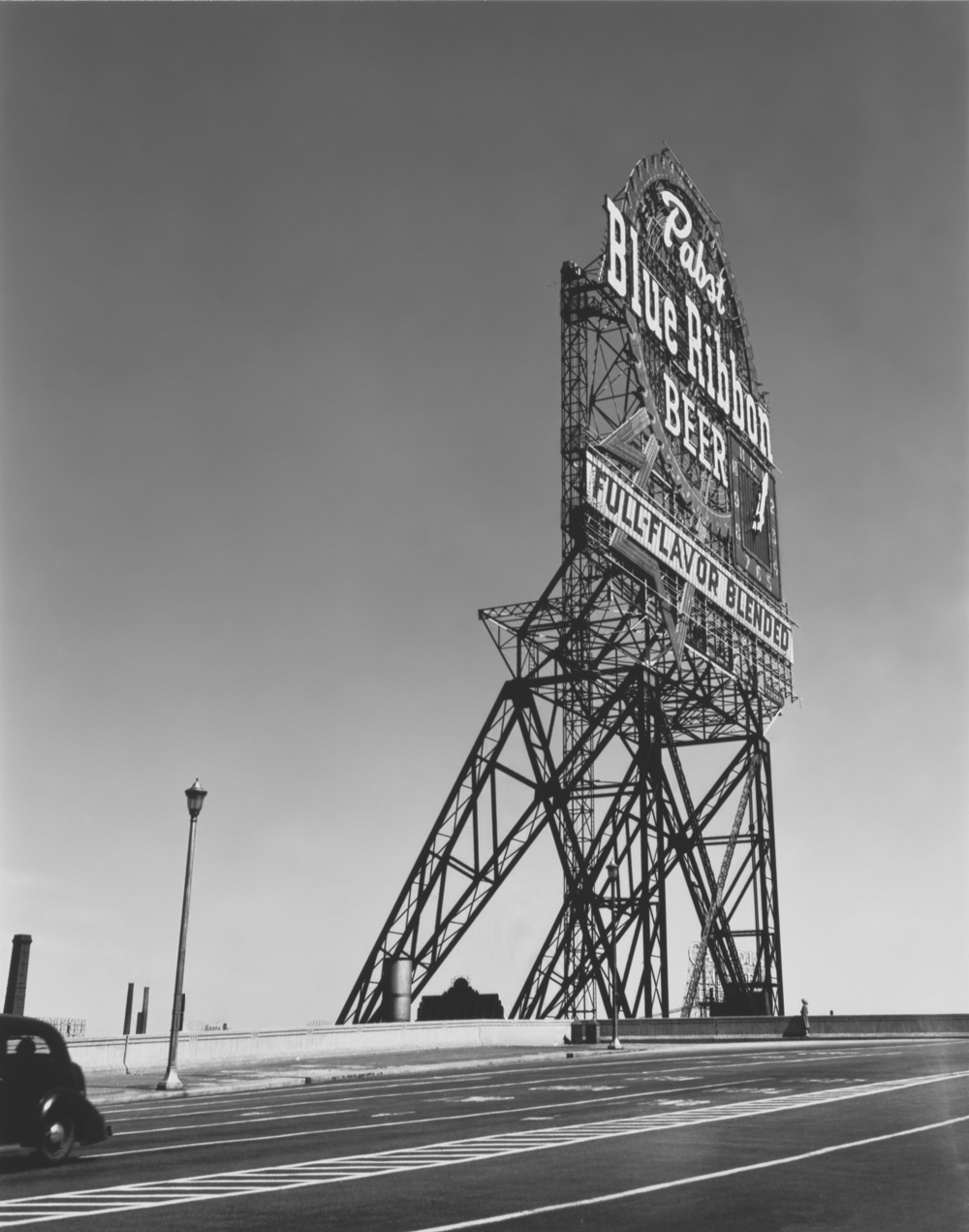
Walker Evans (American, 1903-1975) 'Pabst Blue Ribbon Sign' Chicago, Illinois, 1946


Walker Evans (American, 1903-1975)
Pabst Blue Ribbon Sign
Chicago, Illinois, 1946
Collection of Clark and Joan Worswick
© Walker Evans Archive, The Metropolitan Museum of Art


Martin-Gropius-Bau Berlin
Niederkirchnerstraße 7
Corner Stresemannstr. 110
10963 Berlin
Phone: +49 (0)30 254 86-0

Opening Hours:
Wednesday to Monday 10 – 19 hrs
Tuesday closed

Martin-Gropius-Bau website

LIKE ART BLART ON FACEBOOK

Back to top

Exhibition: ‘A World of Its Own: Photographic Practices in the Studio’ at the Museum of Modern Art (MoMA), New York Part 2

Exhibition dates: 8th February – 2nd November 2014

The Edward Steichen Photography Galleries, third floor

Curators: Organised by Quentin Bajac, The Joel and Anne Ehrenkranz Chief Curator, with Lucy Gallun, Assistant Curator, Department of Photography


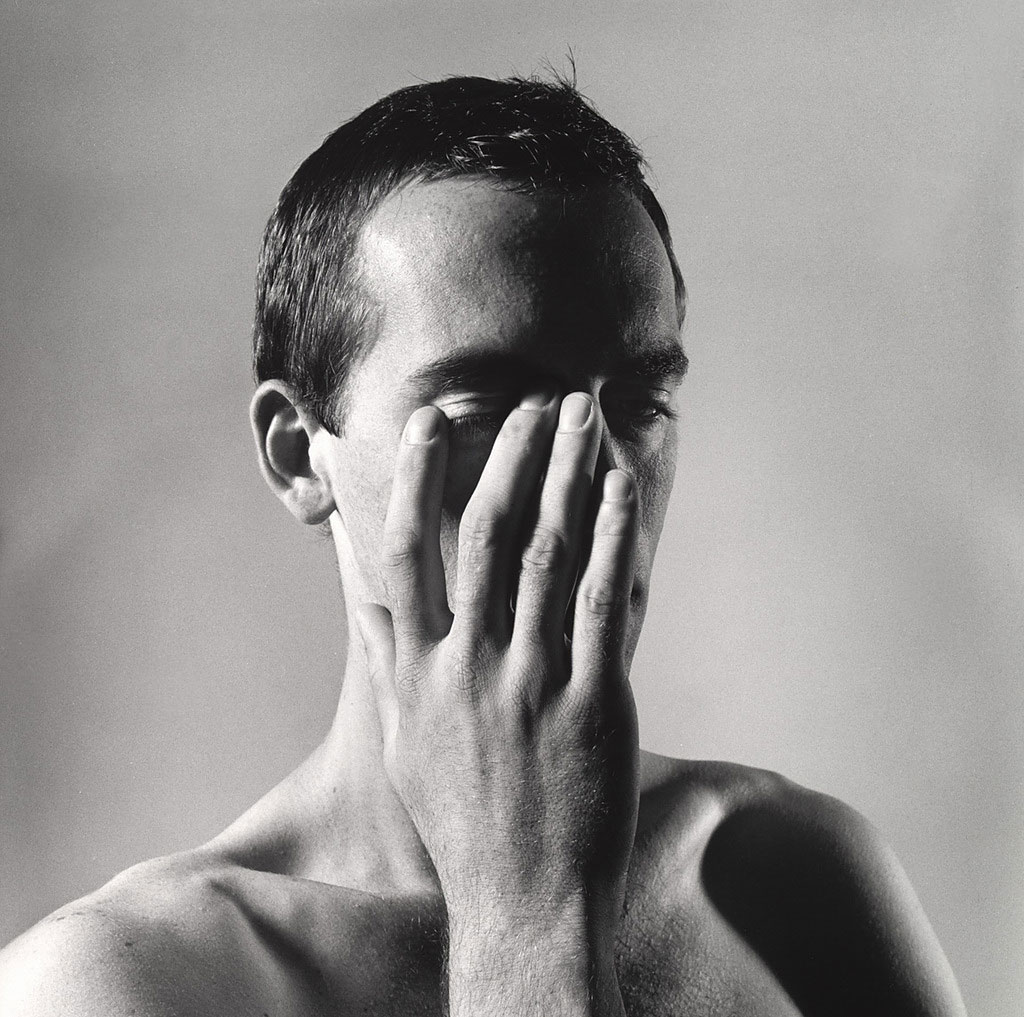
Peter Hujar (American, 1934-1987) 'David Wojnarowicz' 1981


Peter Hujar (American, 1934-1987)
David Wojnarowicz
1981
Gelatin silver print
14 x 14″ (35.6 x 35.6cm)
The Fellows of Photography Fund
Museum of Modern Art Collection


Many thankx to MoMA for allowing me to publish four of the photographs in the posting. The rest of the images were sourced from the Internet in order to give the reader a more comprehensive understanding of what this exhibition is actually about – especially if you are thousands of miles away and have no hope of ever seeing it!

Dr Marcus Bunyan


Please click on the photographs for a larger version of the image.


The exhibition is divided into 6 themes each with its own gallery space:

1/ Surveying the Studio
2/ The Studio as Stage
3/ The Studio as Set
4/ A Neutral Space
5/ Virtual Spaces
6/ The Studio, from Laboratory to Playground


A Neutral Space


Harry Callahan (American, 1912-1999) 'Eleanor' 1948


Harry Callahan (American, 1912-1999)
Eleanor
1948
Gelatin silver print
4 1/2 x 3 1/4″ (11.4 x 8.3cm)
Gift of the artist
Museum of Modern Art Collection


Charles Harry Jones (English, 1866-1959) 'Brussels Sprouts' c. 1900


Charles Harry Jones (English, 1866-1959)
Brussels Sprouts
c. 1900
Gelatin silver printing-out-paper print
6 1/8 × 8 1/16″ (15.5 × 20.5cm)
Acquired through the generosity of Robert B. Menschel
Museum of Modern Art Collection


Charles Harry Jones (1866 – 15 November 1959) was an English gardener and photographer, noted for his still lifes of fruit and vegetables.

The photographs were probably made between 1895 and 1910, and likely while he was employed at Ote Hall. Jones’ work was never exhibited in his lifetime, and was largely unknown even to his family, until the photographic prints were discovered by accident in 1981. Sean Sexton found a suitcase containing hundreds of prints of vegetables, fruits and flowers at Bermondsey antiques market. Other than a very few exceptions, Jones’ photographs exist only in unique examples. None of the glass-plate negatives have been located.

Jones isolated his vegetables, fruits and flowers against neutral dark or light backgrounds, in the manner of formal studio portraits. He used long exposures and small apertures to give depth of field.

Text from the Wikipedia website


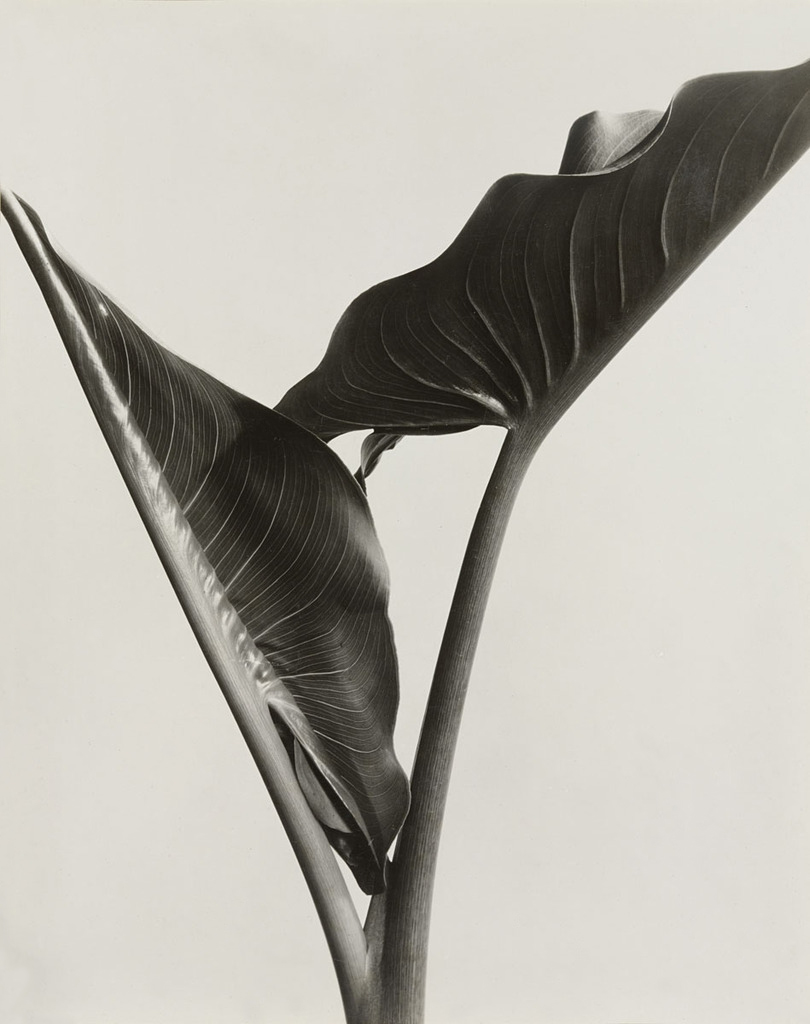
Imogen Cunningham (American, 1883-1976) 'Cala Leaves' 1932


Imogen Cunningham (American, 1883-1976)
Cala Leaves
1932
Gelatin silver print
9 9/16 x 7 9/16″ (24.3 x 19.2cm)
Gift of Paul F. Walter
Museum of Modern Art Collection


Karl Blossfeldt (German, 1865-1932) 'Chrysanthemum segetum – Feverfew' before 1928


Karl Blossfeldt (German, 1865-1932)
Chrysanthemum segetum – Feverfew Enlarged 8 Times
Before 1928
Gelatin silver print
11 15/16 × 9 7/16″ (30.4 × 23.9cm)
Thomas Walther Collection. Gift of James Thrall Soby, by exchange
Museum of Modern Art Collection
© 2022 Karl Blossfeldt / Artists Rights Society (ARS), New York


Edward Weston (American, 1886-1958) 'Nude, Mexico' 1925


Edward Weston (American, 1886-1958)
Nude, Mexico
1925
Palladium print
8 3/8 × 7 5/8″ (21.2 × 19.3cm)
Gift of David H. McAlpin
Museum of Modern Art Collection
© 1981 Center for Creative Photography, Arizona Board of Regents


Richard Avedon (American, 1923-2004) 'Carl Hoefert, unemployed blackjack dealer, Reno, Nevada', from the series 'In the American West' August 30, 1983


Richard Avedon (American, 1923-2004)
Carl Hoefert, unemployed blackjack dealer, Reno, Nevada, from the series In the American West
August 30, 1983
Gelatin silver print, printed 1985
47 1/2 x 37 1/2″ (120.6 x 95.2cm)
Gift of the artist
Museum of Modern Art Collection


Peter Hujar (American, 1934-1987) 'Pascal (Paris)' 1980


Peter Hujar (American, 1934-1987)
Pascal (Paris)
1980
Gelatin silver print
14 5/8 x 14 11/16″ (37.1 x 37.3cm)
Gift of David Wojnarowicz
Museum of Modern Art Collection


Valérie Belin (French, b. 1964) 'Untitled' from the series 'Mannequins' 2003


Valérie Belin (French, b. 1964)
Untitled from the series Mannequins
2003
Gelatin silver print
61 x 49″ (154.9 x 124.5cm)
Purchase
Museum of Modern Art Collection


Laurie Simmons (American, b. 1949) Allan McCollum (American, b. 1944) 'Untitled' from the series 'Actual Photos' 1985


Laurie Simmons (American, b. 1949)
Allan McCollum (American, b. 1944)
Untitled from the series Actual Photos
1985
Silver dye bleach print
9 5/16 x 6 5/16″ (23.7 x 16.1cm)
Joel and Anne Ehrenkranz Fund
Museum of Modern Art Collection


Josephine Meckseper (German, b. 1964) 'Blow-Up (Michelli, Knee-Highs)' 2006


Josephine Meckseper (German, b. 1964)
Blow-Up (Michelli, Knee-Highs)
2006
Chromogenic colour print
78 5/8 x 62 5/8″ (199.7 x 159.1cm)
Fund for the Twenty-First Century
Museum of Modern Art Collection


Robert Mapplethorpe (American, 1946-1989) 'Hermes' 1988


Robert Mapplethorpe (American, 1946-1989)
Hermes
1988
Gelatin silver print
19 1/4 × 19 1/4″ (48.9 × 48.9cm)
Gift of Agnes Gund
Museum of Modern Art Collection
© 2022 Robert Mapplethorpe Foundation


Virtual Spaces


Christian Marclay (American and Swiss, b. 1955) 'Allover (Genesis, Travis Tritt, and Others)' 2008


Christian Marclay (American and Swiss, b. 1955)
Allover (Genesis, Travis Tritt, and Others)
2008
Cyanotype
Composition and sheet: 51 1/2 x 97 3/4″ (130.8 x 248.3cm)
Publisher and printer: Graphic studio, University of South Florida, Tampa
Acquired through the generosity of Steven A. and Alexandra M. Cohen
Museum of Modern Art Collection


Luigi Veronesi (Italian, 1908-1998) 'Composition' 1935


Luigi Veronesi (Italian, 1908-1998)
Composition
1935
Gelatin silver print
9 7/16 × 11 1/4″ (24 × 28.6 cm)
Thomas Walther Collection. Gift of Ansel Adams, by exchange
Museum of Modern Art Collection
© 2022 Archivio Luigi Veronesi, Milan


Luigi Veronesi (28 May 1908 – 25 February 1998) was an Italian photographer, painter, scenographer and film director born in Milan.


Thomas Ruff (German, b. 1958) 'phg.06' 2012


Thomas Ruff (German, b. 1958)
phg.06
2012
Chromogenic colour print
100 3/8 x 72 13/16″ (255 x 185cm)
Courtesy David Zwirner, New York/London
Museum of Modern Art Collection


Man Ray (American, 1890-1976) 'Rayograph' 1923


Man Ray (American, 1890-1976)
Rayograph
1923
Gelatin silver print
9 7/16 x 7″ (23.9 x 17.8cm)
Purchase
Museum of Modern Art Collection


György Kepes (American born Hungary, 1906-2001) 'Abstraction – Surface Tension #2' c. 1940


György Kepes (American born Hungary, 1906-2001)
Abstraction – Surface Tension #2
c. 1940
Gelatin silver print
14 x 11 1/8″ (35.6 x 28.3cm)
Gift of the artist
Museum of Modern Art Collection


The Studio, from Laboratory to Playground


Barbara Morgan (American, 1900-1992) 'Pure Energy and Neurotic Man' 1941


Barbara Morgan (American, 1900-1992)
Pure Energy and Neurotic Man
1941
Gelatin silver print, printed 1971
19 1/8 x 15 1/2″ (48.6 x 39.3cm)
Gift of the artist
Museum of Modern Art Collection


Barbara Morgan (American, 1900-1992) 'Cadenza' 1940


Barbara Morgan (American, 1900-1992)
Cadenza
1940
Gelatin silver print, printed 1971
17 7/8 x 15″ (45.4 x 38.2cm)
Gift of the artist
Museum of Modern Art Collection


Berenice Abbott (American, 1898-1991) 'Focusing Water Waves, Massachusetts Institute of Technology' 1958-1961


Berenice Abbott (American, 1898-1991)
Focusing Water Waves, Massachusetts Institute of Technology
1958-1961
Gelatin silver print
6 9/16 x 7 15/16″ (16.7 x 20.1cm)
Gift of Ronald A. Kurtz
Museum of Modern Art Collection


Berenice Abbott (American, 1898-1991) 'Wave Pattern with Glass Plate, Massachusetts Institute of Technology' 1958-1961


Berenice Abbott (American, 1898-1991)
Wave Pattern with Glass Plate, Massachusetts Institute of Technology
1958-1961
Gelatin silver print
6 9/16 x 7 9/16″ (16.7 x 19.2cm)
Gift of Ronald A. Kurtz
Museum of Modern Art Collection


Heinz Hajek-Halke (German, 1898-1983) 'Embrace (Umarmung)' 1947-1951


Heinz Hajek-Halke (German, 1898-1983)
Embrace (Umarmung)
1947-1951
Gelatin silver print
15 5/8 x 11 3/8″ (39.7 x 29.0cm)
Gift of the artist
Museum of Modern Art Collection


Harold Edgerton (American, 1903-1990) 'Lead Falling in a Shot Tower' 1936


Harold Edgerton (American, 1903-1990)
Lead Falling in a Shot Tower
1936
Gelatin silver print
7 9/16 x 9 1/2″ (19.3 x 24.2cm)
Gift of Gus and Arlette Kayafas
Museum of Modern Art Collection


Harold Edgerton (American, 1903-1990) 'Bouncing Ball Bearing' 1962


Harold Edgerton (American, 1903-1990)
Bouncing Ball Bearing
1962
Gelatin silver print
9 9/16 x 7 11/16″ (24.3 x 19.5cm)
Gift of Gus and Arlette Kayafas
Museum of Modern Art Collection


Harold Edgerton (American, 1903-1990) 'This is Coffee' 1933


Harold Edgerton (American, 1903-1990)
This is Coffee
1933
Gelatin silver print
9 7/8 x 12 7/8″ (25.1 x 32.7cm)
Gift of the artist
Museum of Modern Art Collection


Roman Signer (Swiss, b. 1938) 'Sand Curtain (Sandvorhang)' 1983


Roman Signer (Swiss, b. 1938)
Sand Curtain (Sandvorhang)
1983
Super 8 film transferred to video (colour, silent)
Approximately 2 min.
Committee on Media Funds
Museum of Modern Art Collection


Roman Signer (Swiss, b. 1938) 'Sand Stairs (Sandtreppe)' 1975


Roman Signer (Swiss, b. 1938)
Sand Stairs (Sandtreppe)
1975
Super 8 film transferred to video (colour, silent)
Approximately 2 min.
Committee on Media Funds
Museum of Modern Art Collection


Roman Signer (Swiss, b. 1938) 'Rubber Motor (Gummimotor)' 1983


Roman Signer (Swiss, b. 1938)
Rubber Motor (Gummimotor)
1983
Super 8 film transferred to video (colour, silent)
Approximately 2 min.
Committee on Media Funds
Museum of Modern Art Collection


Roman Signer (Swiss, b. 1938) 'Sand Cone (Sandkegel)' 1984


Roman Signer (Swiss, b. 1938)
Sand Cone (Sandkegel)
1984
Super 8 film transferred to video (colour, silent)
Approximately 2 min.
Committee on Media Funds
Museum of Modern Art Collection


Roman Signer (Swiss, b. 1938) 'Sand Pillar (Sandturm)' 1987


Roman Signer (Swiss, b. 1938)
Sand Pillar (Sandturm)
1987
Super 8 film transferred to video (colour, silent)
Approximately 2 min.
Committee on Media Funds
Museum of Modern Art Collection


Roman Signer (Swiss, b. 1938) 'Sand (Sand)' 1988


Roman Signer (Swiss, b. 1938)
Sand (Sand)
1988
Super 8 film transferred to video (colour, silent)
Approximately 2 min.
Committee on Media Funds
Museum of Modern Art Collection


Roman Signer (Swiss, b. 1938) 'Umbrella (Schirm)' 1989


Roman Signer (Swiss, b. 1938)
Umbrella (Schirm)
1989
Super 8 film transferred to video (colour, silent)
Approximately 2 min.
Committee on Media Funds
Museum of Modern Art Collection


Roman Signer (Swiss, b. 1938) 'Barrel (Fass)' 1985


Roman Signer (Swiss, b. 1938)
Barrel (Fass)
1985
Super 8 film transferred to video (colour, silent)
Approximately 2 min.
Committee on Media Funds
Museum of Modern Art Collection


Roman Signer (Swiss, b. 1938) 'Carriage (Wagen)' 1982


Roman Signer (Swiss, b. 1938)
Carriage (Wagen)
1982
Super 8 film transferred to video (colour, silent)
Approximately 2 min.
Committee on Media Funds
Museum of Modern Art Collection


Roman Signer (Swiss, b. 1938) 'Tube (Schlauch)' 1982


Roman Signer (Swiss, b. 1938)
Tube (Schlauch)
1982
Super 8 film transferred to video (colour, silent)
Approximately 2 min.
Committee on Media Funds
Museum of Modern Art Collection


Roman Signer (b. 1938 in Appenzell, Switzerland) is principally a visual artist who works in sculpture, installations photography, and video. Signer’s work has grown out of, and has affinities with both land art and performance art, but they are not typically representative of either category.It is often being described as following the tradition of the Swiss engineer-artist, such as Jean Tinguely and Peter Fischli & David Weiss.

Signer’s “action sculptures” involve setting up, carrying out, and recording “experiments” or events that bear aesthetic results. Day-to-day objects such as umbrellas, tables, boots, containers, hats and bicycles are part of Signer’s working vocabulary. Following carefully planned and strictly executed and documented procedures, the artist enacts and records such acts as explosions, collisions, and the projection of objects through space. Signer advocates ‘controlled destruction, not destruction for its own sake’. Action Kurhaus Weissbad (1992) saw chairs catapulted out of a hotel’s windows; Table (1994) launched a table into the sea on four buckets; Kayak (2000) featured the artist being towed down a road in a canoe. In documenta 8 (1987), he catapulted thousands of sheets of paper into the air to create an ephemeral wall in the room for a brief, but all the more intense moment. As the Swiss representative at the Venice Biennale in 1999, he made 117 steel balls fall from the ceiling on to lumps of clay lying on the ground. Many of his happenings are not for public viewing, and are only documented in photos and film. Video works like Stiefel mit Rakete (Boot with Rocket) are integral to Signer’s performances, capturing the original setup of materials that self-destruct in the process of creating an emotionally and visually compelling event.

Text from Wikipedia website


Kiki Smith (American born Germany, b. 1954) 'My Secret Business' 1993


Kiki Smith (American born Germany, b. 1954)
My Secret Business
1993
Lithograph
23 9/16 x 18 1/8″ (59.8 x 46cm)
Gift of Howard B. Johnson
Museum of Modern Art Collection


Adrian Piper (American, b. 1948) 'Food for the Spirit #2' 1971, printed 1997


Adrian Piper (American, b. 1948)
Food for the Spirit #2
1971, printed 1997
Gelatin silver print
14 9/16 x 15″ (37 x 38.1cm)
The Family of Man Fund
Museum of Modern Art Collection


Adrian Piper (American, b. 1948) 'Food for the Spirit #8' 1971, printed 1997


Adrian Piper (American, b. 1948)
Food for the Spirit #8
1971, printed 1997
Gelatin silver print
14 9/16 x 14 15/16″ (37 x 38cm)
The Family of Man Fund
Museum of Modern Art Collection


Adrian Piper (American, b. 1948) 'Food for the Spirit #14' 1971, printed 1997


Adrian Piper (American, b. 1948)
Food for the Spirit #14
1971, printed 1997
Gelatin silver print
14 9/16 x 15″ (37 x 38.1cm)
The Family of Man Fund
Museum of Modern Art Collection


Harold Edgerton (American, 1903-1990) 'Indian Club Demonstration' 1939


Harold Edgerton (American, 1903-1990)
Indian Club Demonstration
1939
Gelatin silver print
13 x 10″ (33.0 x 26.0cm)
Gift of the artist
Museum of Modern Art Collection


Harold Edgerton (American, 1903-1990) 'Bobby Jones with an Iron' 1938


Harold Edgerton (American, 1903-1990)
Bobby Jones with an Iron
1938
Gelatin silver print
9 5/8 x 11 1/2″ (24.4 x 29.2cm)
Gift of the artist
Museum of Modern Art Collection


John Divola (American, b. 1949) 'Untitled' from the series 'Vandalism' 1974


John Divola (American, b. 1949)
Untitled from the series Vandalism
1974
Gelatin silver print
7 1/16 x 7 1/16″ (18.0 x 18.0cm)
Purchase
Museum of Modern Art Collection


John Divola (American, b. 1949) 'Untitled' from the series 'Vandalism' 1974


John Divola (American, b. 1949)
Untitled from the series Vandalism
1974
Gelatin silver print
7 x 7″ (17.9 x 17.9cm)
Purchase
Museum of Modern Art Collection


Robert Frank (American born Switzerland, 1924-2019) 'Boston' March 20, 1985 (detail)


Robert Frank (American born Switzerland, 1924-2019)
Boston (detail)
March 20, 1985
Colour instant prints (Polaroids) with hand-applied paint and collage
Each 27 3/4 x 22 1/4″ (70.3 x 56.4cm)
Acquired through the generosity of Polaroid Corporation
Museum of Modern Art Collection


Anna Blume (German, 1937-2020) Bernhard Blume (German, 1937-2011) 'Kitchen Frenzy (Küchenkoller)' 1986 (detail)


Anna Blume (German, 1937-2020)
Bernhard Blume (German, 1937-2011)
Kitchen Frenzy (Küchenkoller) (detail)
1986
Gelatin silver prints
Each 66 15/16 x 42 1/2″ (170 x 108cm)
Acquired through the generosity of the Contemporary Arts Council of The Museum of Modern Art
Museum of Modern Art Collection


Anna Blume (née Helming; 21 April 1936 – 18 June 2020) and Bernhard Johannes Blume (8 September 1937 – 1 September 2011) were German art photographers. They created sequences of large black-and-white photos of staged scenes in which they appeared themselves, with objects taking on a “life” of their own. Their works have been shown internationally in exhibitions and museums, including New York’s MoMA. They are regarded as “among the pioneers of staged photography”. …

Anna and Bernhard Blume together created installations, sequences of large photo scenes and, mostly in the 1990s, Polaroids. Both created drawings. They staged and photographed scenes in which they appeared themselves, with objects taking on a “life” of their own. According to the Deutsche Börse Photography Foundation, their process was to create their picture sequences together and complete all related tasks without outside help. That included designing the sets and costumes, developing the negatives, and producing enlargements; at each stage the artwork was refined, polished and painted. Anna said: “Wir malen mit der Kamera, und diese malerische Arbeit findet auch noch im Labor statt.” (We paint with our camera, and this painterly work continues in the lab, too.) The images were produced without the aid of digital manipulation or post-production montages. Taking pictures of a “flying, crashing, and swirling world”, the artists used safety features such as ropes, nets and mattresses.

Text from the Wikipedia website


The Museum of Modern Art
11 West 53 Street
New York, NY 10019
Phone: (212) 708-9400

Opening hours:
10.30am – 5.30pm
Open seven days a week

MoMA website

LIKE ART BLART ON FACEBOOK

Back to top

Exhibition: ‘A Democracy of Images: Photographs from the Smithsonian American Art Museum’ at the Smithsonian American Art Museum, Washington DC

Exhibition dates: 28th June 2013 – 5th January 2014
1st floor West, American Art Museum (8th and F Streets, N.W.)

Browse the exhibition and related works on the exhibition website


Unidentified artist. '[Bird in Basin with Thread Spool and Patterned Cloth]' c. 1855


Unidentified artist
[Bird in Basin with Thread Spool and Patterned Cloth]
c. 1855
Daguerreotype
Plate: 2 3/4 x 3 1/4 in. (6.9 x 8.2cm)
Smithsonian American Art Museum
Museum purchase from the Charles Isaacs Collection made possible in part by the Luisita L. and Franz H. Denghausen Endowment


The next two weeks sees a lot of exhibitions finish their run on the 5th January 2014.

Here is a bumper posting which contains one of my favourite photographs of all time: Danny Lyon’s Crossing the Ohio River, Louisville (1966, below). From a distance, this looks to be a very interesting exhibition on a large topic, delineated for the viewer into four main sections. The task of the curator cannot have been easy, picking 113 images to represent a “democracy” of images out of a collection of over 7,000 images. Of course there can never be a true “democracy” of images as some will always be more valued within our culture than others. There is a meritocracy in this exhibition which features images by masters of the medium but this is balanced by the inclusion of images by anonymous photographers, little known photographers and vernacular and street photography.

What is most impressive is the specially developed website which includes many images from the different sections of the exhibition. These images are of good quality and, along with relevant text, help the viewer place the images in context. Related content is also suggested from the full photographic collection at The Smithsonian which has been placed online with good image quality. This is a far cry from many exhibitions at state galleries in Australia where there are hardly any dedicated exhibition websites. Most of the photographic collection from these galleries is not available online and if it has been scanned, the image quality is generally poor. How many times have I searched a state gallery or library collection and come up with the answer: “Image not available” ?

Dr Marcus Bunyan


Many thankx to the Smithsonian American Art Museum for allowing me to publish the photographs and text in the posting. Please click on the photographs for a larger version of the image.


“More often, though, the moments, places, people and views that have been collected here feel offhand and stumbled upon, telling a fragmentary, incomplete tale. Sometimes it’s literally a glance, as in “Girl Holding Popsicle,” a 1972 image by Mark Cohen, who rarely even looked through his viewfinder. Other times, it’s more like a long stare, as in William Christenberry’s 1979 “China Grove Church – Hale County, Alabama,” a locale that the Washington-based artist and Alabama native returned to again and again. These 113 pictures are, at the same time, quietly telling, revealing bits of America in oblique, prismatic ways.”


Part of Michael O’Sullivan’s review of the exhibition in The Washington Post.


American Characters

Photographers have captured the texture of everyday life since the medium’s arrival in the United States in 1839. Photographic portraits have made both the iconic and the commonplace serve as stand-ins for all of us, forging a shared language of political and social understanding. In charting the passing parade of history – the faces of the anonymous and the famous; evolving stories of immigration, disenfranchisement, and assimilation; as well as emblematic objects and celebrated landmarks lodged within our collective memory – photographs reveal the complexities of America.


Larry Sultan (American, 1946-2009) 'Portrait of My Father with Newspaper' 1988


Larry Sultan (American, 1946-2009)
Portrait of My Father with Newspaper
1988
Chromogenic print
Image: 28 5/8 x 34 5/8 in. (72.7 x 87.9cm)
Smithsonian American Art Museum
Gift of Nan Tucker McEvoy
© 1988, Larry Sultan


In Portrait of My Father with Newspaper, Irving Sultan reads the Los Angeles Times as light pours in behind him. This carefully composed portrait reveals the artist’s father almost entirely through reflections and shadows. Thin newsprint shields his body from the camera, while only a vague profile of his face is discernible on the right half of the spread. Prompted by the discovery of a box of home movies, Larry Sultan embarked on an eight-year enquiry into his parents’ lives. He stayed in their home for weeks at a time, interviewing them about their marriage and photographing their domestic activities.


Eugene Richards (American, b. 1944) 'First Communion (Dorchester, Mass.)' 1976


Eugene Richards (American, b. 1944)
First Communion (Dorchester, Mass.)
1976
Gelatin silver print
Image: 8 x 12 in. (20.3 x 30.5cm)
Sheet: 11 x 14 in. (27.9 x 35.6cm)
Smithsonian American Art Museum
Transfer from the National Endowment for the Arts
© 1974, Eugene Richards


Mark Cohen (American, b. 1943) 'Girl Holding Popsicle' 1972, printed 1983


Mark Cohen (American, b. 1943)
Girl Holding Popsicle
1972, printed 1983
Gelatin silver print
Sheet: 14 x 17 in. (35.5 x 43.2cm)
Smithsonian American Art Museum
Gift of Dene and Mel Garbow
© 1972, Mark Cohen


In Girl Holding Popsicle a young girl twists shyly as she poses before a graffiti-inscribed brick wall. Mark Cohen took this photograph spontaneously as he passed through a back alley. Cohen does not hesitate to get assertively close to the strangers he meets in his hometown of Wilkes-Barre, Pennsylvania. Many of his photographs are made without looking through a viewfinder, and so remain a mystery even to Cohen until they are developed.


Unidentified artist. '[Gold Nugget]' c. 1860s


Unidentified artist
[Gold Nugget]
c. 1860s
Albumen silver print
Image: 2 1/8 x 3 5/8 in. (5.4 x 9.2cm)
Sheet: 2 3/8 x 3 7/8 in. (6.1 x 9.8cm) irregular
Smithsonian American Art Museum
Gift of Charles Isaacs and Carol Nigro


Mathew B. Brady (American, 1823-1896) 'Reviewing Stand in Front of the Executive Mansion, Washington, D.C., May, 1865' 1865, printed early 1880s


Mathew B. Brady (American, 1823-1896)
Reviewing Stand in Front of the Executive Mansion, Washington, D.C., May, 1865
1865, printed early 1880s
Albumen silver print
Sheet and image: 6 1/2 x 9 in. (16.5 x 22.9cm)
Smithsonian American Art Museum
Museum purchase through the Julia D. Strong Endowment


Kevin Bubriski (American, b. 1954) 'World Trade Center Series, New York City' 2001


Kevin Bubriski (American, b. 1954)
World Trade Center Series, New York City
2001
Gelatin silver print
Image: 18 x 18 in. (45.7 x 45.7cm)
Smithsonian American Art Museum
Gift of the Consolidated Natural Gas Company Foundation
© 2001, Kevin Bubriski


In the weeks and months following the World Trade Center attacks on September 11, 2001, Kevin Bubriski photographed people who gathered at Ground Zero. Frozen in awe, struck with disbelief, and overcome with loss, people stood before the destroyed building site to confront the horrible tragedy. More than ten years later, Bubriski’s photographs preserve the emotional impact of this infamous day through images of those who witnessed its aftermath first-hand.


Deborah Luster (American, b. 1951) '01-26 Location. 1800 Leonidas Street (Carrollton) Date(s). July 14, 2009 7:55 a.m. Name(s). Brian Christopher Smith (22) Notes. Face up with multiple gunshot wounds' 2008-2012


Deborah Luster (American, b. 1951)
01-26 Location. 1800 Leonidas Street (Carrollton) Date(s). July 14, 2009 7:55 a.m. Name(s). Brian Christopher Smith (22) Notes. Face up with multiple gunshot wounds
2008-2012
Gelatin silver print
55 x 55 in. (139.7 x 139.7cm)
Smithsonian American Art Museum
Museum purchase through the Luisita L. and Franz H. Denghausen Endowment
© 2010, Deborah Luster


This photograph, from a series that documents contemporary and historical homicide sites in New Orleans, presents Deborah Luster’s interpretation of the last view of the crime victim lying face up on the ground. The title is the entry from the New Orleans Police blotter, but the photograph is Luster’s meditation on looking, seeing, and the power of images to haunt our imagination.


Unidentified artist. '[Two Workmen Polishing a Stove]' c. 1865


Unidentified artist
[Two Workmen Polishing a Stove]
c. 1865
Albumen silver print
Sheet and image: 14 1/8 x 11 in. (35.9 x 28cm)
Smithsonian American Art Museum
Museum purchase from the Charles Isaacs Collection made possible in part by the Luisita L. and Franz H. Denghausen Endowment


Anthony Barboza (American, b. 1944) '"Marvelous" Marvin Hagler, boxer' 1981


Anthony Barboza (American, b. 1944)
“Marvelous” Marvin Hagler, boxer
1981
Gelatin silver print
Image: 13 7/8 x 13 7/8 in. (35.2 x 35.2cm)
Smithsonian American Art Museum
Gift of Kenneth B. Pearl
© 1981, Anthony Barboza


Edward S. Curtis (American, 1868-1952) 'Girl and Jar – San Ildefonso' 1905


Edward S. Curtis (American, 1868-1952)
Girl and Jar – San Ildefonso
1905
Photogravure
16 5/8 x 12 1/4 in. (12.3 x 31.1cm)
Smithsonian American Art Museum
Transfer from the United States Marshal Service of the U.S. Department of Justice


Between 1900 and 1930, Edward S. Curtis traveled across the continent photographing more than seventy Native American tribes. The photographs, compiled into twenty volumes, presented daily activities, customs, and religions of a people he called “a vanishing race.” Curtis hoped to preserve the legacy of Native peoples in lasting images. To this end, Curtis often costumed his subjects and set up scenes, mixing tribal artefacts and traditions to match his romantic vision of the people he studied. In this intimate portrait, a young Tewa woman named Povi-Tamu (“Flower Morning”) balances a large jug with help from a hidden fiber ring. She is from the San Ildefonso Pueblo of New Mexico, which is famed for its rich tradition of fine pottery. Curtis associated the serpentine design of the vessel with the serpent cult, which he noted was central to Tewa life.


Oliver H. Willard (American, active 1850s-1870s, died 1875) 'Portrait of a Young Woman' c. 1857


Oliver H. Willard (American, active 1850s-1870s, died 1875)
Portrait of a Young Woman
c. 1857
Salted paper print
8 7/8 x 6 3/4 in. (22.5 x 17.1cm)
Smithsonian American Art Museum
Museum purchase through the Horace W. Goldsmith Foundation, 1999.29.1


Spiritual Frontier

The earliest photographs made in America describe an awesome land blessed with such an abundance of natural beauty that it seemed heaven sent. Images of waterfalls, mountains, and vast open spaces conveyed the beauty, the grandeur, the sublimity, and dynamics of a great spiritual endeavour. In the nineteenth century photographers pictured wilderness landscapes that symbolised American greatness. More recently, photographers have described a landscape no less romantic, but now recalibrated to account for the interaction of nature and culture.


Eadweard Muybridge (English, 1830-1904) 'Valley of the Yosemite from Union Point' 1872


Eadweard Muybridge (English, 1830-1904)
Valley of the Yosemite from Union Point
1872
Albumen silver print
Sheet: 17 x 21 1/2 in. (43.2 x 54.6cm)
Smithsonian American Art Museum
Gift of Dr. and Mrs. Charles T. Isaacs


Eadweard Muybridge went to great lengths to photograph the best possible views of the West. He chopped down trees if they obstructed his camera, and ventured to “points where his packers refused to follow him.” Muybridge was determined to produce the most comprehensive photographs ever made of Yosemite and the surrounding region. His views were sold widely in both large-format prints and stereograph cards, which are viewed through a device that creates the illusion of three-dimensional space. This allowed Muybridge to transport his audience, if just for a moment, to a faraway place caught on film.


Robert Frank (Swiss, 1924-2019) 'Butte, Montana' 1956, printed 1973


Robert Frank (Swiss, 1924-2019)
Butte, Montana
1956, printed 1973
Gelatin silver print
Image: 8 3/4 x 13 in. (22.2 x 33cm)
Smithsonian American Art Museum
Museum purchase


Robert Adams (American, b. 1937) 'New Housing, Longmont, Colorado' 1973


Robert Adams (American, b. 1937)
New Housing, Longmont, Colorado
1973
Gelatin silver print
Sheet: 6 x 7 5/8 in. (15.1 x 19.3cm)
Smithsonian American Art Museum
Transfer from the National Endowment for the Arts
© 1973, Robert Adams


As both a photographer and writer, Robert Adams is committed to describing the western American landscape as both awe-inspiring and scarred by man. In New Housing, Longmont Colorado, Adams contrasted the vast space of the distant landscape view with a foreground image of the wall of a newly constructed suburban tract house. Adams invites a consideration of the balance between myth and reality and the land as home as well as scenic backdrop.


Charles L. Weed (American, 1824-1903) 'Mirror Lake and Reflections, Yosemite Valley, Mariposa County, California' 1865


Charles L. Weed (American, 1824-1903)
Mirror Lake and Reflections, Yosemite Valley, Mariposa County, California
1865
Albumen silver print
Sheet and image: 15 1/2 x 20 1/4 in. (39.4 x 51.4cm)
Smithsonian American Art Museum
Gift of Dr. and Mrs. Charles T. Isaacs


Like Carleton Watkins, his better-known competitor, Charles Weed recognised the pictorial dividend to be gained by showing Yosemite’s glorious geological features in duplicate, using the valley’s lakes as reflecting ponds. Weed first traveled to what was then known as “Yo-Semite,” in 1859, but with a relatively small camera; he returned in 1865 with a larger model capable of using what were called mammoth plates. Like Watkins, he sold his prints to buyers eager to own a photograph of majestic natural beauty.


Ansel Adams (American, 1902-1984) 'Monolith: The Face of Half Dome, Yosemite Valley' 1926-1927, printed 1927


Ansel Adams (American, 1902-1984)
Monolith: The Face of Half Dome, Yosemite Valley
1926-1927, printed 1927
Gelatin silver print
Sheet: 11 7/8 x 9 7/8 in. (30.2 x 25.1cm)
Smithsonian American Art Museum
Museum purchase
© 2013 The Ansel Adams Publishing Rights Trust


At just over 4,700 feet above the valley, Half Dome is the most iconic rock formation in Yosemite National Park. Adams squeezed the monolith into the frame to emphasise the majesty of its scale and the drama of its cliff. As it thrusts out of the brilliant white snow, Half Dome stands as a symbol of the unspoiled western landscape. Ansel Adams made his first trip to the Sierra Nevada mountain range when he was fourteen years old, and he returned every year until the end of his life, often for month-long stretches. Throughout his career Adams traveled widely – from Hawaii to Maine – to photograph the most picturesque vistas in America. After his death in 1984, a section of the Sierra Nevada was named the Ansel Adams Wilderness in his honour.


John Pfahl (American, 1939-2020) 'Goodyear #5, Niagara Falls, New York' 1989


John Pfahl (American, 1939-2020)
Goodyear #5, Niagara Falls, New York
1989
Chromogenic print
Sheet: 20 x 24 in. (50.8 x 61.0cm)
Smithsonian American Art Museum
Gift of the Consolidated Natural Gas Company Foundation
© 1989, John Pfahl


John Pfahl’s photographs embody the conflict between progress and preservation. Throughout the 1980s he focused on oil refineries and power plants. He chose the sites strategically based on their location in picturesque landscapes, where he observed a “transcendental” connection between industry and nature. In Goodyear #5 a nuclear power plant occupies the horizon. The setting sun provides a romantic colour palette as light filters through clouds of billowing steam. The landscape is reduced to an abstract composition that celebrates colour and texture. Pfahl’s intention with this series, titled Smoke, was to “make photographs whose very ambiguity provokes thought.” This photograph complicates popular notions of power plants by revealing an uncommonly beautiful view of a controversial structure.


A Democracy of Images: Photographs from the Smithsonian American Art Museum celebrates the numerous ways in which photography, from early daguerreotypes to contemporary digital works, has captured the American experience. The photographs presented here are selected from the approximately 7,000 images collected since the museum’s photography program began thirty years ago, in 1983. Ranging from daguerreotype to digital, they depict the American experience and are loosely grouped around four ideas: American Characters, Spiritual Frontier, America Inhabited, and Imagination at Work.

The exhibition’s title is inspired by American poet Walt Whitman’s belief that photography provided America with a new, democratic art form that matched the spirit of the young country and his belief that photography was a quintessentially American activity, rooted in everyday people and ordinary things and presented in a straightforward way. Known as the “poet of democracy,” Whitman wrote after visiting a daguerreotype studio in 1846: “You will see more life there – more variety, more human nature, more artistic beauty… than in any spot we know.” At the time of Whitman’s death, in 1892, George Eastman had just introduced mass market photography when he put an affordable box camera into the hands of thousands of Americans. The ability to capture an instant of lasting importance and fundamental truth mesmerised Americans then and continues to inspire photographers working today. Marking the thirtieth anniversary of the establishment of the museum’s pioneering photography collection, the exhibition examines photography’s evolution in the United States from a documentary medium to a full-fledged artistic genre and showcases the numerous ways in which it has distilled our evolving idea of “America.”

The exhibition features 113 photographs selected from the museum’s permanent collection, including works by Edward S. Curtis, Timothy H. O’Sullivan, Berenice Abbott, Diane Arbus, Roy DeCarava, Walker Evans,Irving Penn, Trevor Paglen, among others, as well as vernacular works by unknown artists. A number of recent acquisitions are featured, including works by Ellen Carey, Mitch Epstein, Muriel Hasbun, Alfredo Jaar, Annie Leibovitz, Deborah Luster, and Sally Mann. Landscapes, portraits, documentary-style works from the New York Photo League and images from surveying expeditions sent westward after the Civil War are among the images on display, and explore how photographs have been used to record and catalogue, to impart knowledge, to project social commentary, and as instruments of self-expression.

Photography’s arrival in the United States in 1840 allowed ordinary people to make and own images in a way that had not been previously possible. Photographers immediately became engaged with the life of the emerging nation, the activity of new urban centers, and the possibilities of unprecedented access to the vast western frontier. From the nineteenth to the twentieth century, photography not only captured the country’s changing cultural and physical landscape, but also developed its own language and layers of meaning.

A Democracy of Images: Photographs from the Smithsonian American Art Museum is organised around four major themes that defined American photography. “American Characters” examines the ways in which photographs of individuals, places, and objects become a catalogue of our collective memory and have contributed to the ever-evolving idea of the American character. “Spiritual Frontier” investigates early ideas of a vast, inexhaustible wilderness that symbolised American greatness. “America Inhabited” traces the nation’s rapid industrialisation and urbanisation through images of speed, change, progress, immigration, and contemporary rural, urban, and suburban landscapes. “Imagination at Work” demonstrates how photography’s role of spontaneous witness gradually gave way to contrived arrangement and artistic invention. The exhibition is organised by Merry Foresta, guest curator and independent consultant for the arts. She was the museum’s curator of photography from 1983 to 1999.

Connecting online

A complementary website designed for viewing on tablets includes photographs on view in the exhibition, an expanded selection of works from the museum’s collection and a timeline of American photography. It is available through tablet stations in the exhibition galleries, online, and on mobile devices.”

Press release from the Smithsonian American Art Museum website


America Inhabited

Photography’s early presence in America coincided with the rise of an industrial economy, the growth of major urban population centers, and the fulfilling of what some saw as the Manifest Destiny of spanning the continent from sea to sea. Images of progress and industry, as well as of city and suburbs, quickly added themselves to photography’s catalogue of places and people. Some of these images reflect idealistically, and at times nostalgically, on the beauty and humanity of our own backyards. Others stand as social documents that can be seen as critical and ironic, inviting outrage as well as compassion about the way we now live our lives.


Helen Levitt (American, 1913-2009) 'New York' c. 1942, printed later


Helen Levitt (American, 1913-2009)
New York
c. 1942, printed later
Gelatin silver print
Image: 7 1/8 x 10 1/2 in. (18.1 x 26.6cm)
Smithsonian American Art Museum
Museum purchase
© 1981, Helen Levitt


Caught before they run off into the streets, three masked youngsters pause on their front stoop. Expressive postures and mysterious disguises give this trio a theatrical quality. Helen Levitt, who found poetry in the uninhibited gestures of children, used a right-angle viewfinder to capture boys and girls roaming freely and playing with found objects. Working in New York City during the years surrounding World War II, her photographs show the drama of life that unfolded on the sidewalks of poor and working-class neighbourhoods.


Louis Faurer (American, 1916-2001) 'Broadway, New York, N.Y.' 1949-1950, printed 1980-1981


Louis Faurer (American, 1916-2001)
Broadway, New York, N.Y.
1949-1950, printed 1980-1981
Gelatin silver print
Image: 8 3/8 x 12 9/16 in. (21.3 x 32cm)
Smithsonian American Art Museum
Gift of David L. Davies and John D. Weeden and museum purchase
© Estate of Louis Faurer


Danny Lyon (American, b. 1942) 'Crossing the Ohio River, Louisville' 1966, printed 1985


Danny Lyon (American, b. 1942)
Crossing the Ohio River, Louisville
1966, printed 1985
Gelatin silver print
Image: 8 3/4 x 12 7/8 in. (22.2 x 32.7cm)
Smithsonian American Art Museum
Museum purchase made possible by Mrs. Marshall Langhorne
Photo courtesy Edwynn Houk Gallery


William Eggleston (America, born July 27, 1939) 'Memphis' c. 1970


William Eggleston (American, b. 1939)
Tricycle (Memphis)
about 1975, printed 1980
Dye transfer print
Smithsonian American Art Museum, Gift of Amy Loeserman Klein


An ordinary tricycle is made monumental in this playful colour photograph. Taken from below, it suggests a child’s perspective – elevating this rusty tricycle to a symbol of innocence and freedom. The quiet Memphis suburb in the background typifies the safe neighbourhoods where children could spend hours playing after school. This print was made with the expensive and exacting dye imbibition process, which was typically used for fashion and advertising at the time. Eggleston began experimenting with colour photography in the mid-1960s. Inspired by trips to a commercial photography lab, he developed an approach that imitates the random, imperfect style of amateur snapshots to describe his immediate surroundings combined with a keen interest in the effects of colour.


Tina Barney (American, b. 1945) 'Marina's Room' 1987


Tina Barney (American, b. 1945)
Marina’s Room
1987
Chromogenic print
Sheet: 48 x 60 in. (121.9 x 52.3cm)
Smithsonian American Art Museum
Museum purchase
© 1987, Tina Barney, Courtesy Janet Borden, Inc.


Aaron Siskind (American, 1903-1991) 'Untitled' 1937, printed later


Aaron Siskind (American, 1903-1991)
Untitled
1937, printed later
Gelatin silver print
Sheet: 10 x 14 in. (25.4 x 35.5cm)
Smithsonian American Art Museum
Gift of Tennyson and Fern Schad, courtesy of Light Gallery
© 1940, Aaron Siskind


In this untitled photograph Aaron Siskind focused on the regular grid of boarded-up windows on a derelict tenement building. Once portals into intimate domestic spaces, the windows represent loss in a community plagued by poverty, unemployment, and racial discrimination. Building upon the traditions of social documentary photographers before him, Siskind used his camera to raise public awareness of Harlem’s struggle, even as he created a modernist work of art.


Walker Evans (American, 1903-1975) 'Kitchen Wall, Alabama Farmstead' 1936, printed 1974


Walker Evans (American, 1903-1975)
Kitchen Wall, Alabama Farmstead
1936, printed 1974
Gelatin silver print
Sheet and image: 9 3/8 x 12 in. (23.9 x 30.5cm)
Smithsonian American Art Museum
Gift of Lee and Maria Friedlander


During the summer of 1936, Walker Evans joined writer James Agee in rural Alabama to work on a magazine assignment on cotton farming. Evans and Agee met with three tenant farm families and documented every detail of their experiences. The result, which the magazine declined to publish, was released as the book Let Us Now Praise Famous Men in 1941. It contains some of the most iconic and contentious photographs to document the Great Depression. Kitchen Wall, Alabama Farmstead reads like a modern novel. Every crack in the wood, every speck of paint tells part of the story. Evans drew special attention to the scarcity of cooking tools at the family’s disposal. These everyday utensils illustrate a metaphor for the struggle to meet basic needs.


Judy Fiskin (American, b. 1945) 'Long Beach Pike (broken fence)', from the 'Long Beach, California Documentary Survey Project' 1980


Judy Fiskin (American, b. 1945)
Long Beach Pike (broken fence), from the Long Beach, California Documentary Survey Project
1980
Gelatin silver print
Image: 2 1/2 x 2 1/2 in. (6.2 x 6.2cm)
Smithsonian American Art Museum
Transfer from the National Endowment for the Arts
© 1980, Judy Fiskin


For this series, sponsored by the National Endowment of the Art’s Long Beach Documentary Survey Project, Judy Fiskin focused on the Long Beach Pike, an amusement park that was demolished soon after she made the photographs. By printing in high contrast and restricting the scale of her prints, Fiskin reduced form to its bare essentials. Devoid of superfluous detail, these photographs appear more like conjured images than documents of reality. Judy Fiskin systematically catalogues the world of architecture and design in order to study variations of historical styles. Her series carefully investigate esoteric subjects such as military base architecture, “dingbat” style houses in southern California, and the art of flower arranging.


Berenice Abbott (American, 1898-1991) 'Brooklyn Bridge, Water and Dock Streets, Brooklyn' 1936


Berenice Abbott (American, 1898-1991)
Brooklyn Bridge, Water and Dock Streets, Brooklyn
1936
Gelatin silver print
Sheet: 18 x 14 3/8 in. (45.7 x 36.6cm)
Smithsonian American Art Museum
Transfer from the Evander Childs High School, Bronx, New York through the General Services Administration


Berenice Abbott returned home in 1929 after nearly eight years abroad and found herself fascinated by the rapid growth of New York City. She saw the city as bristling with new buildings and structures which seemed to her as solid and as permanent as a mountain range. Aiming to capture “the past jostling the present,” Abbott spent the next five years on a project she called Changing New York. In Brooklyn Bridge, Water and Dock Streets, Brooklyn, Abbott presented a century of history in a single image. The Brooklyn Bridge, once a marvel of modern engineering, seems dark and heavy compared with the skeletal structure beneath it. The construction site at center suggests the never-ending cycle of death and regeneration. And the Manhattan skyline, veiled and weightless, hangs just out of reach, its shape accommodating the ambitious spirit of American modernism.


Robert Disraeli (American, 1905-1987) 'Cold Day on Cherry Street' 1932


Robert Disraeli (American, 1905-1987)
Cold Day on Cherry Street
1932
Gelatin silver print
Image and sheet: 14 x 11 in. (35.5 x 28cm)
Smithsonian American Art Museum
Museum purchase made possible by Mr. and Mrs. G. Howland Chase, Mrs. James S. Harlan (Adeline M. Noble Collection), Lucie Louise Fery, Berthe Girardet, and Mrs. George M. McClellan
© 1932, Robert Disraeli


Imagination at Work

Nineteenth-century French commentator Alexis de Tocqueville observed that in America, nothing is ever quite what it seems. Yet the idea that “seeing is believing” is deeply ingrained in the American character. By yoking together style and subject under the guise of the real, today’s photographers borrow from photography’s rich past while embracing the conceptual framework of contemporary art. They read reality as something on the surface of a picture or, more complexly, as something located in the mind of its beholder.


Sonya Noskowiak (American born Germany, 1900-1975) 'Calla Lily' c. 1930s


Sonya Noskowiak (American born Germany, 1900-1975)
Calla Lily
c. 1930s
Gelatin silver print
Sheet: 7 3/8 x 9 3/4 in. (18.8 x 24.7cm)
Smithsonian American Art Museum
Museum purchase made possible through Deaccession Funds


Ray K. Metzker (American, 1931-2014) 'Composites: Philadelphia (Car and Street Lamp)' 1966


Ray K. Metzker (American, 1931-2014)
Composites: Philadelphia (Car and Street Lamp)
1966
Gelatin silver prints
Image: 25 3/8 x 17 3/4 in. (64.5 x 45cm)
Smithsonian American Art Museum
Museum purchase
© 1966, Ray K. Metzker


Ray Metzker’s Composites series, begun in 1964, connected in a dramatic fashion his interests in contrasts of light and shadow, his strong sense of design, and his earlier explorations of the multiple image. Metzker studied at Chicago’s Institute of Design, where a rigorously formal, problem-solving approach to photography was taught. For this series he assembled grids of individual photographs to create complex image-fields. When viewed from a distance, this work reads as an abstract, rhythmic pattern of light and dark. On closer inspection, however, many crisply descriptive images are revealed. The Composites function somewhat like short filmstrips. The mystery of these brief narratives is exaggerated by the repetitive design and provides a unique opportunity, in Metzker’s words, “to deal with complexity of succession and simultaneity, of collected and related moments.”


Irving Penn (American, 1917-2009) 'Mud Glove – New York' 1975, printed 1976


Irving Penn (American, 1917-2009)
Mud Glove – New York
1975, printed 1976
Platinum-palladium print
Sheet and image: 29 3/4 x 22 1/4 in. (75.5 x 56.5cm)
Smithsonian American Art Museum
Gift of the artist


Irving Penn was one of the most important and influential photographers of the twentieth century. In a career that spanned almost seventy years, Penn worked across multiple genres, from celebrity portraits to fashion, from still lives to images of native cultures in remote places of the world. Throughout his career Penn also worked on a series of photographs of discarded objects: things that had been lost, neglected, or misused. Printed in platinum, these detailed photographs of objects such as a lost glove found in the gutter, are Penn’s photographic memento mori, offering beauty compromised by age or disuse.


Edward Weston (American, 1886-1958) 'Pepper no. 30' 1930


Edward Weston (American, 1886-1958)
Pepper no. 30
1930
Gelatin silver print
Sheet: 9 1/2 x 7 1/2 in. (24.3 x 19.2cm)
Smithsonian American Art Museum
Museum purchase


Imogen Cunningham (American, 1883-1976) 'Auragia' 1953, printed c. 1960s


Imogen Cunningham (American, 1883-1976)
Auragia
1953, printed c. 1960s
Gelatin silver print
Sheet and image: 11 1/8 x 8 3/4 in. (28.3 x 22.2cm)
Smithsonian American Art Museum
Gift of Charles Isaacs and Carol Nigro


Ellen Carey (American, b. 1952) 'Dings and Shadows' 2012


Ellen Carey (American, b. 1952)
Dings and Shadows
2012
Chromogenic print
Sheet and image: 40 x 30 in. (101.6 x 76.2cm)
Smithsonian American Art Museum
Gift of Linda Cheverton Wick and Walter Wick
© 2012, Ellen Carey


Ellen Carey created the series she calls Dings and Shadows by exposing photosensitive paper to light projected through primary and complementary colour filters. The artist first folds and crushes paper; then after exposing the paper to light from a colour enlarger, flattens it out again for processing. In doing so, Carey dissects the process of developing film, and evokes the hand-crafted nature of early photographic techniques.


Some images from the Timeline on the website

1843

Daguerreotypists Albert S. Southworth and Josiah Johnson Hawes begin a partnership, establishing Southworth & Hawes as the most highly regarded portrait studio in Boston, Mass. The studio caters to the city’s elite, and is visited by Charles Dickens, Ralph Waldo Emerson, and Oliver Wendell Holmes, among many other influential people of the time.


Albert Sands Southworth (American, 1811-1894) and Josiah Johnson Hawes (American, 1808-1901) 'A Bride and Her Bridesmaids' 1851


Albert Sands Southworth (American, 1811-1894) and Josiah Johnson Hawes (American, 1808-1901)
A Bride and Her Bridesmaids
1851
Daguerreotype
Smithsonian American Art Museum
Museum purchase made possible by Walter Beck


1853

The New York Daily Tribune estimates that in the United States, three million daguerreotypes are being produced annually.


Unidentified artist. 'Mother and Son' c. 1855


Unidentified artist
Mother and Son
c. 1855
Daguerreotype with applied colour
Smithsonian American Art Museum
Museum purchase from the Charles Isaacs Collection made possible in part by the Luisita L. and Franz H. Denghausen Endowment


1857

Julian Vannerson and Samuel Cohner make the first systematic photographs of Native American delegations to visit Washington, D.C. They photograph ninety delegates representing thirteen tribes who conduct treaty and other negotiations with government officials.


Julian Vannerson (American, 1827-1875) 'Shining Metal' 1858


Julian Vannerson (American, 1827-1875)
Shining Metal
1858
Salted paper print
Smithsonian American Art Museum
Museum purchase from the Charles Isaacs Collection made possible in part by the Luisita L. and Franz H. Denghausen Endowment


1861

American Civil War begins with shots fired on Fort Sumter by Confederate troops. Portrait photographer Mathew Brady is given permission by President Abraham Lincoln to photograph the First Battle of Bull Run, but comes so close to the battle that he narrowly avoids capture. Using paid assistants Alexander Gardner, Timothy O’Sullivan, George N. Barnard, and others, Brady’s studio makes thousands of photos of the sites, material, and people of the war. Civilian free-lance photographer Egbert Guy Fowx sells numerous negatives to Brady’s studio, which publishes and copyrights many of them. Many other images are credited to Fowx, including this group of Union officers.


Egbert Guy Fowx (American, 1821-1889) 'New York 7th Regiment Officers' c. 1863


Egbert Guy Fowx (American, 1821-1889)
New York 7th Regiment Officers
c. 1863
Salted paper print
Smithsonian American Art Museum
Museum purchase from the Charles Isaacs Collection made possible in part by the Luisita L. and Franz H. Denghausen Endowment


1867

Eadweard Muybridge begins trip to photograph in Yosemite Valley. He publishes his photographs under the name “Helios,” which is also the name of his San Francisco studio. An exhibition of more than 300 photographic portraits of Native American delegates to Washington, D.C., opens in the Smithsonian Castle. Clarence R. King begins direction of the U.S. Geological Expedition of the Fortieth Parallel, appointing Timothy O’Sullivan as the official photographer. Photographer Carleton Watkins joins the survey in 1871.


Timothy H. O'Sullivan  (American born Ireland, 1840-1882) 'Tufa Domes, Pyramid Lake, Nevada' 1867


Timothy H. O’Sullivan  (American born Ireland, 1840-1882)
Tufa Domes, Pyramid Lake, Nevada
1867
Albumen silver print
Smithsonian American Art Museum
Museum purchase from the Charles Isaacs Collection made possible in part by the Luisita L. and Franz H. Denghausen Endowment


1869

Andrew J. Russell’s album, The Great West Illustrated in a Series of Photographic Views across the Continent; Taken along the Line of the Union Pacific Railroad from Omaha, Nebraska, Volume I, is published. George M. Wheeler begins direction of the United States Geological Surveys West of the 100th Meridian for the U.S. Army Corps of Engineers. Wheeler makes fourteen trips to the West over the next eight years. Photographer Timothy O’Sullivan accompanies him in 1871, 1873, and 1874.


Andrew Joseph Russell (American, 1829-1902) 'Sphinx of the Valley' 1869


Andrew Joseph Russell (American, 1829-1902)
Sphinx of the Valley
1869
Albumen silver print
Smithsonian American Art Museum
Museum purchase from the Charles Isaacs Collection made possible in part by the Luisita L. and Franz H. Denghausen Endowment


1967

The Friends of Photography is founded in Carmel, California, by Ansel Adams, Beaumont and Nancy Newhall, Brett Weston, and others, with the aim of promoting creative photography and supporting its practitioners. It remains in existence until 2001.


Brett Weston (American, 1911-1993) 'Untitled (Snow Covered Mountains)' 1973


Brett Weston (American, 1911-1993)
Untitled (Snow Covered Mountains)
1973
Gelatin silver print
Smithsonian American Art Museum
Transfer from the National Endowment for the Arts
© 1973, Brett Weston


1975

New Topographics: Photographs of a Man-Altered Landscape opens at the International Museum of Photography in Rochester, N.Y. It includes photographs by Robert Adams, Lewis Baltz, Bernd and Hilla Becher, Joe Deal, Frank Gohlke, Nicholas Nixon, John Schott, Stephen Shore, and Henry Wessel Jr.


Frank Gohlke (American, b. 1942) 'Grain Elevator, Dumas, Texas, 1973' 1973, printed 1994


Frank Gohlke (American, b. 1942)
Grain Elevator, Dumas, Texas, 1973
1973, printed 1994
Gelatin silver print
Smithsonian American Art Museum, Museum purchase through the Luisita L. and Franz H. Denghausen Endowment
© 1973, Frank Gohlke


Smithsonian American Art Museum
8th and F Streets, N.W.
Washington, D.C. 20004

Opening hours:
11.30am – 7.00pm daily

Smithsonian American Art Museum website

A Democracy of Images website

LIKE ART BLART ON FACEBOOK

Back to top

Exhibition: ‘Lee Friedlander – America by Car’ at Foam, Amsterdam

Exhibition dates: 13th September – 11th December 2013


Lee Friedlander (American, b. 1934) 'Bettina Katz, Cleveland, Ohio' 2009


Lee Friedlander (American, b. 1934)
Bettina Katz, Cleveland, Ohio
2009
From the series America by Car, 1995-2009
Gelatin silver print
15 × 15 in. (38.1 × 38.1cm)
Collection of the artist; courtesy Fraenkel Gallery, San Francisco
© Lee Friedlander, courtesy Fraenkel Gallery, San Francisco


“I’m not trying to do something to you, I’m trying to do something with you.”


American pianist and composer Keith Jarrett at a concert in Melbourne, 1970s


The eye of Lee Friedlander is incredible. His complex, classical photographs in books such as Letters from the People (1993), Flowers and Trees (1981), The American Monument (1976) and America by Car (2010) have redefined the (photographic) landscape. The artist is constantly reinventing himself, reinventing pictorial space – cutting, distorting, reflecting it back onto itself – to create layered images (after Eugène Atget and Walker Evans). These self-reflective spaces are as much about the artist and his nature as they are about the world in which he lives. They have become the basis of Friedlander’s visual language. Here is a love of the medium and of the world that is a reflection of Self.

I don’t see these cars (or photographs) as illusion factories. For me, this series of work is akin to a tri-view self-portrait. Instead of the artist painting the sitter (as in the triple portrait of Cardinal Richelieu, 1627 below), a vision, an energy of Self emanates outwards from behind the bulwark of the car steering wheel and dash. It is a Self and its relationship to the world split into multifaceted angles and views. He looks out the left window, the front window, the side window – and then he splits his views between side and front windows using the A pillar of the car as a dividing, framing tool. Sometimes he throws in the reflections of him / self with camera in the rear view mirror for good measure. There is wit, humour and irony in these photographs. There is cinematic panorama and moments of intimacy. There is greatness in these images.

Friedlander is not trying to do something to you, but something with you, for he is showing you something that you inherently know but may not be aware of. Like a Zen master, he asks you questions but also shows you the way. If you understand the path of life and the energy of the cosmos, you understand what a journey this is.

Dr Marcus Bunyan


Many thankx to Foam for allowing me to publish the photographs in the posting. Please click on the photographs for a larger version of the image.


Philippe de Champaigne (French, 1602-1674) 'Triple portrait of Cardinal Richelieu' 1642


Philippe de Champaigne (French, 1602-1674)
Triple portrait of Cardinal Richelieu
c. 1640
Oil on canvas
58cm (22.8 in) x 72cm (28.3 in)
The National Gallery, London
This reproduction is in the public domain


Lee Friedlander: America by Car

Published by D.A.P./Fraenkel


Lee Friedlander (American, b. 1934) 'Houston, Texas' 2006


Lee Friedlander (American, b. 1934)
Houston, Texas
2006
From the series America by Car, 1995-2009
Gelatin silver print
15 × 15 in. (38.1 × 38.1cm)
Collection of the artist; courtesy Fraenkel Gallery, San Francisco
© Lee Friedlander, courtesy Fraenkel Gallery, San Francisco


Lee Friedlander (American, b. 1934) 'Denali National Park, Alaska' 2007


Lee Friedlander (American, b. 1934)
Denali National Park, Alaska
2007
From the series America by Car, 1995-2009
Gelatin silver print
15 × 15 in. (38.1 × 38.1cm)
Collection of the artist; courtesy Fraenkel Gallery, San Francisco
© Lee Friedlander, courtesy Fraenkel Gallery, San Francisco


Lee Friedlander (American, b. 1934) 'Nebraska' 1999


Lee Friedlander (American, b. 1934)
Nebraska
1999
From the series America by Car, 1995-2009
Gelatin silver print
15 × 15 in. (38.1 × 38.1cm)
Collection of the artist; courtesy Fraenkel Gallery, San Francisco
© Lee Friedlander, courtesy Fraenkel Gallery, San Francisco


The automobile has come to symbolise the American dream and the associated urge for freedom. It is therefore no surprise that cars play a central role in the series America by Car and The New Cars 1964 by renowned American photographer Lee Friedlander (1934, US), now receiving their first showing in the Netherlands.

Road Trip


America by Car documents Friedlander’s countless wanderings around the United States over the past decade. In this he follows a trail laid down by numerous photographers, film makers and writers like Robert Frank, Stephen Shore and Jack Kerouac. Friedlander nevertheless succeeds in giving the theme of the American road trip his own very original twist, using the cars’ windscreens and dashboards to frame the familiar American landscape, as well as exploiting the reflections found in their wing and rear view mirrors. It is a simple starting point which results in complex and layered images that are typical for Friedlander’s visual language. He also has a sharp eye for the ironic detail. He makes free use of text on billboards and symbols on store signs to add further meaning to his work. His images are so layered that new information continues to surface with every glance, making America by Car a unique evocation of contemporary America.

Car portraits


The New Cars 1964 is a much older series. Friedlander had been commissioned by Harper’s Bazaar to photograph all the new models of automobile introduced in 1964. Rather than placing them centrally and showing them to best advantage, Friedlander decided to set the cars in the most banal of locations, in front of a furniture store or in a scrap yard for instance. Exploiting reflections, available light and unusual perspectives, his cars are almost completely absorbed into the street scene. Although they were rejected at the time by the magazine’s editorial board on the grounds that the images were not attractive enough, the pictures were put away in a drawer and since forgotten. Friedlander however recently rediscovered this series. The New Cars 1964 has since become a special historical and social document and has in its own right become part of Friedlander’s impressive oeuvre.

Fifty-year career

Lee Friedlander was born in the US in 1934. In a career extending across 5 decades Friedlander has maintained an obsessive focus on the portrayal of the American social landscape. His breakthrough in the eyes of the wider public came with the New Documents exhibition at the MoMA in 1967, where his work was presented alongside that of Diane Arbus and Garry Winogrand. Friedlander accumulated numerous awards during his career, including the MacArthur Foundation Award and three Guggenheim Fellowships. He also published more than twenty books. His work has been shown at many venues around the world, including the Whitney Museum of American Art and the MoMA in New York, San Francisco’s SFMOMA, the MAMM in Moscow and the National Museum of Photography in Copenhagen.

Press release from the FOAM website


Lee Friedlander (American, b. 1934) 'Cleveland, Ohio' 2009


Lee Friedlander (American, b. 1934)
Cleveland, Ohio
2009
From the series America by Car, 1995-2009
Gelatin silver print
15 × 15 in. (38.1 × 38.1cm)
Collection of the artist; courtesy Fraenkel Gallery, San Francisco
© Lee Friedlander, courtesy Fraenkel Gallery, San Francisco


Lee Friedlander (American, b. 1934) 'Montana' 2008


Lee Friedlander (American, b. 1934)
Montana
2008
From the series America by Car, 1995-2009
Gelatin silver print
15 × 15 in. (38.1 × 38.1cm)
Collection of the artist; courtesy Fraenkel Gallery, San Francisco
© Lee Friedlander, courtesy Fraenkel Gallery, San Francisco


Lee Friedlander (American, b. 1934) 'Montana' 2008


Lee Friedlander (American, b. 1934)
Montana
2008
From the series America by Car, 1995-2009
Gelatin silver print
15 × 15 in. (38.1 × 38.1cm)
Collection of the artist; courtesy Fraenkel Gallery, San Francisco
© Lee Friedlander, courtesy Fraenkel Gallery, San Francisco


Mr. Friedlander took his black-and-white, square-format photographs entirely from the interior of standard rental cars – late-model Toyotas and Chevys, by the looks of them – on various road trips over the past 15 years. In these pictures our vast, diverse country is buffered by molded plastic dashboards and miniaturized in side-view mirrors…

Mr. Friedlander groups images by subject, not geography: monuments, churches, houses, factories, ice cream shops, plastic Santas, roadside memorials.

So “America by Car,”… is more of an exercise in typology, along the lines of Ed Ruscha’s “Twentysix Gasoline Stations.” But there’s nothing deadpan or straightforward about the way Mr. Friedlander composes his pictures. He knows that cars are essentially illusion factories – to wit: “Objects in the mirror are closer than they appear.”

Some of the illusions on view here exploit the technology of the camera Mr. Friedlander has been using since the 1990s, the square-format Hasselblad Superwide (so named for its extra-wide-angle lens). The Superwide produces crisp and detail-packed images that are slightly exaggerated in perspective, giving the foreground – the car – a heightened immediacy…

Some of the photographs are dizzyingly complex, like one taken in Pennsylvania in 2007. The camera looks out through the passenger-side window, at a man whose feet appear to be perched on the door frame. He is standing in front of a trompe l’oeil mural of a train, which seems to be heading right at the car. In the side-view mirror you can see a woman approaching. It’s a bizarre pileup of early cinematic trickery (as in the Lumière Brothers), amateur photography and surveillance technology.

Mr. Friedlander’s love of such layering can be traced to Walker Evans and Eugène Atget. He also shares, in this series, Evans’s wry eye for signs of all kinds: the matter-of-fact “Bar” advertising a Montana watering hole, or the slightly more cryptic “ME RY RISTMAS” outside a service station in Texas [see image below]. He strikes semiotic gold at Mop’s Reaching the Hurting Ministry in Mississippi: “LIVE IN RELATIONSHIP ARE LIKE RENTAL CARS NO COMMITMENT.”

Cars distance people from one another, this series reminds us over and over. When Mr. Friedlander photographs people he knows – the photographer Richard Benson, or the legendary MoMA curator John Szarkowski (to whom the book is dedicated) – he remains in his seat, shooting through an open window. In just a few instances the subjects poke their heads inside, a gesture that seems transgressive in its intimacy…

Did he ever get out of the vehicle? Just once in this series, for a self-portrait. It’s the last picture, and it shows him leaning into the driver’s-side window, elbow propped on the door, left hand reaching for the steering wheel.

Maybe he was thinking of the last image in “The Americans” – a shot of Mr. Frank’s used Ford taken from the roadside, showing his wife and son huddled in the back seat. In Mr. Frank’s photograph the car is a protective cocoon. Mr. Friedlander seems to see it that way too, but from the inside out.

Excerpts of an excellent review of “America by Car” by Karen Rosenberg published on The New York Times website on September 2, 2010.


Lee Friedlander (American, b. 1934) 'Alaska' 2007


Lee Friedlander (American, b. 1934)
Alaska
2007
From the series America by Car, 1995-2009
Gelatin silver print
15 × 15 in. (38.1 × 38.1cm)
Collection of the artist; courtesy Fraenkel Gallery, San Francisco
© Lee Friedlander, courtesy Fraenkel Gallery, San Francisco


Lee Friedlander (American, b. 1934) 'Montana' 2008


Lee Friedlander (American, b. 1934)
Montana
2008
From the series America by Car, 1995-2009
Gelatin silver print
15 × 15 in. (38.1 × 38.1cm)
Collection of the artist; courtesy Fraenkel Gallery, San Francisco
© Lee Friedlander, courtesy Fraenkel Gallery, San Francisco


Lee Friedlander (American, b. 1934) 'California' 2008


Lee Friedlander (American, b. 1934)
California
2008
From the series America by Car, 1995-2009
Gelatin silver print
15 × 15 in. (38.1 × 38.1cm)
Collection of the artist; courtesy Fraenkel Gallery, San Francisco
© Lee Friedlander, courtesy Fraenkel Gallery, San Francisco


Lee Friedlander (American, b. 1934) 'Texas' 2006


Lee Friedlander (American, b. 1934)
Texas
2006
From the series America by Car, 1995-2009
Gelatin silver print
15 × 15 in. (38.1 × 38.1cm)
Collection of the artist; courtesy Fraenkel Gallery, San Francisco
© Lee Friedlander, courtesy Fraenkel Gallery, San Francisco


Foam
Keizersgracht 609
1017 DS Amsterdam
The Netherlands
Phone: + 31 20 5516500

Opening hours:
Daily from 10am – 6pm
Thurs – Friday 10am – 9pm

Foam website

LIKE ART BLART ON FACEBOOK

Back to top

Exhibition: ‘The Original Copy: Photography of Sculpture, 1839 to Today’ at The Museum of Modern Art (MoMA), New York

Exhibition dates: 1st August – 1st November 2010


A huge posting of wonderful photographs!

Many thankx to the Museum of Modern Art for allowing me to publish the photographs in the posting. Please click on the photographs for a larger version of the image.


Edward Weston (American, 1886-1958) 'Rubber Dummies, Metro Goldwyn Mayer Studios, Hollywood' 1939 from the exhibition 'The Original Copy: Photography of Sculpture, 1839 to Today' at MoMA, New York, Aug - Nov 2010


Edward Weston (American, 1886-1958)
Rubber Dummies, Metro Goldwyn Mayer Studios, Hollywood
1939
Gelatin silver print
7 9/16 x 9 5/8″ (19.3 x 24.4cm)
The Museum of Modern Art, New York. Gift of Edward Steichen
© 1981 Collection Center for Creative Photography, Arizona Board of Regents


David Goldblatt (South African, 1930-2018) 'Monument to Karel Landman, Voortrekker Leader, De Kol, Eastern Cape' April 10, 1993 from the exhibition 'The Original Copy: Photography of Sculpture, 1839 to Today' at MoMA, New York, Aug - Nov 2010


David Goldblatt (South African, 1930-2018)
Monument to Karel Landman, Voortrekker Leader, De Kol, Eastern Cape
April 10, 1993
Gelatin silver print
10 15/16 x 13 11/16″ (27.9 x 34.8cm)
The Museum of Modern Art, New York. Purchase
© 2010 David Goldblatt. Courtesy David Goldblatt and the Goodman Gallery


Eugène Atget (French, 1857-1927) 'Saint-Cloud' 1923 from the exhibition 'The Original Copy: Photography of Sculpture, 1839 to Today' at MoMA, New York, Aug - Nov 2010


Eugène Atget (French, 1857-1927)
Saint-Cloud
1923
Albumen silver print
6 7/8 x 8 3/8″ (17.5 x 21.3cm)
The Museum of Modern Art, New York. Anonymous gift


Edward Steichen (American born Luxembourg, 1879-1973) 'Midnight - Rodin’s Balzac'. 1908 from the exhibition 'The Original Copy: Photography of Sculpture, 1839 to Today' at MoMA, New York, Aug - Nov 2010


Edward Steichen (American born Luxembourg, 1879-1973)
Midnight – Rodin’s Balzac
1908
Pigment print
12 1/8 x 14 5/8″ (30.8 x 37.1cm)
The Museum of Modern Art, New York. Gift of the photographer
Permission of Joanna T. Steichen


Bruce Nauman. 'Waxing Hot' from the portfolio 'Eleven Color Photographs' 1966–67/1970/2007


Bruce Nauman (American, b. 1941)
Waxing Hot from the portfolio Eleven Color Photographs
1966-1967/1970/2007
Inkjet print (originally chromogenic colour print)
19 15/16 x 19 15/16″ (50.6 x 50.6cm)
Museum of Contemporary Art, Chicago. Gerald S. Elliott Collection
© 2010 Bruce Nauman/Artists Rights Society (ARS), New York


Gilbert & George (Gilbert Proesch. British, b. Italy 1943. George Passmore. British, b. 1942) 'Great Expectations'. 1972


Gilbert & George (Gilbert Proesch. British, b. Italy 1943. George Passmore. British, b. 1942)
Great Expectations
1972
Dye transfer print
11 9/16 x 11 1/2″ (29.4 x 29.2cm)
The Museum of Modern Art, New York. Art & Project/Depot VBVR
© 2010 Gilbert & George


Hans Bellmer (German, 1902-1975) 'The Doll' 1935-1937


Hans Bellmer (German, 1902-1975)
The Doll
1935-1937
Gelatin silver print
9 1/2 x 9 5/16″ (24.1 x 23.7cm)
The Museum of Modern Art, New York. Samuel J. Wagstaff, Jr. Fund
© 2010 Artists Rights Society (ARS), New York/ADAGP, Paris


The Original Copy: Photography of Sculpture, 1839 to Today presents a critical examination of the intersections between photography and sculpture, exploring how one medium informs the analysis and creative redefinition of the other. On view at The Museum of Modern Art from August 1 through November 1, 2010, the exhibition brings together over 300 photographs, magazines, and journals, by more than 100 artists, from the dawn of modernism to the present, to look at the ways in which photography at once informs and challenges the meaning of what sculpture is. The Original Copy is organised by Roxana Marcoci, Curator, Department of Photography, The Museum of Modern Art. Following the exhibition’s presentation at MoMA, it will travel to Kunsthaus Zürich, where it will be on view from February 25 through May 15, 2011.

When photography was introduced in 1839, aesthetic experience was firmly rooted in Romanticist tenets of originality. In a radical way, photography brought into focus the critical role that the copy plays in art and in its perception. While the reproducibility of the photograph challenged the aura attributed to the original, it also reflected a very personal form of study and offered a model of dissemination that would transform the entire nature of art.

“In his 1947 book Le Musée Imaginaire, the novelist and politician André Malraux famously advocated for a pancultural ‘museum without walls,’ postulating that art history, and the history of sculpture in particular, had become ‘the history of that which can be photographed,'” said Ms. Marcoci.

Sculpture was among the first subjects to be treated in photography. There were many reasons for this, including the desire to document, collect, publicise, and circulate objects that were not always portable. Through crop, focus, angle of view, degree of close-up, and lighting, as well as through ex post facto techniques of dark room manipulation, collage, montage, and assemblage, photographers have not only interpreted sculpture but have created stunning reinventions of it.

Conceived around ten conceptual modules, the exhibition examines the rich historical legacy of photography and the aesthetic shifts that have taken place in the medium over the last 170 years through a superb selection of pictures by key modern, avant-garde, and contemporary artists. Some, like Eugène Atget, Walker Evans, Lee Friedlander, and David Goldblatt, are best known as photographers; others, such as Auguste Rodin, Constantin Brancusi, and David Smith, are best known as sculptors; and others, from Hannah Höch and Sophie Taeuber-Arp to such contemporaries as Bruce Nauman, Fischli/Weiss, Rachel Harrison, and Cyprien Gaillard, are too various to categorise but exemplify how fruitfully and unpredictably photography and sculpture have combined.

The Original Copy begins with Sculpture in the Age of Photography, a section comprising early photographs of sculptures in French cathedrals by Charles Nègre and in the British Museum by Roger Fenton and Stephen Thompson; a selection of André Kertész’s photographs from the 1920s showing art amid common objects in the studios of artist friends; and pictures by Barbara Kruger and Louise Lawler that foreground issues of representation to underscore photography’s engagement in the analysis of virtually every aspect of art. Eugène Atget: The Marvelous in the Everyday presents an impressive selection of Atget’s photographs, dating from the early 1900s to the mid 1920s, of classical statues, reliefs, fountains, and other decorative fragments in Paris, Versailles, Saint-Cloud, and Sceaux, which together amount to a visual compendium of the heritage of French civilisation at the time.

Auguste Rodin: The Sculptor and the Photographic Enterprise includes some of the most memorable pictures of Rodin’s sculptures by various photographers, including Edward Steichen’s Rodin – The Thinker (1902), a work made by combining two negatives: one depicting Rodin in silhouetted profile, contemplating The Thinker (1880-82), his alter ego; and one of the artist’s luminous Monument to Victor Hugo (1901). Constantin Brancusi: The Studio as Groupe Mobile focuses on Brancusi’s uniquely nontraditional techniques in photographing his studio, which was articulated around hybrid, transitory configurations known as groupe mobiles (mobile groups), each comprising several pieces of sculpture, bases, and pedestals grouped in proximity. In search of transparency, kineticism, and infinity, Brancusi used photography to dematerialise the static, monolithic materiality of traditional sculpture. His so-called photos radieuses (radiant photos) are characterised by flashes of light that explode the sculptural gestalt.

Marcel Duchamp: The Readymade as Reproduction examines Box in a Valise (1935-41), a catalogue of his oeuvre featuring 69 reproductions, including minute replicas of several readymades and one original work that Duchamp “copyrighted” in the name of his female alter ego, Rrose Sélavy. Using collotype printing and pochoir – in which colour is applied by hand with the use of stencils – Duchamp produced “authorised ‘original’ copies” of his work, blurring the boundaries between unique object, readymade, and multiple. Cultural and Political Icons includes selections focusing on some of the most significant photographic essays of the twentieth century – Walker Evans’s American Photographs (1938), Robert Franks’s The Americans (1958), Lee Friedlander’s The American Monument (1976), and David Goldblatt’s The Structure of Things Then (1998) – many of which have never before been shown in a thematic context as they are here.

The Studio without Walls: Sculpture in the Expanded Field explores the radical changes that occurred in the definition of sculpture when a number of artists who did not consider themselves photographers in the traditional sense, such as Robert Smithson, Robert Barry, and Gordon Matta-Clark, began using the camera to document remote sites as sculpture rather than the traditional three-dimensional object. Daguerre’s Soup: What Is Sculpture? includes photographs of found objects or assemblages created specifically for the camera by artists, such as Brassaï’s Involuntary Sculptures (c. 1930s), Alina Szapocznikow’s Photosculptures (1970-1971), and Marcel Broodthaers’s Daguerre’s Soup (1974), the last work being a tongue-in-cheek picture which hints at the various fluid and chemical processes used by Louis Daguerre to invent photography in the nineteenth century, bringing into play experimental ideas about the realm of everyday objects.

The Pygmalion Complex: Animate and Inanimate Figures looks at Dada and Surrealist pictures and photo-collages by artists, including Man Ray, Herbert Bayer, Hans Bellmer, Hannah Höch, and Johannes Theodor Baargeld, who focused their lenses on mannequins, dummies, and automata to reveal the tension between living figure and sculpture. The Performing Body as Sculptural Object explores the key role of photography in the intersection of performance and sculpture. Bruce Nauman, Charles Ray, and Dennis Oppenheim, placing a premium on their training as sculptors, articulated the body as a sculptural prop to be picked up, bent, or deployed instead of traditional materials. Eleanor Antin, Ana Mendieta, VALIE EXPORT, and Hannah Wilke engaged with the “rhetoric of the pose,” using the camera as an agency that itself generates actions through its presence.

Press release from the Museum of Modern Art website


Man Ray (Emmanuel Radnitzky) (American, 1890-1976) 'Noire et blanche' (Black and white) 1926


Man Ray (Emmanuel Radnitzky) (American, 1890-1976)
Noire et blanche (Black and white)
1926
Gelatin silver print
6 3/4 x 8 7/8″ (17.1 x 22.5cm)
The Museum of Modern Art, New York. Gift of James Thrall Soby
2010 Man Ray Trust/Artists Rights Society (ARS), New York/ADAGP, Paris


Walker Evans (American, 1903-1975) 'Stamped Tin Relic' 1929 (printed c. 1970)


Walker Evans (American, 1903-1975)
Stamped Tin Relic
1929 (printed c. 1970)
Gelatin silver print
4 11/16 x 6 5/8″ (11.9 x 16.9cm)
The Museum of Modern Art, New York. Lily Auchincloss Fund
© 2010 Estate of Walker Evans


Lee Friedlander (American, b. 1934) 'Mount Rushmore, South Dakota' 1969


Lee Friedlander (American, b. 1934)
Mount Rushmore, South Dakota
1969
Gelatin silver print
8 1/16 x 12 1/8″ (20.5 x 30.8cm)
The Museum of Modern Art, New York. Gift of the photographer
© 2010 Lee Friedlander


Sibylle Bergemann (German, 1941-2010) 'Das Denkmal, East Berlin' (The monument, East Berlin)


Sibylle Bergemann (German, 1941-2010)
Das Denkmal, East Berlin (The monument, East Berlin)
1986
Gelatin silver print
19 11/16 x 23 5/8″ (50 x 60cm)
Sibylle Bergemann/Ostkreuz Agentur der Fotografen, Berlin
© 2010 Sibylle Bergemann/Ostkreuz Agentur der Fotografen, Berlin


Marcel Duchamp (American, born France, 1887-1968) and Man Ray (Emmanuel Radnitzky) (American, 1890-1976) 'Élevage de poussière (Dust breeding)' 1920


Marcel Duchamp (American, born France, 1887-1968)
Man Ray (Emmanuel Radnitzky) (American, 1890-1976)
Élevage de poussière (Dust breeding)
1920
Gelatin silver contact print
2 13/16 x 4 5/16″ (7.1 x 11cm)
The Bluff Collection, LP
© 2010 Man Ray Trust/Artists Rights Society (ARS), New York/ADAGP, Paris


Guy Tillim (South African, b. 1962) 'Bust of Agostinho Neto, Quibala, Angola' 2008


Guy Tillim (South African, b. 1962)
Bust of Agostinho Neto, Quibala, Angola
2008
Pigmented inkjet print
17 3/16 x 25 3/4″ (43.6 x 65.4cm)
The Museum of Modern Art, New York
Acquired through the generosity of the Contemporary Arts Council of The Museum of Modern Art
© 2010 Guy Tillim. Courtesy Michael Stevenson Gallery


Selected wall text from the exhibition

“The advent of photography in 1839, when aesthetic experience was firmly rooted in Romanticist tenets of originality, brought into focus the critical role that the copy plays in the perception of art. The medium’s reproducibility challenged the aura attributed to the original, but it also reflected a new way of looking and offered a model for dissemination that would transform the entire nature of art. The aesthetic singularity of the photograph, the archival value of a document bearing the trace of history, and the combinatory capacity of the image, open to be edited into sequences in which it mixes with others – all these contribute to the status of photography as both an art form and a medium of communication.

Sculpture was among the first subjects to be treated in photography. In his 1947 book Le Musée imaginaire, the novelist and politician André Malraux famously advocated for a pancultural “museum without walls,” postulating that art history, and the history of sculpture in particular, had become “the history of that which can be photographed.” There were many reasons for this, including the immobility of sculpture, which suited the long exposure times needed with the early photographic processes, and the desire to document, collect, publicise and circulate objects that were not always portable. Through crop, focus, angle of view, degree of close-up, and lighting, as well as through ex post facto techniques of dark room manipulation, collage, montage, and assemblage, photographers not only interpret sculpture but create stunning reinventions of it.

The Original Copy presents a critical examination of the intersections between photography and sculpture, exploring how the one medium has been implicated in the analysis and creative redefinition of the other. Bringing together 300 pictures, magazines and journals by more than 100 artists from the dawn of modernism to the present, this exhibition looks at the ways in which photography at once informs and challenges our understanding of what sculpture is within specific historic contexts.

Sculpture in the Age of Photography

If we consider photography a child of the industrial era – a medium that came of age alongside the steam engine and the railroad – it is not surprising that one of its critical functions was to bring physically inaccessible worlds closer by means of reproduction. Among its early practitioners, Charles Nègre photographed sculpture in the cathedrals of Chartres, Amiens, and, in Paris, Notre Dame, circling them at different levels to capture perspectives of rarely seen sculptural details, while in London Roger Fenton and Stephen Thompson documented the ancient statuary in the British Museum, making visible the new power of collecting institutions.

With the advent of the handheld portable camera in the early 1920s, photographers had the flexibility to capture contingent sculptural arrangements taken from elliptical viewpoints. André Kertész, for instance, recorded unexpected juxtapositions between art and common objects in the studios of artist friends, including Fernand Léger and Ossip Zadkine. His ability to forge heterogeneous materials and objects into visual unity inspired the novelist Pierre Mac Orlan to confer on him the title of “photographer-poet.”

Focusing on details in this way, photographers have interpreted not only sculpture itself, as an autonomous object, but also the context of its display. The results often show that the meaning of art is not fixed within the work but open to the beholder’s reception of it at any given moment. Taking a place in the tradition of institutional critique, Barbara Kruger’s and Louise Lawler’s pictures foreground issues of representation to underscore photography’s engagement in the analysis of virtually every aspect of art.

Eugène Atget
The Marvelous in the Everyday

During the first quarter of the twentieth century, Atget took hundreds of photographs of sculptures – classical statues, reliefs, fountains, door knockers, and other finely wrought decorative fragments – in Paris and its outlying parks and gardens, especially at Versailles, Saint-Cloud, and Sceaux. These images amount to a visual compendium of the heritage of French civilisation at that time.

At Versailles, most intensely between 1901 and 1906 and again between 1921 and 1926, Atget photographed the gardens that André Le Nôtre, the landscape architect of King Louis XIV, had designed in the second half of the seventeenth century. In a series of pictures of allegorical statues punctuating the garden’s vistas, Atget focused on the scenic organisation of the sculptures, treating them as characters in a historical play. The pantomimic effect of the statues’ postures clearly appealed to Atget, who in 1880, before turning to photography, had taken acting classes at the Conservatory of the Théâtre national de France. Depicting the white marble statues from low viewpoints, in full length, and against the dark, unified tones of hedges and trees, Atget brought them into dramatic relief, highlighting the theatrical possibilities of sculpture.

Among the pictures taken at Saint-Cloud is a series centred on a melancholy pool surrounded by statues whose tiny silhouettes can be seen from a distance. Atget’s interest in the variable play between nature and art through minute changes in the camera’s angle, or as functions of the effects of light and time of day, is underscored in his notations of the exact month and sometimes even the hour when the pictures were taken.

Auguste Rodin
The Sculptor and the Photographic Enterprise

Rodin never took pictures of his sculptures but reserved the creative act for himself, actively directing the enterprise of photographing his work. He controlled staging, lighting and background, and he was probably the first sculptor to enlist the camera to record the changing stages through which his work passed from conception to realisation. The photographers working with Rodin were diverse and their images of his work varied greatly, partly through each individual’s artistic sensibility and partly through changes in the photographic medium. The radical viewing angles that Eugène Druet, for instance, adopted in his pictures of hands, in around 1898, inspired the poet Rainer Maria Rilke to write: “There are among the works of Rodin hands, single small hands which without belonging to a body, are alive. Hands that rise, irritated and in wrath; hands whose five bristling fingers seem to bark like the five jaws of a dog of Hell.”

Among the most memorable pictures of Rodin’s sculptures is Edward Steichen’s Rodin – The Thinker (1902), a work made by combining two negatives: Rodin in dark silhouetted profile contemplating The Thinker (1880-1882), his alter ego, is set against the luminous Monument to Victor Hugo (1901), a source of poetic creativity. Steichen also photographed Rodin’s Balzac, installed outdoors in the sculptor’s garden at Meudon, spending a whole night taking varying exposures from fifteen minutes to an hour to secure a number of dramatic negatives. The three major pictures of the sculpture against the nocturnal landscape taken at 11 p.m., midnight, and 4 a.m. form a temporal series. 

Constantin Brancusi
The Studio as Groupe Mobile

“Why write?” Brancusi once queried. “Why not just show the photographs?” The sculptor included many great photographers among his friends – Edward Steichen was one of his early champions in the United States; Alfred Stieglitz organised in 1914 his first solo exhibition in New York; Man Ray helped him buy photographic equipment; Berenice Abbott studied sculpture under him; and he was on close terms with Brassaï, André Kertész, and László Moholy-Nagy. Yet he declined to have his work photographed by others, preferring instead to take, develop, and print his own pictures.

Pushing photography against its grain, Brancusi developed an aesthetic antithetical to the usual photographic standards. His so-called photos radieuses (radiant photos) are characterised by flashes of light that explode the sculptural gestalt. In search of transparency, kineticism, and infinity, Brancusi used photography and polishing techniques to dematerialise the static, monolithic materiality of traditional sculpture, visualising what Moholy-Nagy called “the new culture of light.”

Brancusi’s pictures of his studio underscore his scenographic approach. The artist articulated the studio around hybrid, transitory configurations known as groupes mobiles (mobile groups), each comprising several pieces of sculpture, bases, and pedestals grouped in proximity. Assembling and reassembling his sculptures for the camera, Brancusi used photography as a diary of his sculptural permutations. If, as it is often said, Brancusi “invented” modern sculpture, his use of photography belongs to a reevaluation of sculpture’s modernity.

Cultural and Political Icons

How do we remember the past? What role do photographs play in mediating history and memory? In an era resonating with the consequences of two world wars, the construction and then dismantling of the Berlin Wall, the Vietnam War, and the after effects of the colonialist legacy in South Africa, commemoration has provided a rich subject for photographic investigation.

Some of the most significant photographic essays of the twentieth century – Walker Evans’s American Photographs (1938), Robert Frank’s The Americans (1958), Lee Friedlander’s The American Monument (1976), and David Goldblatt’s The Structure of Things Then (1998) – articulate to different degrees the particular value of photography as a means of defining the cultural and political role of monuments.

Evans’s emblematic image of a crushed Ionic column made of cheap sheet metal; Frank’s picture of a statue of St. Francis preaching, cross and Bible in hands, to the bleak vista of a gas station; Friedlander’s photograph of World War I hero Father Duffy, engulfed in the cacophony of Times Square’s billboards and neon, which threaten to jeopardise the sculpture’s patriotic message; and Goldblatt’s pictures of monuments to some of the most potent symbols of Afrikaner triumphalism – all take a critical look at the world that public statues inhabit.

The Studio without Walls
Sculpture in the Expanded Field

In the late 1960s a radical aesthetic change altered both the definition of the sculptural object and the ways in which that object was experienced. A number of artists who did not consider themselves photographers in the traditional sense began using the camera to rework the idea of what sculpture is, dispensing with the immobile object in favour of an altered site: the built environment, the remote landscape, or the studio or museum space in which the artist intervened.

This engagement with site and architecture – undoubtedly a function of early critiques of art’s institutional status – meant that sculpture no longer had to be a permanent three-dimensional object; it could, for instance, be a configuration of debris on the studio floor, a dematerialised vapour released into the landscape, a dissected home reconfigured as gravity-defying walk-through sculpture, or a wrapped-up building. Bruce Nauman, Robert Barry, Gordon Matta-Clark, and Christo respectively, as well as Michael Heizer, Richard Long, Dennis Oppenheim, and Robert Smithson made extensive use of photography, collecting and taking hundreds of pictures as raw material for other pieces, such as collages and photomontages.

In the first decade of the twenty-first century, artists such as Zhang Dali, Cyprien Gaillard, and Rachel Whiteread have continued this dialogue through photographs contemplating examples of architecture and sculpture in states of dilapidation and entropy, remnants of a society in demise.

Daguerre’s Soup
What Is Sculpture?

In 1932, Brassaï challenged the established notions of what is or is not sculpture when he photographed a series of found objects – tiny castoff scraps of paper that had been unconsciously rolled, folded, or twisted by restless hands, strangely shaped bits of bread, smudged pieces of soap, and accidental blobs of toothpaste, which he titled Involuntary Sculptures. In the 1960s and ’70s artists engaging with various forms of reproduction, replication, and repetition used the camera to explore the limits of sculpture. The word “sculpture” itself was somewhat modified, no longer signifying something specific but rather indicating a polymorphous objecthood. For instance, in 1971 Alina Szapocznikow produced Photosculptures, pictures of a new kind of sculptural object made of stretched, formless and distended pieces of chewing gum.

At the same time, Marcel Broodthaers concocted absurdist taxonomies in photographic works. In Daguerre’s Soup (1975), Broothaers hinted at the various fluids and chemical processes used by Louis Daguerre to invent photography in the nineteenth century by bringing into play experimental ideas about language and the realm of everyday objects. A decade later, the duo Fischli/Weiss combined photography with wacky, ingeniously choreographed assemblages of objects. Their tongue-in-cheek pictures of assemblages shot on the verge of collapse convey a sense of animated suspension and deadpan comedy.

In 2007, Rachel Harrison drew on Broodthaers’s illogical systems of classification and parodic collections of objects to produce Voyage of the Beagle, a series of pictures that collectively raise the question “What is sculpture?” Ranging from images of prehistoric standing stones to mass-produced Pop mannequins, and from topiaries to sculptures made by modernist masters, Harrison’s work constitutes an oblique quest for the origins and contemporary manifestations of sculpture.

The Pygmalion Complex
Animate and Inanimate Figures

The subject of the animated statue spans the history of avant-garde photography. Artists interested in Surrealist tactics used the camera to tap the uncanniness of puppets, wax dummies, mannequins, and automata, producing pictures that both transcribe and alter appearances. Laura Gilpin explored this perturbing mix of stillness and living, alluring lifelikeness in her mysterious portrait George William Eggers (1926), in which Eggers, the director of the Denver Art Museum, keeps company with a fifteenth-century bust whose polychrome charm is enhanced by the glow of the candle he holds next to her face. So does Edward Weston, in his whimsical Rubber Dummies, Metro Goldwyn Mayer Studios, Hollywood (1939), showing two elastic dolls caught in a pas de deux on a movie-studio storage lot; and Clarence John Laughlin, in his eerie photomontage The Eye That Never Sleeps (1946), in which the negative of an image taken in a New Orleans funeral parlour has been overlaid with an image of a mannequin – one of whose legs, however, is that of a flesh-and-blood model.

The tension between animate object and inanimate female form lies at the crux of many of Man Ray’s photographs, including Black and White (1926), which provocatively couples the head of the legendary model, artist, and cabaret singer Alice Prin, a.k.a. Kiki of Montparnasse, with an African ceremonial mask. Hans Bellmer’s photographs of dismembered dolls, and the critical photomontages of Herbert Bayer, Hannah Höch, and Johannes Theodor Baargeld, probe the relationship between living figure and sculpture by invoking the unstable subjectivity and breakdown of anatomic boundaries in the aftermath of the Great War.

The Performing Body as Sculptural Object

In 1969, Gilbert & George covered their heads and hands in metallic powders to sing Flanagan and Allen’s vaudeville number “Underneath the Arches” in live performance. Declaring themselves living sculptures, they claimed the status of an artwork, a role they used photography to express. Charles Ray and Dennis Oppenheim, placing a premium on their training as sculptors, articulated the body as a prop that could be picked up, bent, or deployed instead of more traditional materials as a system of weight, mass, and balance.

In the radicalised climate of the 1970s, artists such as Eleanor Antin, Ana Mendieta, VALIE EXPORT, and Hannah Wilke engaged with the “rhetoric of the pose,” underscoring the key role of photography in the intersection of performance, sculpture and portraiture.

Other artists as diverse as Robert Morris, Claes Oldenburg, Otto Muehl, Bas Jan Ader, and Bruce Nauman, experimented with the plasticity of the body as sculptural material. Several of Nauman’s pictures from his portfolio Eleven Color Photographs (1966-1967 / 1970) spoof the classic tradition of sculpture. Yet the signature image of the group – Self-Portrait as a Fountain, in which a stripped-to-the-waist Nauman spews water from his mouth like a medieval gargoyle – is a deadpan salute to Marcel Duchamp’s Fountain (1917). In this spirit, Erwin Wurm’s series of One Minute Sculptures (1997-98) evoke gestural articulations in which the artist’s body is turned into a sculptural form. Wurm, like the other artists presented in this exhibition, focuses attention on what one can do with and through photography, using the camera not to document actions that precede the impulse to record them but as an agency that itself generates actions through its own presence.


Clarence John Laughlin (American, 1905-1985) 'The Eye That Never Sleeps' 1946


Clarence John Laughlin (American, 1905-1985)
The Eye That Never Sleeps
1946
Gelatin silver print
12 3/8 x 8 3/4″ (31.4 x 22.2cm)
The Museum of Modern Art, New York. Purchase
© Clarence John Laughlin


Fischli/Weiss (Peter Fischli. Swiss, born 1952. David Weiss. Swiss, born 1946) 'Outlaws' 1984


Fischli/Weiss (Peter Fischli. Swiss, b. 1952. David Weiss. Swiss, b. 1946)
Outlaws
1984
Chromogenic colour print
15 ¾ x 11 13/16″ (40 x 30cm)
Courtesy the artists and Matthew Marks Gallery, New York
© Peter Fischli and David Weiss. Courtesy Matthew Marks Gallery, New York


Claes Oldenburg (American born Sweden. b. 1929) 'Claes Oldenburg - Projects for Monuments'. 1967


Claes Oldenburg (American born Sweden. b. 1929)
Claes Oldenburg: Projects for Monuments
1967
Offset lithograph
34 11/16 x 22 1/2″ (88.0 x 57.2 cm)
The Museum of Modern Art, New York. Gift of Barbara Pine
© 2010 Claes Oldenburg


Man Ray (Emmanuel Radnitzky) (American, 1890-1976) 'L'Homme' (Man) 1918


Man Ray (Emmanuel Radnitzky) (American, 1890-1976)
L’Homme (Man)
1918
Gelatin silver print
19 x 14 1/2″ (48.3 x 36.8cm)
Private collection, New York
© 2010 Man Ray Trust/Artists Rights Society (ARS), New York/ADAGP, Paris


Herbert Bayer (American born Austria, 1900-1985) 'Humanly impossible' 1932


Herbert Bayer (American born Austria, 1900-1985)
Humanly impossible
1932
Gelatin silver print
15 3/8 x 11 9/16″ (39 x 29.3cm)
The Museum of Modern Art, New York. Thomas Walther Collection. Purchase
© 2010 Artists Rights Society (ARS), New York/VG Bild-Kunst, Bonn


Constantin Brancusi (French born Romania, 1876-1957) 'L'Oiseau' (Golden Bird). c. 1919


Constantin Brancusi (French born Romania, 1876-1957)
L’Oiseau (Golden Bird)
c. 1919
Gelatin silver print
9 x 6 11/16″ (22.8 x 17cm)
The Museum of Modern Art, New York. Thomas Walther Collection. Purchase
© 2010 Artists Rights Society (ARS), New York/ADAGP, Paris


Gillian Wearing (British, b. 1963) 'Self-Portrait at 17 Years Old' 2003


Gillian Wearing (British, b. 1963)
Self-Portrait at 17 Years Old
2003
Chromogenic color print
41 x 32″ (104.1 x 81.3cm)
The Museum of Modern Art, New York
Acquired through the generosity of The Contemporary Arts Council of The Museum of Modern Art
© 2010 Gillian Wearing. Courtesy the artist, Tanya Bonakdar Gallery, New York, and Maureen Paley, London


Johannes Theodor Baargeld (Alfred Emanuel Ferdinand Gruenwald) (German, 1892-1927) 'Typische Vertikalklitterung als Darstellung des Dada Baargeld' (Typical vertical mess as depiction of the Dada Baargeld). 1920


Johannes Theodor Baargeld (Alfred Emanuel Ferdinand Gruenwald) (German, 1892-1927)
Typische Vertikalklitterung als Darstellung des Dada Baargeld (Typical vertical mess as depiction of the Dada Baargeld)
1920
Photomontage
14 5/8 x 12 3/16″ (37.1 x 31cm)
Kunsthaus Zürich, Grafische Sammlung


Berenice Abbott (American, 1898-1991) 'Father Duffy, Times Square' April 14, 1937


Berenice Abbott (American, 1898-1991)
Father Duffy, Times Square
April 14, 1937
Gelatin silver print
9 5/16 x 7 5/8″ (23.7 x 19.4cm)
The Museum of Modern Art, New York. Gift of Ronald A. Kurtz
© 2010 Berenice Abbott/Commerce Graphics, Ltd., New York


The Museum of Modern Art (MoMA)
11, West Fifty-Third Street, New York

Opening hours:
Daily 10am – 5.30pm

MoMA website

LIKE ART BLART ON FACEBOOK

Back to top

Exhibition: ‘Beat Memories: The Photographs of Allen Ginsberg’ at the National Gallery of Art, Washington, D.C.

Exhibition dates: 2nd May – 6th September 2010


Many thankx to Anabeth Guthrie and the National Gallery of Art, Washington for allowing me to publish the photographs in the posting. Please click on the photographs for a larger version of the image.


Allen Ginsberg (American, 1926-1997) 'Jack Kerouac the last time he visited my apartment 704 East 5th Street, N.Y.C.… Fall 1964' 1964  from the exhibition 'Beat Memories: The Photographs of Allen Ginsberg' at the National Gallery of Art, Washington, D.C., May - Sept, 2010


Allen Ginsberg (American, 1926-1997)
Jack Kerouac the last time he visited my apartment 704 East 5th Street, N.Y.C…. Fall 1964
1964
Gelatin silver print
Image: 29.5 x 20.8cm (11 5/8 x 8 3/16 in)
Sheet: 35.5 x 27.5cm (14 x 10 13/16 in)
National Gallery of Art, Gift of Gary S. Davis
© 2010 The Allen Ginsberg LLC. All rights reserved


Allen Ginsberg (American, 1926-1997) 'Francesco Clemente looking over hand-script album with new poem I’d written out for his Blake-inspired watercolor illuminations…Manhattan, October 1984' 1984 from the exhibition 'Beat Memories: The Photographs of Allen Ginsberg' at the National Gallery of Art, Washington, D.C., May - Sept, 2010


Allen Ginsberg (American, 1926-1997)
Francesco Clemente looking over hand-script album with new poem I’d written out for his Blake-inspired watercolor illuminations… Manhattan, October 1984…
1984
Gelatin silver print
Image: 40.4 x 27cm (15 7/8 x 10 5/8 in)
Sheet: 50.5 x 40.5cm (19 7/8 x 15 15/16 in)
National Gallery of Art, Gift of Gary S. Davis
© 2010 The Allen Ginsberg LLC. All rights reserved


Allen Ginsberg (American, 1926-1997) 'Jack Kerouac, railroad brakeman's rule-book in pocket…206 East 7th Street near Tompkins Park, Manhattan, probably September 1953' 1953 from the exhibition 'Beat Memories: The Photographs of Allen Ginsberg' at the National Gallery of Art, Washington, D.C., May - Sept, 2010


Allen Ginsberg (American, 1926-1997)
Jack Kerouac, railroad brakeman’s rule-book in pocket… 206 East 7th Street near Tompkins Park, Manhattan, probably September 1953
1953
Gelatin silver print; printed 1984-1997
Image: 34.8 x 23.5cm (13 11/16 x 9 1/4 in)
Sheet: 51.7 x 40.5cm (20 3/8 x 15 15/16 in)
National Gallery of Art, Gift of Gary S. Davis
© 2010 The Allen Ginsberg LLC. All rights reserved


Some of the most compelling photographs taken by renowned 20th-century American poet Allen Ginsberg (1926-1997) of himself and his fellow Beat poets and writers – including William S. Burroughs, Neal Cassady, Gregory Corso, and Jack Kerouac – are the subject of the first scholarly exhibition and catalogue of these works. Beat Memories: The Photographs of Allen Ginsberg explores all facets of his photographs through 79 black-and-white portraits, on view at the National Gallery of Art, Washington, from May 2 through September 6, 2010.

The works are selected largely from a recent gift to the Gallery by Gary S. Davis as well as from private lenders. Davis acquired a master set of Ginsberg’s photographs from the poet’s estate, including one print of every photograph in Ginsberg’s possession at the time of his death. If more than one print existed, Ginsberg’s estate selected the one with the most compelling inscription. In 2008 and 2009 Davis donated more than 75 of these photographs to the National Gallery.

“We owe an enormous debt of gratitude to Gary Davis for his dedication to Ginsberg’s work and for his donations to the National Gallery,” said Earl A. Powell III, director, National Gallery of Art. “Joining other large and important holdings of photographs by such 20th-century artists as Harry Callahan, Walker Evans, Robert Frank, Lee Friedlander, André Kertész, Irving Penn, Alfred Stieglitz, and Paul Strand, this Ginsberg collection will allow future generations to study the evolution of the visual art of this important poet in all its rich complexity and to assess his contributions to 20th-century American photography.”

The same ideas that informed Ginsberg’s poetry – an intense observation of the world, a deep appreciation for the beauty of the vernacular, a faith in intuitive expression – also permeate his photographs.

When Ginsberg first began to take photographs in the 1950s, he – like countless other amateurs – had his film developed and printed at a local drugstore. The exhibition begins with a small selection of these “drugstore” prints.

The exhibition showcases examples of his now celebrated portraits of Beat writers such as Burroughs, Kerouac, and Ginsberg himself, starting just before they achieved fame with their publication, respectively, of Naked Lunch (1959), On the Road (1957), and Howl (1956), and continuing through the 1960s. In the photograph Bob Donlon (Rob Donnelly, Kerouac’s ‘Desolation Angels’), Neal Cassady, myself in black corduroy jacket… (1956), Ginsberg captures the tender, playful quality of his close-knit group of friends.

Photographs such as The first shopping cart street prophet I’d directly noticed… (1953) and Ginsberg’s apartment at 1010 Montgomery Street, San Francisco (1953), reveal his self-taught talents and careful attention to the world around him.

The second section of the exhibition presents Ginsberg’s later photographs, taken from the early 1980s until his death. These images were immediately embraced by the art world in the 1980s, and works such as Publisher-hero Barney Rosset whose Grove Press legal battles liberated U.S. literature & film… (1991) and Lita Hornick in her dining room… (1995) were exhibited in galleries and museums around the world. Prestigious institutions acquired Ginsberg’s photographs for their permanent collections, and two books were published on his photographic accomplishments. Ginsberg was not simply a happy bystander, witnessing these events from afar; he was one of the most active promoters of his photography. With their handwritten captions by Ginsberg himself, often reflecting on the passage of time, his photographs are both records and recollections of an era.

Allen Ginsberg (1926-1997)

Allen Ginsberg began to take photographs in 1953 when he purchased a small, secondhand Kodak camera. From then until the early 1960s, he photographed himself and his friends in New York and San Francisco, or on his travels around the world. At the same time, he was formulating his poetic voice. Ginsberg first commanded public attention in 1955 when he read his provocative and now famous poem Howl to a wildly cheering audience at the Six Gallery in San Francisco. It was published the following year by City Lights Books with an introduction by William Carlos Williams.

Together with On the Road (1957), written by Kerouac, Howl was immediately hailed as a captivating, if challenging expression of both a new voice and a new vision for American literature. Celebrating personal freedom, sexual openness, and spontaneity, Ginsberg and Kerouac came to be seen as the embodiment of a younger generation – the Beats – who were unconcerned with middle-class American values and aspirations and decried its materialism and conformity. Ginsberg abandoned photography in 1963.

In 1983, with this rich, full life largely behind him, Ginsberg became increasingly interested in ensuring and perpetuating his legacy. Inspired by the discovery of his old negatives and encouraged by photographers Berenice Abbott and Robert Frank, he reprinted much of his early photographs and made new portraits of longtime friends and other acquaintances, such as the painter Francesco Clemente and musician Bob Dylan. With his poetic voice refined, Ginsberg, also added extensive inscriptions beneath each image, describing both his relationship with the subject and his memories of their times together.

Unlike many other members of the Beat Generation whose careers were cut short, Ginsberg wrote and published deeply moving and influential poetry for the rest of his life, including Kaddish (1961), his soulful lament for his mother, and The Fall of America: Poems of These States, 1965-1971 (1972), which was awarded a National Book Award in 1974. Using his fame to advance social causes, he also continued to capture public attention as an outspoken opponent to the Vietnam War and American militarism and as a champion of free speech, gay rights, and oppressed people around the world. In the midst of this popular acclaim, Ginsberg’s photographs have not received much critical attention, especially in the years since his death in 1997.

Although Ginsberg’s photographs form one of the most revealing records of the Beat and counterculture generation from the 1950s to the 1990s, tracing their journey from youthful characters to ageing, often spent figures, his pictures are far more than historical documents. Drawing on the most common form of photography – the snapshot – he created spontaneous, uninhibited pictures of ordinary events to celebrate and preserve what he called “the sacredness of the moment.

Press release from the National Gallery of Art website [Online] Cited 01/09/2010 no longer available online


Allen Ginsberg (American, 1926-1997) 'William Burroughs, 11 pm late March 1985, being driven home to 222 Bowery…' 1985


Allen Ginsberg (American, 1926-1997)
William Burroughs, 11 pm late March 1985, being driven home to 222 Bowery…
1985
Gelatin silver print
Image: 19.7 x 18.9cm (7 3/4 x 7 7/16 in)
Sheet: 25.4 x 20.3cm (10 x 8 in)
National Gallery of Art, Gift of Gary S. Davis
© 2010 The Allen Ginsberg LLC. All rights reserved


Allen Ginsberg (American, 1926-1997) 'Myself seen by William Burroughs…our apartment roof Lower East Side between Avenues B & C…Fall 1953' 1953; printed 1984-1997


Allen Ginsberg (American, 1926-1997)
Myself seen by William Burroughs… our apartment roof Lower East Side between Avenues B & C… Fall 1953
1953; printed 1984-1997
Gelatin silver print
Image: 28.58 x 43.82cm (11 1/4 x 17 1/4 in)
Sheet: 40.5 x 50.5cm (15 15/16 x 19 7/8 in)
National Gallery of Art, Gift of Gary S. Davis
© 2010 The Allen Ginsberg LLC. All rights reserved


Allen Ginsberg (American, 1926-1997) '“Now Jack as I warned you"… William Burroughs… lecturing…Jack Kerouac…Manhattan, 206 East 7th St. Apt. 16, Fall 1953' 1953; printed 1984-1997


Allen Ginsberg (American, 1926-1997)
Now Jack as I warned you” … William Burroughs… lecturing… Jack Kerouac… Manhattan, 206 East 7th St. Apt. 16, Fall 1953
1953; printed 1984-1997
Gelatin silver print
Image: 28.3 x 44.2cm (11 1/8 x 17 3/8 in)
Sheet: 40.4 x 50.2cm (15 7/8 x 19 3/4 in)
National Gallery of Art, Gift of Gary S. Davis
© 2010 The Allen Ginsberg LLC. All rights reserved


Allen Ginsberg (American, 1926-1997) 'William S. Burroughs looking serious, sad lover's eyes, afternoon light in window…New York, Fall 1953' 1953; printed 1984-1997


Allen Ginsberg (American, 1926-1997)
William S. Burroughs looking serious, sad lover’s eyes, afternoon light in window… New York, Fall 1953
1953; printed 1984-1997
Gelatin silver print
Image: 19.2 x 29cm (7 9/16 x 11 7/16 in)
Sheet: 27.9 x 35.2cm (11 x 13 7/8 in)
National Gallery of Art, Gift of Gary S. Davis
© 2010 The Allen Ginsberg LLC. All rights reserved


Allen Ginsberg (American, 1926-1997) 'Neal Cassady and his love of that year the star-crossed Natalie Jackson…San Francisco, maybe March 1955' 1955; printed 1984-1997


Allen Ginsberg (American, 1926-1997)
Neal Cassady and his love of that year the star-crossed Natalie Jackson… San Francisco, maybe March 1955
1955; printed 1984-1997
Gelatin silver print
Image: 24.9 x 38cm (9 13/16 x 14 15/16 in)
Sheet: 40.5 x 50.5cm (15 15/16 x 19 7/8 in)
National Gallery of Art, Gift of Gary S. Davis
© 2010 The Allen Ginsberg LLC. All rights reserved


Allen Ginsberg (American, 1926-1997) 'William Burroughs' 1953


Allen Ginsberg (American, 1926-1997)
William Burroughs
1953
gelatin silver print
Image: 10.2 x 15.2cm (4 x 6 in)
Sheet: 11.3 x 16.1cm (4 7/16 x 6 5/16 in)
Howard Greenberg Gallery, New York
© 2010 The Allen Ginsberg LLC. All rights reserved


Allen Ginsberg (American, 1926-1997) 'Jack Kerouac wandering along East 7th street…' 1953


Allen Ginsberg (American, 1926-1997)
Jack Kerouac wandering along East 7th street…
1953
Gelatin silver print, printed 1984-1997
Image: 11 1/2 x 17 3/4 in.
National Gallery of Art
Gift of Gary S. Davis
© 2010 The Allen Ginsberg LLC. All rights reserved


Allen Ginsberg (American, 1926-1997) 'Allen Ginsberg' 1955


Allen Ginsberg (American, 1926-1997)
Allen Ginsberg
1955
Gelatin silver print
Image: 2 11/16 x 3 15/16 in.
Howard Greenberg Gallery, New York
© 2010 The Allen Ginsberg LLC. All rights reserved


Allen Ginsberg (American, 1926-1997) 'Peter Orlovsky at James Joyce’s grave' 1980; printed 1984-1997


Allen Ginsberg (American, 1926-1997)
Peter Orlovsky at James Joyce’s grave
1980; printed 1984-1997
gelatin silver print
Image: 19 x 28.5cm (7 1/2 x 11 1/4 in)
Sheet: 27.8 x 35.5cm (10 15/16 x 14 in)
Collection of Gary S. Davis
© 2010 The Allen Ginsberg LLC. All rights reserved


Allen Ginsberg (American, 1926-1997) 'William Burroughs at rest in the side-yard of his house... Lawrence, Kansas May 28, 1991…' 1991


Allen Ginsberg (American, 1926-1997)
William Burroughs at rest in the side-yard of his house… Lawrence, Kansas May 28, 1991…
1991
gelatin silver print
Image: 22.23 x 33.02cm (8 3/4 x 13 in)
Sheet: 27.9 x 35.4cm (11 x 13 15/16 in)
National Gallery of Art, Gift of Gary S. Davis
© 2010 The Allen Ginsberg LLC. All rights reserved


National Gallery of Art, Washington DC
The National Gallery of Art, located on the National Mall between 3rd and 7th Streets at Constitution Avenue NW

Opening hours:
Daily 10.00am – 5.00pm
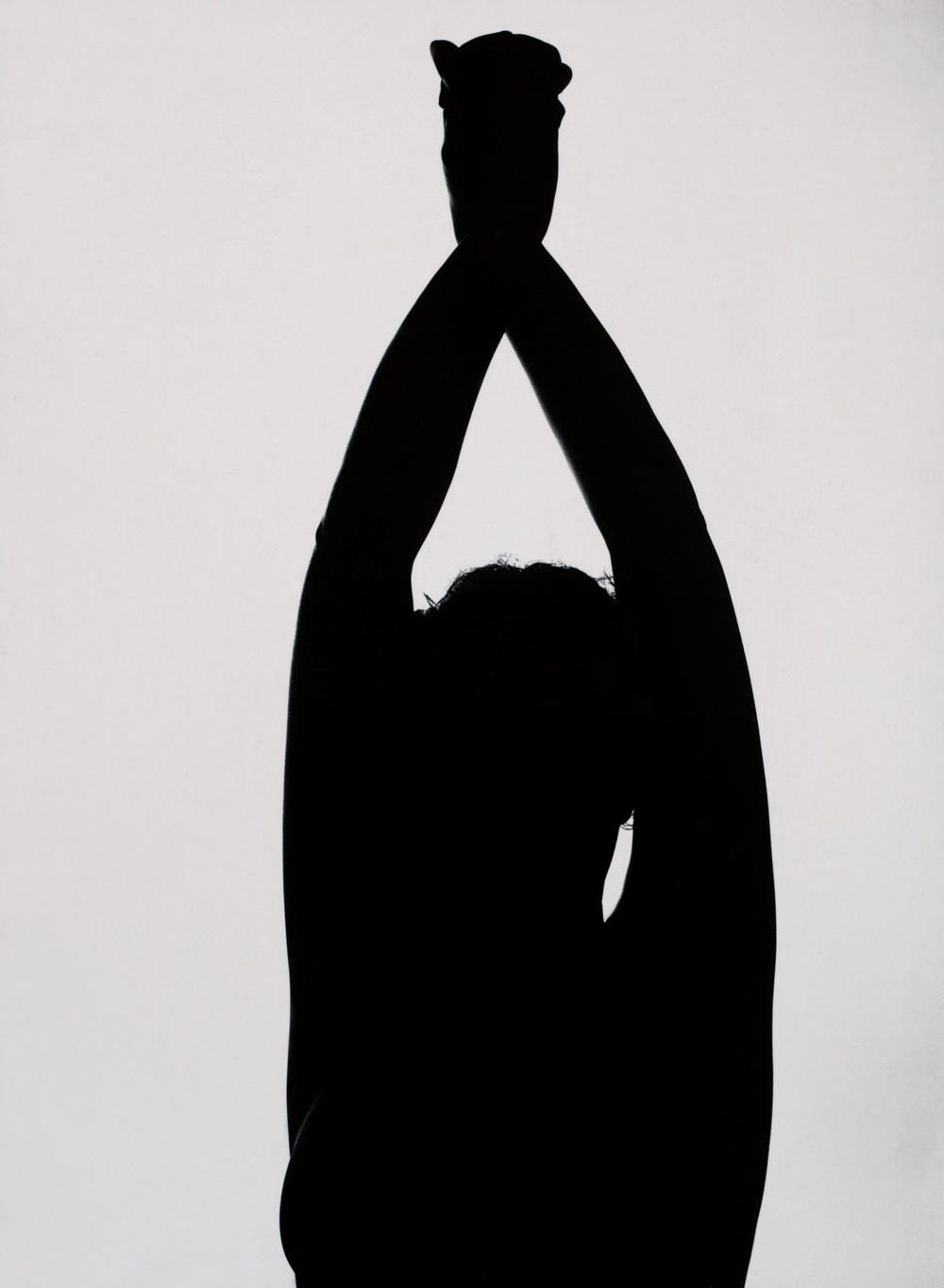
National Gallery of Art website

LIKE ART BLART ON FACEBOOK

Back to top

Exhibition: ‘Detroit Experiences: Robert Frank Photographs, 1955’ at Detroit Institute of Arts, Detroit

Exhibition dates: 3rd March – 4th July, 2010


Robert Frank (Swiss-American, 1924-2019) 'Assembly Plant, Detroit' 1955 from the exhibition 'Detroit Experiences: Robert Frank Photographs, 1955' at Detroit Institute of Arts, Detroit, March - July, 2010


Robert Frank (Swiss-American, 1924-2019)
Assembly Plant, Detroit
1955
Gelatin silver print
8 7/8 × 13 1/8 inches (22.5 × 33.3cm)
Founders Society Purchase, Coville Photographic Fund
© Robert Frank, from The Americans. Detroit Institute of Arts


Many thankx to Pamela Marcil and the Detroit Institute of Arts for allowing me to reproduce the photographs in the posting. Please click on the photographs for a larger version of the image.

Marcus


“I am always looking outside, trying to look inside, trying to say something that is true. But maybe nothing is really true. Except what’s out there. And what’s out there is constantly changing.”


Robert Frank, 1985


Robert Frank (Swiss-American, 1924-2019) 'Belle Isle' 1955 from the exhibition 'Detroit Experiences: Robert Frank Photographs, 1955' at Detroit Institute of Arts, Detroit, March - July, 2010


Robert Frank (Swiss-American, 1924-2019)
Belle Isle – Detroit
1955, printed between 1966-1968
Gelatin silver print
12 5/8 × 18 7/8 inches (32.1 × 47.9cm)
Museum Purchase, Ernest and Rosemarie Kanzler Foundation Fund, Forum for Prints, Drawings, and Photographs Purchase Fund, and General Art Purchase Fund
© Robert Frank, from The Americans. Detroit Institute of Arts


Robert Frank (Swiss-American, 1924-2019) 'Detroit River Rouge Plant' 1955 from the exhibition 'Detroit Experiences: Robert Frank Photographs, 1955' at Detroit Institute of Arts, Detroit, March - July, 2010


Robert Frank (Swiss-American, 1924-2019)
Detroit River Rouge Plant
1955, printed 1970s
Gelatin silver print
9 1/8 × 13 7/8 inches (23.2 × 35.2cm)
Founders Society Purchase, Coville Photographic Fund
© Robert Frank. Detroit Institute of Arts


Robert Frank (Swiss-American, 1924-2019) 'Drive-In Movie, Detroit' 1955


Robert Frank (Swiss-American, 1924-2019)
Drive-In Movie, Detroit
1955, printed 1977
Gelatin silver print
8 1/4 × 12 1/2 inches (21 × 31.8cm)
Founders Society Purchase, Tina and Lee Hills Graphic Arts Fund
© Robert Frank, from The Americans. Detroit Institute of Arts.


Detroit Experiences: Robert Frank Photographs, 1955 showcases more than 50 rare and many never-before-seen black-and-white photographs taken in Detroit by legendary artist Robert Frank. The exhibition will be on view at the Detroit Institute of Arts (DIA) March 3 – July 4, 2010. The exhibition is free with museum admission.

In 1955 and 1956 Robert Frank traveled the U.S. taking photographs for his groundbreaking book The Americans, published in 1958. With funding from a prestigious Guggenheim grant, he set out to create a large visual record of America, and Detroit was one of his early stops. Inspired by autoworkers, the cars they made, along with local lunch counters, drive-in movies and public parks such as Belle Isle, Frank transformed everyday experiences of Detroiters into an extraordinary visual statement about American life.

According to Frank, The Americans included “things that are there, anywhere, and everywhere … a town at night, a parking lot, the man who owns three cars and the man who owns none … the dream of grandeur, advertising, neon lights … gas tanks, post offices and backyards …” The exhibition includes nine Detroit images that were published in The Americans, as well as, for the first time, an in-depth body of work representative of Frank’s Detroit, its working-class culture and automotive industry.

Frank was drawn to Detroit partly by a personal fascination with the automobile, but also saw its presence and effect on American culture as essential to his series. Frank was one of the few photographers allowed to take photographs at the famous Ford Motor Company River Rouge factory, where he was amazed to witness the transformation of raw materials into fully assembled cars. In a letter to his wife he wrote, “Ford is an absolutely fantastic place … this one is God’s factory and if there is such a thing – I am sure that the devil gave him a helping hand to build what is called Ford’s River Rouge Plant.” Frank spent two days taking pictures at the Ford factory, photographing workers on the assembly lines and manning machines by day, and following them as they ventured into the city at night.

Whether in the disorienting surroundings of a massive factory or during the solitary and alienating moments of individuals in parks and on city streets, the Swiss-born photographer looked beneath the surface of life in the U.S. and found a culture that challenged his perceptions and popular notions of the American Dream. Further accentuating his view of America, Frank developed an unconventional photographic style innovative and controversial in its time. Photographing quickly, Frank sometimes tilted and blurred compositions, presenting people and their surroundings in fleeting and fragmentary moments with an unsentimental eye.

Beat poet Jack Kerouac expressed the complex nature of the artist and his work in a passage from his introduction to The Americans stating, “Robert Frank, Swiss, unobtrusive, nice, with that little camera that he raises and snaps with one hand he sucked a sad poem right out of America onto film, taking rank among the tragic poets of the world.”

Born in 1924 in Zurich, Switzerland, Frank emigrated to the U.S. in 1947. He worked on assignments for magazines from 1948–53, but his photographic books garnered the highest acclaim. After publishing The Americans, he began filmmaking and directed the early experimental masterpiece Pull My Daisy, in collaboration with Jack Kerouac in 1959. Frank continues to work in both film and photography and has been the subject of many traveling exhibitions in recent years. The National Gallery of Art, Washington, D.C. established Frank’s photographic archive in 1990 and organised his first traveling retrospective, “Moving Out, in 1995” as well as a 2009 exhibition “Looking In: Robert Frank’s “The Americans”.” Frank lived in Mabou, Nova Scotia, and New York City with his wife, artist June Leaf.

Press release from the Detroit Institute of Arts website [Online] Cited 24/06/2019 no longer available online


Robert Frank (Swiss-American, 1924-2019) 'Untitled' 1955


Robert Frank (Swiss-American, 1924-2019)
Untitled
1955, printed c. 1970s
Gelatin silver print
10 3/4 × 15 7/8 inches (27.3 × 40.3cm)
Founders Society Purchase with funds from Founders Junior Council
© Robert Frank, from The Americans. Detroit Institute of Arts


Robert Frank (Swiss-American, 1924-2019) 'Ford River Rouge Plant' 1955, printed c. 1970s


Robert Frank (Swiss-American, 1924-2019)
Ford River Rouge Plant
1955, printed c. 1970s
Gelatin silver print
13 13/16 × 9 1/8 inches (35.1 × 23.2cm)
Founders Society Purchase, Coville Photographic Fund
© Robert Frank. Detroit Institute of Arts


Robert Frank (Swiss-American, b. 1924) 'Assembly Plant, Ford, Detroit' 1955


Robert Frank  (Swiss-American, 1924-2019)
Assembly Plant, Ford, Detroit
1955, printed c. 1960s
Gelatin silver print
12 7/8 × 8 1/2 inches (32.7 × 21.6cm)
Founders Society Purchase, Coville Photographic Fund
© Robert Frank. Detroit Institute of Arts


Robert Frank (Swiss-American, 1924-2019) 'Drugstore, Detroit' 1955


Robert Frank (Swiss-American, 1924-2019)
Drugstore, Detroit
1955, printed c. 1960s
Gelatin silver print
23 1/4 × 15 3/4 inches (59.1 × 40cm)
Founders Society Purchase, with funds from the Founders Junior Council
© Robert Frank, from The Americans. Detroit Institute of Arts


Robert Frank (Swiss-American, 1924-2019) 'Detroit' 1955


Robert Frank (Swiss-American, 1924-2019)
Detroit
1955, printed c. 1960s
Gelatin silver print
9 1/16 × 13 1/2 inches (23 × 34.3cm)
Founders Society Purchase, Coville Photographic Fund
© Robert Frank, from The Americans. Detroit Institute of Arts


Robert Frank (Swiss-American, 1924-2019) 'Detroit - Belle Isle' 1955


Robert Frank (Swiss-American, 1924-2019)
Belle Isle – Detroit
1955, printed between 1960 and 1979
Gelatin silver print
12 1/2 × 18 3/4 inches (31.8 × 47.6cm)
Museum Purchase, Ernest and Rosemarie Kanzler Foundation Fund, Forum for Prints, Drawings, and Photographs Purchase Fund, and General Art Purchase Fund
© Robert Frank, from The Americans. Detroit Institute of Arts


Robert Frank (Swiss-American, 1924-2019) 'Rodeo - Detroit' 1955


Robert Frank (Swiss-American, 1924-2019)
Rodeo – Detroit
1955, printed 1960s
Gelatin silver print
6 1/2 × 9 7/8 inches (16.5 × 25.1cm)
Museum Purchase, Ernest and Rosemarie Kanzler Foundation Fund, Forum for Prints, Drawings, and Photographs Purchase Fund, and General Art Purchase Fund
© Robert Frank, from The Americans. Detroit Institute of Arts


In 1955, Swiss-born photographer Robert Frank traveled across the United States photographing how Americans live, work, and spend their leisure time. Detroit was a critical stop on his itinerary, as the Motor City was world renowned for its automobiles along with its factories and labor force. Frank spent several days in Detroit at its legendary Ford Motor Company Rouge Plant and visited dime-store lunch counters, drive-ins, and public parks as well. He may have found Stetson-wearing spectators at a local rodeo an unlikely and uncharacteristic subject for Detroit – a large, industrial, midwestern city. Nonetheless he included Rodeo – Detroit, in addition to eight other photographs taken in the city, as part of the 83 images found in his ground-breaking photo book The Americans from 1958. The book brought Frank great acclaim for his critical commentary on America during the boom years following World War II.

From Bulletin of the Detroit Institute of Arts 89 (2015)


Robert Frank (Swiss-American, 1924-2019) 'Detroit' 1956


Robert Frank (Swiss-American, 1924-2019)
Detroit
1956
Gelatin silver print
© Robert Frank, from The Americans. Detroit Institute of Arts


Detroit Institute of Arts
5200 Woodward Avenue
Detroit, Michigan 48202
Main Line: 313.833.7900

Opening hours:
Monday Closed
Tuesday – Thursday 9am – 4pm
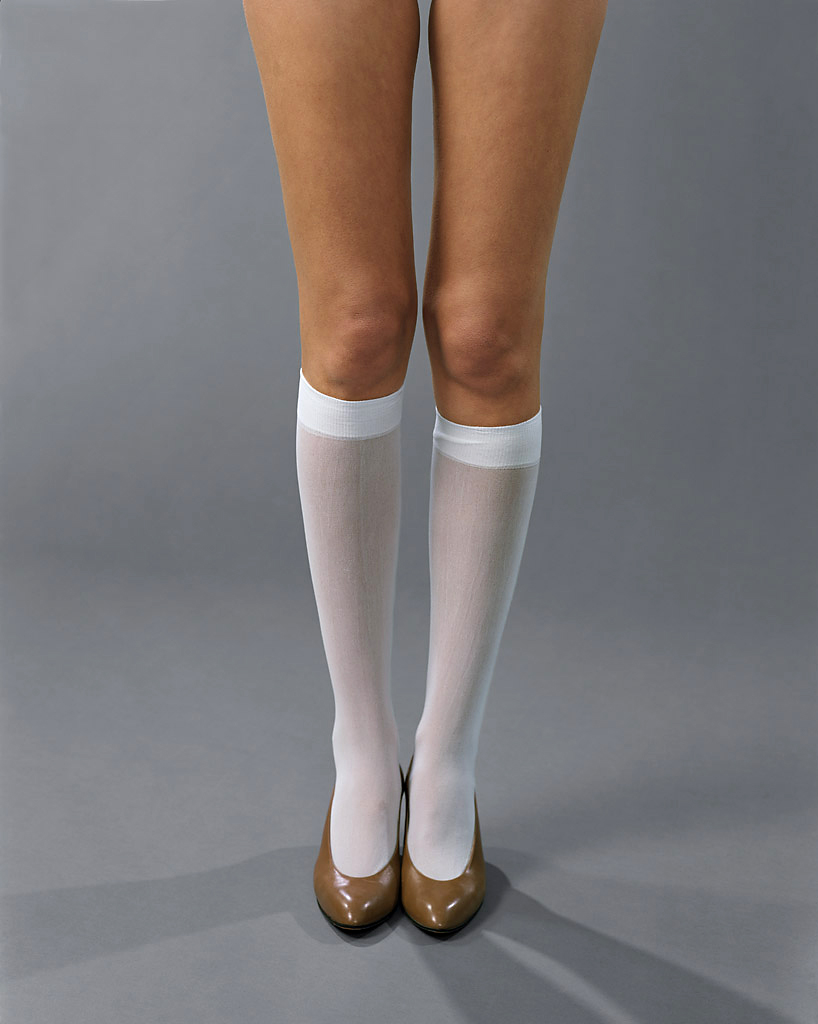
Friday 9am – 9pm
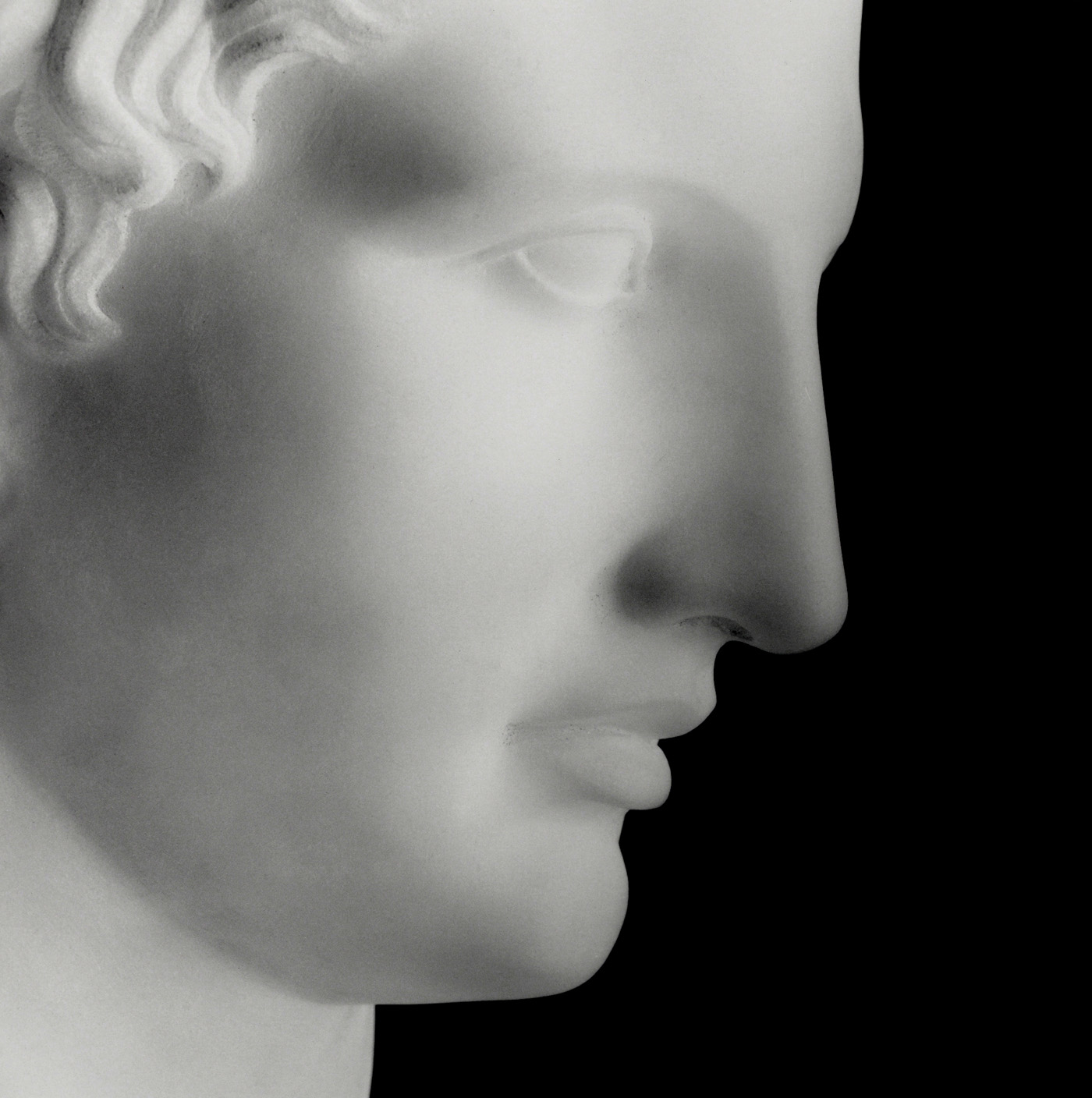
Saturday – Sunday 10am – 5pm

Detroit Institute of Arts website

LIKE ART BLART ON FACEBOOK

Back to top