Review: ‘Modern Times: The Untold Story of Modernism in Australia’ at Heide Museum of Modern Art, Melbourne

Exhibition dates: 21st March – 12th July, 2009


Roy de Maistre (Australian, 1894-1968) 'Colour Composition derived from three bars of music in the Key of Green' 1935 from the exhibition 'Modern Times: The Untold Story of Modernism in Australia' at Heide Museum of Modern Art, Melbourne, March - July, 2009


Roy de Maistre (Australian, 1894-1968)
Colour Composition derived from three bars of music in the Key of Green
1935
Oil and pencil on composition board
Private Collection


Despite some interesting highlight pieces this is a patchy, thin, incoherent exhibition assembled by the Powerhouse Museum, Sydney now showing at Heide Museum of Modern Art, Melbourne. Featuring a hotchpotch of work ranging across fields such as drawing, architecture, photography, painting, film, graphic design, craft, advertising, Australiana and aboriginal works the exhibition attempts to tell the untold story of Modernism in Australia to little effect. Within the exhibition there is no attempt to define exactly what ‘Modernism’ is and therefore an investigation into Modernism in Australia is all the more confusing for the visitor as there seems to be no stable basis on which to build that investigation. Perhaps reading the catalogue would give a greater overview of the development of Modernism in Australia but for the average visitor to the exhibition there seems to be no holistic rationale for the inclusion of elements within the exhibition which, much like Modernism itself, seems eclectically gathered from all walks of life with little regard for narrative structure.

With work spanning five decades from 1917-1967 we are presented with, variously, Robert Klippel’s kitsch Boomerang table from 1955, Robin Boyd’s ‘House of Tomorrow’ from 1949, Wolfgang Sievers ‘new objective’ photographs, Berlei’s scientific system for calculating beauty in woman in use till the 1960s, swimsuits from the 1920s-1940s, Featherston chairs from the Australian pavilion at the 1967 Expo, a recreation of Australian architect Harry Seidler’s office (the most interesting part of this being the books he had in his office library: Frank Lloyd Wright, Mies van de Rohe and Concerning Town Planning by Le Corbusier) and the wind tunnel test model of the Sydney Opera House in wood from 1960. Etcetera, etcetera, etcetera …

Highlight pieces include the above mentioned test model of the Sydney Opera House which is stunning in its scale and woodenness, in it’s simplicity of shape and form. Other highlight pieces are the colour music compositions of Roy de Maistre which were the tour de force of the show for me, true revelations in their rhythmic synchronic Moebius-like construction with layered planes of colour swirling in purples, greens and yellows. The large vintage photographic print of Sunbaker (1934) by Max Dupain was also a revelation with it’s earthy brown tones, the blending of the atmospheric out of focus foreground with the clouds behind, the architectural nature of the outline of the body almost like the outline of Uluru, the darkness of the head with the sensuality of the head and shoulders framed against the largeness of the hand resting on the sand. Lastly the two paintings and one rug by French artist Sonia Delaunay are a knockout. It says something about an exhibition when the best work in the show are two paintings by a French artist seemingly plucked at random to show external influences on Australian artists and designers.

While the exhibition does attempt to portray the breadth of the development of Modernism in Australia ultimately it falls well short in this endeavour. The most striking example of this shortcoming is the true star of the exhibition – the building that is Heide II itself. Commissioned by John and Sunday Reed and designed by the Victorian architect David McGlashan of the architectural firm McGlashan and Eversit in 1963 the building epitomises everything that is good about architectural Modernism and it’s form overshadows the exhibition itself. In this building we have beautiful spaces and volumes, an amazing staircase down into the lower area, suspended decking overlooking gardens, the blending of inside and outside areas, large expanses of glass to view the landscape, nooks and studies for privacy and the simplicity and eloquence of form that is Modernist design. With money one can indulge in the best of elitist Modernism. With position, position, position one can side steep the alienation of the city and the spread of surburbia where the dream of Australians owning a home of their own still continues in the vast, tasteless expanses of McMansion estates.

Robert Nelson in his review of this exhibition sees the car as creating the suburbs and Modernism as the emptying of the city after 6pm, the lessening of community and the devaluing of space he insists that there is little difference between a Californian bungalow in the suburbs and a utopian geometric neo-Corbusian box by Harry Seidler because they were equally shackled to motor transport.1 This is to miss the point.

Although Modernism in its basic form influenced most walks of life in Australia from swimsuit design to milk bars, from cinema to naturism, from bodies to advertising the most effective expressions of Modernism are architectural (as evidenced by Heide II) and were only open to those with money, power and position. Although Le Corbusier’s concept of public housing was a space ‘for the people’ the most interesting of his houses were the private commissions for wealthy clients. And so it proves here. One can imagine the parties on the deck at Heide II in the 1960s with men in their tuxedo and bow ties and woman in their gowns, or the relaxation of the Reed’s sitting in front of their fire in the submerged lounge. For the ordinary working class person Modernism brought a sense of alienation from the aspirational things one cannot buy in the world, an alienation that continues to this day; for the privileged few Modernism offered the exclusivity of elitism (or is it the elitism of exclusivity!) and an aspirational alienation of a different kind – that of the separation from the masses.

Go to Heide for the glorious gardens, the wonders of Heide II but don’t go to this exhibition expecting grand insights into the basis of Australian Modernism for that story, as Robert Nelson rightly notes, remains as yet untold.

Dr Marcus Bunyan


Many thankx to Heide Museum of Modern Art for allowing me to publish the art work in the posting. Please click on the photographs for a larger version of the image.

An excellent review of the exhibition by Jill Julius Matthews, “Modern times: The untold story of modernism in Australia,” (reCollections Volume 4 number 1) can be found on the Journal of the National Museum of Australia website [Online] Cited 20/02/2019


1/ “Emanating from Sydney’s Powerhouse Museum, Modern Times “explores how modernism transformed Australian culture from 1917 to 1967.” But something is missing. The overwhelming modern development in these 50 years was the proliferation of automotive transport, which redefined the layout and function of Australian cities.The cars created the suburbs; and as the individual bungalow drew out the vast dormitories of Sydney and Melbourne, the city centre was spiritually drained, dedicated to bureaucratic and commercial premises.The story at Heide emphasises the gradual triumph of the tall buildings of the CBD. It doesn’t really reflect how these abstract monuments didn’t contain a soul after 6pm.Although the project makes such a big deal of being interdisciplinary, the social history doesn’t have a robust geographical basis. And because of this, the exhibition and book fail to handle the new alienation that modernism brings: the evacuation of the city and the insularity of suburban people in bungalows with little street life and roads increasingly deemed unsafe for children.

What does it really matter if a house looks like a Californian bungalow or a utopian geometric neo-Corbusian box by Harry Seidler? In social terms, they’re structurally the same, equally retracting from a sense of community and equally shackled to motor transport. In this sense, the styles are immaterial, except that one of them gives you a feeling of intimacy while the other has a bit more light and is easily wiped with a sponge.

At the end of the chosen period, the folly of the dominant suburban pattern came to be understood in its dire ecological consequences. Alas, it was too late. The modernist devaluation of space had already occurred, and our whole society had been reorganised around petrol.”

Robert Nelson. The Age. Wednesday 6th May, 2009


Roy de Maistre (Australian, 1894-1968) 'Arrested Movement from a Trio' 1934 from the exhibition 'Modern Times: The Untold Story of Modernism in Australia' at Heide Museum of Modern Art, Melbourne, March - July, 2009


Roy de Maistre (Australian, 1894-1968)
Arrested Movement from a Trio
1934
Oil and pencil on composition board
72.3 × 98.8cm
National Gallery of Victoria, Melbourne


Roy de Maistre (Australian, 1894-1968) 'Rhythmic composition in yellow green minor' 1919


Roy de Maistre (Australian, 1894-1968)
Rhythmic composition in yellow green minor
1919
Oil on paperboard
85.3 x 115.3cm
Art Gallery of New South Wales
© Caroline de Mestre Walker


In late 1918, Roy de Maistre collaborated with fellow artist Roland Wakelin in exploring the relationship between art and music. Their experiments produced Australia’s first abstract paintings, characterised by high-key colour, large areas of flat paint and simplified forms. The works received critical acclaim, but modernist developments were largely derided by the conservative establishment.

This painting exemplifies de Maistre’s theory of colour harmonisation based on analogies between colours of the spectrum and notes of the musical scale. It is also aligned with de Maistre’s search for spiritual meaning through abstraction, akin to other artists such as Kandinsky who were interested in the ideas of the theosophy and anthroposophy movements, spiritualism and the occult.

Text from the Art Gallery of New South Wales website


Roy de Maistre (Australian, 1894-1968) 'Colour chart' c. 1919


Roy de Maistre (Australian, 1894-1968)
Colour chart
c. 1919
30.5 x 40.5cm
Oil on cardboard
Gift of the executors of the artist’s estate 1968
Art Gallery of New South Wales
© Caroline de Mestre Walker
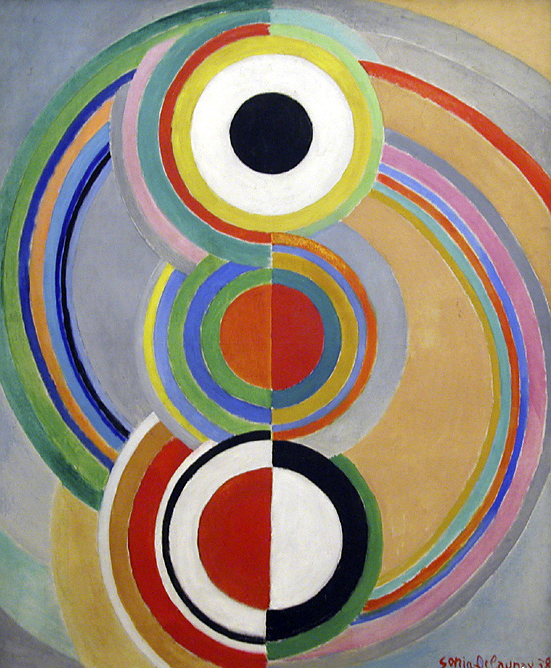
 

Sonia Delaunay (Ukraine, b. 1885 moved Paris 1905-1979) 'Rhythm' 1938


Sonia Delaunay (Ukraine, b. 1885 moved Paris 1905-1979)
Rhythm
1938
Oil on canvas
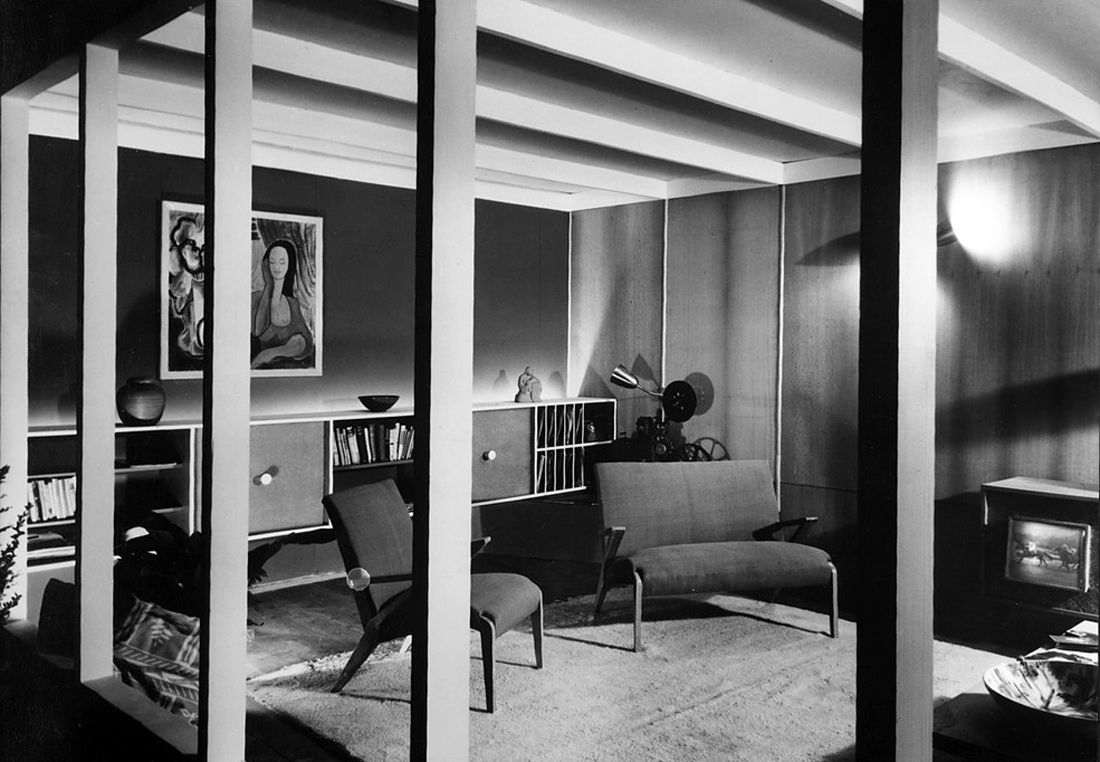
 

Wolfgang Sievers (German Australian 1913-2007) '"House of Tomorrow" exhibition at Exhibition Building, Melbourne' 1949


Wolfgang Sievers (Australian born Germany, 1913-2007)
“House of Tomorrow” exhibition at Exhibition Building, Melbourne
1949
Gelatin silver print
National Library of Australia
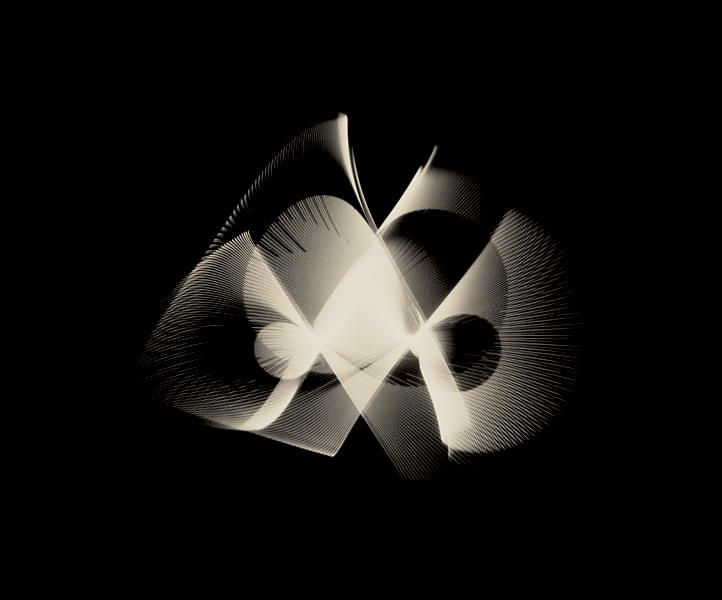
 

Stanislaus Ostoja-Kotkowski (Australian born Poland, 1922-1994) 'Nymphex' 1966


Stanislaus Ostoja-Kotkowski (Australian born Poland, 1922-1994)
Nymphex
1966
Gelatin silver photograph from electronic image
50.6 x 60.8cm
Gift of Dr George Berger 1978
Art Gallery of New South Wales
@ Estate of Stanislaus Ostoja-Kotkowski


Rayner Hoff (Australian born United Kingdom, 1894-1937) 'Decorative portrait - Len Lye' 1925


Rayner Hoff (Australian born United Kingdom, 1894-1937)
Decorative portrait – Len Lye
1925
Marble
30.5 x 22.5 x 16.5cm
Purchased 1938
Art Gallery of New South Wales


Max Dupain (Australian, 1911-1992) 'Sunbaker' 1934 printed 1937


Max Dupain (Australian, 1911-1992)
Sunbaker
1934 printed 1937
Gelatin silver print


Grace Cossington Smith (Australia, 1892-1984) 'Rushing' c. 1922


Grace Cossington Smith (Australia, 1892-1984)
Rushing
c. 1922
Oil on canvas on paperboard
65.6 x 91.3cm
Art Gallery of New South Wales
© Estate of Grace Cossington Smith


Cossington Smith captures the drama of a crowd in Rushing, which depicts commuters clamouring down to the ferries of Circular Quay to get home after work. The flying scarf and fallen hat emphasise the speed at which the travellers are moving and the peril and claustrophobia of a, mostly faceless, city crowd. The steep gangplank and diagonal composition accentuates the dynamism of the painting.

A brilliant colourist, Cossington Smith’s work of the early 1920s adopts a darker palette than the vivid colours she is usually associated with. Inspired by a visit to Sydney in 1920 by the tonalist painter and teacher Max Meldrum, her paintings became studies in tone, rather than colour, a practice she had abandoned by 1925.

Text from the Art Gallery of New South Wales website
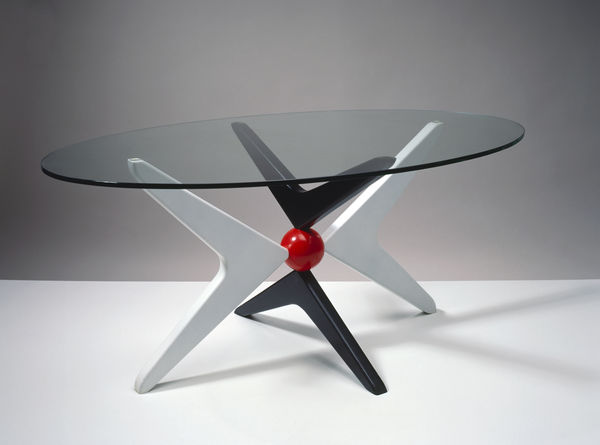
 

Robert Klippel (Australian, 1920-2001) 'Boomerang' coffee table 1955


Robert Klippel (Australian, 1920-2001)
Boomerang coffee table
1955


The Powerhouse Museum travelling exhibition Modern times: the untold story of modernism in Australia explores how modernism transformed Australian culture from 1917 to 1967, a period of great social, economic, political and technological change. From the ideals of abstraction and functionalism to the romance of high-rise cities, new leisure activities and the healthy body, modernism encapsulated the possibilities of the twentieth century. This exhibition is the first interdisciplinary survey of the impact of modernism in Australia, spanning art, design, architecture, advertising, photography, film and fashion.

Modern times is presented at Heide across all four of the Museum’s gallery spaces. It unfolds in thematic sections highlighting key stories about international exchange, the modern body, modernist ‘primitivism’, the city, modern pools, and the Space Age. Comprising over 300 objects and artworks, it showcases works by major artists including Sidney Nolan, Margaret Preston, Albert Tucker, Grace Cossington Smith, Max Dupain, Wolfgang Sievers, and Clement Meadmore, key architects Robin Boyd, Roy Grounds and Harry Seidler, and designers Fred Ward and Grant and Mary Featherston. An installation, Cannibal Tours, by Madrid-based Australian artist Narelle Jubelin is a contemporary adjunct to the exhibition.

Inspired by the futurist visions of various European avant-gardes, modernist ideas were often controversial and shaped by many competing positions. Modern times reveals how these ideas were circulated and took hold in Australia, via émigrés, expatriates, exhibitions, films and publications. Australian contact with significant international modernist sources, such as the Bauhaus school in Germany, occurred through figures such as influential artist and teacher Ludwig Hirschfeld-Mack, who taught Bauhaus principles at Geelong Grammar, and renowned architect Harry Seidler, who played a central role in shaping the modern city in Australia. Hirschfeld-Mack’s extraordinary film Colour Light Play of 1923 is shown for the first time in Australia, and Seidler’s 1948 studio, designed on his arrival from New York, has been re-created for the exhibition.

While modernism was international in character, an ‘Australian modernism’ was first championed in the 1920s by artist Margaret Preston, whose promotion of Aboriginal forms and motifs was important to the understanding of their artistic value. Preston’s designs, Len Lye’s stunning animation Tusalava (1929), Robert Klippel’s boomerang table (c. 1955) and other works show the development of a vernacular modernism.

Other highlights of Modern times include works from the visionary experiment in colour theory by Roy de Maistre and Roland Wakelin in 1919, a model of Robin Boyd’s innovative House of Tomorrow (1949), the iconic Featherston wing sound chairs from the Australian pavilion at the 1967 Montreal Expo, and a large wooden model for Jørn Utzon’s Sydney Opera House.

Text from the Heide Museum of Art website [Online] Cited 06/06/2009. No longer available online
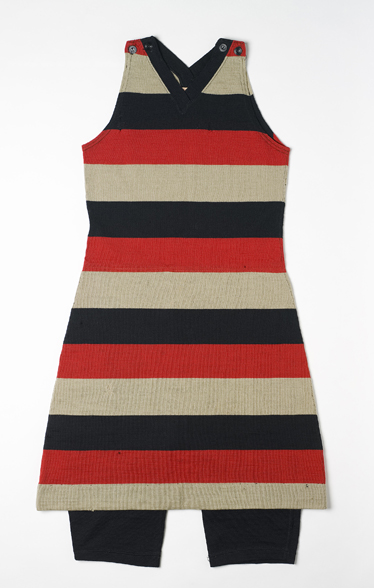
 

Athlete and movie-star Annette Kellerman's 'Modern Kellerman Bathing Suit for Women' which became commercially available by the mid-1920s. The one-piece bathing suit became Kellerman's trademark.


Athlete and movie-star Annette Kellerman’s Modern Kellerman Bathing Suit for Women which became commercially available by the mid-1920s. The one-piece bathing suit became Kellermans trademark
Gift of Dennis Wolanski Library, Sydney Opera House, 2000
Photo: Powerhouse Museum


'On hot summer days cool off with Tooth's KB Lager', advertising poster (about 1940)


On hot summer days cool off with Tooth’s KB Lager
About 1940
Advertising poster
Colour and process lithograph, artist name “Parker” in image lower right
100.4 x 75.4cm
Sydney Living Museums


Grant Featherston (Australian, 1922-1995) and Mary Featherston (Australian, b. London 1943, migrated to Australia 1952) 'Expo mark II sound chair' 1967


Grant Featherston (Australian, 1922-1995) and Mary Featherston (Australian, b. London 1943, migrated to Australia 1952)
Expo mark II sound chair
1967
Aristoc Industries
Polystyrene, polyurethane foam, Dunlopillo foam rubber, Pirelli webbing, fibreglass, hardwood, sound equipment, upholstery fabric
Powerhouse Collection


The Expo Mark II sound chair, adapted for the Australian domestic market after Expo 67 in Montreal.

A cloth-covered high back winged chair with a circular base. The chair has a circular orange cloth covered cushion in the base and an integral full-width headrest. Two 125mm diameter inserts are pressed into the top of the back of the chair where speakers are fitted inside it. There is a cylindrical knob on the side of the chair.
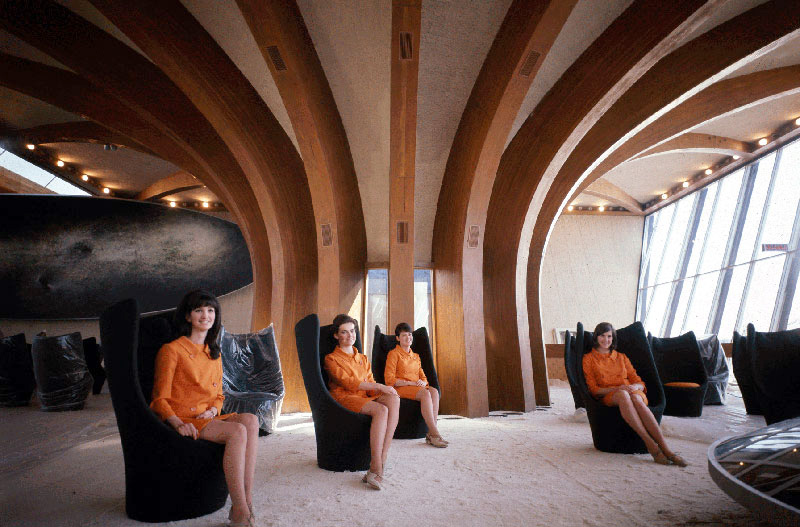
 

National Archives of Australia. 'A modernist vision of Australia - The interior of the Australian Pavilion at Expo 67 in Montreal' 1967


National Archives of Australia
A modernist vision of Australia: Grant and Mary Featherston’s wing sound chairs were a feature of the Australian Pavilion, designed by architect James Maccormick with exhibits selected by Robin Boyd, at Expo 67 in Montreal, 1967
1967


In 1967 Australia participated in the International and Universal Exposition held in Montreal, Canada. Australia’s Expo ’67 theme was the ‘Spirit of Adventure’. In the 30,000 square feet glass-walled Australian Pavilion, developed by the Australian Government and designed by Robin Boyd, exhibits explored Australian science, arts, people and development. The pavilion was designed as a ‘haven’ of ‘space and tranquillity’ floating above an Australian bushland setting. Inside, 240 innovative sound chairs offered ‘foot-weary Expo visitors’ the chance to hear the voices of famous Australians describing the exhibits, in French as well as English. The Great Barrier Reef was re-created in a lagoon beneath the pavilion while wallabies and kangaroos could be viewed in a sunken enclosure.

Text from the National Museum of Australia website [Online] Cited 20/02/2019


James Birrell (Australian, 1928-2019) 'View of the elevated restaurant, Centenary Pool, Brisbane' Nd


James Birrell (Australian, 1928-2019)
View of the elevated restaurant, Centenary Pool, Brisbane
Nd
Powerhouse Museum


“A major exhibition opening for Sydney Design 08 in August, Modern times looks closely at the transformation of modern city life. The advent of cars, freeways, skyscrapers and new entertainment such as cinemas, milk bars, swimming pools, cafes and pubs are all legacies of modernism as revealed through the exhibition. The exhibition spans five decades from 1917 to 1967 – a tumultuous period marked by global wars, economic depression, a technological revolution and major social changes – out of which a modern cosmopolitan culture was shaped.

“The modernist movement was inspired by various European avant-gardes that projected visions of a better future, shaped by many competing positions. It was through émigrés, expatriates, exhibitions and publications that modernism become known in Australia,” Ann Stephen said. Encompassing art, design and architecture, Modern times focuses on seven themes: 1. the human body, image and health; 2. international influences and exchanges; 3. Indigenous art and modernism; 4. Interdisciplinary projects with retailers; 5. city landscapes and urban life; 6. public pools and milk bars; and 7. the space age.

Several great modern public pools were designed in Australia initially as part of an international swimming boom in the 1930s and boosted by the 1956 Melbourne Olympics. These will be shown on a large, immersive, panoramic audio visual screen celebrating the most Australian of past-times, being poolside. The earliest 1920s swimming costumes by silent film star Annette Kellerman, several decades of Australian icon ‘Speedo’ cossies and an early bikini will also be on display.

The much-loved corner milk bar from the 1930s will also be recreated in the exhibition for visitors to enter, complete with lolly jars, milkshakes and a juke box.

Other story highlights in the exhibition include Robin Boyd’s ‘House of Tomorrow’ that featured at the 1949 Modern Home Exhibition in Melbourne; and Boyd’s memorable Australian pavilion at the 1967 Montreal Expo that showcased Australian design including the iconic Featherston wing sound chairs and hostess uniforms designed by Zara Holt, wife of then prime minister Harold Holt.

Modernism also inspired new forms of public art and design like the abstract fountains by Tom Bass on Sydney’s former P&O building and Robert Woodward’s El Alamein Memorial Fountain, a popular tourist site in Sydney’s Kings Cross. Modernism shaped an exultant explosion of experiment as part of the Space Age informing such spectacular architectural feats as Roy Grounds’ dome for the Australian Academy of Science in Canberra and Jørn Utzon’s internationally-acclaimed Sydney Opera House, both featured in the exhibition.”

Ruzan Haruriunyan, “Modern Times: Untold Story Of Modernism In Australia,” on the Huliq News website [Online] Cited 20/02/2019

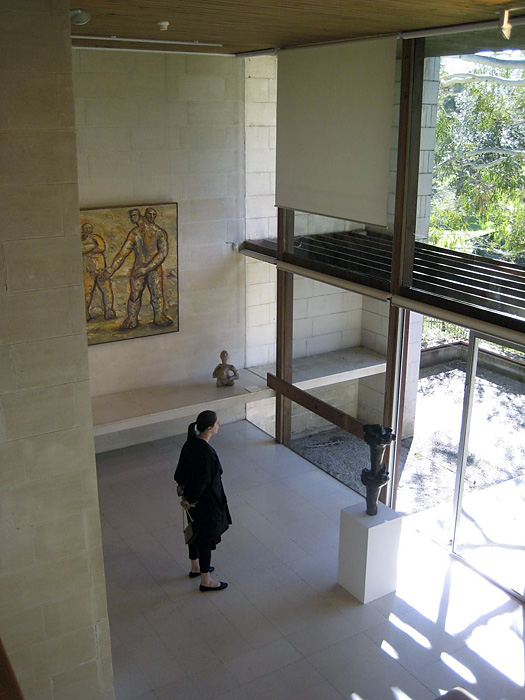
 

Heide II exterior

Heide II interior


Hedie II photographs by Rory Hyde. More photos of Heide are on his Flickr photoset

Heide II – commissioned by John and Sunday Reed 1963, designed 1964, constructed 1964-1967

Designed by Melbourne architect David McGlashan of McGlashan Everist, it was intended as “a gallery to be lived in” and served as the Reeds’ residence between 1967 and 1980. The building is considered one of the best examples of modernist architecture in Victoria and awarded the Royal Institute of Architects (Victorian Chapter) Bronze Medal – the highest award for residential architecture in the State – in 1968. It is currently used to display works from the Heide Collection and on occasion projects by contemporary artists.

Text from the Wikipedia website
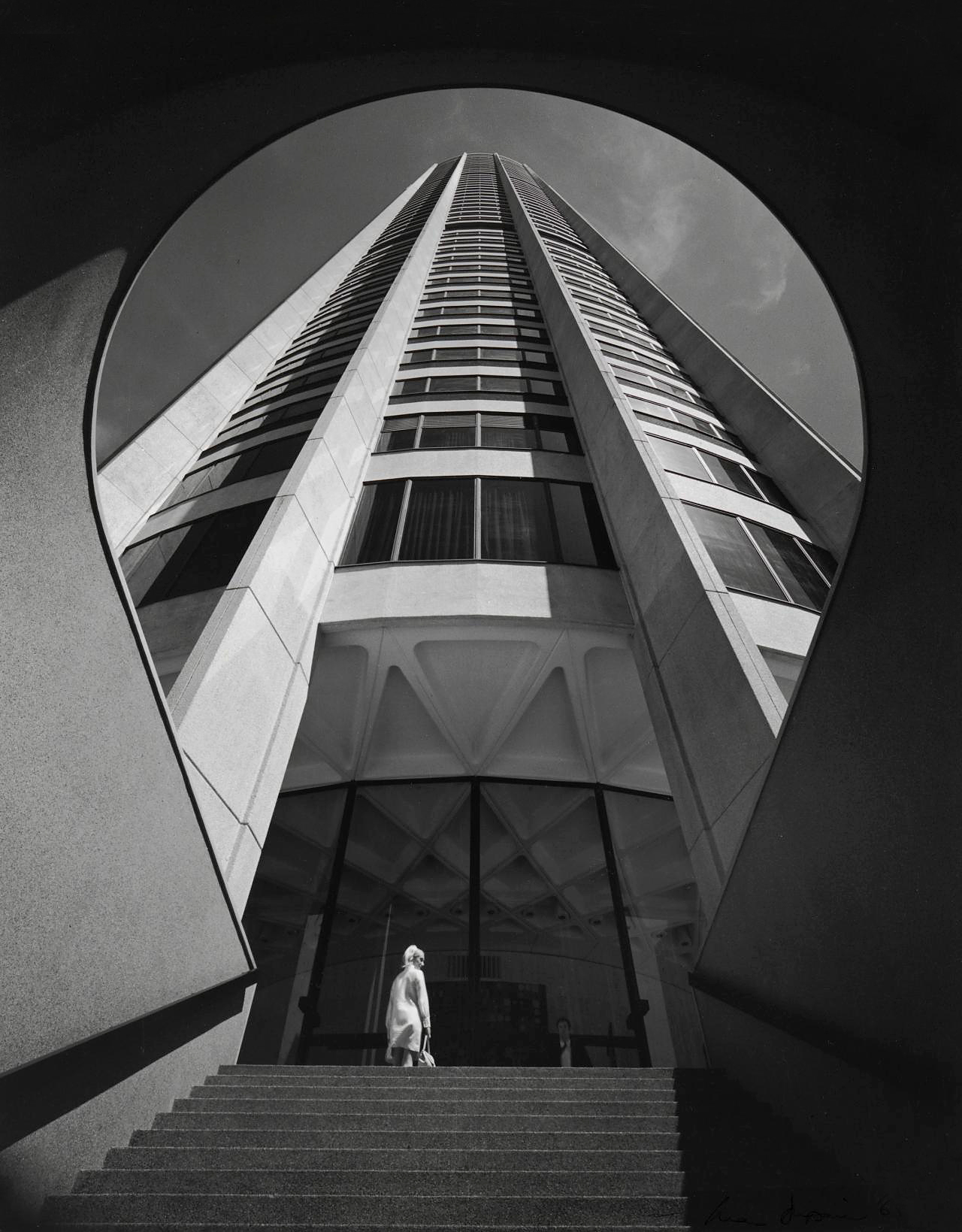
 

Max Dupain (Australian, 1911-1992) 'Australia Square Tower' 1968


Max Dupain (Australian, 1911-1992)
Australia Square: a keyhole to the future [Australia Square Tower]
1968
Gelatin silver print
49.9 × 39.2cm
Courtesy of Max Dupain and Associates


Jeff Carter (Australian, 1928-2010) 'At the Pasha Nightclub, Cooma' c. 1957-1959


Jeff Carter (Australian, 1928-2010)
At the Pasha Nightclub, Cooma
c. 1957-1959
Gelatin silver print


Modern Times: The Untold Story of Modernism in Australia, edited by Ann Stephen, Philip Goad and Andrew McNamara, Powerhouse Publishing, 2008 (paperback).

Heide Museum of Modern Art
7 Templestowe Road,
Bulleen, Victoria 3105

Opening hours:
Tuesday – Sunday
Public holidays
10am – 5pm
Heide Museum of Art website

LIKE ART BLART ON FACEBOOK

Back to top

Review: ‘John Beard: After Image’ paintings at John Buckley Gallery, Melbourne

Exhibition dates: 20th May – 6th June, 2009


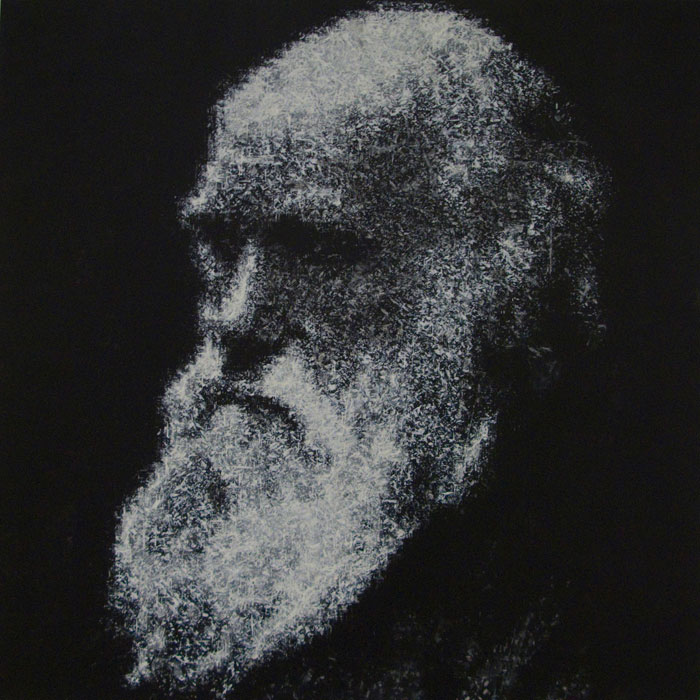
John Beard (Australian born Wales, b. 1943) 'Darwin' 2009 from the exhibition 'John Beard: After Image' paintings at John Buckley Gallery, Melbourne, May - June, 2009


John Beard (Australian born Wales, b. 1943)
Darwin
2009


The final exhibition of the afternoon were the ephemeral images of John Beard at John Buckley Gallery, Melbourne. This was an enthralling show that I enjoyed tremendously. Beard draws in a multitude of cultural sources for his paintings often referencing painters, scientists, animals and evolution. His work has an intimate sense of knowing, a meditative mediation on the essence of the object being painted, the very presence of the thing itself. The marks on the canvas may be intuitive but it is an informed intuition that results in works that hover at the edge of consciousness. As much as the works are after images, or ghost images, they are also about the persistence of vision, the persistence of the artists vision in addressing issues of collective memory and cultural history that draw emotive responses from the viewer.

These images may be ‘on the verge of disappearance’ as an after-image but they are also pre-images as well, conjured from the mind of the artist and layered with complexity, presence and holistic wholeness. Their seduction, if I may use that word, is that they draw from the viewer peripheral memories and emotions that flit at the edges of consciousness. As Portugese curator Isabel Carlos has noted, “… Beard recreates a ‘figural’ space where the essence of the thing represented lies beyond its singular physical evidence.”1

Beard’s fragmented surfaces form a rhizomic web of dissolved pixellation, their structure almost fractal like in their linked hyper-real intimacies. These in between spaces open up the possibility of subversive commentaries that, on one level, bring a sense of disquiet to the holistic presence of the work. As Mark Poster has noted of the work of Deleuze and Guittari and which can be aptly applied to the work of John Beard,

“Deleuze and Guittari configure the social as a complex of bodily intensities in a state of continuous nonlinear movement. The logic they present is multidimensional, shifting, discontinuous. They speak of strata, assemblages, territorializations, lines of flight, abstract machines, a congerie of terms that disrupts the function of concepts to control a field through discursive articulations. Their categories cut through the normal lines of comprehension, the binary logic that governs modern social theory to present a picture of reality from the perspective of a sort of primitive life force. It is as if the earth itself were to describe the changes on its surface in the course of human history, a vantage point quite remote from the ego of the individual or from the disciplined consciousness of the social scientist.”2


Nonlinear, logical, shifting territorializations in multidimensional environments that hover below the edge of consciousness, investigations into the binary of presence / absence in the dreams of the imaginary. Powerful and poetic these works irradiate the viewer with their visceral presence.

Dr Marcus Bunyan


1/ Isabel Carlos quoted in Wright, William. HEADLANDS: John Beard works 1993-2008. Catalogue essay

2/ Poster, Mark. The Mode of Information: Poststructuralism and Social Context. Cambridge: Polity Press, 1990, pp. 135-137


Many thankx to John Buckley Gallery for allowing me to publish the art work in the posting. Please click on the photographs for a larger version of the image.


John Beard (Australian born Wales, b. 1943) 'Gorilla' 2007 from the exhibition 'John Beard: After Image' paintings at John Buckley Gallery, Melbourne, May - June, 2009


John Beard (Australian born Wales, b. 1943)
Gorilla
2007


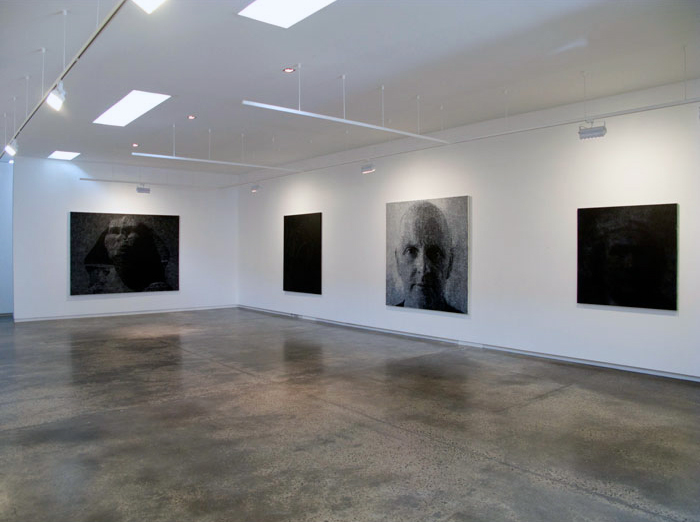
Installation view of John Beard's exhibition 'After image' at John Buckley Gallery, Melbourne


Installation view of John Beard’s exhibition After image at John Buckley Gallery, Melbourne


John Beard (Australian born Wales, b. 1943) 'Hand 6' 2009


John Beard (Australian born Wales, b. 1943)
Hand 6
2009


John Beard (Australian born Wales, b. 1943) 'Head SP3' 2004


John Beard (Australian born Wales, b. 1943)
Head SP3
2004


“Beard’s paintings often convey an overpowering sense of brooding stillness, but equally this volatile effervescence of light-reverberant phenomena, where head, headland, the Adraga rock, are no longer object so much as apparition, a painted parallel existence, a material presence invoking nature’s own organic processes …

There is a distinctive sense when encountering a body of John Beard’s works of entering into a site of composure, withheld, of images silently bespeaking truths both personal and historical; hovering presences each conveying some species quality of time-less recognition.”

William Wright 
from the catalogue essay HEADLANDS: John Beard works 1993-2008 [Online] Cited 29/05/2009. No longer available online


John Beard (Australian born Wales, b. 1943) 'Rose' 2007


John Beard (Australian born Wales, b. 1943)
Rose
2007


John Beard (Australian born Wales, b. 1943) 'Einstein 2' 2009


John Beard (Australian born Wales, b. 1943)
Einstein 2
2009


John Beard (Australian born Wales, b. 1943) 'Rembrandt' 2009


John Beard (Australian born Wales, b. 1943)
Rembrandt
2009


John Buckley Gallery

This gallery is now closed.

LIKE ART BLART ON FACEBOOK

Back to top

Review: ‘Exotic Queensland: Recent Painting’ by Anne Marie Graham at Gallery 101, Melbourne

Exhibition dates: 6th May – 30th May, 2009


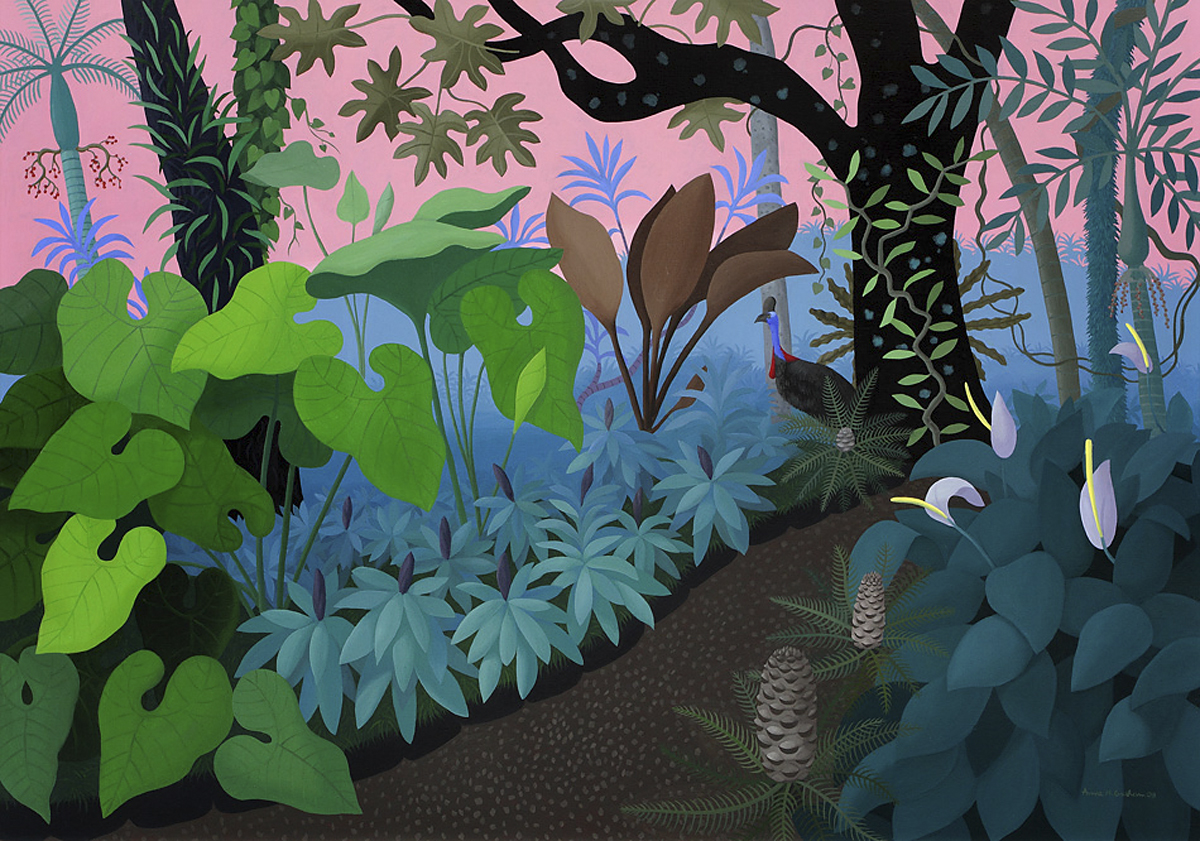
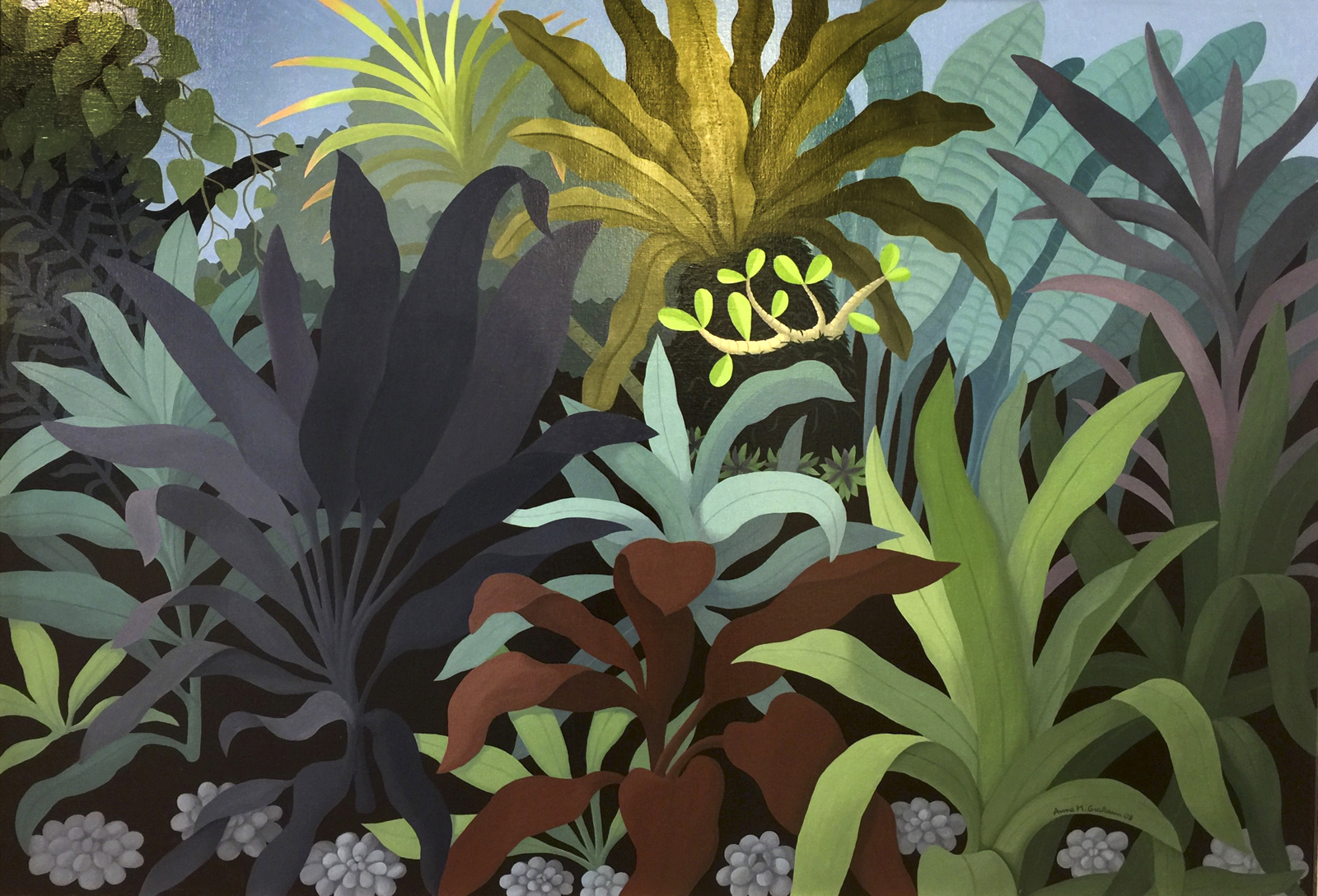
Anne Marie Graham (Australian born Austria, b. 1925) 'Jungle with Cassowary' 2008


Anne Marie Graham (Australian born Austria, b. 1925)
Jungle with Cassowary
2008
Oil on Linen
106 x 150cm
National Museum for Women in Arts, Washington


I was walking around Anne Marie Graham’s new exhibition of painting at Gallery 101, Melbourne having read a review of her work on the gallery wall where the reviewer compared the structure of the work to the essentialness of the paintings of Giotto. A lady approached me and said, “You don’t want to believe everything that you read.”

And I said, “I don’t. I make up my own mind.”

This was the artist Anne Marie Graham.

We had a wonderful conversation about her work talking about space, colour and form. This is what Graham’s work is about. No conceptual arguments are needed. The work addresses the landscape in a magical way, drawing the viewer into the compositions like a piece of music. The viewer finds entrances and passageways, spaces through the images which open up a dialogue with the landscape.

Using repeated patterns and layered construction, from bottom to top, from front to back, the images subtly push and pull the viewer: space quietly recedes and comes towards the viewer. Complimentary bands of colours are muted except for stunning highlight colours – the red of flowers, the blue of leaves or the unexpected pink or yellow of a background. The forms and textures delight. Dr Sheridan Palmer is correct, these paintings have an almost hypnotic effect, meditative and peaceful. They make you feel good!

Their presence is undeniable. For such complex paintings, which on the surface seem very simple (a difficult task to accomplish); for such essential representations that address the heart of the matter… their affect is powerful.

Graham’s refined aesthetic allows the viewer to engage with the poetic spaces she creates, allowing them to appreciate the colour fields, plants and landscapes she orchestrates and to be subsumed into their fold. Here we come to understand the diverse empathy of an artist who lays it all ‘on the line’ and knows how to do so in a brilliant way.

A talented artist and a nice lady as well – what more can you ask for!

Dr Marcus Bunyan


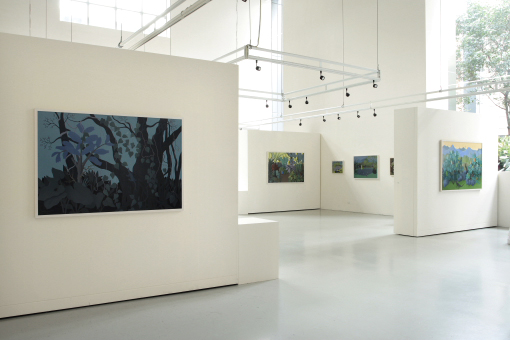
Installation view of Anne Marie Graham's exhibition 'Exotic Queensland: Recent Painting' at Gallery 101, Melbourne

Installation view of Anne Marie Graham's exhibition 'Exotic Queensland: Recent Painting' at Gallery 101, Melbourne


Exotic Queensland: Recent Painting installation views at Gallery 101, Melbourne


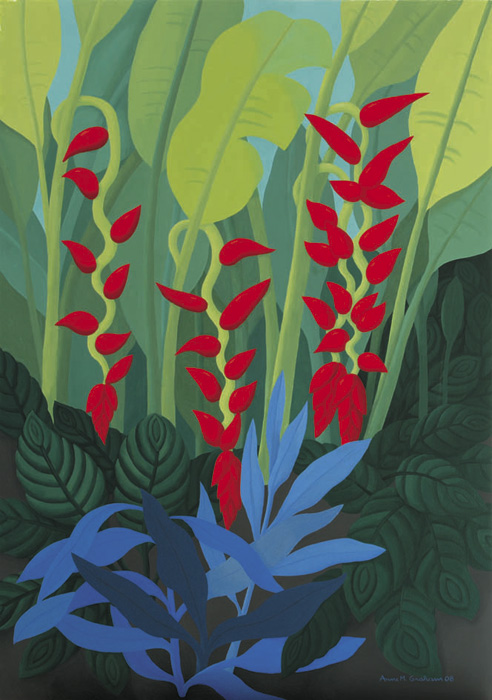
These landscapes are inspired by the areas around Noosa, the Glasshouse Mountains and the Botanic Gardens in Cairns. Look at the bromeliads, those cousins of the pineapple that store pools of water in their depths. And the helliconias – they’re also called lobster-claw plants and you can see why! Look at the massive scarlet tassels set against tropical green – and not just the one green but the subtlest of shades and tones in combination.

‘If there’s a God, it must be there’, says Anne of the Cairns Botanical Gardens. ‘The inventiveness and colours, the lushness and tropical exuberance and shapes. I still can’t overcome this enthusiasm’. There is an analogy with Eugene von Guérard here. Like Ann, he was born in Vienna and was also a precisely scientific observer of nature, ever mindful that the world is a thing far greater than us: that the hand of God (for want of a better word) can be found in very leaf and every grain of sand.

How much further in both place and mood could Anne possibly have travelled from the order and long humanist traditions of her childhood home in Austria? In these Queensland paintings you’ll discover cockatoos, a water dragon, a fat goanna, ibises in the lotus pond, and the shy endangered cassowary almost hidden in the jungle. And look at the sky in that painting – the rosiest pink of a twilight had tells us tomorrow will be a perfect day.

Jane Clark
Senior Research Curator, Museum of Old and New Art, Hobart

Extract from speech given at the opening of the exhibition Exotic Queensland, Gallery 101 Melbourne May 2009


Anne Marie Graham (Australian born Austria, b. 1925) 'Water Dragon with Banksias' 2008


Anne Marie Graham (Australian born Austria, b. 1925)
Water Dragon with Banksias
2008


Anne Marie Graham (Australian born Austria, b. 1925) 'Heliconia No. 1' 2008


Anne Marie Graham (Australian born Austria, b. 1925)
Heliconia No. 1
2008
Oil on Linen
106 x 150cm


Anne Marie Graham (Australian born Austria, b. 1925) 'Variations in Green and Mauve' 2008


Anne Marie Graham (Australian born Austria, b. 1925)
Variations in Green and Mauve
2008
Oil on linen
106 x 150cm


“Anne Marie Graham’s painting career now spans more than six decades. Observed with a penetrating and affectionate gaze, her images are beautiful records of Australia’s vast landscape. Each work is an engagingly optimistic view, evoking the mystery and fragility of Australia’s rich environment. This survey of recent paintings concentrates on the tropical Queensland landscapes around Noosa and the Cairns Botanic Gardens.

As she casts he vision over mountains, rain forests and panoramic vistas or as she leads us into an intimate world of gardens, winding pathways and potted plants, we find ourselves amongst large succulents, variegated foliage, ferns and brilliant flowers, visually engaging at a Lilliputian level in her richly orchestrated fields and forests. In these locations she constructs marvellous labyrinthine worlds that reveal layers of muted colours, folding forms and textures that induce a most extraordinary hypnotic spell.”

Dr Sheridan Palmer, Art Curator, from the catalogue essay


Anne Marie Graham (Australian born Austria, b. 1925) 'Heliconia No. 2' 2008


Anne Marie Graham (Australian born Austria, b. 1925)
Heliconia No. 2
2008


GALLERY 101

This gallery has now closed.

LIKE ART BLART ON FACEBOOK

Back to top

Review: ‘Samson and Delilah’ Australian film directed by Warwick Thornton

May 2009


The Players

Rowan McNamara, Marissa Gibson, Mitjili Napanangka Gibson and Scott Thornton


Rowan McNamara as Samson and Marissa Gibson as Delilah in 'Samson and Delilah'


Rowan McNamara as Samson and Marissa Gibson as Delilah


This is a tough nugget of a film, an absolute gem. It is a love story.

The deceptively simple narrative takes you into the dark side of Aboriginal life in the remote desert communities of central Australia. It pulls no punches taking the viewer on a empathetic ride into the lives of two young people struggling to find their reason for being on this earth. Here is violence, abuse, rape and addiction with the subtle hope of redemption.

Samson is addicted to petrol sniffing. Delilah tries to ignore him. She looks after her grandmother who is an artist, pushing her around in an wheelchair, feeding her medicine and taking her to the health clinic. Samson forces himself on Delilah, sleeping next to her but never with her. Then her grandmother dies and Delilah is blamed by the women elders of the community. Samson’s addiction escalates. He steals a car and with Delilah in tow they flee to Alice Springs to live under a flyover and sniff petrol, to be looked down upon by tourists in trendy cafes. Things get worse before they get (slightly) better.

That is the bare bones of the story. But I want to talk about other things.

The film is the traditional three acts but the narrative reads like an oral history only shown in images: themes are repeated over and again with subtle variations, like the arc of great music reiterating the flow of energy. There is little dialogue which intensifies the sounds of the desert, the band that plays on the verandah and the ringing of telephones. Every human seems to be alienated from the landscape. The Aborigines seem to be just floating on the surface of the land like everyone else, just struggling to survive. The landscape towers above the participants. Unlike our usual perception of Aboriginal people being in touch with the earth through the Dreamtime, here the director Warwick Thornton seems to suggest otherwise, until right at the end of the film.

Delilah is the strength in the film. It is her stoicism, her strength that helps Samson see it through. She ends up pushing Samson in the same wheelchair that she pushed her grandmother around in. His loss of strength is palpable, his addiction ongoing. You believe this story, the non-professional actors grounding you in the red dust of the desert.

There are several remarkable elements that lift this film to sublime places. Some of them are the most moving moments I have seen in a film in many a year:

The soundtrack, like a disjointed heartbeat, that accompanies their life under the flyover. The soundtrack of Samson’s rock and roll competing with Delilah’s music in her 4 wheel drive as one fades into the other.

Samson and Delilah sitting outside the health centre in white plastic chairs picking their feet off the ground so they won’t get bitten by ants.

Samson sitting in the wheelchair in the middle of the road at night, rocking back and forward on the wheels of the chair, so off his face that he is oblivious of the approaching 4 wheel drive until it is right upon him. Exceptional.

Delilah, towards the end of the film, washing the body of Samson with soap while he sits in a trough of water. More sensuality, more sexuality packed into 30 seconds than you will ever see in a full blown love scene. Amazing.

Samson, his head under a blanket under the flyover. The scene fades not to black as it does regularly in this film but to 80% of black and hovers there, just under the level of consciousness, before the sun rises again. This is masterful, poetic film making.

Samson, taking his ghetto blaster outside at night, dancing under the light of the verandah to rock and roll music watched by Delilah from her refuge in a 4 wheel drive. This scene is so beautiful, so genuine. The natural grace of Samson’s dancing opens Delilah’s eyes towards him. For the audience it is a revelatory, transcendent moment that crosses space and time as great cinema does. It grips you in an esoteric awareness: we are all human, we all live on the same earth. We all dance.

.
Go and see this film. It is one of the finest ever made in Australia. Besides a beautiful love story it will take you to places and connect with your heart like no other. It’s not perfect by any means (in terms of some improbabilities in the narrative) but this can be forgiven in the arc of the story telling. It is harrowing there is no doubt, but in the almost timeless ebb and flow of the film, in the communion with the infinite, something that defines human existence, this film stands above all else.

Dr Marcus Bunyan


Township in 'Samson and Delilah'

Marissa Gibson and Mitjili Napanangka Gibson in 'Samson and Delilah'


Marissa Gibson and Mitjili Napanangka Gibson


Rowan McNamara as Samson in 'Samson and Delilah'


Rowan McNamara as Samson


Rowan McNamara as Samson in 'Samson and Delilah'


Rowan McNamara as Samson


Samson and Delilah website

LIKE ART BLART ON FACEBOOK

Back to top

Review: ‘triestement (more-is u thrill-o)’ exhibition by Domenico De Clario at John Buckley Gallery, Melbourne

Exhibition dates: 22nd April – 9th May, 2009


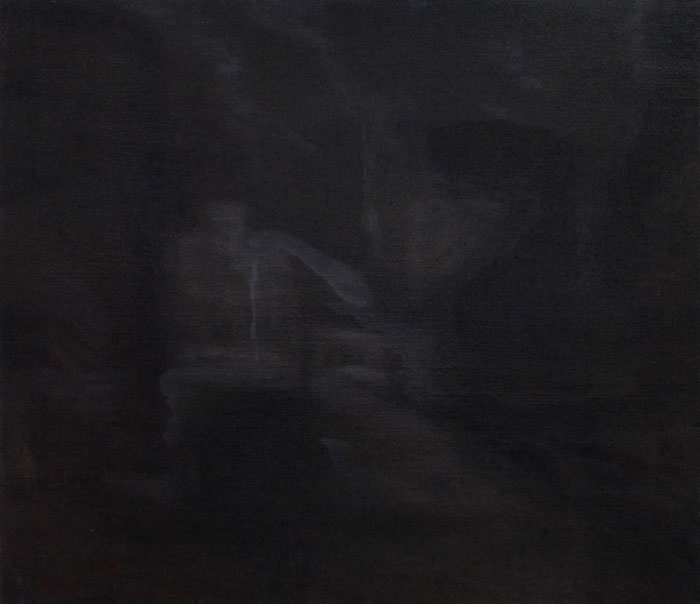
Domenico de Clario (Australian born Italy, b. 1947) 'u (renoir’s garden)' 2008/09 from the exhibition 'triestement (more-is u thrill-o)' by Domenico De Clario at John Buckley Gallery, Melbourne, April - May, 2009


Domenico de Clario (Australian born Italy, b. 1947)
u (renoir’s garden)
2008/09
Oil on canvas


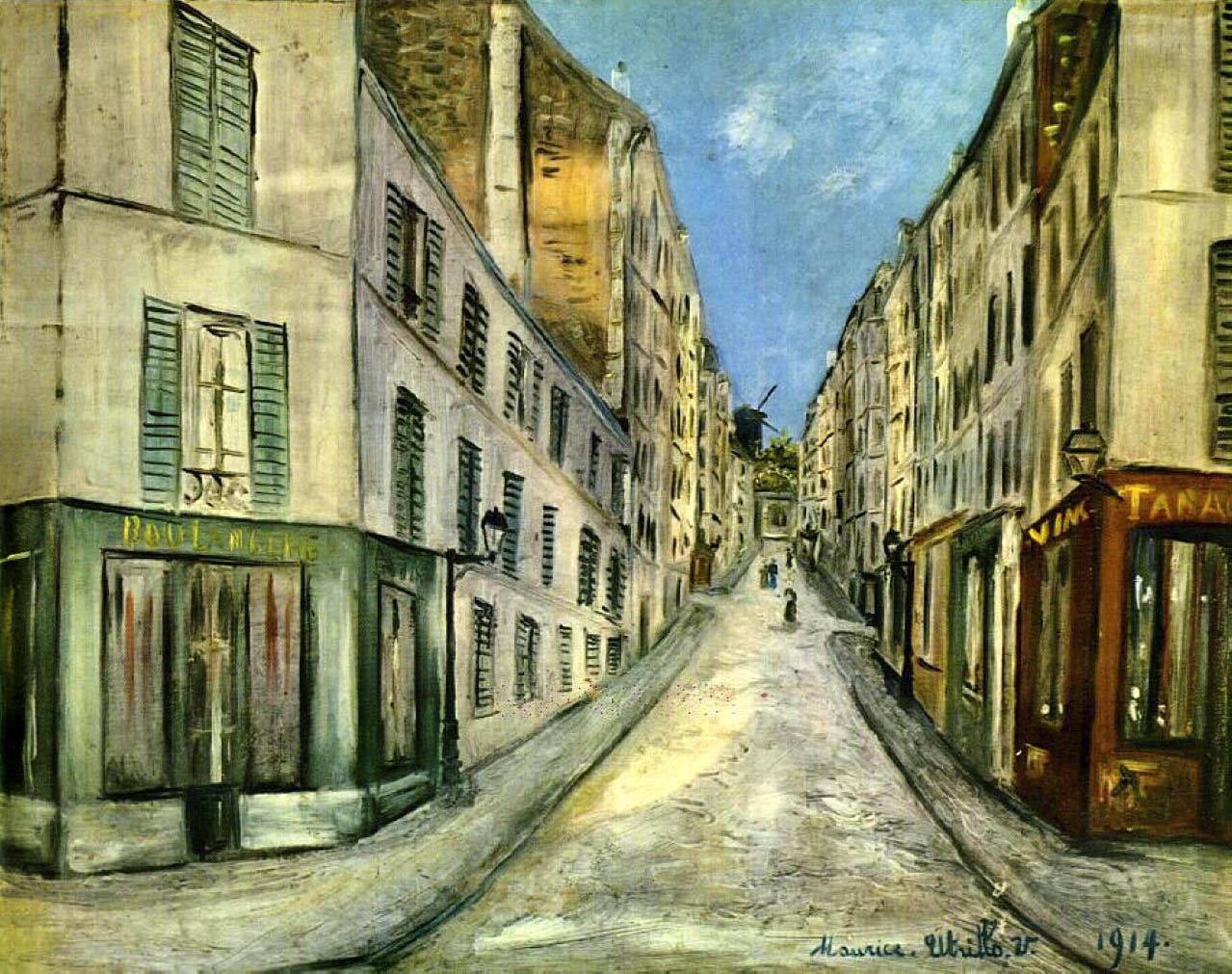
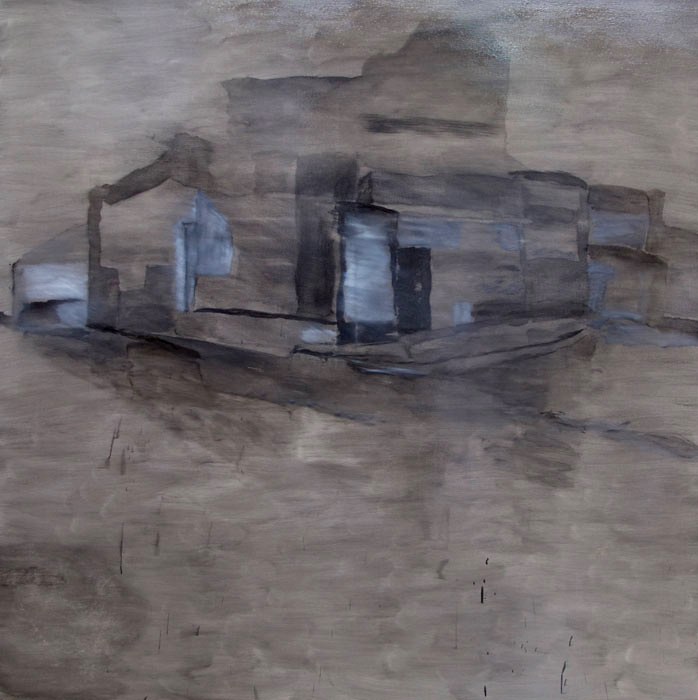
Based on the music of melancholy that inhabits the shadows of the paintings of Montmarte by the French artist Maurice Utrillo, Domenico de Clario’s exhibition of paintings at John Buckley Gallery in Melbourne is a major achievement. This is a superlative exhibition of focused, resonant work beautifully and serenely installed in the gallery space.

The exhibition features seven small and seven large oil and acrylic on canvas paintings that envelop the viewer in a velvety quietness, an intense stillness accompanied by ambient music composed by de Clario himself. All fourteen paintings are reinterpretations of works by Utrillo picked at random by de Clario that strip away surface matter to reveal the shadow substance that lays at the anxious heart of Utrillo’s meta/physical body of work (Utrillo was an alcoholic at fourteen and spent numerous periods in sanatoriums). When de Clario was fifteen he was fascinated by a small book on Utrillo and found that his paintings reminded him of his childhood, growing up in the town of Trieste. Recently he noticed that the word ‘triestement’ was used to mean, essentially, an investigation of sadness, of melancholy and started an investigation into the life and work of Utrillo. From this dialogue the paintings for the exhibition have emerged as de Clario found the ‘more is’ of Utrillo, the anima of his presence within the work.

The small abstract paintings (such as renoir’s garden, above) are dark and miasmic, vaporous emanations of atmosphere that contain traces of Utrillo’s lifelong battle with the black dog but it is the seven large paintings facing each other in the main gallery space that are at the heart of de Clario’s project. They are magnificent.

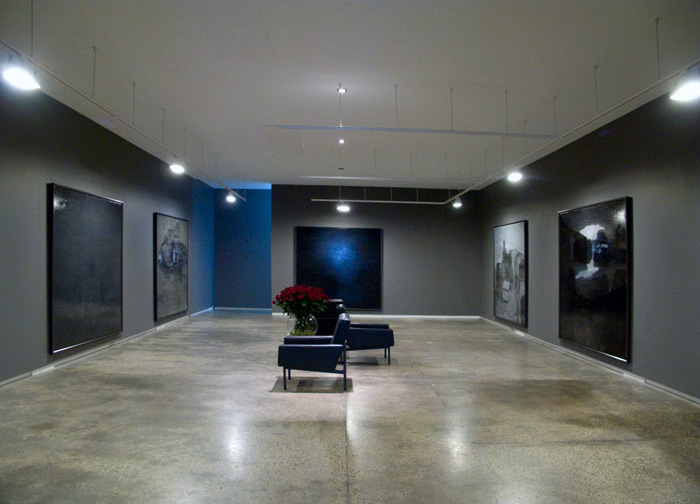
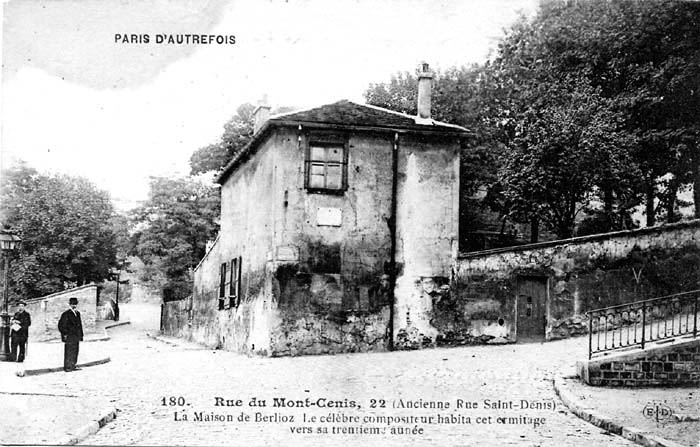
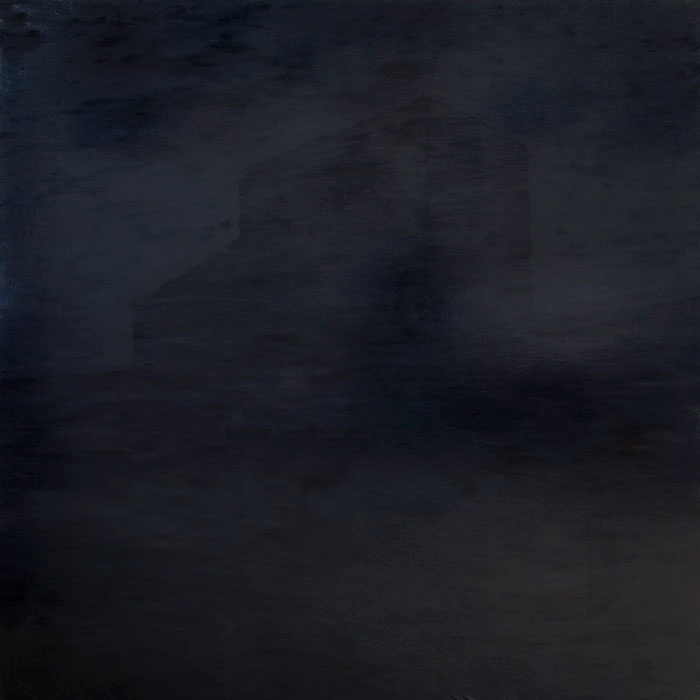
Painted in a limited colour palette of ochres, greys and blacks the works vibrate with energy. Cezanne-like spatial representations are abstracted and the paint bleeds across the canvas forming a maze of buildings. Walls and hedges loom darkly over roadways, emanations of heads and figures float in the picture plane and the highlight white of snow hovers like a spectral figure above buildings. These are elemental paintings where the shadow has become light and the light is shadow, meanderings of the soul in space. In the painting i (the house of hector berlioz – night) below, the single dark line of the house rises from the plain; the shadowy haze of recognition sits in the subconscious like the trace of our own mortality. My mind made an association with the modernist photograph by Paul Strand of the church at Taos (see photo at bottom of posting) with the looming bulk of the ramparts: it’s funny how things just click into place.

“The watergaw, the faint rainbow glimmering in chittering light, provides a sort of epiphany, and MacDiarmid connects the shimmer and weakness and possible revelation in the light behind the drizzle with the indecipherable look he received from his father on his deathbed … Each expression, each cadence, each rhyme is as surely and reliably in place as a stone on a hillside.”Seamus Heaney1


To paint these works de Clario was open and receptive to the idea of the letting go. In the wonderfully erudite catalogue essay he says he felt like he was standing under a waterfall experiencing the joyful bliss of substance, material, surface, shadow, blandness, light, plenitude and triestement while acknowledging that he could never capture them and that their value could only be fully understood once he abandoned any thought of possessing them. Like Seamus Heaney in the quotation above, de Clario experienced the glimmering in chittering light, the possible revelation in the light behind the drizzle (of the shadow) and he then paints the trace of Utrillo’s subconscious anima, the indecipherable look of his triestement. de Clario feels the fluid relationship between substance and appearance; he understands that Utrillo is embedded in the position of each building and stone, in the cadences and rhymes of the paintings of Montmarte. de Clario interprets this knowledge in a Zen like rendition of shadow substance in his paintings. Everything has it’s place without possession of here and there, dark and light.

For my part it was my soul responding to the canvases. I was absorbed into their fabric. As in the dark night of the soul my outer shell gave way to an inner spirituality stripped of the distance between viewer and painting. I felt communion with this man, Utrillo, with this art, de Clario, that brought a sense of revelation in the immersion, like a baptism in the waters of dark light. For art this is a fantastic achievement. Highly recommended.

Dr Marcus Bunyan


1/ Heaney, Seamus. The Redress of Poetry. London: Faber and Faber, 1995, pp. 107-108.


Please click on the artwork for a larger version of the image.


Domenico de Clario (Australian born Italy, b. 1947) 'l (le lapin agile - snow coming)' 2008/09 from the exhibition 'triestement (more-is u thrill-o)' by Domenico De Clario at John Buckley Gallery, Melbourne, April - May, 2009


Domenico de Clario (Australian born Italy, b. 1947)
l (le lapin agile – snow coming)
2008/09
Oil on canvas


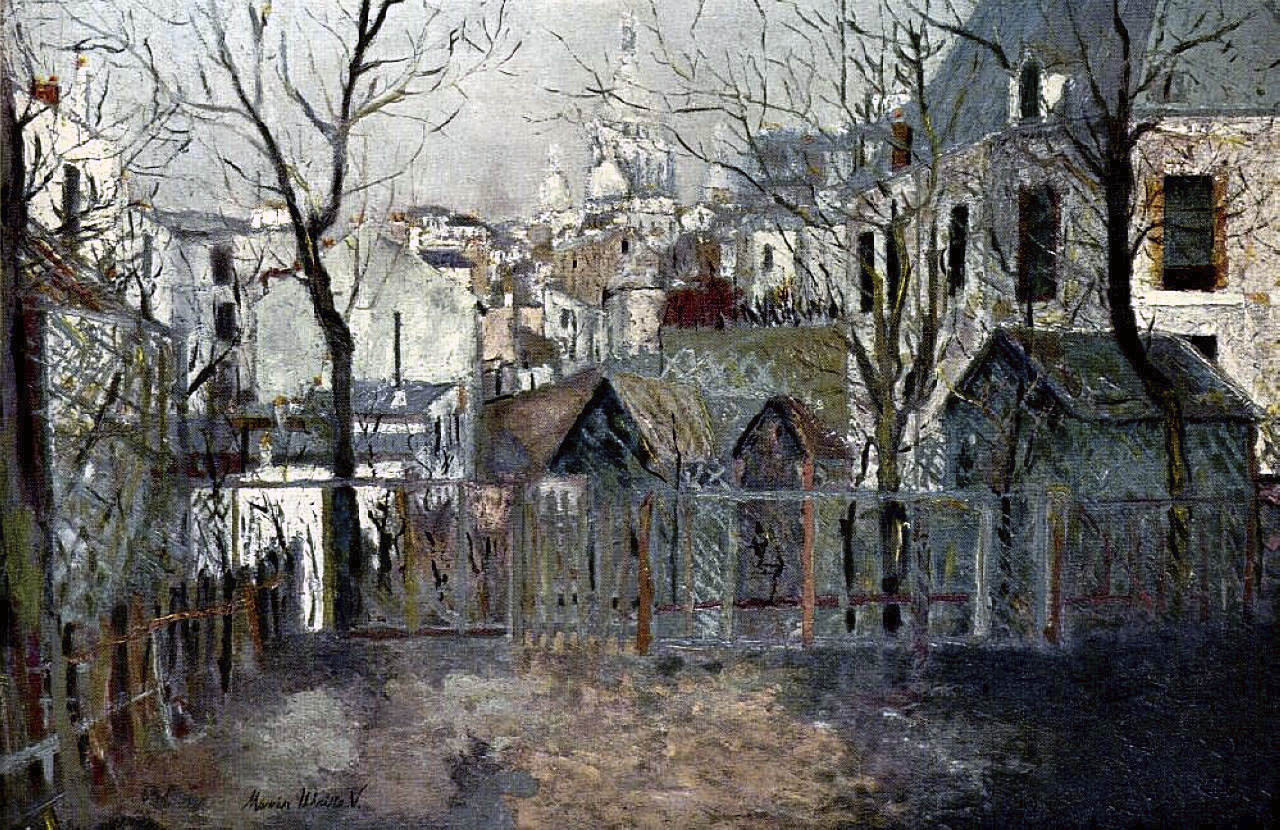
Maurice Utrillo (French, 1883-1955) 'Renoir's Garden' 1909-1910


Maurice Utrillo (French, 1883-1955)
Renoir’s Garden
1909-1910
Oil on canvas


Installation view of 'triestement (more-is u thrill-o)' by Domenico De Clario at John Buckley Gallery

Installation view of 'triestement (more-is u thrill-o)' by Domenico De Clario at John Buckley Gallery


Installation views of triestement (more-is u thrill-o) by Domenico De Clario at John Buckley Gallery


Maurice Utrillo (French, 1883-1955) 'Paris Street' 1914


Maurice Utrillo (French, 1883-1955)
Paris Street
1914
Oil on canvas


Domenico de Clario (Australian born Italy, b. 1947) 'r (rue ravignan - le bateau lavoir)' 2008/09


Domenico de Clario (Australian born Italy, b. 1947)
r (rue ravignan – le bateau lavoir)
2008/09
Oil on canvas


Domenico de Clario (Australian born Italy, b. 1947) 'l (le lapin agile and rue du mont cenis - snow receding)' 2008/09


Domenico de Clario (Australian born Italy, b. 1947)
l (le lapin agile and rue du mont cenis – snow receding)
2008/09
Oil on canvas


Domenico de Clario (Australian born Italy, b. 1947) 'o (la grande maison blanche – snow clouds massing)' 2008/09


Domenico de Clario (Australian born Italy, b. 1947)
o (la grande maison blanche – snow clouds massing)
2008/09
Oil on canvas


Is there any limit, I thought, to the kinds of shadows that might be transmuted into light? And is this because the key component of the nature of shadow is its deep longing for a transmutation to light?

As a consequence of these thoughts I arrived at the question that animates the core of this current project; what, I asked myself, might the original shadow-substance Utrillo experienced and subsequently transmutes into the paintings we known, have looked like? What shadow images did Utrillo first see, or even imagine, before he transmuted them into colour? …

Utrillo must have believed that the outer world of coloured light belonged exclusively to others, for he never succeeded in releasing himself from the dark inner shadows that engulfed him. Though he struggled much to reach the light he accepted shadow as constituting his world and worked ceaselessly to offer us images that reflected this side’s plenitude.

Perhaps the luminous surfaces of his paintings functioned as the thin membrane that separates the outer world of cacophonously coloured light from the velvety grey inner world of the monotic anxiety he inhabited. Upon that thought the momentousness of his gift became apparent to me …

For the purposes of this present project I believe that the shadow substance laying beneath the architecture of Utrillo’s streetscapes existed within the artist long before his paintings came into being. This non-substance generated the appearance of matter on the paintings’ surfaces and more significantly it gradually came to contain the spirit of his Montmarte-body.

The process of removing matter results in an obvious absence of substance but paradoxically this leads me to feel that here, under all this discarded visible matter, an invisible substance that has always contained more than matter awaits to be revealed. This leads to the provisional conclusion that the primal trace of normally unseen shadow is far richer than any material constituting appearance, containing as it does infinitely more substance than appearance.

Astonishing paradox; infinite substance can only be discovered once all matter is removed.

Text from the catalogue essay by Domenico de Clario [Online] Cited 26/04/2009. No longer available online


Maurice Utrillo (French, 1883-1955) 'Berlioz House' 1910


Maurice Utrillo (French, 1883-1955)
Berlioz House
1910
Oil on canvas


Postcard of Hector Berlioz House Nd


Anonymous
Postcard of Hector Berlioz House
Nd


Domenico de Clario (Australian born Italy, b. 1947) 'i (the house of hector berlioz - night)' 2008/09


Domenico de Clario (Australian born Italy, b. 1947)
i (the house of hector berlioz – night)
2008/09
Oil on canvas


Paul Strand (American, 1890-1976) Inverted colour burn of his photograph 'Church, Ranchos de Taos' New Mexico 1932


Paul Strand (American, 1890-1976)
Inverted colour burn of his photograph Church, Ranchos de Taos New Mexico 1932


John Buckley Gallery

This gallery has now closed.

LIKE ART BLART ON FACEBOOK

Back to top

Review: ‘New 09’ at Australian Centre for Contemporary Art (ACCA), Melbourne

Exhibition dates: 17th March – 17th May, 2009

Curator: Charlotte Day


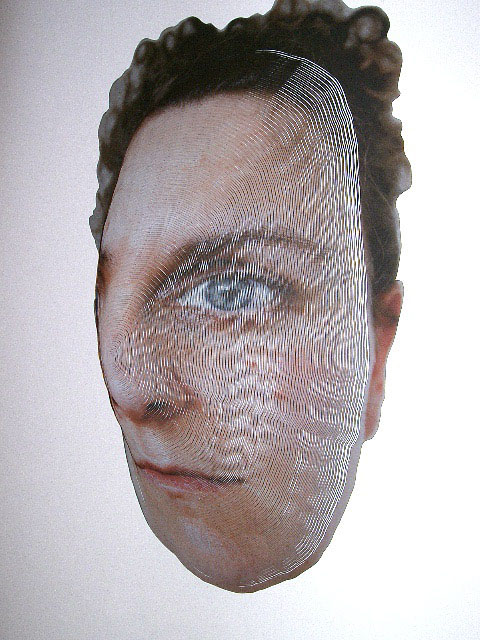
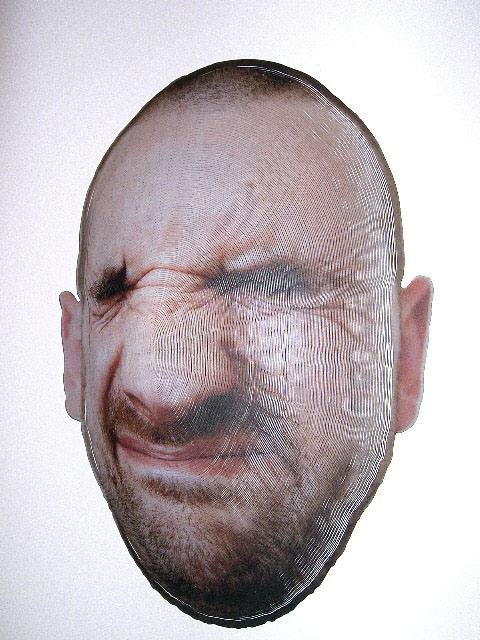
ACCA’s annual commissions exhibition – this year curated by Charlotte Day with new works from eight contemporary Australian artists including Justine Khamara, Brodie Ellis, Marco Fusinato, Simon Yates, Matthew Griffin, Benjamin Armstrong and Pat Foster and Jen Berean.


Simon Yates (Australian, b. 1973) 'Rhabdomancy' 2009 from the exhibition 'New 09' at Australian Centre for Contemporary Art (ACCA), Melbourne, March - May, 2009


Simon Yates (Australian, b. 1973)
Rhabdomancy
Tissue paper, wood, fishing rods, tape, string, electrical components, helium balloons dimensions variable
2009
Photo: Marcus Bunyan


“That’s what art is, he said, the story of a life in all its particularity. It’s the only thing that really is particular and personal. It’s the expression and, at the same time, the fabric of the particular. And what do you mean by the fabric of the particular? I asked, supposing he would answer: Art. I was also thinking, indulgently, that we were pretty drunk already and that it was time to go home. But my friend said: What I mean is the secret story … The secret story is the one we’ll never know, although we’re living it from day to day, thinking we’re alive, thinking we’ve got it all under control and the stuff we overlook doesn’t matter. But every damn thing matters! It’s just that we don’t realise. We tell ourselves that art runs on one track and life, our lives, on another, we don’t even realise that’s a lie.”


From the story “Dentist” from the book ‘Last Evenings on Earth’ by Roberto Bolaño1


“A work of art reminds you of who you are now”


Kepesh from the film ‘Elegy’


The curator Charlotte Day has assembled an interesting selection of artists for New 09 at ACCA, Melbourne. It is an exhibition whose ‘presences’ challenge through dark and light, sound and light, contemplation and silence. The journey is one of here and now moments that transport the viewer to states of being that address the fabric of the particular: doubt, anxiety and enlightenment crowd every corner. The particularities of the experience (material, social, psychological and imaginative) impinge on the viewers interior states of being transcending the very physicality and symbolic realism of the works.2

On entering the gallery you are greeted by Simon Yates self-propelled figures that make up the work Rhabdomancy (2009, above). Suspended, tethered, floating just above the floor the figures move eerily about the entrance to the gallery, startling people who have not seen them move before. They stand silent witness, a simulation of self in tissue paper searching for meaning by using a dowsing rod. The word rhabdomancy has as one of it’s meanings ‘the art or gift of prophecy (or the pretence of prophecy) by supernatural means’. Here the figures are divining and divination rolled into one: grounded they seek release through the balloons but through augury they become an omen or portent from which the future is foretold.

“… cutting and slicing in order to see them better, willing them into three dimensions; an attempt to cheat death, or rather, to ward off forgetting of them as they are/were and as I was when the work was made.”

~ Justine Khamara

In the first gallery, a very minimal installation by Justine Khamara of two fractured faces stare out at you from the wall, my favourite work of the show. These are unsettling faces, protruding towards you like some topographical map, one eyes screwed shut the other beadily following you as you walk around the gallery space. Here the images of brother and sister presence anterior, already formed subjects not through memory (as photographs normally do) but through the insistence of the their multiple here and now planes of existence. Rather than ‘forgetting’ the images authenticate their identity through their ongoing presence in an ever renewing present.3 Their dissection of reality, the affirmation of their presence (not the photographic absence of a lost subject) embodies their secret story on the viewer told through psychological and imaginative processes: how do they make me feel – about my life, my death and being, here, now.

The pathos of the show is continued with the next work Noosphere (2008) by Brodie Ellis (the noosphere is best described as a sort of collective consciousness of human-beings).4 In this work a video above the clouds is projected onto a circular shape on the ceiling in a darkened room. The emotional and the imaginative impact of the message on the audience is again disorientating and immediate. The images look across the clouds to vistas of setting suns, look down on the clouds and the sea and land below. The images first move one way and then another, disorientating the viewer and changing their perspective of the earth; these are alien views of the earth accompanied by heart beat like ambient music. The perspective of the circle also changes depending on where the viewer stands like some anamorphic distortion of reality. On a stand a beaded yoke for a horse adds to the metaphorical allegory of the installation.

In the next gallery is the literal climax to the exhibition, Marco Fusinato’s Aetheric Plexus (2009). (Aether: medium through which light propagates; Plexus: in vertebrates, a plexus is an area where nerves branch and rejoin and is also a network of blood vessels).

Consisting of scaffolding that forms a cross and supports large numbers of silver spotlights with visible wiring and sound system the installation seems innocuous enough at first. Walking in front of the work produces no effect except to acknowledge the dull glow of red from the banks of dormant lights trained on the viewer. The interaction comes not in random fashion but when the viewer walks to the peripheries of the gallery corners triggering the work – suddenly you are are blasted with white light and the furious sound of white noise for about 15 seconds: I jumped half out of my skin! Totally disorientated as though one has been placed in a blast furnace or a heavenly irradiated crematorium one wonders what has just happened to you and it takes some time to reorientate oneself back in the afterlife of the here and now. Again the immediacy of the work, the particularities of the experience affect your interior states of being.

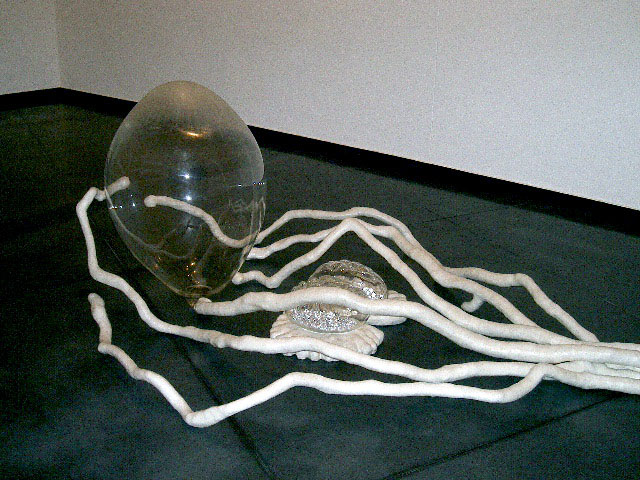
After a video installation by Matt Griffin you wander into the next gallery where two works by Benjamin Armstrong inhabit the floor of the gallery. And I do mean inhabit. Made of blown glass forms and wax coated tree branches the works have a strange affect on the psyche, to me seemingly emanations from the deep subconscious. Twin glass hemispheres of what look like a brain are surrounded by clasping synaptic nerve endings that support an egg like glass protrusion – a thought bubble? a spirit emanation? These are wonderful contemplative but slightly disturbing objects that have coalesced into shape only in another form to melt and disappear: molten glass and melted wax dissipating the very form of our existence.

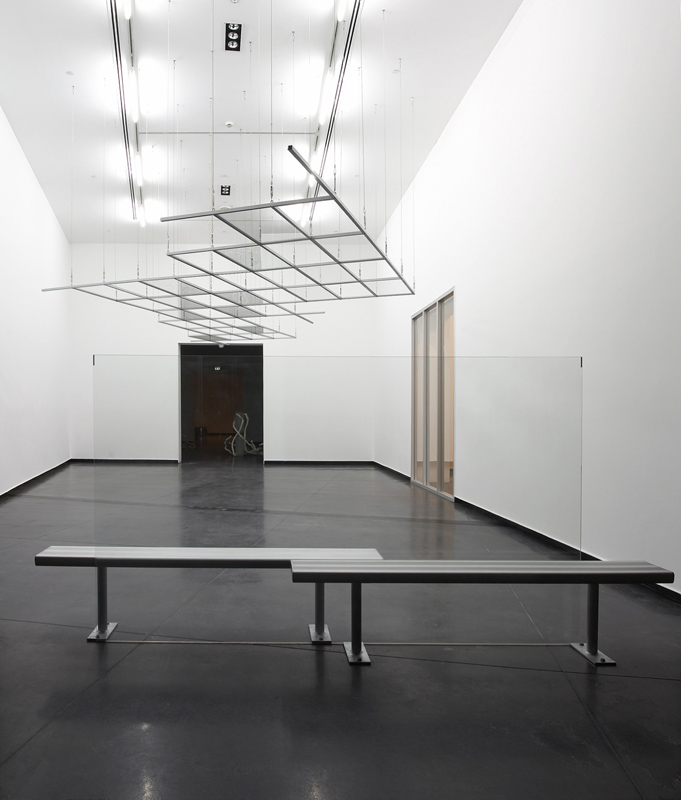
Finally we come to the three part installation by Pat Foster and Jen Berean (below). On the right of the photograph you can see three aluminium and glass doors, closed, sealed leading to another gallery. What you can’t see in the photograph is the three pieces of gaffer tape stretched across the glass doors, like they do on the building sites of new homes. No entry here. Above your head is a suspended matrix of aluminium and glass with some of the glass planes smashed. Clean, clinical, safe but smashed, secure but threatening the matrix presses down on the viewer. It reminded me of the vertical standing shards of the World Trade Centre set horizontal suspended overhead. Only the steel cable seemed to ruin the illusion and seemed out of place with the work. It would have been more successful if the matrix was somehow suspended with fewer tethers to increase the sense of downward pressure. Finally you sit on the aluminium benches and contemplate in silence all that has come before and wonder what just hit you in a tidal wave of feelings, immediacies and emotions. The Doing and Undoing of Things.

An interesting journey then, one to provoke thought and emotion.
The fabric of the particular. The pathos of the art-iculate.

My only reservations are about the presence, the immediacy, the surface of it all. How persistent will these stories be? Will the work sustain pertinent inquiry above and beyond the here and now, the shock and awe. Or will it be like a meal one eats and then finds one is full but empty at the same time. A journey of smoke and mirrors.

Dr Marcus Bunyan


1/ Bolano, Robert. Last Evenings on Earth. New Directions, 2007. Available on Amazon.

2/ Blair, French. The Artist, The Body. [Online] Cited on 12/04/2009. No longer available online

3/ Ibid.,

4/ “For Teilhard, the noosphere is best described as a sort of ‘collective consciousness’ of human-beings. It emerges from the interaction of human minds. The noosphere has grown in step with the organisation of the human mass in relation to itself as it populates the earth. As mankind organizes itself in more complex social networks, the higher the noosphere will grow in awareness.” From the concept of Nooshpere on Wikipedia.


Many thankx to ACCA for allowing me to publish the photographs in the posting. All Images © Dr Marcus Bunyan and ACCA.


    Justine Khamara (Australian, b. 1971) 'Dilated Concentrations' 2009 from the exhibition 'New 09' at Australian Centre for Contemporary Art (ACCA), Melbourne, March - May, 2009

    Justine Khamara (Australian, b. 1971) 'Dilated Concentrations' 2009  (detail) from the exhibition 'New 09' at Australian Centre for Contemporary Art (ACCA), Melbourne, March - May, 2009

    Justine Khamara (Australian, b. 1971) 'Dilated Concentrations' 2009  (detail) from the exhibition 'New 09' at Australian Centre for Contemporary Art (ACCA), Melbourne, March - May, 2009

    Justine Khamara (Australian, b. 1971) 'Dilated Concentrations' 2009  (detail) from the exhibition 'New 09' at Australian Centre for Contemporary Art (ACCA), Melbourne, March - May, 2009


    Justine Khamara (Australian, b. 1971)
    Dilated Concentrations
    2009
    UV print on laser cut stainless steel
    Photos: Marcus Bunyan


    Benjamin Armstrong (Australian, b. 1975) 'Hold Everything Dear I' 2008


    Benjamin Armstrong (Australian, b. 1975)
    Hold Everything Dear I
    2008
    Photo: Marcus Bunyan


    Pat Foster (Australian, b. 1981) and Jen Berean (Canadian, b. 1981) 'Untitled’ from the series ‘The Doing and Undoing of Things’ 2009


    Pat Foster (Australian, b. 1981) and Jen Berean (Canadian, b. 1981)
    Untitled from the series The Doing and Undoing of Things
    2009
    Aluminium, safety glass, steel cable
    Photo: Marcus Bunyan


    Pat Foster (Australian, b. 1981) and Jen Berean (Canadian, b. 1981) 'Untitled’ from the series ‘The Doing and Undoing of Things’ 2009 (detail)


    Pat Foster (Australian, b. 1981) and Jen Berean (Canadian, b. 1981)
    Untitled from the series The Doing and Undoing of Things (detail)
    2009
    Aluminium, safety glass, steel cable
    Photo: Marcus Bunyan


    Australian Centre for Contemporary Art (ACCA)
    111 Sturt Street
    Southbank
    Victoria 3006
    Australia

    Opening hours:
    Tuesday – Friday 10am – 5pm
    Saturday – Sunday 11am – 5pm
    Closed Monday

    ACCA website

    LIKE ART BLART ON FACEBOOK

    Back to top

    Review: ‘En Plein Air’ photographs by Siri Hayes at Gallerysmith, Melbourne

    Exhibition dates: 12th March – 18th April, 2009


    Siri Hayes (Australian, b. 1977) 'Gunnai man land' 2008 from the exhibition 'En Plein Air' photographs by Siri Hayes at Gallerysmith, Melbourne, March - April, 2009


    Siri Hayes (Australian, b. 1977)
    Gunnai man land
    2008


    A handsome group of large photographs in crisp white frames is displayed in the large space of Gallerysmith, Melbourne. Undoubtably they are well taken and printed photographs but conceptually their thematic development is confused. The photographs purport to investigate how industrialisation has changed the Gippsland landscape since colonisation whilst referencing human interactions that ‘are sometimes’ associated with Western art.

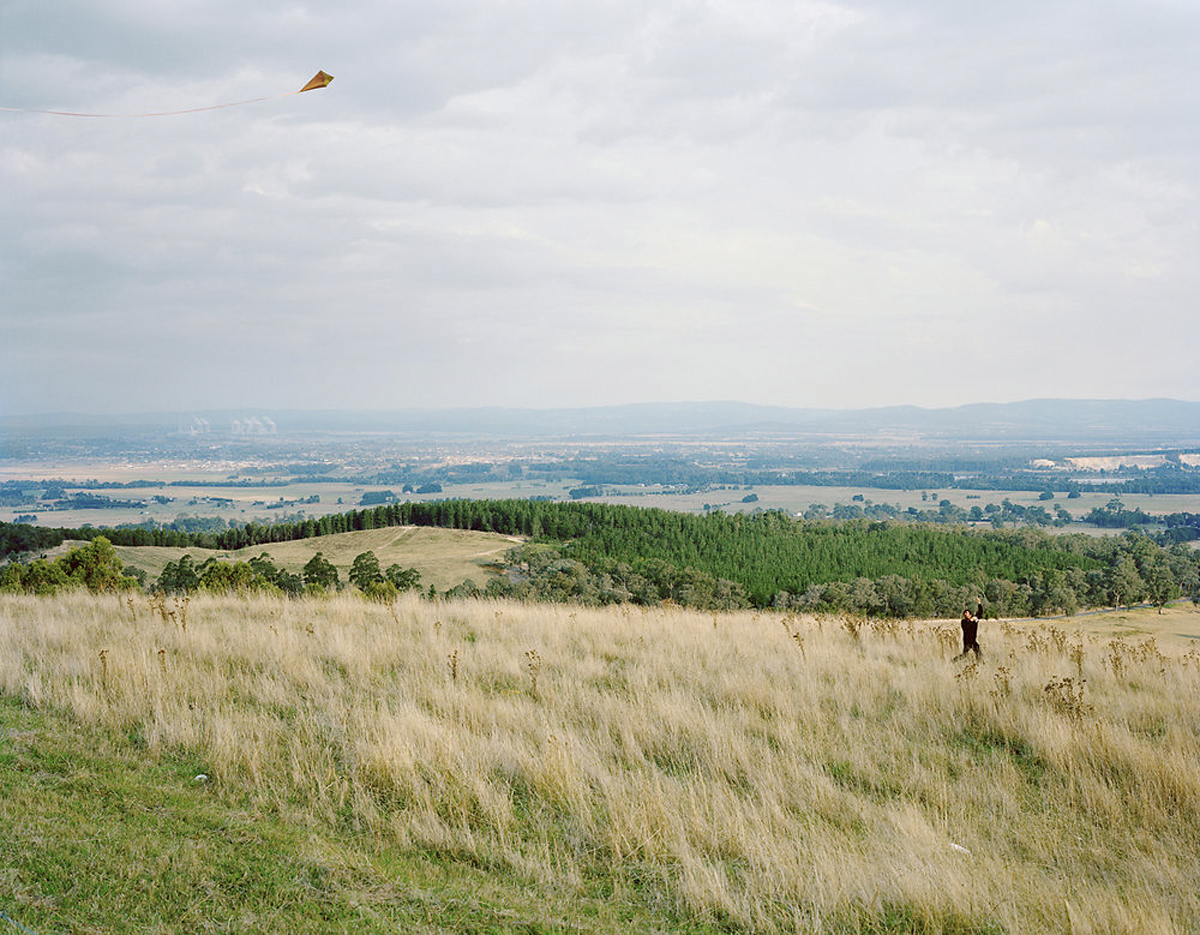
    Gunnai land man (above) is very effective in this quest juxtaposing as it does an Indigenous Australian and fallen tree on a bare track with a smoke billowing power station (symbolic of the industrialisation of the area) looming in the background. Other photographs are less successful. What a man flying a kite has to do with the pre-colonial Gippsland landscape is beyond me and the juxtapositional incongruity sought by the artist simply does not work, despite the presence of the power station on the plains in the distance. The symbology has more to do with Japanese art than it has to do with Western art.

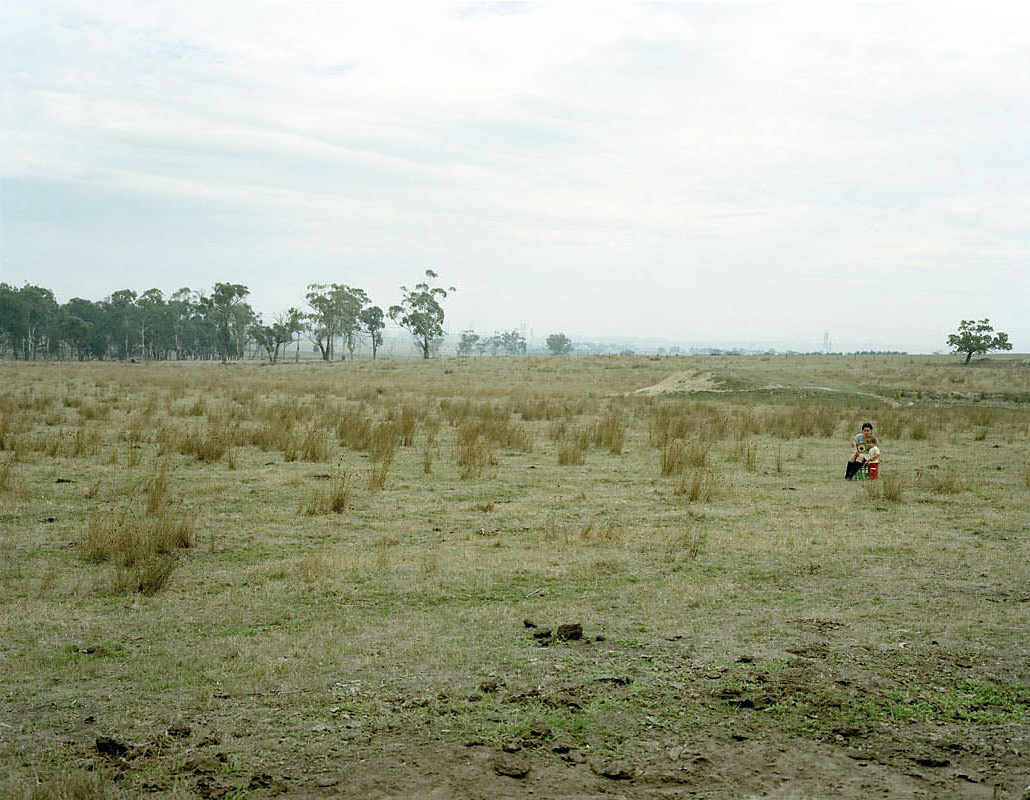
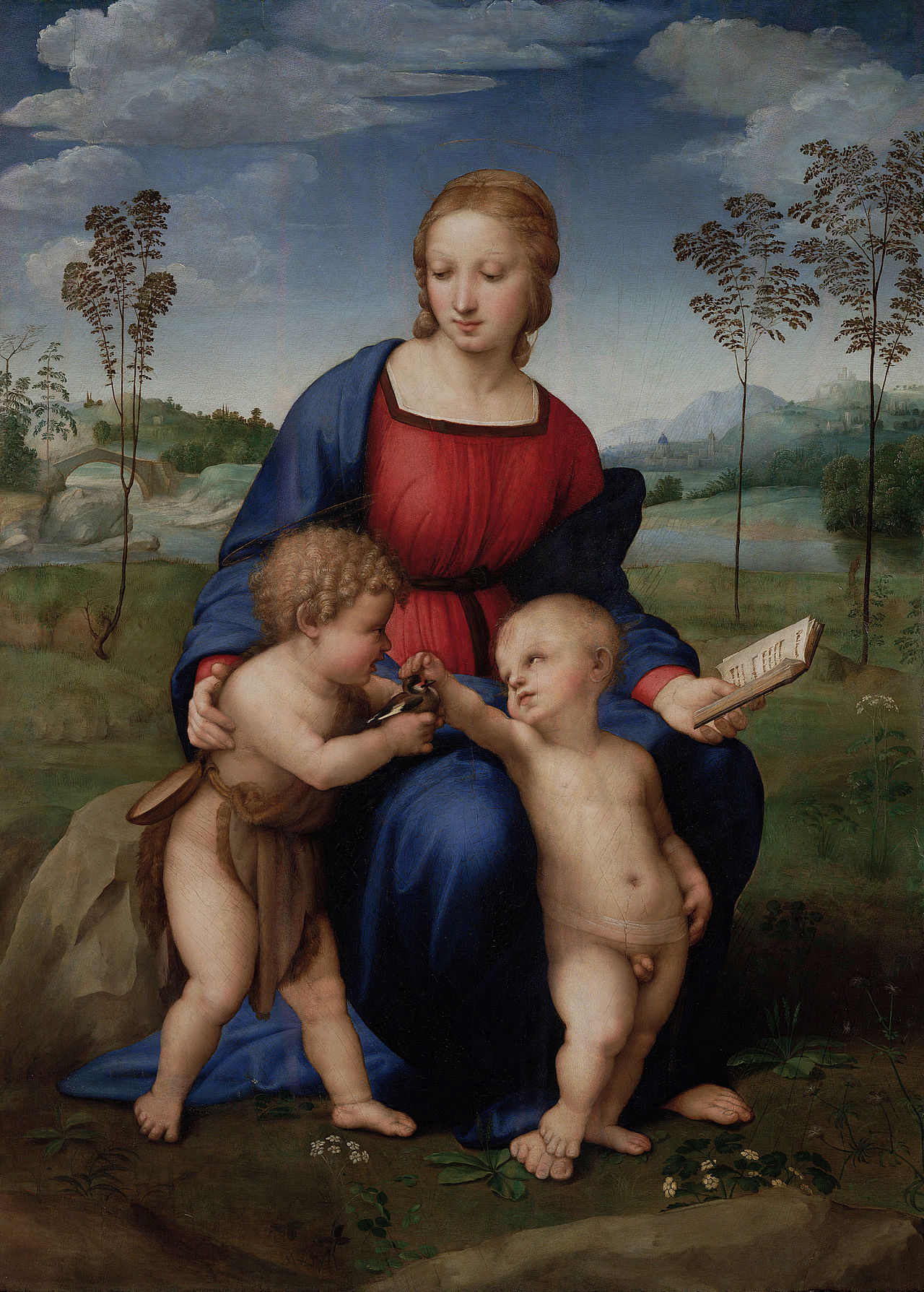
    The conceptual narrative of the photograph Moe Madonna (below) works only partially as well. The destruction of the landscape has been caused by pastoralisation not industrialisation. In the image that Hayes is referencing the Madonna is front and centre set in an idyllic landscape. In the work by Hayes the incongruity has to be explained, has to be verbalised in text for the association to be didactically made. The interpretation leaves no room for personal reflection and when I looked at this image, the mother and child were so small in the landscape, the placement so obviously constructed that there incongruity turned to disbelief: namely that I simply did not believe the mise en scène being created.

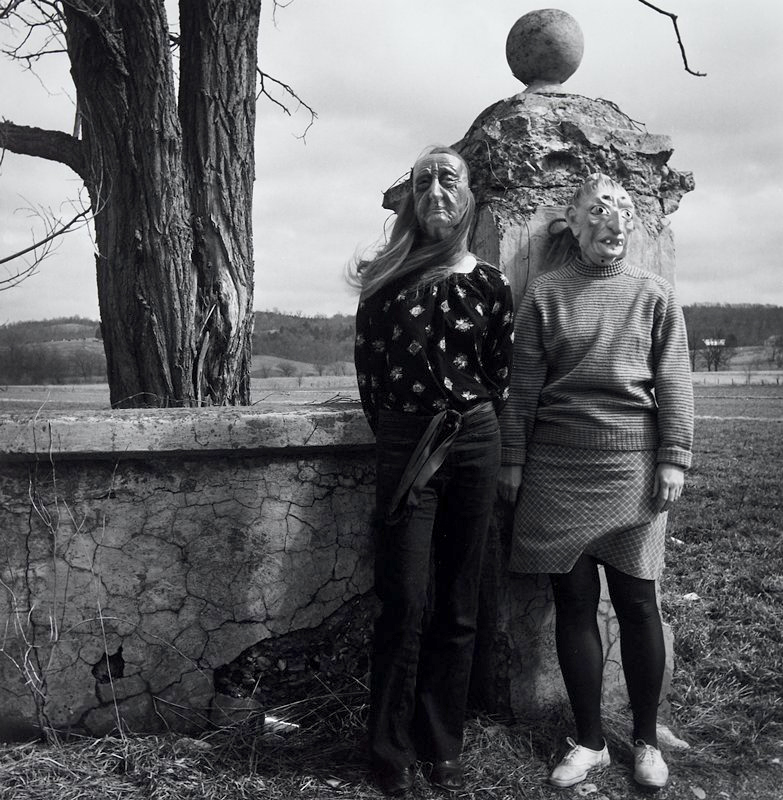
    Other narratives are equally confusing. In Paper bag lovers (below) I had to ask the gallery director what was going on in the photograph because the bodies where so small in the landscape (in fact it looks like one body) and you can’t really see the paper bags on their heads because the bodies are just an amorphous mass containing no detail at all (you can just see the body in the photograph below in the mid distance just below the large central tree). Why paper bags anyway? If something intentionally odd and incongruous is sought to be portrayed in the landscape perhaps Hayes should look at the work of Eugene Meatyard (see below) to see a real subversion of the body/landscape dichotomy.

    The one standout photograph of the exhibition is Plein air explorers (below). This is confirmed in the sales of the show as all six prints of this photograph have been sold. One can see why!

    The title is perfect, the construction of the image faultless. The naked white man stands proudly surveying his conquered domain, the land, whilst around him artists (reminding me of the dilettantes of the Victorian age going on day trips), hunker down into the ground with their easels oblivious to the desiccated trees around them. Here the photographer just observes, doesn’t construct, the incongruity of it all. The artists draw the white man based on direct observation of him and not on their conceptions or conventional images or memories of him while ignoring their surroundings. Here is the paradox, the ironic perfect storm that the artist was conceptually seeking: the representation of landscape based upon direct observation “in the open air” ignored for a perfect white arse while on the horizon smoke stacks of a power station stand in silent witness to the present and imminent destruction of the world. What a photograph! Can I have one now please?

    Dr Marcus Bunyan


    Many thankx to Gallerysmith for allowing me to publish the photographs in the posting. Please click on the photographs for a larger version of the image.


    Siri Hayes (Australian, b. 1977) 'Moe Madonna' 2008 from the exhibition 'En Plein Air' photographs by Siri Hayes at Gallerysmith, Melbourne, March - April, 2009


    Siri Hayes (Australian, b. 1977)
    Moe Madonna
    2008


    Siri Hayes (Australian, b. 1977) 'Kite' 2008


    Siri Hayes (Australian, b. 1977)
    Kite
    2008


    Raphael (Italian, 1483-1520) 'Madonna of the Goldfinch' 1505-1506


    Raphael (Italian, 1483-1520)
    Madonna of the Goldfinch
    1505-1506
    Oil on panel
    107 x 77cm
    Galleria degli Uffizi


    Siri Hayes (Australian, b. 1977) 'Paper Bag Lovers' 2008


    Siri Hayes (Australian, b. 1977)
    Paper Bag Lovers
    2008


    Eugene Meatyard (American, 1925-1972) 'Lucybelle Crater & her 15-year-old son's friend, Lucybelle Crater' 1970-1971


    Eugene Meatyard (American, 1925-1972)
    Lucybelle Crater & her 15-year-old son’s friend, Lucybelle Crater
    1970-1971


    I have predominantly focused on the parts of the Gippsland landscape that have been impacted by white settlement. I have composed various human interactions that are sometimes associated with Western art and its construction. For example, Moe Madonna references Raphael’s Goldfinch Madonna. The narratives are intentionally odd and incongruous with the surrounding location. My son and I seem out-of-place in a barren paddock while the autumn mist shrouds distant gum trees and electricity pylons. The soil here has been compacted beyond repair by cattle hooves – an inappropriate animal in Australia’s delicate ecosystems. As we sit on this barren plain, I read to Oliver from a European pre-schooler book titled Autumn, creating an interesting juxtaposition with the antipodean equivalent season.

    The work in this exhibition considers the pre-colonial Gippsland landscape and how industrial ‘progress’ has altered it. Hopefully it provides pause for thought.

    Siri Hayes exhibition notes. March 2009


    Siri Hayes (Australian, b. 1977) 'Plein air explorers' 2008


    Siri Hayes (Australian, b. 1977)
    Plein air explorers
    2008


    Gallerysmith
    170-174 Abbotsford St,
    North Melbourne,
    Victoria, 3051 Australia

    Opening hours:
    Tuesday to Saturday, 11am – 5pm

    Gallerysmith website

    Siri Hayes website

    LIKE ART BLART ON FACEBOOK

    Back to top

    Review: ‘reENLIGHTENMENT’ exhibition by Peter James Smith at Gallery 101, Melbourne

    Exhibition dates: 18th March – 4th April, 2009


    Peter James Smith. 'reENLIGHTENMENT' installation view 2009

    Peter James Smith. 'reENLIGHTENMENT' installation view 2009


    Peter James Smith (New Zealand, b. 1954)
    reENLIGHTENMENT installation views
    2009


    “Every passion borders on the chaotic, but the collector’s passion borders on the chaos of memories. More than that: the chance, the fate, that suffuse the past before my eyes are conspicuously present in the accustomed confusion of these books. For what else is this collection but a disorder to which habit has accommodated itself to such an extent that it can appear as order?”1


    “Thus the claim is that texts themselves can actually be intrinsically ‘genuine’, but that authenticity is a ‘social construct’. In other words, a certain kind of authenticity is created through the interaction of the users, situations and the texts.”2


    Peter James Smith links the culture of science and of human experience, bringing together mathematics and the power of nature in realist imagery that is balanced by strong mark making and text. Redolent still life and landscape images juxtapose with astronomical, poetic and historical observations in the painted images. Handwritten citations, notes, jottings, diagrams and erasures float on the loosely painted surfaces of stretched linen, paper collage and found pieces which bring a Beuysian sense of the charismatic object. A sunset, a violin, a book of verse, an installation of old bells or delicate Jasperware porcelain provide a resonant foil for the artist and viewer – and create a space for the imagination, for mathematical wonder and contemplation.

    “Beyond painting, in the current work there is a sense of history allowing us to privilege its objects, their collecting and their housing on walls, in vitrines, on shelves and on plinths. Like any true collector I am keen to bring them to an audience, to show them in a revelatory way. If they are inflected by hand markings it is to personalise the revelation. There are no plastic imitations: the Jasperware vases are authentic collected Wedgwood; the small Greek Pelike is indeed a c 300 BC vase; the Roman glass is a c 300 AD; the collected Wollemi pine needles are indeed from this prehistoric plant. These and other antiquities have a long museological tradition. The narratives of Wedgwood blue and white Jasperware designs are of Greek antiquity – the firing of the white clay over a cobalt blue base (in around) 1772 was a triumph of chemistry over alchemy. With these objects, it is not a postmodernist kitsch that is revealed, but rather the resuscitated fabric of authenticity. I am re-enlightened by their tactile physical presence that has a timeless beauty. To render such things as a painted image is to engage in a different act, with different rules referring to different histories.”

    Peter James Smith, 2009. Notes from the exhibition catalogue.

     
    Enlightenment, Romanticism, reason, authenticity, revelation.

    I am a collector like Peter James Smith. I display my collection of early 20th century English vases. I have a collection of 300 ties that span from the 1930s to the 1970s. I have eight rare 1940s suits, those suits that Humphrey Bogart used to wear with the wide wide lapels that nearly reach the seam of the sleeve.

    Rare, fragile, beautiful, genuine.

    In this exhibition Smith appeals not to the genuineness of the objects but to the authenticity of the objects he displays: “There are no plastic imitations … With these objects, it is not a postmodernist kitsch that is revealed, but rather the resuscitated fabric of authenticity.” He wants to show these objects in a revelatory way, for us to once more appreciate their authenticity. To make order out of disorder. But then Smith wants to personalise this revelation and overlays the objects with texts that re-order the taxonomy through a reinscription that is both a de-territorialization and re-territorialization of meaning, a loss of original meaning and the production of new meanings. This is the faint silver flicker of re-enlightenment the artist seeks. It is above all authentication as individual spectacle, as social construct.

    “Authenticity is an issue for us today because of a widespread sense that there is something inauthentic in the way we experience the modern world.”3

    In some of the works this process is effective and in other works it falls flat on it’s proverbial, intertextual backside. The process works well in the less cerebral works. The use of black paint in Paradise Lost IV (below) is particularly effective as the re-inscription of paint invades and threatens the motifs of the classical figures with the text and cross reinforcing the idea of a lost paradise. Cathedral (2009, below) is also a stunning installation of different bells hung at various heights within a locked cabinet, complicit in their silence as they would not be inside a cathedral. For me this was probably the best piece in the show for its simplicity of thought, eloquence of execution and understanding of how the installation re-enlightens the viewers socially constructed authenticity in a revelatory way. No double marking is needed – a zen balance is proposed and achieved in the quietness of the viewers mind.

    Other pieces are less successful. Amphora in grey teracotta Han Dynasty c 100BC (2008), the amphora inscribed with text sitting on a painted black video recorder is particularly unengaging and unappealing – there is no revelatory experience to be had here. The Greek Pileke (see below) inscribed with lines from John Keats Ode on a Grecian Urn seems an appropriate intervention but sometimes in this exhibition one just longs to appreciate the sanctity of the object, it’s presence, in silence without the personalising of the revelation by the hand of the artist. To see the object clearly for what it is.

    The large installation reELIGHTENMENT (2009 below, and installation photo at top) falls into darkness. The use of the doors as metaphor is clumsy, book covers have been more successfully used by other artists and the black paint is heavy and oppressive. More interesting are some of the paintings, for example The slow dance of an astronomical twighlight (2009, below) where the poem of William Wordsworth

    … a sense sublime
    Of something far more deeply interfused,
    Whose dwelling is the light of setting suns

    illuminates the poetry of the painting, adding an insightful double meaning to the universal revelation. A vibration of spirit is present both in the landscape and the markings upon the landscape. Unfortunately all too often in this exhibition access to the sublime is denied. Appeals to neo-authenticity fall on deaf ears. The motifs of this exhibition are universal, archetypal but the elements that go to make up this exhibition are too many and lack focus. Sometimes in art less in more and this exhibition is a classic example of this fact. There are some interesting elements but overall the whole is not the sum of its parts.

    As John Donne observed

    “All mankind is of one author, and is one volume; when one man dies, one chapter is not torn out of the book, but translated into a better language; and every chapter must be so translated … No man is an island, entire of itself; every man is a piece of the continent, a part of the main.”4

    Our authentic place in the world, our spiritual space, our re-enlightenment needed to be better defined, more lucidly enunciated in this exhibition NOT IN CAPITAL LETTERS but in the quietness of our hearts.

    Dr Marcus Bunyan


    1/ Benjamin, Walter. “Unpacking my Library: A Talk about Book Collecting,” in Illuminations. English translation. London: Fontana, 1982, pp. 59-60

    2/ Lee, W. “Authenticity revisited: text authenticity and learner authenticity,” in ELT Journal, 49(4). 1995, pp. 323-328 cited in Shomoossi, Nematullah and Ketabi, Saeed. “A Critical Look at the Concept of Authenticity,” in Electronic Journal of Foreign Language Teaching, 2007, Vol. 4, No. 1, pp. 149-155 [Online] cited on 29th March, 2009 at http://e-flt.nus.edu.sg/v4n12007/shomoossi.pdf

    3/ McClure, Christoper. The Concept of Authenticity in Charles Taylor and Martin Heidegger. [Online] cited on March 29th, 2009 (no longer available online)

    4/ Donne, John. Devotions Upon Emergent Occasions, Meditation XVII: Nunc Lento Sonitu Dicunt, Morieris. 1624.


    Variously

    Wedgwood Jasperware, Roman glass, Greek Pileke, books, doors, texts, paintings, bells, video, video machine, wooden boxes, black paint, crosses, albatross, Wollemi Pine needles, Paradise Lost, astronomy, linen, stars, photography, Chinese porcelain, collage, mathematical equations, mirrors, Amphora from the Han Dynasty, a violin, a sunset, a book of verse, notes, shelves, jottings, citations.

    Notes to myself

    ~ Golden ratio
    ~ The archive
    ~ Topographical markings, inscriptions and decodings
    ~ The ‘nature’ of authenticity
    ~ The ‘voice’ of revelation
    ~ Re-possession of clarity and logic
    ~ Re-production of mystery, tenderness and love
    ~ Reverence for the object itself
    ~ Referentiality between image and text
    ~ The colour black: transcendent, the depths of the night sky but also the closing in of darkness at the end of days
    ~ Never one truth but many truths
    ~ Less is more


    Many thankx to Gallery 101 for allowing me to publish the photographs in the posting. Please click on the photographs for a larger version of the image.


    Peter James Smith (New Zealand, b. 1954) 'The slow dance of an astronomical twighlight' 2009 from the exhibition 'reENLIGHTENMENT' exhibition by Peter James Smith at Gallery 101, Melbourne, March - April, 2009


    Peter James Smith (New Zealand, b. 1954)
    The slow dance of an astronomical twighlight
    2009


    Peter James Smith (New Zealand, b. 1954) 'Paradise Lost IV' 2008 from the exhibition 'reENLIGHTENMENT' exhibition by Peter James Smith at Gallery 101, Melbourne, March - April, 2009


    Peter James Smith (New Zealand, b. 1954)
    Paradise Lost IV
    2008


    Peter James Smith (New Zealand, b. 1954) 'Ode on a Grecian Urn' 2008


    Peter James Smith (New Zealand, b. 1954)
    Ode on a Grecian Urn
    2008


    Peter James Smith (New Zealand, b. 1954) 'Cathedral' 2009


    Peter James Smith (New Zealand, b. 1954)
    Cathedral
    2009


    Peter James Smith (New Zealand, b. 1954) 'reENLIGHTENMENT' 2009


    Peter James Smith (New Zealand, b. 1954)
    reENLIGHTENMENT
    2009


    Gallery 101

    This gallery is now closed.

    LIKE ART BLART ON FACEBOOK

    Back to top

    Review: ‘The Big Black Bubble’ exhibition by Dale Frank at Anna Schwartz Gallery, Melbourne

    Exhibition dates: 12th March – 11th April, 2009


    Dale Frank (Australian, b. 1959) 'The Big Black Bubble' installation view at Anna Schwartz Gallery, Melbourne 2009


    Dale Frank (Australian, b. 1959)
    The Big Black Bubble (installation view)
    Left to right: Timothy Oliphant (2008), Ryan Gosling (2008/2009) and Matthew Macfadyen (2008)
    2009


    This is a brilliant exhibition by Dale Frank, one of my favourites so far this year in Melbourne.

    Six large varnish on linen landscape paintings are presented in the beautiful Anna Schwartz gallery space in Melbourne. Photographs really do not do the paintings justice – they can only give an impression of the size and scale of the work but not of their intimacy or smell. The smell of varnish permeates the air. The serendipity of the natural convulsions of the varnish and the facilitations of the hand of the artist, his performance, have been caught like bugs in amber in the final molecular structure of the painting. Here are pendulous, globular goops of varnish, immersive heroic tone poems that form images in the mind of the viewer. Moving close to the paintings you are surrounded by flows and eddies, the macro and the micro; details become more apparent as you study the work.

    While disagreeing that these paintings are the viewers to create (the viewer as author) what I can say is that the artist offers the viewer the ability to generate their own resonances with the painting, to use the imagination of ‘equivalence’ to suggest what these paintings stand for – and also what else they stand for. States of being, of transformation, wonder and joy emerge in the playfulness of these works. Perhaps this is where the titles of the paintings come from, referencing film actors in the pop tradition, but this is the only thing that did not ring true with the work, their titles. The use of this trope seems to me a bit facile given the nature of the work.

    The hot pink painting Rupert Grint (2008/2009, above) is hotter and lighter than in the photograph below, the varnish more translucent, the effect altogether mesmeric. You are drawn into the work, the intensity of the colour, the thickness of the hanging varnish. Two cosmological galaxies (Timothy Oliphant (2008) and Matthew Macfadyen (2008)) surround the most complex painting in the exhibition, the darkness and light that is Ryan Gosling (2008/2009, below).

    This painting is a tour de force. With the poetic structure of an oil spill, the varnish forms intricate slick upon slick contours that are almost topographical in their mapping. The black oozes light, becomes ‘plastic’ black before your eyes, like the black of Rembrandt’s backgrounds, illusive, illuminative and hard to pin down – perpetually hanging there in two dripping rows, fixed but fluid at one and the same time (you can just see the suspensions in the photograph above).

    The painting reminds me of the black paintings of Mark Rothko that he undertook for The Rothko Chapel in Houston, Texas (see below). As with the Rothko paintings, this painting is not just black (physically there are swirls of purple as in the Rothko paintings), not about darkness at all. What both artists do is create a contemplative, transformative space – in Frank’s case for a world on the edge of oblivion. This is a post post-modern landscape: process and nature, performance and chance coalescing in the colour : black!

    This painting is one of the most overwhelming syntheses of art and nature, of universal forces that I have seen in recent contemporary art. This exhibition is an electric pulsating universe of life, landscape and transformation. Magnificent!

    Dr Marcus Bunyan


    Many thankx to Anna Schwartz Gallery for allowing me to publish the photographs in the posting. Please click on the photographs for a larger version of the image.


    Dale Frank (Australian, b. 1959) 'The Big Black Bubble' installation view at Anna Schwartz Gallery, Melbourne 2009


    Dale Frank (Australian, b. 1959)
    The Big Black Bubble (installation view)
    Left to right: Daniel Radcliffe (2008/2009), Khan Chittenden (2009) and Rupert Grint (2008/2009)
    2009


    The immersive scale of these new paintings at Anna Schwartz Gallery Melbourne allows us to experience their inner qualities of landscape and of transformation. This is painting at fundamental authenticity. The paint is its own agent; it is allowed to act, to behave. The artist is the facilitator of these phenomena of nature and natural forces, whose residue is a metaphor for nature itself.

    Black contains all colours, contours and depths. A pink monochrome is transformed by pure varnish into an expressionistic moment of process and performance. All colour is absent from elemental silver aluminium and form and gesture alone survive. New dynamics are possible through an innovative colouration: the emergence of colour through black, and its equivalent power.

    Dale Frank’s painting is one of poetry, performance and nature. It represents both the macro and micro. Huge universal forces pulsate with molecular, atomic activities. Imagination is gifted by the artist to the viewer. These are our paintings to create.

    Anonymous text from the exhibition flyer.


    Dale Frank (Australian, b. 1959) 'Ryan Gosling' 2008/2009


    Dale Frank (Australian, b. 1959)
    Ryan Gosling
    2008/2009


    The Rothko Chapel, Houston, Texas


    The Rothko Chapel
    Houston, Texas


    Anna Schwartz Gallery
    185 Flinders Lane
    Melbourne 3000
    Australia
    Phone: +61 3 9654 6131

    Opening hours:
    Tuesday – Friday 12 – 5pm
    Saturday 1 – 5pm

    Anna Schwartz Gallery website

    LIKE ART BLART ON FACEBOOK

    Back to top

    Review: ‘Order and disorder: archives and photography’ at the National Gallery of Victoria International, Melbourne

    Exhibition dates: 18th October, 2008 – 19th April, 2009


    Patrick Pound (New Zealander, b. 1962, worked in Australia 1989- ) 'Writing in a library' 1996 from the exhibition 'Order and disorder: archives and photography' at the National Gallery of Victoria International, Melbourne, October, 2008 - April, 2009


    Patrick Pound (New Zealander, b. 1962, worked in Australia 1989- )
    Writing in a library
    1996
    Photocopies, oil stick, card
    169.4 x 127.2cm (image); 180.2 x 137.2cm (sheet)
    National Gallery of Victoria, Melbourne
    Purchased, 1997
    © Patrick Pound  


    “These fragments I have shored against my ruins.”


    T.S. Eliot


    An interesting exhibition is presented in the [now closed] permanent third floor photography gallery at NGV International, Melbourne on a subject that deserved a much more rigorous investigation than could been undertaken in this small gallery space. Presenting single works by Ed Ruscha, Bernd and Hilla Becher, Patrick Pound, Robert Rooney, Simon Obarzanek, Penelope Davis, Candid Hofer, Linda Judge and Charles Green and Lyndell Brown the works seek to investigate the nature of the relationship between photography and the archive, between the semi-permanences of an archival memory and the spaces of a transgressive intertexuality marked by fragmentary, ironic counter-performances.

    As noted in the catalogue essay by NGV curator Maggie Finch the archive is a place for holding knowledge that contains elements of truth and error, order and disorder; archives are able to shape history and memory, depending on how, when and by whom the records are accessed. Any disruption of order, governance and authority can lead to alternative readings and interpretations as the arcane ‘mysteries’ of the methods of classification are overturned. Since Victorian times when the body came under the self-surveillance of the camera and was found wanting, photographs have documented the faces of criminals, the physiognomy of degeneration and the fever of war.

    As Yiannis Papatheodorou has observed when reviewing Jacques Derrida Mal d’Archive,

    “Derrida declares that since the dominant power of the archive derives from the economy of knowledge, it also provides the institutional responsibility of the interpretation. The localisation of the information transforms the inscription, provided by the function of the archive, into the impression of a memory’s trace, conscious or unconscious …

    The preservation of memory, the access to information, the “resources” of the sources and the working environment are not just the representation of a future memory. They are active practices and discourses that create hierarchies and exclusions. The archives are the languages of the past, activated however dialogically, according to scientific and social demands. The content of our choice is marked by the way we are seeking information. Far from being an abstract principle, our choice is an ideologically oriented negotiation closely related to the politics of interpretation.”1


    And there’s the rub. Not only is this exhibition a reordering of an unpublished memory (for that is what an archive is, a unique unpublished memory), it is also a reiteration of the authority of the gallery itself, the “institutional responsibility of the interpretation.”2 Deciding what was in this exhibition and what to leave out creates hierarchies of inclusion and exclusion – and in this case the inclusions are mainly ‘safe’ works, ones that challenge the ontology of existence, the cataloguing of reality in a slightly ironic way but oh – nothing too shocking! nothing too disordered! Nothing here then of the archive of images that substantiate the horrors of war, the trans/disfiguration of men in both World Wars for example. There are few images to haunt us, none to refresh our memories in a problematic way.

    The more successful pieces, the works that challenge the order of the archive (“what is no longer archived in the same way is no longer lived in the same way”)3, are the ones by Ed Ruscha, Penelope Davis and Simon Obarzaneck (all below).

    Ruscha’s vertical inverted cityscape is trapped in a display cabinet opened out on the horizontal plane in concertina format, like one of those optical illusion images in which you see an image looking from one direction and a different image from the other direction. Ruscha’s personal experience of driving down Sunset Strip in Los Angeles and his anthropological recording of the urban experience has been disseminated in a mass produced ‘artists’ book. No unique unpublished archive here. Beneath the facades of the shops other narratives emerge – images are stitched together, cars chopped off, people dismembered – all in a very linear, conceptual way; a journey from one point to another, one that is both subjective (the voice  and hand of the author) and objective (the en masse production of the book).

    As Chris Balaschak has noted, “The images, taken during the day, capture only the facades of the buildings. Ignorance is given to cars or people, both of which are often cut in half between separate exposures. The imperfections of matching the facades are cracks along Ruscha’s drive. Through these cracks we find Ruscha, not such an anonymous author after all. Splitting cars in two, and mismatching facades we become keenly aware of the passage of time. The facades of buildings may appear as stage sets but they are active points on other itineraries, anticipating future and past narratives.”4


    This is Ruscha’s trace through the city but also our intersection with his journey, our chance to make our own itineraries as Balaschak (in his insightful writing) rightly points out. The fragmentary dismembering becomes the space between, the disorder of the linear into a heterotopic space of remembering. We the viewer create our own narrative, flitting through the cracks in the archive of memory, the photographer, the author of our own journey.

    Penelope Davis photograms are luminous objects. She makes resin casts of the spine of discarded books and places the casts directly onto photographic paper and then exposes them to light. The books glow and hover in the blackness, the words on the spine reversed. Stripped of their context, of their memory, they become ethereal books, phantom texts, liminal images that hover between what is known and what is imagined. As Davis has said, “Most people assume that when they look at a photo that they are looking at the thing photographed – but they are not. They are looking at a photo. Books and photographic images and archives are enigmatic – you can’t be sure of a singular definition or meaning.”

    Davis is ‘messing around’ with the idea of veracity, the truth of photography and the ordering of the archive of our mind through the images we collate. We seek to grasp the original memory of an event, of the reading and ordering of our life through images and none is available to us, for as Foucault has observed memories are only ever fragmentary and distorted representations, partial truths a best. Like Jorge Luis Borges’ journey into the infinite universe of The Library of Babel, for Foucault the psyche is not an archive but a mirror, like the shining silver foil surface of the cover of the Ed Ruscha book:

    “The search for the self is a journey into a mental labyrinth that takes random courses and ultimately ends at impasses. The memory fragments recovered along the way cannot provide us with a basis for interpreting the overall meaning of the journey. The meanings that we derive from our memories are only partial truths, and their value is ephemeral. For Foucault, the psyche is not an archive but only a mirror. To search the psyche for the truth about ourselves is a futile task because the psyche can only reflect the images we have conjured up to describe ourselves. Looking into the psyche, therefore, is like looking into the mirror image of a mirror. One sees oneself reflected in an image of infinite regress. Our gaze is led not toward the substance of our beginnings but rather into the meaninglessness of previously discarded images of the self.”5


    This leads us nicely onto the images of Simon Obarzanek.

    In a fantastic series of photographs, the only ones of this exhibition that seemed to haunt me (as Susan Sontag says images do), Obarzanek photographs people in an ordered, almost scientific, manner. Photographed face on against a non-contextual background using a low depth of field, these repetitive, collective, unnamed people remind me of the images of Galton. But here the uniformity is overwhelmed by quirky differences – the placement of eyes and lips seem large offering a strange, surreal physiognomy. These images resonate, the challenge, they remain with you, they question the order of things as no other photograph in this exhibition does. From simplicity comes eloquence.

    To finish I must address the elephant in the room, in fact two elephants!

    There is not one digital photograph contained in the exhibition, the work being collage, Type C colour or black and white silver gelatin prints. There is no mention in the catalogue of the crisis of cultural memory that is now permeating our world. Some believe the ever expanding digital archive, the Internet, threatens our lived memories “amidst the process of the ‘digitisation of culture’ and the new possibilities of storing.”6 This vision entails the fear of loosing cultural contents, hitting the delete button so that  memory passes into forgetting. This is a vision to which I do not subscribe, but the issue needed to be addressed in this exhibition: how are digital technologies altering our re-assemblance of memory, altering photography’s ability inherent ability to record, store and organise visual images? What about the aura of the original or was there never such a thing?

    Furthermore, it would seem that with photographs becoming less and less a fixed essence; with the meaning of the photograph more and more divorced from its referent; with the spectators look the key to reading photographs; and the performance of the photograph a cut and paste reality… then perhaps we are left not with the two polar opposites of order and disorder but some orthogonal spaces in-between.

    The second elephant in the room in the gallery space itself.

    Whilst the curators of photography at the National Gallery of Victoria do an amazing job running large exhibitions such as the Andreas Gursky and Rennie Ellis shows that have starred this year, the NGV ‘International’ is shooting itself in the foot with the current permanent photography gallery space. Small, jaded and dour it seems an addendum to other larger spaces in the gallery and to be honest photography and Melbourne deserves better. Personally I feel more alive in the fashion gallery that is on the floor below and that, for an photographer, is a hard thing to say.

    As the theme for this exhibition deserved a greater in depth investigation so the gallery needs to expand it’s horizons and give the permanent photography gallery a redesign and overhaul. Where is the life and passion of contemporary photography displayed in a small space for all to see in a gallery that sees itself as ‘International’? In an occularcentric world the key word is intertexuality: the gallery space should reflect the electri-city, the mixing of a gallery design ethos with images to surround us in a space that makes us passionate about contemporary photography. Now that would really be a new order of things!

    Dr Marcus Bunyan


    1/ Papatheodorou, Yiannis. History in the promised land of memory. Review of  Jacques Derrida, Mal d’Archive, Paris, Éd. Galilée, 1995 [Online] Cited on 20th March 2009 (no longer available online)

    2/ “The archive is understood as collective reservoir of knowledge fulfilling diverse functions and conditioned by three main factors: conservation, selection and accessibility. How are contents stored and which media are used to conserve them? What is selected for storage and what is decided to be cleared out and thus forgotten? Who decides what is archived and who has access to the resources? All these questions paint the archive as a political space where relations of power cross aspects of culture and collective identity.”
    Assmann, A. (2003) Erinnerungsräume, Formen und Wandlungen des kulturellen Gedächtnis. [Memory Spaces, Forms and Transformations of Cultural Memory] Special paperback editon, 1st edition publ. 1999, München: Beck, p. 343-346

    3/ Derrida, Jacques. (1996) Archive Fever, A Freudian Impression. Transl. by E. Prenowitz, p. 18 orig. publ. as Mal d’Archive: une impression freudienne in 1995, Chicago, London: The University of Chicago Press

    4/ Balaschak, Chris. Itineraries [part 3] [Online] Cited on 20th March 2009 (no longer available online)

    5/ Hutton, Patrick. “Foucault, Freud, and the Technologies of the Self,” in Martin, Luther and Gutman, Huck and Hutton, Patrick (eds.,). Technologies of the Self: A Seminar with Michel Foucault. London: Tavistock Publications, 1988, p. 139

    6/ Featherstone, M. (2000) “Archiving Cultures,” in British Journal of Sociology, 51(1), pp. 161-184


    Many thankx to the National Gallery of Victoria for allowing me to publish the images in the posting. Please click on the photographs for a larger version of the image.


    Ed Ruscha (American, b. 1937) 'Every Building on Sunset Strip' 1966 from the exhibition 'Order and disorder: archives and photography' at the National Gallery of Victoria International, Melbourne, October, 2008 - April, 2009

    Ed Ruscha (American, b. 1937) 'Every Building on Sunset Strip' 1966 from the exhibition 'Order and disorder: archives and photography' at the National Gallery of Victoria International, Melbourne, October, 2008 - April, 2009

    Ed Ruscha (American, b. 1937) 'Every Building on Sunset Strip' 1966

    Ed Ruscha (American, b. 1937) 'Every Building on Sunset Strip' 1966


    Ed Ruscha (American, b. 1937)
    Every building on the Sunset Strip
    1966
    Artist book: photo-offset lithographs, letterpress, concertina, cardboard cover, silver-coated plastic-covered slipcase, 1st edition
    17.8 x 760.7cm (open); 17.8 x 14.4 x 0.8cm (closed); 18.6 x 14.6 x 1.4cm (slipcase)
    Private collection, Melbourne
    © Ed Ruscha, courtesy Gagosian Gallery, New York


    Penelope Davis (Australian, b. 1963) 'Shelf' 2008


    Penelope Davis (Australian, b. 1963)
    Shelf
    2008
    From the Fiction-Non-Fiction series 2007-2008
    Type C photograph
    90.0 x 70.0cm
    National Gallery of Victoria, Melbourne
    Purchased, Victorian Foundation for Living Australian Artists, 2008


    Archives contain elements of truth and error, order and disorder and are infinitely fascinating. As both collections of records and repositories of data, archives are able to shape history and memory depending on how, when and by whom the materials are accessed. Their vastness allows for multiple readings to be unravelled over time.

    Photography is naturally associated with archives because of its inherent ability to record, store and organise visual images. With this in mind, this exhibition brings together artists drawn largely from the permanent collection of the NGV who explore the idea of archives as complex, living and occasionally mysterious systems of knowledge. Several of the selected artists act as archivists, collecting and ordering their own unique bodies of photographs, while others create disorder by critiquing the ideas and systems of archives.

    Text from the NGV International website [Online] Cited 13/06/2022


    Simon Obarzanek (Israeli/Australian, b. 1968, worked in United States 1995-2001) '6 faces from 123 faces' 2000-2002


    Simon Obarzanek (Israeli/Australian, b. 1968, worked in United States 1995-2001)
    6 faces from 123 faces
    2000-2002
    Gelatin silver photographs
    (a) 33.1 x 25.4cm; (b) 33.4 x 25.4cm; (c) 33.2 x 25.3cm; (d) 33.4 x 25.4cm; (e) 33.4 x 25.4cm; (f) 33.4 x 25.4cm
    National Gallery of Victoria, Melbourne
    Purchased with funds arranged by Loti Smorgon for Contemporary Australian Photography, 2003
    © Simon Obarzanek


    Simon Obarzanek (Israeli/Australian 1968-, worked in United States 1995-2001) 'Box Hill girl' 2000-2002


    Simon Obarzanek (Israeli/Australian, b. 1968, worked in United States 1995-2001)
    Box Hill girl
    2000-2002
    Gelatin silver photograph
    33.4 × 25.4cm
    National Gallery of Victoria, Melbourne
    Purchased with funds arranged by Loti Smorgon for Contemporary Australian Photography, 2003
    © Simon Obarzanek


    Simon Obarzanek (Israeli/Australian 1968-, worked in United States 1995-2001) 'Boy with eyes' 2000-2002


    Simon Obarzanek (Israeli/Australian, b. 1968, worked in United States 1995-2001)
    Boy with eyes
    2000-2002
    Gelatin silver photograph
    33.4 × 25.4cm
    National Gallery of Victoria, Melbourne
    Purchased with funds arranged by Loti Smorgon for Contemporary Australian Photography, 2003
    © Simon Obarzanek


    Candida Höfer (German, b. 1944) 'Teylers Museum Haarlem II' 2003


    Candida Höfer (German, b. 1944)
    Teylers Museum Haarlem II
    2003
    Type C photograph
    150.0 x 120.0cm
    National Gallery of Victoria, Melbourne
    Purchased, 2004
    © Candida Höfer/VG Bild-Kunst, Bonn. Licensed by Copyright Agency, Australia


    Bernd and Hilla Becher (German, 1931-2007 and 1934-2015) 'Coal tipple, Goodspring, Pennsylvania' 1975


    Bernd and Hilla Becher (German, 1931-2007 and 1934-2015)
    Coal tipple, Goodspring, Pennsylvania
    1975
    From the Artists and photographs folio 1975
    Gelatin silver photographs
    24.0 × 33.9cm (image and sheet) 40.7 × 49.6cm (support)
    National Gallery of Victoria, Melbourne
    Purchased, 1976


    NGV International
    180 St Kilda Road

    Opening hours:
    10am – 5pm daily

    National Gallery of Victoria website

    LIKE ART BLART ON FACEBOOK

    Back to top