Review: ‘Long Distance Vision: Three Australian Photographers’ at The Ian Potter Centre NGV Australia, Federation Square, Melbourne

Exhibition dates: 28th August, 2009 – 21st February, 2010
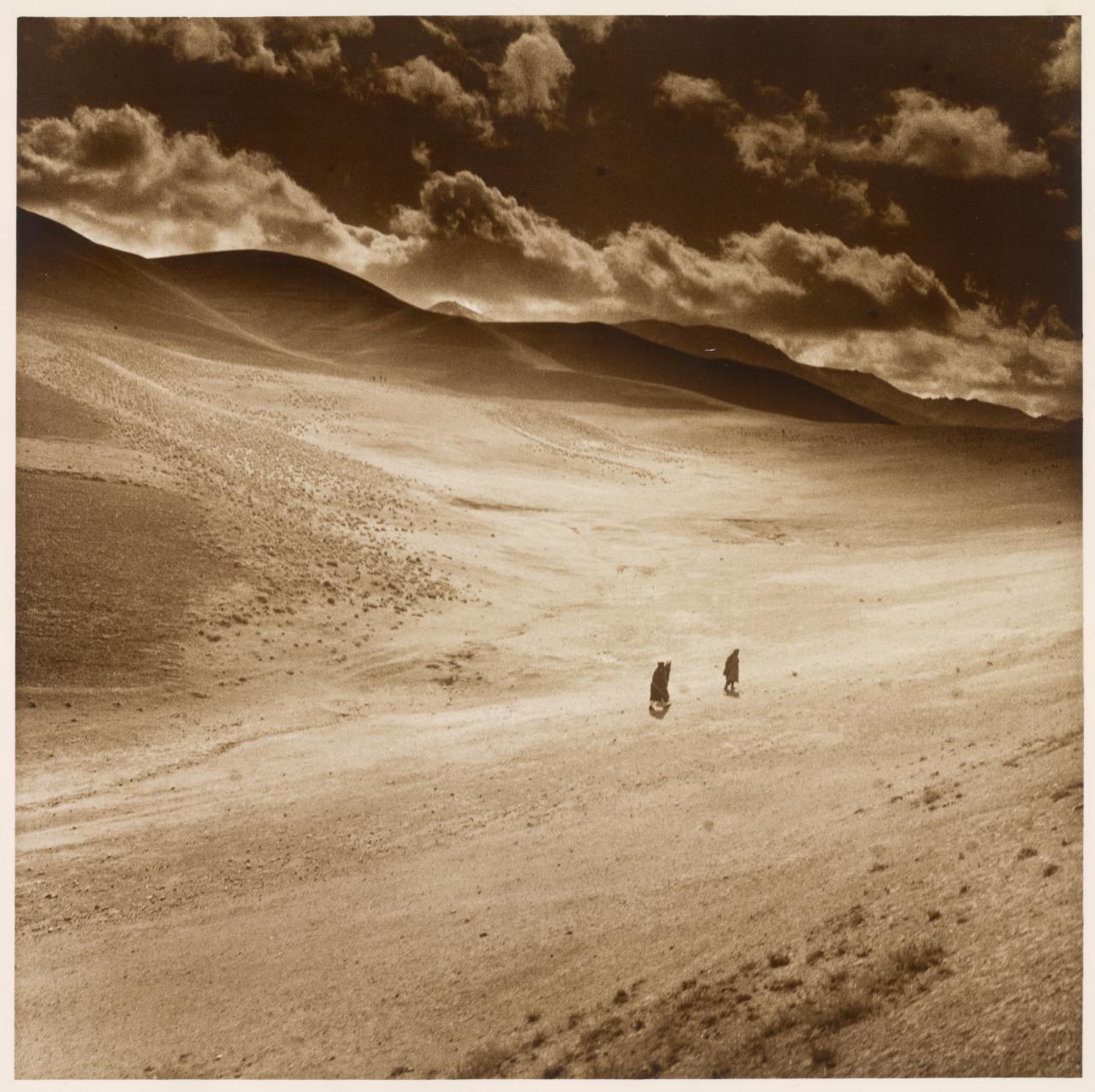
 

Max Pam (born Australia 1949, lived in Brunei 1980-1983) 'Road from Bamiyan' 1971 from the exhibition 'Long Distance Vision: Three Australian Photographers' at The Ian Potter Centre NGV Australia, Federation Square, Melbourne, Aug 2009 - Feb 2010


Max Pam (born Australia 1949, lived in Brunei 1980-1983)
Road from Bamiyan
1971
Gelatin silver photograph
20.1 x 20.1cm
National Gallery of Victoria, Melbourne
Purchased, 1979


Long Distance Vision is a disappointingly wane exploration of travel photography at NGV Australia. With the exception of the work of Max Pam the exhibition lacks insight into the phenomena that the curators want the work to philosophically investigate: namely how photographs shape our expectations of a place (even before we arrive) and how photographs also serve to confirm our experience – the picture as powerful mnemonic tool.

Firstly a quick story: when travelling in America to study at the Kinsey Institute I boarded a train from Chicago to what I thought was Bloomington, Indiana only to arrive many hours later at Bloomington, Illinois. Unbeknownst to me this Bloomington also had a motel of the same name as I was staying at in Indiana! After much confusion I ended up at the local airport trying to catch a single seater aircraft to Bloomington, Indiana with no luck – at the end of my tether, fearful in a foreign country, in tears because I just had to be at this appointment the next morning. Riding to my rescue was a nineteen year old kid with no shoes, driving an ex-cop car, who drove me across the Mid-West states stopping at petrol stops in the dead of night. It was a surreal experience, one that I will never forget for the rest of my life … fear, apprehension, alienation, happiness, joy and the sublime all rolled into one.

I tell this story to illustrate a point about travel – that you never know what is going to happen, what experiences you will have, even your final destination. To me, photographs of these adventures not only document this dislocation but step beyond pure representation to become art that re-presents the nature of our existence.

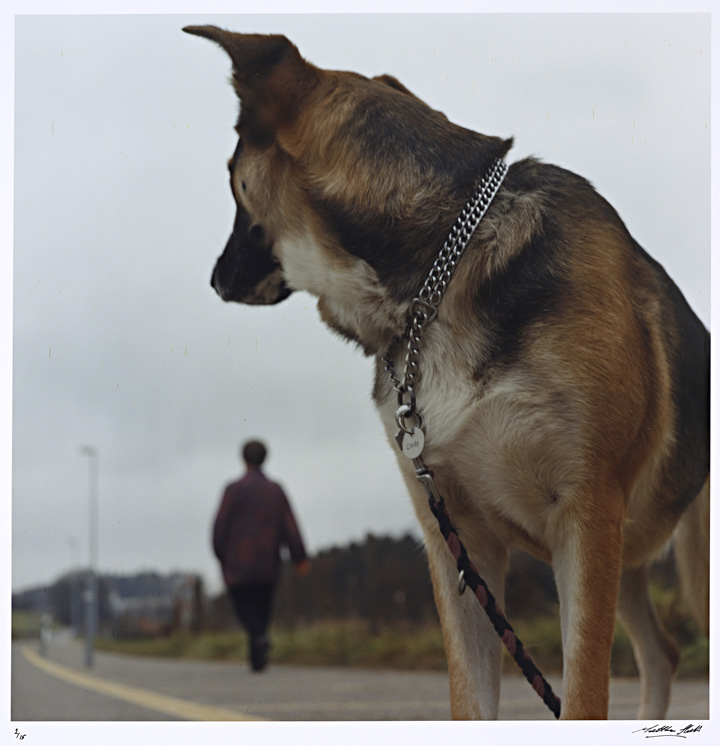
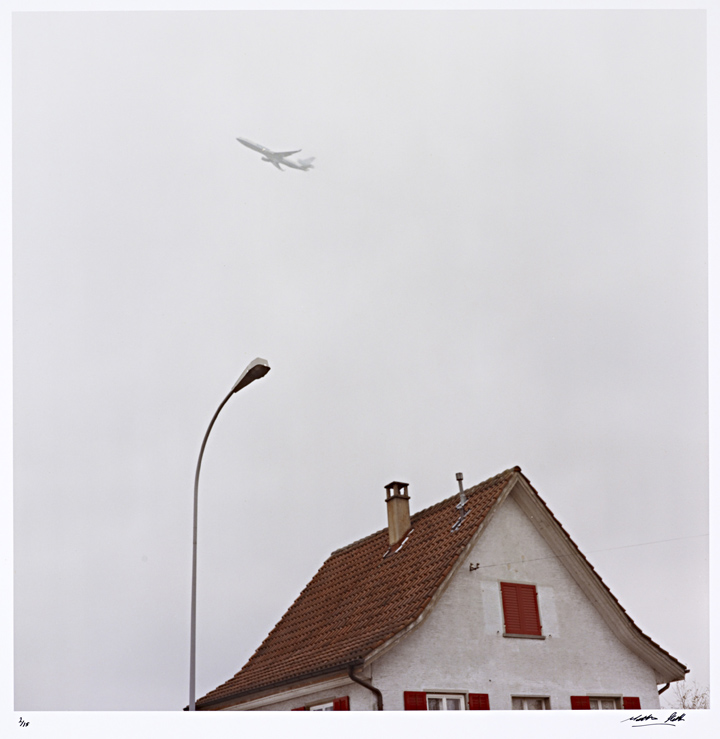
Matthew Sleeth‘s street photographs could be taken almost anywhere in the world (if it were not for a building with German writing on it). His snapshot aesthetic of caught moments, blinded people and dissected bodies in the observed landscape are evinced (to show in a clear manner; to prove beyond any reasonable doubt; to manifest; to make evident; to bring to light; to evidence – yes to bring to light, to evidence as photography does!) in mundane, dull, almost lifeless prints – ‘heavy’ photographs with a lack of shadow detail combined with a shallow depth of field. His remains, the people walking down the street and their shadow, are odd but as as The Age art critic Robert Nelson succinctly notes in his review of this exhibition, To become art, the odd cannot remain merely quaint but has to signify an existential anomaly by implication.”1

If we look at the seminal photographs from the book The Americans by Robert Frank we see in their dislocated view of America a foreigners view of the country the artist was travelling across – a subjective view of America that reveals as much about the state of mind of the artist as the country he was exposing. No such exposition happens in the works of Matthew Sleeth.

Christine Godden‘s photographs of family and friends have little to do with travel photography and I struggle to understand their inclusion in this exhibition. Though they are reasonable enough photographs in their own right – small black and white photographs of small intimacies (at the beach, in the garden, at the kitchen table, on the phone, on the porch, on the float, etc…) Godden’s anthropomorphist bodies have nothing to do with a vision of a new land as she had been living in San Francisco, New York and Rochester for six years over the period that these photographs were taken. Enough said.

The highlight of the exhibition is the work of Max Pam. I remember going the National Gallery of Victoria in the late 1980s to view this series of work in the collection – and what a revelation they were then and remain so today. The square formatted, dark sepia toned silver gelatin prints of the people and landscapes of Tibet are both monumental and personal at one and the same time. You are drawn into their intimacies: the punctum of a boys feet; the gathering of families; camels running before a windstorm; human beings as specks in a vast landscape.

“If the world is unfair or beyond our understanding, sublime places suggest it is not surprising things should be thus. We are the playthings of the forces that laid out the oceans and chiselled the mountains. Sublime places acknowledge limitations that we might otherwise encounter with anxiety or anger in the ordinary flow of events. It is not just nature that defies us. Human life is as overwhelming, but it is the vast spaces of nature that perhaps provide us with the finest, the most respectful reminder of all that exceeds us. If we spend time with them, they may help us to accept more graciously the great unfathomable events that molest our lives and will inevitably return us to dust.”2

The meditation on place and space that the artist has undertaken gives true insight into the connection of man and earth, coming closest to Alain de Botton’s understanding of the significance of sublime places. Through a vision of a distant land the photographs transport us in an emotional journey that furthers our understanding of the fragility of life both of the planet and of ourselves.

While the National Gallery of Victoria holds some excellent photography exhibitions (such as Andreas Gursky and Rennie Ellis for example) this was a missed opportunity. The interesting concept of the exhibition required a more rigorous investigation instead of such a cursory analysis (which can be evidenced by the catalogue ‘essay’: one page the size of a quarter of an A4 piece of paper that glosses over the whole history of travel photography in a few blithe sentences).

Inspiration could have easily been found in Alain de Botton’s excellent book The Art of Travel. Here we find chapters titled “On Anticipation”, “On Travelling Places”, “On the Exotic”, “On Curiosity”, “On the Country and the City” and “On the Sublime” to name but a few, with places and art work to illustrate the journey: what more is needed to excite the mind!

Take Charles Baudelaire for example. He travelled outside his native France only once and never ventured abroad again. Baudelaire still dreamt of going to Lisbon, or Java or to the Netherlands but “the destination was not really the point. The true desire was to get away, to go, as he concluded, ‘Anywhere! Anywhere! So long as it is out of the world!'”3

Heavens, we don’t even have to leave home to create travel photography that is out of the world! Our far-sighted vision (like that of photographer Gregory Crewdson) can create psychological narratives of imaginative journeys played out for the camera.

Perhaps what was needed was a longer gestation period, further research into the theoretical nuances of travel photography (one a little death, a remembrance; both a dislocation in the non-linearity of time and space), a gathering of photographs from collections around Australia to better evidence the conceptual basis for the exhibition and a greater understanding of the irregular possibilities of travel photography – so that the work and words could truly reflect the title of the exhibition Long Distance Vision.

Dr Marcus Bunyan


1/ Nelson, Robert. “In blurred focus: le freak c’est chic,” in The Age newspaper. Friday, October 23rd 2009, p. 18

2/ de Botton, Alain. The Art of Travel. London: Penguin, 2002, p. 178-179

3/ Ibid., p. 34
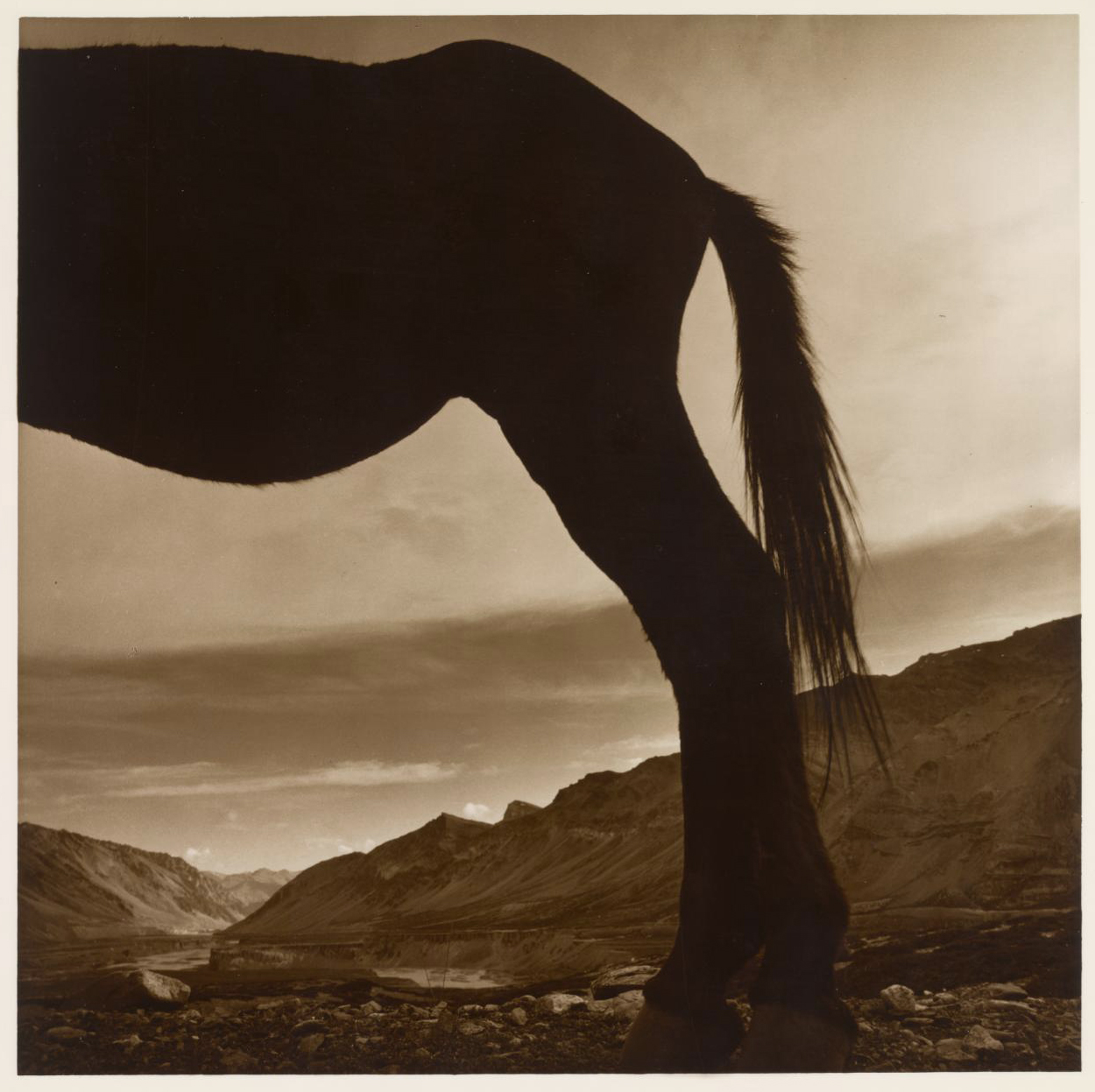
 

Max Pam (born Australia 1949, lived in Brunei 1980-83) 'My donkey, our valley, Sarchu' 1977 from the exhibition 'Long Distance Vision: Three Australian Photographers' at The Ian Potter Centre NGV Australia, Federation Square, Melbourne, Aug 2009 - Feb 2010


Max Pam (born Australia 1949, lived in Brunei 1980-1983)
My donkey, our valley, Sarchu
1977
Gelatin silver photograph
20.1 x 20.1cm
National Gallery of Victoria, Melbourne
Purchased, 1979
© Max Pam


Max Pam (Australian, b. 1949) 'Sisters' 1977 from the exhibition 'Long Distance Vision: Three Australian Photographers' at The Ian Potter Centre NGV Australia, Federation Square, Melbourne, Aug 2009 - Feb 2010


Max Pam (born Australia 1949, lived in Brunei 1980-1983)
Sisters
1977
Gelatin silver photograph
20.1 x 20.1cm
National Gallery of Victoria, Melbourne
Purchased, 1979
© Max Pam


Max Pam (Australian, b. 1949) 'Tibetan nomads' 1977


Max Pam (born Australia 1949, lived in Brunei 1980-1983)
Tibetan nomads
1977
Gelatin silver photograph
20.1 x 20.2cm
National Gallery of Victoria, Melbourne
Purchased, 1979
© Max Pam


Christine Godden (Australian, b. 1947) 'Bobbie and Amitabha at the beach' c. 1972


Christine Godden (Australian, b. 1947)
Bobbie and Amitabha at the beach
c. 1972
Gelatin silver photograph
13.2 x 20.1cm
National Gallery of Victoria, Melbourne
Purchased from Admission Funds, 1991
© Christine Godden


Christine Godden (Australian, b. 1947) 'Elliot holding a ring' 1973


Christine Godden (Australian, b. 1947)
Elliot holding a ring
1973
Gelatin silver photograph
15.0 x 22.8cm
National Gallery of Victoria, Melbourne
Purchased from Admission Funds, 1991
© Christine Godden
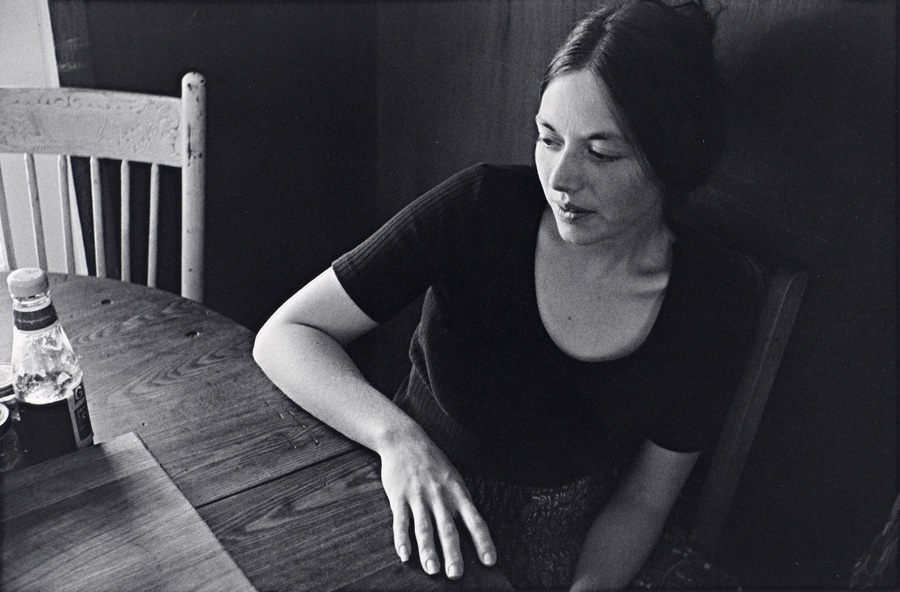
 

Christine Godden.Christine Godden (Australian, b. 1947)kitchen table' 1973


Christine Godden (Australian, b. 1947)
Joanie at the kitchen table
1973, printed 1986
Gelatin silver photograph
20.1 x 30.6cm
National Gallery of Victoria, Melbourne
Purchased from Admission Funds, 1991
© Christine Godden
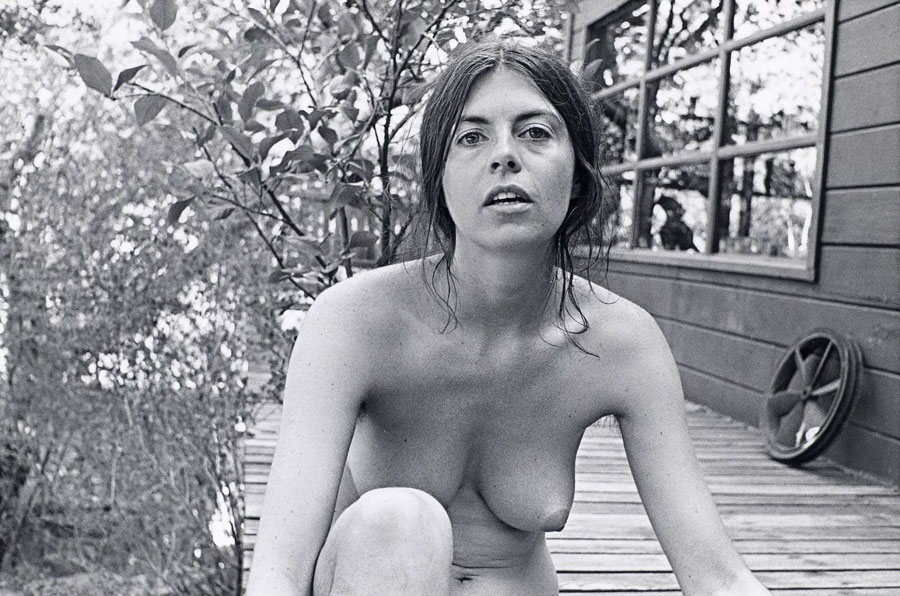
 

Christine Godden (Australian, b. 1947) 'With Leigh on the porch' 1972


Christine Godden (Australian, b. 1947)
With Leigh on the porch
1972, printed 1986
Gelatin silver photograph
20.2 x 30.5cm
National Gallery of Victoria, Melbourne
Purchased from Admission Funds, 1991
© Christine Godden


“The National Gallery of Victoria will celebrate the work of Christine Godden, Max Pam and Matthew Sleeth in a new exhibition, Long Distance Vision: Three Australian Photographers opening 28 August.

Long Distance Vision will include over 60 photographs from the NGV Collection exploring the concept of the ‘tourist gaze’ and its relationship with the three artists.

Susan van Wyk, Curator Photography, NGV said the exhibition provides a fascinating insight into the unusual perspective brought by the three photographers to their varied world travel destinations.

“There’s a sense in the works in the exhibition that the photographers are not from the places they choose to photograph, and that each is a visitor delighting in the scenes they encounter.

“What is notable about the photographs in Long Distance Vision is that rather than focussing on the well known scenes that each artist encountered, they have turned their attention to the ‘little things’, the details of the everyday,” said Ms van Wyk.

From the nineteenth century, photography has been a means by which people could discover the world, initially through personal collection and albums, and later via postcards, magazines, books and the internet.

Dr Gerard Vaughan, Director, NGV said that both contemporary photographers and tourists use the camera as a means to explore and capture the world.

“Through their photographs, the three artists featured in Long Distance Vision show us highly individual ways of seeing the world. This exhibition will surprise and delight visitors as our attention is drawn to not only what is different but what remains the same as we travel the world,” said Dr Vaughan.

Born in Melbourne in 1949, Max Pam began his career in various commercial photography studios in the 1960s. After responding to a university notice for assistance to drive a Volkswagen from Calcutta to London in 1969, Pam got his first taste of being a traveller. The body of Pam’s work in this exhibition is from the series The Himalayas, which was photographed over a number of early visits to India.

Christine Godden also travelled the popular overland route between Europe and India in the early 1970s, returning to Sydney in 1978. In 1972, after a period of travelling, Godden found her home in the US where she remained for six years. Godden’s photographs in this exhibition were taken between 1972 and 1974 during her stay in the US.

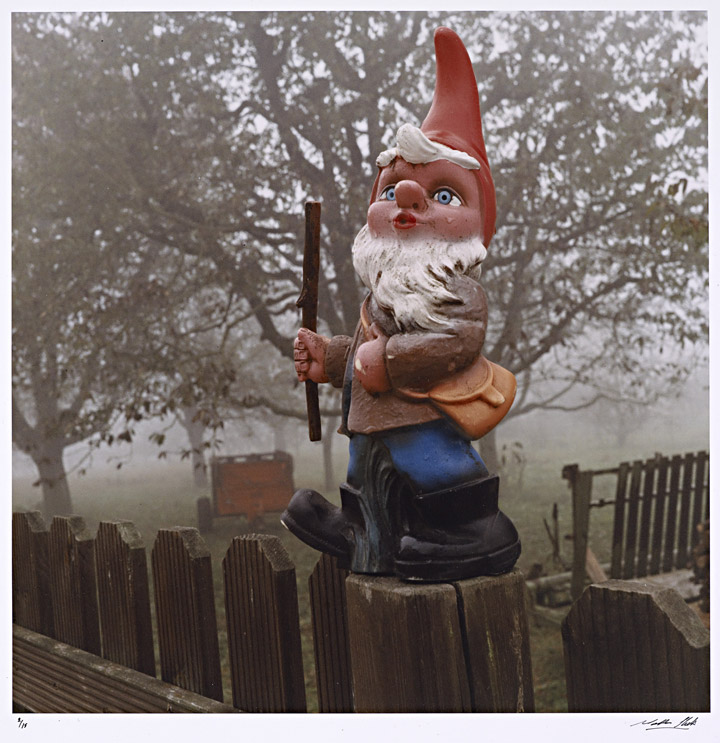
Born in Melbourne in 1972, Matthew Sleeth is another seasoned traveller. During the late 1990s, Sleeth settled in Opfikon, an outer suburb of Zurich, Switzerland. The series of photographs in Long Distance Vision were taken during this time, showing Sleeth’s interest not only in street photography, but also in the narrative possibilities in everyday scenes. Dotted with garishly coloured playhouses, naive sculptures and whimsical arrangements of garden gnomes Sleeth’s photographs go beyond the ‘picture-perfect’ scenes of typical tourist photography.

Long Distance Vision: Three Australian Photographers is on display at The Ian Potter Centre: NGV Australia, Federation Square from 28 August 2009 to 21 February 2010.”

Text from the National Gallery of Victoria press release
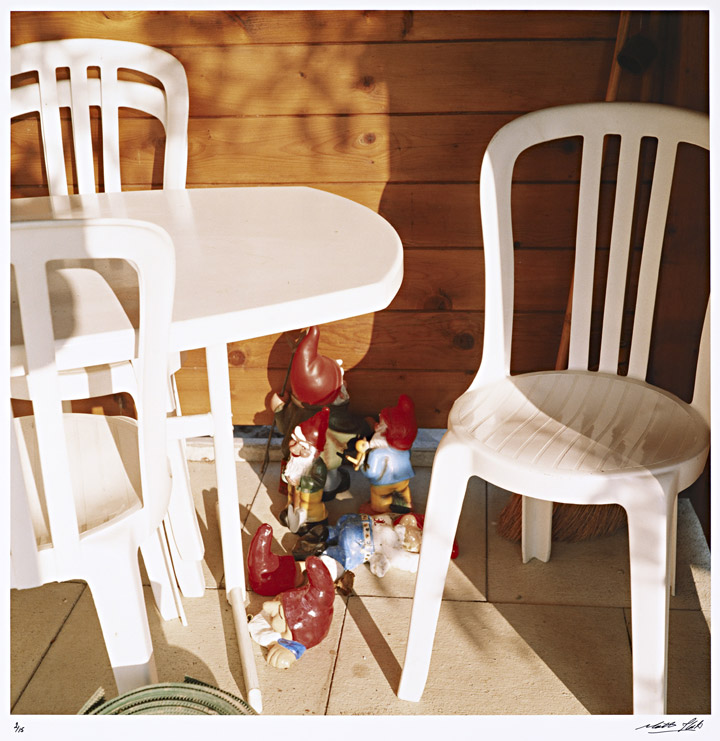
 

Matthew Sleeth (Australian, b. 1972) From the series 'Opfikon' 1997

Matthew Sleeth (Australian, b. 1972) From the series 'Opfikon' 1997

Matthew Sleeth (Australian, b. 1972) From the series 'Opfikon' 1997

Matthew Sleeth (Australian, b. 1972) From the series 'Opfikon' 1997

Matthew Sleeth (Australian, b. 1972) From the series 'Opfikon' 1997


Matthew Sleeth (Australian, b. 1972)
Photographs from the series Opfikon
1997, printed 2004
Type C photograph
43.2 x 43.0cm
National Gallery of Victoria, Melbourne
Presented through the NGV Foundation by Patrick Corrigan, Governor, 2005
© Matthew Sleeth courtesy of Sophie Gannon Gallery, Melbourne


The Ian Potter Centre: NGV Australia Federation Square
Corner of Russell and 
Flinders Streets, Melbourne

Opening hours:
Every day 10am – 5pm

National Gallery of Victoria website

LIKE ART BLART ON FACEBOOK

Back to top

Review: ‘October 2009’ jewellery by Carlier Makigawa at Gallery Funaki, Melbourne

Exhibition dates: 6th October – 31st October, 2009


Carlier Makigawa (Australian, b. 1952) 'Brooch' 2009 from the exhibition 'October 2009' jewellery by Carlier Makigawa at Gallery Funaki, Melbourne, October 2009


Carlier Makigawa (Australian, b. 1952)
Brooch
2009
Silver, paint


Jewellery as art; is art

Brooches, objects

Robust/delicate

Holistic body of work

Affirmation of line and form

Simplicity/complexity of shapes

Span ______  (meta)physical

[Interior] exterior!

elemental | articulation

Volume ((( ))) form

&

arch-itecture

SPACE

√

beauty

……………………….

Dr Marcus Bunyan


Many thankx to Gallery Funaki for allowing me to publish the photographs in the posting. Please click on the photographs for a larger version of the image.


Carlier Makigawa (Australian, b. 1952) 'Brooch' 2009 from the exhibition 'October 2009' jewellery by Carlier Makigawa at Gallery Funaki, Melbourne, October 2009


Carlier Makigawa (Australian, b. 1952)
Brooch
2009
Silver


Carlier Makigawa (Australian, b. 1952) 'Brooch' 2009


Carlier Makigawa (Australian, b. 1952)
Brooch
2009
Silver


Carlier Makigawa (Australian, b. 1952) 'Brooch 1a' 2009 from the exhibition 'October 2009' jewellery by Carlier Makigawa at Gallery Funaki, Melbourne, October 2009


Carlier Makigawa (Australian, b. 1952)
Brooch
2009
Silver


“A spiritual and private space. Ritual object, jewellery. Linear structures appear fragile and monumental to cradle the internal spirit. They appear to float in space, hovering, penetrating, a temporary existence. Nature is the reference, and the geometry of nature and architecture inform this world.”


Carlier Makigawa


Carlier Makigawa explores the parameters of small spaces in her new exhibition October 2009. Her spare, exacting constructions in silver wire have a monumentality that defies their scale and delicacy. Her new work consists of brooches and objects which move beyond the botanical inspiration of her earlier work to engage with more abstract notions of movement, compression and spatial manipulation.

Text from the Gallery Funaki website [Online] Cited 01/05/2019 no longer available online


Carlier Makigawa (Australian, b. 1952) 'Object' 2009


Carlier Makigawa (Australian, b. 1952)
Object
2009
Silver


Carlier Makigawa (Australian, b. 1952) 'Object' 2009


Carlier Makigawa (Australian, b. 1952)
Object
2009
Silver


Carlier Makigawa (Australian, b. 1952) 'Brooch 1' 2009


Carlier Makigawa (Australian, b. 1952)
Brooch
2009
Silver


Carlier Makigawa (Australian, b. 1952) 'Geometric Neckpiece' 2009


Carlier Makigawa (Australian, b. 1952)
Neckpiece
2009
Silver


Gallery Funaki website

LIKE ART BLART ON FACEBOOK

Back to top

Review: ‘Sweet Complicity’ by eX de Medici at Karen Woodbury Gallery, Richmond, Melbourne

Exhibition dates: 30th September – 24th October, 2009


eX de Medici (Australia, b. 1959) 'Tooth and claw' 2009 from the exhibition 'Sweet Complicity' by eX de Medici at Karen Woodbury Gallery, Richmond, Melbourne, Sept - Oct, 2009


eX de Medici (Australia, b. 1959)
Tooth and claw
2009
Pen, ink and mica on archival paper
114.0 x 521.0cm


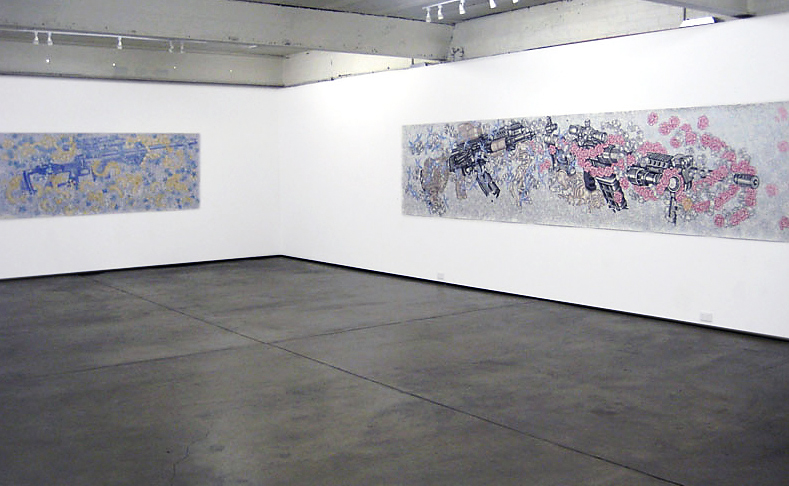
Is it sinful to say that an Armalite rifle can be voluptuously seductive? Not in the hands of artist eX de Medici!

Taking a variety of contemporary military high-powered weapons (Armalite AR30 Tactical .308 Sniper, Modified AK 47, Blackwater AR15, Patriot Ordinance P45 .223 for example) eX de Medici’s armaments have a steely presence softened and consumed by multitudinous garlands of traditional tattoo ‘flash’ iconography (flowers, skulls, bows, stars, Chinese dragons, waves and swallows repeated in Escher-like patterns) and contorted skeletons. Using individual colour palettes for each of the three large pen, ink and mica on paper works in the exhibition, eX subverts the masculine symbology of gun culture and decomposes it within an ornamentation of deathly desire – new compositions in the dance of death: ‘U hurt me Baby, U Fkd me up gd, the hole tht u made (cross) me Ded …’

In other less skilled artist’s hands the subject matter could become cliched and trite but here de Medici balances the disparate elements in her compositions and brings the subject matter alive – sinuously jumping off the paper, entwining the viewer in their delicious ironies, all of us sweetly complicit in the terror war (send more meat, send more meat!), fighting tooth and nail to keep urban realities at arm’s length. The dark desires that these works contain possess an aesthetic beauty that swallows us up so that we, too, become ‘Barbarians All’. Highly recommended!

Dr Marcus Bunyan


Many thankx to Karen Woodbury Gallery for allowing me to publish the art work in the posting. Please click on some of the photographs for a larger version of the image.


eX de Medici (Australia, b. 1959) 'Tooth and Claw' 2009 (detail) from the exhibition 'Sweet Complicity' by eX de Medici at Karen Woodbury Gallery, Richmond, Melbourne, Sept - Oct, 2009


eX de Medici (Australia, b. 1959)
Tooth and claw (detail)
2009
Pen, ink and mica on archival paper
114.0 x 521.0cm


eX de Medici (Australia, b. 1959) 'Tooth and claw' 2009 (detail)

eX de Medici (Australia, b. 1959) 'Tooth and claw' 2009 (detail)


eX de Medici (Australia, b. 1959)
Tooth and claw (details)
2009
Pen, ink and mica on archival paper
114.0 x 521.0cm


Installation view of 'Sweet Complicity' by eX de Medici at Karen Woodbury Gallery, Melbourne showing at left, 'Send more meat' (2009) and at right, 'Tooth and claw' (2009)


Installation view of Sweet Complicity by eX de Medici at Karen Woodbury Gallery, Melbourne showing at left, Send more meat (2009) and at right, Tooth and claw (2009)
Photo: Marcus Bunyan


eX de Medici (Australia, b. 1959) 'Send more meat' 2009


eX de Medici (Australia, b. 1959)
Send more meat
2009
Pen, ink and mica on archival paper


eX de Medici (Australia, b. 1959) 'Send more meat' 2009 (detail)


eX de Medici (Australia, b. 1959)
Send more meat (detail)
2009
Pen, ink and mica on archival paper


Sweet complicity is eX de Medici’s first and much anticipated exhibition at Karen Woodbury Gallery. The exhibition will comprise of three monumental pen, ink and mica works on archival paper. These works examine recurring themes in her practice such as power, war, death and violence via a decorative feminine veneer and aesthetic.

The recurrent use of symbolism in the form of weapons, skulls and garlands in her work re-appear with the addition of Chinese imagery (Imperial golden dragons, China’s five-pointed star, and the use of chrysanthemums). These potent works display a latent interest in scientific illustration and allude to de Medici’s characteristic stylised tattoo motifs that stems from her work as a tattooist. The almost obsessive repetition of pattern and immense detailing display eX’s dedication to her practice through the strong mental and physical commitment required to complete such awe-inspiring artworks that seduce the viewer.

There is an unmistaken polemic tone in de Medici’s practice that cannot be ignored. Different cultures, identities, actions and consequences are represented and centred on objects of warfare, allowing for disguised and layered political and moral statements.

de Medici lives and produces much of her work in the nation’s capital Canberra. Streams of influences inform the work; Canberra’s political and physical agendas, research resourced from various national institutions such as the CSIRO Entomological and Taxonomy Division, the National Library of Australia and the Australian War Memorial. She has recently returned from the Solomon Islands where she was chosen as an official war artist.

Text from the Karen Woodbury Gallery website [Online] Cited 05/10/2009. No longer available online


The defining theme in eX de Medici’s paintings is a consistent interrogation of power. The notion of ‘the personal’ doesn’t interest the artist. Instead she investigates authority and dissent through paintings of guns, surveillance devices and gas masks.


eX de Medici (Australia, b. 1959) 'American Sex/Funky Beat Machine' 2009


eX de Medici (Australia, b. 1959)
American Sex/Funky Beat Machine
2009
Pen, ink and mica on archival paper
Diptych, 114.0 x 249.0cm


eX de Medici (Australia, b. 1959) 'American Sex/Funky Beat Machine' 2009 (detail)


eX de Medici (Australia, b. 1959)
American Sex/Funky Beat Machine (detail)
2009
Pen, ink and mica on archival paper
Diptych, 114.0 x 249.0cm


Karen Woodbury Gallery

This gallery is now closed.

LIKE ART BLART ON FACEBOOK

Back to top

Review: ‘Slow Down, You Move Too Fast’ by Kirra Jamison at Sophie Gannon Gallery, Richmond, Melbourne

Exhibition dates: 22nd September – 17th October, 2009


Kirra Jamison (Australian) 'Livin' on a prayer' 2009 from the exhibition 'Slow Down, You Move Too Fast' by Kirra Jamison at Sophie Gannon Gallery, Richmond, Melbourne, Sept - Oct, 2009


Kirra Jamison (Australian)
Livin’ on a prayer
2009
Gouache, pen and vinyl on paper
160 x 114cm


Hit, Hit, Hit with a Miss

Although all the work in this exhibition is dated 2009 this exhibition can fairly easily be divided into what seems to be two separate bodies of work: the excellent gouache, pen and vinyl works of paper and the ‘other’ less successful large paintings of owls and raccoons and the smaller paintings of hanging flowers and tree branches on dark purple ground.

The latter large and small paintings fail to hit the spot with the exception of Belong to me (2009, below) which has visual and conceptual links to the works on paper, the twin bodies dissolving into a kaleidoscopic dream-like effervescence of life. The paintings of the owl (Last star, 2009 below), raccoons (Can you see my aura 2009, below) together with another fairytale painting With a roof of flint and a floor of chalk (2009) fail to communicate a shared vision being disparate items that conceptually don’t seem to hang well together. They lack a certain spark, that revelatory presence and appear flat both physically and metaphorically.

On the flip side of the equation are works that are physically complex, conceptually robust and simply beautiful in their execution: no wonder so many of them have sold already! Using basic graphic patterns repeated and inverted (Jamison has an interest in graphics fostered through textile design), Jamison constructs fantasy worlds, fairytales on paper. In Livin’ on a prayer (2009, above) we have a splendid Carnival of the Animals as monkeys and creatures inhabit a boat sprouting flowers riding upon a sea made of flowers. In Willow weep 2 (2009, above) the tree of life is inhabited by creatures and a human figure (see halfway up on the right-hand side). In Future’s lovecraft (2009, below) incredible creatures again inhabit the imagined biospheric carnivalesque worlds. As Russian theorist Mikhail Bakhtin notes,

“The carnival offers the chance to have a new outlook on the world, to realise the relative nature of all that exists, and to enter a completely new order of things.”1

Here the new order of things is a thing of beauty to behold; the works draw you in with their colour and detail, their presence. I can’t wait to see what possibilities unfold next for the artist from this starting point for this is the very beginning of the path, a scratching of the surface of what is possible with this technique and themes. It is almost like an emotional texture, the breathe of cool air on your lungs in the early morning mist. I await developments with interest!

Dr Marcus Bunyan


1/ Bakhtin, Mikhail. Rabelais and his World (trans. Hélène Iswolsky). Bloomington: Indiana University Press, 1984, p. 34.


Many thankx to Sophie Gannon Gallery for allowing me to publish the art work in the posting. Please click on the photographs for a larger version of the image.


Kirra Jamison (Australian) 'Willow weep 2' 2009 from the exhibition 'Slow Down, You Move Too Fast' by Kirra Jamison at Sophie Gannon Gallery, Richmond, Melbourne, Sept - Oct, 2009


Kirra Jamison (Australian)
Willow weep 2
2009
Gouache and vinyl on paper
160 x 114cm


Kirra Jamison (Australian) 'Future's lovecraft' 2009


Kirra Jamison (Australian)
Future’s lovecraft
2009
Gouache and vinyl on paper
160 x 114cm


Installation view of 'Slow down, don't run so fast' by Kirra Jamison at Sophie Gannon Gallery, Richmond


Installation view of Slow down, you move too fast by Kirra Jamison at Sophie Gannon Gallery, Richmond
Photo: Marcus Bunyan


Kirra Jamison (Australian) 'Belong to me (after Delaunay)' 2009


Kirra Jamison (Australian)
Belong to me (after Delaunay)
2009
Acrylic, gouache and pen on canvas
220 x 183cm


Kirra Jamison (Australian) 'Last Star' 2009


Kirra Jamison (Australian)
Last Star
2009
Acrylic, gouache, pen and ink on canvas
185 x 153cm


Kirra Jamison (Australian) 'Can you see my aura?' 2009


Kirra Jamison (Australian)
Can you see my aura?
2009


Sophie Gannon Gallery
2, Albert Street, Richmond, Melbourne
Phone: +61 3 9421 0857

Opening hours:
Tuesday – Saturday 11am – 5pm

Sophie Gannon Gallery website

LIKE ART BLART ON FACEBOOK

Back to top

Review: ‘Diction’ by Stormie Mills at Helen Gory Galerie, Prahran, Melbourne

16th September – 10th October, 2009


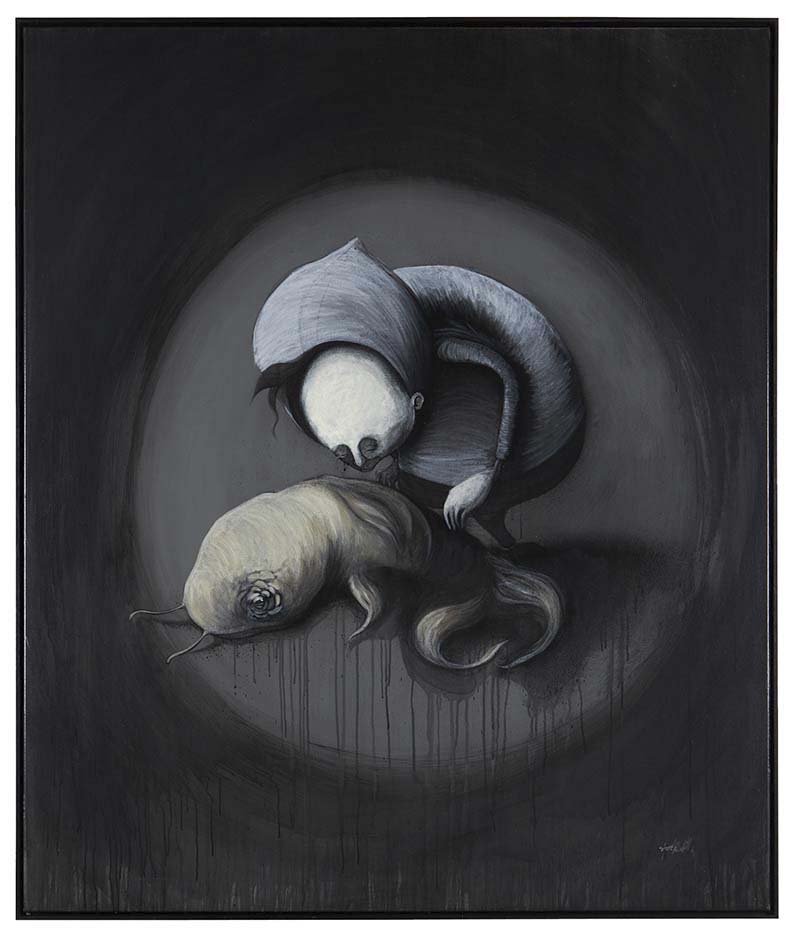
Stormie Mills (Australian, b. 1969) 'Some days all my shadow are behind me' 2009 from the exhibition 'Diction' by Stormie Mills at Helen Gory Galerie, Prahran, Melbourne, Sept - Oct, 2009


Stormie Mills (Australian, b. 1969)
Some days all my shadows are behind me
2009
Acrylic, spray paint and dirt on canvas
1370 mm x 1620 mm


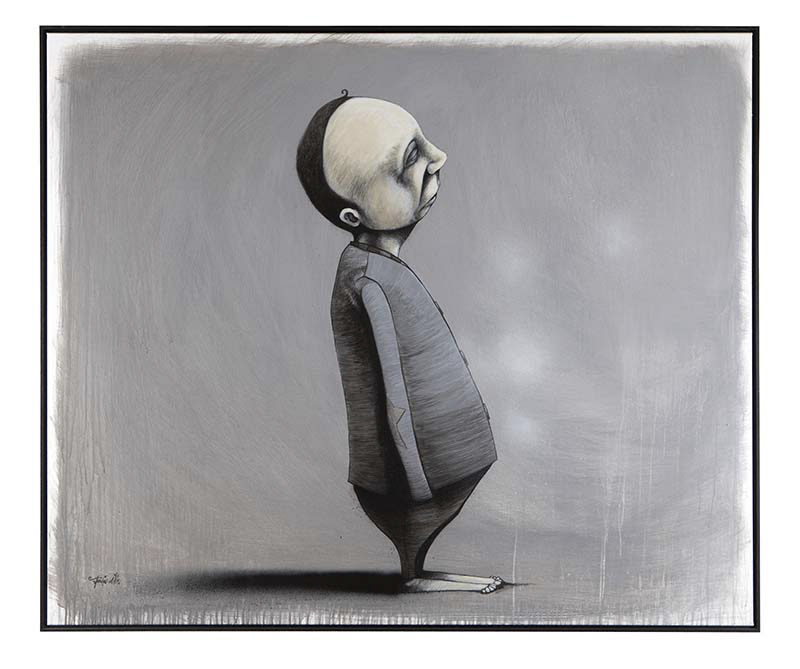
This is a hit and miss show by Stormie Mills at Helen Gory Galerie in Prahran, Melbourne. Some pieces (mainly the smaller paintings) work incredibly well whilst others (mainly the larger paintings such as There is an unkroken continuity and Here I stand) fail to inspire, laden as they are with much dourness and lacking a lightness of touch.

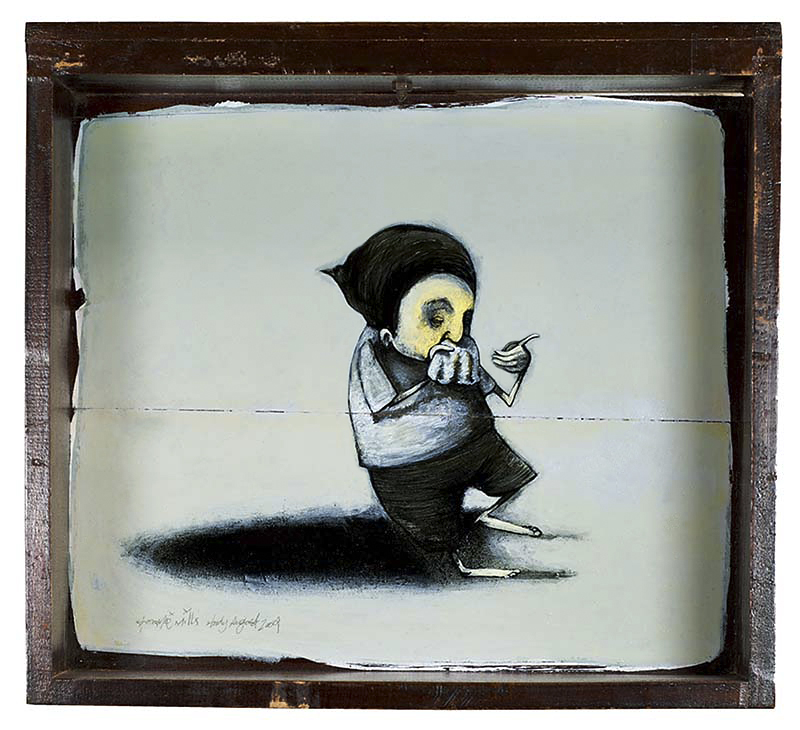
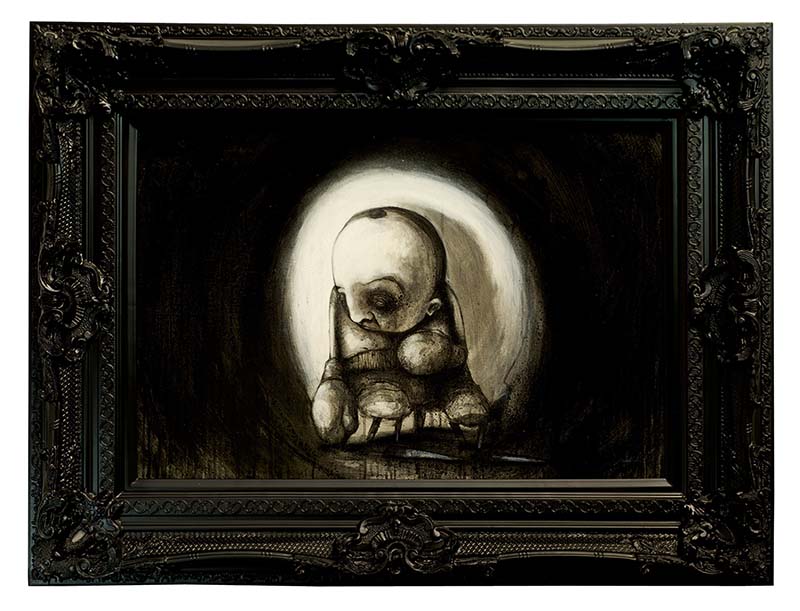
Mills’ uses a palette of greys, blacks and whites to create layered, dripping contextless backgrounds against which his characters tell their prophetic stories. His laconic figures offer a knowing stoicism, surviving everything the world throws at them. The best work made me chuckle at their delicious ironies: I feel how the character is in Some days all my shadows are behind me (2009, above). Not yet ready to quit (2009, below) portrays a boxer slumped on his stool surrounded in a halo of white paint. The heavy remarkably wax-like black carved frame reminds me of Victorian mourning frames and works well with the sentiment proposed by the painting: again I feel a direct response. Elsewhere the use of these heavy black frames less suit the works, even overpower the delicacy of some of the paintings (for example in Fabrique de Pain and Summer Solitude (both 2009)).

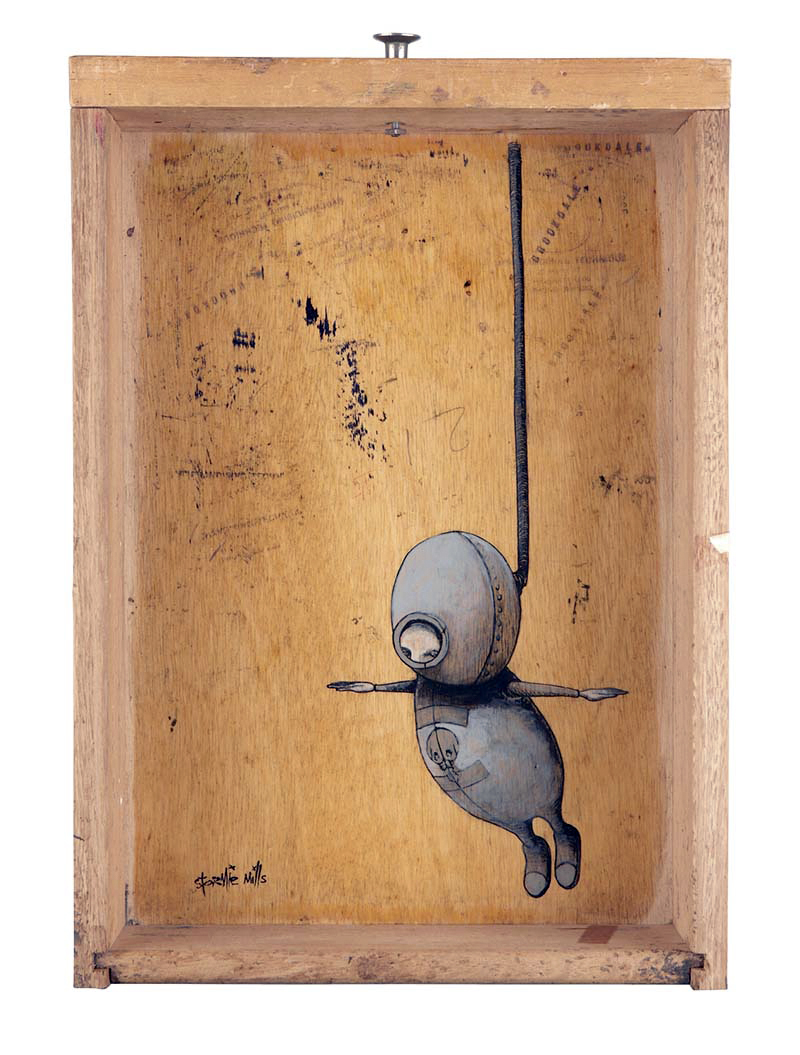
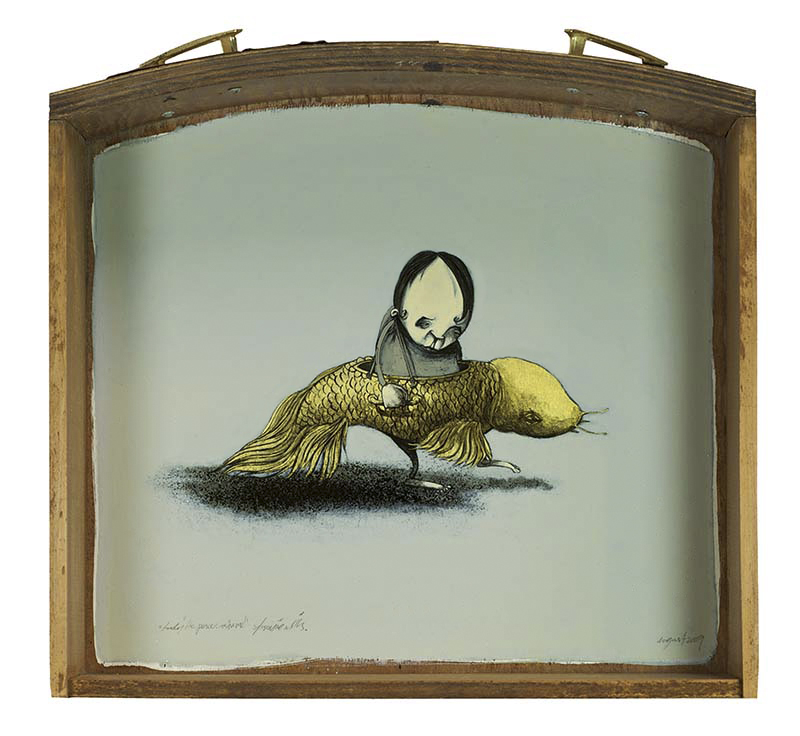
The best grouping in the exhibition are eight works painted on the bottom of old drawers, complete with handles and hung together (three of which are pictured below). This cohesion of concept, painting and intensities seems to bring all the ideas together in a satisfying whole, the characters trapped by the four walls of the drawers, insulated in their contextless worlds. I adored 5 fathoms for the simplicity of it’s design and execution, the use of the box reminding me of the work of Joseph Cornell and the drawing Banksy at one and the same time. Here in this work there is a generosity of spirit which some of the other work lacks, a balance between dark and light, empathy and hope.

Overall some interesting work that had me thinking and feeling but ultimately failed to convince with their melancholic melange.

Dr Marcus Bunyan


Many thankx to Helen Gory Galerie for allowing me to publish the art work in the posting. Please click on the photographs for a larger version of the image.


Stormie Mills (Australian, b. 1969) 'Not yet ready to quit' 2009 from the exhibition 'Diction' by Stormie Mills at Helen Gory Galerie, Prahran, Melbourne, Sept - Oct, 2009


Stormie Mills (Australian, b. 1969)
Not yet ready to quit
2009
Acrylic, spray paint and dirt on canvas
610 mm x 920 mm


Stormie Mills (Australian, b. 1969) 'Come on mate, Get up' 2009 from the exhibition 'Diction' by Stormie Mills at Helen Gory Galerie, Prahran, Melbourne, Sept - Oct, 2009


Stormie Mills (Australian, b. 1969)
Come on mate, Get up
2009
Acrylic, spray paint and dirt on canvas
1630 mm x 1370 mm


Stormie Mills (Australian, b. 1969) '5 fathoms' 2009


Stormie Mills (Australian, b. 1969)
5 fathoms
2009
Mixed media on found object
400 mm x 280 mm x 100 mm


Stormie Mills (Australian, b. 1969) The pesca costume' 2009


Stormie Mills (Australian, b. 1969)
The pesca costume
2009
Mixed media on found object
450 mm x 480 mm x 130 mm


Stormie Mills (Australian, b. 1969) 'Wiping the smile from his face' 2009


Stormie Mills (Australian, b. 1969)
Wiping the smile from his face
2009
Mixed media on found object
360 mm x 390 mm x 100 mm


Helen Gory Galerie

This gallery is now closed.

LIKE ART BLART ON FACEBOOK

Back to top

Review: ‘Scenes’ by David Noonan at the Australian Centre for Contemporary Art (ACCA), Melbourne

Exhibition dates: 15th August – 27th September, 2009

Commissioning Curator: Juliana Engberg
Coordinating Curator: Charlotte Day


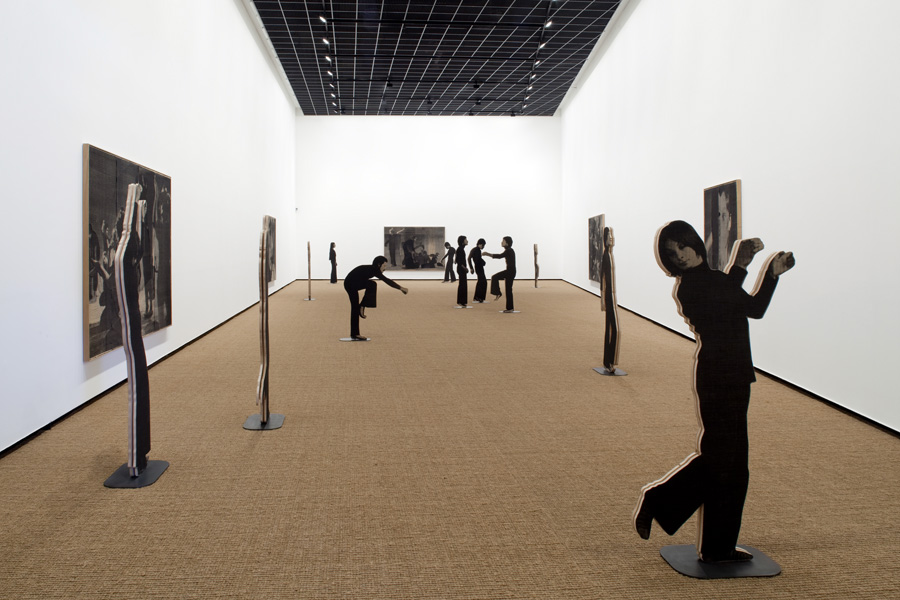
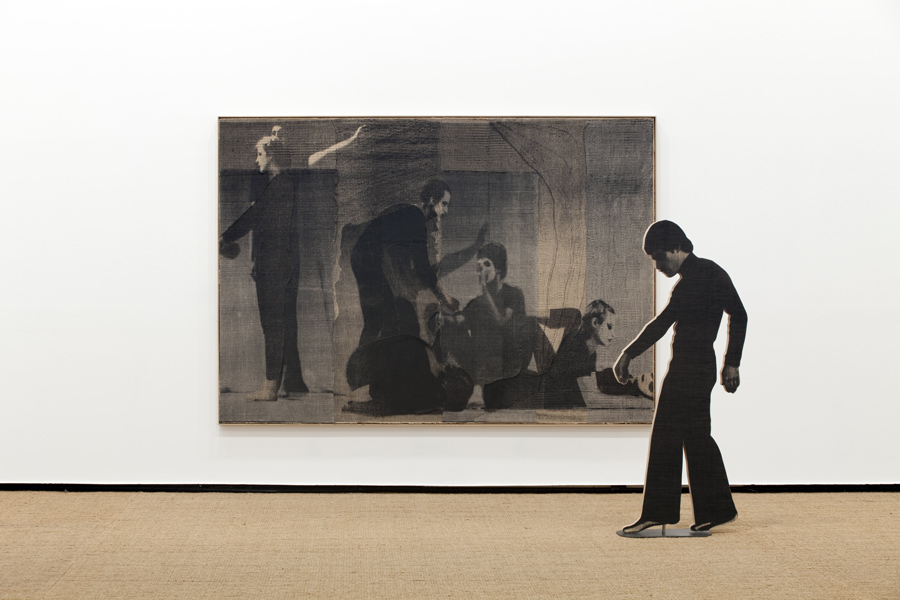
Installation view of 'Scenes' by David Noonan at ACCA


Installation view of Scenes by David Noonan at ACCA
Photo: Marcus Bunyan


Thoughts

Limited colour palette of ochres, whites, browns and blacks.

Rough texture of floor covered in Jute under the feet.

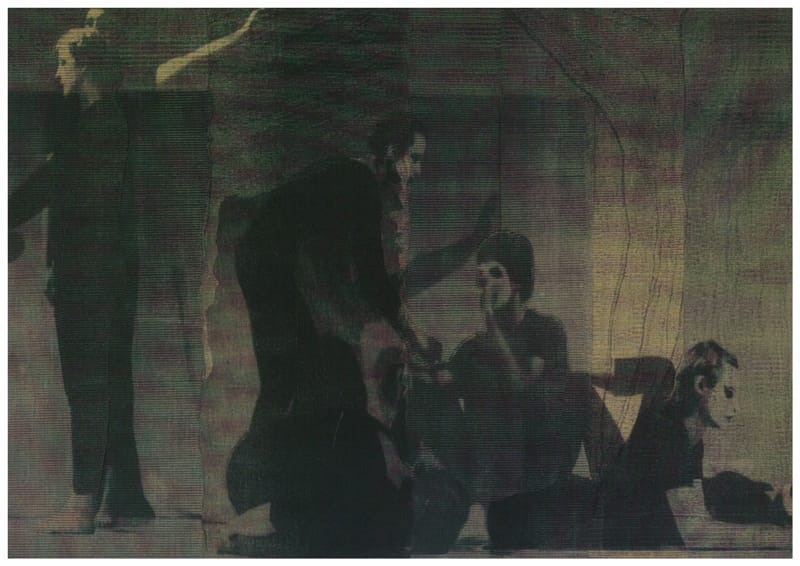
Layered, collaged print media figures roughly printed on canvas – elements of abstraction, elements of figuration.

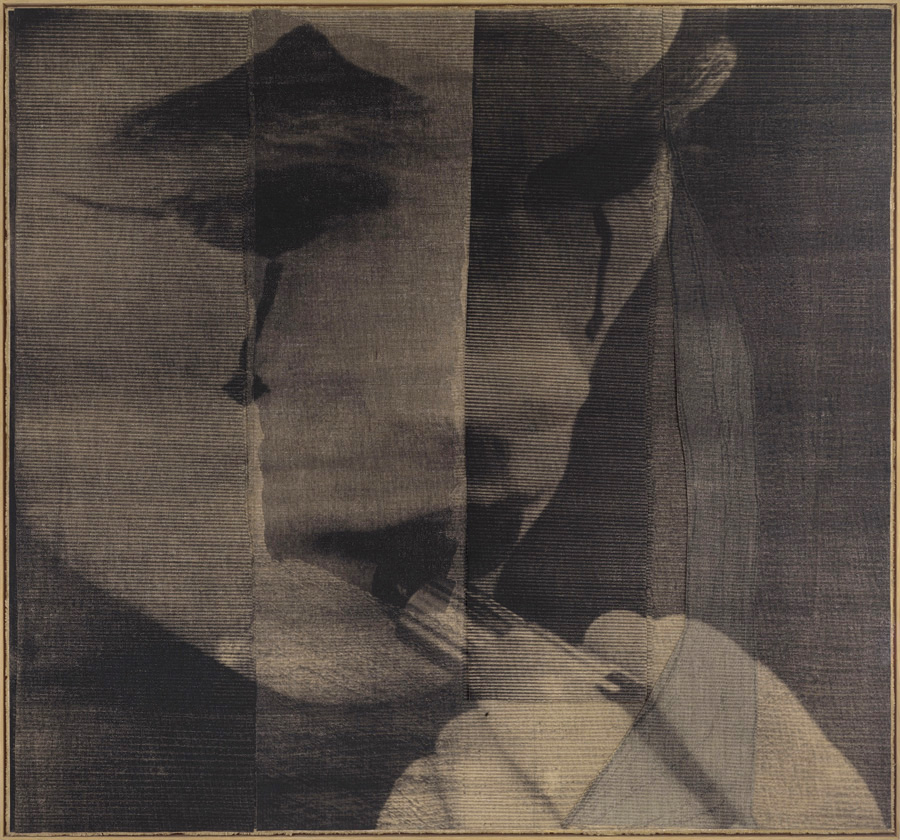
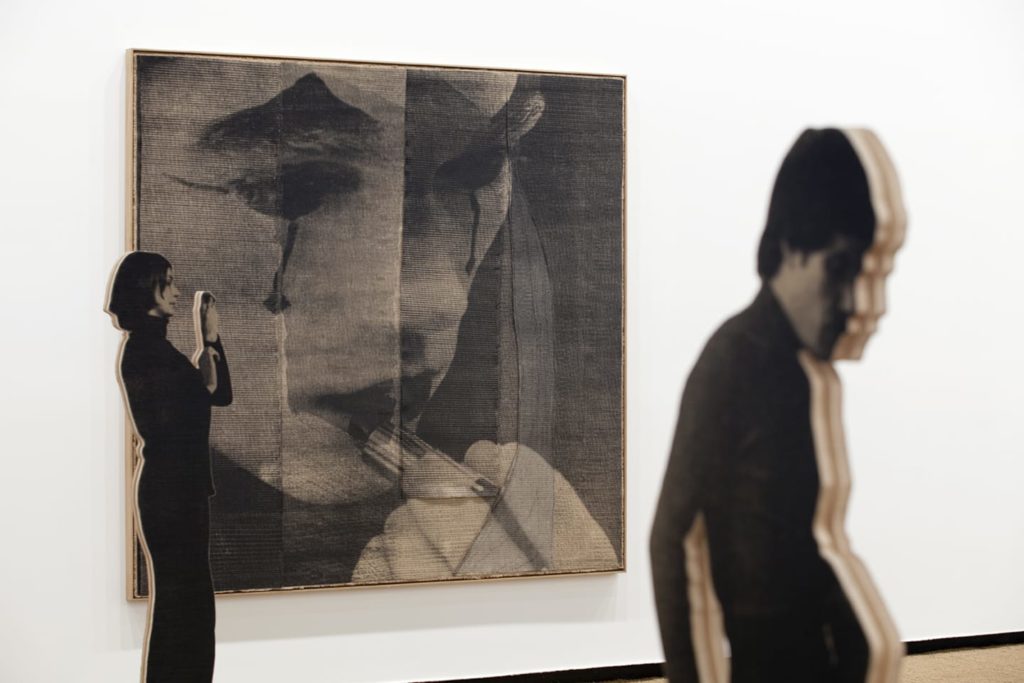
The ‘paintings’ are magnificent; stripped and striped collages. Faces missing, dark eyes. There is something almost Rembrandt-esque about the constructed images, their layering, like Rembrandt’s Night Watch (1642) – but then the performance element kicks in – the makeup, the lipstick, the tragic / comedic faces.

Mannequin, doll-like cut-out figures, flat but with some volume inhabiting the tableaux vivant.

Twelve standing figures in different attitudes – a feeling of dancing figures frozen on stage, very Japanese Noh theater. Spatially the grouping and use of space within the gallery is excellent – like frozen mime.

The figures move in waves, rising and falling both in the standing figures and within the images on the wall.

Looking into the gallery is like looking through a picture window onto a stage set (see above image).

“The fracturing of identity, the distortion of the binaries of light and dark, absence/presence in spatio-temporal environments.

The performance as ritual challenging a regularized and constrained repetition of norms.” (Judith Butler).

Excellent, thought provoking exhibition.

Dr Marcus Bunyan


Many thankx to ACCA for allowing me to publish the photographs in the posting. Please click on the photographs for a larger version of the image.


Photograph from 'Scenes' by David Noonan (installation view)


Installation view of 'Scenes' by David Noonan at ACCA


Installation views of Scenes by David Noonan at ACCA
Photos: Marcus Bunyan


Noonan often works with found photographic imagery taken from performance manuals, textile patterns and archive photographs to make densely layered montages. These works at once suggest specific moments in time and invoke disorientating a-temporal spaces in which myriad possible narratives emerge. The large-scale canvases framing this exhibition depict scenes of role-playing, gesturing characters, and masked figures set within stage-like spaces. Printed on coarsely woven jute, collaged fabric elements applied to the surface of the canvases further signal the cutting and splicing of images.

Noonan’s new suite of figurative sculptures, comprise life size wooden silhouettes faced with printed images of characters performing choreographed movements. While the figurative image suggests a body in space, the works’ two dimensional cut-out supports insist on an overriding flatness which lends them an architectural quality – as stand-ins for actual performers and as a means by which to physically navigate the exhibition space.

Press release from the Chisenhale Gallery website [Online] Cited 20/09/2009. No longer available online


For the Helen Macpherson Smith Commission, he will bring the characters depicted in his signature collage works off the wall and onto an imagined ‘stage’. Several life-size, wooden cut-out figures will inhabit the ACCA exhibition gallery, frozen in choreographed movements.

Noonan’s dancing figures will be framed by several large-scale canvas works, printed photographic and film imagery gleaned from performance manuals, textile patterns and interior books. Printed on coarse woven jute, he cuts, slices and montages images together constructing compositions that hover between two and three dimensionality, positive and negative space, past and present, stasis and action.

“‘Scenes’ recalls the experimental workshops and youth-focused exuberance of a more optimistic era, coinciding with the artists own childhood in the 1970s” says curator Charlotte Day. “With these new works, Noonan re-introduces the idea of ritual, of creating a temporal space beyond reason that is filled with both danger and hope.”

David Noonan (Australian, b. 1969) is the fifth recipient of the Helen Macpherson Smith Commission, one of the most significant and generous commissions in Australia. The partnership between ACCA and the Helen Macpherson Smith Trust offers Victorian artists the opportunity to create an ambitious new work of art, accompanied by an exhibition in ACCA’s exhibition hall.

Press release from the ACCA website [Online] Cited 20/09/2009. No longer available online


David Noonan returned to Melbourne with this significant project which extended his abiding interest in time and space. Using ACCA’s large room as a field of encounter, he created an ensemble of works in 2 and 3 dimensions that make purposeful use of the audience’s own navigation through the gallery. Visitors walking between David’s free-standing figures performed like time travellers in a landscape that had been paused. His enigmatic wall based works appeared to trap momentary scenes in a layered time warp.

This major commission allowed for an ambitious project by a Victorian artist who had reached a significant platform in their own practice. Elements of the commission were gifted to a Victorian regional gallery. In this case the recipient was Bendigo Art Gallery.

Text from the ACCA website [Online] Cited 24/04/2019


Photograph from 'Scenes' by David Noonan at ACCA (installation view)


Installation view of 'Scenes' by David Noonan at ACCA


Installation views of Scenes by David Noonan at ACCA
Photos: Marcus Bunyan


Australia Centre for Contemporary Art (ACCA)
111 Sturt Street, Southbank, Victoria 3006, Australia
Phone: 03 9697 9999

Opening Hours:
Tuesday to Friday 10am – 5pm
Weekends & Public Holidays 11am – 5pm
Open all public holidays except Christmas Day and Good Friday

ACCA website

LIKE ART BLART ON FACEBOOK

Back to top

Review: ‘Ivy’ photographs by Jane Burton at Karen Woodbury Gallery, Richmond, Melbourne

Exhibition dates: 2nd September – 26th September, 2009


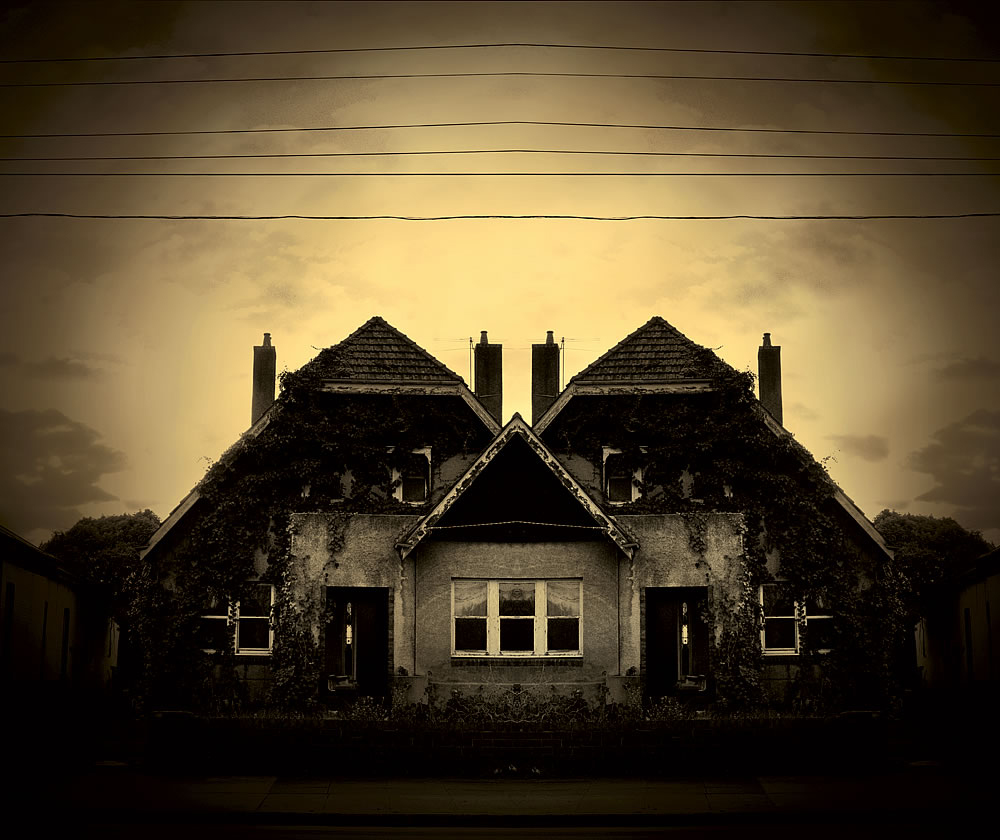
Jane Burton (Australian, b. 1966) 'Ivy #1' 2009 from the exhibition 'Ivy' photographs by Jane Burton at Karen Woodbury Gallery, Richmond, Melbourne, Sept, 2009


Jane Burton (Australian, b. 1966)
Ivy #1
2009
Pigment print
89 x 75cm


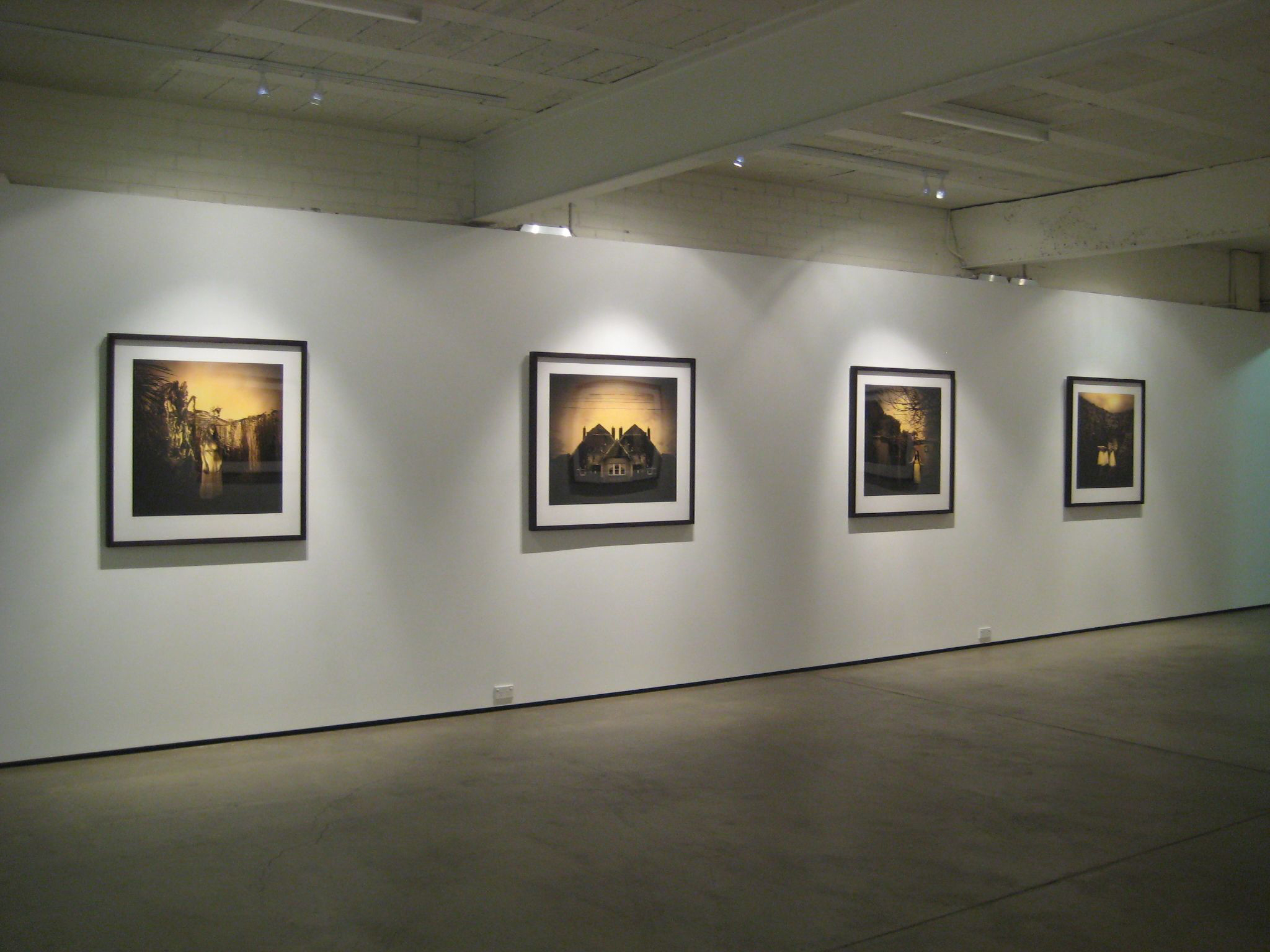
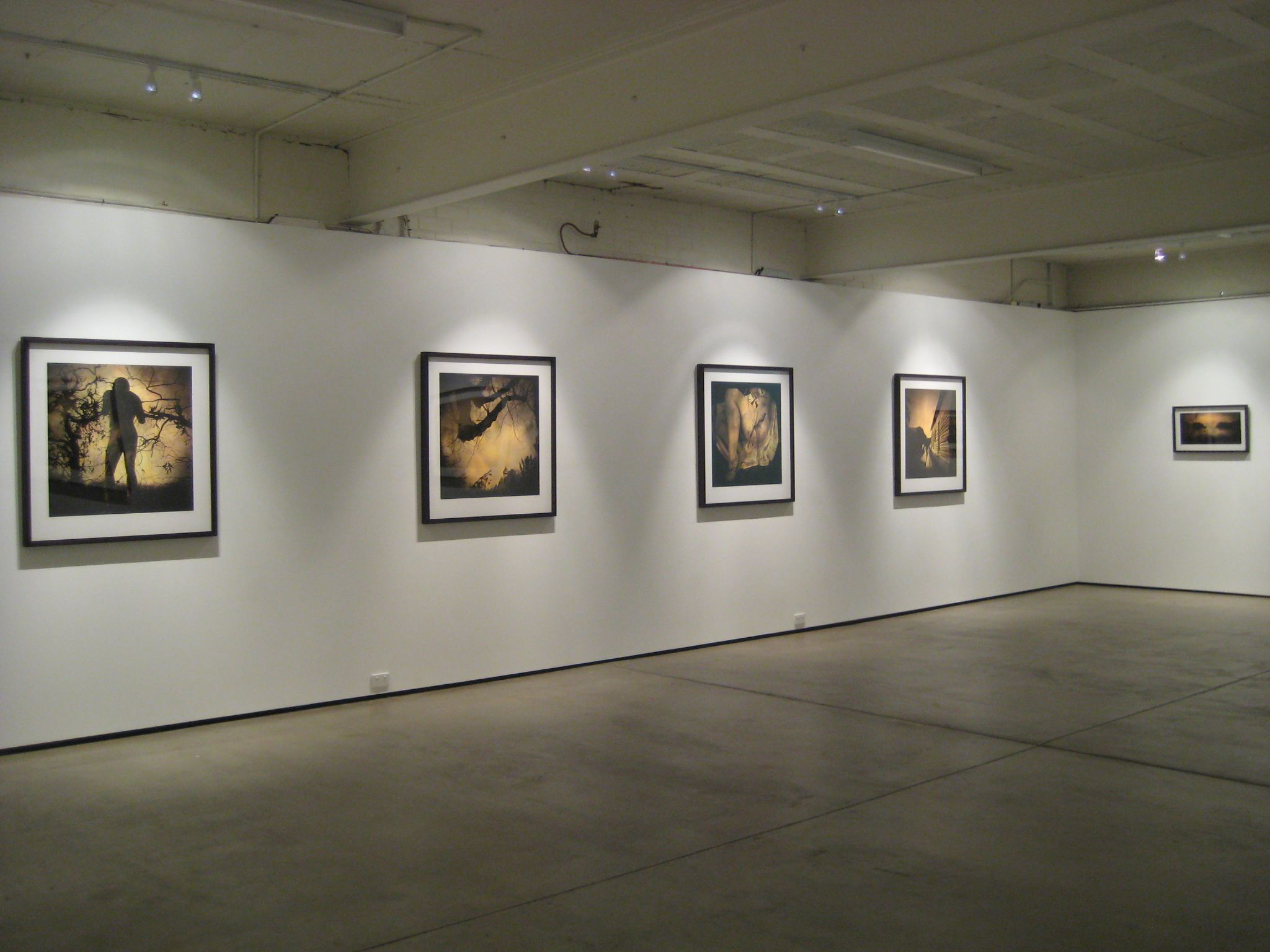
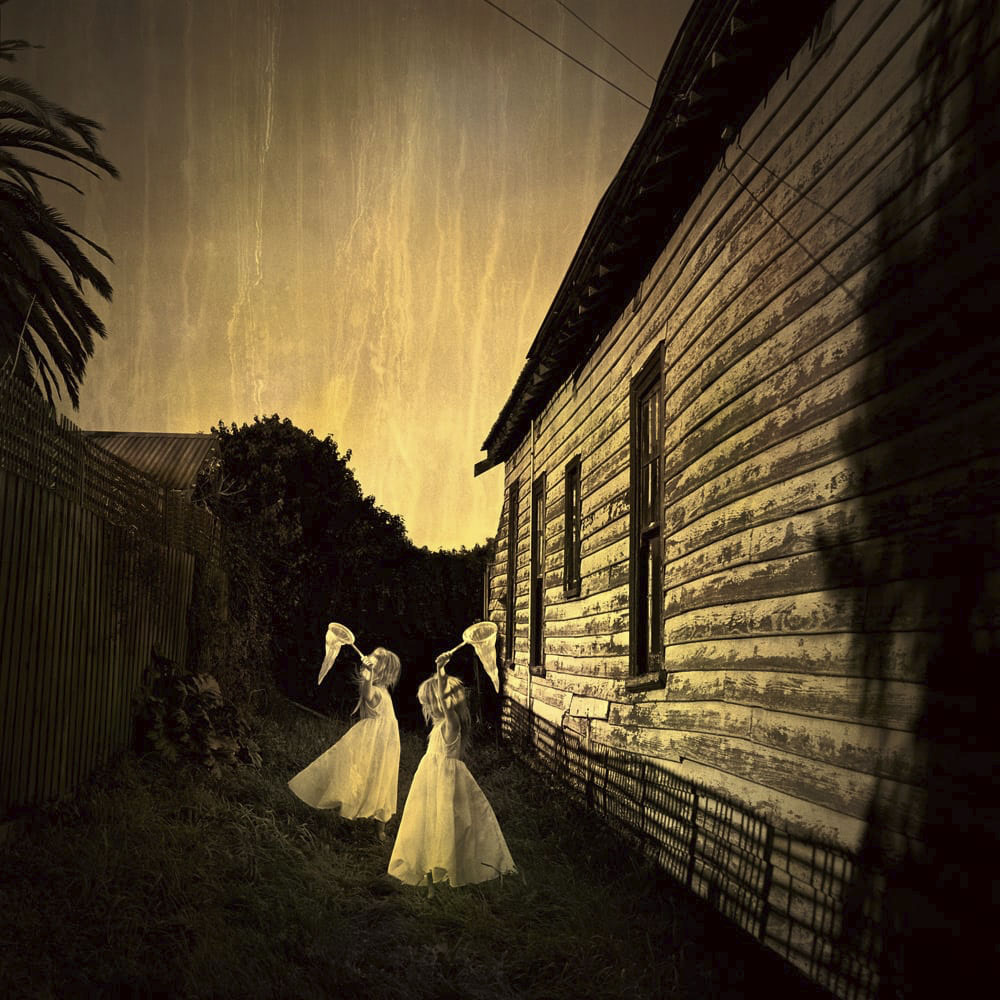
This is another outstanding body of photographic work on display in Melbourne. Featuring 10 large and 2 small sepia toned, vignetted pigment prints Burton’s work creates dark enchanted worlds of faceless female figures placed in the built environment that balance (meta)physical light and shade creating ambiguous narratives of innocence tinged with a darker edge.

The eponymous photograph Ivy #1 (above) is the seminal image of the series: a dark brooding house, hunched down positioned low in the photographic space, covered in ivy with black windows and dark eves has an ominous almost impenetrable presence and sets the tone for the rest of the work.

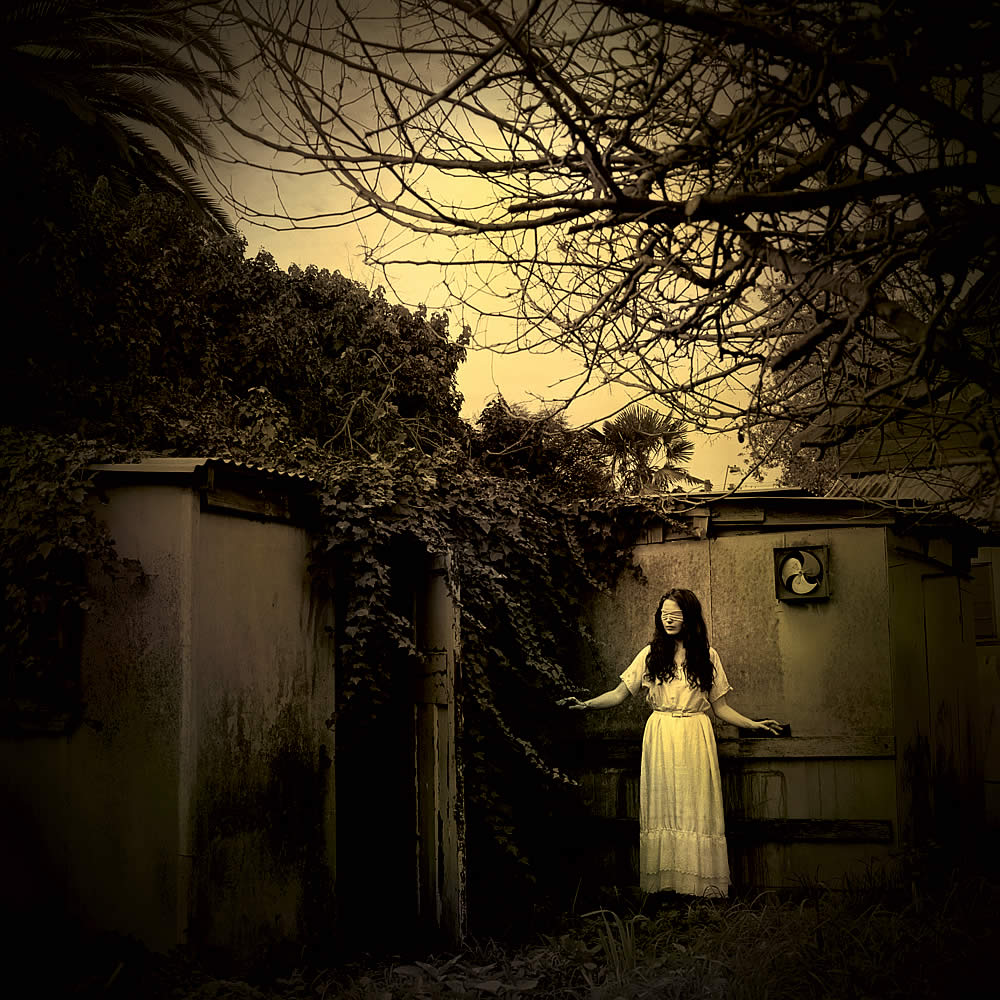
There are wonderful references to the history of photography if one cares to look (not simply generic references to Victorian daguerreotypes, postcards and family photographs). Ivy #2 (below) is a powerful photograph where the female figure is blindfolded, unable to see the encroaching tumescence of vegetation that surrounds and is about to engulf her. The placement of the hands is exquisite – unsure, reaching out, doubting her surroundings – with the 3-bladed fan hovering behind ready to devour the unwary. This photograph has resonances of the magical photographs of the garden by the Czech photographer Josef Sudek.

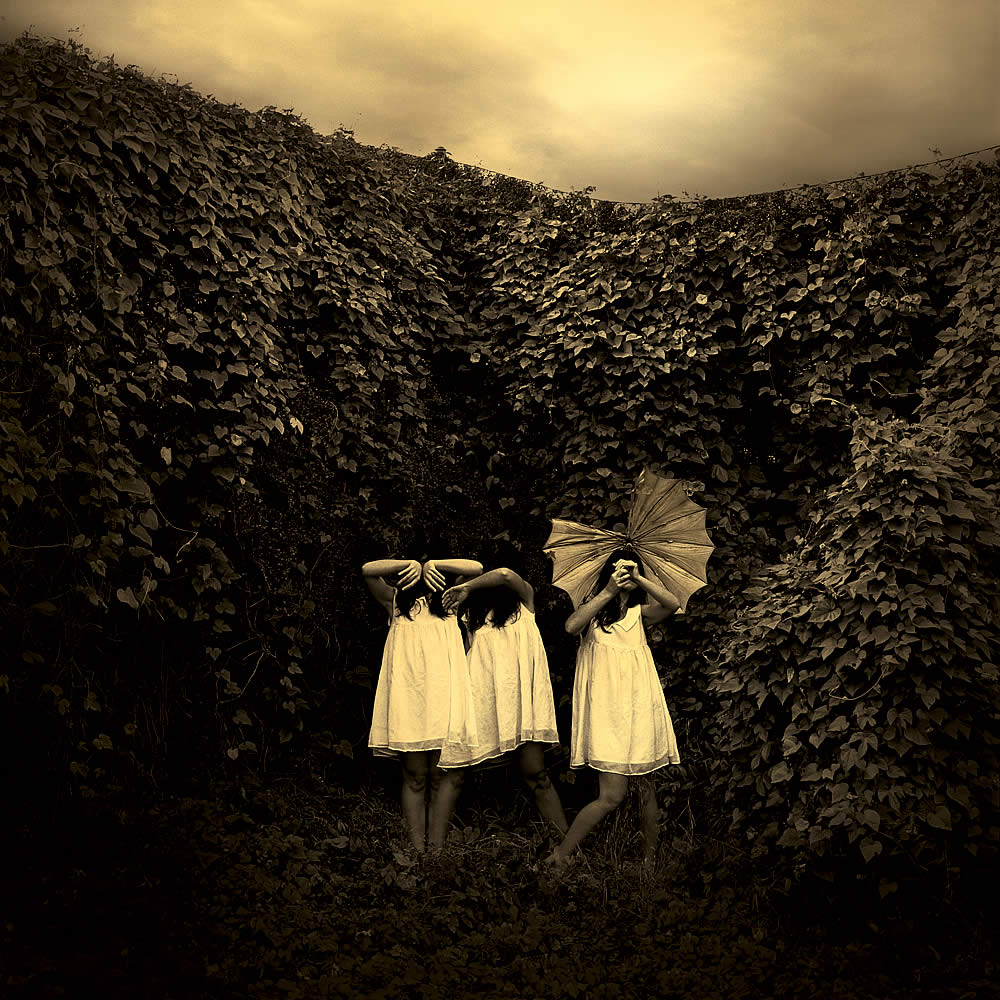
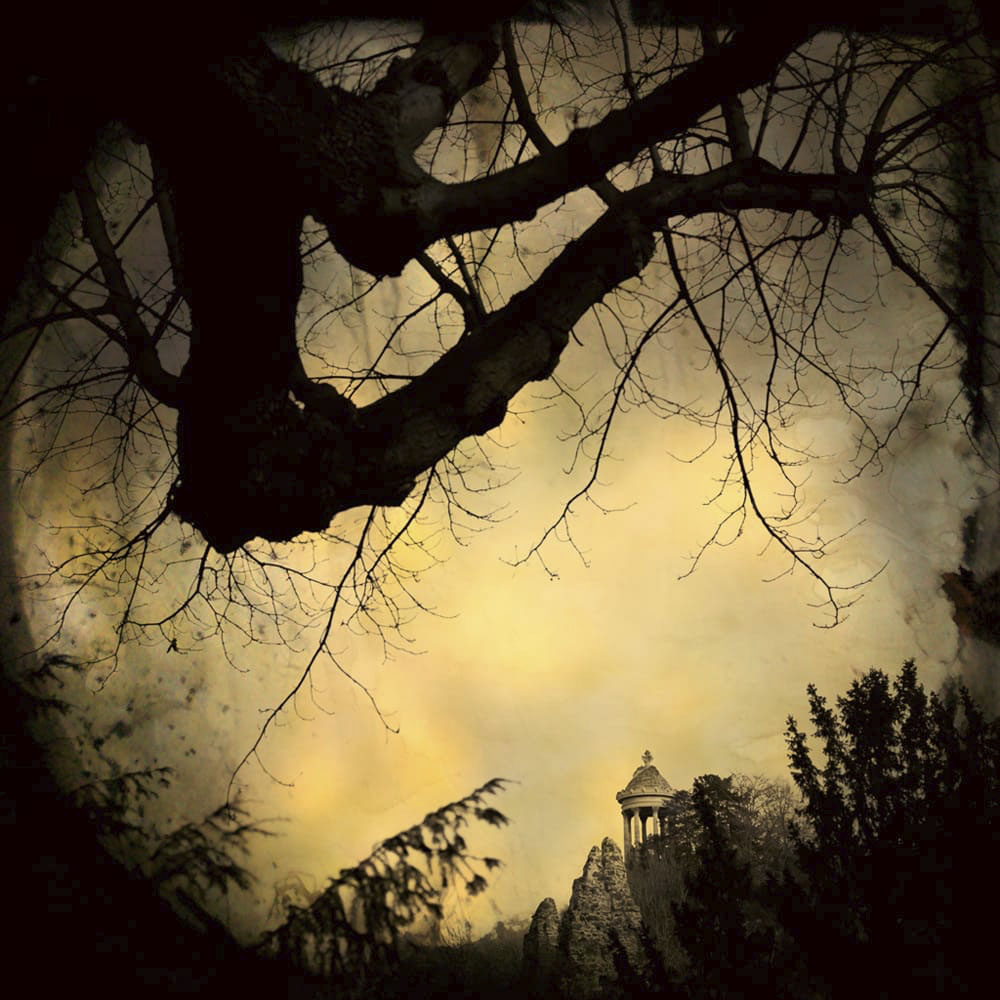
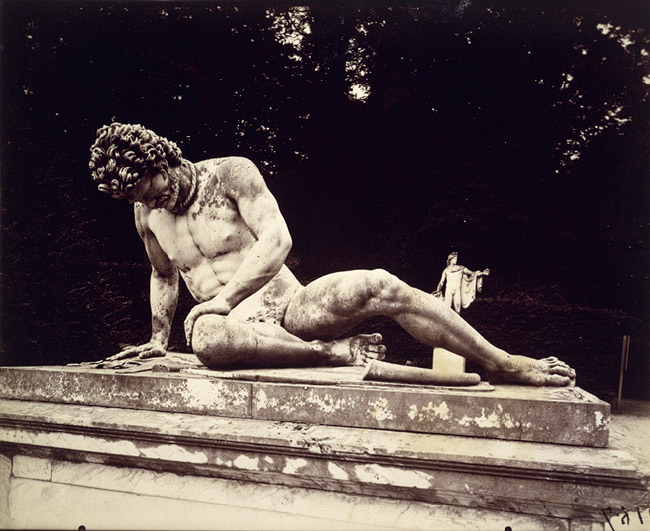
Ivy #3 (below) has echoes of the work of the American photographer Ralph Eugene Meatyard and his placement of masked people within built environments. In Burton’s photograph the broken umbrella becomes like insect wings, the faceless whiteness of the three-legged and three-armed creature cocooned among the overhanging predatory ivy, the luminescent sky offering the possibility of redemption. Other photographs such as Ivy #6 (below) and Ivy #7 with their wonderful colours, depth of field, heavy shadows and elegiac romantic feel have references to Eugene Atget and his photographs of the parks of Versailles (see photograph below).

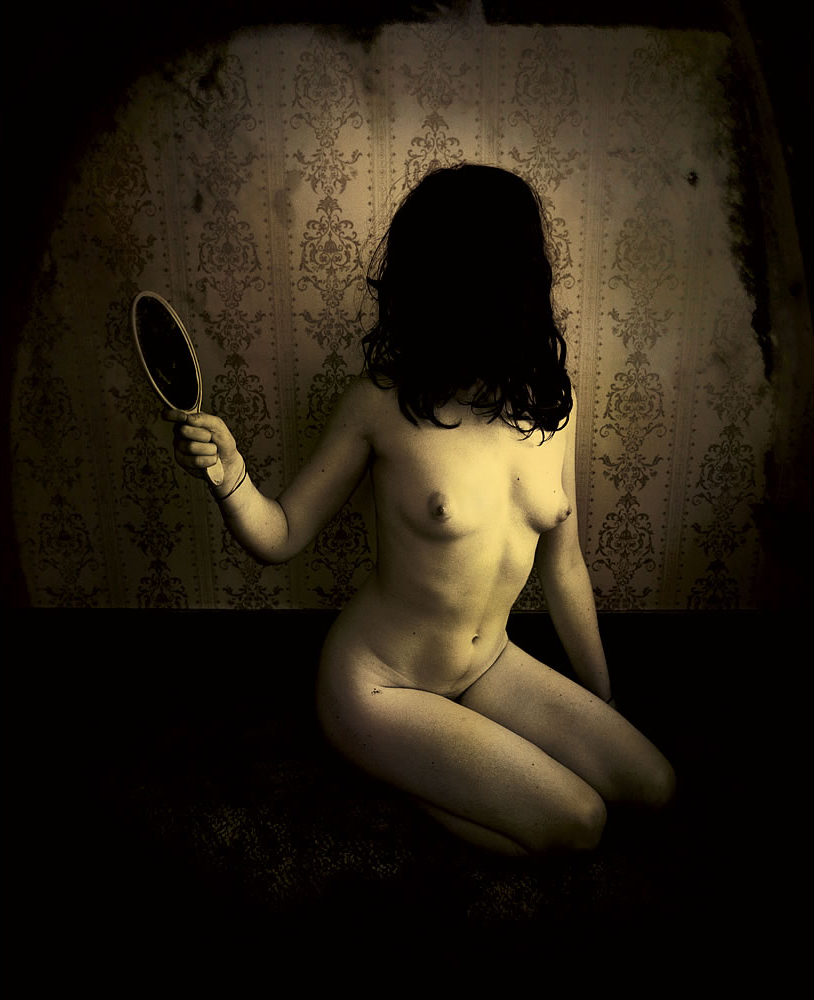
Still further references to the history of photography can be found in the photographs Ivy #9 and Ivy #10 (below). In Ivy #9 the intersection of the two female bodies through double exposure forms a slippage in (photographic) reality and the disappearance of original identity in the layering of the photographs and into the empty non-reflection of the mirror. This non-reflection is confirmed in Ivy #10 where the faceless nude woman holds a mirror with no reflection. These photographs remind me of the photographs of New Orleans prostitutes in the early years of the 20th century by the photographer Bellocq with their masked faces and the ornamentation of the wallpaper behind the figures (see below).

I feel that in these photographs with their facelessness and the non-reflection of the mirror investigate notions of ‘Theoria’ – a Greek emphasis on the vision or contemplation of God where theoria is the lifting up of the individual out of time and space and created being and through contemplative prayer into the presence of God.1 In fact the whole series of photographs can be understood through this conceptualisation – not just remembrances of past time, not a blind contemplation on existence but a lifting up out of time and space into the an’other’ dark but enlightening presence.

The greatest wonder of this series is that the photographs magically reveal themselves again and again over time. Despite (or because of) the references to other artists, the beauty of Burton’s work is that she has made it her own. The photographs have her signature, her voice as an artist and it is an informed voice; this just makes the resonances, the vibrations of energy within the work all the more potent and absorbing. I loved them.

Dr Marcus Bunyan


Many thankx to Karen Woodbury Gallery for allowing me to publish the photographs in the posting. Please click on the photographs for a larger version of the image.


Installation view of 'Ivy' by Jane Burton at Karen Woodbury Gallery, Melbourne

Installation view of 'Ivy' by Jane Burton at Karen Woodbury Gallery, Melbourne


Installation views of Ivy by Jane Burton at Karen Woodbury Gallery, Melbourne
Photos: Marcus Bunyan


Jane Burton (Australian, b. 1966) 'Ivy #2' 2009 from the exhibition 'Ivy' photographs by Jane Burton at Karen Woodbury Gallery, Richmond, Melbourne, Sept, 2009


Jane Burton (Australian, b. 1966)
Ivy #2
2009
Pigment print
75 x 75cm


Jane Burton (Australian, b. 1966) 'Ivy #3' 2009 from the exhibition 'Ivy' photographs by Jane Burton at Karen Woodbury Gallery, Richmond, Melbourne, Sept, 2009


Jane Burton (Australian, b. 1966)
Ivy #3
2009
Pigment print
75 x 75cm


Jane Burton (Australian, b. 1966) 'Ivy #5' 2009


Jane Burton (Australian, b. 1966)
Ivy #5
2009
Pigment print
75 x 75cm


Jane Burton (Australian, b. 1966) 'Ivy #7' 2009


Jane Burton (Australian, b. 1966)
Ivy #7
2009
Pigment print
75 x 75cm


Jane Burton’s exhibition, Ivy comprises a series of photographs captured in black and white. The final prints are rendered with a sepia, peach-champagne tone, with many displaying a mottled hand-coloured effect in faded pastels of pink and green. These works hope to suggest an era past, perhaps Victorian. The imagery is evocative of old picture postcards from Europe and old photographs from the pages of family albums.

Central to the series is an image of a house covered with ivy. Depicted as dark and malevolent, the house is ‘haunted’ by the traces and stains of family history, habitation, and the buried secrets of all that occurred within.

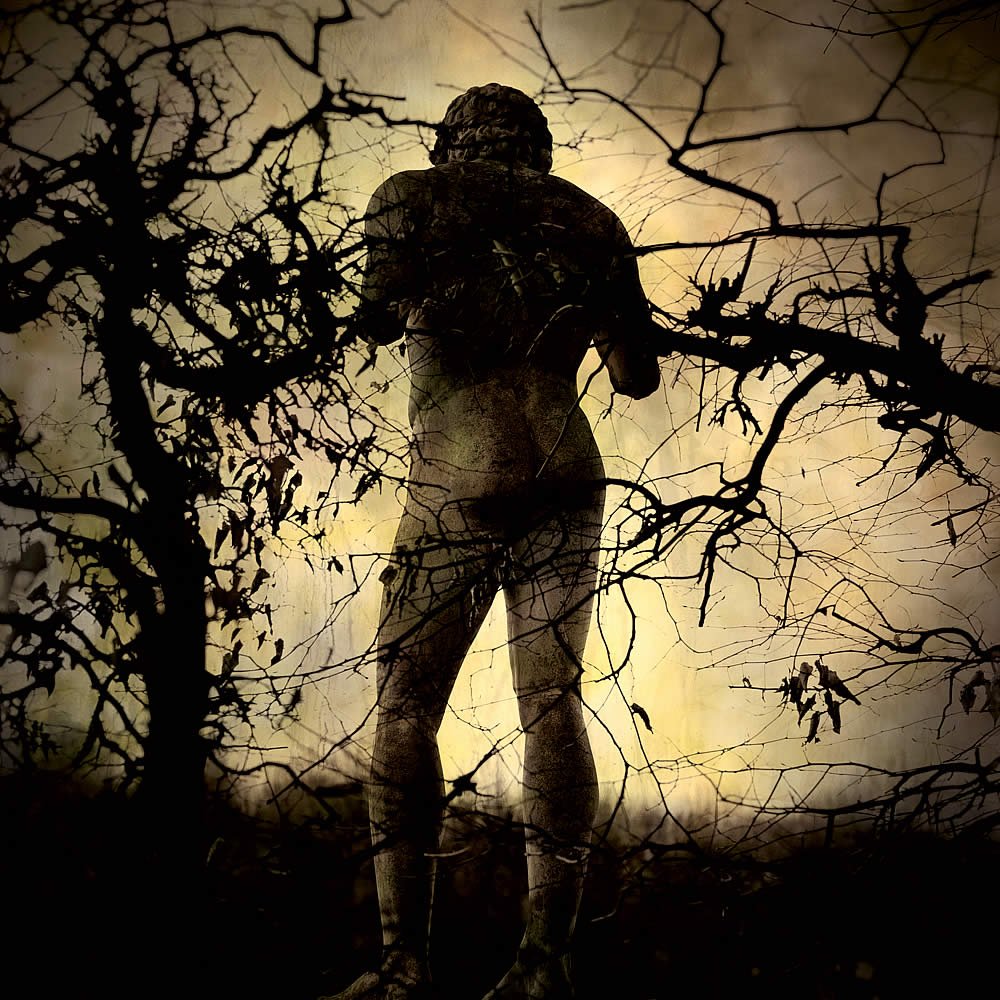
Anonymous female figures are seen in garden settings where the foliage is rampant and encroaching and the shadows deep. There is an air of enchantment perceived with unspecified darker edge. The figures are innocent and playful. The viewer is asked to question if the and girls aware of the camera capturing their activity? Are the poses staged or caught spontaneously. In another photograph, a dilapidated male statue stands broken and armless, the texture of stone worn, and bruised with dark lichen and moss.

In the interior photographs, several nudes are depicted in the style of 19th century French daguerreotype photographs. These vignetted images display women against wall-papered backdrops with theatrical props reminiscent of earlier works by Burton such as the series ‘The other side’ (2003). Posed suggestively for the camera and the viewer’s gaze, the subjects themselves are faceless, their own gaze and features hidden behind dark hair. The surface and texture of these particular works suggests the patina of decay and the damage and wear of time.

Text from the Karen Woodbury Gallery website [Online] Cited 20/09/2009. No longer available online


E. J. Bellocq (American, 1873-1949) 'Untitled [prostitute of Storyville, New Orleans]' 1912


E. J. Bellocq (American, 1873-1949)
Untitled [prostitute of Storyville, New Orleans]
1912


Jane Burton (Australian, b. 1966) 'Ivy #10' 2009


Jane Burton (Australian, b. 1966)
Ivy #10
2009
Pigment print


Eugene Atget (French, 1857-1927) 'Versailles, France' 1923


Eugene Atget (French, 1857-1927)
Versailles, France
1923
Albumen print


Jane Burton (Australian, b. 1966) 'Ivy #6' 2009


Jane Burton (Australian, b. 1966)
Ivy #6
2009
Pigment print
75 x 75cm


Karen Woodbury Gallery

This gallery has now closed.

Jane Burton website

LIKE ART BLART ON FACEBOOK

Back to top

Review: ‘Climbing the Walls and Other Actions’ by Clare Rae at the Centre for Contemporary Photography, Fitzroy, Melbourne

Exhibition dates: 7th August – 27th September, 2009


Clare Rae (Australian, b. 1981) 'Untitled' from the series 'Climbing the Walls and Other Actions' 2009 from the exhibition 'Climbing the Walls and Other Actions' by Clare Rae at the Centre for Contemporary Photography, Fitzroy, Melbourne, August - Sept, 2009


Clare Rae (Australian, b. 1981)
Untitled
2009
From the series Climbing the Walls and Other Actions
Pigment print on Museo Crane Silver Rag
50 x 50cm


“To withdraw into one’s corner is undoubtedly a meager expression. But despite its meagerness, it has numerous images, some, perhaps, of great antiquity, images that are psychologically primitive. At times, the simpler the image, the vaster the dreams.”


Gaston Bachelard.1


Usually I am not a great fan of ‘faceless’ photography as I call it but this series of work, Climbing the Walls and Other Actions (2009) by the artist Clare Rae is even better than the series by Tracey Moffatt in the previous review.

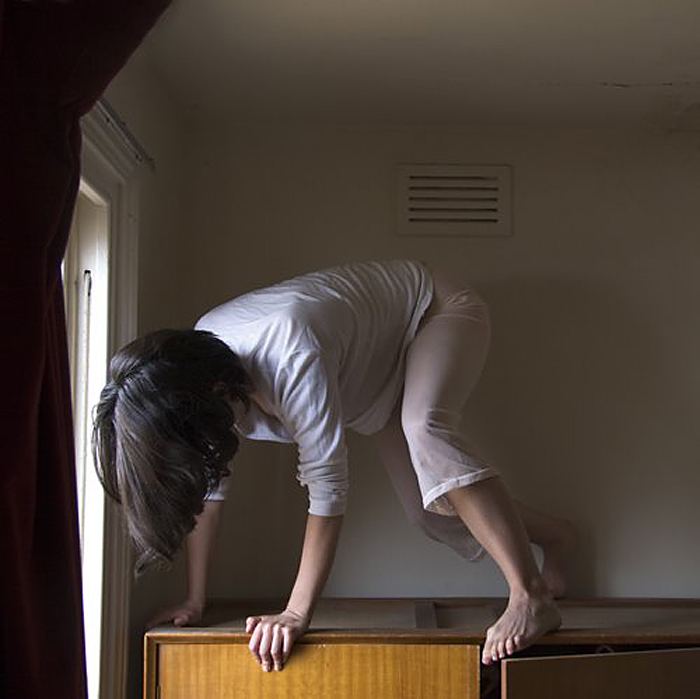
Exploring activities of the female body in closed domestic spaces these psychologically intense photographs push the physical boundaries of play through the navigation of space. As a child has little awareness about the inherent dangers of a seemingly benign environment so Rae’s self-portraits turn the lens on her conceptualisation of the inner child at play and the activating of the body in and through space. As the artist herself says, “the way children negotiate their surroundings and respond with an unharnessed spatial awareness, which I find really interesting when applied to the adult body.”2

Continuing the themes from the last review, that of spaces of intimacy and reverberation, these photographs offer us fragmentary dialectics that subvert the unity of the archetype, the unity of the body in space. Here the (in)action of the photographic freeze balances the tenuous positions of the body: a re-balancing of both interior and exterior space.

As Noel Arnaud writes, “Je suis l’espace ou je suis” (I am the space where I am). Further, Bachelard notes “… by changing space, by leaving the space of one’s usual sensibilities, one enters into communication with a space that is psychically innovating.”3

In these photographs action is opposed with stillness, danger opposed with suspension; the boundaries of space, both of the body and the environment, the interior and the exterior, memory and dream, are changed.

Space seems to open up and grow with these actions to become poetic space – and the simplicity of the images aids and abets the vastness of our dreams. This change of concrete space does not change our place, but our nature. Here the mapping of self in space, our existence, our exist-stance (to have being in a specified place whether material or spiritual), is challenged in the most beautiful way by these walls and actions, by these creatures, ambiguities, photographs.

Henri Lefebvre insightfully observes, “… each living body is space and has space: it produces itself in space and it also produces that space.”4

I am the (sublime) space where I am, that surrounds me with countless presences.

Dr Marcus Bunyan


1/ Bachelard, Gaston. The Poetics of Space. Boston: Beacon Press, 1969, p. 137

2/ Email from the artist 7th September, 2009

3/ Bachelard, Gaston. The Poetics of Space. Boston: Beacon Press, 1969, p. 206

4/ Lefebvre, Henri. The Production of Space. Oxford: Basil Blackwell, 1974, p. 170


    All images by Clare Rae from the series Climbing the Walls and Other Actions 2009. Many thankx to Clare for allowing me to publish them.


    Clare Rae (Australian, b. 1981) 'Untitled' from the series 'Climbing the Walls and Other Actions' 2009 from the exhibition 'Climbing the Walls and Other Actions' by Clare Rae at the Centre for Contemporary Photography, Fitzroy, Melbourne, August - Sept, 2009


    Clare Rae (Australian, b. 1981)
    Untitled
    2009
    From the series Climbing the Walls and Other Actions
    Pigment print on Museo Crane Silver Rag
    50 x 50cm


    Clare Rae (Australian, b. 1981) 'Untitled' from the series 'Climbing the Walls and Other Actions' 2009 from the exhibition 'Climbing the Walls and Other Actions' by Clare Rae at the Centre for Contemporary Photography, Fitzroy, Melbourne, August - Sept, 2009


    Clare Rae (Australian, b. 1981)
    Untitled
    2009
    From the series Climbing the Walls and Other Actions
    Pigment print on Museo Crane Silver Rag
    50 x 50cm


    Clare Rae (Australian, b. 1981) 'Untitled' from the series 'Climbing the Walls and Other Actions' 2009


    Clare Rae (Australian, b. 1981)
    Untitled
    2009
    From the series Climbing the Walls and Other Actions
    Pigment print on Museo Crane Silver Rag
    50 x 50cm


    Climbing the Walls and Other Actions is primarily concerned with visually representing my experience of femininity, whilst also exploring aspects of representation that relate to feminism. The project considers the relationship between the body and space by including formal elements within each frame such as windows and corners. Through a sequence of precarious poses I explore my relationship with femininity, an approach born of frustration. I use the body to promote ideas of discomfort and awkwardness, resisting the passivity inherent in traditional representations of femininity. The images attempt to de-stabilise the figure, drawing tension from the potential dangers the body faces in these positions. Whilst the actions taking place are not in themselves particularly dangerous, the work demonstrates a gentle testing of physical boundaries and limitations via a child-like exploration of the physical environment.

    Text from the Centre for Contemporary Photography website [Online] Cited 15/09/2009. No longer available online


    Clare Rae (Australian, b. 1981) 'Untitled' from the series 'Climbing the Walls and Other Actions' 2009


    Clare Rae (Australian, b. 1981)
    Untitled
    2009
    From the series Climbing the Walls and Other Actions
    Pigment print on Museo Crane Silver Rag
    50 x 50cm


    Clare Rae (Australian, b. 1981) 'Untitled' from the series 'Climbing the Walls and Other Actions' 2009


    Clare Rae (Australian, b. 1981)
    Untitled
    2009
    From the series Climbing the Walls and Other Actions
    Pigment print on Museo Crane Silver Rag
    50 x 50cm


    Centre for Contemporary Photography
    Level 2, Perry St Building
    Collingwood Yards, Collingwood
    Victoria 3066

    Opening hours:
    Wednesday – Saturday 11am – 5pm
    Clare Rae website

    Centre for Contemporary Photography website

    LIKE ART BLART ON FACEBOOK

    Back to top

    Review: ‘First Jobs’ by Tracey Moffatt at Centre for Contemporary Photography, Fitzroy, Melbourne

    Exhibition dates: 7th August – 27th September, 2009


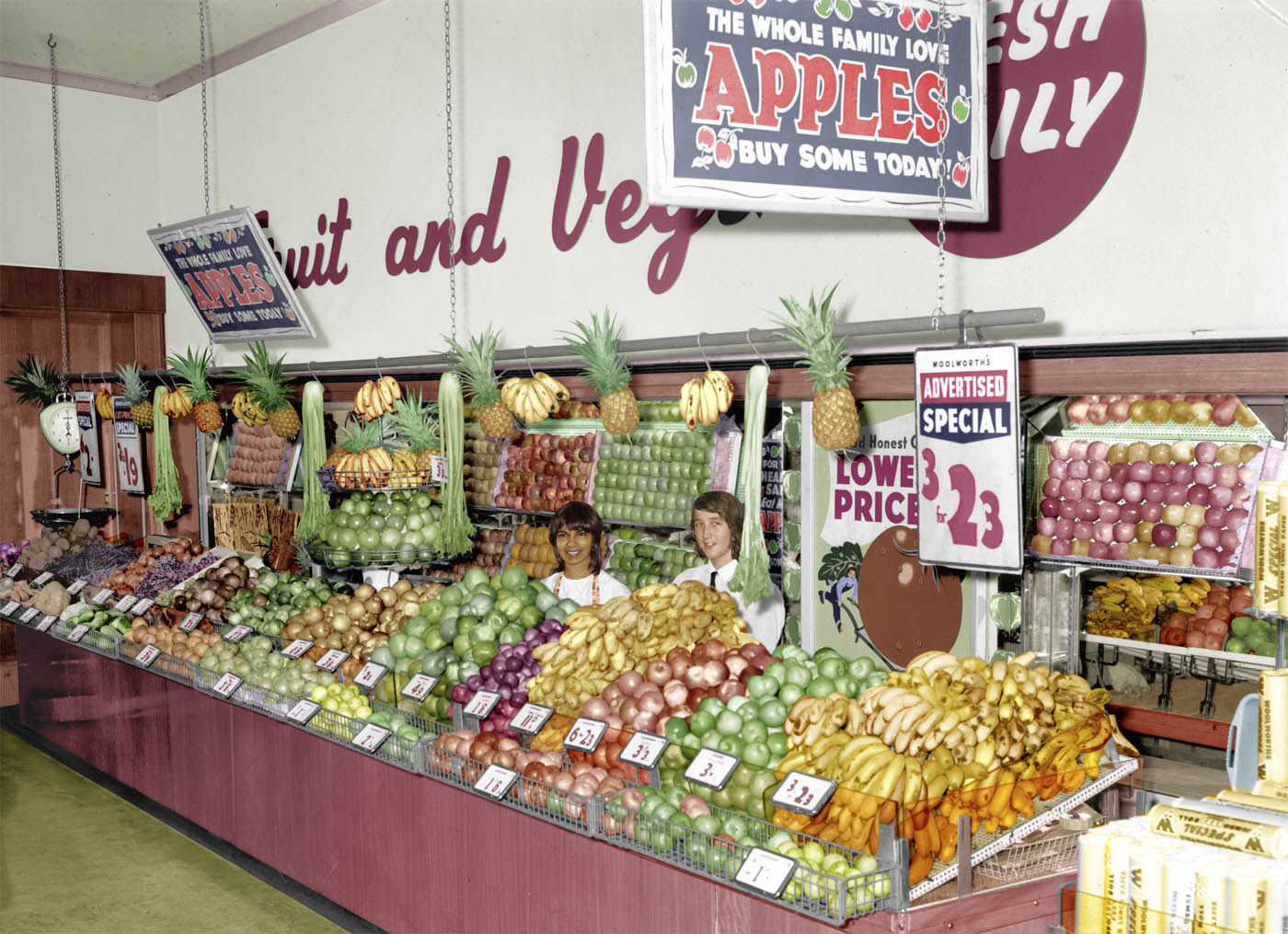
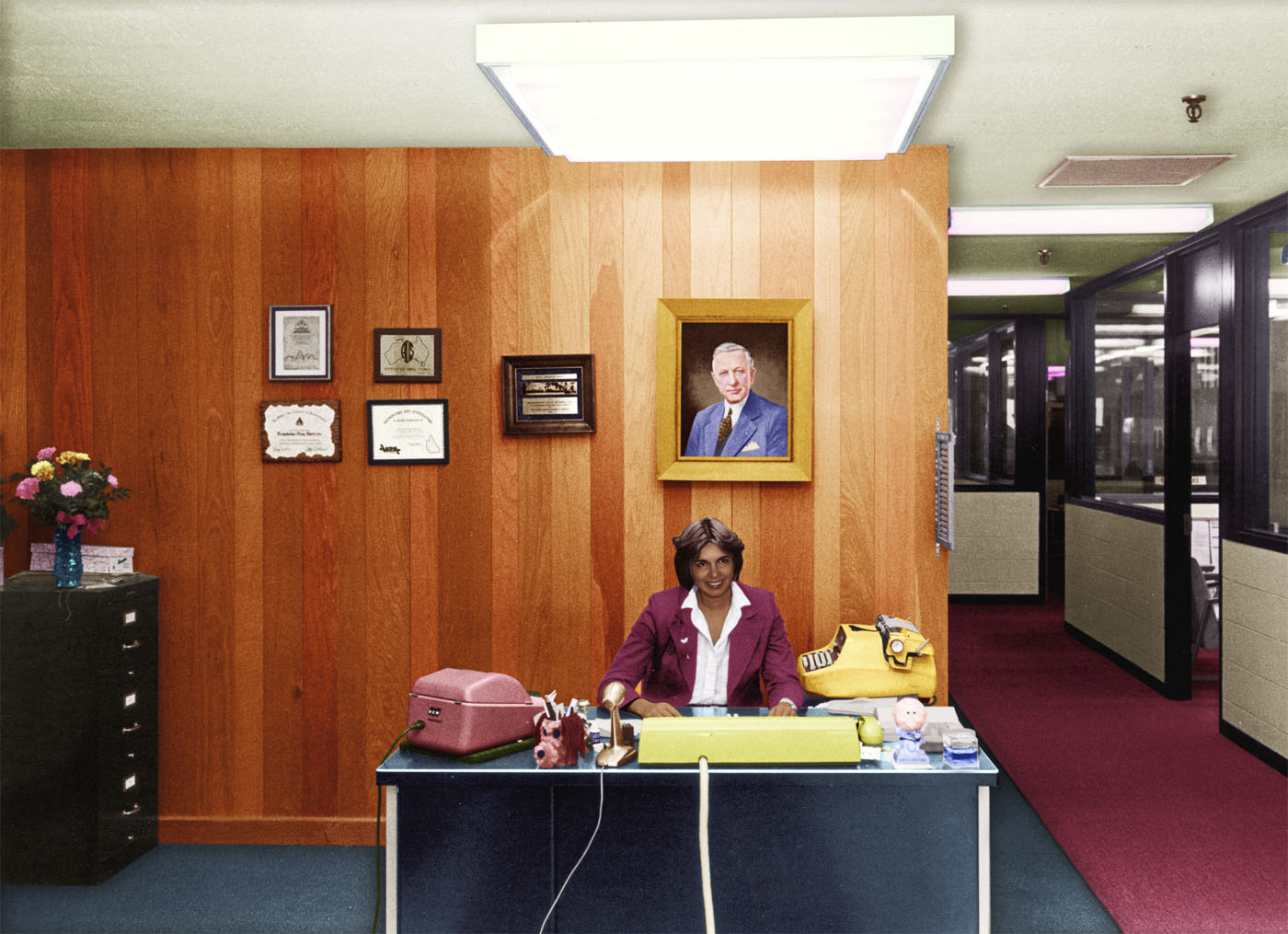
    Tracey Moffat (Australian, b. 1960) 'First Jobs, Fruit Market' 1975 from the exhibition 'First Jobs' by Tracey Moffatt at Centre for Contemporary Photography, Fitzroy, Melbourne, August - Sept, 2009


    Tracey Moffat (Australian, b. 1960)
    First Jobs, Fruit Market
    1975
    Archival pigments on rice paper with gel medium
    71 × 91.5cm


    There are some wonderful bodies of photographic work on show around Melbourne at the moment and this is one of them.

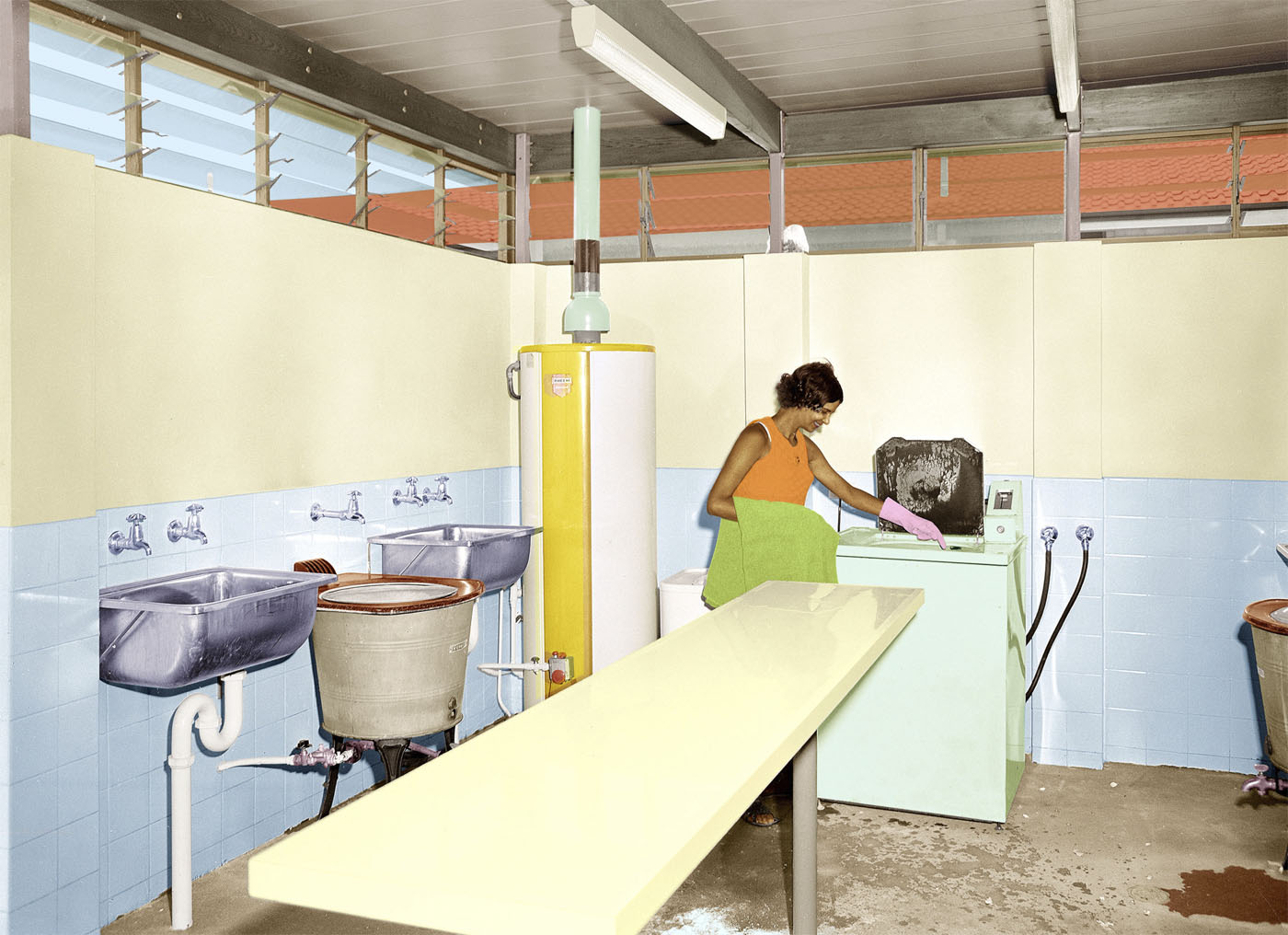
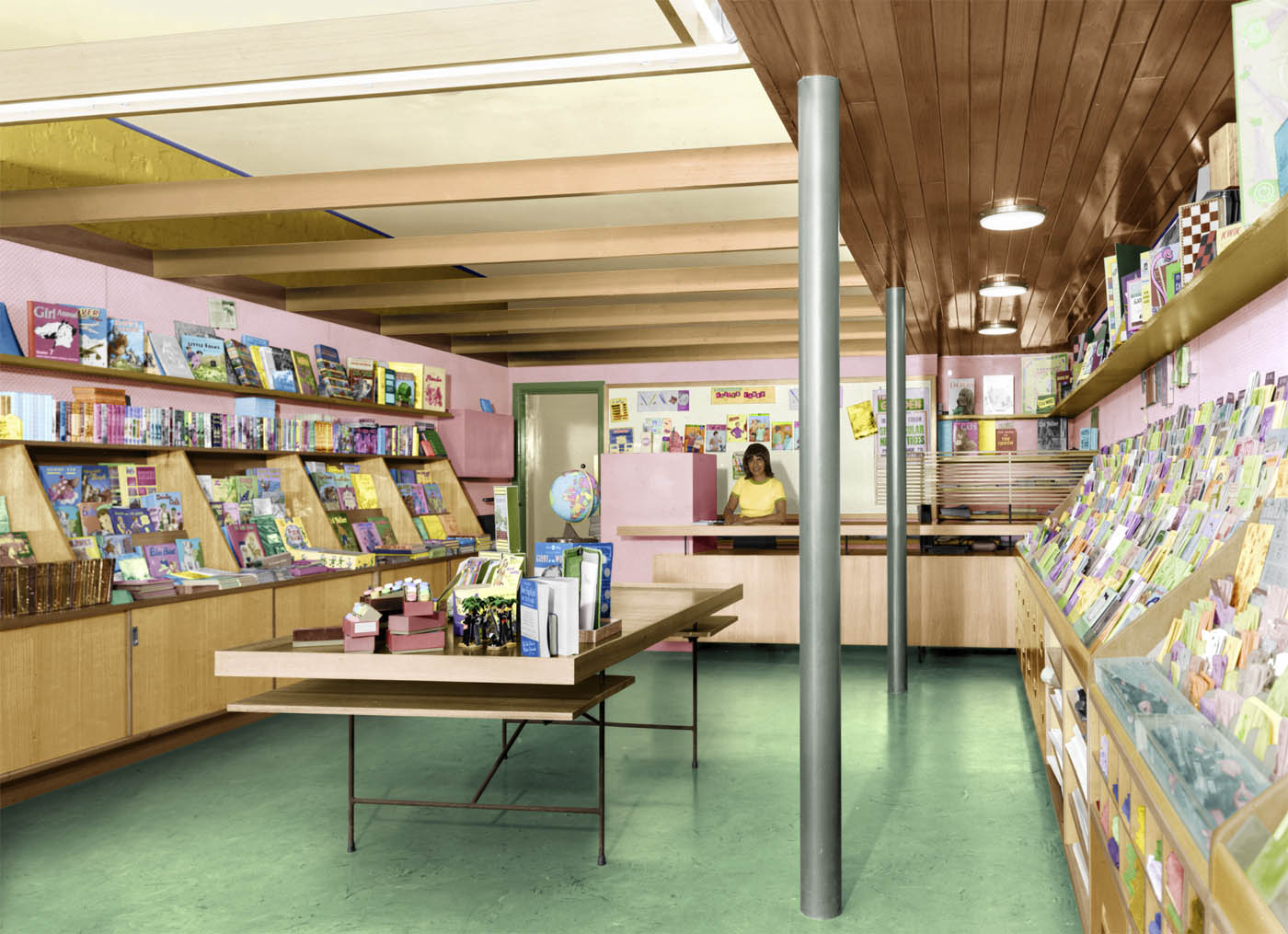
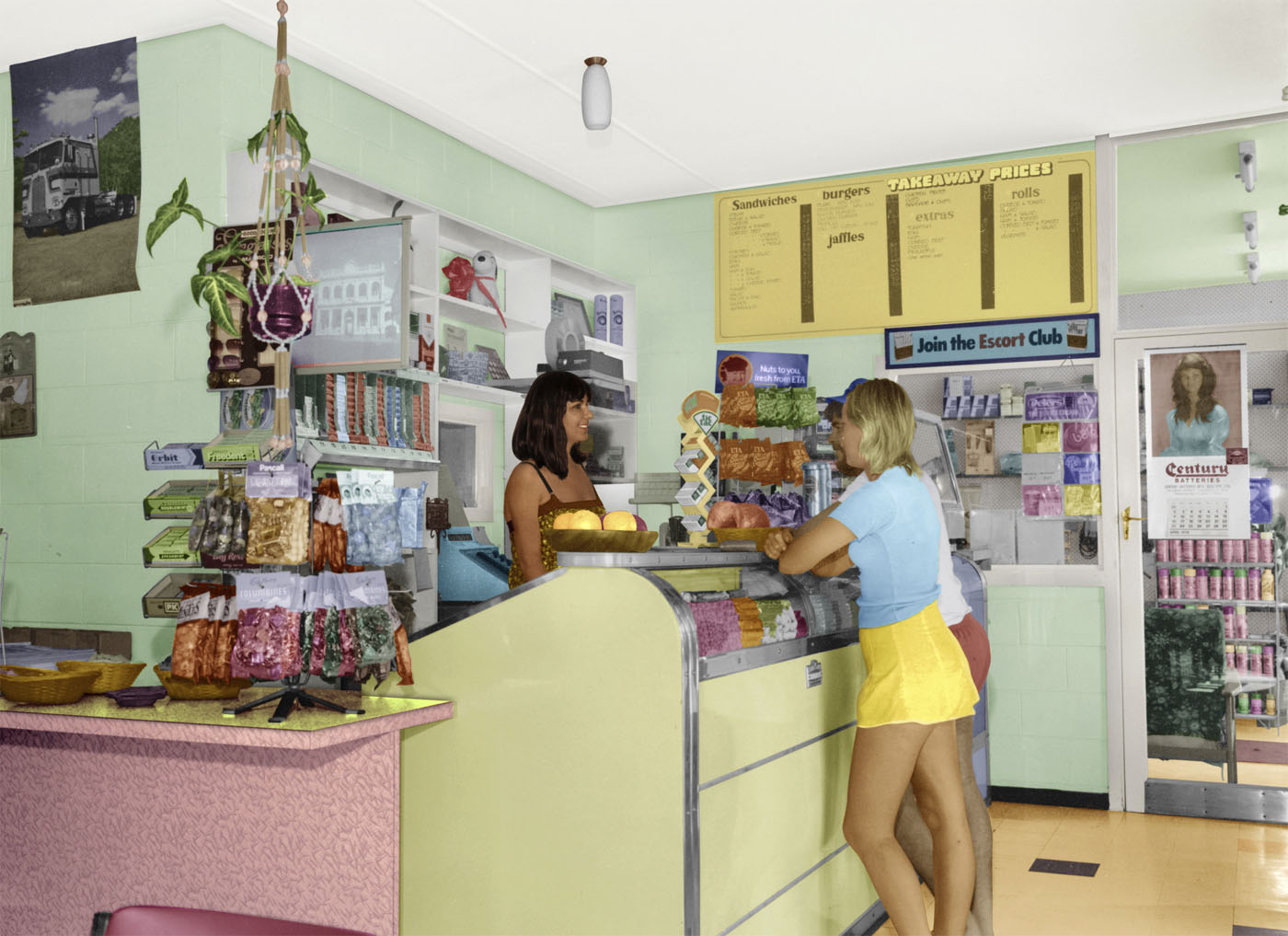
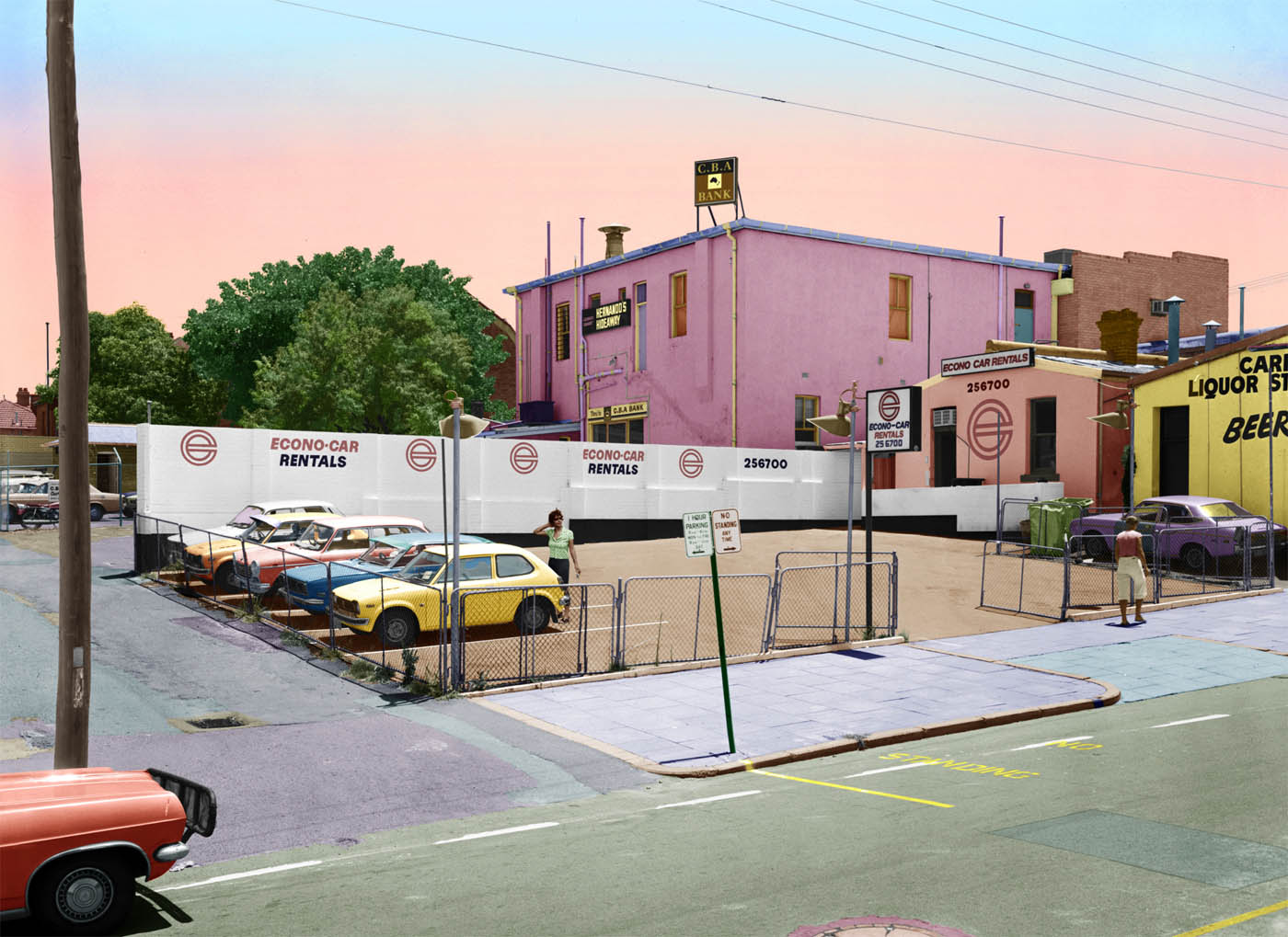
    Featuring twelve archival pigment on rice paper with gel medium prints, Tracey Moffatt’s series First Jobs (2008) is a knockout. Images of the artist are inserted into found photographs which are then “hand coloured” (like old postcards) in Photoshop. Moffatt’s series conceptualises the early jobs that she had to do to survive – investigating the banality of the jobs, the value of friendships that were formed coupled with an implicit understanding of the dictum ‘work is life’.

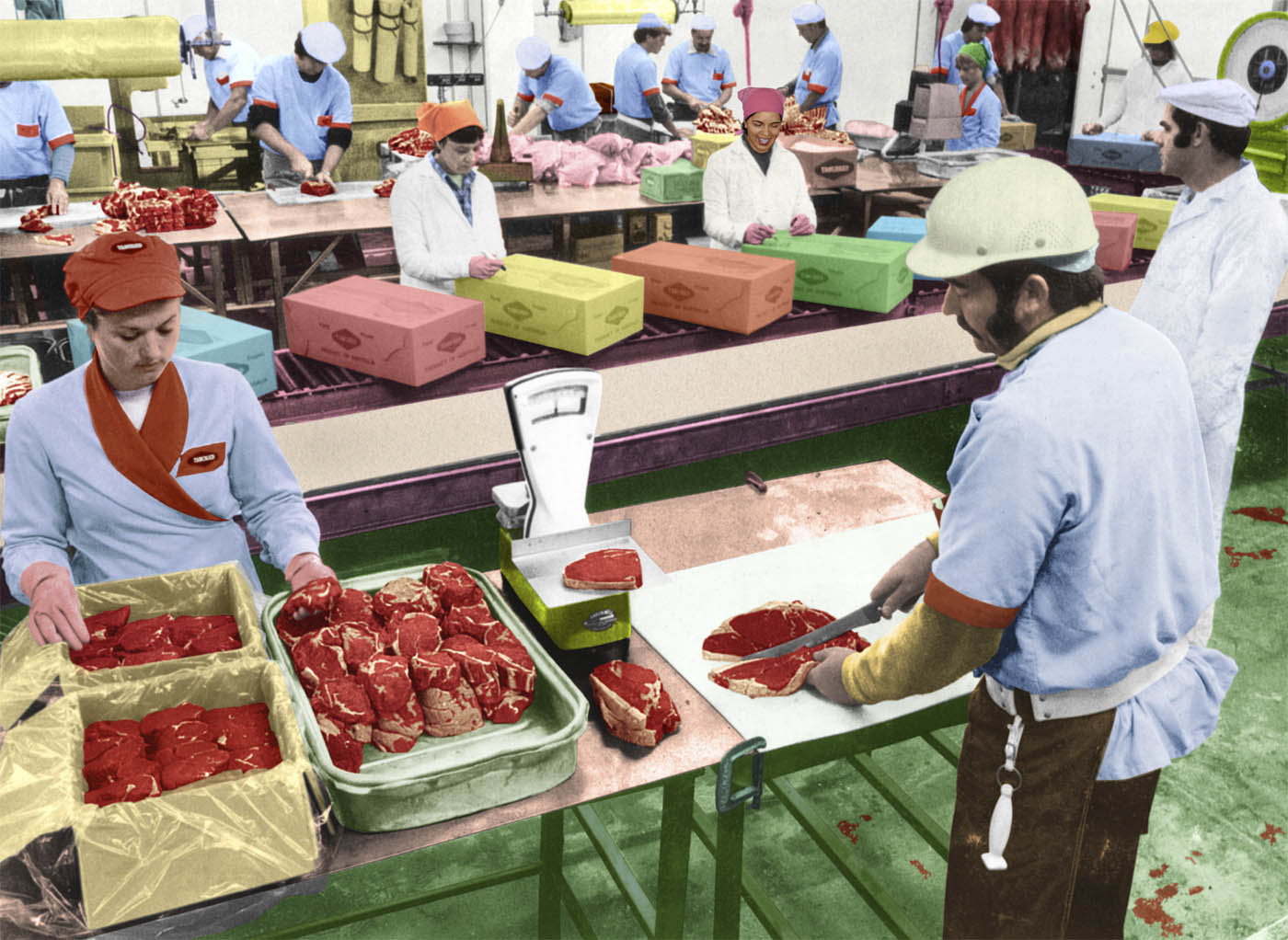
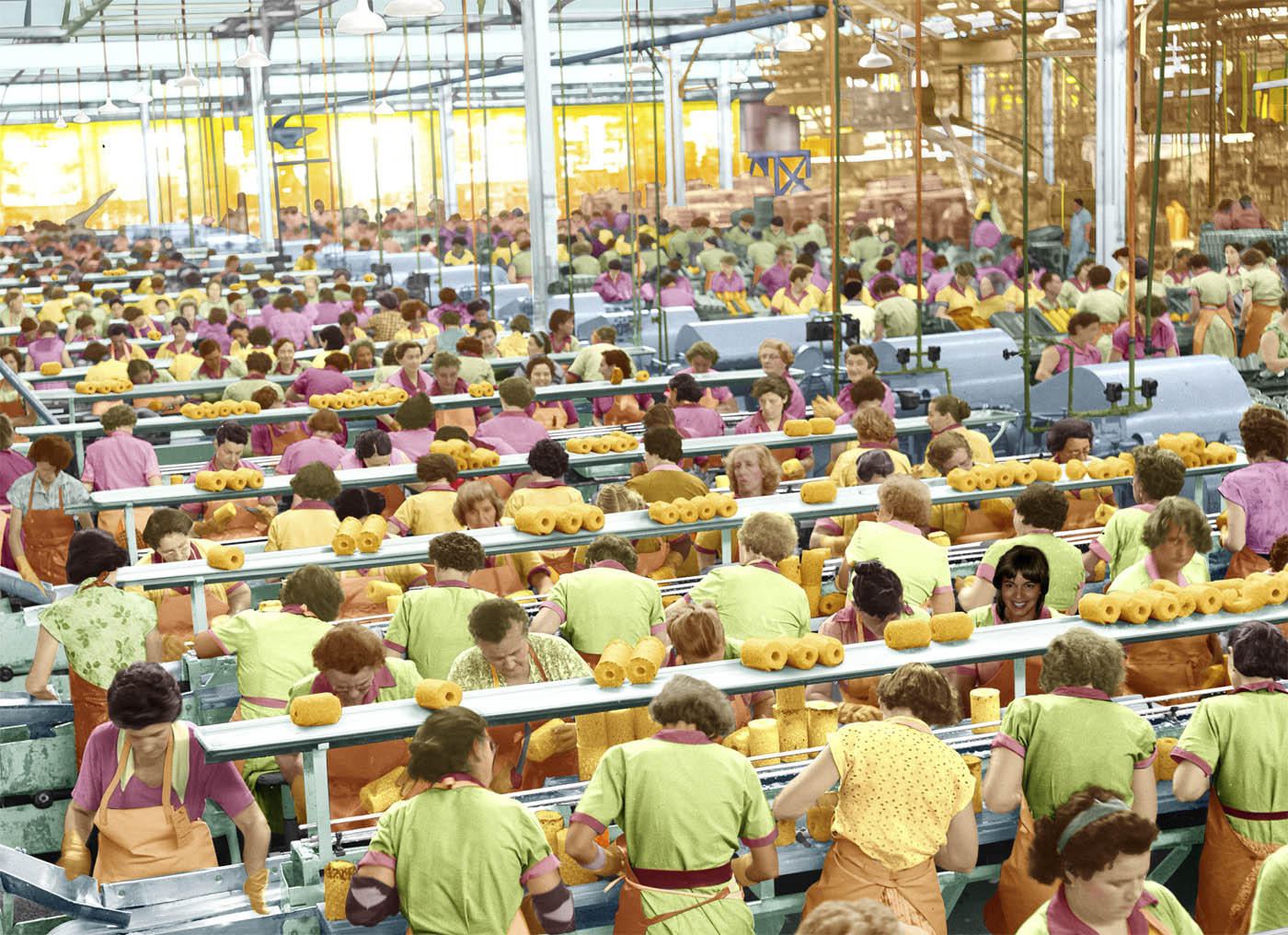
    Moffatt’s images hark back to the White Australia policy of the 1950s and the home and living books of that period. With their hyper-real colours, strange coloured skies, green washing machines and purple tarmac Moffatt amps up the voltage of these images and subverts their idealisation. Here is the re-presentation of the physical and spatial isolation of the figure (store clerk / housekeeper) or the sublimation of the usually female figure into the amorphous mass of the whole (meat packing / pineapple cannery) in quintessentially Australian environments. Here also is comment on the nature of a patriarchal society – the smiling receptionist sitting under the portrait of her male boss, awaiting his command.

    The spaces of these photographs seem to (literally) consume the artist and her remembrance of these jobs. Despite her smiling face in each of the images we implicitly understand the banality of the jobs for we have done them ourselves. We know these spaces intimately: the spaces inhabit us as much as we inhabit them. As the viewer we experience the being of these images, their reverberation, where the two kinds of space – the space of intimacy and the world space – blend.1

    The only sour note of the series comes not in the work itself but in the accompanying artist statement (see below). In this churlish expose of the ‘woe is me, I’m a full time artist and isn’t it so difficult to be a full time artist’ variety, Moffatt complains about the miserable voices in her head and about having to get up off the couch because she is the only person able to make the work and the money. Oh to be so lucky to actually make a living as a full time artist and have the time and space to be creative 7 days a week! Would I have her situation anytime soon? Ha, um, yes.

    Dr Marcus Bunyan


    1/ Bachelard, Gaston. The Poetics of Space. Boston: Beacon Press, 1969, p. 203.


      Many thankx to the Centre for Contemporary Photography for allowing me to publish the photographs in the posting.


      Tracey Moffat (Australian, b. 1960) 'First Jobs, Housekeeper' 1975 from the exhibition 'First Jobs' by Tracey Moffatt at Centre for Contemporary Photography, Fitzroy, Melbourne, August - Sept, 2009


      Tracey Moffat (Australian, b. 1960)
      First Jobs, Housekeeper
      1975
      Archival pigments on rice paper with gel medium
      71 × 91.5cm


      Tracey Moffat (Australian, b. 1960) 'First Jobs, Store Clerk' 1975 from the exhibition 'First Jobs' by Tracey Moffatt at Centre for Contemporary Photography, Fitzroy, Melbourne, August - Sept, 2009


      Tracey Moffat (Australian, b. 1960)
      First Jobs, Store Clerk
      1975
      Archival pigments on rice paper with gel medium
      71 × 91.5cm


      Tracey Moffat (Australian, b. 1960) 'First Jobs, Corner Store' 1977


      Tracey Moffat (Australian, b. 1960)
      First Jobs, Corner Store
      1977
      Archival pigments on rice paper with gel medium
      71 × 91.5cm


      Tracey Moffat (Australian, b. 1960) 'First Jobs, Receptionist' 1977


      Tracey Moffat (Australian, b. 1960)
      First Jobs, Receptionist
      1977
      Archival pigments on rice paper with gel medium
      71 × 91.5cm


      Tracey Moffat (Australian, b. 1960) 'First Jobs, Meat Packing' 1978


      Tracey Moffat (Australian, b. 1960)
      First Jobs, Meat Packing
      1978
      Archival pigments on rice paper with gel medium
      71 × 91.5cm


      Over the years my friends and I joke about our dreadful past jobs. Jobs we worked as teenagers and young students. Awful jobs that we would rather forget about such as cleaning out the local cinema after a screening of The Exorcist in 1974.

      When I was a kid I always had jobs and I always made my own money whether it was receiving a dollar for pulling up the weeds in the yard or baby sitting for neighbours or working at the local green grocers. The thing about making a bit of your own cash was that you could buy your own clothes and not have to wear the clothes that your mother picked out.

      In 1978 at seventeen I worked in factories peeling pineapples. I also packed meat and shelled prawns. Such back breaking labour was exhausting but the money was good.  After one year I saved enough money to travel to Europe and backpacked around for nine months. Then in 1980 I went to art school in Brisbane but continued part-time work as a waitress to pay for art materials.

      After art school I was desperate for money to pay the rent and I worked many jobs. Some were: scrubbing floors in a women’s refuge, washing dishes in a canteen and parking cars in a car park beneath a restaurant called Dirty Dicks (I had no driver’s licence, but the patrons were always drunk and didn’t care.)

      I am resentful and appalled at the work I had to do to survive. I hold a grudge towards rich kids who never had to slave like I did. Secretly though I’m proud of myself. When I think of those early years I realise that I was learning to be tough and work whether I liked it or not. I put my head down and was forced to be productive. I was learning how to get on with other people and learning to handle a boss. These days I do nothing but make art and have exhibitions. Being an artist feels like being on a permanent but jittery holiday in comparison to those early working days. Now I sleep in until 9.30am and press the ‘ignore’ button on my phone if I don’t feel like talking to anyone. But, as Bette Davis put it, it is ‘The Lonely Life’. You have come up with the ideas and make them happen. No-one else is going to do it for you.

      But I remember the good things about the factory floor. Walking into work everyday and saying hi to people you knew, there was a camaraderie. The work was mindless but it didn’t mean that your mind couldn’t go places. Then there was knock-off time. The bell would ring and you would be out the door with a wad of cash in your hand and not a care in the world.

      In being a full-time artist there never is any knock-off time. There’s always a nagging, miserable voice of ideas in your head and you MUST get up off the sofa and produce work. The bell never rings and you never know where your next buck is coming from. Your mind is constantly wound up. You’re never really physically tired not like when you had a real honest job. But would I go back to working in a factory just to get good a night’s sleep? Ha, um, no.”

      Tracey Moffatt, 
New York 2008

      Press release from Roslyn Oxley9 Gallery [Online] Cited 23/04/2019


      Tracey Moffat (Australian, b. 1960) 'First Jobs, Pineapple Cannery' 1978


      Tracey Moffat (Australian, b. 1960)
      First Jobs, Pineapple Cannery
      1978
      Archival pigments on rice paper with gel medium
      71 × 91.5 cm


      Tracey Moffat (Australian, b. 1960) 'First Jobs, Parking Cars' 1981


      Tracey Moffat (Australian, b. 1960)
      First Jobs, Parking Cars
      1981
      Archival pigments on rice paper with gel medium
      71 × 91.5cm


      Tracey Moffat (Australian, b. 1960) 'First Jobs, Canteen' 1984


      Tracey Moffat (Australian, b. 1960)
      First Jobs, Canteen
      1984
      Archival pigments on rice paper with gel medium
      71 × 91.5cm


      Centre for Contemporary Photography
      Level 2, Perry St Building
      Collingwood Yards, Collingwood
      Victoria 3066

      Opening hours:
      Wednesday – Saturday 11am – 5pm
      Centre for Contemporary Photography website

      LIKE ART BLART ON FACEBOOK

      Back to top

      Review: ‘Cineraria’ by Julia deVille at Sophie Gannon Gallery, Richmond, Melbourne

      Exhibition dates: 28th July – 22nd August, 2009


      Julia deVille (New Zealand, b. 1982) 'Ruby Heart Starling' 2008 from the exhibition 'Cineraria' by Julia deVille at Sophie Gannon Gallery, Richmond, Melbourne, July - Aug, 2009


      Julia deVille (New Zealand, b. 1982)
      Ruby Heart Starling
      2008
      Starling, sterling silver, black rhodium & gold plate, rubies, antique frame
      30 x 35 x 18cm


      This is an itsy-bitsy show by Julia deVille at Sophie Gannon Gallery in Richmond, Melbourne. Offering a menagerie of macabre stuffed animals and conceptual ideas the exhibition fails to coalesce into a satisfying vision. It features many ideas that are not fully investigated and incorporated into the corporeal body of the work.

      We have, variously, The Funerary Urn/Cinerarium, The Ossuary, Skeletons, Black, Victorian Funerary Customs, Feathers, Taxidermy, Time, Eggs and Religion. We also have stuffed animals, cigar boxes, lace and silver, pelts and columns, jet necklaces and Victorian glass domes, glass eyes and ruby hearts to name but a few. The viewer is overwhelmed by ideas and materials.

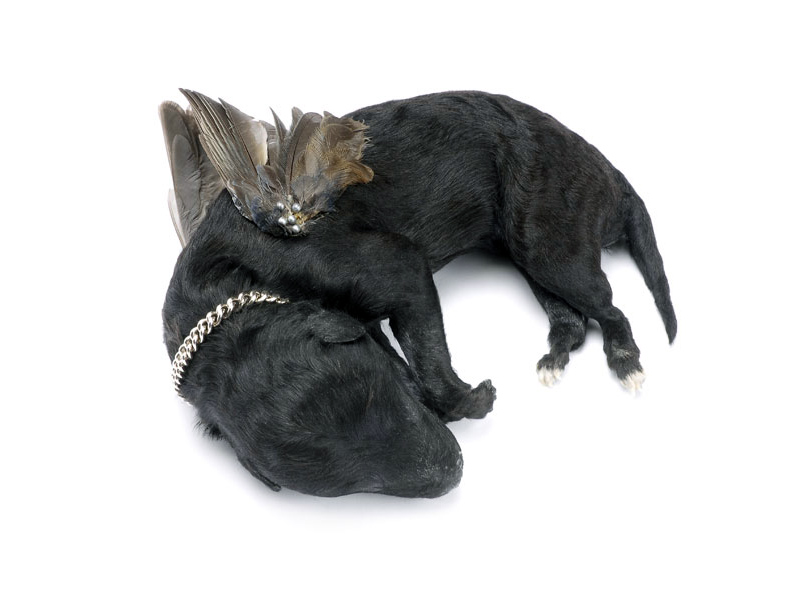
      When individual pieces excel the work is magical: the delicate and disturbing Stillborn Angel (2009, below) curled in a foetal position with appended sparrows wings is a knockout. The large suspended raven of Night’s Plutonian Shore (2009, above) effectively evinces the feeling of the shores of the underworld that the title, taken from an Edgar Allan Poe poem, reflects on.

      Other pieces only half succeed. Piglet (2009, below) is a nice idea with its lace snout and beaded wings sitting on a bed of feathers awaiting judgement but somehow the elements don’t click into place. Further work are just one shot ideas that really lead nowhere. For example Cat Rug (2008, below) features black crystals in the mouth of a taxidermied cat that lies splayed on a plinth on the gallery floor. And, so … Silver Rook (2008, below) is a rook whose bones have been cast in silver, with another ruby heart, suspended in mid-air in the gallery space. Again an interesting idea that really doesn’t translate into any dialogue that is substantial or interesting.

      Another problem with the work is the technical proficiency of some of the pieces. The cast silver front legs and ribs of The Anatomy of a Rabbit (2008, below) are of poor quality and detract from what should have been the delicacy of the skeletal bones of the work. The bronze lion cartouche on the egg shaped Lion Urn (2009) fails to fit the curved shape of the egg – it is just attached at the top most point and sits proud of the egg shape beneath. Surely someone with an eye for detail and a sense of context, perfection and pride in the work they make would know that the cartouche should have been made to fit the shape underneath.

      Despite its fashionable position hovering between craft, jewellery and installation this is ‘art’ in need of a good reappraisal. My suggestion would be to take one idea, only one, and investigate it fully in a range of work that is thematically linked and beautifully made. Instead of multiplying the ideas and materials that are used, simplify the conceptual theme and at the same time layer the work so it has more complexity, so that it reveals itself over time. You only have to look at the work of Mari Funaki in the previous post or the simple but conceptually complex photographs of Matthias Koch in the German photography review to understand that LESS IS MORE!

      There are positive signs here and I look forward to seeing the development of the artist over the next few years.

      Dr Marcus Bunyan


      Many thankx to Sophie Gannon Gallery for allowing me to publish the photographs in the posting. Please click on the photographs for a larger version of the image.


      Julia deVille (New Zealand, b. 1982) 'Night's Plutonian Shore' 2009 from the exhibition 'Cineraria' by Julia deVille at Sophie Gannon Gallery, Richmond, Melbourne, July - Aug, 2009


      Julia deVille (New Zealand, b. 1982)
      Night’s Plutonian Shore
      2009
      Tasmanian Forest Raven, black garnets, cotton, sterling silver, amethyst


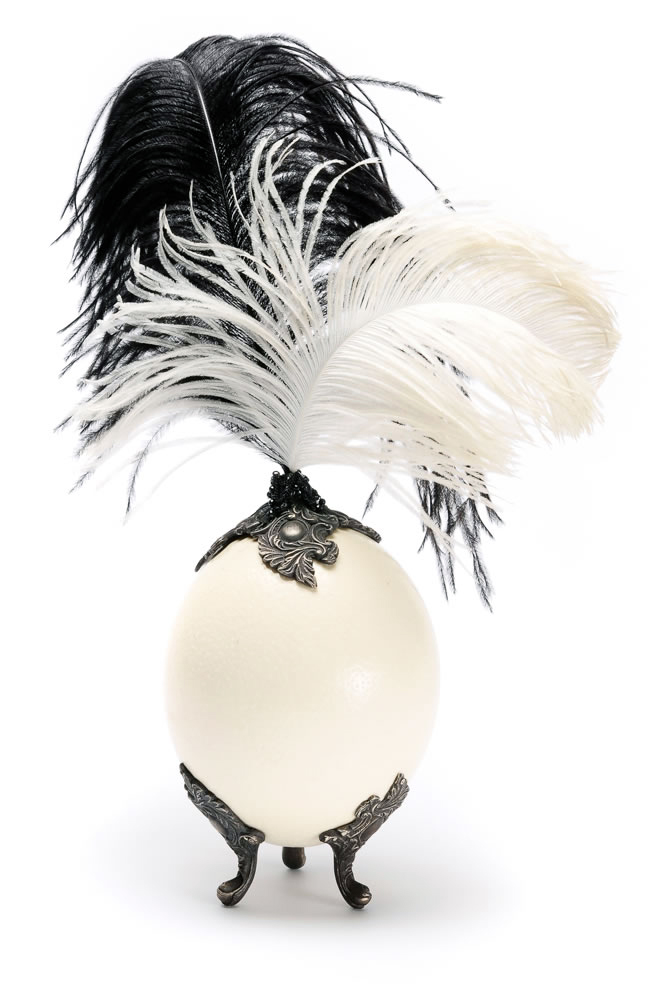
      Julia deVille (New Zealand, b. 1982) 'L'enfant (Infant Funerary Urn)' 2009 from the exhibition 'Cineraria' by Julia deVille at Sophie Gannon Gallery, Richmond, Melbourne, July - Aug, 2009


      Julia deVille (New Zealand, b. 1982)
      L’enfant (Infant Funerary Urn)
      2009
      Ostrich egg, sterling silver, ostrich plumes and black garnet
      35 x 12 x 12cm


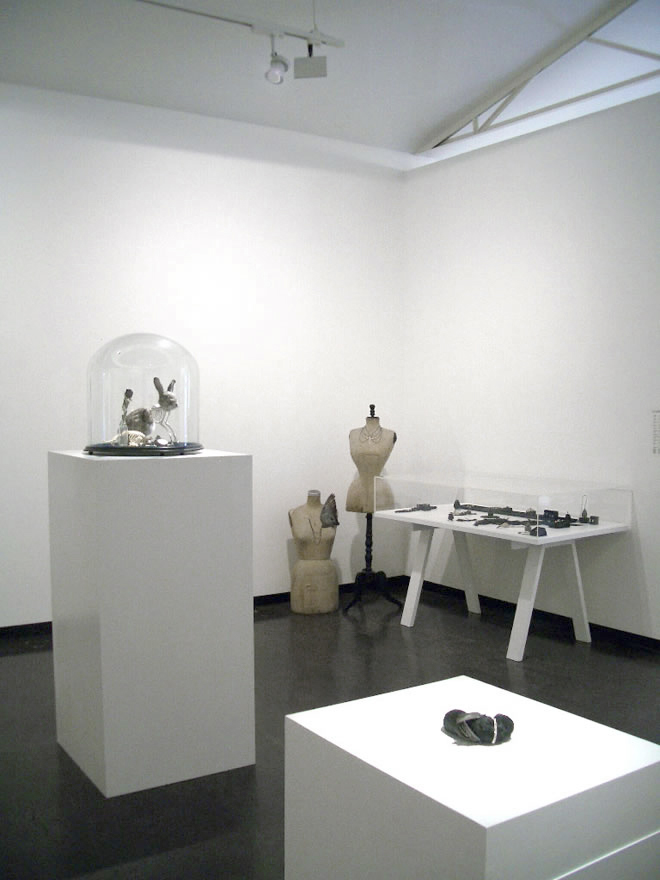
      Julia de Ville 'Cineraria' installation view at Sophie Gannon Gallery, Melbourne

      Julia de Ville 'Cineraria' installation view at Sophie Gannon Gallery, Melbourne


      Julia deVille Cineraria installation views at Sophie Gannon Gallery, Melbourne
      Photos: Marcus Bunyan


      Julia deVille (New Zealand, b. 1982) 'Piglet' 2009


      Julia deVille (New Zealand, b. 1982)
      Piglet
      2009
      Piglet, antique lace, pins and feathers
      25 x 23 x 13cm


      Julia deVille (New Zealand, b. 1982) 'Cat Rug' 2008


      Julia deVille (New Zealand, b. 1982)
      Cat Rug
      2008
      Cat, glitter and fibreglass
      100 x 60 x 8cm


      Julia deVille (New Zealand, b. 1982) 'Sympathy' 2008


      Julia deVille (New Zealand, b. 1982)
      Sympathy
      2008


      Julia deVille (New Zealand, b. 1982) 'Silver Rook' 2008


      Julia deVille (New Zealand, b. 1982)
      Silver Rook
      2008
      Sterling silver, rubies
      30 x 25 x 35cm


      Cinerarium

      n. pl. Cineraria
      A place for keeping the ashes of a cremated body.

      Cineraria
      n. any of several horticultural varieties of a composite plant, Senecio hybridus, of the Canary Islands, having clusters of flowers with
      white, blue, purple, red, or variegated rays.

      Origin: 1590-1600; < NL, fem. of cinerarius ashen, equiv. to L ciner- (s. of cinis ashes) + -rius -ary; so named from ash-coloured down on leaves.

      CINERARIA is a study of the ritual and sentiment behind funerary customs from various cultures and eras.


      Notes on inspirations

      The Funerary Urn/Cinerarium: Funerary Urns have been used since the times of the ancient Greeks and are still used today. After death, the body is cremated and the ashes are collected in the urn.

      The Ossuary: An ossuary is a chest, building, well, or site made to serve as the final resting place of human skeletal remains. They are frequently used where burial space is scarce. A body is first buried in a temporary grave, then after some years the skeletal remains are removed and placed in an ossuary. The greatly reduced space taken up by an ossuary means that it is possible to store the remains of many more people in a single tomb than if the original coffins were left as is. This was a common practice in post plague Europe in the 14th-16th Centuries.

      Skeletons: Human skeletons and sometimes non-human animal skeletons and skulls are often used as blunt images of death. The skull and crossbones (Death’s Head) motif has been used among Europeans as a symbol of piracy, poison and most commonly, human mortality.

      Black: In the West, the colour used for death and mourning is black. Black is associated with the underworld and evil. Kali, the Hindu god of destruction, is depicted as black.

      Victorian Funerary Customs:

      ~ A wreath of laurel, yew or boxwood tied with crape or black ribbons would be hung on the front door to alert passers by that a death had occurred

      ~ The use of flowers and candles helped to mask unpleasant odours in the room before embalming became common

      ~ White was a popular colour for the funeral of a child. White gloves, ostrich plumes and a white coffin were the standard

      Feathers: In Egyptian culture a recently deceased persons soul had to be as light as a feather to pass the judgment of Ma’at. Ma’at (Maet, Mayet) is the Egyptian goddess of truth, justice and the underworld. She is often portrayed as wearing a feather, a symbol of truth, on her head. She passed judgment over the souls of the dead in the Judgment Hall of Osiris. She also weighted up the soul against a feather. The “Law of Ma’at” was the basis of civil laws in ancient Egypt. If it failed, the soul was sent into the underworld. Ma’at’s symbol, an ostrich feather, stands for order and truth.

      Taxidermy: Taxidermy to me is a modern form of preservation, a way for life to continue on after death, in a symbolic visual form.

      The Raven: In many cultures for thousands of years, the Raven has been seen symbol of death. This is largely due to the Raven feeding on carrion. Edgar Allan Poe has used this symbolism in his poem, “The Raven”.

      Time: Less blunt symbols of death frequently allude to the passage of time and the fragility of life. Clocks, hourglasses, sundials, and other timepieces call to mind that time is passing. Similarly, a candle both marks the passage of time, and bears witness that it will eventually burn itself out. These sorts of symbols were often incorporated into vanitas paintings, a variety of early still life.

      Eggs: The egg has been a symbol of the start of new life for over 2,500 years, dating back to the ancient Persians. I have chosen egg shapes and even one Ostrich egg to represent the cycle of life, the beginning and the end.

      Religion: Religion has played a large part in many funerary customs and beliefs. I am particularly interested in the Memento Mori period of the 16th-18th centuries. In a Calvinistic Europe, when the plague was a not too distant memory, a constant preoccupation with death became a fashionable devotional trend.

      Julia deVille


      Julia deVille (New Zealand, b. 1982) 'Stillborn Angel' 2009


      Julia deVille (New Zealand, b. 1982)
      Stillborn Angel
      2009
      Stillborn puppy, sparrow wings and sterling silver
      13 x 10 x 5cm


      Julia deVille (New Zealand, b. 1982) 'The Anatomy of a Rabbit' 2008


      Julia deVille (New Zealand, b. 1982)
      The Anatomy of a Rabbit
      2008
      Rabbit, sterling silver, rubies, glitter and mahogany
      30 x 30 x 30cm


      Julia de Ville 'Cineraria' installation views at Sophie Gannon Gallery, Melbourne


      Julia deVille Cineraria installation view at Sophie Gannon Gallery, Melbourne
      Photo: Marcus Bunyan


      Sophie Gannon Gallery
      2, Albert Street, Richmond, Melbourne

      Opening hours:
      Tuesday – Saturday 11am – 5pm
      Sophie Gannon Gallery website

      LIKE ART BLART ON FACEBOOK

      Back to top