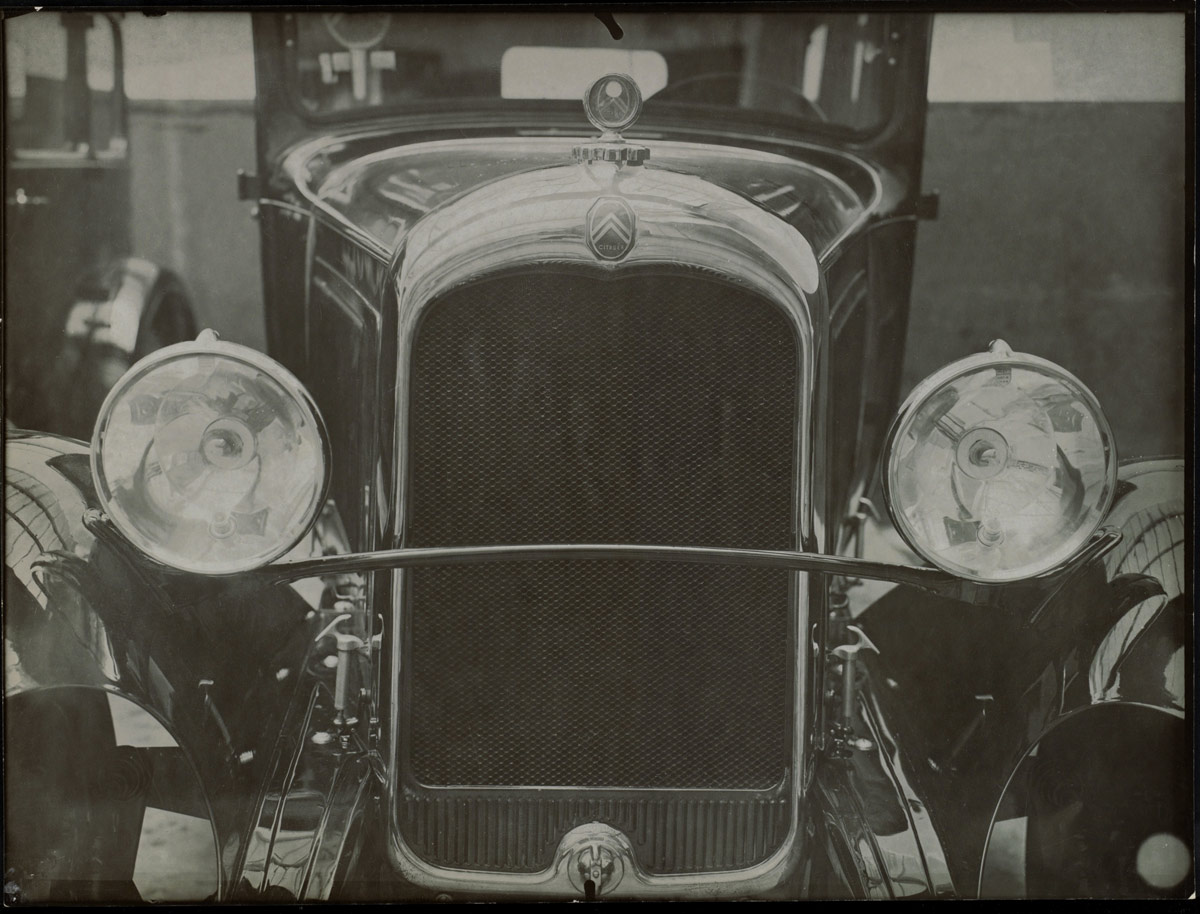
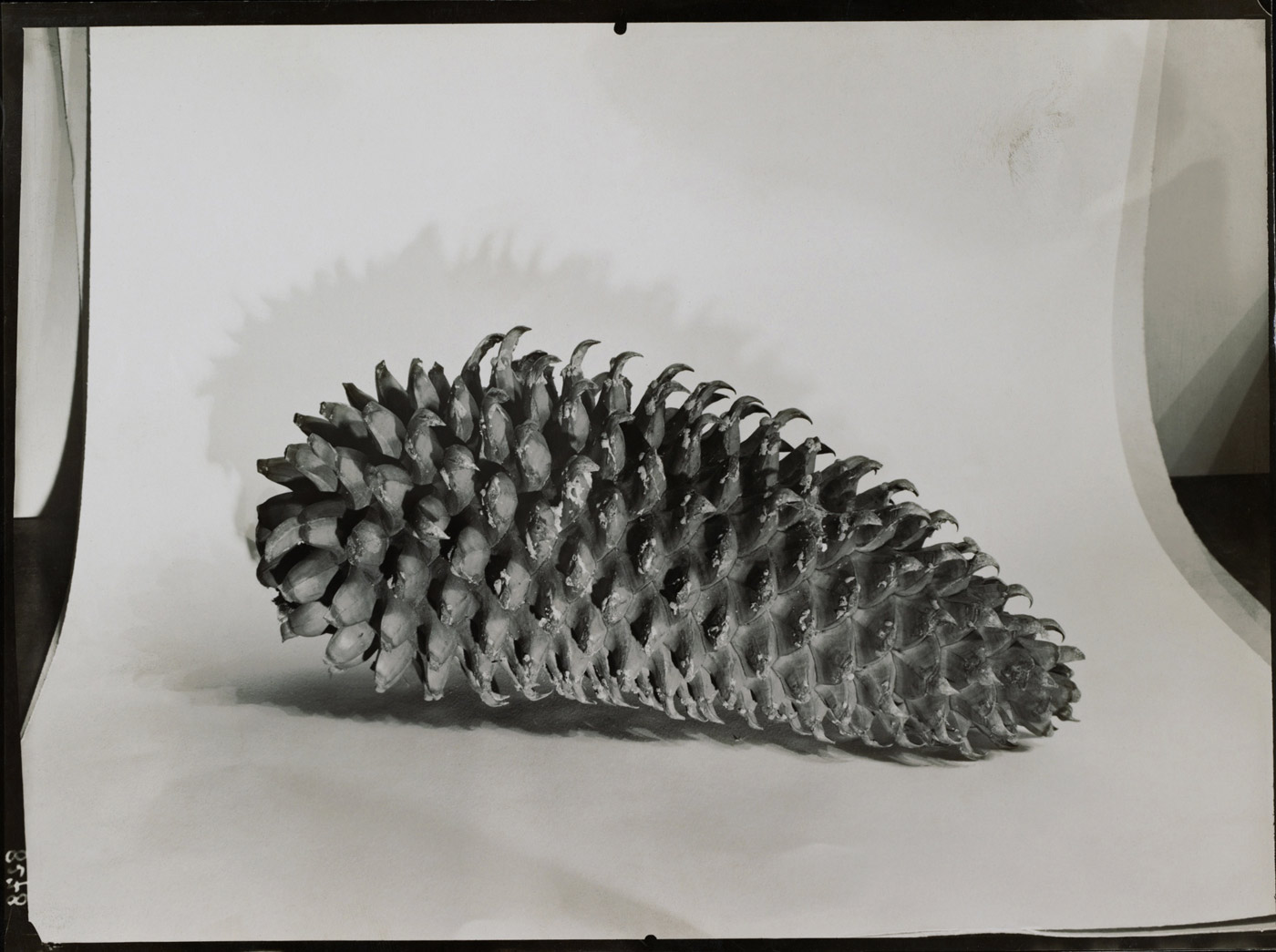
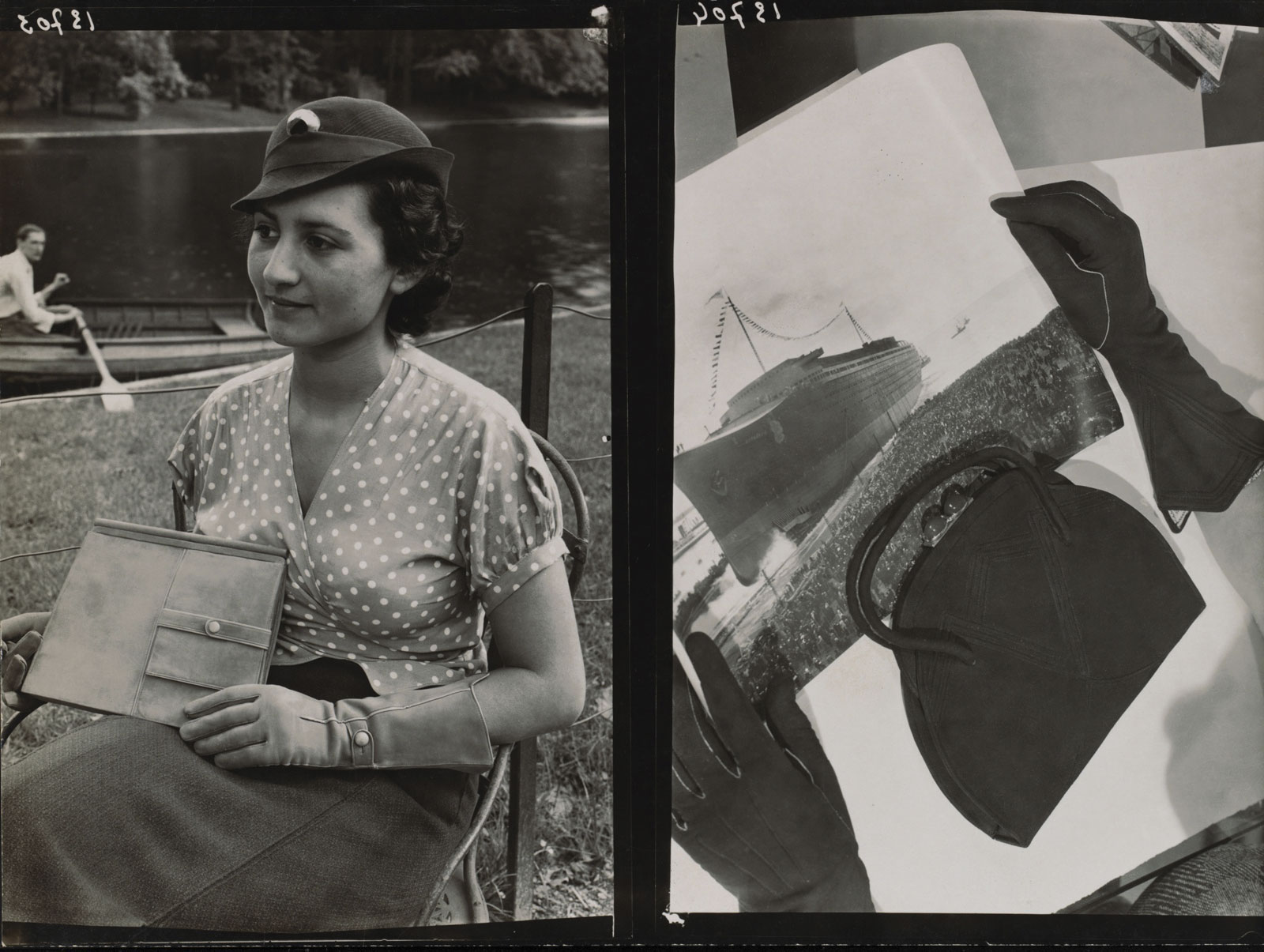
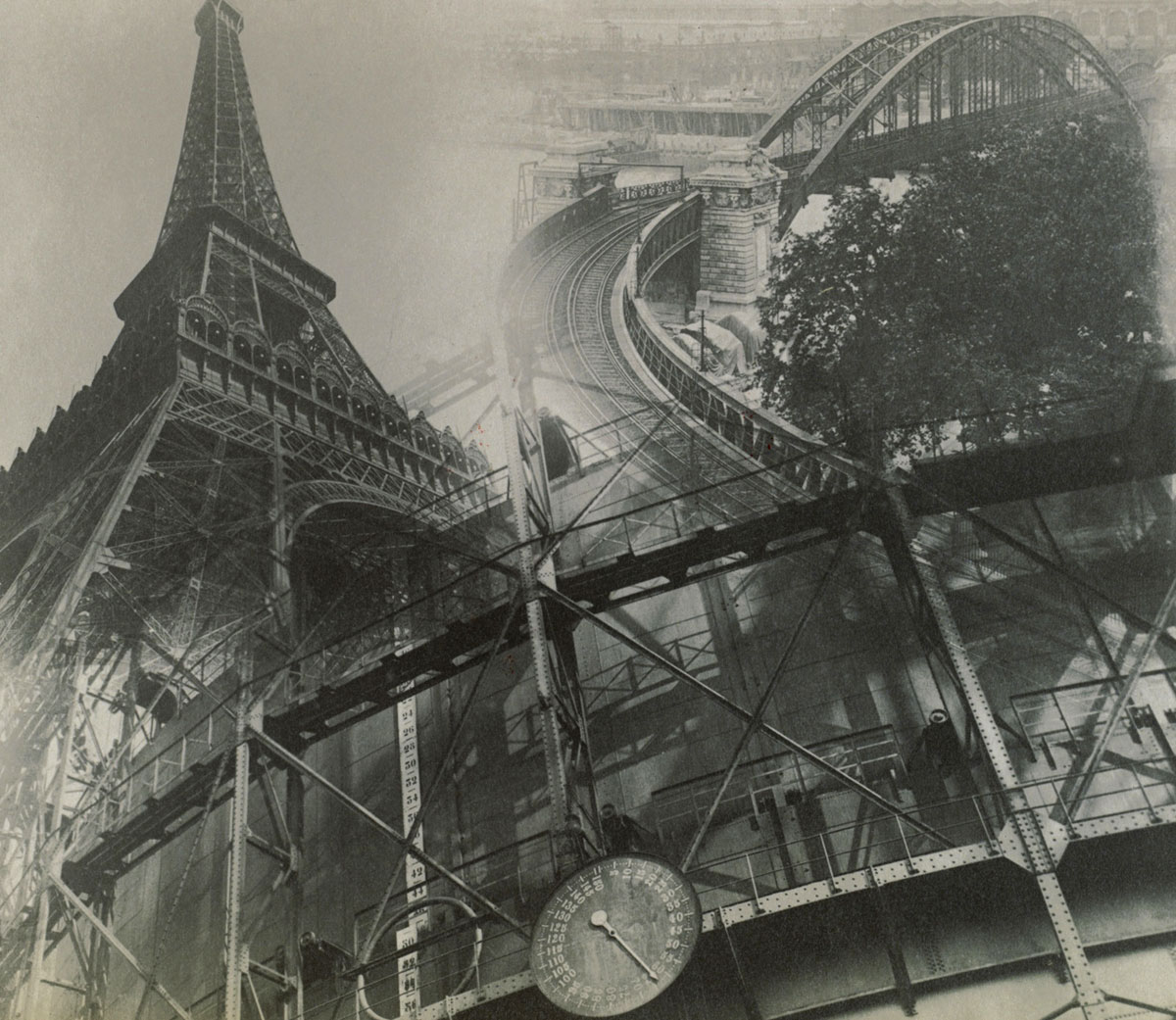
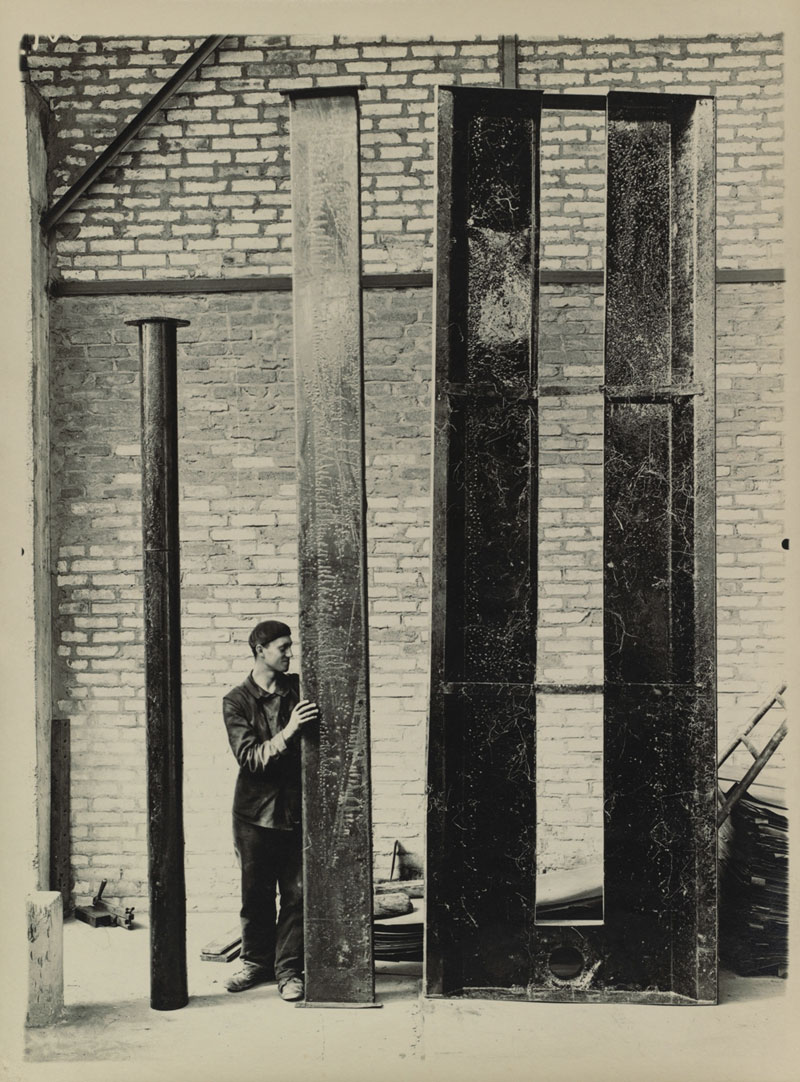
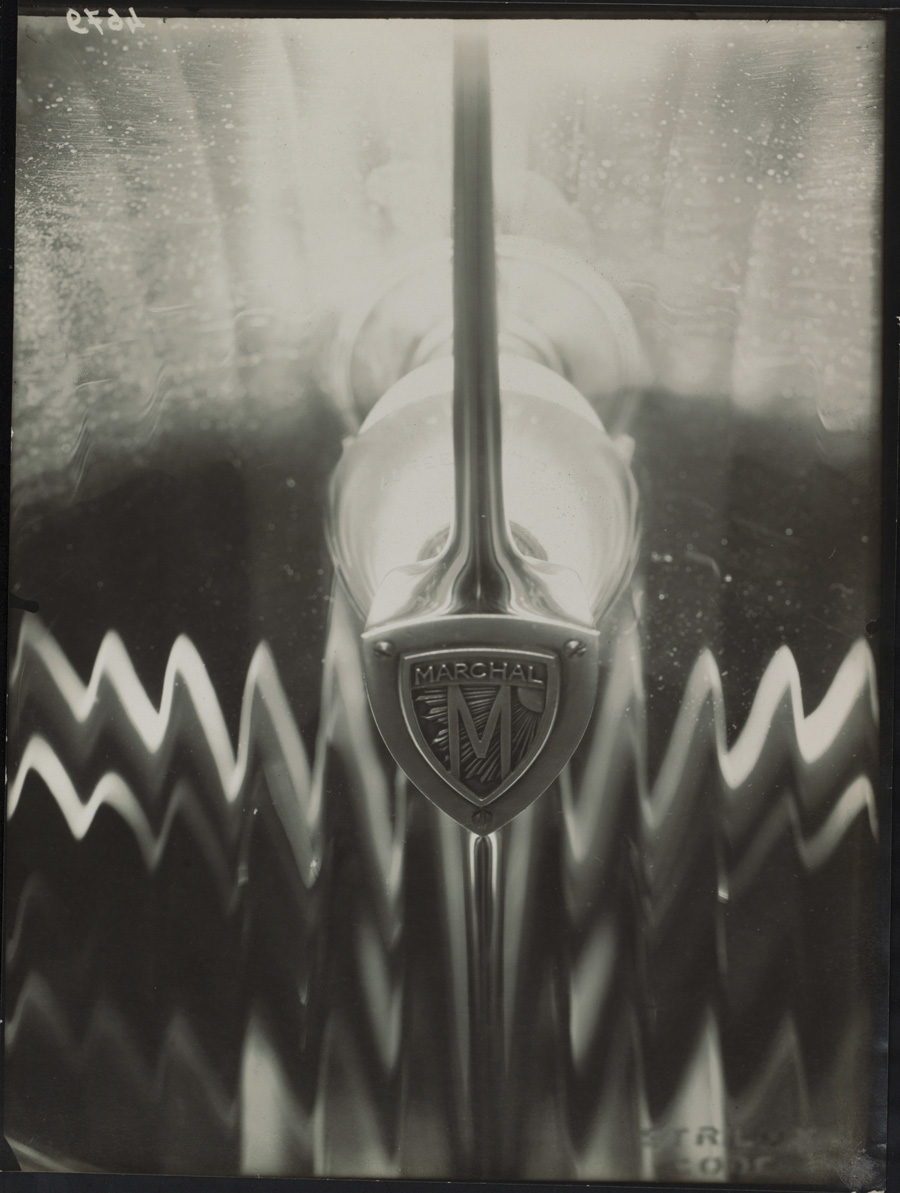
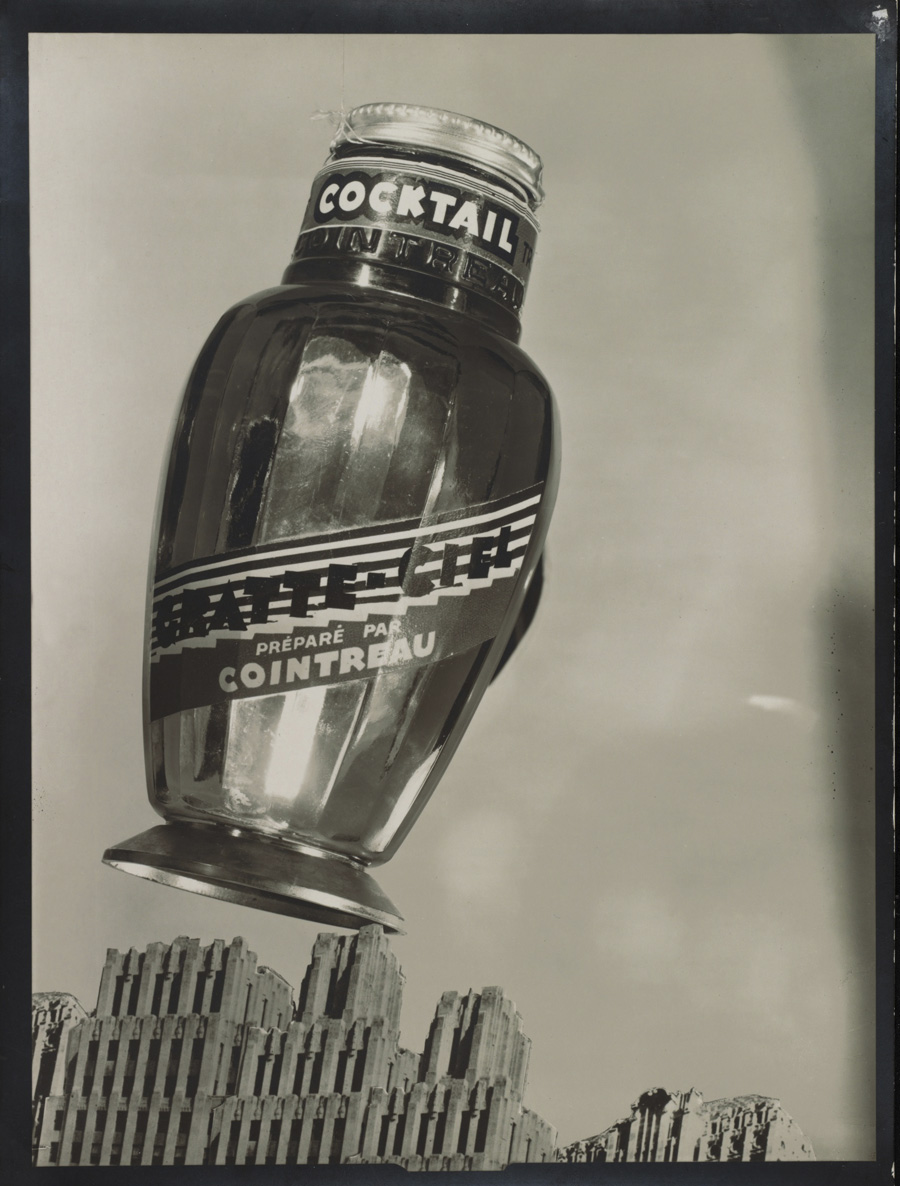
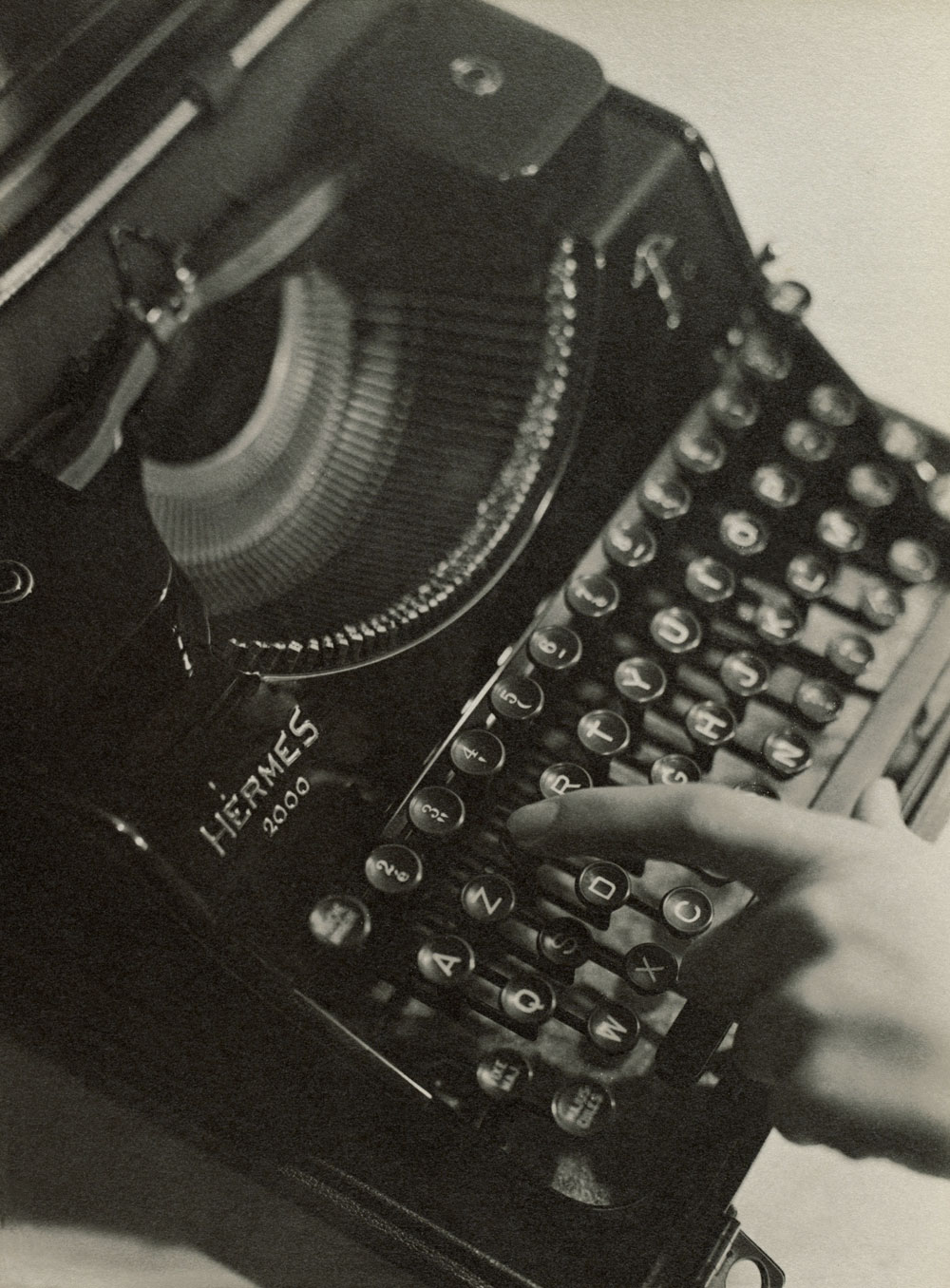
Exhibition: ‘Florence Henri. Mirror of the avant-garde 1927-1940’ at Jeu de Paume, Paris

Exhibition dates: 24th February – 17th May, 2015

Curator: Cristina Zelich
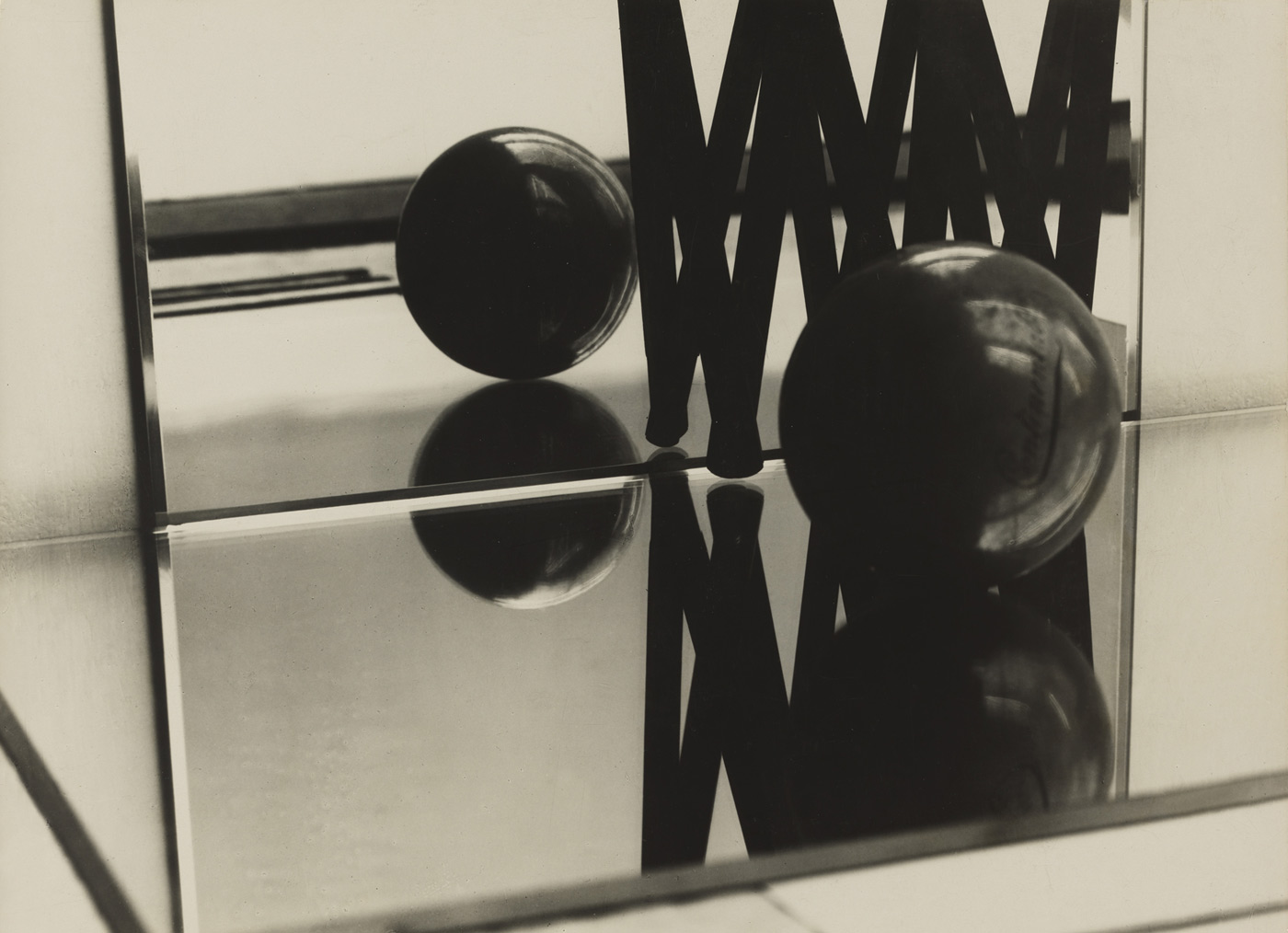
 

Florence Henri (New York 1893 - Compiègne 1982) 'Composition' 1928 from the exhibition 'Florence Henri. Mirror of the avant-garde 1927-1940' at Jeu de Paume, Paris, February - May, 2015


Florence Henri (New York 1893 – Compiègne 1982)
Composition
1928
Gelatin silver print, vintage
27.2 x 37.5cm
Bauhaus Archiv, Berlin
© Florence Henri / Galleria Martini & Ronchetti Photo
© Bauhaus Archiv


Objects in and of space, the two the same

Florence Henri is rapidly becoming one of my favourite photographers, an artist who emerged during one of the golden periods of photography, the avant-garde of the 1920s-30s. While we have seen some of these photographs before in a previous posting, there are some new and delightful images to enjoy here.

If you believe the text by Priscilla Frank, “Meet Florence Henri, The Under-Acknowledged Queen Of Surrealist Photography,” on the Huffington Post website [02/20/2015], you could be forgiven for thinking that her photography is based on Surrealist themes. Nothing could be farther from the truth. There is nothing about Henri’s photographs to suggest that they are based on the creative potential of the unconscious mind exemplified by the irrational juxtaposition of images. Henri’s photographs are quite logical and ordered, being an investigation into space, time and object using the “extension of the formal and structural aesthetics of Cubism, Purism and Constructivism.”

Her geometric abstractions “exploited the dialogue between realism and abstraction… and she explored spatial extension and fragmentation in her utter modern vocabulary. Her still life and abstract compositions achieved by balancing abstraction with a pure and essential subject were created in the spirit of the machine age. She viewed space as if it were elastic, distorting figure and ground and altering planes through the use of mirrors and lenses.”

Through attention and attentiveness to subject, Henri achieved her results by using created space to investigate the fragmentation and distortion of the world. Her art is not about the production of phenomena (the spectacle), but about the creation of volumes that are in an of space itself. As Donald Judd’s observes of his created volumes in 1981: “… familiar objects, objects as we habitually perceive them, assume physical neutrality because they and their environment are deactivated: “They are points in space, and space is an empty surround. Instead, what is needed is a created space, space made by someone, space that is formed as a solid, the two the same, with the space and the solid defining each other.” Objects in and of space, the two the same: this was the crux. Judd did more than set new solids into existing voids. He formed solids and their correlative spaces as an integrated operation, as if he were establishing an architecture from the ground up, creating the entire environment, intensifying it, saturating it with its own sensation.”1

In a photographic sense, Henri can be seen as a precursor to Judd’s volumes, creating her own worlds from the ground up, creating the entire environment where the space and the object are one and the same thing… only to then record and flatten that space into the essential nature of the photograph, its physicality. Her sensory affects “remain fixed in the concatenation of materials, structure and placement that generates it. They are the lived equivalent of those conditions, experienced as continuous in time – hence, timeless – remaining wholly the same until interrupted.”2 How appropriate for Henri’s photographs for they do indeed have a timeless “air”, a transcendence of the time and place they were taken, a transcendence of the space which her volumes inhabit. Objects in and of space, the two the same.

As Judd observes, “Time and space don’t exist [as idealised abstractions]; they are made by events and positions. Time and space can be made and don’t have to be found like stars in the sky or rocks on a hillside.” Time and space are grounded in being human: they exist when someone experiences them.”3 Here is the nub of the matter, for it matters that we experience Henri’s photographs each in its definite time and space. Henri’s being is immersed in these volumes and they hold our interest because the created environments are saturated with her own sensations.

Dr Marcus Bunyan


Footnotes

1/ Donald Judd quoted in Richard Shiff. “Sensous Thoughts,” in Marianne Stockebrand (ed.,). Donald Judd. The Multicolored Works. Yale University Press, 2014, p. 106

2/ Ibid.,

3/ Ibid., p. 107.


Many thankx to the Jeu de Paume for allowing me to publish the photographs in the posting. Please click on the photographs for a larger version of the image.


“With photography, what I really want to do is compose the image, as I do in painting. The volumes, lines, shadows and light should submit to my will and say what I would like them to say. All of this under the strict control of the composition, because I do not claim to be able to explain the world or to explain my own thoughts.”


Florence Henri in an interview with Attilio Colombo, “Specchio, essenzialità, geometría,” in ‘Florence Henri’ (Milan: Gruppo Editoriale Fabbri, 1983)


“Henri soon recognised the medium’s capacity as a pictorial language and outlet for creative expression. Upon returning to France [from the Bauhaus], Henri began to develop a large body of photographic work based upon her Bauhaus experience and an extension of the formal and structural aesthetics of Cubism, Purism and Constructivism. These non-objective principles forged an alternative to the then-dominant French art movement Surrealism. Henri transcended the avant-garde of one art form to that of another…

Henri’s greatest experimentation with geometric abstraction occurred during the period between 1929-1930… In the photographic work, Florence Henri exploited the dialogue between realism and abstraction, but always maintained a recognisable subject. She was concerned with transparency and movement, and she explored spatial extension and fragmentation in her utter modern vocabulary.

Her still life and abstract compositions achieved by balancing abstraction with a pure and essential subject were created in the spirit of the machine age. She viewed space as if it were elastic, distorting figure and ground and altering planes through the use of mirrors and lenses.”


Lynne Warren. ‘Encyclopedia of Twentieth-Century Photography’, 3-Volume set. Routledge, 2005, p. 691.


Florence Henri (New York 1893 - Compiègne 1982) 'Composition' 1928 from the exhibition 'Florence Henri. Mirror of the avant-garde 1927-1940' at Jeu de Paume, Paris, February - May, 2015


Florence Henri (New York 1893 – Compiègne 1982)
Composition
1928
Gelatin silver print, vintage
27 x 37.1cm
Museum Folkwang, Essen
© Florence Henri / Galleria Martini & Ronchetti


Florence Henri (New York 1893 - Compiègne 1982) 'Composition abstraite [Still-life composition]' 1929


Florence Henri (New York 1893 – Compiègne 1982)
Composition abstraite [Still-life composition]
1929
Collage, gelatin silver print cut and pasted on paper
12 x 14cm
Private collection, courtesy Florence Henri Archive, Genoa
© Florence Henri / Galleria Martini & Ronchetti


Florence Henri (New York 1893 - Compiègne 1982) 'Portrait Composition, Tulia Kaiser' c. 1930


Florence Henri (New York 1893 – Compiègne 1982)
Portrait Composition, Tulia Kaiser
c. 1930
Gelatin silver print, vintage
23 x 29.2cm
Achat grâce au mécénat de Yves Rocher, 2011
Ancienne collection Christian Bouqueret Centre Pompidou, Paris. Musée national d’art moderne / Centre de création industrielle
© Florence Henri / Galleria Martini & Ronchetti Photo
© Centre Pompidou, Mnam-Cci, Dist. Rmn-Grand Palais / Georges Meguerditchian


Summary of exhibition

Florence Henri. Mirror of the avantgarde illustrates the desire of the Jeu de Paume to highlight the important role played by women photographers from the 1920s to the 1950s, and follows on from previous exhibitions devoted to Claude Cahun, Kati Horna, Eva Besnyö, Berenice Abbott, Lisette Model, Laure Albin Guillot and indeed, Lee Miller.

The exhibition brings together, for the first time in France, over 130 vintage prints by Florence Henri, as well as rare documents and publications, revealing the artist’s photographic production. Influenced by Constructivism, Cubism and Surrealism, Florence Henri’s work is part of the exciting creative tenor of the period, during which, photography, like cinema or architecture, embodied a spirit of innovation and progress, as well as a certain unconventionality in terms of the dominant visual order.

Familiar with Bauhaus, Florence Henri was one of the figures of the European artistic intelligentsia of the time. Her friendship with Fernand Léger, the Delaunays, Hans Arp, László Moholy-Nagy and Theo van Doesburg would have a profound influence on her work. In 1929, Florence Henri opened a photography studio in Paris. It soon rivalled that of Man Ray’s. Her classes were very well-attended and her talents as a portrait photographer were quickly recognised.

It is not so much the image alone as the constant research that brings Florence Henri’s work to life. Lines and geometric compositions are recurring elements in her photographs. Over the years, she made her compositions increasingly complex through the use of mirrors, industrial and natural objects, or through collage and superposition. The exhibition attempts to both decipher and highlight the work of Florence Henri in terms of reflections, perspective, the depth of field and photomontage – key technical experimentations in the history of modern photography.


Florence Henri (New York 1893 - Compiègne 1982) 'Mannequin de tailleur [Tailor's mannequin]' 1930-1931


Florence Henri (New York 1893 – Compiègne 1982)
Mannequin de tailleur [Tailor’s mannequin]
1930-1931
Gelatin silver print, vintage
17.1 x 22.8cm
Private collection, courtesy Florence Henri Archive, Genoa
©Florence Henri / Galleria Martini & Ronchetti


Florence Henri (New York 1893 - Compiègne 1982) 'Composition Nature morte [Still-life composition]' 1931


Florence Henri (New York 1893 – Compiègne 1982)
Composition Nature morte [Still-life composition]
1931
Gelatin silver print dated 1977
23 x 30cm
Private collection, courtesy Florence Henri Archive, Genoa
© Florence Henri / Galleria Martini & Ronchetti


Florence Henri (New York 1893 - Compiègne 1982) 'Pont [Bridge]' 1930-1935


Florence Henri (New York 1893 – Compiègne 1982)
Pont [Bridge]
1930-1935
Gelatin silver print dated 1977
23.5 x 23.8cm
Private collection, courtesy Florence Henri Archive, Genoa
© Florence Henri / Galleria Martini & Ronchetti


Florence Henri (New York 1893 - Compiègne 1982) 'Composition, The Glory that was Greece' c. 1933


Florence Henri (New York 1893 – Compiègne 1982)
Composition, The Glory that was Greece
c. 1933
Photomontage, gelatin silver print dated 1975
23.5 x 29.5cm
Private collection, courtesy Florence Henri Archive, Genoa
© Florence Henri / Galleria Martini & Ronchetti


“All that I know, and how I know this, is primarily made up of abstract elements: spheres, planes, and grids whose parallel lines provide numerous opportunities, without taking into account the mirrors I use, to present the same object from several different angles within a single photograph, in order to yield, in the same way, different visions that complement and complete each other, and which when taken as a whole, are better able to explain it. Essentially, all of this is much more difficult to explain than to do.”


Florence Henri in an interview with Attilio Colombo, “Specchio, essenzialità, geometría,” in ‘Florence Henri’ (Milan: Gruppo Editoriale Fabbri, 1983)


Florence Henri (New York 1893 – Compiègne (France) 1982) was a multi-faceted artist, who was first known for her paintings before making a name for herself as a major figure in avant-garde photography between the end of the 1920s and the beginning of the 1940s. She lived in Silesia, Munich, Vienna, Rome and above all Berlin, before finally settling in Paris in 1924 and devoting herself to photography. This medium enabled her to experiment new relationships with space, in particular by the use of mirrors and other objects in her compositions.

The Jeu de Paume is presenting a vast panorama of Florence Henri’s photographic production from 1927 to 1940, including her self-portraits, abstract compositions, portraits of artists, nudes, photomontages, photocollages, as well as documentary photos taken in Rome, Paris and Brittany. The exhibition comprises vintage prints, various documents and published material.

When she was young, Florence Henri studied music and painting in England and Germany. In 1919, when she was a student at the Berlin Academy of Arts, she made the acquaintance of writer and art historian Carl Einstein and became friends with several figures of the avant-garde, including Hans Arp, Adrian Ludwig Richter, John Heartfield and Lázló Moholy-Nagy. She took classes with Paul Klee and Vassily Kandinsky at the Bauhaus in Weimar. In 1924 she moved to Paris, where she followed classes at the Académie Montparnasse, whose director was André Lhote, then at the Académie moderne (founded by Fernand Léger and Amédée Ozenfant). In 1927, after a visit to Bauhaus in Dessau, she abandoned painting in favour of photography. It was at this time that she produced her famous self-portraits in mirrors and her still lifes; the result of her first steps in the spatial research that she would carry out through the medium of photography.

Between the end of the 1920s and the beginning of the 1930s, three mythical exhibitions in terms of the history of European photography took place in Germany: “Fotografie der Gegenwart” at the Folkwang Museum in Essen (1929); “Film ind Foto” (Fifo) organised the same year by the Deutscher Werkbund in Stuttgart and “Das Lichtbild” held in Munich (1931). These exhibitions bore witness to the rapid expansion of new photographic concepts and a rupture with tradition. Fifo marked the zenith of the Neues Sehen (New Vision) movement of which László Moholy-Nagy was an exponent and “Das Lichtbild” marked the triumph of Neue Sachlichkeit (New Objectivity), whose leading representative was Albert Renger-Patzsch.

Florence Henri was invited to show an important number of prints at these three exhibitions in recognition of her photographic production during this fundamental period that saw the photography used to free our vision and open out onto new experiences.

Florence Henri’s studio rivalled that of Man Ray, even if she had also opened a school of photography where Lisette Model and Gisèle Freund, amongst others, would enrol. In fact, despite the central position that her oeuvre occupied in avant-garde photography at the end of the 1920s, her reputation as a portraitist in Paris, and the fact that her photos had been published in many of the period’s illustrated magazines such as Arts et Métiers and Lilliput etc, Florence Henri’s body of work remains largely unknown.

László Moholy-Nagy’s* comments are a perfect illustration of Florence Henri’s position: “With Florence Henri’s photos, photographic practice enters a new phase, the scope of which would have been unimaginable before today. Above and beyond the precise and exact documentary composition of these highly defined photos, research into the effects of light is tackled not only through abstract photograms, but also in photos of real-life subjects. The entire problem of manual painting is taken onboard by the photographic process and is manifestly given a whole new depth thanks to this new optical instrument. Reflections and spatial relationships, superposition and intersections are just some of the areas explored from a totally new perspective and viewpoint.”

*László Moholy-Nagy, “Zu den Fotografien von Florence Henri”, i10, No 17-18, Amsterdam, December 20, 1928.

Press release from the Jeu de Paume website


Florence Henri (New York 1893 - Compiègne 1982) 'Double portrait' 1927-1928


Florence Henri (New York 1893 – Compiègne 1982)
Double portrait
1927-1928
Gelatin silver print dated 1977
24 x 18cm
Private collection, courtesy Florence Henri Archive, Genoa
© Florence Henri / Galleria Martini & Ronchetti
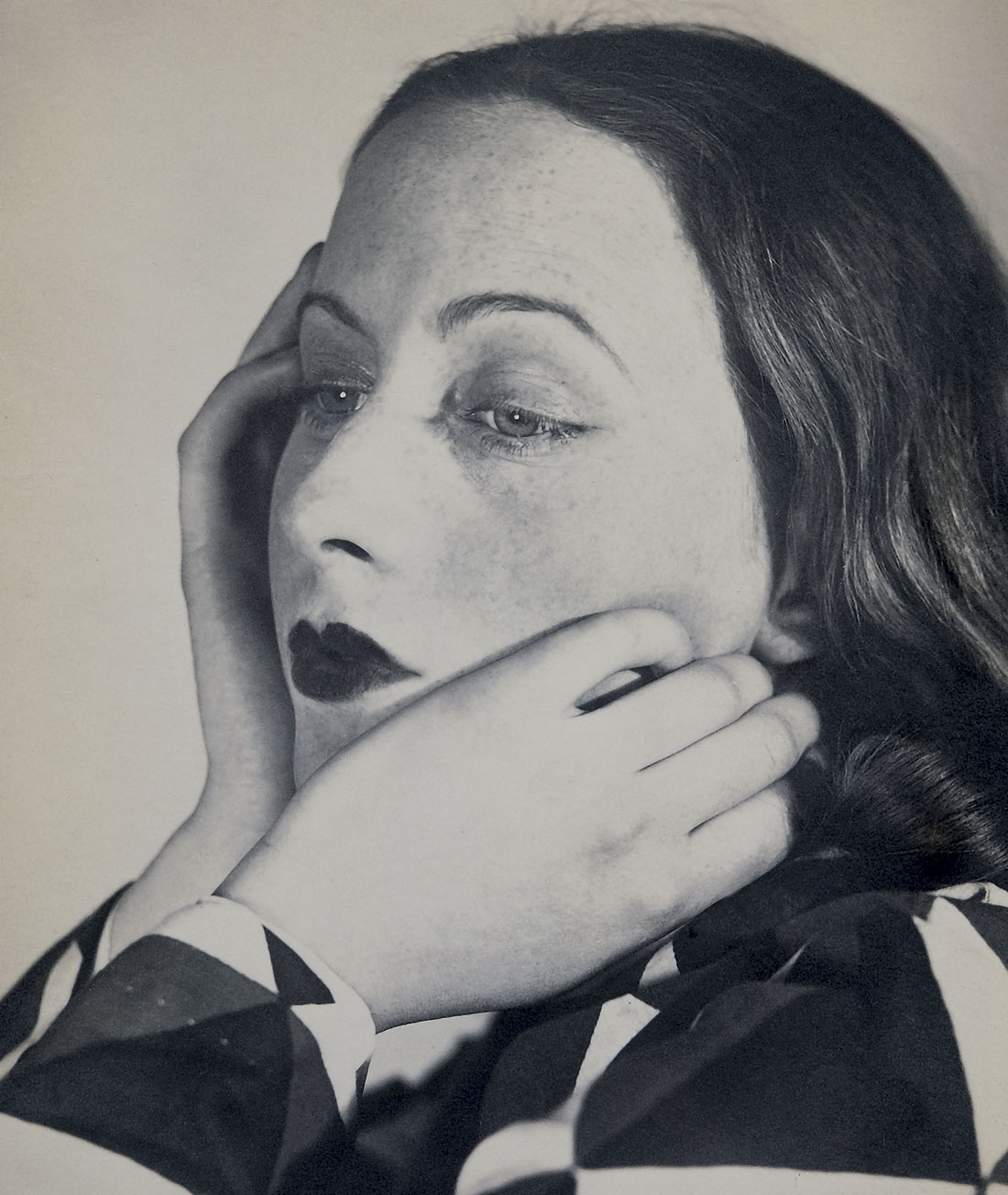
 

Florence Henri (New York 1893 - Compiègne 1982) 'Autoportrait [Self-portrait]' 1928


Florence Henri (New York 1893 – Compiègne 1982)
Autoportrait [Self-portrait]
1928
Gelatin silver print, vintage
39.3 x 25.5cm
Staatliche Museen zu Berlin, Kunstbibliothek
© Florence Henri / Galleria Martini & Ronchetti


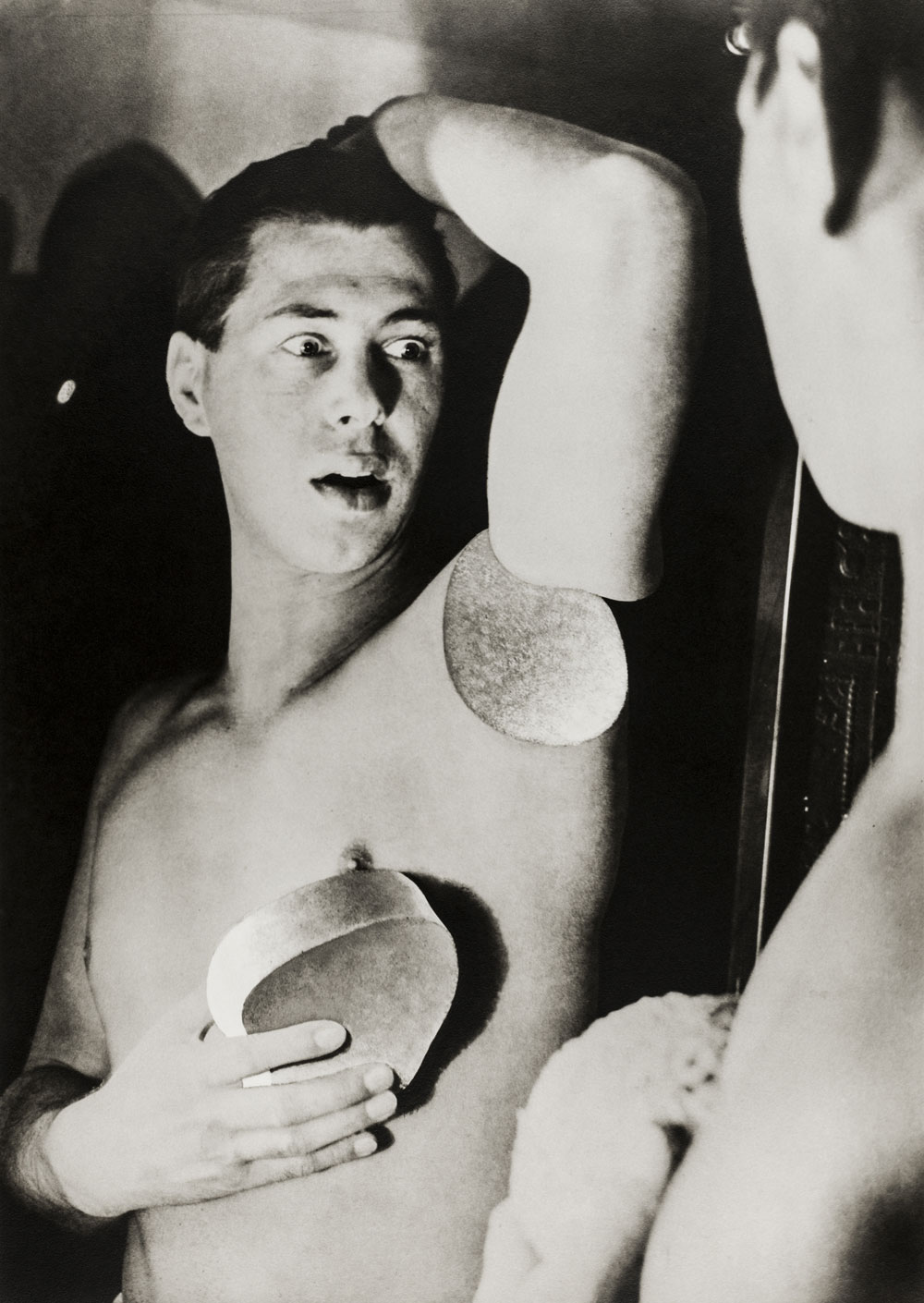
Her most well-known work is a self-portrait, in which Henri sits before a mirror, dolled up almost as if in drag. Two silver balls lay reflected up against the mirror, equivocal symbols of both testicles and breasts. Henri, influential in both her artistic style and personal styles, toyed with gender binaries, using her personal appearance to emphasise the performative nature of gender. The artist was married to a Swiss house servant, but went on to have other relationships with both men and women, including a longtime affair with artist and model Margarete Schall.

Henri established herself as a formidable photographer, and remained consistent in her work up until World War II. Then her work declined considerably, both due to lack of materials and the prohibitions imposed under the Nazi occupation. Henri briefly returned to painting, but her central period of output remained in the 1920s and 1930s. Her compositions, simultaneously warm, playful, clever and inquisitive, set the stage for future explorations into the limits of photography, or lack thereof.

Priscilla Frank. “Meet Florence Henri, The Under-Acknowledged Queen Of Surrealist Photography,” on the Huffington Post website, 20th February 2015 [Online] Cited 10/03/2015.


Florence Henri (New York 1893 - Compiègne 1982) 'Femme aux cartes [Woman with cards]' 1930


Florence Henri (New York 1893 – Compiègne 1982)
Femme aux cartes [Woman with cards]
1930
Gelatin silver print, vintage
39 x 28.5cm
Private collection, courtesy Florence Henri Archive, Genoa
© Florence Henri / Galleria Martini & Ronchetti


Florence Henri (New York 1893 - Compiègne 1982) 'Portrait Composition, Cora' 1931


Florence Henri (New York 1893 – Compiègne 1982)
Portrait Composition, Cora
1931
Gelatin silver print, vintage
13.6 x 11.4cm
Private collection, courtesy Florence Henri Archive, Genoa
© Florence Henri / Galleria Martini & Ronchetti


Florence Henri (New York 1893 - Compiègne 1982) 'Fernand Léger' 1934


Florence Henri (New York 1893 – Compiègne 1982)
Fernand Léger
1934
Gelatin silver print, vintage
30.4 x 24cm
Private collection, courtesy Archives Florence Henri, Genoa
© Florence Henri / Galleria Martini & Ronchetti


Earliest compositions

Her earliest compositions introduce an element that would be fundamental for her artistic investigations, namely the mirror. Using a very limited number of elements, Henri created extremely complex images characterised by the fragmentation of space and the use of multiple viewpoints. They include one of her best-known works, the self-portrait looking in the mirror with two metal spheres, which may be said to embody the spirit of freedom typical of that period, conveying the image of a modern and emancipated female artist, one who failed to conform to the societal status traditionally assigned to women.

Multiple exposure

Florence Henri uses methods such as multiple exposures when shooting, or a combination of several negatives, some inverted, to obtain abstract images, in which she manages to bestow static objects with a sense of dynamism. Florence Henri’s output during this early phase can be described as a perfect synthesis between abstract geometrical painting and the innovations of New Vision photography.

“Florence Henri’s work lured me to come to Paris in 1929. I wanted to live in a place where images were made that coincided with my own concepts.”

~ Ilse Bing, quoted in Gisèle Freund’s preface to Ilse Bing 1929/1955: Femmes de l’enfance à la vieillesse

Advertising photography

In the field of professional photography, Florence Henri stands out for her very personal approach to advertising photography. Indeed, her images are the natural extension of her photographic experimentation and investigations using objects and mirrors.

Collages

She quickly substitutes industrial objects with natural elements in her compositions. In addition, she introduces a new tool in her work: collage. She makes them with fragments of prints, and then reproduces them to create the final print. She also introduces a new technique into her work – collage – thereby underlining her interest in autonomous images that move away from a simple reproduction of reality, all the while emphasising the conceptual work of the artist.

Shadows

Her quest for experimentation leads Florence Henri to work on the shadows passing vertically through the frame, creating a dark gap that interrupts and fragments the continuity of the image.

Nu composition

Their aesthetic characteristics clearly place the works grouped under the title Nu composition as part of the formal research Florence Henri carried out from the early 1930s, where the mastery of the composition obviously remains the central concern of her work.

Here, the camera is positioned at a slight distance in order to capture the sensuality of the female form, while natural objects – hyacinths and shells – or other more enigmatic elements, such as a comb or cards, also appear in the frame.

Rome

In late 1931 and early 1932, Florence Henri visits Rome where she takes a series of photographs, notably at the Roman Forum, but also at Saint Peter’s Square, which she uses, upon her return to Paris, as material for numerous collages, developing the technique she had already used in certain of her still lifes.

Portrait composition

The series Portrait Composition, is characterised by the tight framing of the central figurer – though some are models, most are her friends, including Grete Willers, Sonia Delaunay, Woty Werner, Kurt Wilhelm-Kästner, Fernand Léger, and Tulia Kaiser. The artist often makes use of harsh lighting, which marks the traits or make-up of her subjects with a diagonal composition or even distorts the image.

Brittany

The photographs taken in Brittany, which at first glance could be seen as purely documentary, reveal a very carefully considered attention to structure. In some of the more general shots, Florence Henri inserts a blurred, graphic element between the lens and the landscape, thereby going against the idea of photography as merely capturing reality, and once again, reinforcing the notion of composition.

Store windows

When Florence Henri strolls through Paris with her camera, her images reveal a very different preoccupation to that of other photographers. Faithful to her attention to structure, in the reflections of store windows she finds the same spirit that brings life to her studio compositions using mirrors. In 1936, Florence Henri moves to the Rue Saint-Romain in Montparnasse, where she makes use of the terrace to work in natural light, and to pursue her study of the fragmentation of the image through the use of shadows and reflections. She also returns to her self-portrait work.


Florence Henri (New York 1893 - Compiègne 1982) 'Fenêtre [Window]' 1929


Florence Henri (New York 1893 – Compiègne 1982)
Fenêtre [Window]
1929
Gelatin silver print, vintage
37.3 x 27.5cm
Staatliche Museen zu Berlin, Kunstbibliothek
© Florence Henri / Galleria Martini & Ronchetti
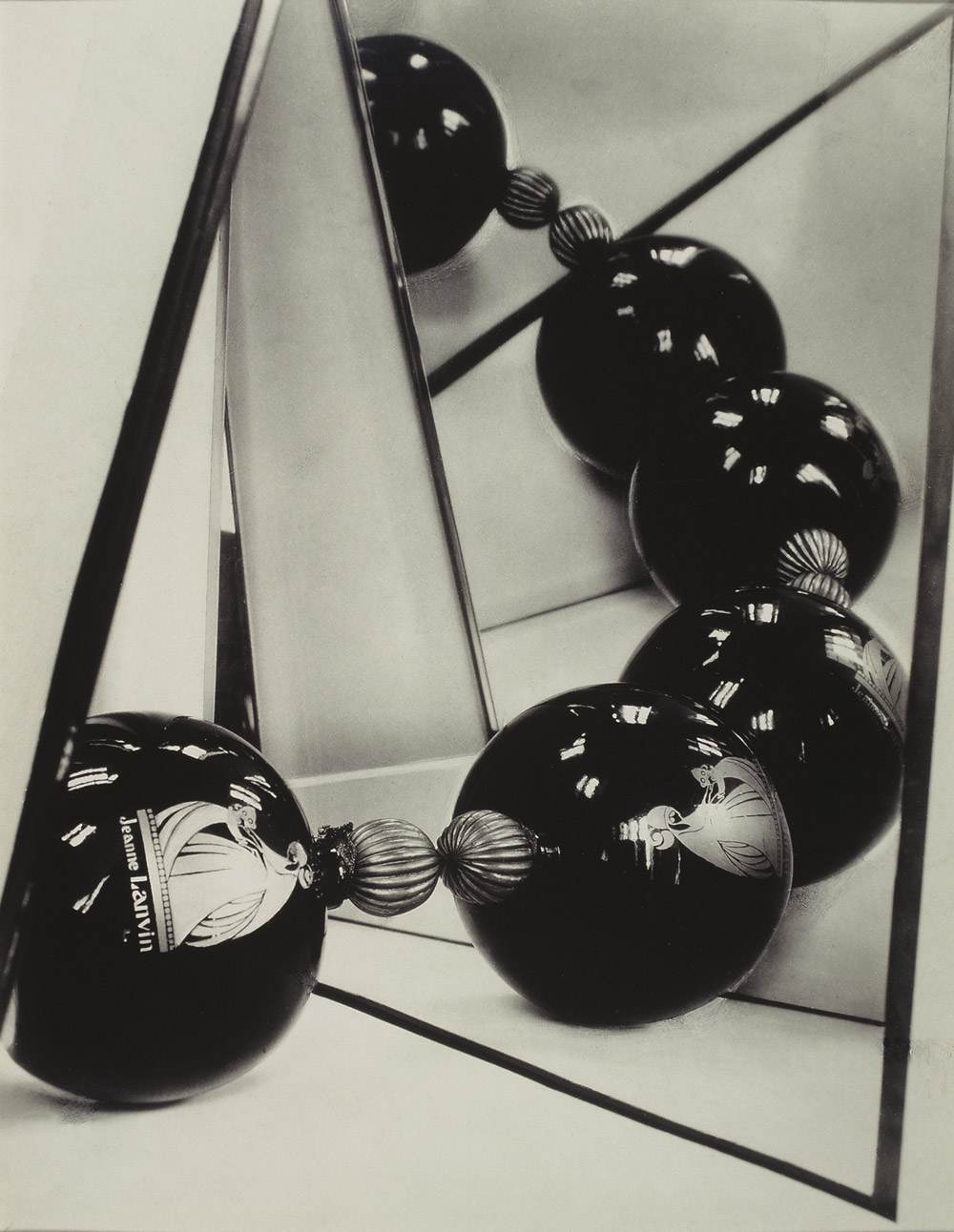
 

Florence Henri (New York 1893 - Compiègne 1982) 'Jeanne Lanvin' 1929


Florence Henri (New York 1893 – Compiègne 1982)
Jeanne Lanvin
1929
Gelatin silver print, vintage
36.7 x 28.7cm
Collection particulière, courtesy Archives Florence Henri, Gênes
© Florence Henri / Galleria Martini & Ronchetti


Florence Henri (New York 1893 - Compiègne 1982) 'Composition Nature morte [Still-life composition]' 1931


Florence Henri (New York 1893 – Compiègne 1982)
Composition Nature morte [Still-life composition]
1931
Gelatin silver print, vintage
45.9 x 37.7cm
Private collection, courtesy Florence Henri Archive, Genoa
© Florence Henri / Galleria Martini & Ronchetti


Florence Henri (New York 1893 - Compiègne 1982) 'Composition Nature morte [Still-life composition]' c. 1933


Florence Henri (New York 1893 – Compiègne 1982)
Composition Nature morte [Still-life composition]
c. 1933
Photomontage, épreuve gélatino-argentique d’époque
29.4 x 24cm
Private collection, courtesy Florence Henri Archive, Genoa
© Florence Henri / Galleria Martini & Ronchetti


Florence Henri (New York 1893 - Compiègne 1982) 'Robert Delaunay' c. 1935


Florence Henri (New York 1893 – Compiègne 1982)
Robert Delaunay
c. 1935
Gelatin silver print, vintage
49.5 x 39.7cm
Private collection, courtesy Florence Henri Archive, Genoa
© Florence Henri / Galleria Martini & Ronchetti


Florence Henri (New York 1893 - Compiègne 1982) 'Robert Delaunay' c. 1935 'Bretagne [Brittany]' 1937-1940


Florence Henri (New York 1893 – Compiègne 1982)
Bretagne [Brittany]
1937-1940
Gelatin silver print, vintage
28.2 x 24.2cm
Private collection, courtesy Florence Henri Archive, Genoa
© Florence Henri / Galleria Martini & Ronchetti


Florence Henri (New York 1893 - Compiègne 1982) 'Structure (intérieur du Palais de l'Air, Paris, Exposition Universelle) [Structure (Interior of the Palais de l'Air, Paris, World's Fair)]' 1937


Florence Henri (New York 1893 – Compiègne 1982)
Structure (intérieur du Palais de l’Air, Paris, Exposition Universelle) [Structure (Interior of the Palais de l’Air, Paris, World’s Fair)]
1937
Gelatin silver print dated 1976
17.5 x 17.5cm
Private collection, courtesy Florence Henri Archive, Genoa
© Florence Henri / Galleria Martini & Ronchetti


Florence Henri (New York 1893 - Compiègne 1982) 'Autoportrait [Self-portrait]' 1938


Florence Henri (New York 1893 – Compiègne 1982)
Autoportrait [Self-portrait]
1938
Gelatin silver print dated 1970’s
24.8 x 23.1cm
Private collection, courtesy Florence Henri Archive, Genoa
© Florence Henri / Galleria Martini & Ronchetti


Jeu de Paume
1, Place de la Concorde
75008 Paris
métro Concorde
Phone: 01 47 03 12 50

Opening hours:
Tuesday: 12.00 – 21.00
Wednesday – Sunday: 10.00 – 19.00
Closed Monday
Jeu de Paume website

LIKE ART BLART ON FACEBOOK

Back to top

Exhibition: ‘Bohemian Melbourne’ at the State Library of Victoria, Melbourne

Exhibition dates: 12th December, 2014 – 22nd February, 2015

Curator: Clare Williamson, with specialist advice from historian Dr. Tony Moore


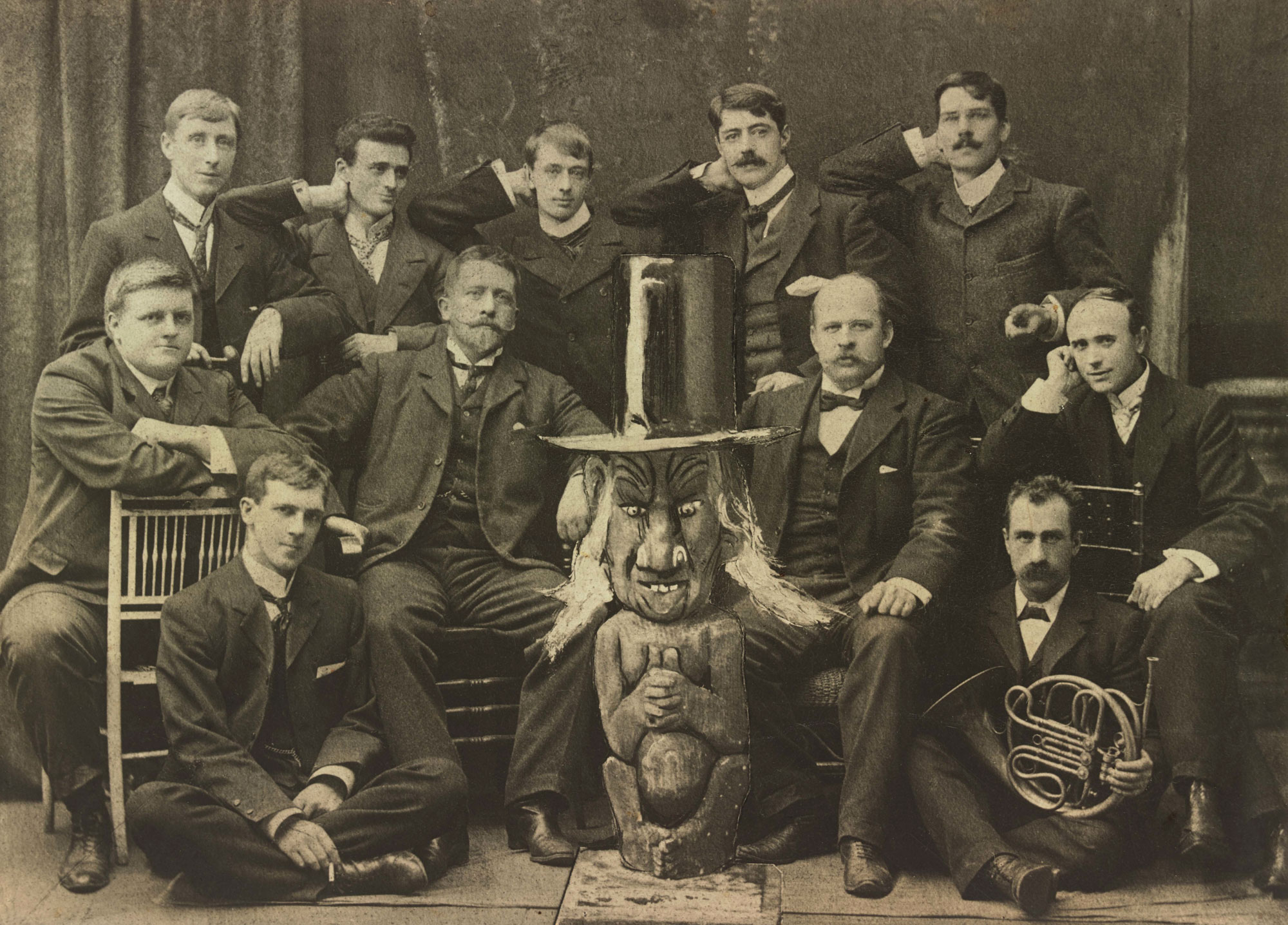
Unknown photographer. 'Members of the Ishmael Club' c. 1900 from the exhibition 'Bohemian Melbourne' at the State Library of Victoria, Melbourne, December 2014 - February 2015


Unknown photographer
Members of the Ishmael Club
c. 1900
Gelatin silver photograph
State Library Victoria


Definition

Bohemianism is the practice of an unconventional lifestyle, often in the company of like-minded people, with few permanent ties, involving musical, artistic, or literary pursuits. In this context, Bohemians may be wanderers, adventurers, or vagabonds. (Wikipedia)

A Bohemian is a person, as an artist or writer, who lives and acts free of regard for conventional rules and practices.


This is a fantastic exhibition at the State Library of Victoria, one of the best I have seen so far in Melbourne this year. I have seen it three times and each time it has been a thoroughly rewarding experience.

~ Visually and intellectually stimulating, with a plethora of artefacts, texts and photographs

~ Excellent curatorship, with the exhibition logically structured in order to cohesively display the history, characters and stories, and strands of creativity and rebellious spirit that make up Melbourne’s cultural life

~ A great hang, with disparate elements and mediums all informing each other, pithy quotes, unique film footage, video, music

~ Not too big, just the right size to indulge your senses and brain power


One downside was that the exhibition needed a book or exhibition catalogue to flesh out the themes. Hopefully this will eventuate down the track. Also, it would have been nice to see more of what I would call ‘vernacular bohemianism’ – not just the famous people in each era, but the people that lived the life out on the streets, that supported the subcultures that sprung up from the 1950s onwards, but in a small exhibition it is understandable that there was not enough space.

Another perspective is that, in ordering such a diverse group of people who don’t want to be classified, who lived on the edge of society – you remove their cultural and historical ability to be transgressive, to cross moral and social taboos. By naming them as “bohemian” you seek to classify and order their existence and bring them within a frame of reference that is about control, power and visibility. This disciplinary power, Michel Foucault maintains, relies on surveillance to transform the subjects and the exhibition taxonomy is just that… a form of surveillance of the subject as well as a form of ordering it. Under this phenomena of power, dissonance / dissidence is neutralised and human beings are made subjects: through ‘the systematic linking of the categories of power and knowledge to form a hybrid, power-knowledge.’ (Hirst, 1992, “Foucault and Architecture,” in AA Files, No. 26, Autumn, pp. 52-60)

As John Tagg notes in his book The Burden of Representation (and this is what this exhibition does, it ‘represents’ a particular construction of identity as seen from the viewpoint of the establishment, the institution), “when Foucault examines power he is not just examining a negative force operating through a series of prohibitions … We must cease once and for all to describe the effects of power in negative terms – as exclusion, censorship, concealment, eradication. In fact, power produces. It produces reality. It produces domains of objects, institutions of language, rituals of truth.” (Tagg, John. The Burden of Representation: Essays on Photographies and Histories. Basingstoke: Macmillan, 1988, p. 87)

Ultimately, that is what this exhibition does, it produces a reality that many of these bohemians would not have bought into, for they lived outside the fold. It produces domains of objects, institutions of language, rituals of truth that, through their naming, seek to classify and negate the transgressive and subversive nature of many of these people and groups. These people lived in opposition to the tenants and morals of everyday society and that is why we still love them – for their creativity, their individuality, their thoughts and above all their panache, stepping outside the orthodoxies and regi/mentality of everyday life. Against the system, for life.

Dr Marcus Bunyan


Many thankx to the State Library of Victoria for allowing me to publish the photographs in the posting. Installation photographs © Marcus Bunyan and the State Library of Victoria. Please click on the photographs for a larger version of the image.


“The mania of young artists to
wish to live outside of their time,
with other ideas and other customs,
isolate them from the world,
render them strange and bizarre,
puts them outside the law, banished
from society. These are today’s
bohemians.”


Félix Pyat (French, 1810-1889)


Artist, rebel, hippie, hipster?

Revealing Melbourne’s enduring counter-cultures, Bohemian Melbourne celebrates a who’s who of creative free spirits through their art and the bohemian legacy that has shaped the character of this city. The exhibition shines a light on Melbourne’s cultural bohemians from 1860 to today, tracing individuals who have pushed against convention in their lives and art, from Marcus Clarke, Albert Tucker and Mirka Mora to Barry Humphries, Vali Myers and Nick Cave.

Venture into history’s backstreets and smoky salons to discover the stories of the daring poets, artists, visionaries, rebels and rock stars who changed Melbourne forever.

Text from the State Library of Victoria website


Marcus Clarke: “A Punk in the Age of Steam”

Marcus Clarke, writer, journalist and later a librarian at the Melbourne Public Library, is generally celebrated as the father of Bohemian Melbourne – although he was more its wild child. After a privileged start in a wealthy English family, which allowed him to cultivate the life of a young dandy and to indulge his passion for the writings of Honoré de Balzac and others, a 16-year-old Clarke suddenly found himself in colonial Melbourne in 1863, thanks to a turn in the family fortune.

Determined to maintain a semblance of the life to which he had become accustomed, Clarke was soon to be found strolling the streets of Melbourne as a flâneur, an observer of the city spectacle. A short-lived post as a bank clerk was followed by a stint on the land as a jackaroo, but by the age of 21 he was back in Melbourne and working as a journalist for the Argus newspaper.

Clarke’s bohemian ways soon attracted other young journalists and writers, and they began to congregate at various Melbourne watering holes, in particular the Cafe de Paris establishing the Yorick Club, the early members of which included fellow writers Henry Rendall, George Gordon McCrae and Adam Lindsay Gordon. The Yorick had a human skull for a mascot and rules that parodied the gentleman’s clubs of establishment Melbourne. Its members gathered in rooms adjoining the office of Melbourne Punch to smoke clay pipes, drink from pewter mugs, recite poetry and generally engage in horseplay. Bohemian society had found a Melbourne home and a creative community was born.

Wall text from exhibition


Unknown photographer. 'Marcus Clarke' 1866 from the exhibition 'Bohemian Melbourne' at the State Library of Victoria, Melbourne, December 2014 - February 2015


Unknown photographer
Marcus Clarke
1866
Albumen silver photograph
State Library Victoria


Bohemian culture in marvellous Melbourne

Marvellous Melbourne, which arose out of the egalitarianism of the gold rushes, gave birth to a strong bohemian culture. Marcus Clarke, the London-born journalist, writer, librarian and professional bohemian, joined the Athenaeum Club and founded in 1868 the Yorrick Club, Australia’s first bohemian club, which became a magnet for men of letters.

He was a dressed-up dandy, a flâneur and a heavy drinker, but had a touch of genius with his novel, For the Term of His Natural Life (1874/75), one of the classics of Australian colonial literature. He was dead by the age of 35, with suicide rumoured but rejected by his actress wife, Marian Dunn, the mother of his six children. Clarke in his behaviour and creative achievement became a model for other Australian bohemians to follow.

Extract from Professor Sasha Grishin. “Celebrating Melbourne bohemians at the State Library of Victoria,” on The Conversation website, 16 January 2015 [Online] Cited 03/02/2015. Used under fair use conditions for the purposes of education and research


Unknown photographer. 'Marcus Clarke'1866 (detail)


Unknown photographer
Marcus Clarke (detail)
1866
Albumen silver photograph
State Library Victoria


In 1863, when the young Marcus Clarke arrived in Melbourne, he could have slipped easily into what passed for mannered society in the booming gold-rush city. His uncle was a County Court judge, his cousin a politician, and Clarke himself was granted honorary membership of the elite Melbourne Club. But he chose to turn his back on the bunyip aristocracy. “I am a bohemian,” declared the man who would go on to write the first great Australian novel. “I live, I walk, I eat, drink and philosophise.”

All of which sounds perfectly normal – except, perhaps, for the philosophising – but in reality, Marcus Clarke’s life was far from average. He became a celebrated satirist of Marvellous Melbourne, by turns outraging and titillating 19th-century sensibilities in Australia’s modern metropolis. He befriended fellow intellectuals and bon vivants to form underground literary clubs that didn’t so much turn their backs on as raise an insulting finger to colonial mores. He was a poet and a playwright, a journalist and a novelist, a jackaroo, a wastrel and, above all, quite the tremendous wit.

Clarke’s most enduring gift is his writing, particularly the classic convict novel For The Term Of His Natural Life. But a new exhibition at the State Library of Victoria pays tribute to his other major legacy – that of Australia’s first bona fide bohemian.

“Clarke was an iconoclast, dangerous to know and a dandy about town,” explains historian Dr Tony Moore, author of Dancing With Empty Pockets: Australia’s Bohemians…

“Most people think of him as a venerable old Victorian gentleman, but I characterise him as a punk in the age of steam.” [Marcus: I don’t know why a venerable old Victorian gentleman – he was dead at 35]

Moore, who is a Monash University academic and passionate chronicler of unconventional Australians, was an adviser to the exhibition and worked alongside curator Clare Williamson to create this retrospective of radicals. Melbourne’s roaming free spirits have been corralled together for the first time using material – some of it never previously displayed in public – drawn from State Library archives and borrowed from public and private collections. Viewed en masse, they comprise a rogues’ gallery of some of the country’s most indelible cultural icons…

His [Clarke’s] image adorns the exhibition posters, a larger-than-life bohemian in breeches and knee-high boots with a cabbage-tree hat perched jauntily above his broad, handsome face. Melbourne’s original radical would be thrilled to see that his notoriety lives on, more than a century after his death.

Extract from Kendall Hill. “Bohemian Melbourne: Exhibition” on the Qantas Travel Insider website [Online] Cited 03/02/2015. No longer available online. Used under fair use conditions for the purposes of education and research


Installation view of the exhibition 'Bohemian Melbourne' at the State Library of Victoria, Melbourne

Installation view of the exhibition 'Bohemian Melbourne' at the State Library of Victoria, Melbourne


Installation views of the exhibition Bohemian Melbourne at the State Library of Victoria, Melbourne
Photos: Marcus Bunyan


Wall text 'Bohemians of the Bush' from the exhibition 'Bohemian Melbourne' at the State Library of Victoria, Melbourne


Wall text from the exhibition Bohemian Melbourne at the State Library of Victoria, Melbourne
Photo: Marcus Bunyan


Justus Jörgensen (Australian, 1893-1975) 'Fifteen of the Founders' 1944 (installation view)


Justus Jörgensen (Australian, 1893-1975)
Fifteen of the Founders (installation view)
1944
Oil on canvas and gauze mounted on panel
Collection of the Montsalvat Trust
Photo: Marcus Bunyan


Montsalvat is the result of Justus Jörgensen’s vision for a collective experience of art and life. Jörgensen had trained in architecture and then in painting with earlier bohemian Max Meldrum. His studio in Queen Street, the Mitre Tavern and the Latin and Chung Wah restaurants were sites for lively discussions in which Jörgensen put forward his philosophies of art, the revival of medieval craftsmanship and communal living. This vision began to take shape in 1934 when he and his wife, Lily, brought land at Eltham; with the assistance of friends and followers, he built Montsalvat, an artists’ colony of studios, workshops and the communal Great Hall.

While Justus Jörgensen rarely exhibited, his great love was painting. This multi-panelled work comprises portraits by Jörgensen of 15 significant figures from the early years of Montsalvat. They are, from top to bottom, left to right:

Ian Robertson – student of Jorgensen who also ran an antiques shop
Leo Brierley – businessman and backer of Mervyn Skipper’s Pandemonium journal
Helen (Nell) Lempriere – niece of Dame Nellie Melba, painter, sculptor, and an earl student of Jorgensen
Norman Porter – friend and student of Jorgensen and lecturer in philosophy
Mervyn Skipper – author, journalist and Melbourne editor of the Bulletin
Helen Skipper – Mervyn’s first daughter, Jorgensen’s partner for many years, and mother of Sebastian and Sigmund Jorgensen
Justus Jorgensen – founder and architect of Montsalvat, painter, assistant to artist Max Meldrum and teacher.
Sonia Skipper – second daughter of Mervyn Skipper, and painter and teacher
Arthur Munday – law student, sculptor and stonemason trained by Jorgensen
William (Bill) Cook – teacher, philosophy and president of the Victorian Rationalist Society
Norman Radcliffe – student and friend of Jorgensen, and philosopher
Ray Grant – student of Jorgensen and philosopher
Edward Goll – internationally renowned pianist and teacher at Melbourne Conservatorium of Music
Arthur (George) Chalmers – pharmacist, student of Jorgensen, stonemason and carver, who also planted the first vineyard at Montsalvat

(Label texts)


Montsalvat is an artist colony in Eltham, Victoria, Australia, established by Justus Jörgensen in 1934. It is home to over a dozen buildings, houses and halls set amongst richly established gardens on 48,562 m2 (12 acres) of land. The colony of Montsalvat has a detailed history that reflects the life of Jörgensen and his friends and family; there is also a legend behind its name, while its buildings and gardens are steeped in the art and culture of Melbourne and its surroundings.

Visitors can pay a small fee to walk throughout the colony’s historical gardens, artists’ houses/workshops and explore the surrounding buildings. All of the buildings on the site were designed and built by residents with locally available materials, from various sources. The Great Hall offers an extensive network of spaces from extravagant halls and vast exhibition spaces, to small corridors and tiny balconies overlooking the gardens.

Text from the Wikipedia website


Percy Grainger (Australian, 1882-1961) Ella Grainger (Australian, 1889-1979) 'Towelling tunic, shirt, leggings, belt, shoes worn by Percy Grainger' c. 1934 (installation view)


Percy Grainger (Australian, 1882-1961)
Ella Grainger (Australian, 1889-1979)
Towelling tunic, shirt, leggings, belt, shoes worn by Percy Grainger (installation view)
c. 1934
Cotton bath towels, plastic, leather and metal
Grainger Museum collection, University of Melbourne
Photo: Marcus Bunyan


“In 1932 or 1933 my wife and I took up again this idea of clothing made of towelling and when in Australia in 1934 and 1935 we were amazed by the beauty of the bath towels on sale in Australia – some imported from England, Czechoslovakia and America, but most of them (and among them the most beautiful ones) manufactured in Australia. Here was a chance to show what could be done with the beauty born of machinery – a beauty as rich and subtle, in its own way, as anything made by hand or loom.”

Percy Grainger, c. 1955-1956


Unknown photographer, New York. 'Percy Grainger wearing a towelling clothes outfit at his home in White Plains' 1936


Unknown photographer, New York
Percy Grainger wearing a towelling clothes outfit at his home in White Plains
1936
Silver gelatin print
Grainger Museum collection, University of Melbourne


Installation photograph of the exhibition 'Bohemian Melbourne' at the State Library of Victoria February 2015, including at left Albert Tucker, 'Self-portrait with Joy Hester', 1939


Installation photograph of the exhibition Bohemian Melbourne at the State Library of Victoria February 2015, including at left Albert Tucker, Self-portrait with Joy Hester, 1939 (see below)
Photo: Marcus Bunyan


Albert Tucker (Australian, 1914-1999) 'Self-portrait with Joy Hester' 1939


Albert Tucker (Australian, 1914-1999)
Self-portrait with Joy Hester
1939
Gelatin silver photograph
State Library Victoria


Albert Tucker Interview with an Australian Artist – Heide Museum

An Interview with Albert Tucker conducted by Justin O’Brien in 1997.

Albert expands on his many insights,during the time he spent with John and Sunday Reed and other artists at Heide during the1940’s. An intimate insight into a unique man.


Unknown photographer. 'Opening of Mirka Café' 1954


Unknown photographer
Opening of Mirka Café
1954
Gelatin silver photograph
Courtesy of Heide Museum of Modern Art and William Mora Galleries


Unknown photographer. 'Opening of Mirka Café' 1954 (detail)


Unknown photographer
Opening of Mirka Café (detail)
1954
Gelatin silver photograph
Courtesy of Heide Museum of Modern Art and William Mora Galleries


These clips features home movie footage taken by Gertie Anschel (c. 1953-1954) with audio commentary by film director Philippe Mora.

Part 1 of 3 features scenes of Melbourne, The Mirka Café and Joy Hester and Gray Smith’s property. Philippe reflects on his childhood and identifies key figures of the Melbourne art scene.


Part 2 of 3 features the property of Roger de Stoop, artist friends and Arthur Boyd at work on his 1956 Melbourne Olympic statue. Philippe reflects on his childhood identifies key figures of the Melbourne art scene.


Part 3 of 3 features the Moras, the art gang at a balcony party and late American actor Melvyn Douglas. Philippe reflects on his childhood, parents and identifies key figures of the Melbourne art scene.


Making Your Own Fun in the 50s

On the surface at least, Melbourne in the 1950s was a rather dour affair. For some non-conformists, such as Vali Myers and Barry Humphries, it was a place to escape rather than a place to be. For others, however, it was a site for creating underground cultures that were largely invisible to the mainstream.

This was no more so than in the case of gay and lesbian, or ‘camp’, culture, as it was known at the time. Homosexuality was illegal in Victoria until 1960, and in the 1950s it was sensationalised in the tabloid press as a subject for mockery if not horror. As a result, homosexual men and women developed alternative bohemian cultures and communities, with their own covert venues, house parties, secret languages and dress codes.

The gala costume arts balls that raised money for mainstream theatre and other arts charities were grand exceptions to the generally underground clubs and private parties. They offered rare moments in which camp culture could be expressed in public without fear for reprisal. Theatres and dance companies provided employment for many, and bars, such as the one nicknamed the Snake Pit at the Hotel Australia, and restaurants such as Val’s Coffee Lounge, provided opportunities for the camp community to meet and to mix with others who were outside the establishment.


Norman Ikin (Australian, 1925-1962) 'Vali Myers' c. 1949


Norman Ikin (Australian, 1925-1962)
Vali Myers
c. 1949
Gelatin silver photograph
State Library Victoria


Mark Strizic (Australian, 1928-2012) 'Barry Humphries in Melbourne' 1969


Mark Strizic (Australian, 1928-2012)
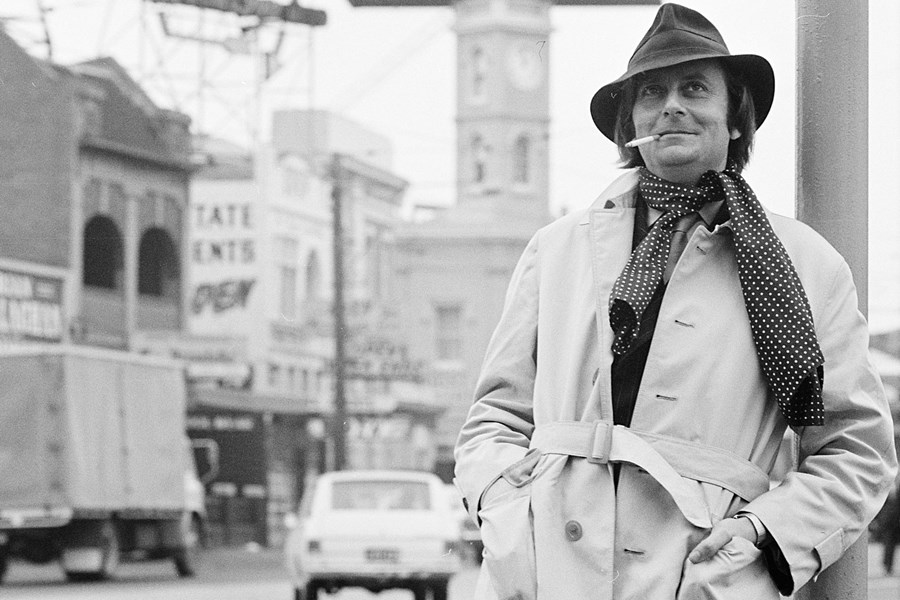
Barry Humphries in Melbourne
1969
Exhibition print from flexible-base negative
State Library of Victoria
Courtesy of the Estate of the artist


A never seen on broadcast TV programme with Barry Humphries as Dame Edna Everage made in 1975. Barry Humphries was promoting his film ‘Barry McKenzie holds his own’. Films clips were provided officially by EMI. The interviewer trying to hold things together is Mark Caldwell. The programme was made in black and white.


Wall text 'North of the River' from the exhibition Bohemian Melbourne at the State Library of Victoria, Melbourne


Wall text from the exhibition Bohemian Melbourne at the State Library of Victoria, Melbourne
Photo: Marcus Bunyan


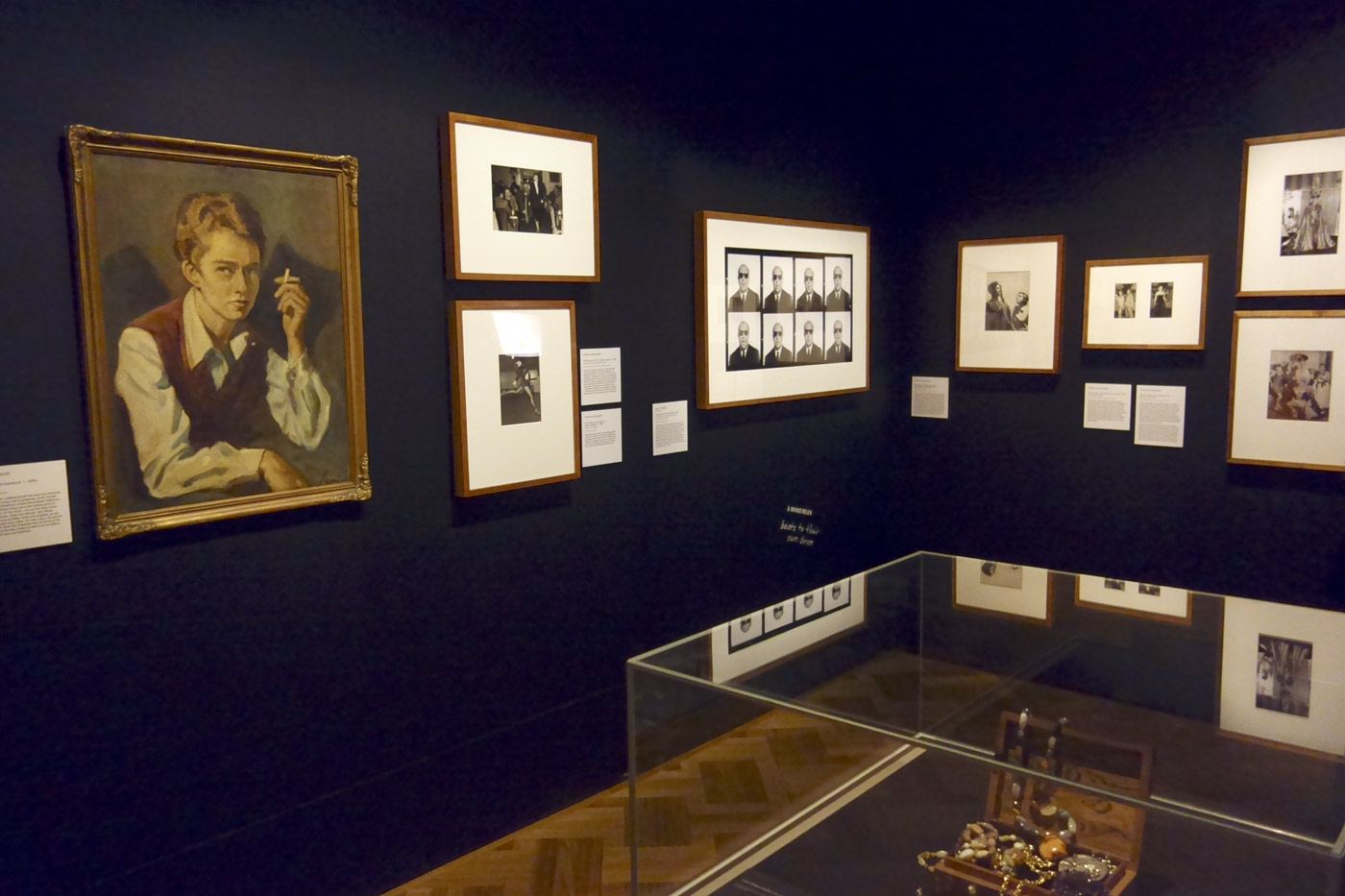
Installation photograph of the exhibition 'Bohemian Melbourne' at the State Library of Victoria February 2015 with, in the distance, Henry Talbot 'Portraits of actor Frank Thring' 1963, with Thring's jewellery box and contents in the foreground


Installation photograph of the exhibition Bohemian Melbourne at the State Library of Victoria February 2015 with, in the distance, Henry Talbot Portraits of actor Frank Thring 1963, with Thring’s jewellery box and contents in the foreground
Photo: Marcus Bunyan


It has been said of Frank Thring that he could make most stages or foyers seem small. His larger-than-life personality was almost matched by his frame, often decked out in imposing black and with flamboyant jewellery. Son of Frank Thring snr, founder of Efftee Films and 3XY Radio, Thring jnr earned fame as an actor in London’s West End and in Hollywood films such as Ben Hur, often playing sinister or decadent characters. In the 1950s, he would recite poems laden with innuendo and hold court at the ‘head table’ at Val’s Coffee Lounge. To be welcome at his table was a sign one was part of the ‘in’ crowd.

Label text


Unknown photographer. 'Arts Ball, Palais de Danse - John Anderson as Sun God' c. 1963-1964


Unknown photographer
Arts Ball, Palais de Danse – John Anderson as Sun God
c. 1963-1964
Gelatin silver photograph
Australian Lesbian and Gay Archives


John Anderson was first-prize winner at a number of arts balls in the 1960s. His costume shown here reflects the creativity and effort that many put into their outfits. Costumes and headdresses were sometimes so large that Anderson and others regularly hired furniture vans to take them to the ball. One year the van that was transporting Anderson broke down and he completed the journey strapped upright on the back of a ute. His Sun  God costume wowed new audiences when he was invited to take part in a pageant on ice base on the theme of The Kind and I – with Anderson as the King – at the Southland shopping centre ice rink around 1970.

Label text

But you will go to the ball, you will sweetie!


Richard Walsh (editor) 'The Review', Vol. 22, No. 22 Melbourne incorporated Newsagencies Co., March 1972


Richard Walsh (editor)
The Review, Vol. 22, No. 22
Melbourne incorporated Newsagencies Co.,
March 1972
State Library of Victoria
Photo: Marcus Bunyan


Before editing the irreverent Melbourne weekly The Review (Nation Review from July 1972, Richard Walsh edited counter-cultural Oz magazine with Richard Neville and Martin Sharp. Contributors to Nation Review included Max Harris, Bob Ellis, Phillip Adams, Michael Leunig and Germaine Greer. Greer had been part of the Drift in Melbourne, a loose association of artists, students and graduates. Enrolling in a Masters degree at Sydney University, in 1962 she becomes a leading light in the Sydney libertarian Push, an intellectual bohemia of larrikin anarchists. Gaining her PhD at Cambridge University, Greer then published her groundbreaking book The Female Eunuch.

Label text


Ashley Mackevicius (Australian, b. 1958) 'Nick Cave' 1973


Ashley Mackevicius (Australian, b. 1958)
Nick Cave
1973
Gelatin silver photograph
National Portrait Gallery, Canberra
Gift of the artist 2006


Ponch Hawkes (Australian, b. 1946) 'Soapbox Circus – The Fabulous Spagoni Family' c. 1977


Ponch Hawkes (Australian, b. 1946)
Soapbox Circus – The Fabulous Spagoni Family
c. 1977
Gelatin silver photograph
State Library Victoria
© the artist


Ponch Hawkes (Australian, b. 1946) 'Melantroppos, Circus Oz, Princes Park' 1979


Ponch Hawkes (Australian, b. 1946)
Melantroppos, Circus Oz, Princes Park
1979
Gelatin silver photograph
State Library Victoria
© the artist


Installation photograph of the exhibition 'Bohemian Melbourne' at the State Library of Victoria February 2015 with artist Ponch Hawkes' work at right


Installation photograph of the exhibition Bohemian Melbourne at the State Library of Victoria February 2015 with artist Ponch Hawkes’ work at right
Photo: Marcus Bunyan


Rennie Ellis (Australian, 1940-2003) 'Mirka Mora in her studio' 1978


Rennie Ellis (Australian, 1940-2003)
Mirka Mora in her studio
1978
Colour transparency
State Library Victoria
© Rennie Ellis Photographic Archive


For more information see the Rennie Ellis Archive website.


Vali Myers (Australian, 1930-2003) 'Passions' 1981-1982


Vali Myers (Australian, 1930-2003)
Passions
1981-1982
Pen, black ink, sepia, burnt sienna and watercolour
Vali Myers Art Gallery Trust


Vali Myers discovered a love of drawing at an early age. Over the years it became her primary mode of artistic expression in place of contemporary dance. She dedicated her life to her art and would spend up to two years creating each of her intricately drawn artworks. Passions contains many elements that symbolically represent aspects of Vali Myers’ art and life. These include a fox (referencing her pet Foxy), ravens (Edgar Allan Poe’s The Raven being one of her favourite poems, a gypsy-like figure playing a violin and, at the centre of it all, a woman with flaming red hair.

Label text


Liz Ham (Australian born England, b. 1975) 'Vali Myers in her studio in the Nicholas Building' 1997


Liz Ham (Australian born England, b. 1975)
Vali Myers in her studio in the Nicholas Building
1997
Gelatin silver photograph
State Library Victoria


Ed van der Elsken “Vali” 1972

Australian artist Vali Myers moved to Paris from Australia at age 19 where she lived on the streets, danced in cafes, met Satre, Cocteau, Genet and Django Reinhardt. She moved to New York, tattooed Patti Smith’s knee, befriended Salvador Dali and met Andy Warhol and Tennessee Williams.

Vali was a great influence on lots of famous people Tennessee Williams, Jean Cocteau, Mick Jagger, Marianne Faithfull, Debbie Harry, Patti Smith, Jean Genet and Kate Bush.


Installation photograph of the exhibition 'Bohemian Melbourne' at the State Library of Victoria February 2015


Installation photograph of the exhibition Bohemian Melbourne at the State Library of Victoria February 2015
Photo: Marcus Bunyan


Howard Arkley

Australian artist Howard Arkley interviewed by ABC television shortly before his untimely death in 1999.


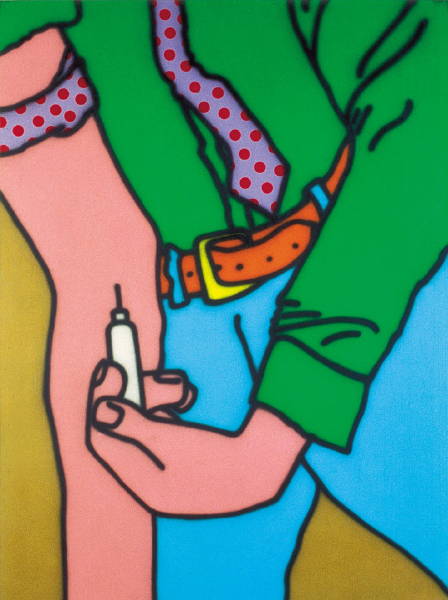
Howard Arkley (Australian, 1951-1999) 'The Ritual' 1986


Howard Arkley (Australian, 1951-1999)
The Ritual
1986
Synthetic polymer paint on canvas
State Library of Victoria


Howard Arkley is recognised as one of Australia’s most significant 20th-century artists. He is unique in embracing not only urban culture but also life in suburbia, a space generally shunned or scorned by bohemians, with exception of that other flaneur of suburbia, Barry Humphries. Like many bohemians before him, Arkley lived on the edge and experimented with mind-altering substances, and, like a good proportion of them, his life was tragically cut short as a result. Despite its large scale, comic-book style and pop colours, The Ritual is as much a cool and judgment-free study in composition and the human form as it is in the rituals or ‘habits’ associated with drug use.

Label text


State Library of Victoria
328 Swanston St,
Melbourne VIC 3000
Phone: (03) 8664 7000

Opening hours:
Daily 10am – 6pm

State Library of Victoria website

LIKE ART BLART ON FACEBOOK

Back to top

Exhibition: ‘Marc Chagall – A Retrospective 1908-1985’ at the Palazzo Reale, Milan

Exhibition dates: 17th September, 2014 – 1st February, 2015

Curators: Claudia Zevi and Meret Meyer (Chagall’s granddaughter)


Marc Chagall (French born Russia, 1887-1985) 'Figura davanti alla volta blu' 1911 from the exhibition 'Marc Chagall – A Retrospective 1908-1985' at the Palazzo Reale, Milan, September 2014 - February 2015


Marc Chagall (French born Russia, 1887-1985)
Figura davanti alla volta blu
1911
Gouache on paper


A bumper posting on this glorious artist – another who, too late, realised the threat of Nazi Germany and only survived deportation and death by the skin of his teeth. It would have been a sad loss, for he possesses an unbridled passion for life. Social conscience, mythology, iconography, place, identity, race, religion, beauty, war and tragedy. And the exemplary use of colour in his metaphysical, fantastical scenes. But above all…. MAGIC!

Marcus


Many thankx to the Palazzo Reale for allowing me to publish the photographs in the posting. Please click on the photographs for a larger version of the image.


“If I create from the heart, nearly everything works; if from the head, almost nothing.”


Marc Chagall


“Chagall a pioneer of modern art and one of its greatest figurative painters… [who] invented a visual language that recorded the thrill and terror of the twentieth century…

On his canvases we read the triumph of modernism, the breakthrough in art to an expression of inner life that … is one of the last century’s signal legacies. At the same time Chagall was personally swept up in the horrors of European history between 1914 and 1945: world wars, revolution, ethnic persecution, the murder and exile of millions. In an age when many major artists fled reality for abstraction, he distilled his experiences of suffering and tragedy into images at once immediate, simple, and symbolic to which everyone could respond.”


Wullschlager, Jackie. Chagall: A Biography. Knopf, 2008. p. 4


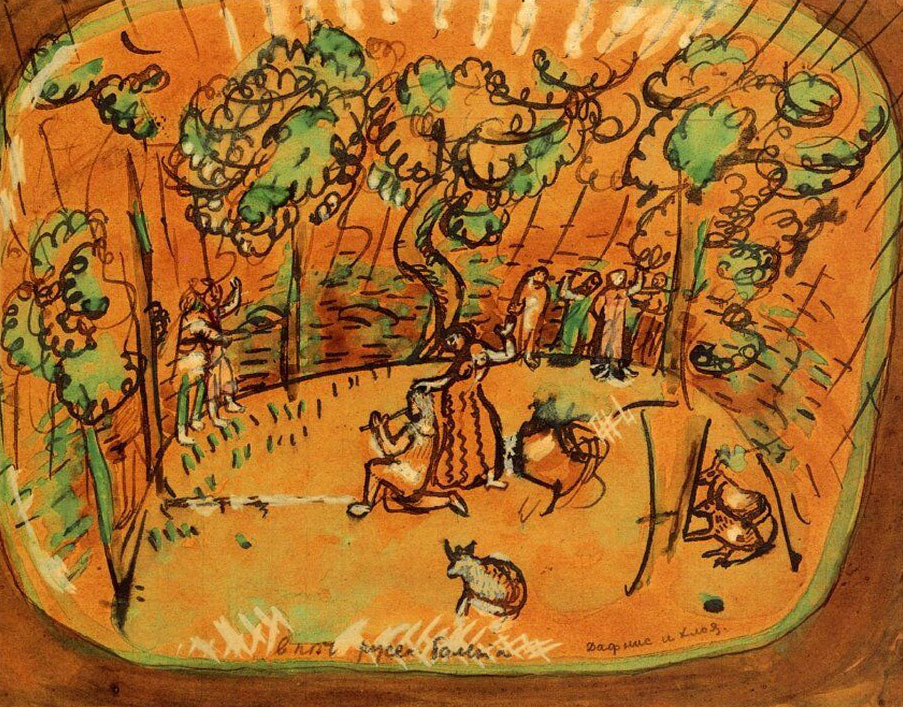
Marc Chagall (French born Russia, 1887-1985) 'Daphnis and Cloe' 1911 from the exhibition 'Marc Chagall – A Retrospective 1908-1985' at the Palazzo Reale, Milan, September 2014 - February 2015


Marc Chagall (French born Russia, 1887-1985)
Daphnis and Cloe
1911
Watercolour
16.5 x 21cm
Private collection


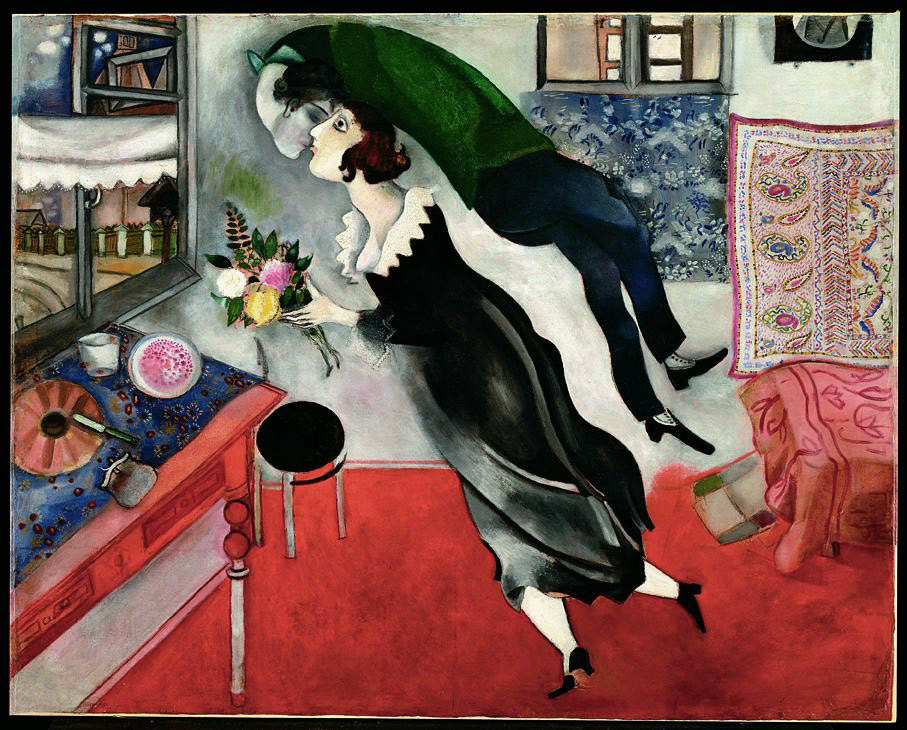
Marc Chagall (French born Russia, 1887-1985) 'Il compleanno' 1915


Marc Chagall (French born Russia, 1887-1985)
Il compleanno (Birthday)
1915
Oil on cardboard
The Museum of Modern Art, New York. Acquired through the Lillie P. Bliss Bequest, 1949
© 2014 Digital image, The Museum of Modern Art, New York/Scala, Firenze © Chagall ® by SIAE 2014


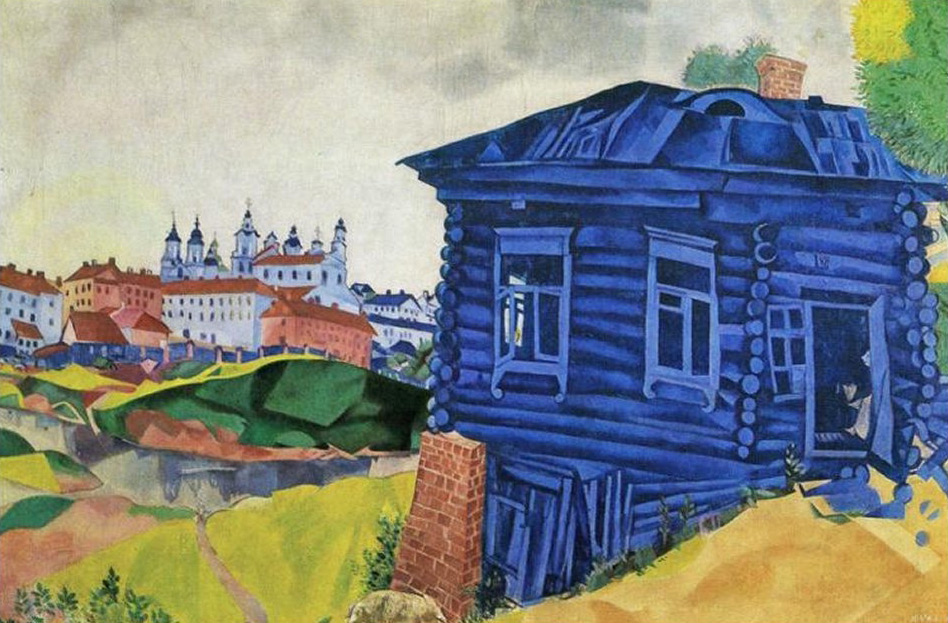
Marc Chagall (French born Russia, 1887-1985) 'The Blue House' 1917


Marc Chagall (French born Russia, 1887-1985)
The Blue House
1917
Oil on canvas
66 x 96.8cm
Musée des Beaux-Arts, Liège, France


Marc Chagall (French born Russia, 1887-1985) 'Matrimonio' (Wedding) 1918


Marc Chagall (French born Russia, 1887-1985)
Matrimonio (Wedding)
1918
Oil on canvas
100 x 119cm
Tretyakov Gallery, Moscow, Russia


Marc Chagall (French born Russia, 1887-1985) 'Model of great scene for "Mazeltov" Scholem Aleichem' 1919


Marc Chagall (French born Russia, 1887-1985)
Modello di grande scena per “Mazeltov” di Scholem Aleichem (Model of great scene for “Mazeltov” Scholem Aleichem)
1919
Oil and black pencil on paper pasted on cardboard
Private Collection


Marc Chagall (French born Russia, 1887-1985) 'Composition with circles and goat (Jewish Theatre Art)' 1920


Marc Chagall (French born Russia, 1887-1985)
Composizione con cerchi e capra (Teatro d’arte ebraica) (Composition with circles and goat (Jewish Theatre Art))
1920
Oil on cardboard laid on wood agglomerate
Private Collection


Marc Chagall (French born Russia, 1887-1985) 'Angelo cadente' (The Falling Angel) 1923


Marc Chagall (French born Russia, 1887-1985)
Angelo cadente (The Falling Angel)
1923
Oil on canvas
148 x 189cm
Private collection


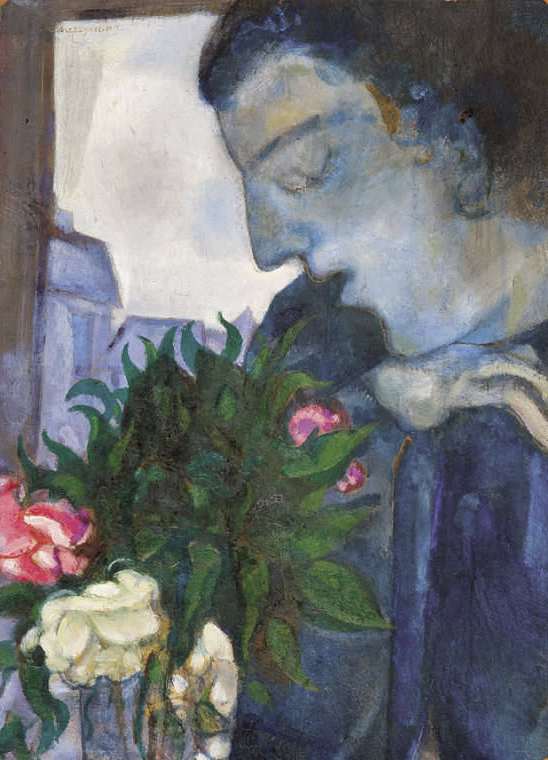
Marc Chagall (French born Russia, 1887-1985) 'Bella con un libro e un vaso di fiori (o Bella a Mourillon)' 1926


Marc Chagall (French born Russia, 1887-1985)
Bella con un libro e un vaso di fiori (o Bella a Mourillon) (Beauty with a book and a vase of flowers (or Bella in Mourillon))
1926
Oil on canvas
Credits: Collezione Privata
© Chagall ® by SIAE 2014


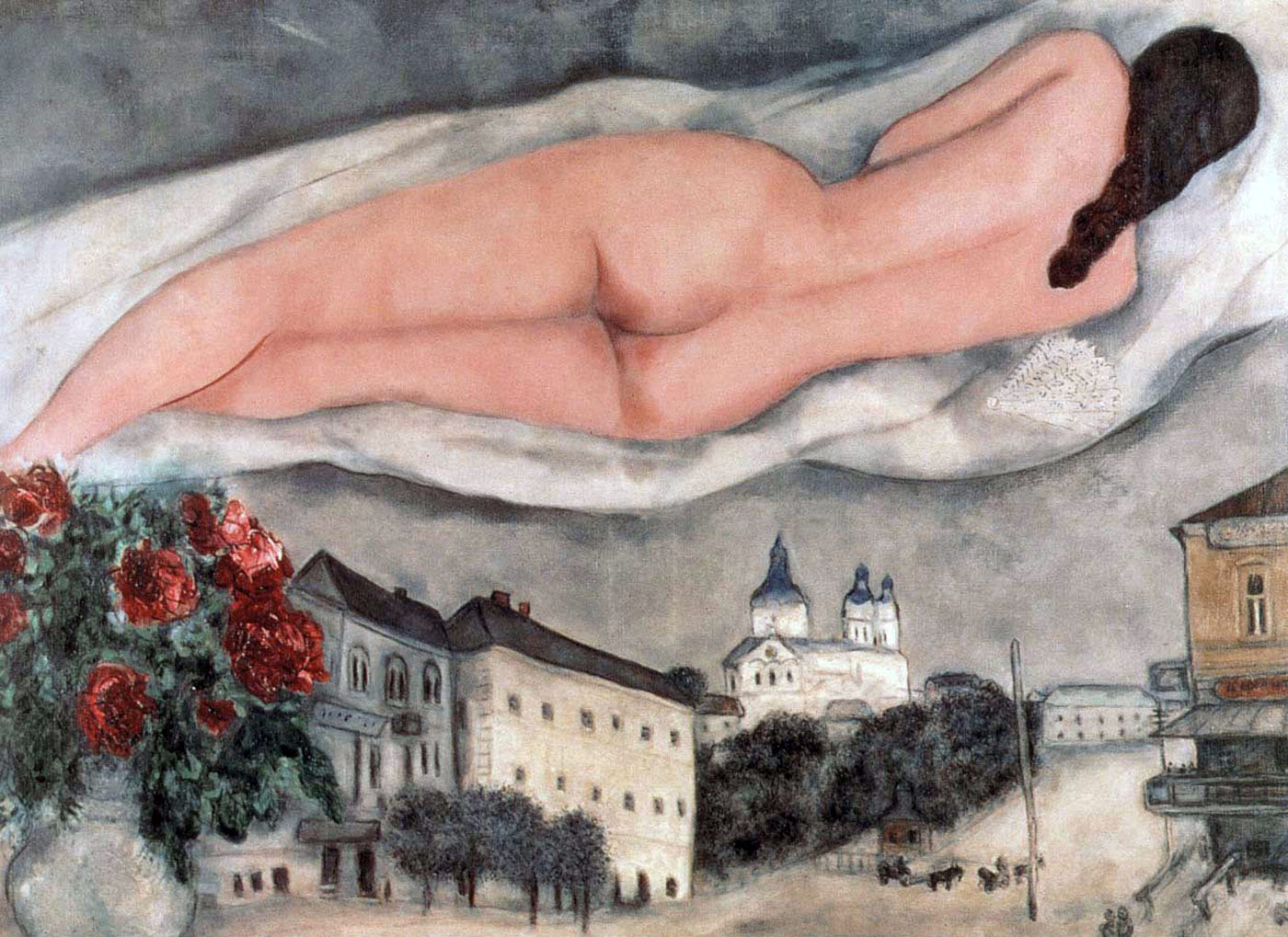
Marc Chagall (French born Russia, 1887-1985) 'Nude above Vitebsk' 1933


Marc Chagall (French born Russia, 1887-1985)
Nude above Vitebsk
1933
Oil on canvas
Private collection
© Chagall ® by SIAE 2014


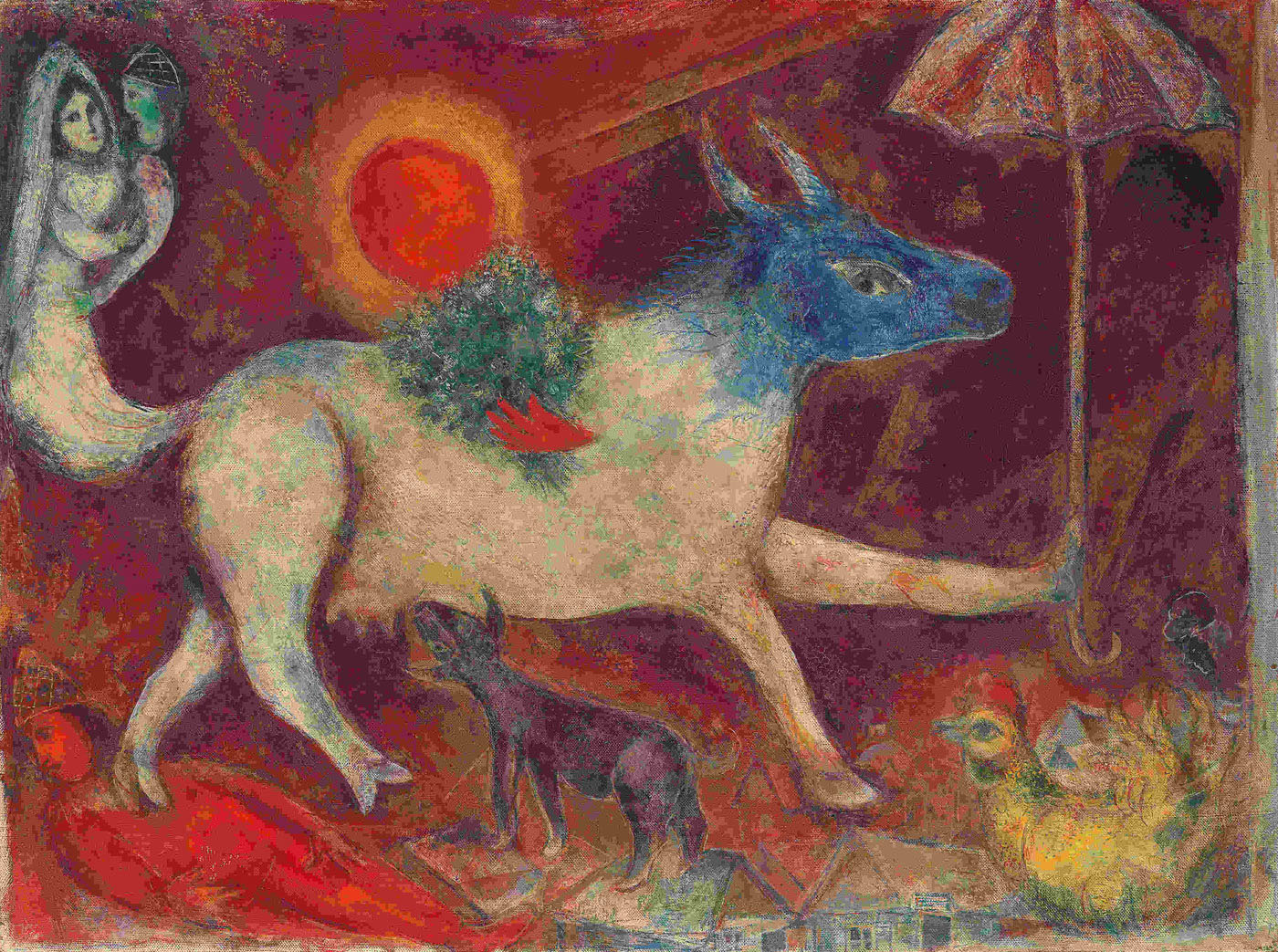
Marc Chagall (French born Russia, 1887-1985) 'Cow with Parasol' 1946


Marc Chagall (French born Russia, 1887-1985)
La mucca con l’ombrello (Cow with Parasol)
1946
Oil on canvas
New York, The Metropolitan Museum of Art, Bequest of Richard S. Zeisler, 2007
© Chagall ®, by SIAE 2014


Marc Chagall (French born Russia, 1887-1985) 'The Red Circus' 1956-1960


Marc Chagall (French born Russia, 1887-1985)
The Red Circus
1956-1960
Oil on canvas


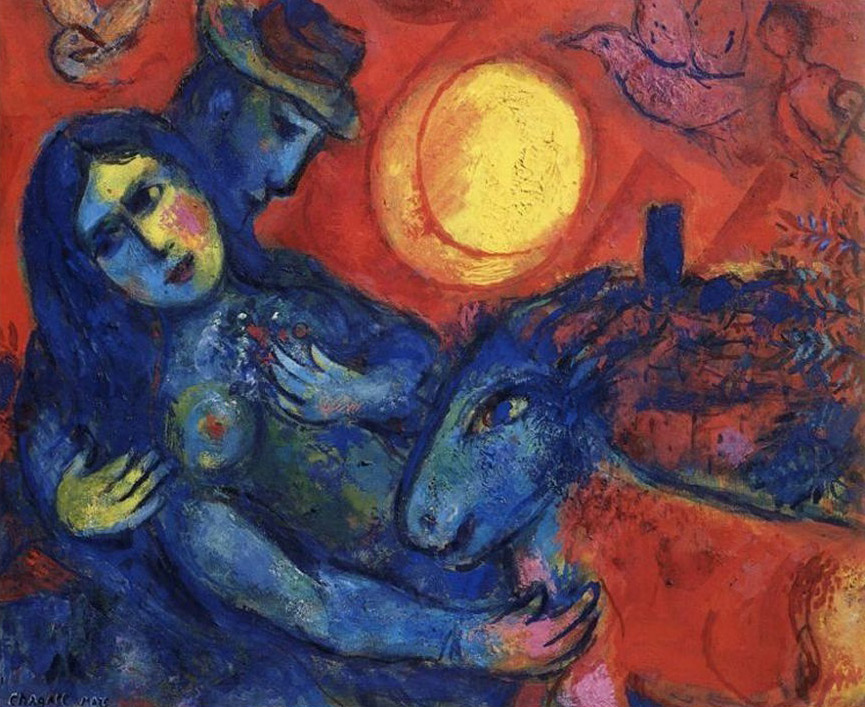
Marc Chagall (French born Russia, 1887-1985) 'Big Sun' 1958


Marc Chagall (French born Russia, 1887-1985)
Big Sun
1958
Oil on canvas


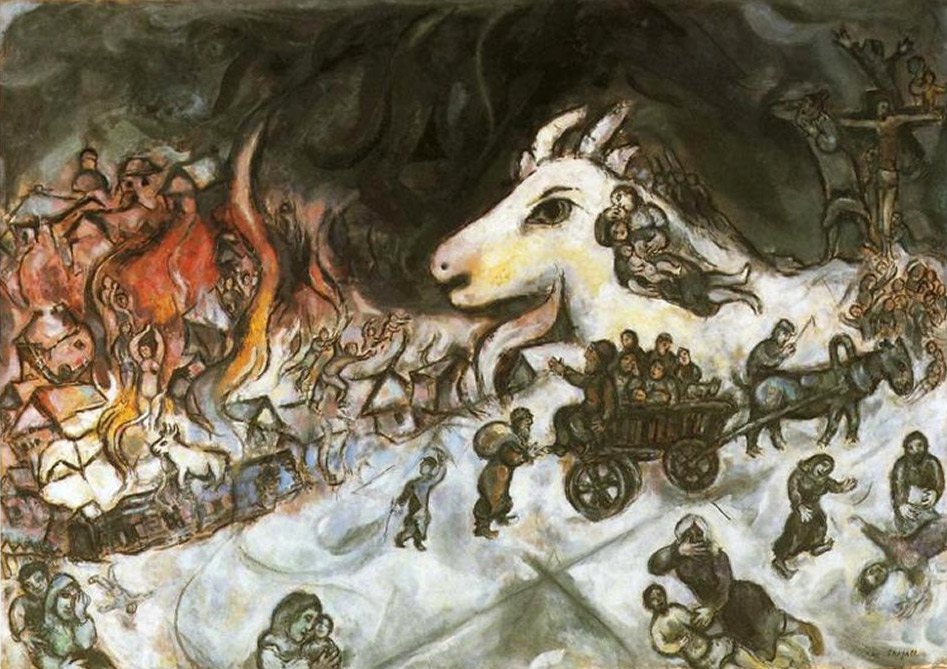
Marc Chagall (French born Russia, 1887-1985) 'War' 1964


Marc Chagall (French born Russia, 1887-1985)
War (Guerra)
1964
Oil on canvas
163 x 231cm
Kunsthaus Zürich, Zürich, Switzerland


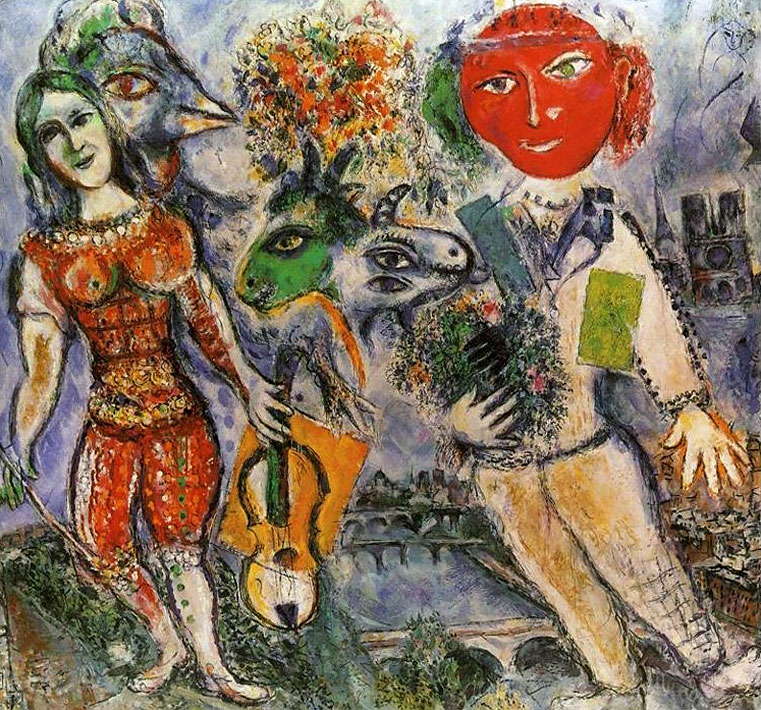
Marc Chagall (French born Russia, 1887-1985) 'The Players' (i giocatori) 1968


Marc Chagall (French born Russia, 1887-1985)
The Players (i giocatori)
1968
Oil no canvas
150 x 160cm
Private collection


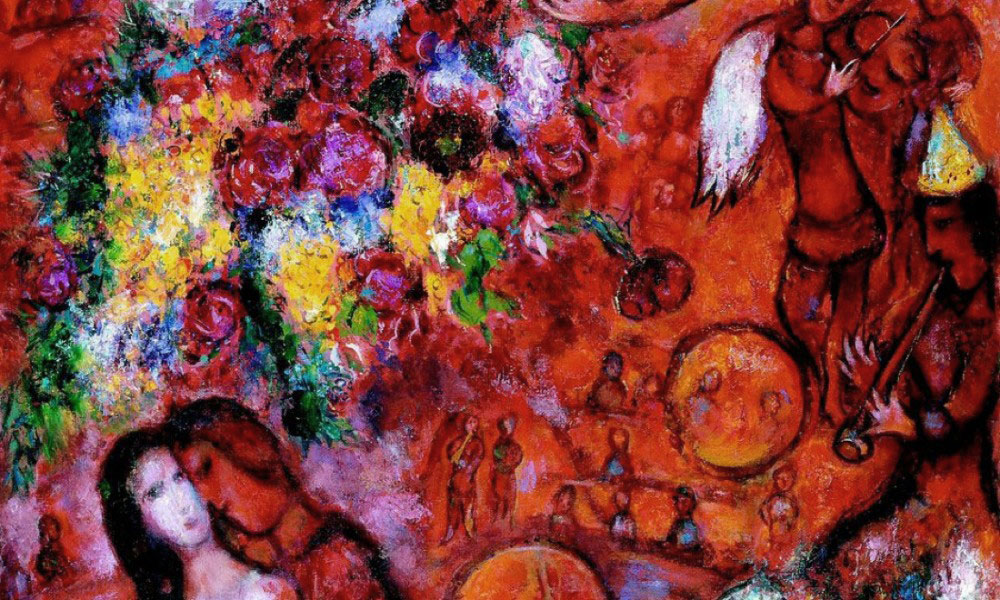
Marc Chagall (French born Russia, 1887-1985) 'The Grand Parade' 1979


Marc Chagall (French born Russia, 1887-1985)
The Grand Parade
1979
Oil on canvas
119 x 132cm
Private collection


“Will the hurried men of today be able to penetrate her work, her world?” is the question asked by Marc Chagall in 1947 in the postface to the memoirs of his wife Bella, who left him “in the shadows” following her sudden death three years earlier. However, this question could also be asked about his own work, the work of an artist who speaks such a universal language that he is loved by everyone alike, both young and old, men and women, scholars and men on the street. Chagall is an artist who is known and recognised by everyone and, out of all the 20th-century artists, was one of the few to remain faithful to himself despite living through a century of wars, catastrophes, political and technological upheavals.

The exhibition narrative has arisen from a question and a need: on the one hand, the attempt to understand the strength that an enabled an artist who experimented with the styles of all the avant-garde movements, to remain so consistent to himself, always curious about the world around him, developing a style that can be recognised immediately by people of any age and any social status; on the other, the need to study Chagall’s work in order to identify the secret behind the poetry of this fragile man who was yet able to keep faith with his traditions and with his humanity, despite living in a world shaken to the core by indescribable and until then unimaginable catastrophes.

The exhibition opened on 17 September at the Palazzo Reale in Milan and is the biggest retrospective ever devoted to Marc Chagall in the last 50 years in Italy, with over two hundred and twenty works – mainly paintings from 1908 onwards, when Chagall painted his first work Le Petit Salon, right up to his final, monumental works of the 1980s – which guide visitors through the artistic career of Marc Chagall. Works from the collections of his heirs, some of which have not been exhibited to the public before, feature alongside masterpieces from the world’s most important museums, including the MoMA, the Metropolitan Museum in New York, the National Gallery in Washington, the State Russian Museum in St Petersburg, the Centre Pompidou, and over fifty public and private collections that have so generously collaborated. The exhibition theme therefore focuses on a new interpretation of the language of Chagall, whose poetic vein developed throughout the 20th century out of a blend of the best western European traditions: from his original Jewish culture to the Russian culture and his encounter with French avant-garde painting.

“The exhibition features a comprehensive chronological narrative, which is divided into sections, starting with his earliest works painted in Russia; his first visit to France and his subsequent return to Russia where he stayed until 1921; the second period of his exile, opened by the autobiography written by Chagall when he left Russia forever, living firstly in France and then, in the 1940s running away from Nazism, in America where he endured the tragedy of the death of his beloved wife Bella; his return to France and his decision to settle permanently on the Cote d’Azur, where Chagall rediscovered his most relaxed poetic language, calmed by the colours and atmosphere of the south.

The exhibition provides visitors with an understanding of how, despite living in perennial exile, Chagall never lost hold of the thread that kept the child he used to be in his heart; how, over the years and throughout the terrible events that marred his existence, he succeeded in preserving his sense of amazement, joy and wonder inspired by nature and humanity, as well as his strong faith that led him to believe in the possibility of a better world and seek to build it in all possible ways. Visitors will also discover his highly original poetic language, born out of the assimilation of the three cultures to which he belonged: Jewish culture (the visual tradition of its ornate manuscripts inspired the expressive, non-perspectival and sometimes mystic elements of his work); Russian culture (evident both in the folk images of the luboks and the religious images of the icons); western culture (in which he assimilates the great artists of tradition, from Rembrandt to the avant-garde artists whom he frequented so assiduously). They will also observe his sense of wonder at nature and the amazement inspired by living creatures that places him closer to mediaeval sources than 20th-century ones.

Flowers and animals are a constant presence in his paintings, enabling him on the one hand to overcome the Jewish interdiction of human depiction, while on the other becoming metaphors for a possible world in which all living beings can live in peace as in Russian mediaeval culture. In the words of Giovanni Arpino: “The soul of Chagall is a bleating soul, as mild as it is invincible because it escapes the horrors, the snares, the outrages … His paradise is an earthly Otherworld that encompasses the simulacra of life, a physical place that becomes metaphysical precisely because we have all killed it during daily life.” His art constitutes a sort of metissage [mix] between cultures and traditions. The fundamental key to his modernity lies in his desire to transform contamination into a value, a work of art into a language able to ask questions that have as yet been left unanswered by mankind.

After Milan the exhibition will travel to the prestigious Musees royaux des Beaux-Arts de Belgique / Koninklike Musea voor Schone Kunsten van Belgie, Bruxelles.

Press release from the Palazzo Reale website


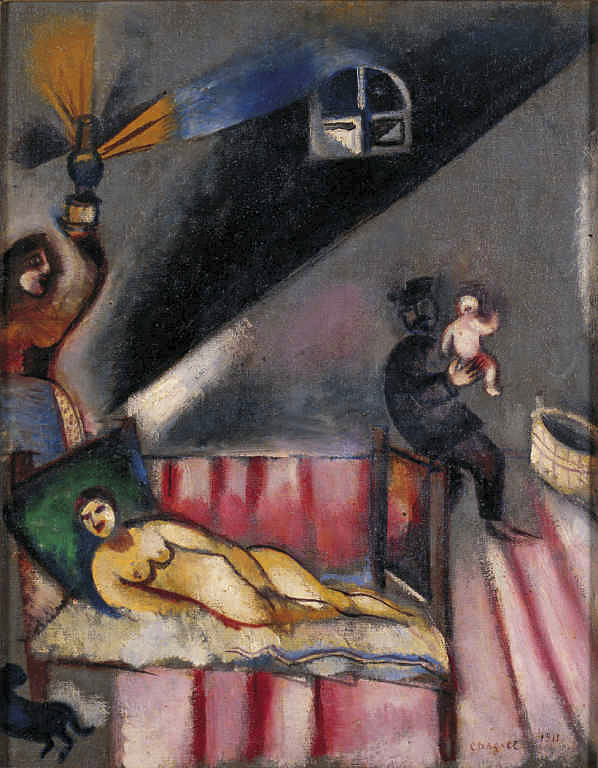
Marc Chagall (French born Russia, 1887-1985) 'La nascita' (The birth) 1911


Marc Chagall (French born Russia, 1887-1985)
La nascita (The birth)
1911
Oil on canvas original pasted on wood (plywood)
Private collection
© Chagall ® by SIAE 2014


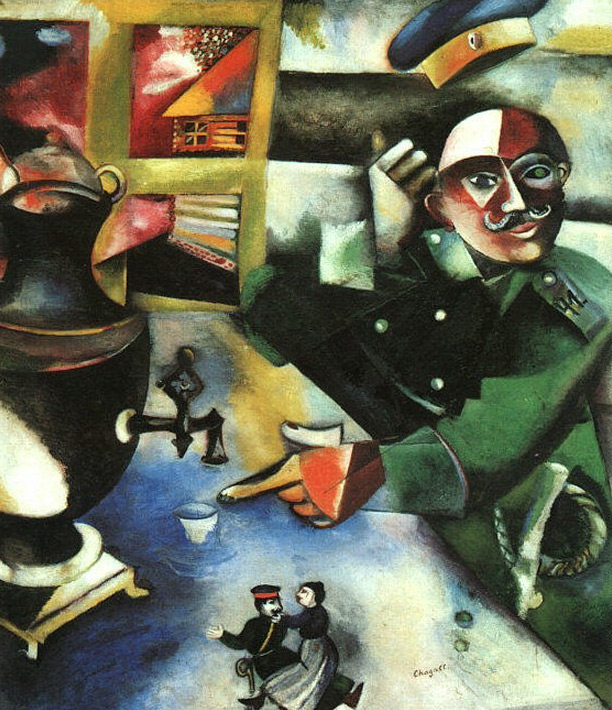
Marc Chagall (French born Russia, 1887-1985) 'The Soldier Drinks' 1911


Marc Chagall (French born Russia, 1887-1985)
The Soldier Drinks (Soldato che beve)
1911
Oil on canvas
109.8 x 94.7cm
Solomon R. Guggenheim Museum, New York


Marc Chagall (French born Russia, 1887-1985) 'Bride with Fan' 1911


Marc Chagall (French born Russia, 1887-1985)
Bride with fan (Sposa con ventaglio)
1911
Oil on canvas
Private Collection


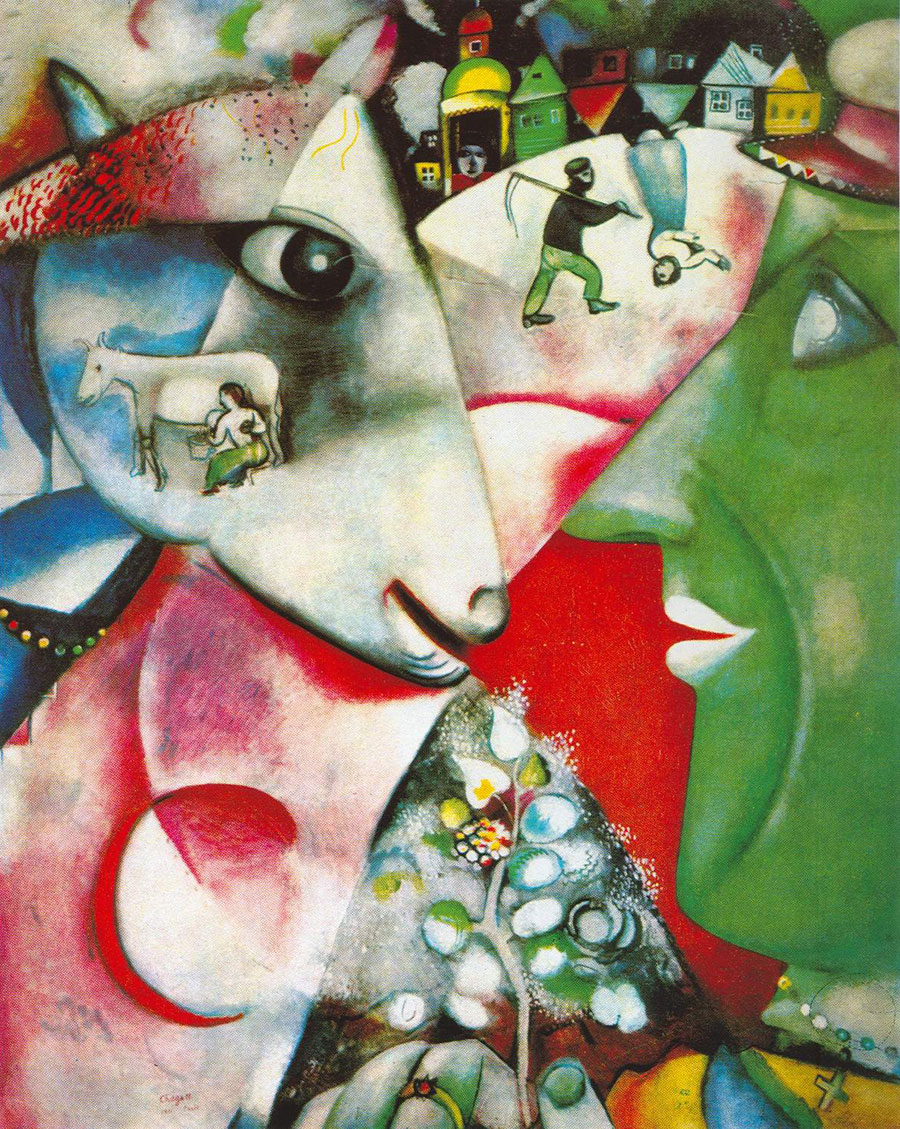
Marc Chagall (French born Russia, 1887-1985) 'I and the village' 1911


Marc Chagall (French born Russia, 1887-1985)
I and the Village
1911
Oil on canvas
192.1 x 151.4cm
Museum of Modern Art, New York


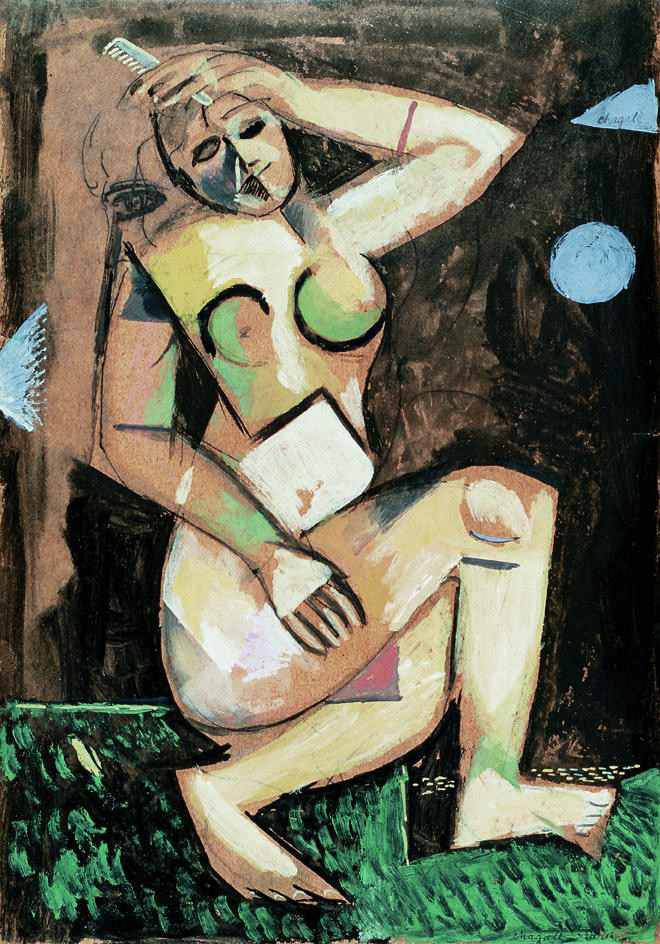
Marc Chagall (French born Russia, 1887-1985) 'Nude with comb' 1911-1912


Marc Chagall (French born Russia, 1887-1985)
Nude with comb (Nuda con pettine)
1911-1912
Black ink and gouache on paper


Marc Chagall (French born Russia, 1887-1985) 'The Fiddler' 1912


Marc Chagall (French born Russia, 1887-1985)
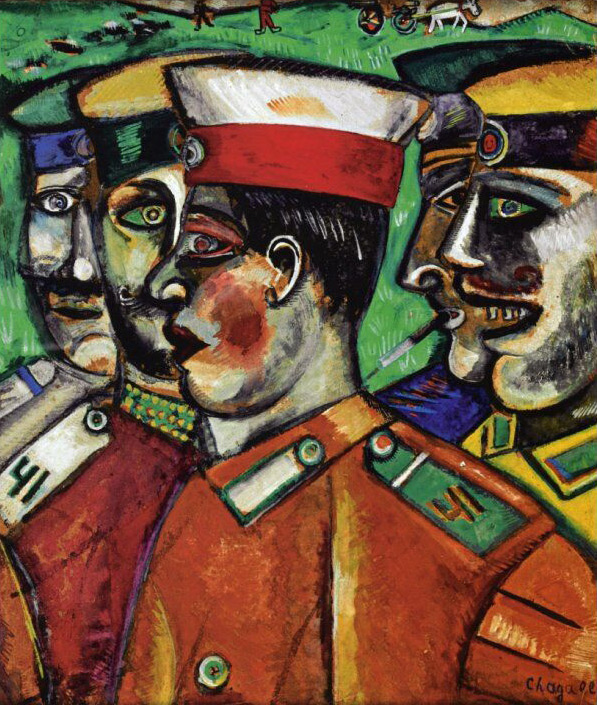
The Fiddler
1912
Oil on canvas
188 x 158cm
Stedelijk Museum, Amsterdam


Marc Chagall (French born Russia, 1887-1985) 'Soldiers' 1912


Marc Chagall (French born Russia, 1887-1985)
Soldiers
1912
Private collection
38.1 x 32.4cm


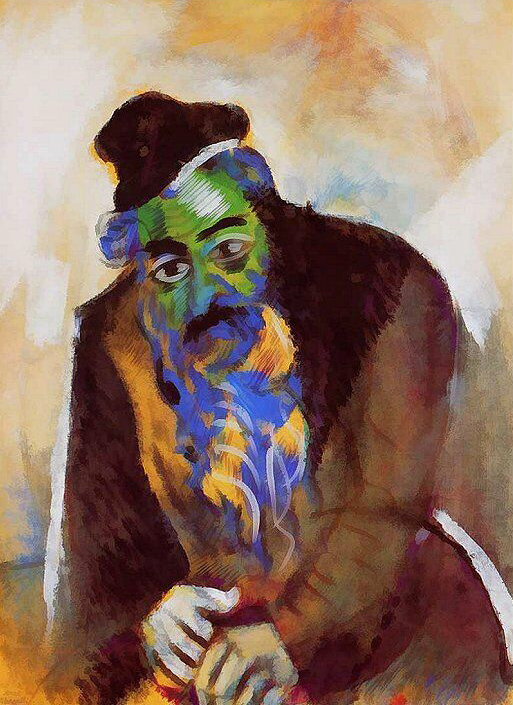
Marc Chagall (French born Russia, 1887-1985) 'The Old Jew' (il vecchio ebreo) 1912


Marc Chagall (French born Russia, 1887-1985)
The Old Jew (il vecchio ebreo)
1912
Oil on canvas


Marc Chagall (French born Russia, 1887-1985) 'Self-portrait in profile' 1914


Marc Chagall (French born Russia, 1887-1985)
Self-portrait in profile
1914
Oil on cardboard
34 x 27.9cm
Private collection


Marc Chagall (French born Russia, 1887-1985) 'Blue Lovers' 1914


Marc Chagall (French born Russia, 1887-1985)
Blue Lovers
1914
Tempera on paper pasted on cardboard
49 x 44cm
Private collection


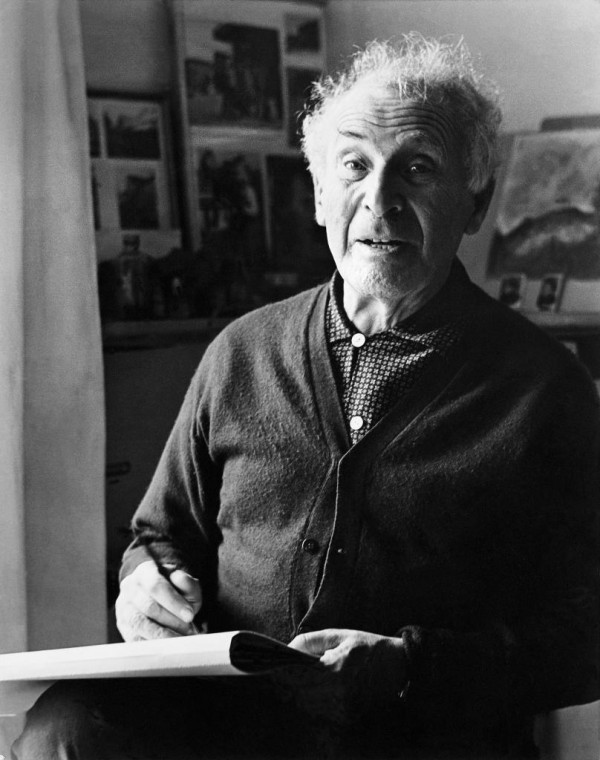
Marc Chagall in his studio of Saint-Paul de Vence


Marc Chagall in his studio of Saint-Paul de Vence
Nd


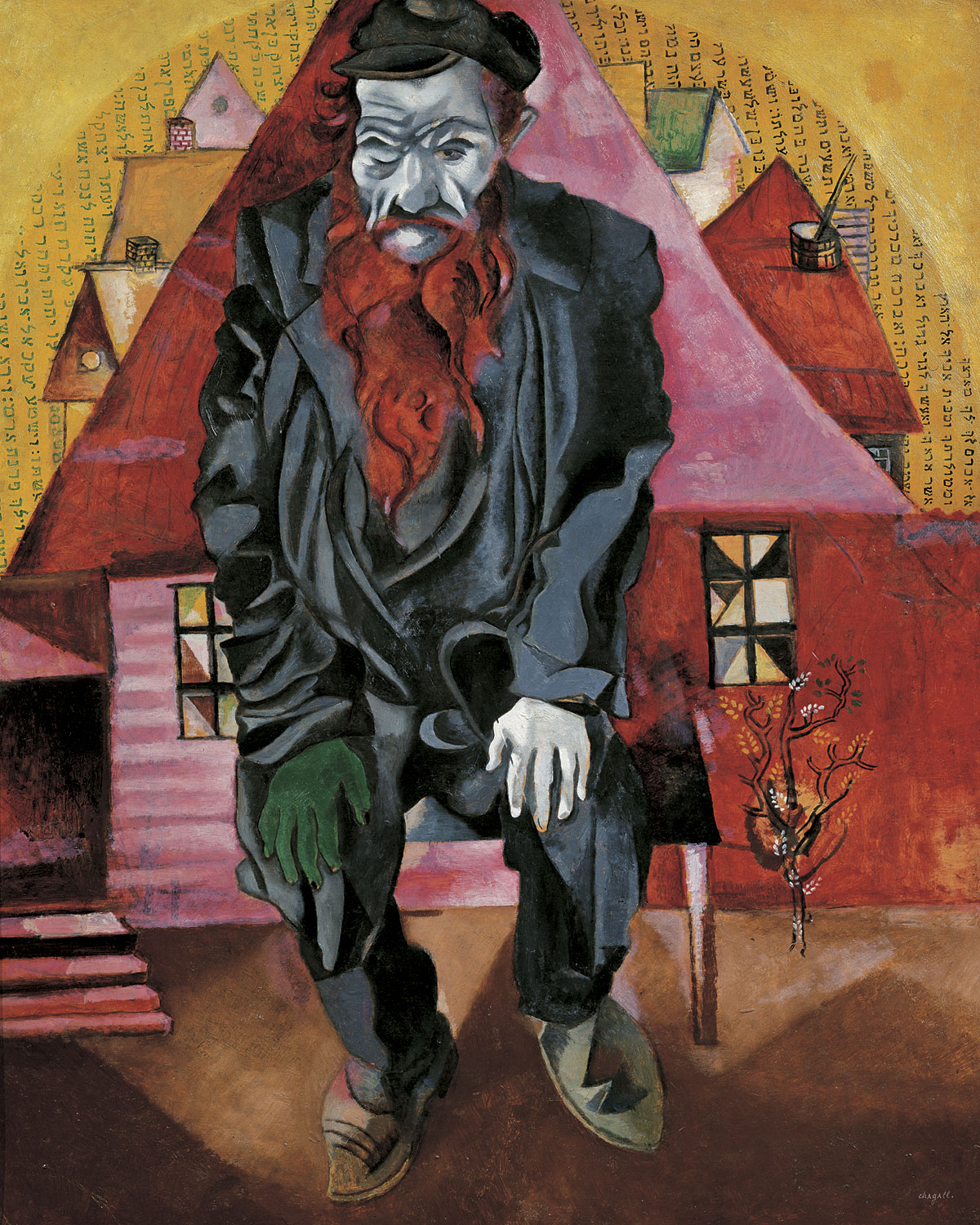
Marc Chagall (French born Russia, 1887-1985) 'Red Jew' 1915


Marc Chagall (French born Russia, 1887-1985)
Red Jew
1915
Oil on cardboard
Russian Museum, St. Petersburg, Russia


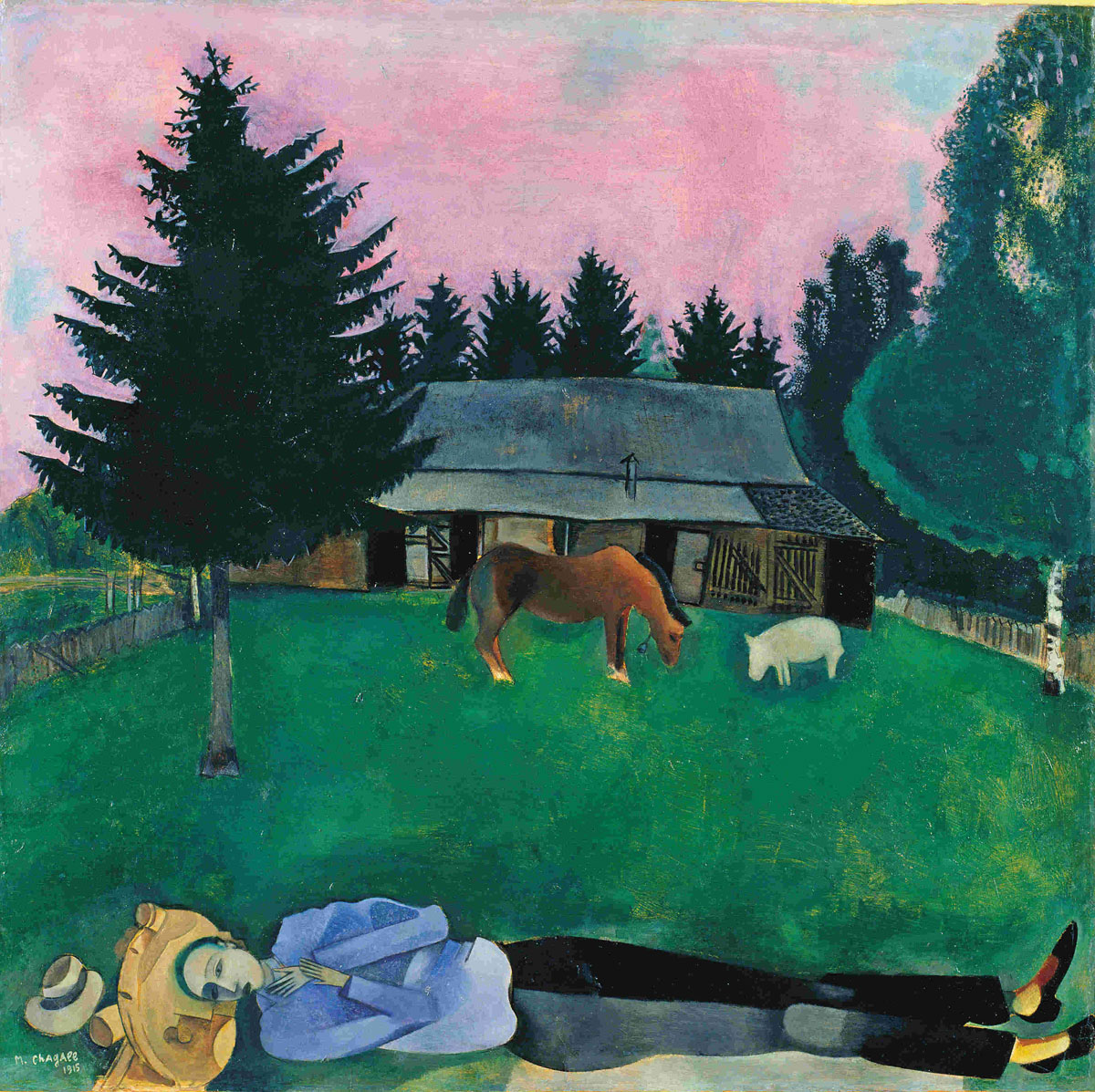
Marc Chagall (French born Russia, 1887-1985) 'The Poet Reclining' 1915


Marc Chagall (French born Russia, 1887-1985)
The Poet Reclining (Il poeta giacente)
1915
Oil on board
Support: 772 x 775mm
Frame: 953 x 960 x 91mm
© Tate, London 2014 © Chagall ® by SIAE 2014


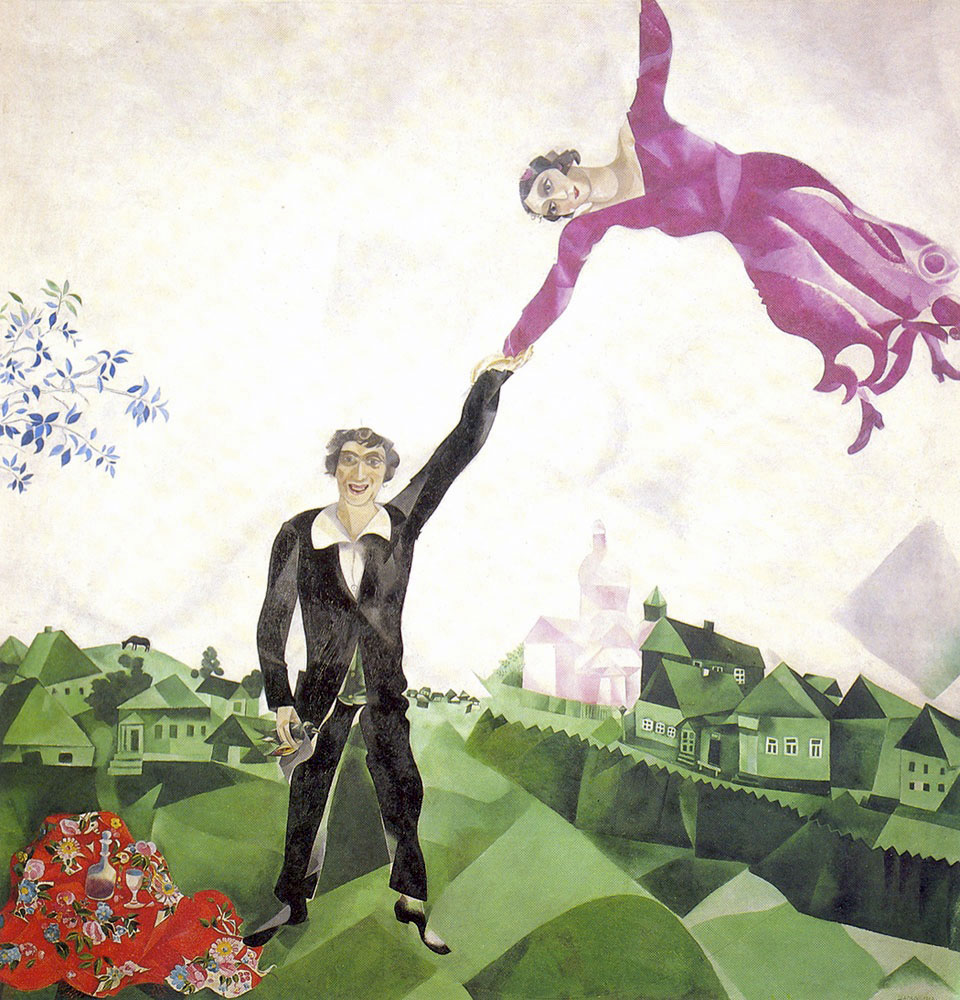
Marc Chagall (French born Russia, 1887-1985) 'La passeggiata' (The walk) 1917-1918


Marc Chagall (French born Russia, 1887-1985)
La passeggiata (The walk)
1917-1918
Oil on canvas
Russian State  Museum, St. Petersburg
© Chagall ® by SIAE 2014


Marc Chagall (French born Russia, 1887-1985) 'Al Cavalletto (tavola 18 di "Ma Vie")' 1922


Marc Chagall (French born Russia, 1887-1985)
Al Cavalletto (tavola 18 di “Ma Vie”)
1922
Etching and drypoint on Japanese paper
Private collection
© Chagall ® by SIAE 2014


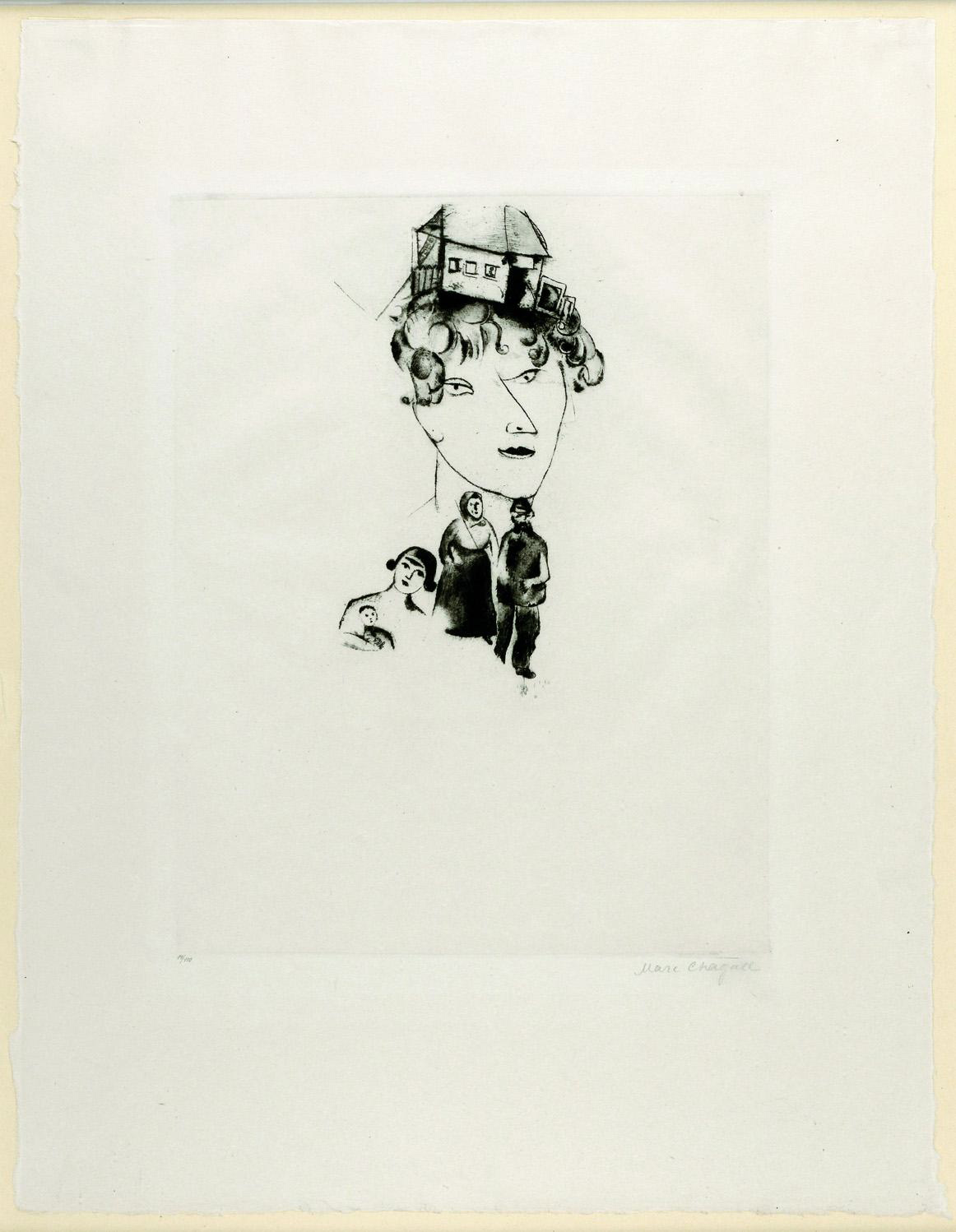
Marc Chagall (French born Russia, 1887-1985) 'Autoritratto (tavola 17 di "Ma Vie")' 1922


Marc Chagall (French born Russia, 1887-1985)
Autoritratto (tavola 17 di “Ma Vie”) (Self-portrait)
1922
Etching and drypoint on Japanese paper
Private collection
© Chagall ® by SIAE 2014


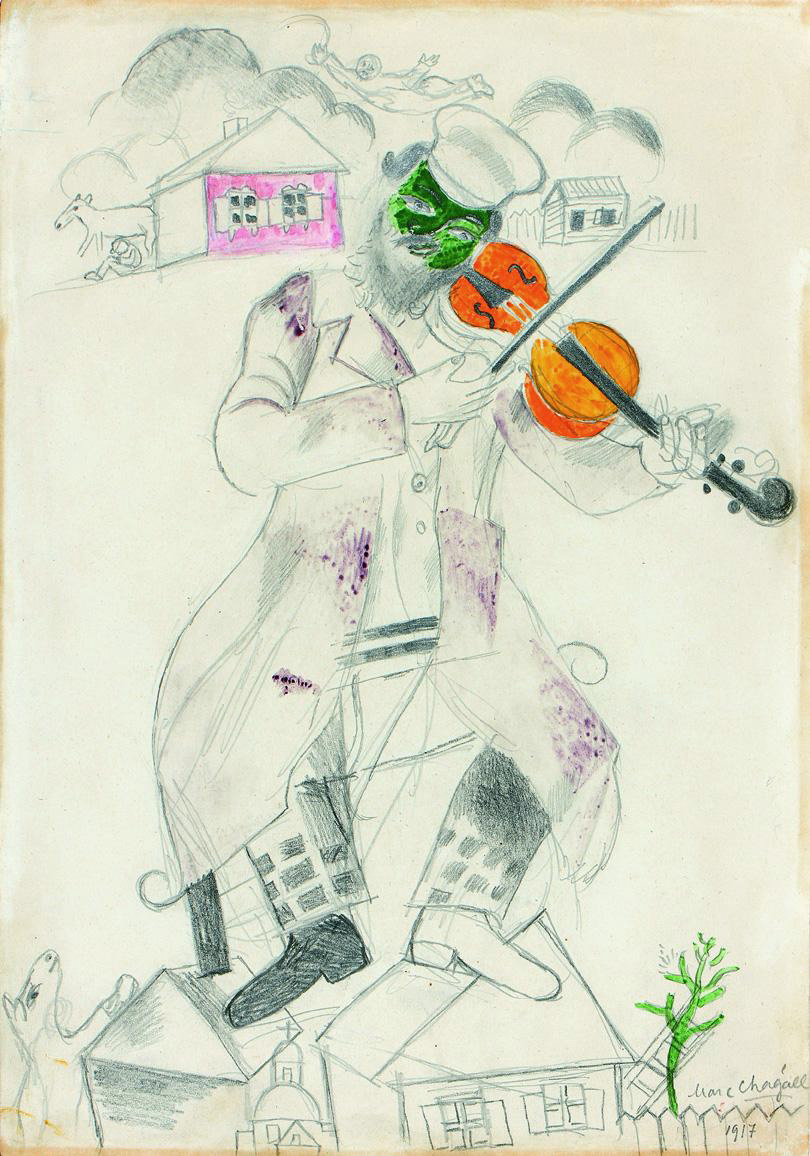
Marc Chagall (French born Russia, 1887-1985) 'Study for The green violinist' 1917


Marc Chagall (French born Russia, 1887-1985)
Study for The green violinist (studio violinista verde)
1917


Marc Chagall (French born Russia, 1887-1985) 'Two pigeons' 1925


Marc Chagall (French born Russia, 1887-1985)
Two pigeons
1925
Gouache, ink and blue ink on coloured paper
Private collection


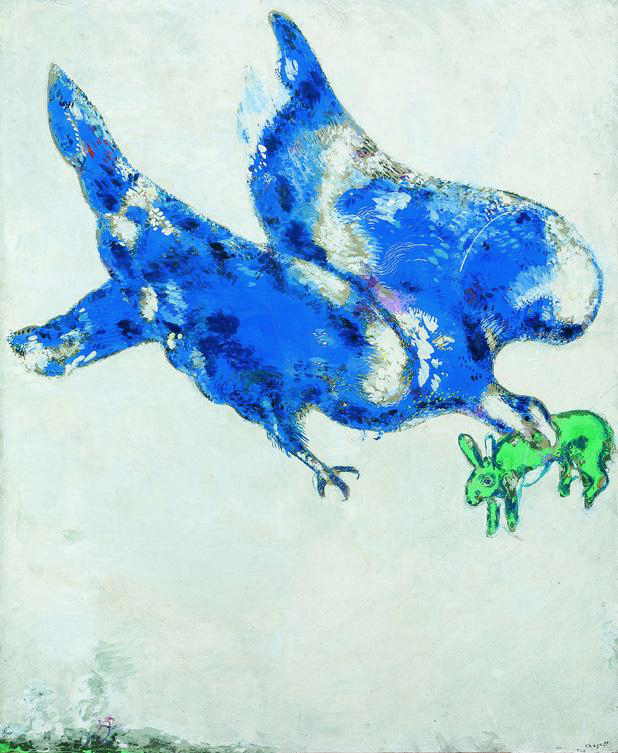
Marc Chagall (French born Russia, 1887-1985) 'L'aquila e lo scarabeo' 1926


Marc Chagall (French born Russia, 1887-1985)
L’aquila e lo scarabeo
1926
Gouache on paper pasted on wooden panel
Private collection
© Chagall ® by SIAE 2014


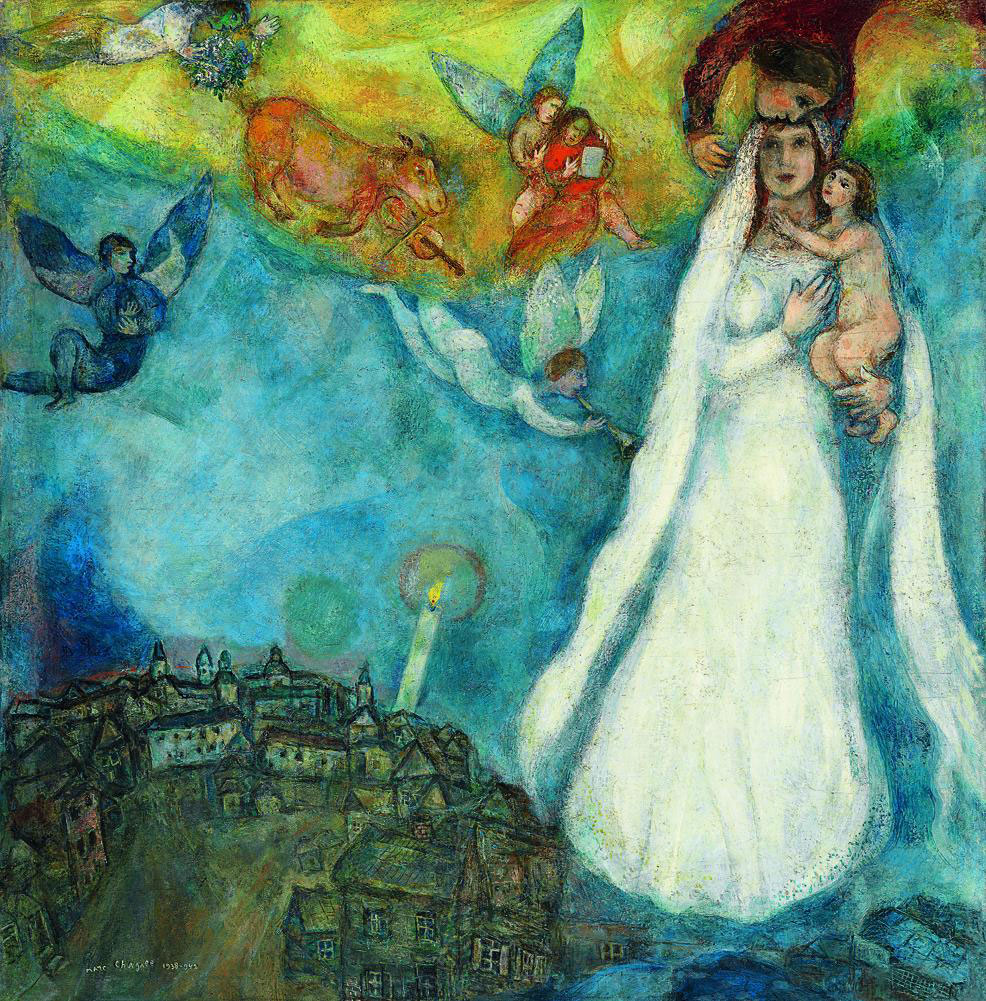
Marc Chagall (French born Russia, 1887-1985) 'The Madonna of the Village' 1938-1942


Marc Chagall (French born Russia, 1887-1985)
The Madonna of the Village
1938-1942
Oil on canvas
Thyssen-Bornemisza Museum, Madrid
© Chagall ® by SIAE 2014


Marc Chagall (French born Russia, 1887-1985) 'Mondo rosso e nero o Sole rosso' (Red and black world) 1951


Marc Chagall (French born Russia, 1887-1985)
Mondo rosso e nero o Sole rosso (Red and black world)
1951
Gouache, watercolour, pastel on paper pasted on canvas
Private collection


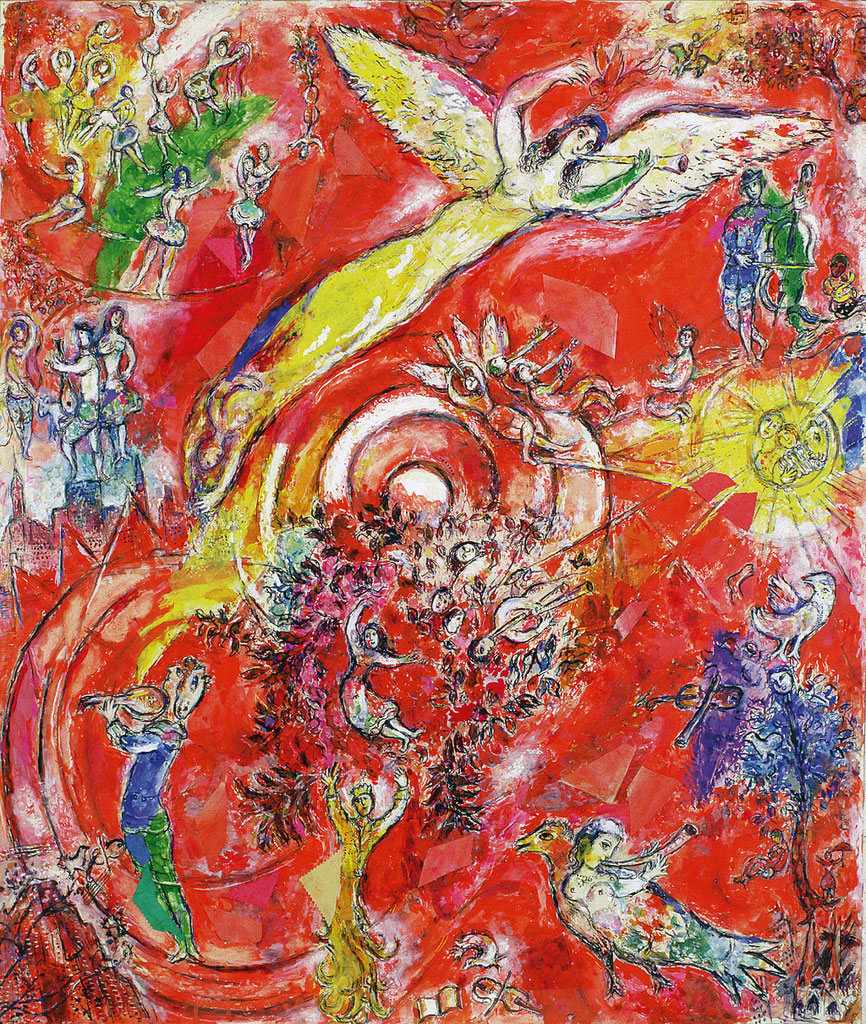
Marc Chagall (French born Russia, 1887-1985) 'Il trionfo della musica - Maquette per il murale Metropolitan Opera, Lincoln Art Center, New York' 1966


Marc Chagall (French born Russia, 1887-1985)
Il trionfo della musica – Maquette per il murale Metropolitan Opera, Lincoln Art Center, New York (The triumph of music – Maquette for the mural Metropolitan Opera, Lincoln Art Center, New York)
1966
Tempera, gouache and collage on paper
Private collection


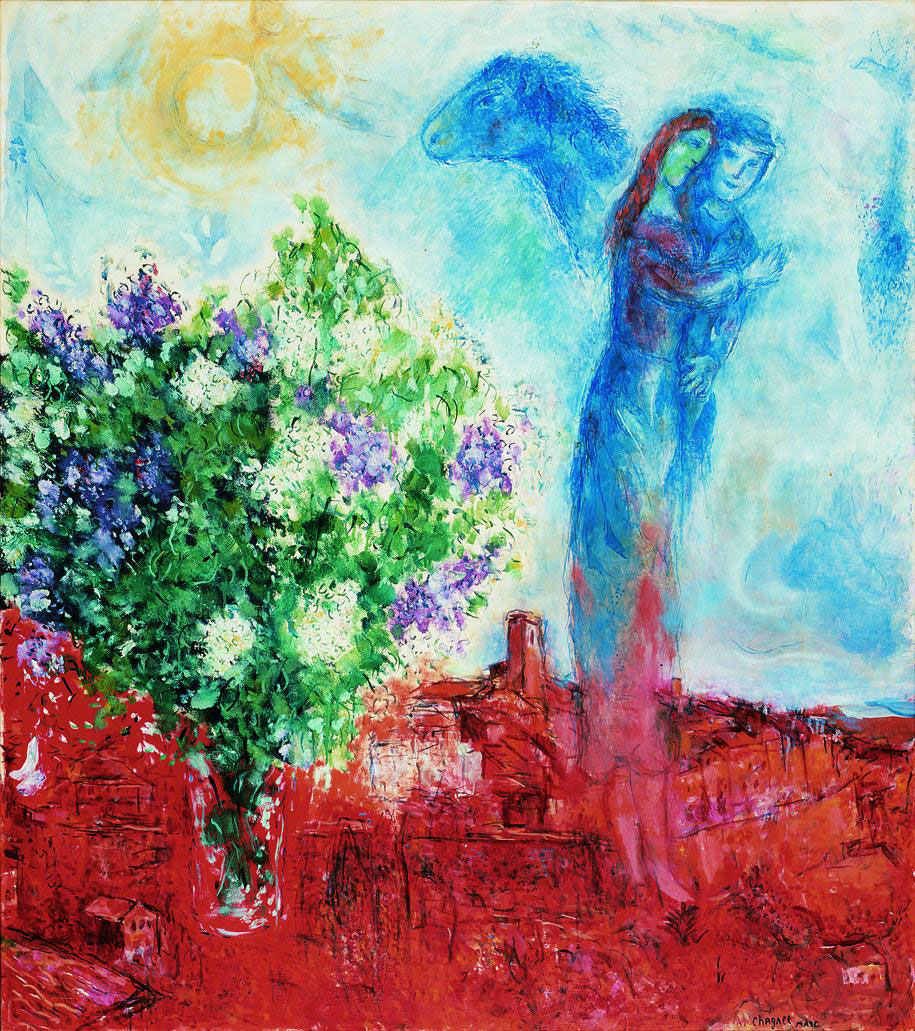
Marc Chagall (French born Russia, 1887-1985) 'Lovers over Saint-Paul' 1968


Marc Chagall (French born Russia, 1887-1985)
Lovers over Saint-Paul
1968
Oil, tempera and sawdust on canvas
145 x 130cm
Private collection
© Chagall ® by SIAE 2014


Palazzo Reale
Piazza del Duomo 12
Milan, Italy

Opening times:
Tuesday – Sunday 10 – 19.30

Palazzo Reale website

LIKE ART BLART ON FACEBOOK

Back to top

Exhibition: ‘Eyes on the Street: street photography in the 21st century’ at the Cincinnati Art Museum

Exhibition dates: 11th October, 2014 – 4th January, 2015

Artists

Olivo Barbieri (Italian; lives and works in Modena, Italy)
Philip-Lorca diCorcia (American; lives and works in New York)
Jason Evans (British; lives and works in London)
Paul Graham (British; lives and works in New York)
Mark Lewis (Canadian; lives and works in London)
Jill Magid (American; lives and works in New York)
James Nares (American; lives and works in New York)
Barbara Probst (German; lives and works in New York)
Jennifer West (American; lives and works in Los Angeles)
Michael Wolf (German; lives and works in Paris and Hong Kong)


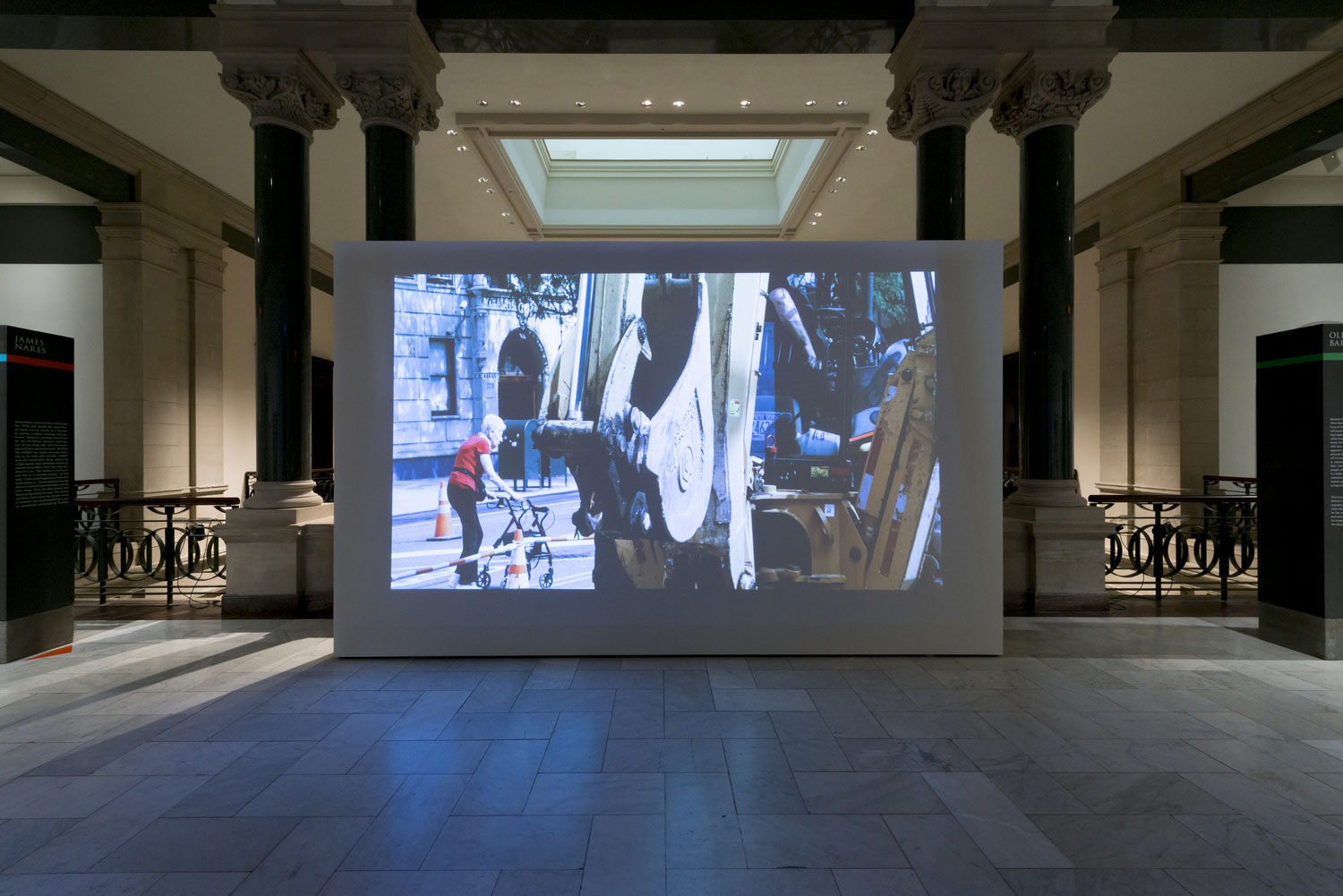
Installation view of the exhibition 'Eyes on the Street: street photography in the 21st century' at the Cincinnati Art Museum


Installation view by Rob Deslongchamps


Watching the watcher watching…

Dr Marcus Bunyan


Many thankx to the Cincinnati Art Museum for allowing me to publish the photographs in the posting. Please click on the photographs for a larger version of the image.


“Some of the artists in ‘Eyes on the Street’ made their work at street level; others sought higher vantage points. Some sharpen our appreciation for individuals, while others underscore universal urban traits. Some work with still images, while others create films and videos. What links them, and binds them to the historical tradition of street photography, is the quality of attention they give these bustling environments. They are watchful. What distinguishes them from the twentieth-century street-photography tradition, however, is that these artists are also acutely conscious of the active roles cameras play in making urban public places today. They know they are part of a greater system of watching.”


Brian Sholis, Associate Curator of Photography, Cincinnati Art Museum


Installation view of the exhibition 'Eyes on the Street: street photography in the 21st century' at the Cincinnati Art Museum


Installation view by Rob Deslongchamps


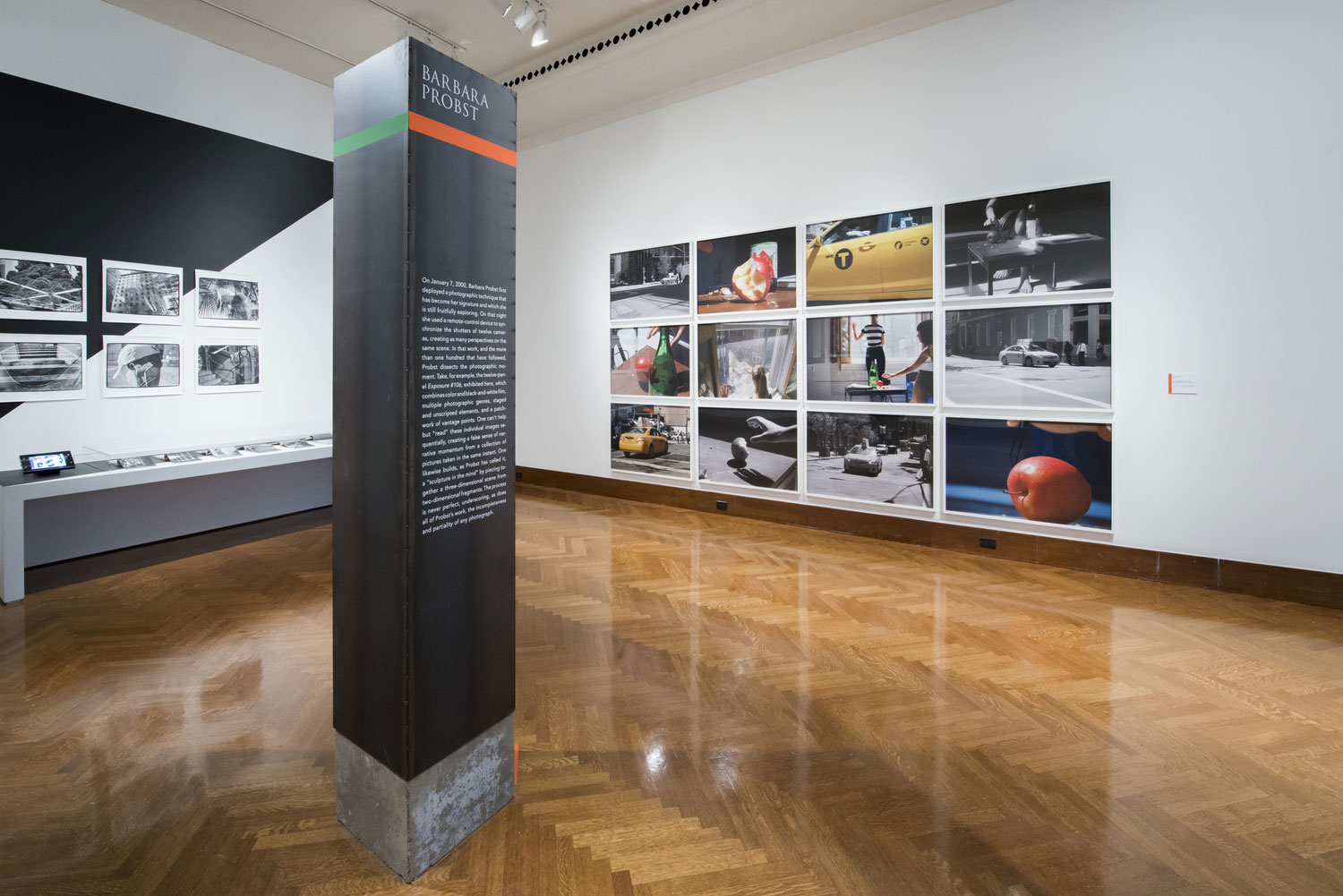
Barbara Probst (German, b. 1964) 'Exposure #106: N.Y.C., Broome & Crosby Streets, 04.17.13, 2:29 p.m.' 2013 from the exhibition 'Eyes on the Street: street photography in the 21st century' at the Cincinnati Art Museum, October 2014 - January 2015


Barbara Probst (German, b. 1964)
Exposure #106: N.Y.C., Broome & Crosby Streets, 04.17.13, 2:29 p.m.
2013
Ultrachrome ink on cotton paper in twelve parts
Each 29 x 44 inches
Courtesy of the artist and Murray Guy, New York


On January 7, 2000, Barbara Probst first deployed a photographic technique that has become her signature and which she is still fruitfully exploring. On that night she used a remote-control device to synchronise the shutters of twelve cameras, creating as many perspectives on the same scene. In that work, and the more than one hundred that have followed, Probst dissects the photographic moment. Take, for example, the twelve-panel Exposure #106, exhibited here, which combines colour and black-and-white film, multiple photographic genres, staged and unscripted elements, and a patchwork of vantage points. One can’t help but “read” these individual images sequentially, creating a false sense of narrative momentum from a collection of pictures taken in the same instant. One likewise builds, as Probst has called it, a “sculpture in the mind” by piecing together a three-dimensional scene from two-dimensional fragments. The process is never perfect, underscoring, as does all of Probst’s work, the incompleteness and partiality of any photograph.

“Probst forcefully deconstructs the notion of photographic truth, not by specifically questioning that photographic truth but merely by pointing out its necessary incompleteness.

~ Jens Erdman Rasmussen, Dutch curator.


Jason Evans (Welsh, b. 1968) 'Untitled,' from the series "NYLPT," 2008 from the exhibition 'Eyes on the Street: street photography in the 21st century' at the Cincinnati Art Museum, October 2014 - January 2015


Jason Evans (Welsh, b. 1968)
Untitled from the series NYLPT
2008
Gelatin silver print
24 x 24 inches
Courtesy of the photographer


Jason Evans is a street photographer who, in his words, simply likes to “walk around and look at things, follow people, and get lost.” The series exhibited here, NYLPT, was made between 2005 and 2012 in New York, London, Paris, and Tokyo. Evans would expose a roll of 35-mm black-and-white film in one of these cities, then rewind and set aside the roll until his travels brought him to another. There, he would reload the film and re-expose the frames, doing so up to five times without knowing what the results would look like. Sometimes a fragment of language or familiar landmark reveals where part of the picture was made. More often, however, the textures, shapes, and surreal combinations of built environments come together to connote urbanness as a category of experience. Aware that people consume images in myriad ways, Evans not only developed the photographs in a darkroom, but also worked closely with a book publisher and digital programmers to create versions of the series specific to different mediums.


Olivo Barbieri (Italian, b. 1954) 'site specific_ISTANBUL #4' 2011


Olivo Barbieri (Italian, b. 1954)
site specific_Istanbul #4
2011
Archival pigment print
45 x 61 inches
Courtesy of the artist and Yancey Richardson Gallery, New York


Between 2003 and 2013, the Italian artist Olivo Barbieri photographed more than forty of the world’s cities from low-flying helicopters. Fascinated by the expanding megalopolises, Barbieri sought a new visual language to present their shifting forms. He hit upon the idea of using a tilt-shift lens – normally used to correct the apparent convergence of parallel lines in pictures of buildings – to render sections of his images out of focus. By also slightly overexposing the photographs, Barbieri created a diorama-like effect; the people and places he captured seemed to inhabit miniature worlds. His pictures contained enormous amounts of information yet placed some of it tantalisingly out of focus.

This visual effect became so popular that Barbieri sought other ways to push photography’s language in response to the cities that inspired him. In recent years he has adopted a wide array of digital post-production techniques to modify his images, all in service of representing the dizzying state of cities today.

“Captivated by a vision of the twenty-first-century city as a kind of site-specific installation – temporary, malleable, and constantly in flux – [Barbieri] sought a photographic corollary for the radical mutations of urban form that he saw taking place.”

~ Christopher S. Phillips, curator


Installation view of the exhibition 'Eyes on the Street: street photography in the 21st century' at the Cincinnati Art Museum


Installation view by Rob Deslongchamps


Cameras are an integral part of our lives, and the Cincinnati Art Museum’s new exhibition, Eyes on the Street, on view Oct. 11, 2014 – Jan. 4, 2015, examines how they can be used in public spaces. Through a collection of photographs, films and videos by 10 internationally renowned artists – most of whom have never previously exhibited in Cincinnati – the exhibition reimagines street photography and reveals how cameras shape perceptions of cities. Eyes on the Street is the Art Museum’s contribution to the region-wide FotoFocus festival and is a celebration of street photography in the twenty-first century.

“Street photography is a perennial subject of museum exhibitions, but by emphasising the role cameras’ technical capabilities play in making these artworks, I hope to broaden our understanding of the genre,” said Brian Sholis, associate curator of photography. “At the same time, it’s important to recognise that we are not merely subject to faceless surveillance, but can use cameras to amplify the invigorating aspects of city life.”

Eyes on the Street reimagines the genre of street photography and demonstrates how cameras shape our perceptions of cities. It features ten internationally renowned artists who work in photography, film, and video, each of whom deliberatively uses the camera’s technical capabilities to reveal new aspects of the urban environment. Through high-speed and high-definition lenses, multiple or simultaneous exposures, “impossible” film shots, and appropriated surveillance-camera footage, these artists breathe new life into the genre and remind us that urban public places are sites of creative and imaginative encounters.

The exhibition title comes from influential urban theorist Jane Jacobs, who wrote, in her classic treatise The Death and Life of Great American Cities, of “eyes on the street” being crucial to urban neighbourhoods’ vitality – and their ability to accommodate different people and activities. Today, discussion of cameras in public spaces often revolves around surveillance tactics or battles over first-amendment rights. Eyes on the Street reflects the diversity of urban experience and shows us how cameras can help us comprehend the complex urban environment.

The show includes artworks made in New York, San Francisco, Paris, Beirut, Tokyo, Istanbul, and elsewhere by artists who have exhibited widely and have received numerous grants, fellowships, and prizes. Most have never before exhibited in the Cincinnati area.

Press release from the Cincinnati Art Museum


Philip-Lorca diCorcia (American, b. 1951) 'Head #23' 2001


Philip-Lorca diCorcia (American, b. 1951)
Head #23
2001
Fujicolor Crystal Archive print
48 x 60 inches
Courtesy of the artist and David Zwirner, New York/London


To make the photographs exhibited in Eyes on the Street, Philip-Lorca diCorcia affixed a powerful strobe flash to construction scaffolding above a sidewalk in Times Square. He placed his camera some distance away, so as to remain unnoticed, and photographed unwitting strangers bathed in a halo of light. This outdoor “studio” married control and chance, isolating people from their busy surroundings. Their pensive faces reveal complex interior lives it would be easy to miss if we passed them on a busy street.

The resulting series, Heads, comprises a few dozen photographs chosen from the thousands that diCorcia made between 1999 and 2001. Erno Nussenzweig, the subject of Head #13, discovered the photograph of him in 2005. He sued the photographer for using his image without permission. The case went to the New York Court of Appeals, where judges ruled that diCorcia’s images qualify as art, not as advertising, thereby exempting him from privacy protections afforded by law. The case has become an important precedent for artists who wish to take pictures in public places.


Jill Magid (American, b. 1973) 'Control Room' 2004


Jill Magid (American, b. 1973)
Control Room
2004
Still from a two-channel digital video, ten minutes
Courtesy of the artist and Galerie Yvon Lambert, Paris


For more than a decade artist Jill Magid has deliberately worked with institutions of authority to create videos, books, installations, and other artworks. For a series made in Liverpool in 2004, Magid spent thirty-one days in the English port city – the length of time footage from its Citywatch surveillance system is stored. Wearing a red trench coat, she aimed “to use the CCTV system as a film crew, to act as the protagonist, and to be saved in [its] evidence locker.”

During the project she developed relationships with the camera operators. In the video Trust, Magid closes her eyes and allows a CCTV operator to verbally guide her safely through the city’s busy streets. She has described the interaction as one of the most intimate she has experienced, and wrote the Subject Access Request Forms, used to obtain the footage, in the form of love letters. As she later said, “Only by being watched, and influencing how I was watched, could I touch the system and become vulnerable to it.”


Installation view of James Nares's film 'Street' in the exhibition 'Eyes on the Street: street photography in the 21st century' at the Cincinnati Art Museum


Installation view of James Nares’s film Street. Photo by Rob Deslongchamps.


James Nares Street

James Nares moved to New York during the 1970s and joined the experimental music and art scenes as a filmmaker, painter, sculptor, musician, and performer. Today he is perhaps best known for his beautiful abstract paintings, but he has made still- and moving-image work throughout his career. His 2012 film STREET has drawn renewed attention to his work with cameras. STREET uses the remarkable clarity offered by a high-speed, high-definition camera to mesmerising effect. Shot from the window of a car, “the camera is moving in one line at a constant speed,” he has said. “I take small fragments of time and extend them. […] I just wanted to see the drama in small things that happen all the time, everywhere, the little dramas that become big along the way.”

STREET is an unscripted 61-minute high definition video filmed by artist James Nares over one week in September 2011. The final video is a mesmerising experiment in the nuance and beauty of everyday people and people-watching; providing a global view that extends beyond the streets of New York where it was filmed: from Battery Park to the furthest reaches of Upper Broadway, and West Side to East Side in Nares’ personal homage to actualité films. In Nares’ words, “I wanted the film to be about people. All it needed were magical moments, and there are enough of those happening every moment of any given day.”

The scenes are drawn from more than sixteen hours of material and accompanied by a guitar soundtrack performed by Thurston Moore of Sonic Youth.


Eyes on the Street

Brian Sholis

Associate Curator of Photography
Cincinnati Art Museum


The title of this exhibition comes from the architecture writer and urban activist Jane Jacobs, who, in her classic 1961 treatise The Death and Life of Great American Cities, wrote of eyes on the street being crucial to the vitality of urban neighbourhoods, in particular their ability to accommodate different people and activities. She was celebrating her Greenwich Village neighbours, “allies whose eyes help us natives keep the peace of the street,” the “lucky possessors of a city order that makes it relatively simple to keep the peace.” She was quick to add, “there is nothing simple about that order itself, or the bewildering number of components that go into it.” Fifty years later the elements that make urban life vibrant and challenging are even greater in number, and the omnipresence of cameras is one of the greatest changes to the ways we manage a city’s order. Today, discussion of cameras in public places often concentrates on issues of surveillance, personal privacy, and first-amendment rights. As the writer Tom Vanderbilt asked in a 2002 essay that touches on Jacobs’s legacy, “Why is a police surveillance camera on a public street any more intrusive than a patrolman stationed on the corner? […] The real question in all of this is motive, not means: who’s doing the watching, and for what purpose?” The artworks brought together in Eyes on the Street offer ways to think about the social, political, legal, and architectural implications of these questions.

The photographs, films, and videos exhibited here also offer ways to reimagine the genre of street photography, which art historians typically associate with Jacobs’s mid-twentieth-century era. At the time she was drafting the ideas quoted above, photographers like Robert Frank, Henri Cartier-Bresson, and Garry Winogrand prowled Western cities, 35-mm cameras in hand, taking pictures of the daily sidewalk ballet. They worked tirelessly, often photographing rapidly and without introducing themselves to their subjects, whom they corralled into rectangular compositions that expressed some of the dynamism of the passing parade. By contrast, the artists in Eyes on the Street, all working in the twenty-first century, respond to the changed conditions of the city in part by using more deliberative strategies to capture their subjects. They recognise the pervasive influence of cameras on the urban environment by employing their own cameras’ special capabilities to show things our eyes may not see or our minds might not notice. For photographers working half a century ago, the lens was a natural extension of their hands and a relatively simple conduit of their artistic sensibilities. The artists in Eyes on the Street work more self-consciously to disclose the forces conditioning the urban environment and to acknowledge cameras’ active role in that process. In so doing, they create stunning still- and moving-image artworks that show us such places as New York, Shanghai, Beirut, Paris, Chicago, and Istanbul as we’ve never seen them before.

Faces in the Crowd

Writing more than a century ago, German sociologist Georg Simmel diagnosed the mental life of people living in rapidly modernising cities, suggesting that our psychological survival depended upon separating ourselves from the many stimulations of the urban environment. The influence of Simmel’s thinking upon the social sciences has been profound, but scholars today increasingly identify an inversion of his theory as true: for the survival of the metropolis, we must overcome narrow individualism to empathise with others who share it with us. However, one’s capacity to relate to others is necessarily limited, and this cosmopolitan ethics can be difficult to maintain. James Nares’s 2012 film Street uses the remarkable clarity offered by a high-speed, high-definition camera to offset the potentially numbing effect of so many encounters. By slowing down his footage of New York sidewalks, taken from the window of a car moving thirty miles per hour, Nares isolates small vignettes unspooling on the sidewalk. Peoples’ movements are picked out in fine detail, their individual gestures and expressions heightened into a slow-motion monumentality. A similar effect characterises the photographs in Philip-Lorca diCorcia’s series Heads (1999-2001). To make these works, diCorcia, affixed a flash strobe to construction scaffolding on a sidewalk in Times Square. Placing his camera far enough away to be unnoticed, he pre-focused his lens on the spot illuminated by the flash and captured unwitting strangers bathed in a halo of light. His improvised outdoor studio married control and chance, isolating people from their busy surroundings and catching them in moments of inwardness. Their pensive faces reveal complex interior lives it would be all too easy to ignore should we be strolling past them. The quality of attention afforded by Nares and diCorcia’s cameras results in the humanism of their work and grants the dignity we can read in these faces. As the critic Ken Johnson observed of Street, what results is an update of “Walt Whitman’s poetic embrace of humanity. The camera gazes at all with the same equanimity and finds each person, in his or her own way, dignified, loveable, and even beautiful.”

In his series NYLPT, photographer Jason Evans reverses this penchant for individuation. The acronym stands for “New York London Paris Tokyo.” Working over a period of eight years, Evans would expose a roll of 35-mm black-and-white film in one of these cities, then rewind and set aside the roll until his travels brought him to another. There, he would reload the film and re-expose the frames, sometimes doing so up to five times without knowing what the results would look like. As he has said, “The ‘decisive moment’ was no longer out there waiting to be hunted down,” as with traditional street photography. Instead, “it had moved behind the lens, onto the film plane.” Sometimes a fragment of language or familiar landmark reveals where part of the picture was made. More often, however, the textures, shapes, and surreal combinations of built environments come together to connote urbanness as a category of experience.


Jennifer West (American, b. 1966) Still from 'One Mile Film' 2012


Jennifer West (American, b. 1966)
One Mile Film (5,280 feet of 35mm film negative and print taped to the mile-long High Line walk way in New York City for 17 hours on Thursday, September 13th, 2012 with 11,500 visitors – the visitors walked, wrote, jogged, signed, drew, touched, danced, parkoured, sanded, keyed, melted popsicles, spit, scratched, stomped, left shoe prints of all kinds and put gum on the filmstrip – it was driven on by baby stroller and trash can wheels and was traced by art students – people wrote messages on the film and drew animations, etched signs, symbols and words into the film emulsion lines drawn down much of the filmstrip by visitors and Jwest with highlighters and markers – the walk way surfaces of concrete, train track steel, wood, metal gratings and fountain water impressed into the film; filmed images shot by Peter West – filmed Parkour performances by Thomas Dolan and Vertical Jimenez – running on rooftops by Deb Berman and Jwest – film taped, rolled and explained on the High Line by art students and volunteers)
2012
Still from 35-mm film transferred to high-definition video
Commissioned and produced by Friends of the High Line and the New York City Department of Parks and Recreation
Courtesy of the artist and Marc Foxx, Los Angeles


Jennifer West is resolutely experimental in her approach to film, and is known in particular for the ways she treats her film stock: submerging it in seawater, bathing it in chemicals, or exposing it to different types of radiation, usually to psychedelic effect. Her One Mile Film … (2012), commissioned by and for the High Line, an elevated park in New York, documents free-running practitioners – athletes who explore environments without limitations of movement – climbing, jumping, and exploring the park and its environs. Here, though, her “treatment” is an alternative method of recording people in this public space. Once she had completed filming, West affixed her film stock to the High Line’s footpaths, inviting park visitors – some 11,500 of them – to walk on, roll over, draw on, and otherwise imprint their presence upon her work. The finished film appears semi-abstract but is in fact a trace of the people who passed through that particular place on that September 2012 day, like the rubbings people make of manholes and headstones.


Michael Wolf (German, 1954-2019) 'Night #20' 2007


Michael Wolf (German, 1954-2019)
Night #20
2007
Digital c-print
48 x 60 inches
Courtesy of the artist and Bruce Silverstein Gallery, New York


The number of both people and buildings tucked into Hong Kong’s small landmass inspired Michael Wolf to express the verticality and compactness of that unique place. His series Architecture of Density emphasises the repetition inherent to most large-scale construction by zeroing in on building facades and eliminating the ground, the sky, and all other elements that might reveal the picture’s scale. The residential towers seem to stretch on forever; the only variation comes from small human elements, such as laundry hung out to dry. The buildings depicted in the series Transparent City, made in 2007 and 2008 in Chicago, are not quite as close together, and Wolf subsequently created looser compositions. He likewise took advantage of a 300-mm lens and the buildings’ glass curtain-wall construction to peer through the windows at the life inside. “I became acutely aware of being a voyeur,” Wolf said.


Mark Lewis (Canadian, b. 1958) Still from 'Beirut' 2011


Mark Lewis (Canadian, b. 1958)
Beirut
2011
Still from a high-definition video, 8 minutes 11 seconds
Courtesy of the artist and Daniel Faria Gallery, Toronto


In his short films, Mark Lewis repeatedly isolates the fundamental gestures of cinema, exaggerating a zoom or a tracking shot to reveal the constructedness of a seemingly natural scene. Without sacrificing beauty or mystery, Lewis’s meticulously planned works uncover the kinds of artifice that big-budget popular movies aim to conceal. In his eight-minute film Beirut (2011), Lewis crafts a Steadicam shot to explore the multiple cultures and tangled histories represented on a Lebanese street. In a remarkable single take, the camera rounds a corner, proceeds down the street, then lifts magically into the air, floating above roofline to situate these histories in the larger urban fabric. And the end of this short film reminds us of the life that continues around us even as we focus only at street level.


Cincinnati Art Museum
953 Eden Park Drive
Cincinnati, Ohio 45202
Phone: (513) 721-ARTS (2787)

Opening hours:
Open Tuesday – Sunday 11am – 5pm
Closed Mondays

Cincinnati Art Museum website

LIKE ART BLART ON FACEBOOK

Back to top

Exhibition: ‘RealSurreal. Masterpieces of Avant-Garde Photography Das Neue Sehen 1920-1950. Siegert Collection’ at the Kunstmuseum Wolfsburg

Exhibition dates: 15th November, 2014 – 6th April, 2015

The artists: Eugène Atget – Herbert Bayer – Hans Bellmer – Aenne Biermann – Brassaï – František Drtikol – Jaromír Funke – Florence Henri – André Kertész – Germaine Krull – Herbert List – Man Ray – László Moholy-Nagy – Albert Renger-Patzsch – August Sander – Josef Sudek – Maurice Tabard – Raoul Ubac – Umbo – Wols – and others


Albert Renger-Patzsch (German, 1897-1966) 'Self-Portrait' 1926/1927 from the exhibition 'RealSurreal. Masterpieces of Avant-Garde Photography Das Neue Sehen 1920-1950. Siegert Collection' at the Kunstmuseum Wolfsburg, November 2014 - April 2015


Albert Renger-Patzsch (German, 1897-1966)
Self-Portrait
1926/1927
Gelatin silver paper
16.9 x 22.8cm
Photo: Christian P. Schmider, Munich
© Albert Renger-Patzsch Archiv / Ann and Jürgen Wilde / VG Bild-Kunst, Bonn 2014


Thought photography

Here are some names to conjure with.

And what an appropriate word “conjure” is to illuminate these images :

: to charge or entreat earnestly or solemnly

: to summon by or as if by invocation or incantation

: to affect or effect by or as if by magic

: to practice magical arts

: to use a conjurer’s tricks

: to make you think of (something)

: to create or imagine (something)


For what is photography, if not magic?

These images are conjured from both the imagination of the artist… and reality itself. One cannot live, be magical, without the other.

“Beneath the surface of visible things the irrational, the magical, and the contradictory could be discovered and explored.”

Still waters run deep.

Dr Marcus Bunyan


Many thankx to the Kunstmuseum Wolfsburg for allowing me to publish the photographs in the posting. Please click on the photographs for a larger version of the image.


Brassaï (Hungarian-French, 1899-1984) 'Occasional Magic (Sprouting Potato)' 1931 from the exhibition 'RealSurreal. Masterpieces of Avant-Garde Photography Das Neue Sehen 1920-1950. Siegert Collection' at the Kunstmuseum Wolfsburg, November 2014 - April 2015


Brassaï (Hungarian-French, 1899-1984)
Occasional Magic (Sprouting Potato)
1931
Gelatin silver paper
28.8 x 23cm
Photo: Christian P. Schmider, Munich
© ESTATE BRASSAÏ – RMN


František Drtikol (Czech, 1883-1961) 'Circular Segment (Arc)' 1928


František Drtikol (Czech, 1883-1961)
Circular Segment (Arc)
1928
Carbon print
21.3 x 28.7cm
Photo: Christian P. Schmieder, Munich
© František Drtikol – heirs, 2014


Hans Bellmer (German, 1902-1975) 'The Doll' 1935


Hans Bellmer (German, 1902-1975)
The Doll
1935
Gelatin silver paper
17.4 x 17.9cm
Photo: Christian P. Schmieder, Munich
© VG Bild-Kunst, Bonn 2014


Grete Stern (German-Argentine, 1904-1999) 'The Eternal Eye' c. 1950


Grete Stern (German-Argentine, 1904-1999)
The Eternal Eye
c. 1950
Photomontage on gelatin silver paper
39.5 x 39.5cm
Photo: Christian P. Schmieder, Munich
© Estate of Grete Stern courtesy Galería Jorge Mara – La Ruche, Buenos Aires, 2014


Installation view of the exhibition 'RealSurreal' at the Kunstmuseum Wolfsburg

Installation view of the exhibition 'RealSurreal' at the Kunstmuseum Wolfsburg

Installation view of the exhibition 'RealSurreal' at the Kunstmuseum Wolfsburg

Installation view of the exhibition 'RealSurreal' at the Kunstmuseum Wolfsburg


Installation views of the exhibition RealSurreal at the Kunstmuseum Wolfsburg showing at bottom right in the bottom image, Erwin Blumenfeld’s Skull 1932/1933


Is a photograph a true-to-life reproduction of reality, or is it merely a staged image? This year – the 175th anniversary of the invention of photography – the Kunstmuseum Wolfsburg responds to this question with a comprehensive survey of avant-garde photography between 1920 and 1950. The exhibition RealSurreal presents around 200 masterpieces from the eminent Siegert Collection in Munich. This collection, which has never been shown in its entirety, contains photographs from the Neues Sehen (New Vision) movement, covering everything from New Objectivity to Surrealism in Germany, France, and Czechoslovakia.

Das Neue Sehen (New Vision)

Notions about photography’s visual veracity are as old as the art itself. As early as the nineteenth century there were arguments as to whether or not photography – with its mechanical ability to record ‘reality’ – was better suited to portray life more comprehensively and truthfully than other visual arts of the period. An inevitable reaction to what were considered photography’s shortcomings was Pictorialism, which approached photography according to the conventions of painting, in an attempt to lend it more artistic credibility. But around 1920 a new generation of international photographers began reconsidering the specific characteristics of photography as tools for developing it into a more modern method of appropriating reality. Rapid progress in technologising modern society affected the adoption of and attitudes toward photography: convenient cameras that used rolls of film came onto the market in greater numbers, making it easy for even the greenest of amateurs to take photographs. Photographs were increasingly used as illustrations in mass media, and in advertising, leading to a rising demand for accomplished images and professional image makers. These developments also changed the public’s visual habits, so that the New Vision arose as an expression of the perception of this new media-fabricated reality. Positions ranged from the precise recordings of what was seen in portrait and industrial photography, via the use of new framings and perspectives at the Bauhaus, all the way to the photomontage and technical experiments such as the photogram and solarisation, as well as Surrealism’s staged images.

The Mechanical Eye

Photographers of the Neue Sachlichkeit (New Objectivity) movement wanted to show the world as it was. For Albert Renger-Patzsch, photography was the “most dependable tool” for objectively reproducing the visible things of this world, especially the results of modern technology, and in this respect, it was superior to the subjective perception of the human eye. László Moholy-Nagy went a step further, with his famous verdict that “the illiterate of the future will be the person ignorant of the use of the camera as well as the pen.” To the camera he attributed the crucial function of technically expanding human perception. Whilst adequately depicting machines, mass society, and modern metropolitan life: “the photographic apparatus can perfect or supplement our Photographs were increasingly used as illustrations in mass media.” Unusual aspects and viewpoints led to striking images. From a bird’s-eye perspective, buildings and streets became compositions made up of lines and planes, while a low-angle shot could create an unforeseen dynamic and greatly enlarging an object resulted in magical dissociations.

The Real and the Surreal

Ultimately, the Surrealists identified in the “realistic” recording tool of photography yet another artistic means of “écriture automatique,” which André Breton also described as “thought photography.” Beneath the surface of visible things the irrational, the magical, and the contradictory could be discovered and explored. Documentary photographers such as Eugène Atget and Karl Blossfeldt became inspirational figures in this movement. Their work was printed in the Surrealist magazines, because a plant, staged and isolated in a photograph, could trigger all kinds of magical associations beyond its botanical context. Meanwhile manipulated and staged photographs benefitted from the truthfulness of “this is the way it was,” since they could only reinforce their mysterious statements. One of Surrealism’s most important artistic means – the combinatory creation (including, of course, the photomontage) – was particularly effective because heterogeneous visual elements were joined to form new, surprising contexts of meaning. Like Brassaï’s photographs of a nocturnal Paris, Karel Teige’s collages have a surreal quality which can also be found in a different form in Man Ray’s dreamlike photograms. Both staged photography and – with many experiments with photographic techniques, such as multiple exposures, negative printing, and solarisation – strove to achieve the melding of dream and reality, a goal postulated by Breton in his first Surrealist manifesto. In New Vision photography this could generally result in images that could “go either way,” depending on the viewpoint of the real/surreal photographer and observer; they could be seen as sober, objective reproductions of the visible world, or as imaginary, subjective reflections of reality.

The exhibition RealSurreal leads the visitor through Neues Sehen in Germany, Surrealism in Paris, and the avant-garde in Prague, alongside themes such as portraits, nudes, objects, architecture, and experimental. Opening with a prologue of exemplary nineteenth-century photographs which are compared and contrasted with Neues Sehen, one can literally experience the Neues Sehen in the Kunstmuseum Wolfsburg via rare original prints by notable photographers, while rediscovering the broad spectrum and complexity of photographs from real to surreal. Besides approximately 200 photographs, the exhibition contains historical photography books and magazines, as well as rare artists’ books and examples of avant-garde cover design, making it possible to experience this new view of the world.

RealSurreal also features several famous clips from key films by Luis Buñuel, László Moholy-Nagy, Hans Richter, and others, shown continuously in a 45-minute loop, which highlight the fruitful interplay between avant-garde photography and the-then contemporary cinema. Important photographs and photo installations by Nobuyoshi Araki, Gilbert & George, Paul Graham, Andreas Gursky, Cindy Sherman, Jeff Wall, and James Welling, from the Kunstmuseum Wolfsburg’s collection, will also demonstrate that the artistic questions posed by Neues Sehen are still relevant today.

Press release from the Kunstmuseum Wolfsburg website


Erwin Blumenfeld (American born Germany, 1897-1969) 'Skull' 1932/33


Erwin Blumenfeld (American born Germany, 1897-1969)
Skull
1932/1933
Solarisation on gelatin silver paper
29.6 x 24cm
Photo: Christian P. Schmieder, Munich
© The Estate of Erwin Blumenfeld


Josef Sudek (Czech. 1896-1976) 'Plaster Head' c. 1947


Josef Sudek (Czech. 1896-1976)
Plaster Head
c. 1947
Gelatin silver paper
23.5 x 17.5cm
Photo: Christian P. Schmieder, Munich
© Estate of Josef Sudek


Herbert Bayer (Austrian, 1900-1985) 'Lonely Metropolitan' 1932/1969


Herbert Bayer (Austrian, 1900-1985)
Lonely Metropolitan
1932/1969
Photomontage on gelatin silver paper
35.3 x 28cm
Photo: Christian P. Schmieder, Munich
© VG Bild-Kunst, Bonn 2014


Herbert Bayer (Austrian, 1900-1985) 'Self-Portrait' 1932


Herbert Bayer (Austrian, 1900-1985)
Self-Portrait
1932
Photomontage on gelatin silver paper
35.3 x 27.9cm
Photo: Christian P. Schmieder, Munich
© VG Bild-Kunst, Bonn, 2014


Man Ray (American, 1890-1976) 'Electricity' 1931


Man Ray (American, 1890-1976)
Electricity
1931
Photogravure
26 x 20.6cm
Photo: Christian P. Schmieder, Munich
© Man Ray Trust, Paris/ VG Bild-Kunst, Bonn 2014


Man Ray (American, 1890-1976) 'Rayography (spiral)' 1923


Man Ray (American, 1890-1976)
Rayography (spiral)
1923
Photogram on gelatin silver paper
26.6. x 21.4cm
Photo: Christian P. Schmieder, München
© Man Ray Trust, Paris/ VG Bild-Kunst, Bonn 2014


Florence Henri (European born America, 1893-1982) 'Portrait Composition (Erica Brausen)' 1931


Florence Henri (European born America, 1893-1982)
Portrait Composition (Erica Brausen)
1931
Gelatin silver paper
39.9 x 29cm
Photo: Christian P. Schmieder, Munich
© Galleria Martini & Ronchetti, Genova, Italy


Atelier Manassé. 'My Little Bird' c. 1928


Atelier Manassé
My Little Bird
c. 1928
Gelatin silver paper
21 x 16cm
Photo: Christian P. Schmieder, Munich
© IMAGNO/Austrian Archives


Genia Rubin (Russian, 1906-2001) 'Lisa Fonssagives. Gown: Alix (Madame Grès)' 1937


Genia Rubin (Russian, 1906-2001)
Lisa Fonssagives. Gown: Alix (Madame Grès)
1937
Gelatin silver paper
30.3 x 21.5cm
Photo: Christian P. Schmieder / Siegert Collection, Munich
© Sheherazade Ter-Abramoff, Paris


Kunstmuseum Wolfsburg
Abteilung Kommunikation
Hollerplatz 1 38440
Wolfsburg
Phone: +49 (0)5361 2669 69

Opening hours:
Tuesday – Sunday 11am – 6pm
Monday closed
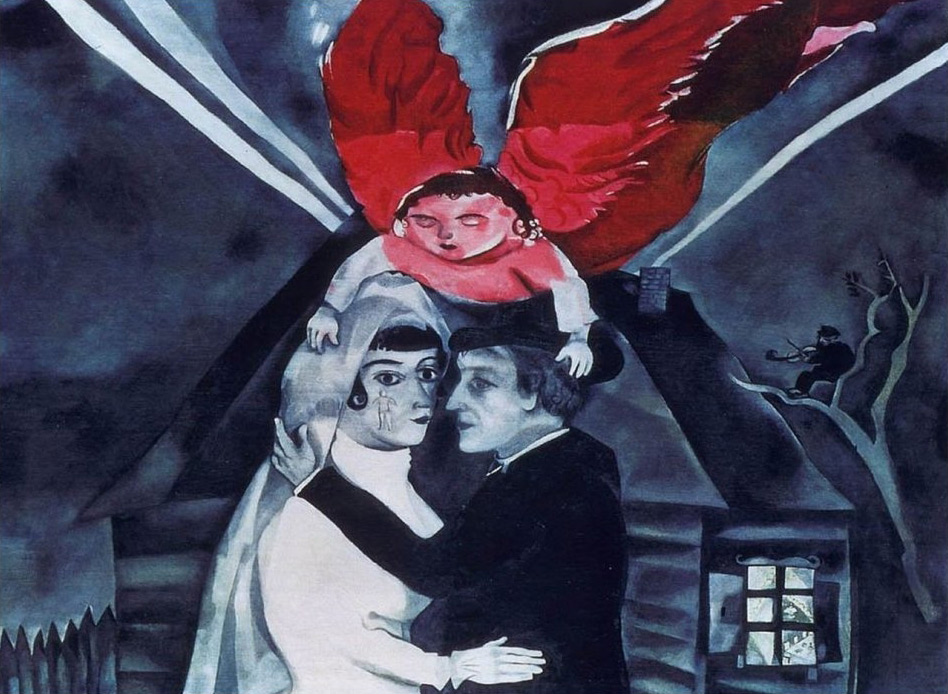
Kunstmuseum Wolfsburg website

LIKE ART BLART ON FACEBOOK

Back to top

Review: ‘Victor Hugo: Les Misérables – From Page to Stage’ at the State Library of Victoria, Melbourne

Exhibition dates: 18th July – 9th November, 2014

C0-curators: Anaïs Lellouche (lead curator), working alongside Tim Fisher (co-curator and editor of the exhibition)


Victor Hugo (French, 1802-1885) 'Les Misérables vol. 1' 1845-1862 from the exhibition 'Victor Hugo: Les Misérables - From Page to Stage' at the State Library of Victoria, Melbourne, July - November, 2014


Victor Hugo (French, 1802-1885)
Les Misérables vol. 1
1845-1862
Autograph manuscript
Bibliothèque nationale de France


Devour the main course but don’t stay for dessert

This is an exhibition in two galleries. In the first you are not allowed to take photographs but in the second you can take as many as you want. You are told this as you enter the exhibition but the import of this incantation only becomes apparent much later in your visit.

The first gallery is a profound experience: manuscripts, letters, photographs, paintings, and posters that all relate to the great man and his work Les Misérables. The Charles Marville photographs are sublime (as always) with the width of the vertical prints being the element that I noticed most on this viewing. The space that Marville manages to capture in these vertical images makes them seem almost as wide as they are high giving them an almost panoramic feel, as though the space of the image goes on forever, from side to side and into the distance. There is a wonderful sense of volume in the atmosphere, tones and textures of these images. One juxtaposition is particularly tantalising, the pairing of Marville’s Rue Tirechape (1865) with engravings such as the demolition work for constructing the Boulevard St. Germain by Maxine Lalanne (1827-1886). The illusion that one could be the other is enlightening, and there is an established association (especially in Pictorialist photography) between representation in etching and photography.1

As Philip Ebury observes,

“It has often been said that Pictorial photographs resemble works in other media. The analogy with etchings is especially striking and the comparison is more than physical. Between 1890 and the late 1920s, etching and Pictorial photography had a shared history and many similar aims. Parallels between the two disciplines in Australia had their antecedents in England. In the late nineteenth century many photographers in that country were consciously promoting artistic, as opposed to documentary work. At the same time, printmakers were reviving the art of original etching as an expressive rather than a reproductive medium.”2

But the Charles Marville photographs are not the star of the show, oh no. That is left to five things:

a) An album of which you can see only one leaf in the exhibition, Les Proscrits (‘The Exiles’) (1856, below), but that one leaf is enough. The enigma, light and intimacy of this one page is just magnificent.

b) Equally impressive are the very small intense portraits of Victor Hugo such as the silver gelatin photograph attributed to Arsène Garnier (1820-1909) – dark, atmospheric with Neo-classical sculptures and chandeliers reflected in expansive mirrors, VH propped up by a favourite chair; or Charles Hugo’s salted paper print from a collodion negative of his father in Jersey leaning on the back of a chair (1853-1855). The intensity of these portraits is remarkable.

c) Victor Hugo’s own paintings, usually pen and brown ink wash on paper, are also very powerful. In images such as Ma destinée (My destiny) (1867, below) where VH wrote in direct conversation with the ocean and The bowels of the Leviathan (1866) – dark, dank labyrinthine Parisian sewers – Hugo draws you into a world of the disenfranchised, the poor, the destitute and their (and his) destiny.

d) The beautiful theatre posters (1880s-1910s) worth the price of admission on their own

e) Leaving the best till last, the autographed manuscript Volume 1 of Les Misérables in all its glory (the first time it has ever left France), complete with revisions, crossings out and the final version in red, resting innocuously in a glass display cabinet. The psychological weight of the volume is immense. This is getting as close to the ‘source’ as you can possibly get without touching it. I remember once holding a first edition of Oscar Wilde’s The Ballad of Reading Gaol in my hand. This had that same spine tingling effect.


The first gallery assembles this incredible story and builds a glorious intensity of experience. I was on such an elevated level it was great.

And then, in literally two minutes, it was gone… No, no, no, no!

The second gallery is such a let down. It features costumes, posters, pamphlets and video in an exploration of the musical ‘phenomena’ this is the (Disney-fied) Les Misérables. A stage set from the musical with cut our heads so people can have their photo taken, and for performances; very poor quality black and white images of the sets of the theatrical productions of Les Misérables; a cardboard cut-out two-wheeled cart that is the worst thing that you could possibly see; and videos of workshops with men explaining how they are using a bandsaw to create the stage for the musical (as if I want to see that after what has gone before!). From the sublime to the ridiculous. I’m sure the kids might like it but after seeing such an amazing first half of the exhibition, for me this was like being tied with a ball and chain and dropped over the side to sink like a stone. Why do curators insist on doing this. Do they think that they always have to have a “popular” space for the family and the kids these days. That more is really more?

In this case it quite ruined what was up till then an incredible experience. So visit the exhibition for the main course (and don’t take any photos), but if I were you I would turn around after the first gallery and walk out the way I came in, thinking to myself ‘less is more!

Dr Marcus Bunyan


1/ See Ebury, Frances. “Engravers and Etchers, Pictorialists and Photographers,” Part 2, Chapter 2 in Making Pictures: Australian Pictorial Photography as Art 1897 – 1957 Volume 1. Phd thesis, The University of Melbourne, 2001, p. 73.

2/ Ibid.,


Many thankx to the State Library of Victoria for allowing me to publish the photographs in the posting. Please click on the photographs for a larger version of the image.


“As long as social damnation exists, through laws and customs, artificially creating hell at the heart of civilization and muddying a destiny that is divine with human calamity; as long as the three problems of the century – man’s debasement through the proletariat, woman’s demoralisation through hunger, the wasting of the child through darkness – are not resolved … as long as ignorance and misery exist in this world, books like the one you are about to read are, perhaps, not entirely useless.”


Victor Hugo, Hauteville House, 1 January 1862


Victor Hugo (French, 1802-1885) 'Title page of 'Les Misérables' vol. 1' 1845-1862


Victor Hugo (French, 1802-1885)
Title page ofLes Misérables vol. 1
1845-1862
Autograph manuscript
Bibliothèque nationale de France


Victor Hugo (French, 1802-1885) 'Paris' Paris, 1867


Victor Hugo (French, 1802-1885)
Paris
Paris, 1867
Maison Littéraire de Victor Hugo


Victor Hugo (French, 1802-1885) 'Ma destinée (My destiny)' 1867


Victor Hugo (French, 1802-1885)
Ma destinée (My destiny)
1867
Ink and brown-ink wash
© Maisons de Victor Hugo / Roger-Viollet


'Les Proscrits' ('The Exiles') 1856


Les Proscrits (‘The Exiles’)
1856
Album of photographs
Bibliothèque nationale de France


Album The Exiles – Victor Hugo and his circle of friends in exile started in Guernsey on the 1st January 1856. The album creates an allegorical portrait of VH. His family is represented by Victor Hugo’s hand (left), Adele’s hand (right), Marine Terrace their home in Jersey 1852-1856 (centre) and VH posing at his desk in his study at Hauterville House, Guernsey, where he completed Les Misérables surrounded by sunlight. The page appears in the posting the correct way up, as it appears in the album.


Les Proscrits ('The Exiles') album 1856 (detail of page)


Victor Hugo’s hand
From the albumLes Proscrits (‘The Exiles’) (detail of page)
1856
Album of photographs
Bibliothèque nationale de France


'Victor Hugo posing at his desk in his study at Hauterville House, Guernsey' From the album 'Les Proscrits' ('The Exiles') 1856 (detail of page)


Victor Hugo posing at his desk in his study at Hauterville House, Guernsey
From the albumLes Proscrits (‘The Exiles’) (detail of page)
1856
Album of photographs
Bibliothèque nationale de France


Edmond Bacot (French, 1814-1875) 'Victor Hugo en 1862' (Victor Hugo in 1862) 1862 from the exhibition 'Victor Hugo: Les Misérables - From Page to Stage' at the State Library of Victoria, Melbourne, July - November, 2014


Edmond Bacot (French, 1814-1875)
Victor Hugo en 1862 (Victor Hugo in 1862)
1862
Maison de Victor Hugo
Image © Edmond Bacot / Maisons de Victor Hugo / Roger-Viollet


Auguste Rodin (French, 1840-1917) 'Victor Hugo, buste dit À l'Illustre Maître' (Victor Hugo, bust known as 'To the illustrious master') 1883


Auguste Rodin (French, 1840-1917)
Victor Hugo, buste dit À l’Illustre Maître (Victor Hugo, bust known as ‘To the illustrious master’)
1883
Musée Rodin


Rodin states that Hugo would not pose. “I worked out on the veranda. I observed him swiftly, but carefully as he refused to pose. He accepted to be looked at, from all angles, but he would not pose. And so I looked at his conscience. And this is how I was able to capture the real Hugo.”


When the first two volumes of Les Misérables arrived in Paris in April 1862, all 6000 copies sold in a day. Public readings were organised when copies sold out. Everyone was reading it, from the literary intelligentsia to the common people. It was also quickly translated into nine languages to reach a global audience. After only three months, 100,000 authorised copies (and countless editions on the black market) had been sold worldwide, making the novel into an unprecedented literary bestseller of western literature. In 1870 after the fall of Napoleon III, Hugo returned to France and was hailed a national hero.

Victor Hugo’s legacy and the iconic story of Les Misérables endure to this day with various adaptations being created around the world. There have been at least 48 films, 14 animated films or TV series, radio plays, 12 television miniseries, numerous comic books, and at least 286 editions of Les Misérables published, sung and spoken. The stage musical of Boublil and Schönberg’s Les Misérables is in itself a worldwide phenomenon. It is the longest running theatre performance in London and has been seen by over 65 million people in 43 countries and in 21 languages. It returns to Melbourne in June 2014.

About Victor Hugo

Victor Hugo is considered one of the most important and influential authors of the 19th century. Through his transformative literary works and political activism, French society’s most vulnerable were given a voice in a nation ruled by those with power and privilege. Best known for his novels Les Misérables and The Hunchback of Notre Dame Hugo is also acclaimed for his theatre, essays, drawings and poetry.

Born in Besançon, France in 1802, Hugo was the son of an atheist and anti-monarchist French General and a Catholic pro-monarchist mother. A precocious talent, Hugo’s first work was published at the age of 15. His debut as a professional writer soon followed with the release of his first volume of romantic poems; Ode et poésies diverses in 1822. Many of his early romantic works drew inspiration from his childhood sweetheart and wife Adele Foucher, with whom he had four children. Another powerful female influence on Hugo’s writings was his mistress of more than fifty years, Juliette Drouet.

As Hugo’s career progressed, his aptitude and fondness for romantic literature was matched by his passion for addressing themes of disadvantage and poverty. Hugo’s first major masterpiece The Hunchback of Notre Dame published in 1831 reflected his interest in highlighting such prejudices. However, it was his greatest masterpiece, Les Misérables, that first challenged and then changed the social and political understanding of poverty, disadvantage and inherited privilege in society. In Les Misérables Hugo casts an ex-convict, Jean Valjean, as the revered protagonist and paints a villain of the character representing authority and privilege, Inspector Javert.

Hugo dedicated 17 years of his life to plan and write the epic three part story beginning in the early 1840s and finally publishing the novel in 1862. In addition to his social and political sympathies, Hugo drew from many of his own personal experiences and professional turmoil to inform the characters and themes in Les Misérables. These included the tragic drowning of his eldest daughter, Leopoldine, in a boating accident in 1843, and Hugo’s exile from France by Louis Napoleon III in 1851 – a result of his public opposition to the increasingly authoritarian rule of the self-declared emperor.

From his exile on the Channel Islands of Jersey and Guernsey where he lived for 19 years, Hugo maintained his trenchent opposition to the political status quo and the death penalty, while also publishing widely and spending three years finishing his magnum opus Les Misérables. When Les Misérables finally hit the stands in Paris in 1862 the response by the public was explosive. All 6000 copies sold out in a day, and three months later the book was an international best seller and had been translated into nine languages. Following the success of Les Misérables Hugo returned to France in 1870 after the fall of Napoleon III and was hailed a national hero. He continued to work until he died on 22 May 1885. At his state funeral it was estimated that close to two million people attended. Hugo’s wish to be buried in a pauper’s coffin was granted and his body lay in state under the Arc de Triomphe until he was interred in the Panthéon.

Today Victor Hugo’s extraordinary legacy continues. Les Misérables has been published in at least 250 editions since 1862, 48 films have been made of the story and the Boublil and Schönberg Les Misérables musical has been seen by over 65 million people worldwide in 42 countries and 22 languages, and is one of the most popular musicals of all time. Victor Hugo is remembered as an international literary giant and a French national hero.

Themes

The possibility that the condemned can rise above poverty and degradation to become good and honourable, and perhaps above all to fight for freedom of body and soul.


Charles Marville (French, 1813-1879) 'Percement de l'avenue de l'Opéra' (Clearing of the Avenue de l'Opéra) c. 1876


Charles Marville (French, 1813-1879)
Percement de l’avenue de l’Opéra (Clearing of the Avenue de l’Opéra)
c. 1876
State Library of Victoria


Charles Marville (French, 1813-1879) 'Rue Soufflot (pendant la démolition)' (Rue Soufflot [during demolition]) c. 1876-1877


Charles Marville (French, 1813-1879)
Rue Soufflot (pendant la démolition) (Rue Soufflot [during demolition])
c. 1876-1877
State Library of Victoria


Charles Marville (French, 1813-1879) 'Avenue d'Iéna' c. 1877


Charles Marville (French, 1813-1879)
Avenue d’Iéna
c. 1877
State Library of Victoria


Charles Marville (French, 1813-1879) 'Boulevard Haussmann' c. 1877


Charles Marville (French, 1813-1879)
Boulevard Haussmann
c. 1877
State Library of Victoria


Charles Marville (French, 1813-1879) 'Cour du Dragon' c. 1863-1869


Charles Marville (French, 1813-1879)
Cour du Dragon, Rue de Taranne
c. 1863-1869
State Library of Victoria


Charles Marville (French, 1813-1879) 'Rue Tirechape' c. 1863-1869


Charles Marville (French, 1813-1879)
Rue Tirechape
c. 1863-1869
State Library of Victoria


Charles Marville (French, 1813-1879) 'Rue de Fontaines' c. 1863-1869


Charles Marville (French, 1813-1879)
Rue de Fontaines
c. 1863-1869
State Library of Victoria


Charles Marville (French, 1813-1879) 'Rue du Marche aux fleurs' c. 1863-1869


Charles Marville (French, 1813-1879)
Rue du Marche aux fleurs
c. 1863-1869
State Library of Victoria


Paul Carpentier (French, 1787-1877) 'Episode du 29 juillet 1830, rue Chilperic, face á la colonnade du Louvre' (Event of 29 July 1830, rue Chilperic, before the colonnade of the Louvre) 1830


Paul Carpentier (French, 1787-1877)
Episode du 29 juillet 1830, rue Chilperic, face á la colonnade du Louvre (Event of 29 July 1830, rue Chilperic, before the colonnade of the Louvre)
1830
© Musée Carnavalet / Roger-Viollet


Charles Méryon (French, 1821-1868) 'Le petit pont' (The little bridge) 1850


Charles Méryon (French, 1821-1868)
Le petit pont (The little bridge)
1850
National Gallery of Victoria, purchased 1891


Ottavio Rodella Tavio (Italian, 1864-1910) Poster for 'I Miserabili di Victor Hugo' (Les Misérables by Victor Hugo) 1890


Ottavio Rodella Tavio (Italian, 1864-1910)
Poster for I Miserabili di Victor Hugo (Les Misérables by Victor Hugo)
1890
Bibliothèque nationale de France


'Les Misérables by Victor Hugo' New York, Classics Illustrated No. 9, 1950


Les Misérables by Victor Hugo
New York, Classics Illustrated no. 9
1950
State Library of Victoria


Design by Slawomir Kitowski. 'Les Misérables poster' 1989-2000


Design bySlawomir Kitowski
Les Misérables
poster
1989-2000
Teatr Muzyczny, Gdynia, Poland
Courtesy Cameron Mackintosh Ltd


State Library of Victoria
328 Swanston St,
Melbourne VIC 3000
Phone: (03) 8664 7000

Opening hours:
10am – 6pm daily

State Library of Victoria website

LIKE ART BLART ON FACEBOOK

Back to top

Exhibition: ‘The World c. 1914. Colour Photography Before the Great War’ at Martin-Gropius-Bau Berlin

Exhibition dates: 1st August – 2nd November, 2014

Albert Kahn, Sergej M. Prokudin-Gorskii, Adolf Miethe


Stéphane Passet (French, 1875-1941) 'Morocco, Benguerir' December 1912 / January 1913 from the exhibition Exhibition: 'The World c. 1914. Colour Photography Before the Great War' at Martin-Gropius-Bau Berlin, August - November, 2014


Albert Kahn, Les Archives de la planète

Stéphane Passet (French, 1875-1941)
Morocco, Benguerir
December 1912 / January 1913
Autochrome
© Musée Albert-Kahn, Departement des Hauts-de-Seine


One of the most beautiful postings that I have ever done on the blog. The colours, the people, the faces, the places: magnificent.

This was Sarajevo two years before Archduke Franz Ferdinand of Austria was assassinated there, catalyst that sparked the beginning of The Great War. Bread and dirty clothes, rough hands and mud-stained shoes.

Can you imagine the journey of Stéphane Passet in those days with plate cameras:

Turkey: September 1912
Morocco: December 1912 / January 1913
China: May 1913
Mongolia: July 1913
India: December 1913 – January 1914
France: June 1914

Dr Marcus Bunyan


Many thankx to Martin-Gropius-Bau Berlin for allowing me to publish the photographs in the posting. Please click on the photographs for a larger version of the image.


Stéphane Passet (French, 1875-1941) 'Turkey, Istanbul September' 1912 from the exhibition Exhibition: 'The World c. 1914. Colour Photography Before the Great War' at Martin-Gropius-Bau Berlin, August - November, 2014


Albert Kahn, Les Archives de la planète

Stéphane Passet (French, 1875-1941)
Turkey, Istanbul
September 1912
Autochrome
© Musée Albert-Kahn, Departement des Hauts-de-Seine


Stéphane François Marie Passet (French, 1875-1941) was an amateur photographer and appointed operator on behalf of the Archives de la Planète (Archives of the Planet). This archival project began thanks to the rich French-based banker and philanthropist Albert Kahn (1860-1940), who became concerned about the Chinese cultural heritage after his part-business, part-pleasure trip to China between November 1908 and May 1909.

After his return to Paris, Kahn decided to launch the worldwide project Les Archives de la Planète. This three-decade long project distinguished itself from any other initiated at that time thanks to the compilation of a visual inventory of the world utilising ground-breaking types of media from that time, namely autochrome and film. With the utopian aim to ‘fix once and for all the aspects, the practices, and modes of human activity whose fatal disappearing is just a question of time’, Kahn hired a dozen operators to help him visualise the world, including Passet.

Biographical elements of Passet remain quite meagre. What is known is that he volunteered in the French Army for fifteen years, settled down in Paris in 1910, and worked for Kahn’s Archives de la Planète from 1912 onwards. The circumstances of his previous training as a photographer and cameraman, as well as his recruitment, remain unknown. The visual archive left to us today reveal that two trips were organised [to China] in 1912 (between May and August) and 1913 (between the end of May and the end of June). Passet and his team travelled across China, visiting and recording places such as Beijing (which composes a large part of the archive in China) and northern sites (Great Wall and Ming Tombs), Shenyang, Zhangjiakou, Qufu, Shanghai, places along the Yangtze River, and Mount Tai (hereinafter referred to as Taishan).

The Archives de la Planète ended in 1931 when Kahn was bankrupted.

Anonymous text. “Stéphane Passet,” on the Photography of China website Nd [Online] Cited 10/11/2022


Auguste Leon (French, 1857-1942) 'Bosnia-Herzegovina, Sarajevo' 15 October 1912 from the exhibition Exhibition: 'The World c. 1914. Colour Photography Before the Great War' at Martin-Gropius-Bau Berlin, August - November, 2014


Albert Kahn, Les Archives de la planète

Auguste Leon (French, 1857-1942)
Bosnia-Herzegovina, Sarajevo
15 October 1912
Autochrome
© Musée Albert-Kahn, Departement des Hauts-de-Seine


Auguste Leon (French, 1857-1942) 'Bosnia-Herzegovina, Sarajevo' 15 October 1912 (detail)

Auguste Leon (French, 1857-1942) 'Bosnia-Herzegovina, Sarajevo' 15 October 1912 (detail)


Albert Kahn, Les Archives de la planète

Auguste Leon (French, 1857-1942)
Bosnia-Herzegovina, Sarajevo (details)
15 October 1912
Autochrome
© Musée Albert-Kahn, Departement des Hauts-de-Seine


Auguste Leon (French, 1857-1942), French photographer who worked for the project “Archives of the Planet” (French: Les Archives de la Planète) of millionaire French banker and philanthropist Albert Kahn (1860-1940) since 1909. Together with Jean Brin, another French photographer, they visited Macedonia during the Balkan wars in the period of 1912-1913 where they made series of autochromes (very first colour photograps) which today are in the collection of Albert Kahn museum and were published later in the publication: Macedonia in 1913 – Autochromes from the collection of the Museum Albert Kahn.


Stéphane Passet (French, 1875-1941) 'Mongolia, near Ulaanbaatar' 17 July 1913


Albert Kahn, Les Archives de la planète

Stéphane Passet (French, 1875-1941)
Mongolia, near Ulaanbaatar
17 July 1913
Autochrome
© Musée Albert-Kahn, Departement des Hauts-de-Seine


Auguste Leon (French, 1857-1942) 'Egypt, Giza' 6 January 1914


Albert Kahn, Les Archives de la planète

Auguste Leon (French, 1857-1942)
Egypt, Giza
6 January 1914
Autochrome
© Musée Albert-Kahn, Departement des Hauts-de-Seine


Stéphane Passet (French, 1875-1941) 'India, Uttar Pradesh' 19 - 21 January 1914


Albert Kahn, Les Archives de la planète

Stéphane Passet (French, 1875-1941)
India, Uttar Pradesh
19 – 21 January 1914
Autochrome
© Musée Albert-Kahn, Departement des Hauts-de-Seine


Auguste Leon (French, 1857-1942) 'Bosnia-Herzegovina, Mostar' 29 April 1913


Albert Kahn, Les Archives de la planète

Auguste Leon (French, 1857-1942)
Bosnia-Herzegovina, Mostar
29 April 1913
Autochrome
© Musée Albert-Kahn, Departement des Hauts-de-Seine


The Archives of the Planet (French: Les Archives de la Planète) was photographical endeavour to document buildings and cultures.

In 1909, Kahn travelled with his chauffeur and photographer, Alfred Dutertre to Japan on business and returned with many photographs of the journey. On his return to Europe, he decided to go back, this time with the professional photographer Augustus Leon, for a second two-month trip to South America in 1909 where he visited Uruguay, Argentina, and Brazil. All materials became the first of the “Archives of the Planet” based in Paris: a collection of colour photographs (process autochrome plates, invented by the Lumiere brothers) and movies.

This prompted him to begin a project collecting a photographic record of the entire Earth. He appointed Jean Brunhes as the project director, and sent photographers to every continent to record images of the planet using the first colour photography, autochrome plates, and early cinematography.

Professional operators were recruited and sent around the world and in France to photograph (colour) and film (the movement) as evidence “aspects, practices and modes of human activity, including the fatal disappearance is only a matter of time.” Among them, the photographer Stéphane Passet conducted between 1912 and 1914, several trips to China, Mongolia and in the British Raj (India and Pakistan), yielding several thousand Autochromes and movies on the people and customs of these country. At the same time Kahn sent his operators, including Augustus Leon, to Scandinavia and more than twenty European countries on the eve of the Great War. Kahn’s photographers began documenting France in 1914, just days before the outbreak of World War I, and by liaising with the military managed to record both the devastation of war, and the struggle to continue everyday life and agricultural work. Other parts of France are not forgotten either, Kahn sending Brittany operators to take monochromes from 1909-1931. In 1926 and 1927, it was to Japan that he sends an operator, Roger Dumas.

Between 1909 and 1931 they collected 72,000 colour photographs and 183,000 meters of film. These form a unique historical record of 50 countries, known as The Archives of the Planet. Between 1909 and 1931, it is thus some 72,000 autochrome (first global fund of early colour photography), 4000 black-and-white, and a hundred hours of footage that will be reported from fifty country. These images are the iconographic side of a large documentation project that will take other forms (publications, documentation centres, etc.) and whose goal is a better understanding of other nations for a better deal in order to prevent conflicts. The images are also projected for this purpose to the guests, often prestigious people from around the world, as well as in higher education structures.

Translated from the French Wikipedia website


Stéphane Passet (French, 1875-1941) 'Mongolia, Ulaanbaatar' 25 July 1913


Albert Kahn, Les Archives de la planète

Stéphane Passet (French, 1875-1941)
Mongolia, Ulaanbaatar
25 July 1913
Autochrome
© Musée Albert-Kahn, Departement des Hauts-de-Seine


Stéphane Passet (French, 1875-1941) 'India, Bombay' 17 December 1913


Albert Kahn, Les Archives de la planète

Stéphane Passet (French, 1875-1941)
India, Bombay
17 December 1913
Autochrome
© Musée Albert-Kahn, Departement des Hauts-de-Seine


Stéphane Passet (French, 1875-1941) 'France, Paris' 24 June 1914


Albert Kahn, Les Archives de la planète

Stéphane Passet (French, 1875-1941)
France, Paris (Family in the Rue du Pot-de-Fer)
24 June 1914
Autochrome
© Musée Albert-Kahn, Departement des Hauts-de-Seine


Auguste Leon (French, 1857-1942) 'Serbia, Krusevac' 29 April 1913


Albert Kahn, Les Archives de la planète

Auguste Leon (French, 1857-1942)
Serbia, Krusevac
29 April 1913
Autochrome
© Musée Albert-Kahn, Departement des Hauts-de-Seine


Auguste Leon (French, 1857-1942) 'Serbia, Krusevac' (detail) 29 April 1913


Albert Kahn, Les Archives de la planète

Auguste Leon (French, 1857-1942)
Serbia, Krusevac (detail)
29 April 1913
Autochrome
© Musée Albert-Kahn, Departement des Hauts-de-Seine


In commemoration of the outbreak of the First World War, the Martin-Gropius-Bau is presenting an exhibition entitled The World c. 1914 – Colour Photography Before the Great War, which features nearly forgotten colour photographs and films commissioned by the French banker Albert Kahn (1860-1940) before the First World War. As the nations of Europe were already arming themselves for battle, Kahn, who was excited by the Lumière Brothers’ colour photography process, dispatched photographers out into the world to develop a unique photo archive. Over 70,000 colour photos have survived in this collection. They represent an immense ethnographic treasure and were also intended to perform a mission of peace: Bringing the outside world closer to home. Kahn’s activities were intended to help secure the fragile peace. The exhibition brings this treasure trove of images from a long forgotten world to light.

For Albert Kahn, knowledge of peoples, buildings, landscapes and lifestyles was directly related to his desire for global peace: People who know and respect one another, and who encounter one another face to face, do not need to wage war. In 1908/09, excited by the new autochrome process of the brothers August and Louis Lumière, Kahn commissioned his photographers to document the world with the goal of assembling an archive of colour photographs from Europe, Asia and Africa. They photographed local scenes and people in typical clothing as well as monuments of cultural history. From this global treasure trove, more than 160 images have been selected for this exhibition. The autochromes from the Kahn archive form the centrepiece. The exhibition also displays images and projections by Adolf Miethe (1862-1927) and Sergei M. Prokudin-Gorskii (1863-1944).

Adolf Miethe, the inventor of a panchromatic film-coating process and thus the creator of three-colour printing, played a significant role in the development of colour photography. His presentation before the Kaiser led to a commission to create a colour documentation of German landscapes for the St. Louis World’s Fair. His work also enjoyed great popularity as collectible pictures sold with chocolate bars. This resulted in the “Stollwerck Album” – Germany’s first coloured photographic album.

Moreover, the Miethe Process inspired the Russian photographer Sergei Mikhailovich Prokudin-Gorskii. His work is present in the form of approximately twenty-five colour prints and fifty projected photos. A special item is on loan from the German Museum in Munich: The original projector with which Sergei Prokudin-Gorskii exhibited his work to Nicholas II, the last tsar. In 1909, as a result of this presentation, Prokudin-Gorskii received a commission to record the Russian Empire in 10,000 photos. Between 1909 and 1915, Gorskii made several thousand photographs of great brilliance. He documented the cultural diversity of the tsarist empire from the Crimean Peninsula to Siberia.

Text from the Martin-Gropius-Bau website


Auguste Leon (French, 1857-1942) 'Egypt, Assuan' 20 January 1914


Albert Kahn, Les Archives de la planète

Auguste Leon (French, 1857-1942)
Egypt, Assuan
20 January 1914
Autochrome
© Musée Albert-Kahn, Departement des Hauts-de-Seine


Stéphane Passet (French, 1875-1941) 'Morocco, Fes' January 1913


Albert Kahn, Les Archives de la planète

Stéphane Passet (French, 1875-1941)
Morocco, Fes
January 1913
Autochrome
© Musée Albert-Kahn, Departement des Hauts-de-Seine


Stéphane Passet (French, 1875-1941) 'China, Beijing' 26 May 1913


Albert Kahn, Les Archives de la planète

Stéphane Passet (French, 1875-1941)
China, Beijing
26 May 1913
Autochrome
© Musée Albert-Kahn, Departement des Hauts-de-Seine


Stéphane Passet (French, 1875-1941) 'Turkey, Istanbul, Pera' (today: Beyoğlu) September 1912


Albert Kahn, Les Archives de la planète

Stéphane Passet (French, 1875-1941)
Turkey, Istanbul, Pera (today: Beyoğlu)
September 1912
Autochrome
© Musée Albert-Kahn, Departement des Hauts-de-Seine


Stéphane Passet (French, 1875-1941) 'Le Moulin Rouge, Boulevard de Clichy (18°) Paris' 24 June 1914


Albert Kahn, Les Archives de la planète

Stéphane Passet (French, 1875-1941)
Le Moulin Rouge, Boulevard de Clichy (18°), Paris
24th June 1914
Autochrome
© Musée Albert-Kahn, Departement des Hauts-de-Seine


Martin-Gropius-Bau Berlin
Niederkirchnerstraße 7
Corner Stresemannstr. 110
10963 Berlin
Phone: +49 (0)30 254 86-0

Opening hours:
Wednesday to Monday 10 – 19 hrs
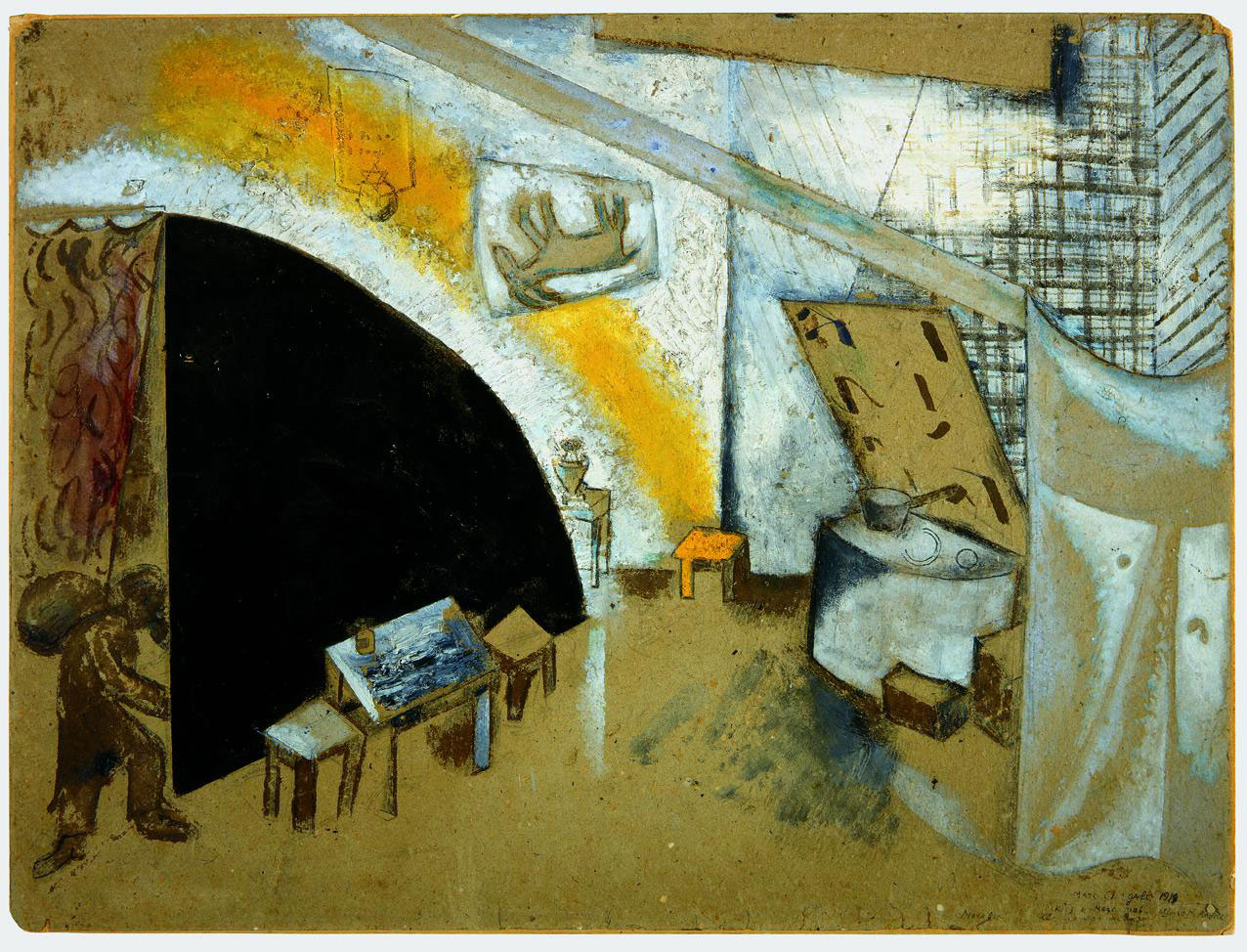
Tuesday closed

Martin-Gropius-Bau website

LIKE ART BLART ON FACEBOOK

Back to top

Exhibition: ‘Paul Martial’s World Of Ordinary Things’ at Kunstmuseum Basel Museum für Gegenwartskunst

Exhibition dates: 5th July – 19th October, 2014

Curator: Anita Haldemann


Éditions Paul Martial, Paris. 'Sliced ​​mattress' c. 1928-1929 from the exhibition 'Paul Martial's World Of Ordinary Things' at Kunstmuseum Basel Museum für Gegenwartskunst, July - October, 2014


Éditions Paul Martial, Paris
Sliced ​​mattress
c. 1928-1929
Gelatin silver print
17.9 x 23.9cm
Kunstmuseum Basel, Prints and Drawings
Donation by Ruth and Peter Herzog, Basel
© Kunstmuseum Basel


My god, how can a dryer hood or a pine cone become so sensual?

It should have been Paul-Martial’s World of Extra-Ordinary Things!

Marcus


Many thankx to the Kunstmuseum Basel for allowing me to publish the photographs in the posting. Please click on the photographs for a larger version of the image.

Download the exhibition brochure (in German) (570kb pdf) with contributions by Anne-Céline Callens, Anita Haldemann, and Peter Herzog.


Éditions Paul Martial, Paris. 'Front view of a Citroën automobile' c. 1927-1928 from the exhibition 'Paul Martial's World Of Ordinary Things' at Kunstmuseum Basel Museum für Gegenwartskunst, July - October, 2014


Éditions Paul Martial, Paris
Front view of a Citroën automobile
c. 1927-1928
Gelatin silver print
17.8 x 23.7cm
Kunstmuseum Basel, Prints and Drawings
Donation by Ruth and Peter Herzog, Basel
© Kunstmuseum Basel


Éditions Paul Martial, Paris. 'Pine cone' c. 1931-1932


Éditions Paul Martial, Paris
Pine cone
c. 1931-1932
Gelatin silver print
17.6 x 23.8cm
Kunstmuseum Basel, Prints and Drawings
Purchase from the Herzog Collection, Basel
© Kunstmuseum Basel


Éditions Paul Martial, Paris. 'Young woman with leather handbag and gloves posing; Set with leather handbag and gloves' August 1935


Éditions Paul Martial, Paris
Young woman with leather handbag and gloves posing; Set with leather handbag and gloves
August 1935
Gelatin silver print
17.9 x 23.9cm
Kunstmuseum Basel, Prints and Drawings
Purchase from the Herzog Collection, Basel
© Kunstmuseum Basel


Éditions Paul Martial, Paris. 'Eiffel tower, tank and rail bridge' c. 1930-1931


Éditions Paul Martial, Paris
Eiffel tower, tank and rail bridge
c. 1930-1931
Gelatin silver print
17.9 x 23.9cm
Kunstmuseum Basel, Prints and Drawings
Donation by Ruth and Peter Herzog, Basel
© Kunstmuseum Basel


On July 5, 2014, the Kunstmuseum Basel opens a new exhibition presenting a selection of one hundred photographs from the archives of the Paris-based advertising agency Éditions Paul-Martial. The black-and-white pictures formed the basis for posters, newspaper advertisements, and brochures and show ordinary things: buildings, cars, typewriters, radiators, mannequins. What was unusual and novel, however, were the composition, lighting, and exposure of the pictures. In today’s perspective, the collection reflects the multifaceted evolution of photography from the 1920s onward. At the same time, it is an invaluable source for historians, documenting early forms of the carefully designed presentation of commodities and strategies designed to lure the consumer. The photographs are part of a collection newly acquired from the Herzog Collection and have never been on public display.

Cans make it possible to preserve food for the long term; zippers allow bags and pockets to be securely closed; rubber soles protect the walker from slipping; car jacks make it easier to change a tire: the advertising photographs produced by Éditions Paul-Martial tell stories about everyday life and how products like radiators, boilers, and cooking stoves help make it more pleasant. This renders the collection an extraordinarily valuable resource for historians: it illustrates the early history of the staging of consumer goods and the strategies employed to seduce the viewer. Beyond consumer products, the agency’s photographers also captured the new worlds of work in factories and offices and the rise of modern travel and communication technologies. For the time being, most of the photographs’ creators remained anonymous; in the business perspective, individual authorship was obviously a secondary concern, especially since the majority of the pictures were a sort of intermediate product to be used by graphic artists in the design of brochures and posters.

New Objectivity and Neues Sehen

The historic photographs also reflect the multifaceted evolution of photography as an art in its own right from the 1920s onward. Pictures of buildings, machines, and selected products hew to the sober aesthetic of the New Objectivity, which took hold after the Great War. Photographs of transformer stations and bridges point to the Neues Sehen (New Vision) of the Bauhaus photographers and the works of the Russian avant-garde, which emphasised diagonal lines to heighten the dynamic quality of the picture – this influence is also evident in techniques such as photomontage and double exposures. In isolated objects and enigmatic motifs such as a pinecone, the surreal, mysterious, and sometimes also absurd infiltrate the world of ordinary things.

The photographers’ love of experimentation is palpable throughout: they often created small series in which they tried different lighting effects and unusual angles of view. The selection of a hundred photographs is drawn from a larger collection the museum acquired from the collection of Peter and Ruth Herzog, Basel, in 2012 through a combined purchase-and-donation agreement. The exhibition was designed in close collaboration between the curator, Anita Haldemann, and the photography collector and expert Peter Herzog.

The Fonds Paul-Martial – considerable parts of its inventory have also gone to the Musée d’Art Moderne de Saint-Étienne Métropole, the department of prints and photography at the Bibliothèque nationale de France, and the collection of Marc Pagneux, France – is still widely unknown, and the work of exploring this exceptionally rich archive, which promises important insights into the history of photography and especially of contemporary art, has only just begun.

Press release from the Kunstmuseum Basel website


Éditions Paul Martial, Paris. 'Working with metal working parts in the factory Fillod in Florange (Moselle)' August 1931


Éditions Paul Martial, Paris
Working with metal working parts in the factory Fillod in Florange (Moselle)
August 1931
Gelatin silver print
23.8 x 17.8cm
Kunstmuseum Basel, Prints and Drawings
Purchase from the Herzog Collection, Basel
© Kunstmuseum Basel


Éditions Paul Martial, Paris. 'Car Headlights "Marchal"' c. 1929-1930


Éditions Paul Martial, Paris
Car Headlights “Marchal”
c. 1929-1930
Gelatin silver print
23.7 x 17.8cm
Kunstmuseum Basel, Prints and Drawings
Purchase from the Herzog Collection, Basel
© Kunstmuseum Basel


Éditions Paul Martial, Paris. 'Cocktail "Gratte-Ciel" Cointreau, advertising design' June 1931


Éditions Paul Martial, Paris
Cocktail “Gratte-Ciel” Cointreau, advertising design
June 1931
Gelatin silver print
23.8 x 17.9cm
Kunstmuseum Basel, Prints and Drawings
Donation by Ruth and Peter Herzog, Basel
© Kunstmuseum Basel


Éditions Paul Martial, Paris. 'Typewriter "Hermes 2000"' November 1933


Éditions Paul Martial, Paris
Typewriter “Hermes 2000”
November 1933
Gelatin silver print
23.8 x 17.9cm
Kunstmuseum Basel, Prints and Drawings
Donation by Ruth and Peter Herzog, Basel
© Kunstmuseum Basel


Éditions Paul Martial, Paris. 'Dryer hood "Hollywood"' June 1937


Éditions Paul Martial, Paris
Dryer hood “Hollywood”
June 1937
Gelatin silver print
23.8 x 17.9cm
Kunstmuseum Basel, Prints and Drawings
Purchase from the Herzog Collection, Basel
© Kunstmuseum Basel


Éditions Paul Martial, Paris. 'Welding women in factory hall' c. 1940-1945


Éditions Paul Martial, Paris
Welding women in factory hall
c. 1940-1945
Gelatin silver print
23 x 17.2cm
Kunstmuseum Basel, Prints and Drawings
Purchase from the Herzog Collection, Basel
© Kunstmuseum Basel


Éditions Paul Martial, Paris. 'Woman posing next to radiator, advertising photography for "Gaz et Eaux"' April 1936


Éditions Paul Martial, Paris
Woman posing next to radiator, advertising photography for “Gaz et Eaux”
April 1936
Gelatin silver print
23.9 x 17.9cm
Kunstmuseum Basel, Prints and Drawings
Purchase from the Herzog Collection, Basel
© Kunstmuseum Basel


Éditions Paul Martial, Paris. 'Standing young woman in corset, advertising photography for PMH' September 1932


Éditions Paul Martial, Paris
Standing young woman in corset, advertising photography for PMH
September 1932
Gelatin silver print
23.8 x 18cm
Kunstmuseum Basel, Prints and Drawings
Purchase from the Herzog Collection, Basel
© Kunstmuseum Basel


Kunstmuseum Basel
St. Alban-Graben 16
CH-4010 Basel
Phone: +41 61 206 62 62

Opening hours:
Tuesday – Sunday 10am – 6pm
Closed on Monday
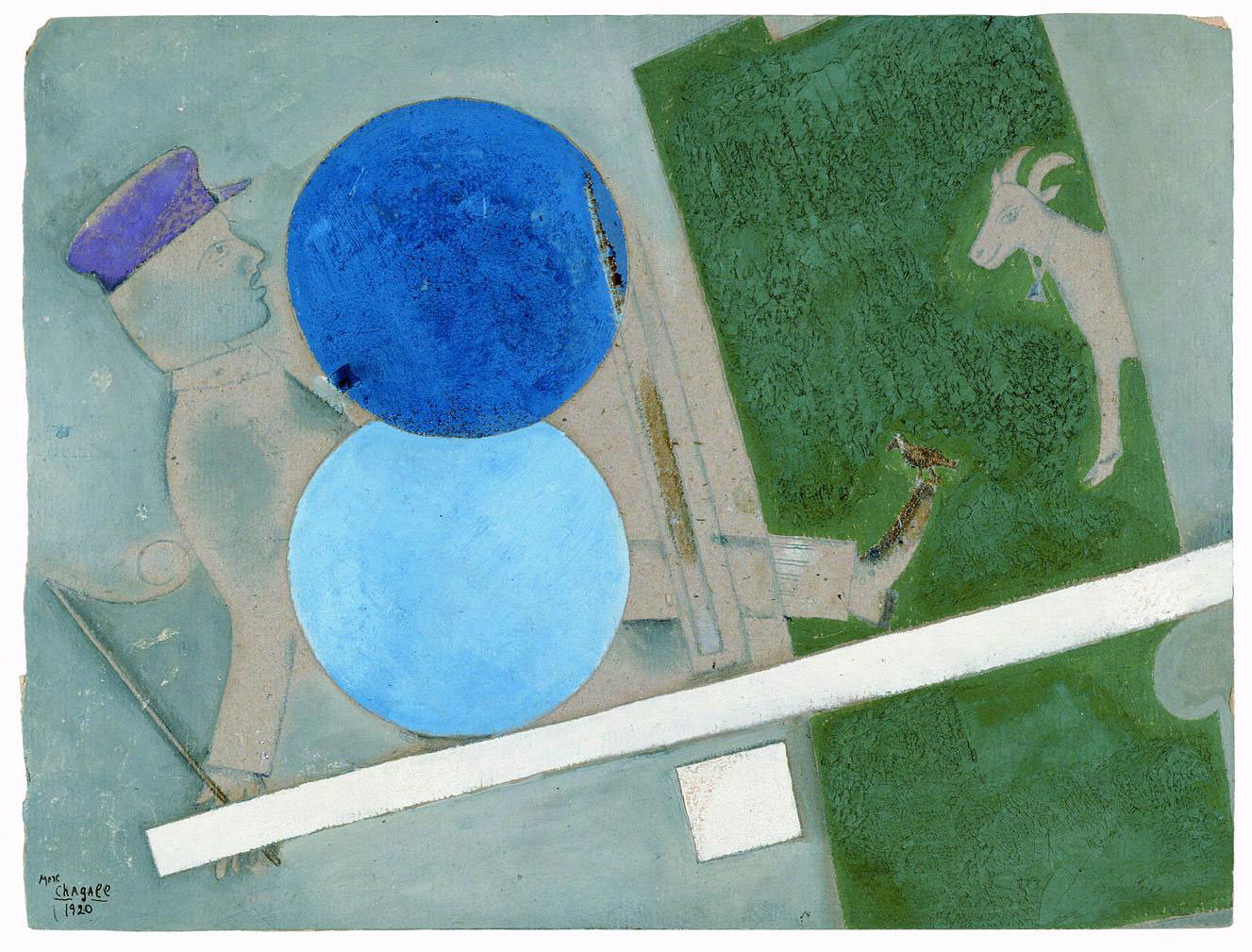
Kunstmuseum Basel website

LIKE ART BLART ON FACEBOOK

Back to top

Exhibition: ‘Max Dupain 
The Paris ‘private’ series and other pictures’ at the Art Gallery of New South Wales (AGNSW), Sydney

Exhibition dates: 24th May – 14th September, 2014


Max Dupain (Australian, 1911-1992) 'Embassy of Australia, Paris, France' 1978 from the exhibition 'Max Dupain 
The Paris 'private' series and other pictures' at the Art Gallery of New South Wales (AGNSW), Sydney, May - Sept, 2014


Max Dupain (Australian, 1911-1992)
Embassy of Australia, Paris, France
1978
Silver gelatin print


A good friend of mine, Joyce Evans (who should know what she is talking about) observed to me that you cannot look at Dupain’s photographs of Paris without first looking at his commissioned photographs of the then new Embassy of Australia in Paris.

Unfortunately, I could only find one photograph online to show to you, Embassy of Australia, Paris, France (1978, above), but you get the idea.

Dupain’s The Paris ‘private’ series were taken during a couple of days off that he had from the commissioned job. Basically they are tourist photographs, a record of things Dupain wanted to see in Paris on one of his few overseas trips. Most of them are disappointing images, serviceable but disappointing.

Having studied Eugène Atget I expected more from Dupain. In these photographs he tends to shoot obliquely into the object of his attention, directing the lead in and vanishing point(s) within the image. For example, in Untitled (the balustrade of Pont Alexandre III) and Untitled (Pont Alexandre III with sculptural balustrade) (both 1978, below), Dupain allows the bridge parapet to lead the eye into the image, while the vanishing point is positioned at far right. Neither are very successful as formal compositions.

The same can be said of Untitled (statue of Maréchal Joffre, Place Joffre, Champ-de-Mars) (1978, below) with the vanishing point this time at the left of the image. More successful is Dupains’s Untitled (staircase to the park, looking toward Bassin des Serruriers, Domaine de Chantilly) (1978, below) with its foreshortened out of focus entrance, geometric planes and multiple exit points – but then he goes and spoils it with the simplistic Untitled (staircase and statue of Anne de Montmorency 1886 by Paul Dubois, Domaine de Chantilly) (1978, below) taken at the same location.

The best image from the series is undoubtedly Untitled (the statue of Christ at the portal of La Sainte-Chapelle) (1978, below) with its restrained and refined aesthetic. A beautiful image and a wondrous space. The photograph of the people at the Eiffel Tower is also a cracker.

As I said at the beginning, these are tourist art photographs of Paris, but they could have been so much more.

Dr Marcus Bunyan


Many thankx to The Art Gallery of New South Wales for allowing me to publish the photographs in the posting. Please click on the photographs for a larger version of the image.


Max Dupain (Australian, 1911-1992) is one of the leading figures of 20th-century Australian photography. The group of 21 photographs in his Paris ‘private’ series was taken when he travelled to Paris in 1978 with architect Harry Seidler to photograph the Australian Embassy, designed by Seidler. The series consists of transcendent photographs of Paris. Dupain had studied the work of Eugène Atget, and there is a similar enigmatic atmosphere to be found in Dupain’s examination of the city. Primarily depicting 18th- to 19th-century landmarks such as the ornate Alexandre III bridge, the Grand Palais and Chantilly, this compilation offers a view of the city and its environs shaped by layers of history, mythology and art.

Given to the Gallery by Penelope Seidler in memory of her husband and the photographer, this portfolio is shown alongside other photographs of made and natural structures by Dupain from the 1930s to the 1980s.


Max Dupain (Australian, 1911-1992) 'Untitled (cars on rue de Rivoli)' from The Paris 'private' series Year 1978


Max Dupain (Australian, 1911-1992)
Untitled (cars on rue de Rivoli)
1978
From The Paris ‘private’ series
Silver gelatin print
Gift of Penelope Seidler AM in honour of Max Dupain AC and Harry Seidler AC 2012. Donated through the Australian Government’s Cultural Gifts Program
© Estate of Max Dupain. Licensed by Viscopy, Sydney


“I like to involve myself in, maybe, a small area geographically and work it out, as simple as that” said Max Dupain in a 1991 interview.1 During his lifetime the photographer visited only three countries outside of Australia. His 1978 trip to Paris was made together with architect Harry Seidler, whose newly built Australian embassy building Dupain was commissioned to document. The long professional association between the architect and the photographer stretched back to the early 1950s, soon after Seidler’s arrival in Australia. Dupain, through his expressive architectural photographs, was closely involved in popularising the modernist aesthetic espoused by Seidler’s starkly functional buildings.

Conversely, the set of 21 photographs of Paris which Dupain compiled and presented to Seidler as a personal gift, does not contain any images of modern architecture. Primarily depicting 18-19th century landmarks such as the ornate Alexandre III bridge, the Grand Palais and Versailles this compilation offers a view of the city and its environs shaped by layers of history, mythology and art. Dupain was nonetheless well read in modern French culture and aware of photographers such as Eugène Atget and Henri Cartier-Bresson.

The Parisian images vary from pure architectural studies to compositions with an almost literary scope. They demonstrate Dupain’s signature trait of combining the formal and social aspects of photography. In some of the works, Dupain gives classical architecture the same reductive treatment he brought to modern buildings. Stripped of embellishments, these photographs bring to the fore the essence of order, logic and harmony which lies at the core of classicism. The presence of human figures in photographs such as that of Napoleon’s statue on the balcony of Les Invalides adds a dramatic element to the compositions. Dupain wanted “to extract every ounce of content from any exciting form and I want to give life to the inanimate.”2 Time and the built environment converge in this personal ode to Paris, manifesting the incessant flow of life and the connectedness of past with the present.

1/ Max Dupain interviewed by Helen Ennis in Max Dupain: Photographs, National Gallery of Australia, Canberra, 1991, p. 13
2/ Max Dupain, “Max Dupain – modernist”, exhibition catalogue, State library of NSW, Sydney, 2007, p. 9

Text from the Art Gallery of New South Wales website


Max Dupain (Australia 22 Apr 1911 - 27 Jul 1992) 'Untitled (statue of Maréchal Joffre, Place Joffre, Champ-de-Mars)' 1978 from the exhibition 'Max Dupain 
The Paris 'private' series and other pictures' at the Art Gallery of New South Wales (AGNSW), Sydney, May - Sept, 2014


Max Dupain (Australia 22 Apr 1911 – 27 Jul 1992)
Untitled (statue of Maréchal Joffre, Place Joffre, Champ-de-Mars)
1978
From The Paris ‘private’ series
Gelatin silver photograph
30.0 x 33.7cm image
Gift of Penelope Seidler AM in honour of Max Dupain AC and Harry Seidler AC 2012. Donated through the Australian Government’s Cultural Gifts Program
© Estate of Max Dupain. Licensed by Viscopy, Sydney


Max Dupain (Australia 22 Apr 1911 - 27 Jul 1992) 'Untitled (staircase to the park, looking toward Bassin des Serruriers, Domaine de Chantilly)' 1978 from the exhibition 'Max Dupain 
The Paris 'private' series and other pictures' at the Art Gallery of New South Wales (AGNSW), Sydney, May - Sept, 2014


Max Dupain (Australia 22 Apr 1911 – 27 Jul 1992)
Untitled (staircase to the park, looking toward Bassin des Serruriers, Domaine de Chantilly)
1978
From The Paris ‘private’ series
Gelatin silver photograph
30.5 x 36.7cm image
Gift of Penelope Seidler AM in honour of Max Dupain AC and Harry Seidler AC 2012. Donated through the Australian Government’s Cultural Gifts Program
© Estate of Max Dupain. Licensed by Viscopy, Sydney


Max Dupain (Australia 22 Apr 1911 - 27 Jul 1992) 'Untitled (staircase and statue of Anne de Montmorency 1886 by Paul Dubois, Domaine de Chantilly)' from 'The Paris 'private' series' 1978


Max Dupain (Australia 22 Apr 1911 – 27 Jul 1992)
Untitled (staircase and statue of Anne de Montmorency 1886 by Paul Dubois, Domaine de Chantilly)
1978
From The Paris ‘private’ series
Gelatin silver photograph
31.2 x 30.3 cm image
Gift of Penelope Seidler AM in honour of Max Dupain AC and Harry Seidler AC 2012. Donated through the Australian Government’s Cultural Gifts Program
© Estate of Max Dupain. Licensed by Viscopy, Sydney


Max Dupain (Born Australia 1911, died 1992) 'Untitled (the balustrade of Pont Alexandre III)' 1978


Max Dupain (Born Australia 1911, died 1992)
Untitled (the balustrade of Pont Alexandre III)
1978
From The Paris ‘private’ series
Gelatin silver photograph
Gift of Penelope Seidler AM in honour of Max Dupain AC and Harry Seidler AC 2012. Donated through the Australian Government’s Cultural Gifts Program
© Estate of Max Dupain. Licensed by Viscopy, Sydney


Max Dupain (Born Australia 1911, died 1992) 'Untitled (Pont Alexandre III with sculptural balustrade)' 1978


Max Dupain (Born Australia 1911, died 1992)
Untitled (Pont Alexandre III with sculptural balustrade)
1978
From The Paris ‘private’ series
Gelatin silver photograph
Gift of Penelope Seidler AM in honour of Max Dupain AC and Harry Seidler AC 2012. Donated through the Australian Government’s Cultural Gifts Program
© Estate of Max Dupain. Licensed by Viscopy, Sydney


Max Dupain (Born Australia 1911, died 1992) 'Untitled (the glass dome of Grand Palais)' 1978


Max Dupain (Born Australia 1911, died 1992)
Untitled (the glass dome of Grand Palais)
1978
From The Paris ‘private’ series
Gelatin silver photograph
Gift of Penelope Seidler AM in honour of Max Dupain AC and Harry Seidler AC 2012. Donated through the Australian Government’s Cultural Gifts Program
© Estate of Max Dupain. Licensed by Viscopy, Sydney


Max Dupain (Born Australia 1911, died 1992) 'Untitled (interior staircase and cart wheels)' 1978


Max Dupain (Born Australia 1911, died 1992)
Untitled (interior staircase and cart wheels)
1978
From The Paris ‘private’ series
Gelatin silver photograph
Gift of Penelope Seidler AM in honour of Max Dupain AC and Harry Seidler AC 2012. Donated through the Australian Government’s Cultural Gifts Program
© Estate of Max Dupain. Licensed by Viscopy, Sydney


Max Dupain (Born Australia 1911, died 1992) 'Untitled (cannon with a guard standing in a doorway)' 1978


Max Dupain (Born Australia 1911, died 1992)
Untitled (cannon with a guard standing in a doorway)
1978
From The Paris ‘private’ series
Gelatin silver photograph
Gift of Penelope Seidler AM in honour of Max Dupain AC and Harry Seidler AC 2012. Donated through the Australian Government’s Cultural Gifts Program
© Estate of Max Dupain. Licensed by Viscopy, Sydney


Max Dupain (Born Australia 1911, died 1992) 'Untitled (the statue of Christ at the portal of La Sainte-Chapelle)' 1978


Max Dupain (Born Australia 1911, died 1992)
Untitled (the statue of Christ at the portal of La Sainte-Chapelle)
1978
From The Paris ‘private’ series
Gelatin silver photograph
Gift of Penelope Seidler AM in honour of Max Dupain AC and Harry Seidler AC 2012. Donated through the Australian Government’s Cultural Gifts Program
© Estate of Max Dupain. Licensed by Viscopy, Sydney


Max Dupain (Born Australia 1911, died 1992) 'Untitled (Place Vendôme with the column)' 1978


Max Dupain (Born Australia 1911, died 1992)
Untitled (Place Vendôme with the column)
1978
From The Paris ‘private’ series
Gelatin silver photograph
Gift of Penelope Seidler AM in honour of Max Dupain AC and Harry Seidler AC 2012. Donated through the Australian Government’s Cultural Gifts Program
© Estate of Max Dupain. Licensed by Viscopy, Sydney


Max Dupain (Australia 22 Apr 1911 - 27 Jul 1992) 'Untitled (tree on Boulevard de la Tour Maubourg, with Hôtel des Invalides in the distance)' 1978


Max Dupain (Australia 22 Apr 1911 – 27 Jul 1992)
Untitled (tree on Boulevard de la Tour Maubourg, with Hôtel des Invalides in the distance)
1978
From The Paris ‘private’ series
Gelatin silver photograph
35.6 x 30.2cm image
Gift of Penelope Seidler AM in honour of Max Dupain AC and Harry Seidler AC 2012. Donated through the Australian Government’s Cultural Gifts Program
© Estate of Max Dupain. Licensed by Viscopy, Sydney


Max Dupain (Born Australia 1911, died 1992) 'Untitled (mythological sculptural group at the Grand Palais)' 1978


Max Dupain (Born Australia 1911, died 1992)
Untitled (mythological sculptural group at the Grand Palais)
1978
From The Paris ‘private’ series
Gelatin silver photograph
Gift of Penelope Seidler AM in honour of Max Dupain AC and Harry Seidler AC 2012. Donated through the Australian Government’s Cultural Gifts Program
© Estate of Max Dupain. Licensed by Viscopy, Sydney


Max Dupain (Born Australia 1911, died 1992) 'Untitled (woman with pram in Jardin des Tuileries)' 1978


Max Dupain (Born Australia 1911, died 1992)
Untitled (woman with pram in Jardin des Tuileries)
1978
From The Paris ‘private’ series
Gelatin silver photograph
Gift of Penelope Seidler AM in honour of Max Dupain AC and Harry Seidler AC 2012. Donated through the Australian Government’s Cultural Gifts Program
© Estate of Max Dupain. Licensed by Viscopy, Sydney


Max Dupain (Born Australia 1911, died 1992) 'Untitled (group of people near the Eiffel tower)' 1978


Max Dupain (Born Australia 1911, died 1992)
Untitled (group of people near the Eiffel tower)
1978
From The Paris ‘private’ series
Gelatin silver photograph
Gift of Penelope Seidler AM in honour of Max Dupain AC and Harry Seidler AC 2012. Donated through the Australian Government’s Cultural Gifts Program
© Estate of Max Dupain. Licensed by Viscopy, Sydney


Max Dupain (Born Australia 1911, died 1992) 'Untitled (Les Invalides)' 1978


Max Dupain (Born Australia 1911, died 1992)
Untitled (Les Invalides)
1978
From The Paris ‘private’ series
Gelatin silver photograph
Gift of Penelope Seidler AM in honour of Max Dupain AC and Harry Seidler AC 2012. Donated through the Australian Government’s Cultural Gifts Program
© Estate of Max Dupain. Licensed by Viscopy, Sydney


Max Dupain (Born Australia 1911, died 1992) 'Untitled (Napoleon's statue on the balcony of Les Invalides)' 1978


Max Dupain (Born Australia 1911, died 1992)
Untitled (Napoleon’s statue on the balcony of Les Invalides)
1978
From The Paris ‘private’ series
Gelatin silver photograph
Gift of Penelope Seidler AM in honour of Max Dupain AC and Harry Seidler AC 2012. Donated through the Australian Government’s Cultural Gifts Program
© Estate of Max Dupain. Licensed by Viscopy, Sydney


An exhibition of 36 photographs – 21 of which were taken in Paris in 1978 by one of Australia’s most well-known photographers, Max Dupain (1911-92) – will go on display at the Art Gallery of New South Wales. Donated to the Gallery by Penelope Seidler in 2012, this will be the first time the Paris ‘private’ series portfolio will have ever been seen publicly. Max Dupain had gifted these works to renowned architect Harry Seidler and in a handwritten note he wrote:

I owe you so much. For nearly twenty five years I have dwelt on your philosophy of architecture. We register alike about clear thinking, logic of application, poetry of form etc etc. [sic] I have tremendous regard for architecture as a stabilising force in this turbulent society and I think my best work will ultimately show the significance of this by virtue of the photographed form thrown up by architecture and by engineering.

Dupain made the trip to Paris, his second outside Australia and his first to Europe, to accompany his long-time colleague and friend, Harry Seidler (1923-2006). Dupain’s task was to photograph the Australian Embassy there, which Seidler had designed (completed 1977). The pair were not only friends but shared a deep appreciation for form and light, for the modernist curves in space that can be created both architecturally and photographically.

Dupain explored many monuments around Paris. These impressions of a place he was seeing for the first time reveal his exploration of a new city and its sites, varying from formal compositions of photographic space, such as the image of Napoleon’s statue on the balcony of Les Invalides, to more personal or candid moments, as with the group of people captured beneath the Eiffel Tower. Many photographs depict 18th- and 19th-century landmarks such as the ornate Alexandre III bridge, the Grand Palais and Chantilly; the compilation offers a view of Paris and its environs shaped by layers of history, mythology and art.

Despite the diversity of subject matter across the 21 images, Dupain always maintained his signature poise and rigour, appreciation of the way light interacts with the objects it touches, and attention to the composition of photographic space through a play of scale.

In addition to the Paris ‘private’ series, 15 of Dupain’s photographs of architectural and botanical forms will be on display. Almost all are taken in and around Sydney; some of the flowers are from Dupain’s Castlecrag garden and iconic Sydney buildings such as the Opera House are included. These images cover 50 years of the photographer’s practice from 1933 to 1983, and indicate his enduring appreciation for the order, logic and harmony which lie at the core of classicism, the movement that produced many of the iconic Parisian monuments he saw, and for the modernism which Seidler endorsed through his work.

Press release from the AGNSW website


Max Dupain (Born Australia 1911, died 1992) 'Pyrmont silos' 1933, printed later


Max Dupain (Born Australia 1911, died 1992)
Pyrmont silos
1933, printed later
Gelatin silver photograph
Purchased 1976


Pyrmont silos is one of a number of photographs that Dupain took of these constructions in the 1930s. In all cases Dupain examined the silos from a modernist perspective, emphasising their monumentality from low viewpoints under a bright cloudless sky. Additionally, his use of strong shadows to emphasise the forms of the silos and the lack of human figures celebrates the built structure as well as providing no sense of scale. Another photograph by Dupain in the AGNSW collection was taken through a car windscreen so that the machinery of transport merges explicitly with industrialisation into a complex hard-edge image of views and mirror reflections. There were no skyscrapers in Sydney until the late 1930s so the silos, Walter Burley Griffin’s incinerators and the Sydney Harbour Bridge were the major points of reference for those interested in depicting modern expressions of engineering and industrial power.

Dupain was the first Australian photographer to embrace modernism. One of his photographs of the silos was roundly criticised when shown to the New South Wales Photographic Society but Dupain forged on regardless with his reading, thinking and experimentation. Some Australian painting and writing had embraced modernist principles in the 1920s, but as late as 1938 Dupain was writing to the Sydney Morning Herald:

“Great art has always been contemporary in spirit. Today we feel the surge of aesthetic exploration along abstract lines, the social economic order impinging itself on art, the repudiation of the ‘truth to nature criterion’ … We sadly need the creative courage of Man Ray, the original thought of Moholy-Nagy, and the dynamic realism of Edouard [sic] Steichen.”1

1/ Dupain, M 1938, “Letter to the editor,” in Sydney Morning Herald, 30 March
© Art Gallery of New South Wales Photography Collection Handbook, 2007


Max Dupain (Born Australia 1911, died 1992) 'Monstera deliciosa' 1970


Max Dupain (Born Australia 1911, died 1992)
Monstera deliciosa
1970
Gelatin silver photograph
Gift of the artist 1981
© Max Dupain, 1970. Licensed by Viscopy, Sydney


Max Dupain (Born Australia 1911, died 1992) 'Nasturtium leaves' 1981


Max Dupain (Born Australia 1911, died 1992)
Nasturtium leaves
1981
Gelatin silver photograph
40 × 50.4cm
Gift of Edron Pty Ltd 1995 through the auspices of Alistair McAlpine
© Estate of Max Dupain, licensed by Viscopy, Sydney


Max Dupain (Born Australia 1911, died 1992) 'Australia Square and Calder sculpture, Sydney' 1968


Max Dupain (Born Australia 1911, died 1992)
Australia Square and Calder sculpture, Sydney
1968
Gelatin silver photograph
Gift of the artist 1981
© Estate of Max Dupain, licensed by Viscopy, Sydney


Max Dupain (Born Australia 1911, died 1992) 'The magnolia' 1983


Max Dupain (Born Australia 1911, died 1992)
The magnolia
1983
Gelatin silver photograph
Gift of the artist 1986
© Max Dupain, 1983. Licensed by Viscopy, Sydney


Max Dupain (Born Australia 1911, died 1992) 'Stair rail' 1975


Max Dupain (Born Australia 1911, died 1992)
Stair rail
1975
Gelatin silver photograph
Gift of the artist 1981
© Max Dupain, 1975. Licensed by Viscopy, Sydney


Art Gallery of New South Wales
Art Gallery Road, The Domain
Sydney NSW 2000, Australia

Opening hours:
Open every day 10am – 5pm
except Christmas Day and Good Friday

Art Gallery of New South Wales website

LIKE ART BLART ON FACEBOOK

Back to top

Exhibition: ‘Hans Richter: Encounters – “From Dada till today”‘ at Martin-Gropius-Bau, Berlin

Exhibition dates: 27th March – 30th June, 2014

Curator: Timothy Benson


Hans Richter (German, 1888-1976) 'Blue Man' 1917 from the exhibition 'Hans Richter: Encounters – "From Dada till today"' at Martin-Gropius-Bau, Berlin, March - June, 2014


Hans Richter (German, 1888-1976)
Blue Man
1917
Oil on canvas
61 x 48.5cm
© Kunsthaus Zürich, Geschenk Frida Richter, 1977
© Estate Hans Richter


Many thankx to Martin-Gropius-Bau, Berlin for allowing me to publish the art work in the posting. Please click on the photographs for a larger version of the image.

Marcus


“One can also pursue politics with art.
Everything that intervenes in the processes of life, and transforms them, is politics.”


Hans Richter


The oeuvre of Hans Richter (1888-1976) spanned nearly seven decades. Born in Berlin, he was one of the most significant champions of modernism. Berlin, Paris, Munich, Zurich, Moscow and New York were the major stations of his life. He was a painter and draughtsman, a Dadaist and a Constructivist, a film maker and a theoretician, as well as a great teacher. His great scroll collages remain icons of art history to this day. His work is characterised by a virtually unparalleled interpenetration of different artistic disciplines. The link between film and art was his major theme. Many of the most famous artists of the first half of the twentieth century were among his friends.


Hans Richter (German, 1888-1976) 'Ghosts Before Breakfast' 1928


Hans Richter (German, 1888-1976)
Ghosts Before Breakfast (Vormittagsspuk)
1928
B/W, 35mm
Approx. 7 minutes
© Estate Hans Richter


Hans Richter Ghosts Before Breakfast – 1929 German DaDa silent film

Hans Richter created the film Ghosts Before Breakfast (Vormittagsspuk) in 1928. This was a silent experimental avant-garde film and it was the fifth film that he had made. The film is considered to be one of the first surrealist films ever made. Richter’s interest in Dadaism is shown directly in this work as he challenges the art standards of the time by presenting a theme of obscurity and fantasy. Clocks, legs, ladders, hats, and people undergo total irrational happenings in unusual settings. Men have beards magically appear and disappear before the viewer’s eyes. All strange manner of things are brought together by associative logic. The flying hats perform this function by continually reappearing in the sequence of shots to tie the film together. Richter tries to increase the viewer’s knowledge of reality of showing them surrealist fantasy. He accomplished this through his use of rhythm, and his use of the camera.

Rhythm is a very important element in all of Richter’s works. In this film rhythm is shown in the use of movement in the characters. All of the characters seem to move at the same space distance from one another and at the same speed. This clarifies a sense of rhythm and intensifies a sense of stability within the frame. The same number of characters or items also seems to preserve rhythm… if there are three hats then in the next shot there are three men. The numbers do fluctuate, but a number would remain constant throughout a couple of shots. Shapes in the film also preserve rhythm. This can be seen in Richter’s bulls-eye scene, where the circles of the bulls-eye fill the screen and are spaced equally apart from one another. The target then breaks up and the circles the spread out in the frame to relocate in different areas continuing the rhythm.

The original score, attributed to Paul Hindemith, was destroyed in the Nazi purge of ‘degenerate art’.


Unknown artist. 'Hans Richter, Sergei Eisenstein and Man Ray, Paris' 1929 from the exhibition 'Hans Richter: Encounters – "From Dada till today"' at Martin-Gropius-Bau, Berlin, March - June, 2014


Unknown artist
Hans Richter, Sergei Eisenstein and Man Ray, Paris
1929
© Estate Hans Richter
© 2013 Man Ray Trust / Artists Rights Society (ARS), New York / ADAGP, Paris


Dreams That Money Can Buy 1947 (Fantasy Film) Hans Richter, Max Ernst, Marcel Duchamp, Man Ray

A young man discovers he can create dreams and sells them to others. The film as a whole is an exploration of the subconscious mind and the interplay between dreams and reality. This frame story serves as a link between several dream sequences created by leading visual artists. An attempt to bring the work of surrealist artists to a wider public. The avant-garde / surrealism / dadaism artists who contributed to the film include Max Ernst, Marcel Duchamp, Man Ray, Alexander Calder, Fernand Léger, and Richter himself.

Text from the YouTube website


Dreams That Money Can Buy excerpt – John Cage dream sequence 

Joe/Narcissus (Jack Bittner) is an ordinary man who has recently signed a complicated lease on a room. As he wonders how to pay the rent, he discovers that he can see the contents of his mind unfolding whilst looking into his eyes in the mirror. He realises that he can apply his gift to others (“If you can look inside yourself, you can look inside anyone!”), and sets up a business in his room, selling tailor-made dreams to a variety of frustrated and neurotic clients. Each of the seven surreal dream sequences in the diegesis is in fact the creation of a contemporary avant-garde and / or surrealist artist (such as Marcel Duchamp, Alexander Calder, Max Ernst et al). Joe’s waiting room is full within minutes of his first day of operation, “the first instalment of the 2 billion clients” according to the male narrator in voiceover, whose voice is the only one we hear in the non-dream sequences.


Hans Richter (German, 1888-1976) 'Dreams That Money Can Buy' 1944-1947


Hans Richter (German, 1888-1976)
Dreams That Money Can Buy
1944-1947
Color, 16mm
Approx. 83 minutes
© Estate Hans Richter


HR Productions. Production still of 'Dreams That Money Can Buy' 1944-1947


HR Productions
Production still of Dreams That Money Can Buy
1944-1947
Left: Jack Bittner, Middle: Hans Richter
© Estate Hans Richter
Foto: HR Productions


Hans Richter (1888-1976) life’s work spans nearly 70 years. Born in Berlin, he is one of the most important protagonists of modernity. Berlin, Paris, Munich, Zurich, Moscow and New York are stages of his life. He was a painter and draftsman, Dadaist and Constructivist, filmmakers and theorists, and also a great teacher. His great scroll collages remain icons of art history to this day. His work is characterised by a virtually unparalleled interpenetration of different artistic disciplines. The link between film and art was his major theme. Many of the most famous artists of the first half of the 20th Century were his friends.

Hans Richter: Encounters from Dada to the Present is the title of one of his books, published in the 1970s. By that time in the West in postwar Germany there had been a rediscovery of this important artist, outlawed by the Nazis, whose work was shown in 1937 in the infamous exhibition “Degenerate Art”. For the first time since the 1980s, this big Berlin artist has a dedicated exhibition in his home town, with over 140 works, including his important films and about 50 works of those artists who were influenced by Hans Richter. Hans Richter worked with multimedia in an era when this term hadn’t even been invented. The movie he saw as part of Modern Art: “Film absolutely opens your eyes to what the camera is and what it can and wants to do.”

The Los Angeles County Museum of Art has developed the exhibition with the Martin-Gropius-Bau and the Centre Pompidou Metz. Timothy Benson has curated it. The program explains how Richter understood his cross-disciplinary work and what effect his work had on the art of the 20th century. In ten chapters, the exhibition describes the extensive work of the artist: Early Portraits / War and Revolution / Dada / Richter and Eggeling / Magazine “G” / Malevich and Richter / Film and Photo (FIFO) / Painting / Series / Confronting the Object. Important works of the avant-garde as well as films, photographs, and extensive documentary material make this exhibition an important artistic event.

Hans Richter was active in the broad field of the European avant-garde beginning in the 1910s. Not only art, but also the new medium of film interested him from the very start of his artistic career. In 1908 Hans Richter began his studies at the School of Fine Arts in Berlin. He switched to Weimar the following year. In 1910 he studied at the Académie Julian in Paris. Starting in 1913 he was associated with Herwarth Walden’s gallery Der Sturm and became acquainted with the artists of the “Brücke” and the “Blauer Reiter”. He distributed Marinetti’s “Futurist Manifesto” to hackney drivers in Berlin. In 1914 he also drew for Franz Pfemfert’s magazine Die Aktion and was called up to military service in the summer of that year. In 1916, having suffered severe wounds, he travelled to Zurich (“an island in a sea of fire, steel and blood”) where, together with Tristan Tzara, Hugo Ball and others, he founded the Dada movement, about which he would one day write: ” … it was a storm that broke over the art of that time just as the war broke over the peoples.”

In 1918 he met Viking Eggeling, with whom he conducted his first film experiments as precursors of “abstract film”. Both dreamt of discovering a universal language within film which could promote peace among human beings. In 1919 Richter served as chairman of the “Action Committee for Revolutionary Artists” in the Munich Soviet Republic. He was arrested shortly after the entry of Reichswehr troops. His mother Ida secured his release.

Richter’s first film, Rythmus 21 in 1921 [see below], was a scandal – the audience attempted to beat up the pianist. Moholy-Nagy regarded it as “an approach to the visual realisation of a light-space-continuum in the movement thesis”. The film, which is now recognised as a classic, also attracted the attention of Theo van Doesburg, who invited Richter to work on his magazine De Stijl. In 1922 Richter attended two famous congresses where many of the most significant avant-gardists of the era assembled: The Congress of International Progressive Artists in Düsseldorf and the International Congress of Constructivists and Dadaists – the Dada movement was dismissed on this occasion. In 1923 Richter and other artists founded the short-lived but celebrated Magazine G: Material zur Elementaren Gestaltung (G: Materials for Elemental Form-Creation) (G for “Gestaltung”, i.e. design), which sought to build a bridge between Dadaism and Constructivism. Prominent contributors included Arp, Malevich, El Lissitzky, Mies van der Rohe, Schwitters and van Doesburg.

In 1927 Richter worked with Malevich, who was then visiting Berlin for his first large exhibition, on a – naturally, “suprematist” – film, which, however, was never completed due to the political situation.

Text from Martin-Gropius-Bau website


Rhythmus 21 (1921) | MoMA

Hans Richter was convinced that he invented abstract cinema with Rhythmus 21. He didn’t, but he was an important early figure who quickly became one of the biggest names among the avant-garde, producing an impressive body of work that continuously pushed the boundaries of cinema for more than 40 years. Richter believed that film appealed more to the sense of sight than painting could, and he used his roots as a Cubist painter to explode the rectangle of the film frame.

The first in Richter’s series of animated “rhythm” shorts, Rhythmus 21 plays with form and depth, as squares and rectangles pulse and change size in comparison both to one another and to the film frame itself. Animated completely by hand, the work sets the stage for Richter’s subsequent explorations of the time-based medium of film – and for the burgeoning field of experimental animation and the artists who would come after him, such as Len Lye, Oskar Fischinger, and John and Faith Hubley. Additionally, Richter’s creative, radical use of light, shadow, and shape were a markedly different viewing experience for 1910s and ’20s audiences accustomed to seeing newsreels, serials, and narrative films, and whose exposure to animation would likely have been limited to nickelodeons and cartoons based on comic strips, like Gertie the Dinosaur. Richter embraced the Dadaist ethos of collaboration and worked with many Dada artists – most famously with Marcel Duchamp, Max Ernst, Fernand Léger, and Man Ray in Dreams That Money Can Buy – while inspiring younger experimental filmmakers like Shirley Clarke.

Text from the YouTube website


Hans Richter’s first truly surrealist film was Rhythmus 21. Richter broke from conventions of the time when rather than attempting to visually orchestrate formal patterns, he focused instead on the temporality of the cinematic viewing experience. He emphasised movement and the shifting relationship of form elements in time. His major creative breakthrough, in other words, was the discovery of cinematic rhythm…

For Richter, rhythm, “as the essence of emotional expression”, was connected to a Bergsonian life force:

Rhythm expresses something different from thought. The meaning of both is incommensurable. Rhythm cannot be explained completely by thought nor can thought be put in terms of rhythm, or converted or reproduced. They both find their connection and identity in common and universal human life, the life principle, from which they spring and upon which they can build further. (Richter, Hans. “Rhythm,” in Little Review, Winter 1926, p. 21)

Completed by using stop motion and forward and backward printing in addition to an animation table, the film consists of a continuous flow of rectangular and square shapes that “move” forward, backward, vertically, and horizontally across the screen (Gideon Bachmann and Jonas Mekas. “From Interviews With Hans Richter during the Last Ten Years,” in Film Culture, No. 31, Winter 1963-1964, p. 29). Syncopated by an uneven rhythm, forms grow, break apart and are fused together in a variety of configurations for just over three minutes (at silent speed). The constantly shifting forms render the spatial situation of the film ambivalent, an idea that is reinforced when Richter reverses the figure-background relationship by switching, on two occasions, from positive to negative film. In so doing, Richter draws attention to the flat rectangular surface of the screen, destroying the perspectival spatial illusion assumed to be integral to film’s photographic base, and emphasising instead the kinetic play of contrasts of position, proportion and light distribution. By restricting himself to the use of square shapes and thus simplifying his compositions, Richter was able to concentrate on the arrangement of the essential elements of cinema: movement, time and light. Disavowing the beauty of “form” for its own sake, Rhythmus ’21 instead expresses emotional content through the mutual interaction of forms moving in contrast and relation to one another. Nowhere is this more evident than in the final “crescendo” of the film, in which all of the disparate shapes of the film briefly coalesce into a Mondrian-like spatial grid before decomposing into a field of pure light.

Suchenski, Richard. “Hans Richter” on the Senses of Cinema website [Online] Cited 19/06/2014. Used under fair use conditions for the purposes of education and research


Hans Richter (German, 1888-1976) 'Neither Hand nor Foot' 1955/56


Hans Richter (German, 1888-1976)
Neither Hand nor Foot
1955-1956
Paint and collages on board (with doorbell)
16 1/2 x 18 1/4 in. (41.9 x 46.4cm)
Private collection
© Estate Hans Richter


Hans Richter (German, 1888-1976) 'Justitia Minor' 1917/1960s


Hans Richter (German, 1888-1976)
Justitia Minor
1917/1960s
Assemblage (wood, copper, plastic, iron file and string, Christmas decoration)
24 x 18 x 10 in (61 x 45.7 x 25.4cm)
Private Collection
© Estate Hans Richter
Foto © 2013 Museum Associates/LACMA


Hans Richter (German, 1888-1976) 'Houses' 1917


Hans Richter (German, 1888-1976)
Houses
1917
Ink wash on paper
8 1/4 x 6 1/2 in. (20.9 x 16.5cm)
Private collection
© Estate Hans Richter Foto
Foto © 2013 Museum Associates/LACMA


“Influenced by cubism and its search for structure, but not satisfied with what it offered, I found myself between 1913-1918 increasingly faced with the conflict of suppressing spontaneous expression in order to gain an objective understanding of a fundamental principle with which I could control the ‘heap of fragments’ inherited from the cubists. Thus I gradually lost interest in the subject – in any subject – and focused instead on the positive-negative (white-black) opposition, which at least gave me a working hypothesis whereby I could organise the relationship of one part of a painting to the other.”

Richter, Hans. “Easel-Scroll-Film,” in Magazine of Art, No. 45 (February 1952), p. 82.


Unknown artist. 'Hans Arp, Tristan Tzara and Hans Richter, Zurich' 1918


Unknown artist
Hans Arp, Tristan Tzara and Hans Richter, Zurich
1918
© Estate Hans Richter


In 1929 Richter curated the film section of the famous FiFo exhibition (Film und Foto), a milestone in the history of the cinematic and photographic arts. More than 1,000 photos were presented – curated by, among others, Edward Weston and Edward Steichen for the USA and El Lissitzky for the USSR. More than sixty silent films were shown, including works by Duchamp, Egeling, Léger, Man Ray and Chaplin. This important exhibition, initiated by the German Werkbund (which was founded in 1907), was also shown in the Martin-Gropius-Bau, which in those days was called “the former Museum of Applied Arts” – a fact that is rarely mentioned in current photographic histories. On this occasion, Richter published his first film book: Film Enemies of Today, Film Friends of Tomorrow.

That same year, the first Congress of Independent Film was held in the remote Swiss castle of “La Sarraz”: Hans Richter was invited along with Sergei Eisenstein, Bela Balazs, Walter Ruttmann and others. He made a film with Eisenstein, which has since been lost. The Congress is still regarded as the first festival dedicated solely to film. Back then, the still young art of film-making had to struggle for recognition. Also in 1929 the SA (“Sturmabteilung” or Nazi “Brown Shirts”) declares him the first time a “Kulturbolschewisten” – a “cultural Bolshevik”.

In 1930 he travelled to Moscow to make the film Metal. But objections by the Soviet government prevented its completion. In 1933, when the Nazis seized power and Richter was living in Moscow, storm troopers sacked his Berlin flat and made off with his art collection. Fearing for his life, he was soon forced to flee Moscow without a penny to his name. In the Netherlands he made advertising films for Philips. He also worked for a number of chemical companies that were eager to invest in film as an advertising medium. He sought permanent residency in France and Switzerland. In Switzerland, he and Anna Seghers cooperated on a script, and in 1939 Jean Renoir arranged for him to create a major film project in Paris. But the outbreak of war prevented this film as well.

When the Swiss Foreign Police ask him to leave the country he succeeds in 1941, with emigration to the United States. Hilla Rebay, artist and once a member of Ricther’s famous Berlin “November Group” is at this time advisor to the New York art patron Solomon Guggenheim. With his help they can implement their idea of ​​a “Temple of Non-Objectivity” – the Museum of Non-Objective Painting (1939), later the Guggenheim. The museum provided Richter with the necessary invitation and a Jewish support fund for refugees sponsored his long journey. In 1942 Richter became a teacher for film – and later director – at the Institute of Film Techniques at the College of the City of New York. Until 1956 he trained students who were later counted among the great figures of American independent film, including Stan Brackhage, Shirley Clarke, Maya Deren and Jonas Mekas.

In 1940s America, after a fifteen-year pause, Richter began painting again. In 1943/44 he created his great scroll paintings and collages about the war: Stalingrad, Invasion and Liberation of Paris. After the war he made the episodic film Dreams That Money Can Buy, working alongside five of the most famous artists of the twentieth century: Léger, Ernst, Calder, Ray and Duchamp. In 1946 he presented his first great American art exhibition in Peggy Guggenheim’s Art of This Century gallery.

In the 1950s, Richter returned to Europe for the first time following his emigration to deliver lectures. Portions of his art collection, which he had left behind in Germany following his move to Moscow, were returned to him. Numerous exhibitions led to the rediscovery of Hans Richter’s works in Western Europe as well. He worked in Connecticut during the summers and spent his winters in Ascona near his artist friends. Richter experienced an extraordinarily prolific creative phase during which – after he set aside his painting utensils in the late 1960s – many works appeared using special collage techniques. In 1971 he became a member of the Berlin Academy of the Arts. By the time of his death in Switzerland in 1976, his work was shown and appreciated in many exhibitions in Western Europe. Now, for the first time in over thirty years, Hans Richter can be rediscovered in an exhibition from Los Angeles.

Press release from the Martin-Gropius-Bau website


Hans Richter (German, 1888-1976) 'Visionary Portrait' 1917


Hans Richter (German, 1888-1976)
Visionary Portrait
1917
Oil on canvas
53 x 38cm
© Estate Hans Richter
Foto: Galerie Berinson


Hans Richter (German, 1888-1976) 'Triptych in Gray, Red, and Green' 1959 (detail)


Hans Richter (German, 1888-1976)
Triptych in Gray, Red, and Green (detail)
1959
Oil on canvas on boards
Three parts, each: 15 1/2 x 19 1/2 in. (39.4 x 49.5cm); all: 20 1/2 x 49 1/2 in. (52 x 125.7cm)
Private collection
© Estate Hans Richter
Foto © 2013 Museum Associates/LACMA


Hans Richter (German, 1888-1976) 'Dragonfly (Counterpoint in Red, Black,Gray, and White)' 1943


Hans Richter (German, 1888-1976)
Dragonfly (Counterpoint in Red, Black,Gray, and White)
1943
Oil on canvas
29 1/2 x 15 1/2 in. (74.9 x 39.4cm)
Private collection
© Estate Hans Richter
Foto © 2013 Museum Associates/LACMA


Hans Richter (German, 1888-1976) 'Orchestration of Colors' 1923/1970


Hans Richter (German, 1888-1976)
Orchestration of Colors
1923/1970
Serigraph on linen
54 x 16 in. (137.2 x 40.6cm)
Private collection
© Estate Hans Richter Foto
Foto © 2013 Museum Associates/LACMA


Martin-Gropius-Bau Berlin
Niederkirchnerstraße 7
Corner Stresemannstr. 110
10963 Berlin
Phone: +49 (0)30 254 86-0

Opening hours:
Wednesday to Monday 10 – 19 hrs
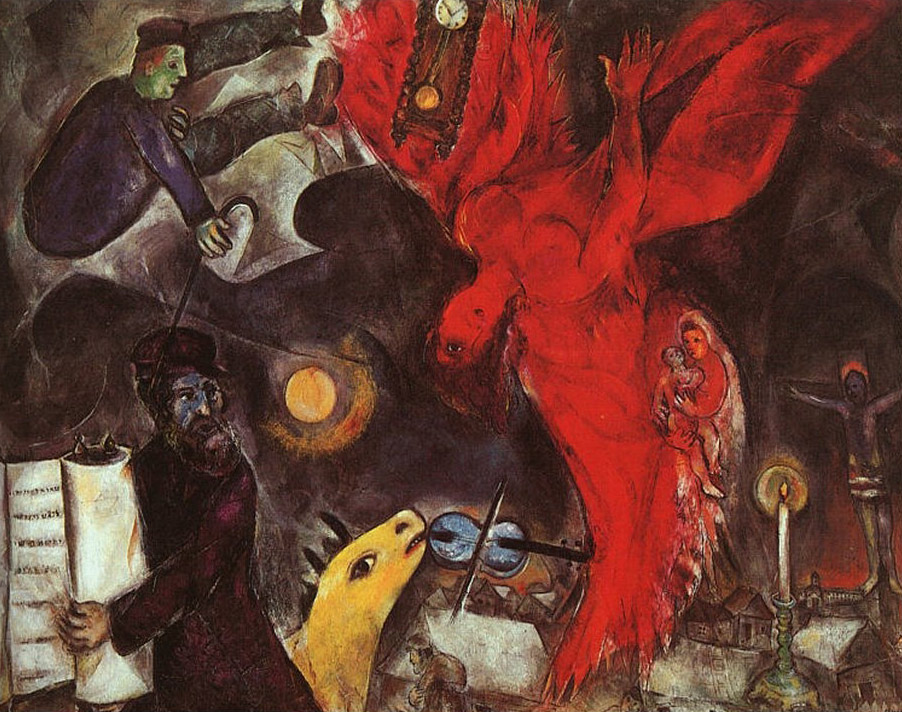
Tuesday closed
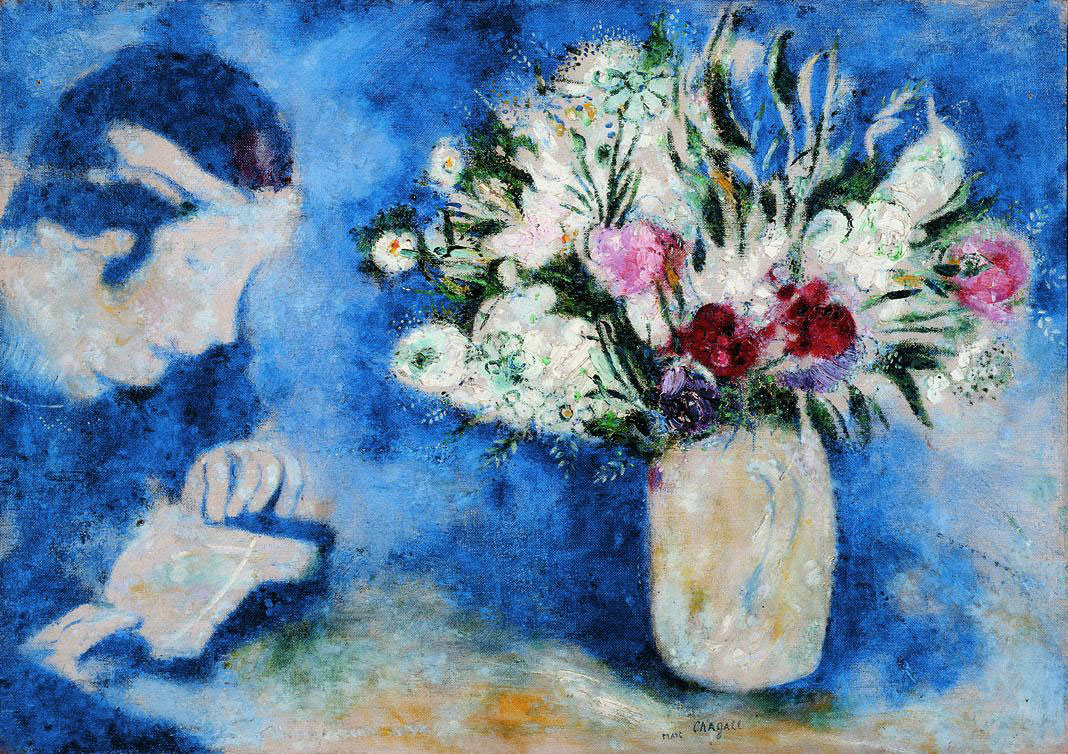
Martin-Gropius-Bau website

LIKE ART BLART ON FACEBOOK

Back to top