Exhibition dates: 13th September – 30th November, 2019 Visited September 2019 posted January 2020
Installation view of the exhibition Robert Frank. Unseen at C/O Berlin Photo: Marcus Bunyan
Utopian dreaming / dystopian dreams
Synchronicity… when I visited this exhibition on the 16th September 2019, the grand man had only died the previous week on the 9th September 2019.
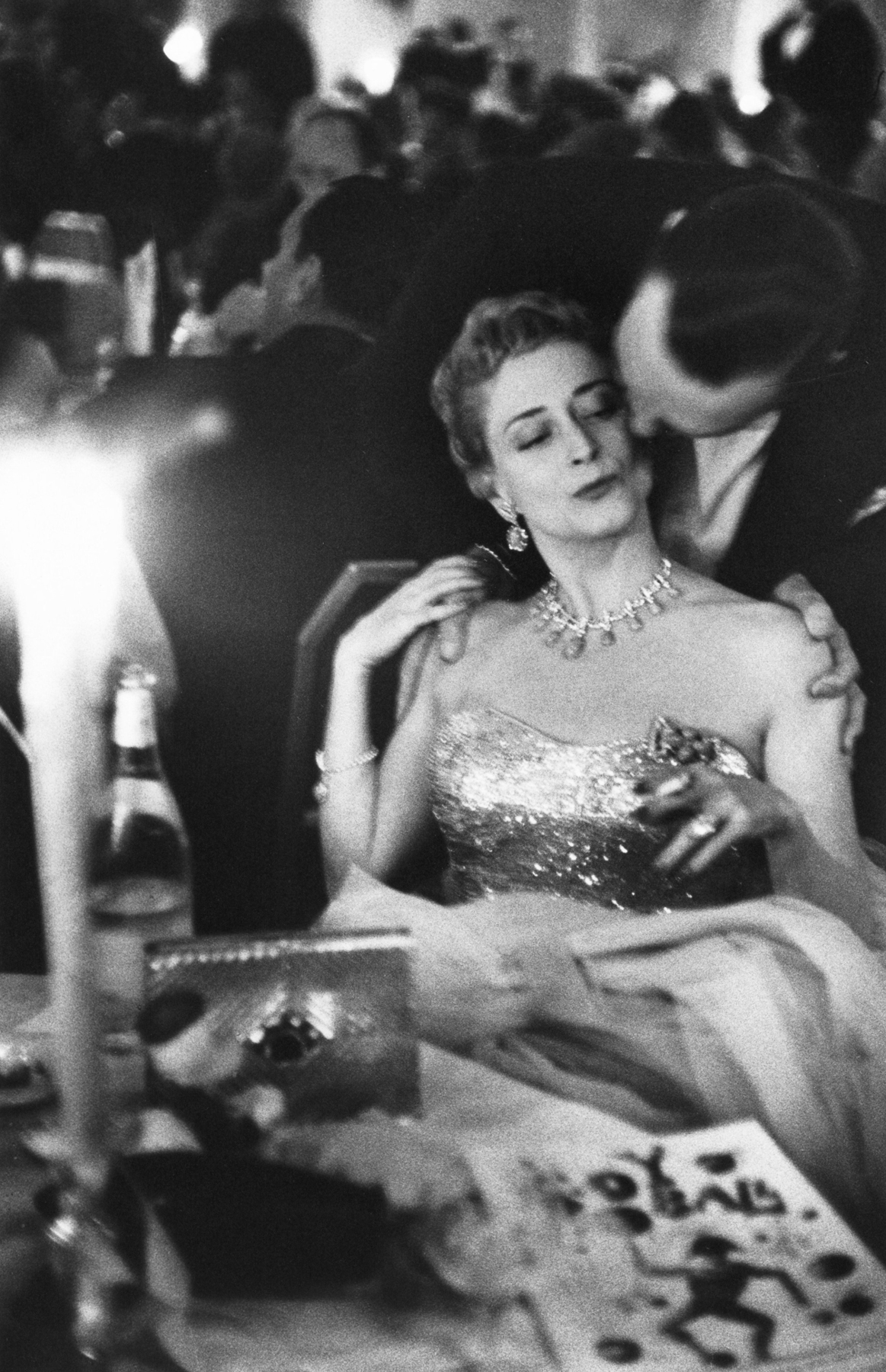
This was a fabulous exhibition of mainly VINTAGE prints (see labels) at C/O Berlin, with the added bonus of seeing many Robert Frank photographs I had never seen before.
Thoughts
1/ The vintage prints were much larger than I had thought they would be
2/ The English photographs were very impressive. A similar tonal range to Josef Sudek’s prints in these works i.e. no hard blacks or whites zones 2.5-8
3/ The Americans – to actually see a large vintage print of the Trolley Car was incredible. The Black American man’s face was only his mouth, nose and eyes, the rest was completely dark
4/ The vintage prints seemed more whimsical than the later prints: not so much contrast. Sometimes edges bleed off, grain was large, depth of field low, skylines askew. Frank loved his silhouettes and chiaroscuro
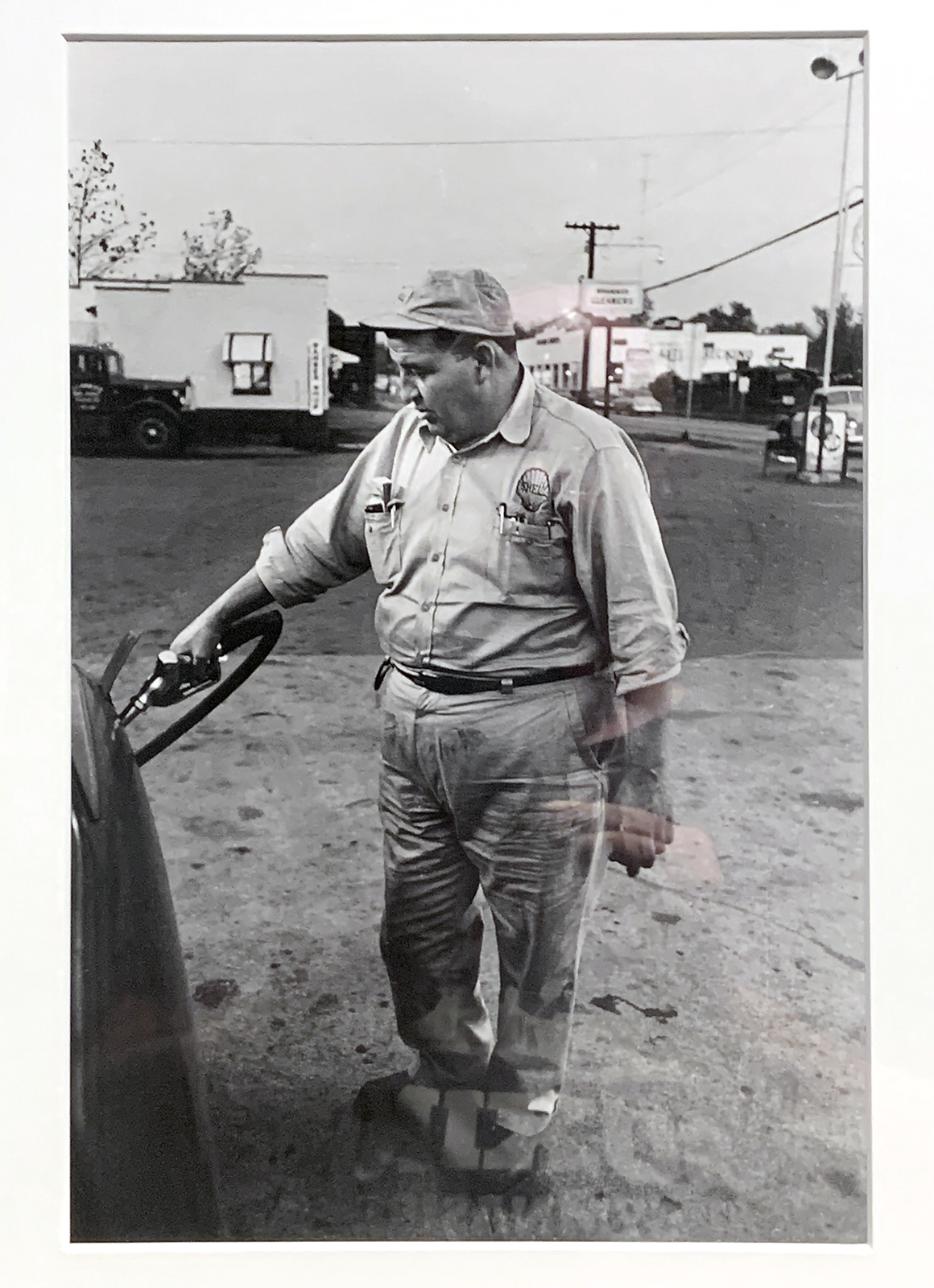
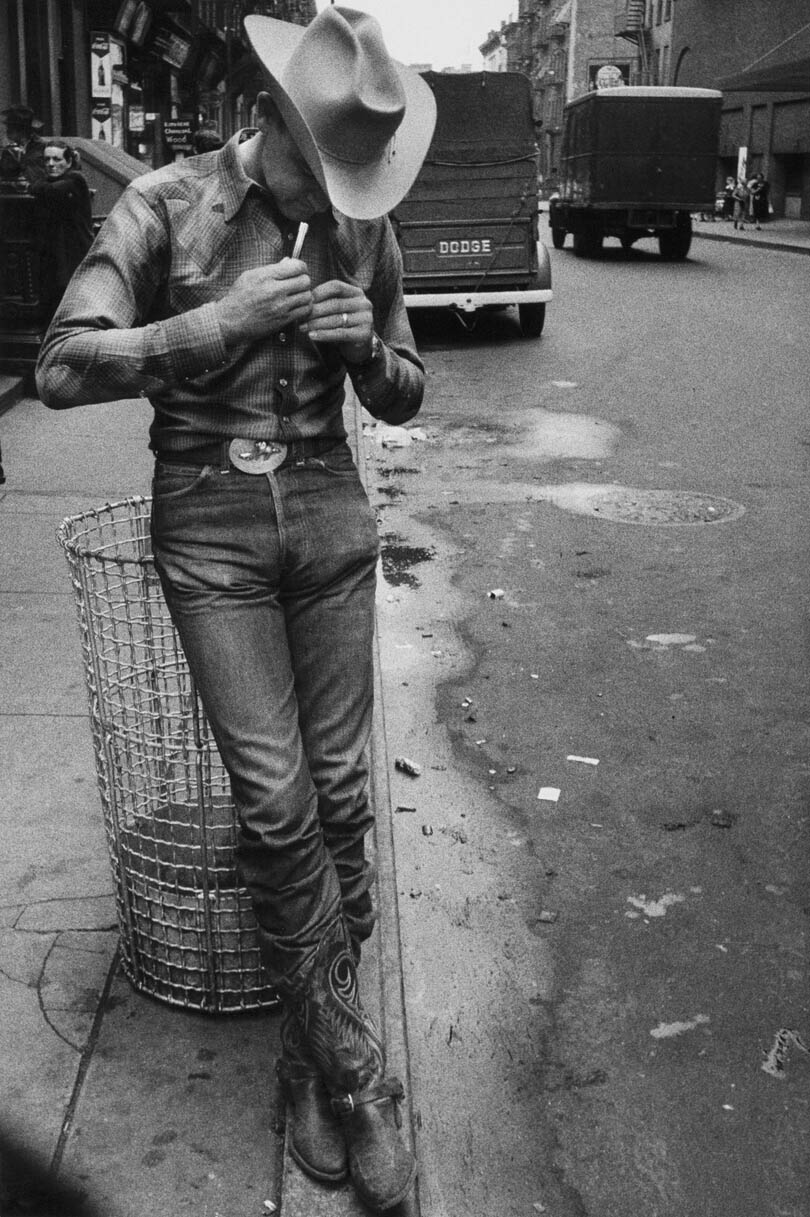
It was a great pleasure to see these iconic photographs together in one place. Several times I had to catch my breath as one famous image followed another. But then there were images I had never seen before. Mostly vintage prints as well… as close to Frank’s original vision as you can get. More poetic, more spontaneous, than the later prints. The United States photographs form a road trip of impressions, a reflective and elegiac poem to the American dream.
It’s not often that you can say that an artist changed how we see and interpret the world but that is the case. Through his seminal work The Americans, Frank’s importance to the history of photography and visual culture cannot be denied. Americans didn’t like the mirror that was held up to their society by an outsider, a European Jew. Frank certainly wasn’t afraid to picture the underbelly of America – a phlegmatic portrait of a disaffected and divided country that still has great relevance today.
Installation views of the exhibition Robert Frank. Unseen at C/O Berlin showing photographs titled Landsgemeinde / Cantonal Assembly Hundwil, Schweiz (1949). Later silver gelatin prints. No individual titles. Donation of the artist. Photos: Marcus Bunyan
Robert Frank (Swiss-American, 1924-2019) Landsgemeinde / Cantonal Assembly Hundwil, Schweiz (installation views) 1949 Gelatin silver photograph, later print Donation of the artist Photos: Marcus Bunyan
Installation views of the exhibition Robert Frank. Unseen at C/O Berlin Photos: Marcus Bunyan
Robert Frank (Swiss-American, 1924-2019) Peru (installation view) 1948 Gelatin silver photograph, later print Collection Fotomuseum Winterthur Permanent loan of the Volkart Stiftung Photo: Marcus Bunyan
Robert Frank. Unseen wall text Photo: Marcus Bunyan
Robert Frank (Swiss-American, 1924-2019) Geneva (installation view) 1945 Gelatin silver photograph, later print Donation of the artist Photo: Marcus Bunyan
Robert Frank (Swiss-American, 1924-2019) Geneva (installation view) 1944-1945 Vintage gelatin silver print Donation of the artist Photo: Marcus Bunyan
Robert Frank (Swiss-American, 1924-2019) New York c. 1949 Vintage silver gelatin print Donation of the artist
Robert Frank (Swiss-American, 1924-2019) Times Square, New York (installation view) 1949 Gelatin silver photograph, later print Donation of the artist Photo: Marcus Bunyan
Robert Frank. Unseen wall text Photo: Marcus Bunyan
Installation view of the exhibition Robert Frank. Unseen at C/O Berlin Photo: Marcus Bunyan
Robert Frank (Swiss-American, 1924-2019) Portfolio. 40 Photos (installation views) 1941-1946 First Edition Steidl, Göttingen, 2000 Photos: Marcus Bunyan
Installation views of the exhibition Robert Frank. Unseen at C/O Berlin Photos: Marcus Bunyan
Robert Frank (Swiss-American, 1924-2019) Paris (installation view) 1949 Gelatin silver photograph, later print Donation of the artist Photo: Marcus Bunyan
Robert Frank (Swiss-American, 1924-2019) Paris (installation view) 1949 Vintage gelatin silver print Donation of the artist Photo: Marcus Bunyan
Installation views of the exhibition Robert Frank. Unseen at C/O Berlin Photos: Marcus Bunyan
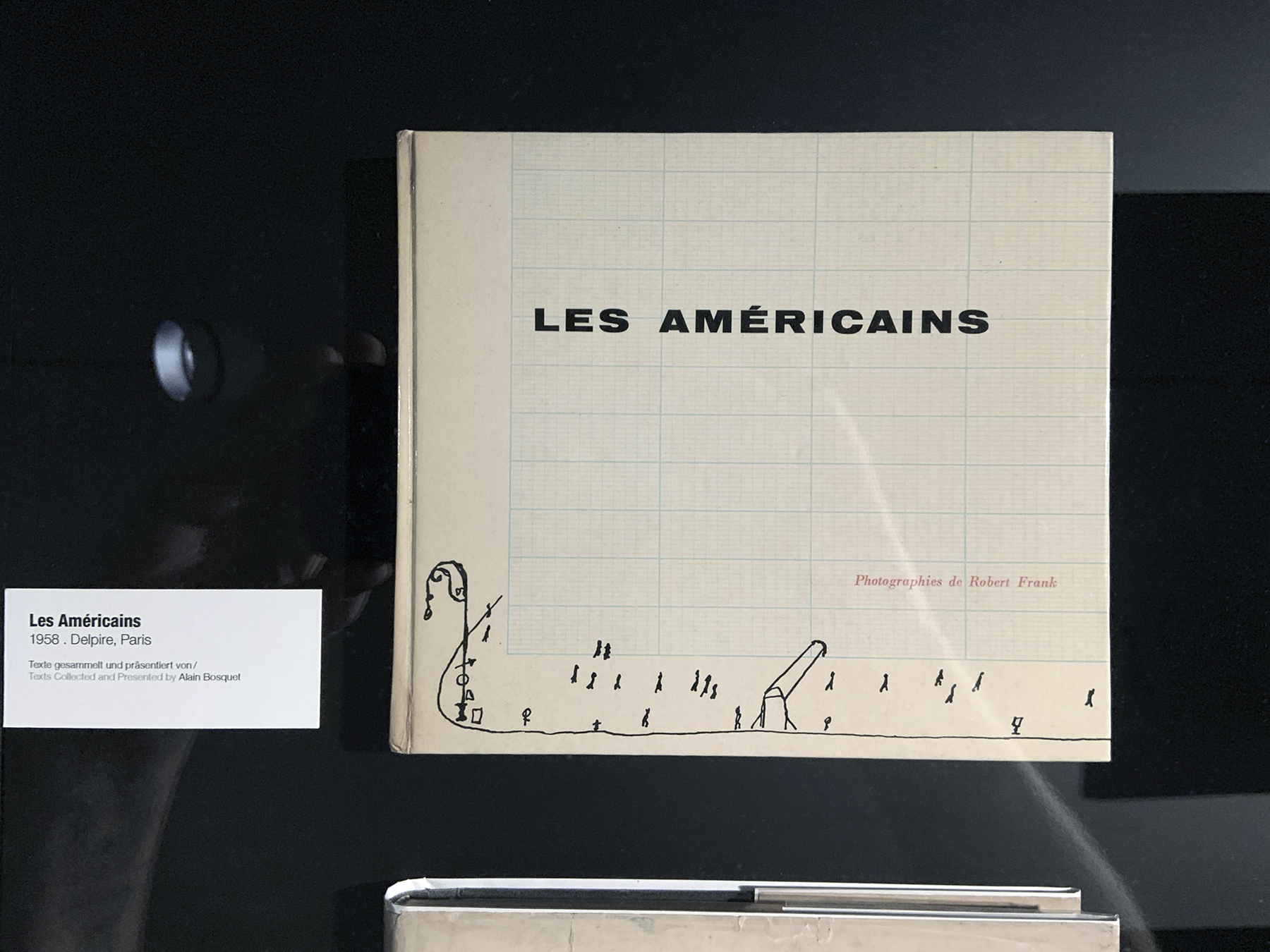
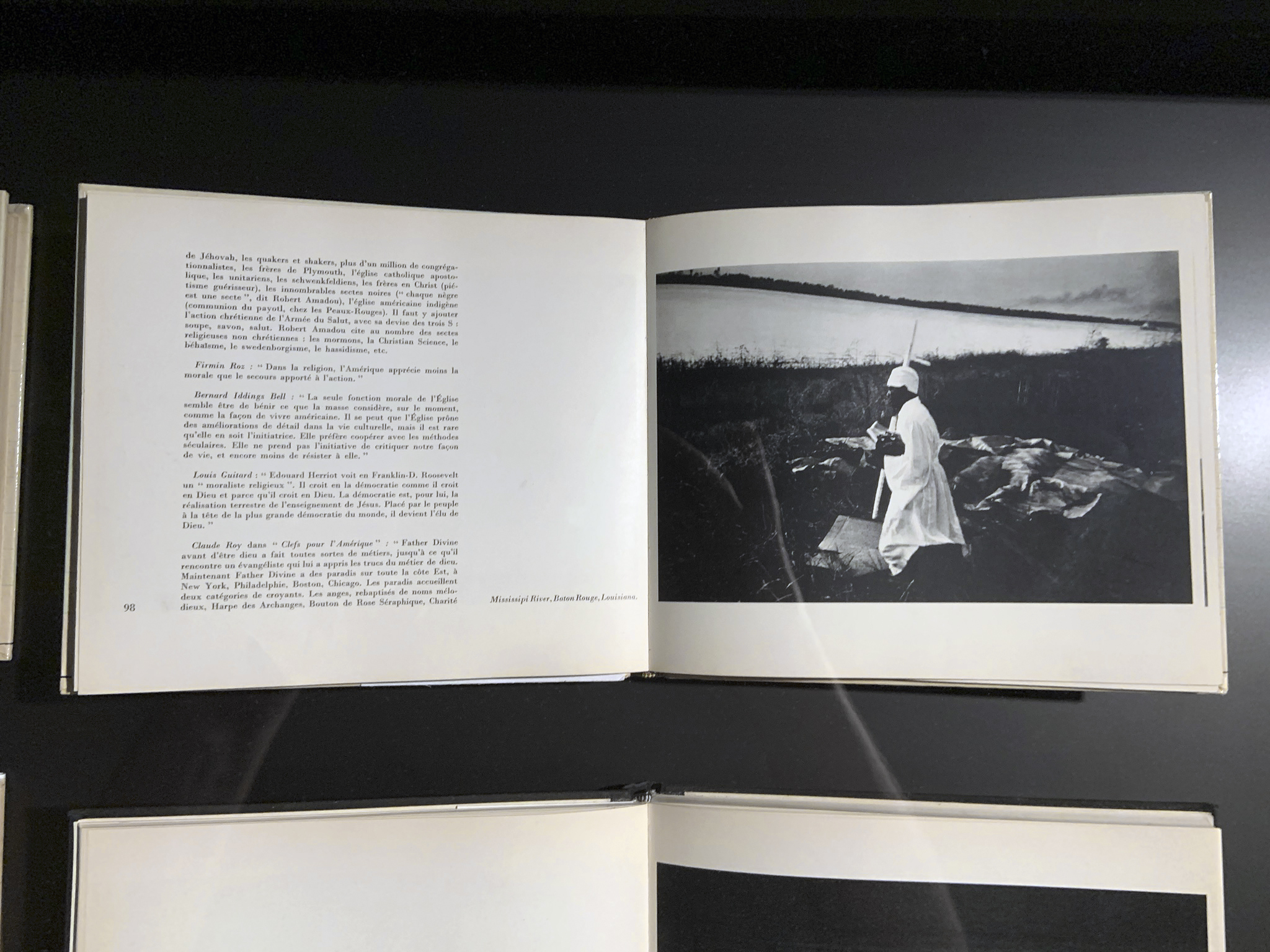
Robert Frank (b. 1924 in Zurich, d. 2019 in Nova Scotia, Canada) traveled thousands of kilometres between America’s East and West coasts, taking almost 30,000 photographs. Just 83 black-and-white pictures from this mixture of diary, social portrait, and photographic road movie have influenced generations of photographers after him. Frank’s book The Americans was first published in Paris before it was released in the United States in 1959 with an introduction by the Beat novelist Jack Kerouac. Oblique angles, cropped figures, and blurred movement became the hallmarks of a new photographic style that would change the course of postwar photography. In 1985, Franks photographs have been displayed in Germany for the first time – in the Amerika Haus in Berlin. Now, C/O Berlin presents contact sheets, first editions, and vintage material from the photographer’s early work at the same place. His time in Switzerland, travels through Europe and South America, and unpublished pictures from the United States in the 1950s will be shown together with famous classic photos from The Americans.
Robert Frank. Unseen reveals the narrative power of a visual language that Frank developed long before it earned him international recognition.
The exhibition was organised in cooperation with the Fotostiftung Schweiz, Winterthur.
Robert Frank was born in Zurich in 1924. A trained photographer, he traveled to New York for the first time in 1947, where he found a position at the Harper’s Bazaar photo studio. He worked between Europe and the US for several years and in 1950, Edward Steichen invited him to participate in the 51 American Photographers exhibition at Museum of Modern Art, New York. Frank freelanced for Life, McCall’s, Look, Vogue and other magazines. In 1955, he was the first European to receive a prestigious Guggenheim fellowship that funded a comprehensive photo series for which he traveled across America. The result was the seminal photobook The Americans (1959). Following the volume’s unexpected success, the photographer turned to film. His later work juxtaposed Polaroids and autobiographical text fragments. This year Frank published his most recent book, Good Days Quiet, at the age of 95. Frank’s photographs have been exhibited internationally, most recently at Les Rencontres d’Arles (2018); Albertina, Vienna (2018); Art Institute of Chicago (2017); Museum Folkwang, Essen (2014); and at Tate Modern, London (2004). His films were shown at C/O Berlin in 2009. Robert Frank lived in New York and in Nova Scotia, Canada, where he died on September 9, 2019.
Text from the C/O Berlin [Online] Cited 28/12/2019
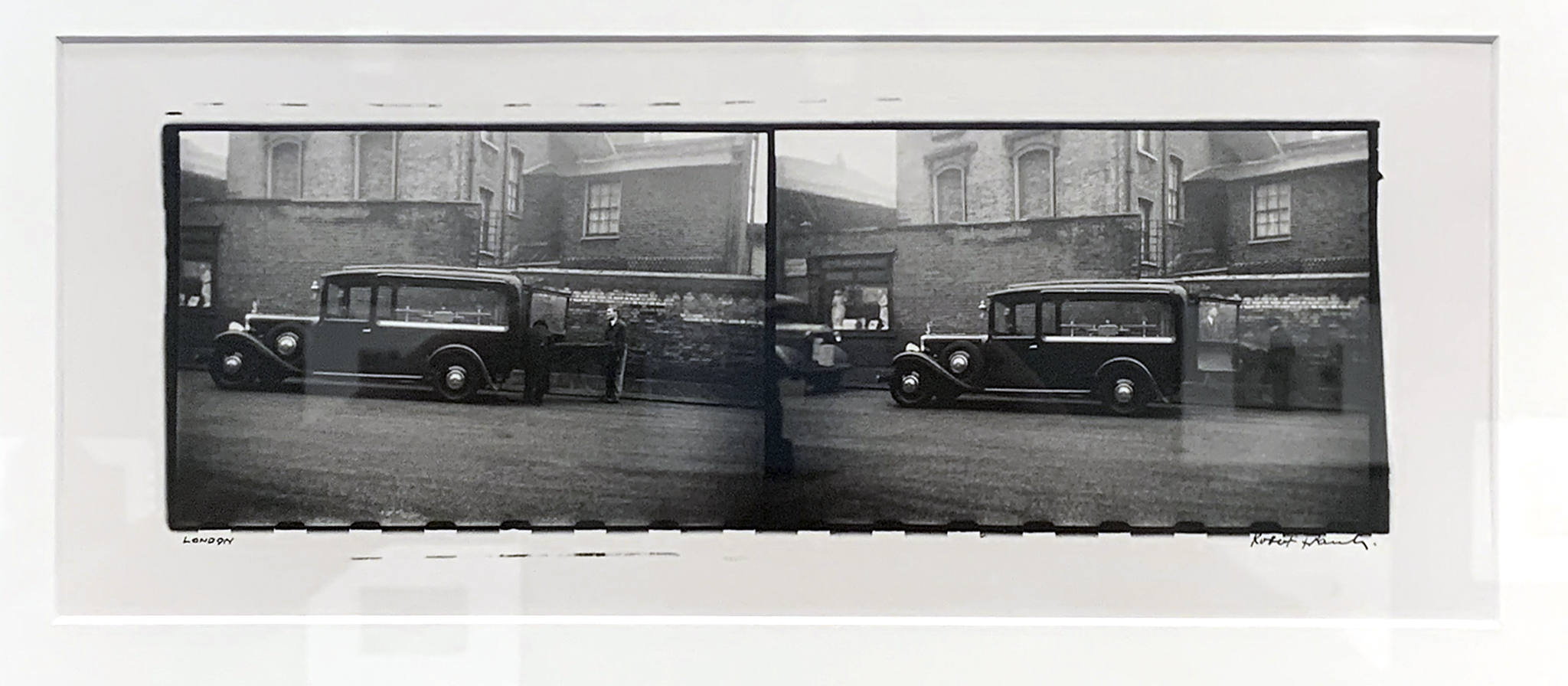
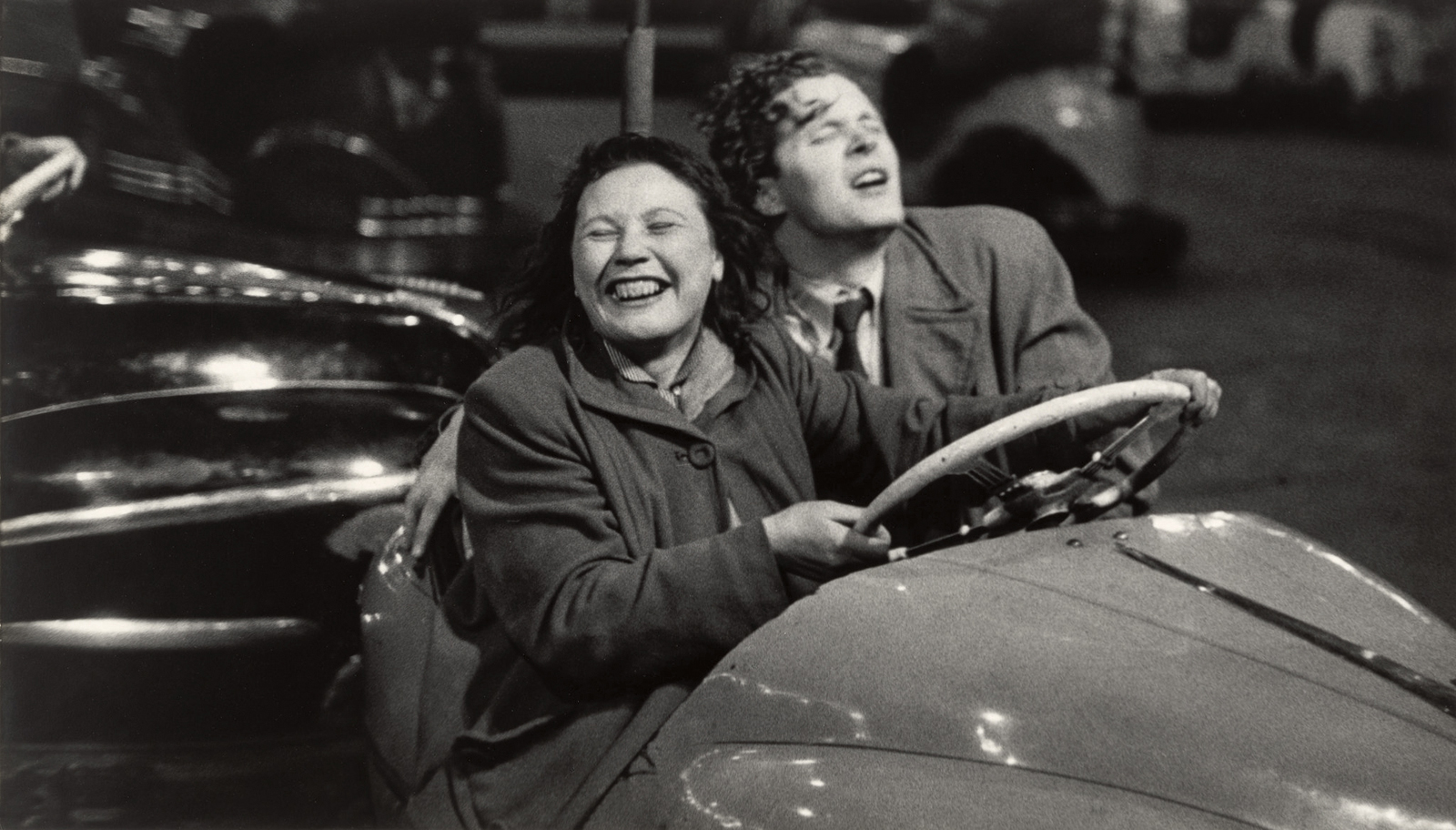
Installation views of the exhibition Robert Frank. Unseen at C/O Berlin showing at bottom, photographs of London Photos: Marcus Bunyan
Installation view of the exhibition Robert Frank. Unseen at C/O Berlin showing at right a photograph of London Photos: Marcus Bunyan
Robert Frank (Swiss-American, 1924-2019) London (installation view) 1951 Vintage gelatin silver print Arnold Kübler Archive Photo: Marcus Bunyan
Robert Frank (Swiss-American, 1924-2019) London 1951 Vintage gelatin silver print Arnold Kübler Archive
Robert Frank (Swiss-American, 1924-2019) London (installation views) 1951 Gelatin silver photographs, later prints Permanent loan of the Friends of the Fotostiftung Schweiz Photos: Marcus Bunyan
Robert Frank (Swiss-American, 1924-2019) London 1951 Gelatin silver photograph, later print Permanent loan of the Friends of the Fotostiftung Schweiz
Robert Frank (Swiss-American, 1924-2019) Paris 1952 Gelatin silver photograph, later print Donation of the artist
America
Robert Frank. Unseen wall text Photo: Marcus Bunyan
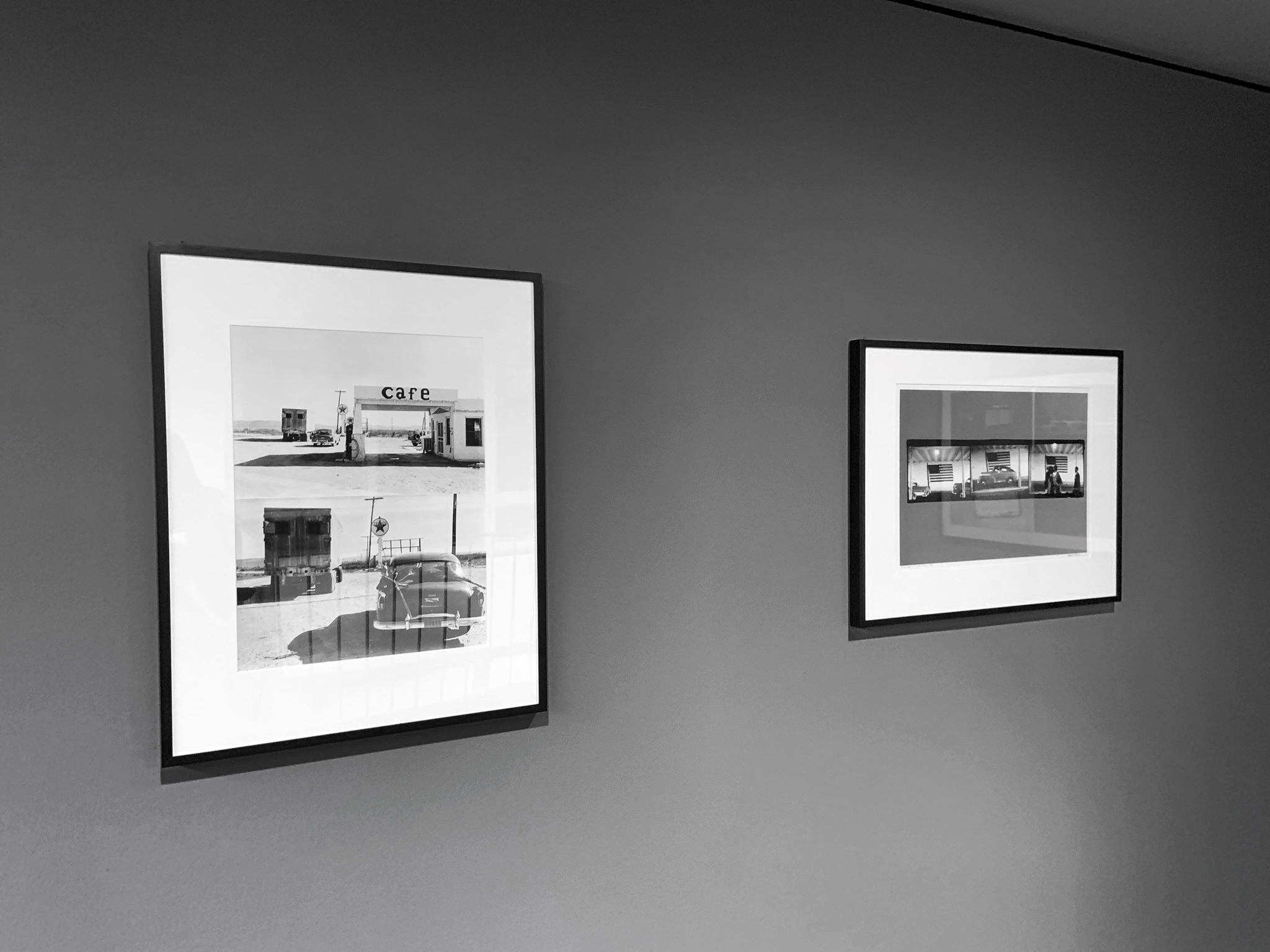
Installation view of the exhibition Robert Frank. Unseen at C/O Berlin showing at left, Nevada (1956); at second left, Los Angeles (1956); and at right, On the road to Carolina (1955) Photo: Marcus Bunyan
Robert Frank (American, 1924-2019) Nevada (installation view) 1956 Vintage gelatin silver print Donation of the artist Photo: Marcus Bunyan
Robert Frank (American, 1924-2019) Los Angeles (installation view) 1956 Vintage gelatin silver print Donation of the artist Photo: Marcus Bunyan
Robert Frank (American, 1924-2019) On the road to Carolina (installation view) 1955 Vintage gelatin silver print Donation of the artist Photo: Marcus Bunyan
Robert Frank (Swiss-American, 1924-2019) Route US 91, leaving Blackfoot, Idaho (installation views) 1956 Gelatin silver photograph, later print Donation of the artist Photos: Marcus Bunyan
Robert Frank (Swiss-American, 1924-2019) Route US 91, leaving Blackfoot, Idaho 1956 Gelatin silver photograph, later print Donation of the artist
Installation view of the exhibition Robert Frank. Unseen at C/O Berlin showing at left, Florida(1956); at third left, New York City (early 1950s); and at right, Ranch Market, Hollywood (1955-1956) Photo: Marcus Bunyan
Robert Frank (Swiss-American, 1924-2019) New York City (installation view) early 1950s Vintage gelatin silver photograph Donation of the artist Photo: Marcus Bunyan
Robert Frank (American, 1924-2019) Florida (installation view) 1956 Gelatin silver print Swiss Foundation for Photography Collection, Winterthur Photo: Marcus Bunyan
Robert Frank (American, 1924-2019) New York City (installation view) early 1950s Vintage gelatin silver photograph Donation of the artist Photo: Marcus Bunyan
Installation view of the exhibition Robert Frank. Unseen at C/O Berlin showing at left, Bar – Gallup, New Mexico (1955) and at right, Rodeo – New York City (1954) Photo: Marcus Bunyan
Installation views of the exhibition Robert Frank. Unseen at C/O Berlin showing at left in the bottom photograph, Bar – New York (1955) followed by, Yom Kippur – East River, New York City (1954) Photos: Marcus Bunyan
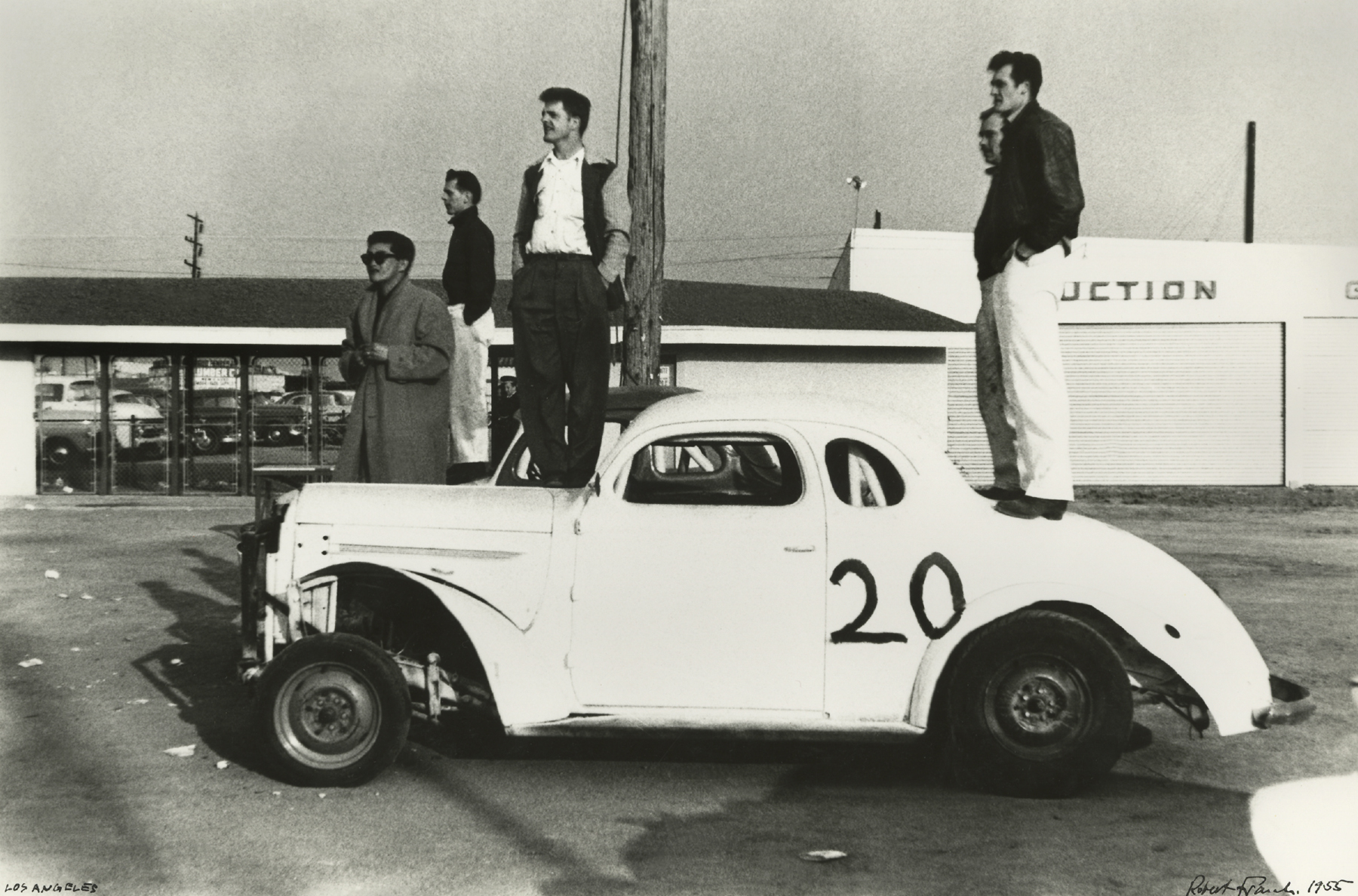
Robert Frank (Swiss-American, 1924-2019) Los Angeles (installation view) 1955 Vintage gelatin silver photograph Donation of the artist Photo: Marcus Bunyan
Robert Frank (Swiss-American, 1924-2019) Los Angeles 1955 Vintage gelatin silver photograph Donation of the artist
Robert Frank (Swiss-American, 1924-2019) Wanamaker Fire, 10th Street East, New York (installation view) 1956 Vintage gelatin silver print Donation of the artist Photo: Marcus Bunyan
Robert Frank (Swiss-American, 1924-2019) Bar – New York (installation view) 1955 Gelatin silver photograph, later print Donation of the artist Photo: Marcus Bunyan
Robert Frank (Swiss-American, 1924-2019) Bar – New York 1955 Gelatin silver photograph, later print Donation of the artist
Robert Frank (Swiss-American, 1924-2019) USA (installation view) 1950s Vintage gelatin silver print Donation of the artist Photo: Marcus Bunyan
Robert Frank (Swiss-American, 1924-2019) Contact Sheet 62 / Factory, Detroit (installation views) 1955 From The Americans. 81 Contact Sheets. Yugensha, Tokyo/Motomura Kazuhiko, 2009 Private Collection Photos: Marcus Bunyan
Robert Frank (Swiss-American, 1924-2019) Contact Sheet 31 / U.S. 91, Leaving Blackfoot, Idaho (installation views) 1956 From The Americans. 81 Contact Sheets. Yugensha, Tokyo/Motomura Kazuhiko, 2009 Private Collection Photos: Marcus Bunyan
Robert Frank (Swiss-American, 1924-2019) Contact Sheet 18 / Trolley, New Orleans (installation views) 1955 From The Americans. 81 Contact Sheets. Yugensha, Tokyo/Motomura Kazuhiko, 2009 Private Collection Photos: Marcus Bunyan
Installation view of the exhibition Robert Frank. Unseen at C/O Berlin showing wall text Photo: Marcus Bunyan
Robert Frank (Swiss-American, 1924-2019) Bryant Park, New York (installation view) around 1955 Vintage gelatin silver print Donation of the artist Photo: Marcus Bunyan
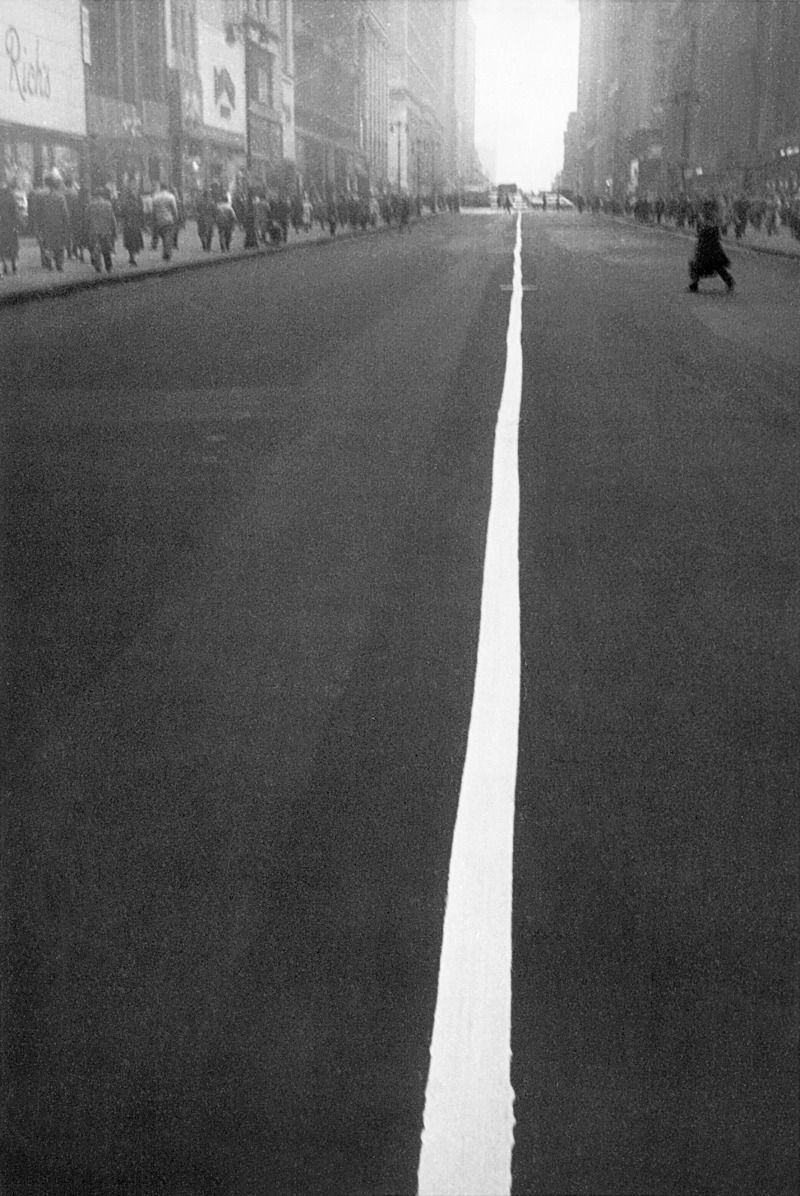
Robert Frank (Swiss-American, 1924-2019) 42nd Street, New York (installation view) early 1950s Vintage gelatin silver print Donation of the artist Photo: Marcus Bunyan
Robert Frank (Swiss-American, 1924-2019) 41st Street and 7th Avenue (installation view) 1953 Vintage gelatin silver print Donation of the artist Photo: Marcus Bunyan
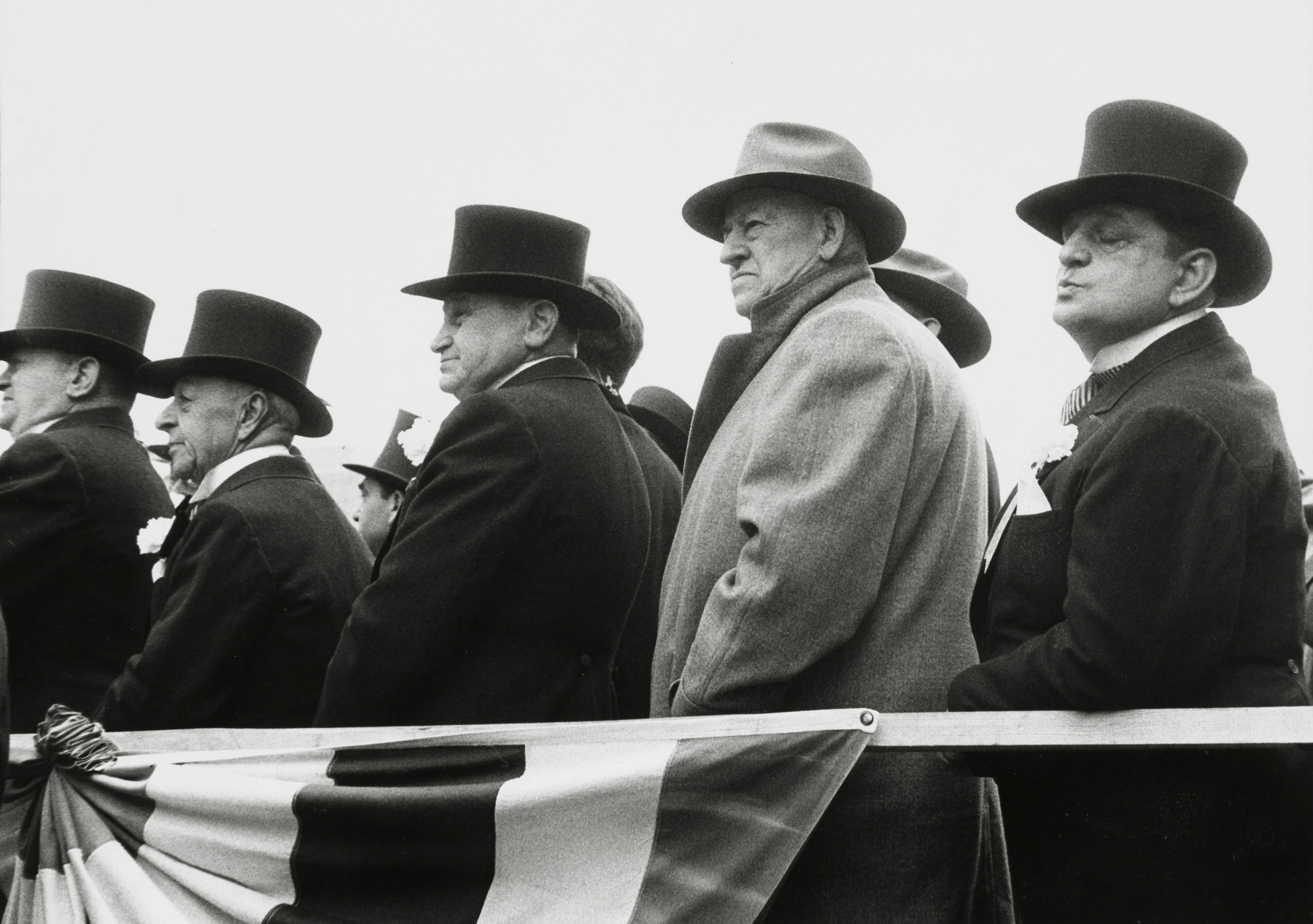
Installation views of the exhibition Robert Frank. Unseen at C/O Berlin showing at left, Parade – Hoboken, New Jersey (1955) and at right, City Fathers – Hoboken, New Jersey (1955) Photos: Marcus Bunyan
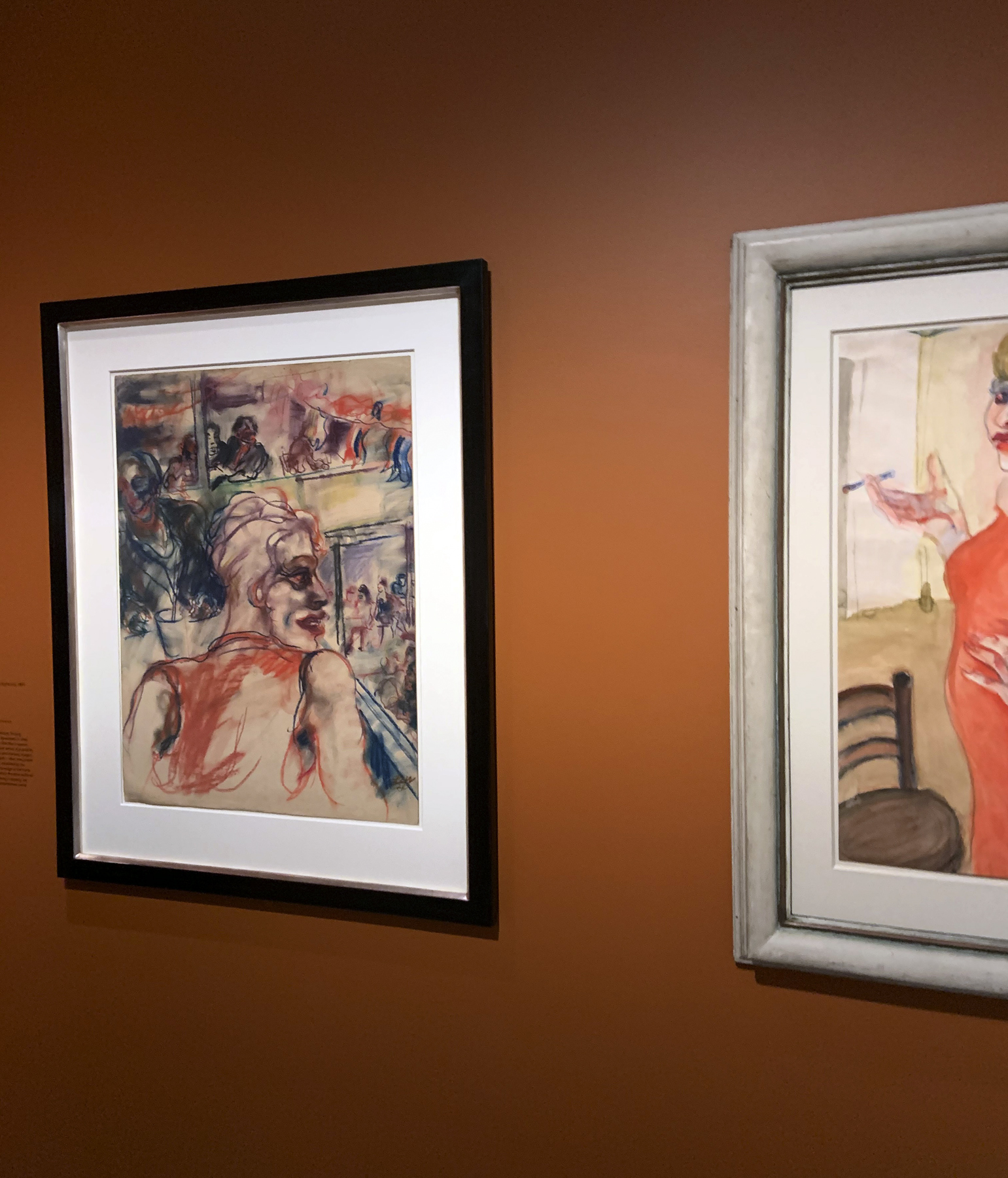
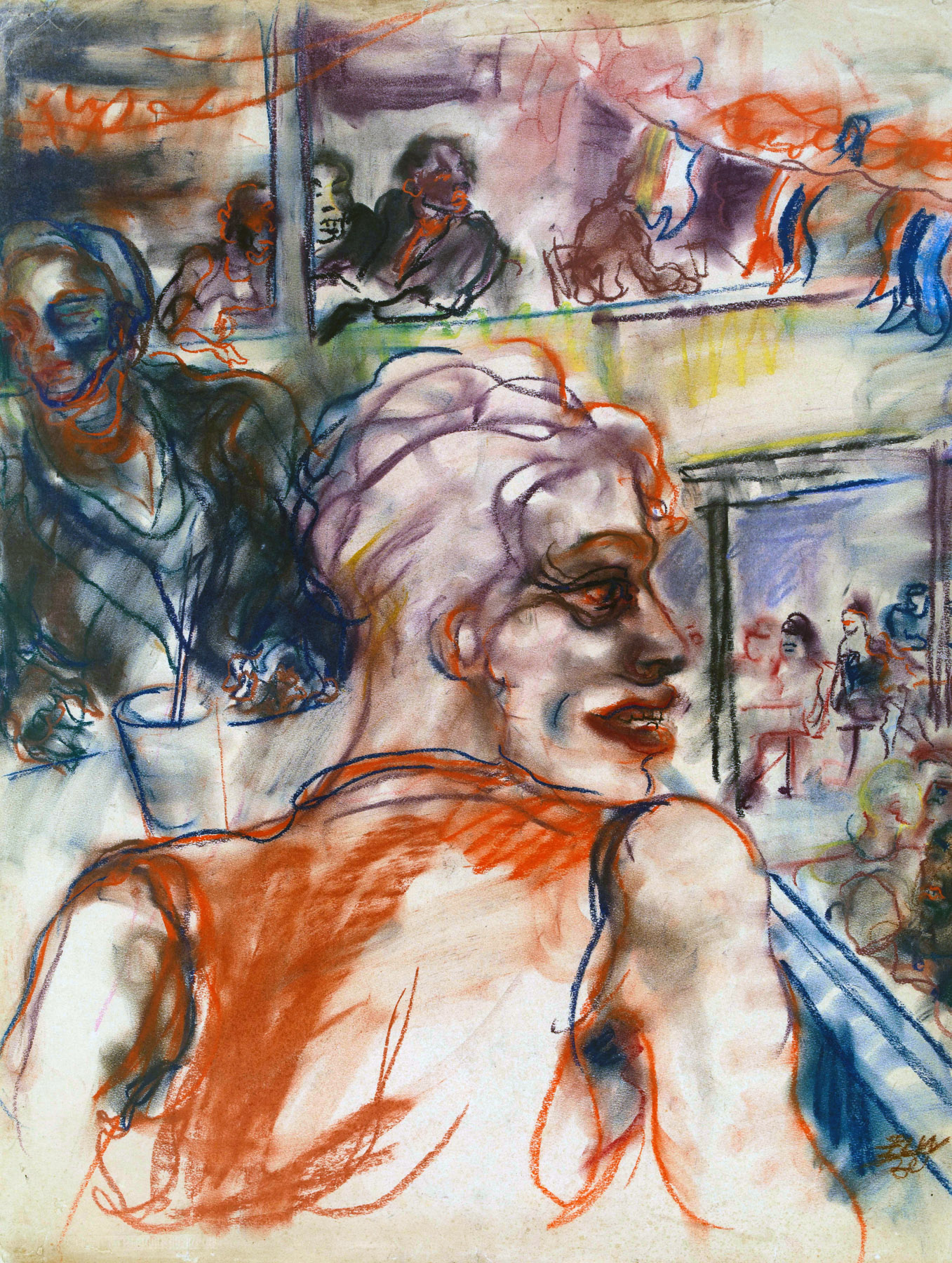
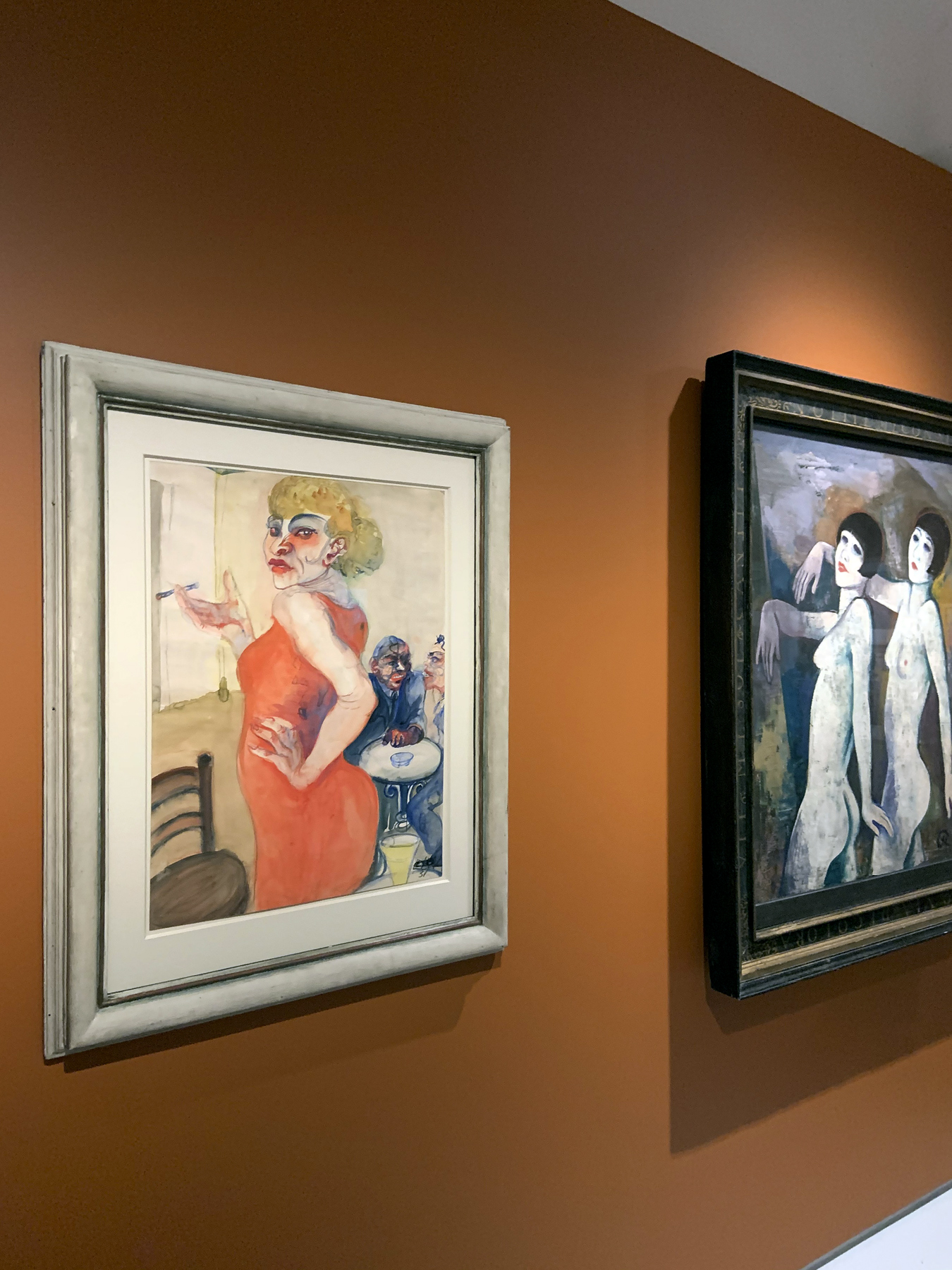
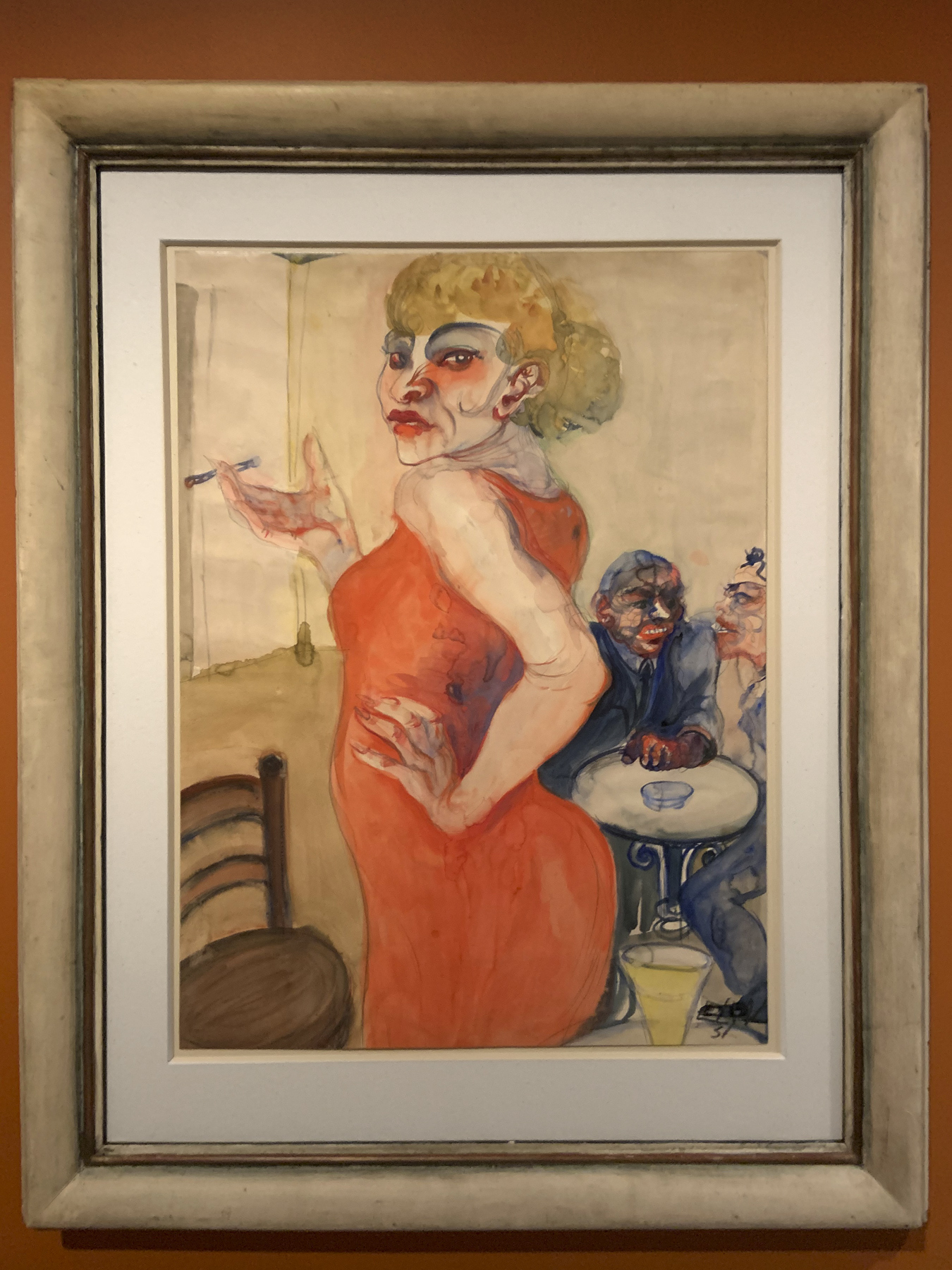
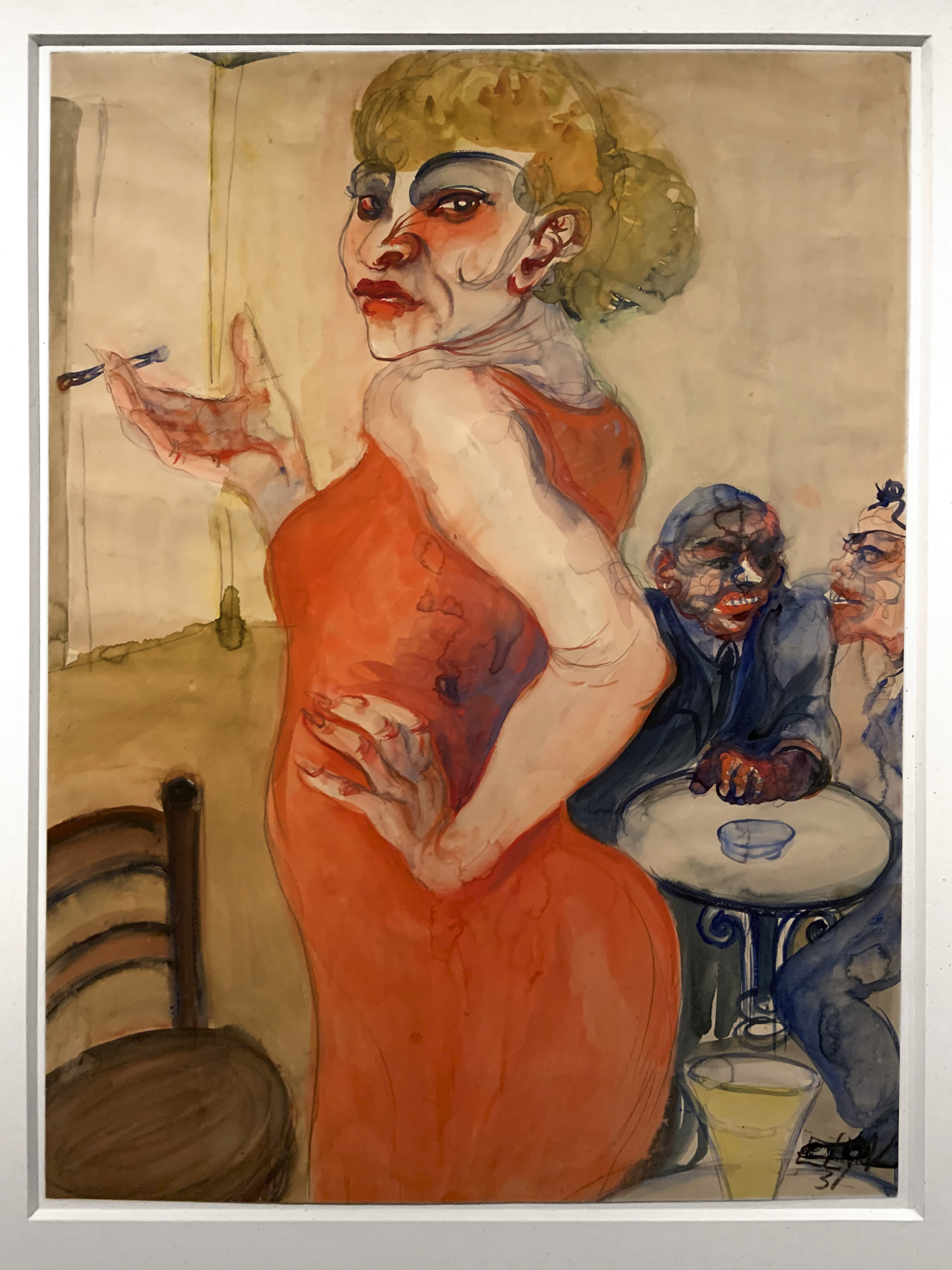
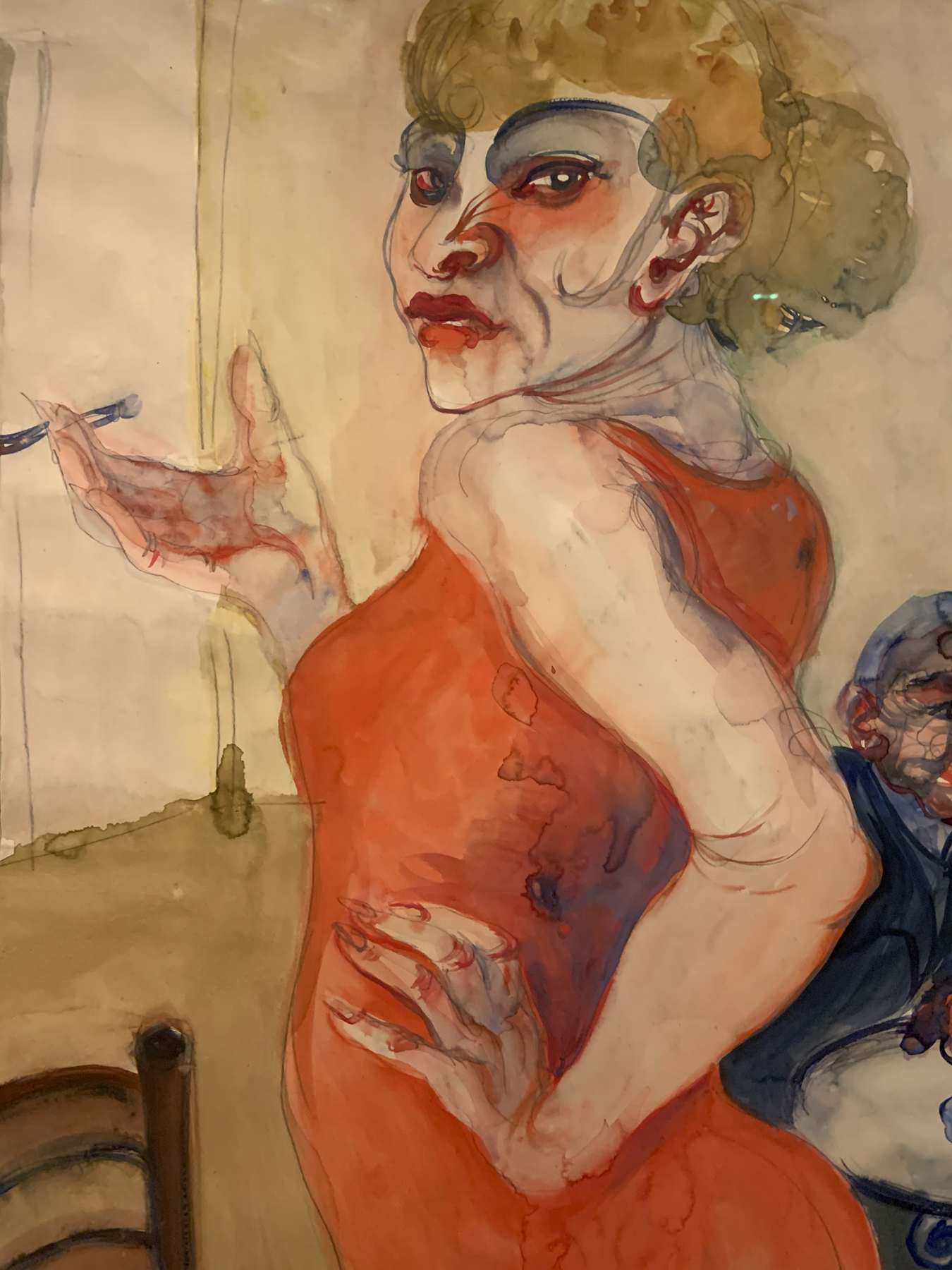
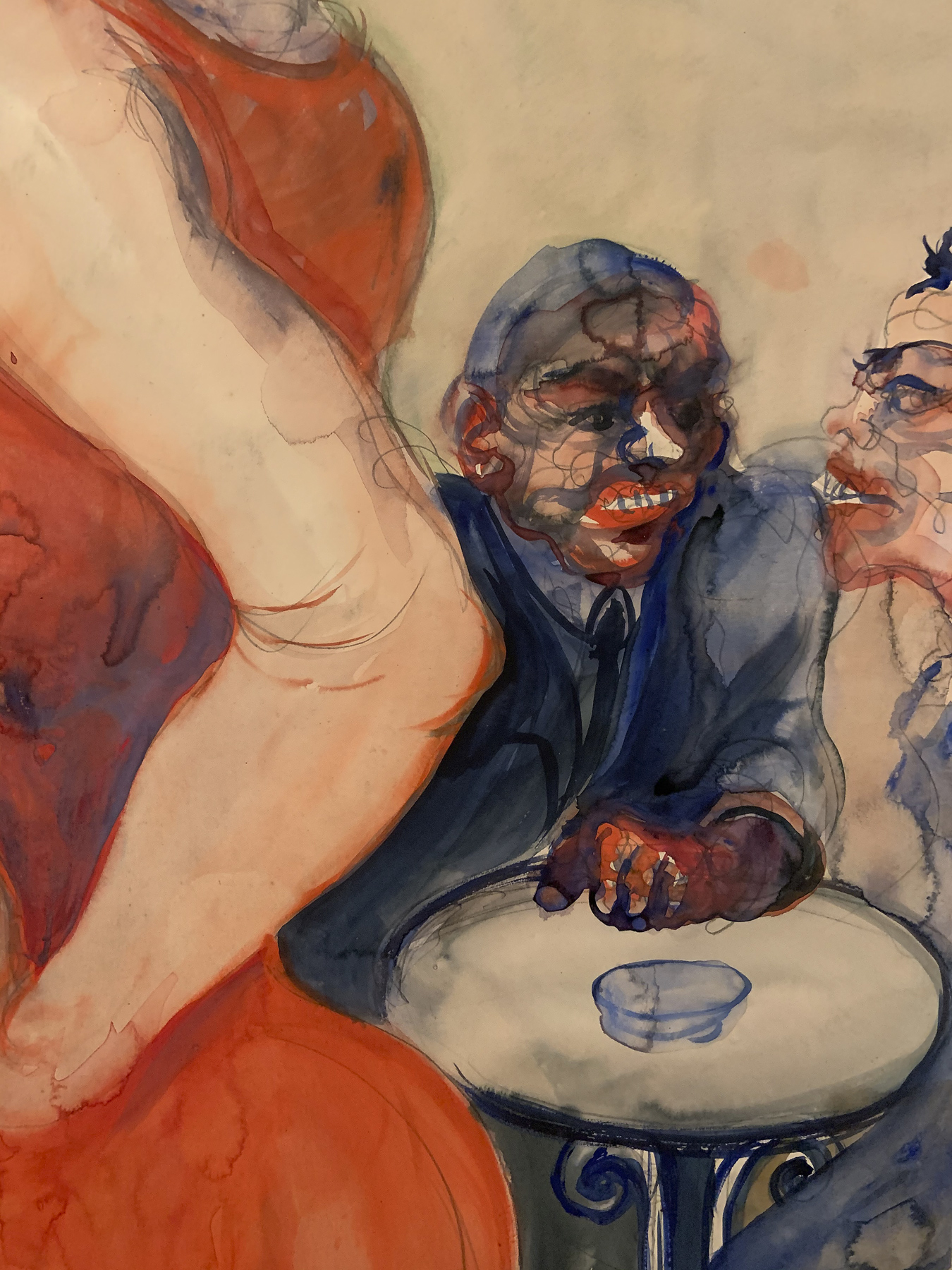
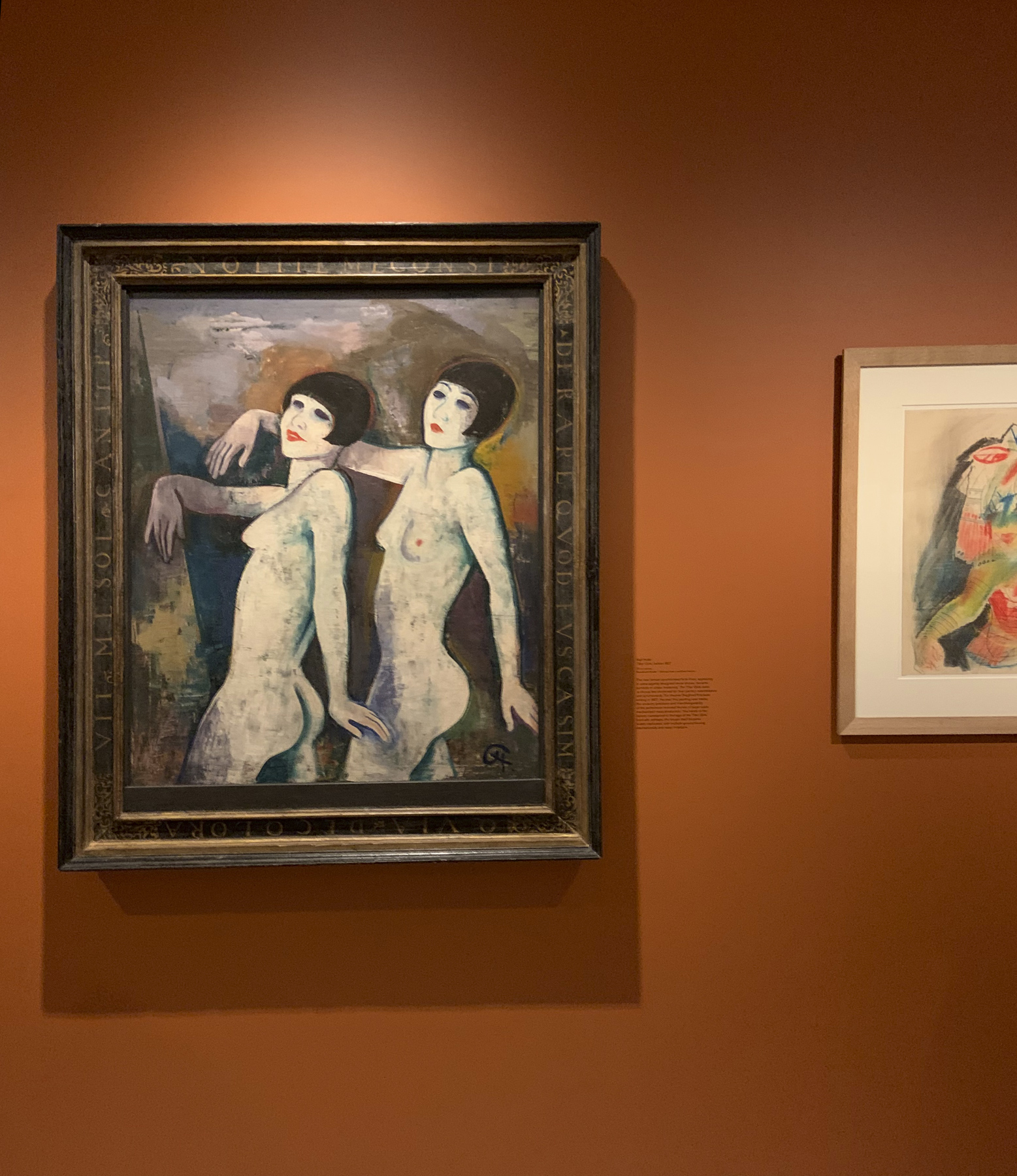
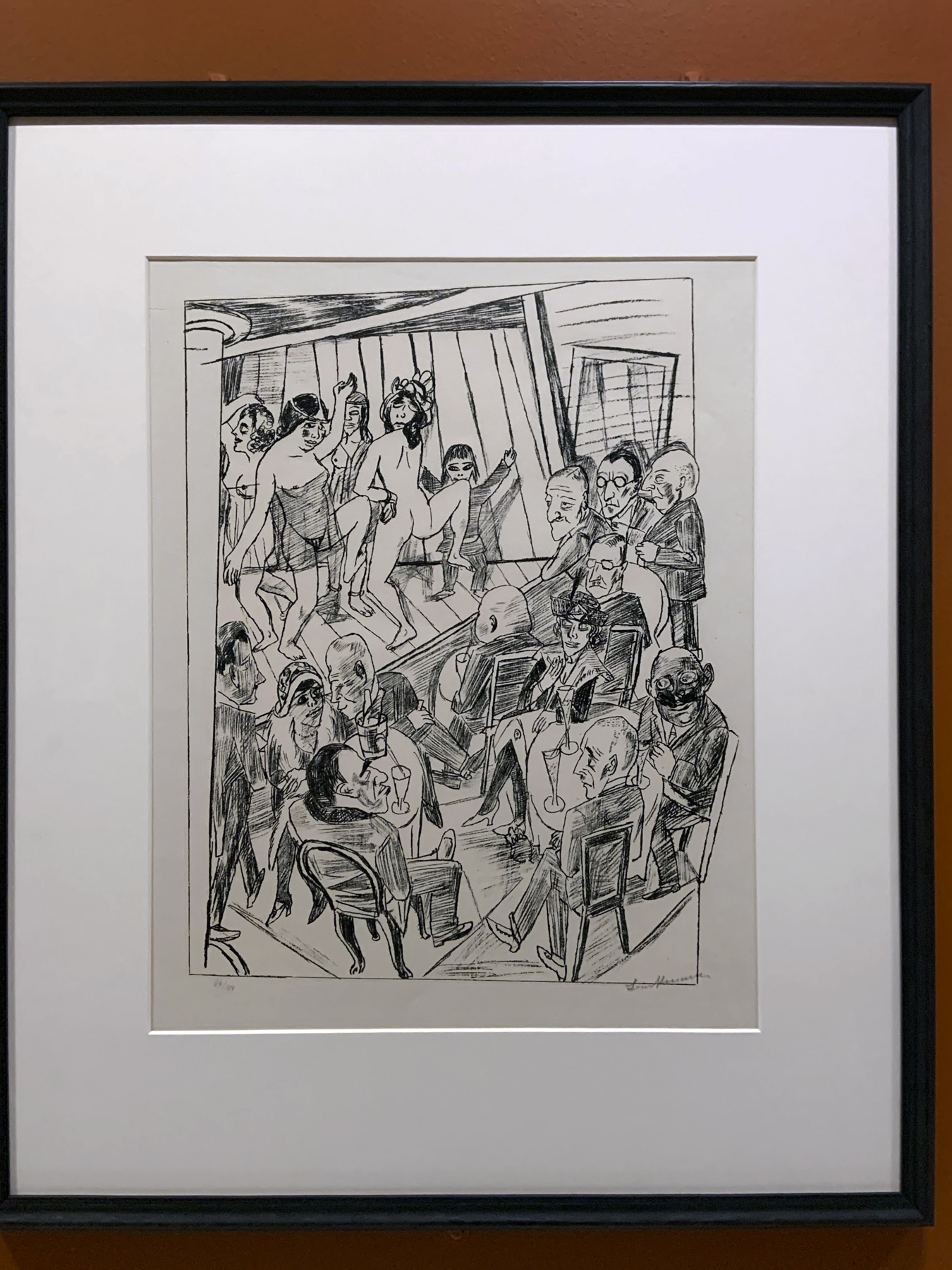
Butchers, lion tamers, and Lustmord (sexualised murder) makers. War, rape, prostitution, violence, old age and death. Creativity, defeat, disfigurement, and revelry. Suicide and misery, poverty and widowhood, beauty and song. Magic in realism, realism and magic.
The interwar years are one of the most creative artistic periods in human history. But there is a magical dark undertone which emanates from the mind of this Neue Sachlichkeit or New Objectivity:
“The art historian Dennis Crockett says there is no direct English translation, and breaks down the meaning in the original German:
Sachlichkeit should be understood by its root, Sache, meaning “thing”, “fact”, “subject”, or “object.” Sachlich could be best understood as “factual”, “matter-of-fact”, “impartial”, “practical”, or “precise”; Sachlichkeit is the noun form of the adjective/adverb and usually implies “matter-of-factness” …
The New Objectivity was composed of two tendencies which Hartlaub characterised in terms of a left and right wing: on the left were the verists, who “tear the objective form of the world of contemporary facts and represent current experience in its tempo and fevered temperature;” and on the right the classicists, who “search more for the object of timeless ability to embody the external laws of existence in the artistic sphere.”
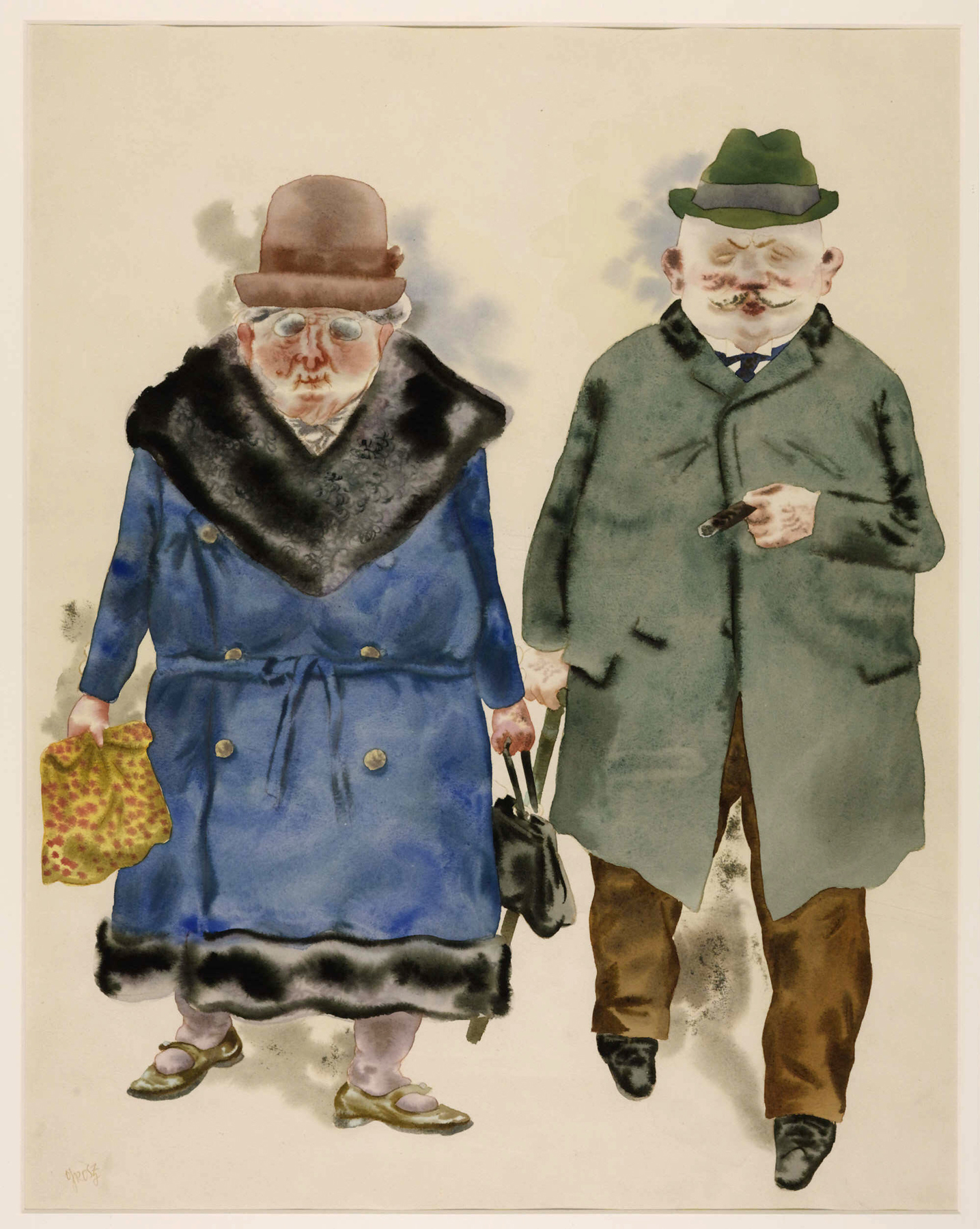
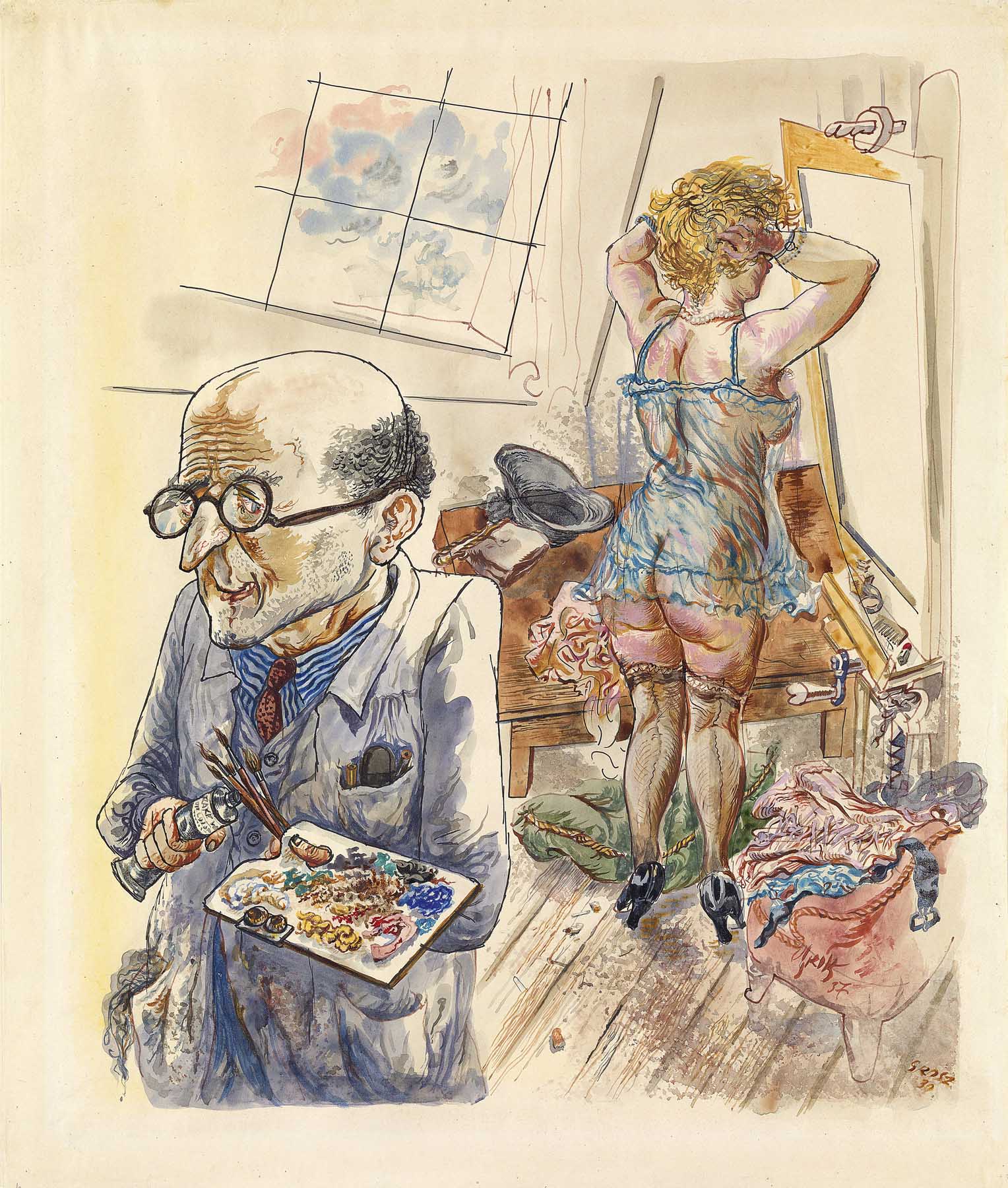
The verists’ vehement form of realism emphasised the ugly and sordid. Their art was raw, provocative, and harshly satirical. George Grosz and Otto Dix are considered the most important of the verists. The verists developed Dada’s abandonment of any pictorial rules or artistic language into a “satirical hyperrealism”, as termed by Raoul Hausmann, and of which the best known examples are the graphical works and photo-montages of John Heartfield. Use of collage in these works became a compositional principle to blend reality and art, as if to suggest that to record the facts of reality was to go beyond the most simple appearances of things. This later developed into portraits and scenes by artists such as Grosz, Dix, and Rudolf Schlichter. Portraits would give emphasis to particular features or objects that were seen as distinctive aspects of the person depicted. Satirical scenes often depicted a madness behind what was happening, depicting the participants as cartoon-like.
Other verists, like Christian Schad, depicted reality with a clinical precision, which suggested both an empirical detachment and intimate knowledge of the subject. Schad’s paintings are characterised by “an artistic perception so sharp that it seems to cut beneath the skin”, according to the art critic Wieland Schmied. Often, psychological elements were introduced in his work, which suggested an underlying unconscious reality.
Compared to the verists, the classicists more clearly exemplify the “return to order” that arose in the arts throughout Europe. The classicists included Georg Schrimpf, Alexander Kanoldt, Carlo Mense, Heinrich Maria Davringhausen, and Wilhelm Heise. The sources of their inspiration included 19th-century art, the Italian metaphysical painters, the artists of Novecento Italiano, and Henri Rousseau.
The classicists are best understood by Franz Roh’s term Magic Realism, though Roh originally intended “magical realism” to be synonymous with the Neue Sachlichkeit as a whole. For Roh, as a reaction to expressionism, the idea was to declare “[that] the autonomy of the objective world around us was once more to be enjoyed; the wonder of matter that could crystallise into objects was to be seen anew.” With the term, he was emphasising the “magic” of the normal world as it presents itself to us – how, when we really look at everyday objects, they can appear strange and fantastic.” (Text from the Wikipedia website)
It strikes me, with a slap of the hand across the face, that the one, realism, cannot live cannot breathe with/out the other, the Other, magic. One cannot coexist without the other, as in the body not living without oxygen to breathe: one occupies the other whilst itself being inhabited. The precondition to reality is in essence the unknown. As order relies on mutation to define itself, so reality calls forth that form of hyperrealism, a state of magic, that we can have knowledge of (the image of ourselves before birth, that last image, can we remember, before death) but cannot mediate.
Magic/realism is no duality but a fluid, observational, hybridity which exists on multiple planes of reality – from the downright mad and evil to the ecstatic and revelatory. The fiction of a stable reality is twisted; magic or the supernatural is supposedly presented in an otherwise real-world or mundane setting. Or is it the other way round? Or no way round at all?
It is the role of the artist to set up opposites, throwing one against the other, to throw… into the void.
Dr Marcus Bunyan
Many thankx to the Tate Modern for allowing me to publish the art work in the posting. Please click on the photographs for a larger version of the image.
“Art is exorcism. I paint dreams and visions too; the dreams and visions of my time. Painting is the effort to produce order; order in yourself. There is much chaos in me, much chaos in our time.”
Otto Dix
Tate Modern will explore German art from between the wars in a year-long, free exhibition, drawing upon the rich holdings of The George Economou Collection.
These loans offer a rare opportunity to view a range of artworks not ordinarily on public display, and to see a small selection of key Tate works returned to the context in which they were originally created and exhibited nearly one hundred years ago.
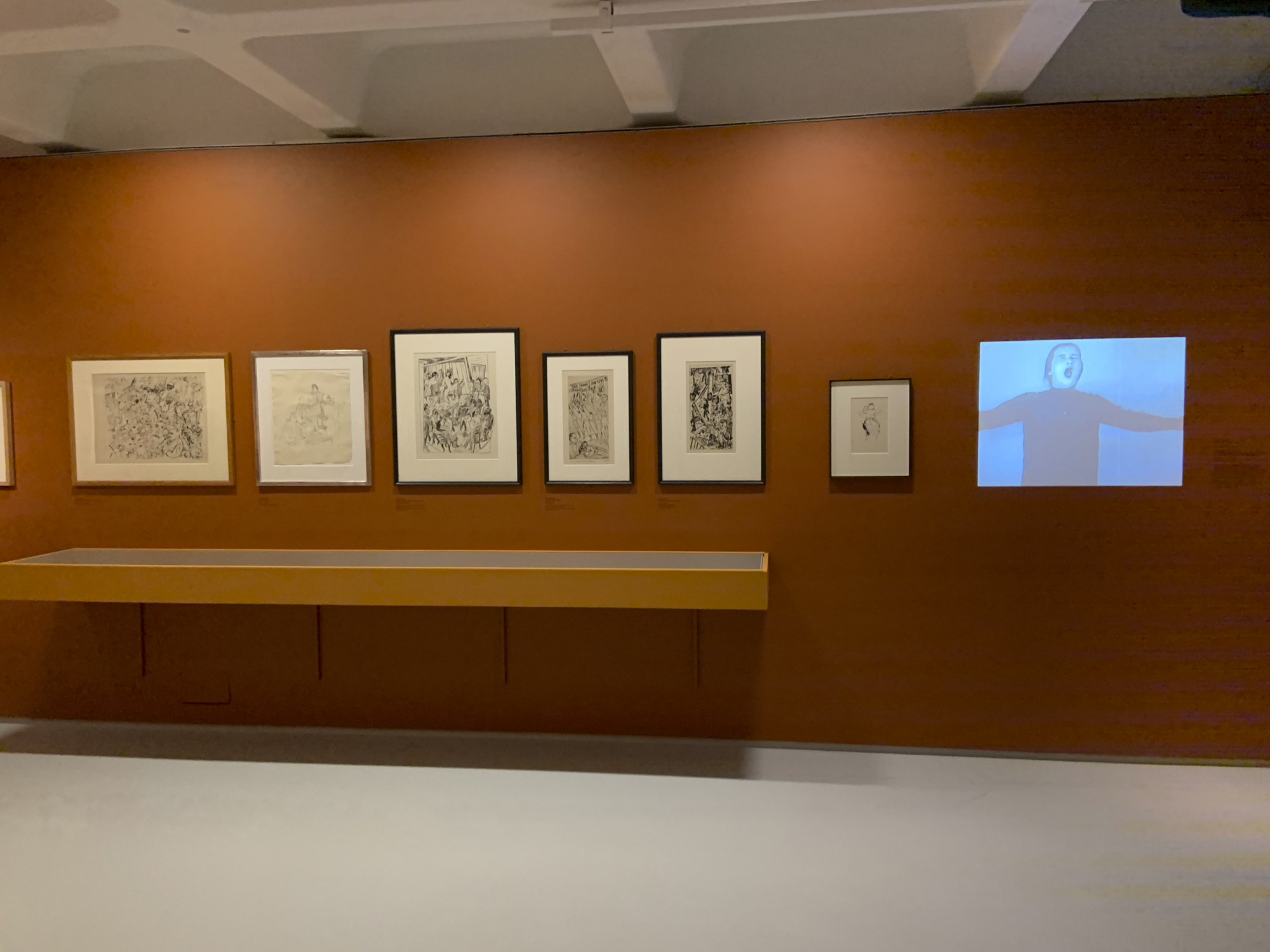
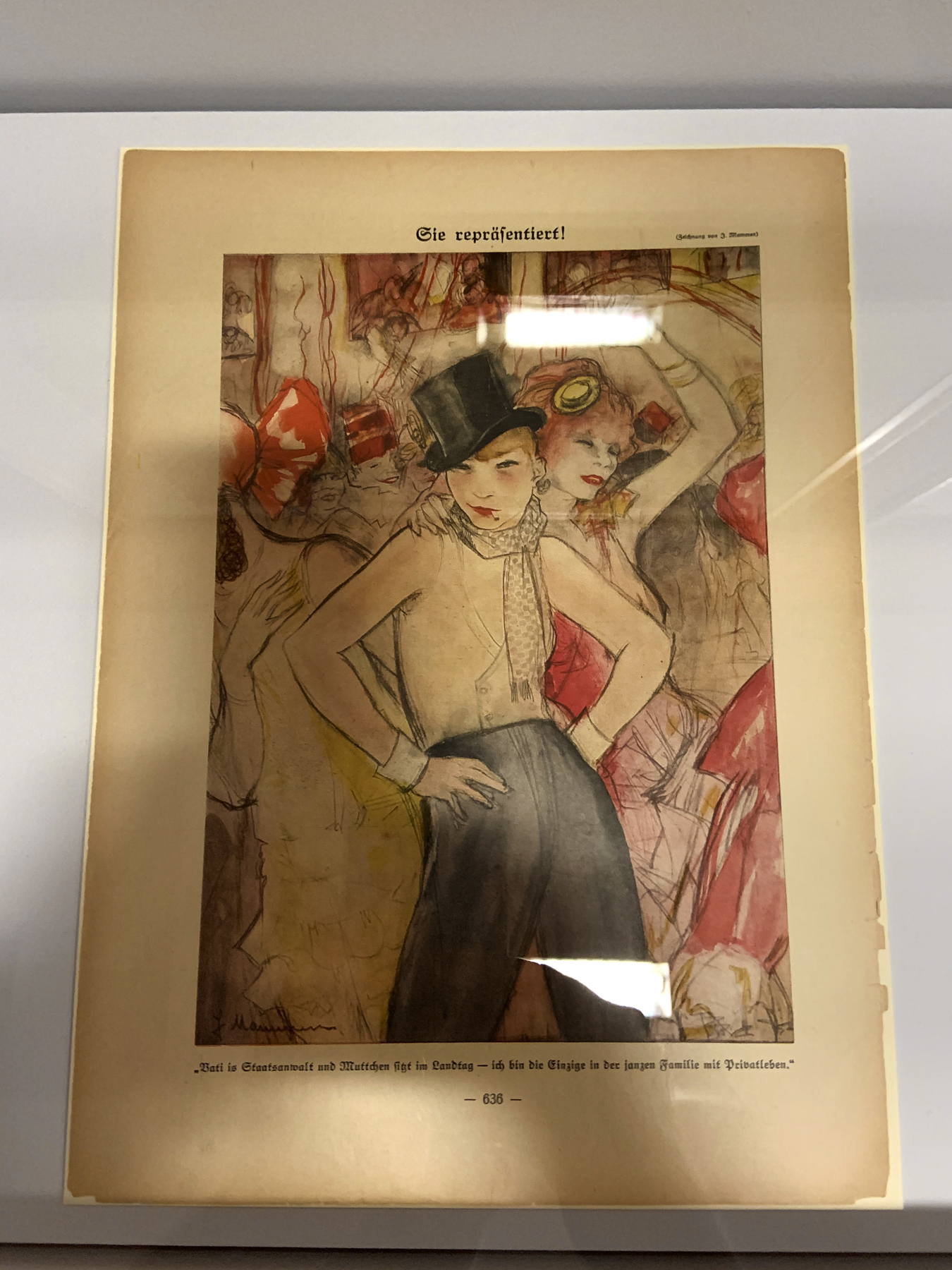
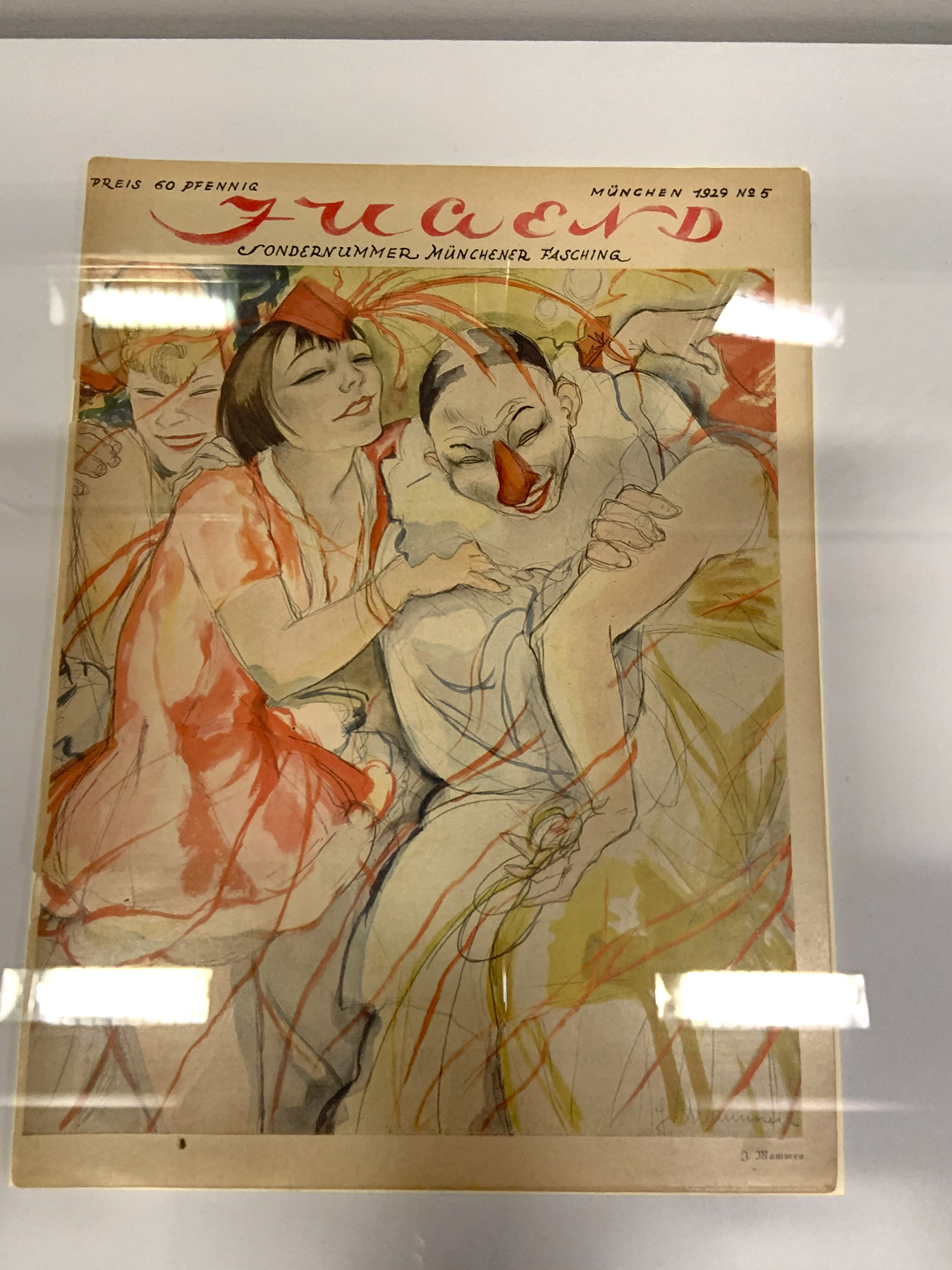
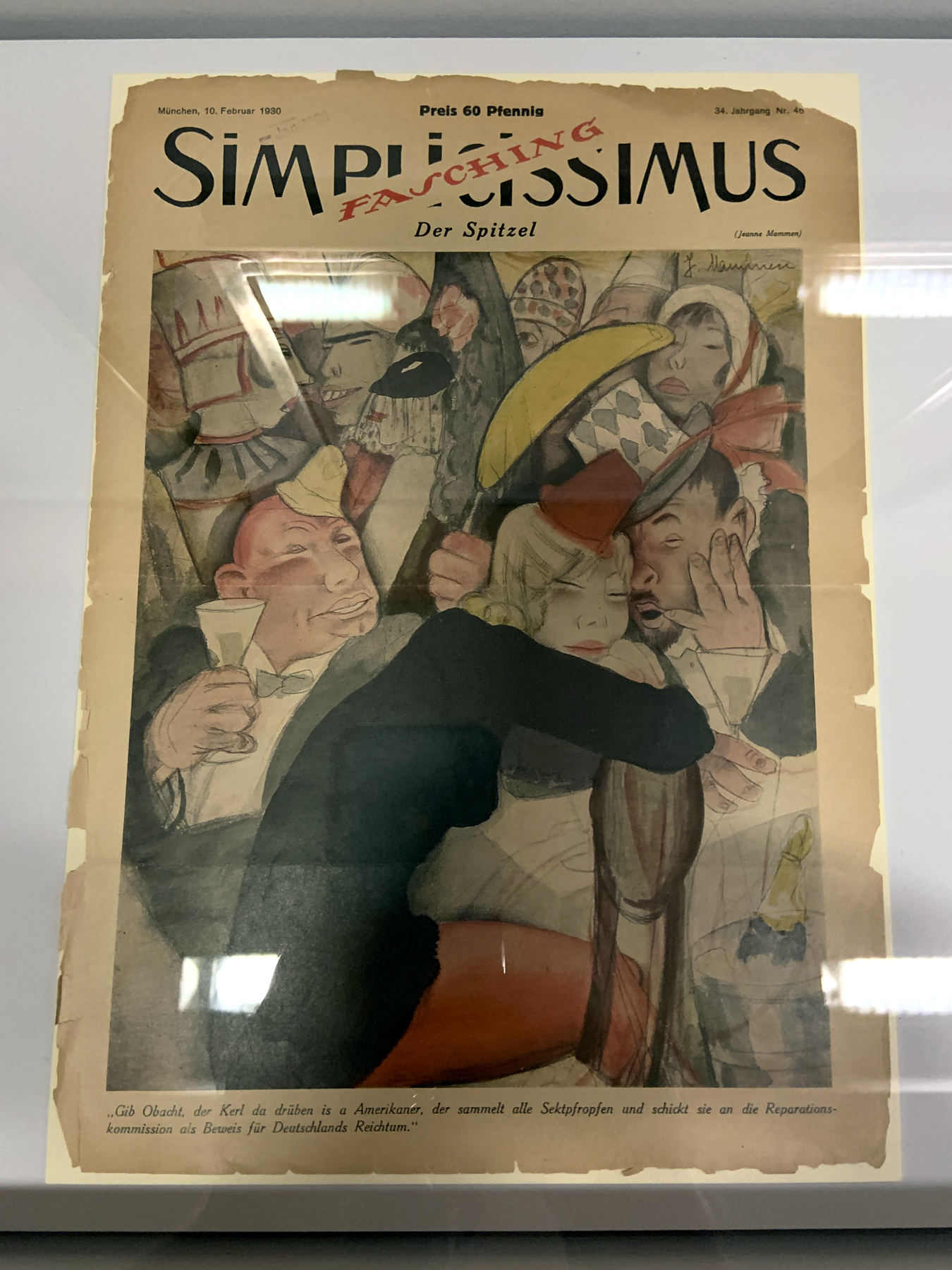
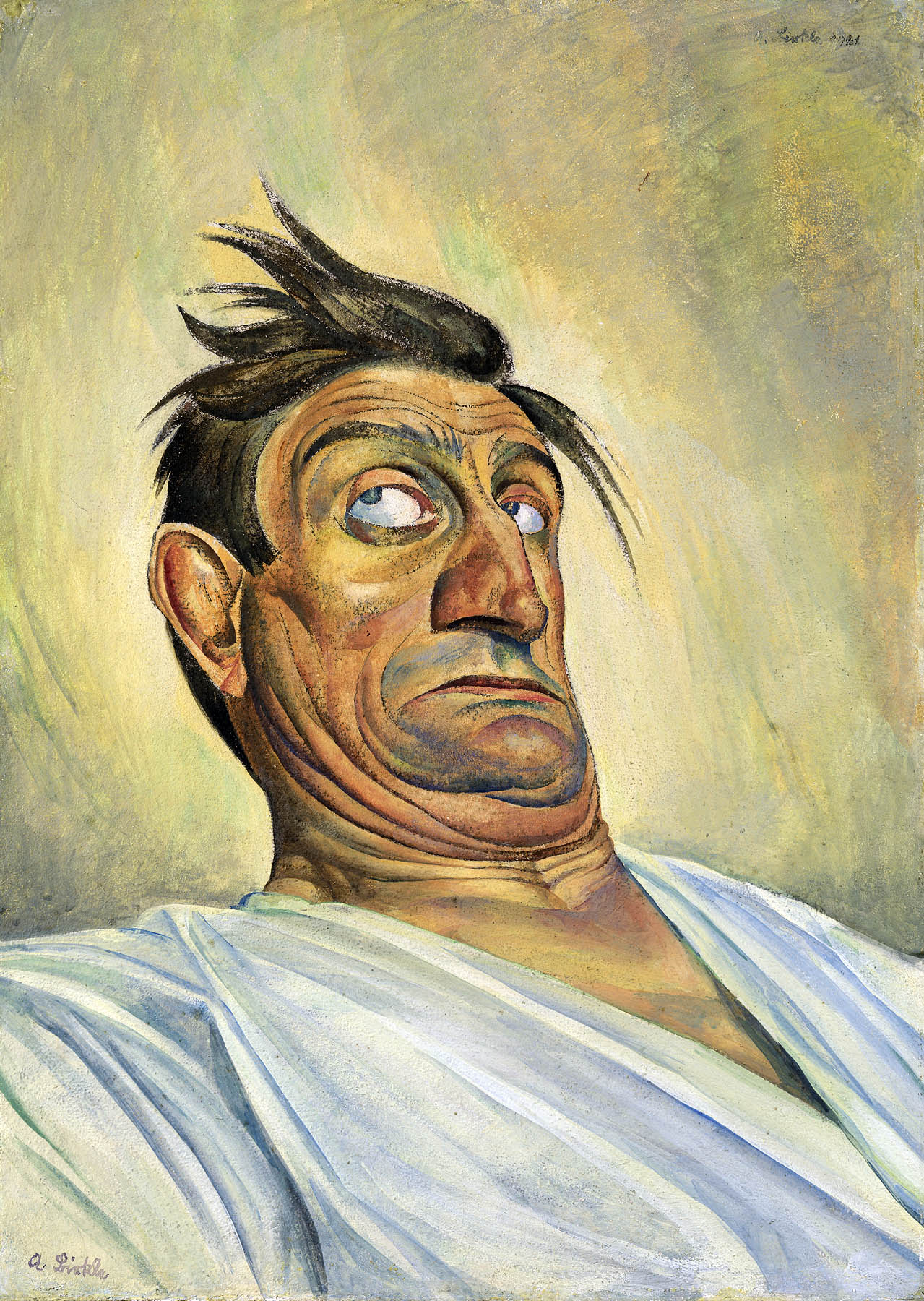
This presentation explores the diverse practices of a number of different artists, including Otto Dix, George Grosz, Albert Birkle and Jeanne Mammen. Although the term ‘magic realism’ is today commonly associated with the literature of Latin America, it was inherited from the artist and critic Franz Roh who invented it in 1925 to describe a shift from the art of the expressionist era, towards cold veracity and unsettling imagery. In the context of growing political extremism, the new realism reflected a fluid social experience as well as inner worlds of emotion and magic.
When the First World War erupted, Dix enthusiastically volunteered for the German Army. He was assigned to a field artillery regiment in Dresden. In the autumn of 1915 he was assigned as a non-commissioned officer of a machine-gun unit on the Western front and took part in the Battle of the Somme. In November 1917, his unit was transferred to the Eastern front until the end of hostilities with Russia, and in February 1918 he was stationed in Flanders. Back on the western front, he fought in the German Spring Offensive. He earned the Iron Cross (second class) and reached the rank of vizefeldwebel. In August of that year he was wounded in the neck, and shortly after he took pilot training lessons.
He took part in a Fliegerabwehr-Kurs (“Defense Pilot Course”) in Tongern, was promoted to Vizefeldwebel and after passing the medical tests transferred to Aviation Replacement Unit Schneidemühl in Posen. He was discharged from service in 22 December 1918 and was home for Christmas.
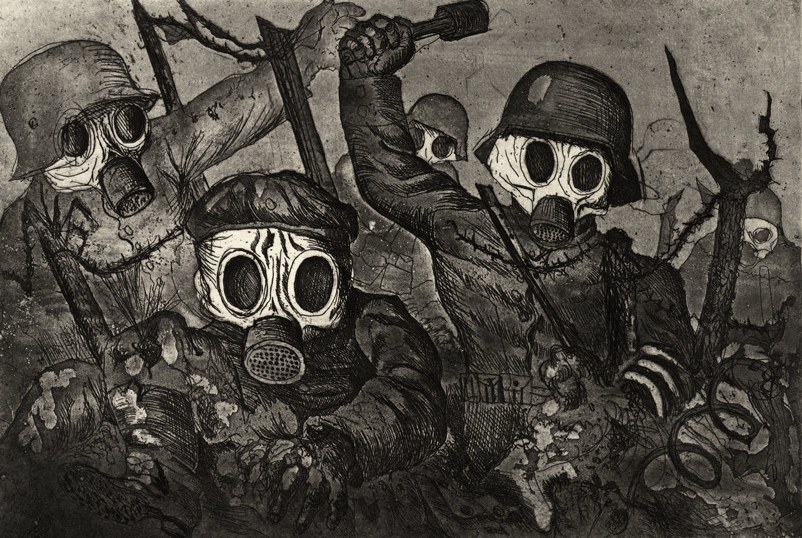
Dix was profoundly affected by the sights of the war, and later described a recurring nightmare in which he crawled through destroyed houses. He represented his traumatic experiences in many subsequent works, including a portfolio of fifty etchings called Der Krieg, published in 1924. Subsequently, he referred again to the war in The War Triptych, painted from 1929-1932.
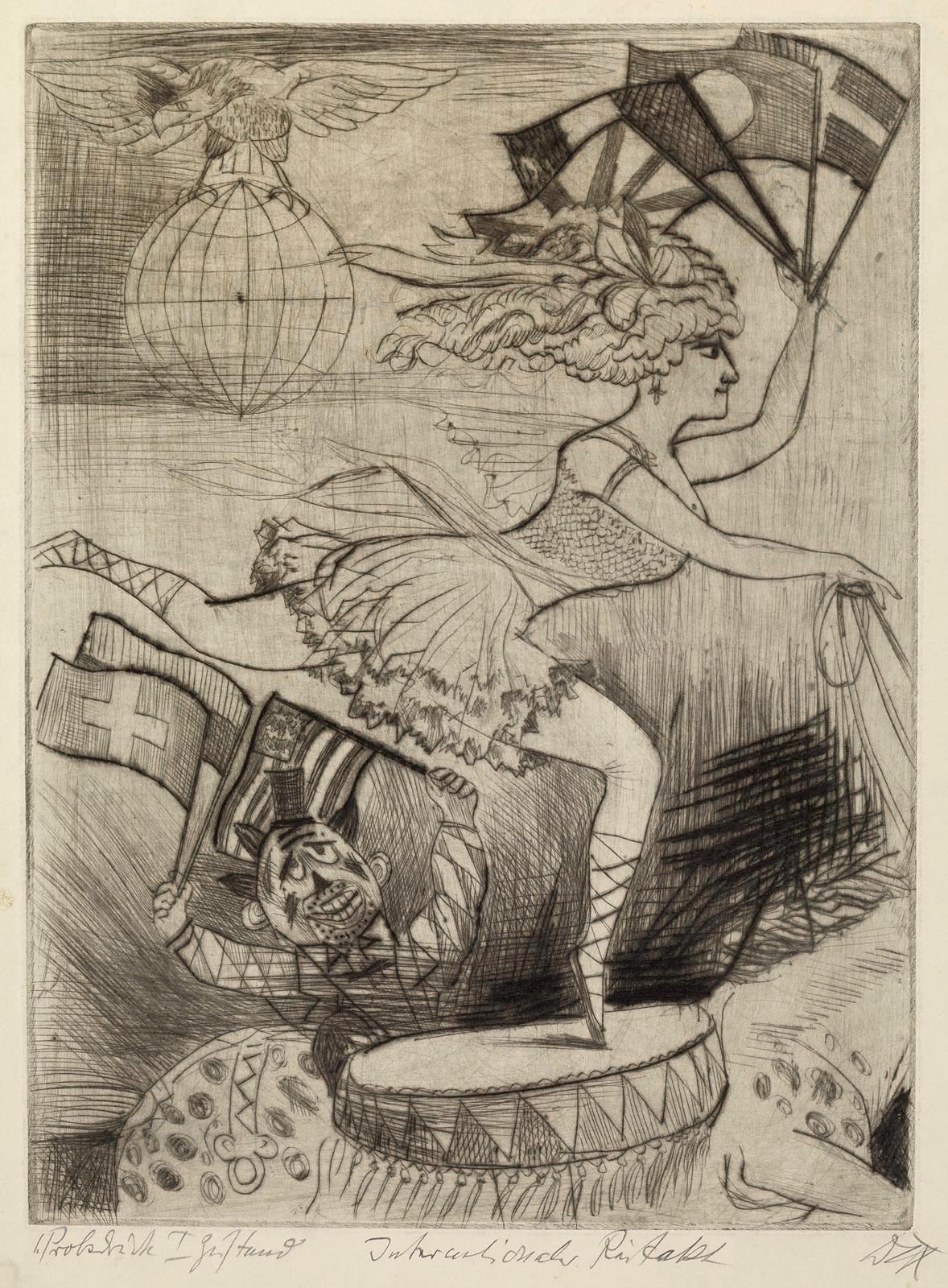
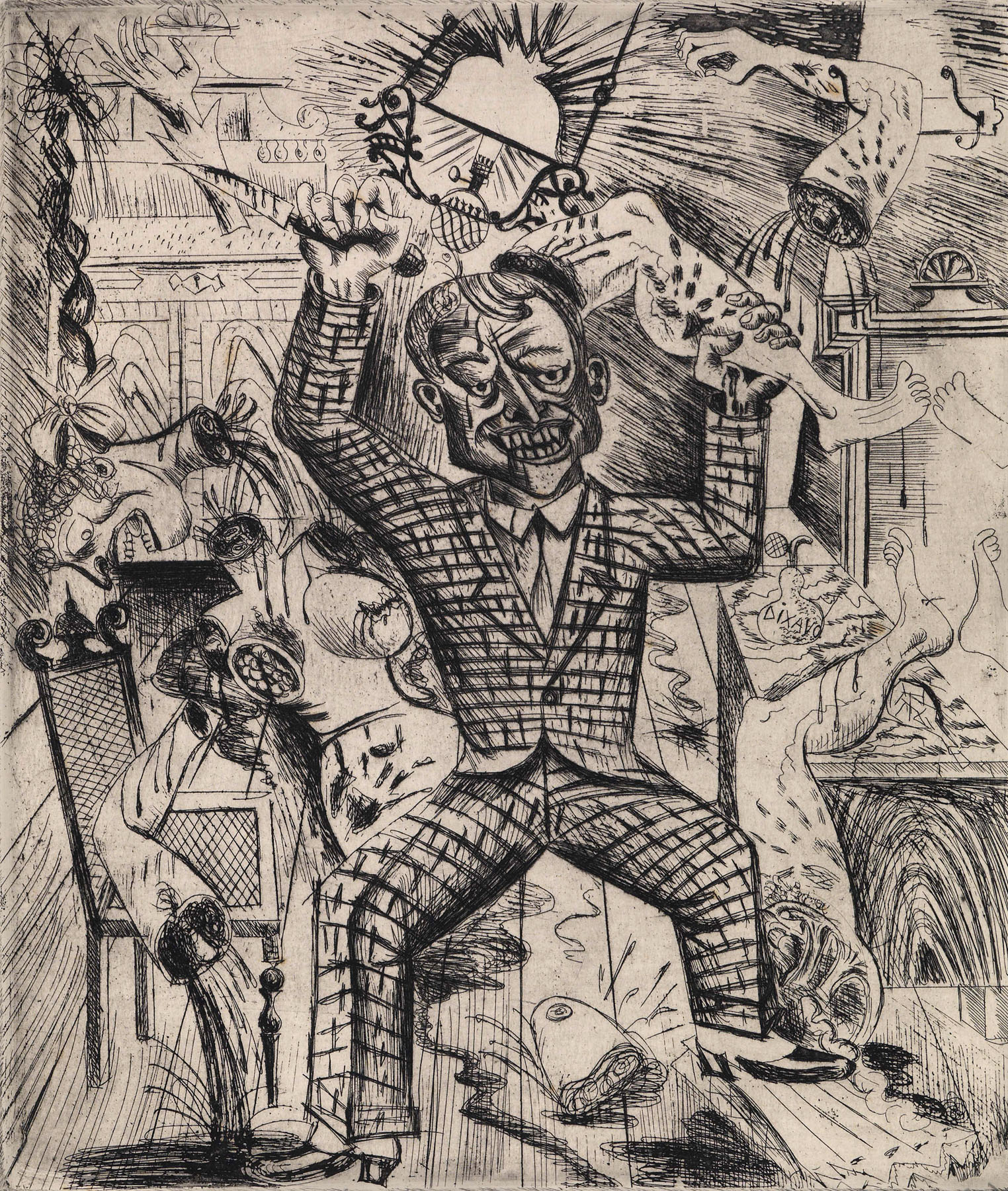
Otto Dix (German, 1891-1969) International Riding Act (Internationaler Reitakt) 1922 Etching, drypoint on paper 496 x 431 mm The George Economou Collection On short term loan
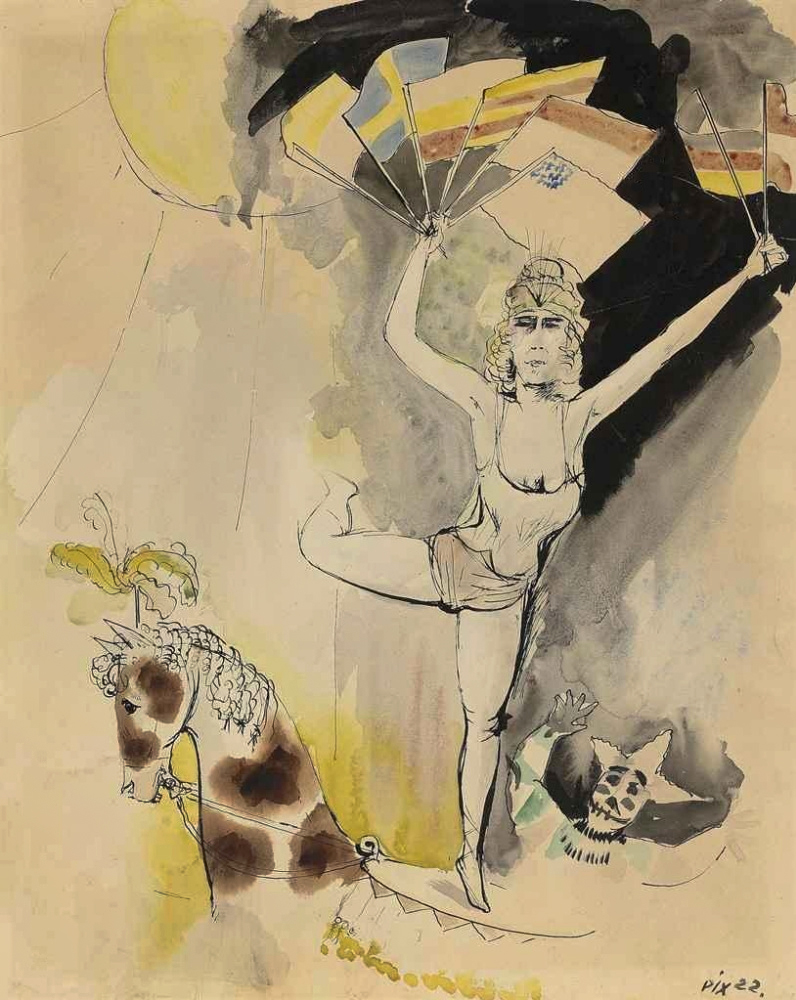
Otto Dix (German, 1891-1969) International Riding Scene (Internationale Reiterszene) 1922 Watercolour, pen and ink on paper 510 × 410 mm The George Economou Collection On short term loan
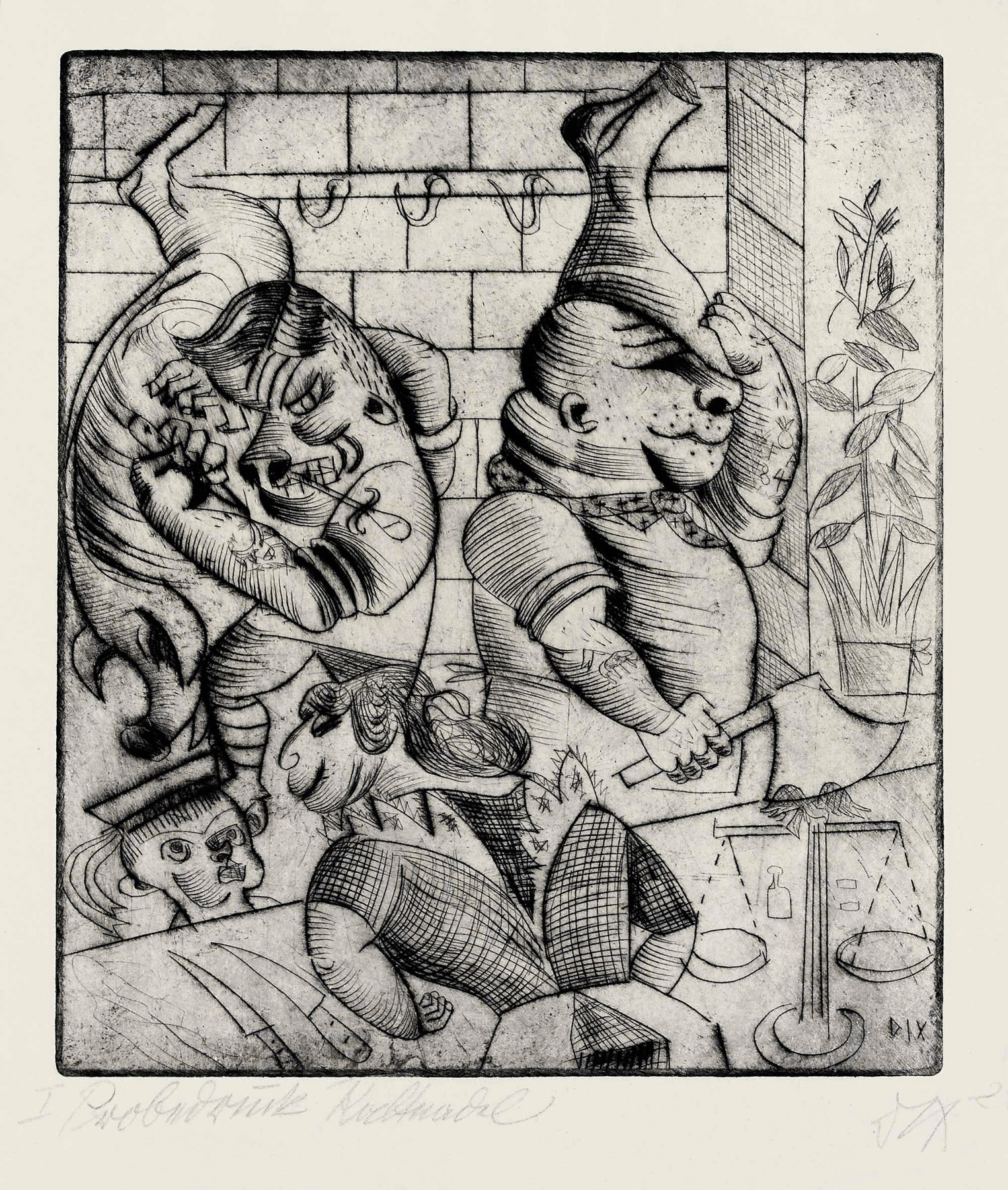
Otto Dix (German, 1891-1969) Butcher Shop (Fleischerladen) 1920 Etching, drypoint on paper 495 x 338 mm The George Economou Collection On short term loan
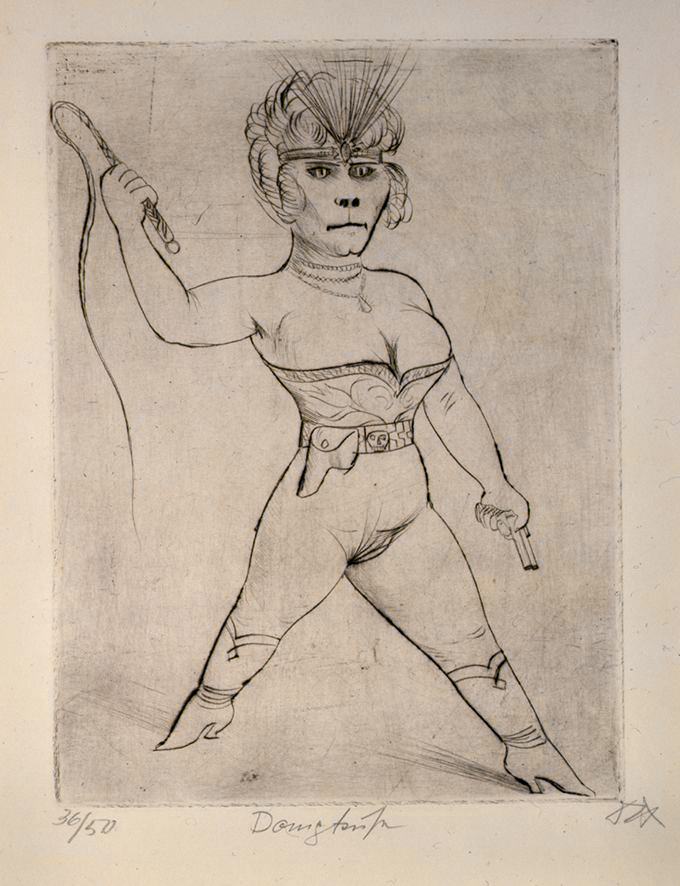
Otto Dix (German, 1891-1969) Lion-Tamer (Dompteuse) 1922 Etching, drypoint on paper 496 x 429 mm The George Economou Collection On short term loan
Otto Dix (German, 1891-1969) Lust Murder (Lustmord) 1922 Watercolour, ink and graphite on paper 485 x 365 mm The George Economou Collection On short term loan
At the end of 1918 Dix returned to Gera, but the next year he moved to Dresden, where he studied at the Hochschule für Bildende Künste. He became a founder of the Dresden Secession group in 1919, during a period when his work was passing through an expressionist phase. In 1920, he met George Grosz and, influenced by Dada, began incorporating collage elements into his works, some of which he exhibited in the first Dada Fair in Berlin. He also participated in the German Expressionists exhibition in Darmstadt that year.
In 1924, he joined the Berlin Secession; by this time he was developing an increasingly realistic style of painting that used thin glazes of oil paint over a tempera underpainting, in the manner of the old masters. His 1923 painting The Trench, which depicted dismembered and decomposed bodies of soldiers after a battle, caused such a furore that the Wallraf-Richartz Museum hid the painting behind a curtain. In 1925 the then-mayor of Cologne, Konrad Adenauer, cancelled the purchase of the painting and forced the director of the museum to resign.
Dix was a contributor to the Neue Sachlichkeit exhibition in Mannheim in 1925, which featured works by George Grosz, Max Beckmann, Heinrich Maria Davringhausen, Karl Hubbuch, Rudolf Schlichter, Georg Scholz and many others. Dix’s work, like that of Grosz – his friend and fellow veteran – was extremely critical of contemporary German society and often dwelled on the act of Lustmord, or sexualised murder. He drew attention to the bleaker side of life, unsparingly depicting prostitution, violence, old age and death.
In one of his few statements, published in 1927, Dix declared, “The object is primary and the form is shaped by the object.”
Among his most famous paintings are Sailor and Girl (1925), used as the cover of Philip Roth’s 1995 novel Sabbath’s Theater, the triptych Metropolis (1928), a scornful portrayal of depraved actions of Germany’s Weimar Republic, where nonstop revelry was a way to deal with the wartime defeat and financial catastrophe, and the startling Portrait of the Journalist Sylvia von Harden (1926). His depictions of legless and disfigured veterans – a common sight on Berlin’s streets in the 1920s – unveil the ugly side of war and illustrate their forgotten status within contemporary German society, a concept also developed in Erich Maria Remarque’s All Quiet on the Western Front.
Otto Dix (German, 1891-1969) Technical Personnel (Technisches Personal) 1922 Etching, drypoint on paper 497 x 426 mm The George Economou Collection On short term loan
Magic Realism
The term magic realism was invented by German photographer, art historian and art critic Franz Roh in 1925 to describe modern realist paintings with fantasy or dream-like subjects.
The term was used by Franz Roh in his book Nach Expressionismus: Magischer Realismus (After Expressionism: Magic Realism).
In Central Europe magic realism was part of the reaction against modern or avant-garde art, known as the return to order, that took place generally after the First World War. Magic realist artists included Giorgio de Chirico, Alberto Savinio and others in Italy, and Alexander Kanoldt and Adolf Ziegler in Germany. Magic realism is closely related to the dreamlike depictions of surrealism and neo-romanticism in France. The term is also used of certain American painters in the 1940s and 1950s including Paul Cadmus, Philip Evergood and Ivan Albright.
In 1955 the critic Angel Flores used the term magic realism to describe the writing of Jorge Luis Borges and Gabriel GarcÃa Márquez, and it has since become a significant if disputed literary term.
Text from the Tate website [Online] Cited 23/06/2019
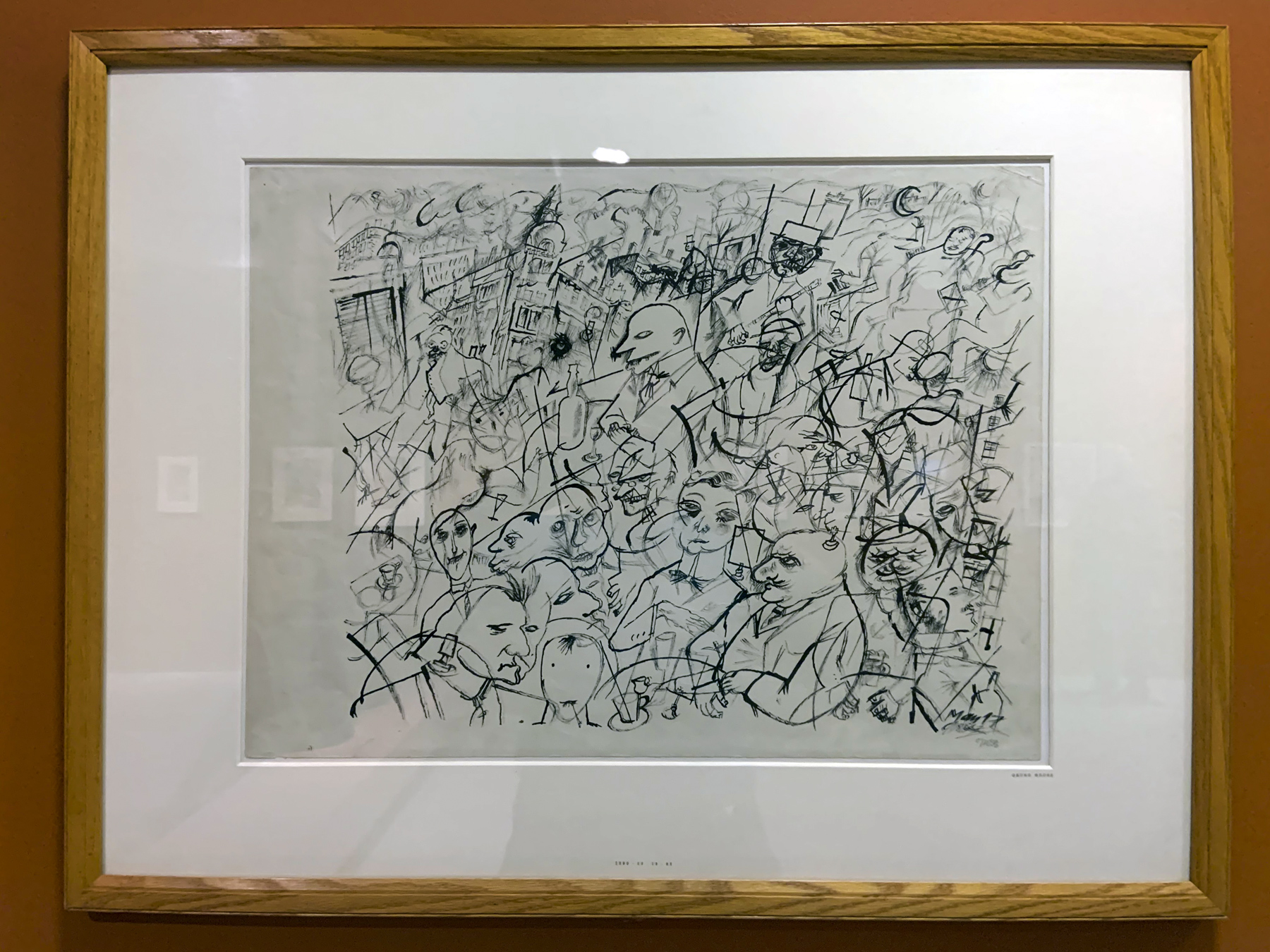
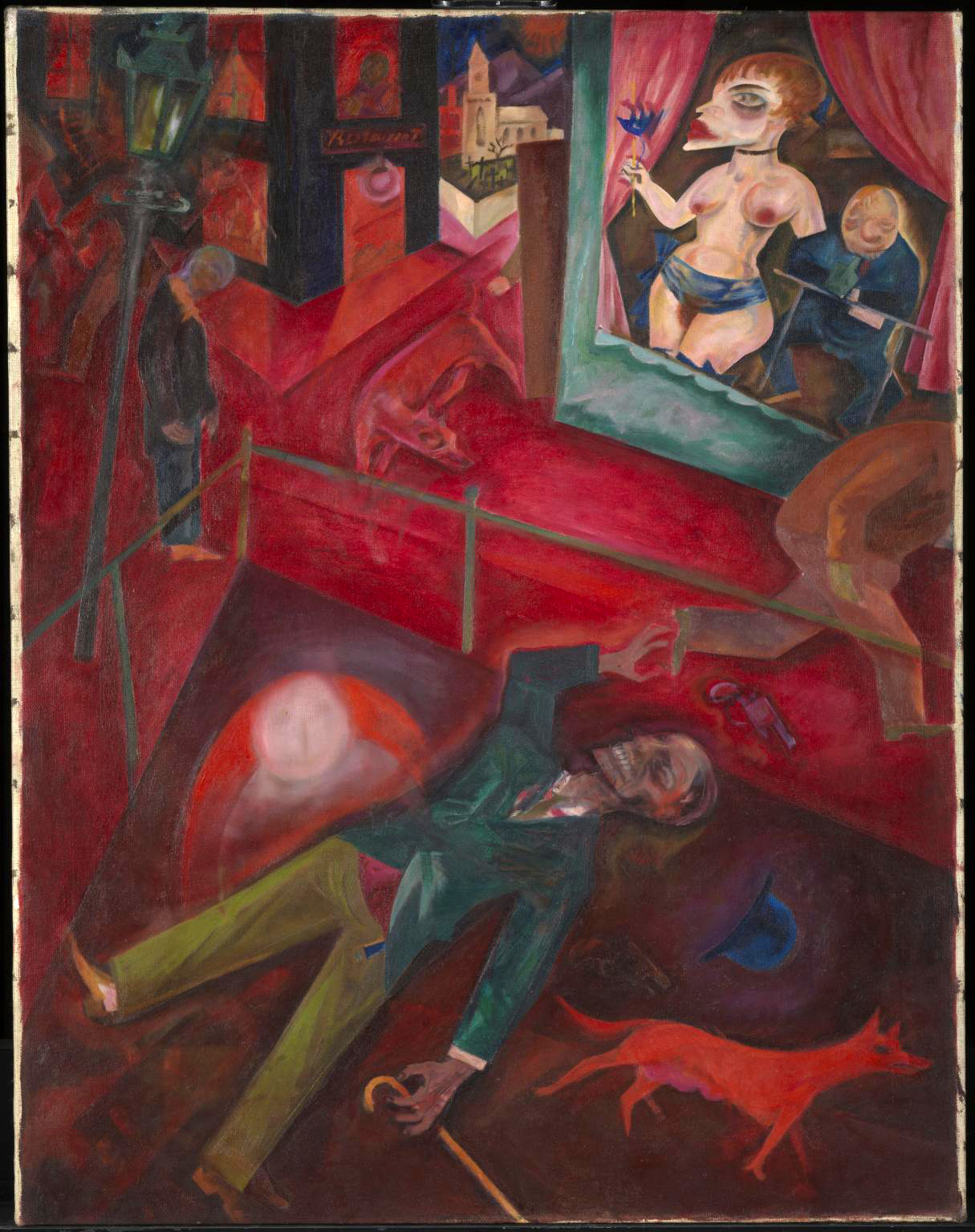
George Grosz (German, 1893-1959) Suicide (Selbstmörder) 1916 Oil paint on canvas 1000 x 775 mm Tate Purchased with assistance from the Art Fund 1976
The horrific picture ofSuicide by Groz astonishes by its savage imagery, harsh colours and restless composition. Highlighting the misery of the middle class who has no means to live on today and no future tomorrow, the artist gets one man strung up on a lamp post and the other shot on a stage just near a prompter guy in his cabin. Is his death a real thing or is it a part of some performance? It seems to be quite real because everybody promptly abandons the scene except for the hungry dogs roaming the desolate streets of Berlin. And these murders are no worse than dubious pleasures given by an ugly, man-like prostitute to an aged bald client visiting her in a cheap apartment block – the only source of solace from the cold and desolation for the bourgeois at the time. The pervasive moral corruption in Berlin during the war years is underlined by the forsaken Kirche at the back.
Text from the Arthive website [Online] Cited 23/06/2019
Grosz was drafted into the German army in 1914, after the outbreak of the First World War. His experiences in the trenches deepened his intense loathing for German society. Discharged from the army for medical reasons, he produced savagely satirical paintings and drawings that ‘expressed my despair, hate and disillusionment’. This work shows dogs roaming past the abandoned bodies of suicides in red nocturnal streets. The inclusion of an aged client visiting a prostitute reflects the pervasive moral corruption in Berlin during the war years.
Gallery label, September 2004
Rudolf Schlichter (German, 1890-1955) The Artist with Two Hanged Women (Der Künstler mit zwei erhängten Frauen) 1924 Watercolour and graphite on paper 453 x 340 mm The George Economou Collection On short term loan
Sexualised murder was a recurrent theme within this period: the exhibition holding a number of other works similar to the piece by Dix. An example is Rudolf Schlichter’s The Artist with Two Hanged Women watercolour. Schlichter was known to have sexual fantasies revolved around hanging, as well as an obsession with women’s buttoned boots. Acting as a self-portrait, the image represents Schlichter’s private fantasies, whilst also drawing upon the public issues of suicide, which saw an unsettling rise during this period.
Text by Georgia Massie-Taylor from the G’s Spots blog
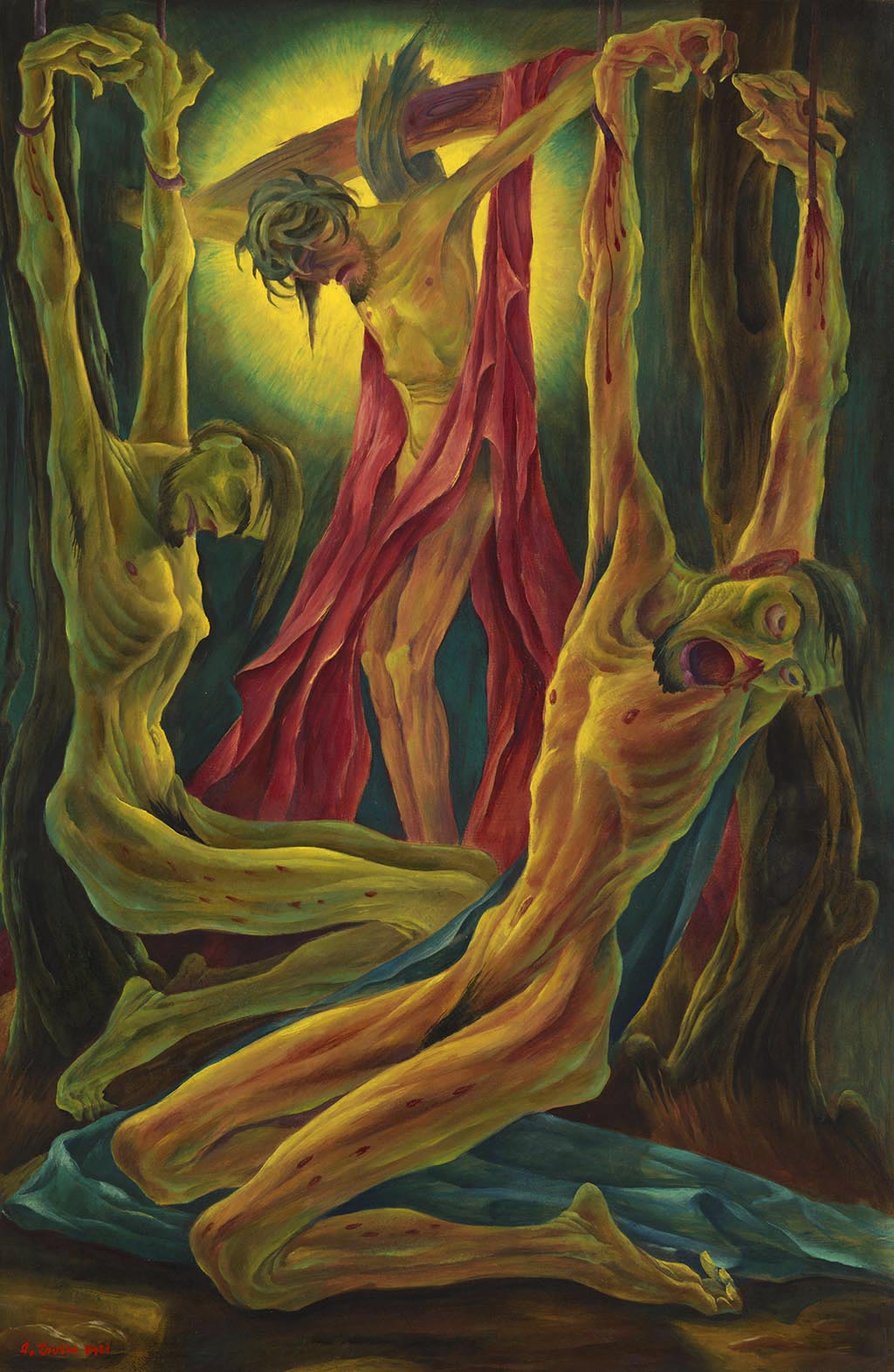
Albert Birkle (German, 1900-1986) Crucifixion (Kreuzigung) 1921 Oil paint on board 920 x 607 mm The George Economou Collection On short term loan
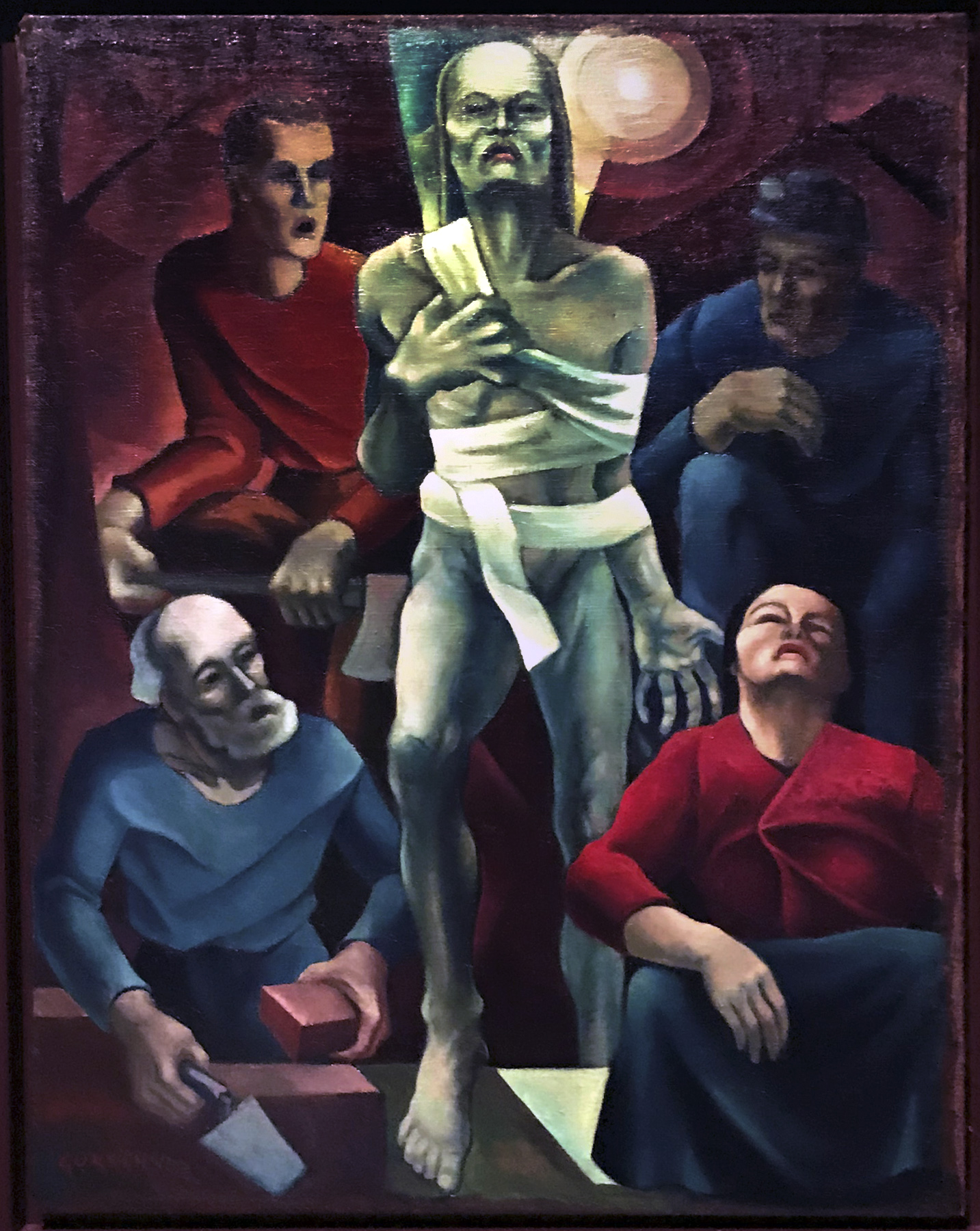
Herbert Gurschner (Austrian, 1901-1975) Lazarus (The Workers) (Lazarus (Die Arbeiter)) 1928 Oil paint on canvas 920 x 690 mm The George Economou Collection On short term loan
Herbert Gurschner (Austrian, 1901-1975)
Herbert Gurschner was born on August 27, 1901 in Innsbruck. In 1917 he attended the art school in Innsbruck and had his first exhibition. Between 1918 and 1920 he studied at the Munich Art Academy. After that he had other exhibitions in Innsbruck.
In 1924 he married an English nobleman, through which he came to London artist and collector circles. In 1929 he had his first exhibition in the London Fine Art Society. Two years later, he showed another exhibition in the Fine Art Society and made the artistic breakthrough in England. Subsequently, he was able to open several exhibitions throughout the UK. Herbert Gurschner found access to aristocratic, diplomatic and business circles and was able to exhibit his works in New York City, among others .
At the time of World War II Gurschner obtained British citizenship and served in the British army. During this time, he met his future second wife, the actress Brenda Davidoff, with whom he lived in London. In the postwar years Gurschner exhibited only sporadically and instead focuses on the stage design (including for the Royal Opera House, Globe Theater and Hammersmith Apollo). On January 10, 1975 Gurschner died in London.
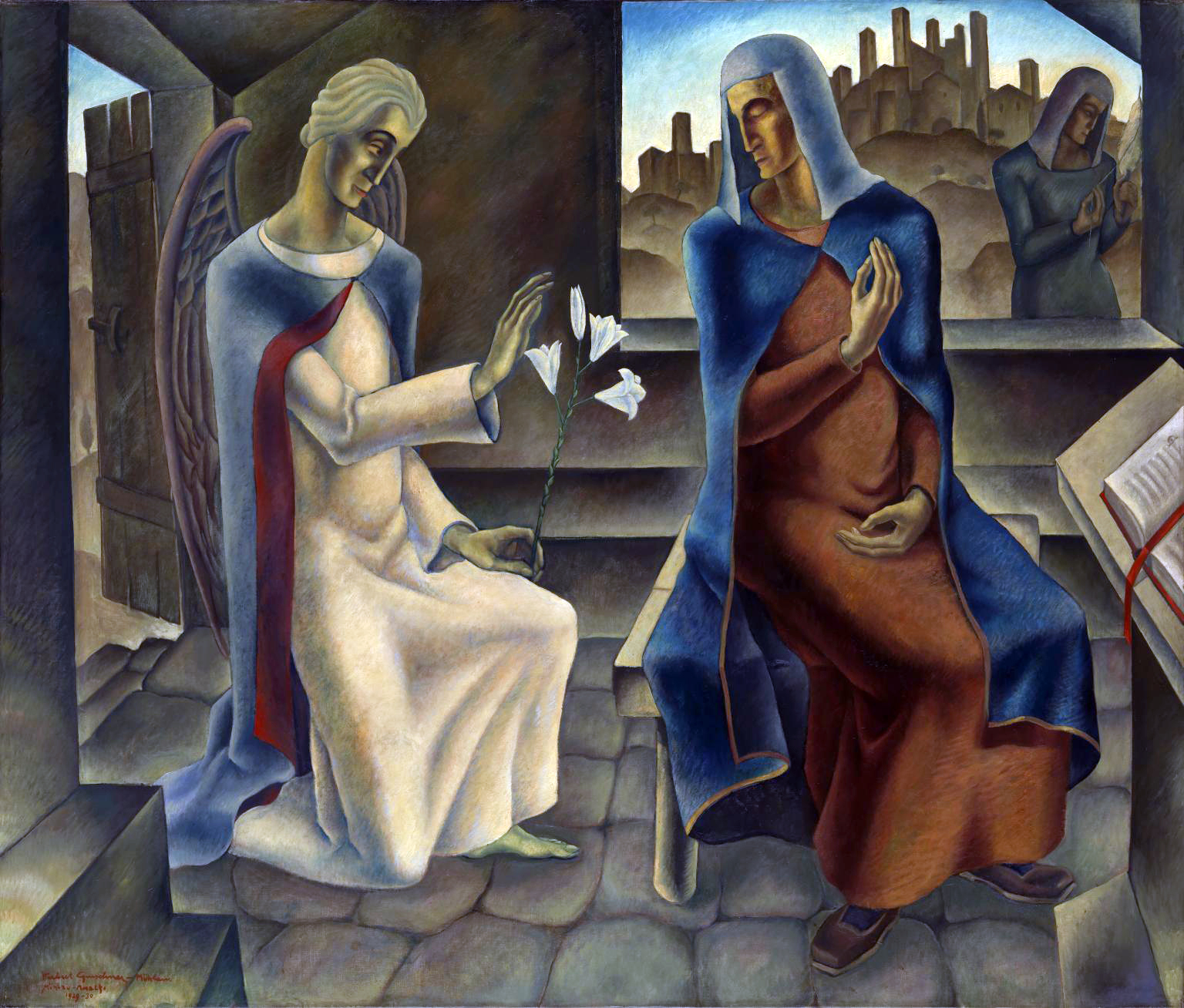
Herbert Gurschner (Austrian, 1901-1975) The Annunciation 1929-30 Oil on canvas 1617 x 1911 mm Tate Presented by Lord Duveen 1931
This summer, Tate Modern will explore the art of the Weimar Republic (1919-33) in a year-long, free display, drawing upon the rich holdings of The George Economou Collection. This presentation of around seventy paintings and works on paper will address the complex paradoxes of the Weimar era, in which liberalisation and anti-militarism flourished in tandem with political and economic uncertainty. These loans offer a rare opportunity to view a range of artworks not ordinarily on public display – some of which have never been seen in the United Kingdom before – and to see a selection of key Tate works returned to the context in which they were originally created and exhibited nearly one hundred years ago.
Although the term ‘magic realism’ is today commonly associated with the literature of Latin America, it was inherited from the artist and critic Franz Roh who invented it in 1925 to describe a shift from the anxious and emotional art of the expressionist era, towards the cold veracity and unsettling imagery of this inter-war period. In the context of growing political extremism, this new realism reflected a more liberal society as well as inner worlds of emotion and magic.
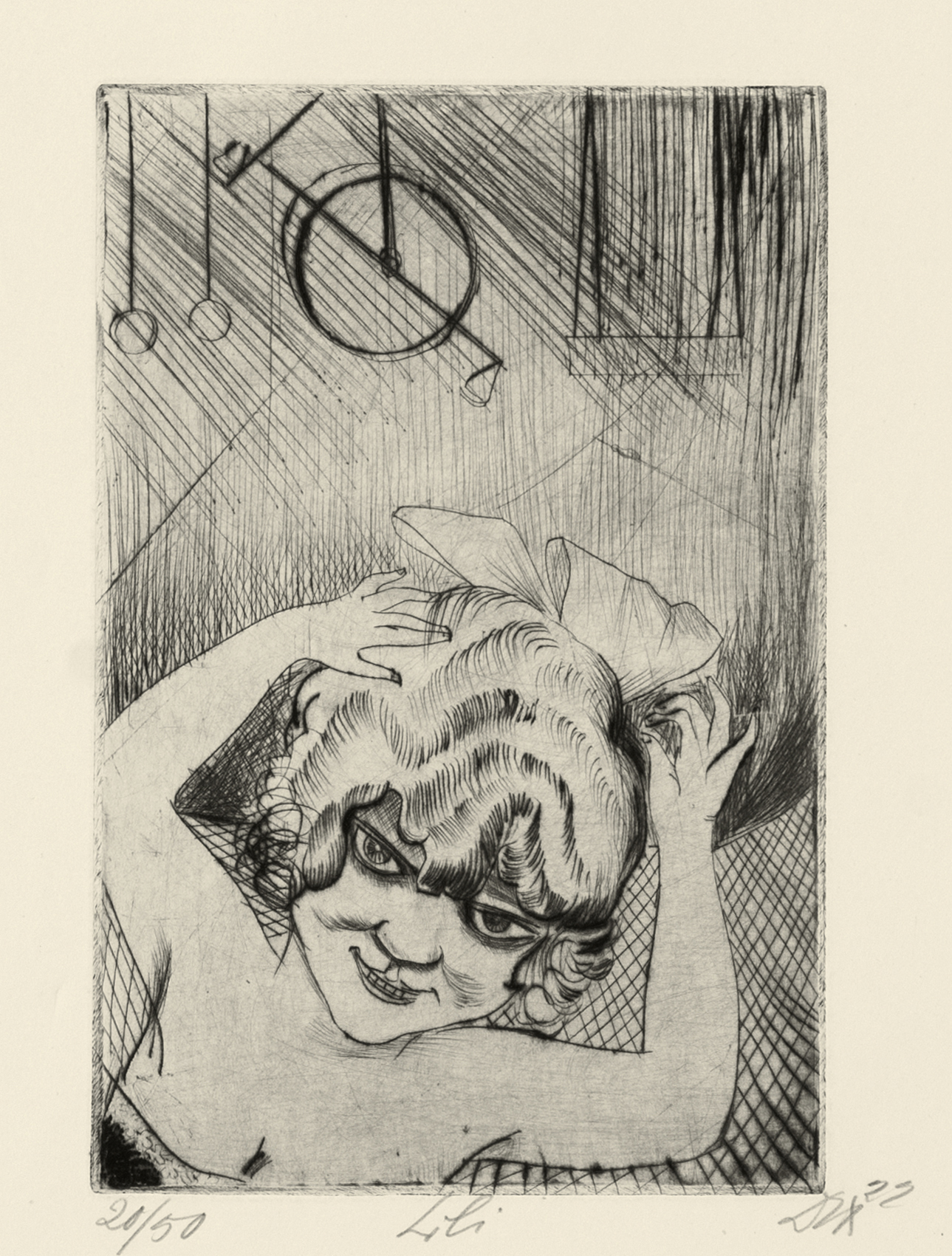
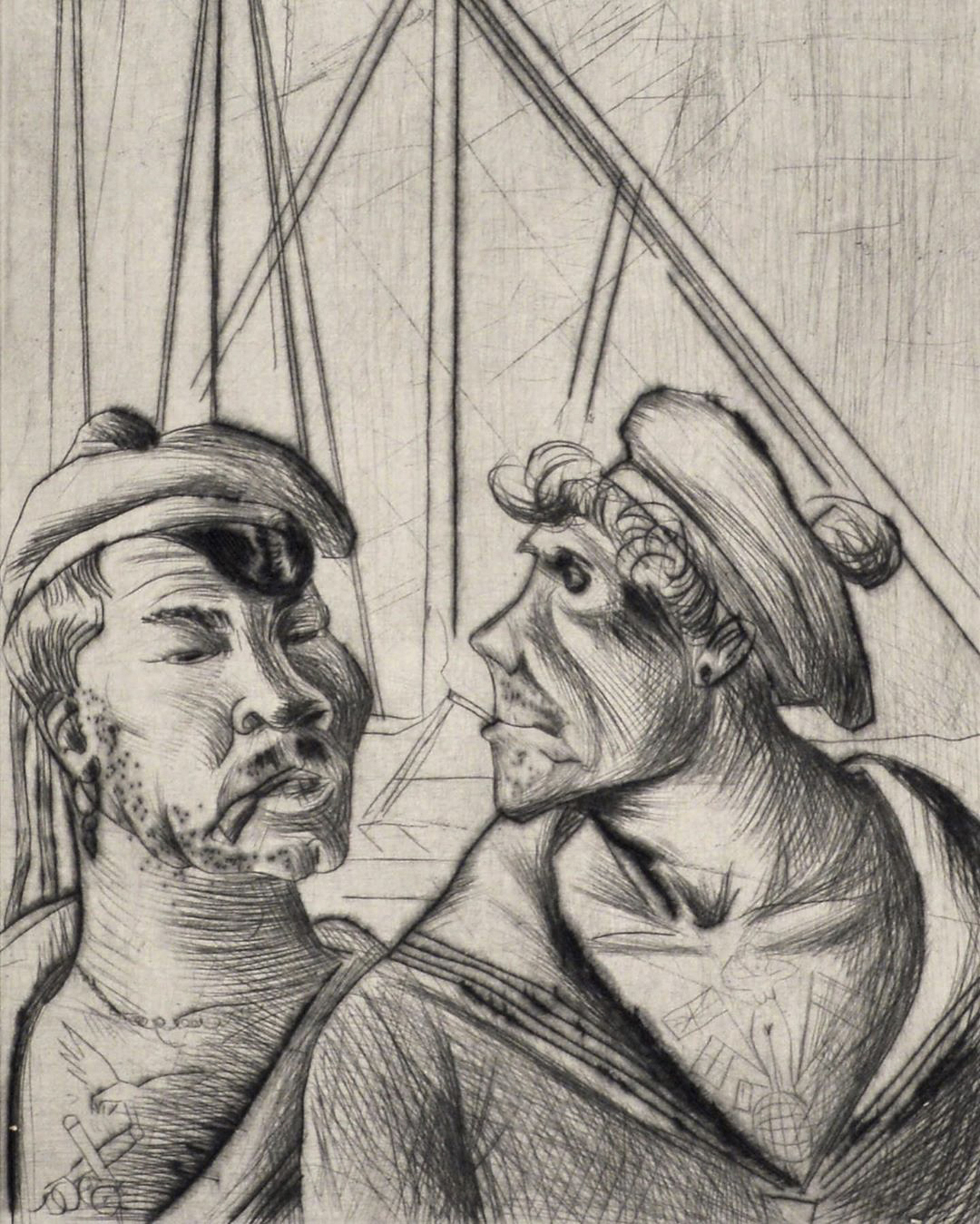
The profound social and political disarray after the First World War and the collapse of the Empire largely brought about this stylistic shift. Berlin in particular attracted a reputation for moral depravity and decadence in the context of the economic collapse. The reconfiguration of urban life was an important aspect of the Weimar moment. Alongside exploring how artists responded to social spaces and the studio, entertainment sites like the cabaret and the circus will be highlighted, including a display of Otto Dix’s enigmatic Zirkus (‘Circus’) print portfolio. Artists recognised the power in representing these realms of public fantasy and places where outsiders were welcomed.
Works by Otto Dix, George Grosz and Max Beckmann perhaps best known today for their unsettling depictions of Weimar life, will be presented alongside the works of under recognised artists such as Albert Birkle, Jeanne Mammen and Rudolf Schlichter, and many others whose careers were curtailed by the end of the Weimar period due to the rise of Nationalist Socialism and its agenda to promote art that celebrated its political ideologies.
The display comes at a pertinent time, in a year of commemoration of the anniversary of the end of the First World War, alongside Aftermath: Art in the Wake of World War One at Tate Britain and William Kentridge’s new performance for 14-18 Now at Tate Modern entitled The Head and the Load, running from 11-15 July 2018.
Magic Realism is curated by Matthew Gale, Head of Displays and Katy Wan, Assistant Curator, Tate Modern. The display is realised with thanks to loans from The George Economou Collection, with additional support from the Huo Family Foundation (UK) Limited.
Press release from the Tate website [Online] Cited 23/06/2019
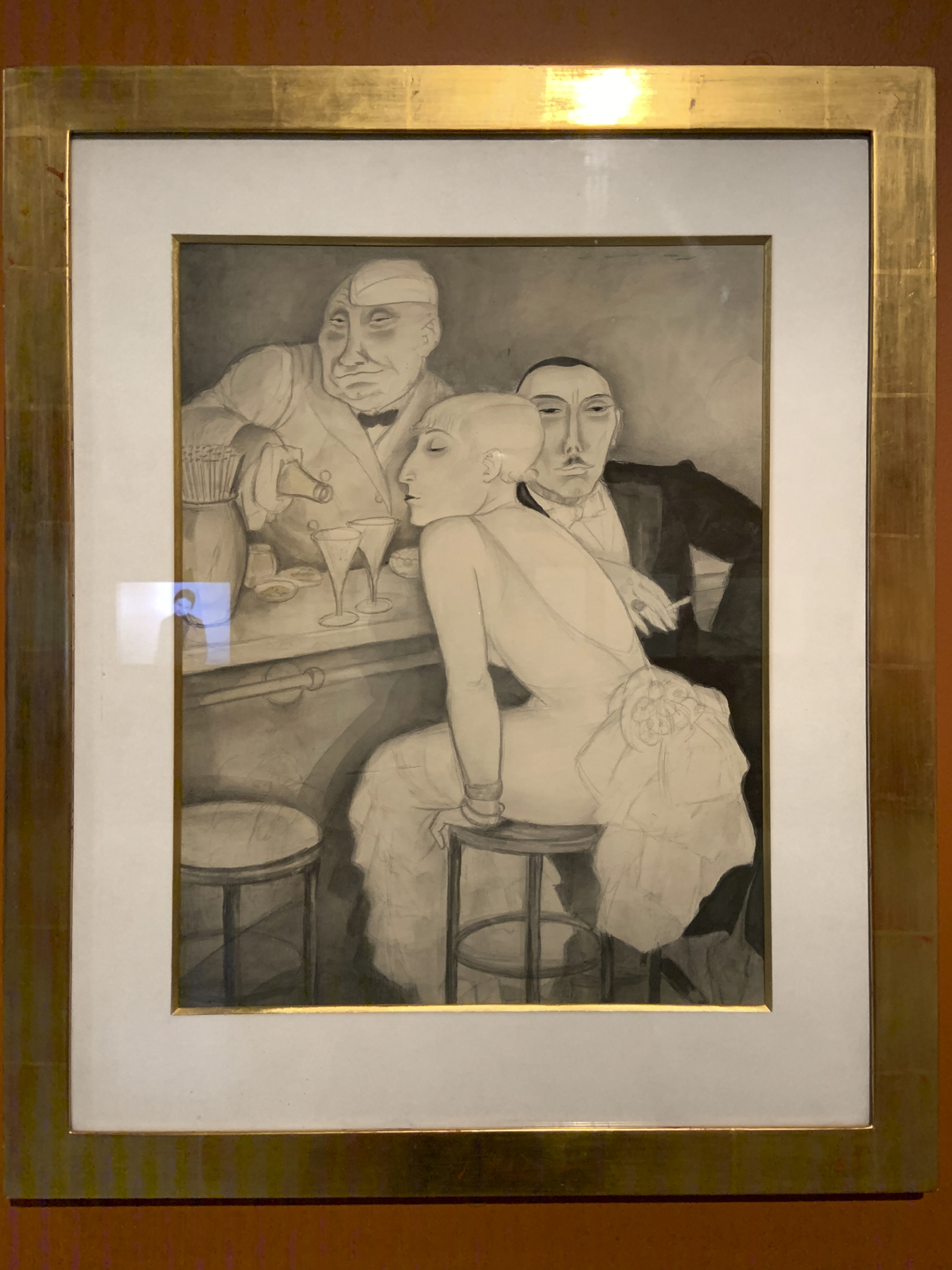
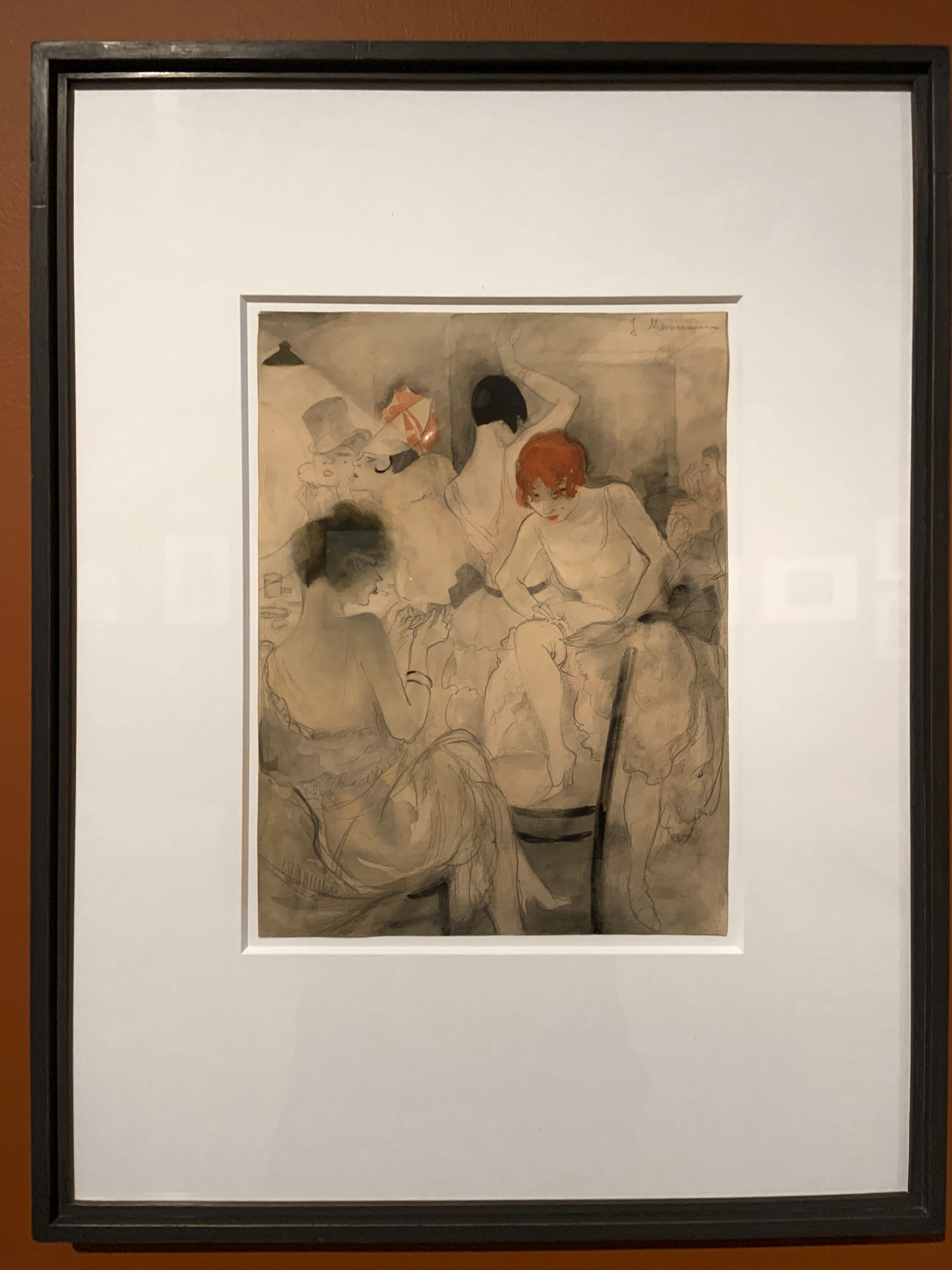
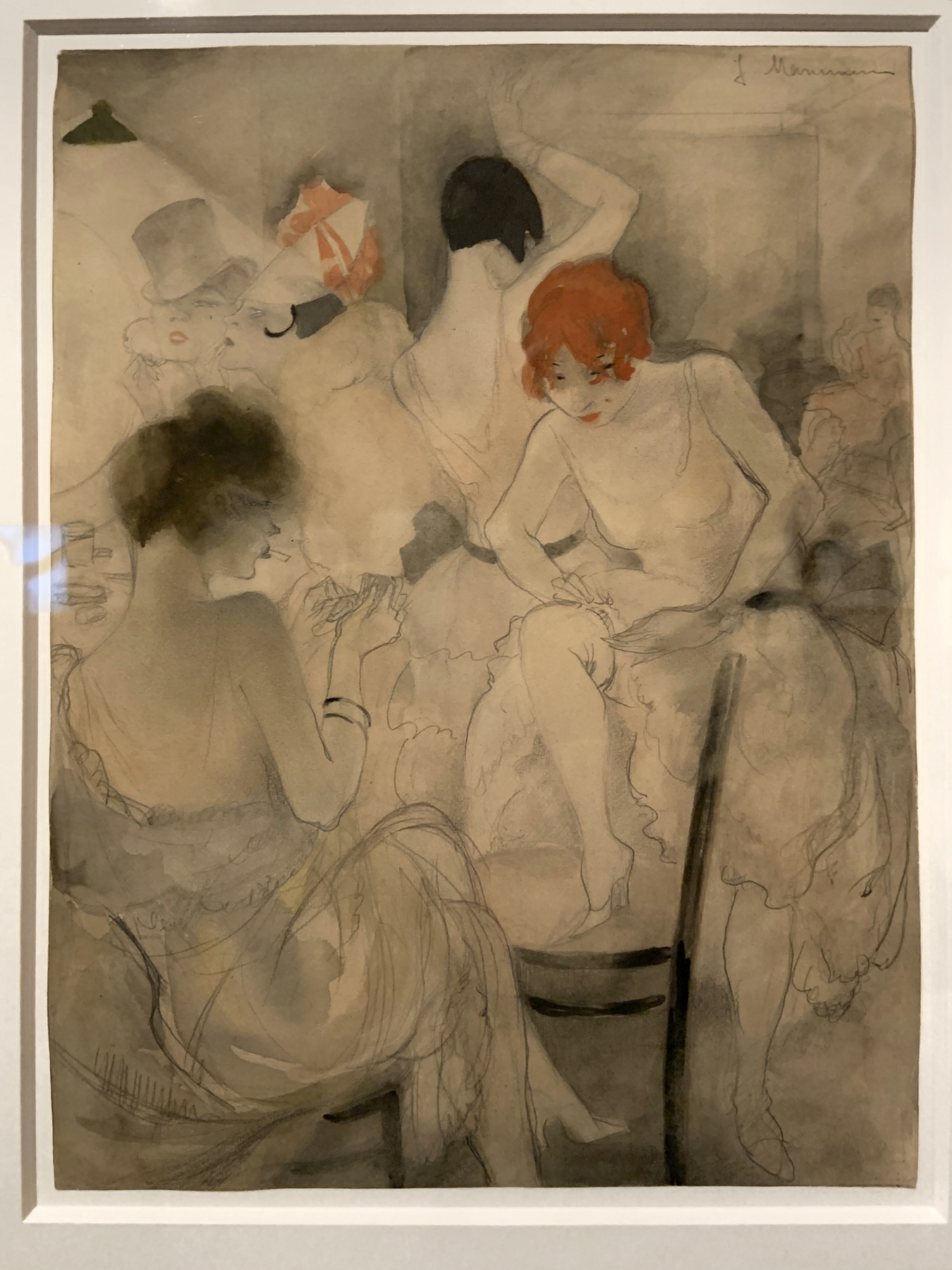
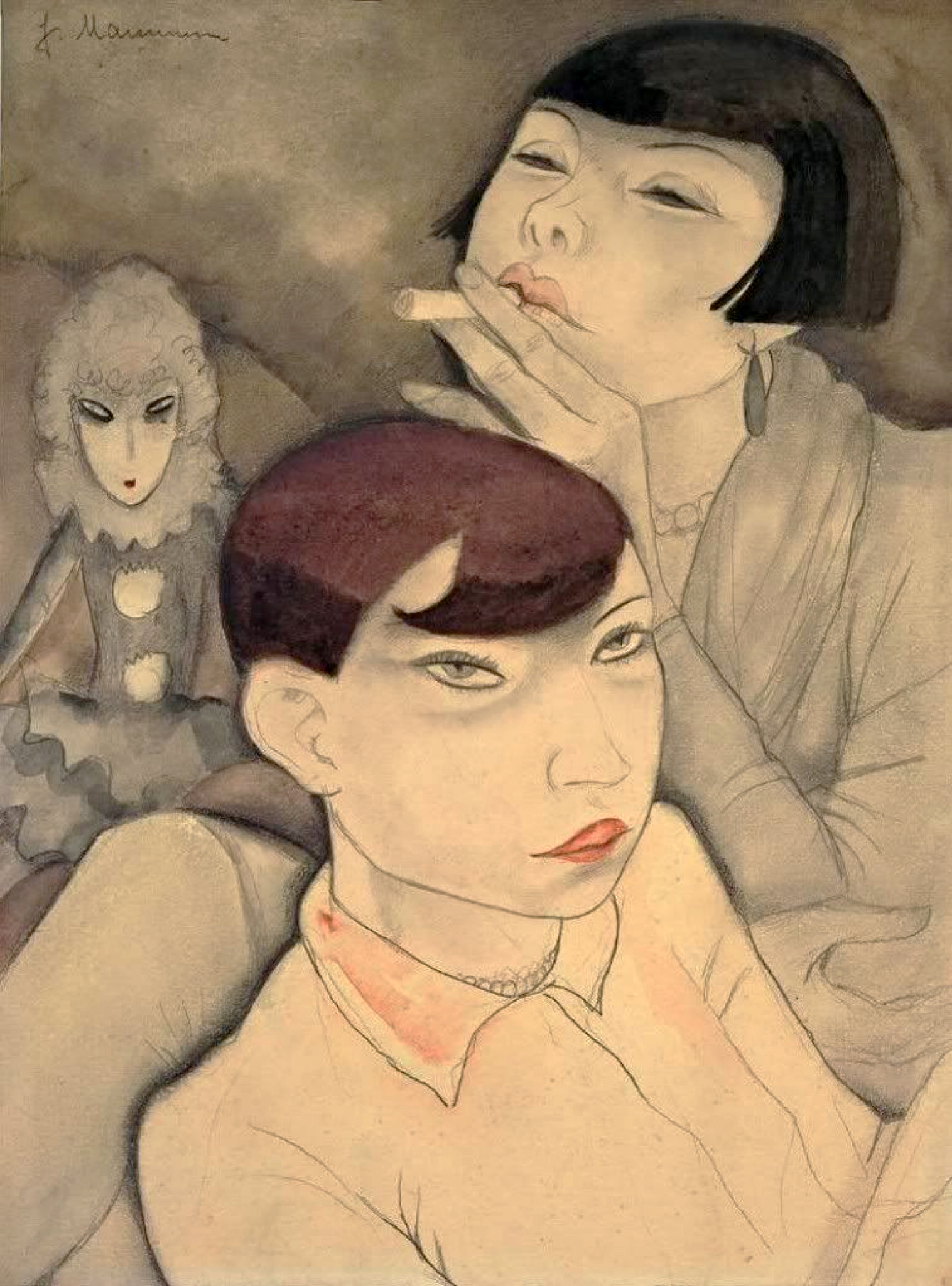
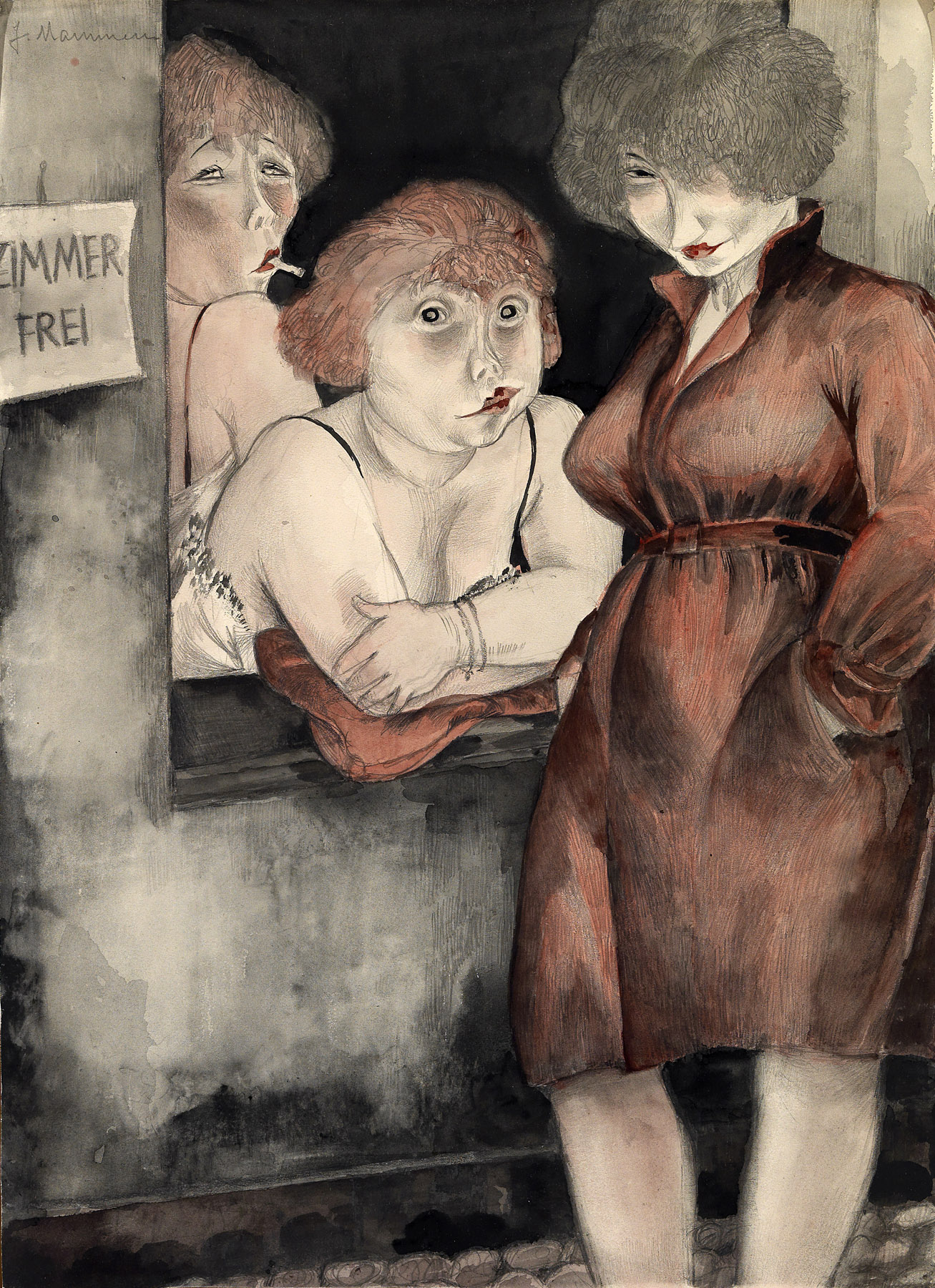
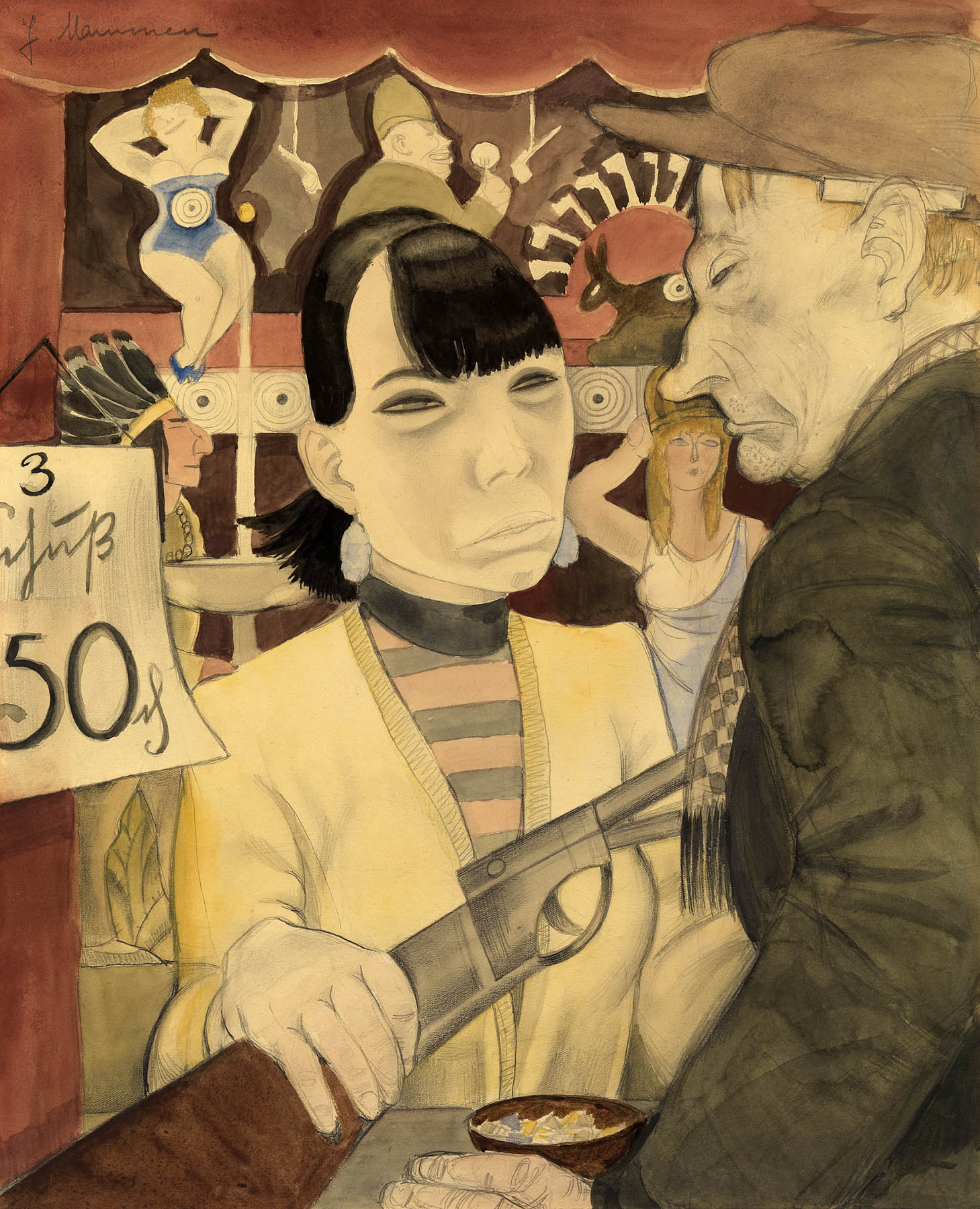
Jeanne Mammen (German, 1890-1976) Boring Dolls (Langweilige Puppen) 1929 Watercolour and graphite on paper mounted on cardboard 384 x 286 mm The George Economou Collection On short term loan
Jeanne Mammen (German, 1890-1976) Free room (Brüderstrasse (Zimmer frei)) 1930 Watercolour, ink and graphite on vellum The George Economou Collection On short term loan
Jeanne Mammen (21 November 1890 – 22 April 1976) was a German painter and illustrator of the Weimar period. Her work is associated with the New Objectivity and Symbolism movements. She is best known for her depictions of strong, sensual women and Berlin city life.
… In 1921, Mammen moved into an apartment with her sister in Berlin. This apartment was a former photographer’s studio which she lived in until her death. Aside from Art throughout her life Mammen also was interested in science. She was close friends with Max Delbrück who left Europe and took some of her artwork with him and exhibited them in California. In addition to bringing these art works to be exhibited he also sent Mammen care packages from the United States with art supplies.
In 1930 she had a major exhibition in the Fritz Gurlitt gallery. Over the next two years, at Gurlitt’s suggestion, she created one of her most important works: a series of eight lithographs illustrating Les Chansons de Bilitis, a collection of lesbian love poems by Pierre Louÿs.
In 1933, following her inclusion in an exhibition of female artists in Berlin, the Nazi authorities denounced her motifs and subjects as “Jewish”, and banned her lithographs for Les Chansons de Bilitis. The Nazis were also opposed to her blatant disregard for apparent ‘appropriate’ female submissiveness in her expressions of her subjects. Much of her work also includes imagery of lesbians. The Nazis shut down most of the journals she had worked for, and she refused to work for those that complied with their cultural policies. Until the end of the war she practiced a kind of “inner emigration”. She stopped exhibiting her work and focused on advertising. For a time she also peddled second-hand books from a handcart.
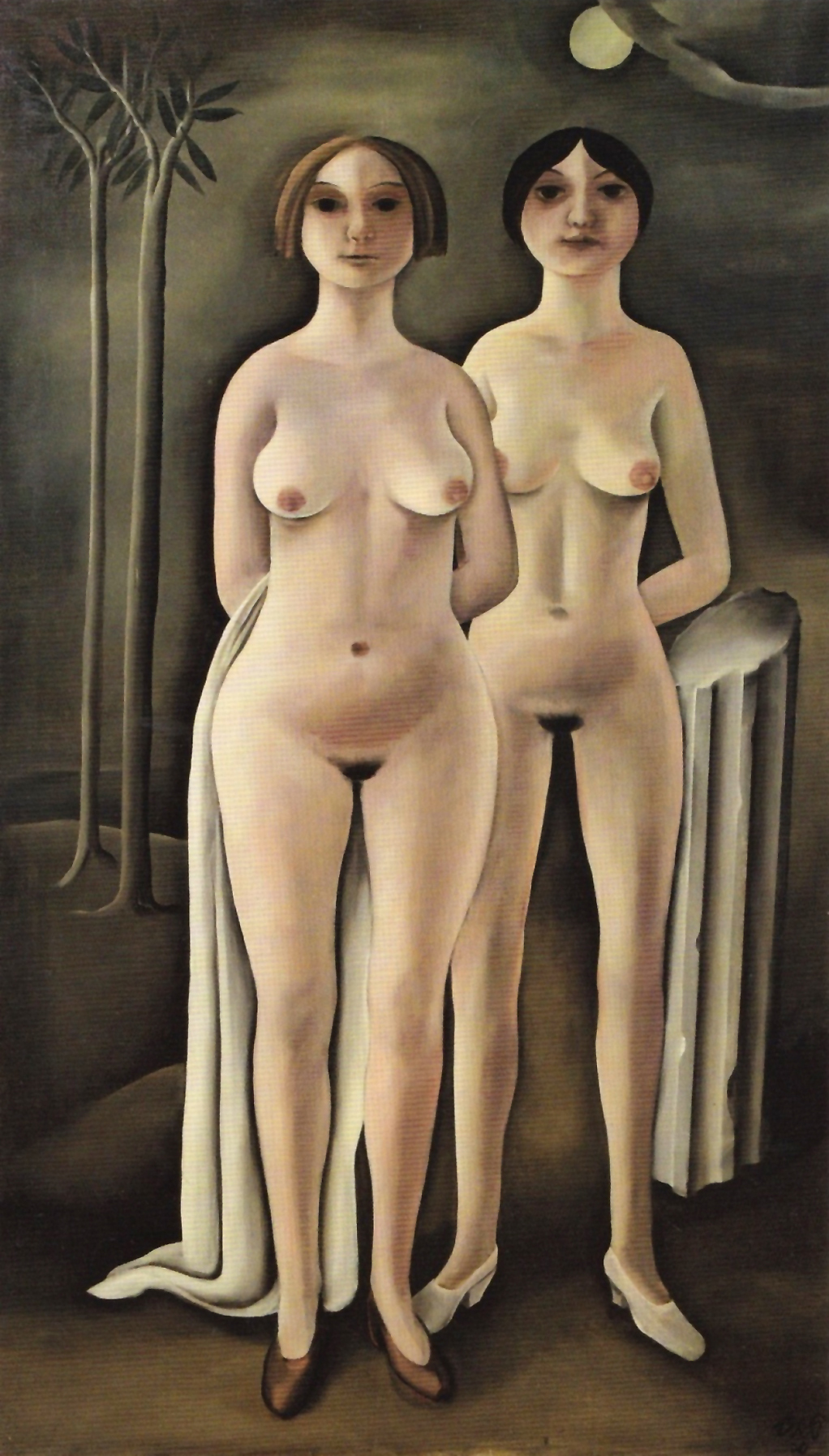
Otto Rudolf Schatz (Austrian, 1900-1961) Moon Women (Mondfrauen) 1930 Oil paint on canvas 1915 x 1110 mm The George Economou Collection On short term loan
Otto Rudolf Schatz (Austrian, 1900-1961)
Otto Rudolf Schatz was born on January 18, 1900, the son of a post office family in Vienna. From 1915 to 1918 Schatz studied at the Viennese Art Academy under Oskar Strnad and Anton von Kenner. In 1918 his studies were interrupted by military service in the Second World War although he graduated in 1919. During this time the artist’s chosen medium was wood. From 1920 he worked with the painter Max Hevesi who exhibited Schatz’s paintings and woodcuts. Otto Rudolf Schatz also published books with the art critic Arthur Roessler including The Gothic Mood.
In 1923 Schatz became friends with the Viennese gallery owner Otto Kallir who became one of his most important patrons. Kallir continuously presented Schatz’s works in the Neue Galerie. In the same year the Austrian collector Fritz Karpfen published Austrian Art featuring Schatz’s art. The artist’s book of twelve woodcuts was published with a foreword by the art historian Erica Tietze-Conrat. The painter also traveled to Venice in 1923.
In 1924 he had his first collective exhibition in the Neue Galerie. In 1925 Schatz exhibited in the Neue Galerie together with Anton Faistauer, Franz Probst, and Marianne Seeland. In the same year he became a member of the Austrian artists’ association Kunstschau and he provided eight original woodcuts for the publication of a fairytale book Im Satansbruch by Ernst Preczang.
In 1927 Schatz contributed woodcuts to the volume The New Town by the Berlin Büchergilde Gutenberg. From 1928 to 1938 he was a valued member in the Hagenbund in Vienna. In 1929 he produced several illustrations for The Stromverlag among others and for Stefan Zweig’s Fantastic Night and H. G. Wells The Invisible. In 1936 he participated in a collective exhibition with Georg Ehrlich in the Neue Galerie. In 1936 to 1937 Schatz traveled through the United States as well as visited the World Exhibition in Paris. His paintings were seen in exhibition of his New York, in the Neue Galerie, and in the Hagenbund. The artists provided illustrations for the Büchergilde Gutenberg edition of Upton Sinclair’s Co-op.
When the National Socialists gained power in 1938 Schatz was forbidden to work. In 1938 he lived with his Jewish wife Valerie Wittal in Brno and in 1944 in Prague where he painted landscape miniatures. In 1944 Schatz was imprisoned in the Klettendorf labour camp and then transferred to the Graditz and Bistritz concentration camps. In 1946 Schatz returned to Vienna where he was promoted by the cultural politician, city counsellor, and writer Viktor Matejka. In 1946 he became a member of the Vienna Secession. In 1947 Schatz received the prize of the city of Vienna for graphics. In the same year eighteen woodcuts were created for Peter Rosegger’s Jakob der Letzte. In 1949 Scatz’s watercolour series Das war der Prater was published in book form. In 1951 Schatz won the competition for the design of the Vienna Westbahnhof. On April 26, 1961 Otto Rudolf Schatz died of lung cancer in Vienna.
As a graphic artist and painter Otto Rudolf Schatz occupies a leading position in the Austrian inter-war period. His multi-faceted work which moves between Expressionism and New Objectivity, was characterised by a social-critical attitude that gives his work historical significance. The artist’s works are now found in numerous collections including the Belvedere in Vienna, the Vienna Museum, and the Hans Schmid Private Foundation.
Anonymous text. “Biography,” on the Otto Rudolf Schatz website Nd [Online] Cited 23/06/2019
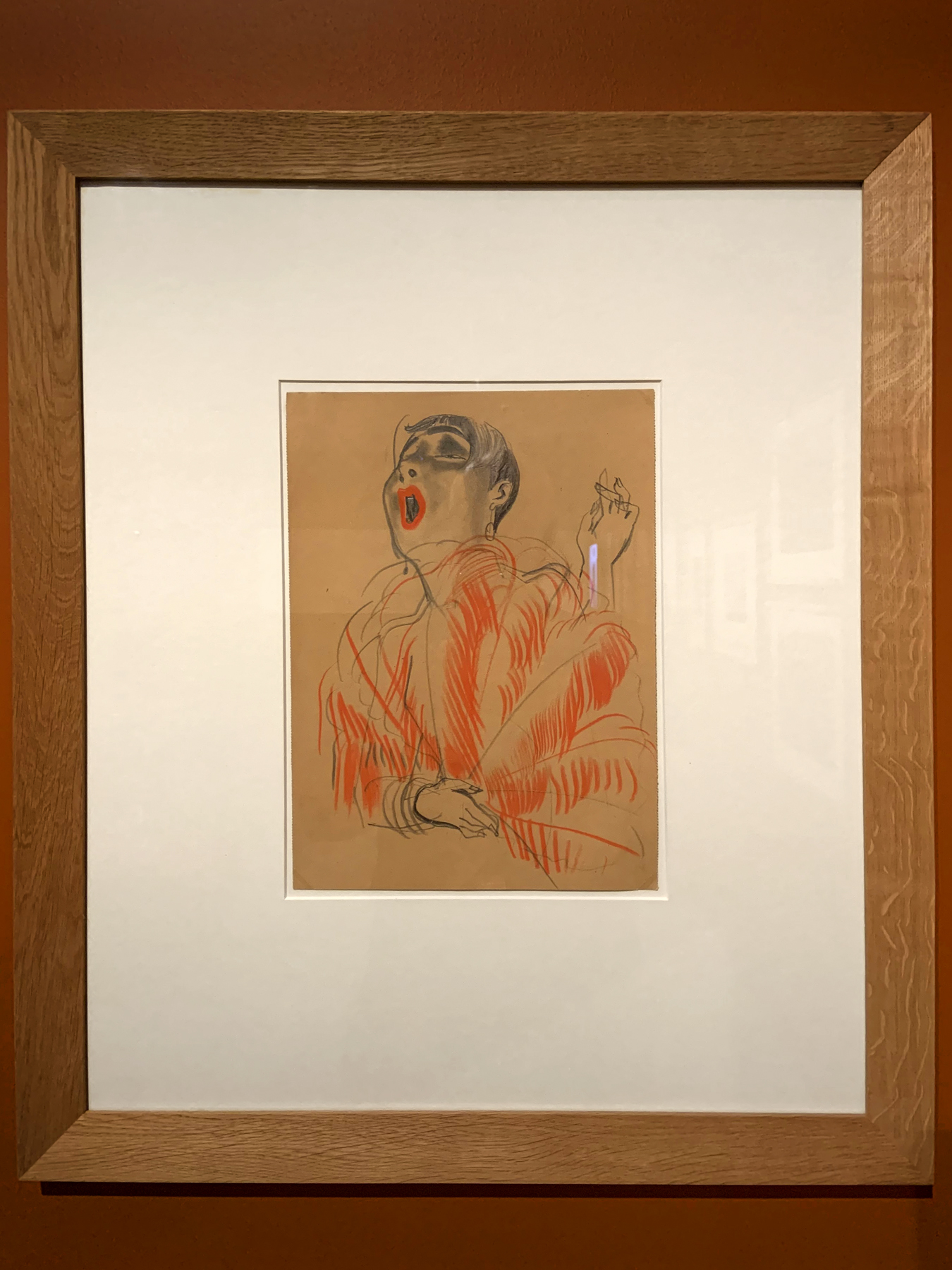
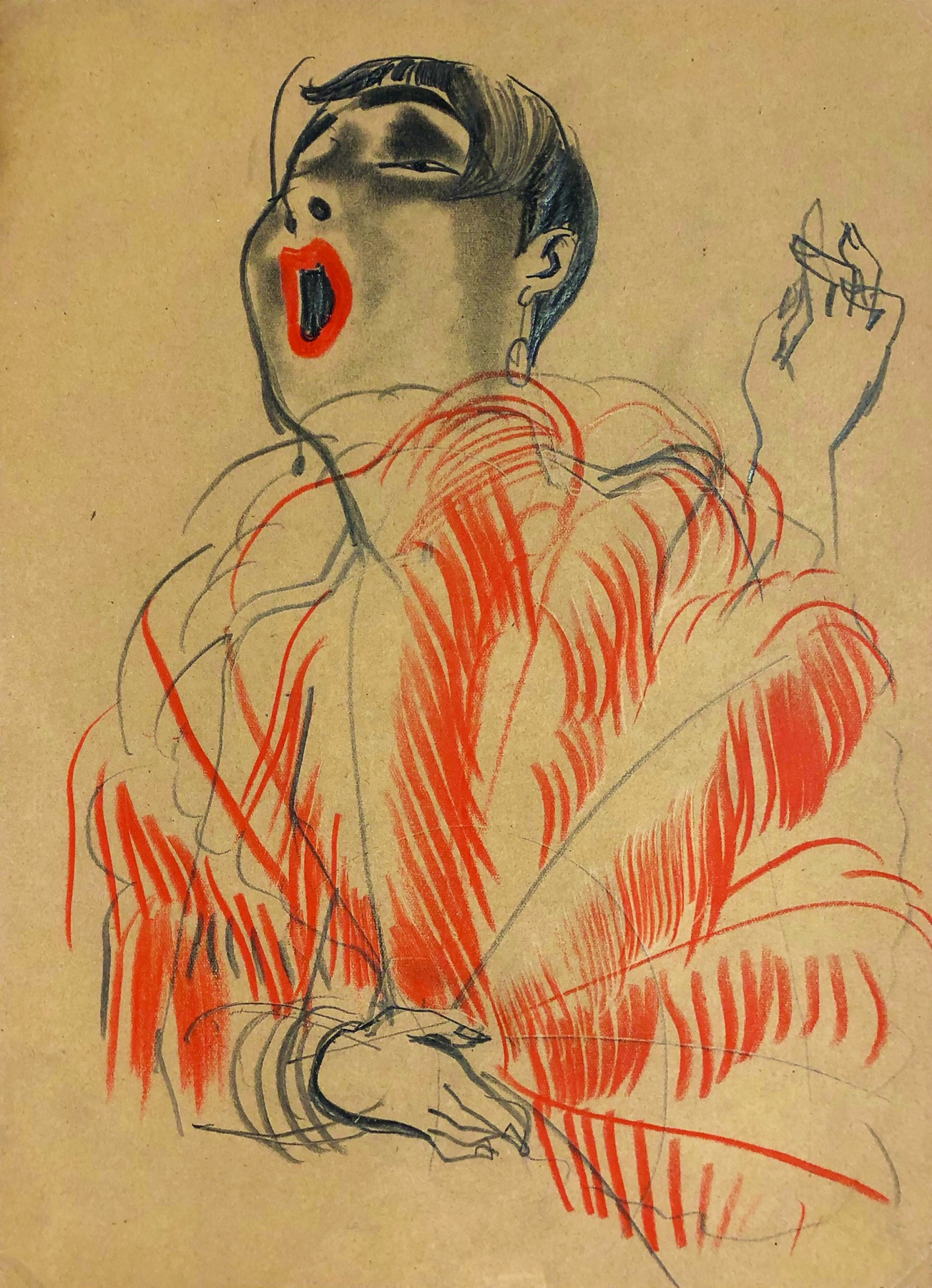
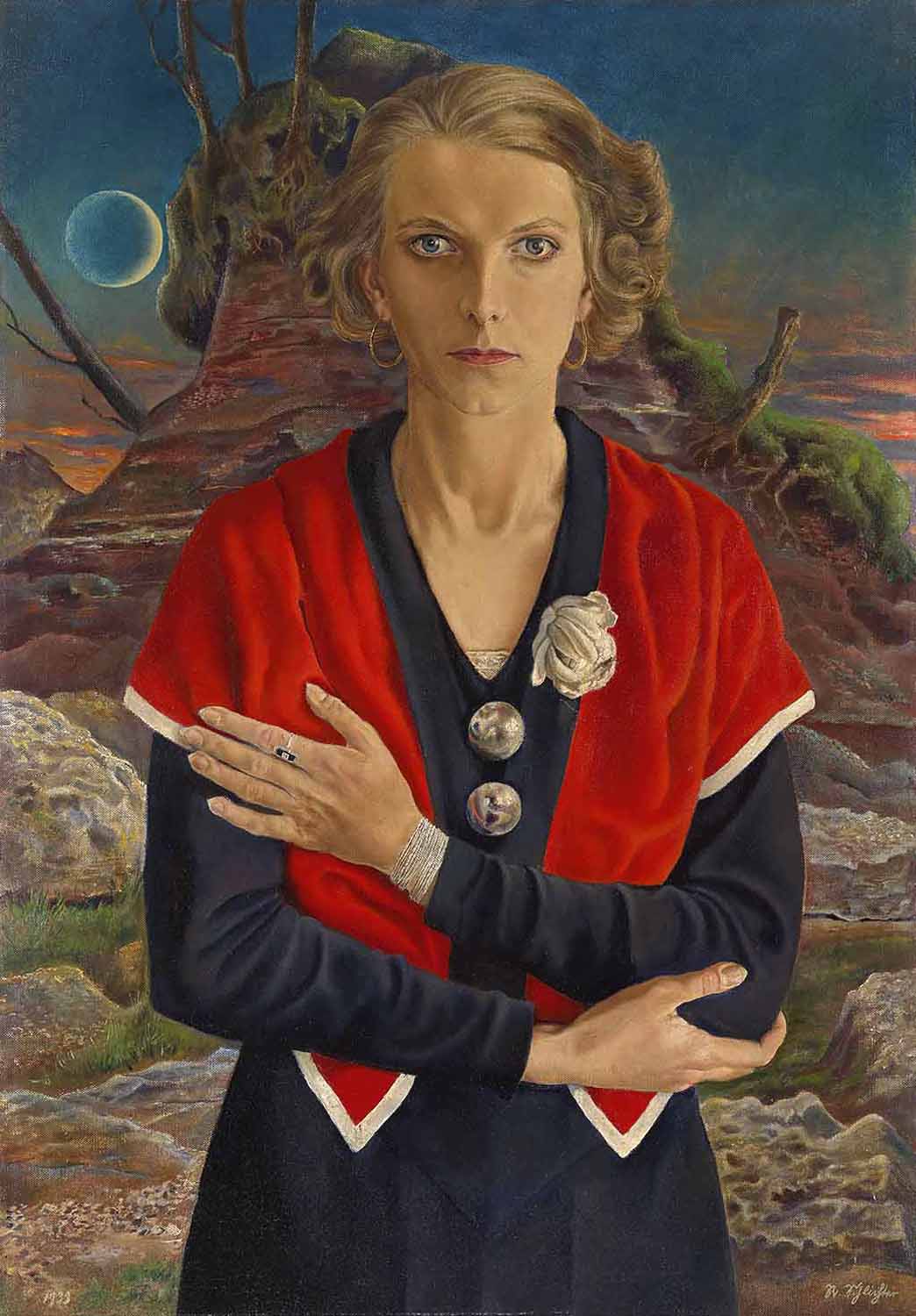
Rudolf Schlichter (German, 1890-1955) Lady with Red Scarf (Speedy with the Moon) (Frauenportrait (Speedy)) 1933 The George Economou Collection On short term loan
Rudolf Schlichter (German, 1890-1955)
Rudolf Schlichter (or Rudolph Schlichter) (December 6, 1890 – May 3, 1955) was a German artist and one of the most important representatives of the Neue Sachlichkeit (New Objectivity) movement.
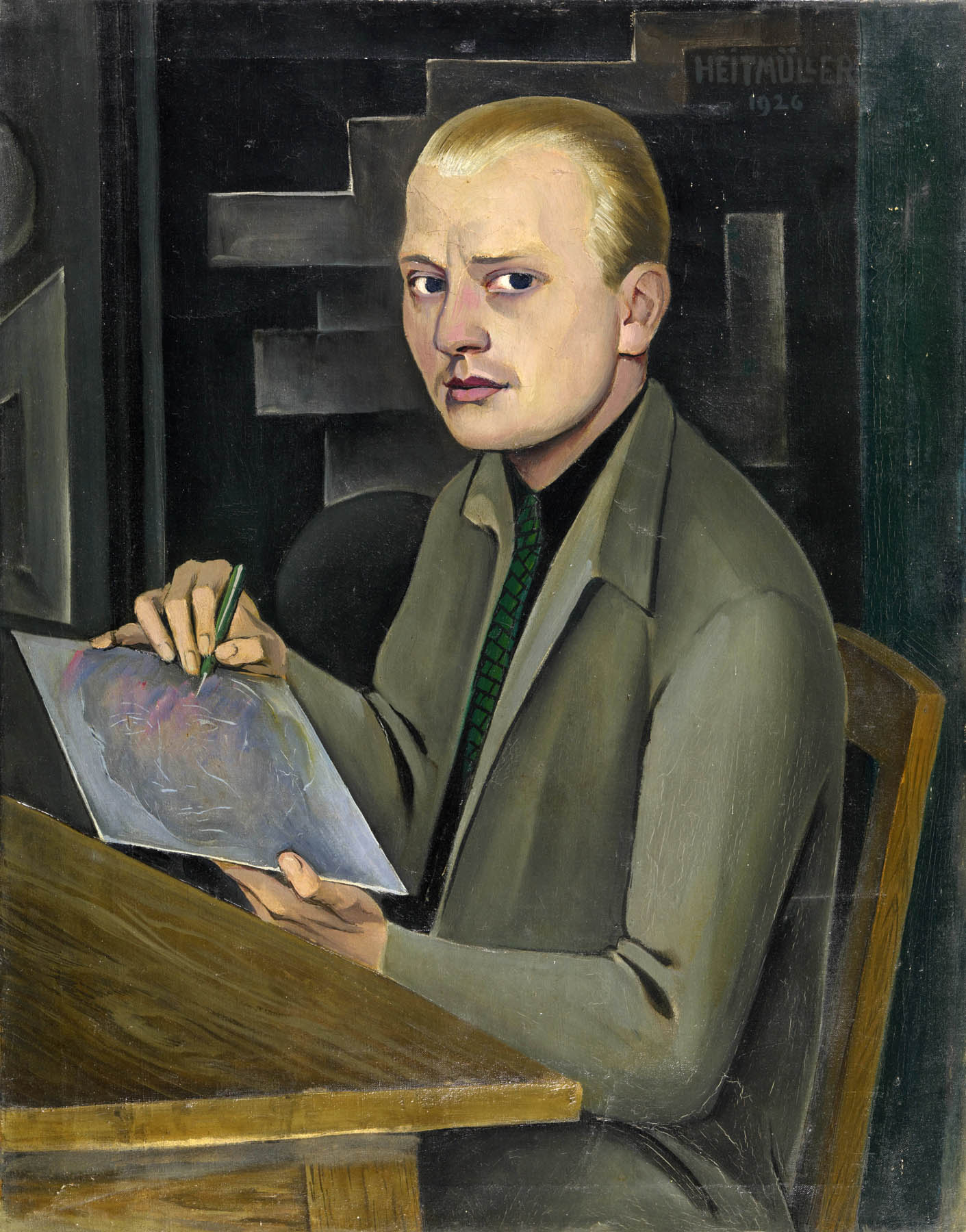
Schlichter was born in Calw, Württemberg. After an apprenticeship as an enamel painter at a Pforzheim factory he attended the School of Arts and Crafts in Stuttgart. He subsequently studied under Hans Thoma and Wilhelm Trübner at the Academy in Karlsruhe. Called for military service in World War I, he carried out a hunger strike to secure early release, and in 1919 he moved to Berlin where he joined the Communist Party of Germany and the “November” group. He took part in a Dada fair in 1920 and also worked as an illustrator for several periodicals.
A major work from this period is his Dada Roof Studio, a watercolour showing an assortment of figures on an urban rooftop. Around a table sit a woman and two men in top hats. One of the men has a prosthetic hand and the other, also missing a hand, appears on closer scrutiny to be mannequin. Two other figures in gas masks may also be mannequins. A child holds a pail and a woman wearing high button shoes (for which Schlichter displayed a marked fetish) stands on a pedestal, gesturing inexplicably.
In 1925 Schlichter participated in the “Neue Sachlichkeit” exhibit at the Mannheim Kunsthalle. His work from this period is realistic, a good example being the Portrait of Margot (1924) now in the Berlin Märkisches Museum. It depicts a prostitute who often modelled for Schlichter, standing on a deserted street and holding a cigarette.
When Adolf Hitler took power, bringing to an end the Weimar period, his activities were greatly curtailed. In 1935 he returned to Stuttgart, and four years later to Munich. In 1937 his works were seized as degenerate art, and in 1939 the Nazi authorities banned him from exhibiting. His studio was destroyed by Allied bombs in 1942.
At the war’s end, Schlichter resumed exhibiting works. His works from this period were surrealistic in character. He died in Munich in 1955.
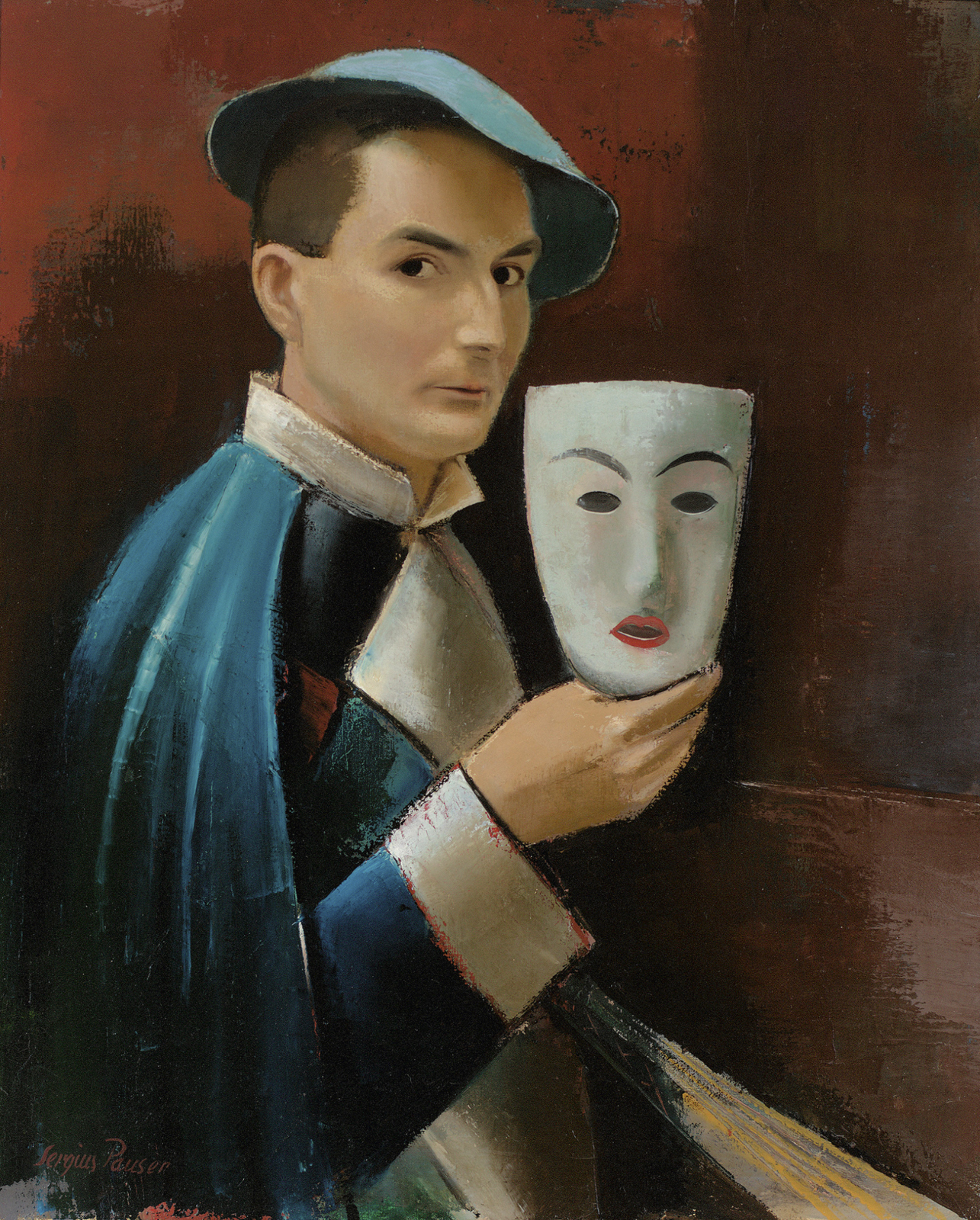
Sergius Pauser, who was born in Vienna on 28 December 1896, represents the prototype of this generation of artists. As a painter, he enjoyed the recognition of his contemporaries and as a much sought-after artist who was able to earn his living with his paintings. He was never a revolutionary but rather a “gentleman of the Viennese order”, who sought to capture moods and atmosphere in his paintings. The writer Thomas Bernhard (1931-1989) wrote of Pauser: “Sergius Pauser uttered thoughts about people – Adalbert Stifter, for example – that I have never heard before or since; he succeeded in revealing the most concealed corners of poetic sensitivity; he was a tender and vigilant diviner on the landscape of world literature, a philosopher and an artist through and through.” And yet a painter like Sergius Pauser is barely known today; only a few of his works hang in Austrian galleries and many of his paintings cannot be traced due to the emigration of their owners.
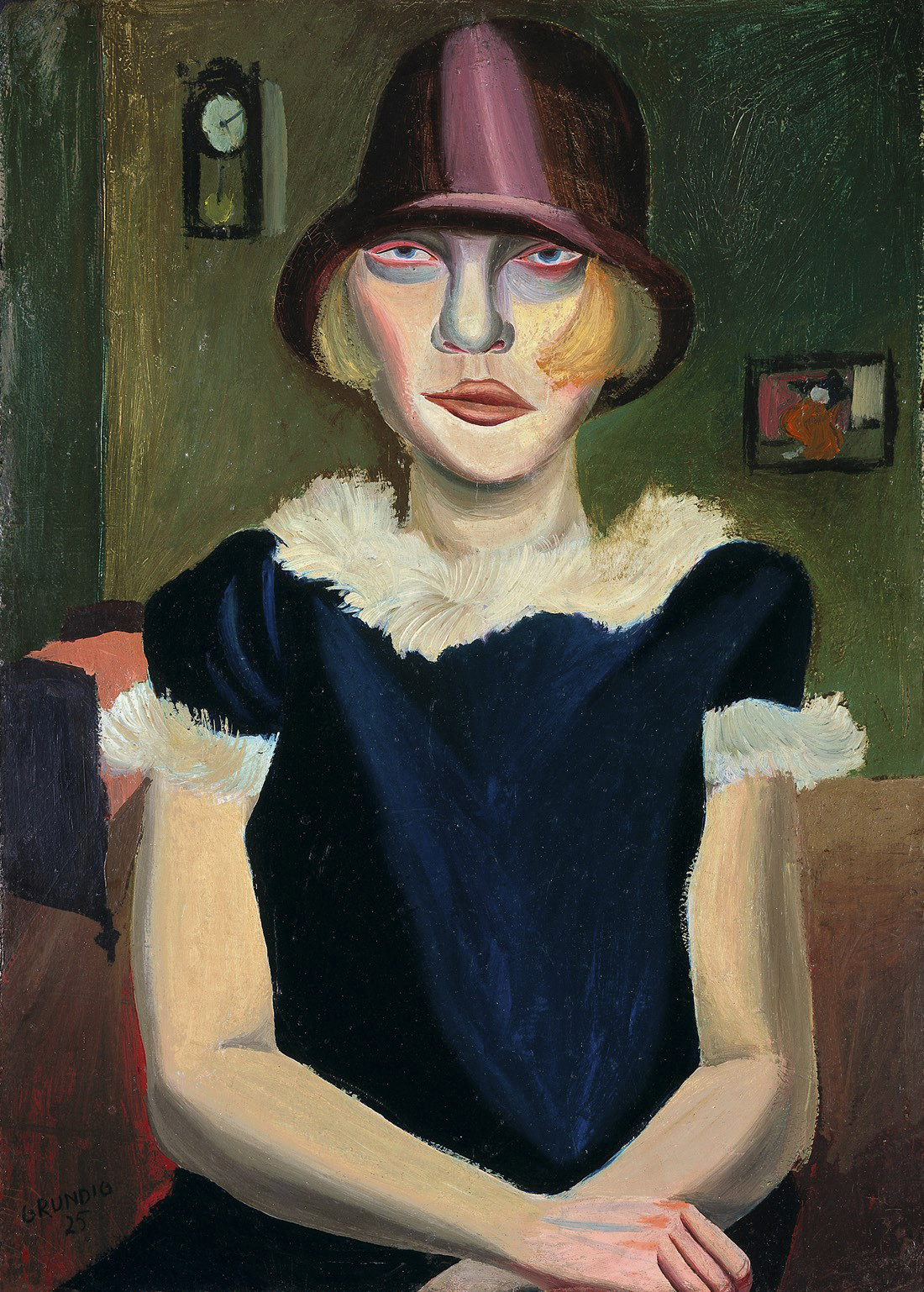
Hans Grundig (February 19, 1901 – September 11, 1958) was a German painter and graphic artist associated with the New Objectivity movement.
He was born in Dresden and, after an apprenticeship as an interior decorator, studied in 1920–1921 at the Dresden School of Arts and Crafts. He then studied at the Dresden Academy from 1922 to 1923. During the 1920s his paintings, primarily portraits of working-class subjects, were influenced by the work of Otto Dix. Like his friend Gert Heinrich Wollheim, he often depicted himself in a theatrical manner, as in his Self-Portrait during the Carnival Season (1930).
He had his first solo exhibition in 1930 at the Dresden gallery of Józef Sandel. He made his first etchings in 1933.
Politically anti-fascist, he joined the German Communist Party in 1926, and was a founding member of the arts organisation Assoziation revolutionärer bildender Künstler in Dresden in 1929.
Following the fall of the Weimar Republic, Grundig was declared a degenerate artist by the Nazis, who included his works in the defamatory Degenerate Art exhibition in Munich in 1937. He expressed his antagonism toward the regime in paintings such as The Thousand Year Reich (1936). Forbidden to practice his profession, he was arrested twice – briefly in 1936, and again in 1938, after which he was interned in Sachsenhausen concentration camp from 1940 to 1944.
In 1945 he went to Moscow, where he attended an anti-fascist school. Returning to Berlin in 1946, he became a professor of painting at the Dresden Academy of Fine Arts. In 1957 he published his autobiography, Zwischen Karneval und Aschermittwoch (“Between Shrovetide carnival and Ash Wednesday”). He was awarded the Heinrich Mann Prize in Berlin in 1958, the year of his death.
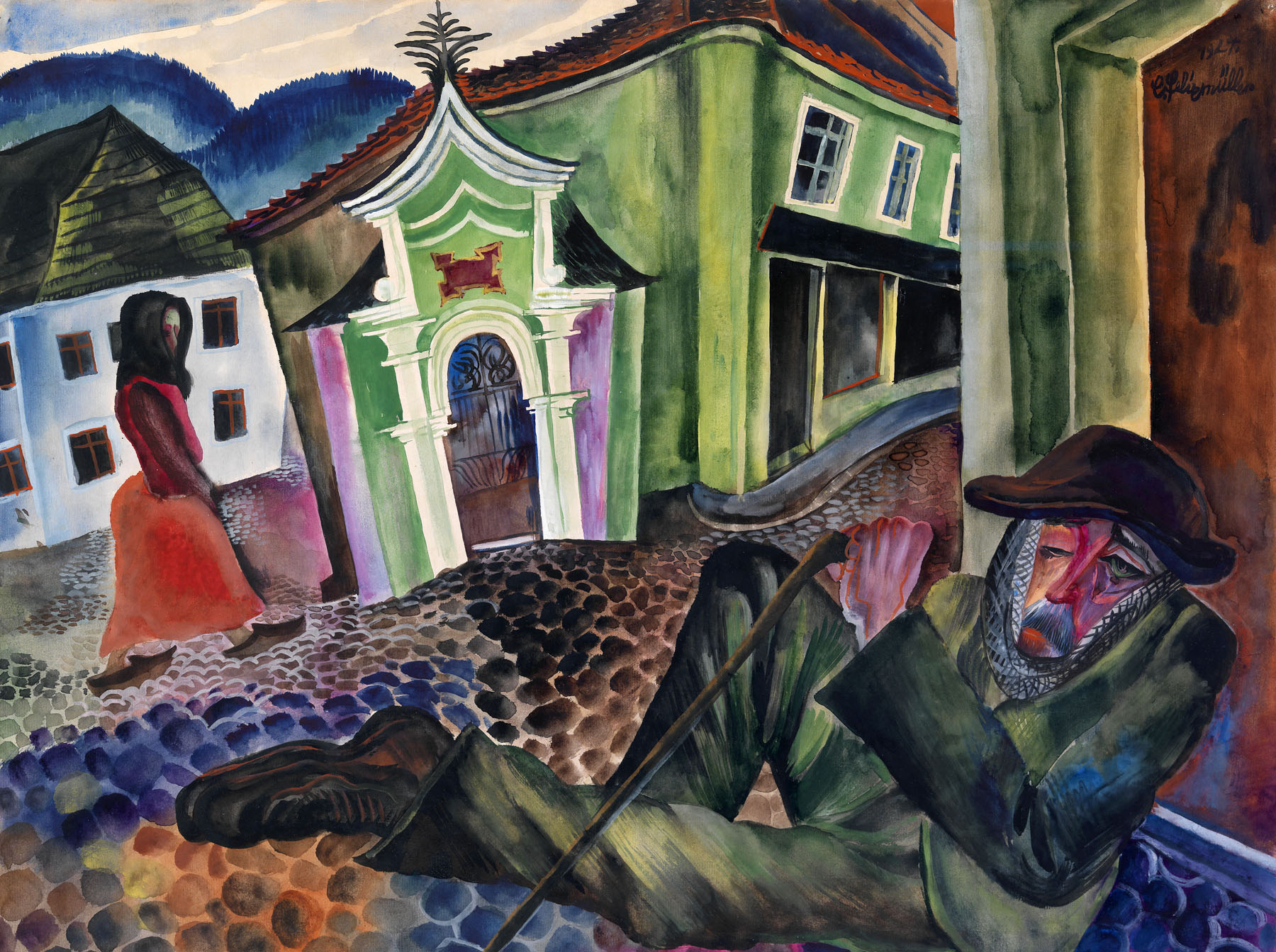
Conrad Felixmüller (21 May 1897 – 24 March 1977) was a German expressionist painter and printmaker. Born in Dresden as Conrad Felix Müller, he chose Felixmüller as his nom d’artiste.
He attended drawing classes at the Dresden School of Arts and Crafts in 1911-1912 before studying under Carl Bantzer at the Dresden Academy of Art. In 1917 he performed military service as a medical orderly, and became a founding member of the Dresden Expressionist group Expressionistische Arbeitsgemeinschaft Dresden. He achieved his earliest success as a printmaker. Felixmüller was a member of the Communist Party of Germany from 1918 to 1922. He published many woodcuts and drawings in left-wing magazines, and remained a prolific printmaker throughout his career. He was a close friend of the composer Clemens Braun of whom he produced a number of portraits and a woodcut depicting him on his deathbed.
He was one of the youngest members of the New Objectivity movement. His paintings often deal with the social realities of Germany’s Weimar Republic. He was mentor to the German Expressionist Otto Dix.
Felixmüller’s work became more objective and restrained after the mid-1920s. He wrote in 1929:
“It has become increasingly clear to me that the only necessary goal is to depict the direct, simple life which one has lived oneself, also involving the design of colour as painting – in the manner in which it was cultivated by the Old Masters for centuries, until Impressionism and Expressionism, infected by the technical and industrial delusions of grandeur, rejected every affinity for tradition, ability and results, committing harakiri.”
In the 1930s, many of his works were seized as degenerate art by the Nazis, and destroyed. In 1944, his studio in Berlin was bombed, resulting in more losses of his works. From 1949 to 1962 Felixmüller taught at the University of Halle. He died in the Berlin suburb of Zehlendorf.
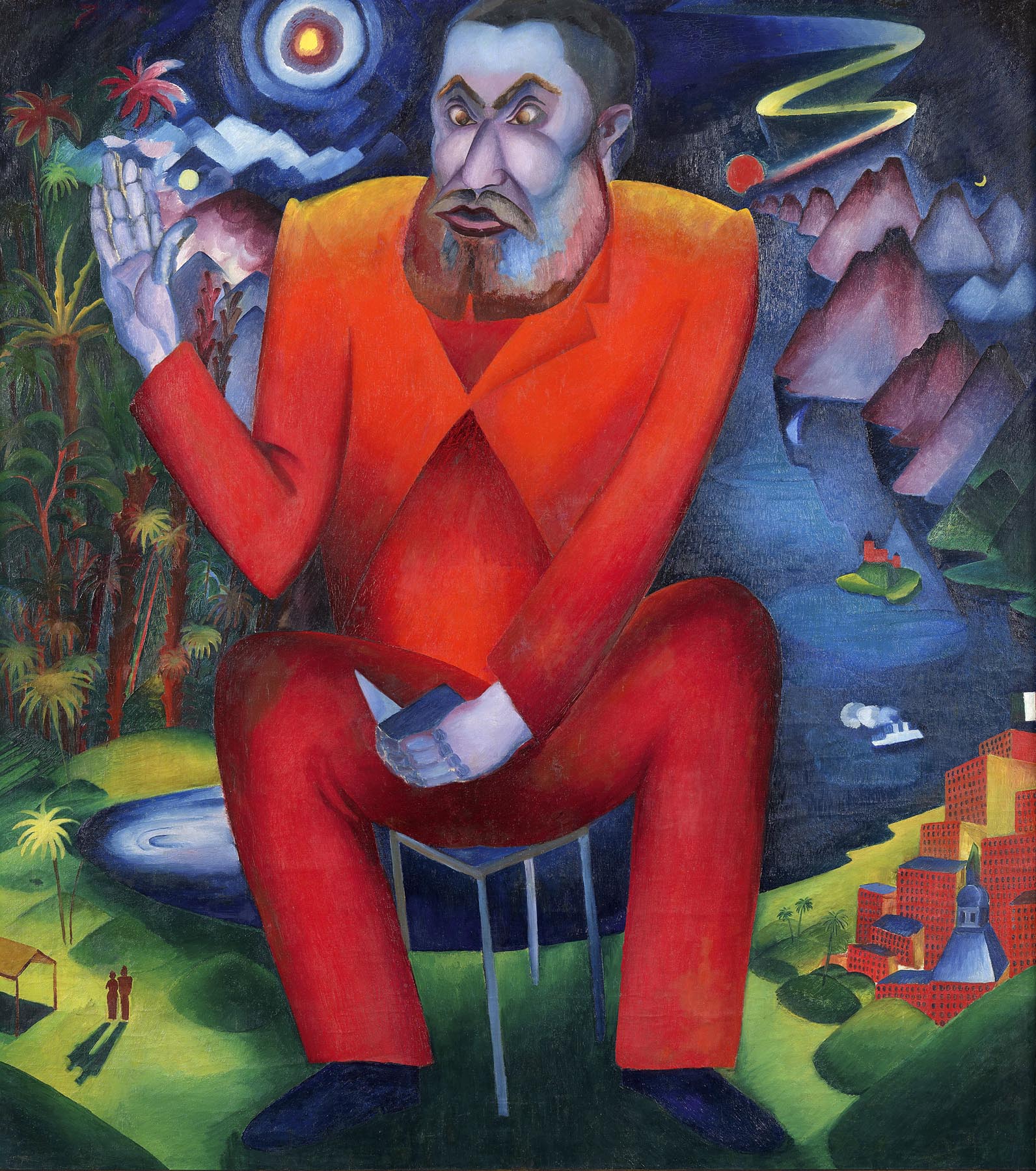
Heinrich Maria Davringhausen (German, 1894-1970) The Poet Däubler (Der Dichter Däubler) 1917 Oil paint on canvas 1810 x 1603 mm The George Economou Collection On short term loan
Heinrich Maria Davringhausen (German, 1894-1970)
Heinrich Maria Davringhausen (21 October 1894 – 13 December 1970) was a German painter associated with the New Objectivity.
Davringhausen was born in Aachen. Mostly self-taught as a painter, he began as a sculptor, studying briefly at the Düsseldorf Academy of Arts before participating in a group exhibition at Alfred Flechtheim’s gallery in 1914. He also traveled to Ascona with his friend the painter Carlo Mense that year. At this early stage his paintings were influenced by the expressionists, especially August Macke.
Exempted from military service in World War I, he lived in Berlin from 1915 to 1918, forming friendships with George Grosz and John Heartfield. In 1919 he had a solo exhibition at Hans Goltz’ Galerie Neue Kunst in Munich, and exhibited in the first “Young Rhineland” exhibition in Düsseldorf. Davringhausen became a member of the “Novembergruppe” and gained some prominence among the artists representing a new tendency in German art of the postwar period. He was asked to take part in the Neue Sachlichkeit (New Objectivity) exhibition in Mannheim which brought together many leading “post-expressionist” artists, including Grosz, Otto Dix, Max Beckmann, Alexander Kanoldt and Georg Schrimpf.
Davringhausen went into exile with the fall of the Weimar republic in 1933, first going to Majorca, then to France. In Germany approximately 200 of his works were removed from public museums by the Nazis on the grounds that they were degenerate art. Prohibited from exhibiting, Davringhausen was interned in Cagnes-sur-Mer but fled to Côte D’Azur. In 1945 however he returned to Cagnes-sur-Mer, a suburb of Nice, where he remained for the rest of his life. He worked as an abstract painter under the name Henri Davring until his death in Nice in 1970.
Perhaps the best-known work from Davringhausen’s New Objectivity period is Der Schieber (The Black-Marketeer), a Magic realist painting of 1920-1921, which is in the Kunstmuseum Düsseldorf im Ehrenhof. Painted in acidulous colours, it depicts a glowering businessman seated at a desk in a modern office suite that foreshortens dramatically behind him. Although Davringhausen rarely presented social criticism in his work, in Der Schieber “the artist created the classic pictorial symbol of the period of inflation that was commencing”.
Much of Davringhausen’s work was deposited in 1989 in the Leopold Hoesch museum in Düren, which has subsequently organised several exhibitions of his pictures, above all those from the later period.
Albert Birkle was born in Charlottenburg, then an independent city and since 1920 part of Berlin. His grandfather on his mother’s side, Gustav Bregenzer, and his father, Carl Birkle, both were painters, originally from Swabia. Albert Birkle was trained as a decorative painter in his father’s firm. From 1918 to 1924, he studied at the Hochschule für die bildenden Künste / College of Fine Arts, a predecessor of today’s Universität der Künste Berlin. Birkle developed a unique style informed by expressionism and New Objectivity / Neue Sachlichkeit. His subjects were lonely, mystic landscapes, typical scenes of Berlin of the 20’s and 30’s, such as scenes from Tiergarten Park, bar scenes etc., character portraits, and religious scenes. In his style of portrait painting he was often compared to Otto Dix and George Grosz.
In 1927, Birkle had his first one man show in Berlin, which turned out to be very successful. He decided to turn down a professorship at the Koenigsberg Acadamy of Arts in order to continue to work independently as an artist and to dedicate himself to assignments in the field of church decoration, where he had become a specialist. As National Socialism was on its way to power, Birkle moved to Salzburg, Austria in 1932. Nevertheless, he represented Germany at the Venice Biennale as late as 1936. In 1937, his artwork was declared to be “entarted”, his works were removed from public collections, and a painting ban was imposed on him.
In 1946, Birkle received Austrian citizenship. In the post-war year, he made a living painting religious frescos for various churches and doing oil paintings. In his final year, he more and more returned back to his Berlin themes of the 20’s and 30’s.
HOLST, Gustav (1874-1934). Autograph music manuscript signed (‘Gustav Holst’), the organ part from A Choral Fantasia, op. 51, Nd (c. 1930-1931)
My mother (87), pianist, teacher (may the great spirit bless her), is selling these very rare Holst manuscripts to raise some money to get new windows in her house.
Christies auction of Valuable Books and Manuscripts in London on July 10, 2019 – Lots 584 and 585
Dr Marcus Bunyan
HOLST, Gustav (1874-1934). Autograph music manuscript signed (‘Gustav Holst’), the organ part from A Choral Fantasia, op. 51, n.d. (c. 1930-1931). Estimate GBP 6,000 – GBP 9,000 (USD 7,518 – USD 11,277)
3 1/4 pages, 298 x 235mm, bifolium, 13 two-stave systems in brown ink on 12-stave paper, autograph annotations and cancellations in pencil and pen throughout.
Gustav Holst and the Poet Laureate. A Choral Fantasia was originally conceived as an organ concerto, but later adapted by Holst into a striking work that incorporated his friend Robert Bridges’ poem Ode to Music. Autograph music manuscripts by Holst are rare at auction: only three have appeared in the last two decades. Described by Holst’s biographer as ‘impressively individual’, A Choral Fantasia features a concertante organ alongside brass, percussion and strings, a chorus and solo soprano. With the 1931 Three Choirs Festival in mind, Holst started work on the piece in 1930; the decision to set a selection of Robert Bridges’ verses from Ode to Music, composed for the Bicentenary Commemoration of Henry Purcell, took A Choral Fantasia in an unusual new direction. Holst conducted the piece himself when it was first performed in Gloucester Cathedral in 1931.
HOLST, Gustav (1874-1934). Annotated printed score, an organ arrangement for the ‘Chaconne’ movement from the First Suite in E-flat for Military Band, Op. 28, inscribed by Holst (‘ND from GH’), Nd (1933)
HOLST, Gustav (1874-1934). Annotated printed score, an organ arrangement for the ‘Chaconne’ movement from the First Suite in E-flat for Military Band, Op. 28, inscribed by Holst (‘ND from GH’), n.d. (1933) Estimate GBP 1,000 – GBP 1,500 (USD 1,253 – USD 1,880)
7 pages, 305 x 240mm, autograph annotations in pencil and red crayon throughout, chiefly additional instructions for organ actions. Printed score for Henry Ley’s arrangement of ‘Chaconne’ for organ, London: Novello and Company, 1933 (leaves detached from wrappers and one another). Paper wrappers.
An organ arrangement from the First Suite for Military Band – a work that helped establish the artistic merit of music composed for band and encourage its critical acceptance – with Holst’s autograph annotations to aid the organist. Holst composed the First Suite for Military band in 1909, though the work did not receive its premiere at the Royal Military School of Music until 1920: on a much smaller scale than his grand composition The Planets, it was nevertheless one of Holst’s works that did achieve public recognition and success, and has been long established in the military band repertory.
HOLST, Gustav (1874-1934). Annotated printed score, an organ arrangement for the ‘Chaconne’ movement from the First Suite in E-flat for Military Band, Op. 28, inscribed by Holst (‘ND from GH’), Nd (1933)
I have been to so many clubs in my life I have lost count!
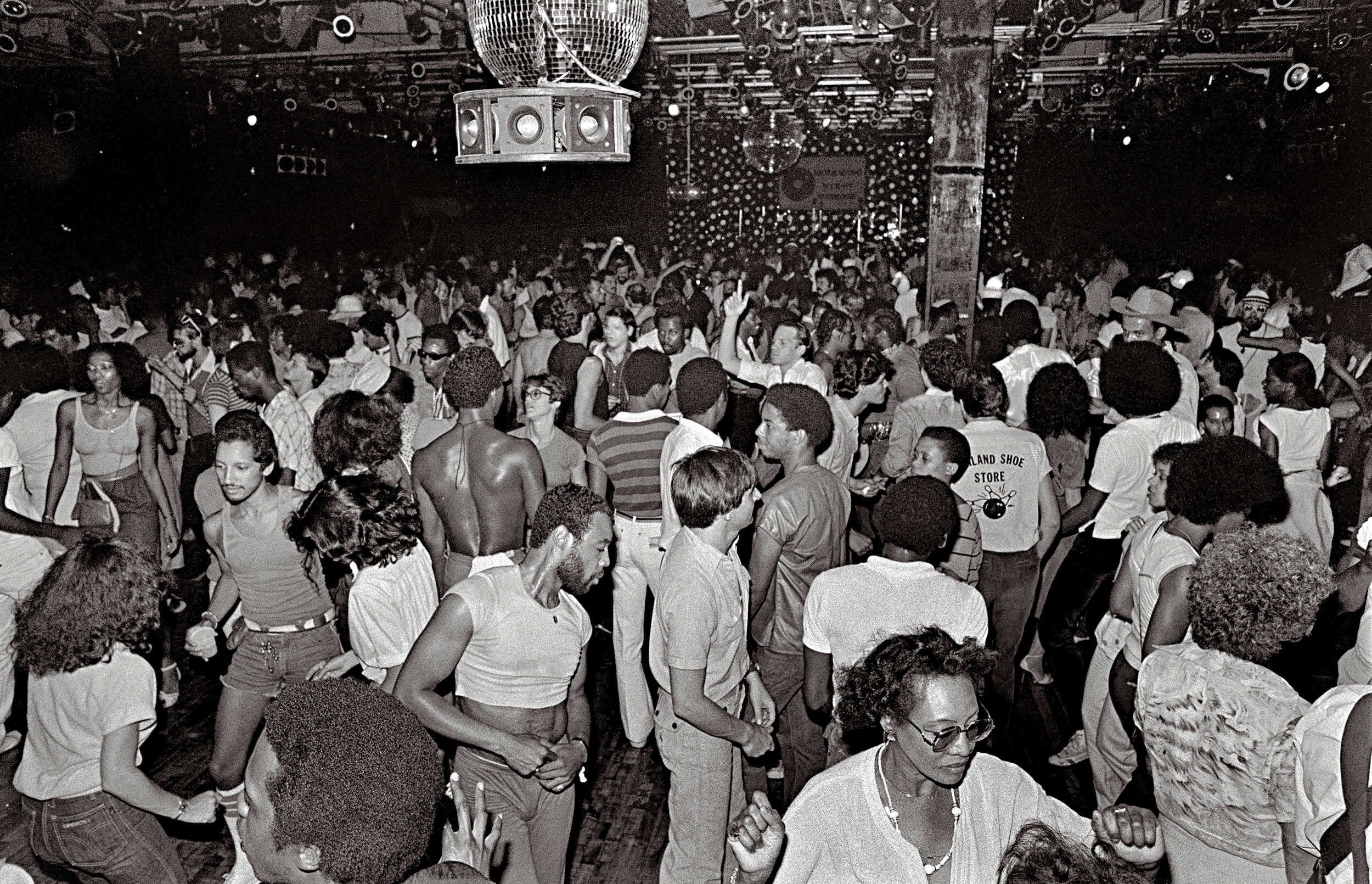
I started going to clubs in 1975 when I came out as a gay man – a year before disco hit, with Sylvester’s You Make Me Feel Mighty Real, the first (gay) superstar of disco. What a star he was. I danced on revolving turntables with lights underneath, just like in the movie Saturday Night Fever, dressed in my army gear for uniform night at Scandals nightclub in Soho, London. Adams club, in Leicester Square, was also a favourite gay nightclub haunt.
I remember dancing to a 17 minute extended version of Donna Summer’s MacArthur Park several times a night at the Pan Club in Luton; and going to Bang on Tottenham Court Road on a Monday and Thursday night to hear the latest releases from the USA. Heaven nightclub (still going), the largest gay nightclub in Europe at the time, was a particular favourite. All around the world, Ibiza, America, Amsterdam, Berlin, etc… I have partied, and still do, in clubs. Night fever for a night owl, one who loves do dance, loves music and life.
After disco came High NRG where we used to dance for hours on the dance floor at Heaven on pure adrenaline, only coming off the dance floor to have a drink of water. New romantics, punk, and soul, techno and trance (my favourite) followed. I am a recovering trance addict. So many memories, so many people, good times and tunes – Black Box, Gloria Gaynor, Barry White, David Bowie, Grace Jones, the list goes on and on.
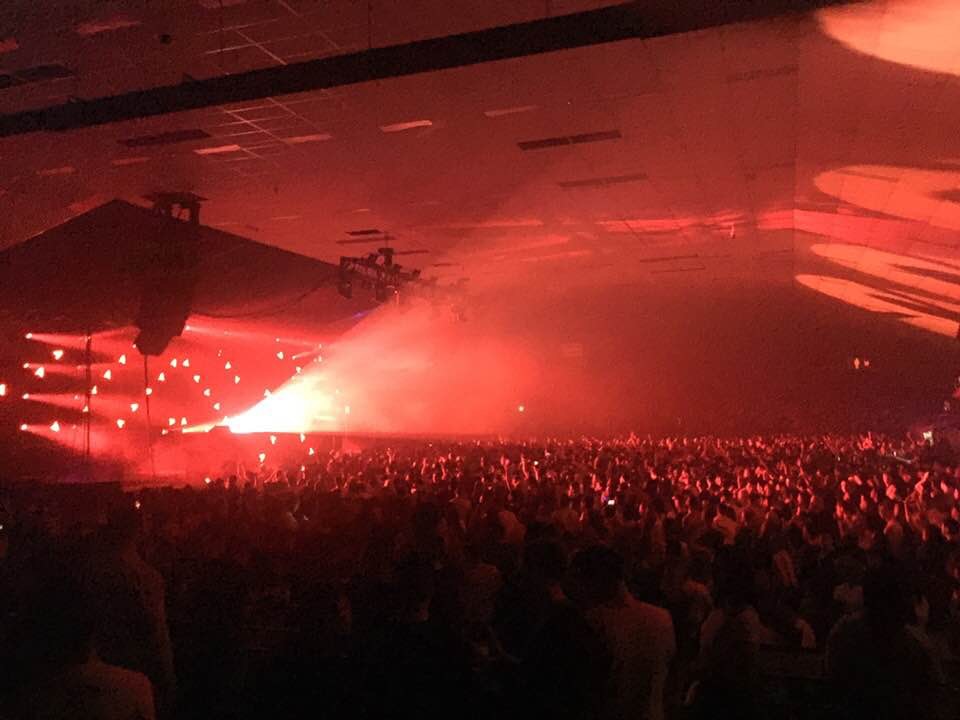
While this posting shows the design of some amazing clubs, and some photographs of the people who inhabited them, what it cannot capture is the atmosphere of a place. The most important thing in any club are… the people; the music; the lighting; and the DJs.
Without all four working together it doesn’t matter how good the design of a club, it will fail. You can have the most minimal lighting but the most electric atmosphere if the vibe is there: a congress of like-minded people who love dance music, who commune together on the dance floor and in the club, all having a good time. The DJ’s orchestrate this secular celebration of spirit. They can take you up, bring you around, twist you inside out. The modern temple of love, light and healing. Party hard, party on.
Dr Marcus Bunyan
Many thankx to the Vitra Design Museum for allowing me to publish the photographs in the posting. Please click on the photographs for a larger version of the image.
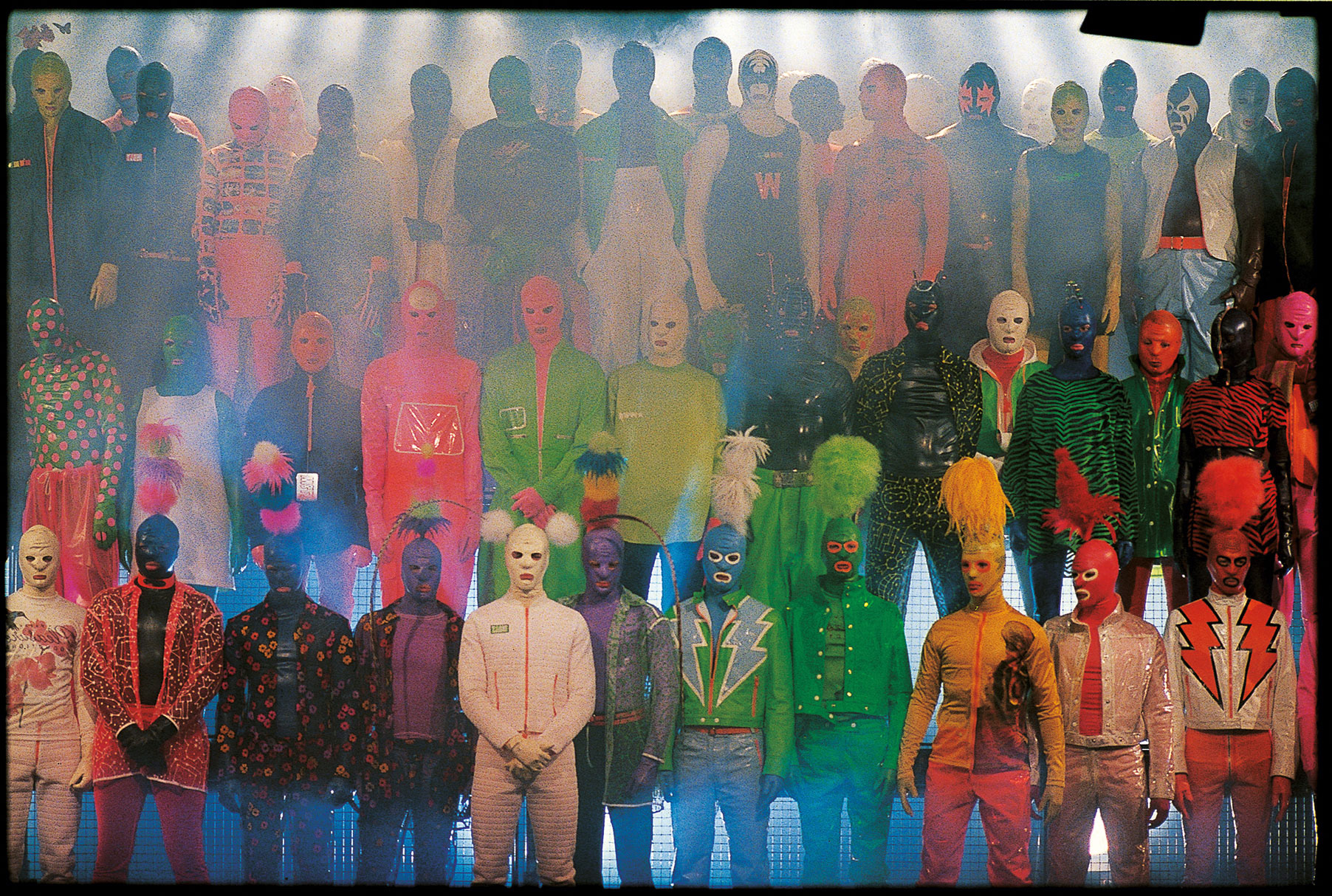
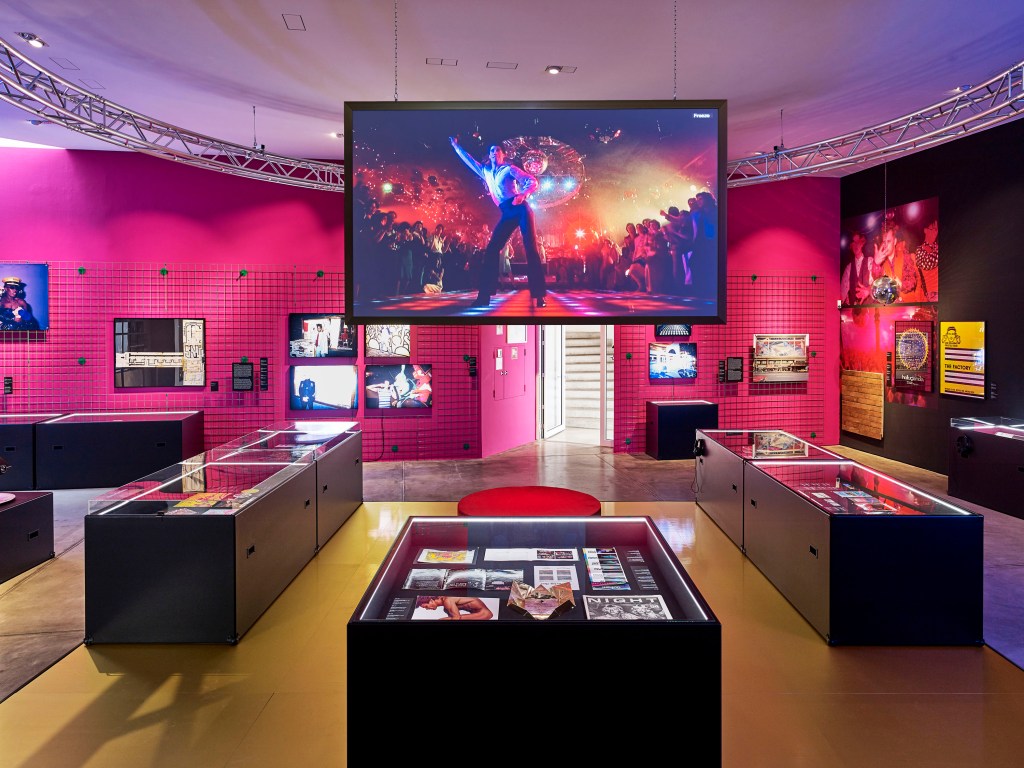
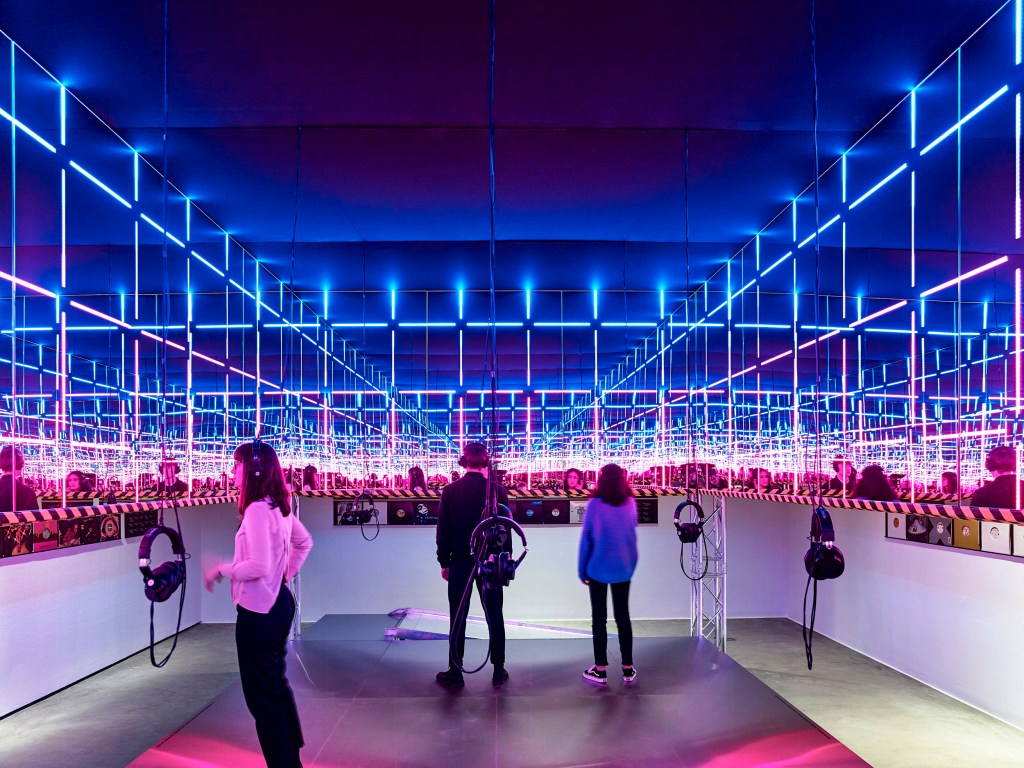
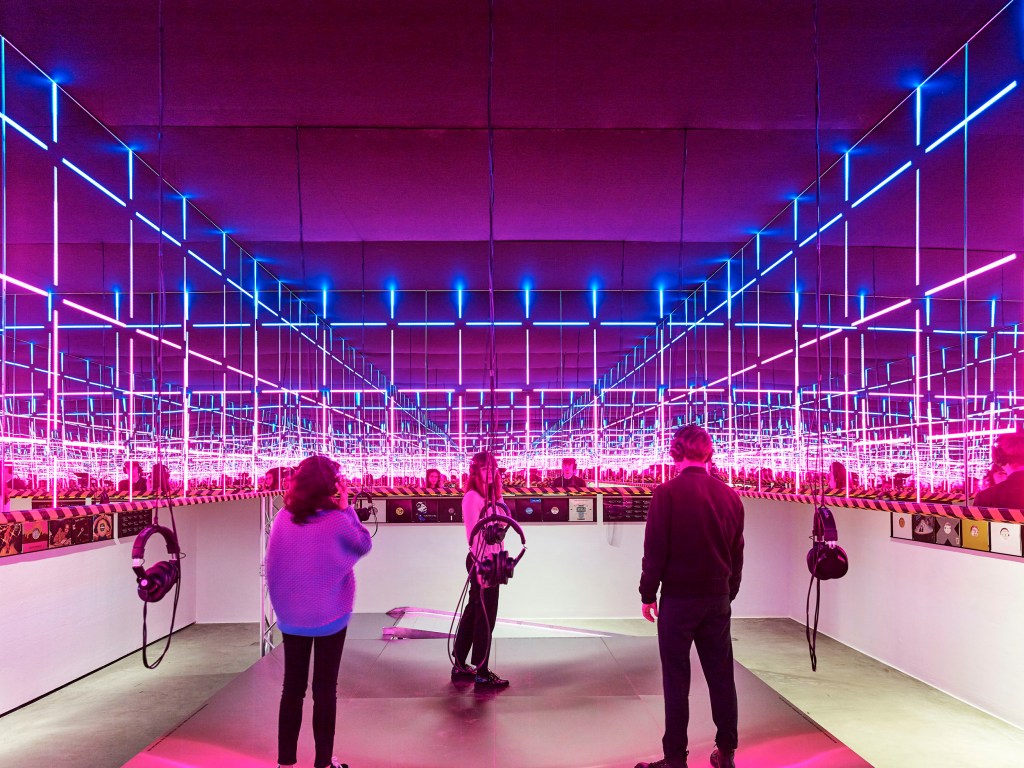
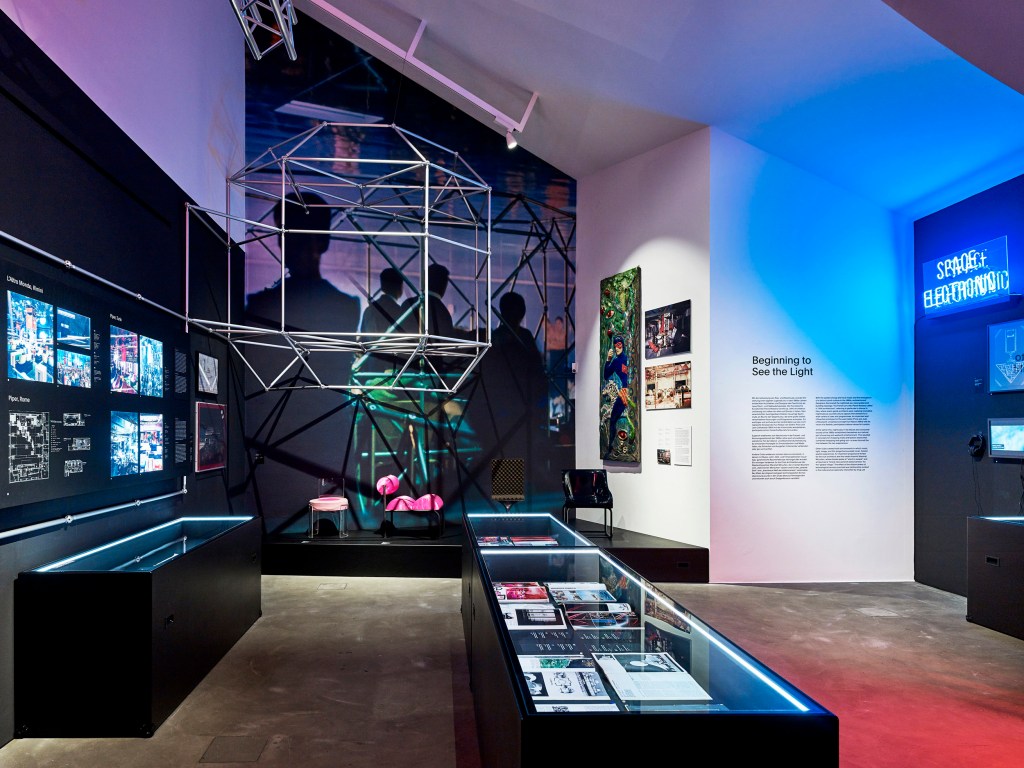
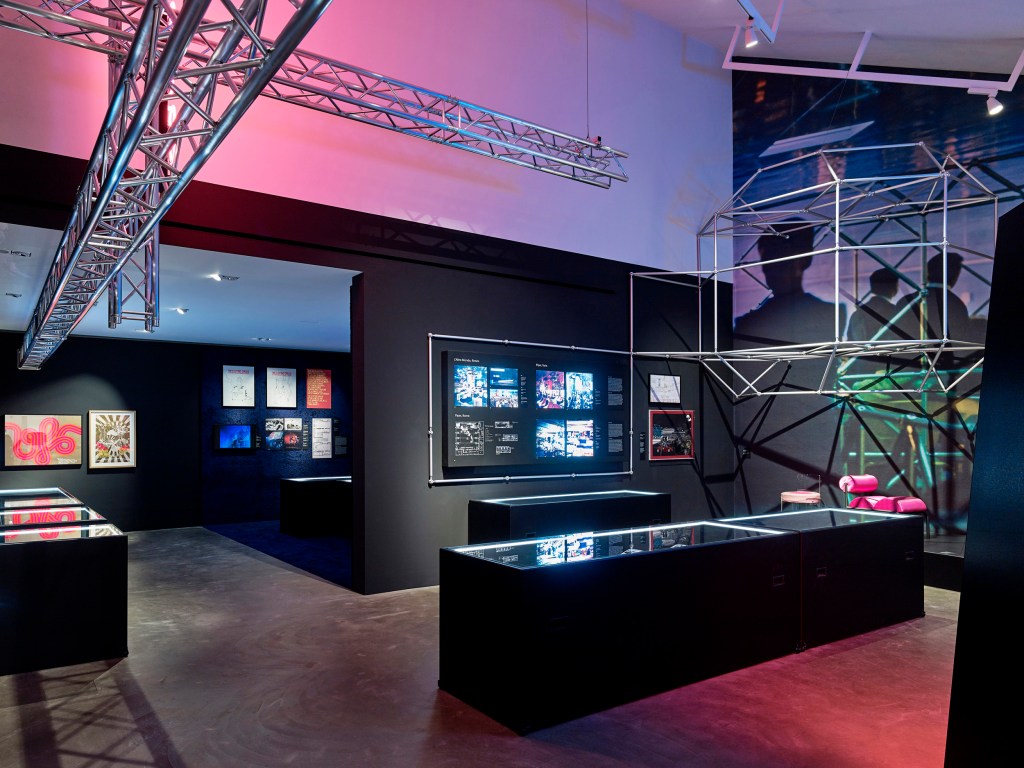
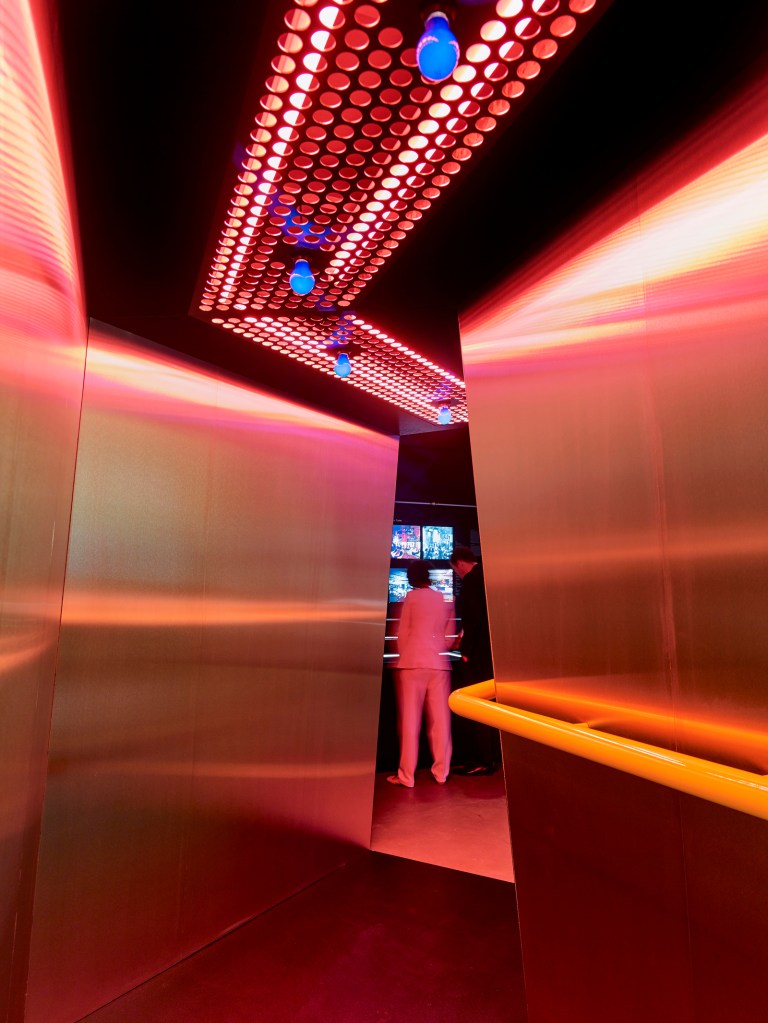
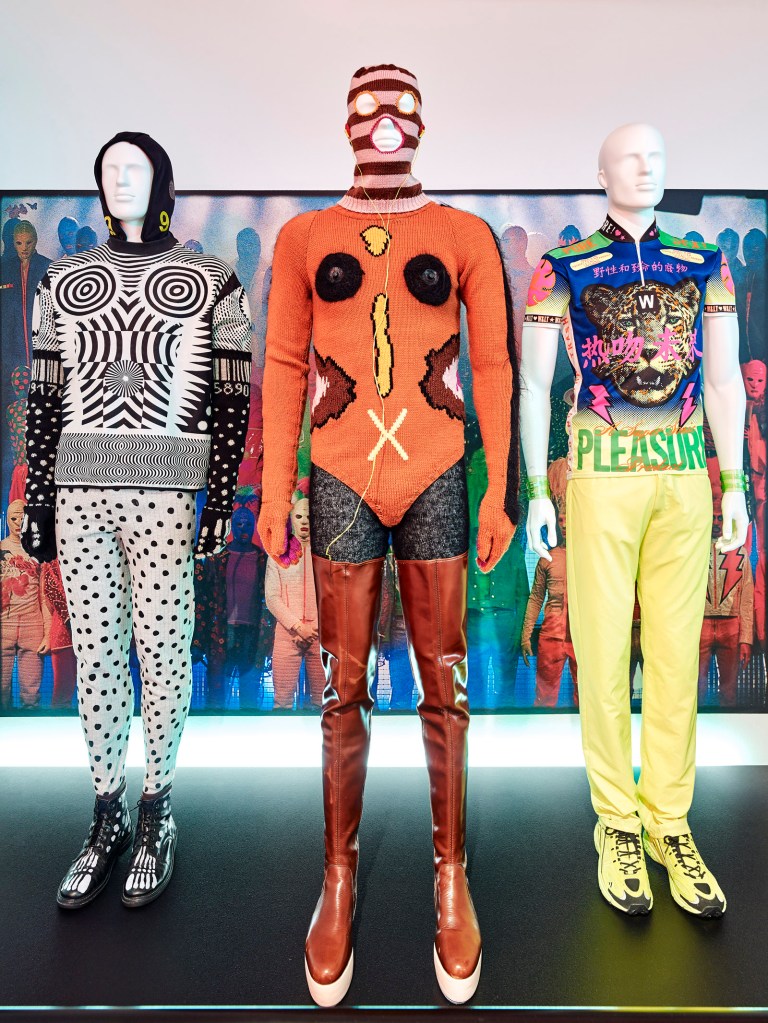
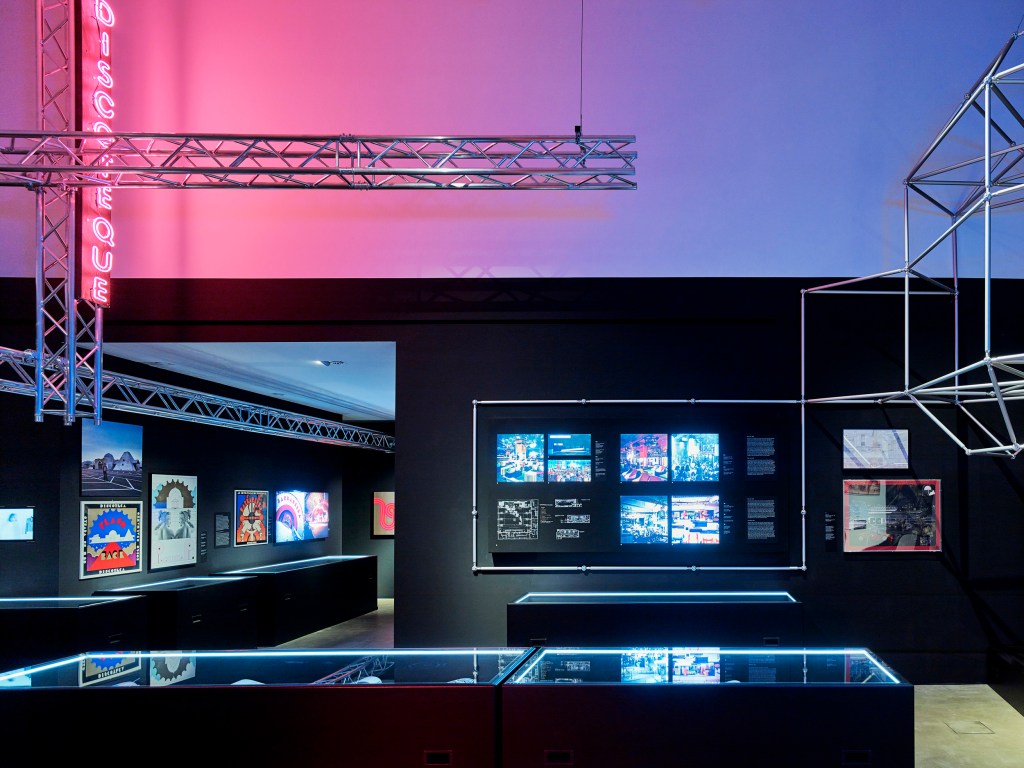
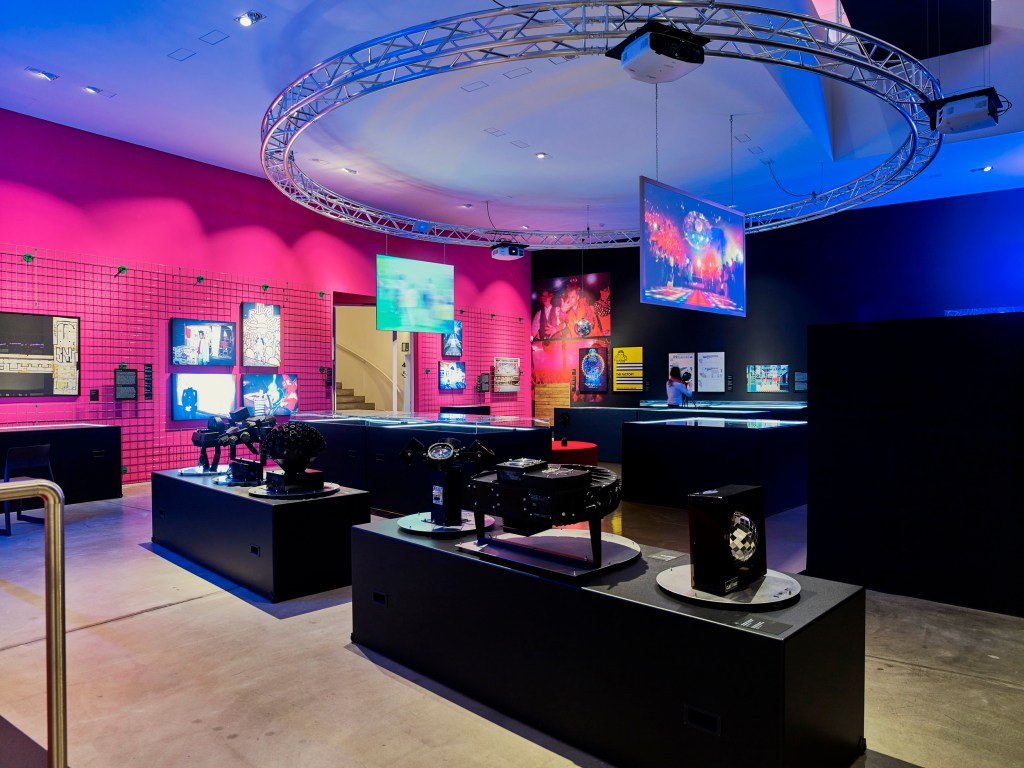
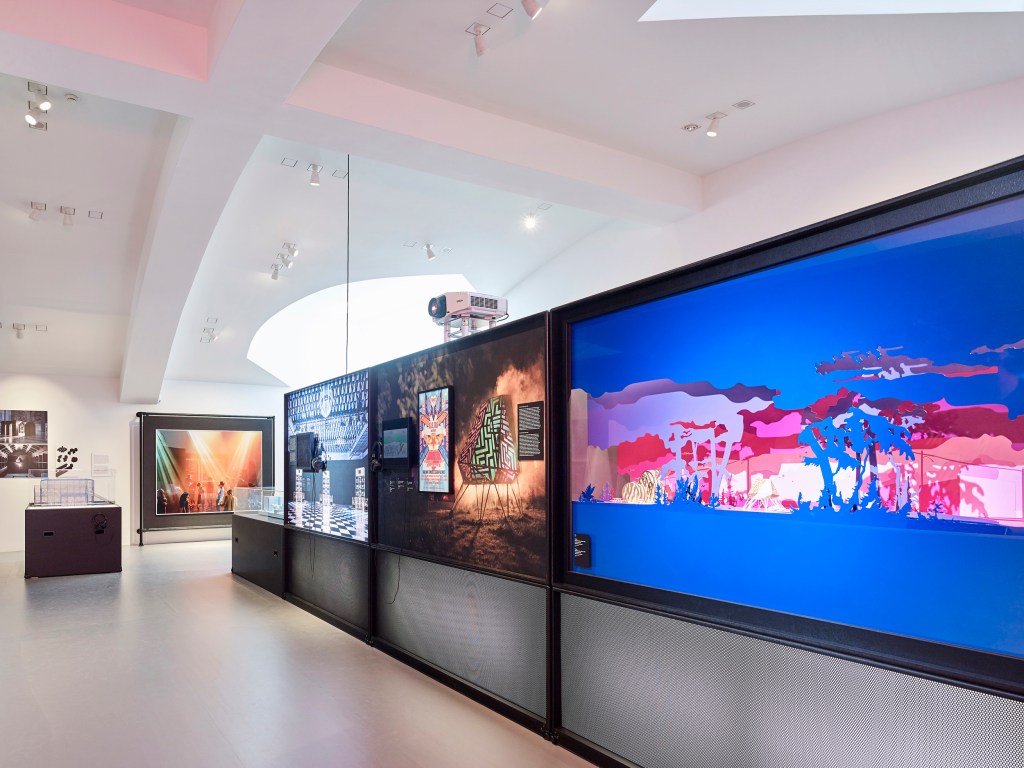
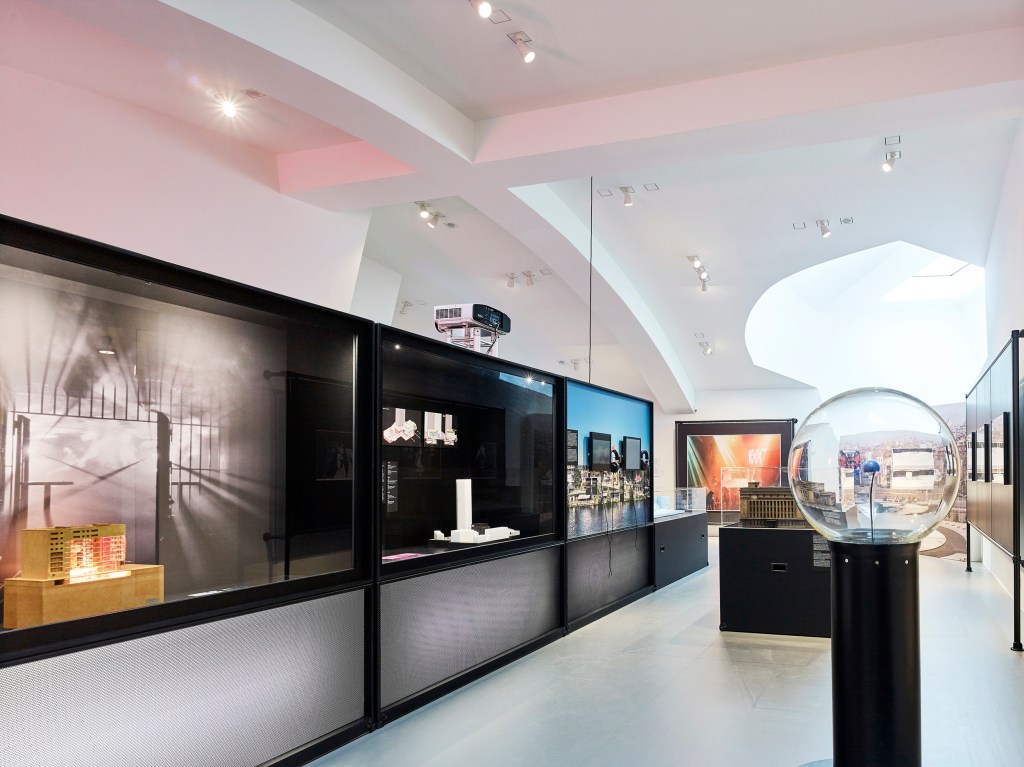
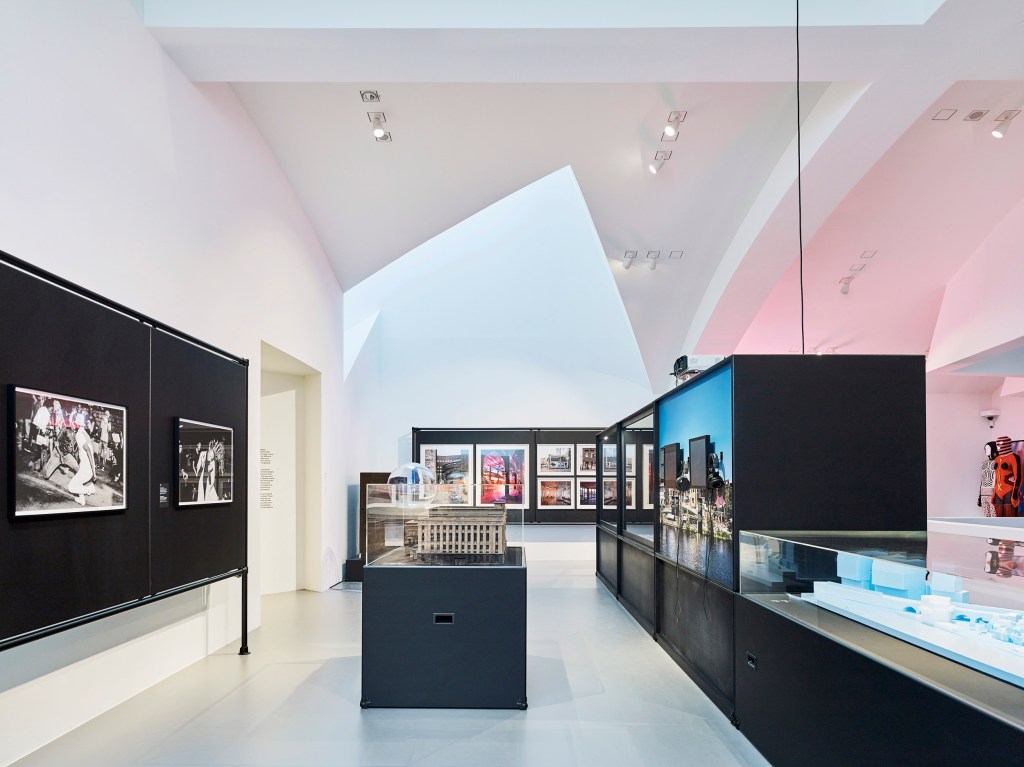
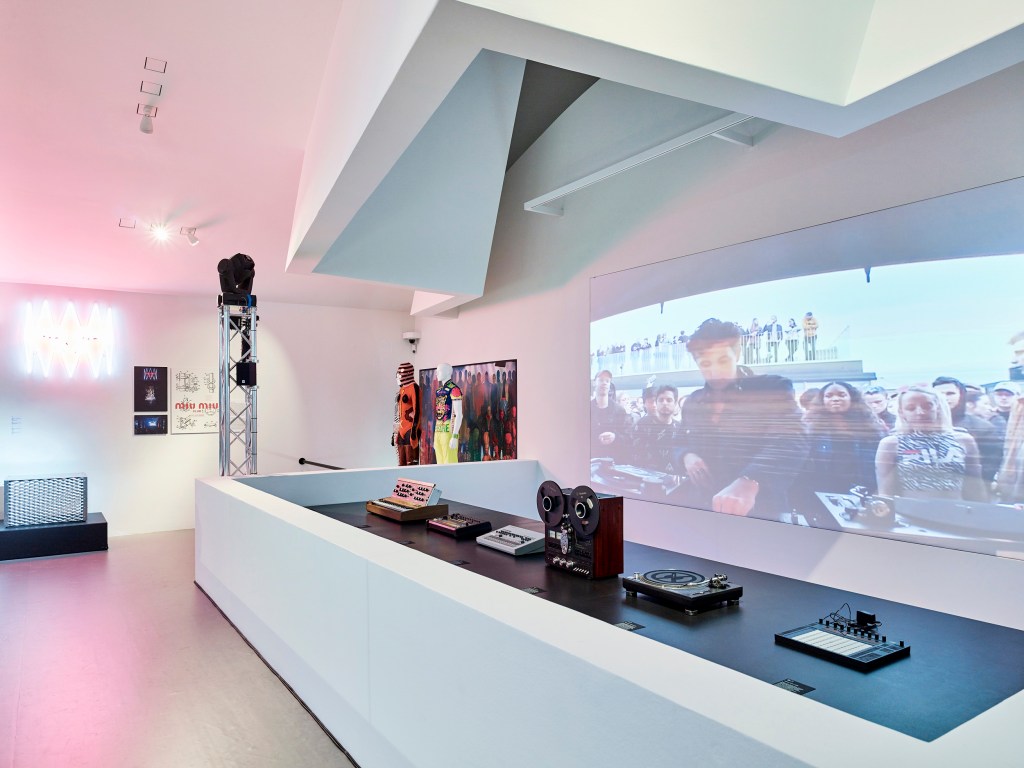
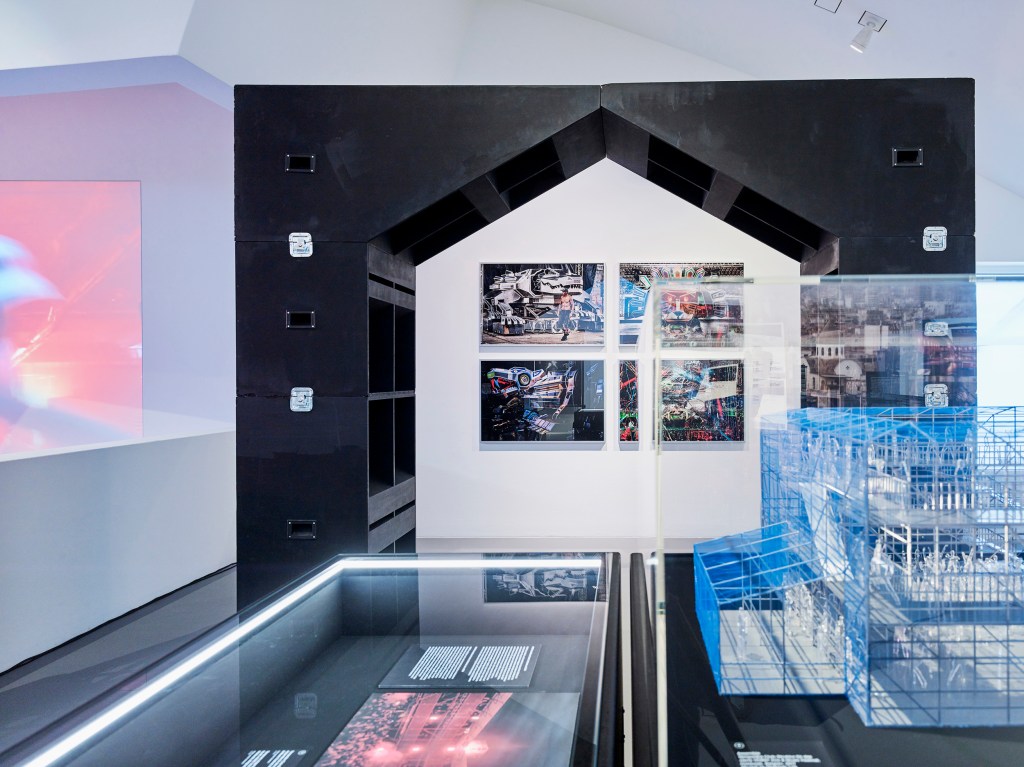
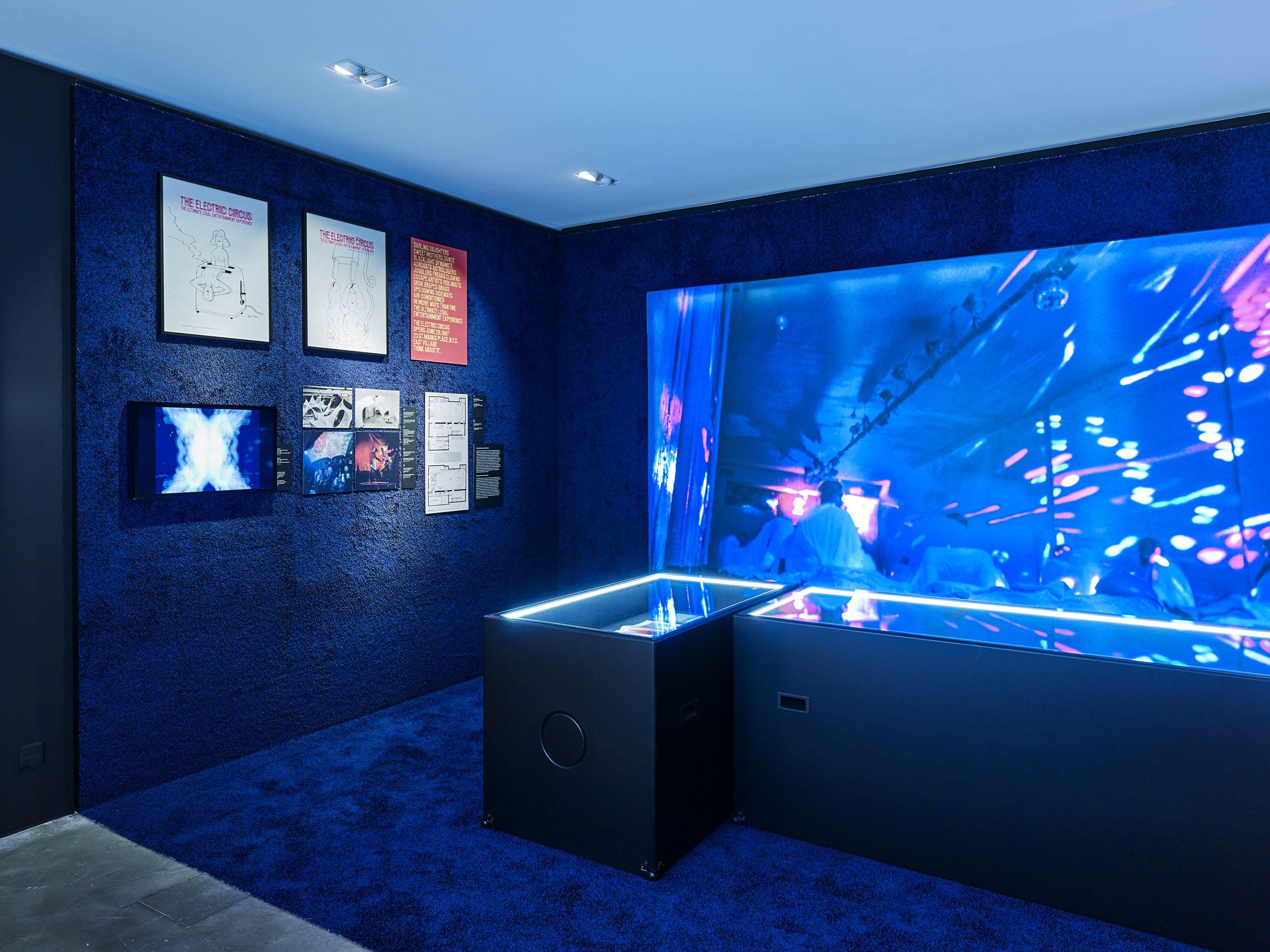
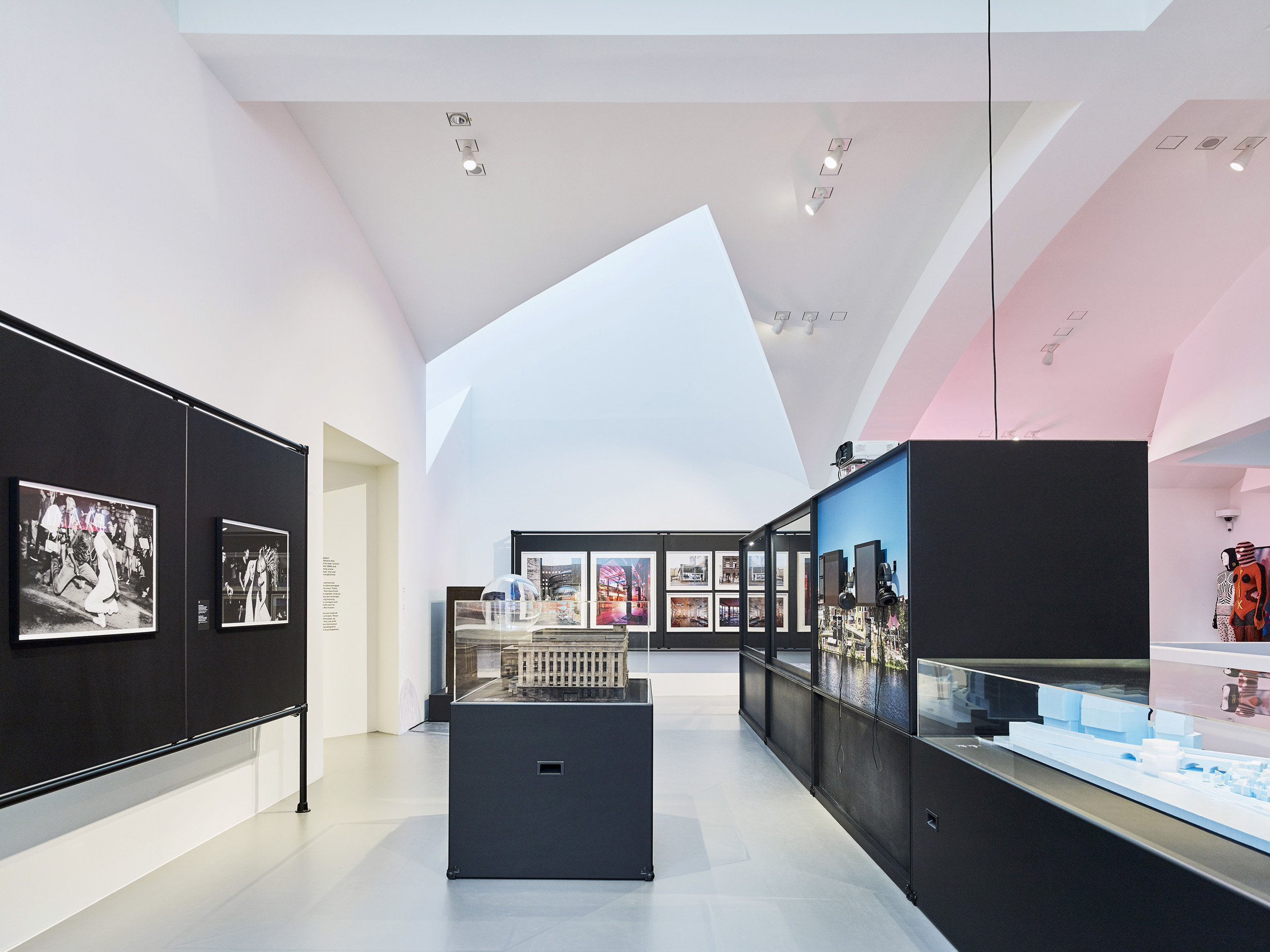
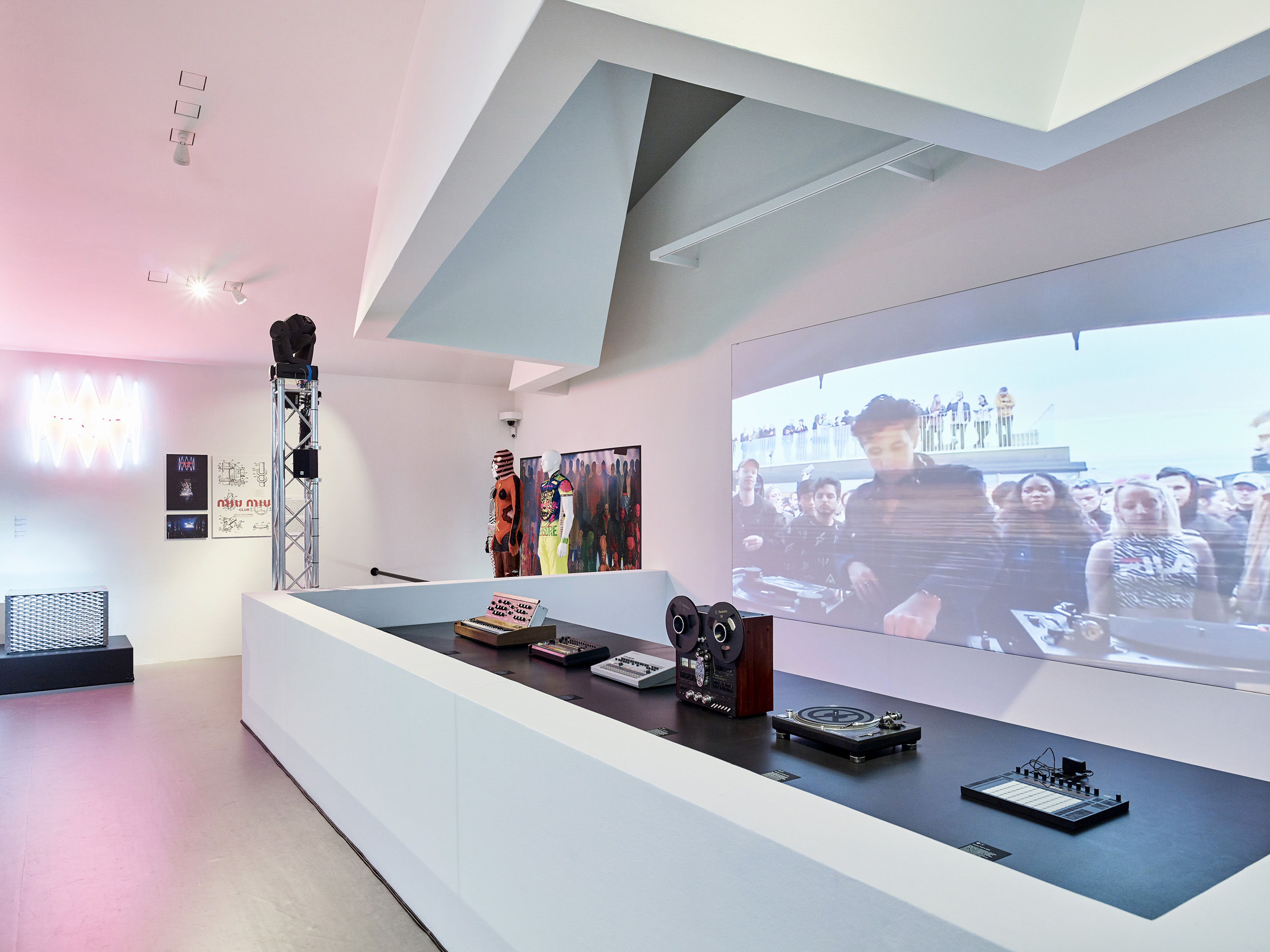
The nightclub is one of the most important design spaces in contemporary culture. Since the 1960s, nightclubs have been epicentres of pop culture, distinct spaces of nocturnal leisure providing architects and designers all over the world with opportunities and inspiration. Night Fever. Designing Club Culture 1960 – Today offers the first large-scale examination of the relationship between club culture and design, from past to present. The exhibition presents nightclubs as spaces that merge architecture and interior design with sound, light, fashion, graphics, and visual effects to create a modern Gesamtkunstwerk. Examples range from Italian clubs of the 1960s created by the protagonists of Radical Design to the legendary Studio 54 where Andy Warhol was a regular, from the Haçienda in Manchester designed by Ben Kelly to more recent concepts by the OMA architecture studio for the Ministry of Sound in London. The exhibits on display range from films and vintage photographs to posters, flyers, and fashion, but also include contemporary works by photographers and artists such as Mark Leckey, Chen Wei, and Musa N. Nxumalo. A spatial installation with music and light effects takes visitors on a fascinating journey through a world of glamour and subcultures – always in search of the night that never ends.
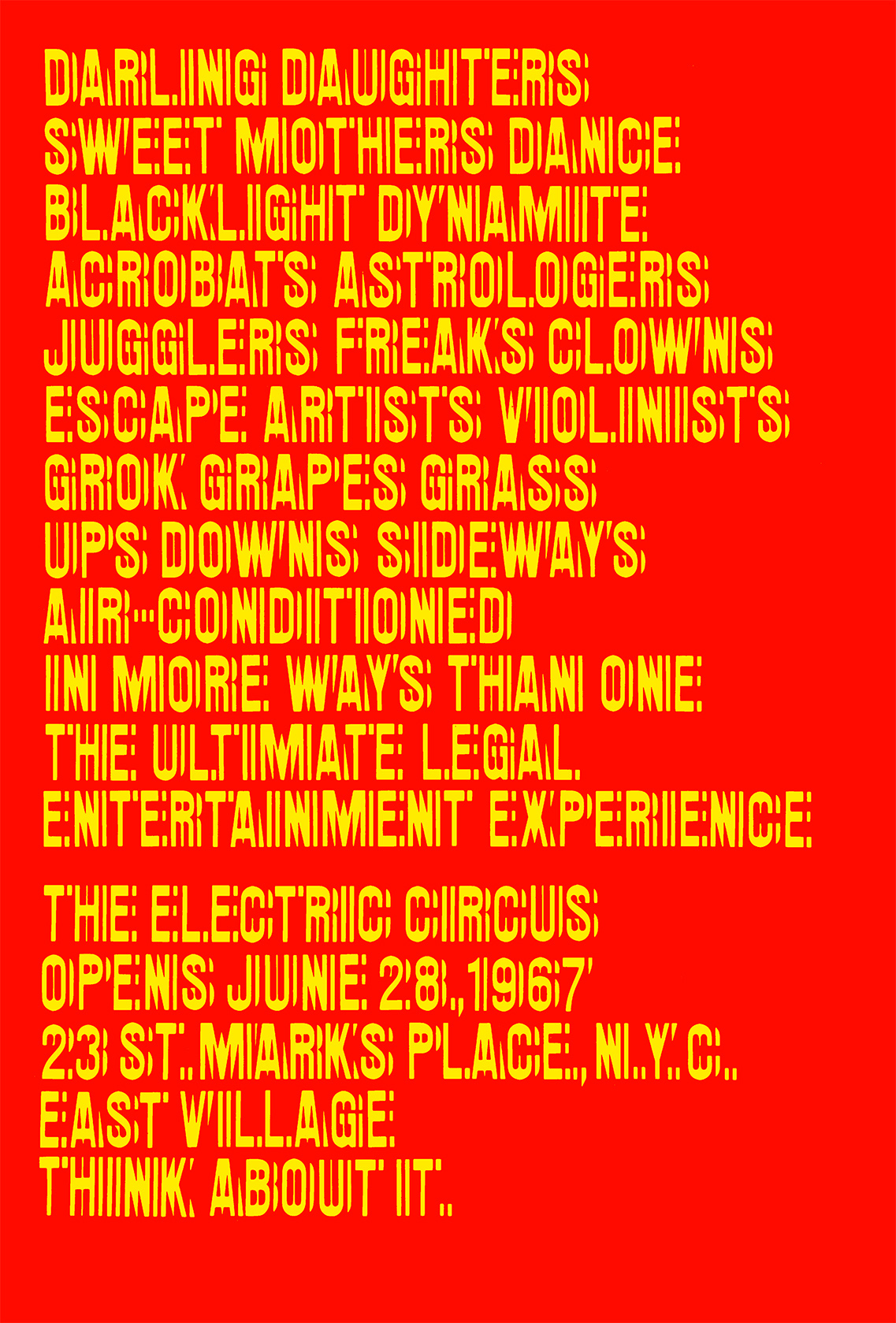
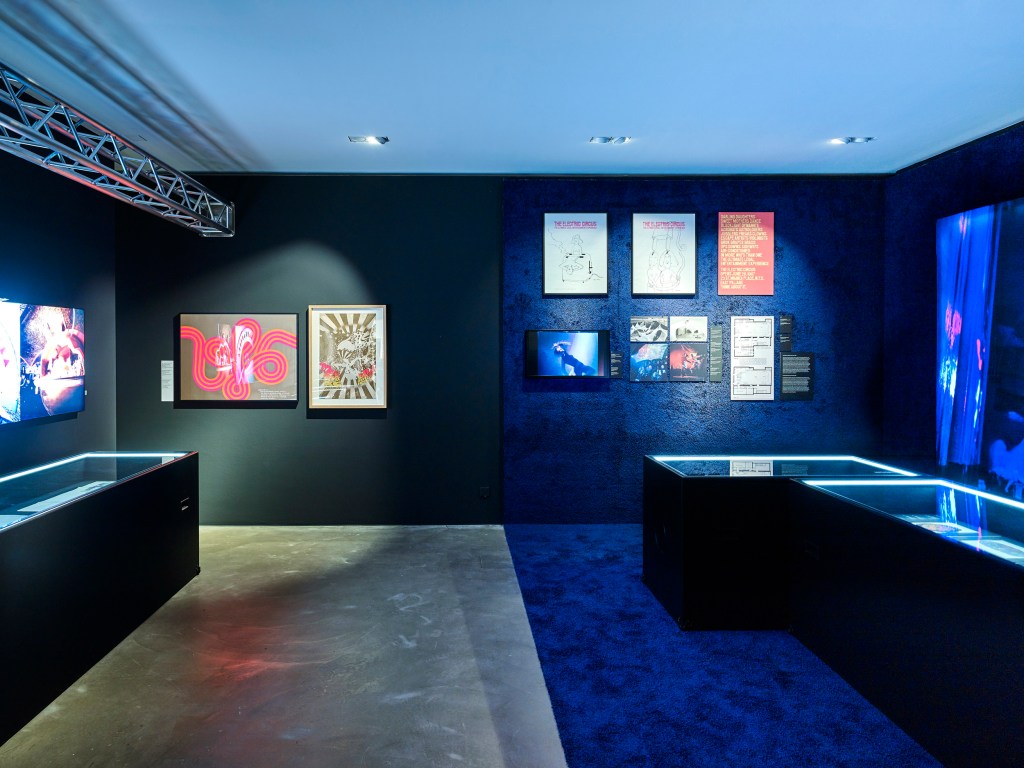
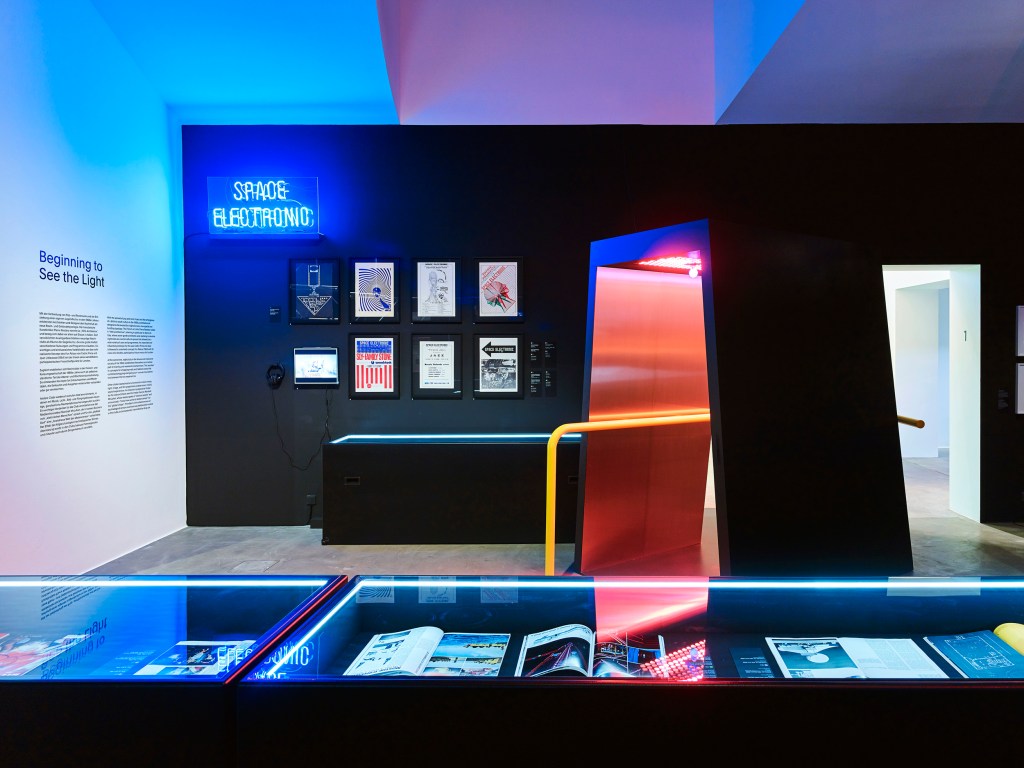
Night Fever opens with the 1960s, exploring the emergence of nightclubs as spaces for experimentation with interior design, new media, and alternative lifestyles. The Electric Circus (1967) in New York, for example, was designed as a countercultural venue by architect Charles Forberg while renowned graphic designers Chermayeff & Geismar created its distinctive logo and font. Its multidisciplinary approach influenced many clubs in Europe, including Space Electronic (1969) in Florence. Designed by the collective Gruppo 9999, this was one of several nightclubs associated with Italy’s Radical Design avant-garde. The same goes for Piper in Turin (1966), a club designed by Giorgio Ceretti, Pietro Derossi, and Riccardo Rosso as a multifunctional space with a modular interior suitable for concerts, happenings, and experimental theatre as well as dancing. Gruppo UFO’s Bamba Issa (1969), a beach club in Forte dei Marmi, was another highly histrionic venue, its themed interior completely overhauled for every summer of its three years of existence.
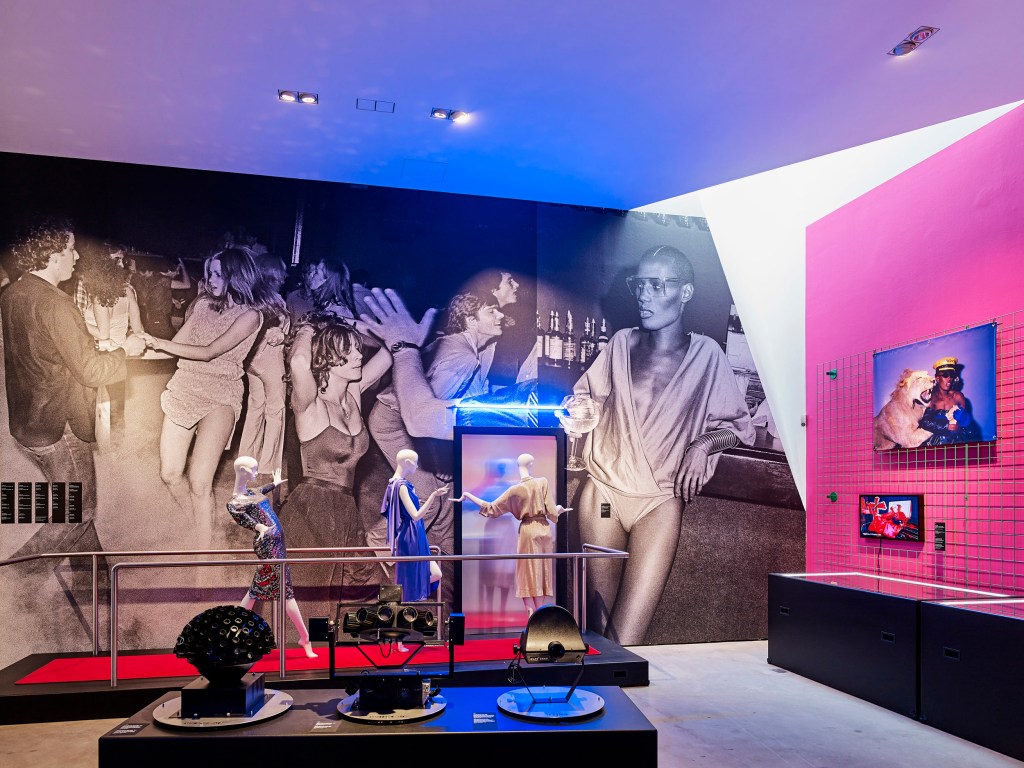
With the rise of disco in the 1970s, club culture gained a new momentum. Dance music developed into a genre of its own and the dance floor emerged as a stage for individual and collective performance, with fashion designers such as Halston and Stephen Burrows providing the perfect outfits to perform and shine. New York’s Studio 54, founded by Ian Schrager and Steve Rubell in 1977 and designed by Scott Bromley and Ron Doud, soon became a celebrity favourite. Only two years later, the movie Saturday Night Fever marked the apex of Disco’s commercialisation, which in turn sparked a backlash with homophobic and racist overtones that peaked at the Disco Demolition Night staged at a baseball stadium in Chicago.
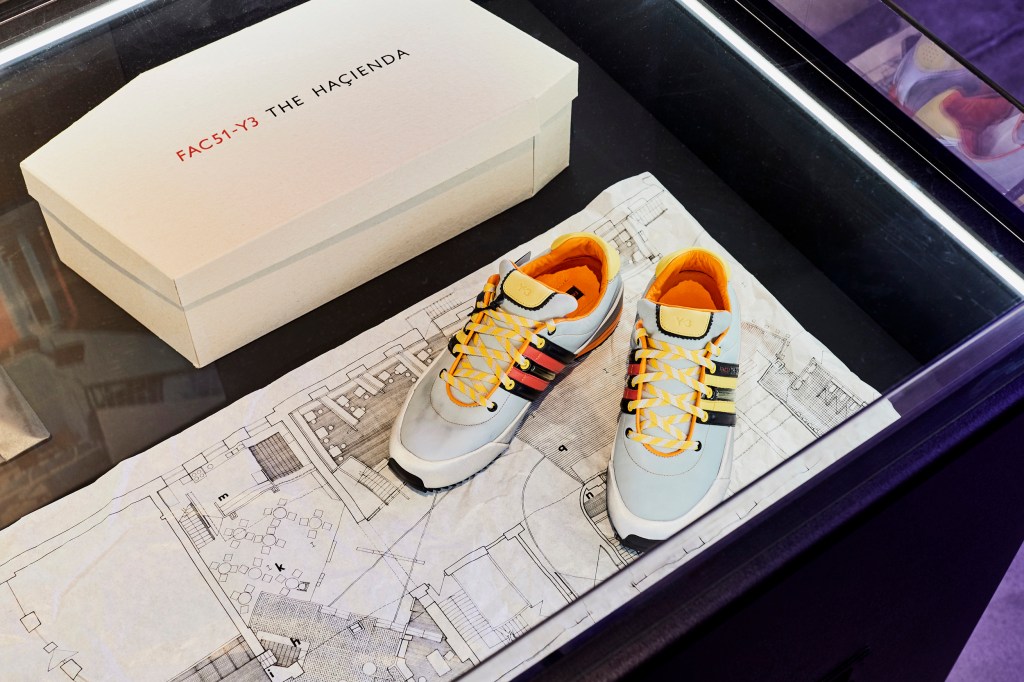
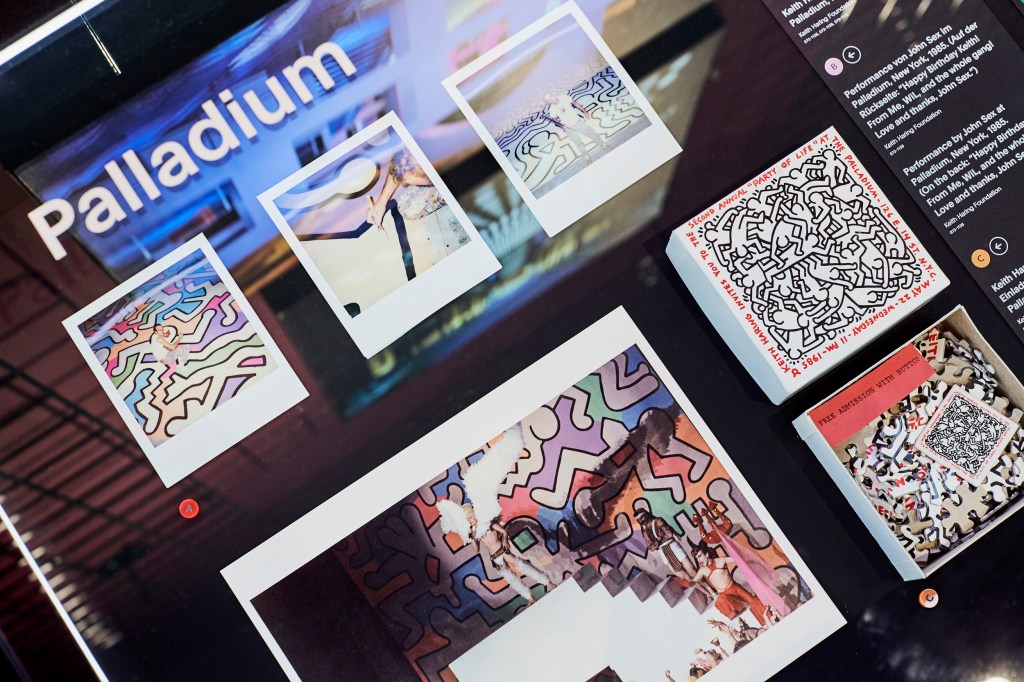
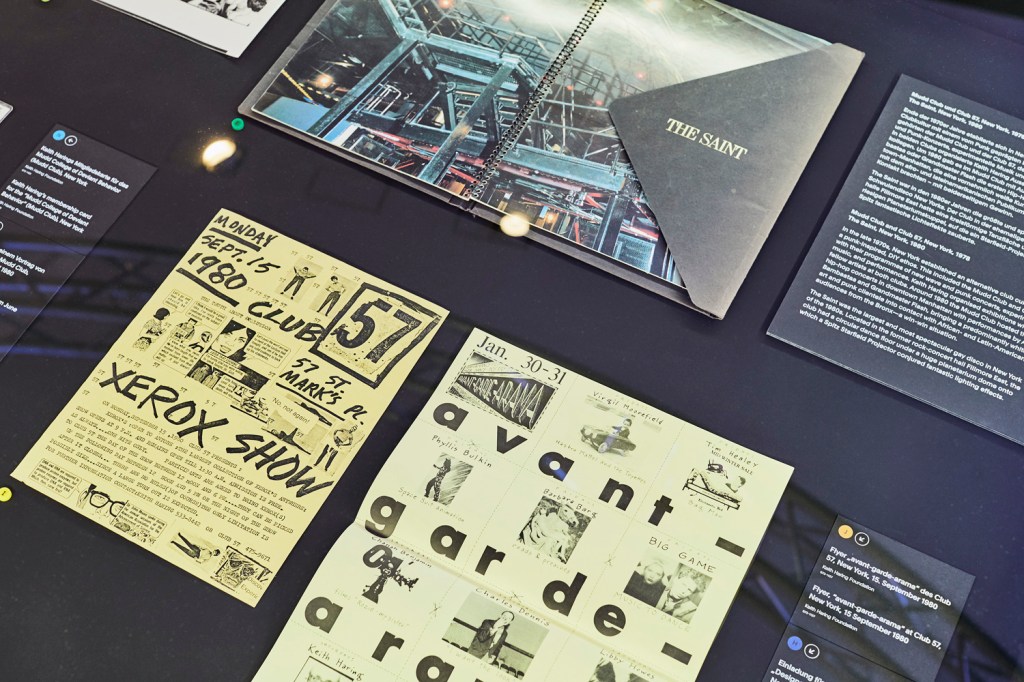
Around the same time, places in New York’s thriving nightlife like the Mudd Club (1978) and Area (1983) offered artists new spaces to merge the club scene and the arts and launched the careers of artists like Keith Haring and Jean-Michel Basquiat. In early 1980s London, meanwhile, clubs like Blitz and Taboo brought forth the New Romantic music and fashion movement, with wild child Vivienne Westwood a frequent guest at Michael and Gerlinde Costiff’s Kinky Gerlinky club night. But it was in Manchester that architect and designer Ben Kelly created the post-industrial cathedral of rave, The Haçienda (1982), from where Acid House conquered the UK. House and Techno were arguably the last great dance music movements to define a generation of clubs and ravers. They reached Berlin in the early 1990s just after the fall of the wall, when disused and derelict spaces became available for clubs like Tresor (1991); more than a decade later, the notorious Berghain (2004) was established in a former heating plant, demonstrating yet again how a vibrant club scene can flourish in the cracks of the urban fabric, on empty lots and in vacant buildings.
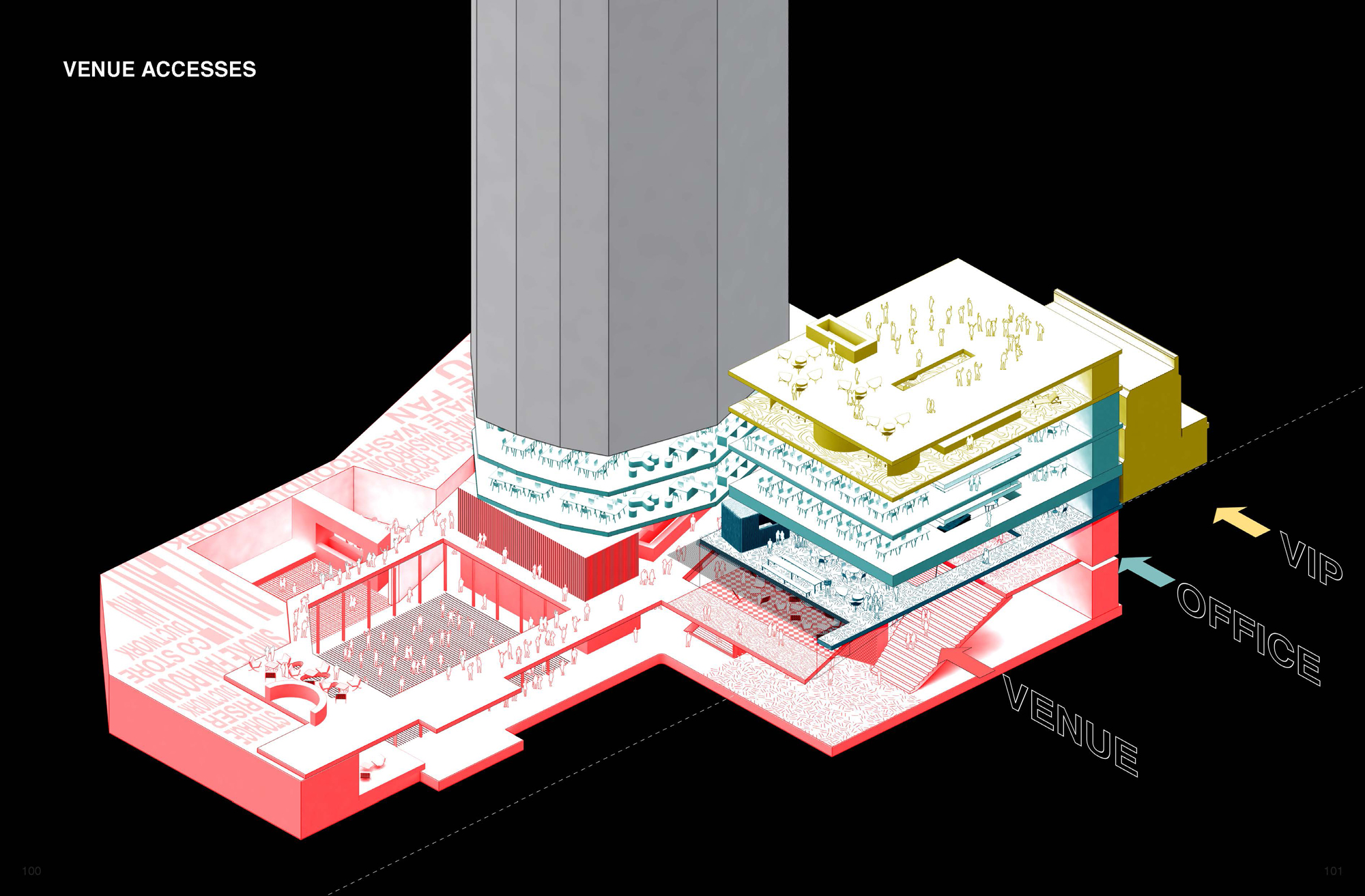
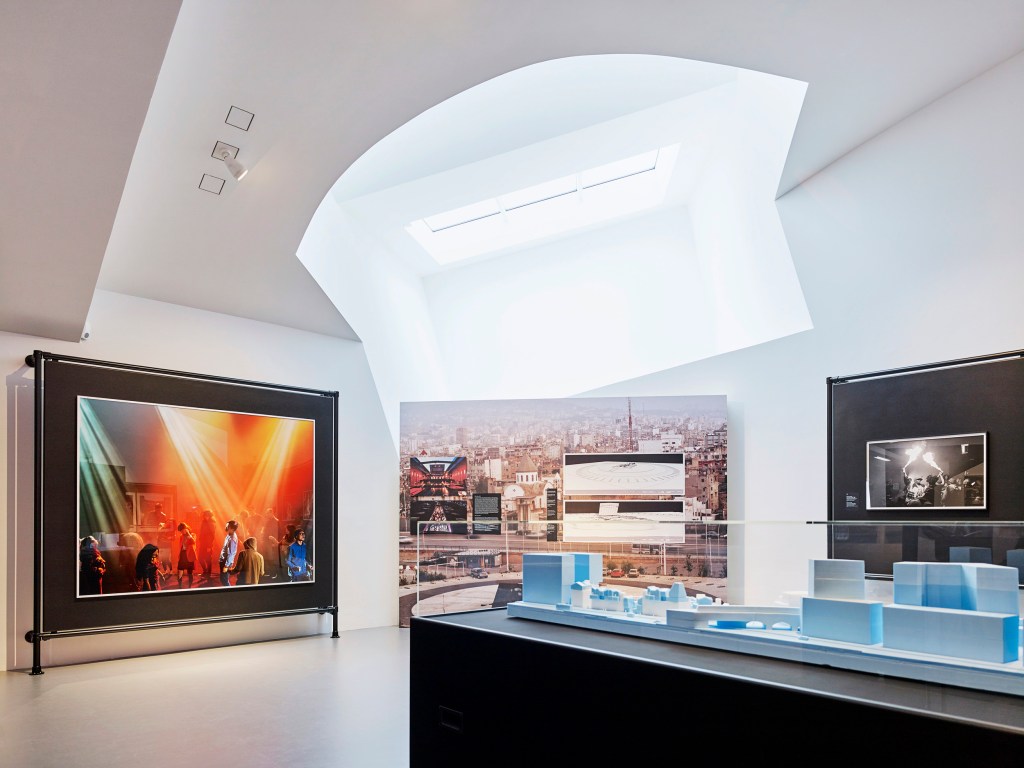
Developments have become ever more complex since the early 2000s. On the one hand, club culture is thriving and evolving as it is adopted by global brands and music festivals; on the other, many nightclubs have been pushed out of the city or survive merely as sad historical monuments and modern ruins of a hedonistic past. At the same time, a new generation of architects is addressing the nightclub typology. The architectural firm OMA, founded by Rem Koolhaas, has developed a proposal for a twenty-first-century Ministry of Sound II for London, while Detroit-based designers Akoaki have created a mobile DJ booth called The Mothership to promote their hometown’s rich club heritage.
Based on extensive research and featuring many exhibits never before displayed in a museum, Night Fever brings together a wide range of material, from furniture to graphic design, architectural models to art, film and photography to fashion. The exhibition takes visitors through a fascinating nocturnal world that provides a vital contrast to the rules and routines of our everyday life.
While the exhibition basically follows a chronological concept, a music and light installation created specially by exhibition designer Konstantin Grcic and lighting designer Matthias Singer offers visitors the opportunity to experience all the many facets of nightclub design, from visual effects to sounds and sensations. A display of record covers, ranging from Peter Saville’s designs for Factory Records to Grace Jones’s album cover Nightclubbing, underlines the significant relationship between music and design in club culture. The multidisciplinary exhibition reveals the nightclub as much more than a dance bar or a music venue; it is an immersive environment for intense experiences.
Represented artists, designers and architects (extract): François Dallegret, Gruppo 9999, Halston, Keith Haring, Arata Isozaki, Grace Jones, Ben Kelly, Bernard Khoury, Miu Miu, OMA (Office for Metropolitan Architecture), Peter Saville, Studio65, Roger Tallon, Walter Van Beirendonck, Andy Warhol
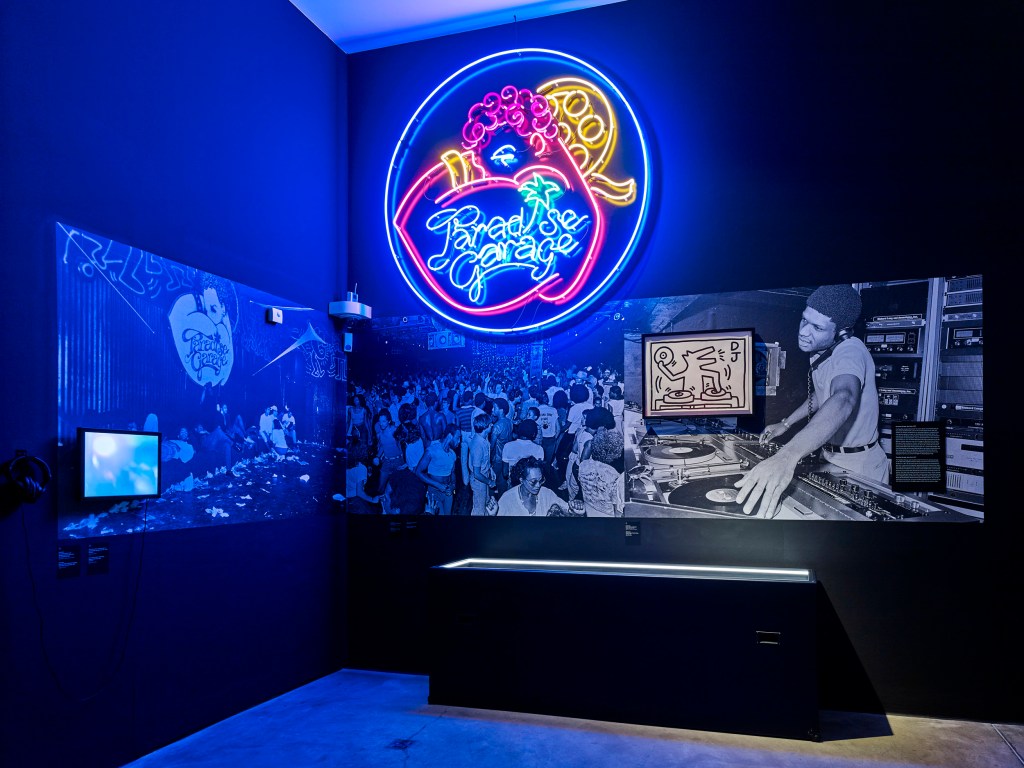
Represented clubs (extract): The Electric Circus, New York, 1967 Space Electronic, Florenz, 1969 Il Grifoncino, Bolzano, 1969 Studio 54, New York, 1977 Paradise Garage, New York, 1977 Le Palace, Paris, 1978 The Saint, New York, 1980 The Haçienda, Manchester, 1982 Area, New York, 1983 Palladium, New York, 1985 Tresor, Berlin, 1991 B018, Beirut, 1998 Berghain, Berlin, 2004
The highlights for me in this posting, and probably in the exhibition if I actually saw it, are the works of Alfred G. Buckham and Iain Mackenzie.
The first, a daredevil, crash-prone pilot who trained as a painter and then became the leading aerial photographer of his day, renowned for his atmospheric shots of the landscape. “Over the years Buckham amassed a vast collection of photographs of skies which he could integrate with a separate landscape photograph to enhance the drama and create a more impressive composition. He also often manipulated his images further by adding hand painted aircraft… which heightens the viewer’s awareness of the dominating power and scale of the natural world.”
These ever so romantic constructions are, in effect, flights of fancy. Buckingham wanted them to be as accurate as possible to ‘the effect that I saw’ through effect – he “collaged or hand-painted the form of a tiny aircraft to enhance the vertiginous effect” and also to enhance the surreal nature of nature. Just imagine the skill needed to combine multiple negatives and then hand-paint aircraft and airships, such as the R100 below, at the correct scale and delicate composition into the photographic image. Impressive not just from a technical perspective (the taking of the photographs; the montaging of the negatives) – but also from an aesthetic, sensual and spiritual perspective of the land and the air, the clouds and the sky. The stuff we breathe and the clouds that we observe everyday.
Speaking of the everyday, the second artist that I admire in this posting for his down to earth photographs of everyday life, is Iain Mackenzie. You can see many more of his photographs than are in this posting on the National Galleries of Scotland website. Notice the isolated figures in the brittle, urban landscape – the large, empty white-washed windows, the large signs, the “weight” of the heavy space that hangs above the grounded figures: The Cabin Restaurant, Shoe Repairs, The Govan Restaurant, Enjoy Your Seafood in Comfort!
The desolate streets of downtown Glasgow where the Shoe Repair Shop man stares straight at the camera, while his sign proclaims ~ Long Life ~ Repair Specialist. I absolutely love this type of photography, it washes over me and refreshes me, it seeps into my bones and lives there. Because I grew up belonging to this “working class”; they are me when I was young. We had no hot water when I was a child, my mother used to boil the kettle on the stove and fill a bath tub on the kitchen floor to bathe us kids, we were that poor. There is a grittiness about these people, resilience and fortitude, charm on occasion, that Mackenzie captures perfectly. Just look at the faces of the people on the Glasgow Metro. It’s a tough life.
Dr Marcus Bunyan
Many thankx to the Scottish National Portrait Gallery for allowing me to publish the photographs in the posting. Please click on the photographs for a larger version of the image.
Planes, Trains & Automobiles is the third in a series of thematic exhibitions exploring the exceptional permanent collection of photography at the National Galleries of Scotland.
Navigating land, sea and air, this exhibition takes a look at the variety of modes of transport used around the world from the 1840s onwards. This is a truly global look at travel, from pedal power to commercial airliners, via cars, horse-drawn carriages, sleighs, buses, and the occasional camel!
Through work by the likes of Alfred G. Buckham, Humphrey Spender and Alfred Stieglitz we examine how photography has been used to chart the technological innovations created by the desire to travel and the impact that transportation has on society. The exhibition shows how transport is part of our everyday lives, from the daily grind of commuting to the pleasure of holidays away.
During the construction of the Forth Bridge, the young engineer Evelyn George Carey was given privileged access to the site in order to make a comprehensive photographic record of the bridge’s development. It was hoped that this visual documentation would restore public confidence in British engineering following the Tay Bridge disaster of 1879. In this photograph Carey uses volunteers, possibly the architects of the bridge Sir John Fowler and Sir Benjamin Baker, to demonstrate the cantilever principle. If you look closely you can see that the boy’s weight is sufficiently supported for his feet to rise off the ground – just as the cantilevers support the central girder of the bridge.
The building of the Forth Bridge was celebrated in its day as “a triumph of engineering skill to eclipse the Ship Canal which has turned Africa into an island and a work which will reduce the pyramids to mere child’s play”. Following the disastrous collapse of the Tay Bridge in 1879, the engineers, John Fowler and Benjamin Baker, proposed a revolutionary design. The project was observed and controlled through photography. The official photographer was Evelyn George Carey, who was the assistant engineer from 1883-1890. His pictures express the labour, tensions and hazards of the project. Together, his photographs create a sequence, following and examining the course of the construction with a critical eye, and offer an understanding of the later, Modernist fascination with such structures.
It was during a journey through Scotland in 1976 that Appelt first saw the Forth Rail Bridge. It made an immediate impact and he began to imagine a film work based on its construction. He returned to the project in 2002, producing a precisely composed photographic montage of the Rail Bridge comprising 312 separate black and white prints. Appelt then began by making a 35mm film, running the camera along the parallel Road Bridge. For the artist, the piece “emerges like a musical score from the filmic frame”, constructing a formal complexity as intricate as the physical laws that govern the original structure. This work lends an expressive weight both to photography and the conceptualisation of one of Scotland’s iconic monuments.
Dieter Appelt (German, b. 1935)
Dieter Appelt (born Niemegk, 3 March 1935) is a German photographer, painter, sculptor and video artist.
He studied music from 1954 to 1958 in the Mendelssohn Bartholdy Akademie in Leipzig. There, he discovers and develops a strong interest for Impressionism, Fauvism, and Russian constructivism. In 1959, he leaves East Germany and settles in West Berlin to study in the music school of Berlin until 1964. That same year, he decides to study fine art and he takes his first steps in painting, photography, etching, and sculpture. In the 1970s, he makes his appearance on the public stage, with his first exhibition at the Deutsche Oper Berlin in 1974. In 1976 he focuses on visual arts and his career as an artist takes off. Appelt is also known for his works on the mechanics and techniques of photography that he made in the 1980s. In 1990 and 1999, he took part in the Venice Biennale. During this decade, Dieter Appelt exhibited in several major capitals of the world including: Tokyo, New-York, Berlin, Moscow, Budapest, Montreal, and Edinburgh. He lives and works in Berlin.
Eugene Clutterbuck Impey (British born France, 1830-1904) Riding Camel with trappings. The figure on foot is a Rajpoot Thakoor 1858-1865 Albumen print 15.4 x 20.4cm Collection: National Galleries of Scotland Gift of Mrs. Riddell in memory of Peter Fletcher Riddell, 1985
The British Government began to build a photographic record of India in 1855. At first this was a random selection of images of important architectural and archaeological sites, produced by amateur photographers working as government officials and amateurs alike. From the 1860s images of Indian society were also added to this archive. Impey, a government colonial official as well as a skilled photographer, made numerous portraits illustrating characteristic Indian types and activities. This scene of a royal court invokes a sense of a timeless Indian past. Such ‘exotic’ scenes were popular with Victorian Britons.
Unknown photographer Man on a Bicycle c. 1910 Silver gelatin print 15.30 x 10.80cm Collection: National Galleries of Scotland Gift of Mrs. Riddell in memory of Peter Fletcher Riddell 1985
In the late nineteenth century cycling became a popular leisure activity. This was in part due to the introduction of the pneumatic tyre, patented in 1888 by the Ayrshire-born John Dunlop. This made bicycles more reliable and less expensive. Cycling clubs formed across Europe and America and for many women cycling provided unprecedented mobility and freedom. In recent years cycling has seen a resurgence in popularity amongst both sports enthusiasts and commuters.
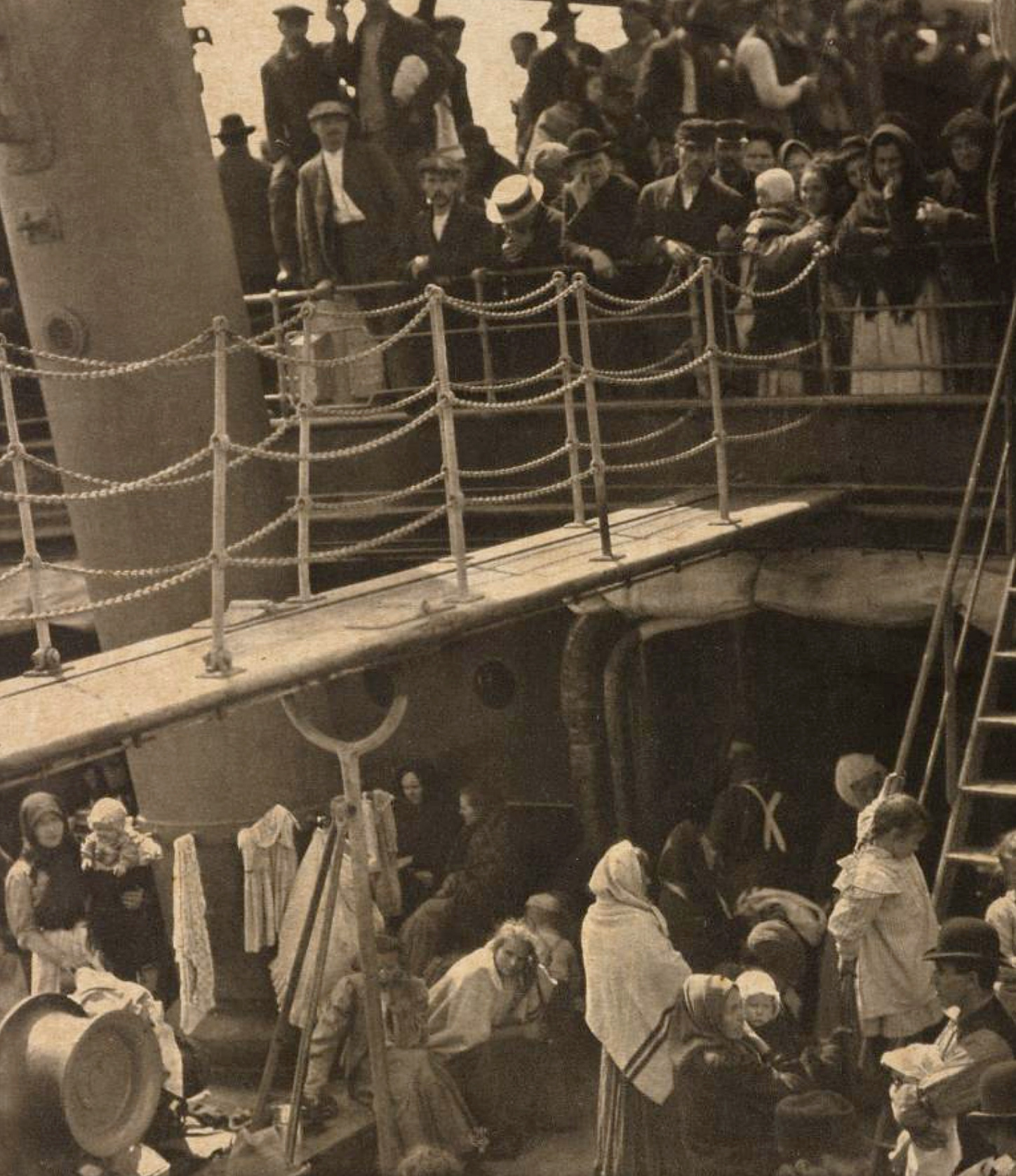
Stieglitz was sailing to Europe in 1907 and found the company of other first class passengers unbearable. One day as he was trying to avoid them, he walked to the end of his deck and looked down into the part of the ship which accommodated the poor passengers. He perceived the ordinary men and women as flashes of colour dotted in among the geometric shapes of ‘iron machinery’. Moved and fascinated by this sight, he raced to his cabin and returned with his camera to take a picture that to him constituted a step in his ‘own evolution’.
The extraordinary advances in the technology of travel over the past 170 years, and their wide-ranging impact on our lives are the subject of a dramatic and inspiring new exhibition of photographs at the Scottish National Portrait Gallery this summer. Planes, Trains and Automobiles draws upon the outstanding collection of the National Galleries of Scotland to consider the rapid expansion of transportation from the end of the Industrial Revolution to the present day. It features 70 outstanding images, including key images by Alfred G Buckham and Alfred Stieglitz, which demonstrate how the technologies of photography and transport have evolved in tandem, each of them broadening our horizons and radically altering our perception of our ever-shrinking world.
The exhibition includes iconic photographs such as The Steerage, a career-defining image by the American photographer Alfred Stieglitz (1864-1946), made in 1907, while he was travelling to Europe by sea; and Inge Morath’s striking portrait Mrs Eveleigh Nash, The Mall, London (1953). Walking on the first-class deck, Stieglitz looked down into the third-class steerage area below him. Immediately struck by the strength of the composition created by the group of travellers gathered there, he quickly retrieved his camera, and captured the jarring class divide. Celebrated both for its modernist composition and its social commentary, the resulting photograph is one of the most recognisable images in the history of photography. Similarly, Morath (1923-2002), one of the first female photographers to work for renowned photo agency Magnum, used the door frame of an open-topped car to artfully divide her composition, suggesting the social gulf between the wealthy Mrs Nash and her chauffeur.
One of aerial photography’s pioneers was Alfred G. Buckham (1879-1956) who took breath-taking photographs in the skies above Edinburgh. Just as fascinating as his photographs, are Buckham’s dare-devil techniques to capture the perfect shot. He gave this sage advice to budding aerial photographers: ‘It is essential to stand up, not only to make the exposures but to see what is coming along ahead. If one’s right leg is tied to the seat with a scarf or a piece of rope, it is possible to work in perfect security’. Buckham also pioneered early layering of multiple negatives to create the perfect shot giving his photographs an ethereal, otherworldly quality.
The Industrial Revolution led to the rapid expansion of the railways, which had a huge impact on the way that people lived and worked and led to the expansion of many towns and cities. As early as 1845, the railway line in Linlithgow was photographed by David Octavius Hill (1802-1870) and Robert Adamson (1821-1848), who travelled by train to document the main sights of the town.
The Forth Bridge was the longest bridge in the world when it opened in 1890 and it is now widely regarded as a symbol of Scottish innovation and cultural identity. Radical in style, materials and scale, it marked an important milestone in bridge design and construction during the period when railways came to dominate long-distance land travel. Evelyn George Carey (1858-1932), a young engineer working on the construction of the bridge, made an incredible series of photographs as the building work progressed. In one of these photographs Carey records the amusing sight of two men demonstrating the cantilever principle – resulting in the boy sitting at the centre of the ‘bridge’ being lifted into the air. This series of photographs inspired the German contemporary photographer Dieter Appelt (b. 1935) to make Forth Bridge – Cinema. Metric Space – a photographic montage of 312 separate silver gelatine prints which together offer a beautiful, lyrical interpretation of an engineering masterpiece.
Another innovation explored in Planes, Trains and Automobiles is the Victorian phenomenon of the stereograph. Made of two nearly identical scenes, which when viewed together in a special device, create a single three-dimensional image, this new photographic technology essentially mimicked how we see the world. It sparked curiosity and encouraged the public to view images of far-flung places from the comfort of their own home. The natural association between travel and transport meant that modes of transport were one of the most popular themes for stereographs. This exhibition features over 100 stereographs from the National Galleries of Scotland’s collection in a dynamic wall display, alongside digital interpretations.
524 million journeys were made by public transport in Scotland last year and Planes, Trains and Automobiles explores this common form of travel. Photographers have been repeatedly drawn to the theme of commuting, fascinated by its ability to show humanity in movement, following regulated routes to work. Among these are documentary photographers Humphrey Spender (1910-2005) and Larry Herman (b. 1942) who both made work observing Glasgow and Glasweigians on their the daily commute. From photographs of the iconic Forth Bridge to images of commuting, Planes, Trains and Automobiles is a photographic celebration of transportation in all its forms.
“his is the third in a hugely popular series of thematic exhibitions drawn entirely from the outstanding collection of photography held by the National Galleries of Scotland. The carefully selected photographs on display show how technology and transport have impacted on so many aspects of our lives and provided such a rich and thought-provoking focus for outstanding Scottish and international photographers, from very earliest days of the medium to today’s innovators.” ~ Christopher Baker, Director, European and Scottish Art and Portraiture, National Galleries of Scotland
Press release from the Scottish National Portrait Gallery
Buckham was the leading aerial photographer of his day and was renowned for his atmospheric shots of the landscape. He felt that the most spectacular cloud formations and theatrical light could be captured on “stormy days, with bursts of sunshine and occasional showers of rain”. This is an example of one of his shots of an impressive cloud formation. It features the R100 airship, noted for its more oval, aerodynamic shape in comparison to the traditional Zeppelin. The R100 embarked on its maiden flight in 1929 but in 1930 it was deflated and removed from service following the crash of her sister ship, the R101, with the loss of forty-eight lives. Buckham painted the airship into the scene by hand.
This dramatic, and almost surreal photograph, shows the diversity of cloud formations during a fierce thunderstorm. Over the years Buckham amassed a vast collection of photographs of skies which he could integrate with a separate landscape photograph to enhance the drama and create a more impressive composition. He also often manipulated his images further by adding hand painted aircraft, such as in this image, which heightens the viewer’s awareness of the dominating power and scale of the natural world.
This image shows Captain Jordan flying his ‘Black Camel’ biplane at very close proximity to Buckham’s aircraft. Taken over the landscape around Rosyth, this was near to where Buckham crashed for the ninth time in 1918 and sustained serious injuries.
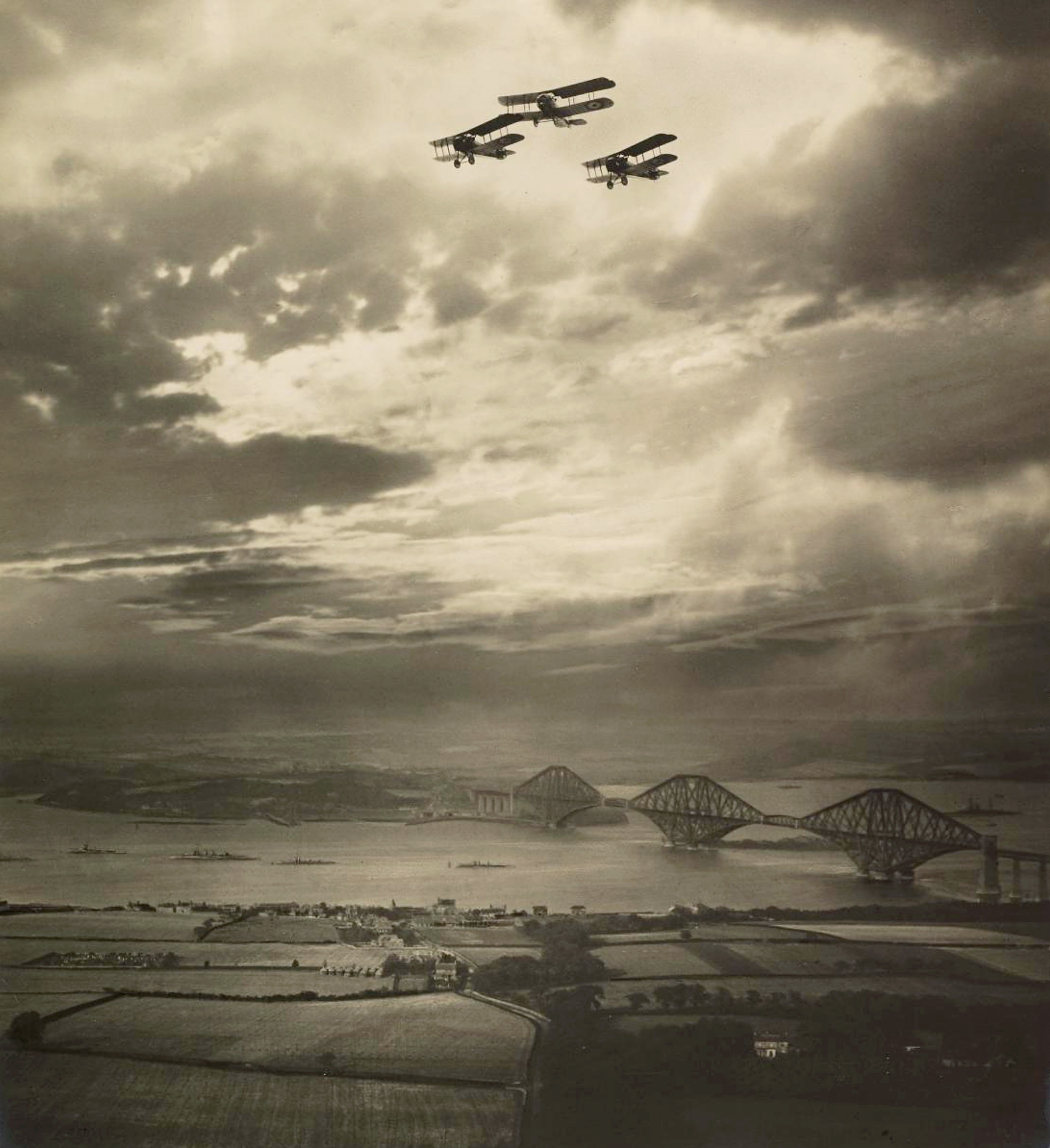
Over the years he amassed a vast collection of photographs of skies which he integrated with a separate landscape photograph to enhance the drama and create a more impressive composition. This image over the Firth of Forth, encapsulates the romantic fusion of man’s engineering achievements against the dramatic beauty of nature. The three steel arches of the Forth Rail Bridge are mirrored in the three biplanes, which Buckham added later by hand, silhouetted against the spectacular sky.
About Alfred G. Buckham’s art
From the earliest days of manned flight, photographers sought to capture the strange and unfamiliar beauty of the view from above. Whether it was from balloons, airships or later, fixed-wing aircraft, enterprising pioneers overcame formidable technical obstacles to create striking new images of the world below. It was, however, through warfare in the twentieth century that aerial photography came to prominence. Alfred Buckham’s remarkable body of work in the air had its origins in a brief, eventful career with the Royal Navy in the last phase of the First World War, but he was also able to develop a highly personal approach that combined his skills in documentary reconnaissance with an artist’s feeling for mood and atmosphere.
Born in London, Buckham’s first ambition was to become a painter but after seeing an exhibition of work by J.M.W. Turner at the National Gallery he apparently destroyed all his own work. He turned instead to photography and in 1917 was enlisted into the photographic division of the Royal Navy. He was stationed first at Turnhouse near Edinburgh and was later transferred to the Grand Fleet based at Rosyth on the Firth of Forth. On his missions he took two cameras, one for his technical photography for the Navy and the other for personal use. Flying over Scotland he took numerous photographs of cloud formations, hilly landscapes and views of towns, often seeking out extremes of weather to add drama to his subject matter.
Buckham’s aerial view of Edinburgh has become one of the most popular photographs in our collection. The view is taken from the west, with the castle in the foreground and the buildings of the Old Town along the Royal Mile gradually fading into a bank of mist with the rocky silhouette of Arthur’s Seat just visible in the distance. Buckham was always keen to capture strong contrasts of light and dark, often combining the skies and landscapes from separate photographs to achieve a theatrical effect. As he does here, he sometimes collaged or hand-painted the form of a tiny aircraft to enhance the vertiginous effect. Yet accuracy remained a concern; Buckham later professed a particular fondness for his view of Edinburgh, ‘because it presents, so nearly, the effect that I saw’.
In the early days of flight, aerial reconnaissance was a hazardous task. Buckham crashed nine times and in 1919 was discharged out of the Royal Navy as one hundred per cent disabled. However, he continued to practise aerial photography through the 1920s, and in 1931 he travelled to Central and South America to take photographs for an American magazine, a commission that resulted in a remarkable series of views of mountain ranges and snow-rimmed volcanoes. In his journals and in various magazine articles, Buckham conveyed a spirit of adventure and derring-do that is not for the faint-hearted or those with a fear of flying. In an article dating from 1927 he wrote:
“It is not easy to tumble out of an aeroplane, unless you really want to, and on considerably more than a thousand flights I have used a safety belt only once and then it was thrust upon me. I always stand up to make an exposure and, taking the precaution to tie my right leg to the seat, I am free to move about rapidly, and easily, in any desired direction; and loop the loop and indulge in other such delights, with perfect safety.”
This text was originally published in 100 Masterpieces: National Galleries of Scotland, Edinburgh, 2015.
Buckham had crashed nine times before he was discharged from the Royal Naval Air Service as a hundred per cent disabled. Continuing to indulge his passion for aerial photography, he wrote that “If one’s right leg is tied to the seat with a scarf or a piece of rope, it is possible to work in perfect security”. Presumably these were the perilous conditions in which the photographer took this dazzling picture of Edinburgh.
This is a very elegant composition, with an element of surrealism. It seems to have two perspectives and two vanishing points – the avenue of trees and the little figures on the left inhabit another world from the terrace of the houses on the right. The wealthy Mrs Eveleigh Nash in the foreground is, unexpectedly, shown as a shy woman. The two men in conversation walking by and the distant figures on the left are not so much a background as other lives being lived at the same time.
The New York subway was officially opened in 1904, forty-one years after the London Underground and eight years after the Glasgow Subway. It is now one of the largest underground systems in the world. In this atmospheric photograph, Hudson captures the often claustrophobic experience of travelling underground with hundreds of other people.
In the 1980s Mackenzie made a series of photographs depicting life in Glasgow, several of which show Glaswegians navigating the subway on their way to work. The Glasgow Subway opened in 1896, making it one of the world’s first underground systems.
The internationally renowned archives of the School of Scottish Studies, based at the University of Edinburgh, were established in 1951 for the collection, research, archiving and publication of materials relating to the cultural life and traditions of Scotland. …
The Photographic Archive contains thousands of images from all over Scotland and beyond. Notable collections include work by Werner Kissling in the Hebrides and Galloway and Robert Atkinson’s images of the Western Isles. Ian MacKenzie’s extensive ethnological record, containing both still and video footage of local customs, festivals and working life, resides alongside his portfolio of fine art photography, of which the School of Scottish Studies Archives is custodian.
MacKenzie was born in Inverness and grew up in the distillery village of Tomatin, Strathdearn. He graduated from Napier College and went on to London to obtain a masters degree in photography from the Royal College of Art. Throughout his life, his devotion to the Highlands inspired him to capture the essence of Scottish culture in his artwork, even when travelling abroad. He came to work at the School of Scottish Studies in 1985, where he was curator of the Photographic Archive for nearly twenty-five years. Aside from maintaining the existing collections, he travelled all over Scotland capturing scenes and customs on the edge of extinction.
His photos reflect his belief that there is always room for the appreciation of the important things in life that are so often overlooked. His project ZenBends reflected this philosophy by focusing on the quality of day-to-day life rather than the constant pursuit of a final goal.
The Ian MacKenzie Memorial Fund was established after his passing in 2009 and all proceeds go to the School of Scottish Studies Archives.
Talitha MacKenzie. Broadsheet Issue 22, January 2013 on the Scottish Council on Archives website [Online] Cited 20/06/2018. No longer available online
For many of us, being pushed in a pram is the first mode of transport we will experience. In this carefully composed photograph it appears that the baby is joined in the pram by a statue of the Madonna and Child and an elderly man – prompting us to contemplate the different stages of life. In 1980, when this photograph was taken, Inverleith House in the Royal Botanic Garden was home to the Scottish National Gallery of Modern Art. The collection was moved to its current location on Belford Road in 1984. The sculpture seen in this photograph, La Vierge d’Alsace (The Virgin of Alsace) by Emile-Antoine Bourdelle, can now been found in the grounds of Modern Two.
Sir Brian Souter (born 5 May 1954) is a Scottish businessman and philanthropist. With his sister, Ann Gloag, he founded the Stagecoach Group of bus and rail operators. He also founded the bus and coach operator Megabus, the train operating company South West Trains, his investments company Souter Holdings Ltd and the Souter Charitable Trust. (Wikipedia)
Jeffrey Milstein is a photographer, architect and pilot. His photographic work reflects both his lifelong passion for flight (he received his pilot’s licence when only seventeen years old) and his love of architecture. Milstein utilises small planes and helicopters to create stunning aerial photographs which display a graphic designer’s eye for geometry and design. In addition to photographing from aircraft Milstein has also produced a body of work in which aircraft are the subject of the photograph. For these Milstein positions himself below the aircraft and photographs them as they pass overhead, preparing to land. In the resulting prints Milstein removes the background to better focus on the colours and design of the aircraft. Milstein’s photographs have been exhibited and published worldwide.
Victorian Giants: The Birth of Art Photography is curated by Phillip Prodger PhD, Head of Photographs at the National Portrait Gallery, London
Poster for the catalogue for the exhibition Victorian Giants: The Birth of Art Photography at the National Portrait Gallery, London
Oh Clementina! the light, the stars!
There is enough text in the posting for me not to really have to say anything. It’s all there…
Art, influence, technology; Classical, formal, diaristic; Intimacy, mystery, atmospheric; Motherhood, sexuality, feminist identity, nascent womanhood; ‘Profil perdu’ (French, ‘lost profile’, which refers to a portrait in which the profile cannot be seen), mirror, loss, duplication and replication, illusion, and fetish
… all woven into a performative, psychological, expressive and creative (self) portraiture.
The real stars of the show are most definitely the women… the avant-garde artists of their era.
Many thankx to the National Portrait Gallery, London for allowing me to publish the photographs in the posting. Please click on the photographs for a larger version of the image.
“The women are the real stars of this exhibition. Their pictures are bolder and bigger, more imaginative and more daring. They portray people with a raw reality that is not just the result of the collodion method but a powerful, visionary insight.
Hawarden’s pictures of Victorian women have an intimacy that transcends time and a mystery that asserts the autonomy of her subjects. They are feminist, and gothic too, in their eerie atmosphere. In an 1863-4 picture called ‘Photographic Study’, she poses a young woman by a mirror so that we see her twice. The “real” woman is in brooding profile while her reflection is a shadowy full-face image. The effect is spookily absorbing as we become witnesses to her melancholic introspection.
Hawarden’s ultra-sharp yet shadow-rich prints create unresolved stories featuring women free to show who they really are. None of them look happy. All are curiously defiant – these pictures anticipate those of the 1970s US artist Francesca Woodman. As portraits of women created by women, these Victorian photographers’ subversive creations have almost no precedents.
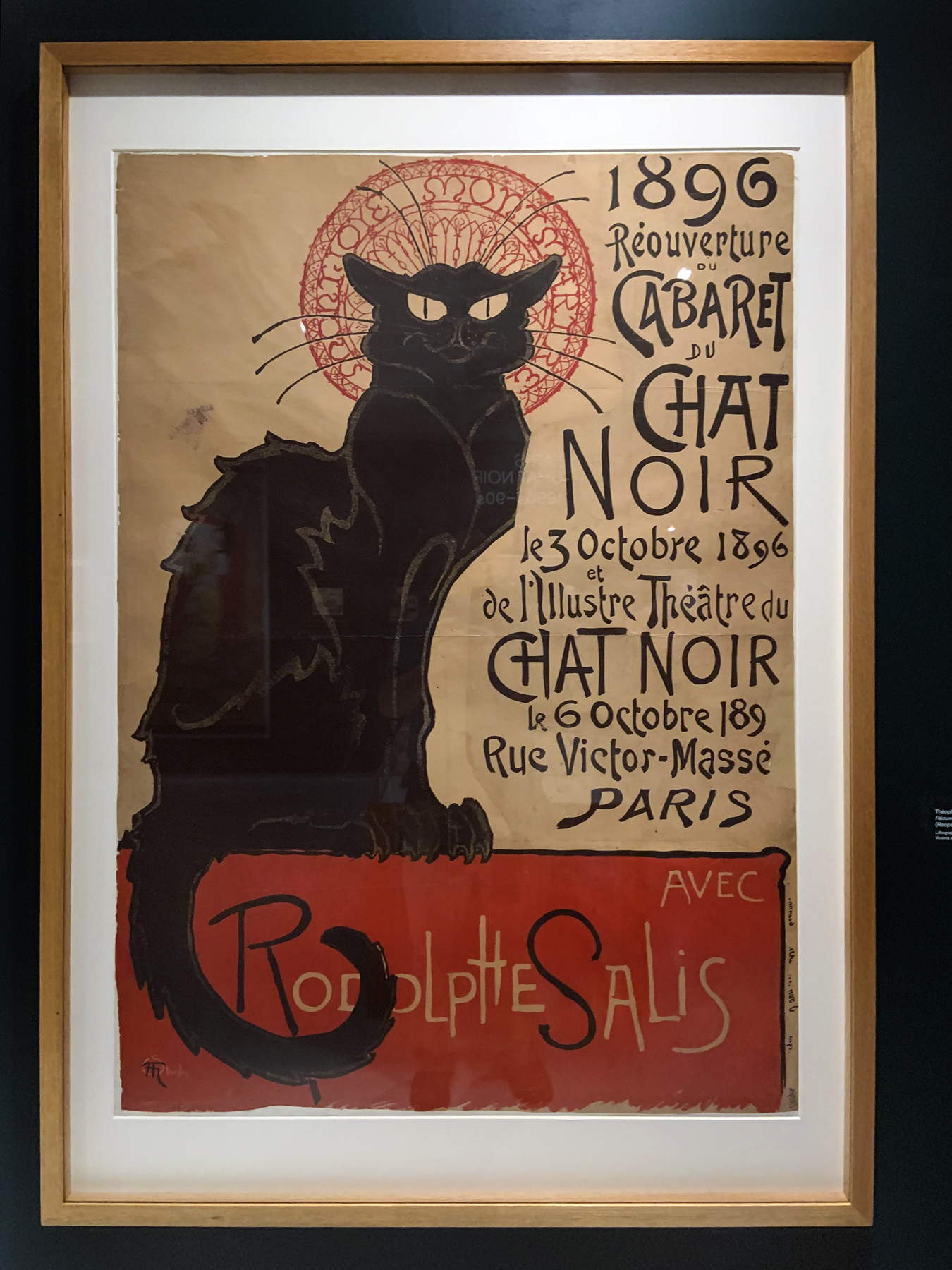
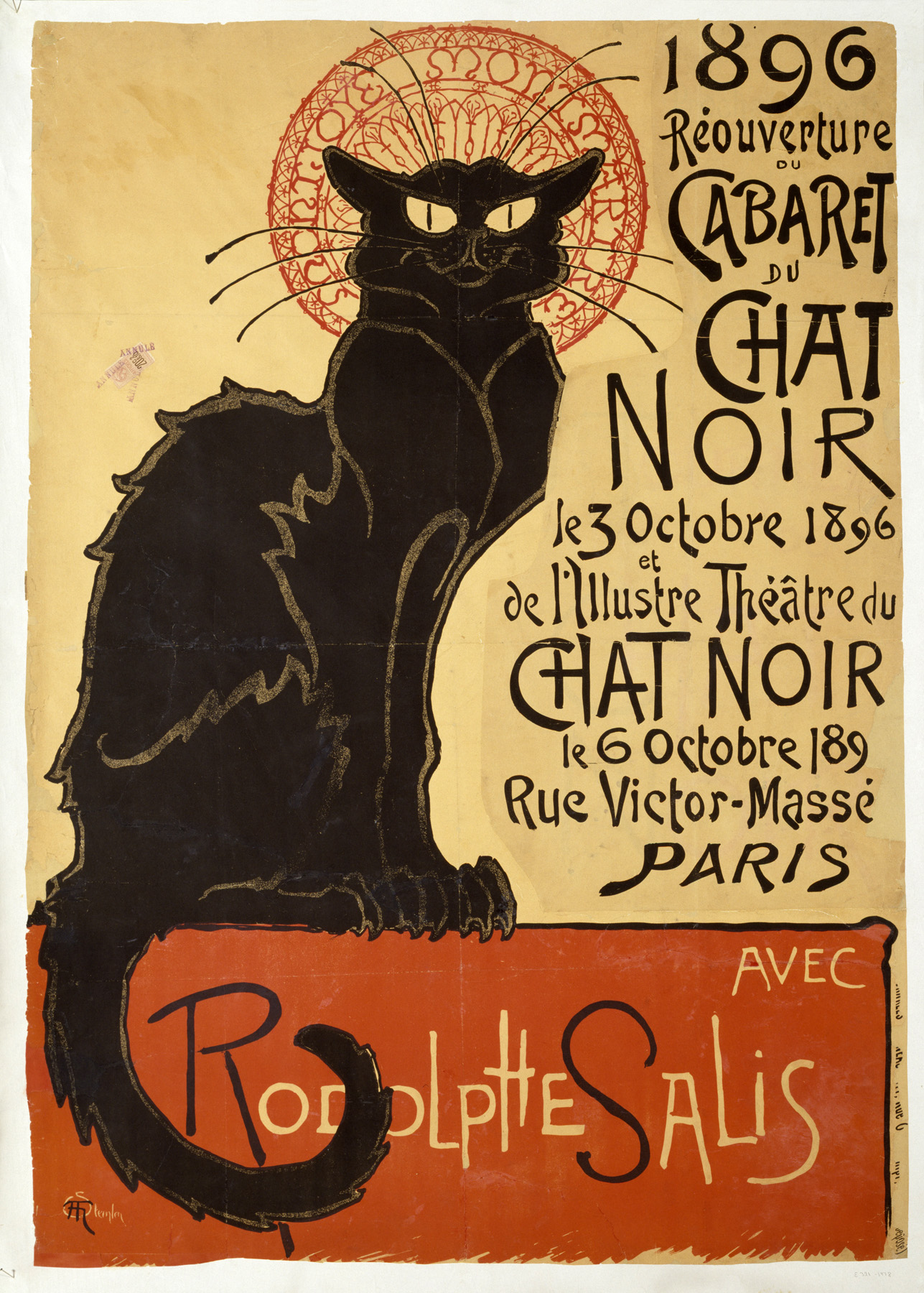
Not that Cameron looked to the handful of earlier women artists as models. She was trying to be a new Rembrandt: her portraits consciously compete with the masterpieces of the baroque age. While the painted portraits of male Victorian artists such as John Everett Millais and George Frederic Watts are period pieces at best, her great 1866 photograph Mountain Nymph, Sweet Liberty (Mrs Keene) with its subtle mix of resolution and suggestiveness brings us face to face with someone whose eyes hold ours and whose mind is as real to us as her tangled hair. There is a sensitivity to the magic of being human in Cameron’s portraits that makes her the greatest British artist of her time. This exhibition puts her in a brilliantly delineated context of experiment and imagination, the first avant-garde artist of the camera.”
This major exhibition is the first to examine the relationship between four ground-breaking Victorian artists: Julia Margaret Cameron (1815-1879), Lewis Carroll (1832-1898), Lady Clementina Hawarden (1822-1865) and Oscar Rejlander (1813-1875). Drawn from public and private collections internationally, the exhibition features some of the most breath-taking images in photographic history. Influenced by historical painting and frequently associated with the Pre-Raphaelite Brotherhood, the four artists formed a bridge between the art of the past and the art of the future, standing as true giants in Victorian photography.
Clementina Hawarden (British, 1822-1865)
Her life cruelly cut short by pneumonia at the age of forty-two, Clementina Maude, Viscountess Hawarden produced some 800 photographs in her lifetime, nearly all are of her eight children posed in poignant tableaux. She began to photograph on her family’s estate, outside Tipperary, around 1857, later moving to Princes Gardens, London, near Hyde Park. Frequently compared to Cameron, she was much admired by Carroll, and on her death, Rejlander wrote her obituary.
Wall text from the exhibition
“In that vein, the greatest discovery in the exhibition is a thrillingly strange image by Hawarden, to my mind always the most intriguing photographer of the four. Hawarden was a Scottish countess who had ten children. She photographed all of her daughters repeatedly, and there were so many of them it’s hard to keep track. Her photographs, which are often classical in their formal qualities, nevertheless anticipate the diaristic work of the 20th century photographers Sally Mann and Nan Goldin. They often contain more than one girl, and often feature mirrors, so that everything is about multiplication or reflection – an effect that might also be seen as a form of self-portraiture in the mother of so many.”
Her photographic years were brief but prolific. Hawarden produced over eight hundred photographs between 1857 and her sudden death in 1864. During this time she gave birth to three of her eight children. Lady Hawarden’s photographic focus remained on her children. There is only one photograph believed to feature the Viscountess Hawarden, yet it could also be a portrait of her sister Anne Bontine.
A collection of 775 portraits were donated to the Victoria and Albert Museum, London in 1939 by Hawarden’s granddaughter, Clementina Tottenham. The photographs were torn, or cut, from family albums for reasons that are still unclear. This accounts for the torn or trimmed corners which are now considered a hallmark of Hawarden’s work.
Carol Mavor writes extensively about the place of Hawarden’s work in the history of Victorian photography as well as contemporary interpretations of the work. She states, “Hawarden’s pictures raise significant issues of gender, motherhood, and sexuality as they relate to photography’s inherent attachments to loss, duplication and replication, illusion, fetish.” (Mavor, Carol (1999). Becoming: the photographs of Clementina, Viscountess Hawarden (1st ed.). Durham, NC: Duke University Press.)
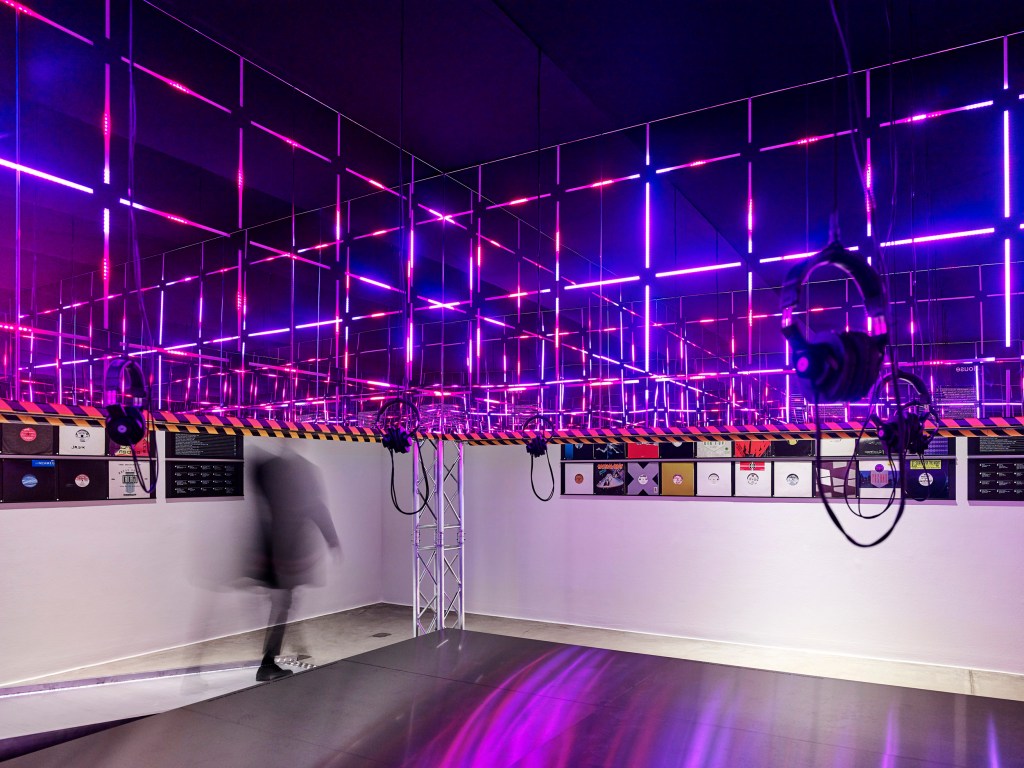
“Although her work has often been linked to that of Julia Margaret Cameron, the best known woman photographer of the Victorian epoch, Clementina Hawarden struck out into areas and depicted moods unknown to the art photographers of her age.”
~Â Graham Ovenden 1974
This remarkable photograph shows a woman gazing into a mirror, but not at her own reflection. Instead, the picture was carefully arranged so that the woman’s face is seen in profile, while only her reflection looks back out of the mirror. Hawarden excelled at producing ambiguous narrative photographs such as this one, suggesting the rich inner life of the subject, without telling a clear story. The heroes of her pictures are nearly always women, who seem all but trapped in domestic interiors.
Clementina, Lady Hawarden, is a poetic, if elusive, presence among nineteenth-century photographers. As a devoted mother, her life revolved around her eight children. She took up photography in 1857; using her daughters as models, she created a body of work remarkable for its technical brilliance and its original depiction of nascent womanhood. Lady Hawarden showed her work in the 1863 and 1864 exhibitions of the Photographic Society. With the exception of a few rare examples, her photographs remained in the possession of her family until 1939, when the more than eight hundred images were donated to the Victoria and Albert Museum. Only recently have they been the objects of research, publication, and exhibition.
Clementina Maude, her mother’s preferred model, is seen here in a reflective pose against a star-studded wall. The casual placement of the shawl on the table and the girl’s loose hair contribute to the feeling of intimacy. In the airy room time seems to be suspended. The sensuous curves of the table legs, the soft weight of the crushed velvet, and the crispness of the starry wallpaper are enhanced by the skilful handling of the collodion technique. The composition, devoid of Victorian clutter, brings together light, shadow, and compositional elements in a spare and appealing interplay. In contrast to the prevailing fashion of giving literary or sentimental titles to portraits of young women, Lady Hawarden titled her works simply “Photographic Study.”
Hawarden frequently dressed up her sitters and arranged them in enigmatic narratives like this one. Although not derived from any known painting, the manner of dress, including the cloak and tricorn hat of the male figure (actually one of Hawarden’s daughters dressed up), suggest an eighteenth century reference.
Working from upstairs rooms at 5 Princes Gardens, near to the South Kensington Museum (where both she and Julia Margaret Cameron were frequent visitors), Hawarden used light streaming from large floor to ceiling windows to illuminate her pictures. Her subjects were usually her children, especially her daughters Clementina, Florence, and Isabella Grace, whom she posed in domestic tableaux.
Both Carroll and Rejlander knew and admired Hawarden. On at least one occasion, Rejlander photographed her daughter Isabella Grace; after Hawarden’s death, he also photographed her youngest daughter, Antonia.
Virginia Dodier thinks that this photograph belongs to an ‘Orientalist’ series. Here, Lady Hawarden gives her drawing room a tent-like atmosphere. Such scenes were popularised by the painter J. F. Lewis, and Roger Fenton exhibited his photographic ‘Nubian Series’ in 1859. Dodier writes that the idea of Orientalism allowed European artists to ‘evoke sensuality on the premise of presenting quasi-ethnographical information about the customs of the East’. The idea of the fancy dress or allegorical portrait stems from an earlier tradition in English art. They are found, for example, in the work of the painter Sir Joshua Reynolds (1723-1792).
Lady Clementina Hawarden: Themes & Style (extract)
With careful choice of props, clothing, mirrors, balcony, and posture, Hawarden produced exquisite studies of her adolescent daughters. The figures and dress are the main subject, carefully framed in the room, and often in front of the balcony. The city beyond often provides a blurred background.
The writer Carol Mavor in Becoming: The Photographs of Clementina, Viscountess Hawarden suggests that the often provocative poses of Hawarden’s daughters are significant. The Victorians were bothered by the idea of sexuality and adolescence, and in 1861 the Offences Against the Person Act raised the age of consent from 10 to 12. This was also the year in which Hawarden began to make this kind of photograph, though there is no evidence that she was deliberately exploring this controversial topic.
Hawarden liked to use natural light in her studio at her South Kensington home, in a way that was seen at the time as ‘daring’. She placed mirrors to reflect light and used them to explore the idea of ‘the double’, just as other photographers (and occasionally Hawarden herself) used a stereoscopic camera to produce twin prints.
From around 1862 Hawarden concentrated on photographing her daughters in costume tableaux, a popular subject at the time. Costumes from the dressing up box are combined with dresses at the height of fashion to produce beautiful and detailed studies that confound the contemporary with the make-believe.
Text from the Victoria and Albert Museum website [Online] Cited 16/05/2018. No longer available online
Clementina Hawarden (British, 1822-1865) Photographic Study (Clementina and Florence Elizabeth Maude) 1859-1861 Uncut stereo albumen print
Figure 60 and 61 of the catalogue for the exhibition Victorian Giants: The Birth of Art Photography at the National Portrait Gallery, London
Figure 112 and 113 of the catalogue for the exhibition Victorian Giants: The Birth of Art Photography at the National Portrait Gallery, London
Oscar Rejlander (British born Sweden, 1813-1875)
According to his naturalisation papers, Rejlander was born in Stockholm on October 19, 1813. He was the son of Carl Gustaf Rejlander, a stonemason and Swedish Army Officer. During his youth, his family moved to the Swedish-speaking community in Rauma, Finland (then Russia). In the 1830s, he relocated to England, initially settling in Lincoln, England. In the 1850s he abandoned his original profession as a painter and portrait miniaturist, apparently after seeing how well a photograph captured the fold of a sleeve.
He set up as a portraitist in the industrial Midlands town of Wolverhampton, probably around 1846. In the early 1850s he learned the wet-collodion and waxed-paper processes at great speed with Nicholas Henneman in London, and then changed his business to that of a photography studio. He undertook genre work and portraiture. Rejlander also produced nude studies, mainly for use as studies by painters. There are no known erotic photographs of children by Rejlander. His so-called ‘Charlotte Baker’ photograph is a well-known forgery, produced by convicted child sex offender Graham Ovenden by Ovenden’s friend Howard Grey in the 1970s, rephotographed and printed to look antique by Ovenden. No person by the name Charlotte Baker ever seems to have posed for Rejlander.
Rejlander undertook many experiments to perfect his photography, including combination printing, which he did not invent; however, he created more elaborate and convincing composite photographs than any prior photographer. He had articles feature in the Wolverhampton Chronicle, on 15 November 1854 an article called “Improvement in Calotypes, by Mr. O.G. Rejlander, of Wolverhampton” it suggests that by 1854 he was experimenting with combination printing from several negatives. He was a friend of photographer Charles Lutwidge Dodgson (better known by the nom de plume Lewis Carroll), who collected Rejlander’s work and corresponded with him on technical matters. Rejlander later created one of the best known and most revealing portraits of Dodgson.
Rejlander participated in the Paris Exhibition of 1855. In 1856 he made his best-known allegorical work, The Two Ways of Life. This was a seamlessly montaged combination print made of thirty-two images (akin to the use of Photoshop today, but then far more difficult to achieve) in about six weeks. First exhibited at the Manchester Art Treasures Exhibition of 1857, the work shows a man being lured to paths of vice or virtue by good and bad angels. The image’s partial nudity, which showed real women as they actually appeared and not the idealised forms then common in Victorian art, was deemed ‘indecent’ by some. Rejlander was also accused of using prostitutes as models, although Rejlander categorically denied this and no proof was ever offered. Reservations about the work subsided when Queen Victoria ordered a 10-guinea copy to give to Prince Albert. Victoria and Albert would go on to purchase three copies of the work, all of which are now lost. …
Rejlander moved his studio to Malden Road, London around 1862 and largely abandoned her early experiments with double exposure, photomontage, photographic manipulation and retouching. Instead, he became one of Britain’s leading portraitists, creating pictures with psychological charge. He became a leading expert in photographic techniques, lecturing and publishing widely, and sold work through bookshops and art dealers. He also found subject-matter in London, photographing homeless London street children to produce popular ‘social-protest’ pictures such as “Poor Joe,” also known as “Homeless”. …
Rejlander’s ideas and techniques were taken up by other photographers and this, to some extent, justifies labelling him as the father of art photography.
Starting in the late 1860s, Charles Darwin began collecting photographs for use in the research that would eventually become his book The Expression of the Emotions in Man and Animals (1872). Hoping to find authentic photographs, that captured emotional expressions as they actually occurred, he visited print shops and studios in London, and contacted several photographers hoping to commission new pictures. Few, if any, of the photographs he acquired met his ambitious expectations.
In April, 1871, Darwin wrote, ‘I am now rich in photographs, for I have found in London Rejlander, who for years has had a passion for photographing all sorts of chance expressions, exhibited on various occasions … instantaneously.’ Rejlander would go on to become the main contributor of photographs to Darwin’s book.
Wall text from the exhibition
Oscar Rejlander (British born Sweden, 1813-1875) The Two Ways of Life 1856-1957 Albumen print, made from approximately 32 separate negatives Moderna Museet, Stockholm
One of the most famous pictures in photographic history, Rejlander’s Two Ways of Life caused a sensation when it was exhibited at the Manchester Art Treasures exhibition in 1857. To make it, Rejlander combined some thirty-two separate negatives (there were variations between printings, and it is not always clear where negatives begin and end). Some viewers were offended by the nudes, whose bodies appear frank and realistic compared to the ideal fantasies painters were expected to produce. Others objected to its ambition, since Rejlander seemed to be saying that photography could be used to produce pictures just as meaningful, and as artistically composed, as any painting.
To make Two Ways of Life, Rejlander had to arrange the various subjects within it at the right size to maintain visual perspective. This was a challenge, since enlargement and reduction of negatives was not yet possible in the darkroom. The only way he could change the size of something in the negative was to rephotograph it.
This is the finest known print of the photograph, which is also known in a reduced form. The photograph is a parable featuring Rejlander himself, who stands in the middle, listening to ‘good’ and ‘bad’ angels luring him to paths of vice and virtue. Queen Victoria and Prince Albert loved the picture and bought three copies, none of which survive.
Iphigenia was a daughter of King Agamemnon who appears in legends about the Trojan War. When her father accidentally offended the goddess Artemis, he was forced to sacrifice Iphigenia to appease the goddess so that she would allow his ships to sail to Troy. She was tricked into going to the town of Aulis under the pretence that she would marry the heroic warrior Achilles. In some versions she was killed, while in others she was rescued by Artemis.
Wall text from the exhibition
Oscar Rejlander (British born Sweden, 1813-1875) Ariadne 1857 Albumen print from a wet collodion negative
Rejlander produced a number of nude studies which he sold to painters for use as studies. He considered these pictures significant because they pointed up errors historically made by painters when depicting human anatomy. Although he was happy for painters to use photographs to improve their paintings, he also saw accuracy of depiction as one of the things that made photography special when compared to other art forms.
This photograph is a based on the famous painting The Virgin in Prayer painted by the Italian Baroque painter Sassoferrato 1640-1650, now in the collection of the National Gallery, London. The rise of public art spaces in Britain in the nineteenth century, including the National Gallery (1824), and the National Portrait Gallery (1856), provided inspiration for countless photographers. Rejlander was particularly enthusiastic about restaging famous paintings, often in order to demonstrate mistakes that painters had made in scale and perspective. The process was fun, and the results fuelled the debate about photography’s role among the arts.
Cameron invited Rejlander to the Isle of Wight in 1863. Before the visit, Rejlander provided her with some of his own negatives, so that she could practise printing. She experimented with some, decorating them with ferns. This picture, which descended through Cameron’s family, was once believed to have been made by her. However, it is now recognised as one of the pictures Cameron printed from a Rejlander negative. The subject is one who frequently appears in Rejlander’s work, and may even have been his wife, Mary.
This photograph shows two sisters side by side in profile, their hands clasped in prayer. One girl seems almost to be a mirror reflection of the other. Rejlander exhibited versions of this photograph with two different titles. Purify My Heart is a reference to the biblical passage James 4:8: ‘Draw nigh to God, and he will draw nigh to you. Cleanse your hands, ye sinners; and purify your hearts, ye double minded.’ Lewis Carroll admired this photograph and purchased a copy for his personal collection.
This portrait (above) shows Captain Alexander Leslie-Melville (1831-1857), known as Lord Balgonie. He was the eldest son of the 8th Earl of Leven, a Scottish peer. Lord Balgonie served in the Grenadier Guards during the war, and died only a couple of years after returning to Britain. At the time, his death was attributed to the hardships of the war. Fenton has photographed him standing in front of a sheet, which serves as a make-shift studio and he looks unkempt and shaken, as if he has recently stepped off the battlefield. In recent years, this photograph has been described as the first photographic portrait of shell-shock. From the collection of the Prince of Wales, later King Edward VII.
The Crimean photographs of Roger Fenton represent the beginning of war photography. These staged photographs, documented for the edification of a viewing public back home in England and for the purpose of making money for the photographer, set the trend for the genre for the next 80 years. Staging photographs of war, and altering reality to suit the commercial, political or moral aspirations of photographer or institution, continues to this day.
For most of the images, “research for the exhibition has revealed that Fenton’s portraits and topographical views were principally intended as source material for the artist Thomas J Barker, who had been commissioned by Agnews to produce an oil painting of the senior officers of the allied forces. Barker used over 50 of Fenton’s images to create the monumental work The Allied Generals with the officers of their respective staffs before Sebastopol (private collection).” Fenton was fulfilling his commission and earning a living by taking photographs for a painter. But Fenton’s photographs are most successful when he has a personal connection to the subject matter, whether it be portrait or landscape. In other words, when he is not constructing or documenting as representation, but attempting to capture the spirit of person/place.
In portraiture, this personal connection can be seen in the photographs, Lord Balgonie (1855, above), Fitzroy James Henry Somerset, Baron Raglan (1788-1855) (4 Jun 1855, below), Omar Pacha (1806-1871) (1855, below) and General James Bucknall Estcourt (1802-1855) (1855, below), a man deep in thought or, perhaps, melancholy. These are psychological portraits that attempt to get under the skin of the sitter, not mere representations for use as a template for painting.
The portraits of Baron Raglan and Omar Pacha are taken in the same location, probably at the same sitting. In the portrait of Baron Raglan, this man (soon to die) is relatively small in proportion to the overall framing of the photograph, his dark shadow falling on the wall behind, his hat and white plume pulled forward and out of focus in the image, incredibly large in comparison with the size of the body. In three-quarter profile he gazes out of the image, while the right and top of the image falls into soft, velvet darkness. By comparison, the portrait of Omar Pacha presents to us a much more self possessed and confident man. Fenton has moved the camera closer to his subject. No shadow falls on the wall behind and the light frames the head of the sitter perfectly. His bearing is upright but relaxed; his hands gently rest in his lap; and his gaze stares directly out of the image but not directly into the camera lens as though her is in deep thought somewhere beyond the photographer’s left shoulder. Both are magnificent portraits.
With regard to his landscapes of the Crimea the same feelings can be observed. One is the representational urge, the other the artistic. The first problem is the barrenness of the landscape and what to do with the inevitable horizon line. When photographing people in the landscape Fenton makes use of low depth of field either pulling the figures towards the front of the image (Sir John Miller Adye (1819-1900) 1855, and General Scarlett and Colonel Low Apr 1855, below) or the mid-distance (such as Captain and Mrs Duberly Apr 1855 and Colonel Doherty and the Officers of the 13th Light Dragoons 1855, below) whilst allowing the horizon line to float in the distance, either placed through the figures or floating above them. This low depth of field allows the horizon line to soften and the solid space around the figures to become ambiguous and fluid. It also allows the light in this vast expanse of country to do its duty, to illuminate the isolation of these figures “in the field.” A similar technique was used by Edward S. Curtis when photographing the Native American Indians against the vastness of country – low depth of field, letting the light and composition do the work as subject is located – or vanishes – into the landscape.
For the shear complexity of their visualisation, Fenton’s photographs of Balaklava are among my favourites. The placement of camera, the line of composition (ship masts, hills, horizon line, stacking of cannonball), the flattening of perspective (The Ordnance Wharf at Balaklava Mar 1855, below) and the tonality of the images are exemplary.
Taken a mere 15 years after the birth year of practical photography, Fenton’s “subtle and poetic interpretations” still resonate today. That he captured such acclaimed images using a heavy land camera, the photographs taken sometimes under fire, the glass plates prepared and developed in a ‘travelling darkroom’ – his horse drawn photographic van – make Fenton’s achievement all the more remarkable. The shadow of war that he captured, the presence of the men, women and landscapes of that time and place, are made alive to us today.
Note this
There is the date a photograph is made, and the date it is viewed. There is something about the different way a photograph exists in time, different from the date a poem is written and the date it is read, different from the date a painting is finished and the date it is viewed.
And then
Photographs remind us of people, passing They distill an essence which in turn Instills in us memory of time, place, spirit
Dr Marcus Bunyan
Many thankx to The Queen’s Gallery for allowing me to publish the photographs in the posting. Please click on the photographs for a larger version of the image.
Half a league, half a league, Half a league onward, All in the valley of Death Rode the six hundred.
This painting depicts the second meeting with Guardsmen which took place at Buckingham Palace. The first meeting had been with the Grenadier Guards on 20 February 1855. The artist John Gilbert prepared a sketch of the event for the newspaper the Illustrated London News, published on 10 March 1855. He went on to create this painting using photographs of the soldiers for accuracy. Prince Albert supplied photographs of himself and the royal children. Gilbert was also given permission by the Queen to visit the Marble Hall in Buckingham Palace to recreate the scene. The scale of the watercolour caused a sensation when it was exhibited in 1856. Probably acquired by the Prince of Wales, later King Edward VII.
This is the first exhibition to focus exclusively on Roger Fenton’s pioneering photographs of the Crimean War, taken in 1855. Fenton was already an accomplished and respected photographer when he was sent by the publishers Agnew’s to photograph a war that pitched Britain, France and Turkey as allies against Russia. Arriving several months after the major battles were fought in 1854, Fenton focused on creating moving portraits of the troops, as well as capturing the stark, empty battlefields on which so many lost their lives.
Published in contemporary newspaper reports, Fenton’s photographs showed the impact of war to the general public for the first time. Through his often subtle and poetic interpretations Fenton created the genre of war photography, showing his extraordinary genius in capturing the futility of war.
The title of this work gives no indication that this is a self-portrait. Fenton has dressed himself in the uniform of a Zouave, a type of Algerian soldier who fought with the French army during the Crimean War. The Zouaves were admired both for their bravery and for their colourful dress. In 1855, when this photograph was exhibited for the first time, Fenton was Britain’s leading photographer but only a handful of fellow artists would have known that this was Fenton and not a Zouave soldier from the war. From the collection of the Prince of Wales, later King Edward VII.
Roger Fenton (1819-69) was the first photographer to document a war for public consumption. From March 1855, Fenton spent four months photographing the people and the terrain affected by the Crimean War, fought between the allied nations of Britain, France and the Ottoman Empire against Russia.
Fenton’s time in the Crimea was relatively short given the war lasted over two years (October 1853 – March 1856) but his photographs captured, for the first time, the chaos and disorder of a war zone, and showed the Victorian public portraits of soldiers in the field, directly affected by battle. Although Fenton was fulfilling a commercial commission, he allowed himself to respond emotionally in his work and this is perhaps why his photographs continue to represent the Crimean War more effectively than any other visual record of the conflict.
This exhibition presents Fenton’s work within the wider context of the war, alongside other contemporary artists, photographers and writers also in the Crimea at that time. We begin with two sections which, through Fenton’s portraits, introduce some of the key individuals and events that occurred prior to Fenton’s arrival in the Crimea.
Subsequently we examine Fenton’s work in more detail, before considering the significant role played by the royal family in focusing the attention of the British public on the impact of war and the returning wounded veterans.
The Crimean War, 1853-1856
The Crimean War, also known as the Russian War, pitched the allied nations of Britain, France, the Ottoman Empire and the Kingdom of Sardinia against the Russian Empire. At its simplest, the war was fought to prevent Russia gaining territorial control of various regions in eastern Europe, then under Ottoman control, and of routes into British India. These regions included the Black Sea, the Mediterranean, the Caucasus region and the Danubian provinces of modern-day Romania. Other more complex reasons included disputes over the control of religious sites and the protection of Christians in the Middle East, as well as concern over the declining influence of the Ottoman Empire and the growth of nationalism in various regions.
War with Russia had been publicly discussed for several years before Russian incursions into Romania, then under Ottoman control, led to a declaration of war from Constantinople in October 1853. Britain and France, fearing the collapse of the Ottoman Empire and the growth of Russian power, followed with their support for the Ottomans by declaring war on Russia at the end of March 1854.
The conflict began in Europe and could have ended there in July 1854 when Russia began to withdraw but the European allies decided to confront Russia directly by besieging the Russian port of Sevastopol, an important naval base on the Crimean peninsula. The allies landed in the Crimea on 14 September 1854 and made their way towards Sevastopol, encountering the Russians in several major battles en route including Alma (20 September), Balaklava (25 October) and Inkerman (5 November). On 9 September 1855, after numerous other battles and skirmishes, Sevastopol fell to the allies.
Lord Raglan (1788-1855) was a veteran of the Napoleonic Wars. He lost his right arm during the Battle of Waterloo in 1815, whilst he was an aide to the Duke of Wellington. Despite having never commanded in the field, he was named as the expedition Commander-in-Chief in early 1854 when war seemed inevitable. He was to become the focus of heavy public criticism over the apparent poor organisation and logistics during the campaign. This criticism contributed to his declining health, and he died in the Crimea on 28 June 1855. He was succeeded as Commander-in-Chief by General James Simpson. From the collection of the Prince of Wales, later King Edward VII.
John Burgoyne (1782-1871) was a key member of the senior command during the war. After the Battle of Alma on 20 September 1854, Burgoyne proposed that the army march south of Sevastopol and besiege the city, rather than attacking the city from the north. This decision ultimately committed the allies to a siege of almost a year. Burgoyne returned to Britain in the winter of 1854-1855 before Fenton arrived in the Crimea. As Fenton sought to photograph all the senior commanders from the war, he arranged this session in his London studio sometime after he returned to Britain in mid-July 1855. From the collection of the Prince of Wales, later King Edward VII.
Sir James York Scarlett (1799-1871), here seated on a horse, played a key role in the Battle of Balaklava on 25 October 1854. The Charge of the Heavy Brigade, under Scarlett’s command, was a highly successful attack on the Russian army which has become overshadowed by the infamous Charge of the Light Brigade which occurred later during the same battle. Alexander Low (1817-1904) held the rank of Captain in the 4th Light Dragoons at the time of this photograph. He was a highly skilled cavalryman and served with distinction during the Charge of the Light Brigade. From the collection of the Prince of Wales, later King Edward VII.
Fenton made a number of group portraits of men from the five Light Cavalry regiments that charged on 25 October. News of the action had caught the public imagination, and the names of the regiments became well-known. Fenton would probably have seen photographs of men who may have fought in the battle as having greater commercial potential. From the collection of the Prince of Wales, later King Edward VII.
The Battle of Inkerman 5 November 1854
After Balaklava, the allied armies continued to besiege Sevastopol. The Russian army occupied a strong position between the city and the allies, and on 5 November 1854 they attempted to end the siege. The Battle of Inkerman saw fierce fighting hampered by thick fog, resulting in poor communication between the troops. Casualties were disproportionately high. The battle was a victory for the allies but it also committed the troops to a long winter in the Crimea.
Most of the injured soldiers were shipped to Scutari hospitals, near Constantinople. As the Inkerman wounded arrived, so too did Florence Nightingale and her nurses. During October, reports in The Times sent by William Howard Russell had described the poor care for the wounded and the lack of nurses. This led Sidney Herbert, Secretary of State for War, to ask Nightingale to lead a nursing party to Scutari. They arrived on 4 November 1854.
From Scutari, Nightingale made three visits to the Crimea, the first in May 1855 when she caught a serious illness that was to affect her for the rest of her life. By this time, Nightingale was already well-known to the British public and had been depicted in the press as the ‘Lady with the Lamp’. She returned to Britain in July 1856 and devoted much of the rest of her life to hospital and healthcare reform.
Inkerman
Roger Fenton produced this panoramic view of the Inkerman Valley, the scene of a fierce battle on 5 November 1854 that pitched the British and French allies against the Russian army. The battle took place in thick fog, resulting in troops becoming cut off from their commanders and a high number of casualties. Although the battle was an allied success, its impact was such that it extended the war by months, condemning the troops to the harsh winter of 1854-1855 in the Crimea. From the collection of the Prince of Wales, later King Edward VII.
Fenton took a number of staged photographs of camp life, including this group of the 4th Dragoon Guards. Generally, the titles of his portraits are the name of the sitter or regiment photographed, but this is one of a small number which have been given a more emotive title. From the collection of the Prince of Wales, later King Edward VII.
Haunting images that brought the stark reality of war into public consciousness for the first time have gone on display in a new exhibition Shadows of War: Roger Fenton’s Photographs of the Crimea, 1855 at The Queen’s Gallery, Buckingham Palace, London. Roger Fenton (1819-1869) was the first photographer to document conflict in such a substantial way at a time when the medium of photography was still in its infancy and there was no expectation of what ‘war photography’ should be.
Drawn entirely from the Royal Collection, the exhibition explores the impact and legacy of Fenton’s Crimean work, which is shown in Scotland for the first time since 1856. It also tells the story of the historically close relationship between the Royal Family and those who have served their country in battle, with contributions to the exhibition’s multimedia guide by Prince Harry, photojournalist Sir Don McCullin and exhibition curator Sophie Gordon.
One of the leading photographers of the 19th century, Roger Fenton was commissioned by the art dealer and publisher Thomas Agnew & Sons to photograph the officers and other people of interest during the Crimean conflict. On 20 February 1855 Fenton set sail for the Crimea on board HMS Hecla, accompanied by 36 chests of cameras, glass plates, chemicals, a stove and other pieces of equipment, and a wine merchant’s van converted into a travelling darkroom and accommodation for the photographer and his two assistants.
Research for the exhibition has revealed that Fenton’s portraits and topographical views were principally intended as source material for the artist Thomas J Barker, who had been commissioned by Agnews to produce an oil painting of the senior officers of the allied forces. Barker used over 50 of Fenton’s images to create the monumental work The Allied Generals with the officers of their respective staffs before Sebastopol (private collection). The painting reproduces some of Fenton’s portraits directly, including those of the Scottish General Sir Colin Campbell and The Times reporter William Howard Russell, as well as his photographs of camp life, such as 8th Hussars Cooking Hut.
Other figures within the painting, such as Barker’s depiction of Florence Nightingale, are clearly inspired by Fenton’s photographs. Although Nightingale was in the Crimea in 1855, she was a reluctant sitter for the camera and appears not to have been photographed by Fenton. Instead Barker’s portrait of her on horseback seems to be inspired by Fenton’s photograph Mr and Mrs Duberly.
In the 19th century there was a thriving market for prints of popular paintings. An engraving of Barker’s work was published in 1859 with a key to help the public identify the figures. The reproduction of the painting in newspapers and exhibitions of Fenton’s photographs raised awareness of the conditions endured by soldiers at a time when the wounded began to arrive home.
The concern and admiration for the veterans displayed by Queen Victoria and members of the royal family helped to highlight the plight of those returning from war. The Queen met groups of soldiers, visited military hospitals and inspected troops of veterans at Buckingham Palace. One such occasion was recorded by John Gilbert in The Queen inspecting wounded Coldstream Guardsmen in the Hall of Buckingham Palace, 22 February 1855. This large watercolour, which has hung at Sandringham House since it was acquired by Queen Victoria’s eldest son, the future King Edward VII, is exhibited for the first time.
Queen Victoria was the first British monarch to meet and support wounded soldiers in public. Today Prince Harry’s work with veterans promotes a wider understanding and respect for those who serve their country. On the exhibition’s multimedia guide His Royal Highness speaks about a number of Fenton’s images and how they helped change attitudes towards those affected by their experiences on the battlefield.
Speaking about Fenton’s image Lord Balgonie, the first visual record of someone suffering from ‘shell shock’ Prince Harry says in the multimedia guide: ‘There has always been a fascination about people returning from war, what they’ve been through and what they’ve seen. The psychological impact of being on the battlefield is something that servicemen and women have had to deal with, but have often found it hard to talk about. As a result of photographers like Roger Fenton and those who have followed him, the public have gained a better appreciation of these experiences and consequently, over the years this fascination has turned to appreciation and respect.’
Fenton’s ‘travelling darkroom’ was the only space he had in which to prepare his glass plates before they were exposed in the camera, and afterwards, to develop the negative image. Beyond a few test prints, however, Fenton would not have done any significant printing of photographs in the Crimea. All the negatives were transported back to Britain and printed there. This photograph was probably taken shortly before Fenton went into the ‘Valley of the Shadow of Death’. He later wrote in a letter, perhaps half-jokingly, that he feared the van being destroyed by enemy fire in the valley so he felt he should preserve its memory in a photograph. From the collection of the Prince of Wales, later King Edward VII.
Fenton’s Crimean Commission: 8 March – June 1855
Fenton was commissioned to go to the Crimean War by the Manchester-based publishers Thomas Agnew & Sons. Agnew’s was one of the leading publishers, print sellers and dealers at the time, and the firm saw the war as an opportunity to sell new images to a public hungry for information. The war coincided with an increased number of public art exhibitions as the middle classes in particular had more time and money to spend on leisure activities.
At the same time, Agnew’s also commissioned the British historical painter Thomas Barker (1815-1882) to produce a large oil painting depicting the expected allied victory at Sevastopol. Fenton’s photographs were to be used as source material by Barker. This enabled the artist to claim absolute truthfulness and accuracy in his portraits.
Barker incorporated versions of at least 50 of Fenton’s photographs into his painting. Some photographs have been copied almost exactly; others have been reversed or combined with other images, with elements from some photographs appearing alongside people from other works. The painting was completed in 1856 and the associated engraving was published by Agnew’s in 1859. A key was also produced, identifying each individual in the work, in which Fenton’s role was explicitly acknowledged.
Perhaps Fenton’s most well-known photograph, ‘The Valley of the Shadow of Death’, is not in fact the location of the charge of the Light Brigade. When Fenton reached the ravine seen in this photograph, he found himself the target of enemy fire. Even so, Fenton managed to make at least two distinct views: the version seen here, and another in which far fewer cannon balls lie on the ground, indicating that he re-arranged one of the scenes. This photograph, which has become one of Fenton’s most famous compositions, demonstrates the power of the camera at war. The scene is still and almost barren, but the power of the imagination draws the viewer into the landscape and the title, with its reference to Psalm 23, suggests that we walk between the realms of life and sudden death. From the collection of the Prince of Wales, later King Edward VII.
Neither Robertson’s photograph nor Simpson’s lithograph show the same location as Fenton’s image, despite all three works having the same title. The full phrase from Psalm 23 from which the title comes is ‘Yea, though I walk through the valley of the shadow of death, I will fear no evil’. It is reported that the British soldiers gave the ravine its name. The emotive pull of Fenton’s composition is all the more apparent when compared with Robertson’s photograph and Simpson’s lithograph, although the round shot in Simpson’s work links it visually to Fenton’s photograph.
Omar Pacha (1806-1871) was the commander of the Ottoman army at the beginning of the war, when the Russian incursions into the Balkan regions began. He was later to win a significant victory against the Russians at the Battle of Evpatoria on 17 February 1855 in the Crimea. Omar Pasha was photographed several times by Fenton, both seated and on horseback. A number of commanding officers were photographed in this way. It was probably to give the artist Thomas Barker a variety of poses which could be incorporated into his painting. Omar Pasha does appear on a horse in the final painting, but his head is a copy of this seated portrait. From the collection of the Prince of Wales, later King Edward VII.
This portrait shows Colonel Brownrigg of the Grenadier Guards, with two Russian boys who were apparently taken prisoner by the British. In a letter from 29 April 1855 to his wife, Fenton described what happened, ‘Tell Annie [Fenton’s daughter] there are two Russian boys here who both would like to come to England which will she have Alma or Inkermann, such are their new names. One is an orphen [sic] the other has or had his parents in the town. They went out nutting last autumn & were taken, cried sadly but now would cry to go back’. From the collection of the Prince of Wales, later King Edward VII.
This beautifully composed group was incorporated almost entirely into Barker’s painting, although the woman standing at the back of the group was omitted. It is easily identifiable on the left-hand side of the painting. Fenton made a handful of photographs which try to capture the camp life of the ordinary soldier. The 8th Hussars were one of the regiments involved in the Charge of the Light Brigade and this association would give the photograph greater interest to the Victorian public. From the collection of the Prince of Wales, later King Edward VII.
Frances Isabella Duberly (1829-1902), known as Fanny, accompanied her husband Captain Henry Duberly (1822-1891), Paymaster of the 8th Hussars, to the war against the orders of Lord Raglan. She kept a journal of her experience, which included witnessing the Battle of Balaklava. She was also one of the first civilians to enter Sevastopol after it fell to the allies. Mrs Duberly attempted to dedicate the published version of her journal to Queen Victoria, titled Journal Kept During the Russian War, but this was refused. From the collection of the Prince of Wales, later King Edward VII.
The vivandières, also known as cantinières, were attached to French regiments to supply the troops with food and drink beyond the standard rations. In a letter to his wife, Fenton described how he photographed this group on 5 May, ‘In the afternoon a Cantiniere was brought up I made first a picture of her by herself & then a group in which she is giving assistance to a wounded soldier. It was great fun the soldiers enjoyed it so much & entered so completely into the spirit of the thing’. This group was incorporated into Barker’s painting, although the composition was reversed. From the collection of the Prince of Wales, later King Edward VII.
This striking portrait was taken at the same time as the earlier group photograph with the ‘wounded soldier’. The vivandières usually dressed in a feminised version of the uniform of the regiment to which they were attached. There were women attached to the British regiments, known as sutlers, who helped with food, drink and domestic duties. From the collection of the Prince of Wales, later King Edward VII.
Lieutenant Colonel Charles Doherty (d. 1866) was the commanding officer of the 13th Light Dragoons on the day of the Battle of Balaklava. His regiment was part of the Light Brigade, and his men participated in the famous charge. However, due to illness, Doherty did not join the battle. Doherty’s replacement that day, Captain John Oldham, was killed in the battle. Fenton probably photographed this group in anticipation of the interest in regiments who formed the Charge of the Light Brigade. Some of the men included in the group were amongst the chargers. From the collection of the Prince of Wales, later King Edward VII.
Ismael Pacha (1813-1865), also known as György Kmety, fought against the Russians in the 1848 Hungarian Revolution. After its failure and the harsh Russian reprisals, he joined the Ottoman army. Fenton took a series of photographs of Ismael Pacha receiving a pipe from his servants. Both Ismael Pacha and his Nubian servant, seen to the right of this photograph, appear in Barker’s painting The Allied Generals. Presumably acquired by Queen Victoria.
This photograph shows the British camps as seen from Cathcart’s Hill, the main British cemetery in the Crimea. The cemetery took its name from the grave of Sir George Cathcart, a senior military officer who was killed during the Battle of Inkerman. The hill was also used as an observation point as from it commanders could view the progress of the Siege of Sevastopol. From the collection of the Prince of Wales, later King Edward VII.
General Estcourt was a chief staff officer during the difficult first winter in the Crimea. He was among those most strongly criticised by the public and the press for the suffering of the army, although he was defended by his close friend Lord Raglan. He died of cholera in the Crimea in June 1855. The photograph is hard to interpret. It can be seen as someone taking a break from military concerns but it could also be a portrait of illness and exhaustion. From the collection of the Prince of Wales, later King Edward VII.
William Howard Russell was a reporter for The Times who rose to fame during the Crimean War for his vivid descriptions of major battles and the conditions faced by British troops. The Crimean War was the first conflict where advances in technology allowed newspapers to quickly print reports from their correspondents in the field. These reports attracted great public interest and influenced both official and public attitudes to the war. Russell’s emotive account of the Charge of the Light Brigade, published in The Times on 13 November 1854, inspired the poem of the same name by Alfred, Lord Tennyson. From the collection of the Prince of Wales, later King Edward VII.
When the British and French armies moved south to besiege Sevastopol, they had to choose a location in which to base themselves. The armies needed to be able to receive both men and supplies without hindrance for what might be many months. The French based themselves at Kamiesch, whilst the British chose Balaklava. The army took over the town, setting up its own infrastructure including a Post Office and constructing a military railway to transport the supplies as close as possible to the front lines.
When Fenton arrived in the Crimea on 8 March 1855, he disembarked at Balaklava. He took his first photographs on 15 March and spent the next two weeks exploring the port. He described the place in a letter as ‘one great pigsty’, noting the chaos and confusion which he managed to convey in his photographs.
This photograph clearly shows the scale of activity in Balaklava. There are ships in the harbour, and supplies (probably flour bags) are piled high on the water’s edge. In the foreground in ‘Railway Yard’ the new military railway is being constructed. It was paid for by Samuel Morton Peto (1809-1889) who had also provided Fenton’s passage to the Crimea. Construction of the railway began in February 1855 and part of the line was in use within weeks, probably around the same time that Fenton arrived at Balaklava. The railway was dismantled in 1856 after the end of the war. From the collection of the Prince of Wales, later King Edward VII.
Towards the end of March, Fenton made a number of views from ‘Guards Hill’ looking down towards the harbour of Balaklava. The ‘church parade’ referred to in the title is the parade of Scots Fusilier Guards seen to the right of the image. Although the group is indistinct, the bearskin hats of the Guards can be clearly distinguished. From the collection of the Prince of Wales, later King Edward VII.
Despite the title, Cossack Bay is only slightly visible in the middle distance of this photograph. The main view with the ships, including one bearing the number ’69’, centres around Cattle Pier. The ship with the transport number 69 is the Albatross, which at the time of this photograph had recently arrived from Constantinople after a four-day journey bringing Mary Seacole (1805-1881). Mrs Seacole set up a store and ‘hotel’ for British servicemen, supplying food, drink and medical supplies. In 1857 Mrs Seacole published an autobiographical account of her life and experiences in the Crimea, titled Wonderful Adventures of Mrs Seacole in Many Lands. From the collection of the Prince of Wales, later King Edward VII.
The Ordnance Wharf was the place where military supplies arrived – the British army’s Board of Ordnance was responsible for supplying weapons and ammunition, which can be clearly seen in the foreground of this photograph. The round shot is stacked awaiting transportation on the railway to reach the army camps besieging Sevastopol. The performance of the Board of Ordnance came under heavy criticism during the Crimean War, particularly during the 1854-1855 winter. As a result, after a 400 year existence, the Board was abolished and its responsibilities were transferred to the War Office. From the collection of the Prince of Wales, later King Edward VII.
Fenton left the Crimea on 22 June 1855, so missed the fall of Sevastopol. He arrived back in Britain on 11 July. Queen Victoria saw a selection of his work in August, whilst she was at Osborne House, and Fenton visited France in early September to show his photographs to the Emperor.
Fenton also began preparations for the display of his work at numerous venues across Britain. Hundreds of prints would have been required for the 26 venues identified so far, including Edinburgh, Glasgow, Exeter, Cardiff, Belfast and Dublin. Fenton also managed to photograph some of the significant individuals he had been unable to capture in the Crimea, in order to complete his commission for Agnew’s.
The photographs were extraordinarily popular with the public. One publication stated that two million visitors had seen the photographs by the end of March 1856. It is unlikely that this translated into financial success for Fenton, however. At the end of 1856 Agnew’s sold the negatives and remaining prints to a rival print seller, who continued to sell the work at a much lower price. Fenton continued his association with the royal family, travelling to Balmoral in September 1856 where he photographed the royal children.
Felice Beato (Italian-British, 1832-1909) The Docks after the Explosion 1856 Salted paper print 23.7 x 28.7cm (image) RCIN 2500683
James Robertson’s business partner and brother-in-law, Felice Beato, returned to Sevastopol in March or April 1856 to make a further set of photographs. By then the docks had been destroyed. Viewed together, these photographs provide a record of the changing landscape of the city in the aftermath of the war. From the collection of the Prince of Wales, later King Edward VII.
Fenton’s photographic process
Fenton made his photographs by printing from glass negatives, using a process called the wet collodion process. The negatives were then shipped back to Britain where they were used to make prints in two different ways – the salted paper print and the albumen print.
The wet collodion process used a prepared piece of glass which, in the darkroom, would be coated with collodion and then made light-sensitive with further chemicals. Before the plate could dry, it would be placed in the camera and exposed. Then the plate would be returned to the darkroom and developed, rinsed, fixed, washed, dried and varnished. It was then ready for printing.
The salted paper print used paper which had been prepared by coating it in a salted solution. After drying, it would be made light-sensitive in the darkroom and then placed in a frame in contact with the glass negative to be exposed to sunlight. Once the image had appeared satisfactorily on the paper, the print would be processed, washed, fixed and toned.
The Queen’s Gallery Buckingham Palace, London, SW1A 1AA
Publisher: Karl Robert Langewiesche Vlg. Königstein, 1928. 112 pages, numerous illustrations. Pictures of Isadora Duncan, Nijinski, Anna Pavlova, Alexander Sacharoff, Clotilde von Derp-Sacharoff, Die Schwestern Wiesenthal, Tamara Karsavina, La Argentina, Ellen Petz, Niddy Impekoven, Rudolf von Laban, Mary Wigman, Palucca, Harald Kreutzberg, Javanische Tanzgruppe. Language: German
A performance by the Natural Dance Movement in silk robes, England c. 2000 Photograph taken by my mother
I have always loved dancing… it comes from the soul. I have danced since 1975 – pre-disco, through disco, high energy, new romantics, soul, trance, techno and more. I still go out dancing today. While this is a different kind of dance, notably free dance, all forms of dance are a connection to music, earth, cosmos. A connection to the earliest of human beings dancing round an open fire.
This is a book I bought on the Internet for $12. I have scanned the photographs and given them a digital clean. The costumes are fabulous, the poses exquisite, exotic, and joyous. The silhouettes and shapes created are just glorious. The photographs usually have low depth of field, the figures “caught” in front of contextless backgrounds. But as Grete Wiesenthal’s assistant Maria Josefa Schaffgotsch observes, the time freeze of the photograph is the antithesis of free dance:
“Grete Wiesnethal’s primary concern was to overcome as far as possible the unavoidable static element of classical dance and to dissolve everything that smacked of a pose in a never-ending stream of movement. The flowing, swinging, wavelike three-four rhythm, transforming Strauss’s waltzes into movement – that was her particular art, that was what made her world famous.”1
Many of the photographs work against the nature of the medium, and the idea of posing for the camera, to capture the fleeting expressiveness of dance. Just look at the ecstatic shape created in Hugo Erfurth’s Schwestern Wiesenthal (Wiesenthal sisters) (c. 1928, below). Indeed, the language of spiritual revelation!
My favourites are the photographs of Sent M’Ahesa and Nijinski. But honestly, they are all glorious. The photographs in this book, “The Artistic Dance of Our Time,” represent the cutting edge of dance, art, and photography in 1928. It is so nice to seem them now.
Dr Marcus Bunyan
1/ Andrea Amort. “Free Dance in Interwar Vienna,” in Deborah Holmes and Lisa Silverman (eds.,). Interwar Vienna: Culture Between Tradition and Modernity. Rochester, New York: Camden House, 2009, p. 123.
Please click on the photographs for a larger version of the image.
Hermann and Marianne Aubel (authors) Karl Robert Langewiesche (publisher) Der Kunstlerische Tanz Unserer Zeit [The Artistic Dance of Our Time] 1928 Book front cover
Free dance
Free dance is a 20th-century dance form that preceded modern dance. Rebelling against the rigid constraints of classical ballet, Loie Fuller, Isadora Duncan and Ruth St. Denis (with her work in theatre) developed their own styles of free dance and laid the foundations of American modern dance with their choreography and teaching. In Europe Rudolf Laban, Emile Jaques-Dalcroze and François Delsarte developed their own theories of human movement and methods of instruction that led to the development of European modern and Expressionist dance.
Free dance was prolific in Central and Eastern Europe, where national schools were created, such as the School of Musical Movement (Heptachor), in Russia, and the Orkesztika School, in Hungary.
Elvira (Munich) Isadora Duncan From Der Kunstlerische Tanz Unserer Zeit [The Artistic Dance of Our Time] p. 1 Published 1928
“Wir sehen das Ziel der Tanzkunst und jeder Kunst darin, eine Sprache geistiger Offenbarung zu sein, aus der Natur heraus sich äubernd und mit ihr verbunden.”
“We see the goal of dance and every art as being a language of spiritual revelation, external to and connected with it.”
Hermann and Marianne Aubel
Vielleicht auf keinem Gebiet kunstlerischer Entfaltung haben die letzten Jahrsehute ein solches Strebennach Weiterentwicklung gebracht, wie auf dem Gebiete der Tanzkunst. Sie ist, als letztes Zile der Arbeit an der menschilchen Bewegung, mehr und mehr mit in den Mittelpunkt des allgeneinen Interesses gerückt und übt so eine gröbere Wirkung auf breitere Kreis aus, als sie es noch vor 20, ja vor 10 Jahen vermochte. Eine neue Form des bewegten Ausdrucks will sich bilden.
Perhaps in no field of artistic development, the last years have brought about such a development as in the field of dance art. It is, as the last part of the work on the human movement, more and more pushed into the centre of general interest, and thus exerts a greater effect on a wider circle than it did 20 or even 10 years ago. A new form of moving expression wants to form itself. (Introduction, V)
Rudolf Jobst (Austrian, 1872-1952) Schwestern Wiesenthal [Wiesenthal sisters] From Der Kunstlerische Tanz Unserer Zeit [The Artistic Dance of Our Time] p. 4 Published 1928
Hugo Erfurth (German, 1874-1948) Schwestern Wiesenthal (Wiesenthal sisters) From Der Kunstlerische Tanz Unserer Zeit (The Artistic Dance of Our Time) p. 5 Published 1928
Hugo Erfurth (German, 1874-1948) Grete Wiesenthal From Der Kunstlerische Tanz Unserer Zeit (The Artistic Dance of Our Time) p. 6 Published 1928
Grete Wiesenthal (Austrian, 1885-1970)
Austrian dancer and choreographer. She and her sister Elsa (1887-1967) were both dancers with the Vienna Court Opera Ballet but she left in 1904 to choreograph and perform her own work, which was accompanied primarily by waltz music (Chopin and J. Strauss). She proved so popular that her sisters Elsa and Berta joined her in works that communicated a (then) revolutionarily ecstatic response to waltz rhythms. The sisters moved to Berlin where they performed together until 1910, after which Grete worked independently, choreographing and performing in vaudeville, film, and opera around Europe and the US. The Grete Wiesenthal Dance group (1945-1956) toured the world and two of its members subsequently staged her dances for the Vienna State Opera Ballet. …
Made solo debut in Berlin in pantomime Sumurùn, produced by Reinhardt (1910); made US debut at Winter Garden in NY (1912); created role of Kitchen Boy in Reinhardt’s Stuttgart production of Der Bürger als Edelmann, with music by Richard Strauss; appeared in “Grete Wiesenthal Series” of films (1913-1914): Kadra Sâfa, Erlkönigs Tochter and Die goldne Fliege; following WWI, opened dancing school (1919); returned to Vienna stage at Staatsoper (State Opera House), in lead role of her ballet Der Taugenichts in Wien (The Ne’er-Do-Well in Vienna, 1927); remained active professionally, appearing in solo dance concerts and tours, including a return to NY (1933); appointed professor of dance at Vienna’s Academy for Music and the Performing Arts (1934), then served as director of artistic dance section (1945-1952).
After WWII, her work enjoyed a renaissance in Austria, especially the dances she created for various Salzburg Festival productions; wrote autobiography, Der Aufstieg (The Way Upwards, 1919), which appeared as Die ersten Schritte (The First Steps, 1947); also published a novel, Iffi: Roman einer Tänzerin (Iffi: Novel of a Dancer, 1951); best remembered for having transformed the Viennese waltz from a monotonous one-two-three movement, performed by smiling dancers laced into corsets, into an ecstatic experience, performed by dancers with unbound hair and swinging dresses.
Text from the Gustav Mahler website Nd [Online] Cited 13/12/2017. No longer available online
Rudolf Jobst (Austrian, 1872-1952) Else Wiesenthal From Der Kunstlerische Tanz Unserer Zeit (The Artistic Dance of Our Time) p. 7 Published 1928
Hanns Holdt (German, 1887-1944) Sent M’Ahesa From Der Kunstlerische Tanz Unserer Zeit (The Artistic Dance of Our Time) p. 10 Published 1928
Franz Löwy (Austrian, 1883-1949) Sent M’Ahesa From Der Kunstlerische Tanz Unserer Zeit (The Artistic Dance of Our Time) p. 11 Published 1928
Sent M’Ahesa (born August 17, 1883 in Riga as Else von Carlberg – November 19, 1970 in Stockholm ) was a expressive dancer, who worked in Germany until the 1920s. She also wrote articles for newspapers and magazines.
She was portrayed by Max Beckmann, Bernhard Hoetger, Dietz Edzard and Adolf Münzer. The Greek writer Nikos Kazantzakis saw her dance in Berlin in 1923 (“She danced only once and then returned to her Munich villa”) and wrote to his wife: “Since I saw Sent M’Ahesa dancing I do not want any other kind of dance, I saw its highest form.”
Text from the Wikipedia website
Hugo Erfurth (German, 1874-1948) Sent M’Ahesa From Der Kunstlerische Tanz Unserer Zeit (The Artistic Dance of Our Time) p. 12 Published 1928
d’Ora (Arthur Benda) (Vienna) Sent M’Ahesa From Der Kunstlerische Tanz Unserer Zeit (The Artistic Dance of Our Time) p. 13 Published 1928
Hugo Erfurth (German, 1874-1948) Sent M’Ahesa From Der Kunstlerische Tanz Unserer Zeit (The Artistic Dance of Our Time) p. 14 Published 1928
Hanns Holdt (Munich) Sent M’Ahesa From Der Kunstlerische Tanz Unserer Zeit (The Artistic Dance of Our Time) p. 15 Published 1928
Hanns Holdt (German, 1887-1944) Sent M’Ahesa From Der Kunstlerische Tanz Unserer Zeit (The Artistic Dance of Our Time) p. 16 Published 1928
Franz Löwy (Austrian, 1883-1949) Sent M’Ahesa From Der Kunstlerische Tanz Unserer Zeit (The Artistic Dance of Our Time) p. 17 Published 1928
Sent M’Ahesa (Elsa von Carlberg, German 1883-1970)
“Such confusion of identity did not apply in the case of Sent M’Ahesa (Elsa von Carlberg 1883-1970), whom audiences persisted in identifying with Egyptian dances (though her dance aesthetic included images from other ancient o exotic cultures). She performed all her dances solo. Born in Latvia, she went to Berlin in 1907 with her sister to study Egyptology but became so enchanted with ancient Egyptian art and artifacts that she decided to pursue her interest through dance rather than scholarship… Under he name of Sent M’Ahesa, she presented a program of Egyptian dances in Munich in December 1909 (Ettlinger). From then until the mid-1920s, she achieved fame for her exceptionally dramatic dances dominated by motifs from ancient Egyptian iconography. …
Her dances always functioned in relation to intricate, highly decorative costumes of her own design, so that it appeared as if she chose movements for their effect upon her costume. In her moon goddess (or Isis) dance, she attached large, diaphanous cloth wings to her black-sleeved arms… Sent M’Ahesa often exposed her flesh below the navel, but I have yet to find a picture of her in which she exposed her hair, so keen was she on the use of wigs, helmets, caps, scarves, kerchiefs, tiaras, masks, and crowns. In her peacock dance, she attached a large fan of white feather plumes to her spine. In other dances, she draped herself with tassels, decorative aprons, double sashes, layers of jeweled necklaces, and arm, wrist, and ankle bracelets. Only in her Indian dances did she wear anything resembling pants. …
… her body was wonderfully svelte, and her face displayed a cool, chiseled beauty, I think, rather, that she sought to decontextualise female beauty and erotic feeling from archetypal images of them originating in cultures other than her own or her audience’s; she sought to dramatse a tension between a modern female body and old images of female desire and desirability. Ettlinger, in 1910, was perhaps more accurate when he remarked that
“Sent M’Ahesa’s dance has nothing to do with what one commonly understands as dance. She does not produce “beautiful,” “sensually titillating” effects. She does not represent feelings, “fear,” “horror,” “lust,” “despair,” as “lovely.” Her are requires its own style. Her movements are angular, geometrically uncircular, just as we find them in old Egyptian paintings and reliefs. Neither softness of line nor playful grace are the weapons with which she puts us under her spell. On the contrary: her body constructs hard, quite unnaturally broken lines. Arms and legs take on nearly doll-like attitudes. But precisely this deliberate limiting of gestures gives her the possibility of until now unknown, utterly minute intensities, the most exquisite of refinements of bodily expression. With a sinking of the arm of only a few millimeters, she calls forth effects which all the tricks of the ballet school cannot teach.”
…
Sent M’Ahesa was similar to Schrenck in one respect, even though Schrenck never performed exotic dances: both project and intensely erotic aura while moving within a very confined space. They showed persuasively that convincing signification of erotic desire or pleasure did not depend on a feeling of freedom in space, as exemplified in the convention of ballet and modern dance, with their cliched use of runs, leaps, pirouettes, and aerial acrobatics. These dancers revealed that erotic aura intensifies in relation to an acute sense of bodily confinement, of the body imploding, turning in on itself, riddled with tensions and contradictory pressures. They adopted movements to portray the body being squeezed and twisted, drifting in to a repertoire of squirms, spasms, angular thrusts, muscular suspensions. Contortionist dancing is perhaps the most extreme expression of this aesthetic. But Sent M’Ahesa complicated the matter by doing exotic dances – that is, she confined her body within a remote cultural-historical context, as if to suggest that the ecstatic body imploded metaphorical as well as physical space.”
Karl Eric Toepfer, “Solo Dancing,” in Karl Eric Toepfer. Empire of Ecstasy: Nudity and Movement in German Body Culture, 1910-1935. University of California Press, 1997, pp. 175-179.
Hanns Holdt (German, 1887-1944) Sent M’Ahesa From Der Kunstlerische Tanz Unserer Zeit (The Artistic Dance of Our Time) p. 18 Published 1928
Minya Diez-Dührkoop (German, 1873-1929) Clotilde von Derp-Sacharoff From Der Kunstlerische Tanz Unserer Zeit (The Artistic Dance of Our Time) p. 19 Published 1928
Hugo Erfurth (German, 1874-1948) Clotilde von Derp-Sacharoff From Der Kunstlerische Tanz Unserer Zeit (The Artistic Dance of Our Time) p. 20 Published 1928
Hugo Erfurth (German, 1874-1948) Clotilde von Derp-Sacharoff From Der Kunstlerische Tanz Unserer Zeit (The Artistic Dance of Our Time) p. 21 Published 1928
Hugo Erfurth (German, 1874-1948) Clotilde von Derp-Sacharoff From Der Kunstlerische Tanz Unserer Zeit (The Artistic Dance of Our Time) p. 23 Published 1928
Clotilde von Derp-Sacharoff (German, 1892-1974)
Clotilde von Derp, stage name of Clotilde Margarete Anna Edle von der Planitz (5 November 1892 – 11 January 1974), was a German expressionist dancer, an early exponent of modern dance. Her career was spent essentially dancing together with her husband Alexander Sakharoff with whom she enjoyed a long-lasting relationship. …
As a child in Munich, Clotilde dreamt of becoming a violinist but from an early age she revealed how talented she was as a dancer. After receiving ballet lessons from Julie Bergmann and Anna Ornelli from the Munich Opera, she gave her first performance on 25 April 1910 at the Hotel Union, using the stage name Clotilde von Derp. The audience were enthralled by her striking beauty and youthful grace. Max Reinhardt presented her in the title role in his pantomime Sumurûn which proved a great success while on tour in London. A photo by Rudolf Dührkoop of her was exhibited in 1913 at the Royal Photographic Society. Clotilde was a member of the radical Blaue Reiter Circle which had been started by Wassily Kandinsky in 1911.
Among her admirers were artists such as Rainer Maria Rilke and Yvan Goll. For his Swiss dance presentations, Alexej von Jawlensky gave her make-up resembling his abstract portraits. From 1913, Clotilde appeared with the Russian dancer Alexander Sacharoff with whom she moved to Switzerland during the First World War. Both Sacharoff and Clotilde were known for their transvestite costumes. Clotilde’s femininity was said to be accentuated by the male attire. Her costumes took on an ancient Greek look which she used in Danseuse de Delphes in 1916. Her style was said to be elegant and more modern than that achieved by Isadora Duncan. Their outrageous costumes included wigs made from silver and gold coloured metal, with hats and outfits decorated with flowers and wax fruit.
They married in 1919 and, with the financial support of Edith Rockefeller, appeared at the Metropolitan Opera in New York but without any great success. They lived in Paris until the Second World War. Using the name “Les Sakharoff.” Their 1921 poster by George Barbier to advertise their work was seen as showing a “mutually complementary androgynous couple” “united in dance” joined together in an act of “artistic creation.”
They toured widely visiting China and Japan which was so successful that they returned again in 1934. They and their extravagant costumes visited both North and South America. They found themselves in Spain when France was invaded by Germany. They returned to South America making a new base in Buenos Aires until 1949. They toured Italy the following year and they took up an invitation to teach in Rome by Guido Chigi Saracini. They taught at the Accademia Musicale Chigiana in Siena for Saracini and they also opened their own dance school in Rome. She and Sakharoff stopped dancing together in 1956. They both continued to live in Rome until their deaths. Clotilde gave and sold many of their writings and costumes, that still remained, to museums and auctions. She eventually sold the iconic 1909 painting of her husband by Alexander Jawlensky. In 1997 the German Dance Archive Cologne purchased many remaining items and they have 65 costumes, hundreds of set and costume designs and 500 photographs.
Hugo Erfurth (German, 1874-1948) Clotilde von Derp-Sacharoff From Der Kunstlerische Tanz Unserer Zeit (The Artistic Dance of Our Time) p. 26 Published 1928
Atelier Veritas (Munich) (Stephanie Held-Ludwig) (German born Schaulen, Russia now Lithuania, 1871-1943) Clotilde von Derp-Sacharoff From Der Kunstlerische Tanz Unserer Zeit (The Artistic Dance of Our Time) p. 27 Published 1928
The studio name “Veritas,” Latin for “truth,” was programmatic. Stephanie Held-Ludwig’s portraits were not about impressive poses, but about capturing the true, lifelike essence of a person. Art critics praised the quality of her photographs. In 1908, Fritz von Ostini commented on Stephanie Ludwig’s photos: “The pictures are beautifully toned and possess an artistic spontaneity and fidelity to life that fully justifies the proud name of the studio – ‘Veritas’.” In 1911, the Munich Neueste Nachrichten reported: “The most striking feature of these portrait photographs is their wonderful rendering of the psychological and characteristic aspects; a number of the pictures are absolutely striking.” In the same year, Stephanie Ludwig also photographed a series for Westermann’s monthly magazine featuring dolls by Käthe Kruse, which, based on designs by the artist Max Kruse, had only been released the previous year. In 1912, the Allgemeine Zeitung reported that Held-Ludwig’s photographs were “simple portraits, but so subtle in their understanding of character and so lovingly executed that they appear as works of art in and of themselves.”
Unlike Atelier Elvira, Atelier Veritas and its owner were almost forgotten for a long time. Ulrich Pohlmann, head of the photography collection at the Munich City Museum, wrote of Stephanie Held-Ludwig that she was one of those few “emancipated women whose creativity could rival that of their established male colleagues.” …
Much biographical information about Stephanie Held-Ludwig is still missing. It is known that the Atelier Veritas moved to Leopoldstraße 44 in 1914. The photographer herself lived there from 1923 onwards. She also rented out rooms; Edgar Weil was her subtenant from 1928 to 1929. From 1932 to 1936, Held-Ludwig lived in Starnberg, followed by further moves to Josefstraße 40 in Aubing, Giselastraße 12/III, Ohmstraße 7, and Dachauer Straße 46/III. This frequent change of residence was likely related to the professional restrictions imposed on her as a Jew under the Nazi dictatorship, until she was finally forced to withdraw completely from public life.
On July 22, 1942, she was deported to the Theresienstadt concentration camp. She died there on January 16, 1943, from a “Theresienstadt disease”, which could refer to bacterial dysentery, typhus or pneumonia.
Nijinski Aus dem werke “Das Russische Theater”, Amalthea-Verlag, Wien (From the works “The Russian Theater”, Amalthea-Verlag, Vienna) From Der Kunstlerische Tanz Unserer Zeit (The Artistic Dance of Our Time) p. 28 Published 1928
Nijinski Porträt karten verlag Leiser, Berlin – Wilmersdorf Portrait cards Verlag Leiser, Berlin – Wilmersdorf From Der Kunstlerische Tanz Unserer Zeit (The Artistic Dance of Our Time) p. 29 Published 1928
Nijinski Aus dem werke “Das Russische Theater”, Amalthea-Verlag, Wien (From the works “The Russian Theater”, Amalthea-Verlag, Vienna) From Der Kunstlerische Tanz Unserer Zeit (The Artistic Dance of Our Time) p. 31 Published 1928
Nijinski Porträt karten verlag Leiser, Berlin – Wilmersdorf Portrait cards Verlag Leiser, Berlin – Wilmersdorf From Der Kunstlerische Tanz Unserer Zeit (The Artistic Dance of Our Time) p. 32 Published 1928
Nijinski Aus dem werke “Das Russische Theater”, Amalthea-Verlag, Wien (From the works “The Russian Theater”, Amalthea-Verlag, Vienna) From Der Kunstlerische Tanz Unserer Zeit (The Artistic Dance of Our Time) p. 33 Published 1928
Nijinski Aus dem werke “Das Russische Theater”, Amalthea-Verlag, Wien (From the works “The Russian Theater”, Amalthea-Verlag, Vienna) From Der Kunstlerische Tanz Unserer Zeit (The Artistic Dance of Our Time) p. 35 Published 1928
d’Ora (Arthur Benda) (Vienna) Anna Pavlova From Der Kunstlerische Tanz Unserer Zeit (The Artistic Dance of Our Time) p. 36 Published 1928
Hänse Herrmann (German, 1864-1932) Anna Pavlova From Der Kunstlerische Tanz Unserer Zeit (The Artistic Dance of Our Time) p. 37 Published 1928
Hänse Herrmann (German, 1864-1932) Anna Pavlova From Der Kunstlerische Tanz Unserer Zeit (The Artistic Dance of Our Time) p. 38 Published 1928
Hänse Herrmann (German, 1864-1932) Anna Pavlova From Der Kunstlerische Tanz Unserer Zeit (The Artistic Dance of Our Time) p. 39 Published 1928
Hänse Herrmann (German, 1864-1932) Anna Pavlova From Der Kunstlerische Tanz Unserer Zeit (The Artistic Dance of Our Time) p. 40 Published 1928
Hänse Herrmann (German, 1864-1932) Anna Pavlova From Der Kunstlerische Tanz Unserer Zeit (The Artistic Dance of Our Time) p. 41 Published 1928
Hänse Herrmann (German, 1864-1932) Anna Pavolva From Der Kunstlerische Tanz Unserer Zeit (The Artistic Dance of Our Time) p. 42 Published 1928
Hänse Herrmann (German, 1864-1932) Anna Pavlova From Der Kunstlerische Tanz Unserer Zeit (The Artistic Dance of Our Time) p. 43 Published 1928
Ernst Schneider (German, 1881-1959) Anna Pavlova From Der Kunstlerische Tanz Unserer Zeit (The Artistic Dance of Our Time) p. 44 Published 1928
James Barnor (Ghanaian based in London, b. 1929) Mike Eghan at the BBC Studios, London (installation view) 1967, printed 2010 Gelatin silver on paper Gift of Eric and Louise Franck London Collection 2013 Photo: Marcus Bunyan
This was the best photography exhibition which wasn’t an exhibition – because it was a “display” – that I saw on my recent trip to Europe.
Why was it the best? Because this is what strong, insightful photography can do: it can capture life; it can document different cultures; and it can be a powerful agent for social change.
I remember London in the 1970s. I lived in Clapham (Claiff-ham Heights) and Stockwell (we called it St. Ockwell) near Brixton at the time. I remember the Brixton riot of 1981, as I was living in my little room down the road, as the cars burnt and the buildings were smashed. “Brixton in South London was an area with serious social and economic problems. The whole United Kingdom was affected by a recession by 1981, but the local African-Caribbean community was suffering particularly high unemployment, poor housing, and a higher than average crime rate.” (Wikipedia) People felt oppressed by recession, racism, the police, and by the establishment, for this was the era of Margaret Thatcher and her bullies. But as these photographs show, there was such a vibrant sense of community in these areas as they sought to ‘stand firm in England’ because it was their home.
It is our great privilege that we have the images of this very talented group of photographers who documented Black communities in London during this time: Raphael Albert, Bandele ‘Tex’ Ajetunmobi, James Barnor, Colin Jones, Neil Kenlock, Dennis Morris, Syd Shelton and Al Vandenberg. And I find it heartening that all of these photographers were documenting their community at the same time. The African-Caribbean diaspora is part of the genetic makeup of the UK and multiculturalism, from where ever it emanates, should be valued in societies around the world. It enriches contemporary culture through an understanding and acceptance of difference.
Against racism; against fascism; against discrimination. For freedom from oppression and the right to be heard.
Dr Marcus Bunyan
PS. There were no media images so I took iPhone installation photographs of the display, so please excuse any reflection of the gallery in the images. I have cleaned and balanced them as much as possible.
James Barnor (Ghanaian based in London, b. 1929) Drum Cover Girl Erlin Ibreck, London (installation view) 1966, printed 2010 C-print on paper Gift of Eric and Louise Franck London Collection 2013 Photo: Marcus Bunyan
“The picture of a young woman leaning against a shiny grey Jaguar was taken in Kilburn, north London, in 1966. The pastel minidress, heavy fringe and costume jewellery feel instantly familiar as belonging to the era, but while we’re used to seeing a pallid Twiggy or Penelope Tree striding about London in fashion shoots from the same time, we rarely see images in which the model is black.
The pictures shown here of young women with 1960s-style beehives and miniskirts were shot as fashion stories for Drum , an influential anti-apartheid magazine based in Johannesburg, and Africa’s first black lifestyle magazine. …
Erlin Ibreck, the model in the main photograph who was 19 at the time, remembers Barnor asking her to pose in Trafalgar Square while flocks of excited pigeons landed on her. ‘I was more nervous about the pigeons than people around us who were staring.’
Some of the models were professional, but Ibreck was someone Barnor spotted in a bus queue at Victoria station. Ibreck was living in Cheshire but visiting her sister, who lived in London. Barnor asked if she would like to be photographed for Drum magazine and eventually she agreed.
Encouraged by Barnor, Ibreck enrolled at the Lucie Clayton modelling school in Manchester, but finding work as a black model in the 1960s was not easy.
‘It was very tough as there were very few black models,’ she says. ‘I was selected by Lucie Clayton to model De Beers diamonds – a South African company, and this was during apartheid. When they discovered that I was black De Beers cancelled the booking and chose a white model.
‘That booking would have enhanced my career, so it was a very painful experience to have been rejected on the basis of my colour. This experience made me realise what I was up against.’ After two years Ibreck gave up modelling and moved to New York.”
Although Barnor says he wasn’t consciously attempting to chronicle ‘black culture’ in England, and was simply taking photographs of things that interested him and the readers of Drum, the effect was, none the less, an optimistic suggestion that these cosmopolitan young African women were part of the exciting new, multicultural society in London that people were talking about.
Barnor’s memories of the time seem to be largely positive, and he says he doesn’t remember experiencing any overt racism. ‘I moved in enlightened circles so I did not have to put up with most of what other black people had to go through, though I did notice when I sat on a bus many people didn’t want to sit next to me’.”
Kate Salter. “Colour me beautiful: James Barnor’s photographs for Drum magazine,” on the Telegraph website 07 December 2010 [Online] Cited 08/10/2017. No longer available online
James Barnor (Ghanaian based in London, b. 1929) Wedding Guests, London (installation view) 1960s, printed 2010 Gelatin silver on paper Gift of Eric and Louise Franck London Collection 2013 Photo: Marcus Bunyan
James Barnor (Ghanaian based in London, b. 1929) Eva, London 1960s, printed 2010 Gelatin silver on paper Gift of Eric and Louise Franck London Collection 2013
This display brings together works from the 1960s and 1970s by eight photographers who documented Black communities in London: Raphael Albert, Bandele ‘Tex’ Ajetunmobi, James Barnor, Colin Jones, Neil Kenlock, Dennis Morris, Syd Shelton and Al Vandenberg.
The photographs reveal the many and varied experiences of individuals who travelled from the Caribbean region and West Africa to live in London, from everyday family life to political engagement. They show people as they respond to, react against and move beyond the racial tension and exclusion that were part of life for Black communities in the British capital. The title of the display, ‘Stan Firm inna Inglan’, is taken from the poem It Dread inna Inglan by Linton Kwesi Johnson, who in the 1970s gave a voice and poetic form to the Afro-Caribbean diaspora and its resistance in the face of racism. The poem expresses in Jamaican patois (creole) the resolve of African, Asian and Caribbean immigrants to ‘stand firm in England’, asserting the determination of Black British communities to remain in Britain and declare it as their rightful home.
The work of most of the photographers has gained prominence in recent years through the research and curatorial work of Autograph ABP, which was established in London in 1988 to advocate the inclusion of historically marginalised photographic practices. All works in the display have been gifted to the Tate collection and form part of the Eric and Louise Franck London Collection, an important collection of photography which was assembled over more than 20 years.
This display has been curated by Elena Crippa, Allison Thompson and Susana Vargas Cervantes. Alison and Susana worked at Tate as part of the Brooks International Fellowship programme for three months in 2016, fully funded by the Rory and Elizabeth Brooks Foundation and in partnership with the Delfina Foundation.
Text from the Tate Britain website
Dennis Morris (British, b. 1960) ‘Mother’s Pride’, Hackney (installation view) 1976, printed 2012 Gelatin silver print on paper Gift of Eric and Louise Franck London Collection 2016 Photo: Marcus Bunyan
Dennis Morris (British, b. 1960) Young Gun, Hackney (installation view) 1969, printed 2012 Gelatin silver print on paper Gift of Eric and Louise Franck London Collection 2016 Photo: Marcus Bunyan
Bandele Ajetunmobi (British, 1921-1994) Couple Kissing, Whitechapel, London (installation view) 1960s, printed 2012 Gelatin silver print on paper Gift of Eric and Louise Franck London Collection 2016 Photo: Marcus Bunyan
“Bandele Ajetunmobi – widely known as Tex – took photographs in the East End for almost half a century, starting in the late forties. He recorded a tender vision of interracial camaraderie, notably as manifest in a glamorous underground nightlife culture yet sometimes underscored with melancholy too – creating poignant portraits that witness an almost-forgotten era of recent history.
In 1947, at twenty-six years old, he stowed away on a boat from Nigeria – where he found himself an outcast on account of the disability he acquired from polio as a child – and in East London he discovered the freedom to pursue his life’s passion for photography, not for money or reputation but for the love of it.
He was one of Britain’s first black photographers and he lived here in Commercial St, Spitalfields, yet most of his work was destroyed when he died in 1994 and, if his niece had not rescued a couple of hundred negatives from a skip, we should have no evidence of his breathtaking talent. …
“He did all this photography yet he didn’t do it to make money, he did it for pleasure and for artistic purposes. He was doing it for art’s sake.He had lots of books of photography and he studied it. He was doing it because those things needed to be recorded. You fall in love with a medium and that’s what happened to him. He spent all his money on photography. He had expensive cameras, Hasselblads and Leicas. My mother said, ‘If you sold one, you could make a visit to Nigeria.’ But he never went back, he was probably a bit of an outcast because of his polio as a child and it suited him to be somewhere people didn’t judge him for that. …
He used to do buying and selling from a stall in Brick Lane. When he died, they found so much stuff in his flat, art equipment, pens, old records and fountain pens. He had a very good eye for things. Everybody knew him, he was always with his camera and they stopped him in the street and asked him to take their picture. He was able to take photographs in clubs, so he must have been a trusted and respected figure. Even if the subjects are poor, they are strutting their stuff for the camera. He gave them their pride and I like that.” (Victoria Loughran)
Bandele Ajetunmobi (British, 1921-1994) East End, London (installation view) c. 1975, printed 2012 C-print on paper Gift of Eric and Louise Franck London Collection 2016 Photo: Marcus Bunyan
Al Vanbenberg (American, 1932-2012) Untitled (installation view) c. 1975-1980 From the series On a Good Day Gelatin silver print on paper Gift of Eric and Louise Franck London Collection 2013 Photo: Marcus Bunyan
Al Vanbenberg (American, 1932-2012) Untitled c. 1975-1980 From the series On a Good Day Gelatin silver print on paper Gift of Eric and Louise Franck London Collection 2013 Photo: Marcus Bunyan
Al Vanbenberg (American, 1932-2012) Untitled (installation view) c. 1975-1980 From the series On a Good Day Gelatin silver print on paper Gift of Eric and Louise Franck London Collection 2013 Photo: Marcus Bunyan
Colin Jones (English, 1936-2021) From the series The Black House, 571 Holloway Road, London (installation views) 1976, printed 2012 Gelatin silver print on paper Gift Eric and Louise Franck London Collection 2016 Photo: Marcus Bunyan
Syd Shelton (British, b. 1947) Southhall Carnival against the Nazis (installation view) 1979, printed 2012 Gelatin silver print on paper Gift Eric and Louise Franck London Collection 2016 Photo: Marcus Bunyan
Syd Shelton (British, b. 1947) Jubilee Street, Stepney, London (installation view) 1977, printed 2012 Gelatin silver print on paper Gift Eric and Louise Franck London Collection 2016 Photo: Marcus Bunyan
Syd Shelton (British, b. 1947) Bagga (Bevin Fagan), Hackney, East London (installation view) 1979, printed 2012 Gelatin silver print on paper Gift Eric and Louise Franck London Collection 2016 Photo: Marcus Bunyan
Syd Shelton (British, b. 1947) Skinheads, Petticoat Lane, East London (installation view) 1979, printed 2012 Gelatin silver print on paper Gift Eric and Louise Franck London Collection 2016 Photo: Marcus Bunyan
Syd Shelton (British, b. 1947) Anti racist Skinheads, Hackney, London (installation view) 1979, printed 2012 Gelatin silver print on paper Gift Eric and Louise Franck London Collection 2016
Neil Kenlock (British born Jamaica, b. 1950) The Bailey Sisters in Clapham (installation view) c. 1970, printed 2010 Gelatin silver print on paper Presented by Tate Members 2013 and forming part of the Eric and Louise Franck London Collection Photo: Marcus Bunyan
Neil Kenlock (British born Jamaica, b. 1950) Demonstration outside Brixton Library (installation view) 1972, printed 2010 Gelatin silver print on paper Presented by Tate Members 2013 and forming part of the Eric and Louise Franck London Collection Photo: Marcus Bunyan
Neil Kenlock (British born Jamaica, b. 1950) ‘Keep Britain White’ graffiti, Balham (installation view) 1972, printed 2010 Gelatin silver print on paper Presented by Tate Members 2013 and forming part of the Eric and Louise Franck London Collection Photo: Marcus Bunyan
Raphael Albert (British born Grenada, 1935-2009) The Golden Chip, Hammersmith, London (installation view) c. 1970, printed 2012 Gelatin silver print on paper Gift Eric and Louise Franck London Collection 2016 Photo: Marcus Bunyan
Raphael Albert (British born Grenada, 1935-2009) Hammersmith, London (installation view) 1960s, printed 2012 Gelatin silver print on paper Gift Eric and Louise Franck London Collection 2016
Raphael Albert (British born Grenada, 1935-2009) The Harder They Come, Hammersmith Apollo (installation view) c. 1972, printed 2012 Gelatin silver print on paper Gift Eric and Louise Franck London Collection 2016
Raphael Albert (British born Grenada, 1935-2009) Holley posing at Blythe Road, London (installation view) c. 1974, printed 2012 Gelatin silver print on paper Gift Eric and Louise Franck London Collection 2016 Photo: Marcus Bunyan
Tate Britain Millbank, London SW1P 4RG United Kingdom Phone: +44 20 7887 8888
I have written critically and glowingly of Crewdson’s work in the past (see my review of his exhibition at the Centre for Contemporary Photography, Melbourne 2012). With the exhibition Gregory Crewdson: Cathedral of the Pines the same elements are extant: life in the back woods of America, the tableaux beautifully staged and presented in large photographic prints throughout the three floors of the expansive spaces of the Photographers’ Gallery, London. And yet there is something particularly “icky”, if I can use that word, about this new body of work. What made me feel this way?
Firstly, I was uncomfortable with the number of naked or half-naked females (compared to men) in the photographs, all looking vulnerable, melancholic and isolated in small, rural town America. If this is how Crewdson sees women in the microcosms he creates – vulnerable women “pictured” in forest and cabin settings – this incessant observation is objectionable to me. These are not powerful, strong, independent women, far from it. These are stateless women who peer endlessly out of windows, or sit on the end of beds looking downcast. It is almost degrading to females that these woman are so passive and objectified. Reinforcing the theme of isolation and desperation is the word “HELP!” painted on the bridge above a naked woman standing on a roadway; reinforcing the feeling of voyeurism is a woman’s bra hanging in a toilet being observed by a man on a pair of skis.
Secondly, compared to the earlier series, the spaces in these new photographs seem to be completely dead. The photographs look handsome enough but they have a very different feel from the previous work. While externally referencing a sense of space and uncertainty present in B grade movies, European and American 19th century landscape paintings (where the human figure is dwarfed by the supposed sublime), and the paintings of Edward Hopper – the spaces in these new works feel closed, locked down and a bit scary. Nothing is real (and never has been) in Crewdson’s work but this time everything seems to be over directed. As my friend Elizabeth Gertsakis observed, “The environmental context is chilling. The palette is extremely cold, there is no warmth at all. The viewer is not welcome, because there is nothing to be welcome to… even for curiosity’s sake. No one is real here – everything is silent.” Or dead. Or lifeless.
The whole series seems apathetic. That is, apathy with extreme effort. While Crewdson observes that the darkness lifted, leading to a reconnection with his artistic process and a period of renewal and intense creativity, this work is clearly at the end of something. As Elizabeth comments, “An invisible wall has come down here… and there is absolutely no entry. This body of work is so much more pervy because it is so obvious and wooden. The camera here is well and truly in the mortuary and the photographer is the undertaker as well as the man who makes dead faces look ‘human’.” But he doesn’t make them human, and there’s the rub. Which all begs the question: where is this work going?
While Crewdson continues to move down a referential and associative path, the work fails to progress conceptually even as the work ultimately stagnates, both visually and emotionally. These wooden mise en scène are based on a very tired conceptual methodology, that of the narrative of the B grade movie which, if you have the money, time and willingness to invest in, can seem sufficiently sophisticated. Of course, buyers want to keep buying a signatory technique or idea that is easily recognisable and this adds to the cachet of the art… but as a critic you have to ask where the work is going, if an artist keeps repeating the same thing over and over and over again in slightly different contexts.
Imagine if Degas had kept painting ballet dancers using the same lighting, the same perspective, the same colour palette, the same psychological investigation painting after painting… what we would be saying about the resulting work? Sure, there is great technical proficiency contained in Crewdson’s work, but is he pushing the work anywhere more interesting?
And the simple answer to that question is, no he isn’t.
No wonder he has been having a tough time reconnecting with his artistic process.
“It was deep in the forests of Becket, Massachusetts that I finally felt darkness lift, experienced a reconnection with my artistic process, and moved into a period of renewal and intense creativity.”
This is the first UK exhibition of Cathedral of the Pines, a new body of work by acclaimed American artist Gregory Crewdson, and it is also the first time The Photographers’ Gallery has devoted all three of its gallery spaces to one artist.
With this series, produced between 2013 and 2014, Crewdson departs from his interest in uncanny suburban subjects and explores human relations within more natural environments. In images that recall nineteenth-century American and European paintings, Crewdson photographs figures posing within the small rural town of Becket, Massachusetts, and its vast surrounding forests, including the actual trail from which the series takes its title. Interior scenes charged with ambiguous narratives probe tensions between human connection and separation, intimacy and isolation.
Crewdson describes this project as ‘his most personal’, venturing to retrieve in the remote setting of the forest, a reminiscence of his childhood. The images in Cathedral of the Pines, located in the dystopian landscape of the anxious American imagination, create atmospheric scenes, many featuring local residents, and for the first time in Crewdson’s work, friends and family. In Woman at Sink, a woman pauses from her domestic chores, lost in thought. In Pickup Truck, Crewdson shows a nude couple in the flatbed of a truck in a dense forest – the woman seated, the man turned away in repose. Crewdson situates his disconsolate subjects in familiar settings, yet their cryptic actions – standing still in the snow, or nude on a riverbank – hint at invisible challenges. Precisely what these challenges are, and what fate awaits these anonymous figures, are left to the viewer’s imagination.
Crewdson’s careful crafting of visual suspense conjures forebears such as Diane Arbus, Alfred Hitchcock, and Edward Hopper, as well as the influence of Hollywood cinema and directors such as David Lynch. In Cathedral of the Pines, Crewdson’s persistent psychological leitmotifs evolve into intimate figurative dramas. Visually alluring and often deeply disquieting, these tableaux are the result of an intricate production process: For more than twenty years, Crewdson has used the streets and interiors of small-town America as settings for photographic incarnations of the uncanny.
Maintaining his trademark elaborate production processes, Crewdson works with a large crew to produce meticulously staged images with an obsessive attention to detail. Situated between Hollywood cinema and nineteenth-century American and European Romantic landscape painting, these scenes are charged with ambiguous narratives, which prove tensions between human connection and separation, intimacy and isolation.
Text from The Photographers’ Gallery website and wall text
Room 2
Gregory Crewdson. The VW Bus 2013
Gregory Crewdson. Pregnant Woman on Porch 2013
Gregory Crewdson. Father and Son 2013
Gregory Crewdson. The Ice Hut 2014
Gregory Crewdson. Sisters 2014
Gregory Crewdson. Sisters 2014 (detail)
Gregory Crewdson. The Disturbance 2014 (detail below)
You must be logged in to post a comment.