Exhibition: ‘Camille Silvy, Photographer of Modern Life, 1834-1910’ at the National Portrait Gallery, London

Exhibition dates: 15th July – 24th October 2010


Many thankx to the National Portrait Gallery, London for allowing me to publish the photographs in the posting. Please click on the photographs for a larger version of the image.


Camille Silvy (French, 1834-1910) '[River Scene, France]' Negative 1858; print 1860s from the exhibition 'Camille Silvy, Photographer of Modern Life, 1834-1910' at the National Portrait Gallery, London, July - Oct 2010


Camille Silvy (French, 1834-1910)
[River Scene, France]
Negative 1858; print 1860s
Albumen silver print
25.7 × 35.6cm (10 1/8 × 14 in.)


When Camille Silvy originally exhibited this photograph in 1859 (with the title Vallée de l’Huisne), a reviewer wrote: “It is impossible to compose with more artistry and taste than M. Silvy has done. The Vallée de l’Huisne… [is a] true picture in which one does not know whether to admire more the profound sentiment of the composition or the perfection of the details.”

Early collodion-on-glass negatives, such as those Silvy used to render this scene, were particularly sensitive to blue light, making them unsuitable for simultaneously capturing definition in land and sky. Silvy achieved this combination of richly defined clouds and terrain by skilfully wedding two exposures and disguising any evidence of his intervention with delicate drawing and brushwork on the combination negative. The print exemplifies the tension between reality and artifice that is an integral part of the art of photography.

The Huisne River provided power for flour and tanning mills and was significant in the history of Nogent-le-Rotrou, the town where Silvy was born. This photograph was taken from the Pont de Bois, a bridge over the river, looking toward the south and downstream. It was only a few minutes’ walk from Silvy’s birthplace. As the reviewer suggested, it is a sentimental image, an idyllic landscape full of reverence for and memory of a timeless place that was significant in the artist’s development.

Text from the J. Paul Getty Museum website
 

Camille Silvy (French, 1834-1910)
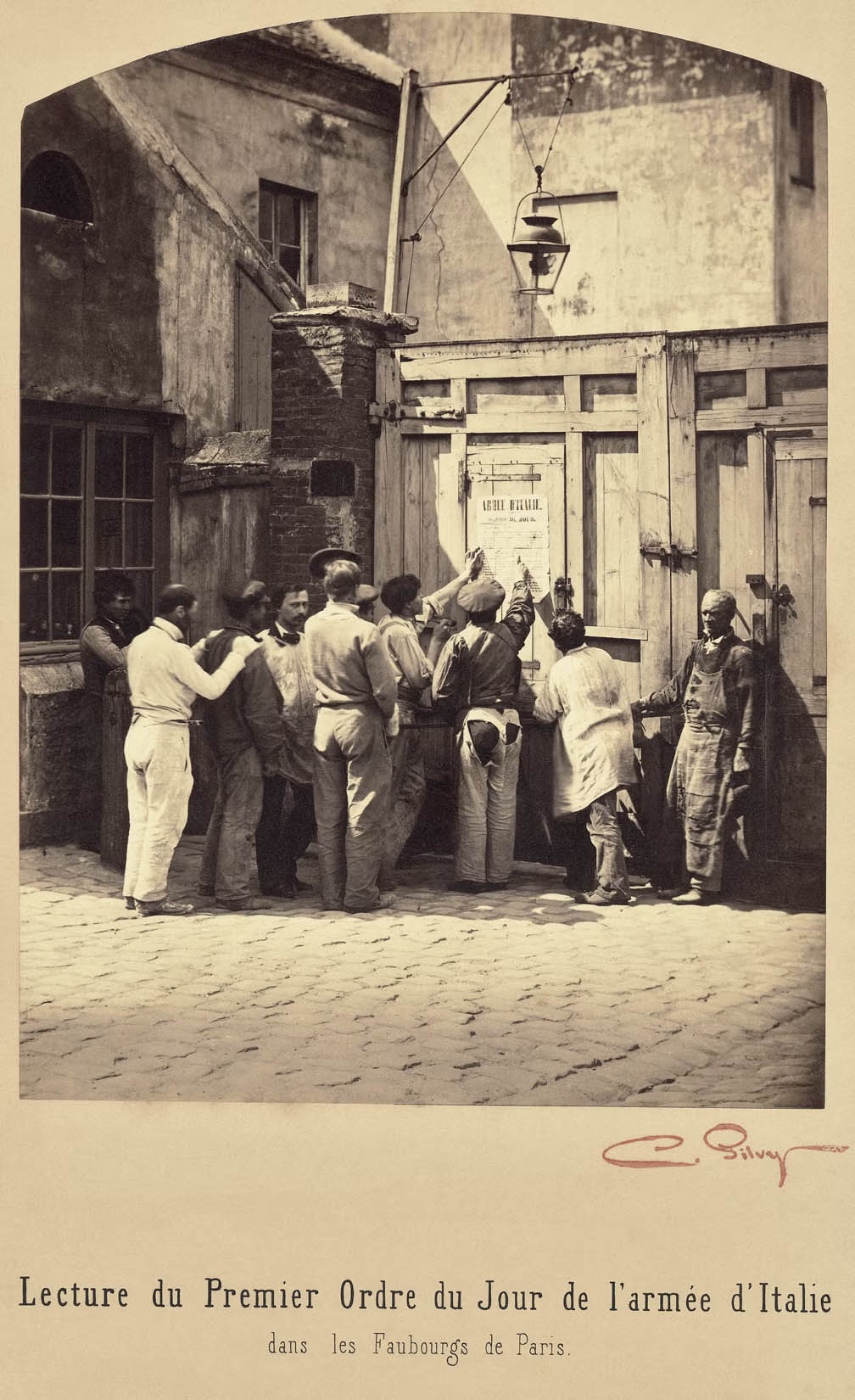
'Lecture du Premier Ordre du Jour de l'armée d'Italie dans Les Faubourgs de Paris' (Reading of the First Agenda of the army of Italy in the suburbs of Paris) 1859 from the exhibition 'Camille Silvy, Photographer of Modern Life, 1834-1910' at the National Portrait Gallery, London, July - Oct 2010


Camille Silvy (French, 1834-1910)
Lecture du Premier Ordre du Jour de l’armée d’Italie dans Les Faubourgs de Paris
(Reading of the First Agenda of the army of Italy in the suburbs of Paris)
1859
Albumen print
10 x 7 1/4 inches (25.4 x 18.42cm)
© Private Collection, Paris


Camille Silvy (French, 1834-1910) 'James Pinson Labulo Davies and Sarah Forbes Bonetta (Sarah Davies)' 1862 from the exhibition 'Camille Silvy, Photographer of Modern Life, 1834-1910' at the National Portrait Gallery, London, July - Oct 2010


Camille Silvy (French, 1834-1910)
James Pinson Labulo Davies and Sarah Forbes Bonetta (Sarah Davies)
1862
© National Portrait Gallery, London


James Pinson Labulo Davies was a 19th-century African merchant-sailor, naval officer, influential businessman, farmer, pioneer industrialist, statesman, and philanthropist who married Sarah Forbes Bonetta in colonial Lagos.

Sara Forbes Bonetta, otherwise spelled Sarah, was a West African Egbado princess of the Yoruba people who was orphaned in intertribal warfare, sold into slavery and, in a remarkable twist of events, was liberated from enslavement and became a goddaughter to Queen Victoria. She was married to Captain James Pinson Labulo Davies, a wealthy Victorian Lagos philanthropist.
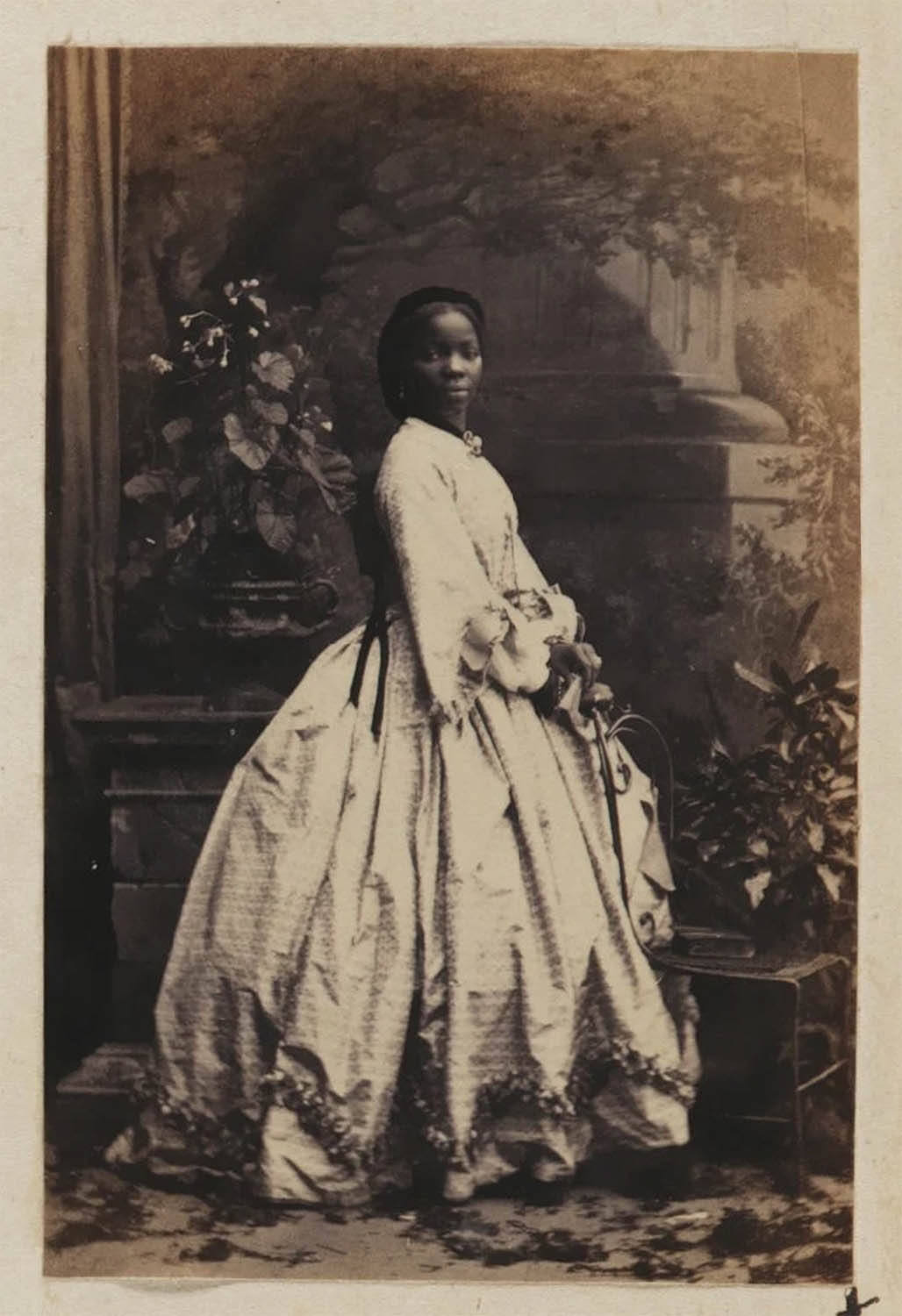
 

Camille Silvy (French, 1834-1910) 'Aina (Sarah Forbes Bonetta (later Davies))' 15 September 1862 from the exhibition 'Camille Silvy, Photographer of Modern Life, 1834-1910' at the National Portrait Gallery, London, July - Oct 2010


Camille Silvy (French, 1834-1910)
Aina (Sarah Forbes Bonetta (later Davies))
15 September 1862
From Album 9 (Daybook Volume 9)
Albumen print
3 1/4 in. x 2 1/4 in. (83 mm x 56 mm) image size
National Portrait Gallery, London
Purchased, 1904
© National Portrait Gallery, London


Now best known as Sarah Forbes Bonetta, Aina lived a life of extraordinary contrasts. Her story is one of displacement and reveals how she was fetishized in both Africa and England. Born in modern-day south-west Nigeria, Aina was about five years old when she was captured by soldiers of King Ghezo of Dahomey, a central figure in the transatlantic slave trade. She was discharged by the King to Captain Frederick Forbes, who was sent to west Africa to persuade the King to abandon slavery. He bargained to save the child, convincing the King to send her as a ‘gift’ to Queen Victoria. Before setting sail for England on board HMS Bonetta, Forbes had Aina baptised Sarah Forbes Bonetta. This stripped her of her original name ‘Aina’ and symbolically, of her west-African identity. The Queen, impressed by the young girl’s intelligence and dignity, became her protector, funding her education and providing for her welfare. She became one of the Queen’s favourites and by her late teens, had entered elite society. She was highly regarded in the royal household, appearing at many social events including the wedding of Princess Victoria, the Queen’s eldest daughter. It was at one such event that a Sierra Leonian merchant, prominent in missionary circles, first saw her and declared his interest in marrying her. The match was considered a suitable one and Aina was encouraged to accept the proposal from widower James Pinson Labulo Davies. In 1862, the couple married in a lavish wedding featuring ten carriages. They settled in colonial Lagos, naming their first child Victoria with the Queen’s blessing. When Aina died of tuberculosis in Madeira, aged just 37, the Queen wrote: “Saw poor Victoria Davies, my black godchild, who learnt this morning of the death of her dear mother.” Caught up in Britain’s imperial ambitions and plunged into Victorian high society, Aina had crossed immense boundaries between places, cultures and identities – often without a choice.

Text from the National Portrait Gallery, London website
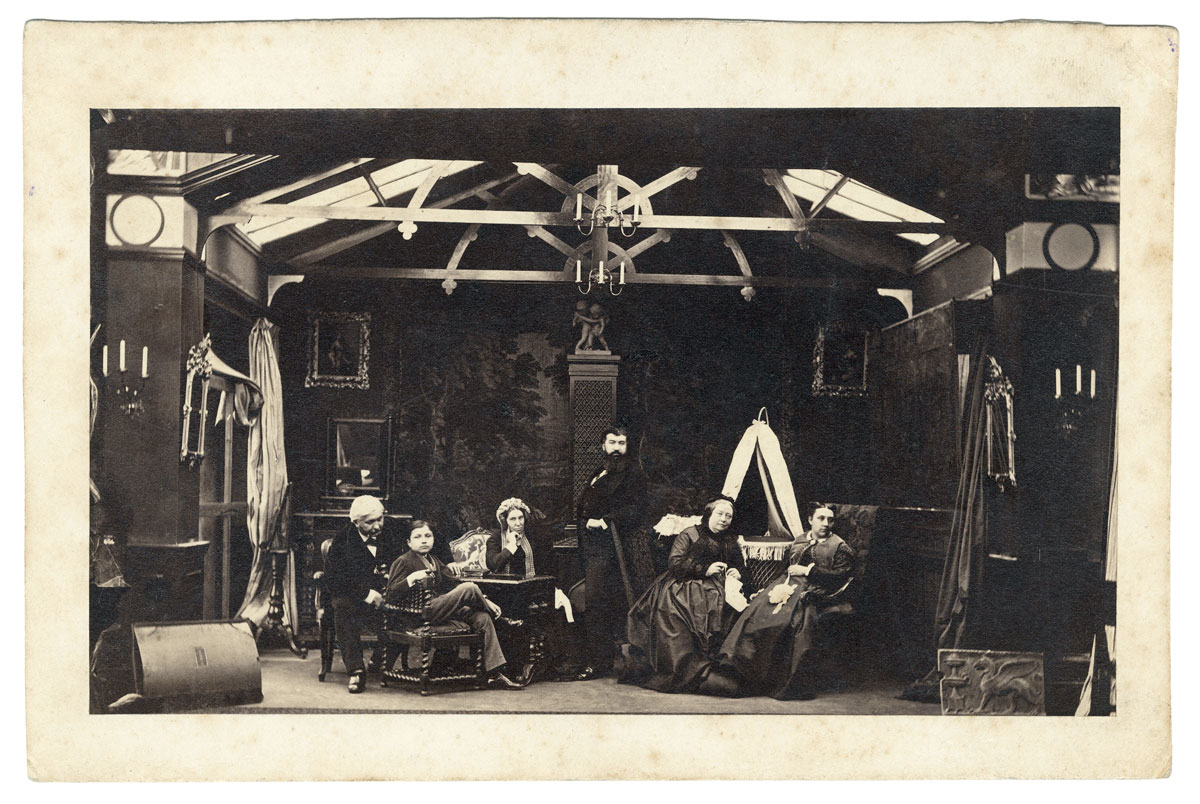
 

Camille Silvy (French, 1834-1910) 'Silvy in his Studio with his Family' 1866


Camille Silvy (French, 1834-1910)
Silvy in his Studio with his Family
1866
© Private Collection, Paris


Camille Silvy (French, 1834-1910) 'Proof sheet of Madame Silvy' c. 1865


Camille Silvy (French, 1834-1910)
Proof sheet of Madame Silvy
c. 1865
© Private Collection, Paris


This is the first retrospective exhibition devoted to Camille Silvy, pioneer of street photography, early image manipulation and photographic mass production. The exhibition includes photographs not seen for over 150 years.

The first retrospective exhibition of work by Camille Silvy, one of the greatest French photographers of the nineteenth century, will open at the National Portrait Gallery this summer. Marking the centenary of Silvy’s death, Camille Silvy, Photographer of Modern Life, 1834-1910, includes over a hundred objects, many of which have not been exhibited since 1860. The portraits on display offer a unique glimpse into nineteenth-century Paris and Victorian London through the eyes of one of photography’s greatest innovators.

Focusing on Silvy’s ten-year creative burst from 1857-67 when he was working in Algiers, rural France, Paris and London, the exhibition will show how Silvy pioneered many branches of the photographic medium including theatre, fashion, military and street photography. Working under the patronage of Queen Victoria, Silvy photographed royalty, statesmen, aristocrats, celebrities, the professional classes, businessmen and the households of the country gentry. Silvy’s London studio was a model factory producing portraits in the new carte de visite format – small, economically priced, and collectable. Silvy played an important role in the popularity of the carte de visite format in London and these portraits show how the modern and fashionably dressed looked. Silvy’s Bayswater studio, with a staff of forty, produced over 17,000 portraits.

Works on display will include River Scene, France (1858), considered Silvy’s masterpiece, alongside his London series on twilight, sunlight and fog. Anticipating our own era of digital manipulation, Silvy created photographic illusions in these works by using darkroom tricks. Mark Haworth-Booth, the curator of this exhibition, claims that Camille Silvy came closest in photography to embodying the vision of ‘the painter of modern life’ sketched out by Charles Baudelaire in a famous essay.

The exhibition draws on works from public and private collections including that belonging to Silvy’s descendants, seen for the first time, along with a cache of letters in which Silvy describes to his parents how he set up and ran his London studio. A selection of Daybooks, providing a unique record of the day to day workings of Silvy’s studio will also be on display. The Daybooks were bought by the National Portrait Gallery in 1904 and are among the rarely seen treasures of the Gallery’s photography collection. Albums, documents, a dress worn by Silvy’s wife for a portrait session in 1865 and other items which build up a picture of Silvy’s working practice will also be included in the exhibition. The exhibition will illustrate the transformation of photographic art into industry, the beginnings of the democratisation of portraiture and the life of this photographic genius who fell into obscurity.

Born 1834 in Nogent-le-Rotrou, France, Silvy graduated in arts and law and took up a diplomatic post in the French foreign office in 1853 and was first sent to London the following year. In 1857, he joined a six month mission to Algeria to draw buildings and scenes but he soon realised the inadequacy of his talents and turned to photography. Returning to London, he exhibited River Scene, France to immense success in the 3rd annual exhibition of the Photographic Society in Edinburgh and at the first ever Salon of photography as a fine art in Paris. In 1859 he took over the photographic studio of Caldesi and Montecchi at 38 Porchester Terrace in Bayswater, London. After ten years of creative productivity, in 1869, at the age of thirty-five, Silvy retired from photography. He went on to fight with distinction in the Franco-Prussian War of 1870 before being diagnosed with folie raisonnante (manic-depression) in 1875. Camille Silvy spent the remaining thirty-one years of his life in psychiatric asylums before dying from bronchopneumonia in the Hôpital de St Maurice, France in 1910.

Press release from the National Portrait Gallery website [Online] Cited 13/10/2010 no longer available online


Camille Silvy (French, 1834-1910) 'The Misses Booth' 1861


Camille Silvy (French, 1834-1910)
The Misses Booth
1861
Albumen print
© K and J Jacobson Collection, United Kingdom


Camille Silvy (French, 1834-1910) 'Adelina Patti as Harriet in Martha' 1861


Camille Silvy (French, 1834-1910)
Adelina Patti as Harriet in Martha
1861
© Private Collection


Adelina Patti (10 February 1843 – 27 September 1919) was an Italian 19th-century opera singer, earning huge fees at the height of her career in the music capitals of Europe and America. She first sang in public as a child in 1851, and gave her last performance before an audience in 1914. Along with her near contemporaries Jenny Lind and Thérèse Tietjens, Patti remains one of the most famous sopranos in history, owing to the purity and beauty of her lyrical voice and the unmatched quality of her bel canto technique.

The composer Giuseppe Verdi, writing in 1877, described her as being perhaps the finest singer who had ever lived and a “stupendous artist”. Verdi’s admiration for Patti’s talent was shared by numerous music critics and social commentators of her era.

Text from the Wikipedia website


Camille Silvy (French, 1834-1910) 'Studies on Light: Twilight' 1859


Camille Silvy (French, 1834-1910)
Studies on Light: Twilight
1859
© Private Collection, Paris
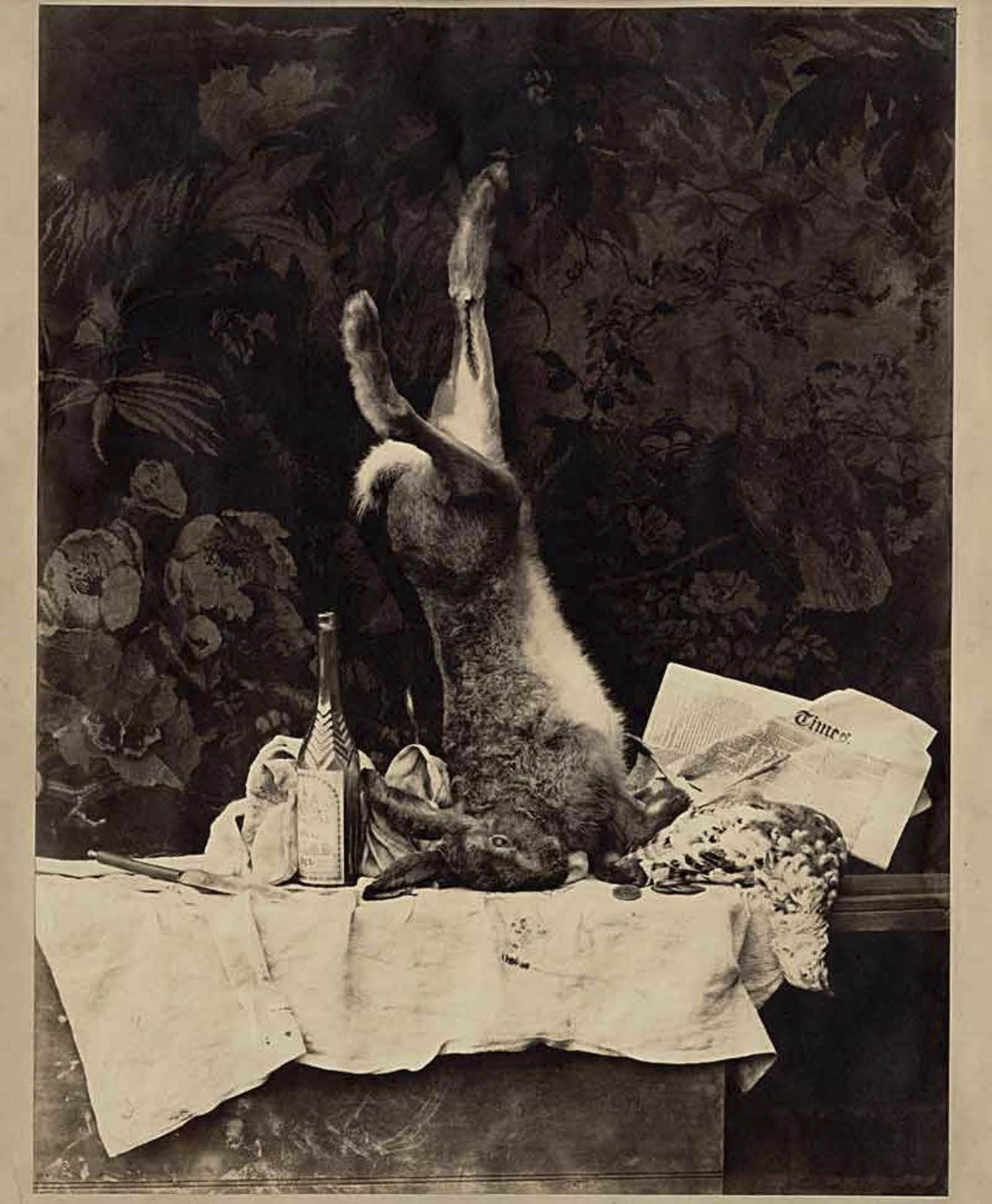
 

Camille Silvy (French, 1834-1910)
'Hunting Still Life with The Times'
After 1859


Camille Silvy (French, 1834-1910)
Hunting Still Life with The Times
After 1859
Albumen print
Dietmar Siegert Collection, Munich
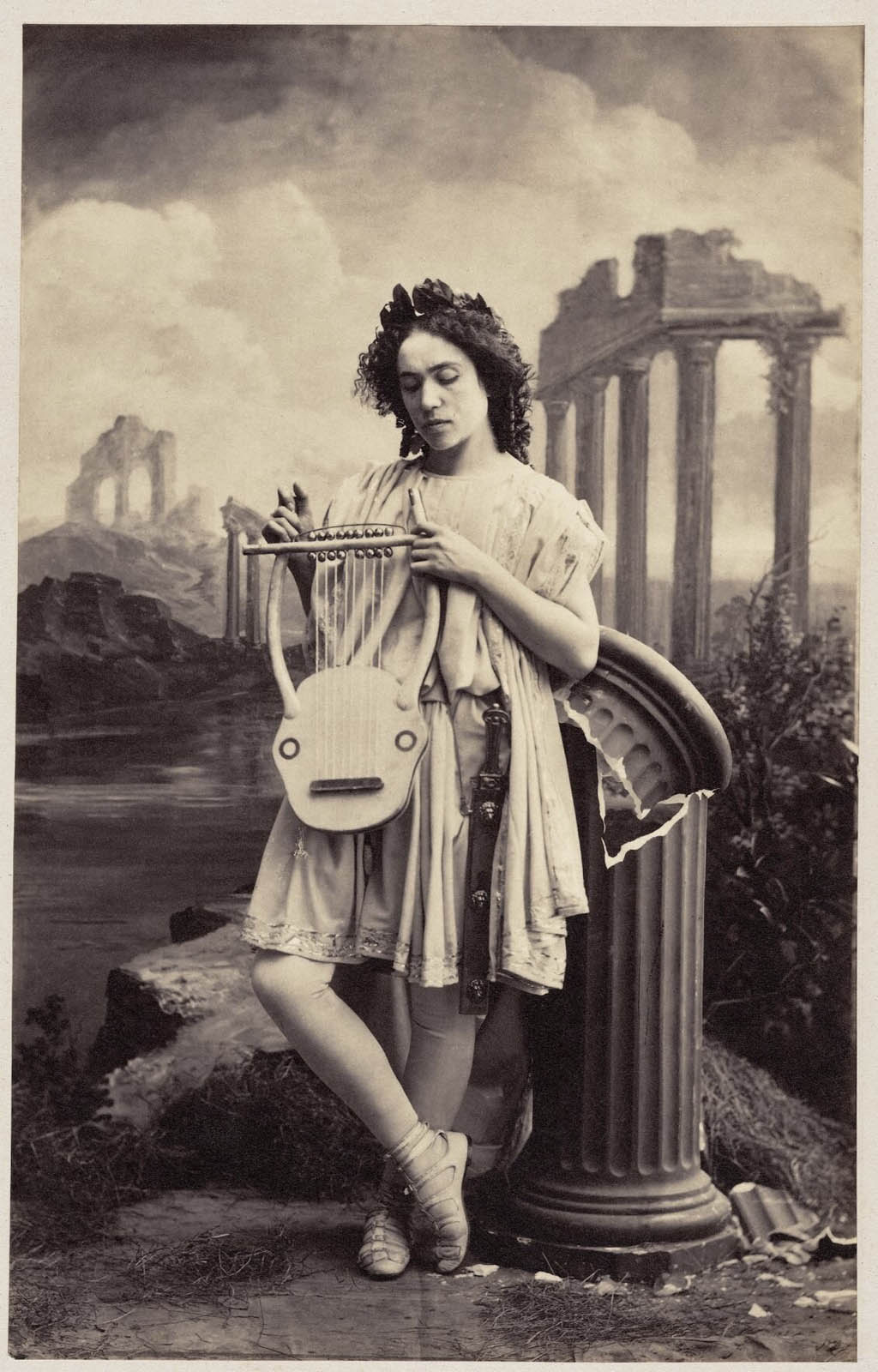
 

Camille Silvy (French, 1834-1910)
'Rosa Csillag as Orfeo' 1860


Camille Silvy (French, 1834-1910)
Rosa Csillag as Orfeo
1860
© Private Collection, Paris
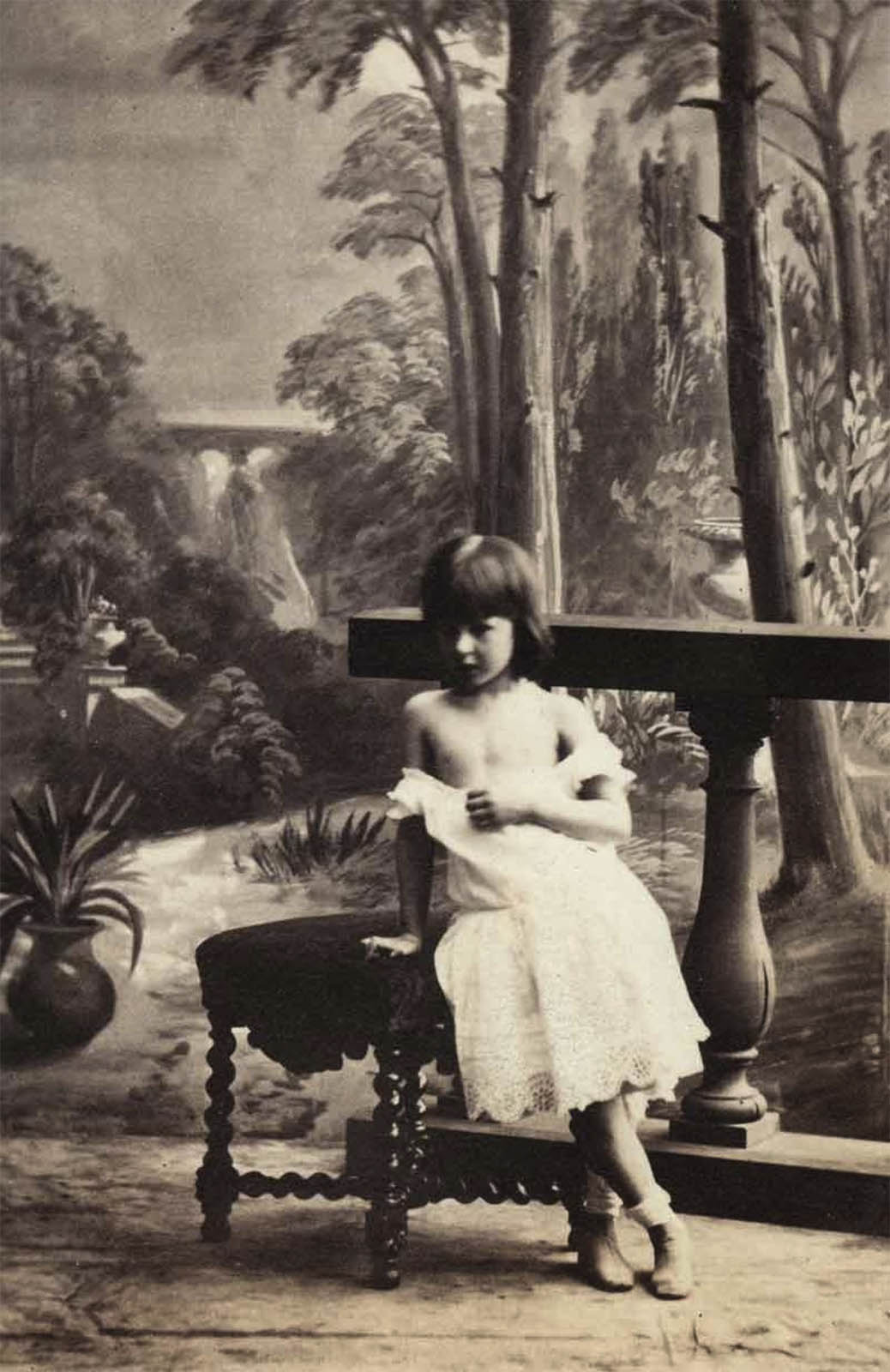
 

Camille Silvy (French, 1834-1910) 'Mrs Holford's daughter' Nd


Camille Silvy (French, 1834-1910)
Mrs Holford’s daughter
Nd
Albumen print
© K and J Jacobson Collection, United Kingdom
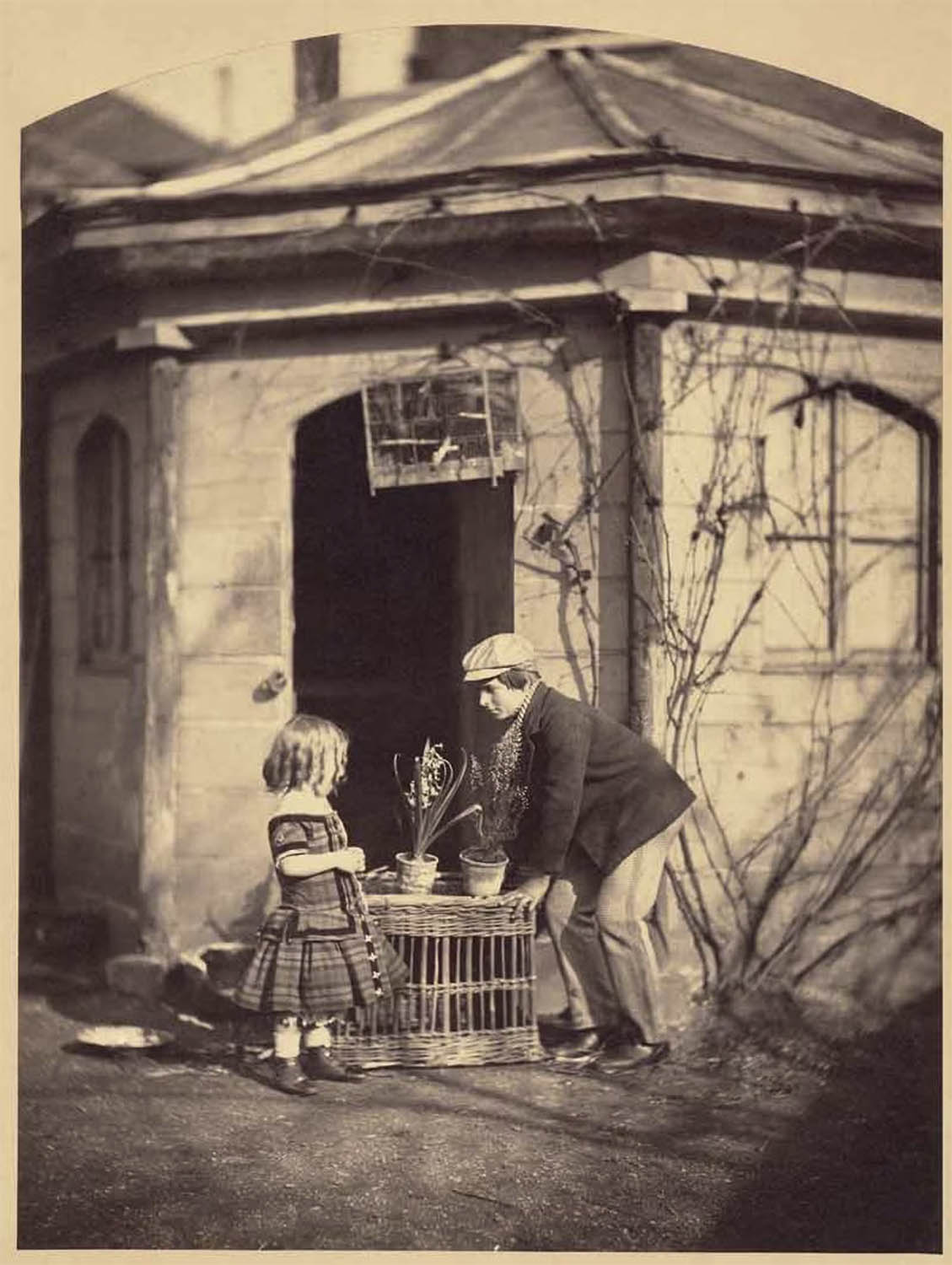
 

Camille Silvy (French, 1834-1910) 'Children at play' Nd


Camille Silvy (French, 1834-1910)
Children at play
Nd
Albumen print
© Private Collection, Paris


Camille Silvy was a pioneer of early photography and one of the greatest French photographers of the nineteenth century. This exhibition includes many remarkable images which have not been exhibited since the 1860s.

Over 100 images, including a large number of carte de visites, focus on a ten-year creative burst from 1857-1867 working in Algiers, rural France, Paris and London, and illustrate how Silvy pioneered many now familiar branches of the medium including theatre, fashion and street photography.

Working under the patronage of Queen Victoria, Silvy photographed royalty, aristocrats and celebrities. He also portrayed uncelebrated people, the professional classes and country gentry, their wives, children and servants. The results offer a unique glimpse into nineteenth-century society through the eyes of one of photography’s outstanding innovators.

Exhibition organised by the Jeu de Paume, Paris, in collaboration with the National Portrait Gallery, London

Introducing Camille Silvy

Camille Silvy was one of the photographic pioneers who burst on the scene in the 1850s.

The great photographer Nadar described him as one of photography’s ‘primitives’ and a ‘zélateur’ or enthusiast. Silvy was born in 1834 in Nogentle-Rotrou, about forty miles west of Chartres, trained in law and became a diplomat.

Silvy took up photography as an amateur in 1857 and his work was first exhibited in 1858. He gave up his career in the French diplomatic service, moved from Paris to London, and set up a portrait studio in fashionable Bayswater, just north of Hyde Park. Silvy met and married Alice Monnier in 1863.

Portraits of Silvy capture his passionate horsemanship and dashing presence. He portrayed his wife on many occasions, dressed in the most elegant fashions. Silvy’s self-portraits show him posing in his studio or in impressive fancy-dress. The most characteristic self-portrait presents him four times over: Silvy – like Andy Warhol a century later – made his studio a factory.

Early Photographs: Algeria and Rural France

While still a diplomat, Silvy visited Algeria in 1857 on a commission from the Minister of Public Instruction to draw buildings and scenes. He later confessed that ‘when I realised the inadequacy of my talent in obtaining exact views of the places we travelled through, I dedicated myself to photography and … concentrated especially on reproducing everything interesting – archaeologically or historically – that presented itself to me’.

Two of the photographs are shown here. On returning to France, Silvy studied with an innovative amateur, Count Olympe Aguado. Silvy photographed the countryside around Nogent-le-Rotrou. His rural subjects included a self-portrait with a local priest. These rural photographs were shown in the first exhibition devoted to photography as a fine art, held in Paris in spring 1859.

River Scene, France and ‘The Emperor’s Order of the Day’

The climax of Silvy’s photography of his native countryside was ‘River Scene, France’ or ‘La Vallée de l’Huisne’, from the summer of 1858. The river Huisne runs through Silvy’s birthplace, Nogent-le-Rotrou.

Silvy’s subject, modern leisure at the edge of town, became popular with Impressionist painters a decade later. Silvy’s next tableau presented an important moment in French military history. Napoleon III led his army to Italy to drive out the Austrians.

After arriving in Genoa, the Emperor wrote out an Order of the Day for his army. The text was telegraphed to Paris, printed up overnight and posted in the streets of Paris the next morning. The proclamations showed that although the Emperor was away he was still in control of the volatile capital.

The Streets of London

In summer 1859 Silvy established his London studio in Bayswater on the north side of Hyde Park. He chose this location because he was a keen and knowledgeable horseman and wanted to make equestrian portraits. The poet Baudelaire, in his famous essay ‘The Painter of Modern Life’ (1863), recommended sleek carriages and smart grooms as a subject for modern artists.

Silvy also responded to what the novelist Henry James called ‘the thick detail of London life’. He became entranced by the light effects in the capital’s streets. In this section, three tableaux – ‘Sun’, ‘Twilight’ and ‘Fog’ – comprise his highly original series Studies on Light from autumn 1859. All sorts of special effects and manipulations were required to create the illusion of fog and twilight. It is likely, for example, that four separate negatives were combined to produce Twilight. This picture includes perhaps the first ever deliberate use of blur in a photograph to suggest movement.

London Portrait Studio

Silvy’s studio occupied a house at 38 Porchester Terrace, Bayswater, which is still standing, and the yard behind it (now built over). The yard was used to print out the photographs by sunlight. The reception rooms were grandly appointed, with tapestries, choice furniture, sculptures and Old Master paintings. There was a dressing room in which to prepare for a sitting and the ‘Queen’s Room’ was created to welcome the monarch if she were ever to come to sit for Silvy. She did not but sent her family and friends.

Generally, two poses were recorded, three times each, on one glass negative. When the sitter had chosen which they preferred, the portraits would be printed, gold-toned, trimmed, mounted on card and dispatched by post. Over 17,000 portraits were made here between 1859 and 1868, and over a million prints produced for sale.

Theatre

Portraits of actors and actresses became popular in the 1850s. When Silvy opened his London studio, he sought out stage performers. They needed portraits to sell to fans and Silvy needed sitters. The tactic worked, launching Silvy’s studio and spreading his fame.

Silvy began working with London’s resident theatricals but soon he photographed one of the greatest international operatic stars – Adelina Patti. He portrayed Patti in many of the roles she performed at Covent Garden and she brought the best out of his talent.

Although Patti sometimes seems to be caught by Silvy’s camera in mid-aria, all of his theatre portraits were made in the studio. Given the cumbersome cameras and relatively slow exposures of the period, only studio lighting – natural light, controlled by a system of blinds – provided Silvy with the conditions he required.

Photographing Art

Silvy set up a Librairie photographique in 1860. This was envisaged as a series of photographic facsimiles of illuminated manuscripts. The Manuscrit Sforza was published in two volumes in 1860. Silvy wrote an introduction and set out a typically bold claim for photographic reproduction. He argued that the medium of photography could not merely reproduce manuscripts but also appear to restore them. This was because the standard photographic medium of the time, the wet collodion process, recorded yellow as black.

Another early commercial venture was the reproduction of paintings by Sir Peter Lely at Windsor Castle. These were published as an instalment of Silvy’s magazine, the London Photographic Review – another of his publishing ventures – in 1860.

1867 and after

Silvy wound up his London studio in 1868 but may have taken his last portraits in 1867. There were several reasons for selling up. He was often unwell in London’s coal-smoke-laden atmosphere; he had expended huge amounts of energy on photography and become wealthy; the craze for carte-de-visites had waned and perhaps he wanted to resume his diplomatic career.

In spring 1867 Silvy demonstrated a new photographic system he had designed to record battlefields. From the middle of the Champs Elysées, in the heart of Paris, Silvy produced a panoramic photograph which made the French capital look – prophetically – like a battlefield.

In 1874 he succumbed to what would later be termed manic-depression and spent most of the rest of his life in psychiatric hospitals until his death in 1910. His friend Nadar remembered Silvy in a memoir published in 1889: ‘This photographer and his studio … had no equals’.

Text from the National Portrait Gallery, London website
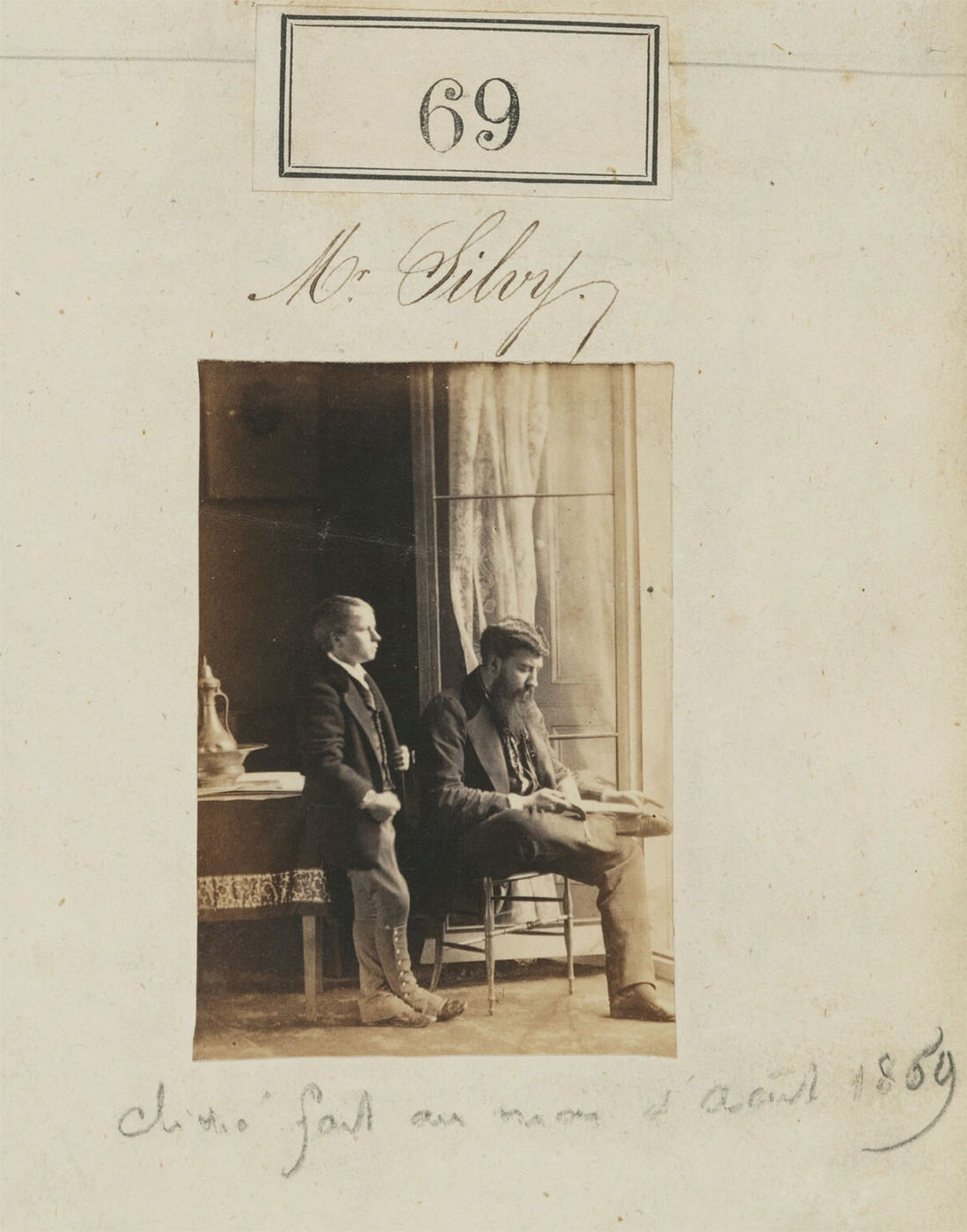
 

Camille Silvy (French, 1834-1910)
'Camille Silvy with a boy' August 1859
Screenshot


Camille Silvy (French, 1834-1910)
Camille Silvy with a boy
August 1859
Albumen print
3 1/4 in. x 2 1/4 in. (82 mm x 57 mm)
National Portrait Gallery, London
Purchased, 1904
© National Portrait Gallery, London
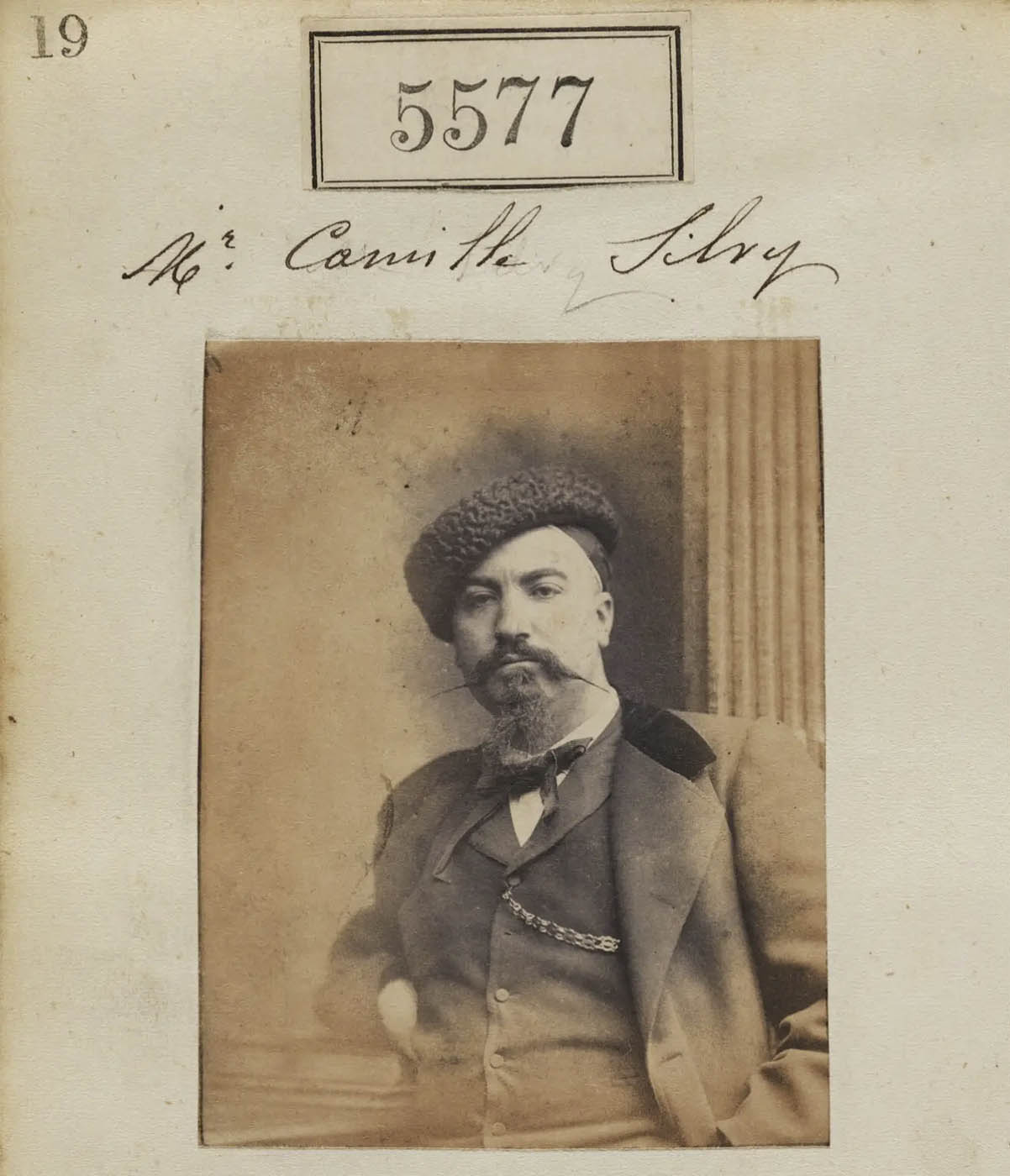
 

Camille Silvy (French, 1834-1910)
'Self-portrait' 20 August 1861


Camille Silvy (French, 1834-1910)
Self-portrait
20 August 1861
National Portrait Gallery, London
Purchased, 1904
© National Portrait Gallery, London
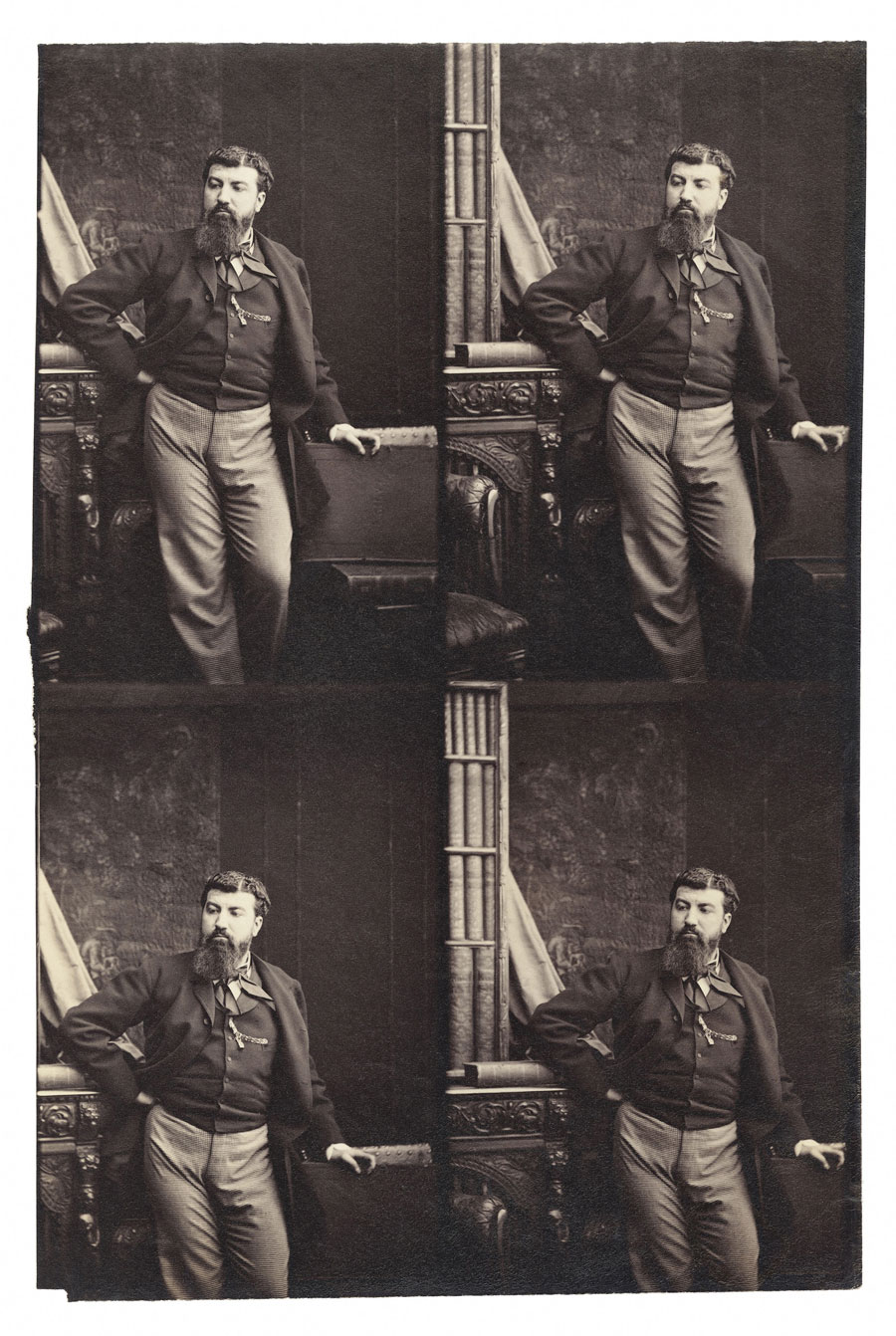
 

Camille Silvy (French, 1834-1910) 'Self-portrait' 1863


Camille Silvy (French, 1834-1910)
Self-portrait
1863
© Private Collection, Paris


National Portrait Gallery
St Martin’s Place
London WC2H 0HE

Opening hours:
Open daily 10.00 – 18.00
Friday until 21.00
National Portrait Gallery website

LIKE ART BLART ON FACEBOOK

Back to top

Exhibition: ‘Exposed: Voyeurism, Surveillance & the Camera’ at Tate Modern, London

Exhibition dates: 28th May – 3rd October 2010


Many thankx to Rose Dahlsen and the Tate Modern for allowing me to publish the photographs in the posting. Please click on the photographs for a larger version of the image.


Harry Callahan (American, 1912-1999)
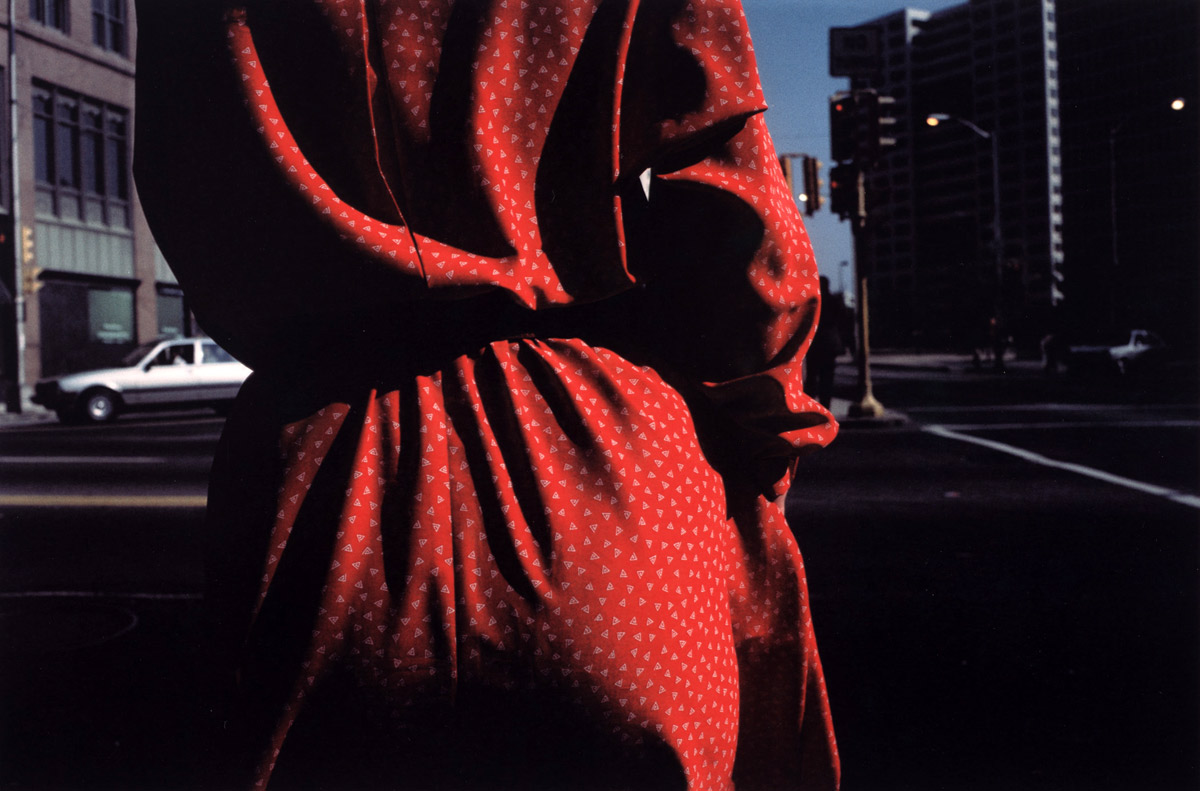
 'Untitled (Atlanta)' 1984 from the exhibition 'Exposed: Voyeurism, Surveillance & the Camera' at Tate Modern, London, May - Oct 2010 from the exhibition 'Exposed: Voyeurism, Surveillance & the Camera' at Tate Modern, London, May - Oct 2010


Harry Callahan (American, 1912-1999)
Untitled (Atlanta)
1984
Dye transfer print 
9 7/16 x 14 5/16 in. (23.97 x 36.35cm)
San Francisco Museum of Modern Art
© The Estate of Harry Callahan, courtesy Pace/MacGill Gallery, New York


Jonathan Olley. 'Golf Five Zero watchtower (known to the British Army as 'Borucki Sanger'), Crossmaglen Security Force Base, South Armagh' 1999 from the exhibition 'Exposed: Voyeurism, Surveillance & the Camera' at Tate Modern, London, May - Oct 2010


Jonathan Olley (British, b. 1967)
Golf Five Zero watchtower (known to the British Army as ‘Borucki Sanger’), Crossmaglen Security Force Base, South Armagh
1999
Gelatin silver bromide print
Coutesy Diemar/Noble Photography, London
© J.Olley


Philip-Lorca diCorcia (American, b. 1951) 'Head #23' 2001 from the 'Head' series


Philip-Lorca diCorcia (American, b. 1951)
Head #23
2001
From the Head series


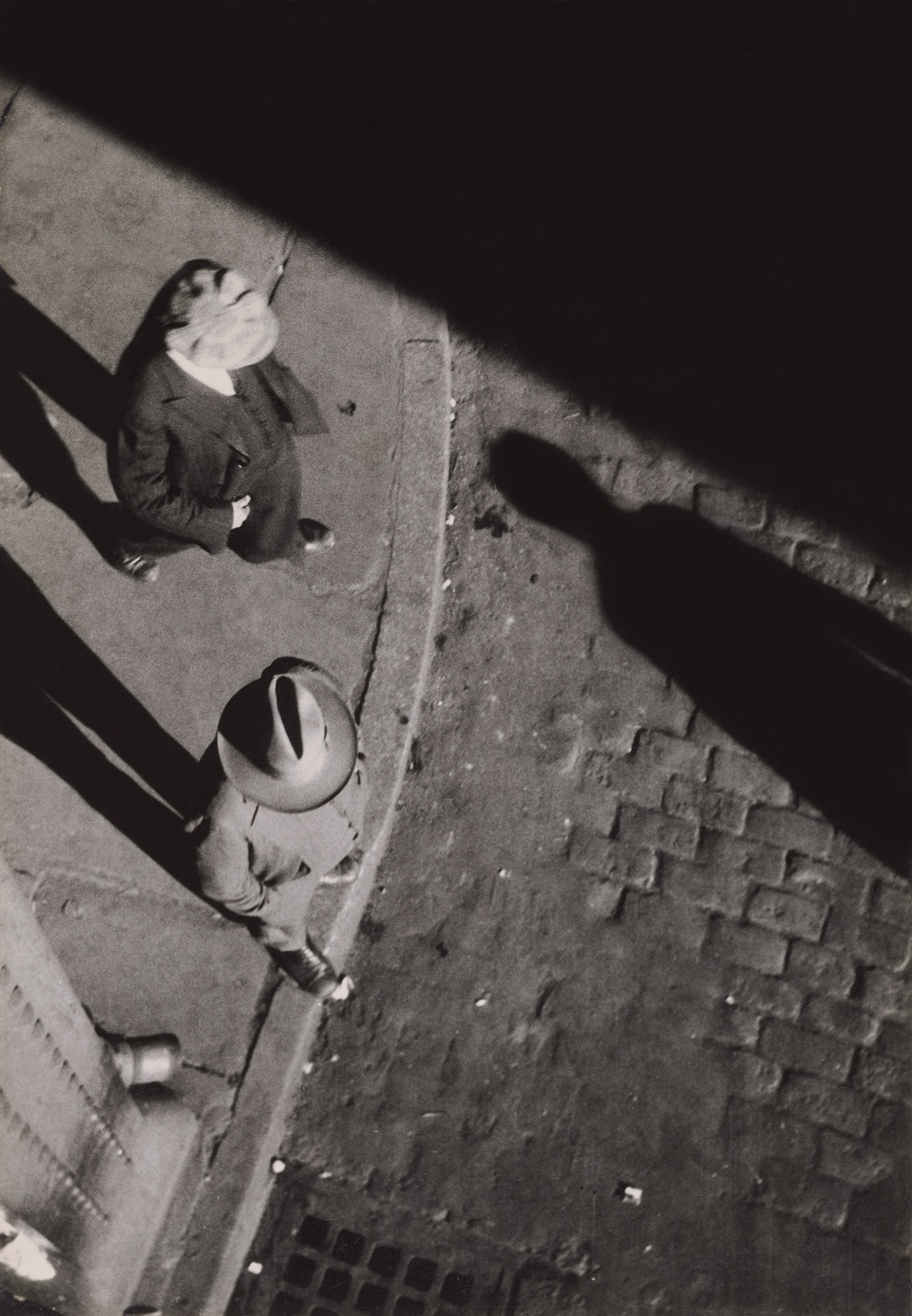
Examining photography as an invasive act immediately confronts the complacency with which we accept these invasions, encourage them even in our curiosity, and though it falters in parts and overwhelms in others (this is a huge exhibition), EXPOSED successfully addresses a number of the social, cultural and psychologically motivating factors behind these kinds of images – why we take them and why we look at them. Critical to this engagement is the wall text at the beginning, which states that most of the hundreds of photographs on display were taken without the subject’s knowledge. It is a distinctly creepy start.

Philip-Lorcia diCorcia’s Head series perhaps best embodies this conundrum. Visually they are not terribly shocking or even necessarily interesting. Theatrical lighting catches the head of someone in a crowd and the effect is of a staged encounter. In fact, these people, denominated variously as Head #23 or Head #4, were photographed without their knowledge by a series of hidden cameras, the flash triggering as they walked by. Famously, one of diCorcia’s unwitting targets tried to take legal action against him but the landmark ruling defended the artist and his right to self-expression over any right the subject might have over their own image. It is difficult to know which is worse – to be censored or to be spied upon.

Jo Higgins. “Review: Exposed: Voyeurism, Surveillance & the Camera, Tate Modern, London,” on the Jo Higgins website, July 5, 2010 [Online] Cited 22/03/2025


Benjamin Lowy (American, b. 1979) 'Iraq Perspective II' 2003-2007 from the exhibition 'Exposed: Voyeurism, Surveillance & the Camera' at Tate Modern, London, May - Oct 2010


Benjamin Lowy (American, b. 1979)
Iraq Perspective II
2003-2007


US soldiers go on a late night raid with Iraqi Sunni Concerned citizens leading the way and identifying potential AQi targets. Due to a high level of IEDs in the area the company size raiding party walked 5 kilometres to the target in complete darkness, raided the target houses, detained questionable suspects and walked 5 kilometres back to waiting humvees.


Sophie Calle (French, b. 1953) 'The Hotel, Room 47' (L'Hôtel, Chambre 47) 1981


Sophie Calle (French, b. 1953)
The Hotel, Room 47 (L’Hôtel, Chambre 47)
1981
2 works on paper, photographs and ink
2140 x 1420 mm
Tate
Presented by the Patrons of New Art through the Tate Gallery Foundation 1999


This is a two-part framed work comprising photographs and text. In the upper part, the title Room 47 is printed below a colour photograph of elegantly carved wooden twin head-boards behind a bed covered in rich brown satin. Below it, three columns of italic text are diary entries describing findings in the hotel room between Sunday 22 February 1981 and Tuesday 24. In the lower frame a grid of nine black and white photographs show things listed in the text above. This work is part of a project titled The Hotel, which the artist has defined:

“On Monday, February 16, 1981, I was hired as a temporary chambermaid for three weeks in a Venetian hotel. I was assigned twelve bedrooms on the fourth floor. In the course of my cleaning duties, I examined the personal belongings of the hotel guests and observed through details lives which remained unknown to me. On Friday, March 6, the job came to an end.” (Quoted in Calle, pp. 140-141.)

Each of the twelve rooms gave rise to a diptych of similar structure following the occupancy of one or more guests during the period of the artist’s employment at the hotel. Some rooms feature more than once as a second set of guests occupied them, giving rise to a total of twenty-one diptychs in the series. Calle’s descriptions of the hotel rooms and their contents combine factual documentation along with her personal response to the people whose lives she glimpsed by examining their belongings. Each text begins with the chambermaid / artist’s first entry into the room and a notation of which bed or beds have been slept in, with a description of the nightwear the guests have left. A list of objects usually follows, as the artist transcribes her activities in the room. Calle is unashamedly voyeuristic, reading diaries, letters, postcards and notes written or kept by the unknown guests, rummaging in suitcases, and looking into wardrobes and drawers. She sprays herself with their perfume and cologne, makes herself up using the contents of a vanity case, eats food left behind and salvages a pair of women’s shoes left in the bin. Outside the room, she listens at doors, recording the occupants’ conversations or any other sounds she may overhear, and even peers into a room when the floor-waiter opens the door to catch a glimpse of the unknown guests.

The absent occupants described in Room 47 are a family of four – two parents and two children – as revealed by their four pairs of slippers. Calle does not go through their suitcase, commenting: ‘I am already bored’. From their passports she discovers that the parents are a married couple from Geneva and she copies out four postcards one of them has written. Words on one of these hint at problems within the family.

Calle began her artistic projects in 1979 on returning to Paris after seven years’ travel abroad. Disorientated, she felt like a stranger in her own city, not knowing how to occupy her time. She started to follow random passers-by and spend her days as they did. Eventually she picked up the camera she had been experimenting with during her time abroad and photographed the strangers, writing diaristic notes of their movements. From this she has developed a particular way of working, collecting information about people who are absent and investigating her subjects like a detective. The Hotel follows directly from a project the artist undertook the previous year entitled Suite Venetienne 1980, which evolved from a chance encounter with a man she had been following in Paris. He told her he was going to Venice, so she followed him there in disguise, documenting her observations. After a year of planning and waiting, she returned to Venice in 1981 as a chambermaid.

The Hotel diptychs were produced in an edition of four in English and four in French. Tate’s copy of Room 47 (22 February) is the first in the English edition. Another version of Room 47 exists for the period 2-6 March.

Elizabeth Manchester
June 2005

Text from the Tate website [Online] Cited 26/12/2019


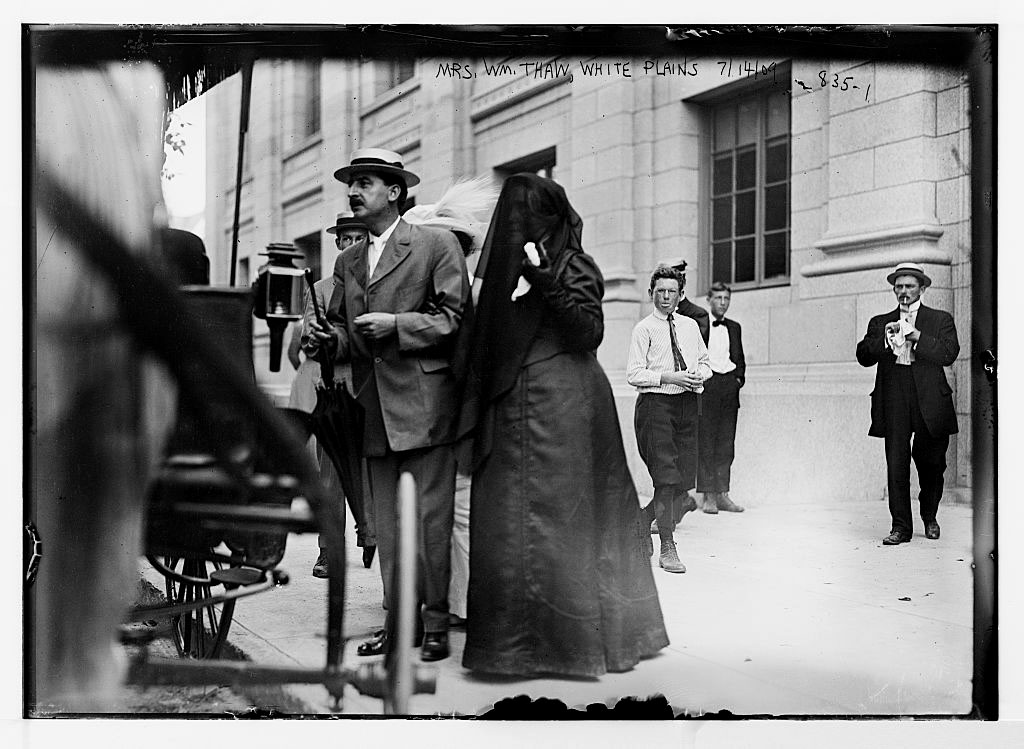
Unknown photographer / Bain News Service, publisher. 'Mrs. Wm. Thaw, veiled, on street, White Plains, N.Y.'
1909


Unknown photographer
Bain News Service, publisher

Mrs. Wm. Thaw, veiled, on street, White Plains, N.Y.
1909
From a glass negative
Library of Congress Prints and Photographs Division Washington, D.C.


Tom Howard (American, 1894 - 1961) '[Electrocution of Ruth Snyder, Sing Sing Prison, Ossining, New York]' 1928


Tom Howard (American, 1894-1961)
[Electrocution of Ruth Snyder, Sing Sing Prison, Ossining, New York]
1928
Gelatin silver print
Collection SFMOMA, Accessions Committee Fund purchase


In 1925, Ruth Snyder, a housewife from Queens, New York, took a lover, Judd Gray, a corsetmaker from upstate. Already married to Albert Snyder, an arts editor at MotorBoating magazine, she hid the affair for nearly three years. But on March 12, 1927, she and Gray planned a murder. After taking out a forged insurance policy, the two killed Ruth’s husband and staged a burglary scene. It didn’t take long for law enforcement to connect the dots, and a few months later, Gray and Snyder found themselves charged with first degree murder.
The court case was front page news and both Ruth and Judd found themselves constantly photographed for ever-evolving stories. Sing Sing, not one to change policy for press, reinstated that no photographers were to be present at the execution. But the public wanted to see.

The New York Daily News knew that the prison was familiar with many journalists from their staff, so they hired someone from out of town, Tom Howard, a then-unknown local photographer from the Chicago Tribune. Knowing he would never be allowed in with a camera, Howard strapped a single-use camera to his right ankle and wired a trigger release up his pant leg. Remarkably, he was allowed in. From across the room, Howard pointed his toe at the chair and took but one photo as Snyder took her last breaths.

The camera was rushed to the city and the film developed overnight. Editors and writers marveled at what was to be one of the most shocking photographs ever made: Snyder in the chair, the legs of the prison guard to the right. The image, shot on an angle, was cropped and published immediately with the headline: Dead!

The black-and-white image was shocking to the U.S. and international public alike. There sat a 32-year-old wife and mother, killed for killing. Her blurred figured seemed to evoke her struggle, as one can imagine her last, strained breaths. Never before had the press been able to attain such a startling image – one not made in a faraway war, one not taken of the aftermath of a crime scene, but one capturing the very moment between life and death here at home.

Erica Fahr Campbell. “The First Photograph of an Execution by Electric Chair,” on the TIME website, April 10,2024 [Online] Cited 24/03/2025


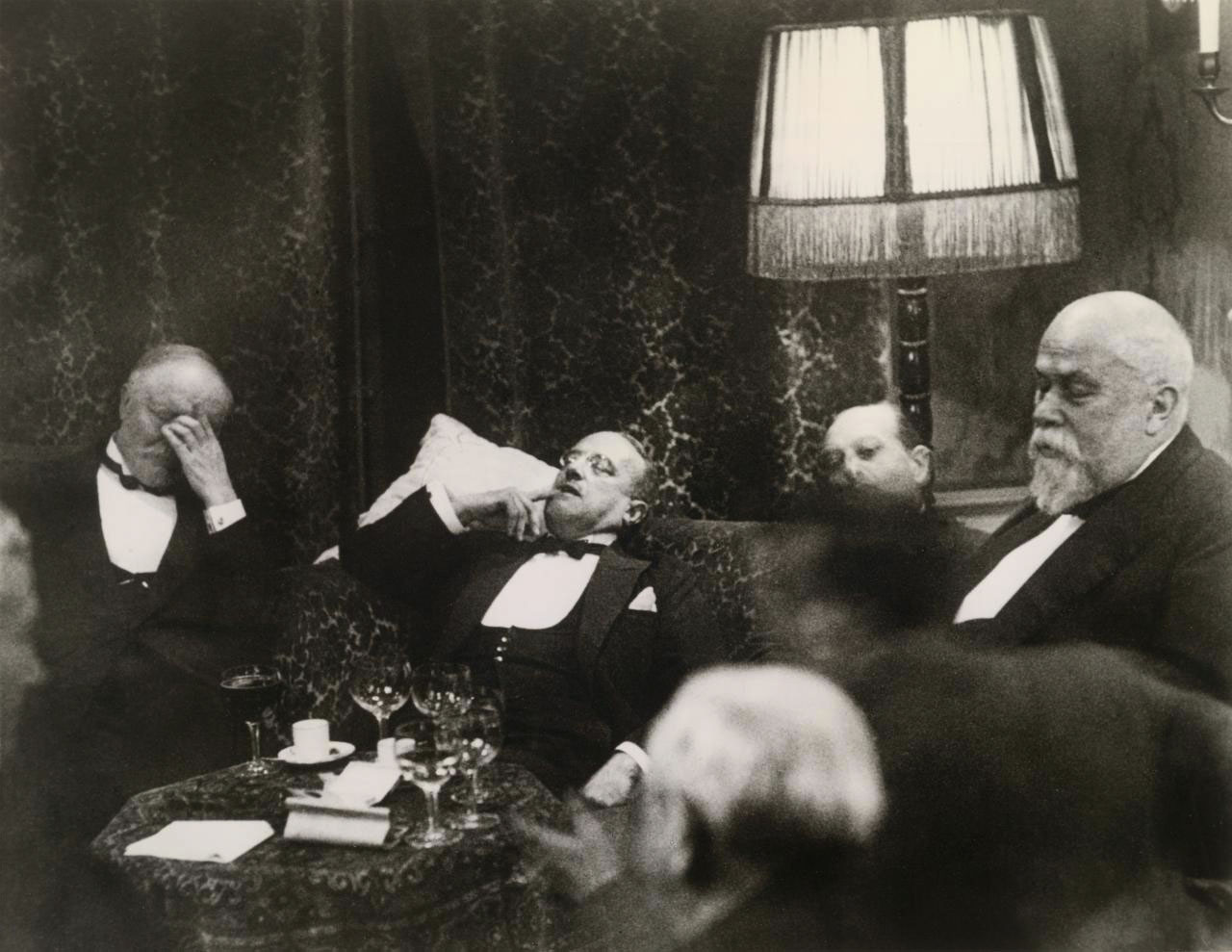
Erich Salomon (German Jewish, 1886-1944) 'Hague Conference (Second Hague Conference on Reparations, January 1930, in the early morning hours)' 1930


Erich Salomon (German Jewish, 1886-1944)
Hague Conference (Second Hague Conference on Reparations, January 1930, in the early morning hours)
1930
Promised gift of Paul Sack to the Sack Photographic Trust of the San Francisco Museum of Modern Art


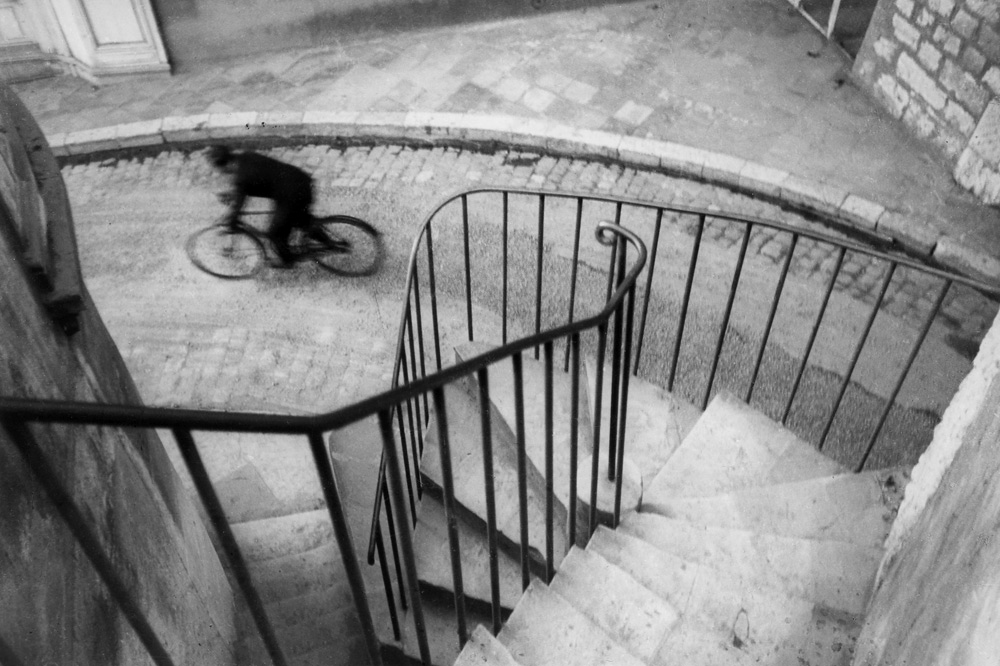
Henri Cartier Bresson (French, 1908-2004) 'Hyeres, France' 1932


Henri Cartier Bresson (French, 1908-2004)
Hyeres, France
1932
Gelatin silver print


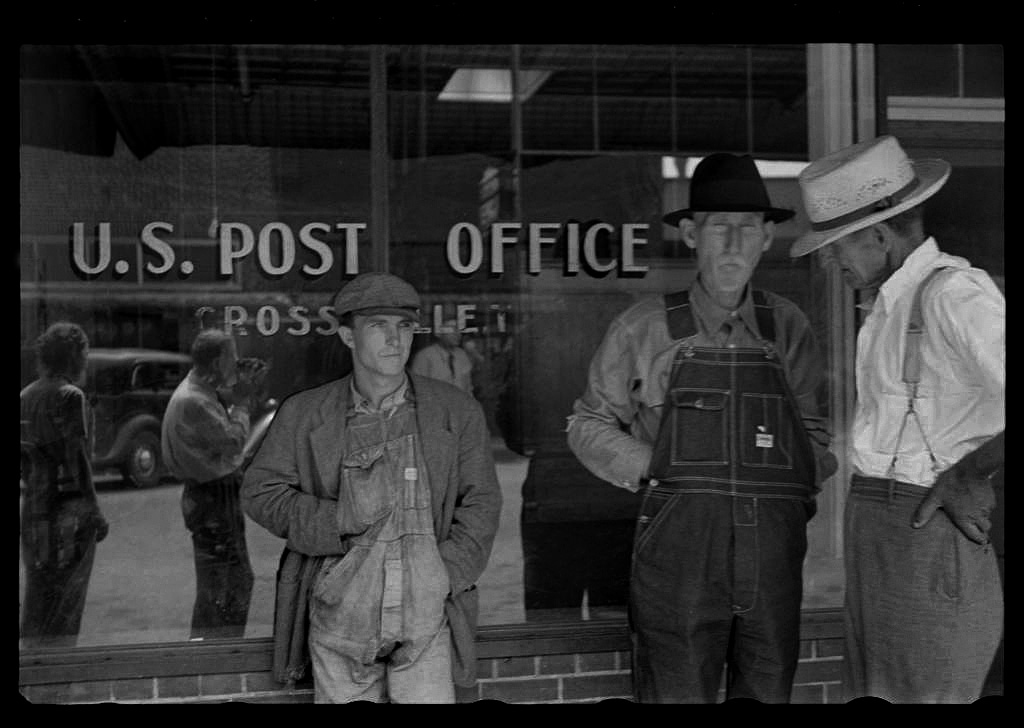
Ben Shah (American, 1898-1969) 'Post Office, Crossville, Tennesse' 1937


Ben Shah (American, 1898-1969)
Post Office, Crossville, Tennesse
1937
Gelatin silver print


Ben Shahn visible using his right-angled lens in the window reflection


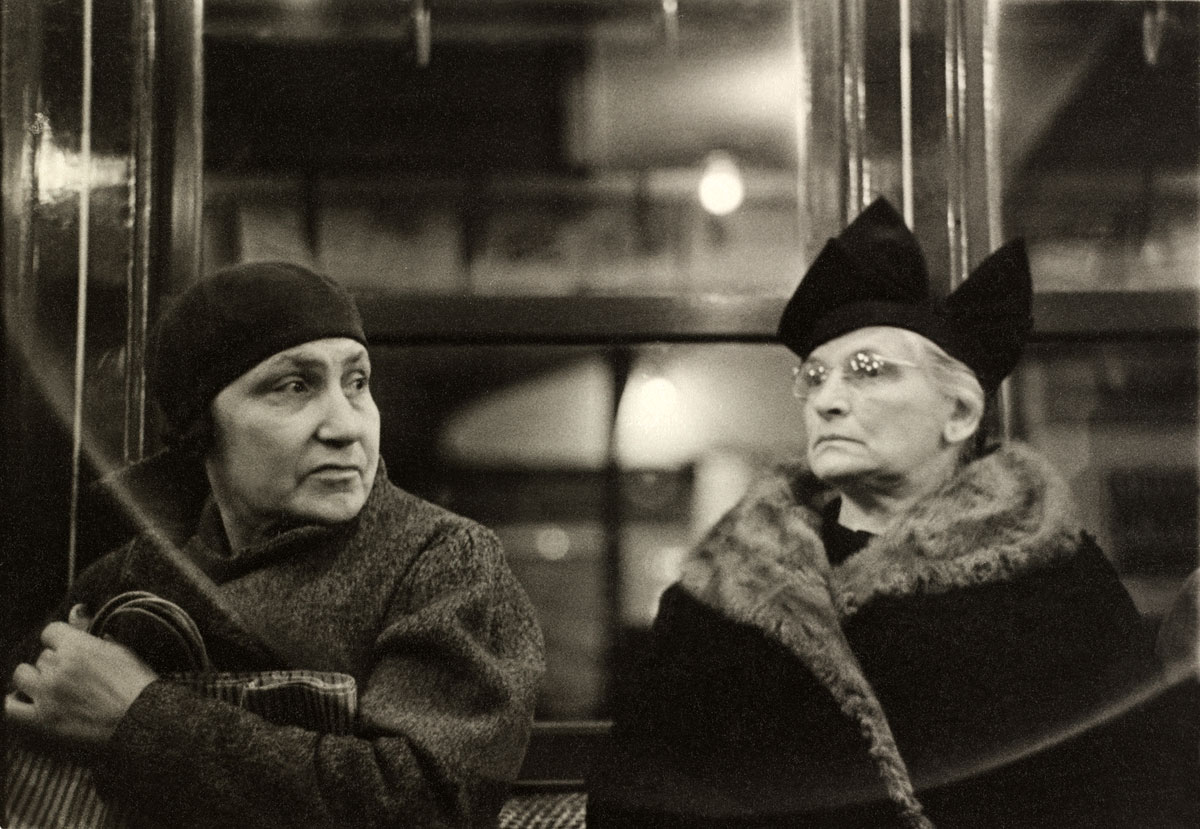
Walker Evans (American, 1903-1975) 'Subway Passengers, New York' 1938


Walker Evans (American, 1903-1975)
Subway Passengers, New York
1938
Gelatin silver print


Walker Evans (American, 1903-1975) 'Subway portrait' 1938-1941


Walker Evans (American, 1903-1975)
Subway Passengers, New York
1938-1941
Gelatin silver print


Weegee (Arthur H. Fellig) (American, 1899-1968) 'Their First Murder' Before 1945


Weegee (Arthur H. Fellig) (American, 1899-1968)
Their First Murder
Before 1945
Gelatin silver print


“Brooklyn School Children see Gambler Murdered in Street
Pupils were leaving P.S. 143, [Sixth Ave. and Roebling St.] in the Williamsburg section of Brooklyn, at 3:15 yesterday when Peter Mancuso, 22, described by police as a small time gambler, pulled up in a 1931 Ford at a traffic light a block from the school. Up to the car stepped a waiting gunman, who fired twice and escaped through the throng of children. Mancuso, shot through the head and heart, struggled to the board and collapsed dead on the pavement. Above are some of the spectators. The older woman is Mancuso’s aunt, who lives in the neighborhood, and the boy tugging at the hair of the girl in front of him is her son, hurrying away from her. Below is what they saw as a priest, flanked by an ambulance doctor and a detective, said the last rites of the Church over the body.”
PM Daily, October 9, 1941, Vol. II, No. 82, p. 15

Text from the International Center of Photography website


Weegee (Arthur H. Fellig) (American, 1899-1968) 'Audience in the Palace Theatre' c. 1943


Weegee (Arthur H. Fellig) (American, 1899-1968)
Audience in the Palace Theatre
c. 1943
Gelatin silver print
© Weegee/International Center of Photography/Getty Images


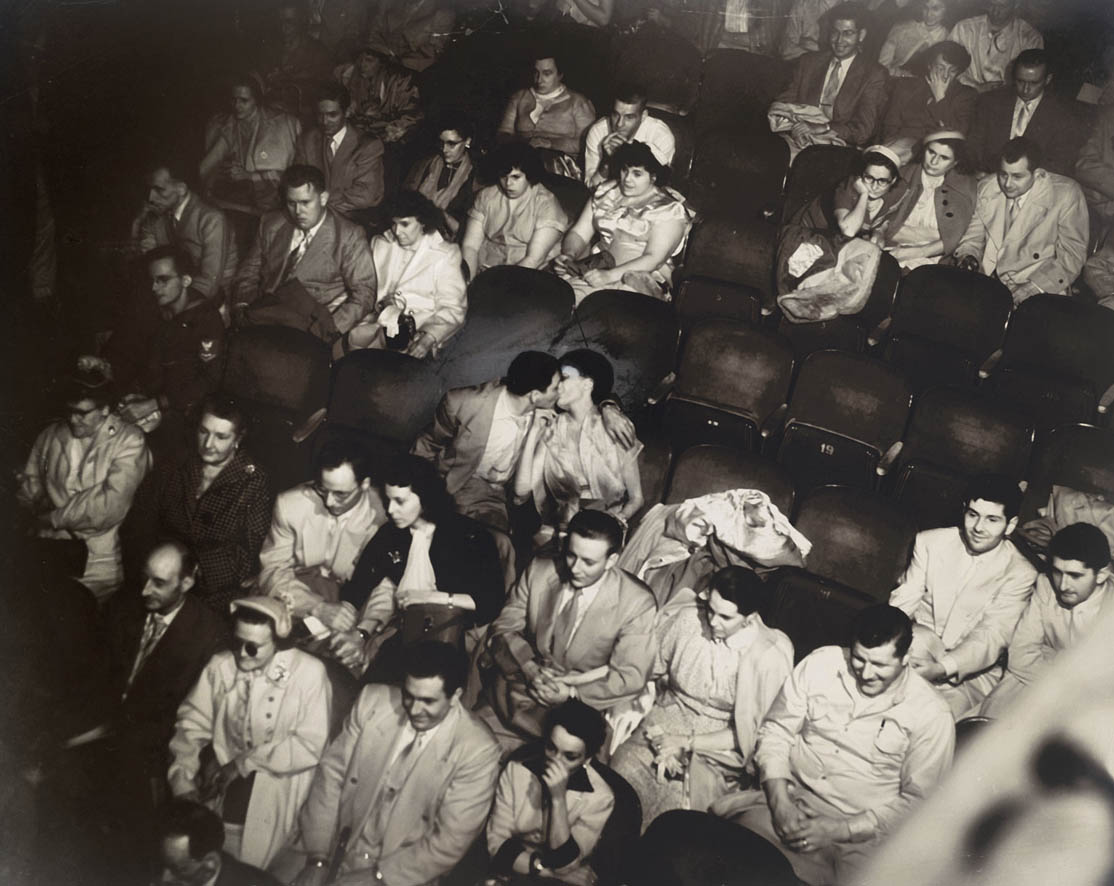
Weegee (Arthur Fellig) (American, born Austria, 1899-1968) '[Lovers at the Movies, Times Square]' c. 1953


Weegee (Arthur Fellig) (American born Austria, 1899-1968)
[Lovers at the Movies, Times Square]
c. 1953
Gelatin silver print
26.7 × 35.4cm (10 1/2 × 13 15/16 in)
© International Center of Photography


Robert Frank (American, 1924-2019)
'New York City' 1955 From 'The Americans'


Robert Frank (American, 1924-2019)
New York City
1955
From The Americans
Gelatin silver print


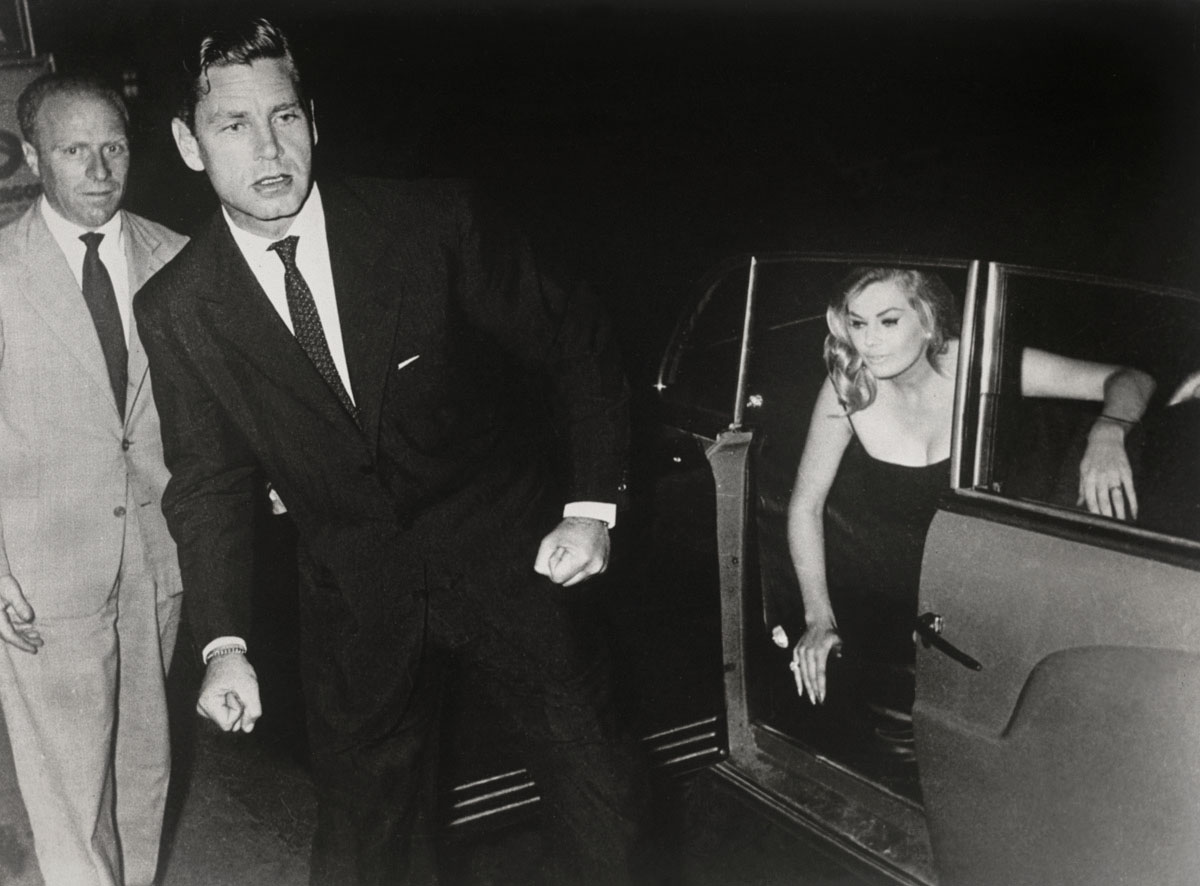
Tazio Secchiaroli (Italian, 1925-1998) 'Anita Ekberg and Husband Anthony Steel, Vecchia, Roma' 1958


Tazio Secchiaroli (Italian, 1925-1998)
Anita Ekberg and Husband Anthony Steel, Vecchia, Roma
1958
Gelatin silver print
SFMOMA, Accessions Committee Fund purchase


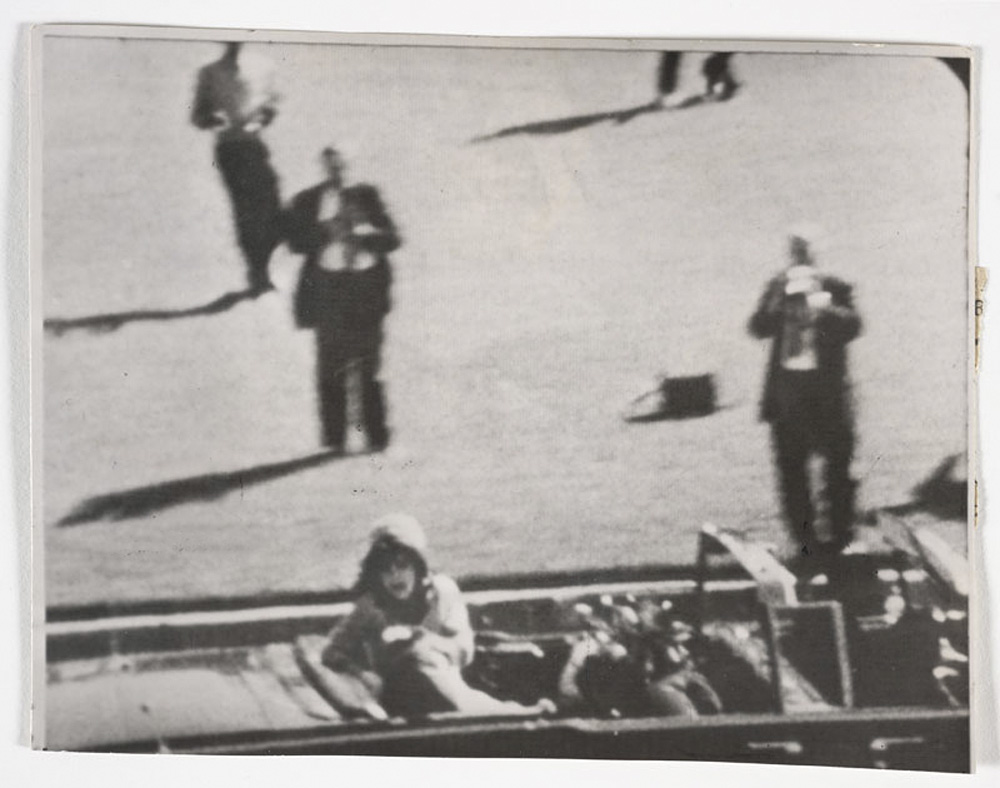
Abraham Zapruder (American born Ukraine, 1905-1970) 'Assassination of John F. Kennedy, November 22, 1963' 1963


Abraham Zapruder (American born Ukraine, 1905-1970)
Assassination of John F. Kennedy, November 22, 1963
1963
Collection SFMOMA, Accessions Committee Fund purchase
© The Sixth Floor Museum at Dealey Plaza


United Press International. 'Suffolk, Virginia, Race Confrontation, May 6, 1964' 1964


United Press International
Suffolk, Virginia, Race Confrontation, May 6, 1964
1964
Collection SFMOMA, Accessions Committee Fund purchase
© United Press International, Inc. All Rights Reserved


Lee Friedlander (American, b. 1934) 'New York City' 1966


Lee Friedlander (American, b. 1934)
New York City
1966
Gelatin silver print


Vito Acconci (Italian, 1940-2017)
'Following Piece' 1969


Vito Acconci (Italian, 1940-2017)
Following Piece
1969
Gelatin silver prints


Exposed offers a fascinating look at pictures made on the sly, without the explicit permission of the people depicted. With photographs from the late nineteenth century to present day, the pictures present a shocking, illuminating and witty perspective on iconic and taboo subjects.

Beginning with the idea of the ‘unseen photographer’, Exposed presents 250 works by celebrated artists and photographers including Brassaï’s erotic Secret Paris of the 1930s images; Weegee’s iconic photograph of Marilyn Monroe; and Nick Ut’s reportage image of children escaping napalm attacks in the Vietnam War. Sex and celebrity is an important part of the exhibition, presenting photographs of Liz Taylor and Richard Burton, Paris Hilton on her way to prison and the assassination of JFK. Other renowned photographers represented in the show include Guy Bourdin, Henri Cartier-Bresson, Philip Lorca DiCorcia, Walker Evans, Robert Frank, Nan Goldin, Lee Miller, Helmut Newton and Man Ray.

The UK is now the most surveyed country in the world. We have an obsession with voyeurism, privacy laws, freedom of media, and surveillance – images captured and relayed on camera phones, YouTube or reality TV.

Much of Exposed focuses on surveillance, including works by both amateur and press photographers, and images produced using automatic technology such as CCTV. The issues raised are particularly relevant in the current climate, with topical debates raging around the rights and desires of individuals, terrorism and the increasing availability and use of surveillance. Exposed confronts these issues and their implications head-on.

Text from the Tate Modern website [Online] Cited 21/09/2010 no longer available online


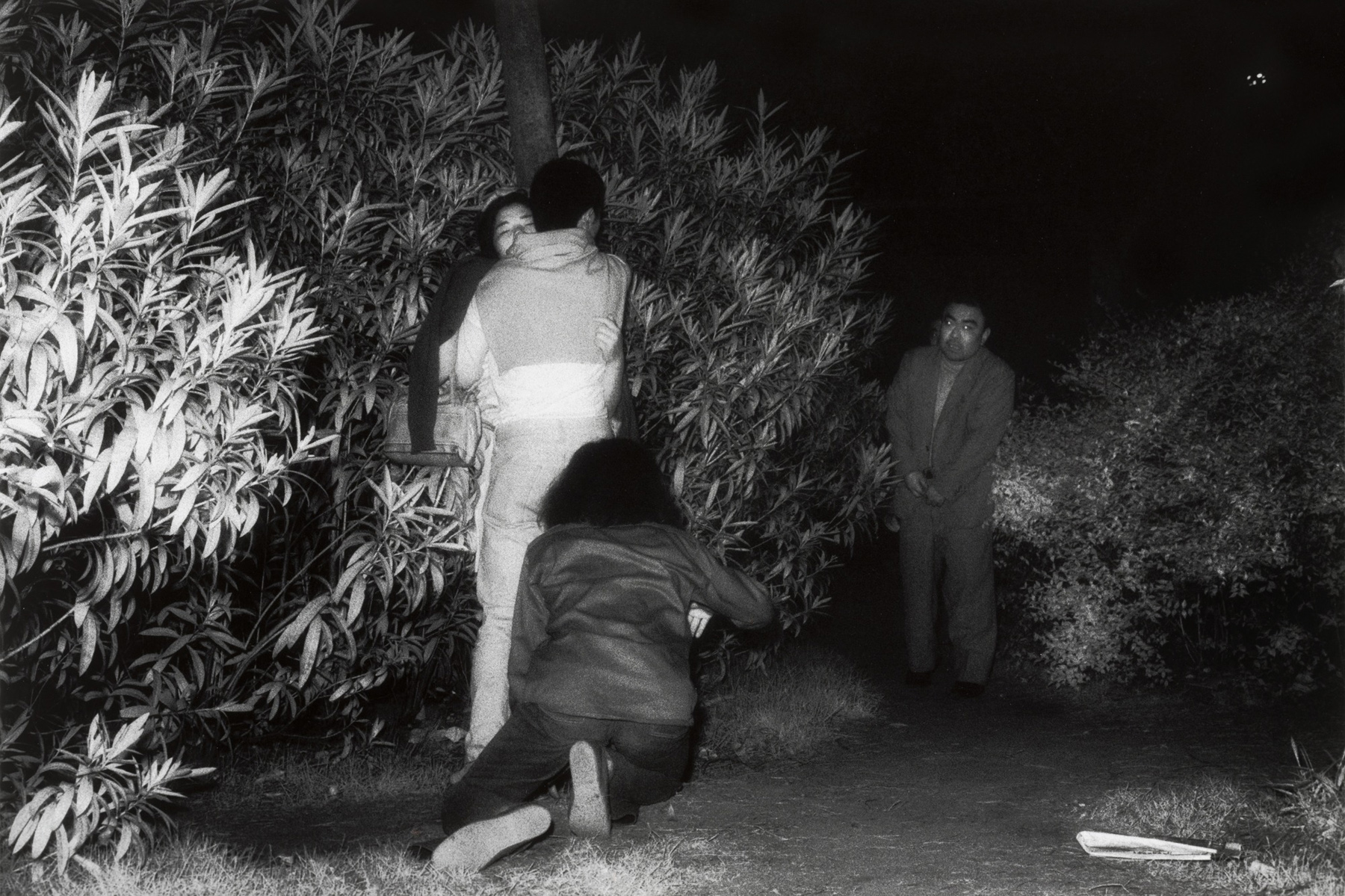
Kohei Yoshiyuki (Japan, b. 1946)
'Untitled' 1971 From the series 'The Park'


Kohei Yoshiyuki (Japan, b. 1946)
Untitled
1971
From the series The Park
Gelatin silver print


Kohei Yoshiyuki (Japan, b. 1946) 'Untitled' 1971 From the series 'The Park'


Kohei Yoshiyuki (Japan, b. 1946)
Untitled
1971
From the series The Park
Gelatin silver print


Sandra Phillips on Surveillance – Exposed at Tate Modern

SFMOMA’s Curator of Photography Sandra Phillips describes how contemporary artists like Sophie Calle and Benjamin Lowry have started to talk back to surveillance.


Ron Galella (American, b. 1931) 'What Makes Jackie Run? Central Park, New York City, October 4, 1971' 1971


Ron Galella (American, 1931-2022)
What Makes Jackie Run? Central Park, New York City, October 4, 1971
1971
Gelatin silver print
7 3/8 in x 9 7/8 in (18.73 x 25.08cm)
© Ron Galella


Ronald Edward Galella (January 10, 1931 – April 30, 2022) was an American photographer, known as a pioneer paparazzo. Dubbed “Paparazzo Extraordinaire” by Newsweek and “the Godfather of the U.S. paparazzi culture” by Time magazine and Vanity Fair, he is regarded by Harper’s Bazaar as “arguably the most controversial paparazzo of all time”. He photographed many celebrities out of the public eye and gained notice for his feuds with some of them, including Jacqueline Onassis and Marlon Brando. Despite the numerous controversies and claims of stalking, Galella’s work was praised and exhibited in art galleries worldwide.

Text from the Wikipedia website


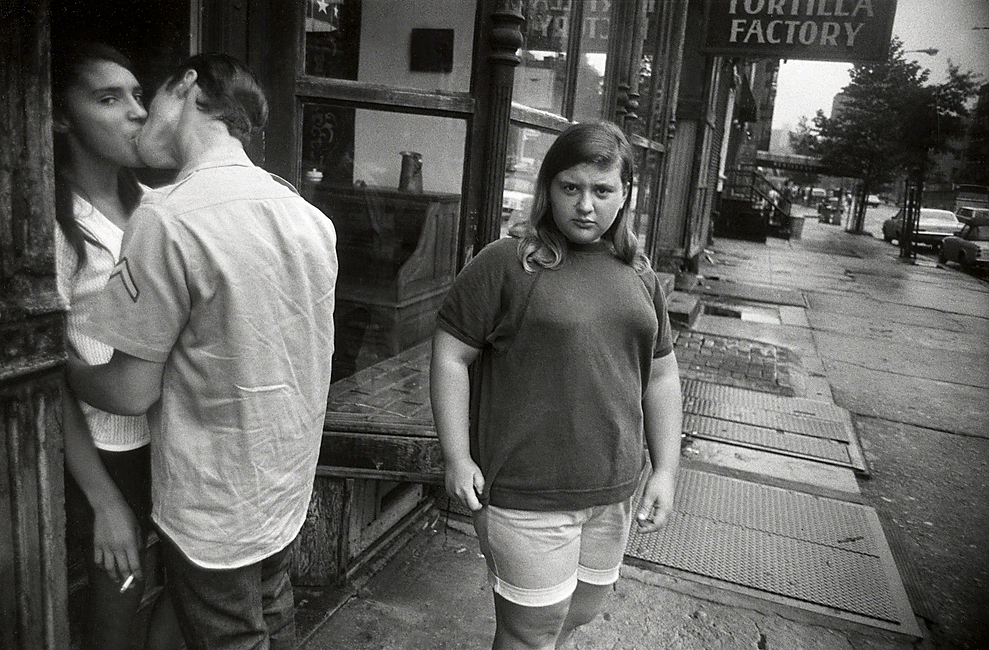
Garry Winogrand (American, 1928-1984) 'Couple Kissing, Girl Staring at Camera, Tortilla Factory, New York' 1969


Garry Winogrand (American, 1928-1984)
Couple Kissing, Girl Staring at Camera, Tortilla Factory, New York
1969
Gelatin silver print
© Garry Winogrand/Fraenkel Gallery, San Francisco


Nan Goldin (American, b. 1953) 'Nan and Brian in Bed, New York City' 1983


Nan Goldin (American, b. 1953)
Nan and Brian in Bed, New York City
1983
Chromogenic print
Nan Goldin and Matthew Marks Gallery, NYC


Denis Beaubois (Mauritian, b. 1970) 'In the event of Amnesia the city will recall…' 1996-1997 (still)


Denis Beaubois (Mauritian, b. 1970)
In the event of Amnesia the city will recall... (still)
1996-1997
DVD
9 mins 30 secs
Courtesy the artist


Denis Beaubois (Mauritian, b. 1970) 'In the event of Amnesia the city will recall…' 1996-1997 (still)


Denis Beaubois (Mauritian, b. 1970)
In the event of Amnesia the city will recall… (still)
1996-1997
DVD
9 mins 30 secs
Courtesy the artist


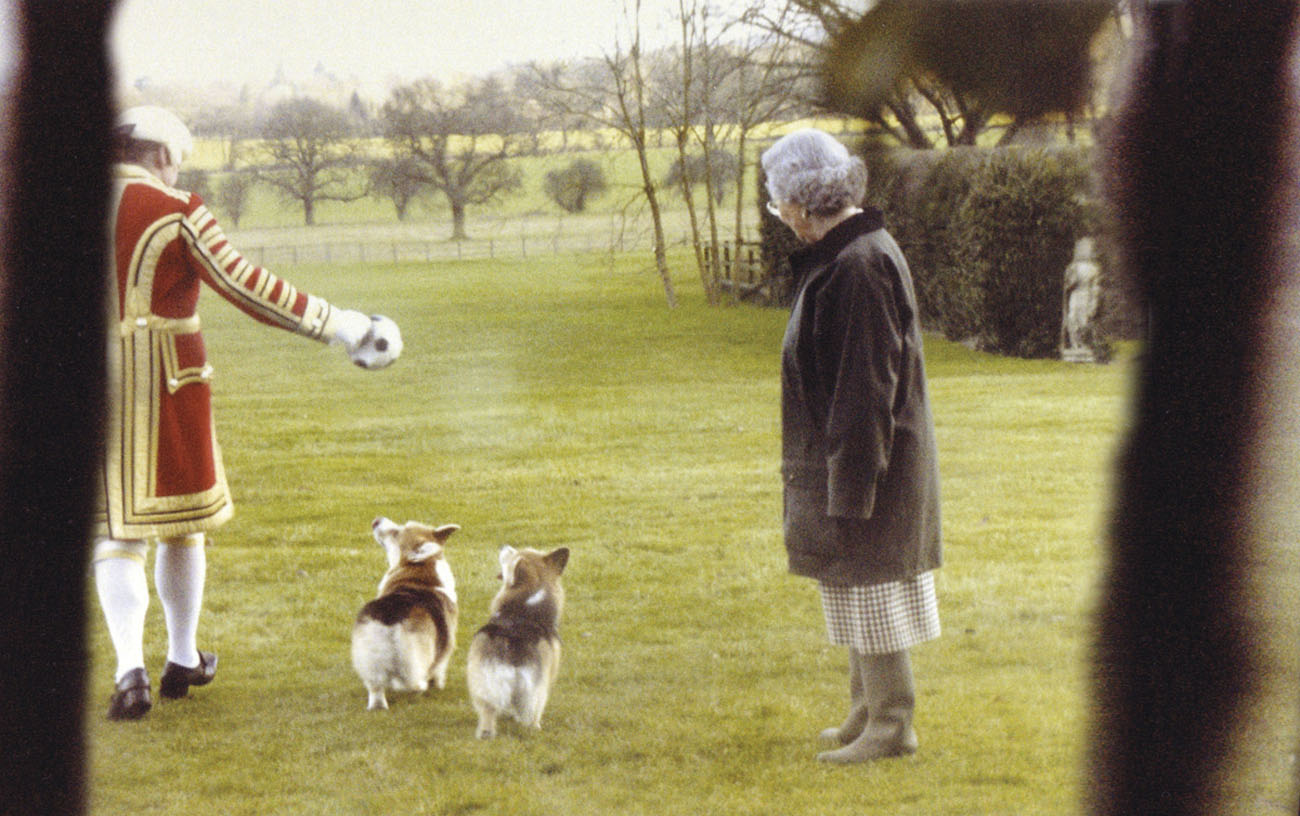
Alison Jackson (English, b. 1960)
'The Queen plays with her corgis' 2007


Alison Jackson (English, b. 1960)
The Queen plays with her corgis
2007
From the series Confidential
Chromogenic print
Courtesy the artist and Hamiltons Gallery, London
© Alison Jackson, Hamiltons Gallery, London


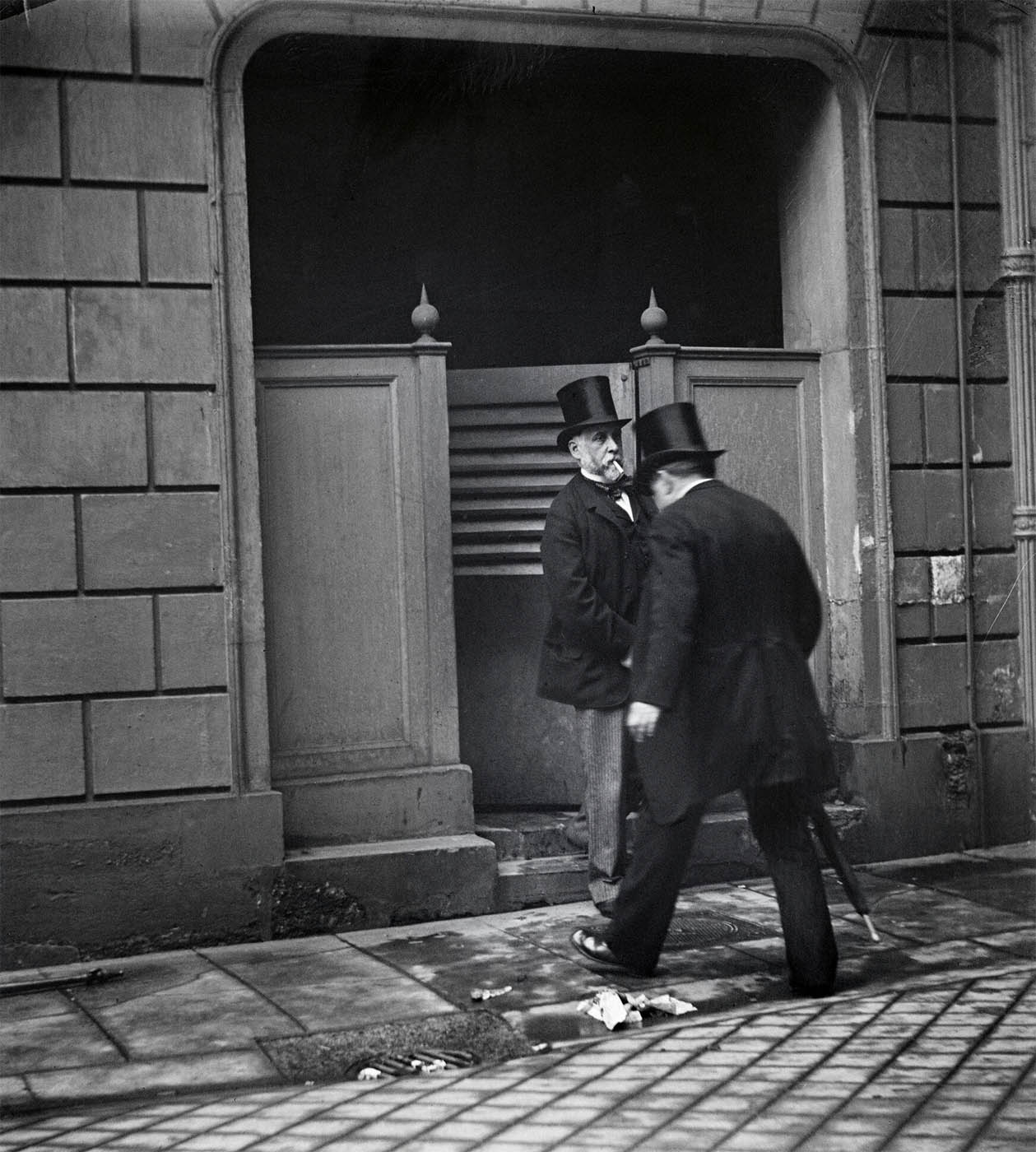
Giuseppe Primoli (Italian, 1851-1927)
'Edgar Degas emerging from a Parisian public toilet' 1889


Giuseppe Primoli (Italian, 1851-1927)
Edgar Degas emerging from a Parisian public toilet
1889
Gelatin silver print


Walker Evans (American, 1903-1975) 'Street Scene, New York' 1929


Walker Evans (American, 1903-1975)
Street Scene, New York
1928
Gelatin silver print
San Francisco Museum of Modern Art
© Walker Evans Archive, The Metropolitan Museum of Art


Georges Dudognon (French, 1922-2001) 'Greta Garbo in the Club St. Germain, Paris' c. 1950s


Georges Dudognon (French, 1922-2001)
Greta Garbo in the Club St. Germain, Paris
c. 1950s
Gelatin silver print
7 1/16  x 7 1/8 in. (17.94 x 18.1cm)
San Francisco Museum of Modern Art, Members of Foto Forum, 2005.200
© Estate of Georges Dudognon


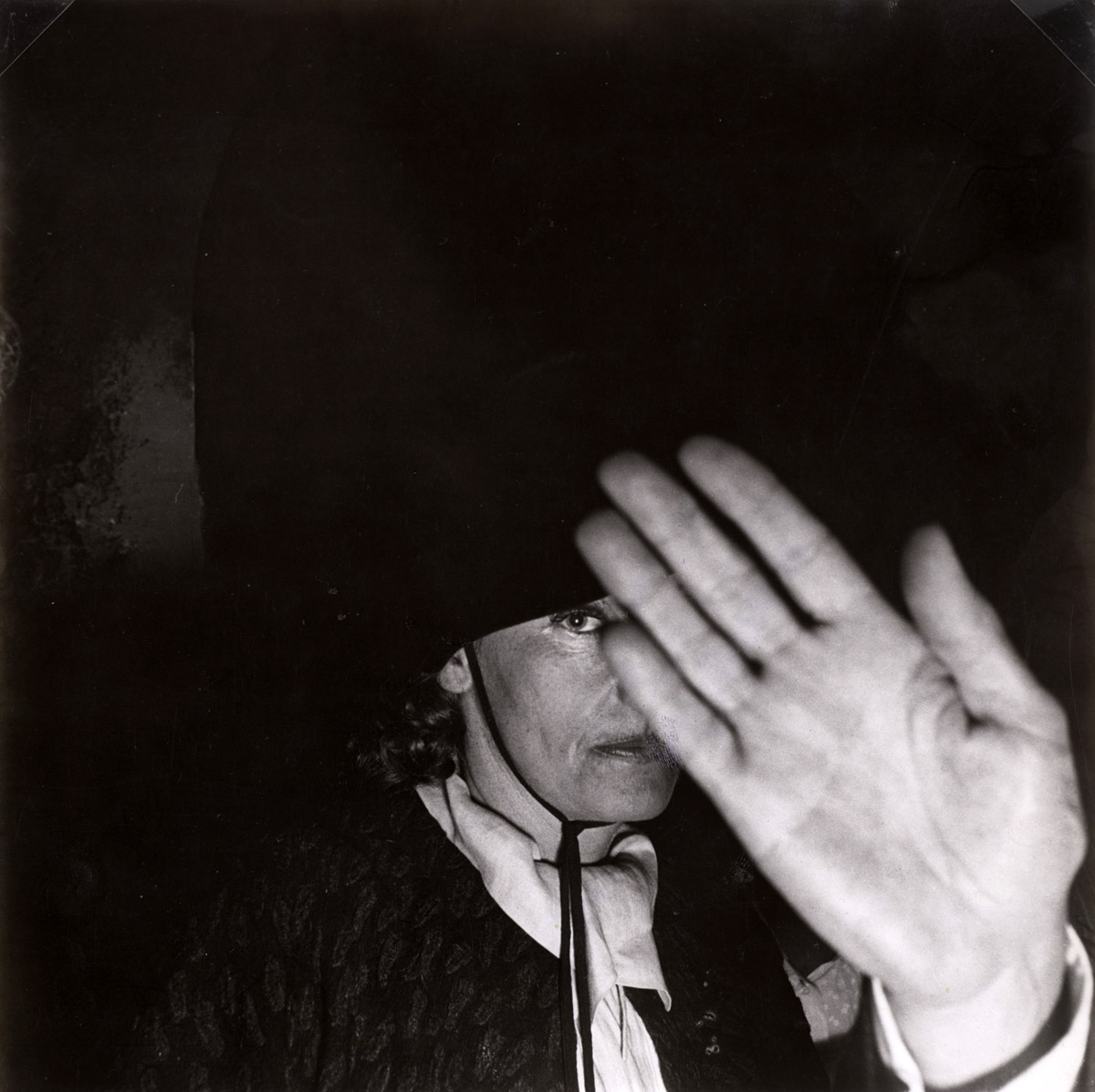
The face in the paparazzi image above is actually The Face: Greta Garbo. One of the most famous and admired women in the world, Garbo became a New York recluse after retiring from films at the beginning of the 1940s. Sightings of her were rare, and this 1950s image captures the conflict between a movie star’s public persona and private life. Now older and with her face obscured, Garbo is unrecognisable, but once understood to be her it becomes a contrasting reference to all those images of her as an icon of beauty and stardom.

Christian Hayes. “Exposed: Voyeurism, Surveillance and the Camera,” on The Classic Film Show website, June 15, 2010 [online] Cited 24/03/2025


Weegee (Arthur H. Fellig) (American, 1899-1968) '[Marilyn Monroe]' c. 1950s


Weegee (Arthur H. Fellig) (American, 1899-1968)
[Marilyn Monroe]
c. 1950s
Gelatin silver print
International Center of Photography, New York, Gift of Wilma Wilcox, 1993
© Weegee / International Center of Photography / Getty Images


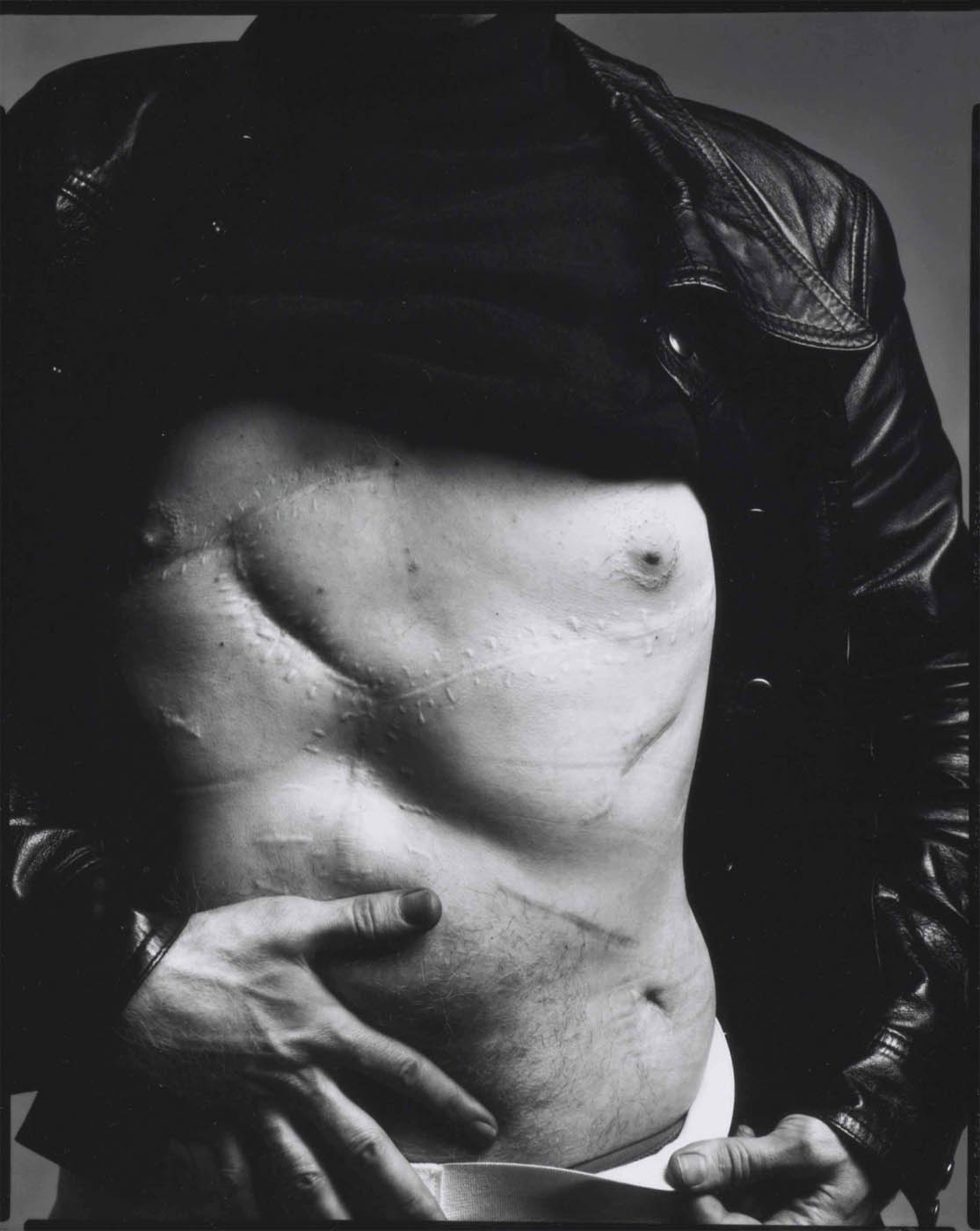
Richard Avedon (American, 1923-2004) 'And Warhol' 1969
Screenshot


Richard Avedon (American, 1923-2004)
And Warhol
1969
Gelatin silver print


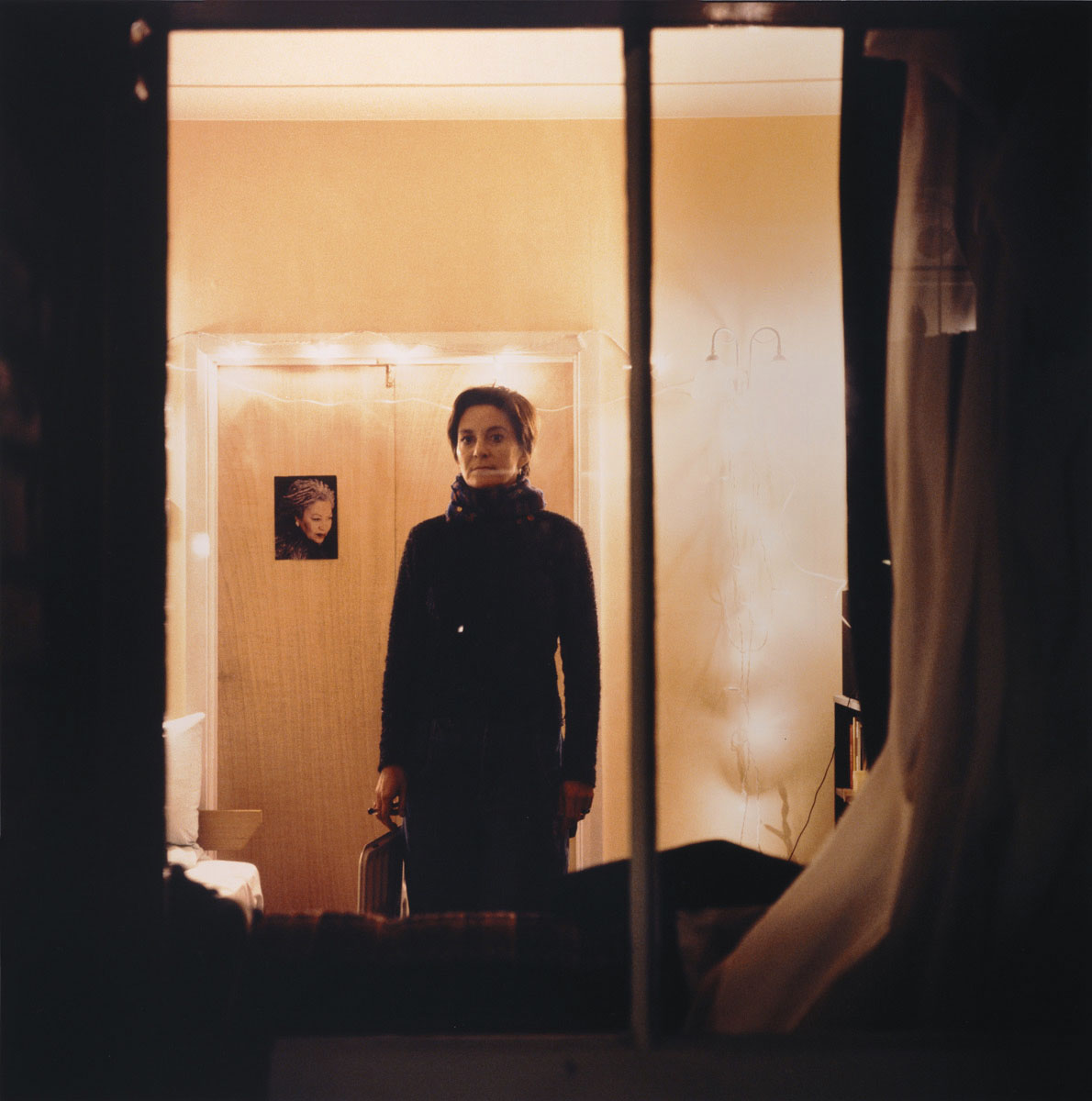
Shizuka Yokomizo (Japanese, b. 1966) 'Stranger No. 1' 1998


Shizuka Yokomizo (Japanese, b. 1966)
Stranger No. 1
1998
Chromogenic print
50 x 42 1/2 in. (127 x 108 cm)
© Shizuka Yokomizo


Shizuka Yokomizo (Japanese, b. 1966)
'Stranger No. 2' 1998


Shizuka Yokomizo (Japanese, b. 1966)
Stranger No. 2
1998
Chromogenic print
SFMOMA, Accessions Committee Fund purchase
© Shizuka Yokomizo


Tate Modern
Bankside
London SE1 9TG
020 7887 8888

Opening hours:
Daily 10.00 – 18.00

Tate Modern website

LIKE ART BLART ON FACEBOOK

Back to top

Exhibition: ‘Wolfgang Tillmans’ at the Serpentine Gallery, London

Exhibition dates: 26th June – 19th September, 2010


Installation view of the exhibition 'Wolfgang Tillmans' at the Serpentine Gallery, London, June - Sept, 2010


Installation view of the exhibition Wolfgang Tillmans at the Serpentine Gallery, London, June- September, 2010
Photograph: Gautier de Blonde


“In the constellations of pictures, I try to approximate the way I see the world, not in a linear order but as a multitude of parallel experiences…  Multiple singularities, simultaneously accessible as they share the same space or room.”


Wolfgang Tillmans


Since I haven’t been to the exhibition I have tried to sequence the photographs of this wonderful artist in a small intimation of how he might have visualised them – I hope you get the idea. The installation photographs at the bottom give clues to the actual moments of what Minor White calls ‘ice/fire’ – the space between disparate images, the space that is just as important as the images themselves for the frisson that is evokes, the creation of that metaphorical leap into the void of meaning where malleable thoughts emerge; never linear, both singular and multiple at one and the same time.

Dr Marcus Bunyan


Many thankx to the Serpentine Gallery for allowing me to publish the photographs in the posting. Please click on the photographs for a larger version of the image.


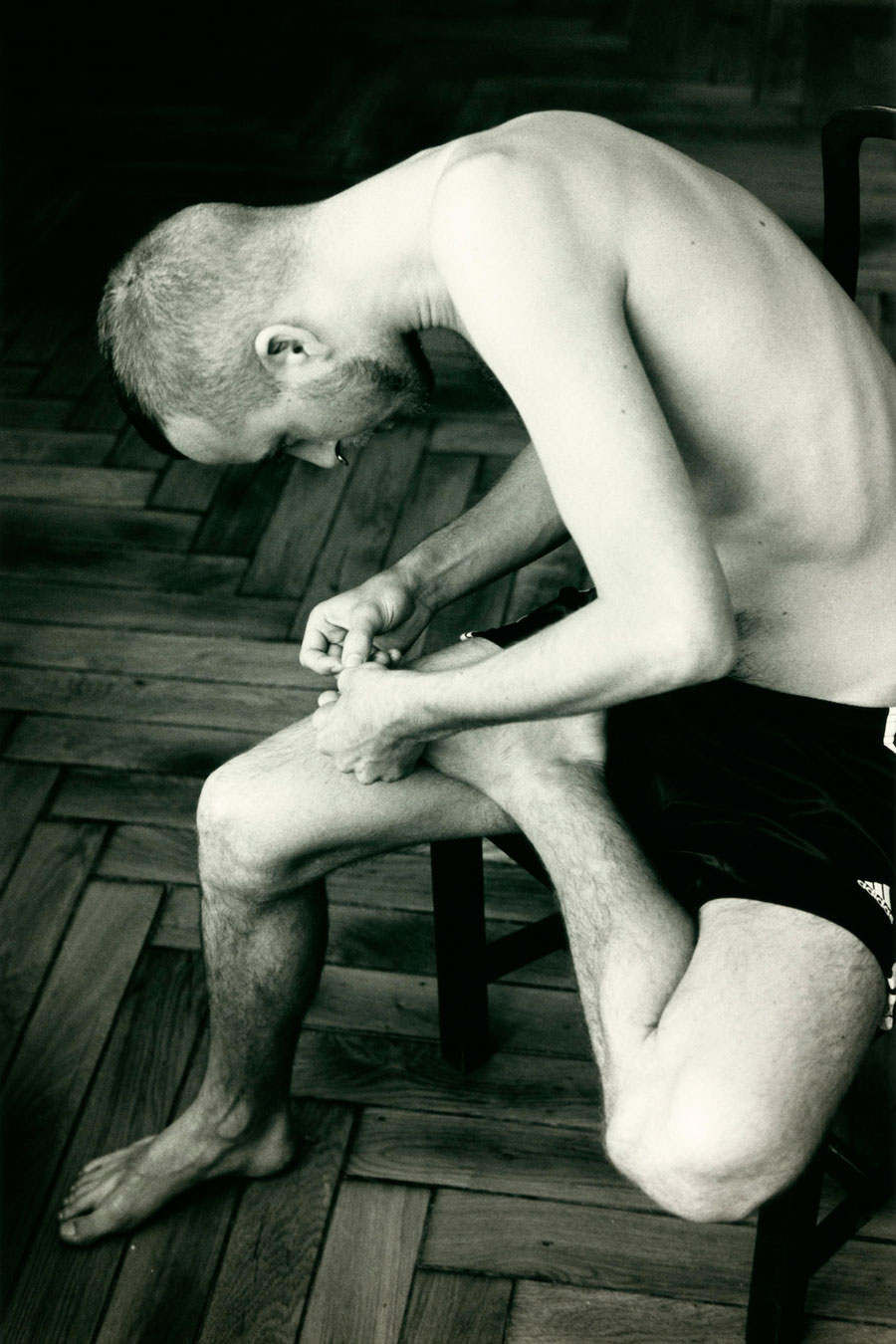
Wolfgang Tillmans (German, b. 1968) 'Anders pulling splinter from his foot' 2004 from the exhibition 'Wolfgang Tillmans' at the Serpentine Gallery, London, June - Sept, 2010


Wolfgang Tillmans (German, b. 1968)
Anders pulling splinter from his foot
2004
C-type print
61 × 50.8cm
Courtesy the artist and Maureen Paley, London


Wolfgang Tillmans (German, b. 1968) 'Nanbei Hu' 2009 from the exhibition 'Wolfgang Tillmans' at the Serpentine Gallery, London, June - Sept, 2010


Wolfgang Tillmans (German, b. 1968)
Nanbei Hu
2009
Inkjet print
207 x 138cm
Courtesy the artist and Maureen Paley, London


Wolfgang Tillmans (German, b. 1968) 'Roy' 2009 from the exhibition 'Wolfgang Tillmans' at the Serpentine Gallery, London, June - Sept, 2010


Wolfgang Tillmans (German, b. 1968)
Roy
2009
C-type print
40.6 x 30.5cm
Courtesy the artist and Maureen Paley, London


Wolfgang Tillmans (German, b. 1968) 'Venus, transit' 2004


Wolfgang Tillmans (German, b. 1968)
Venus, transit
2004
C-type print
40.6 × 30.5cm
Courtesy the artist and Maureen Paley, London


Wolfgang Tillmans (German, b. 1968) 'Dan' 2008


Wolfgang Tillmans (German, b. 1968)
Dan
2008
C-type print
61 × 50.8cm
Courtesy the artist and Maureen Paley, London


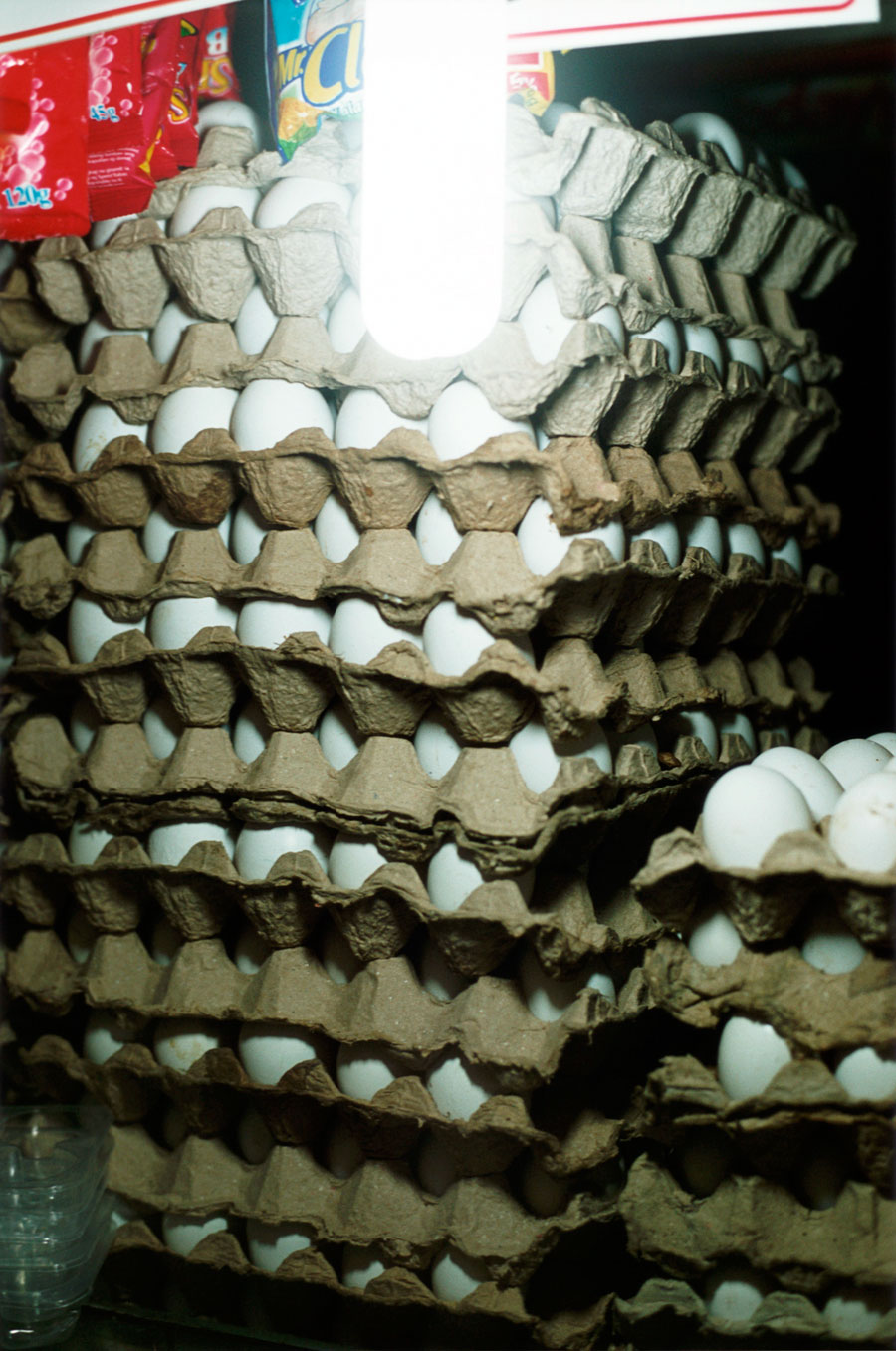
Wolfgang Tillmans (German, b. 1968) 'Eierstapel' 2009


Wolfgang Tillmans (German, b. 1968)
Eierstapel
2009
C-type print
61 x 50.8cm
Courtesy the artist and Maureen Paley, London


Wolfgang Tillmans (German, b. 1968) 'Muqarnas' 2006


Wolfgang Tillmans (German, b. 1968)
Muqarnas
2006
Framed C-type print
214 × 145cm
Courtesy the artist and Maureen Paley, London


Wolfgang Tillmans (German, b. 1968) 'Urgency XXII' 2006


Wolfgang Tillmans (German, b. 1968)
Urgency XXII
2006
Framed C-type print
238 × 181cm
Courtesy the artist and Maureen Paley, London


Wolfgang Tillmans (German, b. 1968) 'Zimmerlinde (Michel)' 2006


Wolfgang Tillmans (German, b. 1968)
Zimmerlinde (Michel)
2006
Framed C-type print
211 × 145cm
Courtesy the artist and Maureen Paley, London


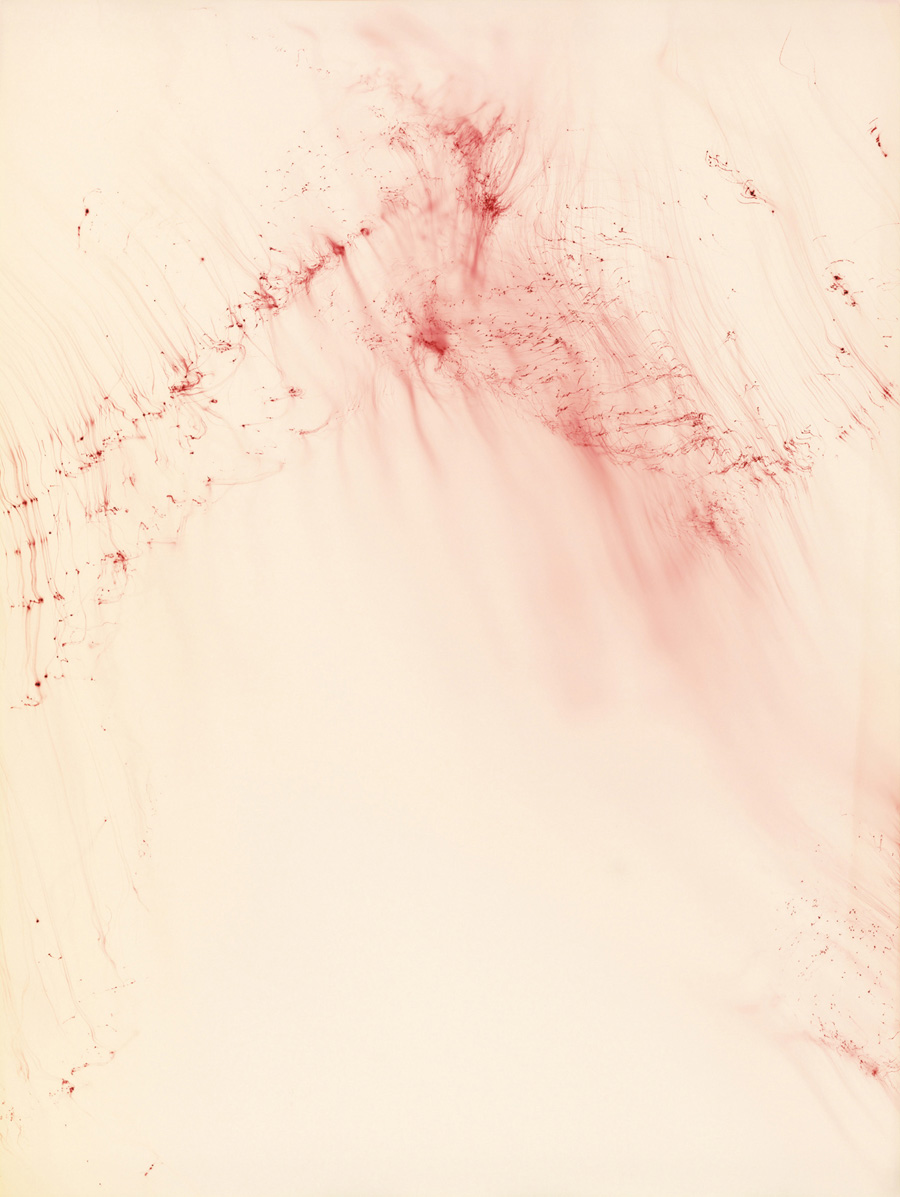
The Serpentine Gallery presents Wolfgang Tillmans’ first major exhibition in London since 2003. Conceived by the artist for the Serpentine Gallery, the exhibition will present both abstract and figurative work.

Over the past 20 years, Tillmans has redefined photography and the way it is shown. Known by the early 90s for the seemingly casual images of the world he inhabited, his work reassessed photographic conventions and reflected the identity politics of the time, capturing the fragility of human life and focusing on everyday objects. This early work then expanded to engage with portraiture, landscape, the still-life and, more recently, abstraction. Tillmans’ abstract work, greatly celebrated in the last decade, continues to push the boundaries and definitions of the photographic form, and will be a particular focus of this exhibition.

The wide-ranging themes in Tillmans’ photographs are combined in his reconfiguration of accumulated images, created in response to a given space. In this new exhibition, the explorations into abstraction sit alongside a new focus on the figurative – a focus that is increasingly informed by recent colour field works and experiments with process. Referring to his approach to installation making Tillmans said: “In the constellations of pictures, I try to approximate the way I see the world, not in a linear order but as a multitude of parallel experiences… Multiple singularities, simultaneously accessible as they share the same space or room.”

The Serpentine Gallery exhibition reflects the artist’s acute sensitivity to the politics of contemporary society, his ongoing fascination with colour, and his conceptual engagement with the technical processes of photography. These delicate yet challenging images capture the distinctive energetic balance between beauty and subversion that Tillmans has long embraced.

Tillmans was born in 1968 in Remscheid, Germany. He studied in Great Britain at the Bournemouth & Poole College of Art & Design, graduating in 1992. In the 1990s, his work was shown at the Museum of Modern Art, New York; the Kunsthalle Zurich; and Portikus, Frankfurt, amongst others. In 2000 he won the Tate’s Turner Prize. A large survey exhibition in 2001-2003 toured to Deichtorhallen, Hamburg; Castello di Rivoli, Turin; Palais de Tokyo, Paris; and Louisiana Museum of Modern Art in Humlebaek, Denmark. His show called Freedom from the Known at P.S.1, New York (2006) was followed by a major tour of North American museums. In 2008, Tillmans had an extensive solo exhibition at the Hamburger Bahnhof, Berlin entitled Lighter, and in 2009 was included in Making Worlds at the 53rd Venice Biennale. More than twenty monographic books on his work have been published to date and an exhibition catalogue will accompany the Serpentine Gallery exhibition.

The exhibition will run concurrently with the Serpentine Gallery Pavilion 2010, designed by Jean Nouvel and opening on 10 July. Housed in the Pavilion will be artist Christian Boltanski’s Les Archives du Coeur installation.

Press release from the Serpentine Gallery website [Online] Cited 11/09/2010 no longer available online


Wolfgang Tillmans (German, b. 1968) 'Silver Installation VII' 2009 (installation view)


Wolfgang Tillmans (German, b. 1968)
Silver Installation VII (installation view)
2009
Unique C-type prints
Installation view
Photograph: Gautier de Blonde


Installation view of the exhibition 'Wolfgang Tillmans' at the Serpentine Gallery, London, June-  September, 2010

Installation view of the exhibition 'Wolfgang Tillmans' at the Serpentine Gallery, London, June-  September, 2010

Installation view of the exhibition 'Wolfgang Tillmans' at the Serpentine Gallery, London, June-  September, 2010


Installation views of the exhibition Wolfgang Tillmans at the Serpentine Gallery, London, June- September, 2010
Photograph: Gautier de Blonde


Serpentine Gallery
Kensington Gardens
London W2 3XA
Phone: 020 7402 6075

Opening hours:
Tuesday – Sunday 10am – 6pm

Serpentine Gallery website

LIKE ART BLART ON FACEBOOK

Back to top

Exhibition: ‘The Family and the Land: Sally Mann’ at The Photographers’ Gallery, London

Exhibition dates: 18th June – 19th September 2010


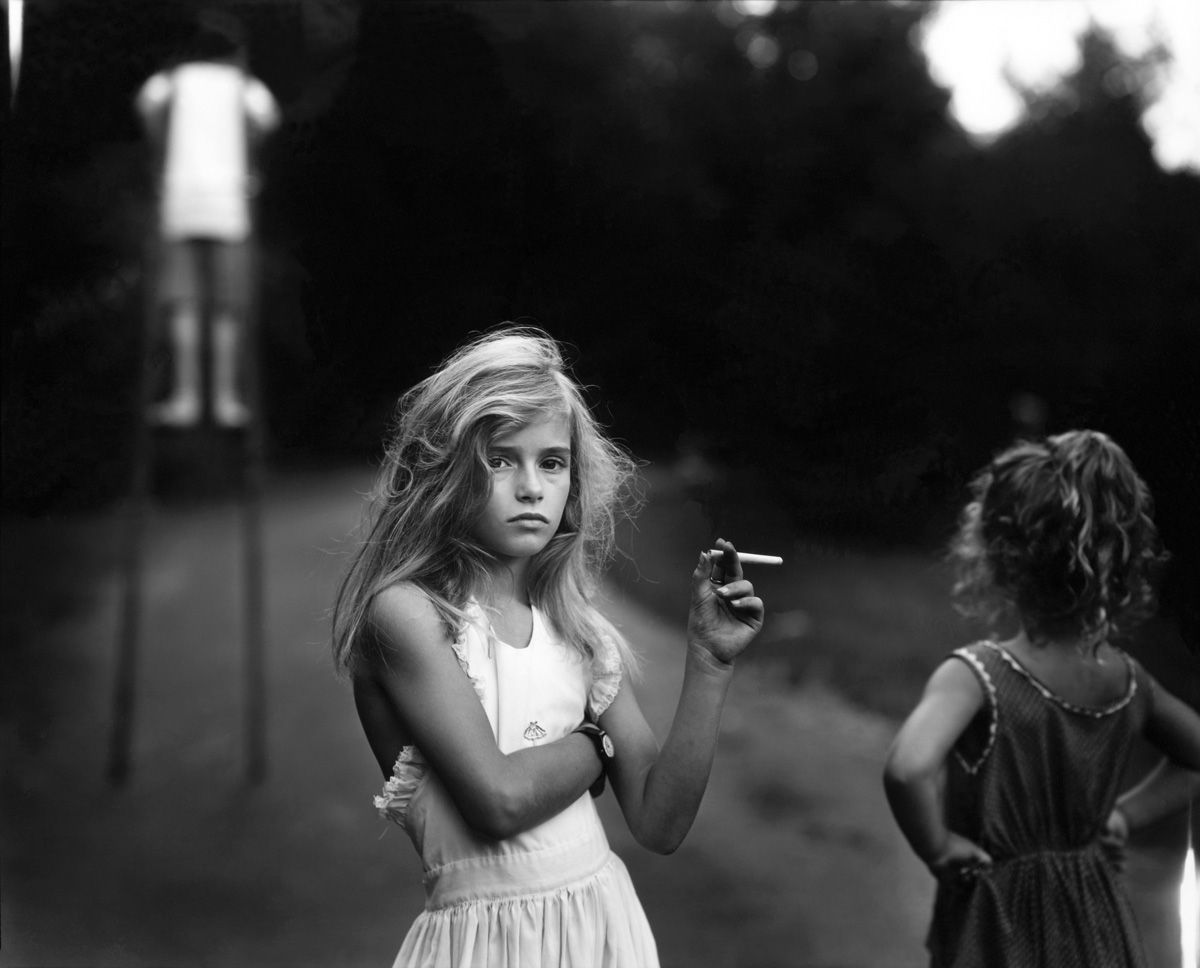
Sally Mann (American, b. 1951) 'Candy Cigarette' 1989


Sally Mann (American, b. 1951)
Candy Cigarette
1989
From the series Immediate Family
© Sally Mann. Courtesy Gagosian Gallery


One of the most haunting photography books I have ever opened and inhaled is What Remains (2003) by Sally Mann.

People say the photographs are shocking – featuring as they do documentation of a deceased pet greyhound, photos of decaying bodies out in the open field of a forensics lab (see photograph below), “the almost invisible traces left by the death of a fugitive on Mann’s property”, the dark landscape of a civil war battlefield and close up photographs of her now grown up children – but there is a stillness and depth to these photographs that elevates them above such sentiments.

What Mann does so well is that she listens to the passing of time and then inscribes an ode to what remains. Her gift is the photography of mortality (and vice versa) with all the psychic weight that this entails. This is a revelatory book not for the faint hearted.

Dr Marcus Bunyan


Many thankx to Sam Trenerry and the Photographers’ Gallery for allowing me to publish the photographs in the posting. Please click on the photographs for a larger version of the image.


Sally Mann (American, b. 1951) 'Vinland' 1992


Sally Mann (American, b. 1951)
Vinland
1992
Gelatin silver print
© Sally Mann. Courtesy Gagosian Gallery


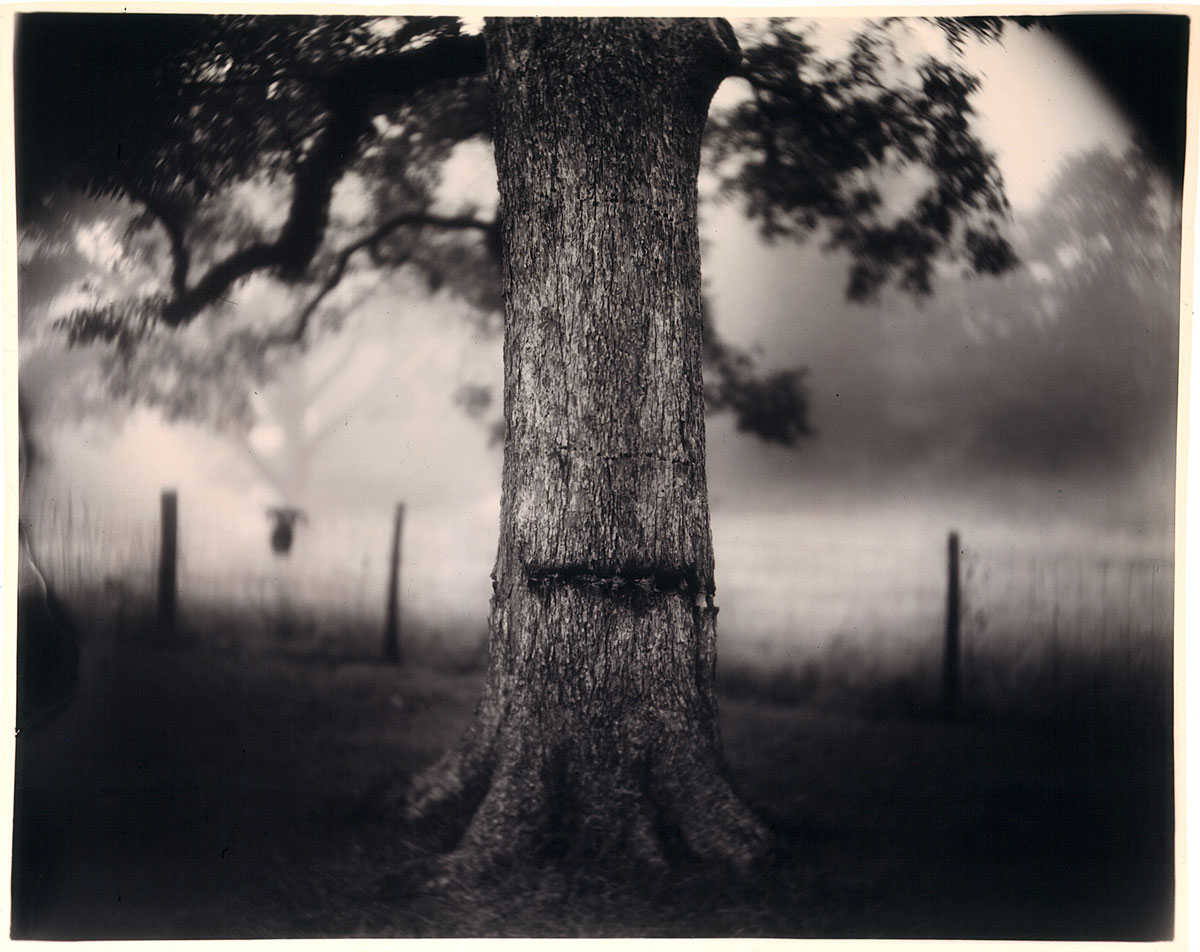
Sally Mann (American, b. 1951) 'Scarred Tree' 1996


Sally Mann (American, b. 1951)
Scarred Tree
1996
From the series Deep South
© Sally Mann. Courtesy Gagosian Gallery


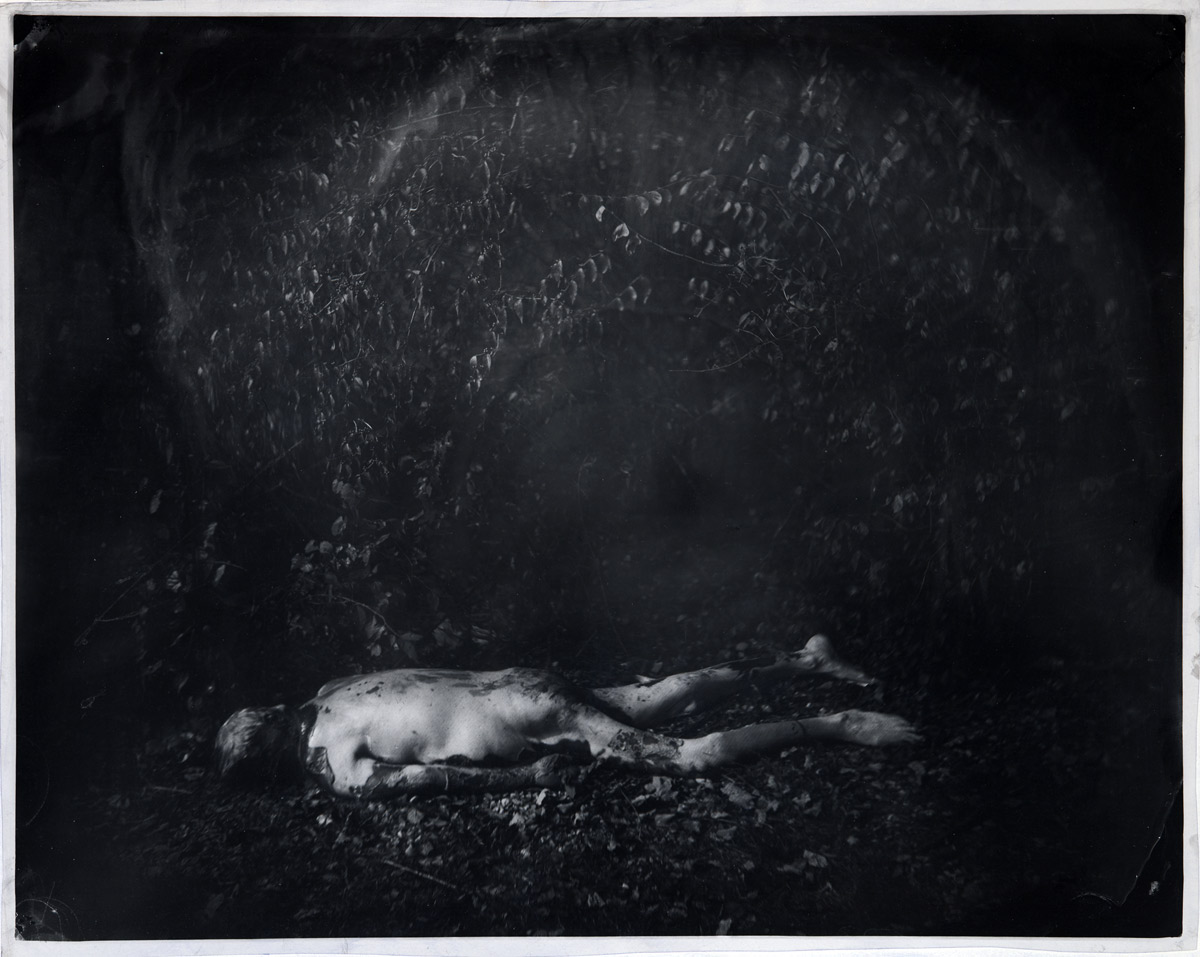
Sally Mann (American, b. 1951) 'Untitled WR Pa 59' 2001


Sally Mann (American, b. 1951)
Untitled WR Pa 59
2001
From the series What Remains
© Sally Mann. Courtesy Gagosian Gallery


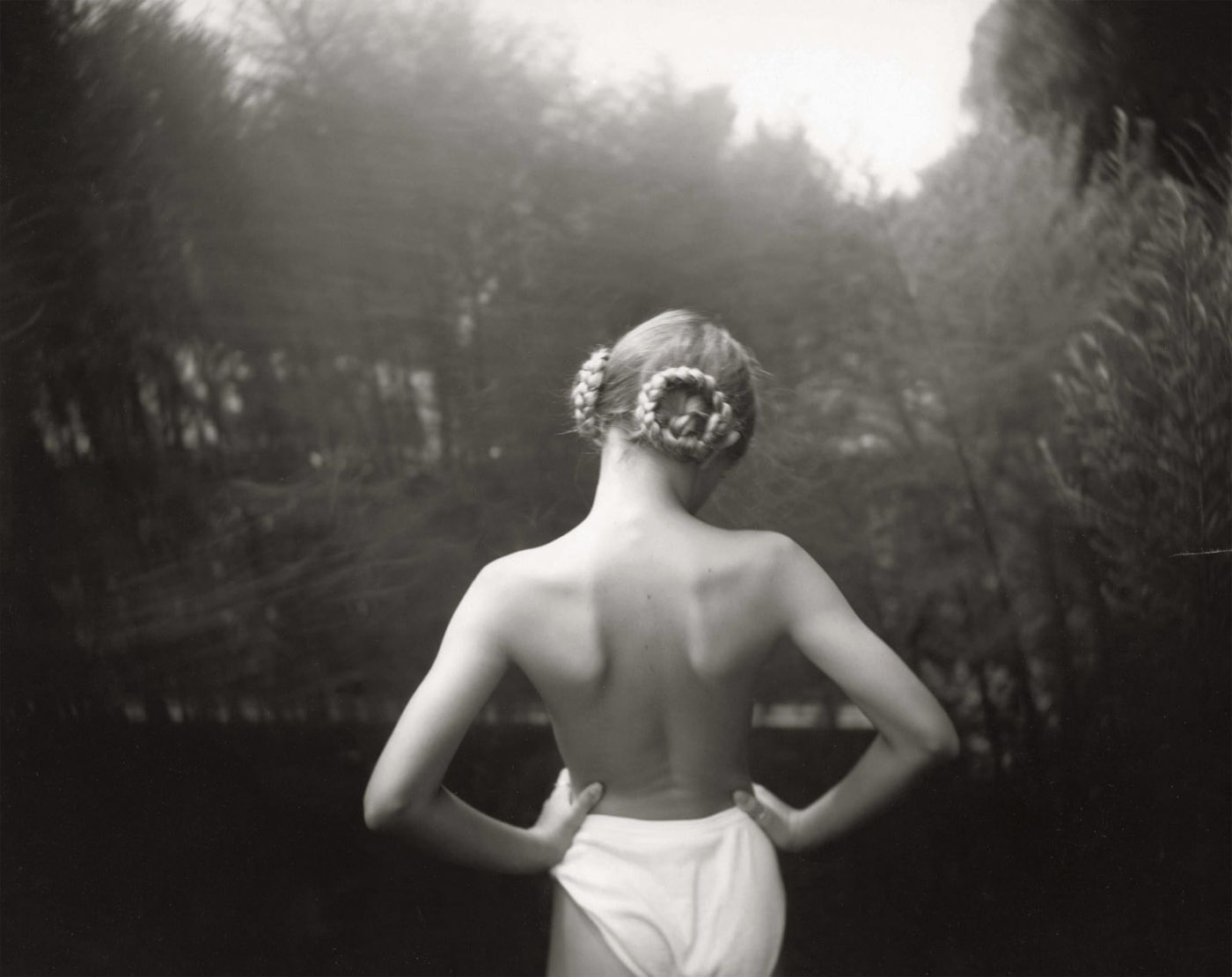
This exhibition at The Photographers’ Gallery is the American photographer Sally Mann’s first solo exhibition in the UK. Combining several series from her long photographic career, The Family and the Land: Sally Mann reflects Mann’s artistic impulse to draw on the world around her as subject matter.

The ‘family’ element of the title comprises Mann’s early series Immediate Family and the newer series Faces, both of which depict her children at various ages. The series Deep South represents the landscape, portraying images made across the south of the United States. The more recent body of work, What Remains brings together both strands of the exhibition, through its examination of how bodies, as they decompose, merge into the land itself.

Sally Mann (b. 1951, USA) first gained prominence for Immediate Family (1984-1994) a series of intimate and revealing portraits of her three young children, Emmett, Jessie and Virginia. Taken over a ten-year period, Mann depicts them playing, swimming and acting to the camera in and around their homestead in Lexington, Virginia. Born out of a collaborative process between mother and child, the work encapsulates their childhood in all its rawness and innocence.

Mann followed Immediate Family by focusing on the land itself in her series Deep South (1996-1998). Here she is drawn to locations steeped in historical significance from the American Civil War, which left both literal and metaphoric scars on the trees and the land itself. Using antique cameras and processes throughout, Mann accentuates the sense of age in the subject while embracing the imperfect effects created by her printing process.

What Remains (2000-2004) seeks to further connect human contact to the land and how the body eventually returns to and becomes a part of the land itself. This concept led Mann to photograph decomposing cadavers at the University of Tennessee Anthropological Research Facility, Knoxville, where human decomposition is studied in a variety of, mainly outdoor, settings. What Remains deals directly with the subject of death, still a social taboo. As with her other work, Mann’s subjects are sensitively handled and beautifully realised, encouraging us to reflect upon our own mortality and place within nature’s order.

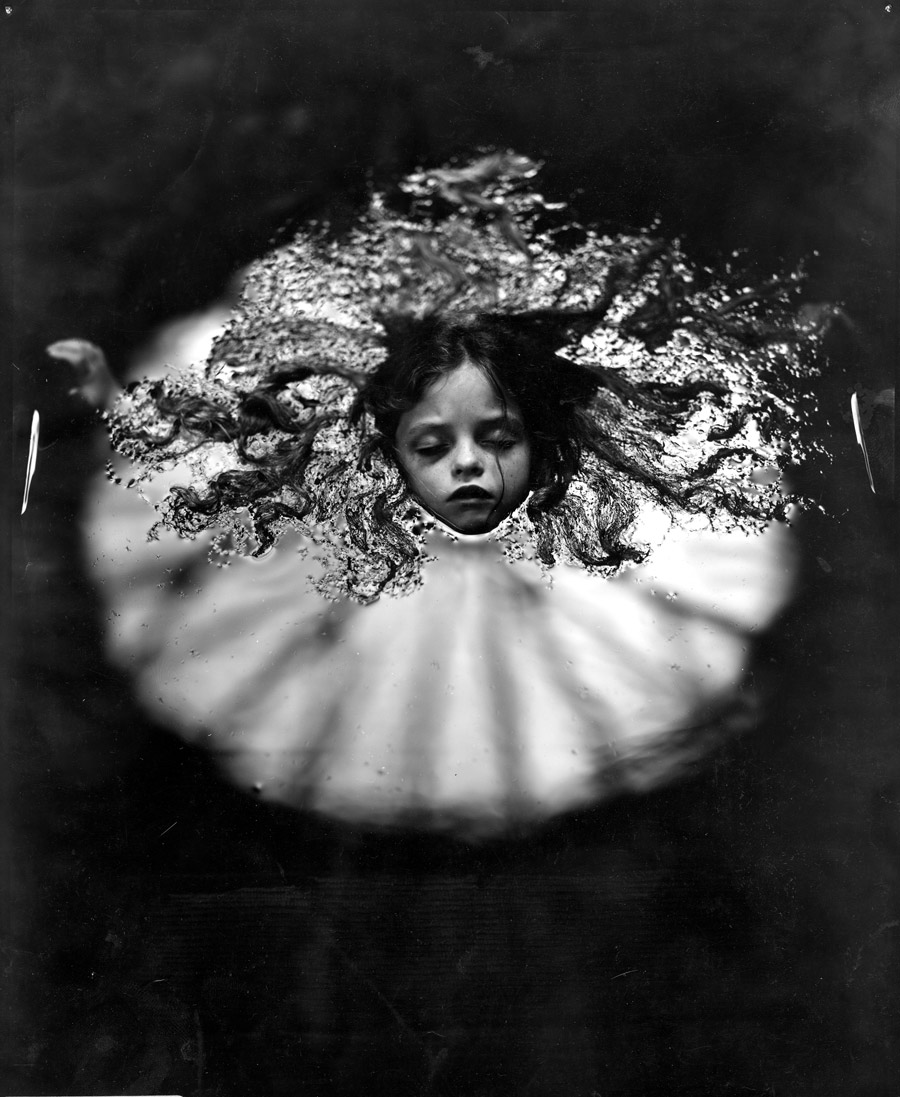
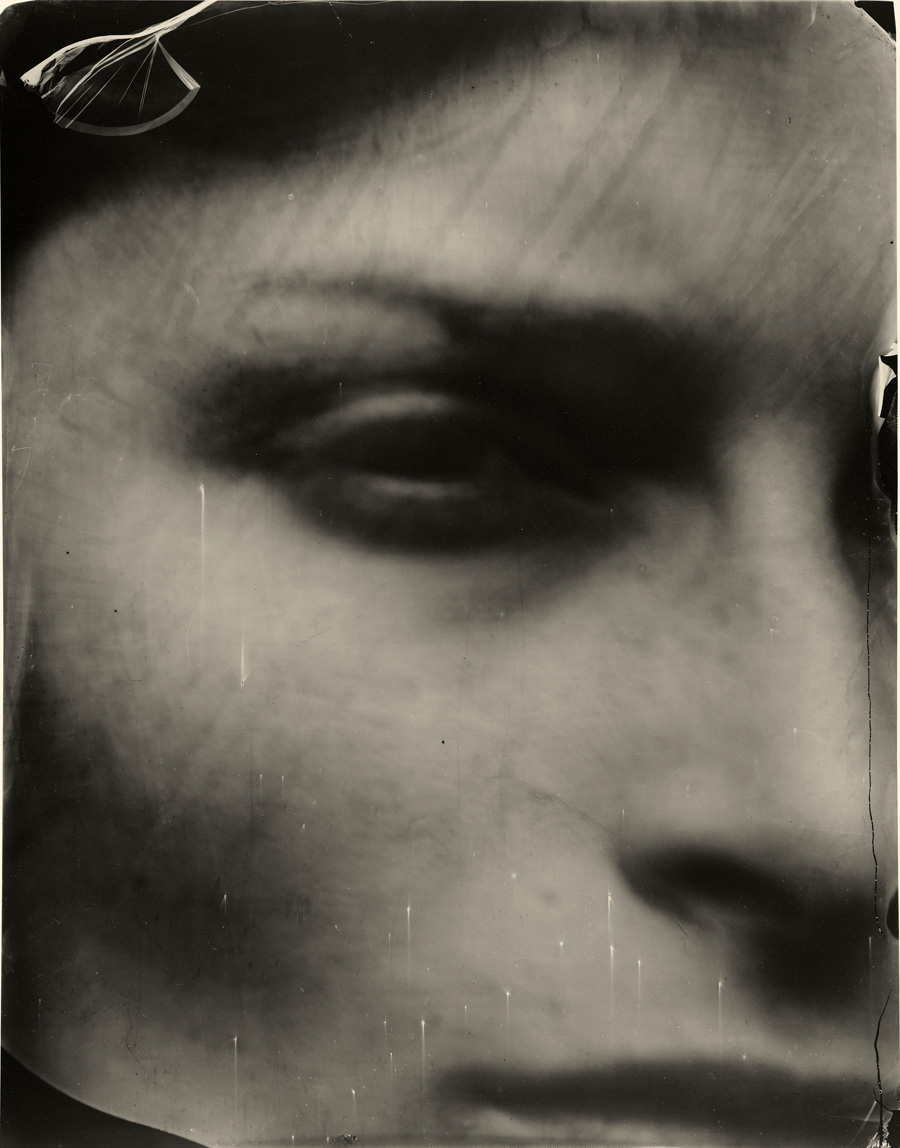
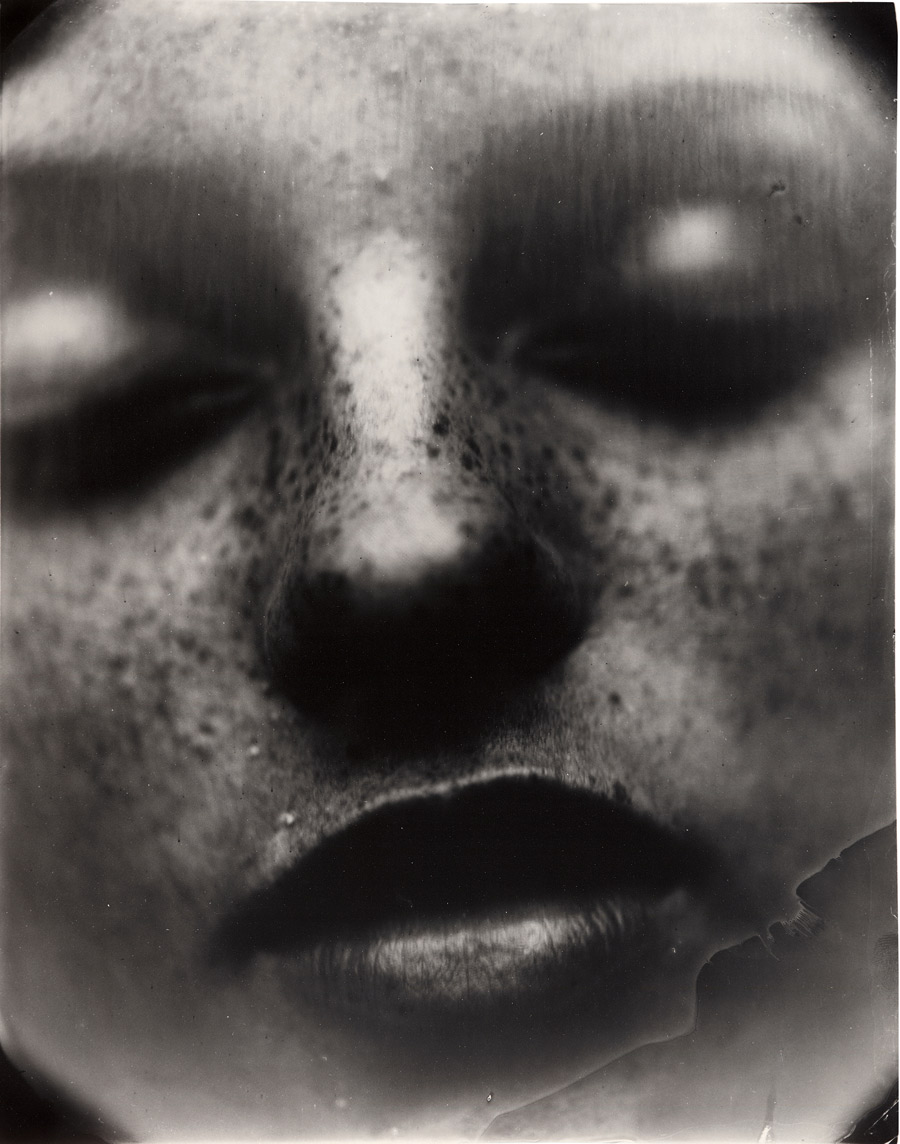
In the most recent series Faces (2004), Mann turns the camera once more on her children. Closing in on their faces and using several minutes of exposure time, these works act as a commemoration of the living. Again Mann takes the accidental drips and marks created by the wet collodion process and makes them a key feature of her work.

The Family and the Land: Sally Mann at The Photographers’ Gallery is an edited version of a touring exhibition, conceived by Sally Mann in collaboration with Hasse Persson, Director, BorÃ¥s Museum of Modern Art, Sweden. It has been presented at Fotomuseum Den Hague and the Musée de l’Elysée, Lausanne as well as in Stockholm, Oslo, Helsinki, Helsingborg, and Copenhagen.

Press release from The Photographers’ Gallery website [Online] Cited 07/09/2010 no longer available online


Sally Mann (American, b. 1951) 'At Warm Springs' 1991


Sally Mann (American, b. 1951)
At Warm Springs
1991
From the series Immediate Family
© Sally Mann. Courtesy Gagosian Gallery


Sally Mann (American, b. 1951) 'Jessie #10' 2004


Sally Mann (American, b. 1951)
Jessie #10
2004
From the series Faces
© Sally Mann. Courtesy Gagosian Gallery


Sally Mann (American, b. 1951) 'Virginia #42' 2004


Sally Mann (American, b. 1951)
Virginia #42
2004
From the series Faces
© Sally Mann. Courtesy Gagosian Gallery


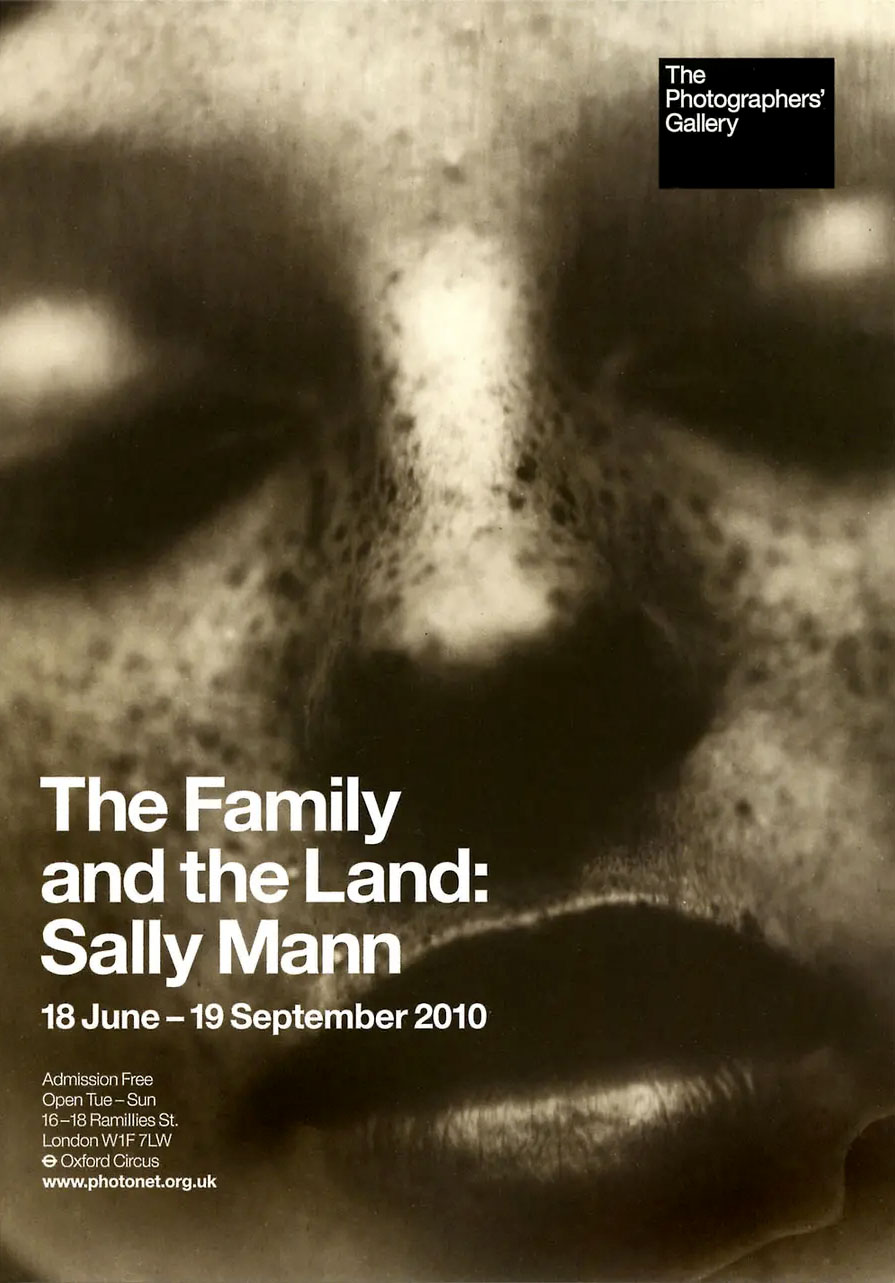
'The Family and the Land: Sally Mann' poster


The Family and the Land: Sally Mann poster


The Photographers’ Gallery
16-18 Ramillies Street,
London W1F7Lw

Opening hours:
Mon – Wed 10.00 – 18.00
Thu & Fri Lates 10.00 – 20.00
Sat 10.00 – 18.00
Sun 11.00 – 18.00

The Photographers’ Gallery website

LIKE ART BLART ON FACEBOOK

Back to top

Exhibition: ‘Paste Up’ by Barbara Kruger at Sprüth Magers London

Exhibition dates: 21st November, 2009 – 23rd January, 2010


Many thankx to Sprüth Magers London for allowing me to publish the photographs in the posting. Please click on the photographs for a larger version of the image.


Barbara Kruger (American, b. 1945) 'Untitled (Money can buy you love)' 1983 from the exhibition Exhibition: 'Paste Up' by Barbara Kruger at Sprüth Magers London, Nov 2009 - Jan 2010


Barbara Kruger (American, b. 1945)
Untitled (Money can buy you love)
1983
Collage
19.5 x 17.5cm
Courtesy of the artist and Sprüth Magers London Berlin


Barbara Kruger (American, b. 1945) 'Untitled (Your misery loves company)' 1985 from the exhibition Exhibition: 'Paste Up' by Barbara Kruger at Sprüth Magers London, Nov 2009 - Jan 2010


Barbara Kruger (American, b. 1945)
Untitled (Your misery loves company)
1985
Collage
18 x 17.3cm
Courtesy of the artist and Sprüth Magers London Berlin


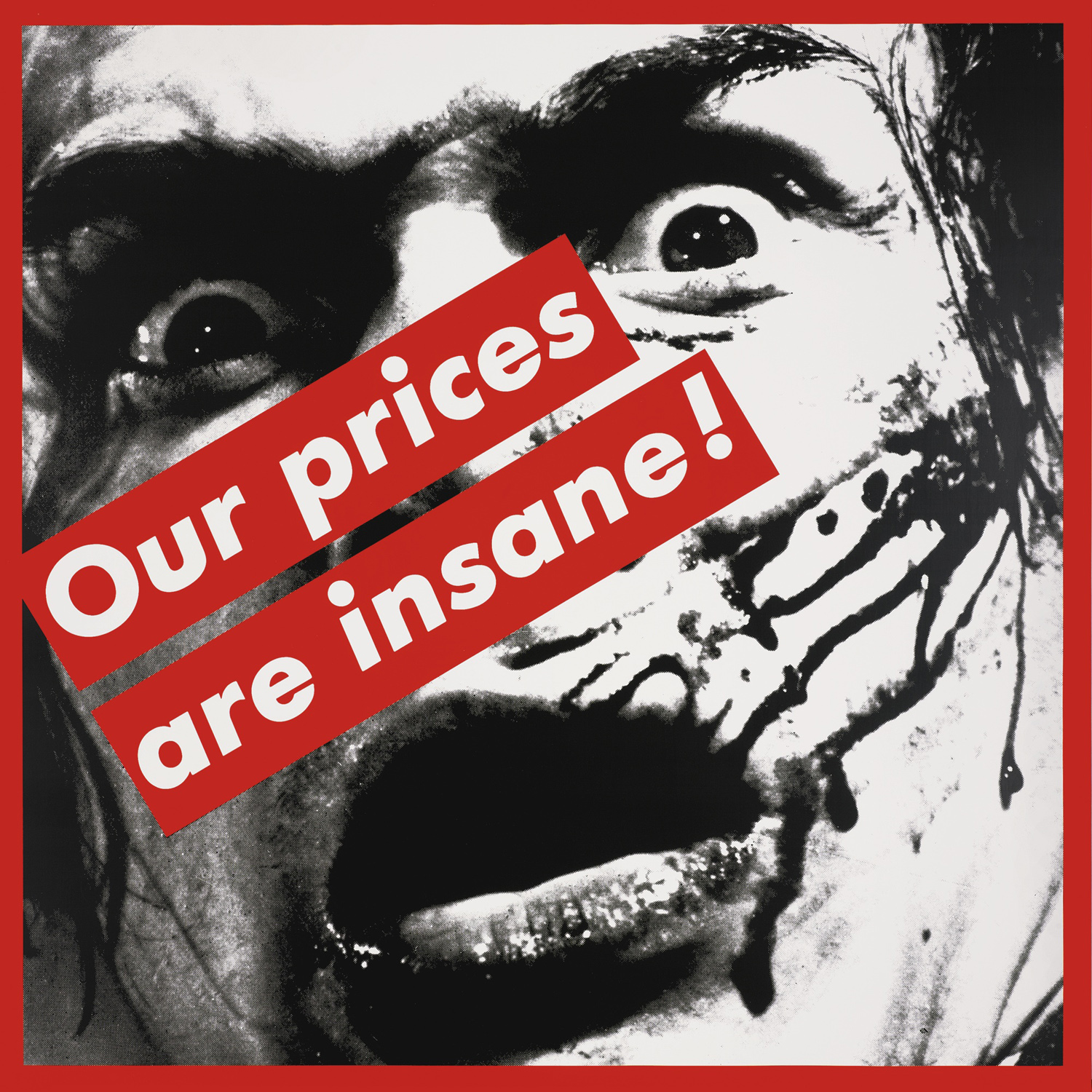
Barbara Kruger (American, b. 1945) 'Untitled (Our prices are insane!)' 1987 from the exhibition Exhibition: 'Paste Up' by Barbara Kruger at Sprüth Magers London, Nov 2009 - Jan 2010


Barbara Kruger (American, b. 1945)
Untitled (Our prices are insane!)
1987
Collage
Courtesy of the artist and Sprüth Magers London Berlin


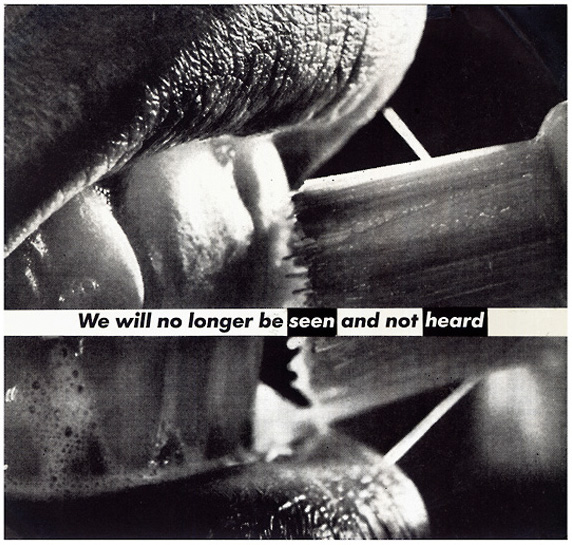
Barbara Kruger (American, b. 1945) 'Untitled (We will no longer be seen and not heard)' 1985


Barbara Kruger (American, b. 1945)
Untitled (We will no longer be seen and not heard)
1985
17.8 x 18.5cm
Courtesy of the artist and Sprüth Magers London Berlin


Sprüth Magers London is delighted to present a survey of early work by acclaimed American artist Barbara Kruger. Using contrasting layers of text and image, Kruger’s work has for almost three decades probed the nature of a media-saturated society in late capitalism, and the significance of highly evolved cultures of consumerism and mass politics to the experience and making of social identities. In addition to offering acute, indeed often piquant cultural insights, Kruger’s work also presents a serious conceptual exploration into the relationship between language and image, and their dynamics as collaborators and antagonists in the bearing of meaning. The artist’s unique blend of conceptual sophistication and wry social commentary has made Kruger one of the most respected and admired artists of her generation, and this timely reappraisal of her early practice reveals the ingenuity and precision of her craft.

The early monochrome pre-digital works assembled in the exhibition, known professionally as ‘paste ups’, reveal the influence of the artist’s experience as a magazine editorial designer during her early career. These small scale works, the largest of which is 11 x 13 inches, are composed of altered found images, and texts either culled from the media or invented by the artist. A negative of each work was then produced and used to make enlarged versions of these initial ‘paste ups’. The influence of Kruger’s magazine publishing training extends far beyond technique however. The linguistic and typographic conventions of consumer culture, and an understanding of the inherent potential of a single image, are appropriated and subverted by Kruger, as the artist explores the power of the soundbite and the slogan, and the method and impact of ‘direct address’ on the consumer/viewer.

Although Kruger’s practice is embedded in the visual and political culture of mass media and advertising, the work moves beyond simple appropriation and the ironic meditation on consumerism which animated earlier movements such as Pop art. The emblazoned slogans are often slightly yet meaningfully adjusted clichés of common parlance and the commercial world, and are overlaid on contrasting images which range from the grotesque to the banal. The juxtaposition of pictorial and linguistic modes of communication on the same plane thereby begs conceptual questions of human understanding, and the means by which messages are transmitted and distorted, recognised and received.

Barbara Kruger was born in Newark, New Jersey in 1945. She currently lives in both Los Angeles, California and New York and teaches at the University of California, Los Angeles. She has been the subject of many one-person exhibitions, including a comprehensive retrospective at the Museum of Contemporary Art in Los Angeles in 1999, which travelled to The Whitney Museum of American Art, New York in 2000. More recently, she has exhibited large-scale installations at the Moderna Museet in Stockholm, Tramway in Glasgow, Scotland, the Australian Centre for Contemporary Art in Melbourne, Australia, and at BCAM at the Los Angeles County Museum of Art, among others. She was honoured with the “Golden Lion” award for Lifetime Achievement at the Venice Biennale in 2005.

Press release from the Sprüth Magers London website [Online] Cited 25/05/2019 no longer available online


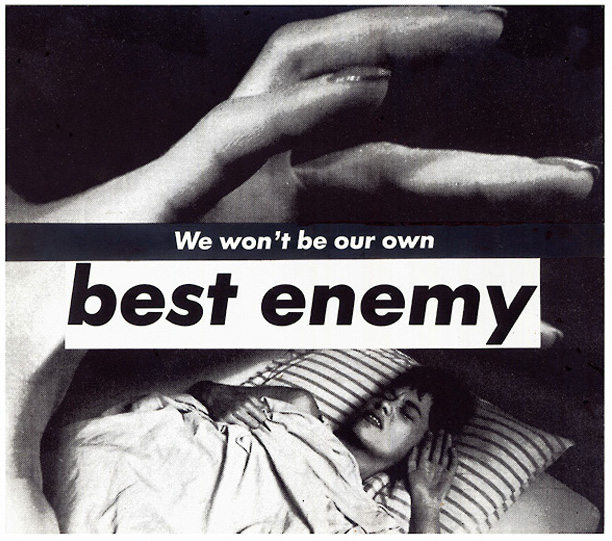
Barbara Kruger (American, b. 1945)
'Untitled (We won't be our own best enemy)' 1986


Barbara Kruger (American, b. 1945)
Untitled (We won’t be our own best enemy)
1986
Collage
18 x 22cm
Courtesy of the artist and Sprüth Magers London Berlin


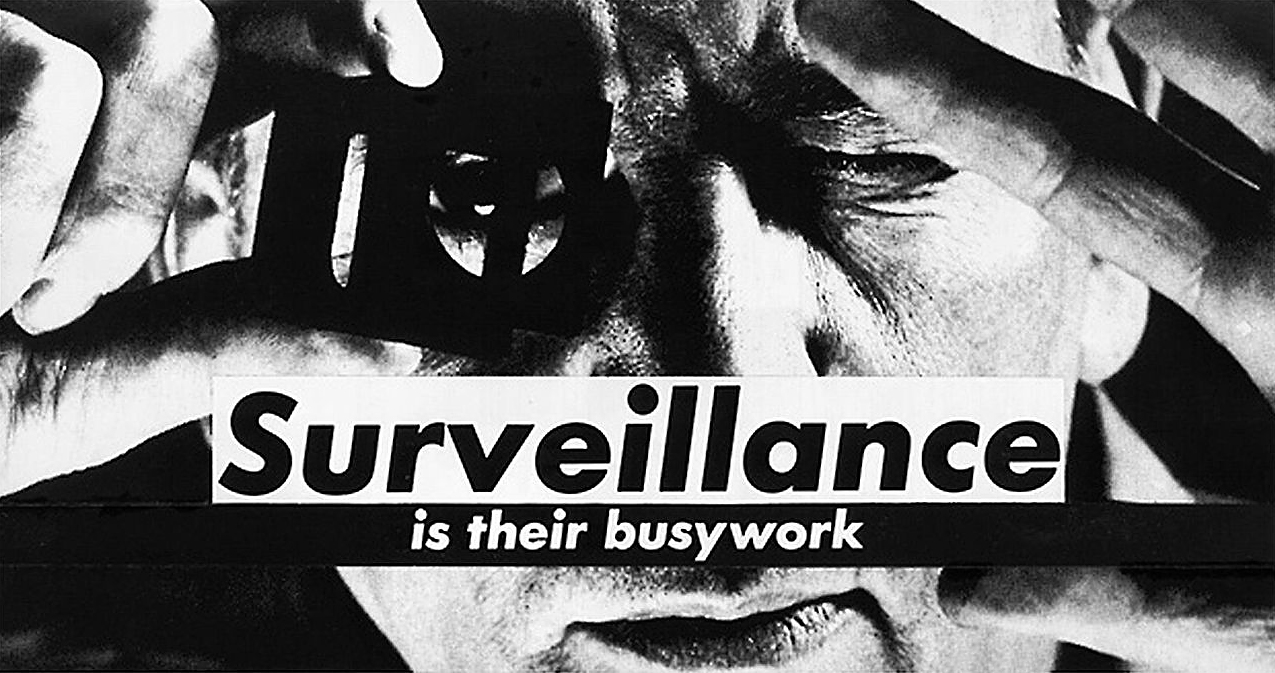
Barbara Kruger (American, b. 1945) 'Untitled (Surveillance is their busywork)' 1988


Barbara Kruger (American, b. 1945)
Untitled (Surveillance is their busywork)
1988
Collage
11.1 x 22cm
Courtesy of the artist and Sprüth Magers London Berlin


Barbara Kruger (American, b. 1945) 'Untitled (You are a very special person)' 1995


Barbara Kruger (American, b. 1945)
Untitled (You are a very special person)
1995
Collage (colour)
13.6 x 19.1cm
Courtesy of the artist and Sprüth Magers London Berlin


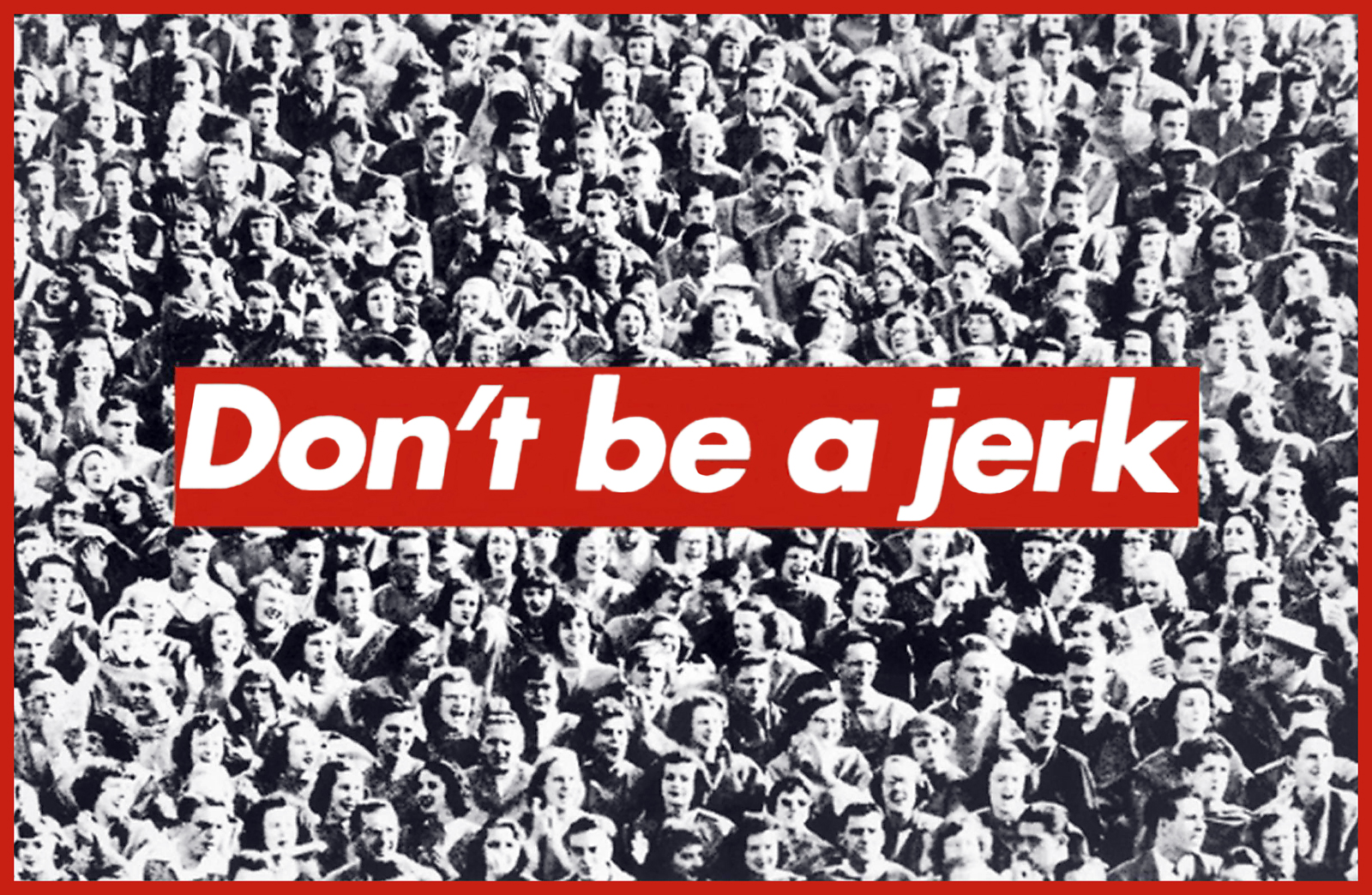
Barbara Kruger (American, b. 1945) 'Don't be a jerk' 1984


Barbara Kruger (American, b. 1945)
Don’t be a jerk
1984
Screenprint on vinyl
250 x 388.5cm
Courtesy of the artist and Sprüth Magers London Berlin


Sprüth Magers London
7A Grafton Street,
London, W1S 4EJ
Phone: +44 (0)20 7408 1613

Opening hours:
Tuesday – Saturday 10am – 6pm

Sprüth Magers website

LIKE ART BLART ON FACEBOOK

Back to top

Exhibition: ‘Gay Icons’ at the National Portrait Gallery, London

Exhibition dates: 2nd July – 18th October 2009


Jill Furmanovsky (British, b. 1953) 'K.D. Lang, Le Meridien Hotel, London' 1992


Jill Furmanovsky (British, b. 1953)
K.D. Lang, Le Meridien Hotel, London
1992
Gelatin silver print
© Jill Furmanovsky


“How I wish this selection had been available to me when I was young and trying to make sense of my reactions to the world. How inspirational to have had portraits of the great and the good staring out at me telling me that I was not by any measure on my own.”

“… it is her [K.D. Lang’s] androgynous good looks and tendency to strut on the stage which warms many lesbian hearts.”

~ Sandi Toksvig


Many thankx to the National Portrait Gallery for allowing me to publish the photographs in the posting. Please click on the photographs for a larger version of the image.


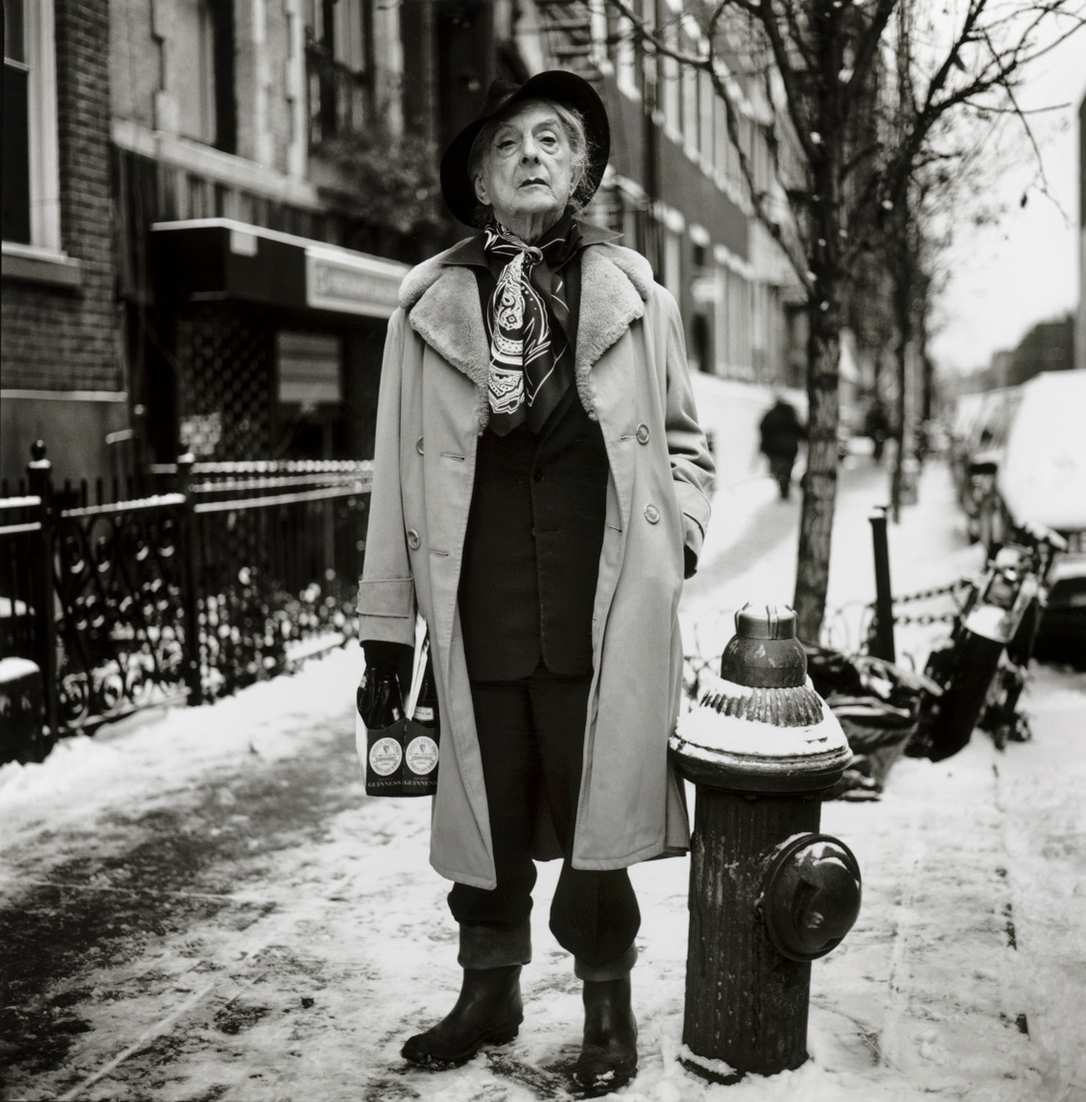
Fergus Greer (English, b. 1961) 'Quentin Crisp' 1989


Fergus Greer (English, b. 1961)
Quentin Crisp
1989
Bromide fibre print
10 1/2 in. x 10 3/8 in. (267 mm x 264 mm)
Given by Fergus Greer, 2006
© National Portrait Gallery, London
© Fergus Greer


The first portrait exhibition to celebrate the contribution of gay people and gay icons to history and culture. 60 photographs selected by Waheed Alli, Alan Hollinghurst, Elton John, Jackie Kay, Billie Jean King, Ian McKellen, Chris Smith, Ben Summerskill, Sandi Toksvig and Sarah Waters.

An important photography exhibition, Gay Icons, at the National Portrait Gallery (2 July – 18 October 2009) will celebrate the contribution of gay people – and the significance of the gay icon – to history and culture. Ten selectors have worked with the Gallery to make their own personal choices of six individuals, their ‘icons’. Not only does this exhibition include many well-known icons, who may or may not be gay themselves, it also reveals some surprises and will encourage a wide audience to think about familiar faces in new ways.

The Gay Icons shown in the exhibition will include those people, living or dead, whatever their sexual orientation or interests, who the ten individual selectors regard as inspirational, or as a personal icon. Gay Icons brings together portraits of those people who are regarded as especially significant to each of the selectors, alongside those of the selectors themselves, all prominent gay figures in contemporary culture and society.

Coinciding with the fortieth anniversary of the Stonewall Riots in New York, this exhibition focuses on portraits of both historical and modern figures. The choices provide a fascinating range of inspiring figures – some very famous, some heroic, others relatively unknown. Each icon is presented with information about their personal, and sometimes public, significance, some of it relating to the sitter but much of it linked to the selectors who have been prepared to share their experiences and feelings in their own exhibition texts.

Themes running through the exhibition include inspiration and how the ‘icons’ have inspired each selector in an extremely personal sense to realise their full potential, human rights, stemming from the specific consideration of sexuality, and how this might lead us to consider parallels between the struggles of different minority groups, re-discovery, or rescuing the reputations of figures who might otherwise have been forgotten or, worse, actively disregarded and surprise at some of the perhaps unexpected choices.

The project was developed from an initial proposal made by Bernard Horrocks, Copyright Officer, at the Gallery. The concept quickly evolved to include invitations to ten gay people – each distinguished in different fields – to act as selectors. They were chosen in consultation with their Chair, Sandi Toksvig.

Each selector could freely choose six ‘icons’, although the Gallery decided to limit the choices to photographic portraits, and therefore to subjects who had lived, more or less, within the last 150 years. This also seemed appropriate because within this same period homosexuality was gradually accepted and made legitimate in Britain.

The selectors are Lord Waheed Alli, Alan Hollinghurst, Sir Elton John, Jackie Kay, Billie Jean King, Sir Ian McKellen, Lord Chris Smith, Ben Summerskill, Sandi Toksvig and Sarah Waters.

Sitters include artists Francis Bacon and David Hockney, civil rights campaigner Harvey Milk, writers Quentin Crisp, Joe Orton, Dame Daphne Du Maurier, Patricia Highsmith and Walt Whitman, composer Pyotr Tchaikovsky, musicians k.d. lang, Will Young and Village People, entertainers Ellen DeGeneres, Kenneth Williams and Lily Savage, and Nelson Mandela and Diana, Princess of Wales. Their fascinating stories will be illustrated by sixty photographic portraits including works by Andy Warhol, Linda McCartney, Snowdon, Polly Borland, Fergus Greer, Terry O’Neill and Cecil Beaton.

Sandy Nairne, Director of the National Portrait Gallery, London, says: “Gay Icons is an exhibition in which inspiring stories – both private and public – are shared. These are stories of brave lives and significant achievements, told through iconic photographic images chosen by selectors who are themselves icons.

Text from the National Portrait Gallery website [Online] Cited 10/07/2009. No longer available online


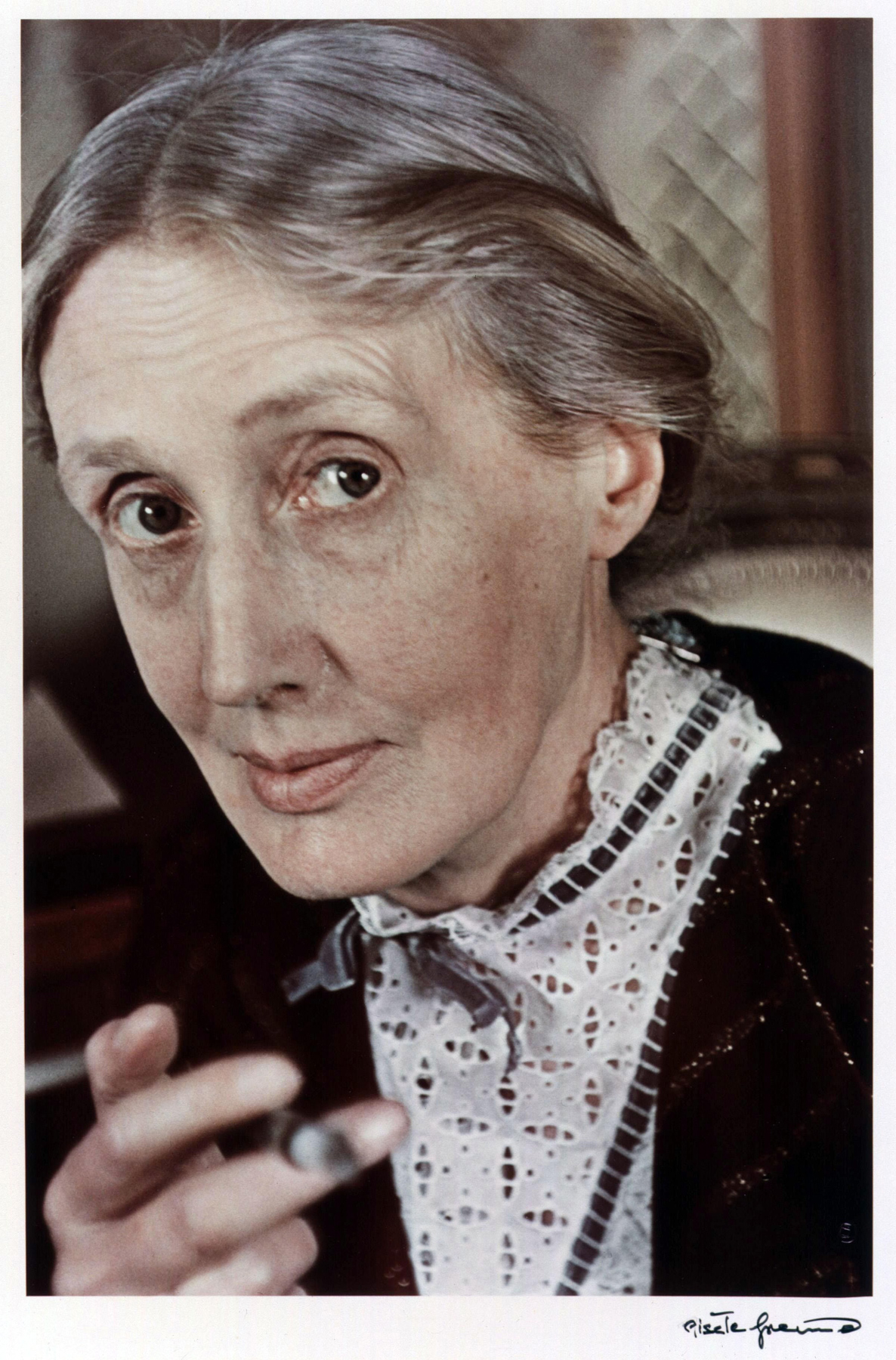
Gisèle Freund (French born Germany, 1908-2000) 'Virginia Woolf' 1939


Gisèle Freund (French born Germany, 1908-2000)
Virginia Woolf
1939
© Gisèle Freund


Gisèle Freund (born Gisela Freund; December 19, 1908 in Schöneberg District, Berlin – March 31, 2000 in Paris) was a German-born French photographer and photojournalist, famous for her documentary photography and portraits of writers and artists. Her best-known book, Photographie et société (1974), is about the uses and abuses of the photographic medium in the age of technological reproduction. In 1977, she became President of the French Association of Photographers, and in 1981, she took the official portrait of French President François Mitterrand.

She was made Officier des Arts et Lettres in 1982 and Chevalier de la Légion d’honneur, the highest decoration in France, in 1983. In 1991, she became the first photographer to be honoured with a retrospective at the Musée National d’art Moderne in Paris (Centre Georges Pompidou).

Freund’s major contributions to photography include using the Leica Camera (with its 36 frames) for documentary reportage and her early experimentation with Kodachrome and 35 mm Agfacolor, which allowed her to develop a “uniquely candid portraiture style” that distinguishes her in 20th century photography.

She is buried at the Montparnasse Cemetery in Paris, France near her home and studio at 12 rue Lalande.

See her full entry on the Wikipedia website


Harper & Brothers. 'Patricia Highsmith' 1942 


Harper & Brothers
Patricia Highsmith
1942
Gelatin silver print
© Patricia Highsmith Collection, Swiss National Library / Swiss Literary Archives, Bern


“… is a significant writer by any standard, but she deserves honouring as a lesbian and gay icon on the strength of one novel alone, The Price of Salt, a wonderfully complex and upbeat representation of lesbian love.”

~ Sarah Waters


Patricia Highsmith (January 19, 1921 – February 4, 1995) was an American novelist and short story writer best known for her psychological thrillers, including her series of five novels featuring the character Tom Ripley. She wrote 22 novels and numerous short stories throughout her career spanning nearly five decades, and her work has led to more than two dozen film adaptations. Her writing derived influence from existentialist literature, and questioned notions of identity and popular morality. She was dubbed “the poet of apprehension” by novelist Graham Greene.

Her first novel, Strangers on a Train, has been adapted for stage and screen numerous times, notably by Alfred Hitchcock in 1951. Her 1955 novel The Talented Mr. Ripley has been adapted numerous times for film, theatre, and radio. Writing under the pseudonym “Claire Morgan,” Highsmith published the first lesbian novel with a happy ending, The Price of Salt, in 1952, republished 38 years later as Carol under her own name and later adapted into a 2015 film.

Text from the Wikipedia website


Paul Morrissey (American, 1938-2024) 'Joe Dallesandro' 1968


Paul Morrissey (American, 1938-2024)
Joe Dallesandro
1968
Gelatin silver print
© Paul Morrissey, 1968


Joseph Angelo D’Allesandro III (born December 31, 1948), better known as Joe Dallesandro, is an American actor and Warhol superstar. Having also crossed over into mainstream roles like mobster Lucky Luciano in The Cotton Club, Dallesandro is generally considered to be the most famous male sex symbol of American underground films of the 20th century, as well as a sex symbol of gay subculture.

Dallesandro starred in the 1968 film produced by Andy Warhol, Flesh, as a teenage street hustler. Rolling Stone magazine in 1970 declared his second starring vehicle, Trash, the “Best Film of the Year”, making him a star of the youth culture, sexual revolution and subcultural New York City art collective of the 1970s. Dallesandro also starred in 1972’s Heat, another Warhol film that was conceived as a parody of Sunset Boulevard. …

Underground film career

Dallesandro met Andy Warhol and Paul Morrissey in 1967 while they were shooting Four Stars, and they cast him in the film on the spot. Warhol would later comment “In my movies, everyone’s in love with Joe Dallesandro.”

Dallesandro played a hustler in his third Warhol film, Flesh (1968), where he had several nude scenes. Flesh became a crossover hit with mainstream audiences, and Dallesandro became the most popular of the Warhol stars. New York Times film critic Vincent Canby wrote of him: “His physique is so magnificently shaped that men as well as women become disconnected at the sight of him”

As Dallesandro’s underground fame began to cross over into the popular culture, he appeared on the cover of Rolling Stone in April 1971. He was also photographed by some of the top celebrity photographers of the time: Francesco Scavullo, Annie Leibovitz, Richard Avedon.

Dallesandro appeared in Lonesome Cowboys (1968), Trash (1970), Heat (1972), Andy Warhol’s Frankenstein, and Andy Warhol’s Dracula (both 1974), also directed by Morrissey. These last two films were shot in Europe. After filming was complete, he chose not to return to the U.S. He appeared in Serge Gainsbourg’s Je t’aime moi non plus (France, 1976), which starred Gainsbourg’s wife, British actress Jane Birkin.

Text from the Wikipedia website


Lewis Morley (Australian born Hong Kong, 1925-2013) 'Joe Orton' 1965


Lewis Morley (Australian born Hong Kong, 1925-2013)
Joe Orton
1965
Bromide print
20 in. x 16 1/8 in. (508 mm x 410 mm)
Given by the photographer, Lewis Morley, 1992
© Lewis Morley Archive/National Portrait Gallery, London


Gay Icons explores gay social and cultural history through the unique personal insights of ten high profile gay figures, who have selected their historical and modern icons.

The chosen icons, who may or may not be gay themselves, have all been important to each selector, having influenced their gay sensibilities or contributed to making them who they are today. They include artists Francis Bacon and David Hockney; writers Daphne du Maurier and Quentin Crisp; composers Pyotr Tchaikovsky and Benjamin Britten; musicians k.d. lang, the Village People and Will Young; entertainers Ellen DeGeneres, Lily Savage and Kenneth Williams; sports stars Martina Navratilova and Ian Roberts and political activists Harvey Milk and Angela Mason.

Their fascinating and inspirational stories will be illustrated by over sixty photographic portraits including works by Andy Warhol, Snowdon and Cecil Beaton together with specially commissioned portraits of the selectors by Mary McCartney. McCartney. All are set in a striking exhibition design conceived by renowned theatre designer, Robert Jones …

This exhibition brings together ten selectors, chaired by Sandi Toksvig, each of whom is a prominent gay figure in contemporary culture and society. Each selector was asked to name six people, who may or may not be gay, whom they personally regard as inspirational, or an icon for them.

Their choices provide a fascinating range of figures – some heroic, some very famous, others less well known. In the exhibition the selectors write about their choices and share their own convictions, experiences and feelings. The display also features specially commissioned portraits of the selectors by Mary McCartney.

Anonymous text. “Gay Icons,” on the National Portrait Gallery website [Online] Cited 18/06/2022. No longer available online


Ian Berry (English, b. 1934) 'Nelson Mandela' 1994


Ian Berry (English, b. 1934)
Nelson Mandela
1994
Gelatin silver print
© Ian Berry/Magnum Photos


“He has touched my heart, just as he has influenced the hearts and minds of people all over the world.”

~ Billie Jean King

“The great single picture is emotionally satisfying, whereas getting a good journalistic story is more about being a professional”

~ Ian Berry


Ian Berry was born in Lancashire, England. He made his reputation in South Africa, where he worked for the Daily Mail and later for Drum magazine. He was the only photographer to document the massacre at Sharpeville in 1960, and his photographs were used in the trial to prove the victims’ innocence.

Henri Cartier-Bresson invited Ian Berry to join Magnum in 1962 when he was based in Paris. He moved to London in 1964 to become the first contract photographer for the Observer Magazine. Since then assignments have taken him around the world: he has documented Russia’s invasion of Czechoslovakia; conflicts in Israel, Ireland, Vietnam and the Congo; famine in Ethiopia; apartheid in South Africa. The major body of work produced in South Africa is represented in two of his books: Black and Whites: L’Afrique du Sud (with a foreword by the then French president François Mitterrand), and Living Apart (1996). During the last year, projects have included child slavery in Ghana and the Spanish fishing industry.

Important editorial assignments have included work for National GeographicFortuneSternGeo, national Sunday magazines, EsquireParis-Match and LIFE. Ian Berry has also reported on the political and social transformations in China and the former USSR.

Anonymous text. “Ian Berry,” on the Magnum website [Online] Cited 16/03/2019


Unknown photographer. 'Bessie Smith' c. 1920s


Unknown photographer
Bessie Smith
c. 1920s
Gelatin silver print
Frank Driggs Collection/Getty Images
© 1925 Getty Images


“A feisty woman who always stood up for herself… She was bisexual and practically an alcoholic – the perfect icon.”

~ Jackie Kay


Bessie Smith (April 15, 1894 – September 26, 1937) was an American blues singer. Nicknamed the Empress of the Blues, she was the most popular female blues singer of the 1920s and 1930s. She is often regarded as one of the greatest singers of her era and was a major influence on fellow blues singers, as well as jazz vocalists.

Read her full entry on the Wikipedia website


Howard Coster (British, 1885-1959) 'Sylvia Townsend Warner' 1934


Howard Coster (British, 1885-1959)
Sylvia Townsend Warner
1934
Half-plate film negative
Transferred from Central Office of Information, 1974
© National Portrait Gallery, London


Sylvia Townsend Warner (6 December 1893 – 1 May 1978) was an English novelist and poet. She also made a contribution to musicology as a young woman.


Bertram Park (British, 1883-1972) 'Ronald Firbank' 1917 (detail)


Bertram Park (British, 1883-1972)
Ronald Firbank (detail)
1917


“He [Ronald Firbank] is celebrated as a master of high camp, but he was also a radical technician and radical homosexualiser of the novel.”

~ Alan Hollinghurst


Bertram Park (British, 1883-1972) 'Ronald Firbank' 1917


Bertram Park (British, 1883-1972)
Ronald Firbank
1917


Bertram Charles Percival Park, OBE, (1883-1972) was a portrait photographer whose work included British and European royalty. Engravings of his photographs were widely used on British and British Commonwealth postage stamps, currency, and other official documents in the 1930s. His theatrical portraits were the source for two paintings by Walter Sickert. With his wife Yvonne Gregory, he also produced a number of photographic books of the female nude. He was an expert in the cultivation of the rose and the editor of The Rose Annual.

Text from the Wikipedia website


Arthur Annesley Ronald Firbank (17 January 1886 – 21 May 1926) was an innovative English novelist. His eight short novels, partly inspired by the London aesthetes of the 1890s, especially Oscar Wilde, consist largely of dialogue, with references to religion, social-climbing, and sexuality.


Unknown Photographer. 'Winifred Atwell' c. 1950s (detail)


Unknown photographer
Winifred Atwell (detail)
c. 1950s
Courtesy of Getty Images


“Winifred Atwell’s piano performances were simply captivating. She showed me what was possible and was a total inspiration.”

~ Elton John


Una Winifred Atwell (27 February or 27 April 1910 or 1914 – 28 February 1983) was a Trinidadian pianist who enjoyed great popularity in Britain and Australia from the 1950s with a series of boogie-woogie and ragtime hits, selling over 20 million records. She was the first black person to have a number-one hit in the UK Singles Chart and is still the only female instrumentalist to do so.

Read the full entry about this amazing women on the Wikipedia website


Elliott and Fry. 'Alan Turing' 1951 (detail)


Elliott and Fry
Alan Turing (detail)
29 March 1951
© National Portrait Gallery, London


Elliott & Fry was a Victorian photography studio founded in 1863 by Joseph John Elliott (14 October 1835 – 30 March 1903) and Clarence Edmund Fry (1840 – 12 April 1897). For a century the firm’s core business was taking and publishing photographs of the Victorian public and social, artistic, scientific and political luminaries. In the 1880s the company operated three studios and four large storage facilities for negatives, with a printing works at Barnet.

The firm’s first address was 55 & 56 Baker Street in London, premises they occupied until 1919. The studio employed a number of photographers, including Francis Henry Hart and Alfred James Philpott in the Edwardian era, Herbert Lambert and Walter Benington in the 1920s and 1930s and subsequently William Flowers. During World War II the studio was bombed and most of the early negatives were lost, the National Portrait Gallery holding all the surviving negatives. With the firm’s centenary in 1963 it was taken over by Bassano & Vandyk.

Text from the Wikipedia website


Elliott and Fry. 'Alan Turing' 29 March 1951


Elliott and Fry
Alan Turing
29 March 1951
Vintage bromide print on photographer’s mount
6 3/8 x 4 5/8 in. (162 mm x 117 mm)
Given by the sitter’s mother, Ethel Sara Turing (née Stoney), 1956
© National Portrait Gallery, London


“Turing was one of the most brilliant men of the first half of the twentieth century, but the refusal of post-war society to accept his sexuality drove him to commit suicide… We can and should honour him now.”

~ Chris Smith


National Portrait Gallery
St Martin’s Place
London WC2H 0HE

Opening hours:
Closed until 2023

National Portrait Gallery website

LIKE ART BLART ON FACEBOOK

Back to top

Exhibition: ‘Gilbert & George: Jack Freak Pictures’ at Arndt & Partner, Berlin

Exhibition dates: 16th June – 18th September, 2009


Artist duo George (left) and Gilbert (right) pose in front of their work "The Church of England" in Berlin, Germany


Artist duo George (left) and Gilbert (right) pose in front of their work “The Church of England” in Berlin, Germany


That pair of agent provocateurs are at it again!

Marcus


Many thankx to Arndt & Partner for allowing me to publish the photographs in the posting. Please click on the photographs for a larger version of the image.


Gilbert & George (Gilbert Prousch, English born Italy, b. 1943) (George Passmore, English, b. 1942) 'Dating' 2008


Gilbert & George (Gilbert Prousch, English born Italy, b. 1943) (George Passmore, English, b. 1942)
DATING
2008
Mixed media


Gilbert & George (Gilbert Prousch, English born Italy, b. 1943) (George Passmore, English, b. 1942) 'BRITISHISM' 2008


Gilbert & George (Gilbert Prousch, English born Italy, b. 1943) (George Passmore, English, b. 1942)
BRITISHISM
2008
Mixed media


Gilbert & George (Gilbert Prousch, English born Italy, b. 1943) (George Passmore, English, b. 1942) 'JESUS JACK' 2008


Gilbert & George (Gilbert Prousch, English born Italy, b. 1943) (George Passmore, English, b. 1942)
JESUS JACK
2008
Mixed media


Gilbert & George. 'ROUND FLAG' 2008


Gilbert & George (Gilbert Prousch, English born Italy, b. 1943) (George Passmore, English, b. 1942)
ROUND FLAG
2008
Mixed media


As the international tour of the last Gilbert & George retrospective (2007-2009) did not include Berlin, Arndt & Partner are now presenting a solo exhibition of the celebrity artist duo in its gallery rooms behind the Hamburger Bahnhof. It is the first Gilbert & George solo show in Berlin for 14 years. The exhibition features a selection of 20 large-scale pieces from the Jack Freak Pictures, the largest Gilbert & George group of pictures to date. The thrust of the content is given by the colours and shapes of the Union Jack flag that dominate the bulk of the pictures as well as the recurring motive of medals, emblems and trees. In the Jack Freak Pictures the artist duo explores aspects of nationhood and of the sentient individual in the nets of society. In his essay published in the catalogue accompanying the exhibition the British writer Michael Bracewell describes these pictures as “the most iconic, philosophically astute and visually violent works that Gilbert & George have ever created …”

Gilbert & George, who met as students of sculpture at St. Martin’s School of Art in London 42 years ago, embarked on a joint artistic career that was to encompass a wide range of media from drawing to video and their trademark pictures. Further, the pair revolutionised the concept of sculpture by presenting themselves as “living sculptures” dressed in the quintessentially British tailored suit, shirt and tie. But it was their monumental trademark pictures composed of a grid like array of smaller images which they began to create in the early 70s that first brought them international fame. Figures, cityscapes, symbols, plants, bodily fluids, excrements and text interlock in pictorial messages as visually powerful as their content is provocative. The pictures, which started out in black and white and later assumed increasingly luminous, bold colours, generally also depict portraits of the artists themselves and seize on taboo subjects like sexuality, race, religion and national identity with a brash and fearless candour.

The Jack Freak Pictures again feature the bodies and/or faces of the artists. In these compositions, their bodies function as stylised representatives of the individual in society, whose relationship to social norms and categories, to national, religious and sexual identification processes is relentlessly explored and commented upon. Departing from their earlier oeuvre, some of their new pictures split the raw images into much smaller fragments before merging them into new forms. The result is a fascinating kaleidoscopic mix of the monstrously grotesque with an intricate ornamental structure reminiscent of sacred art. In ever new variations, Gilbert & George order the signs and fragments of social life they find in their neighbourhood – the multicultural East End of London – where solidarity and friendship are as visible as intolerance and marginalisation.

Press release from the Arndt & Partner website [Online] Cited 04/07/2009. No longer available online


Gilbert & George installation photograph of their exhibition 'Jack Freak Pictures' at Arndt & Partner, Berlin

Gilbert & George installation photograph of their exhibition 'Jack Freak Pictures' at Arndt & Partner, Berlin

Gilbert & George installation photograph of their exhibition 'Jack Freak Pictures' at Arndt & Partner, Berlin

Gilbert & George installation photograph of their exhibition 'Jack Freak Pictures' at Arndt & Partner, Berlin


Gilbert & George installation photographs of their exhibition Jack Freak Pictures at Arndt & Partner, Berlin


Gilbert & George (Gilbert Prousch, English born Italy, b. 1943) (George Passmore, English, b. 1942) 'JESUS SUITS' 2008


Gilbert & George (Gilbert Prousch, English born Italy, b. 1943) (George Passmore, English, b. 1942)
JESUS SUITS
2008
Mixed media


Gilbert & George (Gilbert Prousch, English born Italy, b. 1943) (George Passmore, English, b. 1942) 'CHURCH OF ENGLAND' 2008


Gilbert & George (Gilbert Prousch, English born Italy, b. 1943) (George Passmore, English, b. 1942)
CHURCH OF ENGLAND
2008
Mixed media


Gilbert & George (Gilbert Prousch, English born Italy, b. 1943) (George Passmore, English, b. 1942) 'POSTER DANCE' 2008


Gilbert & George (Gilbert Prousch, English born Italy, b. 1943) (George Passmore, English, b. 1942)
POSTER DANCE
2008
Mixed media


Gilbert & George (Gilbert Prousch, English born Italy, b. 1943) (George Passmore, English, b. 1942) 'REALM' 2008


Gilbert & George (Gilbert Prousch, English born Italy, b. 1943) (George Passmore, English, b. 1942)
REALM
2008
Mixed media


Gilbert & George (Gilbert Prousch, English born Italy, b. 1943) (George Passmore, English, b. 1942) 'SPIDER' 2008


Gilbert & George (Gilbert Prousch, English born Italy, b. 1943) (George Passmore, English, b. 1942)
SPIDER
2008
Mixed media


Gilbert & George (Gilbert Prousch, English born Italy, b. 1943) (George Passmore, English, b. 1942) 'UNION WALL DANCE' 2008


Gilbert & George (Gilbert Prousch, English born Italy, b. 1943) (George Passmore, English, b. 1942)
UNION WALL DANCE
2008
Mixed media


Arndt Fine Art

This gallery has now closed.

Arndt website

LIKE ART BLART ON FACEBOOK

Back to top

International Sculpture Conference accepting proposals: ‘What is Sculpture in the 21st Century?

May 2009

22nd International Sculpture Conference

7th – 9th April, 2010 London, United Kingdom


Chris Burden
Flying Steamroller
2006


Call for papers

The ISC’s 22nd International Sculpture Conference will explore and consider the potential of sculpture in the 21st century – to provide an opportunity to both celebrate its vitality and diversity, its capacity to challenge, and to examine its current position, function and production.

Themes include The Languages of Sculpture, Public Perception and Investment and The State of Education.


LIKE ART BLART ON FACEBOOK

Back to top

Lecture/Performance: Hans Aarsman at The Photographers Gallery, London

Date: 21st January 2009


Hans Aarsman (Dutch, b. 1951) 1236 sheets of negatives from the 1980s, thrown away on 19 August 2004


Hans Aarsman (Dutch, b. 1951)
1236 sheets of negatives from the 1980s, thrown away on 19 August 2004
2004


Hans Aarsman presents From Ugly to Pretty and Back Again. The Mysterious Ways of Beauty in Photography.

In this lecture Hans Aarsman examines the myriad of questions involved in taking photographs for purposes as varied as advertising, documentation and personal mementos. How does our understanding of the beauty in these images differ depending their final resting place, be it Ebay, family album, specialist magazines or museums collections. Through his own experiences Aarsman asks if, and how, artistic ambitions, aesthetics and useful photography can coincide.

Hans Aarsman (b. 1951, NL) worked as a photojournalist until 1994. He currently works as a writer, in particular on photography, and is co-founder of the magazine Useful Photography. Aarsman displayed, and invited contributions to, his project Photography Against Consumerism here at The Photographers’ Gallery last July. He is based in Amsterdam.

£5.00/ £3.50 concessions


The Photographers Gallery
16-18 Ramillies Street
London
W1F 7LW

Opening hours:
Monday – Saturday: 10.00 – 18.00
Thursday: 10.00 – 20.00 during exhibitions
Sunday: 11.00 – 18.00

The Photographers Gallery website

LIKE ART BLART ON FACEBOOK

Back to top