Review: ‘The mad square: Modernity in German Art 1910-37’ at The National Gallery of Victoria, Melbourne

Exhibition dates: 25th November 2011 – 4th March 2012


Irene Bayer (American, 1898-1991) 'No title (Man on stage)' c. 1927


Irene Bayer (American, 1898-1991)
No title (Man on stage)
c. 1927
Gelatin silver photograph
Printed image 10.6 h x 7.6 w cm
Purchased 1983
National Gallery of Australia, Canberra


This is one of the best exhibitions this year in Melbourne bar none. Edgy and eclectic the work resonates with the viewer in these days of uncertainty: THIS should have been the Winter Masterpieces exhibition!

The title of the exhibition, The mad square (Der tolle Platz) is taken from Felix Nussbaum’s 1931 painting of the same name where “the ‘mad square’ is both a physical place – the city, represented in so many works in the exhibition, and a reference to the state of turbulence and tension that characterises the period.” The exhibition showcases how artists responded to modern life in Germany in the interwar years, years that were full of murder and mayhem, putsch, revolution, rampant inflation, starvation, the Great Depression and the rise of National Socialism. Portrayed is the dystopian, dark side of modernity (where people are the victims of a morally bankrupt society) as opposed to the utopian avant-garde (the prosperous, the wealthy), where new alliances emerge between art and politics, technology and the mass media. Featuring furniture, decorative arts, painting, sculpture, collage and photography in the sections World War 1 and the Revolution, Dada, Bauhaus, Constructivism and the Machine Aesthetic, Metropolis, New Objectivity and Power and Degenerate Art, it is the collages and photographs that are the strongest elements of the exhibition, particularly the photographs. What a joy they are to see.

There is a small 2″ x 3″ contact print portrait of Hanna Höch by Richard Kauffmann, Penetrate yourself or: I embrace myself (1922) that is an absolute knockout. Höch is portrayed as the ‘new women’ with short bobbed hair and loose modern dress, her self-image emphasised through a double exposure that fragments her face and multiplies her hands, set against a contextless background. The ‘new women’ fragmented and broken apart (still unsure of herself?). The photograph is so small and intense it takes your breath away. Similarly, there is the small, intimate photograph No title (Man on Stage) (c. 1927) by Irene Bayer (see above) that captures performance as ‘total art’, a combination of visual arts, dance, music, architecture and costume design. In contrast is a large 16 x 20″ photograph of the Bauhaus balconies (1926) by László Moholy-Nagy (see below) where the whites are so creamy, the perspective so magnificent.

No title (Metalltanz) (c. 1928-1929) by T. Lux Feinenger, a photographer that I do not know well, is an exceptional photograph and print. Again small, this time dark and intense, the image features man as dancer performing gymnastics in front of reflective, metal sculptures. The metal becomes an active participant in the Metalltanz or ‘Dance in metal’ because of its reflective qualities. The print, from the J. Paul Getty Museum in Los Angeles is luminous. In fact all the prints from the Getty in this exhibition are of the most outstanding quality, a highlight of the exhibition for me. Another print from the Getty that features metal and performance is Untitled (Spiral Costume, from the Triadic Ballet) by T Grill c. 1926-1927 (see below) where the spiral costume becomes an extension of the body, highlighting its form. Also highlighting form, objectivity and detachment is a wonderful 3 x 5″ photograph of the New Bauhaus Building, Dessau (1926) by Lucia Moholy from the Getty collection, the first I have ever seen in the flesh by this artist. Outstanding.

Following, we have 4 photograms by Lucia’s husband, László Moholy-Nagy which display formalist experimentation “inspired by machine aesthetic, exploring a utopian belief that Constructivism and abstract art could play a role in the process of social reform.” Complimenting these photograms is a row of six, yes six! Moholy-Nagy including Dolls (Puppen) 1926-1927 (Getty), The law of the series 1925 (Getty), Lucia at the breakfast table 1926 (Getty), Spring, Berlin 1928 (George Eastman House), Berlin Radio Tower 1928 (Art Institute of Chicago) and Light space modulator 1930 (Getty). All six photographs explore the fascinating relationship between avant-garde art and photography, between they eye and perspective, all the while declaiming what Moholy-Nagy called the “new vision”; angles, shadows and geometric patterns that defy traditional perspective “removing the space from associations with the real world creating a surreal, disjointed image.” This topographic mapping flattens perspective in the case of the Berlin radio tower allowing the viewer to see the world in a new way.

Finally two groups of photographs that are simply magnificent.

First 8 photographs in a row that focus on the order and progressive nature of the modern world, the inherent beauty of technology captured in formalist studies of geometric forms. The prints range from soft pictorialist renditions to sharp clarity. The quality of the prints is amazing. Artists include the wonderful E. O. Hoppé, Albert Renger-Patzsch (an outstandingly beautiful photograph, Harbour with cranes 1927 that is my favourite photograph in the exhibition, see below), Two Towers 1937-1938 by Werner Mantz and some early Wolfgang Sievers before he left Germany for Australia in 1938 (Blast furnace in the Ruhr, Germany 1933, see below). These early Sievers are particularly interesting, especially when we think of his later works produced in Australia. Lucky were many artists who survived in Germany or fled from Nazi persecution at the last moment, including John Heartfield who relocated to Czechoslovakia in 1933 and then fled to London in 1938 and August Sander whose life and work were severely curtailed under the Nazi regime and whose son died in prison in 1944 near the end of his ten year sentence (Wikipedia).

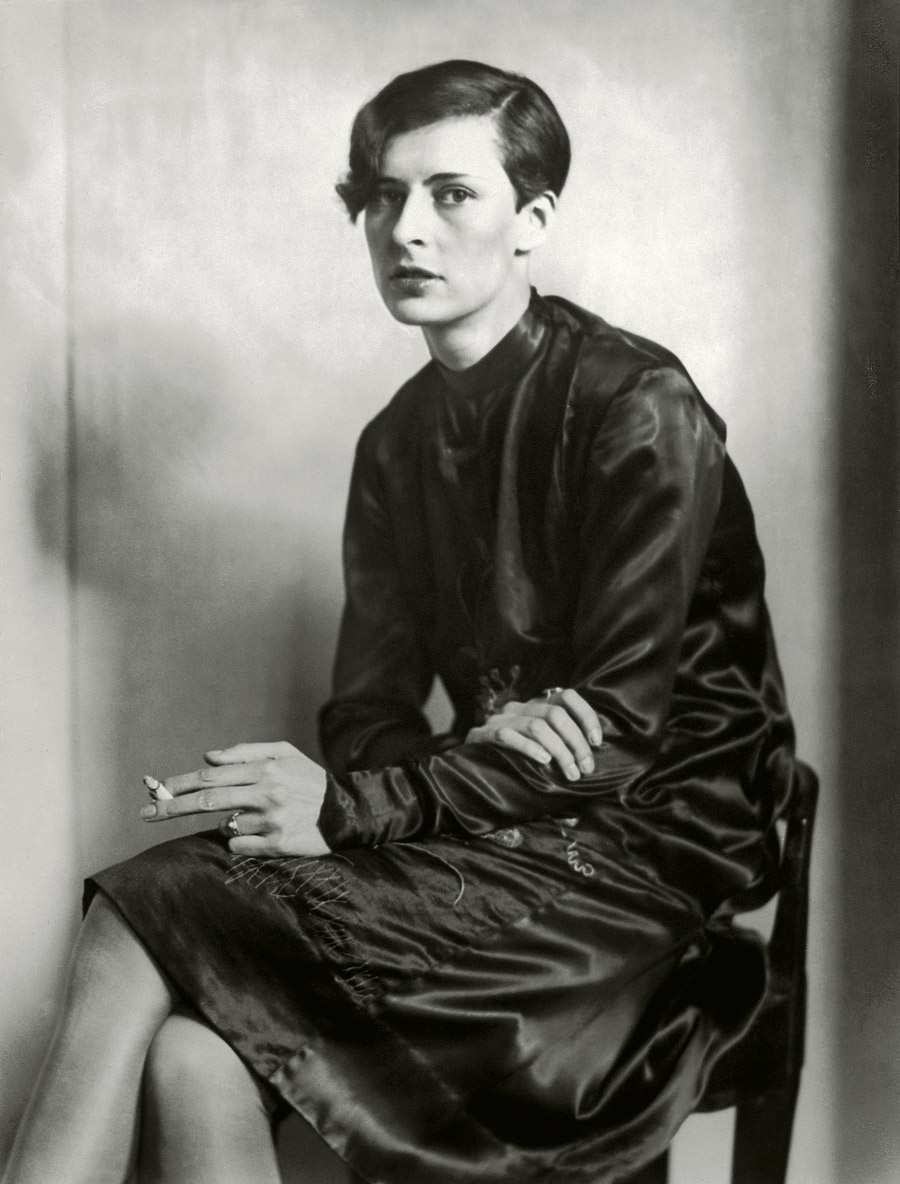
August Sander. Now there is a name to conjure with. The second magnificent group are 7 photographs that are taken from Sander’s seminal work People of the 20th Century. All the photographs have soft, muted tones of greys with no strong highlights and, usually, contextless backgrounds. The emphasis is on archetypes, views of people who exist on the margins of society – circus performers, bohemians, artists, the unemployed and blind people. In all the photographs there is a certain frontality (not necessarily physical) to the portraits, a self consciousness in the sitter, a wariness of the camera and of life. This self consciousness can be seen in the two photographs that are the strongest in the group – Secretary at West German radio in Cologne, 1931 and Match seller 1927 (see below).

There is magic here. Her face wears a somewhat quizzical air – questioning, unsure, vulnerable – despite the trappings of affluence and fashionability (the smoking of the cigarette, the bobbed hair). He is wary of the camera, his face and hands isolated by Sander while the rest of his body falls into shadow. His right hand is curled under, almost deformed, his shadow falling on the stone at right, the only true brightness in this beautiful image the four boxes of matches he clutches in his left hand: as Sander titles him ironically, The Businessman.

Working as I do these days with lots of found images from the 1940s-1960s that I digitally restore to life, I wonder what happened to these people during the dark days of World War 2. Did they survive the cataclysm, the drop into the abyss? I want to know, I want to reach out to these people to send them good energy. I hope that they did but their wariness in front of the camera, so intimately ‘taken’ by Sander, makes me feel the portent of things to come. How differently we see images armed with the hindsight of history!

In conclusion, this is a fantastic exhibition that will undoubtedly be in my top ten of the year for Melbourne in 2011.

Dr Marcus Bunyan


Many thankx to Michael Thorneycroft for his help and The National Gallery of Victoria for allowing me to publish the accredited photographs in the posting. Please click on the photographs for a larger version of the image.


Felix Nussbaum (German, 1904 - after September 1944) 'The mad square' (Der tolle Platz) 1931


Felix Nussbaum (German, 1904 – after September 1944)
The mad square (Der tolle Platz)
1931
Oil on canvas
97 x 195.5cm
Berlinische Galerie
Public domain
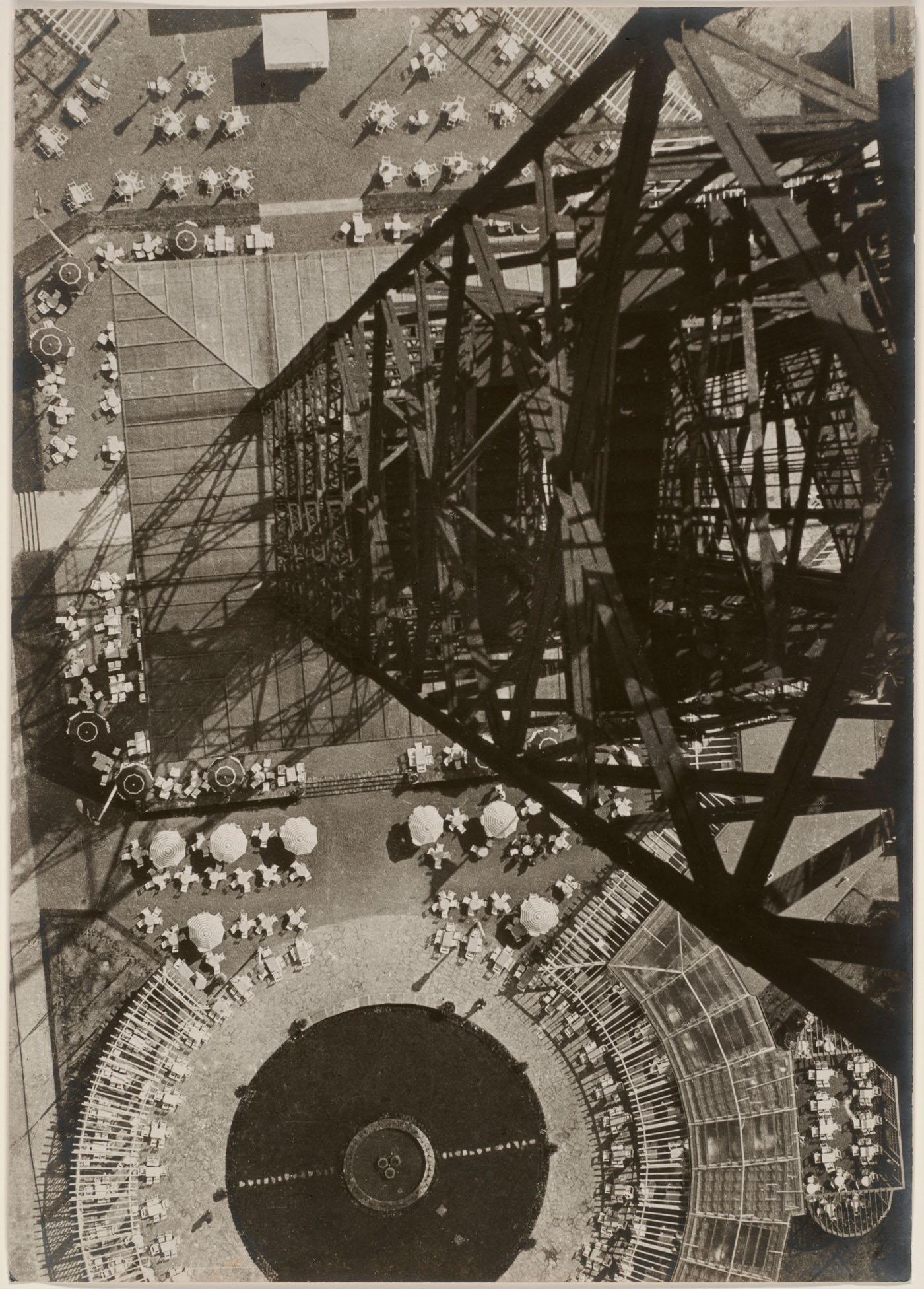
 

László Moholy-Nagy (American born Hungary, 1895-1946) 'Photograph (Berlin Radio Tower)' 1928/1929


László Moholy-Nagy (American born Hungary, 1895-1946)
Berlin Radio Tower
1928
Gelatin silver print
36 × 25.5cm
Julien Levy Collection, Special Photography Acquisition Fund
© 2018 Artists Rights Society (ARS), New York / VG Bild-Kunst, Bonn


Over the winter and spring of 1927-1928, Bauhaus professor László Moholy-Nagy took a series of perhaps nine views looking down from the Berlin Radio Tower, one of the most exciting new constructions in the German capital. Moholy had already photographed the Eiffel Tower in Paris from below, looking up through the tower’s soaring girders. In Berlin, however, Moholy turned his camera around and pointed it straight down at the ground. This plunging perspective showed off the spectacular narrowness of the Radio Tower, finished in 1926, which rose vertiginously to a height of 450 feet from a base seven times smaller than that of its Parisian predecessor (which opened in 1889). Moholy attached exceptional importance to this, his boldest image: he hung it just above his name in a room devoted to his work at the Berlin showing of Film und Foto, a mammoth traveling exhibition that he had helped to prepare. Moholy also chose this view and one other to offer Julien Levy, the pioneering art dealer, when Levy visited him in Berlin in 1930. The following year the pictures went on view at the Levy Gallery in New York, in Moholy’s first solo exhibition of photographs.

Text from the Art Institute of Chicago website
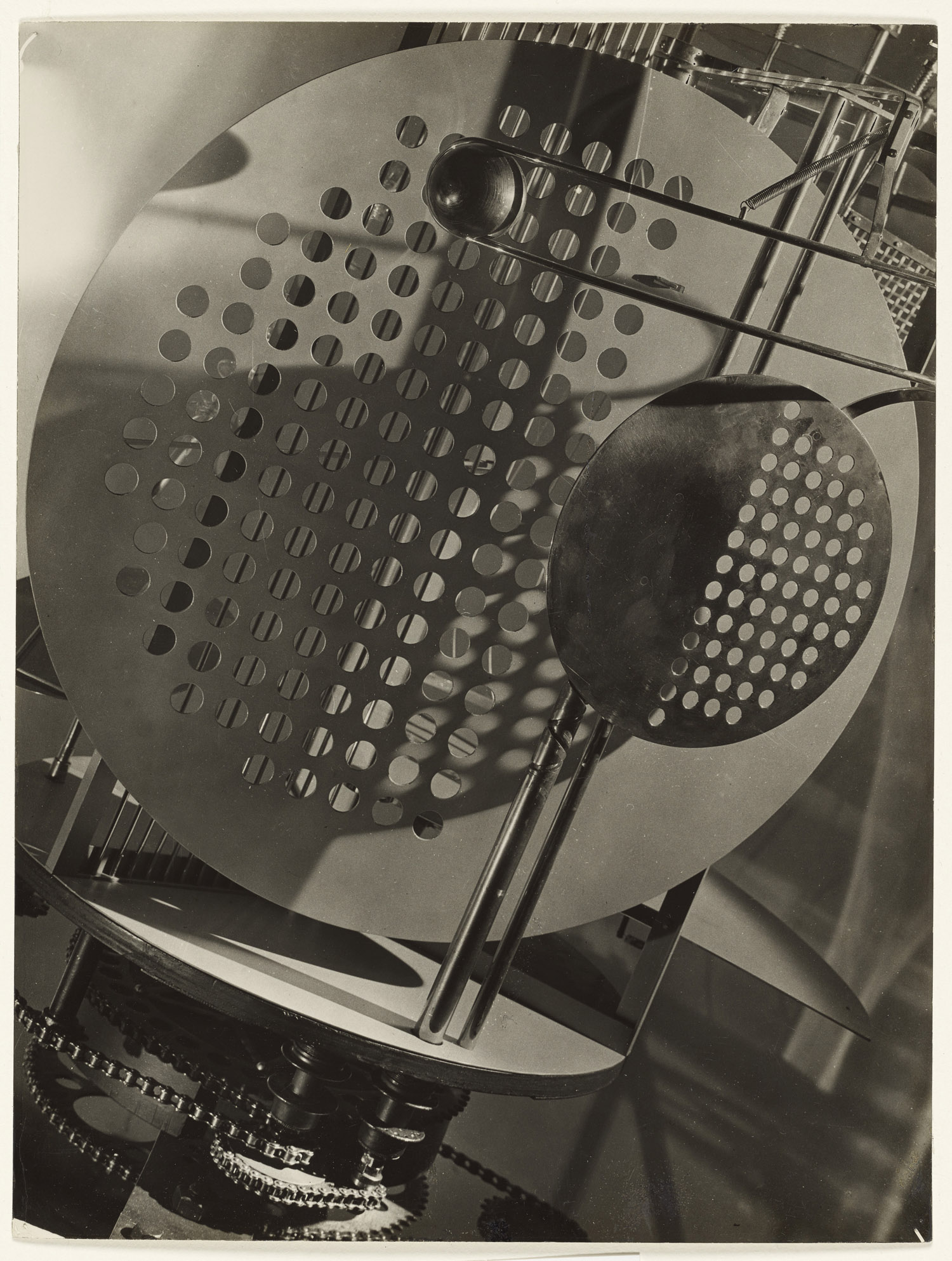
 

László Moholy-Nagy (American born Hungary, 1895-1946) 'Photograph (Light Prop)' 1930


László Moholy-Nagy (American born Hungary, 1895-1946)
Das Lichtrequisit (The light prop)
1930
Gelatin silver print
24 × 18.1cm (9 7/16 × 7 1/8 in.)
J. Paul Getty Museum, Los Angeles
© 2014 Estate of László Moholy-Nagy / Artists Rights Society (ARS), New York


The Light-Space Modulator is the most spectacular and complete realisation of László Moholy-Nagy’s artistic philosophy. Machine parts and mechanical structures began to appear in his paintings after his emigration from Hungary, and they are also seen in the illustrations he selected for the 1922 Buch neuer Künstler (Book of new artists), which includes pictures of motorcars and bridges as well as painting and sculpture. Many contemporary artists incorporated references to machines and technology in their work, and some, like the Russian Constructivist Vladimir Tatlin, even designed plans for fantastic structures, such as the ambitious Monument to the Third International, a proposed architectural spiral of glass and steel with moving tiers and audiovisual broadcasts. (See Tatlin’s Tower.)

In the Light-Space Modulator, Moholy-Nagy was able to create an actual working mechanism. Although he censured capitalism’s inhumane use of technology, he believed it could be harnessed to benefit mankind and that the artist had an important role in accomplishing this. Moholy had made preliminary sketches for kinetic sculptures as early as 1922 and referred to the idea for a light machine in his writings, but it was not until production was financed by an electric company in Berlin in 1930 that this device was built, with the assistance of an engineer and a metalsmith. It was featured at the Werkbund exhibition in Paris the same year, along with the short film Light Display Black-White-Gray, made by Moholy-Nagy to demonstrate and celebrate his new machine.

The Light-Space Modulator is a Moholy-Nagy painting come to life: mobile perforated disks, a rotating glass spiral, and a sliding ball create the effect of photograms in motion. With its gleaming glass and metal surfaces, this piece (now in the collection of the Busch-Reisinger Museum at Harvard University) is not only a machine for creating light displays but also a sculptural object of beauty, photographed admiringly by its creator.

Katherine Ware, László Moholy-Nagy, In Focus: Photographs from the J. Paul Getty Museum (Los Angeles: J. Paul Getty Museum, 1995), 80 © 1995 The J. Paul Getty Museum
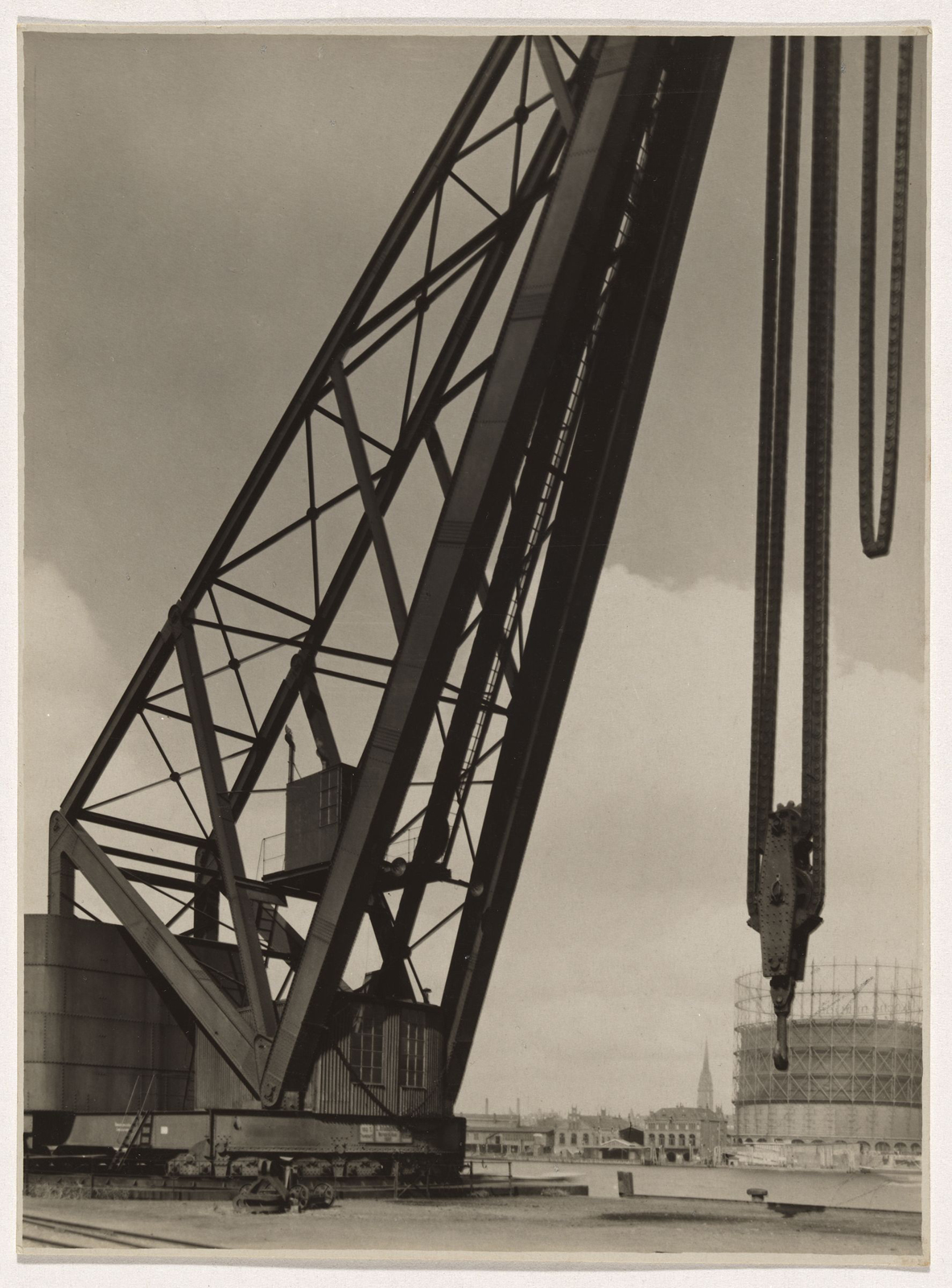
 

Albert Renger-Patzsch (American born Hungary, 1895-1946) 'Harbour with crane' c. 1927


Albert Renger-Patzsch (American born Hungary, 1895-1946)
Harbour with crane
c. 1927
Gelatin silver photograph
Printed image 22.7 h x 16.8 w cm
Purchased 1983
National Gallery of Australia, Canberra


Wolfgang Sievers (Germany 1913 - Australia 2007) 'Blast furnace in the Ruhr, Germany' 1933


Wolfgang Sievers (Germany 1913 – Australia 2007)
Blast furnace in the Ruhr, Germany
1933
Gelatin silver photograph
27.5 h x 23 w cm
Purchased 1988
National Gallery of Australia, Canberra


The Ruhr region was at the centre of the German acceleration of industry in pre-war Germany, with rapid economic growth creating a heavy demand for coal and steel. In keeping with Modernist trends in photography, Sievers shot this blast furnace – the mechanism that transforms ore into metal – from an unusual, dynamic angle. It dominates the frame, appearing menacing and strange. Despite being imprisoned and beaten by the Gestapo, Sievers studied and taught at a progressive private art school until graduation in 1938. In that year he escaped Germany after being called up for military service, ending up in Australia.

Text © National Gallery of Australia, Canberra
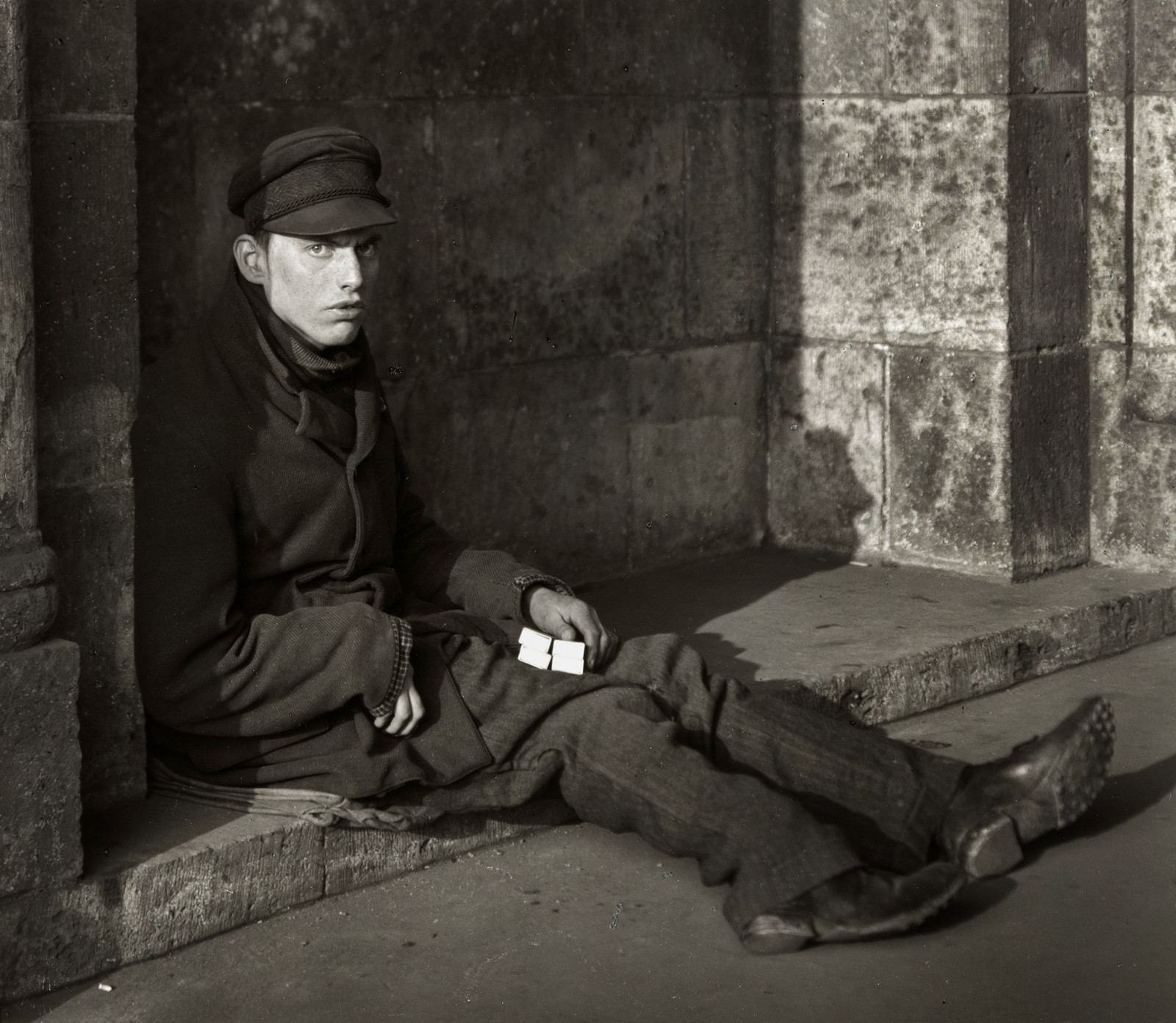
 

August Sander (German, 1876-1964) 'Match seller' 1927


August Sander (German, 1876-1964)
Match seller
1927
From the portfolio People of the 20th century, IV Classes and Professions, 17 The Businessman


Robert Wiene, Director (German 1873-1938) Still from the 'Cabinet of Dr Caligari' 1919


Robert Wiene, Director (German 1873-1938)
Still from from the Cabinet of Dr Caligari
1919
5 min excerpt, 35mm transferred to DVD, Black and White, silent, German subtitles
Courtesy Transit Film GmbH
Production still courtesy of the British Film Institute and Transit Film GmbH


Felix H Man (German, 1893-1985) 'Luna Park' 1929


Felix H Man (German, 1893-1985)
Luna Park
1929
Gelatin silver photograph
18.1 x 24cm
National Gallery of Australia, Canberra
Purchased, 1987
© Felix H Man Estate


Hannah Höch (German, 1889-1978) 'Love' 1931


Hannah Höch (German, 1889-1978)
Love
1931
From the series Love
Photomontage
21.8 x 21cm
National Gallery of Australia, Canberra
Purchased, 1983


Hannah Höch made some of the most interesting Dada collages and photomontages, including Love, an image of two strange composite female. Höch’s technique of pasting images together from magazine clippings and advertisements was a response to the modern era of mass media, and a way of criticising the bourgeois taste for ‘high art’. In many of her works, Höch explores the identity and changing roles of women in modern society.


The Mad Square takes its name from Felix Nussbaum’s 1931 painting which depicts Berlin’s famous Pariser Platz as a mad and fantastic place. The ‘mad square’ is both a physical place – the city, represented in so many works in the exhibition, and a reference to the state of turbulence and tension that characterises the period. The ‘square’ can also be a modernist construct that saw artists moving away from figurative representations towards increasingly abstract forms.

The exhibition features works by Max Beckman, Otto Dix, George Grosz, Christian Schad, Kurt Schwitters and August Sander. This group represents Germany’s leading generation of interwar artists. Major works by lesser known artists including Karl Hubbuch, Rudolf Schlichter and Hannah Höch are also presented in the exhibition in addition to works by international artists who contributed to German modernism.

The Mad Square brings together a diverse and extensive range of art, created during one of the most important and turbulent periods in European history, offering new insights into the understanding of key German avant‐garde movements including – Expressionism, Dada, Bauhaus, Constructivism, and New Objectivity were linked by radical experimentation and innovation, made possible by an unprecedented freedom of expression.

World War 1 and the Revolution

The outbreak of war in 1914 was met with enthusiasm by many German artists and intellectuals who volunteered for service optimistically hoping that it would bring cultural renewal and rapid victory for Germany. The works in this section are by the generation of artists who experienced war first hand. Depictions of fear, anxiety and violence show the devastating effects of war – the disturbing subjects provide insight into tough economic conditions and social dysfunction experienced by many during the tumultuous early years of the Weimar Republic following the abdication of the Kaiser

Dada

The philosophical and political despair experienced by poets and artists during World War 1 fuelled the Dada movement, a protest against the bourgeois conception of art. Violent, infantile and chaotic, Dada took its name from the French word for a child’s hobbyhorse or possibly from the sound of a baby’s babble. Its activities included poetry readings and avant‐garde performances, as well as creating new forms of abstract art that subverted all existing conditions in western art. Though short‐lived, in Germany the Dada movement has profoundly influenced subsequent developments in avant-garde art and culture. The impact of the Dada movement was felt throughout Europe – and most powerfully in Germany from 1917-21.

Bauhaus

The Bauhaus (1919‐1933) is widely considered as the most important school of art and design of the 20th century, very quickly establishing a reputation as the leading and most progressive centre of the international avant‐garde. German architect Walter Gropius founded the school to do away with traditional distinctions between the fine arts and craft, and to forge an entirely new kind of creative designer skilled in both the conceptual aesthetics of art and the technical skills of handicrafts. The Bauhaus was considered to be both politically and artistically radical from its inception and was closed down by the National Socialists in 1933

Constructivism and the Machine Aesthetic

Having emerged in Russia after World War I, Constructivism developed in Germany as a set of ideas and practices that experimented with abstract or non-representational forms and in opposition to Expressionism and Dada. Constructivists developed works and theories that fused art and with technology. They shared a utopian belief in social reform, and saw abstract art as playing a central role in this process.

Metropolis

By the 1920s Berlin has become the cultural and entertainment capital of the world and mass culture played an important role in distracting a society traumatised by World War 1, the sophisticated metropolis provided a rich source of imagery for artists, it also come to represent unprecedented sexual and personal freedom. In photography modernity was emphasised by unusual views of the metropolis or through the representation of city types. The diverse group of works in this section portray the uninhibited sense of freedom and innovation experienced by artists throughout Germany during the 1920s

New Objectivity

By the mid 1920s, a new style emerged that came to be known as Neue Sachlichkeit or New Objectivity. After experiencing the atrocities of World War 1 and the harsh conditions of life in postwar Germany, many artists felt the need to return to the traditional modes of representation with portraiture becoming a major vehicle of this expression, with its emphasis on the realistic representation of the human figure

Power and Degenerate Art

After the seizure of power by the National Socialists in 1933 modern artists were forbidden from working and exhibiting in Germany, with their works confiscated from leading museums and then destroyed or sold on the international art market. Many avant‐garde artists were either forced to leave Germany or retreat into a state of ‘inner immigration’.

The Degenerate art exhibition, held in Munich in 1937, represented the culmination of the National Socialists’ assault on modernism. Hundreds of works were selected for the show which aimed to illustrate the mental deficiency and moral decay that had supposedly infiltrated modern German art. The haphazard and derogatory design of the exhibition sought to ridicule and further discredit modern art. Over two million people visited the exhibition while in contrast far fewer attended the Great German art exhibition which sought to promote what the Nazis considered as ‘healthy’ art.


Karl Grill (German active Donaueschingen, Germany 1920s) 'Untitled [Spiral Costume, from the Triadic Ballet]' c. 1926-1927


Karl Grill (German active Donaueschingen, Germany 1920s)
Untitled (Spiral Costume, from the Triadic Ballet)
c. 1926-1927
Gelatin silver print
22.5 x 16.2cm
J. Paul Getty Museum, Los Angeles


In 1922, Oskar Schlemmer premiered his “Triadic Ballet” in Germany. He named the piece “Triadic” because it was literally composed of multiples of three: three acts, colours, dancers, and shapes. Concentrating on its form and movement, Schlemmer explored the body’s spatial relationship to its architectural surroundings. Although an abstract design, the spiral costume derived from the tutus of classical ballet.

Text from the J. Paul Getty Museum website


August Sander (German, 1876-1964) 'Secretary at West German radio in Cologne' 1931, printed by August Sander in the 1950s


August Sander (German, 1876-1964)
Secretary at West German radio in Cologne
1931, printed by August Sander in the 1950s
From the portfolio People of the 20th century, III The woman, 17 The woman in intellectual and practical occupation
Gelatin silver photograph
29 x 22cm
Die Photographische Sammlung /SK Stiftung Kultur, August Sander Archiv, Cologne (DGPH1016)
© Die Photographische Sammlung /SK  Stiftung Kultur – August Sander Archiv, Cologne. Licensed by Viscopy, Sydney


Timeline

1910

~ Berlin’s population doubles to two million people

1911

~ Expressionists move from Dresden to Berlin

1912

~ Social Democratic Party (SPD) the largest party in the Reichstag

1913

~ Expressionists attain great success with their city scenes

1914

~ World War I begins
~ George Grosz, Oskar Schlemmer, Otto Dix, Ludwig Hirschfeld Mack, Ernst Ludwig Kirchner, Max Beckmann and Franz Marc enlist in the army

1915

~ Grosz declared unfit for service, Beckmann suffers a breakdown and Schlemmer wounded

1916

~ Marc dies in combat
~ Dada begins at Cabaret Voltaire in Zurich

1917

~ Lenin and Trotsky form the Soviet Republic after the Tzar is overthrown

1918

~ Richard Huelsenbeck writes a Dada manifesto in Berlin
~ Kurt Schwitters creates Merz assemblages in Hanover
~ Revolutionary uprisings in Berlin and Munich
~ Kaiser Wilhelm II abdicates and flees to Holland
~ Social Democratic Party proclaims the Weimar Republic
~ World War I ends

1919

~ Freikorps assassinates the Spartacist leaders, Karl Leibknecht and Rosa Luxemburg
~ Bauhaus established in Weimer by Walter Gropius
~ Cologne Dada group formed
~ Treaty of Versailles signed

1920

~ Berlin is the world’s third largest city after New York and London
~ Inflation begins in Germany
~ National Socialist German Workers Party (NSDAP) founded
~ Kapp Putsch fails after right‐wing forces try to gain control over government
~ First International Dada fair opens in Berlin

1921

~ Hitler made chairman of the NSDAP

1922

~ Schlemmer’s Triadic ballet premiers in Stuttgart
~ Hyperinflation continues

1923

~ Hitler sentenced to five years imprisonment for leading the Beer Hall Putsch
~ Inflation decreases and a period of financial stability begins

1924

~ Hitler writes Mein Kampf while in prison
~ Reduction of reparations under the Dawes Plan

1925

~ New Objectivity exhibition opens at the Mannheim Kunsthalle
~ The Bauhaus relocates to Dessau

1926

~ Germany joins the League of Nations

1927

~ Fritz Lang’s film Metropolis released
~ Unemployment crisis worsens
~ Nazis hold their first Nuremburg party rally

1928

~ Bertolt Brecht and Kurt Weill’s The threepenny opera premieres in Berlin
~ Hannes Meyer becomes the second director of the Bauhaus

1929

~ Street confrontations between the Nazis and communists in Berlin
~ Young Plan accepted, drastically reducing reparations
~ Stock market crashes on Wall Street, New York
~ Thomas Mann awarded the Nobel Prize for literature

1930

~ Resignation of Chancellor Hermann Müller’s cabinet ending parliamentary rule
~ Minority government formed by Heinrich Brüning, leader of the Centre Party
~ Nazis win 18% of the vote and gain 95 seats in the National elections
~ Ludwig Miles van der Rohe becomes the third director of the Bauhaus
~ John Heartfield creates photomontages for the Arbeiter‐Illustrierte Zeitung (AIZ)

1931

~ Unemployment reaches five million and a state of emergency is declared in Germany

1932

~ Nazis increase their representation in the Reichstag to 230 seats but are unable to form a majority coalition
~ Miles van der Rohe moves the Bauhaus to Berlin
~ Grosz relocates to New York as an exile

1933

~ Hindenberg names Hitler as Chancellor
~ Hitler creates a dictatorship under the Nazi regime
~ The first Degenerate art exhibition denouncing modern art is held in Dresden
~ Miles van der Rohe announces the closure of the Bauhaus
~ Nazis organise book burnings in Berlin
~ Many artists including Gropius, Kandinski and Klee flee Germany
~ Beckmann, Dix and Schlemmer lose their teaching positions

1934

~ Fifteen concentration camps exist in Germany

1935

~ The swastika becomes the flag of the Reich

1936

~ Spanish civil war begins
~ Germany violates the Treaty of Versailles
~ Olympic Games held in Garmisch‐Partenkirchen and Berlin
~ Thomas Mann deprived of his citizenship and emigrates to the United States

1937

~ German bombing raids over Guernica in Spain in support of Franco
~ The Nazi’s Degenerate art exhibition opens in Munich and attracts two million visitors
~ Beckmann, Kirchner and Schwitters leave Germany
~ Purging of ‘degenerate art’ from German museums continues 1


1/ Timeline credit: Chronology compiled by Jacqueline Strecker and Victoria Tokarowski from the following sources:

~ Catherine Heroy ‘Chronology’ in Sabine Rewald, Glitter and Doom: German portraits from the 1920s, Metropolitan Museum of Art, New York, exh cat, 2006, pp. 39‐46
~ Anton Kaes, Martin Jay and Edward Dimendberg, eds, ‘Political chronology’, The Weimar Republic sourcebook, Berkely 1994, pp. 765‐71
~ Jonathan Petropoulos and Dagmar Lott‐Reschke ‘Chronology’ in Stephanie Barron, ‘Degenerate Art’: the fate of the avant‐garde in Nazi Germany, Los Angeles County Museum of Art, exh cat, 1991, pp. 391‐401
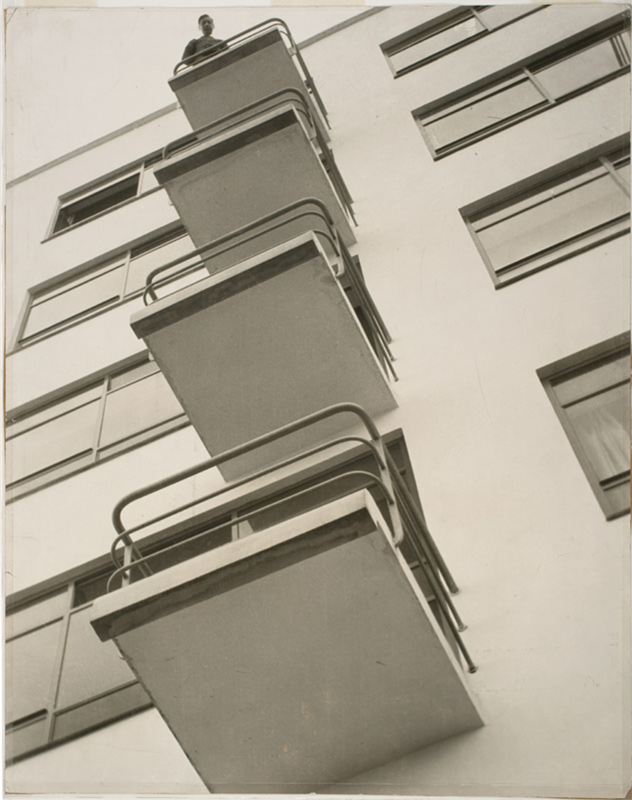
 

László Moholy-Nagy (American born Hungary, 1895-1946) ‘Bauhaus Balconies’ 1926


László Moholy-Nagy (American born Hungary, 1895-1946)
Bauhaus Balconies
1926
Silver gelatin photograph


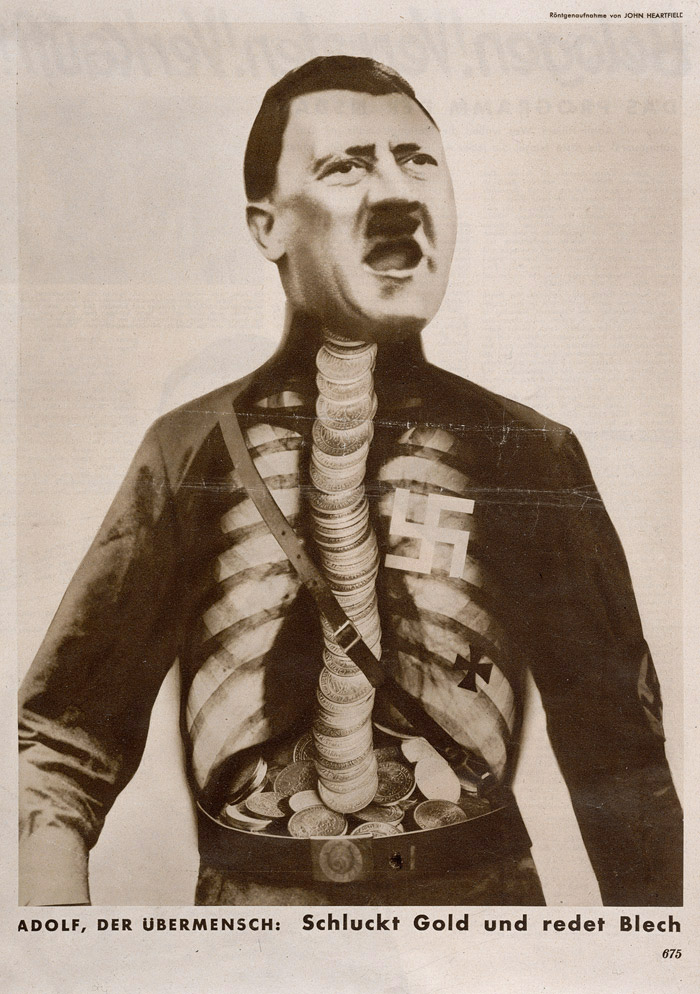
John Heartfield (German, 1891-1968) 'Adolf, the superman: swallows gold and spouts rubbish' from the 'Workers Illustrated Paper', vol 11, no 29, 17 July 1932, p. 675


John Heartfield (German, 1891-1968)
Adolf, the superman: swallows gold and spouts rubbish
1932
From the Workers Illustrated Paper, vol 11, no 29, 17 July 1932, p. 675
Photolithograph
38 x 27cm
John Heartfield Archiv, Akademie der Künste zu Berlin
Photo: Akademie der Künste, Berlin, Kunstsammlung, Heartfield 2261/ Roman März
© The Heartfield Community of Heirs /VG Bild-Kunst, Bonn. Licensed by Viscopy, Sydney


John Heartfield’s photomontages expose hidden agendas in German politics and economics of the 1920s and 30s. This image was published six months before the National Socialist Party came to power, and shows Hitler with a spine made of coins and his stomach filled with gold. The caption says that he ‘swallows gold’, alluding to generous funding by right-wing industrialists, and ‘spouts rubbish’.
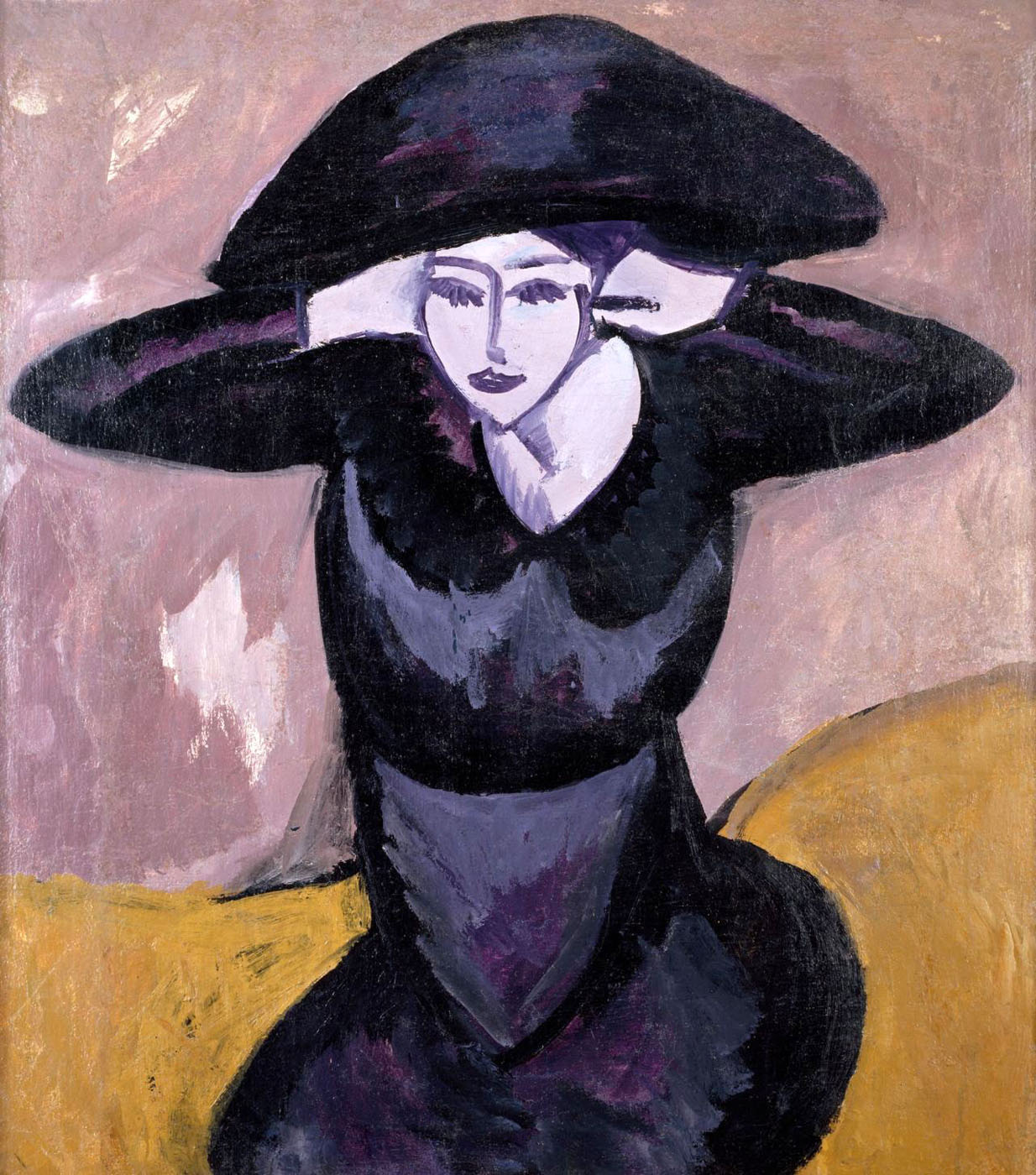
 

Ernst Ludwig Kirchner (German, 1880-1938) 'Woman in hat' 1911


Ernst Ludwig Kirchner (German, 1880-1938)
Woman in hat
1911
Oil on canvas
Art gallery of Western Australia, Perth
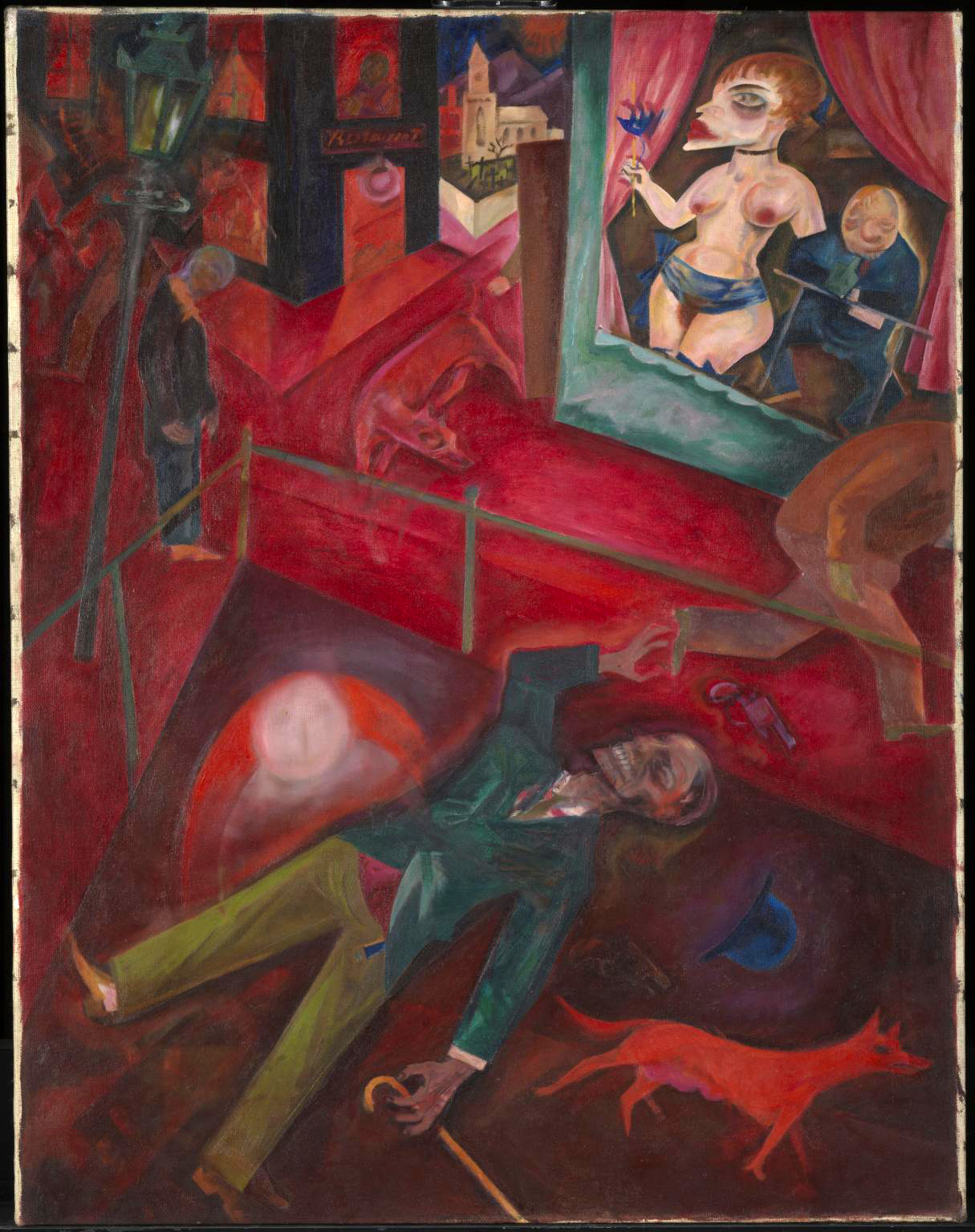
 

George Grosz (German, 1893-1959) 'Suicide' (Selbstmörder) 1916


George Grosz (German, 1893-1959)
Suicide (Selbstmörder)
1916
Oil on canvas
100 × 77.5cm
Tate Modern
Public domain
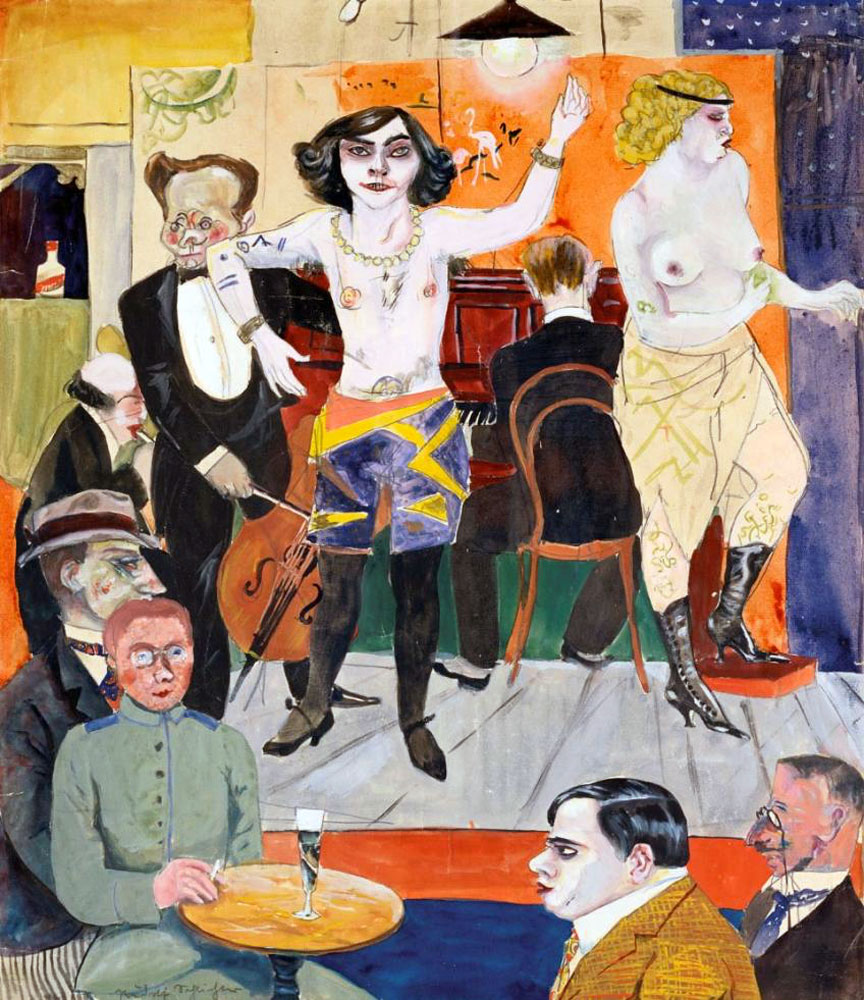
 

Rudolf Schlichter (German, 1890-1955) 'Tingle tangel' 1919-1920


Rudolf Schlichter (German, 1890-1955)
Tingle tangel
1919-1920
Oil on canvas
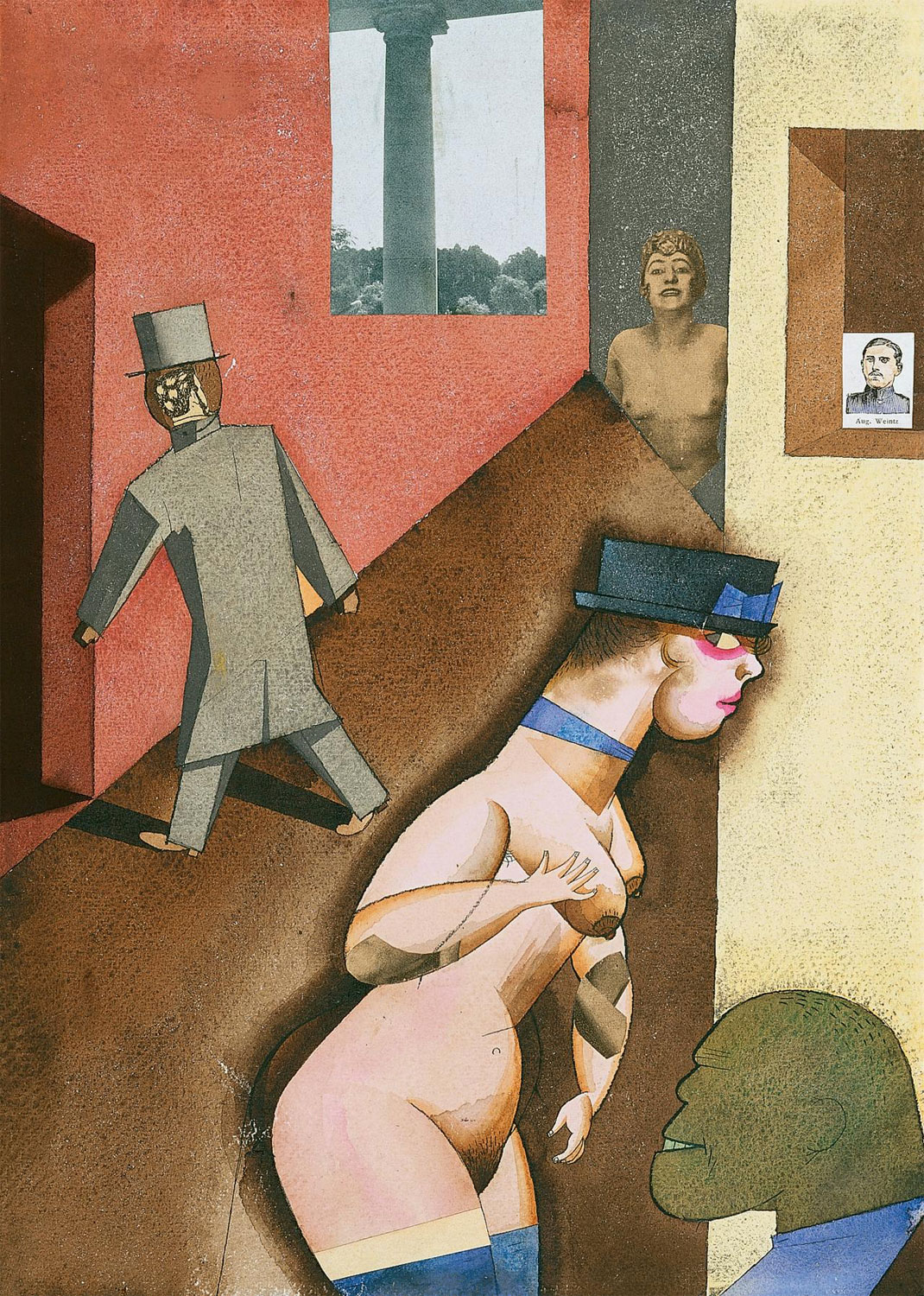
 

George Grosz (German, 1890-1945) 'Tatlinesque Diagram' 1920


George Grosz (German, 1890-1945)
Tatlinesque Diagram
1920
Watercolour, collage and ink on paper
41 x 29.2cm
Museo Nacional Thyssen-Bornemisza, Madrid


Otto Dix (German, 1891-1969) 'Dr Paul Ferdinand Schmidt' 1921


Otto Dix (German, 1891-1969)
Dr Paul Ferdinand Schmidt
1921
Oil on canvas
63 x 82cm
Staatsgalerie, Stuttgart, Germany


El Lissitzky (Russian, 1890-1941) 'New Man (Neuer)' 1923


El Lissitzky (Russian, 1890-1941)
New Man (Neuer)
1923
Color lithograph on wove paper
12 × 12 1/2 in. (30.5 × 31.8cm)
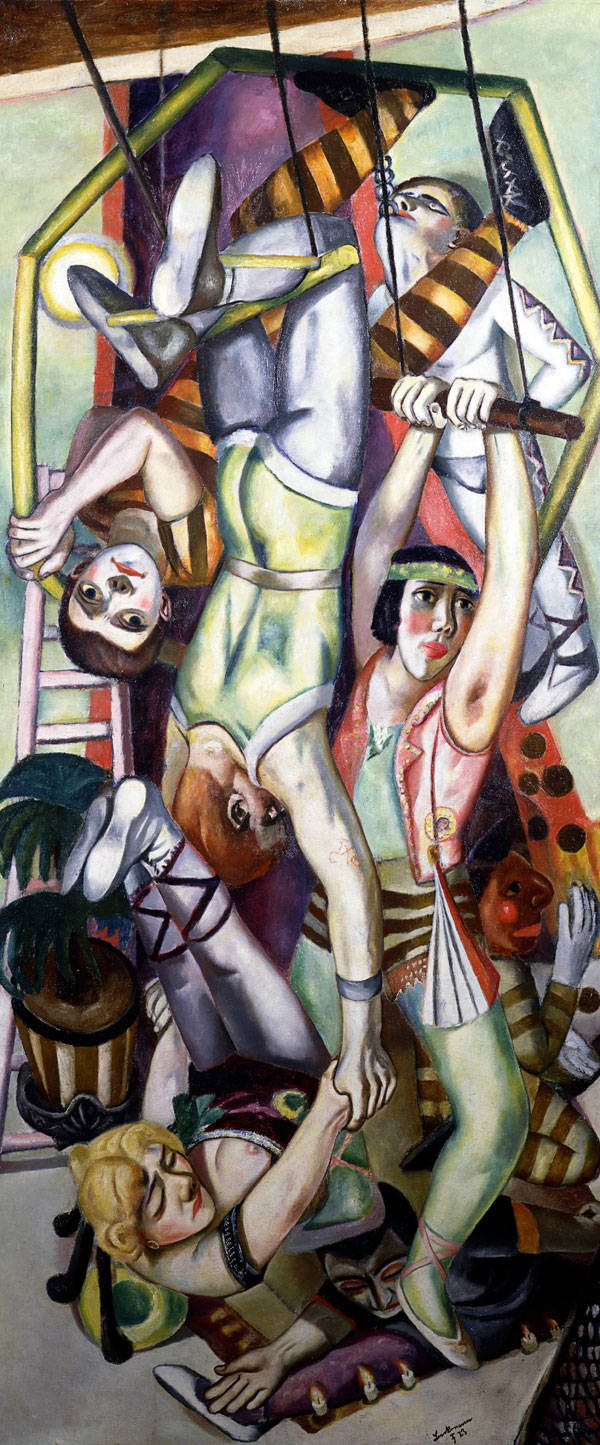
 

Max Beckmann (German, 1884-1950) 'The trapeze' 1923


Max Beckmann (German, 1884-1950)
The trapeze
1923
Oil on canvas
196.5 x 84cm
Toledo Museum of Art
Purchased with funds from the Libbey Endowment, Gift of Edward Drummond Libbey
Photo: Photography Incorporated, Toledo
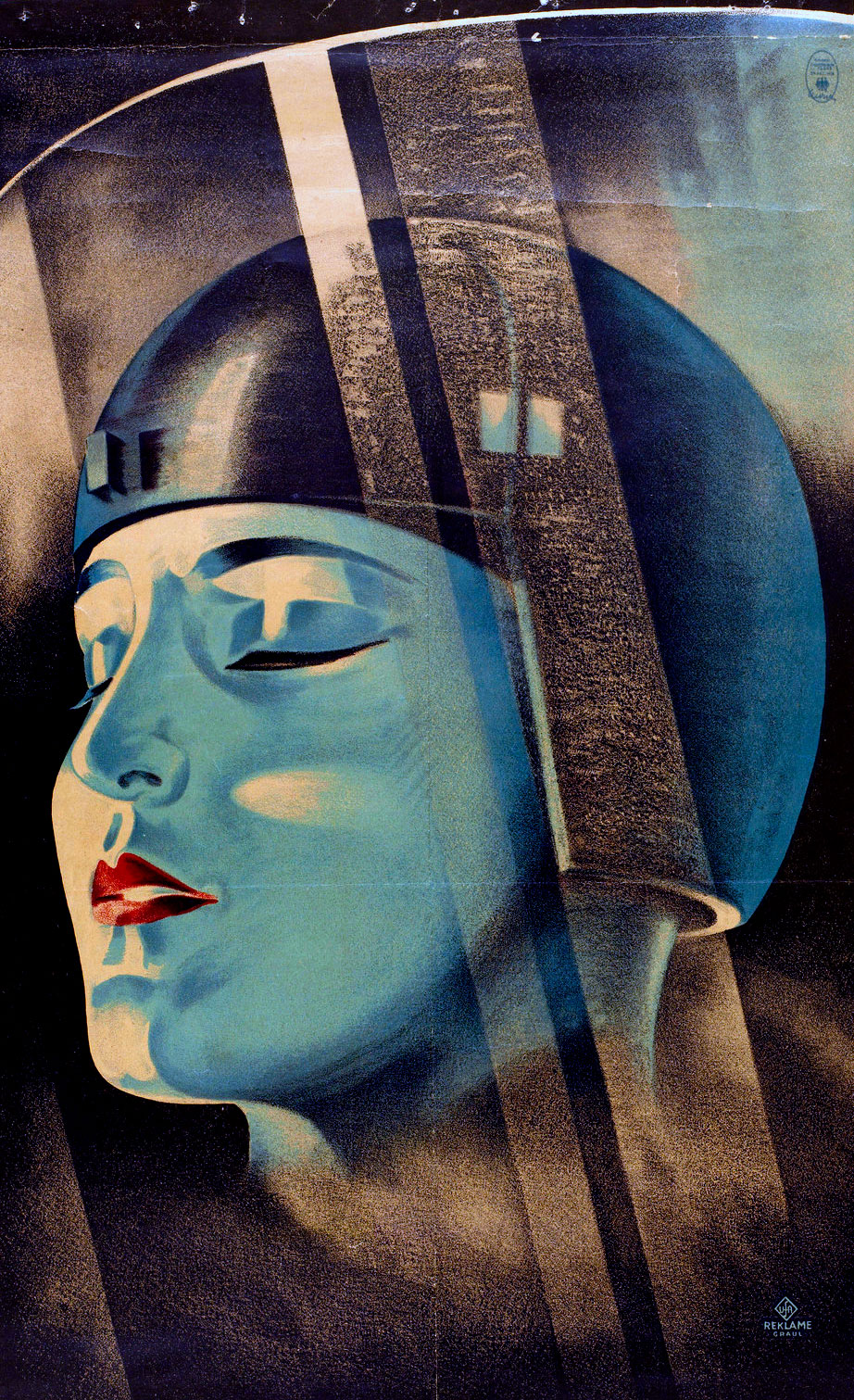
 

Werner Graul (German, 1905-1984) 'Metropolis'
1926


Werner Graul (German, 1905-1984)
UFA (Universum-Film-Aktiengesellschaft) (publisher)
Metropolis
1926
Lithographic poster
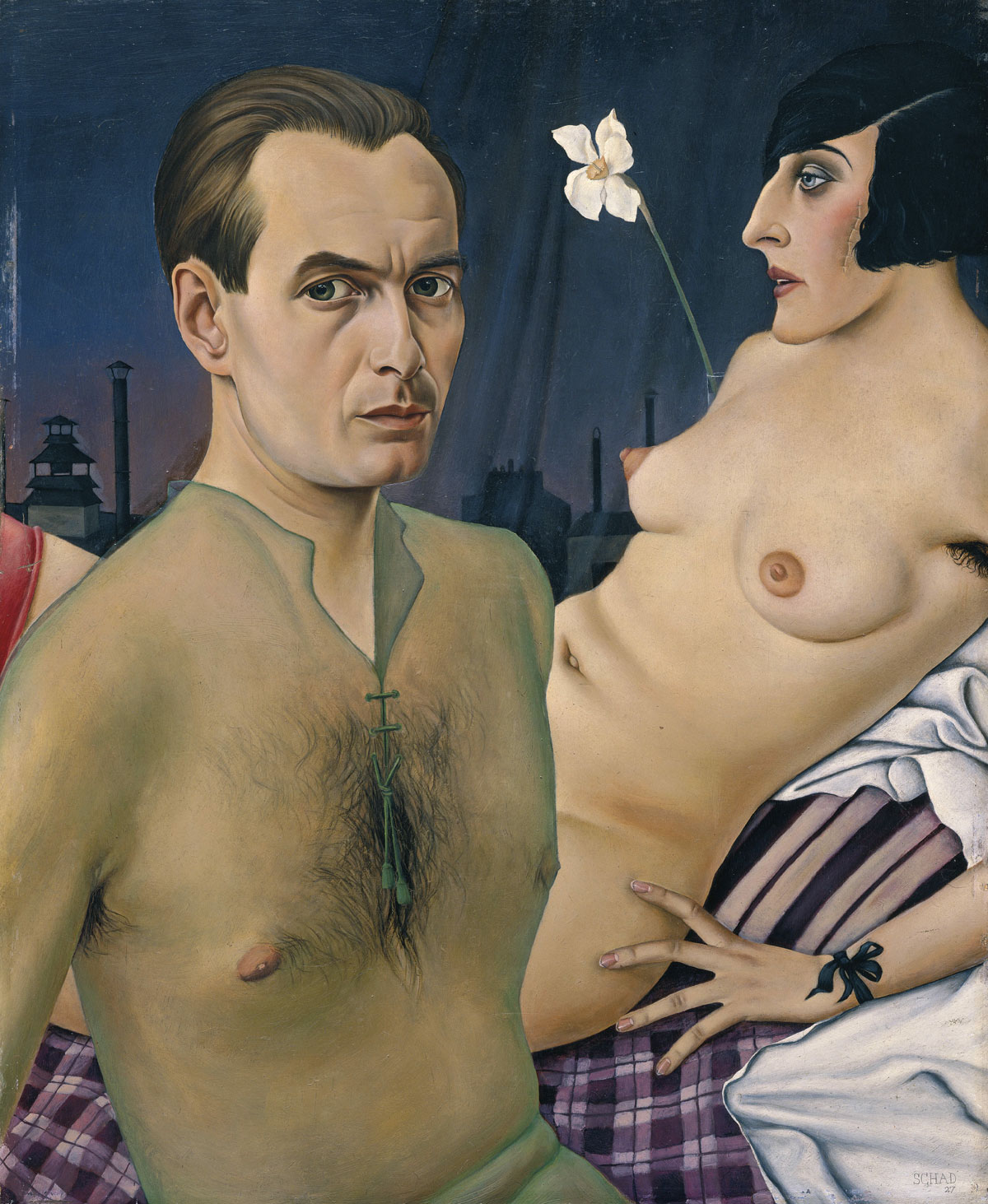
 

Christian Schad (German, 1894-1982) 'Self-Portrait' (Selbstbildnis mit Modell), 1927


Christian Schad (German, 1894-1982)
Self-Portrait with Model (Selbstbildnis mit Modell)
1927
Oil on wood
29 15/16 x 24 3/16 in. (76 x 61.5cm)
Private collection, courtesy of Tate
© 2015 Christian Schad Stiftung Aschaffenburg/Artists Rights Society (ARS), New York/VG Bild-Kunst, Bonn
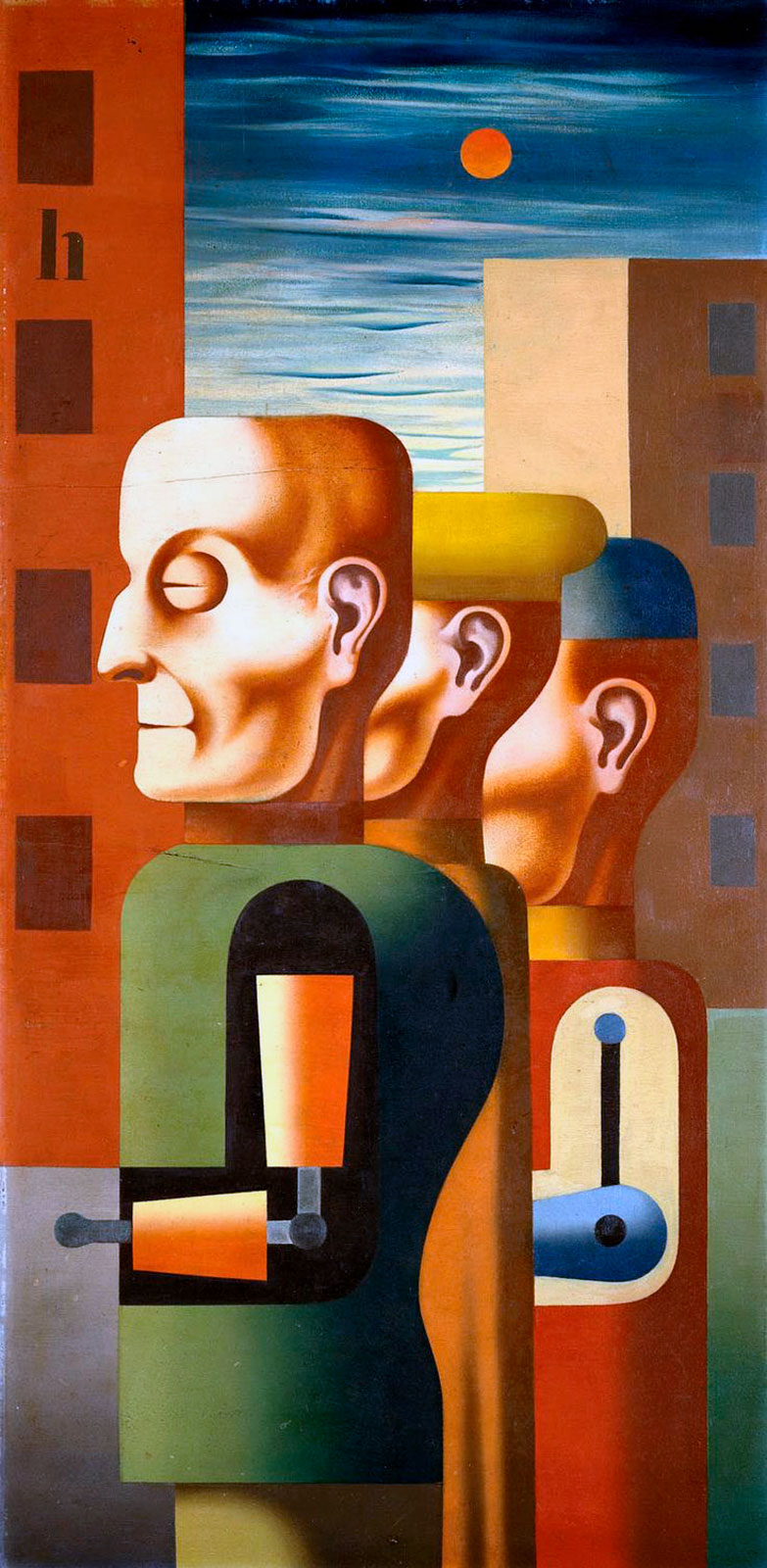
 

Heinrich Hoerle (German, 1895-1936) 'Three invalids' c. 1930


Heinrich Hoerle (German, 1895-1936)
Three invalids
c. 1930
Oil on canvas


NGV International
180 St Kilda Road

Opening hours:
Daily 10am – 5pm

National Gallery of Victoria website

LIKE ART BLART ON FACEBOOK

Back to top

Photographs: ‘Infinitesimal Residual Vibration of An Unknown Sound’ by Kaho Yu

December 2011


Kaho Yu. 'Untitled' from the series 'Infinitesimal Residual Vibration of An Unknown Sound' 2009 - 2011


Kaho Yu (Hong Kong)
Untitled
from the series Infinitesimal Residual Vibration of An Unknown Sound
2009-2011


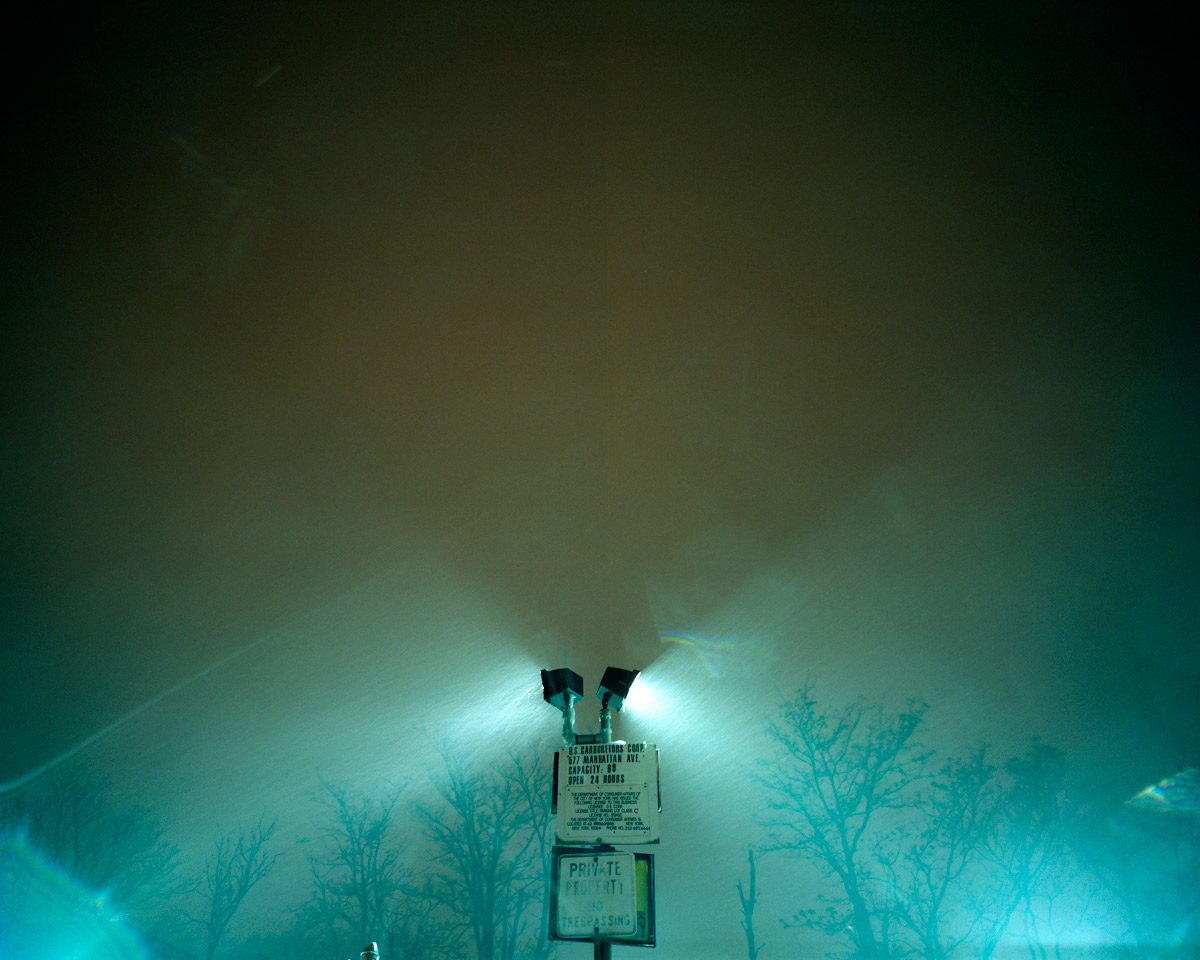
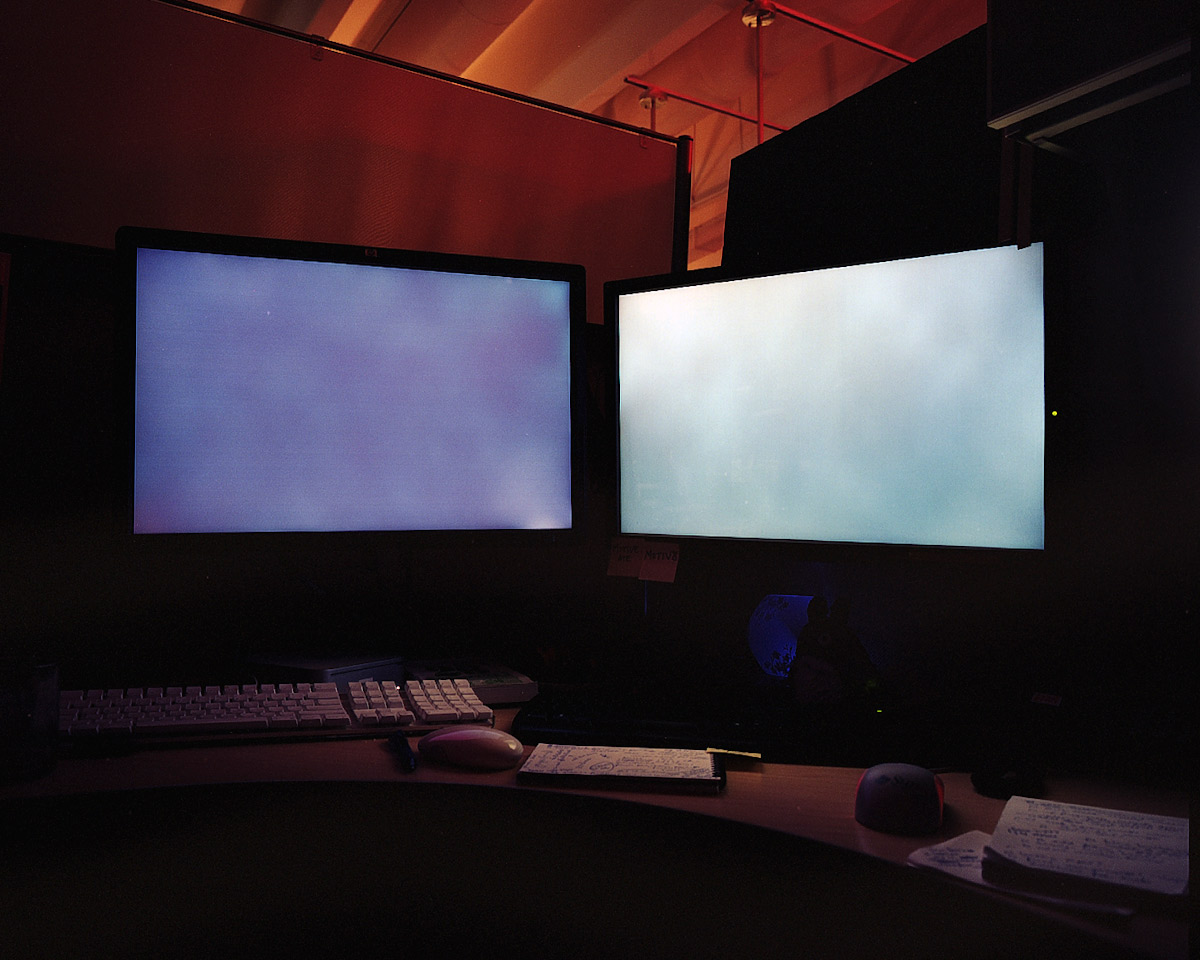
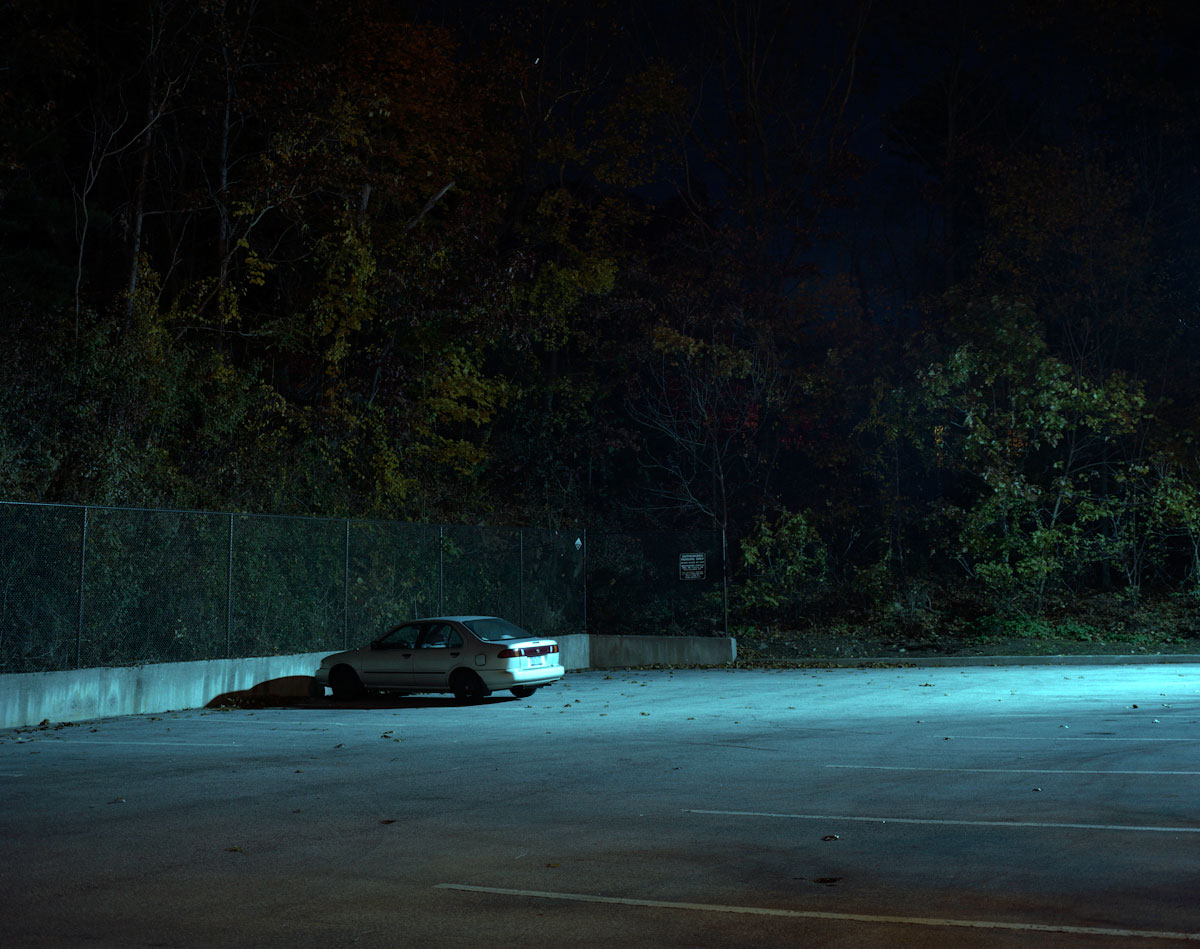
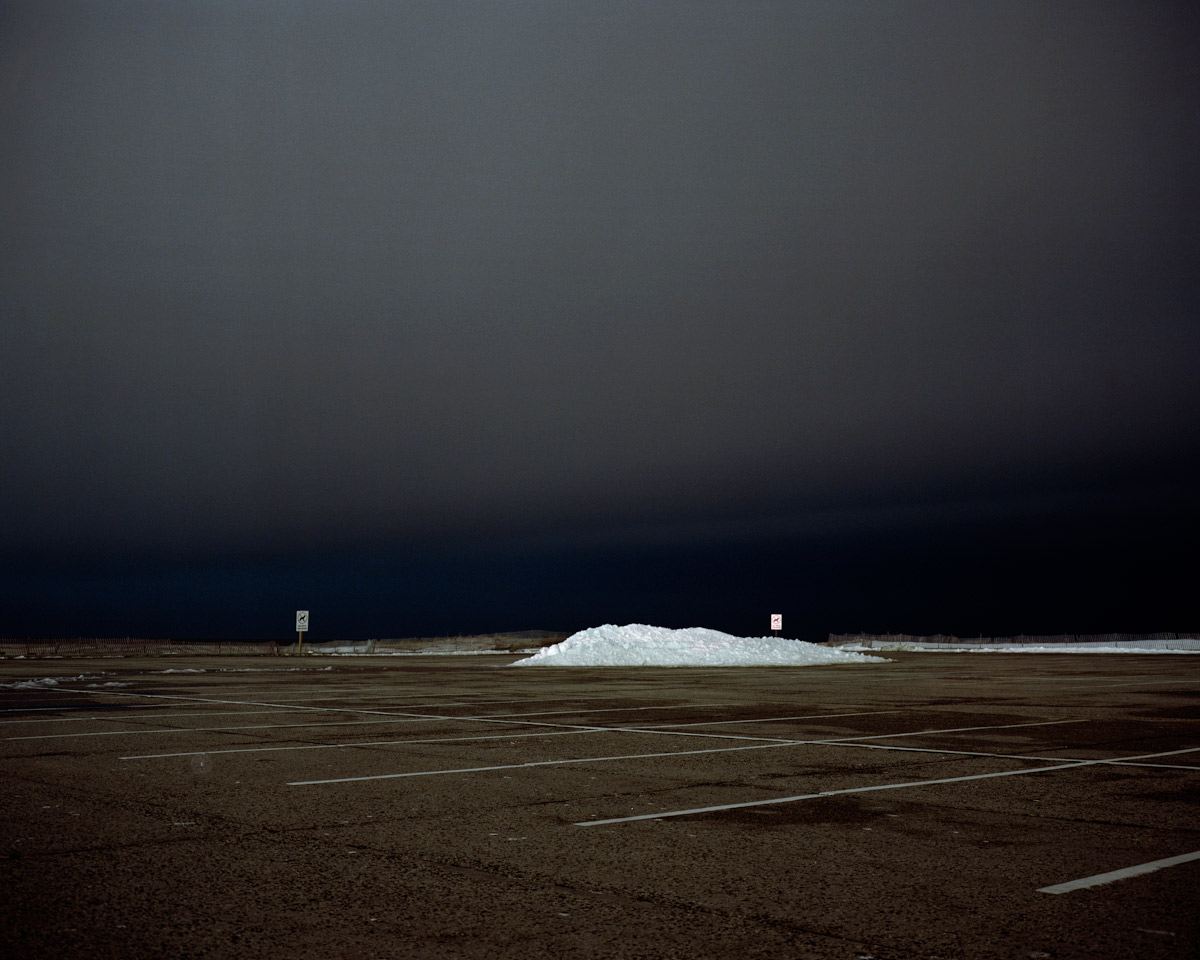
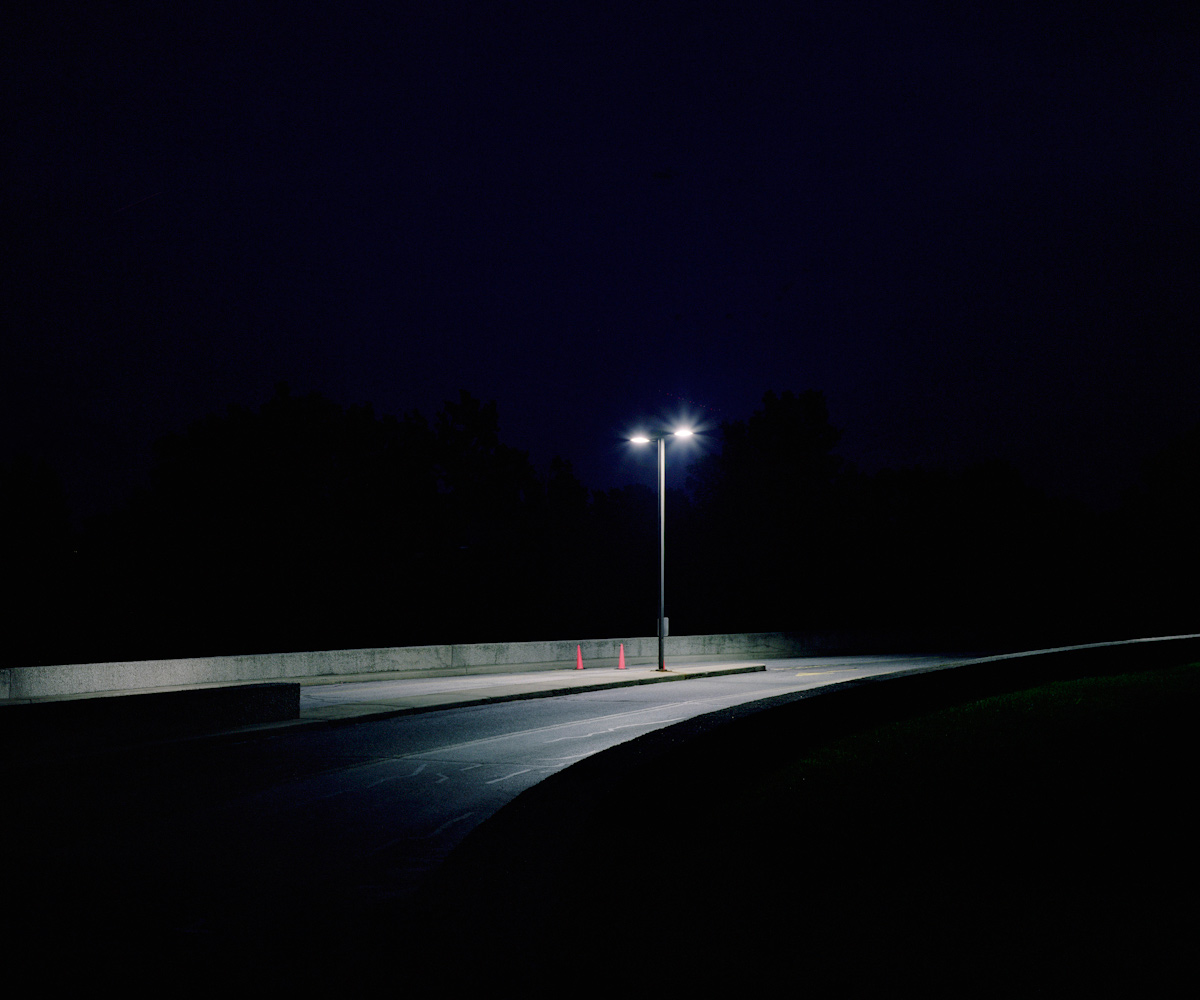
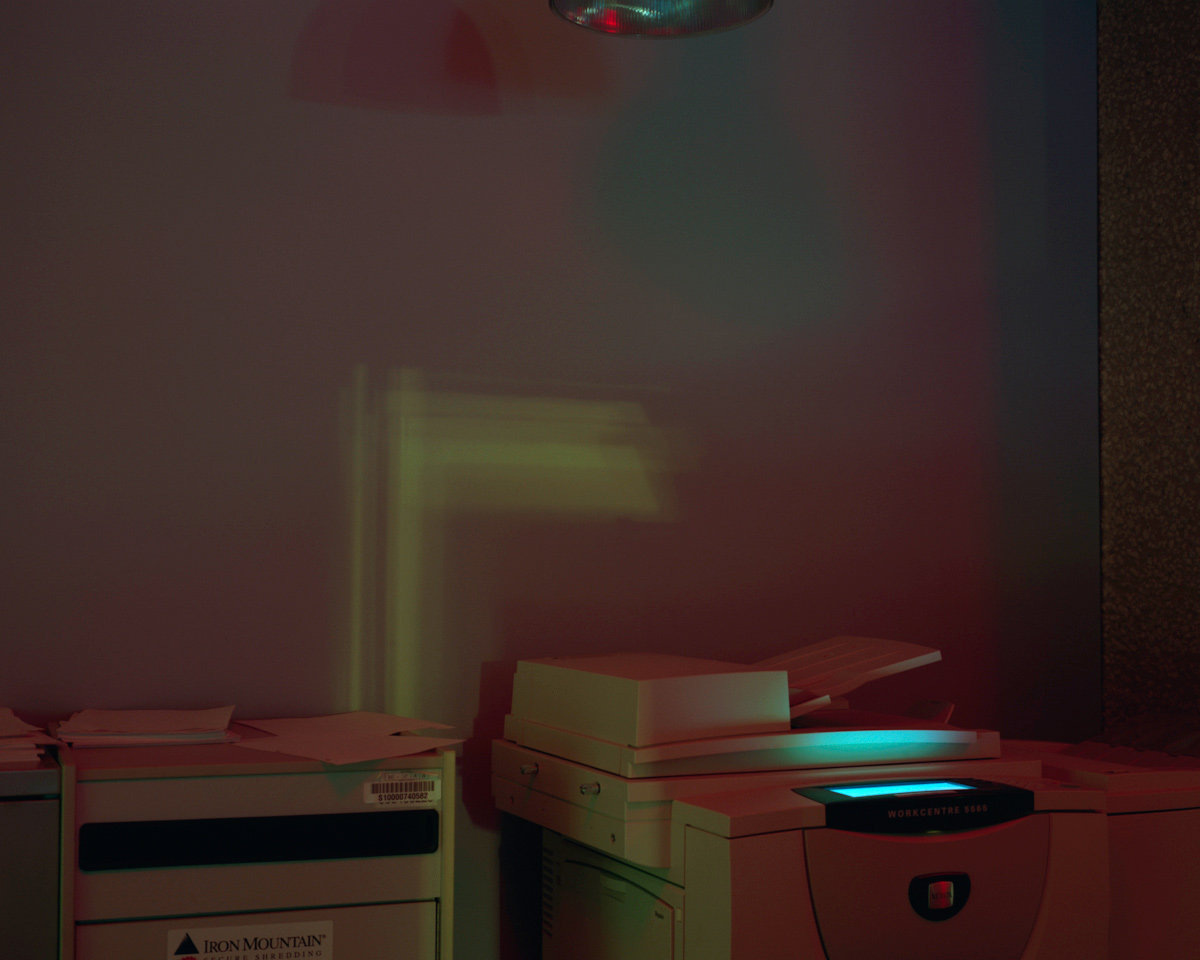
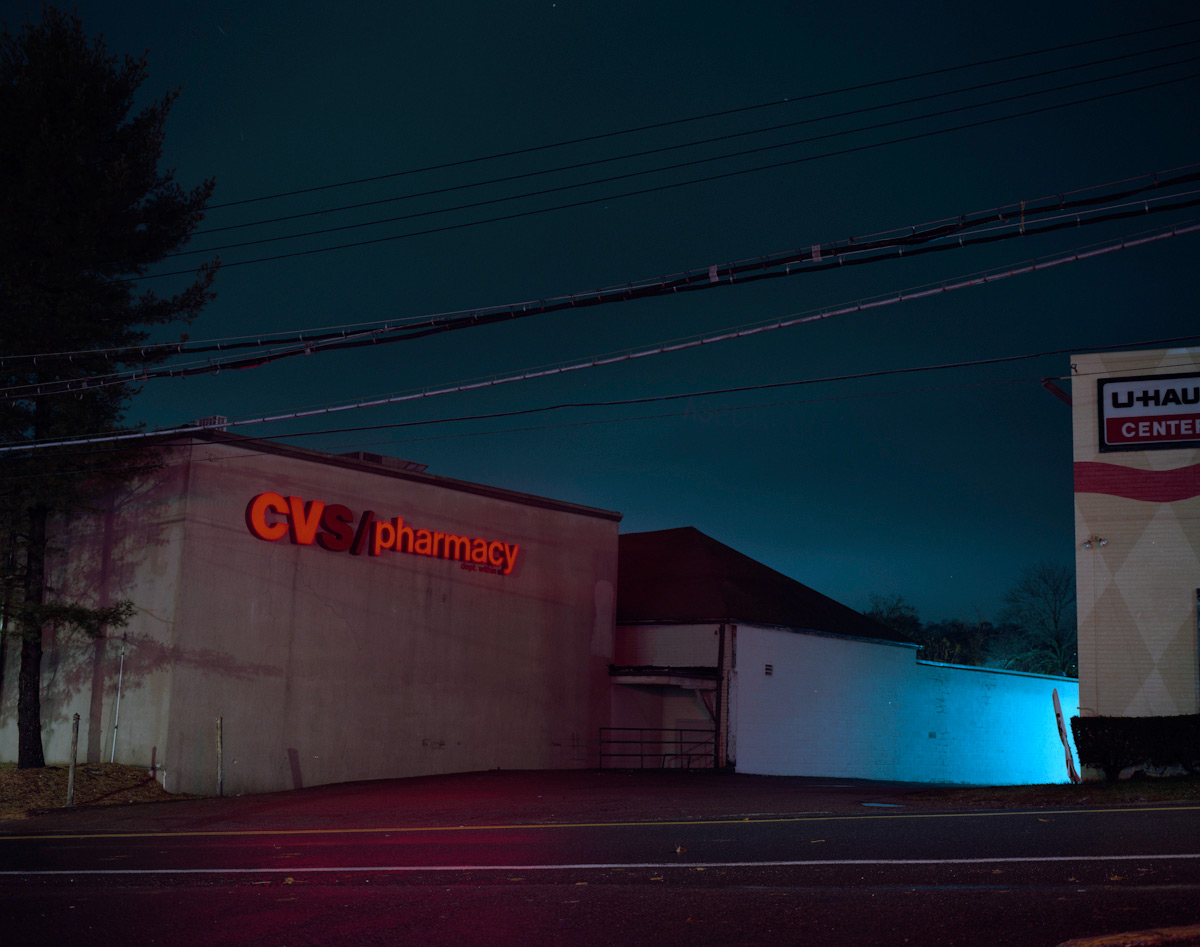
I like these photographs. There is a stillness to them that is intoxicating. The wonderful quotation by Charles Babbage (the air as a form of perpetual palimpsest) coupled with Yu’s insight that he sought to capture – through long time exposure – those infinitesimal residual movements of voice and sound trapped in the diffused movements of all the particles in the atmosphere, compliment the work. These are intelligent, emotive, quiet photographs.

Dr Marcus Bunyan


Many thankx to Kaho Yu for allowing me to publish the photographs and text in the posting. Please click on the photographs for a larger version of the image. All photographs © Kaho Yu and courtesy of the artist.


Kaho Yu. 'Untitled' from the series 'Infinitesimal Residual Vibration of An Unknown Sound' 2009 - 2011


Kaho Yu (Hong Kong)
Untitled
From the series Infinitesimal Residual Vibration of An Unknown Sound
2009-2011


Kaho Yu. 'Untitled' from the series 'Infinitesimal Residual Vibration of An Unknown Sound' 2009 - 2011


Kaho Yu (Hong Kong)
Untitled
From the series Infinitesimal Residual Vibration of An Unknown Sound
2009-2011


Kaho Yu. 'Untitled' from the series 'Infinitesimal Residual Vibration of An Unknown Sound' 2009 - 2011


Kaho Yu (Hong Kong)
Untitled
Fom the series Infinitesimal Residual Vibration of An Unknown Sound
2009-2011


“The air is one vast library, on whose pages are for ever written all that man has ever said or woman whispered. There, in their mutable but unerring characters, mixed with the earliest, as well as the latest sighs of mortality, stand for ever recorded, vows unredeemed, promises unfulfilled, perpetuating in the unified movements of each particle, the testimony of man’s changeful will.”


Charles Babbage, 1837


The photographs in this series were taken during a period when I was feeling existentially bored. Instead of distracting myself with activities and accumulating new sensations, I decided to “look” at boredom, to study, and perhaps to understand it. The most natural strategy was to observe the immediate environments where my daily activities take place – train stations, cubicles, copy machines room, etc. I carried a medium format camera on a tripod and spent the odd hours wandering alone through those familiar spaces.

My “study” did not lead me to any revelation or answer. Instead, I found myself spending a lot of time waiting in a long silence, between the opening and the closing of the camera shutter.

Charles Babbage, a scientist in 1837, postulated that every voice and sound, once imparted on the air particles, does not dissipate but remains in the diffused movements of all the particles in the atmosphere. Thus, there might one day come a person equipped with the right mathematical knowledge of these motions who will be able to capture the infinitesimal vibrations and to trace back to their ultimate source.

Taking a long exposure, letting the light slowly accumulate an image on the celluloid surface, to me, is not unlike a sound seeker searching in the air particles, for the tiny residual movements that have been conveyed through the history of mankind, from the beginning of time.

Kaho Yu artist statement


Kaho Yu. 'Untitled' from the series 'Infinitesimal Residual Vibration of An Unknown Sound' 2009 - 2011


Kaho Yu (Hong Kong)
Untitled
From the series Infinitesimal Residual Vibration of An Unknown Sound
2009-2011


Kaho Yu. 'Untitled' from the series 'Infinitesimal Residual Vibration of An Unknown Sound' 2009 - 2011


Kaho Yu (Hong Kong)
Untitled
From the series Infinitesimal Residual Vibration of An Unknown Sound
2009-2011


Kaho Yu. 'Untitled' from the series 'Infinitesimal Residual Vibration of An Unknown Sound' 2009 - 2011


Kaho Yu (Hong Kong)
Untitled
From the series Infinitesimal Residual Vibration of An Unknown Sound
2009-2011


Kaho Yu. 'Untitled' from the series 'Infinitesimal Residual Vibration of An Unknown Sound' 2009 - 2011


Kaho Yu (Hong Kong)
Untitled
From the series Infinitesimal Residual Vibration of An Unknown Sound
2009 – 2011


Kaho Yu website

LIKE ART BLART ON FACEBOOK

Back to top

Animation: ‘Into the Air’s Memory’ by Kaho Yu

December 2011


Kaho Yu (Hong Kong)
Into the Air’s Memory
2003


Into the Air’s Memory is a two channel animation originally made to be projected on two separate screens. The parallel narratives follow two protagonists – a sound seeker and a woman with an empty wheelchair – wandering in a desert in search of something, someone, and the infinitesimal residual vibration of an unknown sound.


Kaho Yu website

LIKE ART BLART ON FACEBOOK

Back to top
Exhibition: ‘Bill Henson: early work from the MGA collection’ at the Anne & Gordon Samstag Museum of Art, Adelaide

Exhibition dates: 14th October – 16th December 2011


Many thankx to the Anne & Gordon Samstag Museum of Art for allowing me to publish the photographs in the posting. Please click on the photographs for a larger version of the image.


Bill Henson (Australian, b. 1955) 'Untitled 1977/78' 1977-1978


Bill Henson (Australian, b. 1955)
Untitled 1977/78
1977-1978
From the Untitled sequence 1977/78 series 1977-1978
From a series of 16 gelatin silver print
Monash Gallery of Art, City of Monash Collection
Donated by James Mollison AO through the
Australian Government’s Cultural Gifts Program 2008


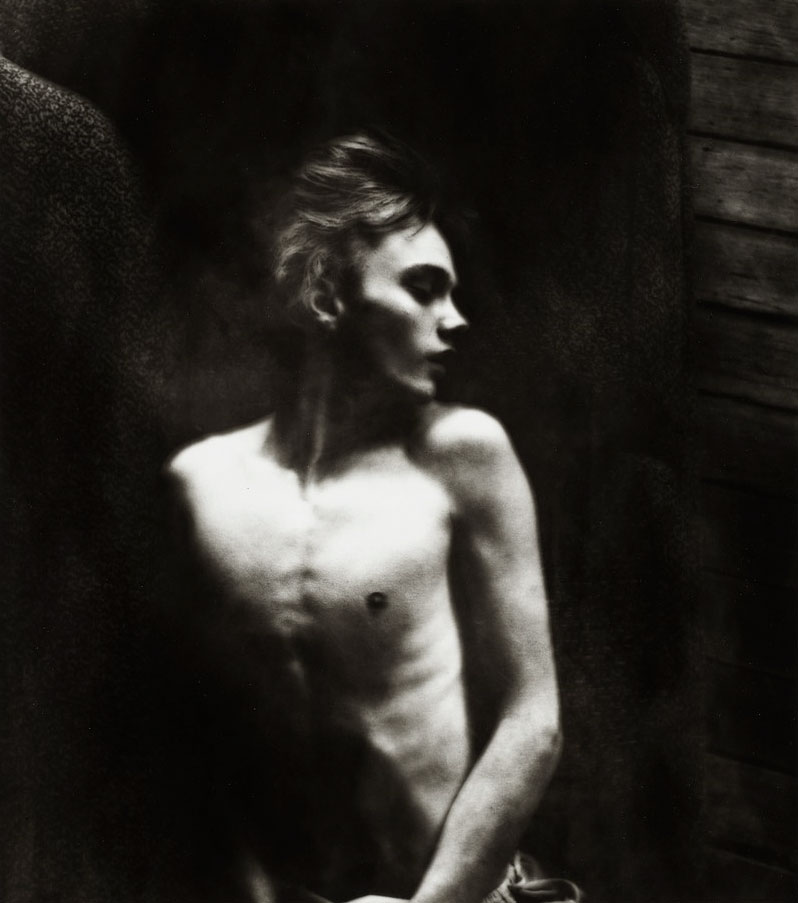
Untitled 1977 is a series of black-and-white photographs that depict a naked adolescent male seemingly lost in a state of private reverie.

This early series highlights Henson’s interest in states of existence that are
indeterminate or ambiguous, which has remained a central concern of his practice over the years. In this body of work, a slightly androgynous youth seems to float in and out of consciousness. In later work, Henson continues to explore borderline states between night and day, dream and reality, childhood and adulthood.

Henson’s interest in ambiguity is also apparent at a formal level, with his use of lighting. Shadows swallow the figure’s contours and highlights dissolve the details, giving the youth a ghostly quality.

Stephen Zagala and Stella Loftus-Hills. Bill Henson: early work from the MGA collection Education Resource,” on the University of South Australia website 2010 [Online] Cited 18/12/2024


Bill Henson (Australian, b. 1955) 'Untitled 1977/78' 1977-1978


Bill Henson (Australian, b. 1955)
Untitled 1977/78
1977-1978
From the Untitled sequence 1977/78 series 1977-1978
From a series of 16 gelatin silver print
Monash Gallery of Art, City of Monash Collection


Bill Henson (Australian, b. 1955) 'Untitled 1977/78' 1977-1978


Bill Henson (Australian, b. 1955)
Untitled 1977/78
1977-1978
From the Untitled sequence 1977/78 series 1977-1978
From a series of 16 gelatin silver print
Monash Gallery of Art, City of Monash Collection


Bill Henson (Australian, b. 1955) 'Untitled 1977/78' 1977-1978


Bill Henson (Australian, b. 1955)
Untitled 1977/78
1977-1978
From the Untitled sequence 1977/78 series 1977-1978
From a series of 16 gelatin silver print
Monash Gallery of Art, City of Monash Collection


Bill Henson (Australian, b. 1955) 'Untitled 1980/82' 1980-1982


Bill Henson (Australian, b. 1955)
Untitled 1980-82
1980-82
From a series of 220 gelatin silver print
Monash Gallery of Art, City of Monash Collection


These five works come from a series that includes a total of 220 photographs, which are printed at various sizes. When exhibiting the full series, Henson arranges the works into small groupings that create an overall effect of aberrant movement and fragmentation. From within these bustling clusters of images, individual faces emerge like spectres of
humanity that will once again dissolve into the crowd.

Henson shot this series over several years in different cities around the world, capturing images of individuals, crowds and architectural details, all apparently adrift in the flow of urban life. The people in these images have an anonymity that allows them to represent universal human experiences of alienation, mortality and fatigue. The views of buildings, however, are more specific. They were photographed in Dresden and East Berlin in the 1970s, when Henson travelled to Germany specifically for the purpose of
documenting these world-weary structures. Taken together, the images remind us of how tragically fleeting a sense of belonging can be.

Stephen Zagala and Stella Loftus-Hills. Bill Henson: early work from the MGA collection Education Resource,” on the University of South Australia website 2010 [Online] Cited 18/12/2024


Bill Henson (Australian, b. 1955) 'Untitled 1980/82' 1980-1982


Bill Henson (Australian, b. 1955)
Untitled 1980-82
1980-82
From a series of 220 gelatin silver print
Monash Gallery of Art, City of Monash Collection


Bill Henson (Australian, b. 1955) 'Untitled 1980/82' 1980-1982


Bill Henson (Australian, b. 1955)
Untitled 1980-82
1980-82
From a series of 220 gelatin silver print
Monash Gallery of Art, City of Monash Collection


Bill Henson (Australian, b. 1955) 'Untitled 1980/82' 1980-1982


Bill Henson (Australian, b. 1955)
Untitled 1980-82
1980-82
From a series of 220 gelatin silver print
Monash Gallery of Art, City of Monash Collection


Bill Henson: early work from the MGA collection draws on work from the Monash Gallery of Art, City of Monash Collection. MGA holds one of the largest collections of Bill Henson’s photography. With its concentration of work from 1977-92, the collection provides a significant survey of Henson’s early career.

Bill Henson is one of Australia’s best-known artists. Many of us have heard his name. Some of us may also be familiar with his photographs. For many, the experience of Henson’s extraordinary work has probably been through reproduction of it in the media. However, it is important to view Henson’s actual photographs. This offers a much richer visual experience, and a deeper appreciation of his art. Henson printed all of the work in this exhibition in the darkroom by hand, using chemicals and carefully chosen paper stock. The uneven surfaces of the early black-and-white photographs are a result of this wet-printing process, and give the photographs a mysterious, almost alchemic quality. The larger colour photographs display a richness of tone and palette that is an artefact of the artist’s meticulous approach to the printing process. These material properties are not evident in reproductions of Henson’s images.

The other aspect that is lost in reproduction is the physical difficulty of seeing Henson’s pictures clearly. The darkness of Henson’s photographs appeals to the artist’s romantic sensibility. He tends to let shadows obscure visual detail so that enigmas lurk at the threshold of perception. Publishers like to override this quality of Henson’s work by adjusting the contrast and brightness of the images for print. Viewers of this exhibition will find themselves drawn into an inscrutable visual space of shadows and deep, reflective blacks.

Born in 1955, Bill Henson grew up in Glen Waverley, a burgeoning suburb of
Melbourne. From the 1950s to the 1970s the area swelled beyond the termination of the Glen Waverley train line, urged on by the relative affordability, ease and comfort of car travel. Self-serve petrol stations appeared at major intersections, their brightly coloured signage adding their glow to the landscape.

The influence of expanding American suburbia on Australia continued with Glen Waverley becoming home to the first McDonalds restaurant in Victoria (1971). The 1980s saw an expansion of large international chains that offered ‘drive-thru’ services (from fast food to alcohol) favouring prominent roadside locations and large signage to stamp their corporate identities on the landscape.

It is from within this ever changing and expanding landscape, between the end of the train line and country, that Henson’s vision was founded; a place where listless youth claim the vacant lots and preservations between estates as their own private worlds, lost in the evening shadows.

The youth that populate Henson’s images take on a strange, almost hollow look, their eyes becoming dark holes in their ghostly facades. Light and shadow compete to pull their bodies from one plane to the other, Henson seeks to capture this moment, the hovering between child and adult.

These liminal zones, the “intervals in the landscape”1 provided a backdrop for the developing artist. Bill Henson’s early work is undeniably – and perhaps unintentionally – a discussion of the changing landscape of suburbia and in turn the influence of international trends on what it meant to be growing up in Australia at that time. Henson’s early work is significant in Australian photography because of its depiction of this change in both this suburban landscape and the human condition.

1/ Bill Henson as quoted in Dominic Sidhu. “Nocturne: The photographs of Bill Henson (Interview with Bill Henson),” in EGO Magazine, New York, August 29, 2005. No longer available online.

Stephen Zagala and Stella Loftus-Hills. Bill Henson: early work from the MGA collection Education Resource,” on the University of South Australia website 2010 [Online] Cited 18/12/2024


Bill Henson (Australian, b. 1955) 'Untitled 57' 1985-1986


Bill Henson (Australian, b. 1955)
Untitled 57
1985-1986
From the series Untitled 1985-86
Chromogenic print
106 x 86cm
Monash Gallery of Art, City of Monash Collection
Courtesy of the artist and Roslyn Oxley9 Gallery, Sydney


Bill Henson (Australian, b. 1955) 'Untitled 61' 1985-1986


Bill Henson (Australian, b. 1955)
Untitled 61
1985-1986
From the series Untitled 1985-86
Chromogenic print
128 × 100cm
Monash Gallery of Art, City of Monash Collection
Courtesy of the artist and Roslyn Oxley9 Gallery, Sydney


Monash Gallery of Art (MGA) holds one of the largest collections of photographs by Bill Henson. With its concentration on work made between 1977 and 1992, the MGA collection represents a significant survey of Henson’s early career, from which twenty-nine works have been selected for the Bill Henson: early work from the MGA collection exhibition.

Henson has been described as a ‘passionate and visionary explorer’, and has been exhibited extensively nationally and internationally for over three decades, yet this is the first exhibition dedicated to this major artist’s work to be presented in Adelaide.

Passionate discussion about Henson’s work in the Australian media in recent times, has served to illuminate an important debate about the nature of art. But while many of us may be familiar with Henson’s images through reproduction, to view a museum exhibition of the artist’s photographs offers a much deeper appreciation of his art, and is a rare opportunity for audiences to themselves experience his work first hand.

The ‘in conversation’ event is a highlight to accompany a very special exhibition at the Samstag Museum from one of Australia’s most distinguished artists. Bill Henson: early work from the MGA Collection, with selected recent landscapes offers South Australians a unique opportunity to experience the power and beauty of the work of Bill Henson, Australia’s best-known contemporary photographer. This is the first exhibition dedicated to this major artist’s work ever to be presented in Adelaide.

The exhibition features twenty-nine iconic images from many of Henson’s major series from the 1970s through to the early 1990s, all drawn from the Monash Gallery of Art, who hold one of the largest collections of Henson’s work in the country.

For many, the experience of Henson’s extraordinary work has been through its reproduction in the media. However, it is important to view the actual photographs as this offers a much richer visual experience. All of the early work in the exhibition was printed by hand in the darkroom, and consequently the uneven surfaces of the black and white photographs have a mysterious, alchemic quality not present in reproductions of Henson’s images.

Alongside the MGA Collection exhibition, the Samstag Museum is presenting a selection of recent landscape photographs by Henson. These are works of compelling power and continue the artist’s fascination with a diverse range of subject matter. Through them we explore an island of rocky outcrops, monoliths rising dramatically from the ocean and waterfalls captured in a blaze of light.

Text and press release from the Anne and Gordon Samstag Museum of Art website


Bill Henson (Australian, b. 1955) 'Untitled 63' 1985-1986


Bill Henson (Australian, b. 1955)
Untitled 63
1985-1986
From the series Untitled 1985-86
Chromogenic print
106 x 86cm
Monash Gallery of Art, City of Monash Collection acquired 1991
Courtesy of the artist and Roslyn Oxley9 Gallery, Sydney


Bill Henson (Australian, b. 1955) 'Untitled 72' 1985-1986


Bill Henson (Australian, b. 1955)
Untitled 72
1985-1986
From the series Untitled 1985-86
Chromogenic print
106 x 86cm
Monash Gallery of Art, City of Monash Collection acquired 1991
Courtesy of the artist and Roslyn Oxley9 Gallery, Sydney


The series Untitled 1985-86 is constructed of 154 photographs that explore the psychological space of Henson’s youth. Henson grew up in Glen Waverley, in Melbourne’s South-east, and he has often spoken about the importance of maintaining a connection with the suburban environment that shaped his sensibilities. This series includes a range of specific references to the streetscapes of the area, often shot at night or dusk,
with fluorescent lights investing the darkness with a wistful glow.

Henson’s emphasis on nocturnal life alludes to his interest in treating real landscape as if it is a dreamscape, an idea that is underscored by the use of sleeping figures in this series. And, by juxtaposing suburbia with photographs of summertime girls and Egyptian temples, Henson takes us into the dreamy imaginings of an adolescent boy living on the outskirts of the city.

Stephen Zagala and Stella Loftus-Hills. Bill Henson: early work from the MGA collection Education Resource,” on the University of South Australia website 2010 [Online] Cited 18/12/2024


Bill Henson (Australian, b. 1955) 'Untitled 73' 1985-1986


Bill Henson (Australian, b. 1955)
Untitled 73
1985-1986
From the series Untitled 1985-86
Chromogenic print
106 x 86cm
Monash Gallery of Art, City of Monash Collection
Donated by the artist 1989
Courtesy of the artist and Roslyn Oxley9 Gallery, Sydney


Bill Henson (Australian, b. 1955) 'Untitled 137' 1985-1986


Bill Henson (Australian, b. 1955)
Untitled 137
1985-1986
From the series Untitled 1985-86
Chromogenic print
106 x 86cm
Monash Gallery of Art, City of Monash Collection
Courtesy of the artist and Roslyn Oxley9 Gallery, Sydney


Bill Henson. 'Untitled' 1990-91


Bill Henson (Australian, b. 1955)
Untitled
1990-1991
From the series Paris Opera Project
Type C photograph
130 × 130cm
Monash Gallery of Art, City of Monash Collection
Courtesy of the artist and Roslyn Oxley9 Gallery, Sydney


In 1990 Bill Henson was commissioned to produce a body of work that responded to the world-renown Opéra de Paris. He decided to focus on the audience, and while at the Opéra photographed the faces of people while they sat enveloped in darkness, their features softly illuminated by the reflected glow of stage lighting. The photographs shot in Paris subsequently became Henson’s source material, as he restaged the portraits in his Melbourne studio to accentuate the mood and atmosphere of an evening at the opera.

When the subsequent series of fifty photographs was first exhibited in Melbourne during 1991, they were hung floor-to-ceiling as if to suggest an auditorium of spectators. With their far-away eyes, gazing off toward something that is not revealed in the photographs, these faces express the sublime sensuality of a musical experience. And the atmospheric cloudscapes that punctuate the series allude to the rich horizons being opened up in the imaginations of the audience.

Stephen Zagala and Stella Loftus-Hills. Bill Henson: early work from the MGA collection Education Resource,” on the University of South Australia website 2010 [Online] Cited 18/12/2024


Bill Henson (Australian, b. 1955) 'Untitled' 1990-1991


Bill Henson (Australian, b. 1955)
Untitled
1990-1991
From the series Paris Opera Project
Type C photograph
130 × 130cm
Monash Gallery of Art, City of Monash Collection
Courtesy of the artist and Roslyn Oxley9 Gallery, Sydney


Bill Henson (Australian, b. 1955) 'Untitled 1-5 B' 1990-1991


Bill Henson (Australian, b. 1955)
Untitled 1-5 B
1990-1991
From the series Paris Opera Project
Type C photograph
130 × 130cm
Monash Gallery of Art, City of Monash Collection
Courtesy of the artist and Roslyn Oxley9 Gallery, Sydney


Bill Henson (Australian, b. 1955) 'Untitled' 1990-1991


Bill Henson (Australian, b. 1955)
Untitled
1990-1991
From the series Paris Opera Project
Type C photograph
130 × 130cm
Monash Gallery of Art, City of Monash Collection
Courtesy of the artist and Roslyn Oxley9 Gallery, Sydney


Anne & Gordon Samstag Museum of Art
Hawke Building, City West campus
University of South Australia
55 North Terrace, Adelaide
Phone: (08) 8302 0870

Opening hours:
Tuesday – Saturday 10am – 5pm

Anne & Gordon Samstag Museum of Art website

LIKE ART BLART ON FACEBOOK

Back to top

Exhibition: ‘Bare Witness: Photographs by Gordon Parks’ at the Phoenix Art Museum

Exhibition dates: 20th August – 6th November 2011


Many thankx to the Phoenix Art Museum for allowing me to publish the photographs in the posting. Please click on the photographs for a larger version of the image.


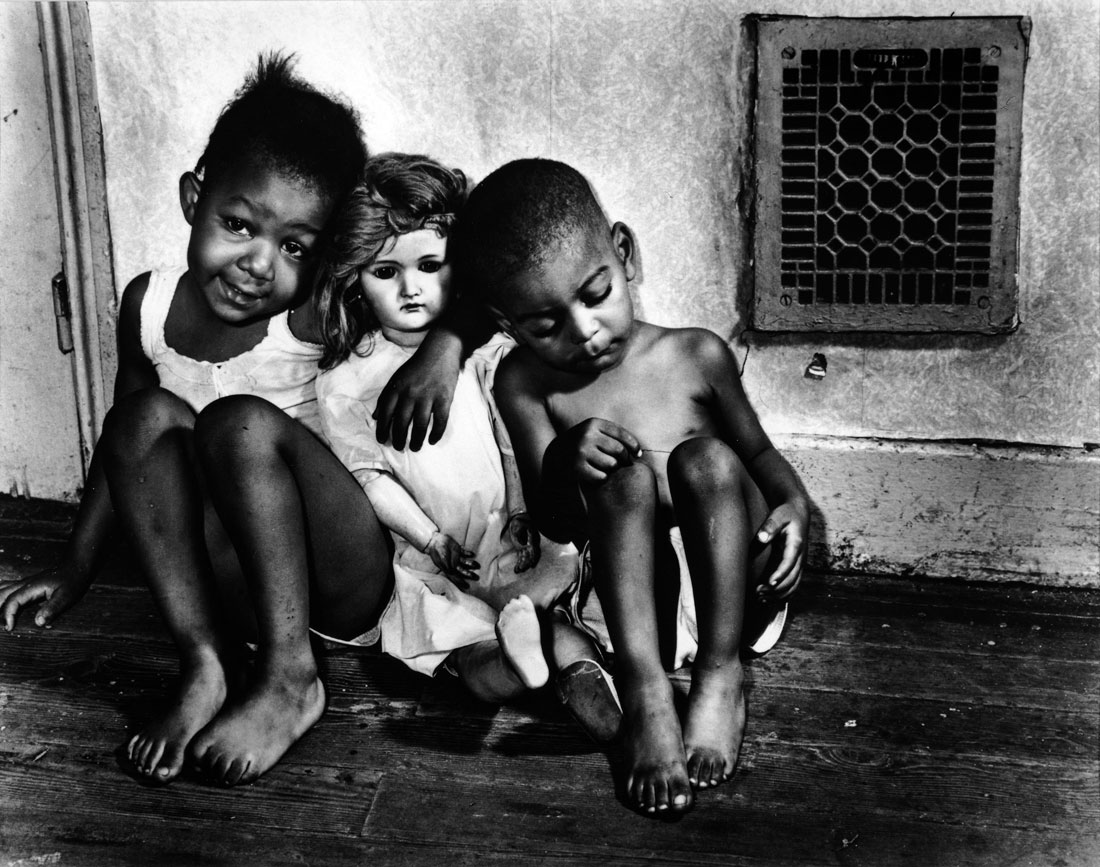
Gordon Parks (American, 1912-2006) 'Children with Doll (Ella Watson’s Grandchildren)' 1942


Gordon Parks (American, 1912-2006)
Children with Doll (Ella Watson’s Grandchildren)
1942
Gelatin silver print
11 x 14 inches
Lent by The Capitol Group Foundation
© 2006 The Gordon Parks Foundation


Gordon Parks (American, 1912-2006) 'Ingrid Bergman at Stromboli' 1949


Gordon Parks (American, 1912-2006)
Ingrid Bergman at Stromboli
1949
Gelatin silver print
16 x 20 inches
Lent by The Capitol Group Foundation
© 2006 The Gordon Parks Foundation


Gordon Parks (American, 1912-2006) 'Black Muslim Rally' New York, 1963


Gordon Parks (American, 1912-2006)
Black Muslim Rally
New York, 1963
Gelatin silver print
16 x 20 inches
Lent by The Capitol Group Foundation
© 2006 The Gordon Parks Foundation


Gordon Parks (American, 1912-2006) 'Alberto Giacometti, Paris' 1951


Gordon Parks (American, 1912-2006)
Alberto Giacometti, Paris
1951
Gelatin silver print
16 x 20 inches
Lent by The Capitol Group Foundation
© 2006 The Gordon Parks Foundation


Gordon Parks spent the majority of his professional career at the crossroads of the glamorous and the ghetto – two extremes the noted photographer knew well.  Perhaps best recognised for his works chronicling the African-American experience, Parks was also an accomplished fashion photographer. Bare Witness: Photographs by Gordon Parks provides a revealing look at the diversity and breadth of Parks’s most potent imagery. Featuring 73 works specifically selected by Parks for the photographic collection of the Los Angeles-based Capital Group, Bare Witness divulges heart wrenching images, iconic moments, celebrities and slices of everyday life.

Born in 1912 in Fort Scott, Kansas, Parks, who died in 2006 at age 93, was an African American photographer who began working professionally in the 1930’s. Parks tackled the harsh truth and dignity of the black urban and rural poor in the United States. He photographed aspects of the Civil Rights movements and individuals associated with the Black Panthers and Black Muslims. For nearly 25 years, from 1948 to 1972, he served as staff photographer for Life magazine. He also established himself as a foremost fashion photographer, providing spreads for respected magazines such as Vogue.

Bare Witness features many of Parks’s most memorable images such as “American Gothic.” Taken during Parks’s brief time with the Farm Security Agency, the photograph depicts a black cleaning woman named Ella Watson standing stiffly in front of an American flag, a mop in one hand and a broom in the other. Also included in the exhibition is a series of photos from Parks’s most famous Life magazine essay about Flavio da Silva, a malnourished and asthmatic boy living in a Rio de Janerio slum. Portraits of Muhammad Ali, Duke Ellington, Alexander Calder, Ingrid Bergman, Langston Hughes and Malcolm X among others will also be on view.

“Whether photographing celebrities or common folk, children or the elderly, Harlem gang leaders or fellow artists, Parks brought his straightforward, sympathetic ear and mind to bear witness to late 20th century civilisation,” commented Hilarie Faberman, the Robert M. and Ruth L. Halperin Curator of Modern and Contemporary Art at Cantor Arts Center and organiser of the exhibition. “His photographs balance the dichotomies of black and white, rich and poor, revealing his strengths and struggles as an artist and a man.”

In addition to his documentary and fashion photography, Parks was a filmmaker, author, musician and publisher. He was the first black artist to produce and direct a major Hollywood film, “The Learning Tree” in 1969, which was based on his early life experiences. He subsequently directed the popular action films “Shaft” and “Shaft’s Big Score.” He was a founder and editorial director of Essence magazine and wrote several autobiographies, novels and poems. In 1988, he received the National Medal of Arts award and throughout his lifetime was the recipient of 40 honorary doctorates from colleges and universities in the United States and England.

“Parks was a renaissance man whose career embodied the American ideal of equality and whose art was deeply personal. This exhibition is an exciting opportunity for Museum visitors to experience the poignant images he made over five decades,” commented Rebecca Senf, Norton Curator of Photography, Phoenix Art Museum.

The exhibition includes an illustrated catalogue with an essay by photography scholar Maren Stange who writes frequently on modern American culture. This exhibition has already enjoyed a five-venue tour, where the photographs were received with great excitement. The exhibition has been revived for a final showing at the Phoenix Art Museum. Bare Witness: Photographs by Gordon Parks was organised by the Iris & B. Gerald Cantor Center for Visual Arts at Stanford University. The exhibition and its accompanying catalogue are made possible by generous support from The Capital Group Foundation, the Cantor Arts Center’s Hohbach Family Fund, and Cantor Arts Center’s Members.

Press release from the Phoenix Museum of Art website


Gordon Parks (American, 1912-2006) 'American Gothic' 1942


Gordon Parks (American, 1912-2006)
American Gothic
1942
Gelatin silver print
24 x 20 inches
Lent by The Capitol Group Foundation
© 2006 The Gordon Parks Foundation


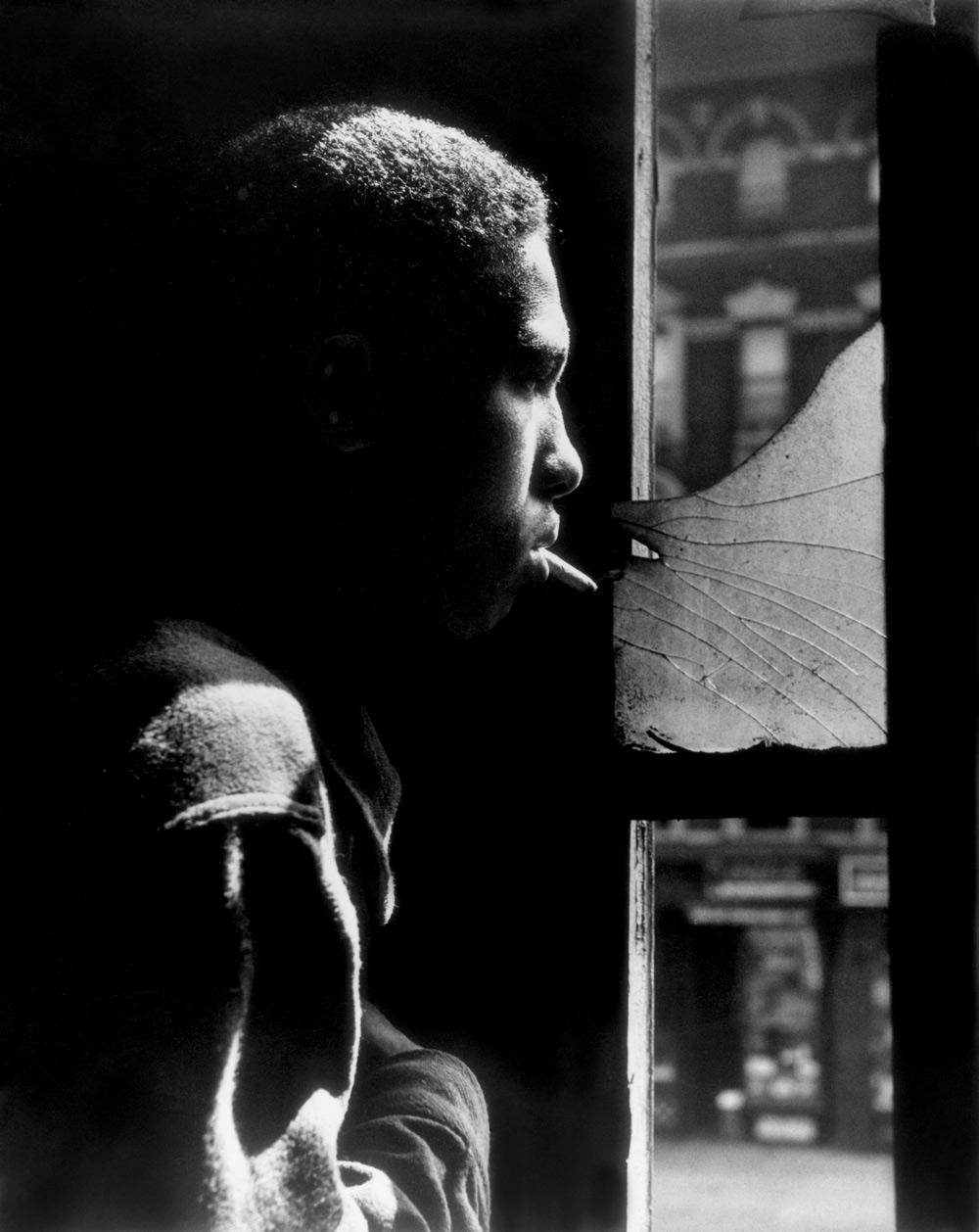
Gordon Parks (American, 1912-2006) 'Red Jackson, Harlem' 1948


Gordon Parks (American, 1912-2006)
Red Jackson, Harlem
1948
Gelatin silver print
Lent by The Capitol Group Foundation
© 2006 The Gordon Parks Foundation


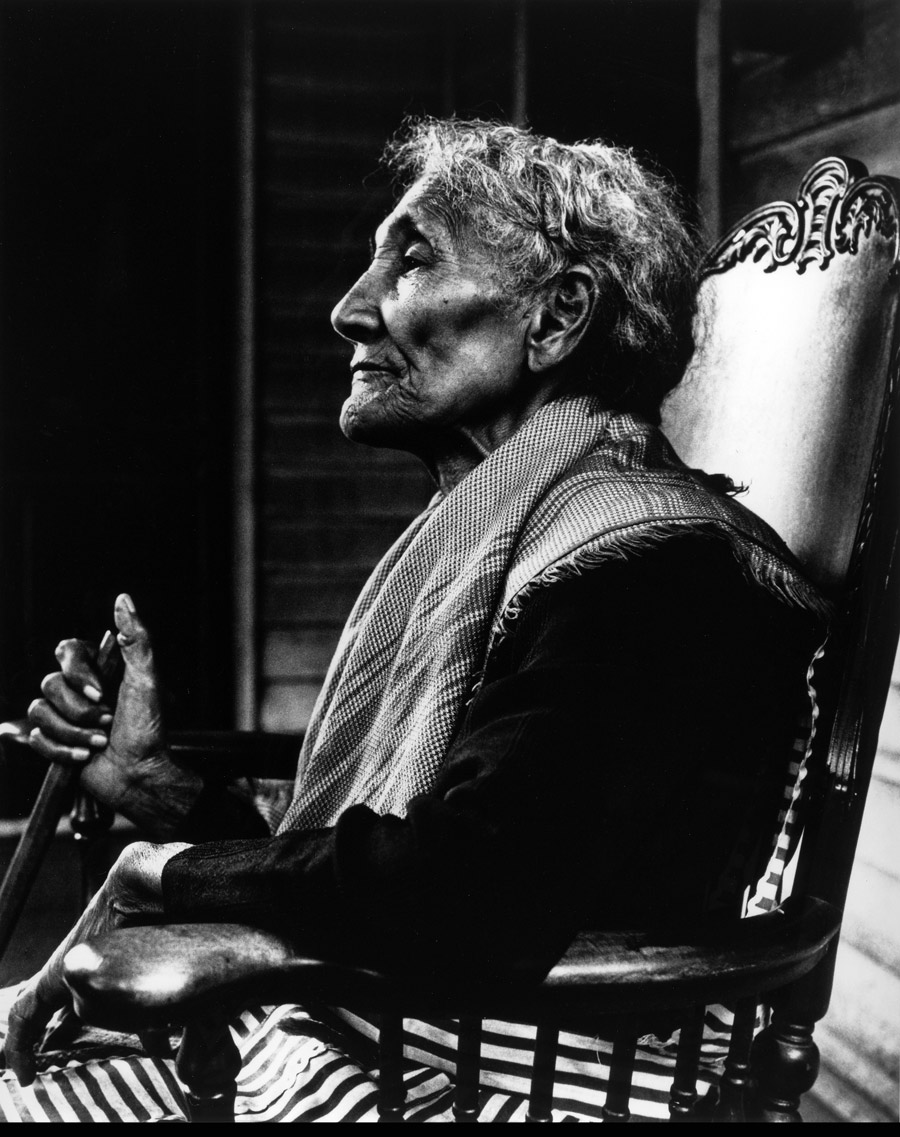
Gordon Parks (American, 1912-2006) 'Mrs. Jefferson, Fort Scott' 1949


Gordon Parks (American, 1912-2006)
Mrs. Jefferson, Fort Scott
1949
Gelatin silver print
20 x 16 inches
Lent by The Capitol Group Foundation
© 2006 The Gordon Parks Foundation


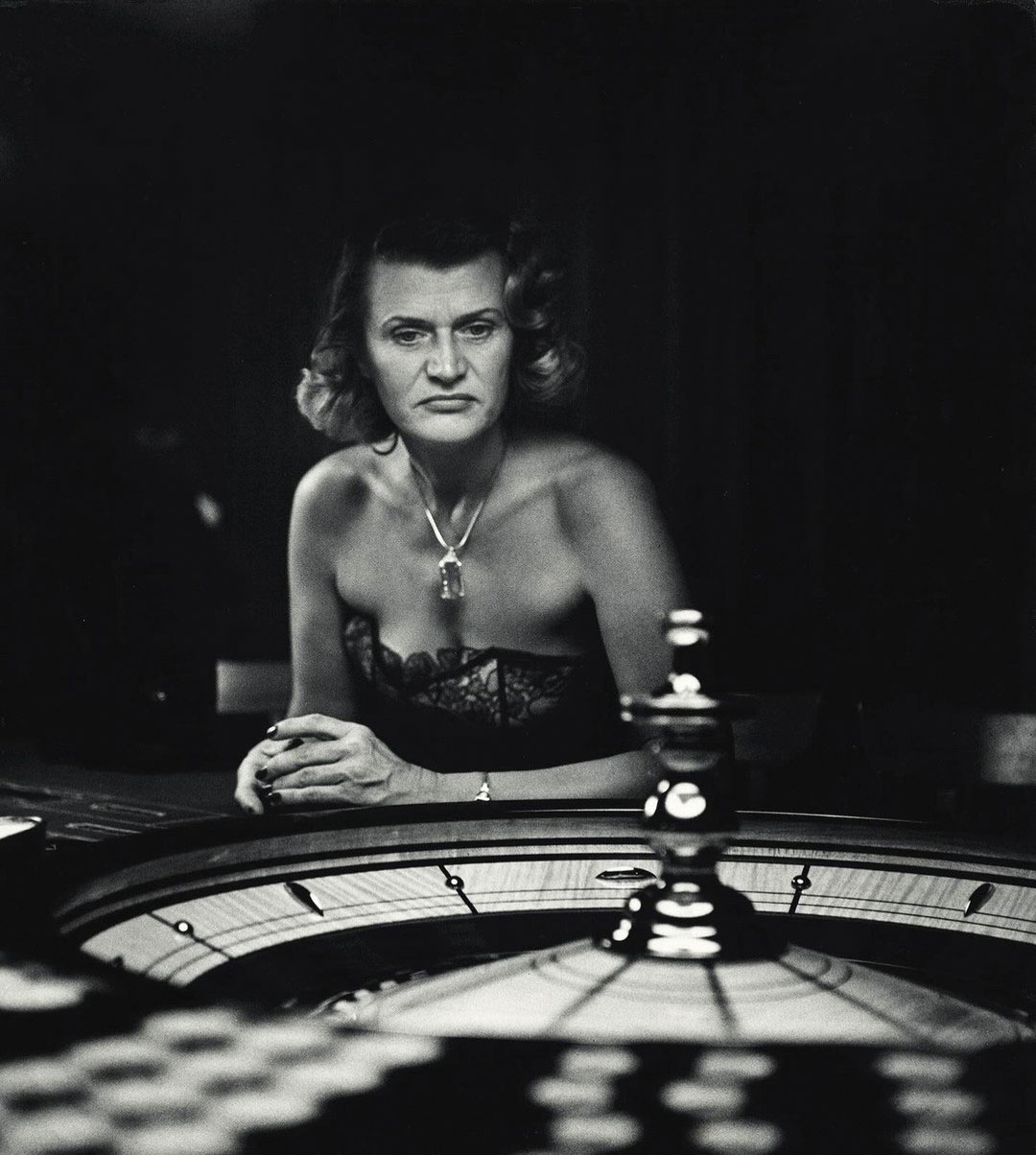
Gordon Parks (American, 1912-2006) 'A Gambling Woman, Caribe Hilton Hotel, San Juan, Puerto Rico' December 1949


Gordon Parks (American, 1912-2006)
A Gambling Woman, Caribe Hilton Hotel, San Juan, Puerto Rico
December 1949
Gelatin silver print
20 x 16 inches
Lent by The Capitol Group Foundation
© 2006 The Gordon Parks Foundation


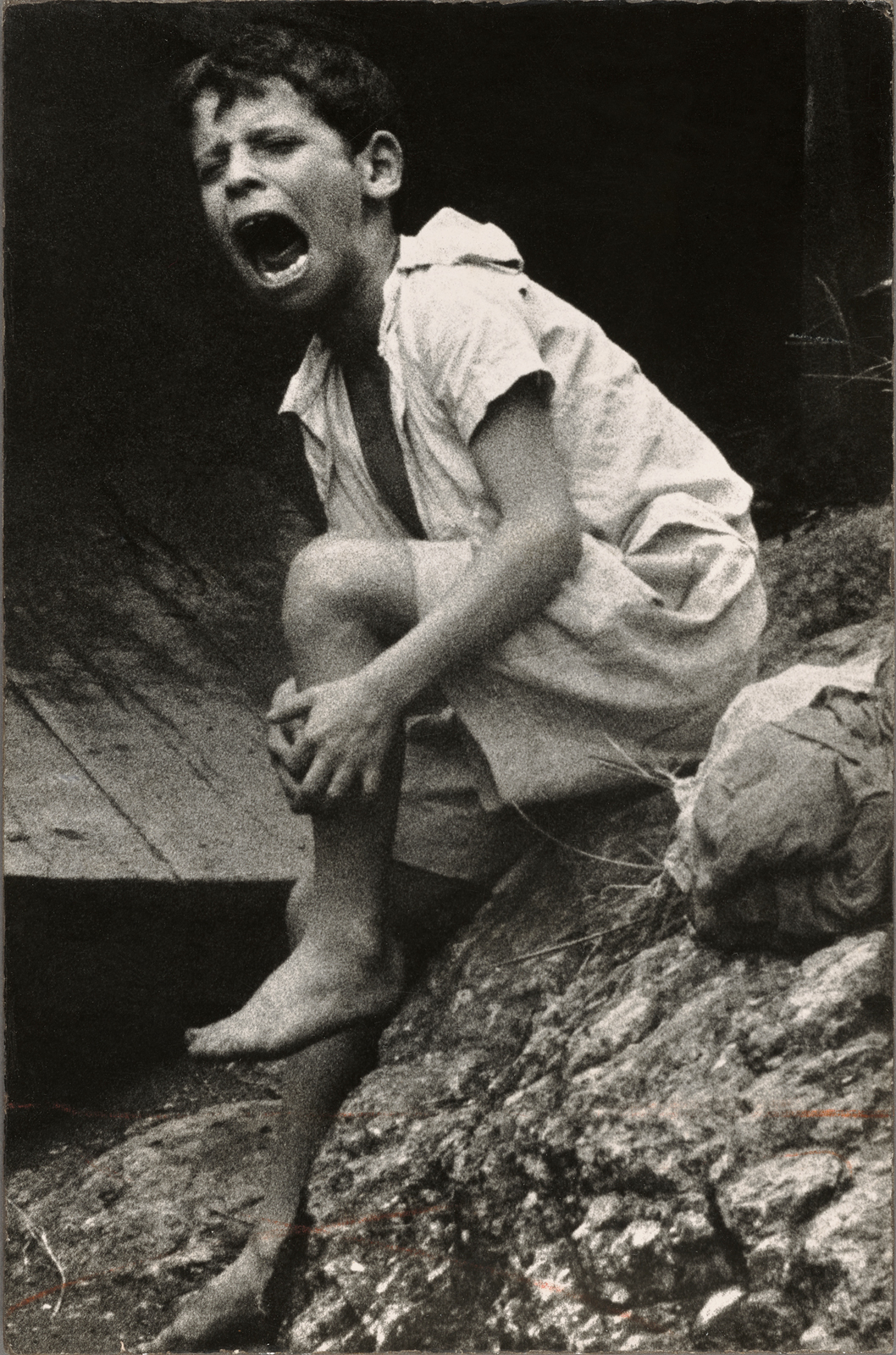
Gordon Parks (American, 1912-2006) 'Mário da Silva, Crying after Being Bitten by Dog, Rio de Janeiro, Brazil' 1961


Gordon Parks (American, 1912-2006)
Mário da Silva, Crying after Being Bitten by Dog, Rio de Janeiro, Brazil
1961
Gelatin silver print
14 x 11 inches
Lent by The Capitol Group Foundation
© 2006 The Gordon Parks Foundation


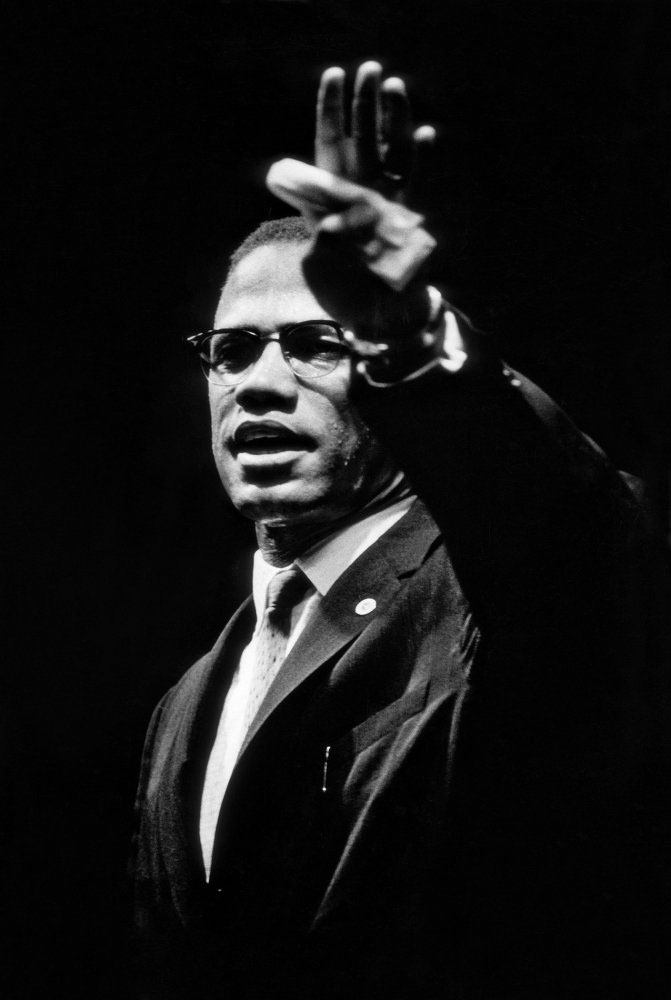
Gordon Parks (American, 1912-2006) 'Malcolm X at Rally, Chicago, Illinois' 1963


Gordon Parks (American, 1912-2006)
Malcolm X at Rally, Chicago, Illinois
1963
From the series Chicago Muslim Story (1963)
Gelatin silver print
Lent by The Capitol Group Foundation
© 2006 The Gordon Parks Foundation


Gordon Parks relocated from Minnesota to Chicago’s South Side in 1940, immersing himself in the local art community while operating a portrait studio out of the South Side Community Art Center. In 1941 he was awarded a Rosenwald Fellowship for a portfolio of photographs he created on the South Side; the award gave him the means to move east to Washington, DC. By 1948 Life magazine hired him as its first African American staff photographer.

In 1963 Parks returned to Chicago on assignment for Life to report on the Nation of Islam, newly headquartered in the city. Parks gained unprecedented access to this radical civil rights movement through his friendship with Malcolm X, who arranged a meeting with Elijah Muhammad, the group’s leader, so that Parks could obtain permission to proceed with the story. Parks spent weeks with the Black Muslim community, documenting a range of its activities – from self-defense training to religious services led by Malcolm X.

Parks’s photo-essay ran in the May 31, 1963, issue of Life, along with an essay by Parks that reflects on his dual status as insider and outsider. The text begins with his return to Chicago after nearly a decade and his memories of “the hopelessness that seeped into the black souls of that jungle.” Parks goes on to describe his current position: “I was a Black Man in White Man’s clothing, sent by the very ‘devils’ [Elijah Muhammad] criticized so much… . I wondered whether or not my achievements in the white world had cost me a certain objectivity.” He concludes, “I sympathize with much of what they say, but I also disagree with much of what they say… . Nevertheless, I acknowledge that the circumstance of common struggle has willed us brothers.”

Text from the Art Institute of Chicago website 


Gordon Parks (American, 1912-2006) 'Muhammad Ali' c. 1970


Gordon Parks (American, 1912-2006)
Muhammad Ali
c. 1970
Gelatin silver print
24 x 20 inches
Lent by The Capitol Group Foundation
© 2006 The Gordon Parks Foundation


Gordon Parks (American, 1912-2006) 'Muhammad Ali' 1970


Gordon Parks (American, 1912-2006)
Muhammad Ali
1970
Cibachrome
20 x 16 inches
Lent by The Capitol Group Foundation
© 2006 The Gordon Parks Foundation


Phoenix Art Museum
McDowell Road & Central Avenue
1625 N. Central Avenue
Phoenix, AZ 85004

Opening hours:
Monday Closed
Tuesday Closed
Wednesday 10am – 9pm
Thursday – Sunday 10am – 5pm

Phoenix Art Museum website

LIKE ART BLART ON FACEBOOK

Back to top

Exhibition: ‘Joel Meyerowitz – Aftermath’ at the Miami Art Museum

Exhibition dates: 19th August – 6th November 2011


Joel Meyerowitz (American, b. 1938) 'Searchers in Rubble' 2001


Joel Meyerowitz (American, b. 1938)
Searchers in Rubble
2001
Vintage contact print
Collection Miami Art Museum, gift of Steven E. and Phyllis Gross


And do you know what “the world” is to me? Shall I show it to you in my mirror? This world: a monster of energy, without beginning, without end; a firm, iron magnitude of force that does not grow bigger or smaller, that does not expend itself but only transforms itself; as a whole, of unalterable size, a household without expenses or losses, but likewise without increase or income; enclosed by “nothingness” as by a boundary; not something blurry or wasted, not something endlessly extended, but set in a definite space as a definite force, and not a space that might be “empty” here or there, but rather a force throughout, as a play of forces and waves of forces, at the same time one and many, increasing here and at the same time decreasing there …


Frederick Nietzsche, The Will to Power


Sadness. And light. Hope. Amidst the inferno. Study the masterpiece Finding More Fireman (below) in the enlarged version and you cannot fail to be moved. It is all there: monumental, intimate, hellish, redemptive – a modern, “disastrous” form of the Rembrandt’s The Night Watch.

Dr Marcus Bunyan


Many thanxk to the Miami Art Museum for allowing me to publish the photographs in the posting. Please click on the photographs for a larger version of the image.


Joel Meyerowitz (American, b. 1938) 'Flower Offering' 2001


Joel Meyerowitz (American, b. 1938)
Flower Offering
2001
Vintage contact print
Collection Miami Art Museum, gift of Steven E. and Phyllis Gross


Joel Meyerowitz (American, b. 1938) 'Pit Looking North' 2002


Joel Meyerowitz (American, b. 1938)
Pit Looking North
2002
Vintage contact print
Collection Miami Art Museum, gift of Steven E. and Phyllis Gross


Joel Meyerowitz (American, b. 1938) 'Smoke and Spray' 2001


Joel Meyerowitz (American, b. 1938)
Smoke and Spray
2001
Vintage contact print
Collection Miami Art Museum, gift of Jeffrey Hugh Newman


Joel Meyerowitz (American, b. 1938) 'Moving the Monument' 2001


Joel Meyerowitz (American, b. 1938)
Moving the Monument
2001
Vintage contact print
Collection Miami Art Museum, gift of Jeffrey Hugh Newman


Joel Meyerowitz (American, b. 1938) 'Finding More Fireman' 2001


Joel Meyerowitz (American, b. 1938)
Finding More Fireman
2001
Vintage contact print
Collection Miami Art Museum, gift of Charles S. and Elynne B. Zucker


Joel Meyerowitz (American, b. 1938) 'Searchers' 2002


Joel Meyerowitz (American, b. 1938)
Searchers
2002
Vintage contact print
Collection Miami Art Museum, gift of Charles S. and Elynne B. Zucker


Joel Meyerowitz (American, b. 1938) 'Welders in South Tower' 2001


Joel Meyerowitz (American, b. 1938)
Welders in South Tower
2001
Vintage contact print
Collection Miami Art Museum, gift of Charles S. and Elynne B. Zucker


In commemoration of the 10th anniversary of 9/11, Miami Art Museum presents Focus Gallery: Joel Meyerowitz – Aftermath, an exhibition of photographs taken by the only photographer granted right of entry into Ground Zero after the September 11, 2001 attacks on the World Trade Center in New York City. For nine months during the day and night, Meyerowitz photographed “the pile,” as the World Trade Center came to be known, and the over 800 people a day that were working in it. The exhibition consists of 24, recently-donated photographs, presented in the Focus Gallery section of the Museum’s Permanent Collection installation. Admission to Miami Art Museum will be free to all emergency personnel, including police and firefighters, and their guests throughout the exhibition’s run, August 19 – November 6, 2011. A special preview for emergency personnel will be held on Thursday, August 18, 2011, 4-7pm. Author and photography critic Vicki Goldberg will give a lecture entitled “What Remains” on Thursday, September 8, 2011, beginning at 6:30pm.

After September 11, 2001, the Ground Zero site in New York City was classified as a crime scene and only those directly involved in the recovery efforts were allowed inside. The press was prohibited from the site. Influenced by Walker Evans’s and Dorothea Lange’s work for the Farm Security Administration during the Great Depression, Meyerowitz, long recognised as one of the pioneers of colour photography, was convinced that if a photographic record of the unprecedented recovery efforts was not made, “there would be no history.” With the help of sympathetic officials, he managed to become the only photographer granted right of entry into Ground Zero.

“I was making photographs for everyone who didn’t have access to the site,” says Meyerowitz, “I wanted to communicate what it felt like to be in there as well as what it looked like: to show the pile’s incredible intricacy and visceral power. I could provide a window for everyone else who wanted to be there, too, to help, or to grieve, or simply to try to understand what had happened to our city.”

Armed with a large-format wooden camera, Meyerowitz spent nine months photographing the site. In the first few weeks, he was chased off the site repeatedly, but over time, with the help of officials on and off site, the use of forged workers’ passes, and by assuming the “uniform” of hard hat, goggles, respirator, gloves, boots and duct taped pants, Meyerowitz became “woven into the fabric of the site.”

About the experience, Meyerowitz has written, “The nine months I worked at Ground Zero were among the most rewarding of my life. I came in as an outsider, a witness bent on keeping the record, but over time I began to feel a part of the very project I’d been intent on recording… the intense camaraderie I experienced at Ground Zero inspired me, changing both my sense of myself and my sense of responsibility to the world around me. September 11th was a tragedy of almost unfathomable proportions. But living for nine months in the midst of those individuals who faced that tragedy head-on, day after day, and did what they could to set things right, was an immense privilege.”

The photographs in MAM’s collection are from a unique set of contact prints (photographs printed on a 1:1 scale from the negatives) issued by the artist in 2006. As a group, they span the entire nine month period that Meyerowitz was on site, presenting a poignant, condensed view of the clean up effort, including portraits of the workers involved. The set is introduced by a single image of the World Trade Center towers taken by the artist in the 1980s from his apartment window.

The entire set of more than 8,000 photographs taken by Meyerowitz form an archive at the Museum of the City of New York. The Aftermath series was the focus of a 2006 book, Aftermath: World Trade Center Archives published by Phaidon (reissued this year in a special 10th anniversary edition) and an exhibition organised by the US Department of State that traveled worldwide from 2002 to 2005.

Press release from the Miami Art Museum website


Joel Meyerowitz (American, b. 1938) 'Explosion Squad Detective' 2001


Joel Meyerowitz (American, b. 1938)
Explosion Squad Detective
2001
Vintage contact print
Collection Miami Art Museum, gift of Steven E. and Phyllis Gross


Joel Meyerowitz (American, b. 1938) 'Steps Down to Plaza' 2001


Joel Meyerowitz (American, b. 1938)
Steps Down to Plaza
2001
Vintage contact print
Collection Miami Art Museum, gift of Jeffrey Hugh Newman


Joel Meyerowitz (American, b. 1938) 'Fireman at Last Column' 2002


Joel Meyerowitz (American, b. 1938)
Fireman at Last Column
2002
Vintage contact print
Collection Miami Art Museum, gift of Charles S. and Elynne B. Zucker


Joel Meyerowitz (American, b. 1938) 'Building #5 and Woolworth' 2001


Joel Meyerowitz (American, b. 1938)
Building #5 and Woolworth
2001
Vintage contact print
Collection Miami Art Museum, gift of Simon and Bonnie Levin


Joel Meyerowitz (American, b. 1938) 'Welder and Rubble' 2001


Joel Meyerowitz (American, b. 1938)
Welder and Rubble
2001
Vintage contact print
Collection Miami Art Museum, gift of Steven E. and Phyllis Gross


Miami Art Museum
101 W Flagler St., Miami, FL 33130

Opening hours:
Monday 11am – 6pm
Tuesday – Wednesday Closed
Thursday 11am – 9pm
Friday – Sunday 11am – 6pm

Miami Art Museum website

LIKE ART BLART ON FACEBOOK

Back to top

opening: ‘movement and emotion’ and ‘jodie noble solo’ at arts project australia, melbourne

October 2011


I am opening the exhibitions Movement and Emotion and Jodie Noble Solo at Arts Project Australia, Northcote on Wednesday 19th October 2011 from 6 – 8pm. All welcome, would be great to see you there. Details on the flyer!

Dr Marcus Bunyan


Exhibitions: 'Movement and Emotion' and 'Jodie Noble Solo' at Arts Project Australia, Northcote


Arts Project Australia website

LIKE ART BLART ON FACEBOOK

Back to top
Exhibition: ‘Hans-Christian Schink: Photographs 1980 to 2010’ at MKM Küppersmühle Museum of Modern Art, Duisburg

Exhibition dates:  1st July – 3rd October 2011


Many thankx to MKM Küppersmühle Museum of Modern Art for allowing me to publish the photographs in the posting. Please click on the photographs for a larger version of the image.


Hans-Christian Schink (German, b. 1961) 'St Petersburg (3)' 1989


Hans-Christian Schink (German, b. 1961)
St Petersburg (3)
1989
Series St Petersburg
C-print
© Hans-Christian Schink


Hans-Christian Schink (German, b. 1961) 'Seehausen' 1996


Hans-Christian Schink (German, b. 1961)
Seehausen
1996
Series Walls
C-print
© Hans-Christian Schink


Hans-Christian Schink (German, b. 1961) 'Sanitz' 2003


Hans-Christian Schink (German, b. 1961)
Sanitz
2003
Series Walls
C-print
Hans-Christian Schink
MKM Museum Küppersmühle für Moderne Kunst, Sammlung Ströher
© Hans-Christian Schink


Hans-Christian Schink (German, b. 1961) 'Bärwalde' 1997


Hans-Christian Schink (German, b. 1961)
Bärwalde
1997
C-Print
59 x 68 cm
© Hans-Christian Schink


Hans-Christian Schink (German, b. 1961) 'Plötzetal rest area' 1995-2003


Hans-Christian Schink (German, b. 1961)
Plötzetal rest area
1995-2003
Series Traffic Projects for German Unity
C-Print
© Hans-Christian Schink


Hans-Christian Schink (German, b. 1961) 'A20 - Peenebrücke Jarmen' 2002


Hans-Christian Schink (German, b. 1961)
A20 – Peenebrücke Jarmen
2002
Series Traffic Projects for German Unity
C-Print
Privatsammlung Berlin
© Hans-Christian Schink


Hans-Christian Schink (German, b. 1961) 'A2 - Elbebrücke bei Magdeburg' 2003


Hans-Christian Schink (German, b. 1961)
A2 – Elbebrücke bei Magdeburg
2003
Serie Traffic Projects for German Unity
C-Print
Klassik Stiftung Weimar, Neues Museum
© Hans-Christian Schink


Hans-Christian Schink (German, b. 1961) 'LA Night #9' 2003


Hans-Christian Schink (German, b. 1961)
LA Night #9
2003
Series LA Night
C-print
Galerie Rothamel Erfurt/Frankfurt a.M.
© Hans-Christian Schink


Hans-Christian Schink (German, b. 1961) 'LA Night #10' 2003


Hans-Christian Schink (German, b. 1961)
LA Night #10
2003
Series LA Night
C-print
Galerie Rothamel Erfurt/Frankfurt a.M.
© Hans-Christian Schink


The best present of my life was most probably the simple role-film camera I received for my seventh birthday”, recalls Hans-Christian Schink, one of Germany’s leading contemporary photographers. The works by the Erfurt-born photographer, who today lives in Leipzig and who regularly travels the globe to create his photo-series, are represented in public and private collections worldwide. His photographs are also on view in the MKM’s presentation of the Ströher Collection since many years.

The MKM is now showing the most comprehensive exhibition to date of works by Hans-Christian Schink whose oeuvre has wielded a crucial impact on German photography. Approximately 100 large-format works afford an illuminating insight into his output until the present day, and impressively chart the development of his own distinct artistic signature.

Schink began his study of photography at the renowned Academy of Visual Arts in Leipzig where he was a master-class student from 1991 to 1993. From the very outset Schink worked with series. A key thrust of his oeuvre is his exploration of the transition between the urban and the rural, nature and culture and architectural intervention in the landscape. He finds his motifs both in his immediate environs, initially in eastern Germany, and also on his carefully planned journeys across the world, from North Korea, via the USA to the Antarctic. A further pre-occupation is the photographic rendering of light phenomena and moods.

For the first time, the MKM is exhibiting a selection of small-format black-white photos from the early1980s, together with the first colour photographs from the artist’s student days. Schink initially focused both on daily scenes in the cities of Leipzig, Erfurt and Halle, and on the abstract visual quality of architectural detail. During his studies he discovered colour photography and began working with a large-format camera, initially in the series Leipziger Bäder (Leipzig Baths, 1988), whose empty, dilapidated interiors bear poignant witness to a by-gone age. Since this time, people in his pictures exist merely as traces of their intervention in the environment.

The artist first commanded worldwide attention with the series Verkehrsprojekte Deutsche Einheit (Traffic Projects German Unity, 1995-2003). Here he addressed the radical transformation of the landscape through the expansion of the motorway and rail network in eastern Germany.

The series Wände (Walls, 1995-2003) explored the question of how authentic the representation of reality is. Schink took frontal shots of the prefabricated architecture of unpretentious commercial buildings and melded them into almost abstract colour-fields. Merely the narrow borders adumbrate what we are seeing. To find his motifs, the artist embarks on journeys beyond the confines of Europe, taking him to countries such as Brazil, Japan, Cambodia, North Korea, Peru, the USA or Vietnam. His main objective is not the representation of exotic motifs, but the portrayal of the interface and the dialogue between anthropogenic structures and the natural landscape.

The award-winning series 1h (2002-2010) unites diverse aspects of his oeuvre: the interest in natural phenomena and light situations and his reflection on the possibilities of depicting reality through the medium of photography. Schink photographs the sun at various locations throughout the world, using exposure times of one hour. Together, the over-exposure and light intensity conjure a spectre which cannot be perceived by the human eye and which only becomes visible as a solarisation when captured by analogue photography: a black sunbeam, surrounded by a glowing corona. The resulting images render visible an unreal depiction of reality and confront the viewer with a Nature suspended between imagination and representation.

Press release from the MKM Küppersmühle Museum of Modern Art website


Hans-Christian Schink (German, b. 1961) 'Ba Be (1)' 2005


Hans-Christian Schink (German, b. 1961)
Ba Be (1)
2005
Series Vietnam
C-print
© Hans-Christian Schink


Hans-Christian Schink (German, b. 1961) 'Bach Ma (2A)' 2005


Hans-Christian Schink (German, b. 1961)
Bach Ma (2A)
2005
Series Vietnam
C-print
© Hans-Christian Schink


Hans-Christian Schink (German, b. 1961) 'Ba Be' 2005


Hans-Christian Schink (German, b. 1961)
Ba Be
2005
Series Vietnam
C-print
© Hans-Christian Schink


Hans-Christian Schink (German, b. 1961) '9/17/2006, 8:45 am-9:45 am, N 78°13.370' E 015°40.024' 2006


Hans-Christian Schink (German, b. 1961)
9/17/2006, 8:45 am – 9:45 am, N 78°13.370′ E 015°40.024′
2006
Serie 1h
Gelatin silver print on barite paper
© Hans-Christian Schink
MKM Museum Küppersmühle für Moderne Kunst, Sammlung Ströher


Hans-Christian Schink (German, b. 1961) '4/05/2009, 6:48 am - 7:48 am, S 24°43.399' E 015°28.310'' 2009


Hans-Christian Schink (German, b. 1961)
4/05/2009, 6:48 am – 7:48 am, S 24°43.399′ E 015°28.310′
2009
Serie 1h
Gelatin silver print on barite paper
© Hans-Christian Schink
MKM Museum Küppersmühle für Moderne Kunst, Sammlung Ströher


Hans-Christian Schink (German, b. 1961) '4/10/2009, 4:11 pm - 5:11 pm, S 26°28.034' E 018°16.142'' 2009


Hans-Christian Schink (German, b. 1961)
4/10/2009, 4:11 pm – 5:11 pm, S 26°28.034′ E 018°16.142′
2009
Serie 1h
Gelatin silver print on barite paper
© Hans-Christian Schink
MKM Museum Küppersmühle für Moderne Kunst, Sammlung Ströher


Hans-Christian Schink (German, b. 1961) '2/26/2010, 7:54 am – 8:54 am, S36° 49.622' E 175° 47.340'' 2010


Hans-Christian Schink (German, b. 1961)
2/26/2010, 7:54 am – 8:54 am, S36° 49.622′ E 175° 47.340′
2010
Serie 1h
© Hans-Christian Schink, courtesy Galerie Rothamel Erfurt/Frankfurt a.M. and Kicken Berlin


Hans-Christian Schink (German, b. 1961) 'Antartica 2' 2010


Hans-Christian Schink (German, b. 1961)
Antartica 2
2010
C-print
121 x 145cm


MKM Küppersmühle Museum of Modern Art
Inner Harbour, Duisburg
Philosophenweg 55
D – 47051 Duisburg, Germany

Opening hours:
Wed: 2 – 6pm
Thu – Sun: 11am – 6pm
Public holidays: 11am – 6pm
Mondays and Tuesdays closed

MKM Küppersmühle Museum of Modern Art website

LIKE ART BLART ON FACEBOOK

Back to top

Exhibition: ‘Juan Davila: The Moral Meaning of Wilderness’ at the Monash University Museum of Art (MUMA), Caulfield

Exhibition dates: 4th August – 1st October 2011


Juan Davila (Chilean b. 1946, emigrated Australia 1974) 'Wilderness' 2010


Juan Davila (Chilean b. 1946, emigrated Australia 1974)
Wilderness
2010
© Juan Davila, Courtesy Kalli Rolfe Contemporary Art


“The ‘Moral Meaning of Wilderness’ exhibition is a tour of the various approaches to the landscape: ‘plein air’ painting, studio landscape work, sublime landscape, historical evocation of landscape, modernity and the landscape, natural disaster, childhood memory of a landscape, woman in the wilderness. The ‘After Image’ works seem to refer to fantasies, inner space, unnameable objects, microcosm and immense space. Within the representation of “the land” one easily forgets that we are dealing with complexity and a field of projections. The political, the sublime, the moral stance, corporate destruction and the future of our environment come to mind.”


Juan Davila 1


“In a state of grace, one sometimes perceives the deep beauty, hitherto unattainable, of another person. And everything acquires a kind of halo which is not imaginary: it comes from the splendour of the almost mathematical light emanating from people and things. One starts to feel that everything in existence – whether people or things – breathes and exhales the subtle light of energy. The world’s truth is impalpable.”


Clarice Lispector 2


Simply put, this is the best exhibition I have seen in Melbourne this year.

Feminine jouissance is critical to an understanding of the work of Juan Davila (see quotation below). It is the jouissance of the Other: ineffable, incapable of being expressed, indescribable, unutterable. Also critical is an understanding of the meaning of ‘wilderness’ and ‘after image’:

Wilderness “is a relative term suggesting the perspective of a visitor or interloper for whom the landscape is wild and Other – for the landscape was neither wild nor foreign to its original inhabitants, at least not until its transformation through colonising, farming and displacement.”3

“An after image … is an optical illusion that refers to an image continuing to appear in one’s vision after the exposure to the original image has ceased.”4


The most powerful works are the Wilderness and After Image paintings. Grouped together in a room at the far end of the gallery, the effect of these paintings is to be physically surrounded by the nebula of the unconscious mind. The feeling is not dissimilar to being consumed by the abstract, elemental quality of Monet’s Nymphéas (Water Lilies) at the Orangerie in Paris. Pair to more earthly landscapes (see images 2 and 3 below) the paintings are the closest experience in approaching the divine that I have felt in a long time. Their visual and noumenal ‘energy’ is superlative.

Robert Nelson observes that, “The after-image is a momentary body-memory – not intellectual but bizarrely willed – perhaps a bit like the recollection of a dream or the instant slip that uncannily reveals the unconscious. In monumentalising this trace, Davila delivers us to another ethereal zone: the breath of libido, buffeted by clouds of repression and misty internalised myths. As portraits of evanescent memory, they are wantonly memorable.”5

Indeed, they are memorable. I had a spiritual experience with this work for the paintings promote in the human a state of grace. The non-material, the unconceptualisable, things which are outside all possibility of time and space are made visible. This happens very rarely but when it does you remember, eternally, the time and space of occurrence. I hope you have the same experience.

Dr Marcus Bunyan


Many thankx to MUMA for allowing me to publish the images in the posting. Please click on the images for a larger version.


“The term jouissance, in French, denotes “pleasure” or “enjoyment.” The term has a sexual connotation (i.e., orgasm) lacking in the English word “enjoyment”, and is therefore left untranslated in English editions of the works of Jacques Lacan. In his Seminar “The Ethics of Psychoanalysis” (1959-1960) Lacan develops his concept of the opposition of jouissance and pleasure. The pleasure principle, according to Lacan, functions as a limit to enjoyment: it is the law that commands the subject to ‘enjoy as little as possible’. At the same time the subject constantly attempts to transgress the prohibitions imposed on his enjoyment, to go beyond the pleasure principle. Yet the result of transgressing the pleasure principle, according to Lacan, is not more pleasure but pain, since there is only a certain amount of pleasure that the subject can bear. Beyond this limit, pleasure becomes pain, and this ‘painful principle’ is what Lacan calls jouissance.

In his Seminar “Encore” (1972-1973) Lacan states that jouissance is essentially phallic. That is, insofar as jouissance is sexual it is phallic, meaning that it does not relate to the Other as such. Lacan admits, however, that there is a specifically feminine jouissance, a supplementary jouissance, which is beyond the phallus, a jouissance of the Other. This feminine jouissance is ineffable, for both women and men may experience it but know nothing about it.”6


Footnotes

1/ Davila, Juan quoted in “After Image: A conversation between Juan Davila and Kate Briggs,” in Juan Davila: The Moral Meaning of Wilderness catalogue. Canberra: ANU Drill Hall Gallery, 2011, p. 53.

2/ Lispector, Clarice. Discovering the World. Manchester: Carcanet Press, 1992, p. 122 quoted in Briggs, Kate. “Painting, an act of faith: Moments in the work of Juan Davila,” in Juan Davila: The Moral Meaning of Wilderness catalogue. Canberra: ANU Drill Hall Gallery, 2011, p. 8.

3/ Delany, Max. Introductory speech for “Contemporary Visions & Critiques of the Landscape.” Video of session. The Festival of Ideas, The Pursuit of Identity: Landscape, History and Genetics. The University of Melbourne [Online] Cited 21/09/2011. No longer available online

4/ Anon. “Afterimage,” on the Wikipedia website [Online] Cited 21/09/2011.

5/ Nelson, Robert. “Exhibition does not take air lightly,” in The Age newspaper. Wednesday, September 21st, 2011, p. 17.

6/ Anon. “Jouissance,” on the Wikipedia website [Online] Cited 21/09/2011.


Juan Davila (Chilean b. 1946, emigrated Australia 1974) 'A Man is Born Without Fear' 2010


Juan Davila (Chilean b. 1946, emigrated Australia 1974)
A Man is Born Without Fear
2010
© Juan Davila, Courtesy Kalli Rolfe Contemporary Art


Juan Davila (Chilean b. 1946, emigrated Australia 1974) 'After Image. A Man is Born Without Fear' 2010


Juan Davila (Chilean b. 1946, emigrated Australia 1974)
After Image. A Man is Born Without Fear
2010
© Juan Davila, Courtesy Kalli Rolfe Contemporary Art


Juan Davila (Chilean b. 1946, emigrated Australia 1974) 'Churchill National Park' 2009


Juan Davila (Chilean b. 1946, emigrated Australia 1974)
Churchill National Park
2009
© Juan Davila, Courtesy Kalli Rolfe Contemporary Art


The Moral Meaning of Wilderness features recent work by Juan Davila, one of Australia’s most distinguished artists. The exhibition sees Davila turn to the genres of landscape and history painting, at a time when the environment is as much a political as a cultural consideration. With technical virtuosity, Davila’s striking representations of nature achieve monumental significance, depicting beauty and emotion while addressing modern society’s ambivalence to nature and increasing consumerism.

The Moral Meaning of Wilderness represents a radical shift in Davila’s practice, whilst continuing to explore art’s relationship to nature, politics, identity and subjectivity in our post-industrial age. Davila pursues his exploration of the role of art as a means of social, cultural and political analysis.

While many contemporary artists turned away from representation of the landscape, due to its perceived allegiance to outmoded forms of national identity and representation, Davila has recently sought to revisit and reconsider our surroundings au natural.

His paintings are, at first view, striking representations of nature. The paintings, created since 2003, are undertaken en plain air, a pre-modern technique based on speed of execution in situ, and the use of large scale canvases characteristic of history painting. He has also employed other techniques such as studio painting and representations of the landscape with reference to the sublime, the historical, memory and modernity.

Text from the MUMA website


Juan Davila (Chilean b. 1946, emigrated Australia 1974) 'The Painter's Studio' 2006


Juan Davila (Chilean b. 1946, emigrated Australia 1974)
The Painter’s Studio
2006
© Juan Davila, Courtesy Kalli Rolfe Contemporary Art


Juan Davila (Chilean b. 1946, emigrated Australia 1974) '761 Wattletree Road' 2008


Juan Davila (Chilean b. 1946, emigrated Australia 1974)
761 Wattletree Road
2008
© Juan Davila, Courtesy Kalli Rolfe Contemporary Art


Juan Davila (Chilean b. 1946, emigrated Australia 1974) 'What About my Desire?' 2009


Juan Davila (Chilean b. 1946, emigrated Australia 1974)
What About my Desire?
2009
© Juan Davila, Courtesy Kalli Rolfe Contemporary Art


Juan Davila (Chilean b. 1946, emigrated Australia 1974) 'Australia: Nuclear Waste Dumping Ground' 2007


Juan Davila (Chilean b. 1946, emigrated Australia 1974)
Australia: Nuclear Waste Dumping Ground
2007
© Juan Davila, Courtesy Kalli Rolfe Contemporary Art


Monash University Museum of Art (MUMA)
Ground Floor, Building F.
Monash University Caulfield campus
900 Dandenong Road
Caulfield East, VIC 3145
Phone: 61 3 9905 4217

Opening hours:
Tuesday – Friday 10am – 5pm
Saturday 12 – 5pm

Monash University Museum of Art (MUMA) website

LIKE ART BLART ON FACEBOOK

Back to top
Exhibition: ‘Patricia Piccinini: The Fitzroy Series’ at the Centre for Contemporary Photography (CCP), Fitzroy, Melbourne

Exhibition dates: 12th August – 4th September 2011


Patricia Piccinini (Australian, b. 1965) 'Library, 8.45pm' 2011


Patricia Piccinini (Australian, b. 1965)
Library, 8.45pm
2011
Type C photograph
100 x 160cm
Courtesy the artist; Tolarno Galleries, Melbourne; Roslyn Oxley9 Gallery, Sydney; and Haunch of Venison, New York


A wonderful suite of photographs by Patricia Piccinini. When you see them “in the flesh” so to speak, five out of the six works (except for the last image below, Sitting Room, 2.30pm) are suffused with a beautiful, rich, dark honey-coloured light, even more so than the reproductions. This tonality adds to the romantic notion of the imaginary animals Piccinini creates – genetically modified, mutant child creatures and “Bottom Feeder” (for that is their name) rubbish scouring pets. The ordinariness of the environs that surround the mise-en-scènes supplements this feeling: books and bedrooms, workshops and sitting rooms allaying our fears, increasing our empathy. The humour is also delicious. Note the squirrel light in Bedroom, 10.30pm : inspired!

Of as much interest was Piccinini’s source material shown in the front gallery. I wrote most of the books, magazines and subjects of the photographs down because I was fascinated to see the inspiration for this artist:

~ Motorised chairs
~ Knots
~ Nests
~ American Native Indian hair (Edward S. Curtis)
~ Claws
~ Walruses
~ Skulls
~ Skeletons
~ Pupae
~ Scientific specimens
~ Birds covered in oil
~ Mammals of Australia
~ Darwin
~ Voyages of Discovery by Dr Tony Rice
~ Hiroshima Mon Amour by Marguerite Duras
~ Mag wheels
~ Big rigs (trucks)
~ Vespas
~ Custom cars and trucks
~ Morphed racing helmets
~ Photograph from Hitchcock’s The Birds
~ Braindead movie
~ Frankenstein by Mary Shelley
~ Newsweek: The Meaning of Michael (Jackson) July 13th, 2009
~ Rare breeds (sheep)
~ Simians, Cyborgs, and Women: The Reinvention of Nature by Donna ~ Haraway
~ Louise Bourgeois
~ Macro/Hall by Erwin Wurm
~ Le Cere del Museo dell Instituto Fiorentino di Anatonia Patalogia deformatives


Great work and a wonderful gesture by artist and galleries to support the Centre for Contemporary Photography.

Dr Marcus Bunyan


Many thankx to Karra Rees for her help and to the CCP for allowing me to publish the photographs in the posting. Please click on the photographs for a larger version of the image.


Patricia Piccinini (Australian, b. 1965) 'Alley, 11.15am' 2011


Patricia Piccinini (Australian, b. 1965)
Alley, 11.15am
2011
Type C photograph
100 x 160cm
Courtesy the artist; Tolarno Galleries, Melbourne; Roslyn Oxley9 Gallery, Sydney; and Haunch of Venison, New York.


Patricia Piccinini (Australian, b. 1965) 'Bedroom, 10.30pm' 2011


Patricia Piccinini (Australian, b. 1965)
Bedroom, 10.30pm
2011
Type C photograph
100 x 160cm
Courtesy the artist; Tolarno Galleries, Melbourne; Roslyn Oxley9 Gallery, Sydney; and Haunch of Venison, New York.


Patricia Piccinini (Australian, b. 1965) 'Street, 3.10am' 2011


Patricia Piccinini (Australian, b. 1965)
Street, 3.10am
2011
Type C photograph
100 x 160cm
Courtesy the artist; Tolarno Galleries, Melbourne; Roslyn Oxley9 Gallery, Sydney; and Haunch of Venison, New York.


Patricia Piccinini (Australian, b. 1965) 'Workshop, 7.00pm' 2011


Patricia Piccinini (Australian, b. 1965)
Workshop, 7.00pm
2011
Type C photograph
100 x 160cm
Courtesy the artist; Tolarno Galleries, Melbourne; Roslyn Oxley9 Gallery, Sydney; and Haunch of Venison, New York


To mark Centre for Contemporary Photography’s 25th Anniversary Patricia Piccinini has made a new series of work, never seen before. Entitled The Fitzroy Series, the exhibition of Piccinini’s new body of work, accompanied by video work and a display of her source material, is the major event in the celebrations of CCP’s 25th Anniversary in 2011.

CCP is delighted to be offering this exciting new series for the CCP 25th Anniversary Limited Edition Print fundraiser, each image in the series is generously provided in a limited edition of 4 + 1AP.

Eighty percent of funds raised through Limited Edition Prints enable CCP to support the practice and presentation of contemporary photography through provision of exhibitions, publications, education and public programs, with the artist retaining twenty percent.

What: CCP 25th Anniversary Limited Edition Print
Price: $9,320 each framed by Neo Frames (inc. gst on frame)
The first 12 prints are available at the CCP fundraiser price of $9,320 each framed by Neo Frames (inc. GST on frame)
NB. Credit card purchases attract a 1.5% merchant fee.
Prints are accompanied by a signed, numbered certificate and are provided courtesy of the artist; Tolarno Galleries, Melbourne; Roslyn Oxley9 Gallery, Sydney; and Haunch of Venison, New York.
Free Artist Floortalk: midday 27 August 2011


Patricia Piccinini (Australian, b. 1965) 'Sitting Room, 2.30pm' 2011


Patricia Piccinini (Australian, b. 1965)
Sitting Room, 2.30pm
2011
Type C photograph
100 x 160cm
Courtesy the artist; Tolarno Galleries, Melbourne; Roslyn Oxley9 Gallery, Sydney; and Haunch of Venison, New York.


Centre for Contemporary Photography

No permanent exhibition space at the moment

Centre for Contemporary Photography website

LIKE ART BLACK ON FACEBOOK

Back to top