“The lens of the camera becomes an extension of Self, the shutter his very existence and the digital screen on the back of the camera his tabula rasa, a “blank slate” upon which he writes his experience and perception, his knowledge of the world.” Dr Marcus Bunyan
Exhibition dates: 4th August – 18th August, 2012
Curator: Kate Martin
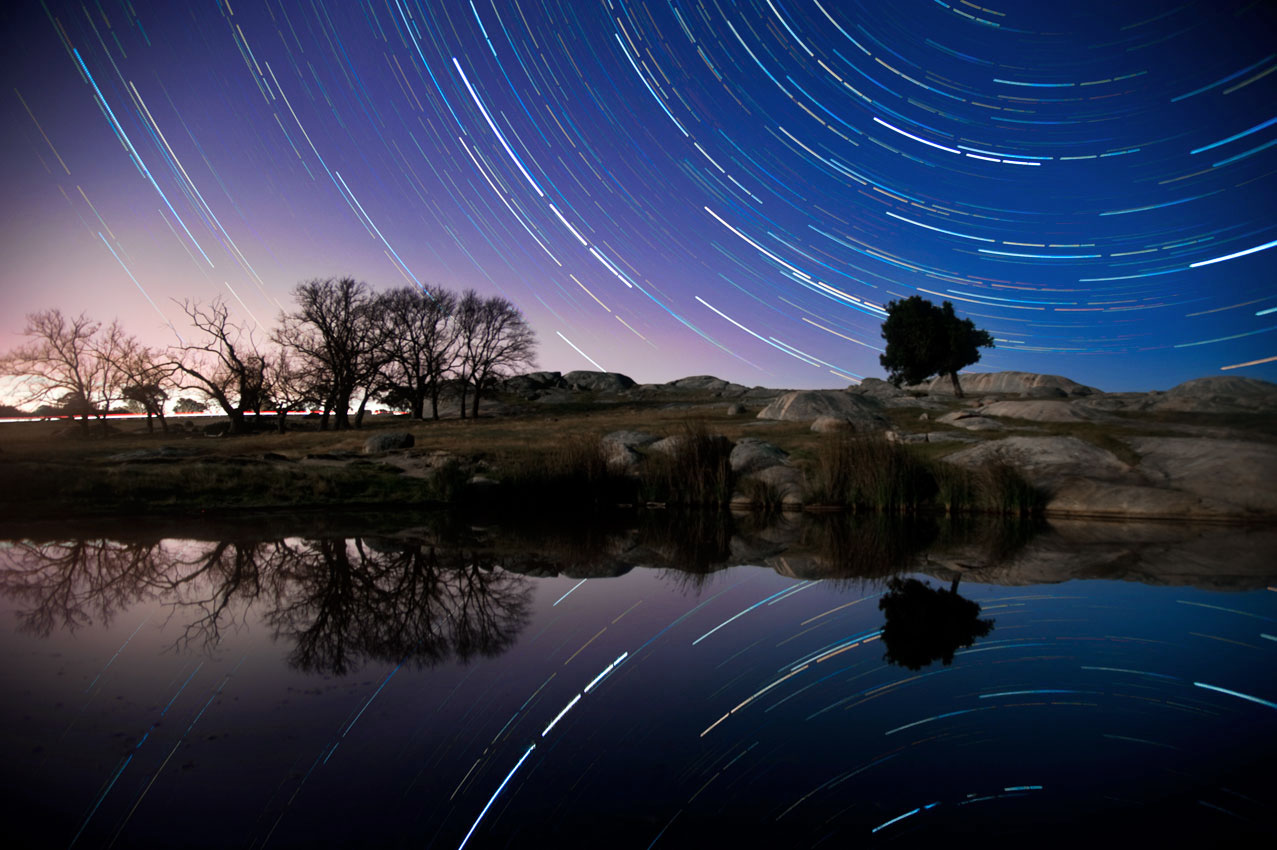
Andrew Follows (Australian, d. 2019) Untitled 2012 From the sequence Night’s Ocean Shore Digital inkjet print
This sequence is part of a joint exhibition by blind photographers Andrew Follows and Rosita McKenzie titled Through the Looking Glass Dimly to be held at The Old Ambulance Depot, Edinburgh in August 2012. The exhibition is part of the Edinburgh Art Festival.
On his first trip overseas Follows is travelling to Scotland with his trusty companion Eamon, his guide dog. The words below are an analysis of Andrew’s work, a photographer who only has 15% vision in one eye and is legally blind. This is the first time anyone has written about Andrew’s work in any depth. It has been great fun to work with Andrew on this project and it is a privilege to write some hopefully insightful words about his art practice.
The exhibition by Follows and McKenzie takes a twofold path. Firstly, work from both photographers will investigate the resilience of bush-fire prone landscapes in both Scotland and Australia. Secondly, work will portray the fluid spaces of the urban and natural landscape at night in both the Southern and Northern hemispheres. The exhibition is curated by Kate Martin from the Contemporary Art Exchange.
This is a beautiful, well resolved sequence that has a very intimate narrative, a journey of discovery from the stars in the night sky to our own star, the sun and on to the illumination of the earth at night. Under any circumstances, Follows’ vision is outstanding.
Dr Marcus Bunyan
Please click on the photographs for a larger version of the image. Many thankx to Andrew Follows for allowing me to publish the photographs in the posting.
Andrew Follows Night’s Ocean Shore sequence 2012
The Eye that sees the Sun: Andrew Follows and his Tabula rasa
“‘The world is my representation’: this is a truth valid with reference to every living and knowing being, although man alone can bring it into reflective, abstract consciousness. If he really does so, philosophical discernment has dawned on him. It then becomes clear and certain to him that he does not know a sun and an earth, but only an eye that sees a sun, a hand that feels the earth; that the world around him is there only as representation, i.e. only in reference to another, the representer, which is he himself.”
Arthur Schopenhauer. The World as Will and Representation 1818
Please close your left eye and place your left hand over it; now make a circle with the thumb and forefinger of your right hand and curl the rest of your fingers to make a tunnel; now place this hand to your right eye and close the aperture until you can only see a small amount of the world. Imagine, seeing the world through this one eye with only fifteen percent vision. This is the field of vision, the line of sight of artist Andrew Follows.
The artist’s visual acuity (the capacity of the eye to see fine detail, measured by determining the finest detail that can just be detected) has been with him since birth. He has always seen the world this way and does not regard it as a disability. In fact, his highly refined sense of “sight” enables spaces of poss/ability (not dis/ability) within his artistic practice. The development of an abnormal keen-sightedness helps him record his impression of the world via the medium of photography.
His is not the vision of im(pair)ment as the rest of us see the world, through two eyes, but the holistic vision of a monocular eye that becomes the root of his photography. The lens of the camera becomes an extension of Self, the shutter his very existence and the digital screen on the back of the camera his tabula rasa, a “blank slate” upon which he writes his experience and perception, his knowledge of the world. His experience of vision and the evidence of his photographs become both the beginning and the end of the work, a place in which his fundamental nature resides.
In today’s polyvocal world, with the proliferation of visual protheses (such as smart phones and digital cameras) we are now seeing the encoding of increasingly mental images of the material world. Follows’ photographs are an amalgamation of these mental images and what he can physically see on the screen, for when taking a photograph he cannot see details in the image he is taking. Follows takes the ‘I can see’ of sight, located within his field of vision, and through his organisation of the spatio-temporal field of vision and perception, he offers the viewer a unique ‘take’ on the world. His point of view is a collection of objects to which the eye is directed and on which it rests within a certain distance.
From a visual point of view this resting facilitates in Follows’ work a particular serenity and beauty. His skill as an artist is to combine his imagination with what he sees through the screens of camera and computer to create ‘other’ worlds. These other worlds are evidenced in Follows’ love of night time photography, as though his view of the environment, the spaces and places that surround him, is enhanced through a doubling of perception: of light, at night, through tunnel vision. Our eyes rest upon the effervescent lights of an oil refinery on the outskirts of Melbourne; the star trails blazing across the night sky; the reflections in water at Corio Bay, Geelong. Most importantly, it is the quality of light that imbues Follows’ work that enhances the narrative, the journey on which the artist takes us.
Follows’ shows us his world, and our world, as we have never seen it before. What is important in the work is that he asks us to embrace his vision and incorporate his photographs into our collective memory. The world is his representation, a truth valid with reference to every living and knowing being, brought by us into reflective, abstract consciousness. We the viewer become his eye, his only eye that sees Schopenhauer’s sun.
Dr Marcus Bunyan May 2012
Andrew Follows (Australian, d. 2019) Untitled From the sequence Night’s Ocean Shore 2012 Digital inkjet prints
Contemporary Art Exchange presents Through the Looking Glass Dimly a unique collaboration and exchange project between Australian and Scottish photographers Andrew Follows (Melbourne) and Rosita McKenzie (Edinburgh). Drawn together by their shared passion for photography, their experiences of visual impairment, and a desire to share their knowledge and skills globally, Andrew and Rosita have embarked on an ambitious visual arts project to raise awareness about visual impairment issues, celebrate recent artistic achievements and create the first international network for visually impaired artists.
Digital photography is an excellent medium for reflecting and exploring blind or vision impaired artists’ life experiences. For Rosita it provides ‘a voice’ and dispels the myth that totally blind people cannot possess vision and artistic imagination or participate fully in the visual arts. For Andrew, who has Retinitis Pigmentosa – a degenerative eye condition leaving him blind in one eye and with only fifteen percent vision in the other – it is a tool that enables him to see small glimpses of his fading world.
Andrew and Rosita have been collaborating to develop an exhibition of previous and new work. Since 2009, Andrew has documented the effects of, and resilience to, the devastating Black Saturday bushfires in the Victorian Highlands. Rosita, although having never ‘seen’ Andrew’s work, has responded to it by embarking on her own documentation of the effects of and regrowth after the unusual forest fires in the Scottish Highlands earlier this year. Andrew has also been experimenting with night photography and has developed a number of photographs capturing the Southern Hemisphere by night. In response, Rosita will develop a new body of work capturing the night sky from a Northern Hemisphere perspective. Both artists will also showcase examples from their wide range of photographs dealing with similar themes from natural and urban settings.
The project will be registered with the 2012 Edinburgh Art Festival and the Year of Creative Scotland. Through the Looking Glass Dimly will also coincide with other major international events taking place in Edinburgh during August such as the first International Cultural Summit, the Edinburgh International Festival, the Edinburgh Fringe Festival and the Festival of Politics at The Scottish Parliament.”
Text from the Contemporary Art Exchange
The Old Ambulance Depot 77 Brunswick Street Edinburgh EH7 5HS
Only open to the public during exhibitions and events
Co-curators: Daniel Herrmann, Eisler Curator and Head of Curatorial MA Studies, and Doris Krystof, Curator at Kunstsammlung Nordrhein-Westfalen, Düsseldorf
Many thankx to the Whitechapel Gallery for allowing me to publish the photographs in the posting. Please click on the photographs for a larger version of the image.
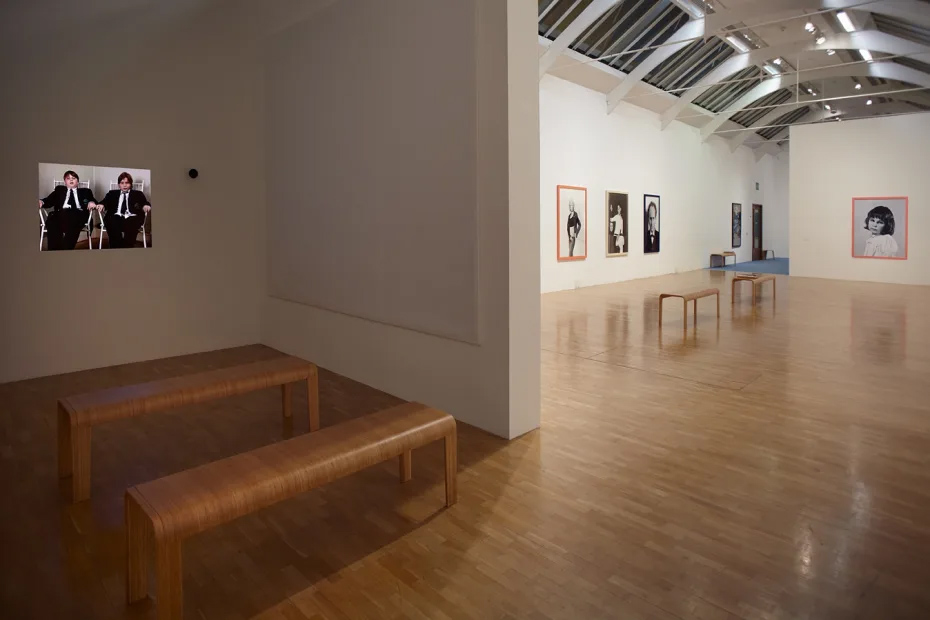
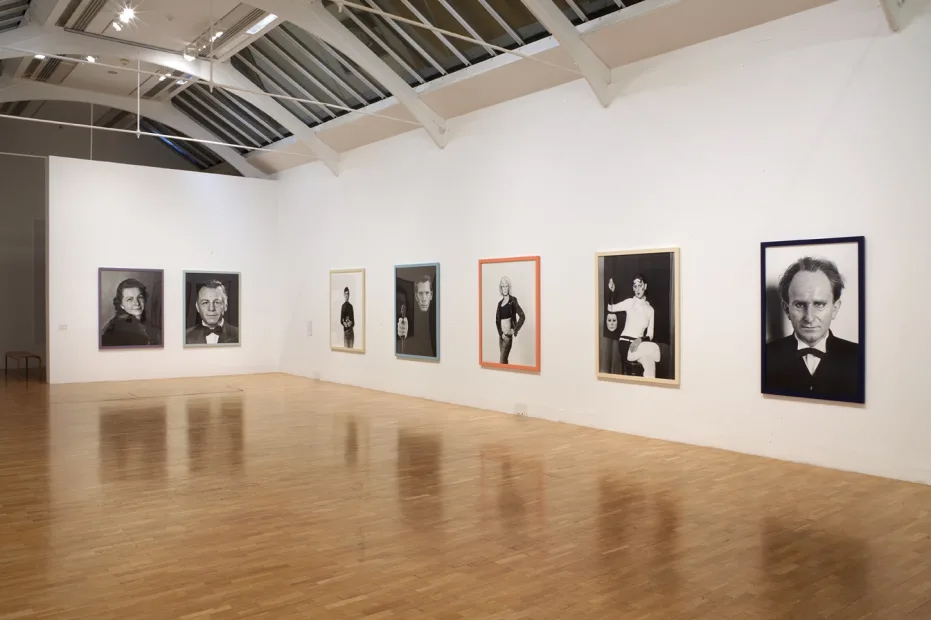
The films and photographs of British artist Gillian Wearing (b. Birmingham, 1963) explore our public personas and private lives. This Turner Prize winner’s remarkable works draw on fly-on-the-wall documentaries, reality TV and the techniques of theatre, to explore how we present ourselves to the world.
Wearing’s portraits and mini-dramas reveal a paradox, given the chance to dress up, put on a mask or act out a role, the liberation of anonymity allows us to be more truly ourselves.
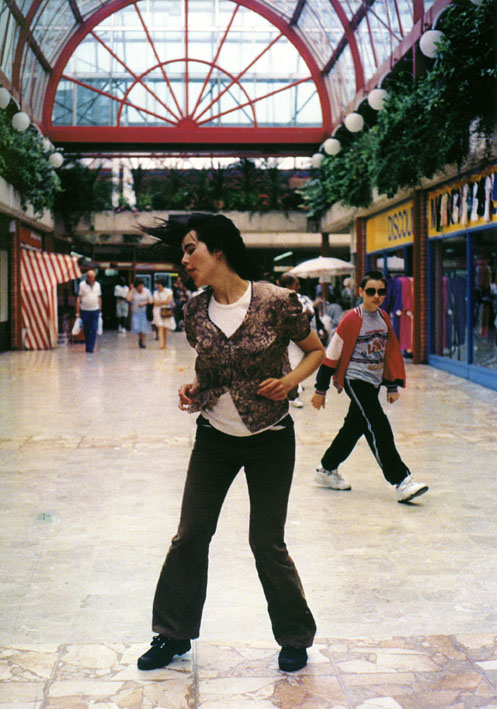
The exhibition begins with the artist herself, dancing in a shopping mall, blissfully unaware of her bemused audience. The idea of performance continues with works including Wearing’s 1997 masterpiece, 10-16. Adults lip synch the voices and act out the physical tics of seven children in a captivating film which moves from the breathless excitement of a ten year old to the existential angst of an adolescent.
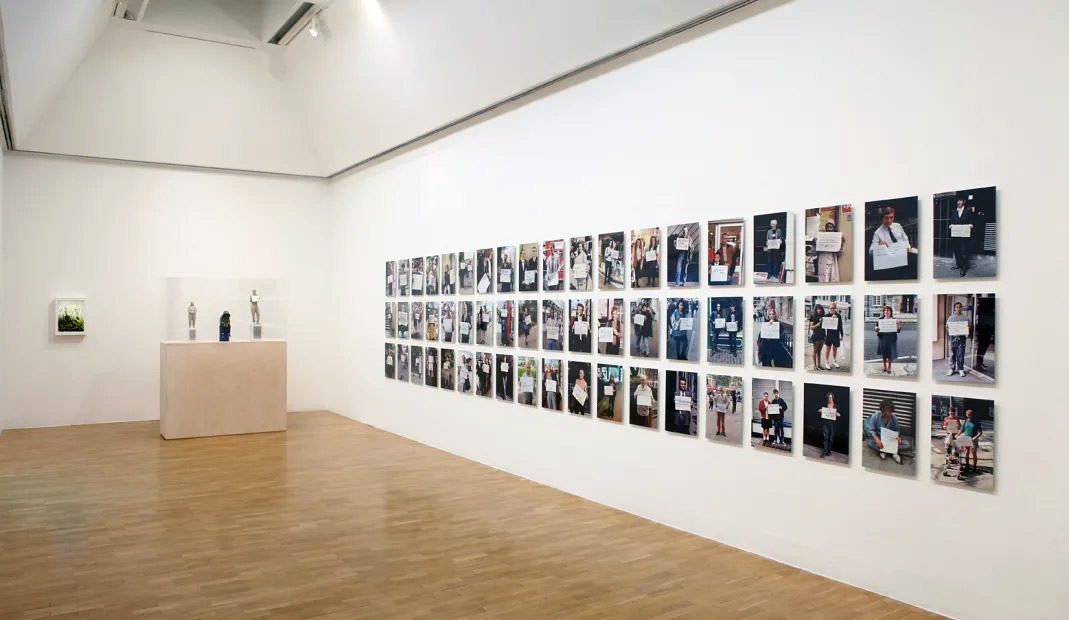
Other highlights include Wearing’s iconic 1992 series, Signs that say what you want them to say, and not Signs that say what someone else wants you to say where strangers are offered paper and pen to communicate their message. In the upper galleries we enter the inner world of subjectivity. An advert – Confess All On Video. Don’t Worry, You Will Be In Disguise. Intrigued? Call Gillian… (1994) attracted a series of disturbing disclosures. Wearing jettisons her own identity to adopt the guise of family members or artists such as Diane Arbus or Andy Warhol, so revealing her own background and influence.
This comprehensive survey, which also premieres new films and sculptures, shows how Wearing is both political – often focusing on the dispossessed or the traumatised – and poetic, finding the extraordinary in us all.
Curator Daniel Hermann introduces the Gillian Wearing exhibition at the Whitechapel Gallery from 28 March – 17 June 2012.
Installation view of the exhibition Gillian Wearing at Whitechapel Gallery, London showing work from her series Signs that say what you want them to say and not Signs that say what someone else wants you to say
The Whitechapel Gallery presents the first major international survey of Turner Prize-winning British artist Gillian Wearing’s photographs and films which explore the public and private lives of ordinary people. Fascinated by how people present themselves in front of the camera in fly-on-the-wall documentaries and reality TV, Gillian Wearing explores ideas of personal identity through often masking her subjects and using theatre’s staging techniques.
This major exhibition surveys Wearing’s work from the early photographs Signs that Say What You Want Them to Say and Not Signs that Say What Someone Else Wants You to Say (1992-3) to her latest video Bully (2010) and also includes several new photographs made specially for the Whitechapel Gallery exhibition.
Visitors to the exhibition enter a film set-style installation showcasing photographs and films in ‘front and back stage’ areas. Highlights include a striking photograph of the artist posing as her younger self, Self-Portrait at 17 Years Old (2003), Dancing in Peckham (1994), a film which blurs the boundaries between public space and private expression as Wearing dances in the middle of a shopping mall, and the UK premiere of recent film Bully (2010). New photographic works shown for the first time include two portraits of Wearing as artists August Sander and Claude Cahun as part of her ongoing series of iconic photographers, as well as still lives of flowers, looking back to the rich symbolism of the great age of 17th century Dutch painting.
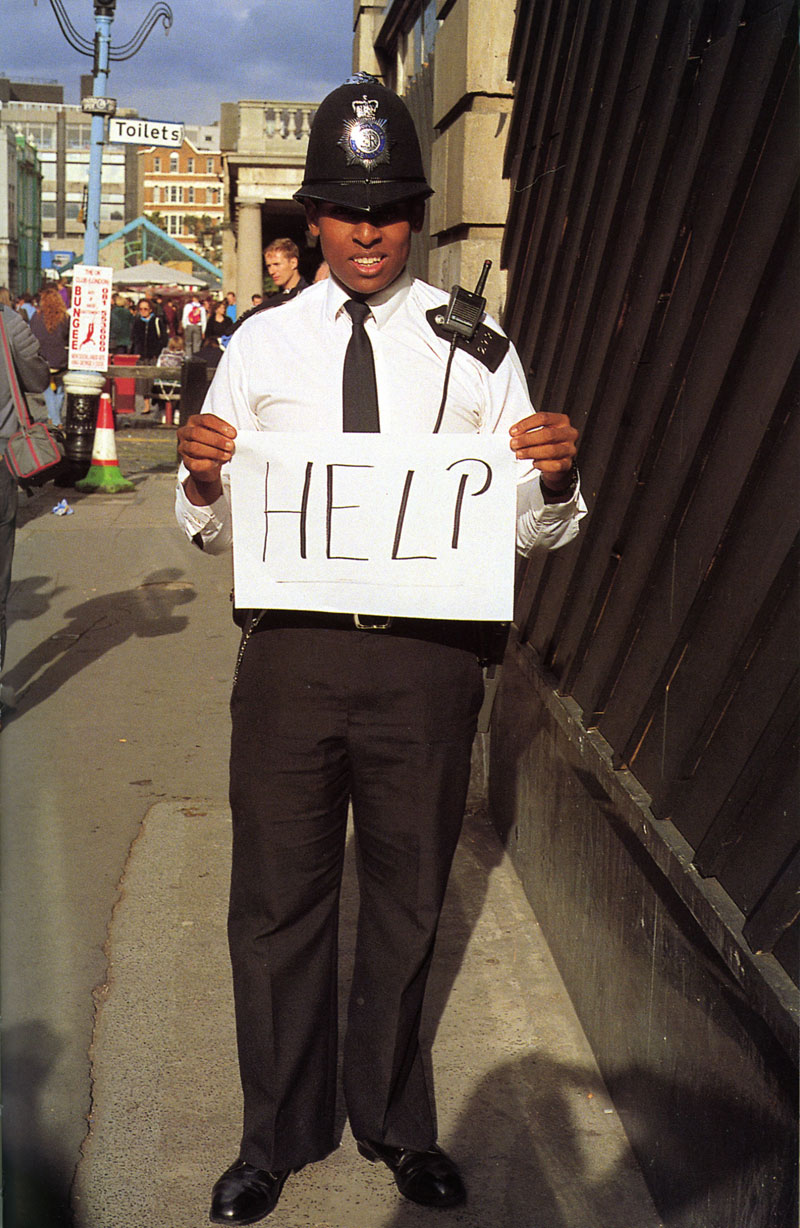
A gallery is dedicated to Wearing’s well-known photographs giving people the chance to write what they were thinking at that moment, titled Signs that Say What You Want Them to Say and Not Signs that Say What Someone Else Wants You to Say (1992-3). The series includes a city worker holding a sign saying, ‘I’m Desperate’, a policeman holding ‘Help!’ and another person’s sign ‘Will Britain ever get through this recession’.
The exhibition also includes a series of private viewing booths for three confessional videos shown together for the first time and in which Gillian Wearing asked people to describe intensely personal experiences. These include Trauma (2000) where sitters describe childhood traumas while wearing a mask. As well as the powerful videos Secrets and Lies (2000) and Confess All On Video. Don’t Worry, You Will Be In Disguise. Intrigued? Call Gillian… (1994). Alongside these works the video 2 into 1 (1997) sees a mother lip synching the voices of her twin sons and vice versa as they describe their relationship.
Press release from Whitechapel Gallery website
Gillian Wearing: Self Made, 2010 Trailer
Gillian Wearing’s debut feature film introduces a cast of untrained actors to a Method acting teacher. Drawing upon their own experiences, each participant creates and stars in their own mini-film.
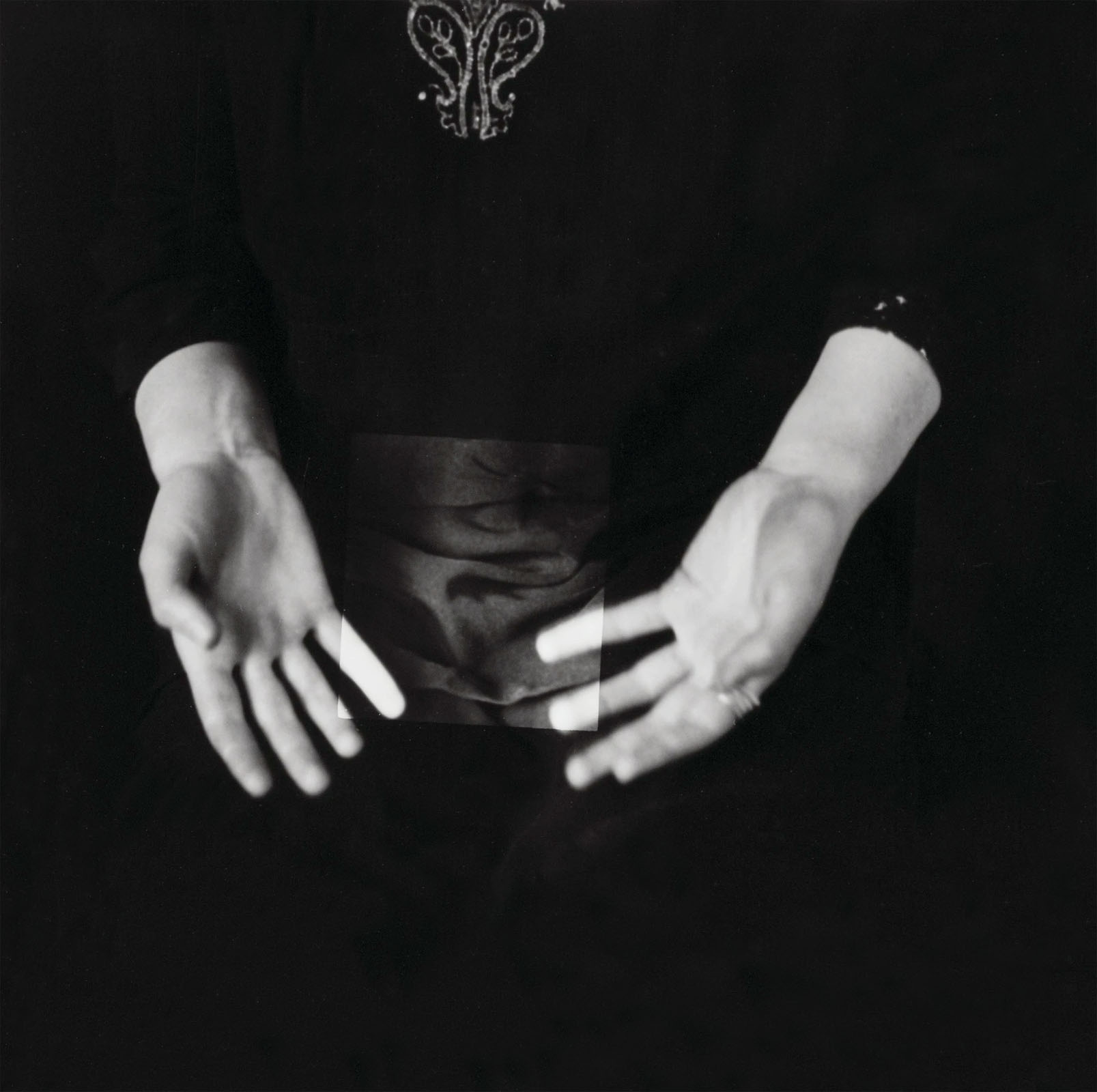
“The body, her body, has an absent presence as it is pressed into walls and occluded by wallpaper. It passes from view, as did her physical form.” Dr Marcus Bunyan
Exhibition dates: 16th March – 13th June, 2012
Curator: Jennifer Blessing, Senior Curator of Photography at the Guggenheim
In 1981, at the age of twenty-two, she committed suicide. Simple words, profound effect.
The world lost one of its truly unique artists and at such a young age. What we have left is a remarkable body of work compiled in a brief six year period.
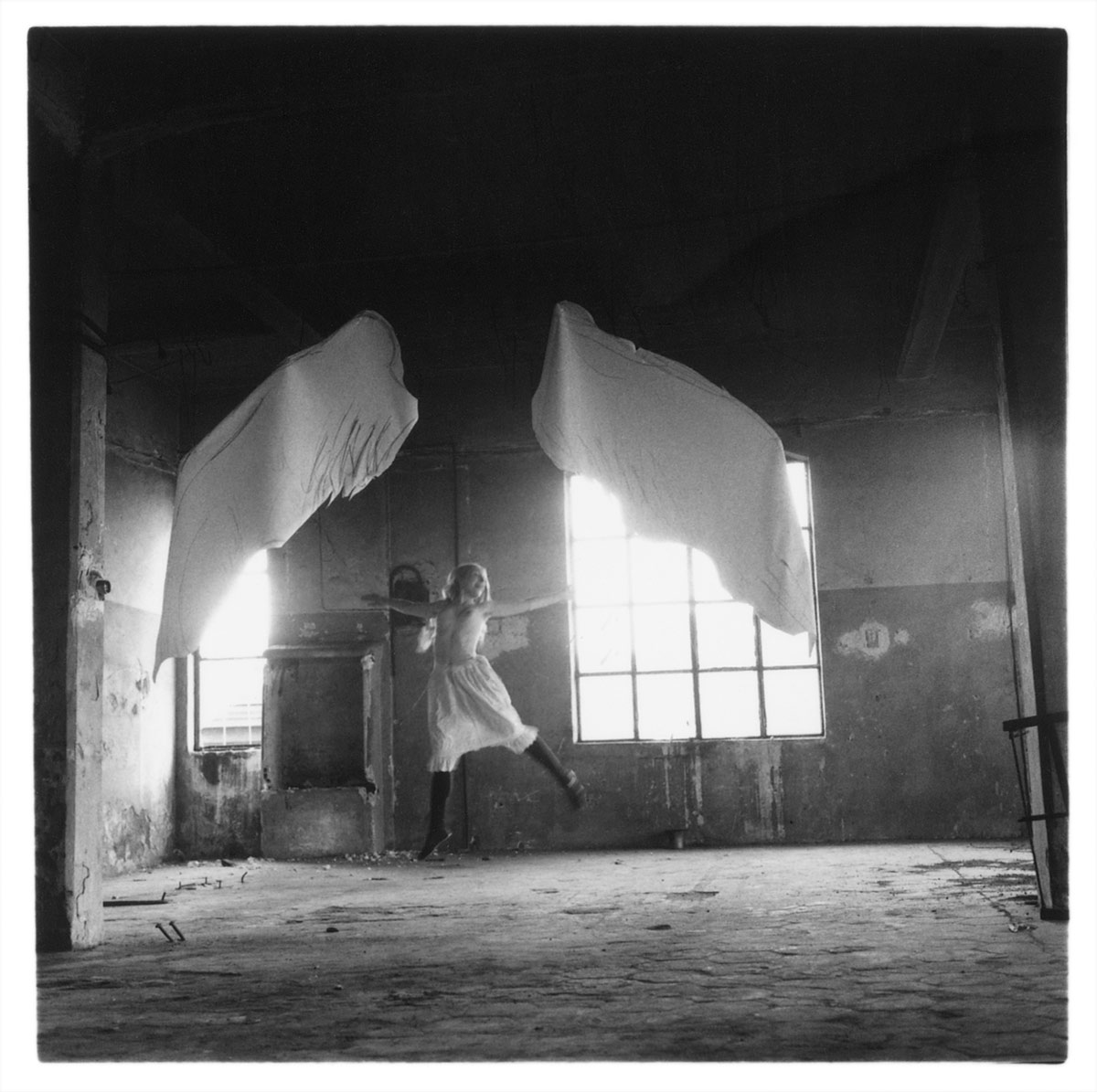
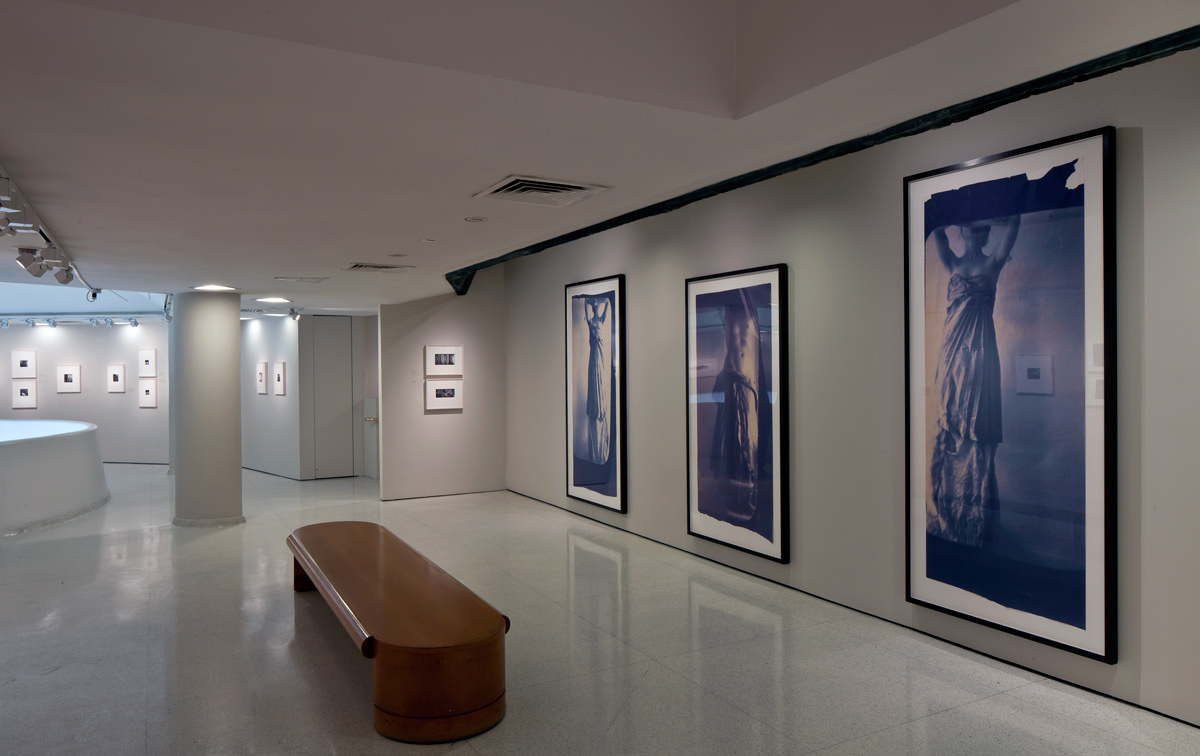
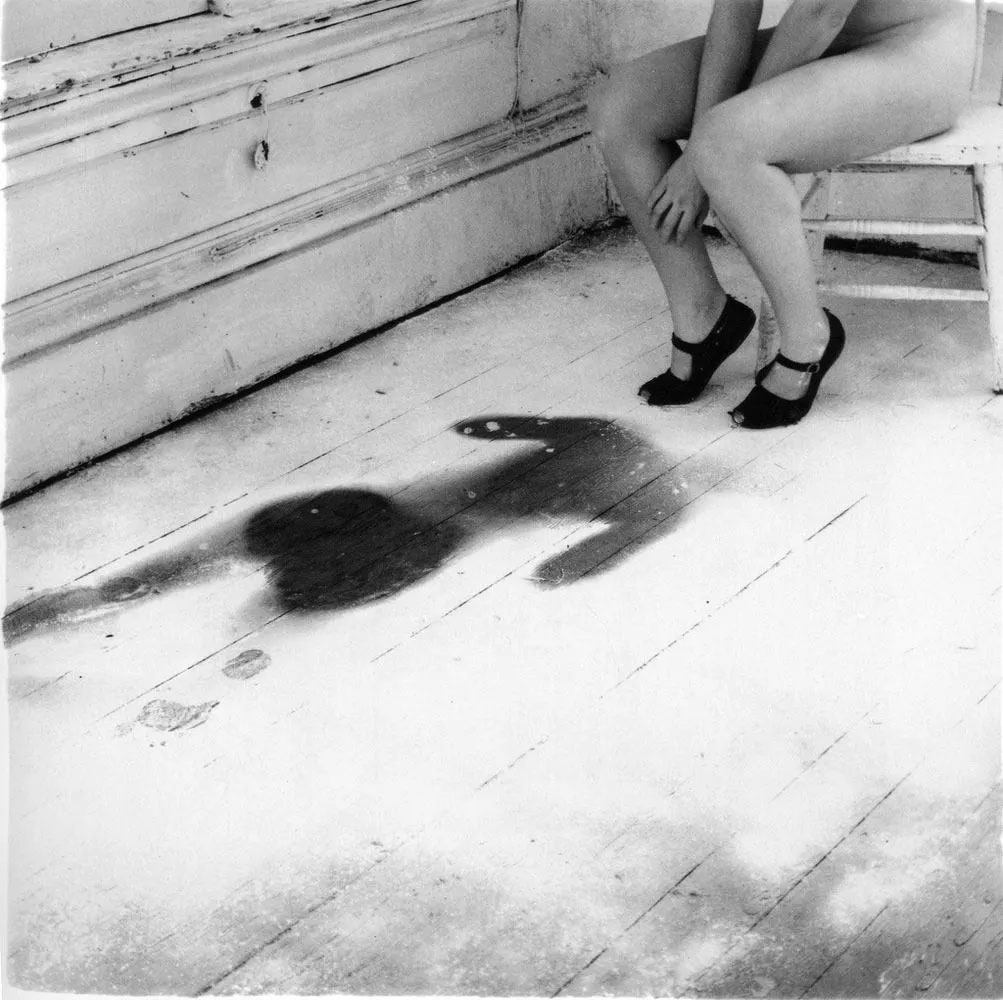
These are strong, sensuous photographs of the female body in space. The body, her body, has an absent presence as it is pressed into walls and occluded by wallpaper. It passes from view, as did her physical form.
In small ways the work reminds me of the blurred photographs of Ralph Eugene Meatyard in their gothic Surrealism. But there is nothing quite like a Woodman. As soon as you see one of the photographs you know it is her work instinctively; there is nobody else’s voice like hers.
The work will not soon be passing out of sight, memory, or existence. The light still burns bright for hers was a truly remarkable talent.
Dr Marcus Bunyan
Many thankx to The Guggenheim Museum for allowing me to publish the photographs in the posting. Please click on the photographs for a larger version of the image.
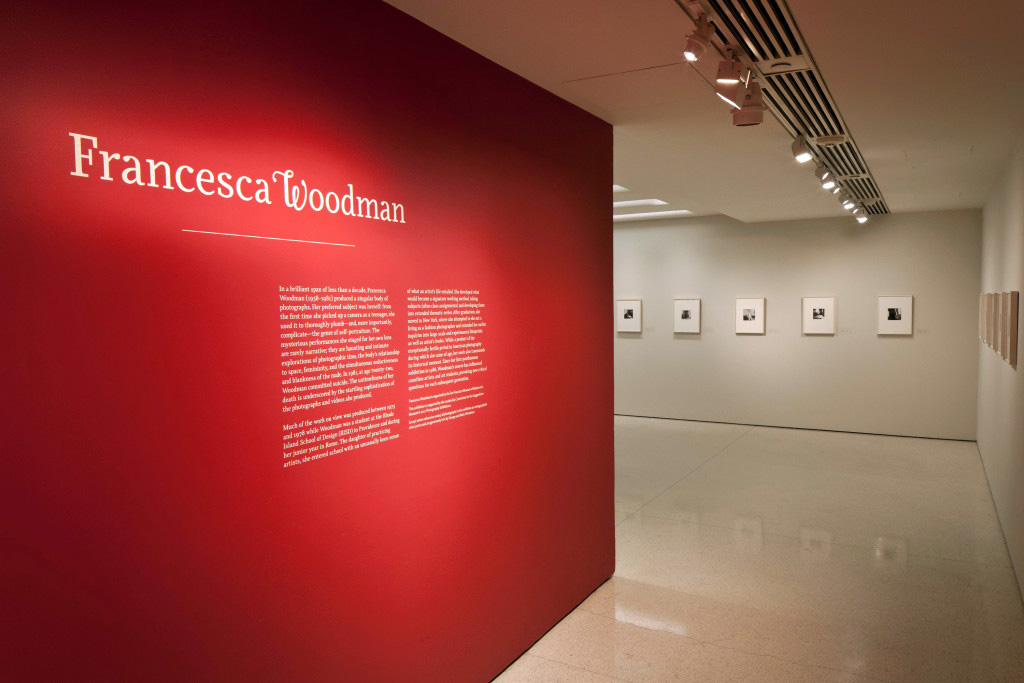
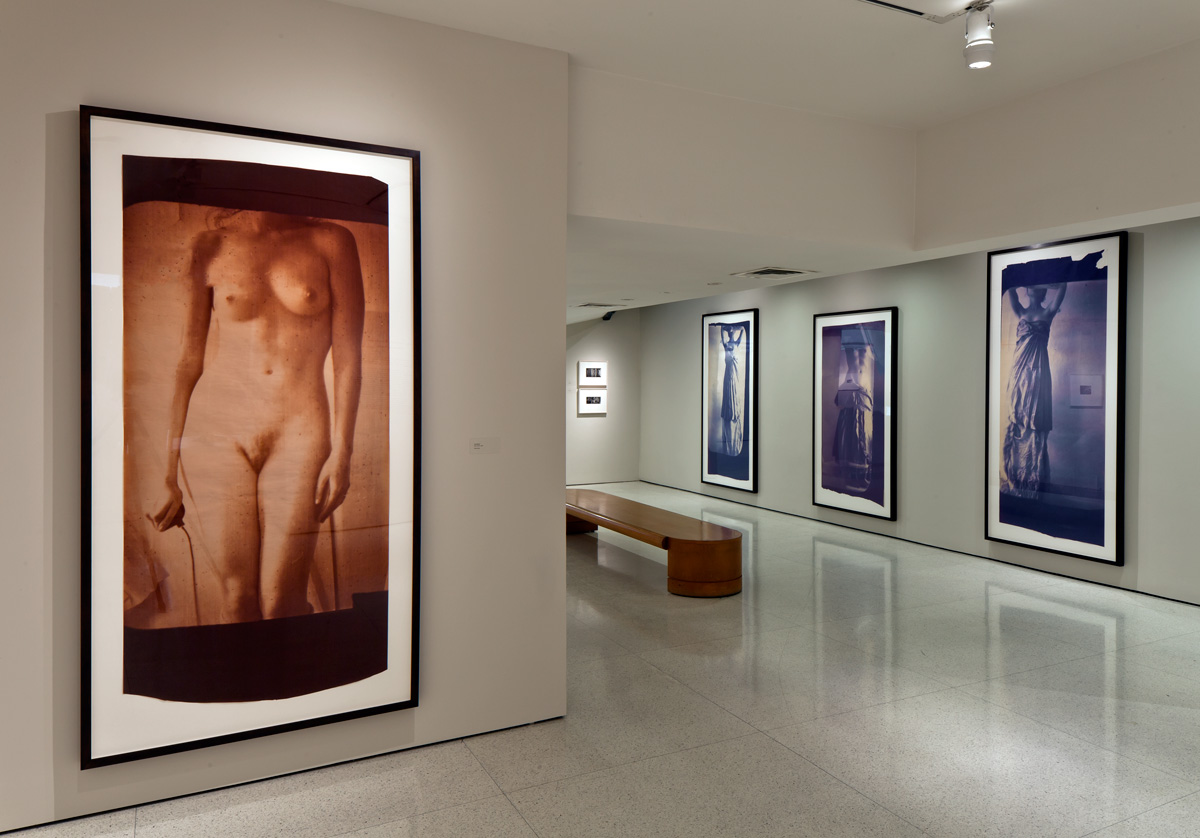
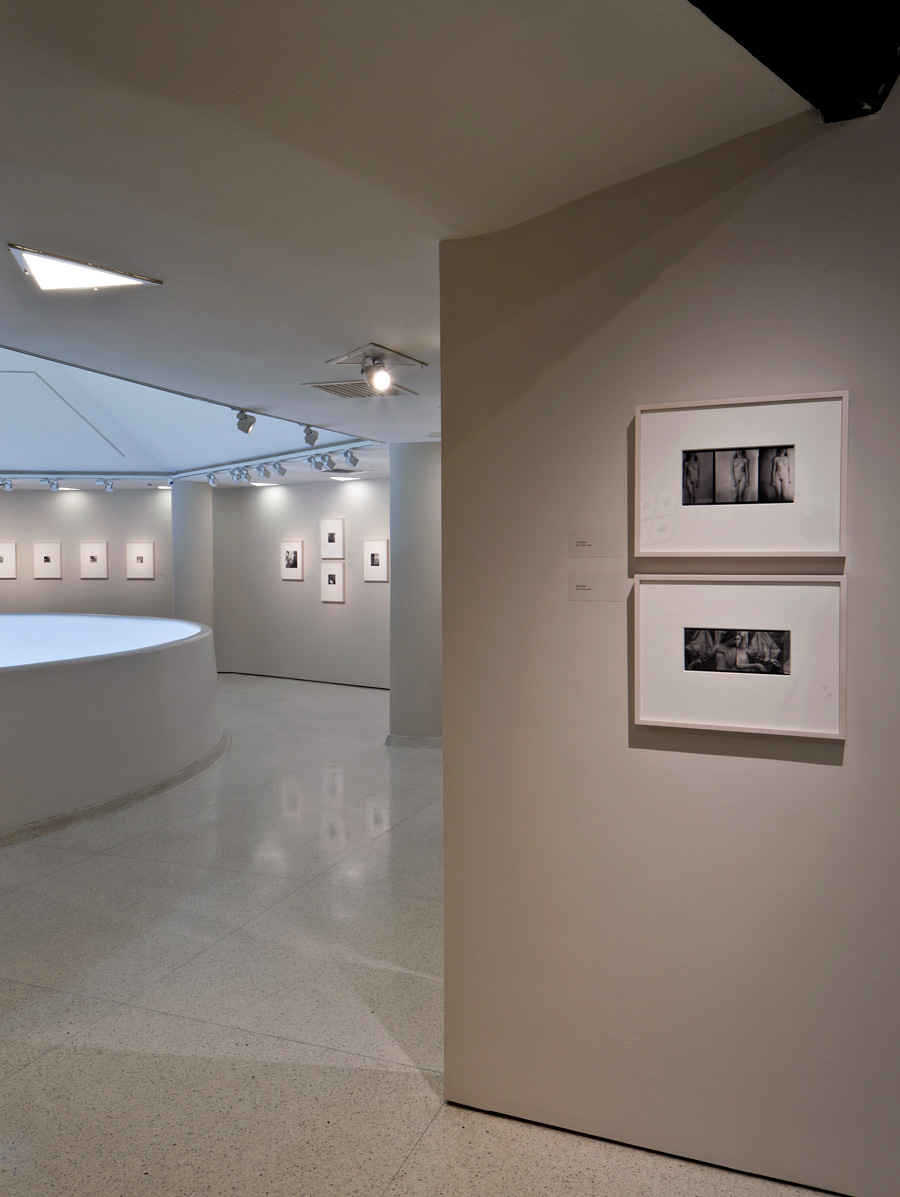
Francesca Woodman, the most comprehensive exhibition of the artist’s work since Woodman’s untimely death in 1981 at the age of 22, will be on view at the Guggenheim Museum from March 16 through June 13, 2012. Spanning the breadth of her production, the exhibition includes more than 120 vintage photographs, artist books, and a selection of recently discovered and rarely seen short videos, presenting a historical reconsideration of Woodman’s brief but extraordinary career.
Francesca Woodman is the first comprehensive survey of the artist’s brief but extraordinary career to be seen in North America. More than thirty years after her death, the moment is ripe for a historical reconsideration of her work and its reception. This retrospective offers an occasion to examine more closely the maturation and expression of a highly subjective and coherent artistic vision. It also presents an important and timely opportunity to reassess the critical developments that took place in the 1970s in American photography and video.
Woodman’s oeuvre represents a remarkably rich and singular exploration of the human body in space and of the genre of self-portraiture in particular. Her interest in female subjectivity, seriality, Conceptualist practice, and photography’s relationship to both literature and performance are also the hallmarks of the heady moment in American photography during which she came of age. This retrospective offers an occasion to examine more closely the maturation and expression of a highly subjective and coherent artistic vision. It also presents an important and timely opportunity to reassess the critical developments that took place in the 1970s in American photography.
Born in 1958 into a family of artists, Woodman began photographing at the age of thirteen. By the time she enrolled at the Rhode Island School of Design (RISD) in 1975, she was already an accomplished artist with a remarkably mature and focused approach to her work. During her time at RISD, she spent a year in Rome, a place she had visited as a child, and which proved to be a fertile source of inspiration. After completing her degree, she moved to New York, where she continued to photograph. While making several large-scale personal projects, she also experimented with fashion photography, engaging in the age-old artist’s struggle to reconcile making art and making a living. In 1981, at the age of twenty-two, she committed suicide. Woodman’s tragic death is underscored by the startlingly compelling, complex, and artistically resolved body of work she produced during her short lifetime.
Woodman’s favourite subject was herself. From the very first time she picked up a camera, she used it to thoroughly plumb the genre of self-portraiture. Using a square-format camera, Woodman photographed her body in a variety of spaces. She had an affinity for decaying and decrepit interiors, particularly the richly layered surfaces of walls covered with graffiti or peeling wallpaper. In these settings the body is evanescent, appearing and disappearing behind objects, pressed into cupboards and cabinets, camouflaged against walls, or dissolving into a blur of movement. She frequently included objects within the frame – gloves, eels, mirrors – thereby investing them with a symbolic charge, and often making deliberate allusions to tropes from the Surrealist and gothic fiction she admired.
The presentation at the Guggenheim will comprise approximately 120 vintage photographs, including Woodman’s earliest student experiments at RISD, work from her time spent studying in Rome, her forays into fashion photography upon moving to New York, and the late, large-scale blueprint studies of caryatid-like figures for the ambitious Temple project (1980). The exhibition will include two of her artist books – diaristic collages of her own photographs and writings – which were an important form of expression, particularly at the end of her career. Woodman also experimented with moving images; six recently discovered and rarely seen short videos will be presented in the exhibition.
Francesca Woodman is organised by the San Francisco Museum of Modern Art (SFMOMA). The exhibition has been curated by Corey Keller, Associate Curator of Photography, SFMOMA, where it opened in November 2011. The New York presentation of Francesca Woodman is organised by Jennifer Blessing, Senior Curator, Photography, Solomon R. Guggenheim Museum.
“Will the real Cindy Sherman (if ever there is such a thing) please stand up and tell us: what do you really stand for, where as a human being, is your spirit really at?” Dr Marcus Bunyan
Exhibition dates: 26th February – 11th June, 2012
Curators: Eva Respini (Associate Curator) and Lucy Gallun (Curatorial Assistant) from the Department of Photography, MoMA
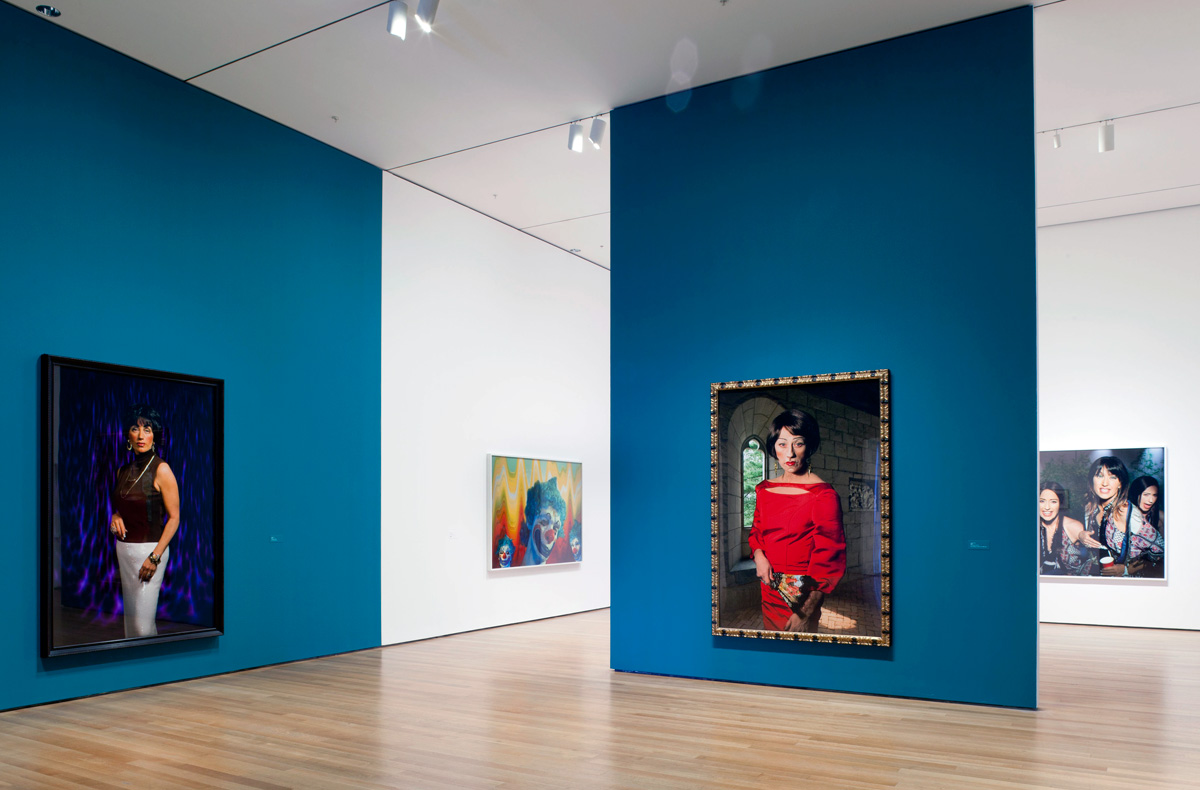
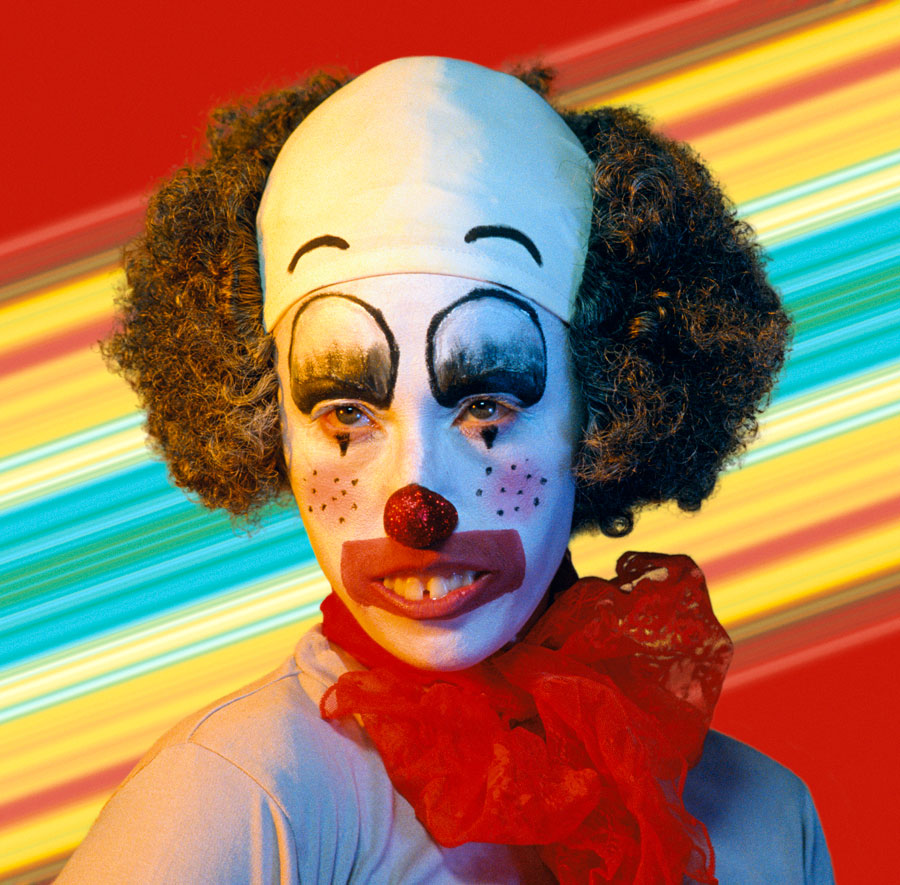
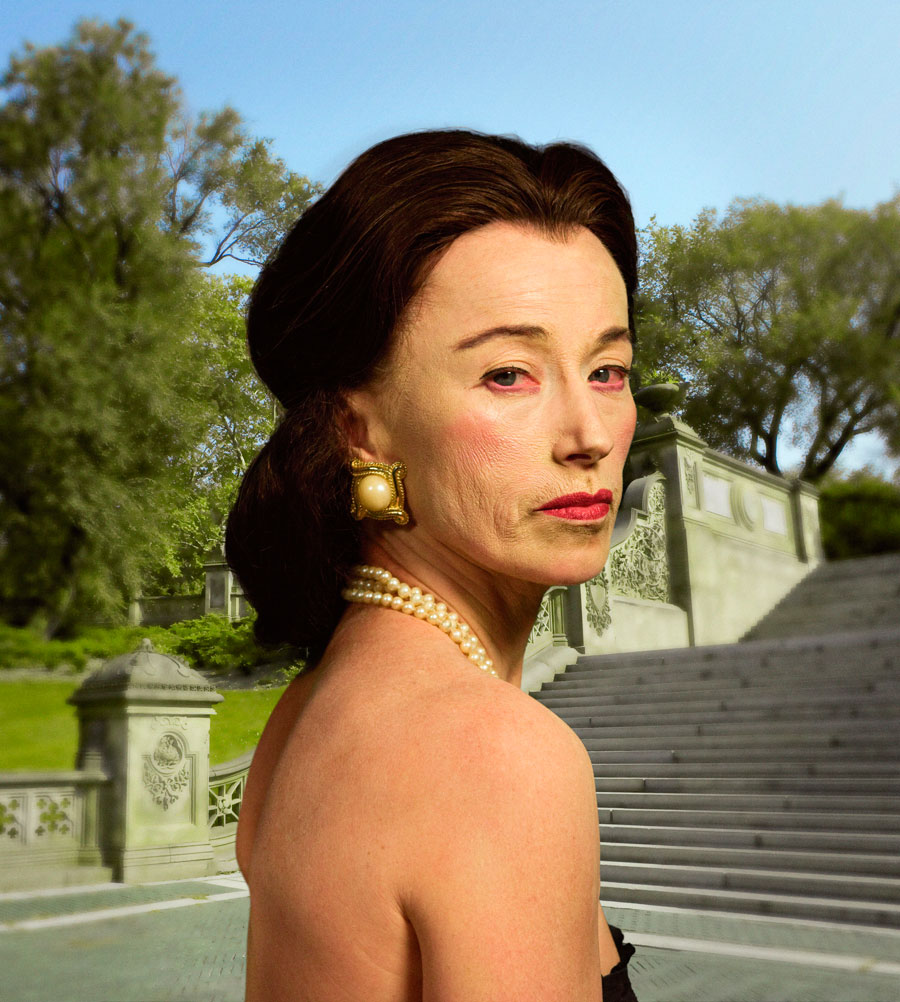
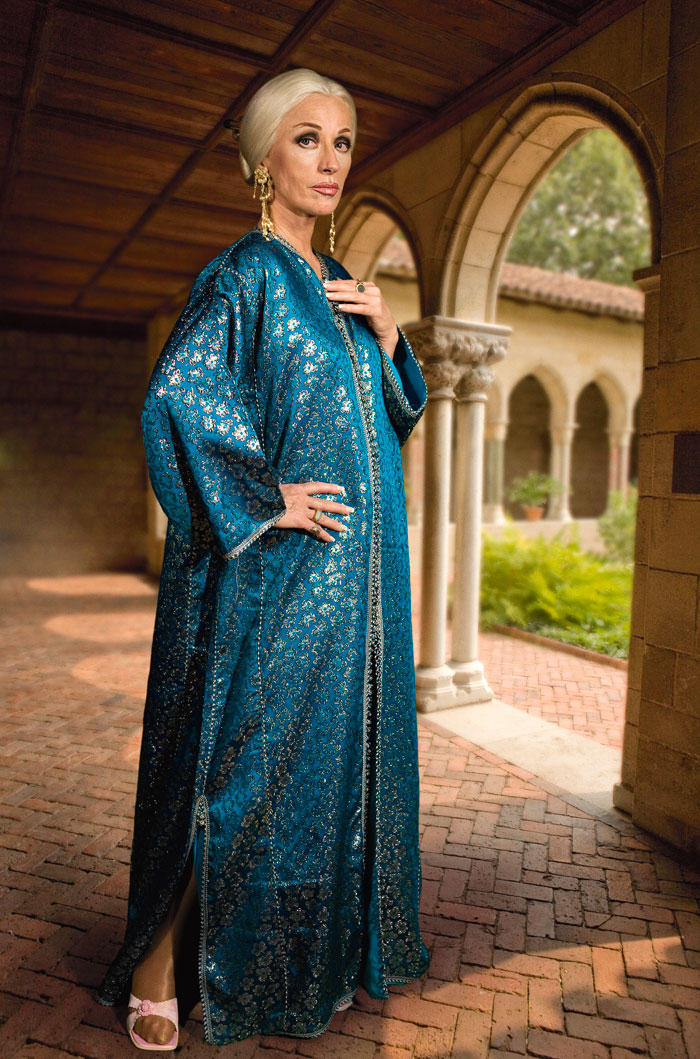
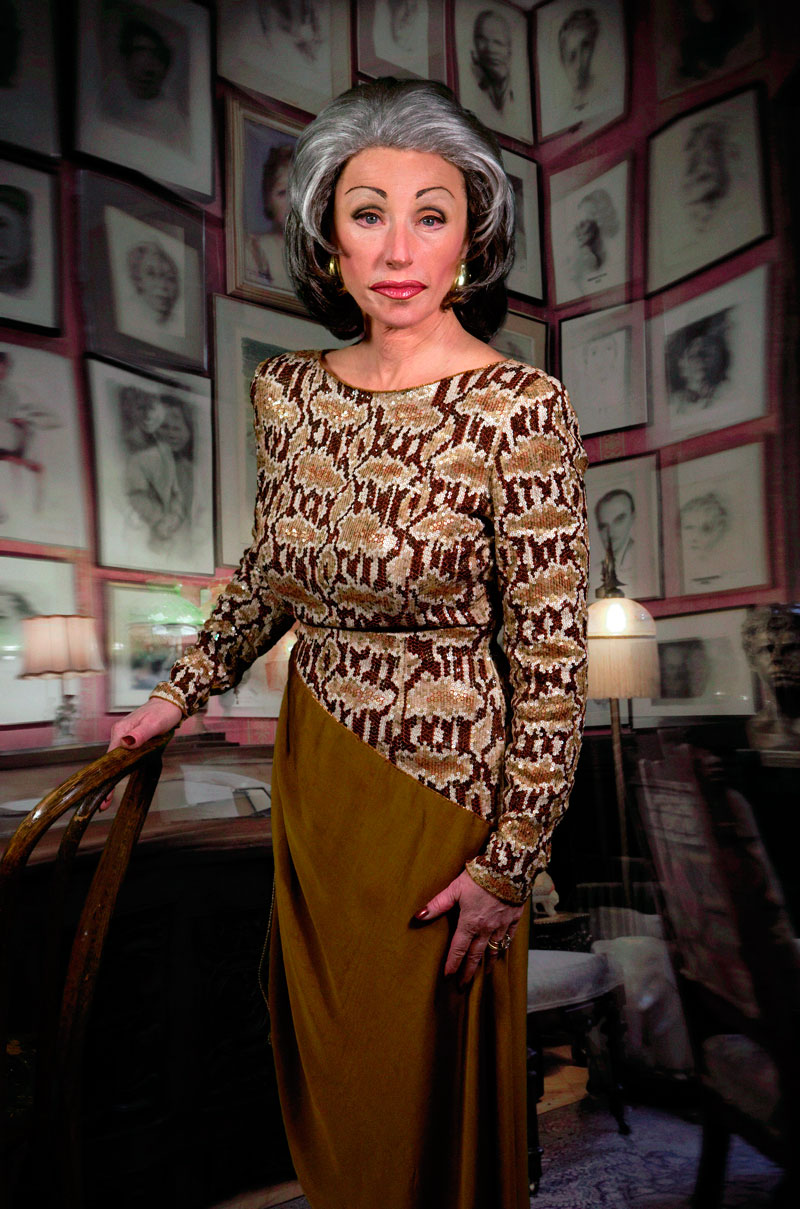
Installation view of the exhibition Cindy Sherman at MoMA, New York showing at left and centre, Cindy Sherman society portraits (2008)
Ceaselessly inventive, the bodies (literally) of work of Cindy Sherman are a wonder to behold. From film stills to head shots, from history portrait to society portraits, Sherman constantly reinvents herself, her variations of identity exploring “the complexity of representation in a world saturated with images,” her iterations into the construction of femininity and masculinity constantly “provocative, disparaging, empathetic, and mysterious.”
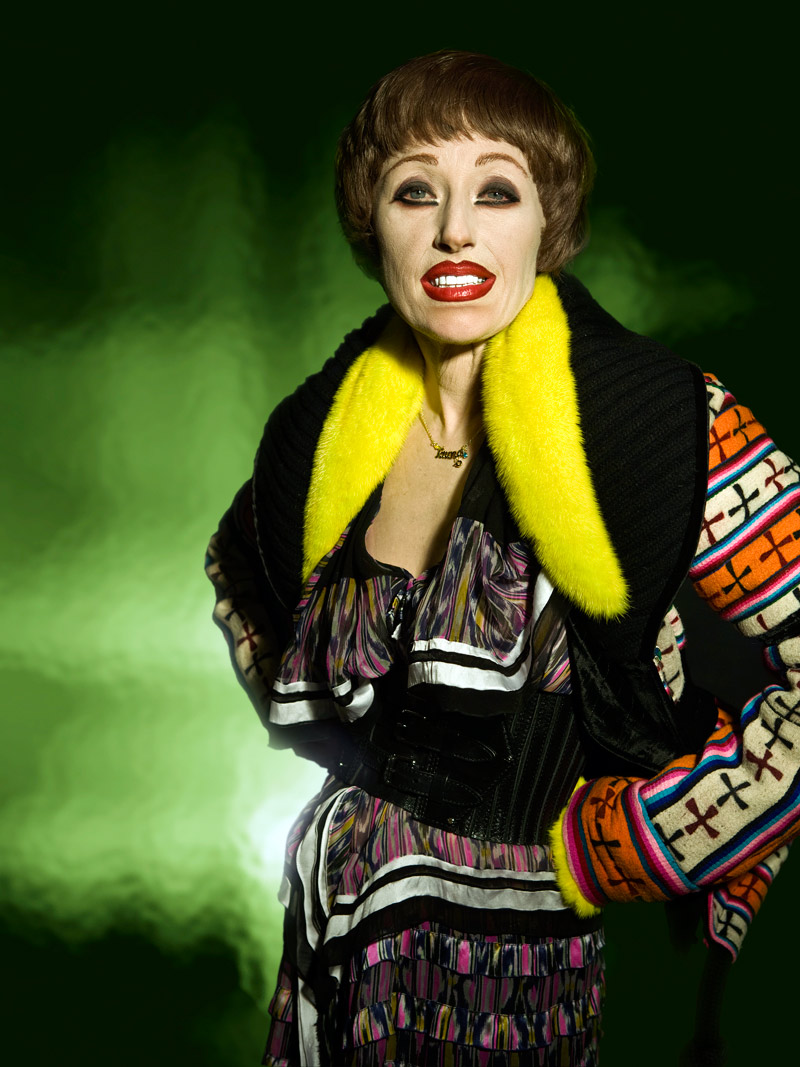
Where to next? Her recent series of digitally altered landscapes and portraits (Cindy Sherman at Metro Pictures, New York, April – June 2012) seem less resolved than her earlier work, becoming almost a pastiche of themselves. Despite their massive size they seem to lack resolution, the great female impersonator of our time relying for effect on Self as feminine earth (m)Other, tricked up in dubious, quasi-ethnic regalia.
Sherman is almost sacrosanct with regard to criticism but it’s about time someone said it: these images are pretty awful.
After so many simulacra, so many layerings and expositions of identity isn’t it about time Sherman got back to basics and ditched these grandiose notions of identity sublime. The sublimation (an unconscious defence mechanism by which consciously unacceptable instinctual drives are expressed in personally and socially acceptable channels) of her/Self, her actual body, the energy of her (non) presence is finally starting to wear thin.
Will the real Cindy Sherman (if ever there is such a thing) please stand up and tell us: what do you really stand for, where as a human being, is your spirit really at?
Dr Marcus Bunyan
Many thankx to MoMA for allowing me to publish the photographs in the posting. Please click on the photographs for a larger version of the image.
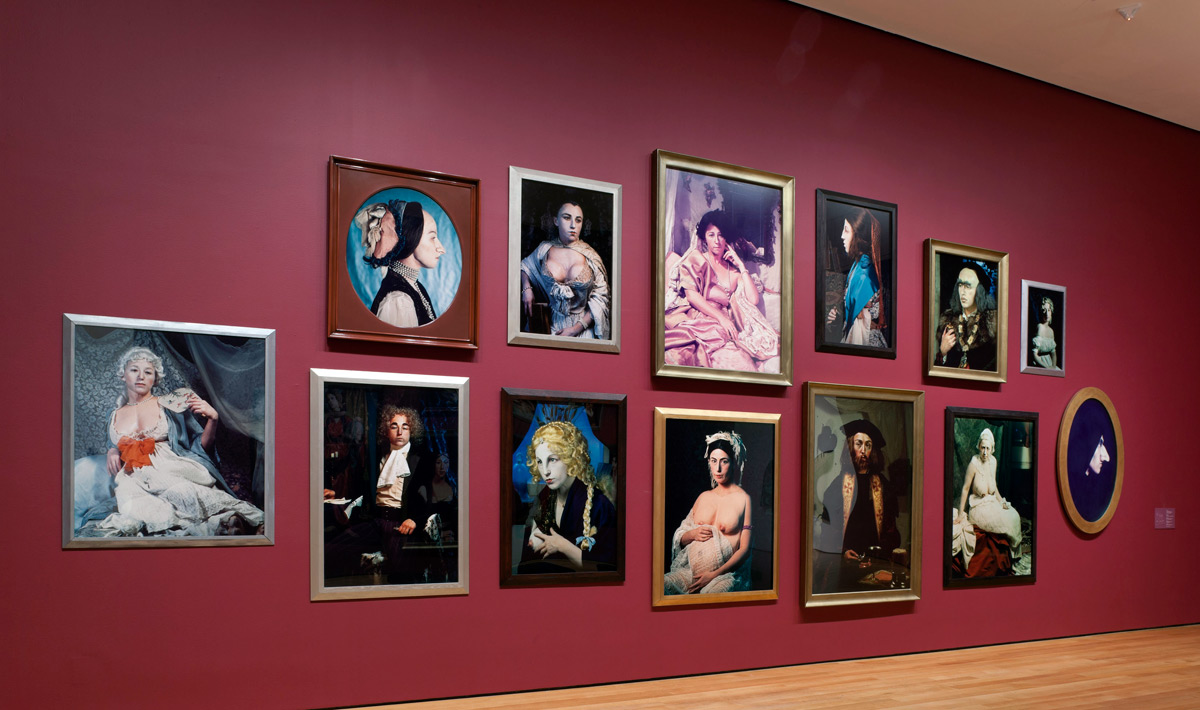
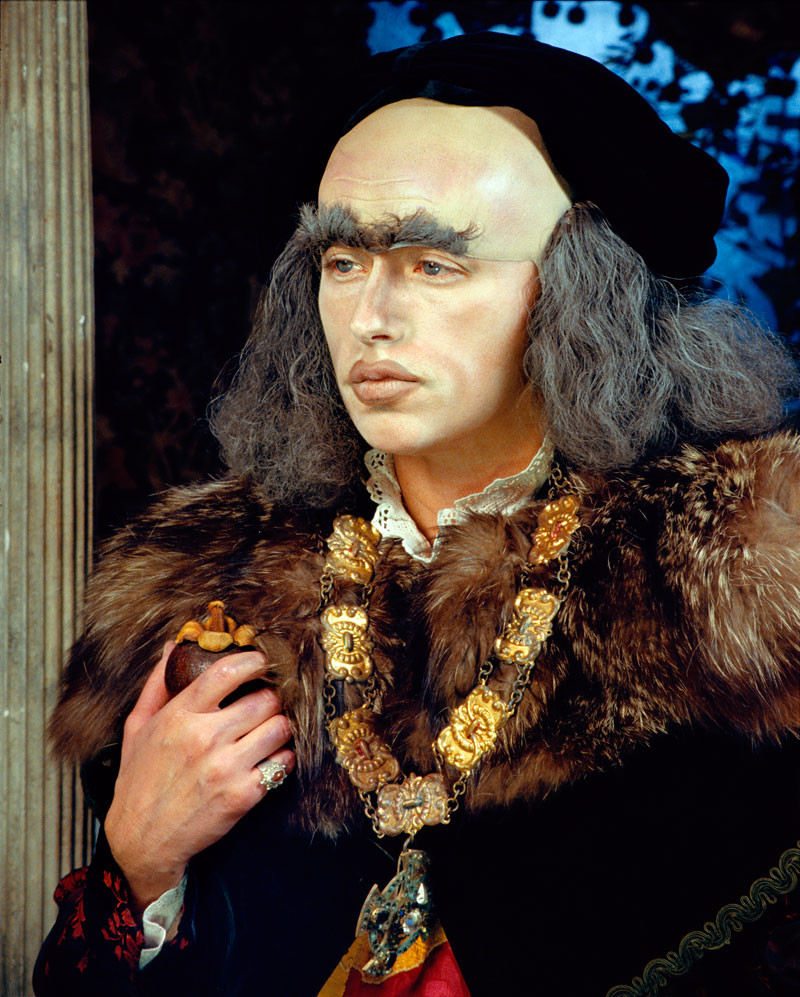
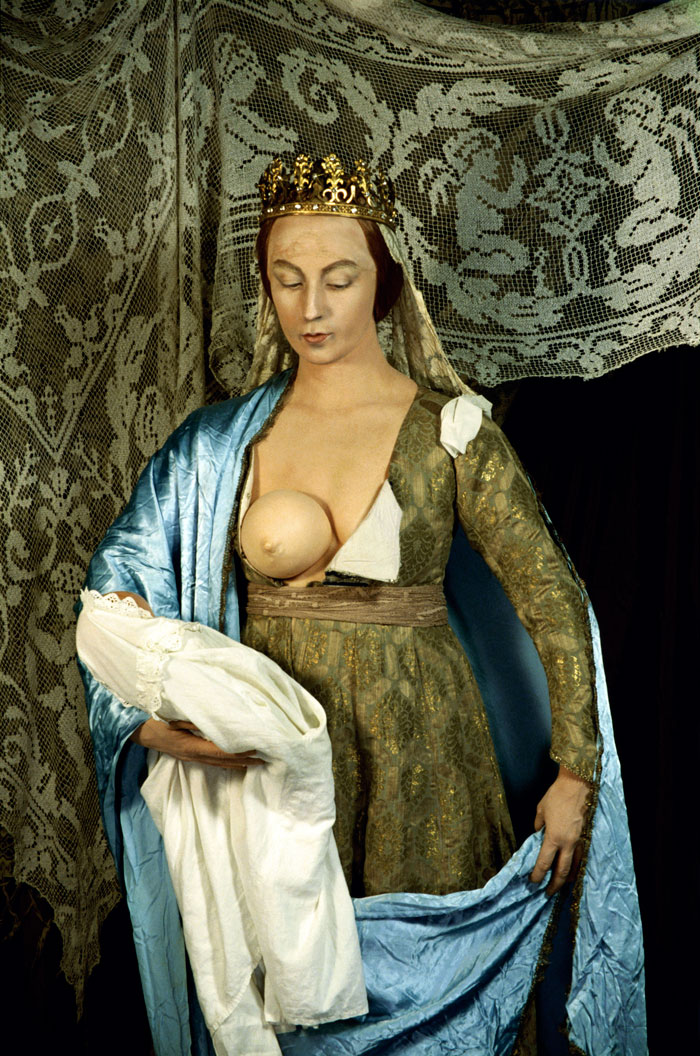
Installation view of the exhibition Cindy Sherman at MoMA, New York showing Cindy Sherman history portraits (1988-1990)
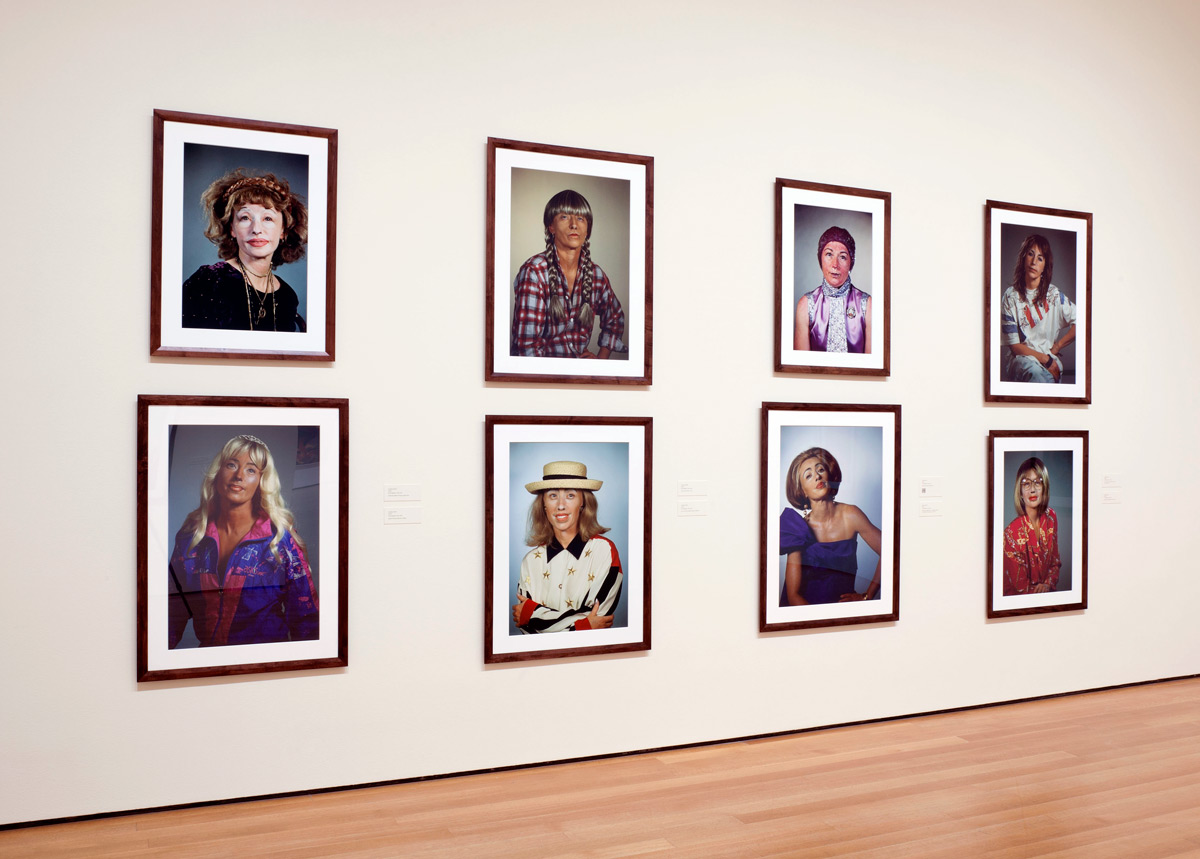
Installation view of the exhibition Cindy Sherman at MoMA, New York showing Cindy Shermanheadshots (2000-2002)
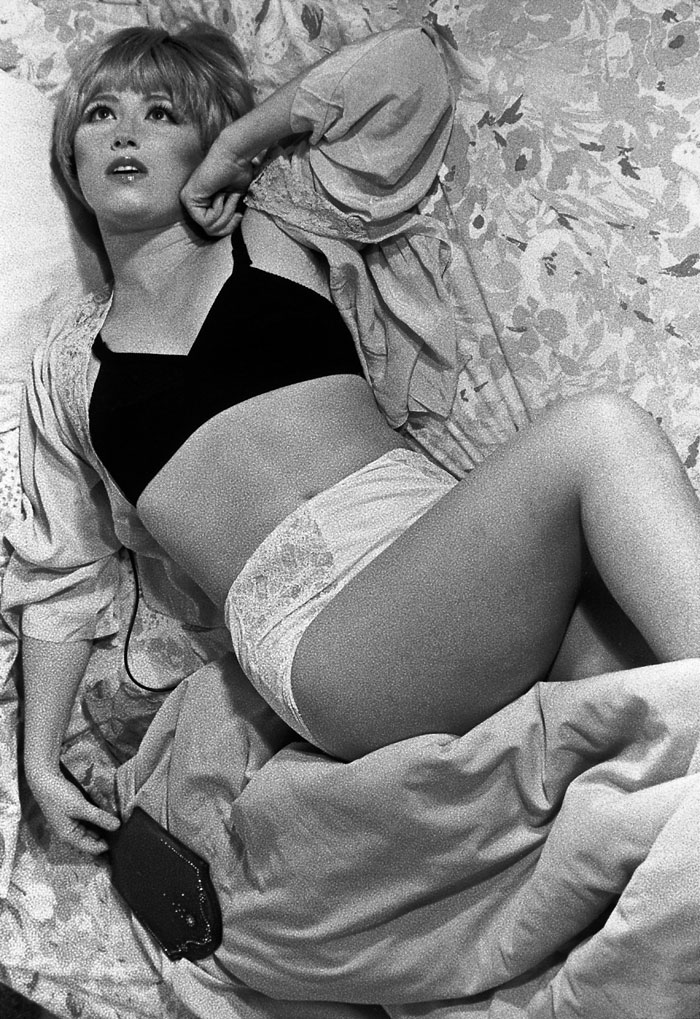
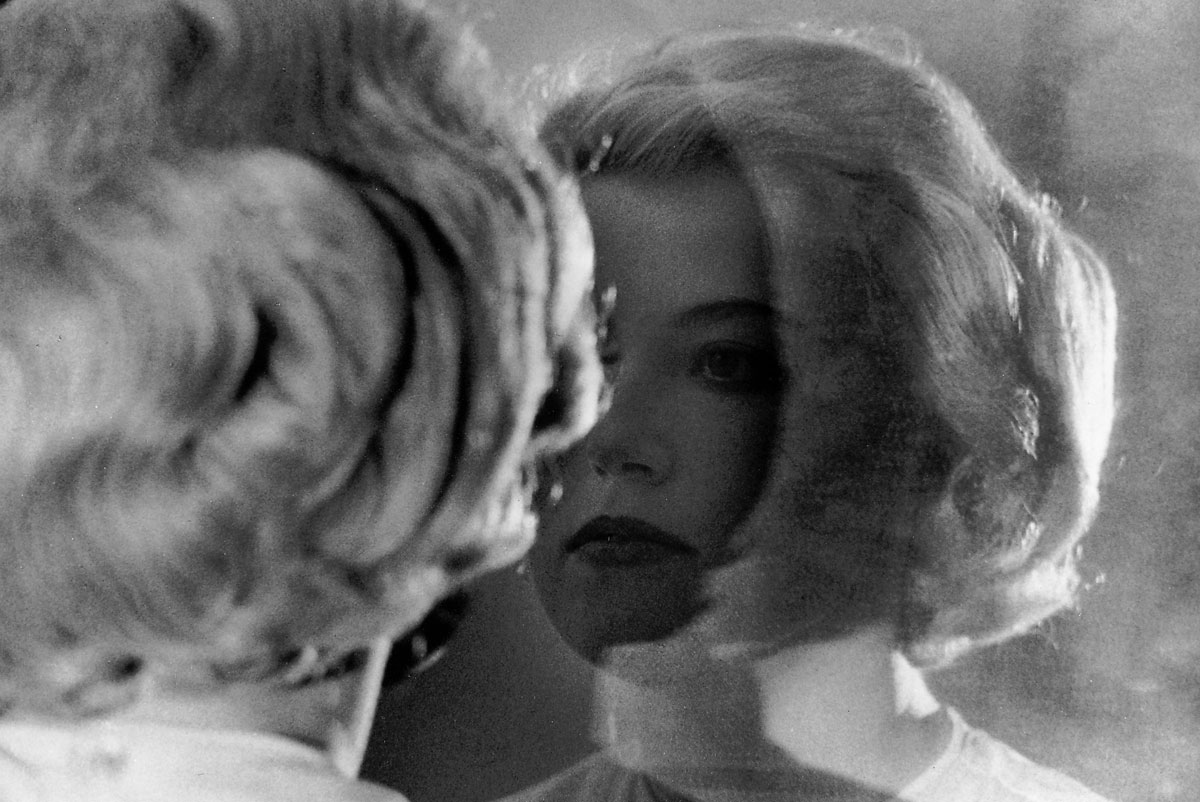
Cindy Sherman (American, b. 1954) Untitled Film Still #21 1978 Gelatin silver print 7 1/2 x 9 1/2″ (19.1 x 24.1cm) The Museum of Modern Art, New York. Horace W. Goldsmith Fund through Robert B. Menschel
Cindy Sherman (American, b. 1954) Untitled Film Still #6 1977 Gelatin silver print 9 7/16 x 6 1/2″ (24 x 16.5cm) The Museum of Modern Art, New York Acquired through the generosity of Jo Carole and Ronald S. Lauder in memory of Eugene M. Schwartz
Cindy Sherman (American, b. 1954) Untitled Film Still #56 1980 Gelatin silver print 6 3/8 x 9 7/16″ (16.2 x 24cm) The Museum of Modern Art, New York Acquired through the generosity of Jo Carole and Ronald S. Lauder in memory of Mrs. John D. Rockefeller 3rd
Gallery 2
In fall 1977, Sherman began making pictures that would eventually become her groundbreaking Untitled Film Stills. Over three years, the series (presented here in its entirety) grew to comprise a total of seventy black-and-white photographs. Taken as a whole, the Untitled Film Stills – resembling publicity pictures made on movie sets – read like an encyclopaedic roster of stereotypical female roles inspired by 1950s and 1960s Hollywood, film noir, B movies, and European art-house films. But while the characters and scenarios may seem familiar, Sherman’s Stills are entirely fictitious; they represent clichés (career girl, bombshell, girl on the run, vamp, housewife, and so on) that are deeply embedded in the cultural imagination. While the pictures can be appreciated individually, much of their significance comes in the endless variation of identities from one photograph to the next. As a group they explore the complexity of representation in a world saturated with images, and refer to the cultural filter of images (moving and still) through which we see the world.
Wall text from the exhibition
Cindy Sherman (American, b. 1954) Untitled #137
1984
Chromogenic colour print
70 1/2 x 47 3/4″ (179.1 x 121.3cm)
Philadelphia Museum of Art
Purchased with the Alice Newton Osborn Fund, 1985
Cindy Sherman (American, b. 1954) Untitled #458 2007-08 Chromogenic colour print 77 3/8″ x 58 1/4″ (196.5 x 148cm) Glenstone
Gallery 3
Fashion – a daily form of masquerade that communicates culture, gender, and class – has been a constant source of inspiration for Sherman and a leading ingredient in the creation of her work. Throughout her career the artist has completed a number of commissions for fashion designers and magazines, and this gallery gathers many of these works. Sherman’s fashion pictures challenge the industry’s conventions of beauty and grace. Her first such commission, made in 1983, parodies typical fashion photography. Rather than projecting glamour, sex, or wealth, the pictures feature characters that are far from desirable – whether goofy, hysterical, angry, or slightly mad. Later commissions resulted in more extreme images of characters with bloodshot eyes, bruises, and scars. These exaggerated figures reached ostentatious heights in a 2007-08 commission, in which fashion victims – including steely fashion editors, PR mavens, assistant buyers, and wannabe fashionistas – wear clothing designed by Balenciaga and ham it up for the camera. Sherman’s interest in the construction of femininity and the mass circulation of images informs much of her work; the projects that take fashion as their subject illustrate the artist’s fascination with fashion images but also her critique of what they represent.
Wall text from the exhibition
Cindy Sherman (American, b. 1954) Untitled #424 2004 Chromogenic colour print 53 3/4 x 54 3/4″ (136.5 x 139.1cm) Holzer Family Collection
Gallery 5
Sherman, who photographs alone in her studio, has used a variety of techniques to suggest different locations and imaginary (sometimes impossible) spaces, extending the narrative possibilities of her images. In her first foray into colour, in 1980, the artist photographed herself in front of rear-screen projections of various cityscapes and landscapes, evoking films from the 1950s and 1960s that used similar techniques to create the illusion of a change in location. In later series, such as the head shots (2000-2002), clowns (2003-04), and society portraits (2008), the artist used digital tools to create a variety of environments. The garish fluorescent colours in a clown picture contribute to the disturbing quality of the portrait, while a fairy tale forest provides a dreamy backdrop for a well-to-do lady.
Wall text from the exhibition
The Museum of Modern Art presents the exhibition Cindy Sherman, a retrospective tracing the groundbreaking artist’s career from the mid-1970s to the present, from February 26 to June 11, 2012. The exhibition brings together 171 key photographs from the artist’s significant series – including the complete Untitled Film Stills (1977-80), the critically acclaimed centerfolds (1981), and the celebrated history portraits (1988-90) – plus examples from all of her most important bodies of work, ranging from her fashion photography of the early 1980s to the breakthrough sex pictures of 1992 to her 2003-04 clowns and monumental society portraits from 2008. In addition, the exhibition features the American premiere of her 2010 photographic mural. An exhibition of films drawn from MoMA’s collection selected by Sherman will also be presented in the Museum’s theatres in April. Cindy Sherman is organised by Eva Respini, Associate Curator, with Lucy Gallun, Curatorial Assistant, Department of Photography, The Museum of Modern Art.
Cindy Sherman is widely considered to be one of the most important and influential artists of our time and her work is the unchallenged cornerstone of post-modern photography. Masquerading as a myriad of characters in front of her own camera, Sherman creates invented personas and tableaus that examine the construction of identity, the nature of representation, and the artifice of photography. Her works speak to an increasingly image-saturated world, drawing on the unlimited supply of visual material provided by movies, television, magazines, the Internet, and art history.
Ms. Respini says, “To create her photographs, Sherman works unassisted in her studio and assumes multiple roles as photographer, model, art director, make-up artist, hairdresser, and stylist. Whether portraying a career girl or a blond bombshell, a fashion victim or a clown, a French aristocrat or a society lady of a certain age, for over 35 years this relentlessly adventurous artist has created an eloquent and provocative body of work that resonates deeply with our visual culture.”
The American premiere of Sherman’s recent photographic mural (2010) will be installed outside the galleries on the sixth floor. The mural represents the artist’s first foray into transforming space through site-specific fictive environments. In the mural Sherman transforms her face via digital means, exaggerating her features through Photoshop by elongating her nose, narrowing her eyes, or creating smaller lips. The characters, who sport an odd mix of costumes and are taken from daily life, are elevated to larger-than-life status and tower over the viewer. Set against a decorative toile backdrop, her characters seem like protagonists from their own carnivalesque worlds, where fantasy and reality merge. The emphasis on new work presents an opportunity for reassessment in light of the latest developments in Sherman’s oeuvre.
Entering the galleries, the exhibition strays from a chronological narrative typical of retrospectives, and groups photographs thematically to create new and surprising juxtapositions and to suggest common threads across several series. A gallery devoted to her work made for the fashion industry brings together commissions from 1983 to 2011. Sherman’s interest in the construction of femininity and mass circulation of images informs much of the work that takes fashion as its subject, illustrating not only a fascination with fashion images but also a critical stance against what they represent. A gallery exploring themes of the grotesque focuses on bodies of work from the mid-1980s through the mid-1990s, including disasters (1986-89) and sex pictures (1992). Sherman’s investigation of macabre narratives followed a trajectory of the physical disintegration of the body, and features prosthetic parts as a stand-in for the human body. A gallery devoted to Sherman’s exploration of myth, carnival, and fairy tales pairs works from her 2003 clowns with her 1985 fairy tales series. These theatrical pictures revel in their own artificiality, with menacing characters and fantastical narratives.
Galleries devoted to single bodies of work are interspersed among the thematic rooms. Sherman’s seminal series the Untitled Film Stills, comprising 70 black-and-white photographs made between 1977 and 1980, are presented in their entirety (the complete series is in MoMA’s collection). Made to look like publicity pictures taken on movie sets, the Untitled Film Stills read like an encyclopaedic roster of female roles inspired by 1950s and 1960s Hollywood, film noir, B movies, and European art-house films. While the characters and scenarios may seem familiar, Sherman’s Stills are entirely fictitious. Her characters represent deeply embedded clichés (career girl, bombshell, girl on the run, housewife, and so on) and rely on the persistence of recognisable manufactured stereotypes that loom large in the cultural imagination.
Other series presented in depth include Sherman’s 1981 series of 12-colour photographs known as the centerfolds. Originally commissioned by Artforum magazine, these send-ups of men’s erotic magazine centerfolds depict characters in a variety of emotional states, ranging from terrified to heartbroken to melancholic. With this series, Sherman plays into the male conditioning of looking at photographs of exposed women, but she turns this on its head by taking on the roles of both (assumed) male photographer and female pinup. The history portraits investigate the relationships between painter and model, and are featured in depth in the exhibition. These theatrical portraits borrow from a number of art historical periods, from Renaissance, Baroque, Rococo, and Neoclassical. This free-association sampling creates an illusion of familiarity, but not with any one specific era or style (just as the Untitled Film Stills evoke generic types, not particular films). The subjects (for the first time, many are men) include aristocrats, Madonna and child, clergymen, women of leisure, and milkmaids, who pose with props, elaborate costumes, and obvious prostheses.
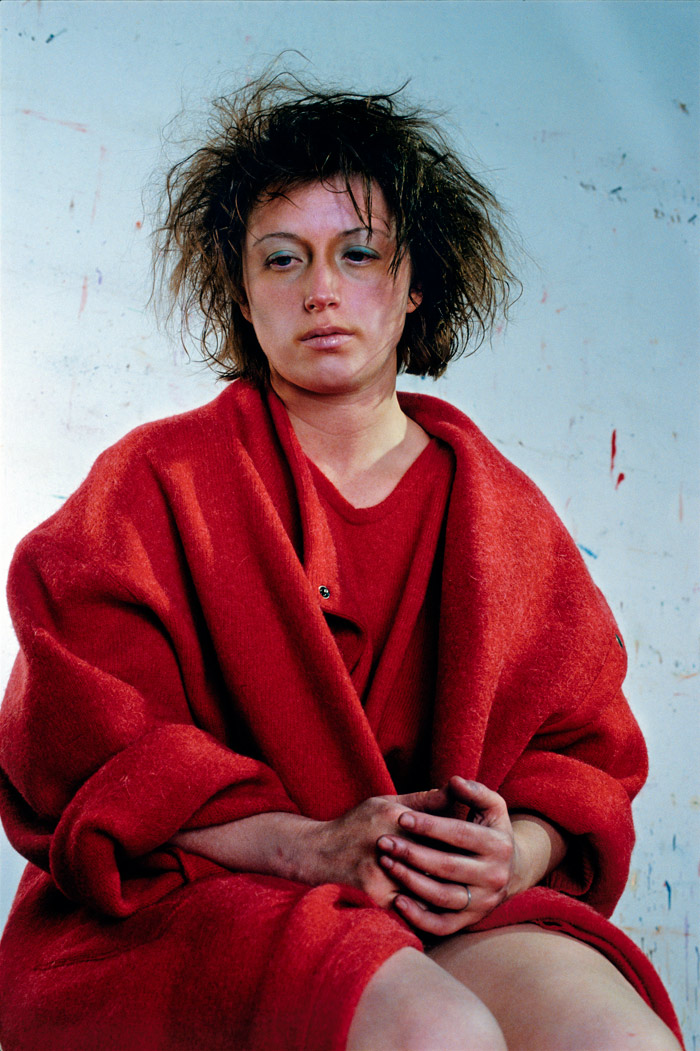
Sherman has explored the experience of ageing in a youth- and status-obsessed society with several bodies of work made since 2000. For her headshots from 2000-2002 (sometimes called Hollywood / Hamptons), the artist conceived a cast of characters of would-be or has-been actors (in reality secretaries, housewives, or gardeners) posing for head shots to get an acting job. With this series, Sherman underscores the transformative qualities of makeup, hair, expression, and pose, and the recognition of certain stereotypes as powerful transmitters of cultural clichés. Her monumental 2008 society portraits feature women “of a certain age” from the top echelons of society who struggle with today’s impossible standards of beauty. The psychological weight of these pictures comes through in the unrelenting honesty of the description of ageing and the small details that belie the attempt to project a certain appearance. In the infinite possibilities of the mutability of identity, these pictures stand out for their ability to be at once provocative, disparaging, empathetic, and mysterious.
Press release from the MoMA website
Cindy Sherman (American, b. 1954) Untitled #193 1989 Chromogenic colour print 48 7/8 x 41 15/16″ (124.1 x 106.5cm) The Doris and Donald Fisher Collection
Cindy Sherman (American, b. 1954) Untitled #213 1989 Chromogenic colour print 41 1/2 x 33″ (105.4 x 83.8cm) Courtesy the artist and Metro Pictures, New York
Cindy Sherman (American, b. 1954) Untitled #216 1989 Chromogenic colour print 87 1/8″ x 56 1/8″ (221.3 x 142.5cm) The Museum of Modern Art, New York. Gift of Werner and Elaine Dannheisser
Gallery 7
Sherman’s history portraits (1988-90) investigate modes of representation in art history and the relationship between painter and model. These classically composed portraits borrow from a number of art-historical periods – Renaissance, baroque, rococo, Neoclassical – and make allusions to paintings by Raphael, Caravaggio, Fragonard, and Ingres (who, like all the Old Masters, were men). This free-association sampling creates a sense of familiarity, but not of any one specific era or style. The subjects (for the first time for Sherman, many are men) include aristocrats, Madonnas with child, clergymen, women of leisure, and milk-maids, who pose with props, costumes, and obvious prostheses. Theatrical and artificial – full of large noses, bulging bellies, squirting breasts, warts, and unibrows – the history portraits are poised between humorous parody and grotesque caricature.
A handful of Sherman’s portraits were inspired by actual paintings. Untitled #224 was made after Caravaggio’s Sick Bacchus (c. 1593), which is commonly believed to be a self-portrait of the artist as the Roman god of wine. In Sherman’s reinterpretation, the numerous layers of representation – a female artist impersonating a male artist impersonating a pagan divinity – create a sense of remove, pastiche, and criticality. Even where Sherman’s pictures offer a gleam of art-historical recognition, she has inserted her own interpretation of the canonised paintings, creating contemporary artefacts of a bygone era.
Wall text from the exhibition
Cindy Sherman (American, b. 1954) Untitled #359 2000 Chromogenic color print 30 x 20″ (76.2 x 50.8cm) Collection Metro Pictures, New York
Gallery 8
After almost a decade of staging still lifes with dolls and props, in her 2000-2002 head-shots series Sherman returned to a more intimate scale and to using herself as a model. The format recalls ID pictures, head shots, or vanity portraits made in garden-variety portrait studios by professional photographers. First exhibited in Beverly Hills, the series explores the cycle of desire and failed ambition that permeates Hollywood. Sherman conceived a cast of would-be or has-been female actors posing for head shots in order to get acting jobs; later, for an exhibition in New York, she added East Coast types. Whichever part of the country they’re from, we’ve seen these women before – on reality television, in soap operas, or at a PTA meeting. With these pictures, Sherman underscores the transformative qualities of makeup, hair, expression, and pose, and the power of stereotypes as transmitters of cultural clichés. She projects well-drawn personas: the enormous pouting lips of the woman in Untitled #360 suggest a yearning for youth, while the glittery makeup and purple iridescent dress worn by the character in Untitled #400 indicate an aspiration to reach a certain social status. In her role as both sitter and photographer, Sherman has disrupted the usual power dynamic between model and photographer and created new avenues through which to explore the very apparatus of portrait photography itself.
Cindy Sherman (American, b. 1954) Untitled #465 2008 Chromogenic colour print 63 3/4 x 57 1/4″ (161.9 x 145.4cm) Whitney Museum of American Art, New York Purchase, with funds from the Painting and Sculpture Committee and the Photography Committee, 2009
Cindy Sherman (American, b. 1954) Untitled #474 2008 Chromogenic colour print 7′ 7″ x 60 1/4″ (231.1 x 153cm) The Museum of Modern Art, New York Acquired through the generosity of an anonymous donor, Michael Lynne, Charles Heilbronn, and the Carol and David Appel Family Fund
Gallery 10
Set against opulent backdrops and presented in ornate frames, the characters in Sherman’s 2008 society portraits seem at once tragic and vulgar. The figures are not based on specific women, but the artist has made them look entirely familiar in their struggle with the impossible standards of beauty that prevail in a youth – and status – obsessed culture. At this large scale, it is easy to decipher the characters’ vulnerability behind the makeup, clothes, and jewellery. The psychological weight of these pictures comes through the unrelenting honesty of their description of ageing, the tell-tale signs of cosmetic alteration, and the small details that belie the characters’ attempts to project a polished and elegant appearance. Upon careful viewing, they reveal a dark reality lurking beneath the glossy surface of perfection. As with much of her work, in her society portraits Sherman has demonstrated a remarkable capacity to channel the zeitgeist. These well-heeled divas presaged the financial collapse of 2008, the end of an era of opulence – the size of the photographs alone seems a commentary on an age of excess. Among the numerous iterations of contemporary identity, these pictures stand out as at once provocative, disparaging, empathetic, and mysterious.
Wall text from the exhibition
Cindy Sherman (American, b. 1954) Untitled #475 2008 Chromogenic colour print 86 3/8″ x 71 1/2″ (219.4 x 181.6cm) The Broad Art Foundation, Santa Monica
Gallery 11
Because the majority of Sherman’s pictures feature the artist as model, they showcase a single character. In the 1970s Sherman experimented with cutouts of multiple figures, in her whimsical 1975 stop-motion animated short film Doll Clothes and her rarely seen 1976 collages, which were achieved through a labor-intensive process of cutting and pasting multiple photographs. When Sherman began working digitally in the early 2000s, she was able to more easily incorporate multiple figures in one frame, allowing for a variety of new narrative possibilities. Where the early works chart the movements and gestures of a single character through space, the multiple figures in recent works interact with one another to create tableaus.
Wall text from the exhibition
The Museum of Modern Art 11 West 53 Street New York, NY 10019 Phone: (212) 708-9400
Opening hours: 10.30am – 5.30pm Open seven days a week
Curators: Clément Chéroux, Sam Stourdzé, and Anne Lacoste
Artists: Jean-Michel Alberola, Louis Aragon, Marie-Berthe Aurenche, Richard Avedon, Alain Baczynsky, Jared Bark, Marc Bellini, Jacques-André Boiffard, André Breton, Hansjürg Buchmeier, Anita Cruz-Eberhard, Sabine Delafon, Anne Deleporte, Paul Eluard, Max Ernst, Michael Fent, Michel Folco, Valentine Fournier, Lee Friedlander, Näkki Goranin, Jeff Grostern, Susan Hiller, Dick Jewell , Svetlana Khachaturova, Jürgen Klauke, Jacques-Henri Lartigue, Naomi Leibowitz, Leon Levinstein, Annette Messager, Willy Michel, Daniel Minnick, Suzanne Muzard, Raynal Pellicer, Mathieu Pernot, Steven Pippin, Jacques Prévert, Raymond Queneau, Arnulf Rainer, Timm Rautert, Bruno Richard, Gerhard Richter, Thomas Ruff, Michel Salsmann, Tomoko Sawada, Joachim Schmid, Cindy Sherman, Lorna Simpson, Dimitri Soulas, Yves Tanguy, Amanda Tetrault, Roland Topor, Franco Vaccari, Andy Warhol, Gillian Wearing, Jan Wenzel, David Wojnarowicz and the group Fluxus.
This is one exhibition I wish I could really see in person. Such a fascinating subject!
The images are timeless, contextless and quite beguiling.
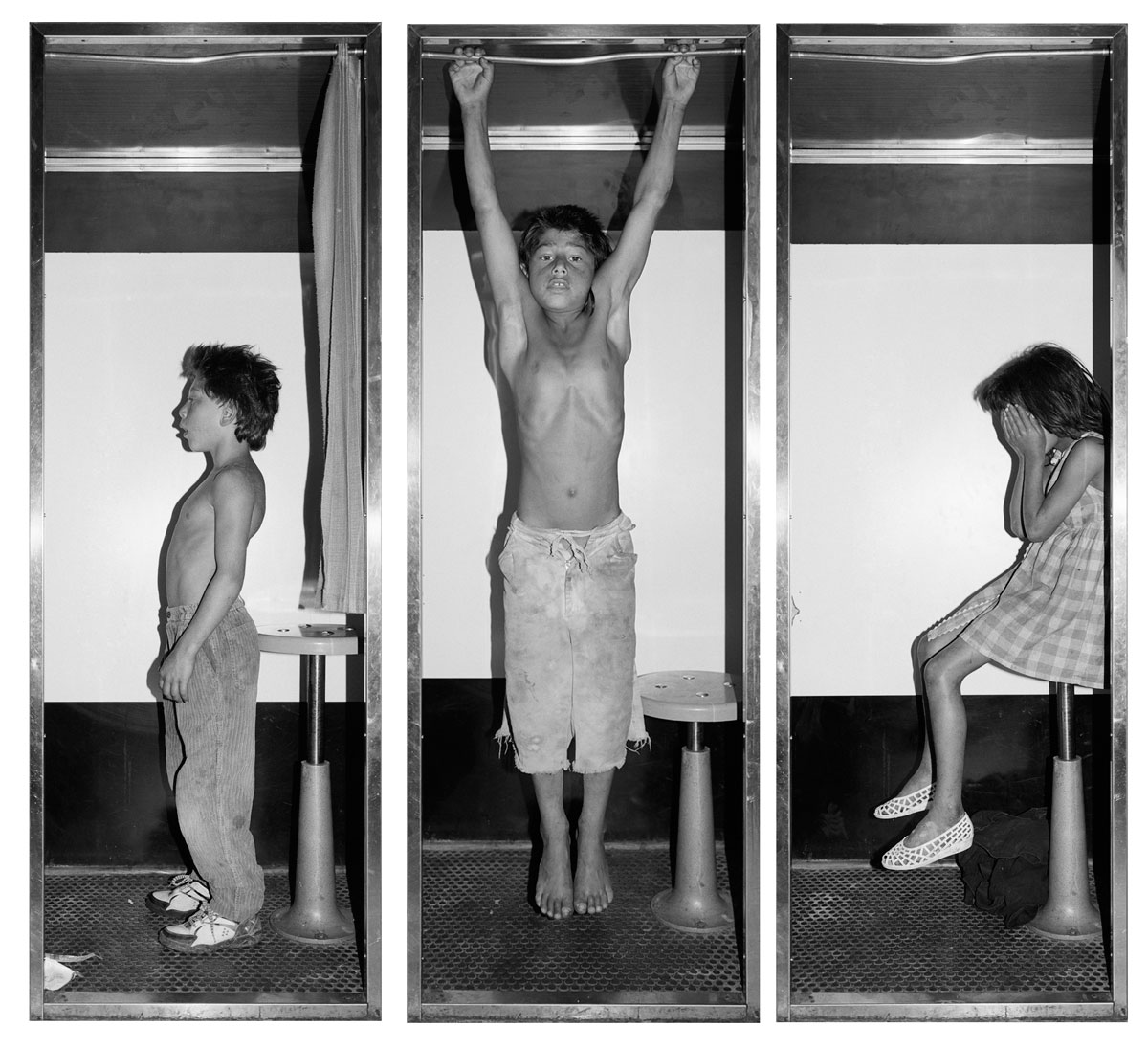
The exhibition questions the aesthetics of the photobooth through six major themes: The Booth, Automatism, The Strip, Who Am I?, Who Are You?, Who Are We?. In Melbourne there are still two black and white photobooths outside the Elizabeth Street exit of Flinders Street railway station, standing there like silent sentinels of a bygone age. I remember when I was younger queueing to have my photograph taken, for student cards and for my first passport. You needed two nearly identical black and white shoulder up portraits, no smiling, no glasses on. Now you just go to the chemist for your colour renditions. The magic and the fun has gone.
The whole performance has the illusion of the cinematic. You queue to get in, drawing back the curtain and closing it behind you, as they close the doors of the cinema. The privacy of the booth, not in darkness but behind a curtain that shields your face from prying eyes but leaves the lower half of your body exposed. Behind where you will be sitting another curtain – drawn or open? What background do you want? You adjust the seat up and down so that your face is at the correct level with the mark on the screen, enter your money and wait. The red light comes on, you (com)pose yourself and a couple of seconds later: flash! Your eyes try to recover in time for the next red light: flash!
Time seems to slow down and almost stop between the flashes of light. The experience of your performance before the screen possesses such a visceral, tense, gut feel but also a disembodied feeling. I never know how I am going to look on the cinematic film strip, not at 24 frames a second, but at 4 frames per minute. What happens to the time in between?
Standing outside the booth waiting for a strip of paper with your impression on it, not knowing what the images are going to be like, whether the development of the image in such a short space of time has worked correctly – and the smell of the chemicals on the paper as you handle the still wet strip. Magic…
Dr Marcus Bunyan
Many thankx to the Musée de l’Elysée for allowing me to publish the photographs in the posting. Please click on the photographs for a larger version of the image.
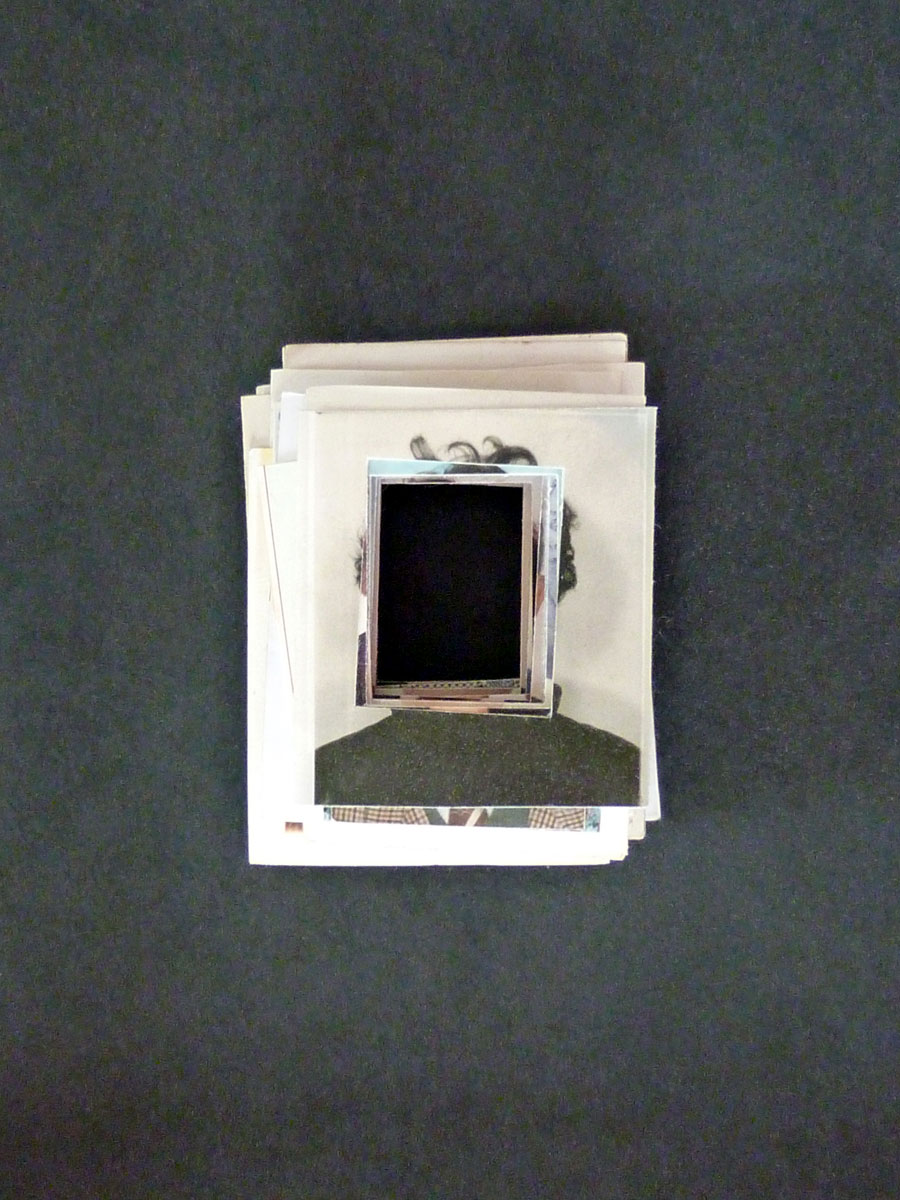
When the first photobooths were set up in Paris in 1928, the Surrealists used them heavily and compulsively. In a few minutes, and for a small price, the machine offered them, through a portrait, an experience similar to automatic writing. Since then, generations of artists have been fascinated by the concept of the photobooth. From Andy Warhol to Arnulf Rainer, Thomas Ruff, Cindy Sherman and Gillian Wearing, many used it to play with their identity, tell stories, or simply create worlds.
Behind the Curtain – the Aesthetics of the Photobooth, an exhibition created by the Musée de l’Elysée, is the first to focus on the aesthetics of the photobooth. It is divided into six major themes: the booth, the automated process, the strip, who am I ?, who are you?, who are we? Provider of standardised legal portraits, it is the ideal tool for introspection and reflection on others, whether individually or in groups. By bringing together over 600 pieces made on different media (photographs, paintings, lithographs and videos ) from sixty international artists, the exhibition reveals the influence of the photobooth within the artistic community, from its inception to the present day.
The exhibition questions the aesthetics of the photobooth through six major themes.
The Booth
An isolated space, closed in as if it were some sort of modern confessional, the photobooth is an invitation to the most intimate revelations. Generally located in public spaces-subway station, department store or train station-it also offers an extraordinary observation point onto the urban hustle and bustle. It is a world in between the intimate and the public, the inside and the outside, the debarred and the open.
Automatism
From the Surrealists to the most contemporary artists, all have been fascinated by the automatism of the photobooth. The machine does the work. The author vanishes behind the almighty technology. Malfunction can occur at times. The result is a form of poetry of the automatism made visible in its faults, failures or blunders.
The Strip
As a series of juxtaposed images, the strip recreates spatial or temporal continuities. It reconstructs improbable spaces: a closer look shows that, in fact, the adjacent image is the following image. Through this succession of images, the photobooth holds, as if folded into it, the principle of the cinema. Putting images side by side is already telling a story.
Who am I?
Identity is embodied within the space of the photobooth. It is a space for self-staging, where social, ethnic, sexual, community or any other identity can be strengthened or undone. One can pretend to ascertain one’s naked identity through the mirror of the photobooth, or on the contrary, by pulling faces or in disguise, to establish metamorphoses of the self. The photobooth is the ideal introspective tool.
Who are you?
The photobooth is not only a place suitable for self-reflection, it is also a place in which the other can be questioned, in particular through the legal identification system that delivers what is commonly referred to as ‘ID’. In devoting oneself to the compulsive and bulimic collecting of photobooth strips, one can also get lost in the faces of others.
Who are we?
While it allows us to reflect upon our own identity, or other people’s, the photobooth is also an opportunity to ponder about the nature of the couple, or the group. Inside the booth, some build their image through the mirror of the other, or of others; they pose in pairs or more, thus asserting their affiliation to a social entity. The photobooth reinforces our gregarious instinct; it embodies collective identity.
With works by Jacques-Henri Lartigue, Willy Michel, Lorna Simpson, Amanda Tetrault and the collection of albums of purikuras (see photograph below: in Japan, the name purikuras refers to a photo sticker booth or the product of such a photo booth. The name is a shortened form of the registered trademark Purinto Kurabu (プリント倶楽部). The term derives from the English print club. Jointly developed by Atlus and Sega, the first purikura machines were sold in July 1995).
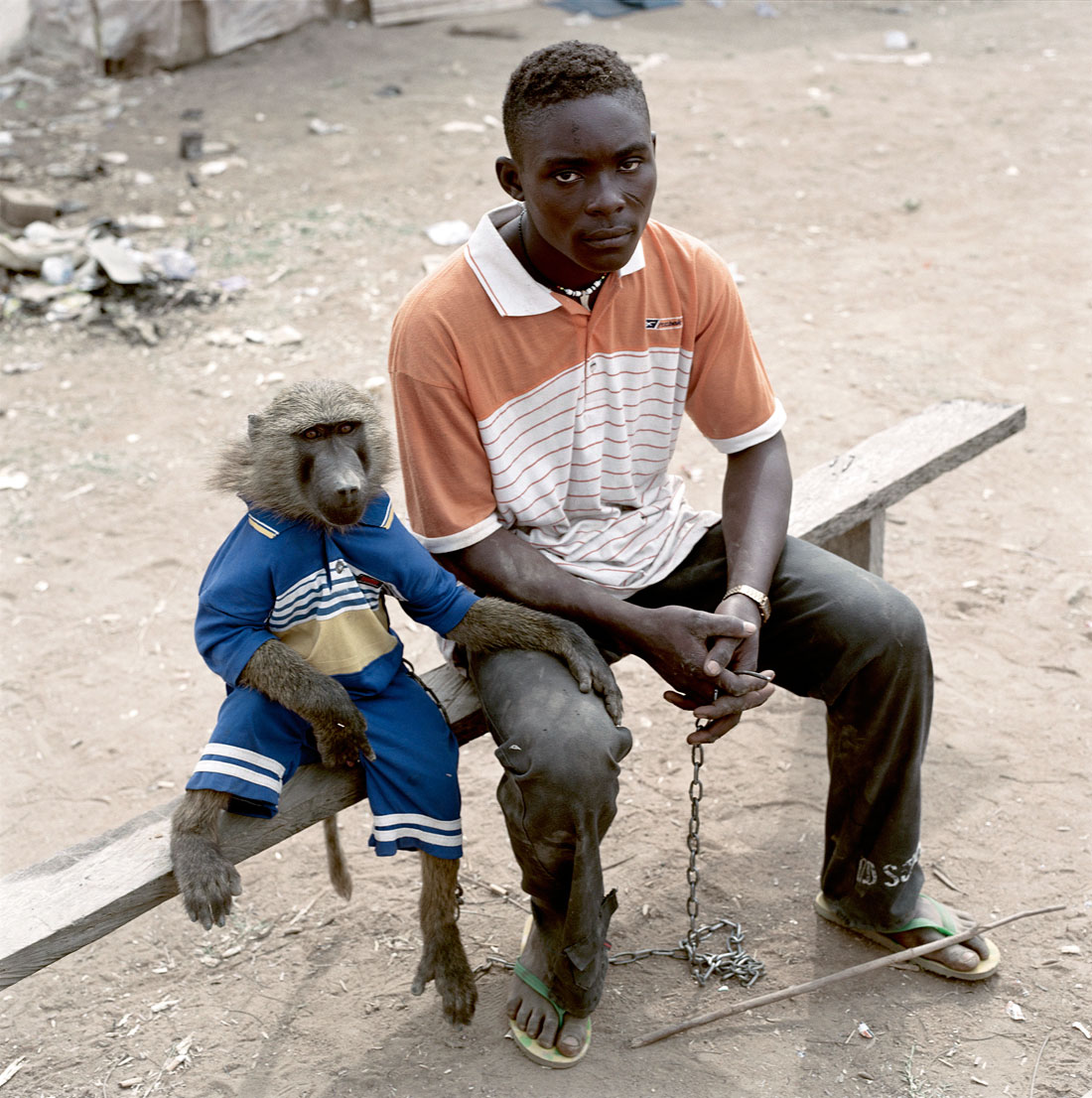
The hand of the monkey Clear on the thigh of Dayaba Usman (see photograph below) – and the look on his face – makes us wonder who is really in chains.
Dr Marcus Bunyan
Many thankx to the Hague Museum of Photography for allowing me to publish the photographs in the posting. Please click on the photographs for a larger version of the image.
The South African photographer Pieter Hugo’s (b. 1976) monumental photographs, centred around contemporary Africa, are now well known around the world. He has already won numerous awards including the KLM Paul Huf award in 2008 and was recently nominated for the Deutsche Börse Photography Prize 2012. The Hague Museum of Photography will be the first museum to exhibit a comprehensive survey of Hugo’s work from 2002-2011. Together with many previously unseen works, the exhibition will include a curated selection of his most well-known series: The Hyena & Other Men, the bizarre Nollywood and the striking Permanent Error. His impressive portraits tell personal stories about recurring themes throughout his oeuvre, namely those people who inhabit the margins of society in Sub-Saharan Africa. The differences between the West and Africa, rich and poor, white and black are confronted in Hugo’s vivid compositions. Many of his series are prompted by newspaper articles, or radio and television pieces, which he finds compelling. He came in contact, for instance with the group of men who travel around Nigeria with hyenas and pythons, through an image sent via cell phone camera by a friend. He decided to accompany the group on their travels, and the outcome of this experience is The Hyena & Other Men (2005-2007), a series of portraits from a travelling group of street performers, who together with their – sometimes forcefully – tamed animals earn money to continue travelling.
In the series Permanent Error (2009-2010) he offers portraits of young men and woman who live amidst an immense waste dump of broken computers, mother boards and keyboards. To earn money these young people burn the computers dumped here as a means to extract valuable metals. The dangerous and poisonous vapours produce a hell on earth, where the quality of life is already challenging. The people who pose for Hugo stand in front of the camera with a defiant self-confidence.
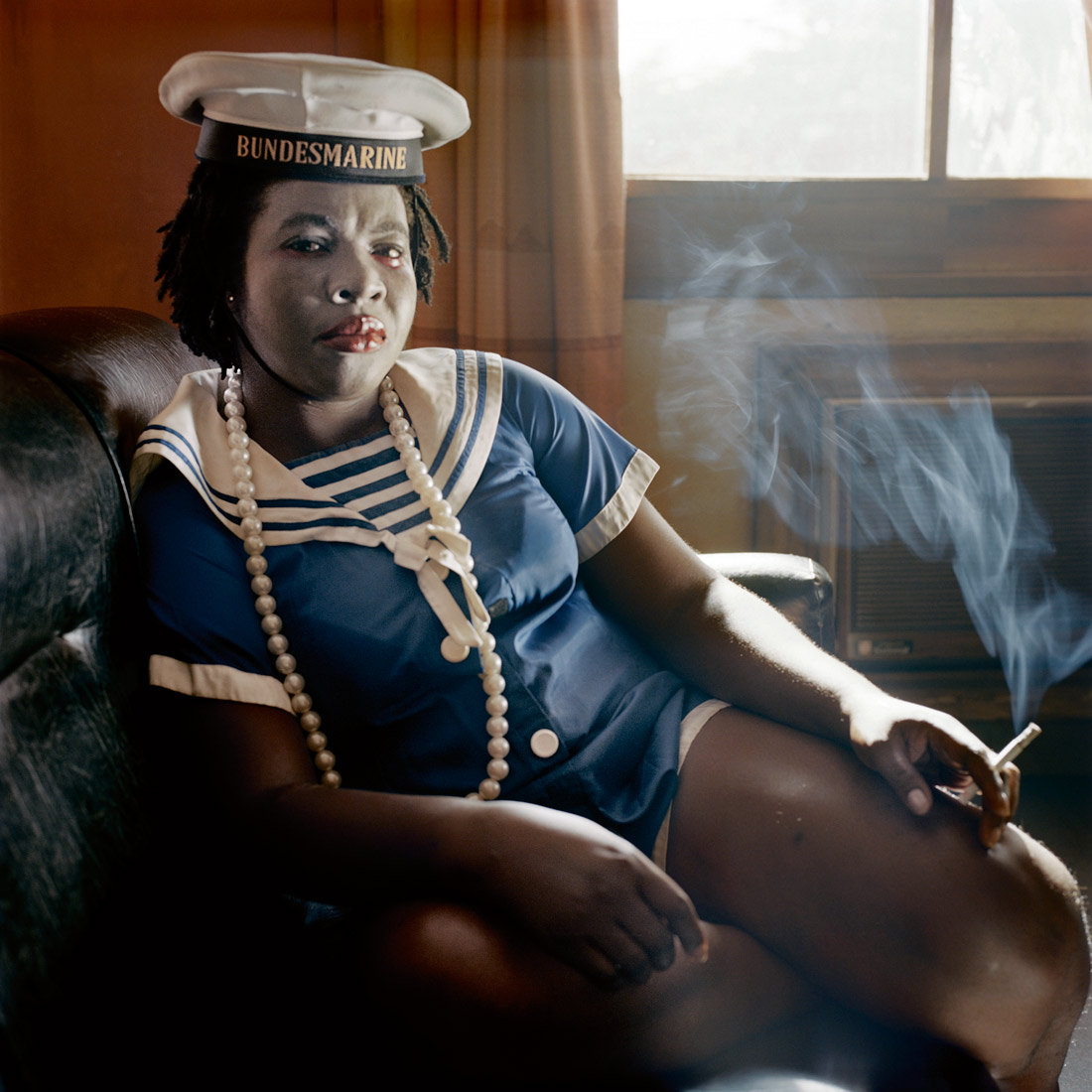
From a different perspective comes his series about Nollywood (2008-2009) in Nigeria, the biggest film industry in the world after Hollywood and Bollywood. Here, stories that have for centuries been part of an oral tradition are told in dramatic films in which a central role is reserved for themes such as romance, witchcraft, bribery and prostitution. It is this world, where the everyday and the surreal exist simultaneously, that Hugo finds fascinating. In this series Hugo depicts actors and assistants posing in the role of movie characters. The result is an absurd tableau such as a photo of a half-naked woman sitting on a bed with a bloody knife stuck between her breasts. All the while she stares blankly at the camera. In another image, a woman well-dressed in Nigerian clothing sits completely unfazed by the man next to her made-up as the devil.
Press release from The Hague Museum of Photography website
Curators: curatorial intern Fabian Leyva-Barragan and assistant curator Stephanie Cannizzo.
PLEASE NOTE: This posting contains nude photographs. If you do not like please do not look!
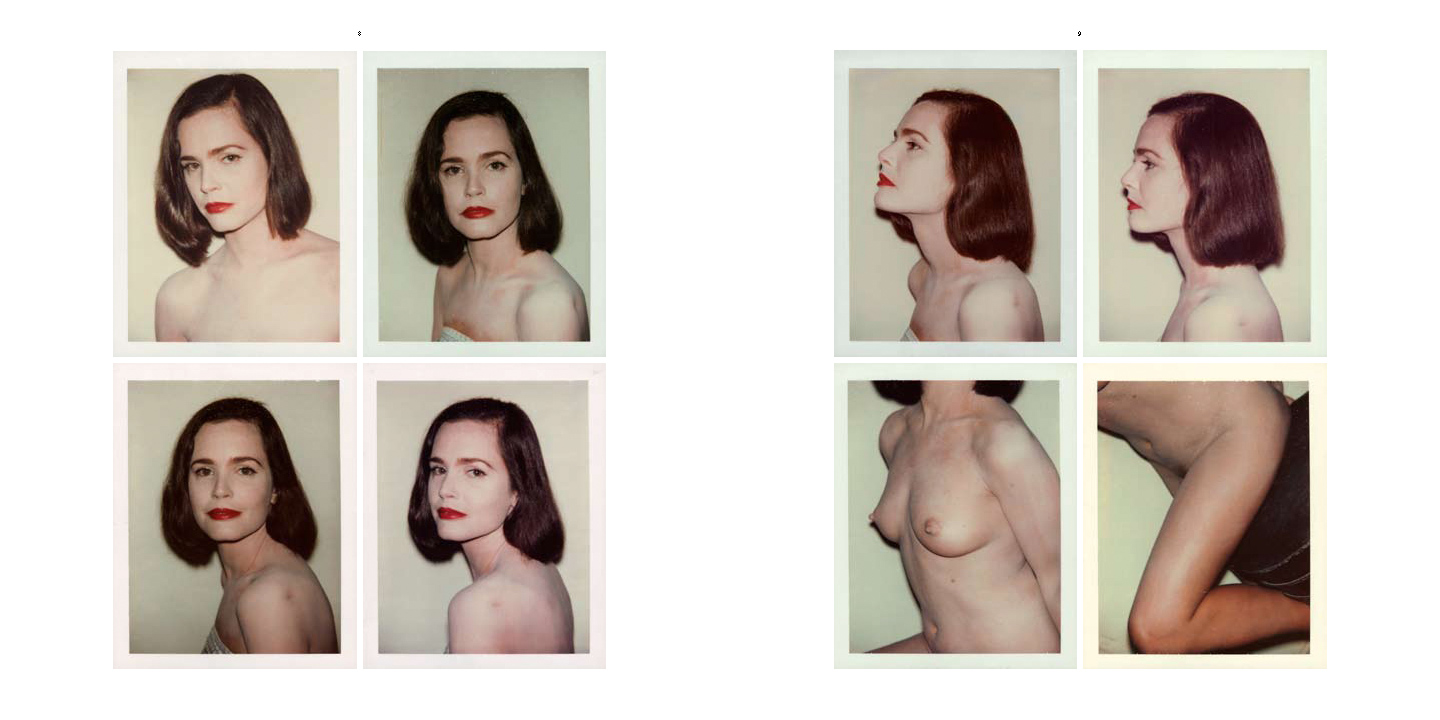
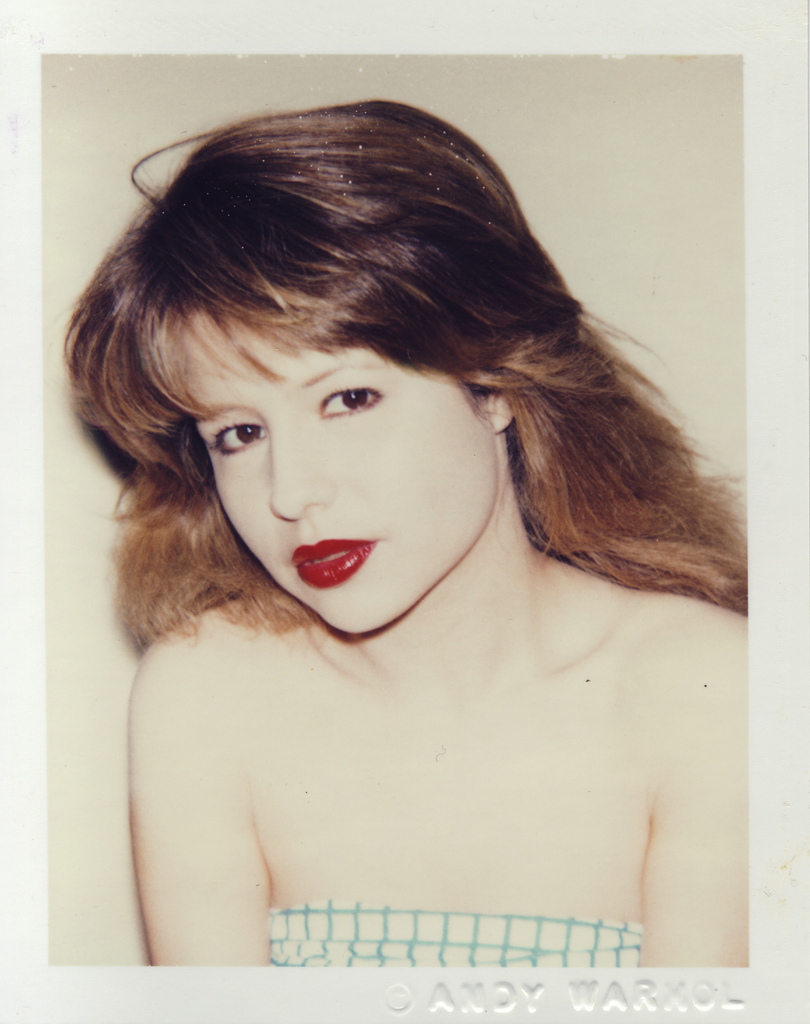
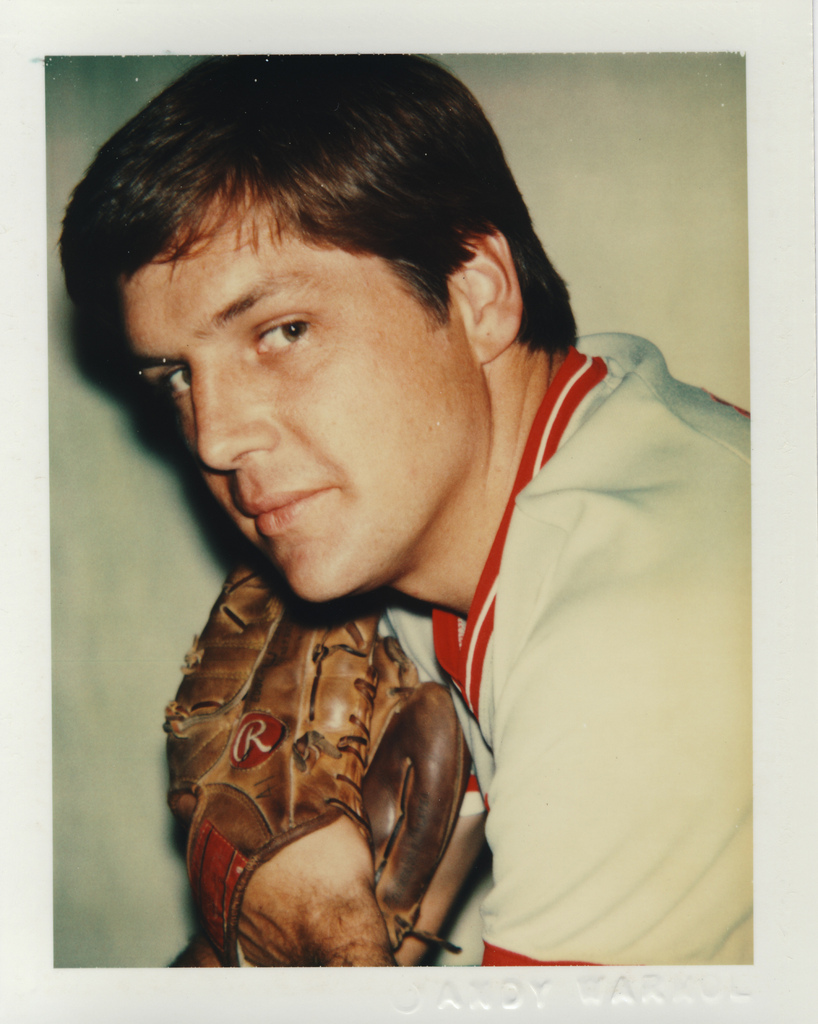
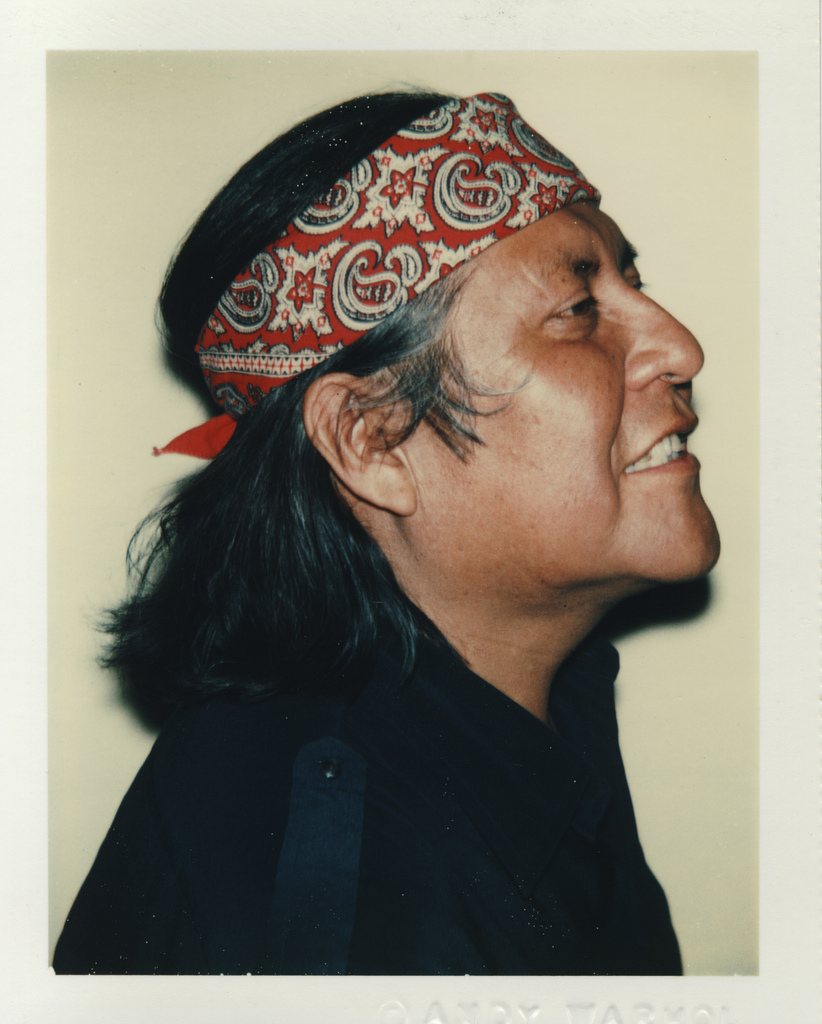
Andy Warhol (American, 1928-1987) Untitled Pages 8 and 9 of The Andy Warhol Photographic Legacy Program, Vol. III of The Andy Warhol Foundation for the Visual Arts Twenty-Year Report, 1987-2007
ONE PERSON has found one of the images below offensive; so just for them please note that his posting has a PENIS and A-RRRRRR-SE rating. For all others, enjoy another spectacular Andy posting!
“I’ve never met a person I couldn’t call a beauty.”
Andy Warhol
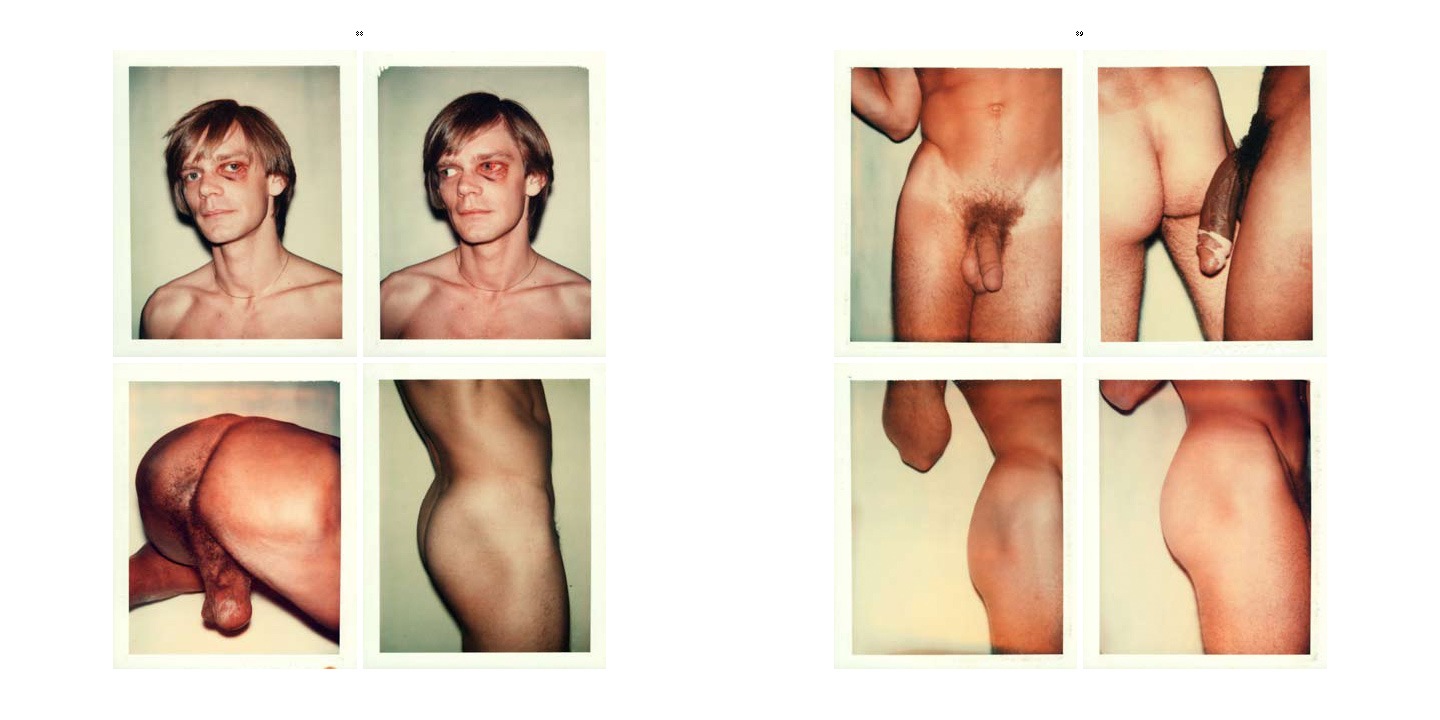
Andy Warhol (American, 1928-1987) Untitled Pages 38 and 39 of The Andy Warhol Photographic Legacy Program, Vol. III of The Andy Warhol Foundation for the Visual Arts Twenty-Year Report, 1987–2007
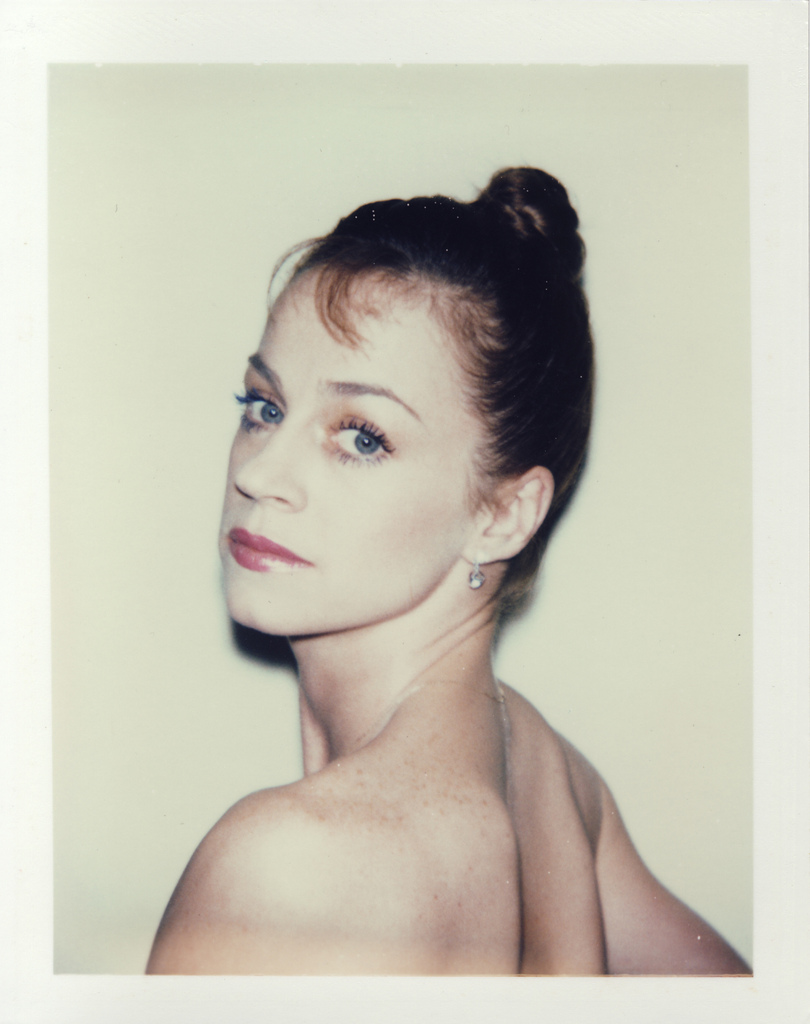
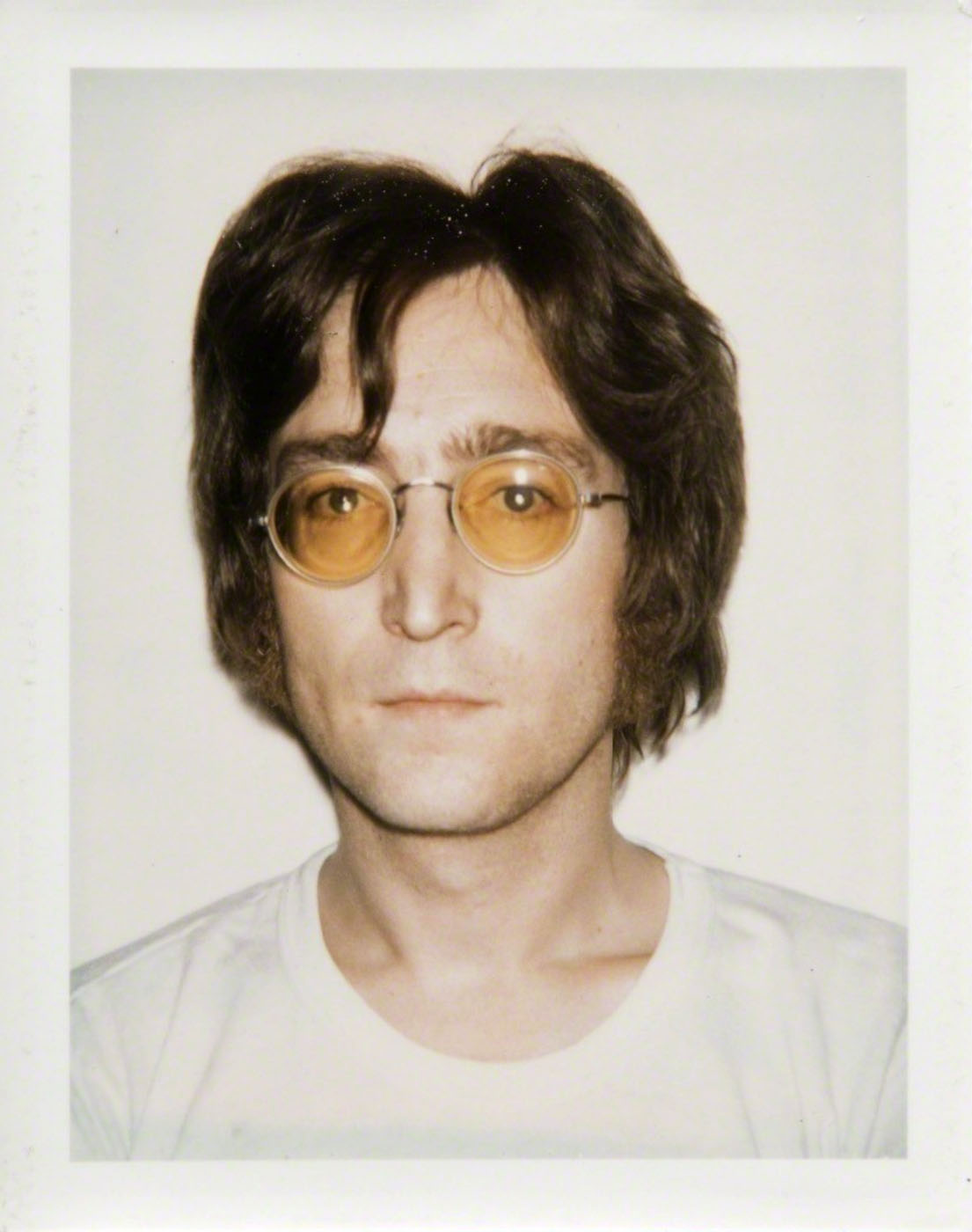
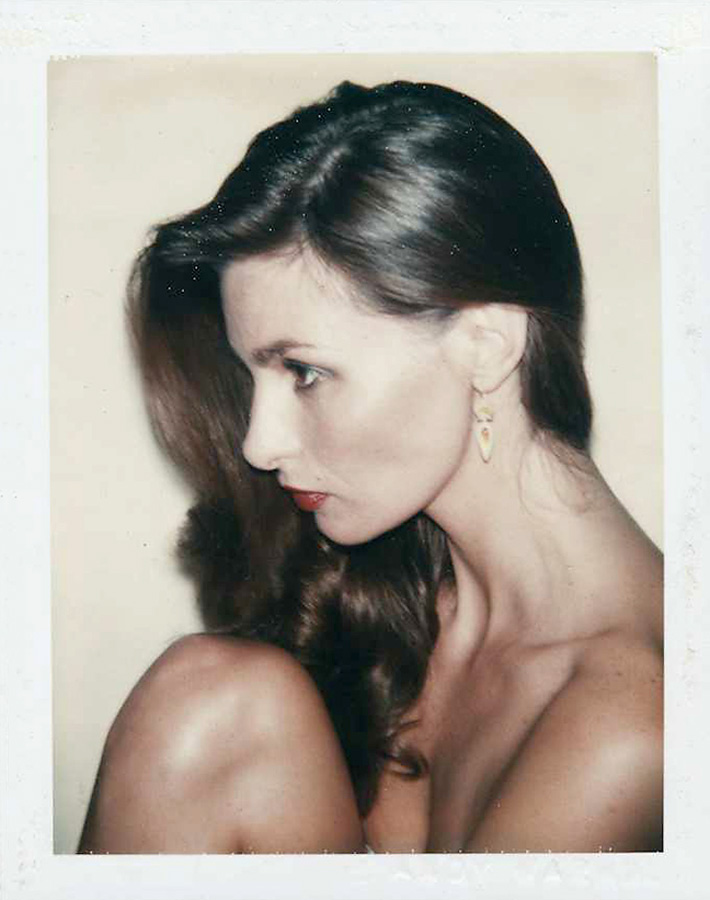
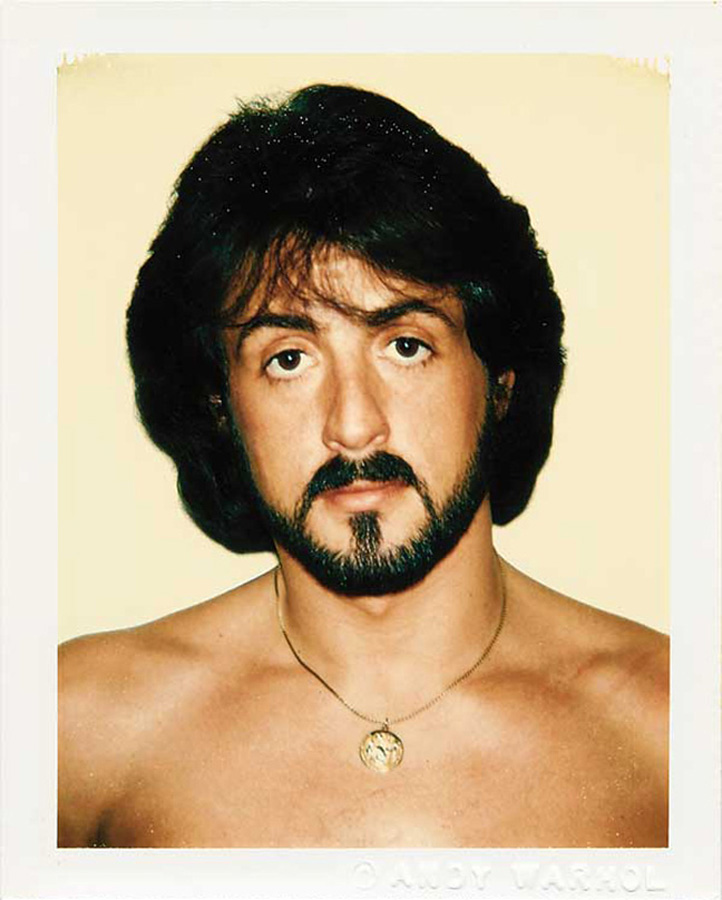
The University of California, Berkeley Art Museum and Pacific Film Archive presents Andy Warhol: Polaroids / MATRIX 240. The exhibition features a selection of Warhol’s Polaroid portraits drawn from an extraordinary gift of The Andy Warhol Foundation for the Visual Arts to the museum. From 1970 to 1987, Warhol, armed with his Polaroid Big Shot camera, captured a wide range of individuals – the royalty, rock stars, executives, artists, patrons of the arts, and athletes who epitomised seventies and eighties high society, but also as many unknown subjects. From January 27 through May 20, 2012, BAM/PFA will feature a group of approximately forty of these photographs, including portraits of Caroline, Princess of Monaco; Diane von Furstenberg; and O.J. Simpson.
Famous for his contributions to Pop Art, Warhol used photography as a central part of his art-making process. Before turning to fine art, Warhol worked in advertising and commercial art, experiences that informed his approach to portraiture. In 1962, he debuted his first silkscreen paintings of celebrities, serialising pictures he pulled from magazines and press photos. In addition to using found images, Warhol eventually incorporated his own photography into his practice. In 1969 he launched inter/View magazine, which featured his photos of celebrities. By the 1970s and 1980s, portrait commissions were a major source of his income, and many of his Polaroids would serve as the basis for these works.
While each of the images in Andy Warhol: Polaroids is unique, the consistency of composition, poses, and plain white backdrop equalises the superstars and lesser-known subjects. To Warhol, they were all beautiful people. But even within this uniform staging, we see the artist finding numerous ways to create memorable, varied, and iconic compositions. Though these photos may be small in size, together the Warhol Polaroids provide a glimpse into the artistic process of one of the twentieth century’s most important artists.
From 1970 to 1987 Andy Warhol took scores of Polaroid and black-and-white photographs, the vast majority of which were never seen by the public. These images often served as the basis for his commissioned portraits, silk-screen paintings, drawings, and prints. In 2007, to commemorate its twentieth anniversary, the Andy Warhol Foundation for the Visual Arts launched the Andy Warhol Photographic Legacy Program. Designed to give a broad public greater access to Warhol’s photographs, the program donated over 28,500 of Warhol’s original Polaroids and gelatin silver prints to more than 180 college and university museums and galleries across the country. Each institution received a curated selection of over one hundred Polaroids and fifty black-and-white prints.
The number of images he took at each session varied as greatly as the figures he photographed. Repetition, a recurring motif in Warhol’s paintings, plays both a conceptual and practical role in his photography. By making several Polaroids, he had more material from which to work. By shooting at length, more about the sitter was exposed. Seen all together, the Polaroids destabilise the iconic status that a Warhol image assumes when displayed singly. On its own, a Polaroid image is fully identified with the artwork that ultimately grew out of it; the face depicted becomes a kind of signifier for larger cultural concepts of beauty, power, and worth.
Text adapted from “Andy Warhol’s Photographic Legacy,” in The Andy Warhol Photographic Legacy Program, Vol. III of The Andy Warhol Foundation for the Visual Arts Twenty-Year Report, 1987-2007 (New York: The Andy Warhol Foundation for the Visual Arts, Inc, 2007), 4-5.
From 1970 to 1987 Andy Warhol took thousands of Polaroid pictures, the vast majority of which were never seen by the public. These images often served as the basis for his commissioned portraits, silkscreen paintings, drawings, and prints. Warhol captured a wide range of individuals with his Polaroid Big Shot camera. The royalty, rock stars, industrialists, artists, patrons of the arts, and athletes who epitomised 1970s and 1980s high society, as well as unknown sitters, are represented with a sense of dignity and verve. Warhol was interested in a new definition of “Society” that emerged in this period. In the introduction to the 1979 publication Andy Warhol’s Exposures, the artist wrote:
“Now it doesn’t matter if you came over on the Mayflower, so long as you can get into Studio 54. Anyone rich, powerful, beautiful, or famous can get into Society. If you’re a few of those things you can really get to the top.”1
Warhol’s images not only documented, but participated in, the creation of this new social world, satisfying both the need of his subjects to be seen and the desire of the viewer to gain access to this milieu through the act of looking. Warhol worked in advertising and commercial art before turning to fine art, experiences that informed his approach to portraiture. In 1962, he debuted his first silk-screen paintings of celebrities, serialising pictures appropriated from magazines or press photos of the time. In addition to employing found images, Warhol eventually incorporated photography into his practice and, in 1969, started a magazine (originally called inter/VIEW) that often featured his own photographs of celebrities. By the 1970s and 1980s, portrait commissions became a main source of his income.
Warhol’s Polaroids are strikingly intimate, an effect achieved in part by his personal relationship with the sitters and in part by formal aspects of the images. The artist often provided a luncheon in advance of the photo session, establishing a bond with his subject and a tone for the shoot. In the resulting Polaroids, the sitter is in direct eye contact with Warhol and the camera. The strong sense of immediacy created by the sitter’s open gaze is enhanced by the tight compositions in which the subject, pressed up close to the picture plane, is isolated from any context. A feeling of vulnerability appears in some of the portraits (as suggested by the bared shoulders of Unidentified woman (blond with bangs), for example), indicating a willingness to be exposed as well as the seductive nature of the artist and the photo shoot itself. The closeness forged between photographer and sitter and captured by the camera offers an illusion of sharing these private moments and of entering into Warhol’s circle of beautiful people and their glamorous lives.
While each image is unique, the consistency of composition, poses, and plain white backdrop equalises the celebrities and the unknown subjects of Warhol’s Polaroids. After all, to Warhol, they were all beautiful people. Polaroids of individuals who are not immediately recognisable pique our curiosity. Who is the enigmatic Frau Buch? Like many of Warhol’s subjects, she is photographed with a prop. The small dog that she hugs may not identify her, but it suggests a dimension of her personality. In other Polaroids, Warhol used props as identifying elements like the attributes in Renaissance portraiture – major-league baseball pitcher Tom Seaver is shown with his mitt and NFL legend O.J. Simpson clutches a football. The teddy bear in the arms of the subject of Unidentified girl (blue t-shirt with teddy bear) represents an aspect childhood that everyone can relate to, although the girl is actually a scion of the new high society: Jade, the daughter of Mick and Bianca Jagger.
Warhol’s Polaroids were designed to be source material for his canvases. He would direct the sitter in a series of poses, which gave the artist ample material from which to create the subsequent silkscreen portraits. Subjects such as fashion designer Diane Von Furstenberg and patron of the arts Daryl Lillie are photographed wearing thick white makeup, black eyeliner, and bright red lipstick that evoke the stage or a high-fashion photo shoot; however, the makeup also served to flatten the images for a smooth effect in the screen-print transfer. The Polaroid Big Shot’s strong flash overexposes many images and increases the contrast, an effect Warhol deployed in the subsequent silkscreens; the flash also seems to catch each sitter – celebrities and unknowns alike – in the sudden glare of a paparazzo’s camera.
Warhol’s Polaroids borrow from paparazzi and high-fashion photography and at the same time elevate an inexpensive, everyday medium to the realm of high art. Warhol embossed his name in capital letters in the lower right-hand border of most of the Polaroids, marking them as a painter would sign a canvas. For Warhol, coming from the world of advertising, this was also a kind of branding. He wrote of Jade Jagger: “She never calls me Andy always Andywarhol, as if it were one word – or a brand name, which I wish it were.”2 Warhol’s portraits confuse the boundaries of advertising and art, high and low, celebrity portraiture and the depiction of everyday people, and even photography and painting. His subjects are perpetually illuminated by the afterimage of a flashbulb, their faces immortalised by Warhol’s style
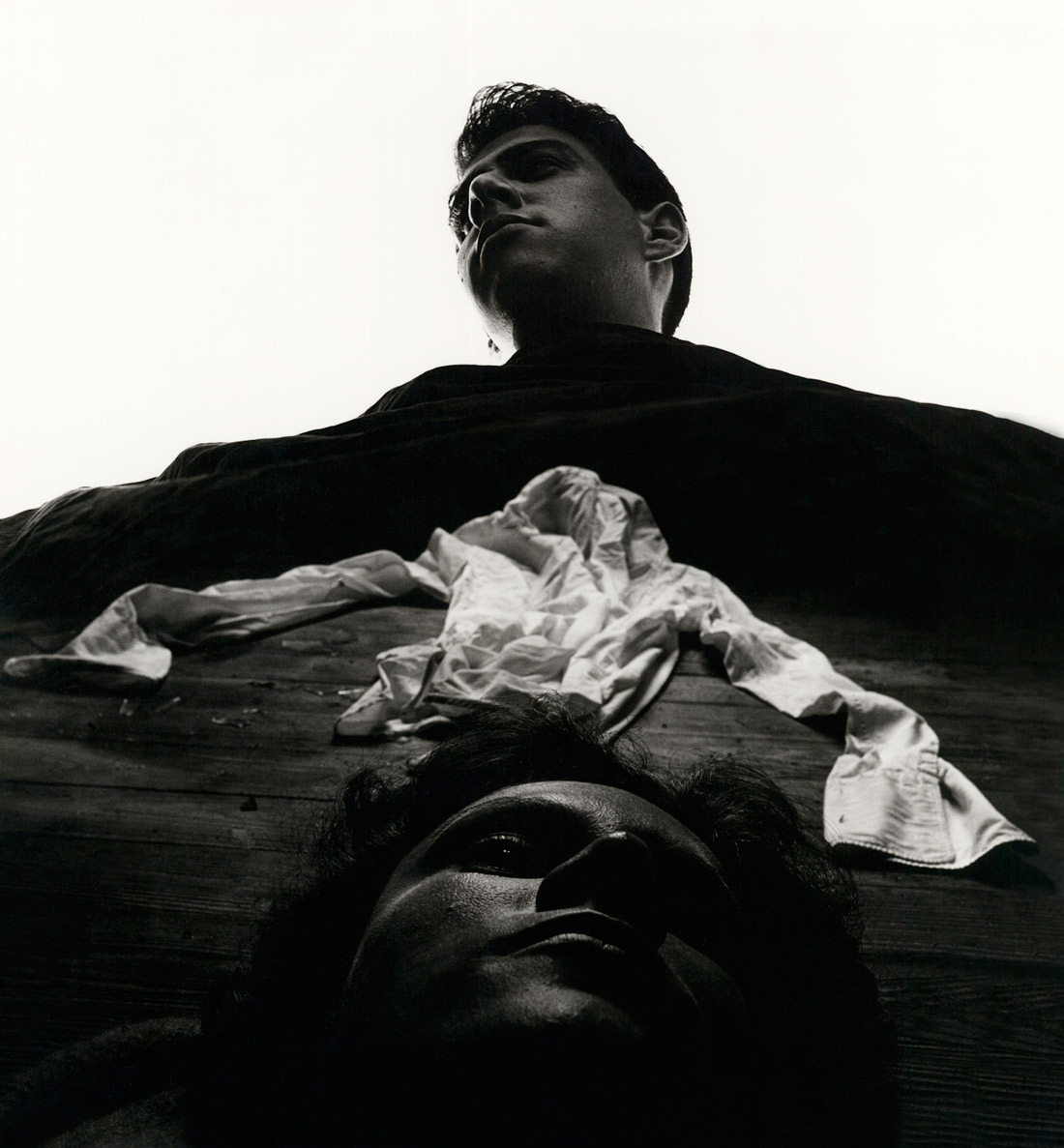
More wonderful photographs from this magnificent photographer as featured in this touring exhibition. It is invaluable to see other images from the artist’s oeuvre (especially early work from the 1950s to observe thematic development), not just the most famous of the surreal montages. Untitled (1966, below) is an absolute ripper that I have never seen before while Untitled (1959, bottom) is as disturbing in a fantastical way as any of Joel-Peter Witkins’ theatrical tableaux vivant.
See my other posting on this exhibition from the Harn Museum of Art, Florida.
Dr Marcus Bunyan
Many thankx to the Peabody Essex Museum for allowing me to publish the photographs in the posting. Please click on the photographs for a larger version of the image.
Beautiful and surreal, funny and provocative, the photographs of Jerry Uelsmann are icons of American photo history. The Peabody Essex Museum (PEM) presents the first retrospective of Uelsmann’s work in over 30 years. The Mind’s Eye: 50 Years of Photography by Jerry Uelsmann features 90 works spanning the artist’s celebrated and wide-ranging career, with well-known works shown alongside never-before-seen recent images.
As a pioneer of contemporary photography and master of experimental darkroom technique, Uelsmann has continuously pushed the creative and technical boundaries of photography, revealing new visual possibilities and critical considerations for the medium. In the late 1950s, Uelsmann began experimenting with multiple enlargers and advanced masking, diffusing, burning and dodging techniques, to create imaginary images in the darkroom decades before the advent of Photoshop. Uelsmann’s ingenious work references Surrealists like Rene Magritte, Max Ernst, and Man Ray, as well as Modern photographers such as Edward Weston and Ansel Adams. He has spent his career advocating for the acceptance of experimental photography as an art form.
“For more than half a century, Uelsmann has challenged conventional ideas about what photography can and should do,” said Phillip Prodger, exhibition curator and PEM’s curator of photography. “Uelsmann’s pictures provide a valuable touchstone for understanding new trends in photographic art. His ideas and example have become ever more relevant as photography embraces Photoshop and other computer technologies for altering and manipulating photographs.”
The Mind’s Eye presents works drawn from the artist’s personal archive of vintage materials and, in addition to photographic prints, includes a selection of three-dimensional photographic sculptures, films, artist’s books, albums and work prints to give viewers first-hand insight into Uelsmann’s creative process and expressive range. Through experimental techniques, Uelsmann has explored universal themes of relationships, family, home and politics by creating unexpected and surprising juxtapositions.
“My visual quest is driven by a desire to create a universe capable of supporting feelings and ideas,” said Jerry Uelsmann. “I am drawn to art that challenges one’s sense of reality.”
Born in Detroit in 1934, Uelsmann received a Bachelor of Fine Arts from the Rochester Institute of Technology in 1957 and Master of Science and Master of Fine Arts degrees from Indiana University in 1960. He is recently retired from the faculty of the University of Florida, which he joined in 1960. Uelsmann received a National Endowment for the Arts Fellowship and a Guggenheim Fellowship. In 1967 he had his first solo exhibition at the Museum of Modern Art, New York.
“These images unsettle our idea of Oztraliana, our perceived sense of Self and our place in the world.” Dr Marcus Bunyan
Exhibition dates: 25th April – 12th May, 2012
Curator: the artist
Jane Brown (Kuwait, Australia, b. 1967) Big Trout, New South Wales 2010 Museo silver rag print 59 x 46cm
As you should know by now, this archive tries to promote the work of less well known artists and subject matter. So instead of concentrating on the wonderful aerial bushfire photographs of the well-known artist John Gollings (showing in the same gallery in different spaces with the work of Michael Norton) I have decided to do a posting on the exhibition Australian Gothic by Jane Brown.
This is a good exhibition of small, darkly hewn, traditionally printed silver gelatin photographs, beautifully hung in the small gallery at Edmund Pearce and lit in the requisite, ambient manner. There are some outstanding photographs in the exhibition.
The strongest works are the surrealist tinged, film noir-ish mise-en-scènes, the ones that emphasise the metaphorical darkness of the elements gathered upon the stage. Photographs such as Big Trout, The Female Factory, Adelong, New South Wales and Captain’s Flat Hotel, New South Wales really invoke a feeling of unhomely (or unheimlich), where nature is out of kilter.
These images unsettle our idea of Oztraliana, our perceived sense of Self and our place in the world. They disrupt normal transmission; they transmutate the seen environment, transforming appearance, nature and form.
Less successful in this quest are the bushfire landscapes. I feel these add little to the narrative thread of the exhibition and could have easily been left out in a judicious cull of the photographs. This would have made the overarching story line stronger still.
One of the best photographs in the exhibition is Lathamstowe (2011, below). This dark, brooding, intense photograph is a beautifully realised visualisation, one that balances scale, tone, light, form and darkness to create a haunting image that stays with you a long time after you have seen it. This one images says it all: the artist has talent. More please!
Dr Marcus Bunyan
Many thankx to Edmund Pearce Gallery for allowing me to publish the photographs in the posting. Please click on the photographs for a larger version of the image.
Jane Brown (Kuwait, Australia, b. 1967) Bushfire Landscape I 2011 Fibre based, silver gelatin print 16.5 x 20.5cm
Jane Brown (Kuwait, Australia, b. 1967) Bushfire Landscape II, Lake Mountain, Victoria 2010 Fibre based, silver gelatin print 16.5 x 19.5cm
Jane Brown (Kuwait, Australia, b. 1967) The Female Factory (convict women’s prison), Ross, Tasmania 2009 Fibre based, silver gelatin print 15.8 x 19.5cm
Jane Brown (Kuwait, Australia, b. 1967) Front Bar, Wonthaggi Hotel, Victoria 2012 Fibre based, selenium toned, gelatin silver print
Jane Brown (Kuwait, Australia, b. 1967) Bush Christmas, Victoria 2011 Fibre based, selenium toned, gelatin silver print
Jane Brown (Kuwait, Australia, b. 1967) Lathamstowe 2011 Fibre based, silver gelatin print 16.5 x 16.5cm
“I find it interesting how monochrome is used to differentiate the living and the dead, the past and the present. It has an ability to transcend the constraints of time, memory and death. I examine this a lot in my work – landscapes seem to have vestiges or traces of past life and memorials become otherworldly.”
Jane Brown. ‘Weekend Australian Review’, August 2011
“The antipodes was seen as a world of reversals, the dark subconscious of Britain. It was for all intents and purposes Gothic par excellence.”
Gary Turcotte. “Australian Gothic,” in Marie Mulvey-Roberts (ed.). The Handbook to Gothic Literature. 1998
Comprising photographs taken in rural New South Wales, the ACT, Victoria and Tasmania, this exhibition takes its cue from the gothic imaginings of colonial Australia. We see images of a convict past, the bush Christmas, unforgiving landscapes and melancholic hotels. It carries echoes of the cinema of Wake in Fright (1971) and the Cars that Ate Paris (1974). Rendering visible the themes of the melancholic and the uncanny, Australian Gothic manifests itself in rural isolation – where the homely becomes unhomely (or unheimlich) and where nature is out of kilter.
Jane Brown (Kuwait, Australia, b. 1967) Adelong, New South Wales 2011 Fibre based, silver gelatin print 16.5 x 20.5cm
Jane Brown (Kuwait, Australia, b. 1967) Tumbarumba, New South Wales 2012 Fibre based, silver gelatin print 16.5 x 19.5cm
Jane Brown (Kuwait, Australia, b. 1967) One Way, Hobart, Tasmania 2009 Fibre based, silver gelatin print 16.5 x 19.5cm
Jane Brown (Kuwait, Australia, b. 1967) Unheimlich, French Island, Victoria 2010 Fibre based, silver gelatin print 19 x 16cm
Jane Brown (Kuwait, Australia, b. 1967) Captain’s Flat Hotel, New South Wales 2012 Fibre based, silver gelatin print 21.5 x 17.5cm
“These neophytes on the path of life, both old/wise, young/hidden pass through (into?) our dreams.” Dr Marcus Bunyan
Exhibition dates: 28th March – 5th May, 2012
Curator: the artist
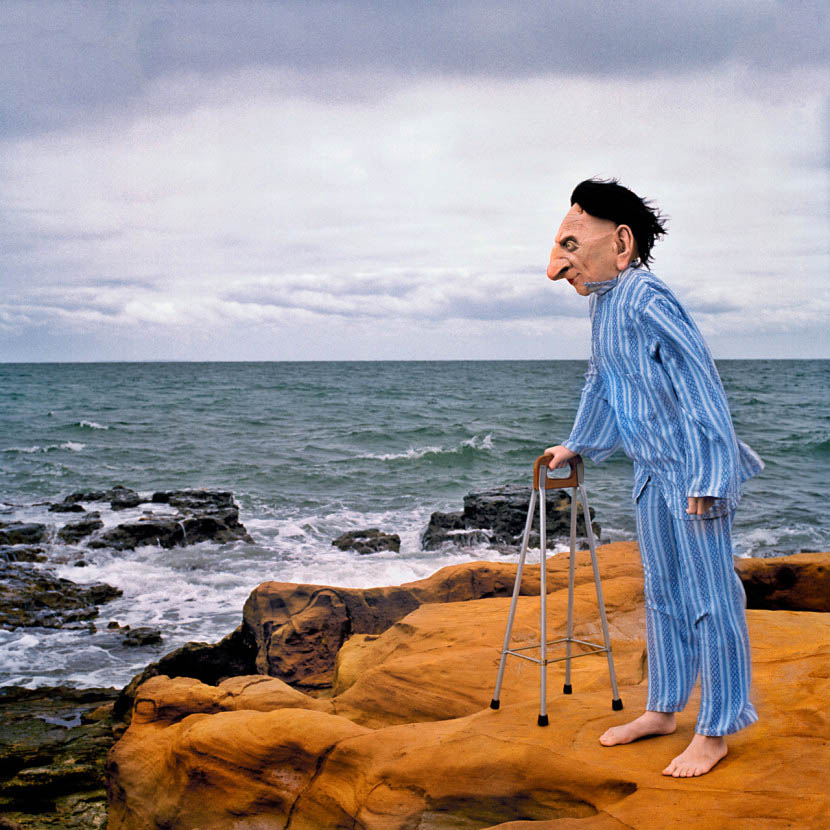
Polixeni Papapetrou (Australian, 1960-2018) The Wanderer No. 3 2012 From The Dreamkeepers Pigment print 105 x 105cm
I absolutely love these. The colours, the spaces, the ambiguous vistas, the fantastical archetypes, the fables. What springs to mind, with the use of masks to disguise youth positioned within the decorous landscape, is the notion of “passing”. Passing on (as in dying), passing through (as in travelling), in passing (as in an aside) and just “passing” (passing yourself off as someone or something else) to hide your true character or feelings. Gay men did this in the 1950s and 60s all the better to fit into society, for if it was found that you were homosexual you could loose your job, your apartment and even your life. Of course, there is also the passing of time, the longing for misspent youth in these masked ephebes and adolescent women. Age shall not weary them…
Wandering, dreaming, remembering, keeping, collecting, counting. These neophytes on the path of life, both old/wise, young/hidden pass through (into?) our dreams. Papapetrou creates visions that elude the senses, visions that slip between dreaming and waking, between conscious and subconscious realms. As John Berger and Jean Mohr have observed,
“Cameras are boxes for transporting appearances. Are the appearances which a camera transports a construction, a man-made cultural artefact, or are they, like a footprint in the sand, a trace naturally left by something that has passed? The photographer choses the events he photographs. This choice can be thought of as a cultural construction. The space for this construction is, as it were, cleared by his rejection of what he did not choose to photograph.”1
As an artist Papapetrou has the intelligence to leave this nature/nurture question open in her photographs. Her skill as an artist is in choosing the right things to photograph. This enables her creatures to pass through liminal spaces, the space of our consciousness. Through this process a trace will always be left with us, for this is a strong body of work, well realised, in passing.
Dr Marcus Bunyan
1/ Berger, John and Mohr, Jean. Another Way of Telling. New York: Pantheon Books, 1982, pp. 92-93.
Many thankx to Stills Gallery for allowing me to publish the photographs in the posting. Please click on the photographs for a larger version of the image.
Polixeni Papapetrou (Australian, 1960-2018) The Wave Counter 2011 From The Dreamkeepers Pigment print 105 x 105cm
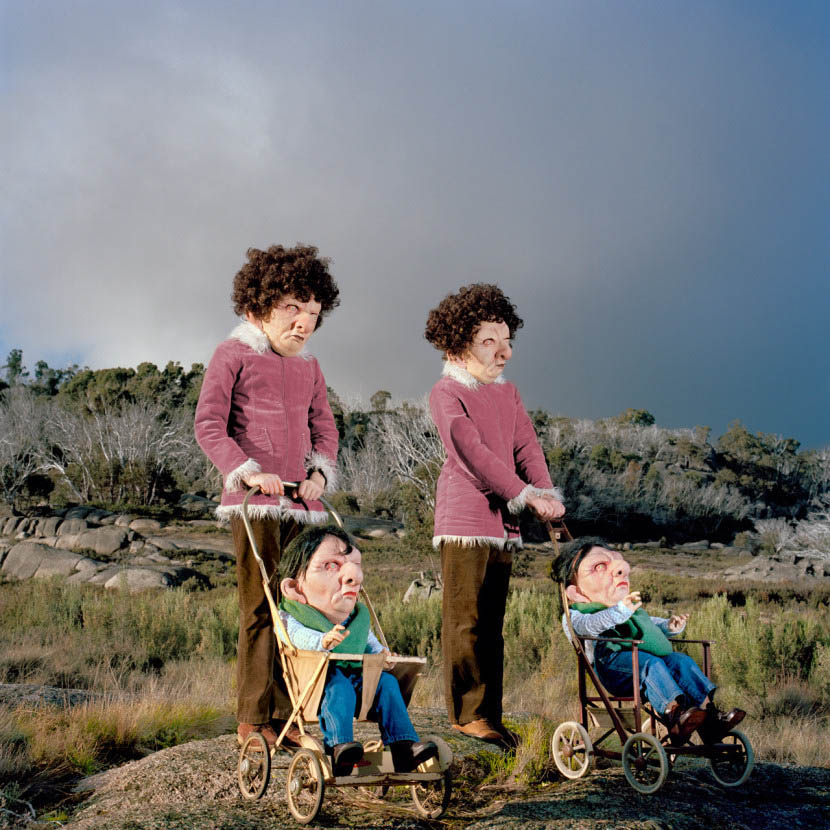
Polixeni Papapetrou (Australian, 1960-2018) The Mystical Mothers 2011 From The Dreamkeepers Pigment print 105 x 105cm
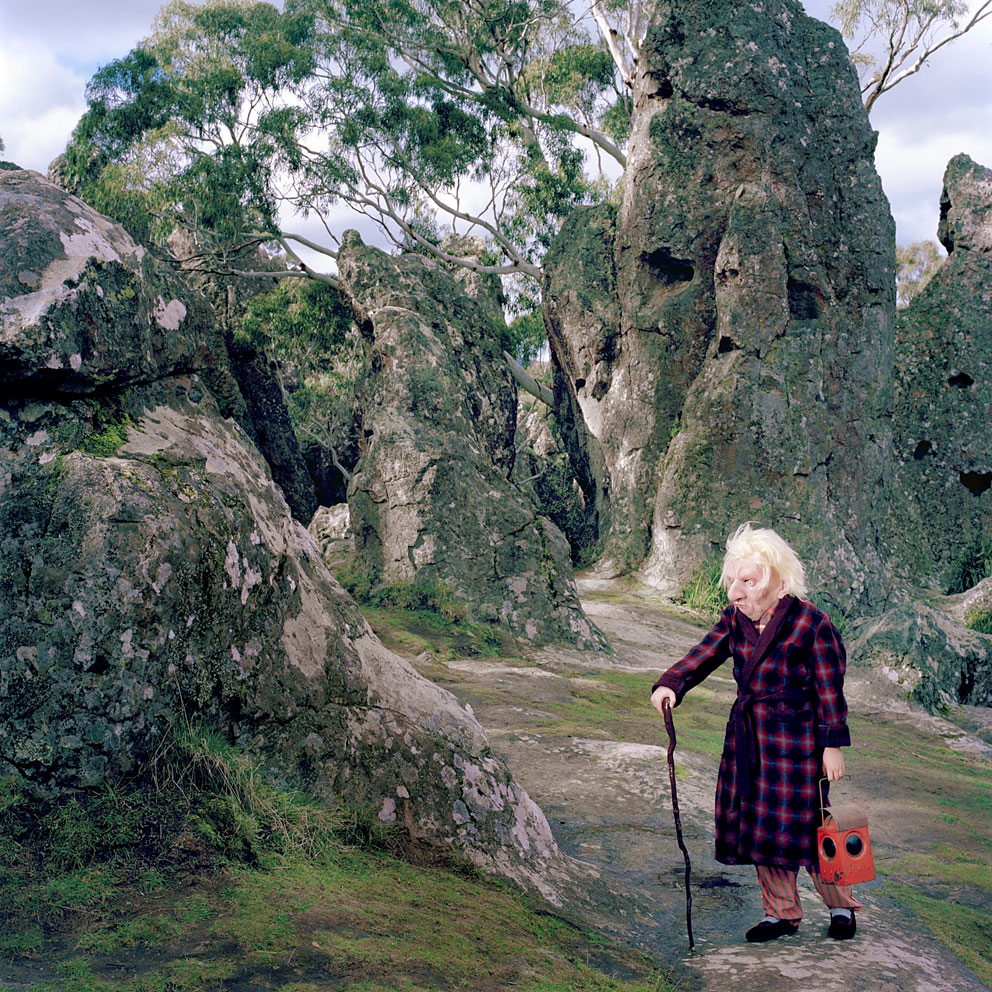
Polixeni Papapetrou (Australian, 1960-2018) The Lantern Keeper 2012 From The Dreamkeepers Pigment print 105 x 105cm
“These transitional places in one’s life are often the most creative, and as we grapple for answers and clarity what is often realized is ambiguity and confusion that reigns supreme. Like fairy stories, Papapetrou uses absurdity to make symbolic sense of world she struggles to understand.”
Susan Bright. Between Worlds catalogue 2009
In Polixeni Papapetrou’s work there is identification with the world of children that is rare and remarkable. She sees children themselves as ‘between worlds’, between infancy and adulthood. Yet she does more than identify, creating fantastical worlds that only adults can truly understand and relate to.
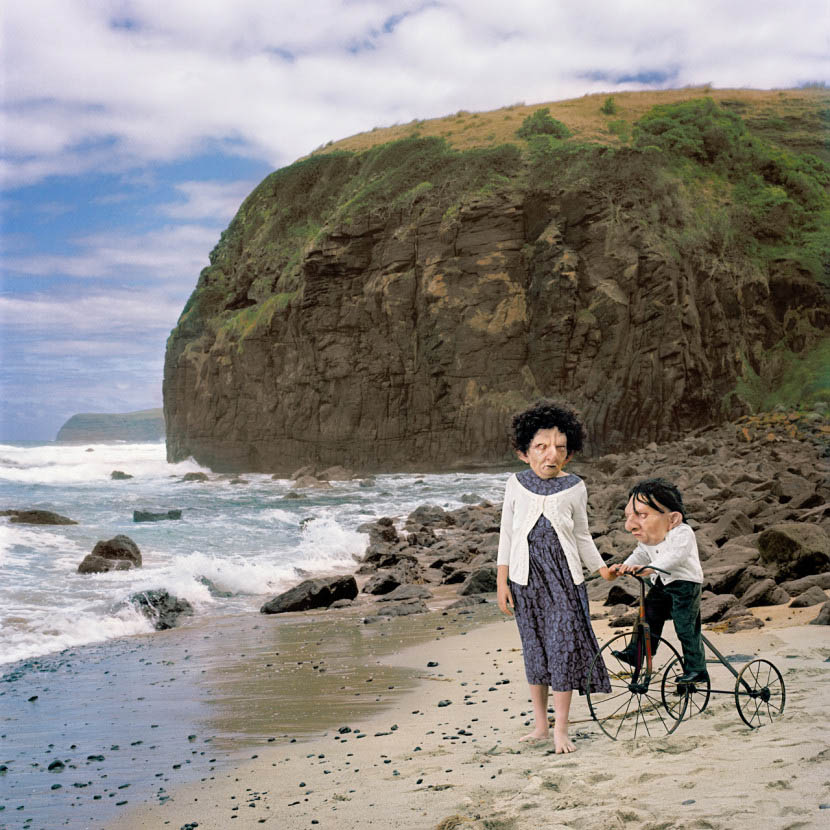
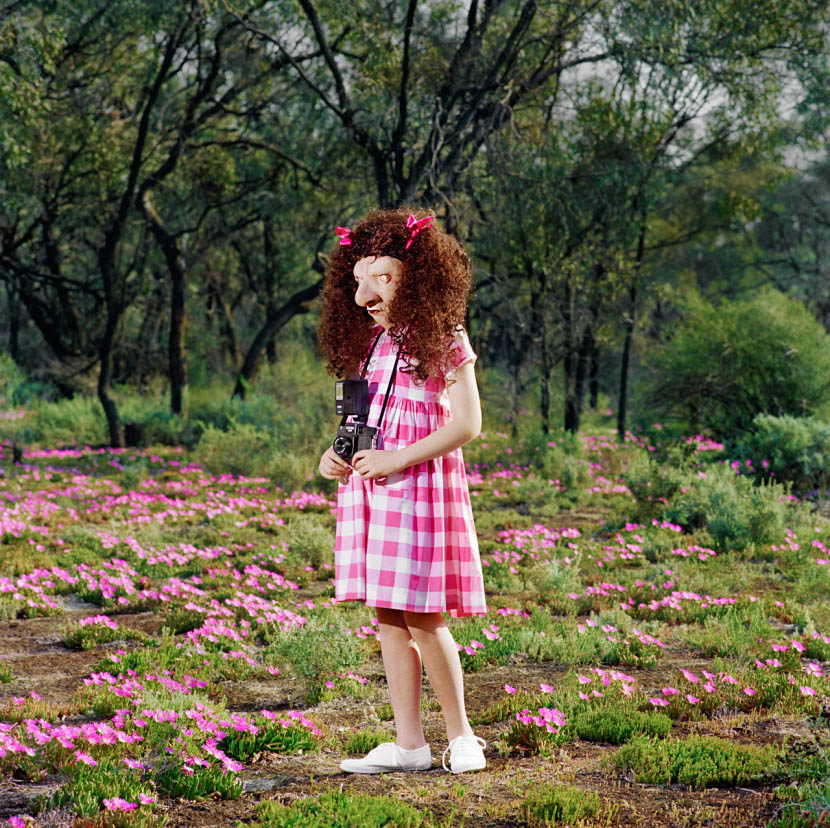
A man in blue striped pyjamas stands on a rock by the sea, leaning into the wind. His body seems young yet he supports himself with a walking frame. His face is old, oversized, a little grotesque. He is The Wavecounter. Like the other characters in Polixeni Papapetrou’s series The Dreamkeepers, he is lithe in body yet gnarly of physiognomy, both young and old. Gazing out in contemplation these dream keepers look with anticipation to the future, or is it with nostalgia to the past? The timeless backdrops of shoreline or hilltop reflect this ambiguity, echoing through landscape the collapsing of thresholds and blurring of boundaries.
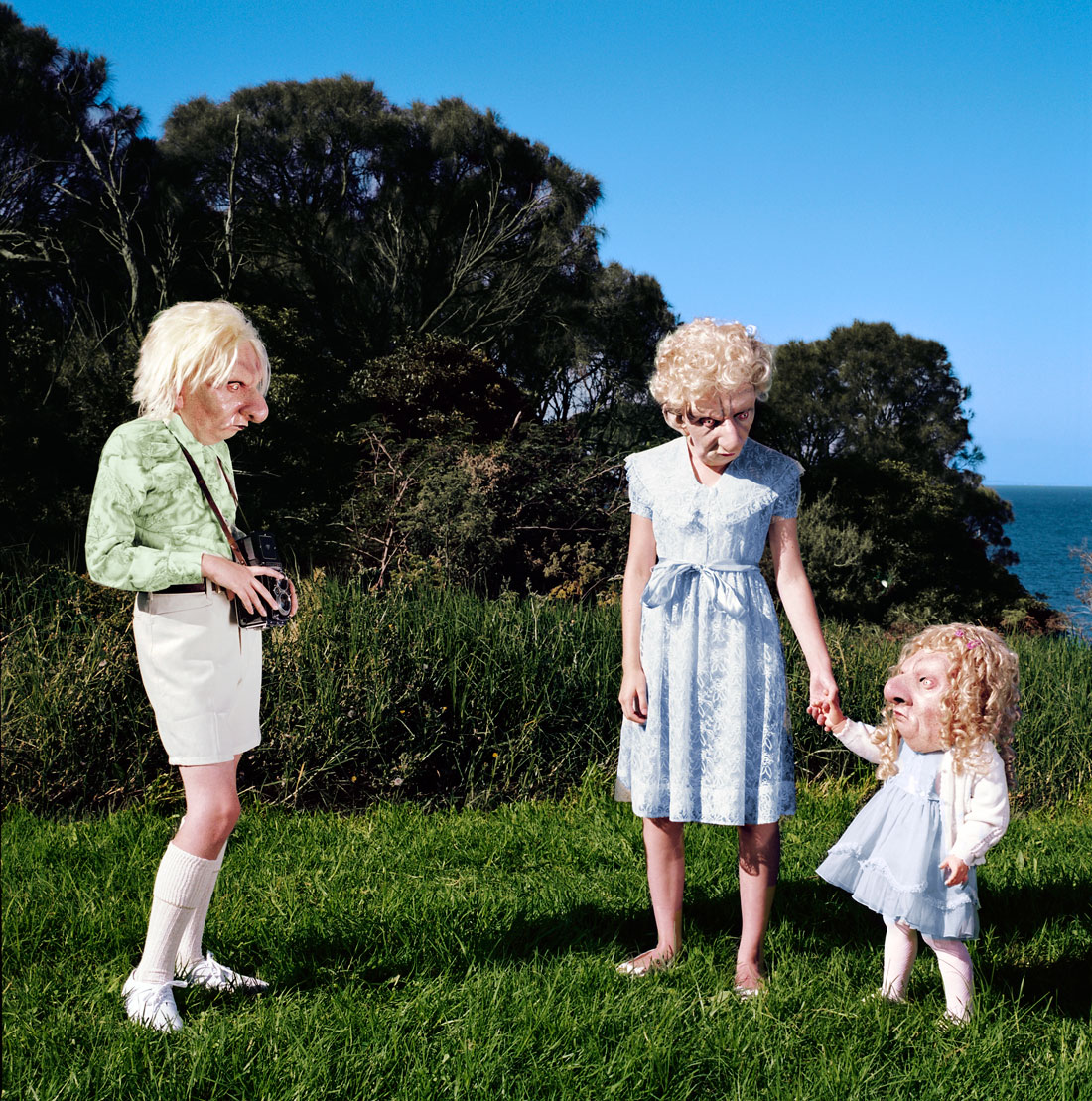
Papapetrou’s art practice has involved collaboration with her children and their friends for over 10 years. As they have grown and transformed so too have the roles they perform and spaces they inhabit. It is the awkward evolution of adolescence that informs the in-between space of The Dreamkeepers. To parallel the cripplingly self-conscious yet powerfully self-realising period of our lives, Papapetrou engages part reality, part fantasy from which a space of unreality emerges, the space of archetype. Here the anonymity afforded by masks separates her adolescent actors from who they really are, and allows them to stand in for us all. In this way, Papapetrou asks us to consider how masks, whether symbolic or literal, not only conceal identity, but also expand and transform it.
The aged masks do so in The Dreamkeepers by confounding adolescence, as the characters exude a quiet lack of self-consciousness, despite their disturbing appearance. They arouse a gentle pathos, reminding us of our own shapeshifting, of time playing out on our bodies and minds. The abstract meeting of these two ages may indicate the latent wisdom and self-acceptance that only realises with maturity, or the cyclical nature of our life spans that inevitably brings us back to the vulnerability of youth. In either case the work is a powerful testament to the surrendering of childhood.
Also on exhibition is a small selection of works from Papapetrou’s current work in progress. Using ghillie suits, she transforms her actors into animate objects – rocks with life and seaweed with attitude.
Press release from the Stills Gallery website
Polixeni Papapetrou (Australian, 1960-2018) The Holiday Makers 2011 From The Dreamkeepers Pigment print 105 x 105cm
Polixeni Papapetrou (Australian, 1960-2018) The Mender 2011 From The Dreamkeepers Pigment print 105 x 105cm
Polixeni Papapetrou (Australian, 1960-2018) The Joy Pedlars 2011 From The Dreamkeepers Pigment print 105 x 105cm
Polixeni Papapetrou (Australian, 1960-2018) The Shell Collectors 2012 From The Dreamkeepers Pigment print 105 x 105cm
Polixeni Papapetrou (Australian, 1960-2018) The Lighthouse Keepers 2011 From The Dreamkeepers Pigment print 105 x 105cm
Polixeni Papapetrou (Australian, 1960-2018) The Photographer 2011 From The Dreamkeepers Pigment print 105 x 105cm








































 Art Blart _ art and cultural memory archive
You must be logged in to post a comment.