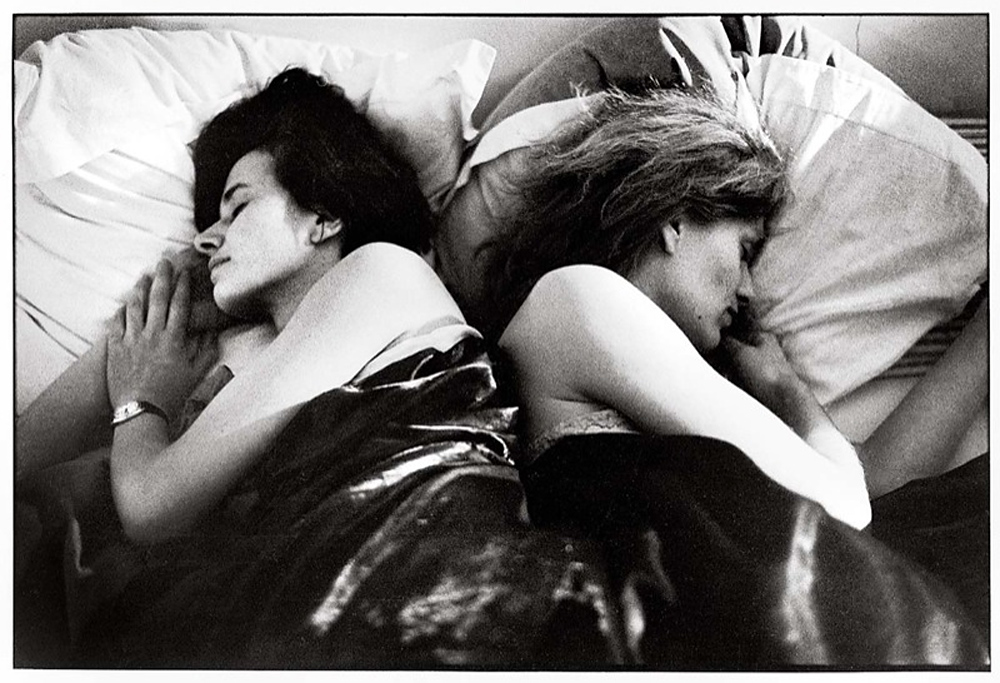
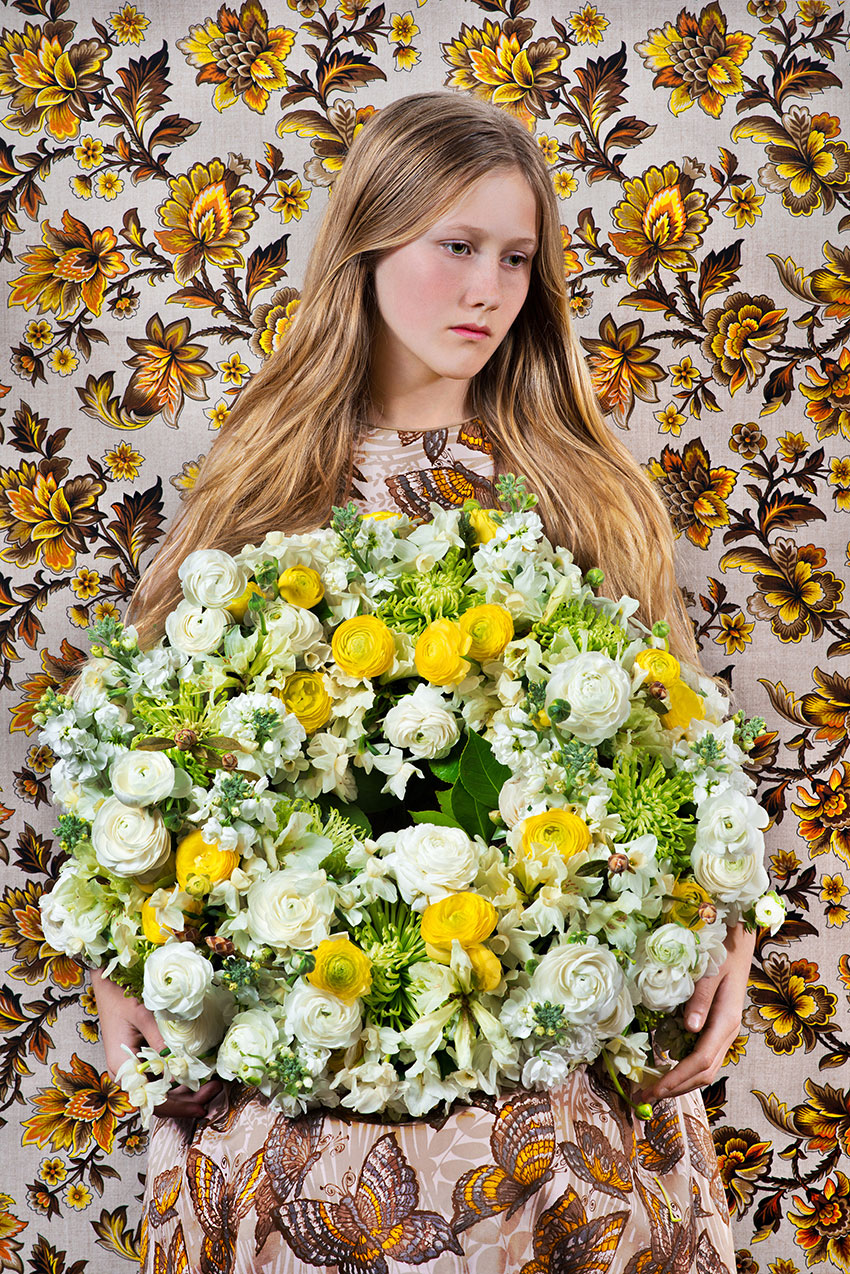
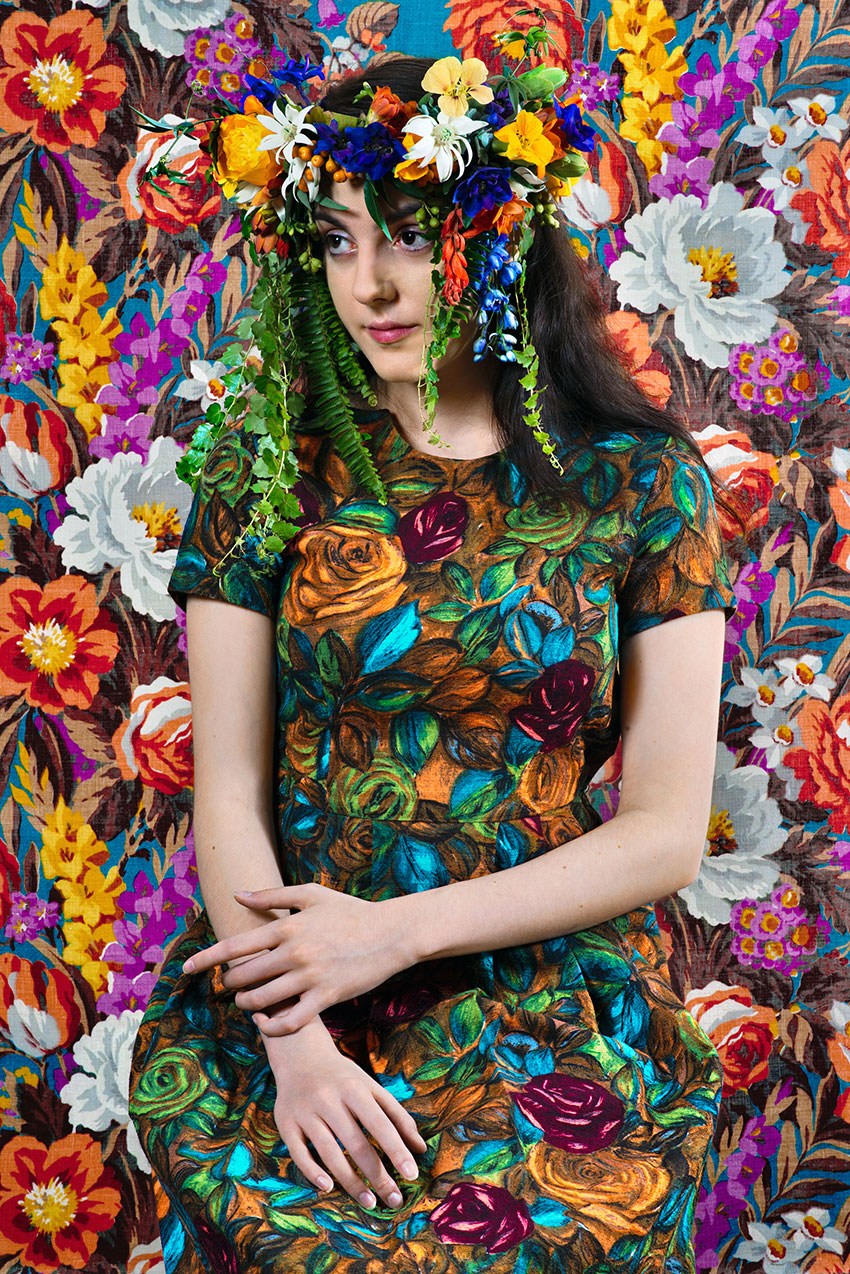
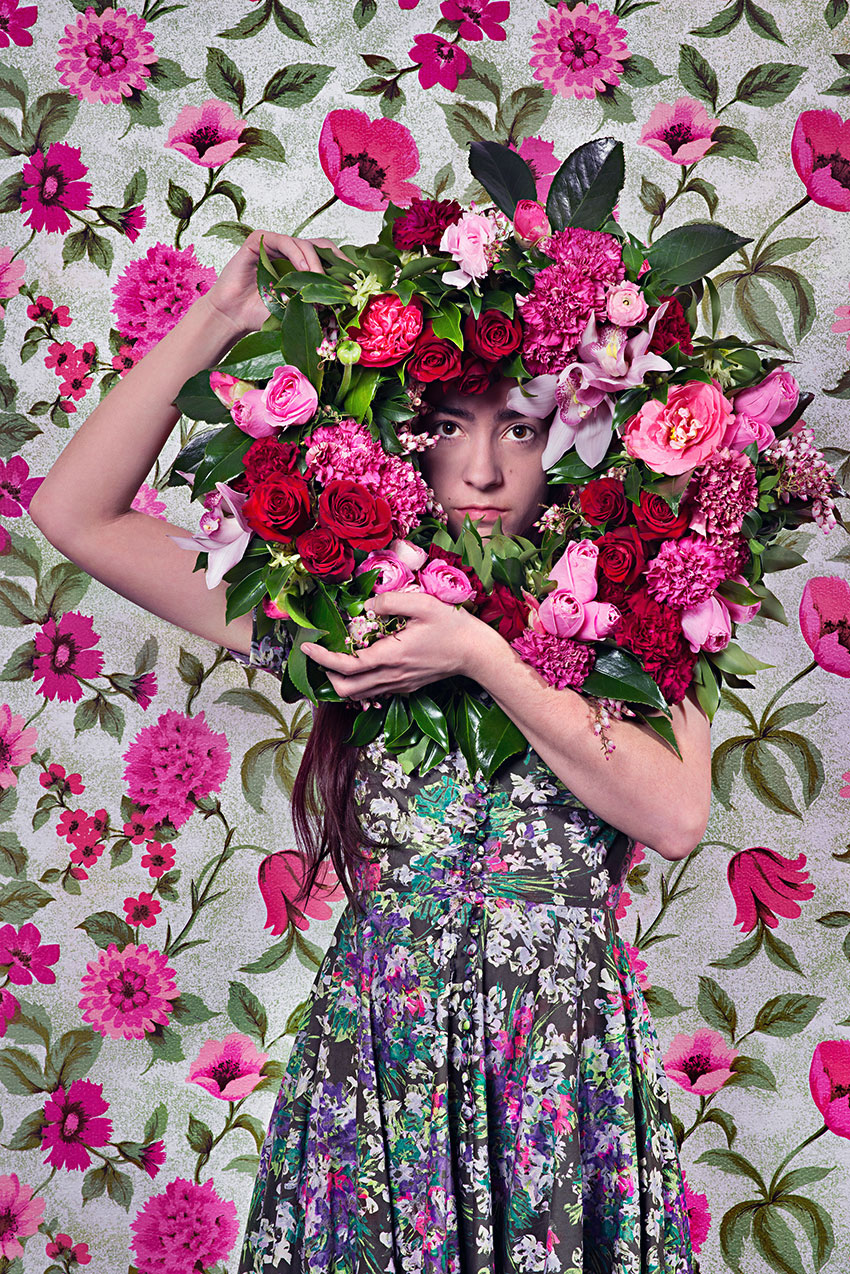
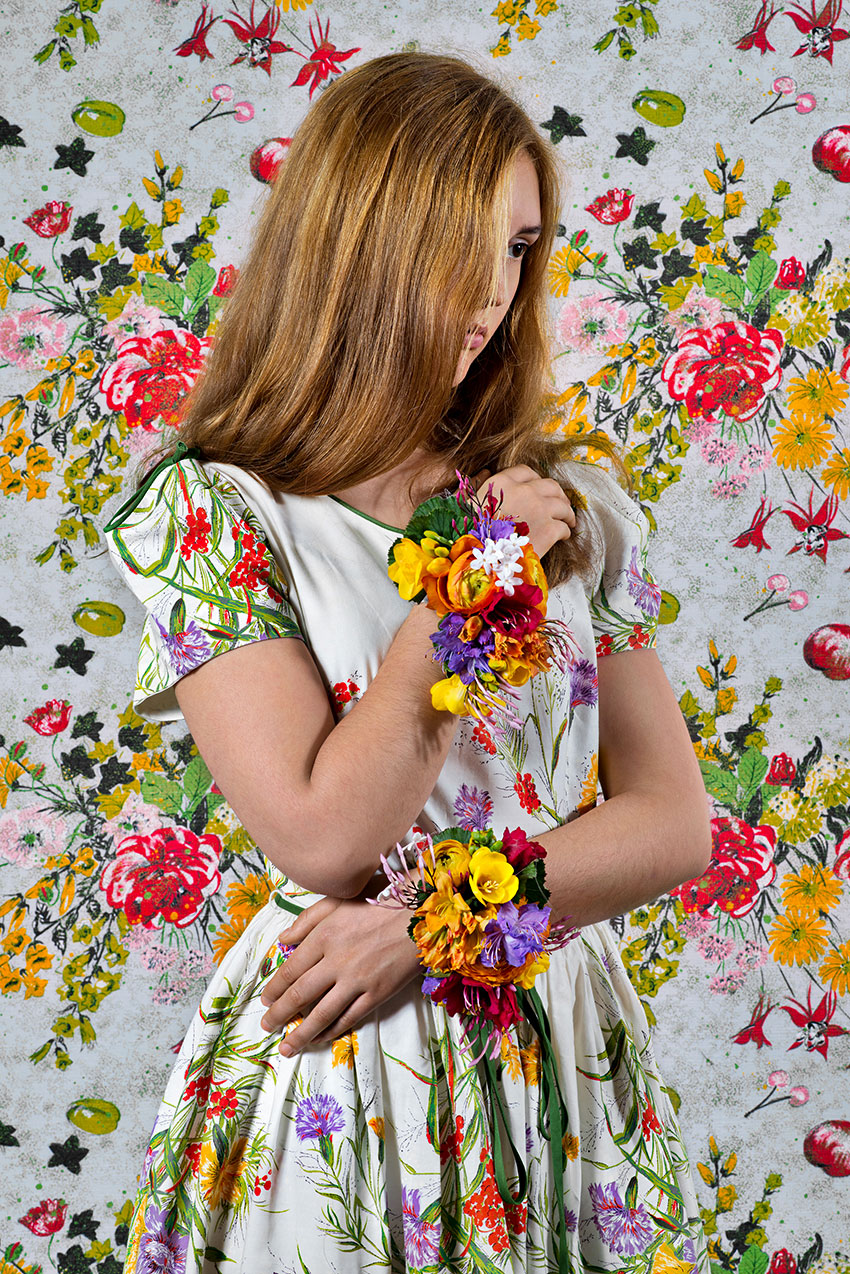
Exhibition dates:Â 4th June – 11th September, 2016
Curator: Keith Hartley
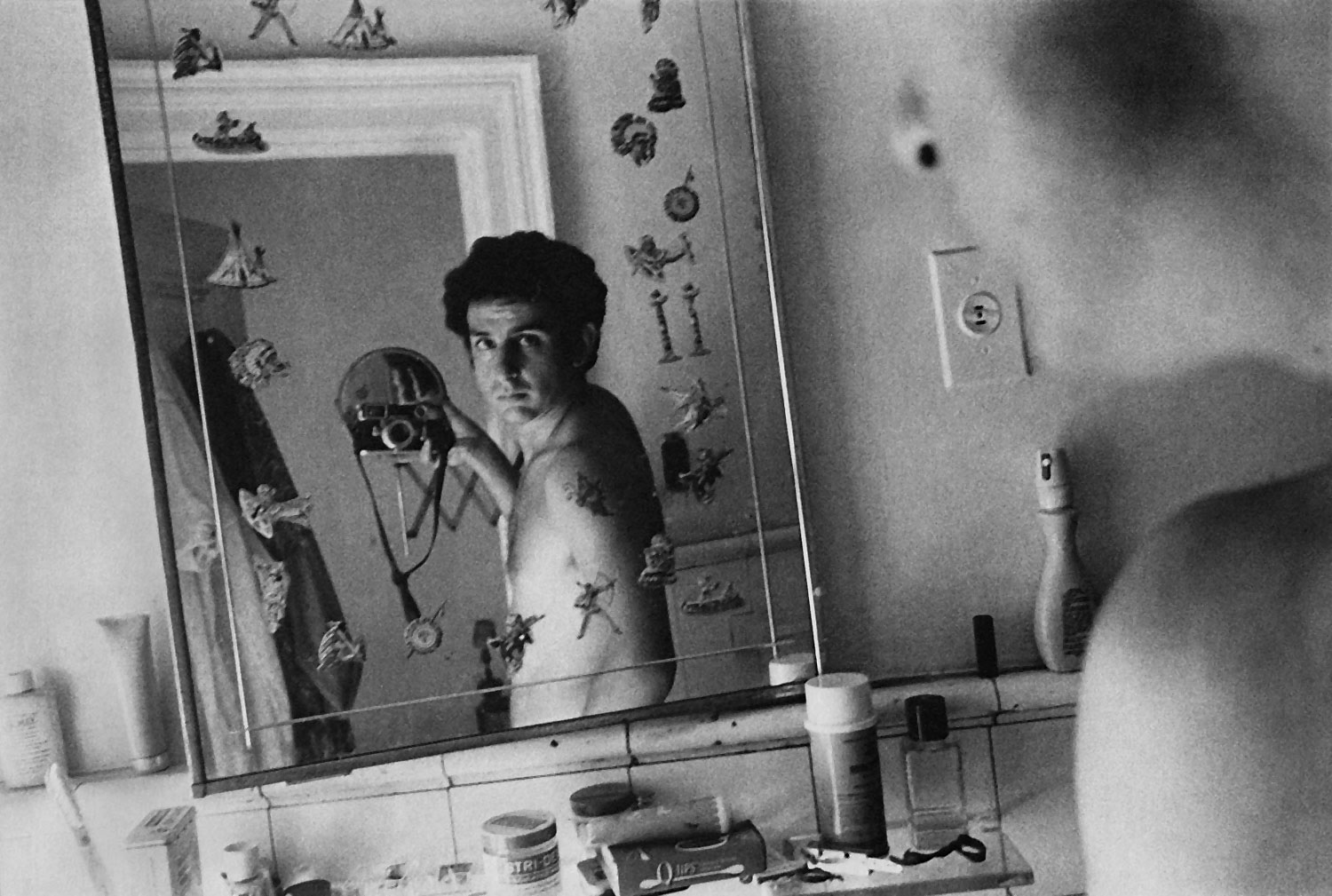
Marcus Bunyan (Australian, b. 1958) Self-portrait with gryphon and Joan Miró (Head of a Catalan Peasant) tattoo, both by Alex Binnie, London 1998
I have the five elements in tattoos. In the Head of a Catalan Peasant by Joan Miró featured in the posting, the red hat – in the form of a triangle – signifies ‘fire’ in Western occult mythology.
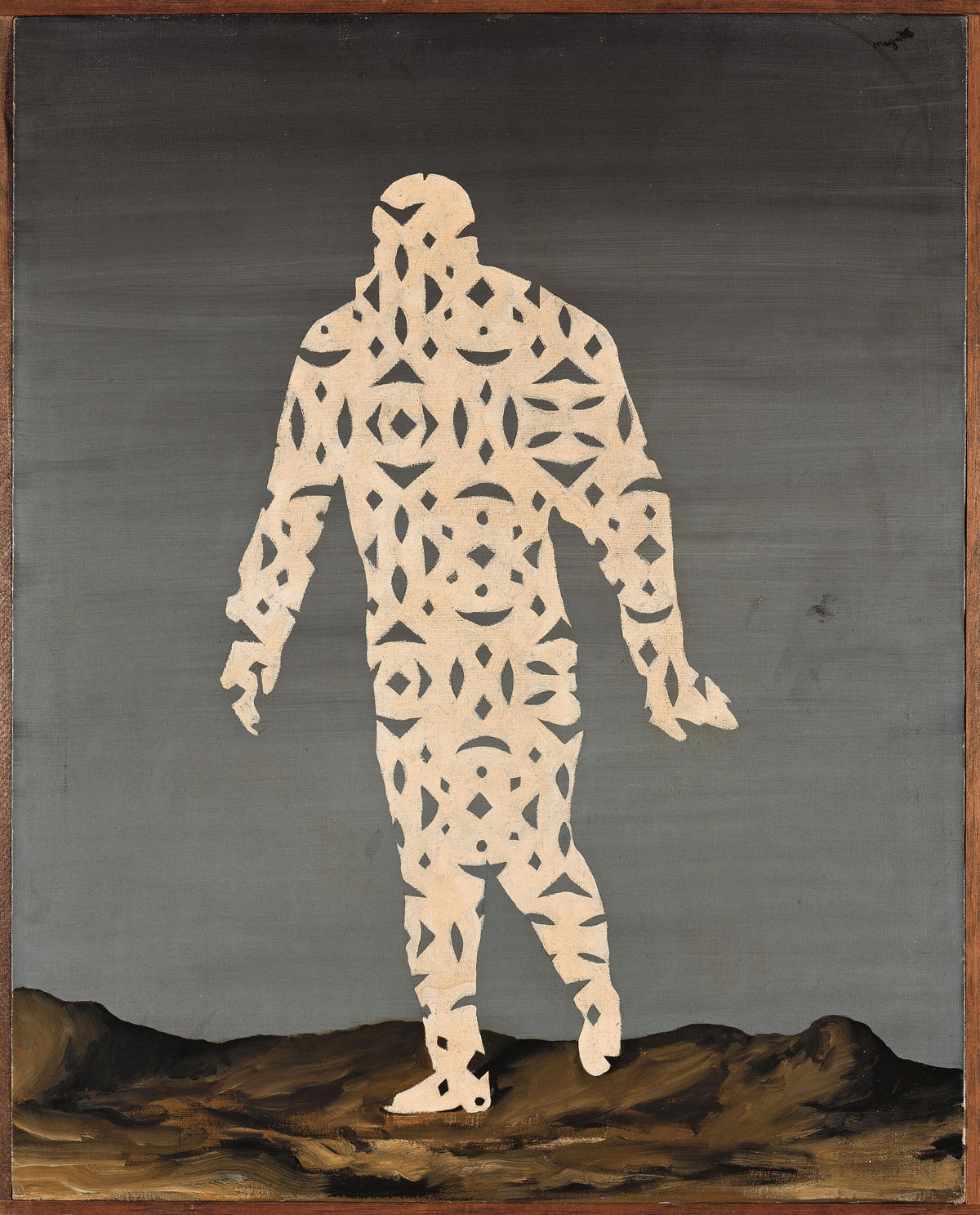
“Surrealism is not a movement. It is a latent state of mind perceivable through the powers of dream and nightmare.”
~ Salvador DalÃ
 “As beautiful as the chance encounter of a sewing machine and an umbrella on an operating table.”
 “A constant human error: to believe in an end to one’s fantasies. Our daydreams are the measure of our unreachable truth. The secret of all things lies in the emptiness of the formula that guard them.”
~ Floriano Martins
Many thankx to the Scottish National Gallery of Modern Art for allowing me to publish the art work in the posting. Please click on the photographs for a larger version of the image.
Joan Miró (Spanish, 1893-1983) Tête de Paysan Catalan [Head of a Catalan Peasant] 1925 Oil on canvas 92.4 x 73cm Collection: Scottish National Gallery of Modern Art Purchased jointly with Tate, with the assistance of the Art Fund 1999
Max Ernst (German, 1891-1976) La Joie de vivre [The Joy of Life] 1936 Oil on canvas 73.5 x 92.5cm Collection: National Galleries of Scotland Purchased with the assistance of the Heritage Lottery Fund and the Art Fund 1995
Dorothea Tanning (American, 1910-2012) Eine Kleine Nachtmusik [A Little Night Music] 1943 Oil on canvas 40.7 x 61cm Collection: Tate (formerly collection of R. Penrose) Purchased with assistance from the Art Fund and the American Fund for the Tate Gallery 1997
Apart from three weeks she spent at the Chicago Academy of Fine Art in 1930, Tanning was a self-taught artist. The surreal imagery of her paintings from the 1940s and her close friendships with artists and writers of the Surrealist Movement have led many to regard Tanning as a Surrealist painter, yet she developed her own individual style over the course of an artistic career that spanned six decades.
Tanning’s early works – paintings such as Birthday and Eine kleine Nachtmusik (1943, Tate Modern, London) – were precise figurative renderings of dream-like situations. Like other Surrealist painters, she was meticulous in her attention to details and in building up surfaces with carefully muted brushstrokes. Through the late 1940s, she continued to paint depictions of unreal scenes, some of which combined erotic subjects with enigmatic symbols and desolate space. During this period she formed enduring friendships with, among others, Marcel Duchamp, Joseph Cornell, and John Cage; designed sets and costumes for several of George Balanchine’s ballets, including The Night Shadow (1945) at the Metropolitan Opera House; and appeared in two of Hans Richter’s avant-garde films.
Over the next decade, Tanning’s painting evolved, becoming less explicit and more suggestive. Now working in Paris and Huismes, France, she began to move away from Surrealism and develop her own style. During the mid-1950s, her work radically changed and her images became increasingly fragmented and prismatic, exemplified in works such as Insomnias (1957, Moderna Museet, Stockholm). As she explains, “Around 1955 my canvases literally splintered… I broke the mirror, you might say.”
Marcel Duchamp (French, 1887-1968) La Boîte-en-valise (Box in a Suitcase) 1935-1941 Sculpture, leather-covered case containing miniature replicas and photographs of Duchamp’s works 10 x 38 x 40.5cm Collection: Scottish National Gallery of Modern Art, presented anonymously 1989
Paul Delvaux (Belgian, 1897-1994) L’Appel de la Nuit (The Call of the Night) 1938 Oil on canvas 110 x 145cm Collection: Scottish National Gallery of Modern Art Purchased with the support of the Heritage Lottery Fund and the Art Fund 1995
Delvaux acknowledged his influences, saying of de Chirico, “with him I realised what was possible, the climate that had to be developed, the climate of silent streets with shadows of people who can’t be seen, I’ve never asked myself if it’s surrealist or not.” Although Delvaux associated for a period with the Belgian surrealist group, he did not consider himself “a Surrealist in the scholastic sense of the word.” As Marc Rombaut has written of the artist: “Delvaux … always maintained an intimate and privileged relationship to his childhood, which is the underlying motivation for his work and always manages to surface there. This ‘childhood,’ existing within him, led him to the poetic dimension in art.”
The paintings Delvaux became famous for usually feature numbers of nude women who stare as if hypnotised, gesturing mysteriously, sometimes reclining incongruously in a train station or wandering through classical buildings. Sometimes they are accompanied by skeletons, men in bowler hats, or puzzled scientists drawn from the stories of Jules Verne. Delvaux would repeat variations on these themes for the rest of his long life…
Photograph album: International Surrealist Exhibition, London 1936 Made 1936-1939 Images taken by Chancery. Images titled by Roland Penrose 32.00 x 26.00cm Collection: Scottish National Gallery of Modern Art Photo: Antonio Reeve
Leonora Carrington (Mexican born Britain, 1917-2011) The House Opposite 1945 Tempera on board 33 x 82cm West Dean College, part of the Edward James Foundation
“I painted for myself… I never believed anyone would exhibit or buy my work.”
Leonora Carrington was not interested in the writings of Sigmund Freud, as were other Surrealists in the movement. She instead focused on magical realism and alchemy and used autobiographical detail and symbolism as the subjects of her paintings. Carrington was interested in presenting female sexuality as she experienced it, rather than as that of male surrealists’ characterisation of female sexuality. Carrington’s work of the 1940s is focused on the underlying theme of women’s role in the creative process.
Masterpieces from four of the finest collections of Dada and Surrealist art ever assembled will be brought together in this summer’s major exhibition at the Scottish National Gallery of Modern Art (SNGMA). Surreal Encounters: Collecting the Marvellous will explore the passions and obsessions that led to the creation of four very different collections, which are bound together by a web of fascinating links and connections, and united by the extraordinary quality of the works they comprise.
DalÃ’s The Great Paranoiac (1936), Lobster Telephone (1938) and Impressions of Africa (1938); de Chirico’s Two Sisters (1915); Ernst’s Pietà or Revolution by Night (1923) and Dark Forest and Bird (1927), and Magritte’s The Magician’s Accomplice (1926) and Not to be Reproduced (1937) will be among the highlights of this exceptional overview of Surrealist art. The exhibition will also tell the personal stories of the fascinating individuals who pursued these works with such dedication and discernment.
While the Penrose and James collections are now largely dispersed, the extraordinary collection of Dada and Surrealist art put together by Gabrielle Keiller (1908-95), was bequeathed in its entirety to the SNGMA on her death in 1995, the largest benefaction in the institution’s history. Keiller devoted herself to this area following a visit to the Venice home of the celebrated American art lover Peggy Guggenheim in 1960, which proved to be a pivotal moment in her life. She went on to acquire outstanding works such as Marcel Duchamp’s La Boîte-en-Valise (1935-41), Alberto Giacometti’s Disagreeable Object, to be Thrown Away (1931) and Girl Born without a Mother (c. 1916-17) by Francis Picabia. Recognizing the fundamental significance of Surrealism’s literary aspect, Keiller also worked assiduously to create a magnificent library and archive, full of rare books, periodicals, manifestos and manuscripts, which makes the SNGMA one of the world’s foremost centres for the study of the movement.
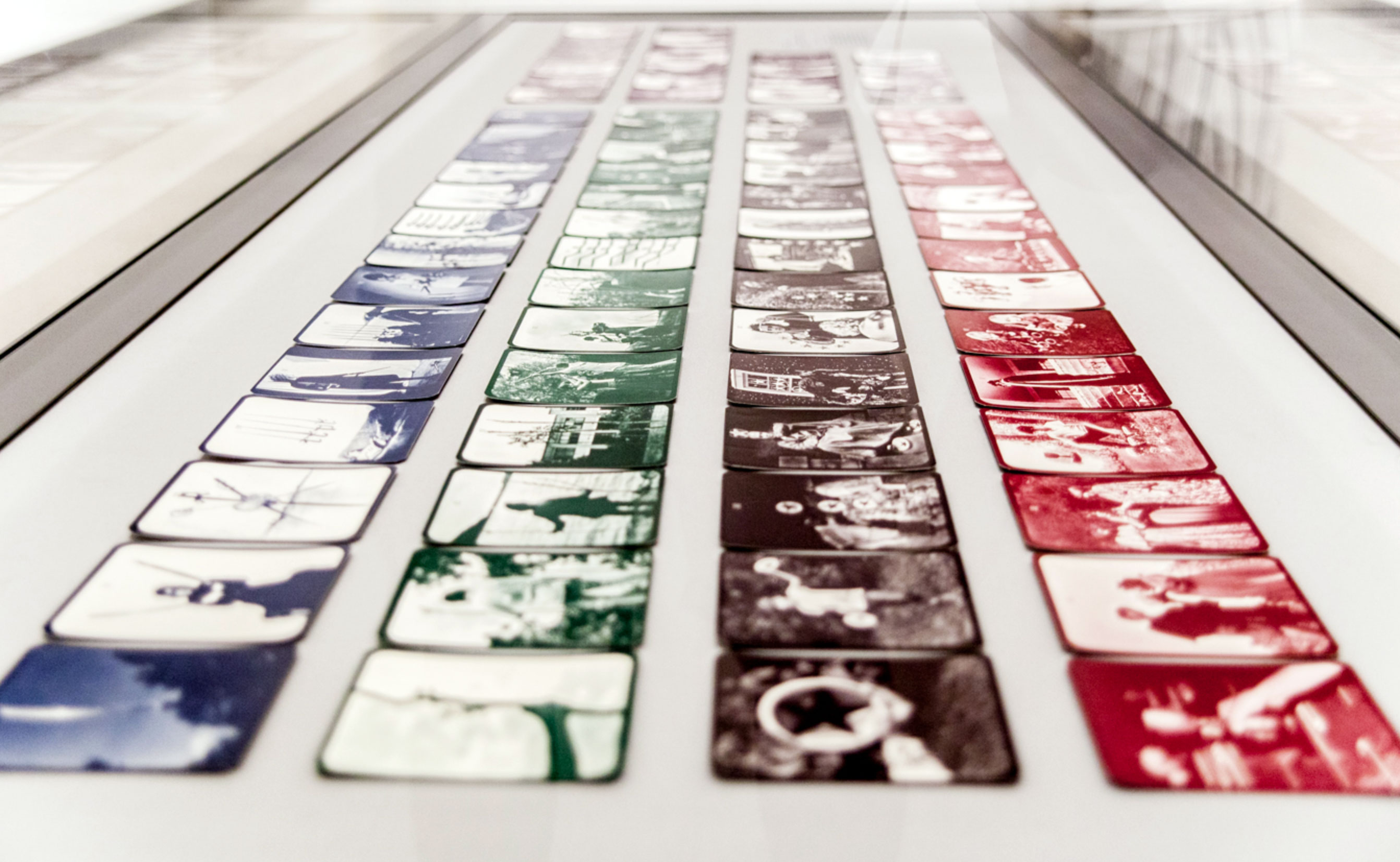
The first four publication deliveries did not, however, achieve the success that had been anticipated. The three remaining ‘days’ were therefore put together into a fifth and final book. The books came out between April and December 1934, each having been bound in a different colour: purple, green, red, blue and yellow. In the final version, two works were taken out. The edition therefore consists of only 182 collages.
Tanguy’s paintings have a unique, immediately recognisable style of nonrepresentational surrealism. They show vast, abstract landscapes, mostly in a tightly limited palette of colours, only occasionally showing flashes of contrasting colour accents. Typically, these alien landscapes are populated with various abstract shapes, sometimes angular and sharp as shards of glass, sometimes with an intriguingly organic look to them, like giant amoebae suddenly turned to stone.
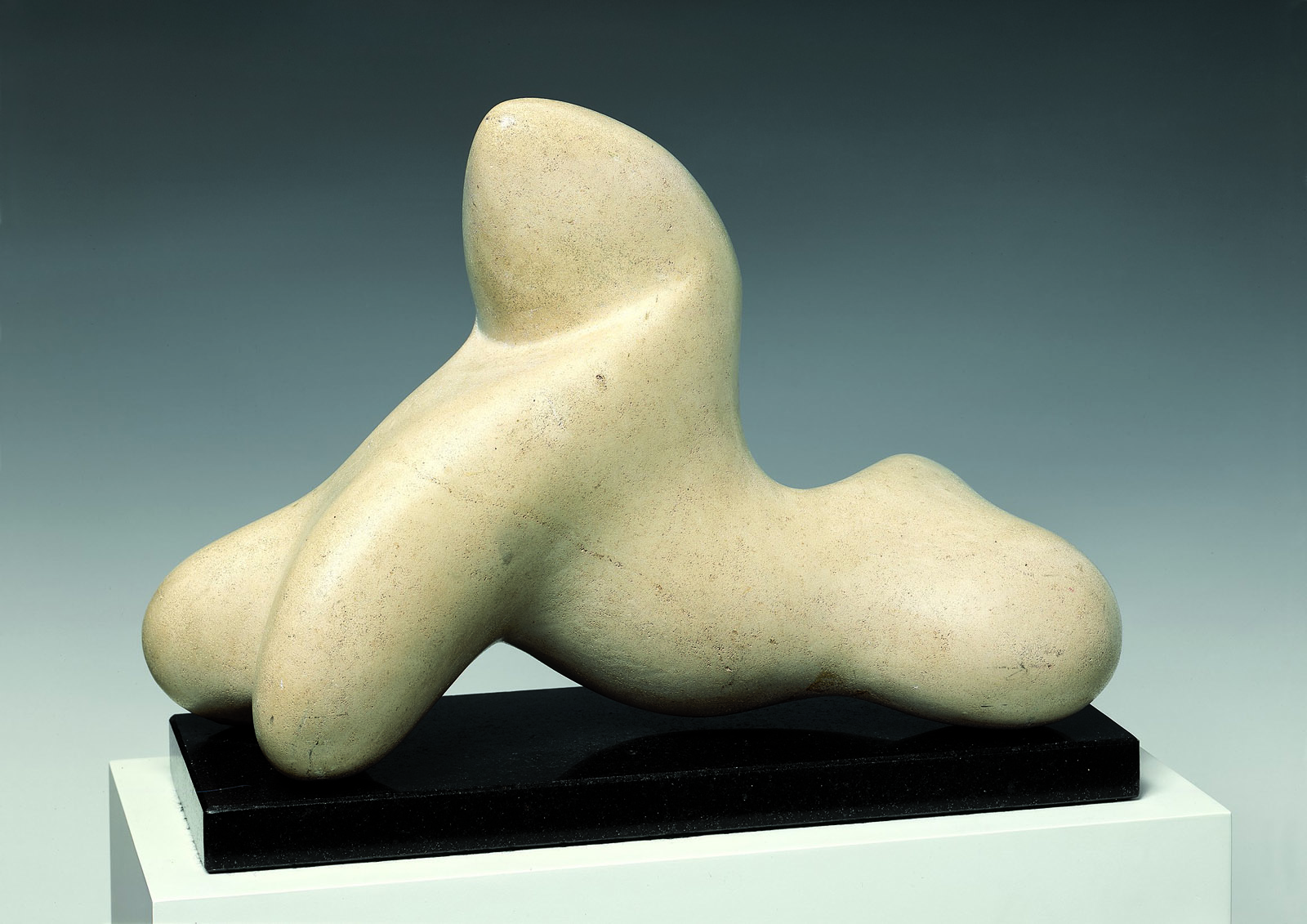
Jean (Hans) Arp (French-German, 1886-1996) Assis (Seated) 1937 Limestone 29.5 x 44.5 x 16cm Collection: Hamburger Kunsthalle, Hamburg/ Pietzsche Collection
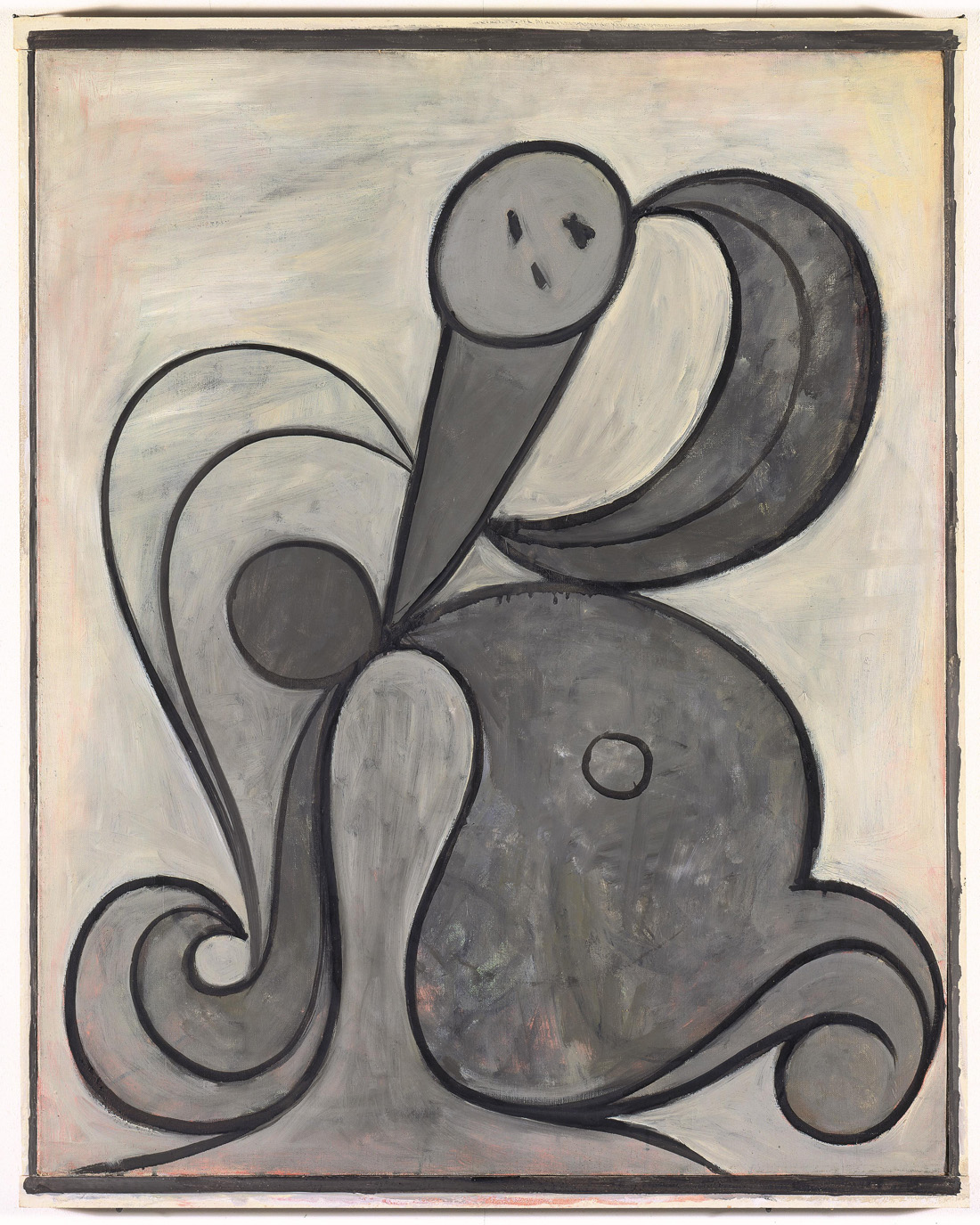
Joan Miró (Spanish, 1893-1983) Peinture (Painting) 1925 Oil on canvas 130 x 97cm Hamburger Kunsthalle, Hamburg/ Pietzsche Collection
Joan Miró (Spanish, 1893-1983) Peinture [Painting] 1927 Oil on canvas 33 x 24.1 cm Collection: National Galleries of Scotland Bequeathed by Gabrielle Keiller 1995
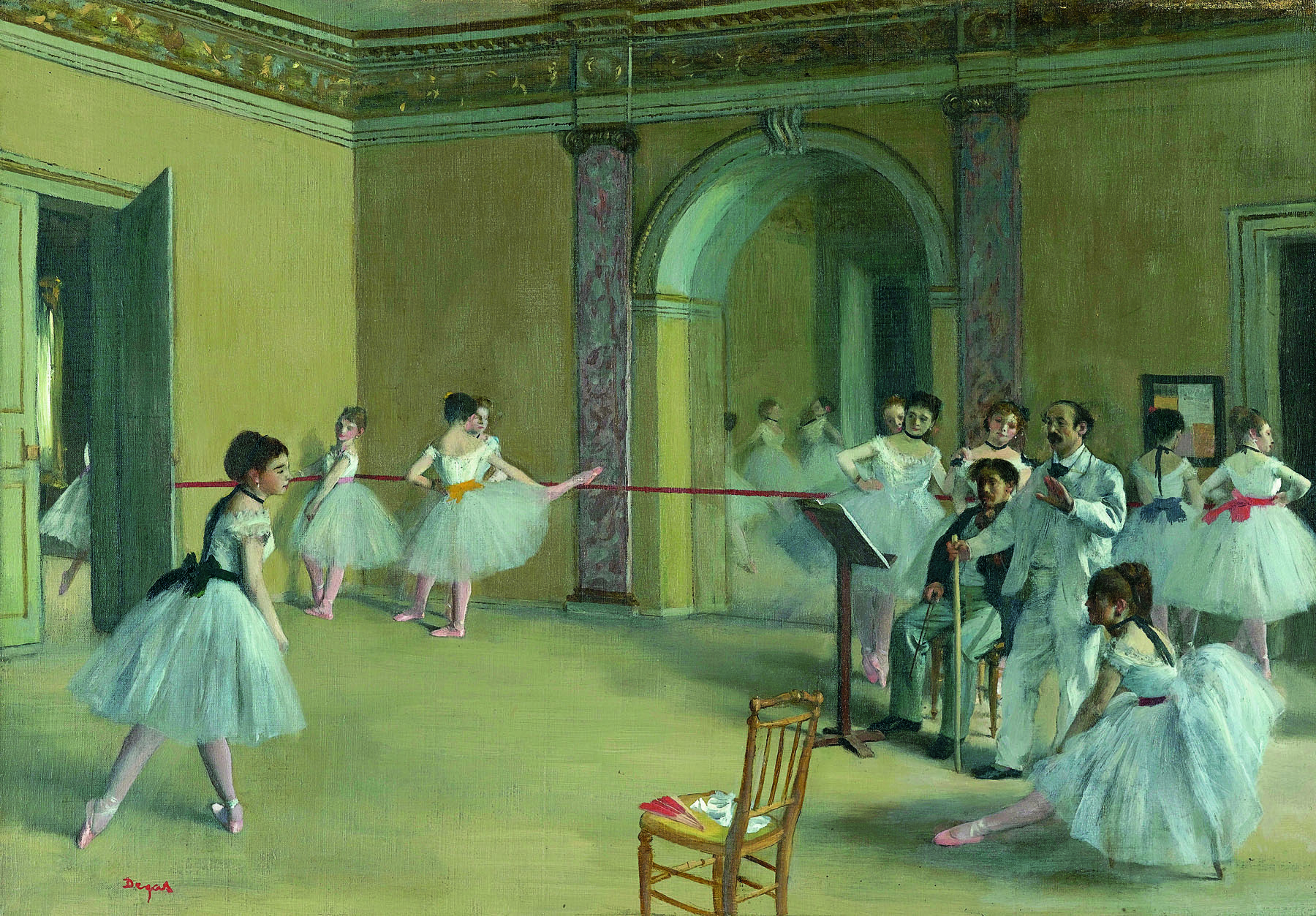
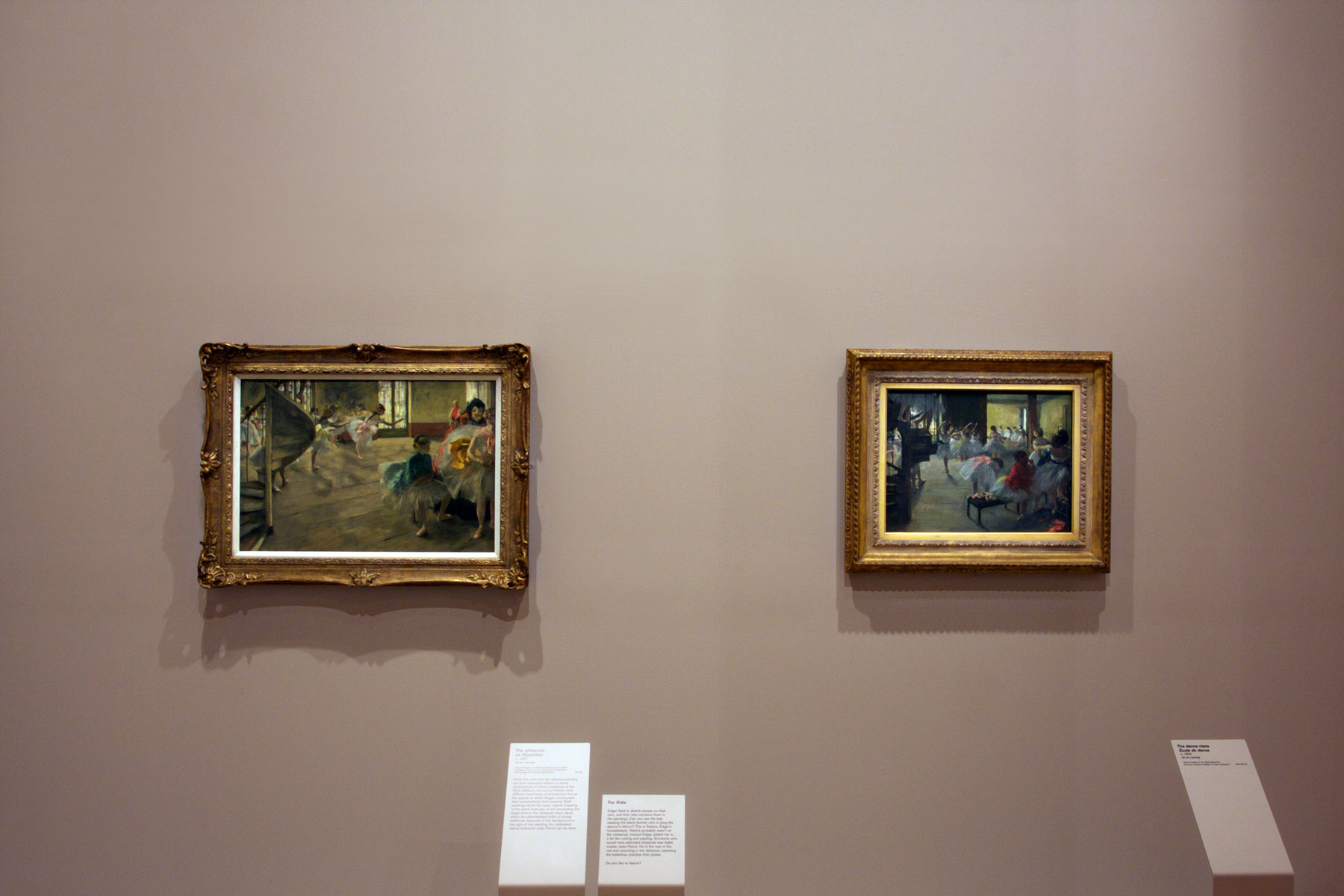
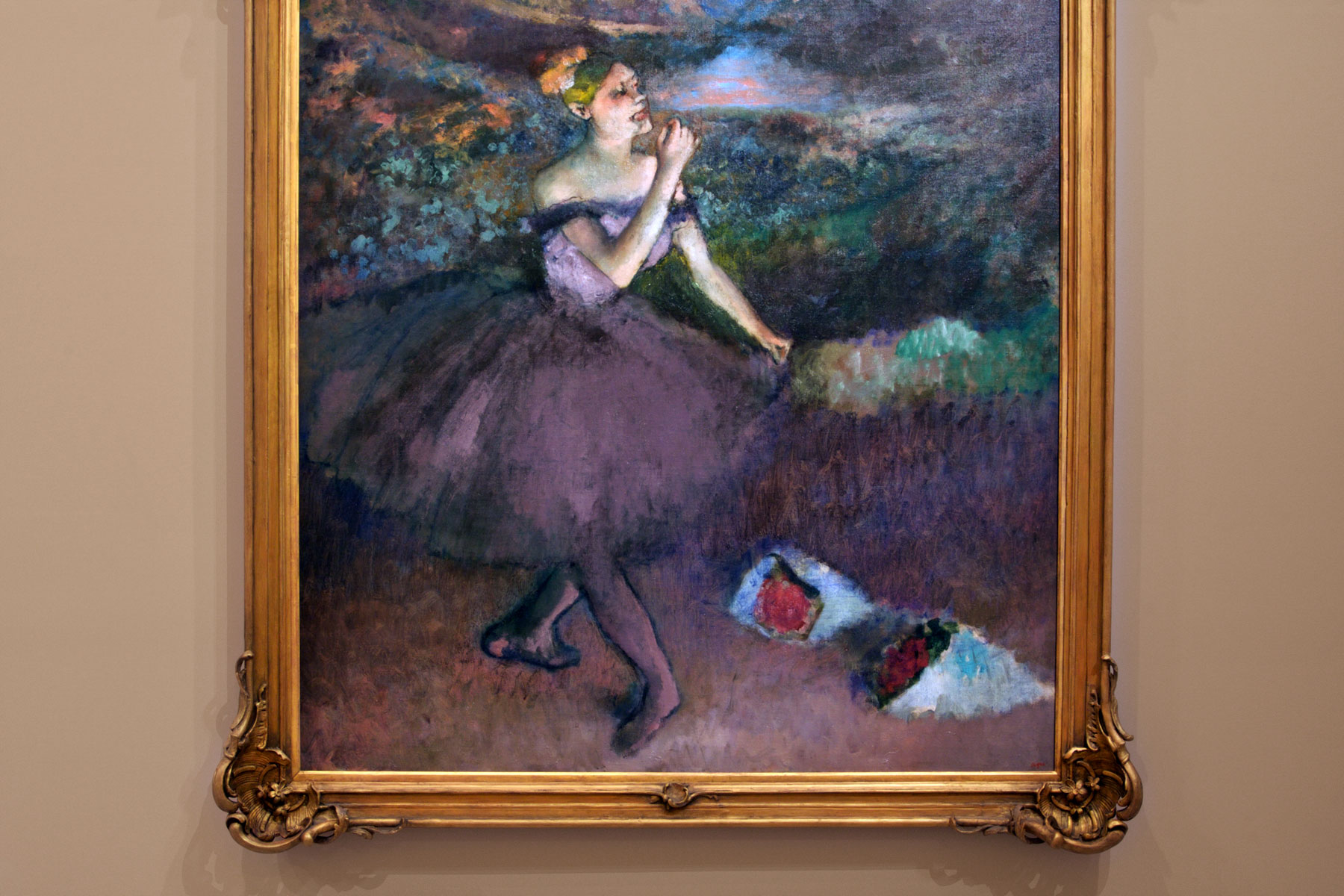
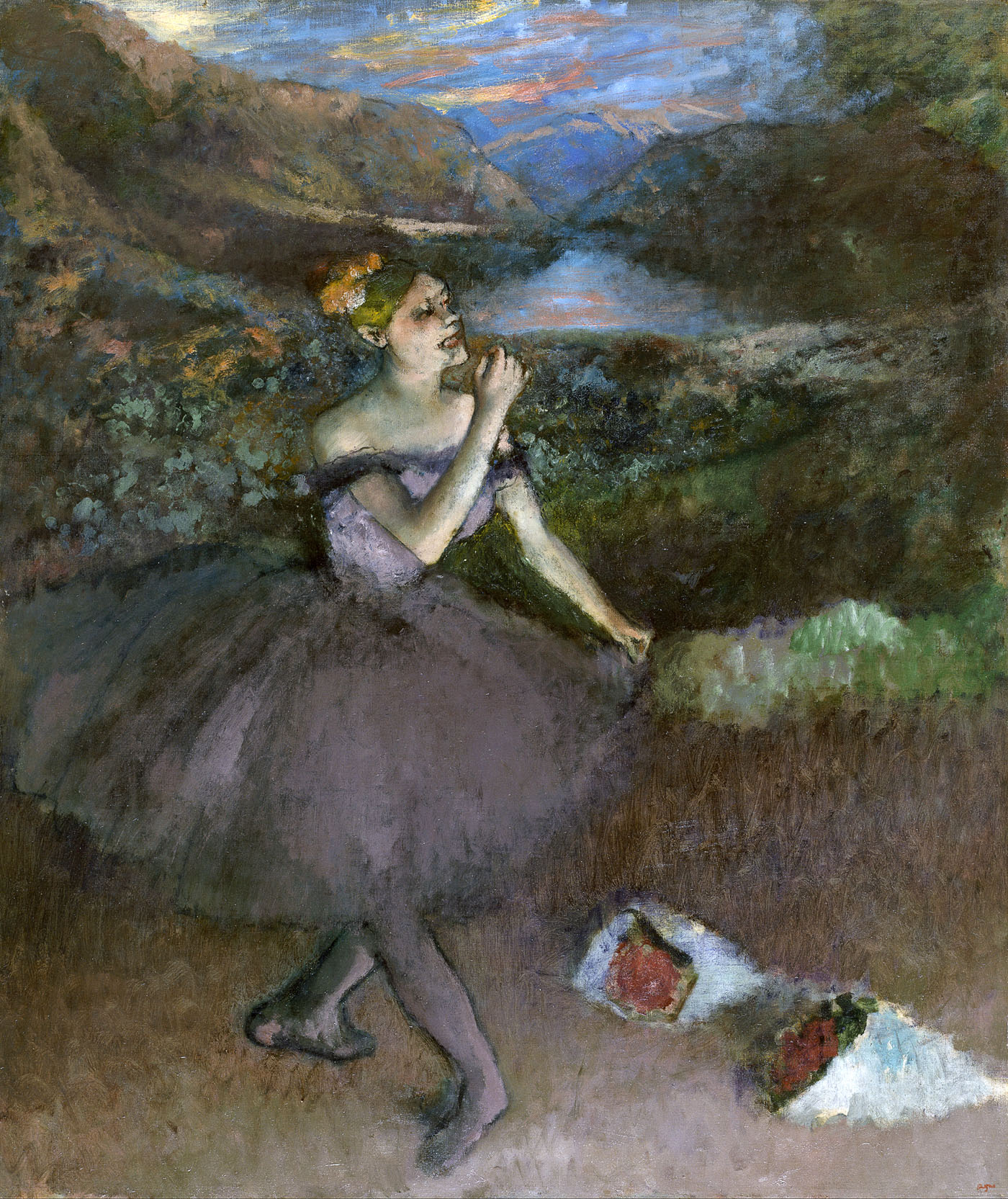
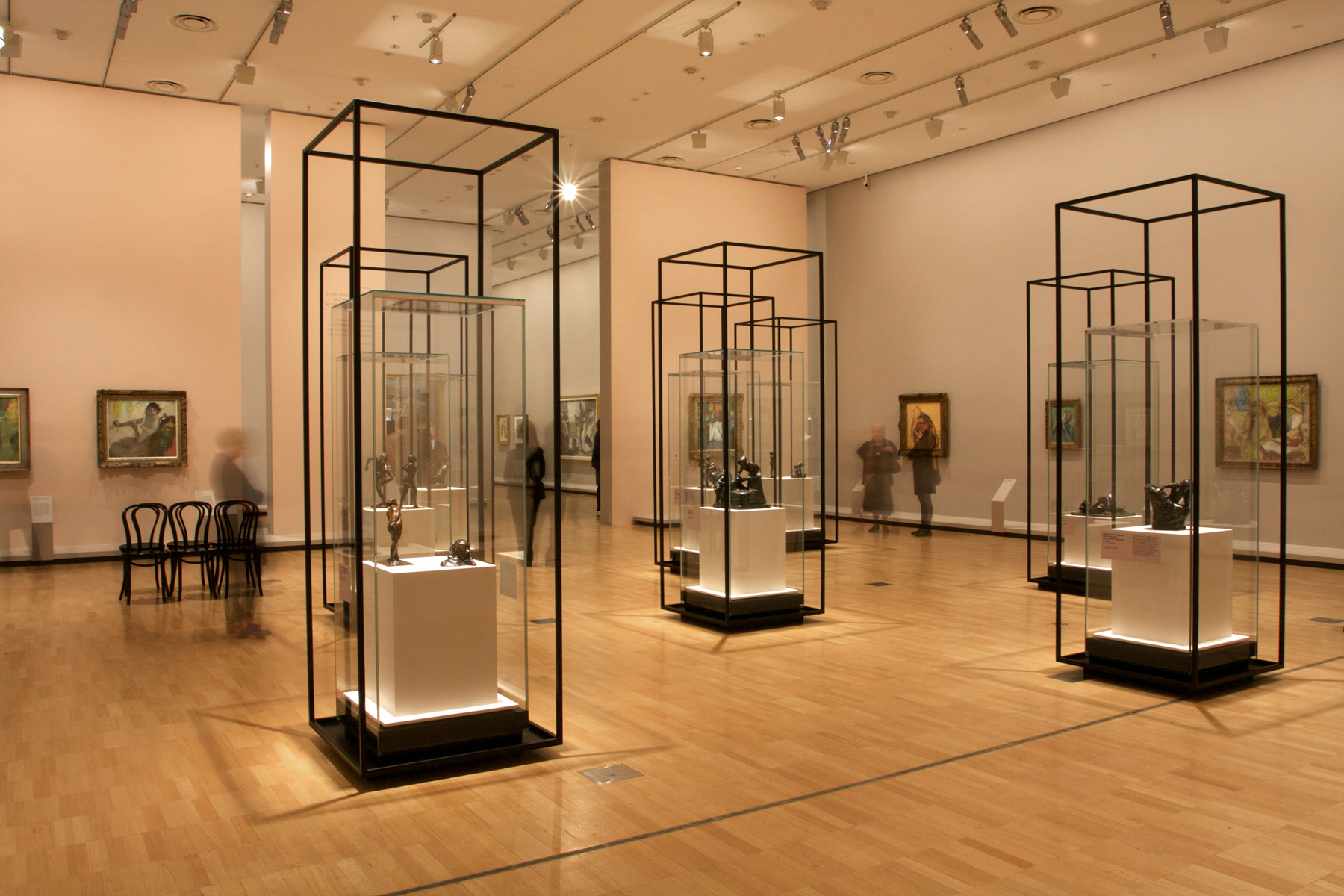
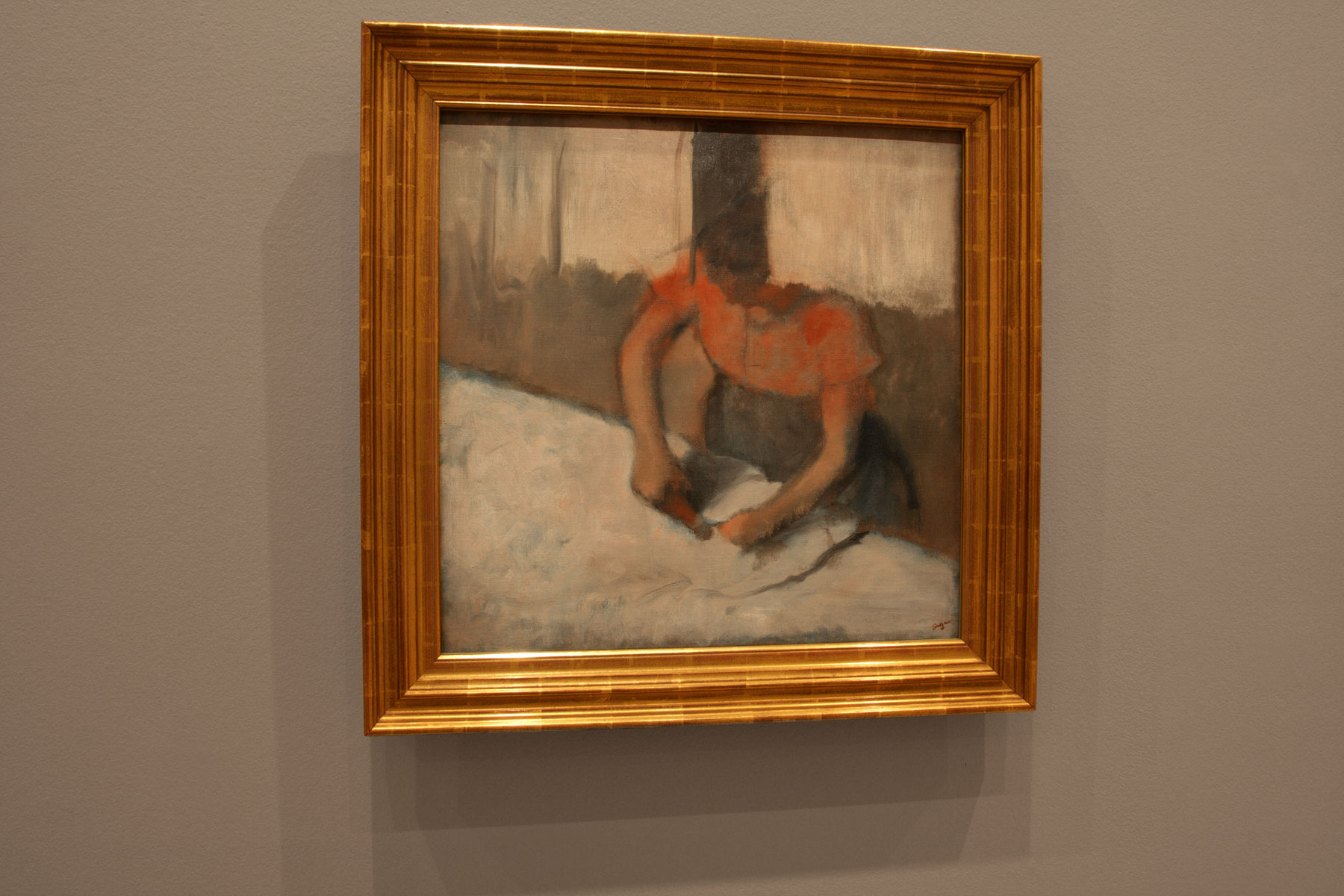
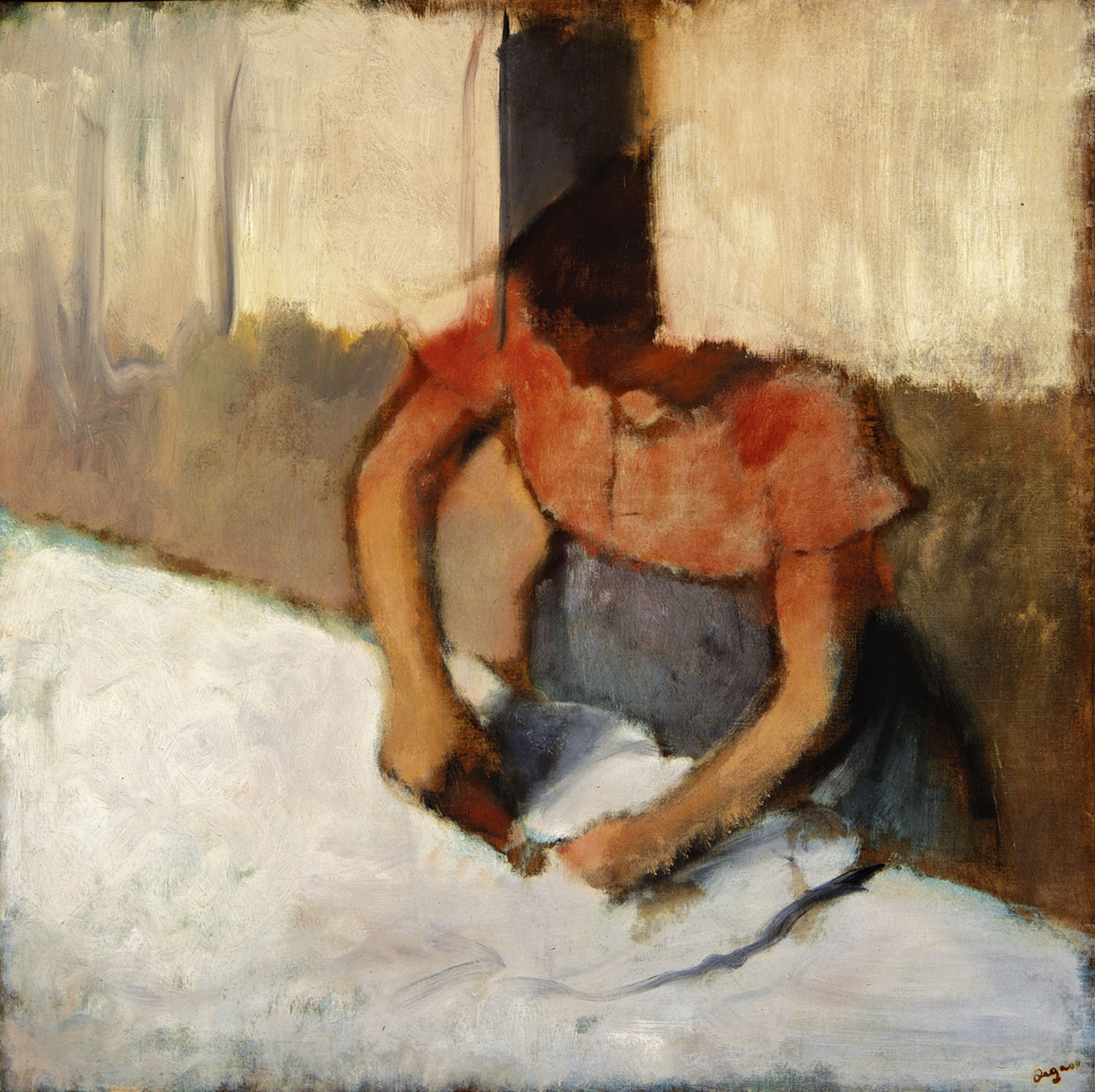
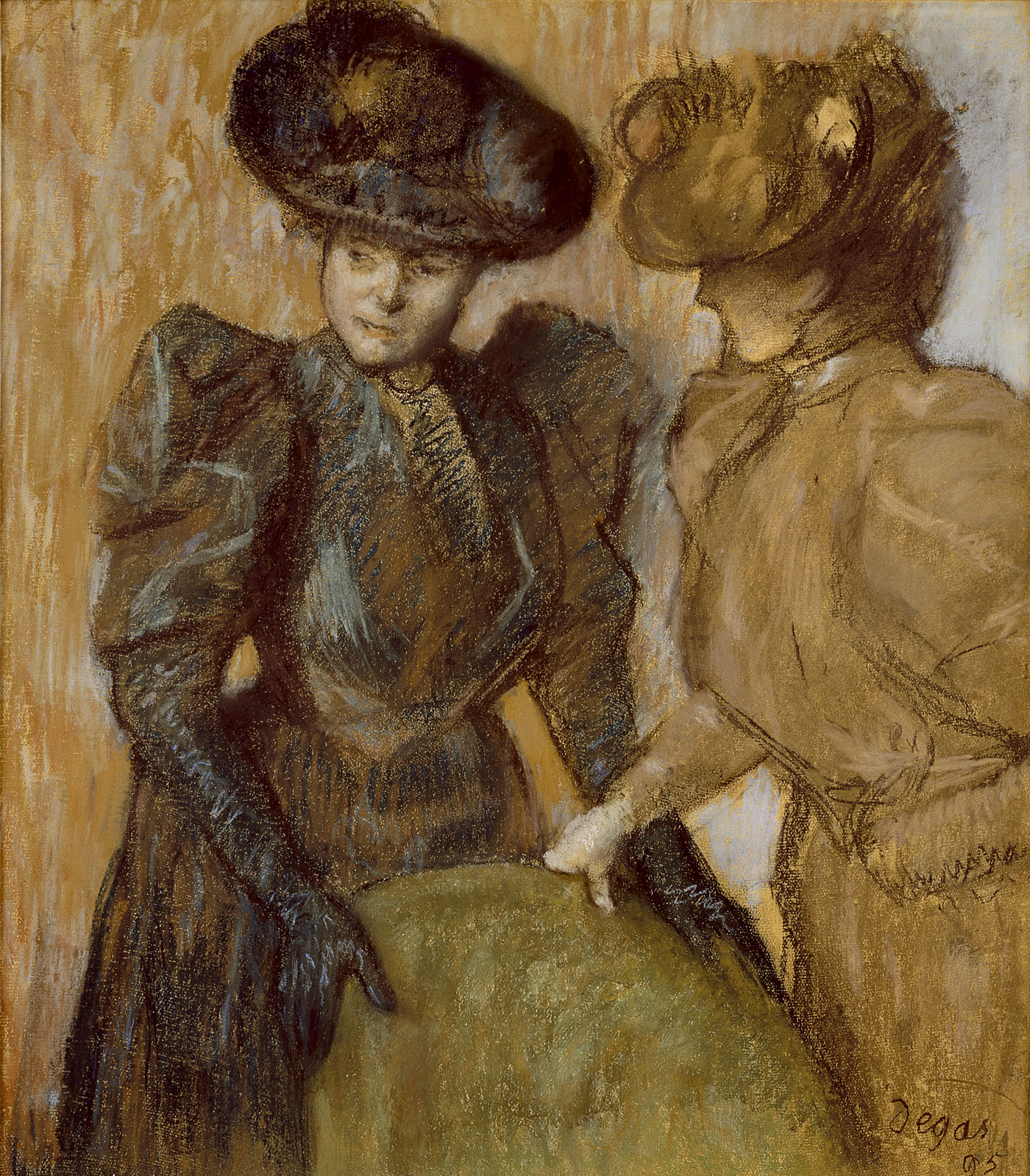
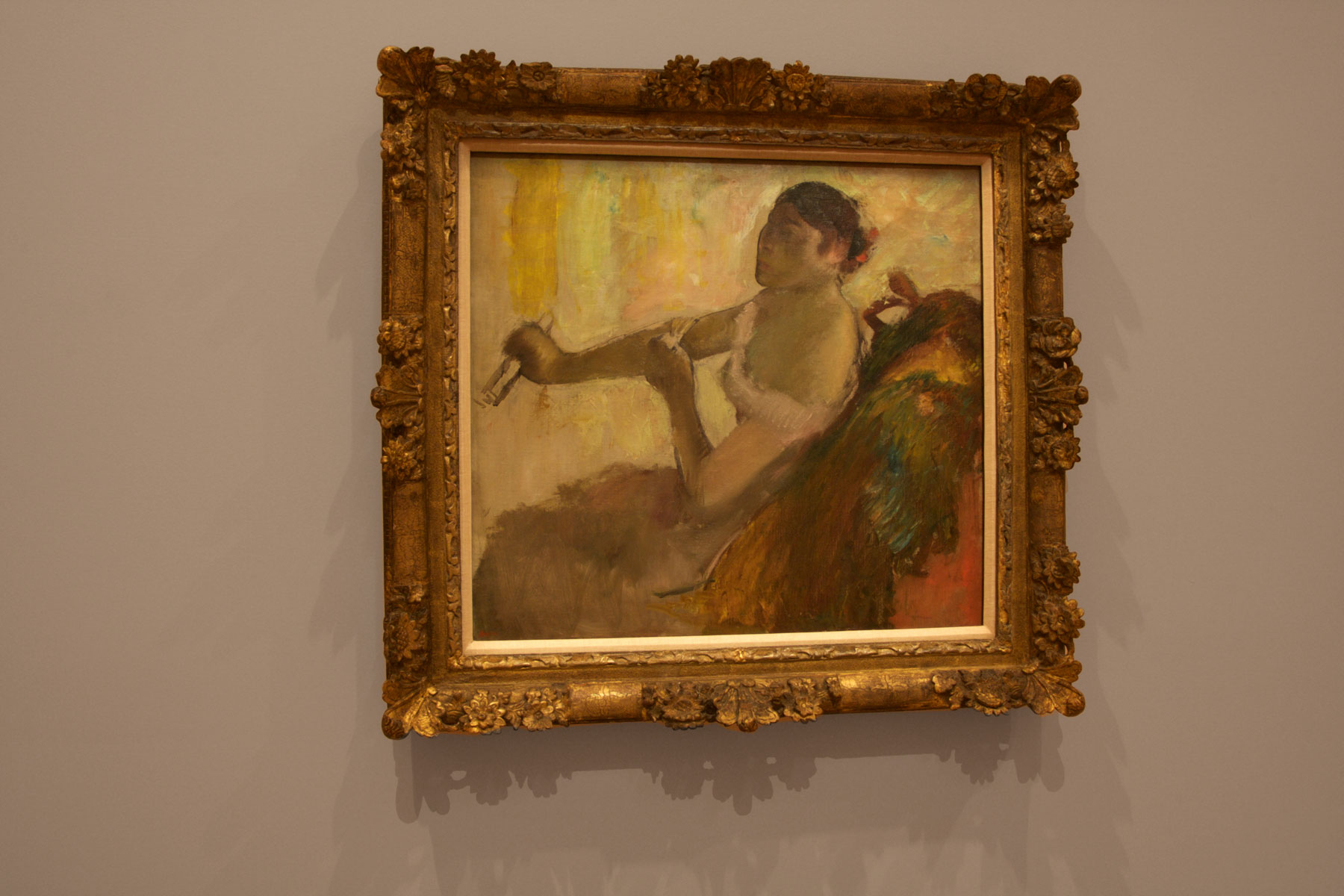
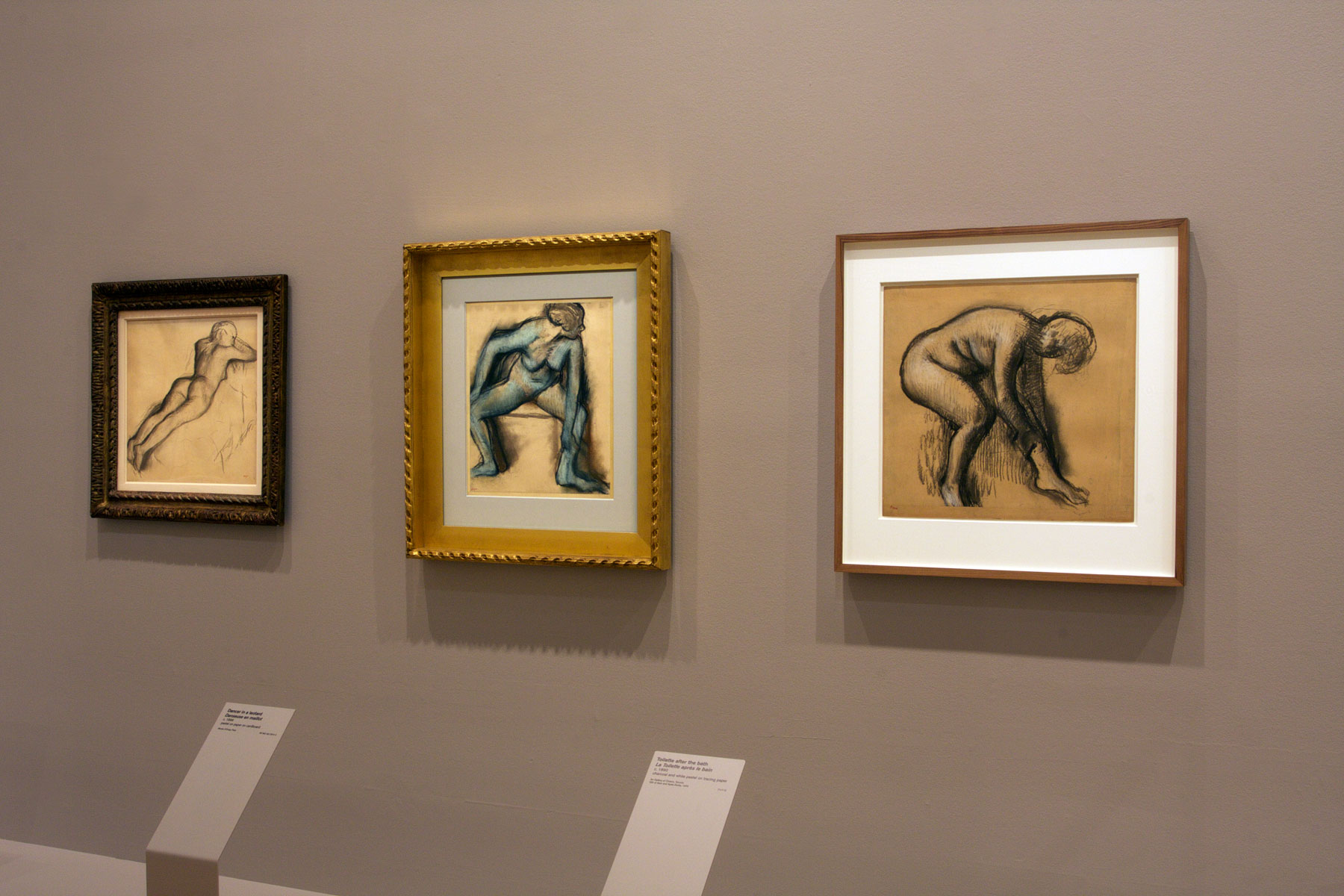
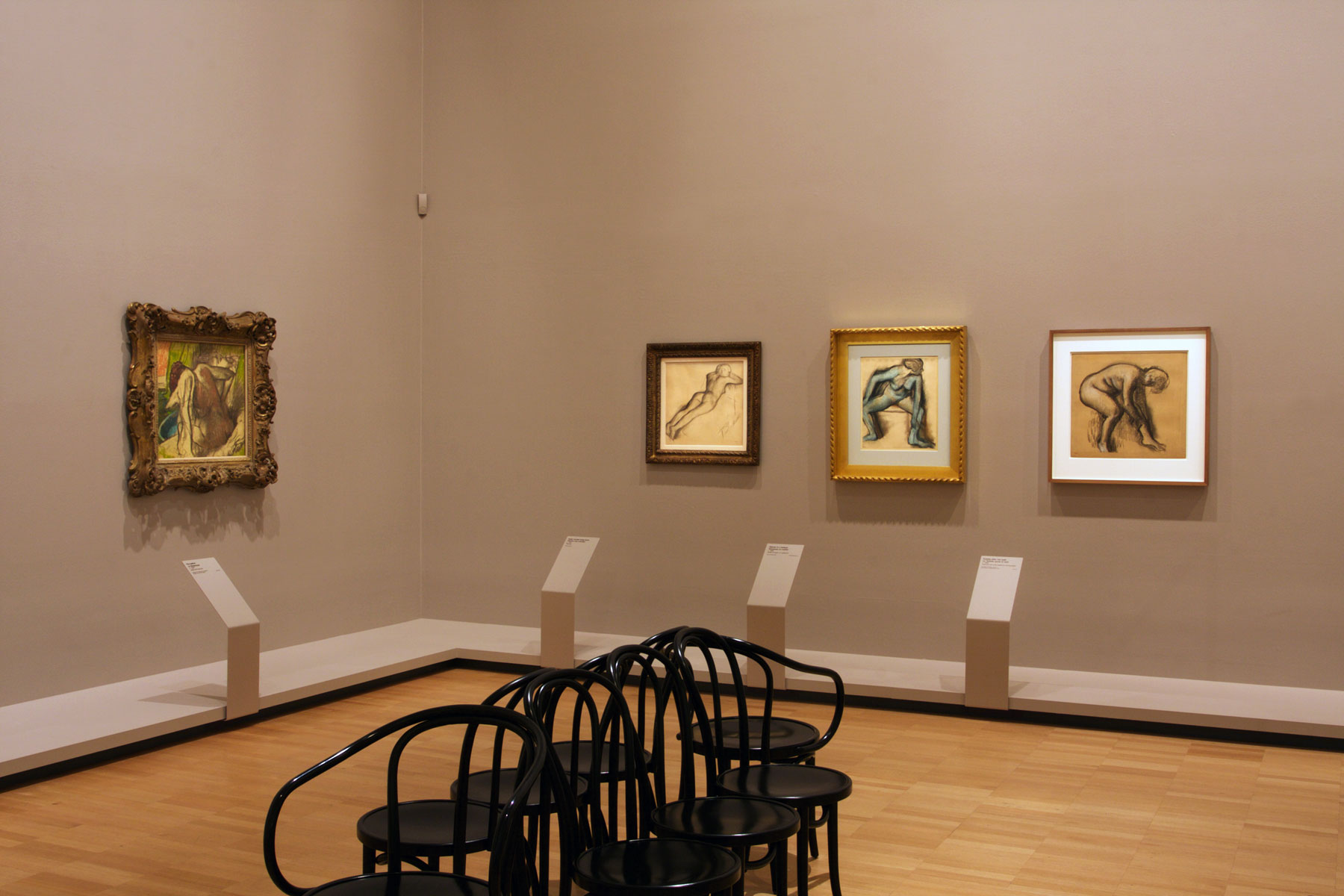
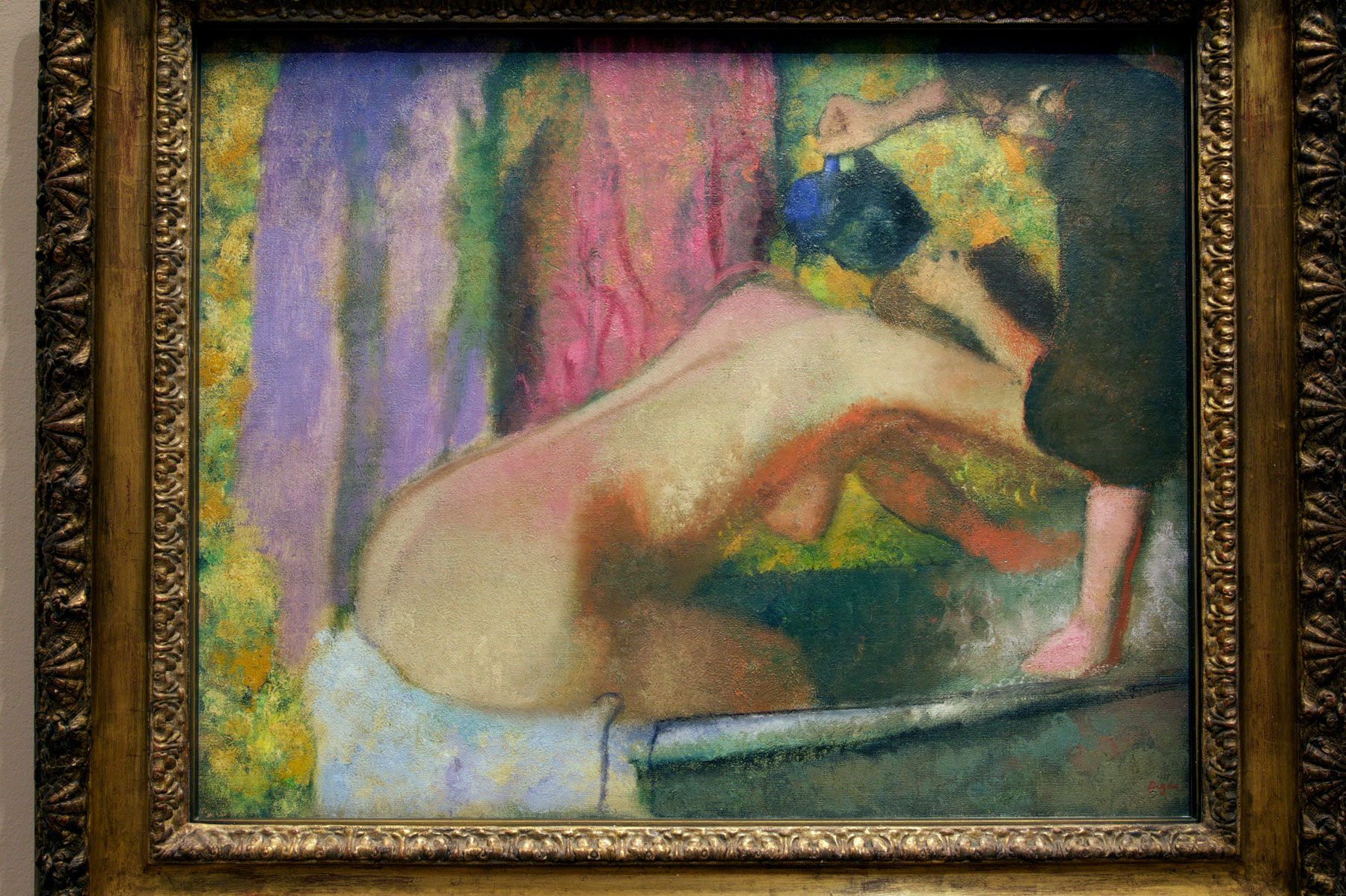
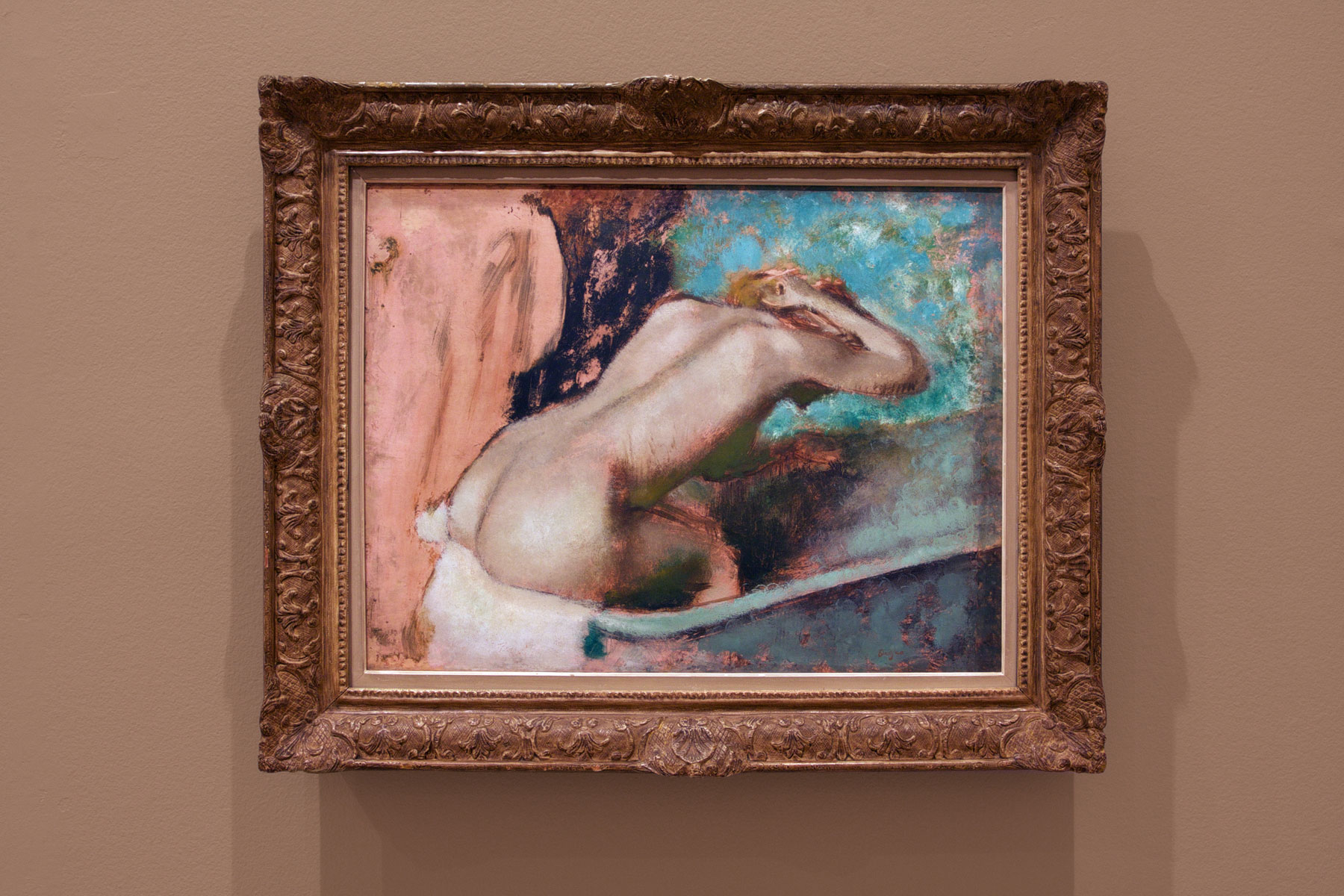
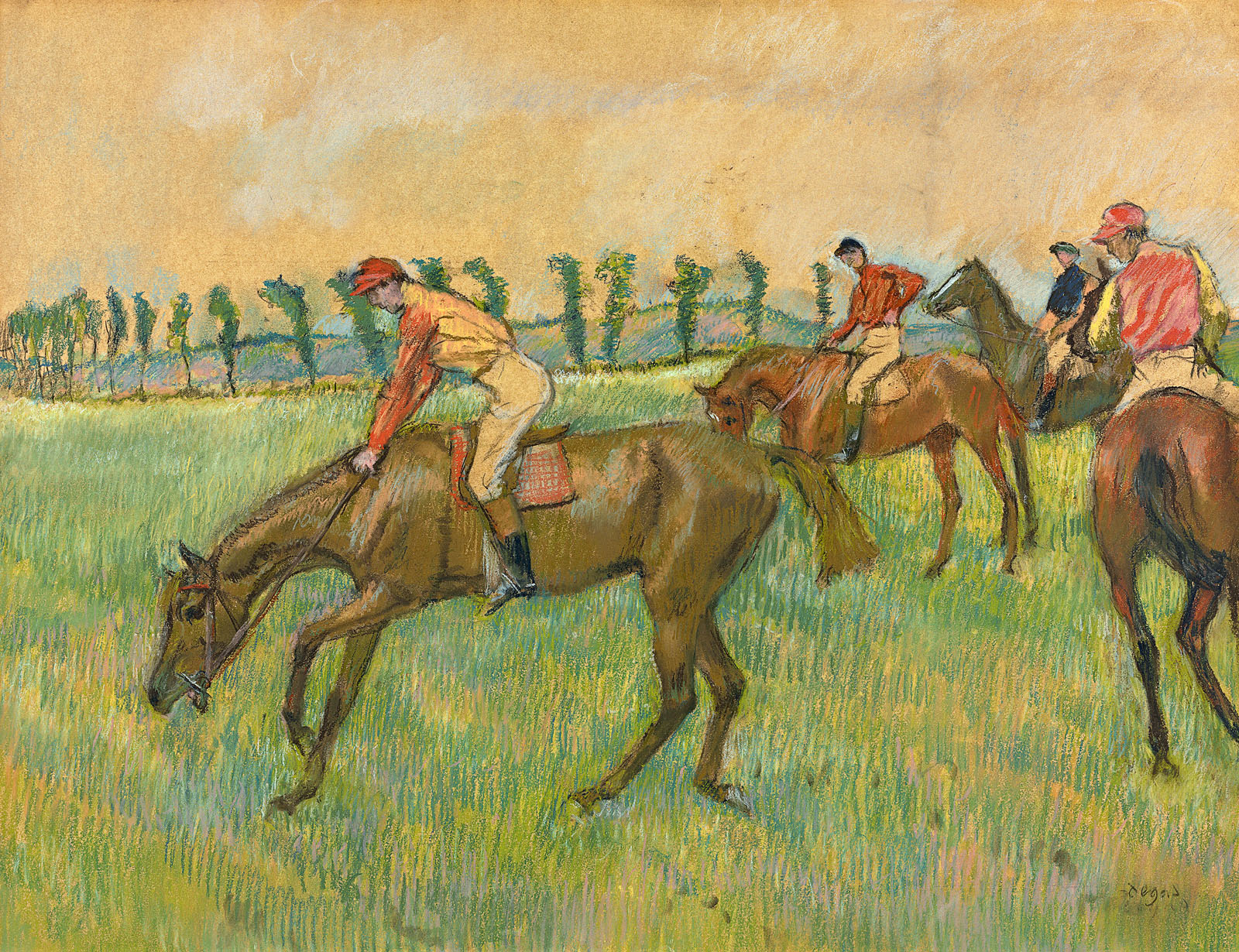
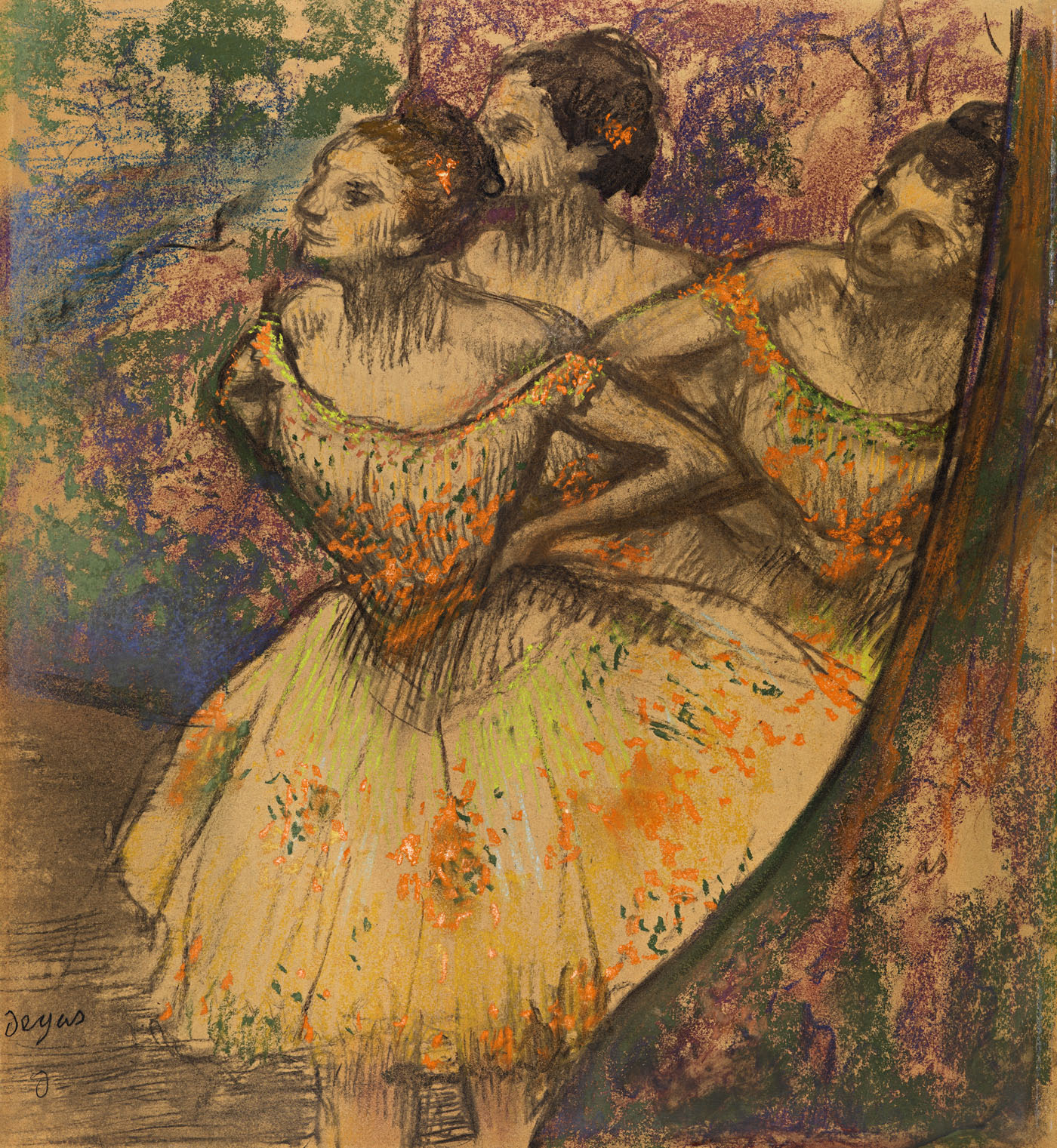
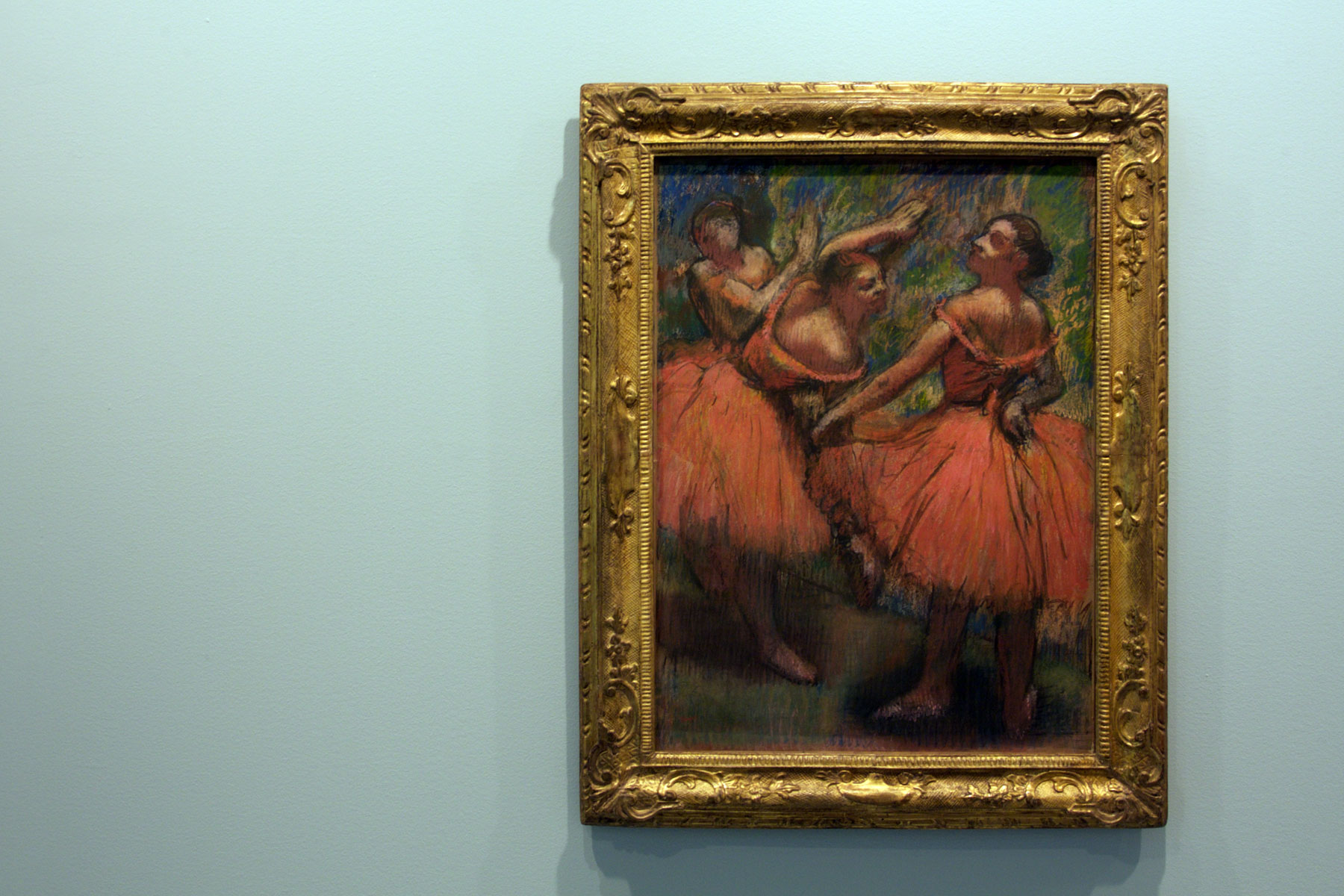
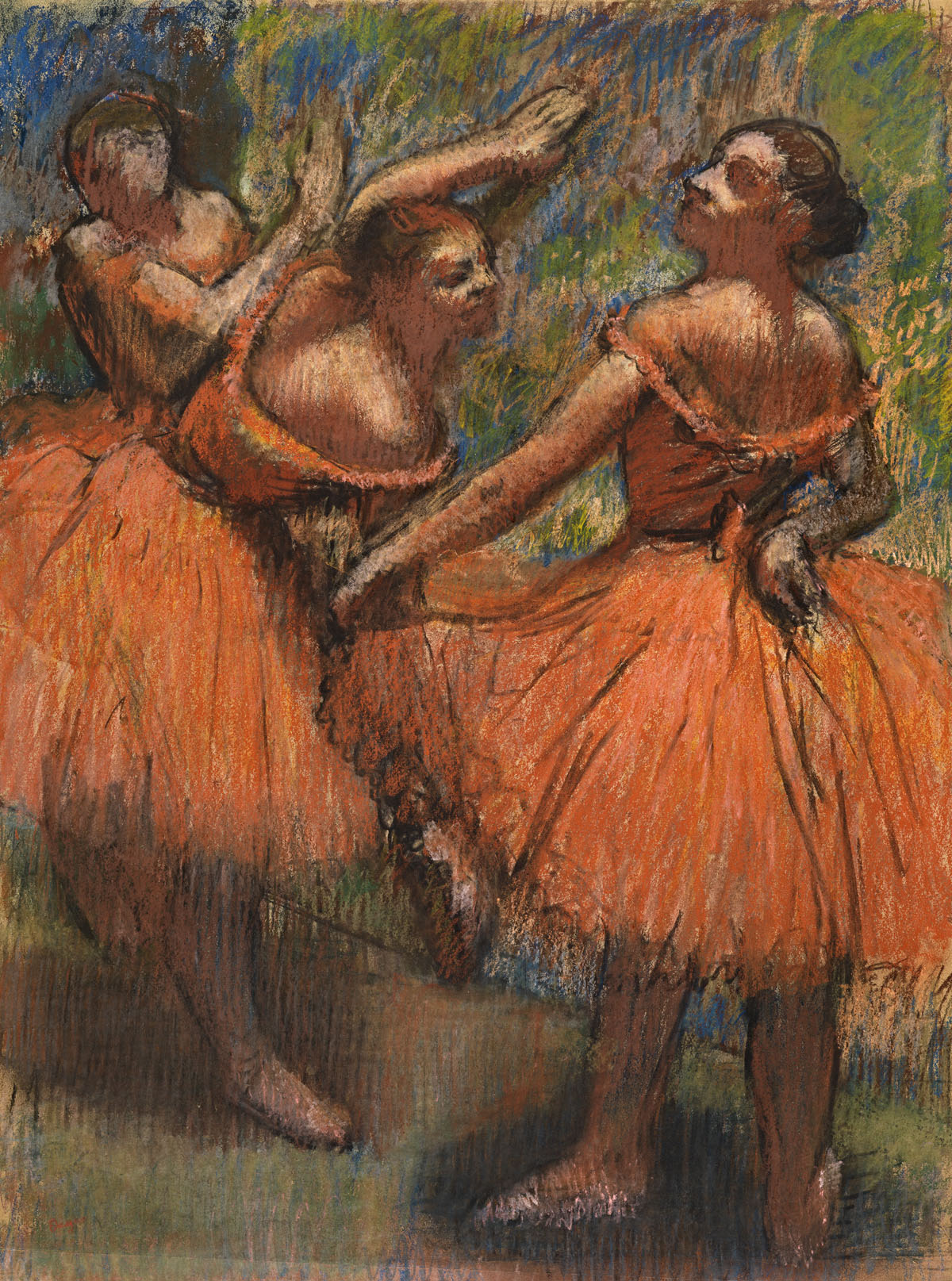
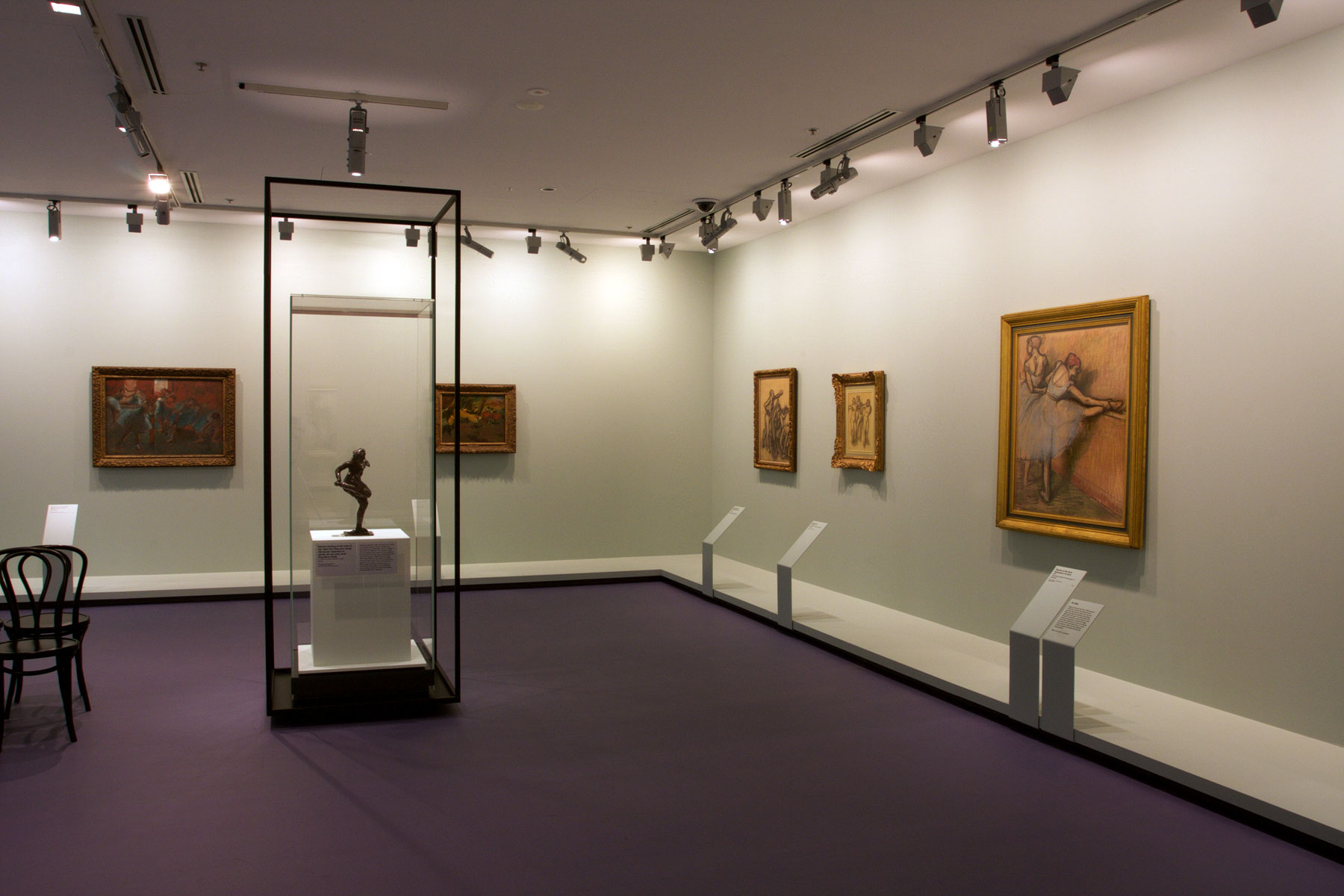
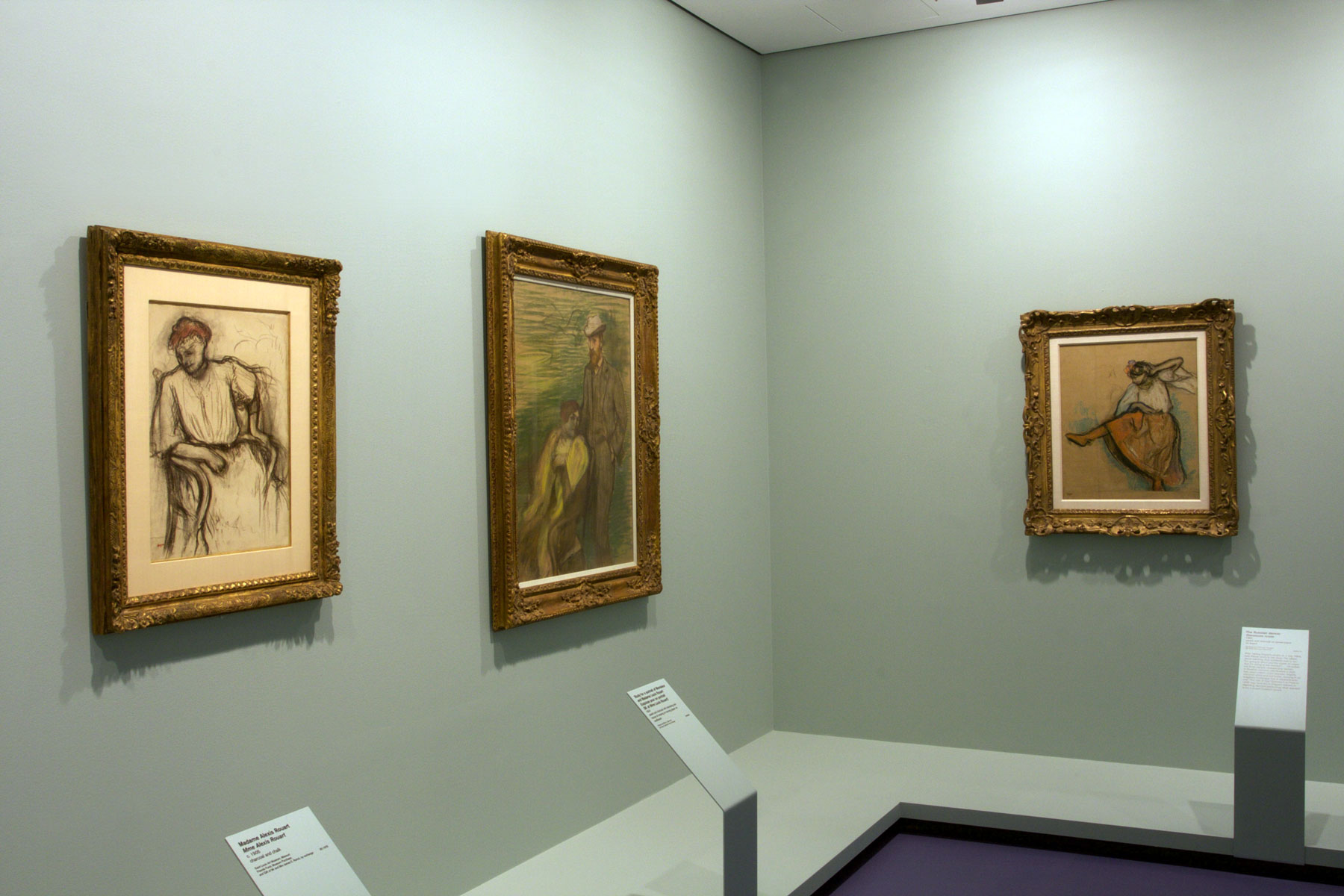
A magnificent exhibition of the work of Edgar Degas at NGV International. So nice to see a blockbuster without papered walls or patterned floors, an exhibition that just allows the work to speak for itself.
“Il y a quelque chose plus terrible encore que le bourgeois – c’est l’homme qui nous singe [There’s something even more awful than the bourgeois – it’s the man who apes us]”
Edgar Degas as noted down by Oscar Wilde when he met him in 1883.
While studying in Rome as a young man degas became increasingly interested in printmaking and also in the portraits of Rembrandt, which he first saw in publication by the French art writer Charles Blanc. The effects of light and shadow in Rembrandt’s portraits inspired Degas to undertake a series of self-portraits including this, his only self-portrait etching, which he produced in four separate states. He experimented with altering the appearance of these etchings through leaving varying amounts of ink on the plate before printing. Degas was very pleased with this exercise, and gave away examples of these trials to his friends.
This work is both a portrait and a genre scene, but it leans towards the former in that there is little trace of narrative, local colour or exotic reference. Degas details the marks of old age, fatigue and poverty – wrinkled skin, gnarled hands, the motley garments of a pauper – along with the faded colours that he recorded in a contemporary notebook: ‘figure of an old woman / very tanned skin, white veil / cloak thrown over / shoulder faded brown / faded free dress / a little like the back wall / of my room / yellow apron’
In 1858-1859, during an Italian sojourn, Degas stayed in Florence for nine months with his aunt Laure and her husband, Baron Gennaro Bellelli. There he embarked on the largest painting he would ever create – a monumental portrait of Laure, Gennaro and their daughters, Giovanna and Giulia. A study of marital discontent presented on the scale of a history painting, Family portrait, also called The Bellelli family, reflected Degas’ recent study of the dignified sitters in the Flemish master Anthony van Dyck’s early seventeenth-century portraits, which he had seen in Genoa. He worked on this painting continuously after his return to Paris, completing a final version of it for the Paris Salon of 1867. Alive to the unhappy marital dynamics between Laure and her husband, a political exile from Naples, Degas showed his morose relatives in their rented apartment, physically separated from one another by items of furniture and Giovanna (on the left) and Giulia. Although expecting her third child, Laure Bellelli (la Baronne) stands proud and aloof, in full mourning for her recently deceased father (Degas’ grandfather) Hilaire Degas, whose portrait hangs on the wall behind her. Meanwhile, her husband, conspicuously not in mourning, sits in comfort by the fire. Adults and children are compressed into a shallow plane, an airless, static vacuum. The uneasy ambience is accentuated by Giulia’s absent leg and the family dog, shown without its head, in the right foreground.
In this portrait of Monsieur Ruelle, Degas shows his father’s former bank cashier as a man of seriousness and restrained sophistication, dressed in a dinner suit and black bow tie as if preparing to go the opera. In its combination of informality and masculine severity the portrait conforms to a convention among nineteenth-century Realist artists of portraying each other and their friends as modern men of leisure and the metropolis.
On returning to Paris from Italy in 1860 Degas began work on scenes from the Bible and ancient history, including this preparatory oil sketch for a vignette from an ancient greek subject. In the foreground two groups of adolescents are seen confronting each other on the plains of Sparta, watched over by the white-haired law-giver Lycurgus and the teenagers’ mothers. The subject has conventionally been read as the exercises traditionally undertaken by Spartans in preparation for war, but it has also been suggested that it represents Spartan courtship rites. In the Life of Lycurgus it was noted that display of physical prowess by girls assisted young men in choosing strong mothers, who would produce strong children.
An exhibition of one of the world’s most beloved artists, Edgar Degas, opens to the public from tomorrow at NGV International showcasing significant works never-before-seen in Australia.
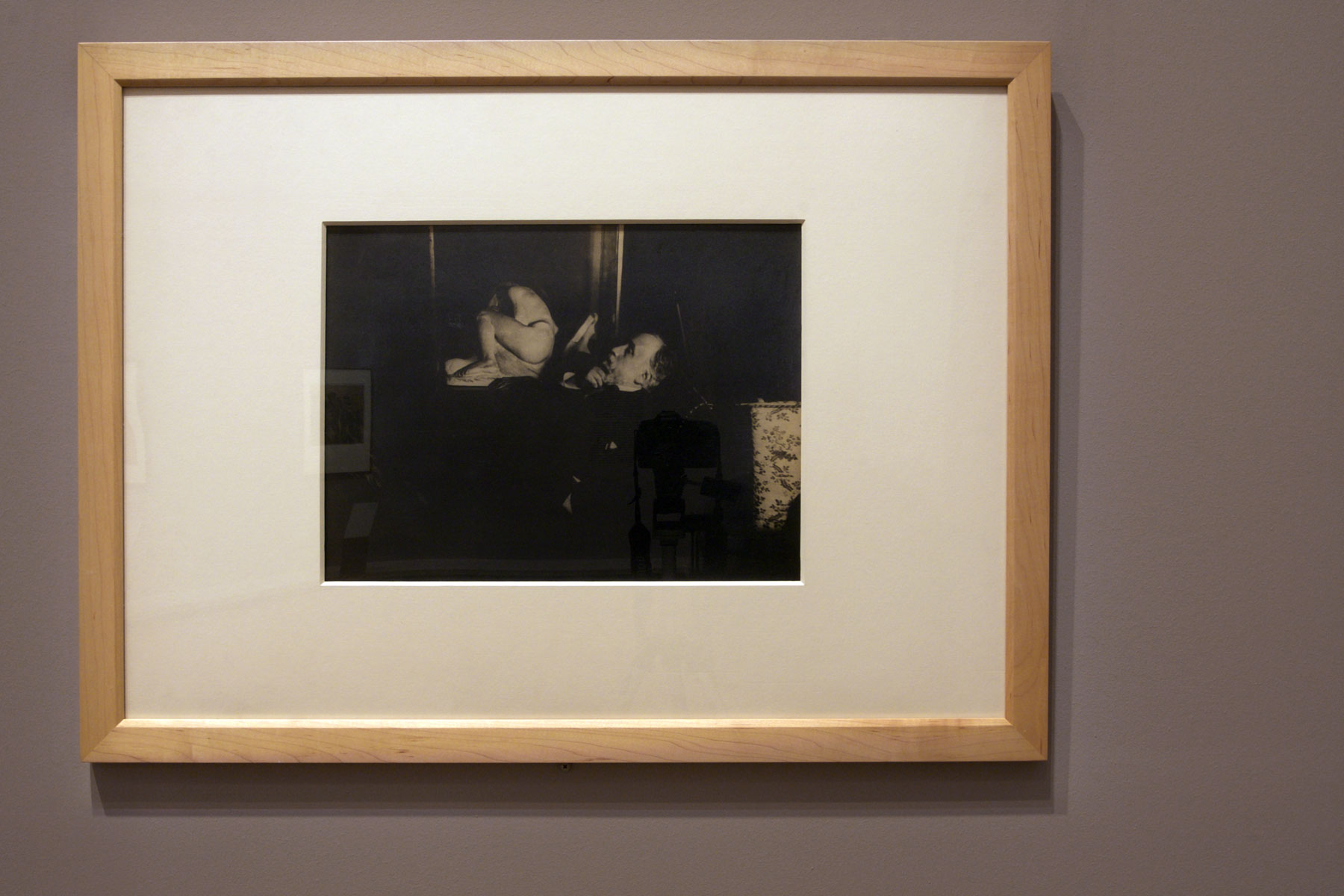
In its world premiere, Degas: A New Vision presents the largest display of Degas’ works to ever come to Australia, and forms the most comprehensive retrospective of the artist’s oeuvre in decades. Featuring more than 200 works, Degas: A New Vision reveals Degas’ talent in a new light; not only as a great master of painting, but also as a master of drawing, printmaking, sculpture and photography. The works travel to Melbourne from 65 lenders in more than 40 cities across the globe.
The Premier of Victoria, the Hon. Daniel Andrews MP, said, “Degas: A New Vision is a coup for the NGV and for Victoria. Local audiences will be the first in the world to experience this incredible exhibition – another example of how we are leading the way as the creative state. Part of the Melbourne Winter Masterpieces series, this exhibition continues the tradition of creating drawcard cultural events for locals and visitors and bringing must-see art to our city each year.”
Tony Ellwood, Director, NGV, said, “Presenting Edgar Degas’ magnificent oeuvre in a fresh and reinvigorated light showcases him as one of the defining artists of the nineteenth and twentieth centuries. Considered one of the world’s most celebrated and significant artists, his influence upon modern and contemporary art is undeniable. Degas: A New Vision provides audiences with a rare experience to truly be immersed in the creativity and originality of his art, giving visitors a deeper and richer understanding of his brilliance.”
Degas: A New Vision is presented thematically, grouping together the subjects which Degas continually returned to throughout his career, including not only his famous ballet scenes but also arresting portraits, the nude, horse-racing, the social world of Parisian nightlife, and women at work and leisure. The exhibition also explores the great technical, conceptual and expressive freedoms that Degas achieved in his later years, and reveals his experiments with a range of mediums including sculpture and photography. This approach emphasises Degas’ obsessive and highly creative working methods, and allows visitors to enjoy the development of Degas’ art from its beginnings.
Edgar Degas (French, 1834-1917) Victoria Dubourg c. 1868-1869 Oil on canvas 81.3 x 64.8cm Toledo Museum of Art, Toledo, Ohio Gift of Mr. and Mrs. William E. Levis
While his colleagues exhibition plein-air landscapes as ‘Impressionists’, degas adhered to his position as a ‘Realist’ during the 1860s and 70s, with at times awkward results. Dead fox in the undergrowth displays the powerful sense of physical presence that can be achieved by studying a dead fox in the studio under artificial light, and by using a brush to render the fox’s luscious pelt. Less convincing is the forest setting, which is invited and only roughly blocked out. Here Degas applied thin slashes of green and brown paint to suggest trees and forest floor, emulating, some have suggested, the Realist technique of Gustave Courbet.
At the 1881 ‘impressionist’ group exhibition Degas unveiled a large wax sculpture of an immature ballerina (of which this is a bronze version), which he provocatively clad in real clothing. Critics were scandalised, accusing him of having dredged ‘the lower depths of dance’, choosing his dancer from among the ‘most hatefully ugly’. Degas’ model, ballet student Marie Van Goethem, the daughter of a tailor and a laundress and part-time prostitute, was later to abandon her dance studies and disappear into Paris’ underworld.
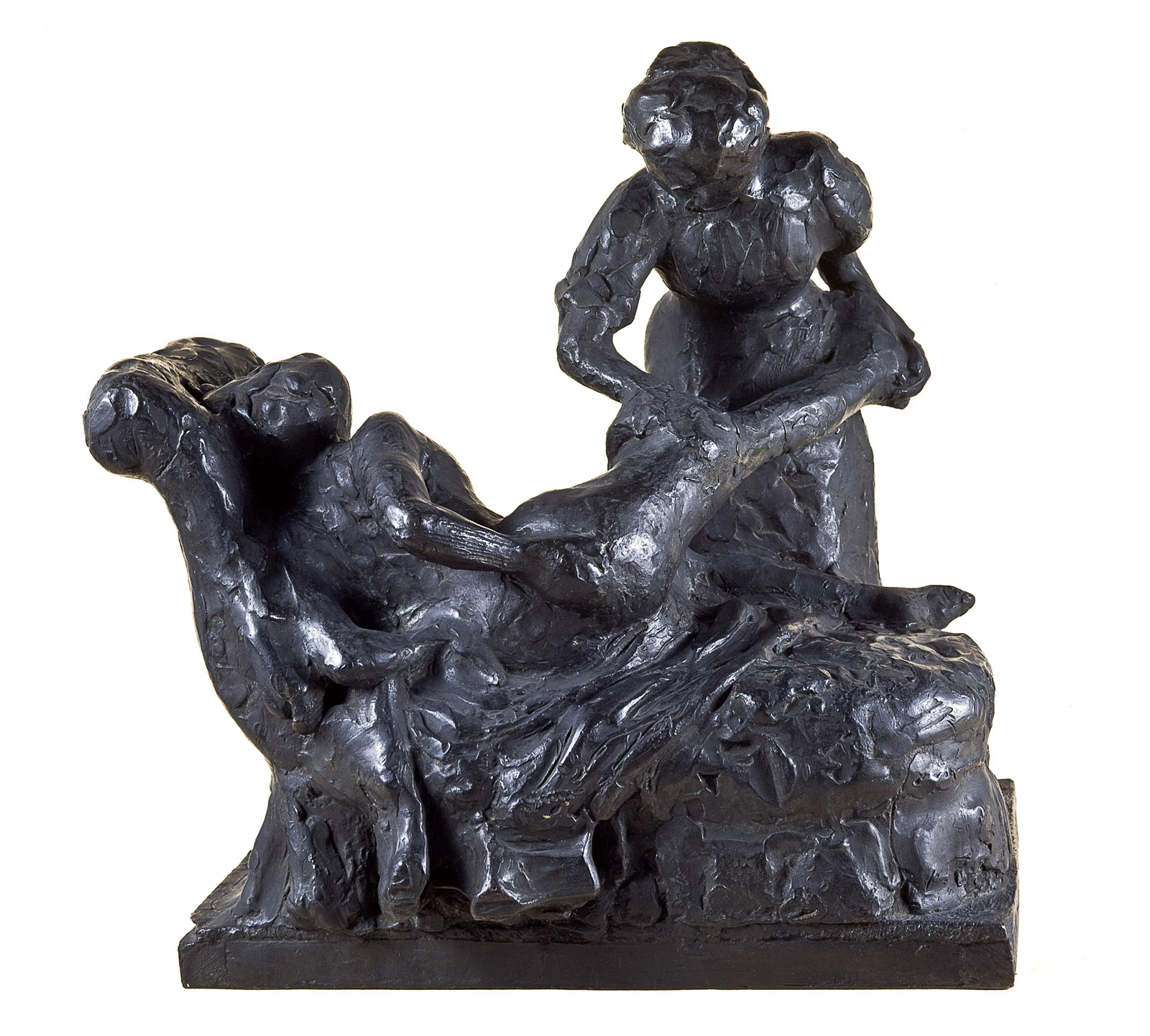
Degas produced sculptures in his studio from the 1860s until the 1910s. He modelled them in wax, over steel wire and cork armatures. Never satisfied, he made, destroyed and remade them repeatedly, his primary subjects being thoroughbred racehorses, female dancers and women at their toilette. As Degas’ eyesight deteriorated in his later years, making three-dimensional figures fulfilled a physical and emotional need that transcended any desire to perfect a finished object; he allegedly said that sculpture was ‘a blind man’s trade’.
The partially finished state of Courtyard of a house (New Orleans, sketch) reflects Degas’s experiences in the city, as he struggled to fulfil social obligations with his American relatives. The view here looking out from a shaded interior also indicates that Degas was already experiencing problems with his eyesight, which was affected by the harsh Louisiana sunlight.
The young girl being attended to by a chiropodist in this painting is believed to be Joe Balfour, daughter of Degas’s widowed cousin Estelle Musson, whose husband had been killed in 1862 during the American Civil War. Degas here uses a technique he invented, peinture à l’essence (which entailed using oil pigments with most of the oil blotted away, thinned out with turpentine). Applied like watercolour, it dried with a soft matt finish that Degas preferred to the glossy sheen of traditional oil paintings.
Degas ironically referred to this painting as ‘my genre picture’, by which he understated the gravitas of this domestic scene. This drama of seeming violation perpetrated on a young working-class woman b a man displaying the clothing and posture of a young bourgeois acquired in Degas’s hands the breadth and intensity of history painting. The muted colours and dim light accentuate the unspoken violence, anguish and simmering tension between the two people. The open box on the round table at the centre of the painting is a telling symbol of lost virginity. The rosy interior of the gaping jewel-case is brutally expired by the lamp standing next to it.
Curator: Karole P. B. Vail, Guggenheim’s exhibition curator, in collaboration with co-organisers Carol S. Eliel (LACMA) and Matthew S. Witkovsky (Art Institute of Chicago)
“To understand the production of art at the end of tradition, which in our lifetime means art at the end of modernism, requires, as the postmodern debate has shown, a careful consideration of the idea of history and the notion of ending. Rather than just thinking ending as the arrival of the finality of a fixed chronological moment, it can also be thought as a slow and indecisive process of internal decomposition that leaves in place numerous deposits of us, in us and with us – all with a considerable and complex afterlife. In this context all figuration is prefigured. This is to say that the design element of the production of a work of art, the compositional, now exists prior to the management of form of, and on, the picture plane. Techniques of assemblage, like montage and collage – which not only juxtaposed different aesthetics but also different historical moments, were the precursors of what is now the general condition of production.”
Fry, Tony. “Art Byting the Dust,” in Hayward, Phillip. Culture, Technology and Creativity in the Late Twentieth Century. London: John Libbey and Company, 1990, pp. 169-170.
Many thankx to the Solomon R. Guggenheim Museum for allowing me to publish the photographs in the posting. Please click on the photographs for a larger version of the image.
In order to understand the present we must link it to the self transforming urges of the past. We must see it as an evolutionary urge toward a transformation of all traditional notions, as a gradual process of growth in which several earlier currents have penetrated one another and thus have changed their very essence.
From May 27 to September 7, 2016, the Solomon R. Guggenheim Museum presents the first comprehensive retrospective in the United States in nearly fifty years of the work of pioneering artist and educator László Moholy-Nagy (1895-1946). Organised by the Solomon R. Guggenheim Foundation, the Art Institute of Chicago, and the Los Angeles County Museum of Art, Moholy-Nagy: Future Present examines the full career of the utopian modernist who believed in the potential of art as a vehicle for social transformation, working hand in hand with technology. Despite Moholy-Nagy’s prominence and the visibility of his work during his lifetime, few exhibitions have conveyed the experimental nature of his work, his enthusiasm for industrial materials, and his radical innovations with movement and light. This long overdue presentation, which encompasses his multidisciplinary methodology, brings together more than 300 works drawn from public and private collections across Europe and the United States, some of which have never before been shown publicly in this country. After its debut presentation in New York, the exhibition will travel to the Art Institute of Chicago (October 2, 2016 – January 3, 2017) and the Los Angeles County Museum of Art (February 12 – June 18, 2017).
Moholy-Nagy: Future Present provides an opportunity to examine the full career of this influential Bauhaus teacher, founder of Chicago’s Institute of Design, and versatile artist who paved the way for increasingly interdisciplinary and multimedia work and practice. Among his radical innovations were his experiments with cameraless photographs (which he dubbed “photograms”); use of industrial materials in painting and sculpture that was unconventional for his time; researching with light, transparency, and movement; his work at the forefront of abstraction; and his ability to move fluidly between the fine and applied arts. The exhibition is presented chronologically up the Guggenheim’s rotunda and features collages, drawings, ephemera, films, paintings, photograms, photographs, photomontages, and sculptures. The exception to the sequential order is Room of the Present (Raum der Gegenwart) in the High Gallery, a contemporary fabrication of a space originally conceived by Moholy-Nagy in 1930 but never realised in his lifetime. Constructed by designers Kai-Uwe Hemken and Jakob Gebert, the large-scale work contains photographic reproductions, films, slides, documents, and replicas of architecture, theater, and industrial design, including a 2006 replica of his kinetic Light Prop for an Electric Stage (Lichtrequisit einer elektrischen Bühne, 1930). Room of the Present illustrates the artist’s belief in the power of images and his approach to the various means with which to view them – a highly relevant paradigm in today’s constantly shifting and evolving technological world. Room of the Present will be on display at all three exhibition venues and for the first time in the United States. The Guggenheim installation is designed by Kelly Cullinan, Senior Exhibition Designer, and is inspired by Moholy-Nagy’s texts on space and his concept of a “spatial kaleidoscope” as applied to the experience of walking up the ramps.
Born in 1895 in Austria-Hungary (now southern Hungary), Moholy-Nagy moved to Vienna briefly and then to Berlin in 1920, where he encountered Dada artists, whose distinctive visual attributes of the urban industrial landscape had already entered his work. He was also influenced by the Constructivists, and exhibited work on several occasions at Berlin’s Der Sturm gallery. During this time, Moholy-Nagy experimented with metal constructions, photograms, and enamel paintings. At the same moment, in his ongoing quest to depict light and transparency, he painted abstract canvases composed of floating geometric shapes. While teaching at the Bauhaus in Weimar and then Dessau, he and Walter Gropius pioneered the Bauhaus Books series, which advanced Moholy-Nagy’s belief that arts education and administration went hand in hand with the practice of art making. Around this period, the artist became temporarily disenchanted with the limitations of traditional painting. Photography took on greater importance for him, and he described the photogram as “a bridge leading to new visual creation for which canvas, paint-brush and pigment cannot serve.” He fashioned photomontages by combining photographs (usually found) and newspaper images into absurd, satirical, or fantastical narratives. When he moved back to Berlin in 1928, he enjoyed success as a commercial artist, exhibition and stage designer, and typographer, examples of which will be on display in Moholy-Nagy: Future Present. Adolf Hitler’s rise to power made life increasingly difficult for the avant-garde in Germany; thus, in 1934 Moholy-Nagy moved with his family to the Netherlands and then to London. Once he moved to Chicago in 1937, he never returned to Europe.
Moholy-Nagy immigrated to Chicago to become founding director of the New Bauhaus, known today as the Institute of Design at the Illinois Institute of Technology. He also made some of his most original and experimental work during this time, pursuing his longtime fascination with light, shadow, transparency, and motion. He continued to make photograms, created his Space Modulators (hybrids of painting and sculpture made from Plexiglas), and pioneered 35 mm colour slide photography, shown as projections in the exhibition. He gave his full attention to American exhibition venues before his untimely death of leukaemia in 1946, showing nearly three dozen times across the United States – including in four solo shows.
Moholy-Nagy was a central figure in the history of the Guggenheim Museum. His work was included in the museum’s founding collection, and he held a special place at the Museum of Non-Objective Painting, the forerunner of the Guggenheim Museum. He was among the first artists director Hilla Rebay exhibited and collected in depth, and the museum presented a memorial exhibition shortly after his death. Moholy-Nagy: Future Present highlights the artist’s interdisciplinary and investigative approach, migrating from the school to the museum or gallery space, consistently pushing toward the Gesamtwerk, the total work, which he sought to achieve throughout his lifetime.
Press release from the Solomon R. Guggenheim Museum
Take your pick: some interesting, some not. My favourite: Annette Messager Mes voeux (1989, below) … such a strong, creative and inspiring artist.
I’m not writing so much as I have bad RSI in my left wrist at the moment.
Dr Marcus Bunyan
Many thankx to Haus der Kunst for allowing me to publish the art work in the posting. Please click on the photographs for a larger version of the image.
In 2016, two prominent exhibition projects explore the pressing question of which factors remain relevant to the writing of art history. While “Postwar – Art between the Pacific and Atlantic, 1945-1965” concentrates on the time immediately after World War II, “A History: Contemporary Art from the Centre Pompidou” provides an overview of contemporary art since the 1980s with 160 works by more than 100 artists.
The year 1989 marked a break with the past and the start of a new era. The fall of the Berlin Wall toppled divisions in the world of European art, while the events of Tiananmen Square focused attention on a new China. The ongoing globalisation allows for an unprecedented mobility. The static understanding of identity, once based on origin and nationality, has since given way to a more transnational and variable narrative. Contemporary artistic proposals, which arise from the new “decolonised subjectivity”, are also based on a new understanding of site-specificity. For example, in the 1960s and 1970s the protagonists of Land Art still understood landscapes primarily as post-industrial ruins. In contemporary artistic practice, however, space is defined above all socially and politically – by traumatic historical events, home country, exile, diaspora and hybrid identities, such as African-American, Latino, Turkish-German, African-Brazilian, and so forth. The new presentation of the Centre Pompidou contemporary collections at Haus der Kunst focuses particularly on this altered geography, notably the former Eastern Europe, China, Lebanon, and various Middle Eastern countries, India, Africa, and Latin America. This is the first time such a large-scale view of the Centre Pompidou collection has been presented outside France.
Haus der Kunst is pleased to present A History: Contemporary Art from Centre Pompidou, an exhibition originally curated by Christine Macel at the Centre Pompidou, Paris. With approximately 160 works by more than 100 artists from across the world, “A History: Contemporary Art from the Centre Pompidou” provides an incisive overview of artistic positions since the 1980s in painting, sculpture, installation, video, photography, and performance.
The Centre Pompidou’s collection of contemporary art has rarely been presented so comprehensively outside France. The selected works on view date from the 1980s to the present raising two significant questions: What factors are relevant for ensuring that art history is written in a specific way, and what does an ever changing understanding of the term ‘contemporary’ mean for public museums and their collections? Still, the concentration on Euro- American domains, which many museums formerly pursued in the acquisition of works for their collections, can hardly be sustained today and is no longer the aspiration of most museums. Globalisation, with its expanded narratives, has recently become too determining for the position of contemporary art to ignore. Curator Christine Macel defines her intention accordingly: to present ‘one’ among many possible histories of contemporary art.
With the progression of globalisation – understood here as the consolidation of economic, technological and financial systems, but also the questioning of linear history, and hegemonic cultural narratives – our perception of identity has changed. Since the first globally-oriented biennial in Havana in 1986, exhibition organisers and larger museums in Europe and North America have strived to display art created beyond the Western artistic circuit. The static understanding of identity as something based in origins and a “home base” has largely given way to a transnational and variable one.
The turning point for Centre Pompidou was its 1989 exhibition “Les Magiciens de la Terre”, in which curator Jean-Hubert Martin aimed to confront the problematic phenomenon of “one hundred percent of exhibitions that ignore eighty percent of the world.” Half the participating artists came from non-Western countries, while the other half came from the West. In addition, all exhibiting artists were – without exception – still active, making the presentation truly contemporary. Since then, the Centre Pompidou, like many large museums, has had to confront the reality of the expanded circuits of contemporary art. Over the years the museum gradually changed its acquisition practices and has increasingly opened its focus toward Eastern Europe, China, Lebanon, the Middle East, India, Congo, Nigeria, South Africa, Cameroon, Mexico and Brazil.
Meanwhile, our understanding of the term “origins” has continued to evolve. Consequently, the definition of “site-specific” has also changed. In the 1960s and 70s, artists of the Land Art movement still essentially regarded landscapes as post-industrial ruins. By contrast, Okwui Enwezor, director of Haus der Kunst believes that, in today’s artistic practice, space is defined by impermanence, by the mutability of politically and socially grounded positions, by aesthetic pluralism, and by cultural differences. Furthermore, colonial and postcolonial experiences shaped by traumatic historical events, home, exile, diaspora produced hybrid identities – such as African-American, Euro- American, Latino, Turkish-German, French-Arabic, African-Brazilian, etc. Consequently new forms of cosmopolitanism and provincialism jostle next to one another. It is no coincidence that the exhibition practice of today can already look back on a number of shows that focused on borders and issues of migration.
Against this backdrop of dynamism and permanent transition the exhibition is divided into seven chapters:
The Artist as Historian
An interest in the historical document and a more general obsession with the past, have led to the nostalgic excavation and re-enactments of existing works of art. Artists from the Arab speaking world are increasingly present in the art world; having borne witness to the Gulf War in 1991, these artists have developed new practices around the examination of history.
The Artist as Archivist
A passion for the archive initially led to a demand for completeness and later to an acceptance of the fragmentary, resulting on the one hand in concurrence of taxonomic efforts and endless accumulation, and, on the other, in an insight into the accelerated loss of memory. On a higher level, both coincide: Archives are especially useful in helping to identify and address wounds in the collective memory.
Sonic Boom
Trying to capture the sensation of listening to music in an image has a long tradition. Yet, even for artists who take their works to the edge of physical dissolution, listening often moves to the fore. Further, changes in the music industry and music production have reinforced the permeability of art and composition.
The Artist as Producer: The “Traffic” Generation
The concept of artwork is transformed through its dematerialisation. An awareness of temporality, volatility, and process shifts to the foreground. Artists develop new forms of collaboration and collective creation, and make aesthetic use of clips, sampling, and film narrative (which is also regarded as an exhibition platform). As a result, copyright as an object of reflection has come into focus.
The Artist as Documentarist: As Close as Possible to the Real
The proliferation of the Internet in the context of a market economy and consumer society has led to a greater interest in the real, in the status quo of the observer and the reporter and generally in an engagement with all areas of human life. The artist takes on the role of a witness who accepts the subjectivity of his observations.
Artist and Object
Between 1980 and 1990, artists turned to an exploration of the everyday and the object; the 1990’s can be considered as the ultimate epoch of the aesthetic of the mundane. The now-famous video, “The Way Things Go” by Fischli and Weiss (1986-87) sings this song of songs to the everyday. No less iconic is Gabriel Orozco’s modified Citroën (La DS, 1993). The confrontation with consumer society is manifested in photography in detailed and richly coloured compositions like Gursky’s 99 Cent (1999), and in sculpture with the integration of found objects. The common denominator is the attention artists pay to excessive consumption – as an opportunity or as a fact.
The Artist and the Body
Video and photography seem to be particularly fitting mediums for artists whose works include a performative element. The theme of the human body – wounded or damaged by oppression – returns as a theme with a vengeance. Many works with erotic and sexual overtones emerge. New technical possibilities, either through plastic surgery or image manipulation, bring the grotesque into the fold.
Exhibition dates: 15th April – 4th September, 2016
Curator: Keith F. Davis, Senior Curator, Photography at The Nelson-Atkins Museum of Art
Unknown maker (American) Group at pond c. 1910s Gelatin silver print 3 × 4 inches The Nelson-Atkins Museum of Art, Kansas City, Missouri Gift of Peter J. Cohen
Dis/membering the snapshot
To say that I dislike the term “snapshot” is an understatement. The term snap/shot implies a lack of consideration in the physical act of taking the photograph. In a snap it was shot – like a snap of the fingers or a bolt out of the blue. But if we think about the photographs in this posting … and we then think about the photographs of Henri Lartigue, or Robert Frank and his travels across 1950s America, I would argue that the only difference between Lartigue, Frank and the former “Unknown makers” is that they were embarked upon a photographic project, and, latterly, were decreed artists.
I believe, and I have always believed, that the taking of photographs is a matter of intention on the part of the photographer.
If you look at these photographs from Unknown makers was it their intention to take this photograph, did they think about what they were doing before they pressed the shutter. And the answer is unequivocally, yes they did. Their aim, their purpose, was that they had the intention to take the photograph they did, they determined of their own free will how to frame these photos and at what split second to press the shutter so as to suit their aim, their thought about what they wanted to capture in the image. This is not a “snap” shot in contemporary parlance, but a considered action and intention.
To say, as Keith F. Davis, Senior Curator, Photography does in the press release, that “Snapshots represent a collective visual unconsciousness of 20th-century American culture,” could not be farther from the truth. They may represent a form of collective subconscious, where these images hover in collective memories and dreams waiting to be visualised, but a collective visual unconsciousness? I don’t think so.
Vernacular photography is about a conscious decision to take a photograph and, at its most poignant, it is about a collective movement that emerges from the subconscious of people all the way around the world – in order (a taxonomic state) to document the world around them.
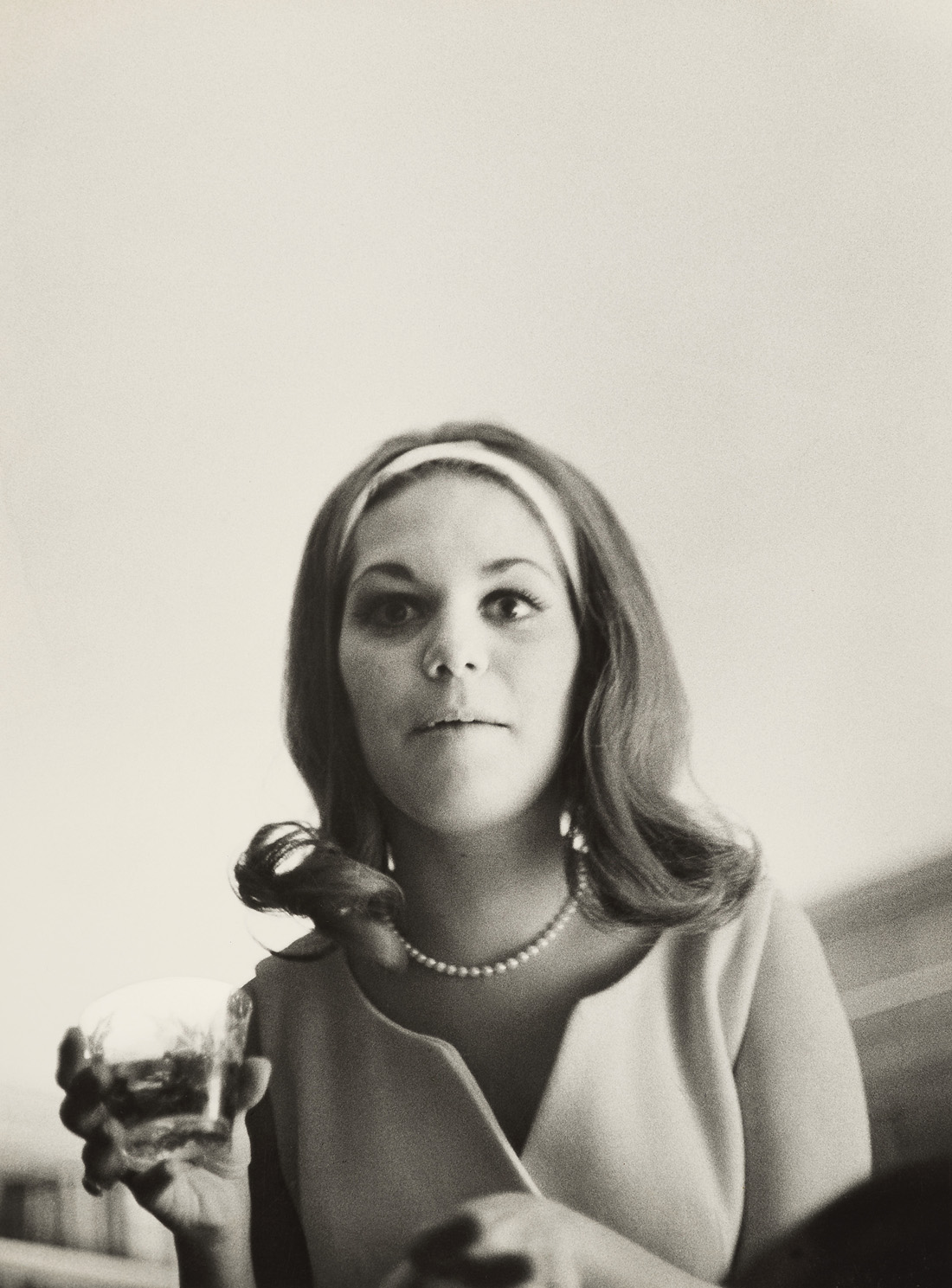
The joy of the women on the bed, the man and women in the cornfield, the couple in love with the Christmas tree, the man riding the bucking horse bareback, even the close-up of child’s mouth – all of the photographs were taken with an inquiring mind, with an intention to look and see, to feel the memory of that event, that time and space – not as a snap/shot but as an expression of (everlasting) life.
“To see a world in a grain of sand and heaven in a wild flower Hold infinity in the palms of your hand and eternity in an hour.“
William Blake
Dr Marcus Bunyan
Many thankx to the The Nelson-Atkins Museum of Art for allowing me to publish the photographs in the posting. Please click on the photographs for a larger version of the image.
Unknown maker (American) Man and woman in corn c. 1930s Gelatin silver print 3 × 4 1/8 inches The Nelson-Atkins Museum of Art, Kansas City, Missouri Gift of Peter J. Cohen
Unknown maker (American) Couple with Christmas tree c. 1940s Gelatin silver print 3 × 3 inches The Nelson-Atkins Museum of Art, Kansas City, Missouri Gift of Peter J. Cohen
Unknown maker (American) Woman with drink on bed 1950s Gelatin silver print 3 1/8 x 4 inches Gift of Peter J. Cohen
Unknown maker (American) Close-up of child’s mouth 1956 Gelatin silver print 3 × 3 inches The Nelson-Atkins Museum of Art, Kansas City, Missouri Gift of Peter J. Cohen
Unknown maker (American) Superman with dumbbell 1972 Ektacolor print 3 1/8 × 3 1/8 inches The Nelson-Atkins Museum of Art, Kansas City, Missouri Gift of Peter J. Cohen
When photography was introduced in 1839, the making of even a single picture was difficult and painstaking. The medium was transformed in the 1880s with the introduction of easier processes and the simple Kodak camera. Amateur photography was born: images became casual and spontaneous, and they were called “snapshots.”
Amateur snapshots are highlighted in An Anonymous Art: American Snapshots from the Peter J. Cohen Gift, which opens at The Nelson-Atkins Museum of Art in Kansas City April 15. The Chicago-born Cohen, an investment manager who now lives in New York, bought his first snapshots at a flea market in 1991. Within 20 years he had amassed more than 50,000 of them, and has given away as many as 12,000 snapshots. Cohen gifted the Nelson-Atkins with 350 photos.
“This incredible exhibition of amateur snapshots depicts broadly shared aspects of everyday life,” said Julián Zugazagoitia, Menefee D. and Mary Louise Blackwell CEO and Director of the Nelson-Atkins. “It highlights the deep cultural importance of photography, a visual tradition that flourishes today in images that are made and shared in a variety of ways.”
There are snapshots of pets, baseball games, Christmas trees, amateur plays, vacation fun – and even subjects snapping themselves in mirrors, which could be considered the original selfies.
“The large themes of this exhibition have tremendous continuity,” said Keith F. Davis, Senior Curator, Photography. “Snapshots represent a collective visual unconsciousness of 20th-century American culture – a connection to basic human concerns that is both direct and mysterious.”
Each of the 238 snapshots in An Anonymous Art was hand-selected by Davis himself from an extensive survey of the Cohen collection. The exhibition suggests the medium’s profound social importance as well as its quirky and surprising nature. It features groupings of works illustrating key visual traits and cultural motifs, ranging from accidental multiple exposures to comic and play-acting images. An Anonymous Art runs through Sept 4.
Press release from The Nelson-Atkins Museum of Art
Unknown maker (American) Flying bi-plane c. 1920s Gelatin silver print 5 3/8 × 3 3/16 inches The Nelson-Atkins Museum of Art, Kansas City, Missouri Gift of Peter J. Cohen
Unknown maker (American) Whoa! 1928 Gelatin silver print 3 3/16 × 2 1/8 inches The Nelson-Atkins Museum of Art, Kansas City, Missouri Gift of Peter J. Cohen
“Especially poignant are the images captioned “Me,” depicting both adults and children. We may imagine a grown woman writing “me” at the bottom of her childhood photograph as a reminder that she was once a small, vulnerable girl. In Camera Lucida: Reflections on Photography, French theoretician Roland Barthes writes, “In front of the photograph of my mother as a child, I tell myself: she is going to die: I shudder … over a catastrophe which has already occurred. Whether or not the subject is already dead, every photograph is this catastrophe.”
And yet, despite Barthes’ melancholy, or our own sadness over images of loved ones who have died, each photograph exclaims and reclaims existence – that we have been here. The snapshot embodies an emotion that existed at the time as an agreement between the photographer and the photographed, and that experience bridges time’s distance. And while that may sound simplistic, it is part of the deeper social meaning of the photographic image as a souvenir of experience – a small, visual (auto)biography.
Barthes goes on to discuss his mother’s photograph, writing, “… [the] photograph was indeed essential, it achieved for me, utopically, the impossible science of the unique being.” The image of his mother as a child evinced for Barthes his mother’s true nature – kindness. Similarly, these anonymous photos perhaps reveal the essence of the subjects depicted … daredevil brothers, goofy friends and sisters, sedate parents, and so on.”
Unknown maker (American) Allen and Gladys c. 1930s Gelatin silver print 3 1/8 × 2 1/8 inches The Nelson-Atkins Museum of Art, Kansas City, Missouri Gift of Peter J. Cohen
Unknown maker (American) Dog being held by neck c. 1940 Gelatin silver print 3 1/2 × 2 1/2 inches The Nelson-Atkins Museum of Art, Kansas City, Missouri Gift of Peter J. Cohen
Unknown maker (American) Doris 1949 Gelatin silver print 3 1/8 × 2 1/8 inches The Nelson-Atkins Museum of Art, Kansas City, Missouri Gift of Peter J. Cohen
Unknown maker (American) Boy with bat c. 1950s Gelatin silver print 3 × 3 1/16 inches The Nelson-Atkins Museum of Art, Kansas City, Missouri Gift of Peter J. Cohen
The Nelson-Atkins Museum of Art 4525 Oak Street Kansas City, MO 64111
I have found a hidden gem in Roberto Donetta. He has become one of my favourite photographers, this seed salesman from Bleniotal, who died in obscurity and poverty in 1932.
His photographs are like no other that I have seen. There is a directness to his photographs that is deceptively disarming, and humour as well. His theatre is the the theatre of life: the archaic life of his compatriots in the Blenio Valley. If you look at his work on the Roberto Donetta Archive website the landscapes and ambiguous object photographs are interesting, but it is in the genre of portrait photography that he really excels. This was his passion, photographing people.
Somehow, it seems as if the person being photographed has forgotten that the camera was there, as though it has disappeared from view. As the press release observes, “the people did not dissimulate [to disguise or conceal under a false appearance], indeed it’s almost as if they forgot that someone with a camera was watching, so self-engrossed do they look, serious, at one with themselves.” At one with themselves but also at one with being photographed, which is very unusual. There is little affectation here.
The details of the photographs are fascinating. The placement of the figures in Female Workers in Front of the Chocolate Factory Cima Norma for example, where the left two sitting figures have their legs crossed in the opposite direction while both rest their face in their hands, a central figure, and then two figures interlocked as in an infinity symbol looking at each other. The ‘line’ of the photograph changes from one height to another. We observe that Donetta stages his photographs with infinite care, even when there is a blank wall behind the sitter. In Family Portrait, Bleniotal there is a gorgeous touch, as the mother holds the arm of the boy on the left hand side and gently rests two fingers on his other hand. Donetta’s photographs are full of these familial and human observations.
In Group of musicians in front of a building all the men have cigarettes hanging from their mouths, even as they stare directly, unflinchingly into the camera lens. In Humoristic scene, Bleniotal the man holding the tongs can hardly suppress laughing as the theatrical photograph is being taken. Kittens or toys are held in hands while protective arms wrap around shoulders. Here are the precursors to the work of Diane Arbus, in their honesty and straight forwardness: in its modernity Children with Toys, Bleniotal even reminds me a little of Arbus’ Identical Twins, Roselle, New Jersey, 1967. And then there is the use of temporary backdrops, to imitate the upmarket studios of larger towns: “Donetta did imitate the decorative aesthetic of the late 19th century professional studios: he transformed interior or outdoor spaces into improvised studios by, for example, hanging up fabrics or carpets as backdrops and placing objects like chairs or tables with vases of flowers in the foreground. His portraits are carefully composed and arranged, look uncontrived, calm and archaic.”
Despite their deceptively simple nature, there is a mysterious quality to Donetta’s photographs which is enhanced through the use of these portable backdrops. The fabric backdrop and sheet to the left in A wedding couple staged in front of a cloth obscures a rock wall; the idyllic scene behind the boy in Portrait of a Boy, Bleniotal hides an earthy, rudimentary stone wall (and note the figure at the top of the image, holding the backdrop up); in Family Portrait, Bleniotal the hastily hung sheet has been decorated with leaves and branches; and in Untitled [Portrait of a women] a plain concrete wall acts as the backdrop even as a) the women looks out of the image not towards the camera; b) the eye can escape down the left hand side of the image and c) there is a ghost-like figure at the very right hand side of the image standing in what I presume is a doorway. The frontality of his photographs is also very powerful: in Untitled [Portrait of a man] the man looks like he is wearing his Sunday best jacket replete with bow tie. His legs are spread on the chair, the jacket looks to big for him, is stiff and unforgiving, his workers hands rest in his lap and he stares quizzically out of the image: calm, accepting, himself. In Portrait of Cesarina Andreazzi Lazzari, Bleniotal we (again) notice the textures in the image – the stipple, the concrete, the rocks – and then Cesarina’s stubby, dark hands clutching a bunch of flowers and a book, reminiscent of the dirt under the finger nails and dark features of the peasant boys that appear in the work of Baron Wilhelm von Gloeden.
Above all these are honest, direct and engaging photographs. You can think of Lewis Hine, Jacob Riis, Eugène Atget, Walker Evans, Dorothea Lange and all the FSA photographers, Diane Arbus and others, and yet they don’t come close to the modern/archaic aesthetic of this man. These photographs are a pilgrimage into a past that has long disappeared. But these faces, these people and their lives, still resonate long after they have passed. I was so moved by these photographs I was in tears the other night when I was constructing this posting, studying the intimate details of these images. That means a lot to me.
Dr Marcus Bunyan
PS. I usually don’t publish photographs without title and date but in this instance, to gather together as many Donetta images as possible, I have published them when I have found good quality images on the internet. I believe that in this instance it is very worth while.
Many thankx to Fotostiftung Schweiz for allowing me to publish some of the photographs in the posting. Please click on the photographs for a larger version of the image.
Roberto Donetta (1865-1932) from Ticino is one of Swiss photography’s great outsiders. He managed to survive as a travelling photographer and seed salesman, and upon his death left almost 5,000 glass plates which were preserved merely by chance. These capture the archaic life of his compatriots in the Blenio Valley, which at the time was totally isolated, and the gradual advent of modern times in a precise and sensitive way. Over a period of 30 years and in an era of great change, Donetta became a unique chronicler. At the same time, he saw himself as an artist who – self-taught – experimented freely and knew how to master his medium. His pictures are penetrating and humorous, cheerful and deadly serious – be they of children, families, wedding couples, professional people, the harsh everyday-life of women and men, or of the photographer himself. The Blenio Valley as a microcosm: with Donetta the mountain valley becomes the stage for a great Theater of the World. The exhibition will display about 120 works from the Donetta Archive, many of them on show to the public for the first time ever.
Roberto Donetta was born in Biasca on 6 June 1865. It is not known where he spent his youth. Towards the late 1870s his family most probably moved to Castro in the Blenio Valley, as his father had got a job there as a military functionary. An official register entry on the occasion of his marriage to Teodolinda Tinetti indicates that Roberto Donetta certainly lived in the valley as of 1886. He is registered there as “contadino”, a farmer, which he most likely never was. In 1892 he opened a small grocery shop in Corzoneso, but he had it for only six months. In 1894 he went to London to work as a waiter, returning just 15 months later, sick and exhausted. He then became a hawker and travelled into the most remote corners of the whole valley selling vegetable and flower seeds. As of 1900 he lived in the “Casa Rotonda” in Casserio, part of the Corzoneso municipality. He and Teodolinda meantime had seven children, one of whom died at the age of one. It was around that time that Donetta began to be involved with photography. Apparently Dionigi Sorgesa, a sculptor from Corzoneso, introduced him to the profession and also rented him a camera. Now Donetta was not only a seed merchant but also the valley’s photographer.
On the morning of 6 September 1932, Roberto Donetta was found dead in his home. All his photographic equipment was confiscated and auctioned so as to pay off his debts to the municipality. The glass plates, however, were all left untouched. In the mid-1980s Mariarosa Bozzini rediscovered them in Corzoneso.
Between tradition and modernity
Donetta’s personality was full of contradictions. On the one hand, he expressed considerable interest in all the phenomena associated with the advent of modern achievements, such as photography. On the other hand, he was decidedly conservative when it came to the cohesion of the family or his close links with nature. The latter prevented him from leaving the valley to look for more secure work in town. He lamented the constant changes associated with road building and new railway lines, which he did not see as a blessing for the valley. In his capacity as a photographer he succumbed to the fascination of the modern, yet at the same time he expressed a deep respect for long-standing traditions and rituals.
Roberto Donetta’s passion was undoubtedly for portrait photography. The self-taught photographer not only exhibited an astonishing technical mastery in portraying people, but was also able to give free rein to his creativity – despite the fact that this particular field of photography was strongly influenced by the conventions and expectations of his clients. His numerous portraits of children are remarkable. With children he was well able to live out his delight in composing, his talent in staging small scenes. He took the young people seriously, and they in turn were his accomplices, becoming involved in his idiosyncratic ideas.
The chronicler and his style
Throughout his life Donetta accompanied life in the valley, taking commissioned photographs of the inhabitants and the representatives of the different professions, as well as of various events: a visit by a bishop, the arrival of a carousel, a flood, a fire, the construction of a railway line or a bell tower. He was also present at life’s rituals, the transitions from one age group to another, from one social group to the next, or else the prominent fixed points in the year’s cycle, be they secular or ecclesiastical: festivals, weddings, funerals, processions, outdoor church services, these were inconceivable without “il fotografo”. Donetta made photography an important part of those rituals, and over the course of time the photographer was as much a part of the valley as the parson was of the church. This is surely the source of the quality of his photographs: the people did not dissimulate, indeed it’s almost as if they forgot that someone with a camera was watching, so self-engrossed do they look, serious, at one with themselves.
The improvised studio
As Donetta did not have a studio of his own, he travelled the whole valley to take his portraits and produced only small modest prints in postcard format (ie. 7 x 11 cm), which he occasionally stamped with his initials. Often the only ornamentation was an oval vignetting or rounded edges. He regularly delivered the commissioned photographs late because, in order to save chemicals, he only developed his films infrequently. After his rounds as a seed merchant, he then struggled with his business correspondence late into the evening. His works differ greatly from the elegant, classic, gold-edged cards that people could have done those days in the city studios without long waiting periods.
Yet in his own way Donetta did imitate the decorative aesthetic of the late 19th century professional studios: he transformed interior or outdoor spaces into improvised studios by, for example, hanging up fabrics or carpets as backdrops and placing objects like chairs or tables with vases of flowers in the foreground. His portraits are carefully composed and arranged, look uncontrived, calm and archaic. Because of the long exposure times, he was concerned to eliminate chance and spontaneity as far as possible.
In addition to this, he also experimented, or simply took photographs for himself: still life, stormy scenes, cloud formations, strangely shaped cliff or tree outlines. These photographs impress us by their modernity and originality and testify to an inquisitive man with an interest in aesthetic issues.
Gabriel Lippmann (colour photography) and Dennis Gabor (holograms). Eadweard Muybridge (movement) and Pierre Cordier (chemigrams). Daguerreotypes, calotypes, negatives on dry waxed paper, tintypes, ambrotypes, cyanotypes. Heliogravure, ferrotype, collage and carbon printing. 3D digitisations that “light up” the image from every angle.
What’s old is new again. Then and now, here and there. The memory of future past.
Oscar Muñoz’s work combines photography, engraving, drawing, installation, video and sculpture, defying all attempts at categorisation. Using non-conventional techniques, his work is a reflection on social concerns and addresses the themes of memory and forgetting, appearance and disappearance, loss and the insecurity of human life. In his work El Coleccionista, the artist uses a triple video projection to show a figure that is sorting, organising and grouping what appears to be personal archives. Oscar Muñoz evokes here the ability of images to be part of multiple narratives, from one image to another, from one context to another. These images propose multiple narrations that overlap and intermingle between the past and present, memory and time.
For Ante la Imagen, Muñoz uses the portrait of the chemist Robert Cornelius (1809-1893), known for having reduced the exposure time of the photographic process of the daguerreotype and for producing one of the first self-portraits, to demonstrate the effectiveness of his method. Muñoz reproduces this portrait by engraving it on a reflecting metallic surface, like a daguerreotype. With each manipulation, the viewer sees the portrait of Cornelius superimposed on his own. The work is composed and decomposed and questions the interior multiplicity of one and the same image. Muñoz replaces this frozen image by a constantly-changing one, vulnerable to deterioration under the effect of air, like life itself.
Professor of physics at the Sorbonne, a member of the French Academy of Sciences and author of many scientific works, the international renown of Gabriel Lippmann Is mainly due to his invention of colour photography using the interferential method. He was awarded the Nobel Prize in physics in 1908.
The life-size version of the portrait of Gabor can be seen at the offices of the McDonnell Douglas Corporation in the United States, one of the first companies to have attempted to market the holograph. The reduced-size copy presented here was made several years later by Spindler & Hoyer, a German optical company.
A well-known filmmaker and multimedia artist, Christian Marclay made his mark on the contemporary art scene by combining the visual arts, film and musical culture. In 2007, he began a project that explores the interactions between sound and vision, as well as the manipulation and the conservation of different forms of recordings. He initiated a series together with the Graphicstudio, University of South Florida involving the use of two archaic recording systems – the cyanotype photography process and the audiotape.
He adopted and adapted the subject of the audiotape, which has become just about obsolete as a result of technological developments, and placed it at the center of his visual abstraction to capture the old soundtracks of hundreds of cassette tapes unfurled like so many streamers, using the cyanotype process. “We assume, because we’re able to capture sounds or images, that they will exist forever – when, in fact, obsolescence makes you feel the limit of those assumptions.” By combining these two mediums, the artist brilliantly explores the resonances between the past and present.
JR has “the largest art gallery in the world”. Thanks to the technique of photo collage, he freely exhibits his work on walls worldwide, thus attracting the attention of those who rarely or never go to museums. His work is a mixture of art and action and deals with commitment, freedom, identity and limits. After finding a camera in the Paris Metro in 2001, he travelled throughout Europe to meet other people whose mode of artistic expression involved the use of the walls and façades that give form to our cities. After observing the people he met and listening to their message, JR pasted their portraits up in streets and basements and on the roof tops of Paris.
“Landscape is what defines me. When I am somewhere new or unfamiliar, I am constantly in dialogue with the past, present and my future self. When I am thinking about landscape, I am thinking about those who have stood on this land before me. Whoever they are, hopefully history recorded their makings on the land for me to study and contemplate.”
Born in Viet Nam, Binh Danh addresses themes of collective and personal memories, history, heritage and mortality. Known for printing his works on unconventional supports such as leaves or grass, he experiments with the photographic process of the daguerreotype in his most recent creations in order to document the history of the city of San Francisco.
First of all, early photographic processes such as ambrotypes, daguerreotypes, ferrotypes, cyanotypes, etc. are displayed next to works by contemporary artists who breathe life into them. The technical innovations of the past are fertile ground for contemporary art and design. The exhibition includes a waxed paper negative by Gustave Le Gray in dialogue with those by Martin Becka, while cyanotypes by Anna Atkins and Paul Vionnet converse with those by Christian Marclay, Nancy Wilson-Pajic and John Dugdale. Jean-Gabriel Eynard’s daguerreotypes from the museum’s collections are exhibited next to portraits by Takashi Arai and Patrick Bailly-Maître-Grand and landscapes by Binh Danh and Jerry Spagnoli. And as for contemporary ferrotypes, The Memory of the Future shows the work of Joni Sternbach and Jayne Hinds Bidaut as well as portraits taken by Victoria Will at the Sundance Independent Film Festival in 2014.
The exhibition also presents the “mise en abyme” of iconic pictures from the history of photography reinterpreted by contemporary artists whose works examine the very notion of time or memory.
This new technology comes in the form of a scanner made up of a dome on which are fixed several small lamps of precisely-adjusted intensity that switch on and off in turn depending on each picture scanned. “We are returning to an ancient theory of vision that imagined the eye’s projection towards the world, allowing the spectator once again to become an actor in the photographic experience,” explains Martin Vetterli in the exhibition catalogue.
The active participation of visitors to the Museum is an essential step for this first test phase: the interactions and different perceptions of the benefits of the prototype presented will be taken into account for the purpose of developing teaching and learning tools that will subsequently be used to refine and expand the user’s experience and to develop a digital, educational discovery space within the exhibition areas.
Fascinated by the sciences, nature and his canton, Paul Vionnet took it upon himself to collect the greatest number of iconographic documents possible concerning the history, landscapes and monuments of the region for the purpose of enriching the collection of the Historical Monuments Service in Lausanne. The documents that he was not able to acquire himself were reproduced using photography. Following in his father’s footsteps, he was ordained pastor in 1856, and assigned to Granges de Sainte-Croix, near Aubonne, and then to Pampigny in 1858. He nevertheless continued to take photographs, having since adopted the wet collodion technique, documenting landscapes and monuments during his free time.
A British photographer considered to be the first woman to create a photograph, Anna Atkins is also known to have published the first books on botany illustrated with cyanotypes. Passionately interested in science and art, she became a member of the Botanical Society of London in 1839 and realised that the photographic process could be used to obtain precise and detailed botanical images and to provide information at all levels of a society increasingly eager for knowledge.
Anna Atkins drew her inspiration from the inventor of photography, William Henry Fox Talbot (1800-1877), and from a close family friend, John Herschel (1792-1871), a scientist known for the invention and the improvement of the cyanotype. She subsequently developed the process on her own that would allow her to obtain authentic and inexpensive photographic reproductions and that would make her part of the great tradition of her teachers. In 1843, she published her work, British Algae: Cyanotype Impressions, the first volume of which preceded the famous work of Talbot, The Pencil of Nature, by several months. In 1853, she applied the same process to ferns and published Cyanotypes of British and Foreign Ferns,a page of which is presented here.
This exhibition is an odyssey into the history of photography where different eras are juxtaposed and where artists and their methods dialogue with each other. Through a selection of historic photographic processes and the works of contemporary artists, the spectator is encouraged to observe the influence of the past on today’s artistic creations. The exhibition The Memory of the Future proposes a three-pronged vision: that of the past with the works of the pioneers of photographic techniques, that of the present with contemporary works that revive this know-how, and that of the future with technologies that give a new perspective on the works of the past.
John Dugdale’s interest in photography goes back to his childhood when he received his first camera at the age of 12 and dreamed of becoming one of the major photographers of the 20th century. After a brilliant career as a fashion photographer, the year 1993 marked the turning point in the life of the artist who lost his sight following a stroke and CMV retinitis. Dugdale nevertheless refused to give up photography and began to take an interest in 19th century photographic techniques, using his family and friends as assistants. He discovered the large format and decided to use the cyanotype process, considering it to be the most direct and the easiest to use.
In his blue works, he portrays his everyday life by reversing the roles. Dugdale poses with a simplistic spirituality that could appear to be in contradiction with the 21st century. Generally posing in the nude, he considers that “life is transient. Once you leave this world, you fly into the universe without clothes. I want people to learn you cannot protect yourself by hiding behind clothes.”
Thanks to its low toxicity, the use of this process allows him to be involved in the printing of his photographs. His sensitivity to historic techniques emphasises the poetry of his work and the transitory nature of time and place. In the hopes of sharing his experience and his healing, Dugdale creates a new body of art by “showing the beauty of life and how one should act around illness.
When the photographer Jerry Spagnoli discovered a daguerreotype at a flea market, he described it as the most perfect photograph he had ever seen, a discovery that would influence the rest of his work. After familiarising himself with the process in his studio in San Francisco, the artist experimented with it using equipment from the 19th century and studying the effects obtained in order to understand the technical aspects as well as the visual and expressive potential.
By studying the body and the roots of photographic imagination in his series Anatomical Studies, the portrait, objects and contemporary street scenes, events and non-events in his series The Last Great Daguerreian Survey of the Twentieth Century, Spagnoli attempts to highlight the qualities of the daguerreotype – uniqueness, richness of detail – through the four series presented here, in order to allow a contemporary public to rediscover its virtues. It is also a way for him to approach the optical essence of photography. “With other processes the material substrate of the image can be intrusive, but when you look at a daguerreotype, there is a transparency to the depiction as if you were looking through the lens itself.”
Vik Muniz (Brazilian, b. 1961) The Steerage (After Alfred Stieglitz) 2000 from the Pictures of Chocolate series
When the photographer Jerry Spagnoli discovered a daguerreotype at a flea market, he described it as the most perfect photograph he had ever seen, a discovery that would influence the rest of his work. After familiarising himself with the process in his studio in San Francisco, the artist experimented with it using equipment from the 19th century and studying the effects obtained in order to understand the technical aspects as well as the visual and expressive potential.
By studying the body and the roots of photographic imagination in his series Anatomical Studies, the portrait, objects and contemporary street scenes, events and non-events in his series The Last Great Daguerreian Survey of the Twentieth Century, Spagnoli attempts to highlight the qualities of the daguerreotype – uniqueness, richness of detail – through the four series presented here, in order to allow a contemporary public to rediscover its virtues. It is also a way for him to approach the optical essence of photography. “With other processes the material substrate of the image can be intrusive, but when you look at a daguerreotype, there is a transparency to the depiction as if you were looking through the lens itself.”
Pierre Cordier is a Belgian artist known as the father of the chemigram and for its development as a means of artistic expression. In 1956, writing a dedication with nail polish on photographic paper to a young German woman, Pierre Cordier discovered what he later called the chemigram. This technique “combines the physics of painting (varnish, oil, wax) and the chemistry of photography (photosensitive emulsion, developer and fixer), without the use of a camera or enlarger, and in full light.”
He worked for 30 years as a lecturer on the history of photography at the École Nationale des Arts Visuels in Brussels. When he gave up photography in 1968 to devote himself exclusively to the chemigram, he wanted to pay tribute to the great photography pioneers – Muybridge in 1972 and Marey in 1975. The Homage to Muybridge presented here was inspired by Allan Porter, chief editor of the Swiss revue Camera, one of the most prominent revues in the history of photography. In the issue of Camera of October 1972, we can read: “Cordier used Muybridge’s famous sequence, The Horse in Motion, which he transformed in three different ways: 1. Still subject and mobile camera. 2. Mobile subject and still camera. 3. Subject and camera, both mobile. He then combined the three sequences into one and treated it according to the photochemigram process.”
Andreas Muller-Pohle (German, b. 1951) Digital scores V (after Nicephore Niepce) 2001 Inkjet print Image: 10 7/8 in x 11 in Mat: 16 1/8 in x 20 1/8 in Paper: 12 1/8 in x 12 1/8 in
Andreas Müller-Pohle is one of the key figures involved in the ontological as well as the representational nature of photography. Since the 1990s, he has reflected on the radical changes in the essence of technical images. His first artistic project focused on questions of photographic perception and on the recycled photograph.
Bernd and Hilla Becher (German, 1931-2007/1934-2015) Gas Tank: Essen-Karnap D 1973 Gelatin silver print
Bernd and Hilla Becher (German, 1931-2007/1934-2015) Gasbehälter bei Wuppertal (Gas tank near Wuppertal) 1966 Gelatin silver print
Born during the period of industrial archeology, the Bechers’ work consists, in the words of Pierre Restany, “of an optical pilgrimage at the roots of the industrial world”. The couple proposes a way do see industrial architecture by taking an approach based on inventory methodology. Their work is a reflection on the creation of heritage and raises the question of the heritage value of industrial objects, which is inseparable from their artistic value.
With a focus on archiving and industrial memory, Bernd and Hilla Becher’s approach consists of establishing a detailed inventory and keeping track of industrial structures by photographing sites threatened by obsolescence and often abandoned. The series Gas Tanks includes nine photographs from the period between 1965 and 1973, taken according to the extremely stringent protocol that is characteristic of their work (frontal view, centring of the subject, mid-height, absence of light, etc.). The composition of each portrait is standardised and identical, with emphasis on the frontal aspect and the monumentality of industrial constructions classified according to their functionality and form.
Taking advantage of the extremely reproducible nature of the photograph, the Bechers reveal the massive diffusion and production of images that contribute to erasing our memories of their origins and their authors. In doing so, they observe a civilisation on the decline and highlight the production of an era, vestiges of the human imagination and life.
Idris Khan (British, b. 1978) Every … Bernd and Hilla Becher Spherical Type Gasholder One panel triptych, 2003 Lambda Digital C print mounted on aluminium 20 1/2 x 26 1/2 inches
Idris Khan (British, b. 1978) Every … Bernd and Hilla Becher Prison Type Gasholder 2004 Lambda Digital C print mounted on aluminium 80 × 65 inches
“I try to capture the essence of the building – something that’s been permanently imprinted in someone’s mind, like a memory.”
Idris Khan is fascinated by the photographic medium. Fuelled by images and influential theoretical essays on the history of photography, he re-appropriates the works that had an impact on him and subjects them to a series of transformations in order to see them from a different perspective. His work is a reflection on the passage of time, the accumulation of experiences and, as such, the decrease of unique moments. In his series Homage…, he presents rephotographed works, enlarged and superimposed in multiple layers. He uses digital tools to play with the opacity of the layers so as to strengthen the mystery of the original objects whose layering reveals new details. The work Homage to Bernd Becher shown here reproduces and compiles the photographs that correspond to the Bechers’ typology in order to celebrate the vestiges of these vanished industrial infrastructures.
Fascinated by the ability of the photographic medium to capture the soul as well as the body image, Idris Khan, in his series Rising Series… After Eadweard Muybridge “Human and Animal Locomotion”, pays homage to Muybridge’s early scientific experiments using the camera to sequentially record human and animal movement. Beyond the tribute paid to photography that is defined here as a compilation of knowledge, Idris Khan positions himself with respect to a medium laden with history and with a bright future ahead of it.
Kristen Stewart poses for a tintype (wet collodion) portrait at The Collective and Gibson Lounge, during the 2014 Sundance Film Festival in Park City, Utah. (Photo by Victoria Will/Invision/AP)
Victoria Will began her career as a staff photographer for the New York Post.Specialized at the time in portraits and fashion, her photographs were disseminated worldwide by the magazines W, the New York Times and Vogue. When she was invited for the fourth time to the Sundance Film Festival, an American independent film festival, she decided to try something new and to replace her digital reflex camera with the century-old tintype process to make portraits of movie stars. Following her success, she renewed the experience in the following years and gradually improved this complex technique.
Overcoming the difficulties of the process, its sensitivity to time and the danger of the chemical products involved, the photographer successively made portraits in 7 to 8 minutes of actors such as Vincent Cassel, Robert Redford, Jennifer Connelly, Spike Lee and Ethan Hawke. “What I love about the process is how raw it is,” says Victoria. “We live in an age of glossy magazines and overly retouched skin. But there is no lying with tintypes. You can’t get rid of a few wrinkles like in Photoshop.”
Both the photographer and her public “appreciate the honesty of these photographs. Development leaves a lot of room for the unexpected: we discover a face that we thought was familiar while being the contrary of digital portraits. The stages in the darkroom contribute to the idea of creating something unique and refreshing.”
To be frank, this handsomely installed exhibition of the work of Australian fashion photographer Henry Talbot is a bit of a let down. The images look terribly dated, and while historically they have some significance in terms of the time and context from which they emerged – the movement towards en plein air photography, taking the model from the studio to the street – most of the photographs are not very good. The prints are either commercial vintage prints with all their faults (dust, scratches, poor printing, over exposure, lack of burning in etc.) evidencing a lack of care and attention to detail, or modern inkjet reproductions from original negatives and even then some of the printing is poor: for example, the hair of the model in Fashion illustration for Blunden Wool, models Joan Crellin and Bruce Anderson (1961, below) is completely blown out with no detail retained in the highlights. Some of the angles in his images (the positioning of the figure) are just off, the cropping of the negatives (the space above and below the figure) often does not work and framing of the prints is also less than exemplary. But we must remember Talbot was a commercial photographer from the 1960s and that’s just what these photographs are: commercial fashion photographs that fulfil a client brief.
Talbot was no experimenter. Too often his images are really basic, a basic visualisation, and he has a fixed idea for a shot and goes with that idea and variations of it, even when it is evident that the photograph is not working. Any photographer worth their salt would recognise such a situation and be flexible enough to change it up but with Talbot this does not happen. Positioning his model centrally, he usually uses low depth of field so that everything falls out of focus behind. In this sense he still seems to possess a studio mindset. While professing his love of free-moving fashion, his photographs seem stilted and conformist, even as they are taken out of doors. His proof sheets are evidence of a “team” oriented focus in order to fulfil a client brief, but in these very proof sheets we see uneven exposures and severe cropping into the frame to get the final image. And while he was more romantic than the hard edged Helmut Newton, his photographs only ever project a surface and rarely show any true emotion. Without doubt his best two photographs are Fashion illustration for Fibremakers, model Maggi Eckardt (1966, below) taken at the Altona Petrochemical Company. The photographs are a symphony of form, movement and light. They possess a “feeling” a lot of his other photographs simply cannot, and do not, contain.
There is no catalogue to the exhibition so this posting will have to serve historically to document the exhibition and Talbot’s work. Thus, there is an in depth interview included with Australian curator, artist and photography collector Joyce Evans who ran Church Street Photographic Centre in Melbourne from 1976 and who showed Talbot’s work in her gallery. It is all very well that I have an opinion on the work but what I write needs to be an informed opinion, and the interview with Joyce provides valuable background with regard to the people, the era and the context from which these photographs emerged. One thing noted in the conversation is that Talbot photographed strong, independent women like Janice Wakeley and Maggie Taberer… something that is not mentioned at all in the wall text and press release that accompanies the exhibition. I would have thought it vital that a curator would have linked the presence of these independent women in fashion photography to the work of art photographers such as Australian artist Carol Jerrems who published her seminal book A Book About Australian Women in 1975.
Another insight into the times is provided by a friend Ian Lobb who knew Talbot:
“People said he was good, and he charged enough, but he just thought he was having fun, fun with a certain quality. I don’t think he had any grand ideas about his talent, but he was quite prepared to sell a print or sell his time if someone wanted to pay. Henry knew the fun he was having wasn’t going to last beyond his life. And now, it is weird and very country town that his work should be regurgitated. His work looks poor because people are making him into something he wasn’t.
There is a seminal incident that can help with the context of the Henry Talbot, Athol Shmith and Helmut Newton generation. Athol Shmith was giving a print critique at Prahran, and someone had left a glass of fixer on the shelf of the room. Athol finished his critique and drank it. Rushed to hospital of course. But think of that from all its angles. The world in which these photographers worked and the stories from those times reveal a world that was flying by the seat of its pants – just.”
Talbot is a solid photographer, no more. While the exhibition gives some sense of depth to the quality of work that was coming out of Melbourne at that time, perhaps it would have been best to let sleeping dogs lie.
In conversation with Australian curator, artist and photography collector Joyce Evans about the Australian photographer Henry Talbot
17/07/2016
MB: Just before we started this conversation you said to me Joyce that Talbot was a gentle man. Can you explain what you meant by that please?
JE: I use the word gentle in comparison to his one-time partner Helmut Newton, who I found to be an aggressive man.
MB: So they were in partnership together before Newton left for Europe
JE: Yes
MB: So Talbot was intelligent, he knew his field and understood the history of the genre that he was working in, he could speak well, and was well liked both by clients, models and the society in which he worked.
JE: Well, he was not a superficial person. When he spoke he researched things properly, he had the depth of knowledge which came from a sort of European intellect. This intellect was broadly read, and he was also a person that listened.
MB: And he was also a good teacher as well…
JE: In his commercial work, Henry photographed his women (as far as I could see), with the idea of having a client, and he was displaying clothes on the women, which was part of the old tradition. In an environment where, if you wanted to make a living, that’s what you had to do. If he had been, however, in a place like New York – which was avant-garde as compared to Melbourne, which was not avant-garde – he may well have gone the same way as Helmut Newton. The very big difference, though, is in the personality of the two men.
Helmut Newton went out and he was an aggressive man. He had charm, but it was an aggressive charm, it wasn’t a gentle charm. He had intelligence and he knew how to handle his women so that he got aggression out of his women, that’s what he wanted.
MB: Whereas Talbot was doing it for a job?
JE: Talbot A was doing it for a job and B, he had a gentle nature. He was not an aggressive man and actually if you look at those photographs you can see that he liked the women that he photographed and he lived in an environment where fashion was still, fairly soft, in many ways. You can see in things like the swimwear industry and the sports industry there was quite a lot of Australian independence, but he, combined with Athol Shmith in Melbourne, took his models out into the street, they interacted with the environment, and he did not depend on the studio.
MB: When I look at his photographs they are quite modernist, they are quite clean, but his vision seems to me to be quite limited… in the sense that he uses a central female figure (sometimes two central figures), low depth of field, out of focus background. And then you look at the proof sheets and you can see that he is not an experimenter. From shot to shot there is a slight change in angle of a hand or the tilt of a head but he really doesn’t push the boundaries of what he is trying to say with the image. He has his set idea (for the shot, for the location) and then he does slight variants in the proof sheet towards that idea. Very rarely do you get a feeling, a sense of atmosphere in his images – of the outdoors in the sense of the outdoors enveloping the model. The models seem to be isolated within their environment…
JE: But who does what is asked of him, at that time? You can compare him to Avedon or Athol Shmith, but you cannot compare him to today. You cannot ask someone to work outside of his own time. You can ask him to lead in his own time and the leading that occurred at that time, by both Shmith and Talbot, was that they took models out into the city and the environment and away from the studio. This was something that Avedon did and these two photographers did also. The big argument is, did Talbot do it effectively? Who chose his proofs? Which ones got published?
MB: But also, a quite organised and restricted view of the world, even though he was pushing the boundaries by taking fashion photography outdoors, he still seems to be in a studio mindset when he was outside.
JE: What you did in those days, is that you would do the shoot, you would come in with your proof sheets, and the art director would go over it with the red crayon with the team – it tended often to be team work. So he’s working to a brief …. and you are the instrument of the team. The art director sets everything up and you do the shoot. Now, when you get a name like Talbot had, you could start to begin to influence what the art director was doing. Now, how much and when and at what time and what effect – I really don’t know.
MB: Did he photograph strong women? You mentioned Maggie Taberer and Janice Wakeley.
JE: Maggie Taberer and Janice Wakeley – both educated women, well read women – Talbot would have chosen his own models and they were two of his favourites. Or been offered models, depending on the control of the art director and what they desired.
MB: Today, all we can do is try and understand the history of these photographs, and the time and context from which they emerged. From today’s standpoint they look rather dated and stilted.
JE: You have to see them from a decade earlier, looking at fashion photography in Australia from the 1930s and 1940s to see what was happening. The 1930s fashion stuff was very very largely in the studio. Very little of it was en plein air.
MB: But that doesn’t negate his aesthetic choices to shoot with so low a depth of field that the context of the outdoors becomes more or less irrelevant. Yes, you have the images of the oil refinery behind with the movement of the women, in my opinion some of his best photographs, that are more romantic in feel… and these tend to work better than other more prosaic shots.
JE: He was more of a romantic than Newton was. Newton was very hard edged and he managed to get that extra particular something out of his women…
MB: Even in his Melbourne images?
JE: Well, we don’t know Newton’s Melbourne images, because he has denied them all.
MB: Yes exactly, that’s the thing.
JE: Thinking about Talbot, he was part of a movement. He wasn’t the leader of it or the only one, but he was part of the early evolution of the movement.
MB: Does that mean his photographs stand up to scrutiny today?
JE: I have this feeling that when you only look at the top of the cake, you don’t know what the cake is all about. I don’t know whether I would put him as the fairy on top of the cake or one of the really nice pieces of icing. I think that Athol Shmith is a stronger photographer.
MB: What about the Australian photographer Bruno Benini? I find him incredibly strong in terms of his style, his lighting.
JE: My understanding of Bruno is that he is a decade younger that Talbot…
MB: So 1950s?
JE: Yes I think so
MB: So he has a more classical influence…
JE: It’s not that, he’s like John Eaton is to Pictorialism, he’s a very good photographer – but he’s not a groundbreaker, he’s not of the beginning of Pictorialism. I think Benini is a very good fashion photographer and I think he is working on other people’s shoulders. I think Athol Shmith is stronger and if I had a choice about having to show one, but I like the fact that we have shown Talbot, because it gives some sense of depth to the quality of work that was coming out of Melbourne. Places like Sportscraft were exceptionally good at encouraging talent, both in design and in photography.
MB: All I can do is understand the history and the context and what was going on at the time and then, as I was thinking the other day, all I can write is what I see.
JE: Compare this… Athol Shmith had Bambi. Bambi was the most exquisite women you would ever find in your whole life. I remember her when I was a teenager, me and my girlfriend were both sitting in a room and she was there, both in our late teens / early 20s, and I remember saying to my friend that I feel as though I have ten feet – and I am so clumsy when I look at her. She is so beautiful. Now Janice Wakeley was also a stunning looking women as was Maggie Taberer. But the number one model with Athol was Bambi and then there were really other top people that he had. And he, I think, had a much broader base to work with – not only his models, but his clientele was broader. Talbot was predominantly clothing as compared to Shmith who did a whole stack of things other than fashion. His love of music, he did a lot of musicians, he did some amazing portraiture. Shmith did H.G. Wells etc…
MB: His breadth was greater than Talbot. My concern with Talbot is 1/ the dating of the images, and 2/ his aesthetic choices when taking those photographs which may be a team decision but, the fact that he didn’t experiment that much. When looking at his proof sheets there are only slight changes to the positioning of the model…
JE: He’s got an idea and he goes for it.
MB: And that just really shows a lack of flexibility in his vision.
JE: No, I don’t think so I just think that it shows that he knows what he wants and that’s it.
MB: I think that is where we differ.
JE: He is very professional. How many shots of a person do you make at a time?
MB: I work on a ratio of 10 to 1, so if you take 10 shots you will get one, possibly two excellent shots. Talbot must have been thinking I need one good shot and he kept shooting and shooting, even though some of his exposures are poor, even though he radically crops the full frame image to get the final shot. It shows he was not as confident as you think about getting the shot, because he is hedging his bets with his in camera framing, relying on cropping later.
JE: He knows he wants her getting this feeling, and he goes bang, bang, bang, head turned slightly, arm down slightly and that’s it… and he knew what he wanted at the beginning and then he just saw the variations to fine tune it. And that’s what every photographer tends to do.
MB: And that’s where I really think there is a problem with his photography. Most of his images don’t really work – and yet he never recognised that fact at the time, when he was taking or setting up the shot, that it was not working. Any good photographer worth his salt, worth his previsualisation of the shot, must know how to adapt and be flexible enough to change on the run. He didn’t recognise that they weren’t working and change the idea. That’s the problem I have with him. It shows a fixed mindset in terms of not being able to see through the viewfinder when a shot is not working.
JE: That’s another story…
MB: Let’s leave it there. Thank you Joyce so very much for your thoughts.
“Well man, this is 1966 and in this game you have to be open to, and live, contemporary influences to a certain degree. The younger generation is very strong in fashion – very much in command. They’re spending a great deal of money in the garment industry, so fashion is geared to the young. There is, of course, in this “with it” idea itself, certain conformity to non-conformity, to a non-conformity standard. But, as a photographer, you must accept this idea as far as you can and that probably reflects to some extent in your own behaviour and dress.”
Henry Talbot, 1966
“I always tried to show models in a free-moving fashion. I avoided stiff poses and I tried to keep up with what the great fashion photographers overseas were doing”
Henry Talbot (Germany 1920 – Australia 1999, Australia from 1940) No title (Fashion illustration for Blunden Wool, models Joan Crellin and Bruce Anderson) (installation view) 1961, printed 2016 Photographed on location at the National Gallery of Victoria Inkjet print Henry Talbot Fashion Photography Archive
Henry Talbot (Germany 1920 – Australia 1999, Australia from 1940) No title (Fashion illustration for Watersun ski wear) (installation view) 1970, printed 2016 Inkjet print Henry Talbot Fashion Photography Archive
“There is little an Australian fashion photographer can do that has not been done overseas, and often better. But one thing they do not have is our Australian environment. I use it a great deal because the idea makes it possible to come up with something uniquely different.”
Henry Talbot 1966
“The striking and youthful fashion of 1960s Melbourne is the starring subject of more than eighty photographs by fashion photographer Henry Talbot, many of which have never been exhibited before. Showcasing the shifting face of fashion from a time that has captured popular imagination, many of the images have never been seen since their original publication 50 years ago and offer an insight into the styles and attitudes of the 1960s. The photographs on display have been carefully selected from an extraordinary archive of 35,000 negatives that Talbot gifted to the NGV in the 1980s.
“Henry Talbot’s photography captures the exuberance and changing times of a generation. His modern photographs depict an emerging youth culture and offer an insider’s look into a thriving cultural scene during the 1960s,” said Tony Ellwood, Director, NGV.
The exhibition includes some of Talbot’s beautiful fashion spreads from 1960s Australian Vogue, providing a visual history that chronicles the magazine’s first decade in Australia. The photographs will be presented alongside a display of early edition Australian Vogue magazines, including those in which Talbot’s photographs originally appeared, offering an insight into the aspirational fashion and lifestyle choices of Australians living in this era. Talbot’s photography also highlights the public’s affinity with uniquely Australian brands, such as Qantas and Holden. Fast cars and air travel were aspirational luxury experiences in the 1960s and, as a result, airports, planes and brand new cars were the glamorous setting for many of Talbot’s photographs, demonstrating his astute understanding of current trends and consumer culture.
From an outback sheep station, to lamp-lit streets of Melbourne, Australian cityscapes and landscapes also provided the backdrop to some of Talbot’s most arresting photographs. Shot on location around Melbourne, these photographs showcase Talbot’s adventurous style and ability to transform 1960s Melbourne into scenes that looked like Paris, London, New York – a testament to his ‘international eye’. A photographer with an astute vision, Talbot also ingeniously transformed Altona Petrochemical Company into an intergalactic, futuristic setting that captured the public’s fascination with space travel during the ‘space race’ of the 1960s. This exciting suite of images demonstrates the ways in which space travel permeated popular culture, including space-age fashion trends.
The exhibition will open during the NGV’s landmark 200 Years of Australian Fashion exhibition and together, these two exhibitions will offer a comprehensive and fresh new look at Australian fashion in the 1960s.”
Press release from the National Gallery of Victoria
Henry Talbot (Australian born Germany, 1920-1999)
Henry Talbot was born in Germany in 1920. As a young man he studied graphic design and photography in Berlin and Birmingham. After leaving Germany in 1939, he arrived in Australia in 1940. Following a period of internment, Talbot then served in the Australian army. In the postwar years he left Australia, travelling to South America and Europe, before returning to Melbourne in 1950. At the time Melbourne was the most important centre of fashion in Australia because of the abundance of textile and garment manufacturing in Flinders Lane; boutiques in the Paris End of Collins Street, and major department stores around the city.
Talbot worked in some of the leading Melbourne photographic studios and quickly established a reputation as a major fashion photographer in Melbourne. In 1956 he was invited to go into partnership with Helmut Newton. Newton was already renowned for his innovate fashion images and this partnership offered Talbot recognition for his talent in this field. In 1973 Talbot closed his studio, and ten years later presented the NGV with what is now known as the Henry Talbot Fashion Photography Archive. Works in this exhibition at taken from this remarkable collection, comprising 35,000 black-and-white negatives, photographs and contact prints.
Wall text
Installation view of the National Gallery of Victoria’s Henry Talbot: 1960s Fashion Photographer exhibition at NGV Australia at Federation Square with at left, No title (Fashion illustration, model Janice Wakely) (1961, below) (installation view) Photo: Brooke Holm
Working with the right model was as important to the success of Talbot’s images as choosing the right location. Like most photographers he had his favourite models, and often worked with Janice Wakely, Maggie Tabberer, Helen Homewood, Maggi Eckardt and Margot McKendry.
Talbot’s philosophy was simple, as he explained it in 1995: “I’ve always held that if you can establish a definite emotional rapport with a model you’re halfway toward producing good photographs. My own favourite method of fashion working is to explain roughly what I am after then leave the model more or less free to interpret the garment she’s to show. A good model will absorb and become part of what she is wearing almost completely. Whilst shooting away I may suggest minor changes, the model senses what I’m after, and then really good shots happen.”
‘Forsaking city airs for cool country breezes, she previews the three day event at Oaklands Hunt Club which will finish the Melbourne Cup season, wearing a three-quarter oat of palest blue pearl lamb.’
Descriptive caption, 1966
Installation view of the National Gallery of Victoria’s Henry Talbot: 1960s Fashion Photographer exhibition at NGV Australia at Federation Square
The locations used by Talbot were an important aspect of his image making; they played a significant role in the implicit narratives he constructed in his fashion photography. Talbot’s work, like most fashion photographs, presents an aspirational ideal. In his case a picture of the modern woman – at an opening night; arriving at the airport; on the streets of London; visiting an art gallery; or in a beatnik coffee bar – who looks effortlessly up to date and glamorous because she has bought the perfect garment.
Despite Talbot’s assertion that using Australian settings gave his work an edge, some of his most successful photographs artfully disguise the familiar streets of Melbourne. The streets of the city are transformed in Talbot’s photographs to look like Fifth Avenue, New York or Hyde Park in London.
The 1960s was a period of social turbulence, when youth-led movements changed the world. In Australia it was a time of prosperity: employment rates were high and, for many, the opportunities seemed boundless. The fashions of the day, including mini skirts and hipster pants, reflected the “youthquake” that was shaking up the status quo. Photography studios made the transition to the 1960s by creating images with a fresh, contemporary edge, and increasingly worked on location rather than in the studio.
Henry Talbot began to work in fashion photography in the 1950s, but it was in the 1960s that he established himself as a leading force in Melbourne’s fashion industry. He worked for designers and manufacturers, department stores and boutiques, as well as on the job for the Australian Wool Bureau, taking photographs that showed Australian fashion to the world.
‘The magic carpet revisited: Classweave takes to the air. Classweave deny weaving the magic carpet, but [the] chic three disagree, find Classweave fabrics magic. Feel like flying,and choose Qantas.’
Advertising copy, Australian Vogue, 1963
Installation view of the National Gallery of Victoria’s Henry Talbot: 1960s Fashion Photographer exhibition at NGV Australia at Federation Square Photo: Brooke Holm
‘They’re going places, the Pelaco Pair – and riding the crest all the way. They live their life with a style and carefree assurance that many envy. They know and demand the best this modern world has to offer, a personal formula for success that shows in everything they do. You can see it in the clothes they wear (he doesn’t own a shirt that isn’t Pelaco; she collects Lady Pelaco, secretly feels they were created especially for her). You can see it in the cars they drive – always, a trim, taut, terrific Falcon.’
Advertising copy, Vogue Australia, April/May 1963
Murray Rose (Australian, 1939-2012)
Iain Murray Rose, AM (6 January 1939 – 15 April 2012) was an Australian swimmer, actor, sports commentator and marketing executive. He was a six-time Olympic medalist (four gold, one silver, one bronze), and at one time held the world records in the 400-metre, 800-metre, and 1500-metre freestyle (long course). He made his Olympic debut at the 1956 Summer Olympics as a 17-year-old and won three Olympic medals, all gold. Four years later, as a 21-year-old, he won three Olympic medals (one gold, one silver, one bronze) at the 1960 Summer Olympics.
At the age of 17, Rose participated in the 1956 Summer Olympics in Melbourne. He won the 400-metre and 1500-metre freestyle races and was a member of the winning team in the 4×200-metre freestyle relay. Winning three gold medals in his home country immediately made him a national hero. He was the youngest Olympian to be awarded three gold medals in one Olympic Games. Afterwards, Rose moved to the United States to accept an athletic scholarship at the University of Southern California where he received a Bachelor of Arts degree in Business/Communications.
He continued competing while at USC, and graduated in 1962. At the 1960 Summer Olympics in Rome, Italy, Rose again won an Olympic gold medal in the 400m freestyle, as well as a silver in the 1500m freestyle and a bronze in the 4 x 200m freestyle relay, bringing his haul to six Olympic medals. In addition to his Olympic medals, he won four gold medals at the 1962 Commonwealth Games in Perth, Australia. He eventually set 15 world records, including the world record in the 800-metre freestyle in 1962, which was not broken until Semyon Belits-Geiman set a new record in 1966. Rose continued to compete as a masters swimmer. During the 1960s, he also pursued an acting career, starring in two Hollywood films and making guest appearances on television shows.
In addition, Rose worked as an Australian sports commentator for the Nine Network, plus each of the major US networks, participating in seven consecutive Olympic Games.
Installation views of the National Gallery of Victoria’s Henry Talbot: 1960s Fashion Photographer exhibition at NGV Australia at Federation Square Photos: Brooke Holm
Maggie Tabberer AM (also known as Maggie T; born 11 December 1936 – died 6 December 2024) is a dual Gold Logie-winning Australian fashion, publishing and media / television personality. Maggie’s first modelling job was a one-off assignment at the age of 14, after a photographer spotted her at her sister’s wedding. She attended a modelling school in her early twenties, and at the age of 23 was discovered by photographer Helmut Newton, who mentored her and launched a highly successful modelling career. While living in Melbourne in 1960, she won ‘Model of the Year’, and moved to Sydney to take advantage of the modelling opportunities there, but she chose to end her modelling career at the age of 25 after she began to lose her slim figure.
Tabberer stayed well connected to the fashion industry, however. In 1967 she started a public relations company, Maggie Tabberer & Associates, which took on many fashion-related clients and assignments. In 1981, she launched a plus-size clothing label called Maggie T. A portrait of her by Australian artist Paul Newton was a finalist in the 1999 Archibald Prize.
Publishing work
Tabberer began working in publishing when she wrote a fashion column, “Maggie Says”, for Sydney’s Daily Mirror newspaper in 1963. She remained with the paper for sixteen years, until billionaire Kerry Packer asked her to become fashion editor of Australian Women’s Weekly magazine in 1981, and she soon became the public face of the magazine, frequently appearing on its cover and television advertising. Tabberer stayed with Women’s Weekly for fifteen years until 1996.
Television work
Tabberer began appearing on television in 1964, as the “beauty” on panel talk show Beauty and the Beast (the “beast” being the show’s host: Eric Baume until 1965, and then Stuart Wagstaff). Tabberer’s appearances on Beauty and the Beast made her a household name, and she began hosting her own daily chat show, Maggie, for which she won two consecutive Gold Logies, in 1970 and 1971. She was the first person to win back-to-back awards, although Graham Kennedy had already won three non-consecutive Gold Logies by 1970.
Since 2005, she has hosted her own television interview show, Maggie… At Home With on Australian pay TV channel Bio. (formerly The Biography Channel). On her show she “visits the homes of various Australian celebrities and elites to discuss their lives, careers, tragedies, and triumphs.”
“Fibres for fashions future. Its theme was fibres for the present and the future … pictures taken by Melbourne photographer Henry Talbot – a man who is as sophisticated as James Bond and always a jump ahead of ‘now’. The visiting ‘Venusians’ in Mr Talbot’s photographs (Maggi Eckardt and Jackie Holme) are gyrating at the Altona Petrochemical Company in Victoria.”
Maggi had been brought up on Sydney’s northern beaches and went to a ladies’ college in Manly. She had the proud, sultry looks of a flamenco dancer. Her distinctive appearance limited her potential in Australian modelling but she was heaven-sent for elegant Parisian designers such as Balenciaga and Givenchy and was transformed through the worshipping lens of American photographer Richard Avedon into an international icon. After seven years overseas, Maggi returned to Sydney in 1972 to be embraced as a TV personality and high-profile fashion adviser to David Jones.
Text from Gerald Stone. “The six wives of Singo,” on The Sydney Morning Herald website July 27, 2002 [Online] Cited 09/10/2021
During the 1960s Maggi Eckhardt was one of the world’s most sought after models. Her modelling career began in 1958 when she was selected to model for celebrated British designer Norman Hartnell. He offered her a job in his London salon and she never looked back. The brunette beauty rapidly shot to international fame modelling top designer brands including Dior and Balenciaga. She posed for a string of famous photographers such as Richard Avedon and Helmut Newton and graced the covers of Australian and French Vogue.
Text from “Australia’s 25 top models named” on the News.com.au website [Online] Cited 17/08/2016. No longer available online
Henry Talbot (Germany 1920 – Australia 1999, Australia from 1940) No title (Fashion illustration for Blunden Wool, models Joan Crellin and Bruce Anderson) (installation view) 1961, printed 2016 Photographed on location at the National Gallery of Victoria Inkjet print Henry Talbot Fashion Photography Archive
‘Discovering the hidden charms of New Guinea in the obvious attributes of Swiss cotton… she wears a cropped top and lean slack in sunny yellow, embroidered in diamond panels of white.’ Descriptive caption, 1966
‘Town and country, sport and travel are words enough to place this American style coat in the all-purpose group, and its colour is the outstanding feature – honey bamboo saddle stitched with white. Loose and casual it has fly-away cuffs on sleeves, hip, and breast pockets, and a tailored revere collar. By Stella Ricks.’ Descriptive caption, 1960s
Janice Wakely, fashion model and photographer, graduated from Sydney’s Mannequin Academy in 1952 and began her modelling career in Melbourne two years later. Dismissed as ‘too thin’ by various Australian agencies after working on a Department of Trade-sponsored fashion tour to New Zealand in 1956, she decamped for London. Within ten days, Wakely snared a shoot with Marie Claire in Paris and St Tropez; soon, she was dubbed ‘The Girl of the Moment’ with ‘The Look of 1958’.
The Australian Women’s Weekly reported that, in the competitive English market, her “fragile but tough and oh, so carefully casual” look had set her apart – for the time being – from “the thousands from Commonwealth countries who invade Britain each year to see something of the world before they settle down to marriage and the building of a home and family.”
Returning to Australia in 1958, Wakely commandeered the camera herself, proceeding to capture photographers such as Helmut Newton, Athol Shmith and Henry Talbot while they worked with models on location. During this time, Wakely maintained a strong presence in front of the camera. Photographed by Terence Donovan in London in 1960, in 1961 and 1962, she starred in the All-Australian Fashion Parades, was featured on the cover of The Women’s Weekly, was Model of the Year and wore the Gown of the Year.
Then, in 1963, she stepped down from the catwalk, establishing the Penthouse modelling agency and photographic studio in Flinders Lane, Melbourne with co-model Helen Homewood. After an overseas tour in 1965, Wakely returned to Melbourne and set up a studio with fashion photographer Bruno Benini, who, according to People magazine, had “given many other girls a helping hand up the ladder to success”.
Wakely commented in 1968 that “the Australian sense of fashion is appalling”.
Extract from “Treasure Trove: Janice Wakely, fashion icon,” on the ABC Canberra website 11 October, 2012 [Online] Cited 30/07/2016. No longer available online
The Ian Potter Centre: NGV Australia Federation Square Corner of Russell and 
Flinders Streets, Melbourne
Installation view of the exhibition Emanations: The Art of the Cameraless Photograph at the Govett-Brewster Art Gallery with at left, Christian Marclay and at right, Hiroshi Sugimoto
Part 2 of a posting on the wonderful exhibition Emanations: The Art of the Cameraless Photograph at the Govett-Brewster Art Gallery / Len Lye Centre, New Plymouth, New Zealand. See Part 1 of the posting.
While there is no doubt as to the quality and breadth of the work on display, nor how it has been curated or installed in these beautiful contemporary spaces, I question elements of the conceptual rationale that ground the exhibition. Curator Geoffrey Batchen correctly notes that “artists are coming back to the most basic and elemental chemistry of photography, hands on, making unique images where there is a direct relationship between the thing being imaged and then image itself” as a response to the dematerialisation of the image that occurs in a digital environment and the proliferation of reproductions of digital images, but his assertion in a Radio New Zealand interview that the cameraless photograph has a direct relationship to the world, unmediated – through the unique touch of the object on the photographic paper – is an observation that seems a little disingenuous.
Batchen observes, “it’s as if nature represents itself, completely unmediated and directly. In some ways … [this] is far more realist, far more true to the original object than any camera picture could be.” Note how he qualifies his assertion and position by the statement “in some ways”.
The reality of the situation is that every photograph is mediated to one degree or another, whether through the use of the camera, the choice of developer, photographic paper, size, perspective and so forth. The physicality of the actual print and the context of capture and display are also mediated, in each instance and on every occasion. Every photograph is mediated through the choices of the photographer, even more so in the production of cameraless photographs (what to choose to photograph, where to position the object, what to draw with the light) because the artist has the ultimate control on what is being pictured (unlike the reality of the world). To say that cameraless photographs have a more direct and unmediated relationship to the world than analogue and digital photographs could not be further from the truth – it is just that the taxonomic system of ordering “reality” is of a different order.
Batchen further states in the Radio new Zealand interview that “in these photographs the object is still there, that’s the strange thing about cameraless photographs. There is a sense of presentness to this kind of photograph. … Cameraless photographs seem to exist in a kind of eternal present, and in that sense they complicate our understanding both of photography but also to the world that is being represented here.”
This is a contentious observation that argues for some special state of being that exists within the cameraless photograph which I believe does not exist. I argue that EVERY photograph possesses the POSSIBILITY of a sense of presentness of the object being photographed (whether it be landscape, portrait, street, abstract, etc…). It just depends whether the photographer is attuned to what is present before their eyes, whether they are attuned to the mediation of the camera and whether the print reveals what has been captured in the negative. Minor White’s “revelation of spirit”.
A “hands on” process does not guarantee a more meaningful form of photographic authenticity, or cameraless photographs possess some inherent authentic reality (the appeal to the aura of the object, Benjamin), any more than analogue or digitally reproduced photographs do. They are all representations of a mediated reality in one form or another. Some photographs will simply not capture that “presence” no matter how hard you try, be they cameraless or not.
Further, every photograph exists in an eternal present, bringing past time to present and, in the process of existence, transcending time. In this regard, to claim special status for cameraless photographs is a particularly incongruous and elliptical argument, an argument which posits an obfuscation of the theoretical history of photography.
Dr Marcus Bunyan
PS. I particularly love Len Lye’s work for its visual dexterity and robustness.
Many thankx to the Govett-Brewster Art Gallery for allowing me to publish the photographs in the posting. Please click on the photographs for a larger version of the image. All images are photographed by Bryan James.
“You assume that the image caught by the camera is “the” image, but of course a camera is ultimately a device – about from the Renaissance on – in which perspective is organised within a box using a lens, based on a principle that light travels in straight lines. So what you get when you use a camera is a mediated image, an image constructed according to certain conventions developed during the Renaissance and beyond in which the world is developed … according to the rules of perspective, and we’ve learnt to accept those rules as, as reality itself. But … when you put an object directly onto a piece of paper without any mediation [of a machine], it’s as if nature represents itself, completely unmediated and directly. In some ways … [this] is far more realist, far more true to the original object than any camera picture could be.”
Geoffrey Batchen
Geoffrey Batchen: Cameraless Photography
From Standing Room Only, 2:25 pm on 17 April 2016 Radio New Zealand
Today, if you have a smartphone, you have a camera with you wherever you go. But how were the first ever photos taken? Professor of Art History at Victoria University and world-renowned historian Geoffrey Batchen is the curator of ‘Emanations: The Art of the Cameraless Photograph’ exhibition at the Govett-Brewster Art Gallery and Len Lye Centre in New Plymouth.
Installation view of Christian Marclay’s Large Cassette Grid No. 6, 2009 (left) and Allover (Rush, Barbra Streisand, Tina Turner, and Others), 2008 (right)
Christian Marclay (American, b. 1955) Large Cassette Grid No. 6 2009 Cyanotype photograph
Christian Marclay (American, b. 1955) Allover (Rush, Barbra Streisand, Tina Turner, and Others) 2008 Cyanotype photograph
Using hundreds of cassette tapes bought in thrift stores, Christian Marclay has scattered the entangled strands of the tapes across large sheets of specially prepared blueprint paper, deliberately adopting the “action painter” techniques of Jackson Pollock and similar artists. He then exposed them, sometimes multiple times, under a high-powered ultraviolet lamp. In other cases, the cassettes themselves were stacked in translucent grids to make a minimalist composition.
Installation view of the exhibition Emanations: The Art of the Cameraless Photograph at the Govett-Brewster Art Gallery with at left, Christian Marclay and at right, Hiroshi Sugimoto
Walead Beshty (American, b. 1976) Two Sided Picture (RY), January 11, 2007, Valencia, California, Fujicolor Crystal Archive, 2007 Chromogenic photograph
In the series from which this work comes American photographic artist Walead Beshty cut and folded sheets of photographic paper into three-dimensional forms and then exposed each side to a specific colour of light, facilitating the production of multi-faceted prints with the potential to exhibit every possible colour combination. The trace of this process remains visible, with the original folds transformed into a network of contours on the surface of the print.
Hiroshi Sugimoto’s photographs of static electricity were inspired by his unsuccessful efforts to banish such discharges from the surface of his negatives during the printing process. Sugimoto decided instead to try and harness such discharges for the purposes of image making. Utilising a Van der Graaf generator, he directed as many as 40,000 volts onto metal plates on which rested unexposed film. He soon changed tactics when he discovered that immersing the film in saline water during the discharge gave much better results.
Installation view of Ian Burn (Australian, 1939-1993) Xerox book # 1, 1968 from the exhibition Emanations: The Art of the Cameraless Photograph at the Govett-Brewster Art Gallery
In the 1960s a number of artists sought to distil artwork from the new imaging technologies becoming commonly available. Ian Burn, an Australian artist then living in New York, made a series of Xerox Books in 1968 in which he churned out 100 copies of a blank sheet of white paper on a Xerox 660 photocopying machine, copying each copy in turn until the final sheet was filled with the speckled visual noise left by the machine’s own imperfect operations.
Installation view of the exhibition Emanations: The Art of the Cameraless Photograph at the Govett-Brewster Art Gallery
Installation views of the exhibition Emanations: The Art of the Cameraless Photograph at the Govett-Brewster Art Gallery with in foreground display case, Herbert Dobbie’s illustrated cyanotype books New Zealand Ferns (148 Varieties) 1880, 1882, 1892 and background, the cyanotypes of Anna Atkins
Herbert Dobbie, a railway station master and amateur botanist who emigrated to New Zealand from England in 1875, made cyanotype contact prints of specimens of all 148 known species of fern in his new country in 1880 and sold them in album form. Dobbie was responding to a fashion for collecting and displaying ferns among his local audience, a fashion driven in part by a nostalgia for a pre-modern style of life and in part by a developing nationalism. The end result is a group of images that hover somewhere between science and art, between popular aesthetic enjoyment and commercial profit.
Anna Atkins (English, 1799-1871) Untitled (from the disassembled album Cyanotypes of British and Foreign Flowering Plants and Ferns) c. 1854 Cyanotype photographs
The English photographer Anna Atkins issued albums of cyanotype prints of seaweed and algae from 1843, and these are often regarded as the earliest photographic books.
In the 1850s, Atkins collaborated with her friend Anne Dixon to produce at least three presentation albums of cyanotype contact prints, including Cyanotypes of British and Foreign Ferns (1853) and Cyanotypes of British and Foreign Flowering Plants and Ferns (1854). These albums included examples from places like Jamaica, New Zealand and Australia – a reminder that, for an English observer, all these places were but an extension of home, a part of the British Empire. These cyanotypes look as if they were made yesterday, offering a trace from the past that nevertheless always remains contemporary.
William Henry Fox Talbot (British, 1800-1877) Floral patterned lace c. 1845 Salted paper print 23.0 x 18.8 cm (irregular)
During the 1850s, William Henry Fox Talbot focused his energies on the invention of a way of producing photographic engravings on metal plates, so that permanent ink on paper imprints could be taken from them. In April 1858, having found a way to introduce an aquatint ground to the process, he filed a patent for a system which he called photoglyphic engraving.
Talbot described his invention in terms of an ability to make accurate photographic impressions without a camera: “The objects most easily and successfully engraved are those which can be placed in contact with the metallic plate, – such as the leaf of fern, the light feathery flowers of a grass, a piece of lace, etc. In such cases the engraving is precisely like the object; so that it would almost seem to any one, before the process was explained to him, as if the shadow of the object had itself corroded the metal, – so true is the engraving to the object.”
This photograph was made using the calotype process, patented in 1841 by its inventor, the English gentleman William Henry Fox Talbot. The increased exposure speeds allowed by the process made it easier to print positive photographs from a negative image, so that multiple versions of that image could be produced. In this case, a positive photograph has been made from a contact print of a piece of lace.
Installation views of the exhibition Emanations: The Art of the Cameraless Photograph at the Govett-Brewster Art Gallery featuring Len Lye’s cameraless photographic portraits
Len Lye (New Zealand, 1901-1980) Georgia O’Keeffe 1947 Courtesy of the Len Lye Foundation Collection Govett-Brewster Art Gallery/Len Lye Centre
Len Lye (New Zealand, 1901-1980) Le Corbusier 1947 Courtesy of the Len Lye Foundation Collection and Archive Govett-Brewster Art Gallery/Len Lye Centre
Lye’s subjects included notable artists such as Joan Miró, Hans Richter, and Georgia O’Keeffe (who brought some deer antlers to the shoot), the architect Le Corbusier, the jazz musician Baby Dodds, the scientist Nina Bull, and the writer W. H. Auden. But they also included a baby and a young woman who remain unnamed; Lye’s new partner, Ann Hindle; and Albert Bishop, a plumber who had come by to do some repairs. (Referencing the history of “silhouette” art)
Len Lye (New Zealand, 1901-1980) Marks and Spencer in a Japanese Garden (Pond People) 1930 Courtesy of the Len Lye Foundation Collection and Archive Govett-Brewster Art Gallery/Len Lye Centre
Len Lye’s earliest cameraless photographs were made around 1930 as he settled into the London art scene and before he emerged as a leading figure in experimental cinema. His practice was eclectic during this period. He exhibited paintings, batiks, photographs and sculpture as part of the Seven and Five Society, Britain’s leading avant-garde group. During a visit to Mallorca with his friends Robert Graves and Laura Riding, Lye made a number of photograms with plasticine and cellophane shapes arranged over the photographic paper. Two of these, Self-Planting at Night (Night Tree) and Watershed, were exhibited in the 1936 International Surrealist Exhibition in London.
Installation view of the exhibition Emanations: The Art of the Cameraless Photograph at the Govett-Brewster Art Gallery featuring James Cant’s Six Signed Artist’s Prints 1948
A number of Australian artists, some working in Melbourne and some in London, issued prints in the 1940s and early 50s using architectural blueprint (or cyanotype) paper, perhaps because, during the deprivations that attended the aftermath of World War Two, it was a cheap and available material for this purpose. James Cant, an artist interested in both Surrealism and Australian Aboriginal art, brought the two together in his designs for a portfolio of Six Signed Artist’s Prints that he issued in a print run of 150 in 1948. Each image was painted on a sheet of glass and then this glass was contact printed onto the blueprint paper to create a photograph.
The German artist Kilian Breier began making abstract photographs in the 1950s, some by folding his photographic paper and others by allowing rivulets of developer to flow across and stain it. A 1991 exhibition catalogue, Kilian Breier: Fotografik 1953-1990, gave the artist an opportunity to make a provocative gesture in line with his dedication to the self-generated image; he included in it a loose unfixed piece of signed photographic paper that continues to develop every time it is exposed to light. It therefore inhabits the book that protects it like a ghost, unable to be seen but nonetheless always present.
The Australian modernist photographer Max Dupain was a great admirer of the work of Man Ray. In 1935 Dupain reviewed a book of the American’s photographs for The Home magazine in Sydney, declaring that “He is alone. A pioneer of the 20th century who has crystallised a new experience in light and chemistry.” With this book as his inspiration, Dupain himself made a number of experimental cameraless photographs in the later 1930s.
Běla Kolářová (Czechoslovakia, 1923-2010) Pecky broskve (z cyklu Stopy) Peach Stones (From Traces series) 1961 Gelatin silver photograph from an artificial negative
Taking up photography in 1956 during the Cold War, the Czech artist BÄ›la Kolářová wrote about the need to photograph things normally beneath the notice of photography, the negligible detritus of everyday life. Her initial experiments along these lines involved the making of prints from what she called “artificial negatives.” Collecting all sorts of discarded items (onion peels, peach pits), she either placed her scraps directly on celluloid or embedded them in a layer of paraffin, projecting the resulting image onto bromide paper using an enlarger. Kolářová also began to produce photographic images by placing her light-sensitive paper on a record turntable, rotating it at varying speeds, and allowing the light to produce a series of overlapping and wavy concentric circles.
Installation view of György Kepes (Hungarian, 1906-2001) Black, great and white light composition, 1949 Black and white calligraphy, 1951 Fluid patterns, 1938 (Calligraphic light), 1948 Optical transformation, 1938 Hieroglyphic body, 1942 (Magnetic pattern), 1938 Gelatin silver photographs (printed c. 1977)
The Hungarian-born artist György Kepes moved to the United States in the late 1930s, where he published a series of interdisciplinary books concerned with the “language of vision.” Informed by his study of psychological theory, Kepes particularly favoured the cameraless photograph as offering a kind of universal language, stressing the need for images that combined “transparency and interpenetration… the order of our time is to knead together the scientific and technical knowledge required, into an integrated whole on the biological and social plane.” Even when they appear to be abstractions, Kepes’s own photograms were intended as an expression of the interdependence of natural and manmade structures and as an advocacy for the interrelationship of art, science, and technology.
Installation view of the work of Herbert Matter (left), Chargesheimer (centre), and Roger Catherineau (right)
Herbert Matter (American born Switzerland, 1907-1984) Untitled c. 1939-1943 Gelatin silver photograph
In 1961, the German artist Karl-Heinz Hargesheimer, who went by the single name of Chargesheimer, published a limited-edition book titled Lichtgrafik [Light Graphic]. He described the ten unique prints gathered in it as photochemische Malereien or “photo-chemical paintings,” inducing their strange combinations of gestural calligraphic marks and organic-looking surface using only developer and fixer on gelatin silver photographic paper.
Roger Catherineau (French, 1925-1962) Photogramme 1957 Gelatin silver photograph
Starting in the 1950s, French artist Roger Catherineau drew on his interest in sculpture and dance to produce sinuous, layered photograms that look more like graphics than paintings. Their ambiguous depths were made even more elusive by the addition of coloured inks to their surfaces.
Installation view of the exhibition Emanations: The Art of the Cameraless Photograph at the Govett-Brewster Art Gallery with at left, Marco Breuer and at right, Lynn Cazabon
Installation view of Danica Chappell (Australian, b. 1972) Slippery Image #1, 2014-2015 Slippery Image #2, 2014-2015 Daguerreotype
The work of Australian artist Danica Chappell brings together the formal experiments of early modernist avant-garde groups, such as the Russian Constructivists and the German Bauhaus, with some of photography’s earliest techniques, resulting in geometrically patterned daguerreotypes and tintypes. These patterns of light and shadow animate the surface of Chappell’s metallic photographs, while also recording her work in the darkroom, her negotiation of radiation, object, body and time.
Installation view of Lynn Cazabon (American, b. 1964) Diluvian 2010-2013 40 unique silver gelatin solar photographs
Diluvian, by American artist Lynn Cazabon, comprises a grid of unique contact prints, with their imagery and the means of its production both being directly generated by the work’s subject matter. Embedded in a simulated waste dump, covered with discarded cell phones and computer parts as well as organic material, expired sheets of gelatin silver paper were sprayed with baking soda, vinegar and water, sandwiched under a heavy sheet of glass, and left in direct sunlight for up to six hours, four prints at a time. The chemical reactions that ensued left visual traces – initially vividly coloured and then gradually fading when fixed – of our society’s flood of toxic consumer items, produced by the decomposing after-effects of those very items.
Installation view of Marco Breuer (German, b. 1966) Untitled (C-1378), 2013 Untitled (C-1598), 2014 Chromogenic paper, embossed/burned/scraped
Marco Breuer (German, b. 1966) Untitled (C-1526), 2014 Chromogenic paper, burned/scraped
Marco Breuer (German, b. 1966) Untitled (C-1338), 2013 Chromogenic paper, burned
By folding, scoring, burning, scouring, abrading, and/or striking his pieces of photographic paper, German-born, US-based artist Marco Breuer coaxes a wide range of colours, markings and textures from his chosen material. Both touched and tactile, Breuer’s photographs have become surrogate bodies, demonstrating the same fragility and relationship to violence as any other organism. And like any other body, they also bear the marks of time, not of a single instant from the past, like most photographs, but rather of a duration of actions that have left accumulated scars.
Installation views of the exhibition Emanations: The Art of the Cameraless Photograph at the Govett-Brewster Art Gallery with at centre, the work of Anne Noble
Anne Noble (New Zealand, b. 1954) Bruissement: Bee Wing Photograms #10 2015 Pigment print on Canson baryta paper 320 x 110cm Courtesy of the artist, Wellington
In recent times, the New Zealand artist Anne Noble has made a number of works that address the calamitous collapse of the global honeybee population. In these two cameraless photographs, cascading vertically down the wall like Chinese scroll paintings, we get to see the imprint of thousands of detached bee wings, their determined hum stilled by disease, human interference and a toxic ecology. The haunting beauty of these delicate traceries and strange shadows is also a warning. A beekeeper herself, Noble looks at bees as a living system under stress but also as a model for our own society; as she says, “what is happening to the bees we are likely doing to ourselves.”
Installation views of Alison Rossiter (American, b. 1953) Agfa Cykora, expired January 1942, processed 2013 Eastman Kodak Velox, expired March 1919a, processed 2014 Eastman Kodak Medalist E2, expired September 1956, processed 2010 Eastman Kodak Velox, expired March 1919b, processed 2014 Eastman Kodak PMC No.11, expired September 1937, processed 2013 Defender Argo, exact expiration date unknown, c. 1910, processed 2013 Velox T4, expiry date October 1, 1940, processed 2008 Unique gelatin silver photographs
Since 2007, American photographic artist Alison Rossiter has been buying old expired packets of unexposed film at auction or on the internet, some of them dating from as early as 1900. She then develops these sheets in her darkroom with no further exposure to light, never quite sure what the resulting object-image will look like. The one inscribed Velox T4, expiry date October 1, 1940, for example, was developed in 2008, and displays a Mark Rothko-like grid of pale impressions on a dark ground. These are the chemical traces left behind by the wrapping paper that once protected it from light. We’re looking, then, at an exposure – to chemicals as well as to leaked light – of approximately seventy years.
Installation view of Matt Higgins (Australia) Untitled 134-5, 2014 Untitled 254-5, 2014 Untitled 287-5, 2014 Untitled 292-5, 2014 Unique chemigram on gelatin silver photographic paper
Australian artist Matt Higgins makes what are called ‘chemigrams,’ created by the interplay of various manual and chemical processes on a single sheet of photographic paper or film. Higgins also uses resists to help create his patterned surfaces, from soft organic substances such as apple syrup to industrial compounds such as epoxy enamel. He thereby returns photography to its historical roots: the desire to coax images from a chemical reaction to light.
Installation views of the exhibition Emanations: The Art of the Cameraless Photograph at the Govett-Brewster Art Gallery
Govett-Brewster Art Gallery/Len Lye Centre Queen St, New Plymouth, New Zealand Phone: +64 6 759 6060 Email:info@govettbrewster.com
Installation view of the exhibition Emanations: The Art of the Cameraless Photograph at the Govett-Brewster Art Gallery
This is how best a contemporary art exhibition can show the work to advantage. Just gorgeous!
The well curated, comprehensive content is complemented by a beautifully paced hang nestled within stunning contemporary art spaces. Labels are not just plonked on the wall, but are discretely displayed on horizontal shelves next to the work – accessible but so as not to interrupt the flow of the work. Coloured walls add to the ambience of the installation and act as an adjunct to the colours of the art. Beautiful modernist contemporary display cabinets keep the spaces fresh and vibrant.
Many thankx to the Govett-Brewster Art Gallery for allowing me to publish the photographs in the posting. Please click on the photographs for a larger version of the image. All images are photographed by Bryan James.
“Exploring the art of cameraless photography, encompassing historical, modern and contemporary works. Emanations: The Art of the Cameraless Photograph is the first comprehensive survey of cameraless photography held anywhere in the world, presenting more than 200 examples, from 1839 – when photography’s invention was announced – through to contemporary artists. We present the most complete study of cameraless photography to date, focusing on the cameraless mode from the 1830s through to today and offering a global perspective on this way of working.
The theme of the exhibition is inspired by artist Len Lye’s cameraless photographs from 1930 and 1947, and it’s the first time all 52 of Lye’s photograms have been seen together. Emanations is an opportunity to put Lye’s photographic work in a suitably global context, surrounded by his predecessors, contemporaries and successors. Emanations includes many masterpieces of photographic art and showcases the talents of some of the world’s leading contemporary photographic artists.
The exhibition has work by photographic pioneers William Henry Fox Talbot and Anna Atkins, important modernist photographers Man Ray and László Moholy-Nagy, and many of today’s most significant photographic artists including Walead Beshty, Marco Breuer, Liz Deschenes, Joan Fontcuberta, Christian Marclay, Thomas Ruff, and Hiroshi Sugimoto. Emanations also includes work by both senior and emerging Australian and New Zealand artists, from Anne Noble and Anne Ferran to Andrew Beck and Justine Varga.
The exhibition presents artwork by more than 50 artists hailing from New Zealand, Australia, Japan, Poland, Czechoslovakia, Hungary, France, Germany, Italy, England, Canada and the United States. Almost every photographic process is included in the exhibition – photogenic drawings, calotypes, daguerreotypes, and tintypes, as well as gelatin silver, chromogenic and ink-jet photographic prints, photocopies, verifax and thermal prints.
The exhibition is accompanied by a major book by the same name and on the same theme, co-published by the Govett-Brewster Art Gallery and DelMonico Books/Prestel, based in New York and Munich. The book contains 184 full-page colour plates and a 25,000 word essay by Geoffrey Batchen. The Govett-Brewster is also publishing another book reproducing all the cameraless photographs by Len Lye, along with an essay by Wystan Curnow.
Emanations is curated by Geoffrey Batchen, Professor of Art History at Victoria University of Wellington, and a world-renowned historian and curator of photography.”
Text from the Govett-Brewster Art Gallery website
Installation views of Andrew Beck (New Zealand, b. 1987) Double Screen 2016 Glass, acrylic paint, gelatin silver photographs
In the 1930s, László Moholy-Nagy made art that combined a cameraless photograph, plexiglass and paint. New Zealand artist Andrew Beck works in a similar way to produce sculptural installations that complicate our expectations of the relationship between light and shadow, the natural and the artificial, images and objects, art and reality. He forces us to look very closely at what we are seeing, and even to critically reflect on the act of seeing itself.
Installation view of the exhibition Emanations: The Art of the Cameraless Photograph at the Govett-Brewster Art Gallery with at left, Anne Ferran and at right, Joyce Campbell
Installation view of Joyce Campbell (New Zealand, b. 1971) LA Bloom 2002 Cibachrome photographs Courtesy of the artist, Auckland
In 2002 the New Zealand photographer Joyce Campbell decided to conduct a microbial survey of Los Angeles, a city in which she lives for part of each year. She swabbed the surfaces of plants and soil from twenty-seven locations chosen out of her Thomas Guide to the city. She then transferred each sample onto a sterilised plexiglass plate of agar and allowed it to grow as a living culture. The Cibachrome positive colour contact prints she subsequently made from these plates resemble abstract paintings and yet also offer a critical mapping of the relative fertility of this particular urban landscape, revealing its dependence on the politics of water distribution.
Although raised in Italy, Aldo Tambellini was working in New York in 1969 when he manipulated the cathode ray tube of a TV set into the shape of a spiral (for this artist, a universal sign of energy) and exposed sheets of light-sensitive paper by laying them over its screen. The calligraphic inscriptions that resulted made his paper look as if it had been scorched from the inside out. These ‘videograms,’ as Tambellini called them, highlight the chaos and chance operations that lurk just beneath the surface of technology’s apparent rationality.
Installation views of Shaun Waugh (New Zealand, b. 1982) ΔE2000 1.1 2014 24 Agfa boxes with mounted solid colour inkjet photographs
This work by New Zealand artist Shaun Waugh began with the purchase of empty boxes that once held Agfa photographic paper. Waugh then took readings of all four sides of the inside lip of each box lid using a spectrophotometer, employing this data and Photoshop to generate a solid orange-red inkjet print. The box lid is used to frame a two-dimensional version of itself, bringing analogue and digital printing into an uncomfortably close proximity to create a memorial to a kind of photography that is now defunct. Hung salon style, like so many small paintings, Waugh’s work manages to turn the photograph inside out, and thus into something other than itself.
Wall text from the exhibition Emanations: The Art of the Cameraless Photograph at the Govett-Brewster Art Gallery
Installation view of the exhibition Emanations: The Art of the Cameraless Photograph at the Govett-Brewster Art Gallery with at left, Anne Ferran and at right, Adam Fuss
In 1998 Australian artist Anne Ferran was offered an artist-in-resident’s position at an historic homestead not far from Sydney that had been occupied by successive generations of the same family since 1813. Ferran spent six months systematically making contact prints using the dresses, bodices, skirts, petticoats, and collars still contained in the house. Hovering in a surrounding darkness, softly radiating an inner light, the ghostly traces of these translucent garments now act as residual filaments for a century of absorbed sunshine. Many of them have been patched over the years and their signs of wear and repair are made clear. This allows us to witness a history of the use of each piece of clothing, seeing inside them to those small and skilful acts of home economy – the labour of women – usually kept hidden from a public gaze.
Anne Ferran (Australian, b. 1949) Untitled (baby’s bonnet) 1998 Unique gelatin silver photograph
Installation view of the exhibition Emanations: The Art of the Cameraless Photograph at the Govett-Brewster Art Gallery with at left, Adam Fuss and at right, Lisa Clunie
Installation view of Adam Fuss (UK/Australia/US) Caduceus 2010 (left) and Untitled 1991 (right)
Born in England, raised in Australia, and resident in New York, Adam Fuss has produced a diverse range of large cameraless photographs since the 1980s, asking his light-sensitive paper to respond to the physical presence of such phenomena as light, water, a slithering snake, flocks of birds, and sunflowers.
Adam Fuss (British, b. 1961) Untitled 1991 Type C photograph
Lisa Clunie (New Zealand) Fold I 2014 Silver gelatin photograph
The work of New Zealand artist Lisa Clunie looks back to the work of pioneer modernist László Moholy-Nagy in order to manifest the idea that our lives are shaped by a continual play of forces. Like Moholy, she wets her photographic paper and then tightly folds it, before moving the paper back and forth under her enlarger, selectively exposing these folds to the ‘force’ of light. The resulting work reminds us that a photograph has weight, surface, texture, tension and edges.
Installation view of the exhibition Emanations: The Art of the Cameraless Photograph at the Govett-Brewster Art Gallery with at right, the work of Robert L. Buelteman
Installation view of Robert L. Buelteman (American, b. 1954) Cannabis sativa (left) 2002 Digital chromogenic development photograph
Robert L. Buelteman (American, b. 1954) Eucalyptus polyanthemos (right) 2002 Digital chromogenic development photograph
The San-Franciscan artist Robert Buelteman takes his leaves and other botanical specimens and slices them into paper-thin sections, before charging them, in a complicated and dangerous process, with a pulse of 40,000 volts of electricity. This leaves behind a colorised trace on his photographic paper, a photogram in which these plants appear to be aflame, as if emitting an energy all their own. Hovering between life and death, this is a nature that seems to be on the cusp of its transmutation into something else entirely.
Installation view of the exhibition Emanations: The Art of the Cameraless Photograph at the Govett-Brewster Art Gallery with at centre, Robert Owen and at right, Joan Fontcuberta
Robert Owen (Australian, b. 1937) Endings (Rothko died today) – Kodachrome 64, No. 21, 26/02/1970 2009 Pigment ink-jet print
The photographic work of Australian artist Robert Owen is part of a broader tendency on the part of contemporary artists to reflect in morbid terms on aspects of photography’s past. Owen has been collecting film stubs since 1968. Although better known as a painter and sculptor, he recently decided to print these end strips of film as a series of large colour photographs, paying homage to this residue of the Kodak era in a chronological sequence of readymade chromatic fields. This one was collected on the day that the American abstract painter Mark Rothko killed himself.
Adam Fuss (British, b. 1961) Untitled (from the series My Ghost) 2001 Unique gelatin silver photograph
In his series, titled My Ghost, Adam Fuss put together a body of contact photographs of such things as plumes of smoke, patterns of light, a butterfly, a swan and a baptism dress. As his title suggests, Fuss’s work aims to evoke rather than describe; for all their evident tactility, these photographs are meant as metaphors, as prayers, perhaps even as poems.
Installation view of Adam Fuss (British, b. 1961) Untitled 1989 Cibachrome photograph
Adam Fuss (British, b. 1961) Untitled 1989 Cibachrome photograph
Installation views of Joan Fontcuberta (Spanish, b. 1955) MN 62: OPHIUCUS (NGC 6266), AR 17 h. 01,2 min. / D -30º 07′ (left) LAMBDA CORONAE AUSTRALIS (Mags 5,1/9,7 Sepn 29,2″ AP 214º), AR 18 h 43,8 min. / D -38º 19′ (right) both 1993 From the Constellations series Cibachrome photographs
Photographs from the Constellations series by Spanish artist Joan Fontcuberta come filled with fields of sparkling blackness, their speckled surfaces redolent of infinite space and twinkling stars. Their titles imply we are looking upwards towards the heavens. But this artist’s prints actually record dust, crushed insects and other debris deposited on the windscreen of his car, a trace of the evidence of his own rapid passage through terrestrial space and time. The artist applied sheets of 8-by-10-inch film directly onto the glass windscreen and shone a light through, creating photograms which were then made into glossy Cibachrome prints.
Installation views and detail of Paul Hartigan (New Zealand, b. 1939) Colourwords 1980-1981 Colour photocopy
Consistently defined by a subversive edge and a darkly witty humour, the work of New Zealand artist Paul Hartigan is often subtly permeated by astute social and political perceptions. Shortly after they were introduced into New Zealand in 1980, Hartigan explored the creative possibilities of a colour photocopying machine, making a series of images in which words and found objects ironically refer to each other in an endless loop. With the objects arranged to spell out their own colour, each picture offers an oscillation of word and meaning, flatness and dimension, art and detritus.
Installation view of Gavin Hipkins (left) and Lucinda Eva-May (right) as part of the exhibition Emanations: The Art of the Cameraless Photograph at the Govett-Brewster Art Gallery
Installation view of Gavin Hipkins (New Zealand, b. 1968) The Coil 1998 Silver gelatin photographs
Inspired by the kinetic films of Len Lye, in the 1990s Gavin Hipkins made a series of cameraless photographs that play with sequence and implied movement. The 32 images that make up The Coil were made by resting polystyrene rings on sheets of photographic paper and then exposing them to light.
Installation view of Lucinda Eva-May (Australia) Unity in light #6, 2012 (left) Unity in light #9, 2012 (right) C-type prints
Australian artist Lucinda Kennedy has sought to capture a phenomenological representation of the feelings and sensations of sexual intercourse through the direct imprint on sheets of photographic paper of this most primal of human interactions. Turned into a single blurred organism by the extended duration of the exposure, the artist and her partner become an abstraction, thereby aptly conjuring an experience that has always been beyond the capacity of mere description.
Installation view of the exhibition Emanations: The Art of the Cameraless Photograph at the Govett-Brewster Art Gallery with at left, Thomas Ruff, and at right, Justine Varga
Installation views of Thomas Ruff (Germany, b. 1958) r.phg.07_II 2013 Chromogenic print
Thomas Ruff (Germany, b. 1958) r.phg.07_II 2013 Chromogenic print
German artist Thomas Ruff uses his computers to construct virtual objects with simulated surfaces and to calculate the lights and shadows they might cast in different compositions. He then prints the results, in colour and at very large scale. Combining variations of spheres, curves, zig-zags and sharp edges, all set within richly coloured surrounds, Ruff’s images are both untethered abstractions and historical ciphers. Although referred to by the artist as photograms, the final prints are perhaps better conceived as being about the photogram, studiously replaying an analogue process in digital terms so as to make a spectacle of its logic.
Installation view of the exhibition Emanations: The Art of the Cameraless Photograph at the Govett-Brewster Art Gallery with at left, Shimpei Takeda and at right, Justine Varga
Justine Varga (Australian, b. 1984) Desklamp 2011-2012 Chromogenic photograph
Australian artist Justine Varga creates photographic works from an intimate and often prolonged exchange between a strip of film and the world that comes to be inscribed on it. Desklamp involved the year-long exposure of a large format negative placed on top of the artist’s desk lamp. Exit was derived from a similar piece of film that was scarred and weathered during a three-month exposure on her windowsill during a residency in London. Both were then turned into luscious colour photographs in the darkroom via various printing procedures.
Govett-Brewster Art Gallery/Len Lye Centre Queen St, New Plymouth, New Zealand Phone: +64 6 759 6060 Email:info@govettbrewster.com
You must be logged in to post a comment.