Review: ‘Time Machine: Sue Ford’ at Monash Gallery of Art, Wheelers Hill, Victoria

Exhibition dates: 7th April – 19th June 2011
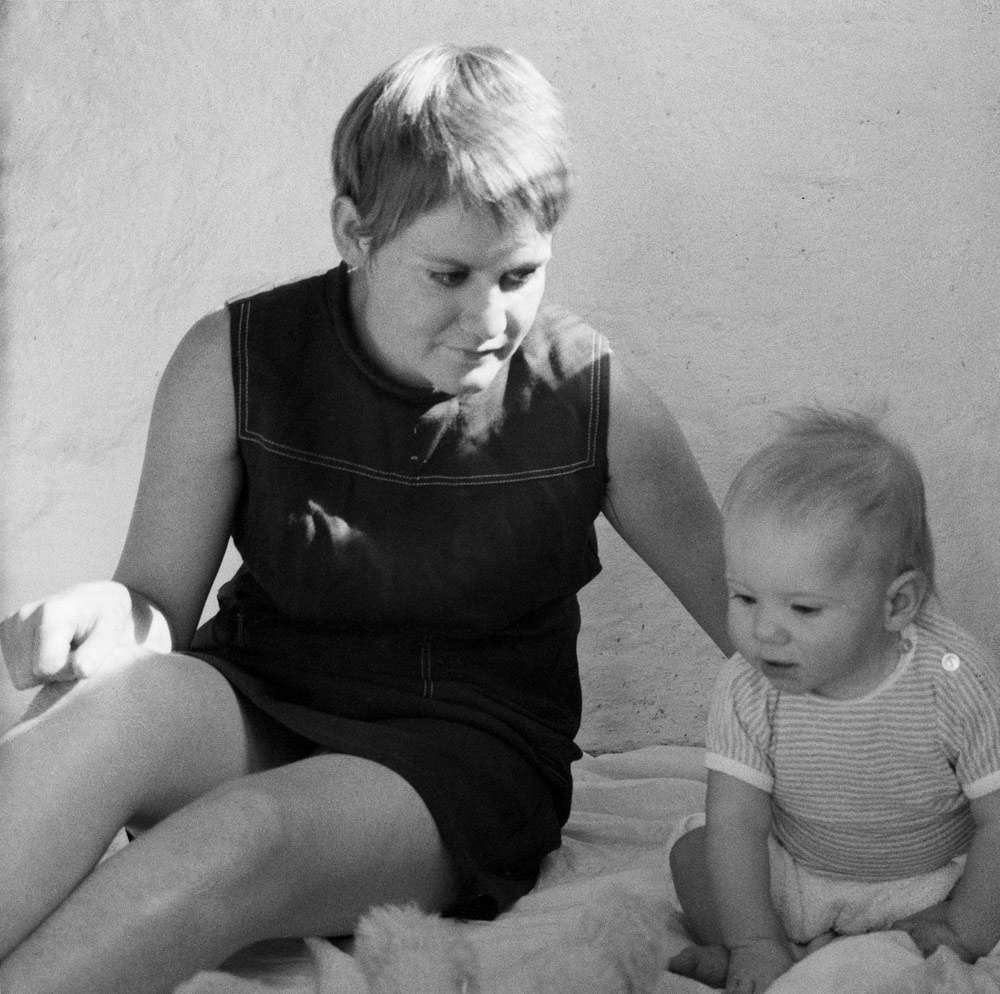
 

Sue Ford (1943-2009) 'Self-portrait' 1968


Sue Ford (Australian, 1943-2009)
Self-portrait 1968
1968, printed 2011
From the series Self-portrait with camera (1960-2006)
Selenium toned gelatin silver
22.8 x 24 cm
Courtesy Sue Ford Archive


“Choosing to photograph oneself, one’s life and one’s time exemplified the now well-worn slogan ‘the person is political’. Ford’s self-examination across the decades is unflinching and exacting. As Janine Burke wrote in 1980, her ‘psychological history [is] etched in her face for everyone to see’. Burke concluded that Ford’s self-portraits are ‘as honest as one can ever be about oneself’.”


Helen Ennis. Faces are Maps: Sue Ford and Portraiture.1


“The search for the self is a journey into a mental labyrinth that takes random courses and ultimately ends at impasses. The memory fragments recovered along the way cannot provide us with a basis for interpreting the overall meaning of the journey. The meanings that we derive from our memories are only partial truths, and their value is ephemeral. For Foucault, the psyche is not an archive but only a mirror. To search the psyche for the truth about ourselves is a futile task because the psyche can only reflect the images we have conjured up to describe ourselves. Looking into the psyche, therefore, is like looking into the mirror image of a mirror. One sees oneself reflected in an image of infinite regress. Our gaze is led not toward the substance of our beginnings but rather into the meaninglessness of previously discarded images of the self.”


Patrick Hutton. Foucault, Freud,
and the Technologies of the Self.2


This is a solid exhibition of the work of beloved Australian photographer Sue Ford, essential looking for anyone wanting to have an overview of Australian photography.

The beautifully hung exhibition flows like music, interweaving up and down, the photographs framed in thin, black wood frames. It features examples of Ford’s black and white fashion and street photography; a selection of work from the famous black and white Time series (being bought for their collection by the Art Gallery of New South Wales) – small, snapshot size double portraits, the first portraits taken during the 1960’s, the second around 1974, formalist portraits in which the sitter is closely cropped around head and shoulders with the photographer using the camera as objectively as possible, the double portrait used to display changes in identity over time; a selection of Photographs of Women – modern prints from the Sue Ford archive that are wonderfully composed photographs with deep blacks that portray strong, independent, vulnerable, joyous women (see last four photographs below); and the most interesting work in the exhibition, the posthumous new series Self-portrait with camera (1960-2006) that evidence, through a 47 part investigation using colour prints from Polaroids, silver gelatin prints printed by the artist, prints made from original negatives and prints from scanned images where there was no negative available, a self-portrait of the artist in the process of ageing (see the two photographs above and below this review).

One of my favourite photographs in the exhibition was Margaret with Emma, Redcliffs, Queensland, 1971. The black and white photograph features a grandmother with her granddaughter, close to each other, both wearing floral dresses of different pattern, both staring intently out of the image at what is possibly a television with a weatherboard backdrop. A dark form hovers at the upper left of the photograph adding a disturbing note to the image but it is the look on the grandmother’s face – a look of shock, enthralment, blankness with eyes wide, that is matched by the intensity on the granddaughter’s face as she stares intently – that transcends the distance between photograph and viewer, between grandmother and granddaughter across time and space. The process of looking and ageing captured by the ‘time machine’, the camera, in one single image. The viewer understands this photograph for we all experience the evidence of our bodies, our mortality. We relate intimately to how the photograph reanimates in the present this moment from the past, the momenti mori of the photograph, the little death becoming our future death.

This notion is particularly poignant in the series Self-portrait with camera (1960-2006), a work that Sue Ford was actively engaged with before her death. Smaller colour prints from negatives and Polaroids are here interspersed with black and white photographs up to about 8″ x 10″ in size: the series contains 12 chromogenic photographs, 7 silver gelatin photographs, 6 dye fusion photographs and 22 selenium-toned photographs (printed 2011). In dark, contrasty prints the artist has photographed herself looking down into the camera shooting into a mirror, looking directly into the mirror with camera, with the camera on a timer, with the camera in/visible, being shot by other people with the camera pointed directly at her, with the camera perpendicular to the artist shot by someone else, with Ford behind a movie camera, with multiple refractions in mirrors. Sometimes Ford even becomes the camera (as in the 1986 self-portrait below: I am the camera, the camera is me).

Ford becomes the “one who looks” knowingly at herself, sometimes the author of that observation, sometimes oblivious to it (until later when she has collected these images). As Burke and Ennis note, these photographs of self-examination across the decades are as honest as one can ever be about oneself. This a deeply political but also deeply psychoanalytical investigation: not to “take care of yourself” as a form of knowing as in Greco-Roman antiquity but “knowing yourself” as the fundamental principle of understanding yourself: a procedure of objectification and subjection in which the photograph ‘marks’ our status and the passage of time, that makes us who we are – photographs as vital techniques in the constitution of the self as subject.3

The mirror is frequently used in these photographs to portray the self. While it is true that these are strong, intimate, unflinching and exacting images, in the use of the mirror the im(pose)tures of life are singled / doubled / tripled – a reflection of the psyche that lead to discarded images of the self that are of little use in understanding the substance of our beginnings … or the overall interpretation of the journey. What they do offer is cumulative evidence of a deep, personal conviction into the inquiry: who am I?

Rembrandt famously painted, drew and etched himself hundreds of times in the process of ageing; Ford has likewise done the same. If, as Victor Burgin observes, “An identity implies not only a location but a duration, a history,”4 then the nature of photography (including Ford’s self-reflexive project), concerned as it is with space and time, becomes the mirror in a search for identity. Photography as a mirror on the world constantly repeats moments of illumination in a re/vision of eternal recurrence, a performance that is a hybrid site: both a homogenous (the same “I”) and heterogenous (a different “I”) site of self-representation, different every time we look. To that end I would like you to look at the self-portrait from 1976 (below). The artist is completely absent, her silhouette, her dark shadow swallowed whole by the blank photographic plate on the left hand side of the image as though Ford, the camera and an image of infinite regress have become one, eternally engulfed by space-time but open to re/view at any time.

Whether looking down, looking toward or looking inward these fantastic photographs show a strong, independent women with a vital mind, an élan vital, a critical self-organisation and an understanding of the morphogenesis of things that will engage us for years to come. Essential looking.

Dr Marcus Bunyan


1/ Burke, Janine. Self-portrait/self-image 1980-1981. Melbourne: Australian Directors’ Council, 1981. p. 4 quoted in Ennis, Helen. “Faces are Maps: Sue Ford and Portraiture,” in Lakin, Shaune (ed.,). Sue Ford: Self-portrait with camera (1960-2006). Melbourne: Monash Gallery of Art, 2011, np.

2/ Hutton, Patrick. “Foucault, Freud, and the Technologies of the Self,” in Martin, Luther and Gutman, Huck and Hutton, Patrick (eds.,). Technologies of the Self: A Seminar with Michel Foucault. London: Tavistock Publications, 1988, p. 139

3/ Foucault, Michel. Discipline and Punish, quoted in Gutman, Huck. “Rousseau’s Confessions: A Technology of the Self,” in Martin, Luther and Gutman, Huck and Hutton, Patrick (eds.,). Technologies of the Self: A Seminar with Michel Foucault. London: Tavistock Publications, 1988, p. 99

4/ Burgin, Victor. In/Different Spaces: Place and Memory in Visual Culture. Berkeley: University of California Press, 1995, p. 36


Many thankx to Mark Hislop for his help and the Monash Gallery of Art for allowing me to publish the photographs in the posting. Please click on the photographs for a larger version of the image.
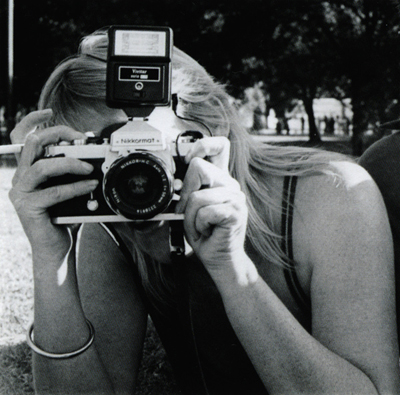
 

Sue Ford (Australian, 1943-2009) 'Self-portrait 1986' 1986


Sue Ford (Australian, 1943-2009)
Self-portrait 1986
1986
From the series Self-portrait with camera (1960-2006)
Gelatin silver print, printed 2011
8.4 x 6.5cm
Courtesy Sue Ford Archive
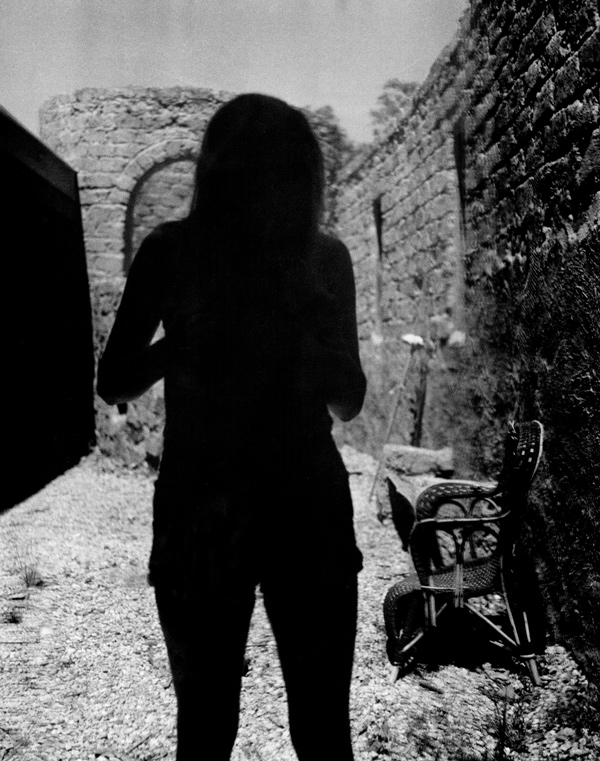
 

Sue Ford (Australian, 1943-2009) 'Self-portrait 1976' 1976


Sue Ford (Australian, 1943-2009)
Self-portrait 1976
1976, printed 2011
From the series Self-portrait with camera (1960-2006)
Selenium toned gelatin silver print
24 x 18cm
Courtesy Sue Ford Archive
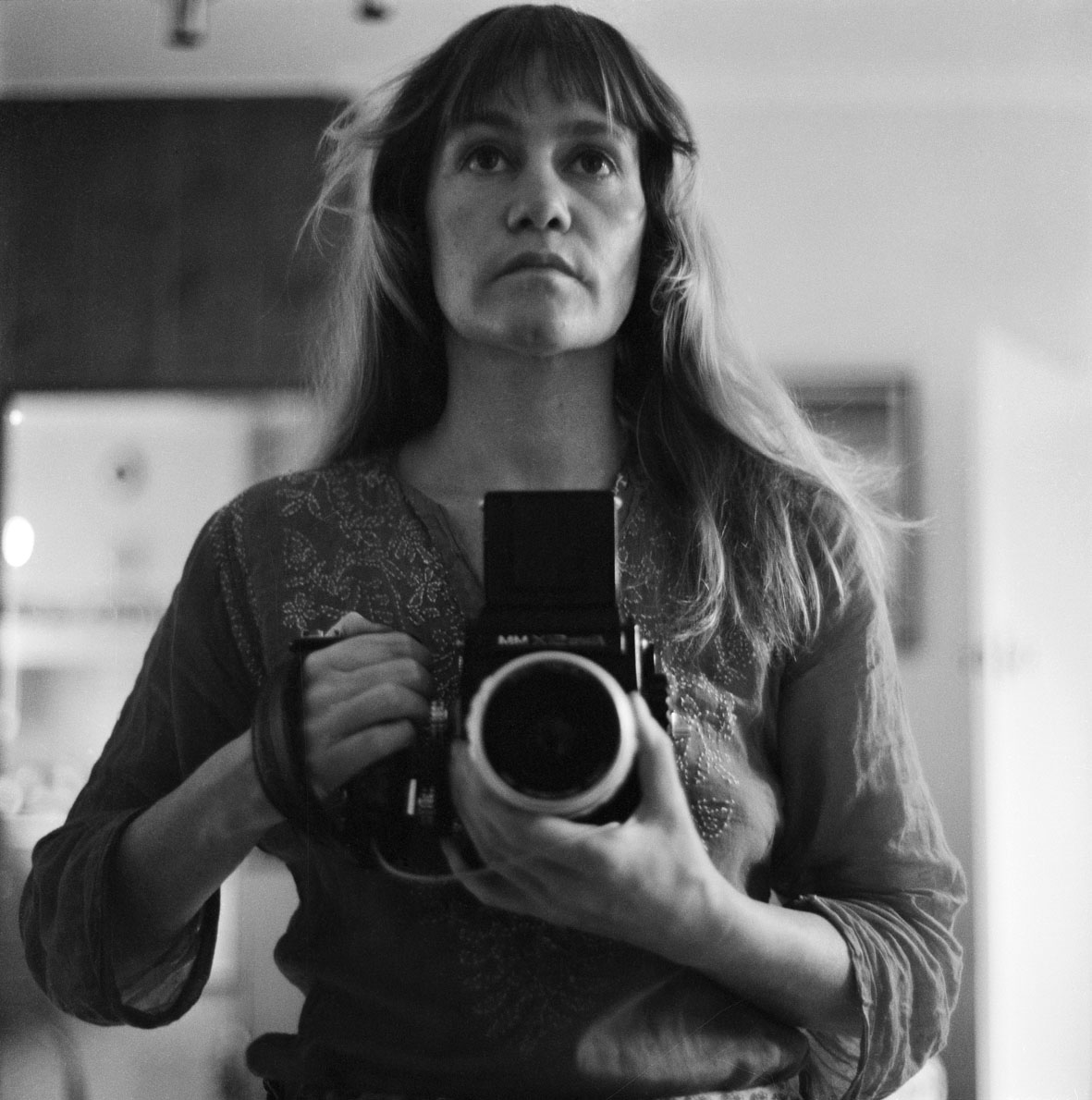
 

Sue Ford (1943–2009) 'Self-portrait 1974' 1974


Sue Ford (Australian, 1943-2009)
Self-portrait 1974
1974, printed 2011
From the series Self-portrait with camera (1960-2006)
Selenium toned gelatin silver print
19.9 x 18cm
Courtesy Sue Ford Archive


On 16 April 2011, the first major exhibition of the work of the late Sue Ford for two decades will open at Monash Gallery of Art.

Sue Ford (1943-2010) was one of Australia’s most important photographers and filmmakers. Ford studied photography at RMIT and in 1974 was the first Australian photographer to be given a solo exhibition at the National Gallery of Victoria.

Ford passed away in 2009. Before her death, she was working with Monash Gallery of Art on an exhibition of her work which would feature her final major project Self-portrait with camera (1960-2006). This series of 47 photographs has never been shown before, and presents a compelling self-portrait of an artist. It underscores the central role the camera played in Ford’s life. Self-portrait with camera will be shown alongside a survey of Ford’s black-and-white photographs from the 1960s and 70s and examples of her most iconic work, Time series (1960s-1970s).

The exhibition describes a period when photography was charged with political and personal meaning. As photographic historian and contributor to the publication accompanying the exhibition Helen Ennis states: “Ford’s approach to art making has always been straightforward … She does not cultivate a mysterious artistic persona [since] … her art practice is purposeful; it is the outcome of her view of art as a political activity that is democratic, liberating and relevant to contemporary society.”

As MGA Director and curator of the exhibition Shaune Lakin states: “This exhibition provides a great opportunity for Australian audiences to reassess the work of this important photographer, whose work was always at once political, beautiful and elegiac. In an era when the photograph has become a highly disposable thing, it is important to acknowledge its role as an agent of change and memory.”

Press release from the Monash Gallery of Art


Sue Ford (Australian, 1943-2009)
Helen, 1962; Helen, 1974
1974
From the series Time series
Gelatin silver prints
11.0 x 8.0cm; 11.5 x 8.3cm
Museum of Australian Photography, City of Monash Collection
Acquired with assistance from the Robert Salzer Foundation and the Friends of MGA Inc 2020


Sue Ford (1943-2009) was one of Australia’s most important twentieth-century photographers, and Time series is her most iconic body of work, widely recognised as a key moment in the history of Australian photography. First exhibited at the NGV and Brummels Gallery of Photography in 1974, the series highlights Ford’s interest in the camera’s ability to record the effects of time and history. To create this series, Ford made portraits of her friends and acquaintances during the early to mid-1960s then rephotographed the sitters around a decade later, showing the second portraits beside the first. In some cases Ford later added third and fourth portraits to create Time series II, which she made for exhibition at the 1982 Sydney Biennale. Ford described the camera as a ‘time machine’ and the works in these series bracket periods in the lives of her subjects. With a tender pathos, they evoke the inevitability of time’s passing along with the processes of human ageing and constant change.

Text from the Museum of Australian Photography website 2021
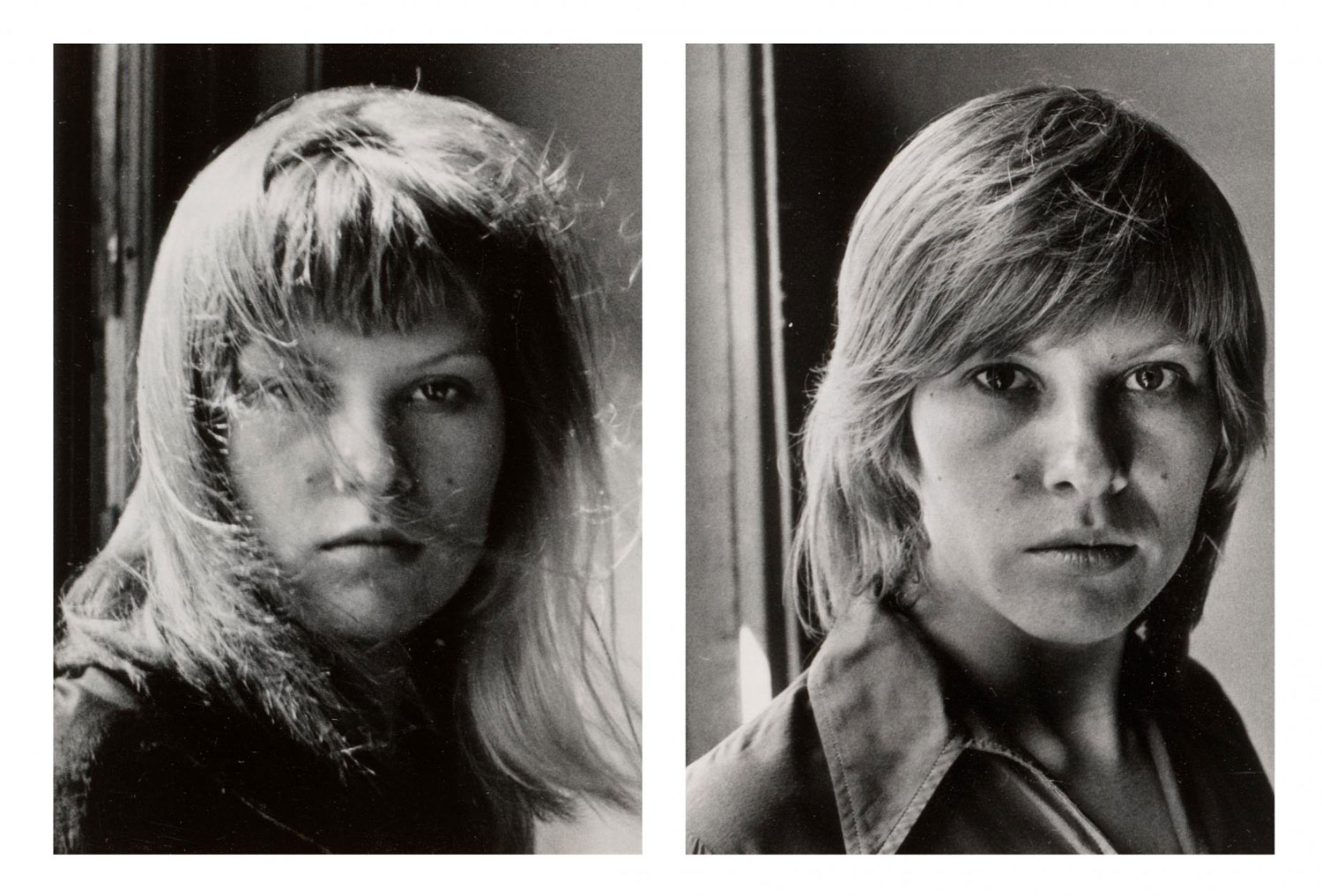
 

Sue Ford (Australian, 1943-2009) 'Annette 1962; Annette 1974' 1974


Sue Ford (Australian, 1943-2009)
Annette 1962; Annette 1974
1974
From the Time series
Gelatin silver prints
11.1 x 20.1cm
National Gallery of Victoria, Melbourne
Purchased with the assistance of the Visual Arts Board and the KODAK (Australasia) Pty Ltd Fund, 1974
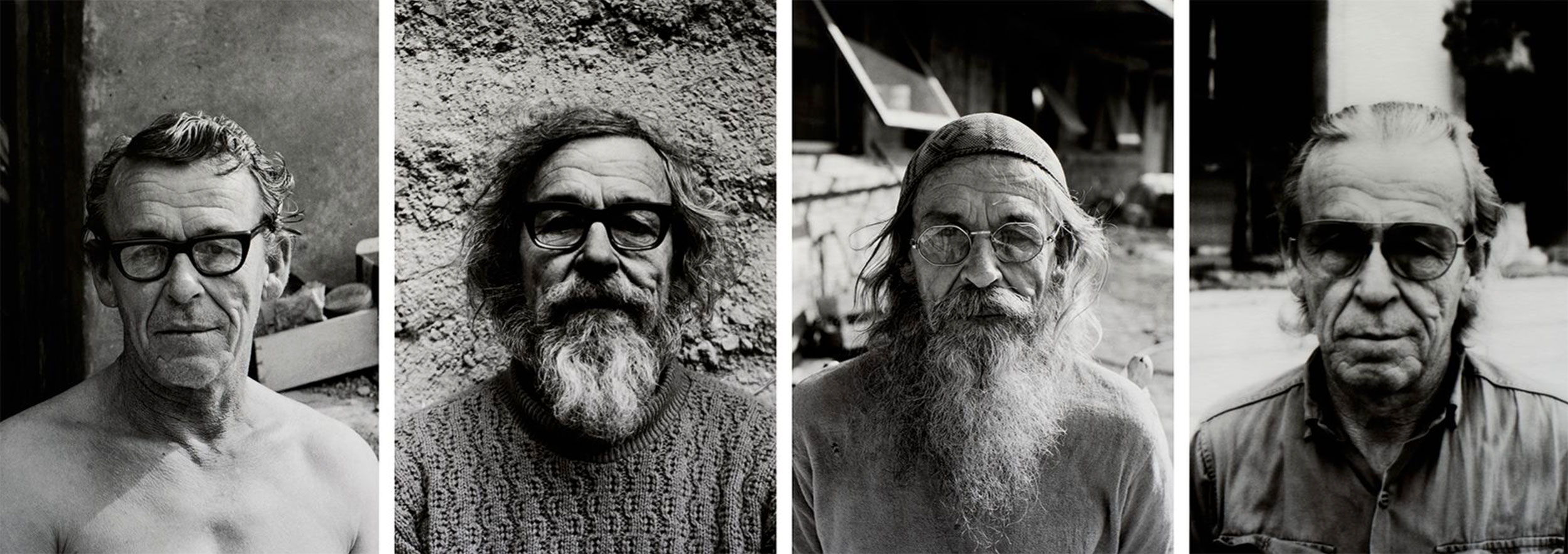
 

Sue Ford (Australian, 1943-2009) 'Jim, 1964; Jim, 1969; Jim, 1974; Jim, 1979' 1982


Sue Ford (Australian, 1943-2009)
Jim, 1964; Jim, 1969; Jim, 1974; Jim, 1979
1982
From the series Time series
Gelatin silver prints
11.0 x 7.6cm (each)
Museum of Australian Photography, City of Monash Collection
donated by the Sue Ford Archive 2020


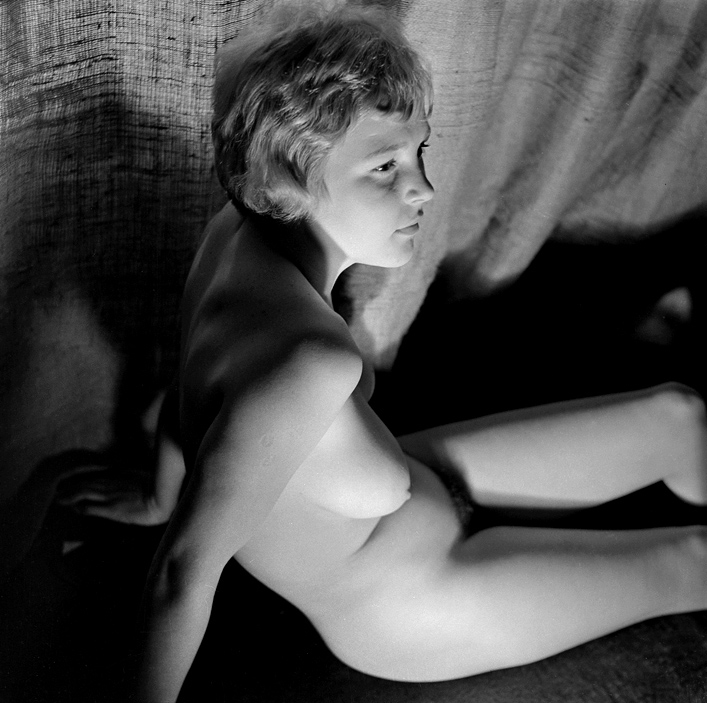
Sue Ford (1943-2009) 'Lynne and Carol' 1962


Sue Ford (Australian, 1943-2009)
Lynne and Carol
1962, printed 2011
Selenium toned gelatin silver print
38.0 x 38.0cm
Courtesy Sue Ford Archive
 

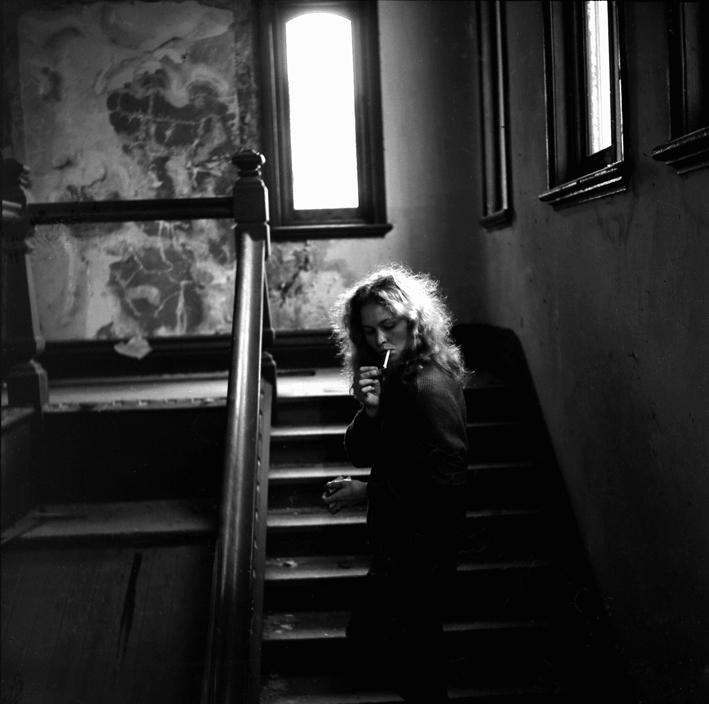
Sue Ford (1943-2009) 'Carol, Little Collins St studio' 1962


Sue Ford (Australian, 1943-2009)
Carol, Little Collins St studio
1962, printed 2011
Selenium toned gelatin silver print
37.9 x 38.1cm
Courtesy Sue Ford Archive
 

Sue Ford (1943-2009) 'St Kilda' 1963


Sue Ford (Australian, 1943-2009)
St Kilda
1963, printed 2011
Selenium toned gelatin silver print
38.0 x 38.0cm
Courtesy Sue Ford Archive


Sue Ford (1943-2009) 'Untitled [Bliss at Yellow House, King's Cross, Sydney]' c. 1972–1973


Sue Ford (Australian, 1943-2009)
Untitled [Bliss at Yellow House, King’s Cross, Sydney]
c. 1972-3, printed 2011
Selenium toned gelatin silver print
47.9 x 34.2cm
Courtesy Sue Ford Archive


Monash Gallery of Art
860 Ferntree Gully Road, Wheelers Hill
Victoria 3150 Australia
phone: + 61 3 8544 0500

Opening hours:
Tue – Fri 10am – 5pm
Sat – Sun 10pm – 4pm
Mon/public holidays closed

Monash Gallery of Art website

LIKE ART BLART ON FACEBOOK

Back to top

Vale Dr John Cato (1926-2011)

February 2011


It is with much sadness that I note the death of respected Australian photographer and teacher Dr John Cato (1926-2011). Son of Australian photographer Jack Cato, who wrote one of the first histories of Australian photography (The Story of the Camera in Australia (1955)), John was apprentice to his father before setting up a commercial studio with Athol Shmith that ran from 1950-1971. Dr Cato then joined Shmith at the fledgling Prahran College of Advanced Education photography course in 1974, becoming head of the course when Shmith retired in 1979, a position he held until John retired in 1991.

I was fortunate enough to get to know John and his vivacious wife Dawn. I worked with him and co-curatored his retrospective with William Heimerman, ‘…and his forms were without number’ at The Photographers’ Gallery, South Yarra, in 2002. My catalogue essay from this exhibition is reproduced below.

John was always generous with his time and advice. His photographs are sensitive, lyrical renditions of the Australian landscape. He had a wonderful ear for the land and for the word, a musical lyricism that was unusual in Australian photographers of the early 1970s. He understood how a person from European background could have connection to this land, this Australia, without being afraid to express this sense of belonging; he also imaged an Aboriginal philosophy (that all spirits have a physical presence and everything physical has a spiritual presence) tapping into one of the major themes of his personal work: the mirror held up to reveal an’other’ world – the language of ambiguity and ambivalence (the dichotomy of opposites e.g. black / white, masculine / feminine) speaking through the photographic print.

His contribution to the art of photography in Australia is outstanding. What are the precedents for a visual essay in Australian photography before John Cato? I ask the reader to consider this question.

It would be fantastic if the National Gallery of Victoria could organise a large exhibition and publication of his work, gathering photographs from collections across the land, much like the successful retrospective of the work of John Davis held in 2010. Cato’s work needs a greater appreciation throughout Australia because of it’s seminal nature, containing as it does the seeds of later development for Australian photographers. His educational contribution to the development of photography as an art form within Australia should also be acknowledged in separate essays for his influence was immense. His life, his teaching and his work deserves nothing less.

Dr Marcus Bunyan


‘… and his forms were without number’

John Cato: A Retrospective of the Photographic Work 1971-1991

This writing on the photographic work of Dr John Cato from 1971-1991 is the catalogue essay to a retrospective of his work held at The Photographers’ Gallery in Prahran, Melbourne in 2002. Dr Cato forged his voice as a photographic artist in the early 1970s when photography was just starting to be taken seriously as an art form in Australia. He was a pioneer in the field, and became an educator in art photography. He is respected as one of Australia’s preeminent photographers of the last century.


With the arrival of ‘The New Photography’1 from Europe in the early 1930’s, the formalist style of Modernism was increasingly adopted by photographers who sought to express through photography the new spirit of the age. In the formal construction of the images, the abstract geometry, the unusual camera angles and the use of strong lighting, the representation ‘of the thing in itself’2 was of prime importance. Subject matter often emphasised the monumentality of the factory, machine or body/landscape. The connection of the photographer with the object photographed was usually one of sensitivity and awareness to an external relationship that resulted in a formalist beauty.

Following the upheaval and devastation of the Second World War, photography in Australia was influenced by the ‘Documentary’ style. This “came to be understood as involved chiefly with creating aesthetic experiences … associated with investigation of the social and political environment.”3 This new movement of social realism, “… a human record intimately bound with a moment of perception,”4 was not dissimilar to Henri Cartier-Bresson’s ‘decisive moment’ (images a la sauvette) where existence and essence are in balance.5

The culmination of the ‘Documentary’ style of photography was The Family of Man exhibition curated by Edward Steichen that toured Australia in 1959.6 This exhibition, seen many times by John Cato,7 had a theme of optimism in the unity and dignity of man. The structure of the images in ‘Documentary’ photography echoed those of the earlier ‘New Photography’.

Max Dupain “stressed the objective, impersonal and scientific character of the camera; the photographer could reveal truth by his prerogative of selection.”8 This may have been an objective truth, an external vocalising of a vision that concerned itself more with exterior influences rather than an internal meditation upon the subject matter.


John Cato (Australian, 1926-2011) 'Untitled' from the series 'Essay I, Landscapes in a Figure' 1971-1979


John Cato (Australian, 1926-2011)
Untitled from the series Essay I, Landscapes in a Figure
1971-1979
Silver gelatin photograph


In 1971, John Cato’s personal photographic work was exhibited for the first time as part of the group show Frontiers at the National Gallery of Victoria, Melbourne.9 Earth Song emerged into an environment of social upheaval inflamed by Australian involvement in the Vietnam War. It provided a group of enthusiastic people who were beginning to be interested in photography as art, an opportunity to see the world, and photography, through a different lens. The 52 colour photographic prints in Earth Song, were shown in a sequence that used melodic line and symphonic form as its metaphoric basis, standing both as individual photographs and as part of a total concept.10

In the intensity of the holistic vision, in the connection to the subconscious, the images elucidate the photographers’ search for a perception of the world. This involved an attainment of a receptive state that allowed the cracks, creases and angles inherent in the blank slate of creation to become meaningful. The sequence contained images that can be seen as ‘acts of revelation’,11confirmed and expanded by supporting photographs, and they unearthed a new vocabulary for the discussion of spiritual and political issues by the viewer. They may be seen as a metaphor for life.

The use of sequence, internal meditation and ‘revelation’, although not revolutionary in world terms,12 were perhaps unique in the history of Australian photography at that time. During the production of Earth Song, John Cato was still running a commercial studio in partnership with the photographer Athol Shmith and much of his early personal work was undertaken during holidays and spare time away from the studio. Eventually he abandoned being a commercial photographer in favour of a new career as an educator, but found this left him with even less time to pursue his personal work.13

Earth Song (1970-1971) was followed by the black and white sequences:


 Tree – A Journey18 images1971-1973 
 Petroglyphs14 images1971-1973 
 Seawind14 images1971-1975 
 Proteus18 images1974-1977 
 Waterway16 images1974-1979 


Together they form the extensive series Essay I, Landscapes in a Figure, parts of which are held in the permanent photography collection of the National Gallery of Victoria.14


John Cato (Australian, 1926-2011) 'Untitled' from the series 'Essay I, Landscapes in a Figure' 1971-1979


John Cato (Australian, 1926-2011)
Untitled from the series Essay I, Landscapes in a Figure
1971-1979
Silver gelatin photograph


The inspiration for Essay I and later personal work came from many sources. An indebtedness to his father, the photographer Jack Cato, is gratefully acknowledged. Cato also acknowledges the influence of literature: William Shakespeare (especially the Sonnets, and As You Like It), William Blake, Walt Whitman (Leaves of Grass), Lewis Carroll (Through the Looking Glass), the Bible; and of music (symphonic form), the mythology of the Dreamtime and Aboriginal rock paintings.15 Each body of work in Essay I was based on an expression of nature, the elements and the Creation. They can be seen as Equivalents16 of his most profound life experiences, his life philosophy illuminated in physical form.

John Cato was able to develop the vocabulary of his own inner landscape while leaving the interpretation of this landscape open to the imagination of the viewer. Seeing himself as a photographer rather than an artist, he used the camera as a tool to mediate between what he saw in his mind’s eye, the subjects he photographed and the surface of the photographic negative.17 Photographing ‘in attention’, much as recommended by the teacher and philosopher Krishnamurti,18 he hoped for a circular connection between the photographer and the subject photographed. He then looked for verification of this connection in the negative and, eventually, in the final print.

Essay II, Figures in a Landscape, had already been started before the completion of Essay I and it consists of three black and white sequences:


 Alcheringa11 images1978-1981 
 Broken Spears11 images1978-1983 
 Mantracks22 images in pairs1978-1983 


The photographs in Essay II seem to express “the sublimation of Aboriginal culture by Europeans”19 and, as such, are of a more political nature. Although this is not obvious in the photographs of Alcheringa, the images in this sequence celebrating the duality of reality and reflection, substance and shadow, it is more insistent in the symbology of Broken Spears and Mantracks. Using the metaphor of the fence post (white man / black man in Broken Spears) and contrasting Aboriginal and European ‘sacred’ sites (in pairs of images in Mantracks), John Cato comments on the destruction of a culture and spirit that had existed for thousands of years living in harmony with the land.

In his imaging of an Aboriginal philosophy (that all spirits have a physical presence and everything physical has a spiritual presence) he again tapped one of the major themes of his personal work: the mirror held up to reveal an’other’ world. Cato saw that even as they are part of the whole, the duality of positive / negative, black / white, masculine / feminine are always in conflict.20 In the exploration of the conceptual richness buried within the dichotomy of opposites, Cato sought to enunciate the language of ambiguity and ambivalence,21 speaking through the photographic print.

The theme of duality was further expanded in his last main body of work, Double Concerto: An Essay in Fiction:


 Double Concerto (Pat Noone)30 images1984-1990 
 Double Concerto (Chris Noone)19 images1985-1991 


Double Concerto may be seen as a critique of the power of witness and John Cato created two ‘other’ personas, Pat Noone and Chris Noone, to visualise alternative conditions within himself. The Essay explored the idea that if you send two people to the same location they will take photographs that are completely different from each other, that tell a distinct story about the location and their self:

“For the truth of the matter is that people have mixed feelings and confused opinions and are subject to contradictory expectations and outcomes, in every sphere of experience.”22

This slightly schizophrenic confusion between the two witnesses is further highlighted by Pat Noone using single black and white images in sequence. Chris Noone, on the other hand, uses multiple colour images joined together to form panoramic landscapes that feature two opposing horizons. The use of colour imagery in Double Concerto, with its link to the colour work of Earth Song, can be seen to mark the closing of the circle in terms of John Cato’s personal work. In Another Way of Telling, John Berger states that …

“Photography, unlike drawing, does not possess a language. The photographic image is produced instantaneously by the reflection of light; its figuration is not impregnated by experience or consciousness.”23


But in the personal work of John Cato it is a reflection of the psyche, not of light, that allows a consciousness to be present in the figuration of the photographic prints. The personal work is an expression of his self, his experience, his story and t(his) language, is our language, if we allow our imagination to speak.

Dr Marcus Bunyan 2002


Footnotes

1/ Newton, Gael. Shades of Light: Photography and Australia 1839-1988. Sydney: Australian National Gallery, William Collins, 1988, p. 109

2/ Newton, Gael. Max Dupain. Sydney: David Ell Press,1980, p. 34

3/ Ibid., p. 32

4/ Greenough, Sarah (et al). On the Art of Fixing a Shadow: 150 Years of Photography. Boston: National Gallery of Art, Bullfinch Press, 1989, p. 256

5/ Ibid., p. 256

6/ Newton, Gael. Shades of Light: Photography and Australia 1839-1988. Sydney: Australian National Gallery, William Collins, 1988, p. 131

7/ Ibid., p. 131

8/ Newton, Gael. Max Dupain. Sydney: David Ell Press, 1980, p. 32

9/ Only the second exhibition by Australian photographers at the National Gallery of Victoria, Melbourne

10/ Shmith, Athol. Light Vision No.1. Melbourne: Jean-Marc Le Pechoux (editor and publisher), Sept 1977, p. 21

11/ Berger, John and Mohr, Jean. Another Way of Telling. New York: Pantheon Books, 1982, p. 118

12/ Hall, James Baker. Minor White: Rites and Passages. New York: Aperture, 1978

13/ Conversation with the photographer 29/01/1997, Melbourne, Victoria

14/ Newton, Gael. Shades of Light: Photography and Australia 1839-1988. Sydney: Australian National Gallery, William Collins, 1988, p. 135, Footnote 7; p. 149

15/ Conversation with the photographer 22/01/1997, Melbourne, Victoria

16/ Norman, Dorothy. Alfred Stieglitz. New York: Aperture, 1976, p. 5

17/ Ibid.,

18/ Krishnamurti. Beginnings of Learning. London: Penguin, 1975, p. 131

19/ Strong, Geoff. Review. The Age. Melbourne, 28/04/1982

20/ Conversation with the photographer 22/01/1997, Melbourne, Victoria

21/ The principal definition for ambiguity in Websters Third New International Dictionary is: “admitting of two or more meanings … referring to two or more things at the same time.”
That for ambivalence is “contradictory and oscillating subjective states.”
Quoted in Davis, Fred. Fashion, Culture and Identity. Chicago: University of Chicago Press, 1992, p. 21.

22/ Levine, Donald. The Flight From Ambiguity. Chicago: University of Chicago Press, 1985

23/ Berger, John and Mohr, Jean. Another Way of Telling. New York: Pantheon Books, 1982, p. 95


LIKE ART BLART ON FACEBOOK

Back to top

Exhibition: ‘The Eventuality of Daybreak’ by Alex Lukas at Glowlab, New York

Exhibition dates: 12th November – 6th December 2009


Alex Lukas (American, b. 1981) 'Untitled' 2009. Acrylic and silk screen on two book pages from the exhibition 'The Eventuality of Daybreak' at Glowlab, New York, Nov - Dec, 2009


Alex Lukas (American, b. 1981)
Untitled
2009
Acrylic and silk screen on two book pages


These are terrific – I want one!

A big thank you to Alex for allowing me to reproduce the images.

Dr Marcus Bunyan


Please click on the photographs for a larger version of the image.


Alex Lukas (American, b. 1981) 'Untitled' 2009. Acrylic and silk screen on two book pages from the exhibition 'The Eventuality of Daybreak' at Glowlab, New York, Nov - Dec, 2009


Alex Lukas (American, b. 1981)
Untitled
2009
Acrylic and silk screen on two book pages


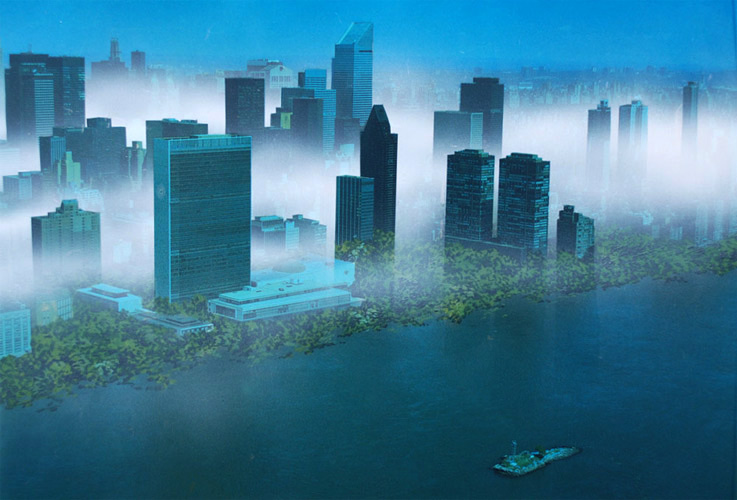
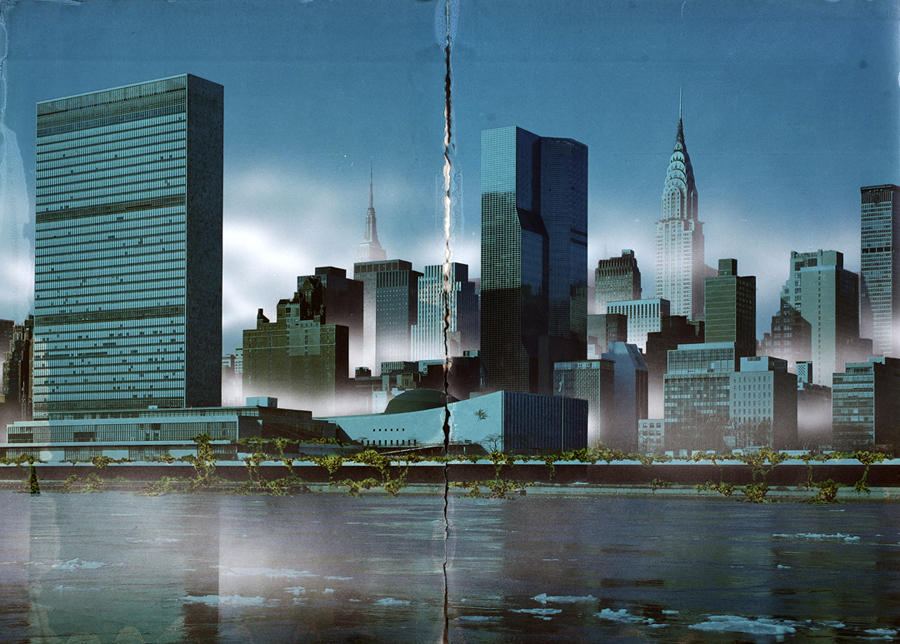
Glowlab is pleased to present The Eventuality of Daybreak, a solo exhibition by Alex Lukas featuring a new series of post-apocalyptic urban landscapes that blur the visual boundaries of fiction and reality.

Lukas’ work explores the existence of disaster, be it realised or fictitious, in contemporary society. Hyper-realistic motion pictures and unforgiving news footage depict seemingly identical – and equally riveting – facades of tragedy. The artist recognises that relentless visual bombardment has resulted in society’s desensitisation to the aesthetics of destruction.

For The Eventuality of Daybreak, Lukas has selected photographic spreads of well-known metropolises from vintage publications and uses them dually as canvas and unlikely subject. Through a deft handling of paint and carefully placed screen-printed passages, the artist pushes these ageing illustrations in futuristic contexts. Submerging these cities conceptually and physically, Lukas inundates images of American cities with layers of media representing cataclysmic floods and crippling overgrowth.

Also included in the exhibition are works on paper depicting near-future scenes of devastated landscapes – crumbling infrastructure, overturned trucks and telling signs of human despair. As a counterpoint to the underwater cities, these darkly atmospheric and barren vistas signal devastation through an unsettling sense of absence.

Lukas’ intentional use of dated imagery presented in tandem with contemporary situations forces the viewer to reconcile two differing ideologies of urban space. The artist’s work calls into question society’s collective acceptance of the urban environment as an arena of destruction, once thought unthinkable and now seemingly inevitable.

The Eventuality of Daybreak is Lukas’ first solo exhibition with Glowlab. Lukas’ work has also been exhibited in New York, Boston, Philadelphia, Los Angeles, San Francisco, London, Stockholm and Copenhagen as well as in the pages of Swindle Quarterly, Proximity Magazine, The San Francisco Chronicle, The Village Voice, The Drama and The New York Times Book Review. Lukas is a graduate of the Rhode Island School of Design and currently lives and works in Philadelphia, where he is a member of the artist collective Space 1026.

Press release on the Glowlab website [Online] Cited 20/11/2009 no longer available online


Alex Lukas (American, b. 1981) 'Untitled' 2009. Acrylic and silk screen on two book pages


Alex Lukas (American, b. 1981)
Untitled
2009
Acrylic and silk screen on two book pages


Alex Lukas (American, b. 1981) 'Untitled' 2009. Acrylic and silk screen on two book pages


Alex Lukas (American, b. 1981)
Untitled
2009
Acrylic and silk screen on two book pages


Alex Lukas (American, b. 1981) 'Untitled' 2009. Acrylic and silk screen on two book pages


Alex Lukas (American, b. 1981)
Untitled
2009
Acrylic and silk screen on two book pages


Alex Lukas. 'Untitled' 2009. Acrylic and silk screen on two book pages


Alex Lukas (American, b. 1981)
Untitled
2009
Acrylic and silk screen on two book pages


Glowlab

This gallery has now closed

Alex Lukas website

LIKE ART BLART ON FACEBOOK

Back to top

Exhibition: ‘Intersections Intersected: The Photography of David Goldblatt’ at the New Museum, New York

Exhibition dates: 15th July – 11th October, 2009


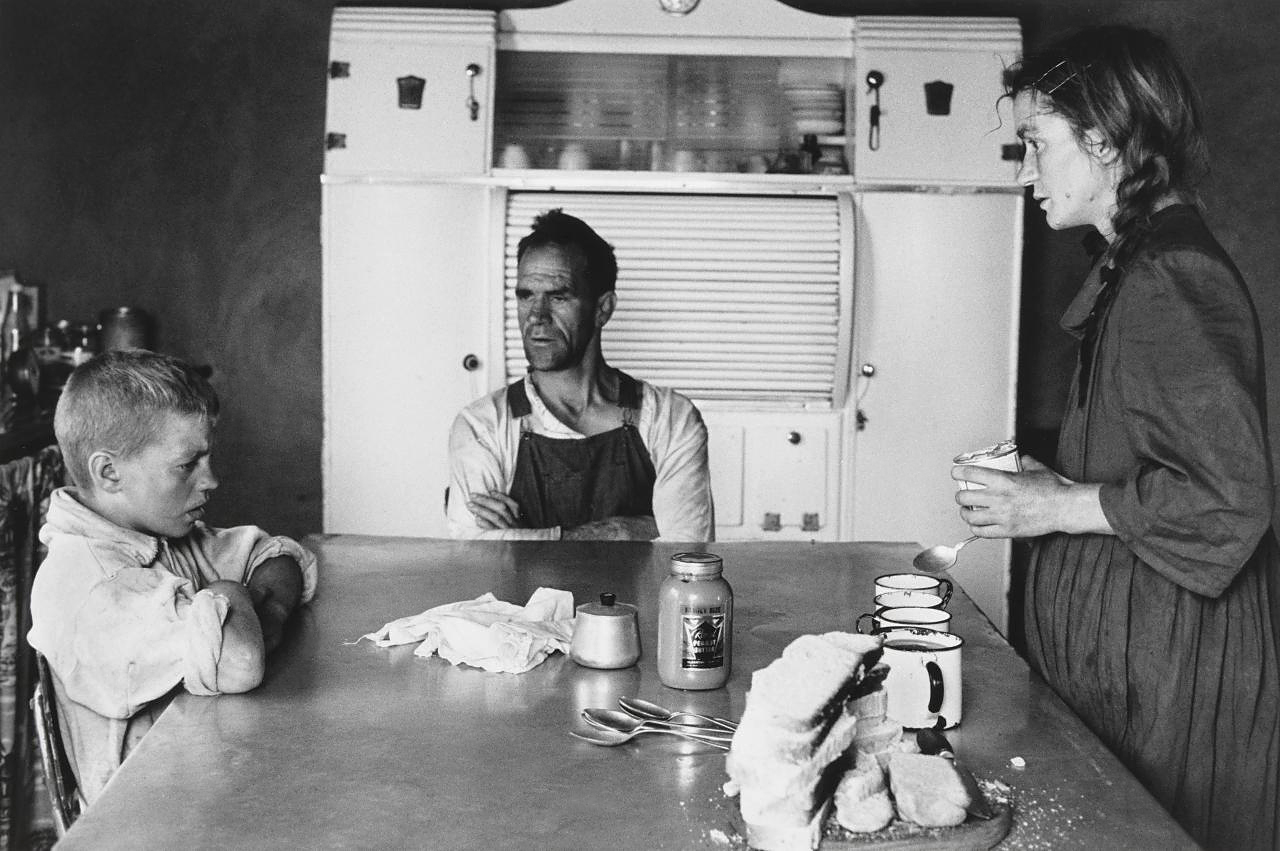
David Goldblatt (South African, 1930-2018) 'Family at Lunch, Wheatlands Plots, Randfontein, September 1962' 1962 from the exhibition 'Intersections Intersected: The Photography of David Goldblatt' at the New Museum, New York, July - Oct, 2009


David Goldblatt (South African, 1930-2018)
Family at Lunch, Wheatlands Plots, Randfontein, September 1962
1962
Gelatin silver print


One of the greats.

Marcus


Many thankx to the New Museum for allowing me to publish the photographs in the posting. Please click on the photographs for a larger version of the image.


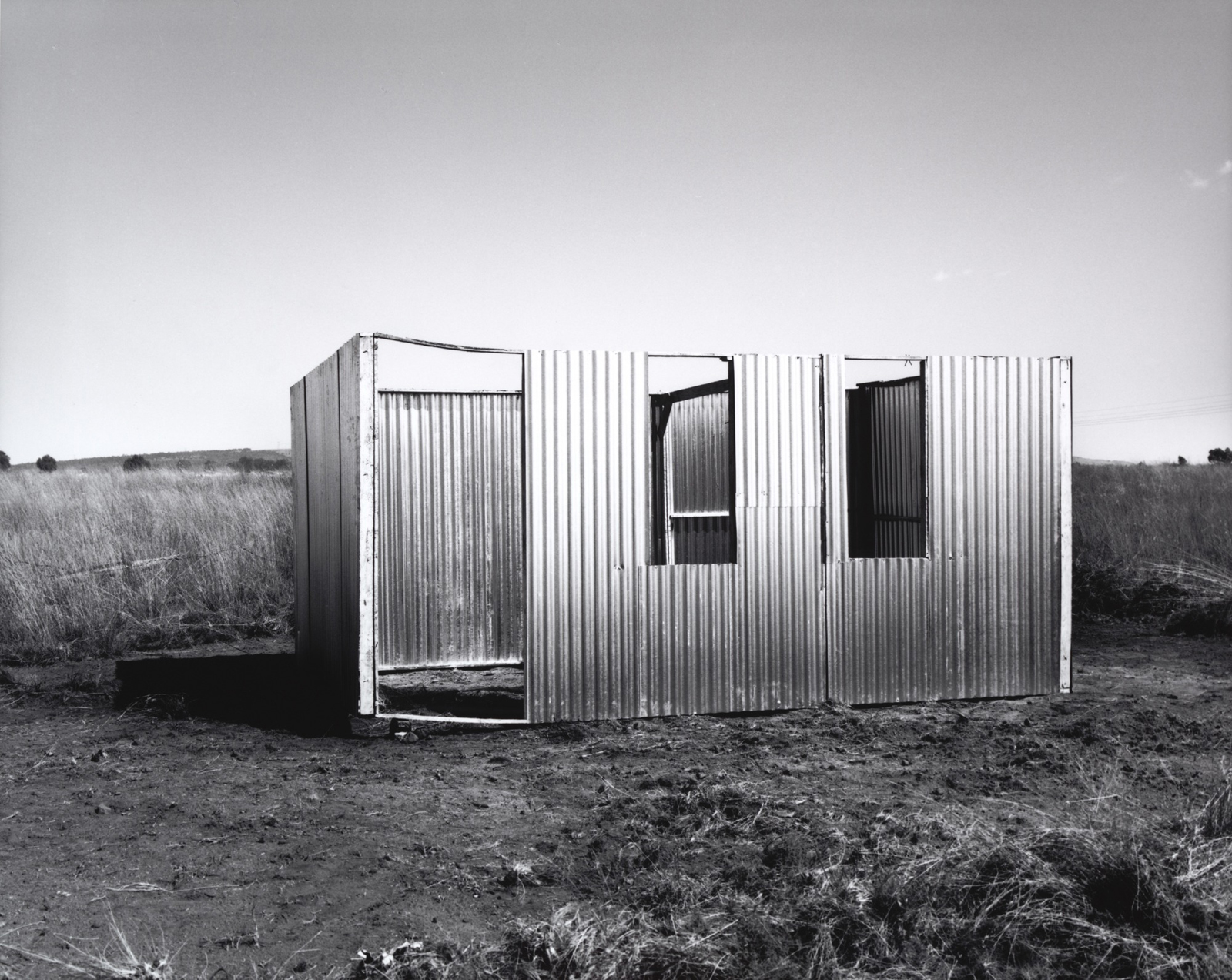
David Goldblatt (South African, 1930-2018) 'A new shack under construction, Lenasia Extension 9, Gauteng' 1990 from the exhibition 'Intersections Intersected: The Photography of David Goldblatt' at the New Museum, New York, July - Oct, 2009


David Goldblatt (South African, 1930-2018)
A new shack under construction, Lenasia Extension 9, Gauteng
1990
Gelatin silver print


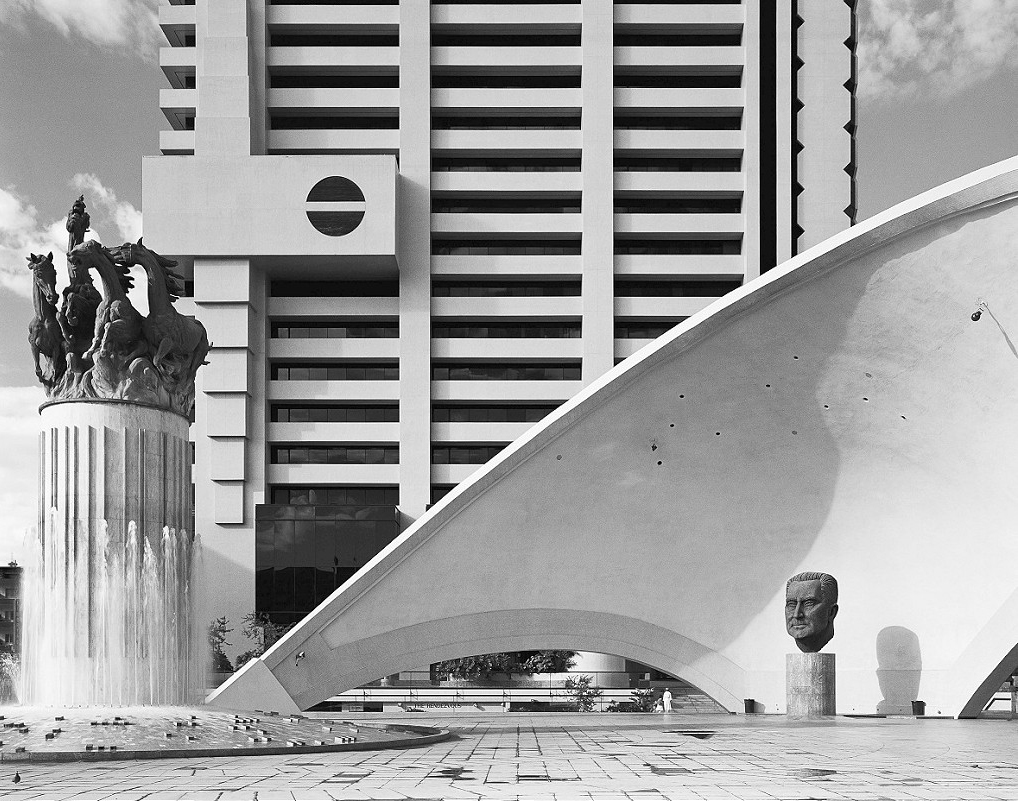
David Goldblatt (South African, 1930-2018) 'Monuments celebrating the Republic of South Africa (left and JG Strijdom, former prime minister (right), with the headquarters of Volkskas Bank, Pretoria. 25 April 1982' 1982


David Goldblatt (South African, 1930-2018)
Monuments celebrating the Republic of South Africa (left and JG Strijdom, former prime minister (right), with the headquarters of Volkskas Bank, Pretoria. 25 April 1982
1982
Black and while photograph on matte paper
Courtesy the artist and Goodman Gallery, Johannesburg


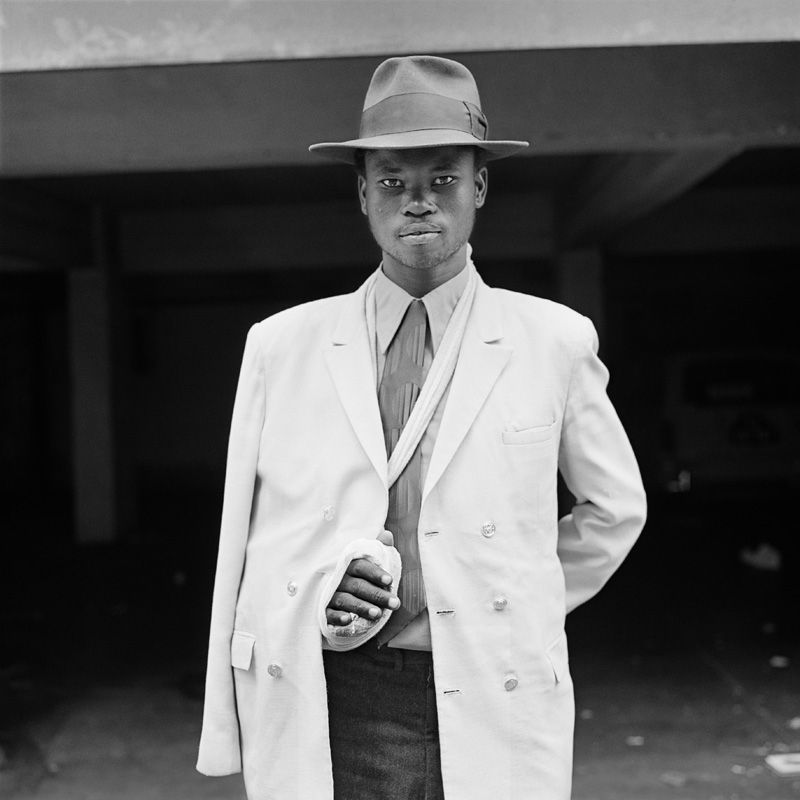
David Goldblatt (South African, 1930-2018) 'Man with an injured arm. Hillbrow, Johannesburg, June, 1972' 1972


David Goldblatt (South African, 1930-2018)
Man with an injured arm. Hillbrow, Johannesburg, June, 1972
1972
Black and while photograph on matte paper
Courtesy the artist and Goodman Gallery, Johannesburg


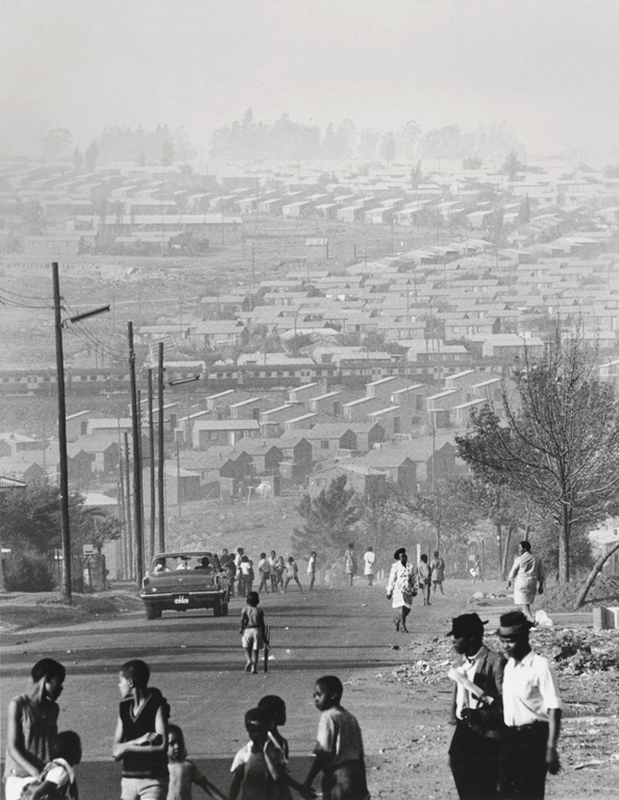
David Goldblatt (South African, 1930-2018) 'Mofolo South, Soweto, September 1972' 1972


David Goldblatt (South African, 1930-2018)
Mofolo South, Soweto, September 1972
1972
Gelatin silver print


Over the last fifty years, David Goldblatt has documented the complexities and contradictions of South African society. His photographs capture the social and moral value systems that governed the tumultuous history of his country’s segregationist policies and continue to influence its changing political landscape. Goldblatt began photographing professionally in the early 1960s, focusing on the effects of the National Party’s legislation of apartheid. The son of Jewish Lithuanian parents who fled to South Africa to escape religious persecution, Goldblatt was forced into a peculiar situation, being at once a white man in a racially segregated society and a member of a religious minority with a sense of otherness. He used the camera to capture the true face of apartheid as his way of coping with horrifying realities and making his voice heard. Goldblatt did not try to capture iconic images, nor did he use the camera as a tool to entice revolution through propaganda. Instead, he reveals a much more complex portrait, including the intricacies and banalities of daily life in all aspects of society. Whether showing the plight of black communities, the culture of the Afrikaner nationalists, the comfort of white suburbanites, or the architectural landscape, Goldblatt’s photographs are an intimate portrayal of a culture plagued by injustice.

In Goldblatt’s images we can see a universal sense of people’s aspirations, making do with their abnormal situation in as normal a way as possible. People go about their daily lives, trying to preserve a sense of decency amid terrible hardship. Goldblatt points out a connection between people (including himself) and the environment, and how the environment reflects the ideologies that built it. His photographs convey a sense of vulnerability as well as dignity. Goldblatt is very much a part of the culture that he is analysing. Unlike the tradition of many documentary photographers who capture the “decisive moment,” Goldblatt’s interest lies in the routine existence of a particular time in history.

Goldblatt continues to explore the consciousness of South African society today. He looks at the condition of race relations after the end of apartheid while also tackling other contemporary issues, such as the influence of the AIDS epidemic and the excesses of consumption. For his “Intersections Intersected” series, Goldblatt looks at the relationship between the past and present by pairing his older black-and-white images with his more recent colour work. Here we may notice photography’s unique association with time: how things were, how things are, and also that the effects of apartheid run deep. It will take much more time to heal the wounds of a society that was divided for so long. Yet, there is a possibility for hope, recognition of how much has changed politically in the time between the two images, and a potential optimism for the future. Goldblatt’s work is a dynamic and multilayered view of life in South Africa, and he continues to reveal that society’s progress and incongruities.”

Joseph Gergel, Curatorial Fellow

Text from the New Museum website [Online] Cited 15/08/2009. No longer available online


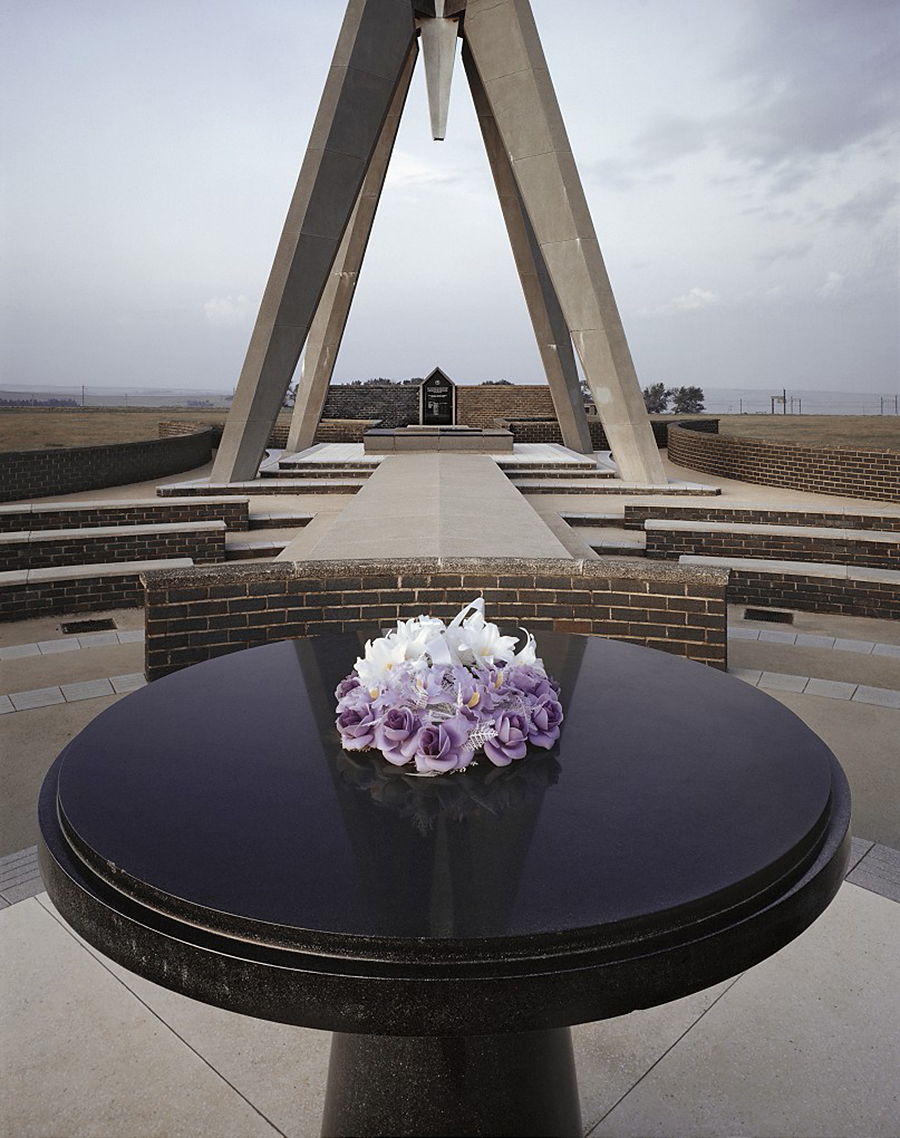
David Goldblatt (South African, 1930-2018) 'Wreath at the Berg-en-Dal Monument' 1983


David Goldblatt (South African, 1930-2018)
Wreath at the Berg-en-Dal Monument which commemorates the courage – and the sarcophagus which holds the bones – of 60 men of the South African Republic Police, who died here 27 August 1900 in a critical battle of the Anglo-Boer War. Dalmanutha, Mpumalanga. December 1983.
1983
Courtesy the artist and Goodman Gallery, Johannesburg


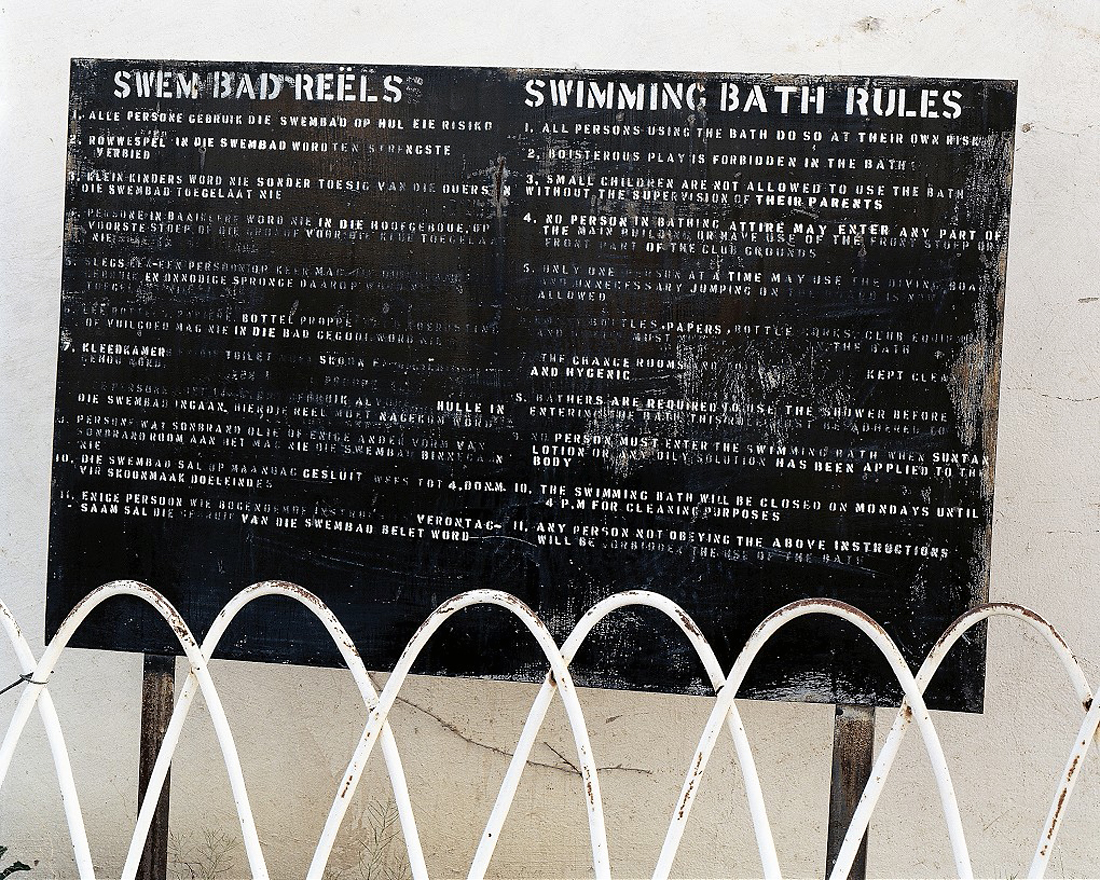
David Goldblatt (South African, 1930-2018) 'The swimming bath rules at the rec, Cape Blue Asbestos Mine, Koegas, Northern Cape' 2002


David Goldblatt (South African, 1930-2018)
The swimming bath rules at the rec, Cape Blue Asbestos Mine, Koegas, Northern Cape
2002


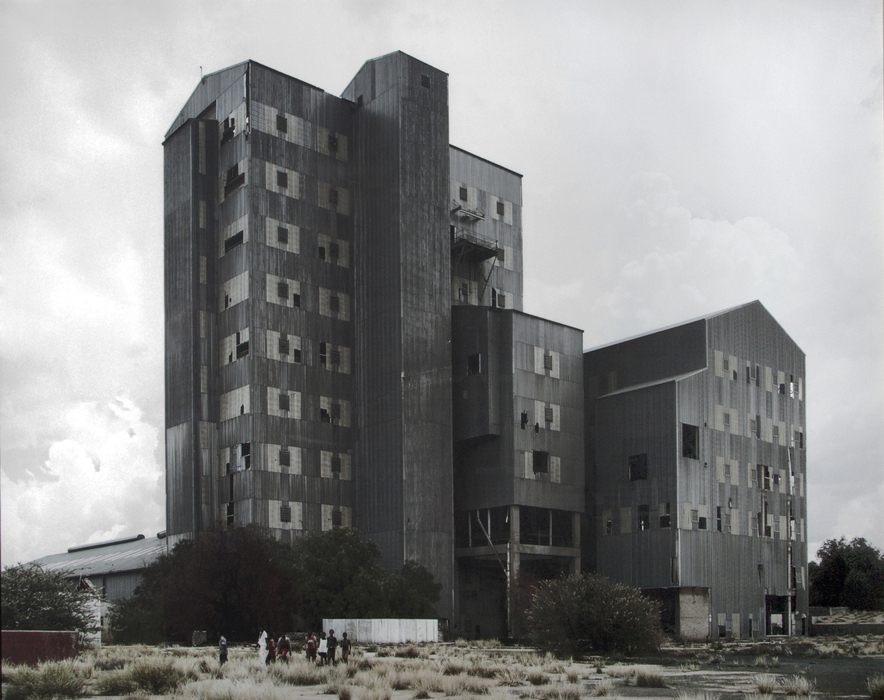
David Goldblatt (South African, 1930-2018) 'The mill, Pomfret Asbestos Mine, Pomfret, North-West Province, 20 December 2002' 2002


David Goldblatt (South African, 1930-2018)
The mill, Pomfret Asbestos Mine, Pomfret, North-West Province, 20 December 2002
2002


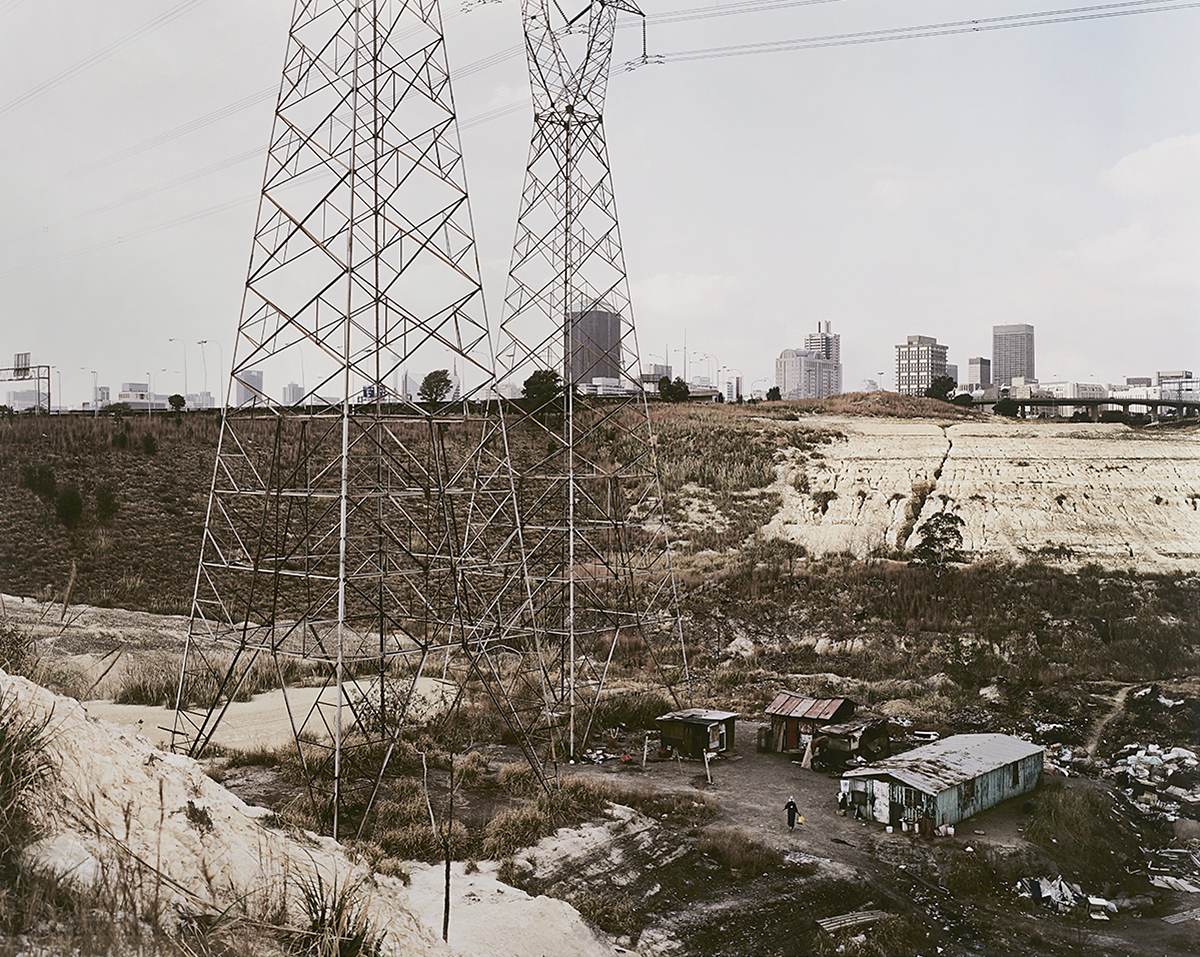
David Goldblatt (South African, 1930-2018) 'Johannesburg from the Southwest' 2003


David Goldblatt (South African, 1930-2018)
Johannesburg from the Southwest
2003


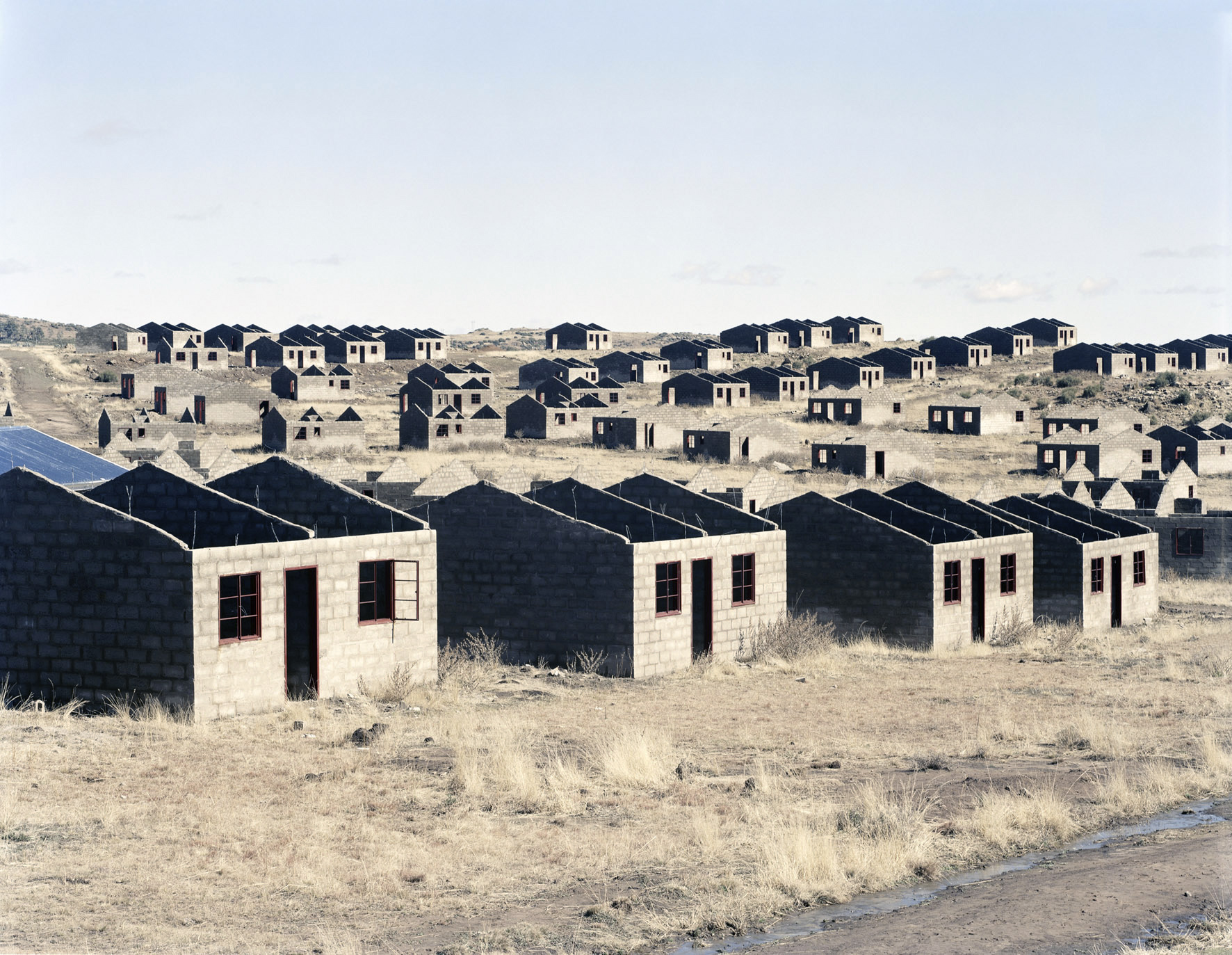
David Goldblatt (South African, 1930-2018) 'Incomplete houses, part of a stalled municipal development of 1000 houses. Lady Grey, Eastern Cape, 5 August 2006' 2006


David Goldblatt (South African, 1930-2018)
Incomplete houses, part of a stalled municipal development of 1000 houses. Lady Grey, Eastern Cape, 5 August 2006
2006


New Museum
235 Bowery
New York, NY 10002
212.219.1222

Opening hours:
Tuesday – Sunday 11am – 6pm

New Museum website

LIKE ART BLART ON FACEBOOK

Back to top

Review: ‘Double Infinitives’ by Marco Fusinato at Anna Schwartz Gallery, Melbourne

Exhibition dates: 25th June – 25th July, 2009


Marco Fusinato (Australian, b. 1964) 'Double Infinitive 3' 2009


Marco Fusinato (Australian, b. 1964)
Double Infinitive 3
2009


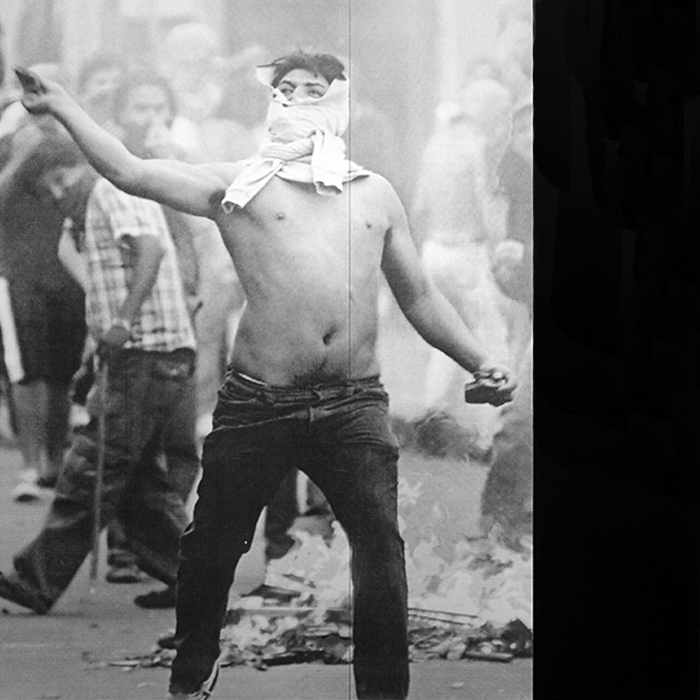
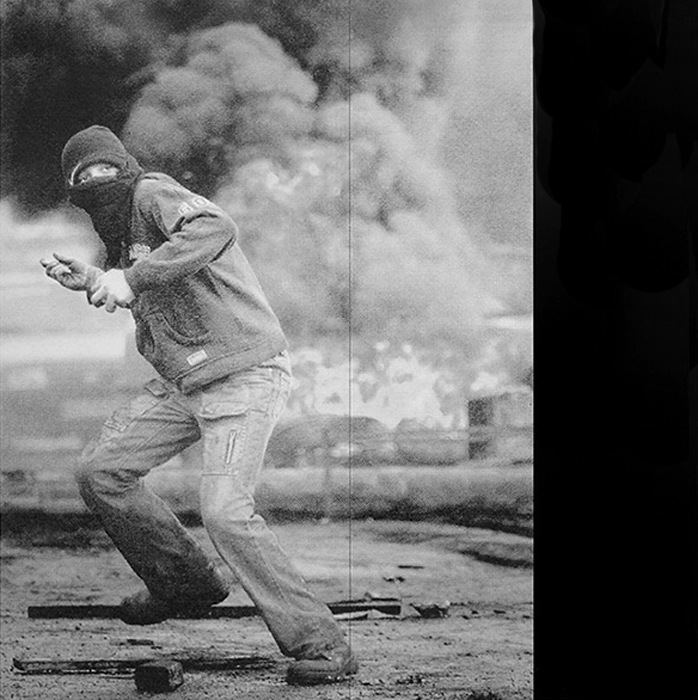
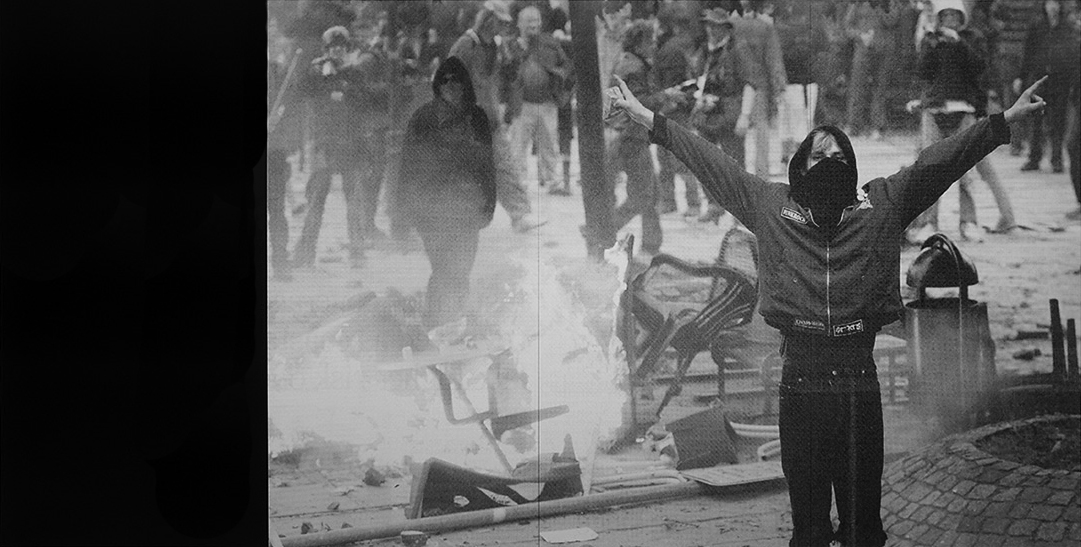
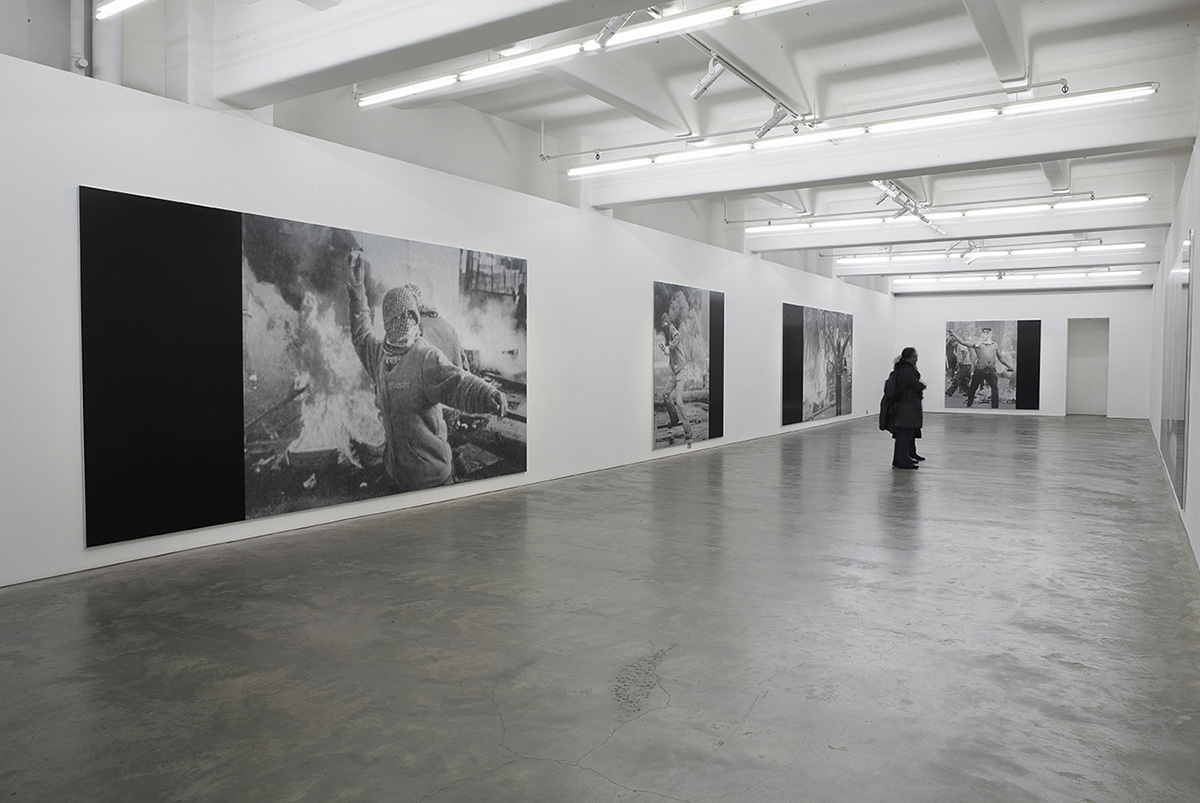
Double Infinitives by Marco Fusinato at Anna Schwartz Gallery, Melbourne is an excellent exhibition of large UV ink on aluminium images sourced by Fusinato from the print media.

The images are made up of a dot pattern familiar to those who have examined photographs in the print media closely. Larger and smaller clusters of dots form the light and shade of the image. As you move closer to the works they dissolve into blocks of dots and become and optical illusion like Op Art from the 1960s. Fusinato contrasts this dot structure with the inclusion of flat panels of black ink to the left and right hand side of the images. The section lines that run through the images (for they are not one single image but made up of panels) also adds to the optical nature of the work as the lines cut the conflagrations, literally stitching the seams/scenes together.

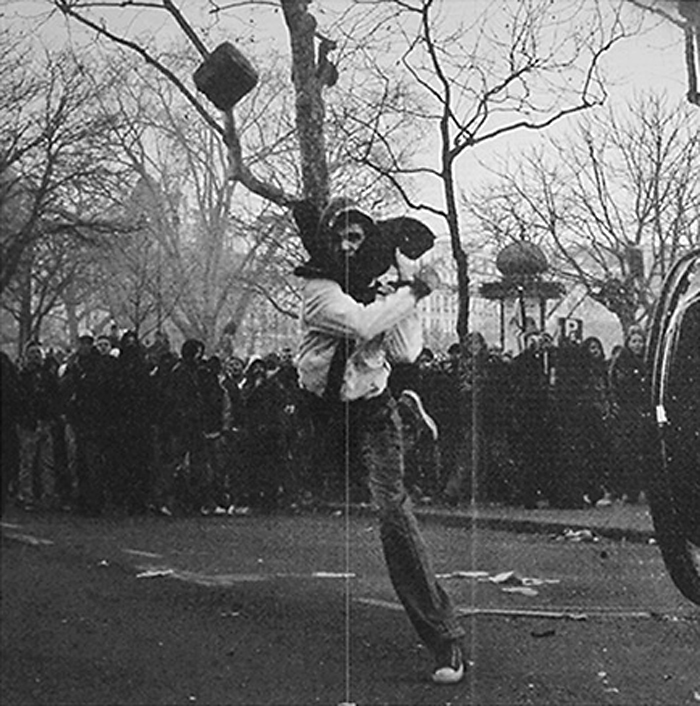
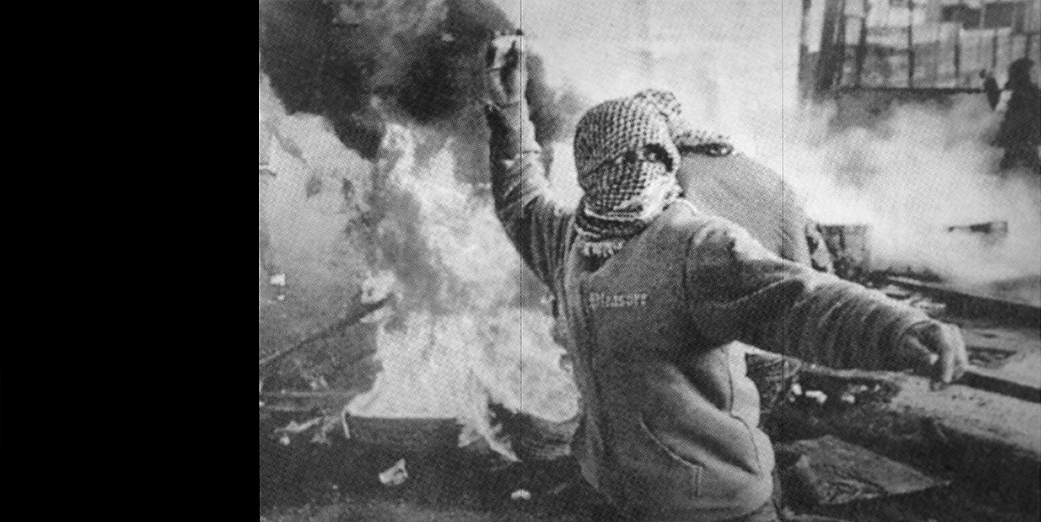
Each image contains an individual holding a rock enclosed in the milieu and detritus of a riot; the figures are grounded in the earth and surrounded by fire but in their obscurity, in the veiling of their eyes, the figures seem present but absent at one and the same time. They become ghosts of the fire.

Fire consumes the bodies. The almost cut out presence of the figures, their hands clutching, throwing, saluting become mute. Here the experience of the sound, colour and movement of an actual riot is silenced in the flatness and smoothness of the images. The images possess the intensity of a newspaper reality ‘blown up’ to a huge scale by Fusinato (see the installation photograph below to get an idea of the effect). The punctum of the riot, that prick of consciousness that Barthes so liked, is translated into a silenced studium of the aluminium surface; an aural history (the sound) / oral history (the telling of the story) trapped in the structure of silence.

There is a double jeopardy – the dissolution of the image into dots and the disintegration of the body into fire. In one of the images the upraised arm and hand of one of the rioters holds a rock with what appears to be a figure on it, surrounded by fire. To me the arm turned into one of the burning Twin Towers with smoke and fire pouring from it (see the first photograph in the installation photograph below).

My only concern about the images were the black panels, perhaps too obvious a tool for the purpose the artist intended. Maybe the needed some small texture, like a moire pattern to reference the contours of a map and continue the topographical and optical theme. Perhaps they just needed to be smaller or occasionally placed as thin strips down the actual image itself but these are small quibbles. Overall this is an fantastic exhibition that I enjoyed immensely. The images are literally ripped from the matrix of time and space and become the dot dot dot of the addendum. What Fusinato does so excellently is to make us pause and stare, to recognise the flatness of these figures and the quietness of violence that surrounds us.

Music – Noise  – Silence
Flatness – Advertising – Earth – Fire
Rock – Space – Memory

Dr Marcus Bunyan


Many thankx to Anna Schwartz Gallery for allowing me to publish the photographs in the posting. Please click on the photographs for a larger version of the image.


Marco Fusinato (Australian, b. 1964) 'Double infinitive I' 2009


Marco Fusinato (Australian, b. 1964)
Double infinitive 1
2009


Marco Fusinato (Australian, b. 1964) 'Double Infinitive 4' 2009


Marco Fusinato (Australian, b. 1964)
Double Infinitive 4
2009


A selection of images from the print media of the decisive moment in a riot in which a protagonist brandishes a rock against a backdrop of fire. Each image is from a different part of the world, from the early twenty-first century, and is blown up to history-painting scale using the latest commercial print technologies.

Text by Marco Fusinato on his website


Installation of Marco Fusinato 'Double Infinitives' exhibition at Anna Schwartz Gallery, Melbourne


Installation of Marco Fusinato Double Infinitives exhibition at Anna Schwartz Gallery, Melbourne


Double Infinitives

“Unheard music is better than heard.”

Greek proverb of late antiquity


“That music be heard is not essential – what it sounds like may not be what it is.”

Charles Ives, Essays Before a Sonata


“The proposition of Jacques Attali’s Noise is different. He says that while noise is a deadly weapon, silence is death.”

David Rattray, “How I Became One of the Invisible,” Semiotext(e), 1992.


The explosive communal act of rioting is most commonly delivered to an audience suspended in the stillness and silence of a photographic image. Noise is not removed in this process, it is almost amplified: the sound and action that deliver this singularly captured moment into existence are infinite, as all things remain while they are imagined, before they are anchored down by express articulation.

Photographic representation can easily be accused of subverting the truth of events, not because what is seen in the image has not transpired, but because static images leave so much space around them for multiple narratives to be constructed. The still image is totally contingent on the consciousness that confronts it. By contrast, the near-totality of videos can give too much away …

Sourced by Fusinato from print media published in the last few years, these images of rioting all contain an individual clutching a rock, bathed in the refractory glow of a nearby fire. The image has become prototypical, so much so that it lacks the sensation of spontaneity requisite to produce a riot. (Apropos to this predictability, Fusinato would check global newspapers after every forum or conference of global financial authorities, often finding the image he was looking for).

Double Infinitives is a succinct allegory for the reluctance to compromise comfort overpowering radical impulses. Conversations suggest this is a conflict frequently experienced by artists. Deprived of a volatile political reality, we experience radicalism through images that act as small ruptures, reminders that the world we live in might be more severely charged than our individual experiences allow. Fusinato’s works flatten these images of volatility onto a smooth slate: they are similar and radiate with the vexed beauty of sameness. A riot is a mad and brutal spectacle, a theatre that is often documented as if it were a play. Hugely expanded in scale and rendered in the suffused gloss of advertising, the real possibility of violence that these works infer deepens the layers of the fiction rather than comprising an indicator of human concern. Those things with which we come into such gentle contact that their thorns barely prick …

Liv Barrett
June 2009

Text from the Anna Schwartz Gallery website [Online] Cited 10/07/2009. No longer available online


Marco Fusinato (Australian, b. 1964) 'Double Iinfinitive 2' 2009


Marco Fusinato (Australian, b. 1964)
Double Iinfinitive 2
2009


Marco Fusinato (Australian, b. 1964) 'Double Iinfinitive 2' 2009 (detail)


Marco Fusinato (Australian, b. 1964)
Double Iinfinitive 2 (detail)
2009


Marco Fusinato (Australian, b. 1964) 'Double Iinfinitive 5' 2009


Marco Fusinato (Australian, b. 1964)
Double Iinfinitive 5
2009


Anna Schwartz Gallery
185 Flinders Lane
Melbourne, Victoria 3000

Opening hours:
Tuesday – Friday 12 – 5pm
Saturday 1 – 5pm

Anna Schwartz Gallery website

LIKE ART BLART ON FACEBOOK

Back to top

Review: ‘Order and disorder: archives and photography’ at the National Gallery of Victoria International, Melbourne

Exhibition dates: 18th October, 2008 – 19th April, 2009


Patrick Pound (New Zealander, b. 1962, worked in Australia 1989- ) 'Writing in a library' 1996 from the exhibition 'Order and disorder: archives and photography' at the National Gallery of Victoria International, Melbourne, October, 2008 - April, 2009


Patrick Pound (New Zealander, b. 1962, worked in Australia 1989- )
Writing in a library
1996
Photocopies, oil stick, card
169.4 x 127.2cm (image); 180.2 x 137.2cm (sheet)
National Gallery of Victoria, Melbourne
Purchased, 1997
© Patrick Pound  


“These fragments I have shored against my ruins.”


T.S. Eliot


An interesting exhibition is presented in the [now closed] permanent third floor photography gallery at NGV International, Melbourne on a subject that deserved a much more rigorous investigation than could been undertaken in this small gallery space. Presenting single works by Ed Ruscha, Bernd and Hilla Becher, Patrick Pound, Robert Rooney, Simon Obarzanek, Penelope Davis, Candid Hofer, Linda Judge and Charles Green and Lyndell Brown the works seek to investigate the nature of the relationship between photography and the archive, between the semi-permanences of an archival memory and the spaces of a transgressive intertexuality marked by fragmentary, ironic counter-performances.

As noted in the catalogue essay by NGV curator Maggie Finch the archive is a place for holding knowledge that contains elements of truth and error, order and disorder; archives are able to shape history and memory, depending on how, when and by whom the records are accessed. Any disruption of order, governance and authority can lead to alternative readings and interpretations as the arcane ‘mysteries’ of the methods of classification are overturned. Since Victorian times when the body came under the self-surveillance of the camera and was found wanting, photographs have documented the faces of criminals, the physiognomy of degeneration and the fever of war.

As Yiannis Papatheodorou has observed when reviewing Jacques Derrida Mal d’Archive,

“Derrida declares that since the dominant power of the archive derives from the economy of knowledge, it also provides the institutional responsibility of the interpretation. The localisation of the information transforms the inscription, provided by the function of the archive, into the impression of a memory’s trace, conscious or unconscious …

The preservation of memory, the access to information, the “resources” of the sources and the working environment are not just the representation of a future memory. They are active practices and discourses that create hierarchies and exclusions. The archives are the languages of the past, activated however dialogically, according to scientific and social demands. The content of our choice is marked by the way we are seeking information. Far from being an abstract principle, our choice is an ideologically oriented negotiation closely related to the politics of interpretation.”1


And there’s the rub. Not only is this exhibition a reordering of an unpublished memory (for that is what an archive is, a unique unpublished memory), it is also a reiteration of the authority of the gallery itself, the “institutional responsibility of the interpretation.”2 Deciding what was in this exhibition and what to leave out creates hierarchies of inclusion and exclusion – and in this case the inclusions are mainly ‘safe’ works, ones that challenge the ontology of existence, the cataloguing of reality in a slightly ironic way but oh – nothing too shocking! nothing too disordered! Nothing here then of the archive of images that substantiate the horrors of war, the trans/disfiguration of men in both World Wars for example. There are few images to haunt us, none to refresh our memories in a problematic way.

The more successful pieces, the works that challenge the order of the archive (“what is no longer archived in the same way is no longer lived in the same way”)3, are the ones by Ed Ruscha, Penelope Davis and Simon Obarzaneck (all below).

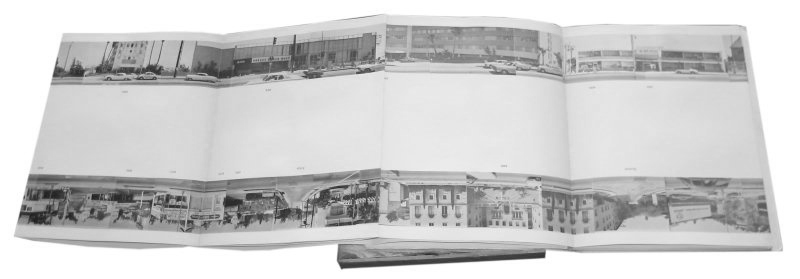
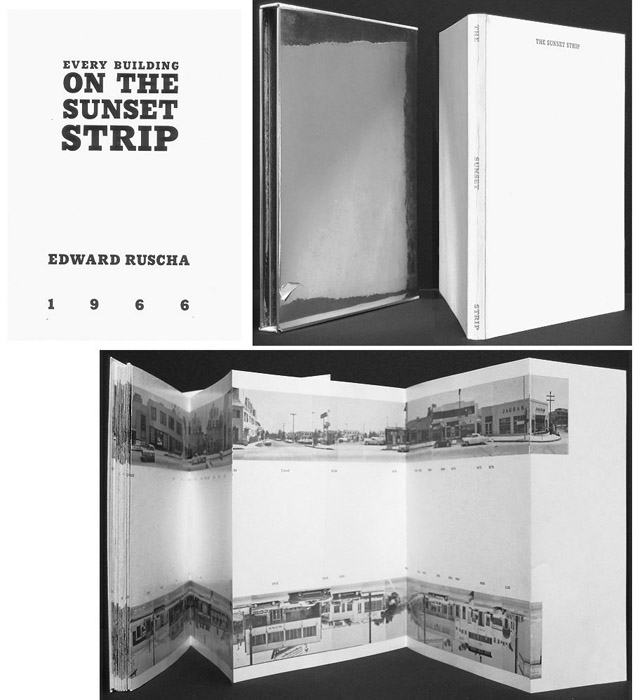
Ruscha’s vertical inverted cityscape is trapped in a display cabinet opened out on the horizontal plane in concertina format, like one of those optical illusion images in which you see an image looking from one direction and a different image from the other direction. Ruscha’s personal experience of driving down Sunset Strip in Los Angeles and his anthropological recording of the urban experience has been disseminated in a mass produced ‘artists’ book. No unique unpublished archive here. Beneath the facades of the shops other narratives emerge – images are stitched together, cars chopped off, people dismembered – all in a very linear, conceptual way; a journey from one point to another, one that is both subjective (the voice  and hand of the author) and objective (the en masse production of the book).

As Chris Balaschak has noted, “The images, taken during the day, capture only the facades of the buildings. Ignorance is given to cars or people, both of which are often cut in half between separate exposures. The imperfections of matching the facades are cracks along Ruscha’s drive. Through these cracks we find Ruscha, not such an anonymous author after all. Splitting cars in two, and mismatching facades we become keenly aware of the passage of time. The facades of buildings may appear as stage sets but they are active points on other itineraries, anticipating future and past narratives.”4


This is Ruscha’s trace through the city but also our intersection with his journey, our chance to make our own itineraries as Balaschak (in his insightful writing) rightly points out. The fragmentary dismembering becomes the space between, the disorder of the linear into a heterotopic space of remembering. We the viewer create our own narrative, flitting through the cracks in the archive of memory, the photographer, the author of our own journey.

Penelope Davis photograms are luminous objects. She makes resin casts of the spine of discarded books and places the casts directly onto photographic paper and then exposes them to light. The books glow and hover in the blackness, the words on the spine reversed. Stripped of their context, of their memory, they become ethereal books, phantom texts, liminal images that hover between what is known and what is imagined. As Davis has said, “Most people assume that when they look at a photo that they are looking at the thing photographed – but they are not. They are looking at a photo. Books and photographic images and archives are enigmatic – you can’t be sure of a singular definition or meaning.”

Davis is ‘messing around’ with the idea of veracity, the truth of photography and the ordering of the archive of our mind through the images we collate. We seek to grasp the original memory of an event, of the reading and ordering of our life through images and none is available to us, for as Foucault has observed memories are only ever fragmentary and distorted representations, partial truths a best. Like Jorge Luis Borges’ journey into the infinite universe of The Library of Babel, for Foucault the psyche is not an archive but a mirror, like the shining silver foil surface of the cover of the Ed Ruscha book:

“The search for the self is a journey into a mental labyrinth that takes random courses and ultimately ends at impasses. The memory fragments recovered along the way cannot provide us with a basis for interpreting the overall meaning of the journey. The meanings that we derive from our memories are only partial truths, and their value is ephemeral. For Foucault, the psyche is not an archive but only a mirror. To search the psyche for the truth about ourselves is a futile task because the psyche can only reflect the images we have conjured up to describe ourselves. Looking into the psyche, therefore, is like looking into the mirror image of a mirror. One sees oneself reflected in an image of infinite regress. Our gaze is led not toward the substance of our beginnings but rather into the meaninglessness of previously discarded images of the self.”5


This leads us nicely onto the images of Simon Obarzanek.

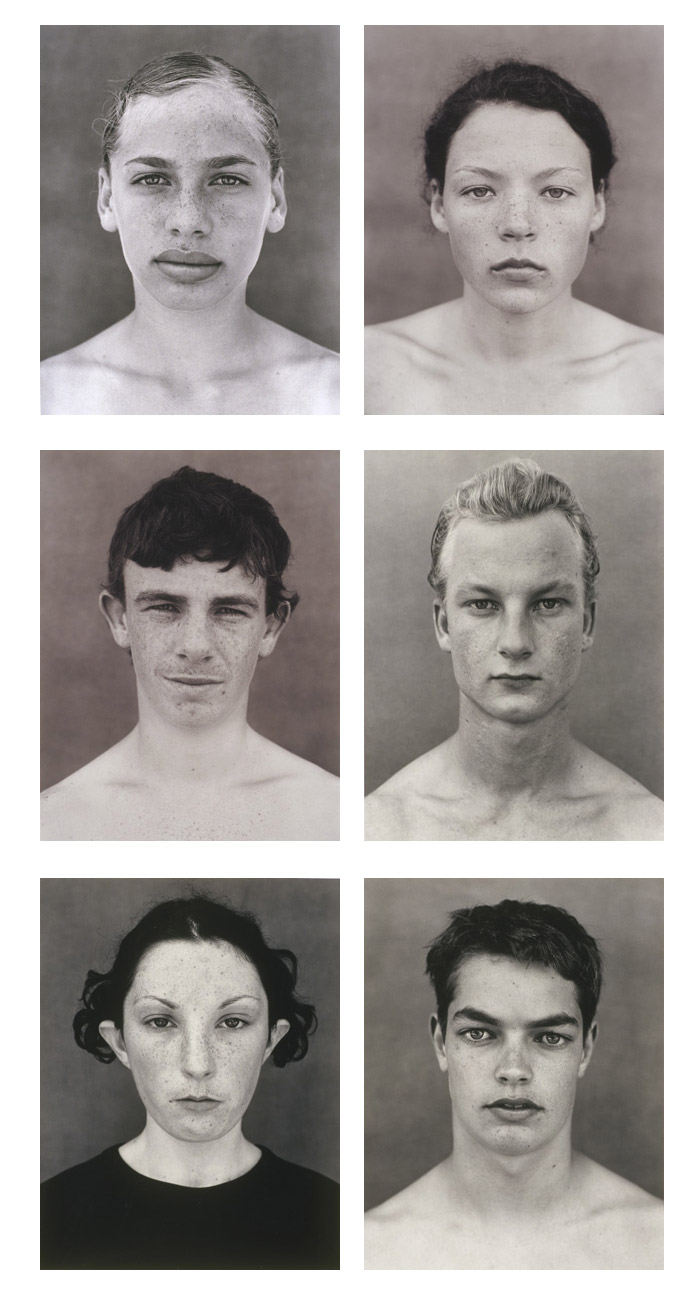
In a fantastic series of photographs, the only ones of this exhibition that seemed to haunt me (as Susan Sontag says images do), Obarzanek photographs people in an ordered, almost scientific, manner. Photographed face on against a non-contextual background using a low depth of field, these repetitive, collective, unnamed people remind me of the images of Galton. But here the uniformity is overwhelmed by quirky differences – the placement of eyes and lips seem large offering a strange, surreal physiognomy. These images resonate, the challenge, they remain with you, they question the order of things as no other photograph in this exhibition does. From simplicity comes eloquence.

To finish I must address the elephant in the room, in fact two elephants!

There is not one digital photograph contained in the exhibition, the work being collage, Type C colour or black and white silver gelatin prints. There is no mention in the catalogue of the crisis of cultural memory that is now permeating our world. Some believe the ever expanding digital archive, the Internet, threatens our lived memories “amidst the process of the ‘digitisation of culture’ and the new possibilities of storing.”6 This vision entails the fear of loosing cultural contents, hitting the delete button so that  memory passes into forgetting. This is a vision to which I do not subscribe, but the issue needed to be addressed in this exhibition: how are digital technologies altering our re-assemblance of memory, altering photography’s ability inherent ability to record, store and organise visual images? What about the aura of the original or was there never such a thing?

Furthermore, it would seem that with photographs becoming less and less a fixed essence; with the meaning of the photograph more and more divorced from its referent; with the spectators look the key to reading photographs; and the performance of the photograph a cut and paste reality… then perhaps we are left not with the two polar opposites of order and disorder but some orthogonal spaces in-between.

The second elephant in the room in the gallery space itself.

Whilst the curators of photography at the National Gallery of Victoria do an amazing job running large exhibitions such as the Andreas Gursky and Rennie Ellis shows that have starred this year, the NGV ‘International’ is shooting itself in the foot with the current permanent photography gallery space. Small, jaded and dour it seems an addendum to other larger spaces in the gallery and to be honest photography and Melbourne deserves better. Personally I feel more alive in the fashion gallery that is on the floor below and that, for an photographer, is a hard thing to say.

As the theme for this exhibition deserved a greater in depth investigation so the gallery needs to expand it’s horizons and give the permanent photography gallery a redesign and overhaul. Where is the life and passion of contemporary photography displayed in a small space for all to see in a gallery that sees itself as ‘International’? In an occularcentric world the key word is intertexuality: the gallery space should reflect the electri-city, the mixing of a gallery design ethos with images to surround us in a space that makes us passionate about contemporary photography. Now that would really be a new order of things!

Dr Marcus Bunyan


1/ Papatheodorou, Yiannis. History in the promised land of memory. Review of  Jacques Derrida, Mal d’Archive, Paris, Éd. Galilée, 1995 [Online] Cited on 20th March 2009 (no longer available online)

2/ “The archive is understood as collective reservoir of knowledge fulfilling diverse functions and conditioned by three main factors: conservation, selection and accessibility. How are contents stored and which media are used to conserve them? What is selected for storage and what is decided to be cleared out and thus forgotten? Who decides what is archived and who has access to the resources? All these questions paint the archive as a political space where relations of power cross aspects of culture and collective identity.”
Assmann, A. (2003) Erinnerungsräume, Formen und Wandlungen des kulturellen Gedächtnis. [Memory Spaces, Forms and Transformations of Cultural Memory] Special paperback editon, 1st edition publ. 1999, München: Beck, p. 343-346

3/ Derrida, Jacques. (1996) Archive Fever, A Freudian Impression. Transl. by E. Prenowitz, p. 18 orig. publ. as Mal d’Archive: une impression freudienne in 1995, Chicago, London: The University of Chicago Press

4/ Balaschak, Chris. Itineraries [part 3] [Online] Cited on 20th March 2009 (no longer available online)

5/ Hutton, Patrick. “Foucault, Freud, and the Technologies of the Self,” in Martin, Luther and Gutman, Huck and Hutton, Patrick (eds.,). Technologies of the Self: A Seminar with Michel Foucault. London: Tavistock Publications, 1988, p. 139

6/ Featherstone, M. (2000) “Archiving Cultures,” in British Journal of Sociology, 51(1), pp. 161-184


Many thankx to the National Gallery of Victoria for allowing me to publish the images in the posting. Please click on the photographs for a larger version of the image.


Ed Ruscha (American, b. 1937) 'Every Building on Sunset Strip' 1966 from the exhibition 'Order and disorder: archives and photography' at the National Gallery of Victoria International, Melbourne, October, 2008 - April, 2009

Ed Ruscha (American, b. 1937) 'Every Building on Sunset Strip' 1966 from the exhibition 'Order and disorder: archives and photography' at the National Gallery of Victoria International, Melbourne, October, 2008 - April, 2009

Ed Ruscha (American, b. 1937) 'Every Building on Sunset Strip' 1966

Ed Ruscha (American, b. 1937) 'Every Building on Sunset Strip' 1966


Ed Ruscha (American, b. 1937)
Every building on the Sunset Strip
1966
Artist book: photo-offset lithographs, letterpress, concertina, cardboard cover, silver-coated plastic-covered slipcase, 1st edition
17.8 x 760.7cm (open); 17.8 x 14.4 x 0.8cm (closed); 18.6 x 14.6 x 1.4cm (slipcase)
Private collection, Melbourne
© Ed Ruscha, courtesy Gagosian Gallery, New York


Penelope Davis (Australian, b. 1963) 'Shelf' 2008


Penelope Davis (Australian, b. 1963)
Shelf
2008
From the Fiction-Non-Fiction series 2007-2008
Type C photograph
90.0 x 70.0cm
National Gallery of Victoria, Melbourne
Purchased, Victorian Foundation for Living Australian Artists, 2008


Archives contain elements of truth and error, order and disorder and are infinitely fascinating. As both collections of records and repositories of data, archives are able to shape history and memory depending on how, when and by whom the materials are accessed. Their vastness allows for multiple readings to be unravelled over time.

Photography is naturally associated with archives because of its inherent ability to record, store and organise visual images. With this in mind, this exhibition brings together artists drawn largely from the permanent collection of the NGV who explore the idea of archives as complex, living and occasionally mysterious systems of knowledge. Several of the selected artists act as archivists, collecting and ordering their own unique bodies of photographs, while others create disorder by critiquing the ideas and systems of archives.

Text from the NGV International website [Online] Cited 13/06/2022


Simon Obarzanek (Israeli/Australian, b. 1968, worked in United States 1995-2001) '6 faces from 123 faces' 2000-2002


Simon Obarzanek (Israeli/Australian, b. 1968, worked in United States 1995-2001)
6 faces from 123 faces
2000-2002
Gelatin silver photographs
(a) 33.1 x 25.4cm; (b) 33.4 x 25.4cm; (c) 33.2 x 25.3cm; (d) 33.4 x 25.4cm; (e) 33.4 x 25.4cm; (f) 33.4 x 25.4cm
National Gallery of Victoria, Melbourne
Purchased with funds arranged by Loti Smorgon for Contemporary Australian Photography, 2003
© Simon Obarzanek


Simon Obarzanek (Israeli/Australian 1968-, worked in United States 1995-2001) 'Box Hill girl' 2000-2002


Simon Obarzanek (Israeli/Australian, b. 1968, worked in United States 1995-2001)
Box Hill girl
2000-2002
Gelatin silver photograph
33.4 × 25.4cm
National Gallery of Victoria, Melbourne
Purchased with funds arranged by Loti Smorgon for Contemporary Australian Photography, 2003
© Simon Obarzanek


Simon Obarzanek (Israeli/Australian 1968-, worked in United States 1995-2001) 'Boy with eyes' 2000-2002


Simon Obarzanek (Israeli/Australian, b. 1968, worked in United States 1995-2001)
Boy with eyes
2000-2002
Gelatin silver photograph
33.4 × 25.4cm
National Gallery of Victoria, Melbourne
Purchased with funds arranged by Loti Smorgon for Contemporary Australian Photography, 2003
© Simon Obarzanek


Candida Höfer (German, b. 1944) 'Teylers Museum Haarlem II' 2003


Candida Höfer (German, b. 1944)
Teylers Museum Haarlem II
2003
Type C photograph
150.0 x 120.0cm
National Gallery of Victoria, Melbourne
Purchased, 2004
© Candida Höfer/VG Bild-Kunst, Bonn. Licensed by Copyright Agency, Australia


Bernd and Hilla Becher (German, 1931-2007 and 1934-2015) 'Coal tipple, Goodspring, Pennsylvania' 1975


Bernd and Hilla Becher (German, 1931-2007 and 1934-2015)
Coal tipple, Goodspring, Pennsylvania
1975
From the Artists and photographs folio 1975
Gelatin silver photographs
24.0 × 33.9cm (image and sheet) 40.7 × 49.6cm (support)
National Gallery of Victoria, Melbourne
Purchased, 1976


NGV International
180 St Kilda Road

Opening hours:
10am – 5pm daily

National Gallery of Victoria website

LIKE ART BLART ON FACEBOOK

Back to top

Quotation: Paul Virilio ‘The Vision Machine’

November 2008


Empirically acknowledged as tragic, the photographic print was really just that when, at the turn of the century, it became the instrument of the three great authorities over life and death (the law, the army, medicine). This is when it demonstrated its power to reveal the unfolding of a destiny from the word go. As deus ex machina [an unexpected power or event saving a seemingly hopeless situation], it was to become just as ruthless for the criminal, the soldier or the invalid, the conjunction between the immediate and the fatal only becoming more solid, inevitably, with the progress of representation.”


Virilio, Paul. The Vision Machine (trans. Julie Rose). Bloomington: Indiana University Press, 1994, p. 43.


LIKE ART BLART ON FACEBOOK

Back to top