Review: ‘Expedition’ by Shane Hulbert and ‘Trish Morrissey’ (Ireland) at the Centre for Contemporary Photography (CCP), Fitzroy

Exhibition dates: 22nd January – 14th March, 2010


Shane Hulbert (Australian) 'Broken Hill Speedway' 2009 from the exhibition 'Expedition' by Shane Hulbert at the Centre for Contemporary Photography (CCP), Fitzroy, Melbourne


Shane Hulbert (Australian)
Broken Hill Speedway
2009


Two solid exhibitions by Shane Hulbert and Trish Morrissey at the Centre for Contemporary Photography, Fitzroy.

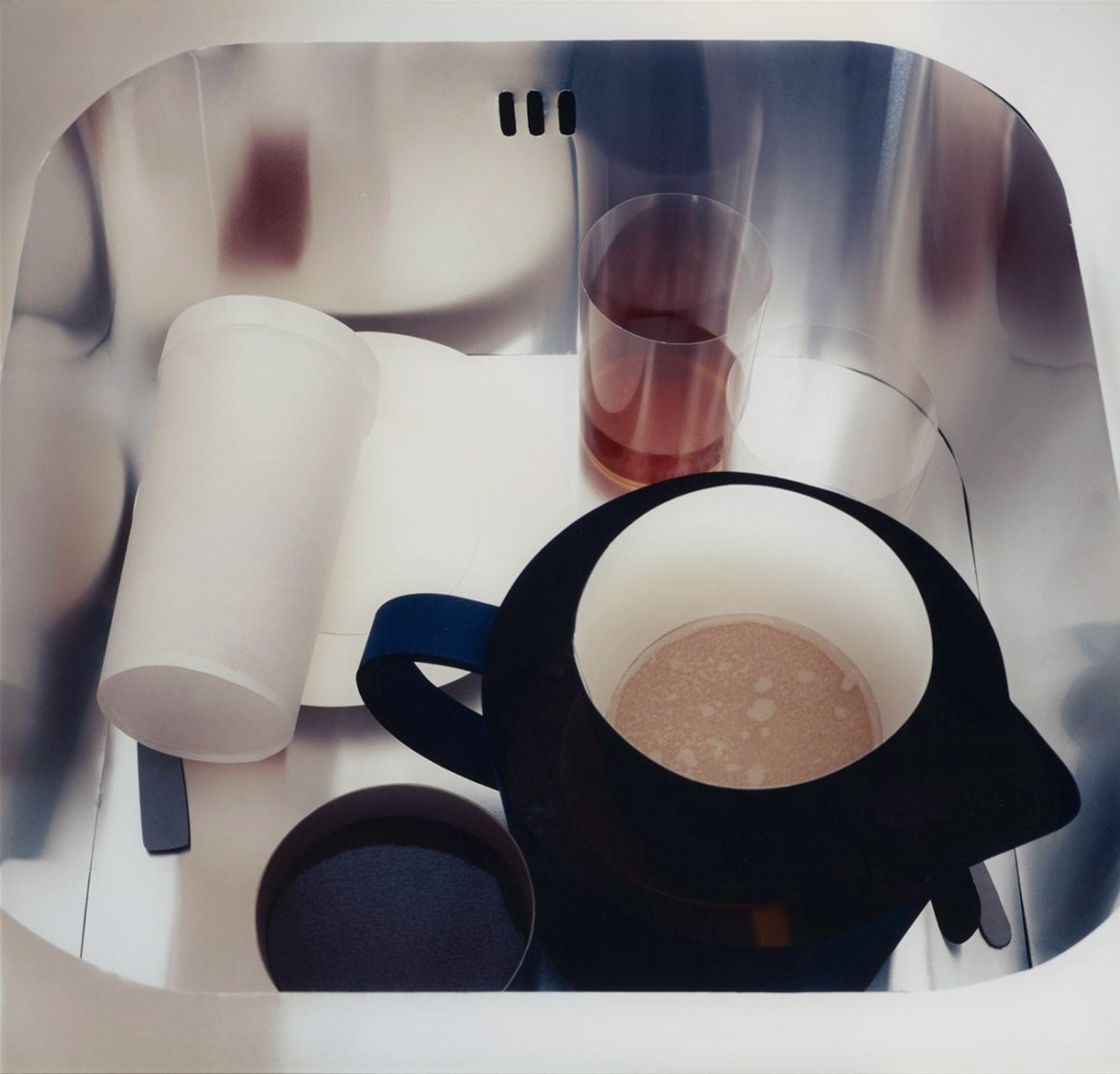
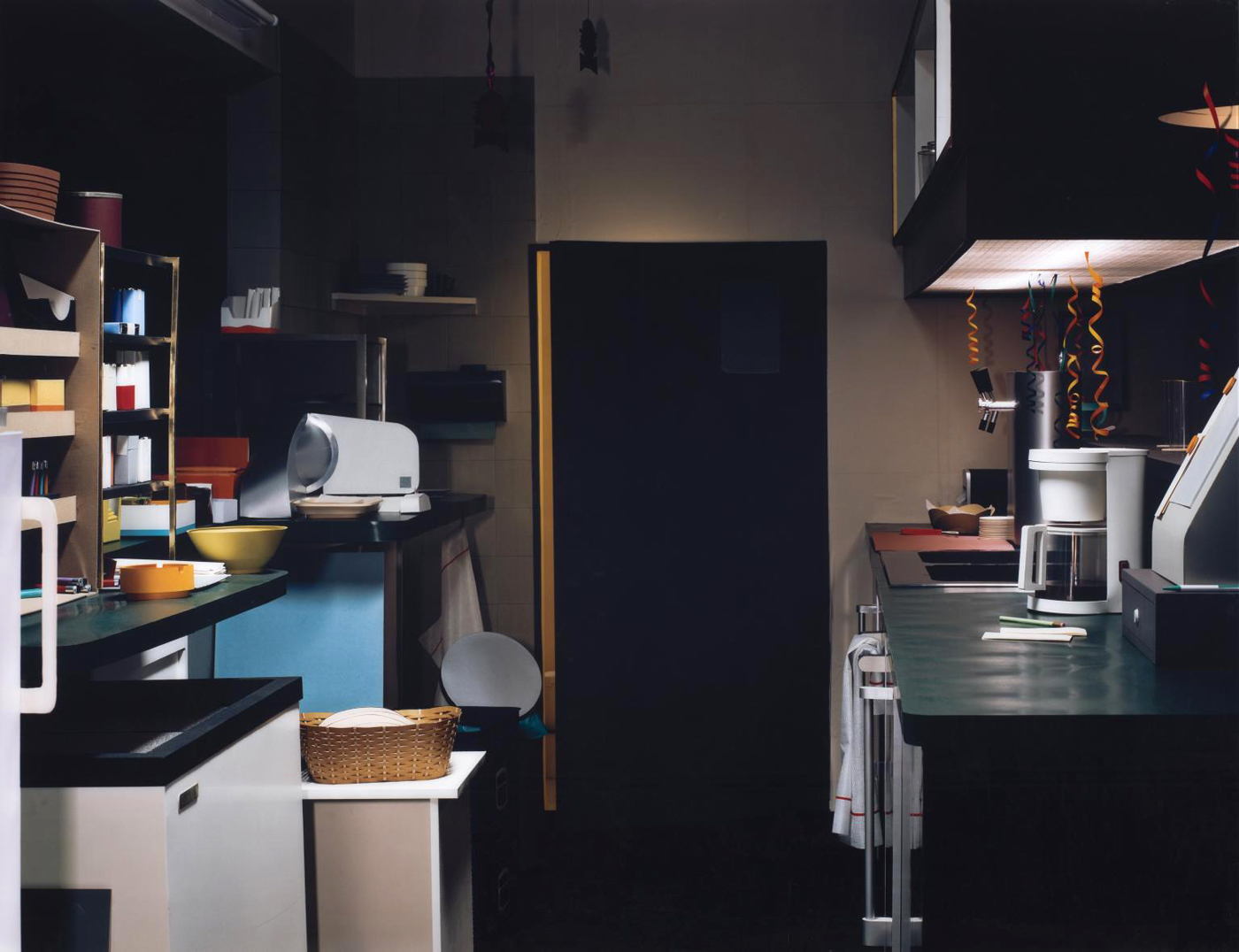
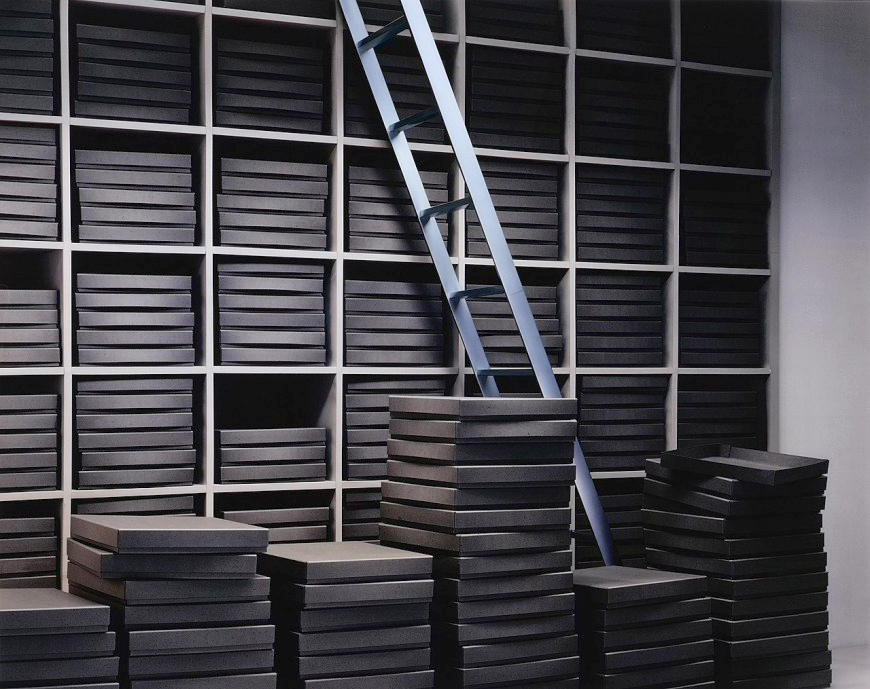
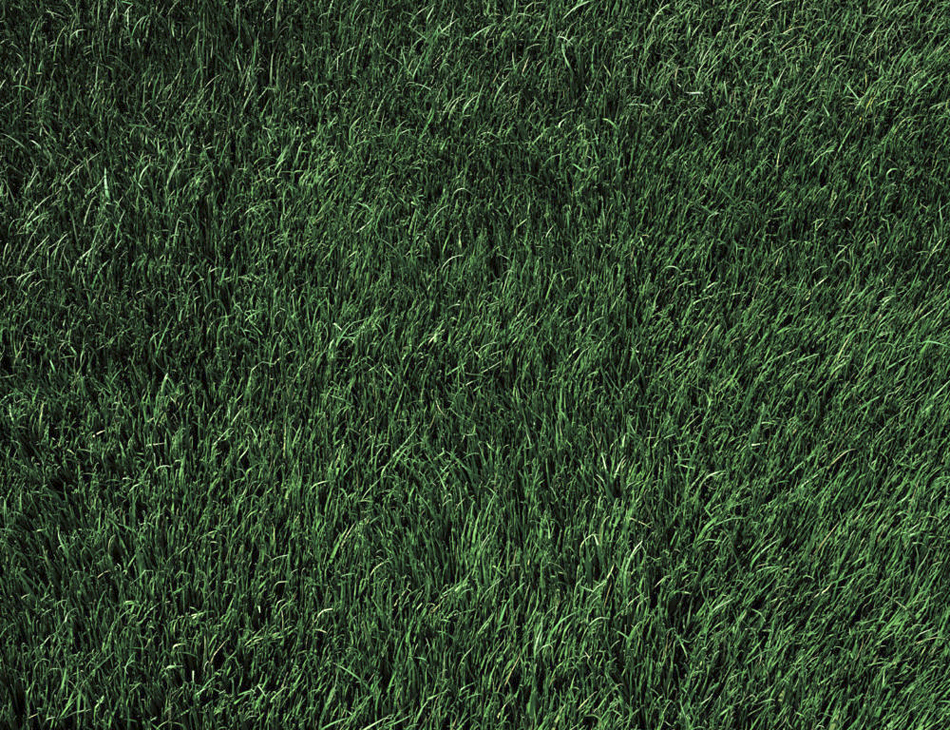
Shane Hulbert‘s series Expedition (2009) features nine large beautifully printed and framed pigment prints with prosaic titles such as Pit, Shooting Range, Spud’s Roadhouse and LED Sign to name a few. The work is at it’s most successful when it challenges the conventions of colonialism and undoes the mapping of ‘rightful’ possession of the land – usurping the space and place of occupation and memory – questioning how western cannot be seen as national. This goes against the stated aim of the project – to explore how the ‘Aussie adventurer’ lays claim to sites, locations and territories and how these constructed environments act as historical and contemporary markers for defining aspects of our national identity.

In photographs such as Broken Hill Speedway (2009, above) and Sculpture Garden (2009, below) the construction of the picture plane (with fences and gates acting as barriers, shielding our vision of the territory beyond) undermines our relationship with the land and emphasises our tenuous (western) hold upon it. In these photographs the images work to invert / disrupt / displace the historical and contemporary markers that Hulbert sees as defining aspects of our national identity. In these images ‘presence’ is contaminated, identity is contaminated. These are the strongest photographs.

In other more formalist images that have a spare aesthetic such as Shooting Range and Calder Park Raceway (2009, below) the marking of the land promotes a reterritorialization of (vacant) meaning within the constructed environment with a conversant deterritorialization or loss of original meaning. These images are not as powerful, as emotionally effective as the two previously mentioned photographs. The other five photographs in the exhibition seem less successful – perhaps too stilted in their lack of dynamic tension within the spatial landscape / formal construction within the picture frame to fundamentally address the notion of ‘expedition’ and our ongoing relationship with the land. Ultimately the series needs a more rigorous conceptual focus – on specific sites of contamination for example – for an expedition is a journey undertaken for a specific purpose. In the selection of these seemingly random photographs there seems to be no overarching narrative or pictorial holism; I believe that the thematic development that grounds the series, the ideas that drive discovery, need to be more clearly defined.

Trish Morrissey‘s body of work Seven Years (2001-2004, below) is the lesser of the two bodies of work in her exhibition at the CCP. Aiming to “deconstruct the trope of family photography by meticulously mimicking it … Morrissey functions as director, author and actor, staging herself and her sibling in tightly controlled, fictional mis en scene based on the conventions of family snapshots.” The seven years title relates to the age difference between the two siblings. Unfortunately, while the photographs are well shot with good framing and use of colour, the concept seems too contrived, the situations and clothes too laughable, the outcomes not challenging enough. The ridiculing by imitation leaves an odd taste in the mouth, the fictional simulacra neither a passable imitation of the family snapshot nor a pushing of the metaphor of self-efficacy, the belief that one is capable of performing in a certain manner to attain certain goals.

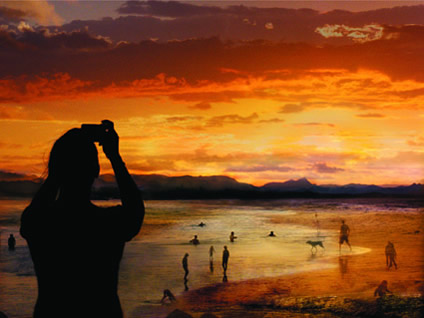
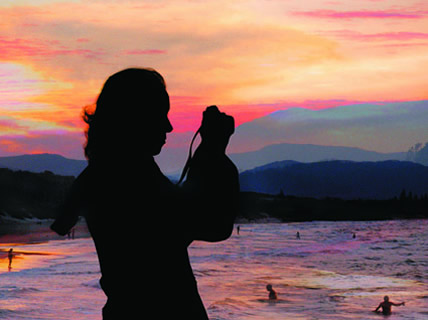
The most outstanding body of work in both exhibitions is Morrissey’s wonderfully vibrant series of large format photographs titled Front (2005-2007, below). Featuring photographs of families on beaches in the UK and Melbourne, Morrissey insinuates herself into the hierarchical family group (usually as the mother wearing the mother’s clothes) with unsettling results. The photographs are wonderful, the compositions implicitly believable in their conceptualisation, technically brilliant with beautiful control of light, colour and space. As Dan Rule insightfully noted in The Age newspaper, “What makes Morrissey’s work impressive and convincing is its multiplicity. She doesn’t just comment on family and femininity and photographic mode; she steps inside and embodies the formal and cultural archetypes.”

The rituals of family gathering and holidaying are neatly skewered by Morrissey’s performative acts – as Roy Boyne observes in his quotation, “When self-identity is no longer seen as, even minimally, a fixed essence, this does not mean that the forces of identity formation can therefore be easily resisted, but it does mean that the necessity for incessant repetition of identity formation by the forces of a disciplinary society creates major opportunities for subversion and appropriation.”1

These photographs subvert the idiom of the nuclear family, where conversational parties possess common cultural references. In Morrissey’s photographs the family photograph has become a site of resistance, a contested site, one that challenges the holistic whole of the family, the memory of the family photograph and the idea that without family nothing cohesive would exist at all. The singular ‘body’ of the family is neatly dissected and parodied with great fun, wit and elan. I loved the series.

Dr Marcus Bunyan


1/ Boyne, Roy. “Citation and Subjectivity: Towards a Return of the Embodied Will,” in Featherstone, Mike (ed.,). Body Modification. London: Sage, 2000, p. 212

.
Many thankx to the CCP and Shane Hulbert for providing me the images below and allowing me to use them in the posting. Please click on the photographs for a larger version of the image.


Shane Hulbert (Australian) 'Calder Park Raceway' 2009 from the exhibition 'Expedition' by Shane Hulbert at the Centre for Contemporary Photography (CCP), Fitzroy, Melbourne


Shane Hulbert (Australian)
Calder Park Raceway
2009


Expedition considers the significance of our ongoing relationship with the land and the identity of our nation. The exhibition is an investigation into the formation of our cultural psyche resulting from the ‘Aussie adventurer’ determination to discover and lay claim to sites, locations and territories. It is not based on any singular historical expedition, nor is it a cartographic exercise, but rather a reflection on the internal and constructed environments within the country, and how these act as historical and contemporary markers for defining aspects of our national identity. Of particular interest are areas within Australia which emphasise aspects of our western heritage, our origin, and the way this relates to our relationship with the land.

Text from the Centre for Contemporary Photography website [Online] Cited 01/03/2010. No longer available online


Shane Hulbert (Australian) 'Sculpture Garden' 2009 from the exhibition 'Expedition' by Shane Hulbert at the Centre for Contemporary Photography (CCP), Fitzroy, Melbourne


Shane Hulbert (Australian)
Sculpture Garden
2009


Shane Hulbert (Australian) 'Shooting Range' 2009


Shane Hulbert (Australian)
Shooting Range
2009
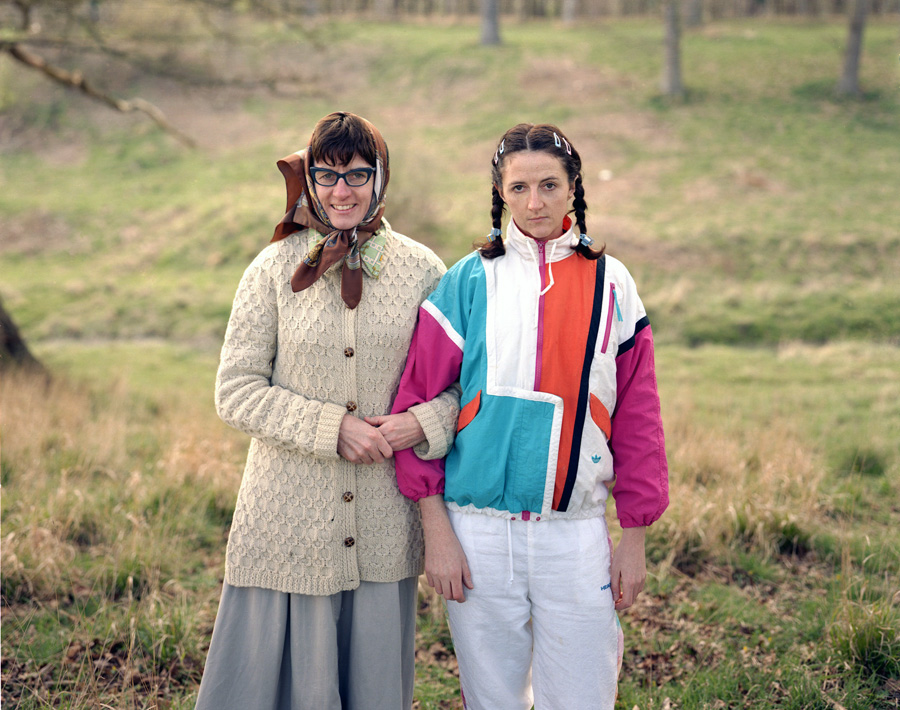
 

Trish Morrissey (Irish, b. 1967) 'September 20th 1985' 2004 from the exhibition 'Trish Morrissey' at the Centre for Contemporary Photography (CCP), Fitzroy, Melbourne, January - March, 2010


Trish Morrissey (Irish, b. 1967)
September 20th 1985
2004
From the series Seven Years


Seven Years (2001-2004) aims to deconstruct the trope of family photography by meticulously mimicking it. In the series, the title of which refers to the age gap between the artist and her elder sister, Morrissey functions as director, author and actor, staging herself and her sibling in tightly controlled, fictional mis en scene based on the conventions of family snapshots.

In order to construct images that appear to be authentic family photographs from the 1970s and 1980s, Morrissey uses period clothing and props, both her own and others, and the setting of her family’s house in Dublin. They assume different characters and roles in each image, utilising body language to reveal the subtext of psychological tensions inherent in all family relations. The resulting photographs isolate telling moments in which the unconscious leaks out from behind the façade of the face and into the minute gestures of the body.

Front (2005-2007) deals with the notion of borders, boundaries and the edge, using the family group and the beach setting as metaphors. For this work, the artist traveled to beaches in the UK and around Melbourne. She approached families and groups of friends who had made temporary encampments, or marked out territories and asked if she could be part of their family temporarily. Morrissey then took over the role or position of a woman within that group – usually the mother figure. She asked to take her place, and to borrow her clothes. The woman then took over the artist’s role and photographed her family using a 4 x 5 camera (which Morrissey had already carefully set up). While Morrissey, a stranger on the beach, nestled in with her loved ones. These highly performative photographs are shaped by chance encounters with strangers, and by what happens when physical and psychological boundaries are crossed. Ideas around the mythological creature the ‘shape shifter’ and the cuckoo are evoked. Each piece within the series is titled by the name of the woman who Morrissey replaced within the group.

Press release from the Centre for Contemporary Photography website [Online] Cited 01/03/2010. No longer available online


Trish Morrissey (Irish, b. 1967) 'Rachael Hobson, September 2nd, 2007' 2007 from the exhibition 'Trish Morrissey' at the Centre for Contemporary Photography (CCP), Fitzroy, Melbourne, January - March, 2010


Trish Morrissey (Irish, b. 1967)
Rachael Hobson, September 2nd, 2007
2007
From the series
Front (2005-2007)
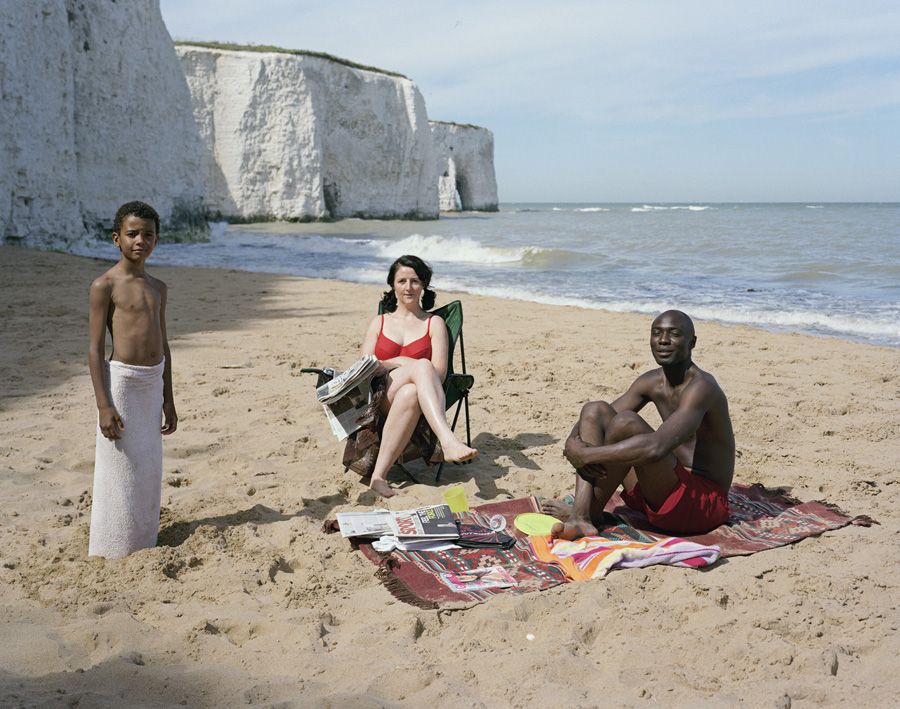
 

Trish Morrissey (Irish, b. 1967) 'Hayley Coles, June 17th 2006' 2006 from the exhibition 'Trish Morrissey' at the Centre for Contemporary Photography (CCP), Fitzroy, Melbourne, January - March, 2010


Trish Morrissey (Irish, b. 1967)
Hayley Coles, June 17th 2006
2006
From the series Front (2005-2007)


Centre for Contemporary Photography

No permanent exhibition space at the moment
Centre for Contemporary Photography website

LIKE ART BLART ON FACEBOOK

Back to top

Exhibition: ‘In the Darkroom: Photographic Processes before the Digital Age’ at the National Gallery of Art, Washington, D.C.

Exhibition dates: 25th October, 2009 – 14th March, 2010


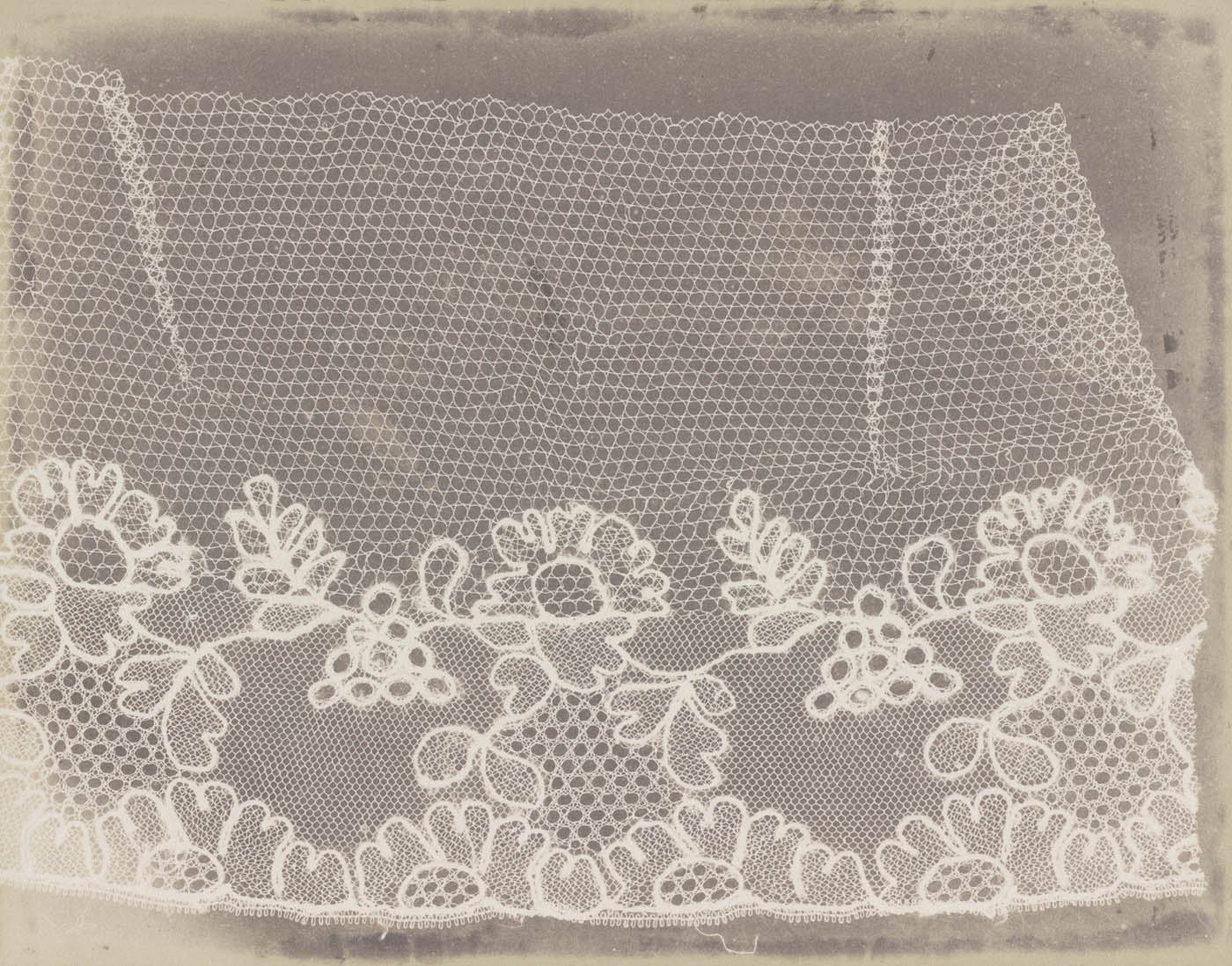
William Henry Fox Talbot (British, 1800-1877) 'Lace' 1839-1844 from the exhibition 'In the Darkroom: Photographic Processes before the Digital Age' at the National Gallery of Art, Washington, D.C., October 2009 - March, 2010


William Henry Fox Talbot (British, 1800-1877)
Lace
1839-1844
Photogenic drawing (salted paper print)
Sheet (trimmed to image): 17.1 x 22cm (6 3/4 x 8 11/16 in.)
Support: 24.8 x 31.1cm (9 3/4 x 12 1/4 in.)
National Gallery of Art, Washington
Patrons’ Permanent Fund
Public domain


Many thankx to Kate Afanasyeva and the National Gallery of Art for allowing me to reproduce the photographs from the exhibition below. Please click on the photographs for a larger version of the image.

Dr Marcus Bunyan


Anna Atkins (British, 1799-1871) 'Ferns, Specimen of Cyanotype' 1840s from the exhibition 'In the Darkroom: Photographic Processes before the Digital Age' at the National Gallery of Art, Washington, D.C., October 2009 - March, 2010


Anna Atkins (British, 1799-1871)
Ferns, Specimen of Cyanotype
1840s
cyanotype
National Gallery of Art, Washington
R.K. Mellon Family Foundation Fund


Albert Sands Southworth and Josiah Johnson Hawes. 'The Letter' c. 1850  from the exhibition 'In the Darkroom: Photographic Processes before the Digital Age' at the National Gallery of Art, Washington, D.C., October 2009 - March, 2010


Albert Sands Southworth and Josiah Johnson Hawes
The Letter
c. 1850
daguerreotype
National Gallery of Art, Washington
Patrons’ Permanent Fund


Southworth and Hawes’ aspirations for their portraits went far beyond those of the average photographer of their day. Whereas most daguerreotypists, simply concerned with rendering a likeness, used stock poses, painted backdrops, and even head restraints to firmly fix their subjects, Southworth and Hawes were celebrated not just for their technical expertise, but also for their penetrating studies, innovative style, and creative use of natural light. They sought to elevate their subjects “far beyond common nature” and embody their “genius and spirit of poetry,” as Southworth wrote in 1871. “What is to be done is obliged to be done quickly. The whole character of the sitter is to be read at first sight; the whole likeness, as it shall appear when finished, is to be seen at first, in each and all its details, and in their unity and combination.”2

Among Southworth and Hawes’ most accomplished studies, The Letter is exceptional in its composition and mood. Most American daguerreotype portraits made in the 1840s and 1850s were frontal, bust-length studies of single figures who rarely show any kind of facial expression because of the often long exposure times. The Letter, however, is a highly evocative study. With its carefully constructed composition and tight pyramidal structure, it presents two thoughtful young women contemplating a letter. Through their posture and expression, these women seem to gain not only physical support from each other, but also emotional strength. Although the identity of the women is unknown, as is the content of the letter, this large and distinguished daguerreotype reflects Southworth and Hawes’ aspiration to capture “the life, the feeling, the mind, and the soul” of their subjects.3

(Text by Sarah Greenough, published in the National Gallery of Art exhibition catalogue, Art for the Nation, 2000)

Text from the National Gallery of Art website


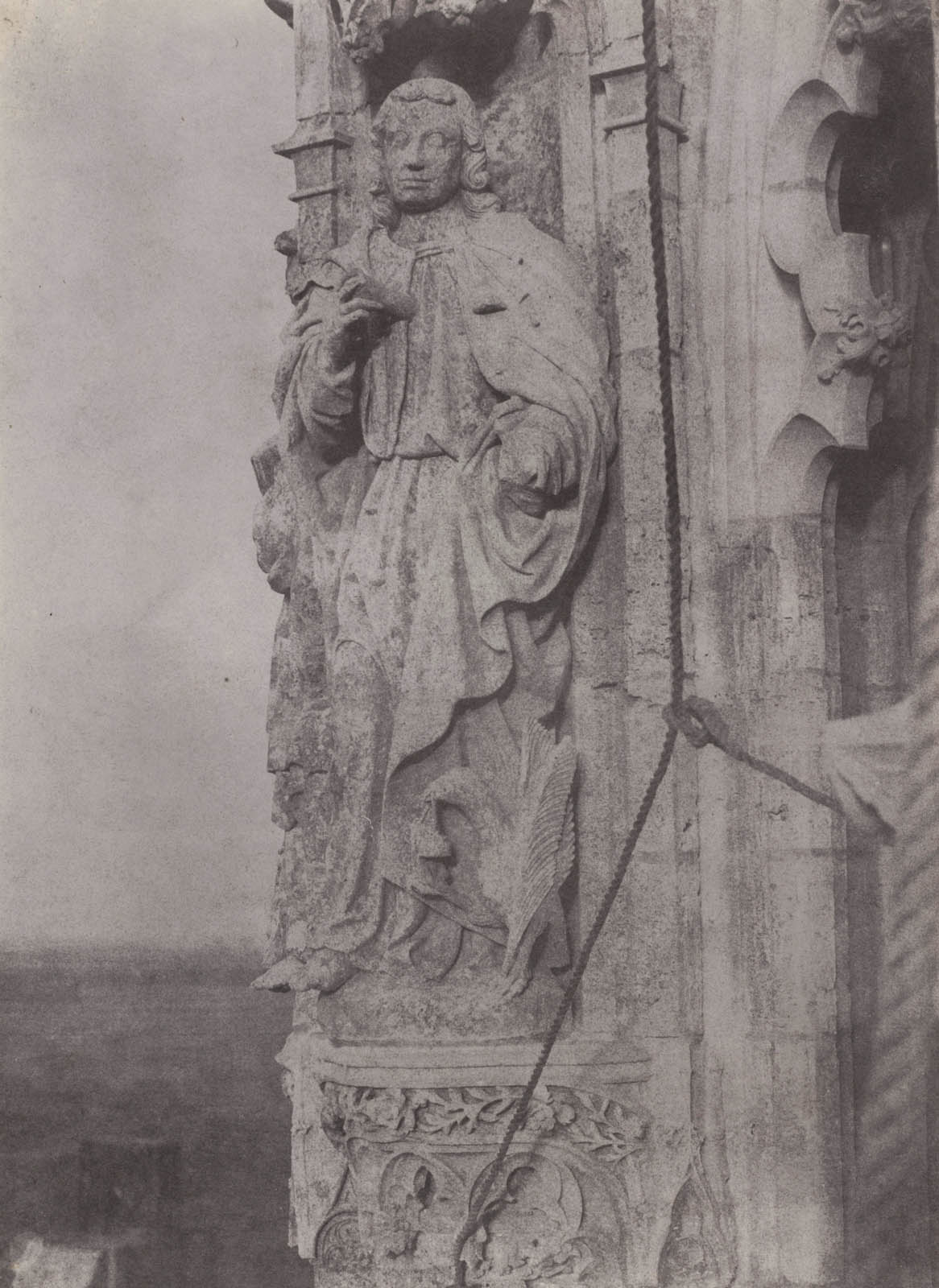
Charles Nègre (French, 1820-1880)
'Saint John the Evangelist, Chartres Cathedral' c. 1854


Charles Nègre (French, 1820-1880)
Saint John the Evangelist, Chartres Cathedral
c. 1854
Salted paper print from a paper negative
National Gallery of Art, Washington
Eugene L. and Marie-Louise Garbaty Fund, Pepita Milmore Memorial Fund and New Century Fund
Public domain


In 1851 the French government’s Commission des Monuments Historiques selected five photographers to document architectural treasures throughout the country. Nègre was not included, perhaps because he was a member of the opposition party, but he took it upon himself to photograph extensively in Marseilles, Arles, Avignon, and Aix-en-Provence in the early 1850s, and in 1854 he made many photographs of Chartres Cathedral.
Nègre applied his growing understanding of light, shadow, line, and form in Saint John the Evangelist, Chartres Cathedral, and the photograph beautifully illustrates his willingness to sacrifice “a few details,” as he wrote, to capture “an imposing effect.” In addition, unlike photographers associated with the Commission des Monuments Historiques, who were asked to provide general studies of a building’s façade, Nègre was free to explore more unusual views. The statue of Saint John the Evangelist is situated high in the north spire of Chartres, several feet above a nearby balcony. Although difficult to see and even harder for Nègre to record (he most likely perched his camera on a platform), the view in his photograph succinctly captured what he called the cathedral’s “real character” and “preserved the poetic charm that surrounded it.”

Text from the National Gallery of Art website


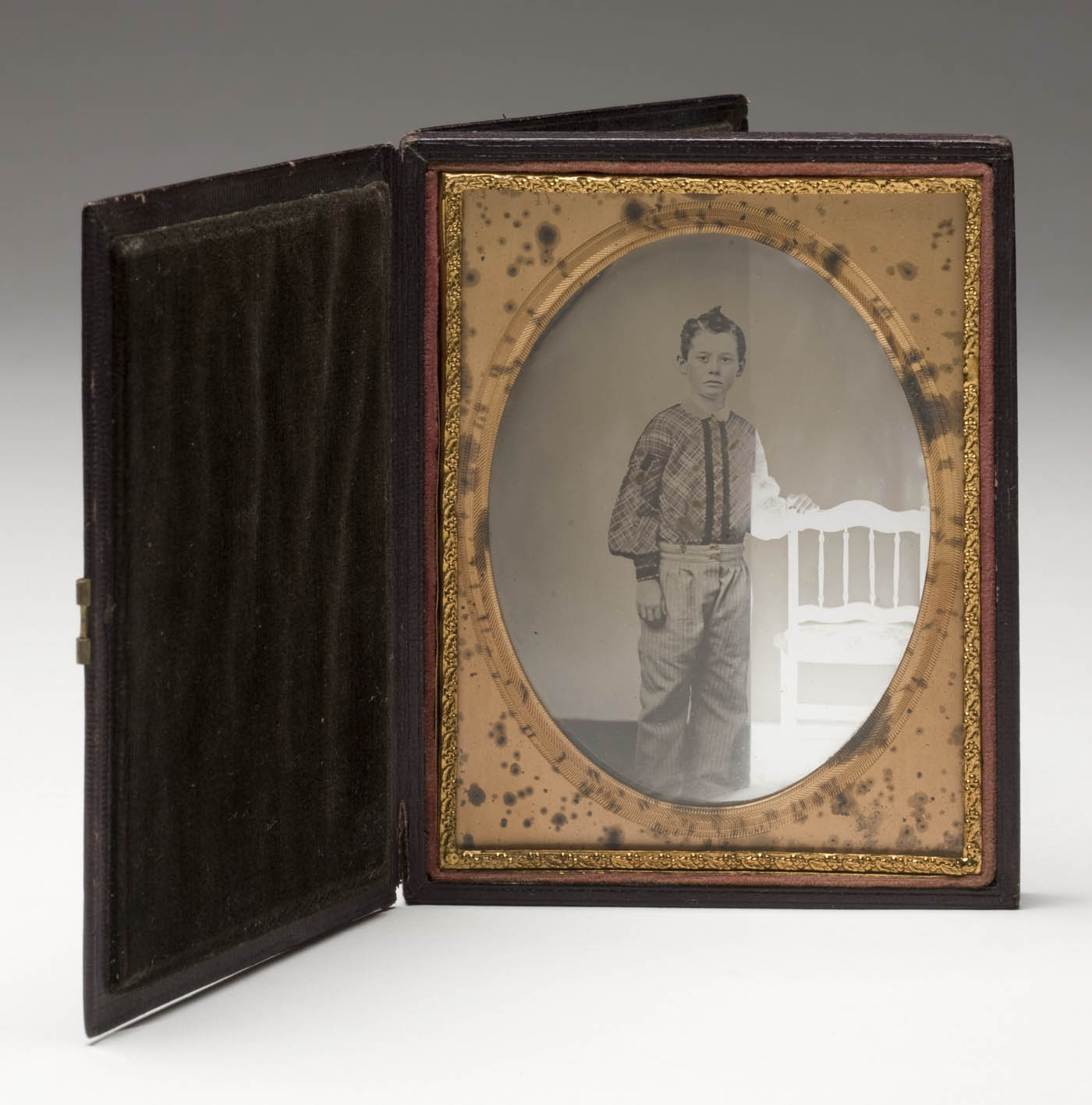
Unknown photographer (American 19th Century) 'George E. Lane, Jr.' c. 1855


Unknown photographer (American 19th Century)
George E. Lane, Jr.
c. 1855
Ambrotype
National Gallery of Art, Washington
Gift of Kathleen, Melissa, and Pamela Stegeman
Public domain


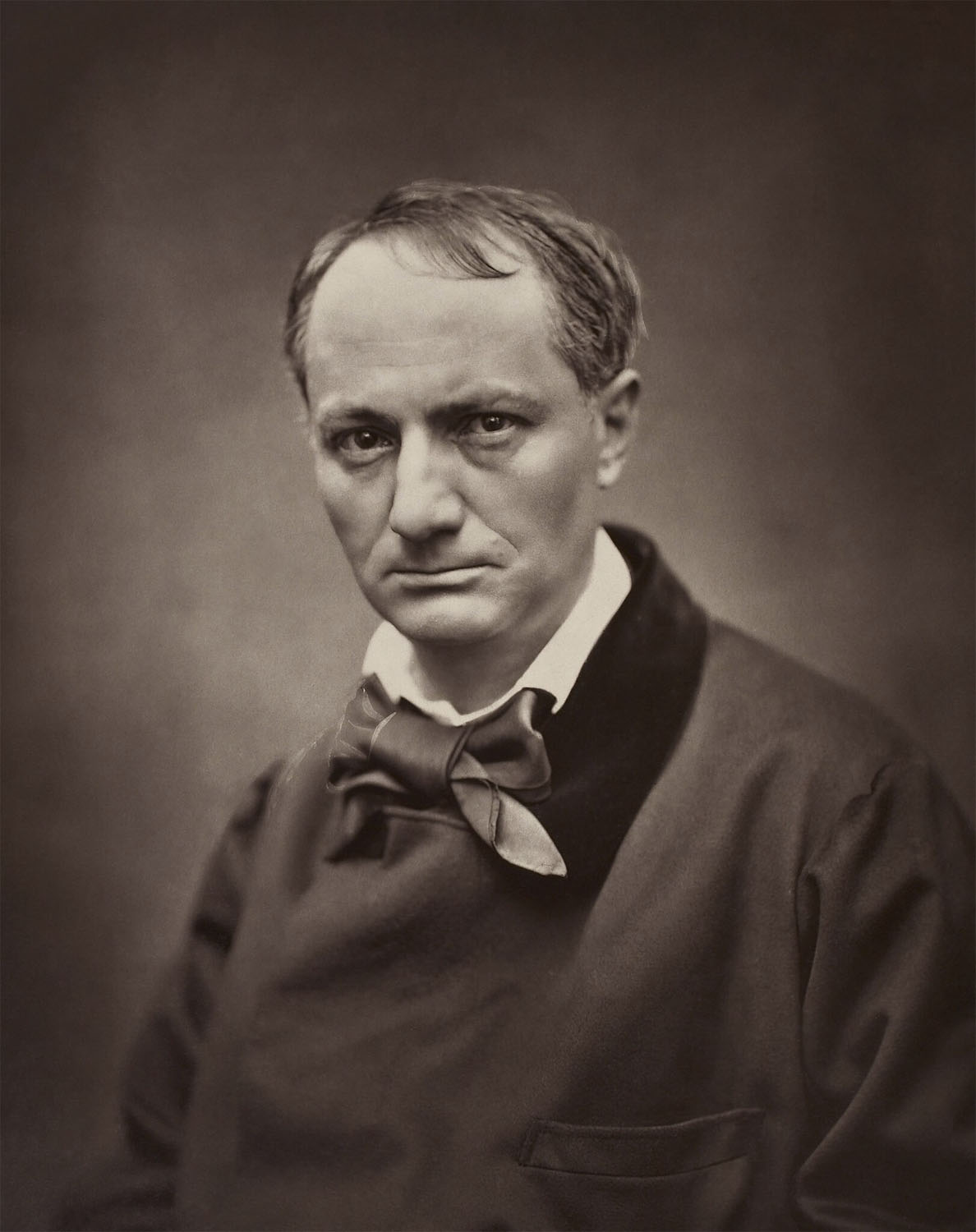
Étienne Carjat (French, 1828-1906)
'Charles Baudelaire' 1861, printed 1877


Étienne Carjat (French, 1828-1906)
Charles Baudelaire
1861, printed 1877
Woodburytype
National Gallery of Art, Washington
Gift of Jacob Kainen
Public domain


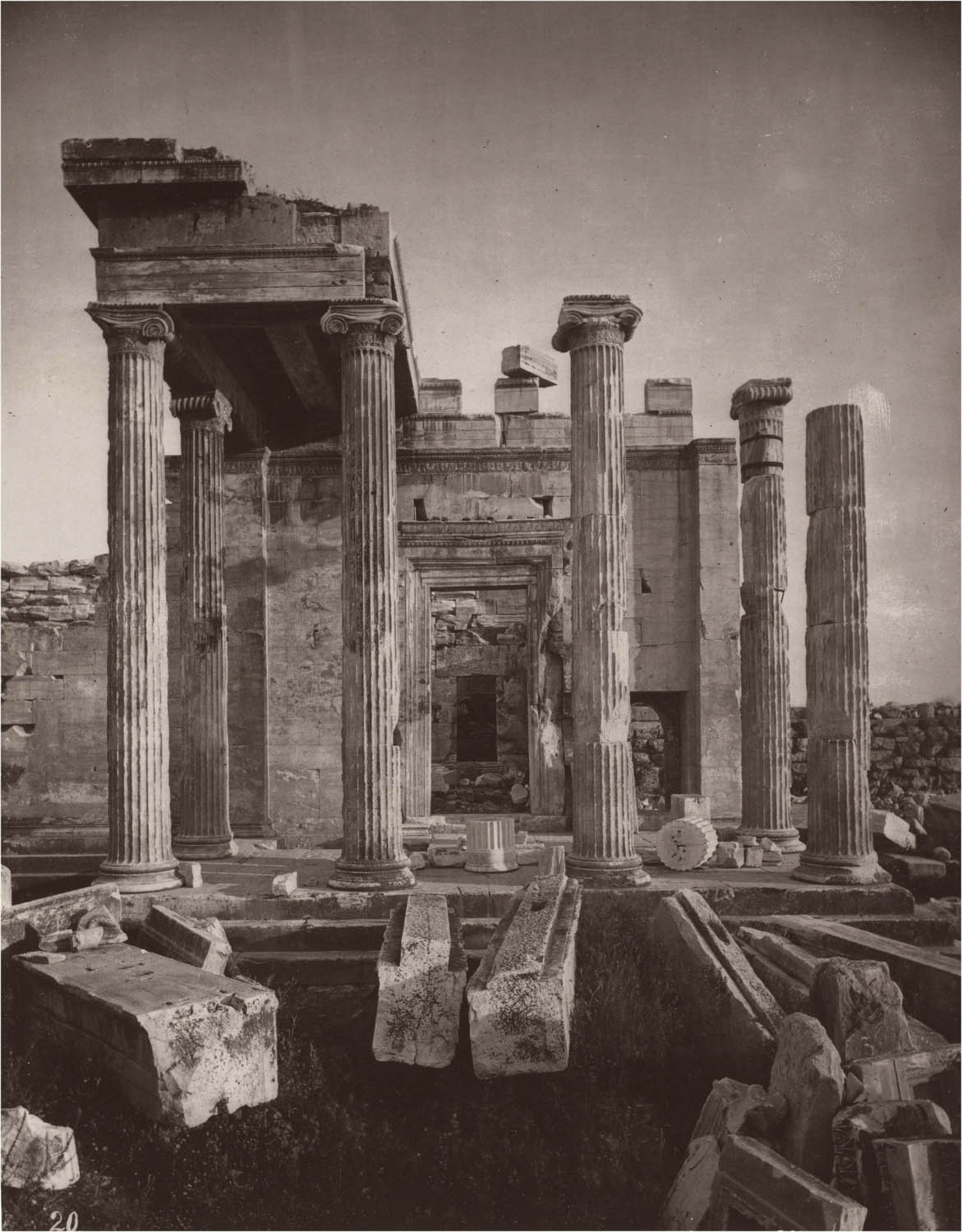
William James Stillman (American, 1828-1901) 'The Acropolis of Athens'
1869/1870


William James Stillman (American, 1828-1901)
The Acropolis of Athens
1869/1870
Carbon print
National Gallery of Art, Washington
Horace W. Goldsmith Foundation through Robert and Joyce Menschel


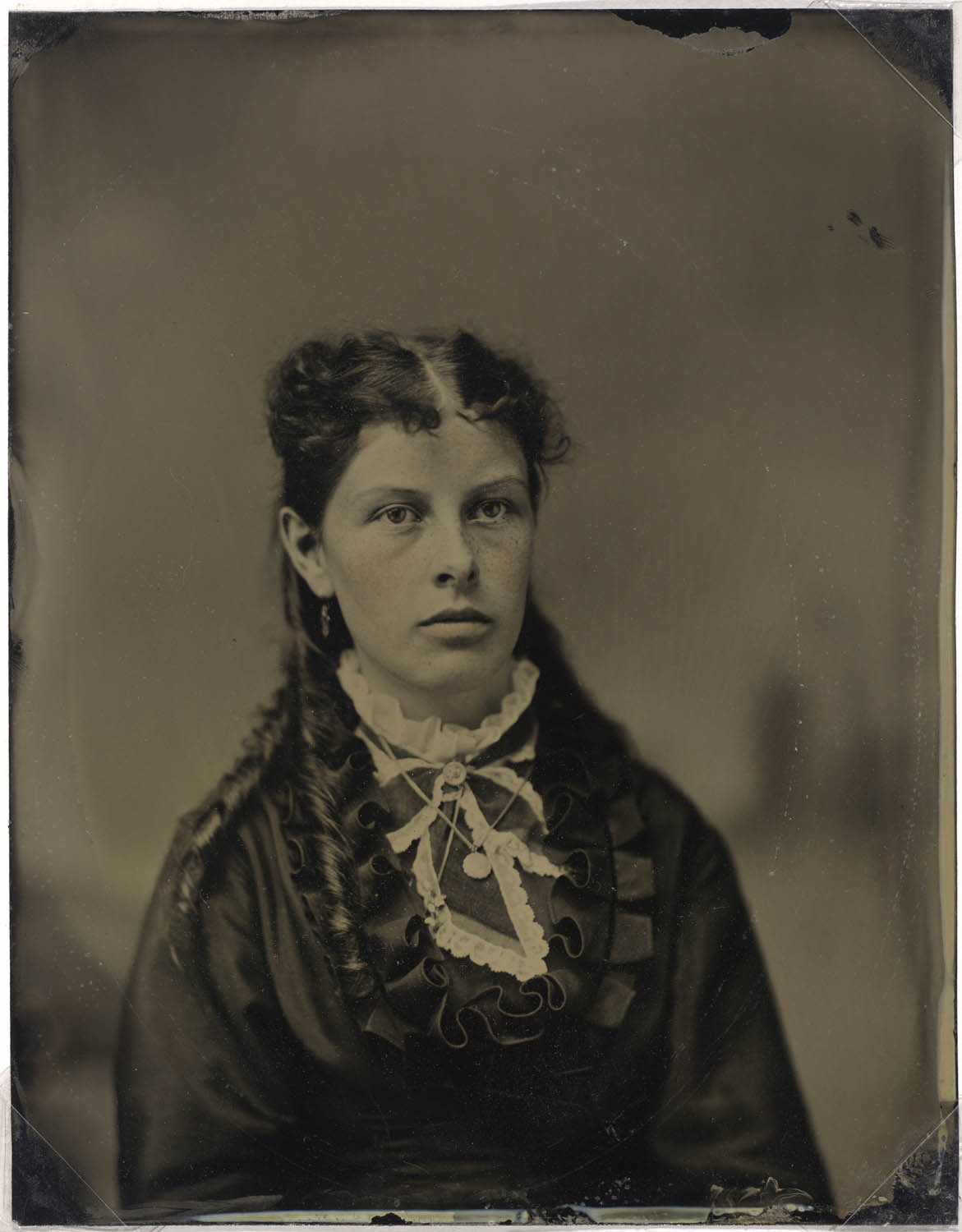
J.G. Ellinwood (American, 1844-1924) 'Portrait of a Woman' c. 1870


J.G. Ellinwood (American, 1844-1924)
Portrait of a Woman
c. 1870
Tintype, hand-coloured
National Gallery of Art, Washington
Mary and Dan Solomon Fund


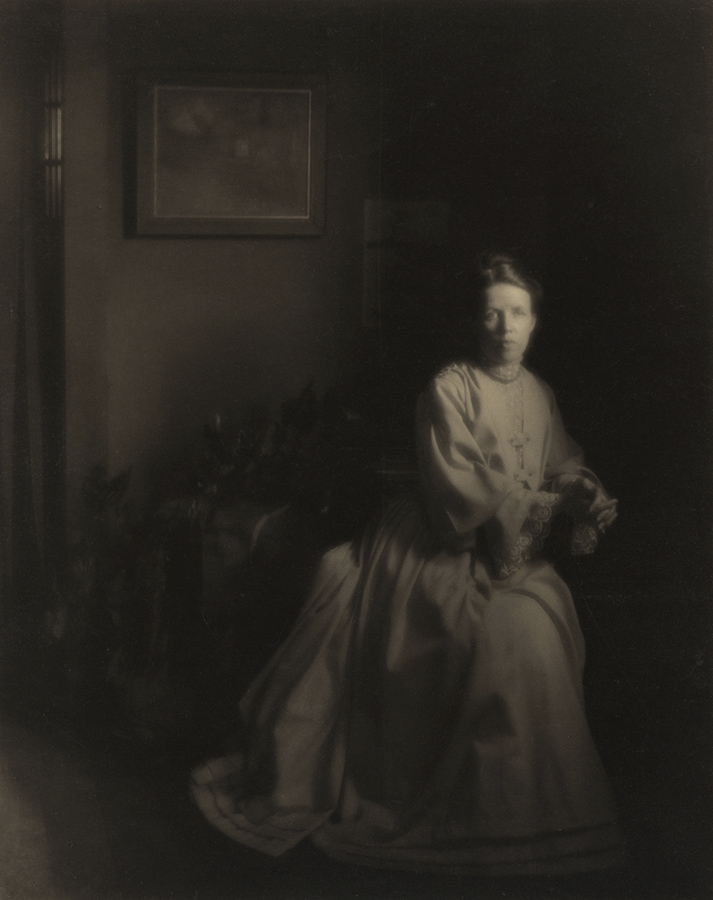
Clarence White (American, 1871-1925) 'Mrs. White - In the Studio' 1907


Clarence White (American, 1871-1925)
Mrs. White – In the Studio
1907
platinum print
National Gallery of Art, Washington
Horace W. Goldsmith Foundation through Robert and Joyce Menschel and R.K. Mellon Family Foundation Fund


Karl Struss (American, 1886-1981) 'Columbia University, Night' 1910


Karl Struss (American, 1886-1981)
Columbia University, Night
1910
Gum dichromate over platinum print
Image: 24.1 × 19.9cm (9 1/2 × 7 13/16 in.)
National Gallery of Art, Washington
Horace W. Goldsmith Foundation through Robert and Joyce Menschel


Laura Gilpin (American, 1891-1979) 'Ghost Rock, Colorado Springs' 1919


Laura Gilpin (American, 1891-1979)
Ghost Rock, Colorado Springs
1919
Platinum print
24.2 x 19.1cm (9 1/2 x 7 1/2 in.)
National Gallery of Art, Washington
Marvin Breckinridge Patterson Fund
© 1979 Amon Carter Museum, Fort Worth, Texas


László Moholy-Nagy (Hungarian, 1895-1946) 'Untitled (Positive)' c. 1922-1924


László Moholy-Nagy (Hungarian, 1895-1946)
Untitled (Positive)
c. 1922-1924
gelatin silver print
National Gallery of Art, Washington
Gift of The Circle of the National Gallery of Art


László Moholy-Nagy (Hungarian, 1895-1946) 'Untitled' c. 1922-1924


László Moholy-Nagy (Hungarian, 1895-1946)
Untitled
c. 1922-1924
gelatin silver print
National Gallery of Art, Washington
New Century Fund


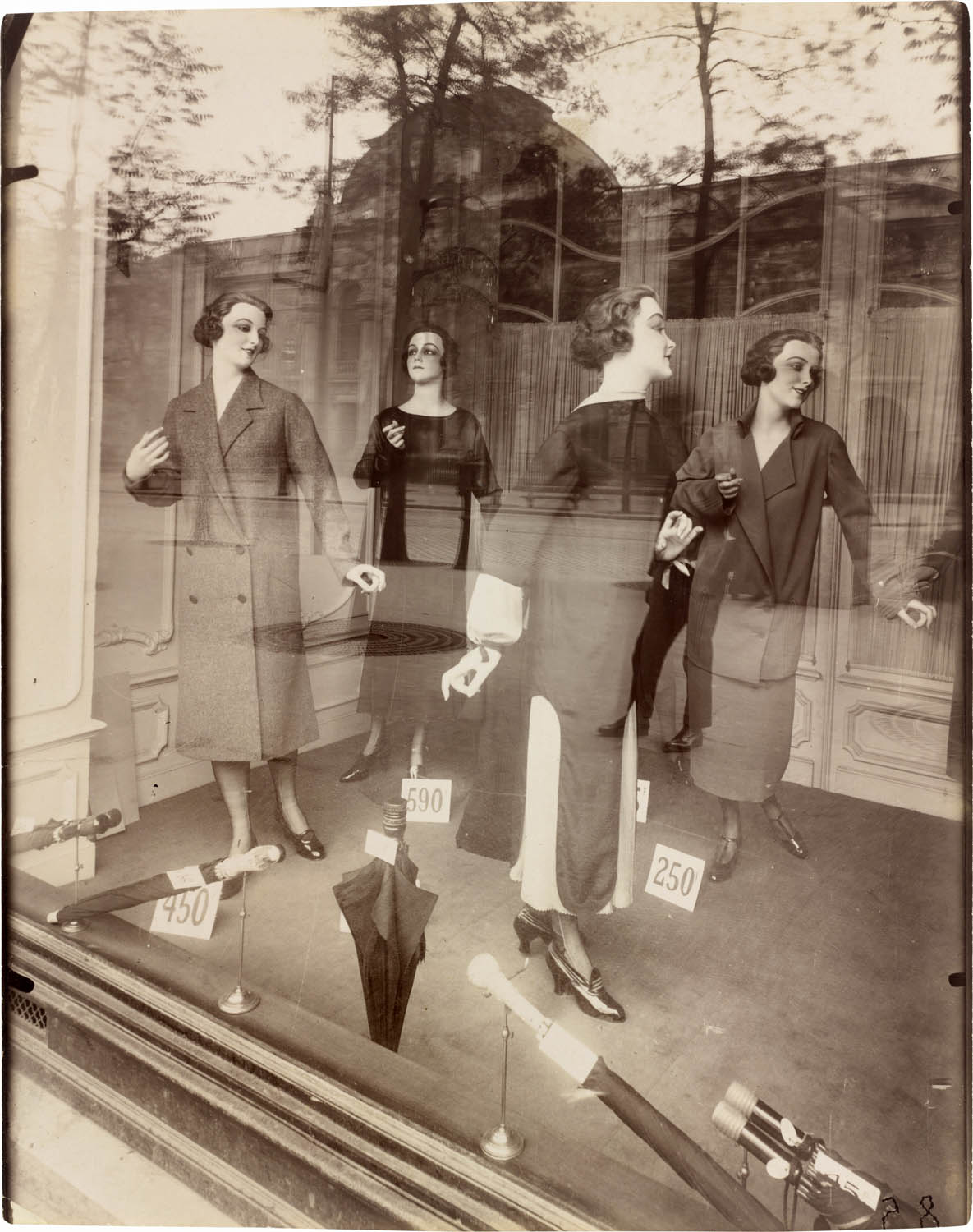
Eugène Atget (French, 1857-1927)
'Magasin, Avenue des Gobelins' 1925


Eugène Atget (French, 1857-1927)
Magasin, Avenue des Gobelins
1925
gelatin silver print, printed-out
National Gallery of Art, Washington
Patrons’ Permanent Fund
Public domain


Aleksandr Rodchenko (Russian, 1891-1956) 'Pioneer with a Bugle' 1930


Aleksandr Rodchenko (Russian, 1891-1956)
Pioneer with a Bugle
1930
Gelatin silver print
National Gallery of Art, Washington
Patrons’ Permanent Fund
 

Sid Grossman (American, 1913-1955) 'San Gennaro Festival, New York City' 1948


Sid Grossman (American, 1913-1955)
San Gennaro Festival, New York City
1948
gelatin silver print
National Gallery of Art, Washington
Anonymous Gift


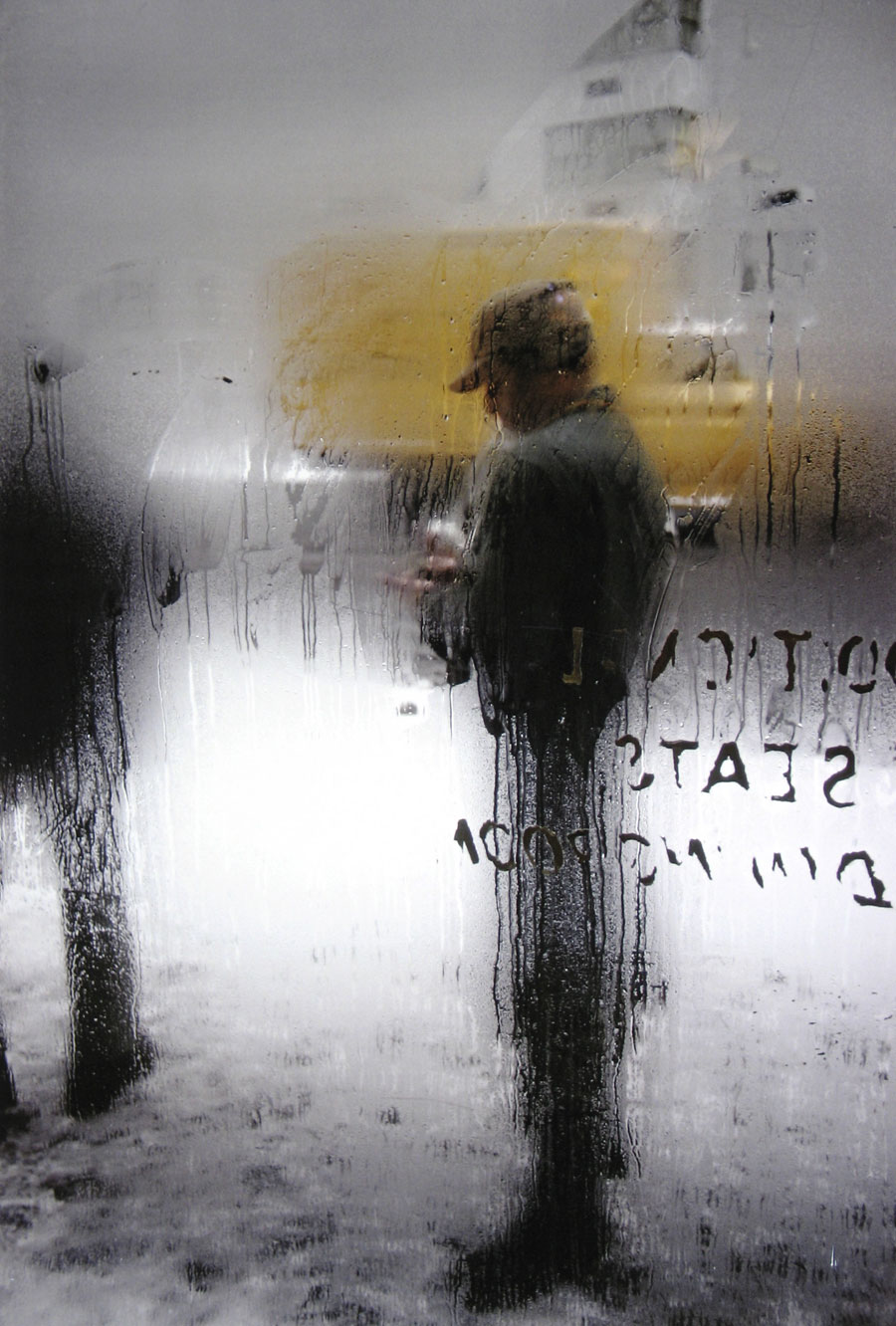
Saul Leiter (American, 1923-2013) 'Snow' 1960


Saul Leiter (American, 1923-2013)
Snow
1960, printed 2005
Chromogenic colour print
National Gallery of Art, Washington
Gift of Saul Leiter


Diane Arbus (American, 1923-1971) 'A young man in curlers at home on West 20th Street, N.Y.C. 1966' 1966


Diane Arbus (American, 1923-1971)
A Young Man in Curlers at Home on West 20th Street, N.Y.C., 1966
1966
Gelatin silver print
National Gallery of Art, Washington
Gift of the Collectors Committee


The extraordinary range and complexity of the photographic process is explored, from the origins of the medium in the 1840s up to the advent of digital photography at the end of the 20th century, in a comprehensive exhibition and its accompanying guidebook at the National Gallery of Art, Washington. On view in the West Building, from October 25, 2009 through March 14, 2010, In the Darkroom: Photographic Processes Before the Digital Age chronicles the major technological developments in the 170-year history of photography and presents the virtuosity of the medium’s practitioners. Drawn from the Gallery’s permanent collection are some 90 photographs – ranging from William Henry Fox Talbot’s images of the 1840s to Andy Warhol’s Polaroid prints of the 1980s.

“In the Darkroom and the accompanying guidebook provide a valuable overview of the medium as well as an introduction to the most commonly used photographic processes from its earliest days,” said Earl A. Powell III, director, National Gallery of Art.

In the Darkroom

Organised chronologically, the exhibition opens with Lace (1839-1844), a photogenic drawing by William Henry Fox Talbot. Made without the aid of a camera, the image was produced by placing a swath of lace onto a sheet of sensitised paper and then exposing it to light to yield a tonally reversed image.

Talbot’s greatest achievement – the invention of the first negative-positive photographic process – is also celebrated in this section with paper negatives by Charles Nègre and Baron Louis-Adolphe Humbert de Molard as well as salted paper prints made from paper negatives by Nègre, partners David Octavius Hill and Robert Adamson, and others.

The daguerreotype, the first publicly introduced photographic process and the most popular form of photography during the medium’s first decade, is represented by a selection of British and American works, including an exquisite large-plate work by the American photographers Albert Sands Southworth and Josiah Johnson Hawes (see photograph above). By the mid-1850s, the daguerreotype’s popularity was eclipsed by two new processes, the ambrotype and the tintype. These portable photographs on glass or metal were relatively inexpensive to produce and were especially popular for portraiture.

The year 1851 marked a turning point in photographic history with the introduction of the collodion negative on glass and the albumen print process. Most often paired together, this negative-print combination yielded lustrous prints with a subtle gradation of tones from dark to light and became the most common form of photography in the 19th century, seen here in works by Julia Margaret Cameron, Roger Fenton, and Gustave Le Gray.

Near the turn of the 20th century, a number of new, complex print processes emerged, such as platinum and palladium, gum dichromate, and bromoil. Often requiring significant manipulation by the hand of the artist, these processes were favoured by photographers such as Gertrude Käsebier, Alfred Stieglitz, and Edward Weston.

One of the most significant developments of the late 19th century was the introduction of gelatin into photographic processes, which led to the invention of the film negative and the gelatin silver print. These became the standard for 20th-century black-and-white photography. A chronological selection of gelatin silver prints, including a contact print made by André Kertész in 1912; a grainy, blurred image of Little Italy’s San Gennaro festival at night by Sid Grossman from 1948 (see photograph above); and a coolly precise industrial landscape by Frank Gohlke from 1975, reveals how the introduction of the film negative and changes in the gelatin silver print process profoundly shaped the direction of modern photography. This section also explores the development of ink-based, photomechanical processes such as photogravure, Woodburytype, and halftone that enabled the large-scale, high-quality reproduction of photographs in books and magazines.
The final section of the exhibition explores the rise of colour photography in the 20th century. Although the introduction of chromogenic colour processes made colour photography commercially viable by the 1930s, it was not widely employed by artists until the 1970s. The exhibition celebrates the pioneers of colour photography, including Harry Callahan and William Eggleston, who made exceptional work using the complicated dye transfer process. The exhibition also explores the range of processes developed by the Polaroid Corporation that provided instant gratification to the user, from Andy Warhol’s small SX-70 prints to the large-scale Polaroid prints represented by the work of contemporary photographer David Levinthal.
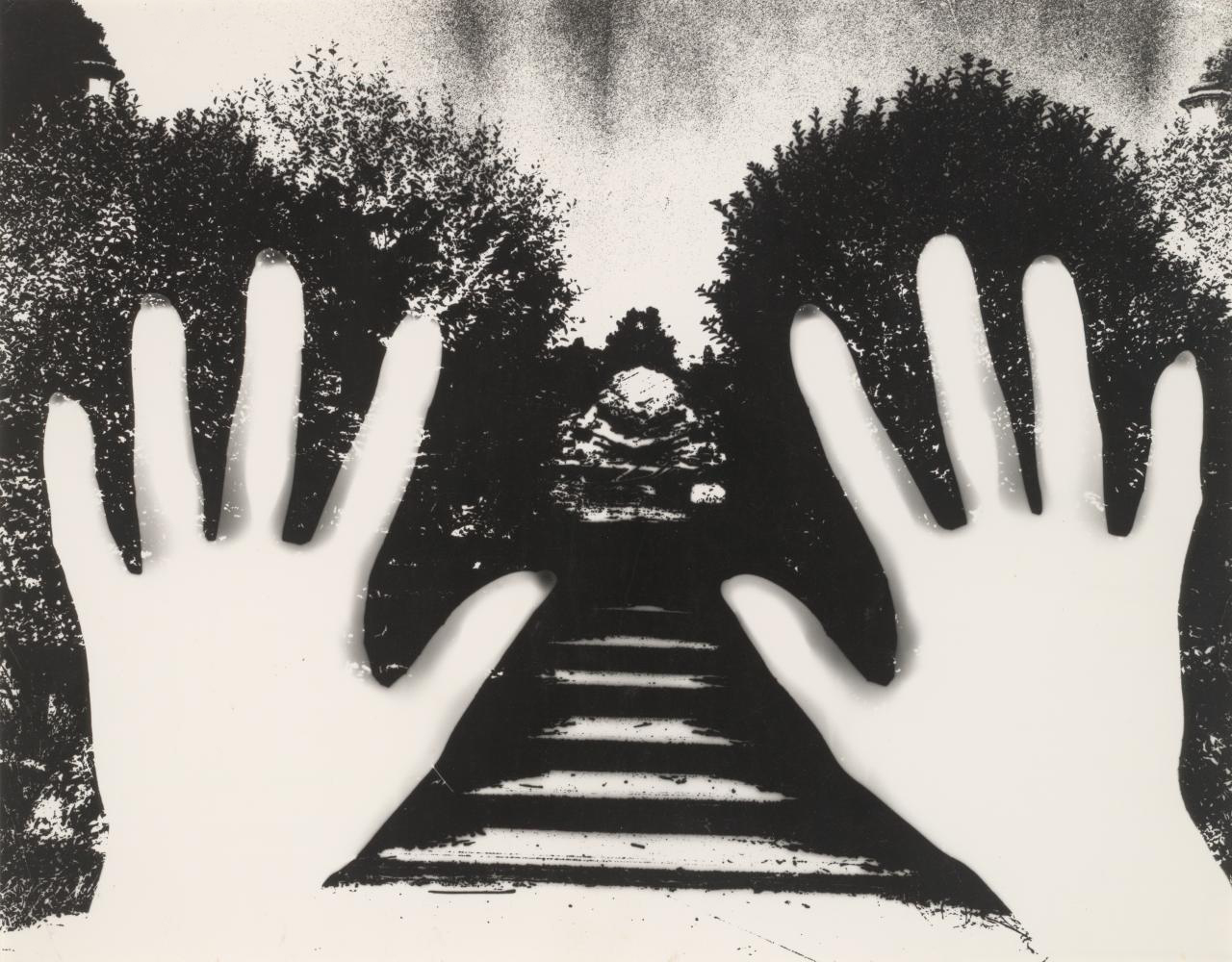
Press release from the National Gallery of Art website [Online] Cited 15/02/2010 no longer available online


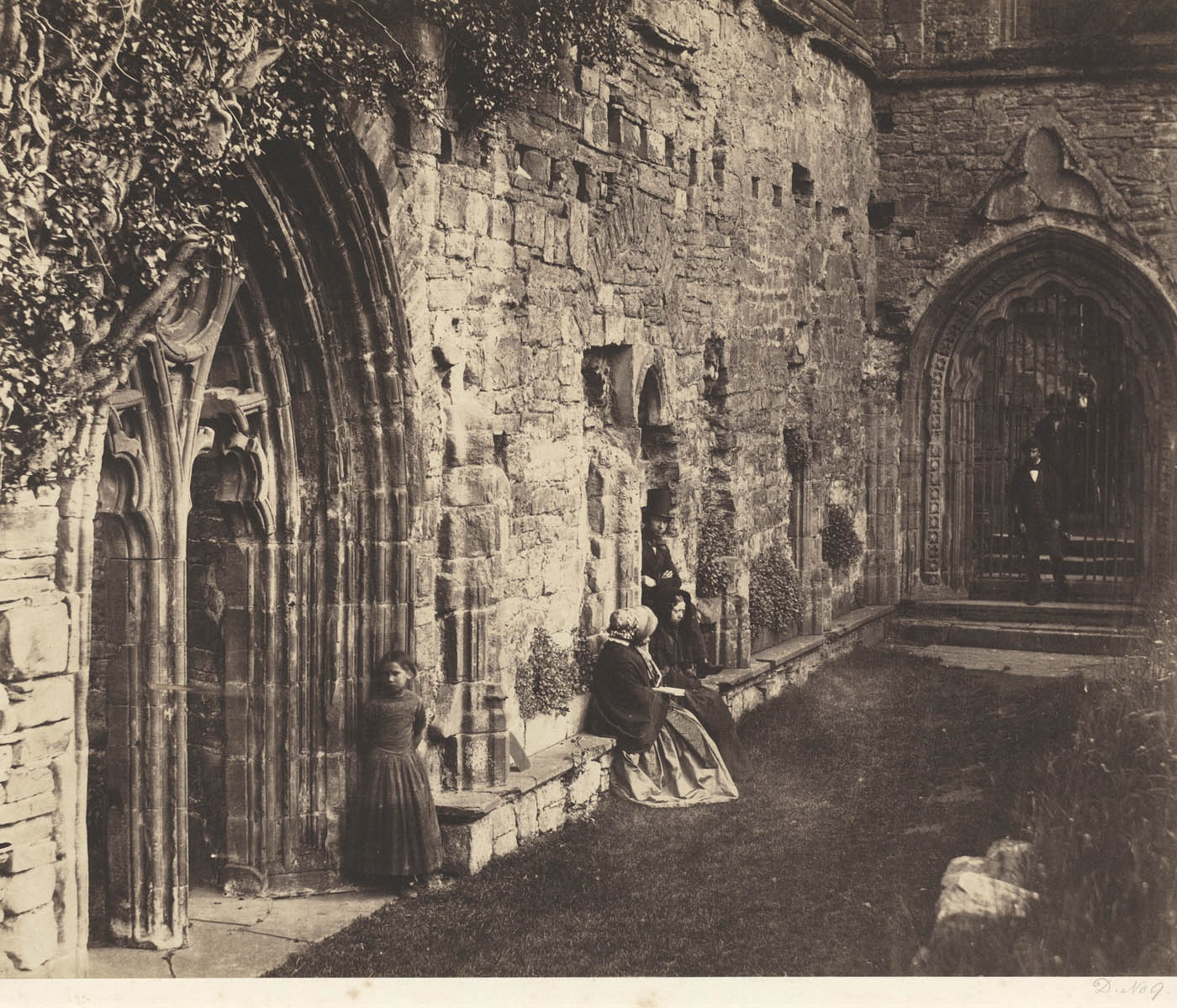
Roger Fenton (British, 1819-1869) 'The Cloisters, Tintern Abbey' 1854  from the exhibition 'In the Darkroom: Photographic Processes before the Digital Age' at the National Gallery of Art, Washington, D.C., October 2009 - March, 2010


Roger Fenton (British, 1819-1869)
The Cloisters, Tintern Abbey
1854
Salted paper print from a collodion negative
18.3 x 22.1cm (7 3/16 x 8 11/16 in.)
National Gallery of Art, Washington
Horace W. Goldsmith Foundation through Robert and Joyce Menschel
Public domain


Although Roger Fenton’s photographic career lasted for only 11 years, he exerted a profound influence on the medium. Trained as a lawyer, he began to paint in the early 1840s, studying in Paris with Michel-Martin Drölling and later in London with Charles Lucy. But in 1851 he took up photography and produced a distinguished and varied body of work. He was a pivotal figure in the formation of the Photographic Society (later known as the Royal Photographic Society), garnering support from Queen Victoria and Prince Albert. He is best known for his 1855 photographs made during the Crimean War, among the first to document war. But he also made ambitious studies of English cathedrals, country houses, and landscapes as well as portraits of the royal family, a series of still lifes, and studies of figures in Asian costume.

When Fenton first began to make photographs, he generally posed figures in a fairly stiff, even anecdotal manner. But in 1854 he began to use figures to create a sense of tension at once intriguing and compelling. The Cloisters, Tintern Abbey shows this more dynamic approach. Fenton placed people in three groups, not interacting with one another but engaging in silent and solitary dialogue with their decaying surroundings. Tintern Abbey had, of course, inspired many artists and poets to reflect on both “the life of things” – as William Wordsworth wrote in his 1798 poem, “Lines Composed a Few Miles above Tintern Abbey” – and on the transitory nature of life itself.

Text from the National Gallery of Art website


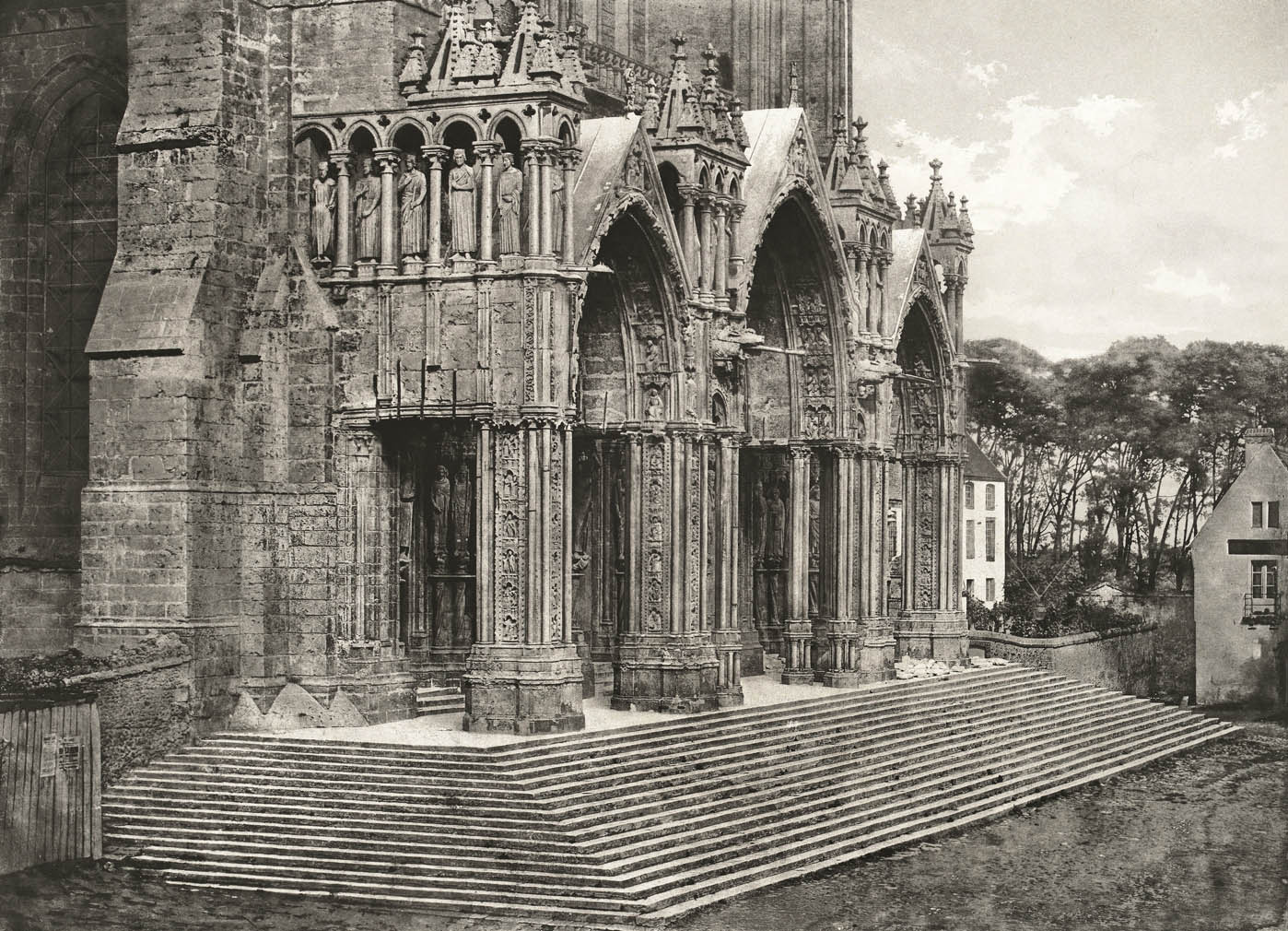
Charles Nègre (French, 1820-1880)
'Cathédrale de Chartres - Portique du Midi XIIe Siècle (Chartres Cathedral, South Portal, 12th Century)' c. 1854, printed c. 1857


Charles Nègre (French, 1820-1880)
Cathédrale de Chartres – Portique du Midi XIIe Siècle (Chartres Cathedral, South Portal, 12th Century)
c. 1854, printed c. 1857
photogravure
National Gallery of Art, Washington
William and Sarah Walton Fund


Roger Fenton (British, 1819-1869)
'Fruit and Flowers' 1860


Roger Fenton (British, 1819-1869)
Fruit and Flowers
1860
Albumen print from a collodion negative
National Gallery of Art, Washington
Paul Mellon Fund
public domain


In the summer of 1860 Fenton made his most deliberate and exacting photographs to date: a series of still lifes. Although the subject obviously had its roots in painting, his densely packed compositions are far removed from the renditions of everyday life by the Dutch masters. Instead, Fenton extravagantly piled luscious fruits and intricately patterned flowers on top of one another and pushed them to the front of his composition so that they seem almost ready to tumble out of the photograph into the viewer’s space. It is that very immediacy – the precarious composition, the lush sensuousness of the objects, and our knowledge of their imminent decay – that makes these photographs so striking.

Text from the National Gallery of Art website


Gustave Le Gray (French, 1820-1884) 'Cavalry Maneuvers behind barrier, Camp de Châlons' 1857


Gustave Le Gray (French, 1820-1884)
Cavalry Maneuvers behind barrier, Camp de Châlons
1857
Albumen silver print from glass negative
National Gallery of Art, Washington


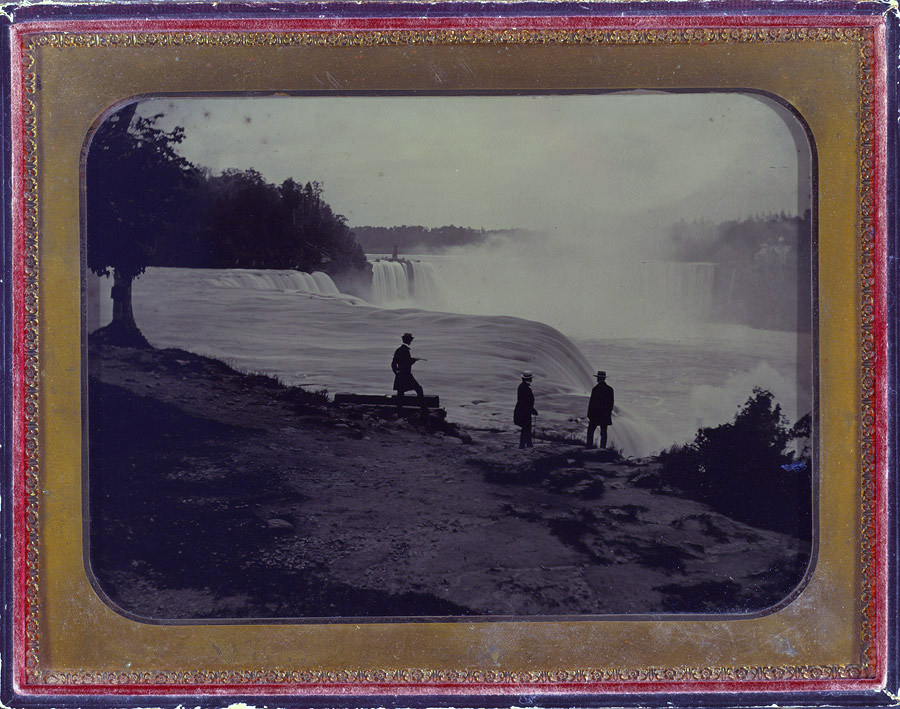
Platt D. Babbitt (American, 1822-1879) 'Niagara Falls' c. 1860


Platt D. Babbitt (American, 1822-1879)
Niagara Falls
c. 1860
Ambrotype
National Gallery of Art, Washington
Vital Projects Fund


Alfred Stieglitz (American, 1864-1946) 'The Terminal' 1893


Alfred Stieglitz (American, 1864-1946)
The Terminal
1893, printed 1920s/1930s
Gelatin silver print
National Gallery of Art, Washington
Alfred Stieglitz Collection


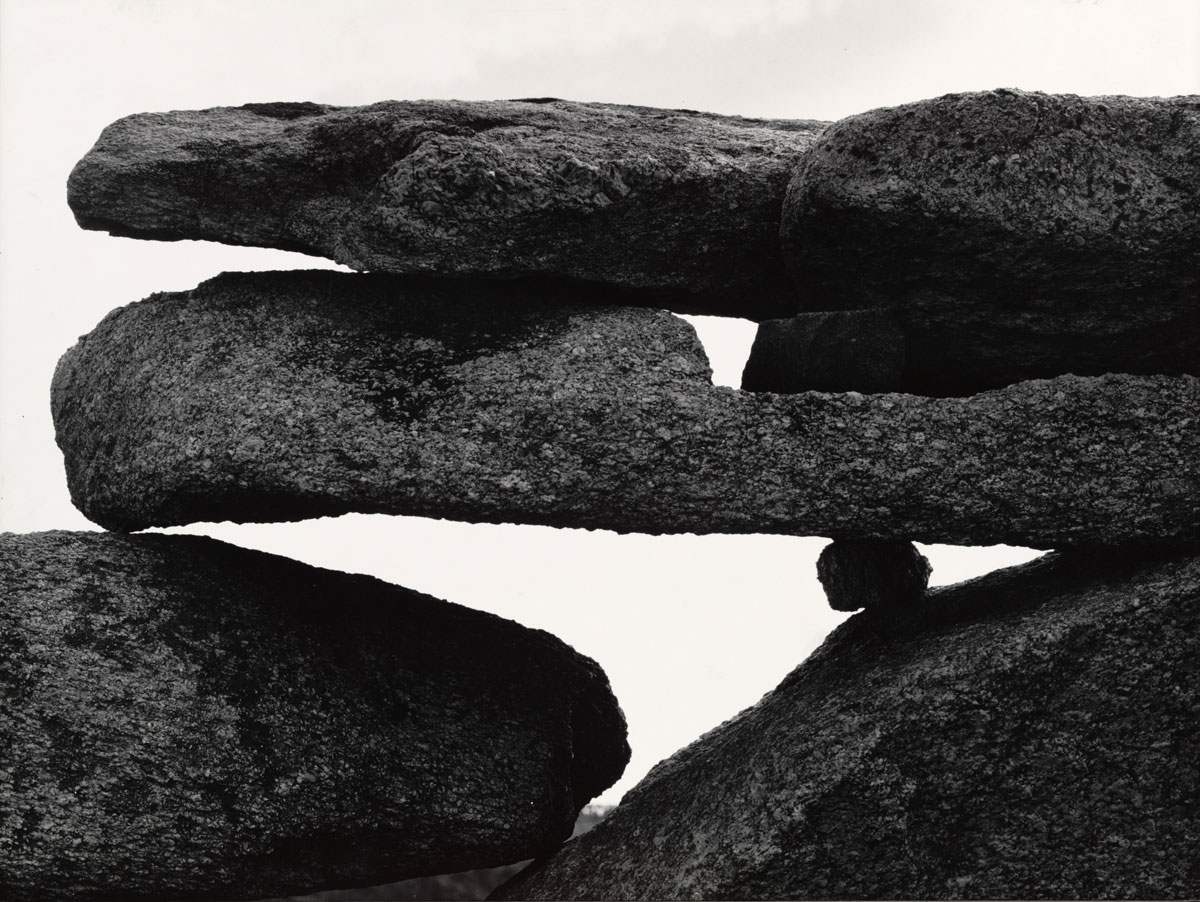
Aaron Siskind (American, 1903-1991) 'Martha's Vineyard 108' 1954


Aaron Siskind (American, 1903-1991)
Martha’s Vineyard 108
1954
Gelatin silver print
National Gallery of Art, Washington
Diana and Mallory Walker Fund


Dave Heath (Canadian, born United States, 1931-2016) 'Hastings-on-Hudson, New York' 1963


Dave Heath (Canadian, born United States, 1931-2016)
Hastings-on-Hudson, New York
1963
Gelatin silver print
National Gallery of Art, Washington
Gift of Howard Greenberg


William Eggleston (American, b. 1939) 'Untitled (Car in Parking Lot)' 1973


William Eggleston (American, b. 1939)
Untitled (Car in Parking Lot)
1973
Dye imbibition print
National Gallery of Art, Washington
Anonymous Gift


Harry Callahan (American, 1912-1999) 'Providence' 1977


Harry Callahan (American, 1912-1999)
Providence
1977
Dye transfer print


Robert Adams (American, b. 1937) 'Summer Nights #2 (Longmont, Colorado)' 1979


Robert Adams (American, b. 1937)
Summer Nights #2 (Longmont, Colorado)
1979
Gelatin silver print
National Gallery of Art, Washington
Gift of Mary and David Robinson


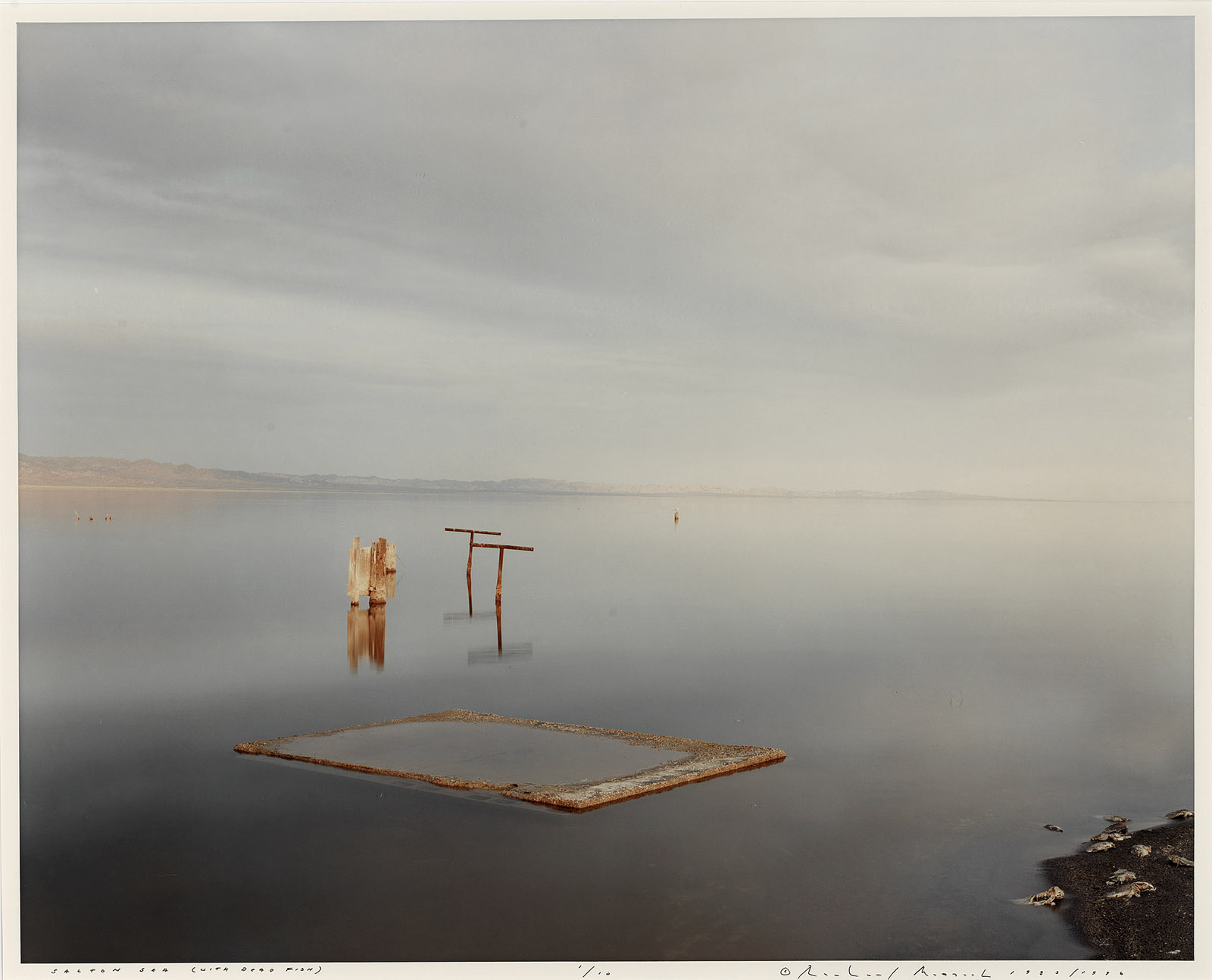
Richard Misrach (American, b. 1949)
'Dead Fish, Salton Sea, California' 1983, printed 1997


Richard Misrach (American, b. 1949)
Dead Fish, Salton Sea, California
1983, printed 1997
Chromogenic colour print
National Gallery of Art, Washington
Anonymous Gift


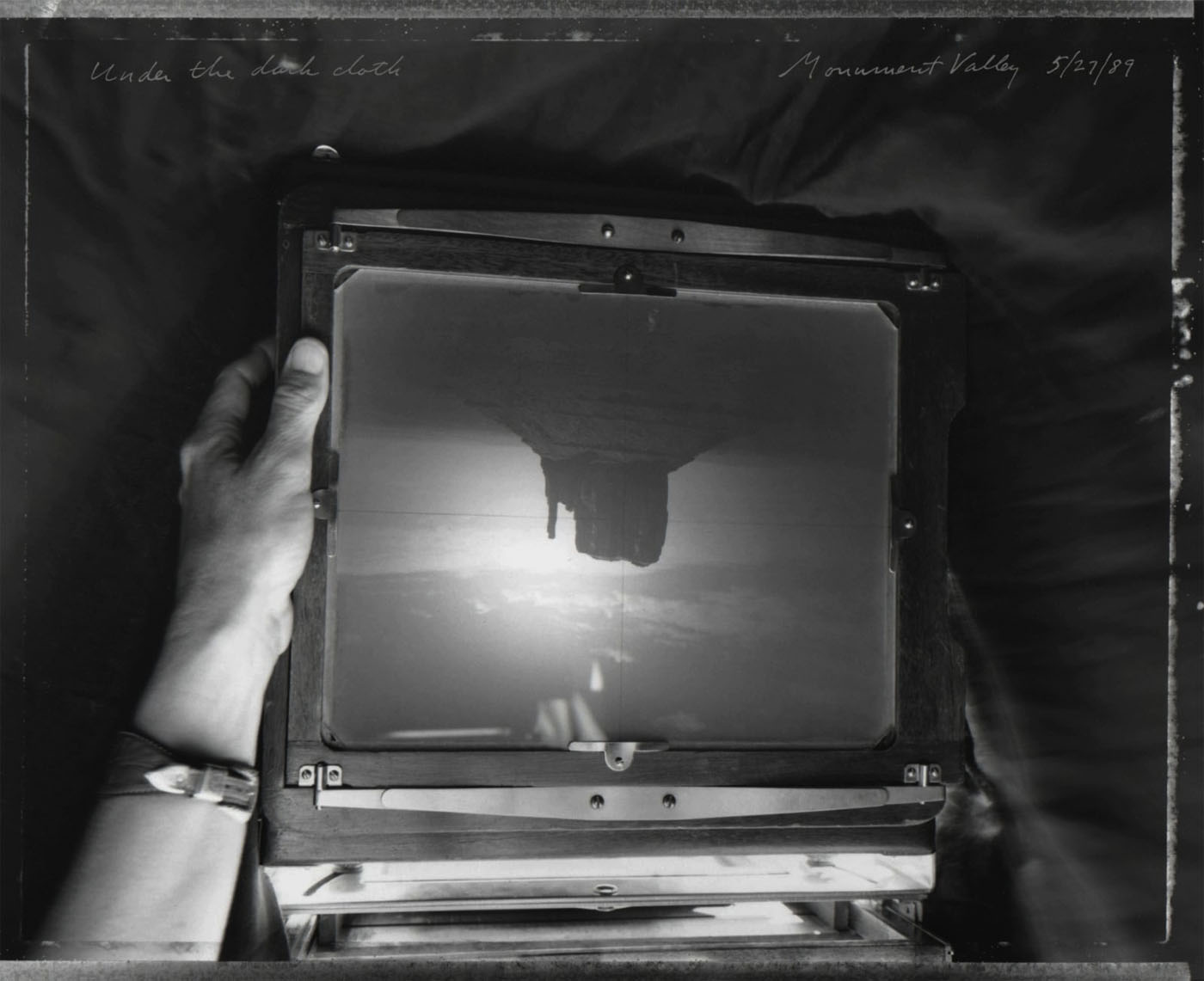
Mark Klett (American, b. 1952) 'Under the Dark Cloth, Monument Valley, May 27' 1989


Mark Klett (American, b. 1952)
Under the Dark Cloth, Monument Valley, May 27
1989
Gelatin silver print from Polaroid instant film negative
National Gallery of Art, Washington
Gift of the Collectors Committee


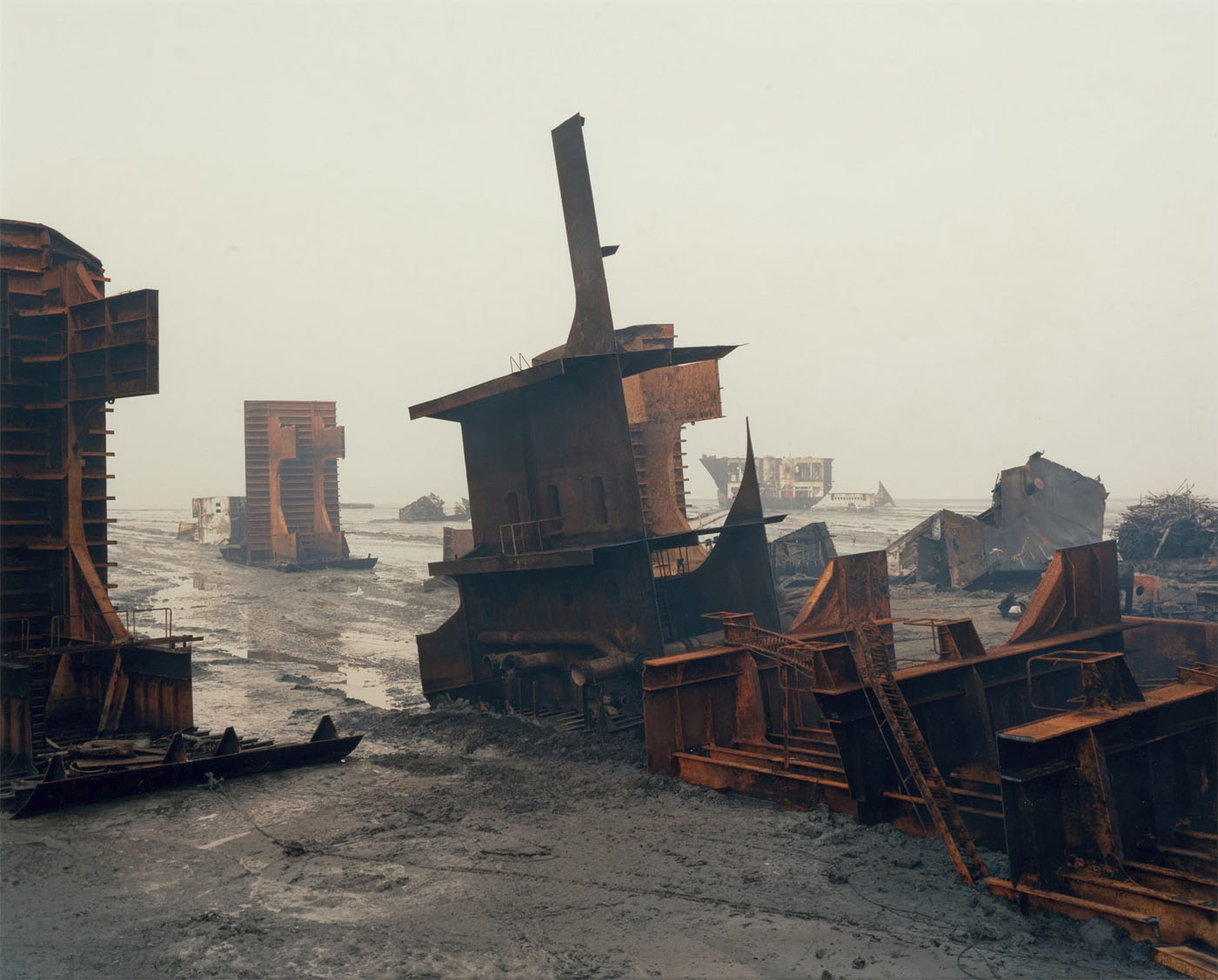
Edward Burtynsky (Canadian, b. 1955) 'Shipbreaking #10, Chittagong, Bangladesh' 2000, printed 2001


Edward Burtynsky (Canadian, b. 1955)
Shipbreaking #10, Chittagong, Bangladesh
2000, printed 2001
Chromogenic colour print
National Gallery of Art, Washington
Fund for Living Photographers


The National Gallery of Art, Washington, DC

The National Gallery of Art, located on the National Mall between 3rd and 7th Streets at Constitution Avenue NW.

Opening hours:
Daily 10.00am – 5.00pm

National Gallery of Art website

LIKE ART BLART ON FACEBOOK

Back to top

Exhibition: ‘László Moholy-Nagy 
Retrospective’ at Schirn Kunsthalle, Frankfurt

Exhibition dates: 8th October, 2009 – 7th February, 2010


All images are featured in the exhibition. Many thankx to the Schirn Kunsthalle for allowing me to publish the photographs in the posting. Please click on the photographs for a larger version of the image.

Marcus


László Moholy-Nagy (Hungarian, 1895-1946) 'LIS' 1922 from the exhibition 'László Moholy-Nagy 
Retrospective' at Schirn Kunsthalle, Frankfurt, October 2009 - February 2010


László Moholy-Nagy (Hungarian, 1895-1946)
LIS
1922
Oil on canvas
131 x 100cm
Courtesy Kunsthaus Zürich
© VG Bild-Kunst, Bonn 2009


László Moholy-Nagy (Hungarian, 1895-1946) 'K XVII' 1923 from the exhibition 'László Moholy-Nagy 
Retrospective' at Schirn Kunsthalle, Frankfurt, October 2009 - February 2010


László Moholy-Nagy (Hungarian, 1895-1946)
K XVII
1923
Oil on canvas
95 x 75cm
Courtesy Kunsthalle Bielefeld
Photo: Axel Struwe, Fotodesign BFF, Bielefeld
© VG Bild-Kunst, Bonn 2009


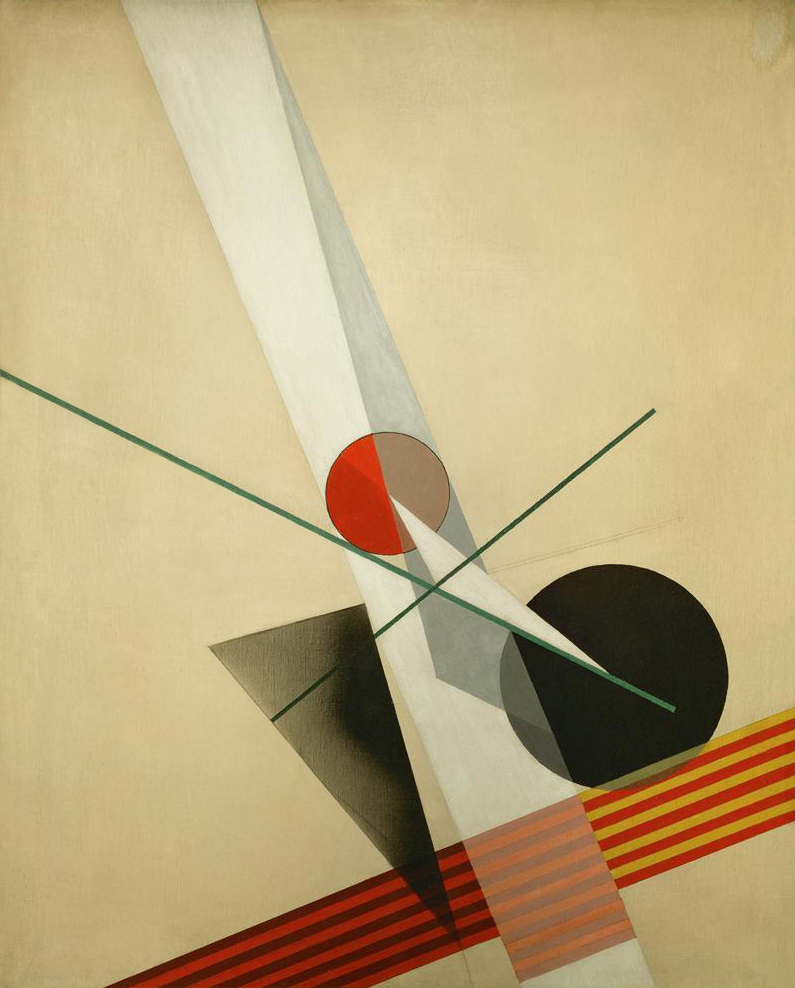
László Moholy-Nagy (Hungarian, 1895-1946) 'COMPOSITION A XXI' 1925


László Moholy-Nagy (Hungarian, 1895-1946)
COMPOSITION A XXI
1925
Oil on canvas
96 x 77cm
Courtesy LWL-Landesmuseum für Kunst und Kulturgeschichte, Münster
Photo: LWL-Landesmuseum für Kunst und Kulturgeschichte, Münster/Rudolf Wakonigg
© VG Bild-Kunst, Bonn 2009


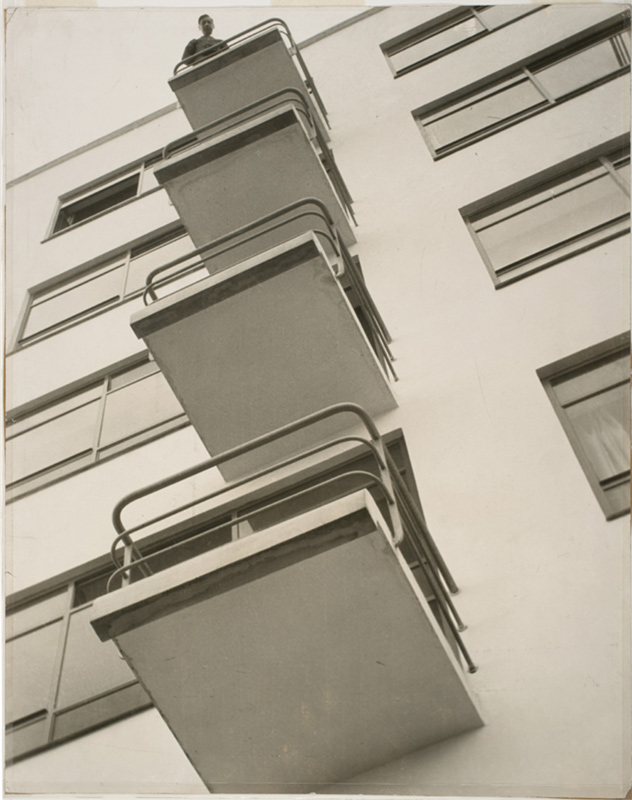
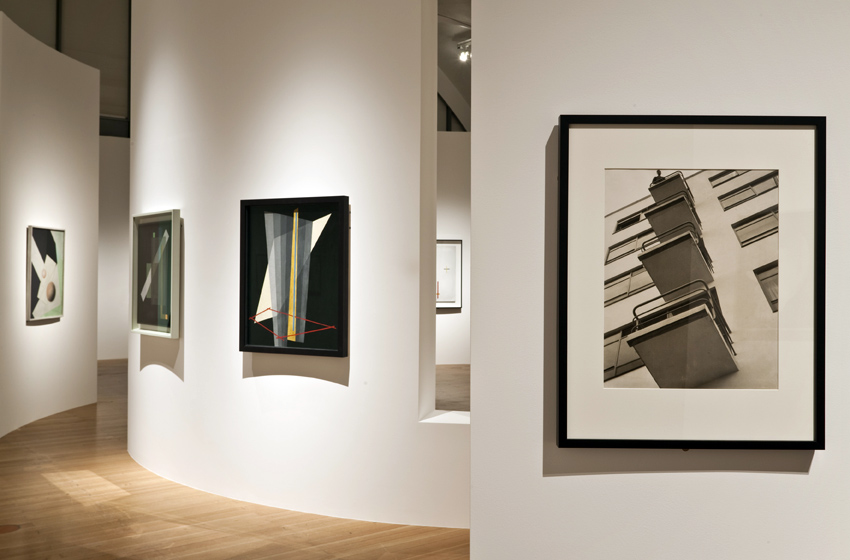
László Moholy-Nagy (Hungarian, 1895-1946) 'Bauhaus Balconies' 1926 from the exhibition 'László Moholy-Nagy 
Retrospective' at Schirn Kunsthalle, Frankfurt, October 2009 - February 2010


László Moholy-Nagy (Hungarian, 1895-1946)
Bauhaus Balconies
1926
Silver gelatin photograph
49.5 x 39.3cm
Courtesy Collection of George Eastman House


'László Moholy-Nagy Retrospective' exhibition view, Schirn Kunsthalle Frankfurt 2009 showing at right 'Bauhaus Balconies' (1926) and second right 'K XVII' (1923)


László Moholy-Nagy Retrospective exhibition view, Schirn Kunsthalle Frankfurt 2009 showing at right Bauhaus Balconies (1926) and second right K XVII (1923)
© Photograph: Norbert Miguletz
© VG Bild-Kunst, Bonn 2009


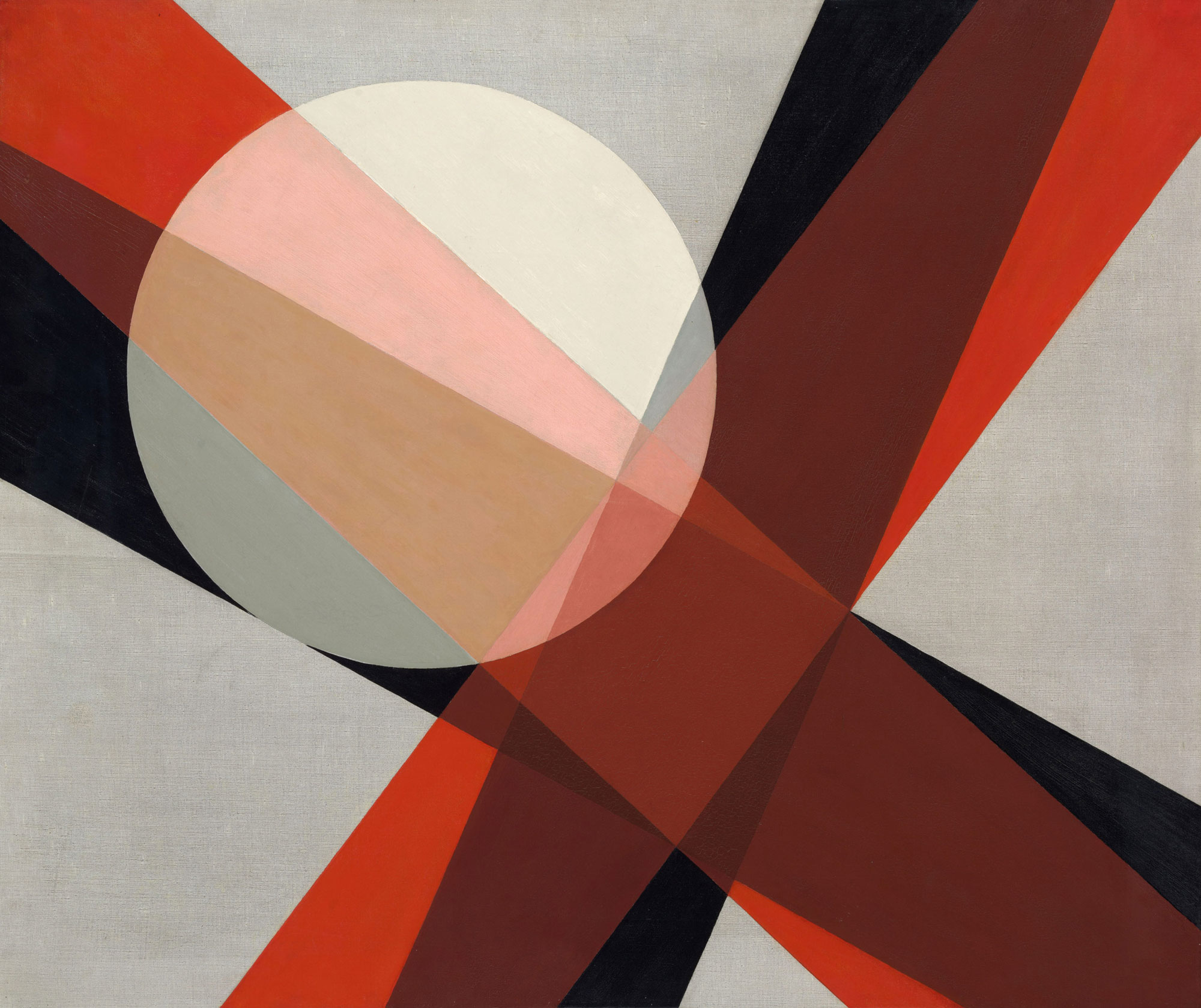
László Moholy-Nagy (Hungarian, 1895-1946) 'A 19' 1927


László Moholy-Nagy (Hungarian, 1895-1946)
A 19
1927
Oil on canvas
80 x 96cm
Courtesy Hattula Moholy-Nagy
© VG Bild-Kunst, Bonn 2009


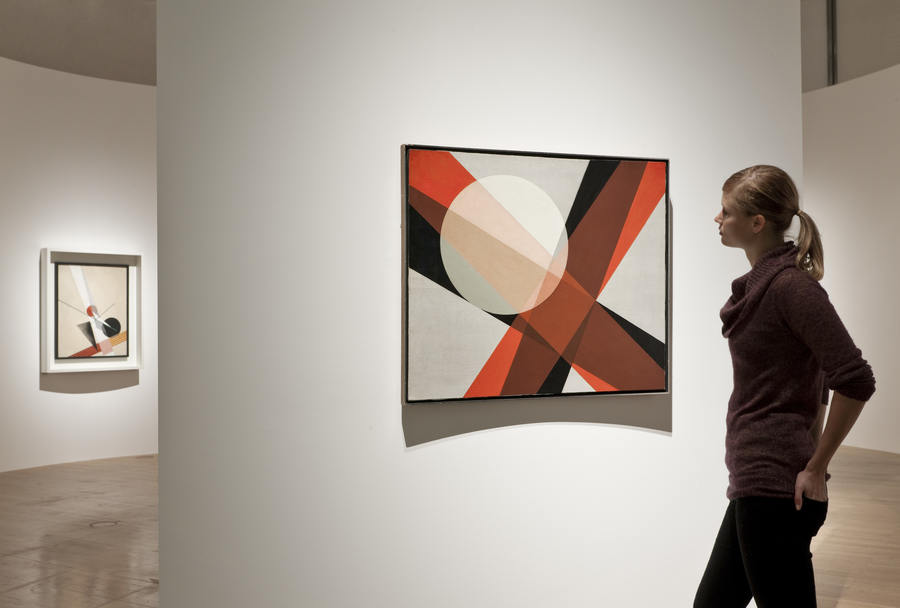
'László Moholy-Nagy Retrospective' exhibition view, Schirn Kunsthalle Frankfurt 2009 showing at centre, 'A 19' (1927)


László Moholy-Nagy Retrospective exhibition view, Schirn Kunsthalle Frankfurt 2009 showing at centre, A 19 (1927)
Schirn Kunsthalle Frankfurt
© Photograph: Norbert Miguletz
© VG Bild-Kunst, Bonn 2009


The Hungarian artist László Moholy-Nagy (1895-1946) became known in Germany through his seminal work as a teacher at the Staatliches Bauhaus in Weimar and Dessau (1923-1928). His pioneering theories on art as a testing ground for new forms of expression and their application to all spheres of modern life are still of influence today. Presenting about 170 works – paintings, photographs and photograms, sculptures and films, as well as stage set designs and typographical projects – the retrospective encompasses all phases of his oeuvre. On the occasion of the ninetieth anniversary of the foundation of the Bauhaus, it offers a survey of the enormous range of Moholy-Nagy’s creative output to the public for the first time since the last major exhibition of his work in Kassel in 1991. Never having been built before 2009, the artist’s spatial design Raum der Gegenwart (Room of Today), which brings together many of his theories, will be realised in the context of the exhibition.

No other teacher at the Bauhaus in Weimar and Dessau, nor nearly any other artist of the 1920s in Germany, an epoch rich in utopian designs, developed such a wide range of ideas and activities as László Moholy-Nagy, who was born in Bácsborsód in Southern Hungary in 1895. His oeuvre bears evidence to the fact that he considered painting and film, photography and sculpture, stage set design, drawing, and the photogram to be of equal importance. He continually fell back upon these means of expression, using them alternately, varying them, and taking them up again as parts of a universal concept whose pivot was the alert, curious, and unrestrained experimental mind of the “multimedia” artist himself. Long before people began to talk about “media design” and professional “marketing,” Moholy-Nagy worked in these fields, too – as a guiding intellectual force in terms of new technical, design and educational instruments. “All design areas of life are closely interlinked,” he wrote about 1925 and was, despite his motto insisting on “the unity of art and technology,” no uncritical admirer of the machine age, but rather a humanist who was open-minded about technology. His basic attitude as an artist, which exemplifies the idealistic and utopian thinking of an entire era, may be summed up as aimed at improving the quality of life, avoiding specialisation, and employing science and technology for the enrichment and heightening of human experience.

After having graduated from high school, Moholy-Nagy began to study law in Budapest in 1913, but was drafted in 1915. During the war, he made his first drawings on forces mail cards and began dedicating himself exclusively to art after having been discharged from the army in 1918. Moholy-Nagy moved to Vienna in 1919 and to Berlin the following year, kept in close contact with Kurt Schwitters, Raul Hausmann, Theo van Doesburg, and El Lissitzky, and immersed himself in Merzkunst, De Stijl, and Constructivism. He achieved successes as an artist with his solo presentation in the Berlin gallery “Der Sturm” (1922), for example. In spring 1923, he was offered the post of a Bauhaus master in Weimar by Walter Gropius. Taking responsibility for the preliminary course and the metal workshop, he decisively informed the Constructivist and social reorientation of the Bauhaus. Interlinking art, life, and technology and underscoring the visual and the material aspects in design were key issues of his work and resulted in a modern, technology-oriented language of forms. His didactic approaches as a Bauhaus teacher still present themselves as up-to-date as his work as an artist. For him, education had to be primarily aimed at bringing up people to become artistically political and creative beings: “Every healthy person has a deep capacity for bringing to development the creative energies found in his/her nature … and can give form to his/her emotions in any material (which is not synonymous with ‘art’),” he wrote in 1929.

In spite of his manifold activities and inventions in the sphere of so-called applied art, Moholy-Nagy by no means advocated abolishing free art. Before, during, and long after his years at the Bauhaus, he produced numerous paintings, drawings, collages, woodcuts, and linocuts, as well as photographs and films as autonomous works of art. Like his design solutions, his works in the classical arts, in painting and sculpture, also reveal his aesthetically and conceptually radical approach. His Telephone Pictures, whose execution he controlled by telephone, exemplify this dimension: using a special graph paper and a colour chart, he worked out the composition and colours of the pictures and had them realised according to his telephonic instructions by technical assistants. He also pursued new paths with his famous Light-Space Modulator of 1930, conceiving his gesamtkunstwerk [“total work of art”] composed of colour, light, and movement as an “apparatus for the demonstration of the effects of light and movement.” It was equally new territory he conquered in the fields of photography and film: considering his cameraless photography, his photograms, and his abstract films such as Light Play Black, White, Gray (1930), Moholy-Nagy must still be regarded as one of the most important twentieth-century photographers and key figures for today’s media theories.

Thanks to his experiments with photography and the photogram, László Moholy Nagy was one of the first typographers of the 1920s to recognise the new possibilities offered by the combination of typeface, surface design, and pictorial signs with recent photographic techniques. As a Bauhaus teacher for typography, he designed almost all of the 14 Bauhaus books published between 1925 and 1929 and – besides co-editing them with Walter Gropius – took care of the entire presentation of the books’ contents and the organisation of their production. With its dynamic cycles and bars and concentration on a few, clear colours, their design resembled the Constructivist artists’ paintings and drawings. While Moholy-Nagy’s early typographic works are frequently still characterised by hand-drawn typefaces, he later strove for a “mechanized graphic design” also suited for commercial advertising through their systematisation and standardisation. After he had left the Bauhaus in 1928, he founded his own office in Berlin, where he, among other things, developed advertising solutions for Wilhelm Wagenfeld’s designs for the Jena Glassworks. Faced with the Nazis’ seizure of power, Moholy-Nagy emigrated to the United States via Amsterdam and Great Britain and founded the New Bauhaus in Chicago in 1937 and, after it had been closed, the Chicago School (and later Institute) of Design in 1939, where he continued to champion an integration of art, science, and technology. László Moholy-Nagy died of leukaemia in Chicago on 24 November 1946.

The exhibition at the Schirn also presents the Raum der Gegenwart (Room of Today), which offers a concise summary of Moholy-Nagy’s work. The sketches for this environment, which assembles many of his theories, date back as far as 1930. Not having been built before 2009, the Raum der Gegenwart (Room of Today) is now realised in the Schirn on the occasion of the Bauhaus anniversary 2009.

Press release from the Schirn Kunsthalle website [Online] Cited 20/01/2010. No longer available online


László Moholy-Nagy (Hungarian, 1895-1946)
Light Play Black, White, Gray
1930


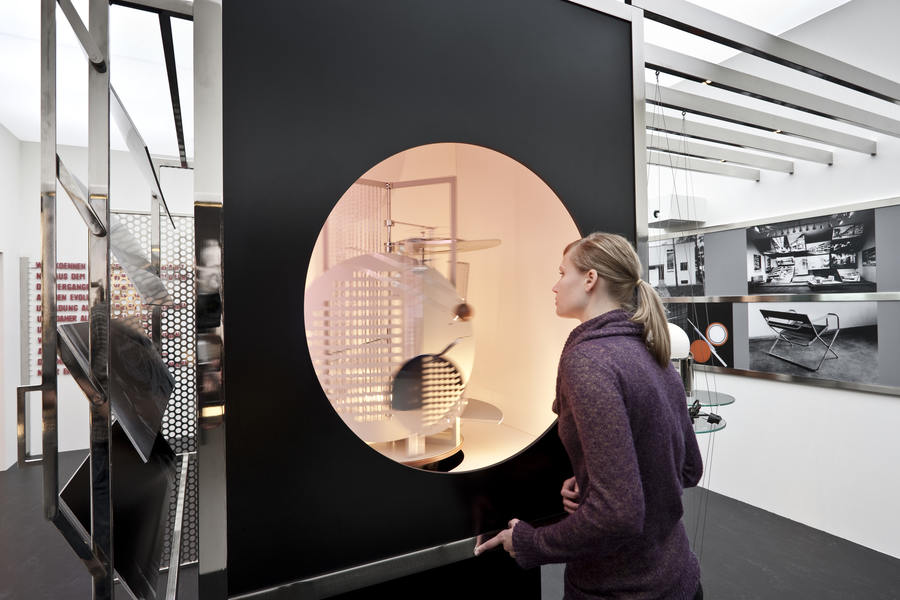
The sculpture Light-Space Modulator is a key work in the history of kinetic art and even the art of new media and, therefore, one of the most important works of art of its time. Conceived initially by Moholy-Nagy at the beginning of the twenties of the last century and built between 1928 and 1930…

Light-Space Modulator was exhibited in 1930 in a show organised in Paris on the work of the German Werkbund. From the point of view of the object, it forms a complex as well as beautiful set of elements of metal, plastic and glass, many of them mobile by the action of an electric motor, surrounded by a series of coloured lights.

Moholy-Nagy used it to produce light shows that he photographed or filmed, as in the case of the film shown here. Although in black and white, the film manages to capture the kinetic brightness of the sculpture.


'László Moholy-Nagy Retrospective' exhibition view, Schirn Kunsthalle Frankfurt showing 'Room of Today' (reconstruction 2009) with at centre, 'Light-Space Modulator' 1930 (replica)


László Moholy-Nagy Retrospective exhibition view, Schirn Kunsthalle Frankfurt showing Room of Today (reconstruction 2009) with at centre, Light-Space Modulator 1930 (replica)
© Photograph: Norbert Miguletz
© VG Bild-Kunst, Bonn 2009


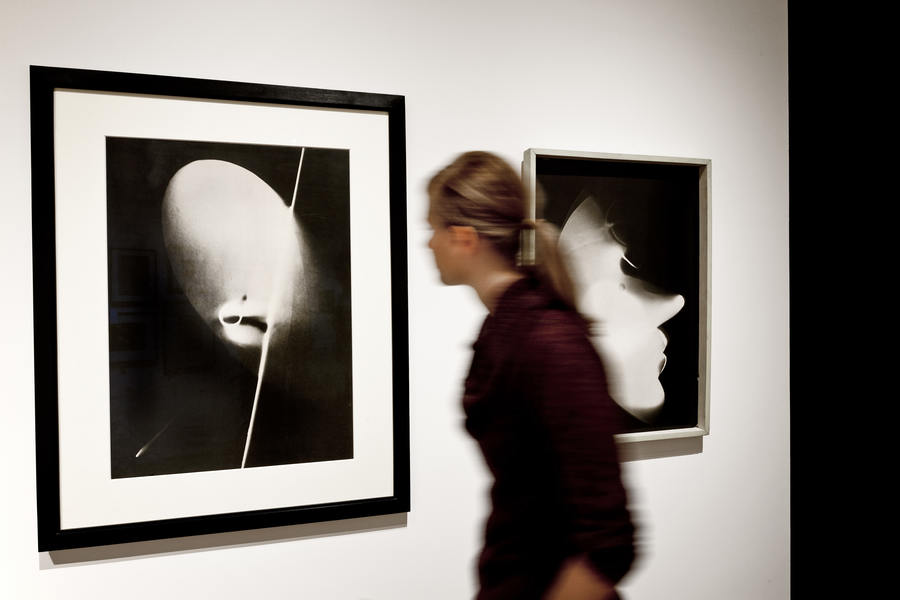
László Moholy-Nagy (Hungarian, 1895-1946) 'Fotogram with Eiffel Tower and Peg Top' c. 1928


László Moholy-Nagy (Hungarian, 1895-1946)
Fotogram with Eiffel Tower and Peg Top
c. 1928
Silver gelatin photograph
38.7 x 29.9cm
Courtesy Galerie Berinson, Berlin
Photo: Friedhelm Hoffmann, Berlin
© VG Bild-Kunst, Bonn 2009


'László Moholy-Nagy Retrospective' exhibition view, Schirn Kunsthalle Frankfurt showing at left, 'Photogramm No.II' (1929)


László Moholy-Nagy Retrospective exhibition view, Schirn Kunsthalle Frankfurt showing at left, Photogramm No.II (1929)
© Photograph: Norbert Miguletz
© VG Bild-Kunst, Bonn 2009


László Moholy-Nagy (Hungarian, 1895-1946) 'Photogramm No.11' Enlargement before 1929


László Moholy-Nagy (Hungarian, 1895-1946)
Photogramm No.II
1929
Silver gelatin photograph
95.5 x 68.5cm
Courtesy Galerie Berinson, Berlin
Photo: Friedhelm Hoffmann, Berlin


László Moholy-Nagy (Hungarian, 1895-1946) 'Marseille, Port View' 1929


László Moholy-Nagy (Hungarian, 1895-1946)
Marseille, Port View
1929
Silver gelatin photograph
48.7 x 37.9cm
Courtesy Collection of George Eastman House


László Moholy-Nagy (Hungarian, 1895-1946) 'SPACE CH 4' 1938


László Moholy-Nagy (Hungarian, 1895-1946)
SPACE CH 4
1938
Oil on canvas
68.5 x 89 cm
Courtesy Hattula Moholy-Nagy
© VG Bild-Kunst, Bonn 2009


László Moholy-Nagy (Hungarian, 1895-1946) 'CH BEATA I' 1939


László Moholy-Nagy (Hungarian, 1895-1946)
CH BEATA I
1939
Oil on canvas
119 x 120cm
Solomon R. Guggenheim Museum, New York
Solomon R. Guggenheim Founding Collection
Photograph by David Heald
© The Solomon R. Guggenheim Foundation, New York


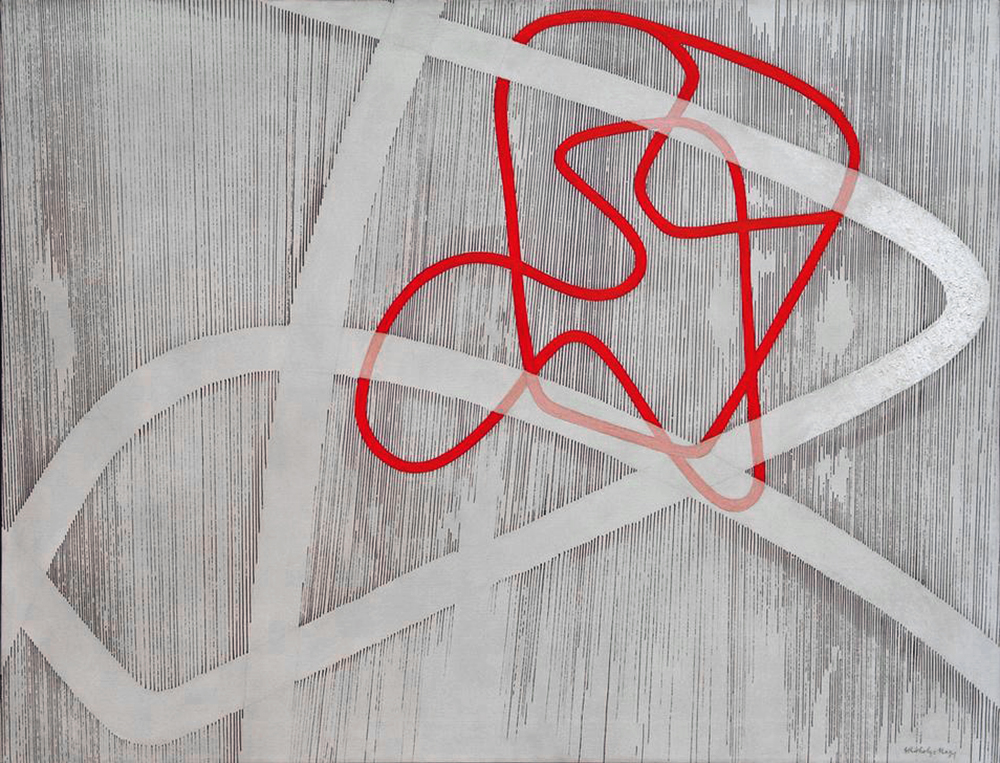
László Moholy-Nagy (Hungarian, 1895-1946) 'CH XIV' 1939


László Moholy-Nagy (Hungarian, 1895-1946)
CH XIV
1939
Oil on canvas
118 x 119.5cm
Courtesy of Museu Colecção Berardo
Photo: Museu Colecção Berardo/Paulo Raimundo
© VG Bild-Kunst, Bonn 2009


László Moholy-Nagy (Hungarian, 1895-1946) 'CH SPACE 6' 1941


László Moholy-Nagy (Hungarian, 1895-1946)
CH SPACE 6
1941
Oil on canvas
119 x 119cm
Courtesy Hattula Moholy-Nagy
© VG Bild-Kunst, Bonn 2009


László Moholy-Nagy (Hungarian, 1895-1946) 'Dual forms with Chromium Rods' 1946


László Moholy-Nagy (Hungarian, 1895-1946)
Dual forms with Chromium Rods
1946
Plexiglas and chrome-plated brass rods
93 x 121 x 56cm
Exhibition View, Schirn Kunsthalle 2009
© Photograph: Norbert Miguletz
Courtesy The Solomon R. Guggenheim Foundation, New York


László Moholy-Nagy (Hungarian, 1895-1946) 'Untitled' 1936-1946


László Moholy-Nagy (Hungarian, 1895-1946)
Untitled
1936-46
Fujicolor Crystal Archive print
27.9 x 35.6 cm
Courtesy Andrea Rosen Gallery, New York
© Hattula Moholy-Nagy for the Estate of László Moholy-Nagy
© VG Bild-Kunst, Bonn 2009


László Moholy-Nagy (Hungarian, 1895-1946) 'Untitled' 1937-1946


László Moholy-Nagy (Hungarian, 1895-1946)
Untitled
1937-1946
Fujicolor Crystal Archive print
27.9 x 35.6cm
Courtesy Andrea Rosen Gallery, New York
© Hattula Moholy-Nagy for the Estate of László Moholy-Nagy
© VG Bild-Kunst, Bonn 2009


László Moholy-Nagy (Hungarian, 1895-1946) 'Untitled' 1939


László Moholy-Nagy (Hungarian, 1895-1946)
Untitled
1939
Fujicolor Crystal Archive print
27.9 x 35.6cm
Courtesy Andrea Rosen Gallery, New York
© Hattula Moholy-Nagy for the Estate of László Moholy-Nagy
© VG Bild-Kunst, Bonn 2009


László Moholy-Nagy (Hungarian, 1895-1946) 'Untitled/Night-Time Traffic (Pink and Red Traffic Stream with White Sparks)' 1937-1946


László Moholy-Nagy (Hungarian, 1895-1946)
Untitled/Night-Time Traffic (Pink and Red Traffic Stream with White Sparks)
1937-1946
Fujicolor Crystal Archive print
27.9 x 35.6cm
Courtesy Andrea Rosen Gallery, New York
© Hattula Moholy-Nagy for the Estate of László Moholy-Nagy
© VG Bild-Kunst, Bonn 2009


László Moholy-Nagy (1895-1946) 'Photograph (Self-Portrait with Hand)' 1925/29, printed 1940/49


László Moholy-Nagy (Hungarian, 1895-1946)
Self-portrait
c. 1926
Gelatin silver photograph
Courtesy Hattula Moholy-Nagy
© VG Bild-Kunst, Bonn 2009


Schirn Kunsthalle Frankfurt
Römerberg
D-60311 Frankfurt
Phone: +49.69.29 98 82-0

Opening hours:
Tuesday, Friday – Sunday 10am – 7pm
Wednesday – Thursday 10am – 10pm

Schirn Kunsthalle website

LIKE ART BLART ON FACEBOOK

Back to top

Exhibition: ‘I.E.D.: War in Afghanistan and Iraq’ by David Levinthal at Stellan Holm Gallery, New York

Exhibition dates: 19th December, 2009 – 13th February, 2010


Many thankx to the Stellan Holm Gallery for allowing me to publish the photographs in the posting. Please click on the photographs for a larger version of the image.

Marcus


David Levinthal (American, b. 1949) 'Untitled' from the series 'IED' 2008 from the exhibition 'I.E.D.: War in Afghanistan and Iraq' by David Levinthal at Stellan Holm Gallery, New York, December 2009 - February 2010


David Levinthal (American, b. 1949)
Untitled from the series IED
2008
Archival Pigment Print on Polyester Film


David Levinthal (American, b. 1949) 'Untitled' from the series 'IED' 2008 from the exhibition 'I.E.D.: War in Afghanistan and Iraq' by David Levinthal at Stellan Holm Gallery, New York, December 2009 - February 2010


David Levinthal (American, b. 1949)
Untitled from the series IED
2008
Archival Pigment Print on Polyester Film


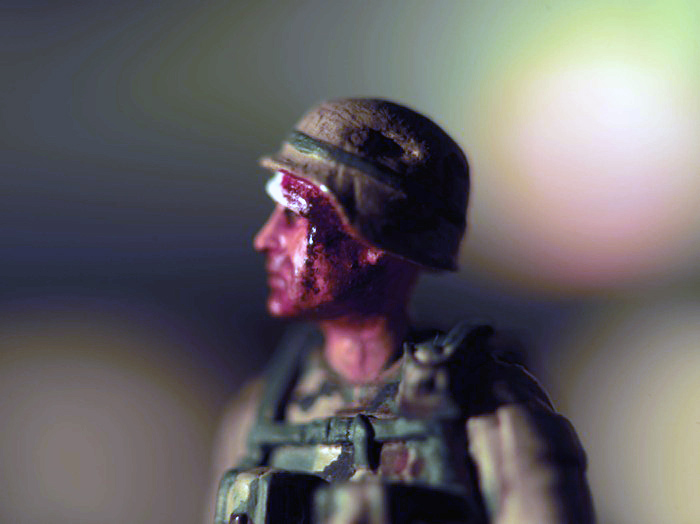
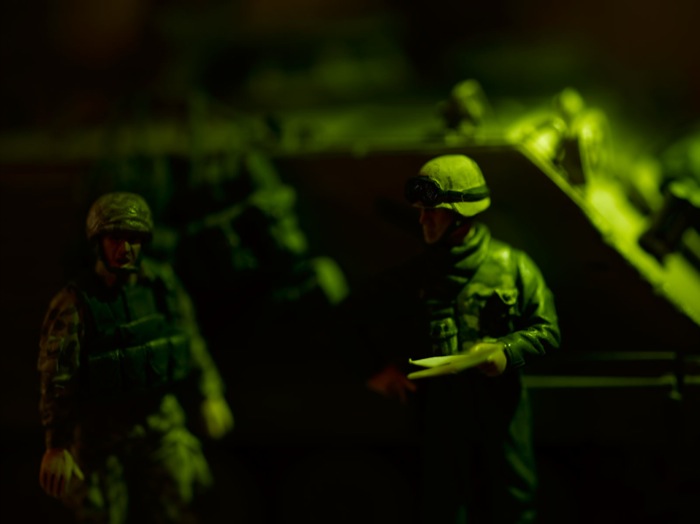
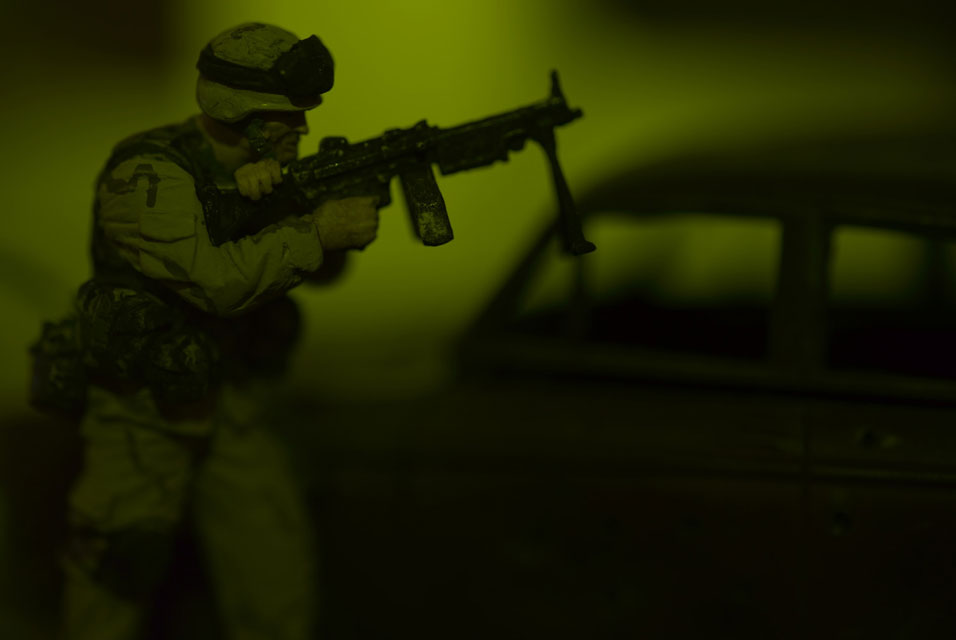
Stellan Holm Gallery is presenting I.E.D.: War in Afghanistan and Iraq, an exhibition of photographs by David Levinthal. The exhibition runs through February 13, 2010. This is the first solo exhibition of works by David Levinthal on view at Stellan Holm Gallery.

I.E.D.: War in Afghanistan and Iraq features eighteen colour photographs by renowned photographer, David Levinthal, which seek to examine the way in which our society looks at war. The idea for this series was conceived when Levinthal recognised a flood of figurines and models available to the American consumer, depicting the ongoing conflicts in Iraq and Afghanistan. Through the use of these miniature soldiers, civilians and armoured vehicles, Levinthal constructs extremely realistic dioramas that recreate the horrors of contemporary warfare. However, these photographs do not simply recreate scenes from a foreign war. Instead they bring a new perspective to the discourse about war, how it is broadcast in real time and how it relates to American society as a whole. Without interjecting his own prejudgments, David Levinthal asks the viewer to reconsider their own perceptions of reality.

Released by powerHouse Books, the publication, I.E.D.: War in Afghanistan and Iraq, compiles the entirety of Mr. Levinthal’s series of photographs. The book features seventy colour photographs along with an introduction by the artist. It is accompanied by a series of writings culled by David Stanford, editor of The Sandbox, an online military blog that posts writings from troops deployed in Iraq and Afghanistan. This ‘boots-on-the-ground’ testimony adds a powerful voice to the compelling and harrowing photographs constructed by Levinthal.

Born in 1949 in San Francisco, CA, David Levinthal has been exploring and confronting various social issues through the playful use of toy figurines since 1972. He has released numerous publications including, Hitler Moves East: A Graphic Chronicle, 1941-43, Bad Barbie, and Blackface. He was the recipient of the John Simon Guggenheim Foundation Fellowship in 1995 and the National Endowment for the Arts, Visual Artists Fellowship in 1990-1991. His works are featured in numerous, notable public collections including the Whitney Museum of American Art, the Metropolitan Museum of Art, and the Museum of Modern Art.

Text from the Stellan Holm Gallery website [Online] Cited 16/01/2010 no longer available online


David Levinthal (American, b. 1949) 'Untitled' from the series 'IED' 2008 from the exhibition 'I.E.D.: War in Afghanistan and Iraq' by David Levinthal at Stellan Holm Gallery, New York, December 2009 - February 2010


David Levinthal (American, b. 1949)
Untitled from the series IED
2008
Archival Pigment Print on Polyester Film


David Levinthal (American, b. 1949) 'Untitled' from the series 'IED' 2008


David Levinthal (American, b. 1949)
Untitled from the series IED
2008
Archival Pigment Print on Polyester Film


David Levinthal (American, b. 1949) 'Untitled' from the series 'IED' 2008


David Levinthal (American, b. 1949)
Untitled from the series IED
2008
Archival Pigment Print on Polyester Film


Stellan Holm Gallery

This gallery has now closed.

LIKE ART BLART ON FACEBOOK

Back to top

Melbourne’s Magnificent Dozen 2009

January 2010


Here’s my pick of the twelve best exhibitions in Melbourne for 2009 that featured on Art Blart (in no particular order) – and a few honourable mentions that very nearly made the list!


1. The Water Hole by Gerda Steiner and Jorg Lenzlinger at ACCA (Australian Centre for Contemporary Art)


Gerda Steiner (Swiss, b. 1967) and Jorg Lenzlinger (Swiss, b. 1964) 'The Waterhole' 2009


Gerda Steiner (Swiss, b. 1967) and Jorg Lenzlinger (Swiss, b. 1964)
The Water Hole
2009


“The most effective bed has a small meteorite suspended in a net bag above it. The viewer slides underneath the ‘rock’ placing the meteorite about a foot or so above your face. The meteorite is brown, dark and heavy, swinging slightly above your ‘third eye’. You feel its weight pressing down on your energy, on your life force and you feel how old this object is, how far it has traveled, how fragile and mortal you are. It is a sobering and enlightening experience but what an experience it is!”

This was a magical and poignant exhibition that was a joy for children and adults alike. Children love it running around exploring the environments. Adults love it for it’s magical, witty and intelligent response to the problems facing our planet and our lives. A truly enjoyable interplanetary collision.

2. Ocean Without A Shore video installation by Bill Viola at The National Gallery of Victoria


Bill Viola (American, 1951-2024) 'Ocean Without A Shore' 2007 video still


Installation photograph of Ocean Without A Shore at the National Gallery of Victoria, Melbourne


The resurrected are pensive, some wringing the hands, some staring into the light. One offers their hands to the viewer in supplication before the tips of the fingers touch the wall of water – the ends turning bright white as they push through the penumbrae of the interface. As they move forward the hands take on a stricken anguish, stretched out in rigour. Slowly the resurrected turn and return to the other side. We watch them as we watch our own mortality, life slipping away one day after another. Here is not the distraction of a commodified society, here is the fact of every human life: that we all pass.

The effect on the viewer is both sad but paradoxically uplifting. I cried …

These series of encounters at the intersection of life and death are worthy of the best work of this brilliant artist. He continues to astound with his prescience, addressing what is undeniable in the human condition. Long may he continue.

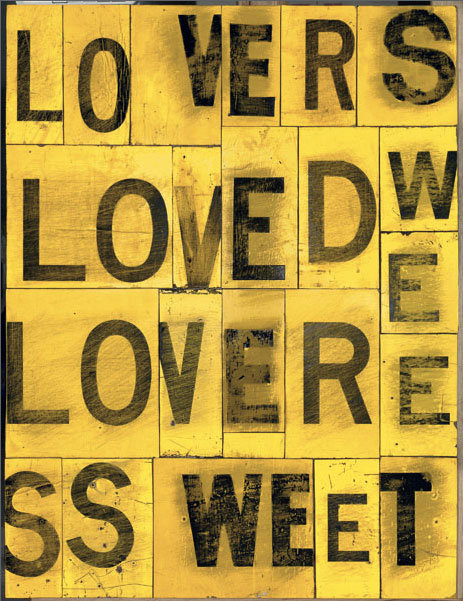
3. Rosalie Gascoigne at The Ian Potter Centre: NGV Australia


Rosalie Gascoigne (Australian born New Zealand, 1917-1999) 'Sweet lovers' 1990


Rosalie Gascoigne (Australian born New Zealand, 1917-1999)
Sweet lovers
1990


This was a wonderful exhibition. Gascoigne rightly commands a place in the pantheon of Australian stars. She has left us with a legacy of music that evokes the rhythms, the air, the spaces and colours of our country. As she herself said,

“Look at what we have: Space, skies. You can never have too much of nothing.”

Nothing more, nothing less.

4. The Big Black Bubble paintings by Dale Frank at Anna Schwartz Gallery


Dale Frank (Australian, b. 1959) 'Ryan Gosling' (2008/2009)


Dale Frank (Australian, b. 1959)
Ryan Gosling
2008/2009


The artist offered the viewer the ability to generate their own resonances with the painting, to use the imagination of ‘equivalence’ to suggest what these paintings stand for – and also what else they stand for. States of being, of transformation, wonder and joy emerged in the playfulness of these works.

Ryan Gosling was a tour de force. With the poetic structure of an oil spill, the varnish forms intricate slick upon slick contours that are almost topographical in their mapping. The black oozes light, becomes ‘plastic’ black before your eyes, like the black of Rembrandt’s backgrounds, illusive, illuminative and hard to pin down – perpetually hanging there in two dripping rows, fixed but fluid at one and the same time (you can just see the suspensions in the photograph above).

This painting was one of the most overwhelming syntheses of art and nature, of universal forces that I have seen in recent contemporary art. This exhibition was an electric pulsating universe of life, landscape and transformation. Magnificent!

5. So It Goes by Laith McGregor at Helen Gory Galerie


Laith McGregor (Australian, b. 1977) 'The Last Bastion' 2009 (detail)


Laith McGregor (Australian, b. 1977)
The Last Bastion (detail)
2009


Simply spectacular!

I had never seen such art made using a biro before: truly inspiring.
Inventive, funny, poignant and outrageous this was a must see show of 2009.

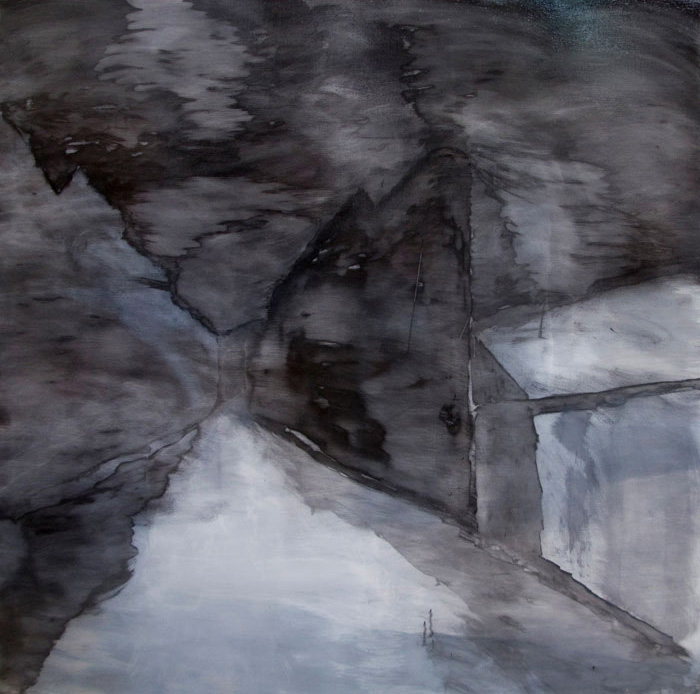
6. triestement (more-is u thrill-o) by Domenico De Clario at John Buckley Gallery


Domenico de Clario (Australian born Italy, b. 1947) 'o (la grande maison blanche – snow clouds massing)' 2008/09


Domenico de Clario (Australian born Italy, b. 1947)
o (la grande maison blanche – snow clouds massing)
2008/09


Painted in a limited colour palette of ochres, greys and blacks the works vibrate with energy. Cezanne like spatial representations are abstracted and the paint bleeds across the canvas forming a maze of buildings. Walls and hedges loom darkly over roadways, emanations of heads and figures float in the picture plane and the highlight white of snow hovers like a spectral figure above buildings. These are elemental paintings where the shadow has become light and the light is shadow, meanderings of the soul in space.

de Clario feels the fluid relationship between substance and appearance; he understands that Utrillo is embedded in the position of each building and stone, in the cadences and rhymes of the paintings of Montmarte. de Clario interprets this knowledge in a Zen like rendition of shadow substance in his paintings. Everything has it’s place without possession of here and there, dark and light.

For my part it was my soul responding to the canvases. I was absorbed into their fabric. As in the dark night of the soul my outer shell gave way to an inner spirituality stripped of the distance between viewer and painting. I felt communion with this man, Utrillo, with this art, de Clario, that brought a sense of revelation in the immersion, like a baptism in the waters of dark light. For art this is a fantastic achievement.

7. McLean Edwards: Songs from the Ghost Ship at Karen Woodury Gallery


McLean Edwards (Australian, b. 1972) 'Venus' 2009


McLean Edwards (Australian, b. 1972)
Venus
2009


These heterogeneous paintings were a knockout with their wonderful, layered presence – they really command the viewer to look at them and celebrate the characters within them. Whimsical, ironic and full of humour these phantasmagorical images of creatures cast adrift with the night sky as background are fabulous assemblages of colour, form and storytelling.

My friend and I really enjoyed this exhibition. We were captivated by these songs, going back to the work again and again to tease out the details, to feel connection to the work. These are not lonely isolated figures but sublime emanations of inner states of being expertly rendered in glorious colour. And they made us laugh – what more could you ask for!

8. Tacita Dean at Australian Centre for Contemporary Art (ACCA)


Tacita Dean (English, b. 1965) 'Michael Hamburger' 2007


Tacita Dean (English, b. 1965)
Michael Hamburger [Still]
16mm colour anamorphic, optical sound
28 minutes
2007


“One can see echoes of Sebald’s work in that of Tacita Dean – the personal narratives accompanied by mythical and historical stories and pictures. The tactility of Hamburger’s voice and hands, his caressing of the apples with the summary justice of the tossing away of rotten apples to stop them ruining the rest of the crop is arresting and holds you transfixed. Old varieties and old hands mixed with the old technology of film make for a nostalgic combination … Dean implicitly understands how objects can be elegies for fleeting lives.”

Tacita Dean is a fantastic artist whose work examines the measure of things, the vibrations of spirit in the FLUX of experience. Her work has a trance-like quality that is heavy with nostalgia and memory and reflects the machine-ations of contemporary life. In her languorous and dense work Dean teases out the significance of insignificant actions/events and imparts meaning and life to them. This is no small achievement!

As an exhibition this was an intense and moving experience.

9. Ivy photographs by Jane Burton at Karen Woodbury Gallery


Jane Burton (Australian, b. 1966) 'Ivy #2' 2009


Jane Burton (Australian, b. 1966)
Ivy #2
2009


I feel that in these photographs with their facelessness and the non-reflection of the mirror investigate notions of ‘Theoria’ – a Greek emphasis on the vision or contemplation of God where theoria is the lifting up of the individual out of time and space and created being and through contemplative prayer into the presence of God. In fact the whole series of photographs can be understood through this conceptualisation – not just remembrances of past time, not a blind contemplation on existence but a lifting up out of time and space into the an’other’ dark but enlightening presence.

The greatest wonder of this series is that the photographs magically reveal themselves again and again over time. Despite (or because of) the references to other artists, the beauty of Burton’s work is that she has made it her own. The photographs have her signature, her voice as an artist and it is an informed voice; this just makes the resonances, the vibrations of energy within the work all the more potent and absorbing. I loved them.

10. Sweet Complicity by eX de Medici at Karen Woodbury Gallery


eX de Medici (Australia, b. 1959) 'Tooth and claw' 2009 (detail)


eX de Medici (Australia, b. 1959)
Tooth and claw (detail)
2009


In other less skilled artist’s hands the subject matter could become cliched and trite but here de Medici balances the disparate elements in her compositions and brings the subject matter alive – sinuously jumping off the paper, entwining the viewer in their delicious ironies, all of us sweetly complicit in the terror war (send more meat, send more meat!), fighting tooth and nail to keep urban realities at arm’s length. The dark desires that these works contain possess an aesthetic beauty that swallows us up so that we, too, become ‘Barbarians All’.

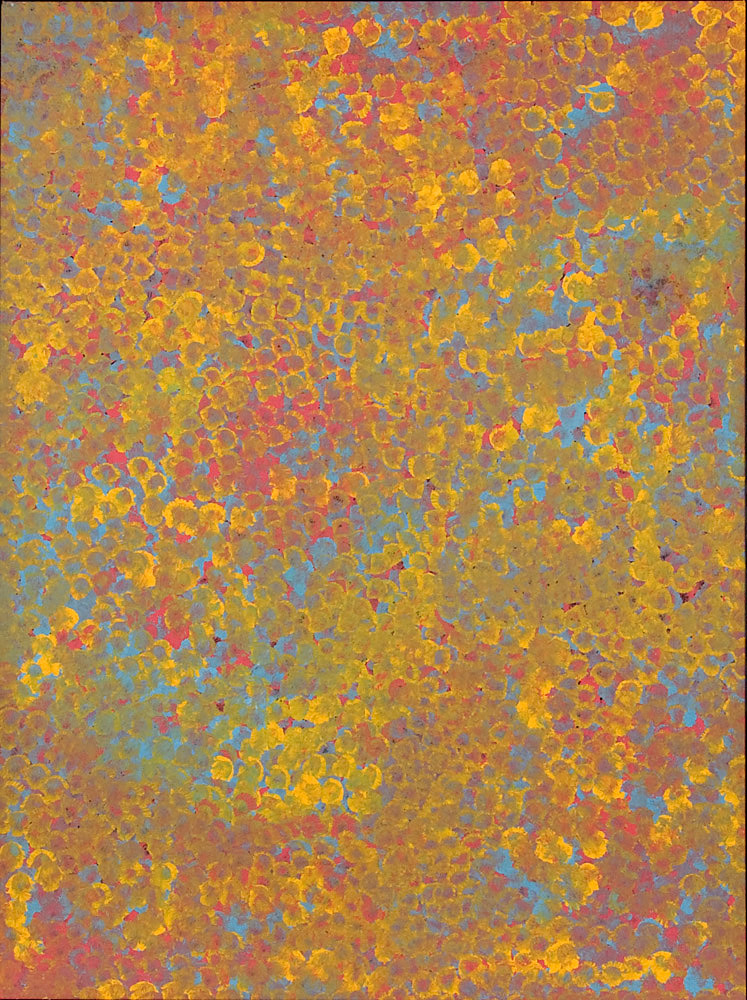
11. Emily Kame Kngwarreye: The Person and her Paintings at DACOU Aboriginal Art


Emily Kame Kngwarreye (Australian, 1910-1996) 'Wildflower' 1994


Emily Kame Kngwarreye (Australian, 1910-1996)
Wildflower
1994


The paintings were painted horizontally (like the painter Jackson Pollock who intuitively accessed the spiritual realm) and evidence a horizontal consciousness not a hierarchical one. Knowledge is not privileged over wisdom. There is a balance between knowledge and wisdom – the knowledge gained through a life well lived and the wisdom of ancient stories that represent the intimacy of living on this world. The patterns and diversities of life compliment each other, are in balance.

Wisdom comes from the Indo-European root verb weid, “to see,” the same root from which words like vision come. In this sense these are “Vedic” paintings in that they are ancient, sacred teachings, Veda meaning literally “I have seen.”

On this day I saw. I felt.

12. Unforced Intimacies by Patricia Piccinini at Tolarno Galleries


Patricia Piccinini (Australian, b. 1965) 'Doubting Thomas' 2008 (detail)


Patricia Piccinini (Australian, b. 1965)
Doubting Thomas (detail)
2008


Patricia Piccinini (Australian, b. 1965) 'Doubting Thomas' 2008


Patricia Piccinini (Australian, b. 1965)
Doubting Thomas
Silicone, fibreglass, human hair, clothing, chair
2008


The terrains the Piccinini interrogates (nature and artifice, biogenetics, cloning, stem cell research, consumer culture) are a rematerialisation of the actual world through morphological ‘mapping’ onto the genomes of the future. Morphogenetic fields seem to surround the work with an intense aura; surrounded by this aura the animals and children become more spiritual in their silence. Experiencing this new world promotes an evolution in the way in which we conceive the future possibilities of life on this earth, this brave but mutably surreal new world.

This was truly one of the best exhibitions of the year in Melbourne.


Honorable mentions

~ Climbing the Walls and Other Actions by Clare Rae at the Centre for Contemporary Photography
In these photographs action is opposed with stillness, danger opposed with suspension; the boundaries of space, both of the body and the environment, the interior and the exterior, memory and dream, are changed.

~ Johannes Kuhnen: a survey of innovation at RMIT Gallery
We stood transfixed before this work, peering closely at it and gasping in appreciation of the beauty, technical proficiency and pure poetry of the pieces.

~ Double Infinitives by Marco Fusinato at Anna Schwartz Gallery
The images are literally ripped from the matrix of time and space and become the dot dot dot of the addendum. What Fusinato does so excellently is to make us pause and stare, to recognize the flatness of these figures and the quietness of violence that surrounds us.

~ all about … blooming by JUNKO GO at Gallery 101
Go’s musings on the existential nature of our being are both full and empty at one and the same time and help us contemplate the link to the breath of the sublime.

~ Mood Bomb by Louise Paramor at Nellie Castan Gallery
They are dream states that allow the viewer to create their own narrative with the title of the works offering gentle guides along the way. These are wonderfully evocative paintings.

~ New 09 at Australian Centre for Contemporary Art (ACCA)
Finally you sit on the aluminium benches and contemplate in silence all that has come before and wonder what just hit you in a tidal wave of feelings, immediacies and emotions. The Doing and Undoing of Things.

~ My Jesus Lets Me Rub His Belly by Martin Smith at Sophie Gannon Gallery
At the end of days, when all is said and done, the funny diatribes with their ambiguous photographs are homily and heretic and together form a more inclusive body of bliss: ‘And also with you and you and you and you’.


LIKE ART BLART ON FACEBOOK

Back to top

Photographs: Marcus Bunyan. ‘There But For The Grace of You Go I’ 2009

December 2009


Marcus Bunyan (Australian, b. 1958) 'Untitled' from the series 'There But For The Grace of You Go I' 2009


Marcus Bunyan (Australian, b. 1958)
Untitled from the series There But For The Grace of You Go I
2009
Digital colour photograph


There But For The Grace of You Go I

A body of work, There But For The Grace of You Go I (2009) is now online on my website.

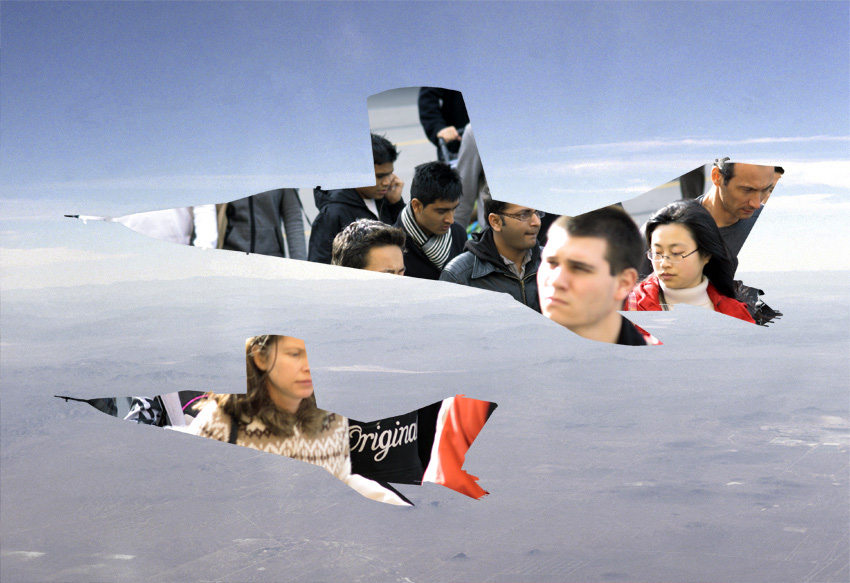
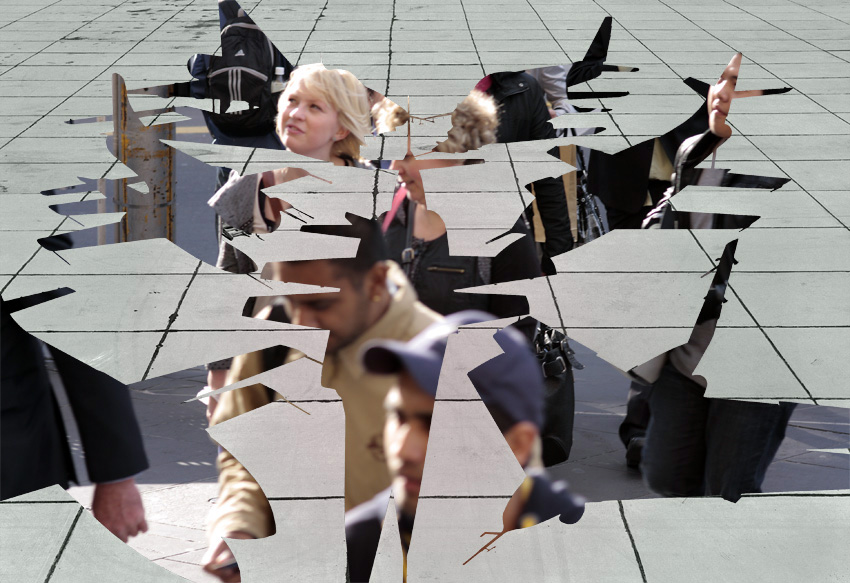
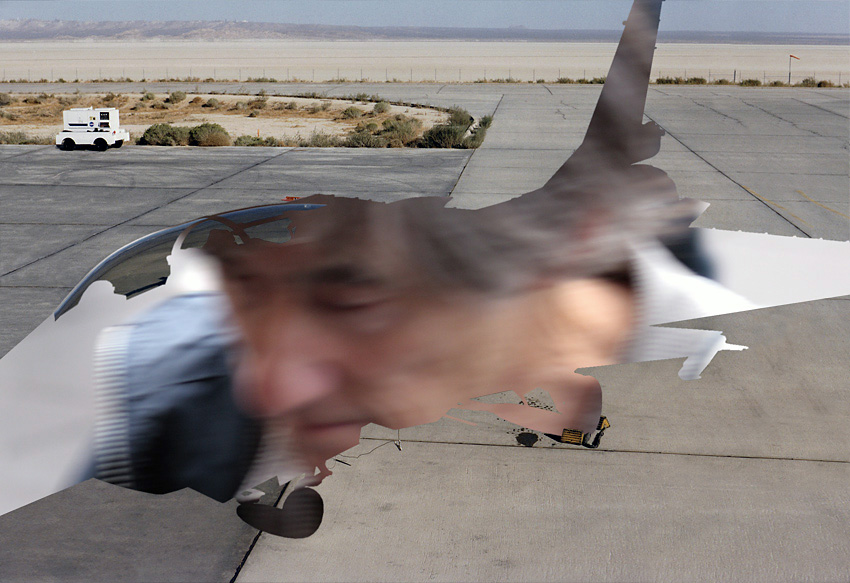
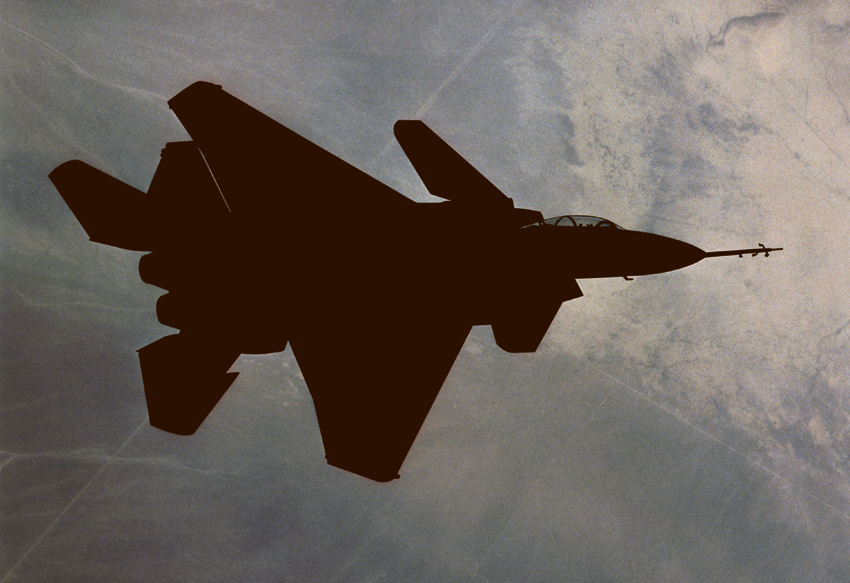
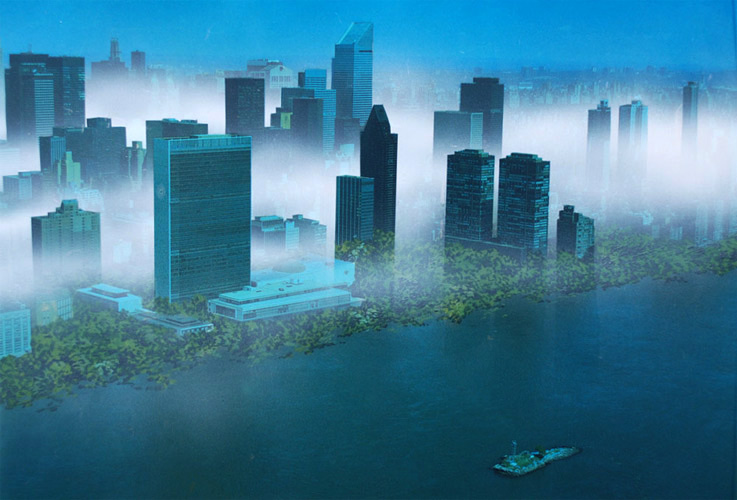
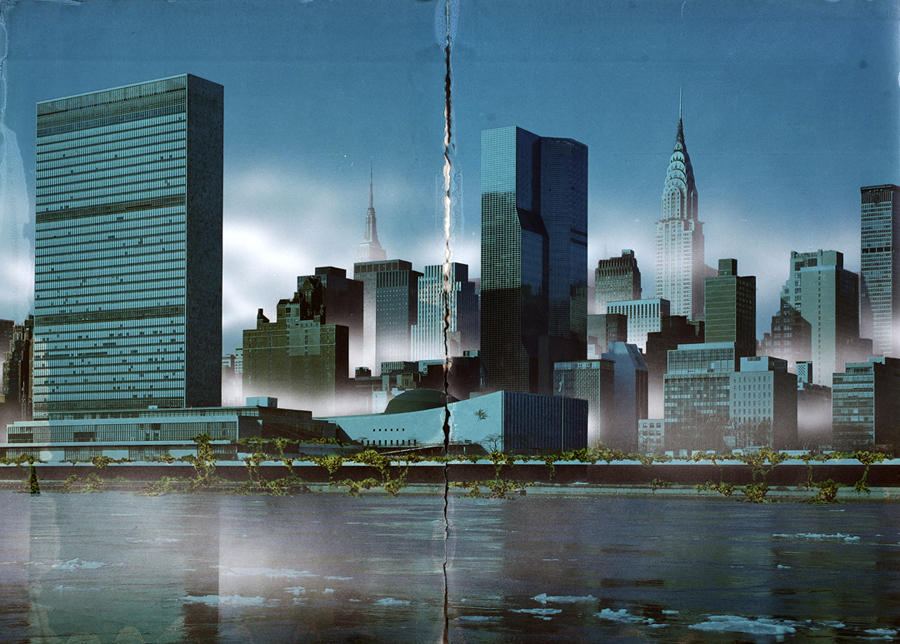
There are twenty images in the series which can be viewed as a sequence, rising and falling like a piece of music. Below are a selection of images from the series. The work continues an exploration into the choices human beings make. The silhouettes and landscapes of planes are taken from found copyright free images; the people from my photographs captured as they crossed the intersection outside Flinders Street Station, Melbourne. Other images are paintings from the Renaissance and POW’s during World War II.

I have always been creative from a very early age, starting as a child prodigy playing the piano at the age of five and going on to get my degree as a concert pianist at the Royal College of Music in London. I have always felt the music and being creative has helped me cope with life, living with bipolar.

These days as I reach my early 50’s ego is much less a concern – about being successful, about having exhibitions. I just make the work because I love making it and the process gives me happiness – in the thinking, in the making. I can loose myself in my work.

When Andrew Denton asked Clive James what brings him joy, James replies The arts, and then qualified his answer. What I mean is creativity. When I get lost in something that’s been made, it doesn’t matter who it is by. It could be Marvin Gaye singing ‘I Heard it Through the Grapevine’ or it could be the adagio of the Ninth Symphony …”

What a wise man.

Dr Marcus Bunyan


Please click on the photographs for a larger version of the image.

Photographs are available from this series for purchase. As a guide, a digital colour 16″ x 20″ costs $1000 plus tracked and insured shipping. For more information please see my Store web page.


Marcus Bunyan (Australian, b. 1958) 'Untitled' from the series 'There But For The Grace of You Go I' 2009


Marcus Bunyan (Australian, b. 1958)
Untitled from the series There But For The Grace of You Go I
2009
Digital colour photograph


Marcus Bunyan (Australian, b. 1958) 'Untitled' from the series 'There But For The Grace of You Go I' 2009


Marcus Bunyan (Australian, b. 1958)
Untitled from the series There But For The Grace of You Go I
2009
Digital colour photograph


Marcus Bunyan (Australian, b. 1958) 'Untitled' from the series 'There But For The Grace of You Go I' 2009


Marcus Bunyan (Australian, b. 1958)
Untitled from the series There But For The Grace of You Go I
2009
Digital colour photograph


Marcus Bunyan (Australian, b. 1958) 'Untitled' from the series 'There But For The Grace of You Go I' 2009


Marcus Bunyan (Australian, b. 1958)
Untitled from the series There But For The Grace of You Go I
2009
Digital colour photograph


Marcus Bunyan (Australian, b. 1958) 'Untitled' from the series 'There But For The Grace of You Go I' 2009


Marcus Bunyan (Australian, b. 1958)
Untitled from the series There But For The Grace of You Go I
2009
Digital colour photograph


Marcus Bunyan (Australian, b. 1958) 'Untitled' from the series 'There But For The Grace of You Go I' 2009


Marcus Bunyan (Australian, b. 1958)
Untitled from the series There But For The Grace of You Go I
2009
Digital colour photograph


Marcus Bunyan (Australian, b. 1958) 'Untitled' from the series 'There But For The Grace of You Go I' 2009


Marcus Bunyan (Australian, b. 1958)
Untitled from the series There But For The Grace of You Go I
2009
Digital colour photograph


Marcus Bunyan (Australian, b. 1958) 'Untitled' from the series 'There But For The Grace of You Go I' 2009


Marcus Bunyan (Australian, b. 1958)
Untitled from the series There But For The Grace of You Go I
2009
Digital colour photograph


There But For The Grace of You Go I (2009) series

Marcus Bunyan website

LIKE ART BLART ON FACEBOOK

Back to top

Exhibition: ‘The Eventuality of Daybreak’ by Alex Lukas at Glowlab, New York

Exhibition dates: 12th November – 6th December 2009


Alex Lukas (American, b. 1981) 'Untitled' 2009. Acrylic and silk screen on two book pages from the exhibition 'The Eventuality of Daybreak' at Glowlab, New York, Nov - Dec, 2009


Alex Lukas (American, b. 1981)
Untitled
2009
Acrylic and silk screen on two book pages


These are terrific – I want one!

A big thank you to Alex for allowing me to reproduce the images.

Dr Marcus Bunyan


Please click on the photographs for a larger version of the image.


Alex Lukas (American, b. 1981) 'Untitled' 2009. Acrylic and silk screen on two book pages from the exhibition 'The Eventuality of Daybreak' at Glowlab, New York, Nov - Dec, 2009


Alex Lukas (American, b. 1981)
Untitled
2009
Acrylic and silk screen on two book pages


Glowlab is pleased to present The Eventuality of Daybreak, a solo exhibition by Alex Lukas featuring a new series of post-apocalyptic urban landscapes that blur the visual boundaries of fiction and reality.

Lukas’ work explores the existence of disaster, be it realised or fictitious, in contemporary society. Hyper-realistic motion pictures and unforgiving news footage depict seemingly identical – and equally riveting – facades of tragedy. The artist recognises that relentless visual bombardment has resulted in society’s desensitisation to the aesthetics of destruction.

For The Eventuality of Daybreak, Lukas has selected photographic spreads of well-known metropolises from vintage publications and uses them dually as canvas and unlikely subject. Through a deft handling of paint and carefully placed screen-printed passages, the artist pushes these ageing illustrations in futuristic contexts. Submerging these cities conceptually and physically, Lukas inundates images of American cities with layers of media representing cataclysmic floods and crippling overgrowth.

Also included in the exhibition are works on paper depicting near-future scenes of devastated landscapes – crumbling infrastructure, overturned trucks and telling signs of human despair. As a counterpoint to the underwater cities, these darkly atmospheric and barren vistas signal devastation through an unsettling sense of absence.

Lukas’ intentional use of dated imagery presented in tandem with contemporary situations forces the viewer to reconcile two differing ideologies of urban space. The artist’s work calls into question society’s collective acceptance of the urban environment as an arena of destruction, once thought unthinkable and now seemingly inevitable.

The Eventuality of Daybreak is Lukas’ first solo exhibition with Glowlab. Lukas’ work has also been exhibited in New York, Boston, Philadelphia, Los Angeles, San Francisco, London, Stockholm and Copenhagen as well as in the pages of Swindle Quarterly, Proximity Magazine, The San Francisco Chronicle, The Village Voice, The Drama and The New York Times Book Review. Lukas is a graduate of the Rhode Island School of Design and currently lives and works in Philadelphia, where he is a member of the artist collective Space 1026.

Press release on the Glowlab website [Online] Cited 20/11/2009 no longer available online


Alex Lukas (American, b. 1981) 'Untitled' 2009. Acrylic and silk screen on two book pages


Alex Lukas (American, b. 1981)
Untitled
2009
Acrylic and silk screen on two book pages


Alex Lukas (American, b. 1981) 'Untitled' 2009. Acrylic and silk screen on two book pages


Alex Lukas (American, b. 1981)
Untitled
2009
Acrylic and silk screen on two book pages


Alex Lukas (American, b. 1981) 'Untitled' 2009. Acrylic and silk screen on two book pages


Alex Lukas (American, b. 1981)
Untitled
2009
Acrylic and silk screen on two book pages


Alex Lukas. 'Untitled' 2009. Acrylic and silk screen on two book pages


Alex Lukas (American, b. 1981)
Untitled
2009
Acrylic and silk screen on two book pages


Glowlab

This gallery has now closed

Alex Lukas website

LIKE ART BLART ON FACEBOOK

Back to top

Vale Sue Ford (1943-2009)

November 2009


Sue Ford (Australian, 1943-2009)
'Dissolution' 2006 From the 'Last Light' series


Sue Ford (Australian, 1943-2009)
Dissolution
2006
From the Last Light series


One thing always struck me about Sue Ford’s work when I saw it. The work had integrity.

Whatever she produced it was always interesting, valid and had integrity. She followed her own path as we all do – and her voice was clear, focused and eloquent. I loved her series Shadow Portraits – an erudite investigation into the nature of Australian identity if ever there was one!

Vale Sue Ford.

Dr Marcus Bunyan


Please click on some of the photographs for a larger version of the image.

See also Barbara Hal. “Australian pioneer focused on her art,” in The Age newspaper November 21, 2009 [Online] Cited 10 May 2019


Sue Ford (Australian, 1943-2009) 'Silhouette' 2006 from the 'Last Light' series


Sue Ford (Australian, 1943-2009)
Silhouette
2006
From the Last Light series


Sue Ford (Australian, 1943-2009) 'Apparition' 2007 from the 'Last Light' series


Sue Ford (Australian, 1943-2009)
Apparition
2007
From the Last Light series


Sue Ford (Australian, 1943-2009) 'Transparent' 2007 from the 'Last Light' series


Sue Ford (Australian, 1943-2009)
Transparent
2007
From the Last Light series


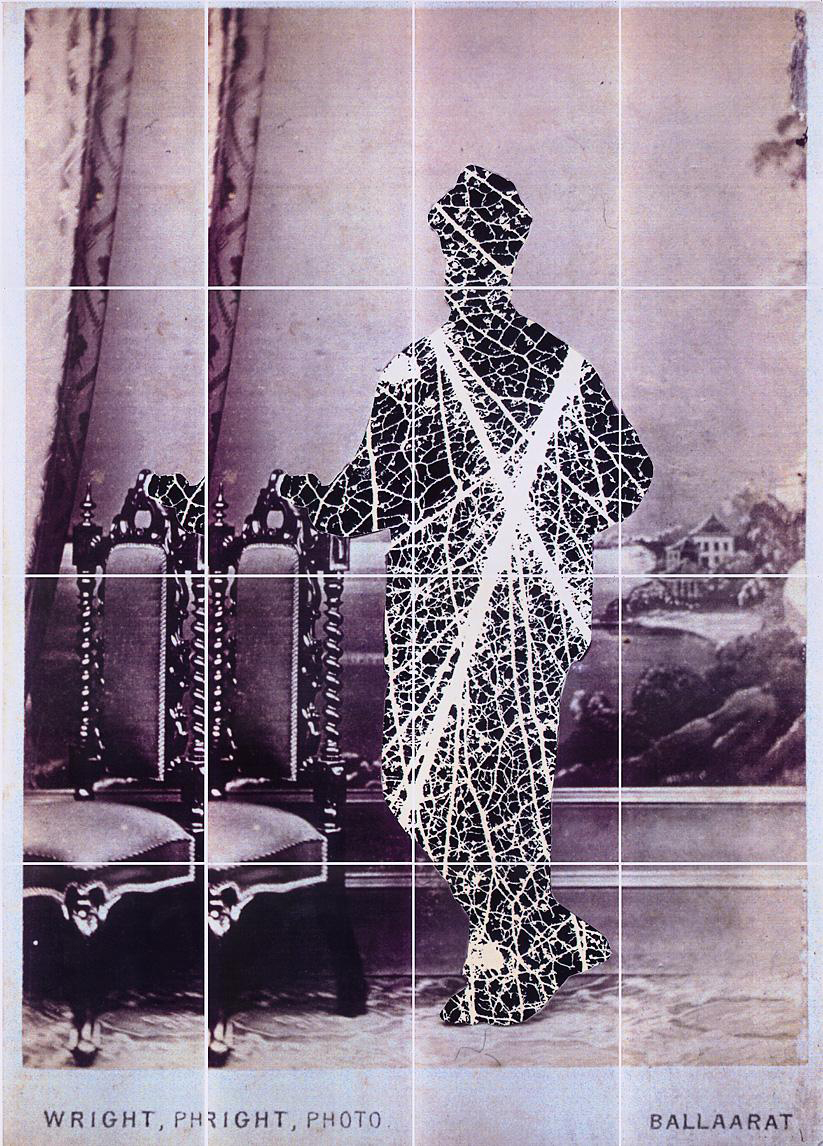
Sue Ford (Australian, 1943-2009) 'Shadow portraits' 1994 (detail)


Sue Ford (Australian, 1943-2009)
Shadow portraits (detail)
1994
Colour photocopies


Sue Ford (Australian, 1943-2009) 'Shadow portraits' 1994 (detail)


Sue Ford (Australian, 1943-2009)
Shadow portraits (detail)
1994
Colour photocopies


Sue Ford (Australian, 1943-2009) 'Shadow portraits' 1994 (detail)


Sue Ford (Australian, 1943-2009)
Shadow portraits (detail)
1994
Colour photocopies


For Shadow portraits, Ford, like numerous artists in this period, mined historical archives of photographs for her source material, decontextualising and reworking it. Her starting point was nineteenth-century studio portraits of settler Australians that were popular in colonial society. She exploded her previous practice and intense focus on the faces of individuals; in most cases the subjects of the original photographs used in Shadow portraits are unrecognisable. Their faces have been emptied out and replaced by Ford’s generic images of Australian foliage, especially fern fronds. All the details that define an individual, their character and appearance, have disappeared, just like the sitters themselves who have been dead for decades and exist only in ghosted form.

Individual works in Shadow portraits (above) rely on a dynamic relationship between historical and contemporary images to create something new. The original studio portrait is not intact, having undergone an extended process of transformation; being re-photographed, cut up and photocopied to eventually take the form of a large gridded image. Use of the grid – an obvious reference to European systems of containment and control – continues the experimentation evident in Yellowcake. Overlaps, like the doubled image of a stereoscopic card, are purposefully exploited. The aim is to destabilise a once-static historic image, to turn the small into big, the tones into colour, the positive into negative and so on. Through these means the colonial past is represented as having continuing reverberations: the loss of concreteness in the images and distortions of scale parallel the incompleteness, gaps and blow-outs characteristic of any historical narrative. As Zara Stanhope writes, Ford’s Shadow portraits ‘image the ongoing processes involved in the construction of histories, and the power to know and remember, that provides the opportunity to revisit or critique such accounts’.

Associate Professor Helen Ennis. “Sue Ford’s history,” in Art Journal 50, National Gallery of Victoria, 1 Jan 2013 [Online] Cited 11/05/2019


Sue Ford (Australian, 1943-2009) 'Ross, 1964; Ross, 1974' printed 1974 from the 'Time' series (1962-1974)


Sue Ford (Australian, 1943-2009)
Ross, 1964; Ross, 1974
Printed 1974
From the Time series (1962-1974)
Gelatin silver print
11.1 × 20.1cm
© Sue Ford


“I have always been interested in how actions taken in the past could affect and echo in peoples’ lives in the present. Most of my work is to do with thinking about human existence from this perspective.”

Sue Ford, “Project X’, in Helen Ennis & Virginia Fraser, Sue Ford: A Survey 1960-1995. Monash University Gallery, Clayton, 1995, p. 17


Sue Ford (Australian, 1943-2009) 'Big secret!' c. 1960-1961


Sue Ford (Australian, 1943-2009)
Big secret!
c. 1960-1961
Gelatin silver print
28.9 × 23.6cm
© Sue Ford


Sue Ford (Australian, 1943-2009) 'Orpheus' 1972


Sue Ford (Australian, 1943-2009)
Orpheus
1972
Gelatin silver print
33.8 × 33.8cm
© Sue Ford


A feminist approach

Until 1988 Ford was known principally for work that was motivated by feminist politics, that dealt with the lives of contemporary women and the politics of representation. She worked across media, using black and white photography, film and video. Her photography from the early 1960s onwards was based on what she regarded as photography’s objective capacity; in other words, she utilised the camera as a means of recording whatever she placed in front of it. This interest in ‘objectivity’ related more to the practices of conceptual art than to the heightened subjectivity, or subjective documentary that prevailed in art photography, especially during the seventies. Ford’s feminist photography can be regarded as objective but not as ‘documentary’ in the terms the latter is conventionally understood because there was nothing surreptitious or spontaneous about it. Her approach was non-exploitative and consensual in keeping with the politics of feminism and the counterculture. From the beginning of her career, her subjects were mostly friends and acquaintances; they knew they were being photographed and agreed to it. This consensual approach and its interrelated performative element were adopted by other feminist photographers, such as Carol Jerrems, Ponch Hawkes and Ruth Maddison, in their work during the 1970s.

In the 1970s and 80s Ford’s photography differed from mainstream practice in another fundamental way. It did not relate to the purist and fine art traditions that underpinned the case for photography’s acceptance as art. Her prints were grainy, rough and often very small. Ford conceived photography in radical terms, as a plastic medium that was entwined with other art practices. In an interview at the time she was awarded a scholarship to fund her studies at the Victorian College of the Arts in 1973-74, she emphasised her interest in artists’ use of photography: ‘Some artists are utilising phototechniques and are thinking in a photographic way. I want to use some of their techniques and materials to extend photography into other dimensions’.

Associate Professor Helen Ennis. “Sue Ford’s history,” in Art Journal 50, National Gallery of Victoria, 1 Jan 2013 [Online] Cited 11/05/2019


Sue Ford (Australian, 1943-2009) 'No title (Photogram of two hands and garden path)' c. 1970


Sue Ford (Australian, 1943-2009)
No title (Photogram of two hands and garden path)
c. 1970
Gelatin silver print
27.6 × 34.7cm irreg. (image and sheet)
© Sue Ford


LIKE ART BLART ON FACEBOOK

Back to top

Review: ‘Heavenly Vaults’ by David Stephenson at John Buckley Gallery, Richmond

Exhibition dates: 7th – 28th November, 2009


David Stephenson (Australian born America, b. 1955) 'Nave, Laon Cathedral, Laon, France' 2006/07 from the exhibition 'Heavenly Vaults' by David Stephenson at John Buckley Gallery, Richmond, Nov 2009


David Stephenson (Australian born America, b. 1955)
Nave, Laon Cathedral, Laon, France
2006/2007


I remember many years ago, in the mid-1990’s, seeing the wonderful Domes of David Stephenson displayed in Flinders Lane in what is now fortfivedownstairs gallery. They were a revelation in this light filled space, row upon row of luminous domes seemingly lit from within, filled with the sense of the presence of divinity. On the opposite wall of the gallery were row upon row of photographs of Italian graves depicting the ceramic photographic markers of Italian dead – markers of the impermanence of life. The doubled death (the representation of identity on the grave, the momento mori of the photograph) slipped quietly into the earth while opposite the domes ascended into heaven through their numinous elevation. The contrast was sublime.

Unfortunately the same cannot be said of the latest exhibition Heavenly Vaults by David Stephenson at John Buckley Gallery, Richmond.

The problems start with the installation of the exhibition. As you walk into the gallery the 26 Cibachrome photographs are divided symmetrically down the axis of the gallery so that the prints reflect each other at both ends and each side of the gallery. It is like walking down the nave of a cathedral and observing the architectural restraint of the stained glass windows without their illumination. Instead of the punctum of light flooding through the stained glass windows, the varying of intensities, the equanimity of the square prints all exactly the same size, all reflecting the position of the other makes for a pedestrian installation. Some varying of the print size and placement would have added much life and movement to a static ensemble.

Another element that needed work were the prints themselves which, with a few notable exceptions, seemed remarkably dull and lifeless (unlike their digital reproductions which, paradoxically, seem to have more life!). They fail to adequately represent the aspirations of the vaults as they soar effortlessly overhead transposing the earth bound into the heaven sent. In the earlier work on the domes (which can be found in the book Visions of Heaven: The Dome in European Architecture) the symmetry of the mandala-like domes with their light-filled inner illumination worked well with the square format of the images making the photographs stand as equivalents for something else, other ineffable states of being.

“The power of the equivalent, so far as the expressive-creative photographer is concerned, lies in the fact that he can convey and evoke feelings about things and situations and events which for some reason or other are not or can not be photographed. The secret, the catch and the power lies in being able to use the forms and shapes of objects in front of the camera for their expressive-evocative qualities. Or to say this in another way, in practice Equivalency is the ability to use the visual world as the plastic material for the photographer’s expressive purposes. He may wish to employ the recording power of the medium, it is strong in photography, and document. Or he may wish to emphasize its transforming power, which is equally strong, and cause the subject to stand for something else too.”1

As Minor White further observes,

“When the image mirrors the man
And the man mirrors the subject
Something might take over”2


When the distance between object and image and image and viewer collapses then something else may be revealed: Spirit.

In this exhibition some of the singular images such as the Crossings, Choirs and Nave of the Church of Santa Maria, Hieronymite Monastery, Belém, Portugal (see photograph below) work best to achieve this revelation. They transcend the groundedness of the earthly plane through their inner ethereal light using a reductive colour palette and strong highlight/shadow detail. Conversely the diptychs and triptychs of Nave and Choir (see photographs below and above) fail to impress. The singular prints pinned to the gallery wall are joined together to form pairs and trios but in this process the ‘space between’ the prints (mainly white photographic paper), the breathing space between two or more photographs that balances their disparate elements, the distance that Minor White calls ‘ice / fire’, does not work. There is no tension, no crackle, no visual crossover of the arches and vaults, spandrels and flutes. Here it is dead space that drags all down with it.

I found myself observing without engagement, looking without wonder or feeling – never a good sign!

The photographs of Domes and Vaults have served David Stephenson well for numerous years but the concept has become tired, the inspiration in need of refreshment through other avenues of exploration – both physical and spiritual.

Dr Marcus Bunyan


1/ White, Minor. “Equivalence: The Perennial Trend,” in PSA Journal, Vol. 29, No. 7, pp. 17-21, 1963 [Online] Cited 08/05/2019

2/ White, Minor. “Three Canons,” from Mirrors, Messages, Manifestations. Viking Press, 1969


Many thankx to Daniel and John Buckley Gallery for allowing me to reproduce the photographs from the exhibition. Please click on the photographs for a larger version of the image.


David Stephenson (Australian born America, b. 1955) 'Choir, Laon Cathedral, Laon, France' 2006/07 from the exhibition 'Heavenly Vaults' by David Stephenson at John Buckley Gallery, Richmond, Nov 2009


David Stephenson (Australian born America, b. 1955)
Choir, Laon Cathedral, Laon, France
2006/2007


David Stephenson (Australian born America, b. 1955) 'St. Hugh’s Choir, Lincoln Cathedral, Lincoln, England' 2006/07 from the exhibition 'Heavenly Vaults' by David Stephenson at John Buckley Gallery, Richmond, Nov 2009


David Stephenson (Australian born America, b. 1955)
St. Hugh’s Choir, Lincoln Cathedral, Lincoln, England
2006/2007


Installation view of 'Heavenly Vaults' by David Stephenson at John Buckley Gallery, Richmond


Installation view of Heavenly Vaults by David Stephenson at John Buckley Gallery, Richmond
Photo: Marcus Bunyan


David Stephenson (Australian born America, b. 1955) 'Nave, Cathedral of St. Barbara, Kutná Hora, Czech Republic' 2008/09


David Stephenson (Australian born America 1955)
Nave, Cathedral of St. Barbara, Kutná Hora, Czech Republic
2008/2009


David Stephenson (Australian born America, b. 1955) 'Choir, Cathedral of St. Barbara, Kutná Hora, Czech Republic' 2008/09


David Stephenson (Australian born America 1955)
Choir, Cathedral of St. Barbara, Kutná Hora, Czech Republic
2008/2009


“While the subject of my photographs has shifted… my art has remained essentially spiritual – furthermore than two decades I have been exploring a contemporary expression of the sublime – a transcendental experience of awe with the vast space and time of existence.”


David Stephenson


Internationally renowned photographer David Stephenson has dedicated his practice to capturing the sublime in nature and architecture. Fresh from a successful exhibition at Julie Saul Gallery in New York, Stephenson returns to John Buckley Gallery for his third highly anticipated exhibition Heavenly Vaults. The exhibition will feature 26 selected prints from his latest monograph published by Princeton Architectural Press; Heavenly Vaults: From Romanesque to Gothic in European Architecture. Shaun Lakin, Director of the Monash Gallery of Art, will launch the book and exhibition at the opening, November 7th.

Stephenson began to photograph Gothic vaults in Spain and Portugal in 2003, while completing the work for his Domes project, and his first monograph Visions of Heaven: the Dome in European Architecture. He began to focus on the Vaults project in 2006, photographing Gothic churches and cathedrals in England, Belgium and France. With the assistance of an Australia Council Artist Fellowship in 2008-2009, Stephenson completed extensive fieldwork for the Vaults project, intensively photographing Romanesque and Gothic architecture in Italy, France, Spain, Portugal, Austria, the Czech Republic, Poland, and Germany. The exhibition at John Buckley Gallery coincides with the launch of his second monograph, Heavenly Vaults: from Romanesque to Gothic in European Architecture, published by Princeton Architectural Press, New York.

Even though the traditional systems the underpinned church architecture have lost their unequivocal power, David Stephenson’s photographs capture the resonance of those times. More importantly his work also suggest that the feelings of aspiration, transcendence, and infinity these buildings evoke in the viewer have an ongoing relevance beyond the religious setting and help us understand who and what we are.

Excerpt from Foreword, Heavenly Vaults, by Dr Isobel Crombie 2009


David Stephenson’s new book of photography is a love letter to the intricate, seemingly sui generis vaults of Europe’s Romanesque and Gothic cathedrals and churches.

Press release from the John Buckley website [Online] Cited 11/11/2009 no longer available online


David Stephenson (Australian born America, b. 1955) 'Nave, Church of Santa Maria, Hieronymite Monastery, Belém, Portugal' 2008/09


David Stephenson (Australian born America, b. 1955)
Nave, Church of Santa Maria, Hieronymite Monastery, Belém, Portugal
2008/2009


‘While the subject of my photographs has shifted from the landscapes of the American Southwest and Tasmania, and the minimal horizons of the Southern Ocean, and the icy wastes of Antarctica, to sacred architecture and the sky at both day and night, my art has remained essentially spiritual – for more than two decades I have been exploring a contemporary expression of the sublime – a transcendental experience of awe with the vast space and time of existence.’

David Stephenson 1998.1


With poetic symmetry the Domes series considers analogous ideas. It is a body of work which has been ongoing since 1993 and now numbers several hundred images of domes in countries including Italy, Spain, Portugal, Turkey, England, Germany and Russia. The typological character of the series reveals the shifting history in architectural design, geometry and space across cultures and time, demonstrating how humankind has continually sought meaning by building ornate structures which reference a sacred realm.2 Stephenson photographs the oculus – the eye in the centre of each cupola. Regardless of religion, time or place, this entry to the heavens – each with unique architectural and decorative surround – is presented as an immaculate and enduring image. Placed together, the photographs impart the infinite variations of a single obsession, while also charting the passage of history, and time immemorial.

1. Van Wyk, S. 1998. “Sublime space: photographs by David Stephenson 1989-1998,” National Gallery of Victoria, Melbourne np
2. Hammond, V. 2005. “The dome in European architecture,” in Stephenson, D. 2005, Visions of heaven: the dome in European architecture, Princeton Architectural Press, New York p. 190

© Art Gallery of New South Wales Photography Collection Handbook, 2007


David Stephenson (Australian born America, b. 1955) 'Choir, King's College Chapel, Cambridge, England' 2006/07


David Stephenson (Australian born America, b. 1955)
Choir, King’s College Chapel, Cambridge, England
2006/2007


David Stephenson (Australian born America, b. 1955) 'Crossing, York Minster, York, England' 2006/07


David Stephenson (Australian born America, b. 1955)
Crossing, York Minster, York, England
2006/2007


John Buckley Gallery

This gallery is now closed.

LIKE ART BLART ON FACEBOOK

Back to top

Exhibition: ‘Thomas Demand in Berlin’ at the Neue Nationalgalerie, Berlin

Exhibition dates: 18th September, 2009 – 17th January, 2010


Thomas Demand. 'Diving Board' (Sprungturm)1994 from the exhibition 'Thomas Demand in Berlin' at the Neue Nationalgalerie, Berlin, Sept 2009 - Jan 2010


Thomas Demand (German, b. 1964)
Diving Board (Sprungturm)
1994
C-Print / Diasec
© Thomas Demand, VG Bild-Kunst, Bonn


“It’s not about the real place,” Demand has said. “It’s much more about what we have seen as the real place.”

All photographs in the posting appear in the exhibition.

A review of the catalogue that accompanied the exhibition can be found on the 5B4: Photographs and Books blog.

Dr Marcus Bunyan


Many thankx to the Neue Nationalgalerie for allowing me to publish the photographs in the posting. Please click on the photographs for a larger version of the image.


Thomas Demand (German, b. 1964) 'Brennerautobahn' 1994 from the exhibition 'Thomas Demand in Berlin' at the Neue Nationalgalerie, Berlin, Sept 2009 - Jan 2010


Thomas Demand (German, b. 1964)
Brennerautobahn
1994
C-Print/ Diasec
150 x 118 cm
© Thomas Demand, VG Bild-Kunst, Bonn


Thomas Demand (German, b. 1964) 'Tavern IV' 2006 Thomas Demand (German, b. 1964) 'Brennerautobahn' 1994 from the exhibition 'Thomas Demand in Berlin' at the Neue Nationalgalerie, Berlin, Sept 2009 - Jan 2010


Thomas Demand (German, b. 1964)
Klause IV / Tavern IV
2006
C-Print / Diasec
103 x 68 cm
© Thomas Demand, VG Bild-Kunst, Bonn


Thomas Demand (German, b. 1964) 'Bathroom' 1997


Thomas Demand (German, b. 1964)
Badezimmer / Bathroom
1997
C-Print / Diasec
160 x 122 cm
© Thomas Demand, VG Bild-Kunst, Bonn


Thomas Demand (German, b. 1964) 'Treppenhaus / Staircase' 1995


Thomas Demand (German, b. 1964)
Treppenhaus / Staircase
1995
C-Print/ Diasec
150 x 118 cm
© Thomas Demand, VG Bild-Kunst, Bonn


The Nationalgalerie presents Thomas Demand’s show National Gallery Berlin. From September 18, 2009, the Nationalgalerie – Staatliche Museen zu Berlin devotes a comprehensive solo show to one of the internationally most influential artists of our time: Thomas Demand. It is so far the largest presentation of his work in this country. However, the exhibition National Gallery is not designed as an overall retrospective but it is firmly dedicated to only one subject, which is perhaps the most important in Demand’s multi-facetted oeuvre: Germany.

Living in Berlin since 1996 Thomas Demand is an artist known for his large-format photographs, which explore the blank domain between reality and the ways it is being represented. He is undoubtedly regarded as one of the most renowned artists of his generation. Using paper and cardboard he builds three-dimensional, usually life-size models of places which often make references to pictures found in the mass media. By taking photographs of the scenery created in this way, he produces artefacts of a kind of their own which play with the beholder’s ideas of fiction and reality.

Until January, 17, 2010, about 40 works by the artist will be on display in the glass hall of the Neue Nationalgalerie built by Mies van der Rohe. There is hardly a location which is more suitable to convey to the beholder the panorama of a nation’s history than the large glass hall of the Neue Nationalgalerie, which is not only regarded as an incunabulum of post-war architecture but also as a symbol for the self-image of the Federal Republic of Germany at the former border between East and West. The exceptional exhibition architecture of the firm, Caruso St. John, London, forms an ideal link between Demand’s works and Mies van der Rohe’s bright hall.

Each picture shown in the exhibition is accompanied by a specific caption written by Botho Strauß which does not so much explain or define Demand’s work but rather creates a space between the pictures and the texts to allow new versions of interpretation.

Text from the New National Gallery website [Online] Cited 01/11/2009 no longer available online


Thomas Demand (German, b. 1964) 'Copyshop' 1999


Thomas Demand (German, b. 1964)
Copyshop
1999
C-Print / Diasec
© Thomas Demand, VG Bild-Kunst, Bonn


Thomas Demand (German, b. 1964) 'Drafting Room' 1996


Thomas Demand (German, b. 1964)
Drafting Room
1996
C-Print / Diasec
© Thomas Demand, VG Bild-Kunst, Bonn


Thomas Demand (German, b. 1964) 'Laboratory (77-E-217)' 2000


Thomas Demand (German, b. 1964)
Laboratory (77-E-217)
2000
C-Print / Diasec
© Thomas Demand, VG Bild-Kunst, Bonn


Thomas Demand (German, b. 1964) 'Haltestelle' 2009


Thomas Demand (German, b. 1964)
Haltestelle
2009
C-Print / Diasec, 240 x 330 cm
© Thomas Demand, VG Bild-Kunst, Bonn 2009


List of works that appear in the exhibition:

Archiv / Archive, 1995, C-Print/ Diasec, 183,5 x 233 cm
Attempt, 2005, C-Print/ Diasec, 166 x 190 cm
Badezimmer / Bathroom, 1997, C-Print/ Diasec, 160 x 122 cm
Balkone / Balconies, 1997, C-Print/ Diasec, 150 x 128 cm
Brennerautobahn, 1994, C-Print/ Diasec, 150 x 118 cm
Büro / Office, 1995, C-Print/ Diasec, 183.5 x 240 cm
Campingtisch / Camping Table, 1999, C-Print/ Diasec, 85 x 58 cm
Copyshop, 1999, C-Print/ Diasec, 183.5 x 300 cm
Drei Garagen / Three Garages, 1995, C-Print/ Diasec, 108 x 223 cm
Fabrik (ohne Namen), 1994, C-Print/ Diasec, 120 x 185 cm
Fassade / Facade, 2004, C-Print/ Diasec, 178 x 250 cm
Fenster / Window, 1998, C-Print/ Diasec, 183.5 x 286 cm
Fotoecke, 2009, C-Print/ Diasec, 180 x 198 cm
Gangway, 2001, C-Print/ Diasec, 225 x 180 cm
Grube / Pit, 1999, C-Print/ Diasec, 229 x 167 cm
Haltestelle, 2009, C-Print/Diasec, 240 x 330 cm
Heldenorgel, 2009, C-Print/Diasec, 240 x 380 cm
Hinterhaus, 2005, C-Print/ framed, 26.9 x 21.5 cm
Kabine, 2002, C-Print/ Diasec, 180 x 254 cm
Kinderzimmer /Nursery, 2009, C-Print/Diasec, 140 x 230 cm
Klause 1 / Tavern, 2006, C-Print/ Diasec, 275 x 170 cm
Klause 2 / Tavern, 2006, C-Print/ Diasec, 178 x 244 cm
Klause 3 / Tavern, 2006, C-Print/ Diasec, 199 x 258 cm
Klause 4 / Tavern, 2006, C-Print/ Diasec, 103 x 68 cm
Klause 5 / Tavern, 2006, C-Print/ Diasec, 197 x 137 cm
Labor (77-E-217), 2000, C-Print/ Diasec, 180 x 268 cm
Lichtung / Clearing, 2003, C-Print/ Diasec, 192 x 495 cm
Modell / Model, 2000, C-Print/ Diasec, 164,5 x 210 cm
Paneel / Peg Board, 1996, C-Print/ Diasec, 160 x 121 cm
Parlament / Parliament, 2009, C-Print/ Diasec, 180 x 223 cm
Raum / Room, 1994, C-Print/ Diasec, 183.5 x 270 cm
Sprungturm / Diving Board, 1994, C-Print/ Diasec, 150 x 118 cm
Spüle / Sink, 1997, C-Print/ Diasec, 52 x 56.5 cm
Studio, 1997, C-Print/ Diasec, 183.5 x 349.5 cm
Rasen / Lawn, 1998, C-Print/ Diasec, 122 x 170 cm
Terrasse / Terrace, 1998, C-Print/ Diasec, 183.5 x 268 cm
Treppenhaus / Staircase, 1995, C-Print/ Diasec, 150 x 118 cm
Wand /Mural, 1999, C-Print/ Diasec, 183.5 x 270 cm
Zeichensaal / Drafting Room, 1996, C-Print/ Diasec, 183.5 x 285 cm


Thomas Demand (German, b. 1964) 'Sink' 1997


Thomas Demand (German, b. 1964)
Sink
1997
C-Print / Diasec
© Thomas Demand, VG Bild-Kunst, Bonn


Thomas Demand (German, b. 1964) 'Tavern 3' 2006


Thomas Demand (German, b. 1964)
Tavern 3
2006
C-Print / Diasec
© Thomas Demand, VG Bild-Kunst, Bonn


Demand’s work is based on pre-existing images from the media, often of sites of political or cultural interest. He translates these images into life-size models using paper and cardboard, and photographs the resulting tableaux. These five photographs [of which the above is just one] depict a tavern in the German village of Burbach where a young boy was kidnapped, held hostage and ultimately murdered in 2001. His body was never recovered. The case was covered extensively in the German press, and images of the tavern became imbued with the public’s horrified imagination of the crime. Demand’s photographs investigate the traces these mediated images leave in the collective memory.

Tate Gallery label, April 2008


Thomas Demand (German, b. 1964) 'Archive' 1995


Thomas Demand (German, b. 1964)
Archive
1995
C-Print / Diasec
© Thomas Demand, VG Bild-Kunst, Bonn


Thomas Demand (German, b. 1964) 'Lawn' 1998


Thomas Demand (German, b. 1964)
Lawn
1998
C-Print / Diasec
122 x 170 cm
© Thomas Demand, VG Bild-Kunst, Bonn


Thomas Demand (German, b. 1964) 'Office' 1995


Thomas Demand (German, b. 1964)
Büro / Office
1995
C-Print / Diasec
183.5 x 240 cm
© Thomas Demand, VG Bild-Kunst, Bonn 2009


Thomas Demand (German, b. 1964) 'Gangway' 2001


Thomas Demand (German, b. 1964)
Gangway
2001
C-Print / Diasec
© Thomas Demand, VG Bild-Kunst, Bonn 2009


Thomas Demand (German, b. 1964) 'Attempt' 2005


Thomas Demand (German, b. 1964)
Attempt
2005
C-Print / Diasec
© Thomas Demand, VG Bild-Kunst, Bonn 2009


Thomas Demand (German, b. 1964) 'Balconies' 1997


Thomas Demand (German, b. 1964)
Balconies
1997
C-Print / Diasec
© Thomas Demand, VG Bild-Kunst, Bonn 2009


Neue Nationalgalerie
Potsdamer Straße 50
10785
Berlin
Kulturforum-Potsdamer Platz

Opening hours:
Tuesday – Sunday 10am – 6pm
Closed Mondays

Neue Nationalgalerie website

LIKE ART BLART ON FACEBOOK

Back to top