Exhibition dates: 15th September – 23rd October 2010
Many thankx to Yvonne Gomez and the Bruce Silverstein Gallery for allowing me to publish the photographs in the posting. Please click on the photographs for a larger version of the image.
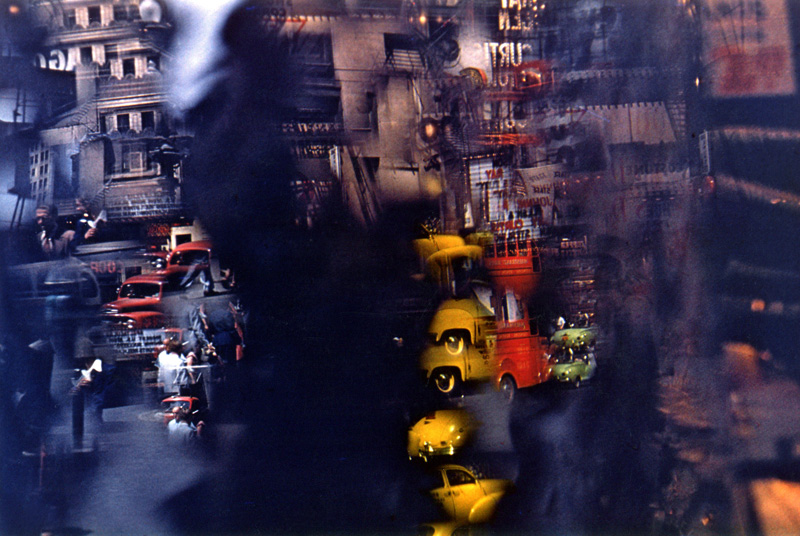
“If I had to do color and black and white simultaneously,” Morath recalled, “I’d finish one, then do [the other], trying not to think of both at the same time; the thinking is so different!”
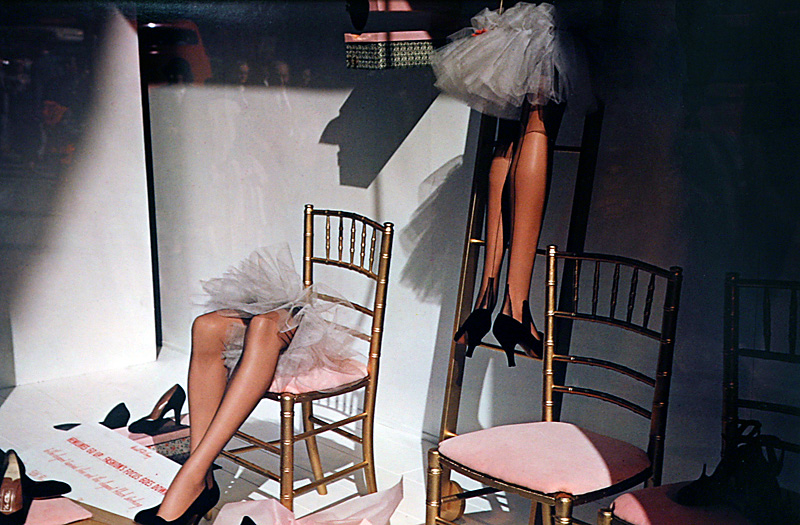
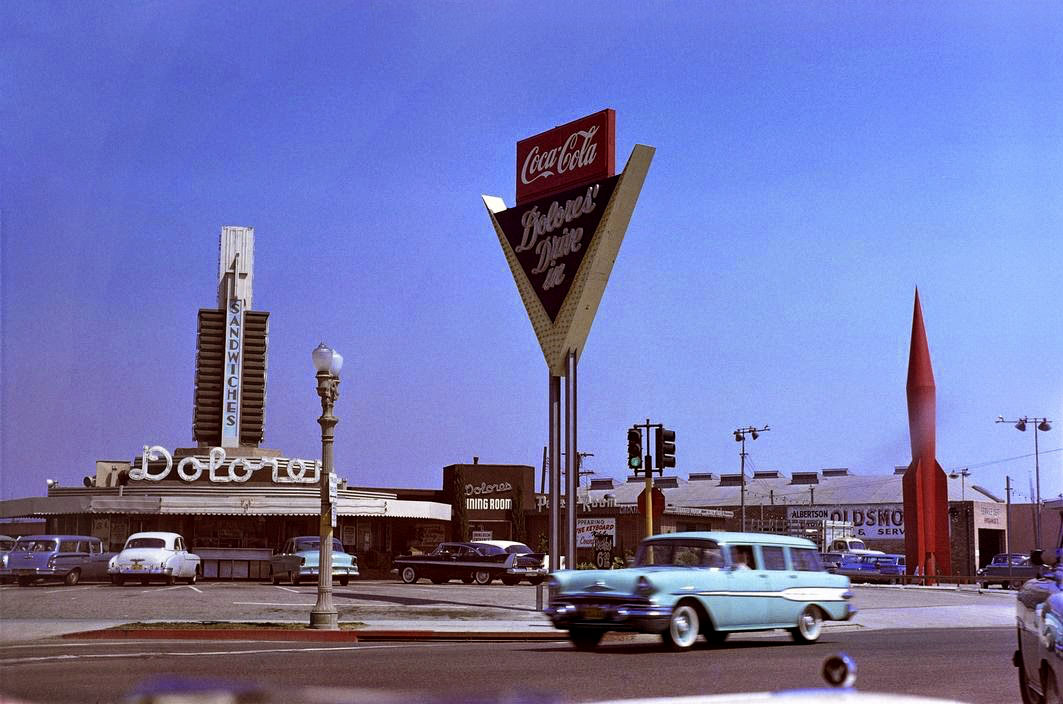
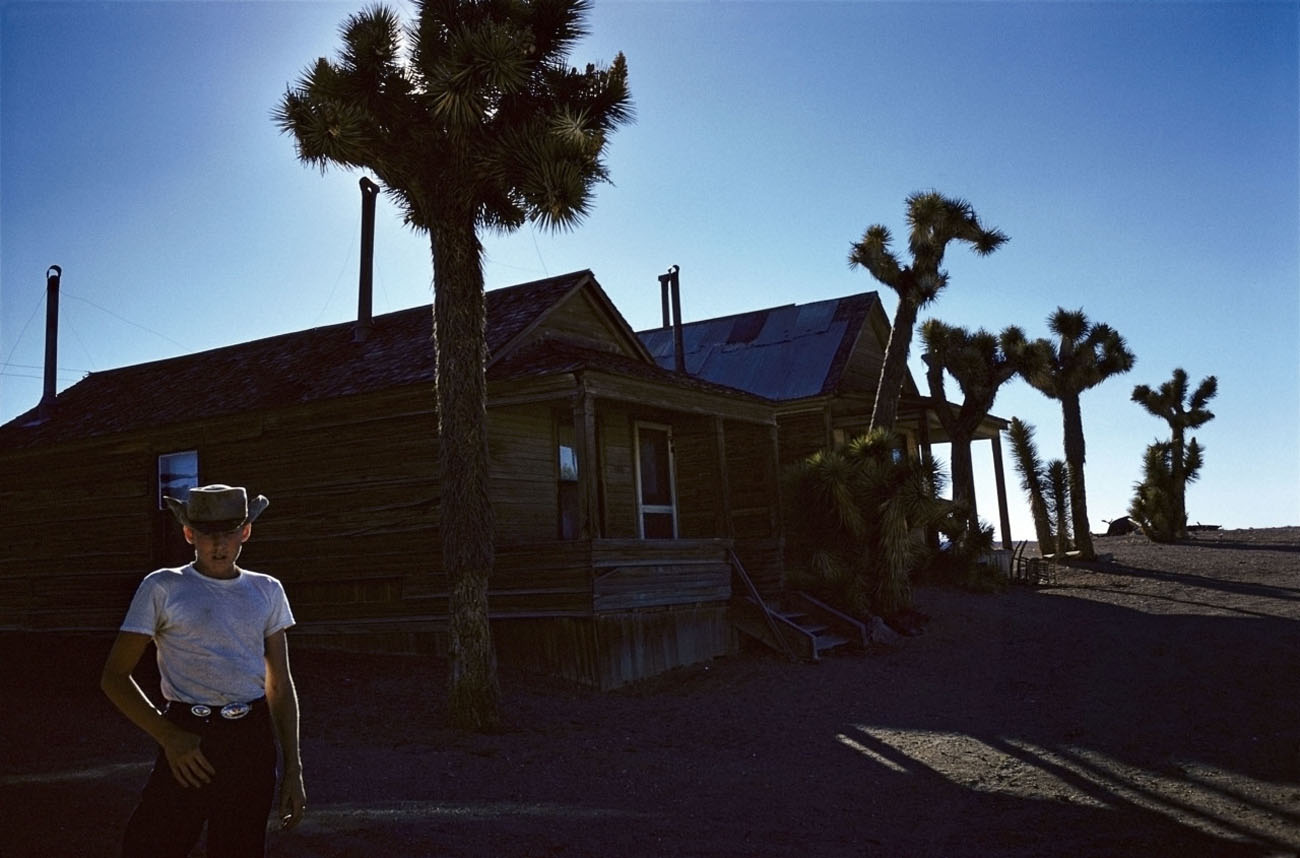
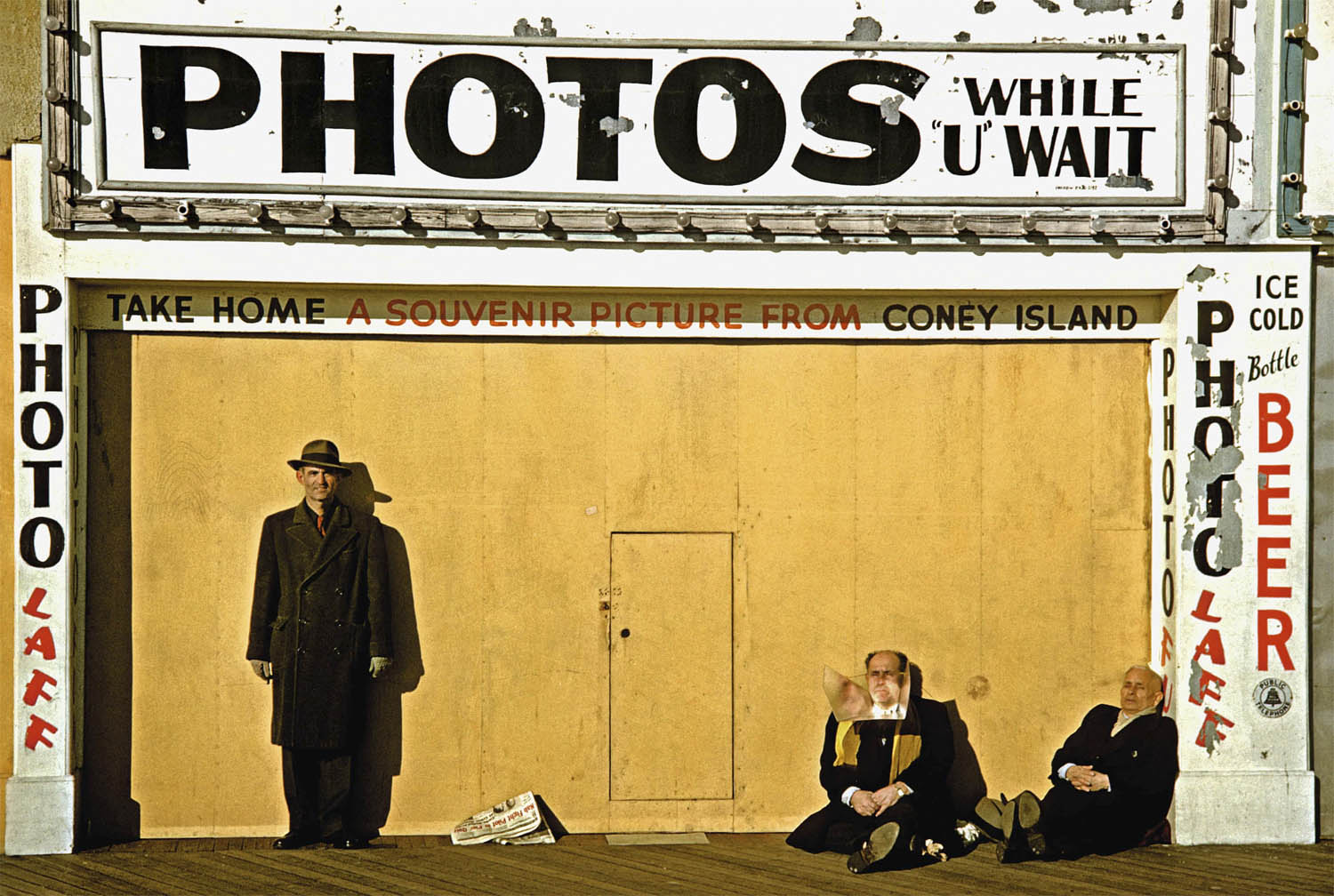
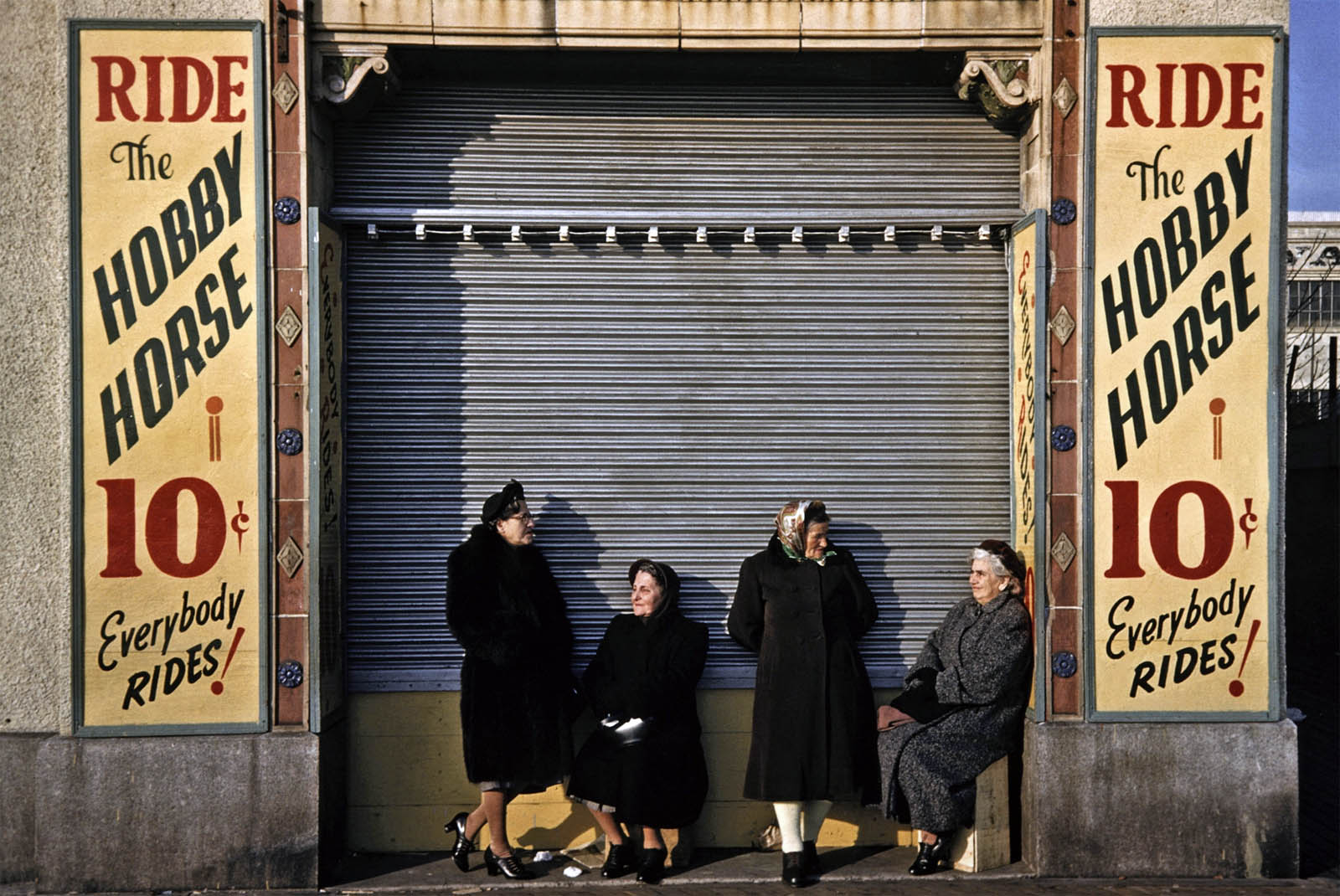
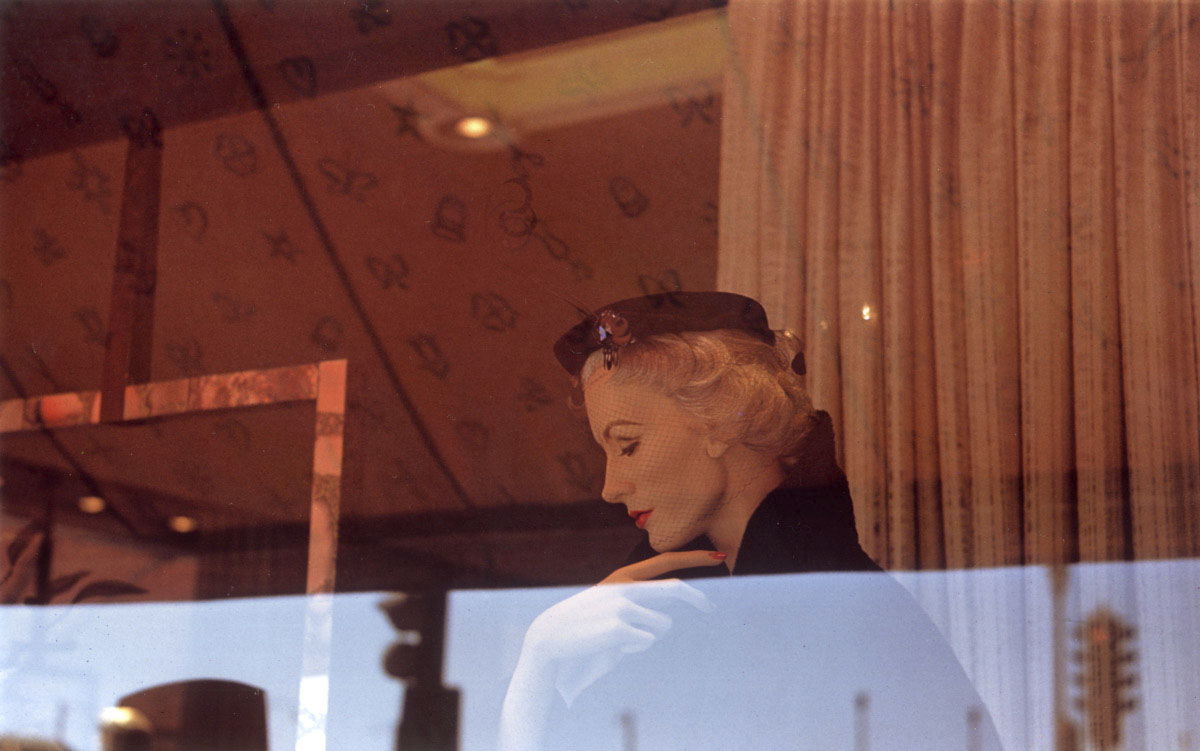
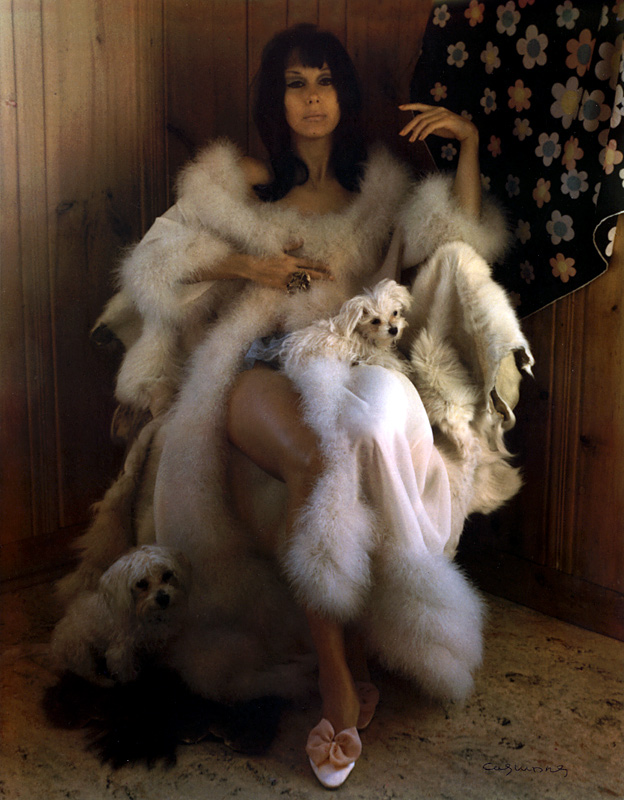
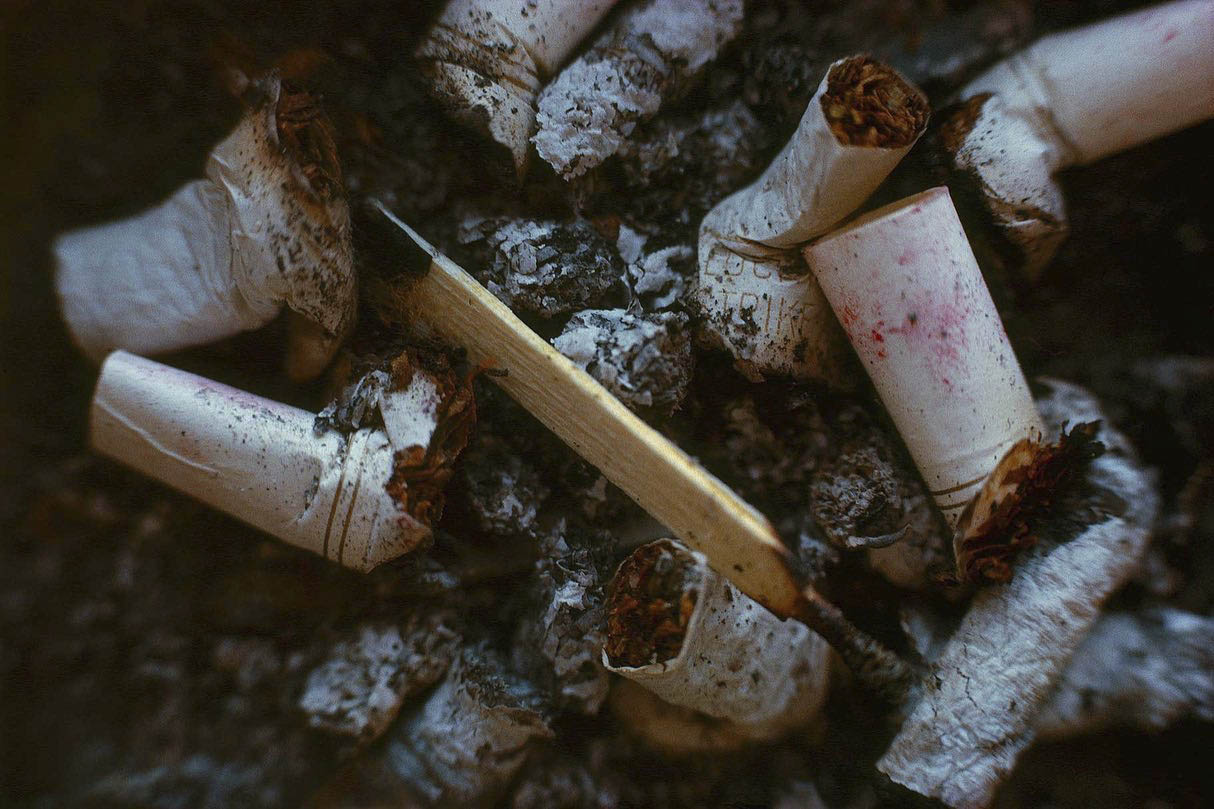
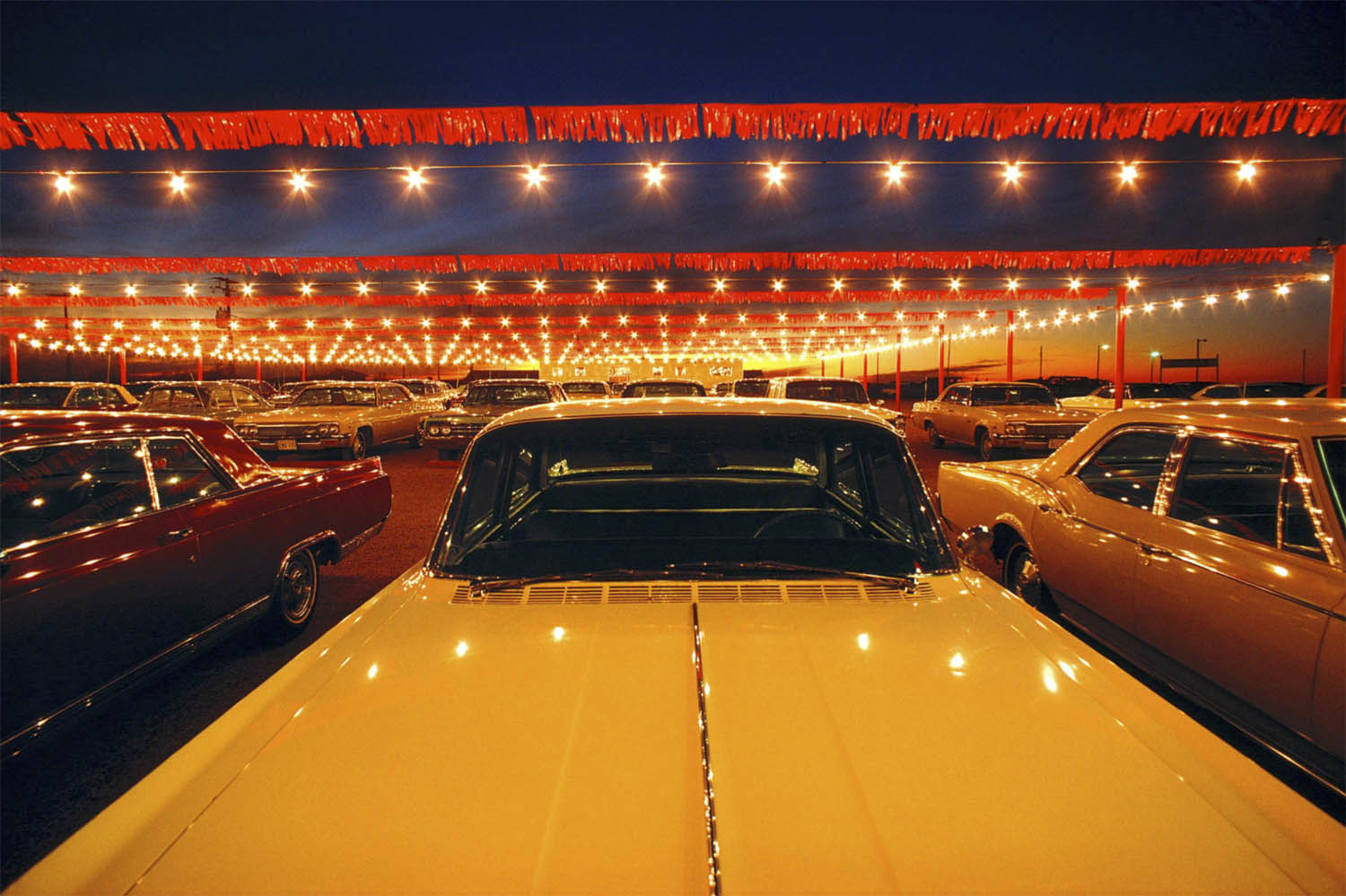
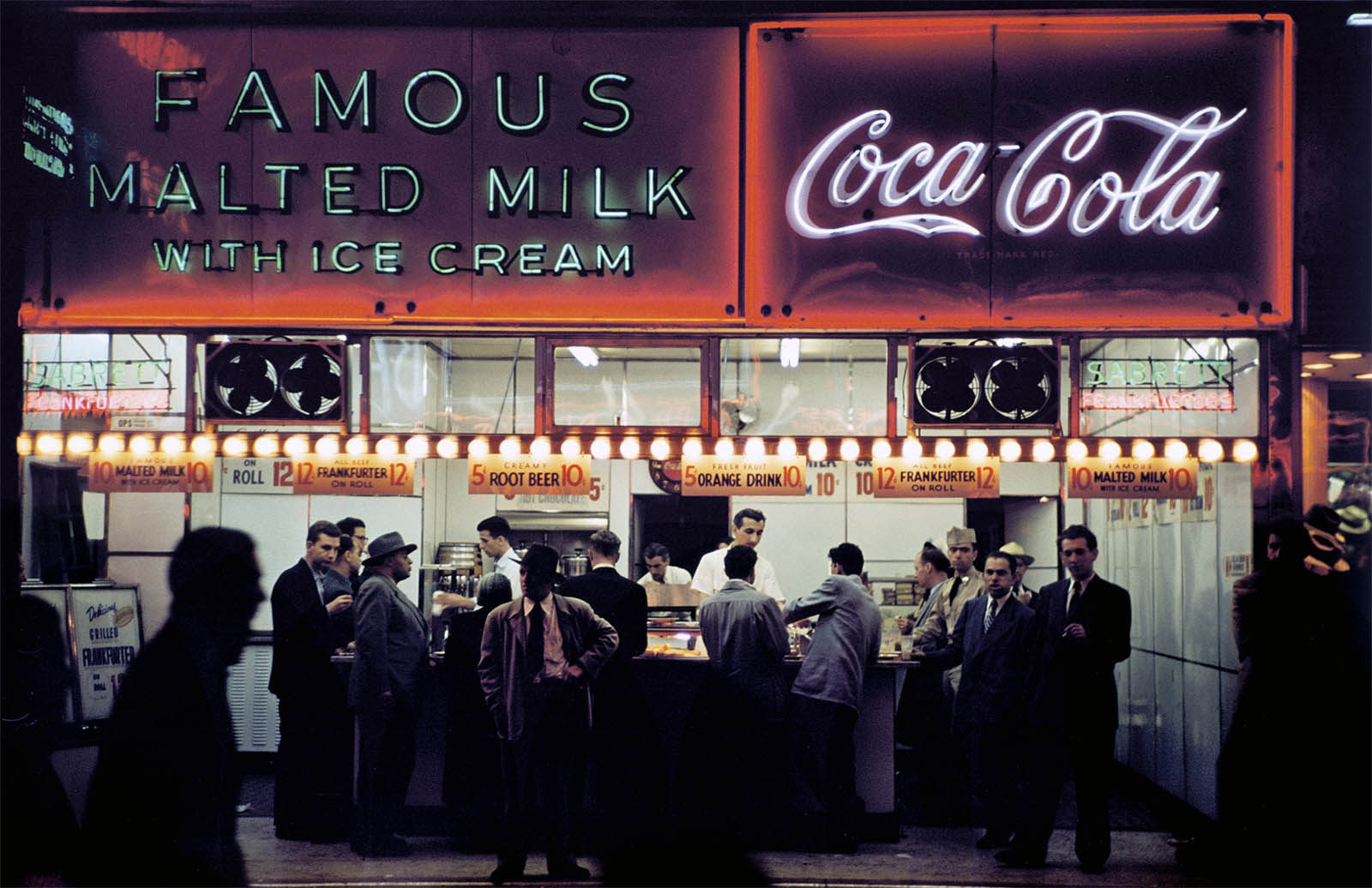
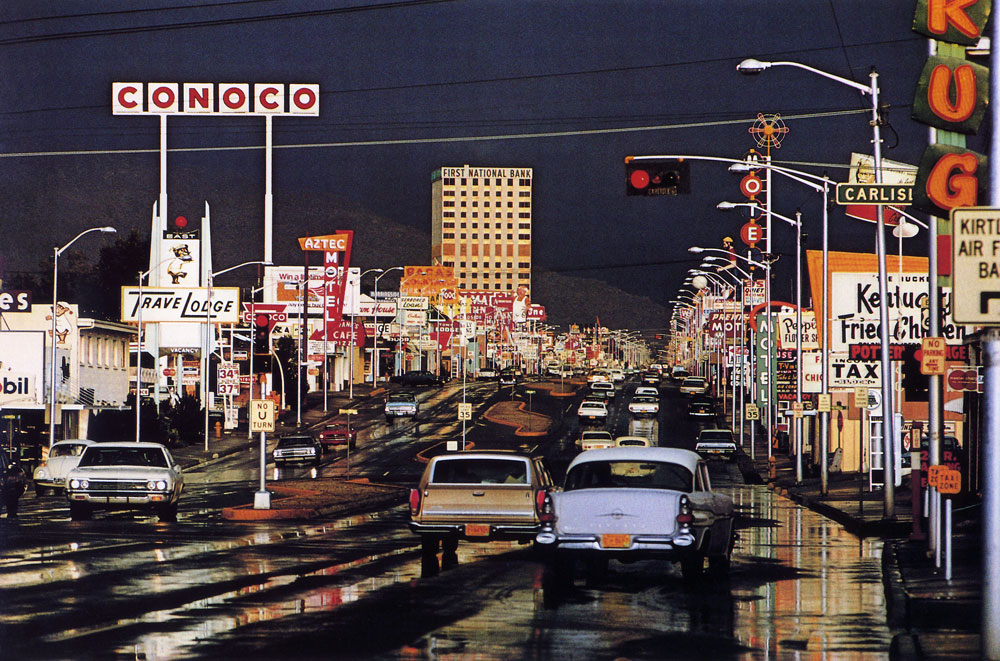
Bruce Silverstein Gallery is pleased to present, Beyond COLOR: Color in American Photography, 1950-1970, a re-examination of a pivotal period in photography’s short history, when the artistic relevance of color in fine art photography had yet to be determined. The exhibition unites works for the first time by many of the “first generation” practitioners of color photography including artists Marie Cosindas, Arthur Seigel, Harry Callahan, Eliot Porter, Saul Leiter, Marvin E. Newman, Pete Turner, Ruth Orkin and Ernst Haas. Other highlights include images exhibited for the first time by Magnum’s first female member, Inge Morath, as well as a special slide projection of color images by Garry Winogrand, images that were never printed by the artist. Beyond COLOR attempts to reclaim this moment of photographic history that only today has begun to receive critical attention.
After the conclusion of World War II, innovations in technology combined with the public’s desire to “see the world as it is” resulted in an explosion in the usage of color imagery by the mass media. By 1951, commercial color television broadcasting had begun, and in 1954, half of all American films were made in color. In the early 1960’s color imagery was so prevalent that National Geographic magazine introduced a new era when it became the first major American periodical to print an all-color issue. While color photography during this period was widely embraced by mass culture – advertising and journalism – it continued to suffer from second-class status in the fine art world when compared with images in black & white. For most in the fine art establishment, black & white photography represented the medium of choice, steeped in a century-old tradition it was easily accessible and affordable to artists, and possessed known archival stability. For this reason, few artists chose to work in color and even fewer produced finished prints. Although color works had begun to selectively appear in museum exhibitions, most notably at the Museum of Modern Art, where single artist exhibitions of works by Eliot Porter (1943), Ernst Haas (1962) and Marie Cosindas (1966) were displayed, academic and institutional attention and support for this new technology was scant.
Over the past forty years, work in color created by artists during this formative period has received little attention. Most critical analysis through writings and exhibitions have focused on color work created during the 1970’s and 1980’s after the now famous Museum of Modern Art exhibition, Photographs by William Eggleston (1976), curated by John Szarkowski. This MoMA exhibition set the groundwork for defining a new purpose for color photography – one that focused more on the conceptual implications of the photograph and its creation, and away from the formalistic attributes of the image as well as the attention to color itself. The effects of Eggleston’s exhibition and Szarkowski’s essay reverberate to this day.
With a certain distance from this era when color photography was new – its place in the art world no longer a question – this exhibition offers a crucial consideration of works created during this period and encourages a new perspective on the significance of these artists’ contributions to the history of photography.
Pete Turner (American, 1934-2017) Texascape 1968, printed c. 1976-1980 Signed with artist stamp on recto Dye transfer print Edition of 50 (#28/50) 6 x 9 in (15.24 x 22.86cm)
Many thankx to Rose Dahlsen and the Tate Modern for allowing me to publish the photographs in the posting. Please click on the photographs for a larger version of the image.
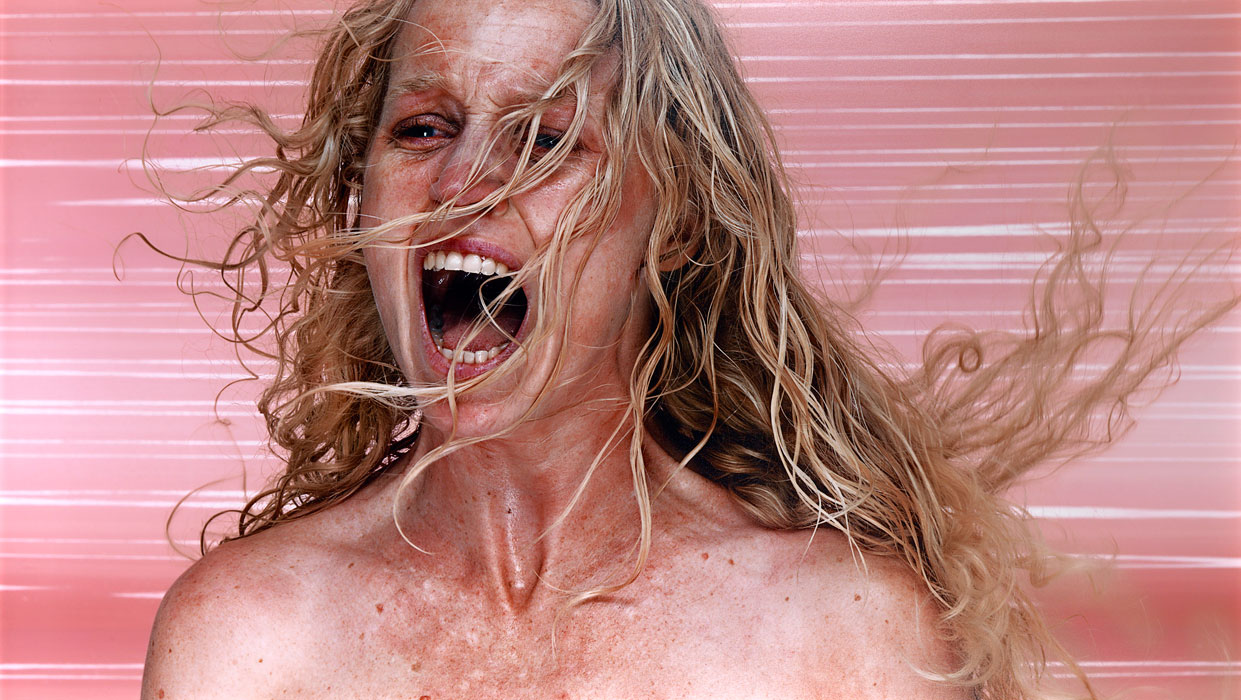
Philip-Lorca diCorcia (American, b. 1951) Head #23 2001 From the Head series
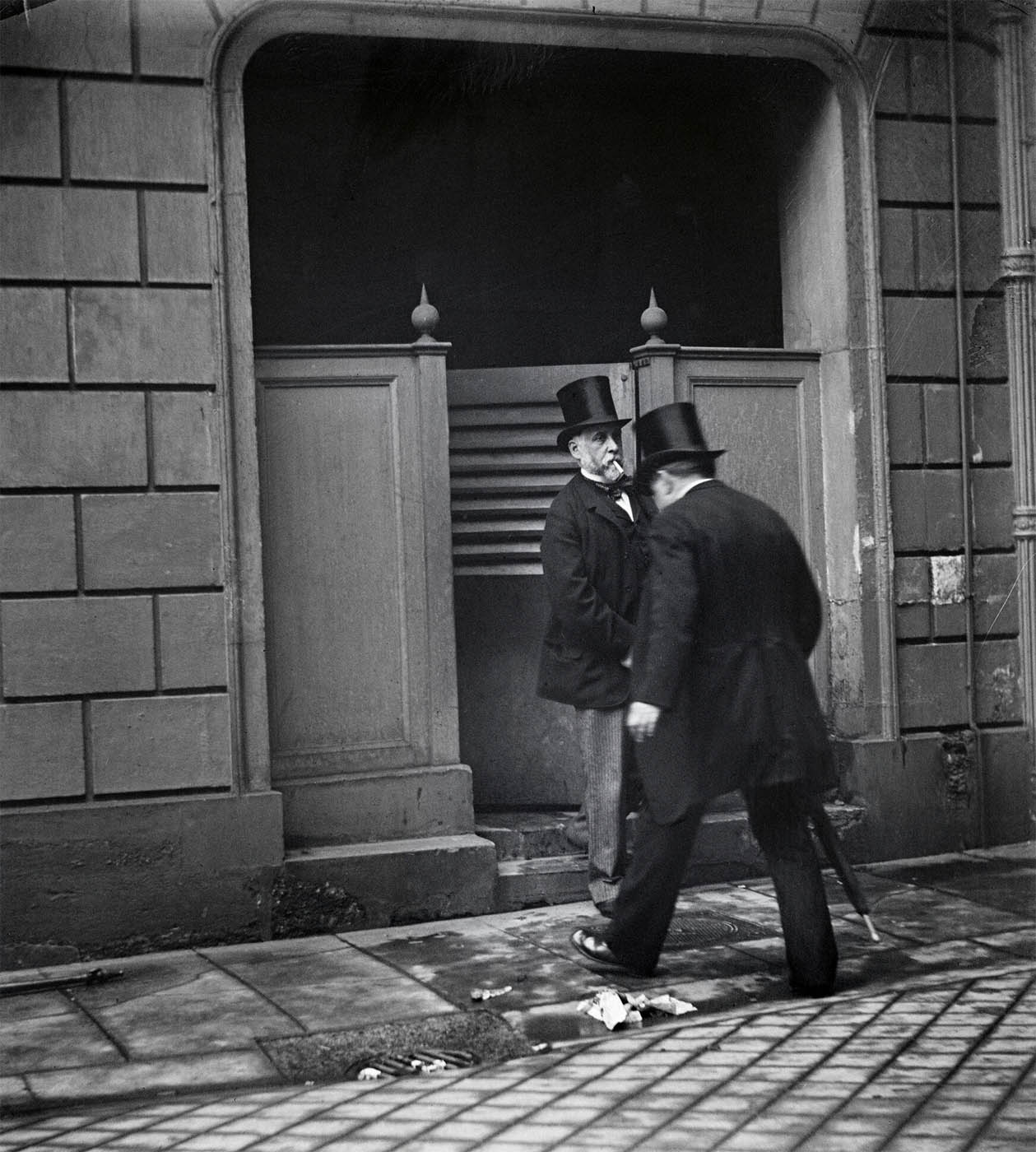
Examining photography as an invasive act immediately confronts the complacency with which we accept these invasions, encourage them even in our curiosity, and though it falters in parts and overwhelms in others (this is a huge exhibition), EXPOSED successfully addresses a number of the social, cultural and psychologically motivating factors behind these kinds of images – why we take them and why we look at them. Critical to this engagement is the wall text at the beginning, which states that most of the hundreds of photographs on display were taken without the subject’s knowledge. It is a distinctly creepy start.
Philip-Lorcia diCorcia’s Head series perhaps best embodies this conundrum. Visually they are not terribly shocking or even necessarily interesting. Theatrical lighting catches the head of someone in a crowd and the effect is of a staged encounter. In fact, these people, denominated variously as Head #23 or Head #4, were photographed without their knowledge by a series of hidden cameras, the flash triggering as they walked by. Famously, one of diCorcia’s unwitting targets tried to take legal action against him but the landmark ruling defended the artist and his right to self-expression over any right the subject might have over their own image. It is difficult to know which is worse – to be censored or to be spied upon.
Benjamin Lowy (American, b. 1979) Iraq Perspective II 2003-2007
US soldiers go on a late night raid with Iraqi Sunni Concerned citizens leading the way and identifying potential AQi targets. Due to a high level of IEDs in the area the company size raiding party walked 5 kilometres to the target in complete darkness, raided the target houses, detained questionable suspects and walked 5 kilometres back to waiting humvees.
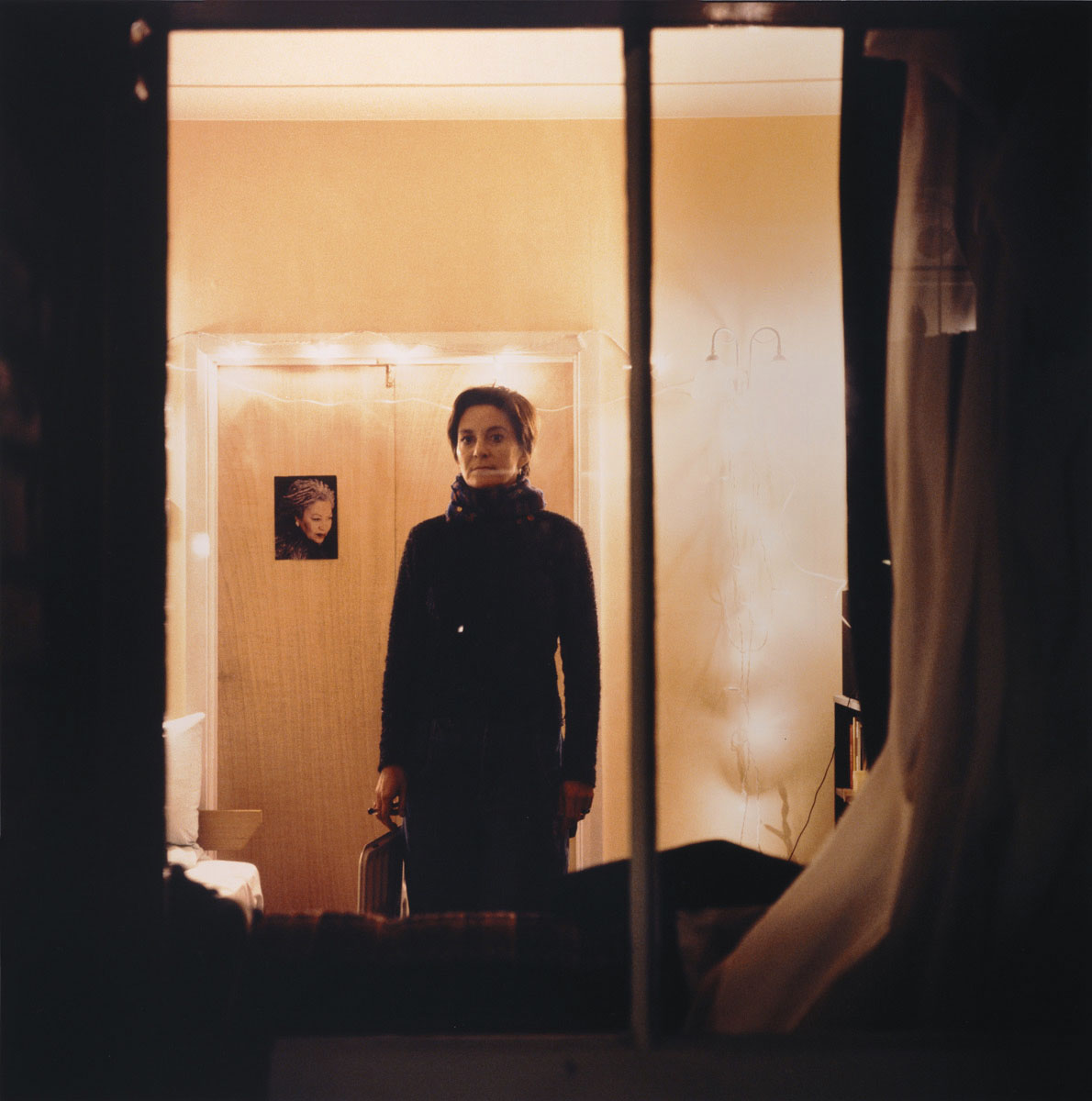
Sophie Calle (French, b. 1953) The Hotel, Room 47 (L’Hôtel, Chambre 47) 1981 2 works on paper, photographs and ink 2140 x 1420 mm Tate Presented by the Patrons of New Art through the Tate Gallery Foundation 1999
This is a two-part framed work comprising photographs and text. In the upper part, the title Room 47 is printed below a colour photograph of elegantly carved wooden twin head-boards behind a bed covered in rich brown satin. Below it, three columns of italic text are diary entries describing findings in the hotel room between Sunday 22 February 1981 and Tuesday 24. In the lower frame a grid of nine black and white photographs show things listed in the text above. This work is part of a project titled The Hotel, which the artist has defined:
“On Monday, February 16, 1981, I was hired as a temporary chambermaid for three weeks in a Venetian hotel. I was assigned twelve bedrooms on the fourth floor. In the course of my cleaning duties, I examined the personal belongings of the hotel guests and observed through details lives which remained unknown to me. On Friday, March 6, the job came to an end.” (Quoted in Calle, pp. 140-141.)
Each of the twelve rooms gave rise to a diptych of similar structure following the occupancy of one or more guests during the period of the artist’s employment at the hotel. Some rooms feature more than once as a second set of guests occupied them, giving rise to a total of twenty-one diptychs in the series. Calle’s descriptions of the hotel rooms and their contents combine factual documentation along with her personal response to the people whose lives she glimpsed by examining their belongings. Each text begins with the chambermaid / artist’s first entry into the room and a notation of which bed or beds have been slept in, with a description of the nightwear the guests have left. A list of objects usually follows, as the artist transcribes her activities in the room. Calle is unashamedly voyeuristic, reading diaries, letters, postcards and notes written or kept by the unknown guests, rummaging in suitcases, and looking into wardrobes and drawers. She sprays herself with their perfume and cologne, makes herself up using the contents of a vanity case, eats food left behind and salvages a pair of women’s shoes left in the bin. Outside the room, she listens at doors, recording the occupants’ conversations or any other sounds she may overhear, and even peers into a room when the floor-waiter opens the door to catch a glimpse of the unknown guests.
The absent occupants described in Room 47 are a family of four – two parents and two children – as revealed by their four pairs of slippers. Calle does not go through their suitcase, commenting: ‘I am already bored’. From their passports she discovers that the parents are a married couple from Geneva and she copies out four postcards one of them has written. Words on one of these hint at problems within the family.
Calle began her artistic projects in 1979 on returning to Paris after seven years’ travel abroad. Disorientated, she felt like a stranger in her own city, not knowing how to occupy her time. She started to follow random passers-by and spend her days as they did. Eventually she picked up the camera she had been experimenting with during her time abroad and photographed the strangers, writing diaristic notes of their movements. From this she has developed a particular way of working, collecting information about people who are absent and investigating her subjects like a detective. The Hotel follows directly from a project the artist undertook the previous year entitled Suite Venetienne 1980, which evolved from a chance encounter with a man she had been following in Paris. He told her he was going to Venice, so she followed him there in disguise, documenting her observations. After a year of planning and waiting, she returned to Venice in 1981 as a chambermaid.
The Hotel diptychs were produced in an edition of four in English and four in French. Tate’s copy of Room 47 (22 February) is the first in the English edition. Another version of Room 47 exists for the period 2-6 March.
Elizabeth Manchester June 2005
Text from the Tate website [Online] Cited 26/12/2019
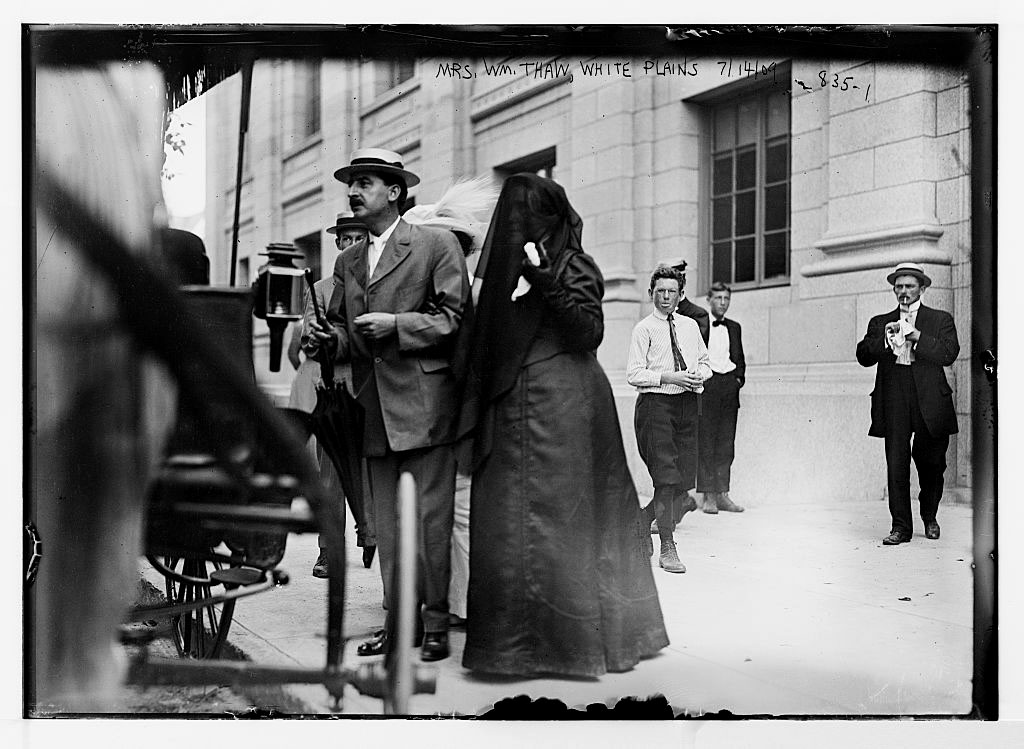
Unknown photographer Bain News Service, publisher Mrs. Wm. Thaw, veiled, on street, White Plains, N.Y. 1909 From a glass negative Library of Congress Prints and Photographs Division Washington, D.C.
Tom Howard (American, 1894-1961) [Electrocution of Ruth Snyder, Sing Sing Prison, Ossining, New York] 1928 Gelatin silver print Collection SFMOMA, Accessions Committee Fund purchase
In 1925, Ruth Snyder, a housewife from Queens, New York, took a lover, Judd Gray, a corsetmaker from upstate. Already married to Albert Snyder, an arts editor at MotorBoating magazine, she hid the affair for nearly three years. But on March 12, 1927, she and Gray planned a murder. After taking out a forged insurance policy, the two killed Ruth’s husband and staged a burglary scene. It didn’t take long for law enforcement to connect the dots, and a few months later, Gray and Snyder found themselves charged with first degree murder. The court case was front page news and both Ruth and Judd found themselves constantly photographed for ever-evolving stories. Sing Sing, not one to change policy for press, reinstated that no photographers were to be present at the execution. But the public wanted to see.
The New York Daily News knew that the prison was familiar with many journalists from their staff, so they hired someone from out of town, Tom Howard, a then-unknown local photographer from the Chicago Tribune. Knowing he would never be allowed in with a camera, Howard strapped a single-use camera to his right ankle and wired a trigger release up his pant leg. Remarkably, he was allowed in. From across the room, Howard pointed his toe at the chair and took but one photo as Snyder took her last breaths.
The camera was rushed to the city and the film developed overnight. Editors and writers marveled at what was to be one of the most shocking photographs ever made: Snyder in the chair, the legs of the prison guard to the right. The image, shot on an angle, was cropped and published immediately with the headline: Dead!
The black-and-white image was shocking to the U.S. and international public alike. There sat a 32-year-old wife and mother, killed for killing. Her blurred figured seemed to evoke her struggle, as one can imagine her last, strained breaths. Never before had the press been able to attain such a startling image – one not made in a faraway war, one not taken of the aftermath of a crime scene, but one capturing the very moment between life and death here at home.
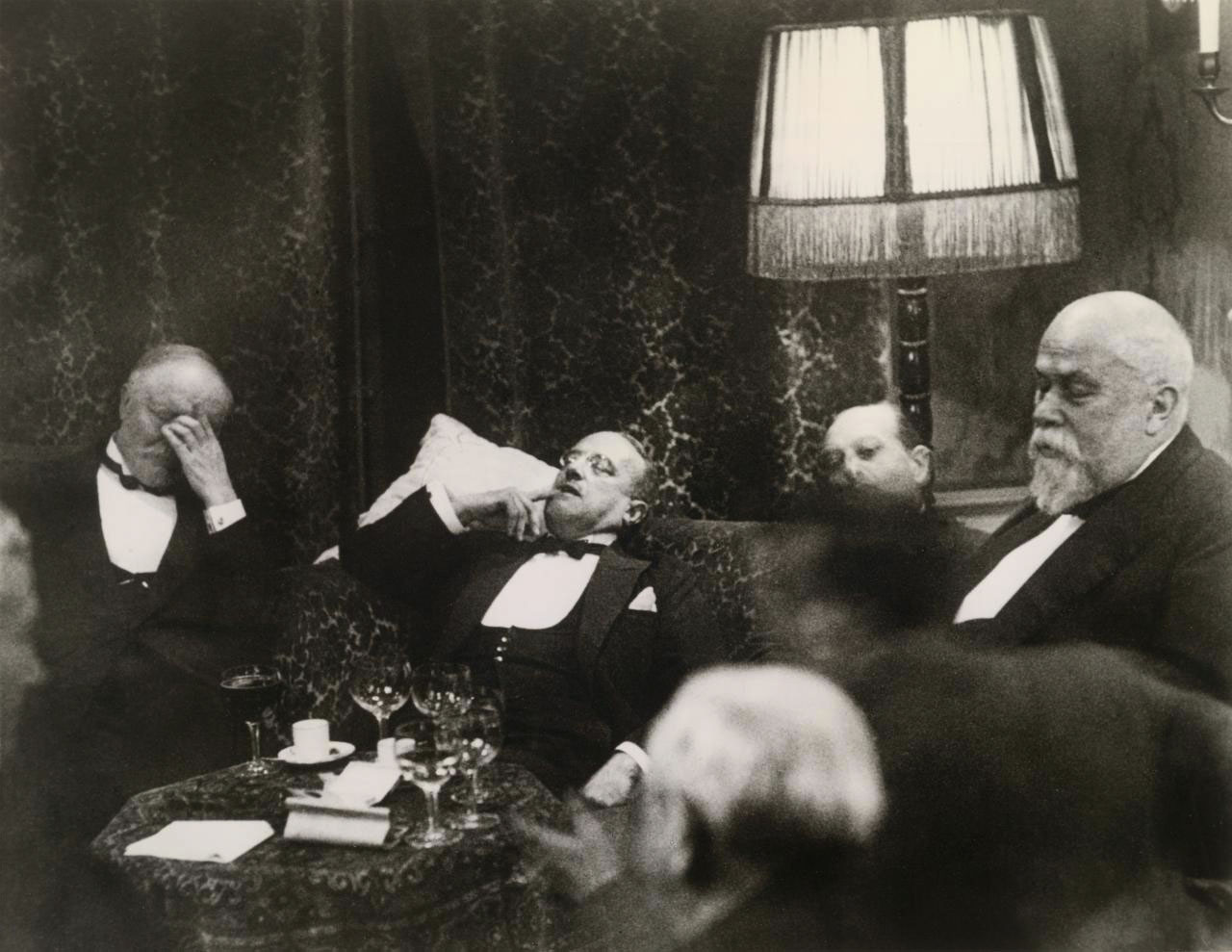
Erich Salomon (German Jewish, 1886-1944) Hague Conference (Second Hague Conference on Reparations, January 1930, in the early morning hours) 1930 Promised gift of Paul Sack to the Sack Photographic Trust of the San Francisco Museum of Modern Art
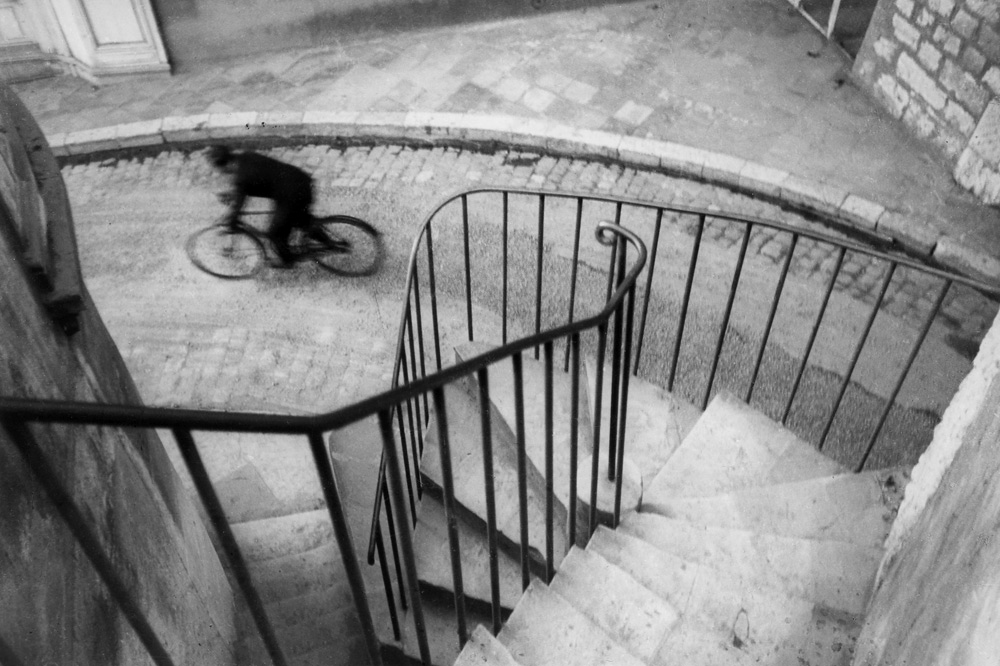
Henri Cartier Bresson (French, 1908-2004) Hyeres, France 1932 Gelatin silver print
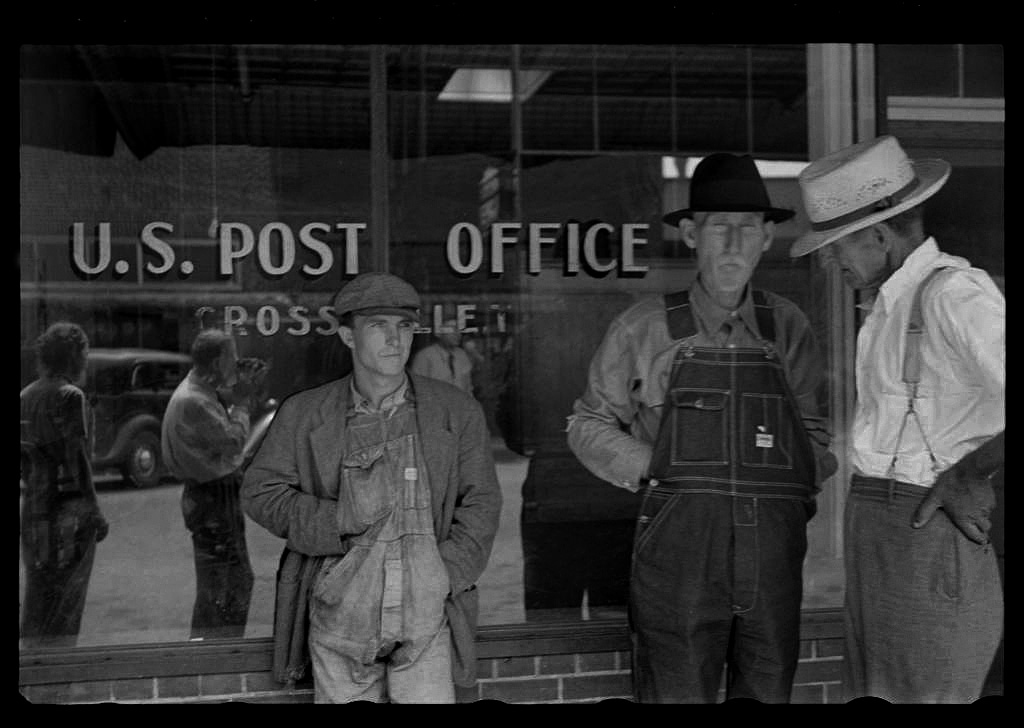
Ben Shah (American, 1898-1969) Post Office, Crossville, Tennesse 1937 Gelatin silver print
Ben Shahn visible using his right-angled lens in the window reflection
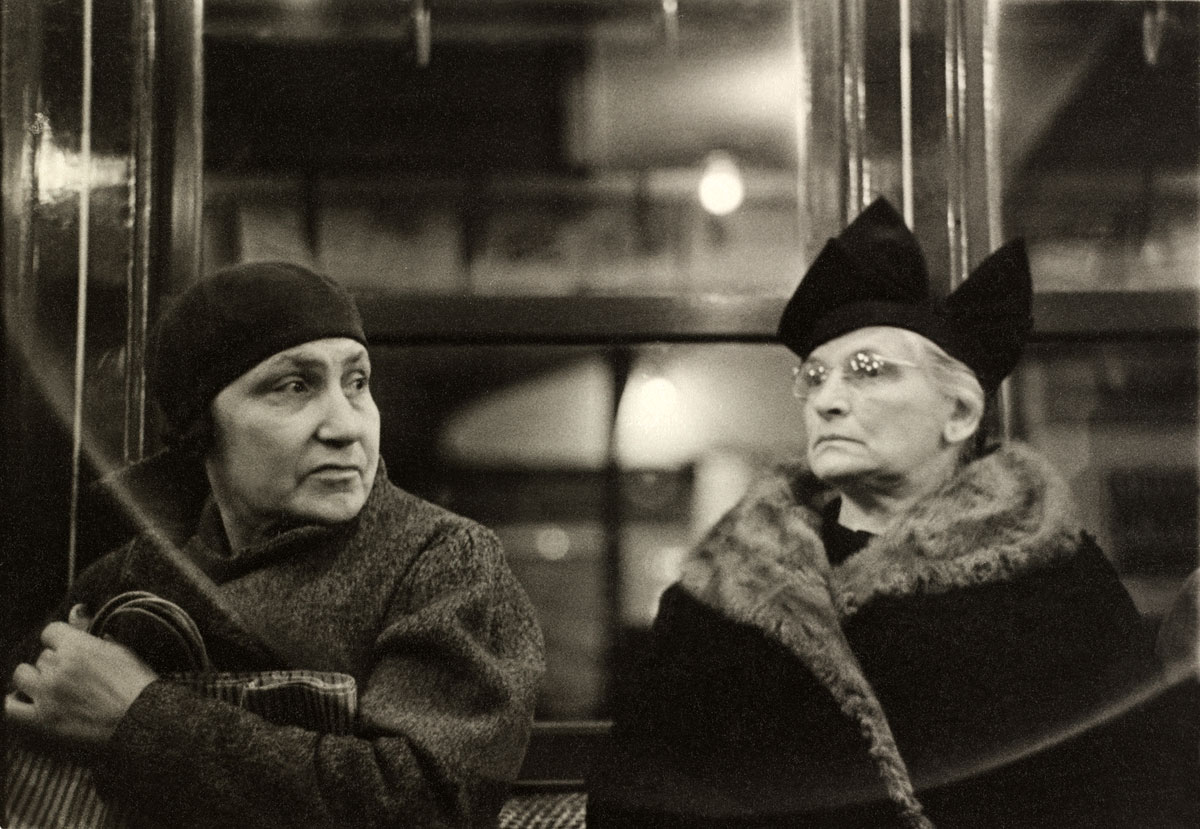
Walker Evans (American, 1903-1975) Subway Passengers, New York 1938 Gelatin silver print
Walker Evans (American, 1903-1975) Subway Passengers, New York 1938-1941 Gelatin silver print
Weegee (Arthur H. Fellig) (American, 1899-1968) Their First Murder Before 1945 Gelatin silver print
“Brooklyn School Children see Gambler Murdered in Street Pupils were leaving P.S. 143, [Sixth Ave. and Roebling St.] in the Williamsburg section of Brooklyn, at 3:15 yesterday when Peter Mancuso, 22, described by police as a small time gambler, pulled up in a 1931 Ford at a traffic light a block from the school. Up to the car stepped a waiting gunman, who fired twice and escaped through the throng of children. Mancuso, shot through the head and heart, struggled to the board and collapsed dead on the pavement. Above are some of the spectators. The older woman is Mancuso’s aunt, who lives in the neighborhood, and the boy tugging at the hair of the girl in front of him is her son, hurrying away from her. Below is what they saw as a priest, flanked by an ambulance doctor and a detective, said the last rites of the Church over the body.” PM Daily, October 9, 1941, Vol. II, No. 82, p. 15
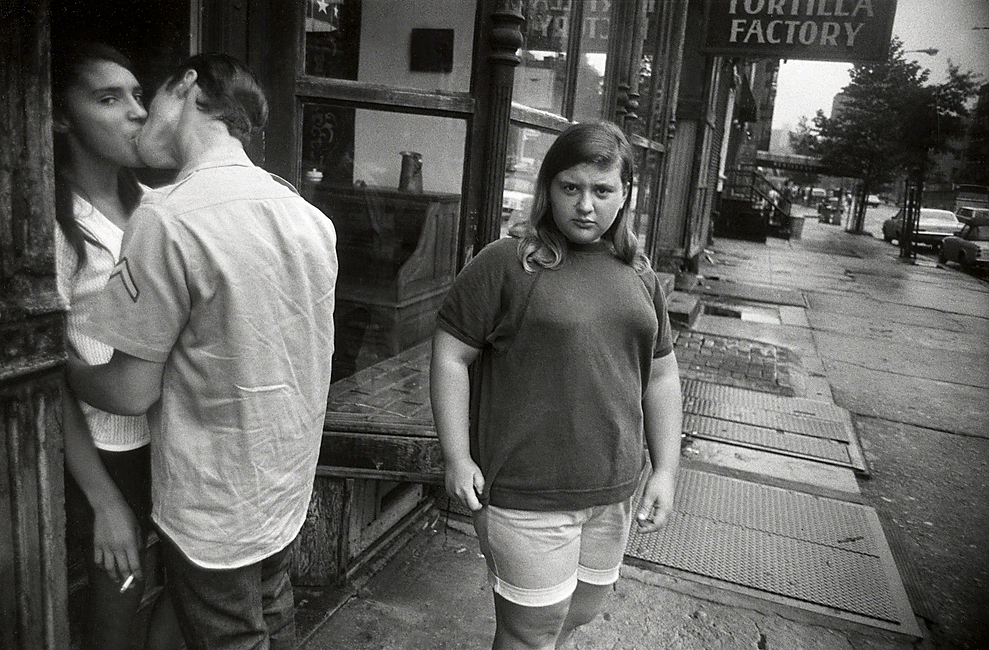
Lee Friedlander (American, b. 1934) New York City 1966 Gelatin silver print
Vito Acconci (Italian, 1940-2017) Following Piece 1969 Gelatin silver prints
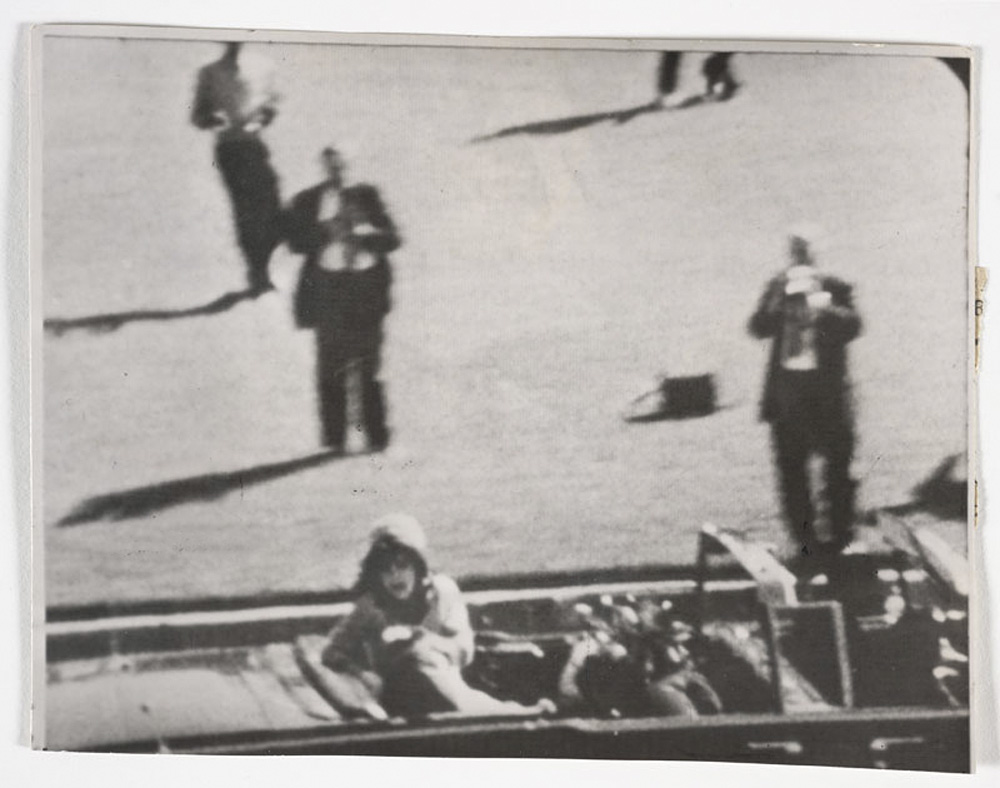
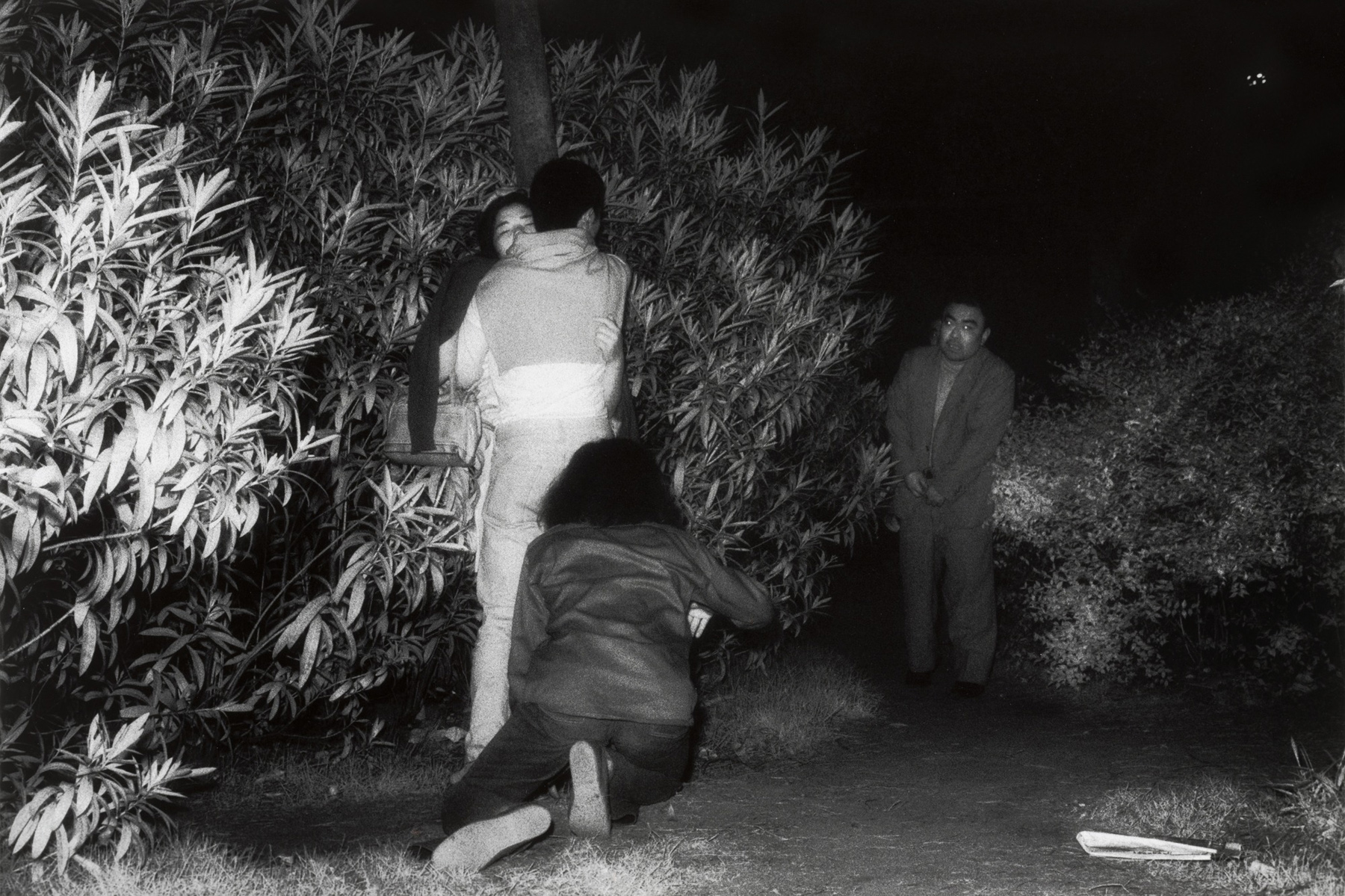
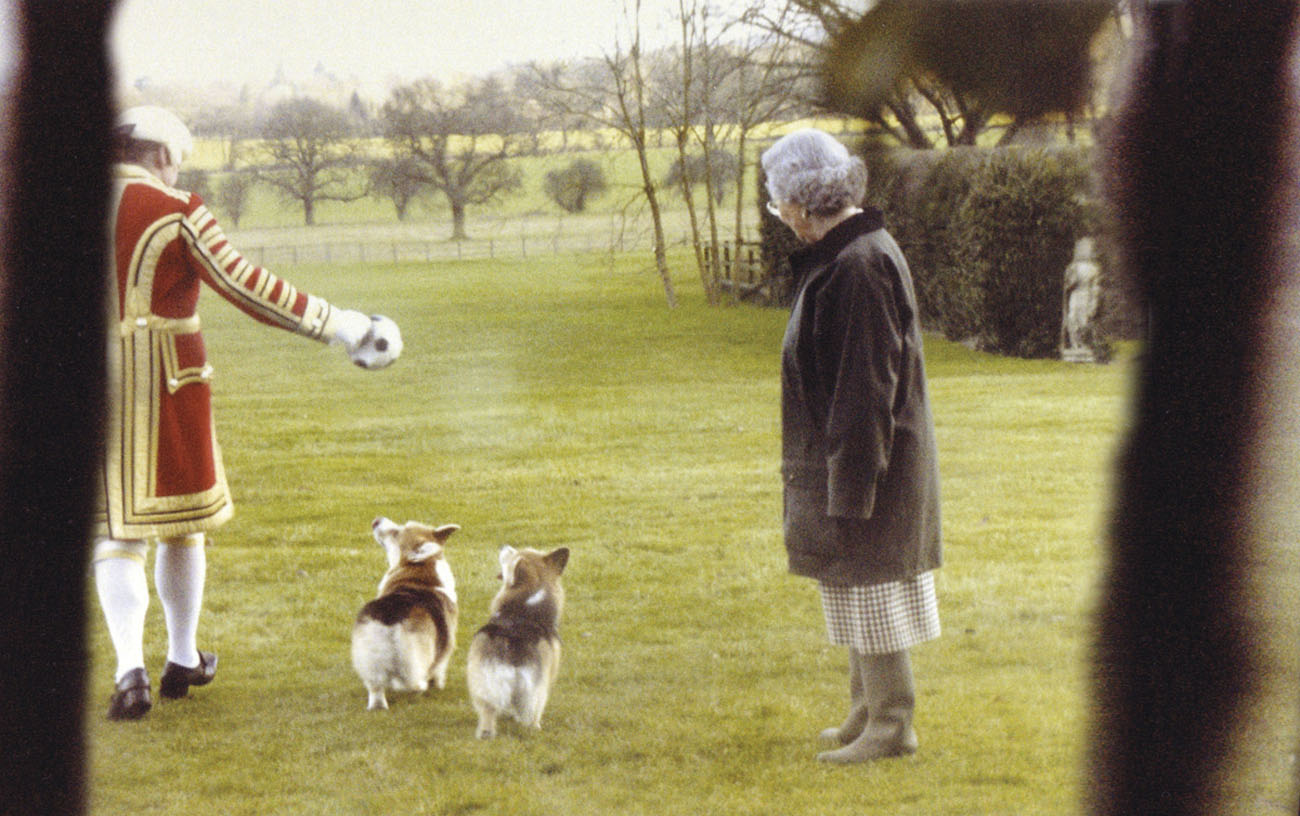
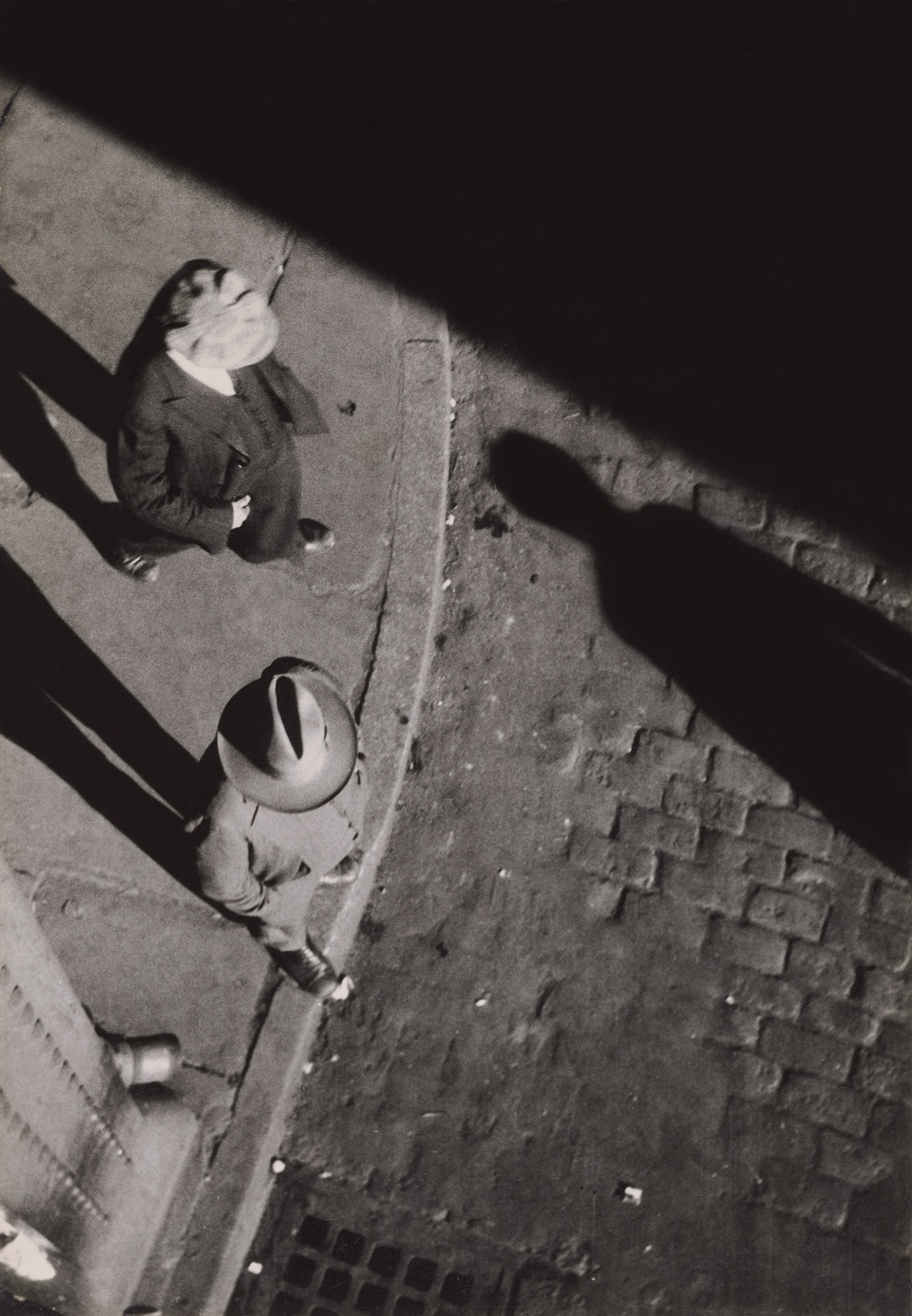
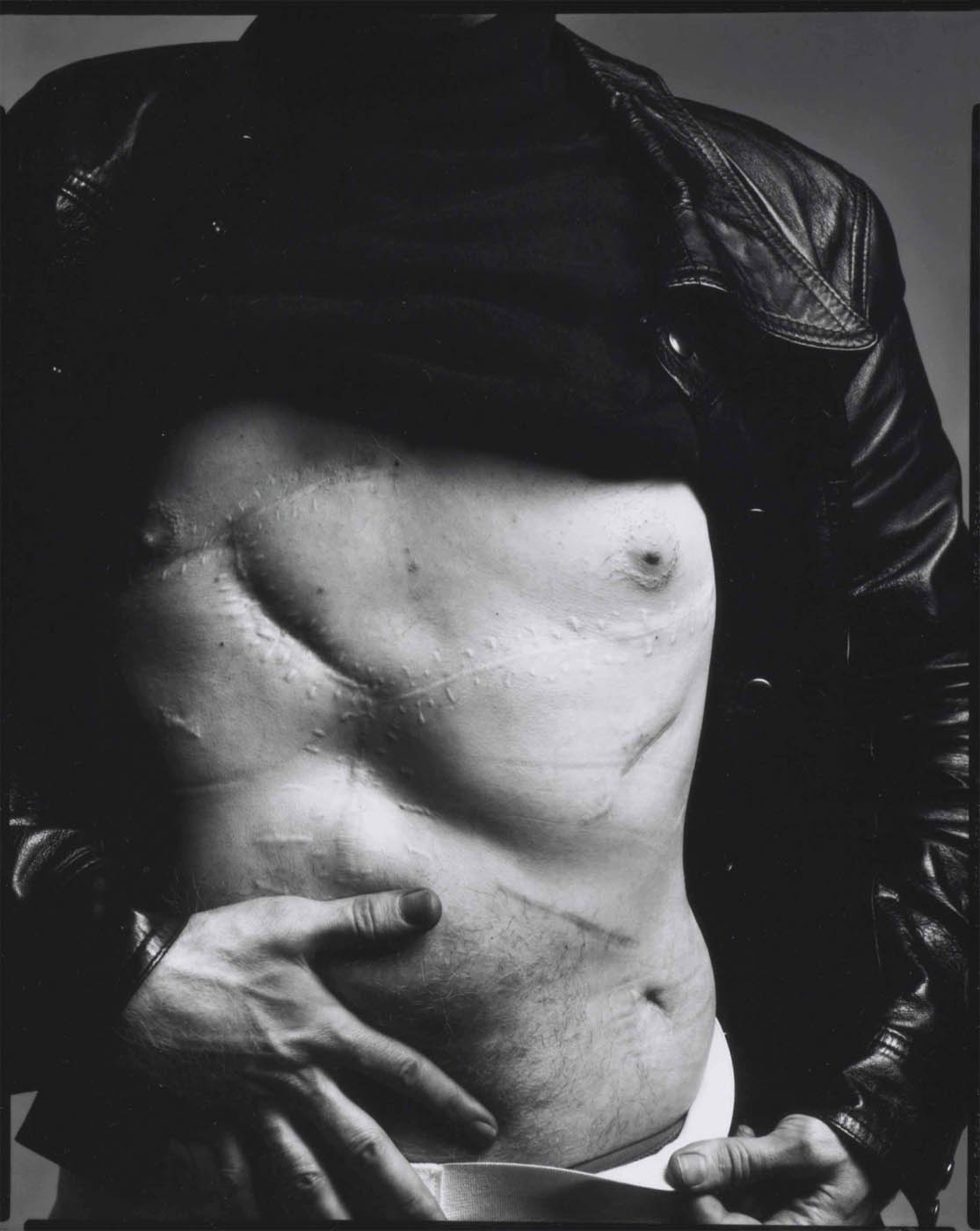
Exposed offers a fascinating look at pictures made on the sly, without the explicit permission of the people depicted. With photographs from the late nineteenth century to present day, the pictures present a shocking, illuminating and witty perspective on iconic and taboo subjects.
Beginning with the idea of the ‘unseen photographer’, Exposed presents 250 works by celebrated artists and photographers including Brassaï’s erotic Secret Paris of the 1930s images; Weegee’s iconic photograph of Marilyn Monroe; and Nick Ut’s reportage image of children escaping napalm attacks in the Vietnam War. Sex and celebrity is an important part of the exhibition, presenting photographs of Liz Taylor and Richard Burton, Paris Hilton on her way to prison and the assassination of JFK. Other renowned photographers represented in the show include Guy Bourdin, Henri Cartier-Bresson, Philip Lorca DiCorcia, Walker Evans, Robert Frank, Nan Goldin, Lee Miller, Helmut Newton and Man Ray.
The UK is now the most surveyed country in the world. We have an obsession with voyeurism, privacy laws, freedom of media, and surveillance – images captured and relayed on camera phones, YouTube or reality TV.
Much of Exposed focuses on surveillance, including works by both amateur and press photographers, and images produced using automatic technology such as CCTV. The issues raised are particularly relevant in the current climate, with topical debates raging around the rights and desires of individuals, terrorism and the increasing availability and use of surveillance. Exposed confronts these issues and their implications head-on.
Text from the Tate Modern website [Online] Cited 21/09/2010 no longer available online
Kohei Yoshiyuki (Japan, b. 1946) Untitled 1971 From the series The Park Gelatin silver print
Kohei Yoshiyuki (Japan, b. 1946) Untitled 1971 From the series The Park Gelatin silver print
Sandra Phillips on Surveillance – Exposed at Tate Modern
SFMOMA’s Curator of Photography Sandra Phillips describes how contemporary artists like Sophie Calle and Benjamin Lowry have started to talk back to surveillance.
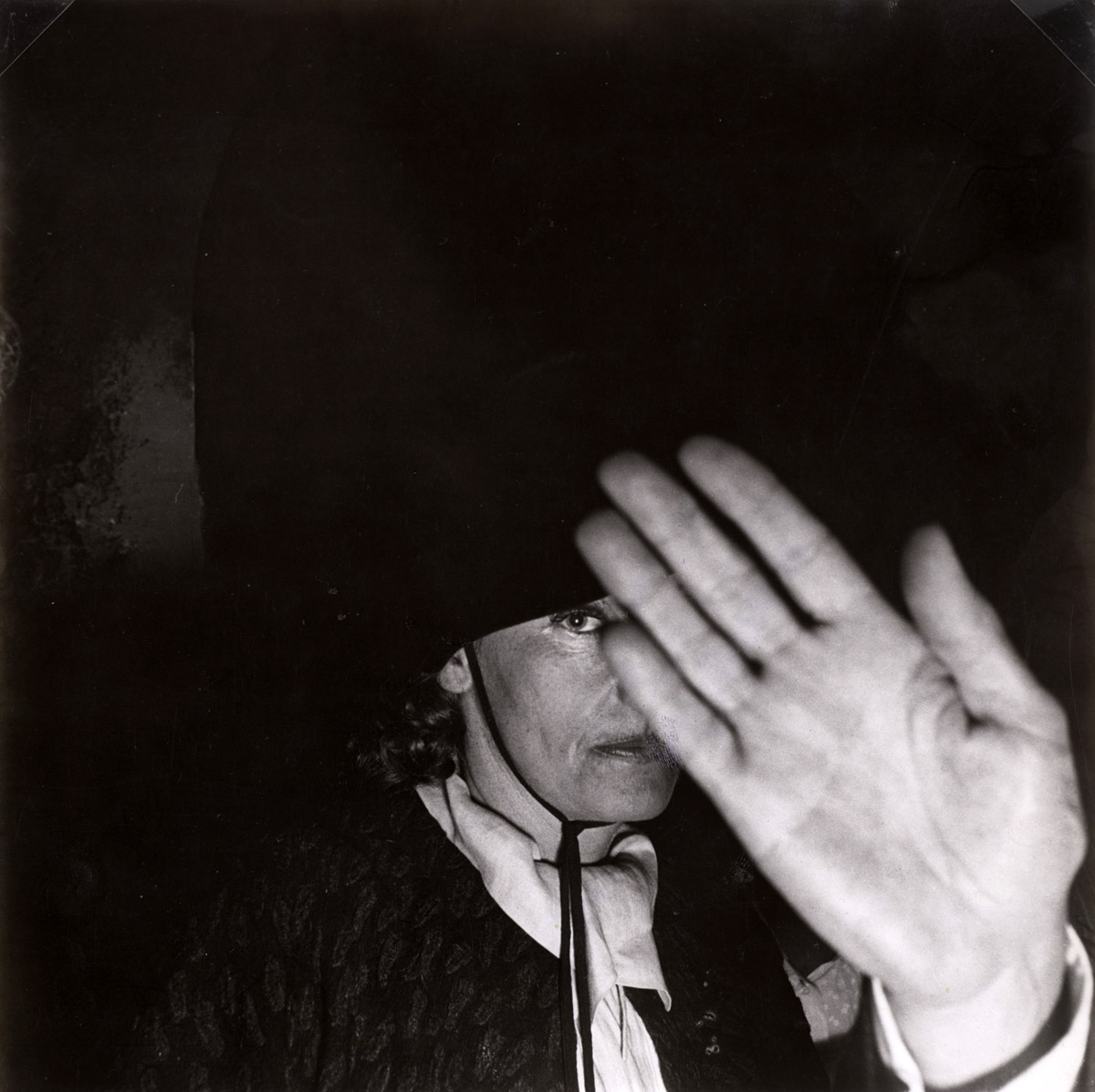
Ronald Edward Galella (January 10, 1931 – April 30, 2022) was an American photographer, known as a pioneer paparazzo. Dubbed “Paparazzo Extraordinaire” by Newsweek and “the Godfather of the U.S. paparazzi culture” by Time magazine and Vanity Fair, he is regarded by Harper’s Bazaar as “arguably the most controversial paparazzo of all time”. He photographed many celebrities out of the public eye and gained notice for his feuds with some of them, including Jacqueline Onassis and Marlon Brando. Despite the numerous controversies and claims of stalking, Galella’s work was praised and exhibited in art galleries worldwide.
The face in the paparazzi image above is actually The Face: Greta Garbo. One of the most famous and admired women in the world, Garbo became a New York recluse after retiring from films at the beginning of the 1940s. Sightings of her were rare, and this 1950s image captures the conflict between a movie star’s public persona and private life. Now older and with her face obscured, Garbo is unrecognisable, but once understood to be her it becomes a contrasting reference to all those images of her as an icon of beauty and stardom.
Many thankx to Alison Murray and the National Gallery of Victoria for allowing me to publish the photographs in the posting. Please click on the photographs for a larger version of the image.
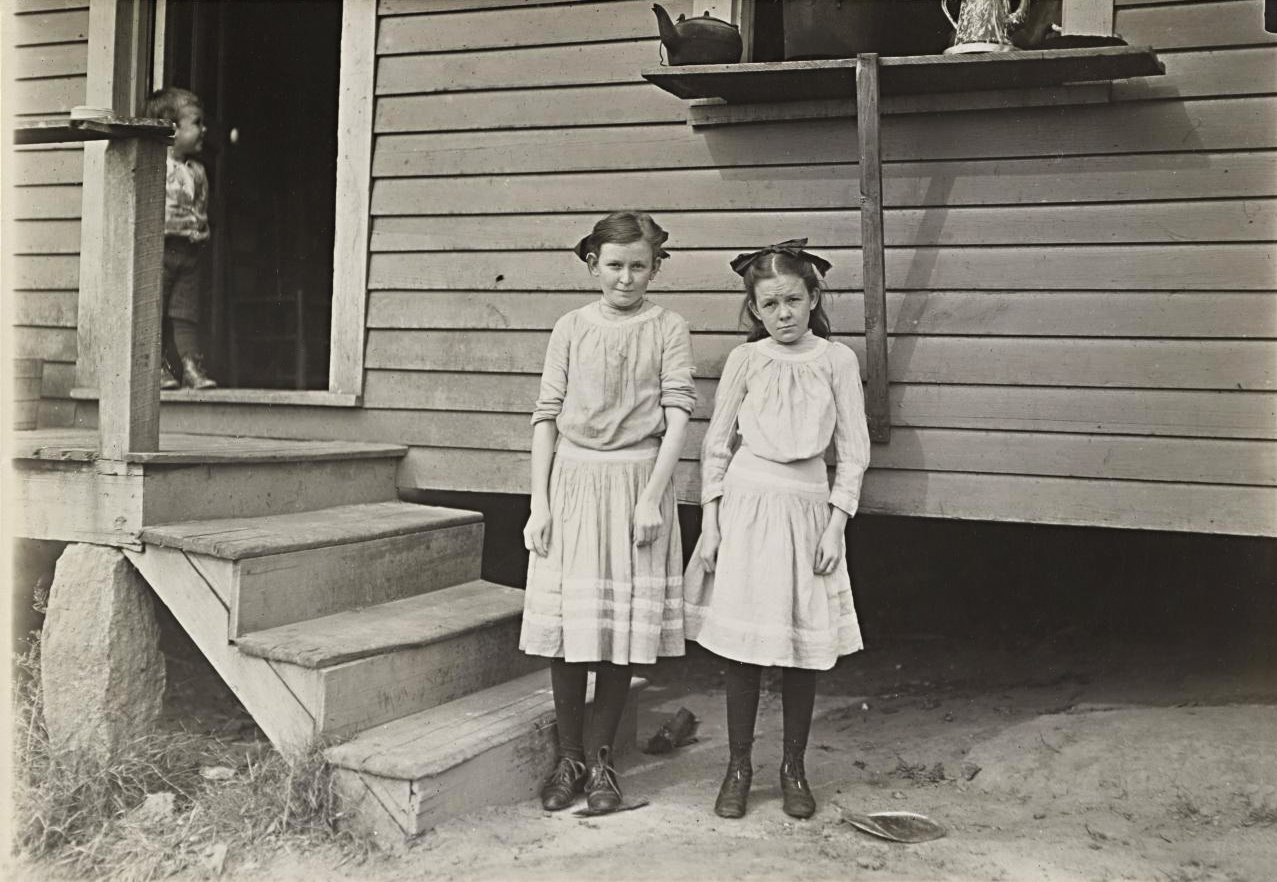
Lewis Hine (American, 1874-1940) Lacy, twelve years old and Savannah, eleven years old 1908 Gelatin silver print Image and sheet: 11.9 × 17.1cm National Gallery of Victoria, Melbourne Purchased, 1980
‘Perhaps you are weary of child labour pictures. Well, so are the rest of us, but we propose to make you and the whole country so sick and tired of the whole business that when the time for action comes, child labour pictures will be records of the past.’
Lewis Hine, 1909
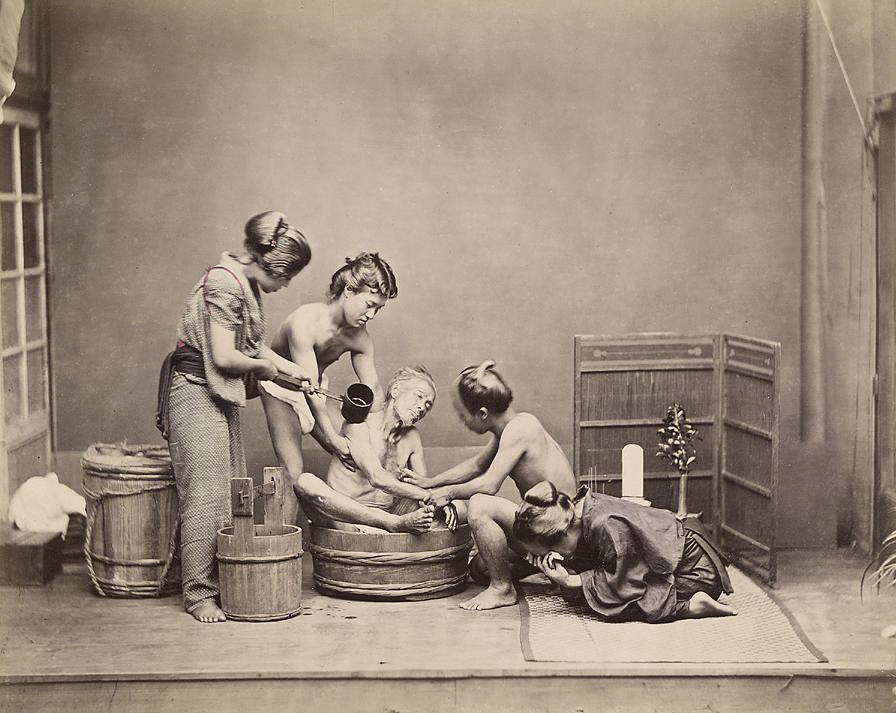
Unknown photographer No title (Ritual washing for funeral) c. 1880 Albumen silver photograph, colour dyes Image and sheet: 21.2 × 26.5cm National Gallery of Victoria, Melbourne Purchased, 2001
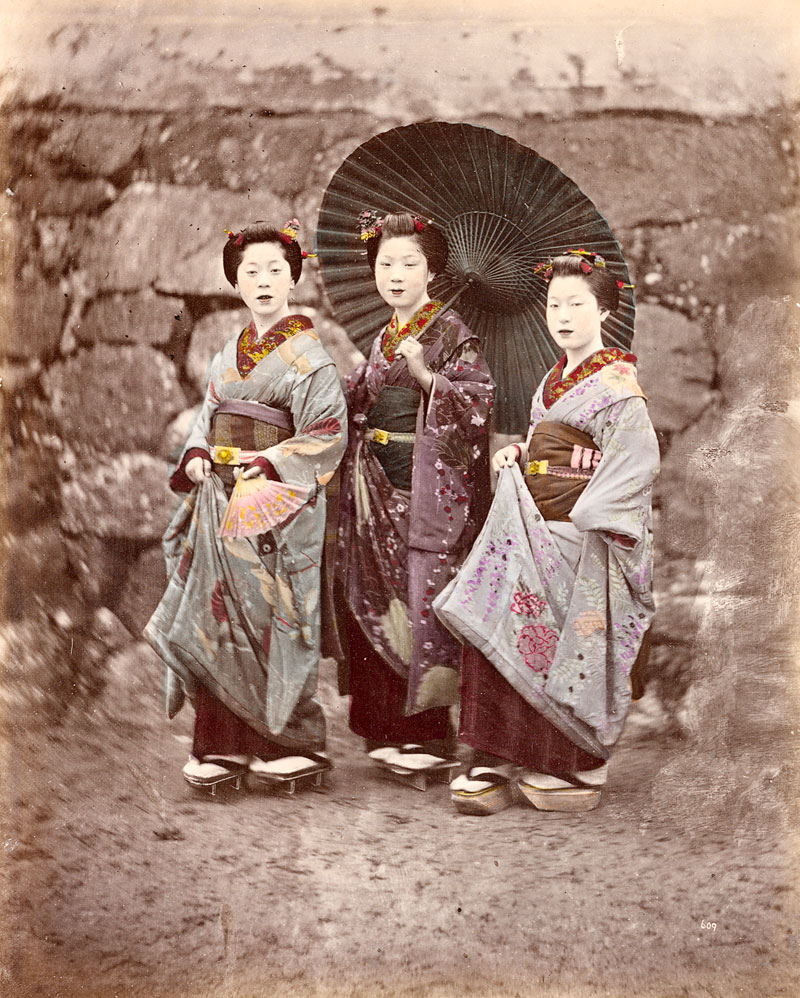
Felice Beato (Italian/English, 1832-1909, worked throughout Europe and Asia, 1853-1890) Stillfried and Anderson and the Japan Photographic Association (studio) (Japanese, 1877-1885) No title (Maiko) 1866-1868, printed 1877-1885 albumen silver photograph, coloured dyes 24.4 x 19.6cm National Gallery of Victoria, Melbourne Purchased through the NGV Foundation with the assistance of The Herald & Weekly Times Limited, Fellow, 2001
Opening 7 May, the National Gallery of Victoria will present Timelines: Photography and Time, a captivating exhibition exploring the notion of time in photographs.
Time is a slippery notion. It is everywhere and always moving but this powerful regulating force cannot be seen. It is only apparent in context: in the changing seasons, in another wrinkle on our faces, in the growth of children. Photography has a unique role to play in our sometimes poignant sense of time passing. The camera’s ability to depict ‘a moment in time’ – to stop the clock for a brief moment – gives photographs a unique capacity to direct our consideration towards the mechanics and poetics of this pervasive and mysterious cosmic force.
In this exhibition one aspect of time is considered from a photographic perspective: namely, human life. Works have been selected from the permanent collection both by International and Australian photographers that show an interest in some aspect of lifecycles. Arranged, in part, in a ‘timeline’, these works provoke our understanding of the mediums capacity to suggest the concept of time in ways that may be surprising, moving or even confronting. The exhibition also looks at how photographers have extended a sense of time and duration through images that work in series
Timelines will feature almost forty photographs from the NGV Collection by both Australian and international photographers including work by Diane Arbus, Micky Allan and Bill Brandt.
Isobel Crombie, Senior Curator of Photography, NGV said photography has a unique role to play in capturing the way that time passes.
“The camera’s ability to ‘stop the clock’ enables the medium to direct our consideration towards the mechanics and poetics of this pervasive and mysterious cosmic force.
“The instant that the photograph captures can be a potent reminder to seize the day rather than dreaming about the past or worrying about the future,” said Dr Crombie.
The exhibition also looks at how photographers have extended a sense of time and duration through images that work in series. From the 1960s onwards, photographers began experimenting with stretching time by creating a series or sequence of photographs.
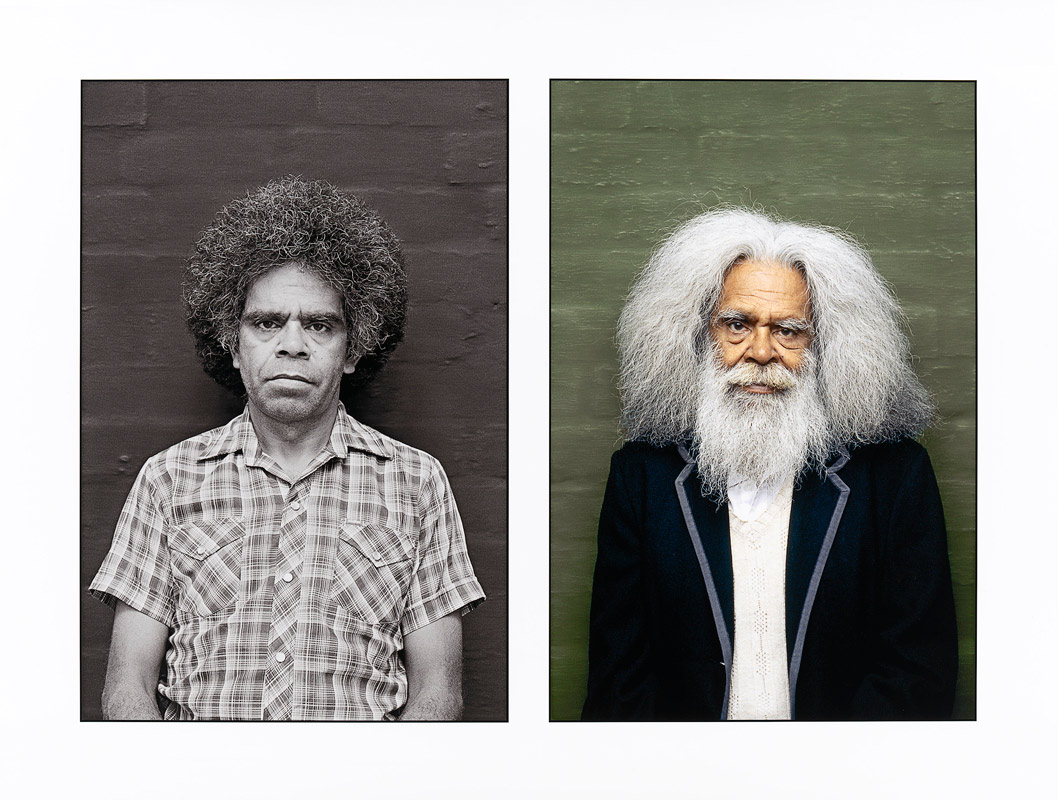
This is seen in Rod McNicol’s powerful series titled A portrait revisited (1986-2006), (pictured Jack, below). Purchased by the NGV in 2009, the series features portraits of men and women; each posed directly facing the camera against a plain backdrop. There are two portraits of each subject photographed twenty years apart, inviting the viewer to compare the portraits to see how time has changed them. The sense of time passing is highlighted with the portrait of Peter, who is photographed only once. The blank image next to him is a reminder that he died before the second portrait was made.
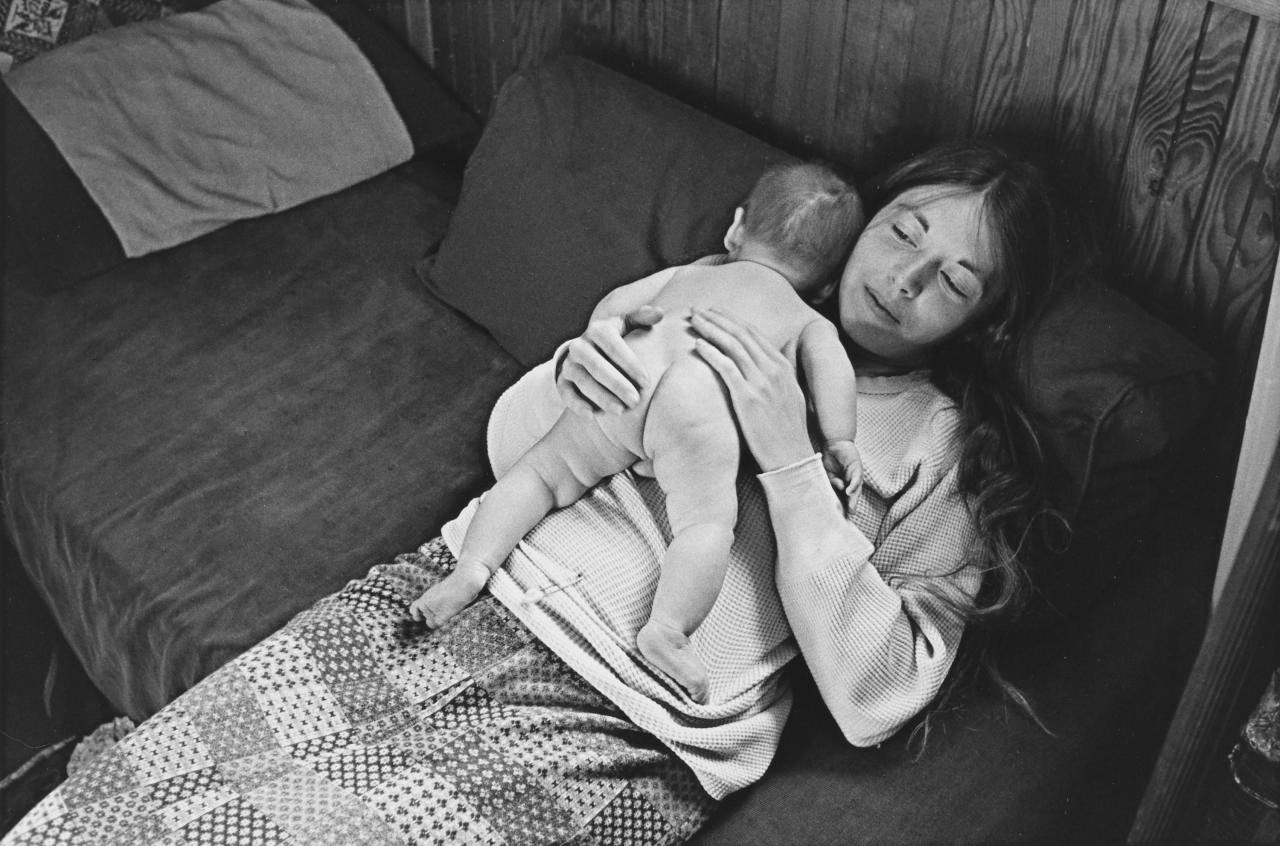
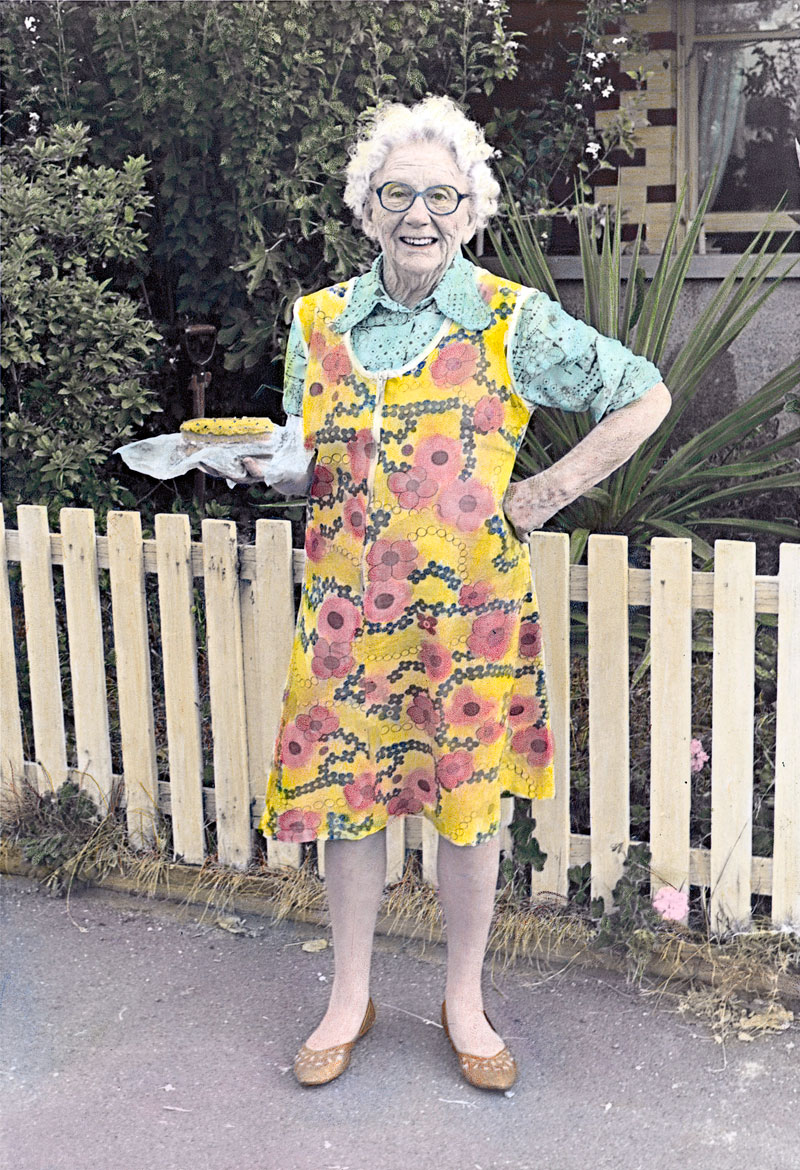
Each phase of human existence has characteristic traits and features, and photographers have worked with these qualities in ways that evoke the passing of time and our place in this cycle. Arranged in part in a human timeline, the exhibition begins with the start of a new life as depicted in Christine Godden’s Joanie pregnant (1972) and Joanie with Jade (1973) and concludes with Kusakabe Kimbei’s Ritual washing for a funeral (c. 1880, see above – now labelled as ‘Unknown’ on the NGV website in 2019), an image of a deceased man being prepared in the traditional Japanese way for burial. This final scene captures the grief of the moment when a lifetime ends.
Frances Lindsay, Deputy Director, NGV said: “The works in the exhibition show how artists have explored the concept of time in ways that may surprise, move or even confront viewers. This exhibition provides visitors with a special opportunity to view this remarkable collection of photographs from the NGV Collection, many of which are on display for the first time.”
Timelines will include photographs by Micky Allan, Diane Arbus, Felice Beato, Bill Brandt, Brassaï, Harry Callahan, Imogen Cunningham, Walker Evans, Christine Godden, Ponch Hawkes, Petrina Hicks, Lewis Hine, Kusakabe Kimbei, Rosemary Laing, J.H. Lartigue, Ruth Maddison, Rod McNicol, David Moore, Jan Saudek, John Thompson, Roman Vishniac, and Edward Weston.
Text from the National Gallery of Victoria International website [Online] Cited 17/09/2010 no longer available online
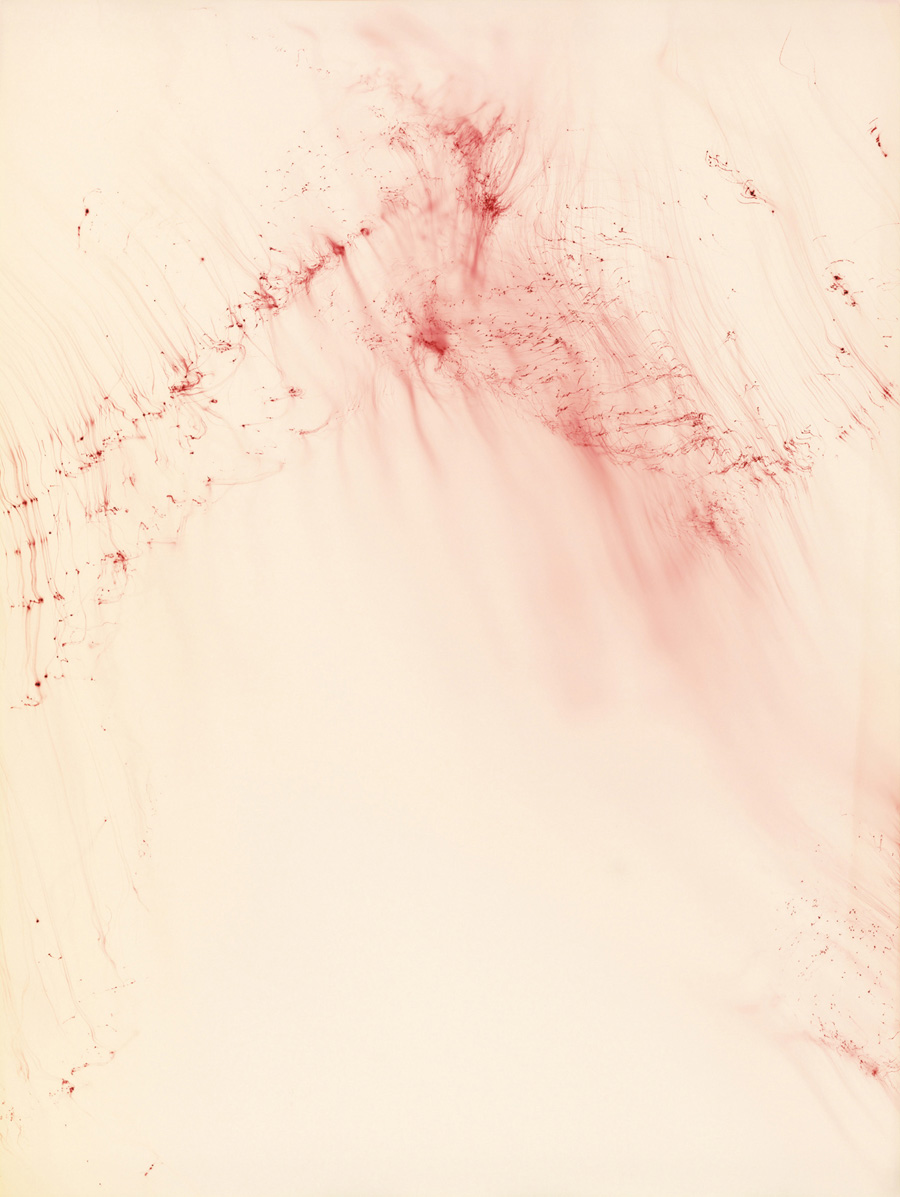
A body of work is slowly taking shape. I have over 150 images at the moment (!!) and after I finish making them all the images will be culled to form the new series Missing in Action (red kenosis) (2010). Images from the new series are below. Please click on the photographs to see a larger version of the image. Enjoy!
Dr Marcus Bunyan
Photographs are available from this series for purchase. As a guide, a digital colour 16″ x 20″ costs $1000 plus tracked and insured shipping. For more information please see my Store web page.
Exhibition dates: 26th June – 19th September, 2010
Installation view of the exhibition Wolfgang Tillmans at the Serpentine Gallery, London, June- September, 2010 Photograph: Gautier de Blonde
“In the constellations of pictures, I try to approximate the way I see the world, not in a linear order but as a multitude of parallel experiences… Multiple singularities, simultaneously accessible as they share the same space or room.”
Wolfgang Tillmans
Since I haven’t been to the exhibition I have tried to sequence the photographs of this wonderful artist in a small intimation of how he might have visualised them – I hope you get the idea. The installation photographs at the bottom give clues to the actual moments of what Minor White calls ‘ice/fire’ – the space between disparate images, the space that is just as important as the images themselves for the frisson that is evokes, the creation of that metaphorical leap into the void of meaning where malleable thoughts emerge; never linear, both singular and multiple at one and the same time.
Dr Marcus Bunyan
Many thankx to the Serpentine Gallery for allowing me to publish the photographs in the posting. Please click on the photographs for a larger version of the image.
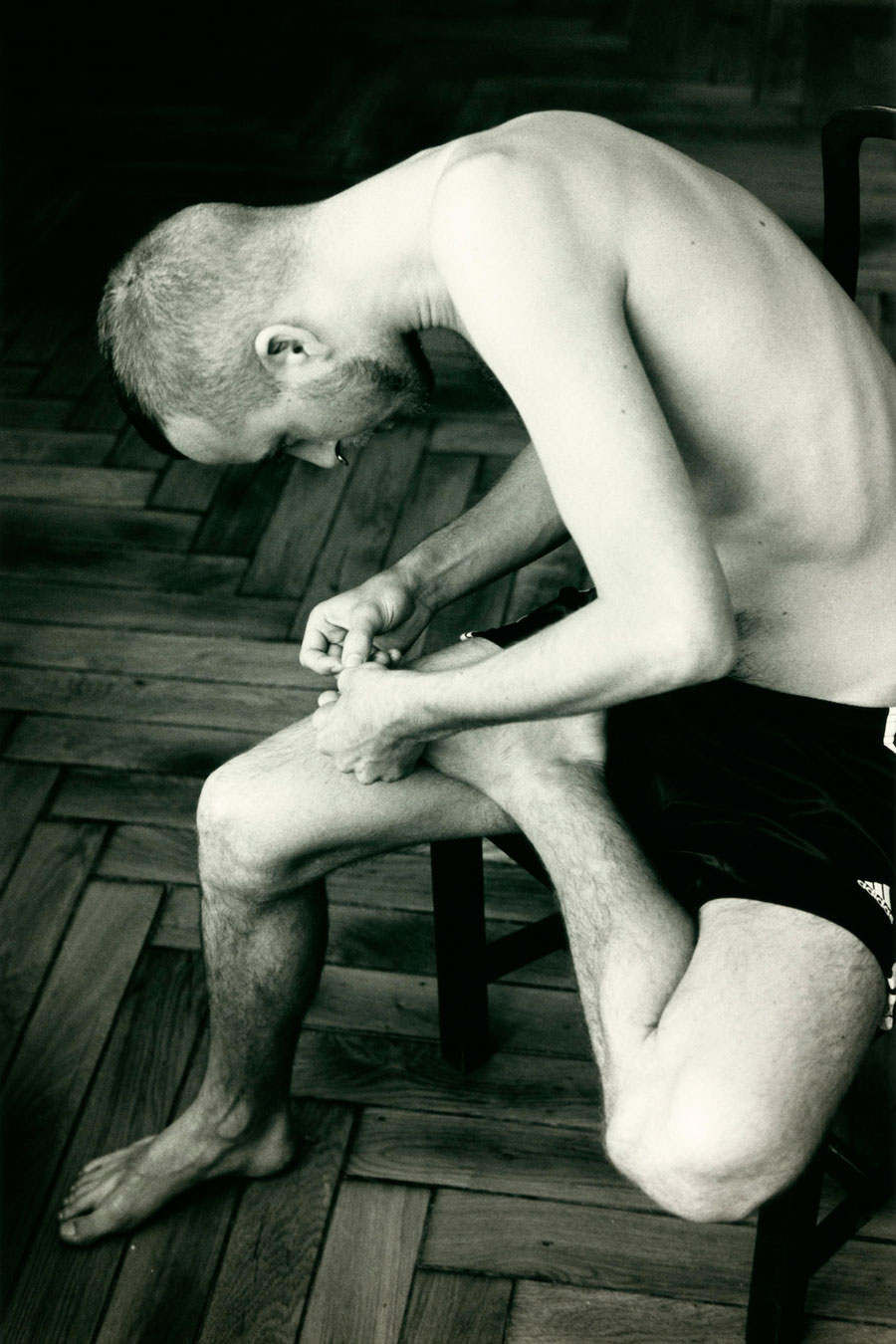
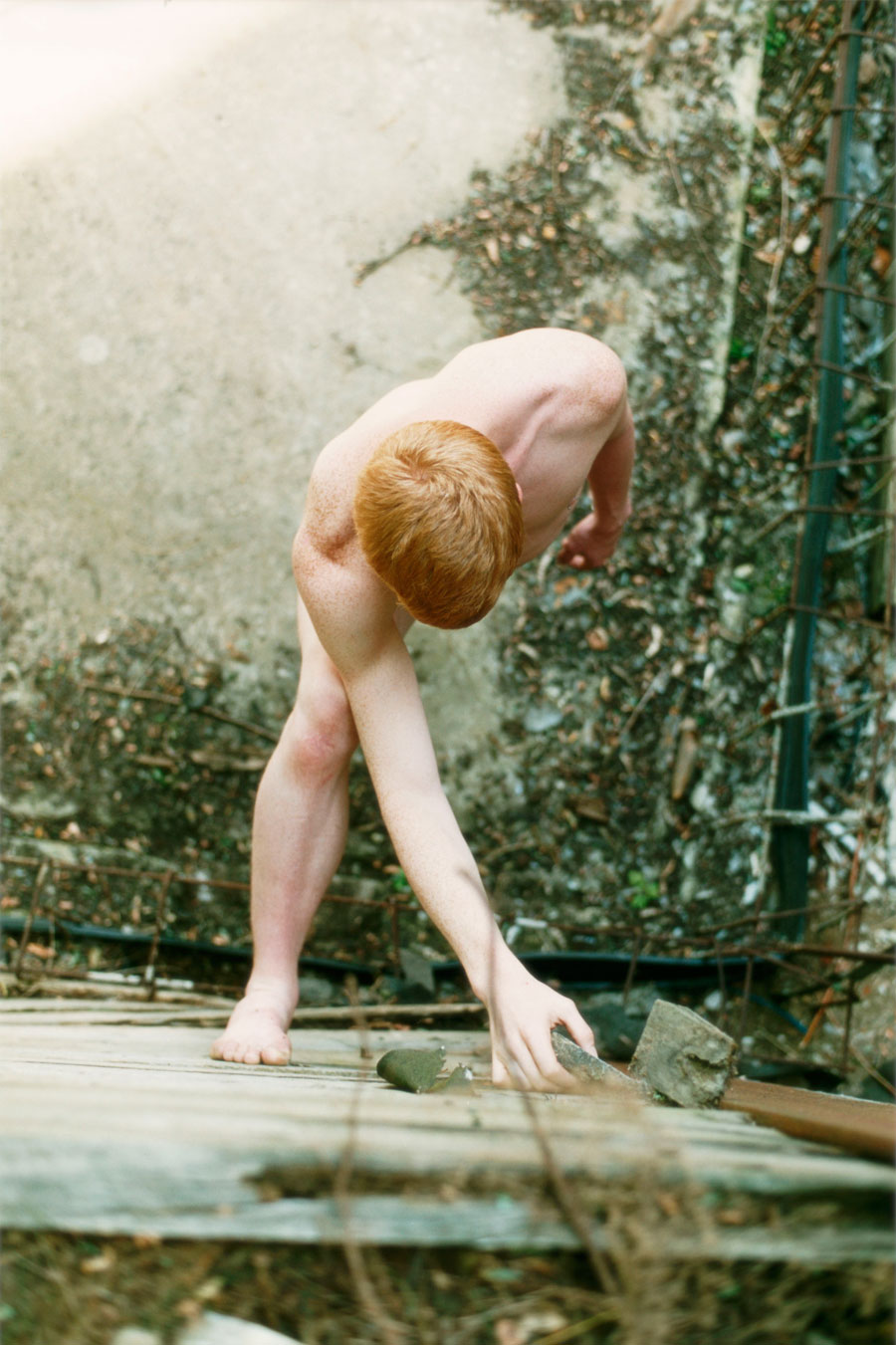
Wolfgang Tillmans (German, b. 1968) Anders pulling splinter from his foot 2004 C-type print 61 × 50.8cm Courtesy the artist and Maureen Paley, London
Wolfgang Tillmans (German, b. 1968) Nanbei Hu 2009 Inkjet print 207 x 138cm Courtesy the artist and Maureen Paley, London
Wolfgang Tillmans (German, b. 1968) Roy 2009 C-type print 40.6 x 30.5cm Courtesy the artist and Maureen Paley, London
Wolfgang Tillmans (German, b. 1968) Venus, transit 2004 C-type print 40.6 × 30.5cm Courtesy the artist and Maureen Paley, London
Wolfgang Tillmans (German, b. 1968) Dan 2008 C-type print 61 × 50.8cm Courtesy the artist and Maureen Paley, London
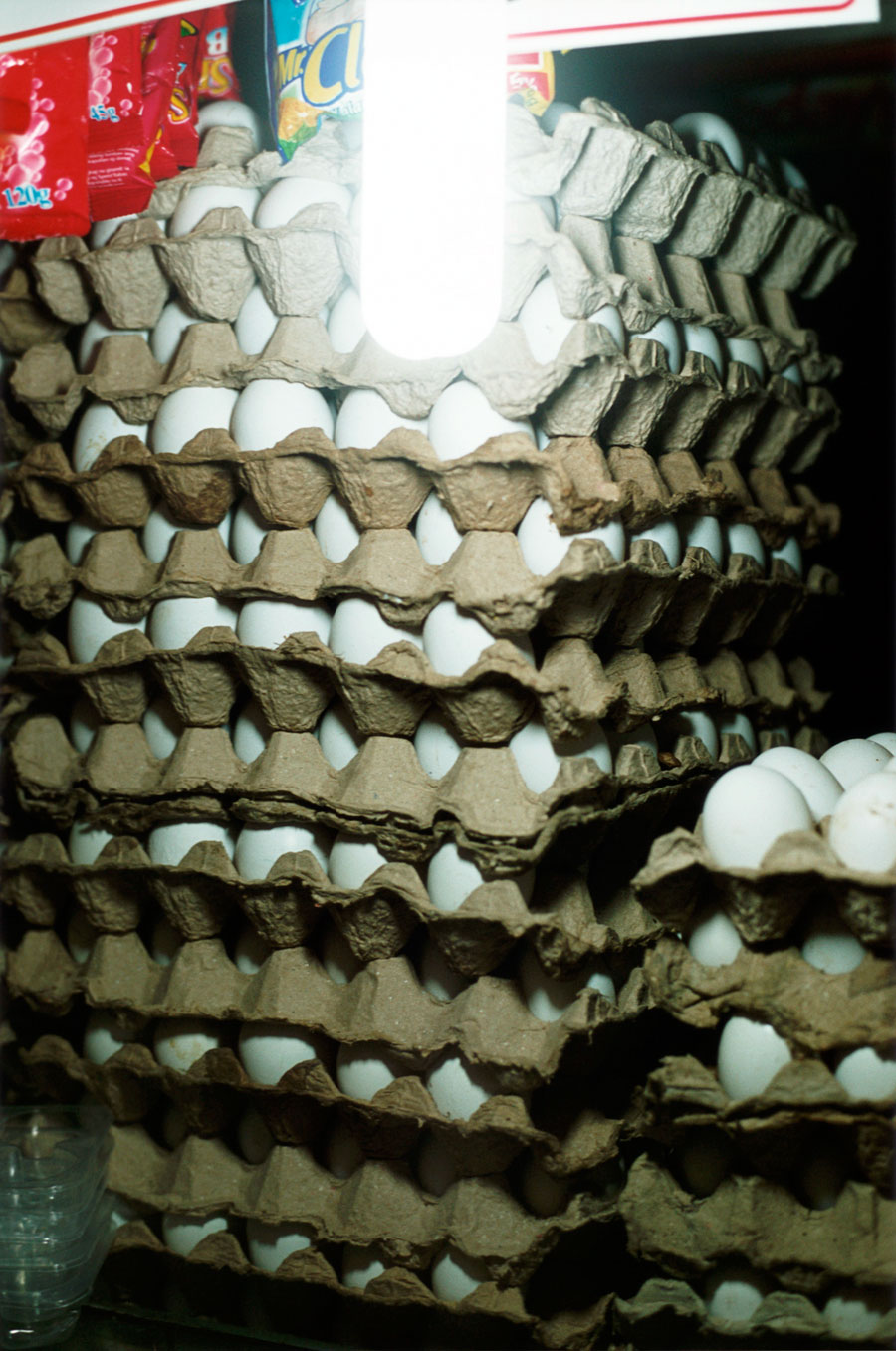
Wolfgang Tillmans (German, b. 1968) Eierstapel 2009 C-type print 61 x 50.8cm Courtesy the artist and Maureen Paley, London
Wolfgang Tillmans (German, b. 1968) Muqarnas 2006 Framed C-type print 214 × 145cm Courtesy the artist and Maureen Paley, London
Wolfgang Tillmans (German, b. 1968) Urgency XXII 2006 Framed C-type print 238 × 181cm Courtesy the artist and Maureen Paley, London
Wolfgang Tillmans (German, b. 1968) Zimmerlinde (Michel) 2006 Framed C-type print 211 × 145cm Courtesy the artist and Maureen Paley, London
The Serpentine Gallery presents Wolfgang Tillmans’ first major exhibition in London since 2003. Conceived by the artist for the Serpentine Gallery, the exhibition will present both abstract and figurative work.
Over the past 20 years, Tillmans has redefined photography and the way it is shown. Known by the early 90s for the seemingly casual images of the world he inhabited, his work reassessed photographic conventions and reflected the identity politics of the time, capturing the fragility of human life and focusing on everyday objects. This early work then expanded to engage with portraiture, landscape, the still-life and, more recently, abstraction. Tillmans’ abstract work, greatly celebrated in the last decade, continues to push the boundaries and definitions of the photographic form, and will be a particular focus of this exhibition.
The wide-ranging themes in Tillmans’ photographs are combined in his reconfiguration of accumulated images, created in response to a given space. In this new exhibition, the explorations into abstraction sit alongside a new focus on the figurative – a focus that is increasingly informed by recent colour field works and experiments with process. Referring to his approach to installation making Tillmans said: “In the constellations of pictures, I try to approximate the way I see the world, not in a linear order but as a multitude of parallel experiences… Multiple singularities, simultaneously accessible as they share the same space or room.”
The Serpentine Gallery exhibition reflects the artist’s acute sensitivity to the politics of contemporary society, his ongoing fascination with colour, and his conceptual engagement with the technical processes of photography. These delicate yet challenging images capture the distinctive energetic balance between beauty and subversion that Tillmans has long embraced.
Tillmans was born in 1968 in Remscheid, Germany. He studied in Great Britain at the Bournemouth & Poole College of Art & Design, graduating in 1992. In the 1990s, his work was shown at the Museum of Modern Art, New York; the Kunsthalle Zurich; and Portikus, Frankfurt, amongst others. In 2000 he won the Tate’s Turner Prize. A large survey exhibition in 2001-2003 toured to Deichtorhallen, Hamburg; Castello di Rivoli, Turin; Palais de Tokyo, Paris; and Louisiana Museum of Modern Art in Humlebaek, Denmark. His show called Freedom from the Known at P.S.1, New York (2006) was followed by a major tour of North American museums. In 2008, Tillmans had an extensive solo exhibition at the Hamburger Bahnhof, Berlin entitled Lighter, and in 2009 was included in Making Worlds at the 53rd Venice Biennale. More than twenty monographic books on his work have been published to date and an exhibition catalogue will accompany the Serpentine Gallery exhibition.
The exhibition will run concurrently with the Serpentine Gallery Pavilion 2010, designed by Jean Nouvel and opening on 10 July. Housed in the Pavilion will be artist Christian Boltanski’s Les Archives du Coeur installation.
Press release from the Serpentine Gallery website [Online] Cited 11/09/2010 no longer available online
Wolfgang Tillmans (German, b. 1968) Silver Installation VII (installation view) 2009 Unique C-type prints Installation view Photograph: Gautier de Blonde
Installation views of the exhibition Wolfgang Tillmans at the Serpentine Gallery, London, June- September, 2010 Photograph: Gautier de Blonde
Exhibition dates: 24th August – 18th September 2010
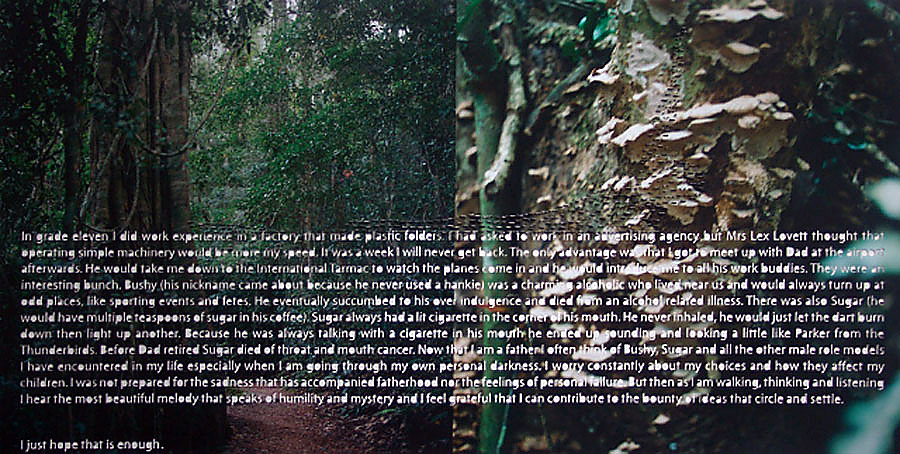
Martin Smith (Australian, b. 1971) Enough 2010
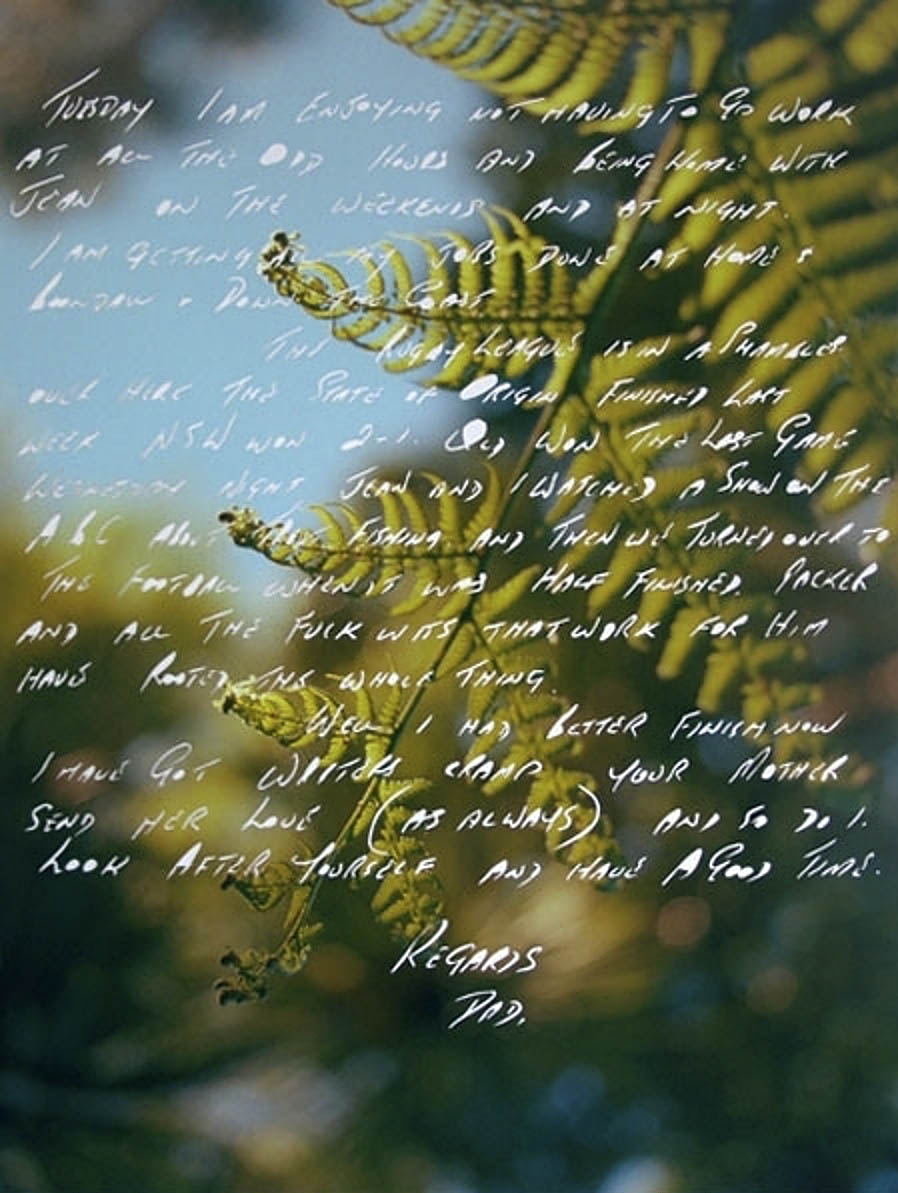
Following on from last year’s exhibition My Jesus Lets Me Rub His Belly that examined issues of place and faith when the artist was growing up, Martin Smith now presents a slice of poignant son father love at Sophie Gannon Gallery, Richmond. The combination of images and text create narratives on growing up, life, male bonding and mortality.
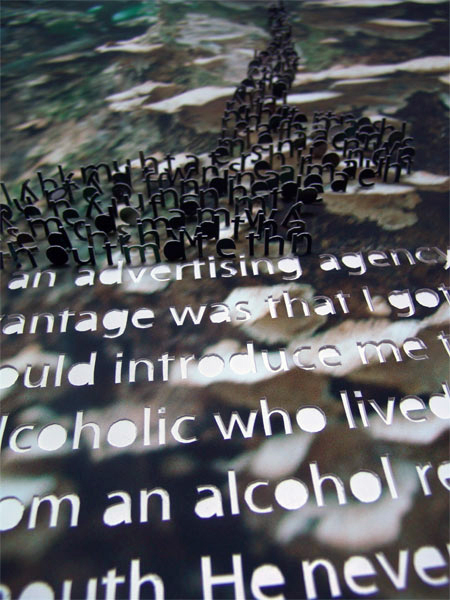
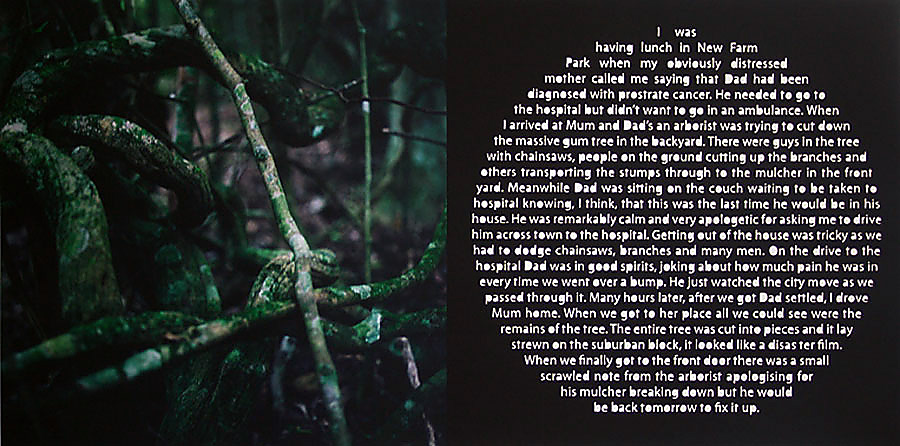
In Fix It Up (2010, below) the use of a circle of text on black (the circle of life) in this image paired with a dark photograph of moss covered twigs and branches is exemplary, the metaphor of the arborist chopping down a gum tree in the backyard as his father is waiting to be taken to hospital by ambulance with prostrate cancer, the last time he will be present in his house, incredibly moving. The use of blurred images, such as the central panel in the triptych Sydney (2010, below) adds emotional weight to the narratives, as though the stories told can only be fragmentary memories, as all memories are, of the events that have passed. The feeling of an excavation of the meaning of life and death is further enhanced by the incision of the letters into the photographs surface and the extrusion of the letters to form three-dimensional sculptural forms, as in the work Enough (2010, see photograph and detail below). The letters shape references the fungi on the tree behind, new life growing out of old, as though the words were being extruded out of the forest, archives of communal memory.
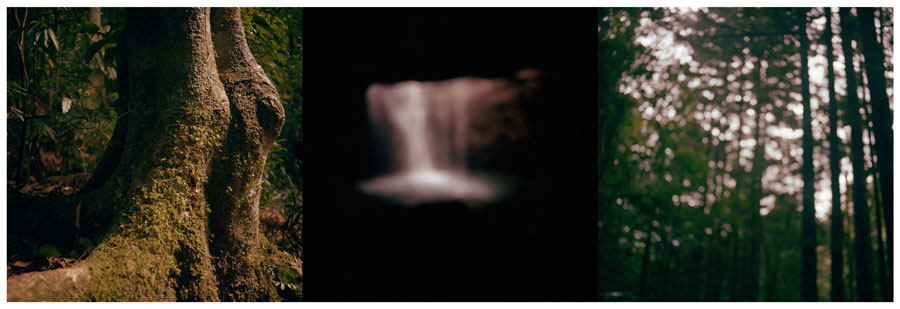
My favourite image in the exhibition didn’t have any words at all, not even piled as detritus at the bottom of the frame as many of Smith’s works do. It didn’t need them. The triptyph Untitled 1 (2010, below) is simple and eloquently beautiful and almost brought me to tears. When read in combination with the other works and their texts, the moss covered trees on the left become two wrinkled elbows, the image on the right the wandering mind and the image in the centre – for me, the feeling of life force as it flows in the darkness. As my yoga teacher says to me, “You must learn to navigate the dazzling darkness.”
This illumination of the mind, body, memory and spirit is what Smith’s work is all about. I adore it.
Exhibition dates: 24th August – 18th September 2010
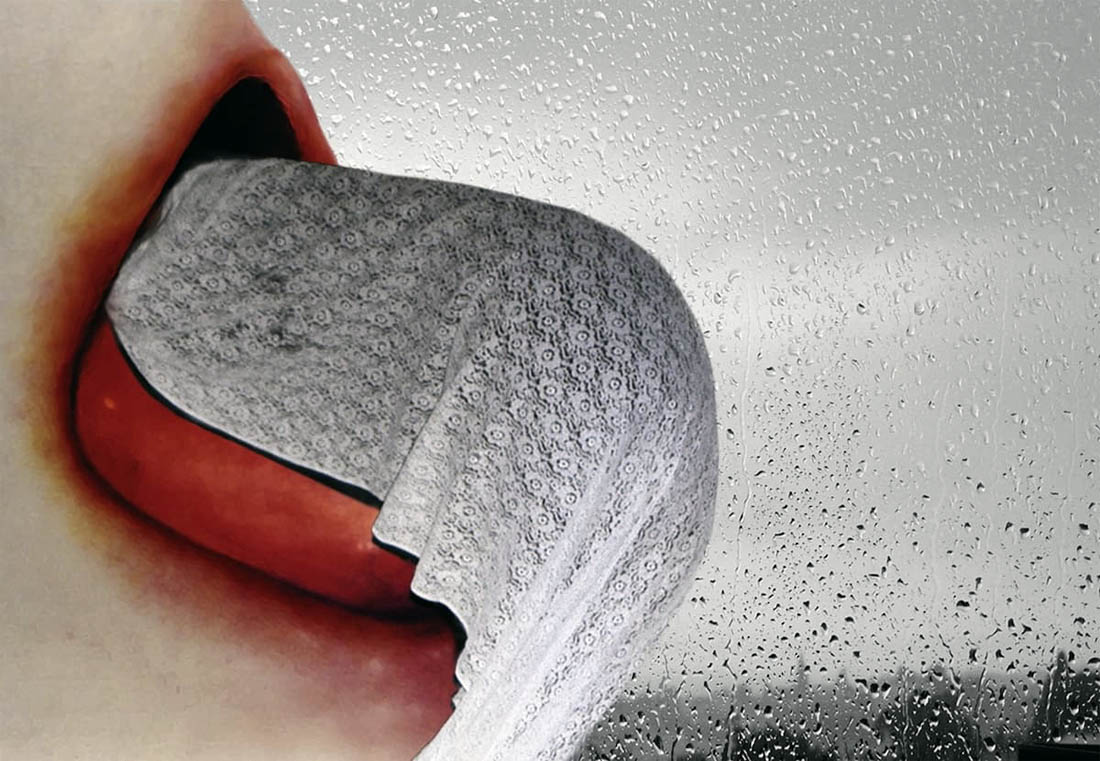
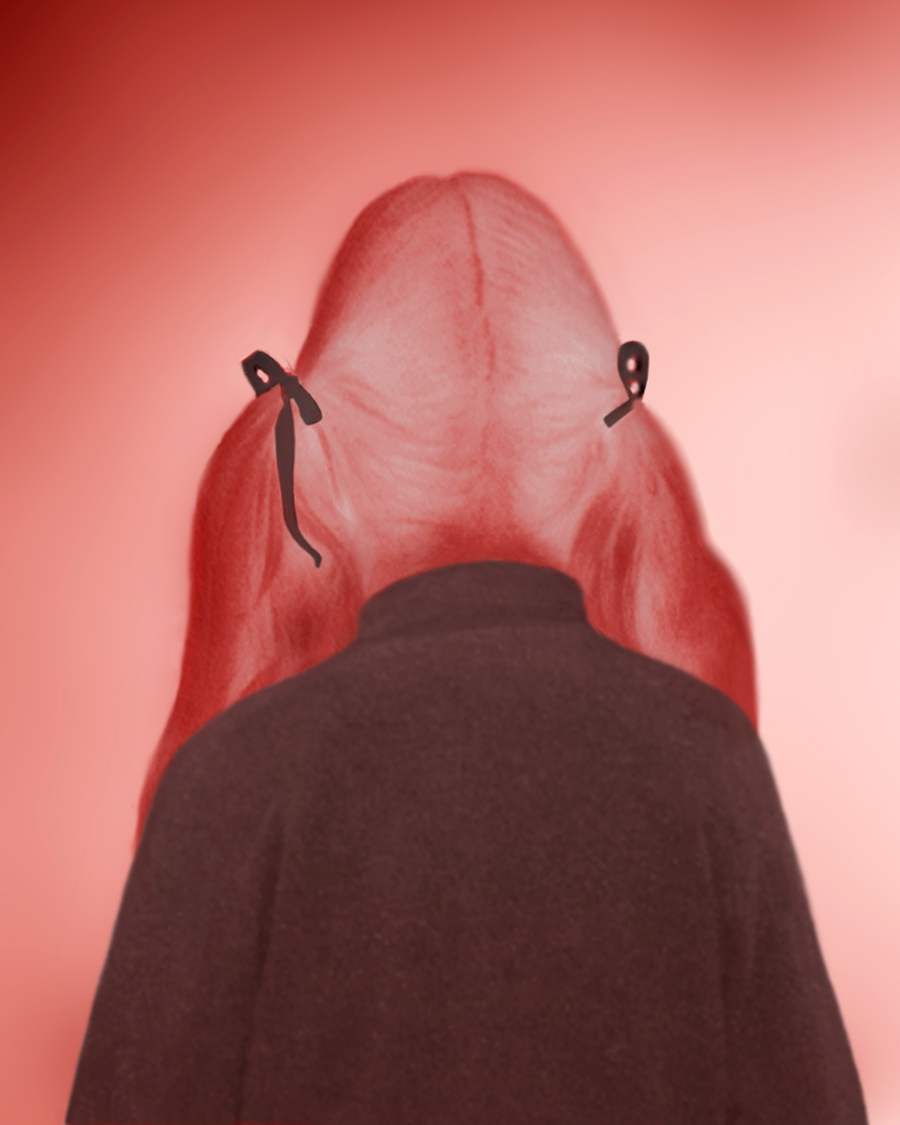
Pat Brassington (Australian, b. 1942) Camouflage 2010
I have a critically ambivalent attitude towards the work of artist Pat Brassington. While the exhibition at Arc One Gallery in Melbourne contains some wonderful ‘images’ her work never seems to move me in an emotional sense. What it does do admirably is constantly engage me in cerebral jousting and sensory debate. Intellectually and visually I find the images stimulating, emotionally I am left a little bit cold.
Brassington’s sometimes fetishistic collage-like digital photographs occupy ambiguous spaces – fascinating ‘other’ worlds, constructed worlds that disturb and delight, drawing the viewer into subjective judgements on what, exactly, they are seeing. Brassington doesn’t need to speak about her work, much like Bill Henson never speaks about his work, because the viewer does that for her and that is the point – Brassington lets the viewer construct the story, a story that is open to multiple viewpoints and interpretations.
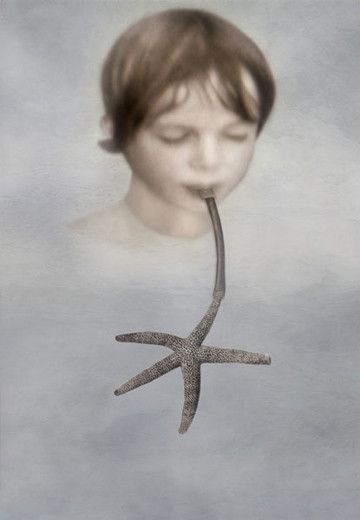
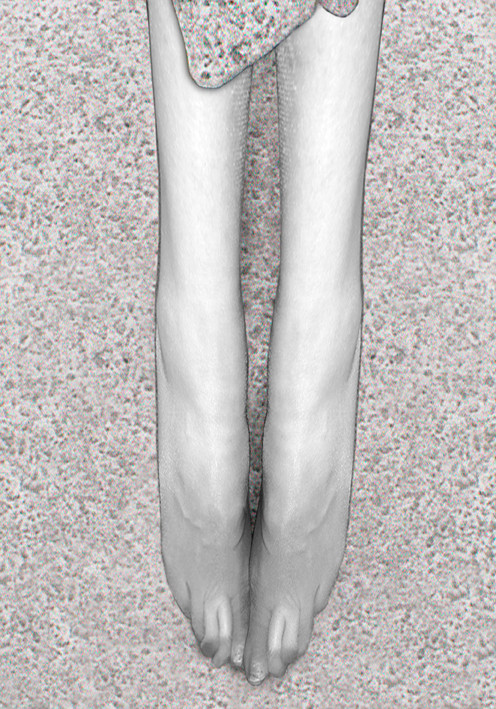
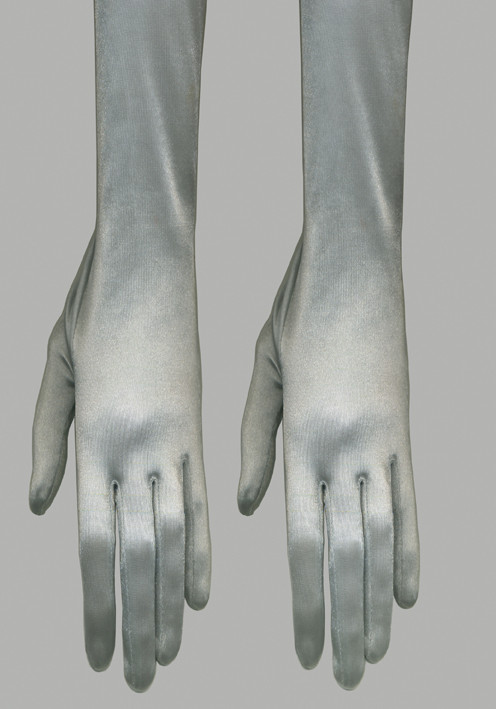
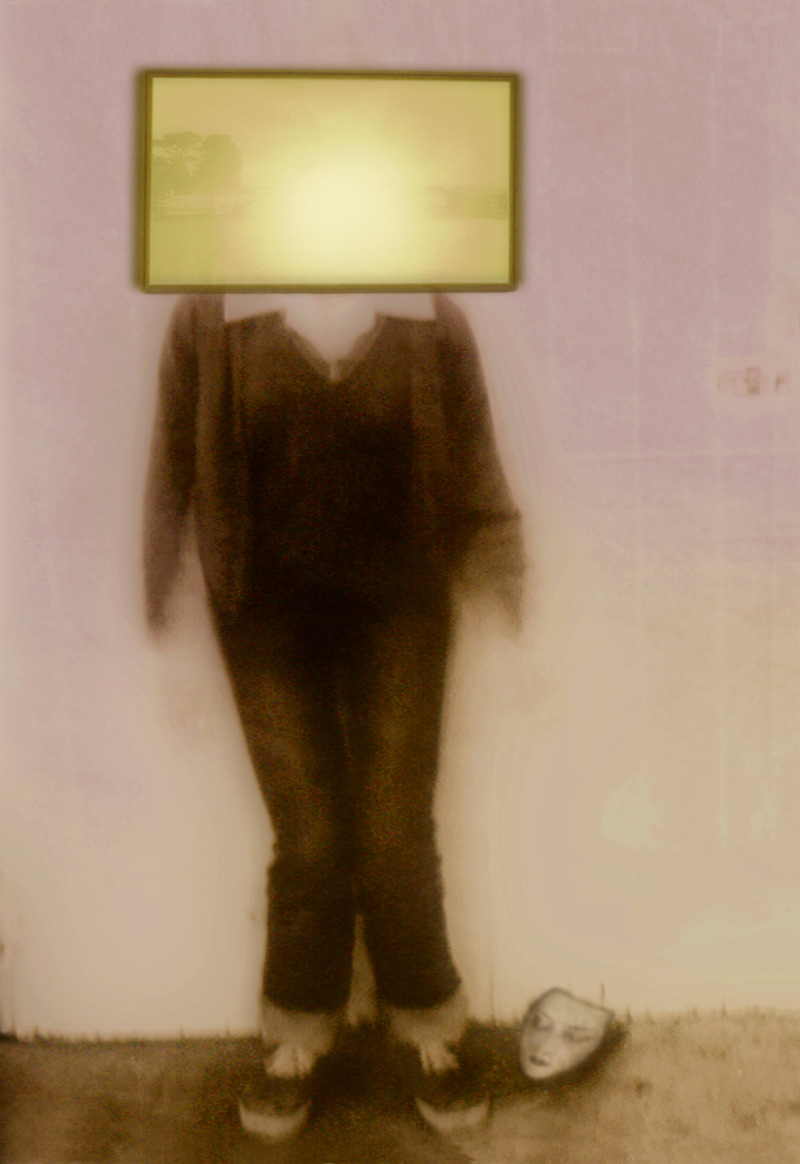
To see the work as just “surrealist” is to do it a disservice for it is much more than that. Of course the work uses various surrealist tropes but the power of these images is in setting up psychological encounters that are often bizarre, confronting and disturbing at a deeper level than just surface juxtapositions. These images seem to haunt you long after you have seen them. Using a limited colour palette of washed out purples, greys, yellows and pinks with a hit of red or blue where applicable (only once a green, never any solid, bright, strong colours) Brassington’s work keeps repeating objects and themes throughout the years – the dress, fish, gloves, hands, legs and the sensual mouth – to “evoke uneasy tensions between bizarre, sinister intimations of menace and weirdly beautiful, benign harmonies.” (Diane Foster).
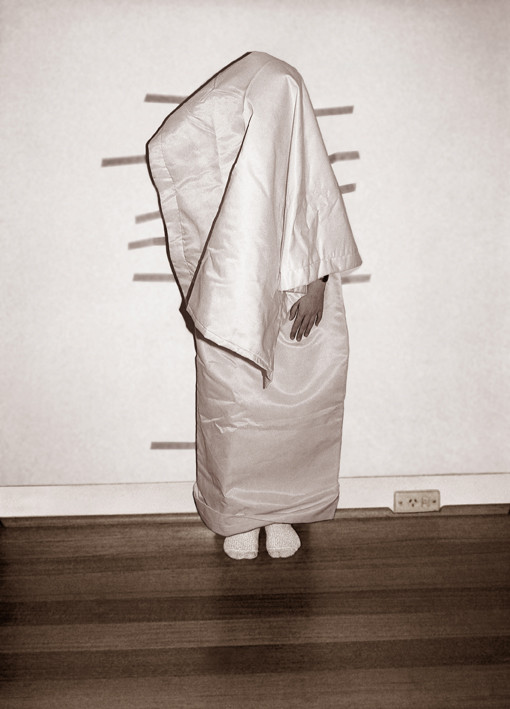
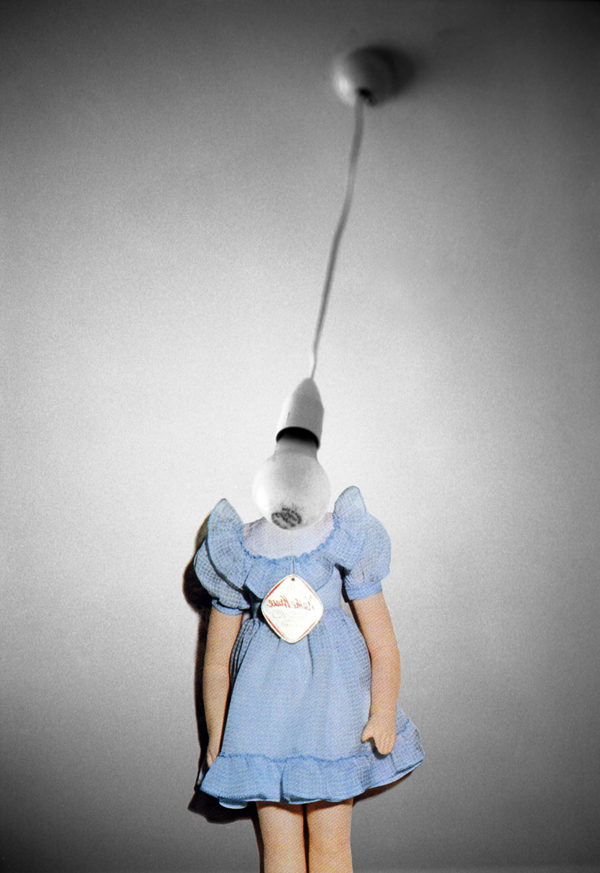
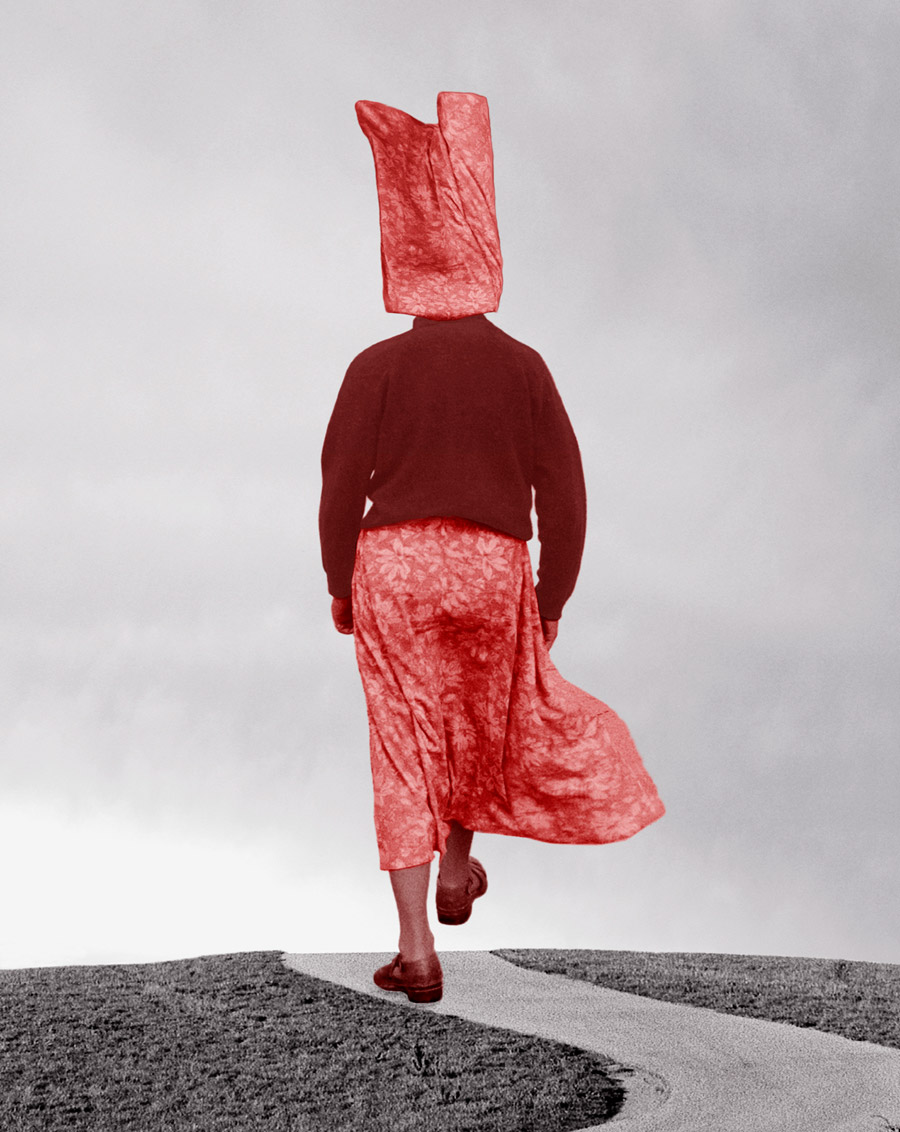
In these new images the lascivious tongue is camouflaged, a woman marches determinedly and blindly over a hill, a child is wrapped and taped, two sateen gloves emanate and a boy breathes life into the sea (or is it the other way around, or is the boy destroying the sea through his breath?). The paradoxes are beautifully enacted and always challenging and that is the strength of the work of Brassington – offering us, the viewer, no easy way out as we stare at the red ribbons in a girl’s hair.
Exhibition dates: 26th March – 6th September, 2010
Looks like a great exhibition – wish I was there to see it!
Many thankx to Claire Laporte and the Solomon R. Guggenheim Museum for allowing me to publish the photographs in the posting. Please click on the photographs for a larger version of the image.
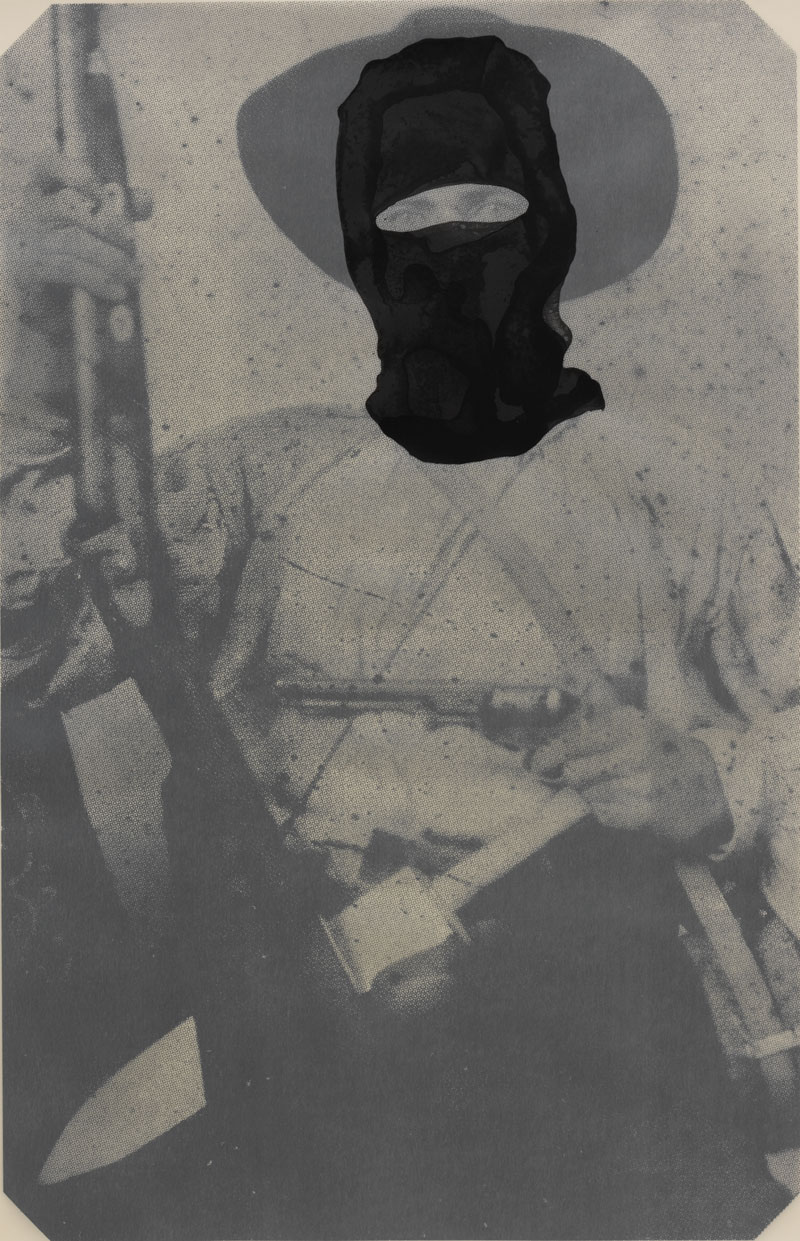
Adam Helms (American, b. 1974) Untitled Portrait (Santa Fe Trail) 2007 Double-sided screenprint on paper vellum edition 2/2 101.3 x 65.7cm Solomon R. Guggenheim Museum, New York, Purchased with funds contributed by the Photography Committee 2007.131
Idris Khan (British, b. 1978) Homage to Bernd Becher 2007 Bromide print edition 1/6 49.8 x 39.7cm Solomon R. Guggenheim Museum, New York, Purchased with funds contributed by the Photography Committee
Bernd Becher (German, 1931-2007) and Hilla Becher (German, 1934-2015) Water Towers 1980 Nine gelatin silver prints 155.6 x 125.1cm Solomon R. Guggenheim Museum, New York, Purchased with funds contributed by Mr. and Mrs. Donald Jonas
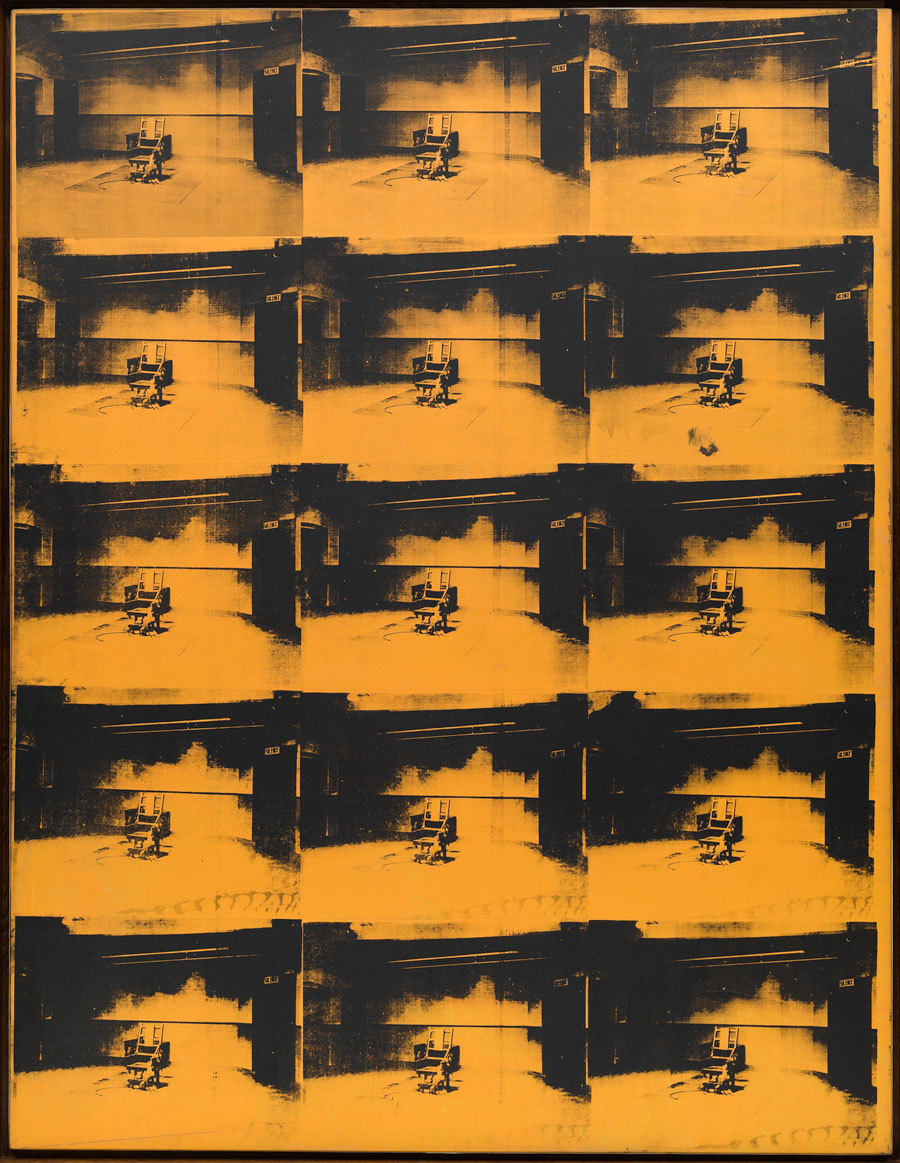
Andy Warhol (American, 1928-1987) Orange Disaster #5 1963 Acrylic and silkscreen enamel on canvas 269.2 x 207cm Solomon R. Guggenheim Museum, New York, Gift, Harry N. Abrams Family Collection 74.2118
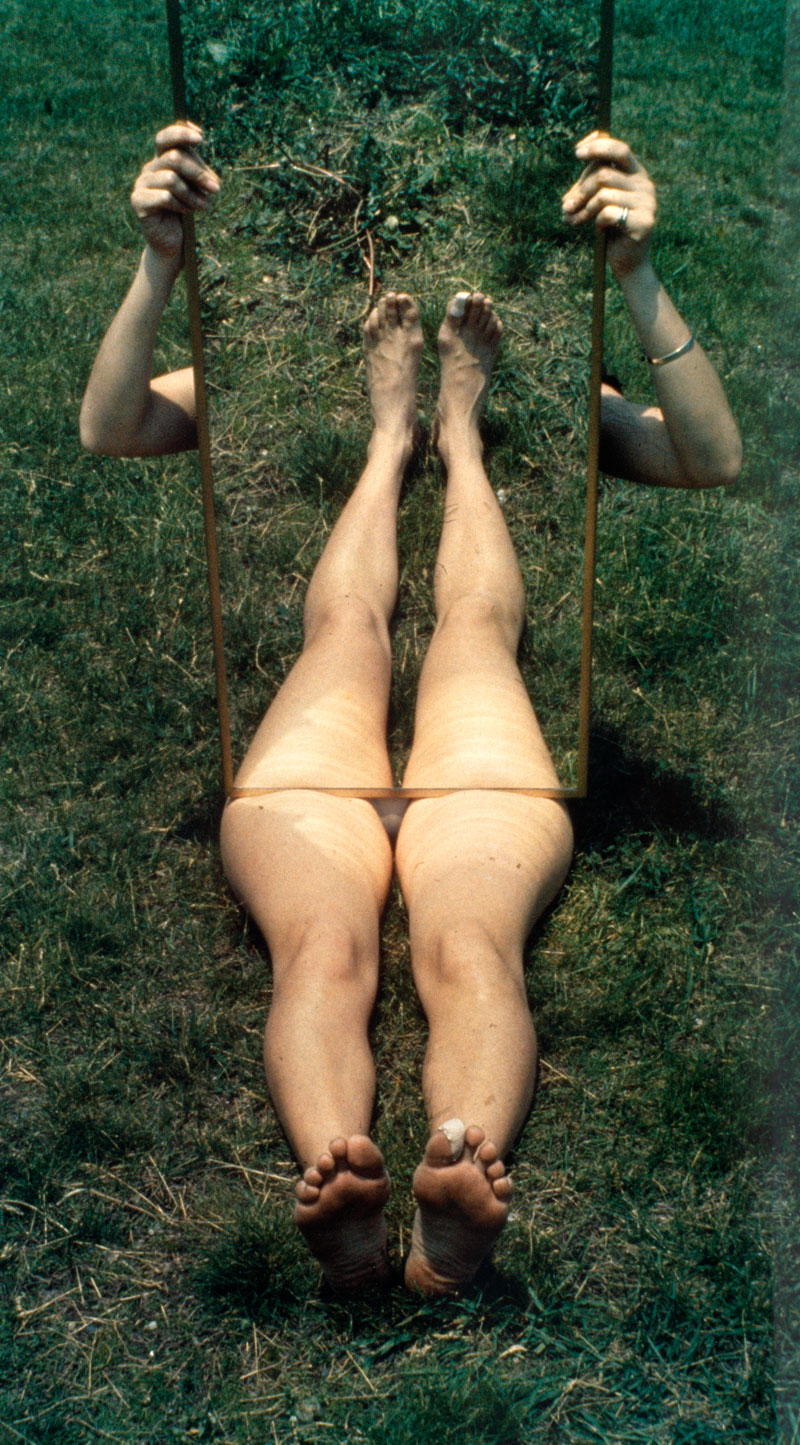
Joan Jonas (American, b. 1936) Mirror Piece I 1969 Chromogenic print 101 x 55.6cm Solomon R. Guggenheim Museum, New York, Purchased with funds contributed by the Photography Committee
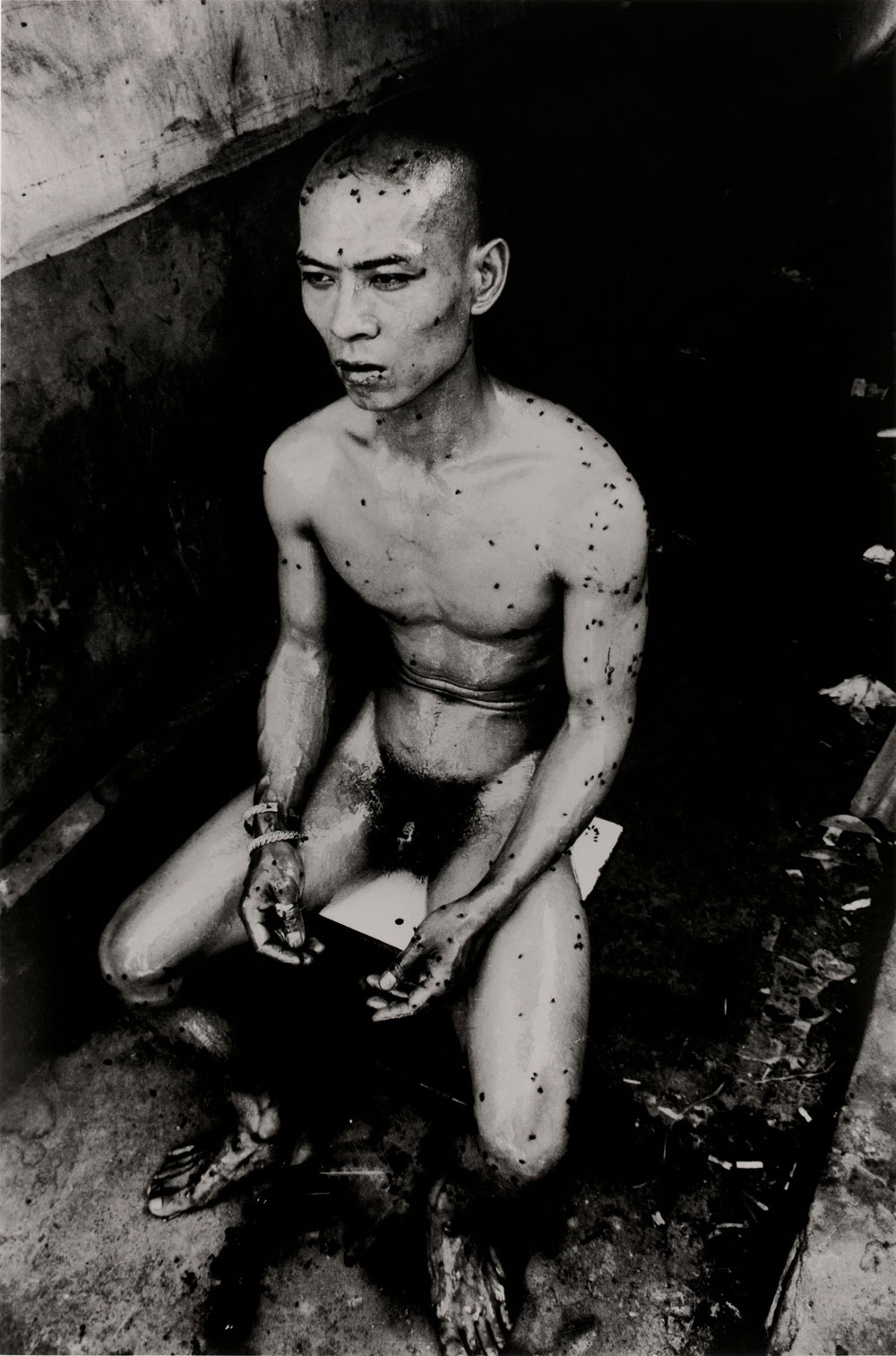
Zhang Huan (Chinese, b. 1965) 12 Square Meters 1994 Chromogenic print A.P. 3/5, edition of 15 149.9 x 99.7cm Solomon R. Guggenheim Museum, New York, Purchased with funds contributed by Manuel de Santaren and Jennifer and David Stockman
Much of contemporary photography and video seems haunted by the past, by the history of art, by apparitions that are reanimated in reproductive mediums, live performance, and the virtual world. By using dated, passé, or quasi-extinct stylistic devices, subject matter, and technologies, such art embodies a longing for an otherwise unrecuperable past.
From March 26 to September 6, 2010, the Solomon R. Guggenheim Museum presents Haunted: Contemporary Photography / Video / Performance, an exhibition that documents this obsession, examining myriad ways photographic imagery is incorporated into recent practice. Drawn largely from the Guggenheim’s extensive photography and video collections, Haunted features some 100 works by nearly 60 artists, including many recent acquisitions that will be on view at the museum for the first time. The exhibition is installed throughout the rotunda and its spiralling ramps, with two additional galleries on view from June 4 to September 1, featuring works by two pairs of artists to complete Haunted’s presentation.
The works in Haunted: Contemporary Photography / Video / Performance range from individual photographs and photographic series to sculptures and paintings that incorporate photographic elements; projected videos; films; performances; and site-specific installations, including a new sound work created by Susan Philips for the museum’s rotunda. While the show traces the extensive incorporation of photography into contemporary art since the 1960s, a significant part of the exhibition will be dedicated to work created since 2001 by younger artists.
Haunted is organised around a series of formal and conceptual threads that weave themselves through the artworks on view:
Appropriation and the Archive
In the early 1960s, Robert Rauschenberg and Andy Warhol began to incorporate photographic images into their paintings, establishing a new mode of visual production that relied not on the then-dominant tradition of gestural abstraction but rather on mechanical processes such as screenprinting. In so doing, they challenged the notion of art as the expression of a singular, heroic author, recasting their works as repositories for autobiographical, cultural, and historical information. This archival impulse revolutionised art production over the ensuing decades, paving the way for a conceptually driven use of photography as a means of absorbing the world at large into a new aesthetic realm. Since then, a number of artists, including Bernd and Hilla Becher, Sarah Charlesworth, Douglas Gordon, Luis Jacob, Sherrie Levine, Richard Prince, Cindy Sherman, and Sara VanDerBeek, have pursued this archival impulse, amassing fragments of reality either by creating new photographs or by appropriating existing ones.
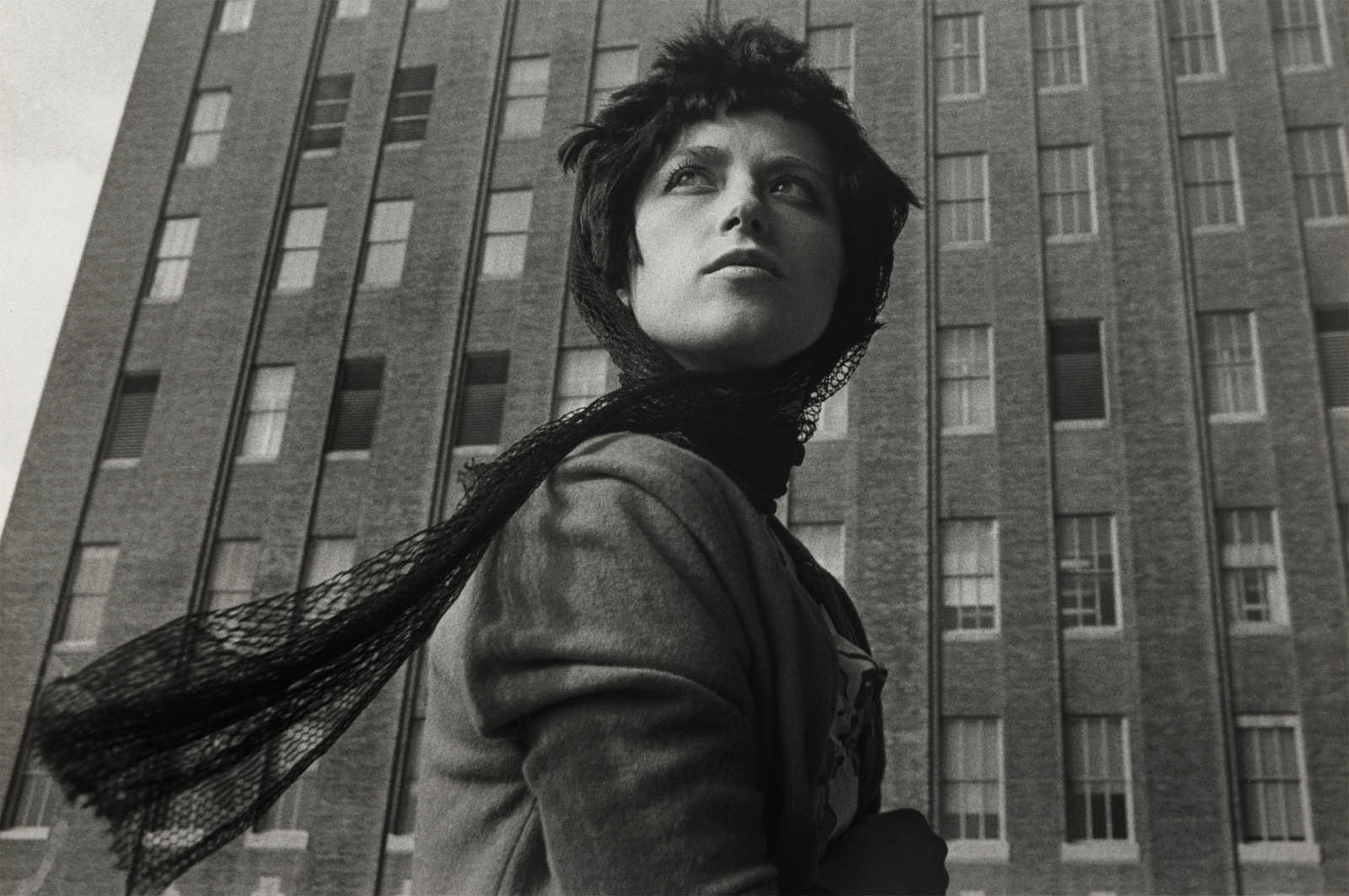
Cindy Sherman (American, b. 1954) Untitled Film Still #58 1980 Gelatin silver print 20.3 x 25.4cm Solomon R. Guggenheim Museum, Gift, Ginny Williams
“I’ve always played with make-up to transform myself, but everything, including the lighting, was self taught. I just learned things as I needed to use them. I absorbed my ideas for the women in these photos from every cultural source that I’ve ever had access to, including film, TV, advertisements, magazines, as well as any adult role models from my youth.”1
Cindy Sherman (b. 1954, Glen Ridge, N.J.) emerged onto the New York art scene in the early 1980s as part of a new generation of artists concerned with the codes of representation in a media-saturated era. Along with many artists working in the 1980s, Sherman explored photography as a way to reveal and examine the cultural constructions we designate as truth. Confronting the belief that photographs are truthful documents, Sherman’s fictional narratives suggested that photographs, like all forms of representation, are ideologically motivated. She is aware that the camera is not a neutral device but rather a tool that frames a particular viewpoint.
Sherman’s reputation was established early on with her Untitled Film Stills, a series of 69 black-and-white photographs that she began making in 1977, when she was twenty-three. In this series, the artist depicted herself dressed in the various melodramatic guises of clichéd B-movie heroines presented in 8 x 10 publicity stills from the 1950s and 1960s. In photograph after photograph, Sherman both acts in and documents her own productions. Although Sherman is both model and photographer, these images are not autobiographical. Rather, they memorialise absence and leave us searching for a narrative and clues to what may exist beyond the frame of the camera.
By the time Sherman made the Untitled Film Stills, black-and-white photography was already recognised as belonging to the past, and the styles she replicated were taken not from her own generation but from that of her mother’s. Sherman used wigs and makeup as well as vintage clothing to create a range of female characters. She sets her photos in a variety of locations, including rural landscapes, cities, and her own apartment. Although many of the pictures are taken by Sherman herself using an extended shutter release, for others she required help, sometimes enlisting friends and family. The characters she created include an ingénue finding her way in the big city, a party girl, a housewife, a woman in distress, a dancer, and an actress. In 1980 she completed the series and has said that she stopped when she ran out of clichés to depict. Unlike the media images they refer to, Sherman’s stills have a deliberate artifice that is heightened by the often-visible camera cord, slightly eccentric props, unusual camera angles, and by the fact that each image includes the artist rather than a recognisable actress or model. Sherman remains an important figure, with works in major collections around the globe, and continues to create striking, imaginative art.
Text from the Teacher’s Guide to the exhibition
1/ Cindy Sherman, quoted in Monique Beudert and Sean Rainbird, eds., Contemporary Art: The Janet Wolfson de Botton Gift, p. 99.
Landscape, Architecture, and the Passage of Time
Historically, one of photography’s primary functions has been to document sites where significant, often traumatic events have taken place. During the Civil War, which erupted not long after the medium was invented, a new generation of reporters sought to photograph battles, but due to the long exposure times required by early cameras, they could only capture the aftermath of the conflicts. These landscapes, strewn with the dead, now seem doubly arresting, for they capture past spaces where something has already occurred. Their state of anteriority, witnessed at such an early stage in the medium’s development, speaks to the very nature of a photograph, which possesses physical and chemical bonds to a past that disappears as soon as it is taken. As viewers, we are left with only traces from which we hope to reconstruct the absent occurrences in the fields, forests, homes, and offices depicted in the works in the exhibition. With this condition in mind, many artists, among them James Casebere, Spencer Finch, Ori Gersht, Roni Horn, Luisa Lambri, An-My Lê, Sally Mann, and Hiroshi Sugimoto, have turned to empty spaces in landscape and architecture, creating poetic reflections on time’s inexorable passing and insisting on the importance of remembrance and memorialisation.
“A good work of art can never be read in one way. My work is full of contradictions. An artwork is open – it is the spectators looking at the work who make the piece, using their own background. A lamp in my work might make you think of a police interrogation, but it’s also religious, like a candle. At the same time it alludes to a precious painting, with a single light shining on it. There are many way of looking at the work. It has to be ‘unfocused’ somehow so that everyone can recognize something of their own self when viewing it.”1
The power of photography to recall the past has inspired many contemporary artists to use photographs to revisit the experience of historical events. In so doing, artists reconsider the photograph itself as an object imbued with history. They became aware that using the medium of photography would lend the elements of specificity and truth to their work.
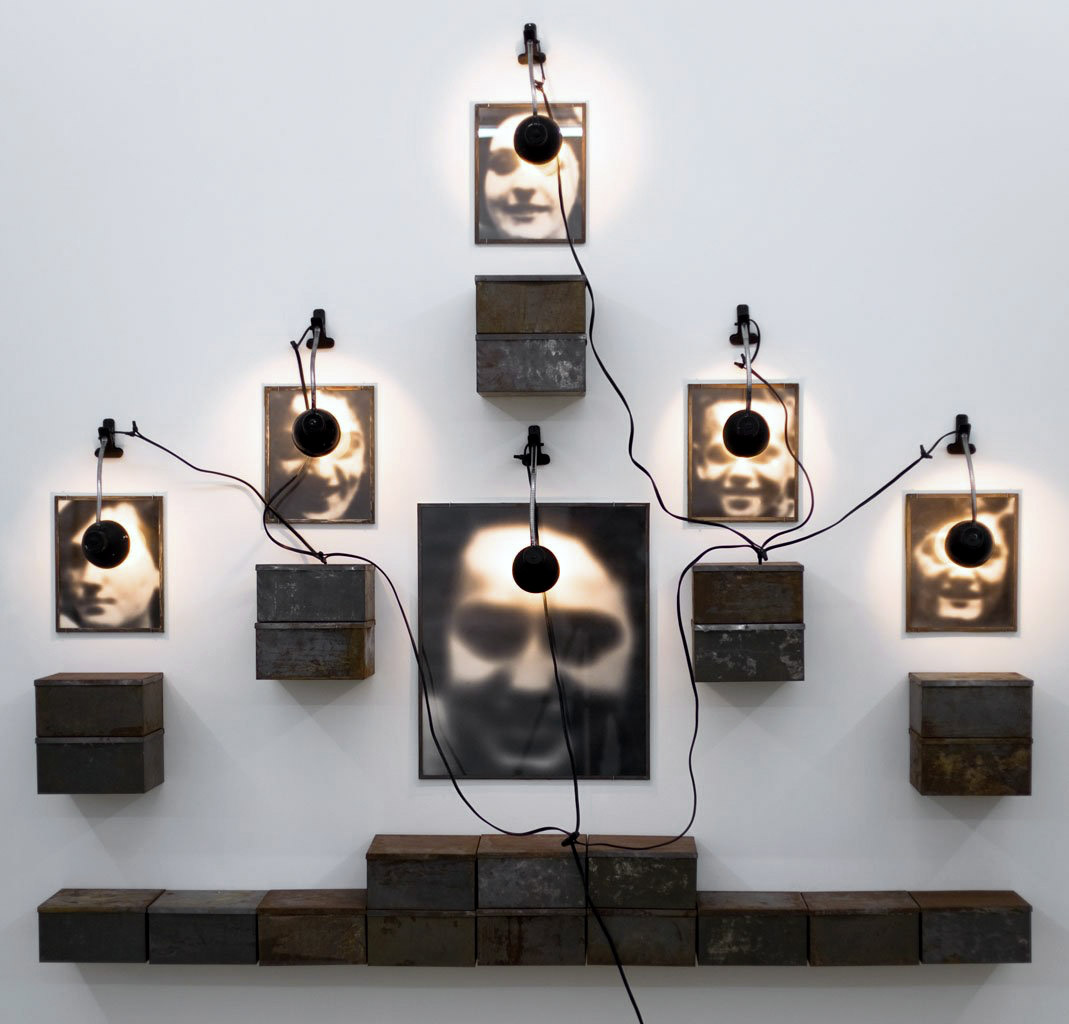
Since the late 1960s, Christian Boltanski (b. 1944, Paris) has worked with photographs collected from ordinary and often ephemeral sources, endowing the commonplace with significance. Rather than taking original photographs to use in his installations, he often finds and rephotographs everyday documents – passport photographs, school portraits, newspaper pictures, and family albums – to memorialise everyday people. Boltanski seeks to create an art that is indistinguishable from life and has said, “The fascinating moment for me is when the spectator hasn’t registered the art connection, and the longer I can delay this association the better.”2 By appropriating mementos of other people’s lives and placing them in an art context, Boltanski explores the power of photography to transcend individual identity and to function instead as a witness to collective rituals and shared cultural memories.
In Boltanski’s 1986-1987 work Autel de Lycée Chases (which means “Altar to the Chases High School”) enlarged photographs of children are hung over a platform constructed from stacked tin biscuit boxes, which are rusted as if they have been ravaged by time. The black-and-white photographs look like artefacts from another era. An electric light illuminates each face while at the same time obscuring it. The arrangement gives no way to identify or connect the unnamed individuals.
The photos used in Autel de Lycée Chases were taken from a real-world source, the school photograph of the graduating class of 1931 from a Viennese high school for Jewish students. These students were coming of age in a world dominated by war and persecution, and it is likely that many perished over the next decade.
At once personal and universal in reference, Boltanski’s work serves as a monument to the dead, hinting at the Holocaust without naming it. Within this haunting environment, Boltanski intermingles emotion and history, sentimentality and profundity.
Text from the Teacher’s Guide to the exhibition
1/ Christian Boltanski, “Tamar Garb in conversation with Christian Boltanski,” in Christian Boltanski (London: Phaidon Press, 1997), p. 24. 2/ “Christian Boltanski: Lessons of Darkness”
Documentation and Reiteration
Since at least the early 1970s, photographic documentation, including film and video, has served as an important complement to the art of live performance, often setting the conditions by which performances are staged and sometimes obviating the need for a live audience altogether. Through an ironic reversal, artworks that revolved around singular moments in time have often come to rely on the permanence of images to transmit their meaning and sometimes even the very fact of their existence. For many artists, these documents take on the function of relics-objects whose meaning is deeply bound to an experience that is always already lost in the past. Works by artists such as Marina Abramović, Christian Boltanski, Sophie Calle, Tacita Dean, Joan Jonas, Christian Marclay, Robert Mapplethorpe, Ana Mendieta, and Gina Pane examine various aesthetic approaches inspired by the reiterative power of the photograph. Using photography not only to restage their own (and others’) performances but to revisit the bodily experience of past events, these artists have reconsidered the document itself as an object embedded in time, closely attending to its material specificity in their works.
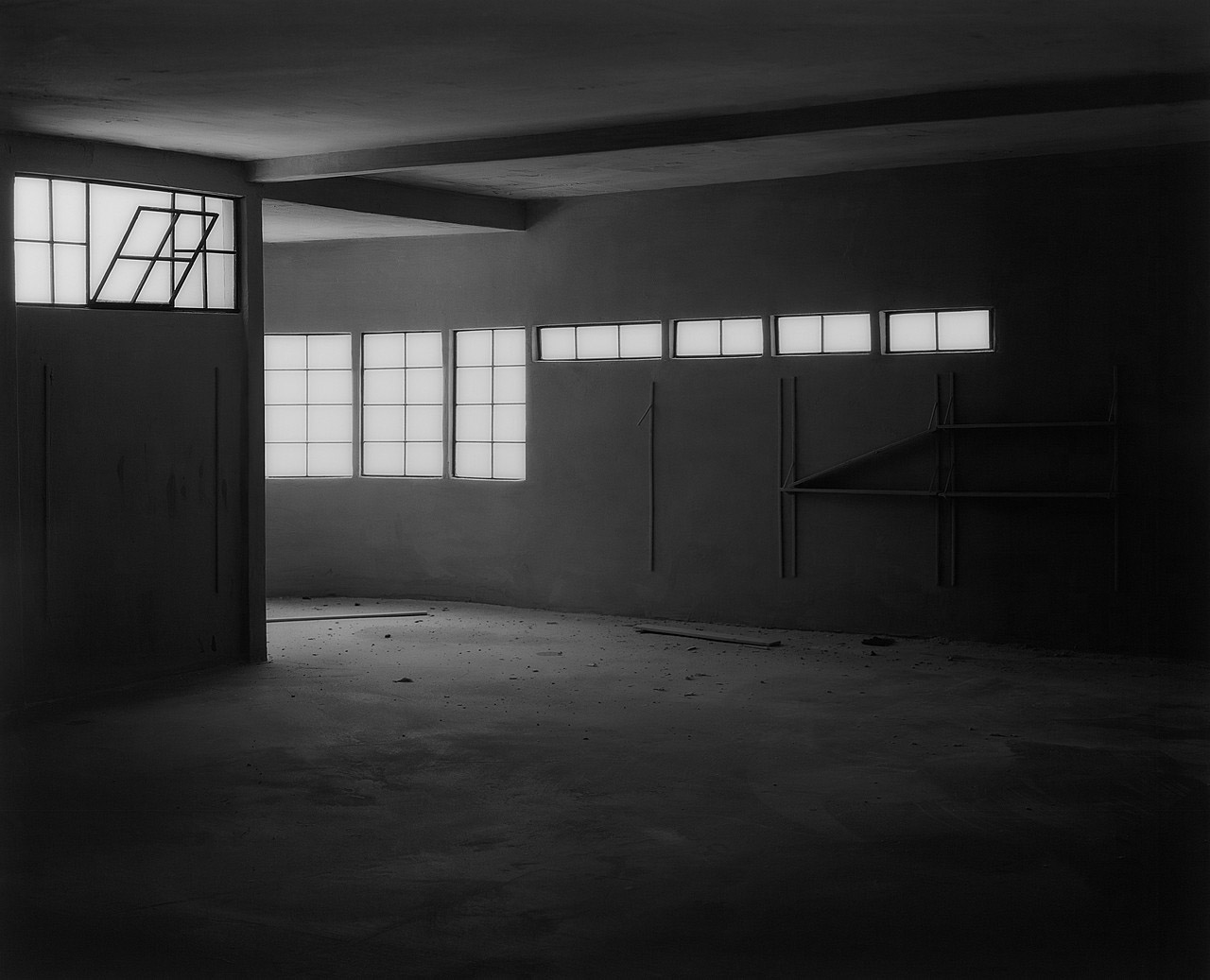
James Casebere (American, b. 1953) Garage 2003 Chromogenic print, face-mounted to acrylic 181.6 x 223.5cm Solomon R. Guggenheim Museum, New York Anonymous gift
“Black and white had more to do with memory and the past. Color was too much about the present, I associated it with color TV, which was not a part of my past. I wanted the images to be related to a sense of history, let’s say, whether personal or social. And I think black and white adds a certain level of abstraction.”1
Since the mid-1970s James Casebere (b. 1953, Lansing, Michigan) has been carefully constructing architectural models and photographing them, yielding images somewhere between realism and obvious fabrication. His photographs are stripped of color and detail to evoke a sense of emotional place rather than the physicality of a place’s forms. Casebere is interested in the memories and feelings that are brought to mind by the architectural spaces he represents. The resulting works are dramatic, surreal, and remarkably true to life, embracing qualities of photography, architecture, and sculpture.
His tabletop models imitate the appearance of architectural institutions (home, school, library, prison) or common sites (tunnel, corridor, archway), representing the structures that occupy our everyday world. These models, made from such featureless materials as Foamcore, museum board, plaster, and Styrofoam, remain empty of detail and human figures. It is only when Casebere casts light on their bland surfaces and spartan interiors that the models are transformed. By eliminating the details, and taking advantage of dramatic lighting effects and the camera’s ability to flatten space, Casebere is able to transform familiar domestic spaces to find the extraordinary in the everyday. He asks viewers to rely on their memory to fill in the gaps and to create a context in which to understand his images.
Casebere stages his photographs to construct realities inspired by contemporary American visual culture that blur the line between fiction and fact. In this way, his images suggest psychologically charged spaces and have an otherworldly quality. The notion that these may be actual places seems plausible, but the lack of human presence leads us to wonder what has happened here. The viewer may imagine a human story within the abandoned spaces. Without people or colour, the photographs are about our own associations with these spaces and what they may represent.
When Andy Warhol created his silkscreen paintings of Marilyn Monroe in the wake of her death, he touched on the darker side of a burgeoning media culture that, during the Vietnam War, became an integral part of everyday life. Today, with vastly expanded channels for the propagation of images, events as varied as the terrorist attack on the World Trade Center and the deaths of celebrities such as Princess Diana and Michael Jackson have the ability to become traumatic on a global scale. Many artists, including Adam Helms, Nate Lowman, Adam McEwen, Cady Noland, and Anri Sala, have reexamined the strategy of image appropriation Warhol pioneered, attending closely to the ways political conflict can take on global significance. At the same time, photography has altered, or as some theorists argue, completely reconfigured our sense of personal memory. From birth to death, all aspects of our lives are reconstituted as images alongside our own experience of them. This repetition, which is mirrored in the very technology of the photographic medium, effectively produces an alternate reality in representation that, especially when coping with traumatic events, can take on the force of the uncanny. Artists such as Stan Douglas, Anthony Goicolea, Sarah Anne Johnson, Jeff Wall, and Gillian Wearing exploit this effect, constructing fictional scenarios in which the pains and pleasures of personal experience return with eerie and foreboding qualities.
Press release from the Solomon R. Guggenheim Museum website [Online] Cited 22/08/2010 no longer available online
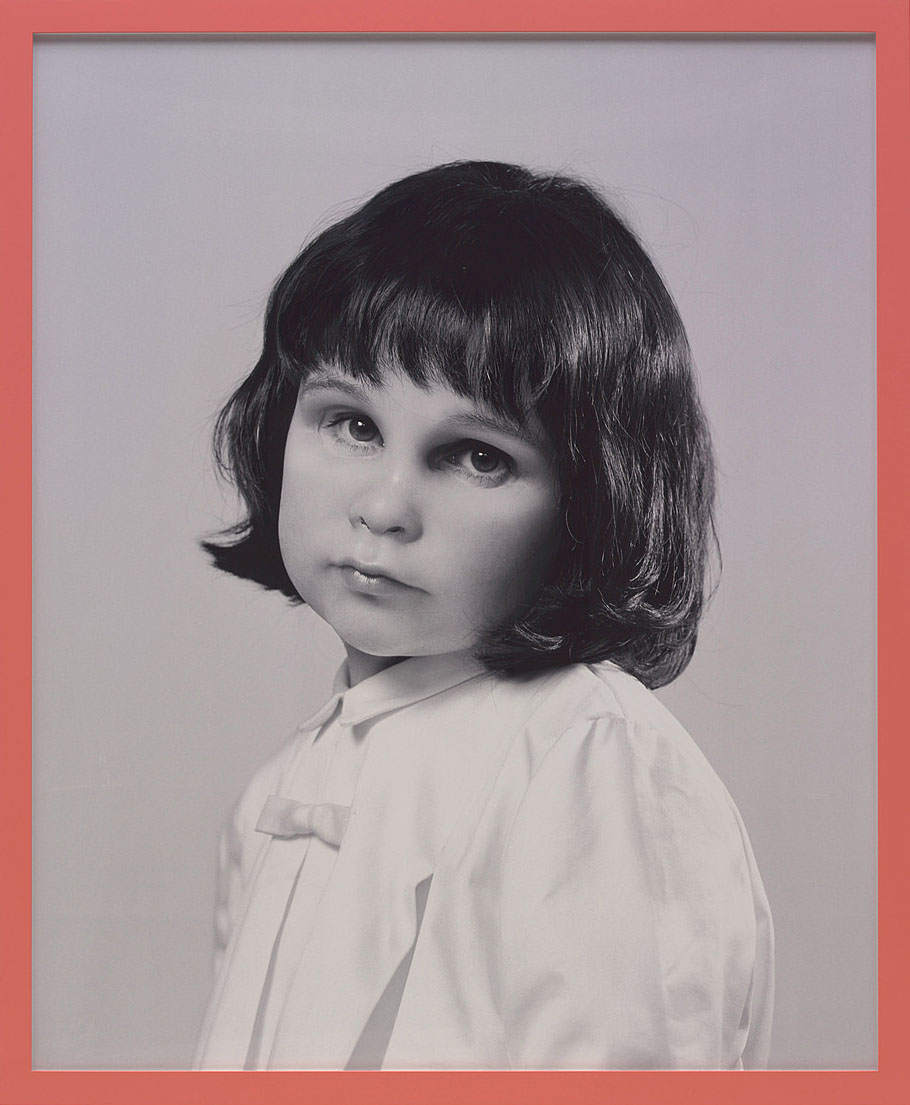
Gillian Wearing (British, b. 1963) Self-Portrait at Three Years Old 2004 Chromogenic print 182 x 122cm Solomon R. Guggenheim Museum, New York Purchased with funds contributed by the International Directors Council and Executive Committee Members: Ruth Baum, Edythe Broad, Elaine Terner Cooper, Dimitris Daskalopoulos, Harry David, Gail May Engelberg, Shirley Fiterman, Nicki Harris, Dakis Joannou, Rachel Lehmann, Linda Macklowe, Peter Norton, Tonino Perna, Elizabeth Richebourg Rea, Mortim
“I taught myself to use a camera – it’s not very difficult to use a camera, but I never bothered looking at any textbooks on how to make a picture. I had a much more casual relation to it. For me at the time it was much more about the process rather than the results.”1
Photography has not only profoundly impacted our understanding of historical events, it has also changed the way we remember our personal histories. Beginning at birth, all aspects of our lives are recorded as images alongside our own experiences of them. These parallel recording devices, the camera and personal memory, produce alternate realities that may sometimes be synchronised but at other times are askew.
Gillian Wearing (b. 1963, Birmingham, England) uses masks as a central theme in her videos and photographs. The masks, which range from literal disguises to voice dubbing, conceal the identities of her subjects and free them to reveal intimate secrets. For her 2003 series of photographs Album, Wearing used this strategy to create an autobiographical work. Donning silicon prosthetics, she carefully reconstructed old family snapshots, transforming herself into her mother, father, uncle, and brother as young adults or adolescents. In one of the works, Wearing recreated her own self-portrait as a teenager – and in fact the artist considers all the photographs in this series as self-portraits. She explains: “I was interested in the idea of being genetically connected to someone but being very different. There is something of me, literally, in all those people – we are connected, but we are each very different.”2
To make the Album series, Wearing collaborated with a talented team (some of whom have worked for Madame Tussaud’s wax works) who sculpted, cast, painted, and applied hair to create the masks, wigs, and body suits used in these photographs. The elaborate disguises the artist wears, when combined with the snapshot “realism” of the original images on which they are based, create an eerie fascination that serves to reveal aspects of her identity rather than conceal it.
Self-Portrait at Three Years Old (2004) carries this role-playing further back in time. Confronting the viewer with her adult gaze through the eyeholes of the toddler’s mask, Wearing plays on the rift between interior and exterior and raises a multitude of provocative questions about identity, memory, and the truthfulness of the photographic medium. Wearing says, “What I love about photographs is that they give you a lot and also they withhold a lot.”3
Text from the Teacher’s Guide to the exhibition
1/ “Gillian Wearing,” interview by Leo Edelstein, Journal of Contemporary Art 2/ Quoted in Jennifer Bayles, “Acquisitions: Gillian Wearing,” Albright-Knox Art Gallery, Buffalo, NY (accessed January 25, 2010) 3/ Sebastian Smee, “Gillian Wearing: The art of the matter,” The Independent (London), October 18, 2003
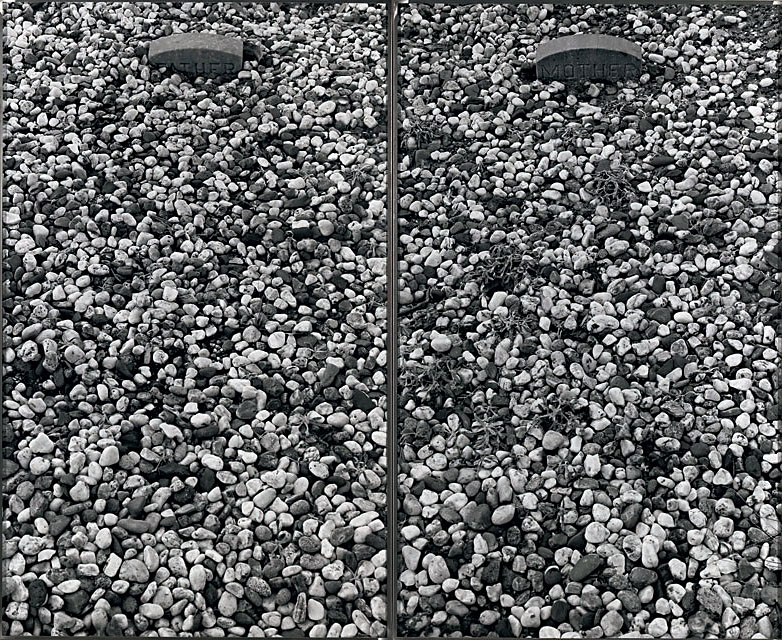
Sophie Calle (French, b. 1953) Father Mother (The Graves, #17) 1990 Two gelatin silver prints in artist’s frames edition 2/2 181.0 x 111.1cm each Solomon R. Guggenheim Museum, New York, Gift, The Bohen Foundation
Ana Mendieta (Cuban American, 1948-1985) Untitled (Silueta series) 1978 Gelatin silver print 20.3 x 25.4cm Solomon R. Guggenheim Museum, New York, Purchased with funds contributed by the Photography Committee
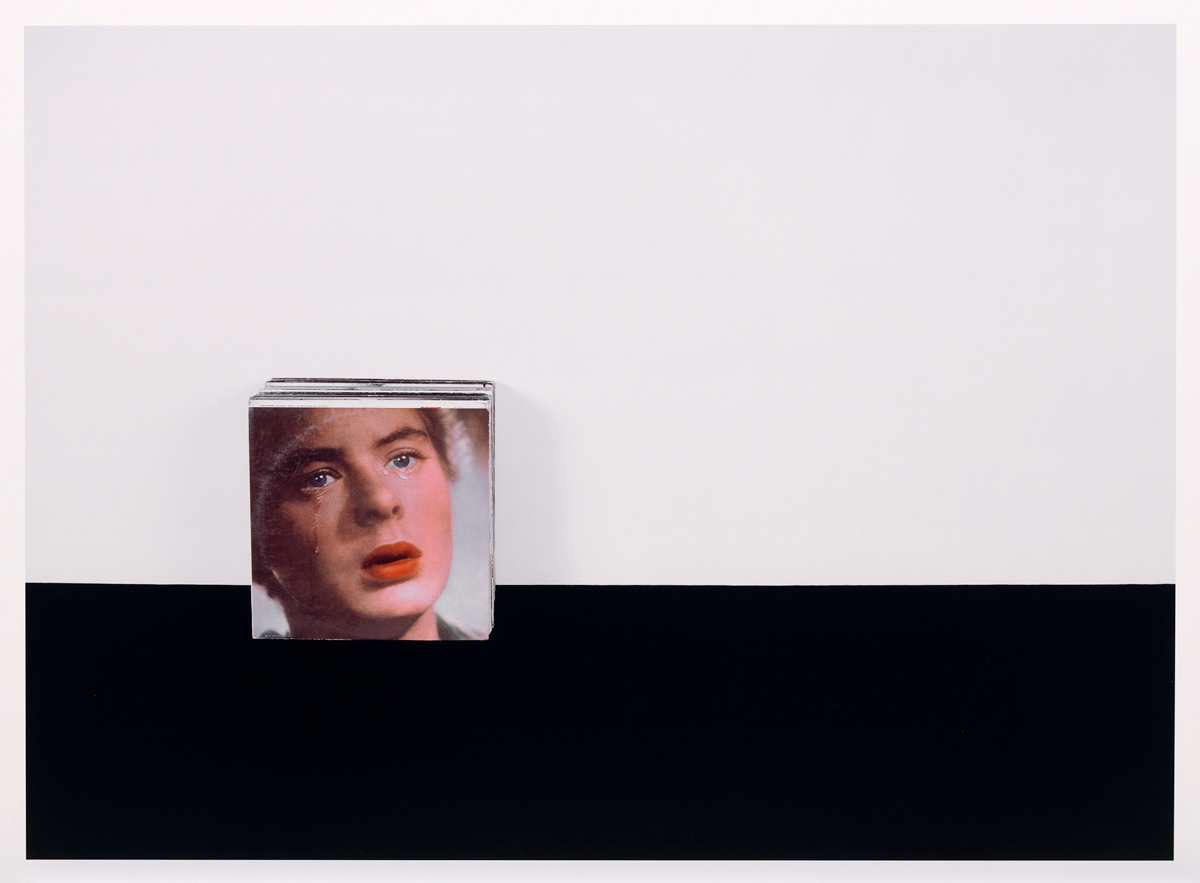
Anne Collier (American, b. 1970) Crying 2005 Chromogenic print edition 1/5 99.1 x 134 x 0.6cm Solomon R. Guggenheim Museum, New York, Purchased with funds contributed by Mr. and Mrs. Aaron M. Tighe
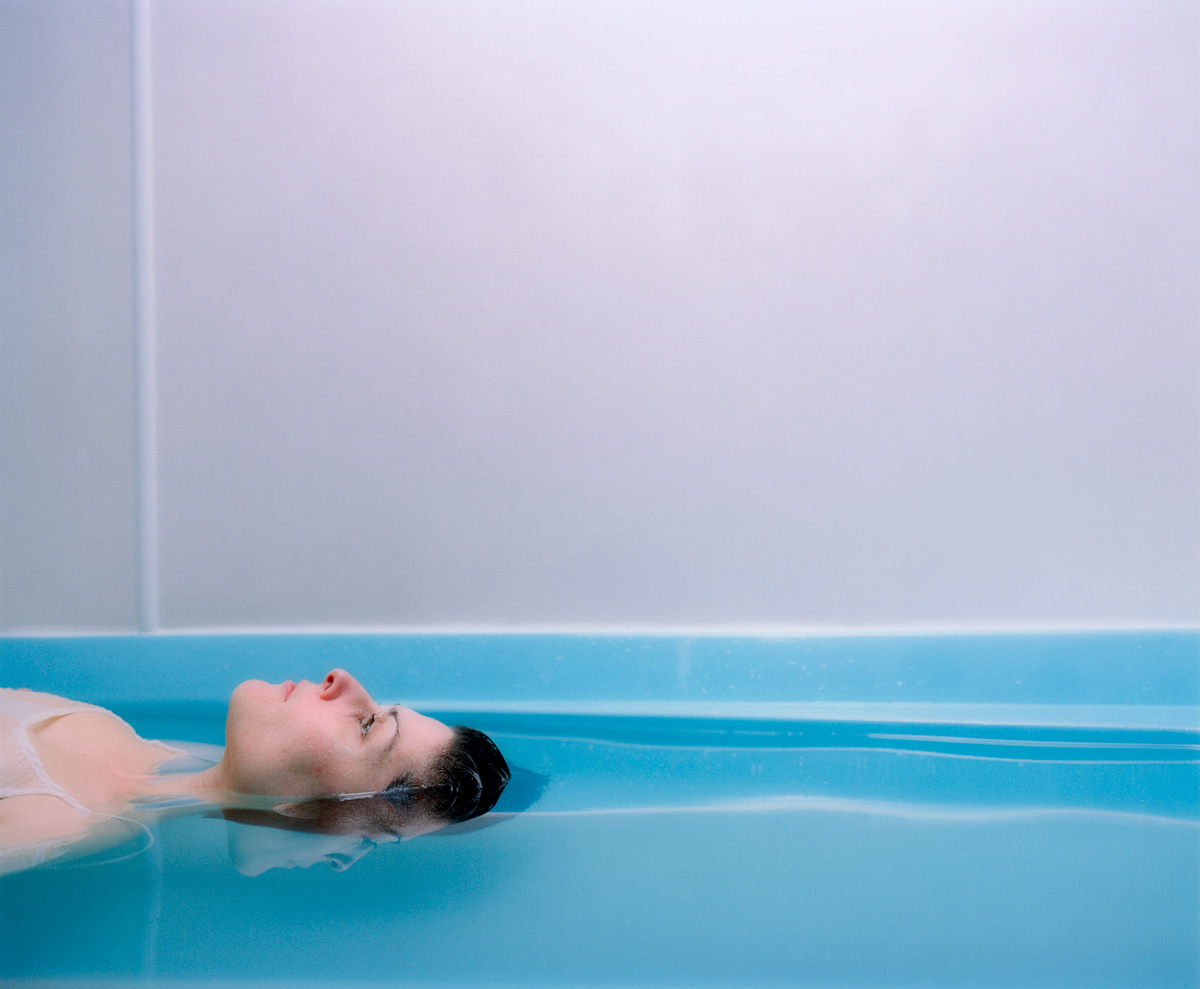
Miranda Lichtenstein (American, b. 1969) Floater 2004 Chromogenic print edition 5/5 104.1 x 127cm Solomon R. Guggenheim Museum, New York, Purchased with funds contributed by the Photography Committee
Sarah Anne Johnson (Canadian, b. 1976) Morning Meeting (from Tree Planting) 2003 Chromogenic print edition 73.7 x 79.7cm Solomon R. Guggenheim Museum, New York, Purchased with funds contributed by Pamela and Arthur Sanders; the Harriett Ames Charitable Trust; Henry Buhl; the Heather and Tony Podesta Collection; Ann and Mel Schaffer; Shelley Harrison; and the Photography Committee
Sally Mann (American, b. 1951) Virginia from the Mother Land series 1992 Gelatin silver print 76.2 x 96.5cm Solomon R. Guggenheim Museum, New York, Gift, The Bohen Foundation
Solomon R. Guggenheim Museum 1071 5th Avenue (at 89th Street) New York
Many thankx to Michaela Hille and Museum fur Kunst und Gewerbe Hamburg for allowing me to publish the photographs in the posting. Please click on the photographs for a larger version of the image.
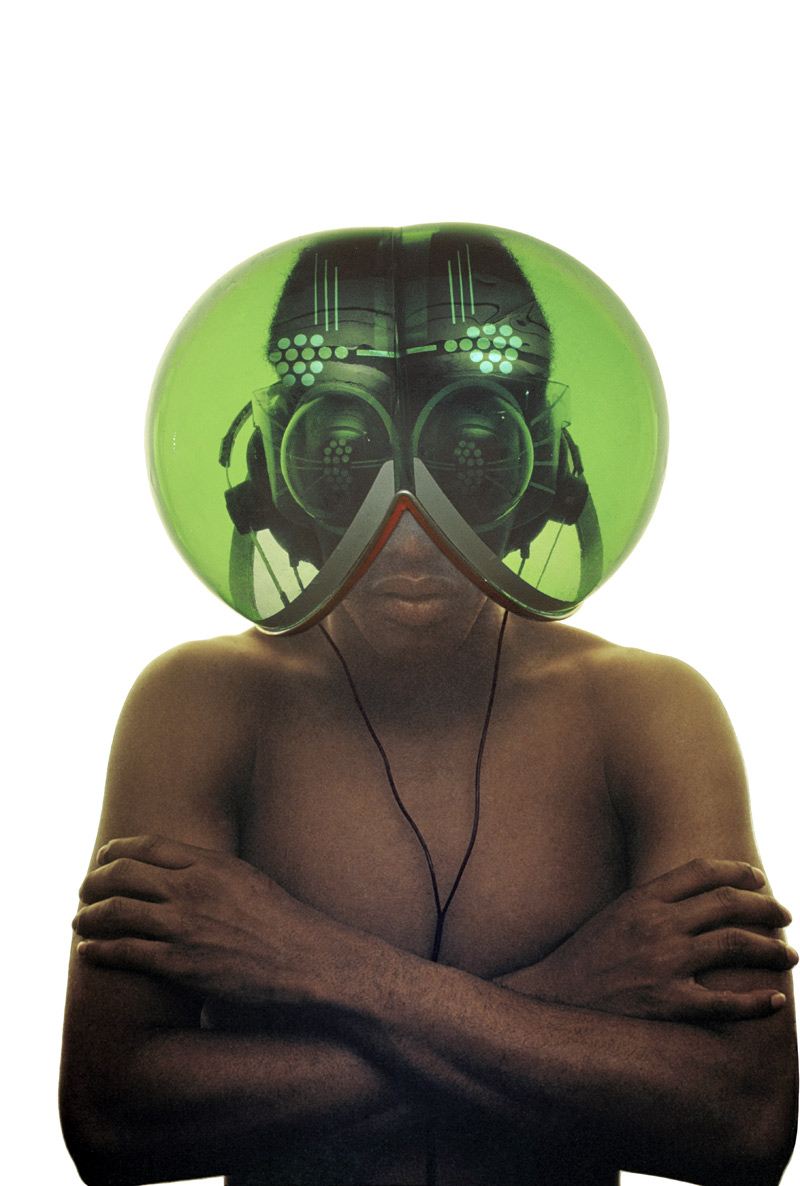
Haus-Rucker-Co (Laurids Ortner, Gunter Zamp Kelp, Klaus Pinter) Flyhead (Environment Transformer) Vienna, 1968 Helmet consisting of two transparent green, symmetrical, hemispherical plastic fragments partially covered with foil. Inside the helmet, with the aid of a metal construction, audio-visual filters are arranged by means of which the normality of the surroundings is acoustically distorted and visually faceted. Photo: Ben Rose, New York
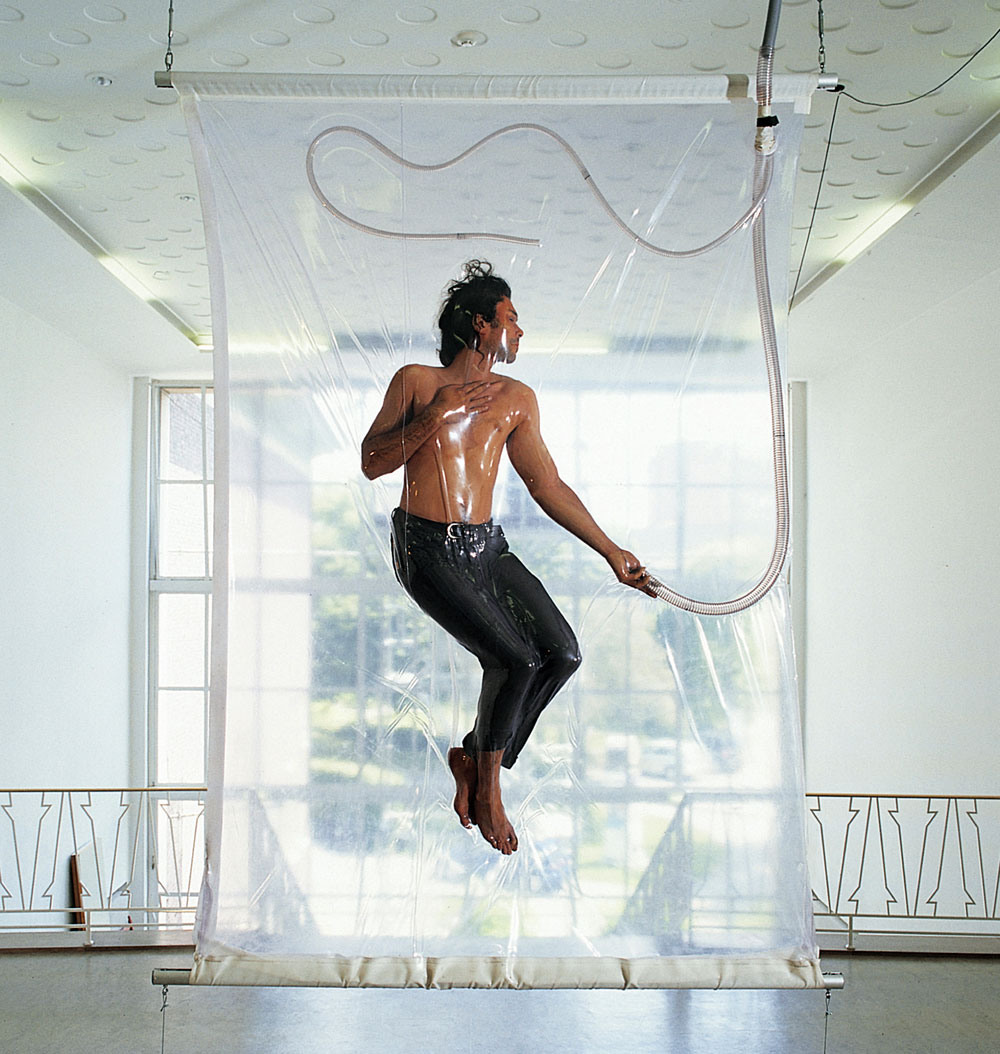
In view of the advancing climate change, the exhibition Climate Capsules: Means of Surviving Disaster at the Museum fur Kunst und Gewerbe Hamburg poses the question: “How do we want to live in the future?” and draws attention to the socio-political consequences of coexistence under new climatic conditions. In view of the fact that the politicians are hesitant to enforce strict measures for climate protection and the citizens very sluggish about changing their habits, the change appears inevitable. The world community is accordingly confronted with the challenge of investigating various possible means of adapting to the climate change. This exhibition is the first to bring together historical and current climate-related models, concepts, strategies, experiments and utopias from the areas of design, art, architecture and urban development – pursuing not the aim of stopping the climate change, but envisioning means of surviving after disaster has struck. More than twenty-five mobile, temporary and urban capsules intended to make human life possible independently of the surrounding climatic conditions will be on view – from floating cities and body capsules to concepts for fertilising sea water or injecting the stratosphere with sulphur. A symposium, film programme, readings, performances and workshops will revolve around the interplay between design processes and political factors such as migration, border politics and resource conflicts, and investigate the consequences for social and cultural partitioning and exclusion.
The public discussion on the climate change concentrates primarily on preventing change by reducing climate damaging emissions. This reduction is to be achieved through new means of obtaining energy as well as the optimisation of energy consumption. The consumption-oriented lifestyle of the industrial nations is also to become more “environmentally friendly”; the citizens are called upon to change their habits. Emerging nations are admonished to avoid the mistakes made by the West from the start. There is not the slightest guarantee, however, that enough nations and enough people around the world will participate in such reductions, and that a “low-carbon culture” will become the globally predominant lifestyle. Nor does anyone know for sure whether the reduction goals presently being discussed will suffice to delay or stop the climate change, which is already measurable today. In the search for alternative solutions, there is a category discussed substantially less often in public: adaptation. Here strategies are developed which aim not to slow or stop the climate change but to adapt to its expected consequences. They include protective measures against flooding and overheating as well as geo-engineering, i.e. large-scale interventions in the global climate.
These technologies are usually subjected only to critical discussion with regard to their technical feasibility. Until now, their possible socio-political effects have for the most part been ignored. Their impact on the structure of the global society, however, can hardly be overestimated: in the endeavour to make life possible independently of outward climatic conditions, these strategies encourage spatial, social and political isolation. Ostensibly motivated by climate-related considerations, they could well lead to inclusion and exclusion on all levels of life, from the interpersonal to the global. They create the conditions for social segregation and global polarisation.
The exhibition Climate Capsules: Means of Surviving Disaster will focus primarily on application-oriented projects for climatological capsules from the areas of design, art, architecture, urban development and geoengineering. The show will reflect on the (political, cultural, socio-spatial) impact of these current adaptation strategies on society by means of contemporary artistic approaches and avant-garde concepts of the twentieth century. Historical projects in the context of the climate change will thus assume new meaning. The current artistic projects question the positivist perspective of their counterparts of the past, and offer the exhibition visitor a further level of sensory experience. The exhibition objects can be divided into five types: body capsules, living capsules, urban capsules, nature capsules and atmosphere capsules.
Body capsules
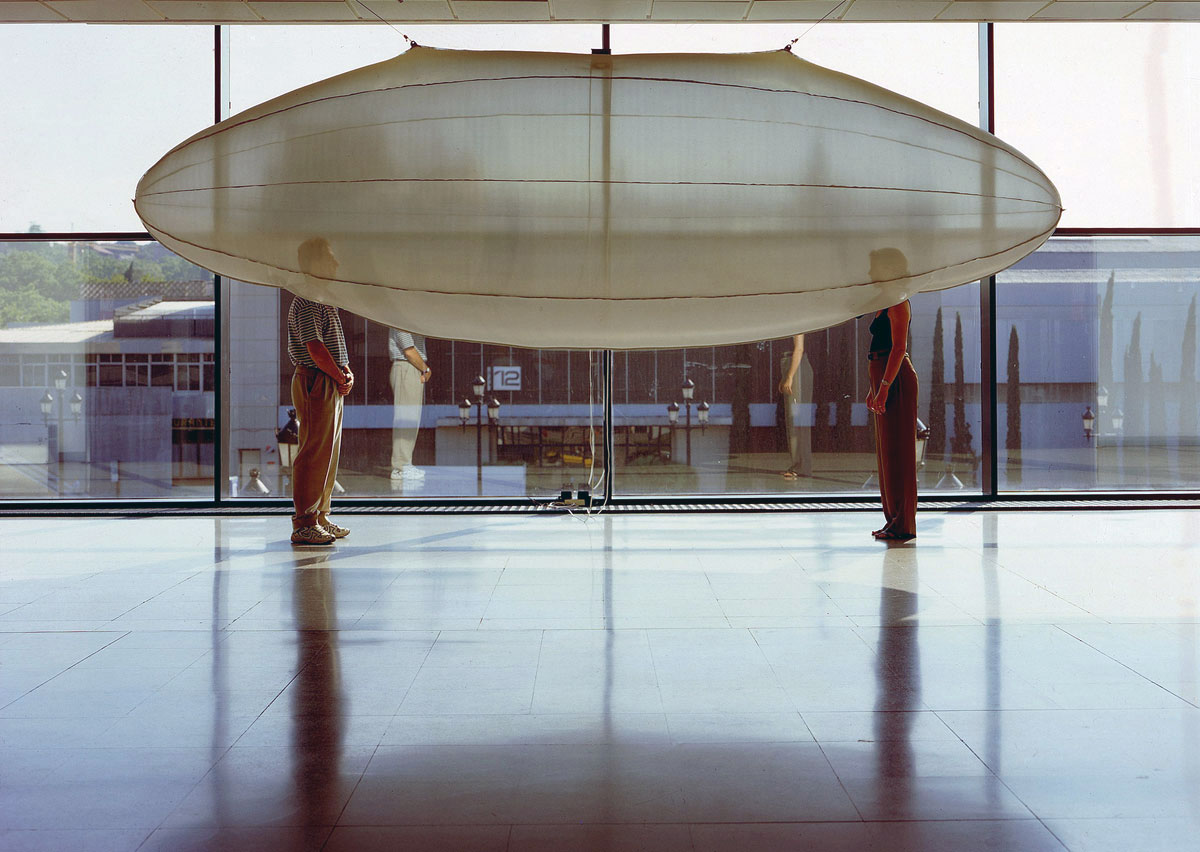
The exhibition begins with the interactive installation La Parole by Pablo Reinoso. Two visitors at a time can poke their heads into the inflatable textile construction and share the air they breathe as well as a common visual and audio space. The experience of this work raises the question as to how people can protect their bodies from contaminated air, pollutants, storms and aggressive solar radiation. Again and again in the course of the show, the visitor encounters “body capsules” addressing the topic of clothing as bodily protection from climatic conditions.
Living capsules
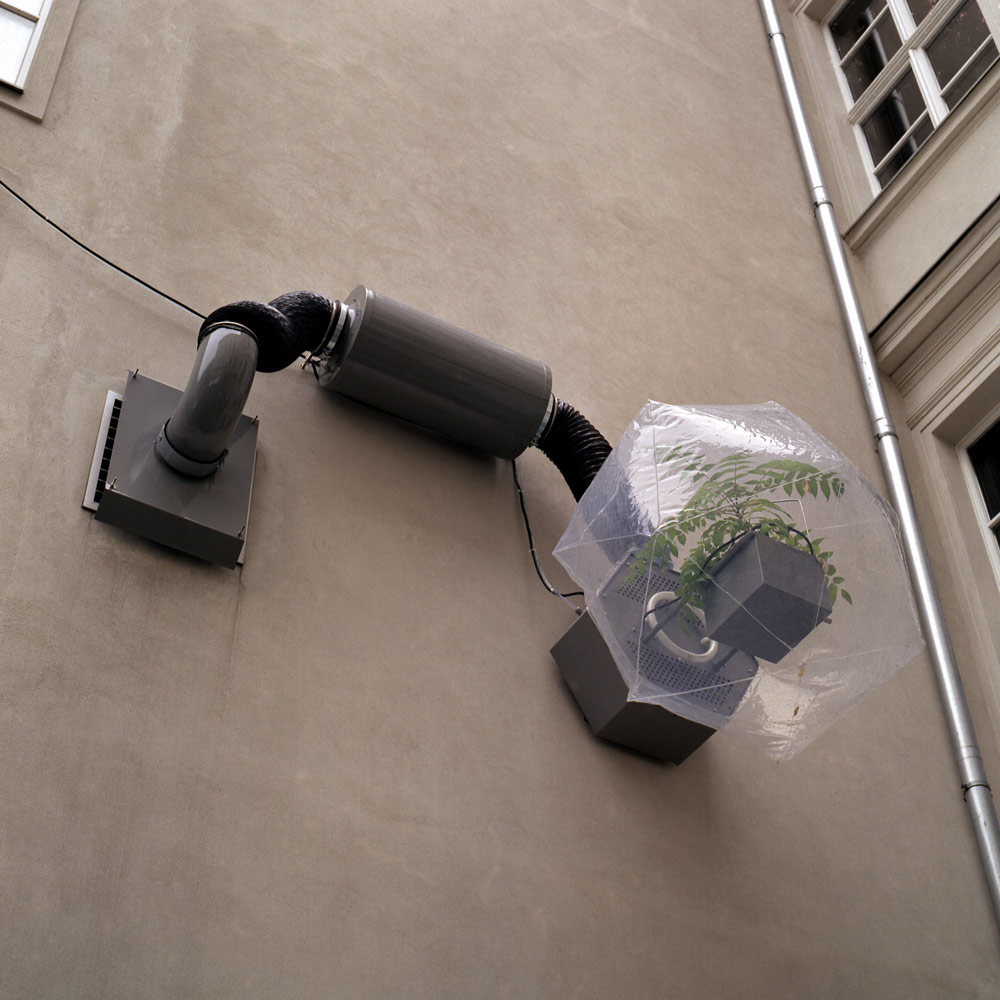
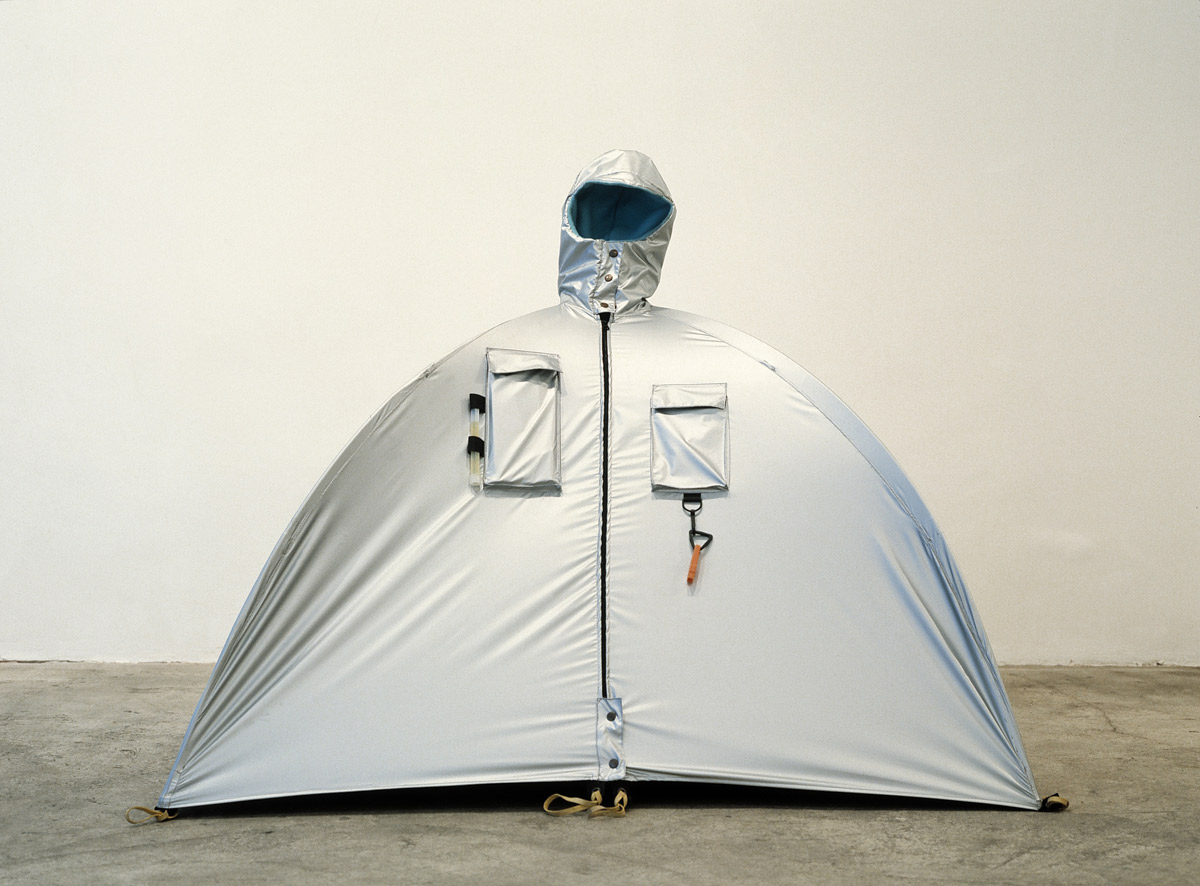
The objects belonging to this group extend the encapsulated space from the body encasement to the immediate living space. Utopian designs for mobile capsules of the 1960s such as the Walking City by Ron Herron (Archigram) still figured in the discussion emphasising temporary and mobile structures as experimental free spaces after ideas introduced by such architects as Constant or Yona Friedman. Today mobility is no longer just a question of freedom – the counterpart to voluntary mobility is flight, the spatial equivalent the temporary camp. The visitor thus stumbles across Michael Rokowitz’s paraSITE, for example, an inflatable tent which the artist developed in collaboration with the homeless person Bill Stone. Like the other tents in the series, it is designed for use in an exhaust air shaft. It can dock onto a building as a temporary parasite. In this context of precarious modi vivendi – brought about not least of all by global inequality (which is further aggravated by the climate change) and the resulting mass migration – what were once visionary temporary living concepts appear in a new light. They are not spaces of liberation, but of isolation.
Urban capsules
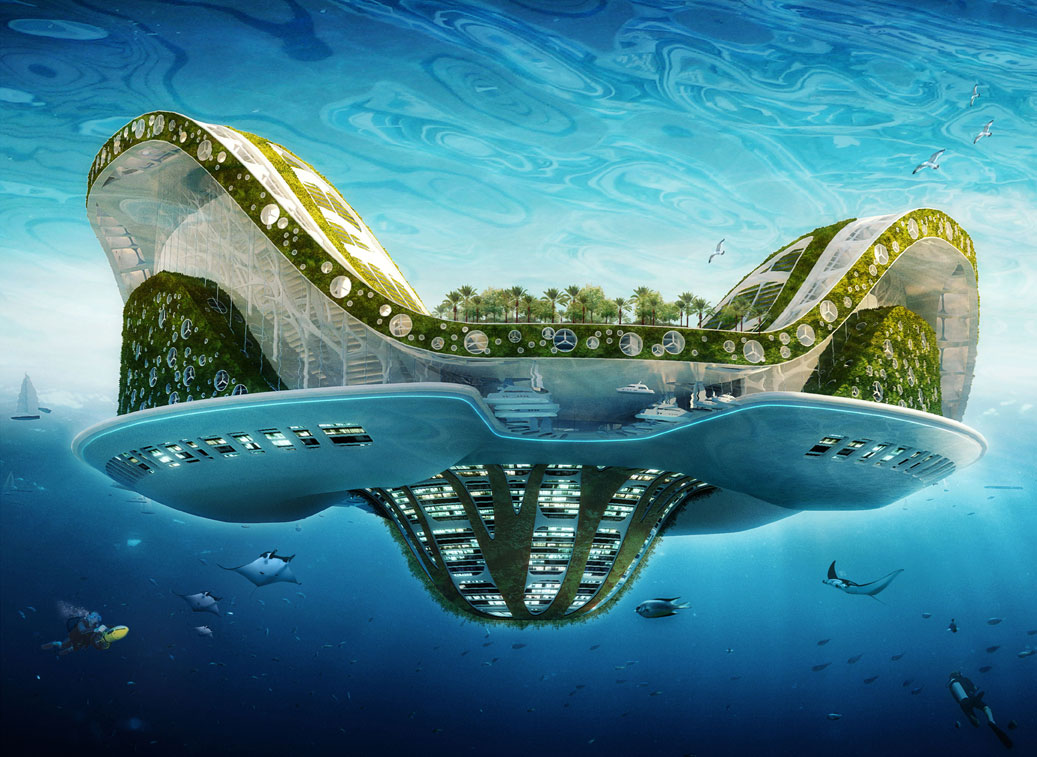
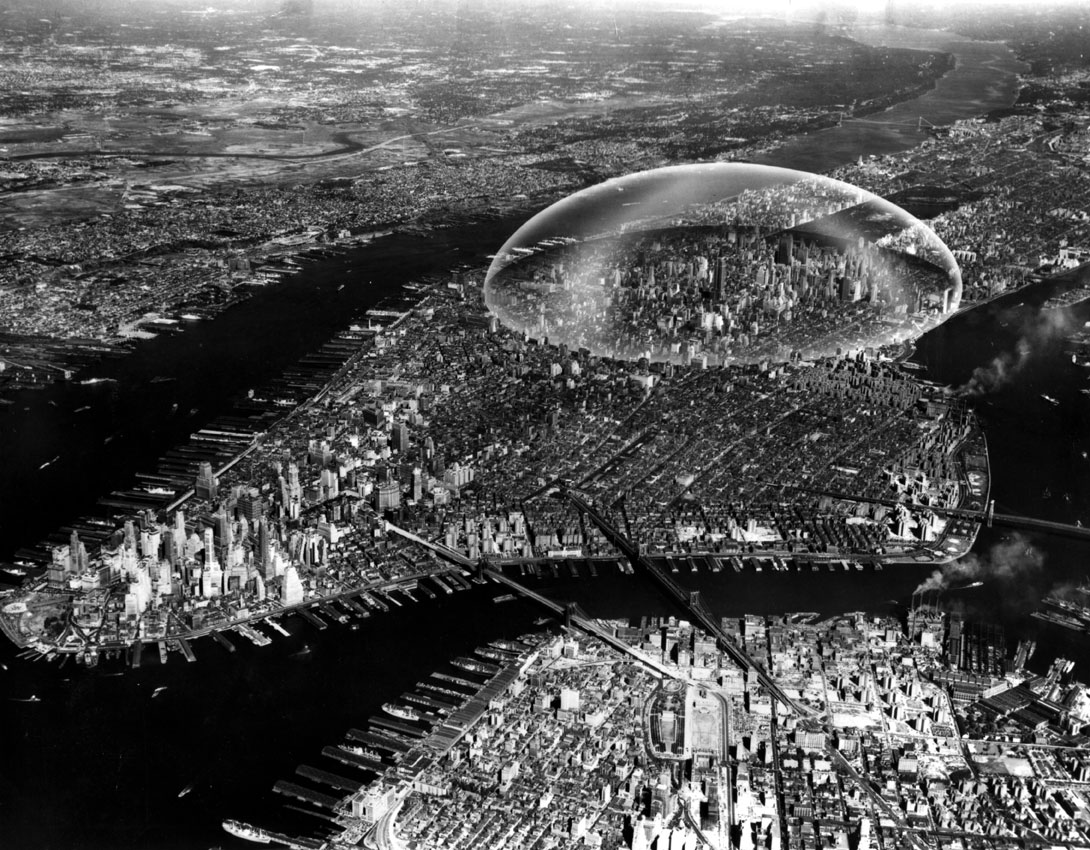
Cities are the largest energy consumers, and urbanisation continues to increase worldwide. Zero waste, zero emission, zero energy are the creeds of the present. Already in the 1950s, Richard Buckminster Fuller and Shoji Sadao sketched the utopia of a climatically self-sufficient reorganisation of the city with their Dome over Manhattan. In this vision, a huge dome covers a large proportion of the island. Today, these encapsulations from the outside are already being realised in conjunction with the design of internal climate worlds, whether on the scale of large building complexes or energy-self-sufficient cities such as Masdar by Norman Foster. Other concepts show that, against the background of imminent climate disasters, the urban system is conceived of increasingly as an autarchic unit, sealed from the outside world, and confronted with the need for the self-contained management of its ecological resources. This debate is carried to the furthest extreme by Vincent Callebaut’s conception for a floating city – Lilypad – intended as a haven for climate refugees.
Nature capsules
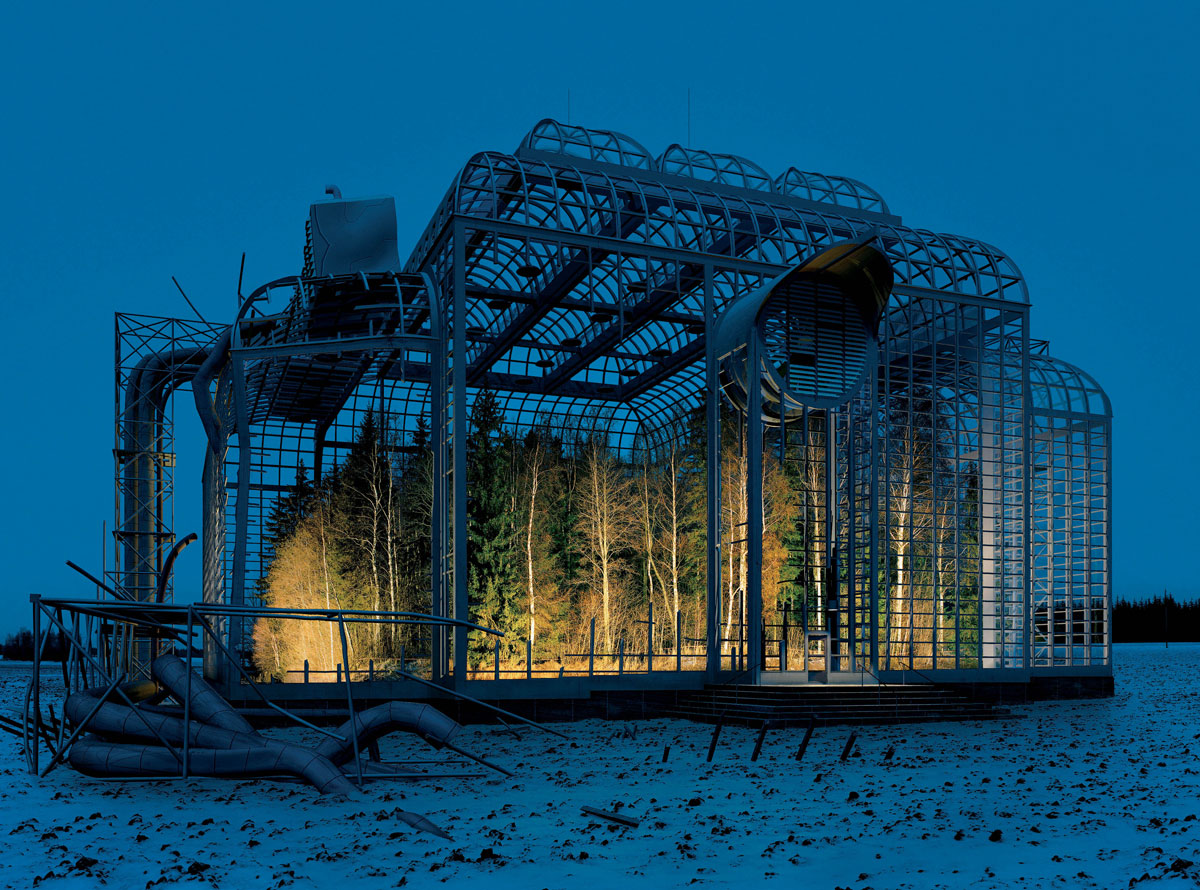
Just as the city is to be protected from the climatologically changing environment, nature is also to be elevated into a sphere of safe artificiality and preserved in nature capsules. Ecosystems are replicated by human hand on the micro level and sealed off from the outside. A concept which initially presents itself as a protective mechanism robs the flora and fauna assembled within it of their connection to the macrolevel ecosystem: Earth. The question arises: can that which is being protected inside such a capsule still be thought of as nature? Or is it a deceptively genuine human artefact? These considerations are made very vivid in Ilkka Halso’s photo series Museum of Nature, consisting of digital montages which insert forests, lakes and rivers into imaginary museum buildings.
Atmosphere capsules
The maximum scale of adaptive design strategies is reached with geo-engineering. With chemical or physical interventions, attempts are made to control climatological, geochemical and biochemical systems actively on the global level, and thus to moderate the climate. The historical forerunners of this development are psychoanalyst Wilhelm Reich’s para-scientific Cloudbusters and the U.S. Army’s Project Cirrus, both of which sought to influence the weather technically by different means. Today, various well-known scientists and research institutes are working on large-scale interventions aiming to protect the global climate from negative influences. Utopian proposals are juxtaposed with feasible projects such as endeavours to reduce global warming through the use of reflective white paint on roofs and streets. To date it is impossible to calculate the consequences of such far-reaching interventions, and they are nowhere near realisation. Yet the fact that they are discussed seriously indicates how close climatological developments have already come to the point where emission-reduction strategies become obsolete.
Participating artists, designers and architects: Anderson Anderson Architecture (US), Ant Farm (US), Richard Buckminster Fuller (US), Vincent Callebaut (B), Juan Downey (US), David Greene (GB), Tue Greenfort (DK), Ilkka Halso (FI), Haus-Rucker-Co (AT), Ron Herron (GB), Kouji Hikawa (JP), Christoph Keller (D), Lawrence Malstaf (B), Gustav Metzger (D), N55 (DK), Lucy Orta (GB), Michael Rakowitz (US), Pablo Reinoso (ARG/F), Shoji Sadao (US), Tomás Saraceno (planet earth), Werner Sobek (D), Jan-Peter E.R. Sonntag (D), Matti Suuronen (FI), Ingo Vetter (D).
Press release from the Museum fur Kunst und Gewerbe website [Online] Cited 17/08/2010 no longer available online
Lucy Orta (English, b. 1966) Refuge Wear – Habitent 1992 Polyamide encased in aluminium, polar fleece, aluminium tent poles, whistle, lantern, compass 125 x 125 x 125cm Galleria Continua Photo: Galerie Anne de Villepoix, Courtesy Galleria Continua, San Gimignano / Beijing / Le Moulin
Artists: Justine Khamara, Lyndell Brown and Charles Green, Imants Tillers, Sam Shmith, Janet Laurence, Murray Fredericks and Huang Xu
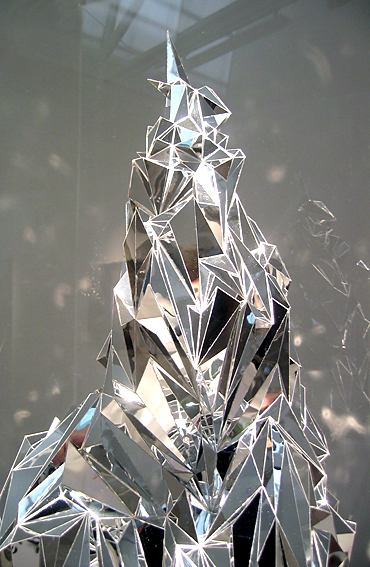
Janet Laurence (Australian, b. 1947) Carbon Vein (installation view) 2008 Duraclear, oil pigment on acrylic 235 x 100cm Photo: Marcus Bunyan
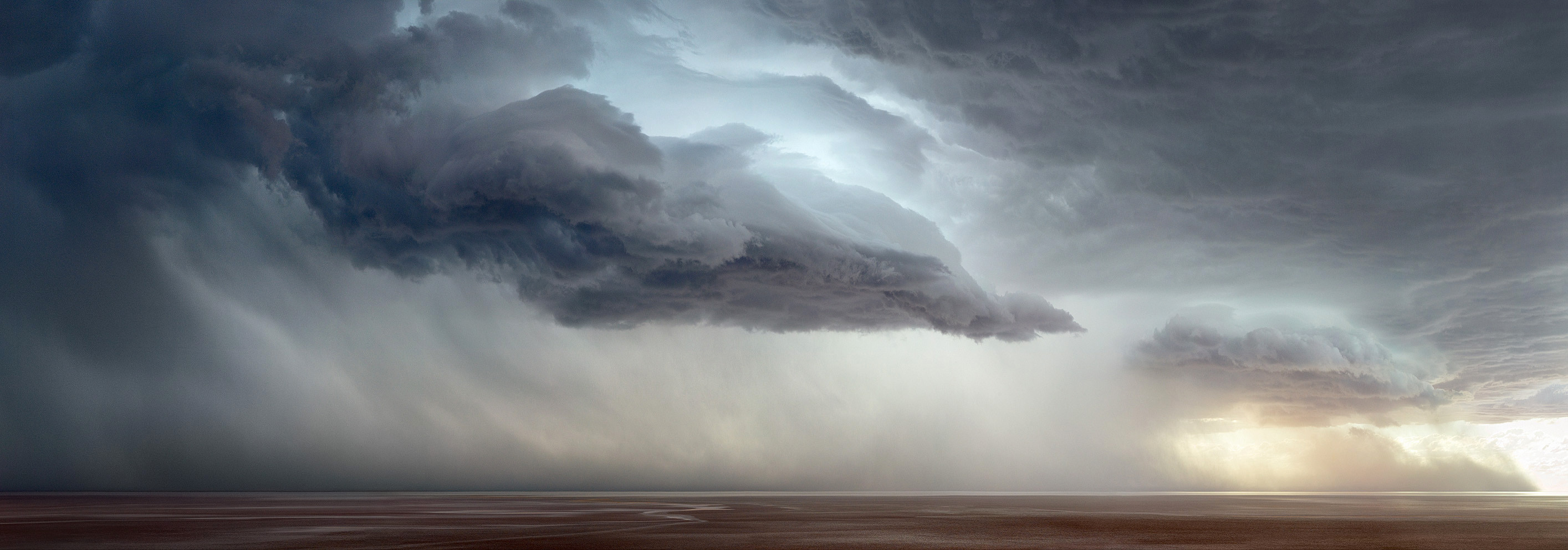
This is an excellent group exhibition at Arc One Gallery, Melbourne. Together the works form a satisfying whole; individually there are some visually exciting works. There are two insightful paintings by Imants Tillers, Nature Speaks: BP (2009) and Blossoming 21 (2010), a digitally constructed landscape by Sam Shmith, Untitled (Passenger) (2010, below) that the online image doesn’t really do justice to, a large photographic landscape of a storm over Lake Eyre Salt 304 (2009, below) by Murray Fredericks and two layered transcapes by Janet Laurence (see image above) that just confirm the talent of this artist after the exciting installation of her work at the Melbourne Art Fair (I call them transcapes because they seem to inhabit a layered in-between space existing between dream and reality).
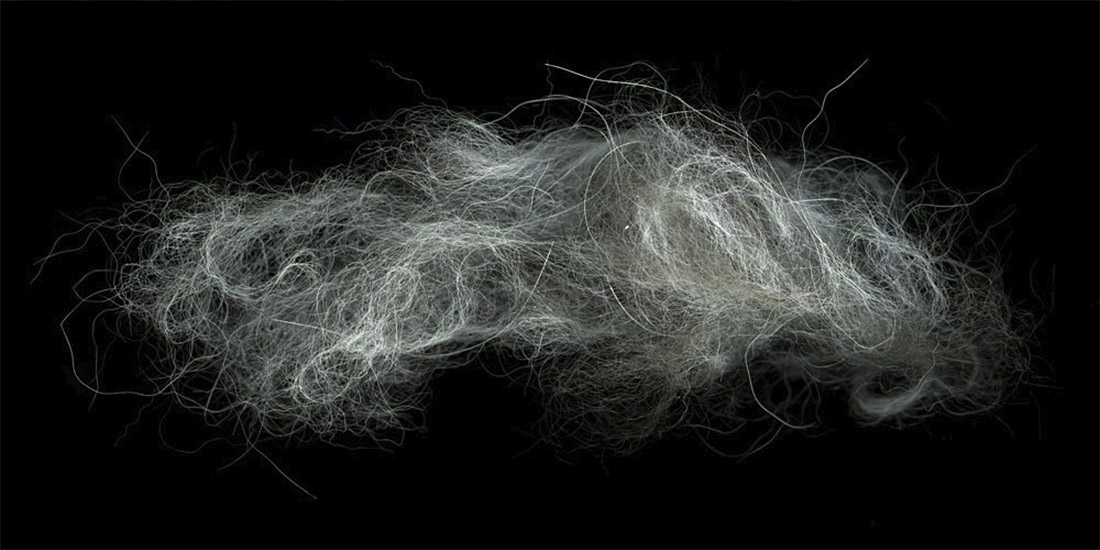
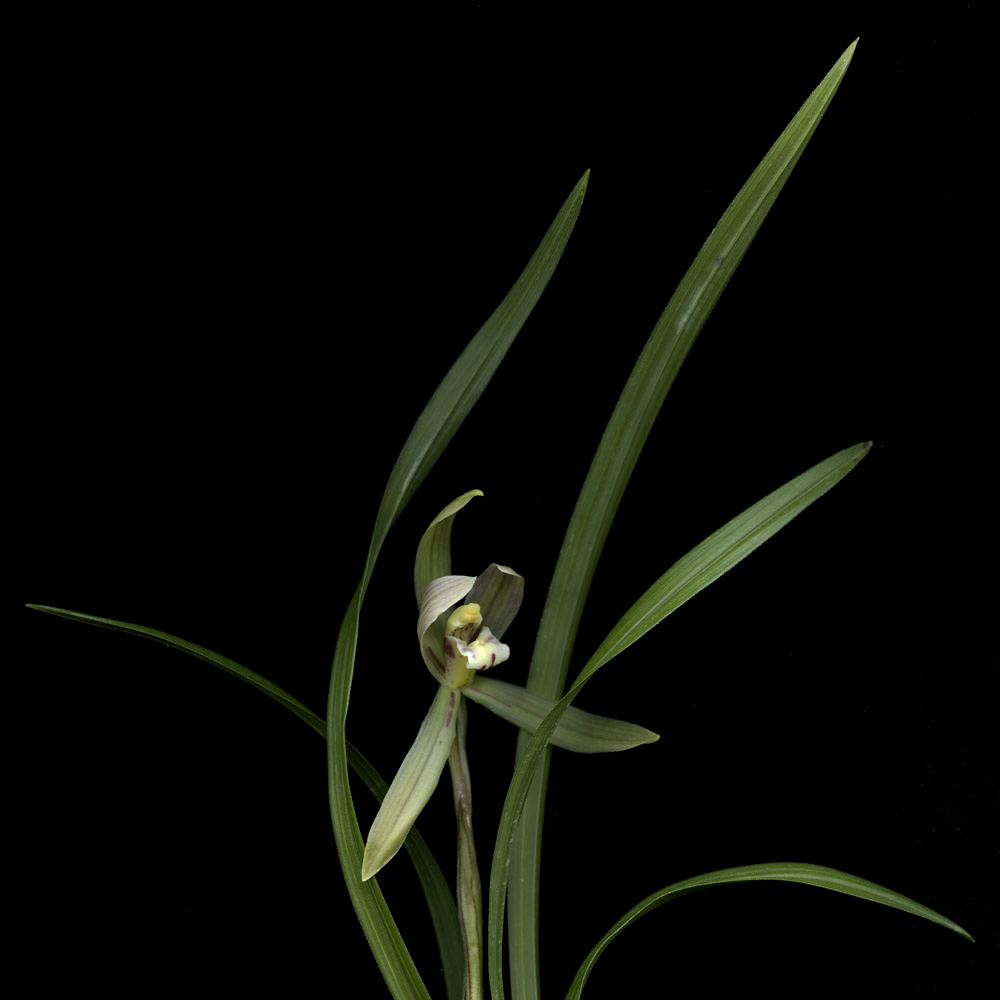
For me the three outstanding works were the large horizontal photograph Hair No.2 (2009, below) by Huang Xu, in which hair hangs like a delicate cloud on a dark background and his photograph Flower No. 1 (2008, below) in which the white petals of the chrysanthemum, symbol of death or lamentation and grief in some Western and Eastern countries in the world, seemingly turn to marble in the photographic print (you can see this online in the enlarged version of the image below). What a magnificent photograph this is – make sure that you don’t miss it because it is tucked away in the small gallery off the main gallery in the Arc One space. The third outstanding work is the sculpture you are a glorious, desolate prospect (2010) by Justine Khamara (see photographs below), a glorious magical mountain, twinkling in the light, all shards of reflectiveness, cool as ice. I would have loved to have seen this work without it’s protective case – in one sense the case works conceptually to trap the speaking of the mountain but in another it blocks access to the language of this work, the reflection of the light of the gallery, the light of the world bouncing off it’s surfaces.
This is not, of course, how nature speaks but how humans speak for nature – through image-ining and seeking to control and order the elemental forces that surround us. This construction of reality has a long tradition in the history of art, the mediation of the world through the hands, eyes and mind of the artist offering to the viewer, for however brief a moment, that sense of awakening to the possibilities of the world in which we all live.
Dr Marcus Bunyan
Many thankx to Angela and all at Arc One Gallery for allowing me to publish the photographs in the posting. Please click on the photographs for a larger version of the image.
Justine Khamara (Australian, b. 1971) you are a glorious, desolate prospect (installation view) 2010 Mirror, perspex, plinth 80 x 186cm Photo: Marcus Bunyan
Justine Khamara (Australian, b. 1971) you are a glorious, desolate prospect (installation view detail) 2010 Mirror, perspex, plinth 80 x 186cm Photo: Marcus Bunyan
Lyndell Brown (Australian, b. 1961) and Charles Green (Australian, b. 1961) Galatea Point 2005 Digital photograph on duraclear film edition of 5 112 x 112cm
Huang Xu (Chinese, b. 1968) Hair No.2 2009 Type C Photograph 120 x 245cm
Huang Xu (Chinese, b. 1968) Flower No.1 2008 Type C photograph 120 x 120cm
Huang Xu (Chinese, b. 1968) Flower No.2 2008 Type C Photograph 120 x 120cm
Murray Fredericks (Australian, b. 1970) Salt 304 2009 Pigment print on cotton rag 244 x 88cm
Sam Shmith (Australian, b. 1980) Untitled (Passenger) 2010 pigment print on archival rag 180 x 108cm
Arc One Gallery 45 Flinders Lane Melbourne, 3000 Phone: (03) 9650 0589



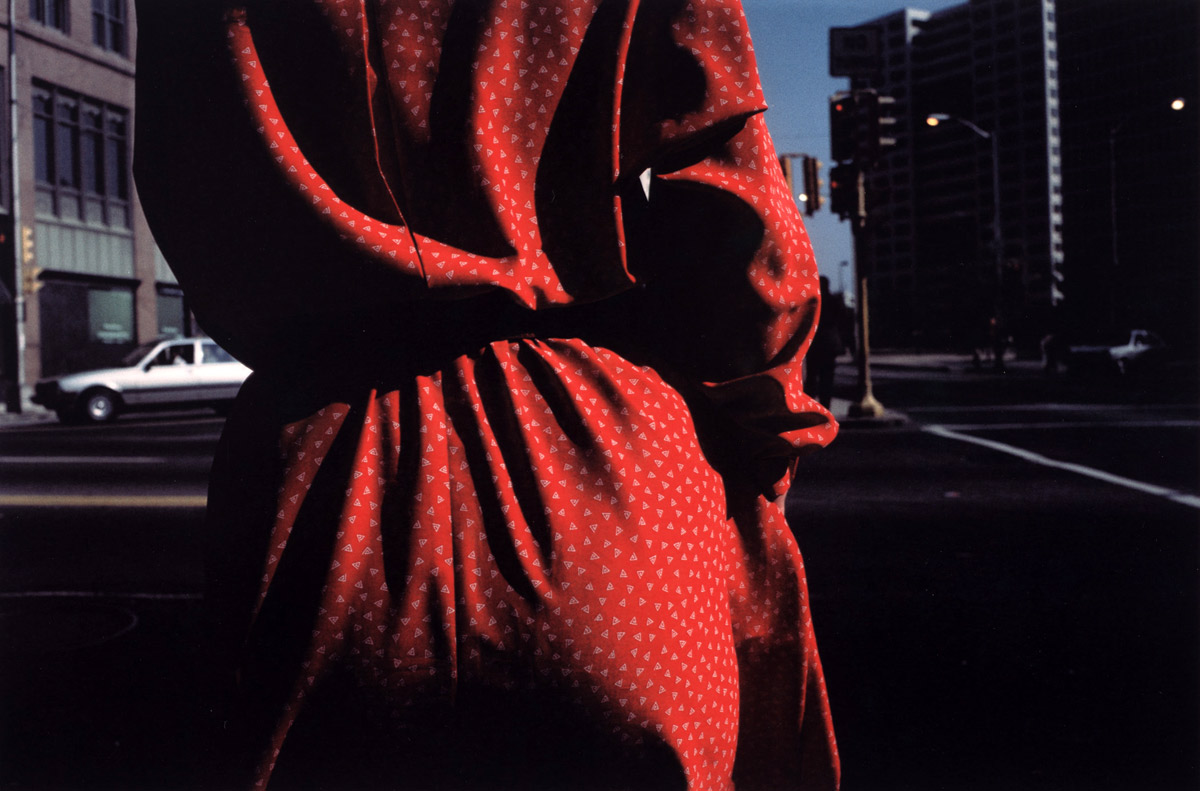


![Tom Howard (American, 1894 - 1961) '[Electrocution of Ruth Snyder, Sing Sing Prison, Ossining, New York]' 1928](https://artblart.com/wp-content/uploads/2016/07/electrocution-of-ruth-snyder-web.jpg "Tom Howard (American, 1894 - 1961) '[Electrocution of Ruth Snyder, Sing Sing Prison, Ossining, New York]' 1928")


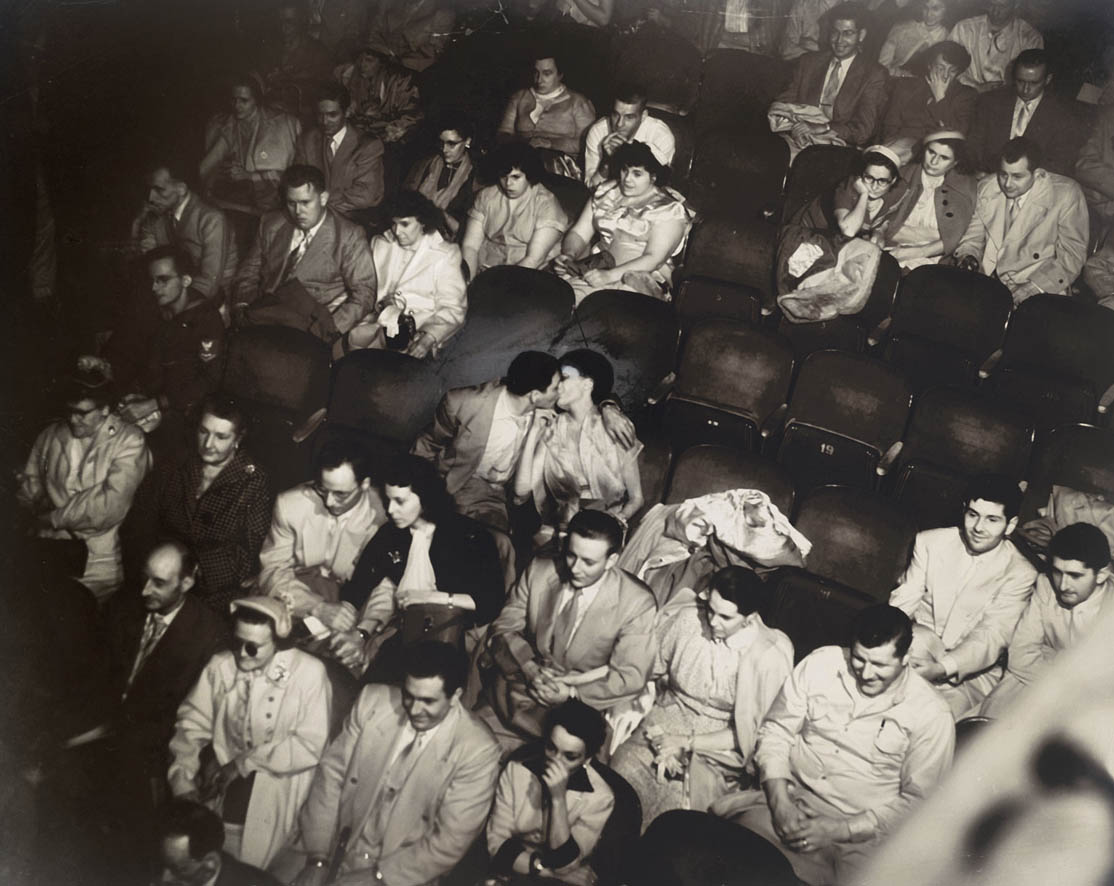
![Weegee (Arthur Fellig) (American, born Austria, 1899-1968) '[Lovers at the Movies, Times Square]' c. 1953](https://artblart.com/wp-content/uploads/2010/09/weegee-lovers-1953.jpg "Weegee (Arthur Fellig) (American, born Austria, 1899-1968) '[Lovers at the Movies, Times Square]' c. 1953")

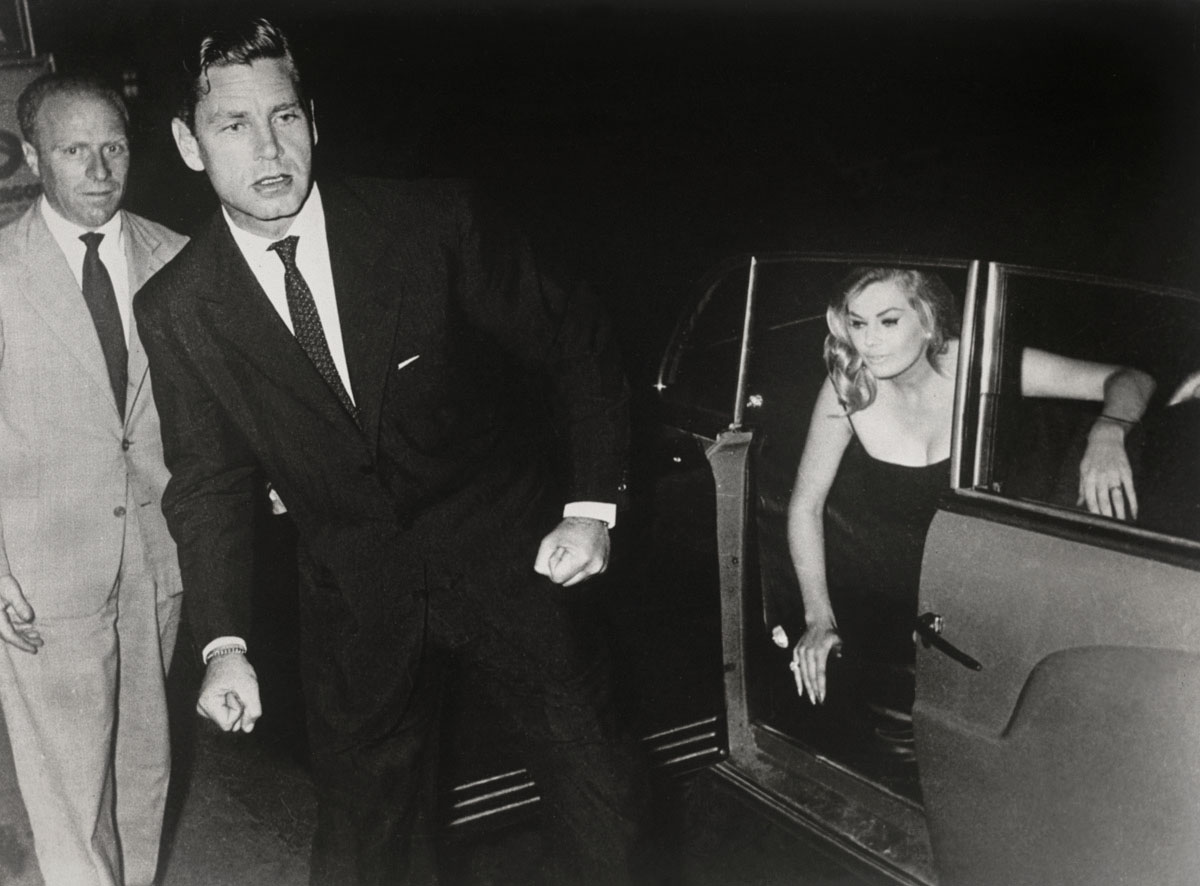





![Weegee (Arthur H. Fellig) (American, 1899-1968) '[Marilyn Monroe]' c. 1950s](https://artblart.com/wp-content/uploads/2010/09/weegee-marilyn-monroe.jpg "Weegee (Arthur H. Fellig) (American, 1899-1968) '[Marilyn Monroe]' c. 1950s")




















You must be logged in to post a comment.