Exhibition: ‘Peter Booth’ at TarraWarra Museum of Art, Healesville

Exhibition dates: 26th November, 2022 – 13th March, 2023

Curator: Anthony Fitzpatrick
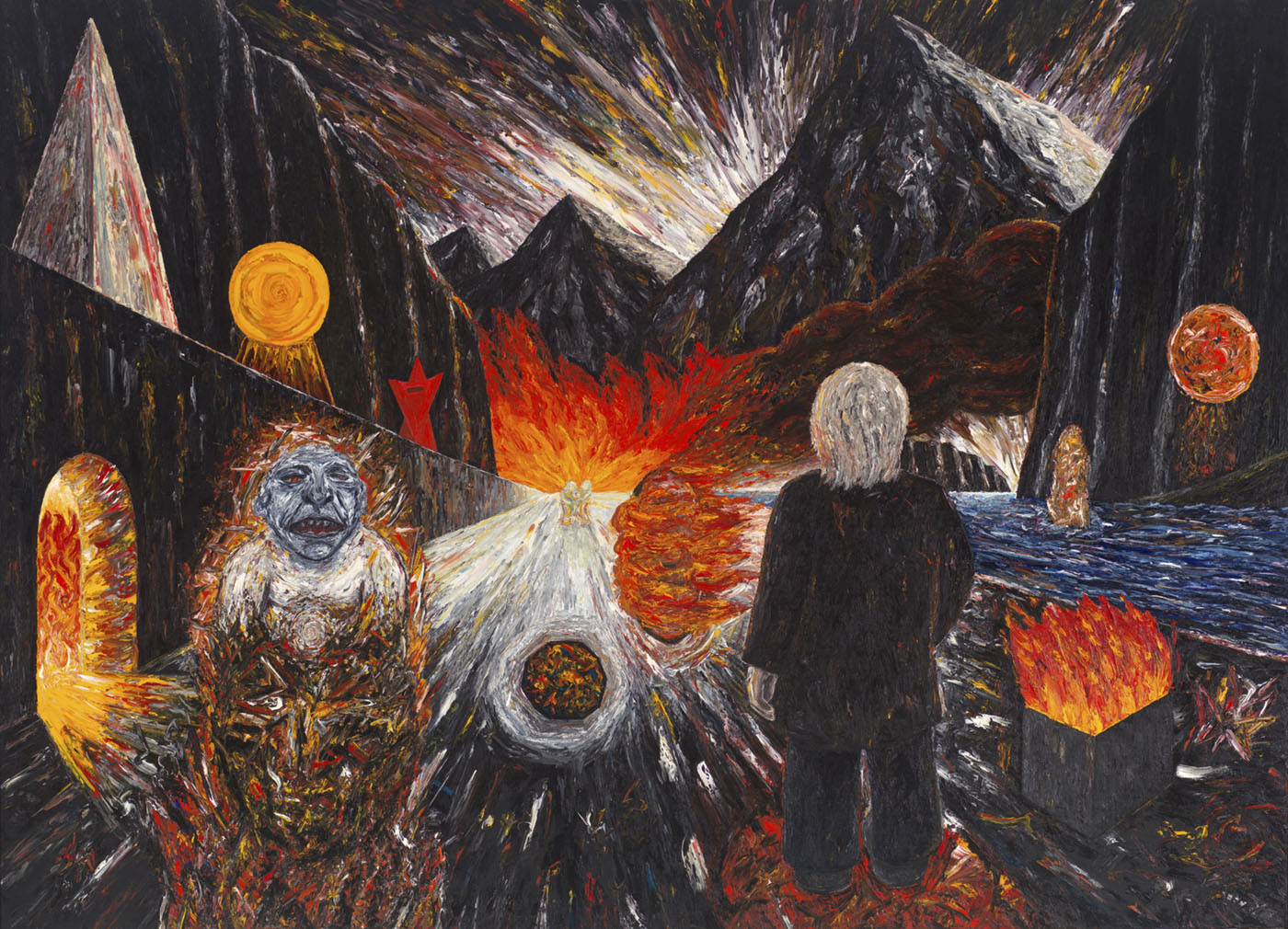
 

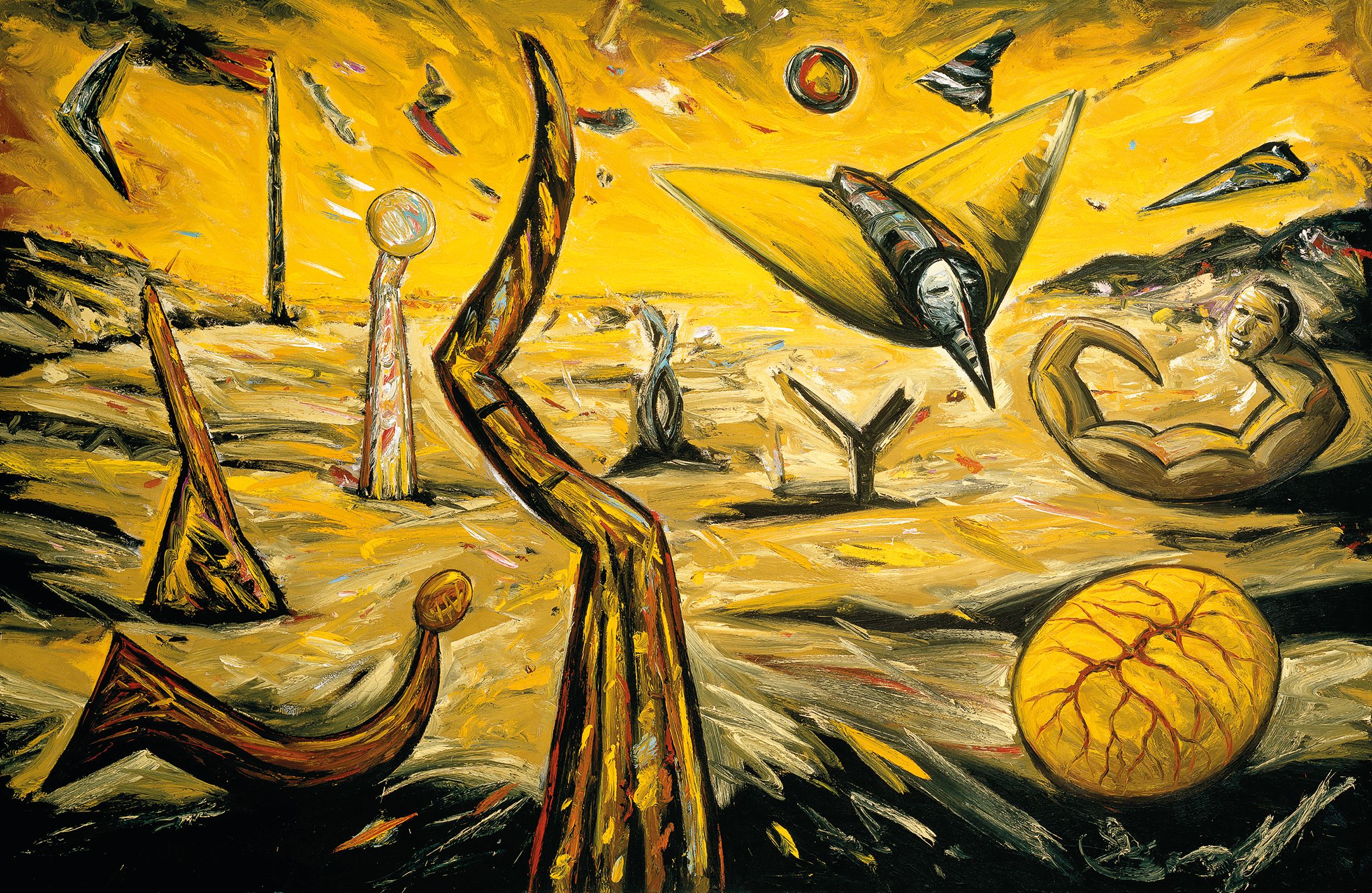
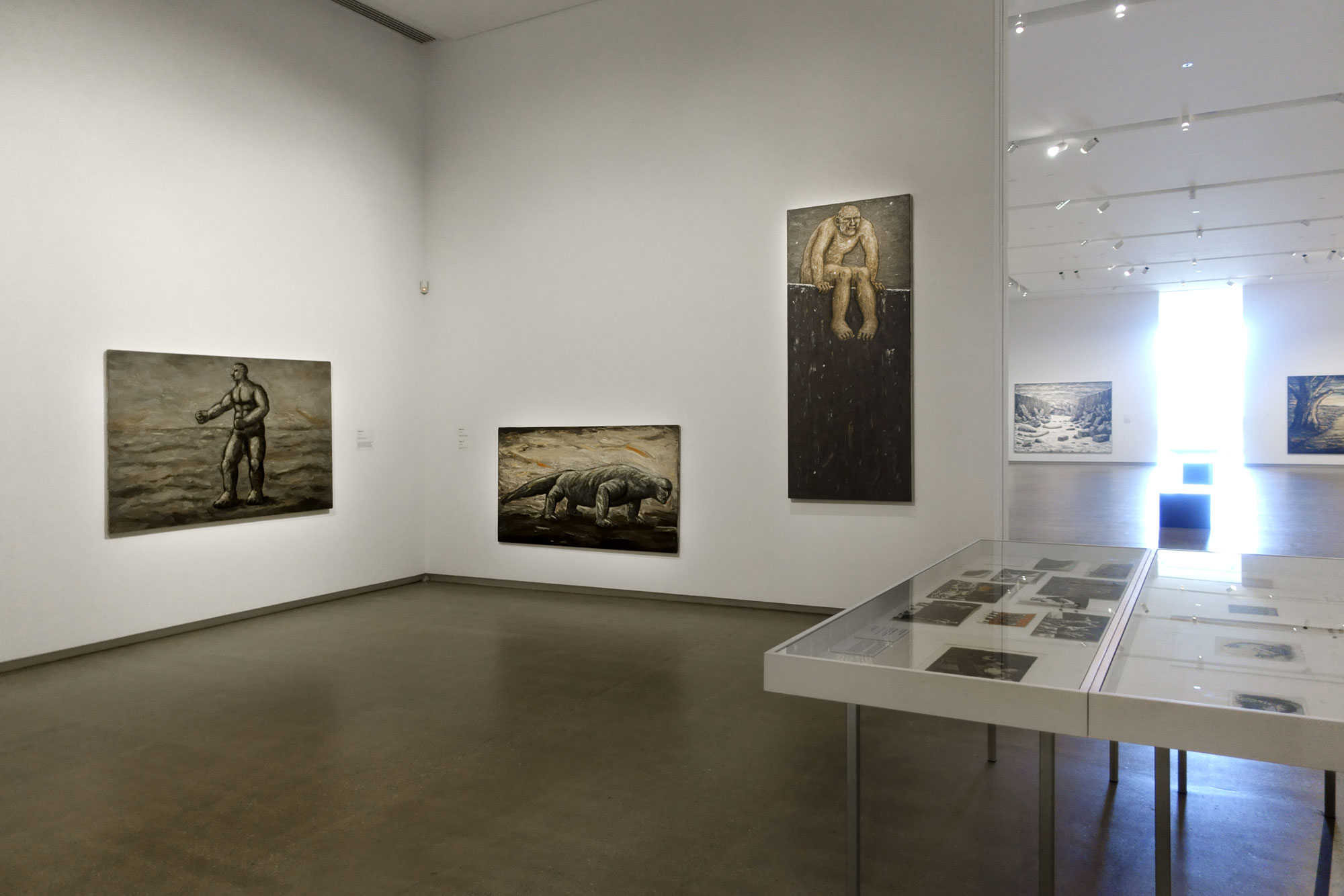
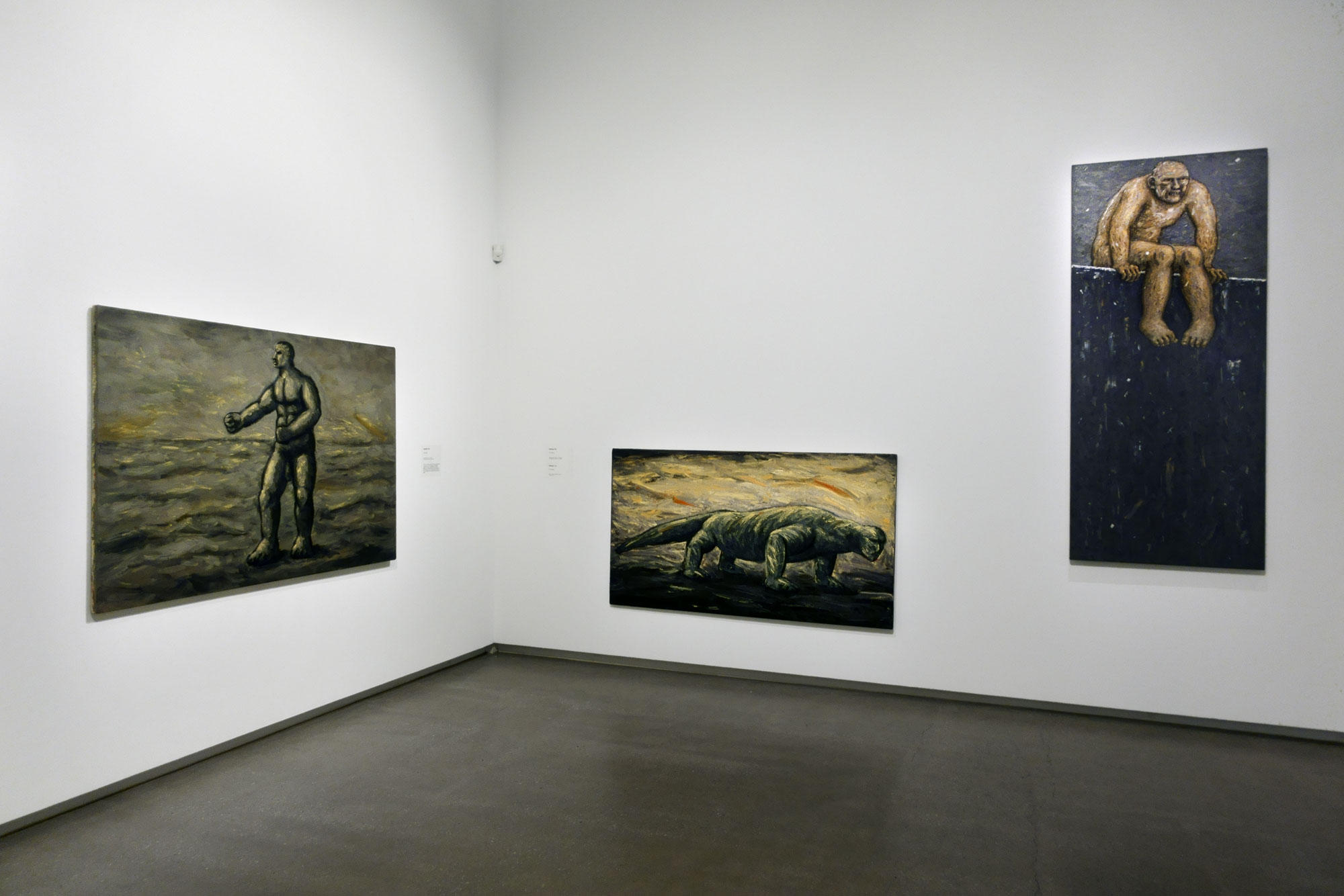
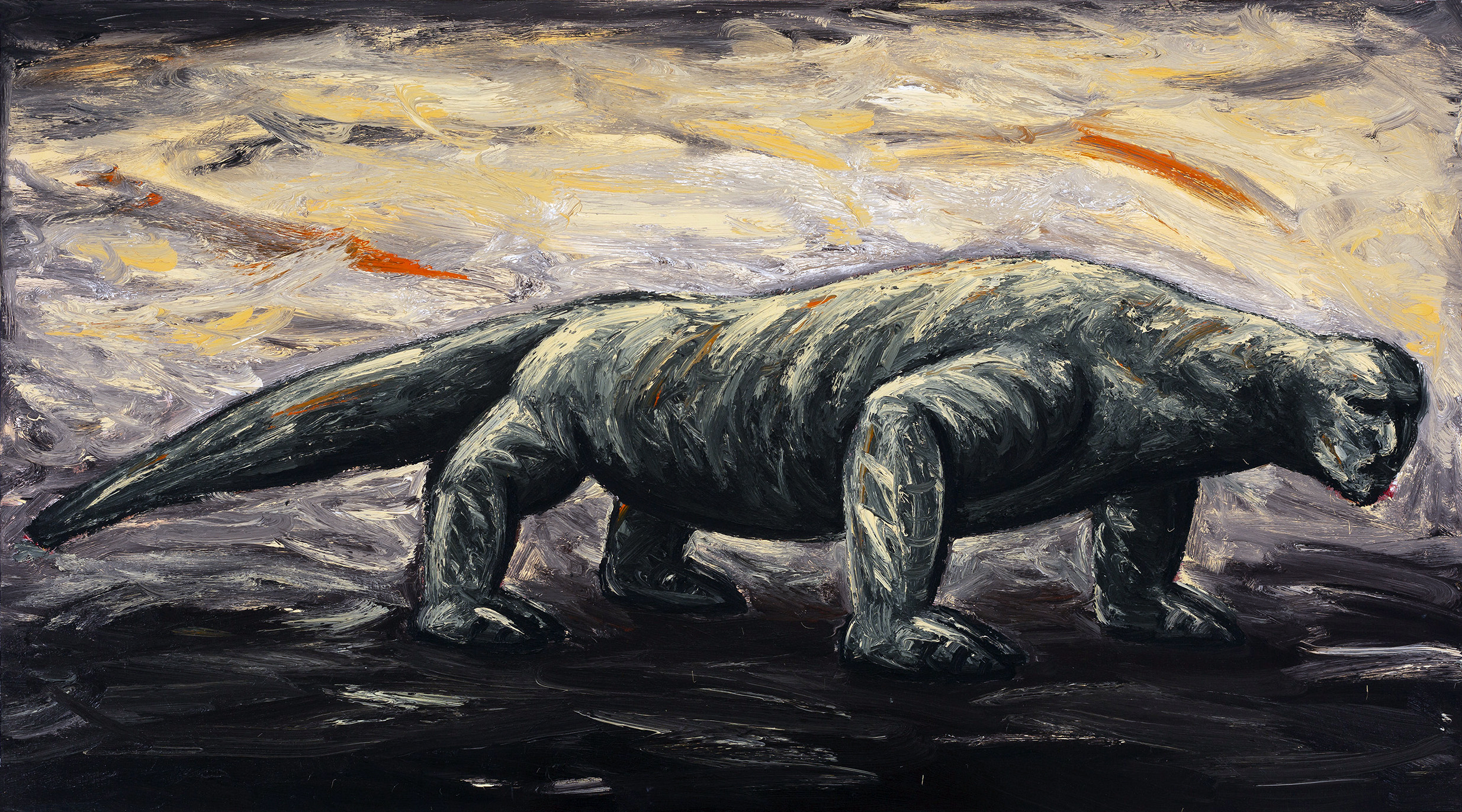
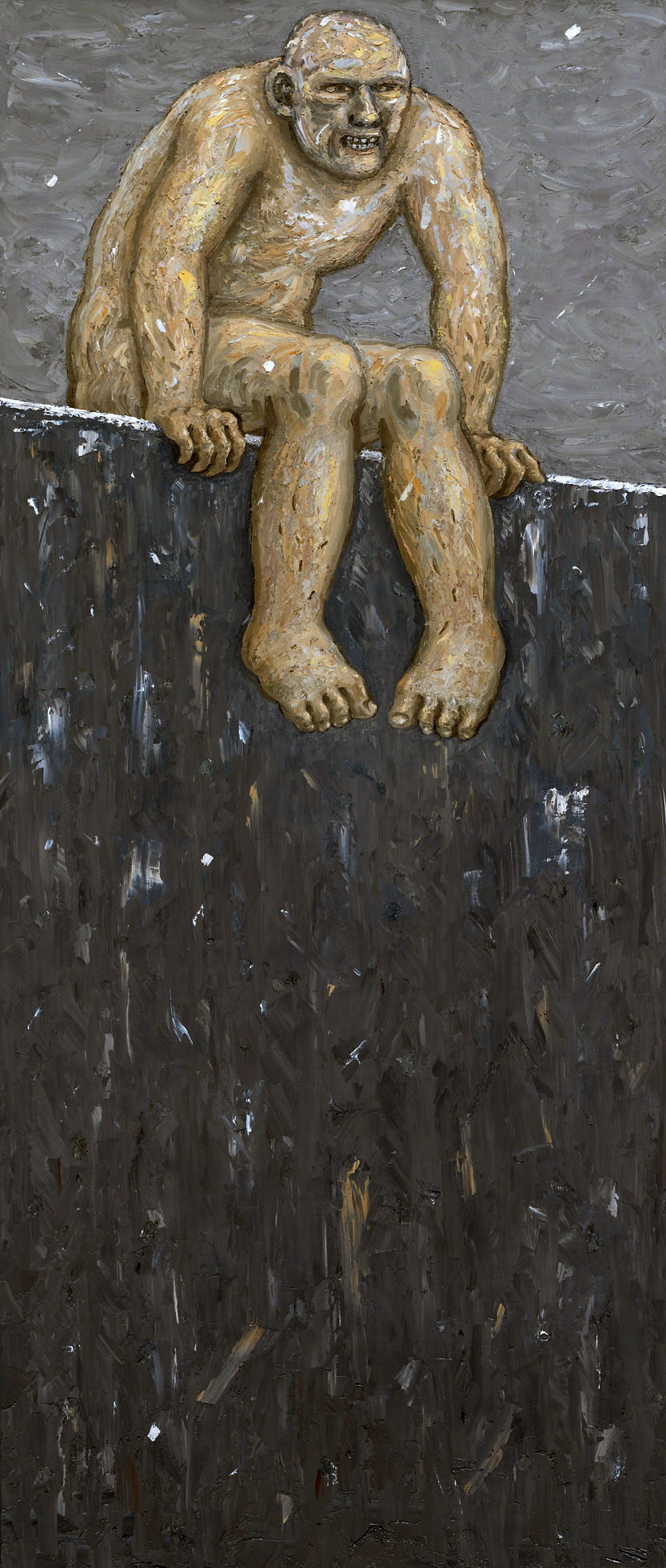
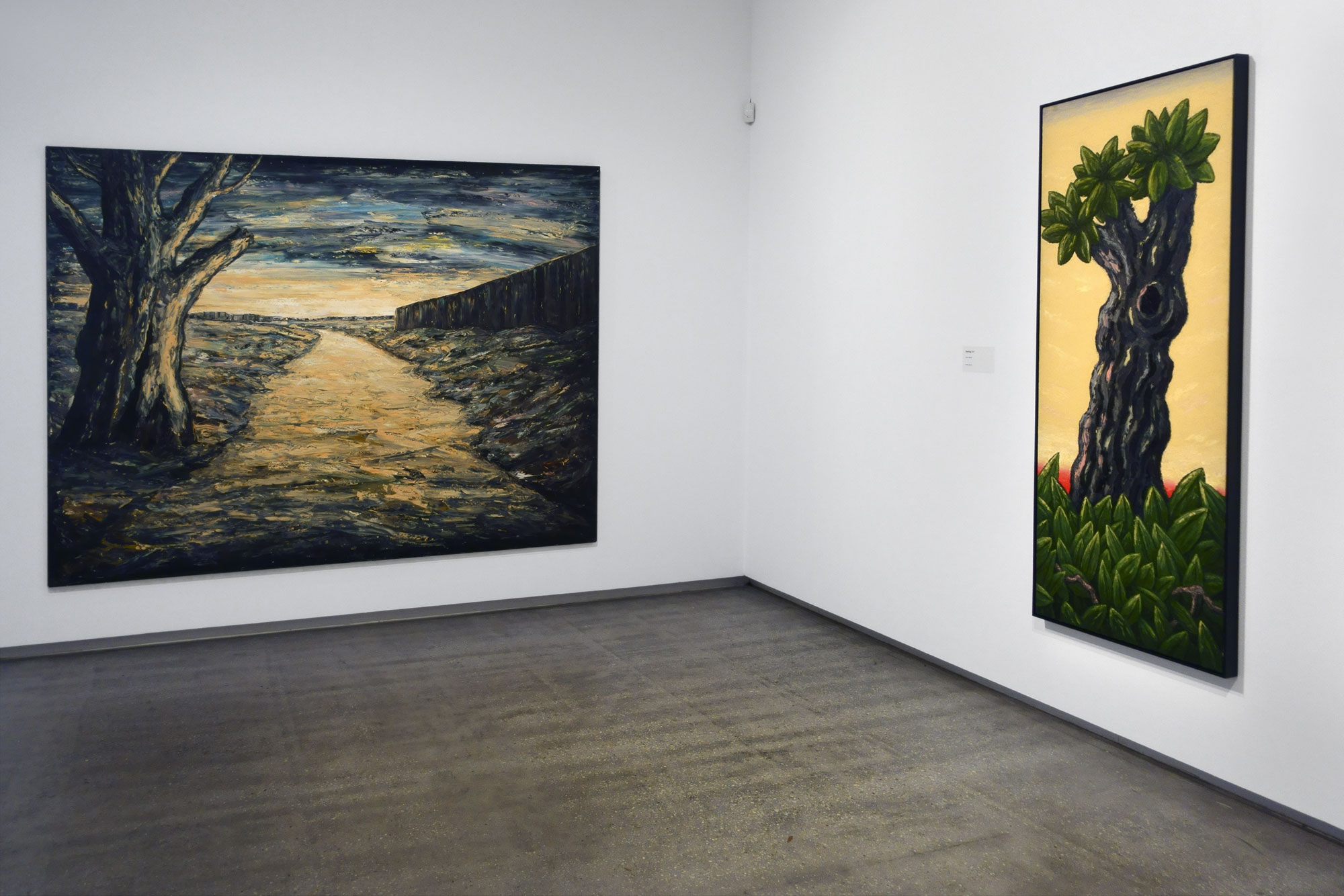
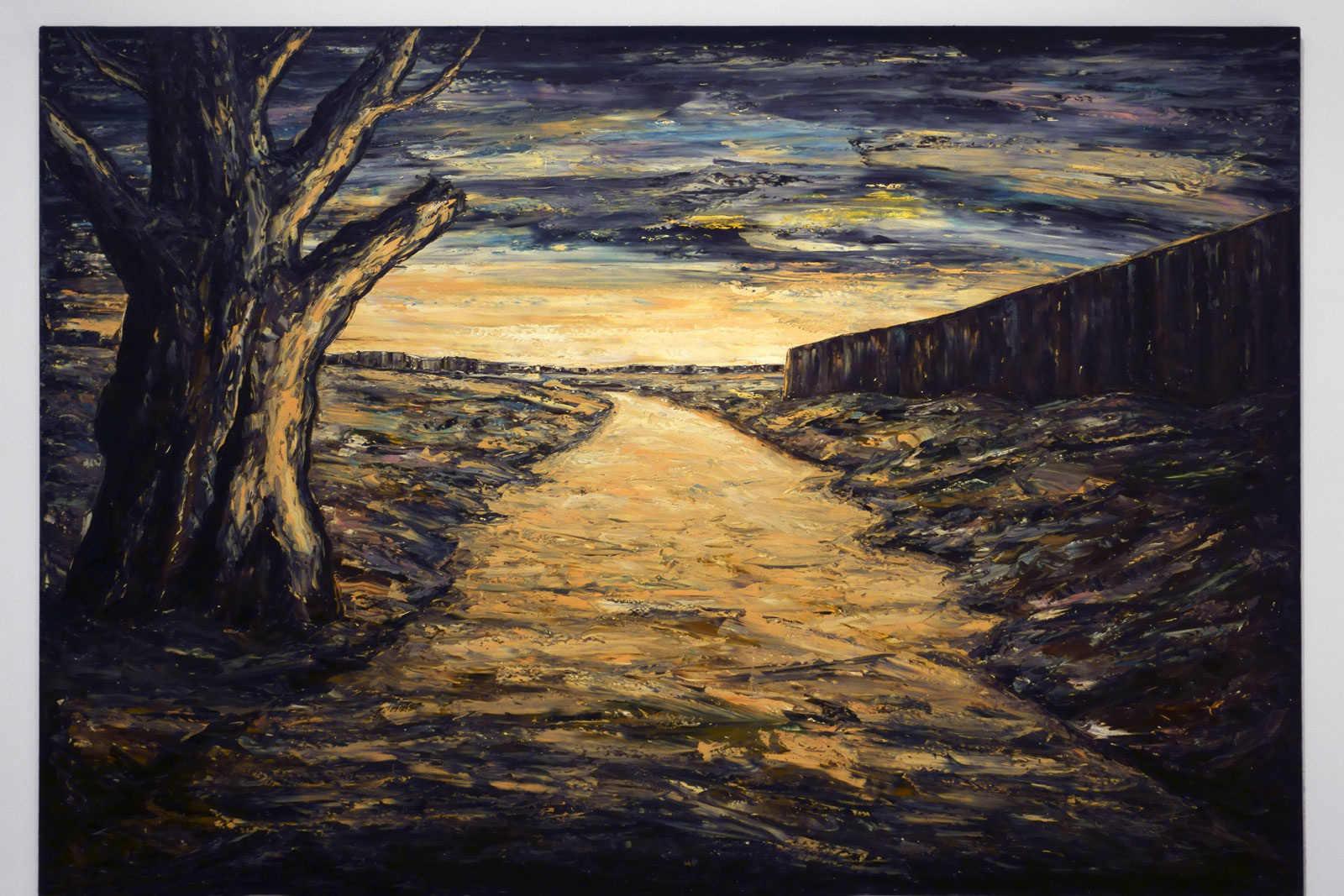
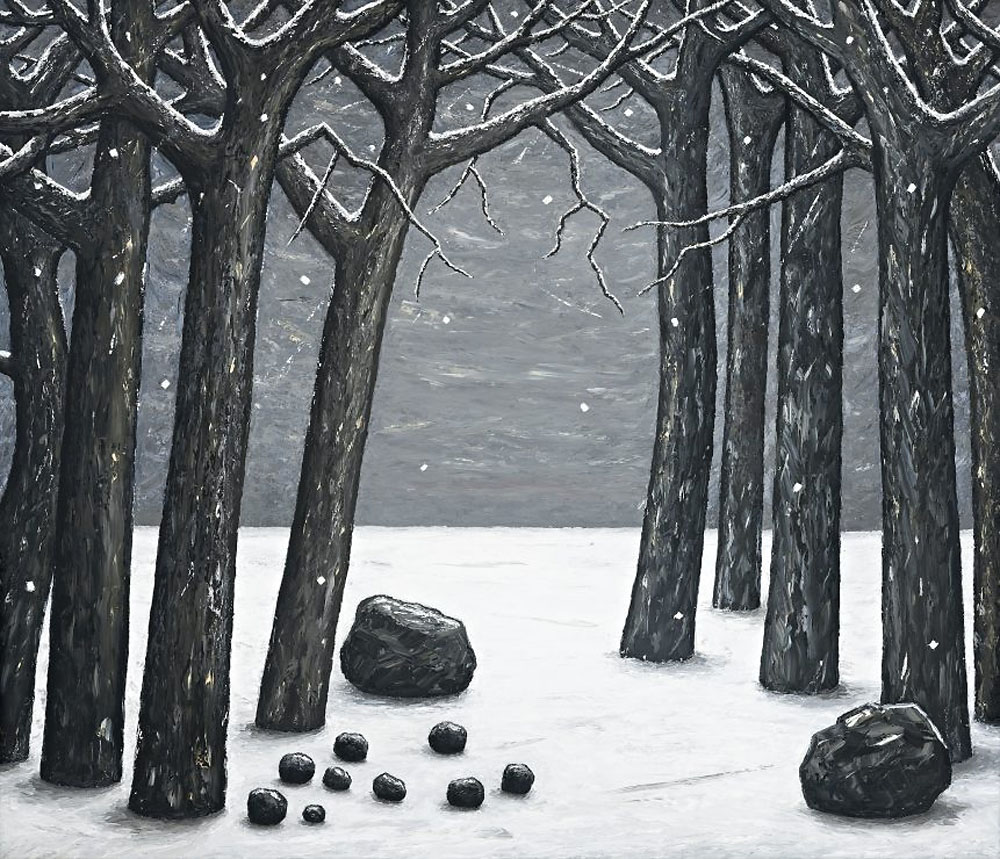
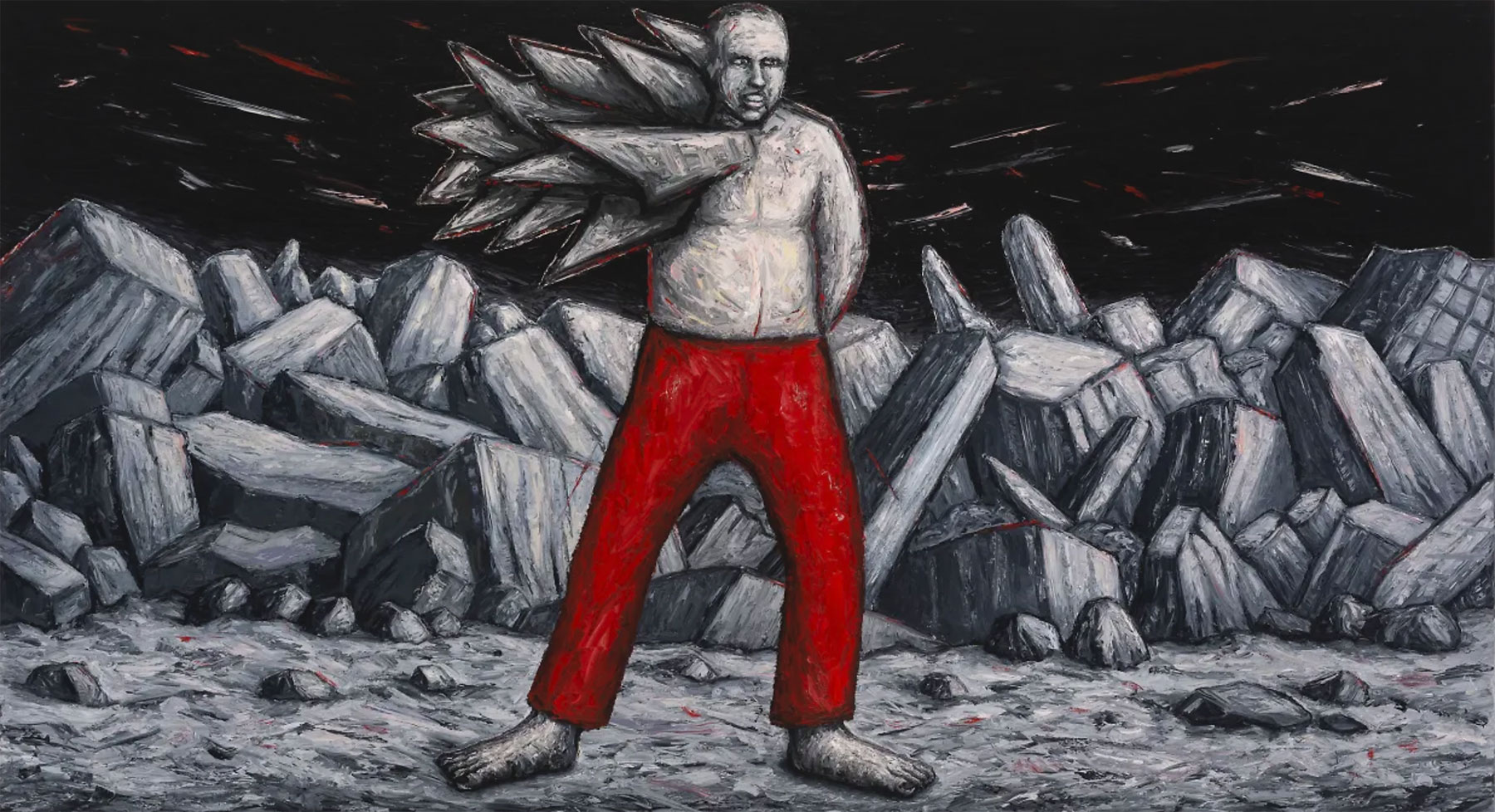
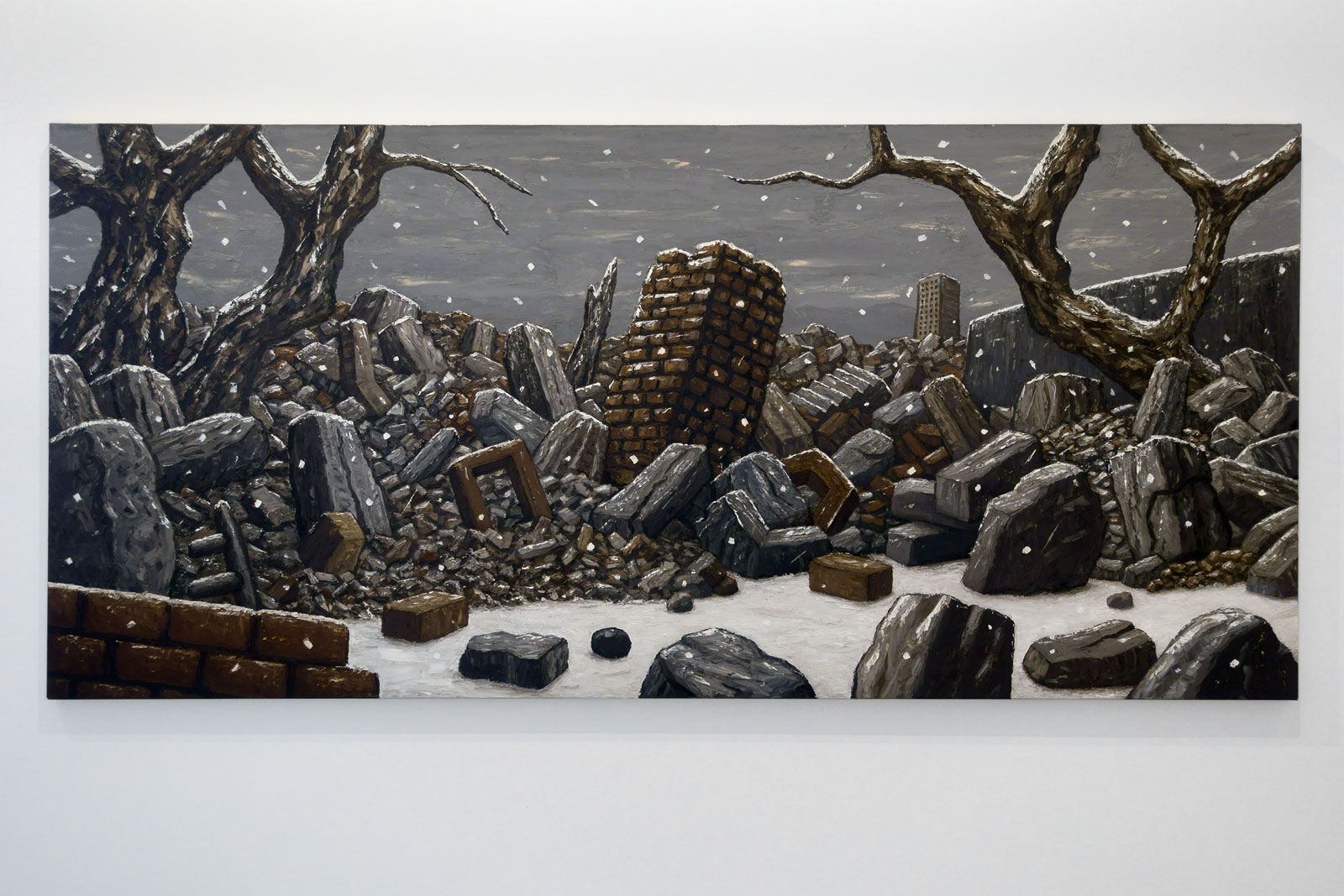
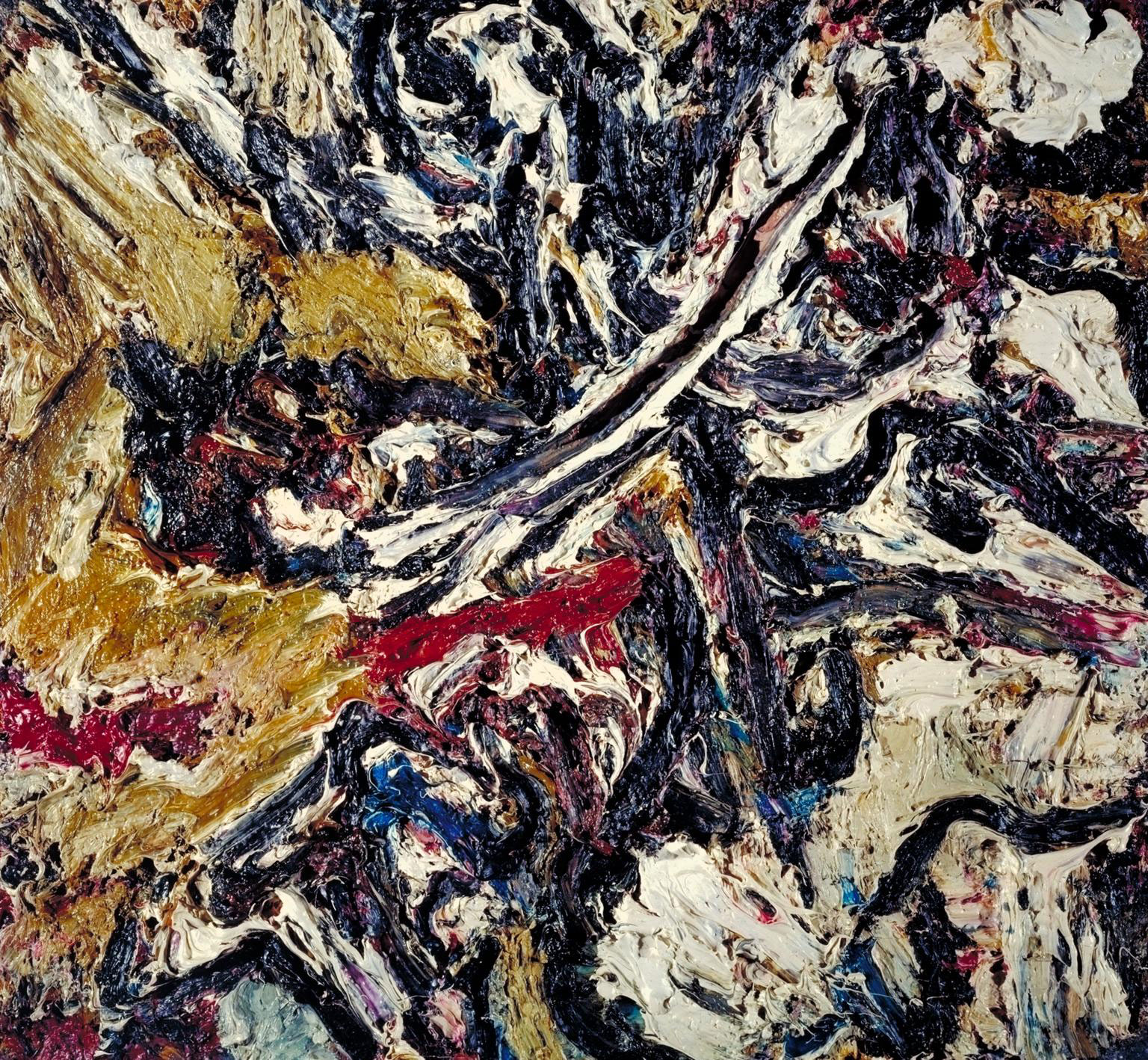
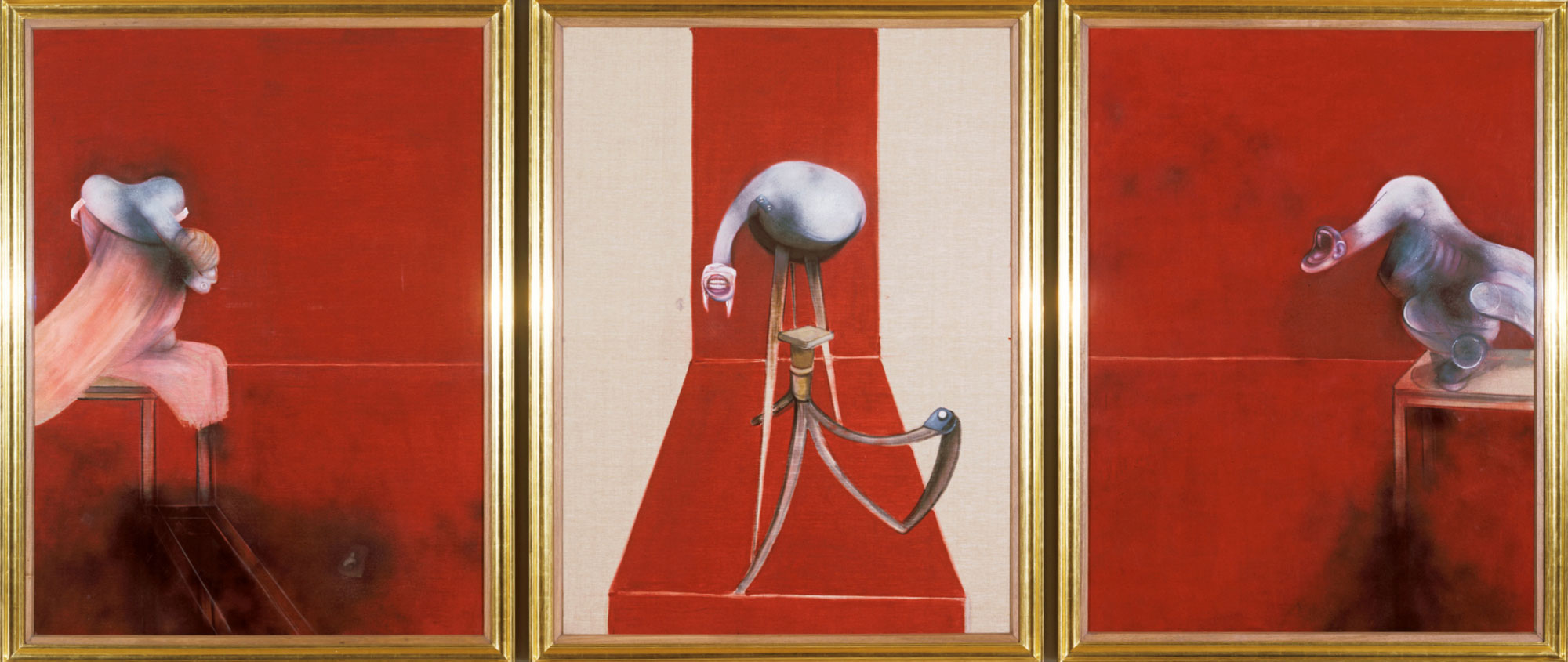
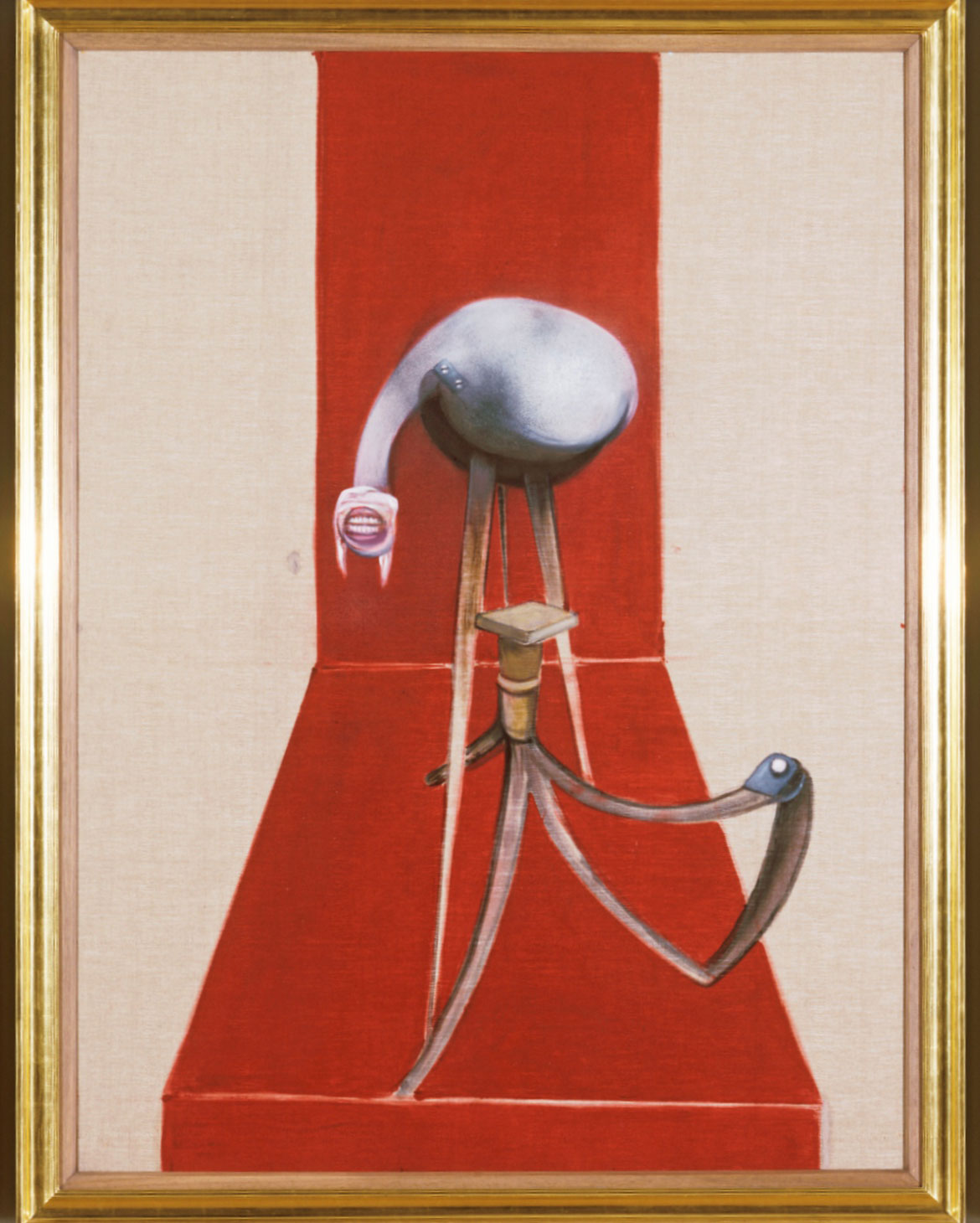
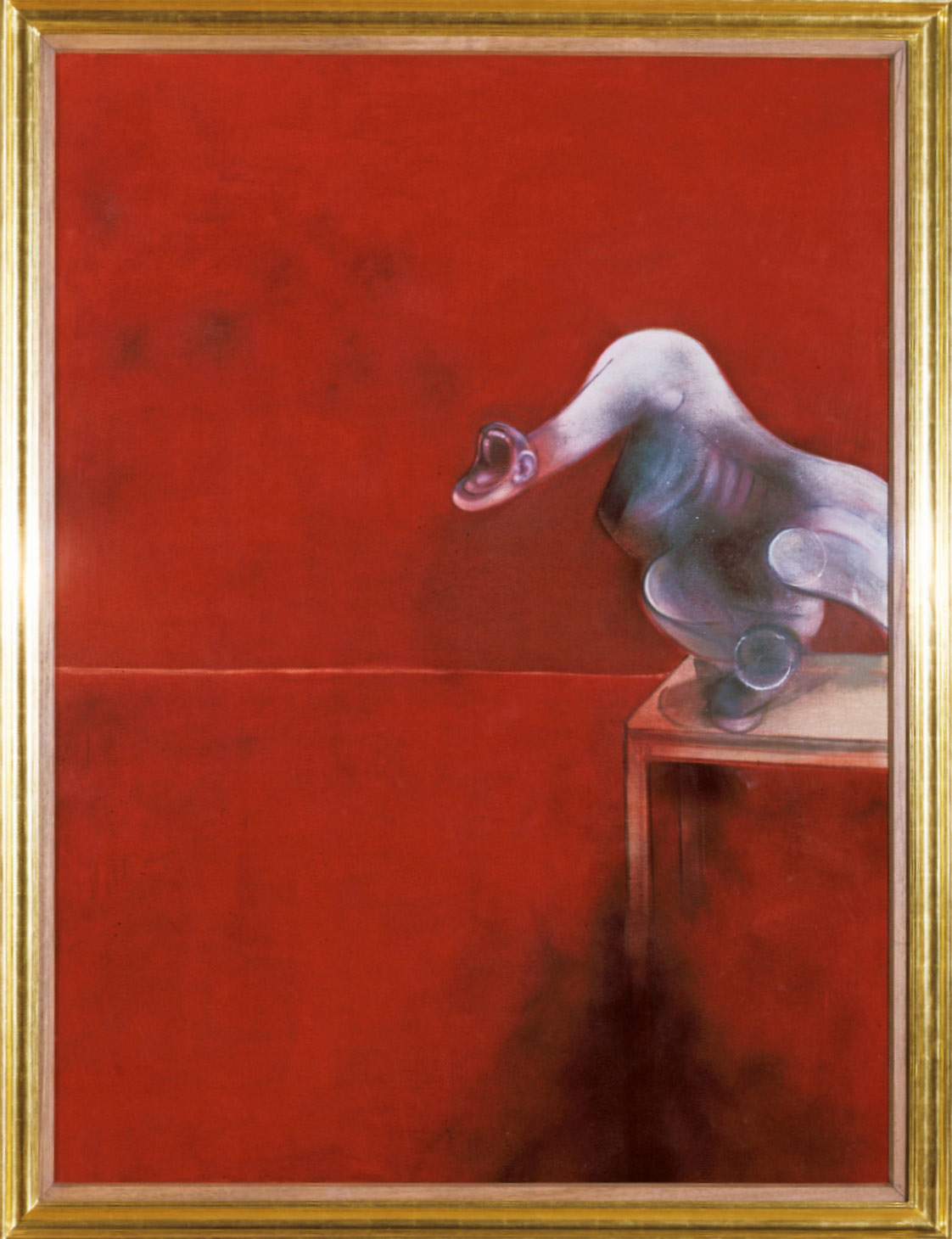
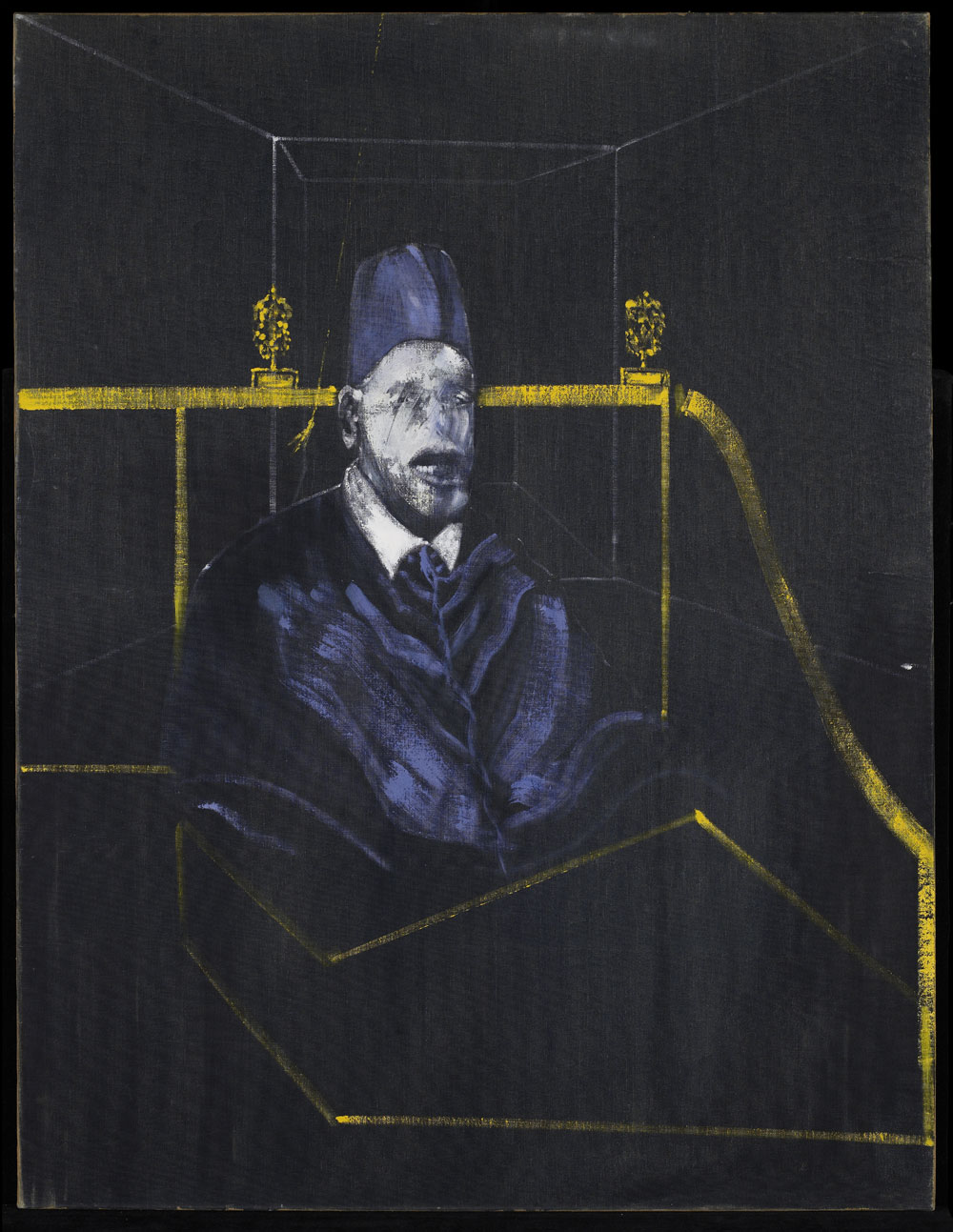
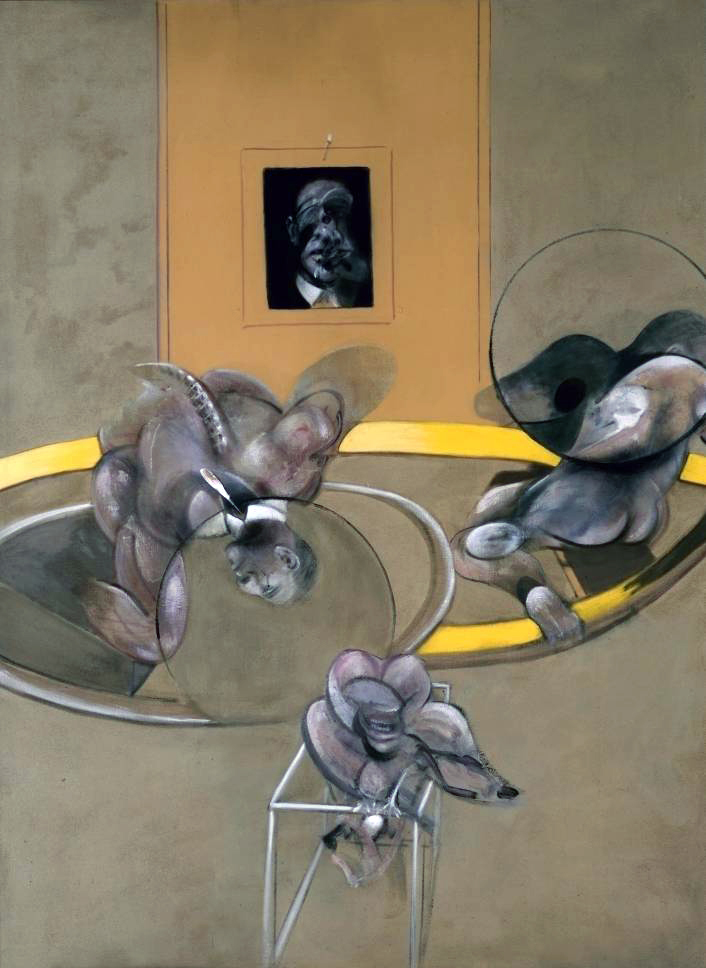
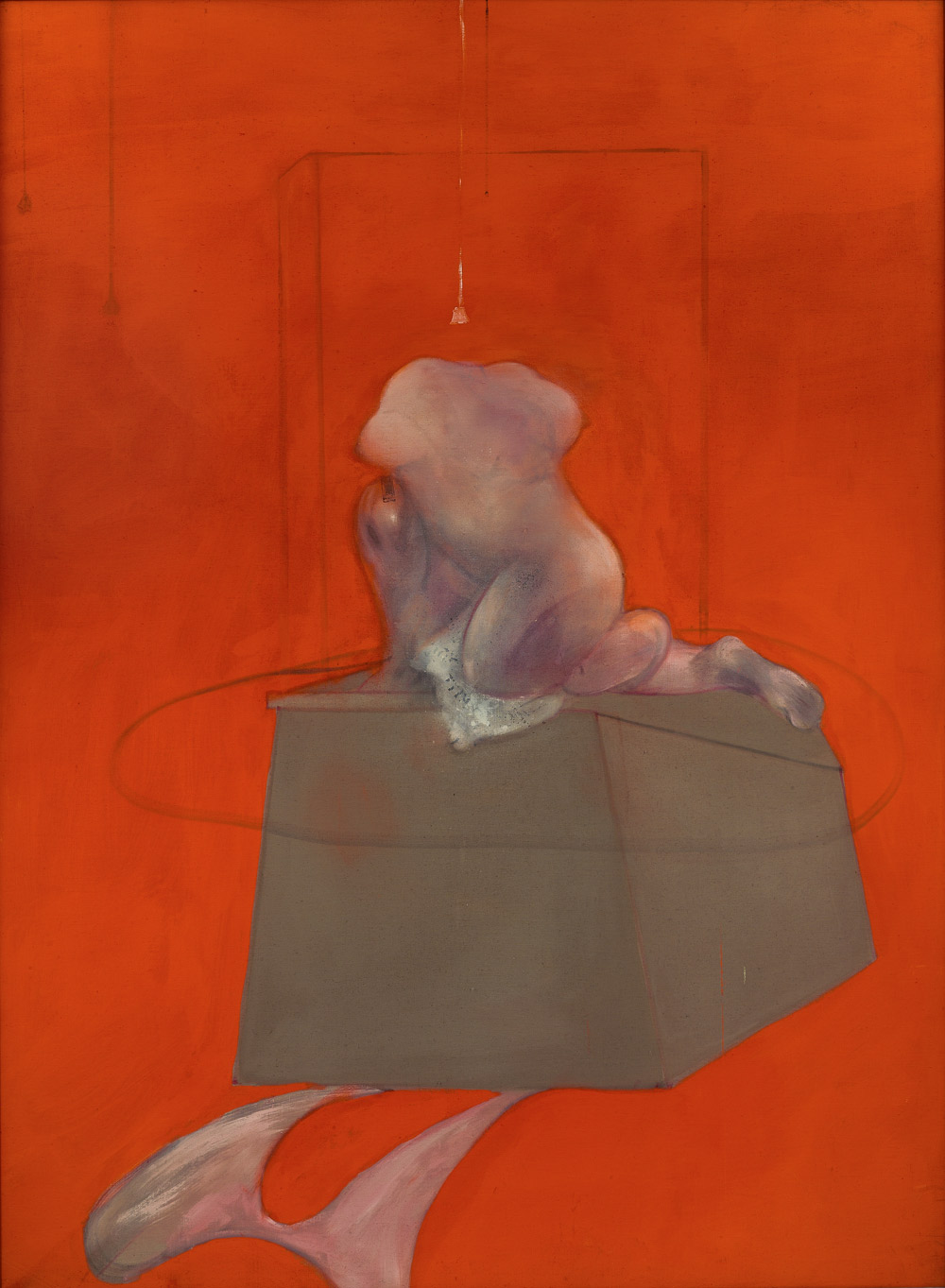
Peter Booth (Australian born England, b. 1940, Australia from 1958) 'Painting' 1978 from the exhibition 'Peter Booth' at TarraWarra Museum of Art, Healesville, Nov 2022 - March 2023


Peter Booth (Australian born England, b. 1940, Australia from 1958)
Painting
1978
Oil on canvas
© Peter Booth


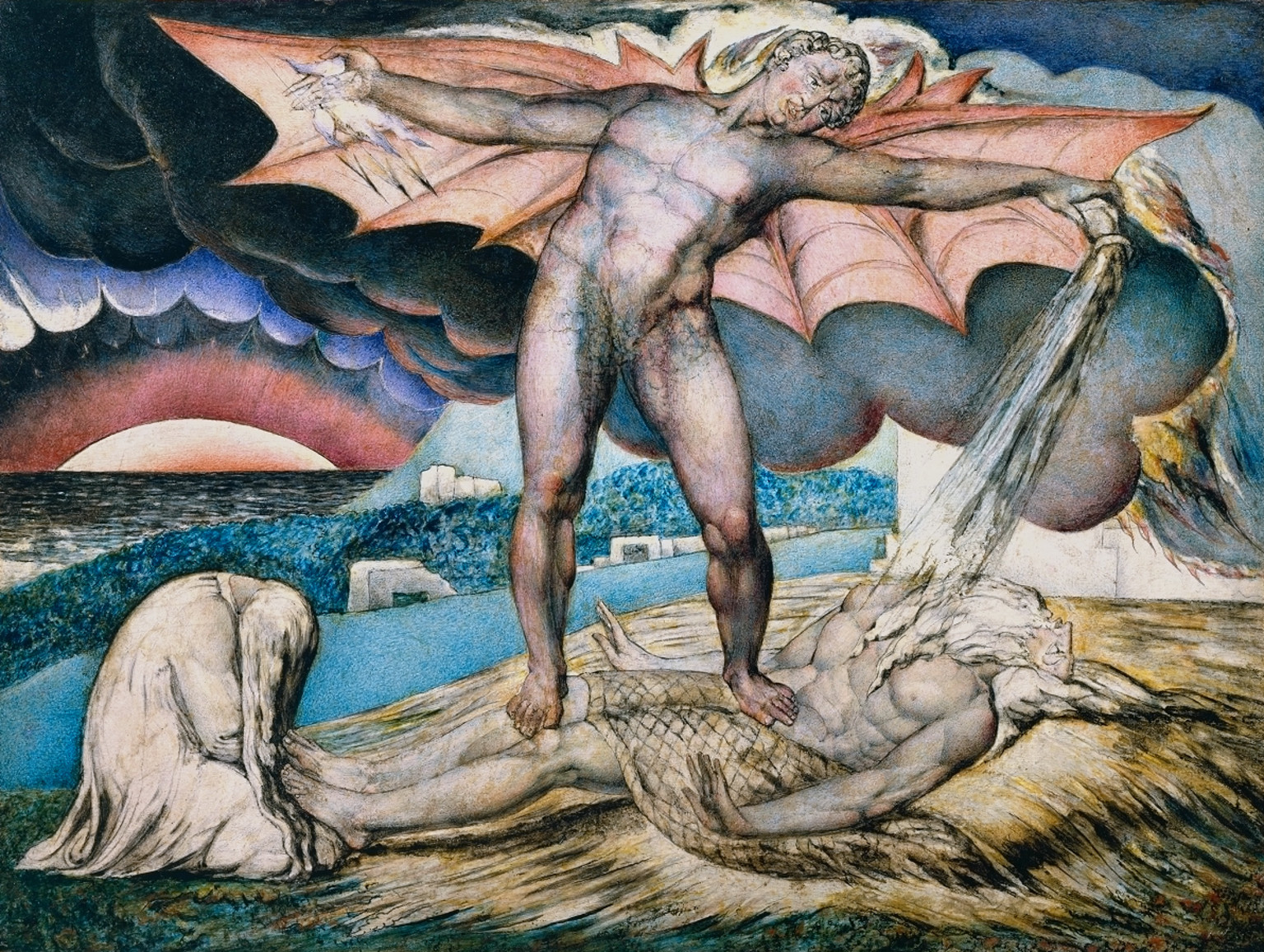
Anima


tongue, long flickering tongue
drenched in blood
scours inside the cup
rapacious for more
blood thirsty luck
sucks souls of men
thorn and star
spirit of insect
bizarre–unique
cannibal


Dr Marcus Bunyan


Many thankx to the TarraWarra Museum of Art for allowing me to publish the media images in the posting. All other installation photographs as noted © Marcus Bunyan, the artist and TarraWarra Museum of Art. Please click on the photographs for a larger version of the image.


“A lot of humans forget we are organic entities, the same as every other creature on the planet, and we’ve only been here for a short time. I am very pessimistic about the plight of beings. We don’t learn much, I mean, we’ve been wreaking havoc as they did in the Middle Ages. We also have bigger weapons. One thing I am not pessimistic about is the ability of nature to heal itself.”


Peter Booth quoted in Ashley Crawford View from the Booth blog 29 November 2003


PETER BOOTH at TarraWarra Museum of Art
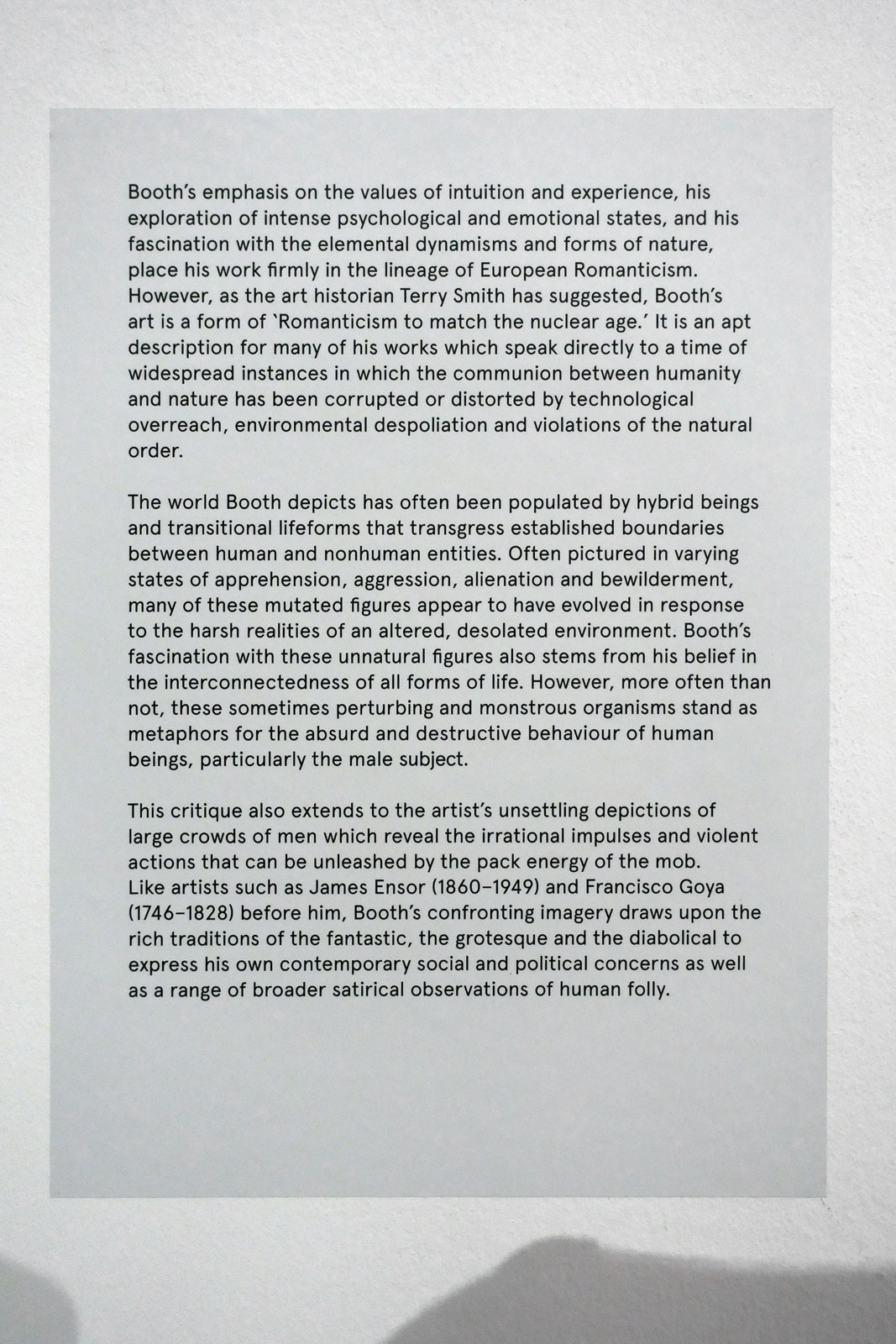
 

Introductory wall text from the exhibition 'Peter Booth' at the TarraWarra Museum of Art
 

Introductory wall text from the exhibition


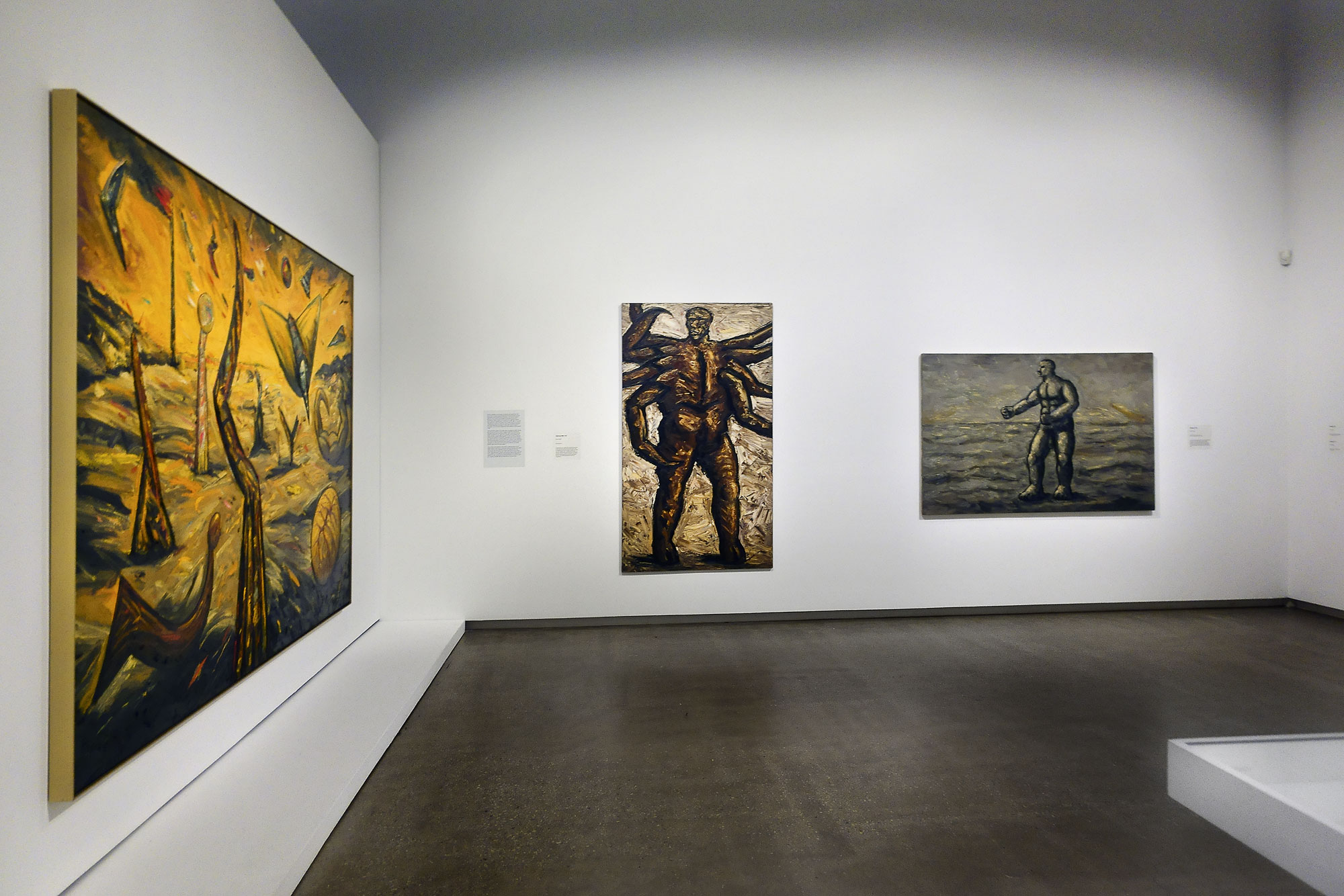
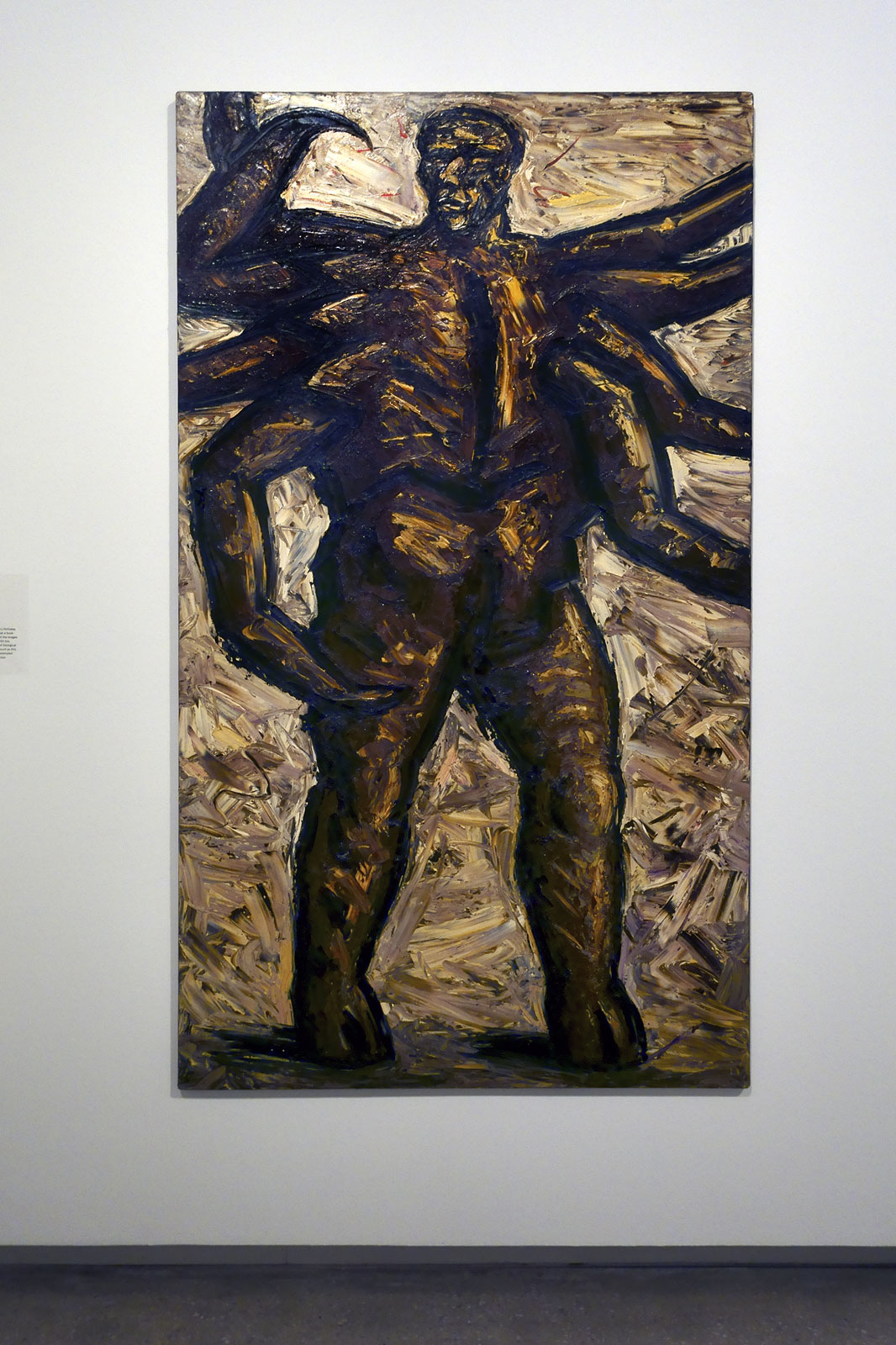
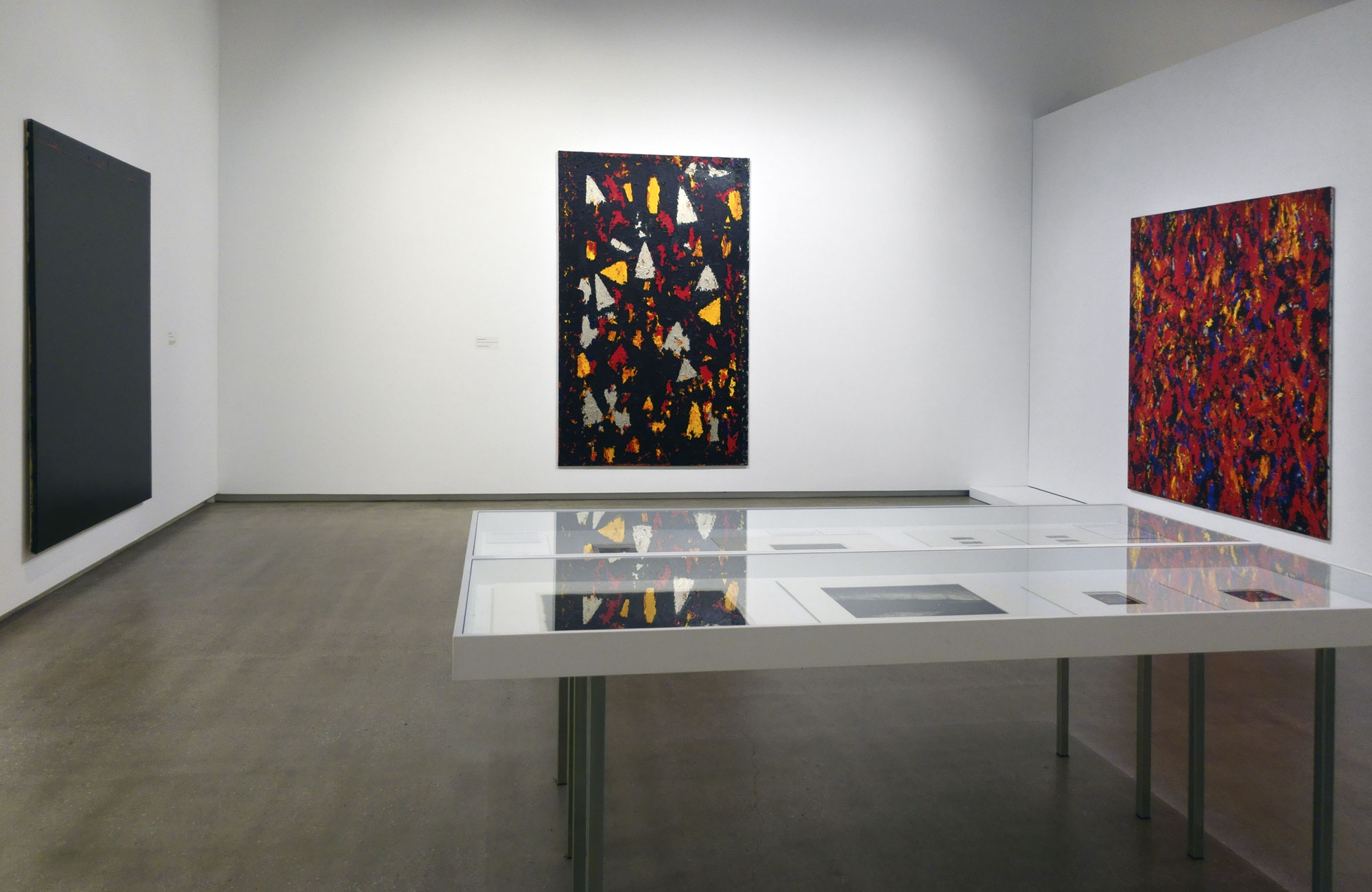
Installation view of the exhibition 'Peter Booth' at TarraWarra Museum of Art showing at left 'Painting' 1974, and at centre 'Painting 1975' 1975


Installation view of the exhibition Peter Booth at TarraWarra Museum of Art showing at left Painting 1974, and at centre Painting 1975 1975
Photo: Marcus Bunyan


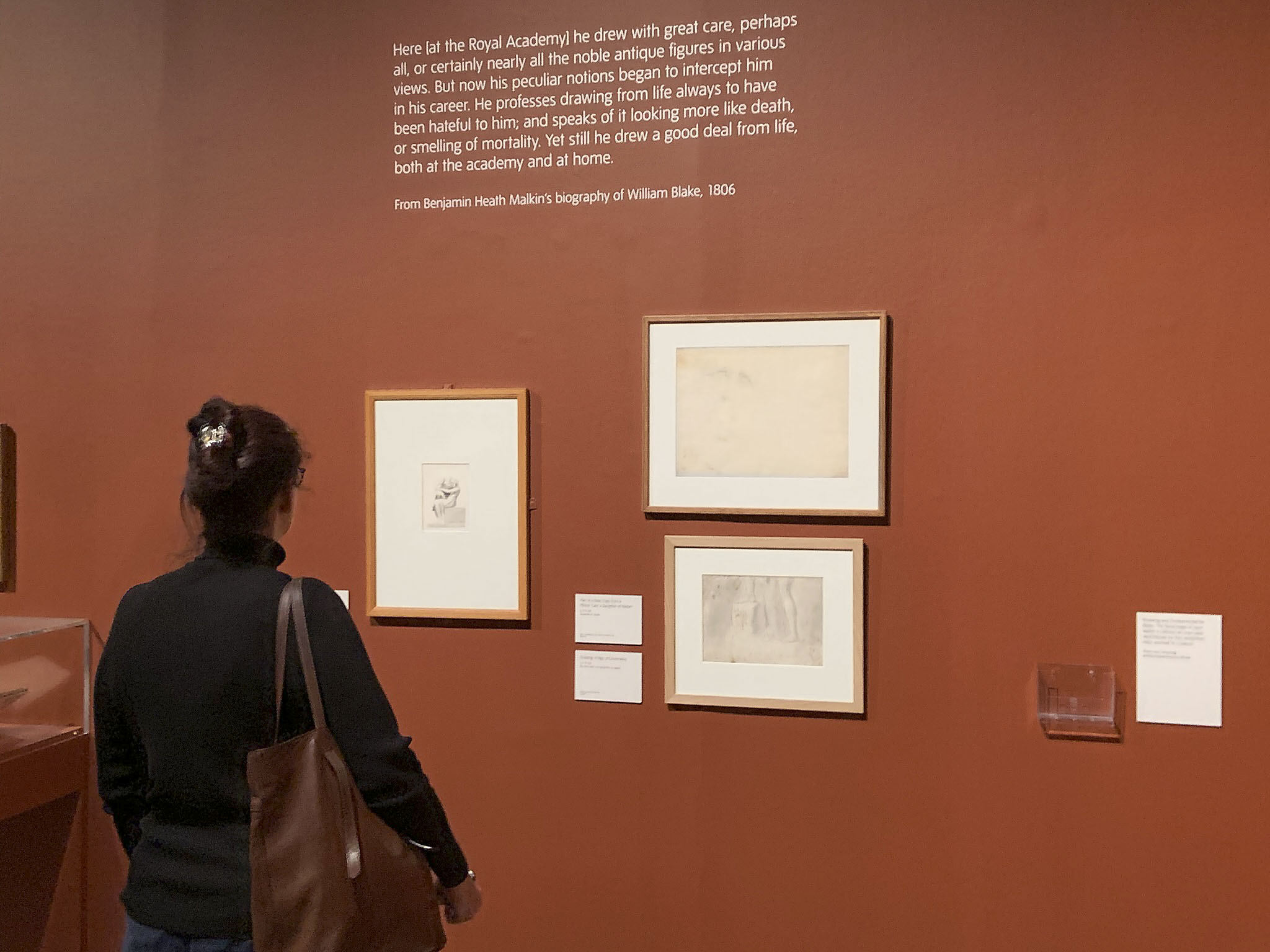
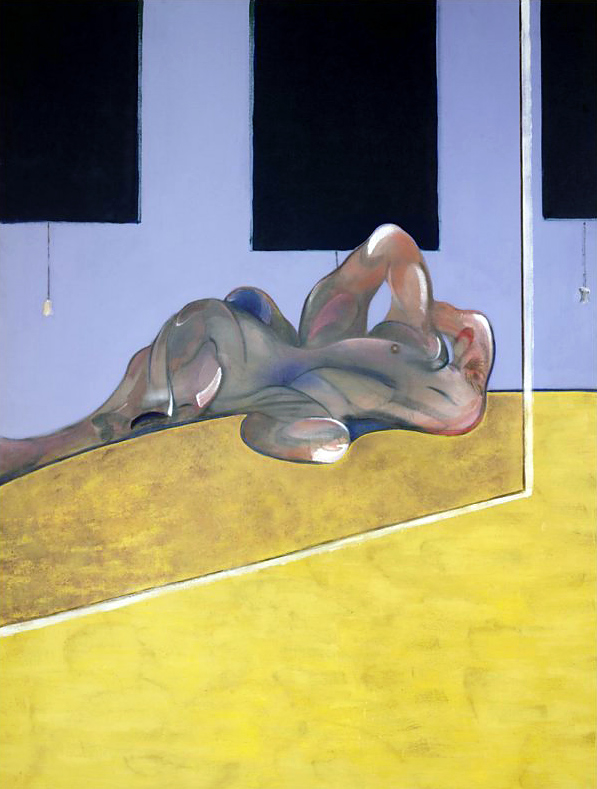
While the TarraWarra survey features a collection of Booth’s works from the 1970s to the 2000s, it opens with a work in the ‘Doorway’ series: Painting, 1974. It’s a canvas covered with shades of black. As the curator says, “Just near the top, there’s this very thin horizon line of red, and it feels like there’s this massive magma just behind the surface that’s starting to seep through.” I’m told that written on the back of some ‘Doorway’ paintings is an instruction: “Never hang more than six inches from the floor.” As Fitzpatrick explains, “If you hang the work a little lower for the viewer … it becomes more immersive, and this painting is the opening work in the exhibition with the idea of the doorway as a threshold.”

This minimalism is compelling. “The ‘Doorway’ series could be about nothingness, or it could be a void,” says Fitzpatrick, “but voids are also where things are generated from – so they could be about an idea of fullness … you could almost see them as a kind of dark mirror.” In a rare interview with Australian artist, writer and curator Peter Hill, Booth humbly discusses how the ‘Doorway’ series was “influenced by what was going on in the art world at the time, in reduction, minimalism and colour field painting”.

Autumn Royal. “Once seen, Peter Booth is never forgotten,” on the Art Guide website 15 January 2023 [Online] Cited 02/02/2023
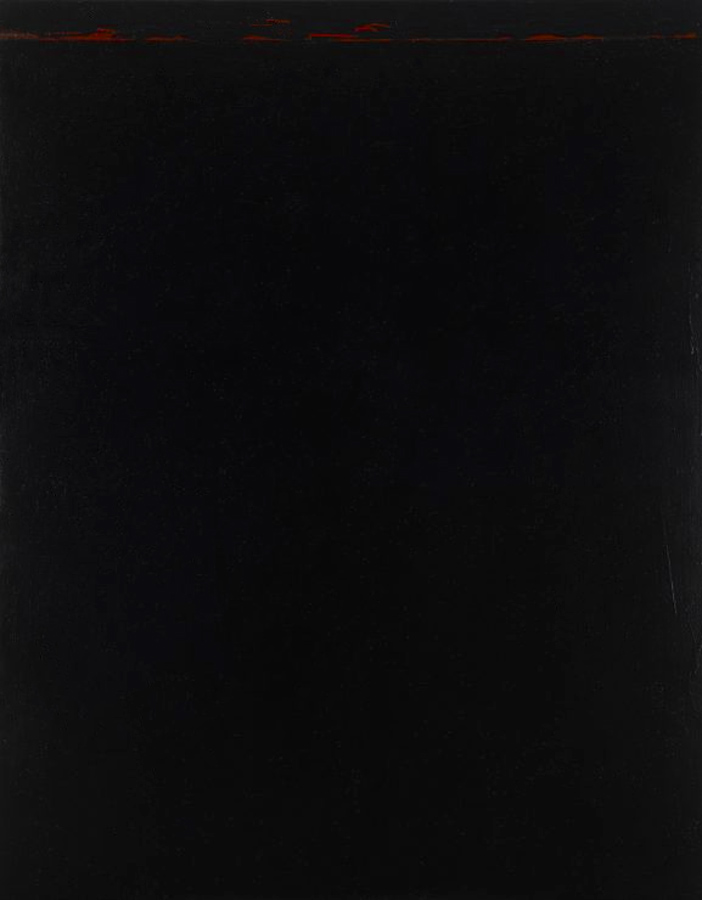
 

Peter Booth (Australian born England, b. 1940, Australia from 1958) 'Painting' 1974 from the exhibition 'Peter Booth' at TarraWarra Museum of Art, Healesville, Nov 2022 - March 2023


Peter Booth (Australian born England, b. 1940, Australia from 1958)
Painting
1974
Synthetic polymer paint on canvas
213 x 167.5cm
Queensland Art Gallery, Gallery of Modern Art, Brisbane
Purchased 2006 with funds from the Estate of Lawrence F. King in memory of the late Mr and Mrs S.W. King through the Queensland Art Gallery Foundation. Photograph: Natasha Harth, QAGOMA
© Peter Booth
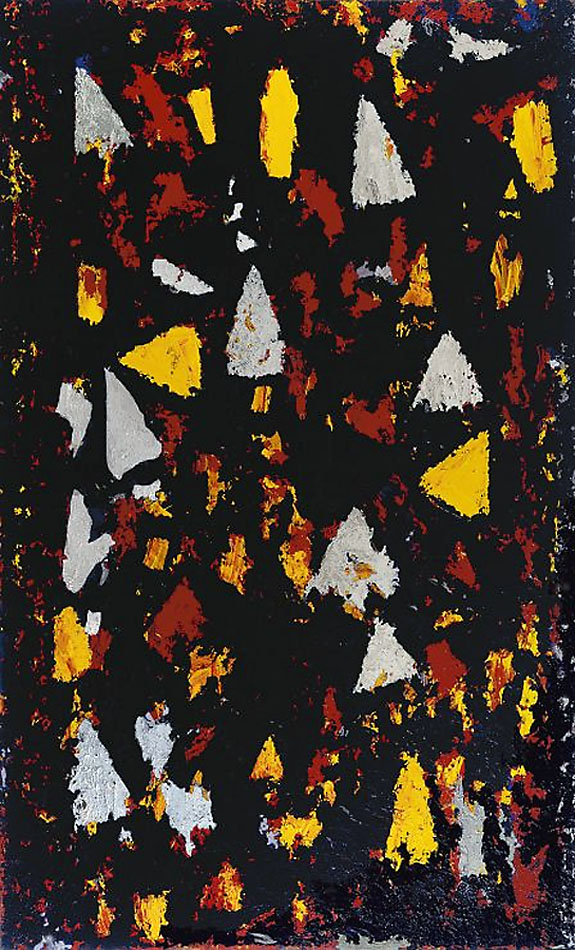
 

Peter Booth (Australian born England, b. 1940, Australia from 1958) 'Painting 1975' 1975 from the exhibition 'Peter Booth' at TarraWarra Museum of Art, Healesville, Nov 2022 - March 2023


Peter Booth (Australian born England, b. 1940, Australia from 1958)
Painting 1975
1975
Synthetic polymer paint and glass on canvas
274.2 x 167.2cm
TarraWarra Museum of Art collection
Gift of Eva Besen and Marc Besen AO, 2001
© Peter Booth
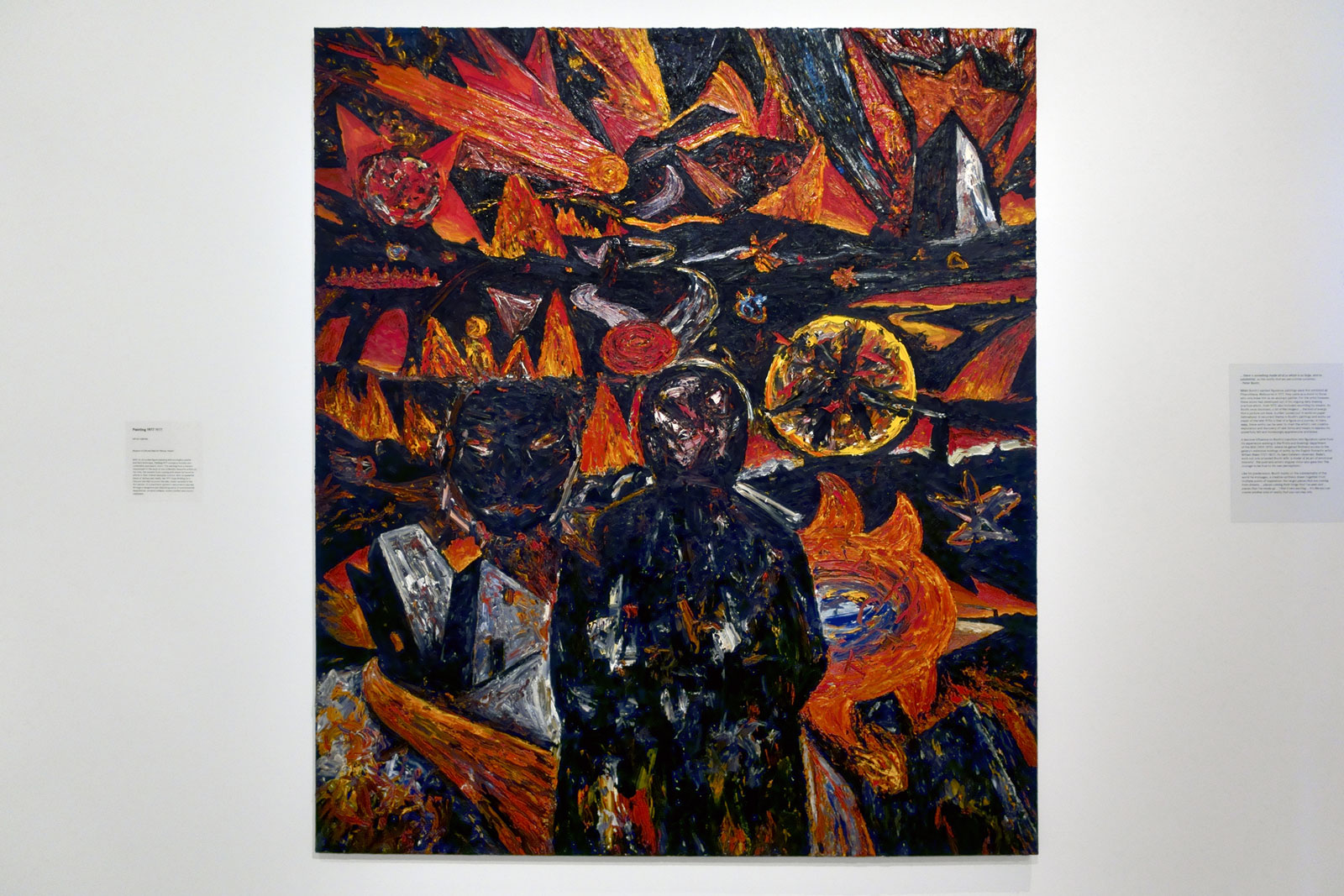
 

Peter Booth (Australian born England, b. 1940, Australia from 1958) 'Painting' 1977 (installation view)


Peter Booth (Australian born England, b. 1940, Australia from 1958)
Painting (installation view)
1977
Oil on canvas
Museum of Old and New Art (Mona), Hobart
© Peter Booth
Photo: Marcus Bunyan


With its shrouded figure standing before a highly volatile and fiery landscape, Painting 1977 conveys a forceful and undeniably apocalyptic vision. The painting finds a literary counterpart in the work of one of Booth’s favourite writers at the time, the novelist Doris Lessing with whom he found an affinity in their shared dystopian outlook. With its powerful blend of fantasy and reality, her 1971 novel Briefing for a Descent into Hell recounts the tale, vividly narrated in the first person, of a psychiatric patient’s hallucinatory journey through a dangerous and disturbing world of environmental despoliation, societal collapse, violent conflict and cosmic cataclysm.

Wall text from the exhibition
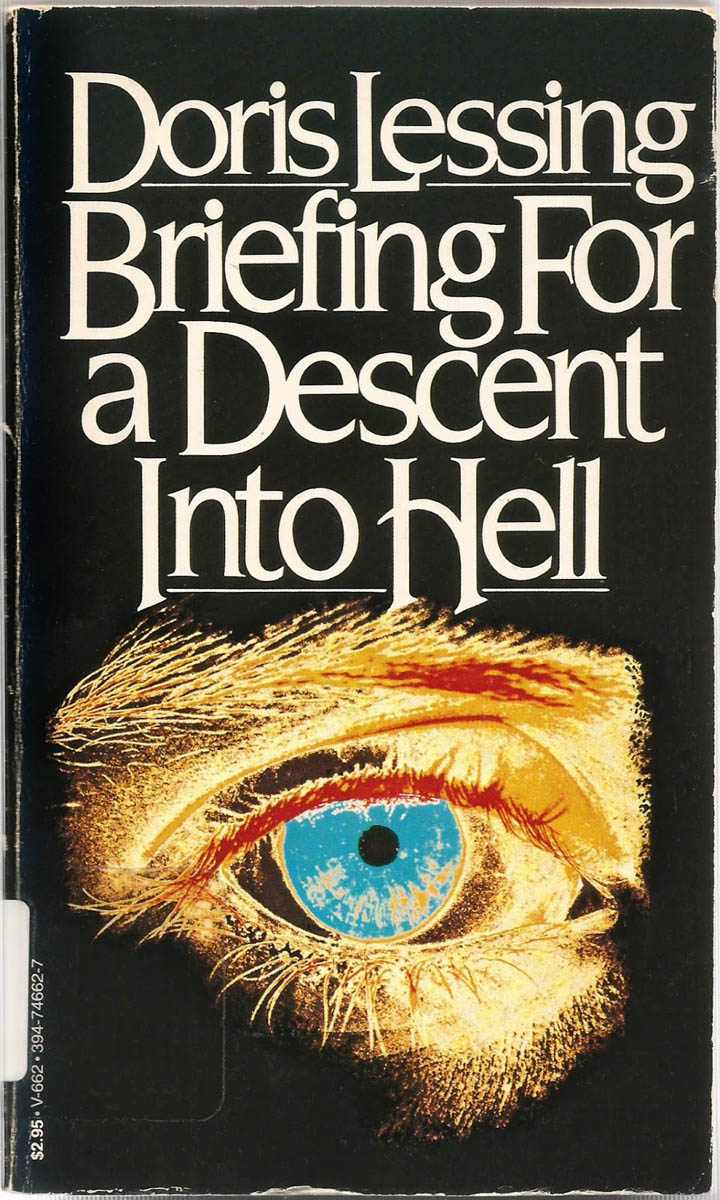
 

Doris Lessing. 'Briefing for a Descent into Hell Briefing for a descent into hell' book cover


Doris Lessing (British-Zimbabwean born Iran, 1919-2013)
Briefing for a Descent into Hell
1971
Vintage book cover published 1981
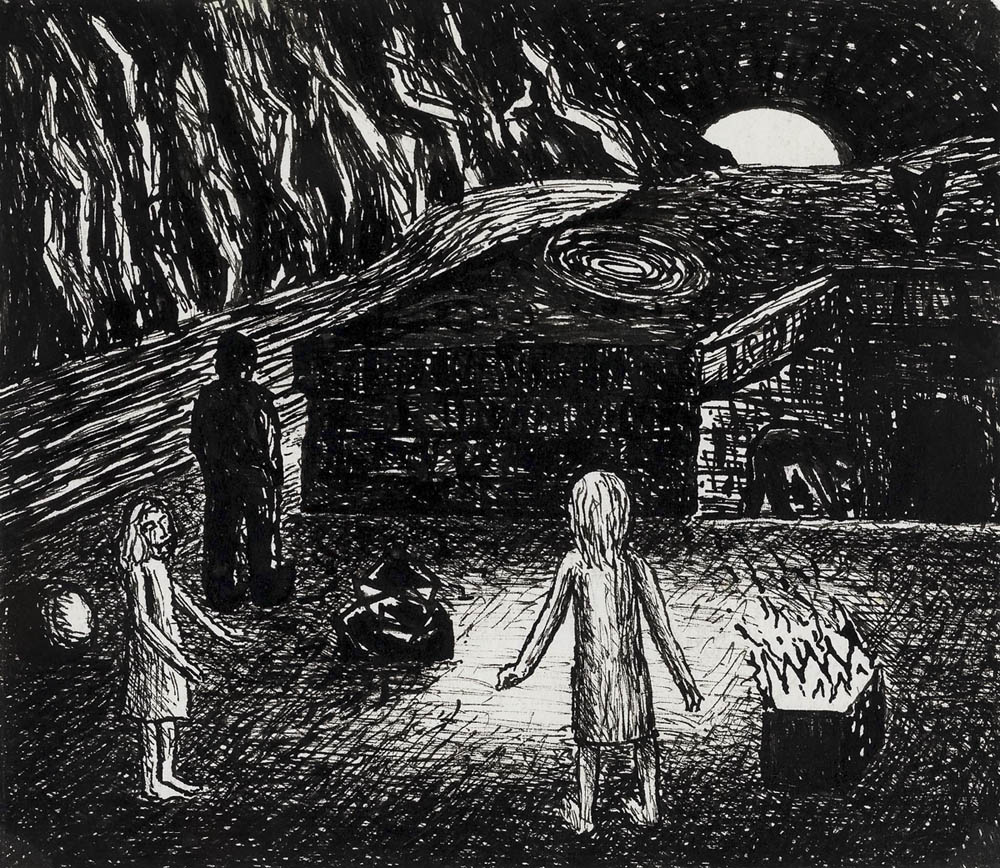
 

Peter Booth (Australian born England, b. 1940, Australia from 1958) 'Untitled (Daughters)' c. 1976 from the exhibition 'Peter Booth' at TarraWarra Museum of Art, Healesville, Nov 2022 - March 2023


Peter Booth (Australian born England, b. 1940, Australia from 1958)
Untitled (Daughters)
c. 1976
Ink on paper
11 x 12.5cm
Private collection


Untitled (Daughters), c. 1976, is a composition which originated in Booth’s visits to an inner-city park in Melbourne where he would take his young daughters to play. Here, through the intense rhythms of his lifework and cross hatching in black ink, and the introduction of symbolic forms such as a whirlpool and arrowhead, this everyday scene is imaginatively transformed into a mysterious, nocturnal realm. While his daughters play in the foreground, the artist has turned to face a rising moon on the horizon and there is a sense that he is being magnetically compelled to embark on the path which leads in its direction.

Text from the TarraWarra Museum of Art Facebook page
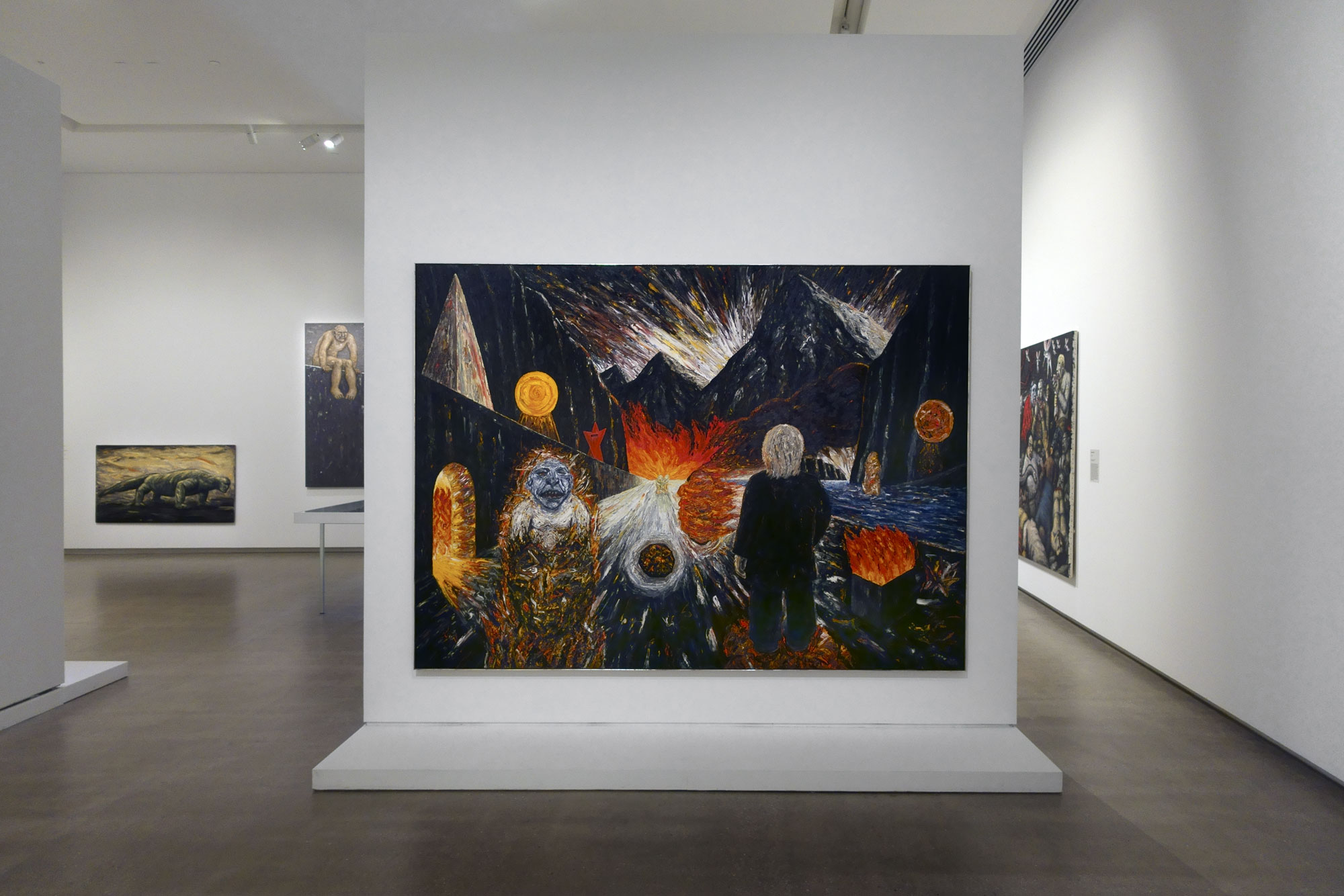
 

Installation view of the exhibition 'Peter Booth' at TarraWarra Museum of Art showing at centre, 'Painting' 1978


Installation view of the exhibition Peter Booth at TarraWarra Museum of Art showing at centre, Painting 1978
Photo: Marcus Bunyan
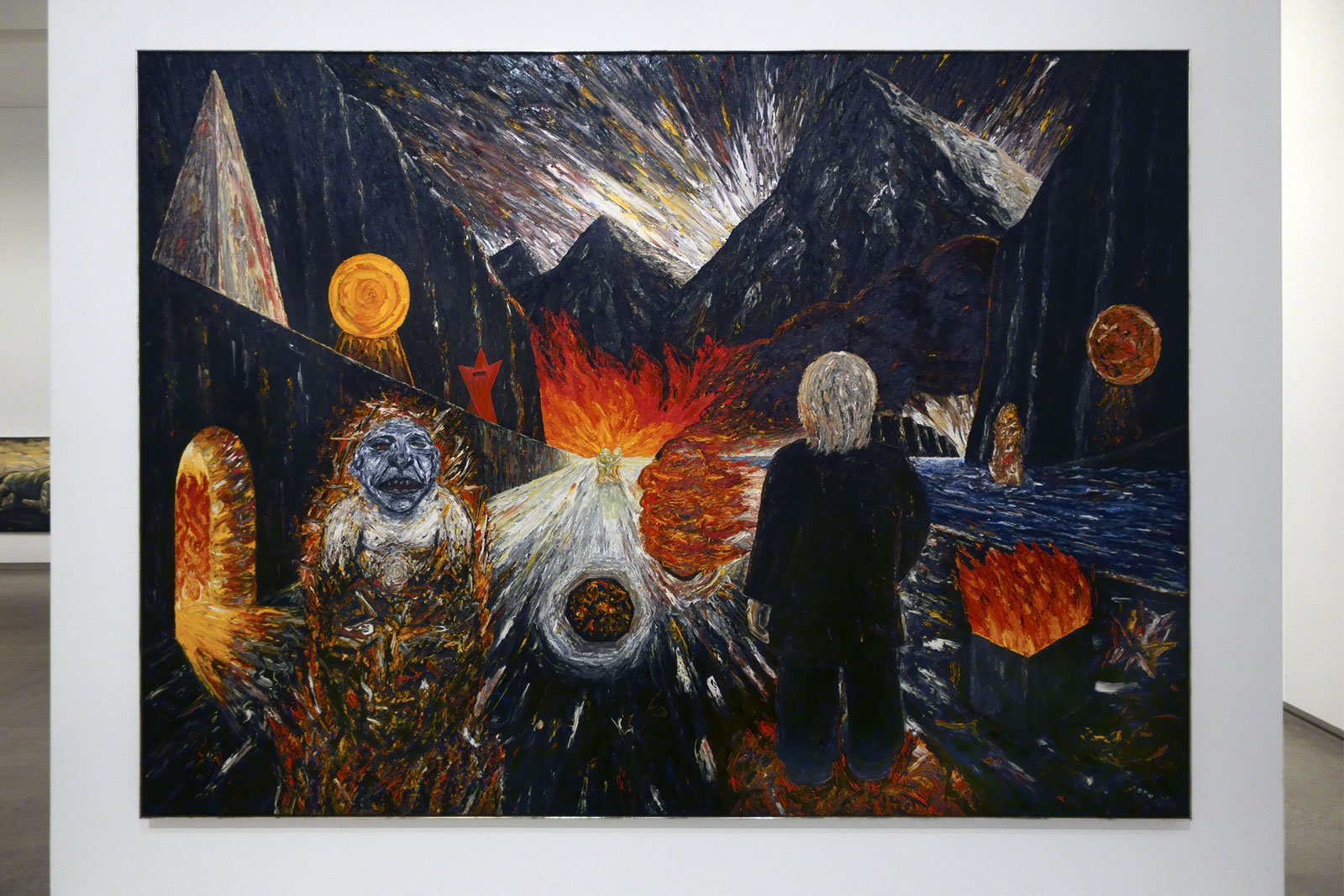
 

Peter Booth (Australian born England, b. 1940, Australia from 1958) 'Painting' 1978 (installation view)


Installation view of Peter Booth Painting 1978 from the exhibition Peter Booth at TarraWarra Museum of Art
Photo: Marcus Bunyan


Peter Booth became known for his black, minimal ‘doorway’ paintings of 1970-74. Yet by 1977 he had given up this style and begun to record the world of his dreams and nightmares in a series of apocalyptic, visionary landscapes. Booth’s paintings suggest that we are on the edge of another dark age. His paintings are brutal representations of his bleak dreams and fantasies. In an age of nuclear threat Booth’s work has a monumentality which is evocative of the final conflagration mentioned in The Book of Revelations. Painting 1978, challenges and disturbs the viewer by the artist’s choice of colour and method of painting. The dramatic black and red, yellow and white composition suggests both an industrial and a natural wasteland. The heavy impasto paint texture describes, with vigour and intensity, flames, explosions, and unidentified nightmarish images. Contradictory forces pull us into the central inferno below the glacial mountain peaks, and showers of rock explode towards us. Is it the artist himself who stands with his back to us, mesmerised by the scene, while grotesque metamorphosing figures stare out at us?

Text © National Gallery of Australia, Canberra


Booth’s subject matter largely concerns the Australian landscape, both urban and rural, and the relationship between environment and individual, as well as the individual’s capacity to create and destroy. And also what the world will be like in the future, humans as mutants.

Booth’s landscapes are charged with emotion and symbolic meaning. Memories of his childhood in the blackened industrial landscape of Sheffield seem to infuse the work, especially his well-known apocalyptic figurative paintings, which look like images of the end of the world; illustrations for The Book of Revelation. These images contain an intense image of anxiety, evoking the aftermath of some terrible destruction, vividly pictured with menacing forms and agitated, heavily applied brushstrokes.

An example is Painting 1978 which has been described as challenging and disturbing the viewer by the artist’s choice of colour and method of painting. “The dramatic black and red, yellow and white composition suggests both an industrial and a natural wasteland”. The heavy impasto paint texture describes, with vigour and intensity, flames, explosions, and unidentified nightmarish images. Contradictory forces pull us into the central inferno below the glacial mountain peaks, and showers of rock explode towards us.

Is it the artist himself who stands with his back to us, mesmerised by the scene, while grotesque metamorphosing figures stare out at us?” Peter Booth has centred many of his paintings around his childhood in Sheffield England where he grew up during the war years and their aftermath.

Anonymous. “Peter Booth,” on the Art History Essay website Nd [Online] Cited 07/02/2023
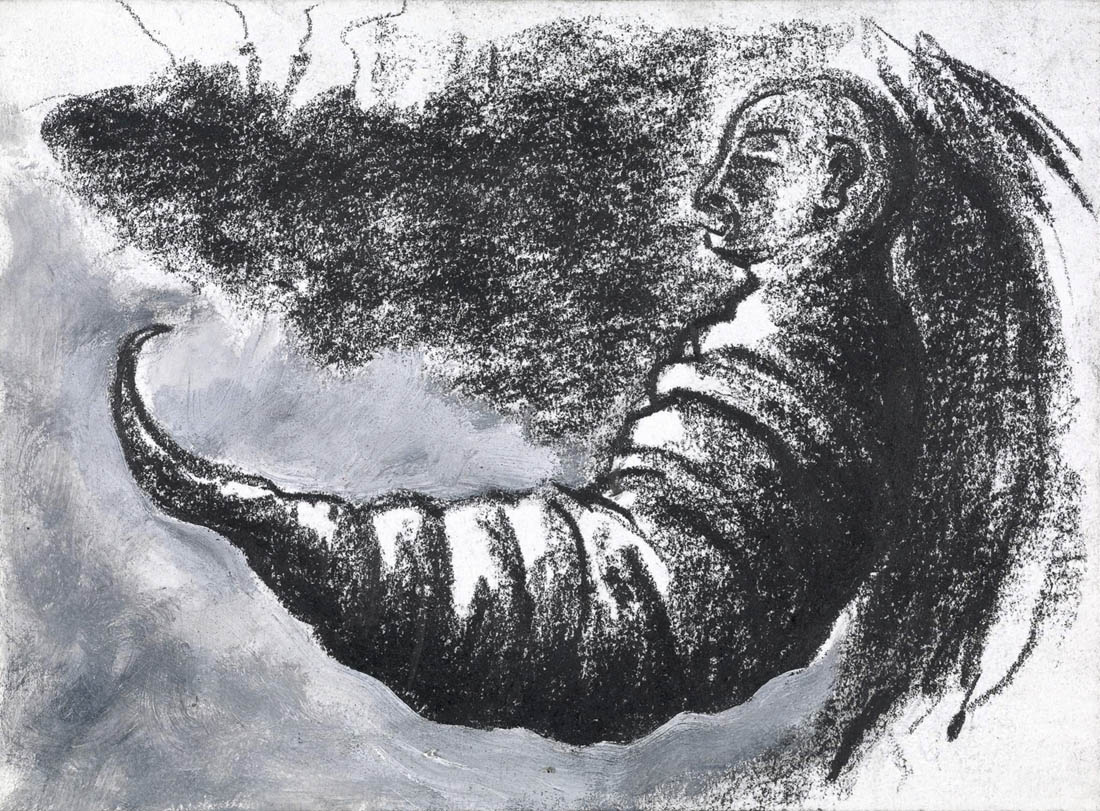
 

Peter Booth (Australian born England, b. 1940, Australia from 1958) 'Drawing (Figure with Insect Tail)' 1982


Peter Booth (Australian born England, b. 1940, Australia from 1958)
Drawing (Figure with Insect Tail)
1982
Pastel and casein on paper
17.3 x 12.5cm
National Gallery of Victoria, Melbourne
Purchase, Victorian Foundation of Living Australian Artists, 2010


More than just figures of fantasy, Booth’s curious amalgams and mutated figures often express his personal insights into the interrelatedness of all living beings. With his closed eyes and restful expression, the metamorphic figure in Drawing (Figure with Insect Tail) appears contented with his hybrid condition, affirming the artist’s belief that humans “share something with these creatures … we are part of the same thing.”

Text from the TarraWarra Museum of Art Facebook page
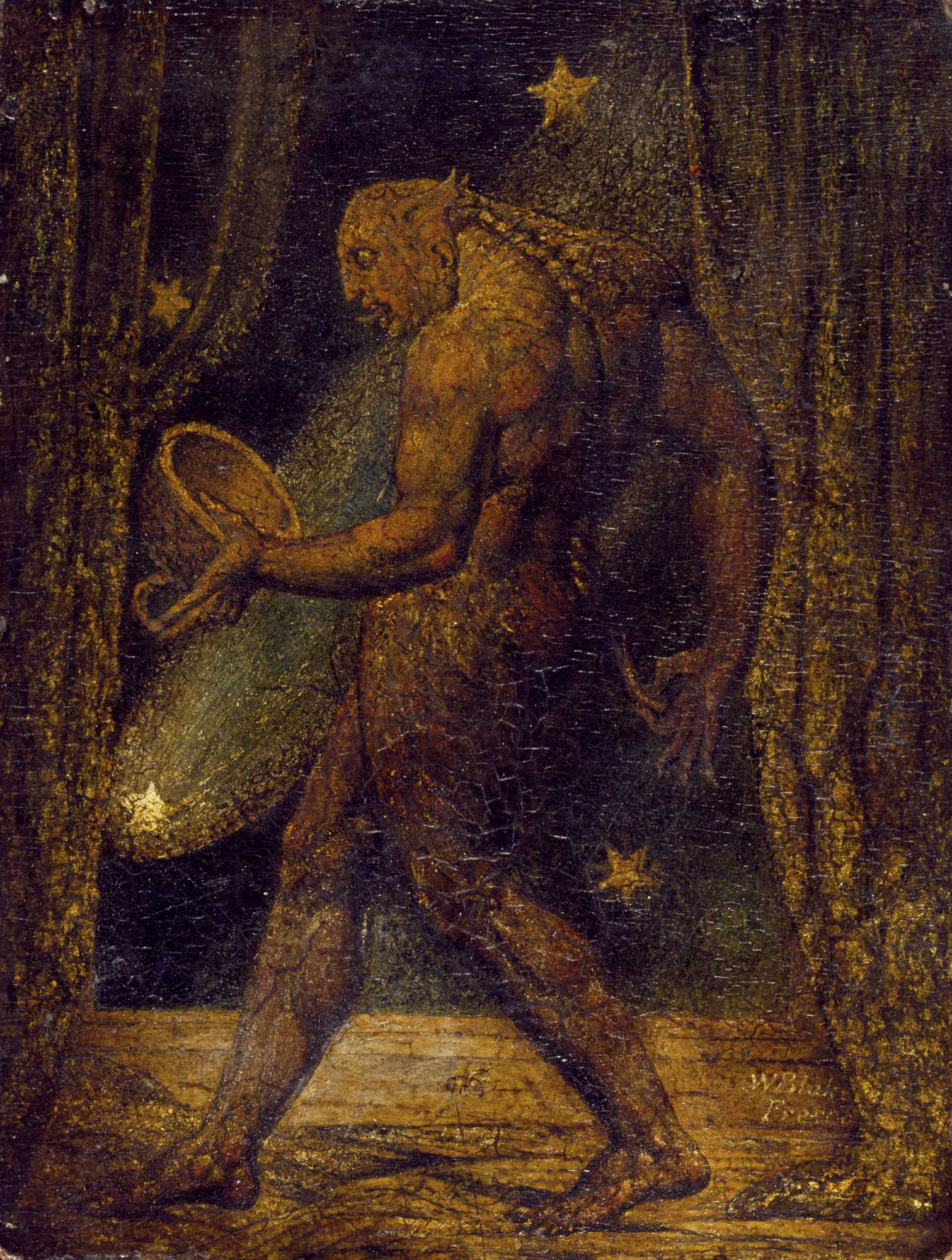
 

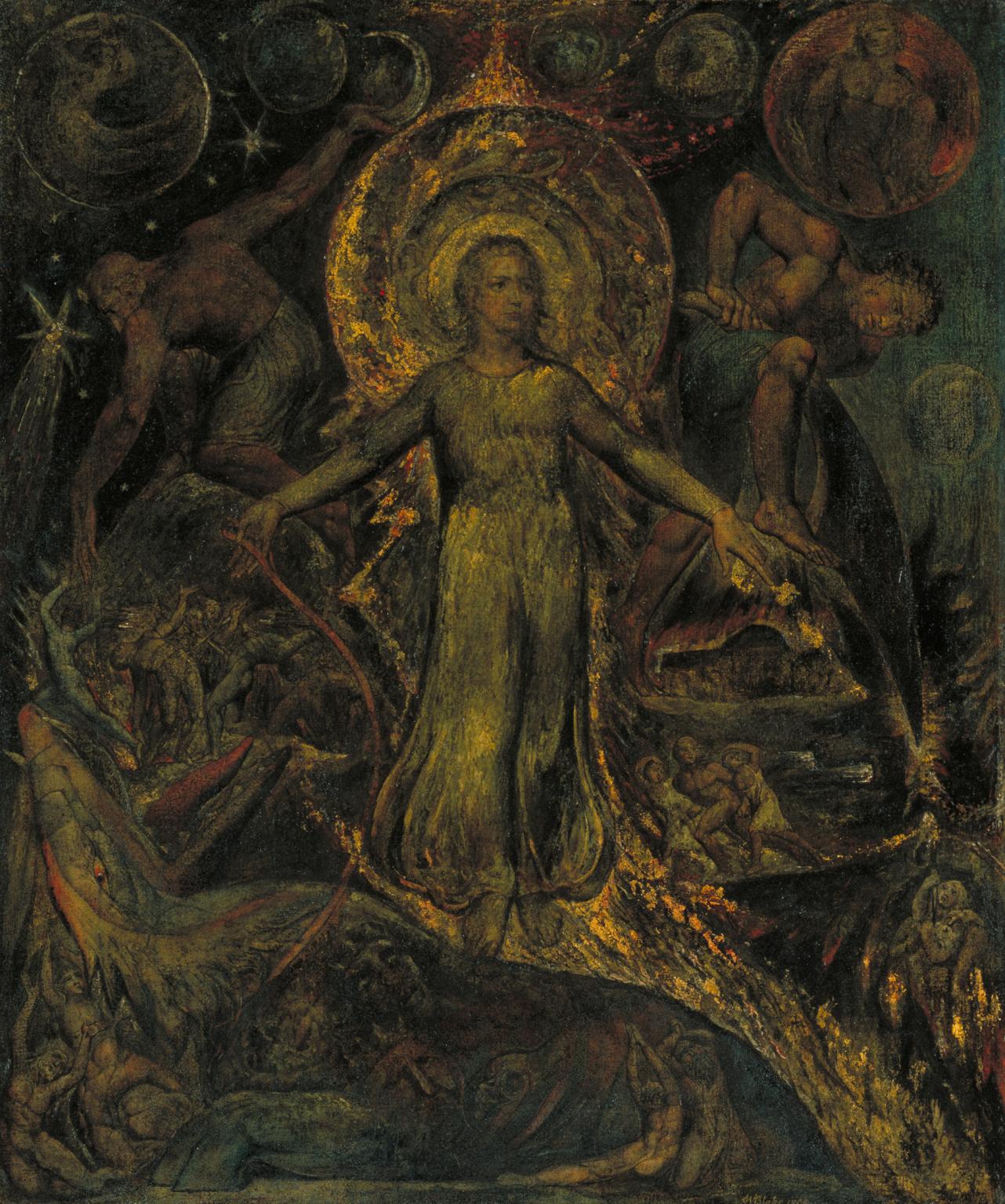
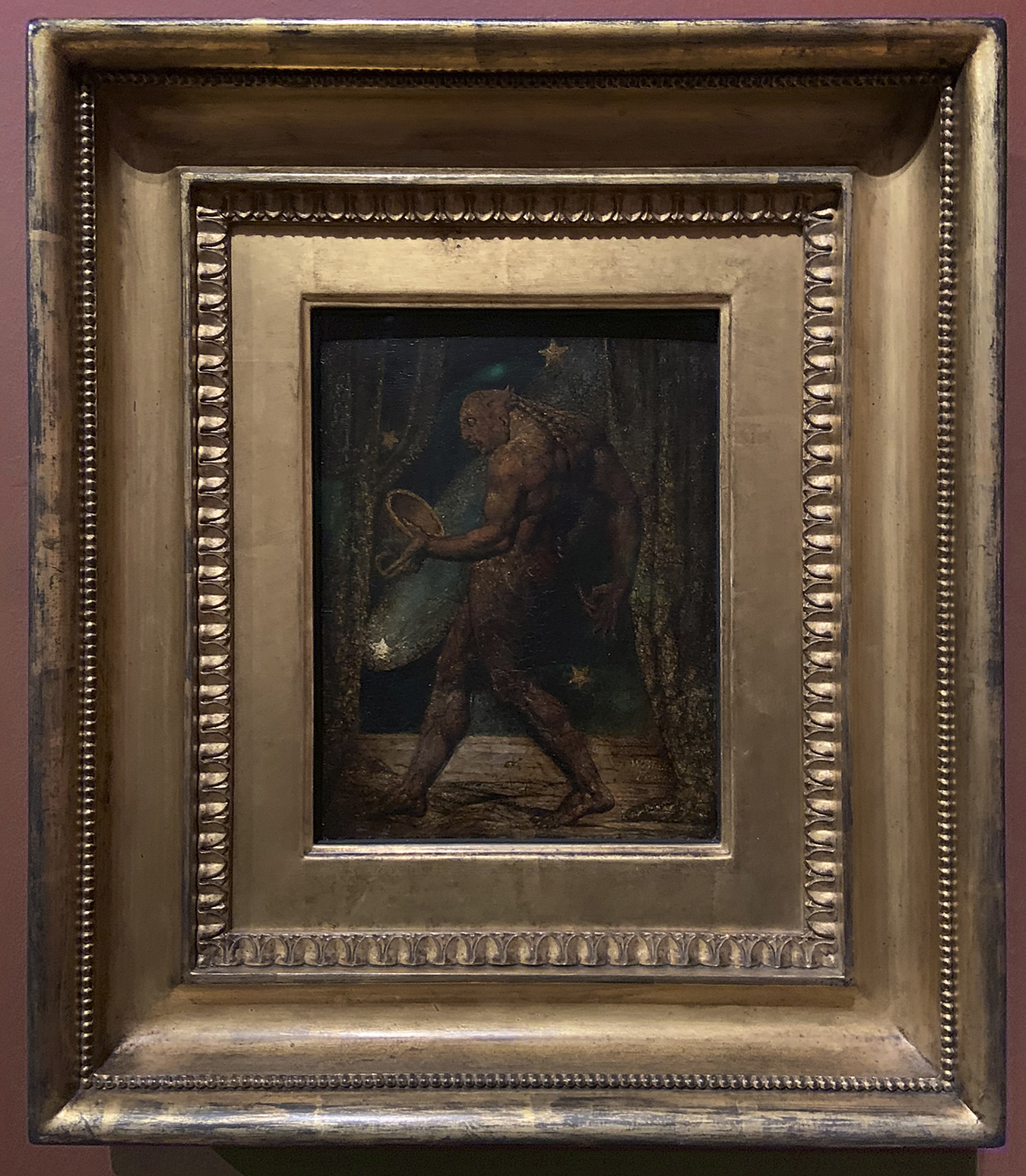
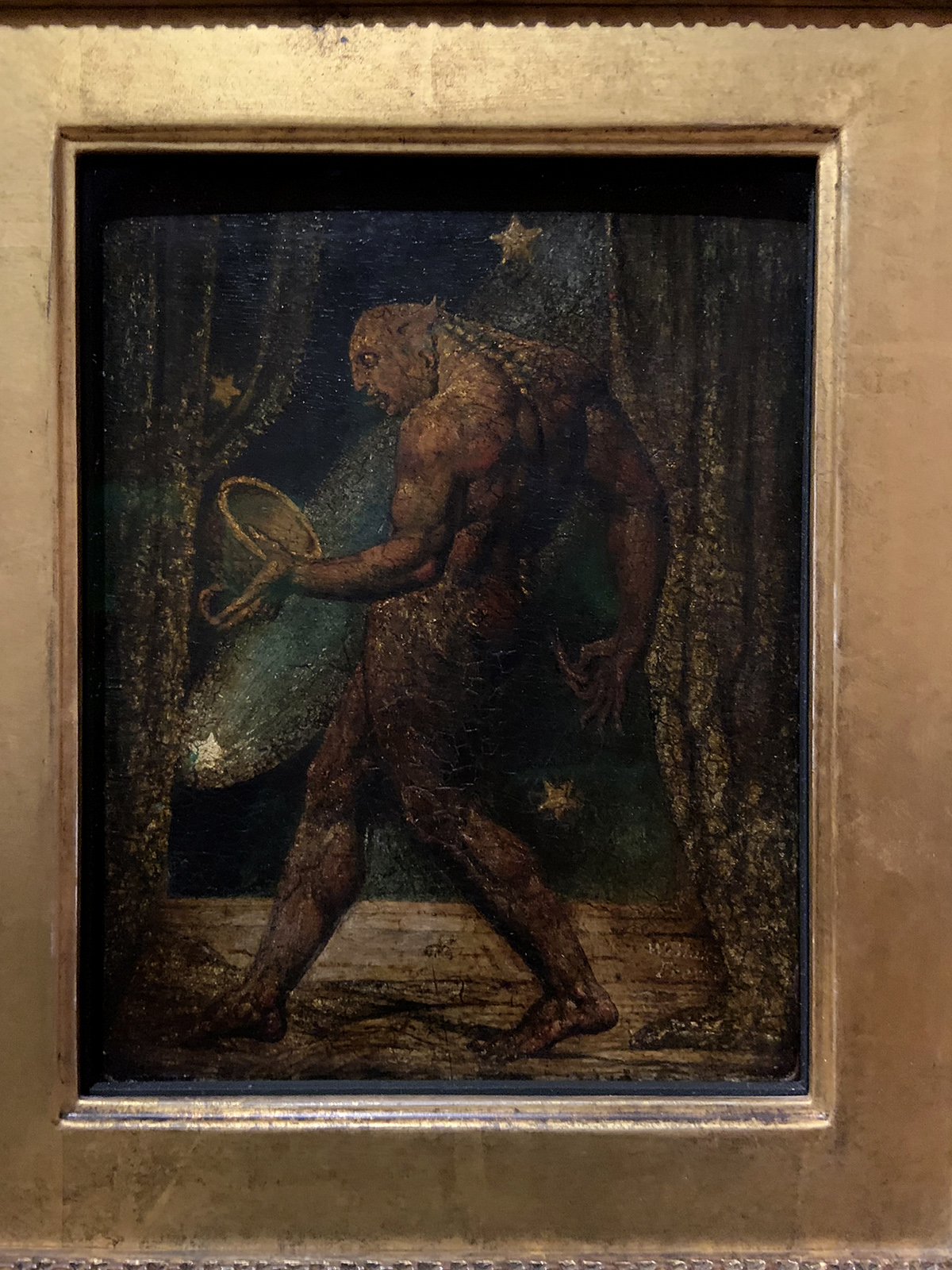
William Blake (British, 1757-1827) 'The Ghost of a Flea' c. 1819


William Blake (British, 1757-1827)
The Ghost of a Flea
c. 1819
Tempera heightened with gold on mahogany
214 x 162 mm
Tate
Bequeathed by W. Graham Robertson 1949


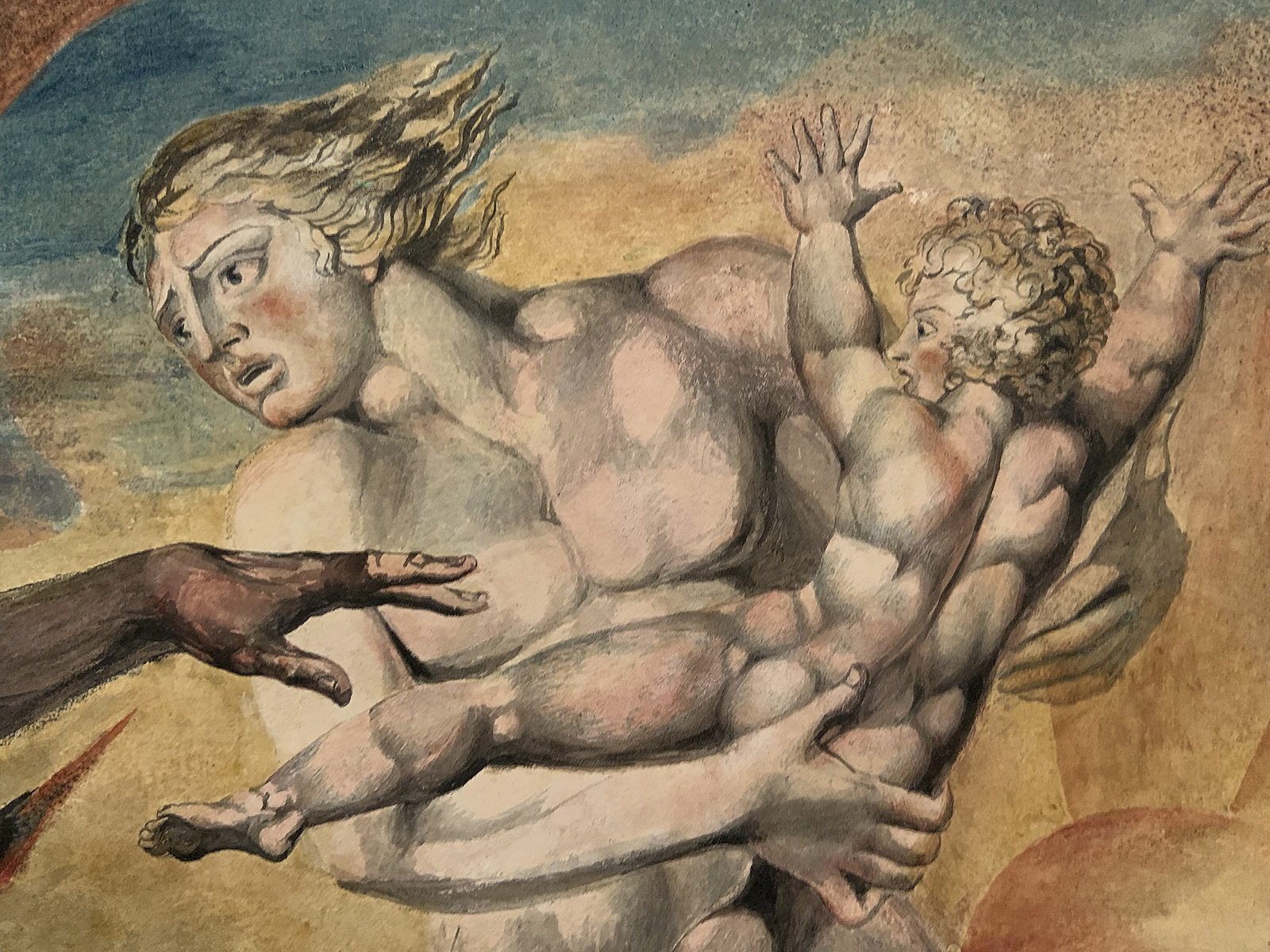
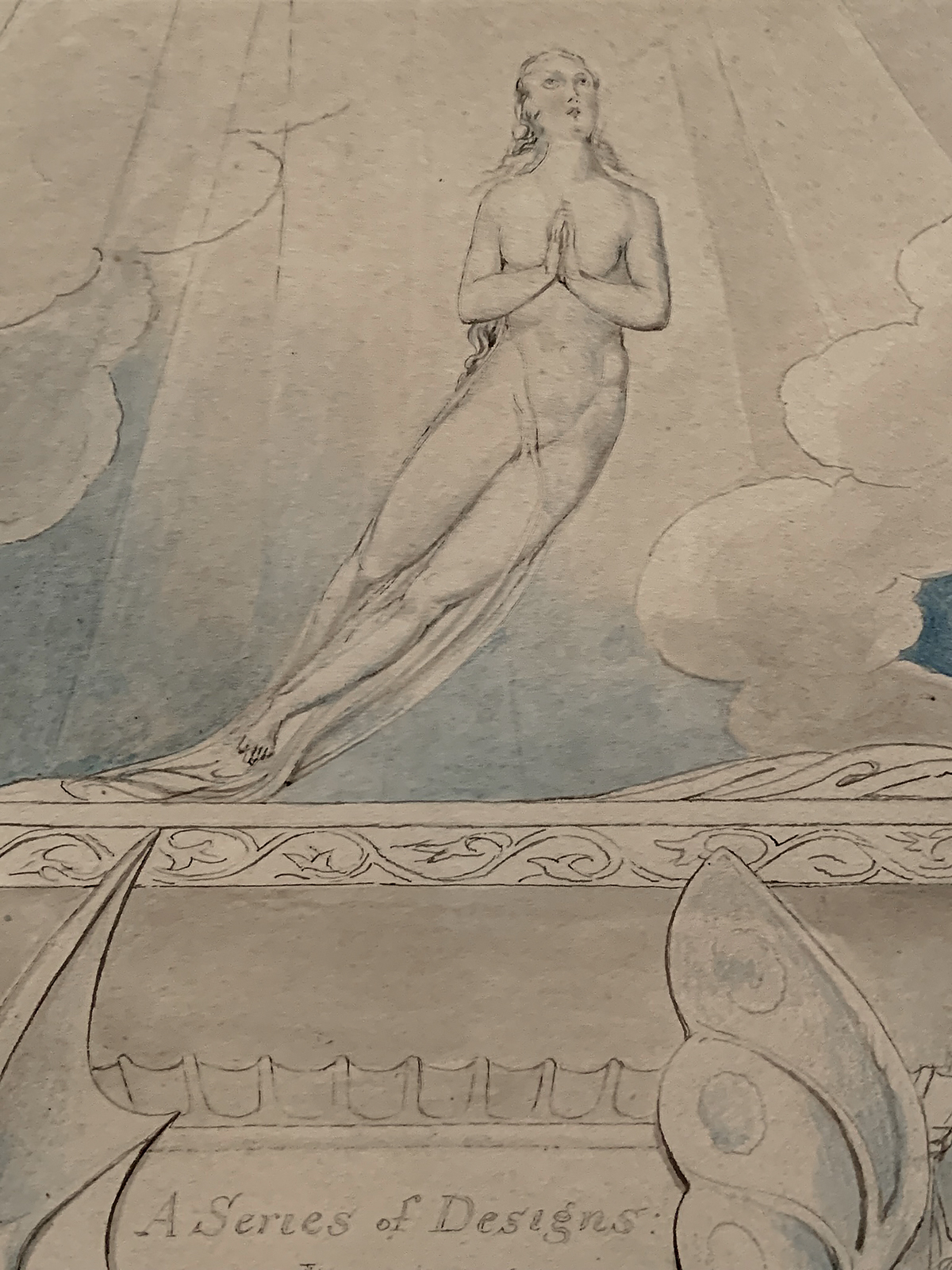
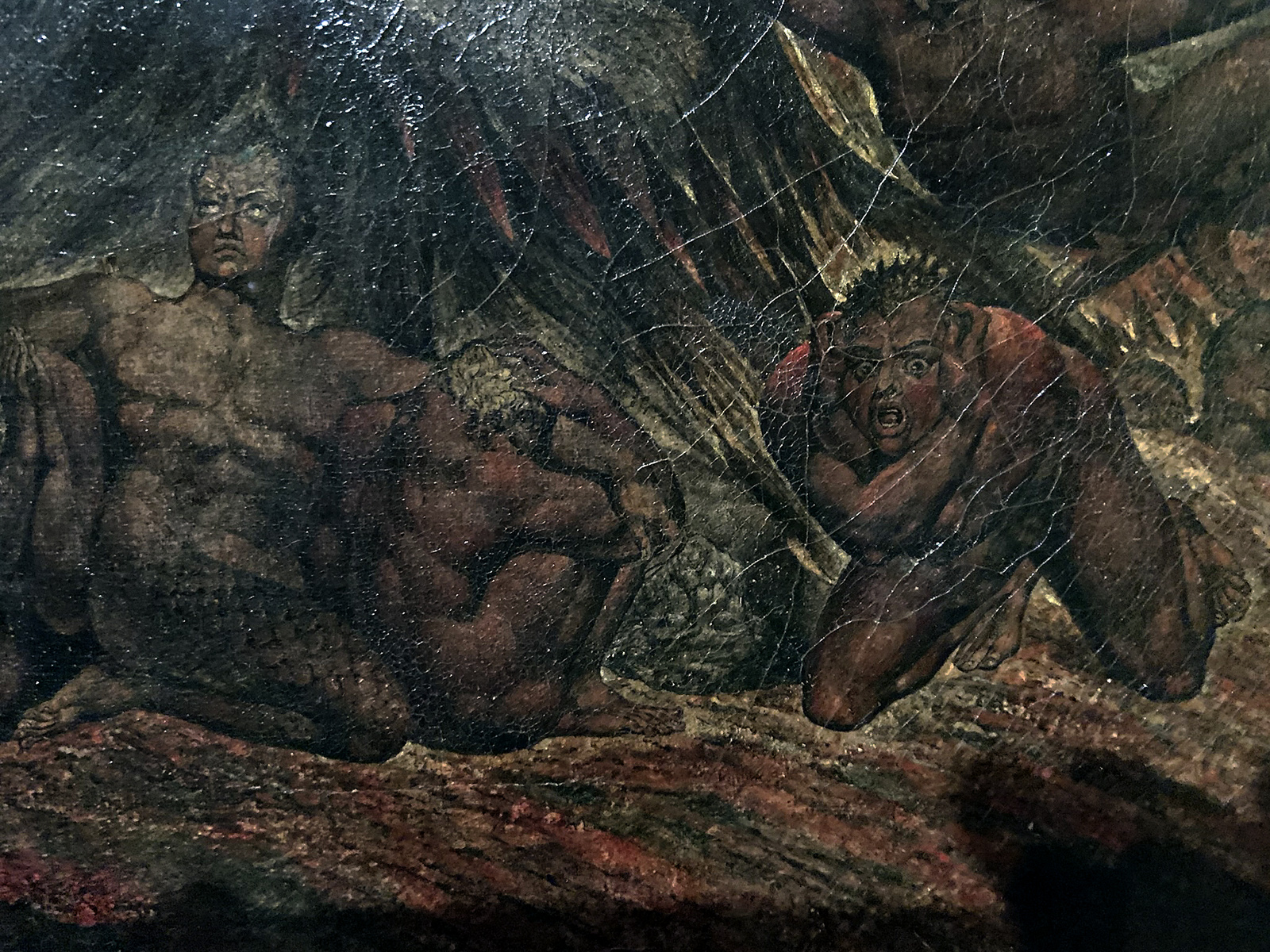
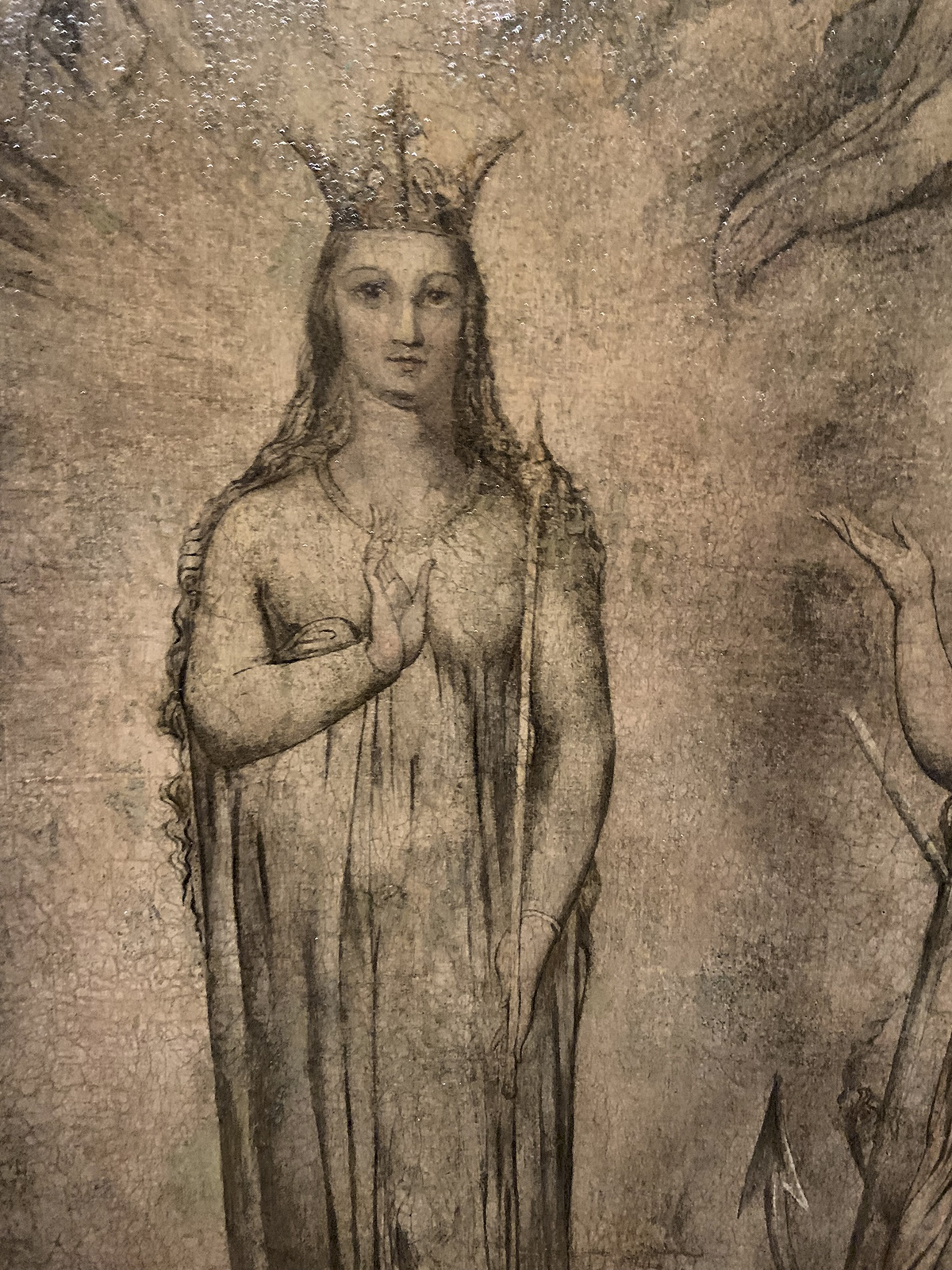
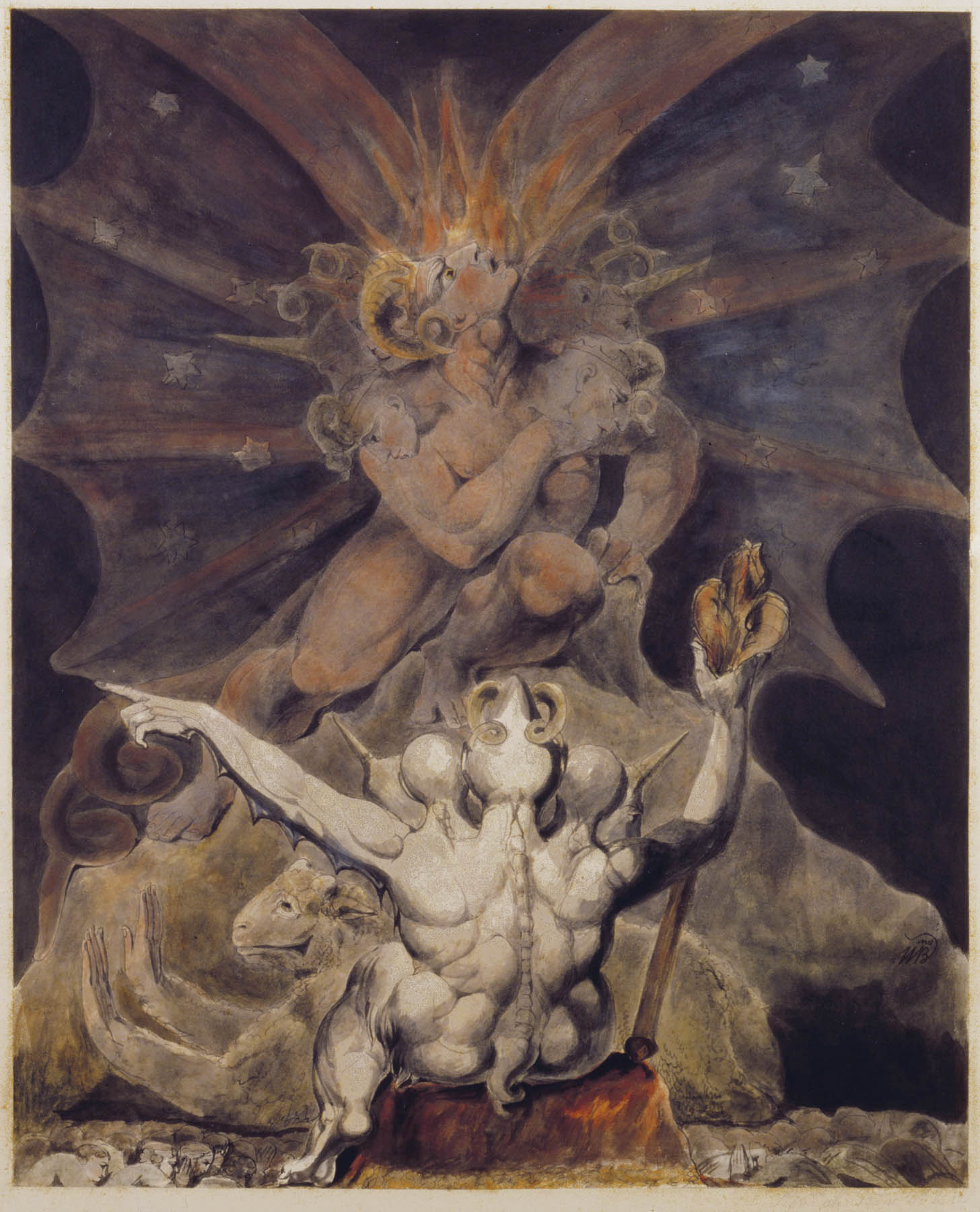
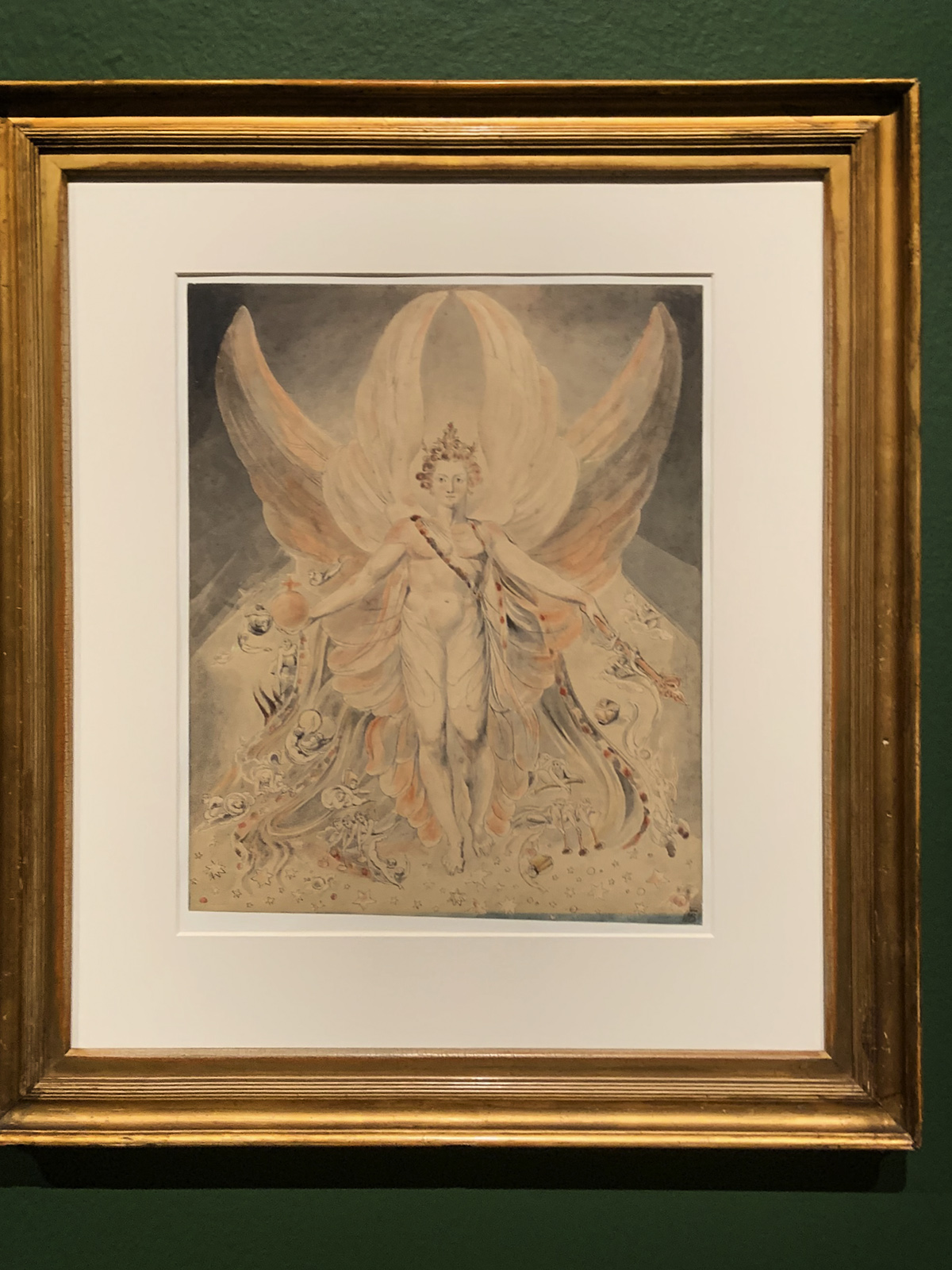
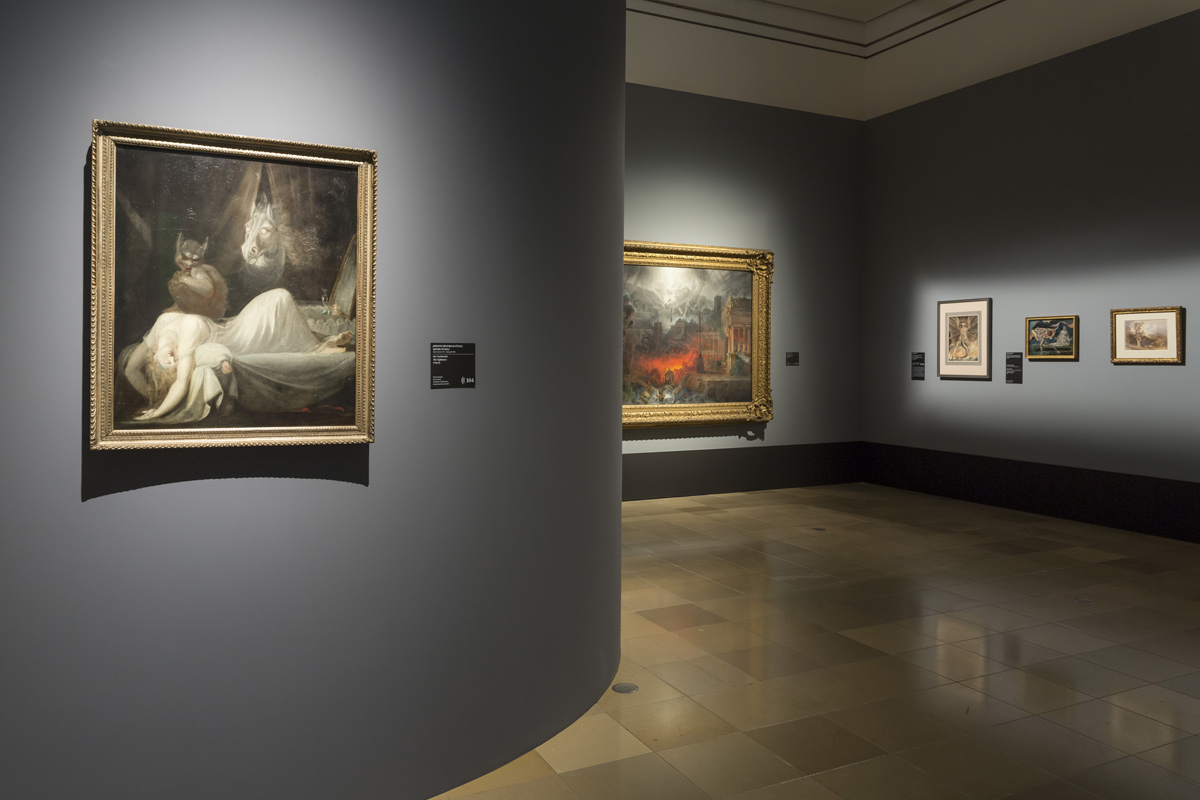
Another physiognomic “vision” – “the stuff of delirium and nightmare, [which] taps into the unconscious, internalised sublime” – was the painting The Ghost of a Flea (c. 1819) used to illustrate John Varley’s Treatise on Zodiacal Physiognomy (1828). In studying the work of Blake for this posting, I found it instructive to look at Blake’s preparatory sketches for his works which can be found online. They give you a good idea of the spontaneity of the drawing and the ideas that arise, transformed into the finished work. Here in the graphite on paper drawing of The Ghost of a Flea we can see Blake’s initial vision, a more static, pensive figure with serrated wings which morphs into a muscular, blood sucking monster set on a cosmic stage, of life framed by curtains and a shooting star. As the vision appeared to Blake he is said to have cried out: ‘There he comes! his eager tongue whisking out of his mouth, a cup in his hand to hold blood, and covered with a scaly skin of gold and green.’

Marcus Bunyan. “Visions of divine damnation” on the exhibition William Blake at Tate Britain, London Part 2, February 2020 on the Art Blart website [Online] Cited 09/02/2023


William Blake (British, 1757-1827) 'The Ghost of a Flea' c. 1819 (installation view)


William Blake (British, 1757-1827)
The Ghost of a Flea
c. 1819
Graphite on paper
Private collection
Photo: © Marcus Bunyan and Tate


Artist and astrologer John Varley encouraged Blake to sketch the figures, called ‘visionary heads’, who populated his visions. This image is the best known. While sketching the flea, Blake claimed it told him that fleas were inhabited by the souls of bloodthirsty men, confined to the bodies of insects because, if they were the size of horses, they would literally drain the population. Their bloodthirsty nature is shown by the eager tongue flicking at the ‘blood’ cup it carries. This intense disorientating image, the stuff of delirium and nightmare, taps into the unconscious, internalised sublime.

William Blake, “The Ghost of a Flea c. 1819-20,” in Nigel Llewellyn and Christine Riding (eds.), The Art of the Sublime, Tate Research Publication, January 2013


Wall text from the exhibition 'Peter Booth' at TarraWarra Museum of Art


Wall text from the exhibition


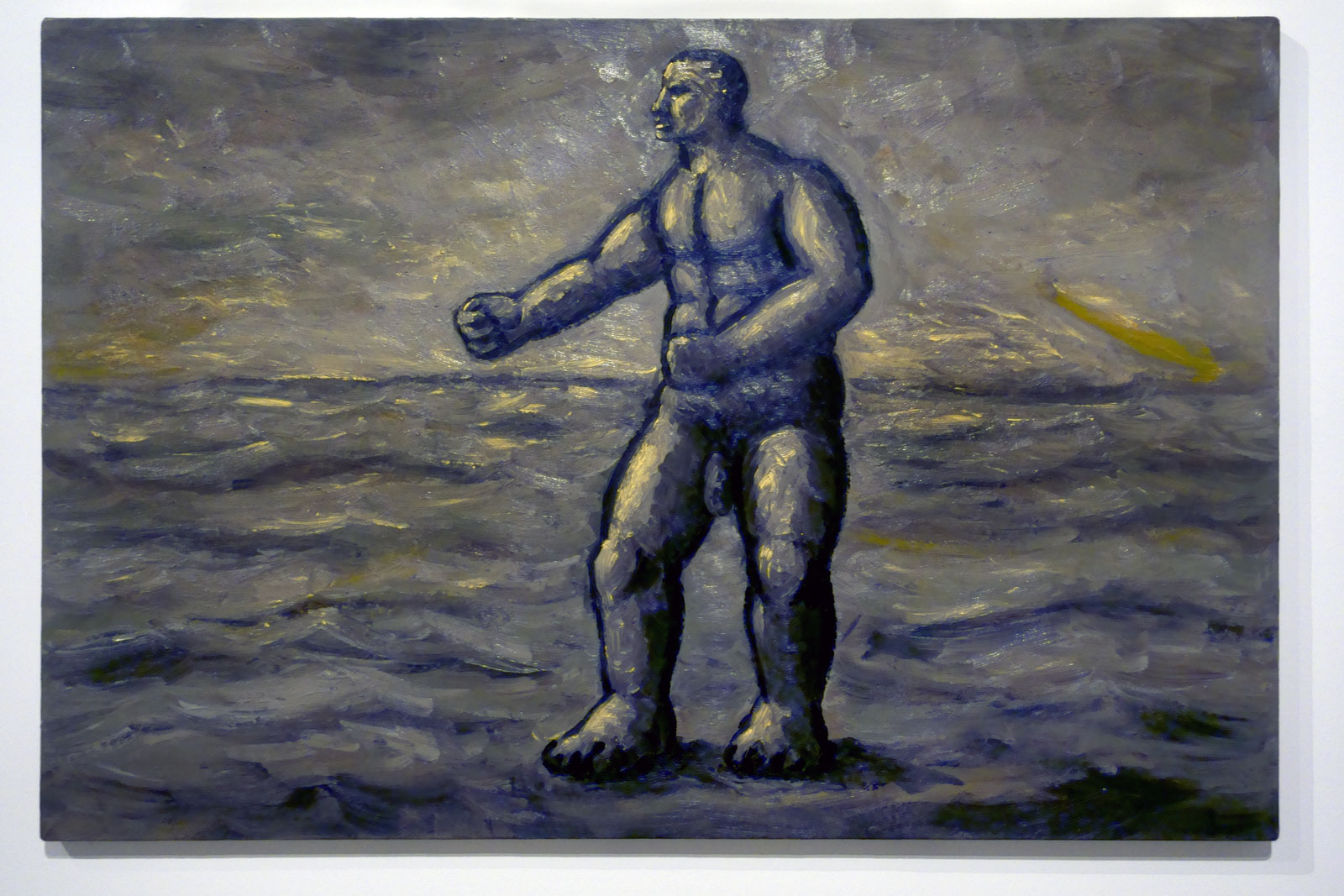
Installation view of the exhibition 'Peter Booth' at TarraWarra Museum of Art showing from left to right, 'Painting Two' 1984, 'Painting' 1984 and 'Leadman' 1986


Installation view of the exhibition Peter Booth at TarraWarra Museum of Art showing from left to right, Painting Two 1984, Painting 1984 and Leadman 1986
Photo: Marcus Bunyan


Peter Booth (Australian born England, b. 1940, Australia from 1958) 'Painting Two' 1984


Peter Booth (Australian born England, b. 1940, Australia from 1958)
Painting Two
1984
Oil on canvas
198 x 305cm
National Gallery of Victoria, Melbourne
Purchased 1985
© Peter Booth


In the blasted landscape of Painting Two we are presented with a vision of a volatile world in the process of unnatural mutation. As an artist who has always been keenly attuned to what’s happening environmentally and politically, this painting forcefully conveys the fallout of a colossal act of destruction, reflecting widespread concerns in the 1980s over the dramatic escalation of the nuclear arms race between the United States and the Soviet Union and the threat of atomic warfare.

Wall text from the exhibition


Peter Booth (Australian born England, b. 1940, Australia from 1958) 'Painting' 1984 (installation view)


Peter Booth (Australian born England, b. 1940, Australia from 1958)
Painting (installation view)
1984
Oil on canvas
© Peter Booth
Photo: Marcus Bunyan


Peter Booth (Australian born England, b. 1940, Australia from 1958) 'Leadman' 1986 (installation view)


Peter Booth (Australian born England, b. 1940, Australia from 1958)
Leadman (installation view)
1986
Oil on canvas
TarraWarra Museum of Art collection
Gift of Eva Besen and Marc Besen AO 2001
© Peter Booth
Photo: Marcus Bunyan


In this work a hulking grey figure, with his fierce determination and body braced for battle, appears to be biologically adapted for survival in a desolated terrain. As the title suggests, this unrelentingly bleak and polluted atmosphere has eventuated from the unbridled destructive ambitions of the toxic Leadman who has transformed the world in his own image.

Wall text from the exhibition


Installation view of the exhibition 'Peter Booth' at TarraWarra Museum of Art showing from left to right, 'Leadman' 1986, 'Painting' 1984 and 'Painting' 2012

Installation view of the exhibition 'Peter Booth' at TarraWarra Museum of Art showing from left to right, 'Leadman' 1986, 'Painting' 1984 and 'Painting' 2012


Installation view of the exhibition Peter Booth at TarraWarra Museum of Art showing from left to right, Leadman 1986, Painting 1984 and Painting 2012
Photos: Marcus Bunyan


Peter Booth (Australian, b. 1940) 'Painting' 1984


Peter Booth (Australian, b. 1940)
Painting
1984
Oil on canvas
101 x 183cm
Heide Museum of Modern Art
The Baillieu Myer Collection of the ’80s
© Peter Booth


Peter Booth (Australian, b. 1940) 'Painting' 2012


Peter Booth (Australian, b. 1940)
Painting
2012
Oil on canvas
213.5 x 91cm
National Gallery of Australia, Canberra
© Peter Booth


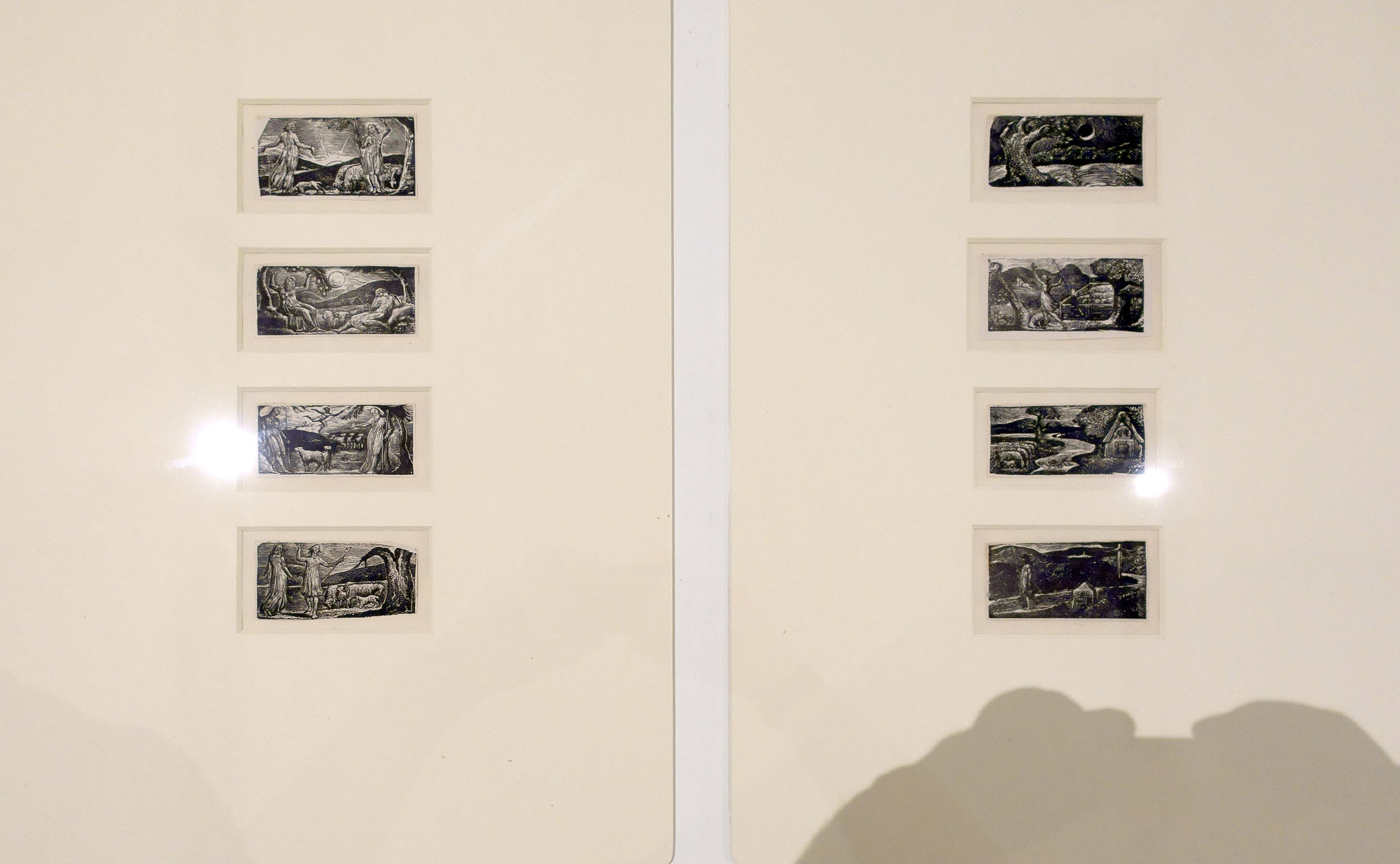
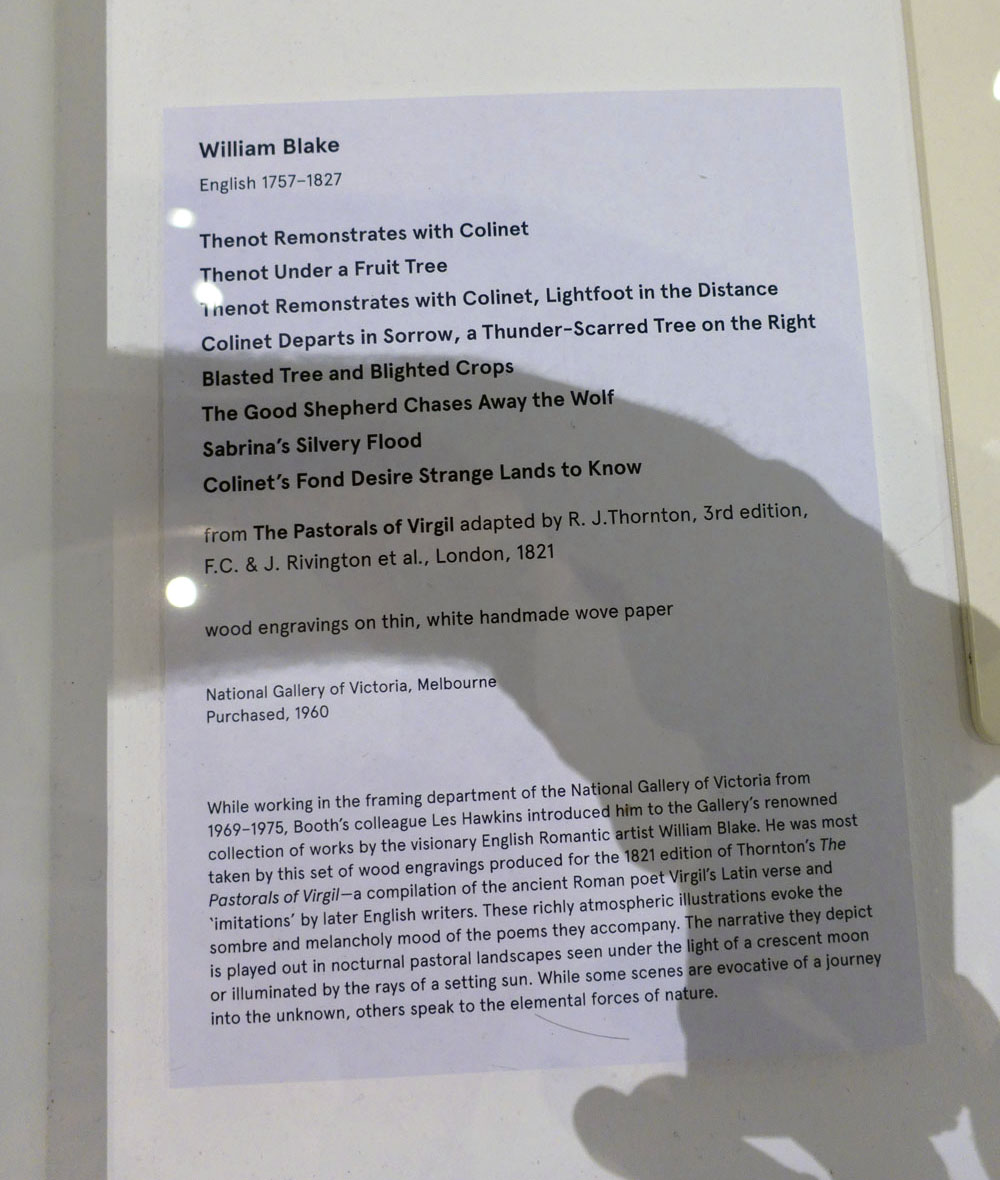
William Blake (English, 1757-1827) From 'The Pastorals of Virgil' 1821


William Blake (English, 1757-1827)
Thenot Remonstrates with Colinet
Thenot Under a Fruit Tree
Thenot Remonstrates with Colinet, Lightfoot in the Distance
Colinet Departs in Sorrow, a Thunder-Scarred Tree on the Right
Blasted Tree and Blighted Crops
The Good Shepherd Chases Away the Wolf
Sabrina’s Silvery Flood
Colinet’s Fond Desire Strange Lands to Know
1821
From The Pastorals of Virgil adapted by R.J. Thornton, 3rd edition. F.C. & J. Rivington et al., London 1921
Wood engravings on thin, white handmade wove paper
National Gallery of Victoria, Melbourne
Purchased 1960
Photo: Marcus Bunyan


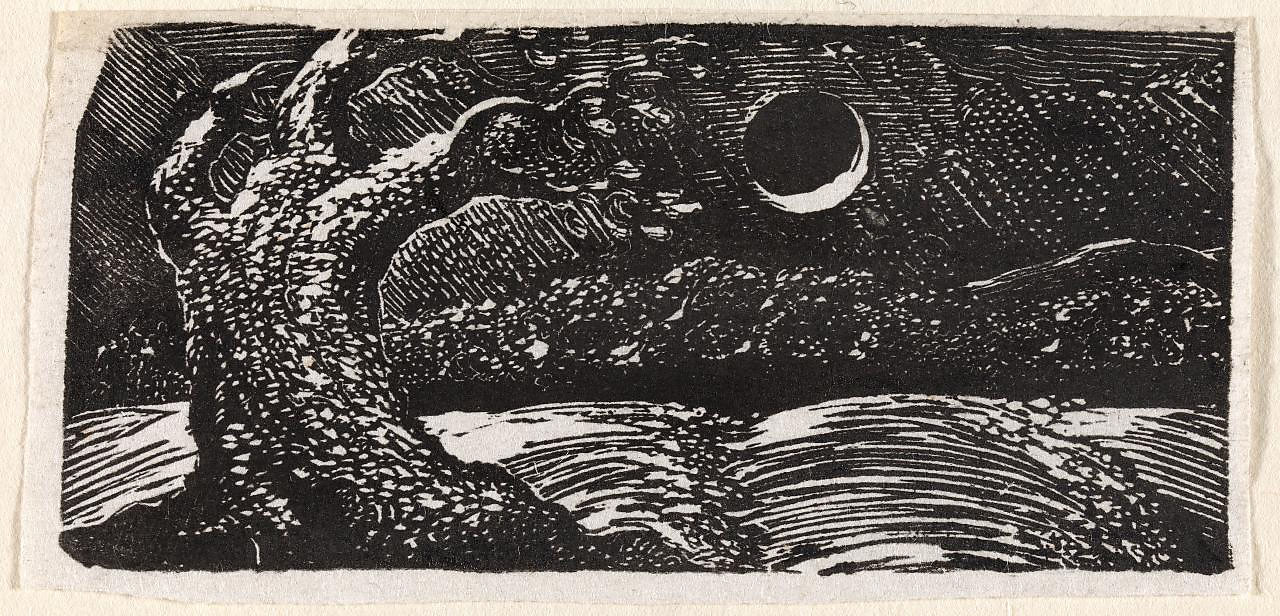
William Blake (English, 1757-1827) 'Blasted tree and blighted crops' 1821


William Blake (English, 1757-1827)
Blasted tree and blighted crops
1821
From The Pastorals of Virgil adapted by R.J. Thornton, 3rd edition. F.C. & J. Rivington et al., London 1921
Wood engraving on thin, white handmade wove paper
National Gallery of Victoria, Melbourne
Purchased 1960


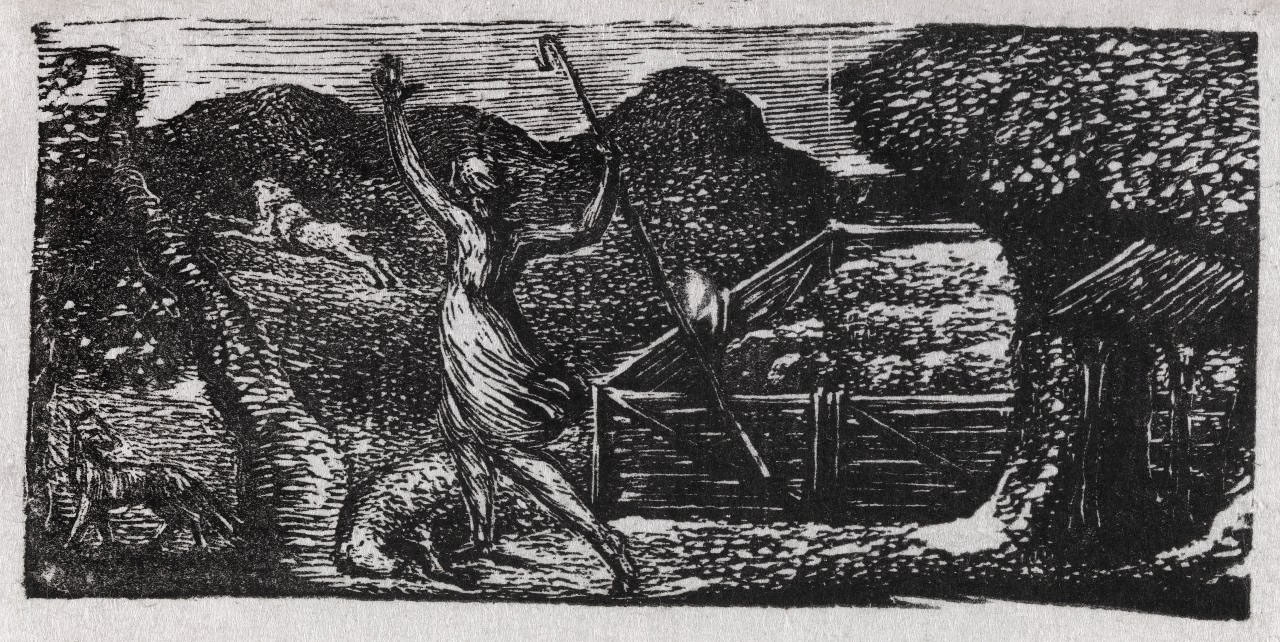
William Blake (English, 1757-1827) 'The Good Shepherd Chases Away the Wolf' 1821


William Blake (English, 1757-1827)
The Good Shepherd Chases Away the Wolf
1821
From The Pastorals of Virgil adapted by R.J. Thornton, 3rd edition. F.C. & J. Rivington et al., London 1921
Wood engraving on thin, white handmade wove paper
National Gallery of Victoria, Melbourne
Purchased 1960


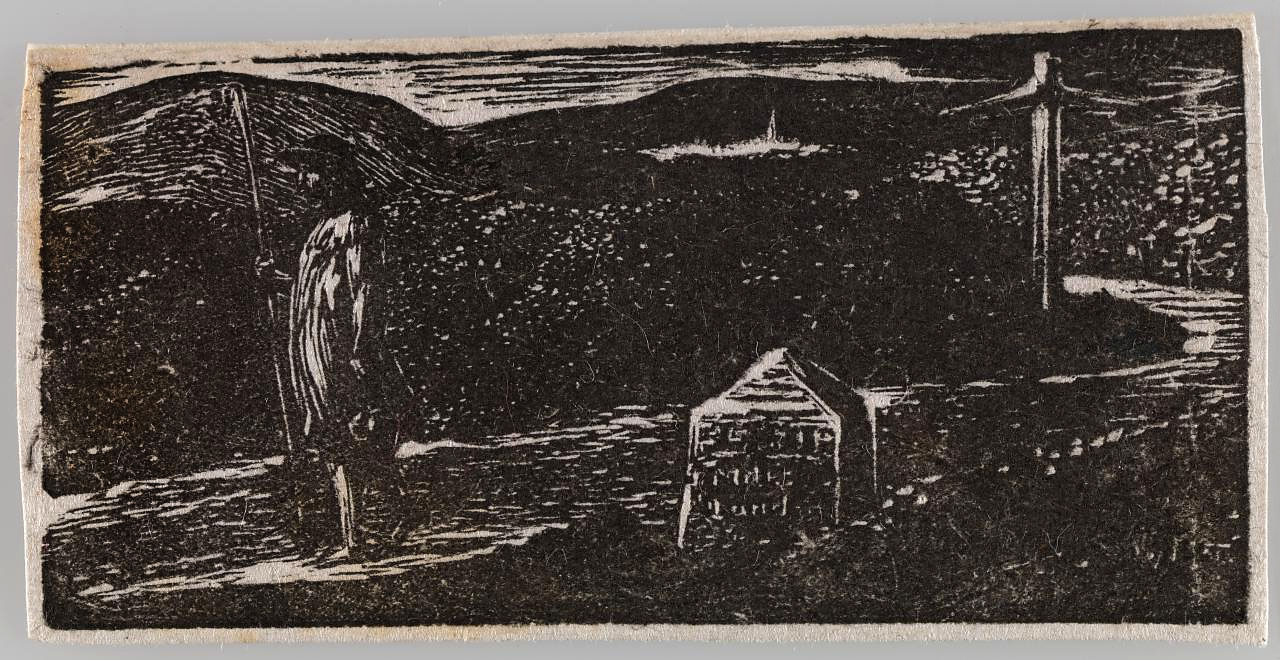
William Blake (English, 1757-1827) 'Colinet's Fond Desire Strange Lands to Know' 1821


William Blake (English, 1757-1827)
Colinet’s Fond Desire Strange Lands to Know
1821
From The Pastorals of Virgil adapted by R.J. Thornton, 3rd edition. F.C. & J. Rivington et al., London 1921
Wood engraving on thin, white handmade wove paper
National Gallery of Victoria, Melbourne
Purchased 1960


Cabinet text from the exhibition 'Peter Booth'


Cabinet text from the exhibition
Photo: Marcus Bunyan


A survey exhibition of the work of the renowned Australian artist Peter Booth 

With a remarkable career spanning several decades, Melbourne-based Booth is a unique voice in Australian art. This new survey of paintings and works on paper is the first major public gallery exhibition of Peter Booth’s work since the NGV retrospective in 2003 and features a number of the artist’s most significant works from the 1970s to 1990s, alongside important recent works from the past two decades.

The exhibition is presented thematically, honing in on and highlighting particular motifs, subjects and moods which have become hallmarks of Booth’s expansive oeuvre: stillness and turbulence, alterity and alienation, mutation and hybridity, the absurd and the grotesque, the road and the ruin, and the despoliation and the resilience of nature.

A small group of abstract paintings from the mid-1970s at the start of the exhibition provide a prelude to an important series of gestural paintings which mark the beginning of the artist’s journey into the highly expressive landscape and figure subjects which have characterised his practice since that time.

The exhibition progresses through Booth’s vivid imaginings of an apocalyptic world characterised by grotesque, unsettling, and at times absurd scenes of human and hybrid figures in varying states of apprehension, aggression and conflict. These works will be accompanied by a small selection of prints by William Blake, James Ensor, Francisco Goya, and Samuel Palmer, visionary artists who have been important touchstones for Booth and with whom he shares a number of affinities.

This survey also brings together important works from the past three decades to convey humanity’s often fraught and ambiguous relationship to the natural world, revealing Booth’s extraordinary capacity to transmute his intensely personal perceptions of the mysteries and forces of nature and the folly and hubris of human endeavours, into exceptional and deeply compelling paintings and drawings.

PETER BOOTH, curated by Anthony Fitzpatrick, is generously supported by The Balnaves Foundation.

Text from the TarraWarra Museum of Art website


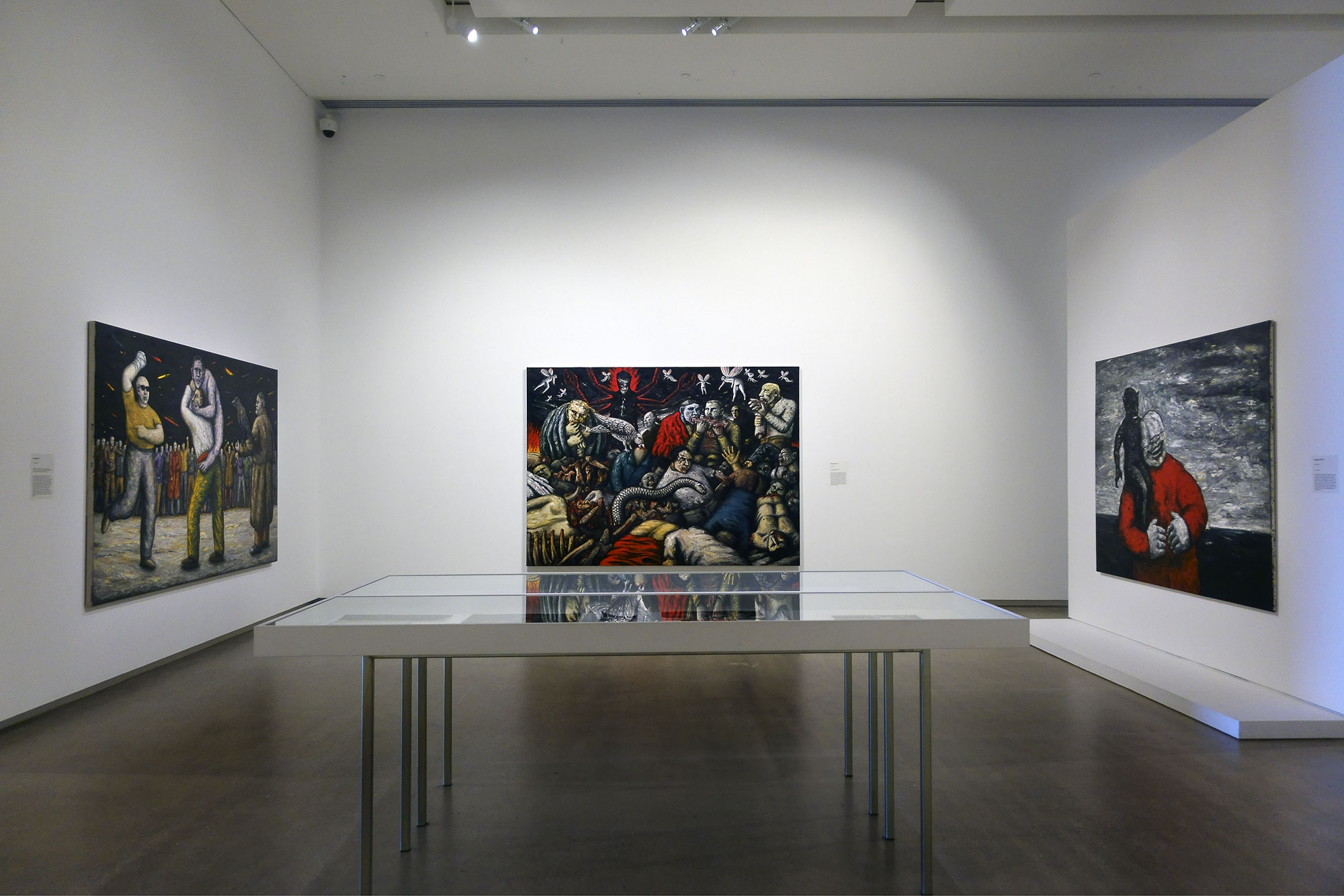
Installation view of the exhibition 'Peter Booth' at TarraWarra Museum of Art showing from left to right, 'Untitled' 1997, 'Painting' 1982 and 'Painting' 1981


Installation view of the exhibition Peter Booth at TarraWarra Museum of Art showing from left to right, Untitled 1997, Painting 1982 and Painting 1981
Photo: Marcus Bunyan


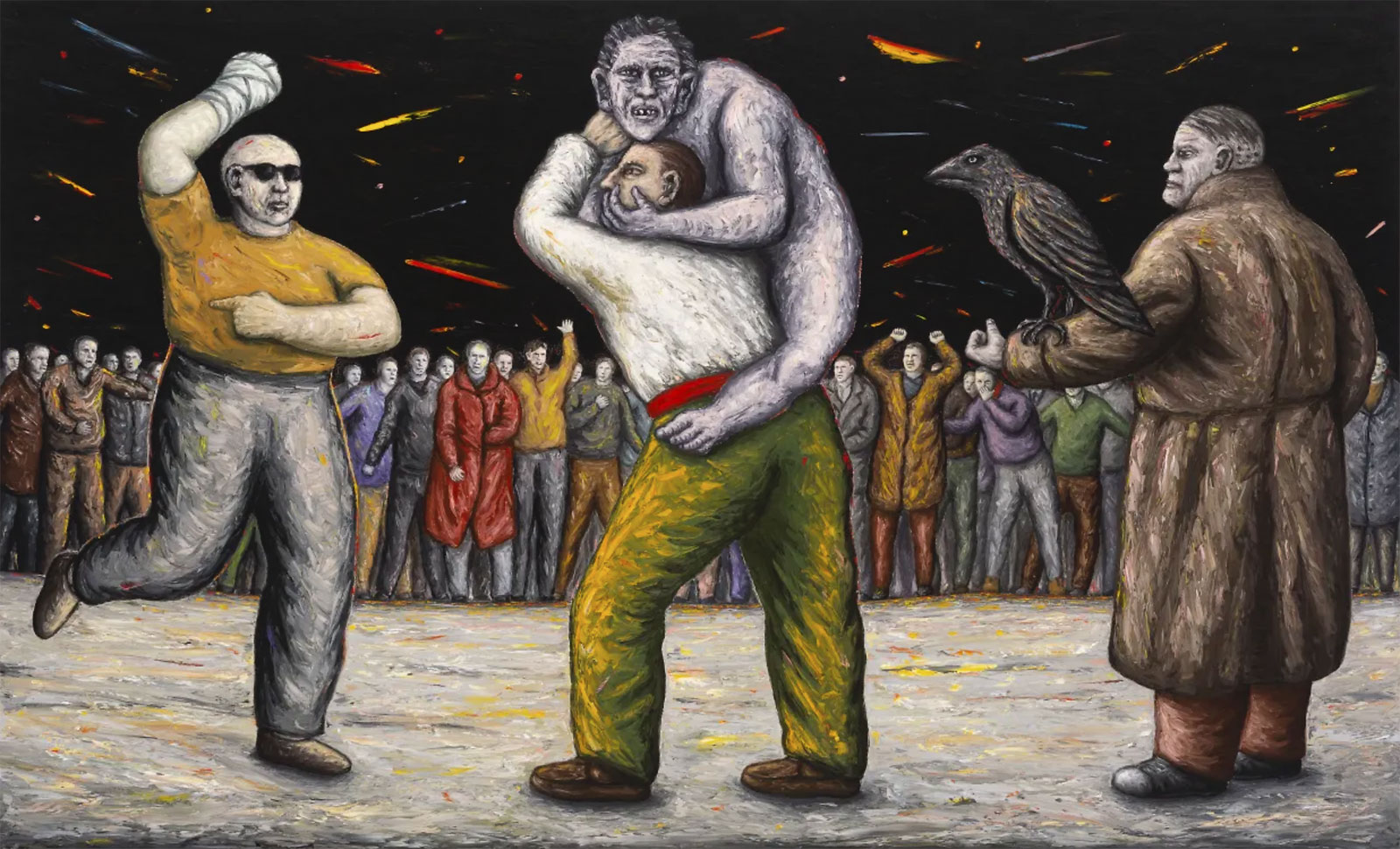
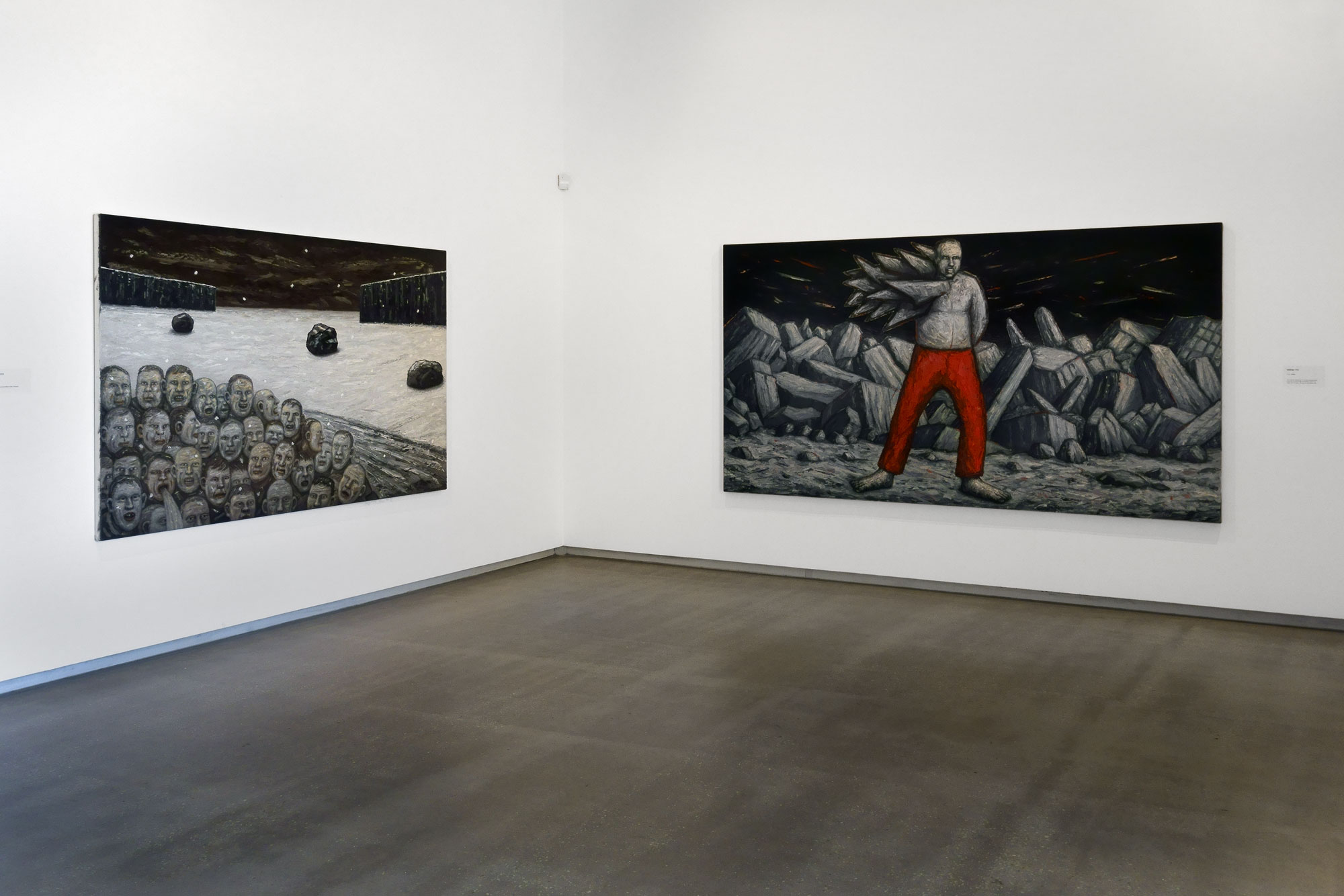
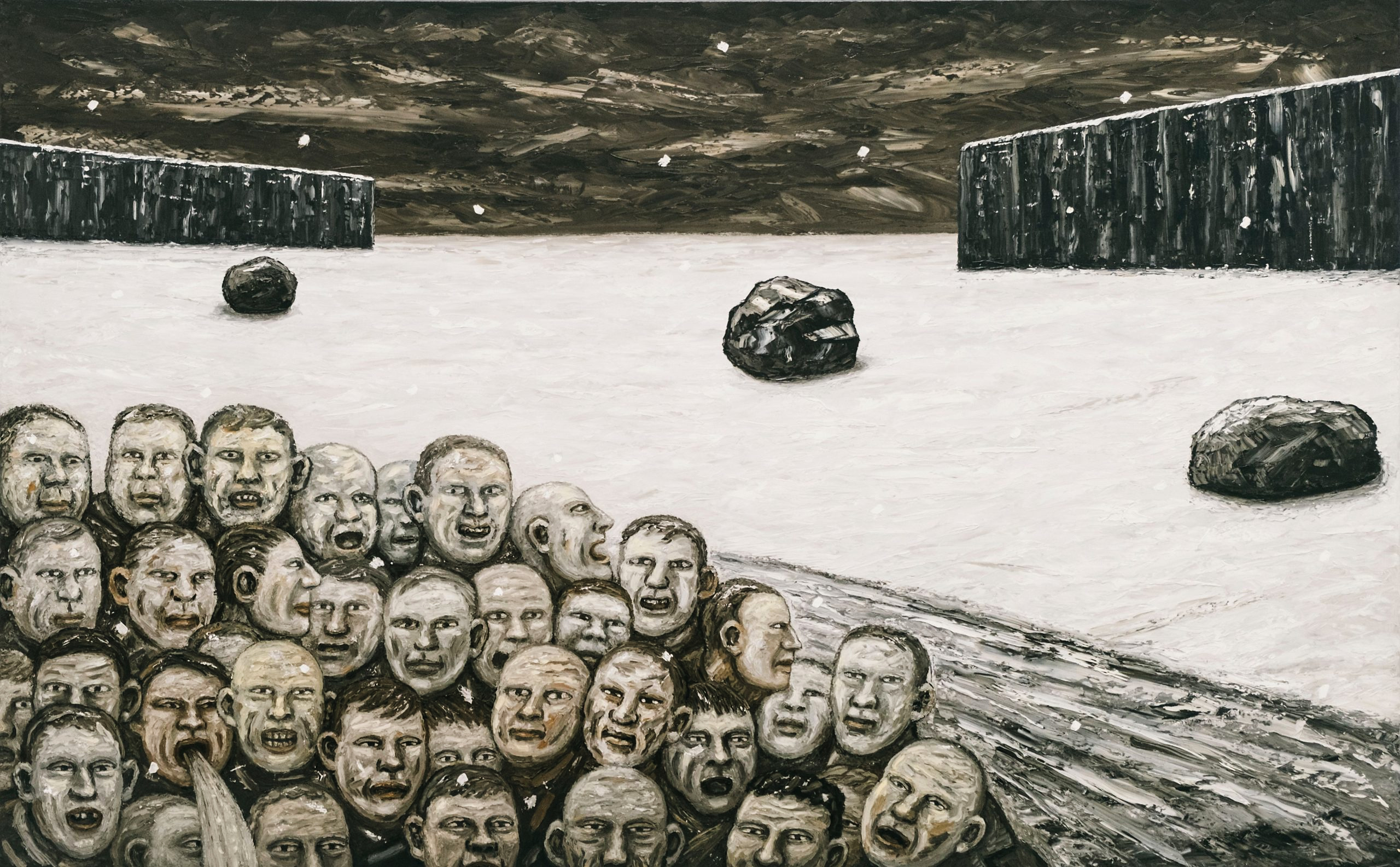
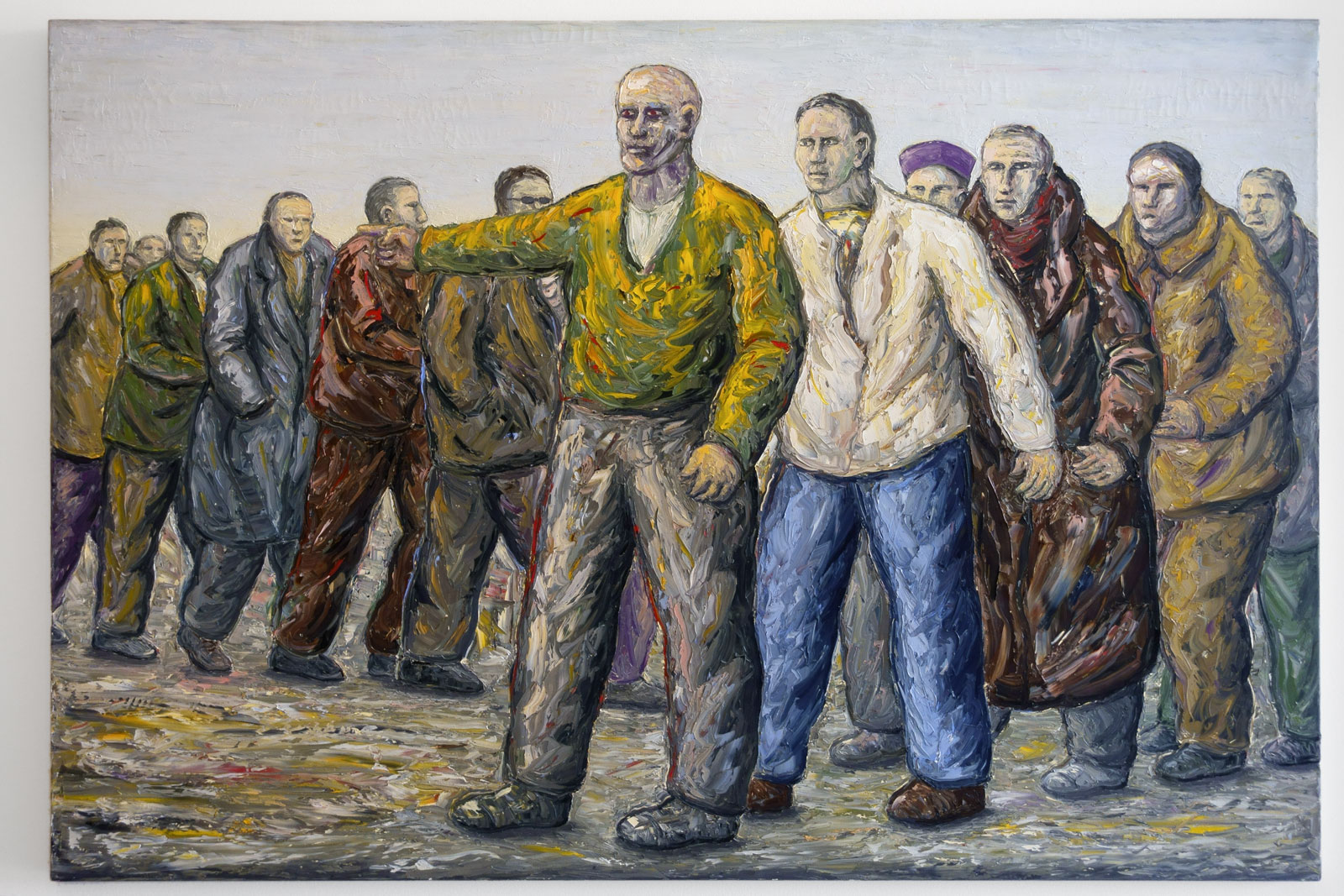
Peter Booth (Australian, b. 1940) 'Untitled' 1997


Peter Booth (Australian, b. 1940)
Untitled
1997
Oil on canvas
The University of Melbourne Art Collection, Michael Buxton Collection
Donated through the Australia Government’s Cultural Gifts Program by Michael and Janet Buxton 2018
© Peter Booth


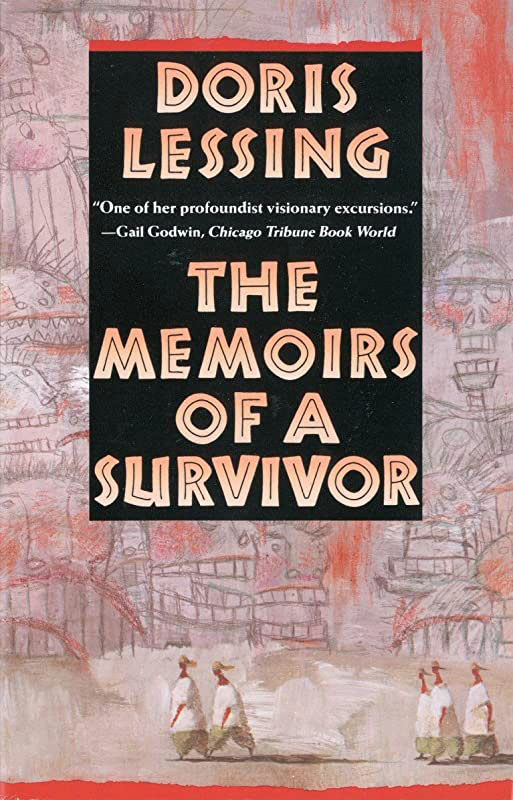
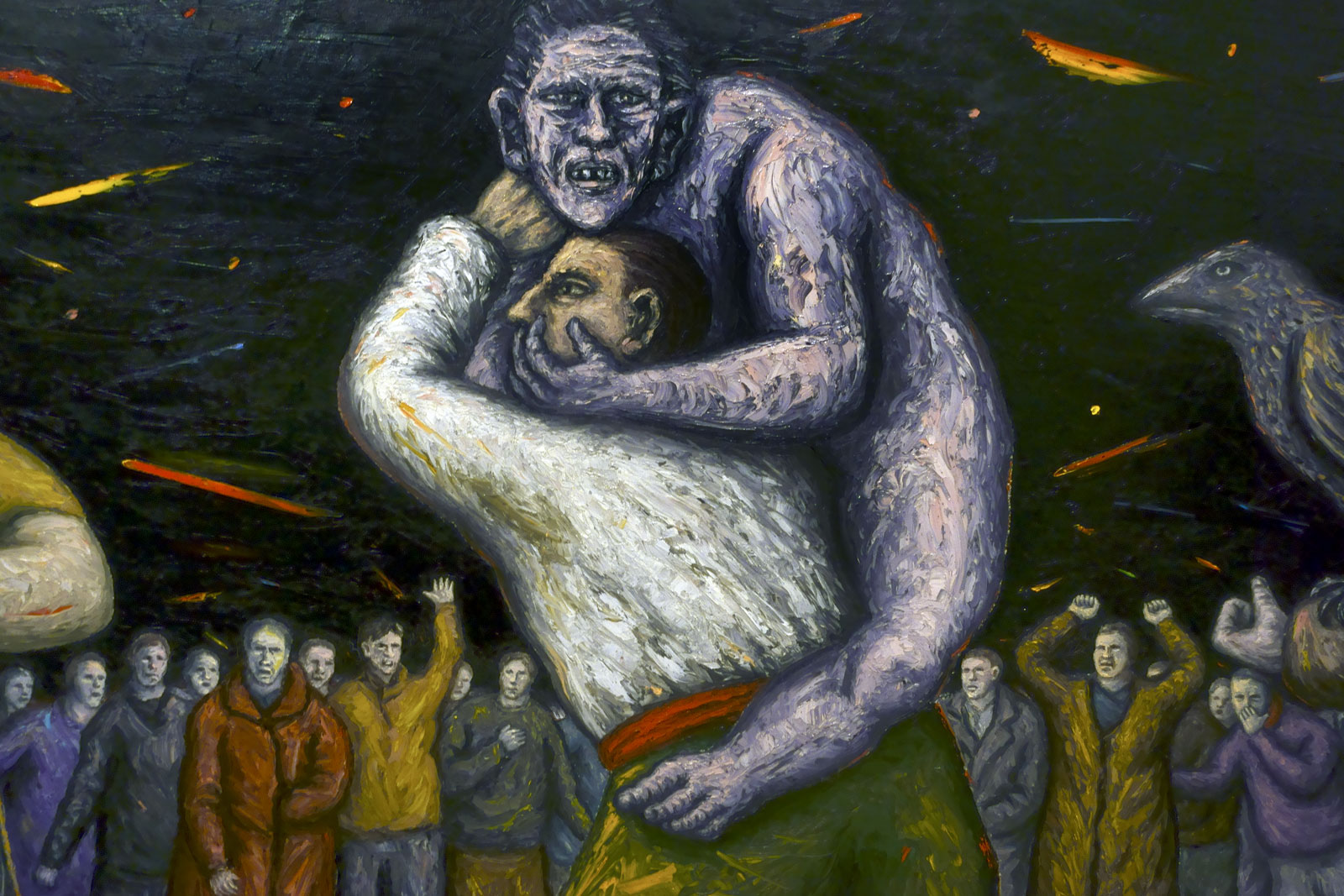
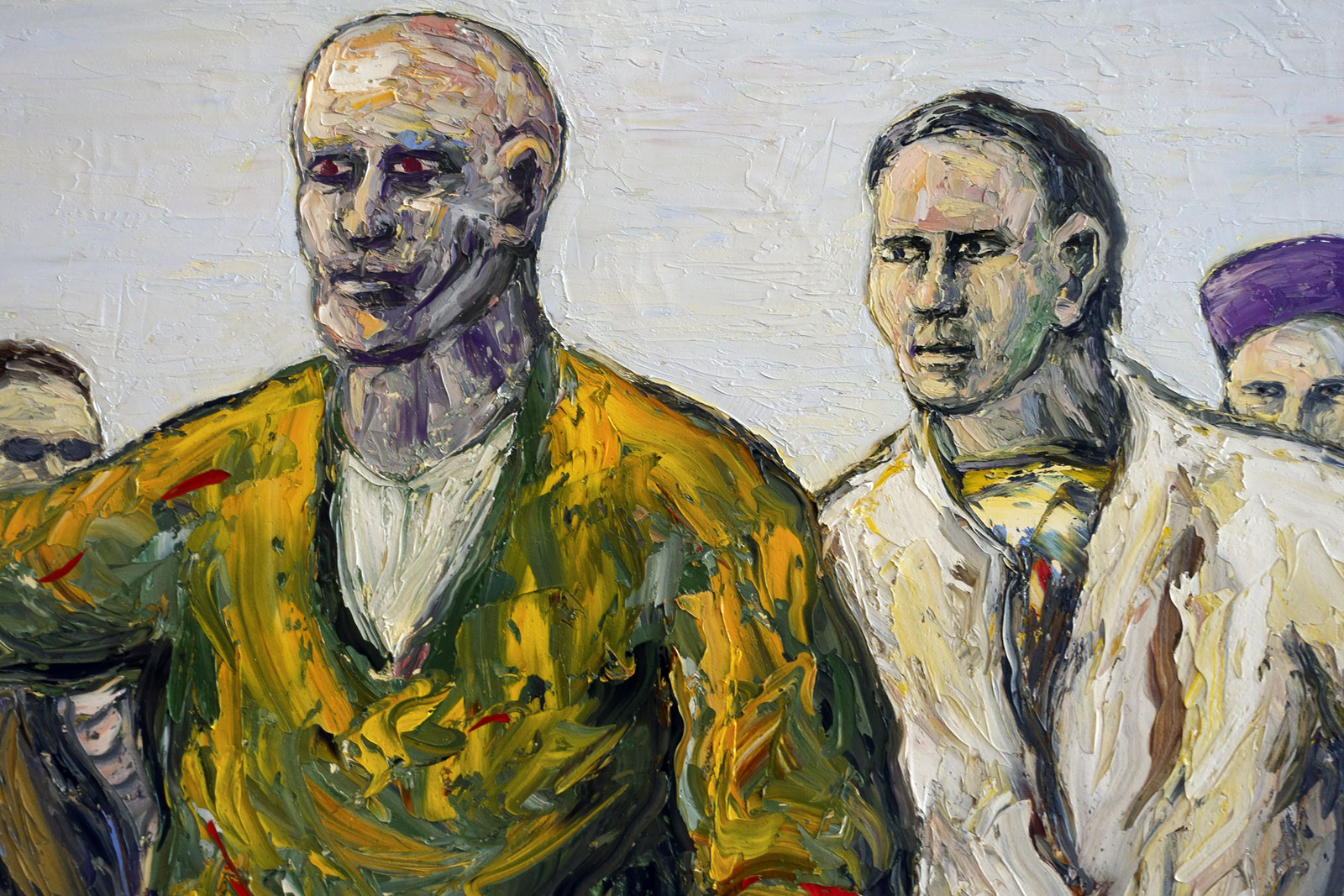
In Doris Lessing’s 1974 novel, The Memoirs of a Survivor, in the aftermath of an unspecified disaster, civilisation gradually disintegrates into anarchy as hordes of people form ad hoc tribes in the city streets to increase their chances of survival. In this dystopian narrative, Lessing describes the irrational and aggressive behaviour that can be unleashed within the safety and obscurity of a large group. This same sense of apprehension is one that Booth shares in many of his depictions of crowds. In Untitled, 1997, a large throng of men forms a single, impenetrable wall, gathered together to cheer on the spectacle of a violent struggle. Disturbing and absurd in equal measure, this work graphically portrays the violent actions that can be incited by a mob.

Wall text from the exhibition


Doris Lessing. 'The Memoirs of a Survivor' book cover


Doris Lessing (British-Zimbabwean born Iran, 1919-2013)
The Memoirs of a Survivor
1974
Penguin Random House book cover published 1988


Peter Booth (Australian, b. 1940) 'Untitled' 1997 (installation view detail)


Peter Booth (Australian, b. 1940)
Untitled (installation view detail)
1997
Oil on canvas
The University of Melbourne Art Collection, Michael Buxton Collection
Donated through the Australia Government’s Cultural Gifts Program by Michael and Janet Buxton 2018
© Peter Booth
Photo: Marcus Bunyan


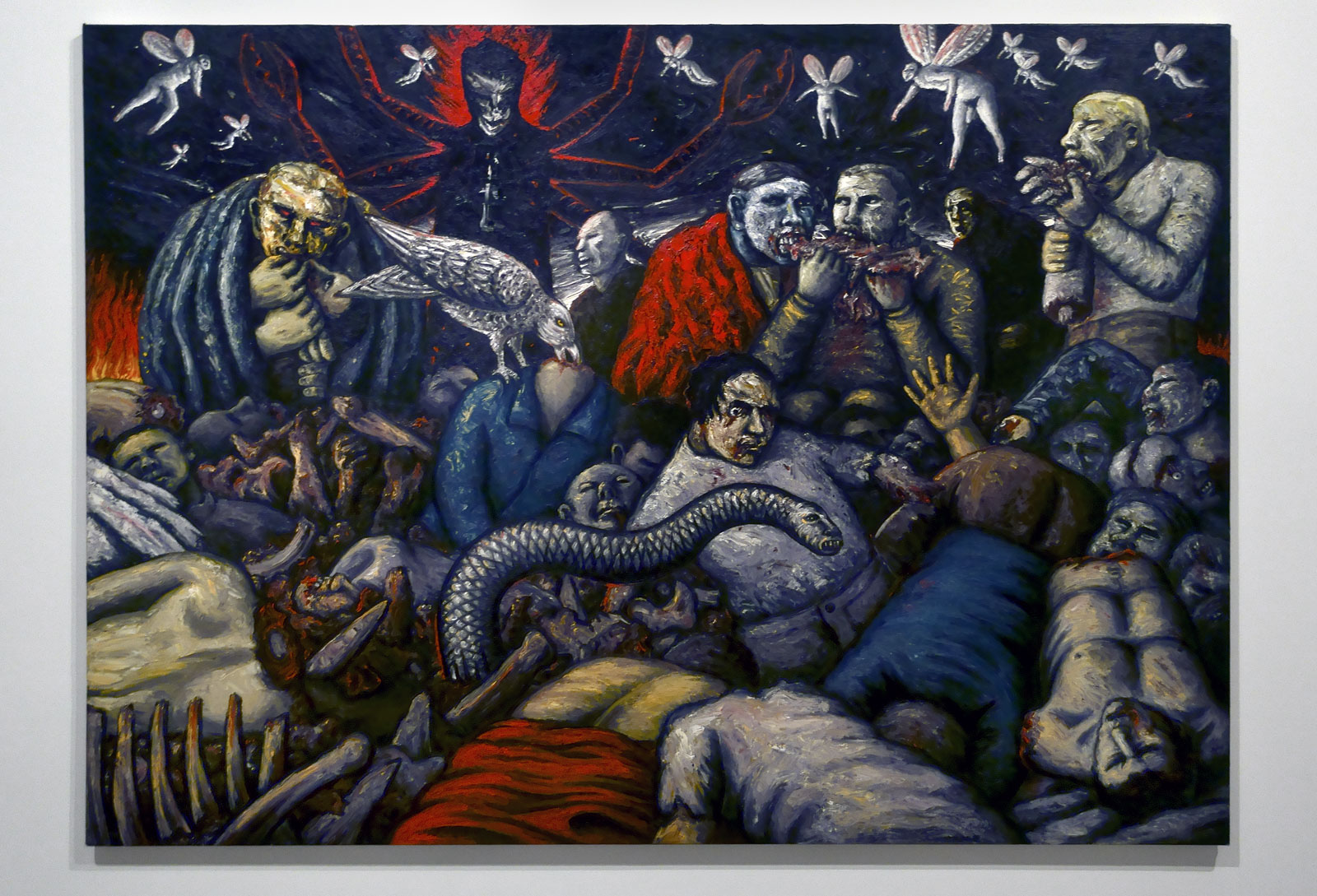
Peter Booth (Australian, b. 1940) 'Painting 1982' 1982 (installation view)


Peter Booth (Australian, b. 1940)
Painting 1982 (installation view)
1982
Oil on canvas
Art Gallery of South Australia, Adelaide
A.M. Ragless Bequest Fund
© Peter Booth
Photo: Marcus Bunyan


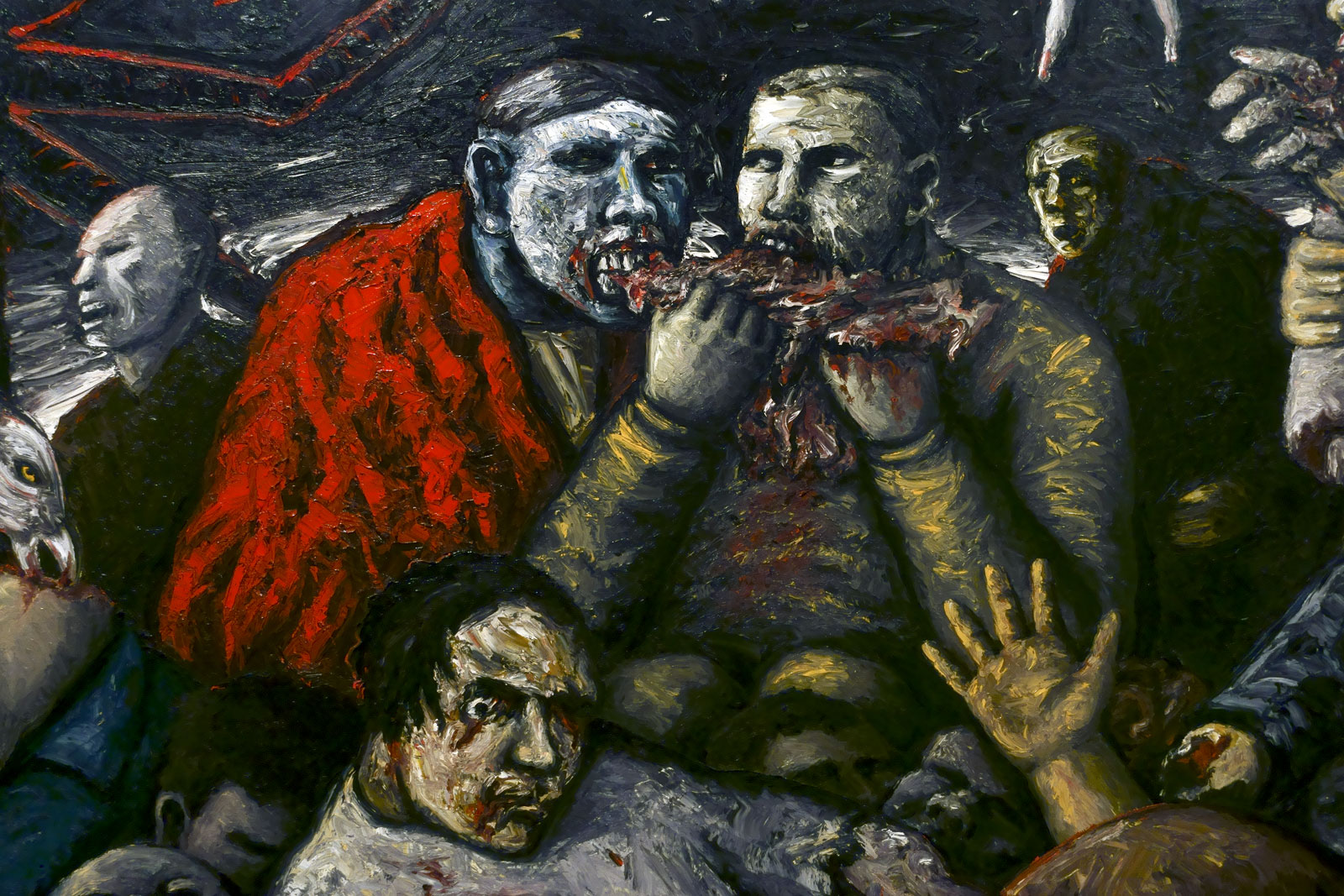
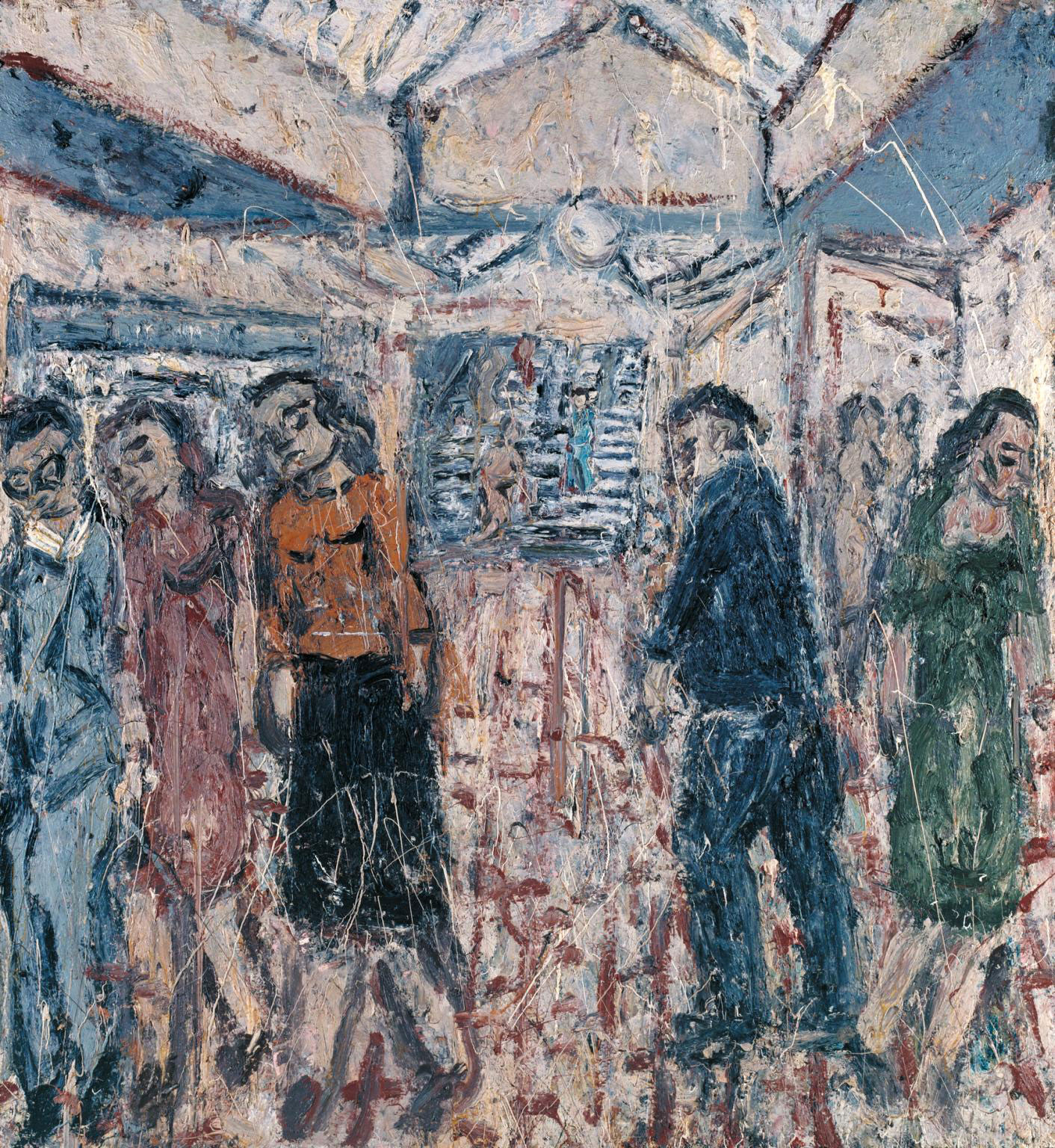
Another scene of demonic possession enacted under the spell of a fiendish presence, Painting 1982, confronts the viewer with a deeply disturbing vision of human cannibalism. With its visceral imagery of mutilation and dismemberment, parallels have been drawn to the atrocities depicted in Goya’s series of etchings The Disasters of War1810-1815, while the highly theatrical quality of the painting suggests a more recent connection to George A. Romero’s cult zombie film Night of the Living Dead, 1968. When the work was first exhibited critics responded to what the painting conveyed about the current state of western mass culture, finding in its brutal imagery a powerful metaphor for greed and material consumption. Whichever way one choses to interpret this work, one thing remains clear, whenever a large group of men get together in Booth’s painting, there is always the potential for danger.

Wall text from the exhibition


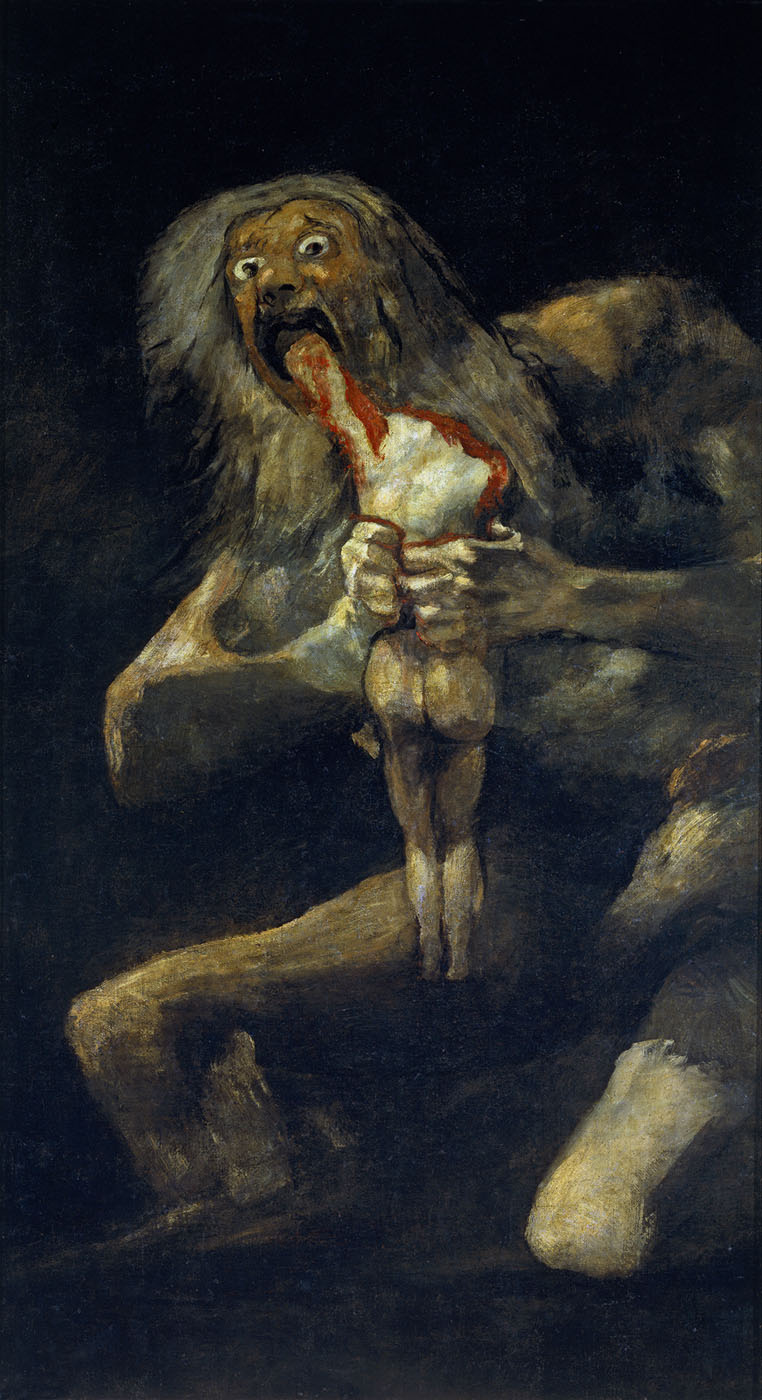
Francisco Goya (Spanish, 1746-1828) 'Saturn Devouring His Son' c. 1819-1823


Francisco Goya (Spanish, 1746-1828)
Saturn Devouring His Son
c. 1819-1823
Mixed media mural transferred to canvas
143.5 cm × 81.4cm (56.5 in × 32.0 in)
Museo del Prado, Madrid


Saturn Devouring His Son is a painting by Spanish artist Francisco Goya. It is traditionally interpreted as a depiction of the Greek myth of the Titan Cronus (known as Saturn in Roman mythology) eating one of his offspring. Fearing a prophecy foretold by Gaea that predicted he would be overthrown by one of his children, Saturn ate each one upon their birth. The work is one of the 14 so-called Black Paintings that Goya painted directly on the walls of his house sometime between 1819 and 1823. It was transferred to canvas after Goya’s death and is now in the Museo del Prado in Madrid. …

Various interpretations of the meaning of the picture have been offered: the conflict between youth and old age, time as the devourer of all things, the wrath of God and an allegory of the situation in Spain, where the fatherland consumed its own children in wars and revolution. There have been explanations rooted in Goya’s relationships with his own son, Xavier, the only of his six children to survive to adulthood, or with his live-in housekeeper and possible mistress, Leocadia Weiss; the sex of the body being consumed cannot be determined with certainty. If Goya made any notes on the picture, they have not survived, as he never intended the picture for public exhibition.

Text from the Wikipedia website


Peter Booth (Australian, b. 1940) 'Painting 1982' 1982 (installation view detail)


Peter Booth (Australian, b. 1940)
Painting 1982 (installation view detail)
1982
Oil on canvas
Art Gallery of South Australia, Adelaide
A.M. Ragless Bequest Fund
© Peter Booth
Photo: Marcus Bunyan


Peter Booth (Australian, b. 1940) 'Painting' 1981 (installation view)


Peter Booth (Australian, b. 1940)
Painting (installation view)
1981
Oil on canvas
Private collection
© Peter Booth
Photo: Marcus Bunyan


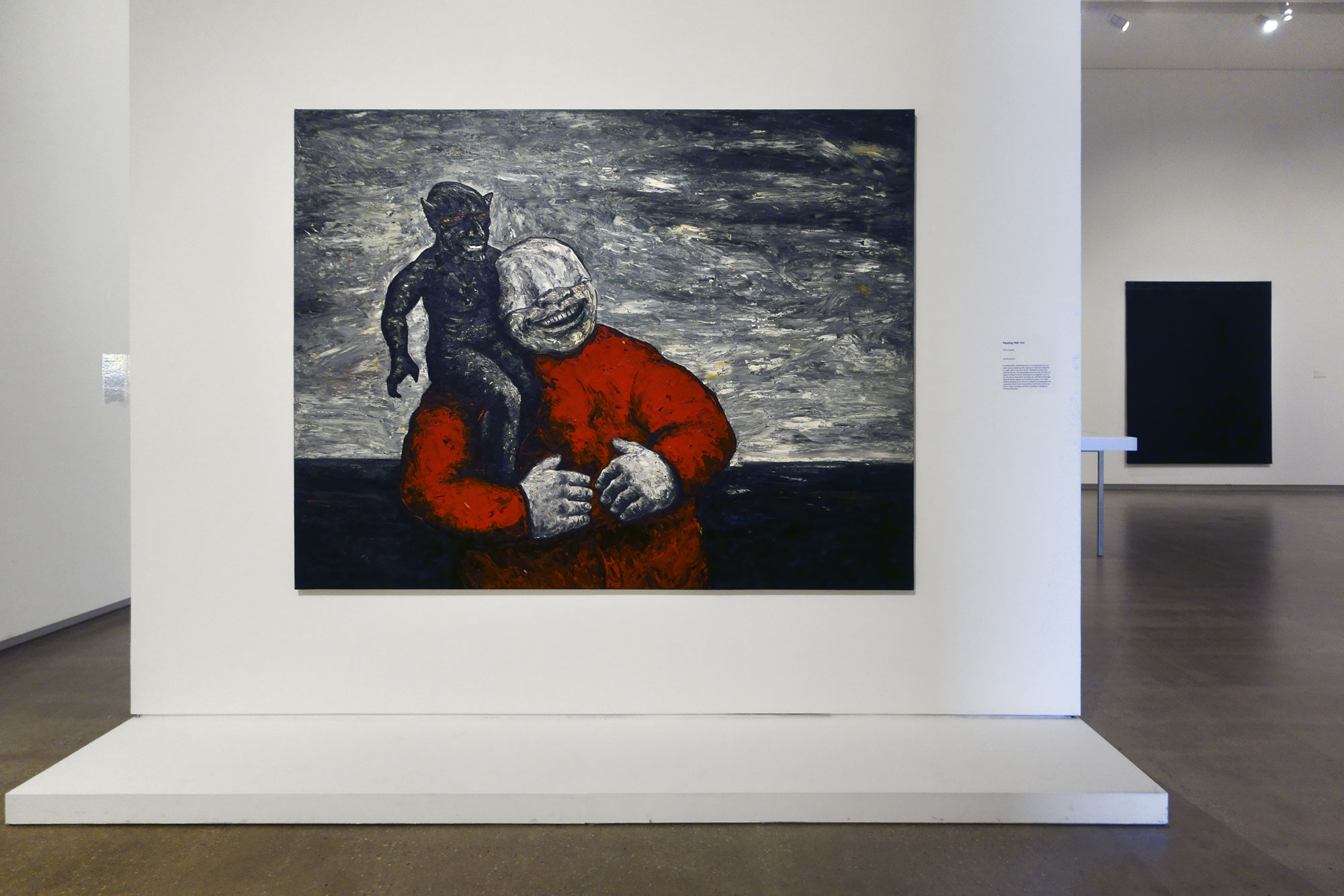
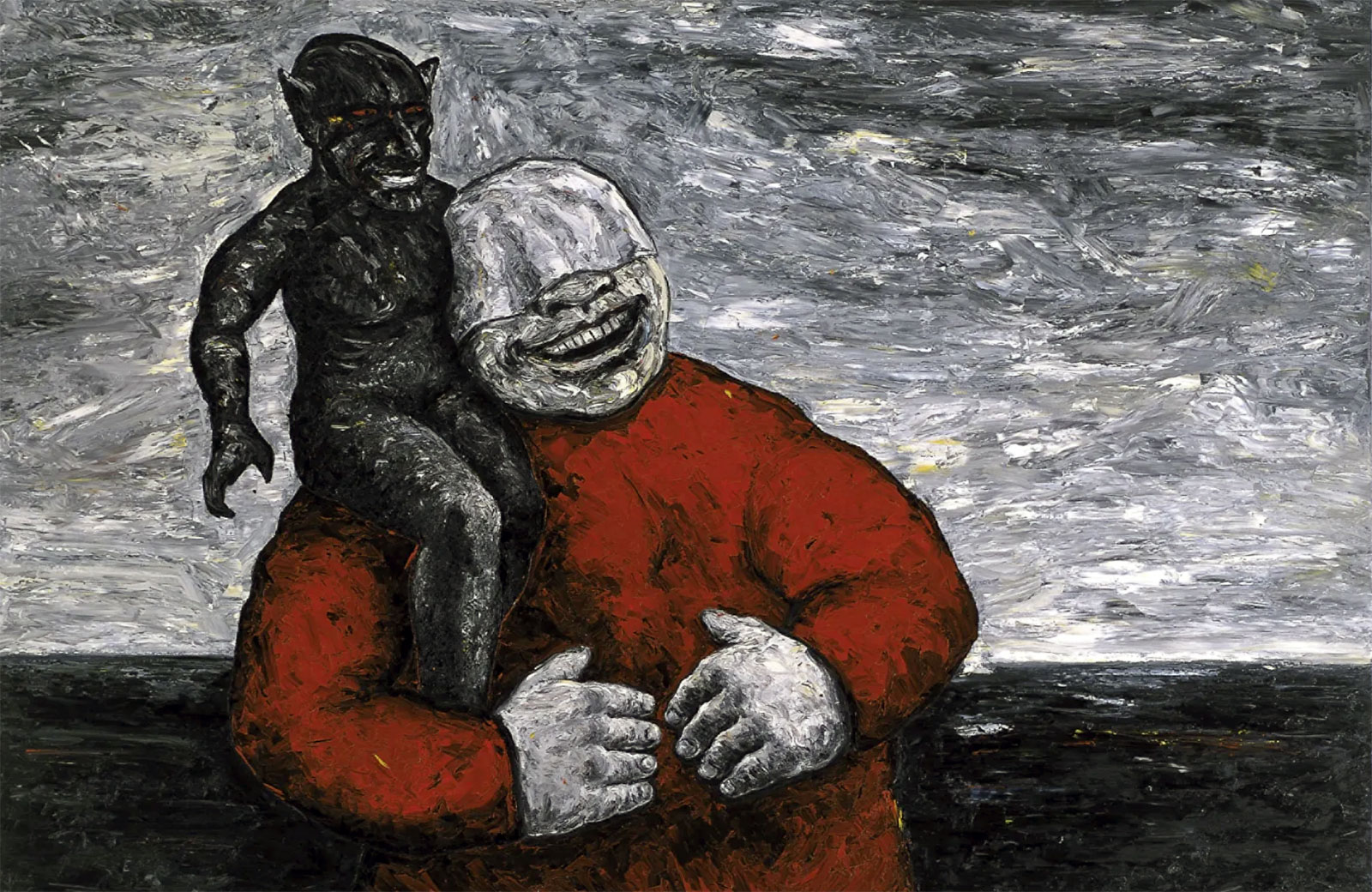
In Painting 1981 a blindfolded boor is accompanied by a red-eyed, pointy-eared imp who appears to have just whispered a cosmic joke or secret in his ear. Situated in a bleak and desolate terrain, this disquieting scenario recalls the German legend of Faust in which, following the protagonist’s pact to sell his soul to the Devil in exchange for unlimited knowledge, Mephistopheles appears as his demonic guide. In this light, Booth’s painting can be seen as a powerful reimagining of this cautionary tale of how blind ambition and human hubris can lead to inner corruption and the unleashing of dangerous, irrational impulses.

Wall text from the exhibition


Peter Booth (Australian, b. 1940) 'Painting' 1981 (detail)


Peter Booth (Australian, b. 1940)
Painting (detail)
1981
Oil on canvas
Private collection
© Peter Booth


A survey exhibition of the work of major Australian artist Peter Booth will be held at TarraWarra Museum of Art, 26 November 2022 – 13 March 2023.

With a remarkable career spanning several decades, Melbourne-based Booth is a unique voice in Australian painting and is considered by many to be one of the most significant contemporary artists working in Australia today.

This new survey of paintings and works on paper will be the first major public gallery exhibition of Peter Booth’s work since the NGV retrospective in 2003 and will feature a number of the artist’s most significant works from the 1970s to 1990s, alongside important recent works from the past two decades.

Curated by TarraWarra’s Anthony Fitzpatrick, the exhibition will be presented thematically, honing in on and highlighting particular motifs, subjects and moods which have become hallmarks of Booth’s expansive oeuvre: stillness and turbulence; alterity and alienation; mutation and hybridity; the absurd and the grotesque; the road and the ruin; and the despoilation and the resilience of nature.

“This exhibition will reveal Booth’s extraordinary capacity to transmute his intensely personal perceptions of the mysteries and forces of nature, and the folly and hubris of human endeavours, into exceptional and deeply-compelling paintings and drawings,” Mr Fitzpatrick said.

A small group of abstract paintings from the mid-1970s at the start of the exhibition provide a prelude to an important series of gestural paintings which mark the beginning of the artist’s journey into a neo-expressionist figurative style.

The exhibition progresses through Booth’s vivid imaginings of an apocalyptic world characterised by grotesque, unsettling, and at times absurd scenes of human and hybrid figures in varying states of apprehension, aggression and conflict.

These works will be accompanied by a small selection of prints by William Blake, James Ensor, Francisco Goya, and Samuel Palmer, visionary artists who have been important touchstones for Booth and with whom he shares a number of affinities.

This survey will also bring together important works from the past three decades to convey humanity’s often fraught and ambiguous relationship to the natural world.

“Initially Booth’s highly visceral paintings of fiery, turbulent environments were the stage for confronting and, at times, violent human encounters. Since the 1990s, many of the scenes he has painted have become increasingly depopulated, implicating the viewer who is called to contemplate and navigate their own subjective relationship to these vivid landscapes.

“Most recently, the artist has returned to the apocalyptic imagery that characterised his first forays into figuration, with large-scale paintings of desolate and devastated scenes of a world in a cataclysmic state of collapse. This is art for a time of ecological and existential crisis in which anthropogenic impacts have driven the planet, and its intricate web of ecosystems, to the brink of utter catastrophe,” Mr Fitzpatrick said.

Press release from the TarraWarra Museum of Art


Installation view of the exhibition 'Peter Booth' at TarraWarra Museum of Art showing at second right, 'Painting' 2022


Installation view of the exhibition Peter Booth at TarraWarra Museum of Art showing at second right, Painting 2022 (below)
Photo: Marcus Bunyan


Peter Booth (Australian, b. 1940) 'Painting' 2022 (installation view)


Peter Booth (Australian, b. 1940)
Painting (installation view)
2022
Oil on canvas
214.0 x 137.5cm
Courtesy the artist and Milani Gallery
© Peter Booth
Photo: Marcus Bunyan


Peter Booth (Australian, b. 1940) 'Painting' 2022 (installation view)


Peter Booth (Australian, b. 1940)
Painting (installation view)
2022
Oil on canvas
214.0 x 137.5cm
Courtesy the artist and Milani Gallery
© Peter Booth
Photo: Marcus Bunyan


Peter Booth (Australian, b. 1940) 'Painting' 2022


Peter Booth (Australian, b. 1940)
Painting
2022
Oil on canvas
214.0 x 137.5cm
Courtesy the artist and Milani Gallery
© Peter Booth


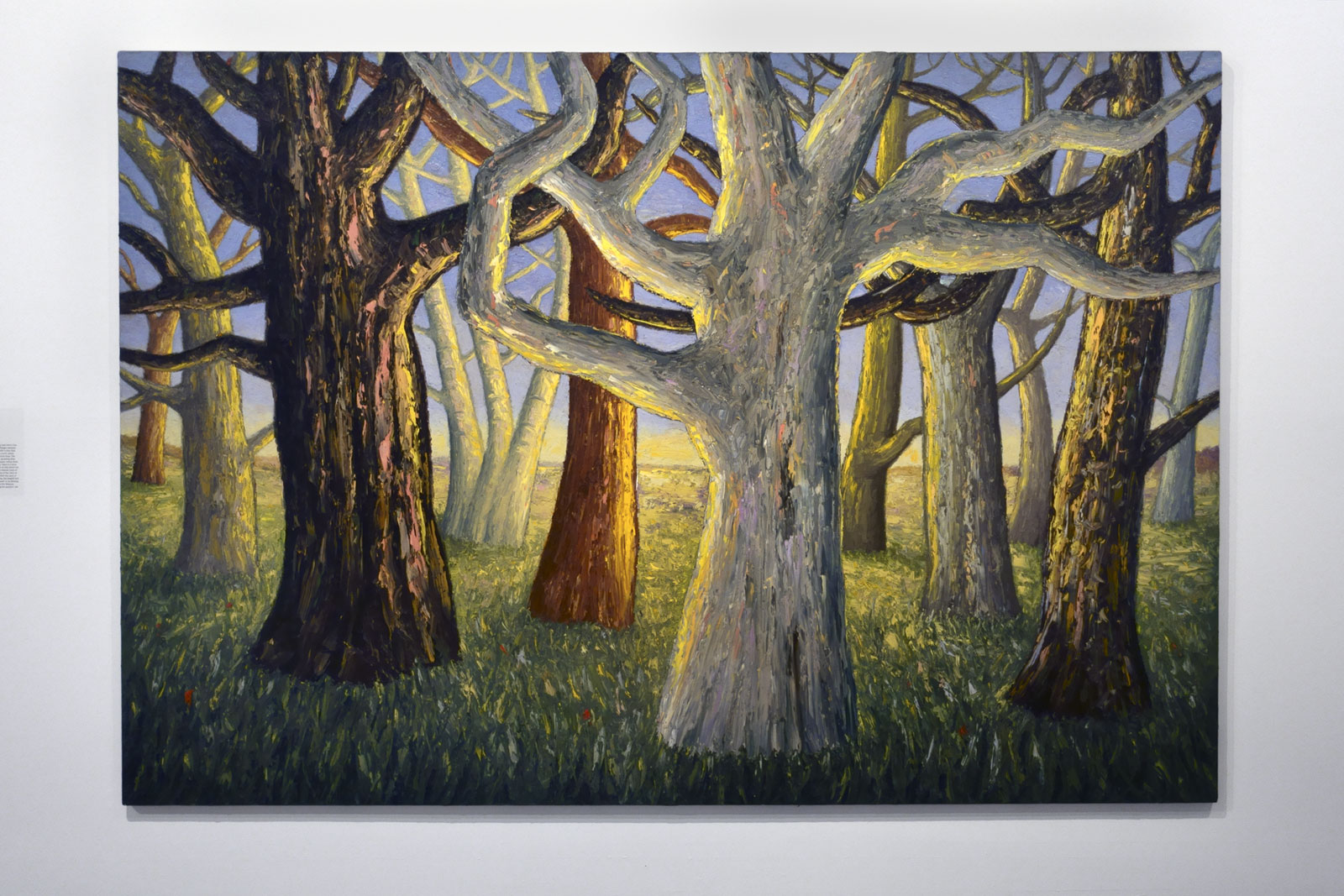
Peter Booth (Australian born England, b. 1940, Australia from 1958) 'Acheron Way' 1993 (installation view)


Peter Booth (Australian born England, b. 1940, Australia from 1958)
Acheron Way (installation view)
1993
Oil on canvas
208 x 304.8cm
Private collection
© Peter Booth
Photo: Marcus Bunyan


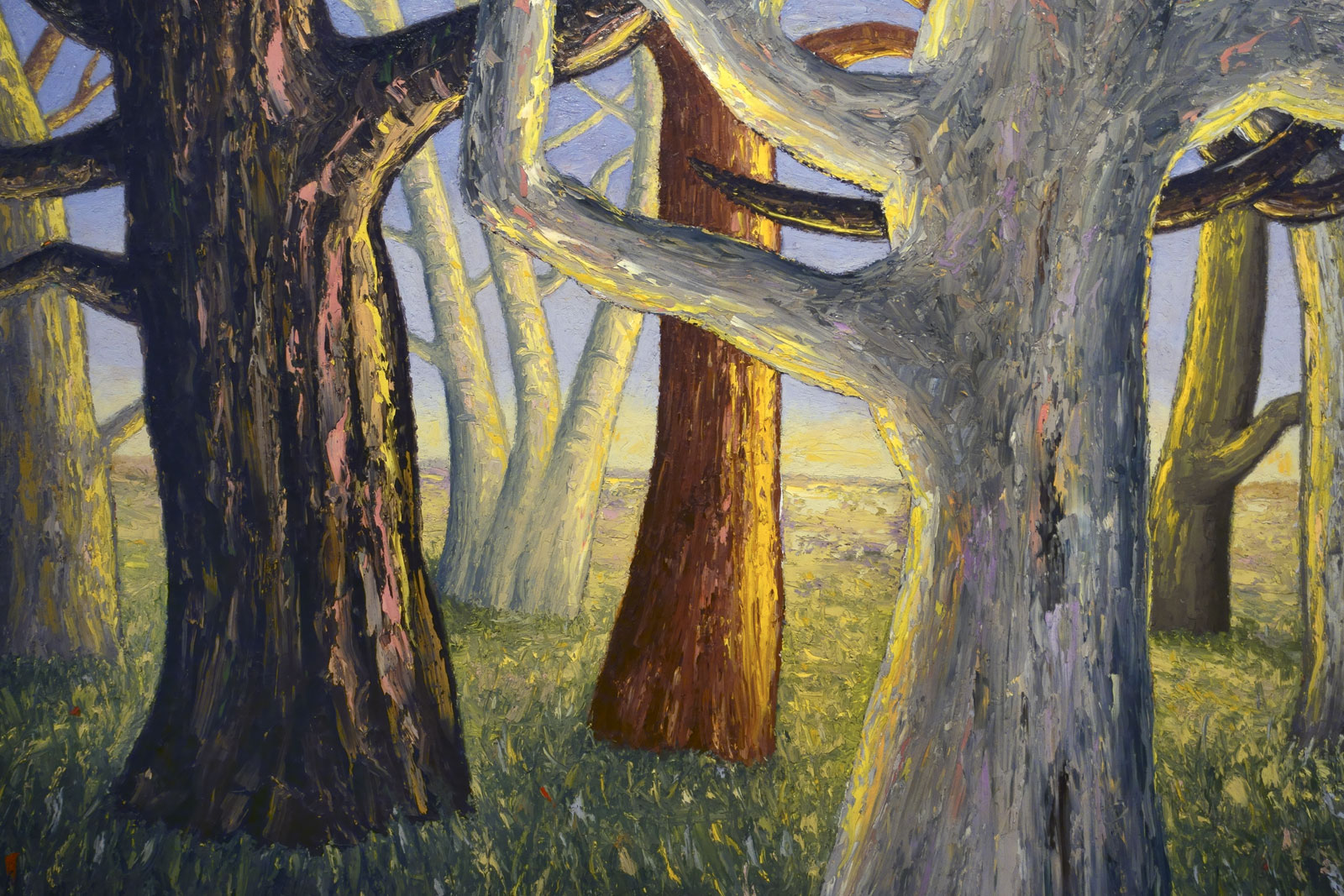
Peter Booth (Australian born England, b. 1940, Australia from 1958) 'Acheron Way' 1993 (installation view detail)


Peter Booth (Australian born England, b. 1940, Australia from 1958)
Acheron Way (installation view detail)
1993
Oil on canvas
208 x 304.8cm
Private collection
© Peter Booth
Photo: Marcus Bunyan


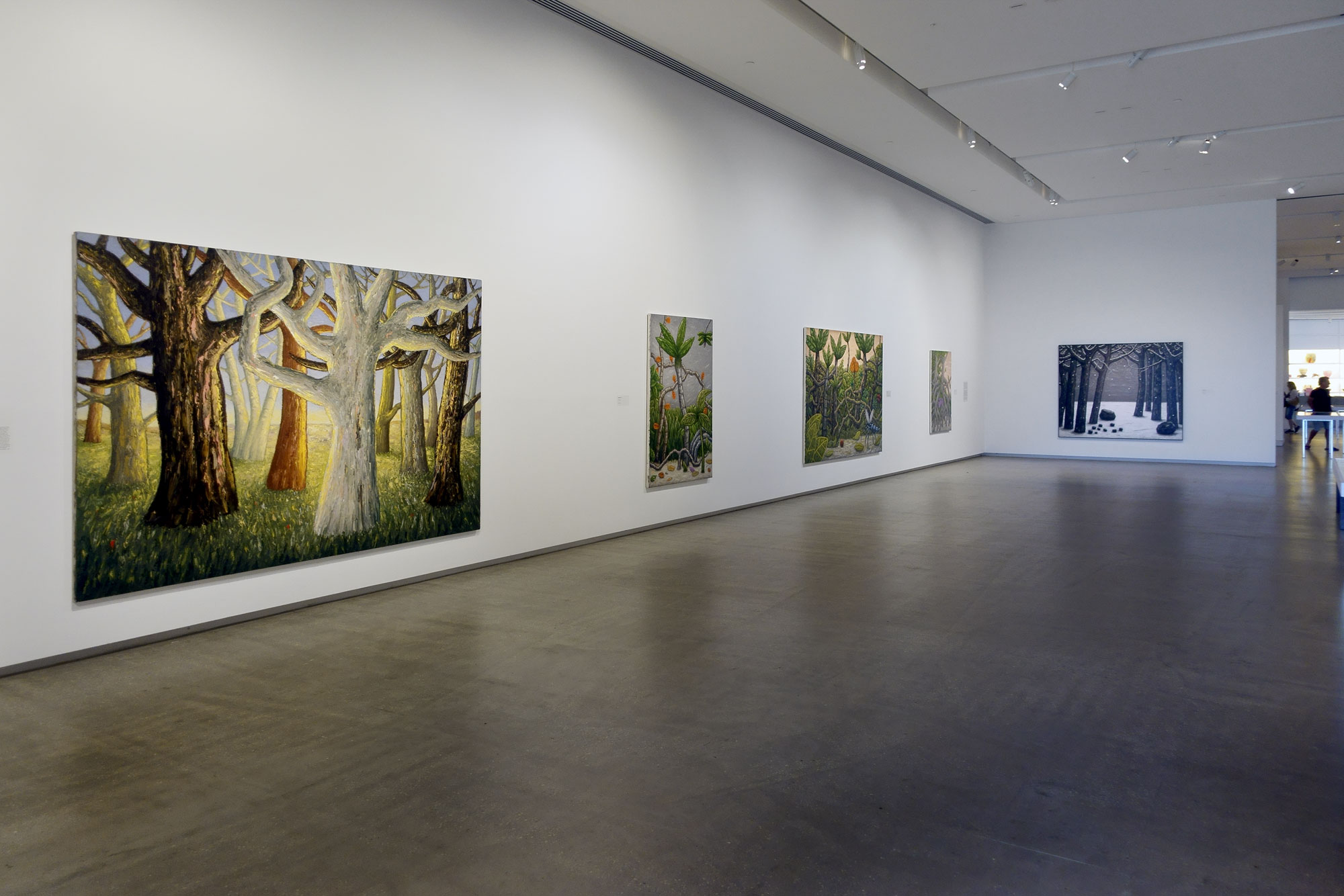
Acheron Way is named after a long snaking road which rises steeply through the rainforest of the Yarra Ranges between Narbethong and Warburton. Pictured beneath a clear blue sky, this scene of animated trees backlit by a soft, yellow light evokes a sense of energy, growth and even hope. The swaying trunks and tentacular forms of the sprawling limbs of the trees painted in thick swathes of impasto, imbue them with a powerful emotional charge. However, there is a more ambiguous aspect to this work alluded to in its title which not only refers to a real location, but also to an infernal realm of the imagination: Acheron (‘river of pain’) one of the rivers of the Underworld in Greek mythology over which the souls of the dead were ferried. From this perspective, the tangled and twisted forms of these sentinel-like trees seem to be denying us access to the light suffused landscape in the distance, forcing us to linger in their shadow, begging the question: are we in the realm of the living or the dead?

Wall text from the exhibition


Installation view of the exhibition 'Peter Booth' at TarraWarra Museum of Art showing at left 'Untitled' 1998, and at right 'Painting' 2017


Installation view of the exhibition Peter Booth at TarraWarra Museum of Art showing at left Untitled 1998 (below), and at right Painting 2017 (below)
Photo: Marcus Bunyan


Peter Booth (Australian born England, b. 1940, Australia from 1958) 'Untitled' 1998


Peter Booth (Australian born England, b. 1940, Australia from 1958)
Untitled
1998
Oil on canvas
Private collection
© Peter Booth
Photo: Marcus Bunyan


Peter Booth (Australian born England, b. 1940, Australia from 1958) 'Painting' 2017


Peter Booth (Australian born England, b. 1940, Australia from 1958)
Painting
2017
Oil on canvas
193.4 x 81.3cm
Courtesy of the artist and Milani Gallery, Brisbane


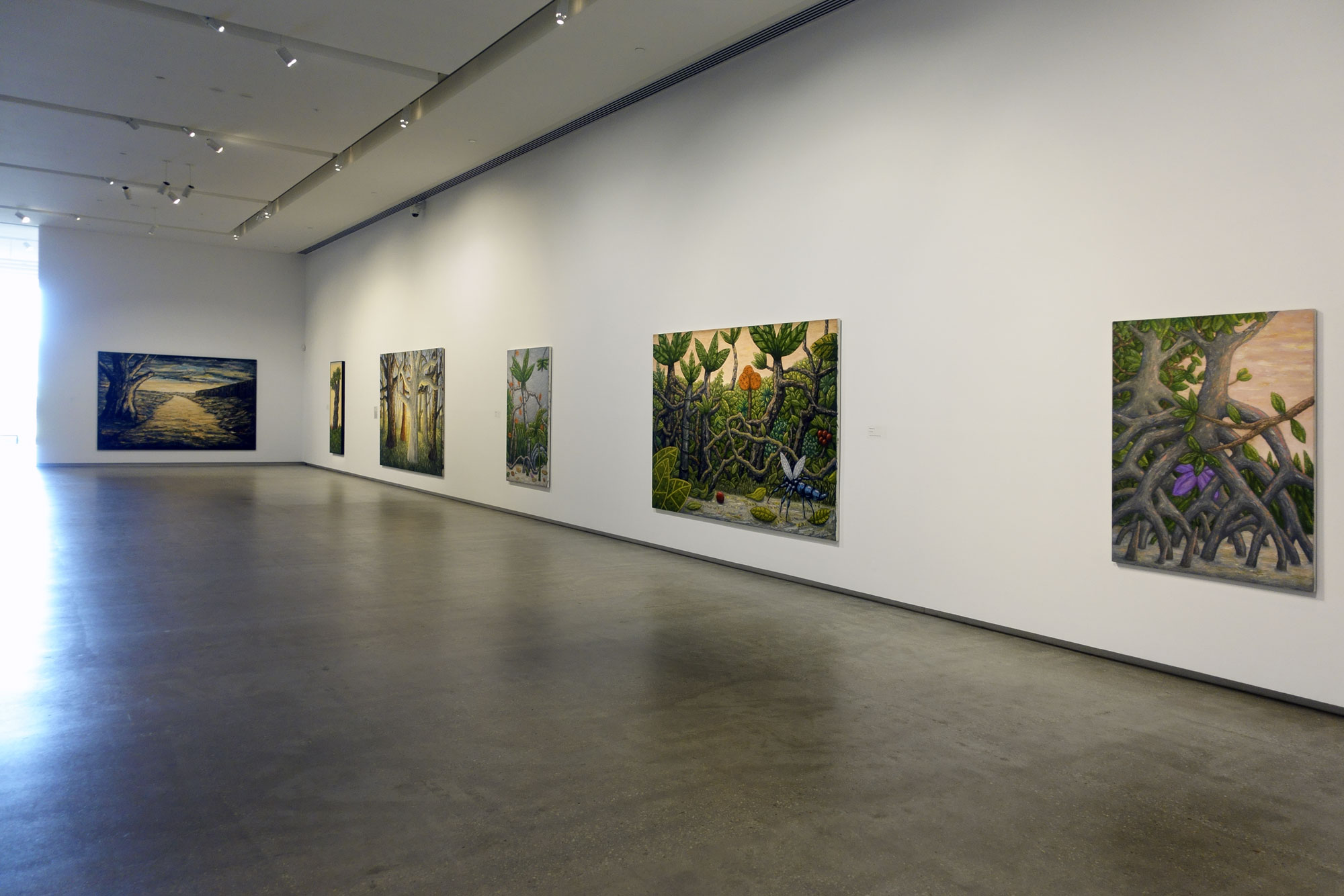
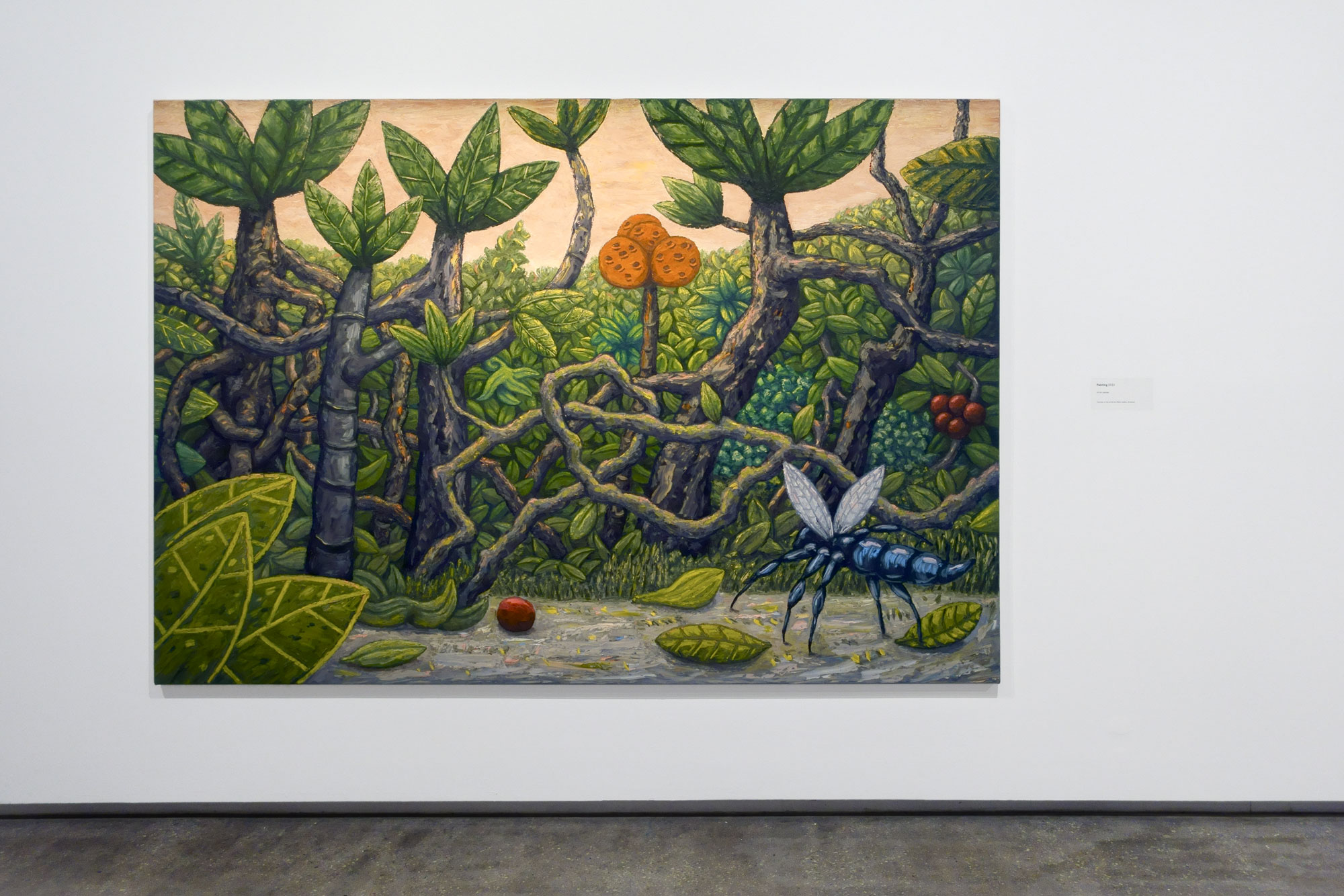
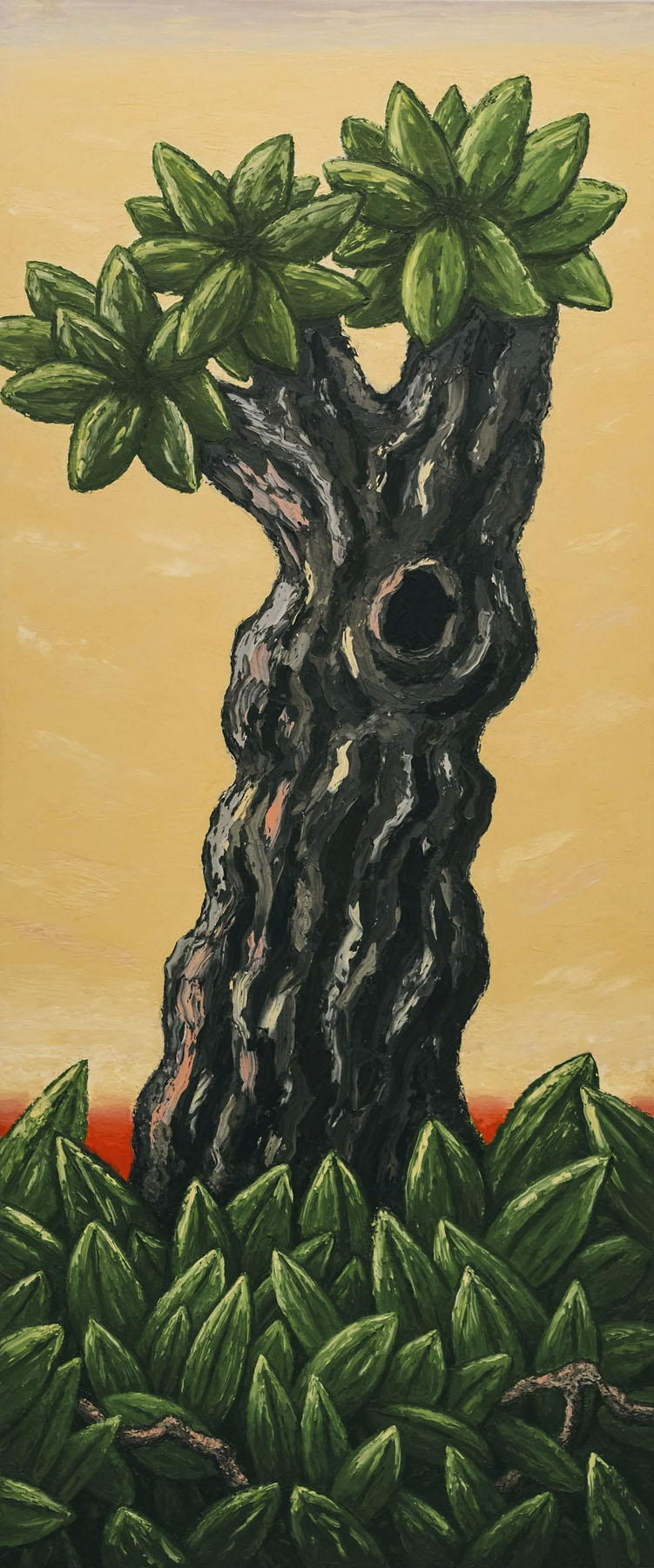
In Painting 2017, as the sun begins to rise over the horizon, new epicormic growth spouts from the pruned limbs of a tree; a potent symbol of resilience and renewal. Peter Booth’s ‘Garden of Eden’ paintings vividly convey his feeling for the elemental and generative qualities found in nature and his fervent empathy for other nonhuman lifeforms. ‘Everything is connected. All life comes from the same source.’

Text from the TarraWarra Museum of Art Facebook page


Installation view of the exhibition 'Peter Booth' at TarraWarra Museum of Art showing at left 'Acheron Way' 1993, at third right 'Painting' 2022, and at right 'Painting' 2014


Installation view of the exhibition Peter Booth at TarraWarra Museum of Art showing at left Acheron Way 1993, at third right Painting 2022, and at right Painting 2014 (below)
Photo: Marcus Bunyan


Peter Booth (Australian born England, b. 1940, Australia from 1958) 'Painting' 2014


Peter Booth (Australian born England, b. 1940, Australia from 1958)
Painting
2014
Oil on canvas
188 x 219cm
Private collection
© Peter Booth


Installation view of the exhibition 'Peter Booth' at TarraWarra Museum of Art showing at second left 'Winter' 1993, and at right 'Mount Donna Buang' 1991


Installation view of the exhibition Peter Booth at TarraWarra Museum of Art showing at second left Winter 1993 (below), and at right Mount Donna Buang 1991 (below)
Photo: Marcus Bunyan


Installation view of the exhibition 'Peter Booth' at TarraWarra Museum of Art showing at left 'Winter' 1993, and at right 'Mount Donna Buang' 1991


Installation view of the exhibition Peter Booth at TarraWarra Museum of Art showing at left Winter 1993 (below), and at right Mount Donna Buang 1991 (below)
Photo: Marcus Bunyan


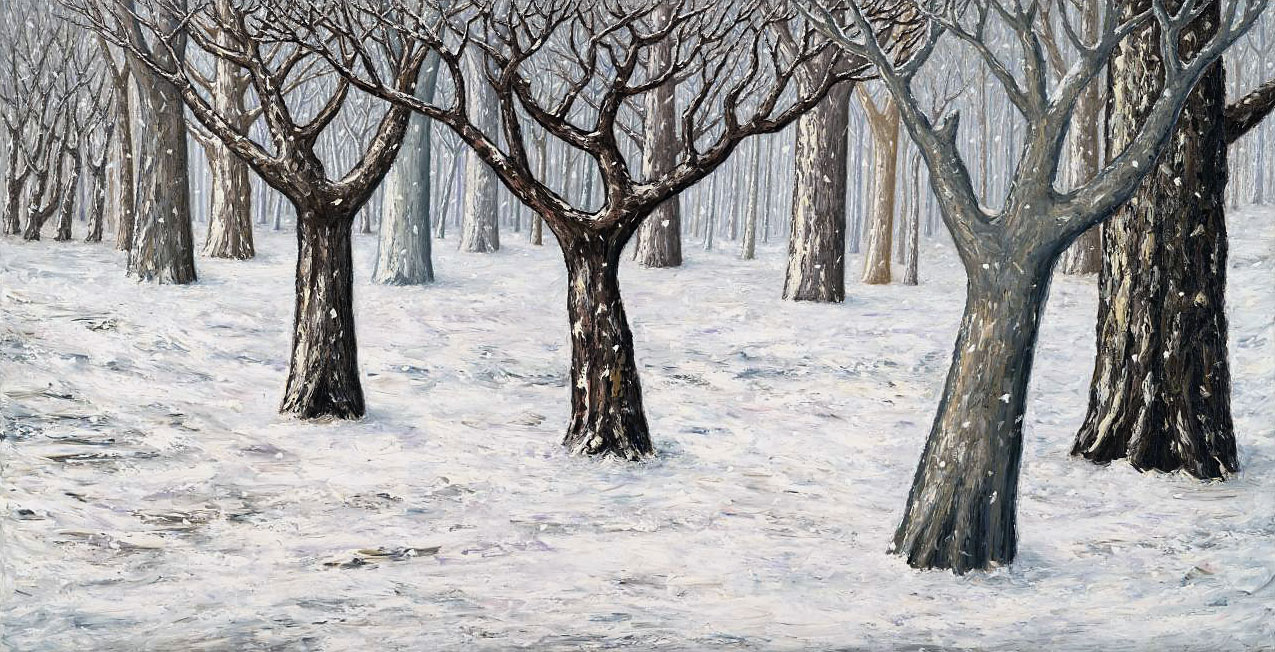
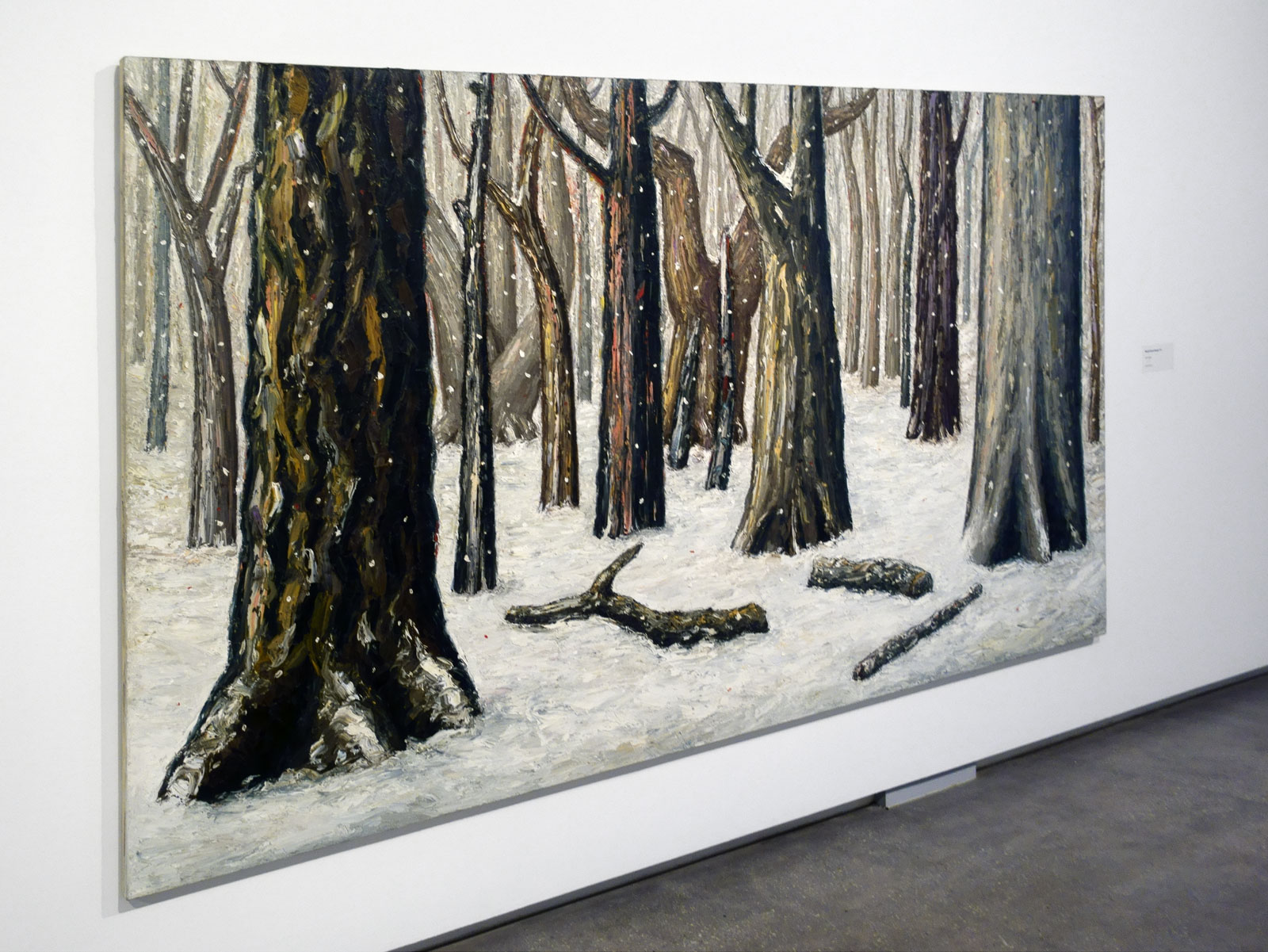
Peter Booth (Australian born England, b. 1940, Australia from 1958) 'Winter' 1993


Peter Booth (Australian born England, b. 1940, Australia from 1958)
Winter
1993
oil on canvas
203.4 × 396.5cm
National Gallery of Victoria, Melbourne
Presented by the National Gallery Women’s Association, 2002
© Peter Booth


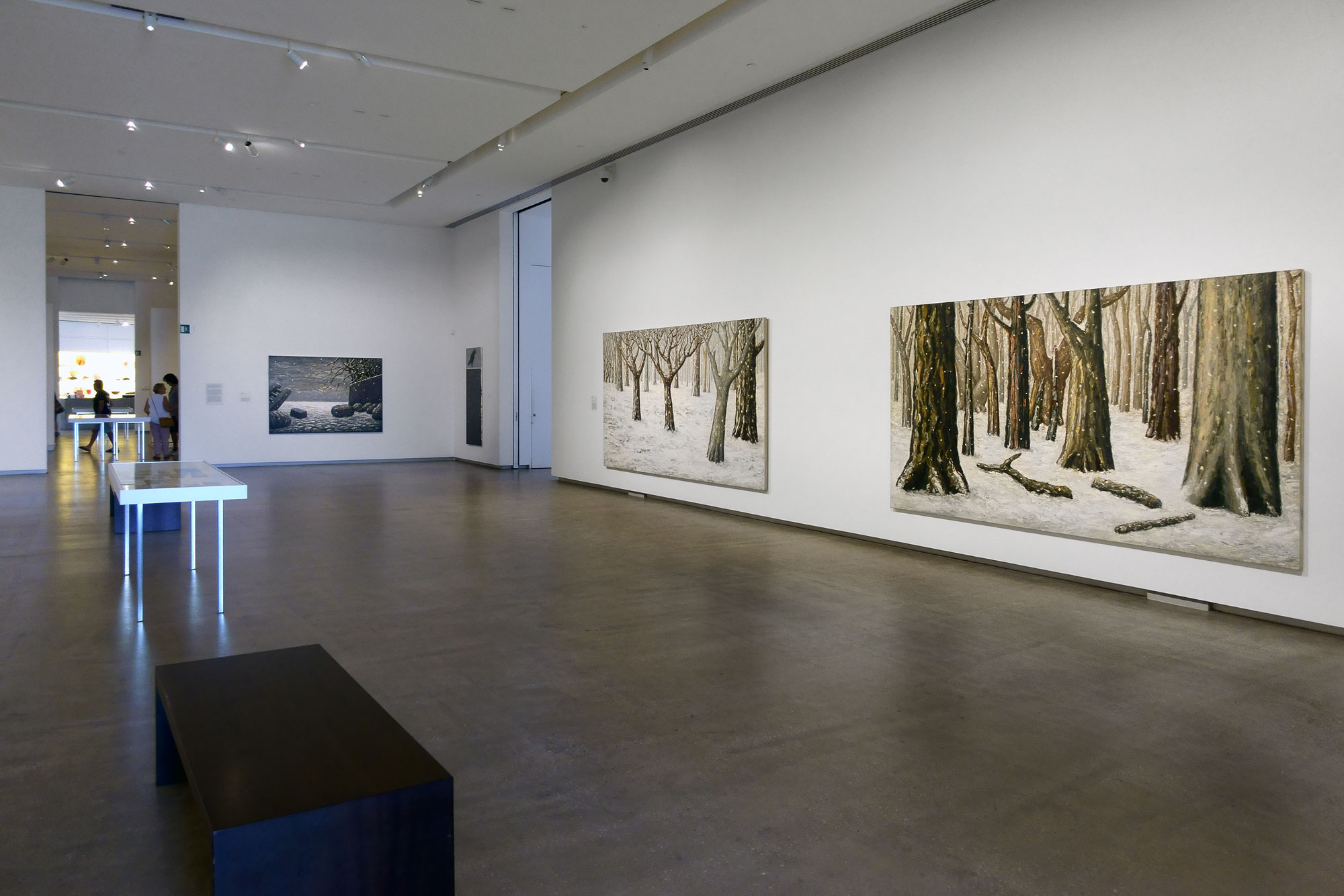
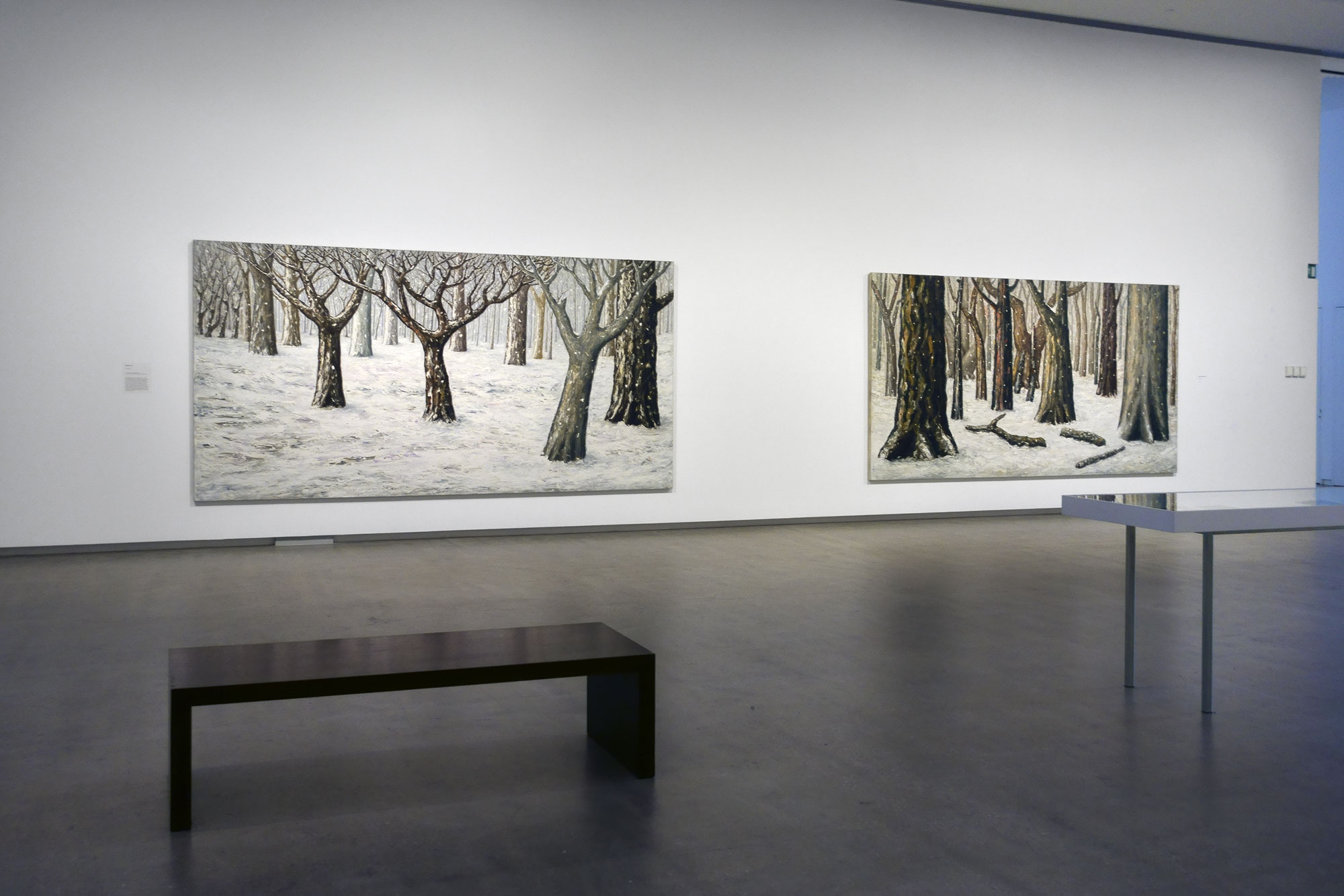
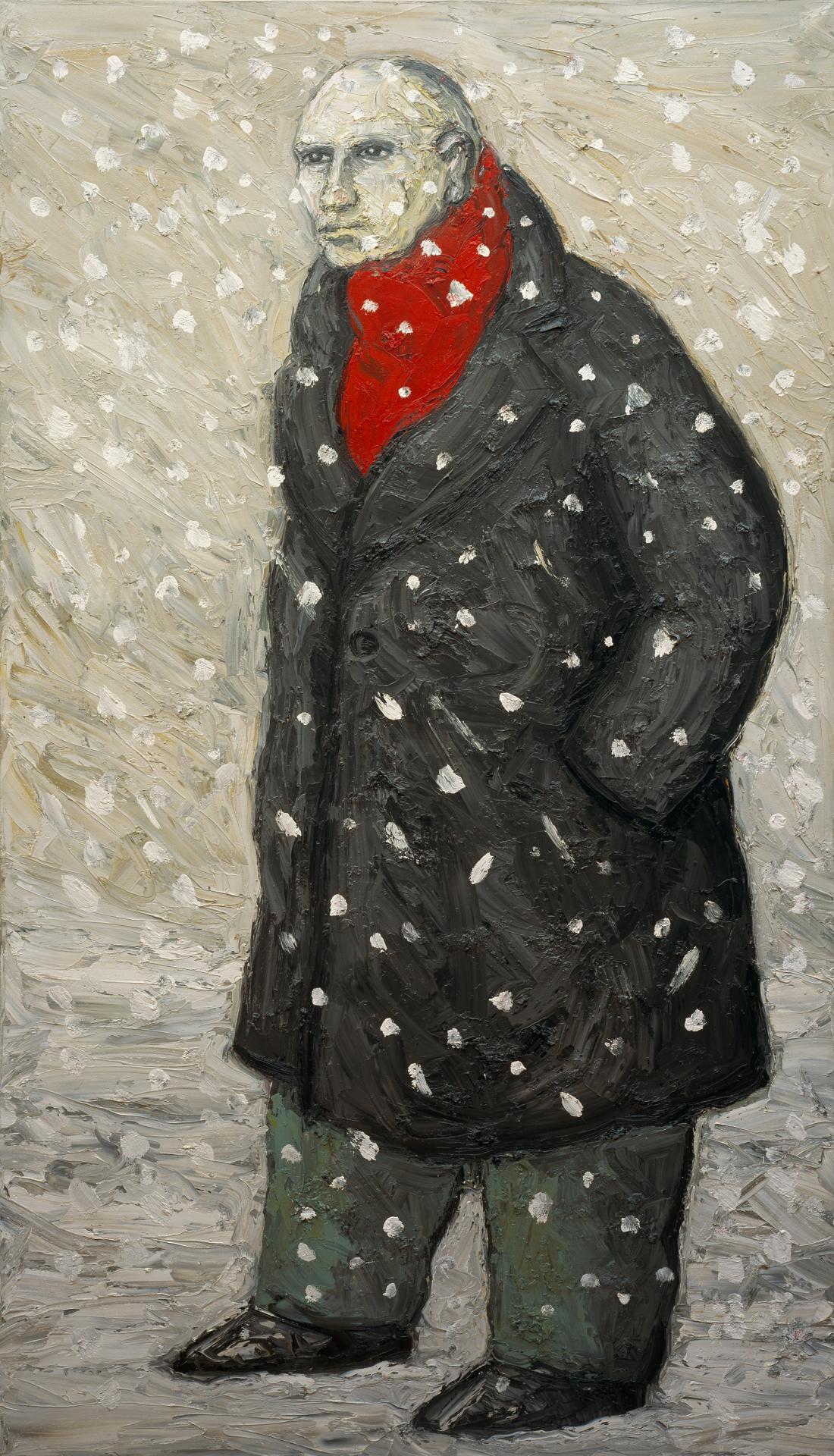
In discussing Winter when it was first exhibited in 1994, Booth revealed: it’s about my childhood, about taking walks with my brothers in the woods in Yorkshire. Triggered by a recent return to Sheffield, this memory is transformed into a richly textured landscape of open forest which has been stilled and silenced by a thick blanket of snow. As the artist later revealed, his younger twin brothers died in tragic circumstances adding particular poignancy to this painting and suggesting that the two very similar trees which occupy the centre of the work, could be seen as symbolic representations of his siblings. In this light, Winter becomes a powerful and deeply personal expression of remembrance and cathartic release.

Wall text from the exhibition


Peter Booth (Australian born England, b. 1940, Australia from 1958) 'Mount Donna Buang' 1991 (installation view)


Peter Booth (Australian born England, b. 1940, Australia from 1958)
Mount Donna Buang (installation view)
1991
Oil on canvas
Private collection
© Peter Booth
Photo: Marcus Bunyan


Installation view of the exhibition 'Peter Booth' at TarraWarra Museum of Art showing at left 'Painting' 2018, and at right 'Untitled' 1995


Installation view of the exhibition Peter Booth at TarraWarra Museum of Art showing at left Painting 2018 (below), and at right Untitled 1995 (below)
Photo: Marcus Bunyan


Peter Booth (Australian, b. 1940) 'Painting' 2018


Peter Booth (Australian, b. 1940)
Painting
2018
Oil on canvas
152.5 x 243.8cm
Courtesy of the artist and Milani Gallery, Brisbane
© Peter Booth


Peter Booth (Australian, b. 1940) 'Untitled' 1995


Peter Booth (Australian, b. 1940)
Untitled
1995
Oil on canvas
167.5 x 305cm
The University of Melbourne Art Collection, Michael Buxton Collection
© Peter Booth


Peter Booth (Australian, b. 1940) 'Painting' 2020 (installation view)


Peter Booth (Australian born England, b. 1940, Australia from 1958)
Painting (installation view)
2020
Oil on canvas
Courtesy of the artist and Milani Gallery, Brisbane
© Peter Booth
Photo: Marcus Bunyan


Installation view of the exhibition 'Peter Booth' at TarraWarra Museum of Art showing at left 'Painting (Figure with bandaged head)' 2004, and at right 'Painting' 1998


Installation view of the exhibition Peter Booth at TarraWarra Museum of Art showing at left Painting (Figure with bandaged head) 2004 (below), and at right Painting 1998 (below)
Photo: Marcus Bunyan


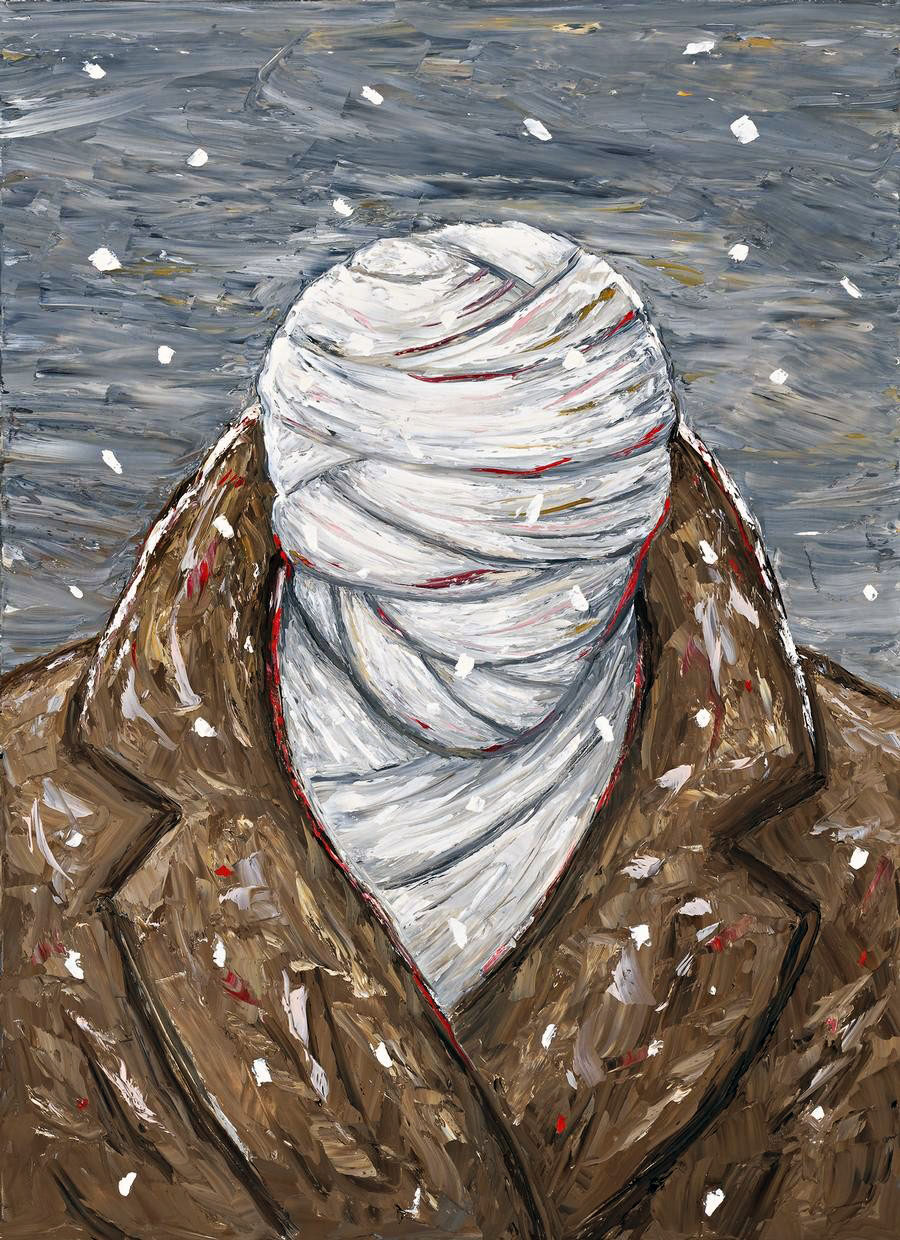
Peter Booth (Australian born England, b. 1940, Australia from 1958) 'Painting (Figure with bandaged head)' 2004


Peter Booth (Australian born England, b. 1940, Australia from 1958)
Painting (Figure with bandaged head)
2004
Oil on canvas
© Peter Booth


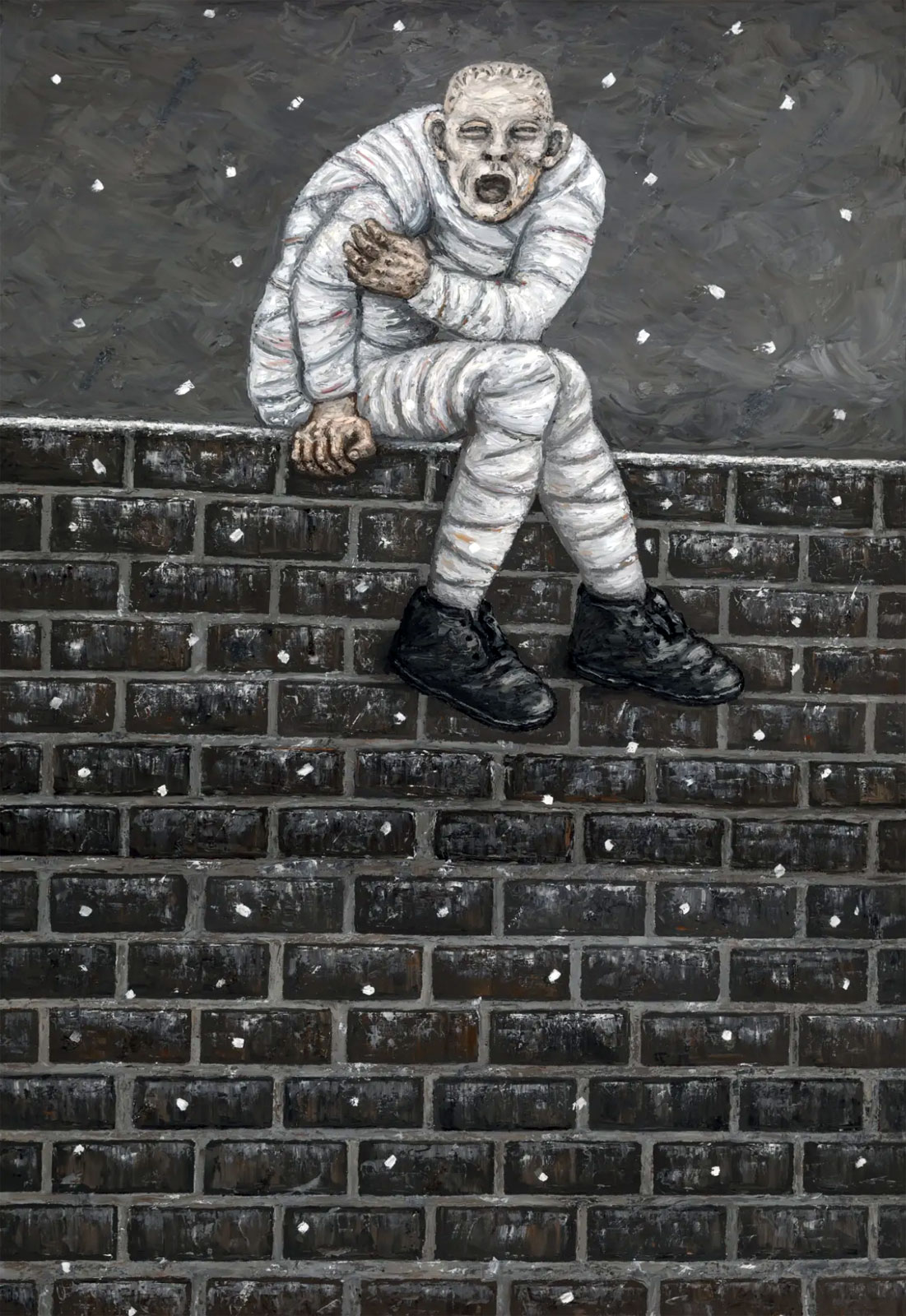
The strength and power of Painting (Man with Bandaged Head), 2004 … is palpable. But like so many of Booth’s images, formulated over years of development, the strength lies not so much in the initial ‘shock’, but with the ensuing waves of other possible readings it evokes…

The tension between our first confrontation with the bandaged figure and the subsequent sensations of pathos for, even some recognition of sensitivity within, the character makes this such a successful work. And as we look upon the painting, venturing into the space behind the bandages, the focus of the work internalises: in reading the mind of the figure we are offered a portal to see within ourselves.

This notion of the mirror to one’s soul, with themes of the nature of power and frailty, desire and control, so deftly captured within Painting (Man with Bandaged Head), 2004 adds a further dimension to the history of this particular painting.

Damian Hackett. “Important Australian + International Fine Art catalogue text,” on the Deutsche and Hackett website 25 November 2009 [Online] Cited 02/02/2023


Peter Booth (Australian, b. 1940) 'Painting' 1998 (installation view)


Peter Booth (Australian, b. 1940)
Painting (installation view)
1998
Oil on canvas
Private collection
Courtesy of Smith & Singer Fine Art
© Peter Booth
Photo: Marcus Bunyan


Peter Booth (Australian, b. 1940) 'Painting' 1998 (installation view detail)


Peter Booth (Australian, b. 1940)
Painting (installation view detail)
1998
Oil on canvas
Private collection
Courtesy of Smith & Singer Fine Art
© Peter Booth
Photo: Marcus Bunyan


Peter Booth (Australian, b. 1940) 'Painting' 2022


Peter Booth (Australian, b. 1940)
Painting
2022
Oil on canvas
Courtesy of the artist and Milani Gallery, Brisbane
© Peter Booth


Peter Booth (Australian, b. 1940) 'Painting' 1989


Peter Booth (Australian, b. 1940)
Painting
1989
Oil on canvas
167.4 x 95.9cm
Collection of Jeff Hall and Sharon Grey
© Peter Booth


Wall text from the exhibition 'Peter Booth' at TarraWarra Museum of Art


Wall text from the exhibition


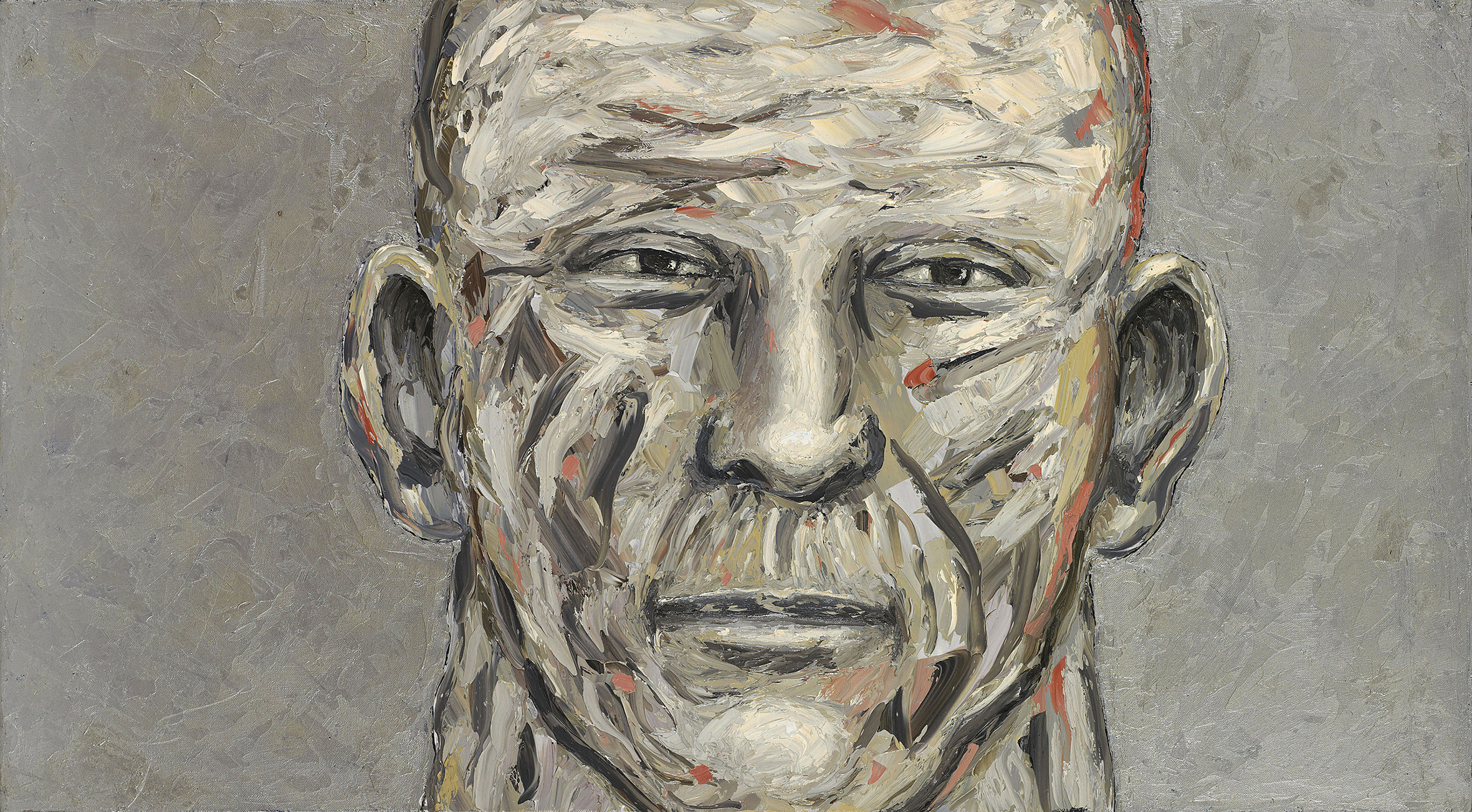
Peter Booth (Australian, b. 1940) 'Untitled' 2007


Peter Booth (Australian, b. 1940)
Untitled
2007
Oil on canvas
56.5 x 111cm
Private collection
Image courtesy of Bonhams Australia
© Peter Booth


The figure in Untitled, 2007 has averted eyes and stoically sealed lips, suggesting that he has endured great hardship. This feeling is amplified by the rich tonal contrasts and paint texture built with swathes of impasto which transform his wizened face into a blustery landscape. Having taken the troubles and turmoil of the world into himself, this austere figure is imbued with a powerful sense of inner fortitude and resilience.

Text from the TarraWarra Museum of Art Facebook page


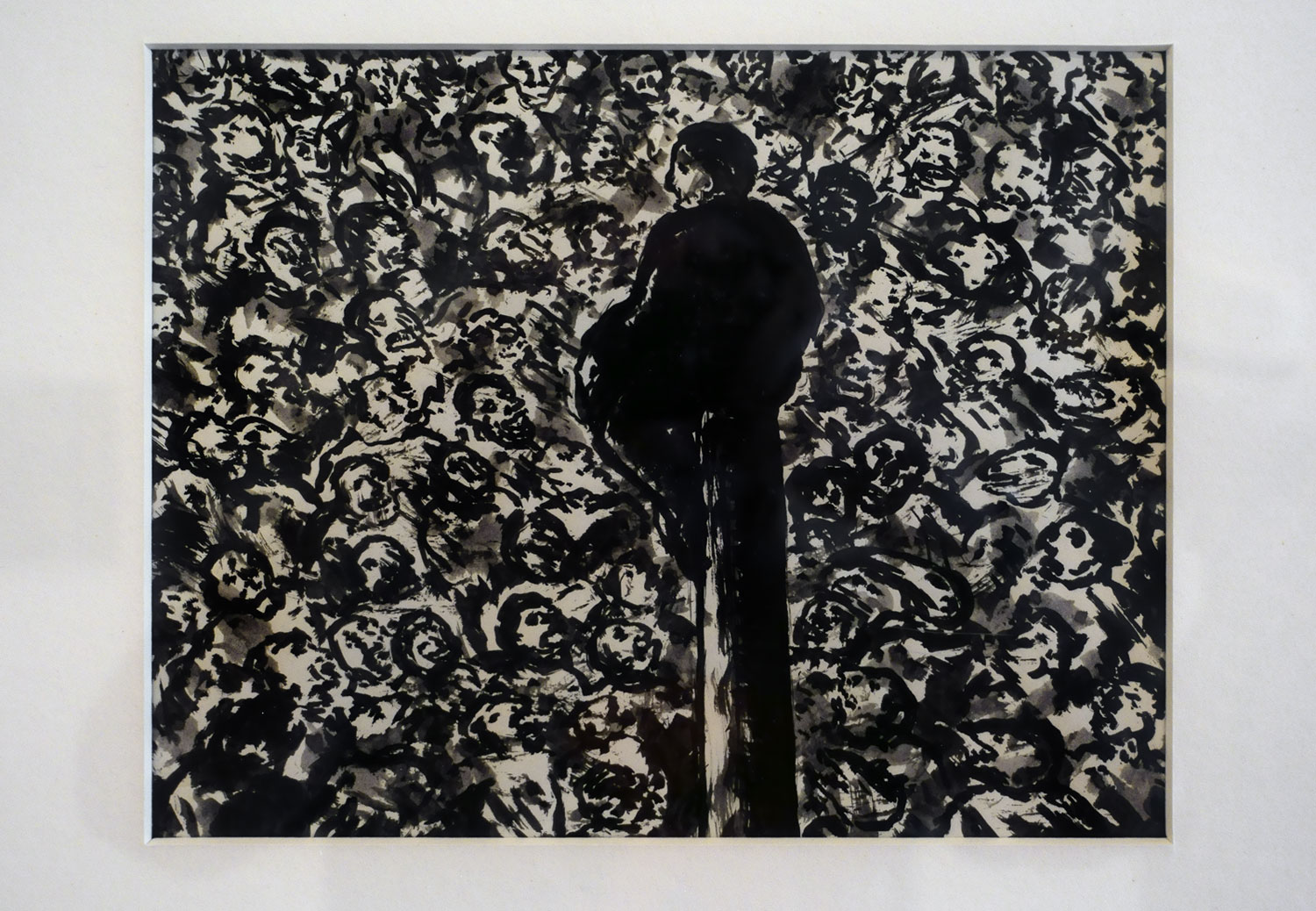
Peter Booth (Australian, b. 1940) 'Drawing (Pole Sitter Before a Crowd)' 1981 (installation view)


Peter Booth (Australian, b. 1940)
Drawing (Pole Sitter Before a Crowd) (installation view)
1981
Brush and ink and ink wash on paper
Private Collection
© Peter Booth
Photo: Marcus Bunyan


TarraWarra Museum of Art
Wurundjeri Country
313 Healesville-Yarra Glen Road
Healesville VIC 3777 Australia
Phone: +61 3 5957 3100

Opening hours:
Tues – Sun 11am – 5pm
Open all public holidays except Christmas Day

TarraWarra Museum of Art website

LIKE ART BLART ON FACEBOOK

Back to top

European research tour exhibition: ‘William Blake’ at Tate Britain, London Part 2

Exhibition dates: 11th September, 2019 – 2nd February, 2020
Visited October 2019 posted February 2020

Curators: Martin Myrone, Senior Curator, pre-1800 British Art, and Amy Concannon, Curator, British Art 1790-1850


Room 3 continued…

Patronage and independence


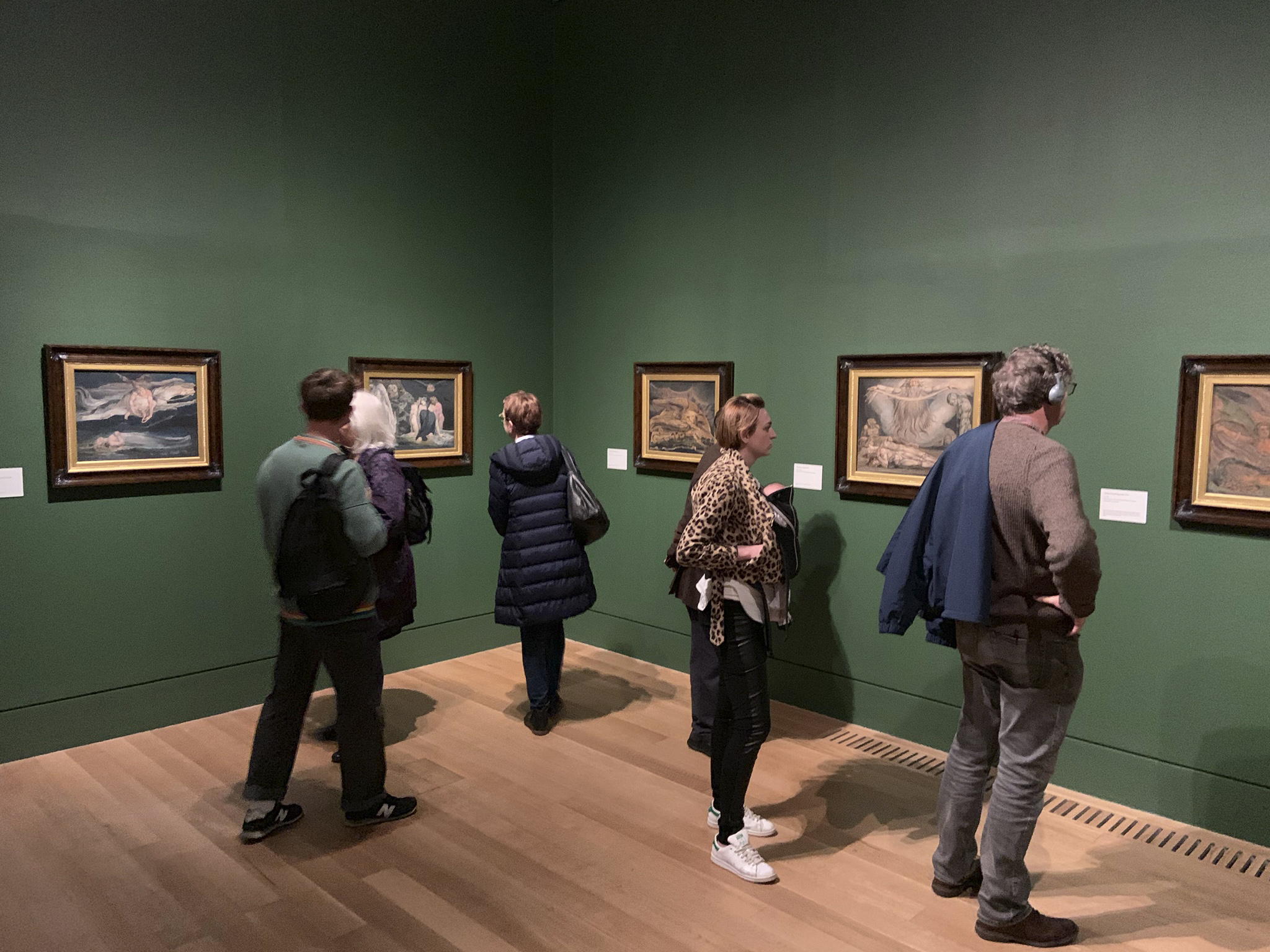
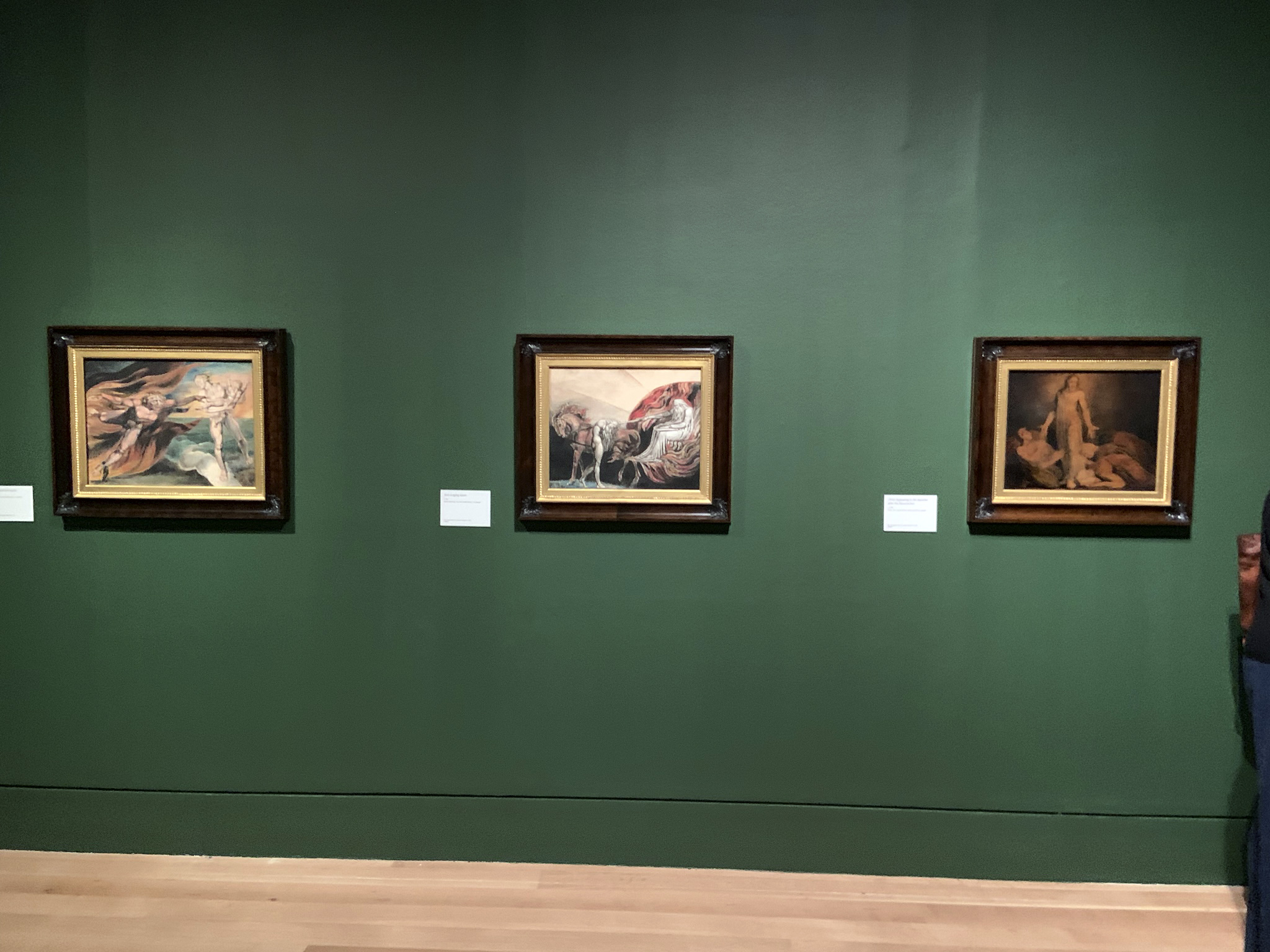
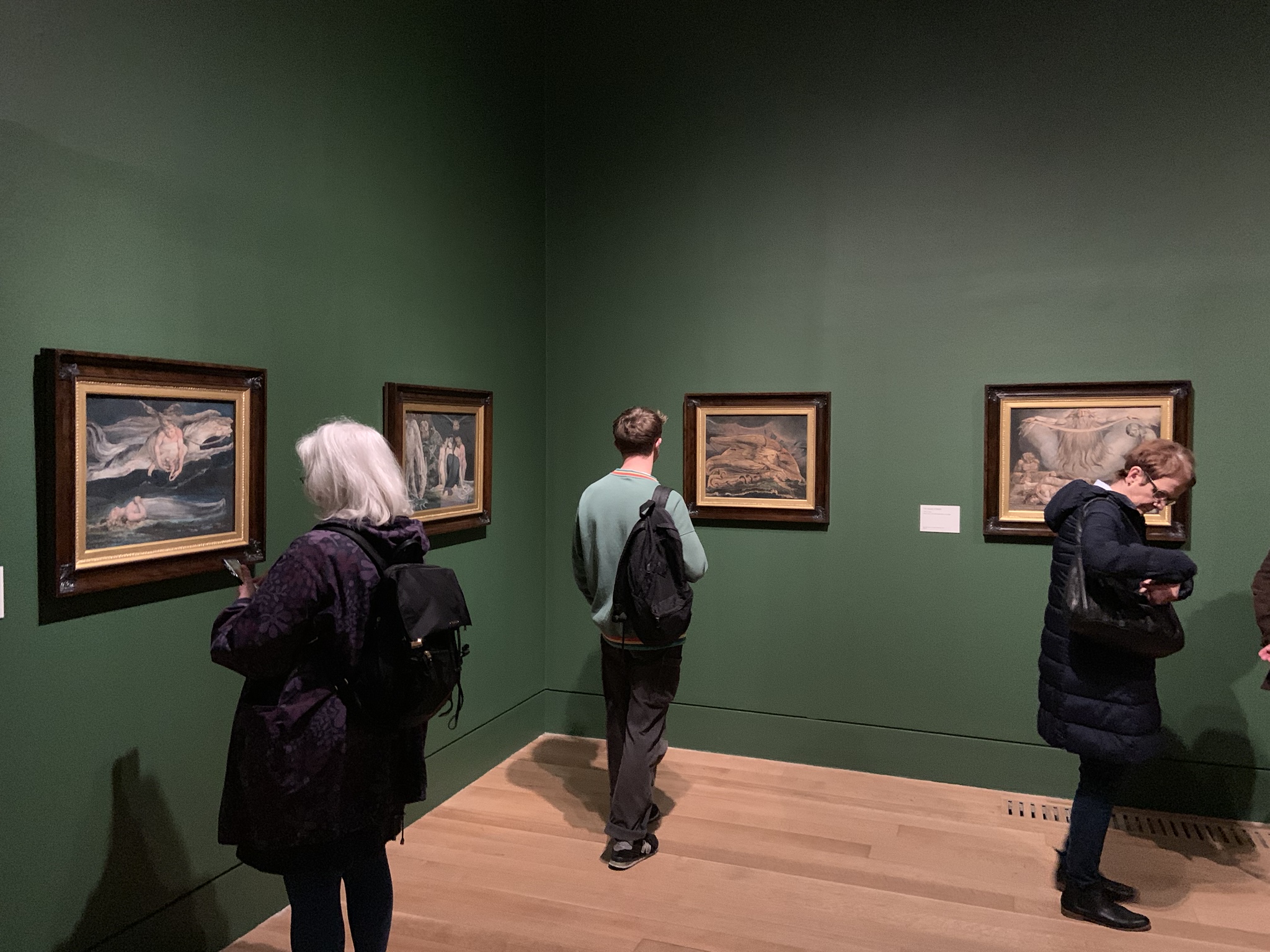
Installation view of the exhibition 'William Blake' at Tate Britain, London showing twelve large colour prints

Installation view of the exhibition 'William Blake' at Tate Britain, London showing twelve large colour prints

Installation view of the exhibition 'William Blake' at Tate Britain, London showing twelve large colour prints

Installation view of the exhibition 'William Blake' at Tate Britain, London showing twelve large colour prints

Installation view of the exhibition 'William Blake' at Tate Britain, London showing twelve large colour prints


Installation views of the exhibition William Blake at Tate Britain, London showing twelve large colour prints
Photos: Marcus Bunyan


Visions of divine damnation

I believe. I am a believer… a person who believes in the truth and/or existence of something, that ineffable something, that is the magic of the art of William Blake.

I believe that it would take a lifetime of scholarship to begin to fully understand the mythology, symbolism, and poetry of this man. I do not possess that knowledge. What I do posses is the ability to look at these images, process their form, colour, movement and, possibly, feel their spirit.

From academic beginnings Blake develops a unique artistic language. The rebellious, radical symbolism of his books, humanist veins, tap into the un/bound scrimmage of pleasure and pain, f(l)ights of good and evil told through visual poems, paeans to the diabolical munificence of the cosmos.

When I look at Blake I am swept along in the sensuous, writhing curves of the body. I feel their lyrical movement, whether they are partner to themes of childhood and morality, or suffering and social injustice for example. I feel that they touch my soul, deeply. Suffused with melancholy, damnation, joy, redemption and forgiveness his forms raise me up from the everyday. They challenge me to understand… to understand the work, myself and the world in which I live. They have as much relevance today as they ever did. They are revelatory.

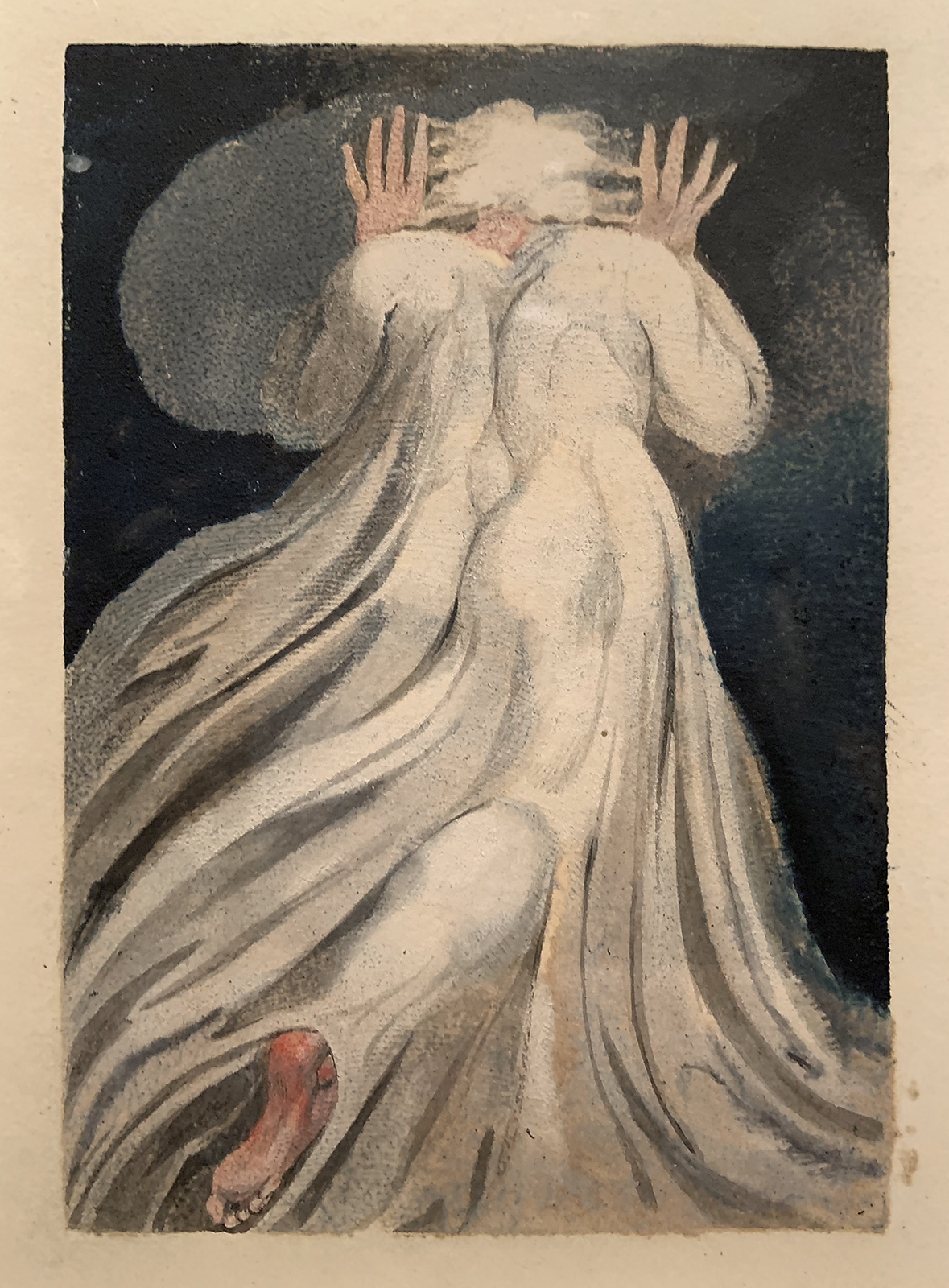
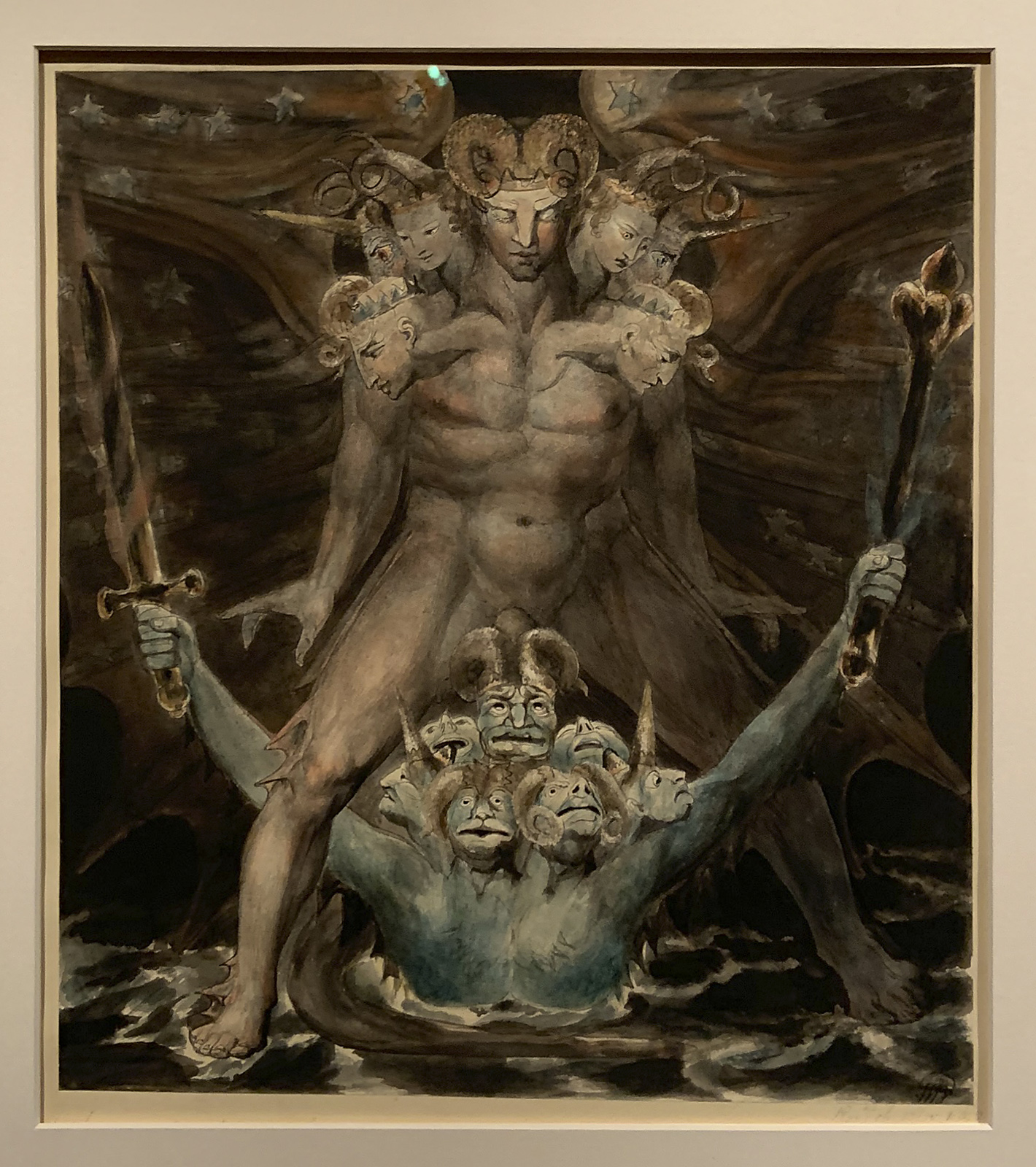
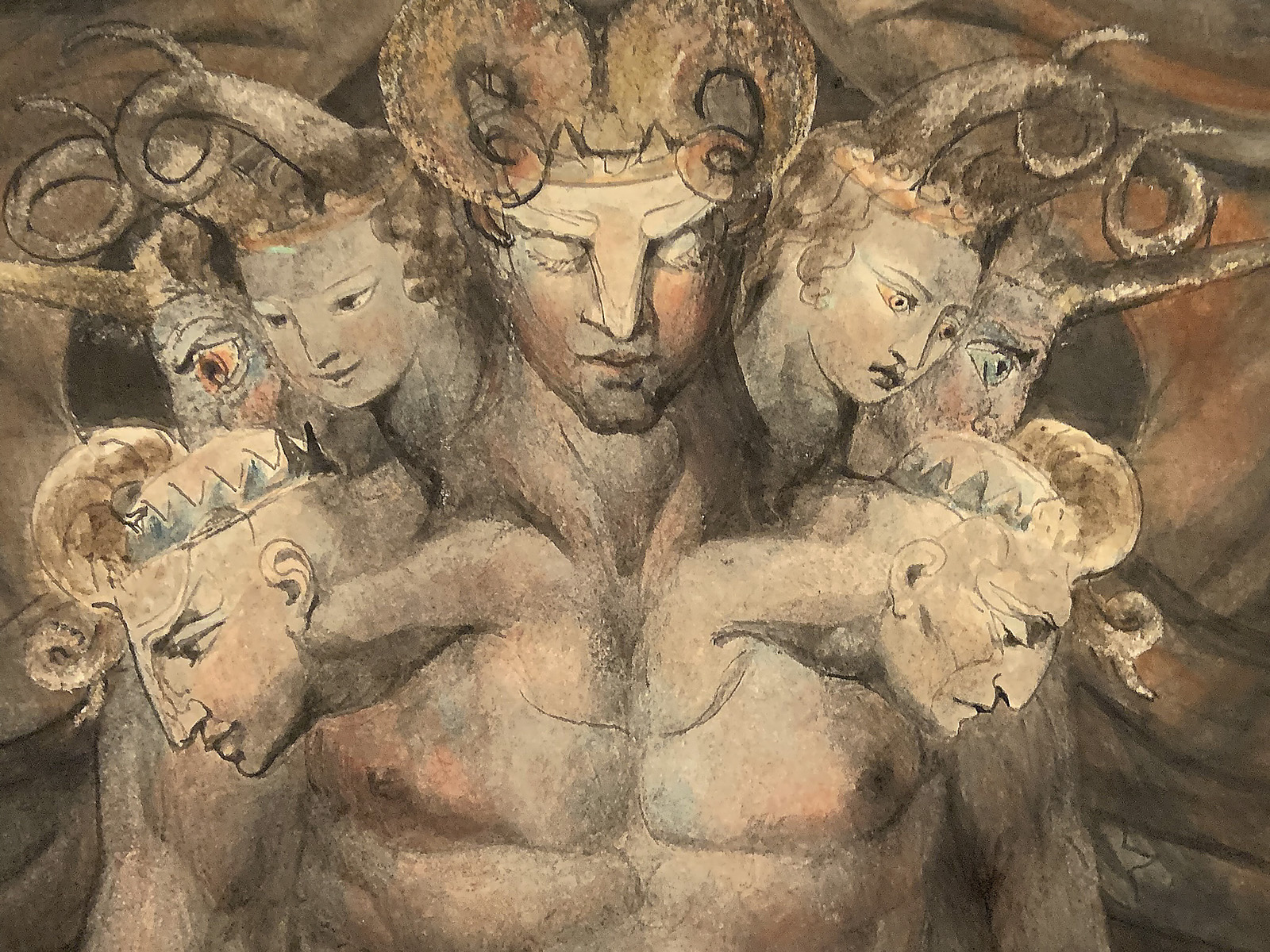
The startling a/symmetry and interweaving of forms that characterises so much of his work is particularly affective. The symmetry of the hands in Small Book of Designs: Plate 11, Gowned Male Seen from behind (1794) with the diagonal sweep of the leg; the interwoven leg and arms of The Great Red Dragon and the Beast from the Sea (c. 1805); and the glorious design for The Angel Rolling away the Stone (c. 1805) with its suffused colour scheme and ethereal light are three examples in this rich tapestry of creation. His work seems to float as if a breathless cloud, suffused with sex and spiritual ecstasy, imbibing of the realm of the sublime and the imagination.

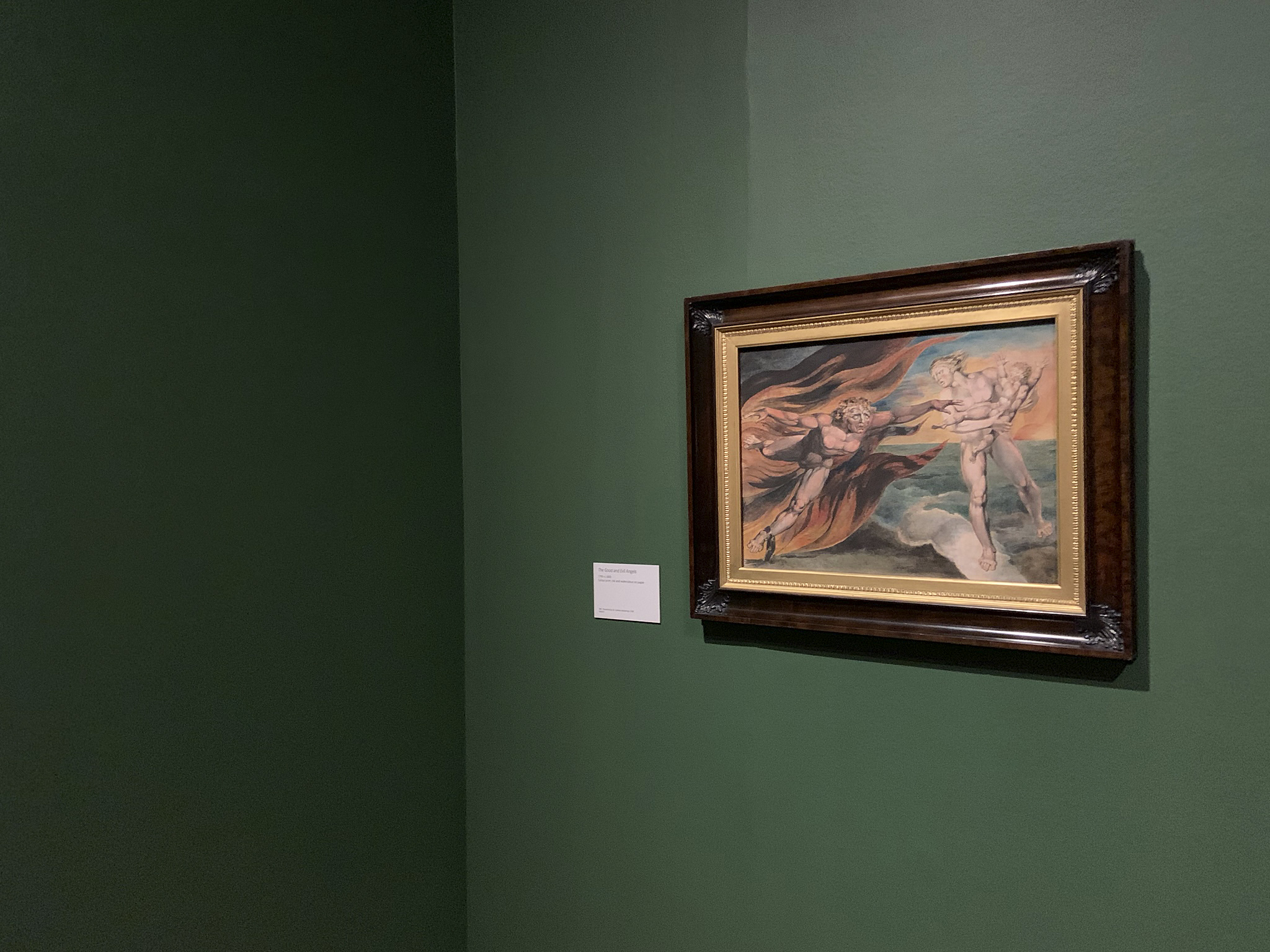
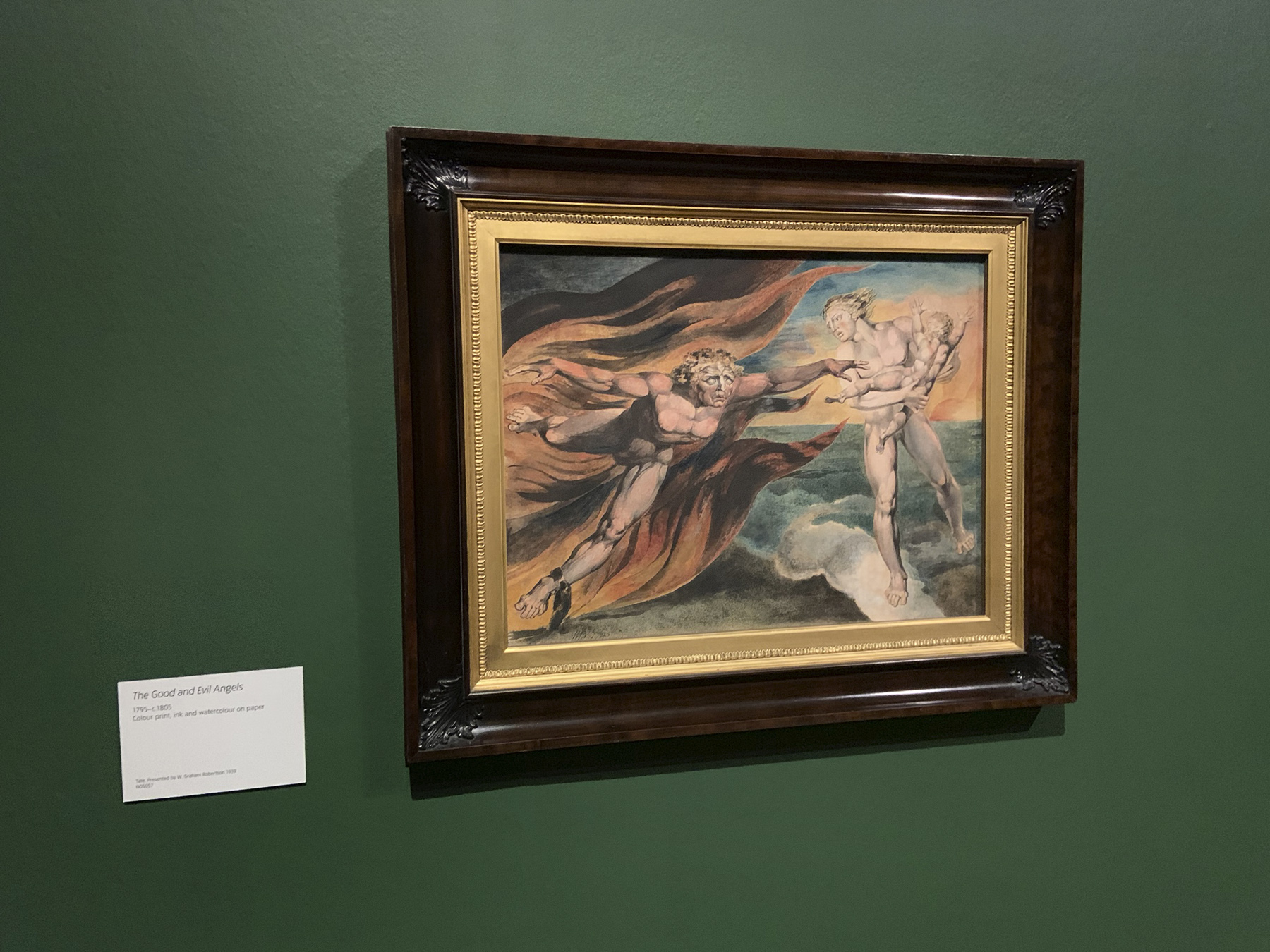
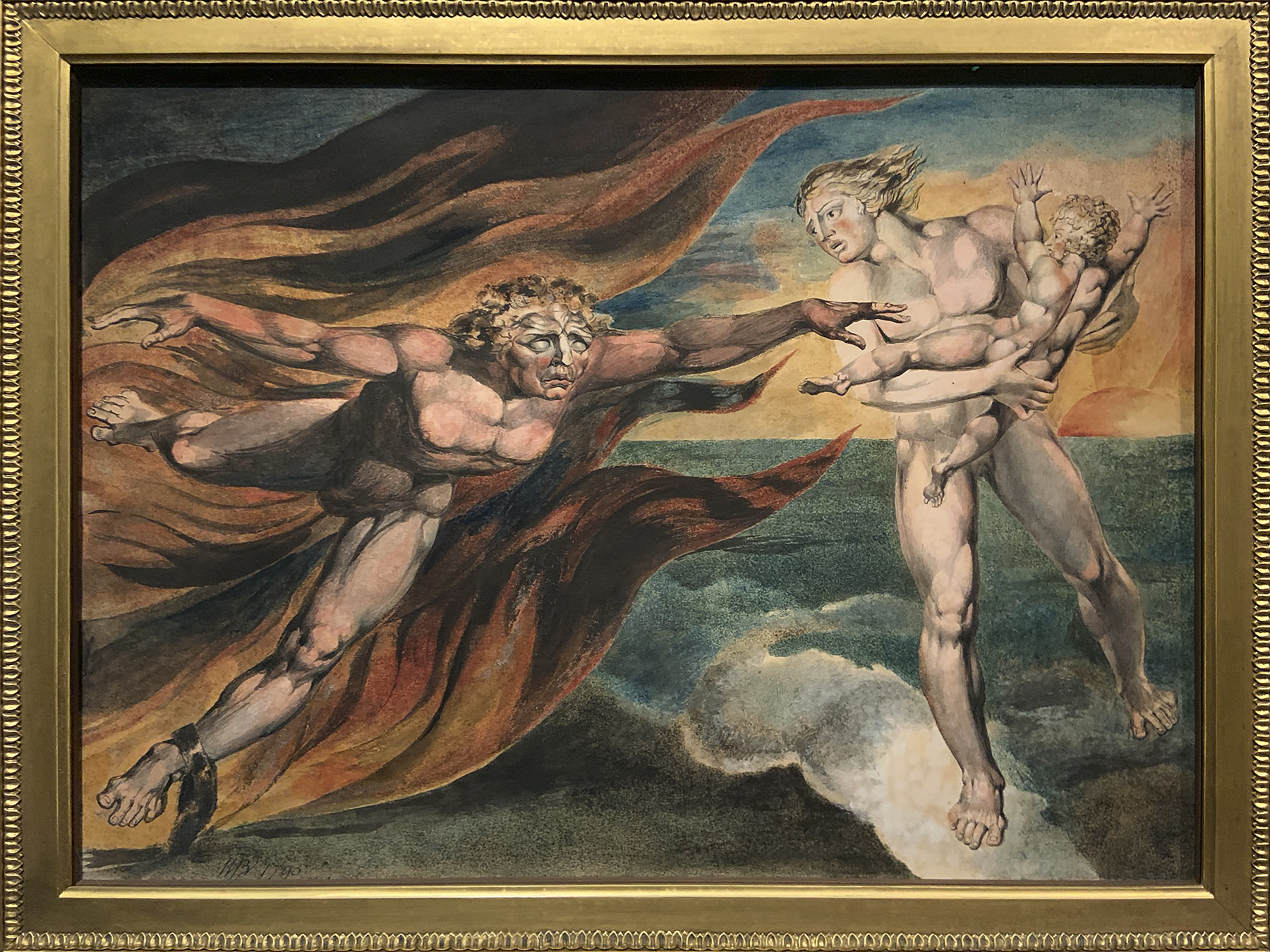
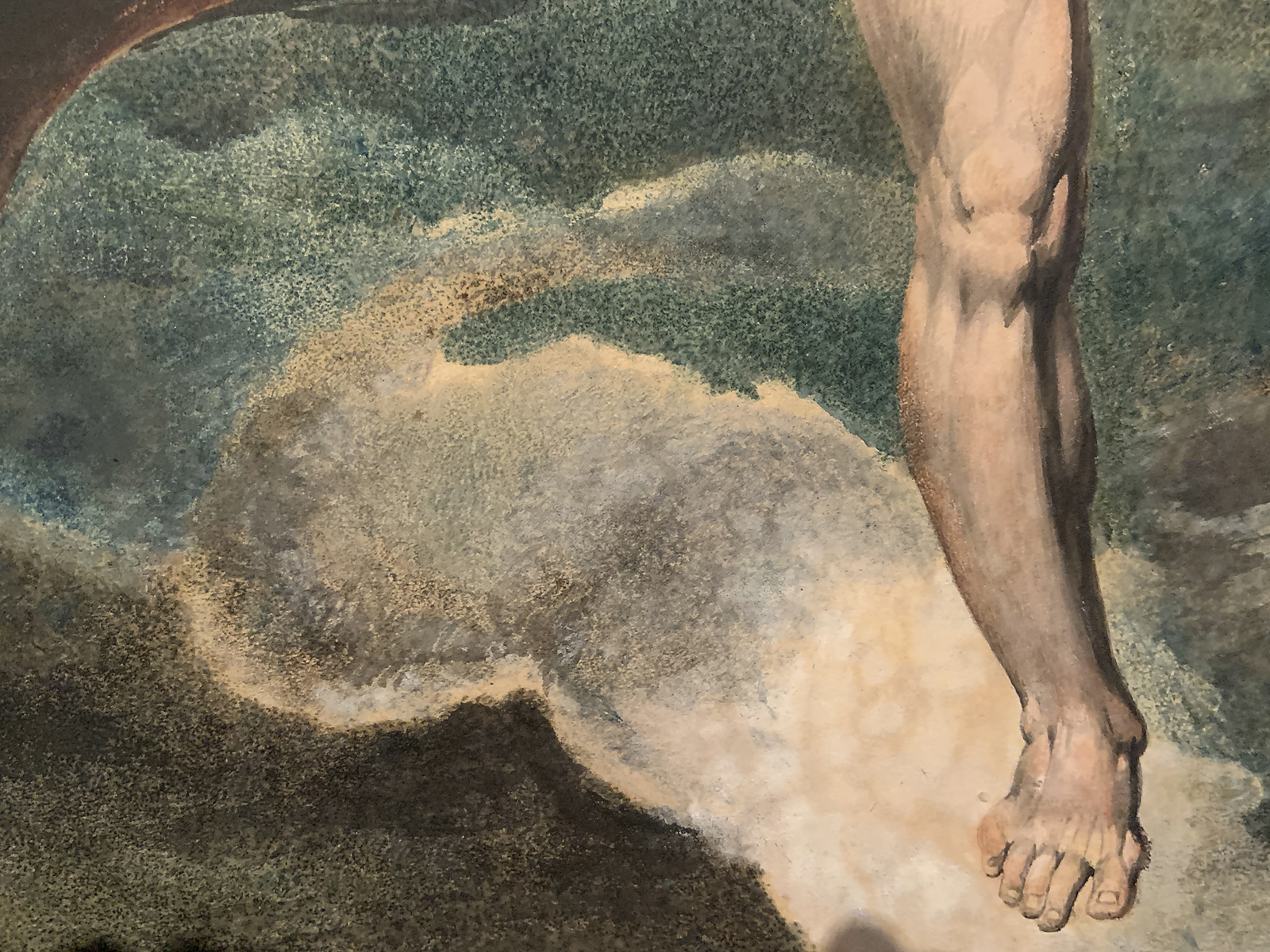
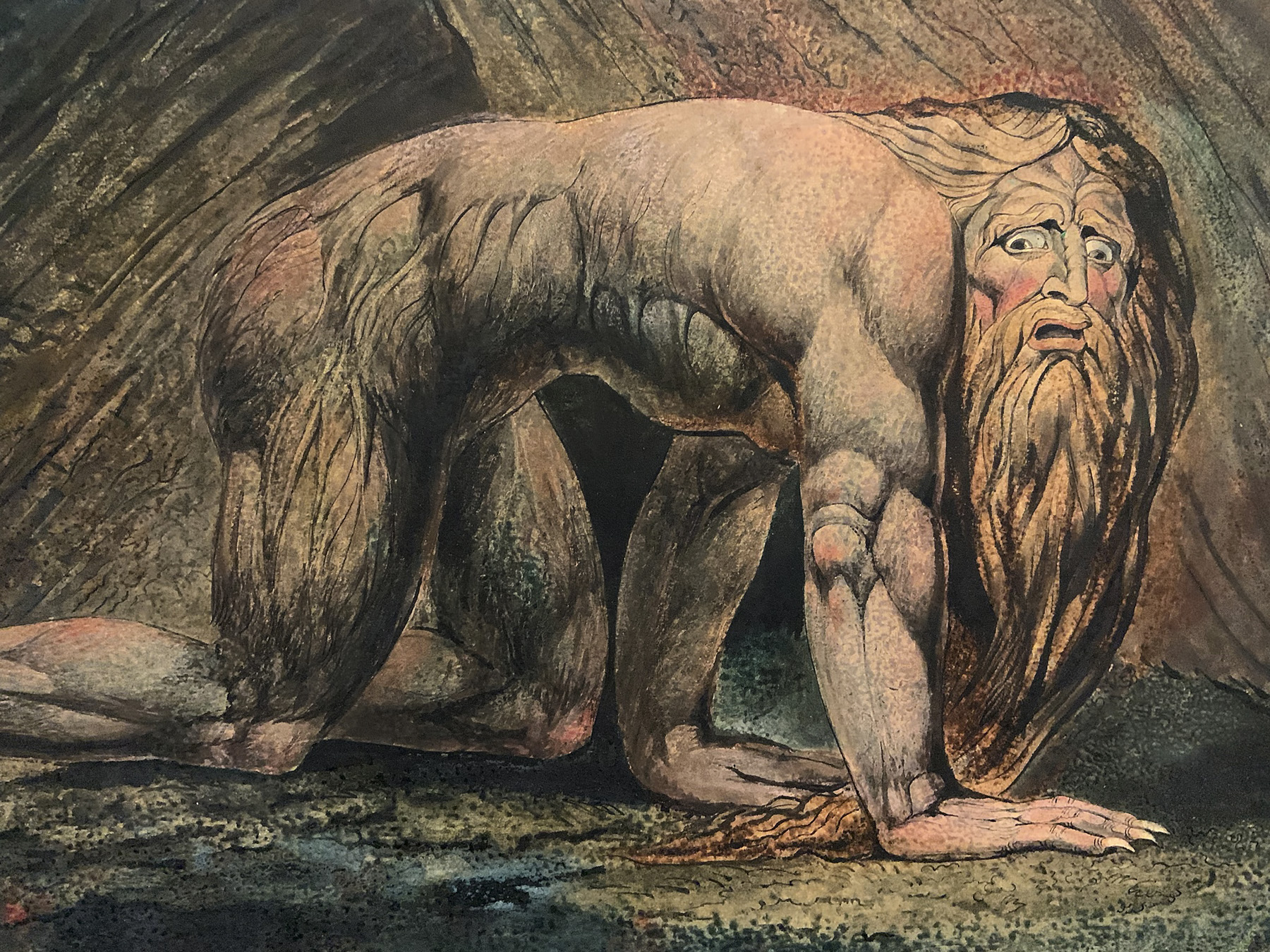
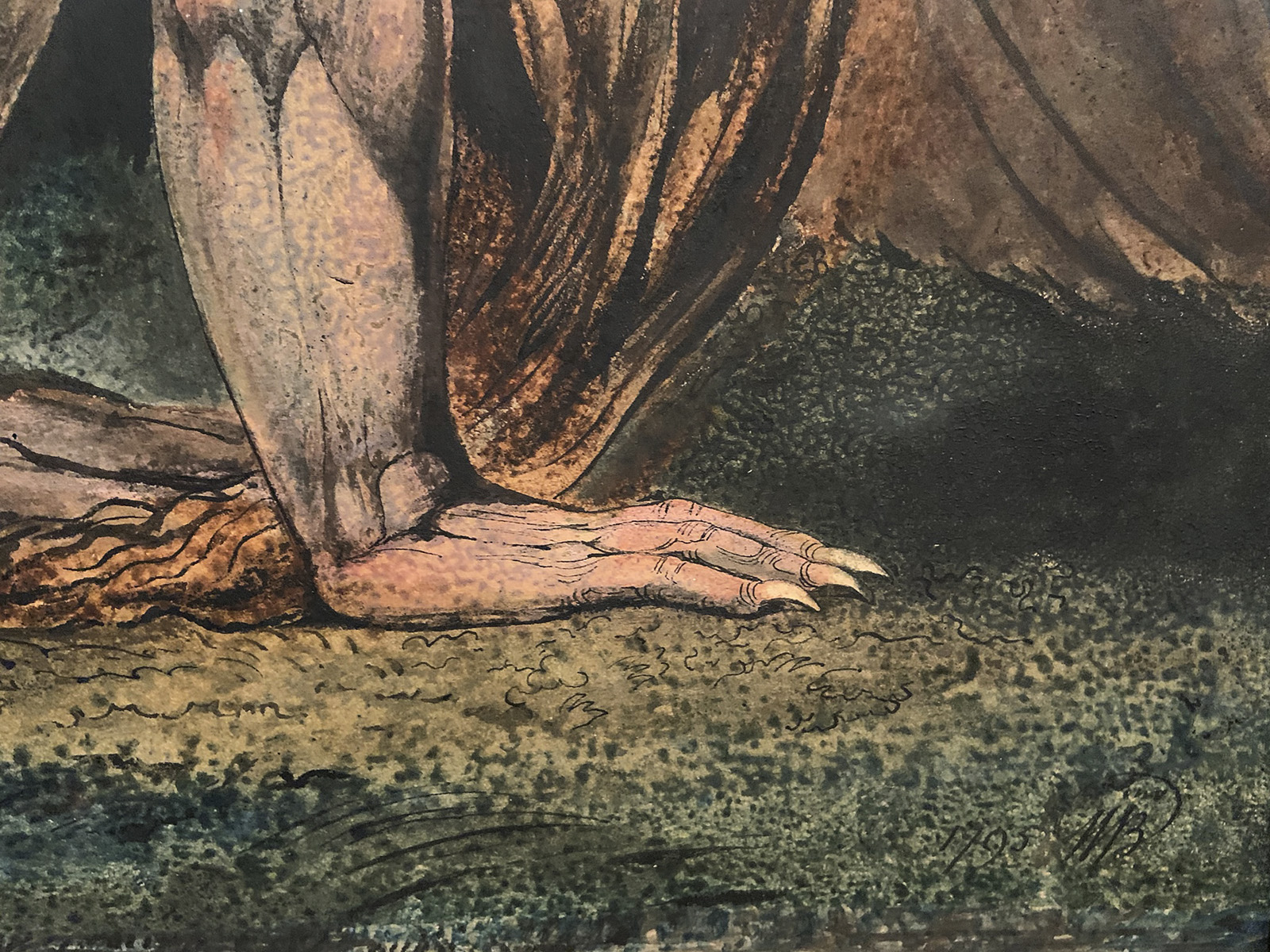
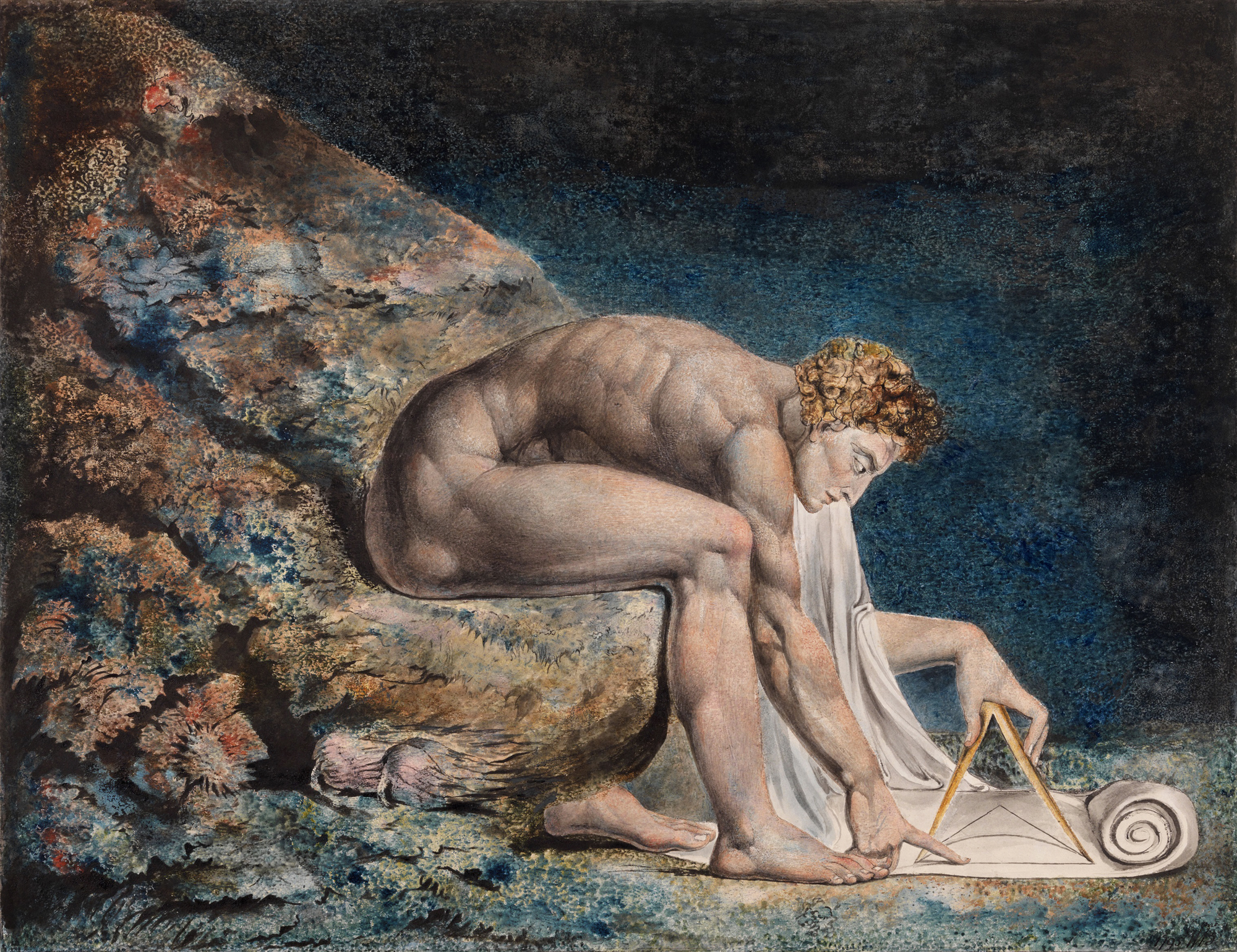
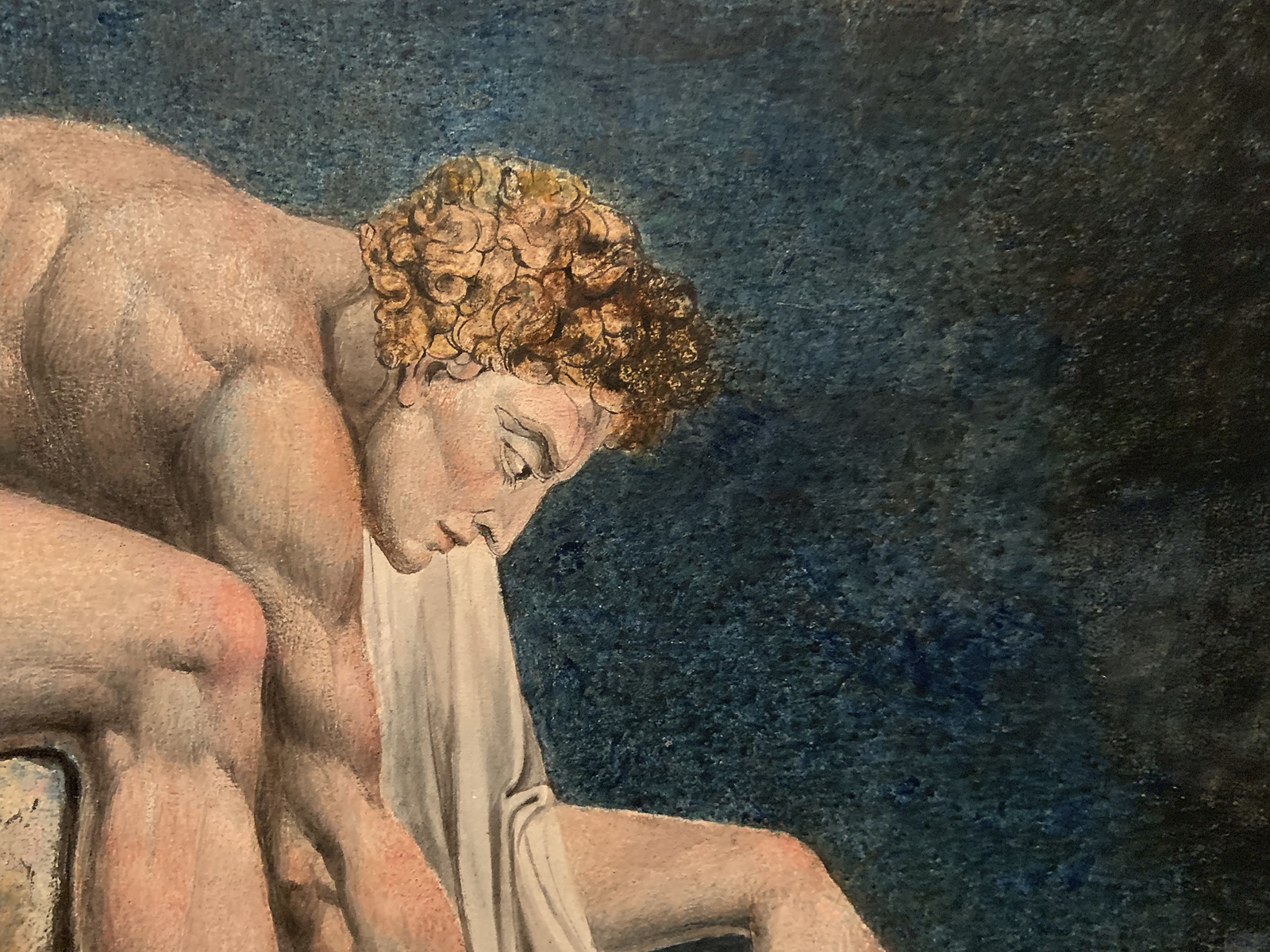
In this second part of the posting, most impressive were the twelve large colour prints (below), a series of 12 large ‘frescos’ as Blake called them. To stand in a gallery and be surrounded by such powerful images was incredible. One after the other took your breath away through their musical form and colour. The binary opposites of The Good and Evil Angels (1795 – c. 1805), the Active Evil angel – “strong, muscular, agile; but dirty, indolent and trifling” – with his sightless eyes transfixing you. The hybrid of man and beast that is Nebuchadnezzar (1795 – c. 1805), “crawling the Earth on his hands and knees, skin like hide, toes turning into griffin’s talons.” Or the question mark of the form that is Newton (1795 – c. 1805), which shows “the mathematician and physicist completely absorbed in a geometrical problem, oblivious to the wondrous rock on which he sits.” Blind to the wonders of the world, here scientific rationalism is seen to be inadequate without the imagination and the creativity of the artist. Just a small detail, but the colouration of the rocks behind Newton will long live in my memory for its delicacy and radiance – a colour print enhanced with additional watercolour on paper, almost sponged on, like the under/world sponges at the bottom of the sea.

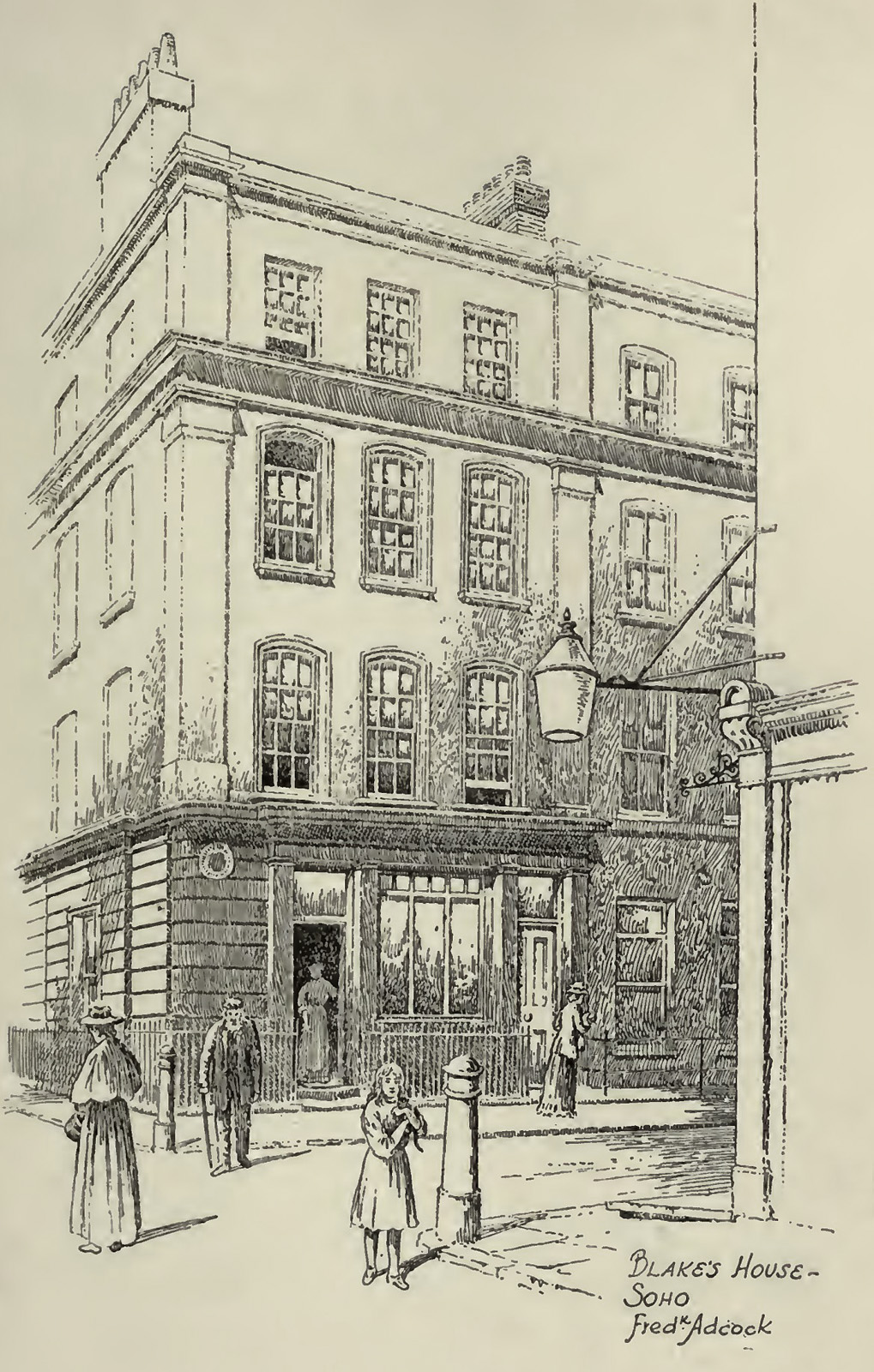
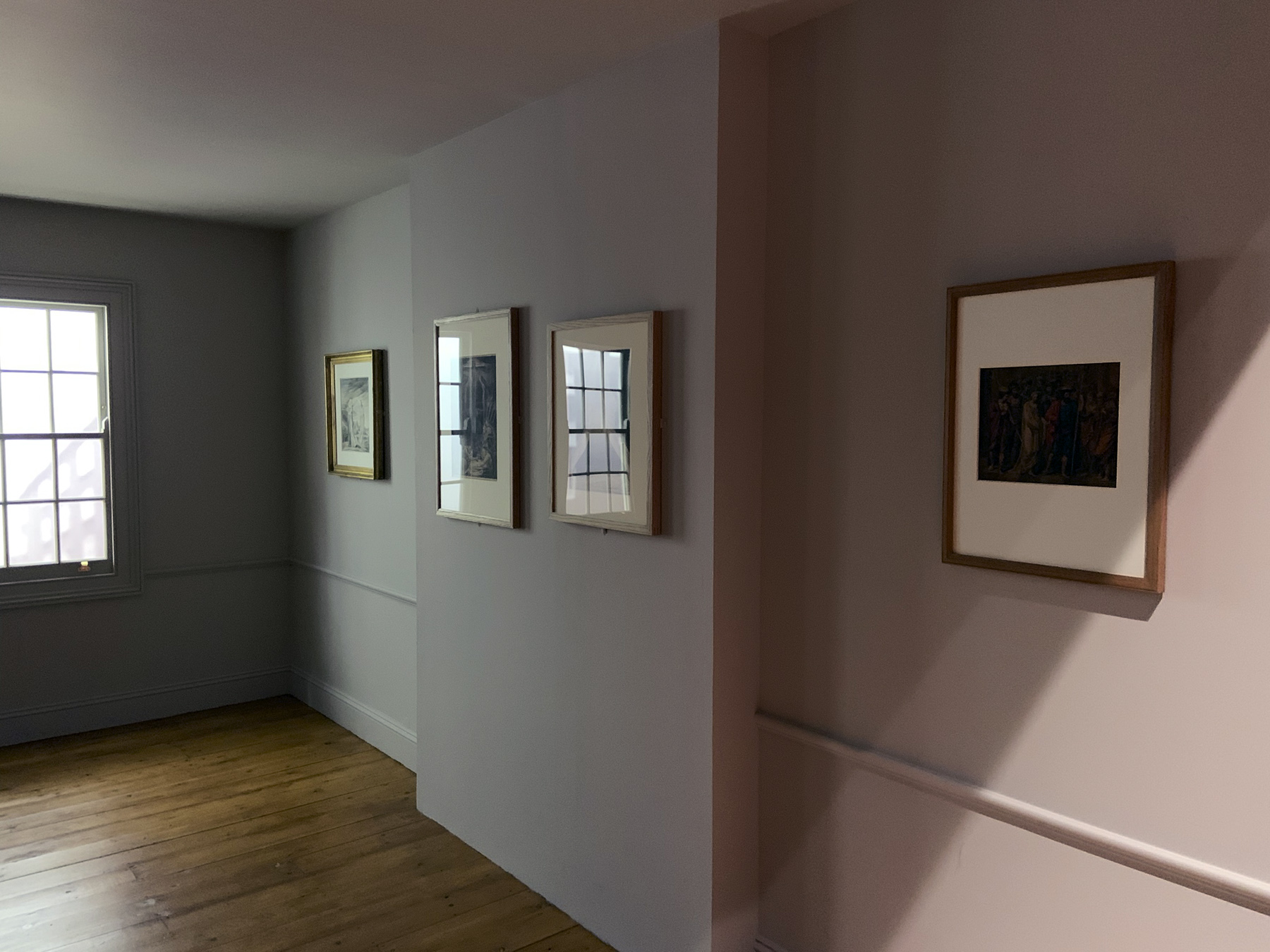
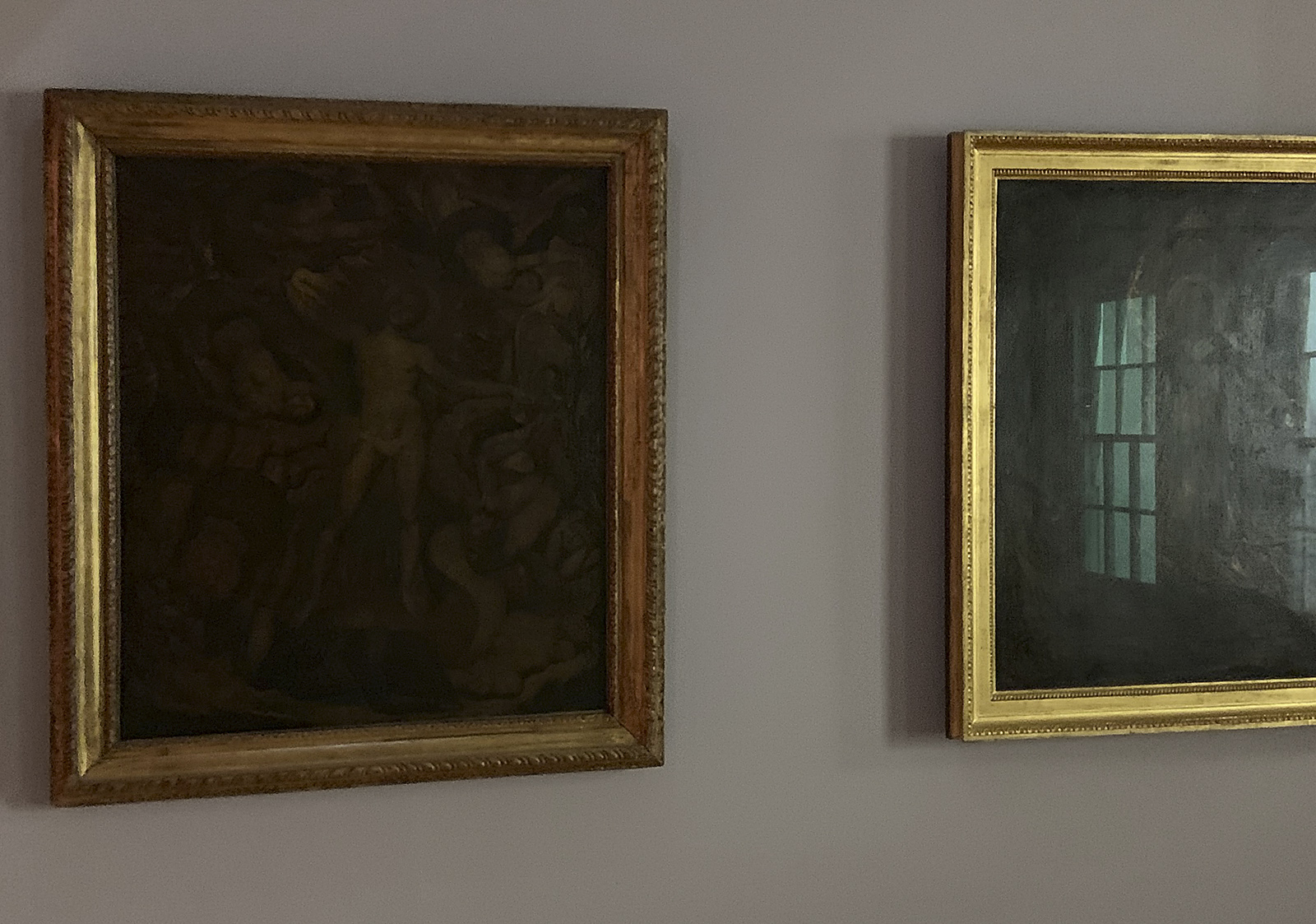
Other highlights in the second half of the exhibition was a recreation of Blake’s 1809 solo exhibition at his home at 28 Broad Street, London. Even though the paintings have darkened significantly over the years, the installation gave you an idea of how the paintings, highlighted with gold leaf, would have looked through the filtered light of Georgian windows, or would have shimmered under candlelight, as your eyes strained to see the forms of his paradise / lost. Another physiognomic “vision” – “the stuff of delirium and nightmare, [which] taps into the unconscious, internalised sublime” – was the painting The Ghost of a Flea (c. 1819) used to illustrate John Varley’s Treatise on Zodiacal Physiognomy (1828). In studying the work of Blake for this posting, I found it instructive to look at Blake’s preparatory sketches for his works which can be found online. They give you a good idea of the spontaneity of the drawing and the ideas that arise, transformed into the finished work. Here in the graphite on paper drawing of The Ghost of a Flea we can see Blake’s initial vision, a more static, pensive figure with serrated wings which morphs into a muscular, blood sucking monster set on a cosmic stage, of life framed by curtains and a shooting star. As the vision appeared to Blake he is said to have cried out: ‘There he comes! his eager tongue whisking out of his mouth, a cup in his hand to hold blood, and covered with a scaly skin of gold and green.’

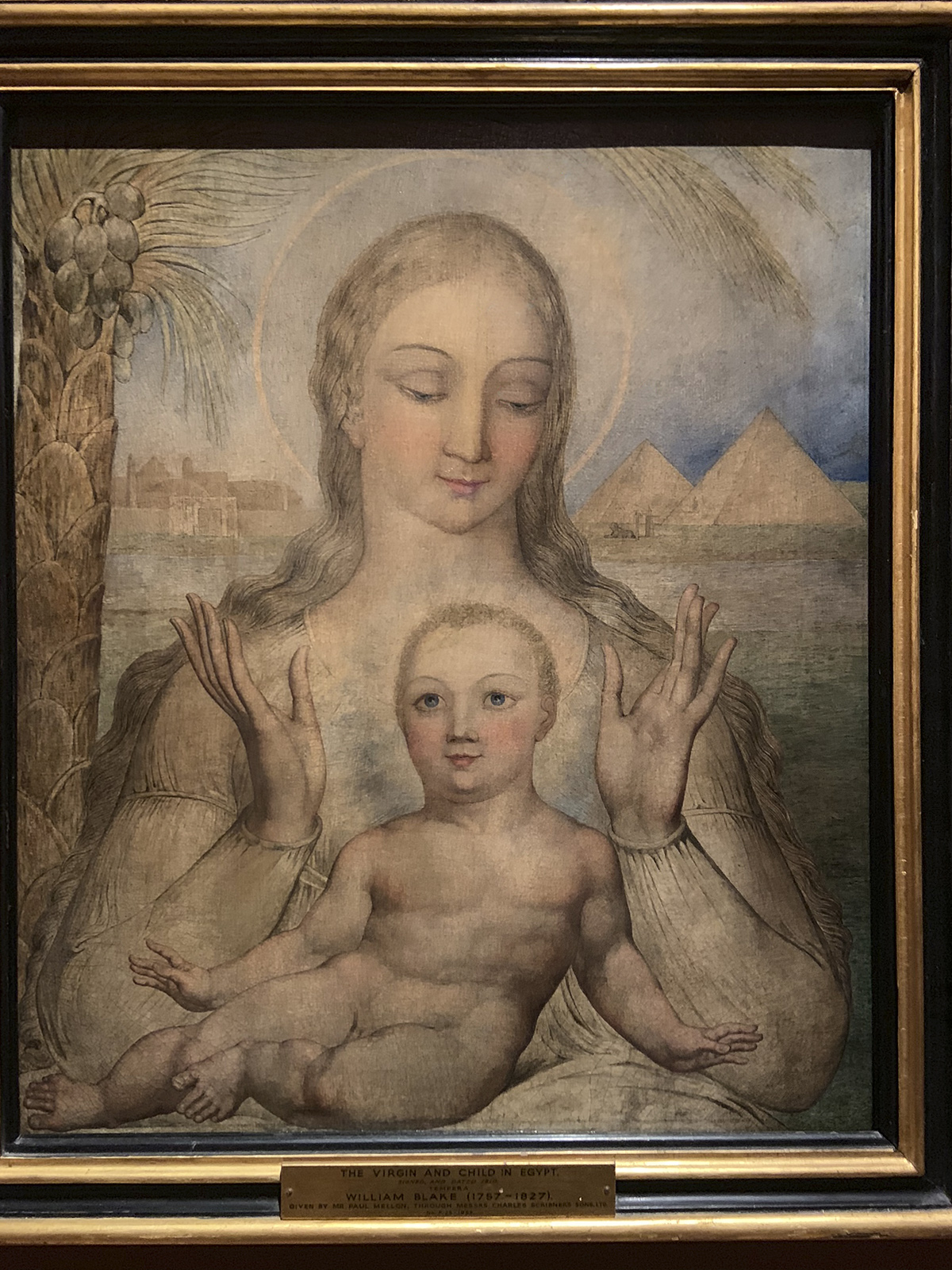
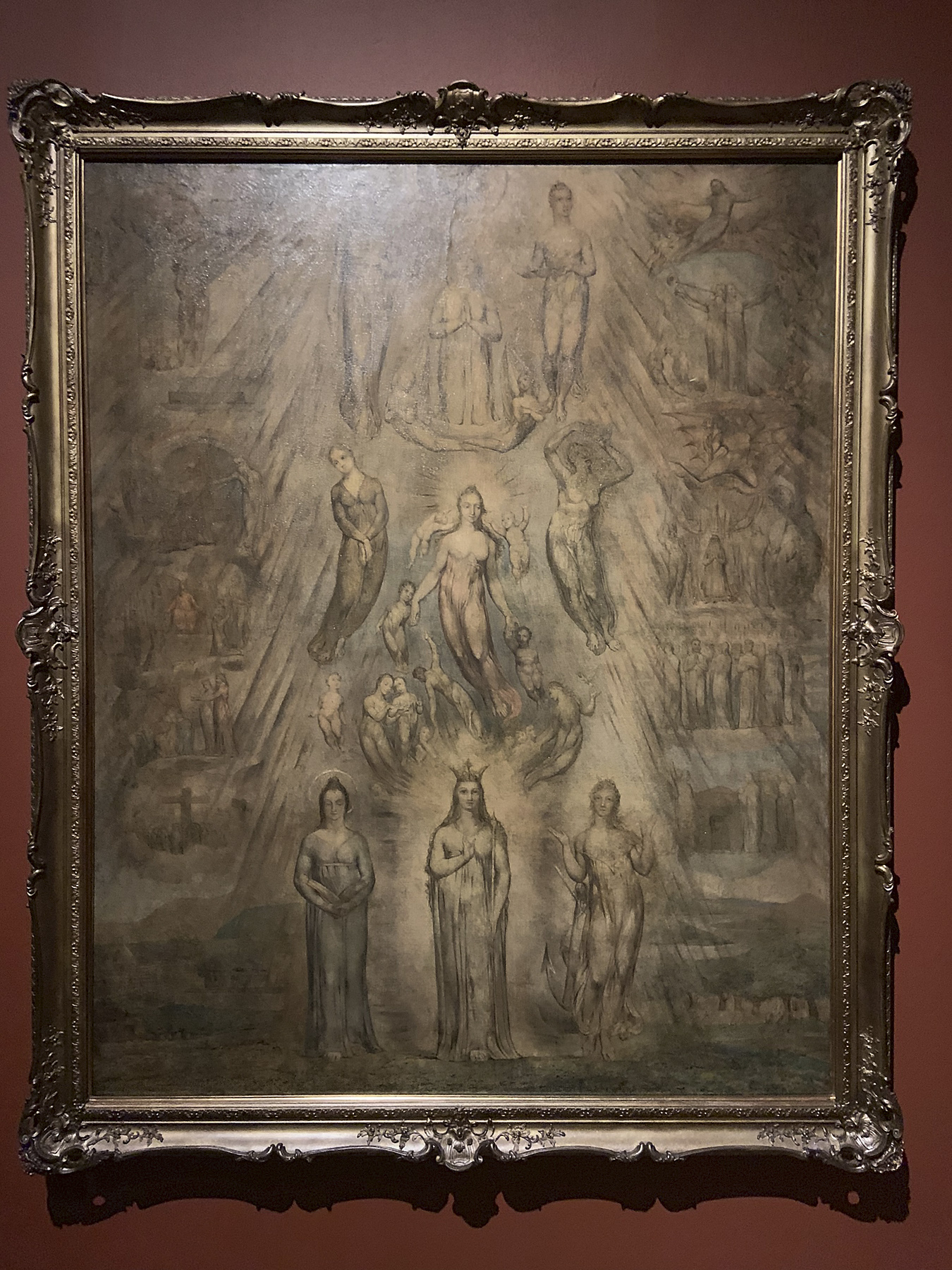
My favourite works in this exhibition were Blake’s two exquisite large paintings, The Virgin and Child in Egypt (1810) and An Allegory of the Spiritual Condition of Man (? 1811). Bearing in mind that these two paintings would have darkened over time and the colours have changed, I was completely mesmerised by the intimacy of these images. The Mannerist hands and beatific nature of the first, and the Ascension of the figures in the second were completely sublime. His largest surviving canvases are RADIANT, all triangular structure, shimmering paint and Buddhist, Northern European iconography. That’s something that I did notice that hardly anyone talks about – how some of his figures echo the Zen-like quality of Buddhist painting.

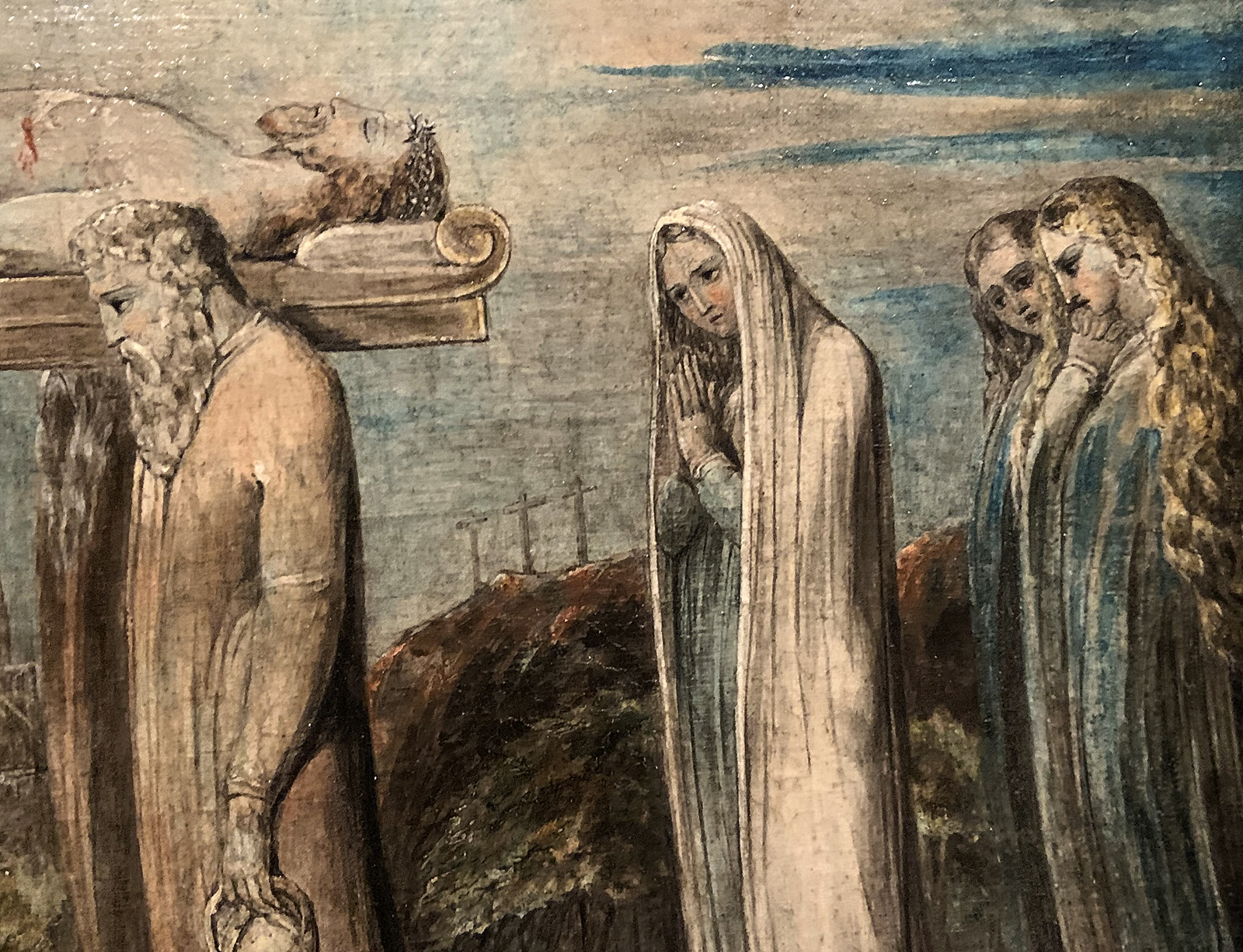
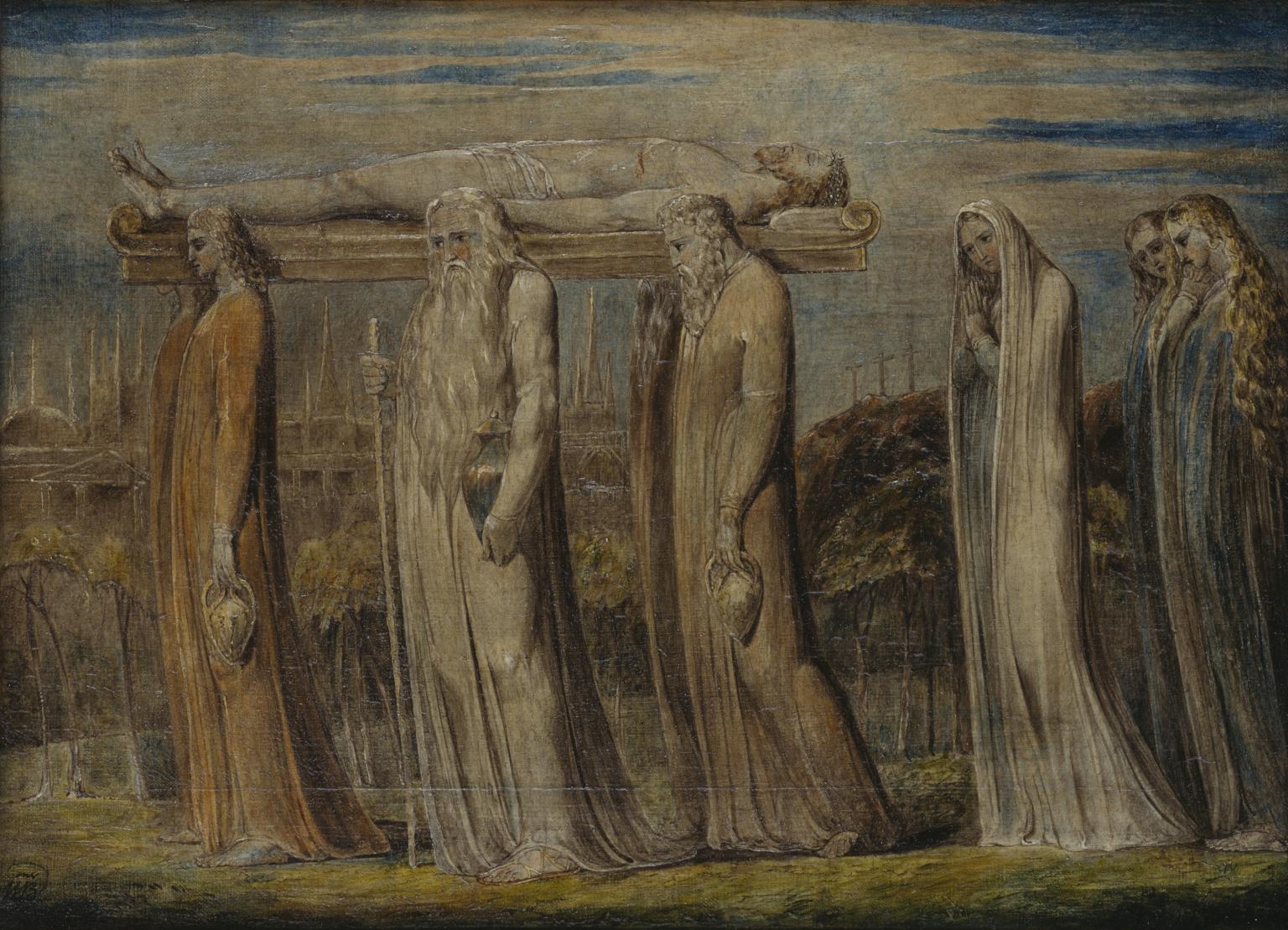
His celestial bodies seem to exist in a place outside of this world, but they speak to us today as strongly as ever, of the trials and tribulations of our contemporary world – the struggle for the existence of life, of the animals and creatures of this planet, against the avarice of the rich and powerful, of nations and corporations that rape and pillage. Blake was an artist of the imagination rather than reason, a champion of creativity and feeling. Humanity, nature, creatures and creation are still the stuff of life on earth. Our life on earth.

I was so fully immersed in Blake’s world I did not want to leave. The spirit of this man and his work places him at the pinnacle of artistic creation, up there with Michelangelo and Rembrandt. At the time that Blake was working (and was considered a crackpot and mad), Beethoven was still conducting his own symphonies and dedicating his ‘Eroica’ (heroic) symphony to the tyrant Napoleon in 1804 before, in a fit of rage, scrubbing out Napoleon’s name after he ignominiously named himself Emperor. Both Blake and Beethoven were inspired by the ideals of the French Revolution and the liberty of the common man. Just think about that.

Dr Marcus Bunyan

Word count: 1,137


Many thankx to Tate Britain for allowing me to publish the media images in the posting. All other installation photographs as noted © Dr Marcus Bunyan. Please click on the photographs for a larger version of the image. See the first part of the posting.


“The curators of this colossal survey, the first on such a scale in nearly 20 years, are wise to point out the almost impenetrable complexities of Blake’s thinking from the start. Their aim is to throw the focus on his works as images, as opposed to emblems – tiny, teeming visions of gods, monsters and wild scenarios taking place at the bottom of the ocean or outer space, but above all in the free world of Blake’s imagination. …

And Blake’s art remains irreducibly strange. Familiarity cannot diminish the utter singularity of his home-grown aesthetic: heads floating on columns of transparent Lycra-like material, rippling up towards multicoloured skies or gathering in tumultuous spirals. Saints diving through the firmament, devils flickering like fire, angels back-crawling through transparent seas. Lone bodies are shown in convulsion, drowning, paralysed or hunched tight as padlocks. Unbound, they appear spreadeagled, levitating, or hurtling upwards like the bellowed flames up a chimney.”


Laura Cumming. “William Blake review – a rousing call to arms,” on The Guardian website Sun 15 Sep 2019 [Online] Cited 18/01/2020


Twelve large colour prints

Blake made these prints using a form of experimental monotype. This involved painting tacky ink onto a board and transferring it through pressure onto paper. He enhanced the basic printed image with ink and watercolour. The end result is very painterly, but with textures impossible to achieve by hand. Blake referred to these works as ‘frescos’. This reflects his wish to imitate the grand wall paintings of the ancient world and medieval times.

Thomas Butts purchased eight of these prints from Blake in 1805, and probably owned a full set. The subject matter comes from the Bible, Shakespeare and Milton, as well as Blake’s imagination. There is no definitive sequence. Scholars have connected the prints in many different, inventive ways.

Wall text


A collection of twelve large prints by William Blake have been brought together at Tate Britain. Over 200 years old, these fragile works are normally only shown in small groups for short periods of time, making this an unmissable opportunity to see the remarkable full series together. The striking prints were sold by Blake as a group in 1805 and included one of his most iconic images, Newton 1795 – c. 1805. Produced using an experimental form of monotype printing that was enhanced with ink and watercolour, they appear painterly but with some extraordinary textures which would be impossible to achieve by hand. The collection draws inspiration from the world of science, the Bible, Shakespeare and Milton, as well as Blake’s own mind. Scholars have connected the prints in many different, inventive ways, but each image remains open to the viewers’ imagination.

Text from Tate Britain


William Blake (British, 1757-1827) 'The Good and Evil Angels' 1795 - c. 1805 (installation view)

William Blake (British, 1757-1827) 'The Good and Evil Angels' 1795 - c. 1805 (installation view)

William Blake (British, 1757-1827) 'The Good and Evil Angels' 1795 - c. 1805 (installation view)

William Blake (British, 1757-1827) 'The Good and Evil Angels' 1795 - c. 1805 (installation view)


William Blake (British, 1757-1827)
The Good and Evil Angels (installation views)
1795 – c. 1805
Colour print, ink and watercolour on paper
Tate. Presented by W. Graham Robertson 1939
Photos: Marcus Bunyan


William Blake (British, 1757-1827) 'The Good and Evil Angels' 1795 - c. 1805 from the exhibition 'William Blake' at Tate Britain, London, Sept 2019 - Feb 2020


William Blake (British, 1757-1827)
The Good and Evil Angels
1795 – c. 1805
Colour print, ink and watercolour on paper
445 × 594 mm
Tate. Presented by W. Graham Robertson 1939


In his annotations to a text by Lavater, Blake claimed that ‘Active Evil is better than Passive Good’, rendering the figures in this picture somewhat ambiguous. Perhaps the chain attached to the ‘evil’ angel’s ankle suggests the curtailing of energy by misguided rational thought?

In constructing his figures, Blake evokes conventional eighteenth century stereotypes. The heavy build and darker skin of the ‘evil’ angel suggest a non-European character, described by Lavater as ‘strong, muscular, agile; but dirty, indolent and trifling’, while the fair hair and light skin of the ‘good’ angel are consonant with ideas of physical – and intellectual – perfection.

Gallery label, March 2011


William Blake (British, 1757-1827) 'The Good and Evil Angels' 1795 - c. 1805 (installation view detail)

William Blake (British, 1757-1827) 'The Good and Evil Angels' 1795 - c. 1805 (installation view detail)

William Blake (British, 1757-1827) 'The Good and Evil Angels' 1795 - c. 1805 (installation view detail)


William Blake (British, 1757-1827)
The Good and Evil Angels (installation views details)
1795 – c. 1805
Colour print, ink and watercolour on paper
Tate. Presented by W. Graham Robertson 1939
Photos: Marcus Bunyan


Installation view of the exhibition 'William Blake' at Tate Britain, London showing at left, 'Christ Appearing to the Apostles after the Resurrection' (c. 1795) and at right, 'Nebuchadnezzar' (1795 - c. 1805)


Installation view of the exhibition William Blake at Tate Britain, London showing at left, Christ Appearing to the Apostles after the Resurrection (c. 1795) and at right, Nebuchadnezzar (1795 – c. 1805)
Photo: Marcus Bunyan


William Blake (British, 1757-1827) 'Nebuchadnezzar' 1795 - c. 1805 (installation view)

William Blake (British, 1757-1827) 'Nebuchadnezzar' 1795 - c. 1805 (installation view)


William Blake (British, 1757-1827)
Nebuchadnezzar (installation views)
1795 – c. 1805
Colour print, ink and watercolour on paper
Tate. Presented by W. Graham Robertson 1939
Photos: Marcus Bunyan


William Blake (British, 1757-1827) 'Nebuchadnezzar' 1795 - c. 1805 from the exhibition 'William Blake' at Tate Britain, London, Sept 2019 - Feb 2020


William Blake (British, 1757-1827)
Nebuchadnezzar
1795 – c. 1805
Colour print, ink and watercolour on paper
54.3 x 72.5cm
Tate. Presented by W. Graham Robertson 1939
Gift of Mrs. Robert Homans
Wikipedia Commons, Public Domain


William Blake (British, 1757-1827) 'Nebuchadnezzar' 1795 - c. 1805 (installation view detail)

William Blake (British, 1757-1827) 'Nebuchadnezzar' 1795 - c. 1805 (installation view detail)

William Blake (British, 1757-1827) 'Nebuchadnezzar' 1795 - c. 1805 (installation view detail)


William Blake (British, 1757-1827)
Nebuchadnezzar (installation view details)
1795 – c. 1805
Colour print, ink and watercolour on paper
Tate. Presented by W. Graham Robertson 1939
Photos: Marcus Bunyan


The king of Babylon is a terrible warning to us all: “those that walk in pride, the Lord can abase”. Blake’s Nebuchadnezzar has been so abased it is by now a hybrid of man and beast, crawling the Earth on his hands and knees, skin like hide, toes turning into griffin’s talons.

Laura Cumming. “William Blake review – a rousing call to arms,” on The Guardian website Sun 15 Sep 2019 [Online] Cited 18/01/2020


William Blake (British, 1757-1827) 'Newton' 1795 - c. 1805 (installation view)

William Blake (British, 1757-1827) 'Newton' 1795 - c. 1805 (installation view)


William Blake (British, 1757-1827)
Newton (installation views)
1795 – c. 1805
Colour print, ink and watercolour on paper
Tate. Presented by W. Graham Robertson 1939
Photos: Marcus Bunyan


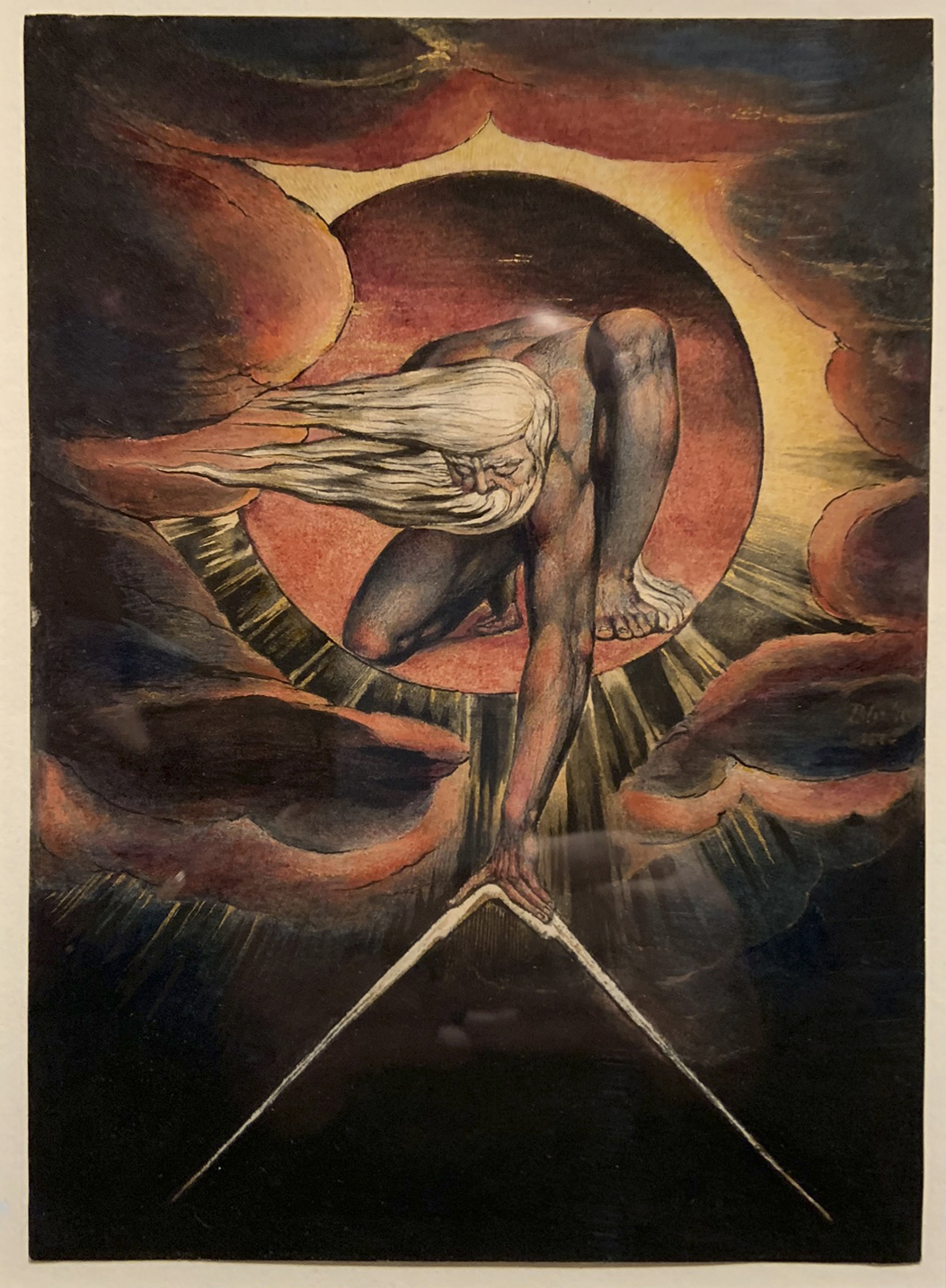
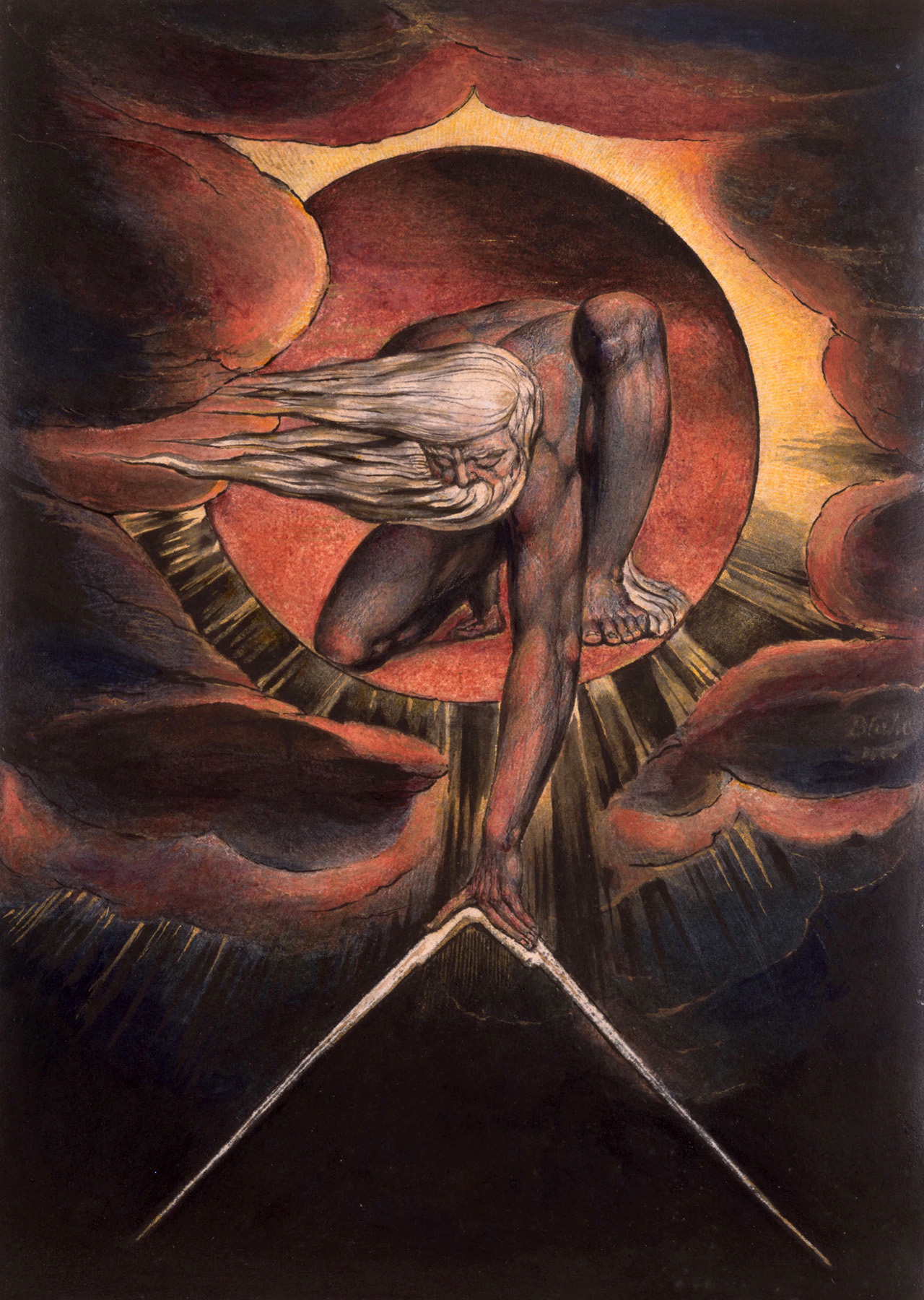
Newton (1795 – c. 1805), the first impression, is another of Blake’s most famous images. It shows the brilliant mathematician and physicist completely absorbed in a geometrical problem, oblivious to the wondrous rock on which he sits. Its standard interpretation is that Newton’s scientific rationalism was inadequate without imagination and the creativity of the artist – a negative view of the man who is still considered a towering genius.

Hoakley. “Tyger’s eye: the paintings of William Blake, 5 – The large prints, 1795,” on The Electric Light Company website November 26, 2016 [Online] Cited 18/01/2020


William Blake (British, 1757-1827) 'Newton' 1795 - c. 1805 from the exhibition 'William Blake' at Tate Britain, London, Sept 2019 - Feb 2020


William Blake (British, 1757-1827)
Newton
1795 – c. 1805
Colour print, ink and watercolour on paper
460 x 600 mm
Tate. Presented by W. Graham Robertson 1939


In this work Blake portrays a young and muscular Isaac Newton, rather than the older figure of popular imagination. He is crouched naked on a rock covered with algae, apparently at the bottom of the sea. His attention is focused on a diagram which he draws with a compass. Blake was critical of Newton’s reductive, scientific approach and so shows him merely following the rules of his compass, blind to the colourful rocks behind him.

Gallery label, October 2018


William Blake (British, 1757-1827) 'Newton' 1795 - c. 1805 (installation view detail)


William Blake (British, 1757-1827)
Newton (installation view detail)
1795 – c. 1805
Colour print, ink and watercolour on paper
Tate. Presented by W. Graham Robertson 1939
Photo: Marcus Bunyan


Tate Britain has reimagined Blake’s paintings on the grand scale he envisioned, alongside recreating the humble reality of the only exhibition he staged in his lifetime. For the first time, The Spiritual Form of Nelson Guiding Leviathan c. 1805-1809 and The Spiritual Form of Pitt Guiding Behemoth c. 1805 have been digitally enlarged to be projected onto the gallery wall. The original paintings are shown nearby in a reconstruction of Blake’s ill-fated exhibition of 1809.

William Blake had grand ambitions as a visual artist and proposed vast frescos that were never realised. The artist suggested that Nelson and Pitt be executed 100-feet-high, following in the tradition of Renaissance masters such as Michelangelo and Raphael. Blake was confident he would ‘receive a national commission to execute these two pictures on a scale that was suitable to the grandeur of the nation’. However, the subjects he chose were ambiguous. Although depicting great British heroes of the time, each figure is shown commanding a vicious biblical beast, hinting at Blake’s own liberal and anti-war politics.

Blake first exhibited these images in 1809 above his family’s hosiery business in Soho. The architectural details of this small domestic space have been recreated at Tate Britain, allowing visitors to see the original works in context. The 1809 exhibition was a critical and commercial disaster and Blake consequently withdrew from public life. Attracting few visitors, the only review described ‘a few wretched pictures … a farrago of nonsense, unintelligibleness, and egregious vanity, the wild effusions of a distempered brain’.

Martin Myrone, Senior Curator, pre-1800 British Art, Tate said: “We are thrilled to celebrate Blake as a true visionary and to finally realise the full scale of his ambitions as a visual artist. It’s also important to set him in context, considering the reception of his work and how it was experienced by his contemporaries. Through the re-staging of the 1809 exhibition, as well as through the rare display of his illuminated books in their original bindings, visitors will be able to encounter Blake’s works as they were first seen over 200 years ago.”

Text from Tate Britain


Short Biography

William Blake (28 November 1757 – 12 August 1827) was an English poet, painter, and printmaker. Largely unrecognised during his lifetime, Blake is now considered a seminal figure in the history of the poetry and visual arts of the Romantic Age. What he called his prophetic works were said by 20th-century critic Northrop Frye to form “what is in proportion to its merits the least read body of poetry in the English language”. His visual artistry led 21st-century critic Jonathan Jones to proclaim him “far and away the greatest artist Britain has ever produced”. In 2002, Blake was placed at number 38 in the BBC’s poll of the 100 Greatest Britons. While he lived in London his entire life, except for three years spent in Felpham, he produced a diverse and symbolically rich œuvre, which embraced the imagination as “the body of God” or “human existence itself”.

Although Blake was considered mad by contemporaries for his idiosyncratic views, he is held in high regard by later critics for his expressiveness and creativity, and for the philosophical and mystical undercurrents within his work. His paintings and poetry have been characterised as part of the Romantic movement and as “Pre-Romantic”. A committed Christian who was hostile to the Church of England (indeed, to almost all forms of organised religion), Blake was influenced by the ideals and ambitions of the French and American Revolutions. Though later he rejected many of these political beliefs, he maintained an amiable relationship with the political activist Thomas Paine; he was also influenced by thinkers such as Emanuel Swedenborg. Despite these known influences, the singularity of Blake’s work makes him difficult to classify. The 19th-century scholar William Michael Rossetti characterised him as a “glorious luminary”, and “a man not forestalled by predecessors, nor to be classed with contemporaries, nor to be replaced by known or readily surmisable successors”.

Text from the Wikipedia website


William Blake (British, 1757-1827) 'Pity' c. 1795 (installation view)

William Blake (British, 1757-1827) 'Pity' c. 1795 (installation view)

William Blake (British, 1757-1827) 'Pity' c. 1795 (installation view)

William Blake (British, 1757-1827) 'Pity' c. 1795 (installation view detail)


William Blake (British, 1757-1827)
Pity (installation views)
c. 1795
Colour print, ink and watercolour on paper
425 x 539 mm
Tate. Presented by W. Graham Robertson 1939
Photos: Marcus Bunyan


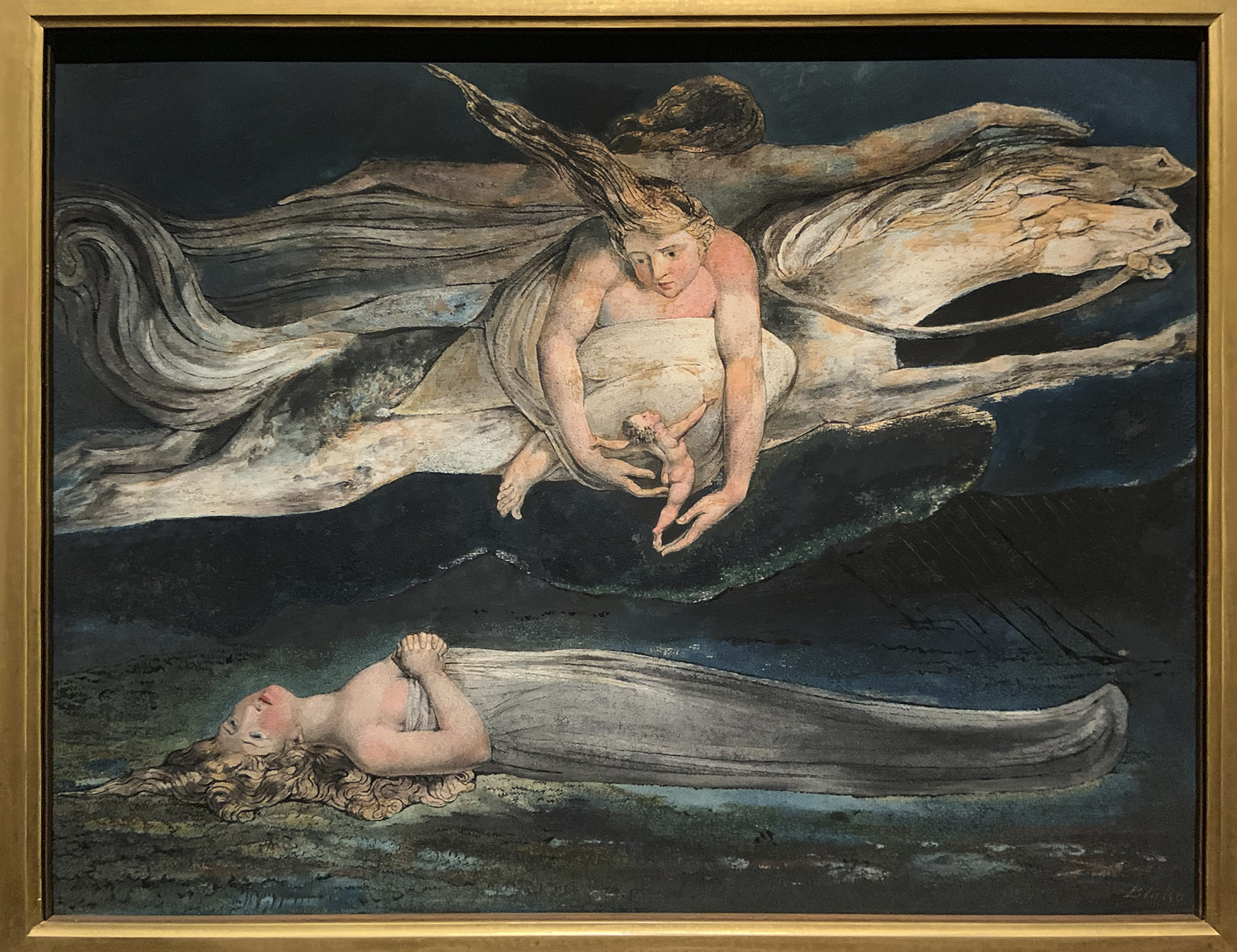
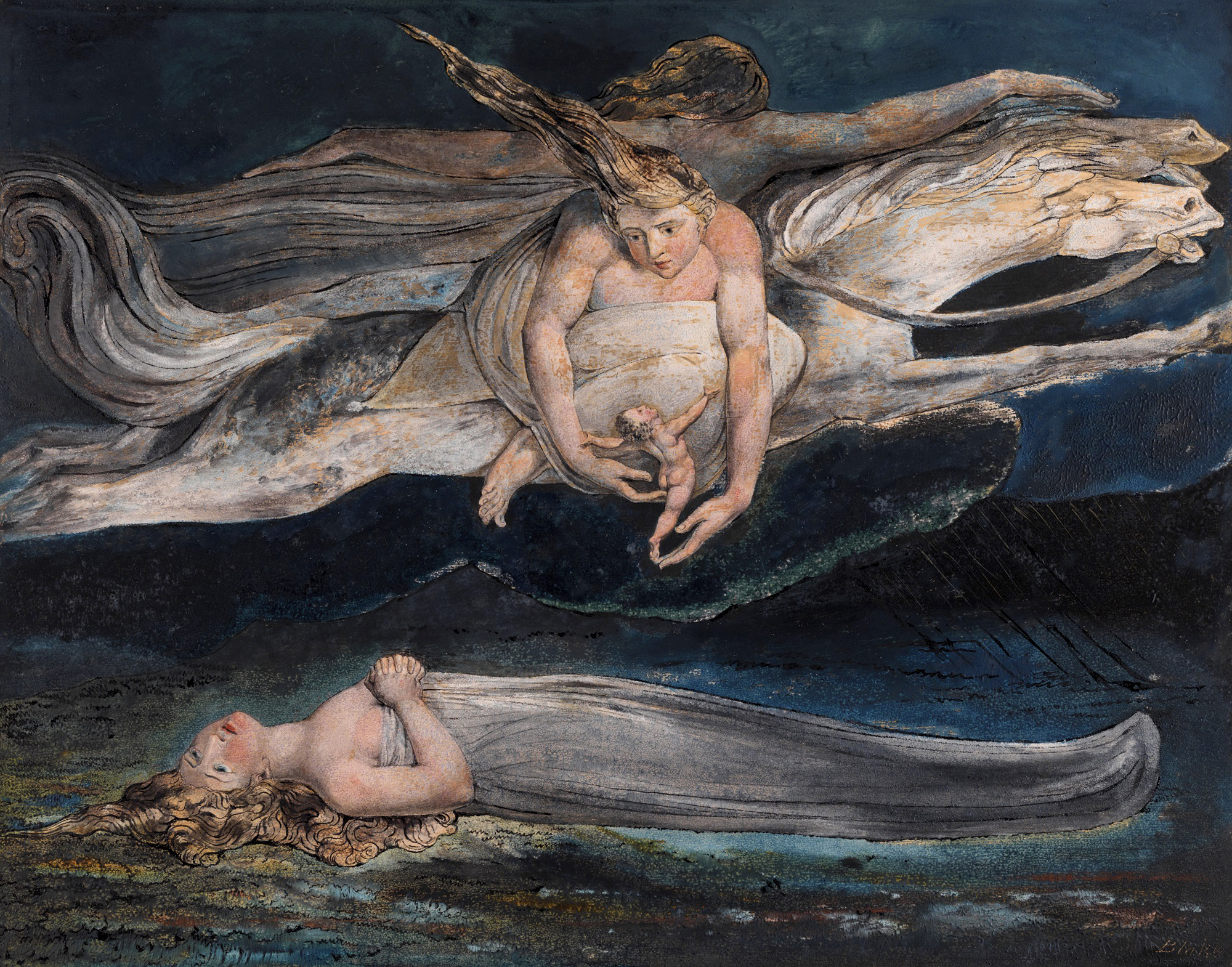
This image is taken from Macbeth: ‘pity, like a naked newborn babe / Striding the blast, or heaven’s cherubim horsed / Upon the sightless couriers of the air’. Blake draws on popularly-held associations between a fair complexion and moral purity. These connections are also made by Lavater, who writes that ‘the grey is the tenderest of horses, and, we may here add, that people with light hair, if not effeminate, are yet, it is well known, of tender formation and constitution’. Blake’s interest in the characters of different horses can also be seen in his Chaucer’s Canterbury Pilgrims.

Gallery label, March 2011


And pity, like a naked new-born babe,
Striding the blast, or heaven’s cherubim, horsed
Upon the sightless couriers of the air,
Shall blow the horrid deed in every eye,
That tears shall drown the wind. …

Act 1 Scene 7 of Shakespeare’s tragedy Macbeth


William Blake (British, 1757-1827) 'Pity' c. 1795


William Blake (British, 1757-1827)
Pity
c. 1795
Colour print, ink and watercolour on paper
425 x 539 mm
Tate. Presented by W. Graham Robertson 1939


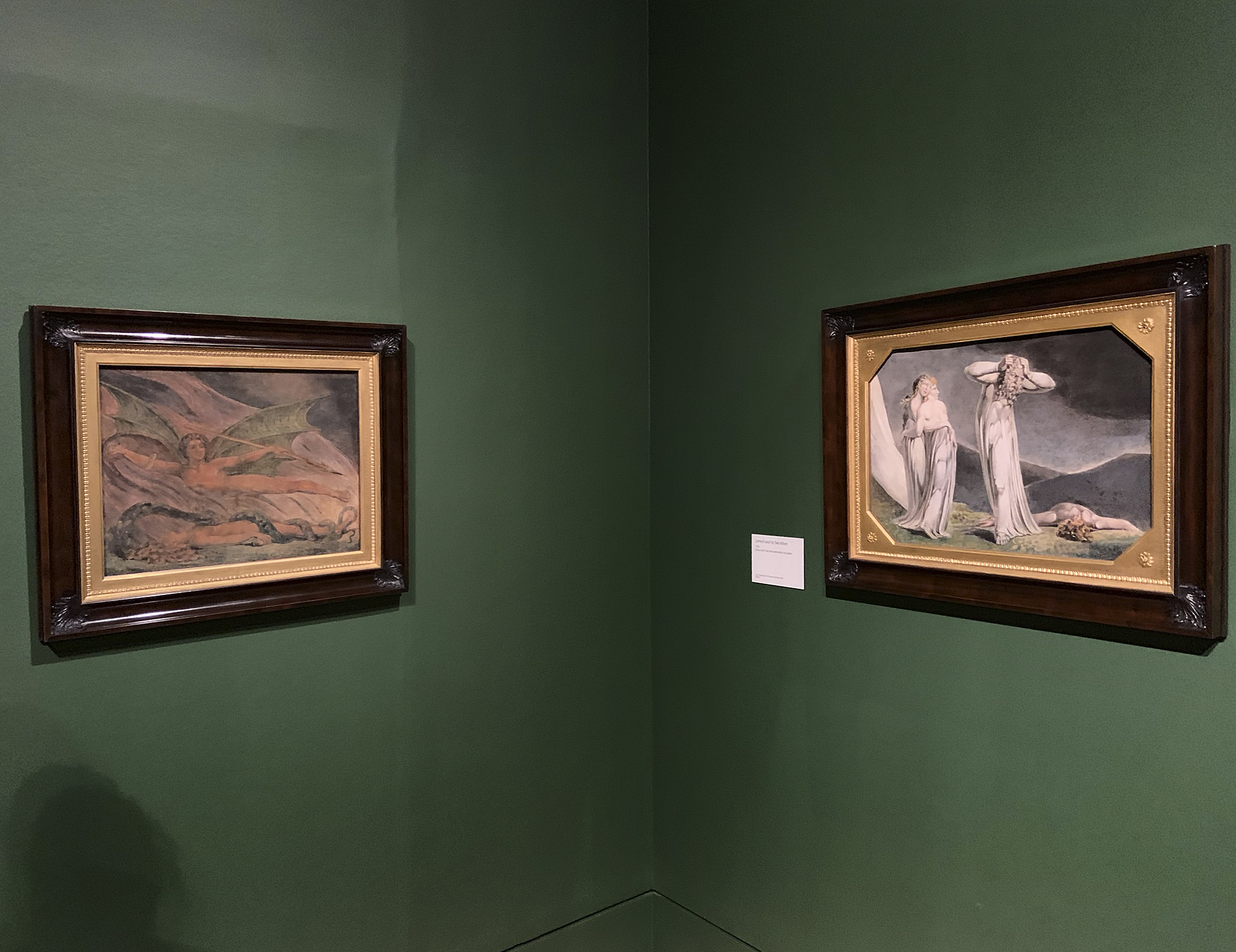
Installation view of the exhibition 'William Blake' at Tate Britain, London showing at left, 'Satan Exulting over Eve' (c. 1795) and at right, 'Lamech and his Two Wives' (1795)


Installation view of the exhibition William Blake at Tate Britain, London showing at left, Satan Exulting over Eve (c. 1795) and at right, Lamech and his Two Wives (1795)
Photo: Marcus Bunyan


Installation view of the exhibition 'William Blake' at Tate Britain, London showing at left, 'Lamech and his Two Wives' (1795) and at right, 'Naomi Entreating Ruth and Orpah to Return to the Land of Moab' (c. 1795)

Installation view of the exhibition 'William Blake' at Tate Britain, London showing at left, 'Lamech and his Two Wives' (1795) and at right, 'Naomi Entreating Ruth and Orpah to Return to the Land of Moab' (c. 1795)


Installation view of the exhibition William Blake at Tate Britain, London showing at left, Lamech and his Two Wives (1795) and at right, Naomi Entreating Ruth and Orpah to Return to the Land of Moab (c. 1795)
Photos: Marcus Bunyan


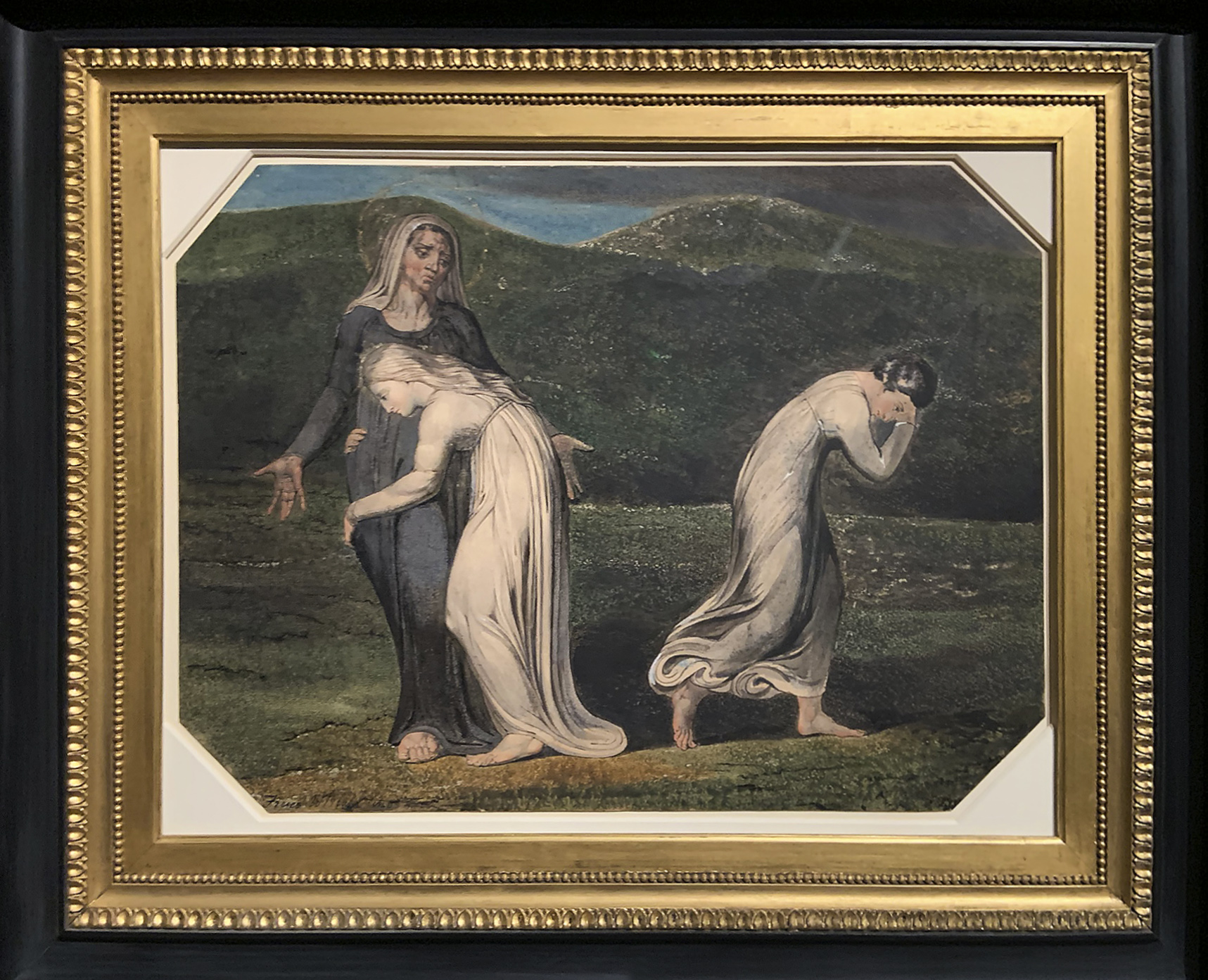
William Blake (British, 1757-1827) 'Naomi Entreating Ruth and Orpah to Return to the Land of Moab' c. 1795 (installation view)

William Blake (British, 1757-1827) 'Naomi Entreating Ruth and Orpah to Return to the Land of Moab' c. 1795 (installation view)

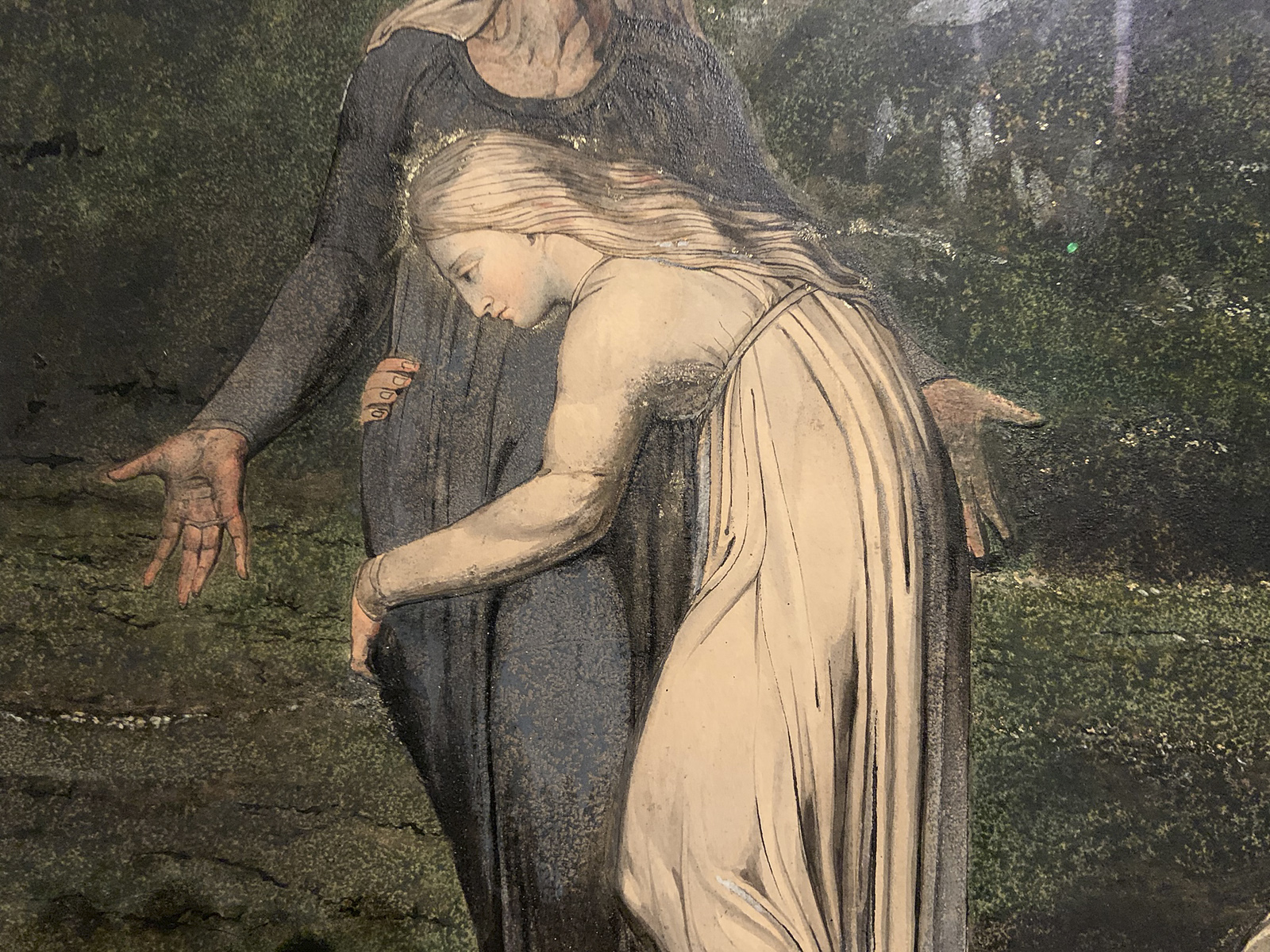
William Blake (British, 1757-1827) 'Naomi Entreating Ruth and Orpah to Return to the Land of Moab' c. 1795 (installation view detail)


William Blake (British, 1757-1827)
Naomi Entreating Ruth and Orpah to Return to the Land of Moab (installation views)
c. 1795
Colour print finished in pen and ink, shell gold and Chinese white on paper
42.5 x 60cm
Victoria and Albert Museum. Given by J. E. Taylor, Esq, London
Photos: Marcus Bunyan


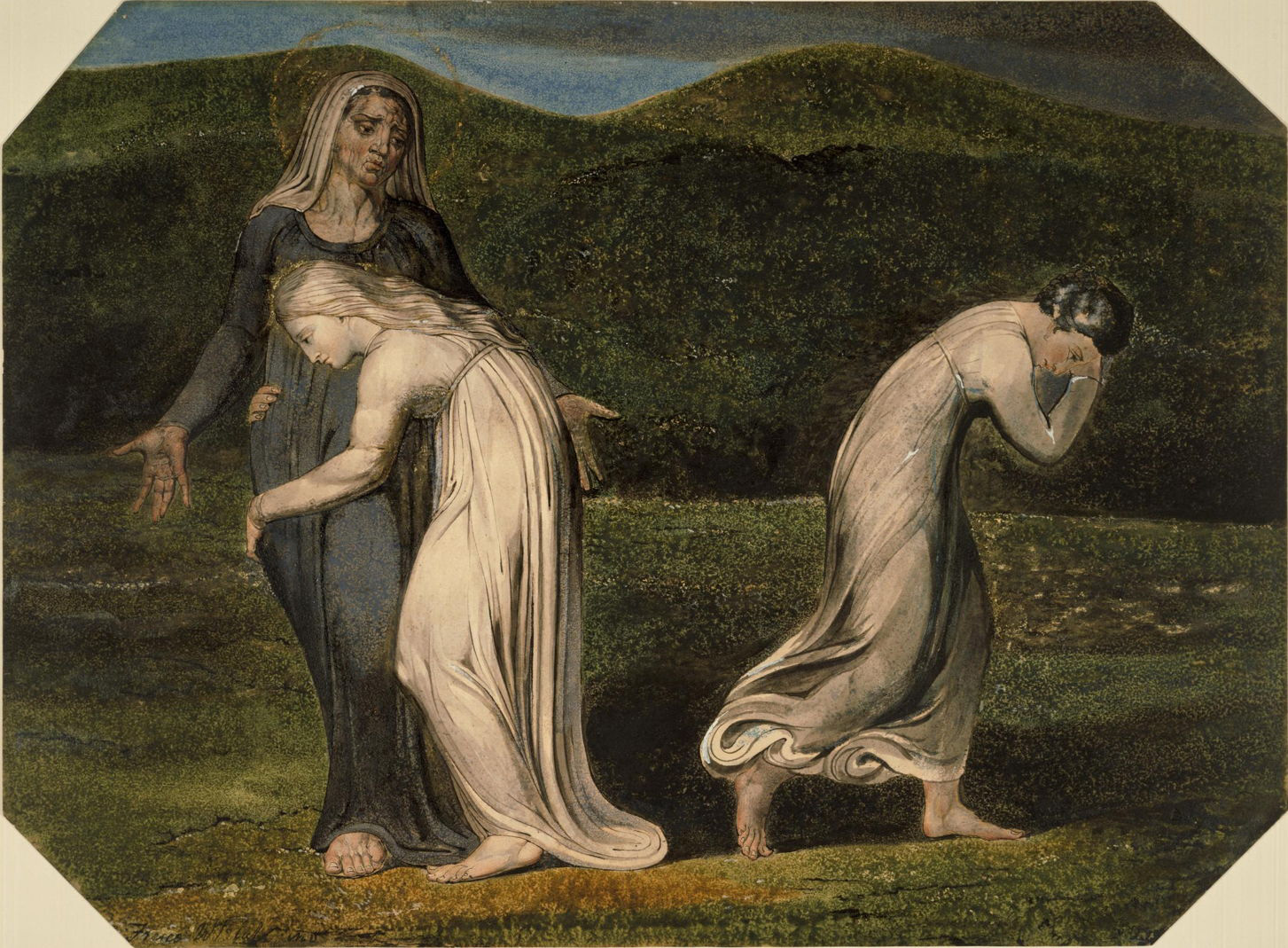
Naomi Entreating Ruth and Orpah to Return to the Land of Moab (c. 1795) is another first impression, showing a slightly more familiar Biblical narrative from the book of Ruth, chapter 1, verses 11-17. Naomi, seen at the left in a black robe, and her two daughters-in-law have become widowed. She decides to leave the land of Moab to return to her kin in Judah. Ruth, who is embracing her, remains devoted to Naomi, and returns with her, but Orpah, walking off to the right, decides to stay. Interestingly, because of her place in the lineage of David and so that of Jesus, Blake gives Naomi a halo, but not Ruth.

Hoakley. “Tyger’s eye: the paintings of William Blake, 5 – The large prints, 1795,” on The Electric Light Company website November 26, 2016 [Online] Cited 18/01/2020


William Blake (British, 1757-1827) 'Naomi Entreating Ruth and Orpah to Return to the Land of Moab' c. 1795


William Blake (British, 1757-1827)
Naomi Entreating Ruth and Orpah to Return to the Land of Moab
c. 1795
Colour print finished in pen and ink, shell gold and Chinese white on paper
42.5 x 60cm
Victoria and Albert Museum. Given by J. E. Taylor, Esq, London
Image courtesy of and © Victoria and Albert Museum, London


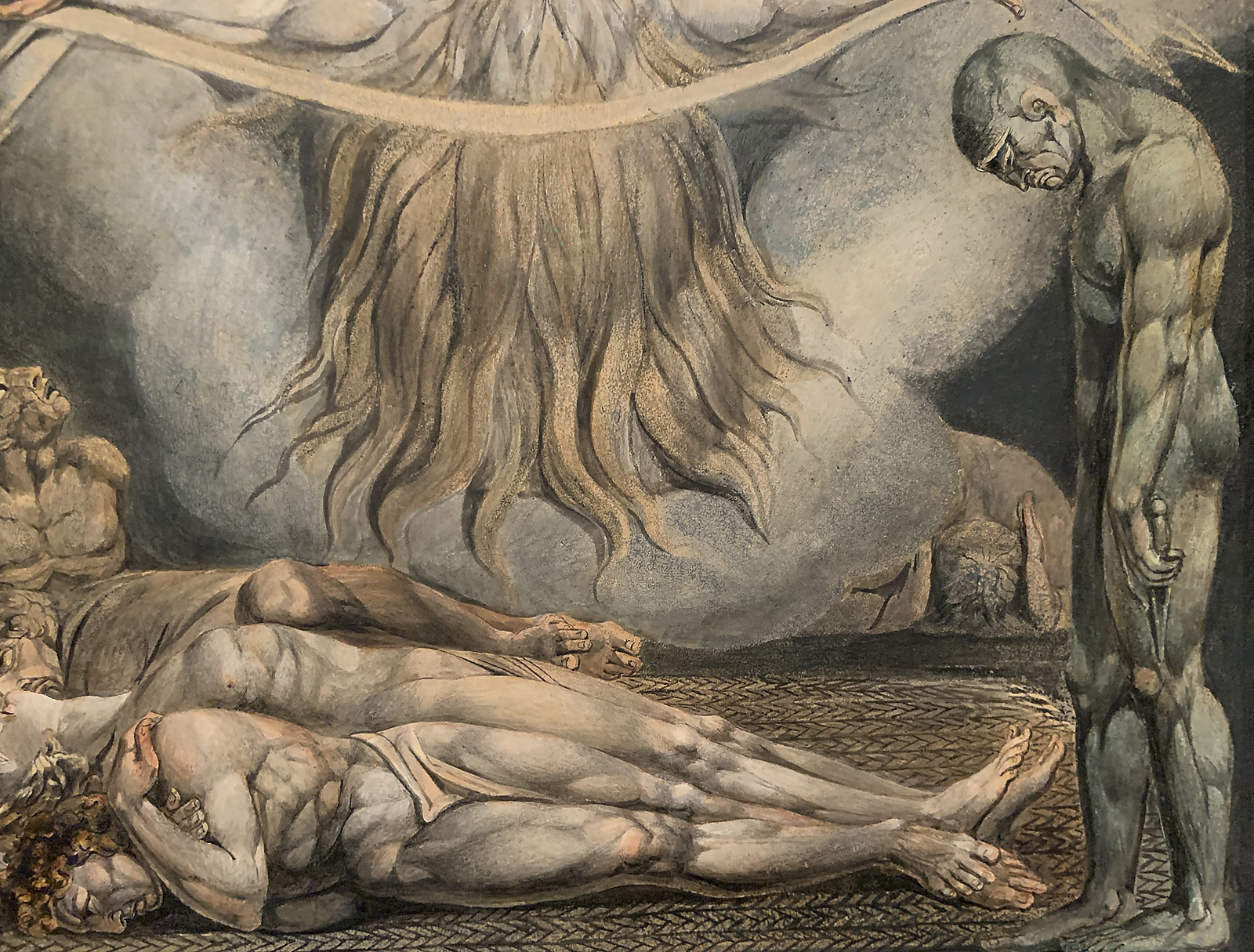
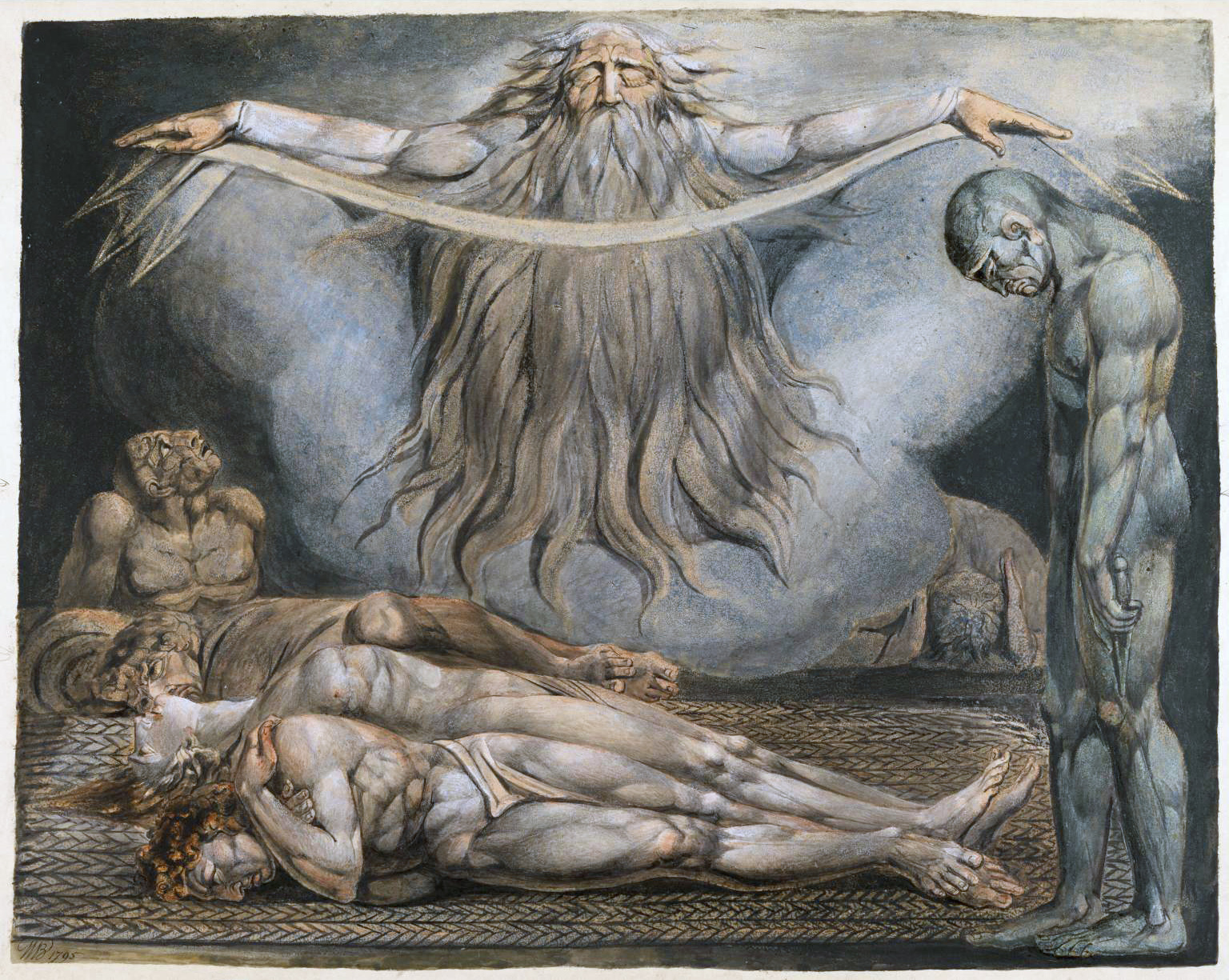
William Blake (British, 1757-1827) 'The House of Death' 1795 - c.1805 (installation view)

William Blake (British, 1757-1827) 'The House of Death' 1795 - c.1805 (installation view)

William Blake (British, 1757-1827) 'The House of Death' 1795 - c.1805 (installation view detail)

William Blake (British, 1757-1827) 'The House of Death' 1795 - c.1805 (installation view detail)


William Blake (British, 1757-1827)
The House of Death (installation views)
1795 – c.1805
Colour print, ink and watercolour on paper
Tate. Presented by W. Graham Robertson 1939
Photos: Marcus Bunyan


Blake produced a number of designs relating to plague, war, fire and disaster … This design has been linked to the poet John Milton’s vision of a ‘Lazar House’ – a hospital for infectious diseases – from Paradise Lost (1664).

The English poet John Milton, who died in 1674, was viewed by Blake as England’s greatest poet, worthy of emulation but by no means above criticism. It was inevitable that in the large colour prints, his most important printing project, Blake would include Miltonic subjects.This print illustrates lines from Book XI of Milton’s poem Paradise Lost. The Archangel Michael shows Adam the misery that will be inflicted on Man now he has eaten the Forbidden Fruit. In a vision of ‘Death’s ‘grim Cave” Adam sees a ‘monstrous crew’ of men afflicted by ‘Diseases dire’.

Gallery label, August 2004


The House of Death (1795 – c. 1805), sometimes known as The Lazar House (a lazar is someone afflicted with a disease), is the first impression. It is a rather grim image taken from Milton’s Paradise Lost book 11, lines 477-493. There, the Archangel Michael shows Adam the afflictions that man will suffer in the form of disease, now that he has eaten the Forbidden Fruit. So rather than the bodies being dead, they are in the throes of suffering the diseases which have been unleashed following the Fall.

The similarity of the figure, who should (by Milton) be the Archangel Michael, to Blake’s images of Urizen, is clear, and may refer back to his illuminated books, and to the French Revolution.

Hoakley. “Tyger’s eye: the paintings of William Blake, 5 – The large prints, 1795,” on The Electric Light Company website November 26, 2016 [Online] Cited 18/01/2020


William Blake (British, 1757-1827) 'The House of Death' 1795 - c.1805


William Blake (British, 1757-1827)
The House of Death
1795 – c.1805
Colour print, ink and watercolour on paper
Tate. Presented by W. Graham Robertson 1939


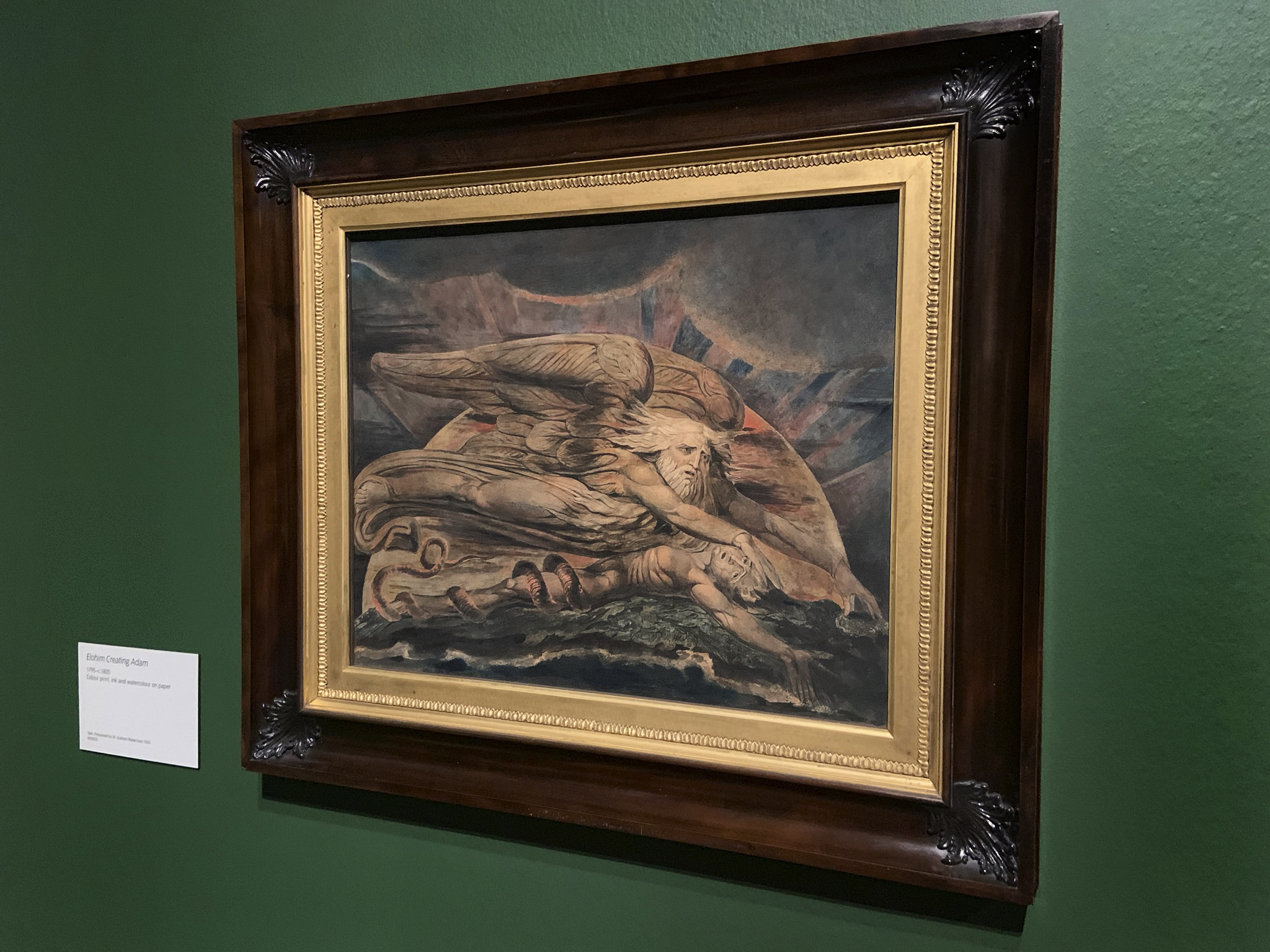
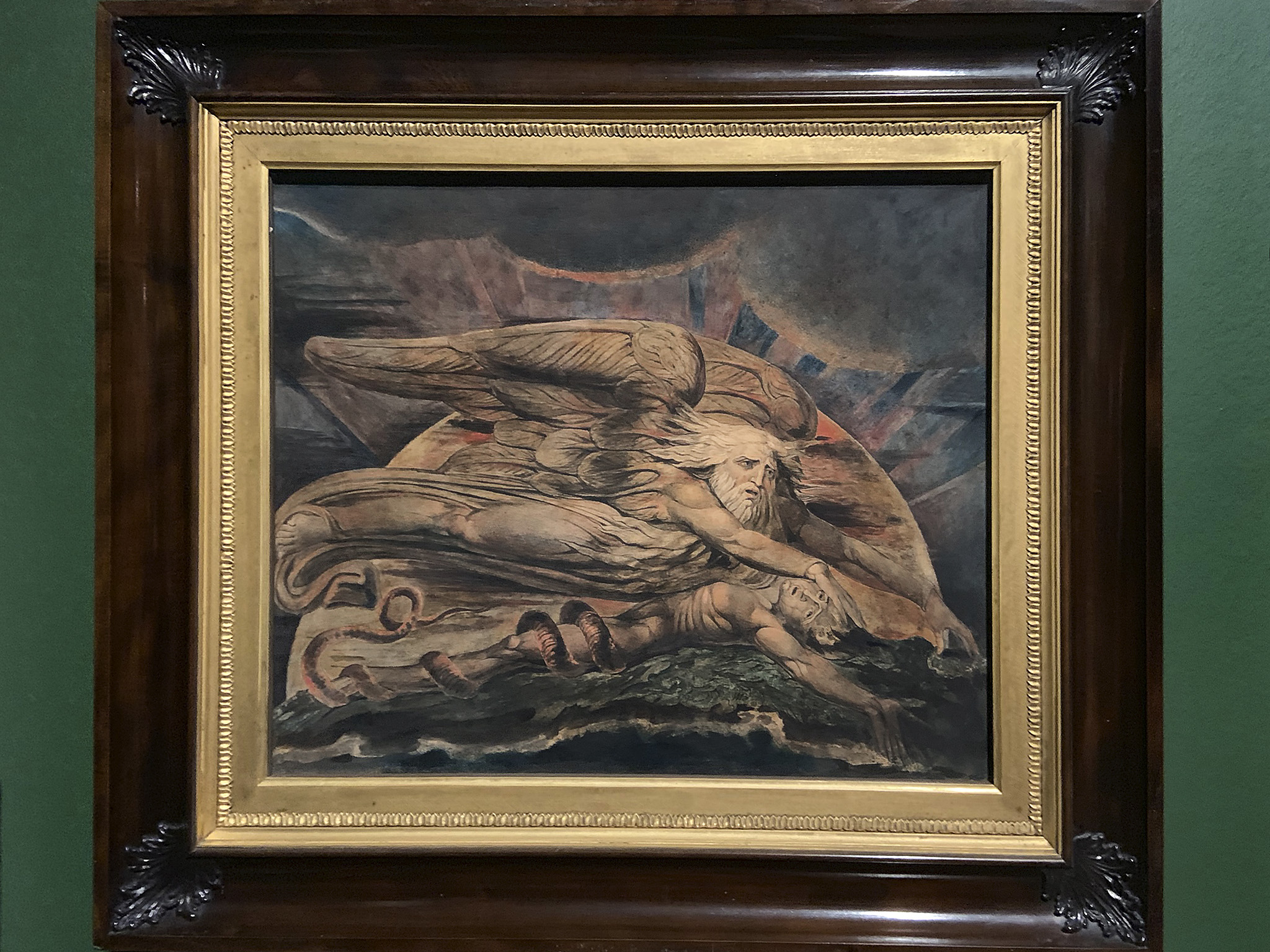
William Blake (British, 1757-1827) 'Elohim Creating Adam' 1795 - c. 1805 (installation view)

William Blake (British, 1757-1827) 'Elohim Creating Adam' 1795 - c. 1805 (installation view)

William Blake (British, 1757-1827) 'Elohim Creating Adam' 1795 - c. 1805 (installation view)

William Blake (British, 1757-1827) 'Elohim Creating Adam' 1795 - c. 1805 (installation view detail)


William Blake (British, 1757-1827)
Elohim Creating Adam (installation views)
1795 – c. 1805
Colour print, ink and watercolour on paper
Tate. Presented by W. Graham Robertson 1939
Photos: Marcus Bunyan


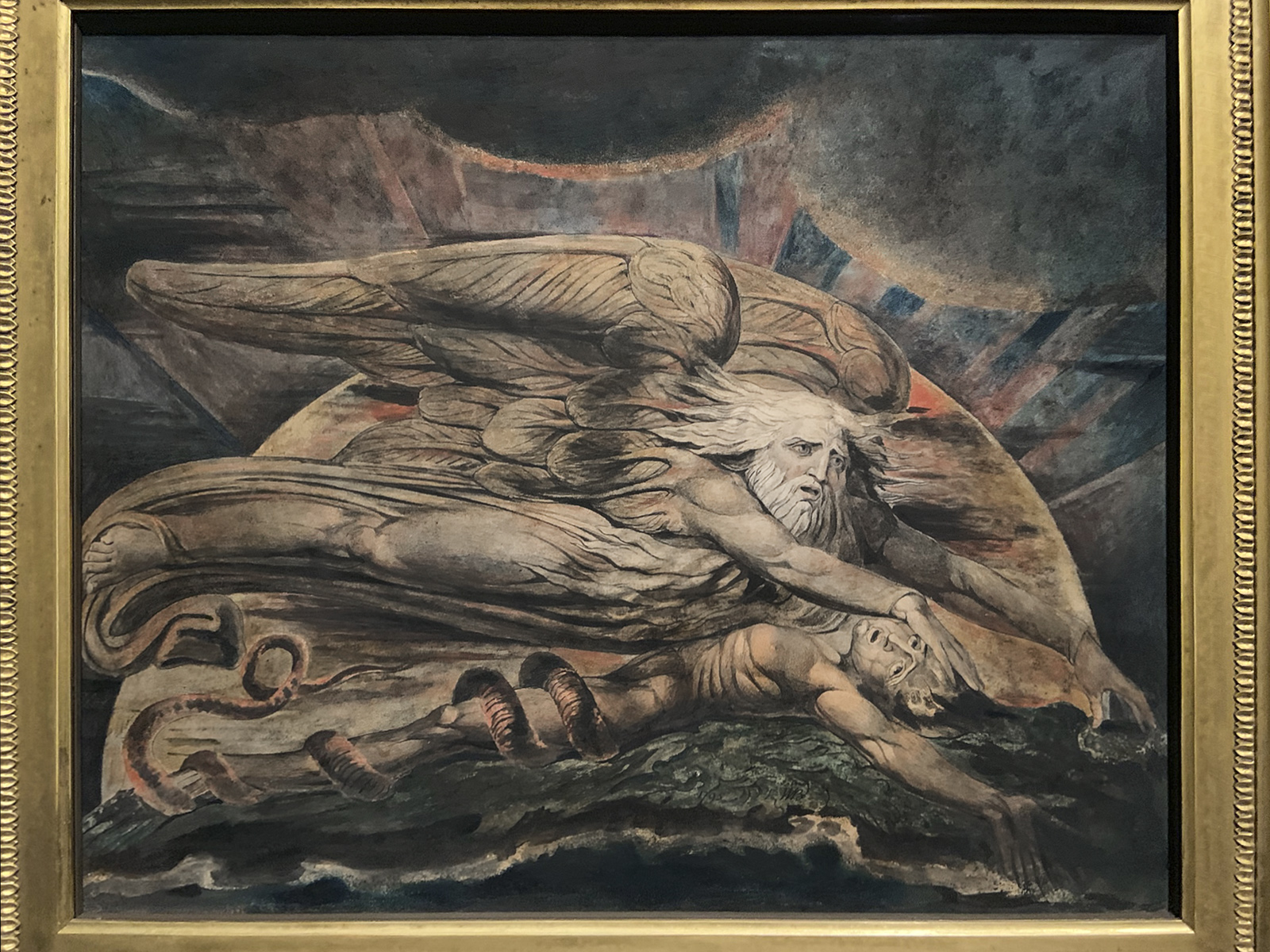
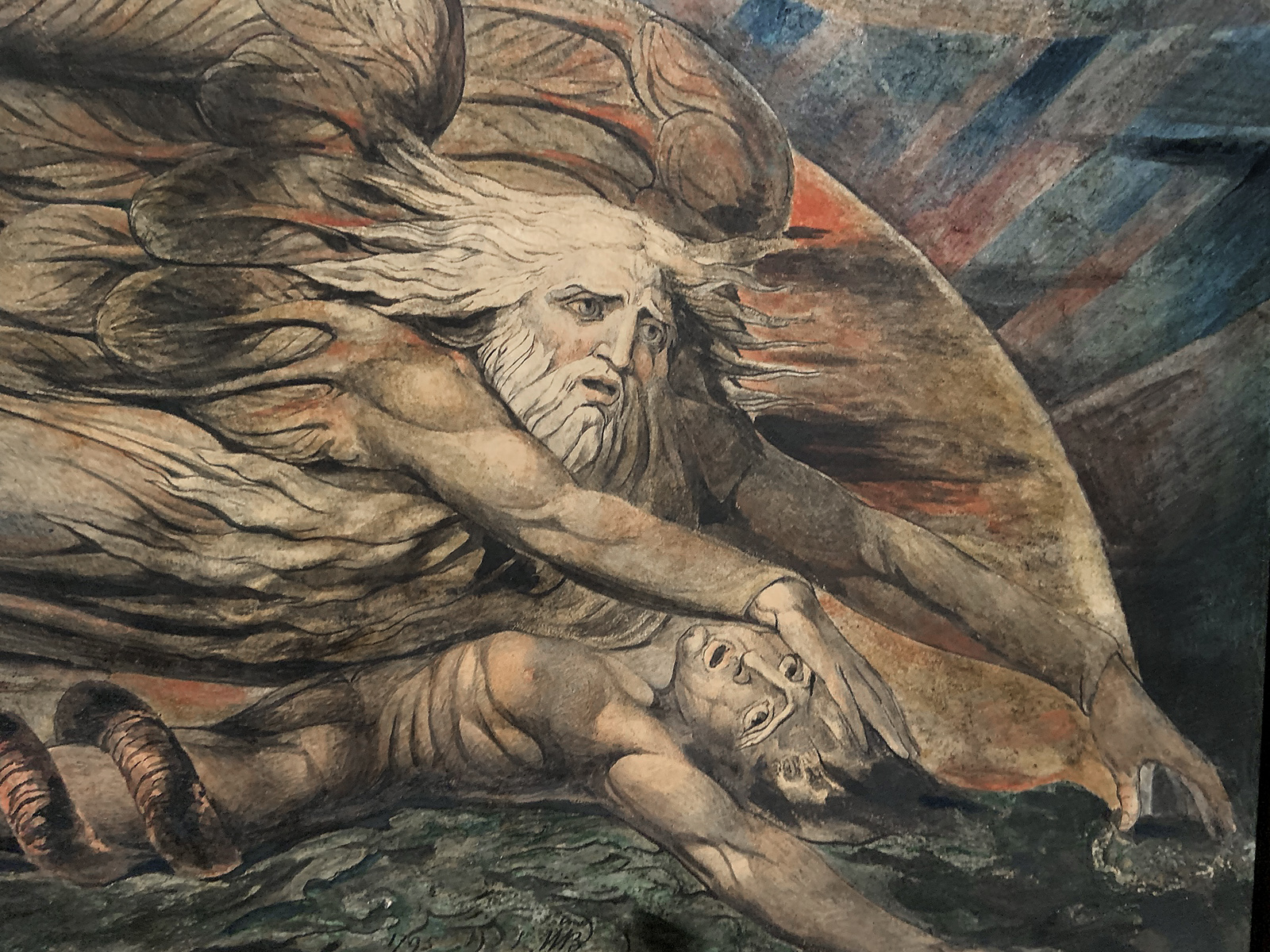
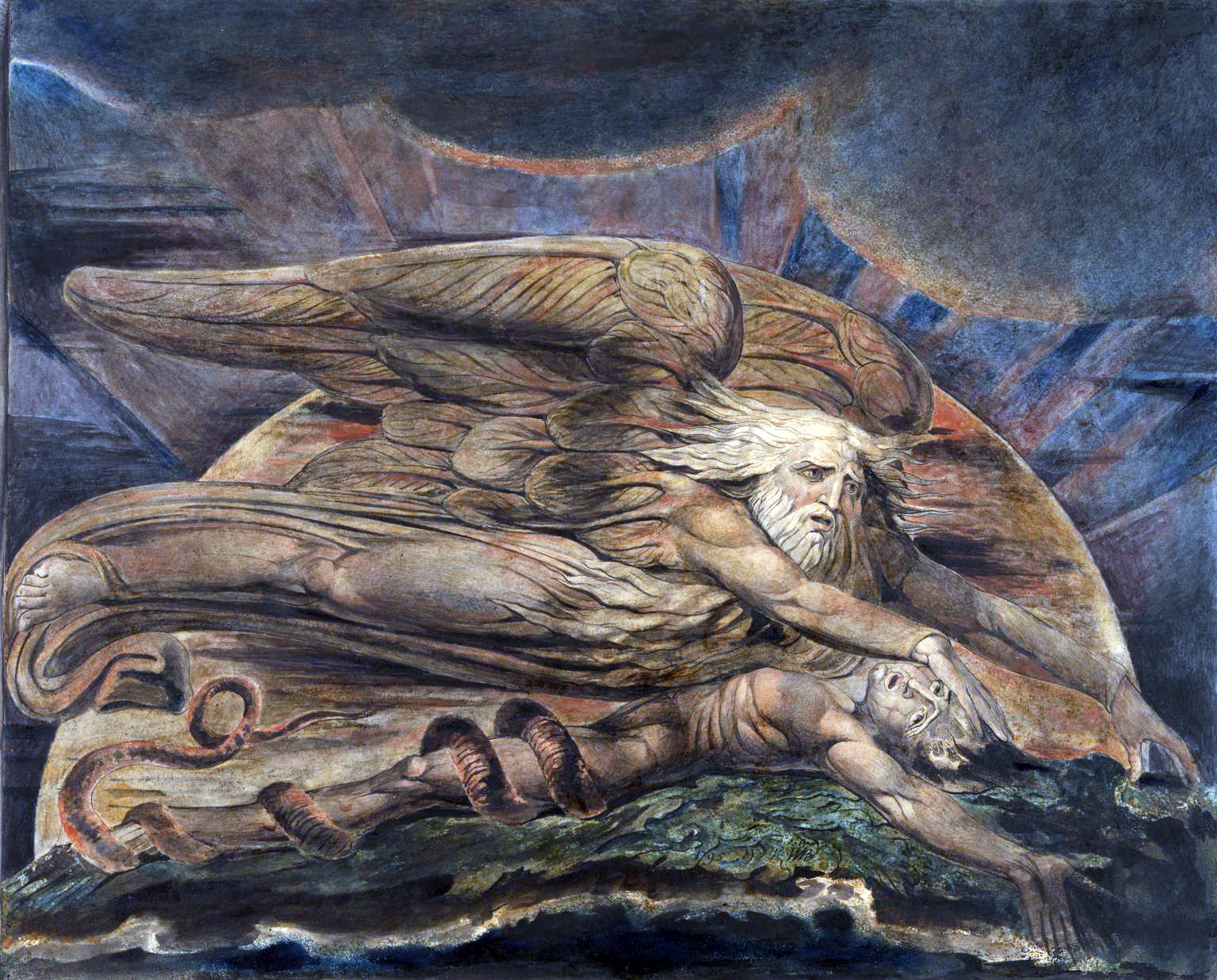
Elohim is a Hebrew name for God. This picture illustrates the Book of Genesis: ‘And the Lord God formed man of the dust of the ground’. Adam is shown growing out of the earth, a piece of which Elohim holds in his left hand.

For Blake the God of the Old Testament was a false god. He believed the Fall of Man took place not in the Garden of Eden, but at the time of creation shown here, when man was dragged from the spiritual realm and made material.

Gallery label, May 2003


Elohim Creating Adam (1795, c 1805) is the only surviving impression of this work, which appears to have been listed by Blake as God Creating Adam. It is based on the book of Genesis chapter 2 verse 7:

And the Lord God formed man of the dust of the ground, and breathed into his nostrils the breath of life; and man became a living soul.

Blake shows this fairly literally, with Adam’s body still being formed out of the earth, and a large worm (not a serpent) is coiled around his left leg. The worm is also a symbol of mortality.

Blake’s mythology for Elohim, the Hebrew word for God and judge, is different from the ‘standard’ Christian concept of God, and distinct from Urizen too. I am not convinced that Blake intended to show his Elohim or Urizen here, and therefore the work may better be titled simply as God Creating Adam.

Hoakley. “Tyger’s eye: the paintings of William Blake, 5 – The large prints, 1795,” on The Electric Light Company website November 26, 2016 [Online] Cited 18/01/2020


William Blake (British, 1757-1827) 'Elohim Creating Adam' 1795 - c. 1805


William Blake (British, 1757-1827)
Elohim Creating Adam (installation views)
1795 – c. 1805
Colour print, ink and watercolour on paper
Tate. Presented by W. Graham Robertson 1939


William Blake (British, 1757-1827) 'The Horse' c. 1805 (installation view)

William Blake (British, 1757-1827) 'The Horse' c. 1805 (installation view)


Installation view of the exhibition William Blake at Tate Britain, London showing The Horse c. 1805
Photos: Marcus Bunyan


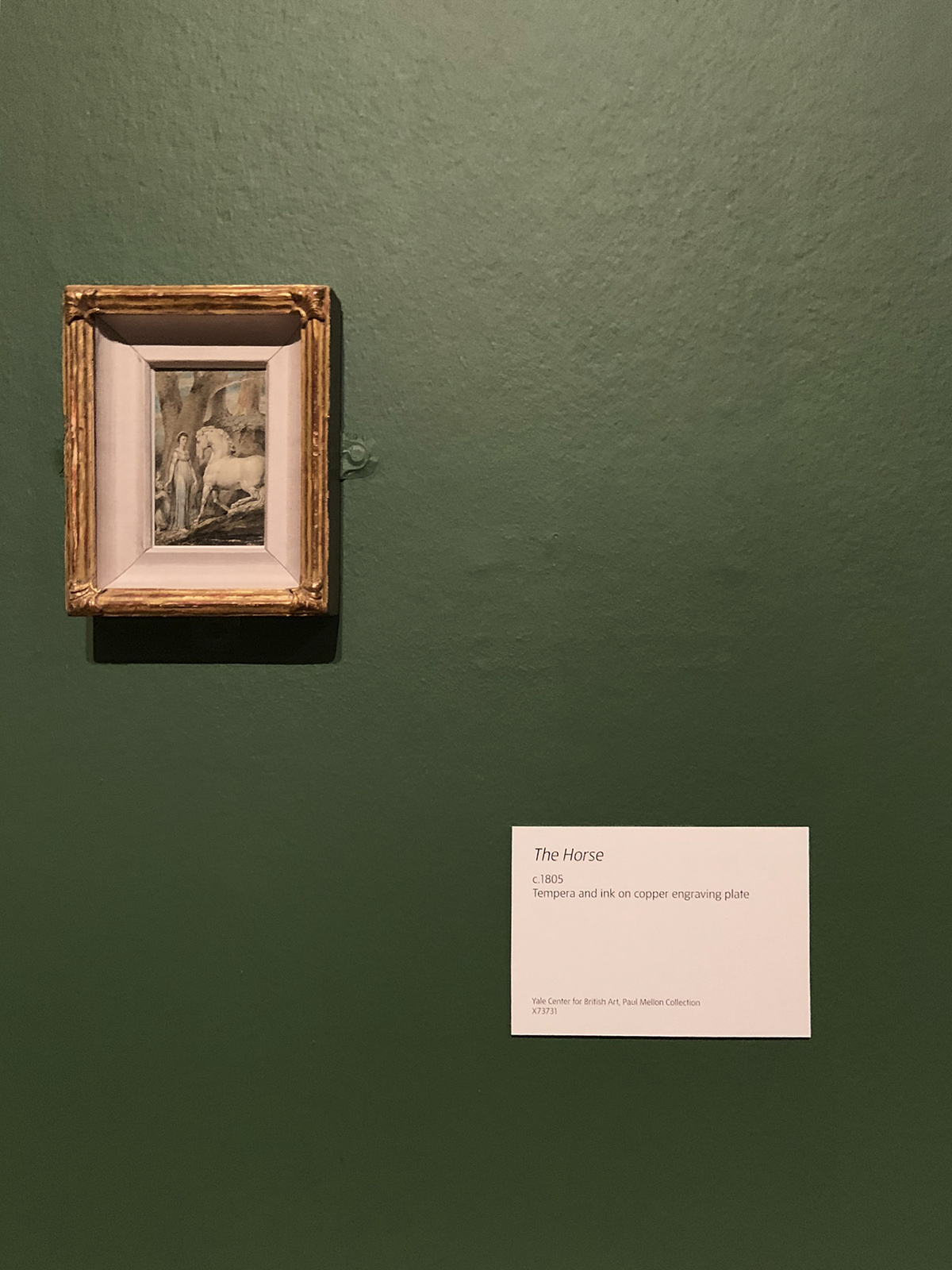
Quote above The Horse


“For when Los joind with me he took me in his firy whirlwind My Vegetated portion was hurried from Lambeths shades He set me down in Felphams Vale & prepard a beautiful Cottage for me that in three years I might write all these Visions To display Natures cruel holiness: the deceits of Natural Religion Walking in my Cottage Garden, sudden I beheld The Virgin Ololon & address’d her as a Daughter of Beulah.”


William Blake, from ‘Milton a Poem’, c. 1804-1811


William Blake (British, 1757-1827) 'The Horse' c. 1805 (installation view)


William Blake (British, 1757-1827)
The Horse (installation view)
c. 1805
Tempera and ink on copper engraving plate
Yale Center for British Art, Paul Mellon Collection
Photo: Marcus Bunyan


Room 4

Independence and despair


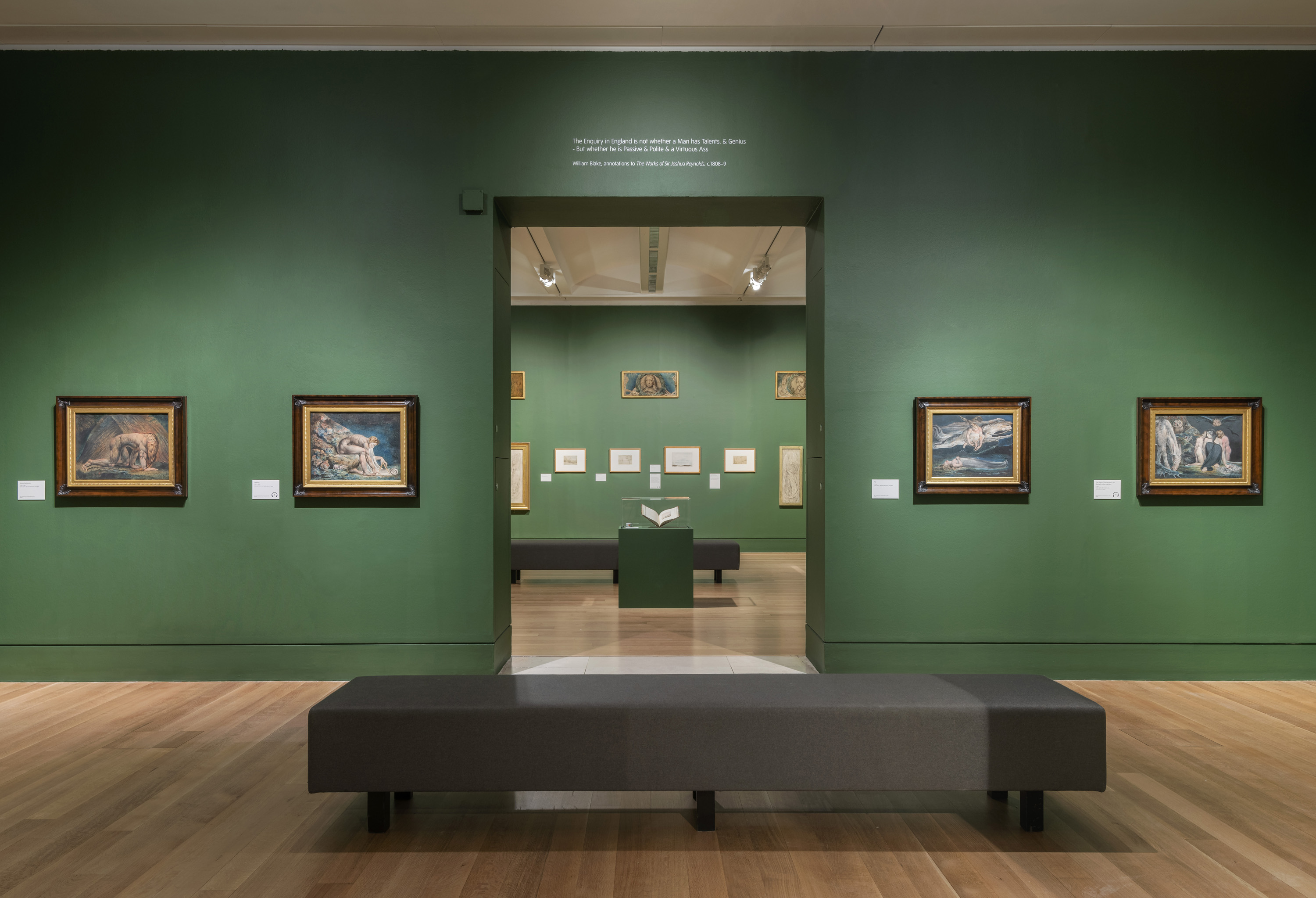
The Enquiry in England is not whether a Man has Talents. & Genius – But whether he is Passive & Polite & a Virtuous Ass


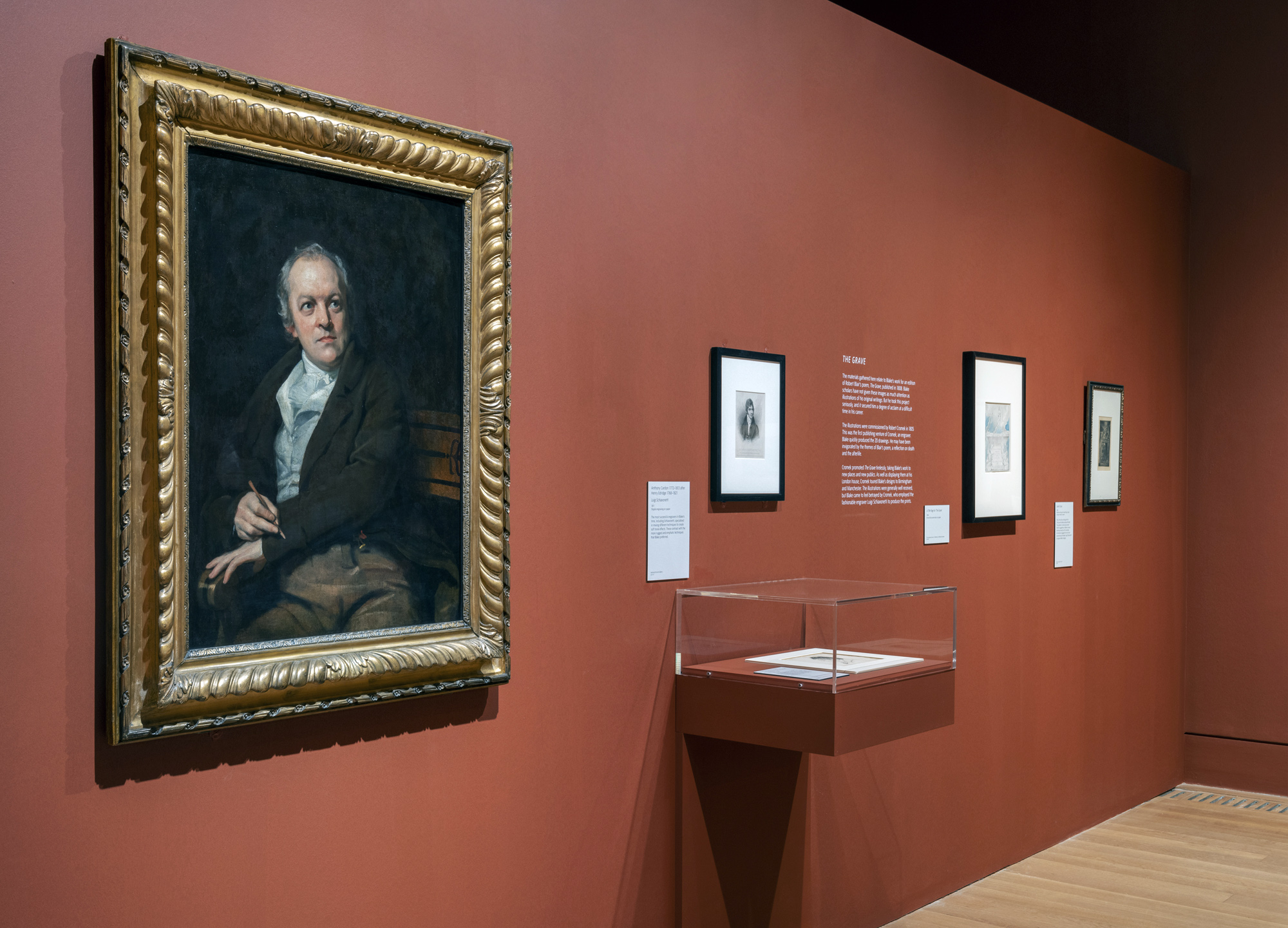
This gallery traces a particularly tumultuous period in Blake’s life, from 1805 to 1812. In 1805 he secured work illustrating Robert Blair’s poem The Grave. Published in 1808, his designs were a critical success, praised by many leading artists and patrons. But Blake was disappointed that he did not get the work of engraving the illustrations as well as designing them. He also suspected the publisher, Robert Cromek, of stealing his idea to do an engraving of the pilgrims from Chaucer’s Canterbury Tales.

In 1809 Blake organised a retrospective exhibition of his work. This was held in Broad Street, Soho, in the family home where his brother was now running the hosiery business. The exhibition catalogue set out his highly personal ideas about art and his ambitions as a painter of large-scale frescos. This room includes a recreation of the 1809 exhibition where you can experience Blake’s work as it would have been seen in Broad Street. There is also a projection showing his paintings at the gigantic scale he hoped to realise them.

The exhibition of 1809 was, however, a critical and commercial disaster. Blake was bitterly disappointed and felt betrayed by his friends in the art world. Having made big claims about restoring ‘the grand style of Art’, he exhibited for the last time in 1812. He then withdrew from the public gaze for several years.


Installation view of the exhibition 'William Blake' at Tate Britain, London

Installation view of the exhibition 'William Blake' at Tate Britain, London

Installation view of the exhibition 'William Blake' at Tate Britain, London

Installation view of the exhibition 'William Blake' at Tate Britain, London


Installation views of the exhibition William Blake at Tate Britain, London
Photos: Marcus Bunyan


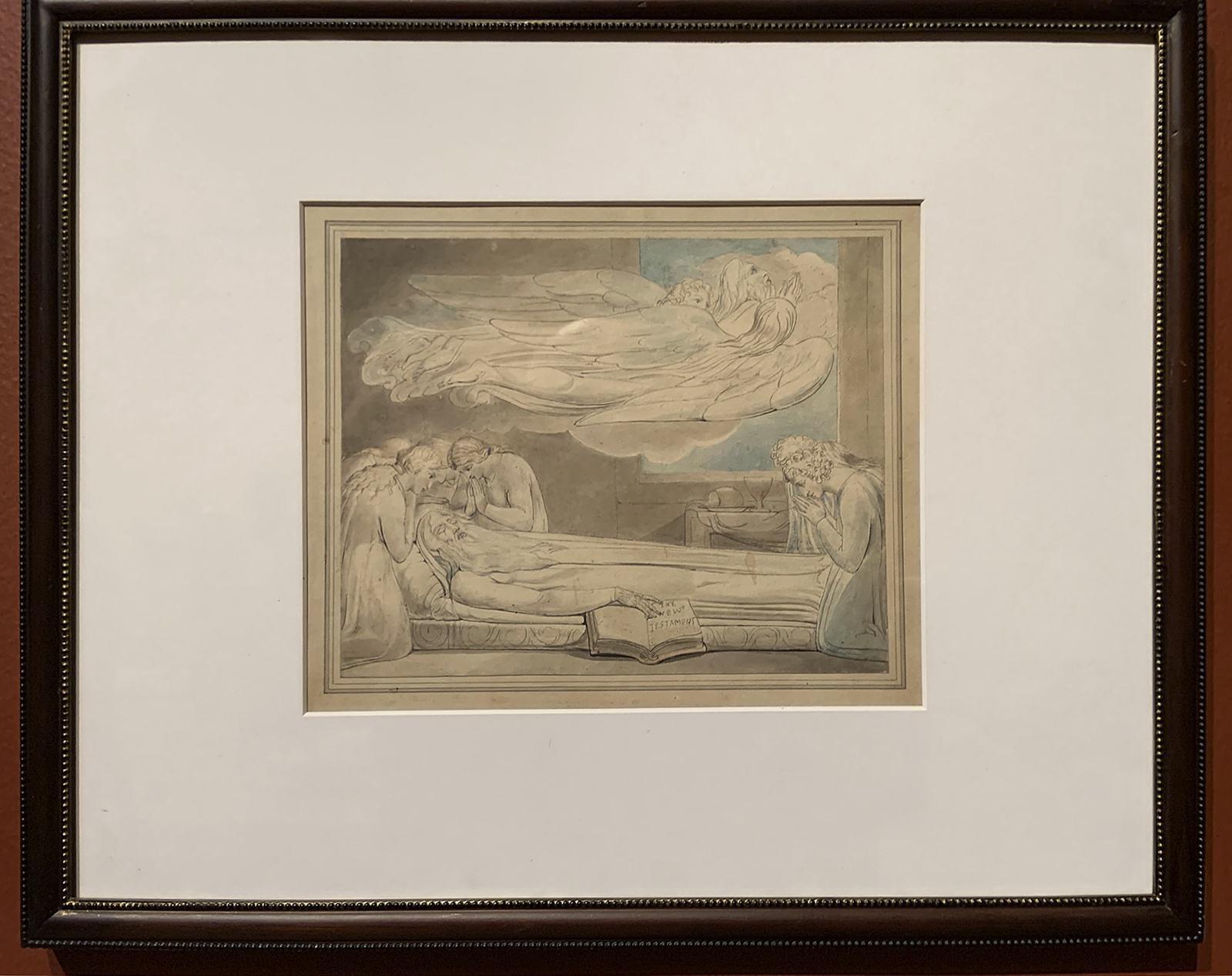
William Blake (British, 1757-1827) 'The Death of the Good Old Man' 1805 (installation view)

William Blake (British, 1757-1827) 'The Death of the Good Old Man' 1805 (installation view)


William Blake (British, 1757-1827)
The Death of the Good Old Man (installation views)
1805
Pen and ink and watercolour over traces of graphite on paper
Collection of Robert N. Essick
Photos: Marcus Bunyan


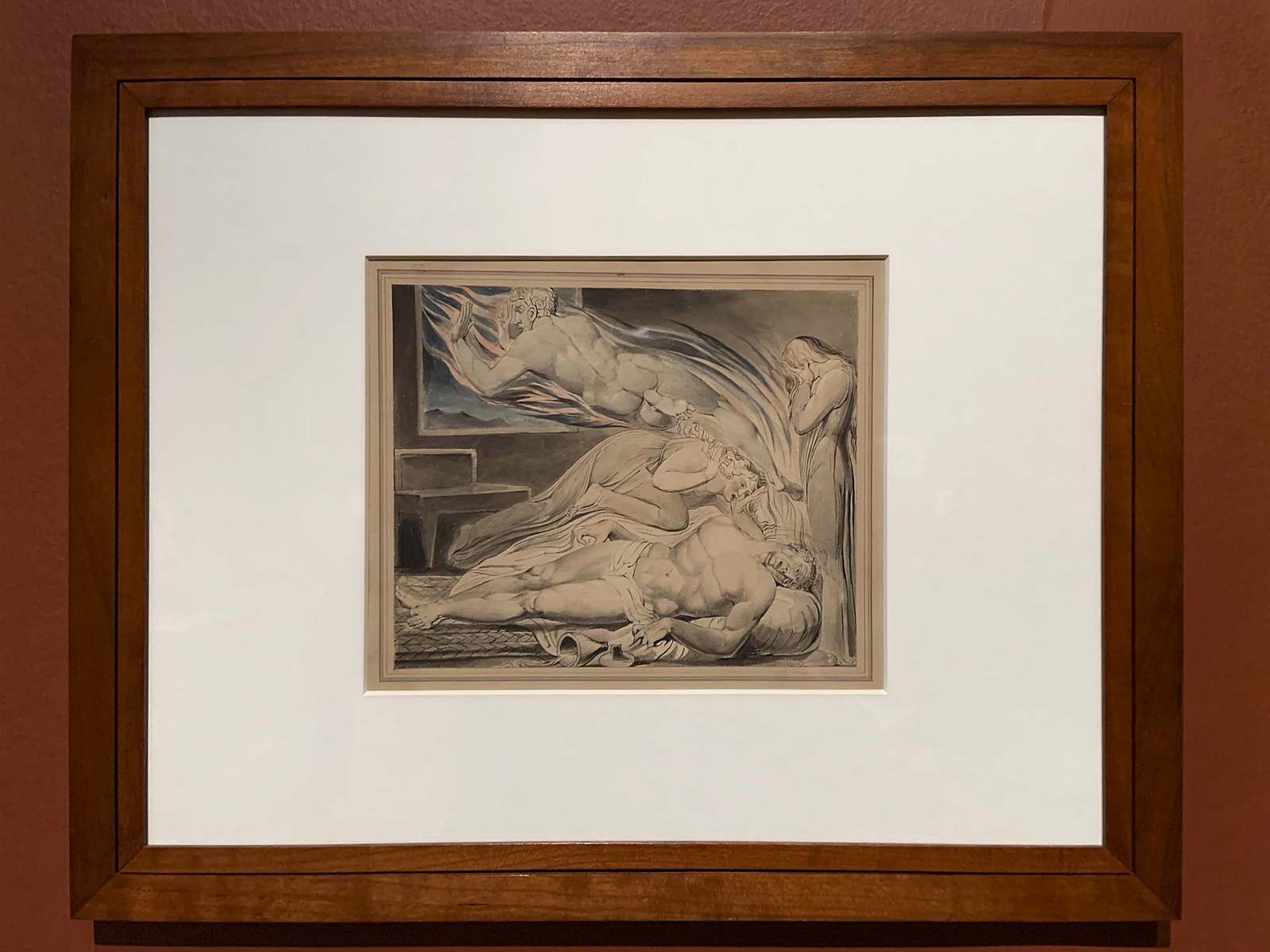
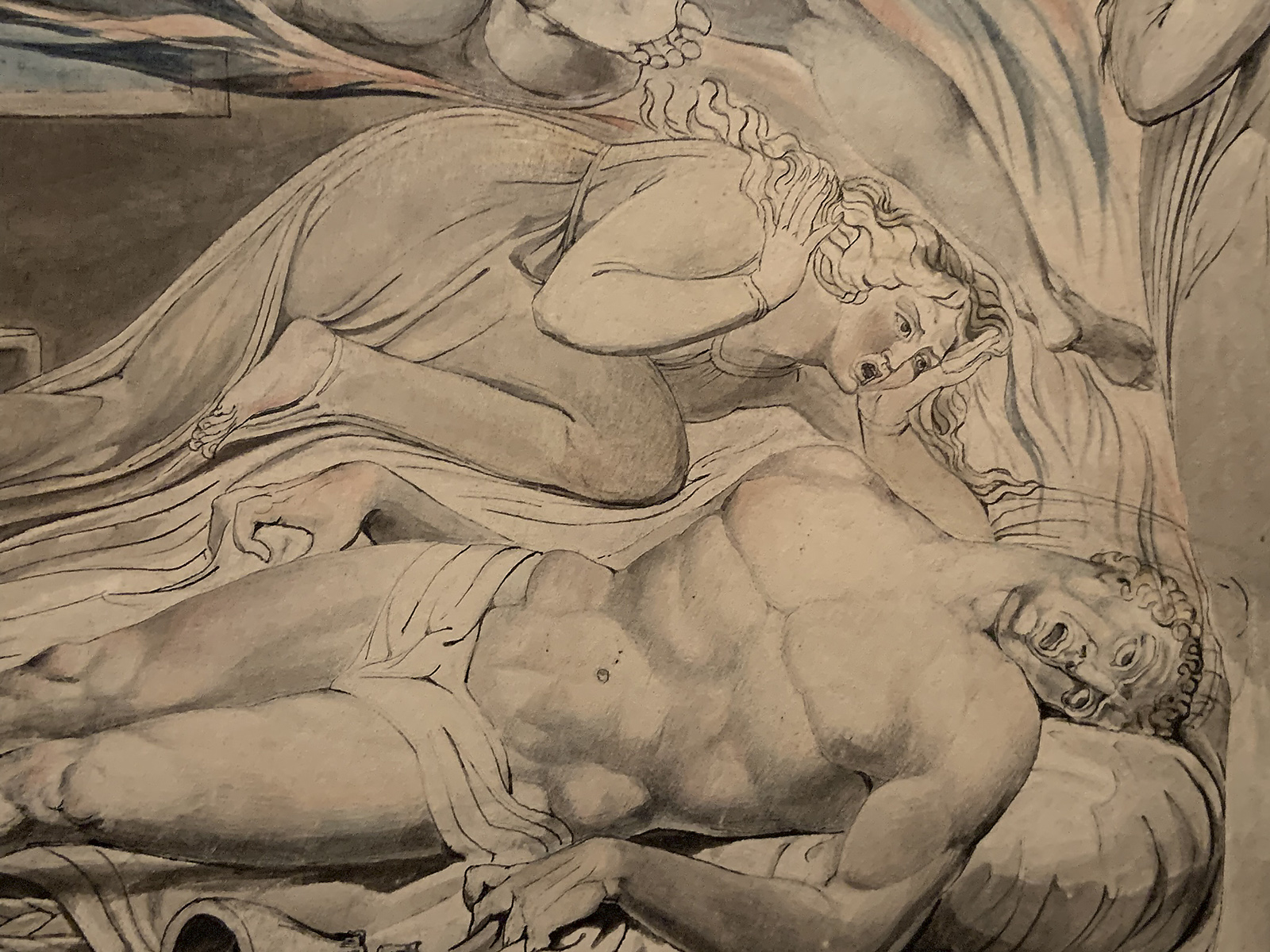
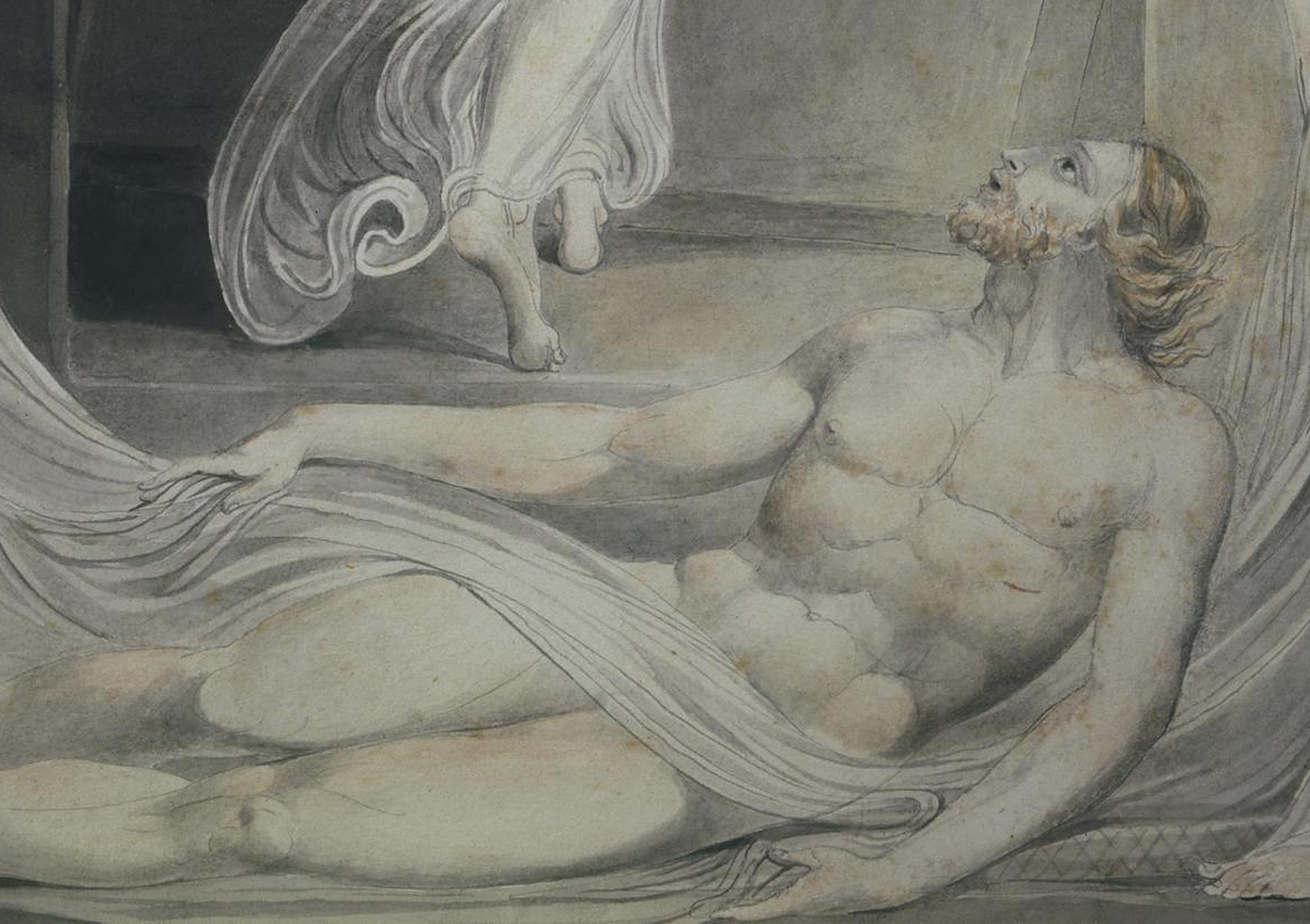
William Blake (British, 1757-1827) 'Death of the Strong Wicked Man' 1805 (installation view)

William Blake (British, 1757-1827) 'Death of the Strong Wicked Man' 1805 (installation view detail)


William Blake (British, 1757-1827)
Death of the Strong Wicked Man (installation views)
1805
Ink, watercolour and graphite on paper Paris, Musée du Louvre, Départment of Arts graphiques
Photos: Marcus Bunyan


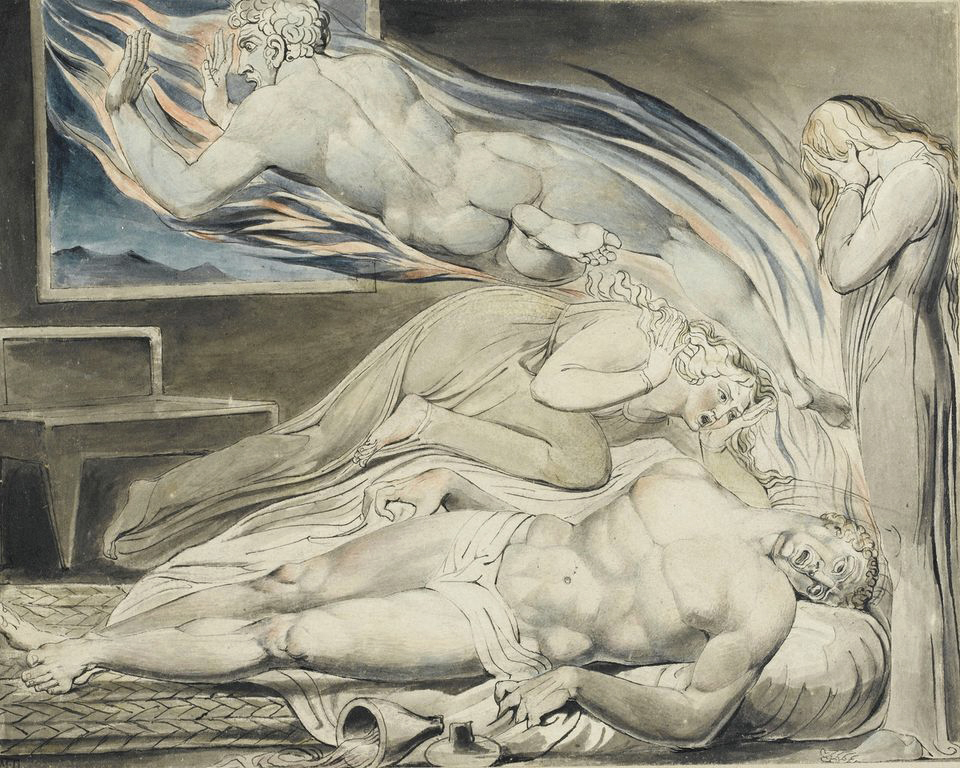
William Blake (British, 1757-1827) 'Death of the Strong Wicked Man' 1805


William Blake (British, 1757-1827)
Death of the Strong Wicked Man
1805
Ink, watercolour and graphite on paper Paris, Musée du Louvre, Départment of Arts graphiques
© Photo RMN – Gerard Blot


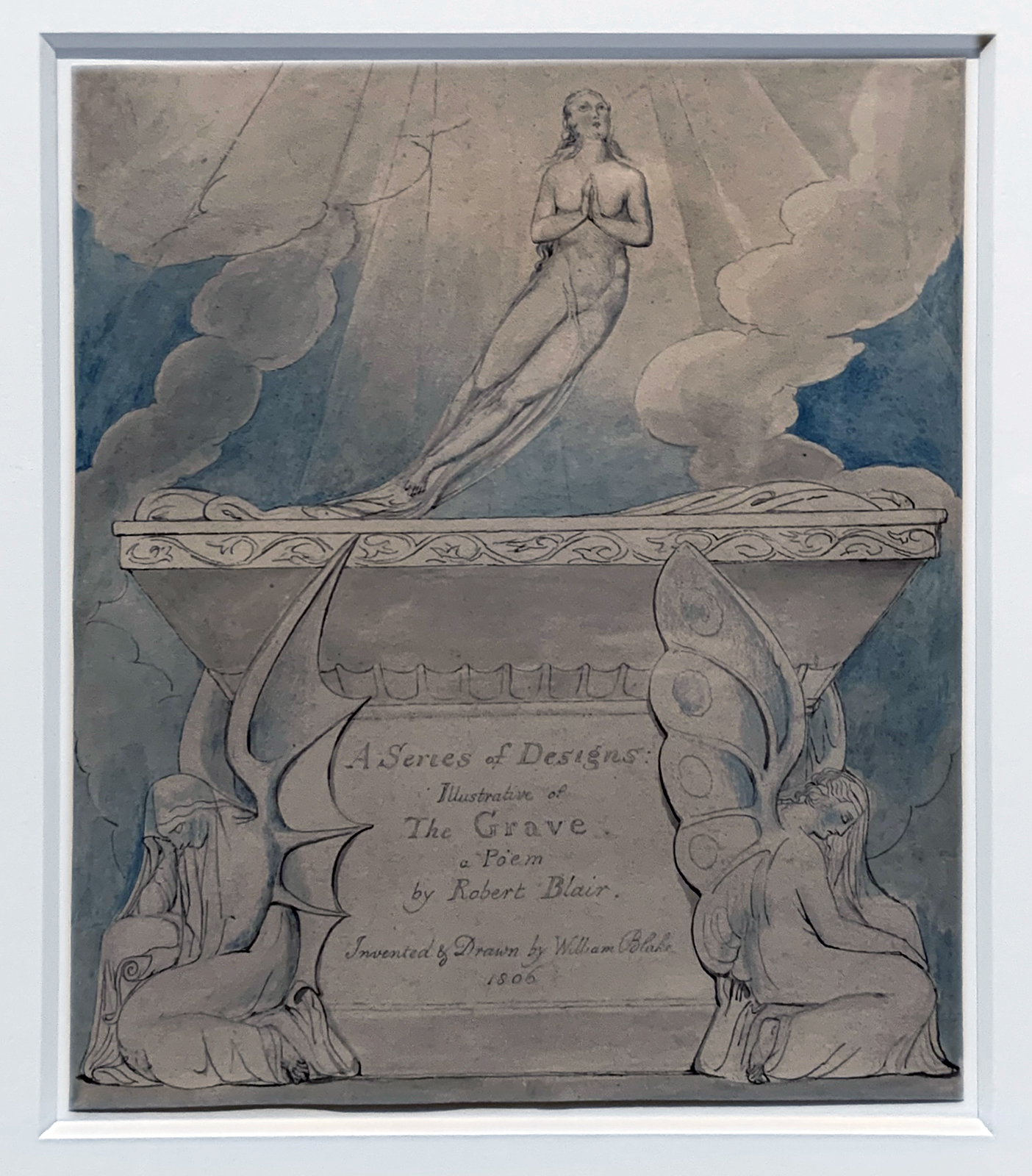
The Grave

The materials gathered here relate to Blake’s work for an edition of Robert Blair’s poem, The Grave, published in 1808. Blake scholars have not given these images as much attention as illustrations of his original writings. But he took this project seriously, and it secured him a degree of acclaim at a difficult time in his career.

The illustrations were commissioned by Robert Cromek in 1805. This was the first publishing venture of Cromek, an engraver. Blake quickly produced the 20 drawings. He may have been invigorated by the themes of Blair’s poem, a reflection on death and the afterlife.

Cromek promoted The Grave tirelessly, taking Blake’s work to new places and new publics. As well as displaying them at his London house, Cromek toured Blake’s designs to Birmingham and Manchester. The illustrations were generally well received, but Blake came to feel betrayed by Cromek, who employed the fashionable engraver Luigi Schiavonetti to produce the prints.

Wall text from the exhibition William Blake


William Blake (British, 1757-1827) A Title Page for 'The Grave' 1806 (installation view)

William Blake (British, 1757-1827) A Title Page for 'The Grave' 1806 (installation view)

William Blake (British, 1757-1827) A Title Page for 'The Grave' 1806 (installation view detail)


William Blake (British, 1757-1827)
A Title Page for The Grave (installation views)
1806
Ink and blue watercolour on paper
238 × 200 mm
The Huntington Library, Art Collections, and Botanical Gardens
Photos: Marcus Bunyan


The 1809 Exhibition

The space opposite evokes the upstairs rooms at 28 Broad Street, Soho, where Blake held his one-man exhibition in 1809. This was an ordinary London town-house, built in the 1730s. The Blake family had lived there since the 1750s. We know the proportions of the front room on the first floor from archival records and images. Visitors probably gained access to the exhibition through the hosiery shop downstairs. In 1809 this was being run by Blake’s brother, James. This was a strange setting for an art exhibition.

It was even stranger given the visionary character of Blake’s works and the gigantic ambitions he expressed in the accompanying Descriptive Catalogue. There were only a handful of visitors, and a single published review which dismissed Blake as ‘an unfortunate lunatic’. Every 20 minutes two works in this recreated exhibition will be virtually ‘restored’. They will be illuminated so you can see how they would have looked in 1809. You will also hear Blake’s words about these pictures, expressing his ambition to be a painter of large-scale wall paintings. Blake’s words are spoken by the actor Kevin Eldon.

The projection shows details from two of Blake’s paintings at the scale Blake hoped his work might one day be seen. They depict the ‘spiritual forms’ of the Prime Minster, William Pitt, and the naval hero, Admiral Nelson. In the catalogue of his 1809 exhibition, Blake wrote of his ambition to execute these and other paintings 30 metres high or more, for display in public buildings.

Many artists in Blake’s time aspired to such ambitious paintings, inspired by the high-minded rhetoric of the Royal Academy. But Blake himself observed: ‘The Painters of England are unemployed in Public Works’. There was no state support for artists, and little patronage from the monarchy or Church of England. Artists were instead freelancers, dependent on the market.

Despite his aspirations, Blake must have known that his dreams would never be fulfilled. After the failure of his one-man show in 1809 he became increasingly withdrawn and bitter.


William Blake (British, 1757-1827) 'The Penance of Jane Shore in St Paul's Church' c. 1793


William Blake (British, 1757-1827)
The Penance of Jane Shore in St Paul’s Church
c. 1793
Ink, watercolour and gouache on paper
245 × 295 mm
Tate
Presented by the executors of W. Graham Robertson through the Art Fund 1949
Creative Commons CC-BY-NC-ND (3.0 Unported)


Jane Shore was a mistress of King Edward IV. After his death in 1483 she was accused of being a harlot and condemned to do public penance in St Paul’s Cathedral. The ‘golden glow’ of this watercolour comes from a very thick, now-yellowed glue layer that was almost certainly applied as a varnish by Blake. He varnished his temperas in a similar way. Once it had yellowed someone else added a picture varnish on top. This also went yellow but has since been removed. The subtle colouring of Blake’s painting is suppressed by the glue varnish.

Gallery label, September 2004


William Blake (British, 1757-1827) 'Christ in the Sepulchre, Guarded by Angels' c. 1805


William Blake (British, 1757-1827)
Christ in the Sepulchre, Guarded by Angels
c. 1805
Ink and watercolour on paper
42.0 x 30.2 cm
Lent by the Victoria and Albert Museum, London
Wikipedia Commons, Public Domain


William Blake (British, 1757-1827) 'Ruth the Dutiful Daughter in Law' 1803


William Blake (British, 1757-1827)
Ruth the Dutiful Daughter in Law
1803
Wash, graphite, and coloured chalk on paper
Southampton City Art Gallery


Blake’s one-man exhibition was organised during a period of war and social upheaval. His imagery is spiritual and allegorical. It may appear disconnected from contemporary politics. But Blake imagined a public role for art. In connection with his watercolour of angels hovering over the body of Christ, on display here, he wrote: ‘The times require that every one should speak out boldly; England expects that every man should do his duty, in Arts, as well as in Arms, or in the Senate’.


Installation view of the exhibition 'William Blake' at Tate Britain showing the recreation of the 1809 exhibition. From left to right on the wall were: 'Satan calling up his Legions' (1800-1805, out of shot); 'The Spiritual Form of Nelson Guiding Leviathan' (c. 1805-1809); 'The Spiritual Form of Pitt Guiding Behemoth' (1805); and 'The Bard, from Gray' (? 1809)


Installation view of the exhibition William Blake at Tate Britain, London showing the recreation of the 1809 exhibition. From left to right on the wall were: Satan calling up his Legions (1800-1805, out of shot); The Spiritual Form of Nelson Guiding Leviathan (c. 1805-1809); The Spiritual Form of Pitt Guiding Behemoth (1805); and The Bard, from Gray (? 1809)
Photo: Marcus Bunyan


Frederick Adcock (British, 1864-1930) 'William Blake's house, Soho, London' 1912


Frederick Adcock (British, 1864-1930)
William Blake’s house, Soho, London
1912
Wikipedia Commons, Public Domain


Birthplace of William Blake at No. 28 Broad (now Broadwick) Street, Soho, London. Demolished to make way for a block of flats.


28 Broad Street

Blake’s exhibition was held in the first-floor rooms of 28 Broad Street. The plasterwork and window surrounds were later 19th-century additions. In 1809 Blake’s sister, brother and his wife lived at this address and ran the hosiery and haberdashery shop on the ground floor.


“The execution of my Designs, being all in Water-colours, (that is in Fresco) are regularly refused to be exhibited by the Royal Academy, and the British Institution has, this year, followed its example, and has effectually excluded me by this Resolution … it is therefore become necessary that I should exhibit to the Public, in an Exhibition of my own, my Designs, Painted in Watercolours. If Italy is enriched and made great by RAPHAEL, if MICHAEL ANGELO is its supreme glory, if Art is the glory of a Nation, if Genius and Inspiration are the great Origin and Bond of Society, the distinction my Works have obtained from those who best understand such things, calls for my Exhibition as the greatest of Duties to my Country.”


William Blake, from ‘[Advertisement of] Exhibition of Paintings in Fresco, Poetical and Historical Inventions’, 1809


William Blake (British, 1757-1827) 'Satan calling up his Legions (from John Milton's 'Paradise Lost')' 1800-1805 (installation view)

William Blake (British, 1757-1827) 'Satan calling up his Legions (from John Milton's 'Paradise Lost')' 1800-1805 (installation view detail)


William Blake (British, 1757-1827)
Satan calling up his Legions (from John Milton’s Paradise Lost) (installation views)
1800-1805
Tempera and gold leaf on canvas
533 × 496 mm
National Trust Collections, Petworth House, (The Egremont Collection)
Photos: Marcus Bunyan


William Blake (British, 1757-1827) 'The Spiritual Form of Nelson Guiding Leviathan' c. 1805-1809


William Blake (British, 1757-1827)
The Spiritual Form of Nelson Guiding Leviathan
c. 1805-9
Tempera and gold on canvas
762 x 625 mm
Tate. Purchased 1914


Blake showed this painting in his 1809 exhibition. It was exhibited alongside The Spiritual Form of Pitt Guiding Behemoth. He provided a long commentary on his ‘spiritual forms’ of both Pitt and Nelson. The recently-deceased Prime Minster William Pitt and naval hero Admiral Nelson had both led Britain in the war against France. Blake shows these national figures guiding biblical monsters bringing chaos and destruction to the world. The symbolism used is complex. In the picture of Nelson ‘The Nations of the Earth’ are shown as contorted figures enveloped by the serpent. A figure of colour in chains lies collapsed at the bottom. He appears to be freed of the serpent’s coils, perhaps suggesting that such destruction could also lead to new freedoms and spiritual rebirth.

This work is cracked and damaged because Blake used a thin canvas and chalk-based ground. The ground layer has darkened due to the conservation treatment of ‘glue’ lining; this is only suitable for oil paintings. Layers of glue in some of Blake’s paints have also darkened. The orange tonality comes from remnants of a discoloured varnish. The contraction of the glue-rich layers and the movement of the thin canvas has created stress, causing cracking.

Gallery label, October 2019


Blake provided a long commentary on his ‘spiritual forms’ of Pitt and Nelson. The recently deceased Prime Minister William Pitt and naval hero Admiral Nelson had both led Britain in the war against France. Blake shows these national figures guiding biblical monsters bringing chaos and destruction to the world. The symbolism is complex. In the picture of Nelson ‘The Nations of the Earth’ are show as contorted figures enveloped by the serpent. A figure of colour in chains lies collapsed at the bottom. He appears to be freed of the serpent’s coils, perhaps suggesting that such destruction could also lead to new freedoms and spiritual rebirth.

Wall text


William Blake (British, 1757-1827) 'The Spiritual Form of Pitt Guiding Behemoth' 1805


William Blake (British, 1757-1827)
The Spiritual Form of Pitt Guiding Behemoth
1805
Tempera and gold on canvas
740 x 627 mm
Tate. Purchased 1882


William Blake (British, 1757-1827) 'The Spiritual Form of Pitt Guiding Behemoth' 1805


William Blake (British, 1757-1827)
The Spiritual Form of Pitt Guiding Behemoth
1805
Tempera and gold on canvas
740 x 627 mm
Tate. Purchased 1882
Wikipedia Commons, Public Domain


The subject of this picture is the prime minister, William Pitt. Blake showed this work in his exhibition in 1809, describing Pitt as ‘that Angel who, pleased to perform the Almighty’s orders, rides on the whirlwind, directing the storms of war.’

Pitt had led Britain into war against France after the 1789 Revolution. Blake saw him as one ‘ordering the Reaper to reap the Vine of the Earth, and the Plowman to plow up the Cities and Towers’. The words reflect Blake’s apocalyptic vision of war. The huge beast, Behemoth, is under Pitt and at his command.

Gallery label, December 2004


Installation view of the exhibition 'William Blake' at Tate Britain, London

Installation view of the exhibition 'William Blake' at Tate Britain, London showing paintings from the 1809 exhibition

Installation view of the exhibition 'William Blake' at Tate Britain, London showing paintings from the 1809 exhibition


Installation views of the exhibition William Blake at Tate Britain, London showing paintings from the 1809 exhibition
Photos: Marcus Bunyan


Understanding the objectives behind Blake’s exhibition is far from straightforward. Although this display of sixteen works could be considered as a retrospective exhibition, Blake seems to have had several principal aims. Both the exhibition advertisement issued by Blake and the text of the Descriptive Catalogue itself make clear that the works on display were for sale. At the same time Blake was promoting and seeking subscriptions for his engraving of the Canterbury Pilgrims (issued in 1810). Moreover, the exhibition displayed Blake’s painting of Chaucer’s Canterbury Pilgrims (Pollok House, Glasgow) as a deliberate challenge to Thomas Stothard’s rival version of the same subject, The Pilgrimage to Canterbury 1806-1807 (Tate). Blake complained that his works were not accepted by the two most important exhibition venues of the time, the Royal Academy and the British Institution, because they were in the form of watercolours (rather than oil paintings). That might seem to be motivation for setting up this independent show. However, his works had been accepted at the Royal Academy on six different occasions, the last time being the year before his 1809 exhibition. And the exhibition was promoting what Blake called his latest invention: the ‘portable fresco’ (a kind of tempera painting). Blake explained that he could enlarge such fresco works and decorate public buildings. The Spiritual Form of Nelson and The Spiritual Form of Pitt (nos. I and II in the Descriptive Catalogue) were intended as monuments to the heroes of his country. This aspiration, expressed amidst the Napoleonic wars, at a time of rampant nationalism when several public monuments were commissioned and executed by sculptors, shows that Blake was hoping to gain a state commission. He thus associated his fresco productions with patriotic works and the advancement of the English School of art.

Above all, however, I believe that Blake’s exhibition was intended to present Blake as a painter, and the ‘inventor’ of subjects and techniques. He asserted unequivocally that this was an exhibition of ‘paintings’ or ‘pictures’ and designated them as ‘poetical and historical inventions’. His portable fresco, for example, as Aileen Ward has argued, was Blake’s attempt, ‘to circumvent the Academy prejudice against watercolour’ in the hope of being elected at the Academy as a painter.

Extract from Kostantinos Stefanis. “Reasoned Exhibitions: Blake in 1809 and Reynolds in 1813,” in Tate Papers no.14 Autumn 2010 on the Tate website [Online] Cited 26/01/2020


William Blake (British, 1757-1827) 'The Bard, from Gray' ? 1809 (installation view)


William Blake (British, 1757-1827)
The Bard, from Gray (installation view)
? 1809
Tempera and gold on canvas
Tate. Purchased 1920
Photo: Marcus Bunyan


A bad iPhone photo I know but it gives you an idea of how dark these paintings were


William Blake (British, 1757-1827) 'The Bard, from Gray' ? 1809


William Blake (British, 1757-1827)
The Bard, from Gray
? 1809
Tempera and gold on canvas
Tate. Purchased 1920


This tempera has greatly altered since it was painted. Blake used a very thin, white, preparatory layer of chalk and glue. This was impregnated with more glue during a conservation ‘lining’ treatment more appropriate to an oil painting. This reduced the effect of transparent colours over a white background, and displaced some details painted in shell gold. Blake’s paint medium has also darkened greatly. The opaque red vermilion used for the line of blood, glazed over with madder lake, has survived better than blue areas.

Gallery label, September 2004


William Blake (British, 1757-1827) 'The Virgin and Child in Egypt' 1810 (installation view)

William Blake (British, 1757-1827) 'The Virgin and Child in Egypt' 1810 (installation view)


Installation views of the exhibition William Blake at Tate Britain, London showing Blake’s work The Virgin and Child in Egypt (1810)
Photos: Marcus Bunyan


William Blake (British, 1757-1827) 'The Virgin and Child in Egypt' 1810 (installation view)

William Blake (British, 1757-1827) 'The Virgin and Child in Egypt' 1810 (installation view detail)

William Blake (British, 1757-1827) 'The Virgin and Child in Egypt' 1810 (installation view detail)


William Blake (British, 1757-1827)
The Virgin and Child in Egypt (installation views)
1810
Tempera on canvas
Lent by the Victoria and Albert Museum, London
Photos: Marcus Bunyan


This painting demonstrates Blake’s enduring ambition to work on a larger scale. He adopted the ‘Tüchlein’ technique of 16th-century Netherlandish painting, using tempera (glue-based paint) on linen. Blake had seen such paintings on the London art market. It is one of four life-size figure paintings done for Thomas Butts in 1810.


William Blake (British, 1757-1827) 'The Virgin and Child in Egypt' 1810


William Blake (British, 1757-1827)
The Virgin and Child in Egypt
1810
Tempera on canvas
Lent by the Victoria and Albert Museum, London


William Blake (British, 1757-1827) 'An Allegory of the Spiritual Condition of Man' ? 1811 (installation view)


Installation views of the exhibition William Blake at Tate Britain, London showing Blake’s work An Allegory of the Spiritual Condition of Man (? 1811)
Photo: Marcus Bunyan


William Blake (British, 1757-1827) 'An Allegory of the Spiritual Condition of Man' ? 1811 (installation view)

William Blake (British, 1757-1827) 'An Allegory of the Spiritual Condition of Man' ? 1811 (installation view)

William Blake (British, 1757-1827) 'An Allegory of the Spiritual Condition of Man' ? 1811 (installation view detail)

William Blake (British, 1757-1827) 'An Allegory of the Spiritual Condition of Man' ? 1811 (installation view detail)


William Blake (British, 1757-1827)
An Allegory of the Spiritual Condition of Man (installation views)
? 1811
Ink and tempera on canvas
The Syndics of the Fitzwilliam Museum, University of Cambridge
Photos: Marcus Bunyan


This is the largest surviving painting by Blake. The title is not Blake’s, and the subject matter remains open to interpretation. The symmetrical composition evokes large-scale European church paintings of the Middle Ages and Renaissance.


A new kind of man

After years of obscurity, Blake enjoyed a burst of creativity in the last ten years of his life. In 1818 he met a younger, more business-savvy artist, John Linnell. Together with fellow artists Samuel Palmer and John Varley, Linnell provided Blake with employment, friendship and a new sense of recognition.

Buoyed by their material and moral support, Blake produced some of his most extraordinary works. He completed his last and most ambitious illuminated book, Jerusalem, in 1820. He also found new purchasers for his older books and relief-etchings. He created a series of ‘visionary heads’ to indulge Varley’s spiritualist interests. For Linnell he made a long series of large and vivid watercolours illustrating Dante’s Divine Comedy and engravings for the biblical Book of Job, undertaken in the antiquated style he had always admired.

Blake spent his last years living with Catherine in modest accommodation in Fountain Court off the Strand, with a view onto the Thames. For the younger, more materially successful artists who gathered around him, he represented an ideal of creative integrity and spiritual authenticity. Their memories of him have been crucial in shaping modern perceptions of the artist. An influential 1863 biography drew on Blake’s followers’ recollections of him as ‘a new kind of man, wholly original’.

Text from the Tate website


Installation view of the exhibition 'William Blake' at Tate Britain, London

Installation view of the exhibition 'William Blake' at Tate Britain, London

Installation view of the exhibition 'William Blake' at Tate Britain, London showing at second right, 'Capaneus the Blasphemer' (1824-1827) and at fourth right, 'Cerberus' (1824-1827)


Installation views of the exhibition William Blake at Tate Britain, London showing in bottom image at second right, Capaneus the Blasphemer (1824-1827) and at fourth right, Cerberus (1824-1827)
Photos: Marcus Bunyan


William Blake (British, 1757-1827) 'Capaneus the Blasphemer' 1824-1827


William Blake (British, 1757-1827)
Capaneus the Blasphemer
1824-1827
Illustration for The Divine Comedy by Dante Alighieri (Inferno XIV, 46-72)
Pen and ink and watercolour over pencil and black chalk, with sponging and scratching out
374 x 527 mm
National Gallery of Victoria, Melbourne


William Blake (British, 1757-1827) 'Cerberus' (from Illustrations to Dante's 'Divine Comedy') 1824-1827


William Blake (British, 1757-1827)
Cerberus
1824-1827
From Illustrations to Dante’s Divine Comedy
Graphite, ink and watercolour on paper
Tate. Purchased with the assistance of a special grant from the National Gallery and donations from the Art Fund, Lord Duveen and others, and presented through the the Art Fund 1919
Creative Commons CC-BY-NC-ND (3.0 Unported)


Cerberus, the terrifying three-headed monster, guards the circle of Hell where gluttons are punished.

Blake drew this design with charcoal as well as pencil and, later, pen and ink. The distant flames of Hell are contrasts of deep red vermilion, a brownish-pink lake pigment that is probably brazilwood, and yellow gamboge. Brazilwood was one of the cheaper and less popular red/pink lake colours. Blake was always careful not to overlay colours or drawing media. This served him in good stead here because, as he undoubtedly knew, charcoal tends to absorb a lot of colour from red lakes.

Gallery label, September 2004


Cerberus is the horrifying three-headed canine monster shown in Blake’s late illustrations to Dante’s Divine Comedy, painted between 1824-27. This refers to Dante’s Inferno, canto 6 verses 12-24, where Dante and Virgil enter the Third Circle, in which gluttons are punished. Blake is true to his source, except that he adds a cave to signify the weight of the material world. There are two versions of this painting: this in the Tate, and another in The National Gallery of Victoria in Melbourne, Australia.

Cerberus is a good example of the redeployment of pre-Christian mythology into Christian beliefs: it was originally the guardian of the Underworld, and prevented those within from escaping back to the earthly world. It even features in the twelve labours of Heracles (Hercules), in which he captured Cerberus. Dante – with Virgil’s explicit involvement – incorporates it into his Christian concepts of the afterlife.

Most recently, Cerberus has been used in a more faithful transliteration from the Greek as Kerberos, a computer network authentication protocol. Such are the changes that have taken place in human mythology.

Hoakley. “Tyger’s eye: the paintings of William Blake, 16 – A miscellany,” on The Electric Light Company website December 28, 2016 [Online] Cited 18/01/2020


Cerberus, cruel monster, fierce and strange,
Through his wide threefold throat, barks as a dog
Over the multitude immersed beneath.
His eyes glare crimson, black his unctuous beard,
His belly large, and claw’d the hands, with which
He tears the spirits, flays them, and their limbs
Piecemeal disparts. Howling there spread, as curs, ~
Under the rainy deluge, with one side
The other screening, oft they roll them round,
A wretched, godless crew.


The Divine Comedy

The last three years of Blake’s life were dominated by a major commission from Linnell. This was to illustrate The Divine Comedy by medieval Italian poet Dante Alighieri. This epic poem describes a journey through Hell, Purgatory and Paradise.

Blake threw himself into the task and apparently learned Italian especially. The young artist Samuel Palmer observed him at work on the watercolours, ‘hard working on a bed covered with books… like one of the Antique patriarchs, or a dying Michael Angelo.’

In his designs Blake uses colour to convey the transition from dark, menacing Hell to luminous Paradise. No other British artist since Flaxman had attempted to illustrate the poem in its entirety. Sadly the project, totalling 102 watercolours and seven engravings, remained unfinished at Blake’s death. Even in its unfinished state, this series demonstrates the power of Blake’s imagination, his unceasing creative energy and technical skill.

Wall text from the exhibition


Installation view of the exhibition 'William Blake' at Tate Britain, London showing work from Blake's 'The Divine Comedy'


Installation view of the exhibition William Blake at Tate Britain, London showing work from Blake’s The Divine Comedy
Photo: Marcus Bunyan


William Blake (British, 1757-1827) 'The Inscription over the Gate' 1824-1827 (installation view)


William Blake (British, 1757-1827)
The Inscription over the Gate (installation view)
1824-1827
From Illustrations to Dante’s Divine Comedy
Graphite, ink and watercolour on paper
527 × 374 mm
Tate
Photo: Marcus Bunyan


Here Dante and his guide, the Roman poet Virgil, stand before the gates of Hell. The sublime landscape is populated by souls trapped in alternating circles of fire and ice.

Three quarters of Blake’s Divine Comedy illustrations depict Hell. Displayed nearby are Blake’s interpretations of its resident beasts and the various painful fates suffered by sinners. A corrupt Pope is plunged into a fiery pit, and a thief, Agnello Brunelleschi, undergoes a grotesque mutation, becoming half-man, half-serpent.

Wall text from the exhibition


William Blake (British, 1757-1827) 'The Inscription over the Gate' 1824-1827


William Blake (British, 1757-1827)
The Inscription over the Gate
1824-1827
From Illustrations to Dante’s Divine Comedy
Graphite, ink and watercolour on paper
527 × 374 mm
Tate


In his Divine Comedy, Dante describes the pilgrimage he made with the poet Virgil, travelling into Hell, up the Mountain of Purgatory to reach Paradise at last. Entering the Gate of Hell was a moment when Dante (in red) wept with fear.

Dante describes the ‘dim’ colours which contribute to his terror. Blake’s dark shadows of pure black pigment next to areas of unpainted white paper contribute to this. He used Prussian blue for the blue areas, and indigo blue mixed with yellow for the green foliage, so that they contrast. The blue, green and vermilion red do not overlap.

Gallery label, September 2004


Through me you pass into the city of woe:
Through me you pass into eternal pain:
Through me among the people lost for aye.
Justice the founder of my fabric moved:
To rear me was the task of Power divine,
Supremest Wisdom, and primeval Love.
Before me things create were none, save things
Eternal, and eternal I endure.
All hope abandon, ye who enter here.

Such characters, in colour dim, I mark’d
Over a portal’s lofty arch inscribed.


Dante is being led by Virgil, the Roman poet, through Hell, Purgatory and Paradise. Here they are shown entering the Gate of Hell. Once inside, they shall first pass through the region where the souls of the uncommitted (those who lived their lives without doing anything notably good or bad) reside. They shall then be ferried by Charon across the river Acheron into Hell proper. Virgil is the right-hand figure in blue, Dante the left-hand one in grey.

Notice how the greenery framing the outside of the gate contrasts with the bleak panorama of fire and ice inside. If you look carefully you can see tiny figures in torment on the hills. These successive hills represent the different circles of hell, where the souls of people guilty of different sins are punished in an appropriate manner. Those guilty of the sin of lust, for example, are buffeted about by the winds of passion and desire in the second circle.

Text from “William Blake’s illustrations to Dante’s Divine Comedy,” on the Tate website [Online] Cited 27/01/2020


William Blake (British, 1757-1827) 'The Serpent Attacking Buoso Donati' 1824-1827 (installation view)


William Blake (British, 1757-1827)
The Serpent Attacking Buoso Donati (installation view)
1824-1827
From Illustrations to Dante’s Divine Comedy
Ink and watercolour on paper
Tate. Purchased with the assistance of a special grant from the National Gallery and donations from the Art Fund, Lord Duveen and others, and presented through the the Art Fund 1919
Photo: Marcus Bunyan


William Blake (British, 1757-1827) 'The Serpent Attacking Buoso Donati' 1824-1827


William Blake (British, 1757-1827)
The Serpent Attacking Buoso Donati
1824-1827
From Illustrations to Dante’s Divine Comedy
Ink and watercolour on paper
Tate. Purchased with the assistance of a special grant from the National Gallery and donations from the Art Fund, Lord Duveen and others, and presented through the the Art Fund 1919
Creative Commons CC-BY-NC-ND (3.0 Unported)


In Hell, Dante and Virgil see a thief, in the guise of a serpent ‘all on fire’, preparing to attack another thief, named Buoso de’Donati.

Here Blake’s figures show subtle effects of light and shade, particularly in their flesh tones. He used small brushstrokes of red, blue and black for this, laying the colours side by side rather than mixing them. The robber Donati (right) is about to be punished by being turned into a serpent. Blake’s technique and colour give form to his figure, but the blue also shows human life draining away into coldness.

Gallery label, August 2004


William Blake (British, 1757-1827) 'The Lawn with the Kings and Angels' 1824-1827 (installation view)


William Blake (British, 1757-1827)
The Lawn with the Kings and Angels (installation view)
1824-1827
Illustration for The Divine Comedy by Dante Alighieri (Purgatorio VII, 64-90 and VIII, 22-48 and 94-108)
Ink and watercolour over black chalk and traces of graphite, with sponging on paper
National Gallery of Victoria, Melbourne, Felton Bequest, 1920
through the the Art Fund 1919
Photo: Marcus Bunyan


William Blake (British, 1757-1827) 'The Lawn with the Kings and Angels' 1824-1827


William Blake (British, 1757-1827)
The Lawn with the Kings and Angels
1824-1827
Illustration for The Divine Comedy by Dante Alighieri (Purgatorio VII, 64-90 and VIII, 22-48 and 94-108)
Ink and watercolour over black chalk and traces of graphite, with sponging on paper
National Gallery of Victoria, Melbourne, Felton Bequest, 1920


Purgatorio VII, 64-90 and VIII, 22-48 and 94-108. The poets are now accompanied by Virgil’s fellow Mantuan, the poet Sordello and have come to a lawn scooped out from the mountainside. Here they see a group of Negligent Rulers singing sacred songs. Two angels appear with blunted, flaming swords to guard the kings from a serpent. Dante describes the richly coloured grass and flowers, but Blake shows the kings in a grove of trees, the symbol of error.


William Blake (British, 1757-1827) 'Matilda and Dante on the Banks of the Lethe with Beatrice on the Triumphal Chariot' 1824-1827 (installation view)

William Blake (British, 1757-1827) 'Matilda and Dante on the Banks of the Lethe with Beatrice on the Triumphal Chariot' 1824-1827 (installation view)


William Blake (British, 1757-1827)
Matilda and Dante on the Banks of the Lethe with Beatrice on the Triumphal Chariot (installation views)
1824-1827
From Illustrations to Dante’s Divine Comedy
Graphite, ink and watercolour on paper
Lent by The British Museum, London
Photos: Marcus Bunyan


In Dante’s Divine Comedy, Matilda is a beautiful woman who represents the active life of the soul. She stands on the Earthly Paradise side of the river Lethe, and offers to answer Dante’s questions. She tells him to look at Beatrice’s procession, which can be seen in Blake’s painting behind Matilda. Blake illustrated Dante’s Divine Comedy in 1824, a commission he undertook in 1824 at the request of John Linnell. A reverse Newtonian rainbow hangs above the scene.


John Linnell (British, 1792-1882) 'William Blake wearing a hat' c. 1825 (installation view)

John Linnell (British, 1792-1882) 'William Blake wearing a hat' c. 1825 (installation view)


John Linnell (British, 1792-1882)
William Blake wearing a hat
c. 1825
Graphite on paper
The Syndics of the Fitzwilliam Museum, University of Cambridge
Photos: Marcus Bunyan


Linnell made this seemingly spontaneous portrait of Blake during one of their regular walks on Hampstead Heath, to the north of London. Linnell, who lived by the Heath, was Blake’s most important friend during his final years. Their families became close and through Linnell Blake’s social circle expanded. He met landscape artist John Constable at Linnell’s house. Looking at Constable’s drawing of trees on Hampstead Heath, Blake exclaimed that it was ‘not drawing, but inspiration!

Wall text


John Linnell (British, 1792-1882) and John Varley (British, 1778-1842) 'The Blake / Varley Sketchbook' 1819 (installation view)


John Linnell (British, 1792-1882) and John Varley (British, 1778-1842)
The Blake / Varley Sketchbook (installation view)
1819
Book
Private collection


Varley gave Blake sketchbooks to record his nocturnal visions. This page shows Rowena, a Saxon queen renowned for her beauty.


The ‘Visionary Heads’

In October 1819 Blake began a series of extraordinary sketches of spirits. He claimed to have seen and even spoken with the spirits in ‘visions’. John Varley encouraged him. He provided Blake with drawing materials to make these so-called ‘Visionary Heads’. He also attended the séance-like sessions when the spirits appeared to Blake. Varley described sitting with Blake ‘from ten at night till three in the morning sometimes slumbering and sometimes waking, but Blake never slept’. According to Linnell, Varley believed in Blake’s visions ‘more than even Blake himself’.

Over a period of about six years Blake made over 100 ‘Visionary Heads’. They depict real historical figures such as medieval kings, as well as legendary characters like Merlin and a range of imagined beasts. Blake’s contemporaries debated whether his nocturnal visions were a sign of mental ill health or a charming quirk.

Wall text from the exhibition


William Blake (British, 1757-1827) 'The Ghost of a Flea' c. 1819 (installation view)

William Blake (British, 1757-1827) 'The Ghost of a Flea' c. 1819 (installation view)


William Blake (British, 1757-1827)
The Ghost of a Flea (installation views)
c. 1819
Tempera heightened with gold on mahogany
214 x 162 mm
Tate. Bequeathed by W. Graham Robertson 1949
Photos: Marcus Bunyan


William Blake (British, 1757-1827) 'The Ghost of a Flea' c. 1819


William Blake (British, 1757-1827)
The Ghost of a Flea
c. 1819
Tempera heightened with gold on mahogany
214 x 162 mm
Tate. Bequeathed by W. Graham Robertson 1949


The Ghost of a Flea is one of Blake’s most bizarre and famous characters. As the vision appeared to Blake he is said to have cried out: ‘There he comes! his eager tongue whisking out of his mouth, a cup in his hand to hold blood, and covered with a scaly skin of gold and green.’ John Varley watched Blake make the original sketch of this character. He also owned this painting showing the creature on a stage, flanked by curtains with a shooting star behind. Varley was a keen astrologer. He paid Linnell to engrave Blake’s drawings, including the Flea, to illustrate his Treatise on Zodiacal Physiognomy (1828).

Wall text from the exhibition


Artist and astrologer John Varley encouraged Blake to sketch the figures, called ‘visionary heads’, who populated his visions. This image is the best known. While sketching the flea, Blake claimed it told him that fleas were inhabited by the souls of bloodthirsty men, confined to the bodies of insects because, if they were the size of horses, they would literally drain the population. Their bloodthirsty nature is shown by the eager tongue flicking at the ‘blood’ cup it carries. This intense disorientating image, the stuff of delirium and nightmare, taps into the unconscious, internalised sublime.

William Blake, “The Ghost of a Flea c. 1819-20,” in Nigel Llewellyn and Christine Riding (eds.), The Art of the Sublime, Tate Research Publication, January 2013
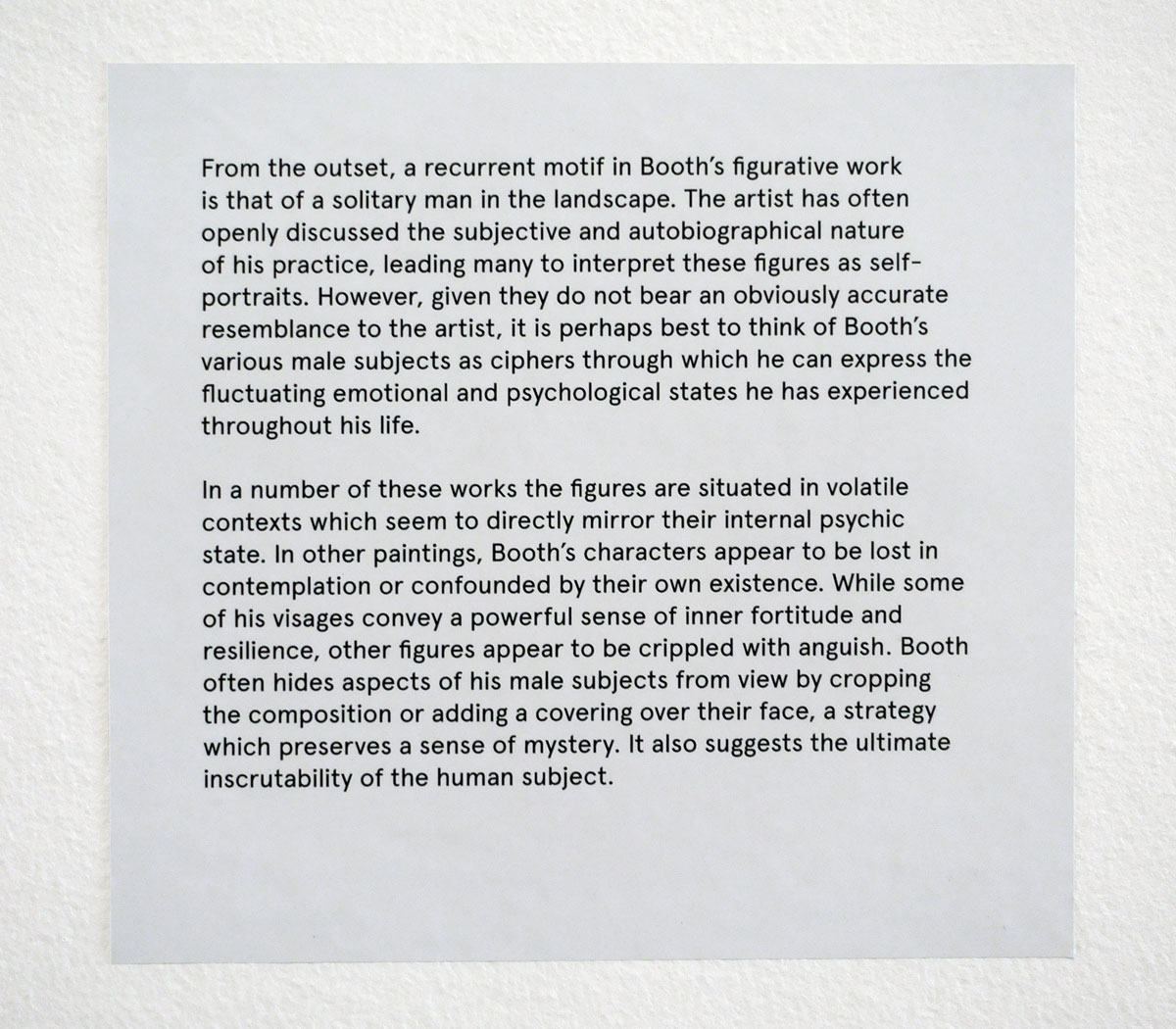
 

William Blake (British, 1757-1827) 'The Ghost of a Flea' c. 1819 (installation view)


William Blake (British, 1757-1827)
The Ghost of a Flea
c. 1819
Graphite on paper
Private collection
Photo: Marcus Bunyan


William Blake (British, 1757-1827) 'The Creation of Eve' 1822


William Blake (British, 1757-1827)
The Creation of Eve
1822
Illustration for Paradise Lost by John Milton (VIII, 452-77)
Pen and brown and black ink and watercolour over pencil and black chalk, with stippling and sponging
50.4 × 40.7cm (sheet)
National Gallery of Victoria, Melbourne, Felton Bequest, 1920


William Blake (British, 1757-1827) 'The Creation of Eve' 1822 (installation view)

William Blake (British, 1757-1827) 'The Creation of Eve' 1822 (installation view)


William Blake (British, 1757-1827)
The Creation of Eve (installation views)
1822
Illustration for Paradise Lost by John Milton (VIII, 452-77)
Pen and brown and black ink and watercolour over pencil and black chalk, with stippling and sponging
50.4 × 40.7cm (sheet)
National Gallery of Victoria, Melbourne, Felton Bequest, 1920
Photos: Marcus Bunyan


William Blake (British, 1757-1827) 'Satan Smiting Job with Sore Boils' c. 1826 (installation view)

William Blake (British, 1757-1827) 'Satan Smiting Job with Sore Boils' c. 1826 (installation view detail)


William Blake (British, 1757-1827)
Satan Smiting Job with Sore Boils (installation views)
c. 1826
Ink and tempera on mahogany
Tate. Presented by Miss Mary H. Dodge through the Art Fund 1918
Photos: Marcus Bunyan


William Blake (British, 1757-1827) 'Satan Smiting Job with Sore Boils' c. 1826


William Blake (British, 1757-1827)
Satan Smiting Job with Sore Boils
c. 1826
Ink and tempera on mahogany
Tate. Presented by Miss Mary H. Dodge through the Art Fund 1918
Creative Commons CC-BY-NC-ND (3.0 Unported)


The first owner of this tempera was George Richmond, a member of the ‘Ancients’. This was a circle of young artists who gathered around Blake in the 1820s.

In the biblical text this work refers to, Satan is given permission by God to torture Job in order to test the limits of his faith. The Body of Abel Found by Adam and Eve and the set of engravings to the Old Testament Book of Job (displayed nearby) reprise work that Blake had made for Thomas Butts 20 years earlier.

Wall text from the exhibition


The biblical ‘Book of Job’ addresses the existence of evil and suffering in a world where a loving, all-powerful God exists. It has been described as ‘the most profound and literary work of the entire Old Testament’. In ‘Job’, God and Satan discuss the limits of human faith and endurance. God lets Satan force Job to undergo extreme trials and tribulations, including the destruction of his family. Despite this, as God predicted, Job’s faith remains unshaken and he is rewarded by God with the restoration of his health, wealth and family. Here Blake shows Satan torturing Job with boils.

William Blake, “Satan Smiting Job with Sore Boils c. 1826,” in Nigel Llewellyn and Christine Riding (eds.), The Art of the Sublime, Tate Research Publication, January 2013.


William Blake (British, 1757-1827) 'The Body of Abel Found by Adam and Eve' c. 1826 (installation view)

William Blake (British, 1757-1827) 'The Body of Abel Found by Adam and Eve' c. 1826 (installation view)

William Blake (British, 1757-1827) 'The Body of Abel Found by Adam and Eve' c. 1826 (installation view detail)


William Blake (British, 1757-1827)
The Body of Abel Found by Adam and Eve (installation views)
c. 1826
Ink, tempera and gold on mahogany
Tate. Bequeathed by W. Graham Robertson 1949
Photos: Marcus Bunyan


In the 1820s Blake’s work took on a richer appearance. He began to use more vibrant colour and to apply gold leaf more frequently. Another new practice was his use of a mahogany support. These innovations were perhaps inspired by Northern European art of the late 15th century, which adapted ideas of the Italian Renaissance. Blake and Linnell often visited such works in private and public collections across London. Blake’s use of gold may have been facilitated by the fact that one of his Fountain Court neighbours was a gilder.

Wall text


William Blake (British, 1757-1827) 'The Body of Abel Found by Adam and Eve' c. 1826


William Blake (British, 1757-1827)
The Body of Abel Found by Adam and Eve
c. 1826
Ink, tempera and gold on mahogany
Tate. Bequeathed by W. Graham Robertson 1949
Creative Commons CC-BY-NC-ND (3.0 Unported)


Pilgrim’s Progress

John Bunyan’s The Pilgrim’s Progress from This World, to That Which Is to Come (1678) was a popular religious text in Blake’s day. It is not known why Blake embarked on this series of illustrations. They were left unfinished at his death.

Pilgrim’s Progress tells the story of a challenging journey. Taking place in the realm of a dream, it follows the character Christian as he travels from the City of Destruction (earth) to the Celestial City (heaven) in the hope of unburdening himself of his sins.

Although it contains some of Blake’s most imaginative and original imagery, Pilgrim’s Progress has not received the same level of attention as his other late projects. One reason for this may be that Catherine, Blake’s wife, is thought to have been involved in colouring the illustrations. For nearly all their married life Catherine helped Blake to print and hand-colour his works. Her creative and practical influence is only beginning to be fully appreciated.

Wall text from the exhibition


William Blake (British, 1757-1827) 'Christian in the Arbour' 1824-1827


William Blake (British, 1757-1827)
Christian in the Arbour
1824-1827
Illustration to Pilgrim’s Progress
Watercolour and ink over graphite and chalk on paper
Private collection


Reader! lover of books! lover of heaven,
And of that God from whom all books are given,
Who in mysterious Sinais awful cave
To Man the wond’rous art of writing gave,
Again he speaks in thunder and in fire!
Thunder of Thought, & flames of fierce desire:
Even from the depths of Hell his voice I hear,
Within the unfathomd caverns of my Ear.
Therefore I print; nor vain my types shall be:
Heaven, Earth & Hell, henceforth shall live in harmony
I must Create a System, or be enslav’d by another Mans

I will not Reason & Compare: my business is to Create


William Blake


William Blake (British, 1757-1827) 'Jerusalem', plate 28, proof impression, top design only 1820


William Blake (British, 1757-1827)
Jerusalem, plate 28, proof impression, top design only
1820
Relief etching with pen and black ink and watercolour on medium, smooth wove paper
111 x 159 mm
Yale Center for British Art (New Haven, USA)


William Blake (British, 1757-1827) 'The Sea of Time and Space' 1821 (installation view)

William Blake (British, 1757-1827) 'The Sea of Time and Space' 1821 (installation view detail)


William Blake (British, 1757-1827)
The Sea of Time and Space (installation views)
1821
Ink, watercolour and body colour on gesso ground on paper
National Trust Collections, Arlington Court (The Chichester Collection)
Photos: Marcus Bunyan


The subject of this detailed and richly coloured painting is a mystery. It appears to relate to the theme of choice. The kneeling figure has been identified as divine inspiration and imagination. Its title comes from Blake’s poem Vala, or the Four Zoas and was only applied in 1949.

It is shown in its original frame, which was made by John Linnell’s father, the framer James Linnell. It is thought that Colonel John Palmer Chichester, of Arlington Court, may have purchased it directly from Blake.

Wall text from the exhibition


William Blake (British, 1757-1827) 'Europe' Plate i: Frontispiece, 'The Ancient of Days' 1827 (installation view)

William Blake (British, 1757-1827) 'Europe' Plate i: Frontispiece, 'The Ancient of Days' 1827 (installation view)

William Blake (British, 1757-1827) 'Europe' Plate i: Frontispiece, 'The Ancient of Days' 1827 (installation view)


William Blake (British, 1757-1827)
‘Europe’ Plate i: Frontispiece, ‘The Ancient of Days’ (installation views)
1827
Relief etching with ink and watercolour on paper
232 x 120mm
The Whitworth, The University of Manchester
Photos: Marcus Bunyan


William Blake (British, 1757-1827) 'Europe' Plate i: Frontispiece, 'The Ancient of Days' 1827


William Blake (British, 1757-1827)
‘Europe’ Plate i: Frontispiece, ‘The Ancient of Days’
1827
Relief etching with ink and watercolour on paper
232 x 120mm
The Whitworth, The University of Manchester


Tate Britain’s major William Blake retrospective ends with what is believed to be the artist’s final work. On his deathbed, Blake is said to have coloured this impression of Ancient of Days 1827, claiming with satisfaction that it was ‘the best I have ever finished’. This ominous figure was created as a frontispiece for Blake’s 1794 prophetic book Europe a Prophecy. Along with its partner publication America, a Prophecy 1793, these epic and highly symbolic texts relate to the French revolution and revolutionary war in America respectively. Blake created several known versions of the work in his lifetime, including one thought coloured by his wife Catherine. One of Blake’s own favourite works, the image has since been embraced in popular culture and has been used to cover books and albums in recent years. It is reported that upon finishing this version the artist turned to Catherine, a constant source of support and inspiration, and proclaimed ‘you have ever been an angel to me’. He died only days later on 12 August 1827.

Text from Tate Britain


In his final days Blake is said to have coloured an impression of this work. He is reported to have claimed it ‘the best I have ever finished’. Though small in size it has become one of Blake’s best-known images. Its central figure is Urizen. He represents the scientific quest for answers. Urizen measures the world below with his golden compass. This act symbolises a threat to freedom of thought, imagination and creativity. For Blake, these were the cornerstones of human happiness.

Wall text from the exhibition


The divine white-beard, reaching down from his burning disc to measure the Earth below with his shining dividers. For all the force and similarity, this is not in fact God but Blake’s Urizen, the despised personification of Reason and Science.

Laura Cumming. “William Blake review – a rousing call to arms,” on The Guardian website Sun 15 Sep 2019 [Online] Cited 18/01/2020


Tate Britain
Millbank, London SW1P 4RG
United Kingdom
Phone: +44 20 7887 8888

Opening hours:
10.00am – 18.00pm daily

Tate Britain website

LIKE ART BLART ON FACEBOOK

Back to top

European research tour exhibition: ‘William Blake’ at Tate Britain, London Part 1

Exhibition dates: 11th September, 2019 – 2nd February, 2020
Visited October 2019 posted January 2020

Curators: Martin Myrone, Senior Curator, pre-1800 British Art, and Amy Concannon, Curator, British Art 1790-1850


Installation view of the exhibition 'William Blake' at Tate Britain, London Photo: Marcus Bunyan


Installation view of the exhibition William Blake at Tate Britain, London
Photo: Marcus Bunyan


This first of two parts of this humongous posting. This exhibition has to be one of the highlights of my (art) life. The techniques, the colours, the forms and the MAGIC of Blake’s compositions brought me to tears.

I will write more on the work in the second part of the posting.

Dr Marcus Bunyan


Many thankx to Tate Britain for allowing me to publish the media images in the posting. All other installation photographs as noted © Dr Marcus Bunyan. Please click on the photographs for a larger version of the image.


“Every page is a window open in Heaven … interwoven designs companion the poems, and gold and yellow tints diffuse themselves over the page like summer clouds. The poems [of Songs of Innocence] are the morning song of Blake’s genius.”


W.B. Yeats


“Blake sang of the ideal world, of the truth of the intellect, and of the divinity of the imagination. … The only writer to have written songs for children with the soul of a child … he holds, in my view, a unique position because he unites intellectual sharpness with mystic sentiment.”


James Joyce


Installation view of the exhibition 'William Blake' at Tate Britain

Installation view of the exhibition 'William Blake' at Tate Britain

Installation view of the exhibition 'William Blake' at Tate Britain

Installation view of the exhibition 'William Blake' at Tate Britain

Installation view of the exhibition 'William Blake' at Tate Britain

Installation view of the exhibition 'William Blake' at Tate Britain

Installation view of the exhibition 'William Blake' at Tate Britain

Installation view of the exhibition 'William Blake' at Tate Britain


Installation views of the exhibition William Blake at Tate Britain
© Tate
Photos: Seraphina Neville


Tate Britain presents the largest survey of work by William Blake (1757-1827) in the UK for a generation. A visionary painter, printmaker and poet, Blake created some of the most iconic images in the history of British art and has remained an inspiration to artists, musicians, writers and performers worldwide for over two centuries. This ambitious exhibition brings together over 300 remarkable and rarely seen works and rediscovers Blake as a visual artist for the 21st century.

Tate Britain reimagines the artist’s work as he intended it to be experienced. Blake’s art was a product of his tumultuous times, with revolution, war and progressive politics acting as the crucible of his unique imagination, yet he struggled to be understood and appreciated during his life. Now renowned as a poet, Blake also had grand ambitions as a visual artist and envisioned vast frescos that were never realised. For the first time, The Spiritual Form of Nelson Guiding Leviathan c. 1805-1809 and The Spiritual Form of Pitt Guiding Behemoth c. 1805 have been enlarged and projected onto the gallery wall on the huge scale that Blake imagined. The original artworks are displayed nearby in a re-staging of Blake’s ill-fated exhibition of 1809, the artist’s only significant attempt to create a public reputation for himself as a painter. Tate has recreated the domestic room above his family hosiery shop in which the show was held, allowing visitors to encounter the paintings exactly as people did over 200 years ago.

The exhibition also provides a vivid biographical framework in which to consider Blake’s life and work. There is a focus on London, the city in which he was born and lived for most of his life. The burgeoning metropolis was a constant source of inspiration for the artist, offering an environment in which harsh realities and pure imagination were woven together. Blake’s creative freedom was also dependent on the unwavering support of those closest to him: his friends, family and patrons. Tate Britain highlights the vital presence of his wife Catherine Blake who offered both practical assistance and became an unacknowledged hand in the production of the artist’s engravings and illuminated books. The exhibition showcases a series of illustrations to Pilgrim’s Progress 1824-1827 and a copy of the book The Complaint, and the Consolation, or, Night Thoughts 1797, now thought to be coloured by Catherine.

William Blake was a staunch defender of the fundamental role of art in society and the importance of artistic freedom. Shaped by his personal struggles in a period of political terror and oppression, his technical innovation, and his political commitment, these beliefs have inspired the generations that followed and remain pertinent today. Tate Britain’s exhibition opens with Albion Rose c. 1793, an exuberant visualisation of the mythical founding of Britain, created in contrast to the commercialisation, austerity and crass populism of the times. A section of the exhibition is also dedicated to his illuminated books such as Songs of Innocence and of Experience 1794, his central achievement as a radical poet.

Additional highlights include some of Blake’s best-known works including Newton 1795 – c. 1805 and Ghost of a Flea c. 1819-1820. This intricate painting was inspired by a séance-induced vision and is shown alongside a rarely seen preliminary sketch. The exhibition closes with The Ancient of Days 1827, an illustration for an edition of Europe: A Prophecy, completed only days before the artist’s death.

William Blake at Tate Britain is curated by Martin Myrone, Senior Curator, pre-1800 British Art, and Amy Concannon, Curator, British Art 1790-1850. The exhibition is accompanied by a catalogue from Tate Publishing and a programme of talks and events in the gallery.

Text from Tate Britain


William Blake (British, 1757-1827) 'Albion Rose' c. 1793 (installation view)

William Blake (British, 1757-1827) 'Albion Rose' c. 1793 (installation view)

William Blake (British, 1757-1827) 'Albion Rose' c. 1793 (installation view)

William Blake (British, 1757-1827) 'Albion Rose' c. 1793 (installation view detail)


William Blake (British, 1757-1827)
Albion Rose (installation views)
c. 1793
Colour engraving
250 x 211 mm
Courtesy of the Huntington Art Collections
Photos: Marcus Bunyan


This image exemplifies how any single work by Blake might have multiple meanings. It can be related to several different strands within Blake’s poetry and thought. The figure has been reinterpreted many times, as a symbol of youthful rebellion, spiritual freedom and of creativity.

Wall text from the exhibition


William Blake (British, 1757-1827) 'Albion Rose' c. 1793 from the exhibition 'William Blake' at Tate Britain, London, September 2019 - February 2020


William Blake (British, 1757-1827)
Albion Rose
c. 1793
Colour engraving
250 x 211 mm
Courtesy of the Huntington Art Collections


William Blake

The art and poetry of William Blake have influenced generations. He has inspired many creative people, political radicals and independent minds. His images and words are admired around the world for their originality and spirituality.

Blake lived at a time of radical thought, war and global unrest. The British Empire was expanding. New ideas about social justice developed alongside rapid industrialisation. Blake created imaginative images and texts that resonated with this changing world. They drew on his deeply felt religious beliefs and personal struggles.

The exhibition is organised chronologically. It takes us through the ups and downs of Blake’s creative and professional life. The full range of Blake’s work is on display here. His commercial engravings, original prints, his unique ‘illuminated books’ and paintings are all included. These have been drawn from public and private collections from around the world. To preserve these rarely seen objects, the light levels across the exhibition are deliberately low.

Blake’s art and poetry have appealed to many kinds of people, for different reasons. His work has provoked diverse interpretations. This exhibition does not try to explain Blake’s imagery and symbolism in a definitive way.

Instead it considers the reception of his art and how it was experienced by his contemporaries. It sets out the personal and social conditions in which it was made. In doing so we hope to reveal the circumstances that gave Blake the freedom to create such innovative works.

Wall text


Room 1

The art and poetry of William Blake have influenced generations. He has inspired many creative people, political radicals and independent minds. His images and words are admired around the world for their originality and spirituality.

Blake lived at a time of radical thought, war and global unrest. The British Empire was expanding. New ideas about social justice developed alongside rapid industrialisation. Blake created imaginative images and texts that resonated with this changing world. They drew on his deeply felt religious beliefs and personal struggles.

The exhibition is organised chronologically. It takes us through the ups and downs of Blake’s creative and professional life. The full range of Blake’s work is on display here. His commercial engravings, original prints, his unique ‘illuminated books’ and paintings are all included. These have been drawn from public and private collections from around the world. To preserve these rarely seen objects, the light levels across the exhibition are deliberately low.

Blake’s art and poetry have appealed to many kinds of people, for different reasons. His work has provoked diverse interpretations. This exhibition does not try to explain Blake’s imagery and symbolism in a definitive way. Instead it considers the reception of his art and how it was experienced by his contemporaries. It sets out the personal and social conditions in which it was made. In doing so we hope to reveal the circumstances that gave Blake the freedom to create such innovative works.


William Blake (British, 1757-1827) 'Joseph Making himself Known to his Brethren' 1784-1785 (installation view)

William Blake (British, 1757-1827) 'Joseph Making himself Known to his Brethren' 1784-1785 (installation view)


William Blake (British, 1757-1827)
Joseph Making himself Known to his Brethren (installation views)
1784-1785
India ink and watercolour over graphite on paper
The Syndics of the Fitzwilliam Museum, University of Cambridge
Photos: Marcus Bunyan


Installation view of the exhibition 'William Blake' at Tate Britain, London showing at left, Blake's 'Joseph's Brethren Bowing down before him' (1784-1785) and at right, 'Joseph Ordering Simeon to be Bound' (1784-1785)


Installation view of the exhibition William Blake at Tate Britain, London showing at left, Blake’s Joseph’s Brethren Bowing down before him (1784-1785) and at right, Joseph Ordering Simeon to be Bound (1784-1785)
Photo: Marcus Bunyan


The story of Joseph

Blake’s bitter view of the contemporary art world has its origins in the disappointments and frustrations he experienced early in his career.

In 1785 Blake exhibited these three watercolour designs showing the biblical story of Joseph. Blake showed them at the annual exhibition at the Royal Academy of Arts, the main showcase for contemporary art.

Students at the Academy were encouraged to depict serious, dramatic subject matter in a classical style. But these exhibitions were filled with more commercial artworks. The exhibition catalogue, also on display here, shows the dominance of portraits, landscapes and light-hearted ‘fancy’ subjects. Being watercolours, Blake’s designs were shown in a separate space where they got less public attention than the oil paintings in the main gallery.

Wall text from the exhibition


William Blake (British, 1757-1827) 'Joseph's Brethren Bowing down before him' 1784-1785 (installation view)

William Blake (British, 1757-1827) 'Joseph's Brethren Bowing down before him' 1784-1785 (installation view)


William Blake (British, 1757-1827)
Joseph’s Brethren Bowing down before him (installation views)
1784-1785
India ink and watercolour over graphite on paper
The Syndics of the Fitzwilliam Museum, University of Cambridge
Photos: Marcus Bunyan


Installation view of the exhibition 'William Blake' at Tate Britain, London with at bottom middle, 'Drawing of the legs of Cincinnatus' (c. 1779-1780) Photo: Marcus Bunyan


Installation view of the exhibition William Blake at Tate Britain, London with at bottom middle, Drawing of the legs of Cincinnatus (c. 1779-1780)
Photo: Marcus Bunyan


William Blake wall text


William Blake wall text


William Blake (British, 1757-1827) 'Drawing of the legs of Cincinnatus' c. 1779-1780 (installation view)


William Blake (British, 1757-1827)
Drawing of the legs of Cincinnatus (installation view)
c. 1779-1780
Ink and wash over graphite on paper
Bolton Museum and Archive
Photo: Marcus Bunyan


This intimate and apparently casually-drawn portrait shows Catherine Blake (née Boucher, 1762-1831). William and Catherine were married from 1782 until Blake’s death in 1827. Catherine played a huge part in Blake’s creative and commercial work. She helped him with printing and colouring his works, even finishing some of his drawings. Blake’s extraordinary vision depended on his partnership with Catherine.

Wall text


William Blake (British, 1757-1827) 'Catherine Blake' 1805 (installation view)


William Blake (British, 1757-1827)
Catherine Blake (installation view)
1805
Graphite on paper
286 x 221 mm
Tate. Bequeathed by Miss Alice G.E. Carthew 1940
Photo: Marcus Bunyan


William Blake (British, 1757-1827) 'Catherine Blake' 1805  from the exhibition 'William Blake' at Tate Britain, London, September 2019 - February 2020


William Blake (British, 1757-1827)
Catherine Blake
1805
Graphite on paper
286 x 221 mm
Tate. Bequeathed by Miss Alice G.E. Carthew 1940


A portrait of William Blake, thought to be his only self-portrait, will be exhibited in the UK for the first time in a major survey of his work at Tate Britain. In the 200 years since its creation, the detailed pencil drawing only been shown once before and never in the artist’s own country. It offers a unique insight into the visionary painter, printmaker and poet responsible for some of Britain’s best loved artwork and will be displayed alongside a sketch of Blake’s wife Catherine from the same period, highlighting her vital contribution to his life and work.

Created when Blake was around 45 years old, the work is thought to present an idealised likeness. Rather than showing Blake as a painter or engraver, signs of his creative intensity are conveyed in his direct hypnotic gaze. This compelling image was produced after 1802, at a turning-point in Blake’s life. Having lived in Sussex for three years and been falsely accused of treason, Blake returned to his native city of London and was re-establishing himself as an artist. The portrait shows Blake as an isolated and misunderstood figure.

A crucial presence in Blake’s life, Catherine offered both practical assistance and became an unacknowledged hand in the production of his engravings and illuminated books. His visual art and poetry began to develop in original ways only after their marriage in 1782. At the time she was illiterate but learnt to read and write with her husband and became an accomplished printmaker in her own right. Together, these rare examples of Blake’s portraiture highlight the ways in which his extraordinary vision was dependent on the domestic stability of his life with Catherine.

Text from the Tate Britain website


William Blake (British, 1757-1827) 'Portrait of William Blake' c. 1802 (installation view)


William Blake (British, 1757-1827)
Portrait of William Blake (installation view)
c. 1802
Graphite with black, white and grey washes on paper
Collection of Robert N. Essick
Photo: Marcus Bunyan


This is probably a self-portrait drawn by Blake when he was in his 40s. It does not present him in the act of writing or drawing. Instead, the image invites us to see his intense gaze as a sign of his creative force. This perhaps reflects his claim that he saw visions. Blake’s art and personal behaviour divided contemporary opinion. A few friends and supporters accepted him as a genius. Many others considered him eccentric or questioned his mental health.

Wall text from the exhibition


William Blake (British, 1757-1827) 'Portrait of William Blake' c. 1802 (installation view)


William Blake (British, 1757-1827)
Portrait of William Blake (installation view)
c. 1802
Graphite with black, white and grey washes on paper
Collection of Robert N. Essick
Photo: Marcus Bunyan


‘Blake be an artist!’

Blake was born in London in 1757, the son of a fairly successful shopkeeper in Broad Street, Soho. Blake wanted to be an artist from an early age. His family indulged his passion. They bought prints and plaster casts for him to copy, paid for drawing lessons and funded his training as an apprentice engraver. In 1779 he enrolled as a student at the Royal Academy of Arts. This gallery explores the art he created in the years that followed. It was during this time that he developed his ambitions as an original artist and poet.

The Royal Academy encouraged its students to imitate the great art of the past. They were expected to copy antique sculptures and look to Renaissance artists like Michelangelo and Raphael for inspiration.

Blake later rejected the more rigid ideas associated with Academic teaching. He sought to create a more personal vision and began to identify with the ‘Gothic’ artists of the medieval past. He felt the Academy was being taken over by portrait painters motivated by self-interest. But he did admire some ambitious and individualistic figures there. These included James Barry and Henry Fuseli. Blake took seriously their ideas about painting great public works full of moral purpose and drama. The conflict between such aims and the realities of a cynical and market-driven art world would be a shaping force in Blake’s creative life.

Wall text from the exhibition


William Blake (British, 1757-1827) 'Academy Study' 1779-1780 (installation view)


William Blake (British, 1757-1827)
Academy Study (installation view)
1779-1780
Graphite on paper
Lent by the British Museum, London
Photo: Marcus Bunyan


Installation view of the exhibition 'William Blake' at Tate Britain, London Photo: Marcus Bunyan


Installation view of the exhibition William Blake at Tate Britain, London
Photo: Marcus Bunyan


Early drawings and watercolours

Blake’s earliest drawings typically used sweeping lines and areas of grey washed ink or watercolour. His figures make grand gestures in bare, even abstract, settings.

His style was based on the innovative art of the 1760s and 1770s, especially the drawings of James Barry, Henry Fuseli, and John Flaxman. They became well known for creating works with strong visual and emotional impact and communicating ideas in a bold way.

Blake’s subjects were often drawn from history, literature and the Bible. This was in keeping with the teaching of the Royal Academy and traditional ideas about ‘high art’. However, Blake’s subject matter from these early years is sometimes unclear. Spiritual forms, ghosts and visions start to appear. This means that the story and meaning of his individual works can be difficult to decipher.

Wall text from the exhibition


Installation view of the exhibition 'William Blake' at Tate Britain, London showing Blake's 'Age Teaching Youth' (c. 1785-1790) Photo: Marcus Bunyan


Installation view of the exhibition William Blake at Tate Britain, London showing Blake’s Age Teaching Youth (c. 1785-1790)
Photo: Marcus Bunyan


William Blake (British, 1757-1827) 'An Allegory of the Bible' c. 1780-1785 (installation view)


William Blake (British, 1757-1827)
An Allegory of the Bible (installation view)
c. 1780-1785
Graphite, ink and watercolour on paper
Tate, Bequeathed by Miss Rachel M. Dyer 1969
Photo: Marcus Bunyan


Blake started using more colours in the mid-1780s. The mysterious subject matter of this design is new as well. The title is not the artist’s own. It was added by later commentators, as is often the case with Blake’s symbolic designs.

Wall text from the exhibition


William Blake (British, 1757-1827) 'An Allegory of the Bible' c. 1780-1785


William Blake (British, 1757-1827)
An Allegory of the Bible
c. 1780-1785
Graphite, ink and watercolour on paper
Tate, Bequeathed by Miss Rachel M. Dyer 1969


The title of this work is not Blake’s, but its theme seems to be the revelation of knowledge.

Unusually, the foreground and background were both painted initially with a single base colour. The figures and the screen behind those in the background were applied straight onto the white paper. The screen and the lower half of the sky behind it were originally painted a deep rose, with a red lake pigment that is probably brazilwood. This has lost so much colour, except at the edges, that it gives the unintended effect of a flat brown base tone to the whole screen.

Gallery label, September 2004


Installation view of the exhibition 'William Blake' at Tate Britain, London showing Blake's 'The Good Farmer, Probably the Parable of the Wheat and the Tares' (c. 1780-1785) Photo: Marcus Bunyan


Installation view of the exhibition William Blake at Tate Britain, London showing Blake’s The Good Farmer, Probably the Parable of the Wheat and the Tares (c. 1780-1785)
Photo: Marcus Bunyan


This is an illustration of one of Christ’s parables, which appears in several biblical sources.


William Blake (British, 1757-1827) 'The Good Farmer, Probably the Parable of the Wheat and the Tares' c. 1780-1785 (installation view)


William Blake (British, 1757-1827)
The Good Farmer, Probably the Parable of the Wheat and the Tares (installation view)
c. 1780-1785
Ink and watercolour on paper
Tate. Bequeathed by Miss Alice G.E. Carthew 1940
Photo: Marcus Bunyan


Installation view of the exhibition 'William Blake' at Tate Britain, London Photo: Marcus Bunyan

Installation view of the exhibition 'William Blake' at Tate Britain, London Photo: Marcus Bunyan


Installation views of the exhibition William Blake at Tate Britain, London
Photos: Marcus Bunyan


Tiriel

In the late 1780s Blake had established a reputation as a designer and poet among a small circle of friends. He began writing an epic poem, which he also intended to illustrate. It is not clear how Blake would have funded the production of an illustrated edition and it was not published.

Blake’s manuscript and many of the surviving drawings are displayed here. The story combined elements of Greek tragedy and Shakespeare. It also drew on supposedly ancient Gaelic stories (actually composed by the Scottish writer James Macpherson in the 1760s). The narrative concerns a king, now blind, his arguments with his sons and daughters, and his encounter with his elderly parents, Har and Heva. The language is dramatic, with exaggerated imagery suggesting surging emotions, ‘Thunder & fire & pestilence’.

The project represents the culmination of Blake’s early efforts as a painter and poet. It also exposes how his ambitions to combine epic images and texts were frustrated by conventional publishing techniques.

Wall text from the exhibition


Installation view of the exhibition 'William Blake' at Tate Britain, London Photo: Marcus Bunyan


Installation view of the exhibition William Blake at Tate Britain, London
Photo: Marcus Bunyan


William Blake (British, 1757-1827) 'Oberon, Titania and Puck with Fairies Dancing' c. 1786


William Blake (British, 1757-1827)
Oberon, Titania and Puck with Fairies Dancing
c. 1786
Watercolour and graphite on paper
Support: 475 × 675 mm
Tate. Presented by Alfred A. de Pass in memory of his wife Ethel 1910
Creative Commons CC-BY-NC-ND (3.0 Unported)


The subject is from Shakespeare’s A Midsummer Night’s Dream illustrating Titania’s instruction to her fairy train in the last scene:

Hand in hand, with fairy grace,
Will we sing, and bless this place.

Oberon and Titania, King and Queen of the fairies, are on the left. Puck, the perplexer of mortals, faces us. The fairies Moth and Peaseblossom are easily identifiable.

During the 1780s there was a growing taste for Shakespeare illustrations. Blake had formed a print-publishing partnership in 1784. If the approximate dating of this work is correct, it may represent an attempt by Blake to break into this market.

Supernatural and fantastical subject matter like this enjoyed great popularity in Blake’s time.

Wall text from the exhibition and gallery label, August 2004


William Blake (British, 1757-1827) 'Oberon, Titania and Puck with Fairies Dancing' c. 1786 (installation view detail)

William Blake (British, 1757-1827) 'Oberon, Titania and Puck with Fairies Dancing' c. 1786 (installation view detail)


William Blake (British, 1757-1827)
Oberon, Titania and Puck with Fairies Dancing (installation view details)
c. 1786
Watercolour and graphite on paper
Support: 475 × 675 mm
Tate. Presented by Alfred A. de Pass in memory of his wife Ethel 1910
Photos: Marcus Bunyan


Installation view of the exhibition 'William Blake' at Tate Britain, London

Installation views of the exhibition 'William Blake' at Tate Britain, London


Installation views of the exhibition William Blake at Tate Britain, London
Photos: Marcus Bunyan


William Blake (British, 1757-1827) 'Europe, A Prophecy (Copy E)' 1794 (installation view)

William Blake (British, 1757-1827) 'Europe, A Prophecy (Copy E)' 1794 (installation view)


William Blake (British, 1757-1827)
Europe, A Prophecy (Copy E) (installation views)
1794
Book, 17 plates on 10 leaves
Open to plates 17: Ethinius queen of waters... and 18 Shot from the heights of Enitharrnon
Relief and white-line etching with colour printing and hand colouring
Library of Congress. Lessing J. Rosenwald collection, 1806
Photos: Marcus Bunyan


William Blake (British, 1757-1827) 'Europe, A Prophecy (Copy A)' 1794 (installation view)

William Blake (British, 1757-1827) 'Europe, A Prophecy (Copy A)' 1794 (installation view)


William Blake (British, 1757-1827)
Europe, A Prophecy (Copy A) (installation views)
1794
Book, 17 plates on 17 leaves
Open to Plate 2, title page
Colour-printed relief etching in dark brown with pen and black ink, oil and watercolour on paper
Photos: Marcus Bunyan


Europe, A Prophecy relates contemporary historical events – specifically the French Revolution – in an epic, symbolic form. As Blake’s biographer Alexander Gilchrist (1828-1861) observed of the book: ‘It is hard to describe poems wherein the dramatis personae are giant shadows, gloomy phantoms; the scene, the realms of space; the time, of such corresponding vastness, that eighteen hundred years pass as a dream’. Catherine Blake is likely to have coloured many of the plates in this copy, including the title page. This copy, may be that bought from Blake by the painter George Romney (1734-1802).

Label text


William Blake (British, 1757-1827) 'First Book of Urizen' pl. 6 1796, printed c. 1818


William Blake (British, 1757-1827)
First Book of Urizen pl. 6 ‘I sought Pleasure & found Pain, Unntennable’
1796, printed c. 1818
Etching with paint, watercolour and ink on paper
Tate. Purchased with funds provided by the Art Fund, Tate Members, Tate Patrons, Tate Fund and individual donors 2009
Creative Commons CC-BY-NC-ND (3.0 Unported)


William Blake (British, 1757-1827) 'The First Book of Urizen (Copy G)' 1794, printed c. 1818 (installation view)

William Blake (British, 1757-1827) 'The First Book of Urizen (Copy G)' 1794, printed c. 1818 (installation view)


William Blake (British, 1757-1827)
The First Book of Urizen (Copy G) (installation views)
1794, printed c. 1818
27 leaves, open to plate number 14
Relief etching printed in yellow brown with watercolour and gold
Library of Congress. Lessing J. Rosenwald collection, 1807
Photos: Marcus Bunyan


During his lifetime, Blake’s books were appreciated by collectors for their visual qualities far more than for their political and literary content. The First Book of Urizen was first printed in 1794. It was already strongly visual. In this new copy, printed in around 1818, Blake has enhanced this full-page image with intense colouring and gold.

Label text


William Blake (British, 1757-1827) 'The Marriage of Heaven and Hell (Copy H)' c. 1790 (installation view)


William Blake (British, 1757-1827)
The Marriage of Heaven and Hell (Copy H) (installation view)
c. 1790
Book, 27 plates on 15 leaves
Open to title page
Relief etching with hand-colouring
The Syndics of the Fitzwilliam Museum, University of Cambridge
Photo: Marcus Bunyan


William Blake (British, 1757-1827) 'The Marriage of Heaven and Hell (Copy B)' c. 1790 (installation view)

William Blake (British, 1757-1827) 'The Marriage of Heaven and Hell (Copy B)' c. 1790 (installation view)

William Blake label text


William Blake (British, 1757-1827)
The Marriage of Heaven and Hell (Copy B) (installation views)
c. 1790
Book, 27 plates on 15 leaves
Open to A Memorable Fancy
Relief etched plates in coloured inks with glue-based pigments and hand-colouring paper
Bodlieian Libraries, University of Oxford
Photos: Marcus Bunyan


A Memorable Fancy describes Blake’s invention of relief etching in symbolic terms. His text does little to explain his process practically. Blake’s commitment to individualism and rebellious nature are present in this description of art-making as an experimental and inspired process. This copy belonged to the scholar and collector Francis Douce (1757-1834) and may be in his original binding.

Label text


Relief etching

Blake conceived his technique of relief etching in around 1788. He claimed this was under the inspiration of his brother Robert, who had died in 1787. The technical details of his method have long fascinated and frustrated scholars and collectors and remain debated.

Engraving and etching involve making lines in a copper plate which are filled with ink to create the printed image. Relief etching, on the other hand, involves using acid to eat away areas of the plate that you want to leave unprinted. The remaining surfaces are inked and printed. Relief etching allowed Blake to combine hand-written texts and images on a single plate. These were normally entirely separate processes. Blake also experimented in printing with colours, and added pen and ink, watercolour and later on gold to create more dense, painterly images.

Wall text from the exhibition


William Blake (British, 1757-1827) 'Book of Thel (Copy I)' c. 1789 (installation view)


William Blake (British, 1757-1827)
There is no Natural Religion (Copy B) (installation view)
c. 1788 (composition date)
c. 1794 (print date)
Book, 11 plates on 11 leaves
Open to Plate 10. I Mans Perceptions are not Bounded…
Colour-printed relief etching on paper
Yale Center for British Art, Paul Mellon Collection
Photo: Marcus Bunyan


This collection of short philosophical statements was one of Blake’s first experiments in relief etching. This copy, printed in coloured inks, was produced in 1794.

Label text


Room 2

Making prints, making a living


“I curse & bless Engraving alternately because it takes so much time & is so untractable.
tho capable of such beauty & perfection”

~ William Blake


Blake was trained as a reproductive engraver. This exacting craft involved copying an image by cutting fine lines onto a metal plate so that it could be printed and reproduced many times. Blake enjoyed the precision of this work. He gained a good reputation and engraving provided him with an income throughout his life. He was sometimes employed to design as well as engrave illustrations, and for a short period from 1784 ran his own print publishing business with his friend and fellow engraver James Parker.

While Blake admired the uncompromising qualities of older prints, the market favoured more obviously decorative techniques. Blake could adapt his style, but he found the limitations of commercial work frustrating.

Around 1788 Blake invented a new form of printmaking, ‘relief etching’. He described the technique in poetic rather than practical terms so his exact methods remain mysterious. The process allowed Blake to print in colour and combine texts and images. Blake used the technique to create a succession of visionary books. These engaged with the most pressing moral and political questions of the day, including revolution, sexual freedom and the slave trade. Blake’s illuminated books combined poetry and images in experimental ways. His images rarely illustrate the text directly. He also printed some of the images separately without words. Later in life Blake continued to print copies for fellow artists and rare book collectors, adding richer colours and gold to make them more visually enticing.

Wall text from the exhibition


William Blake (British, 1757-1827) 'Joseph of Arimathea among the Rocks of Albion' c. 1810 (installation view)


William Blake (British, 1757-1827)
Joseph of Arimathea among the Rocks of Albion (installation view)
c. 1810
Engraving using carbon ink on paper
The Syndics of the Fitzwilliam Museum, University of Cambridge
Photo: Marcus Bunyan


William Blake (British, 1757-1827) 'Joseph of Arimathea among the Rocks of Albion' c. 1810 (installation view)


William Blake (British, 1757-1827)
Joseph of Arimathea among the Rocks of Albion (installation view)
c. 1810
Engraving using carbon ink on paper
The Syndics of the Fitzwilliam Museum, University of Cambridge
Photo: Marcus Bunyan


William Blake (British, 1757-1827) 'Los and Orc' c. 1792-1793


William Blake (British, 1757-1827)
Los and Orc
c. 1792-1793
Ink and watercolour on paper
217 × 295 mm
Tate. Presented by Mrs Jane Samuel in memory of her husband 1962
Creative Commons CC-BY-NC-ND (3.0 Unported)


This watercolour represents a turning-point in Blake’s art because it depicts a subject taken from his invented mythology which he used across the illuminated books. The figures appear to be the characters Los, representing imagination, and the chained Orc, the spirit of rebellion.

Wall text from the exhibition


William Blake (British, 1757-1827) 'Hell beneath is Moved for thee, to Meet thee at thy Coming Isaiah, xiv, 9' c. 1780-1885 (installation view)


William Blake (British, 1757-1827)
Hell beneath is Moved for thee, to Meet thee at thy Coming (installation view)
Isaiah, xiv, 9
c. 1780-1785
Ink and grey wash on toned paper
Lent by her Majesty The Queen
Photo: Marcus Bunyan


William Blake (British, 1757-1827) 'Lucifer and the Pope in Hell' c. 1794-1796 (installation view)


William Blake (British, 1757-1827)
Lucifer and the Pope in Hell (installation view)
c. 1794-1796
Etching or engraving printed in colour with gum or glue-based pigments and hand-finished with watercolours and ink on paper
The Huntington Library, Art Collections, and Botanical Gardens
Photo: Marcus Bunyan


This image was produced using Blake’s relief etching method, printed in colour with additional pen and ink and watercolour, to create a dense, painterly effect. It is based on an earlier drawing.

Wall text from the exhibition


Installation view of the exhibition 'William Blake' at Tate Britain showing Frontispiece and Plate 4 to 'Visions of the Daughters of Albion' (installation view) c. 1795


William Blake (British, 1757-1827)
Frontispiece to ‘Visions of the Daughters of Albion’ (installation view)
c. 1795
Relief etching, ink and watercolour on paper
Tate

William Blake (British, 1757-1827)
Plate 4 of ‘Visions of the Daughters of Albion’ (installation view)
c. 1795
Relief etching, ink and watercolour on paper
Tate
Photo: Marcus Bunyan


William Blake (British, 1757-1827) Frontispiece to 'Visions of the Daughters of Albion' c. 1795 (installation view)


William Blake (British, 1757-1827)
Frontispiece to ‘Visions of the Daughters of Albion’ (installation view)
c. 1795
Relief etching, ink and watercolour on paper
Tate
Photo: Marcus Bunyan


Installation view of the exhibition 'William Blake' at Tate Britain showing Small Book of Designs: Plate 7, 'Of life on his forsaken mountains' (installation view) 1794 and Small Book of Designs: Plate 8, 'dark seascape with figure in water' (installation view) 1794


William Blake (British, 1757-1827)
Small Book of Designs: Plate 7, ‘Of life on his forsaken mountains’ (installation view)
1794
Colour-printed relief etching with hand-colouring, on paper
Lent by the British Museum, London

William Blake (British, 1757-1827)
Small Book of Designs: Plate 8, ‘dark seascape with figure in water’ (installation view)
1794
Colour-printed relief etching with hand-colouring, on paper
Lent by the British Museum, London
Photo: Marcus Bunyan


William Blake (British, 1757-1827) Small Book of Designs: Plate 7, 'Of life on his forsaken mountains' 1794 (installation view)


William Blake (British, 1757-1827)
Small Book of Designs: Plate 7, ‘Of life on his forsaken mountains’ (installation view)
1794
Colour-printed relief etching with hand-colouring, on paper
Lent by the British Museum, London
Photo: Marcus Bunyan


William Blake (British, 1757-1827) 'A Small Book of Designs copy A object 7 The First Book of Urizen plate 23' 1796


William Blake (British, 1757-1827)
A Small Book of Designs copy A object 7 The First Book of Urizen plate 23
1796
Colour-printed relief etching with hand-colouring, on paper
The William Blake Archive, The British Museum
Wikipedia Commons, Public Domain


William Blake (British, 1757-1827) Small Book of Designs: Plate 8, 'dark seascape with figure in water' 1794 (installation view)


William Blake (British, 1757-1827)
Small Book of Designs: Plate 8, ‘dark seascape with figure in water’ (installation view)
1794
Colour-printed relief etching with hand-colouring, on paper
Lent by the British Museum, London
Photo: Marcus Bunyan


William Blake (British, 1757-1827) Small Book of Designs: Plate 9, 'Lo, a shadow of horror' 1794 (installation view)


William Blake (British, 1757-1827)
Small Book of Designs: Plate 9, ‘Lo, a shadow of horror’ (installation view)
1794
Colour-printed relief etching with hand-colouring, on paper
Lent by The British Museum, London
Photo: Marcus Bunyan


William Blake (British, 1757-1827) Small Book of Designs: Plate 11, 'Gowned Male Seen from behind' 1794 (installation view)


William Blake (British, 1757-1827)
Small Book of Designs: Plate 11, ‘Gowned Male Seen from behind’ (installation view)
1794
Colour-printed relief etching with hand-colouring, on paper
Lent by The British Museum, London
Photo: Marcus Bunyan


William Blake (British, 1757-1827) 'The Book of Thel, Plate 6' 1796, c. 1818 (installation view)

William Blake (British, 1757-1827) 'The Book of Thel, Plate 6' 1796, c. 1818 (installation view)

William Blake (British, 1757-1827) 'The Book of Thel, Plate 6' 1796, c. 1818 (installation view)


William Blake (British, 1757-1827)
The Book of Thel, Plate 6 ‘Doth God take Care of these’ (installation views)
1796, c. 1818
Etching with paint, watercolour and ink on paper
Tate. Purchased with funds provided by the Art Fund, Tate Members,Tate Patrons, Tate Fund and individual donors 2009
Photos: Marcus Bunyan


William Blake (British, 1757-1827) 'Copy A, Plate 7 in 'The First Book of Urizen' 1794 (installation view)


William Blake (British, 1757-1827)
Copy A, Plate 7 in ‘The First Book of Urizen’ (installation view)
1794
Colour relief etching predominantly in black, grey and pink, with hand-colouring, on paper
Lent by The British Museum, London
Photo: Marcus Bunyan


William Blake (British, 1757-1827) Copy A, plate 12, Design from 'Preludium' in 'The First Book of Urizen' 1794 (installation view)


William Blake (British, 1757-1827)
Copy A, plate 12, Design from ‘Preludium’ in ‘The First Book of Urizen’ (installation view)
1794
Colour-printed relief etchings with hand-colouring, on paper
Lent by The British Museum, London
Photo: Marcus Bunyan


William Blake (British, 1757-1827) 'First Book of Urizen, Plate 10' 1796, c. 1818 (installation view)

William Blake (British, 1757-1827) 'First Book of Urizen, Plate 10' 1796, c. 1818 (installation view)


William Blake (British, 1757-1827)
First Book of Urizen, Plate 10 ‘Every thing is an attempt, To be Human’ (installation views)
1796, c. 1818
Etching with paint, watercolour and ink on paper
Tate. Purchased with funds provided by the Art Fund, Tate Members, Tate Patrons, Tate Fund and individual donors 2009
Photos: Marcus Bunyan


William Blake (British, 1757-1827)
First Book of Urizen, Plate 10 ‘Every thing is an attempt, To be Human’
1796, c. 1818
Etching with paint, watercolour and ink on paper
Tate. Purchased with funds provided by the Art Fund, Tate Members, Tate Patrons, Tate Fund and individual donors 2009
Creative Commons CC-BY-NC-ND (3.0 Unported)


“I was in a Printing house in Hell, & saw the method in which knowledge is transmitted from generation to generation.”


William Blake, ‘The Marriage of Heaven and Hell’ c. 1790


William Blake (British, 1757-1827) 'First Book of Urizen, Plate 15' 1796, c. 1818 (installation view)

William Blake (British, 1757-1827) 'First Book of Urizen, Plate 15' 1796, c. 1818 (installation view)

William Blake (British, 1757-1827) 'First Book of Urizen, Plate 15' 1796, c. 1818 (installation view)


William Blake (British, 1757-1827)
First Book of Urizen, Plate 15 (installation views)
1796, c. 1818
Etching with paint, watercolour and ink on paper
Tate. Purchased with funds provided by the Art Fund, Tate Members, Tate Patrons, Tate Fund and individual donors 2009
Photos: Marcus Bunyan


William Blake (British, 1757-1827) 'First Book of Urizen, Plate 15' 1796, c. 1818


William Blake (British, 1757-1827)
First Book of Urizen, Plate 15 ‘Vegetating in fibres of Blood’
1796, c. 1818
Etching with paint, watercolour and ink on paper
Tate. Purchased with funds provided by the Art Fund, Tate Members, Tate Patrons, Tate Fund and individual donors 2009
Creative Commons CC-BY-NC-ND (3.0 Unported)


William Blake (British, 1757-1827) 'First Book of Urizen, Plate 17' 1796, c.1818 (installation view)

William Blake (British, 1757-1827) 'First Book of Urizen, Plate 17' 1796, c.1818 (installation view)

William Blake (British, 1757-1827) 'First Book of Urizen, Plate 17' 1796, c.1818 (installation view)


William Blake (British, 1757-1827)
First Book of Urizen, Plate 17 ‘Is the Female Death, Become new Life’ (installation views)
1796, c. 1818
Etching with paint, watercolour and ink on paper
Tate. Purchased with funds provided by the Art Fund, Tate Members, Tate Patrons, Tate Fund and individual donors 2009
Photos: Marcus Bunyan


William Blake (British, 1757-1827) 'First Book of Urizen, Plate 17' 1796, c.1818


William Blake (British, 1757-1827)
First Book of Urizen, Plate 17 ‘Is the Female Death, Become new Life’
1796, c. 1818
Etching with paint, watercolour and ink on paper
Tate. Purchased with funds provided by the Art Fund, Tate Members, Tate Patrons, Tate Fund and individual donors 2009
Creative Commons CC-BY-NC-ND (3.0 Unported)


Songs of Innocence and of Experience

Songs of Innocence (1789), Songs of Experience (1793) and the combined Songs of Innocence and of Experience (1794) are the best known of Blake’s illuminated books. He sold more copies of these books than any other (although he probably printed no more than 30 in his lifetime).

The poems deal with themes of childhood and morality, and include striking observations about suffering and social injustice. The visual style is highly decorative. The dense crowding of texts and borders is suggestive of illustrations to children’s books or even embroidered samplers.

Wall text


Installation view of the exhibition 'William Blake' at Tate Britain, London


Installation view of the exhibition William Blake at Tate Britain, London
Photo: Marcus Bunyan


Installation view of the exhibition 'William Blake' at Tate Britain, London

Installation view of the exhibition 'William Blake' at Tate Britain, London


Installation view of the exhibition William Blake at Tate Britain, London
Photo: Marcus Bunyan


William Blake (British, 1757-1827) America, A Prophecy (Copy M) Plate 13, 'Fiery the Angels Rose...' 1793 (installation view)

William Blake (British, 1757-1827) America, A Prophecy (Copy M) Plate 13, 'Fiery the Angels Rose...' 1793 (installation view)


William Blake (British, 1757-1827)
America, A Prophecy (Copy M) Plate 13, ‘Fiery the Angels Rose…’ (installation view)
1793
18 plates on 18 leaves, disbound
Colour-printed relief etching in brown with ink and watercolour on paper
Yale Center for British Art, Paul Mellon Collection
Photo: Marcus Bunyan


The American War of Independence (1775-1783) was the key historical event of Blake’s youth. It shattered the British elite’s assumptions that they could rule over a global, English-speaking empire. For many others, including Blake, it was a heroic overturning of the oppressive old order. Blake’s poem deals with historical events in mythical terms. The central character is Orc, the spirit of revolution, who pursues the ‘shadowy daughter of Urthona’. It was produced at a time when the French Revolution inspired both hope and fear that revolution would spread across Europe.

Wall text


Room 3

Patronage and independence

Throughout his life Blake depended upon the support of family and friends. These included several fellow-artists and amateurs, including John and Ann FlaxmanThomas Stothard and George Cumberland. In the 1790s Blake started selling works to Thomas Butts, a senior civil servant. Butts became his most important patron, eventually owning up to 200 works by the artist. The Rev. Joseph Thomas also commissioned series of watercolours illustrating Milton and Shakespeare. The wealthy poet William Hayley was another important supporter. In 1800-1803 Blake went to work for Hayley, moving with Catherine to Sussex.

The move opened up new connections, with the Rev. John Johnson and Elizabeth Ilive, Countess of Egremont. The support of Flaxman, Butts, Hayley and their friends gave Blake a degree of financial stability. Blake’s patrons were well-off and socially established, much more so than the artist. They admired the artist’s unconventional character and independent spirit. But Blake resented being their employee and the advice they sometimes offered. As a result these relationships often became strained.

Wall text from the exhibition


Edward Young (British, 1683-1765) 'Night Thoughts' 1797 (installation view)


Edward Young (British, 1683-1765)
Night Thoughts (installation view)
1797
Book, 43 plates on 43 leaves
Engravings with hand-colouring
By courtesy of the Trustees of Sir John Soane’s Museum, London
Photo: Marcus Bunyan


Blake produced over 530 watercolours for Edward Young’s long poem on ‘life, death and immortality’. He created bold designs in large margins around each sheet of the printed text. These often give literal form to ideas in the text. Publisher Richard Edwards commissioned Blake, but later abandoned the project and closed down his business. Blake had asked for over £100 for the designs but was paid only £21. He despaired, writing in 1799: ‘I am laid by in a corner as if I did not Exist’. This copy was hand-coloured by Blake or by Catherine Blake.

Label text


William Blake (British, 1757-1827). 'The Christ Child Asleep on the Cross' 1799-1800 (installation view)


William Blake (British, 1757-1827)
The Christ Child Asleep on the Cross (installation view)
1799-1800
Tempera on canvas Lent by the Victoria and Albert Museum, London
Photo: Marcus Bunyan


William Blake (British, 1757-1827) 'Christ Blessing the Little Children' 1799 (installation view)

William Blake (British, 1757-1827) 'Christ Blessing the Little Children' 1799 (installation view) 'Christ Blessing the Little Children' 1799 (installation view detail)


William Blake (British, 1757-1827)
Christ Blessing the Little Children (installation views)
1799
Tempera on canvas
Tate. Presented by the executors of W. Graham Robertson through the Art Fund 1949
Photos: Marcus Bunyan


William Blake (British, 1757-1827) 'Christ Blessing the Little Children' 1799


William Blake (British, 1757-1827)
Christ Blessing the Little Children
1799
Tempera on canvas
Tate. Presented by the executors of W. Graham Robertson through the Art Fund 1949
Creative Commons CC-BY-NC-ND (3.0 Unported)


This painting is from of a group of fifty illustrations to the Bible commissioned by Blake’s patron, Thomas Butts. Its subject is taken from chapter 10 of St Mark’s Gospel. Christ, seated beneath a spreading tree, blesses children brought to him while he was preaching. To the left is one of his disciples, who tries to send the children away. Christ tells the disciples:

Suffer the little children to come unto me, and forbid them not: for of such is the kingdom of God… Whosoever shall not receive the kingdom of God as a little child, he shall not enter therein.

Gallery label, August 2004


William Blake (British, 1757-1827) 'The Body of Christ Borne to the Tomb' c. 1799-1800 (installation view)

William Blake (British, 1757-1827) 'The Body of Christ Borne to the Tomb' c. 1799-1800 (installation view detail)


William Blake (British, 1757-1827)
The Body of Christ Borne to the Tomb (installation views)
c. 1799-1800
Tempera on canvas mounted onto cardboard
Tate. Presented by Francis T. Palgrave 1884
Photos: Marcus Bunyan


The frame is original and may even have been chosen by Blake.


William Blake (British, 1757-1827) 'The Body of Christ Borne to the Tomb' c. 1799-1800


William Blake (British, 1757-1827)
The Body of Christ Borne to the Tomb
c. 1799-1800
Tempera on canvas mounted onto cardboard
Tate. Presented by Francis T. Palgrave 1884
Creative Commons CC-BY-NC-ND (3.0 Unported)


This tempera is very well preserved, mainly because it was painted on thin linen canvas, stuck onto thin cardboard. This is stiff enough to reduce the cracking that develops on flexible canvas. It also made it unnecessary to add the animal glue lining which has spoilt the opaque white effect of Blake’s chalk preparatory layer in many temperas. As a result, Blake’s delicate painted details can still be seen as he intended.

This is the only Blake tempera in this room in a frame dating from the time it was painted. Blake may have chosen the frame design himself.

Gallery label, August 2004


William Blake (British, 1757-1827) 'The Great Red Dragon and the Beast from the Sea' c. 1805 (installation view)

William Blake (British, 1757-1827) 'The Great Red Dragon and the Beast from the Sea' c. 1805 (installation view detail)

William Blake (British, 1757-1827) 'The Great Red Dragon and the Beast from the Sea' c. 1805 (installation view detail)

William Blake (British, 1757-1827) 'The Great Red Dragon and the Beast from the Sea' c. 1805 (installation view detail)


William Blake (British, 1757-1827)
The Great Red Dragon and the Beast from the Sea (installation views)
c. 1805
Ink with watercolour over graphite on paper
National Gallery of Art, Washington, Rosenwald Collection, 1943
Photos: Marcus Bunyan


William Blake (British, 1757-1827) 'The Great Red Dragon and the Beast from the Sea' c. 1805


William Blake (British, 1757-1827)
The Great Red Dragon and the Beast from the Sea
c. 1805
Ink with watercolour over graphite on paper
National Gallery of Art, Washington, Rosenwald Collection, 1943
Wikipedia Commons, Public Domain


William Blake (British, 1757-1827) The Number of the Beast is 666 c. 1805 (installation view)

William Blake (British, 1757-1827) 'The Number of the Beast is 666' c. 1805 (installation view)

William Blake (British, 1757-1827) The Number of the Beast is 666 c. 1805 (installation view detail)


William Blake (British, 1757-1827)
The Number of the Beast is 666 (installation views)
c. 1805
Ink and watercolour on paper
The Rosenbach, Philadelphia
Photos: Marcus Bunyan


William Blake (British, 1757-1827) 'The Number of the Beast is 666' c. 1805


William Blake (British, 1757-1827)
The Number of the Beast is 666
c. 1805
Ink and watercolour on paper
The Rosenbach, Philadelphia
Wikipedia Commons, Public Domain


William Blake (British, 1757-1827) Satan in his Original Glory: 'Thou wast Perfect till Iniquity was Found in Thee' c. 1805 (installation view)

William Blake (British, 1757-1827) Satan in his Original Glory: 'Thou wast Perfect till Iniquity was Found in Thee' c. 1805 (installation view)

William Blake (British, 1757-1827) Satan in his Original Glory: 'Thou wast Perfect till Iniquity was Found in Thee' c. 1805 (installation view)

William Blake (British, 1757-1827) Satan in his Original Glory: 'Thou wast Perfect till Iniquity was Found in Thee' c. 1805 (installation view)


William Blake (British, 1757-1827)
Satan in his Original Glory: ‘Thou wast Perfect till Iniquity was Found in Thee’ (installation views)
c. 1805
Ink and watercolour on paper
Tate. Presented by the executors of W. Graham Robertson through the Art Fund 1949
Photos: Marcus Bunyan


This watercolour shows how such works have changed over time. There is a strip of much stronger blue colour at the bottom right edge, in an area which had been masked from the light in the past.

This watercolour shows Satan as he once was, a perfect part of God’s creation, before his fall from grace. His orb and sceptre symbolise his role as Prince of this World. It is also an extreme example of the damaging effects of over-exposure to light. The sky was originally an intense blue, now only visible at the lower right edge. The only colours which have survived unaltered are the vermilion red Blake used for the flesh, and red ochre in Satan’s wings. The paper has yellowed considerably. There is no evidence left of any yellow gamboge or pinkish red lakes.

Gallery label, September 2004


William Blake (British, 1757-1827) 'Christ Girding Himself with Strength' c. 1805 (installation view)


William Blake (British, 1757-1827)
Christ Girding Himself with Strength (installation view)
c. 1805
Chalk and watercolour over pencil on paper
280 × 325 mm
Bristol Culture: Bristol Museums & Art Gallery
Photo: Marcus Bunyan


William Blake (British, 1757-1827) 'David Delivered out of Many Waters' c. 1805


William Blake (British, 1757-1827)
David Delivered out of Many Waters
c. 1805
Ink and watercolour on paper
Tate. Presented by George Thomas Saul 1878
Creative Commons CC-BY-NC-ND (3.0 Unported)


This work shows how Blake responded visually to textual sources. It is an illustration to Psalm 18, in which David (at the bottom of the image with his arms stretched wide) calls out to God for salvation from his enemies. Christ appears above, riding upon seven cherubim (angels), not one as in the text. Blake’s gentle, linear style, formal composition and free interpretation of a written source made him attractive to many modern artists. Paul Nash saw Blake as representing a British imaginative tradition.

Gallery label, August 2004


William Blake (British, 1757-1827) The Crucifixion: 'Behold Thy Mother' c. 1805


William Blake (British, 1757-1827)
The Crucifixion: ‘Behold Thy Mother’
c. 1805
Ink and watercolour on paper
Tate. Presented by the executors of W. Graham Robertson through the Art Fund 1949
Creative Commons CC-BY-NC-ND (3.0 Unported)


Blake often treated subjects from Jerusalem’s history. Christian thought is centred on Christ’s crucifixion at Calvary outside the city, when he died to redeem mankind. His cross, his resurrection and return to earth three days after his death are central to Stanley Spencer’s Resurrection of the Soldiers altarpiece at Sandham; sketches for this are shown in the display case to your left.

Spencer believed that the soldiers had a ‘perfect understanding’ of the sacrifice they had to make. This suggests that both Blake’s ‘Mental Fight’ to build the Jerusalem of peace in England, and the soldiers’ physical fight are equally valid.

Gallery label, July 2008


William Blake (British, 1757-1827) 'The Magdalene at the Sepulchre' c. 1805 (installation view)

William Blake (British, 1757-1827) 'The Magdalene at the Sepulchre' c. 1805 (installation view detail)


William Blake (British, 1757-1827)
The Magdalene at the Sepulchre (installation views)
c. 1805
Pen, ink and watercolour on paper
427 × 311 mm
Yale Center for British Art, Paul Mellon Collection
Photos: Marcus Bunyan


William Blake (British, 1757-1827) 'The Angel Rolling away the Stone' c. 1805


William Blake (British, 1757-1827)
The Angel Rolling away the Stone
c. 1805
Watercolour on paper
Victoria and Albert Museum, London, the Morse gift


Two angels in white the one at the head, and the other at the feet / Matw. cn. 28th v. 2nd And below there was a great earthquake, for the angel of the Lord descended from heaven, and came and rolled back the stone from the door. /17.


William Blake (British, 1757-1827) 'The Angel Rolling away the Stone' c. 1805 (detail)


William Blake (British, 1757-1827)
The Angel Rolling away the Stone (detail)
c. 1805
Watercolour on paper
Victoria and Albert Museum, London, the Morse gift


William Blake (British, 1757-1827) Illustrations to Milton's 'Paradise Lost' (Thomas set) 1807 (installation view)

William Blake (British, 1757-1827) Illustrations to Milton's 'Paradise Lost' (Thomas set) 1807 (installation view detail)


William Blake (British, 1757-1827)
Illustrations to Milton’s ‘Paradise Lost’ Plate 1: ‘Satan Arousing the Rebel Angels’ (Thomas set) (installation views)
1807
12 designs on 12 sheets
Ink and watercolour on paper
The Huntington Library, Art Collections, and Botanical Gardens
Photos: Marcus Bunyan


John Milton’s epic poem describes Adam and Eve’s banishment from the Garden of Eden. Satan, the rebellious fallen angel, is a major character. Blake made these illustrations for the Rev. Joseph Thomas, following an introduction from Flaxman.

There are three sets: the Thomas set (1807), the Butts set (1808) and the incomplete Linnell set (1822).


The Thomas set

The paintings of the Thomas set are each approximately 10x 8.25 inches. They were commissioned by the Reverend Joseph Thomas at an unrecorded date, sometime before 1807. Although the sheets were trimmed at some time, obliterating the date from several, some still retain the date of 1807, establishing the year of their completion. Thomas’ grandson inherited them from his father, and sold them at Sotheby’s in 1872. By 1876 they were in the collection of Alfred Aspland, who by 1885 took them to Sotheby’s again, dispersing the set among several buyers. Henry Huntington reunited the works in 1914, and today they are still in the collection of the Huntington Library.

Text from the Wikipedia website

Reverend Joseph Thomas

The Rev. Joseph Thomas of Epsom, Surrey, was a clergyman and friend of Flaxman. Flaxman put him and Blake in touch, leading to a series of commissions. Thomas had married an heiress, Millicent Pankhurst. He held no church appointment and was free to pursue his artistic and scholarly interests.

Blake produced several series of watercolours for Thomas illustrating the poetry of the 17th-century writer John Milton, and Shakespeare’s plays. Thomas also purchased a few published works by Blake.

Wall text from the exhibition


William Blake (British, 1757-1827) Illustrations to Milton's 'Paradise Lost' Plate 1: 'Satan Arousing the Rebel Angels' (Thomas set) 1807


William Blake (British, 1757-1827)
Illustrations to Milton’s ‘Paradise Lost’ Plate 1: ‘Satan Arousing the Rebel Angels’ (Thomas set)
1807
12 designs on 12 sheets
Ink and watercolour on paper
The Huntington Library, Art Collections, and Botanical Gardens
Google Art Project, Wikipedia Commons, Public Domain


William Blake (British, 1757-1827) Illustrations to Milton's 'Paradise Lost' Plate 2: 'Satan, Sin, and Death: Satan Comes to the Gates of Hell' (Thomas set) 1807


William Blake (British, 1757-1827)
Illustrations to Milton’s ‘Paradise Lost’ Plate 2: ‘Satan, Sin, and Death: Satan Comes to the Gates of Hell’ (Thomas set)
1807
12 designs on 12 sheets
Ink and watercolour on paper
The Huntington Library, Art Collections, and Botanical Gardens
Google Art Project, Wikipedia Commons, Public Domain


William Blake (British, 1757-1827) Illustrations to Milton's 'Paradise Lost' Plate 4: 'Satan Spying on Adam and Eve's Descent into Paradise' (Thomas set) 1807


William Blake (British, 1757-1827)
Illustrations to Milton’s ‘Paradise Lost’ Plate 4: ‘Satan Spying on Adam and Eve’s Descent into Paradise’ (Thomas set)
1807
12 designs on 12 sheets
Ink and watercolour on paper
The Huntington Library, Art Collections, and Botanical Gardens
Google Art Project, Wikipedia Commons, Public Domain


William Blake (British, 1757-1827) Illustrations to Milton's 'Paradise Lost' Plate 7: 'The Rout of the Rebel Angels' (Thomas set) 1807 (installation view)


William Blake (British, 1757-1827)
Illustrations to Milton’s ‘Paradise Lost’ Plate 7: ‘The Rout of the Rebel Angels’ (Thomas set) (installation view)
1807
12 designs on 12 sheets
Ink and watercolour on paper
The Huntington Library, Art Collections, and Botanical Gardens
Photo: Marcus Bunyan


William Blake (British, 1757-1827) Illustrations to Milton's 'Paradise Lost' Plate 7: 'The Rout of the Rebel Angels' (Thomas set) 1807


William Blake (British, 1757-1827)
Illustrations to Milton’s ‘Paradise Lost’ Plate 7: ‘The Rout of the Rebel Angels’ (Thomas set)
1807
12 designs on 12 sheets
Ink and watercolour on paper
The Huntington Library, Art Collections, and Botanical Gardens
Google Art Project, Wikipedia Commons, Public Domain


William Blake (British, 1757-1827) Illustrations to Milton's 'Paradise Lost' Plate 8: 'The Creation of Eve' (Thomas set) 1807 (installation view)

William Blake (British, 1757-1827) Illustrations to Milton's 'Paradise Lost' Plate 8: 'The Creation of Eve' (Thomas set) 1807 (installation view detail)


William Blake (British, 1757-1827)
Illustrations to Milton’s ‘Paradise Lost’ Plate 8: ‘The Creation of Eve’ (Thomas set) (installation views)
1807
12 designs on 12 sheets
Ink and watercolour on paper
The Huntington Library, Art Collections, and Botanical Gardens
Photos: Marcus Bunyan


William Blake (British, 1757-1827) Illustrations to Milton's 'Paradise Lost' Plate 8: 'The Creation of Eve' (Thomas set) 1807


William Blake (British, 1757-1827)
Illustrations to Milton’s ‘Paradise Lost’ Plate 8: ‘The Creation of Eve’ (Thomas set)
1807
12 designs on 12 sheets
Ink and watercolour on paper
The Huntington Library, Art Collections, and Botanical Gardens
Google Art Project, Wikipedia Commons, Public Domain


William Blake (British, 1757-1827) Illustrations to Milton's Hymn 'On the Morning of Christ's Nativity' Plate 2: 'The Angels appearing to the Shepherds' 1809 (installation view)

William Blake (British, 1757-1827) Illustrations to Milton's Hymn 'On the Morning of Christ's Nativity' Plate 2: 'The Angels appearing to the Shepherds' 1809 (installation view)


William Blake (British, 1757-1827)
Illustrations to Milton’s Hymn ‘On the Morning of Christ’s Nativity’ Plate 2: ‘The Angels appearing to the Shepherds’ (installation views)
1809
6 designs on 6 sheets
Graphite, ink and watercolour on paper
The Whitworth, The University of Manchester
Photos: Marcus Bunyan


Blake was paid two pounds for each of these six designs by Thomas, twice what he was paid by Butts for the individual Bible watercolours. He made another set of these illustrations for Thomas Butts. Milton’s poem celebrates the birth of Christ, and the retreat of pagan and evil forces.


William Blake (British, 1757-1827) Illustrations to Milton's Hymn 'On the Morning of Christ's Nativity' Plate 3: 'The Descent of Typhon and the Gods into Hell' 1809 (installation view)

William Blake (British, 1757-1827) Illustrations to Milton's Hymn 'On the Morning of Christ's Nativity' Plate 3: 'The Descent of Typhon and the Gods into Hell' 1809 (installation view)

William Blake (British, 1757-1827) Illustrations to Milton's Hymn 'On the Morning of Christ's Nativity' Plate 3: 'The Descent of Typhon and the Gods into Hell' 1809 (installation view)


William Blake (British, 1757-1827)
Illustrations to Milton’s Hymn ‘On the Morning of Christ’s Nativity’ Plate 3: ‘The Descent of Typhon and the Gods into Hell’ (installation views)
1809
6 designs on 6 sheets
Graphite, ink and watercolour on paper
The Whitworth, The University of Manchester
Photos: Marcus Bunyan


Tate Britain
Millbank, London SW1P 4RG
United Kingdom
Phone: +44 20 7887 8888

Opening hours:
10.00am – 18.00pm daily

Tate Britain website

LIKE ART BLART ON FACEBOOK

Back to top

Exhibition: ‘Illusions of the Photographer: Duane Michals at the Morgan’ at The Morgan Library & Museum

Exhibition dates: 25th October, 2019 – 2nd February, 2020

Curator: Joel Smith


Duane Michals (American, b. 1932) 'Self-Portrait Asleep in a Tomb of Mereruka Sakkara' 1978 from the exhibition 'Illusions of the Photographer: Duane Michals at the Morgan' at The Morgan Library & Museum, Oct 2019 - Feb 2020


Duane Michals (American, b. 1932)
Self-Portrait Asleep in a Tomb of Mereruka Sakkara
1978
6 (5 x 7 inch) silver gelatin prints with hand-applied text
© Duane Michals, Courtesy DC Moore Gallery, New York
The Morgan Library & Museum


The things-for-which-there-are-no-words

Duane Michals is one of the greatest photographic storytellers of the twentieth century. His parables – seemingly simple stories used to illustrate a moral or spiritual lesson – resonate, vibrate, with energy, and insight into, the human condition. They are as profound as the air we breathe but cannot see – expressing the invisible, presencing the spiritual. I feel, I know these stories, intimately. Those things-for-which-there-are-no-words.

Presencing. In 1885, Van Gogh, wrote a letter to his brother Theo: ‘Rembrandt goes so deep into the mysterious that he says things for which there are no words in any language. It is with justice that they call Rembrandt – [a] magician.’ (Letter from Vincent van Gogh to Theo van Gogh [letter 534], on or about 10 October 1885, in Leo Jansen, Luijten and Nienke Bakker (eds.,). Vincent van Gogh: The Letters. Van Gogh Museum and the Huygens Institute, Amsterdam, 2009 [Online] Cited 11/10/2019)

The things-for-which-there-are-no-words remain hidden when approached with conceptual thought. They need to be experienced to be known. The currency of this experience, as we have seen, is deeply personal, but in allowing it we can touch on truth, perhaps even the truth.”1


There are things here not seen in this photograph. The spirit leaves the body. William Blake and Duane Michals. Enchanted melancholy. The mysterious / music. In swift embrace. In love. In memory. In death. The fluidity of the line of the artist. Things are queer. The world implodes and ravages itself. Paradise is reborn. The letter, and love, from my father that I, also, never did receive. The nature of reality. Truth?

“I’m completely overwhelmed by the nature of our reality,” he is quoted as saying in the exhibition catalog about human evolution. “We’ve been working on this version of man for a thousand years. He lives longer, he’s healthier, but he’s still an unproven product. Still the same greedy little bastard.”

“For Michals, photography is not documentary in nature but theatrical and fictive: the camera is one of many tools humanity uses to construct a comprehensible version of reality. In his imaginative, visually rich photographs, the artist exploits the medium’s storytelling capacity,” says the press release. Isobel Crombie suggests the ‘medium’ of photography has ‘The ability to speak to us across time and to connect to the mind and the heart.’2

When I was young. What was time?

Dr Marcus Bunyan


1/ Kim Devereux. “Me and My Muse,” in the NGV Magazine Issue 19 Nov – Dec 2019, p. 55

2/ Isobel Crombie. “One Suggestive Moment,” in the NGV Magazine Issue 19 Nov – Dec 2019, p. 33


Many thankx to The Morgan Library & Museum for allowing me to publish the photographs in the posting. Please click on the photographs for a larger version of the image.


“I write with this photograph not to tell you what you can see, rather to express what is invisible.”


Duane Michals 1966 in Johnson, B. (ed.,) 2004, ‘Photography speaks: 150 photographers on their art’, Aperture, New York p. 150


“I think photographs should be provocative and not tell you what you already know. It takes no great powers or magic to reproduce somebody’s face in a photograph. The magic is in seeing people in new ways.”


Duane Michals


Duane Michals uses visual narrative, symbolism and metaphysical imagery to interpret the human condition. His photographic sequences have a film-like appearance and represent intangible elements of dreams, imagination, death, time, myth and spirit. A freelance commercial photographer, Michals began experimenting with sequence works in the 1960s, later adding text to illuminate emotion and philosophical ideas and following in the tradition of painters such as René Magritte and Giorgio de Chirico whom he greatly admired. His staged, fictive tableaux vivants are intimate scenes that explore the atmosphere of the invisible and metaphysical…


© Art Gallery of New South Wales Photography Collection Handbook, 2007


DEATH


Robert Wiles. 'Evelyn Francis McHale May 1, 1947' 1947


Robert Wiles
Evelyn Francis McHale May 1, 1947
1947
Gelatin silver print
Overall: 9 1/2 × 8 in. (24.1 × 20.3cm)
Purchased on the Goldsmith Fund for Americana
The Morgan Library & Museum


“At the bottom of Empire State Building the body of Evelyn McHale reposes calmly in grotesque bier her falling body punched into the top of a car.”

LIFE Magazine caption


“On May Day, just after leaving her fiancé, 23-year-old Evelyn McHale wrote a note. “He is much better off without me. … I wouldn’t make a good wife for anybody,” she wrote. Then she crossed it out. She went to the observation platform of the Empire State Building. Through the mist she gazed at the street, 86 floors below. Then she jumped. In her desperate determination she leaped clear of the setbacks and hit a United Nations limousine parked at the curb. Across the street photography student Robert Wiles heard an explosive crash. Just four minutes after Evelyn McHale’s death Wiles got this picture of death’s violence and its composure.”

LIFE Magazine description


On 30 April she visited her fiancée in Easton presumably to celebrate his 24th birthday and boarded a train back to NYC at 7 a.m., 1 May 1947. Barry [Rhodes] stated to reporters that “When I kissed her goodbye she was happy and as normal as any girl about to be married.”

Of course we’ll never know what went through Evelyn’s mind on 66 mi train ride home. But after she arrived in New York she went to the Governor Clinton Hotel where she wrote a suicide note and shortly before 10:30 a.m. bought a ticket to the 86th floor observation deck of the Empire State Building.

Around 10:40 am Patrolman John Morrissey, directing traffic at Thirty-fourth Street and Fifth Avenue, noticed a white scarf floating down from the upper floors of the building. Moments later he heard a crash and saw a crowd converge on 34th street. Evelyn had jumped, cleared the setbacks, and landed on the roof of a United Nations Assembly Cadillac limousine parked on 34th street, some 200 ft west of Fifth Ave.

Across the street, Robert C. Wiles, a student photographer, also noticed the commotion and rushed to the scene where he took several photos, including this one, some four minutes after her death. Later, on the observation deck, Detective Frank Murray found her tan (or maybe gray, reports differ) cloth coat neatly folded over the observation deck wall, a brown make-up kit filled with family pictures and a black pocketbook with the note which read:

“I don’t want anyone in or out of my family to see any part of me. Could you destroy my body by cremation? I beg of you and my family – don’t have any service for me or remembrance for me. My fiance asked me to marry him in June. I don’t think I would make a good wife for anybody. He is much better off without me. Tell my father, I have too many of my mother’s tendencies.”

Lizz Buzz. “The Story Behind the “The Most Beautiful Suicide” Picture of Evelyn McHale (1947),” on the Atchuup! website April 23, 2019 [Online] Cited 17/11/2019


Duane Michals. 'The Spirit Leaves The Body' 1968 from the exhibition 'Illusions of the Photographer: Duane Michals at the Morgan' at The Morgan Library & Museum, Oct 2019 - Feb 2020

Duane Michals. 'The Spirit Leaves The Body' 1968

Duane Michals. 'The Spirit Leaves The Body' 1968

Duane Michals. 'The Spirit Leaves The Body' 1968

Duane Michals. 'The Spirit Leaves The Body' 1968

Duane Michals. 'The Spirit Leaves The Body' 1968

Duane Michals. 'The Spirit Leaves The Body' 1968


Duane Michals (American, b. 1932)
The Spirit Leaves the Body
1968
Gift of Richard and Ronay Menschel
The Morgan Library & Museum


Duane Michals (American, b. 1932) 'I Build a Pyramid' 1978


Duane Michals (American, b. 1932)
I Build a Pyramid
1978
6 (5 x 7 inch) silver gelatin prints with hand-applied text
The Morgan Library & Museum


ILLUSION


Francesco Salviati (1510-1563) 'Emblematic Design with Two-Headed Horse and Moth' c. 1550-1563


Francesco Salviati (Italian, 1510-1563)
Emblematic Design with Two-Headed Horse and Moth
c. 1550-1563
Pen and brown ink, brown wash, on paper; framing lines at upper left and right edges in pen and brown ink
Overall: 7 1/2 × 7 3/8 in. (19.1 × 18.7cm)
Gift of János Scholz
The Morgan Library & Museum


William Blake (British, 1757-1827) 'Satan Smiting Job with Boils' c. 1805-1810


William Blake (British, 1757-1827)
Satan Smiting Job with Boils
c. 1805-1810
Pen and black and grey ink, grey wash, and watercolour, over faint indications in pencil, on paper
Overall: 9 3/16 x 11 inches (233 x 280 mm)
Purchased by Pierpont Morgan (1837-1913) in 1909
The Morgan Library & Museum


Jehan Georges Vibert (1840-1902) 'A Cardinal in Profile' 1880


Jehan Georges Vibert (French, 1840-1902)
A Cardinal in Profile
1880
Watercolour on paper
Overall: 4 7/8 × 3 3/8 in. (12.4 × 8.6cm)
Gift of John M. Thayer
The Morgan Library & Museum


Henry Pearson (American, 1914-2006) '128th Psalm (Study for "Five Psalms")' 1968


Henry Pearson (American, 1914-2006)
128th Psalm (Study for “Five Psalms”)
1968
Chinese ink on heavy paper
Overall: 23 1/2 × 18 in. (59.7 × 45.7cm)
Gift of Regina and Lawrence Dubin, M.D
The Morgan Library & Museum


Duane Michals (American, b. 1932) 'The Illuminated Man' 1968


Duane Michals (American, b. 1932)
The Illuminated Man
1968
Gelatin silver print, unique print
Image: 15 5/8 x 22 7/8 inches
The Morgan Library & Museum


When Michals arrived in New York from Pittsburgh in the early 1950s, the city provided not only freedom from the strict conventions of his Catholic upbringing, but an opening to worlds of ideas and experiences that extended in all directions. By the early 1960s, he was living with his life partner, the architect Frederick Gorree (who passed away in 2017) and experimenting with the photographic image beyond the single frame, often including handwritten texts.

“Duane cut photography’s umbilical cord,” Smith said about the photographer’s contributions to the medium. “He saw there’s no reason to limit the camera to what you find in the world; it should be part of the history of expressing ideas.” Michals’s 1970 one-man show at the Museum of Modern Art confirmed his significance in establishing a new genre.

In the 1960s, he became interested in Buddhism and meditation, further expanding his artistic concerns. At the Morgan, Michals walked over to a large, eye-popping ink drawing by Henry Pearson, an abstract artist loosely associated with the Op Art movement. Pearson’s “128th Psalm (Study for ‘Five Psalms’)” from 1968, is a light-bulb-shaped form with lines emanating from the center like electrified nerve endings and pulsating out beyond the frame.

“This drawing is pure energy,” he said. That same year, Michals – who had not known Pearson’s work – made “The Illuminated Man,” a photograph of a male figure facing the camera, his head emanating light, suggesting enlightenment. “The Illuminated Man” and “128th Psalm” share the theme of spiritual radiance.

Michals cited a 1937 painting by René Magritte not in the Morgan Collection called “The Pleasure Principle.” It is a portrait of the poet Edward James, a patron of Surrealist art, his head a glowing light bulb. “I only discovered the painting later,” he said, after he had made his own photographic homage, in 1965, in which Magritte appears ghostlike in double exposure, against a canvas on an easel, behind an empty chair. “I was very proud to have had a similar idea to one of my deities,” he said.

Philip Gefter. “Duane Michals Searches the Morgan and Finds Himself,” on The New York Times website Oct 29, 2019 [Online] Cited 14/11/2019.


Duane Michals (American, b. 1932) 'The Human Condition' 1969


Duane Michals (American, b. 1932)
The Human Condition
1969
© Duane Michals via DC Moore Gallery
The Morgan Library & Museum


“The nature of consciousness is always the central question,” he asserted. In The Human Condition, his panel of six photographs from 1969 begins with a man standing on the 14th Street subway platform; the train arrives and he is bathed in a halo of light; the light becomes a swirl and in the last frame he is swept into a white disc the size of a galaxy passing through the night sky. From the immediate to the universal in six frames.

Philip Gefter. “Duane Michals Searches the Morgan and Finds Himself,” on The New York Times website Oct 29, 2019 [Online] Cited 14/11/2019


Duane Michals. 'The Bewitched Bee' 1986

Duane Michals. 'The Bewitched Bee' 1986

Duane Michals. 'The Bewitched Bee' 1986

Duane Michals. 'The Bewitched Bee' 1986

Duane Michals. 'The Bewitched Bee' 1986

Duane Michals. 'The Bewitched Bee' 1986

Duane Michals. 'The Bewitched Bee' 1986

Duane Michals. 'The Bewitched Bee' 1986

Duane Michals. 'The Bewitched Bee' 1986

Duane Michals. 'The Bewitched Bee' 1986

Duane Michals. 'The Bewitched Bee' 1986

Duane Michals. 'The Bewitched Bee' 1986

Duane Michals. 'The Bewitched Bee' 1986


Duane Michals (American, b. 1932)
The Bewitched Bee
1986
Gelatin silver print
Gift of Duane Michals
The Morgan Library & Museum


IMAGE AND WORD


Duane Michals (American, b. 1932) 'There Are Things Here Not Seen in This Photograph' 1977


Duane Michals (American, b. 1932)
There Are Things Here Not Seen in This Photograph
1977
10 15/16 x 13 7/8 inches
The Morgan Library & Museum


Duane Michals. From the series 'I Remember Pittsburgh' 1982


Duane Michals (American, b. 1932)
I Remember Pittsburgh 8
1982
Gelatin silver print
The Morgan Library & Museum


Ciro Ferri (Italian, 1634-1689) 'Fame Painting a Portrait Held by Religion' 17th century


Ciro Ferri (Italian, 1634-1689)
Fame Painting a Portrait Held by Religion
17th century
Brush and brown and white gouache, pen and and brown ink, over black chalk, on brown toned paper
Overall: 11 x 7 9/16 inches (279 x 192 mm)
Purchased as the gift of the Fellows
The Morgan Library & Museum


Design for a frontispiece engraved by Gérard Audran for a volume of portraits of cardinals published by Giovanni Giacomo de’ Rossi


Irving Penn (American, 1917-2009) 'Giorgio de Chirico, Rome' Rome, 1944


Irving Penn (American, 1917-2009)
Giorgio de Chirico, Rome
Rome, 1944 (negative), 1946-1947 (print)
Gelatin silver print on paper; mounted to cardstock
Image And Sheet: 7 1/16 × 7 3/8 in.
Gift of Irving Penn, 2006
The Morgan Library & Museum


Duane Michals (American, b. 1932) 'Andy Warhol' 1958


Duane Michals (American, b. 1932)
Andy Warhol
1958
Gelatin silver print
8 × 10 inches (20.3 × 25.4cm)
Collection of Richard and Ronay Menschel
The Morgan Library & Museum


Duane Michals (American, b. 1932) 'René Magritte at His Easel' 1965


Duane Michals (American, b. 1932)
René Magritte at His Easel
1965
77/8 × 97/8 inches (20 × 25.1cm)
Collection of Richard and Ronay Menschel
The Morgan Library & Museum


Florian, Marquis de (1755-1794) 'Red leather portfolio [realia]' 18th century


Florian, Marquis de (1755-1794)
Red leather portfolio [realia] – Portefeuille de Monsieur de Voltaire and Donné à Monsieur de Florian
“Voltaire’s briefcase”
18th century
Leather, gold clasp
Stamped on front: “Portefeuille de Monsieur / de Voltaire”; on back: “Donné a Monsieur / de Florian”
Overall: 16 15/16 × 12 5/8 in. (43 × 32cm)
Purchased by Pierpont Morgan, 1911
Pierpont Morgan Library Dept. of Literary and Historical Manuscripts
The Morgan Library & Museum


Voltaire gave this briefcase to the marquis de Florian, the husband of his niece Elisabeth Mignot. Her sister, Marie-Louise Mignot, Mme Denis, was Voltaire’s companion for the last twenty-nine years of his life. With extensive decorative gold tooling. Exhibited numerous times at the Morgan Library as “Voltaire’s briefcase.”

Text from The Morgan Library & Museum website


Duane Michals (American, b. 1932) 'Candide, 2019'


Duane Michals (American, b. 1932)
Candide, 2019
2019
Inspired by Voltaire
© Duane Michals via DC Moore Gallery
The Morgan Library & Museum


“The things we chose from the collection were so close to what my instincts are,” he said to Joel Smith, the curator of photography at the Morgan, who organised the show with Michals.

The photographer was referring to the kinship between things he chose and the irreverent nature of his own work. “I’m completely overwhelmed by the nature of our reality,” he is quoted as saying in the exhibition catalog about human evolution. “We’ve been working on this version of man for a thousand years. He lives longer, he’s healthier, but he’s still an unproven product. Still the same greedy little bastard.”

To illustrate the point, he reached for Voltaire’s briefcase among the holdings in the Morgan’s collection. It dates from the 1700s and is decorated with gold-leaf filigree on its red leather casing.

Smith recalled that Michals was so “wowed at the thought of Voltaire’s ideas living inside it and amused by the showbiz of its provenance” that he went home and painted a portrait of Candide on an old tintype, adding Voltaire’s bitterly ironic refrain in white block letters: “This Is the Best of All Possible Worlds.” The briefcase and Candide, 2019 are both in the show.

Yet, Michals doesn’t share Voltaire’s bleak view of existence. His own work is often characterised by an iconoclastic wit, imbued with serious metaphysical inquiry – a “curiosity about the nature of reality, in a much more profound sense than just a bunch of atoms.”

Philip Gefter. “Duane Michals Searches the Morgan and Finds Himself,” on The New York Times website Oct 29, 2019 [Online] Cited 14/11/2019


Auguste Rodin. 'Lucifer' c. 1900


Auguste Rodin (French, 1840-1917)
Lucifer
c. 1900
Pencil and watercolour, on paper
Overall: 9 3/8 × 12 7/16 in. (23.8 × 31.6cm)
Gift of Alexandre P. Rosenberg
The Morgan Library & Museum


Egon Schiele (Austrian, 1890-1918) 'Embrace' 1914


Egon Schiele (Austrian, 1890-1918)
Embrace
1914
Graphite on wove paper
Overall: 19 1/8 × 12 3/4 in. (48.6 × 32.4cm)
Bequest of Fred Ebb
The Morgan Library & Museum


[Looks at Egon Schiele’s drawing Embrace (p. 22)] There’s so much emotion in this; it’s so immediate. There’s a few things happening: physical entanglement, then you see the look on his face, registering some kind of emotional response. I love the idea: Schiele had no thought that in a hundred years we’d be standing here or how we’d be talking about it. Art is not really about the future.

Duane Michals in Illusions of the Photographer: Duane Michals at the Morgan exhibition catalogue 2019, p. 21


In this depiction of the artist in the arms of an unidentified companion, the jagged, seemingly erratic contours suggest a psychological agitation characteristic of Schiele’s self-portraits. A feeling of tension derives from the position of the artist’s head-turned away from the woman embracing him – as well as from the placement of the couple to the left of the sheet, with the figure of the woman cropped. The resulting asymmetry conveys the artist’s emotional unbalance and emphasises his egocentric character while demonstrating the amazing technical agility he brought to bear to express a wide range of emotions.

Text from The Morgan Library & Museum website


Duane Michals (American, b. 1932) 'A Letter from My Father' 1960


Duane Michals (American, b. 1932)
A Letter from My Father
1960 (image), 1975 (text)
15 3/4 × 19 7/8 inches (40 × 50.5cm)
Gift of Duane Michals
The Morgan Library & Museum


The Morgan Library & Museum proudly presents an exhibition combining a six-decade retrospective of Duane Michals with an artist’s-choice selection of works from all corners of the permanent collection. Michals is known for his picture sequences, inscribed photographs, and, more recently, films that pose emotional, conceptual, and cosmic questions beyond the scope of the lone camera image. Illusions of the Photographer: Duane Michals at the Morgan (October 25, 2019 to February 2, 2020) takes viewers on a tour of the artist’s mind, putting work from his expansive career in conversation with Old Master and modern drawings, books, manuscripts, and historical objects.

The first retrospective on Michals to be mounted by a New York City institution, the exhibition is organised around animating themes in the artist’s work: Theatre, Reflection, Love and Desire, Playtime, Image and Word, Nature, Immortality, Time, Death, and Illusion. It showcases his storytelling instincts, both in stand-alone staged photographs and in sequences. The exhibition also includes screenings of short films, Michals’s preferred medium in recent years.

For Michals, photography is not documentary in nature but theatrical and fictive: the camera is one of many tools humanity uses to construct a comprehensible version of reality. In his imaginative, visually rich photographs, the artist exploits the medium’s storytelling capacity. For example, the six images in I Build a Pyramid (1978) find the artist in Egypt, stacking stones in a modest pile that, from the camera’s perspective, appears to rival the scale of the ancient pharaohs’ monuments. Michals reveals that the scenario echoes his childhood habit of building cities from stones in his backyard in McKeesport, Pennsylvania. In the exhibition, Michals’s staged scenes are juxtaposed with those of his creative heroes, who include William Blake, Edward Lear, and Saul Steinberg. In his dual role as artist and curator he matches wits with writers, stage designers, toy makers, and his fellow portraitists of the past and the present.

Since 2015 Michals has focused his creative efforts on filmmaking, a natural outgrowth of his directorial habits as a photographer. On a screen in the exhibition, three short films are featured amid a cycle of over 200 photographs from the series Empty New York (1964-1965), the project through which the artist first recognised his theatrical vision of reality. Michals will host two special programs of film screenings in the Morgan’s Gilder Lehrman Hall, introducing films that have never been screened publicly before.

Illusions of the Photographer revives the format of the 2015 exhibition Hidden Likeness: Emmet Gowin at the Morgan, which The New York Times said “all but redefined the genre” of the collection dive curated by a contemporary artist. The present project is a personal one for Michals, who explains, “The Morgan literally is my favourite museum in New York. I always learn something at the Morgan. I’m so thrilled about this show, because it’s probably going to be the very last time to see me there, with all my resources and touchstones. I’m … archaic, in a way. I’m eighty-seven! I’m of my generation. My references are not at all to what people are talking about today. I’m comfortable there, that’s where I belong – and that’s what I contribute.”

Joel Smith, the Morgan’s Richard L. Menschel Curator and Department Head, says “Duane Michals’s art is contemplative, confessional, and comedic. It transcends the conventional bounds, and audience, of photography. Through narration and sequencing he reorients the camera towards timeless human dilemmas; he derives poetic effects from technical errors such as double exposure and motion blur. His originality and intimacy as an artist come through in the discoveries he brings to light from the Morgan’s collection.”

Illusions of the Photographer: Duane Michals at the Morgan is accompanied by an 88-page softcover catalogue featuring a wide-ranging interview with the artist and illustrations of seventy works, including his selections from the Morgan’s collection and the previously unpublished 1969 title sequence.

About Duane Michals

Duane Michals (b. February 18, 1932, McKeesport, Pennsylvania) is an American photographer who often combines images with text in a format that recalls cinematic storytelling. Michals received his BA from the University of Denver in 1953. He began photographing for magazines in 1960 and became a prolific portraitist of artists such as Andy Warhol, René Magritte, and Marcel Duchamp. His first solo exhibition was held at the Museum of Modern Art, New York, in 1970. Michals lives and works in New York City.

Press release from The Morgan Library & Museum [Online] Cited 14/11/2019


NATURE


James Jacques Joseph Tissot (French, 1836-1902) 'God Creating the World' c. 1900-1902


James Jacques Joseph Tissot (French, 1836-1902)
God Creating the World
c. 1900-1902
Gouache on board
7 3/4 x 5 1/4 inches (201 x 135 mm)
Morgan Family Collection


James Jacques Joseph Tissot (French, 1836-1902) 'God Creates Eve while Adam is Asleep' c. 1900-1902


James Jacques Joseph Tissot (French, 1836-1902)
God Creates Eve while Adam is Asleep
c. 1900-1902
Gouache on board
12 x 9 1/8 inches (305 x 233 mm)
Morgan Family Collection


James Jacques Joseph Tissot (French, 1836-1902) 'Adam and Eve in the Garden of Eden' c. 1900-1902


James Jacques Joseph Tissot (French, 1836-1902)
Adam and Eve in the Garden of Eden
c. 1900-1902
Gouache on board
11 x 8 inches (279 x 203 mm)
Morgan Family Collection


James Jacques Joseph Tissot (French, 1836-1902) 'Adam and Eve Perceive their Nakedness' c. 1900-1902


James Jacques Joseph Tissot (French, 1836-1902)
Adam and Eve Perceive their Nakedness
c. 1900-1902
Gouache on board
12 1/8 x 8 3/4 inches (308 x 221 mm)
Morgan Family Collection


Duane Michals. 'Paradise Regained' 1968

Duane Michals. 'Paradise Regained' 1968

Duane Michals. 'Paradise Regained' 1968

Duane Michals. 'Paradise Regained' 1968

Duane Michals. 'Paradise Regained' 1968

Duane Michals. 'Paradise Regained' 1968


Duane Michals (American, b. 1932)
Paradise Regained
1968
6 silver gelatin prints with hand-applied text


… He picked up a panel of gouache drawings from around 1900 by French illustrator James Jacques Joseph Tissot titled “God Creating the World,” a biblical morality tale in a series of lighthearted scenes depicting the creation of Adam; then Eve; the two of them frolicking; Eve eating the apple; and their banishment from paradise. The Tissot sequence is among nearly 60 works in his final selection for the current exhibition Illusions of the Photographer: Duane Michals at the Morgan, through Feb. 2. His pick of drawings, paintings and artefacts resides in dialogue with 38 of Michals’s photographic works – his narrative sequences as well as stand-alone prints, projected images from a series titled “Empty New York,” and several of his recent short films.

He pointed out a link between the Tissot drawings and his own “Paradise Regained,” from 1968: a suite of six images that begins with a well-dressed young couple sitting and facing the camera in an empty apartment. With each frame they get progressively undressed, and more and more plants fill up the space behind them. In the final image, they are naked amid a lush, domestic Eden.

“I had been looking at a lot of Rousseau paintings when I made the sequence,” Michals said, referring to the jungle scenes of the French Post-Impressionist. While he loves the Tissot panel, he admitted, “I’m a raging atheist,” distancing himself from its religious message. “I was a pretend Catholic and then I stopped pretending.” The spiritual dimension of “Paradise Regained” is balanced by the artist’s tongue-in-cheek view of urban life, where men and women only return to a natural state indoors, where everything is unnatural.

Philip Gefter. “Duane Michals Searches the Morgan and Finds Himself,” on The New York Times website Oct 29, 2019 [Online] Cited 14/11/2019


Jacob Hoefnagel (1573? - c. 1632) 'Orpheus Charming the Animals' 1613


Jacob Hoefnagel (Flemish, 1573 – c. 1632)
Orpheus Charming the Animals
1613
Watercolour and gouache, heightened with white gouache, over traces of black chalk, on vellum mounted to panel; bordered in gold
Overall: 6 9/16 × 8 5/16 in. (16.7 × 21.1cm)
Purchased on the Sunny Crawford von Bülow Fund 1978
Morgan Family Collection


Duane Michals (American, b. 1932) 'Warren Beatty' 1967


Duane Michals (American, b. 1932)
Warren Beatty
1967
Gelatin silver print
8 × 9 15/16 inches (20.3 × 25.2cm)
Purchased on the Photography Acquisition Fund
The Morgan Library & Museum


PLAYTIME


Duane Michals. 'Things are Queer' 1973

Duane Michals. 'Things are Queer' 1973

Duane Michals. 'Things are Queer' 1973

Duane Michals. 'Things are Queer' 1973

Duane Michals. 'Things are Queer' 1973

Duane Michals. 'Things are Queer' 1973

Duane Michals. 'Things are Queer' 1973

Duane Michals. 'Things are Queer' 1973

Duane Michals. 'Things are Queer' 1973


Duane Michals (American, b. 1932)
Things Are Queer
1973
Nine gelatin silver prints
Images: 5 × 7 inches (12.7 × 17.8cm) each
Gift of Duane Michals
The Morgan Library & Museum


REFLECTION


Wallace Studio, Manchester, New Hampshire. 'Untitled (Mirror)' c. 1880s


Wallace Studio, Manchester, New Hampshire
Untitled (Mirror)
c. 1880s
Cabinet card with rounded corners
Mount: 6 7/16 × 4 3/16 in. (16.4 × 10.6cm)
Print: 5 11/16 × 4 in. (14.4 × 10.2cm)
Gift of Adam Fuss
The Morgan Library & Museum


Carlo Galli Bibiena (1728 - c. 1778) 'Interior of a Gallery' 1750s


Carlo Galli Bibiena (1728 – c. 1778)
Interior of a Gallery
1750s
Pen and black ink and grey and brown wash
Sheet is framed by an overmount of paper that leaves around 8 5/8 x 11 7/8 inches visible
Overall: 9 1/4 × 12 13/16 in. (23.5 × 32.5cm)
Thaw Collection
The Morgan Library & Museum


John F. Collins (American, 1888-1990) 'Multiple Self-Portrait' 1935


John F. Collins (American, 1888-1990)
Multiple Self-Portrait
1935
Gelatin silver print
Image: 13 3/4 × 10 9/16 in. (34.9 × 26.8cm)
Purchase on the Photography Collectors Committee Fund
The Morgan Library & Museum


Duane Michals (American, b. 1932) 'A Story About a Story' 1989


Duane Michals (American, b. 1932)
A Story About a Story
1989
15 7/8 x 19 3/4 inches (40.3 × 50.2cm)
Purchased on the Photography Collectors Committee Fund
The Morgan Library & Museum


In Michals work, the immediate and the infinite spar. In the show is a single image by a little-known photographer named John F. Collins. The 1935 self-portrait shows Collins looking at us while holding a large photograph of himself; in that photograph he is looking down at the same photograph of himself. In each subsequent picture within a picture, he is looking out, and then into the photograph he is holding, into a spiralling infinity.

It is a striking parallel to Michals’ “A Story Within a Story” of 1989, in which a man leans against a mirror in the corner of the frame and faces a mirror in which his reflection echoes repeatedly as it recedes behind him. “This is a story about a man telling a story about a man. …” starts his text.

He might as well have been describing himself.

Philip Gefter. “Duane Michals Searches the Morgan and Finds Himself,” on The New York Times website Oct 29, 2019 [Online] Cited 14/11/2019


N. Institoris (d. 1845) 'Interior of a Prison' c. 1825-1845


N. Institoris (d. 1845)
Interior of a Prison
c. 1825-1845
Pen and black ink, with grey wash, over pencil, on paper; verso contains slight sketch of a building, in graphite.
13 x 17 1/2 inches (330 x 445 mm)
Gift of Mrs. Donald M. Oenslager, 1982
The Morgan Library & Museum


Gabriel Pierre Martin Dumont (French, 1720-1791) 'Perspective View of the Mechanical Works and Construction of a Theater. Verso: Sketch of an elevation of a colonnade' 18th century


Gabriel Pierre Martin Dumont (French, 1720-1791)
Perspective View of the Mechanical Works and Construction of a Theater. Verso: Sketch of an elevation of a colonnade
18th century
Pen and black ink, with grey wash, over graphite, on paper; verso: graphite
12 1/4 x 14 9/16 inches (310 x 369 mm)
Purchased as the gift of Mrs. Donald M. Oenslager in memory of her husband
The Morgan Library & Museum


Eugène Atget (French, 1857-1927) 'Cour de Rouen' 1898


Eugène Atget (French, 1857-1927)
Cour de Rouen
1898
Albumen print
Overall: 8 × 6 3/4 in. (20.3 × 17.1cm)
Purchased on the Photography Collectors Committee Fund
The Morgan Library & Museum


Louis Faurer (1916-2001) 'Penn Station Lovers' 1946-1947, printed c. 1981


Louis Faurer (American, 1916-2001)
Penn Station Lovers
1946-1947, printed c. 1981
Gelatin silver print
14 x 11 in. (sheet)
Purchased as the gift of Elaine Goldman
The Morgan Library & Museum


Duane Michals (American, b. 1932) 'Empty New York, Subway Interior' c. 1964


Duane Michals (American, b. 1932)
Empty New York, Subway Interior
c. 1964
Gelatin silver print
8 × 10 inches (20.3 × 25.4cm)
Collection of Nancy and Burt Staniar
The Morgan Library & Museum


Duane Michals (American, b. 1932) 'Empty New York' c. 1964


Duane Michals (American, b. 1932)
Empty New York, Dry cleaners upper East side
c. 1964
Gelatin silver print
8 × 10 inches (20.3 × 25.4cm)
Collection of Nancy and Burt Staniar
The Morgan Library & Museum


Duane Michals (American, b. 1932) From the series 'Empty New York' c. 1964

Duane Michals (American, b. 1932) From the series 'Empty New York' c. 1964

Duane Michals (American, b. 1932) From the series 'Empty New York' c. 1964

Duane Michals (American, b. 1932) From the series 'Empty New York' c. 1964


Duane Michals (American, b. 1932)
From the series Empty New York
c. 1964
Gelatin silver prints
8 × 10 inches (20.3 × 25.4cm)
Collection of Nancy and Burt Staniar
The Morgan Library & Museum


TIME


Herbert Matter (1907-1984) 'Alexander Calder hanging mobile in motion' 1936


Herbert Matter (American born Switzerland, 1907-1984)
Alexander Calder hanging mobile in motion
1936
Gelatin silver print with additions by hand
5 9/16 × 6 3/16 in. (14.13 × 15.72cm)
Purchased as the gift of Richard and Ronnie Grosbard
The Morgan Library & Museum


Herbert Matter (April 25, 1907 – May 8, 1984) was a Swiss-born American photographer and graphic designer known for his pioneering use of photomontage in commercial art. The designer’s innovative and experimental work helped shape the vocabulary of 20th-century graphic design.

Biography

Born in Engelberg, Switzerland, Matter studied painting at the École des Beaux-Arts in Geneva [fr] and at the Académie Moderne in Paris under the tutalge of Fernand Léger and Amédée Ozenfant. He worked with Adolphe Mouron Cassandre, Le Corbusier and Deberny & Peignot. In 1932, he returned to Zurich, where he designed posters for the Swiss National Tourist Office and Swiss resorts. The travel posters won instant international acclaim for his pioneering use of photomontage combined with typeface.

He went to the United States in 1936 and was hired by legendary art director Alexey Brodovitch. Work for Harper’s Bazaar, Vogue and other magazines followed. In the 1940s, photographers, including Irving Penn, at Vogue’s studios at 480 Lexington Avenue often used them for shooting the advertising work commissioned by outside clients. The practice was at first tolerated, but by 1950 it was banned on the grounds that it “has interfered with our own interests and has been a severe handicap to our editorial operations”. In response Matter and three other Condé Nast photographers Serge Balkin, Constantin Joffé and Geoffrey Baker left to establish Studio Enterprises Inc. in the former House & Garden studio on 37th Street (Penn stayed on but also left in 1952).

From 1946 to 1966 Matter was design consultant with Knoll Associates. He worked closely with Charles and Ray Eames. From 1952 to 1976 he was professor of photography at Yale University and from 1958 to 1968 he served as design consultant to the Solomon R. Guggenheim Museum in New York and the Museum of Fine Arts in Houston. He was elected to the New York Art Director’s Club Hall of Fame in 1977, received a Guggenheim Fellowship in photography in 1980 and the AIGA medal in 1983.

As a photographer, Matter won acclaim for his purely visual approach. A master technician, he used every method available to achieve his vision of light, form and texture. Manipulation of the negative, retouching, cropping, enlarging and light drawing are some of the techniques he used to achieve the fresh form he sought in his still lifes, landscapes, nudes and portraits. As a filmmaker, he directed two films on his friend Alexander Calder: “Sculptures and Constructions” in 1944 and “Works of Calder” (with music by John Cage) for the Museum of Modern Art in 1950.

Close friends of Matter and his wife Mercedes were the painters Jackson Pollock, Willem de Kooning, fellow Swiss photographer Robert Frank and Alberto Giacometti. Matter’s wife Mercedes was the daughter of the American modernist painter Arthur Beecher Carles, and was herself the chief founder of the New York Studio School.

“The absence of pomposity was characteristic of this guy”, said another designer, Paul Rand, about Matter. His creative life was devoted to narrowing the gap between so-called fine and applied arts. Matter died on May 8, 1984, in Southampton, New York.

Text from the Wikipedia website


Saul Steinberg (American, b. Romania, 1914-1999) 'Untitled (Cat and wheel of time)' 1965


Saul Steinberg (American born Romania, 1914-1999)
Untitled (Cat and wheel of time)
1965
Ink (black, blue, red, green, brown) and pencil on laid Strathmore
19 × 25 in. (48.26 × 63.5cm)
Gift of the Saul Steinberg Foundation
The Morgan Library & Museum


Saul Steinberg defined drawing as “a way of reasoning on paper,” and he remained committed to the act of drawing. Throughout his long career, he used drawing to think about the semantics of art, reconfiguring stylistic signs into a new language suited to the fabricated temper of modern life. Sometimes with affection, sometimes with irony, but always with virtuoso mastery, Saul Steinberg peeled back the carefully wrought masks of 20th-century civilisation.

Text from The Morgan Library & Museum website


Duane Michals (American, b. 1932) 'When He Was Young' 1979


Duane Michals (American, b. 1932)
When He Was Young
1979
8 x 9 15/16 inches (20.3 × 25.2cm)
Purchased on the Photography Collectors Committee Fund
The Morgan Library & Museum


Duane Michals (American, b. 1932) 'What is Time?' 1994


Duane Michals (American, b. 1932)
What is Time?
1994
Gelatin silver print
16 × 19 7/8 inches (40.6 × 50.5cm)
Gift of Duane Michals
The Morgan Library & Museum


Included in his selection from the Morgan is an amusing drawing by Saul Steinberg, “Cat and the Wheel of Time,” 1965, in which the months of the year, the days of the week, and the hours of the day are written in circles inside a large wheel following a small cat down a hill. “Time has always been central to so much of my thinking,” Michals said. Smith handed him his text and image piece, What Is Time? from 1994, in which an eternally handsome young man holds an old-fashioned round clock to his ear. The text beneath it begins, “Time is the duration of everything, and life is an event, a fluttering of wings … the moment is the interval between now and then and, then, again.”

Philip Gefter. “Duane Michals Searches the Morgan and Finds Himself,” on The New York Times website Oct 29, 2019 [Online] Cited 14/11/2019


The Morgan Library & Museum
225 Madison Avenue at 36th Street, New York, NY
Phone: (212) 685-0008

Opening hours:
Tuesday – Thursday, Saturday – Sunday: 10.30am – 5pm
Friday: 10.30am – 7pm
Closed Mondays

The Morgan Library & Museum website

LIKE ART BLART ON FACEBOOK

Back to top

Photographs: ‘R. B. Talfor – Photographic Views of the Red River Raft’ 1873

September 2018


Robert B. Talfor. Nitroglycerine works at station between Raft Nos. 26 and 27. Plate B of the photographic album 'Photographic Views of Red River Raft' 1873


Robert B. Talfor (American born Britain)
Nitroglycerine works at station between Raft Nos. 26 and 27. Plate B of the photographic album Photographic Views of Red River Raft (detail)
1873
Hand-coloured albumen print, mounted recto only to pages with a stylised U.S. Corps of Engineers printed border
7 x 9 1/4 inches (17.8 x 23.5cm)


“In May Lieutenant Woodruff’s careful plans for using “tri-nitro-glycerine” to hasten the removal process, were put into operation and proved quite successful. It continued to be used on a half dozen of the rafts the last of May and through the month of June as the main channel of the river was widened.”

Hubert Humphreys. “Photographic Views of the Red River Raft, 1873,” p. 107


One of the great privileges of writing and researching for this website is the ability to pull disparate sources together from all over the world, so that the some of the most valuable information can be stored in one place – a kind of meta-posting, with informed comment, upon the context of place, time, identity and image. This is one such posting.

I had never known of these photographs before, nor of their photographer R.B. Talfor of whom I can find little information. I never knew the story of the Great Raft of the Red River, nor the heroism of Lieutenant Eugene A. Woodruff, in charge of the clearing operations, who sacrificed his life to look after others in the yellow fever epidemic in Shreveport in 1873. These stories deserve to be told, deserve a wider audience, for it is all we have left of this time and place.

The 113 photographic views, hand coloured albumen prints “are remarkable for both their historical narrative and aesthetic integrity.” They document not only the landscape but the lives of the crews working on the river. As Woodruff notes in his report of July 1, 1873, “With the view is a photographic map of the raft region, with location and axis of the camera for each view marked upon it and numbered to correspond with the number on the view. This album full of photographs, affording a complete and truthful panorama of the raft, will give a better idea of the nature of the work performed and of the character of the country than could be obtained form the most elaborate description.”

In other words, the photographs and accompanying map are a scientific and objective ordering of life and nature, “affording a complete and truthful panorama of the raft”, the nature of the work performed and the character of the country. Truth, panorama, nature, character. And yet, when you look at the whole series of photographs, they become something much more than just objective rendition.

Firstly, while Talfor maps out his “points of view” he resists, but for a few occasions, the 19th century axiom of placing a man in the landscape… to give the landscape scale by including a human figure. In their aesthetic integrity he lets the landscape speak for itself. But if you look at the sequencing of the plates in the album you observe that he alternates between photographs of open stretches of river taken in overcast / end of day light, and plates filled with a dark, mysterious, chthonic atmosphere, as though we the viewer are inhabiting a nightmarish underworld. Into this dark romanticism, this American Gothic, he throws great tree stumps being hauled out of the water, wind whipping through the trees (seen in the length of exposure of the images) and men with cable and plunger standing stock still in front of a tent full of NITROGLYCERIN! DANGER! KEEP AWAY!

Secondly, Talfor’s hand colouring of the photographs seems to add to this almost William Blake-esque, melancholy romanticism. While the light of the setting sun and its reflection over water add to the sublime nature of the scene, the clouds, in particular in plates such as XCVL and XXVI (note the tiny man among the logs), seem to roil in the sky, like mysterious wraiths of a shadowy atmosphere. It is as though Talfor was illustrating a poem of extreme complexity, not just an objective, social documentary enterprise of time and place, but a rendition of the light and darkness of nature as seen through the eyes of God. A transcendent liminality inhabits these images, one in which we cross the threshold into a transitional state between one world and the next, where the photographs proffer a ‘releasement toward things’ which, as Heidegger observes, grant us the possibility of dwelling in the world in a totally different way.

Dr Marcus Bunyan


These images are published under fair use on a non-commercial basis for educational and research purposes only. Please click on the photographs for a larger version of the image.


“We stand at once within the realm of that which hides itself from us, and hides itself just in approaching us. That which shows itself and at the same time withdraws is the essential trait of what we call the mystery… Releasement towards things and openness to the mystery belong together. They grant us the possibility of dwelling in the world in a totally different way…”


MartinHeidegger. ‘Discourse on Thinking’. New York: Harper & Row, 1966, pp. 55-56


Photographic Views of the Red River Raft

U.S. Army Corps of Engineers operation to remove obstacles from the Red River in Louisiana, 1873

113 hand coloured photographic views of the Red River made in April and May 1873, under the direction of C. W. Howell, U. S. Capt.; Corps of Engineers, and E. A. Woodruff, 1st Lieut. U. S. Corps of Engineers; to accompany the annual report on operations for the removal of the Raft; during the year ending June 30, 1873. The photographer was Robert B. Talfor. The portion of the Red River affected reached from Natchitoches Parish through north Caddo Parish, Louisiana. Hand-coloured albumen prints, the images measuring 7 x 9 1/4 inches (17.8 x 23.5cm), mounted recto only to pages with a stylised U.S. Corps of Engineers printed border, some with Talfor’s credit and plate number in the negative, and each with his credit again, the series title, and a plate number (I-CVII and A-F) on mount recto.

Only three extant copies are known to exist, with one in the Louisiana State University Libraries (which also, apparently, houses Talfor’s “photographic outfit” and correspondence associated with the Talfor family) and the other at the Library of Congress, Washington, D.C.

An extraordinary photographic record by the British-born Robert B. Talfor, who founded a photography studio in Greenport, New York in 1867. The pictures, which were shot in April and May 1873, are remarkable for both their historical narrative and aesthetic integrity. The photographs depict crews improving waterway navigation. But while these labourers were removing organic matter from the Red River to facilitate riverboat transport, the railroad industry was dominating the commercial landscape, dynamically shrinking geographic distances and improving transportation of goods.

Talfor’s career as a photographer apparently began during the Civil War, when he was a topographic engineer responsible for mapping battlefields. The transition to the Louisiana project is unclear but his prints capture the haunting beauty of the landscape and the pride of labourers.

Text from the Swann Auction Galleries website [Online] Cited 19 September 2018. No longer available online


Cover the photographic album 'Photographic Views of Red River Raft' 1873


Cover the photographic album Photographic Views of Red River Raft 1873


Robert B. Talfor. U.S. Steamer Aid at work, Raft No. 5, bow view. Plate A of the photographic album 'Photographic Views of Red River Raft' 1873


Robert B. Talfor
U.S. Steamer Aid at work, Raft No. 5, bow view. Plate A of the photographic album Photographic Views of Red River Raft
1873
Hand-coloured albumen print, mounted recto only to pages with a stylised U.S. Corps of Engineers printed border
7 x 9 1/4 inches (17.8 x 23.5cm)


Robert B. Talfor. The snagboat 'U.S. Aid'. Plate C of the photographic album 'Photographic Views of Red River Raft' 1873


Robert B. Talfor
The snagboat U.S. Aid. Plate C of the photographic album Photographic Views of Red River Raft
1873
Hand-coloured albumen print, mounted recto only to pages with a stylised U.S. Corps of Engineers printed border
7 x 9 1/4 inches (17.8 x 23.5cm)


Robert B. Talfor. Plate CI of the photographic album 'Photographic Views of Red River Raft' 1873


Robert B. Talfor
Plate CI of the photographic album Photographic Views of Red River Raft
1873
Hand-coloured albumen print, mounted recto only to pages with a stylised U.S. Corps of Engineers printed border
7 x 9 1/4 inches (17.8 x 23.5cm)


Robert B. Talfor. Plate CII of the photographic album 'Photographic Views of Red River Raft' 1873


Robert B. Talfor
Plate CII of the photographic album Photographic Views of Red River Raft
1873
Hand-coloured albumen print, mounted recto only to pages with a stylised U.S. Corps of Engineers printed border
7 x 9 1/4 inches (17.8 x 23.5cm)


Robert B. Talfor. Plate CVII of the photographic album 'Photographic Views of Red River Raft' 1873


Robert B. Talfor
Plate CVII of the photographic album Photographic Views of Red River Raft
1873
Hand-coloured albumen print, mounted recto only to pages with a stylised U.S. Corps of Engineers printed border
7 x 9 1/4 inches (17.8 x 23.5cm)


Robert B. Talfor. Plate CVII of the photographic album 'Photographic Views of Red River Raft' 1873 (detail)


Plate CVII: Steamer Bryerly entering Red River through Sale & Murphy’s Canal (detail)


On May 16, 1873, R.B. Talfor photographed the R.T. Bryarly as she passed trough the channel opened by Lt. Eugene Woodruff’s crew. The R.T. Bryarly, on that day, became the first steamboat to enter the upper reaches of the Red River unhindered by the Great Raft at any point. For the next several months, until April 1874, the Corps of Engineers continued to work to ensure that the Raft would not re-form. The passage up the river by the the R.T. Bryarly, however, signalled that the work begun by Captain Shreve in 1833 had been successfully completed. The R.T. Bryarly sank at Pecan Point on the Red River on September 19, 1876.

Text from the book Red River Steamboats by Eric J. Brock, Gary Joiner. Charleston, SC: Arcadia Publishing, 1999, p. 22 [Online] Cited 17/09/2018


Robert B. Talfor. Plate D of the photographic album 'Photographic Views of Red River Raft' 1873


Robert B. Talfor
Plate D of the photographic album Photographic Views of Red River Raft
1873
Hand-coloured albumen print, mounted recto only to pages with a stylised U.S. Corps of Engineers printed border
7 x 9 1/4 inches (17.8 x 23.5cm)


Robert B. Talfor. 'I.N. Kalbaugh' on the Red River. Plate E of the photographic album 'Photographic Views of Red River Raft' 1873


Robert B. Talfor
I.N. Kalbaugh on the Red River. Plate E of the photographic album Photographic Views of Red River Raft
1873
Hand-coloured albumen print, mounted recto only to pages with a stylised U.S. Corps of Engineers printed border
7 x 9 1/4 inches (17.8 x 23.5cm)


Robert B. Talfor. 'I.N. Kalhaugh' on the Red River. Plate E of the photographic album 'Photographic Views of Red River Raft' 1873 (detail)


Plate E: I.N. Kalbaugh on the Red River. Steamer Kalbaugh between Raft Nos. 47 and 48 (detail)


Robert B. Talfor. Plate LIV of the photographic album 'Photographic Views of Red River Raft' 1873


Robert B. Talfor
Plate LIV of the photographic album Photographic Views of Red River Raft
1873
Hand-coloured albumen print, mounted recto only to pages with a stylised U.S. Corps of Engineers printed border
7 x 9 1/4 inches (17.8 x 23.5cm)


Robert B. Talfor. Plate LXXXVII of the photographic album 'Photographic Views of Red River Raft' 1873


Robert B. Talfor
Plate LXXXVII of the photographic album Photographic Views of Red River Raft
1873
Hand-coloured albumen print, mounted recto only to pages with a stylised U.S. Corps of Engineers printed border
7 x 9 1/4 inches (17.8 x 23.5cm)


Driftwood log jams obstructing the river in Louisiana before their elimination with the aid of nitroglycerine.


Robert B. Talfor. Plate LXXXVIII of the photographic album 'Photographic Views of Red River Raft' 1873


Robert B. Talfor
Plate LXXXVIII of the photographic album Photographic Views of Red River Raft
1873
Hand-coloured albumen print, mounted recto only to pages with a stylised U.S. Corps of Engineers printed border
7 x 9 1/4 inches (17.8 x 23.5cm)


Robert B. Talfor. Foot of Raft No. 2. Plate VII of the photographic album 'Photographic Views of Red River Raft' 1873


Robert B. Talfor
Plate VII of the photographic album Photographic Views of Red River Raft
1873
Hand-coloured albumen print, mounted recto only to pages with a stylised U.S. Corps of Engineers printed border
7 x 9 1/4 inches (17.8 x 23.5cm)


Foot of Raft No. 2. One of the several shore work parties that were under the direction of the U.S. Corps of Army Engineers.


Robert B. Talfor. Plate XCVL of the photographic album 'Photographic Views of Red River Raft' 1873


Robert B. Talfor
Plate XCVL of the photographic album Photographic Views of Red River Raft
1873
Hand-coloured albumen print, mounted recto only to pages with a stylised U.S. Corps of Engineers printed border
7 x 9 1/4 inches (17.8 x 23.5cm)


Robert B. Talfor. Plate XLV of the photographic album 'Photographic Views of Red River Raft' 1873


Robert B. Talfor
Plate XLV of the photographic album Photographic Views of Red River Raft
1873
Hand-coloured albumen print, mounted recto only to pages with a stylised U.S. Corps of Engineers printed border
7 x 9 1/4 inches (17.8 x 23.5cm)


Robert B. Talfor. Plate XLV of the photographic album 'Photographic Views of Red River Raft' 1873 (detail)


Plate XLV of the photographic album Photographic Views of Red River Raft
1873 (detail)


Robert B. Talfor. 'U.S. Aid', clearing logjam in the Red River, Louisiana. Plate XV of the photographic album 'Photographic Views of Red River Raft' 1873


Robert B. Talfor
U.S. Aid, clearing logjam in the Red River, Louisiana. Plate XV of the photographic album Photographic Views of Red River Raft
1873
Hand-coloured albumen print, mounted recto only to pages with a stylised U.S. Corps of Engineers printed border
7 x 9 1/4 inches (17.8 x 23.5cm)


U.S. Steamer Aid at work. Raft No. 5, side view. Photograph showing the steam snag boat, US Aid, clearing logjam in the Red River, Louisiana


Robert B. Talfor. Plate XXIII of the photographic album 'Photographic Views of Red River Raft' 1873


Robert B. Talfor
Plate XXIII of the photographic album Photographic Views of Red River Raft
1873
Hand-coloured albumen print, mounted recto only to pages with a stylised U.S. Corps of Engineers printed border
7 x 9 1/4 inches (17.8 x 23.5cm)


Preparation for the work began in August, 1872. On November 25, “the small-pox infection being no longer feared,” the steamboat Aid, with two months provisions and two craneboats in tow, started up Red River. They had been outfitted and supplied in New Orleans. Shore parties had already been organized in Shreveport and work itself begun on December 1, a month before the arrival of the Aid. The details of this work, from the preparation in August to the opening of the upper river in May of the next year, are covered in the report dated July 1, 1873, from Lieutenant Woodruff to Captain Howell. The last page of this report included specific comments on the value of the previously discussed Photographic Views of Red River to Lieutenant Woodruff’s total report. The importance of these photographs in understand in the scope and nature of the raft removal is reflected in the following statement:

To accompany this I have prepared a series of photographic views showing every portion of the raft, parties at work, (etc). With the view is a photographic map of the raft region, with location and axis of the camera for each view marked upon it and numbered to correspond with the number on the view. This album full of photographs, affording a complete and truthful panorama of the raft, will give a better idea of the nature of the work performed and of the character of the country than could be obtained form the most elaborate description. [The map is in the Library of Congress]

Extract from Hubert Humphreys. “Photographic Views of the Red River Raft, 1873,” in Louisiana History: The Journal of the Louisiana Historical Association Vol. 12, No. 2 (Spring, 1971) pp. 101-108 (16 pages with photographs)


Robert B. Talfor. Steam saws on flat, foot Raft No. 23. Plate L of the photographic album 'Photographic Views of Red River Raft' 1873 (detail)


Robert B. Talfor
Steam saws on flat, foot Raft No. 23. Plate L of the photographic album Photographic Views of Red River Raft (detail)
1873
Hand-coloured albumen print, mounted recto only to pages with a stylised U.S. Corps of Engineers printed border
7 x 9 1/4 inches (17.8 x 23.5cm)


Robert B. Talfor. Plate VI of the photographic album 'Photographic Views of Red River Raft' 1873 (detail)


Robert B. Talfor
Plate VI of the photographic album Photographic Views of Red River Raft (detail)
1873
Hand-coloured albumen print, mounted recto only to pages with a stylised U.S. Corps of Engineers printed border
7 x 9 1/4 inches (17.8 x 23.5cm)


Robert B. Talfor. Raft No. 4 partially removed. Plate X of the photographic album 'Photographic Views of Red River Raft' 1873 (detail)


Robert B. Talfor
Raft No. 4 partially removed. Plate X of the photographic album Photographic Views of Red River Raft (detail)
1873
Hand-coloured albumen print, mounted recto only to pages with a stylised U.S. Corps of Engineers printed border
7 x 9 1/4 inches (17.8 x 23.5cm)


Raft No. 4 partially removed. Crane boat at work (removing dead tree)


Robert B. Talfor. Plate XVII of the photographic album 'Photographic Views of Red River Raft' 1873 (detail)


Robert B. Talfor
Plate XVII of the photographic album Photographic Views of Red River Raft (detail)
1873
Hand-coloured albumen print, mounted recto only to pages with a stylised U.S. Corps of Engineers printed border
7 x 9 1/4 inches (17.8 x 23.5cm)


Crane boat at work


Robert B. Talfor Plate XXV of the photographic album 'Photographic Views of Red River Raft' 1873 (detail)


Robert B. Talfor
Plate XXV of the photographic album Photographic Views of Red River Raft (detail)
1873
Hand-coloured albumen print, mounted recto only to pages with a stylised U.S. Corps of Engineers printed border
7 x 9 1/4 inches (17.8 x 23.5cm)


Robert B. Talfor Plate XXVI of the photographic album 'Photographic Views of Red River Raft' 1873 (detail)


Robert B. Talfor
Plate XXVI of the photographic album Photographic Views of Red River Raft (detail)
1873
Hand-coloured albumen print, mounted recto only to pages with a stylised U.S. Corps of Engineers printed border
7 x 9 1/4 inches (17.8 x 23.5cm)


Robert B. Talfor Plate XXII of the photographic album 'Photographic Views of Red River Raft' 1873 (detail)


Robert B. Talfor
Plate XXII of the photographic album Photographic Views of Red River Raft (detail)
1873
Hand-coloured albumen print, mounted recto only to pages with a stylised U.S. Corps of Engineers printed border
7 x 9 1/4 inches (17.8 x 23.5cm)


Robert B. Talfor Plate XXVIII of the photographic album 'Photographic Views of Red River Raft' 1873 (detail)


Robert B. Talfor
Plate XXVIII of the photographic album Photographic Views of Red River Raft (detail
1873
Hand-coloured albumen print, mounted recto only to pages with a stylised U.S. Corps of Engineers printed border
7 x 9 1/4 inches (17.8 x 23.5 cm)


Red River of the South


Red River map

Schell and Hogan (illustration) 'U.S. Snagboat 'Helliopolis'' Nd


Schell and Hogan (illustration)
U.S. Snagboat ‘Helliopolis’
Nd
Engraving


The Heliopolis raised a one hundred and sixty foot tree in 1829, according to Captain Richard Delafield of the Corps of Engineers. By 1830 Shreve’s Snag Boats, or “Uncle Sam’s Tooth Pullers” as they were called, had improved navigation to the point that only one flatboat was lost on a snag during that year. During the 1830s Shreve set about cutting back trees on the banks of the Mississippi and Ohio Rivers to prevent the recurrence of snags.


'Harpers Weekly' Cover snagboat 2 Nov 1889 "One of Uncle Sam's Tooth Pullers"


“One of Uncle Sam’s Tooth Pullers”

The snag boats operated by the U.S. Army Corps of Engineers were sometimes called “Uncle Sam’s Tooth Pullers,” referring to how the vessels extracted whole trees and logs that hindered navigation. U.S. Snag Boat No. 2 is shown pulling stumps from the river bottom.

From Harper’s Weekly, Nov. 2, 1889


Plan for Henry Shreve's snag boat. Patent No. 913, September 12, 1838


Plan for Henry Shreve’s snag boat. Patent No. 913, September 12, 1838


Shreveport, the Great Raft and Eugene Augustus Woodruff

Shreveport is located on the Red River in northwestern Louisiana, positioned on the first sustainable high ground in the river valley north of the old French settlement of Natchitoches. When the town as incorporated in 1839, it was, for a short period, the westernmost municipality in the United States. Four years prior to this, the settlement began as Shreve Town. Hugging a one-square-mile diamond-shaped bluff and plateau, Shreveport seemed an ideal place for a town. The northern edge of the plateau rested against Cross Bayou. The combined water frontage of the bayou and the Red River afforded the town ample room for commercial growth. However, a major obstacle stood in its way.

Captain Henry Miller Shreve, the man for whom Shreveport is named, received a contract from the U.S. Army to remove a gain logjam known as the “Great Raft.” Shrove was widely acclaimed as the most knowledgeable expert in raft removal… The upstream portion of the raft at times extended in Oklahoma. Since the Red River had many meandering curves, a straight-line mile might have as many as 3 river miles within it. At its largest, the raft closed over 400 miles of river. By the time Shreve examined it, in about 1830, the raft extended about 110 miles.

Shrove bought in large vessels that he modified for the job. Some of these ripped the jam apart with grappling hooks. Others rammed the raft to loosen individual trees. Some of the vessels were built by taking two steamboats and joining them side by side into a catamaran. The captain built a small sawmill on the common deck. The most famous of these hybrid snag boats, as they were called, were the Archimedes and the Heliopolis. His crews consisted of slave labor and Irish immigrants. The work was very difficult and extremely dangerous. …

Shreve’s efforts did not end the problem with the raft. Periodic work was needed to clear the river as the raft formed again. The Civil War interrupted this work, but by 1870, Congress had realised that the rived must be opened. Appropriations were again made, and the U.S. Army Corps of Engineers sent an engineering unit to deal with the issue. The team arrived in late 1871 under the command of First Lieutenant Eugene Augustus Woodruff. Woodruff, his brother, George, and their men set to work. They recorded their actions with maps and photographs. R.B. Talfor was the photographer assigned the duty of recording the work, and this may have been the first instance of an imbedded photographer assigned to a specific unit. Talfor and the Woodruff brothers took over one hundred images of the raft clearing. Today, their records remain the standard chronicle for a project of this type.

The unit’s primary snagboat was the U.S. Aid, a modern version of Henry Shreve’s Archimedes. This elegant stern-wheel vessel was the most advanced of its type in the late nineteenth century. Another technology used as a test bed for river clearing was the newly created explosive nitroglycerin. Because nitroglycerin was extremely dangerous to use and volatile to make, the nitroglycerin lab occasionally blew up – thankfully, with almost no casualties.

The Woodruffs found areas of clear water, appearing as a strong of lakes, and when the broke up the logs around them, the loosened trees and logs would sometimes form snags downstream. One of the unfortunate steamboats was the R.T. Bryarly, photographed by Talfor in 1873. Talker took his photograph from a recently cleared section of the rived. Piles of debris could clearly be seen on both banks as the steam picked its was up the river. The Bryarly plied the rived until September 19, 1876, when it hit a snag and was lost. The use of explosives and the improved snagboats finally conquered the river. …

… In mid-August 1873, an epidemic [of yellow fever] broke out it Shreveport. Everyone who could leave town did, and the population dwindled to about four thousand people before other towns sealed of the roads, railroads and streams to protect their residents. A quarter of the population who remained died within the first two weeks, and another 50 percent contracted yellow fever within the next six weeks. Most of the doctors and nurses died in the first month. …

In early September 1873, the army ordered its raft-clearing engineers out of the city, indicating that they should relocate farther south. Lieutenant Eugene Augustus Woodruff set his men, including his brother, George, to safety. He remained to help care for the residents of Shreveport. With most of the doctors dead or ill, Woodruff and six Roman Catholic priest ministered to the victims. By the end of September, all of these good men had died from yellow fever.

Gary D. Joiner and Ernie Roberson. Lost Shreveport: Vanishing Scenes from the Red River Valley. Charleston, SC: The History Press, 2010 [Online] Cited 17/10/2018


Unknown photographer. 'Lt. Eugene Woodruff' (age approx. 23) c. 1866


Unknown photographer
Lt. Eugene Woodruff (age approx. 23)
c. 1866
USMA Archives


Lt. Eugene A. Woodruff (1843-1873), Red River Hero, died age 31

“He died because too brave to abandon his post even in the face of a fearful pestilence and too humane to let his fellow beings perish without giving all the aid in his power to save them,” wrote Capt. Charles W. Howell, responsible for Corps of Engineers works in Louisiana, in 1873. “His name should be cherished, not only by his many personal friends,” he continued, “but by the Army, as one who lived purely, labored faithfully, and died in the path of duty.”

Captain Howell penned that tribute to his deputy, Lt. Eugene A. Woodruff, a young officer whom Howell sent from New Orleans to the Red River of Louisiana as supervisor of the project to clear the great log raft, a formidable obstruction to navigation. Henry M. Shreve first cleared the Red River raft in the 1830s, but the raft formed again during years of inadequate channel maintenance resulting from meager congressional appropriations and neglect during the Civil War.

Lieutenant Woodruff left his workboats and crew on the Red River in September 1873 to visit Shreveport and recruit a survey party. When he arrived, he found Shreveport in the grip of a yellow-fever epidemic. Fearing he might carry the disease to his workmen if he returned to camp, he elected to stay in Shreveport and tend to the sick. He volunteered his services to the Howard Association, a Louisiana disaster-relief charity, and traveled from house to house in his carriage, delivering food, medicine, and good cheer to the sick and dying. He contracted the disease himself and died in late September, “a martyr,” reported the Shreveport newspaper, “to the blessed cause of charity.”

“His conduct of the great work on which he was engaged at the time of his death,” said the New Orleans District Engineer, “will be a model for all similar undertakings and the completion of the work a monument to his memory.” Captain Howell assigned responsibility for finishing the job on the Red River to Assistant Engineer George Woodruff, brother of the lieutenant.

Woodruff’s selfless actions not only eased the suffering of Shreveport residents, but his decision to remain in the town no doubt lessened the threat to his crew. Spared from the disease, the engineers successfully broke through the raft, clearing the river for navigation on 27 November 1873. An Ohio River snagboat built the following year received the name E. A. Woodruff in recognition of the lieutenant’s sacrifice. The vessel served until 1925. More than a century later the people of Shreveport continue to honor the memory of Lieutenant Woodruff.

Anonymous text and image from “Lt. Eugene A. Woodruff, Red River Hero,” on the U.S. Army Corps of Engineers website 2000 revised July 2021 [Online] Cited 22/02/2022


Unknown photographer. 'Untitled [Members of a Cavalry unit at Fort Grant, A.T. in 1876 showing the variety of both clothing and headgear in use by the Army in the mid-1870s]' 1876


Unknown photographer
Untitled [Members of a Cavalry unit at Fort Grant, A.T. in 1876 showing the variety of both clothing and headgear in use by the Army in the mid-1870s]
1876


Yellow fever

Yellow fever is a viral disease that is transmitted by mosquitoes. Yellow fever can lead to serious illness and even death. It is called ‘yellow fever’ because in serious cases, the skin turns yellow in colour. This is known as ‘jaundice’. Symptoms of yellow fever may take 3 to 6 days to appear. Some infections can be mild but most lead to serious illness characterised by two stages. In the first stage fever, muscle pain, nausea, vomiting, headache and weakness occur. About 15 to 25 per cent of those with yellow fever progress to the second stage also known as the ‘toxic’ stage, of which half die within 10 to 14 days after onset of illness. Visible bleeding, jaundice, kidney and liver failure can occur during the second stage.

Although yellow fever is most prevalent in tropical-like climates, the northern United States were not exempted from the fever. The first outbreak in English-speaking North America occurred in New York City in 1668, and a serious one afflicted Philadelphia in 1793. English colonists in Philadelphia and the French in the Mississippi River Valley recorded major outbreaks in 1669, as well as those occurring later in the 18th and 19th centuries. The southern city of New Orleans was plagued with major epidemics during the 19th century, most notably in 1833 and 1853. Its residents called the disease “yellow jack”…

The yellow fever epidemic of 1793 in Philadelphia, which was then the capital of the United States, resulted in the deaths of several thousand people, more than 9% of the population. The national government fled the city, including President George Washington. Additional yellow fever epidemics struck Philadelphia, Baltimore, and New York City in the 18th and 19th centuries, and traveled along steamboat routes from New Orleans. They caused some 100,000-150,000 deaths in total.

In 1853, Cloutierville, Louisiana, had a late-summer outbreak of yellow fever that quickly killed 68 of the 91 inhabitants. A local doctor concluded that some unspecified infectious agent had arrived in a package from New Orleans. 650 residents of Savannah, Georgia died from yellow fever in 1854. In 1858, St. Matthew’s German Evangelical Lutheran Church in Charleston, South Carolina, suffered 308 yellow fever deaths, reducing the congregation by half. A ship carrying persons infected with the virus arrived in Hampton Roads in southeastern Virginia in June 1855. The disease spread quickly through the community, eventually killing over 3,000 people, mostly residents of Norfolk and Portsmouth. In 1873, Shreveport, Louisiana, lost almost a quarter of its population to yellow fever. In 1878, about 20,000 people died in a widespread epidemic in the Mississippi River Valley. That year, Memphis had an unusually large amount of rain, which led to an increase in the mosquito population. The result was a huge epidemic of yellow fever. The steamship John D. Porter took people fleeing Memphis northward in hopes of escaping the disease, but passengers were not allowed to disembark due to concerns of spreading yellow fever. The ship roamed the Mississippi River for the next two months before unloading her passengers. The last major U.S. outbreak was in 1905 in New Orleans.

Text from the Wikipedia website


Snag

In forest ecology, a snag refers to a standing, dead or dying tree, often missing a top or most of the smaller branches. In freshwater ecology it refers to trees, branches, and other pieces of naturally occurring wood found sunken in rivers and streams; it is also known as coarse woody debris. …

Maritime hazard

Also known as deadheads, partially submerged snags posed hazards to early riverboat navigation and commerce. If hit, snags punctured the wooden hulls used in the 19th century and early 20th century. Snags were, in fact, the most commonly encountered hazard, especially in the early years of steamboat travel. In the United States, the U.S. Army Corps of Engineers operated “snagboats” such as the W. T. Preston in the Puget Sound of Washington State and the Montgomery in the rivers of Alabama to pull out and clear snags. Starting in 1824, there were successful efforts to remove snags from the Mississippi and its tributaries. By 1835, a lieutenant reported to the Chief of Engineers that steamboat travel had become much safer, but by the mid-1840s the appropriations for snag removal dried up and snags re-accumulated until after the Civil War.

Text from the Wikipedia webiste


S.T. (Samuel Tobias) Blessing (American, b. 1830-1897) 'New Orleans Levee' c. 1866-1870


S.T. (Samuel Tobias) Blessing (American, b. 1830-1897)
New Orleans Levee
c. 1866-1870
From a stereographic view, on wet or dry plate glass negative


Samuel Tobias Blessing (1830-1897) was a successful daguerreotypist, ambrotypist, photographer, daguerrean, and photographic stock dealer. He was active in La Grange, Texas in 1856, and Galveston, Texas 1856 c.-1861, and in New Orleans 1861-1890s. From 1856, Blessing partnered with Samuel Anderson, operating bi-state studios and stock depots in Trenton Street, Galverston, and at 120 Canal Street, New Orleans, moving to 137 Canal Street in 1856. Their partnership was dissolved in 1863. After the Civil War, Blessing turned his attention to making stereographs, publishing New Orleans in Stereoscope in 1866. Other stereographic series included Views of New Orleans & Vicinity, and Public Buildings in New Orleans.

Text and image from the Steamboat Times website


Unknown photographer. 'New Orleans Levee' c. 1867-1868


Unknown photographer
New Orleans Levee
c. 1867-1868
Wet plate negative on glass, or Tintype positive


Four boats in this New Orleans scene have been positively identified. They are from right to left, B.L. HODGE (No.2), MONSOON, ST. NICHOLAS, and CUBA. The remaining boats, also right to left, are not confirmed but may be the BART ABLE, GEORGE D. PALMER, and the FLICKER.

The B.L. HODGE No.2 was built in 1867, and the MONSOON was lost to a snag on the Red River on Dec. 21, 1868, heavily loaded with cotton. Therefore the photograph was taken sometime during 1867-1868. The PALMER was lost after hitting the Quincy bridge on Oct. 2, 1868, which would further narrow the timeframe for this scene.

Text and image from the Steamboat Times website


LIKE ART BLART ON FACEBOOK

Back to top

Exhibition: ‘London Calling: Bacon, Freud, Kossoff, Andrews, Auerbach, and Kitaj’ at the J. Paul Getty Museum, Getty Centre, Los Angeles

Exhibition dates: 26th July – 13th November, 2016

Curators: Timothy Potts, director of the J. Paul Getty Museum; Julian Brooks, curator of Drawings at the Getty Museum; and Elena Crippa , curator, Modern and Contemporary British Art at Tate.


Francis Bacon (British born Ireland, 1909-1992) 'Figure in a Landscape' c. 1952 from the exhibition 'London Calling: Bacon, Freud, Kossoff, Andrews, Auerbach, and Kitaj' at the J. Paul Getty Museum, Getty Centre, Los Angeles, July - Nov, 2016


Francis Bacon (British born Ireland, 1909-1992)
Figure in a Landscape
c. 1952
Oil on paper
33.9 × 26.3cm (13 3/8 × 10 3/8 in.)
Tate: Purchased with assistance from the National Lottery through the Heritage Lottery Fund, the Art Fund and a group of anonymous donors in memory of Mario Tazzoli 1998
© The Estate of Francis Bacon. All rights reserved. / DACS, London / ARS, NY 2016
Photo: © Tate, London 2016


While there are a selection of non-figurative paintings in this exhibition, I decided to focus this posting on the figurative work. It seemed a logical and strong thematic choice.

I love these British artists. They get to the essence of contemporary life and portray it in an embodied, emboldened way. As curator Julian Brooks observes, “By pursuing painting as an activity that records and revitalizes an intense sensory experience, these artists rendered the frailty and vitality of the human condition, translating life into art and reinventing the way in which their surroundings could be represented.”

For me, the fluidity and gravitas of the Bacon drawings are a standout, as are the distended faces of the early Freud paintings. It’s almost as if the artist had a fish eye lens to observe his sitters; apparently his approach to them at this time had distinct psychological and spatial aspects, as most of the work in this exhibition does. “The artist admits his early portraits emerged from his ‘visual aggression’ with sitters. He claimed, ‘I would sit very close and stare. It could be uncomfortable for both of us’.” Photography and film have a distinctive influence upon these artists.

Nearly all of the works radiate an evocative psychological intensity. These are feelings about life and the world that come from deep within and… erupt and explode into life. Whether controlled realism (Freud) or molten accretions (Auerbach) these essential works challenge how we inhabit the world and how we see that in/habit-ation. Demons, refugees, murder, rape, suicide (George Dyer), illness, building sites, fascist grotesque bather, surreal-automatic women, nude, self-portrait are all grist to the mill – helping portray certain philosophical or fundamental truths extant to the human condition. The body is destablised in space and destabilised in the landscape of human existence. Anything is possible as long as the artist (and we) recognise it and represent it as such.

These palimpsestic paintings superimpose a new rendition on earlier writings of the body (Velázquez, Titian, Muybridge, Durer etc…). They contain within them the very DNA of our being, now effaced, reused and altered but still bearing visible traces of its earlier form. These are deep and timeless paintings which upset our apparently secure equilibrium through the representation of a fundamental understanding of life in this very moment. Ego. Self. Other. Culture. Existence. They hold up a mirror to things that we would rather not see, an outsiders (mis)recognition of all that has gone before and all that is to come.

Dr Marcus Bunyan


Many thankx to the J. Paul Getty Museum for allowing me to publish the photographs in the posting. Please click on the photographs for a larger version of the image.


Francis Bacon (British born Ireland, 1909-1992) 'Figure with Left Arm Raised, No. 2' c. 1957-1961 from the exhibition 'London Calling: Bacon, Freud, Kossoff, Andrews, Auerbach, and Kitaj' at the J. Paul Getty Museum, Getty Centre, Los Angeles, July - Nov, 2016


Francis Bacon (British born Ireland, 1909-1992)
Figure with Left Arm Raised, No. 2
c. 1957-1961
Oil on paper
34 × 27cm (13 3/8 × 10 5/8 in.)
Tate
Purchased with assistance from the National Lottery through the Heritage Lottery Fund, the Art Fund and a group of anonymous donors in memory of Mario Tazzoli 1998
© The Estate of Francis Bacon. All rights reserved. / DACS, London / ARS, NY 2015
Photo: © Tate, London 2016


From the 1940s through the 1980s, a prominent group of London-based artists developed new styles and approaches to depicting the human figure and the landscape. These painters resisted the abstraction, minimalism, and conceptualism that dominated contemporary art at the time, instead focusing on depicting contemporary life through innovative figurative works.

On view at the J. Paul Getty Museum from July 26 to November 13, 2016, London Calling: Bacon, Freud, Kossoff, Andrews, Auerbach, and Kitaj represents the first major American museum exhibition to explore the leaders of this movement, often called the “School of London,” as central to a richer and more complex understanding of 20th century painting. The exhibition includes 80 paintings, drawings, and prints by Francis Bacon, Lucian Freud, Leon Kossoff, Michael Andrews, Frank Auerbach, and R.B. Kitaj.

“The majority of paintings and drawings in the Getty Museum’s collection are fundamentally concerned with the rendition of the human figure and landscape up to 1900,” says Timothy Potts, director of the J. Paul Getty Museum and one of the exhibition curators. “This significant exhibition shows an important part of ‘what happened next’, highlighting an innovative group of figurative artists at a time when abstraction dominated avant-garde discourse in the U.S. and much of Europe. Working with our partners at Tate in London, we have brought together a fabulous group of pictures that exemplify the radical approaches to figure and landscape pioneered by this influential coterie of artists, illuminating their crucial place in modern art history.”

London Calling is a collaboration between Tate and the J. Paul Getty Museum and is curated by Julian Brooks, curator of Drawings at the Getty Museum, Timothy Potts, and Elena Crippa, curator, Modern and Contemporary British Art at Tate. Drawn largely from the unrivalled holdings of Tate, the exhibition has been enriched by a number of loans from other museums and private collectors.

“By pursuing painting as an activity that records and revitalises an intense sensory experience, these artists rendered the frailty and vitality of the human condition, translating life into art and reinventing the way in which their surroundings could be represented,” said Brooks. “The ‘School of London’ artists doggedly pursued forms of figurative painting at a time when it was considered outmoded. In recent decades the work of these artists has rightly been reassessed. It is timely to look at them as a group and deepen our appreciation of their contribution.”

Francis Bacon (British, 1909-1992)

Francis Bacon was born in Dublin in 1909 to English parents. After traveling to Germany and France he settled in London. He received guidance from an older friend, the Australian artist Roy de Maistre, but was otherwise largely self-taught. In 1945, the showing of a number of his paintings at London’s Lefevre Gallery established his critical reputation, and he became central to an artistic milieu in Soho that included Lucian Freud and Michael Andrews. From the mid-1940s, he began taking as a starting point for his work reproductions of paintings, sculpture, photographs, and film stills, mostly relating to the imagery of angst that resonated with both historical and personal circumstances. From 1962 he expanded the range of his photographic sources by commissioning particular shots of models, mostly friends and lovers. For example, Portrait of Isabel Rawsthorne, 1966, on view in the exhibition, was based on a photo of his friend and regular subject, the artist Isabel Rawsthorne (1912-1992).

A highlight of the exhibition, Triptych – August 1972 forms part of a series of so-called “Black Triptychs,” which followed the suicide of Bacon’s longtime lover, George Dyer, in 1971. In the composition, Dyer appears on the left and Bacon himself is on the right. The image on the central panel is derived from a photograph of wrestlers by Eadweard Muybridge.

Bacon’s well-known Figure with Meat, 1954 belongs to a large series of works based on reproductions of Diego Velázquez’s Portrait of Pope Innocent X. In this version, Bacon depicts the Pope between two halves of a hanging animal carcass, a motif relating to the first portrait of Bacon taken by the photographer John Deakin, in 1952, in which the painter is stripped to the waist and holds a split carcass. In establishing a connection between the raw, butchered meat and human flesh, Bacon expresses a sense of emotional turmoil and reminds the viewer of the vulnerability of the human body.


Francis Bacon (British born Ireland, 1909-1992) 'Collapsed Figure' c. 1957-1961


Francis Bacon (British born Ireland, 1909-1992)
Collapsed Figure
c. 1957-1961
Oil on paper
34 × 27cm (13 3/8 × 10 5/8 in.)
Tate
Purchased with assistance from the National Lottery through the Heritage Lottery Fund, the Art Fund and a group of anonymous donors in memory of Mario Tazzoli 1998
© The Estate of Francis Bacon. All rights reserved. / DACS, London / ARS, NY 2015
Photo: © Tate, London 2016


Although no source has been identified it is likely that Collapsed Figure derived from sports photographs which, in a 1974 interview, Bacon specified as a valued stimulus: ‘I look all the time at photographs in magazines of footballers and boxers and all that kind of thing – especially boxers.’ He noted that he trawled them in the same way that he used Eadweard Muybridge’s stills of figures in motion.


Francis Bacon (British born Ireland, 1909-1992) 'Blue Crawling Figure, No. 1' c. 1957-1961


Francis Bacon (British born Ireland, 1909-1992)
Blue Crawling Figure, No. 1
c. 1957-1961
Oil on paper
34 × 27cm (13 3/8 × 10 5/8 in.)
Tate
Purchased with assistance from the National Lottery through the Heritage Lottery Fund, the Art Fund and a group of anonymous donors in memory of Mario Tazzoli 1998
© The Estate of Francis Bacon. All rights reserved. / DACS, London / ARS, NY 2015
Photo: © Tate, London 2016


These pages almost certainly came at the end of the dismembered sketchbook. They represent the most coherent programme of drawing through which Bacon explored compositional possibilities in a succession of images. The sense of structure of the body, as well as the degree of abstraction of form, are progressively modified across the ‘Crawling Figure’ images. They were probably achieved by tracing from one to the other. Although no related oil painting is known to survive, the extent to which the possibilities are explored testifies to the significant role of sketches within Bacon’s working process.

September 2004


Francis Bacon (British born Ireland, 1909-1992) 'Reclining Figure, No. 1' c. 1961


Francis Bacon (British born Ireland, 1909-1992)
Reclining Figure, No. 1
c. 1961
Oil and ink on paper
23.8 × 15.6cm (9 3/8 × 6 1/8 in.)
Tate
Purchased with assistance from the National Lottery through the Heritage Lottery Fund, the Art Fund and a group of anonymous donors in memory of Mario Tazzoli 1998
© The Estate of Francis Bacon. All rights reserved. / DACS, London / ARS, NY 2015
Photo: © Tate, London 2016


These two works on paper by Bacon are the only ones in the display in which the page has been filled. As the pose remains the same, they may have served as colour studies and may even be a response to Mark Rothko’s contemporary work (seen in London in 1959). The male nude, and the horizontal bands (derived from a sofa against a wall) are common to a series of Bacon’s oil  paintings from 1959 and 1961. The sketches appear to be later, as an impression of writing from another sheet but visible on ‘Reclining Figure, no.1’ gives his address as ‘7 Reece Mews’, the studio which he occupied in the autumn of 1961.

September 2004


Francis Bacon (British born Ireland, 1909-1992) 'Portrait of George Dyer Riding a Bicycle' 1966


Francis Bacon (British born Ireland, 1909-1992)
Portrait of George Dyer Riding a Bicycle
1966
Oil on canvas
198 x 147.5cm (77 15/16 x 58 1/16 in.)
Fondation Beyeler, Riehen/Basel, Beyeler Collection
© The Estate of Francis Bacon. All rights reserved. / DACS, London / ARS, NY 2016
Photo: Peter Schibli, Basel


Francis Bacon (British born Ireland, 1909-1992) 'Figure with Meat' 1954


Francis Bacon (British, born Ireland, 1909-1992)
Figure with Meat
1954
Oil on canvas
129.9 × 121.9cm (51 1/8 × 48 in.)
The Art Institute of Chicago, Harriott A. Fox Fund
© The Estate of Francis Bacon. All rights reserved. / DACS, London / ARS, NY 2016
Photo: © The Art Institute of Chicago


Francis Bacon (British born Ireland, 1909-1992) 'Study for Portrait II (after the Life Mask of William Blake)' 1955


Francis Bacon (British born Ireland, 1909-1992)
Study for Portrait II (after the Life Mask of William Blake)
1955
Oil on canvas 61 × 50.8cm (24 × 20 in.)
Tate
Purchased 1979
© The Estate of Francis Bacon. All rights reserved. / DACS, London / ARS, NY 2015
Photo: © Tate, London 2016


This is one of a series based on the life mask of poet and painter William Blake. Bacon first saw the mask at the National Portrait Gallery in London, but he also used photographs and, at some point, he even acquired a cast of it. His response to the source is typical of his preference for a mediated image of the body. The painting is more complex than it seems: it is built up with delicate layers of paint against a rich black ground. One commentator wrote, ‘broad strokes of pink and mauve, with which Bacon establishes an equivocation between waxen mask and human flesh, drag pain and loneliness and imperturbable spirit in their wake’.

May 2007


Francis Bacon (British born Ireland, 1909-1992) 'Portrait of Isabel Rawsthorne' 1966


Francis Bacon (British born Ireland, 1909-1992)
Portrait of Isabel Rawsthorne
1966
Oil on canvas
81.3 × 68.6cm (32 × 27 in.)
Tate
Purchased 1966
© The Estate of Francis Bacon. All rights reserved. / DACS, London / ARS, NY 2016
Photo: © Tate, London 2016


Francis Bacon (British born Ireland, 1909-1992) 'Triptych August 1972' 1972


Francis Bacon (British born Ireland, 1909-1992)
Triptych August 1972
1972
Oil and sand on three canvases
Each 198.1 × 147.3cm (78 × 58 in.)
Tate
Purchased 1980
© The Estate of Francis Bacon. All rights reserved. / DACS, London / ARS, NY 2016
Photo: © Tate, London 2016


This work is generally considered one in a series of Black Triptychs which followed the suicide of Bacon’s lover, George Dyer. Dyer appears on the left and Bacon is on the right. The central group is derived from a photograph of wrestlers by Edward Muybridge, but also suggests a more sexual encounter. The seated figures and their coupling are set against black voids and the central flurry has been seen as ‘a life-and death struggle’. The artist’s biographer wrote: ‘What death has not already consumed seeps incontinently out of the figures as their shadows.’

September 2016


Lucian Freud (British born Germany, 1922-2011) 'Man with a Thistle (Self-Portrait)' 1946


Lucian Freud (British born Germany, 1922-2011)
Man with a Thistle (Self-Portrait)
1946
Oil on canvas
61 × 50.2cm (24 × 19 3/4 in.)
Tate
Purchased 1961
© Lucian Freud Archive / Bridgeman Copyright Service
Photo: © Tate, London 2016


This is one of a number of self-portraits painted by Freud during the 1940s. Freud has used a realistic, but emblematic, style which derives from Old Master paintings of the Northern Renaissance. The artist shows himself looking through a window at a spiky thistle resting on a ledge in the foreground. At the same time, the thistle may also be read as an emblem occupying flattened space at the bottom of the painting. This ambiguity allows the thistle to be interpreted as a real object, but also as a device which suggests the mood of the painting and Freud’s own psychological state.

September 2004


Lucian Freud (British born Germany, 1922-2011) 'Girl with a Kitten' 1947


Lucian Freud (British born Germany, 1922-2011)
Girl with a Kitten
1947
Oil on canvas
41 × 30.7 × 1.8cm (16 1/8 × 12 1/16 × 11/16 in.)
Tate
Bequeathed by Simon Sainsbury 2006, accessioned 2008
© Lucian Freud Archive / Bridgeman Copyright Service
Photo: © Tate, London 2016


In 1946-7 Freud traveled to Paris and Greece, returning to London in February 1947. Here he began a relationship with Kitty Garman, the eldest daughter of the sculptor Jacob Epstein and the model and collector Kathleen Garman. The subsequent marriage between Freud and Kitty was short-lived – they wed in the spring of 1948 and divorced in 1952 after having two daughters. Freud’s portraits of Kitty include four oil paintings – beginning with Girl in a Dark Jacket 1947 and finishing with Girl with a White Dog 1950-1 (Tate N06039) – as well as two etchings, a work in pastel, and a drawing in ink and crayon.

The portraits of Kitty Garman mark the culmination of Freud’s early portrait style, which evoked the tradition of Neue Sachlichkeit (New Objectivity) – a form of realist painting that emerged in Germany in the early 1920s, and was characterised by its sharp and unsentimental style. (Freud, grandson of the psychoanalyst Sigmund Freud, was born in Berlin in 1922 and came to Britain in 1933, and studied at a number of art schools during the war.) The intensity of Girl with a Kitten, and especially the manner in which Garman dominates the pictorial frame, might also stem from Freud’s approach to his sitters at this time, which had distinct psychological and spatial aspects. The artist admits his early portraits emerged from his ‘visual aggression’ with sitters. He claimed, ‘I would sit very close and stare. It could be uncomfortable for both of us.’ (Quoted in Michael Auping, ‘Freud from America’, in Howgate, Auping and Richardson 2012, p. 41.) By the mid-1950s Freud had abandoned the highly controlled style of portraiture seen in this work, and he began to paint in a looser and more viscous style.

Lee Hallman. “Girl with a Kitten,” on the Tate website January 2014 [Online] Cited 17/02/2023


Lucian Freud (British born Germany, 1922-2011) 'Narcissus' 1948


Lucian Freud (British born Germany, 1922-2011)
Narcissus
1948
Ink on paper
Image: 21 × 13.7cm (8 1/4 × 5 3/8 in.)
Framed: 36 × 28.9 × 2.9cm (14 3/16 × 11 3/8 × 1 1/8 in.)
Tate
Bequeathed by Pauline Vogelpoel, Director of the Contemporary Art Society, 2002, accessioned 2004
© Lucian Freud Archive / Bridgeman Copyright Service Photo
© Tate, London 2016


In the late 1940s the publishers MacGibbon & Kee commissioned Freud to illustrate Rex Warner’s book Men and Gods on classical mythology. He produced four drawings for the book, of which Narcissus is one. The others are Man of Hyacinths (Colin St John Wilson Collection), Hercules (private collection) and Actaeon (private collection). The figures in all the drawings are in modern dress. The publishing house rejected the drawings because they did not illustrate the stories sufficiently, and instead chose Elizabeth Corsellis’s drawings for the book, which was published in 1950. Freud made illustrations for several other books during the 1940s, though few were ever selected for publication.

The close-up view and tight framing of Narcissus are typical of Freud’s many portraits of this early period, which frequently emphasize the subjects’ large, almond-shaped eyes. These are depicted in a meditative mood looking down, as in Narcissus, or looking upwards and away from the viewer. Reflection and mirroring were to become recurring themes in Freud’s work, particularly in his many self-portraits. The pose portrayed in Narcissus is later echoed in the painting Man’s Head (Self-Portrait I) 1963 (Whitworth Art Gallery, Manchester) in which the artist’s head, propped with one arm cutting aggressively into the frame, looks down at a mirror not included in the work. Another self-portrait, Interior with Hand Mirror (Self-Portrait) 1967 (private collection), shows the artist’s face isolated in a hand mirror propped between two sections of window. His expression is contorted in a winking grimace as though he is attempting to see, a reminder that viewing is central to Freud’s process as a painter. In this image the mirror’s cropping has cut off the viewing part of him from his body. In a similar manner, Narcissus shows the subject cut off from the viewer by the exclusion of his viewing eyes, omitted from the bottom of the image. A more recent image, the print Self-Portrait: Reflection 1996 (Tate P11509), again refers to this circular process of mirroring and interior looking which is emphasised in its title.

Elizabeth Manchester. “Narcissus,” on the Tate website March 2005 [Online] Cited 17/02/2023


Lucian Freud (British born Germany, 1922-2011) 'Boy Smoking' 1950-1951


Lucian Freud (British born Germany, 1922-2011)
Boy Smoking
1950-1951
Oil on copper
15.5 × 11.5 × 0.2cm (6 1/8 × 4 1/2 × 1/16 in.)
Tate
Bequeathed by Simon Sainsbury 2006, accessioned 2008
© Lucian Freud Archive / Bridgeman Copyright Service
Photo © Tate, London 2016


The painting was made by the British artist Lucian Freud in his studio in London in 1950. To create this work Freud took a used copper etching plate and prepared it with a thick layer of white primer. He then employed sable paintbrushes (as opposed to hogshair, which he would use almost exclusively from 1956 onwards) to apply a smoothly blended mixture of oil paint and tempera to the copper plate in fine, even brushstrokes. The white primer was left exposed by Freud to produce the lighter areas of the painting, except for the very brightest parts, which he created using a fresh application of white paint. Freud used thin washes of grey and brown underpaint to create areas of shadow around the boy’s eyes and hair. Each section of the painting has been given equal focus by Freud, establishing a uniformity of detail and flatness, characteristics not present in many of the artist’s later portraits.

The oversized almond shaped eyes and the plump mouth in Boy Smoking are features that recur in the portraits Freud made early in his career, as can be seen in Girl with a Kitten 1947 (Tate T12617), Narcissus 1948 (Tate T11793) and Francis Bacon 1952 (Tate N06040). Furthermore, the subjects of these early head-and-shoulder portraits are all presented in isolation, divorced from any context, with no indication of their personal history or social status. In this sense, they evoke the tradition of Neue Sachlichkeit (New Objectivity), a form of realist painting that emerged in the early 1920s in Germany and was characterised by its unsentimental style. (Freud was born in Berlin in 1922 and moved to Britain in 1933, and studied at a number of art schools during the war.) According to the art historian and Freud biographer William Feaver, Freud painted portraits such as Boy Smoking by sitting uncomfortably near to his subjects, often knee-to-knee, staring at them intently for periods of up to eight hours at a time during multiple sittings that extended over a period of several months (Feaver 2002, p.26).

The boy in the painting has been identified as Charlie Lumley, a neighbour and friend of Freud’s whom the artist painted regularly while occupying a studio in Delamere Terrace near Paddington during the 1950s. The inhabitants of this part of London at the time have been characterised by curator Catherine Lampert as ‘costermongers, villains and thieves’ (Lampert 1993, p.15), a description that could be applied to Lumley, whom Freud first encountered when Lumley and his brother were attempting to break into Freud’s studio (see Wilson 2008, p.112).

Judith Wilkinson. “Boy Smoking,” on the Tate website October 2014 [Online] Cited 17/02/2023


Lucian Freud (British born Germany, 1922-2011) 'Girl with a White Dog' 1950-1951


Lucian Freud (British born Germany, 1922-2011)
Girl with a White Dog
1950-1951
Oil on canvas
76.2 × 101.6cm (30 × 40 in.)
Tate
Purchased 1952
Photo: © Tate, London 2016


This picture shows the artist’s first wife when she was pregnant. The style of the painting has roots in the smooth and linear portraiture of the great nineteenth-century French neoclassical painter, Ingres. This, together with the particular psychological atmosphere of Freud’s early work, led the critic Herbert Read to make his celebrated remark that Freud was ‘the Ingres of Existentialism’. The sense that Freud gives of human existence as essentially lonely, and spiritually if not physically painful, is something shared by his great contemporaries, Francis Bacon and the sculptor Alberto Giacometti.

April 2005


Lucian Freud (British born Germany, 1922-2011) 'Man Posing' 1985


Lucian Freud (British born Germany, 1922-2011)
Man Posing
1985
Etching on paper
Image: 69.5 × 54.3cm (27 3/8 × 21 3/8 in.)
Framed: 99 × 84 × 4cm (39 × 33 1/16 × 1 9/16 in.)
Tate
Purchased 1987
© Lucian Freud Archive / Bridgeman Copyright Service
Photo: © Tate, London 2016


Lucian Freud (British, 1922-2011)

Grandson of the creator of psychoanalysis Sigmund Freud (1856-1939), Lucian Freud was born in Berlin in 1922 and moved with his family to London in 1933 to escape Nazism. He trained at the Central School of Art in London and at the East Anglian School of Painting and Drawing in Dedham. Freud had his first solo exhibition in 1944 at London’s Lefevre Gallery. Throughout his career he focused on the human figure, rendered in a realist manner and imbued with a stark and evocative psychological intensity. He described his work as autobiographical, most of his work taking his surroundings and people he knew intimately as his subjects, as in the case of friends, lovers, and family members.

Between 1947 and 1951 Freud made eight portraits of his first wife Kathleen (“Kitty”) Garman (1926-2011). On view in the exhibition, Girl with a Kitten, 1947 is a psychologically charged composition featuring Garman holding a kitten by its neck in a tense grip, her white knuckles especially prominent. The precision in this work is achieved through the use of fine sable brushes on finely woven canvas.

One of Freud’s frequent subjects was the performance artist, designer, and nightclub personality Leigh Bowery (1961-1994). In an intimate and vulnerable small portrait from 1991 Freud depicts Bowery sleeping. In contrast, the monumental Leigh under the Skylight, 1994 renders his starkly naked form as theatrically statuesque.


Lucian Freud (British born Germany, 1922-2011) 'Leigh Bowery' 1991


Lucian Freud (British born Germany, 1922-2011)
Leigh Bowery
1991
Oil on canvas
51 × 40.9cm (20 1/16 × 16 1/8 in.)
Tate
Presented anonymously 1994
© Lucian Freud Archive / Bridgeman Copyright Service
Photo: © Tate, London 2016


This is a small portrait of the maverick gay performer and nightclub personality Leigh Bowery (1961-1994). It portrays Bowery’s head and naked upper torso framed against dark red upholstery. His bald head rests against his raised left shoulder, his eyes are closed and his cheeks and mouth hang loosely as though he is asleep. Freud’s manner of painting emphasises the fleshiness of Bowery’s face. This is achieved through the application of paint in different textures – in some areas relatively smooth, in others thickly but delicately built up. Apparently unconscious of the artist’s gaze, Bowery has a vulnerable appearance which belies the bulk of his physical form.

Freud was introduced to Bowery by their mutual friend, the artist Cerith Wyn Evans (born 1958), in 1988. He had recently seen Bowery’s performance at Anthony d’Offay Gallery, London. In his first public appearance in a fine art context, Bowery posed behind a one way mirror in the gallery for two hours a day over the period of a week. He was dressed in the flamboyant outfits he usually wore in the London nightclubs where he had become a leading figure in the underground scene, known for his outrageous and frequently offensive performances. Born and bred in Australia, he had come to London in 1980 in search of glamour. The extraordinary costumes he created for himself played on fashion, fetishism and carnival aesthetics and transformed his sixteen stones of flesh into an androgynous spectacle. Bowery used his body to construct an identity through which he could express aspects of his personality. This involved moulding and taping his torso, often quite masochistically, as though it were his sculptural material and masking his face or covering it with outlandish makeup. Holes in his cheeks, visible in Freud’s portrait, were pierced for the insertion of large safety-pins which would attach fake smiling lips to his face. Freud said of Bowery ‘I found him perfectly beautiful’ (quoted in Bernard, p. 19). He also commented ‘the way he edits his body is amazingly aware and amazingly abandoned’ (quoted in Feaver, p. 43). Bowery said of Freud: ‘I love the psychological aspect of his work – in fact I sometimes felt as if I had been undergoing psychoanalysis with him … His work is full of tension. Like me he is interested in the underbelly of things.’ (Quoted in Sue Tilley, Leigh Bowery: The Life and Times of an Icon, London 1997, p. 220.) …

Freud frames his subjects in the manner of a photographer; they are often viewed close-up and cropped dramatically. His treatment of bodies emphasises the tactile attributes of flesh almost to the point of viscerality. From his earliest paintings, his treatment of nudes was unorthodox and frequently viewed as shocking at the time of their making. At the age of fourteen he had painted a bearded, naked male figure Old Man Running 1936 (collection unknown), an irreverent representation of the patriarch whose nakedness is considered taboo in Western cultures. Man with Rat 1977 (Art Gallery of Western Australia) depicts a red-haired man lounging naked, legs splayed on a sofa and genitals almost painfully exposed, holding a black rat, the tail of which is draped sensuously over his thigh. Freud considers his paintings of nudes to be as much portraits as they refer to the traditional genre of the nude and it is significant that he chose to paint Bowery naked rather than in the costumes through which Bowery expressed his public identity. Rather than glorifying the body, Freud’s ‘realistic’ representation presents it in all the vulnerability of nakedness, emphasising his subject’s humanity.

Elizabeth Manchester. “Leigh Bowery,” on the Tate website March 2003 [Online] Cited 17/02/2023


Lucian Freud (British born Germany, 1922-2011) 'Leigh under the Skylight' 1994


Lucian Freud (British born Germany, 1922-2011)
Leigh under the Skylight
1994
Oil on canvas
270.5 × 119.4cm (106 1/2 × 47 in.)
Private Collection
© Lucian Freud Archive / Bridgeman Copyright Service
Image: Bridgeman Images


Bowery posed regularly for Freud over a four year period. Freud’s first painting of him was Leigh Bowery (Seated) 1990 (private collection). To accommodate and emphasise Bowery’s enormous scale, it was one of the largest paintings Freud had ever made (2437 x 1830mm). In an even larger painting of Bowery, Leigh Under the Skylight 1994 (2972 x 1207mm, collection unknown), the model stands on a draped table towering over the artist and viewer as though he is a monumental sculpture. This contrasts markedly with the majority of Freud’s portraits and nudes which are almost exclusively painted looking down at his subject.


Lucian Freud (British born Germany, 1922-2011) 'Woman Sleeping' 1995


Lucian Freud (British born Germany, 1922-2011)
Woman Sleeping
1995
Etching on paper
Image: 73 × 59.4cm (28 3/4 × 23 3/8 in.)
Framed: 89.8 × 124.5 × 3cm (35 3/8 × 49 × 1 3/16 in.)
Tate
Presented anonymously 1997
© Lucian Freud Archive / Bridgeman Copyright Service
Photo: © Tate, London 2016


Lucian Freud (British born Germany, 1922-2011) 'Naked Portrait' 2001


Lucian Freud (British born Germany, 1922-2011)
Naked Portrait
2001
Oil on canvas
167.6 × 132.1cm (66 × 52 in.)
Michael Moritz and Harriet Heyman
© Lucian Freud Archive / Bridgeman Copyright Service


Leon Kossoff (British, 1926-2019)

Leon Kossoff was born in London, where he still resides and works, to first-generation immigrants of Russian Jewish ancestry. He studied at Saint Martin’s (where he and Frank Auerbach became close friends), at Borough Polytechnic, and at the Royal College of Art. He had his first exhibition at London’s Beaux Arts Gallery in 1957. From the early 1950s, Kossoff began painting a close circle of family and friends, producing pictures in which they acquired a solid, material presence, similar to that of the buildings and streets of London that he knew intimately and to which he also constantly returned. He developed a painterly style with thickly applied, constantly reworked layers of paint in characteristic earth tones.

In the early 1950s, Kossoff and Auerbach were fascinated by building sites, abundant in London at the time as the bomb-damaged city was being rebuilt after the war. For these artists, they were places where the earth beneath the city was revealed, and ladders and scaffolding offered ready-made linear structures. Early drawings such as Building Site, Oxford Street, 1952 were intensively worked, as Kossoff constantly erased and restarted the image.

Children’s Swimming Pool, Autumn Afternoon, 1971, depicts a newly built swimming pool near the artist’s North London studio where he took his son to learn to swim. Kossoff made five large paintings of the pool and its light-filled space from 1969-1972, each distinguished by an expansive treatment of space and vibrant sense of energy.


Leon Kossoff (British, 1926-2019) 'Building Site, Oxford Street' 1952


Leon Kossoff (British, 1926-2019)
Building Site, Oxford Street
1952
Crayon, charcoal and gouache on paper
112 × 133.5cm (44 1/8 × 52 9/16 in.)
Tate
Purchased 1996
© Leon Kossoff Photo
© Tate, London 2016


Like his close friend Frank Auerbach Kossoff was fascinated by building sites during the 1950s. These abounded in London as its bomb-damaged fabric was rebuilt after the war. Perhaps they stood for the transient and ever-changing nature of the modern city. They were also places where the earth beneath the city was revealed. This drawing, like Auerbach’s painting on the same theme, shows how they also offered a  ready-made linear structure for the artist’s picture.

September 2004


Leon Kossoff (British, 1926-2019) 'Man in a Wheelchair' 1959-1962


Leon Kossoff (British, 1926-2019)
Man in a Wheelchair
1959-1962
Oil on masonite attached to auxiliary wooden framework
213.4 × 123.2cm (84 × 48 1/2 in.)
Tate
Purchased 1963
© Leon Kossoff Photo
© Tate, London 2016


Kossoff developed a manner of painting with exceptionally thick paint which is deposited on the board in places almost untouched, giving a sense of three-dimensional form. The model for this painting was the painter John Lessore, who sat for Kossoff once or twice a week for three years. For most of that time, Kossoff recalled, he concentrated on developing the subject through drawings. The discipline of drawing every day is at the heart of Kossoff’s practice.

July 2012


Leon Kossoff (British, 1926-2019) 'Woman III in Bed, Surrounded by Family' 1965


Leon Kossoff (British, 1926-2019)
Woman III in Bed, Surrounded by Family
1965
Oil on masonite attached to auxiliary wooden framework
185.4 × 124.5cm (73 × 49 in.)
Tate
Purchased 1981
© Leon Kossoff
Photo: © Tate, London 2016


‘Woman Ill in Bed, Surrounded by Family’ was painted at a time when there was illness in the artist’s family. In common with all his work Kossoff worked on the painting in his studio, basing it on drawings made from life. However, it departs from Kossoff’s usual practices in that the composition was based, not on preliminary sketches, but on an engraving of the Virgin in bed by Albrecht Durer. The sombre colours and great density of paint evoke vividly a sense of human suffering and the tragic nature of human existence, themes which are at the heart of Kossoff’s work.

September 2004


Leon Kossoff (British, 1926-2019) 'Children's Swimming Pool, Autumn Afternoon' 1971


Leon Kossoff (British, 1926-2019)
Children’s Swimming Pool, Autumn Afternoon
1971
Oil on masonite attached to auxiliary wooden framework
168 × 214 × 5.6cm (66 1/8 × 84 1/4 × 2 3/16 in.)
Tate
Purchased 1981
© Leon Kossoff Photo
© Tate, London 2016


Kossoff’s principal subjects are his immediate family and friends and the parts of London which he knows best. In the 1960s he set up a studio in Willesden, north London and in 1967 a swimming pool opened close by. He began taking his son there to teach him to swim, and the pool and its space provided him with a new subject. He made four large paintings of the pool between 1969 and 1972 of which this is one. All are distinguished by a lightness of touch and a sense of movement, noise and space.

August 2004


Leon Kossoff (British, 1926-2019) 'Two Seated Figures No. 2' 1980


Leon Kossoff (British, 1926-2019)
Two Seated Figures No. 2
1980
Oil on masonite attached to auxiliary wooden framework
243.8 × 182.8cm (96 × 71 15/16 in.)
Tate
Purchased 1983
© Leon Kossoff
Photo: © Tate, London 2016


This painting is a unique departure from Kossoff’s usual methods. Normally he works on paintings for months and even years, continually scraping back and repainting the image. Instead, Kossoff completed this work ‘in two or three hours. There are no other attempts on this board’. He sees it as ‘a direct urgent extension’ of two drawings made earlier the same day. The thread-like traces of paint resulted from the brush dripping onto the painting’s surface while it was in a horizontal position. Its subject is Kossoff’s parents – Jewish immigrants from Russia – who arrived in England as children early this century. Kossoff has painted his parents ‘all my painting life’.

September 2004


Leon Kossoff (British, 1926-2019) 'Booking Hall, Kilburn Underground' 1987


Leon Kossoff (British, 1926-2019)
Booking Hall, Kilburn Underground
1987
Oil on masonite attached to auxiliary wooden framework
198.2 × 182.7cm (78 1/16 × 71 15/16 in.)
Tate
Purchased with assistance from the Friends of the Tate Gallery and the Mail on Sunday through the Friends of the Tate Gallery 1989
© Leon Kossoff
Photo: © Tate, London 2016


This large and imposing oil painting belongs to a series of works – which began in 1976 and continued until the late 1980s – by the British painter Leon Kossoff depicting Kilburn Underground station in north-west London. In the foreground of this work, two men and three women walk through the station’s booking hall, and more shadowy human forms can be glimpsed on the staircase leading up to the platforms in the background and on the right-hand side of the painting. With the exception of the brighter clothing worn by some of the figures in the foreground, the palette is distinguished by cloudy blues, pinks and whites, and the painting seems filled with a distinct gloom, perhaps reflecting the drudgery of the daily commute. The figures are locked into a loose structure of vertical and diagonal lines formed by the booking hall’s roof and tilted-up floor.

Kossoff has said that, when painting public scenes such as Booking Hall, Kilburn Underground 1987, portraits of people close to him begin to appear within the crowds (see Rose 2013, p. 18). Without exactly specifying the figures, curator Paul Moorhouse has identified the group in the foreground of this painting as comprising Kossoff’s wife, Peggy, his brothers, and his long-time model and friend Fidelma (Moorhouse 1996, p. 24).

Lee Hallman. “Booking Hall, Kilburn Underground,” on the Tate website January 2014 [Online] Cited 17/02/2023


Leon Kossoff (British, 1926-2019) 'Christ Church, Spitalfields, Morning' 1990


Leon Kossoff (British, 1926-2019)
Christ Church, Spitalfields, Morning
1990
Oil on masonite attached to auxiliary wooden framework
198.6 × 189.2cm (78 3/16 × 74 1/2 in.)
Tate
Purchased 1994
© Leon Kossoff Photo
© Tate, London 2016


Michael Andrews (British, 1928-1995) 'A Man Who Suddenly Fell Over' 1952


Michael Andrews (British, 1928-1995)
A Man Who Suddenly Fell Over
1952
Oil on hardboard
120.6 × 172.7cm (47 1/2 × 68 in.)
Tate
Purchased 1958
© the Estate of Michael Andrews, courtesy James Hyman Gallery, London
Photo: © Tate, London 2016


In common with much of Andrews’s work this picture is partly autobiographical. It was painted for his Diploma Examination shortly before leaving the Slade School of Art to face a period of uncertainty. He later commented that this painting was ‘about the complete upsetting of someone’s apparently secure equilibrium and about their most immediate efforts at recovery and their attempt to conceal that they have perhaps been badly hurt or upset’. This might explain why the man seems to grin instead of crying out in shock. The image of the body destabilised in space was of interest to a number of artists in the 1950s, including Francis Bacon and Anthony Caro.

September 2004


Michael Andrews (British, 1928-1995) 'Study for a Man in a Landscape (Digswell)' 1959


Michael Andrews (British, 1928-1995)
Study for a Man in a Landscape (Digswell)
1959
Oil on canvas
40.6 × 35.9cm (16 × 14 1/8 in.)
Tate
Presented by the executors of the estate of David Wilkie 1993
© the Estate of Michael Andrews, courtesy James Hyman Gallery, London Photo
© Tate, London 2016


Many of the works owned by Wilkie held a particular, often personal, significance for him. He was interested in philosophy and he saw the art he admired as expressing certain philosophical or fundamental truths. This painting by Michael Andrews demonstrates this principle. It portrays a tramp whom the artist sometimes saw when he occupied a communal studio in Digswell, Hertfordshire, in the late 1950s. Wilkie’s attitude to such social outcasts – outsiders looking in on society – was compassionate and respectful. He observed that characters like Digswell Man, as Andrews called him, ‘possess a true knowledge of human life… through their fundamental life’.

September 2004


Michael Andrews (British, 1928-1995) 'The Deer Park' 1962


Michael Andrews (British, 1928-1995)
The Deer Park
1962
Oil on board
214 × 244.5cm (84 1/4 × 96 1/4 in.)
Tate
Purchased 1974
© the Estate of Michael Andrews, courtesy James Hyman Gallery, London
Photo: © Tate, London 2016


‘The Deer Park’ was inspired by Norman Mailer’s novel of the same title. For Andrews, the novel seemed to describe ‘the world of Soho’ whose clubs and bars he had frequented. Rather than illustrating the text, however, the painting creates a new, imaginary situation involving a cast of different characters. Its subject is social behaviour ‘where people are relaxed and project images close to themselves’. The figures are all based on photographs of people from show business and literary worlds, past and present. They include Marilyn Monroe, Brigitte Bardot and the poet Rimbaud. The background is based on ‘The Boar Hunt’ by Velasquez in the National Gallery, London.

August 2004


Michael Andrews (British, 1928-1995) 'Melanie and Me Swimming' 1978-1979


Michael Andrews (British, 1928-1995)
Melanie and Me Swimming
1978-1979
Acrylic on canvas
182.9 × 182.9cm (72 × 72 in.)
Tate
Purchased 1979
© the Estate of Michael Andrews, courtesy James Hyman Gallery, London
Photo: © Tate, London 2016


Michael Andrews (British, 1928-1995)

Andrews studied painting under William Coldstream at the Slade School of Art between 1949 and 1953. Lucian Freud, who also taught at the school, was an important example and offered encouragement, while Francis Bacon visited to talk about his work, also making a memorable impression. His first solo exhibition was presented at London’s Beaux Arts Gallery in 1958. From the early 1950s photographs became important sources in the creation of his work. During this early period Andrews concentrated on portraits of his friends and contemporaries as well as party scenes, developing his characteristic combination of meticulous observation with imaginative elements and implied narrative. From the mid-1970s the landscape he encountered while traveling became the subject of many paintings. In the 1990s, after being diagnosed with terminal cancer, he chose the river Thames as his final, major subject.

The Deer Park, 1962 was inspired by Norman Mailer’s 1955 novel of the same title. For Andrews, the novel seemed to describe the world of the Soho clubs and bars he frequented. Rather than illustrating the text, however, the painting creates a new, imaginary situation involving a cast of different characters exhibiting various social behaviours and interactions. The figures are all based on photographs and film images of people from the entertainment and literary worlds, past and contemporary. They include Marilyn Monroe, Brigitte Bardot, and the poet Rimbaud. The background landscape is based on Diego Velasquez’s Philip IV Hunting Wild Boar (about 1632-1637) in the National Gallery, London.

Melanie and Me Swimming, 1978-1979 is a painting of Andrews and his daughter, then aged six, swimming together in a rock pool, based on a colour photograph taken by a friend while they were on holiday at Glenartney Lodge, in Scotland, in the summer of 1976. As with many of his paintings, this one is a combination of real elements and his own memories of the event.


Frank Auerbach (German-British, b. 1931) 'E. O. W. Nude' 1953-1954


Frank Auerbach (German-British, b. 1931)
E. O. W. Nude
1953-1954
Oil on masonite attached to auxiliary wooden framework
50.8 × 76.8cm (20 × 30 1/4 in.)
Tate
Purchased 1959
© Frank Auerbach, courtesy Marlborough Fine Art
Photo © Tate, London 2016


Auerbach studied with Bomberg longer than anyone else. He started at Borough Polytechnic in January 1947 and went to evening classes there until 1953, while officially attending St Martin’s School of Art and the Royal College of Art. Auerbach said he learnt from Bomberg not technique but ‘a sense of the grand standards of painting.’ He developed a distinctive manner of painting in which thick paint is given an independent reality of its own, as well as being used as a means of representing a physical object.

September 2004


Frank Auerbach (German-British, b. 1931) 'Self-Portrait' 1958


Frank Auerbach (German-British, b. 1931)
Self-Portrait
1958
Charcoal and paper collage
77.2 × 56.5cm (30 3/8 × 22 1/4 in.)
Courtesy of the Daniel Katz Gallery, London
© Frank Auerbach, courtesy Marlborough Fine Art


Frank Auerbach (German-British, b. 1931)

Born in Berlin in 1931, Auerbach was sent to Kent, England at age seven to escape Nazism. In 1947 he moved to London, where he continues to live and work. After the war, he performed in small London theatres and studied painting at the Borough Polytechnic at Saint Martin’s School of Art and at the Royal College of Art. Auerbach’s early work focused on the human figure and numerous building sites in the British capital scarred by the war and undergoing reconstruction. In 1956 he had his first solo exhibition at the Beaux Arts Gallery. He quickly became known for his thick application of paint. In the 1960s he began employing brighter colours and scraping down entire canvases rather than working on top of previous attempts, often spending months or years on a single painting. Recurring subjects are regular portrait sitters, Primrose Hill (a part of Regent’s Park in north London), and the streets of Camden Town, where he has been living and working since 1954. He still draws and paints 365 days a year.

Mornington Crescent with the Statue of Sickert’s Father-in-Law, 1966, depicts the area of North London in which Auerbach works, an area that has long captivated other artists such as Walter Sickert and the Camden Town Group. While Auerbach acknowledges this, he has stated that he doesn’t paint this area to ally himself with such history, rather that he simply sees London as a raw unpainted city. A streetlight can be seen at upper right, and the multitude of railings and lampposts in this view give the composition an almost grid-like formal structure, animated by the bright, bold pigments that Auerbach began to favour during the 1960s.

One of the most recent paintings in the exhibition, Mornington Crescent – Summer Morning, 2004 refers to the same location and captures the intense process of its making, with the use of large brushes to apply the paint energetically and rapidly. Elements of the composition – such as the windows and edges of buildings, rooftops, cars, and passersby – are highlighted with thick strokes. These straight marks contrast with the gestural quality of the marks that build up the large areas of the sky, road, and buildings.


Frank Auerbach (German-British, b. 1931) 'Study after Titian II' 196


Frank Auerbach (German-British, b. 1931)
Study after Titian II
1965
Oil on canvas
67.3 × 62.2cm (26 1/2 × 24 1/2 in.)
Tate
Presented by the executors of the estate of David Wilkie 1993
© Frank Auerbach, courtesy Marlborough Fine Art
Photo © Tate, London 2016


Both this painting and the related work, ‘Study after Titian I’, shown nearby, were inspired by Titian’s ‘Tarquin and Lucretia’. Although the original work exists in two versions, one being in the Fitzwilliam Museum in Cambridge, Wilkie specified that the version in question was the one in the Akademie der Bildenden Künst in Vienna. Titian’s subject is Tarquin’s rape of Lucretia. Auerbach created his versions of that image by working from a reclining female model who adopted the pose of Lucretia, and from a drawing made from a reproduction of the original work. In both works a gash in the paint surface forcefully conveys a sense of violence and violation.

September 2004


Frank Auerbach (German-British, b. 1931) 'J. Y. M. Seated No. 1' 1981


Frank Auerbach (German-British, b. 1931)
J. Y. M. Seated No. 1
1981
Oil on masonite attached to auxiliary wooden framework
71.1 × 61cm (28 × 24 in.)
Tate
Purchased 1981
© Frank Auerbach, courtesy Marlborough Fine Art
Photo: © Tate, London 2016


The subject of this painting is Juliet Yardley Mills (JYM), Auerbach’s principal model since 1963. Auerbach has completed over seventy portraits and studies of Mills. This, the first of three paintings of her executed in 1981, was completed in about twenty sittings. As in nearly all his studies of her, Mills is shown looking out of the picture and is seen slightly from below. In contrast to Auerbach’s earlier paintings, in which the paint surface is built up to a thick accretion, this portrait demonstrates the freedom of drawing and fluid movement of paint which characterise his later style.

August 2004


Frank Auerbach (German-British, b. 1931) 'Self-Portrait II' 2010


Frank Auerbach (German-British, b. 1931)
Self-Portrait II
2010
Graphite on paper
76.5 × 57.5cm (30 1/8 × 22 5/8 in.)
Private Collection
© Frank Auerbach, courtesy Marlborough Fine Art


R. B. Kitaj (American lived England, 1932-2007)

R. B. Kitaj was born in Cleveland. After high school Kitaj sailed extensively as a merchant seaman and served in the U.S. Army in Europe. Between those assignments he studied painting at Cooper Union and the Academy of Fine Art, Vienna. Following his army stint, he moved to England to attend the Ruskin School, Oxford, and the Royal College of Art, London. His first exhibition was held at Marlborough Fine Art in 1963. It was around this time that Kitaj met Andrews, Auerbach, Bacon, Freud, and Kossoff, who were also with the gallery. During the early 1960s Kitaj concentrated on combining figurative imagery with abstraction and began to incorporate collage into his paintings, drawing on photography and cinema and referring to historical events and political circumstances. In the mid-1970s he began to work increasingly from life, moving away from complex compositions to more straightforward figure studies. During the late 1980s he continued to read widely in Jewish culture – studying Walter Benjamin, Sigmund Freud, and Franz Kafka – and positioned himself more explicitly as a Jewish artist. In 1989 he published his First Diasporist Manifesto, analysing the Jewish dimension in his art and his role as an outsider. In 1997 he left London and moved to Los Angeles, where he died in 2007.

Cecil Court, London W.C.2. (The Refugees), 1983-1984 is set in the London thoroughfare famous for its secondhand bookshops and a favourite haunt of Kitaj. The artist is shown reclining on a sofa in the foreground, while figures from his life jump out in the background. Kitaj has explained that this theatrical composition was inspired by the peripatetic troupes of the Yiddisher Theatre in Central Europe, which he had learned about from his grandparents and from Kafka’s diaries.

The Wedding 1989-1993 is a major work by Kitaj that brings together crucial themes in his practice – including his Jewish identity and his friendships and associations as a School of London artist. Depicting Kitaj’s wedding to the American artist Sandra Fisher (1947-94), which took place in 1983, the painting prominently depicts School of London artists Freud, Kossoff, and David Hockney, painters who were linked by both friendship and shared artistic concerns.


R. B. Kitaj (American lived England, 1932-2007) 'Erasmus Variations' 1958


R. B. Kitaj (American lived England, 1932-2007)
Erasmus Variations
1958
Oil on canvas
104.9 × 84.2cm (41 5/16 × 33 1/8 in.)
Tate: Accepted by HM Government in lieu of inheritance tax and allocated to Tate 2007
© R.B. Kitaj Estate, courtesy Marlborough Fine Art Photo
© Tate, London 2016


The work’s title refers to the initial source for the image, a series of doodles the Dutch humanist scholar Desiderius Erasmus (1466-1536) made in the margins of a manuscript he was annotating. Kitaj encountered Erasmus’s scribbled faces in one of the first books he read while in Oxford, the biography of the scholar by the historian Johan Huizinga (1872-1945). Kitaj’s composition follows the grid-like arrangement imposed on Erasmus’s doodles in the reproduction in Huizinga’s book, and his faces have broadly the same exaggerated features as those drawn by Erasmus.

To Kitaj, Erasmus’s absent-minded doodles suggested a prefiguration of the method of automatic drawing (that is, drawing made without the intervention of reason) that would later be favoured by the surrealists. In Erasmus Variations, the artist employs a loose and gestural method of painting evocative of abstract expressionism. The work thus links the surrealist belief that automatic drawing provides an insight into the workings of the mind with a similar idea implied in gestural abstraction: that the artwork reveals the personality of the artist (Livingstone, 2010, pp. 16-7).

Kitaj derived the style and technique of painting that he used in Erasmus Variations specifically from the Dutch-born abstract expressionist painter Willem de Kooning (1904-97), in particular the images of female nudes de Kooning made in the late 1940s. Kitaj explained: ‘De Kooning’s surreal-automatic ‘Women’ were my favourite action paintings of the School of New York, a recalcitrant or truant of which I had been during my Manhattan years, and so I adapted something of that mode here; Double Dutch (Erasmus and De Kooning, both of Rotterdam).’ (Quoted in Livingstone, 2010, p. 232.)

Alice Sanger. “Erasmus Variations,” on the Tate website December 2010 [Online] Cited 17/02/2023


R. B. Kitaj (American lived England, 1932-2007) 'The Murder of Rosa Luxemburg' 1960


R. B. Kitaj (American lived England, 1932-2007)
The Murder of Rosa Luxemburg
1960
Oil, ink, graphite and paper on canvas
153 × 152.4cm (60 1/4 × 60 in.)
Tate
Purchased 1980
© R.B. Kitaj Estate, courtesy Marlborough Fine Art
Photo: © Tate, London 2016


This is an early example of Kitaj’s many paintings on the theme of the unjust infliction of human suffering. Its ostensible subject is the murder in 1919 of the Jewish agitator and theoretician Rosa Luxemburg, who was killed by troops opposed to the revolutionary movement that swept Germany in the wake of the First World War. In the centre of this painting a figure holds Luxemburg’s corpse, while at top right is a collaged transcription of an account of the murder. Kitaj associated Luxemburg with his grandmother Helene, who was forced to flee Vienna in the 1930s. The veiled figure at top left represents his maternal grandmother, who fled Russia as a result of earlier pogroms of the Jewish people.

September 2004


R. B. Kitaj (American lived England, 1932-2007) 'Boys and Girls!' 1964


R. B. Kitaj (American lived England, 1932-2007)
Boys and Girls!
1964
Screen print on paper
Image: 52.7 × 41.3cm (20 3/4 × 16 1/4 in.)
Framed: 87 × 62.5 × 3cm (34 1/4 × 24 5/8 × 1 3/16 in.)
Tate: Presented by Rose and Chris Prater through the Institute of Contemporary Prints 1975
© R.B. Kitaj Estate, courtesy Marlborough Fine Art Photo
© Tate, London 2016


R. B. Kitaj (American lived England, 1932-2007) 'The Rise of Fascism' 1975-1979


R. B. Kitaj (American lived England, 1932-2007)
The Rise of Fascism
1975-1979
Oil, charcoal and pastel on paper
85.1 × 158.4cm (33 1/2 × 62 3/8 in.)
Tate
Purchased 1980
© R.B. Kitaj Estate, courtesy Marlborough Fine Art
Photo: © Tate, London 2016


‘The central grotesque bather is the fascist. The bather at the left is the beautiful victim. The righthand bather is the ordinary European watching it all happen. A bomber appears in the upper left corner which will cross the English Channel and bring an end to it all one day.

‘The three figures were originally drawn on separate sheets of paper from women who posed for me in New York and London. Later, between 1975 and 1979, when I took it into my head to make a composition, I asked a few other women to assume the poses that would represent the bathers in fascist Europe. After the drawings were glued together, the images began to change many times.

Much of the drawing was ultimately invented but the pose of the righthand figure is based on a picture by the Cordoban painter Romero de Torres (d. 1930).’ ~ R. B. Kitaj

The method of fusing together drawings done on separate pieces of paper to produce a single image, which can be seen in several other pastels of this period … contributes to the ambiguous relationship, both physical and psychological, between the three figures… While one effect of this cutting and joining is to emphasise the fragmentary nature of the composition, Kitaj also makes use of the edges of the paper to reinforce contour and volume. When questioned about the extreme anatomical foreshortening in the torso of the left-hand bather the artist replied that it was in fact possible and that a source existed for it in a pornographic magazine. ‘The often unlikely joining’, Kitaj added, ‘of limbs and postures in Cézanne’s Bather compositions are also entrenched in one’s memory … but the pose was taken from the life.’

Anonymous. “The Rise of Fascism,” published in The Tate Gallery 1978-80: Illustrated Catalogue of Acquisitions, London 1981, on the Tate website Nd [Online] Cited 17/02/2023


R. B. Kitaj (American lived England, 1932-2007) 'Cecil Court, London W. C. 2. (The Refugees)' 1983-1984


R. B. Kitaj (American lived England, 1932-2007)
Cecil Court, London W. C. 2. (The Refugees)
1983-1984
Oil on canvas
183 × 183cm (72 1/16 × 72 1/16 in.)
Tate
Purchased 1985
© R.B. Kitaj Estate, courtesy Marlborough Fine Art
Photo: © Tate, London 2016


This painting is set in Cecil Court, a street famous for its second-hand bookshops and a favourite haunt of the artist. It is one of many paintings made by Kitaj arising out of an increasing awareness of his own Jewishness. He wrote, ‘I have a lot of experience of refugees from Germany and that’s how this painting came about. My dad and grandmother … just barely escaped.’ The work shows the artist reclining on a sofa while figures from his life pop out of the street behind him. Kitaj has explained that this theatrical composition was inspired by the peripatetic troupes of the Yiddisher Theatre in Central Europe, which he had learned about from his grandparents and from in the diaries of the writer Franz Kafka.

September 2004


R. B. Kitaj (American lived England, 1932-2007) 'The Wedding' 1989-1993


R. B. Kitaj (American lived England, 1932-2007)
The Wedding
1989-1993
Oil on canvas
182.9 × 182.9cm (72 × 72 in.)
Tate
Presented by the artist 1993
© R.B. Kitaj Estate, courtesy Marlborough Fine Art
Photo: © Tate, London 2016


This painting depicts the wedding of Kitaj and the American artist Sandra Fisher (1947-94) which took place in 1983, some six years before this painting was begun. The couple first met in Los Angeles, where Kitaj was teaching. Upon his return to London in 1972, they became reacquainted. Kitaj wrote the following text to accompany the painting’s exhibition in the 1994 Tate Gallery retrospective

“Sandra and I were married in the beautiful old Sephardic Synagogue founded in London by Rembrandt’s friend, Menasseh ben Israel. Under the chupa (canopy), aside from my children and the Rabbi in top hat, Freud is on the left, Auerbach in the middle, then Sandra and me, and Hockney (best man) is to the right of us. Kossoff appears at the far right, transcribed from a drawing by John Lessore. I worked on the painting for years and never learned how to finish it even though painter friends, including most of those in the picture, gave me good advice about it which I took up and changed things all the time. In the end, instead of finishing it, I finished with it and gave it away to a deserving old friend.”


Kitaj has described Picasso’s Les Demoiselles d’Avignon as ‘the most important influence’ on this picture, ‘not a source but a hovering presence’ (unpublished Board note presented to Tate Gallery Trustees, July 1993). The Wedding brings together several crucial themes in Kitaj’s art and thought, including his increasing awareness of his identity as a Jew. The prominent depiction of several of the so-called ‘School of London‘ artists relates to Kitaj’s identification of these artists as part of a group of painters who were linked by friendship, their response to great masters, their emphasis on drawing and their concern with the human subject.

Terry Riggs. “The Wedding,” on the Tate website October 1997 [Online] Cited 17/02/2023


R. B. Kitaj (American lived England, 1932-2007) 'My Cities (An Experimental Drama)' 1990-1993


R. B. Kitaj (American lived England, 1932-2007)
My Cities (An Experimental Drama)
1990-1993
Oil on canvas
183.2 × 183.2cm (72 1/8 × 72 1/8 in.)
Tate
Purchased 1997
© R.B. Kitaj Estate, courtesy Marlborough Fine Art
Photo: © Tate, London 2016


For his 1994 Tate Gallery retrospective exhibition, Kitaj wrote the following text to accompany this picture:

“The three main actors represent myself in youth, middle age and old age. Behind them is a drop-curtain inscribed with historiated capital letters of cities where I’ve lived or loved. Over the course of a few years these capital letters (inspired by William Blake and the paintings of Victor Hugo) have been sublimated by white paint for the most part because they got too emphatic, so not they’re not too easy to read or even see, some of them representing faded (whitened) memories anyway. The idea for the painting comes from a page I’ve kept as long as I can remember, torn from a copy of the old American magazine Theater Arts, showing a scene from what is described as ‘an experimental drama’, ‘A Happy Journey to Trenton and Camden’ by Thornton Wilder. The catwalk stage upon which the figures tread and stumble through life becomes the roof of a baseball dugout in which I’ve tried half-heartedly to draw some of my demons (Don’t Ask!), colourless spectres only thinly isolated from the three leading players above as in a predella.”


The painting develops an idea in Kitaj’s 1960 A Reconstitution (private collection), whereby the map of the Americas is presented in a radically distorted form. In the earlier work, the map was prominent. In My Cities, however, it is virtually buried, running down the left side of the painting. The contour of the east coast of South America can be seen between the left and central figures. Although My Cities celebrates various places that were of special significance in Kitaj’s life, only the Americas are represented in map form…

Kitaj combines painting and drawing in a manner which recalls the techniques of Cézanne, Degas, Matisse and Giacometti. The lower or predella section of the picture relates to the theme of American baseball, which the artist views as a compelling human drama. The players sit in a limbo-like dugout, awaiting a call which may not come, or which, if it does, may lead to heaven or hell. Combined with the upper section, the predella contributes to a reading of the painting as an allegory of life.

Terry Riggs. “My Cities (An Experimental Drama),” on the Tate website October 1997 [Online] Cited 17/02/2023


The J. Paul Getty Museum
1200 Getty Center Drive
Los Angeles, California 90049

Opening hours:
Daily 10am – 5pm

The J. Paul Getty Museum website

LIKE ART BLART ON FACEBOOK

Back to top

Exhibition: ‘The Greats: masterpieces from the National Galleries of Scotland’ at the Art Gallery of New South Wales (AGNSW), Sydney Part 2

Exhibition dates: 24th October, 2015 – 14th February, 2016

Curator: Richard Beresford, Senior Curator of European art at AGNSW; Richard Johnson designed the installation


Michael Clarke, Director of the National Galleries of Scotland, with Paul Cézanne's 'The big trees' c. 1904


Michael Clarke, Director of the National Galleries of Scotland, with Paul Cézanne’s The big trees (c. 1904)
Photo: © Marcus Bunyan and the Art Gallery of New South Wales


The second part of this monster two-part posting.

Highlights include the delicacy and strength of the William Blake, the stunning beauty of the John Singer Sargent portrait Lady Agnew of Lochnaw (1892), the perceived movement and presence of The Reverend Robert Walker skating on Duddingston Loch by Sir Henry Raeburn (c. 1795). Watteau’s Fêtes vénitiennes (1718-1719) confirmed my pleasure when looking at his paintings, the stillness, romanticism and intensity of vision while the muscularity and intensity of the painting in Constable’s The Vale of Dedham c. 1827-1828 was a revelation.

Gainsborough’s pastoral River landscape with a view of a distant village (c. 1748-1750) was a surprise while the impressionists did not disappoint. Favourite among the last room, though, was the joyous spaces and overlaid patches of light and colour in Paul Cézanne’s The big trees (c. 1904). One of the great treasures of the exhibition.

View Part 1 of the posting.

Dr Marcus Bunyan


Many thankx to the AGNSW for allowing me to publish the art work in the posting. Please click on the photographs for a larger version of the image. All installation photographs © Marcus Bunyan and the Art Gallery of New South Wales.


Installation view of the exhibition 'The Greats: Masterpieces from the National Galleries of Scotland' at the Art Gallery of New South Wales, Sydney

Installation view of the exhibition 'The Greats: Masterpieces from the National Galleries of Scotland' at the Art Gallery of New South Wales, Sydney with at left, Sir Joshua Reynolds' 'The Ladies Waldegrave' (1780-1781) and at right, John Singer Sargent's 'Lady Agnew of Lochnaw' (1892)


Installation view of the exhibition The Greats: Masterpieces from the National Galleries of Scotland at the Art Gallery of New South Wales, Sydney with at left, Sir Joshua Reynolds’ The Ladies Waldegrave (1780-1781) and at right, John Singer Sargent’s Lady Agnew of Lochnaw (1892)
Photos: © Marcus Bunyan and the Art Gallery of New South Wales.


Installation view of the exhibition 'The Greats: Masterpieces from the National Galleries of Scotland' at the Art Gallery of New South Wales, Sydney with in the corner left, William Blake's 'God writing upon the tables of the Covenant' (c. 1805) and at right, Sir Joshua Reynolds' 'The Ladies Waldegrave' (1780-1781)


Installation view of the exhibition The Greats: Masterpieces from the National Galleries of Scotland at the Art Gallery of New South Wales, Sydney with in the corner left, William Blake’s God writing upon the tables of the Covenant (c. 1805) and at right, Sir Joshua Reynolds’ The Ladies Waldegrave (1780-1781)
Photo: © Marcus Bunyan and the Art Gallery of New South Wales


William Blake (England, 1757-1827) 'God writing upon the tables of the Covenant' c. 1805 (installation view)


William Blake (England, 1757-1827)
God writing upon the tables of the Covenant (installation view)
c. 1805
Ink and watercolour over pencil and some sketching with a stylus on paper
Scottish National Gallery, Edinburgh
William Findlay Watson Bequest, 1881
© Trustees of the National Galleries of Scotland
Photo: © Marcus Bunyan and the Art Gallery of New South Wales


This superb watercolour comes from a group of over 80 illustrations to the Bible executed from Blake’s most significant and loyal patron, Thomas Butts. Artist and patron probably first met in 1799, when Butts commissioned Blake to produce 50 small tempera paintings of biblical subjects. This initial commission seems to have developed into an open-ended series of watercolours, painted over a period of nine years, for which Butts paid Blake a regular stipend. The original mount belonging to this work, now lost, was inscribed with a reference to the relevant biblical text, which in this case is Deuteronomy 9:10.


Sir Joshua Reynolds (England, 1723-1792) 'The Ladies Waldegrave' 1780-1781 (installation view)


Sir Joshua Reynolds (England, 1723-1792)
The Ladies Waldegrave (installation view)
1780-1781
Oil on canvas
143 x 168.3cm
Scottish National Gallery, Edinburgh Purchased with funds from the Cowan Smith Bequest and with the aid of the Art Fund, 1952
© Trustees of the National Galleries of Scotland
Photo: © Marcus Bunyan and the Art Gallery of New South Wales


The first president of the Royal Academy, Reynolds worked to raise the status of portraiture in Britain by painting people in the ‘grand manner’ more commonly associated with history painting. This informal portrait, a ‘conversation piece’, features the three sisters Lady Charlotte Maria, Lady Elizabeth Laura and Lady Anna Horatia Waldegrave. Depicting interlocking figures, Reynolds subtly alludes to trios of goddesses or graces of antiquity – a reference that would have been understood by classically educated viewers of the late 18th century. Reynolds’s triple portrait was commissioned by the sitters’ great-uncle, the celebrated antiquarian, connoisseur and critic Horace Walpole.


John Singer Sargent (USA, 1856-1925) 'Lady Agnew of Lochnaw' 1892 (installation view)

John Singer Sargent (USA, 1856-1925) 'Lady Agnew of Lochnaw' 1892 (installation view)

John Singer Sargent (USA, 1856-1925) 'Lady Agnew of Lochnaw' 1892 (installation view detail)


John Singer Sargent (USA, 1856-1925)
Lady Agnew of Lochnaw (installation views)
1892
Oil on canvas
125.7 x 100.3cm
Scottish National Gallery, Edinburgh
Purchased with the aid of the Cowan Smith Bequest Fund, 1925
© Trustees of the National Galleries of Scotland
Photo: © Marcus Bunyan and the Art Gallery of New South Wales


One of the best-loved pictures of the National Galleries of Scotland, this portrait of 27-year old Lady Agnew of Lochnaw is the first Sargent to be exhibited in Sydney in 35 years. As one of Sargent’s most glamorous and beguiling characterisations, it was pivotal in establishing the renown of both artist and sitter. The painting was first exhibited at the Royal Academy exhibition in 1893 to wide public acclaim and cemented Sargent’s position as a sought-after, fashionable portraitist of high society. For Lady Agnew, it launched her as a society beauty who later established her own private salon in London. Ironically, the costs of sustaining such fine style led Lady Agnew to sell her own portrait to the Scottish National Gallery in 1925.

In an ornate plush chair and surrounded by swathes of Chinese fabric, Lady Agnew gazes out at the viewer, confidently but enigmatically. Her pose is gracious, but relaxed. The chair and fabric were Sargent’s own props, and along with the generous, gauzy swathes of the sitter’s dress they give the painting a sense of comfort and luxury. Sargent’s brushstrokes are wide and fluid, and in some areas the canvas shows through the thin, sketchy layers of paint. But it is also very carefully composed to present Lady Agnew as an assured and elegant society woman.


Installation view of the exhibition 'The Greats: Masterpieces from the National Galleries of Scotland' at the Art Gallery of New South Wales, Sydney with at left, John Singer Sargent's 'Lady Agnew of Lochnaw' (1892) and at right, Sir Henry Raeburn's 'Reverend Robert Walker skating on Duddingston Loch' (c. 1795)

Installation view of the exhibition 'The Greats: Masterpieces from the National Galleries of Scotland' at the Art Gallery of New South Wales, Sydney with at left, John Singer Sargent's 'Lady Agnew of Lochnaw' (1892) and at right, Sir Henry Raeburn's 'Reverend Robert Walker skating on Duddingston Loch' (c. 1795)


Installation view of the exhibition The Greats: Masterpieces from the National Galleries of Scotland at the Art Gallery of New South Wales, Sydney with at left, John Singer Sargent’s Lady Agnew of Lochnaw (1892) and at right, Sir Henry Raeburn’s Reverend Robert Walker skating on Duddingston Loch (c. 1795)
Photos: © Marcus Bunyan and the Art Gallery of New South Wales


Sir Henry Raeburn (Scotland, 1756-1823) 'The Reverend Robert Walker skating on Duddingston Loch' c. 1795 (installation view)


Sir Henry Raeburn (Scotland, 1756-1823)
The Reverend Robert Walker skating on Duddingston Loch (installation view)
c. 1795
Oil on canvas
76.2 x 63.5cm
Scottish National Gallery, Edinburgh
© Trustees of the National Galleries of Scotland
Photo: © Marcus Bunyan and the Art Gallery of New South Wales


Raeburn was the leading Scottish portrait painter of his time. This striking portrait of Robert Walker (1755-1808), minister of Edinburgh’s Canongate Church and a leading member of the city’s exclusive skating society, has come to be regarded as one of Raeburn’s greatest works. It is the most famous painting in the Scottish National Gallery, often described as the quintessential Scottish painting, and is listed in a recent publication as one of the 1000 paintings you must see before you die.

Its simple composition bestows the painting with an extraordinary visual impact. Walker is shown gliding across the icy surface of one of the small lochs near Edinburgh, his arms folded nonchalantly across his chest and his right leg lifted balletically behind him. Raeburn has cleverly created the effect of ice scored by the skater’s blades by scratching back into the paint surface. Unlike most of his artistic peers, Raeburn received no formal artistic education, instead pursuing other academic studies before being apprenticed to a local goldsmith at the age of sixteen.

Raeburn’s approach to painting reflected this unusual path into his profession. He avoided the meticulous production of preparatory drawings and sketches, instead preferring to work straight onto the canvas with minimal formal planning. While this approach invariably meant having to deal with compositional changes in the process of painting, it also enabled Raeburn to produce portraits that were unrivalled in their directness and spontaneity.


Sir Henry Raeburn (Scotland, 1756-1823) 'The Reverend Robert Walker skating on Duddingston Loch' c. 1795 (detail)


Sir Henry Raeburn (Scotland, 1756-1823)
The Reverend Robert Walker skating on Duddingston Loch (detail)
c. 1795
Oil on canvas
76.2 x 63.5cm
Scottish National Gallery, Edinburgh
© Trustees of the National Galleries of Scotland
Photo: © Marcus Bunyan and the Art Gallery of New South Wales


Botticelli. Cézanne. Gauguin. Leonardo. Monet. Raphael. Titian. Turner. Velázquez. Vermeer.

One of the most significant collections of European old master paintings ever seen in Australia is now open at the Art Gallery of New South Wales, providing a once in a lifetime opportunity for Australians to contemplate the extraordinary quality of over 70 masterful paintings and drawings from across four centuries. The Greats marks the first time these artworks have been exhibited in Australia, with the exception of Rembrandt’s A woman in bed (c. 1647) and Seurat’s La Luzerne, Saint-Denis (1884-1885).

Deputy Premier and Minister for the Arts, Troy Grant, said with works by some of the world’s most well-known artists, The Greats alongside the Art Gallery of NSW’s own impressive collection is bound to draw big crowds this summer. “An exhibition of this calibre is a real coup for the State and builds on our standing as the cultural capital of Australia,” Minister Grant said. “These incredible works from Scotland may never be on Australian soil again, so art-lovers and novices alike should visit the Art Gallery of NSW and see this historic exhibition while they can.”

Michael Brand, director of the Art Gallery of NSW said The Greats is a rich and intimate show of remarkable quality. “Each masterpiece – whether it be Titian’s luminous Venus rising from the sea (c. 1520-1525) or Gauguin’s striking Three Tahitians (1899) – tells its own unique story. Through robust and engaging public programs, the Gallery looks forward to sharing these stories with visitors of all ages.”

The Greats: masterpieces from the National Galleries of Scotland unfolds in rooms devoted to the art of the Italian Renaissance, the Baroque in Southern and Northern Europe, the French and British Enlightenment, nineteenth century Scotland, and Impressionism. The exhibition has been carefully designed and installed to accentuate the grandeur of the paintings and foster an intimate experience with each of the artworks.”

Text from the AGNSW


Thomas Gainsborough (England, 1727-1788) 'John Campbell, 4th Duke of Argyll' 1767 (installation view)

Thomas Gainsborough (England, 1727-1788) 'John Campbell, 4th Duke of Argyll' 1767 (installation view)


Thomas Gainsborough (England, 1727-1788)
John Campbell, 4th Duke of Argyll (installation views)
1767
Oil on canvas
235 x 154.3cm
Scottish National Portrait Gallery, Edinburg
Purchased 1953
© Trustees of the National Galleries of Scotland
Photos: © Marcus Bunyan and the Art Gallery of New South Wales


The Scottish Duke of Argyll, Chief of Clan Campbell, whose hereditary seat is Inverary Castle, commissioned Thomas Gainsborough, one of the most celebrated English portraitists of the 18th century, to paint his likeness. The artist’s talents were sought by the wealthy elite both in London and in the fashionable resort town of Bath, where he established a studio in 1759. Gainsborough applied dense and feathery brushwork to convey Argyll’s ducal robes, his collar of the Order of  Thistle, and the baton of his hereditary office of Master of the King’s Household.


Thomas Gainsborough (England, 1727-1788) 'John Campbell, 4th Duke of Argyll' 1767 (installation view detail)


Thomas Gainsborough (England, 1727-1788)
John Campbell, 4th Duke of Argyll (installation view detail)
1767
Oil on canvas
235 x 154.3cm
Scottish National Portrait Gallery, Edinburg
Purchased 1953
© Trustees of the National Galleries of Scotland
Photo: © Marcus Bunyan and the Art Gallery of New South Wales


Francesco Guardi (Italy, 1712-1793) 'The Piazza San Marco, Venice' c. 1770-1775 (installation view)

Francesco Guardi (Italy, 1712-1793) 'The Piazza San Marco, Venice' c. 1770-1775 (installation view)


Francesco Guardi (Italy, 1712-1793)
The Piazza San Marco, Venice (installation views)
c. 1770-1775
Oil on canvas
55.2 x 85.4cm
Scottish National Gallery, Edinburgh Accepted by HM Government in lieu of inheritance tax and allocated to the Scottish National Gallery, 1978
© Trustees of the National Galleries of Scotland
Photos: © Marcus Bunyan and the Art Gallery of New South Wales


Like his fellow painter Canaletto, Guardi capitalised on the market of tourists eager for topographical views – vedute – of the spectacular urban spaces of Venice. This composition features the Piazza San Marco, which Napoleon would later call ‘the most splendid drawing room in Europe’. On either side, the receding arcades of official buildings, the Procurator Vecchio and Procurator Nuove, lead the eye towards the Basilica of San Marco, its mosaics shimmering in the sunlight. Behind the bellower is a glimpse of the Doge’s Palace. The scene is enlivened by traders, uniformed government officials, and fashionably dressed tourists – all portrayed through only a few deft strokes of the brush.


Jean-Antoine Watteau (France, 1684-1721) 'Fêtes vénitiennes (Venetian pleasures)' 1718-1719 (installation view)

Jean-Antoine Watteau (France, 1684-1721) 'Fêtes vénitiennes (Venetian pleasures)' 1718-1719 (installation view detail)


Jean-Antoine Watteau (France, 1684-1721)
Fêtes vénitiennes (Venetian pleasures) (installation views)
1718-1719
Oil on canvas
55.9 x 45.7cm
Scottish National Gallery, Edinburgh. Bequest of Lady Murray of Henderland, 1861
© Trustees of the National Galleries of Scotland
Photos: © Marcus Bunyan and the Art Gallery of New South Wales


Jean-Antoine Watteau (France, 1684-1721) 'Fêtes vénitiennes (Venetian pleasures)' 1718-1719 (installation view detail)


Jean-Antoine Watteau (France, 1684-1721)
Fêtes vénitiennes (Venetian pleasures) (installation view detail)
1718-1719
Oil on canvas
55.9 x 45.7cm
Scottish National Gallery, Edinburgh. Bequest of Lady Murray of Henderland, 1861
© Trustees of the National Galleries of Scotland
Photo: © Marcus Bunyan and the Art Gallery of New South Wales


At the beginning of the 18th century, Watteau pioneered the fêtes gallant, a type of painting depicting a group of men and women enjoying flirtatious love, music and conversation, generally in a park or a garden setting. His paintings inspired a generation of artists who sought to capture the light-hearted elegance of the period. This painting is one of his few compositions that portray real people: the figure on the left can be identified as Watteau’s friend and fellow artist Nichola Vleugxhels, and the lovelorn bagpipe player on the right is considered a self-portrait of Watteau himself.


François Boucher (France, 1703-1770) Pastoral scene: l’offrande à la villageoise 1761 Pastoral scene: la jardinière endormie 1762 Pastoral scene: l’aimable pastorale 1762 (installation view)

François Boucher (France, 1703-1770) Pastoral scene: l’offrande à la villageoise 1761 Pastoral scene: la jardinière endormie 1762 Pastoral scene: l’aimable pastorale 1762 (installation view)


François Boucher (France, 1703-1770)
The pleasing pastoral: l’aimable pastorale
1762
Oil on canvas
231.5 x 91cm

The offering of the village girl: l’offrande à la villageoise

1761
Oil on canvas
229 x 89cm

The sleeping gardener: la jardinière endormie
1762
Oil on canvas
232 x 91cm

Scottish National Gallery, Edinburgh
Purchased by private treaty from the estate of HMV Showering, 1986
© Trustees of the National Galleries of Scotland
Photos: © Marcus Bunyan and the Art Gallery of New South Wales


Boucher, considered the pre-eminent painter of the French rococo, effectively invented this genre of elegiac, erotic pastoral which found a parallel in the pantomimes devised by his friend Charles-Simon Favart. In these three pastoral scenes set in a luxuriant and entirely unthreatening nature, shepherds engage in a perpetual drama of frustrated courtship, reflecting the polished etiquette and suppressed passions of aristocratic society in pre-revolutionary France.


Installation view of the exhibition 'The Greats: Masterpieces from the National Galleries of Scotland' at the Art Gallery of New South Wales, Sydney showing at left, John Constable's 'The Vale of Dedham' (c. 1827-1728) and at right, Thomas Gainsborough's 'River landscape with a view of a distant village' (c. 1748-1750)


Installation view of the exhibition The Greats: Masterpieces from the National Galleries of Scotland at the Art Gallery of New South Wales, Sydney showing at left, John Constable’s The Vale of Dedham (c. 1827-1728) and at right, Thomas Gainsborough’s River landscape with a view of a distant village (c. 1748-1750)
Photo: © Marcus Bunyan and the Art Gallery of New South Wales


John Constable (England, 1776-1837) 'The Vale of Dedham' c. 1827-1828 (installation view)


John Constable (England, 1776-1837)
The Vale of Dedham (installation view)
c. 1827-1828
Oil on canvas
145 x 122cm
Scottish National Gallery, Edinburgh
Purchased with funds from the Cowan Smith Bequest and with the aid of the Art Fund, 1944
© Trustees of the National Galleries of Scotland
Photo: © Marcus Bunyan and the Art Gallery of New South Wales


Constable was born in Suffolk, and he dedicated most of his career to painting the surrounding English countryside with a marked romantic idealism. He was influenced by the grand tradition of European landscape painting, which he learned from artists and dealers he met in London early in his career. This composition, for instance, is indebted broadly to that of Claude Lorrain’s work Hagar and the angel 1646 (National Gallery, London). Constable referred to his own mature masterpiece in al better of June 1828: ‘I have painted a large upright landscape, perhaps my best.’


John Constable (England, 1776-1837) 'The Vale of Dedham' c. 1827-1828 (installation view detail)

John Constable (England, 1776-1837) 'The Vale of Dedham' c. 1827-1828 (installation view detail)


John Constable (England, 1776-1837)
The Vale of Dedham (installation view details)
c. 1827-1828
Oil on canvas
145 x 122cm
Scottish National Gallery, Edinburgh
Purchased with funds from the Cowan Smith Bequest and with the aid of the Art Fund, 1944
© Trustees of the National Galleries of Scotland
Photos: © Marcus Bunyan and the Art Gallery of New South Wales


Thomas Gainsborough (England, 1727-1788) 'River landscape with a view of a distant village' c. 1748-50 (installation view)


Thomas Gainsborough (England, 1727-1788)
River landscape with a view of a distant village (installation view)
c. 1748-1750
Oil on canvas
76 x 151cm
Scottish National Gallery, Edinburgh. Purchased 1953
© Trustees of the National Galleries of Scotland
Photo: © Marcus Bunyan and the Art Gallery of New South Wales


Thomas Gainsborough (England, 1727-1788) 'River landscape with a view of a distant village' c. 1748-50 (installation view detail)

Thomas Gainsborough (England, 1727-1788) 'River landscape with a view of a distant village' c. 1748-50 (installation view detail)

Thomas Gainsborough (England, 1727-1788) 'River landscape with a view of a distant village' c. 1748-50 (installation view detail)


Thomas Gainsborough (England, 1727-1788)
River landscape with a view of a distant village (installation details)
c. 1748-1750
Oil on canvas
76 x 151cm
Scottish National Gallery, Edinburgh. Purchased 1953
© Trustees of the National Galleries of Scotland
Photos: © Marcus Bunyan and the Art Gallery of New South Wales


Although best known for his portraits, Gainsborough consistently painted landscape throughout his long career. Rich in detail and carefully composed, this painting reveals his firsthand knowledge of 17th-century Dutch landscapes. During the 1740s, collectors in London admired and sought out works by such artists of Holland’s Golden Age as Meindert Hobbema and Jacob van Ruisdael. The especially horizontal format of this work suggests that it may have been part of a decorative cycle for a domestic interior, perhaps hanging above a fireplace.


Camille Corot (France, 1796-1875) 'Ville-d'Avray: entrance to the wood' c. 1825, with later retouching (installation view)

Camille Corot (France, 1796-1875) 'Ville-d'Avray: entrance to the wood' c. 1825, with later retouching (installation view)


Camille Corot (France, 1796-1875)
Ville-d’Avray: entrance to the wood (installation views)
c. 1825, with later retouching
Oil on canvas
46 x 35cm
Scottish National Gallery, Edinburgh
Purchased with the aid of AE Anderson in memory of his brother Frank, 1927
© Trustees of the National Galleries of Scotland
Photos: © Marcus Bunyan and the Art Gallery of New South Wales


Camille Corot (France, 1796-1875) 'Ville-d'Avray: entrance to the wood' c. 1825, with later retouching (installation view detail)


Camille Corot (France, 1796-1875)
Ville-d’Avray: entrance to the wood (installation view detail)
c. 1825, with later retouching
Oil on canvas
46 x 35cm
Scottish National Gallery, Edinburgh
Purchased with the aid of AE Anderson in memory of his brother Frank, 1927
© Trustees of the National Galleries of Scotland
Photo: © Marcus Bunyan and the Art Gallery of New South Wales


Corot, whose career spanned more than 50 years, emerged from the classicism of the 1820s to found the ‘school of nature’ that would find its culmination after his death in the art of the impressionists. This bucolic early work was painted at Ville-d’Avray, a small town west of Paris, where Corot’s parents owned a modest country house with grounds. The painting was retouched around 1850, at least in part by Corot’s friend and fellow artist Narcisse Virgile Diaz de la Peña, who added the red cap of the seated woman as a bold implement to the otherwise cool palette.


Installation view of the exhibition 'The Greats: Masterpieces from the National Galleries of Scotland' at the Art Gallery of New South Wales, Sydney showing at centre, Sir Henry Raeburn's 'Colonel Alastair Ranaldson Macdonell, 15th Chief of Glengarry' c. 1812


Installation view of the exhibition The Greats: Masterpieces from the National Galleries of Scotland at the Art Gallery of New South Wales, Sydney showing at centre, Sir Henry Raeburn’s Colonel Alastair Ranaldson Macdonell, 15th Chief of Glengarry c. 1812
Photo: © Marcus Bunyan and the Art Gallery of New South Wales


Installation view of the exhibition 'The Greats: Masterpieces from the National Galleries of Scotland' at the Art Gallery of New South Wales, Sydney showing at left, Sir Henry Raeburn's 'Colonel Alastair Ranaldson Macdonell, 15th Chief of Glengarry' (c. 1812) and at centre, William Dyce's 'Francesca da Rimini' (1837)


Installation view of the exhibition The Greats: Masterpieces from the National Galleries of Scotland at the Art Gallery of New South Wales, Sydney showing at left, Sir Henry Raeburn’s Colonel Alastair Ranaldson Macdonell, 15th Chief of Glengarry (c. 1812) and at centre, William Dyce’s Francesca da Rimini (1837)
Photo: © Marcus Bunyan and the Art Gallery of New South Wales


Installation view of the exhibition 'The Greats: Masterpieces from the National Galleries of Scotland' at the Art Gallery of New South Wales, Sydney showing at centre, Sir Henry Raeburn's 'Sir John Sinclair of Ulbster, 1st Baronet' (mid to late 1790s)

Installation view of the exhibition 'The Greats: Masterpieces from the National Galleries of Scotland' at the Art Gallery of New South Wales, Sydney showing at centre, Sir Henry Raeburn's 'Sir John Sinclair of Ulbster, 1st Baronet' (mid to late 1790s)


Installation view of the exhibition The Greats: Masterpieces from the National Galleries of Scotland at the Art Gallery of New South Wales, Sydney showing at centre, Sir Henry Raeburn’s Sir John Sinclair of Ulbster, 1st Baronet (mid to late 1790s)
Photo: © Marcus Bunyan and the Art Gallery of New South Wales


Installation view of the exhibition 'The Greats: Masterpieces from the National Galleries of Scotland' at the Art Gallery of New South Wales, Sydney showing at left, William Dyce's 'Francesca da Rimini' (1837) and at right, Sir Edwin Landseer's 'Rent-day in the wilderness' (1868)


Installation view of the exhibition The Greats: Masterpieces from the National Galleries of Scotland at the Art Gallery of New South Wales, Sydney showing at left, William Dyce’s Francesca da Rimini (1837) and at right, Sir Edwin Landseer’s Rent-day in the wilderness (1868)
Photo: © Marcus Bunyan and the Art Gallery of New South Wales


Sir Edwin Landseer (England, 1802-1873) 'Rent-day in the wilderness' 1868 (installation view)


Sir Edwin Landseer (England, 1802-1873)
Rent-day in the wilderness (installation view)
1868
Oil on canvas
122 x 265cm
Scottish National Gallery, Edinburgh
Bequest of Sir Roderick Impey Murchison, 1871
© Trustees of the National Galleries of Scotland
Photo: © Marcus Bunyan and the Art Gallery of New South Wales


Sir Edwin Landseer (England, 1802-1873) 'Rent-day in the wilderness' 1868 (installation view detail)

Sir Edwin Landseer (England, 1802-1873) 'Rent-day in the wilderness' 1868 (installation view detail)


Sir Edwin Landseer (England, 1802-73)
Rent-day in the wilderness (installation view details)
1868
Oil on canvas
122 x 265cm
Scottish National Gallery, Edinburgh
Bequest of Sir Roderick Impey Murchison, 1871
© Trustees of the National Galleries of Scotland
Photo: © Marcus Bunyan and the Art Gallery of New South Wales


Lands became famous for his paintings of the Scottish Highlands. This unusual history painting is based on the heroic exploits of Colonel Donald Murchison, as recounted in Robert Chamber’s Domestic annals of Scotland (1858-1860). Murchison, a lawyer turned guerrilla fighter, supported the rebellion to reinstate the Stuart dynasty to the throne of Great Britain. he brazenly defied the government by collecting rents illegally from Scottish tenants to finance local armed resistance. In this painting – commissioned by Murchison’s great-grandson – Landseer conflates several distinct episodes, including the colonel’s daring and notorious ambush of government-appointed agents, escorted by British redcoats, in 1721.


Frederic Edwin Church (USA, 1826-1900) 'Niagara Falls, from the American side' 1867 (installation view)


Frederic Edwin Church (USA, 1826-1900)
Niagara Falls, from the American side (installation view)
1867
Oil on canvas
260 x 231cm
Scottish National Gallery, Edinburgh
Presented by John Stewart Kennedy, 1887
© Trustees of the National Galleries of Scotland
Photo: © Marcus Bunyan and the Art Gallery of New South Wales


Installation view of the exhibition 'The Greats: Masterpieces from the National Galleries of Scotland' at the Art Gallery of New South Wales, Sydney showing at left, Camille Pissarro's 'The Marne at Chennevières' (c. 1864-1865) and at right, Claude Monet's 'Poplars on the Epte' (1891)


Installation view of the exhibition The Greats: Masterpieces from the National Galleries of Scotland at the Art Gallery of New South Wales, Sydney showing at left, Camille Pissarro’s The Marne at Chennevières (c. 1864-1865) and at right, Claude Monet’s Poplars on the Epte (1891)
Photo: © Marcus Bunyan and the Art Gallery of New South Wales


Installation view of the exhibition 'The Greats: Masterpieces from the National Galleries of Scotland' at the Art Gallery of New South Wales, Sydney showing at left, Claude Monet's 'Poplars on the Epte' (1891) and at right, Paul Cézanne's 'The big trees' (c. 1904)


Installation view of the exhibition The Greats: Masterpieces from the National Galleries of Scotland at the Art Gallery of New South Wales, Sydney showing at left, Claude Monet’s Poplars on the Epte (1891) and at right, Paul Cézanne’s The big trees (c. 1904)
Photo: © Marcus Bunyan and the Art Gallery of New South Wales


Camille Pissarro (France, 1830-1903) 'The Marne at Chennevières' c. 1864-1865 (installation view)

Camille Pissarro (France, 1830-1903) 'The Marne at Chennevières' c. 1864-1865 (installation view)


Camille Pissarro (France, 1830-1903)
The Marne at Chennevières (installation views)
c. 1864-1865
Oil on canvas
91.5 x 145.5cm
Scottish National Gallery, Edinburgh
Purchased 1947
© Trustees of the National Galleries of Scotland
Photos: © Marcus Bunyan and the Art Gallery of New South Wales


Camille Pissarro (France, 1830-1903) 'The Marne at Chennevières' c. 1864-1865 (installation view detail)


Camille Pissarro (France, 1830-1903)
The Marne at Chennevières (installation view detail)
c. 1864-1865
Oil on canvas
91.5 x 145.5cm
Scottish National Gallery, Edinburgh
Purchased 1947
© Trustees of the National Galleries of Scotland
Photo: © Marcus Bunyan and the Art Gallery of New South Wales


Pisarro, the oldest and perhaps the most paternal of the impressionists, was the only artist to show at all eight of the group exhibitions. He painted this large riverscape early in his career, while renting a house at La Varenne-Saint-Hilaire, a village to the southeast of Paris, situated on the river Marne. The diagonal composition and the use of a palette knife to create this bucolic scene reflect the painter’s admiration for such diverse artists as Charles François Daubigny and Gustave Courbet.


Claude Monet (France, 1840-1926) 'Poplars on the Epte' 1891 (installation view)


Claude Monet (France, 1840-1926)
Poplars on the Epte (installation view)
1891
Oil on canvas
81.8 x 81.3cm
Scottish National Gallery, Edinburgh
Purchased 1925
© Trustees of the National Galleries of Scotland
Photo: © Marcus Bunyan and the Art Gallery of New South Wales


In the 1880s, Monet gradually developed a more schematic and decorative approach to landscape, which led to his ‘series’ paintings of the 1890s, beginning with the Haystacks in 1891 and culminating in his water lily paintings. This painting belongs to a series of twenty-three canvases that Monet, the founder of French impressionism and one of the most celebrated artists in Western art history, completed in the late spring and autumn of 1891.

For the series, Monet painted poplar trees on the river Epte, close to where it joins the river Seine, just more than a mile from his home at Giverny. The clear blue sky and sunlit clouds express a fresh atmosphere. Monet painted the scene on the river from his boat, which served as a floating studio. This explains the low vantage point, with the trees towering above, the river bank at eye level, and the vast expanse of water dominating the lower half of the painting. Unlike most of the series paintings which are vertical, the Edinburgh picture’s format is square, emphasising the gentle curve of the bank and the verticality of the slender trees trunks and their reflection in the water.

Monet had already started to create these works when municipal authorities decided to cut down the trees for lumber and sell them at auction. In order to preserve his motifs, Monet partnered with a timber merchant, and successfully saved the poplars, allowing him to complete his series for exhibition in 1892. The painting was the first impressionist picture to enter the National Galleries of Scotland’s collection. It was sold to the Gallery in 1924 by the important Scottish art dealer Alex Reid, who was responsible for introducing impressionism to many British collectors. Degas’ Portrait of Diego Martelli 1879 also passed through his hands (see below).


Claude Monet (France, 1840-1926) 'Poplars on the Epte' 1891 (installation view detail)

Claude Monet (France, 1840-1926) 'Poplars on the Epte' 1891 (installation view detail)


Claude Monet (France, 1840-1926)
Poplars on the Epte (installation details)
1891
Oil on canvas
81.8 x 81.3cm
Scottish National Gallery, Edinburgh
Purchased 1925
© Trustees of the National Galleries of Scotland
Photos: © Marcus Bunyan and the Art Gallery of New South Wales


Edgar Degas (France, 1834-1917) 'Diego Martelli' 1879 (installation view)


Edgar Degas (France, 1834-1917) 'Diego Martelli' 1879 (installation view)


Edgar Degas (France, 1834-1917)
Diego Martelli (installation views)
1879
Oil on canvas
110.4 x 99.8cm
Scottish National Gallery, Edinburgh
Purchased 1932
© Trustees of the National Galleries of Scotland
Photos: © Marcus Bunyan and the Art Gallery of New South Wales


This portrait of the Florentine art critic Diego Martelli, a close friend of Degas and an important champion of impressionism, was painted in Martelli’s Paris apartment. The high viewpoint flattens the composition, throwing the sitter’s legs into sharp perspective. The work’s asymmetry and the cropping of such elements as the discarded slippers reflect Degas’s interest in Japanese prints. The curved picture behind the sofa is a map of Paris: the river Seine is visible, running through coloured segments denoting the city’s new souther neighbourhoods.


Paul Cézanne (France, 1839-1906) 'The big trees' c. 1904 (installation view)


Paul Cézanne (France, 1839-1906)
The big trees (installation view)
c. 1904
Oil on canvas
81 x 65cm
Scottish National Gallery, Edinburgh
Presented by Mrs Anne F Kessler, 1958; received after her death, 1983
© Trustees of the National Galleries of Scotland
Photo: © Marcus Bunyan and the Art Gallery of New South Wales


This painting dates from the last years of Cézanne’s career. It is one of a series of works executed in the forest around the Bibémus quarry and the Château Noir, areas in which he often painted in his native Aix-en-Provence. The twisting limbs of the tree at left and the dramatic diagonal of the tree at right inject a sense of dynamism into the composition. Cézanne often left his pertaining in seemingly unfinished states, with areas of the primed white canvas showing through; here, they function not only as markers of the painter’s practice but also as patches of reflected sunlight.


Paul Cézanne (France, 1839-1906) 'The big trees' c. 1904 (installation view detail)

Paul Cézanne (France, 1839-1906) 'The big trees' c. 1904 (installation view detail)


Paul Cézanne (France, 1839-1906)
The big trees (installation details)
c. 1904
Oil on canvas
81 x 65cm
Scottish National Gallery, Edinburgh
Presented by Mrs Anne F Kessler, 1958; received after her death, 1983
© Trustees of the National Galleries of Scotland
Photos: © Marcus Bunyan and the Art Gallery of New South Wales


Installation view of the exhibition 'The Greats: Masterpieces from the National Galleries of Scotland' at the Art Gallery of New South Wales, Sydney showing at left Paul Gauguin's 'Three Tahitians' (1899) and at right, Georges Seurat's 'La luzerne, Saint-Denis' (1884-1885)


Installation view of the exhibition The Greats: Masterpieces from the National Galleries of Scotland at the Art Gallery of New South Wales, Sydney showing at left Paul Gauguin’s Three Tahitians (1899) and at right, Georges Seurat’s La luzerne, Saint-Denis (1884-1885)
Photo: © Marcus Bunyan and the Art Gallery of New South Wales


Paul Gauguin (France, 1848-1903) 'Three Tahitians' 1899 (installation view)

Paul Gauguin (France, 1848-1903) 'Three Tahitians' 1899 (installation view detail)


Paul Gauguin (France, 1848-1903)
Three Tahitians (installation views)
1899
Oil on canvas
73 x 94cm
Scottish National Gallery, Edinburgh
Presented by Sir Alexander Maitland in memory of his wife Rosalind, 1960
© Trustees of the National Galleries of Scotland
Photos: © Marcus Bunyan and the Art Gallery of New South Wales


Three Tahitians epitomises the decorative intensity of Gauguin’s late Polynesian works. Painted in the artist’s final years, during his second period in Tahiti, the work is said to depict a silent conversation in which the man appears to be undecided about the choice offered by the two attractive women – the choice between sensuality and piety. Although ambiguous, it has been suggested these two women are respectively symbolic of vice and virtue.

The bare-chested woman, holding a small posy of flowers and wearing a wedding ring, would seem to represent goodness, her gaze directed to the man. While the woman who turns to face the viewer, her sensuous lips in an enigmatic smile, and holds a mango, may be a reference to the biblical figure Eve who tempted Adam with an apple. These two women recur in several other compositions by Gauguin around this time. In the 1880s, the French post-impressionist fled urban civilisation in search of a tropical Garden of Eden, in which he felt his art could flourish. His final two years of life were spent on the remote island of Hivaoa in the tiny village of Atuona.


Art Gallery of New South Wales
Art Gallery Road, The Domain
Sydney NSW 2000, Australia

Opening hours:
Open every day 10am – 5pm
except Christmas Day and Good Friday
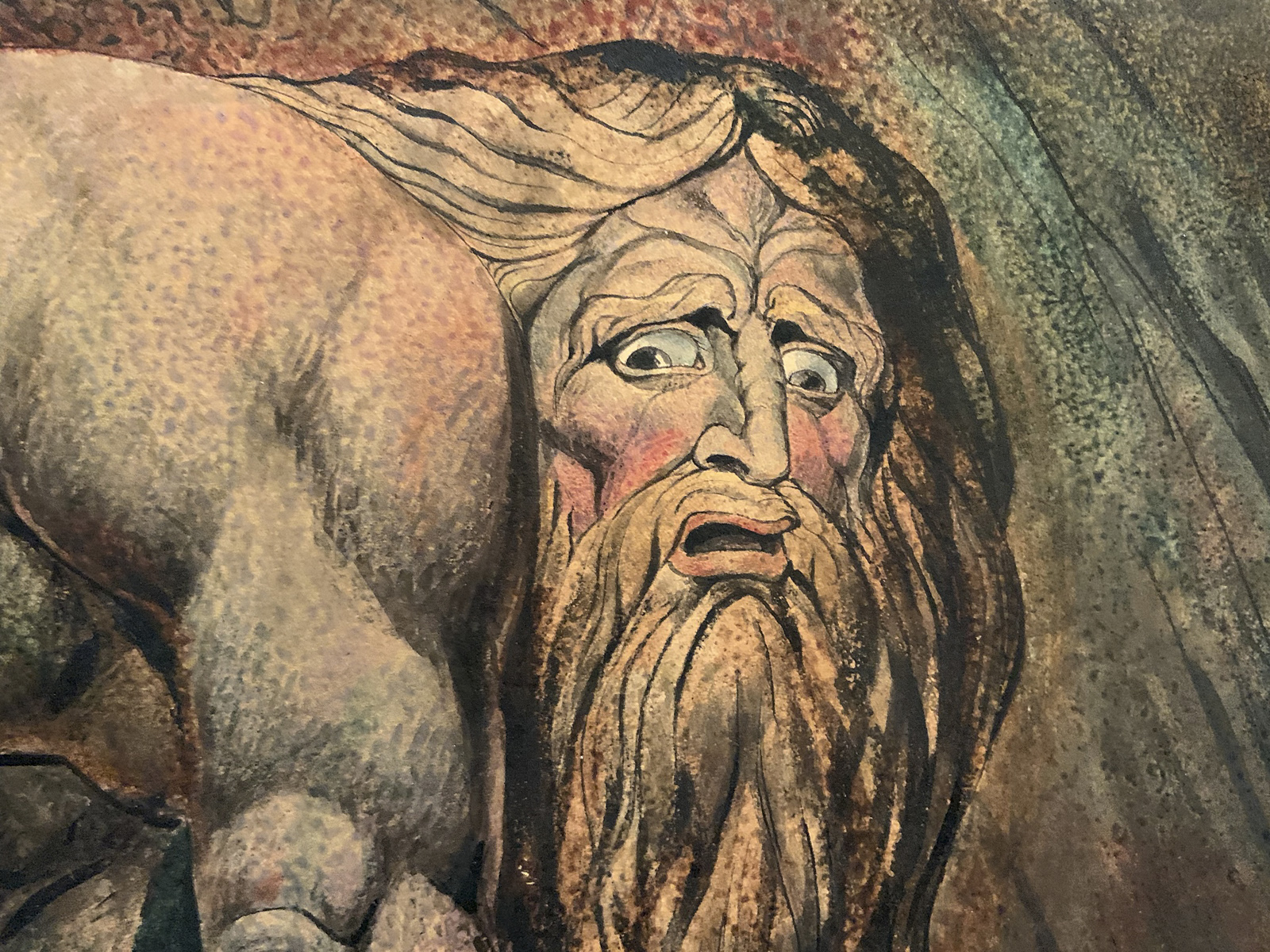
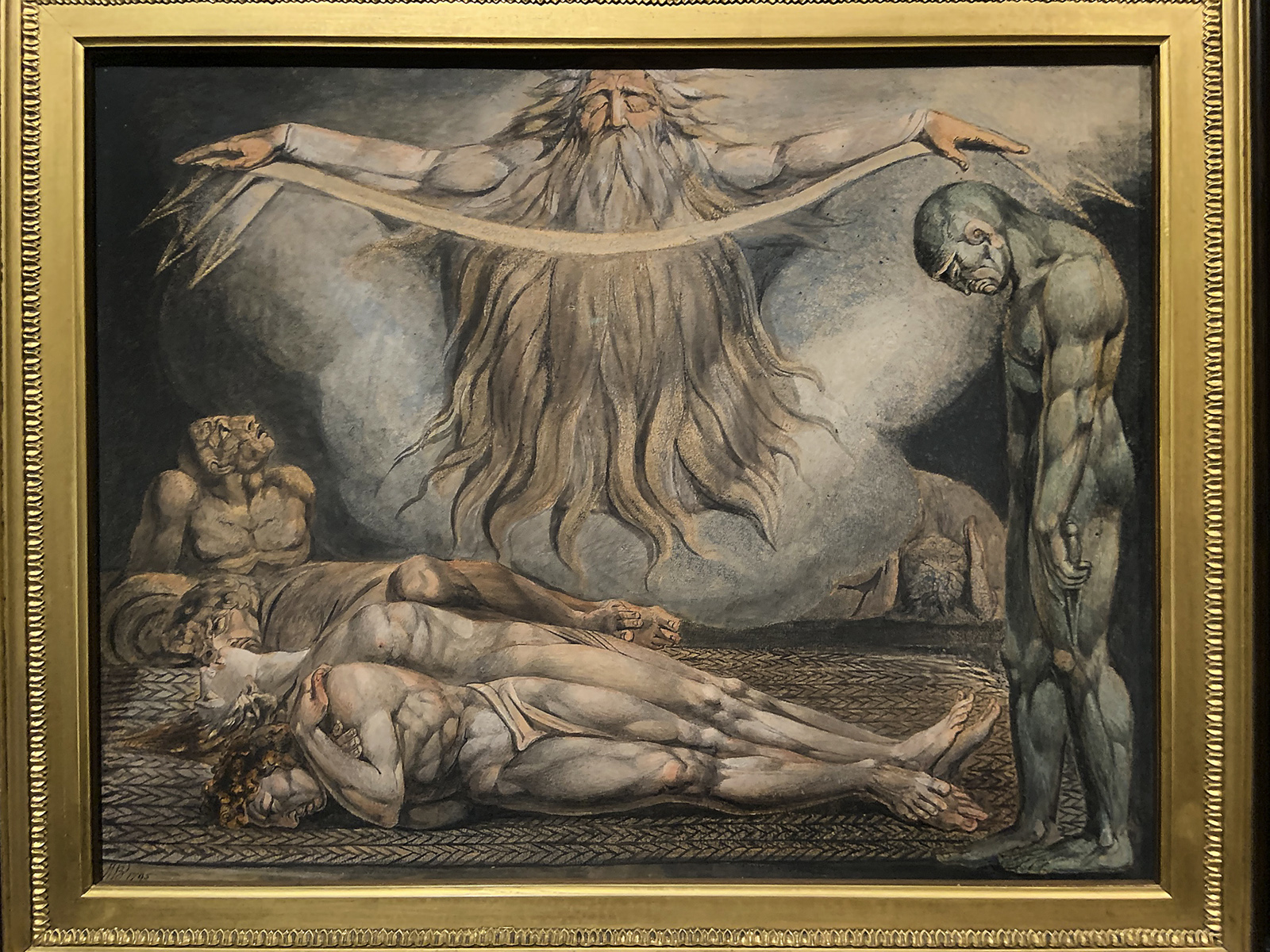
Art Gallery of New South Wales website

LIKE ART BLART ON FACEBOOK

Back to top

Exhibition: ‘Francis Bacon & Henry Moore: Terror and Beauty’ at the Art Gallery of Ontario (AGO), Toronto

Exhibition dates: 5th April – 20th July 2014


Francis Bacon (British, 1909-1992) 'Second Version of Triptych 1944' 1988


Francis Bacon (British, 1909-1992)
Second Version of Triptych 1944
1988
Oil and alkyds on canvas
Each panel 198 x 147.5cm (each panel)
Tate Modern, London
© Estate of Francis Bacon / SODRAC (2013)


Like the my earlier posting on the exhibition ‘Caravaggio – Bacon’ at Gallery Borghese, Rome, what an inspired curatorial decision this is. I would have never have thought to have brought Bacon and Moore together, but the synergy between the two artists work is undeniable.

Personally, I don’t think that Moore is as immobile and measurable as Radoslaw Kudlinski states in the quotation below: while rooted in anthropological concerns his anthropomorphic “nightmares” have a heft and gravitas that move you, not physically, but in the pit of your stomach. Look at the open mouth of Reclining Figure (1951, below) and tell me you are not drawn down into the bowls of the soul through the pointed tit of mother earth. Tactile, yes. Immobile and measurable, NO!

Moore moves you from within. His roots are from an ancient and emotional landscape, one of decay, time and change. His works are like embryonic sacs, pushing out at you from different points. The holes in his work are like looking into a black hole. The spaces he creates with his sculptures DENY a perfect formal economy, for they are really awkward images that impinge on a space. Never stationary, his sculptures move you from within in the most powerful way. A perfect counterbalance to the external, cinematic rambunctiousness of Bacon.

Dr Marcus Bunyan


Many thankx to the Art Gallery of Ontario for allowing me to publish the photographs in the posting. Please click on the photographs for a larger version of the image.


Francis Bacon (British, 1909-1992) 'Second Version of Triptych 1944' 1988 (detail)


Francis Bacon (British, 1909-1992)
Second Version of Triptych 1944 (detail)
1988
Oil and alkyds on canvas
Each panel 198 x 147.5cm (each panel)
Tate Modern, London
© Estate of Francis Bacon / SODRAC (2013)


Francis Bacon (British, 1909-1992) 'Second Version of Triptych 1944' 1988 (detail)


Francis Bacon (British, 1909-1992)
Second Version of Triptych 1944 (detail)
1988
Oil and alkyds on canvas
Each panel 198 x 147.5cm (each panel)
Tate Modern, London
© Estate of Francis Bacon / SODRAC (2013)


“While Moore’s figures are sustaining themselves entirely from within, Bacon’s are disengaged fugitives from history. Bacon is already “after” when Moore is still “before.”

And while Moore’s nightmares are still rooted in anthropological concerns – corporeal and measurable – Bacon’s subject is a phantom without a name, without a past, because a collectivised subject is only and always an abstract fragment of a person.

But we need Moore’s confrontation with Bacon. Moore is a guardian of our sanity. His forms are stationary – despite the refined movement of all their structural lines, and their impeccable pronunciation of architectural tempo, as well as their perfect formal economy, they are going nowhere.

And because of Moore’s immobility, tactility and measurability, I welcome his presence with relief. He defends us from Bacon’s radical, cinematic mobility, forever escaping our grasp.

Bacon’s state of convulsive stasis is an illusion, because looking at his canvas you have an impression that between the two or three takes, there are more frames, as in a movie, trapped in the same space. There is also a sense that this trapping of multiplicity is not a conscious choice, but the consequence of there being nowhere else to go.

Bacon is the scandal of the flesh, the existential strip-tease – even a post-flesh, post-body concept of a person. He is a fugitive, and his natural state is motion, appearance and disappearance. He belongs to non-materiality, to cyberspace – and this is his paradox, because together with the sensuality of his pictorial matter, the materiality of subject is gone. That’s why Bacon is so relevant today.”

Radoslaw Kudlinski. “Serious Scary: Francis Bacon and Henry Moore in Toronto,” on the Canadian Art website, May 7, 2014 [Online] Cited 05/07/2014. No longer available online


Bill Brandt (German-British, 1904-1983) 'Francis Bacon' Nd


Bill Brandt (German-British, 1904-1983)
Francis Bacon
Nd
Gelatin silver print
20.9 x 18.7cm
© The Bill Brandt Archive, London / Courtesy Edwynn Houk Gallery, New York / Zürich


Francis Bacon (British, 1909-1992) 'Study for Portrait VI' 1953


Francis Bacon (British, 1909-1992)
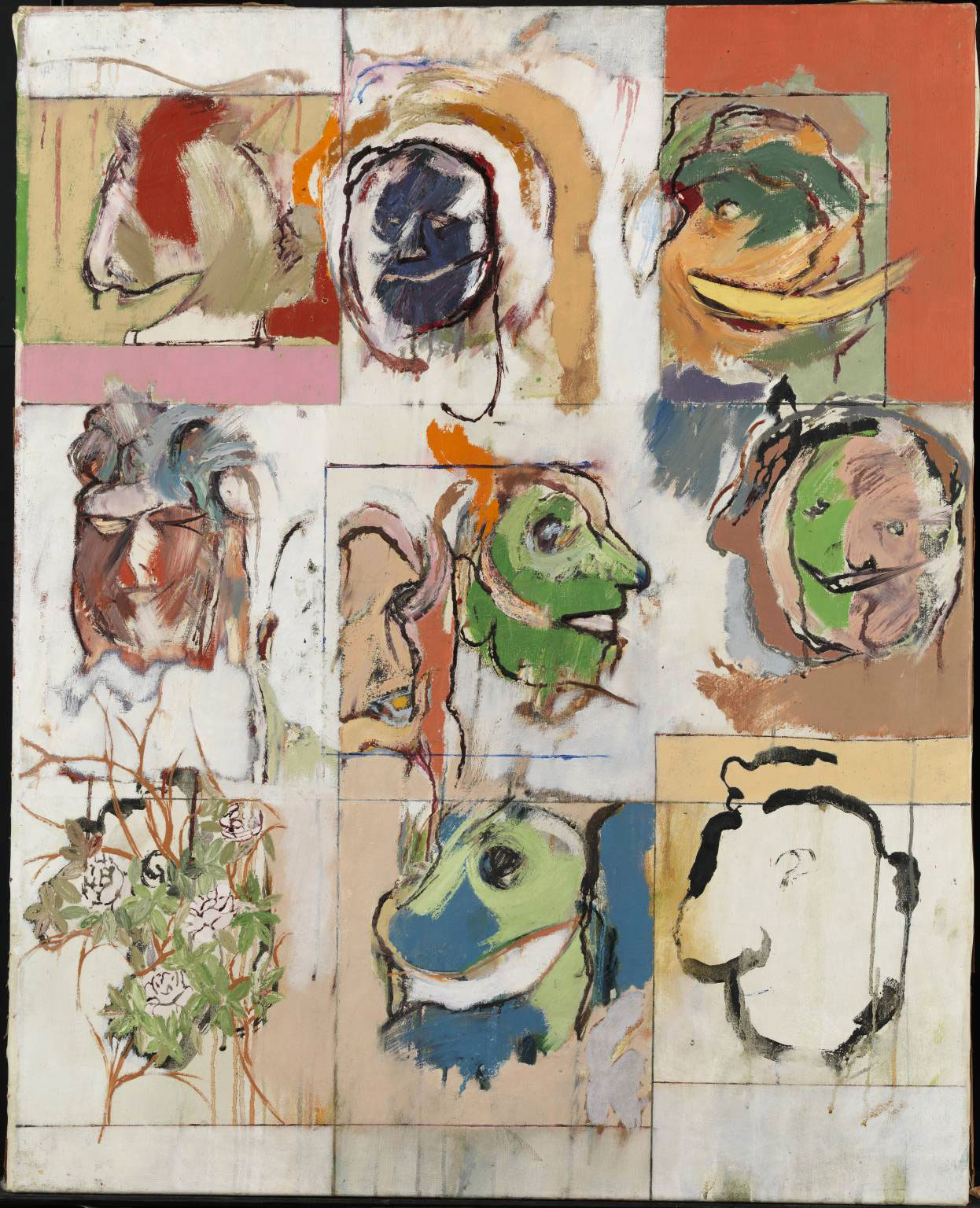
Study for Portrait VI
1953 
Oil on canvas
152 x 117cm
The Minneapolis Institute of Arts,
The Miscellaneous Works of Art Purchase Fund © Estate of Francis Bacon / SODRAC (2013)
 

Francis Bacon (British, 1909-1992) 'Study for Portrait II (After the life mask of William Blake)' 1955


Francis Bacon (British, 1909-1992)
Study for Portrait II (After the life mask of William Blake)
1955
Oil on canvas
61 x 51cm
Tate Modern, London © Estate of Francis Bacon / SODRAC (2013)


Francis Bacon (British, 1909-1992) 'Two Figures in a Room' 1959


Francis Bacon (British, 1909-1992)
Two Figures in a Room 
1959
Oil on canvas
198 x 140.5cm
Robert & Lisa Sainsbury Collection, Sainsbury Centre for Visual Arts, University of East Anglia, UK
© Estate of Francis Bacon / SODRAC (2013)


Francis Bacon (British, 1909-1992) 'Study for Portrait on Folding Bed' 1963


Francis Bacon (British, 1909-1992)
Study for Portrait on Folding Bed
1963
Oil on canvas
198.1 x 147.3cm
Tate Britain, London
© Estate of Francis Bacon / SODRAC (2013)


Francis Bacon (British, 1909-1992) 'Portrait of Isabel Rawsthorne' 1966


Francis Bacon (British, 1909-1992)
Portrait of Isabel Rawsthorne
1966
Oil on canvas
81 x 69cm
Tate Modern, London
© Estate of Francis Bacon / SODRAC (2013)


Francis Bacon (British, 1909-1992) 'Lying Figure in a Mirror' 1971


Francis Bacon (British, 1909-1992)
Lying Figure in a Mirror
1971
Oil on canvas
198.5 x 147.5cm
Museo de Bellas Artes Bilbao
© Estate of Francis Bacon / SODRAC (2013)


Francis Bacon (British, 1909-1992) 'Three Figures and a Portrait, 1975' 1975


Francis Bacon (British, 1909-1992)
Three Figures and a Portrait, 1975
1975
Oil and acrylic on canvas
198.1 x 147.3cm
Tate Britain, London
© Estate of Francis Bacon / SODRAC (2013)


Francis Bacon (British, 1909-1992) 'Untitled (Kneeling Figure)' 1982


Francis Bacon (British, 1909-1992)
Untitled (Kneeling Figure)
1982
Oil on canvas
212 x 161cm
The Estate of Francis Bacon
© Estate of Francis Bacon / SODRAC (2013)


The tortured British painter Francis Bacon, whose triptych recently set a new record for the most expensive artwork ever sold at auction, makes his Canadian debut this spring at the Art Gallery of Ontario (AGO) alongside rarely-seen works by the British sculptor Henry Moore in the exhibition Francis Bacon & Henry Moore: Terror and Beauty. Featuring more than 130 artworks, including paintings, sculptures, drawings, photographs and archival materials, the exhibition explores the two artists’ shared fascination with the human form in relation to the violence of the Second World War and other key events of the 20th century.

Although they were neither friends nor collaborators, Bacon (b. 1909) and Moore (b. 1898) were contemporaries who shared an obsession with expressing themes of violence, trauma and conflict, both social and personal. Drawing on the artists’ personal experiences during the London Blitz and other conflicts, the exhibition examines how confinement and angst fostered their extraordinary creativity and unique visions. Bacon, whose dark depictions of human torment have inspired several characters in popular culture, including the appearance of Heath Ledger’s Joker in The Dark Knight, was a sado-masochist who sought to process the trials of humanity through his canvases. Moore, a British war artist, was one of the most renowned sculptors of his time. His works evoke endurance and stability, but when considered in light of his wartime experience, they read as an effort to rebuild and redeem the fragile human psyche and body.

Curated for the AGO by Dan Adler, associate professor of art history at York University, Francis Bacon and Henry Moore: Terror and Beauty is the first Canadian exhibition of Bacon’s work and includes rarely seen Moore pieces, from both the AGO collection and elsewhere. Moore’s works are a cornerstone of the AGO collection, and pairing them with those by Francis Bacon sets them in a new light. The exhibition also presents more than 30 archival photographs by acclaimed German-born British photographer Bill Brandt. Loans for the exhibition have also been secured from several institutions, including MoMA, Tate Britain and the Museum of Contemporary Art, Chicago.

Press release from the AGO website


Henry Moore (English, 1898-1986) 'Spanish Prisoner' 1939


Henry Moore (English, 1898-1986)
Spanish Prisoner
1939
Lithograph on paper
36.5 x 30.5cm
Art Gallery of Ontario, Toronto
© The Henry Moore Foundation. All Rights Reserved, DACS / SODRAC (2013)


Bill Brandt (German-British, 1904-1983) 'Henry Moore in his Studio at Much Hadham, Hertfordshire' 1940


Bill Brandt (German-British, 1904-1983)
Henry Moore in his Studio at Much Hadham, Hertfordshire
1940
Gelatin silver print
22.8 x 19.6cm
© The Bill Brandt Archive, London / Courtesy Edwynn Houk Gallery, New York / Zürich


Henry Moore (English, 1898-1986) 'Sleeping Positions' 1940-1941


Henry Moore (English, 1898-1986)
Sleeping Positions
1940-1941
Mixed media on wove paper
20.4 x 16.5cm
The Henry Moore Foundation
© The Henry Moore Foundation. All Rights Reserved, DACS / SODRAC (2013)


Henry Moore (English, 1898-1986) 'Three Fates' 1941


Henry Moore (English, 1898-1986)
Three Fates
1941
Watercolour
29.7 x 19.9cm
Royal Pavilion and Museums, Brighton & Hove
© The Henry Moore Foundation. All Rights Reserved, DACS / SODRAC (2013)


Henry Moore (English, 1898-1986) 'Maquette for Strapwork Head' 1950


Henry Moore (English, 1898-1986)
Maquette for Strapwork Head
1950
Bronze edition of 9
10cm high (excluding base)
The Henry Moore Foundation
© The Henry Moore Foundation. All Rights Reserved, DACS / SODRAC (2013)


Henry Moore (English, 1898-1986) 'Reclining Figure' 1951


Henry Moore (English, 1898-1986)
Reclining Figure
1951
Plaster cast
Length: 228.5cm
Art Gallery of Ontario, Toronto
Courtesy Craig Boyko, AGO
© The Henry Moore Foundation. All Rights Reserved, DACS / SODRAC (2013)


Henry Moore (English, 1898-1986) 'Helmet Head and Shoulders' 1952


Henry Moore (English, 1898-1986)
Helmet Head and Shoulders
1952 
Bronze
19 x 20.5 x 15cm
Tate Modern, London
© The Henry Moore Foundation. All Rights Reserved, DACS / SODRAC (2013)


Henry Moore (English, 1898-1986) 'Mother and Child' 1953


Henry Moore (English, 1898-1986)
Mother and Child
1953
Plaster
Art Gallery of Ontario, Toronto
© The Henry Moore Foundation. All Rights Reserved, DACS / SODRAC (2013)


Henry Moore (English, 1898-1986) 'Falling Warrior' 1956-1957


Henry Moore (English, 1898-1986)
Falling Warrior
1956-1957
Bronze
65 x 154 x 85cm
Tate Modern, London
© The Henry Moore Foundation. All Rights Reserved, DACS / SODRAC (2013)


Art Gallery of Ontario
Musée des beaux-arts de l’Ontario

317 Dundas Street West
Toronto Ontario Canada M5T 1G4

Opening hours:
Tuesday – Sunday 10.30am – 5.30pm
Closed Mondays

Art Gallery of Ontario website

LIKE ART BLART ON FACEBOOK

Back to top

Exhibition: ‘Dark Romanticism. From Goya to Max Ernst’ at the Städel Museum, Frankfurt

Exhibition dates: 26th September 2012 – 20th January, 2013


Many thankx to the Städel Museum for allowing me to publish the reproductions of the artwork in the posting. Please click on the photographs for a larger version of the image.


This slideshow requires JavaScript.


Installation photographs of the exhibition Dark Romanticism. From Goya to Max Ernst at the Städel Museum, Frankfurt
Photos: Norbert Miguletz


Installation view of the exhibition 'Dark Romanticism. From Goya to Max Ernst' at the Städel Museum, Frankfurt

Installation view of the exhibition 'Dark Romanticism. From Goya to Max Ernst' at the Städel Museum, Frankfurt showing at left, Thomas Cole's 'Expulsion: Moon and Firelight '(c. 1828); at centre, Johann Henry Fuseli's 'The Nightmare (The Incubus)' (1781-1782); at second right, Samuel Colman's 'The Edge of Doom' (1836-1838); and at right, William Blake's 'The Great Red Dragon and the Woman Clothed with the Sun' (c. 1803-1805)


Installation views of the exhibition Dark Romanticism. From Goya to Max Ernst at the Städel Museum, Frankfurt showing at left in the bottom image, Thomas Cole’s Expulsion: Moon and Firelight (c. 1828, below); at centre, Johann Henry Fuseli’s The Nightmare (The Incubus) (1781-1782, below); at second right, Samuel Colman’s The Edge of Doom (1836-1838, below); and at right, William Blake’s The Great Red Dragon and the Woman Clothed with the Sun (c. 1803-1805, below)
Photos: Norbert Miguletz


Thomas Cole (American born England, 1801-1848) 'Expulsion: Moon and Firelight' c. 1828


Thomas Cole (American born England, 1801-1848)
Expulsion: Moon and Firelight
c. 1828
Oil on canvas
91.4 by 122cm (36.0 in × 48.0 in)
Thyssen-Bornemisza Museum, Madrid


Johann Henry Fuseli (Swiss, 1741-1825) 'The Nightmare (The Incubus)' 1781-1782


Johann Henry Fuseli (Swiss, 1741-1825)
The Nightmare (The Incubus)
1781-1782
Oil on canvas
77cm (30.3 in) x 64cm (25.1 in)
Goethehaus (Frankfurt) collection


Samuel Colman (British, 1780-1845) 'The Edge of Doom' 1836-1838


Samuel Colman (British, 1780-1845)
The Edge of Doom
1836-1838
Oil on canvas
54 x 78 1/2 in. (137.2 x 199.4cm)
Brooklyn Museum


William Blake (British, 1757-1827) 'The Great Red Dragon and the Woman Clothed with the Sun' c.1803-1805


William Blake (British, 1757-1827)
The Great Red Dragon and the Woman Clothed with the Sun
c. 1803-1805
Watercolour, graphite and incised lines
43.7 x 34.8cm
Brooklyn Museum, Gift of William Augustus White


Johann Henry Fuseli (Swiss, 1741-1825) 'The Nightmare' 1781


Johann Henry Fuseli (Swiss, 1741-1825)
The Nightmare
1781
Oil on canvas
101.6 × 126.7cm
Detroit Institute of Arts, Founders Society
© Bridgeman Art Library


Johann Henry Fuseli (Swiss, 1741-1825) 'Die wahnsinnige Kate'(La folie de Kate) (Mad Kate) 1806-1807


Johann Henry Fuseli (Swiss, 1741-1825)
Die wahnsinnige Kate (La folie de Kate) (Mad Kate)
1806-1807
Oil on canvas
92cm (36.2 in) x 72.3cm (28.4 in)
Francfort-sur-le-Main, Frankfurter Goethe-Haus
Freies Deutsches Hochstift, inv.1955-007
© Ursula Edelmann/ARTOTHEK


Installation view of the exhibition 'Dark Romanticism. From Goya to Max Ernst' at the Städel Museum, Frankfurt showing Paul Delaroche's 'The Wife of the Artist, Louise Vernet, on her Death Bed' (1845)


Installation view of the exhibition Dark Romanticism. From Goya to Max Ernst at the Städel Museum, Frankfurt showing Paul Delaroche’s The Wife of the Artist, Louise Vernet, on her Death Bed (1845, below)
Photo: Norbert Miguletz


Paul Hippolyte Delaroche (French, 1797-1856) 'Louise Vernet, the artist's wife, on her Deathbed' 1845-46


Paul Hippolyte Delaroche (French, 1797-1856)
Louise Vernet, the artist’s wife, on her Deathbed
1845-1846
Oil on canvas
62 x 74.5cm
Musée des Beaux-Arts de Nantes
© Musée des Beaux-Arts de Nantes


Installation view of the exhibition 'Dark Romanticism. From Goya to Max Ernst' at the Städel Museum, Frankfurt showing Gabriel von Max's 'The White Woman' (1900)


Installation view of the exhibition Dark Romanticism. From Goya to Max Ernst at the Städel Museum, Frankfurt showing Gabriel von Max’s The White Woman (1900, below)
Photo: Norbert Miguletz


Gabriel von Max (Austrian, 1840-1915) 'The White Woman' 1900


Gabriel von Max (Austrian, 1840-1915)
The White Woman
1900
Oil on canvas
100 x 72cm
Private Collection


Johann Henry Fuseli (Swiss, 1741-1825) 'Sin Pursued by Death' 1794-1796


Johann Henry Fuseli (Swiss, 1741-1825)
Sin Pursued by Death
1794-1796
Oil on canvas
Kunsthaus, Zürich


Théodore Géricault (French, 1791–1824) Cuirassier blessé quittant le feu / The Wounded Cuirassier 1814


Théodore Géricault (French, 1791–1824)
Cuirassier blessé quittant le feu / The Wounded Cuirassier
1814
Oil on canvas
358cm (11.7 ft) x 294cm (115.7 in)
Louvre Museum


The Wounded Cuirassier (French: Le Cuirassier blessé quittant le feu) is an oil painting of a single anonymous soldier descending a slope with his nervous horse by the French Romantic painter and lithographer Théodore Géricault (1791–1824). In this 1814 Salon entry, Géricault decided to turn away from scenes of heroism in favour of a subject that is on the losing side of the battle. On display in the aftermath of France’s disastrous military campaign in Russia, this life-size painting captured the feeling of a nation in defeat. There are no visible wounds on the figure, and the title has sometimes been interpreted to refer to soldier’s injured pride. The painting stood in stark contrast with Géricault’s Charging Chasseur, as it didn’t focus on glory or the spectacle of battle. Only his Signboard of a Hoofsmith, which is currently in a private collection, bears any resemblance in form or function to this painting.

The final salon version of The Wounded Cuirassier is at the Musée du Louvre and the smaller, study version, is located at the Brooklyn Museum.

Text from the Wikipedia website


Caspar David Friedrich (German, 1774-1840) 'Kügelgen's Tomb' 1821-1822


Caspar David Friedrich (German, 1774-1840)
Kügelgen’s Tomb
1821-1822
Oil on canvas
41.5 x 55.5cm
Die Lübecker Museen, Museum Behnhaus Drägerhaus, on loan from private collection


Ernst Ferdinand Oehme (German, 1797-1855) 'Procession in the Fog' 1828


Ernst Ferdinand Oehme (German, 1797-1855)
Procession in the Fog
1828
Oil on canvas
81.5 x 105.5cm
Galerie Neue Meister, Staatliche Kunstsammlungen Dresden


Caspar David Friedrich (German, 1774-1840) Rivage avec la lune cachée par des nuages (Clair de lune sur la mer) / Mond hinter Wolken über dem Meeresufer (Meeresküste bei Mondschein) / Moon behind clouds over the seashore (seashore by moonlight) 1836


Caspar David Friedrich (German, 1774-1840)
Rivage avec la lune cachée par des nuages (Clair de lune sur la mer) / Mond hinter Wolken über dem Meeresufer (Meeresküste bei Mondschein) / Moon behind clouds over the seashore (seashore by moonlight)
1836
Hambourg, Hamburger Kunsthalle
© BPK, Berlin, dist. RMN-Grand Palais / Elke Walford


Samuel Colman (American, 1780-1845) 'The Edge of Doom' 1836-1838


Samuel Colman (American, 1780-1845)
The Edge of Doom
1836-1838
Oil on canvas
137.2 x 199.4cm
Brooklyn Museum, Bequest of Laura L. Barnes


William-Adolphe Bouguereau (French, 1825-1905) 'Dante And Virgil In Hell' 1850


William-Adolphe Bouguereau (French, 1825-1905)
Dante And Virgil In Hell
1850
Oil on canvas
280.5cm (110.4 in) x 225.3cm (88.7 in)
Musée d’Orsay
© Musée d’Orsay, Dist. RMN-Grand Palais / Patrice Schmidt


Arnold Böcklin (Swiss, 1827-1901) 'Villa by the Sea' 1871-1874


Arnold Böcklin (Swiss, 1827-1901)
Villa by the Sea
1871-1874
Oil on canvas
108 x 154cm
Städel Museum, Frankfurt am Main


Serafino Macchiati (Italian, 1860-1916) 'Le Visionnaire' (The Visionary) 1904


Serafino Macchiati (Italian, 1860-1916)
Le Visionnaire (The Visionary)
1904
Oil on canvas
55.0 x 38.5cm
Don Serafino Macchiati, 1916
© Musée d’Orsay, Dist. RMN-Grand Palais / Patrice Schmidt


Pierre Bonnard (French, 1867-1945) 'Femme assoupie sur un lit' (Woman sleeping on a bed) 1899


Pierre Bonnard (French, 1867-1945)
Femme assoupie sur un lit (Woman sleeping on a bed)
1899
huile sur toile
96.4 x 105.2cm
Achat en vente publique, 1948
© Musée d’Orsay, Dist. RMN-Grand Palais / Patrice Schmidt


Pierre Bonnard (1867-1947)

A veritable hymn to voluptuousness, The Indolent Woman is a painting which relies on contrasts: the title already clashes with the young woman’s posture. Her body with its tense muscles – the left foot is literally hooked on to the right thigh – belies any idea of rest or laziness. Similarly, the modest gesture of the arm across the breasts is contradicted by the spread thighs. Sinuous lines run throughout the composition, materialised by the dark shadows on the sheets still bearing the undulating line of the bodies and the heavy jumble of the bedclothes. The electric blue “smoke” drifting across the woman’s thigh and ankle and the sumptuous dark hair spread across the bed accentuate the painting’s erotic charge.

This woman spread out for all to see after lovemaking is the epitome of unveiled intimacy, violent, passionate and sombre and, in the end, very “fin de siècle”. We are also struck by the modernity of the composition seen from above, with its monumental bed which seems to tip towards the viewer. The woman’s body, gnawed by shadows, has a tonic vibrant texture which gives it a strong timeless presence.

This is a crucial work in Bonnard’s career because it is one of the first nudes he painted, previously showing little interest in the theme. It can be compared with two other canvases from the same period: Blue Nude from the Kaganovitch collection and Man and Woman.

After seeing this painting, the famous art dealer and publisher Ambroise Vollard asked Bonnard to illustrate a collection of Paul Verlaine’s poetry, Parallèlement, which was published in 1900.

Text from the Musée d’Orsay website


Salvador Dalí (Spanish, 1904-1989) 'Dream caused by the Flight of a Bee around a Pomegranate a Second before Awakening' 1944


Salvador Dalí (Spanish, 1904-1989)
Dream caused by the Flight of a Bee around a Pomegranate a Second before Awakening
1944
Oil on wood
51 x 41cm
Museo Thyssen-Bornemisza, Madrid
© VG Bild-Kunst, Bonn 2012


The Städel Museum’s major special exhibition Dark Romanticism. From Goya to Max Ernst will be on view from September 26th, 2012 until January 20th, 2013. It is the first German exhibition to focus on the dark aspect of Romanticism and its legacy, mainly evident in Symbolism and Surrealism. In the museum’s exhibition house this important exhibition, comprising over 200 paintings, sculptures, graphic works, photographs and films, will present the fascination that many artists felt for the gloomy, the secretive and the evil. Using outstanding works in the museum’s collection on the subject by Francisco de Goya, Eugène Delacroix, Franz von Stuck or Max Ernst as a starting point, the exhibition is also presenting important loans from internationally renowned collections, such as the Musée d’Orsay, the Musée du Louvre, both in Paris, the Museo del Prado in Madrid and the Art Institute of Chicago. The works on display by Goya, Johann Heinrich Fuseli and William Blake, Théodore Géricault and Delacroix, as well as Caspar David Friedrich, convey a Romantic spirit which by the end of the 18th century had taken hold all over Europe. In the 20th century artists such as Salvador Dalí, René Magritte or Paul Klee and Max Ernst continued to think in this vein. The art works speak of loneliness and melancholy, passion and death, of the fascination with horror and the irrationality of dreams. After Frankfurt the exhibition, conceived by the Städel Museum, will travel to the Musée d’Orsay in Paris.

The exhibition’s take on the subject is geographically and chronologically comprehensive, thereby shedding light on the links between different centres of Romanticism, and thus retracing complex iconographic developments of the time. It is conceived to stimulate interest in the sombre aspects of Romanticism and to expand understanding of this movement. Many of the artistic developments and positions presented here emerge from a shattered trust in enlightened and progressive thought, which took hold soon after the French Revolution – initially celebrated as the dawn of a new age – at the end of the 18th century. Bloodstained terror and war brought suffering and eventually caused the social order in large parts of Europe to break down. The disillusionment was as great as the original enthusiasm when the dark aspects of the Enlightenment were revealed in all their harshness. Young literary figures and artists turned to the reverse side of Reason. The horrific, the miraculous and the grotesque challenged the supremacy of the beautiful and the immaculate. The appeal of legends and fairy tales and the fascination with the Middle Ages competed with the ideal of Antiquity. The local countryside became increasingly attractive and was a favoured subject for artists. The bright light of day encountered the fog and mysterious darkness of the night.

The exhibition is divided into seven chapters. It begins with a group of outstanding works by Johann Heinrich Fuseli. The artist had initially studied to be an evangelical preacher in Switzerland. With his painting The Nightmare (Frankfurt Goethe-Museum) he created an icon of dark Romanticism. This work opens the presentation, which extends over two levels of the temporary exhibition space. Fuseli’s contemporaries were deeply disturbed by the presence of the incubus (daemon) and the lecherous horse – elements of popular superstition – enriching a scene set in the present. In addition, the erotic-compulsive and daemonic content, as well as the depressed atmosphere, catered to the needs of the voyeur. The other six works by Fuseli – loans from the Kunsthaus Zürich, the Royal Academy London and the Staatsgalerie Stuttgart – represent the characteristics of his art: the competition between good and evil, suffering and lust, light and darkness. Fuseli’s innovative pictorial language influenced a number of artists – among them William Blake, whose famous water colour The Great Red Dragon from the Brooklyn Museum will be on view in Europe for the first time in ten years.

The second room of the exhibition is dedicated to the Spanish artist Francisco de Goya. The Städel will display six of his works – including masterpieces such as The Witches’ Flight from the Prado in Madrid and the representations of cannibals from Besançon. A large group of works on paper from the Städel’s own collection will be shown, too. The Spaniard blurs the distinction between the real and the imaginary. Perpetrator and victim repeatedly exchange roles. Good and evil, sense and nonsense – much remains enigmatic. Goya’s cryptic pictorial worlds influenced numerous artists in France and Belgium, including Delacroix, Géricault, Victor Hugo and Antoine Wiertz, whose works will be presented in the following room. Atmosphere and passion were more important to these artists than anatomical accuracy.

Among the German artists – who are the focus of the next section of the exhibition – it is Carl Blechen who is especially close to Goya and Delacroix. His paintings are a testimony to his lust for gloom. His soft spot for the controversial author E. T. A. Hoffmann – also known as “Ghost-Hoffmann” in Germany – led Blechen to paint works such as Pater Medardus (Alte Nationalgalerie, Berlin) – a portrait of the mad protagonist in The Devil’s Elixirs. The artist was not alone in Germany when it came to a penchant for dark and disturbing subjects. Caspar David Friedrich’s works, too, contain gruesome elements: cemeteries, open graves, abandoned ruins, ships steered by an invisible hand, lonely gorges and forests are pervasive in his oeuvre. One does not only need to look at the scenes of mourning in the sketchbook at the Kunsthalle Mannheim for the omnipresent theme of death. Friedrich is prominently represented in the exhibition with his paintings Moon Behind Clouds above the Seashore from the Hamburger Kunsthalle and Kügelgen’s Grave from the Lübecker Museums, as well as with one of his last privately owned works, Ship at Deep Sea with full Sails.

Friedrich’s paintings are steeped in oppressive silence. This uncompromising attitude anticipates the ideas of Symbolism, which will be considered in the next chapter of the exhibition. These ‘Neo-Romantics’ stylised speechlessness as the ideal mode of human communication, which would lead to fundamental and seminal insights. Odilon Redon’s masterpiece Closed Eyes, a loan from the Musée d’Orsay in Paris, impressively encapsulates this notion. Paintings by Arnold Böcklin, James Ensor, Fernand Khnopff or Edvard Munch also embody this idea. However, as with the Romantics, these restrained works are face to face with works where anxiety and repressed passions are brought unrestrainedly to the surface; works that are unsettling in their radicalism even today. While Gustave Moreau, Max Klinger, Franz von Stuck and Alfred Kubin belong to the art historical canon, here the exhibition presents artists who are still to be discovered in Germany: Jean-Joseph Carriès, Paul Dardé, Jean Delville, Julien-Adolphe Duvocelle, Léon Frédéric, Eugène Laermans and Lucien Lévy-Dhurmer.

The presentation concludes with the Surrealist movement, founded by André Breton. He inspired artists such as Ernst, Brassaϊ or Dalí, to create their wondrous pictorial realms from the reservoir of the subconscious and celebrated them as fantasy’s victory over the “factual world”. Max Ernst vehemently called for “the borders between the so-called inner and outer world” to be blurred. He demonstrated this most clearly in his forest paintings, four of which have been assembled for this exhibition, one of them the major work Vision Provoked by the Nocturnal Aspect of the Porte Saint-Denis (private collection). The art historian Carl Einstein considered the Surrealists to be the Romantics’ successors and coined the phrase ‘the Romantic generation’. In spite of this historical link the Surrealists were far from retrospective. On the contrary: no other movement was so open to new media; photography and film were seen as equal to traditional media. Alongside literature, film established itself as the main arena for dark Romanticism in the 20th century. This is where evil, the thrill of fear and the lust for horror and gloom found a new home. In cooperation with the Deutsches Filmmuseum the Städel will for the first time present extracts from classics such as Frankenstein (1931), Dracula (1931), Faust (1926), Vampyr (1931-32) and The Phantom Carriage (1921) within an exhibition.

The exhibition, which presents the Romantic as a mindset that prevailed throughout Europe and remained influential beyond the 19th century, is accompanied by a substantial catalogue. As is true for any designation of an epoch, Romanticism too is nothing more than an auxiliary construction, defined less by the exterior characteristics of an artwork than by the inner sentiment of the artist. The term “dark Romanticism” cannot be traced to its origins, but – as is also valid for Romanticism per se – comes from literary studies. The German term is closely linked to the professor of English Studies Mario Praz and his publication La carne, la morte e il diavolo nella letteratura romantica of 1930, which was published in German in 1963 as Liebe, Tod und Teufel. Die schwarze Romantik (literally: Love, Death and Devil. Dark Romanticism).

Press release from the Städel Museum website


Francisco de Goya (Spanish, 1746-1828) 'Witches in the Air' 1797-1798


Francisco de Goya (Spanish, 1746-1828)
Witches in the Air
1797-1798
Oil on canvas
43.5 × 30.5cm (17 1/8 in × 12 in)
Madrid, Museo Nacional del Prado
© Museo Nacional del Prado


Witches’ Flight (Spanish: Vuelo de Brujas, also known as Witches in Flight or Witches in the Air) is an oil-on-canvas painting completed in 1798 by the Spanish painter Francisco Goya. It was part of a series of six paintings related to witchcraft acquired by the Duke and Duchess of Osuna in 1798. It has been described as “the most beautiful and powerful of Goya’s Osuna witch paintings.” …

At center point are three semi-nude witches wearing penitential coroza bearing aloft a writhing nude figure, their mouths close to their victim, as if to devour him or suck his blood. Below, two figures in peasants’ garb recoil from the spectacle: one has thrown himself to the ground covering his ears, the other attempts to escape by covering himself with a blanket, making the fig hand gesture to ward off the evil eye. Finally, a donkey emerges on the right, seemingly oblivious to the rest of the scene.

The general scholarly consensus is that the painting represents a rationalist critique of superstition and ignorance, particularly in religious matters: the witches’ corozas are not only emblematic of the violence of the Spanish Inquisition (the upward flames indicate that they have been condemned as unrepentant heretics and will be burned at the stake), but are also reminiscent of episcopal mitres, bearing the characteristic double points. The accusations of religious tribunals are thus reflected back on themselves, whose actions are implicitly equated with superstition and ritualised sacrifice. The bystanders can then be understood either as appalled but unable to do anything or wilfully ignorant and unwilling to intervene.

The donkey, finally, is the traditional symbol of ignorance.

Text from the Wikipedia website


Eugène Delacroix (French, 1798-1863) 'Mephistopheles in the air, illustration from Goethe's Faust' 1828


Eugène Delacroix (French, 1798-1863)
Mephistopheles in the air, illustration for from Goethe’s Faust
1828
Lithograph
Frankfurt am Main, Städel Museum
© All rights reserved


Francisco de Goya (Spanish, 1746-1828) 'Flying Folly (Disparate Volante)' 1816-1819


Francisco de Goya (Spanish, 1746-1828)
Flying Folly (Disparate Volante)
from “The proverbs (Los proverbios)”, plate 5, 1816-1819, 1
Edition, 1864
Etching and aquatint
21.7 x 32.6cm
Städel Museum, Frankfurt am Main


“I am not afraid of witches, goblins, apparitions, boastful giants, evil spirits, leprechauns, etc., nor of any other kind of creatures except human beings.”


Francisco Goya


An enthusiastic champion of Enlightenment values, Goya was also on close terms with the progressive nobility, but his doubts and disillusionment increased as the French Revolution was succeeded by the Terror, and Europe was torn apart by warring armies.

The deceptively clear distinction between enlightenment and obscurantism was now supplanted by the vision of a new, grey, frightening and uncertain world, in which no sharp line could be drawn between good and evil, reality and fantasy, reason and absurdity, the beliefs of the past and the revolutionary fervour of the present.

But instead of living in the past or doing nothing, Goya swapped his court painter’s brush for the etcher’s unsparing needle. Black in all its shades was the keynote of the many series of engravings he now produced on freely chosen themes, with only the Inquisition’s censors to contend with.

The Caprices, a series produced at the end of the 18th century, reflects his amazement and exasperation at the imaginative wealth of Spanish popular culture, steeped in the superstition, fanaticism and ignorance promoted by the Jesuits.

Ten years later, the atrocities which marked the war against Napoleon inspired The Disasters of War – a cry of outrage and horror at the barbaric excesses of the “Grande Nation” and the terrifying emptiness of a world with no God or morality.

Anonymous. “The Angel of the Odd. Dark Romanticism from Goya to Max Ernst,” on the Musée D’Orsay website Nd [Online] Cited 12/08/2024


Louis Candide Boulanger (French, 1806-1867) 'Les Fantômes' 1829


Louis Candide Boulanger (French, 1806-1867)
Les Fantômes
1829
Oil on canvas
Maison de Victor Hugo


Carl Blechen (German, 1798-1840) 'Scaffold in Storm' 1834


Carl Blechen (German, 1798-1840)
Scaffold in Storm
1834
Oil on canvas and on board
29.5cm (11.6 in) x 46cm (18.1 in)
Galerie Neue Meister


Carl Eduard Ferdinand Blechen (29 July 1798 – 23 July 1840) was a German landscape painter and a professor at the Academy of Arts, Berlin. His distinctive style was characteristic of the Romantic ideals of natural beauty.


Eugène Delacroix (French, 1798-1863) 'Hamlet and Horatio in the Graveyard' 1839


Eugène Delacroix (French, 1798-1863)
Hamlet and Horatio in the Graveyard
1839
Oil on canvas
29.5cm (11.6 in) x 36cm (14.1 in)
Louvre Museum


Gustave Moreau (French, 1826-1898) 'Galatea' c. 1880


Gustave Moreau (French, 1826-1898)
Galatea
c. 1880
Oil on panel
85.5cm (33.6 in) x 66cm (25.9 in)
Musée d’Orsay


Paul Gauguin (French, 1848-1903) 'Madame la Mort' 1890-1891


Paul Gauguin (French, 1848-1903)
Madame la Mort
1890-1891
Charcoal on paper with wash highlights
33,5 x 23cm
Don de la société des Amis du musée d’Orsay, 1991
© RMN-Grand Palais (Musée d’Orsay) / Gérard Blot


Jean Delville (Belgium, 1867-1953) 'L'Idole de la Perversité' (The Idol of Perversity) 1891


Jean Delville (Belgium, 1867-1953)
L’Idole de la Perversité (The Idol of Perversity)
1891
81.5 x 48.5cm
Museum Wiesbaden, Collection Ferdinand Wolfgang Neess


Eugène Grasset (French, 1845-1917) 'Trois Femmes et Trois Loups' 1892


Eugène Grasset (French, 1845-1917)
Trois Femmes et Trois Loups
1892
Pencil, watercolour, Indian ink and gold highlights on paper
35.3 x 27.3cm
Musée des Arts Décoratifs, Paris


Franz von Stuck (German, 1863-1928) 'Le Péché' (Die Sünde) (The Sin) 1893


Franz von Stuck (German, 1863-1928)
Le Péché (Die Sünde) (The Sin)
1893
Zurich, galerie Katharina Büttiker
© Galerie Katharina Büttiker, Zürich


Franz Stuck (German, 1863-1928) 'The Kiss of the Sphinx' (Le Baiser du Sphinx) (Der Kuss der Sphinx) 1895


Franz Stuck (German, 1863-1928)
The Kiss of the Sphinx (Le Baiser du Sphinx) (Der Kuss der Sphinx)
1895
Collection particulière
© Droits réservés


Franz Ritter von Stuck (February 23, 1863 – August 30, 1928), born Franz Stuck, was a German painter, sculptor, printmaker, and architect. Stuck was best known for his paintings of ancient mythology, receiving substantial critical acclaim with The Sin in 1892. In 1906, Stuck was awarded the Order of Merit of the Bavarian Crown and was henceforth known as Ritter von Stuck.


Odilon Redon (French, 1840-1916) 'La Mort: C'est moi qui te rends sérieuse: Enlaçons-nous' (Death: It is I who Makes You Serious; Let Us Embrace) 1896


Odilon Redon (French, 1840-1916)
La Mort: C’est moi qui te rends sérieuse: Enlaçons-nous (Death: It is I who Makes You Serious; Let Us Embrace)
1896
Plate 20 from the series “La Tentation de Saint-Antoine” (The Temptation of Saint Anthony)
Lithograph
Sheet: 17 1/8 in. x 13 in. (43.5 x 33cm)


La Mort: C’est moi qui te rends sérieuse: Enlaçons-nous is one of twenty-four prints by the French artist Odilon Redon (1840-1916) that illustrated Flaubert’s play Temptation of Saint Anthony, a lesser-known work of the literary giant but one that Flaubert laboured on painstakingly throughout his life. A contemporary to Flaubert, Redon had worked in lithography for about two decades when the final version of Temptation of Saint Anthony was published. Already working with a repertoire of dark and absurd subjects, Redon was drawn to the grotesque characters described by Flaubert and wrote fondly of the play, calling it “a literary marvel and a mine for me.”

La Mort depicts a scene in the play where Death and Lust, disguised respectively as an emaciated old woman and a fair young one, reveal their real likenesses after failed attempts to seduce Saint Anthony:

The winding-sheet flies open, and reveals the skeleton of Death. The robe bursts open, and presents to view the entire body of Lust, which has a slender figure, with an enormous development behind, and great, undulating masses of hair, disappearing towards the end.

Death tries to lead Saint Anthony to step into the abyss under the cliff and take his own life, thereby ending all pain. “It is I who make you serious, let us embrace each other,” she says, telling Saint Anthony that, by destroying himself, a work of God, he will become God’s equal.

Redon’s accomplished use of chiaroscuro, the sharp contrast between light and dark, underscores the dramatic nature of this moment. Death’s winding-sheet is enveloped by the dazzling rays of light radiating from the voluptuous body of Lust, and Lust’s hair vanishes into the darkness that seeps through Death;s skeletal body. Although the appearance of Lust differs greatly from that of Death, the overlap of their bodies suggests that they are but different phantoms created by the Devil.

Ningyi Xi. “Odilon Redon,” on the Davis Museum website 2017 [Online] Cited 11/08/2024


Arnold Böcklin (Swiss, 1827-1901) 'Shield with Gorgon's head' (Bouclier avec le visage de Méduse) 1897


Arnold Böcklin (Swiss, 1827-1901)
Shield with Gorgon’s head (Bouclier avec le visage de Méduse)
1897
Papier-mâché
610 x 610cm
© RMN (Musée d’Orsay) / Hervé Lewandowski


Carlos Schwabe (Swiss, 1866-1926) 'La Mort et le fossoyeur' (Death and the Gravedigger) 1900


Carlos Schwabe (Swiss, 1866-1926)
La Mort et le fossoyeur (Death and the Gravedigger)
1900
Paris, musée d’Orsay, conservé au département des Arts Graphiques du musée du Louvre
Legs Michonis, 1902
© RMN (Musée d’Orsay) / Jean-Gilles Berizzi / Patrice Schmidt


Julien Adolphe Duvocelle (French, 1873-1961) 'Crâne aux yeux exorbités et mains agrippées à un mur' (Skull with bulging eyes and hands gripping a wall) 1902


Julien Adolphe Duvocelle (French, 1873-1961)
Crâne aux yeux exorbités et mains agrippées à un mur (Skull with bulging eyes and hands gripping a wall)
1902
Pencil and charcoal mounted on a sheet blackened with charcoal
Paris, musée d’Orsay, conservé au département des Arts Graphiques du musée du Louvre
Don de Mme Fourier en souvenir de son fils, 1995
© DR – RMN-Grand Palais (Musée d’Orsay) / Jean-Gilles Berizzi


Anonymous photographer. 'Photographie spirite (médium et spectres)' / Spiritual photography (medium and ghosts) c. 1910


Anonymous photographer
Photographie spirite (médium et spectres) / Spiritual photography (medium and ghosts)
c. 1910
Musée d’Orsay
© RMN-Grand Palais (Musée d’Orsay) / Hervé Lewandowski / DR


Paul Dardé (French, 1888-1963) 'Eternelle douleur' (Eternal Pain)
1913


Paul Dardé (French, 1888-1963)
Eternelle douleur (Eternal Pain)
1913
Plaster, direct carving
50cm
Musée de Lodève


Paul Dardé created Eternal Pain at 25, even though he had only just finished his year of training. Having gone through the Paris National School of Beaux-Arts and Rodin’s workshop, it is probably his journey to Italy and his mythological reading which fixed the theme of the Medusa in the mind of the artist. Carved from a block of plaster gleaned on the heights of Lodève, the piece would be exhibited seven years later side by side with the great Faun, at the Salon of French artists in 1920.

Text from the Musée de Lodève website


Edvard Munch (Norwegian, 1863-1944) 'Vampire' 1916-1918


Edvard Munch (Norwegian, 1863-1944)
Vampire
1916-1918
Oil on canvas
85 x 110cm
Collection Würth
Photo: Archiv Würth
© VG Bild-Kunst, Bonn 2012


Friedrich Wilhelm Murnau (German, 1888-1931) 'Nosferatu – A Symphony of Horror' Germany 1922


Friedrich Wilhelm Murnau (German, 1888-1931)
Nosferatu – A Symphony of Horror
Germany 1922
Filmstill
Silent film
© Friedrich-Wilhelm-Murnau-Stiftung


Roger Parry (French, 1905-1977) 'Untitled' 1929


Roger Parry (French, 1905-1977)
Untitled
1929
Illustration from Léon-Paul Fargue’s “Banalité” (Paris 1930)
Gelatin silver print
21.8 x 16.5cm
Collection Dietmar Siegert
© VG Bild-Kunst, Bonn 2012


Jacques-André Boiffard (French, 1902-1961) 'Renée Jacobi' 1930


Jacques-André Boiffard (French, 1902-1961)
Renée Jacobi
1930
Paris, Centre Pompidou, musée national d’Art moderne, Centre de création industrielle
© Centre Pompidou, MNAM-CCI, dist. RMN-Grand Palais
Image: Centre Pompidou MNAM-CCI © Mme Denise Boiffard


Hans Bellmer. 'La Poupée (tête et couteau)' / The Doll (head and knife) 1935


Hans Bellmer (German, 1902-1975)
La Poupée (tête et couteau) / The Doll (head and knife)
1935
Collection Dietmar Siegert
© ADAGP, Paris


René Magritte (Belgian, 1898-1967) 'Sentimental Conversation' 1945


René Magritte (Belgian, 1898-1967)
Sentimental Conversation
1945
Oil on canvas
54 x 65cm
Private Collection
© VG Bild-Kunst, Bonn 2012


Städelsches Kunstinstitut und Städtische Galerie
Schaumainkai 63, 60596 Frankfurt
Phone: +49(0)69-605098-170

Opening hours:
Tuesday – Wednesday, Friday – Sunday 10 – 18 h
Thursday 10 – 21 h
Monday closed

Städel Museum website

LIKE ART BLART ON FACEBOOK

Back to top

Exhibition: ‘Adam Fuss A Survey of his Work: 1986/2010’ at Huis Marseille Museum for Photography, Amsterdam

Exhibition dates: 11th June – 4th September 2011


Many thankx to the Huis Marseille Museum for allowing me to publish the text and photographs in the posting. Please click on the photographs for a larger version of the image.


Installation view of the exhibition 'Adam Fuss A Survey of his Work: 1986/2010' at Huis Marseille Museum for Photography, Amsterdam showing at right, 'Untitled' (1999) from the series 'My Ghost'


Installation view of the exhibition Adam Fuss A Survey of his Work: 1986/2010 at Huis Marseille Museum for Photography, Amsterdam showing at right, Untitled (1999, below) from the series My Ghost


Adam Fuss (British, b. 1961) From the series 'My Ghost' 1999


Adam Fuss (British, b. 1961)
Untitled
1999
From the series My Ghost
Gelatine silver print photogram
195.3 x 141.3cm
Unique piece
Courtesy Cheim & Read, New York
© Adam Fuss


Installation view of the exhibition 'Adam Fuss A Survey of his Work: 1986/2010' at Huis Marseille Museum for Photography, Amsterdam showing at second right, 'Untitled' (1999) from the series 'My Ghost'


Installation view of the exhibition Adam Fuss A Survey of his Work: 1986/2010 at Huis Marseille Museum for Photography, Amsterdam showing at second right, Untitled (1999, below) from the series My Ghost


Adam Fuss (British, b. 1961) From the series 'My Ghost' 1999


Adam Fuss (British, b. 1961)
Untitled
1999
From the series My Ghost
Platinum print photogram
100.3  x 76.2cm
Unique piece
Courtesy Cheim & Read, New York
© Adam Fuss


Installation view of the exhibition 'Adam Fuss A Survey of his Work: 1986/2010' at Huis Marseille Museum for Photography, Amsterdam showing at left, 'Untitled' (2003)


Installation view of the exhibition Adam Fuss A Survey of his Work: 1986/2010 at Huis Marseille Museum for Photography, Amsterdam showing at left, Untitled (2003, below)


Adam Fuss (British, b. 1961) 'Untitled' 2003 Digital pigment print


Adam Fuss (British, b. 1961)
Untitled
2003
Digital pigment print
182.9 x 111.8cm
Edition 6/7
Courtesy Cheim & Read, New York
© Adam Fuss


Adam Fuss (British, b. 1961) 'Untitled' 1998 Cibachrome photogram


Adam Fuss (British, b. 1961)
Untitled
1998
76.2 x 101.6cm
Private Collection
© Adam Fuss


Adam Fuss (British, b. 1961) 'Invocation' 1992


Adam Fuss (British, b. 1961)
Invocation
1992
Cibachrome photogram
101.6 x 76.2cm
Unique piece
Courtesy Cheim & Read, New York
© Adam Fuss


Distance

What immediately stands out with the work of Adam Fuss is that, both in terms of the chosen subject matter and in his approach to the photographic technique, he has greatly dissociated himself from conventional photography. That which Fuss produces is, in fact, still a photograph; but in order to achieve that, he did rid himself of all the finer luxuries available to users of the medium nowadays. Like a present-day alchemist, Fuss has mastered the medium’s most elementary and primitive forms; he sees just as much potential for creativity in technical knowledge as in the imagination, or the visionary power of the photographer.

His subjects (silhouettes, gossamer christening gowns, rabbits, butterflies, snakes, lace, smoke, drops of water) have also been removed from their natural habitats. In the studio they become so epitomised that they assume the strength and quality of a symbol, or icon, fraught with emotion. Fuss seems, figuratively speaking, to have given wings to his images: they have a weightless and elusive appearance, as though being supernatural in origin and import.

Bipolarity

Though ostensibly sublime, the work’s impact on the viewer is nevertheless one of predominantly earthly beauty. This may be a consequence of the bipolarity that lies at the heart of it. All of Fuss’s endeavours have a twofold focus: on matter and mind, on earth or water and the dynamics of fire or air – in short, on vital forces in relation to space and history. Sometimes, as a true photographic magician, he allows the vital fluids of animals (snakes, rabbits) literally to corrode the silver salts of the light-sensitive photographic emulsions. As though trying to allow the image and its model to share the same source of life.

In his technique as well, Fuss wants to reconcile, to connect, past and present. With this he goes back, through experimentation, to the source. Here and there his printing technique is reminiscent of the zeal and the limitations with which Daguerre and Fox Talbot, the disputed founders of photography, wanted to put their discoveries into practice. In the course of time, he came to master the various old and highly complex processes – that of the daguerreotype, the calotype, the photogram, the platinum print – to a degree that remains unsurpassed. Each of these works is unique, and their technical standard is unparalleled. Fuss’s accomplishments include the making of the world’s largest daguerreotypes. (Both daguerreotypes of the Taj Mahal on display here can be counted among these.)

‘Poetic Genius’

Throughout his work Adam Fuss seeks the very essence of the image; to him that lies particularly at the point where an observation of reality is so intensified that it takes on magical powers, so to speak. His outlook on this comes from the notion of ‘Poetic Genius’ expressed by the British poet, writer, engraver and painter William Blake (1757-1827). It seems that Fuss’s idea of producing daguerreotypes of poems and incorporating them into his work also began with Blake.

In Fuss’s extensive 1998 interview with Mark Haworth Booth (then Curator of Photography at the Victoria & Albert Museum in London) he explained this in relation to his photographs of babies in water, saying that the colour photographs are actually not about an individual, a child. The titles Invocation, Journey, Wish have more to do with emotional, romantic ideas. What the image conveys is a feeling, a sensibility. This is no depiction of a baby in water, even though it may be that as well.

Fuss has an incomparable command of the photogram technique. Since 1988 he has been achieving astonishing results with this. The photogram is produced without a camera – and yields, by definition, a unique print. The physical and lifelike quality of these silhouettes is further heightened by the 1:1 scale on which this technique is based. The previously mentioned photographs of babies in water, from the series Invocation (a continuous series with silhouettes of children) are the earliest photograms shown here. Since 1999 Fuss has been making work which he titles My Ghost. Here the themes relate to memory, loss, but also images of remarkable beauty, such as those of peacock feathers. In this series his magnificent daguerreotypes play a leading role.

Press release from the Huis Marseille Museum


Adam Fuss (British, b. 1961) 'For Allegra' from the series 'My Ghost' 2009 Daguerreotype


Adam Fuss (British, b. 1961)
For Allegra
2009
From the series My Ghost
Daguerreotype
70 x 105cm
Collection Richard Edwards, Aspen, Colorado
© Adam Fuss


Adam Fuss (British, b. 1961) 'Untitled' 1988 Gelatin silver print photogram


Adam Fuss (British, b. 1961)
Untitled
1988
Gelatin silver print photogram
144.8 x 141cm
Unique piece
Collection Robin Katz
© Adam Fuss


Installation view of the exhibition 'Adam Fuss A Survey of his Work: 1986/2010' at Huis Marseille Museum for Photography, Amsterdam showing at left, 'Untitled' (1999) from the series 'My Ghost'; at second left, 'Medusa' (2010); and at right, 'Untitled' (1999) from the series 'My Ghost'


Installation view of the exhibition Adam Fuss A Survey of his Work: 1986/2010 at Huis Marseille Museum for Photography, Amsterdam showing at left, Untitled (1999, below) from the series My Ghost; at second left, Medusa
(2010, below); and at right, Untitled (1999, below) from the series My Ghost


Adam Fuss (British, b. 1961) From the series 'My Ghost' 1997


Adam Fuss (British, b. 1961)
Untitled
1997
From the series My Ghost
Gelatin silver print photogram
160 x 104.1cm
Collection Jan Widlund
© Adam Fuss


Adam Fuss (British, b. 1961) 'Medusa' from the series 'Home and the World' 2010


Adam Fuss (British, b. 1961)
Medusa
2010
From the series Home and the World
Gelatin silver print photogram
240 x 144.1cm
Edition of 9
Unique print
Courtesy Timothy Taylor Gallery, London
© Adam Fuss


Adam Fuss (British, b. 1961) From the series 'My Ghost' 1999


Adam Fuss (British, b. 1961)
Untitled
1999
From the series My Ghost
Gelatine silver print photogram
38 x 75cm
Unique piece
Collection John Cheim
© Adam Fuss


Adam Fuss (British, b. 1961) 'Love' 1993


Adam Fuss (British, b. 1961)
Love
1993
Cibachrome photogram
124.5 x 98.4cm
Unique piece
Courtesy Cheim & Read, New York
© Adam Fuss


Huis Marseille Museum for Photography
Keizersgracht 401
1016 EK Amsterdam

Opening hours:
Daily 10 – 18 hr

Huis Marseille Museum for Photography website

LIKE ART BLART ON FACEBOOK

Back to top