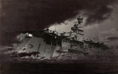
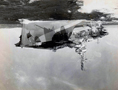
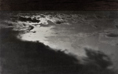
Exhibition and videos: ‘Richard Mosse: The Enclave’ – winner of Deutsche Börse Photography Prize 2014 at The Photographers’ Gallery, London

Exhibition dates: 11th April – 22nd June 2014


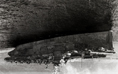
Richard Mosse (Ireland, b. 1980) 'Man-size, North Kivu, eastern Congo' 2012


Richard Mosse (Ireland, b. 1980)
Man-size, North Kivu, eastern Congo
2012
Digital C print
72 x 90 inches


Men are bastards. War is bastardry.

Bastardry: the unpleasant behaviour of a bastard (objectionable person).


“Beauty is effective, the sharpest tool in the box. If you can seduce the viewer and you can make them feel aesthetic pleasure regarding a landscape in which human rights violations happen all the time, then you can put them into a very problematic place for themselves – they feel ethically compromised and they feel angry with themselves and the photographer for making them feel that. That moment of self awareness is a very powerful thing.”


Richard Mosse


Richard Mosse, winner of the Deutsche Börse Photography Prize 2014 for his exhibition The Enclave at the Venice Biennale Irish Pavillion.


Mosse documents a haunting landscape touched by appalling human tragedy in eastern Democratic Republic of Congo (DRC), where 5.4 million people have died of war related causes since 1998. Shot on discontinued military surveillance film, the resulting imagery registers an invisible spectrum of infrared light, and renders the jungle warzone in disorienting psychedelic hues. At the project’s heart are the points of failure of documentary photography, and its inability to adequately communicate this complex and horrific cycle of violence, “through six monumental double-sided screens ‘forcing’ the viewer to interact from an array of different viewpoints.”


Biennale Arte 2013 – Ireland 


This desperate situation echoes the barbarity of the Belgian occupation of the Congo that provided the backdrop for Joseph Conrad’s Heart of Darkness (1899) … Mosse had Conrad’s allusiveness in mind when he chose to employ a type of infrared film called Aerochrome, developed during the Cold War by Kodak in consultation with the United States government…

Mosse renders the viewer’s point-of-view identical with that of the camera, immersing us in these scenes, while Frost’s score leaves a buzzing, ringing sound in our ears. Occasionally we stumble across a body lying on the ground in a village, or by the side of a road like a dead animal. It would be gruesome, perhaps unbearable, if it weren’t for the views of the tropical landscape and the ubiquitous pink that gives the action such an unearthly touch.

Even as we feel the looming violence of this place the pink backdrop transforms each segment into a stage set, in a deliberate refusal of the ‘realism’ claimed by conventional photojournalism. Instead of the black-and-white certainties of a world in which good and evil are easily identified, we are plunged into a bright pink nightmare, our every move fraught with danger.

Mosse is seeking to engage the senses, not simply the intellect, but that flood of pink sends mixed messages. It’s an ingratiating colour – a colour that tries too hard, lapsing into camp and kitsch. Such impressions are difficult to reconcile with the subject matter of this installation but Mosse makes no attempt to ease our disorientation. The work is his response to a bewildering, intractable conflict that doesn’t recognise anybody’s rules.”

Extract from John McDonald. Richard Mosse & William Kentridge,” on the John McDonald website May 10, 2014 [Online] Cited 29/10/2022


Jonh Kelly meet Richard Mosse, an artist whose beautiful, provocative film installations and photographs are challenging the accepted norms of war photography.


Richard Mosse (Ireland, b. 1980) 'Safe From Harm, North Kivu, Eastern Congo' 2012


Richard Mosse (Ireland, b. 1980)
Safe From Harm, North Kivu, Eastern Congo
2012
Digital C print
48 x 60 inches


The uniqueness of the military film stock is its register of an invisible spectrum of infrared light, turning green landscape into an array of glaring colours… The result is that Mosse’s landscapes appear cancerous, we notice that life is extinct, that something deadly has swept through an otherwise idyllic world…

The Congolese National Army, rebel militia, and warring tribes fight over ownership of the land, their violence extending to rape of women, murdering civilian populations, all in the interests of staking a claim to the land. A struggle that is never actually seen in Mosse’s photographs is nevertheless made undeniable by the aesthetic struggle of unnatural colours in what might otherwise be an untouched world. These hills are blanketed in violence and corruption…

Mosse’s images visually penetrate and make manifest the insidious spread of disease, war and violence, all of which is begun by greed.”

Frances Guerin. “Richard Moss, The Enclave,” on the Fx Reflects blog Wednesday, June 18, 2014 [Online] Cited 05/04/2021.


Richard Mosse (Ireland, b. 1980) 'Platon, North Kivu, Eastern Congo' 2012


Richard Mosse (Ireland, b. 1980)
Platon, North Kivu, Eastern Congo
2012
Digital C print


Richard Mosse (Ireland, b. 1980) 'Men of Good Fortune, North Kivu, Eastern Congo' 2011


Richard Mosse (Ireland, b. 1980)
Men of Good Fortune, North Kivu, Eastern Congo
2011
Digital C print


Richard Mosse (Ireland, b. 1980) 'Nowhere To Run, South Kivu, Eastern Congo' 2010


Richard Mosse (Ireland, b. 1980)
Nowhere To Run, South Kivu, Eastern Congo
2010
Digital C print


The photograph I was initially drawn to in the exhibition, Men of Good Fortune (2011), is a picturesque composition of gentle grassy slopes, pastoral figures and trees that might have been artfully placed by a Capability Brown. These hills were originally inhabited by Congolese tribes who grew crops and hunted for bush meat, until they were driven out by pastoralists who cut down the forest for grazing. Richard Mosse’s camera renders this landscape’s history of intimidation and human rights abuses in shocking pink, like superficially healthy teeth subjected to a plaque disclosing tablet. Nowhere to Run (2010) shows another vista of unearthly pink hills, which seem to have undergone the kind of transformation J. G. Ballard described in The Crystal World. This rose quartz-coloured terrain is, according to the caption, ‘rich in rare earth minerals like gold, cassiterite and coltan, which are extracted by artisanal miners who must pay taxes to the rebels.’

Of course one question these photographs raise is whether the aesthetic pleasure they provide is a distraction from what is really happening in The Enclave.

Andrew Ray. “The Enclave” on the Some Landscapes blog Tuesday June 17, 2014 [Online] Cited 05/04/2021.


Richard Mosse (Ireland, b. 1980) 'Ruby Tuesday, North Kivu, Eastern Congo' 2011


Richard Mosse (Ireland, b. 1980)
Ruby Tuesday, North Kivu, Eastern Congo
2011
Digital C print


Richard Mosse (Ireland, b. 1980) 'Of Lillies and Remains' 2012


Richard Mosse (Ireland, b. 1980)
Of Lillies and Remains
2012
Digital C print


Richard Mosse (Ireland, b. 1980) 'Suspicious Minds' 2012


Richard Mosse (Ireland, b. 1980)
Suspicious Minds
2012
Digital C print


Richard Mosse (Ireland, b. 1980) 'A Dream That Can Last' 2012


Richard Mosse (Ireland, b. 1980)
A Dream That Can Last
2012
Digital C print


Richard Mosse (Ireland, b. 1980) 'We Hate It When Our Friends Become Successful, North Kivu, Eastern Congo' 2010


Richard Mosse (Ireland, b. 1980)
We Hate It When Our Friends Become Successful, North Kivu, Eastern Congo
2010
Digital C print


Richard Mosse (Ireland, b. 1980) 'Even Better Than The Real Thing, North Kivu, Eastern Congo' 2011


Richard Mosse (Ireland, b. 1980)
Even Better Than The Real Thing, North Kivu, Eastern Congo
2011
Digital C print


Richard Mosse (Ireland, b. 1980) 'Only Love Can Break Your Heart' 2012


Richard Mosse (Ireland, b. 1980)
Only Love Can Break Your Heart
2012
Digital C print


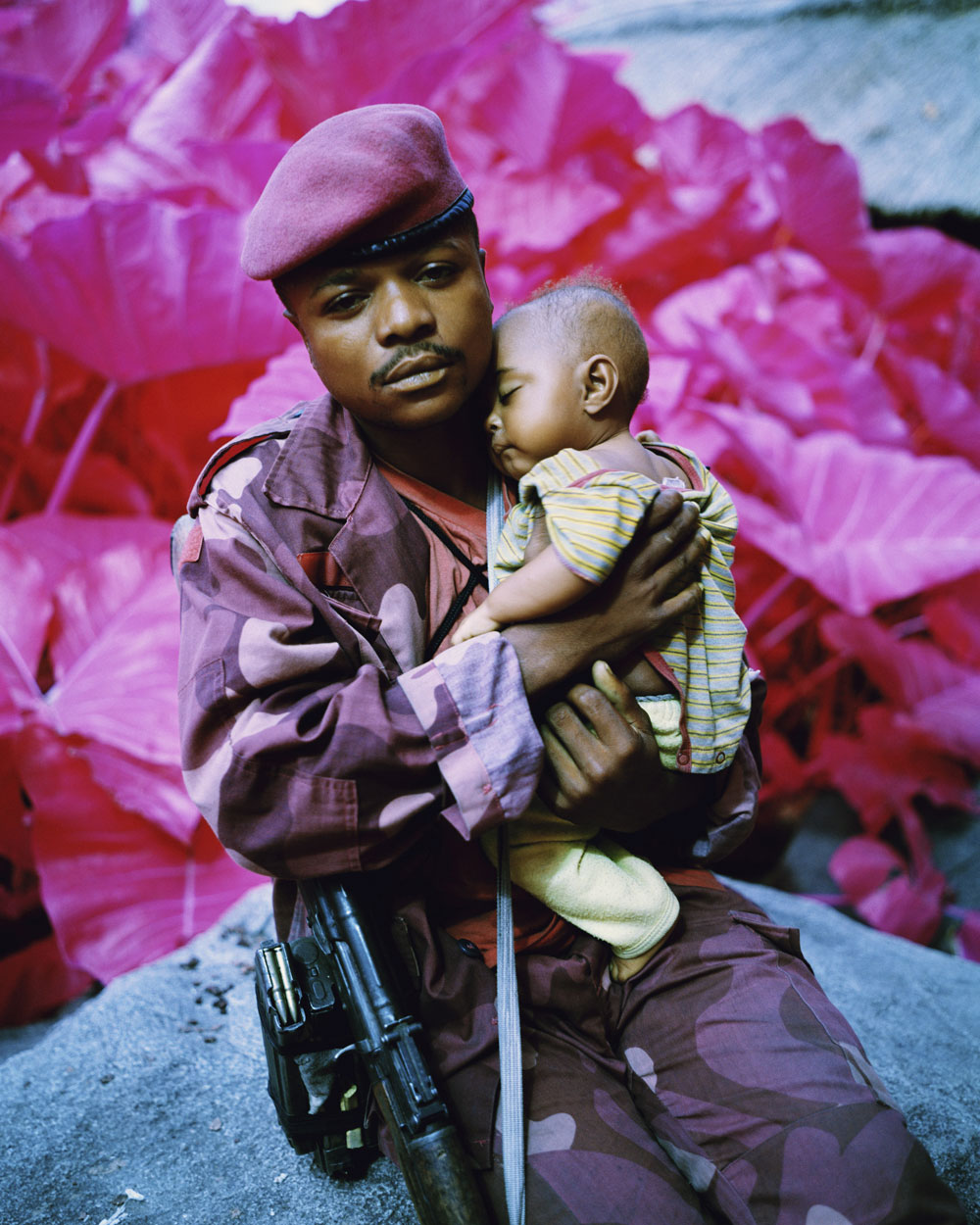
Richard Mosse (Ireland, b. 1980) 'Madonna and Child, North Kivu, Eastern Congo' 2012


Richard Mosse (Ireland, b. 1980)
Madonna and Child, North Kivu, Eastern Congo
2012
Digital C print
35 x 28 inches


The Photographers’ Gallery
16-18 Ramillies Street
London
W1F 7LW

Opening hours:
Mon – Wed: 10.00 – 18.00
Thursday – Friday: 10.00 – 20.00
Saturday: 10.00 – 18.00
Sunday: 11.00 – 18.00

The Photographers’ Gallery website

LIKE ART BLART ON FACEBOOK

Back to top

Exhibition: ‘Photography and the American Civil War’ at the New Orleans Museum of Art (NOMA)

Exhibition dates: 31st January – 4th May 2014


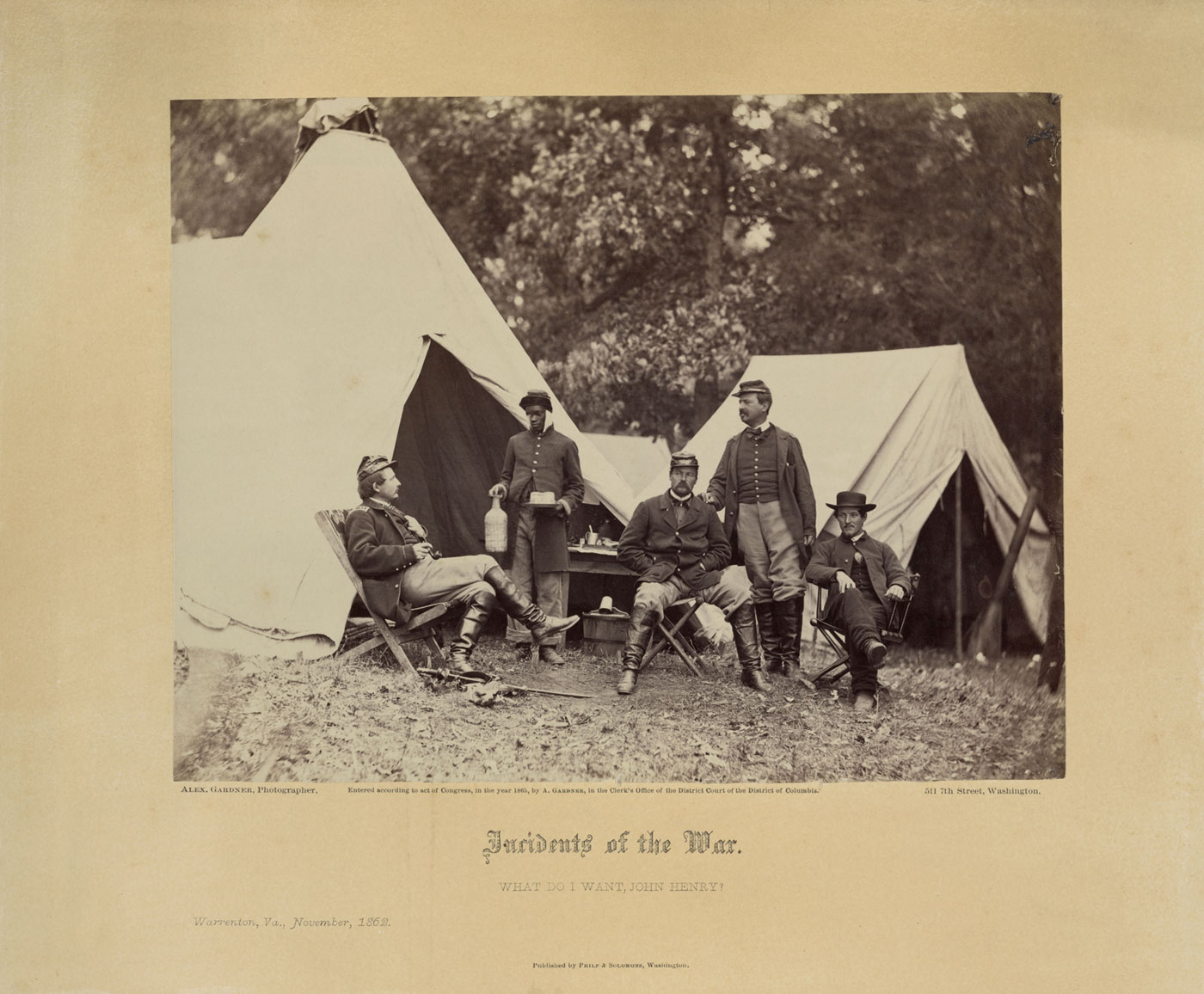
Alexander Gardner (American, Glasgow, Scotland 1821 - 1882 Washington, D.C.) 'What Do I Want, John Henry? Warrenton, Virginia' November 1862


Alexander Gardner (American, Glasgow, Scotland 1821 – 1882 Washington, D.C.)
What Do I Want, John Henry? Warrenton, Virginia
November 1862
Albumen photograph from the album Incidents of the War
Photography collection, Miriam and Ira D. Wallach Division of Art, Prints and Photographs
The New York Public Library Astor, Lennox and Tilden Foundations


This posting continues my fascination with the American Civil War, with new photographs from the exhibition to compliment the posting I did when it was staged at the Metropolitan Museum of Art, New York, April – September 2013.

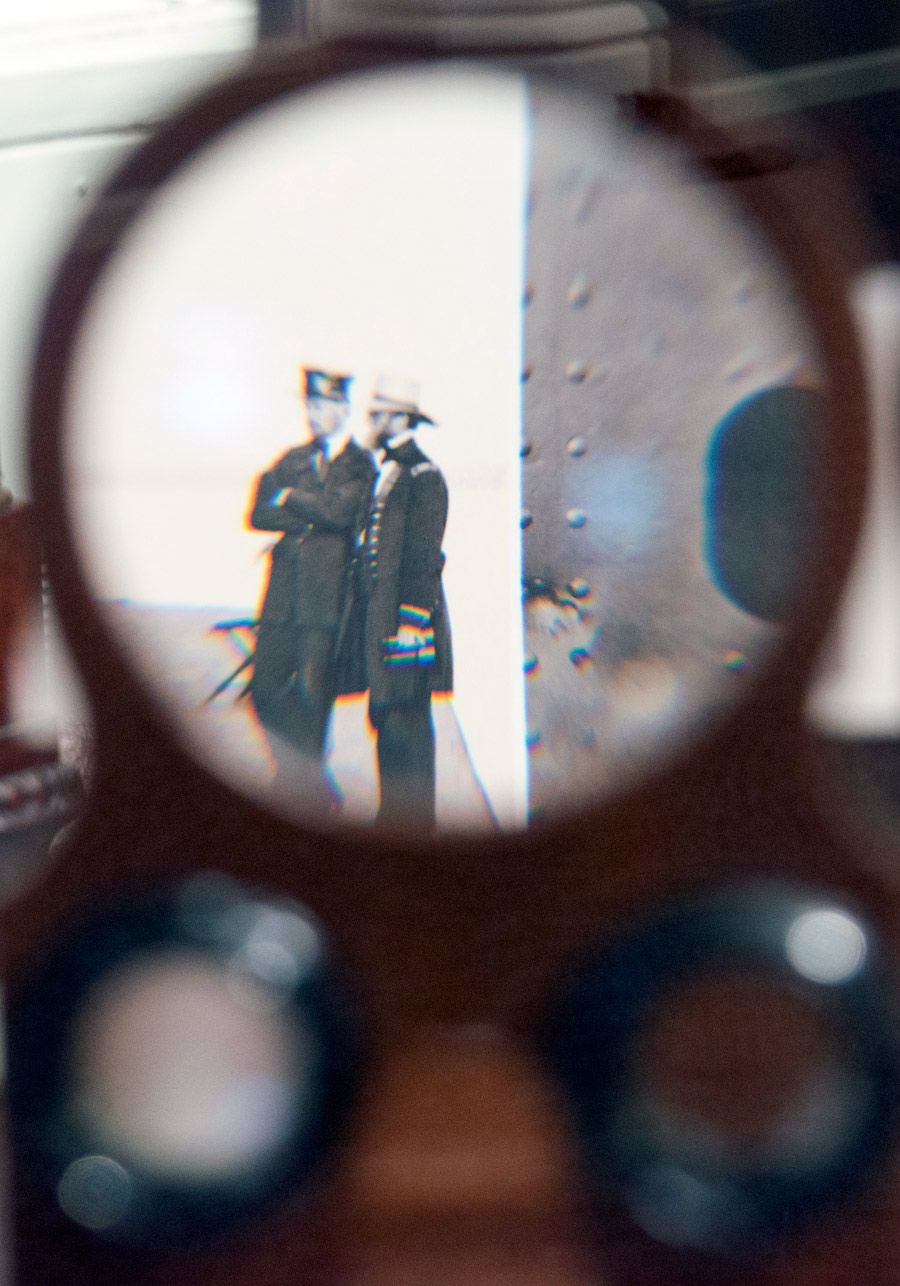
I have included fascinating close-up details: the collar of African-American Union soldier John Henry flapping in the breeze during the long time exposure (What Do I Want, John Henry? Warrenton, Virginia November 1862, below); the pale grey/blue eyes of George Patillo which have been added to the plate afterwards1 (The Pattillo Brothers (Benjamin, George, James, and John) etc… 1861-1863, below); the horrific branding of the slave Wilson Chinn who had the initials of his owner burned into his head (Emancipated Slaves Brought from Louisiana by Colonel George H. Banks, December 1863, below); and the crumpled coat of Allan Pinkerton, Chief of the Secret Service of the United States, as he poses with his president (President Abraham Lincoln et al, October 4, 1862, below).

Dr Marcus Bunyan


1/ “The daguerreotype, like all photographic processes before 1873 [including Ambrotypes], was sensitive to blue light only, so that red dresses registered black and people with blue eyes appeared to have no irises and looked quite strange.”

Davies, Alan. An Eye for Photography: The camera in Australia. Melbourne: The Miegunyah Press / State Library of New South Wales, 2002, p. 8.


Many thankx to the New Orleans Museum of Art for allowing me to publish the photographs in the posting. Please click on the photographs for a larger version of the image.


Alexander Gardner (American, Glasgow, Scotland 1821 - 1882 Washington, D.C.) 'What Do I Want, John Henry? Warrenton, Virginia' November 1862 (detail)


Alexander Gardner (American, Glasgow, Scotland 1821 – 1882 Washington, D.C.)
What Do I Want, John Henry? Warrenton, Virginia (detail)
November 1862
Albumen photograph from the album Incidents of the War
Photography collection, Miriam and Ira D. Wallach Division of Art, Prints and Photographs
The New York Public Library Astor, Lennox and Tilden Foundations


Andrew Joseph Russell (American, 1830-1902) 'Confederate Method of Destroying Rail Roads at McCloud Mill, Virginia' 1863


Andrew Joseph Russell (American, 1830-1902)
Confederate Method of Destroying Rail Roads at McCloud Mill, Virginia
1863
Albumen silver print from glass negative
The Metropolitan Museum of Art, Harris Brisbane Dick Fund, 1933
Image © The Metropolitan Museum of Art


Russell made several photographs of the discovery by the Union army of the simple but effective method developed by the Confederates to destroy Union railroad track. Using the ties as fuel, the soldiers stacked the iron rails in X formations and burned them until they could be twisted and made unusable. Federal engineers employed similar tactics to destroy Southern railroads, and this photograph has been published, inaccurately, as “Sherman’s Neckties.” The title refers to Union General William Tecumseh Sherman, who during the Atlanta Campaign on July 18, 1864, gave the following explicit order to his corps: “Officers should be instructed that bars simply bent may be used again, but if when red hot they are twisted out of line they cannot be used again. Pile the ties into shape for a bonfire, put the rails across and when red hot in the middle, let a man at each end twist the bar so that its surface becomes spiral.”

Anonymous. “Confederate Method of Destroying Rail Roads at McCloud Mill, Virginia 1863,” on the Metropolitan Museum of Art website [Online] Cited 05/03/2021


Unknown photographer. 'Captain Charles A. and Sergeant John M. Hawkins, Company E, "Tom Cobb Infantry," Thirty-eighth Regiment, Georgia Volunteer Infantry' 1861-1862


Unknown photographer
Captain Charles A. and Sergeant John M. Hawkins, Company E, “Tom Cobb Infantry,” Thirty-eighth Regiment, Georgia Volunteer Infantry
1861-1862
Quarter-plate ambrotype with applied colour
David Wynn Vaughan Collection
Photo: Jack Melton


The vast majority of war portraits, either cased images or cartes de visite, are of individual soldiers. Group portraits in smaller formats are more rare and challenged the field photographer (as well as the studio gallerist) to conceive and execute an image that would honour the occasion and be desirable – saleable – to multiple sitters. For the patient photographer, this created interesting compositional problems and an excellent opportunity to make memorable group portraits of brothers, friends, and even members of different regiments.

In this quarter-plate ambrotype, Confederate Captain Charles Hawkins of the Thirty-eighth Regiment, Georgia Volunteer Infantry, on the left, sits for his portrait with his brother John, a sergeant in the same regiment. They address the camera and draw their fighting knives from scabbards. Charles would die on June 13, 1863, in the Shenandoah Valley during General Robert E. Lee’s second invasion of the North. John, wounded at the Battle of Gaines’s Mill in June 1862, would survive the war, fighting with his company until its surrender at Appomattox.


Unknown photographer '[The Pattillo Brothers (Benjamin, George, James, and John), Company K, "Henry Volunteers," Twenty-second Regiment, Georgia Volunteer Infantry]' 1861-1863


Unknown photographer
[The Pattillo Brothers (Benjamin, George, James, and John), Company K, “Henry Volunteers,” Twenty-second Regiment, Georgia Volunteer Infantry]
1861-1863
Ambrotype
Plate: 8.3 x 10.8cm (3 1/4 x 4 1/4 in.)
David Wynn Vaughan Collection
Image © The Metropolitan Museum of Art


The four Pattillo boys of Henry County were brothers who all enlisted together in Company K of the 22nd Regiment of the GA Volunteer Infantry on August 31, 1861.

Benjamin, seated on the left holding a Confederate hand-grenade, made a 50-dollar bounty during his tenure from April 5 to June 20, 1862. He was shot in the stomach at 2nd Manassas on August 30, 1862, and died in the General Hospital in Warrenton, VA, the next day.

George, second from the left, was detailed for shoemaking at Augusta, GA in November of 1862 until the close of the war. He was the only Pattillo to make it out of the Civil War without an injury. He made 35 cents per shoe and made 106 shoes in February 29, for $37.10. The pay for a soldier was 3 dollars per day.

James, second from the right, was discharged in March of 1862 but reenlisted afterwards. He was shot in the foot in the Battle of Second Deep Bottom on August 16, 1864. The injury resulted in the amputation of his third toe. Pension records show he was at home on wounded furlough to close of the war.

John, seated on the right, was admitted to Chimborazo Hospital #2 in Richmond on May 31, 1862, because of a case of Dysentery. He returned to duty on June 14, 1862, but was wounded at the Seven Days’ battles near Richmond on June 28,1862. He was admitted to C. S. A. General Hospital at Charlottesville on November 20, 1862, and again on December 16, 1862. He returned to duty on December 17, 1862, but pension records show he was discharged on account of wounds in March of 1863.

David Wynn Vaughan. “Patillo Brothers,” on the Historynet.com website [Online] Cited 04/03/2021


Unknown photographer '[The Pattillo Brothers (Benjamin, George, James, and John), Company K, "Henry Volunteers," Twenty-second Regiment, Georgia Volunteer Infantry]' (detail) 1861-1863


Unknown photographer
[The Pattillo Brothers (Benjamin, George, James, and John), Company K, “Henry Volunteers,” Twenty-second Regiment, Georgia Volunteer Infantry] (detail)
1861-1863
Ambrotype
Plate: 8.3 x 10.8cm (3 1/4 x 4 1/4 in.)
David Wynn Vaughan Collection
Image © The Metropolitan Museum of Art


Myron H. Kimball (American, active 1860s) 'Emancipated Slaves Brought from Louisiana by Colonel George H. Banks' December 1863


Myron H. Kimball (American, active 1860s)
Emancipated Slaves Brought from Louisiana by Colonel George H. Banks
December 1863
Albumen silver print from glass negative
13.2 x 18.3cm (5 3/16 x 7 3/16in.), oblong oval
The Metropolitan Museum of Art, Gilman Collection, Purchase, The Horace W. Goldsmith Foundation Gift, through Joyce and Robert Menschel, 2005
Image © The Metropolitan Museum of Art


In December 1863, Colonel George Hanks of the 18th Infantry, Corps d’Afrique (a Union corps composed entirely of African-Americans), accompanied eight emancipated slaves from New Orleans to New York and Philadelphia expressly to visit photographic studios. A publicity campaign promoted by Major General Nathaniel Banks of the Department of the Gulf, and by the Freedman’s Relief Association of New York, its sole purpose was to raise money to educate former slaves in Louisiana, a state still partially held by the Confederacy. One group portrait, several cartes de visite of pairs of students, and numerous portraits of each student were made.

When this photograph was published as a woodcut in “Harper’s Weekly” of January 30, 1864, it was accompanied by the biographies of the eight emancipated slaves, which served successfully to fan the abolitionist cause. Two are quoted below.

AUGUSTA BROUJEY is nine years old. Her mother, who is almost white, was owned by her half-brother, named Solamon, who still retains two of her children.

WILSON CHINN is about 60 years old. He was “raised” by Isaac Howard of Woodford County, Kentucky. When 21 years old he was taken down the river and sold to Volsey B. Marmillion, a sugar planter about 45 miles above New Orleans. This man was accustomed to brand his negroes, and Wilson has on his forehead the letters “V. B. M.” Of the 210 slaves on this plantation 105 left at one time and came into the Union camp. Thirty of them had been branded like cattle with a hot iron, four of them on the forehead, and the others on the breast or arm.

In his negative, Kimball retouched the brand on Wilson Chinn’s forehead to make the initials appear more visible on the print.

Anonymous. “Emancipated Slaves Brought from Louisiana by Colonel George H. Banks December 1863,” on the Metropolitan Museum of Art website [Online] Cited 05/03/2021


Myron H. Kimball (American, active 1860s) 'Emancipated Slaves Brought from Louisiana by Colonel George H. Banks' December 1863 (detail)


Myron H. Kimball (American, active 1860s)
Emancipated Slaves Brought from Louisiana by Colonel George H. Banks (detail)
December 1863
Albumen silver print from glass negative
13.2 x 18.3cm (5 3/16 x 7 3/16in.), oblong oval
The Metropolitan Museum of Art, Gilman Collection, Purchase, The Horace W. Goldsmith Foundation Gift, through Joyce and Robert Menschel, 2005
Image © The Metropolitan Museum of Art


The slave (at back left) with those letters was Wilson Chinn, who was about 60 years old at the time. When he was 21 years old he was sold to Volsey B. Marmillion, a sugar planter about 45 miles above New Orleans. Marmillion branded his slaves, including Wilson. Those are Marmillion’s initials, horrifically burned into Wilson’s forehead in the image.

Russell Lord, photography curator at NOMA


Andrew Joseph Russell (American, 1830-1902) 'Slave Pen, Alexandria, Virginia' 1863


Andrew Joseph Russell (American, 1830-1902)
Slave Pen, Alexandria, Virginia
1863
Albumen silver print from glass negative
25.6 x 36.5cm (10 1/16 x 14 3/8 in.)
Gilman Collection, Purchase, The Horace W. Goldsmith Foundation Gift, through Joyce and Robert Menschel, 2005
Image © The Metropolitan Museum of Art


Better known for his later views commissioned by the Union Pacific Railroad, A. J. Russell, a captain in the 141st New York Infantry Volunteers, was one of the few Civil War photographers who was also a soldier. As a photographer-engineer for the U.S. Military Railroad Construction Corps, Russell’s duty was to make a historical record of both the technical accomplishments of General Herman Haupt’s engineers and the battlefields and camp sites in Virginia. This view of a slave pen in Alexandria guarded, ironically, by Union officers shows Russell at his most insightful; the pen had been converted by the Union Army into a prison for captured Confederate soldiers.

Between 1830 and 1836, at the height of the American cotton market, the District of Columbia, which at that time included Alexandria, Virginia, was considered the seat of the slave trade. The most infamous and successful firm in the capital was Franklin & Armfield, whose slave pen is shown here under a later owner’s name. Three to four hundred slaves were regularly kept on the premises in large, heavily locked cells for sale to Southern plantation owners. According to a note by Alexander Gardner, who published a similar view, “Before the war, a child three years old, would sell in Alexandria, for about fifty dollars, and an able-bodied man at from one thousand to eighteen hundred dollars. A woman would bring from five hundred to fifteen hundred dollars, according to her age and personal attractions.”

Late in the 1830s Franklin and Armfield, already millionaires from the profits they had made, sold out to George Kephart, one of their former agents. Although slavery was outlawed in the District in 1850, it flourished across the Potomac in Alexandria. In 1859, Kephart joined William Birch, J. C. Cook, and C. M. Price and conducted business under the name of Price, Birch & Co. The partnership was dissolved in 1859, but Kephart continued operating his slave pen until Union troops seized the city in the spring of 1861.


Alexander Gardner (American, Glasgow, Scotland 1821 - 1882 Washington, D.C.) 'Ruins of Gallego Flour Mills, Richmond' 1865


Alexander Gardner (American, Glasgow, Scotland 1821 – 1882 Washington, D.C.)
Ruins of Gallego Flour Mills, Richmond
1865
Albumen silver prints from glass negatives
16.3 x 36.9cm (6 7/16 x 14 1/2 in.)
The Metropolitan Museum of Art, Harris Brisbane Dick Fund, 1933
Image © The Metropolitan Museum of Art


In 1861, at the outset of the Civil War, the Confederate government moved its capital from Montgomery, Alabama, to Richmond, Virginia, to be closer to the front and to protect Richmond’s ironworks and flour mills. On April 2, 1865, as the Union army advanced on Richmond, General Robert E. Lee gave the orders to evacuate the city. A massive fire broke out the following day, the result of a Confederate attempt to destroy anything that could be of use to the invading Union army. In addition to consuming twenty square blocks, including nearly every building in Richmond’s commercial district, it destroyed the massive Gallego Flour Mills, situated on the James River and seen here. Alexander Gardner, Mathew B. Brady’s former gallery manager, then his rival, made numerous photographs of the “Burnt District” as well as this dramatic panorama from two glass negatives. The charred remains have become over time an iconic image of the fall of the Confederacy and the utter devastation of war.

Anonymous. “Ruins of Gallego Flour Mills, Richmond December 1865,” on the Metropolitan Museum of Art website [Online] Cited 05/03/2021


George N. Barnard (American, 1819-1902) 'Ruins of Mrs. Henry's House, Battlefield of Bull Run; Bull Run, Mrs. Henry's House, 21 July 1861' March 1862


George N. Barnard (American, 1819-1902)
Ruins of Mrs. Henry’s House, Battlefield of Bull Run; Bull Run, Mrs. Henry’s House, 21 July 1861
March 1862
Albumen silver print from glass negative
The Metropolitan Museum of Art, Harris Brisbane Dick Fund, 1933
Image © The Metropolitan Museum of Art


Despite their preparations, Mathew B. Brady and his corps of field photographers did not return with a single photograph from the war’s first land battle, at Bull Run, Virginia, in July 1861. And no Southern photographers are known to have attempted to photograph the battle preparations or aftermath. Won by Confederate General Robert E. Lee, the Battle of First Manassas (as it is still known in the South) was fought along a creek near the farmhouse in this photograph. Made eight months after the battle, this landscape by Brady operative George N. Barnard shows the ruins of Judith Henry’s house.

According to contemporary reports, Mrs. Henry was an invalid octogenarian widow who, because of her infirmities, was unable to leave the site of the battle that took place surrounding her home along Bull Run Creek. By removing her to a gully nearby, her children helped her survive the first charge. But when the fighting increased in ferocity, they returned her to her residence, where she was later found dead of bullet wounds.

Anonymous. “Ruins of Mrs. Henry’s House, Battlefield of Bull Run March 1862,” on the Metropolitan Museum of Art website [Online] Cited 05/03/2021


Unknown maker. '[Civil War Portrait Lockets]' 1860s


Unknown maker
[Civil War Portrait Lockets]
1860s
Tintypes and albumen silver prints in brass, glass, and shell enclosures
Brian D. Caplan Collection
Image © The Metropolitan Museum of Art


Unknown maker. '[Civil War Portrait Lockets]' (detail) 1860s (detail)


Unknown maker
[Civil War Portrait Lockets] (detail)
1860s
Tintypes and albumen silver prints in brass, glass, and shell enclosures
Brian D. Caplan Collection
Image © The Metropolitan Museum of Art


More than 200 of the finest and most poignant photographs of the American Civil War have been brought together for the landmark exhibition Photography and the American Civil War, opening January 31 at New Orleans Museum of Art. Organised by The Metropolitan Museum of Art, the exhibition will examine the evolving role of the camera during the nation’s bloodiest war. The “War between the States” was the great test of the young Republic’s commitment to its founding precepts; it was also a watershed in photographic history. The camera recorded from beginning to end the heartbreaking narrative of the epic four-year war (1861-1865) in which 750,000 lives were lost. This exhibition will explore, through photography, the full pathos of the brutal conflict that, after 150 years, still looms large in the American public’s imagination.

“This extraordinary exhibition transcends geographic divisions in its intense focus on the participants in the Civil War,” said Susan M. Taylor, Director of New Orleans Museum of Art. “It becomes an exploration of shared human traits: hope, resolution, stoicism, fear, and sadness. We are delighted to share this important statement about American history and identity with the people of New Orleans and the Gulf region.”

Exhibition overview

Photography and the American Civil War will include: intimate studio portraits of armed Union and Confederate soldiers preparing to meet their destiny; battlefield landscapes strewn with human remains; rare multi-panel panoramas of the killing fields of Gettysburg and destruction of Richmond; diagnostic medical studies of wounded soldiers who survived the war’s last bloody battles; and portraits of Abraham Lincoln as well as his assassin John Wilkes Booth. The exhibition features groundbreaking works by Mathew B. Brady, George N. Barnard, Alexander Gardner, and Timothy O’Sullivan, among many others. It also examines in-depth the important, if generally misunderstood, role played by Brady, perhaps the most famous of all wartime photographers, in conceiving the first extended photographic coverage of any war. The exhibition addresses the widely held, but inaccurate, belief that Brady produced most of the surviving Civil War images, although he actually made very few field photographs during the conflict. Instead, he commissioned and published, over his own name and imprint, negatives made by an ever-expanding team of field operators, including Gardner, O’Sullivan, and Barnard.

Approximately 1,000 photographers worked separately and in teams to produce hundreds of thousands of photographs – portraits and views – that were actively collected during the period (and over the past century and a half) by Americans of all ages and social classes. In a direct expression of the nation’s changing vision of itself, the camera documented the war and also mediated it by memorialising the events of the battlefield as well as the consequent toll on the home front.

“The massive scope of this exhibition mirrors the tremendous role that photography played in describing, defining, and documenting the Civil War,” said Russell Lord, Freeman Family Curator of Photography. “The technical, cultural and even discursive functions of photography during the Civil War are critically traced in this exhibition, as is the powerful human story, a story of the personal hopes and sacrifices and the deep and tragic losses on both sides of the conflict.

Press release from the New Orleans Museum of Art website


This slideshow requires JavaScript.


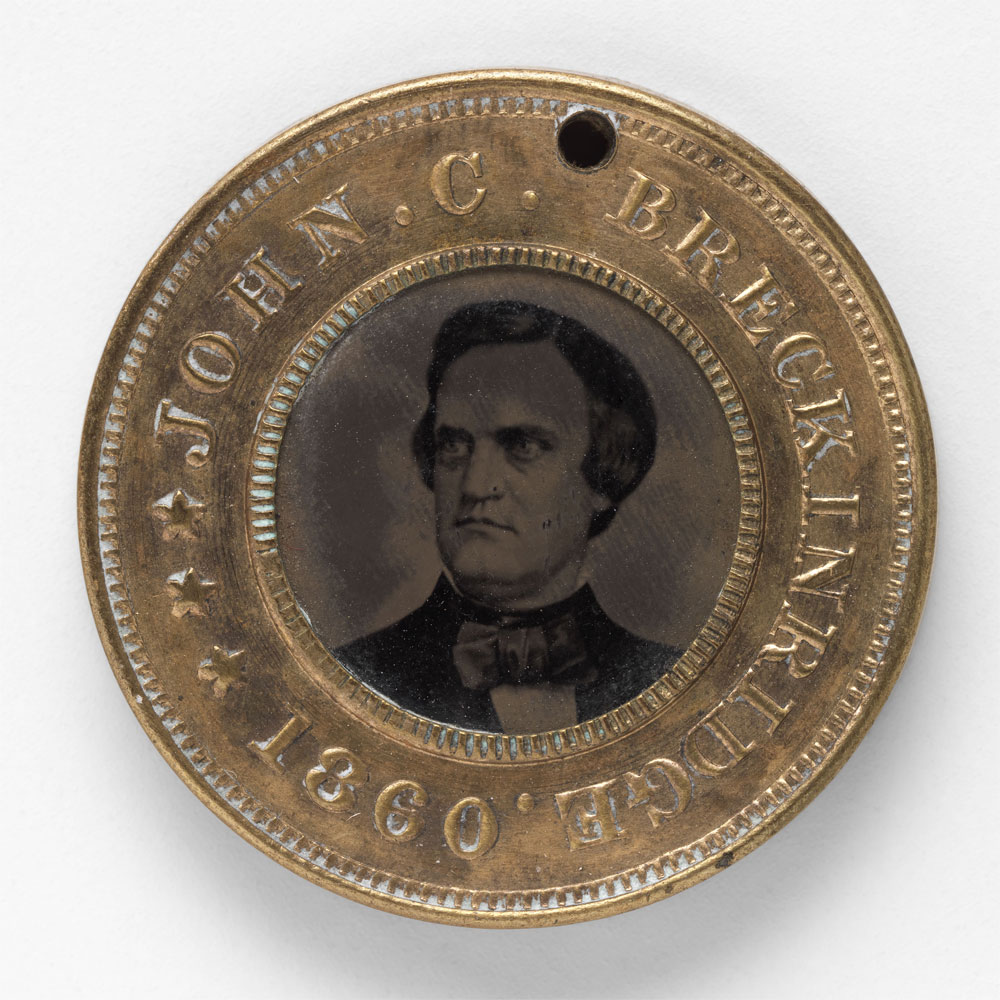
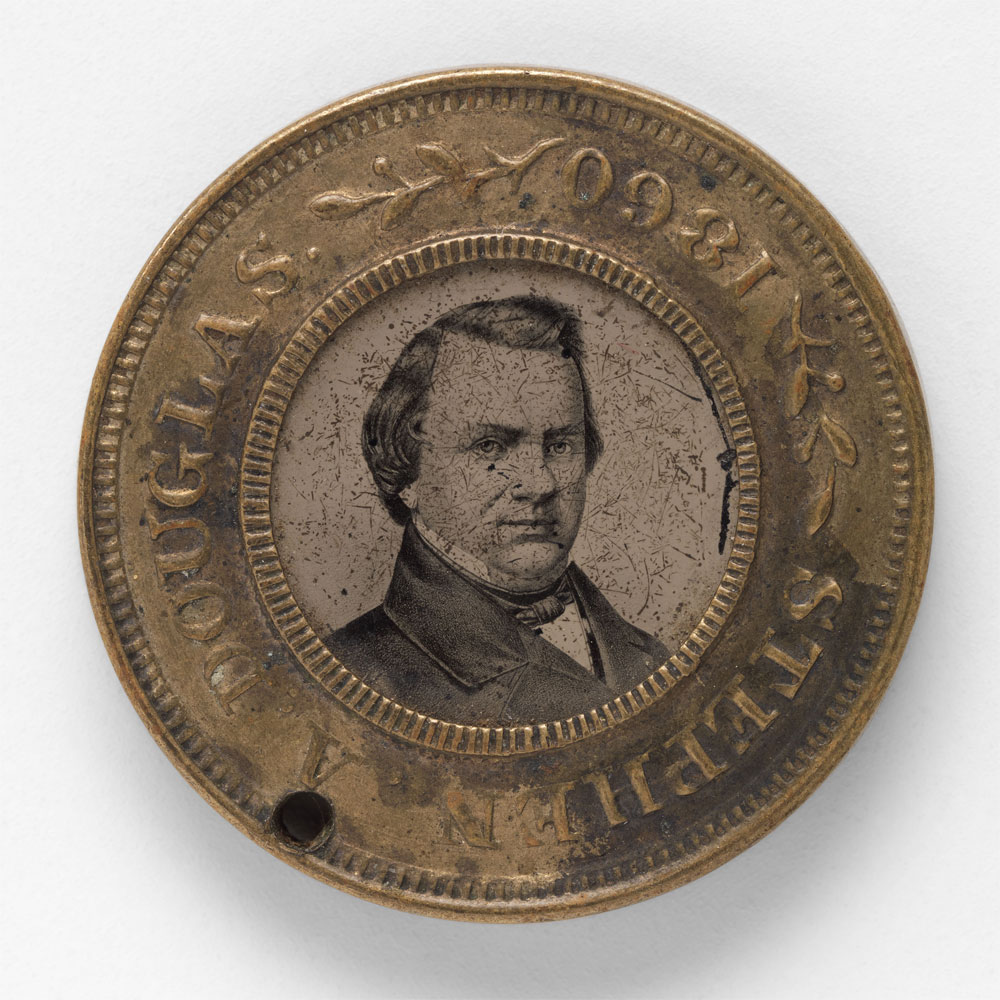
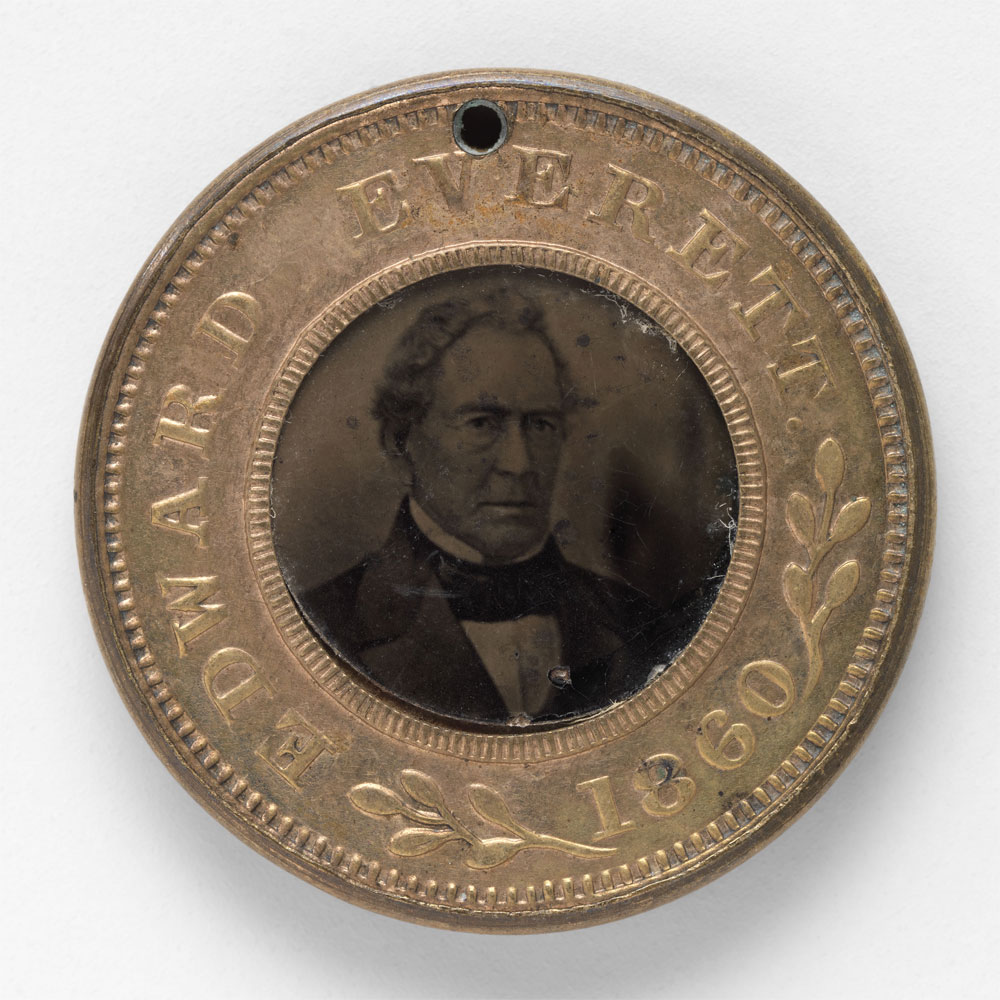
Unknown maker
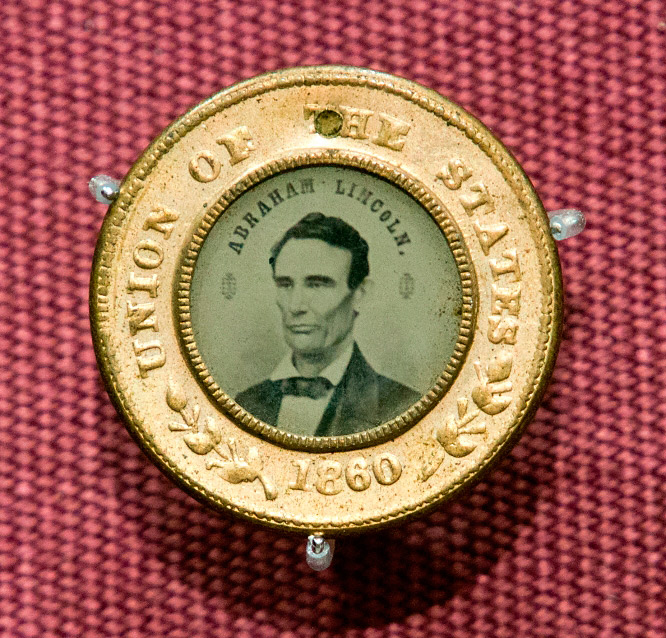
[Presidential Campaign Medals with Portraits of John C. Breckinridge, Stephen A. Douglas and Edward Everett]
1860
Tintype
Brian D. Caplan Collection
Image © The Metropolitan Museum of Art


Alexander Gardner (American, Glasgow, Scotland 1821 - 1882 Washington, D.C.) '[President Abraham Lincoln, Major General John A. McClernand (right), and E. J. Allen (Allan Pinkerton, left), Chief of the Secret Service of the United States, at Secret Service Department, Headquarters Army of the Potomac, near Antietam, Maryland]' October 4, 1862


Alexander Gardner (American, Glasgow, Scotland 1821 – 1882 Washington, D.C.)
[President Abraham Lincoln, Major General John A. McClernand (right), and E. J. Allen (Allan Pinkerton, left), Chief of the Secret Service of the United States, at Secret Service Department, Headquarters Army of the Potomac, near Antietam, Maryland]
October 4, 1862
Albumen silver print from glass negative
22.4 x 18cm (8 13/16 x 7 1/16 in.)
The Metropolitan Museum of Art, Gilman Collection, Gift of The Howard Gilman Foundation, 2005
Copy Photograph © The Metropolitan Museum of Art


Two weeks after he recorded the carnage at Antietam, Alexander Gardner returned to the battlefield to photograph the visit of President Abraham Lincoln. The president made the seventy-mile journey to Maryland to pay his respects to the wounded on both sides and to confer with his field generals. Gardner made about twenty-five photographs, mostly portraits of a strained meeting between Lincoln and General George B. McClellan, commander of the Union Army of the Potomac. He also made this formal field portrait of Lincoln posed with Allan Pinkerton, his diminutive Secret Service chief (left), and General John McClernand. Founder in 1850 of the eponymous detective agency, Pinkerton proved to be a particularly poor gatherer of military intelligence in his advisory role as a spy for the army. Many believe he significantly overestimated the strength of Robert E. Lee’s forces – an error that dramatically prolonged the war by contributing to McClellan’s extreme caution at attacking the enemy.

Anonymous. “President Abraham Lincoln October 4, 1862,” on the Metropolitan Museum of Art website [Online] Cited 05/03/2021


Alexander Gardner (American, Glasgow, Scotland 1821 - 1882 Washington, D.C.) '[President Abraham Lincoln, Major General John A. McClernand (right), and E. J. Allen (Allan Pinkerton, left), Chief of the Secret Service of the United States, at Secret Service Department, Headquarters Army of the Potomac, near Antietam, Maryland]' October 4, 1862 (detail)


Alexander Gardner (American, Glasgow, Scotland 1821 – 1882 Washington, D.C.)
[President Abraham Lincoln, Major General John A. McClernand (right), and E. J. Allen (Allan Pinkerton, left), Chief of the Secret Service of the United States, at Secret Service Department, Headquarters Army of the Potomac, near Antietam, Maryland] (detail)
October 4, 1862
Albumen silver print from glass negative
22.4 x 18cm (8 13/16 x 7 1/16 in.)
The Metropolitan Museum of Art, Gilman Collection, Gift of The Howard Gilman Foundation, 2005
Copy Photograph © The Metropolitan Museum of Art


Unknown maker (American); Photography Studio: After, Brady & Co., American, active 1840s - 1880s '[Mourning Corsage with Portrait of Abraham Lincoln]' (detail) Photograph, corsage April 1865


Unknown maker (American)
Photography Studio: After, Brady & Co., American, active 1840s – 1880s
[Mourning Corsage with Portrait of Abraham Lincoln]
Photograph, corsage
April 1865
Black and white silk with tintype set inside brass button
20 x 9cm (7 7/8 x 3 9/16 in.)
Image: 2 x 2cm (13/16 x 13/16 in.)
Purchase, Alfred Stieglitz Society Gifts, 2013
Image © The Metropolitan Museum of Art
Public domain


Unknown maker (American); Photography Studio: After, Brady & Co., American, active 1840s–1880s '[Mourning Corsage with Portrait of Abraham Lincoln]' Photograph, corsage April 1865 (detail)


Unknown maker (American)
Photography Studio: After, Brady & Co., American, active 1840s – 1880s
[Mourning Corsage with Portrait of Abraham Lincoln] (detail)
Photograph, corsage
April 1865
Black and white silk with tintype set inside brass button
20 x 9cm (7 7/8 x 3 9/16 in.)
Image: 2 x 2cm (13/16 x 13/16 in.)
Purchase, Alfred Stieglitz Society Gifts, 2013
Image © The Metropolitan Museum of Art
Public domain


About the time of Abraham Lincoln’s long funeral tour, April 21 to May 3, 1865, enterprising vendors produced mourning corsages featuring black silk ribbons adorned with small circular photographs of the president. The likeness is a tintype copy of a portrait from February 9, 1864, that Anthony Berger had made of President Lincoln in Mathew B. Brady’s Washington gallery. The corsage would have been worn on one’s lapel and then carefully preserved as a memento mori of the war’s final casualty.


George N. Barnard (American, 1819-1902) 'Bonaventure Cemetery, Four Miles from Savannah' 1866


George N. Barnard (American, 1819-1902)
Bonaventure Cemetery, Four Miles from Savannah
1866
Albumen silver print from glass negative
34 x 26.4cm (13 3/8 x 10 3/8 in.)
The Metropolitan Museum of Art, Gilman Collection, Purchase, Ann Tenenbaum and Thomas H. Lee Gift, 2005
Photograph © The Metropolitan Museum of Art


Unknown maker '[Game Board with Portraits of President Abraham Lincoln and Union Generals]' 1862


Unknown maker
[Game Board with Portraits of President Abraham Lincoln and Union Generals]
1862
Albumen silver prints from glass negatives
Brian D. Caplan Collection
Image © The Metropolitan Museum of Art


Unknown maker '[Game Board with Portraits of President Abraham Lincoln and Union Generals]' 1862 (detail)


Unknown maker
[Game Board with Portraits of President Abraham Lincoln and Union Generals] (detail)
1862
Albumen silver prints from glass negatives
Brian D. Caplan Collection
Image © The Metropolitan Museum of Art


Unknown photographer (American) '[Confederate Sergeant in Slouch Hat]' 1861-1862


Unknown photographer (American)
[Confederate Sergeant in Slouch Hat]
1861-1862
Ambrotype
David Wynn Vaughan, Jr. Collection
Image © The Metropolitan Museum of Art


Attributed to, Oliver H. Willard (American, active 1850s-70s, died 1875) 'Ordnance, Private' 1866


Attributed to, Oliver H. Willard (American, active 1850s-70s, died 1875)
Ordnance, Private
1866
Albumen silver print from glass negative
The Metropolitan Museum of Art, The Horace W. Goldsmith Foundation Fund, through Joyce and Robert Menschel, 2010
Image © The Metropolitan Museum of Art


This hand-coloured portrait provides a good look at the colours of war – at least as worn by the Union army. It comes from a set of photographs commissioned in 1866 by Montgomery Meigs, Quartermaster General of the United States Army during and after the Civil War. Known as “the army behind the army,” the Quartermaster Corps is the army’s oldest logistical branch. Then and now it is charged with clothing, transporting, and sustaining large field armies far away from their base camps. Meigs understood the historical value of permanently recording the clothing (with accurate colours) and personal accoutrements worn by soldiers and officers during the war. The portraits by Oliver H. Willard, still a relatively obscure photographer, all show the same soldier / actor wearing a wide variety of uniforms and posing with the tools and emblems of his service and rank.

Anonymous. “Ordnance, Private 1866,” on the Metropolitan Museum of Art website [Online] Cited 05/03/2021


Unknown photographer (American) '[James A. Holeman, Company A, "Roxboro Grays," Twenty-fourth North Carolina Infantry Regiment, Army of Northern Virginia]' 1861-1862


Unknown photographer (American)
[James A. Holeman, Company A, “Roxboro Grays,” Twenty-fourth North Carolina Infantry Regiment, Army of Northern Virginia]
1861-1862
Ambrotype
David Wynn Vaughan Collection
Image © The Metropolitan Museum of Art


Captain James A. Holeman of Person County, Roxboro lost his life during the Civil War.


Unknown photographer (American). 'Sojourner Truth, "I Sell the Shadow to Support the Substance"' 1864


Unknown photographer (American)
Sojourner Truth, “I Sell the Shadow to Support the Substance”
1864
Albumen silver print from glass negative
Carte-de-visite
The Metropolitan Museum of Art, Purchase, Alfred Stieglitz Society Gifts, 2013
© The Metropolitan Museum of Art, New York


Born Isabella Baumfree to a family of slaves in Ulster County, New York, Sojourner Truth sits for one of the war’s most iconic portraits in an anonymous photographer’s studio, likely in Detroit. The sixty-seven-year-old abolitionist, who never learned to read or write, pauses from her knitting and looks pensively at the camera. She was not only an antislavery activist and colleague of Frederick Douglass but also a memoirist and committed feminist, who shows herself engaged in the dignity of women’s work. More than most sitters, Sojourner Truth is both the actor in the picture’s drama and its author, and she used the card mount to promote and raise money for her many causes: I Sell the Shadow to Support the Substance. SOJOURNER TRUTH.

The imprint on the verso features the sitter’s statement in bright red ink as well as a Michigan 1864 copyright in her name. By owning control of her image, her “shadow,” Sojourner Truth could sell it. In so doing she became one of the era’s most progressive advocates for slaves and freedmen after Emancipation, for women’s suffrage, and for the medium of photography. At a human-rights convention, Sojourner Truth commented that she “used to be sold for other people’s benefit, but now she sold herself for her own.”

Anonymous. “Sojourner Truth, “I Sell the Shadow to Support the Substance” 1864,” on the Metropolitan Museum of Art website [Online] Cited 05/03/2021


Sojourner Truth (c.  1797 – November 26, 1883) was the self-given name, from 1843 onward, of Isabella Baumfree, an African-American abolitionist and women’s rights activist. Truth was born into slavery in Swartekill, Ulster County, New York, but escaped with her infant daughter to freedom in 1826. After going to court to recover her son, she became the first black woman to win such a case against a white man. Her best-known extemporaneous speech on gender inequalities, “Ain’t I a Woman?”, was delivered in 1851 at the Ohio Women’s Rights Convention in Akron, Ohio. During the Civil War, Truth helped recruit black troops for the Union Army; after the war, she tried unsuccessfully to secure land grants from the federal government for former slaves.

Text from the Wikipedia website


Unknown maker (American; Alexander Gardner, American, Glasgow, Scotland 1821-1882 Washington, D.C.; Photography Studio: Silsbee, Case & Company, American, active Boston) '[Broadside for the Capture of John Wilkes Booth, John Surratt, and David Herold]' April 20, 1865


Unknown maker (American; Alexander Gardner, American, Glasgow, Scotland 1821-1882 Washington, D.C.; Photography Studio: Silsbee, Case & Company, American, active Boston)
[Broadside for the Capture of John Wilkes Booth, John Surratt, and David Herold]
April 20, 1865
Ink on paper with three albumen silver prints from glass negatives
The Metropolitan Museum of Art, Gilman Collection, Purchase, The Horace W. Goldsmith Foundation Gift, through Joyce and Robert Menschel, 2005
Image © The Metropolitan Museum of Art


On the night of April 14, 1865, just five days after Lee’s surrender to Grant at Appomattox, John Wilkes Booth shot Lincoln at the Ford Theatre in Washington, D.C. Within twenty-four hours, Secret Service director Colonel Lafayette Baker had already acquired photographs of Booth and two of his accomplices. Booth’s photograph was secured by a standard police search of the actor’s room at the National Hotel; a photograph of John Surratt, a suspect in the plot to kill Secretary of State William Seward, was obtained from his mother, Mary (soon to be indicted as a fellow conspirator), and David Herold’s photograph was found in a search of his mother’s carte-de-visite album. The three photographs were taken to Alexander Gardner’s studio for immediate reproduction. This bill was issued on April 20, the first such broadside in America illustrated with photographs tipped onto the sheet.

The descriptions of the alleged conspirators combined with their photographic portraits proved invaluable to the militia. Six days after the poster was released Booth and Herold were recognised by a division of the 16th New York Cavalry. The commanding officer, Lieutenant Edward Doherty, demanded their unconditional surrender when he cornered the two men in a barn near Port Royal, Virginia. Herold complied; Booth refused. Two Secret Service detectives accompanying the cavalry, then set fire to the barn. Booth was shot as he attempted to escape; he died three hours later. After a military trial Herold was hanged on July 7 at the Old Arsenal Prison in Washington, D.C.

Surratt escaped to England via Canada, eventually settling in Rome. Two years later a former schoolmate from Maryland recognised Surratt, then a member of the Papal Guard, and he was returned to Washington to stand trial. In September 1868 the charges against him were nol-prossed after the trial ended in a hung jury. Surratt retired to Maryland, worked as a clerk, and lived until 1916.

Anonymous. “Broadside for the Capture of John Wilkes Booth, John Surratt, and David Herold April 20, 1865,” on the Metropolitan Museum of Art website [Online] Cited 05/03/2021


The New Orleans Museum of Art
One Collins Diboll Circle, City Park
New Orleans, LA 70124
Phone: (504) 658-4100

Opening hours:
Tuesday – Sunday 10am – 5pm
Closed Mondays

The New Orleans Museum of Art website

LIKE ART BLART ON FACEBOOK

Back to top

Exhibition: ‘Manzanar: The Wartime Photographs Of Ansel Adams’ at the Jundt Art Gallery, Gonzaga University, Spokane, WA

Exhibition dates: 4th January – 29th March 2014


Ansel Adams (American, 1902-1984) 'Birds on wire, evening, Manzanar Relocation Center' 1943


Ansel Adams (American, 1902-1984)
Birds on wire, evening, Manzanar Relocation Center
1943
Silver gelatin print


Just a small celebration = this is the 900th posting on Art Blart since it started…

I sifted through all the photographs of the “war relocation center” (euphemism for concentration camp) named Manzanar that Ansel Adams took – over 220 photographs on the Library of Congress website – to bring you these, the best of the bunch. Adams wasn’t a particularly good documentary photographer and it was a struggle to come up with these images, but sprinkled in with the prosaic are some absolutely stunning landscape and still life images.

What is noteworthy however, is Adams moral stance towards the unlawful incarceration of Japanese Americans, something that went against everything American citizenship is supposed to stand for. In 1944 he published a book called Born Free and Equal which protests the treatment of these American citizens. Through photography and text he showed how they suffered under a great injustice – by portraying “Japanese American internees as loyal Americans going about their lives like regular citizens, not as dangerous aliens.”

As curator Robert Flynn Johnson notes, “Adams saved his harshest attack on their unjust imprisonment for the language of his book… In the text Adams struggled with the argument that the incarceration of these citizens was not just but justified by military necessity. However, he rejected that argument, clearly and forcefully articulating his opposition to the internment. The book was not well received. Adams was called a “Jap lover” and copies of the book were burned. To fully understand the “profiles in Courage” stand Ansel Adams took by publishing Born Free and Equal while the war was still raging, one must understand the emotionally volatile nature of those times in which it was published. Adams’s strong convictions are fully apparent when one reads his forceful words while viewing his beautiful photographic imagery…”

Can you imagine what courage it must have taken to publish a book in the middle of the Second World War – with all that was going on with America and the war in the Pacific against Japan – titled Born Free and Equal, a book that lays bare the hypocrisy of democracy as only contingent on those in power. This man and his supporters have my utmost admiration. In Australia it’s a pity – no, it’s shameful – that those elected people on both sides of major politics do not possess similar fortitude. The guts to stand up for justice and freedom against the evils of incarceration and oppression when they see it staring them in the face.

Dr Marcus Bunyan

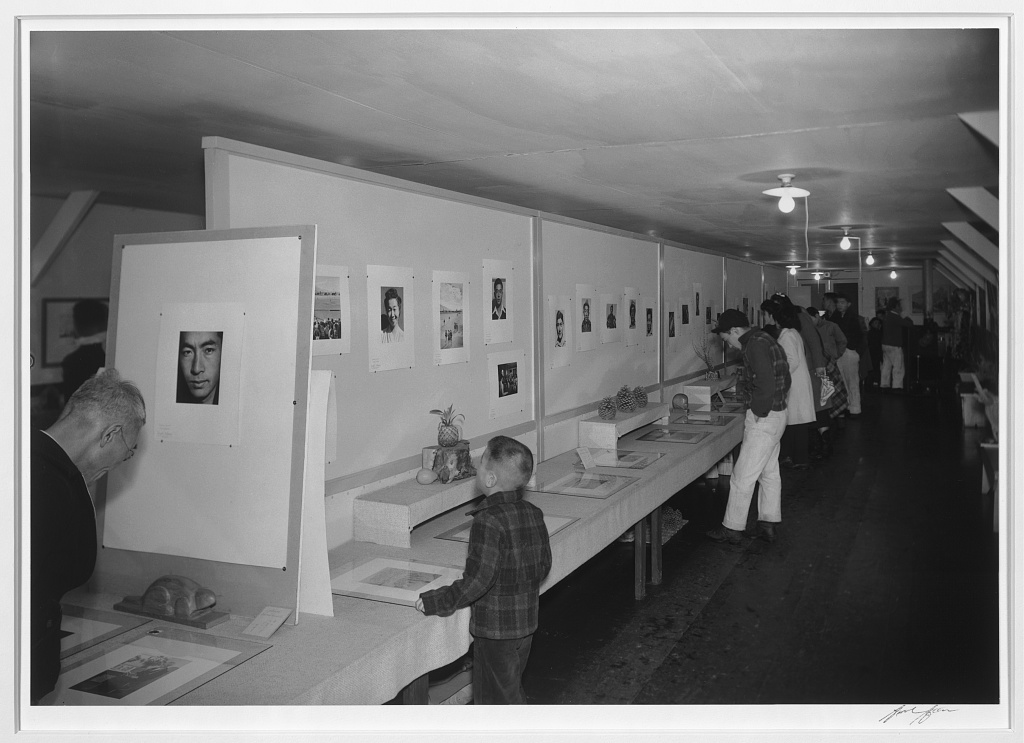
PS. What is also interesting is how Adams laid out this work for exhibition in the camp itself. The size of the prints, how they are displayed both vertically and horizontally, and how they move up and down and are not hung ‘on the line’ – plus the artefacts they are also displayed with. Fascinating stuff.


These photographs were sourced from the Prints & Photographs Online Catalog of the Library of Congress. The online archive contains all of Ansel Adams photographs of Manzanar War Relocation Center to download in high resolution, with no known restrictions on publication. Please note: publication of these images in the posting does NOT mean that these images are in the exhibition.


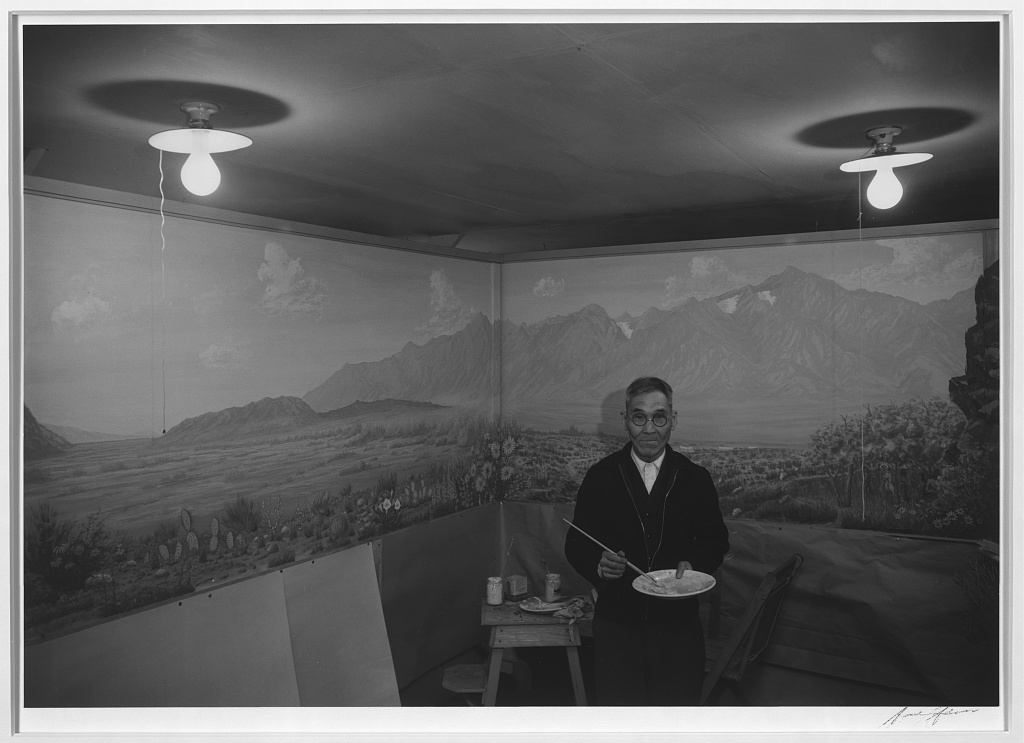
Ansel Adams (American, 1902-1984) 'C.T. Hibino, artist, Manzanar Relocation Center' 1943


Ansel Adams (American, 1902-1984)
C.T. Hibino, artist, Manzanar Relocation Center
1943
Silver gelatin print


Ansel Adams (American, 1902-1984) 'Frank Hirosama [i.e., Hirosawa] in laboratory, Manzanar Relocation Center' 1943


Ansel Adams (American, 1902-1984)
Frank Hirosama [i.e., Hirosawa] in laboratory, Manzanar Relocation Center
1943
Silver gelatin print


Foreword to Born Free and Equal

“Moved by the human story unfolding in the encirclement of desert and mountains, and by the wish to identify my photography in some creative way with the tragic momentum of the times, I came to Manzanar with my cameras in the fall of 1943. For many years, I have photographed the Sierra Nevada, striving to reveal by the clear statement of the lens those qualities of the natural scene which claim the emotional and spiritual response of the people. In these years of strain and sorrow, the grandeur, beauty, and quietness of the mountains are more important to us than ever before. I have tried to record the influence of the tremendous landscape of Inyo on the life and spirit of thousands of people living by force of circumstance in the Relocation Center of Manzanar. …

I believe that the acrid splendour of the desert, ringed with towering mountains, has strengthened the spirit of the people of Manzanar. I do not say all are conscious of this influence, but I am sure most have responded, in one way or another, to the resonances of their environment. From the harsh soil they have extracted fine crops; they have made gardens glow in the firebreaks and between the barracks. Out of the jostling, dusty confusion of the first bleak days in raw barracks they have modulated to a democratic internal society and a praiseworthy personal adjustment to conditions beyond their control. The huge vistas and the stern realities of sun and wind and space symbolise the immensity and opportunity of America – perhaps a vital reassurance following the experience of enforced exodus. …

I trust the content and message of this book will suggest that the broad concepts of American citizenship, and of liberal, democratic life the world over, must be protected in the prosecution of the war, and sustained in the building of the peace to come.”

Ansel Adams, Foreword to Born Free and Equal, 1944


Library of Congress text

Well-known fine art and landscape photographer, Ansel Adams, took on several war-related assignments. When offering the Manzanar photos to the Library in 1965, Adams wrote in an accompanying letter, “The purpose of my work was to show how these people, suffering under a great injustice … had overcome the sense of defeat and dispair [sic] by building for themselves a vital community in an arid (but magnificent) environment.”

Summary: Photographs document the lives of Japanese Americans interned during World War II at the Manzanar Relocation Center, in Inyo County, California. There are numerous close-up and occupational portraits of individuals, including Roy Takeno, editor of the Manzanar Free Press, and photographer Tōyō Miyatake. Group portraits include families, women and children. Other photographs show people posed in their living quarters and engaged in indoor daily life such as shopping, religious services, health care, and education; more informal views portray outdoor agricultural scenes and sports and leisure activities. Landscape views feature the background mountains and desert as well as camp facilities and buildings.

Text from the Library of Congress website


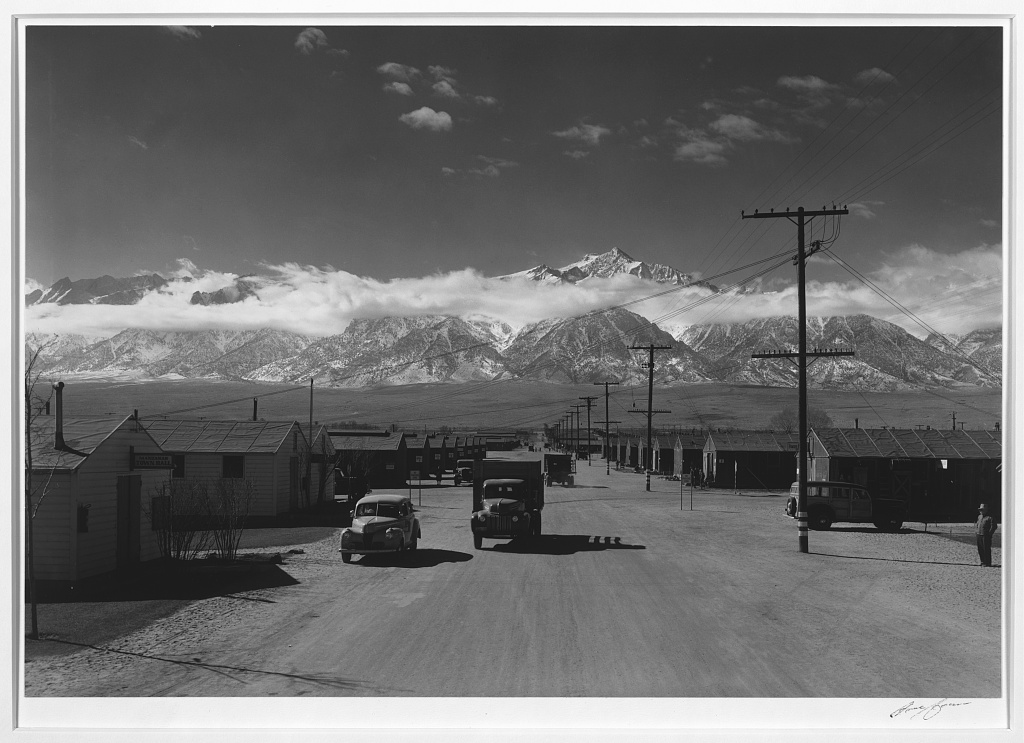
Ansel Adams (American, 1902-1984) 'Manzanar street scene, spring, Manzanar Relocation Center' 1943


Ansel Adams (American, 1902-1984)
Manzanar street scene, spring, Manzanar Relocation Center
1943
Silver gelatin print


Ansel Adams (American, 1902-1984) 'Benji Iguchi driving tractor in field, Manzanar Relocation Center' 1943


Ansel Adams (American, 1902-1984)
Benji Iguchi driving tractor in field, Manzanar Relocation Center
1943
Silver gelatin print


“… that all Japanese, whether citizens or not, be placed in inland concentration camps. As justification for this, I submit that if an American born Japanese, who is a citizen, is really patriotic and wishes to make his contribution to the safety and welfare of this country, right here is his opportunity to do so, namely, by permitting himself to be placed in a concentration camp, he would be making his sacrifice. … Millions of other native-born citizens are willing to lay down their lives, which is a far greater sacrifice, of course, than being placed in a concentration camp.”


Secretary of War Henry Stinson, January 16, 1942


The Jundt Art Museum will display Manzanar: The Wartime Photographs of Ansel Adams in the Jundt Galleries Jan. 4 through March 29. The exhibition features 50 of the renowned photographer’s images of the Japanese-American relocation camp in Manzanar, Calif. during World War II. The photographs are included in the controversial book Born Free and Equal, which protests the treatment of these American citizens. The book was published in 1944 while the war was in progress. Also included in the exhibition are various photographs, documents and other works of art that further contextualise the images. Robert Flynn Johnson, curator emeritus for the Achenbach Foundation for Graphic Arts at the Fine Arts Museums of San Francisco, curated the exhibition.

Born in San Francisco, Adams was a visionary in nature photography and wilderness preservation. He has become an environmental folk hero for his work in conservation as well as a symbol of the American West, particularly for his photographs of Yosemite National Park. Adams’ Manzanar work is a departure from his signature style of landscape photography. Most of the Manzanar photographs are portraits, views of daily life, agricultural scenes, and sports and leisure activities. The Ansel Adams photographs taken between 1943-1944 are prints made from the original negatives in the Library of Congress. They were previously exhibited in the exhibition, Born Free and Equal: An Exhibition of Ansel Adams Photographs, organised by the Fresno Metropolitan Museum of Art, History and Science in 1984.

Robert Flynn Johnson, Curator Emeritus, Achenbach Foundation for Graphic Arts, Fine Arts Museums of San Francisco, in his essay for the exhibition writes, “This exhibition recounts one of the darkest moments in the history of the United States, one that the distinguished author John hersey referred to as ‘a mistake of terrifyingly horrible proportions.’ It is a story of ignorance and prejudice, but also a story of perseverance and nobility. What happened should never be forgotten so that it should never happen again.” Johnson continues, “This is not only an art exhibition, a history lesson, or a study in race relations; it is all three. My hope is that it educates us about an unfortunate moment in our country’s history that must be better understood. It also should serve as a warning as to what can occur when emotion and fear overwhelm clarity and courage.”

Also included in the exhibition is a first edition copy of Adams’s 1944 book, Born Free and Equal; a vintage gelatin silver print by Adams titled A Photograph of Yosemite, c. 1938; three reproductions of Dorothea Lange photographing Japanese-Americans being evacuated; a watercolour painting of a camp by an internee; an original 1942 poster of the Civilian Exclusion Order that announced that Japanese-Americans were to be rounded up for imprisonment; seven original magazine covers and a poster that documents the virulent anti-Japanese attitudes present at the time; a watercolour by Henry Minakata of one of the Relocation Camps; and three original drawings by the famous artist Chiura Obata, who was imprisoned in the Topaz Camp. The exhibition, which will tour museums in the United States over the next few years, was organised by Photographic Traveling Exhibitions of Los Angeles.”

Press release from the Jundt Art Gallery website


Ansel Adams (American, 1902-1984) 'Manzanar from guard tower, summer heat, view SW, Manzanar Relocation Center' 1943


Ansel Adams (American, 1902-1984)
Manzanar from guard tower, summer heat, view SW, Manzanar Relocation Center
1943
Silver gelatin print


Ansel Adams (American, 1902-1984) 'Manzanar from Guard Tower, view west (Sierra Nevada in background), Manzanar Relocation Center' 1943


Ansel Adams (American, 1902-1984)
Manzanar from Guard Tower, view west (Sierra Nevada in background), Manzanar Relocation Center
1943
Silver gelatin print


The first morning in Manzanar when I woke up and saw what Manzanar looked like, I just cried. And then I saw the high Sierra mountain, just like my native country’s mountain, and I just cried, that’s all.” Haruko Niwa, interned at Manzanar from 1942 until 1945.

Ten war relocation centres were built in remote deserts, plains, and swamps of seven states; Arkansas, Arizona, California, Colorado, Idaho, Utah, and Wyoming. Manzanar, located in the Owens Valley of California between the Sierra Nevada on the west and the Inyo mountains on the east, was typical in many ways of the 10 camps. About two-thirds of all Japanese Americans interned at Manzanar were American citizens by birth. The remainder were aliens, many of whom had lived in the United States for decades, but who, by law, were denied citizenship.

The first Japanese Americans to arrive at Manzanar, in March 1942, were men and women who volunteered to help build the camp. On June 1 the War Relocation Authority (WRA) took over operation of Manzanar from the U.S. Army. The 500-acre housing section was surrounded by barbed wire and eight guard towers with searchlights and patrolled by military police. Outside the fence, military police housing, a reservoir, a sewage treatment plant, and agricultural fields occupied the remaining 5,500 acres. By September 1942 more than 10,000 Japanese Americans were crowded into 504 barracks organised into 36 blocks. There was little or no privacy in the barracks – and not much outside. The 200 to 400 people living in each block, consisting of 14 barracks each divided into four rooms, shared men’s and women’s toilets and showers, a laundry room, and a mess hall. Any combination of eight individuals was allotted a 20-by-25-foot room. An oil stove, a single hanging light bulb, cots, blankets, and mattresses filled with straw were the only furnishings provided.

Coming from Los Angeles and other communities in California and Washington, Manzanar’s internees were unaccustomed to the harsh desert environment. Summer temperatures soared as high as 110ºF. In winter, temperatures frequently plunged below freezing. Throughout the year strong winds swept through the valley, often blanketing the camp with dust and sand. Internees covered knotholes in the floors with tin can lids, but dust continued to blow in between the floorboards until linoleum was installed in late 1942…

Two thirds of the Japanese Americans interned at Manzanar were under the age of 18. 541 babies were born at Manzanar. A total of 11,070 Japanese Americans were processed through Manzanar. From a peak of 10,046 in September 1942, the population dwindled to 6,000 by 1944. The last few hundred internees left in November 1945, three months after the war ended. Many of them had spent three-and-a-half years at Manzanar.

Anon. “Japanese Americans at Manzanar,” on the Manzanar National Historic Site (U. S. National Park Service) website [Online] Cited 08/03/2014


Ansel Adams (American, 1902-1984) 'Manzanar street scene, clouds, Manzanar Relocation Center' 1943


Ansel Adams (American, 1902-1984)
Manzanar street scene, clouds, Manzanar Relocation Center
1943
Silver gelatin print


Ansel Adams (American, 1902-1984) 'Manzanar street scene, winter, Manzanar Relocation Center' 1943


Ansel Adams (American, 1902-1984)
Manzanar street scene, winter, Manzanar Relocation Center
1943
Silver gelatin print


Ansel Adams (American, 1902-1984) 'View south from Manzanar to Alabama Hills, Manzanar Relocation Center' 1943


Ansel Adams (American, 1902-1984)
View south from Manzanar to Alabama Hills, Manzanar Relocation Center
1943
Silver gelatin print


Ansel Adams (American, 1902-1984) 'View SW over Manzanar, dust storm, Manzanar Relocation Center' 1943


Ansel Adams (American, 1902-1984)
View SW over Manzanar, dust storm, Manzanar Relocation Center
1943
Silver gelatin print


This exhibition recounts one of the darkest moments in the history of the United States, one that the distinguished author John Hersey referred to as “a mistake of terrifyingly horrible proportions.”1 It is a story of ignorance and prejudice, but it is also a story of perseverance and nobility. What happened should never be forgotten so that it should never happen again.

Background

In the aftermath of the Japanese surprise attack on Pearl Harbor and the subsequent declaration of war by the United States, a wave of fear and paranoia swept the western United States and the Hawaiian Islands. Anxiety over possible invasion by Japanese forces or sabotage by fifth columnist Japanese and Japanese Americans living amongst the general American population overrode common sense in Government circles. Despite the protestations of Attorney General Francis Biddle, Interior Secretary Harold Ickes, and even F.B.I. Director J. Edgar Hoover.

President Franklin Delano Roosevelt, in the most unfortunate act of an otherwise admirable presidency, allowed public opinion and biased, racist attitudes of elements within the U.S. Army to induce him into issuing on February 19, 1942, Executive Order 9066: the forced evacuation of persons of Japanese ancestry from the West Coast. This evacuation was done despite the fact that the F.B.I. had, within three days of Pearl Harbor, rounded up and arrested 857 Germans, 147 Italians, and 1,291 Japanese (367 in Hawaii and 924 on the mainland) for subversive activities. The government did not inter Germans, Italians, nor, with few exceptions, Japanese residing in Hawaii. Instead they rounded up Japanese and Japanese Americans residing in the western United States. In the end, these individuals were interred in ten camps spread over underpopulated areas of the West and in Arkansas in the Midwest…

The act of rounding up civilians and imprisoning them in camps had occurred in earlier centuries. The term “concentration camp” was first used to describe the actions of the British against the Boers during the Second Boer War (1899-1902), but today it is indistinguishable from the horrors of the extermination camps perpetrated by the Nazis against Jews, Russians, and other victims of the Reich in World War II. American authorities euphemistically labeled the Japanese internments as “war relocation centers,” but given the harsh conditions Japanese Americans suffered, a more appropriate term might be war relocation “camps.”

Mine Okubo describes the conditions: “The camps represented a prison: no freedom, no privacy, no America. Internment camps were also guarded by U.S. military personnel and had a barbed wire perimeter.”2

Manzanar

The brilliant social activist photographer Dorothea Lange (1895-1965) was hired by the U.S. government in the spring of 1942 to document this forced relocation. Her assignment included the camp at Manzanar, located in the remote Owens Valley in the northern reaches of Death Valley, California. However, when her photographs were submitted, they were viewed with alarm for showing the government in a bad light; the decision was made to impound (censor) her images until the end of the war.

It was only in 1943 that Ralph Merritt, the enlightened second director at Manzanar, invited his old friend Ansel Adams to come and photograph there. By that time, the internees had settled into their lives there coping as best they could. In 1942 a confrontation with camp guards had led to shots being fired, resulting in the deaths of two internees and the wounding of nine. There were no further incidents. Some historians have criticised Adams’s photographs, comparing them to the more politicised imagery of Lange. Linda Gordon wrote,

“Ansel Adams photographed at Manzanar a year after Lange did, producing work that, by contrast, reveals much about Lange’s perspective. He tried to walk a cramped line, opposing anti-Asian racism, but avoiding identification with the opposition to the internment. Adams’s pictures, primarily portraits – surprisingly for a landscape photographer – emphasised the internees’ stoic, polite, even cheerful making the best of it. His subjects were almost exclusively happy, smiling. His goal was to establish the internees as unthreatening, Americanised, open – scrutable rather than inscrutable. By making mainly individual portraits, he masked collective racial discrimination. The resultant hiding of the internment’s violation of human rights was not an unintended consequence of this goal, but an expression of Adams’s patriotism.”3

There is no question that Lange was the stronger documentary photographer. However, Adams was working out of his comfort zone as a landscape photographer and his point was not to use his images to indict the authorities. Instead, he wished to portray the Japanese American internees as loyal Americans going about their lives like regular citizens, not as dangerous aliens. Adams saved his harshest attack on their unjust imprisonment for the language of his book, Born Free and Equal, published the following year, 1944.

In the text Adams struggled with the argument that the incarceration of these citizens was not just but justified by military necessity. However, he rejected that argument, clearly and forcefully articulating his opposition to the internment. The book was not well received. Adams was called a “Jap lover” and copies of the book were burned. To fully understand the “profiles in Courage” stand Ansel Adams took by publishing Born Free and Equal while the war was still raging, one must understand the emotionally volatile nature of those times in which it was published. Adams’s strong convictions are fully apparent when one reads his forceful words while viewing his beautiful photographic imagery…

Conclusion

This is not only an art exhibition, a history lesson, or a study in race relations; it is all three. My hope is that it educates us about an unfortunate moment in our country’s history that must be better understood and should serve as a warning against allowing emotion, prejudice and fear to overwhelm clarity and courage. Harold L. Ickes, the Secretary of the Interior, in his 1944 foreword to Born Free and Equal sums up the essence of this human drama,

“It has long been my belief that the greatness of America has arisen in large part out of the diversity of her peoples. Before the war, peoples of Japanese ancestry were a small but valuable element in our population. Their record of law-abiding, industrious citizenship was surpassed by no other group. Their contributions to the arts, agriculture, and science were indisputable evidence that the majority of them believed in America and were growing with America.

Then war came with the nation of their parental origin. The ensuing two and a half years have brought heartaches to many in our population. Among the causalities of war has been America’s Japanese minority. It is my hope that the wounds which it has received in the great uprooting will heal. It is my prayer that other Americans will fully realise that to condone the whittling away of the rights of any one minority group is to pave the way for us all to lose the guarantees of the Constitution.”4

Robert Flynn Johnson
Curator Emeritus
Achenbach Foundation for Graphic Arts, Fine Arts Museums of San Francisco


1/ John Hersey, “A Mistake of Terrifically Horrible proportions,” in Manzanar, by John Armor and Peter Wright (New York Times Books, 1988)
2/ Sara Ann McGill, “Internment of Japanese Americans,” accessed May 3, 2010. No longer available online
3/ Linda Gordon and Gary Y. Okihiro, ed., Impounded: Dorothea Lange and the Censored Images of Japanese American Internment (New York: W. W. Norton and Co., 2006), 34
4/ Ansel Adams, Born Free and Equal: The Story of Loyal Japanese-Americans (New York: U.S. Camera, 1944), 7


Ansel Adams (American, 1902-1984) 'Pictures and mementoes on phonograph top - Yonemitsu home, Manzanar Relocation Center' 1943


Ansel Adams (American, 1902-1984)
Pictures and mementoes on phonograph top – Yonemitsu home, Manzanar Relocation Center
1943
Silver gelatin print


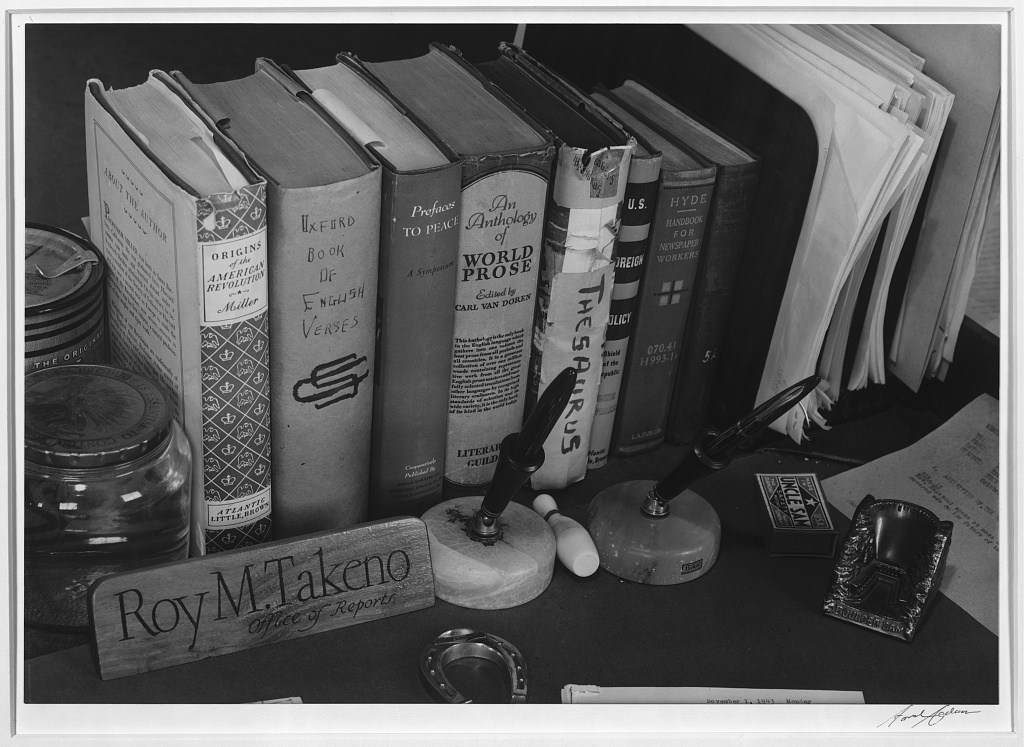
Ansel Adams (American, 1902-1984) 'Roy Takeno's desk, Manzanar Relocation Center' 1943


Ansel Adams (American, 1902-1984)
Roy Takeno’s desk, Manzanar Relocation Center
1943
Silver gelatin print


Ansel Adams (American, 1902-1984) 'Manzanar museum (Ansel Adams exhibit), Manzanar Relocation Center' 1943


Ansel Adams (American, 1902-1984)
Manzanar museum (Ansel Adams exhibit), Manzanar Relocation Center
1943
Silver gelatin print


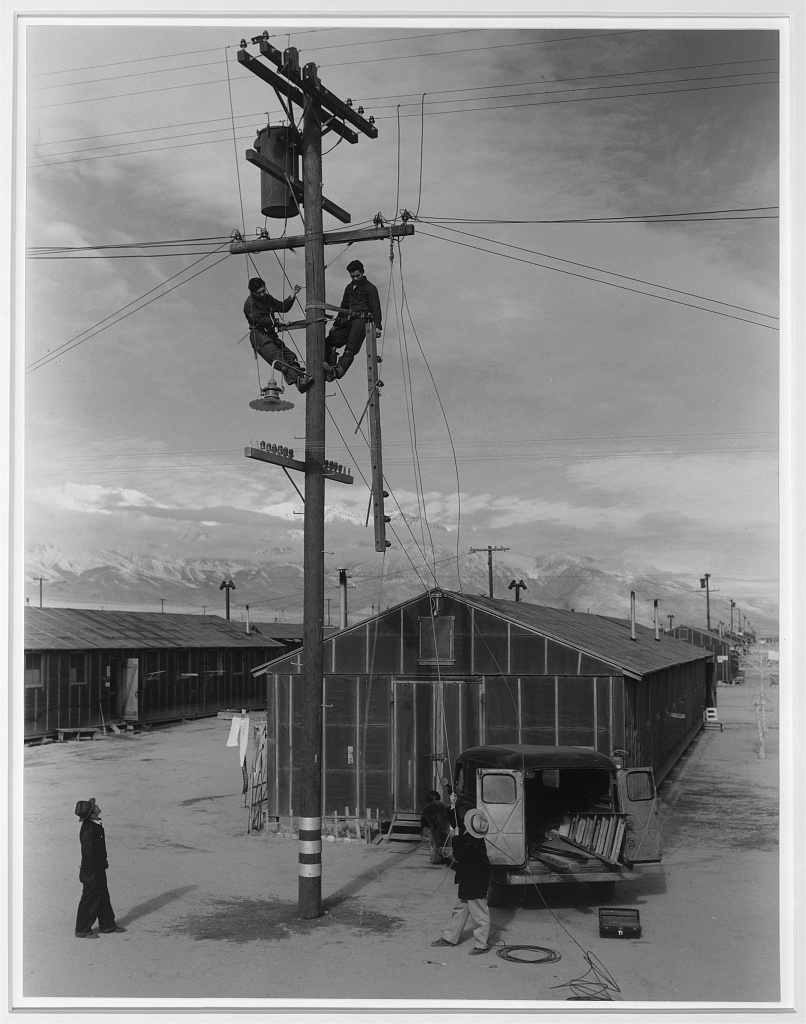
Ansel Adams (American, 1902-1984) 'Line crew at work in Manzanar, Manzanar Relocation Center' 1943


Ansel Adams (American, 1902-1984)
Line crew at work in Manzanar, Manzanar Relocation Center
1943
Silver gelatin print


Jundt Art Gallery
502 East Boone Avenue
Spokane, WA 99258-0001
This is the main address for Gonzaga University

Opening hours:
Monday – Saturday 10am – 4pm

Jundt Art Gallery website

LIKE ART BLART ON FACEBOOK

Back to top

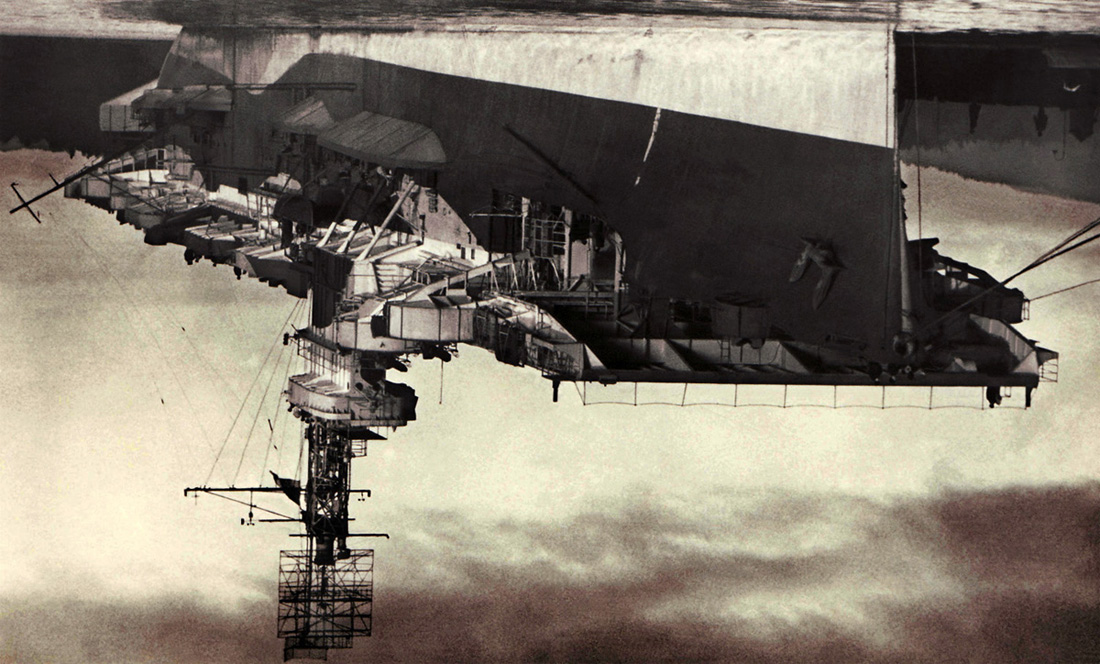
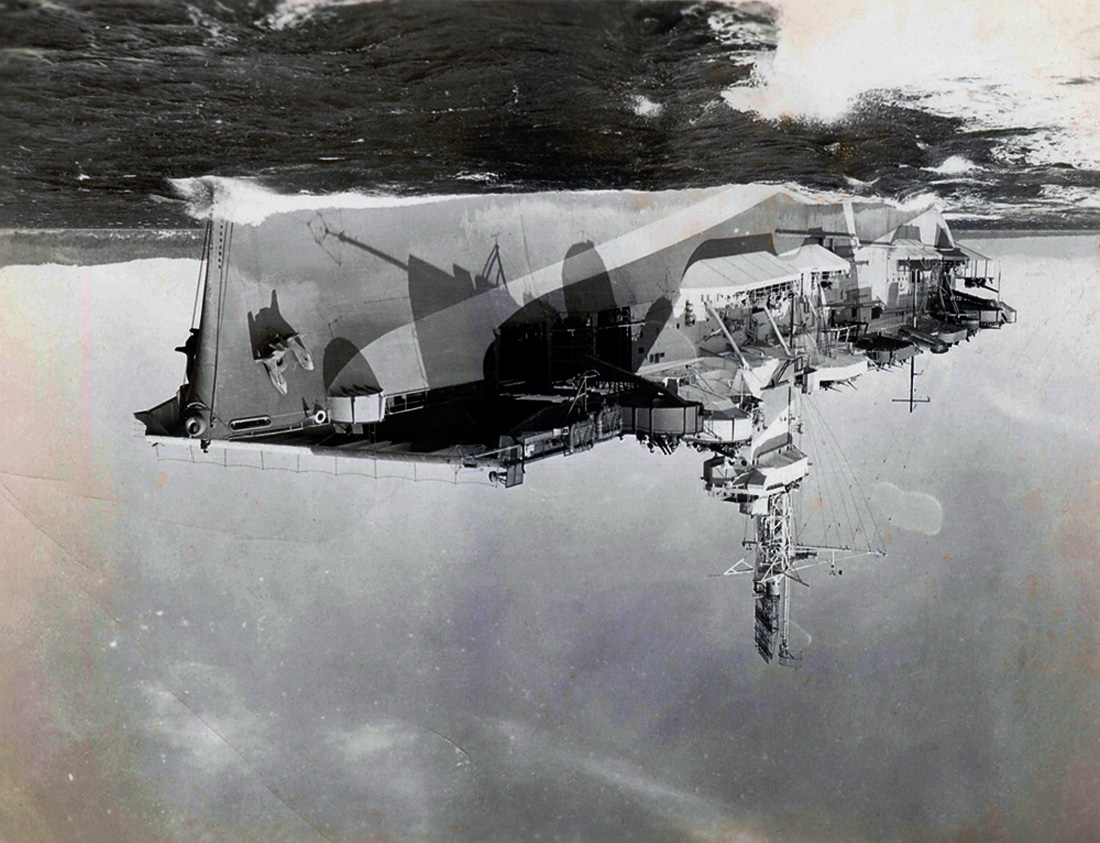
Photographs. Marcus Bunyan. ‘upside, down’ 2013

December 2013


Marcus Bunyan (Australian, b. 1958) 'Untitled' from the series 'upside, down' 2013


Marcus Bunyan (Australian, b. 1958)
Untitled
2013
From the series upside, down 2013
Digital photograph


upside, down

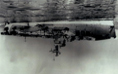
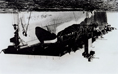
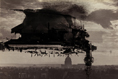
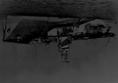
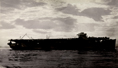
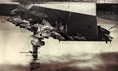
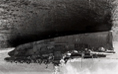
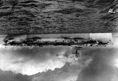
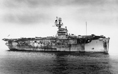
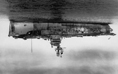
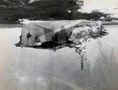
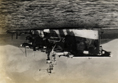
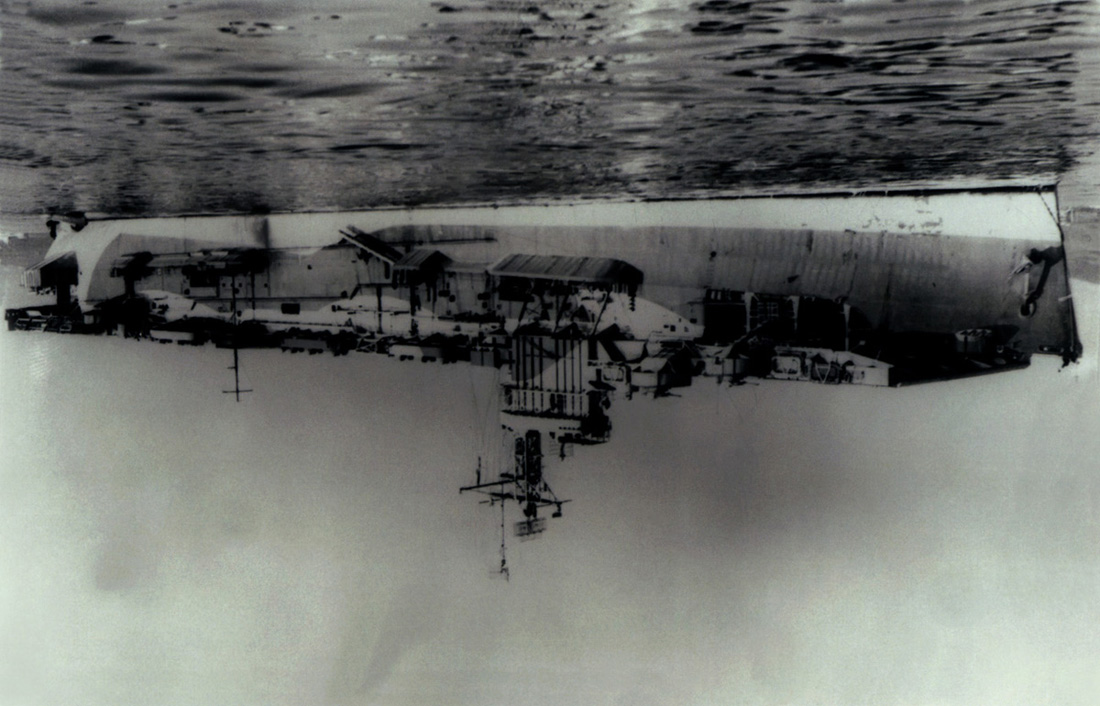
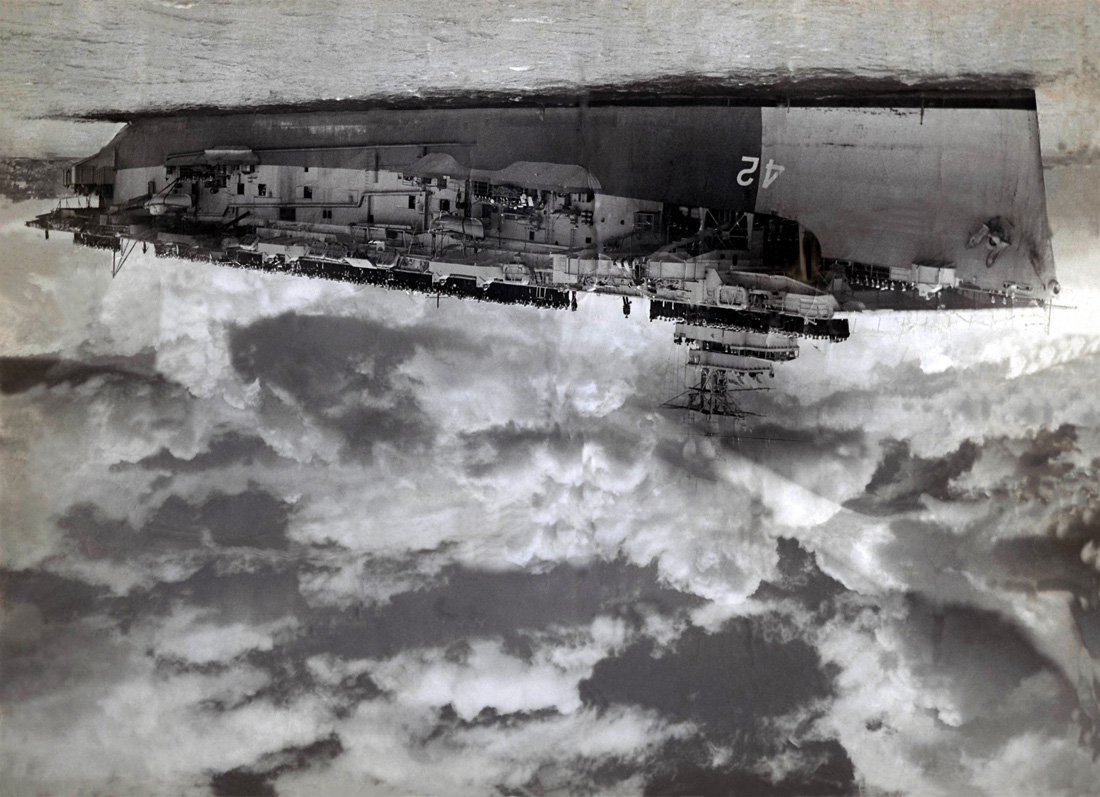
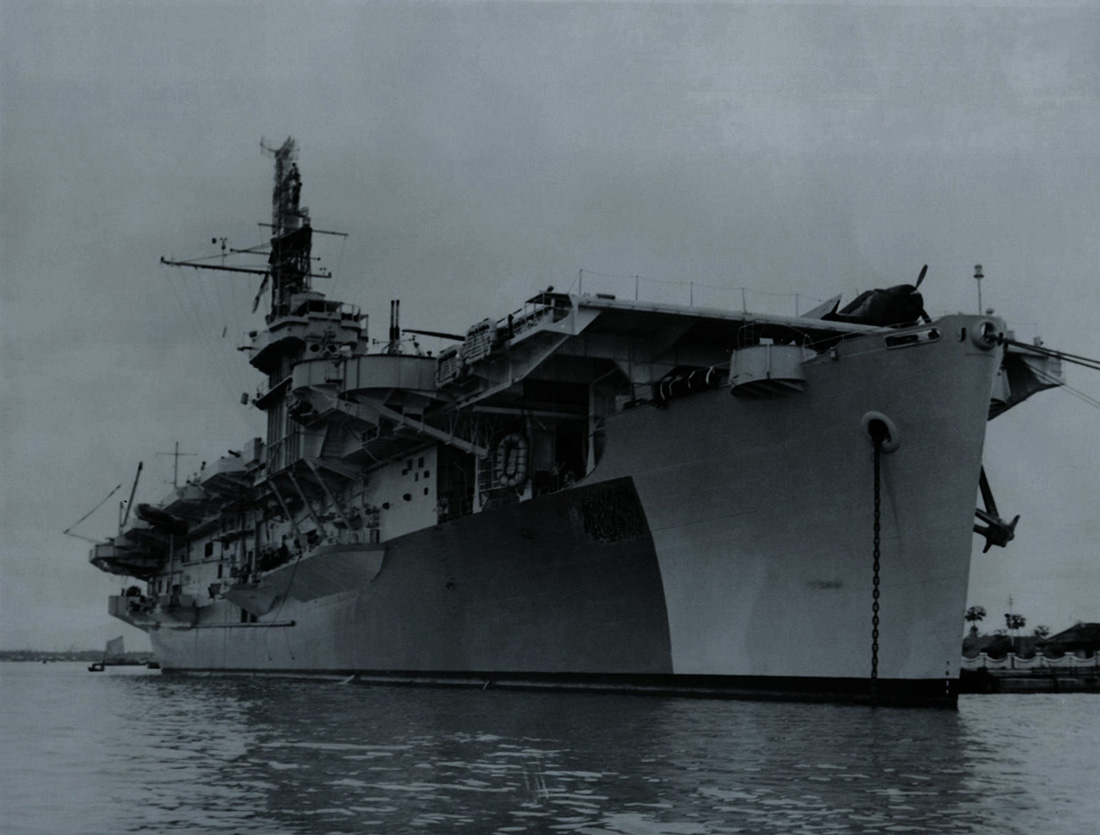
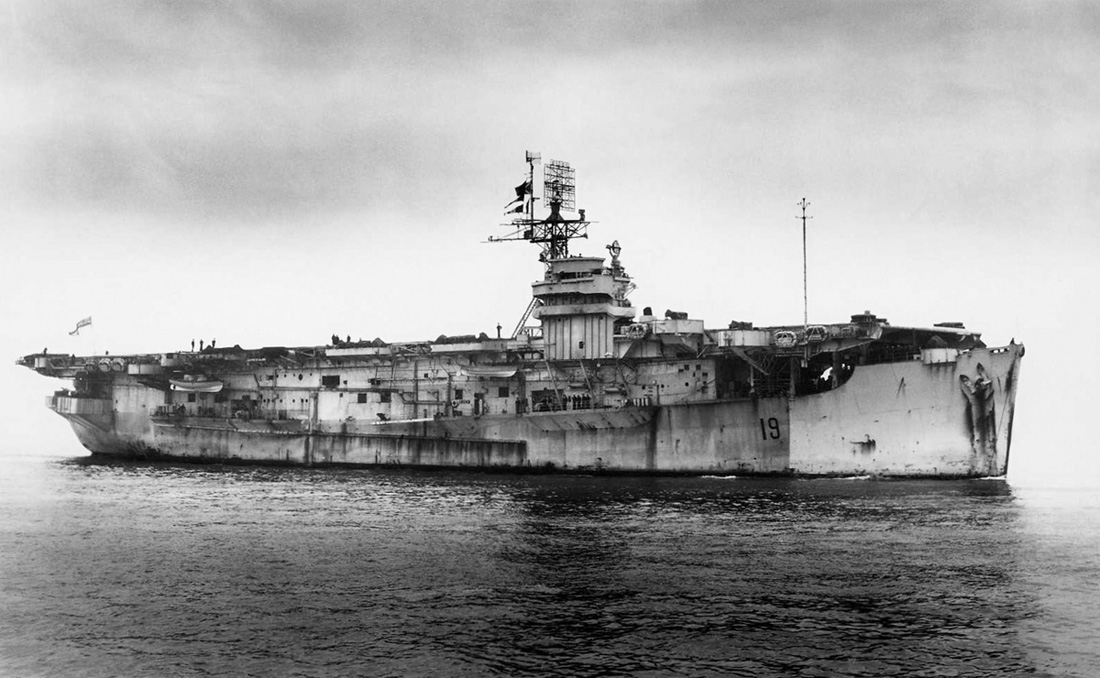
Finally, I got my act together for a new series of my own work titled upside, down (2013). The series is now online on my website or you can click on the thumbnails below to go the full image. There are 30 images in the series formed as a sequence. Below is a selection of images from the series. Please click on the photographs for a larger version of the image.

People have asked me what this series is about. It’s about the suspension of belief; it’s about taking an enormous, heavy war machine and floating it in mid air and the impossibility of this; it’s about looking at this structure of destruction as a constructivist object, looking at the mass of this object; it is about the disintegration of this object (for these are poor quality scans that when enlarged will fall apart) – about raising the object up and letting it fall into the world. It is against war.

People have said to me the images look strange, that they look better the right way up. I’m glad that they are inverted for the world is a very strange place, where we make huge machines just to kill ourselves. I’m glad they look strange, I’m glad they make you feel uncomfortable. They are meant that way.

The sculptor Fredrick White has observed that the work is also about the beauty of the object, emphasising its form by inverting the mass of the ship, and also the weight, compression and displacement of space – almost like a time slippage / fracture, a time portal to another world. This is very perceptive because the work is about all of these things. I love layering the work so it reveals different things!

Dr Marcus Bunyan

Photographs are available from this series for purchase. As a guide, a digital colour 16″ x 20″ costs $1000 plus tracked and insured shipping. For more information please see my Store web page.


“The initial feeling of the series was of a curtain rising – and that strongly draws us into the drama. But the whole series is very witty, very touching and appeals very strongly to the senses. There is an inevitability about the human condition here that is very sobering. In the end the strongest of your gestures are almost ignored by the viewer who becomes aware of this atmosphere.”


Text from my friend Ian Lobb


Marcus Bunyan. 'Untitled' from the series 'upside, down' 2013 Marcus Bunyan. 'Untitled' from the series 'upside, down' 2013 Marcus Bunyan. 'Untitled' from the series 'upside, down' 2013 Marcus Bunyan. 'Untitled' from the series 'upside, down' 2013
Marcus Bunyan. 'Untitled' from the series 'upside, down' 2013 Marcus Bunyan. 'Untitled' from the series 'upside, down' 2013


Marcus Bunyan (Australian, b. 1958) 'Untitled' from the series 'upside, down' 2013


Marcus Bunyan (Australian, b. 1958)
Untitled
2013
From the series upside, down
Digital photograph


Marcus Bunyan (Australian, b. 1958) 'Untitled' from the series 'upside, down' 2013


Marcus Bunyan (Australian, b. 1958)
Untitled
2013
From the series upside, down
Digital photograph


Marcus Bunyan (Australian, b. 1958) 'Untitled' from the series 'upside, down' 2013


Marcus Bunyan (Australian, b. 1958)
Untitled
2013
From the series upside, down
Digital photograph


Marcus Bunyan (Australian, b. 1958) 'Untitled' from the series 'upside, down' 2013


Marcus Bunyan (Australian, b. 1958)
Untitled
2013
From the series upside, down
Digital photograph


Marcus Bunyan (Australian, b. 1958) 'Untitled' from the series 'upside, down' 2013


Marcus Bunyan (Australian, b. 1958)
Untitled
2013
From the series upside, down
Digital photograph


Marcus Bunyan (Australian, b. 1958) 'Untitled' from the series 'upside, down' 2013


Marcus Bunyan (Australian, b. 1958)
Untitled
2013
From the series upside, down
Digital photograph


Marcus Bunyan (Australian, b. 1958) 'Untitled' from the series 'upside, down' 2013


Marcus Bunyan (Australian, b. 1958)
Untitled
2013
From the series upside, down
Digital photograph


Marcus Bunyan (Australian, b. 1958) 'Untitled' from the series 'upside, down' 2013


Marcus Bunyan (Australian, b. 1958)
Untitled
2013
From the series upside, down
Digital photograph


Marcus Bunyan (Australian, b. 1958) 'Untitled' from the series 'upside, down' 2013


Marcus Bunyan (Australian, b. 1958)
Untitled
2013
From the series upside, down
Digital photograph


Marcus Bunyan (Australian, b. 1958) 'Untitled' from the series 'upside, down' 2013


Marcus Bunyan (Australian, b. 1958)
Untitled
2013
From the series upside, down
Digital photograph


Marcus Bunyan (Australian, b. 1958) 'Untitled' from the series 'upside, down' 2013


Marcus Bunyan (Australian, b. 1958)
Untitled
2013
From the series upside, down
Digital photograph


Marcus Bunyan website

LIKE ART BLART ON FACEBOOK

Back to top

Photographs: ‘The War at Home: Farm Security Administration / Office of War Information Color Photographs’ by Alfred Palmer Part 1

October 2013


Alfred Palmer (American, 1906-1993) 'P-51 "Mustang" fighter plane in construction, at North American Aviation, Inc., in Los Angeles, California' c. 1942


Alfred Palmer (American, 1906-1993)
P-51 “Mustang” fighter plane in construction, at North American Aviation, Inc., in Los Angeles, California
c. 1942
4 x 5 Kodachrome transparency
Alfred Palmer/OWI/LOC


Kodachrome sheets 1941-1943

This is the first of a two-part posting on the large format Kodachrome colour transparency photographs of the American photographer Alfred Palmer taken during 1941-1943. I absolutely adore these photographs. While today they might seem overly posed and almost surreal in their depiction of men and women at work in the factories of the home front during the Second World War, these are epic canvases of colour, light and form. While Eugène Atget’s photographs may well have been “Documents for artists”, I believe that Alfred Palmer’s photographs can be seen as “Documents for photographers.” They teach later generations the value of craft, of an understanding of the technical aspects of the medium (both camera and film) coupled with the imaginative use and capture of light, colour and pose. Look at the photograph Noontime rest for an assembly worker at the Long Beach (October 1942, below) – have you ever seen such use of colour in the 1940s: red socks, blue slacks, beige shirt, green lunch box and silver background. Like one of those old films in Technicolor, just so beautiful!

While these photographs are masterpieces of formalism, lighting, tone, texture and control, they also transcend their subject matter. Observe the image P-51 “Mustang” fighter plane in construction, at North American Aviation, Inc., in Los Angeles, California (c. 1942, above) for example, to comprehend how this master photographer saw this image, how he understood the potential of the subject matter to shine (on so many levels) and then was able to capture it and let it speak for itself. Considering the conditions under which he would have been working (in cramped factories) and the fact that he would have had to light everything himself, Palmer has recorded a remarkable body of work. All captured on the wonderful Kodachrome film in large format 4″ x 5″ sheets. What a loss to photography this film is.

These photographs deserve to be more widely known and appreciated than they are at present. Love em, love em, love them!

See Part 2 of the posting.

Dr Marcus Bunyan


Many thankx to the Library of Congress for allowing me to publish the photographs in the posting. No known copyright restrictions on any of the photographs.


Alfred Palmer (American, 1906-1993) 'A view of the B-25 final assembly line at North American Aviation's Inglewood, California, plant' Photo published in 1942


Alfred Palmer (American, 1906-1993)
A view of the B-25 final assembly line at North American Aviation’s Inglewood, California, plant
Photo published in 1942
4 x 5 Kodachrome transparency
Alfred Palmer/OWI/LOC


Alfred Palmer (American, 1906-1993) 'B-25 bomber plane at North American Aviation being hauled along an outdoor assembly line. Kansas City, Kansas.' October 1942


Alfred Palmer (American, 1906-1993)
B-25 bomber plane at North American Aviation being hauled along an outdoor assembly line. Kansas City, Kansas

October 1942
4 x 5 Kodachrome transparency
Alfred Palmer/OWI


Alfred Palmer (American, 1906-1993) 'Servicing an A-20 bomber, Langley Field, Va.' July 1942


Alfred Palmer (American, 1906-1993)
Servicing an A-20 bomber, Langley Field, Va.
July 1942
4 x 5 Kodachrome transparency
Alfred Palmer/OWI


Alfred Palmer (American, 1906-1993) 'P-51 "Mustang" fighter in flight' October 1942


Alfred Palmer (American, 1906-1993)
P-51 “Mustang” fighter in flight, Inglewood, California, The Mustang, built by North American Aviation, Incorporated, is the only American-built fighter used by the Royal Air Force of Great Britain
October, 1942
4 x 5 Kodachrome transparency
Alfred Palmer/OWI/LOC


Alfred Palmer (American, 1906-1993) 'Sunset silhouette of a flying fortress, at Langley Field, Virginia, in July, 1942' July 1942


Alfred Palmer (American, 1906-1993)
Sunset silhouette of a flying fortress, at Langley Field, Virginia, in July, 1942
July 1942
4 x 5 Kodachrome transparency
Alfred Palmer/OWI/LOC


Alfred Palmer (American, 1906-1993) 'Light tank going through water obstacle. Fort Knox, June 1942' June 1942


Alfred Palmer (American, 1906-1993)
Light tank going through water obstacle. Fort Knox, June 1942
June 1942
4 x 5 Kodachrome transparency
Alfred Palmer/OWI


Alfred Palmer (American, 1906-1993) 'Tank crew standing in front of M-4 tank, Ft. Knox, Kentucky, June, 1942' June, 1942


Alfred Palmer (American, 1906-1993)
Tank crew standing in front of M-4 tank, Ft. Knox, Kentucky, June, 1942
June, 1942
4 x 5 Kodachrome transparency
Alfred Palmer/OWI/LOC


Alfred Palmer (American, 1906-1993) 'Army tank driver at Fort Knox , Kentucky' June 1942


Alfred Palmer (American, 1906-1993)
Army tank driver at Fort Knox, Kentucky
June 1942
4 x 5 Kodachrome transparency
Alfred Palmer/OWI


Alfred Palmer (American, 1906-1993) 'Lieutenant "Mike" Hunter, Army pilot assigned to Douglas Aircraft Company, Long Beach, Calif.' October 1942


Alfred Palmer (American, 1906-1993)
Lieutenant “Mike” Hunter, Army pilot assigned to Douglas Aircraft Company, Long Beach, Calif.
October 1942
4 x 5 Kodachrome transparency
Alfred Palmer/LOC


Alfred Palmer (American, 1906-1993) 'Lieutenant 'Mike' Hunter, Army test pilot assigned to Douglas Aircraft Company, Long Beach, California' October 1942


Alfred Palmer (American, 1906-1993)
Lieutenant ‘Mike’ Hunter, Army test pilot assigned to Douglas Aircraft Company, Long Beach, California
October 1942
4 x 5 Kodachrome transparency
Alfred Palmer/OWI


Alfred T. Palmer 1906-1993

Born in San Jose, California, Palmer was an avid photographer from an early age, meeting the young Ansel Adams in Yosemite in 1916. He was hired on as a cadet on the Dollar Lines President Monroe. He was 19 years old. This would be the first of his 23 trips around the world in the next 32 years. Palmer became the official photographer and worked aboard Dollar Line, Matson and Moore-McCormack Lines ships around the world shooting 100s of images with his Graflex camera. He would trade with other crew members for daytime shifts so he could go ashore and photograph everything he saw.

In 1938, he packed cameras and darkroom equipment into his car and set out across America documenting everything that captured his interest from cows and pigs and corn to towns, cities, people and industry. He would develop the film in the bathrooms of the tourist homes and auto courts every night. He sold the negatives for a dollar each for use in educational books. He made contact prints of each one which are included in his vast portfolio of work.

In 1939 when Hitler attacked Poland the United States ranked twentieth as a world military power. In June of 1940 President Roosevelt and Congress passed a bill for the building of a major two ocean navy. At that time Roosevelt formed the National Defense Advisory Commission of the Office of Emergency Management (OEM) and Palmer was chosen to head the photography department. To rally and inform citizens about the use of their tax dollars and resources, Palmer was sent out to photograph Americans building what Roosevelt termed the Arsenal of Democracy. Aware of the power of mass media, the OEM wanted to provide images which would vividly convey their story in high contrast photos for magazines and newspapers. At the OEM, Palmer’s boss, Robert Horton, would brainstorm assignments, sending him into restricted industrial and military facilities. Once in the field, Palmer worked independently. He developed a style of quickly seeing the picture and catching the essence. Through this style he was able to convey the gritty texture and geometry of industrial form combined with the strong emotion of men and women attentive to their work. His dramatic tonal ranges and sharp focus approach reflect the early influence of his mentor, Ansel Adams.

In 1941, after the bombing of Pearl Harbor, Palmer became official photographer for the newly formed Office of War Information (OWI). He also served as technical expert with final say on photographic equipment and processes. Now his images had to illustrate all aspects of the war effort, from industrial workers to conservation of resources and citizen participation. Palmer’s emphasis was on the typical American hard at work on the home front. His photographs were also an integral part of the “women power” campaign to change the public attitude toward women joining the work force. He showed women as patriotic, glamorous and capable, working on fighter planes as well as assembly lines. Palmer also focused on the dedication and dignity of the black labor force and worked with the chief of the News Bureau Negro Press.

In 1942, the Farm Security Administration (FSA) was added as a joint agency with the OWI. Palmer and Roy Stryker shared creativity and conflict during those years in the dissident approaches to portraying America to herself. While Stryker’s unit showed a national self scrutiny of post depression America, Palmer sought to emphasise a moral building role through his photography. Palmer’s deep belief in promoting the spiritual strength of people permeates his entire career as photographer and filmmaker.

During his years with OWI Palmer worked with a number of significant photographers such as Esther Bubbly, Howard Leiberman, Gordon Parks, Dorothea Lang and Edward Steichen. Palmer’s artistic style was recognised by Steichen, who featured his photographs in the historic traveling exhibit “Road to Victory”, which opened at the Museum of Modern Art in 1942. Alfred Palmer generated thousands of photographs that were widely published in the major magazines and newspapers in the United States and abroad. His works were praised for their exceptional symbolic power and striking use of intense contrasts conveying the courage and determination that Roosevelt sought to arouse in the nation. Much of the vast collection of Palmer’s photographs (including rare colour transparencies) is housed in the National Archives and the Library of Congress.

Alfred Palmer passed away in 1993, leaving a legacy of life work that is unique in its very essence. This extensive collection of photographs and 16mm colour film encompassing five decades of world cultures, World War II history and America’s maritime heritage becomes increasingly significant as a testimony to our humanity.

Text from the Alfred T. Palmer website [Online] Cited 13/10/2013 no longer available online


A Kodachrome sheet film box that held 2 x half a dozen sheets of film in 2 sheet packages, from around the time Alfred Palmer would have been using the same film. Notice the ISO/ASA rating of 10. Expiry date of October 1944


A Kodachrome sheet film box that held 2 x half a dozen sheets of film in 2 sheet packages, from around the time Alfred Palmer would have been using the same film. Notice the ISO/ASA rating of 10. Expiry date of October 1944.


Alfred Palmer (American, 1906-1993) 'American mothers and sisters, like these women at the Douglas Aircraft Company plant in Long Beach , California , give important help in producing dependable planes for their men at the front' October 1942


Alfred Palmer (American, 1906-1993)
American mothers and sisters, like these women at the Douglas Aircraft Company plant in Long Beach, California, give important help in producing dependable planes for their men at the front
October 1942
4 x 5 Kodachrome transparency
Alfred Palmer/OWI


Alfred Palmer (American, 1906-1993) 'Assembling switchboxes on the firewalls of B-25 bombers at North American Aviation's Inglewood, California, factory' October 1942


Alfred Palmer (American, 1906-1993)
Assembling switchboxes on the firewalls of B-25 bombers at North American Aviation’s Inglewood, California, factory
October 1942
4 x 5 Kodachrome transparency
Alfred Palmer/OWI


Alfred Palmer (American, 1906-1993) 'Workers installing fixtures and assemblies in the tail section of a B-17F bomber at the Douglas Aircraft Company plant in Long Beach , California' October 1942


Alfred Palmer (American, 1906-1993)
Workers installing fixtures and assemblies in the tail section of a B-17F bomber at the Douglas Aircraft Company plant in Long Beach, California
October 1942
4 x 5 Kodachrome transparency
Alfred Palmer/OWI


Alfred Palmer (American, 1906-1993) 'Engine inspector for North American Aviation at Long Beach, California' June 1942


Alfred Palmer (American, 1906-1993)
Engine inspector for North American Aviation at Long Beach, California
June 1942
4 x 5 Kodachrome transparency
Alfred Palmer/OWI


Alfred Palmer (American, 1906-1993) 'Punching rivet holes in a frame member for a B-25 bomber at North American Aviation. Inglewood, California' June 1942


Alfred Palmer (American, 1906-1993)
Punching rivet holes in a frame member for a B-25 bomber at North American Aviation. Inglewood, California 
June 1942
4 x 5 Kodachrome transparency
Alfred Palmer/OWI


Alfred Palmer (American, 1906-1993) 'Inglewood, California. Riveting team working on the cockpit shell of a C-47 heavy transport at North American Aviation' 1942


Alfred Palmer (American, 1906-1993)
Inglewood, California. Riveting team working on the cockpit shell of a C-47 heavy transport at North American Aviation.
“The versatile C-47 performs many important tasks for the Army. It ferries men and cargo across the oceans and mountains, tows gliders and brings paratroopers and their equipment to scenes of action.”
1942
4 x 5 Kodachrome transparency
Alfred Palmer/OWI


Alfred Palmer (American, 1906-1993) 'Noontime rest for an assembly worker at the Long Beach, Calif., plant of Douglas Aircraft Company. Nacelle parts for a heavy bomber form the background' October 1942


Alfred Palmer (American, 1906-1993)
Noontime rest for an assembly worker at the Long Beach, Calif., plant of Douglas Aircraft Company. Nacelle parts for a heavy bomber form the background
October 1942
4 x 5 Kodachrome transparency
Alfred Palmer/OWI


Alfred Palmer (American, 1906-1993) 'Two assembly line workers at the Long Beach, Calif., plant of Douglas Aircraft Company enjoy a well-earned lunch period, Long Beach, Calif. Nacelle parts of a heavy bomber form the background' October 1942


Alfred Palmer (American, 1906-1993)
Two assembly line workers at the Long Beach, Calif., plant of Douglas Aircraft Company enjoy a well-earned lunch period, Long Beach, Calif. Nacelle parts of a heavy bomber form the background
October 1942
4 x 5 Kodachrome transparency
LOC


LIKE ART BLART ON FACEBOOK

Back to top

Exhibition: ‘Photography and the American Civil War’ at the Metropolitan Museum of Art, New York

Exhibition dates: 2nd April – 2nd September 2013

PLEASE BE WARNED: LIKE “INCIDENTS OF WAR”, THIS POSTING IS DISTURBING AND NOT FOR THE FAINT HEARTED!


Andrew Joseph Russell (American, 1830-1902) 'Slave Pen, Alexandria, Virginia' 1863 (detail)


Andrew Joseph Russell (American, 1830-1902)
Slave Pen, Alexandria, Virginia (detail)
1863
Albumen silver print from glass negative
The Metropolitan Museum of Art, Gilman Collection, Purchase, The Horace W. Goldsmith Foundation Gift, through Joyce and Robert Menschel, 2005
© The Metropolitan Museum of Art, New York


There are some very poignant and disturbing photographs in this posting. The youth of some of the combatants (Private Wood sits against a blank wall in a photographer’s studio. He is sixteen years old and will not see seventeen. An orphan, he joined Company H in Social Circle, Georgia, on July 3, 1861, and before the end of the year died of pneumonia in a Richmond hospital). The sheer brutality and pointlessness of war. Bloated and twisted bodies, inflated like balloons. Starved and beaten human beings.

And yet, you look at the photograph “Slave Pen” – the office of those ‘Dealers in Slaves’ now guarded by Union soldiers (above) – or the photograph of Wilson, Branded Slave from New Orleans and the photograph of the anonymous African American soldier fighting for the Union cause directly below and you understand just one of the reasons that this was such a bloody conflict: it was about the right of all men to be free, to throw off the bonds of servitude.

To be replaced all these years later by another corrupted power – the power of government, the power of government to surveil its people at any and all times. The power of religion, money, the military and the gun.

Praise be the land of the free.

Dr Marcus Bunyan


Many thankx to the Metropolitan Museum of Art for allowing me to publish the photographs in the posting. Please click on the photographs for a larger version of the image.


“It was, indeed, a ‘harvest of death.’ … Such a picture conveys a useful moral: It shows the blank horror and reality of war, in opposition to its pageantry. Here are the dreadful details! Let them aid in preventing such another calamity falling upon the nation.”

“Before the war, a child three years old, would sell in Alexandria, for about fifty dollars, and an able-bodied man at from one thousand to eighteen hundred dollars. A woman would bring from five hundred to fifteen hundred dollars, according to her age and personal attractions.”


Alexander Gardner


“In your hands, my dissatisfied fellow-countrymen, and not in mine, is the momentous issue of civil war. The Government will not assail you. You can have no conflict without being yourselves the aggressors. You have no oath registered in heaven to destroy the Government, while I shall have the most solemn one to ‘preserve, protect, and defend it’.”

“We are not enemies, but friends. We must not be enemies. Though passion may have strained it must not break our bonds of affection. The mystic chords of memory, stretching from every battlefield and patriot grave to every living heart and hearthstone all over this broad land, will yet swell the chorus of the Union, when again touched, as surely they will be, by the better angels of our nature.”

“The dogmas of the quiet past, are inadequate to the stormy present. The occasion is piled high with difficulty, and we must rise – with the occasion. As our case is new, so we must think anew, and act anew.”

American President Abraham Lincoln (1809-1865)
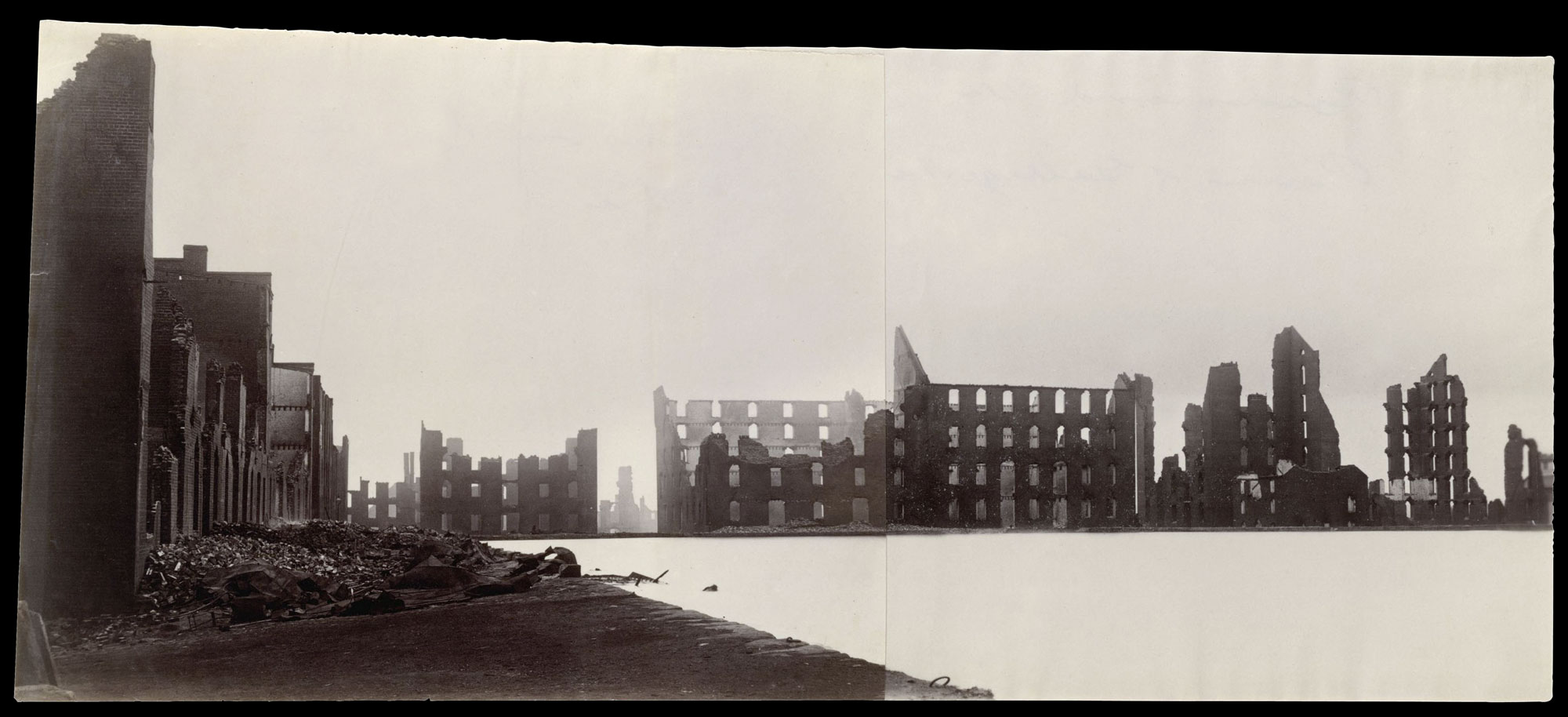


Alexander Gardner (American born Scotland, 1821-1882) 'Ruins of Gallego Flour Mills, Richmond' 1865


Alexander Gardner (American born Scotland, 1821-1882)
Ruins of Gallego Flour Mills, Richmond
1865
Albumen silver prints from glass negatives
The Metropolitan Museum of Art, Harris Brisbane Dick Fund, 1933
© The Metropolitan Museum of Art, New York


In 1861, at the outset of the Civil War, the Confederate government moved its capital from Montgomery, Alabama, to Richmond, Virginia, to be closer to the front and to protect Richmond’s ironworks and flour mills. On April 2, 1865, as the Union army advanced on Richmond, General Robert E. Lee gave the orders to evacuate the city. A massive fire broke out the following day, the result of a Confederate attempt to destroy anything that could be of use to the invading Union army. In addition to consuming twenty square blocks, including nearly every building in Richmond’s commercial district, it destroyed the massive Gallego Flour Mills, situated on the James River and seen here. Alexander Gardner, Mathew B. Brady’s former gallery manager, then his rival, made numerous photographs of the “Burnt District” as well as this dramatic panorama from two glass negatives. The charred remains have become over time an iconic image of the fall of the Confederacy and the utter devastation of war.
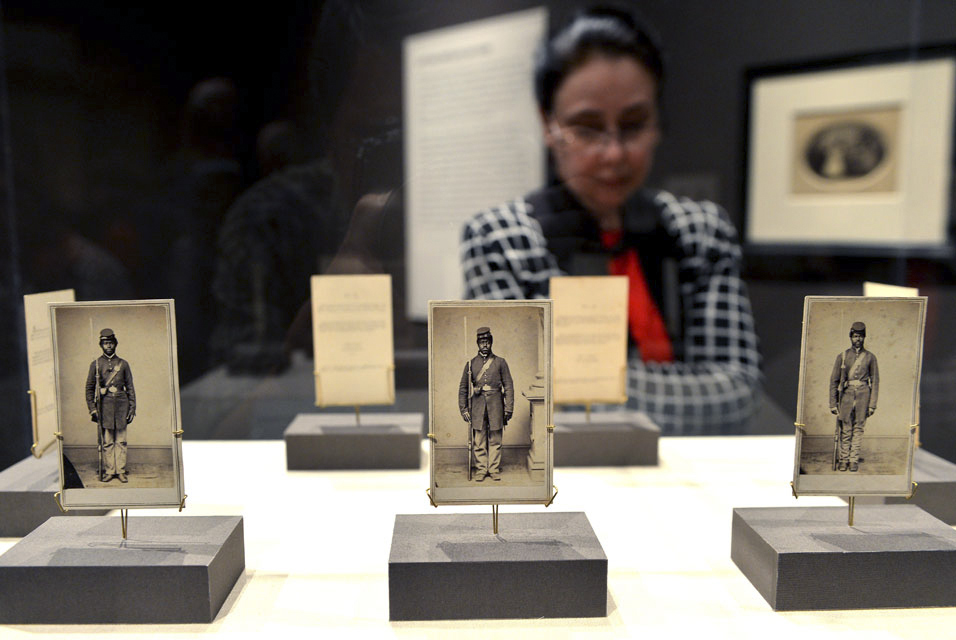
 

A display of three photographs of American Civil War soldiers in the exhibition, "Photography and the American Civil War" April 1, 2013 at The Metropolitan Museum of Art in New York


A display of three photographs of American Civil War soldiers in the exhibition, “Photography and the American Civil War” April 1, 2013 at The Metropolitan Museum of Art in New York. The three albumen silver prints are all by Gayford & Speidel, “Private Christopher Anderson, Company F, 108th Regiment, U.S. Colored Infantry, January-May 1865” (L), “Private Louis Troutman, Company F, 108th Regiment, U.S. Colored Infantry, January-May 1865”, (C) and “Private Gid White, Company F, 108th Regiment, U.S. Colored Infantry, January-May 1865”, (R).
AFP PHOTO/Stan HONDA


Unknown Artist. 'Union Private, 11th New York Infantry (Also Known as the 1st Fire Zouaves)' May-June 1861


Unknown artist
Union Private, 11th New York Infantry (Also Known as the 1st Fire Zouaves)
May-June 1861
One-sixth plate ambrotype
Michael J. McAfee Collection
© The Metropolitan Museum of Art, New York


This melancholy young volunteer was a member of the Eleventh New York Infantry, an early war regiment organised in New York City in May 1861. Primarily composed of volunteers from the city’s many fire companies, the men were also known as the First Fire Zouaves. Along with other volunteer units, the Eleventh helped capture Alexandria, Virginia on May 24, 1861, just a day after the state formally seceded from the Union.


Unknown Artist. 'Union Private, 11th New York Infantry (Also Known as the 1st Fire Zouaves)' May-June 1861 (detail)


Unknown artist
Union Private, 11th New York Infantry (Also Known as the 1st Fire Zouaves) (detail)
May-June 1861
One-sixth plate ambrotype
Michael J. McAfee Collection
© The Metropolitan Museum of Art, New York


Timothy H. O'Sullivan (American, born Ireland, 1840-1882) 'A Harvest of Death, Gettysburg, Pennsylvania' July 1863


Timothy H. O’Sullivan (American, born Ireland, 1840-1882)
A Harvest of Death, Gettysburg, Pennsylvania
July 1863
Printer: Alexander Gardner (American, Glasgow, Scotland 1821-1882 Washington, D.C.)
Publisher: Alexander Gardner (American, Glasgow, Scotland 1821-1882 Washington, D.C.)
Albumen silver print from glass negative
17.8 × 22.5cm (7 × 8 7/8 in.)
Gilman Collection, Museum Purchase, 2005


This photograph of the rotting dead awaiting burial after the Battle of Gettysburg is perhaps the best-known Civil War landscape. It was published in Gardner’s Photographic Sketch Book of the War (1866), the nation’s first anthology of photographs. The Sketch Book features ten photographic plates of Gettysburg – eight by Timothy H. O’Sullivan, who served as a field operator for Alexander Gardner, and two by Gardner himself. The extended caption that accompanies this photograph is among Gardner’s most poetic: “It was, indeed, a ‘harvest of death.’ … Such a picture conveys a useful moral: It shows the blank horror and reality of war, in opposition to its pageantry. Here are the dreadful details! Let them aid in preventing such another calamity falling upon the nation.”


Timothy H. O'Sullivan (American, born Ireland, 1840-1882) Alexander Gardner, printer. 'Field Where General Reynolds Fell, Gettysburg, July 1863' 1863


Timothy H. O’Sullivan (American, born Ireland, 1840-1882)
Alexander Gardner, printer
Field Where General Reynolds Fell, Gettysburg, July 1863
1863
Plate 37 in Volume 1 of Gardner’s Photographic Sketch Book of the War
Albumen silver print from glass negative
The Metropolitan Museum of Art, Gilman Collection, Purchase, Ann Tenenbaum and Thomas H. Lee Gift, 2005
© The Metropolitan Museum of Art, New York


This photograph of the aftermath of the Battle of Gettysburg appears in the two-volume opus Gardner’s Photographic Sketch Book of the War (1865-1866). Gardner’s publication is egalitarian. Offended by Brady’s habit of obscuring the names of his field operators behind the deceptive credit “Brady,” Gardner specifically identified each of the eleven photographers in the publication; forty-four of the one hundred photographs are credited to Timothy O’Sullivan. Gardner titled the plate Field Where General Reynolds Fell, Battlefield of Gettysburg. But the photograph, its commemorative title notwithstanding, relates a far more common story: six Union soldiers lie dead, face up, stomachs bloated, their pockets picked and boots stolen. As Gardner described the previous plate, aptly titled The Harvest of Death, this photograph conveys “the blank horror and reality of war, in opposition to its pageantry.”


Unknown Artist. 'Captain Charles A. and Sergeant John M. Hawkins, Company E, “Tom Cobb Infantry,” Thirty-eighth Regiment, Georgia Volunteer Infantry' 1861-62


Unknown artist
Captain Charles A. and Sergeant John M. Hawkins, Company E, “Tom Cobb Infantry,” Thirty-eighth Regiment, Georgia Volunteer Infantry
1861-1862
Quarter-plate ambrotype with applied colour
David Wynn Vaughan Collection
Photo: Jack Melton


The vast majority of war portraits, either cased images or cartes de visite, are of individual soldiers. Group portraits in smaller formats are more rare and challenged the field photographer (as well as the studio gallerist) to conceive and execute an image that would honour the occasion and be desirable – saleable – to multiple sitters. For the patient photographer, this created interesting compositional problems and an excellent opportunity to make memorable group portraits of brothers, friends, and even members of different regiments.

In this quarter-plate ambrotype, Confederate Captain Charles Hawkins of the Thirty-eighth Regiment, Georgia Volunteer Infantry, on the left, sits for his portrait with his brother John, a sergeant in the same regiment. They address the camera and draw their fighting knives from scabbards. Charles would die on June 13, 1863, in the Shenandoah Valley during General Robert E. Lee’s second invasion of the North. John, wounded at the Battle of Gaines’s Mill in June 1862, would survive the war, fighting with his company until its surrender at Appomattox.
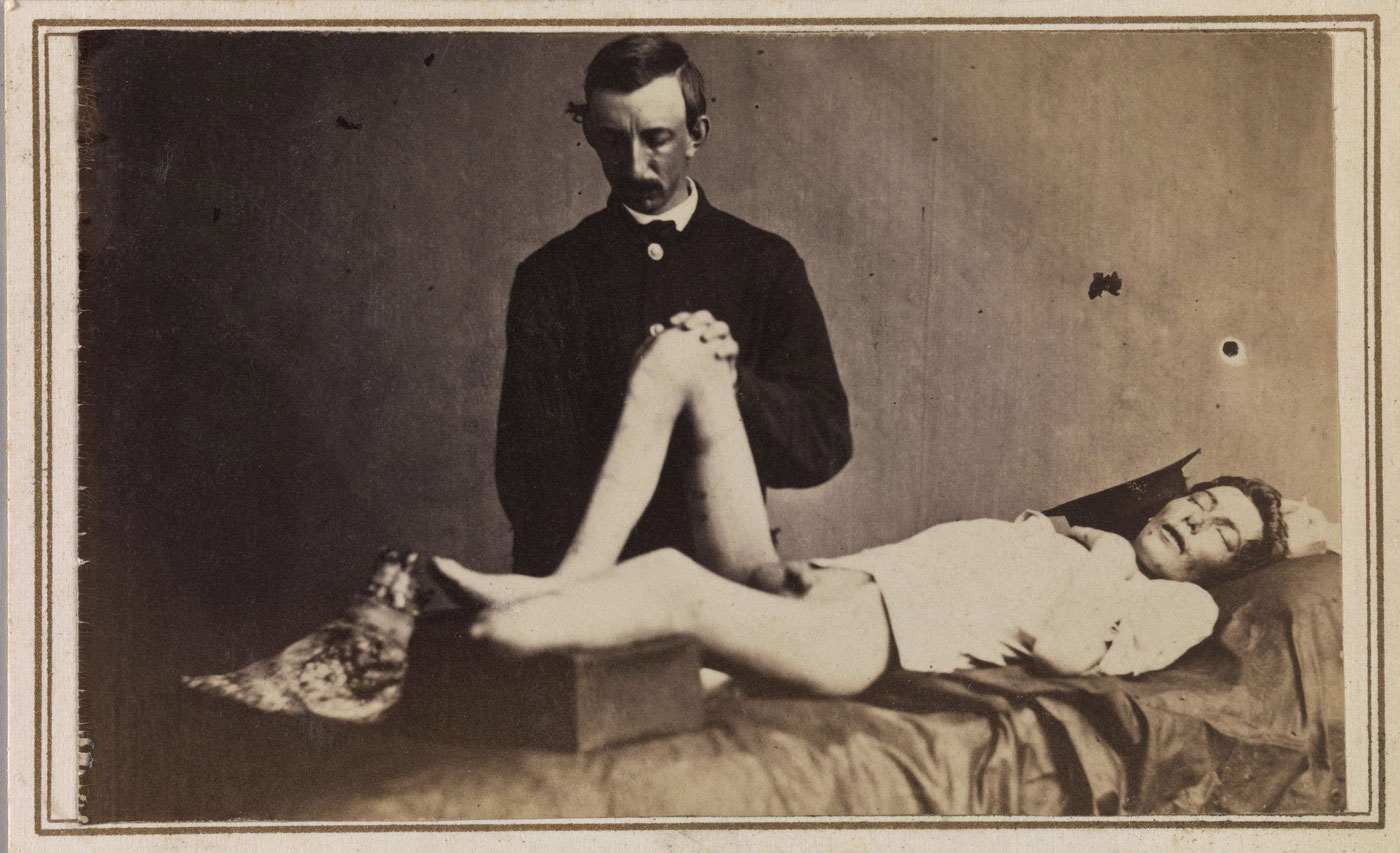
 

Reed Brockway Bontecou (American, 1824-1907) 'Union Private John Parmenter, Company G, Sixty-seventh Pennsylvania Volunteers' June 21, 1865


Reed Brockway Bontecou (American, 1824-1907)
Union Private John Parmenter, Company G, Sixty-seventh Pennsylvania Volunteers (Union Private John Parmenter Under Anesthesia on an Operating Table with His Amputated Foot)
June 21, 1865
Carte de visite format albumen silver print from glass negative
5.7 x 9.1 cm (2 1/4 x 3 9/16 in.)
Collection Stanley B. Burns, M.D.


In this remarkable carte de visite, Private Parmenter lies unconscious from anaesthesia on an operating table at Harewood Hospital in Washington, D.C. To save his patient’s life, Doctor Bontecou amputated the soldier’s wounded, ulcerous foot. Before the discovery of antibiotics, gangrene was a dreaded and deadly infection that greatly contributed to the high mortality rate of soldiers during the Civil War.


Andrew Joseph Russell (American, 1830-1902) 'Slave Pen, Alexandria, Virginia' 1863


Andrew Joseph Russell (American, 1830-1902)
Slave Pen, Alexandria, Virginia
1863
Albumen silver print from glass negative
The Metropolitan Museum of Art, Gilman Collection, Purchase, The Horace W. Goldsmith Foundation Gift, through Joyce and Robert Menschel, 2005
© The Metropolitan Museum of Art, New York


Better known for his later views commissioned by the Union Pacific Railroad, A. J. Russell, a captain in the 141st New York Infantry Volunteers, was one of the few Civil War photographers who was also a soldier. As a photographer-engineer for the U.S. Military Railroad Con struction Corps, Russell’s duty was to make a historical record of both the technical accomplishments of General Herman Haupt’s engineers and the battlefields and camp sites in Virginia. This view of a slave pen in Alexandria guarded, ironically, by Union officers shows Russell at his most insightful; the pen had been converted by the Union Army into a prison for captured Confederate soldiers.

Between 1830 and 1836, at the height of the American cotton market, the District of Columbia, which at that time included Alexandria, Virginia, was considered the seat of the slave trade. The most infamous and successful firm in the capital was Franklin & Armfield, whose slave pen is shown here under a later owner’s name. Three to four hundred slaves were regularly kept on the premises in large, heavily locked cells for sale to Southern plantation owners. According to a note by Alexander Gardner, who published a similar view, “Before the war, a child three years old, would sell in Alexandria, for about fifty dollars, and an able-bodied man at from one thousand to eighteen hundred dollars. A woman would bring from five hundred to fifteen hundred dollars, according to her age and personal attractions.”

Late in the 1830s Franklin and Armfield, already millionaires from the profits they had made, sold out to George Kephart, one of their former agents. Although slavery was outlawed in the District in 1850, it flourished across the Potomac in Alexandria. In 1859, Kephart joined William Birch, J. C. Cook, and C. M. Price and conducted business under the name of Price, Birch & Co. The partnership was dissolved in 1859, but Kephart continued operating his slave pen until Union troops seized the city in the spring of 1861.
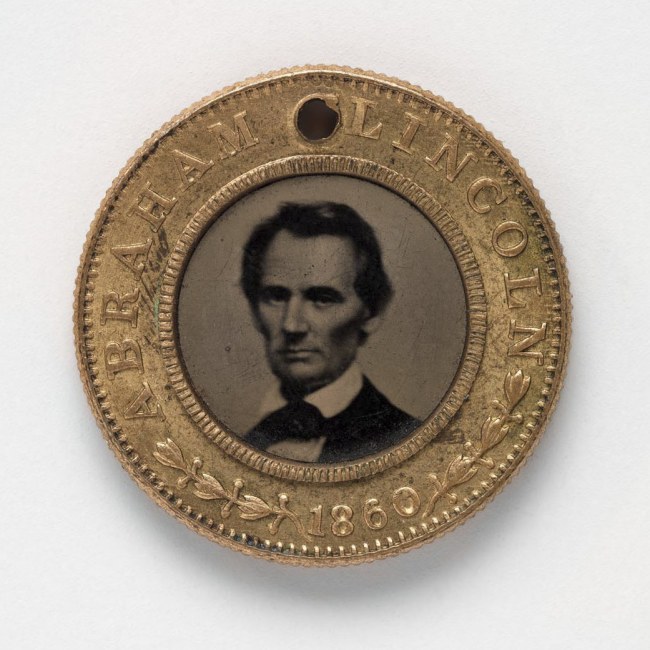
 

Unknown Artist, after an 1860 carte de visite by Mathew B. Brady. 'Presidential Campaign Medal with Portraits of Abraham Lincoln and Hannibal Hamlin' 1860


Unknown Artist, after an 1860 carte de visite by Mathew B. Brady
Presidential Campaign Medal with Portraits of Abraham Lincoln and Hannibal Hamlin
1860
Tintypes in stamped brass medallion
The Metropolitan Museum of Art, Purchase, The Overbrook Foundation Gift, 2012
© The Metropolitan Museum of Art, New York


More than 200 of the finest and most poignant photographs of the American Civil War have been brought together for the landmark exhibition Photography and the American Civil War, opening April 2 at The Metropolitan Museum of Art. Through examples drawn from the Metropolitan’s celebrated holdings of this material, complemented by exceptional loans from public and private collections, the exhibition will examine the evolving role of the camera during the nation’s bloodiest war. The “War between the States” was the great test of the young Republic’s commitment to its founding precepts; it was also a watershed in photographic history. The camera recorded from beginning to end the heartbreaking narrative of the epic four-year war (1861-1865) in which 750,000 lives were lost. This traveling exhibition will explore, through photography, the full pathos of the brutal conflict that, after 150 years, still looms large in the American public’s imagination.

At the start of the Civil War, the nation’s photography galleries and image purveyors were overflowing with a variety of photographs of all kinds and sizes, many examples of which will be featured in the exhibition: portraits made on thin sheets of copper (daguerreotypes), glass (ambrotypes), or iron (tintypes), each housed in a small decorative case; and larger, “painting-sized” likenesses on paper, often embellished with India ink, watercolour, and oils. On sale in bookshops and stationers were thousands of photographic portraits on paper of America’s leading statesmen, artists, and actors, as well as stereographs of notable scenery from New York’s Broadway to Niagara Falls to the canals of Venice. Viewed in a stereopticon, the paired images provided the public with seeming three-dimensionality and the charming pleasure of traveling the world in one’s armchair.

Photography and the Civil War will include: intimate studio portraits of armed Union and Confederate soldiers preparing to meet their destiny; battlefield landscapes strewn with human remains; rare multi-panel panoramas of the killing fields of Gettysburg and destruction of Richmond; diagnostic medical studies of wounded soldiers who survived the war’s last bloody battles; and portraits of Abraham Lincoln as well as his assassin John Wilkes Booth. The exhibition features groundbreaking works by Mathew B. Brady, George N. Barnard, Alexander Gardner, and Timothy O’Sullivan, among many others. It also examines in-depth the important, if generally misunderstood, role played by Brady, perhaps the most famous of all wartime photographers, in conceiving the first extended photographic coverage of any war. The exhibition addresses the widely held, but inaccurate, belief that Brady produced most of the surviving Civil War images, although he actually made very few field photographs during the conflict. Instead, he commissioned and published, over his own name and imprint, negatives made by an ever-expanding team of field operators, including Gardner, O’Sullivan, and Barnard.

The exhibition will feature Gardner’s haunting views of the dead at Antietam in September 1862, which are believed to be the first photographs of the Civil War seen in a public exhibition. A reporter for the New York Times wrote on October 20, 1862, about the images shown at Brady’s New York City gallery: “Mr. Brady has done something to bring home to us the terrible reality and earnestness of war. If he has not brought bodies and laid them in our dooryards and along the streets, he has done something very like it… Here lie men who have not hesitated to seal and stamp their convictions with their blood – men who have flung themselves into the great gulf of the unknown to teach the world that there are truths dearer than life, wrongs and shames more to be dreaded than death.”

Approximately 1,000 photographers worked separately and in teams to produce hundreds of thousands of photographs – portraits and views – that were actively collected during the period (and over the past century and a half) by Americans of all ages and social classes. In a direct expression of the nation’s changing vision of itself, the camera documented the war and also mediated it by memorialising the events of the battlefield as well as the consequent toll on the home front.

Among the many highlights of the exhibition will be a superb selection of early wartime portraits of soldiers and officers who sat for their likenesses before leaving their homes for the war front. In these one-of-a-kind images, a picture of American society emerges. The rarest are ambrotypes and tintypes of Confederates, drawn from the renowned collection of David Wynn Vaughan, who has assembled the country’s premier archive of Southern portraits. These seldom-seen photographs, and those by their Northern counterparts, will balance the well-known and often-reproduced views of bloody battlefields, defensive works, and the specialised equipment of 19th-century war.

The show will focus special attention on the remarkable images included in the two great wartime albums of original photographs: Gardner’s Photographic Sketch Book of War and George N. Barnard’s Photographic Views of Sherman’s Campaign, both released in 1866. The former publication includes 100 views commissioned, sequenced, and annotated by Alexander Gardner. This two-volume opus provides an epic documentation of the war seen through the photographs of 11 artists, including Gardner himself. It features 10 plates of Gettysburg, including Timothy O’Sullivan’s A Harvest of Death, Gettysburg, and Gardner’s Home of a Rebel Sharpshooter, Gettysburg, both of which are among the most well-known and important images from the early history of photography. The second publication includes 61 large-format views by a single artist, George N. Barnard, who followed the army campaign of one general, William Tecumseh Sherman, in the final months of the war – the “March to the Sea” from Tennessee to Georgia in 1864 and 1865. The exhibition explores how different Barnard’s photographs are from those in Gardner’s Sketch Book, and how distinctly Barnard used the camera to serve a nation trying to heal itself after four long years of war and brother-versus-brother bitterness.

Among the most extraordinary, if shocking, photographs in the exhibition are the portraits by Dr. Reed Brockway Bontecou of wounded and sick soldiers from the war’s last battles. Drawn from a private medical teaching album put together by this Civil War surgeon and head of Harewood Hospital in Washington, D.C., and on loan from the celebrated Burns Archive, the photographs are notable for their humanity and their aesthetics. They recall Walt Whitman’s words from 1865, that war “was not a quadrille in a ball-room. Its interior history will not only never be written, its practicality, minutia of deeds and passions, will never be suggested.” Bontecou’s medical portraits offer a glimpse of what the poet thought was not possible.

In addition to providing a thorough analysis of the camera’s incisive documentation of military activity and its innovative use as a teaching tool for medical doctors, the exhibition explores other roles that photography played during the war. It investigates the relationship between politics and photography during the tumultuous period and presents exceptional political ephemera from the private collection of Brian Caplan, including: a rare set of campaign buttons from 1860 featuring original tintype portraits of the competing candidates; a carved tagua nut necklace featuring photographic portraits of Confederate President Jefferson Davis and two members of his cabinet; and an extraordinary folding game board composed of photographic likenesses of President Lincoln and his generals. The show also includes an inspiring carte de visite portrait of the abolitionist and human rights activist Sojourner Truth. A former slave from New York State, she sold photographs of herself to raise money to educate emancipated slaves, and to support widows, orphans, and the wounded. And finally the exhibition includes the first photographically illustrated “wanted” poster, a printed broadside with affixed photographic portraits that led to the capture John Wilkes Booth and his fellow conspirators after the assassination of President Lincoln in April 1865.

Press release from the Metropolitan Museum of Art website


Unknown (American) '[Broadside for the Capture of John Wilkes Booth, John Surratt, and David Herold]' April 20, 1865


Unknown (American)
[Broadside for the Capture of John Wilkes Booth, John Surratt, and David Herold]
Artist: Alexander Gardner (American, Glasgow, Scotland 1821-1882 Washington, D.C.)
Photography Studio: Silsbee, Case & Company (American, active Boston)
Photography Studio: Unknown
April 20, 1865
Ink on paper with three albumen silver prints from glass negatives
Sheet: 60.5 x 31.3cm (23 13/16 x 12 5/16 in.)
Each photograph: 8.6 x 5.4cm (3 3/8 x 2 1/8 in.)
Collages
Gilman Collection, Purchase, The Horace W. Goldsmith Foundation Gift, through Joyce and Robert Menschel, 2005


On the night of April 14, 1865, just five days after Lee’s surrender to Grant at Appomattox, John Wilkes Booth shot Lincoln at the Ford Theatre in Washington, D.C. Within twenty-four hours, Secret Service director Colonel Lafayette Baker had already acquired photographs of Booth and two of his accomplices. Booth’s photograph was secured by a standard police search of the actor’s room at the National Hotel; a photograph of John Surratt, a suspect in the plot to kill Secretary of State William Seward, was obtained from his mother, Mary (soon to be indicted as a fellow conspirator), and David Herold’s photograph was found in a search of his mother’s carte-de-visite album. The three photographs were taken to Alexander Gardner’s studio for immediate reproduction. This bill was issued on April 20, the first such broadside in America illustrated with photographs tipped onto the sheet.
The descriptions of the alleged conspirators combined with their photographic portraits proved invaluable to the militia. Six days after the poster was released Booth and Herold were recognised by a division of the 16th New York Cavalry. The commanding officer, Lieutenant Edward Doherty, demanded their unconditional surrender when he cornered the two men in a barn near Port Royal, Virginia. Herold complied; Booth refused. Two Secret Service detectives accompanying the cavalry, then set fire to the barn. Booth was shot as he attempted to escape; he died three hours later. After a military trial Herold was hanged on July 7 at the Old Arsenal Prison in Washington, D.C.
 Surratt escaped to England via Canada, eventually settling in Rome. Two years later a former schoolmate from Maryland recognised Surratt, then a member of the Papal Guard, and he was returned to Washington to stand trial. In September 1868 the charges against him were nol-prossed after the trial ended in a hung jury. Surratt retired to Maryland, worked as a clerk, and lived until 1916.


Attributed to McPherson & Oliver (American, active New Orleans and Baton Rouge, Louisiana, 1860s) 'The Scourged Back' April 1863


Attributed to McPherson & Oliver (American, active New Orleans and Baton Rouge, Louisiana, 1860s)
The Scourged Back
April 1863
Albumen silver print from glass negative
8.7 x 5.5cm (3 7/16 x 2 3/16 in.)
International Center of Photography, Purchase, with funds provided by the ICP Acquisitions Committee, 2003


Gordon, a runaway slave seen with severe whipping scars in this haunting carte-de-visite portrait, is one of the many African Americans whose lives Sojourner Truth endeavoured to better. Perhaps the most famous of all known Civil War-era portraits of slaves, the photograph dates from March or April 1863 and was made in a camp of Union soldiers along the Mississippi River, where the subject took refuge after escaping his bondage on a nearby Mississippi plantation.

On Saturday, July 4, 1863, this portrait and two others of Gordon appeared as wood engravings in a special Independence Day feature in Harper’s Weekly. McPherson & Oliver’s portrait and Gordon’s narrative in the newspaper were extremely popular, and photography studios throughout the North (including Mathew B. Brady’s) duplicated and sold prints of The Scourged Back. Within months, the carte de visite had secured its place as an early example of the wide dissemination of ideologically abolitionist photographs.


J. W. Jones (American, active Orange, Massachusetts, 1860s) 'Emaciated Union Soldier Liberated from Andersonville Prison' 1865


J. W. Jones (American, active Orange, Massachusetts, 1860s)
Emaciated Union Soldier Liberated from Andersonville Prison
1865
Albumen silver print from glass negative
Image: 9 x 5.5cm (3 9/16 x 2 3/16 in.)
Brian D. Caplan Collection


Most soldiers who survived Andersonville Prison were marked for life. This portrait of an unidentified former prisoner is one of many that document the intense cruelty of prison life during the Civil War. It would be another eighty years, at the end of World War II, before anyone would see comparable pictures of man’s inhumanity to man.


George Wertz (American, active Kansas City, Missouri, 1860s) 'Private William Henry Lord, Company I, Eleventh Kansas Volunteer Cavalry' 1863-65


George Wertz (American, active Kansas City, Missouri, 1860s)
Private William Henry Lord, Company I, Eleventh Kansas Volunteer Cavalry
1863-1865
Albumen silver print from glass negative
8.4 x 5.6cm (3 5/16 x 2 3/16 in.)
W. Bruce and Delaney H. Lundberg Collection


Private William Henry Lord, a cavalryman, sits alert and ready for the next ride. A yet unmuddied enlistee from “Bleeding Kansas,” the last state to enter the Union before Fort Sumter, Lord was in the Eleventh Kansas Volunteer Cavalry; he was wounded in the shoulder in October 1864 but rejoined his company and was mustered out in September 1865.
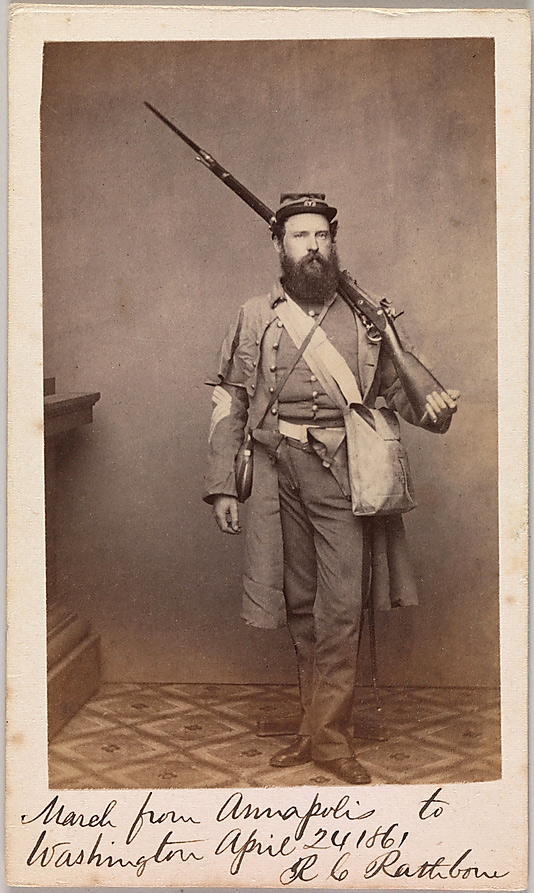
 

Unknown. 'March from Annapolis to Washington, Robert C. Rathbone, Sergeant Major, Seventh Regiment, New York Militia' April 24, 1861


Unknown photographer
March from Annapolis to Washington, Robert C. Rathbone, Sergeant Major, Seventh Regiment, New York Militia
April 24, 1861
Albumen silver print from glass negative
8.9 x 5.4cm (3 1/2 x 2 1/8 in.)
Michael J. McAfee Collection


The Seventh Regiment, New York Militia was among the first military groups to leave for Washington, D.C., after Lincoln’s call to arms in April 1861. In or near Annapolis, en route to the nation’s capital, Sergeant Major Rathbone posed for his portrait. He annotated his likeness with enough information to suggest that this image might be the first (identifiable) photograph of a soldier made after the fall of Fort Sumter. Representative of thousands of similar portraits, this study of an officer seen against a blank wall with just a hint of a studio column is typical of the simplicity of the earliest war pictures.

Note the stand just visible behind Sergeant Major Rathbone’s feet to brace the sitter for the long exposures necessary.


Mathew B. Brady (American, near Lake George, New York 1823?–1896 New York) 'General Robert E. Lee' 1865


Mathew B. Brady (American, near Lake George, New York 1823? – 1896 New York)
General Robert E. Lee
1865
Albumen silver print from glass negative
14 × 9.3cm (5 1/2 × 3 11/16 in.)
Gilman Collection, Museum Purchase, 2005


Confederate General Robert E. Lee surrendered his army to Union General Ulysses S. Grant at Appomattox Court House, Virginia, on April 9, 1865. The Civil War was over. If not whole, the nation was at least reunited, and the slow recovery of Reconstruction could begin. As soon as he heard that Lee had left Appomattox and returned to Richmond, Mathew B. Brady headed there with his camera equipment. The Lees’ Franklin Street residence had survived the fires that had devastated many of the commercial sections of the city. Through the kindness of Mrs. Lee and a Confederate colonel, Brady received permission to photograph the general on April 16, 1865, just two days after President Lincoln’s assassination. Brady’s portrait of General Lee holding his hat, on his own back porch, is one of the most reflective and thoughtful wartime likenesses. The fifty-eight-year-old Confederate hero poses in the uniform he had worn at the surrender. It would be Brady’s last wartime photograph.


Charles Paxson (American, active New York, 1860s) 'Wilson, Branded Slave from New Orleans' 1863


Charles Paxson (American, active New York, 1860s)
Wilson, Branded Slave from New Orleans
1863
Albumen silver print from glass negative
8.4 x 5.3cm (3 5/16 x 2 1/16 in.)
Private Collection, Courtesy of William L. Schaeffer


On January 30, 1864, to fan the anti-slavery cause and promote the sale of abolitionist photographs, Harper’s Weekly published this carte de visite and three others as wood engravings. The newspaper also included stirring bibliographies of the emancipated slaves. The editors noted that Wilson Chinn was about sixty years old. His former master, Volsey B. Marmillion, a sugar planter near New Orleans, “was accustomed to brand his negroes, and Wilson has on his forehead the letters ‘V.B.M.'”
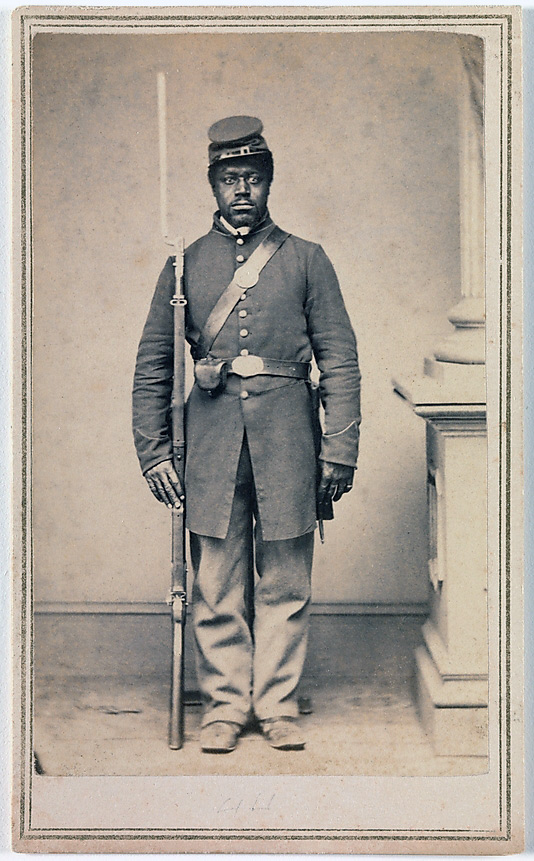
 

Gayford & Speidel (Active Rock Island, Illinois, 1860s) 'Private Louis Troutman, Company F, 108th Regiment, U.S. Colored Infantry' January-May 1865


Gayford & Speidel (Active Rock Island, Illinois, 1860s)
Private Louis Troutman, Company F, 108th Regiment, U.S. Colored Infantry
January – May 1865
Albumen silver print from glass negative
8.8 x 5.4cm (3 7/16 x 2 1/8 in.)
Thomas Harris Collection


Samuel Masury (American, 1818-1874) 'Frances Clalin Clayton' 1864-66


Samuel Masury (American, 1818-1874)
Frances Clalin Clayton
1864-1866
Albumen silver print from glass negative
9.4 x 5.6cm (3 11/16 x 2 3/16 in.)
Buck Zaidel Collection


Frances Clayton is an exception – a woman who served in the Union army by disguising herself as a man. In a popular carte de visite collected by soldiers at the end of the war, she poses here as Jack Williams and suggestively holds the handle of a cavalry sword between her crossed legs. The facts of her life story and military service are difficult to confirm, but it is believed that she served in the Missouri cavalry (or infantry) beside her husband, who died at the Battle of Stones River in late December 1862.


Reed Brockway Bontecou (American, 1824-1907) 'Private Samuel Shoop, Company F, 200th Pennsylvania Infantry' April-May 1865


Reed Brockway Bontecou (American, 1824-1907)
Private Samuel Shoop, Company F, 200th Pennsylvania Infantry
April-May 1865
Albumen silver print from glass negative
18.9 × 13.1cm (7 7/16 × 5 3/16 in.)
Gift of Stanley B. Burns, M.D. and The Burns Archive, 1992


The last great battle of the Civil War was the siege of Petersburg, Virginia – a brutal campaign that led to Confederate General Robert E. Lee’s surrender on April 9, 1865. Samuel Shoop, a twenty-five-year-old private in Company F of the 200th Pennsylvania Volunteers, received a gunshot wound in the thigh at Fort Steadman on the first day of the campaign (March 25) and was evacuated to Harewood Hospital in Washington, D.C. His leg was amputated by Dr. Reed Brockway Bontecou, surgeon in charge, who also made this clinical photograph. It was intended, in part, to serve as a tool for teaching fellow army surgeons and is an extremely rare example of the early professional use of photography in America.


George N. Barnard (American, 1819-1902) 'Bonaventure Cemetery, Four Miles from Savannah' 1866


George N. Barnard (American, 1819-1902)
Bonaventure Cemetery, Four Miles from Savannah
1866
Albumen silver print from glass negative
34 x 26.4cm (13 3/8 x 10 3/8 in.)
Gilman Collection, Purchase, Ann Tenenbaum and Thomas H. Lee Gift, 2005


Unknown photographer. 'Sojourner Truth, "I Sell the Shadow to Support the Substance"' 1864


Unknown photographer
Sojourner Truth, “I Sell the Shadow to Support the Substance”
1864
Albumen silver print from glass negative
Carte-de-visite
The Metropolitan Museum of Art, Purchase, Alfred Stieglitz Society Gifts, 2013
© The Metropolitan Museum of Art, New York


Sojourner Truth (c. 1797 – November 26, 1883) was the self-given name, from 1843 onward, of Isabella Baumfree, an African-American abolitionist and women’s rights activist. Truth was born into slavery in Swartekill, Ulster County, New York, but escaped with her infant daughter to freedom in 1826. After going to court to recover her son, she became the first black woman to win such a case against a white man. Her best-known extemporaneous speech on gender inequalities, “Ain’t I a Woman?”, was delivered in 1851 at the Ohio Women’s Rights Convention in Akron, Ohio. During the Civil War, Truth helped recruit black troops for the Union Army; after the war, she tried unsuccessfully to secure land grants from the federal government for former slaves.

Text from the Wikipedia website
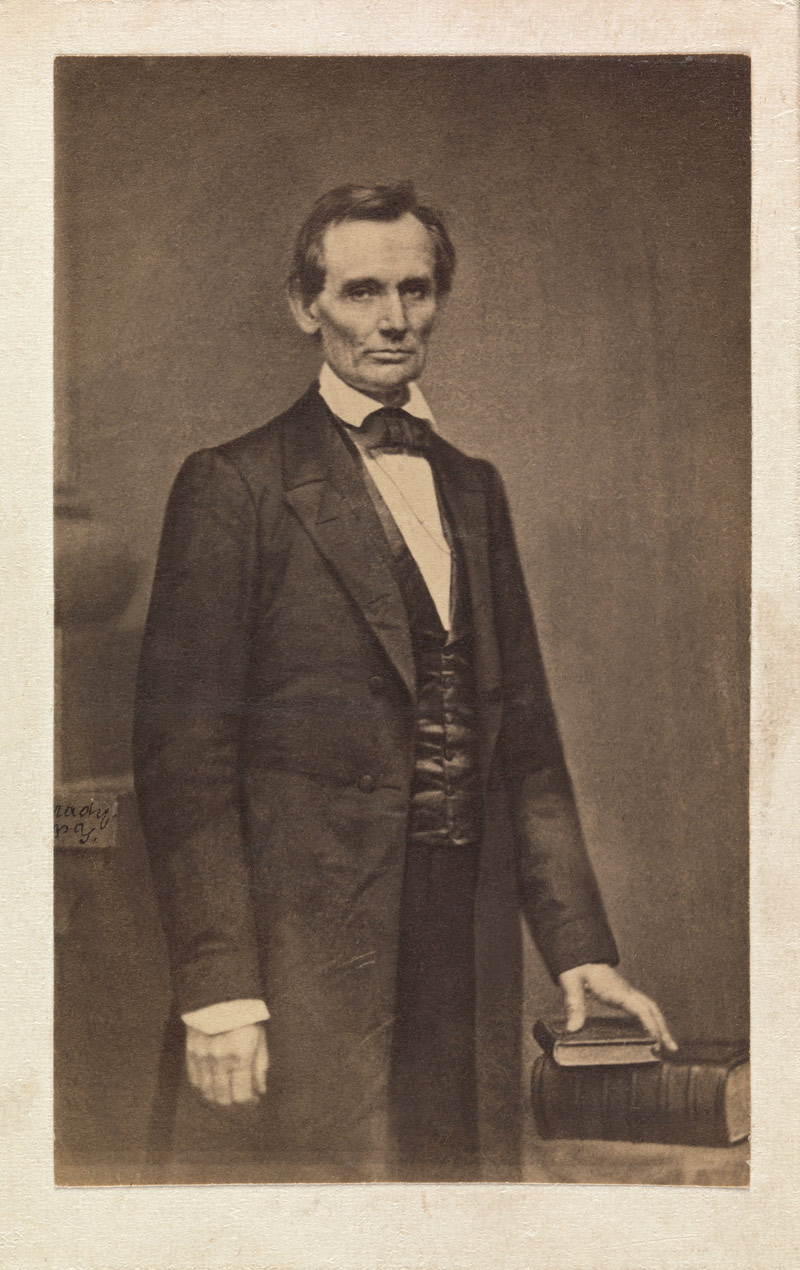
 

Mathew B. Brady (American born Ireland, 1823/24-1896 New York) Edward Anthony (American, 1818-1888) 'Abraham Lincoln' February 27, 1860


Mathew B. Brady (American born Ireland, 1823/1824-1896 New York)
Edward Anthony (American, 1818-1888)
Abraham Lincoln
February 27, 1860
Albumen silver print from glass negative
Carte-de-visite
The Meserve-Kunhardt Foundation


Three months before his nomination as the Republican Party candidate for president, Abraham Lincoln went East, stopping in New York City on February 27, 1860, to give a speech at the Cooper Institute (now the Cooper Union for the Advancement of Science and Art). Many considered Lincoln’s powerful antislavery lecture as his most important to date. The closing words spurred his audience and the country at large: “Let us have faith that right makes might, and in that faith, let us, to the end, dare to do our duty as we understand it.”

Earlier in the day he sat for this portrait at Mathew B. Brady’s gallery on Broadway and Tenth Street, just a few blocks from the lecture hall. Although his visit to the studio could not have lasted long, the result of this first of many portrait sessions with Brady was a simple but powerful image that would alter the visual landscape during the upcoming election. In a single exposure on a silver-coated sheet of glass, Brady captured the odd physiognomy of the man who would change the course of American history.


Unknown photographer (American) '[Private James House with Fighting Knife, Sixteenth Georgia Cavalry Battalion, Army of Tennessee]' 1861-1862?


Unknown photographer (American)
[Private James House with Fighting Knife, Sixteenth Georgia Cavalry Battalion, Army of Tennessee]
1861-1862?
Ambrotype
Sixth-plate; ruby glass
David Wynn Vaughan Collection
Image: Jack Melton


This portrait of a cavalryman is an excellent example of a well-armed Confederate soldier. Private House wears a slouch hat and a checked battle shirt seen through the gaps in a modified woollen shell jacket with tabbed button closures. He brandishes his fighting knife and for quick use has half removed a pocket revolver from its belted holster. Perhaps the most frightening weapons in House’s personal arsenal may be his focused stare and his set jaw.

16th Cavalry Battalion was assembled in May, 1862, at Big Shanty, Georgia, and was composed of six companies. It served in East Tennessee and Southwest Virginia and took part in the engagements at Blue Springs, Bean’s Station, Cloyd’s Mountain, and Marion. In January, 1865, the battalion merged into the 13th Georgia Cavalry Regiment. Lieutenant Colonels F.M. Nix and Samuel J. Winn, and Major Edward Y. Clarke were its commanding officers.


Unknown photographer (American) '[Private James House with Fighting Knife, Sixteenth Georgia Cavalry Battalion, Army of Tennessee]' 1861-1862? (detail)


Unknown photographer (American)
[Private James House with Fighting Knife, Sixteenth Georgia Cavalry Battalion, Army of Tennessee] (detail)
1861-1862?
Ambrotype
Sixth-plate; ruby glass
David Wynn Vaughan Collection
Image: Jack Melton
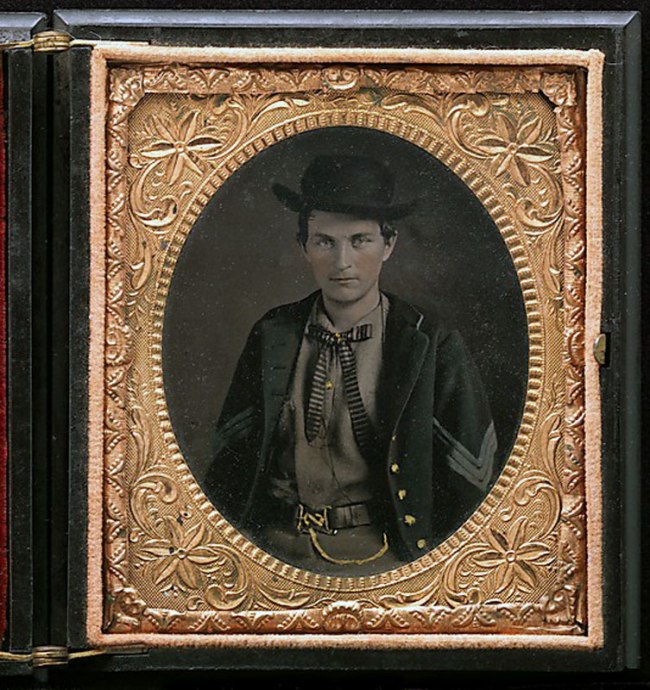
 

Unknown photographer (American) 'Union Sergent John Emery' 1861-1865


Unknown photographer (American)
Union Sergent John Emery
1861-1865
Tintype
Plate: 8.9 x 6.4cm (3 1/2 x 2 1/2 in.)
Case: 10 × 8.9cm (3 15/16 × 3 1/2 in.)
The Horace W. Goldsmith Foundation Fund, through Joyce and Robert Menschel, 2012


The only details presently known about this handsome, young Union sergeant wearing a striped bowtie and an imported English snake belt buckle derive from a small paper note found behind the portrait inside the thermoplastic case: “Uncle John Emery / brother of / Lucy King / buried at E. Concord / died in 1876 / buried at back in right corner.”


Unknown photographer (American) '[Private Thomas Gaston Wood, Drummer, Company H, "Walton Infantry," Eleventh Regiment Georgia Volunteer Infantry]' 1861


Unknown photographer (American)
[Private Thomas Gaston Wood, Drummer, Company H, “Walton Infantry,” Eleventh Regiment Georgia Volunteer Infantry]
1861
Tintype
Plate: 6.4 x 5.1cm (2 1/2 x 2 in.)
David Wynn Vaughan Collection


Private Wood sits against a blank wall in a photographer’s studio. He is sixteen years old and will not see seventeen. An orphan, he joined Company H in Social Circle, Georgia, on July 3, 1861, and before the end of the year died of pneumonia in a Richmond hospital. Wood seems proud of his shell jacket and especially his kepi, which he marked under the brim with his initials. The photographer tipped up the cap to reveal the sitter’s handiwork, but the letters are laterally reversed in the tintype. As a musician, he poses without any prop other than his uniform, the buttons touched with gold.


The Metropolitan Museum of Art
1000 Fifth Avenue at 82nd Street
New York, New York 10028-0198
Phone: 212-535-7710

Opening hours:
Sunday – Tuesday and Thursday: 10am – 5pm
Friday and Saturday: 10am – 9pm
Closed Wednesday

The Metropolitan Museum of Art website

LIKE ART BLART ON FACEBOOK

Back to top

Exhibition: ‘Experience Civil War Photography: From the Home Front to the Battlefront’ at the Smithsonian Castle, Washington, DC

Exhibition dates: 1st August 2012 – 31st July 2013


Anonymous photographer. 'Ambrotype of a washerwoman for the Union Army in Richmond' c. 1865


Anonymous photographer
Ambrotype of a washerwoman for the Union Army in Richmond
c. 1865
Photo: Brian Ireley, Smithsonian


Many thankx to the Smithsonian Castle for allowing me to publish the photographs in the posting. Please click on the photographs for a larger version of the image.


“It is very strange that I, a boy brought up in the woods, seeing as it were but little of the world, should be drifted into the very apex of this great event.”


Abraham Lincoln, on the Civil War, July 1864


A box of gun cotton (cotton treated with nitric acid) carrying the brand name "Anthony's Snowy Cotton," a photo processing supply that a Civil War-era photographer might use in the field to create collodion photographs.


A box of gun cotton (cotton treated with nitric acid) carrying the brand name “Anthony’s Snowy Cotton,” a photo processing supply that a Civil War-era photographer might use in the field to create collodion photographs.
Photo: Brian Ireley, Smithsonian


A sampling of photographic chemical bottles used for wet collodion photography during the Civil War


A sampling of photographic chemical bottles used for wet collodion photography during the Civil War
Photo: Brian Ireley, Smithsonian


'This Civil-war era photo album of American political and military figures was owned by Karl Schenk, president of Switzerland' 1865


This Civil-war era photo album of American political and military figures was owned by Karl Schenk, president of Switzerland
1865
Photo: Brian Ireley, Smithsonian


Anonymous photographer. 'A book of illustrated personal portraits from the Civil War era' c. 1861-1865


Anonymous photographer
A book of illustrated personal portraits from the Civil War era
c. 1861-1865
Photo: Brian Ireley, Smithsonian


A photo exhibit to commemorate the 150th anniversary of the Civil War, Experience Civil War Photography: From the Home Front to the Battlefront, opens in the Smithsonian Castle August 1st 2012 and it continues for a year. Advancements in photography brought the conflict close to home for many Americans and the exhibit features a stereoview and a carte-de-visite album of Civil War generals.

During the Civil War the Castle served as a home for the Smithsonian Secretary’s family and a place of learning and collecting. The exhibit displays excerpts from the diary from the daughter of the Secretary Joseph Henry. Mary Henry recorded the comings and goings of soldiers to the Castle use of its towers to observe advancing soldiers and the state of Washington after Lincoln’s assassination.

Also featured are Smithsonian employee Solomon Brown (1829-1906) and the lecture hall that hosted a series of abolitionist speakers; it was destroyed by fire in 1865. Stereoviews, a form of 3-D photography that blossomed during that era, daguerreotypes, tintypes and ambrotypes – all emerging types of photography – are highlighted in the exhibit to explore the ways photography was used to depict the war, prompt discussion and retain memories.

The exhibit features a range of Civil War-era photographic materials from Smithsonian collections, including cameras, stereoviewers, albums and portraits, alongside photographs of soldiers and battlefields. Highlights include an ambrotype portrait of an African American washerwoman, carte-de-visite (a type of small photo) album of Civil War generals, an 11-by-4-inch-view camera and equipment and an examination of the emergence of battlefield photography and photojournalism.

Experience Civil War Photography: From the Home Front to the Battlefront is a joint exhibition produced by the Smithsonian and the Civil War Trust and is sponsored by the History channel. For more information visit the Civil War website.

Press release from the Smithsonian Castle website


Alexander Gardner (American born United Kingdom, 1821-1882) '[Gettysburg, Pennsylvania. Dead Confederate sharpshooter in "The devil's den."]' July 1863


Alexander Gardner (American born United Kingdom, 1821-1882)
[Gettysburg, Pennsylvania. Dead Confederate sharpshooter in “The devil’s den”]
July 1863


Alexander Gardner (American born United Kingdom, 1821-1882) '[Antietam, Md. President Lincoln with Gen. George B. McClellan and group of officers]' 3rd October 1862


Alexander Gardner (American born United Kingdom, 1821-1882)
[Antietam, Md. President Lincoln with Gen. George B. McClellan and group of officers]
3rd October 1862


Alexander Gardner (American born United Kingdom, 1821-1882) '[Antietam, Md. President Lincoln with Gen. George B. McClellan and group of officers]' (detail) 3rd October 1862


Alexander Gardner (American born United Kingdom, 1821-1882)
[Antietam, Md. President Lincoln with Gen. George B. McClellan and group of officers] (detail)
3rd October 1862


Abraham Lincoln's presidential campaign was one of the first to use photography as a political tool 1860


Abraham Lincoln’s presidential campaign was one of the first to use photography as a political tool
1860
Photo: Brian Ireley, Smithsonian


Timothy H. O'Sullivan (American born Ireland, 1840-1882) '[Fort Pulaski, Ga. The "Beauregard" gun]' April 1862


Timothy H. O’Sullivan (American born Ireland, 1840-1882)
[Fort Pulaski, Ga. The “Beauregard” gun]
April 1862
1 negative (2 plates) : glass, stereograph, wet collodion
Two plates form left (LC-B811-0197A) and right (LC-B811-0197B) halves of a stereograph pair
Photograph of the Federal Navy, and seaborne expeditions against the Atlantic Coast of the Confederacy – specifically of Fort Pulaski, Ga., April 1862


Alexander Gardner (American born United Kingdom, 1821-1882) '[Richmond, Va. Grave of Gen. J. E. B. Stuart in Hollywood Cemetery, with temporary marker]' Richmond, April-June 1865


Alexander Gardner (American born United Kingdom, 1821-1882)
[Richmond, Va. Grave of Gen. J. E. B. Stuart in Hollywood Cemetery, with temporary marker]
Richmond, April-June 1865


James F. Gibson (American, 1828-1905) '[James River, Va. Deck and turret of U.S.S. Monitor seen from the bow (ie. stern)]' 9th July, 1862


James F. Gibson (American, 1828-1905)
[James River, Va. Deck and turret of U.S.S. Monitor seen from the bow (ie. stern)]
9th July, 1862
1 negative (2 plates): glass, stereograph, wet collodion


A magnified view of a photo looking through a single lens viewfinder of a Civil War-era stereoviewer


A magnified view of a photo looking through a single lens viewfinder of a Civil War-era stereoviewer (featuring an image in the same series as the one above)
Photo: Brian Ireley, Smithsonian


Alexander Gardner (American born United Kingdom, 1821-1882) '[Washington Navy Yard, D.C. Lewis Payne, the conspirator who attacked Secretary Seward, standing in overcoat and hat]' April 1865


Alexander Gardner (American born United Kingdom, 1821-1882)
[Washington Navy Yard, D.C. Lewis Payne, the conspirator who attacked Secretary Seward, standing in overcoat and hat]
April 1865
Glass, wet plate colloidon


Matthew Brady & Co., 'Petroleum Nasby (David Ross Locke)' 1865


Matthew Brady & Co.,
Petroleum Nasby (David Ross Locke)
1865
Albumen photograph


An 1865 carte-de-visite portrait – a highly collectible albumen photograph on a small card – featuring American humorist Petroleum Nasby, pseudonym of David Ross Locke. Photo: Brian Ireley, Smithsonian


Smithsonian Castle
1000 Jefferson Dr SW
Washington, DC 20004, United States

Opening hours:
8.30am – 5.30pm daily

Smithsonian Castle website

LIKE ART BLART ON FACEBOOK

Back to top

Exhibition: ‘Tim Hetherington / Doug Rickard’ at Stills Gallery, Sydney

Exhibition dates: 22nd May to 22nd June 2013

In association with Yossi Milo Gallery and Head On Photo Festival


Tim Hetherington (British, 1970-2011) 'Alcantara, Korengal Valley, Kunar Province, Afghanistan' 2008


Tim Hetherington (British, 1970-2011)
Alcantara, Korengal Valley, Kunar Province, Afghanistan
2008
from Sleeping Soldiers, 2008
Digital C-prints
76.2 x 114.3cm
Editions of 18 + 4AP


“Our generation is not attached to this myth of photography as objective reporting because we know it’s not. And so he and I had been kind of playing with the idea of, so where is that line? What does that mean? Are we, by definition, objective? Is there something else that can be reported about war that can be more about the experience? That touches on what it’s like to be there, on the individual conflict of what it means to be there? That’s what that particular work is about.”


Chris Anderson


The intimacy of war

Both of these series depict human bodies under surveillance. In one (Tim Hetherington) the subject is un/aware. Having given the photographer prior consent to be photographed while they were sleeping the American servicemen remain blissfully unaware of the result of the camera “snapping” them. Just as they seem to be on the very verge of snapping in the video Sleeping Soldiers_single screen (2009, below). The psychological scars of war don’t differentiate between awake and asleep, aware and unaware:

“The photographer wanted to reveal the soldiers how they must seem to their mothers: innocent, vulnerable. Still it is a portrait of the scars of war because, as Hetherington said, their sleep was often helped along by drugs… That a soldier allowed Hetherington to capture him while asleep illustrates the photographer’s dedication and connection to the platoon.” (Philip Brookman, Corcoran chief curator on the Washington Post website [Online] Cited 12/06/2013)


Hetherington spent 15 months in Afghanistan between 2007-2008 following the members of a 15-strong platoon of US paratroopers at one of the most remote and dangerous outposts in the war zone. He went on to make the award winning film Restrepo (2010) with the footage that he shot during his year-long engagement with the spaces of war. In repose, the US soldiers seem angelic, contemplative, or vulnerable: in the photographs posted here I see Adonis (Alcantara), foetal (Kelso), corpse (Lizama) and death mask (Richardson). As Michael Fried comments on the 1930s Walker Evans subway photographs were he took pictures of commuters with a hidden camera, “the notion that persons who are unaware of being photographed who at the limit are unaware of being beheld manifest the inner truth of their meaning on their faces.” This way of capturing an inner truth is rare in the history of art. While there are plenty of individual paintings that depict sleeping men in art I could find no body of work that depicts men sleeping in photography.

Although the exhibition is of the still photographs, what I find most chilling however is how Hetherington melds the sleeping bodies with action footage in the video. The overlaying of the sound of helicopters onto images of the sleeping soldiers, the blending of bodies and machines, the reverberation of voices with the rat tat tat of heavy weapons fire is particularly disturbing. The look in the soldier’s eyes as he freaks out when one of his compatriots is shot at 3.24 – 3.38 of the video is frightening. The grief, the fear, palpable – and then to end the video with the corpse-like body of Lizama… THIS is the horror of war. Kill or be killed, boredom, nightmares, as if fighting and sleeping in a dream. Hetherington lays it all on the line for the viewer.

“For me, it’s kind of the closest thing I’ve seen, in any form, that actually shows what it must feel like to be in combat. You’re right there with the soldiers, and they’re not heroic; they’re really just struggling to come to terms with what is going on around them. That’s really what this is. So instead of showing them just being honourable, he’s showing this stuff, the scenes of them being in combat, as a kind of dream.” (Philip Brookman, Corcoran chief curator)

Dr Marcus Bunyan


Many thankx to Stills Gallery for allowing me to publish the photographs in the posting. Please click on the photographs for a larger version of the image.


Tim Hetherington (British, 1970-2011) 'Donoho, Korengal Valley, Kunar Province, Afghanistan' 2008


Tim Hetherington (British, 1970-2011)
Donoho, Korengal Valley, Kunar Province, Afghanistan
2008
from Sleeping Soldiers, 2008
Digital C-prints
76.2 x 114.3cm
Editions of 18 + 4AP


Tim Hetherington (British, 1970-2011) 'Kelso, Korengal Valley, Kunar Province, Afghanistan' 2008


Tim Hetherington (British, 1970-2011)
Kelso, Korengal Valley, Kunar Province, Afghanistan
2008
from Sleeping Soldiers, 2008
Digital C-prints
76.2 x 114.3cm
Editions of 18 + 4AP


“The book and film are about the intimacy of war,” explains Hetherington. “And that’s what I see when I see the photographs of these guys sleeping. We are used to seeing soldiers as cardboard cut-outs. We dehumanise them, but war is a very intimate act. All of those soldiers would die for each other. We’re not talking about friendship. We’re talking about brotherhood.”

“You can get bored of taking pictures of fighting,” he says. “I got more interested in the relationship between the soldiers. That’s where the shots of them sleeping came from. If you go to these places you can sometimes get all your media oxygen sucked up by the fighting; we were lucky to have time to explore other things.”

“In America, soldiers are used by the right wing as a symbol of patriotic duty, but the truth is they are all individuals,” he concludes. “And the Left want a moral condemnation of the war. What I say is that if we have a full understanding of what the soldiers can and can’t do out there, it is a good starting point for peace-building. The heart of the war machine is in fact taking a group of young men and putting them on the side of a mountain. We need to understand that experience. Certainly if we have any hope of properly reintegrating them into society.”

Rob Sharp. “Combat fatigue: Tim Hetherington’s intimate portraits of US soldiers at rest reveal the other side of Afghanistan,” on The Independent website, 11th September 2010 [Online] Cited 19/09/2022


Tim Hetherington (British, 1970-2011) 'Kelso, Korengal Valley, Kunar Province, Afghanistan' 2008


Tim Hetherington (British, 1970-2011)
Kelso, Korengal Valley, Kunar Province, Afghanistan
2008
from Sleeping Soldiers, 2008
Digital C-prints
76.2 x 114.3cm
Editions of 18 + 4AP


Tim Hetherington (British, 1970-2011) 'Kim, Korengal Valley, Kunar Province, Afghanistan' 2008


Tim Hetherington (British, 1970-2011)
Kim, Korengal Valley, Kunar Province, Afghanistan
2008
from Sleeping Soldiers, 2008
Digital C-prints
76.2 x 114.3cm
Editions of 18 + 4AP


Tim Hetherington (British, 1970-2011) 'Lizama, Korengal Valley, Kunar Province, Afghanistan' 2008


Tim Hetherington (British, 1970-2011)
Lizama, Korengal Valley, Kunar Province, Afghanistan
2008
from Sleeping Soldiers, 2008
Digital C-prints
76.2 x 114.3cm
Editions of 18 + 4AP


Tim Hetherington (British, 1970-2011) 'Nevalla, Korengal Valley, Kunar Province, Afghanistan' 2008


Tim Hetherington (British, 1970-2011)
Nevalla, Korengal Valley, Kunar Province, Afghanistan
2008
from Sleeping Soldiers, 2008
Digital C-prints
76.2 x 114.3cm
Editions of 18 + 4AP


Tim Hetherington (British, 1970-2011) 'Richardson, Korengal Valley, Kunar Province, Afghanistan' 2008


Tim Hetherington (British, 1970-2011)
Richardson, Korengal Valley, Kunar Province, Afghanistan
2008
from Sleeping Soldiers, 2008
Digital C-prints
76.2 x 114.3cm
Editions of 18 + 4AP


Sleeping Soldiers_single screen (2009) from Tim Hetherington.


In association with Head On Photo Festival, Stills Gallery is delighted to host compelling works by two internationally acclaimed artists, Tim Hetherington and Doug Rickard, brought to Australian audiences from Yossi Milo Gallery, New York.

Without the guns and artillery of war, or the armor of bravado and aggression, Tim Hetherington’s images of sleeping American soldiers are disarmingly peaceful and childlike in their vulnerability. Hetherington observed this active-duty battalion while they were stationed in Afghanistan’s Korengal Valley during 2007-08, capturing beneath the camouflage the most intimate of moments, which are seemingly at odds with common reportage images of adrenaline-fuelled and stony-faced soldiers. Through his photographs, writing and films, Tim Hetherington gave us new ways to look at and think about human suffering. Tim was tragically killed on April 20, 2011, while photographing and filming the conflict in Libya.

Doug Rickard’s A New American Picture depicts American street scenes, located using the internet platform Google Street View. Over a four-year period, Rickard virtually explored the roads of America looking for forgotten, economically devastated, and largely abandoned places. After locating and composing scenes of urban and rural decay, Rickard re-photographed the images on his computer screen, freeing the image from its technological origins and re-presenting them on a new documentary plane. Rickard’s work evokes a connection to the tradition of American street photography. He both follows and advances that tradition, with a documentary strategy that acknowledges an increasingly technological world. Collectively, these images present a photographic portrait of the socially disenfranchised and economically powerless, those living an inversion of the American Dream.

Both artists are highly regarded for their contributions to contemporary photographic and film practices. Before his untimely death Hetherington received numerous accolades for his documentation of conflict zones, including the 2007 World Press Photo of the Year, the Rory Peck Award for Features (2008), an Alfred I. duPont Award (2009), and an Academy Award nomination for Restrepo (2011). His work has posthumously become part of the Magnum Photo Archive. Doug Rickard is founder of American Suburb X and These Americans, and his work has been widely exhibited including in New Photography 2011 at MOMA, New York, Le Bal, Paris, and the 42nd edition of Les Rencontres d’Arles. A monograph of A New American Picture was first published in 2010 and was rereleased in 2012.This is the first opportunity for Australian audiences to see many of these works, and it is also a new collaboration with the prestigious Yossi Milo Gallery, established in 2000, and focused on the representation of artists specialising in photo-based art, video and works on paper.

Text from the Stills Gallery website


Doug Rickard (American, b. 1968) '#32.700542, Dallas, TX (2009)' 2011


Doug Rickard (American, b. 1968)
#32.700542, Dallas, TX (2009)
2011
from A New American Picture
Archival pigment prints
66.04 x 105.41cm
Editions of 5 + 3AP

.

Doug Rickard (American, b. 1968) '#34.546147, Helena-West Helena, AR (2008)' 2010


Doug Rickard (American, b. 1968)
#34.546147, Helena-West Helena, AR (2008)
2010
from A New American Picture
Archival pigment prints
66.04 x 105.41cm
Editions of 5 + 3AP


Doug Rickard (American, b. 1968) '#40.700776, Jersey City, NJ (2007)' 2011


Doug Rickard (American, b. 1968)
#40.700776, Jersey City, NJ (2007)
2011
from A New American Picture
Archival pigment prints
66.04 x 105.41cm
Editions of 5 + 3AP


Doug Rickard (American, b. 1968) '#40.805716, Bronx, NY (2007)' 2011


Doug Rickard (American, b. 1968)
#40.805716, Bronx, NY (2007)
2011
from A New American Picture
Archival pigment prints
66.04 x 105.41cm
Editions of 5 + 3AP


Doug Rickard (American, b. 1968) '#82.948842, Detroit, MI (2009)' 2010


Doug Rickard (American, b. 1968)
#82.948842, Detroit, MI (2009)
2010
from A New American Picture
Archival pigment prints
101.6 x 162.56cm
Edition of 5 + 3AP


Doug Rickard (American, b. 1968) '#114.196622, Lennox, CA (2007)' 2012


Doug Rickard (American, b. 1968)
#114.196622, Lennox, CA (2007)
2012
from A New American Picture
Archival pigment prints
66.04 x 105.41cm
Editions of 5 + 3AP


Stills Gallery

This gallery has now closed.

Stills Gallery website

LIKE ART BLART ON FACEBOOK

Back to top

Exhibition: ‘Gilles Caron, The Conflict Within’ at The Musée de l’Elysée, Lausanne

Exhibition dates: 30th January – 12th May 2013


Gilles Caron (French, 1939-1970) 'Battle of Dak To, Vietnam, November 1967' 1967


Gilles Caron (French, 1939-1970)
Battle of Dak To, Vietnam, November 1967
1967
© Fondation Gilles Caron


Dead at 30

Died so young

Probably at the barrel of a snub nosed gun.

Guilt, narcissism, parody or irony

Doesn’t matter now

He’s dead…

Photos live on


Many thankx to the Musée de l’Elysée Lausanne for allowing me to publish the photographs in the posting. Please click on the photographs for a larger version of the image.


Gilles Caron (French, 1939-1970) 'Transport of a victim of the famine of the Civil War in Biafra, July 1968' 1968


Gilles Caron (French, 1939-1970)
Transport of a victim of the famine of the Civil War in Biafra, July 1968
1968
© Fondation Gilles Caron


Gilles Caron (French, 1939-1970) 'Protest rue Saint-Jacques, Paris, 6 May 1968' 1968


Gilles Caron (French, 1939-1970)
Protest rue Saint-Jacques, Paris, 6 May 1968
1968
© Fondation Gilles Caron


Gilles Caron (French, 1939-1970) 'Demonstration at the first anniversary of the Soviet repression of "Spring in Prague", Czechoslovakia, 21 August, 1969' 1969


Gilles Caron (French, 1939-1970)
Demonstration at the first anniversary of the Soviet repression of “Spring in Prague”, Czechoslovakia, 21 August, 1969
1969
© Fondation Gilles Caron


Gilles Caron (French, 1939-1970) 'American Patrol during the Vietnam War 1967' 1967


Gilles Caron (French, 1939-1970)
American Patrol during the Vietnam War 1967
1967
© Fondation Gilles Caron


Gilles Caron (French, 1939-1970) 'Israeli Soldiers at the Wailing Wall at the end of the Six Day War in 1967' 1967


Gilles Caron (French, 1939-1970)
Israeli Soldiers at the Wailing Wall at the end of the Six Day War in 1967
1967
© Fondation Gilles Caron


Gilles Caron (French, 1939-1970) 'General Moshe Dayan June 1967' 1967


Gilles Caron (French, 1939-1970)
General Moshe Dayan June 1967
1967
© Fondation Gilles Caron


Visual memory of an epoch, Gilles Caron (1939-1970) has chronicled the greatest contemporary conflicts through his images (Six-Day War, Vietnam War, Biafra and Northern Ireland conflicts, May 68, Prague Spring…), a commitment that eventually cost him his life while on assignment in Cambodia. Called up as a parachutist to serve in the Algerian War, Caron became a witness to the brutality inflicted on civilians. Through photojournalism, he sought to cross to the other side in order to contribute to a better understanding of how populations caught up in the spiral of war were living.

His initial heroic vision of war photography soon turned into a reflection on the purpose of his job: can the role of witness, mere spectator, be satisfying? He is one of the first photographers to suffer symptoms from this inner moral conflict, and one of the first to practice a form of introspective disenchantment that led the reporter to gradually turn his camera on him, to become the object of the photographic narrative.

In the early stages of his career, during the Six-Day War and in Vietnam, he chose to focus on inactive figures, soldiers or prisoners absorbed in their thoughts, writing or meditating. During the Biafra War, Caron seemed particularly compassionate for the condition of children and other victims. In May 68 and in Northern Ireland, he was mainly interested in emblematic actors – demonstrators throwing stones or Molotov cocktails – as incarnations of urban guerilla. His inventiveness was never more visible than in his reports on street fighting where, through his lens, demonstrations seemed transformed into choreographies.

A war reporter, regularly exposed to extreme conditions, Caron was however not indifferent to the spectacle of the sixties, the Nouvelle Vague and the young musical scene. He would on occasion photograph on the film sets of Godard or Truffaut and even worked as a fashion photographer. These ventures into cinema and fashion might seem quite remote from the rest of his work but they clearly influenced his formal language, as demonstrated in his reports on the protests in the Latin Quarter or Ulster. The exhibition ends with an anti-heroic portrait of the photojournalist. Essential for the history of photojournalism, this conclusion proves that Caron’s conscience, along that of other photojournalists, became quite an unhappy one at the end of the 60s. Guilt, narcissism, parody or irony… In the end, it is difficult to figure out what image of themselves reporters are making.


Gilles Caron (French, 1939-1970) 'Battle of Dak To, Vietnam, November - December 1967' 1967


Gilles Caron (French, 1939-1970)
Battle of Dak To, Vietnam, November – December 1967
1967
© Fondation Gilles Caron


Gilles Caron (French, 1939-1970) 'Daniel Cohn-Bendit facing a CRS in front of the Sorbonne, Paris, 6 May 1968' 1968


Gilles Caron (French, 1939-1970)
Daniel Cohn-Bendit facing a CRS in front of the Sorbonne, Paris, 6 May 1968
1968
© Fondation Gilles Caron


Compagnies Républicaines de Sécurité

The Compagnies républicaines de sécurité, abbreviated CRS, are the general reserve of the French National Police. They are primarily involved in general security missions but the task for which they are best known is crowd and riot control.


Gilles Caron (French, 1939-1970) 'Protest rue Saint-Jacques, Paris, 6 May 1968' 1968


Gilles Caron (French, 1939-1970)
Protest rue Saint-Jacques, Paris, 6 May 1968
1968
© Fondation Gilles Caron


The exhibition presented at the Musée de l’Elysée is Caron’s first major retrospective. Comprising 150 prints and archival documents from the Fondation Gilles Caron, the collection of the Musée de l’Elysée and private collections, the exhibition is an opportunity to rediscover in six parts one of the major photojournalists of the 20th century through an original approach.

1. Heroism

Here and Now: Named the “French Capa” by Henri Cartier-Bresson, Caron’s images highlighting the different scenes of military operations are evidence to his audacity and talents as a reporter.

2. Making History?

The contemplative soldier: This section illustrates a recurring theme in Caron’s work of individuals who are absorbed, and/or made fragile and vulnerable by their surrounding events: military prisoners, civilian victims, soldiers shown reading or in reflection, become iconographic images of unedited, and spontaneous moments of stillness.

3. Sympathy

Compassionate Icons: In these photographs, beginning with the war in Biafra and extending across Caron’s travels one sees the deep sensibility of the photographer unfold in his images as Caron must face the very real pain of others. The images of children, starving and void of childhood innocence whom have been sacrificed in conflict mark the beginning of concerned photographic iconography.

4. Demonstrations and guerrilla

The iconography of revolt: In the images of revolt, be that workers, farmers, or students, Caron gives particular iconic importance to the figure of the “lanceur”: like David against Goliath. This representation of the body in action is like a repeated choreography which is performed spontaneously across the fronts of rebellion in Paris, on May 1968, Londonderry (Northern Ireland) and Prague.

5. Nouvelle Vague

Young and passionate in the 60s: In addition to his work in areas of conflict, famine, and war, Caron also gives photography a unique view of the youth of the 1960’s. With images of famous muses (actresses and singers) as well as of university students, and youth on the street, Caron shows his talents for fashion photography and film stills developed during his work with Truffaut and Godard.

6. The last image

Looking at the reporter: After Biafra and Chad, doubt took hold of Caron. The lens of the camera turns back upon the reporter, and these images document the work of the photojournalist in the field. These portraits leave viewers with a mixed message, this is his own profession but the images are in no way heroic portrayals of the work of the photojournalist.


Gilles Caron (French, 1939-1970) 'Civil War in Biafra, Nigeria, November 1968' 1968


Gilles Caron (French, 1939-1970)
Civil War in Biafra, Nigeria, November 1968
1968
© Fondation Gilles Caron


Gilles Caron (French, 1939-1970) 'Vietnam, November 1967' 1967


Gilles Caron (French, 1939-1970)
Vietnam, November 1967
1967
© Fondation Gilles Caron


Gilles Caron (French, 1939-1970) 'Filmmaker and photographer Raymond Depardon, during the Civil War in Biafra, Nigéria, August 1968' 1968


Gilles Caron (French, 1939-1970)
Filmmaker and photographer Raymond Depardon, during the Civil War in Biafra, Nigéria, August 1968
1968
© Fondation Gilles Caron


The Musée de l’Elysée 
18, avenue de l’Elysée
CH – 1014 Lausanne
Phone: + 41 21 316 99 11

Opening hours:
Wednesday – Monday, 10am – 6pm
Closed Tuesdays

The Musée de l’Elysée website

LIKE ART BLART ON FACEBOOK

Back to top

Exhibition: ‘Don McCullin: A Retrospective’ at the National Gallery of Canada, Ottawa

Exhibition dates: 1st February – 14th April 2013


Don McCullin (British, b. 1935) 'Catholic youth escaping a CS gas assault in the Bogside, Londonderry, Northern Ireland' 1971
 

Don McCullin (British, b. 1935)
Catholic youth escaping a CS gas assault in the Bogside, Londonderry, Northern Ireland
1971
Gelatin silver print
© Don McCullin / Contact Press Images


“Photography for me is not looking, it’s feeling. If you can’t feel what you’re looking at, then you’re never going to get others to feel anything when they look at your pictures”

“You do not go away from here without carrying a huge burden, if you are a decent human being and you have a conscience.”

“I photograph the humble, the anonymous, who are spontaneous and mirror all of us.”


Don McCullin, Sleeping With Ghosts: A Life’s Work in Photography


Many thankx to the National Gallery of Canada for allowing me to publish the photographs in the posting. Please click on the photographs for a larger version of the image.


Don McCullin (British, b. 1935) 'American soldiers, Checkpoint Charlie, West Berlin' August 1961


Don McCullin (British, b. 1935)
American soldiers, Checkpoint Charlie, West Berlin
August 1961
Gelatin silver print
© Don McCullin / Contact Press Images


Don McCullin (British, b. 1935) 'American Troops Looking across the Wall, Berlin' 1961


Don McCullin (British, b. 1935)
American Troops Looking across the Wall, Berlin
1961
Gelatin silver print
© Don McCullin / Contact Press Images


Don McCullin (British, b. 1935) 'Protester, Cuban missile crisis, Whitehall, London' 1962


Don McCullin (British, b. 1935)
Protester, Cuban missile crisis, Whitehall, London
1962
Gelatin silver print
© Don McCullin / Contact Press Images


Don McCullin (British, b. 1935) 'Turkish defender leaving the side-entrance of a cinema, Limassol, Cyprus' 1964


Don McCullin (British, b. 1935)
Turkish defender leaving the side-entrance of a cinema, Limassol, Cyprus
1964
Gelatin silver print
© Don McCullin / Contact Press Images


Don McCullin (British, b. 1935) 'Turkish woman mourning the death of her husband killed by Greek forces during the Civil War, Limassol, Cyprus' 1964


Don McCullin (British, b. 1935)
Turkish woman mourning the death of her husband killed by Greek forces during the Civil War, Limassol, Cyprus
1964
Gelatin silver print
© Don McCullin / Contact Press Images


Don McCullin (British, b. 1935) 'Fishermen playing during their lunch break, Scarborough, Yorkshire' 1967


Don McCullin (British, b. 1935)
Fishermen playing during their lunch break, Scarborough, Yorkshire
1967
Gelatin silver print
© Don McCullin / Contact Press Images


Don McCullin (British, b. 1935) 'US marine throwing grenade, Tet Offensive, Hué, South Vietnam' February 1968


Don McCullin (British, b. 1935)
US marine throwing grenade, Tet Offensive, Hué, South Vietnam
February 1968
Gelatin silver print
© Don McCullin / Contact Press Images


Don McCullin (British, b. 1935) 'U.S. Marines with wounded soldier, the Citadel, Hue' 1968


Don McCullin (British, b. 1935)
U.S. Marines with wounded soldier, the Citadel, Hue
1968
Gelatin silver print
35.7 x 54.7cm
© Don McCullin / Contact Press Images


Don McCullin (British, b. 1935) 'The Bogside, Northern Ireland, Londonderry' 1971


Don McCullin (British, b. 1935)
The Bogside, Northern Ireland, Londonderry
1971
Gelatin silver print
© Don McCullin / Contact Press Images


Don McCullin (British, b. 1935) 'Two local boys in Bradford / No Nazis in Bradford, England' 1972


Don McCullin (British, b. 1935)
Two local boys in Bradford / No Nazis in Bradford, England
1972
Gelatin silver print
© Don McCullin / Contact Press Images


For the first time ever, the National Gallery of Canada is organising an monographic exhibition dedicated to the work of a contemporary British photographer. Don McCullin: A Retrospective features a collection of 134 exceptional black-and-white photographs taken by McCullin, an unflinching photojournalist best known for his coverage of the world’s most dangerous conflict zones. His photographs have been published in major newspapers and magazines, including The Observer, The Sunday Times and The Daily Telegraph. McCullin has also created an important body of social documentary work and a series of lyrical landscapes in his native Britain. Several of these photographs are included in the exhibition, which will be on display until April 14, 2013 in the NGC’s Prints, Drawings and Photographs Galleries. “McCullin’s photographs belong in an art gallery because they consistently bring clarity and compositional grace to their compelling subject matter. These pictures are both hard to look at and hard not to,” said NGC director and CEO Marc Mayer.

Don McCullin: A Retrospective highlights works from all of McCullin’s major series: portraits of the poor and the homeless in London and northern England (1950s to 1980s); the construction of the Berlin Wall (1961); war and famine in Cyprus, the Congo, Biafra, Vietnam, Bangladesh, Cambodia, Lebanon and Northern Ireland (1964-1982); peoples of Southeast Asia and Africa (1988-2004); and landscapes in Somerset, England, and northern France (1970-2011). In this exhibition, the artist’s journey from working class England to the killing fields and to the landscape of Arthurian myth reveals his searing outrage and profound compassion. Also included are magazines and newspapers relating to past assignments.

McCullin covered war zones on four continents, primarily from the 1960s to the 1980s. His photographs from the battlefields belong to a tradition of war art practiced by Francisco de Goya, Otto Dix and photographer Robert Capa, artists who, like himself, sought to communicate in images the horrors of human conflict. Particularly compelling for their narrative depth, sombre lighting and powerful composition, McCullin’s photographs convey the intensity and intimacy of his human encounters. His landscapes, although also dark and brooding, speak to his desire to distance himself from the subject of human suffering.

Although, McCullin did travel to Syria recently for The Times on one final war assignment (these photographs are not included in the exhibition), his exposure to the worst human atrocities took such a toll on him that he more or less retreated from conflict zones beginning in the 1980s. McCullin does not like being called a war photographer. Nor does he think of himself as an artist, but rather as a photojournalist, or simply, a photographer. In her insightful essay in the exhibition catalogue, Sobey Curatorial Assistant Katherine Stauble writes of the war photographs: “Likely (these images) were not meant to hang on a gallery wall, but rather, to communicate information, to reveal truths and to mobilise action. Now that McCullin has escaped the battlefield and for the past twenty years has been focusing his lens on landscape and still life, one might expect the artist moniker to sit more comfortably with him.”

Press release from the National Gallery of Canada website


Don McCullin (British, b. 1935) 'The Guvnors, Finsbury Park, London' 1958


Don McCullin (British, b. 1935)
The Guvnors, Finsbury Park, London
1958
Gelatin silver print
© Don McCullin / Contact Press Images


Don McCullin (British, b. 1935) 'At a café in Finsbury Park, London' 1958


Don McCullin (British, b. 1935)
At a café in Finsbury Park, London
1958
Gelatin silver print
© Don McCullin / Contact Press Images
Photo © NGC


Don McCullin (British, b. 1935) 'Old Vietnamese man, Tet Offensive, Hué, South Vietnam' February 1968


Don McCullin (British, b. 1935)
Old Vietnamese man, Tet Offensive, Hué, South Vietnam
February 1968
Gelatin silver print
© Don McCullin / Contact Press Images


Don McCullin (British, b. 1935) 'Homeless Irishman, Aldgate, East End, London' 1970


Don McCullin (British, b. 1935)
Homeless Irishman, Aldgate, East End, London
1970
Gelatin silver print
© Don McCullin / Contact Press Images


Don McCullin (British, b. 1935) 'Jean, a homeless woman, Aldgate, East End, London' 1984, printed c. 1985


Don McCullin (British, b. 1935)
Jean, a homeless woman, Aldgate, East End, London
1984, printed c. 1985
Gelatin silver print
© Don McCullin / Contact Press Images


Don McCullin (British, b. 1935) 'Along the Ganges during the Sonepur Mela festival, Bihar, India' 1993


Don McCullin (British, b. 1935)
Along the Ganges during the Sonepur Mela festival, Bihar, India
1993
Platinum print
Gelatin silver print
© Don McCullin / Contact Press Images


National Gallery of Canada
380 Sussex Dr  Ottawa
ON K1N 9N4, Canada
Phone: +1 613-990-1985

Opening hours:
Tuesday – Sunday 10am – 5pm
Closed Mondays

National Gallery of Canada website

LIKE ART BLART ON FACEBOOK

Back to top