
Exhibition dates: 1st November, 2025 – 22nd March, 2026
Curators: Miriam Szwast with Brit Meyer
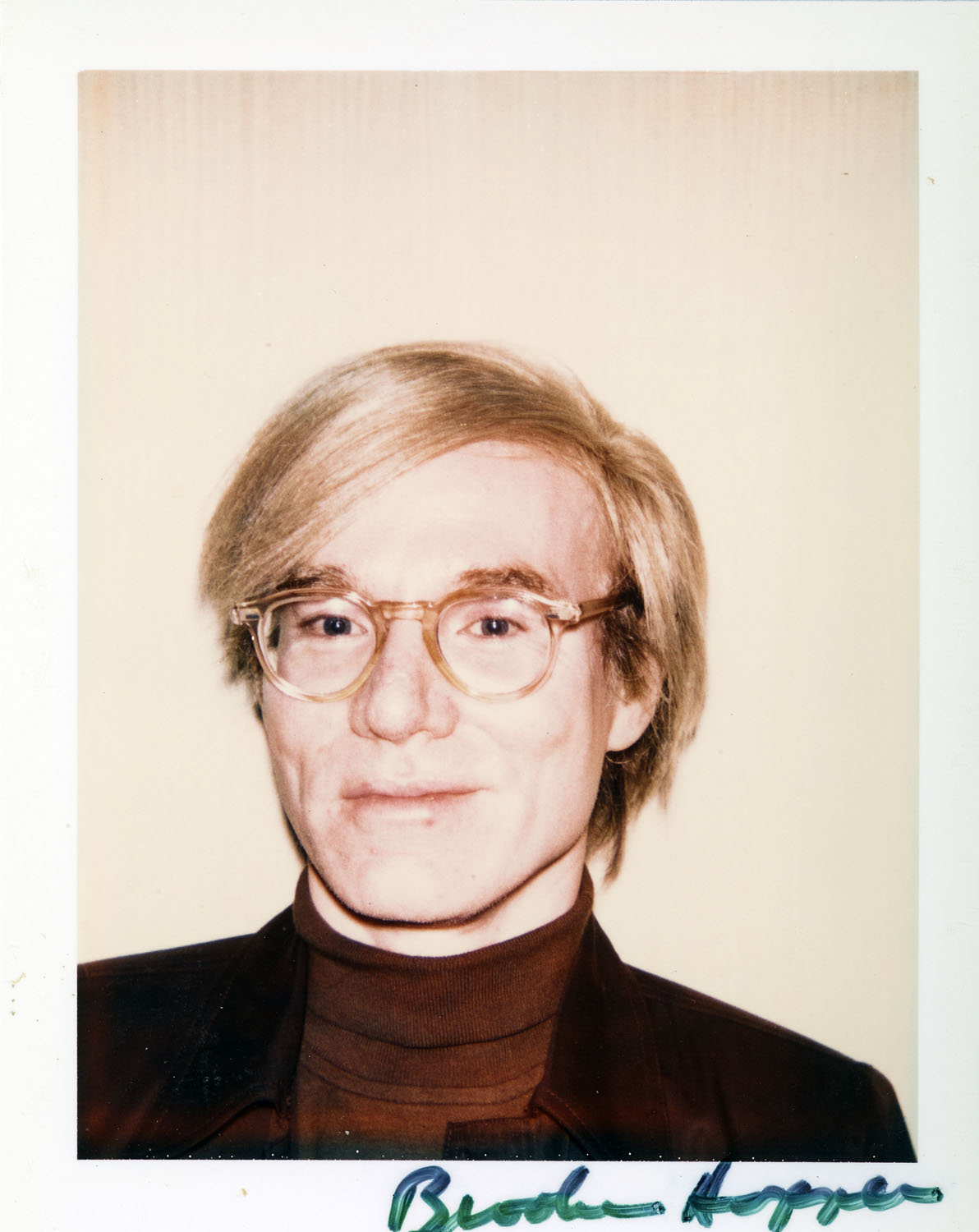
Andy Warhol (American, 1928-1987)
Warhol, Andy
1972
Polaroid
10.8 x 8.6cm
Museum Ludwig, Cologne
Repro: Historisches Archiv mit Rheinischem Bildarchiv
©2025 The Andy Warhol Foundation for the Visual Arts, Inc. / Licensed by Artists Rights Society (ARS), New York
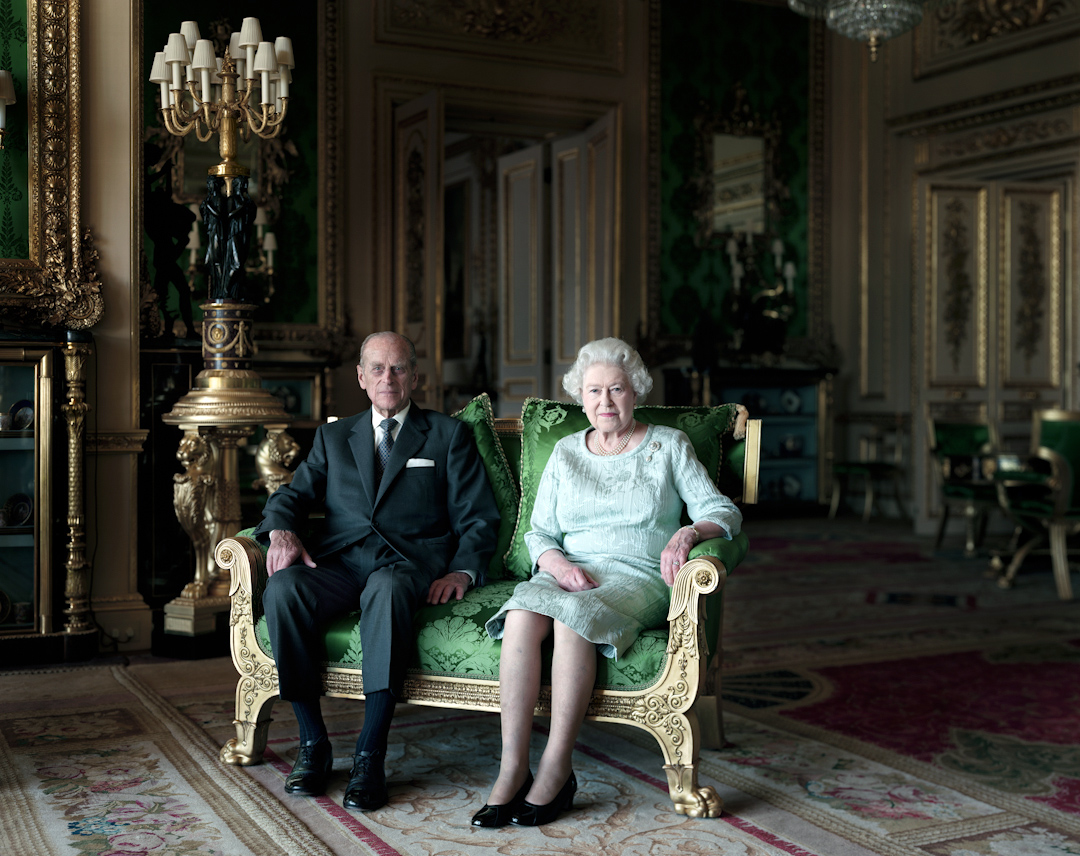
I went for a new passport photograph yesterday and the nice person took the first photographs, looked at them, and then said “too much smile”, close your mouth more, and took them again with no teeth exposed and my mouth in a thin, rictus line.
How do our “photographic faces” differ from our everyday faces?
Does not smiling in a photograph prevent us from displaying our individual personality?
What different types of smile are there and what do they signify?
“Smiles are complex, with researchers identifying up to 19 types ranging from genuine joy to social masking, with only six occurring during positive emotions. Key types include the genuine Duchenne smile (involving eyes), polite social smiles, and non-enjoyment smiles like contempt or discomfort, signalling various emotional, social, or, in some cases, aggressive messages.”1
Smiling does not just depend on social norms but researchers have found it may actually be programmed into our DNA, creating in built reactions to certain situations.2 From the miserable smile, to the dampened smile, qualifier smile, contempt smile and fear smile, there are many ways we can interact with others and with the camera lens.
From this distance in Australia and having not see the exhibition in person I can’t tell you whether this exhibition addresses the issues of different smiles pictured in photography but it seems unlikely given the text and media images.
For more information on facial expressions please see my text Facile, Facies, Facticity (January 2014) which examines the facticity of the face, in which only through the “thrownness” of the individual rendered in the lines of the human face can we engage with the intractable conditions of human existence.
Say cheese!
Dr Marcus Bunyan
1/ Zaria Gorvett. “There are 19 types of smile but only six are for happiness,” on the BBC website, 10 April 2017 [Online] Cited 06/03/2026
2/ Ibid.,
Many thankx to Museum Ludwig for allowing me to publish the photographs in the posting. Please click on the photographs for a larger version of the image.
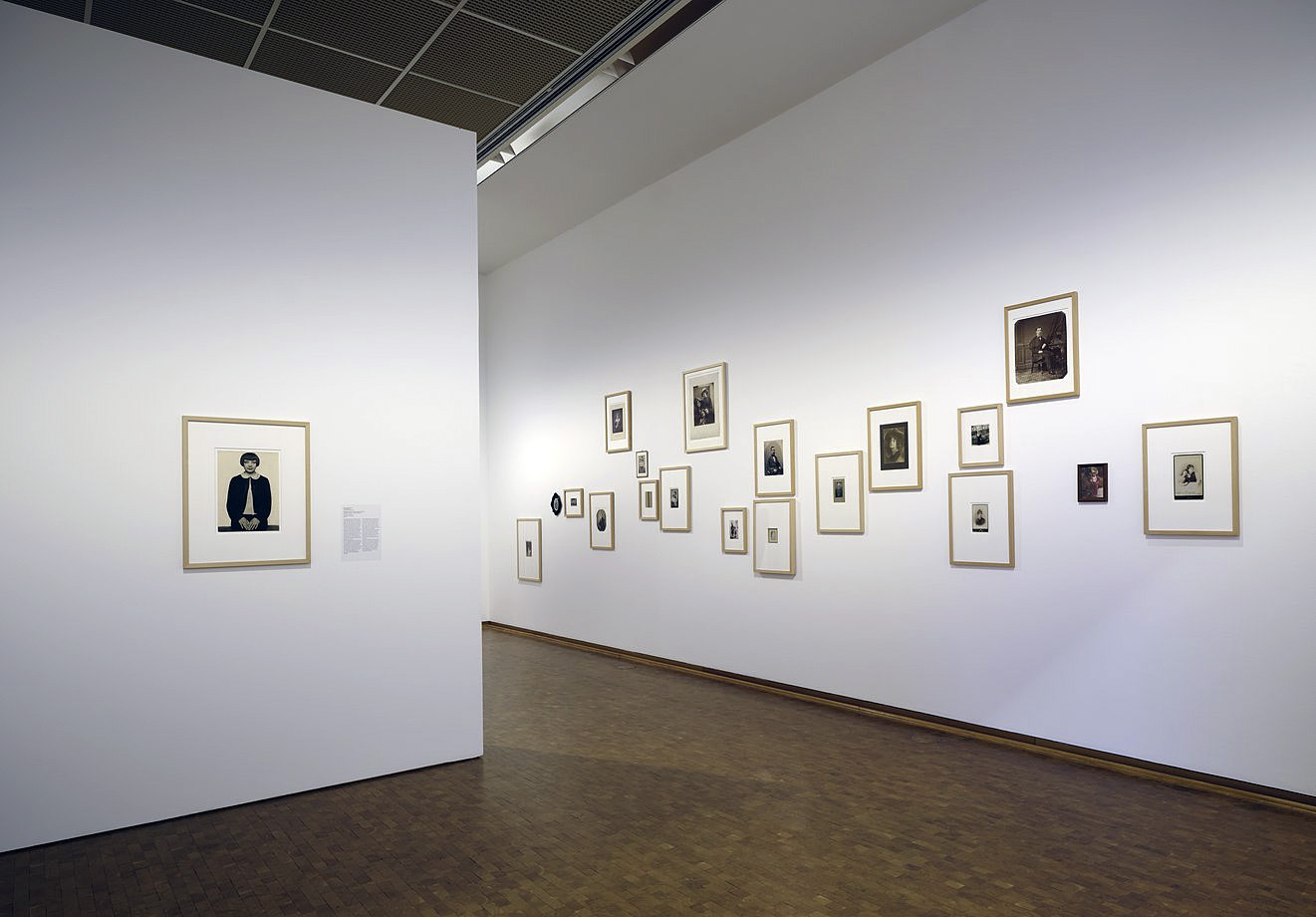
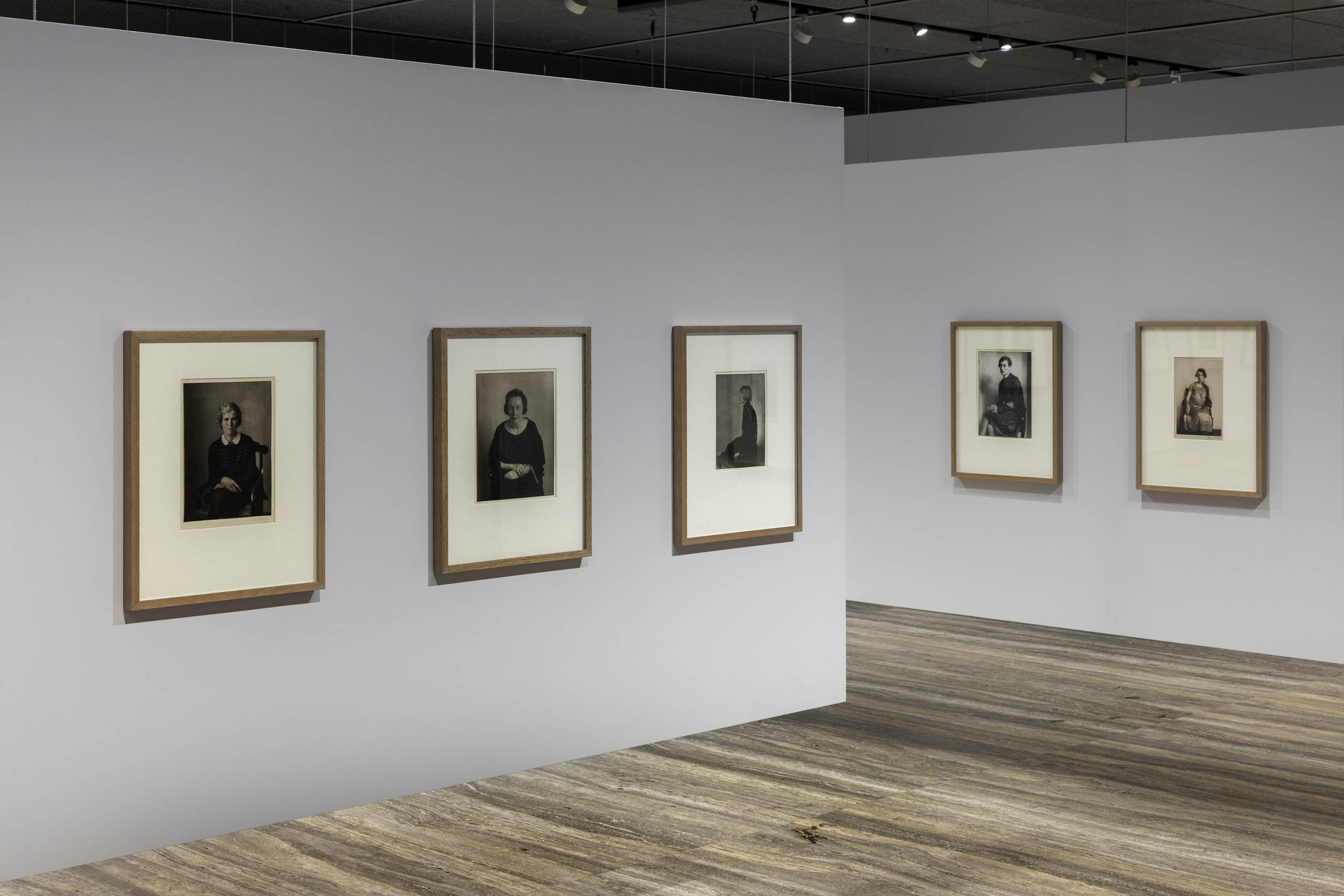
Installation view of the exhibition Smile! How the smile came into photography at the Museum Ludwig, Cologne, November 15, 2025 – March 22, 2026 showing at left, Hugo Erfurth’s Hildegard Seemann-Wechler (painter), (1929, below)
Photo: Historisches Archiv mit Rheinischem Bildarchiv/ Mark Weber
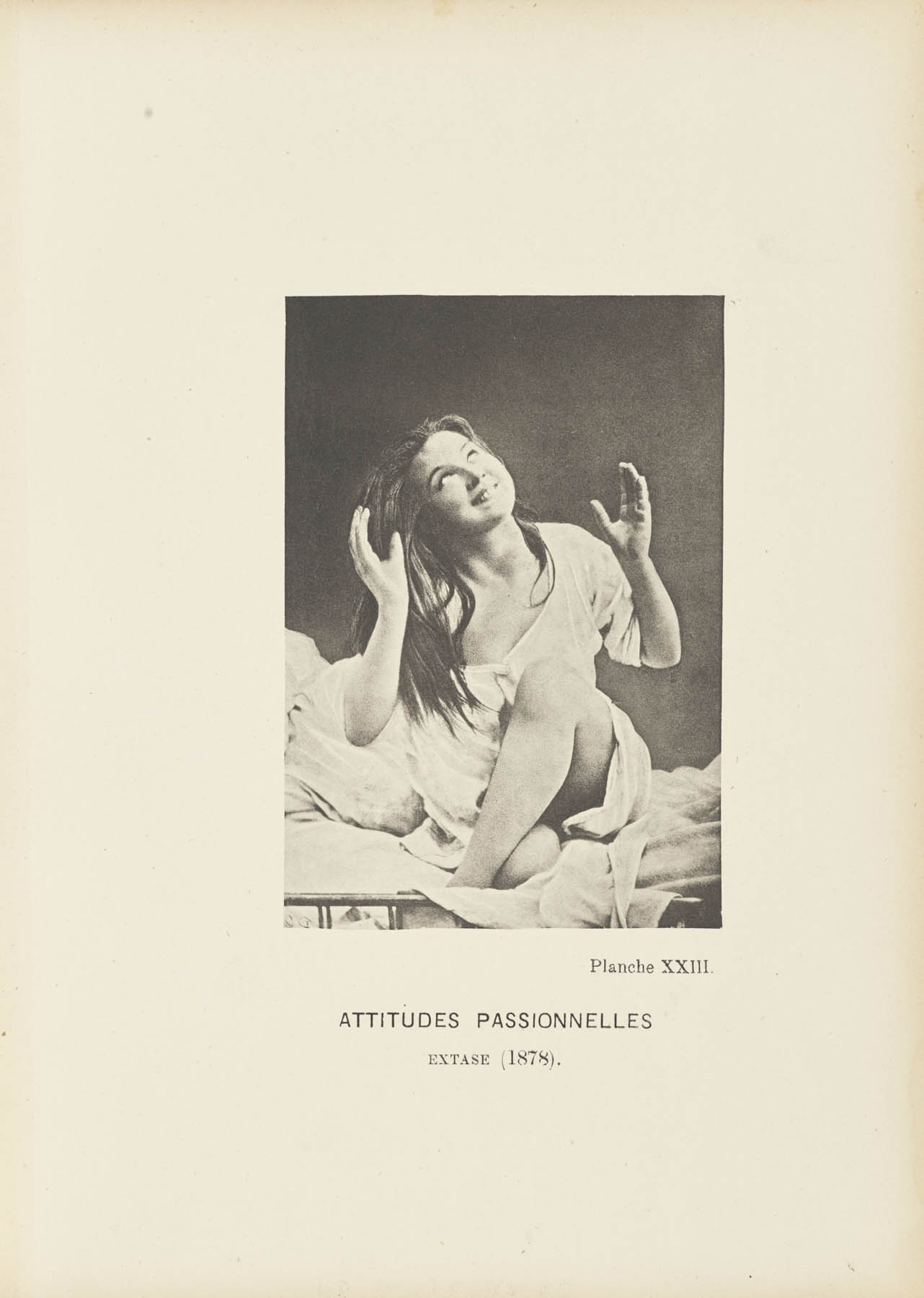
Paul-Marie-Léon Regnard (French, 1850-1927)
Passionate Ecstatic Position/Expression
1878
Part of Iconographie Photographique de la Salpetriere (Service de M. Charcot)
Photogravure
Image: 10.3 × 7.1cm (4 1/16 × 2 13/16 in.)
The J. Paul Getty Museum, Los Angeles
NB. PHOTOGRAPH IS NOT IN THE EXHIBITION
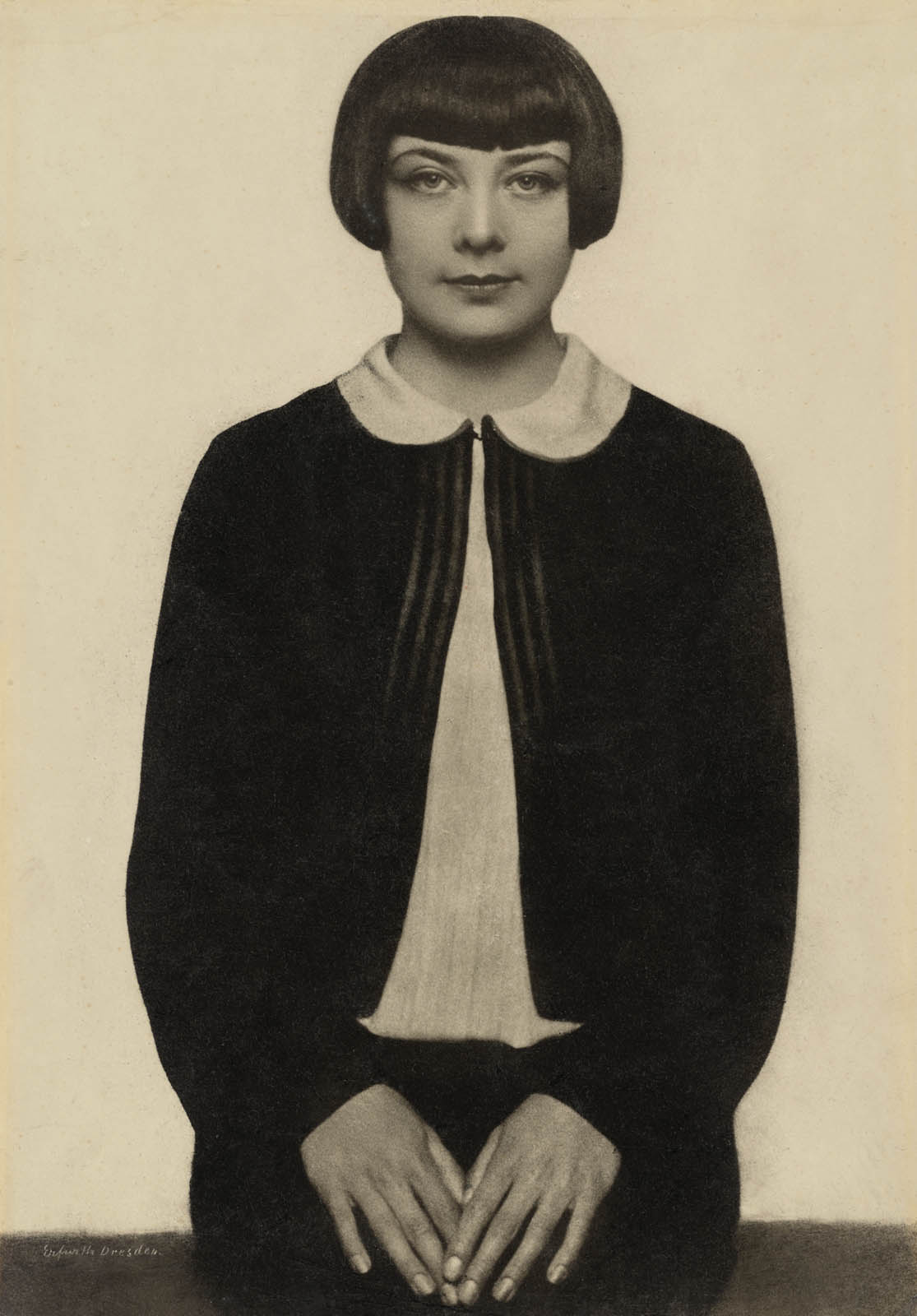
Hugo Erfurth (German, 1874-1948)
Hildegard Seemann-Wechler (painter)
1929
Oil pigment print on cardboard
38.3 x 26.6cm
Museum Ludwig, Cologne
Repro: Historisches Archiv mit Rheinischem Bildarchiv
When Hildegard Seemann-Wechler had her portrait taken in Hugo Erfurth’s studio in Dresden, she was studying painting with Otto Dix. The strict frontality of this picture, the neutral background, and the direct gaze into the camera are softened by the slight hint of a smile at the corners of the artist’s mouth. Hildegard Seemann-Wechler’s bob hairstyle identifies her as a New Woman who rejects conservative role models. Her portrait breaks with the tradition of serious facial expressions in the 19th century and marks the threshold between not smiling and smiling. Collection presentations like this help us to explore our own works. On the back of this picture, the name “Hilde Wächler” is written in pencil. It was only during the preparations for Smile! that we noticed the mistake and were able to assign the person portrayed to her real name. In 1940, Hilde Seemann-Wechler was murdered by the Nazis.
Hildegard Seemann-Wechler (German, 1903-1940)
Hildegard Wechler came from a bourgeois background. She began her studies at the Staatliche Akademie für Kunstgewerbe in Dresden and moved to the Dresdener Kunstakademie in 1921, where she studied with Richard Müller, Robert Sterl, Ludwig von Hofmann and from 1927 with Otto Dix, three semesters of which as an individual student. In particular, she was supported by Sterl and Dix. Since that time she was friends with Eva Schulze-Knabe and Fritz Schulze. Since Hans and Lea Grundig also studied at the academy, it can be assumed that she also had contact with them.
After her studies, Hildegard Wechler worked in Dresden as a freelance artist. In 1929 she married the painter Herbert Seemann (1900-1945). In 1931, she had the first symptoms of mental illness. The doctors diagnosed an incurable schizophrenia and referred her to the Landesheil- und Pflegeanstalt Arnsdorf. She spent eight and a half years there. She was forcibly sterilized at the State Women’s Hospital Dresden.
In 1940 she was transferred to the Landesheil- und Pflegeanstalt Leipzig-Dösen, on 18. June 1940 to the Heil- und Pflegeanstalt Großschweidnitz. On the 3rd In September 1940, a transport commando brought her to the Pirna-Sonnenstein killing center. She was murdered there shortly afterwards as part of the euthanasia “Aktion T4” as one of at least 14,751 victims of this institution, including the Dresden painters Gertrud Fleck and Elfriede Lohse-Wächtler, in the gas chamber disguised as a bathroom.
Text from the German Wikipedia website translated by Google Translate
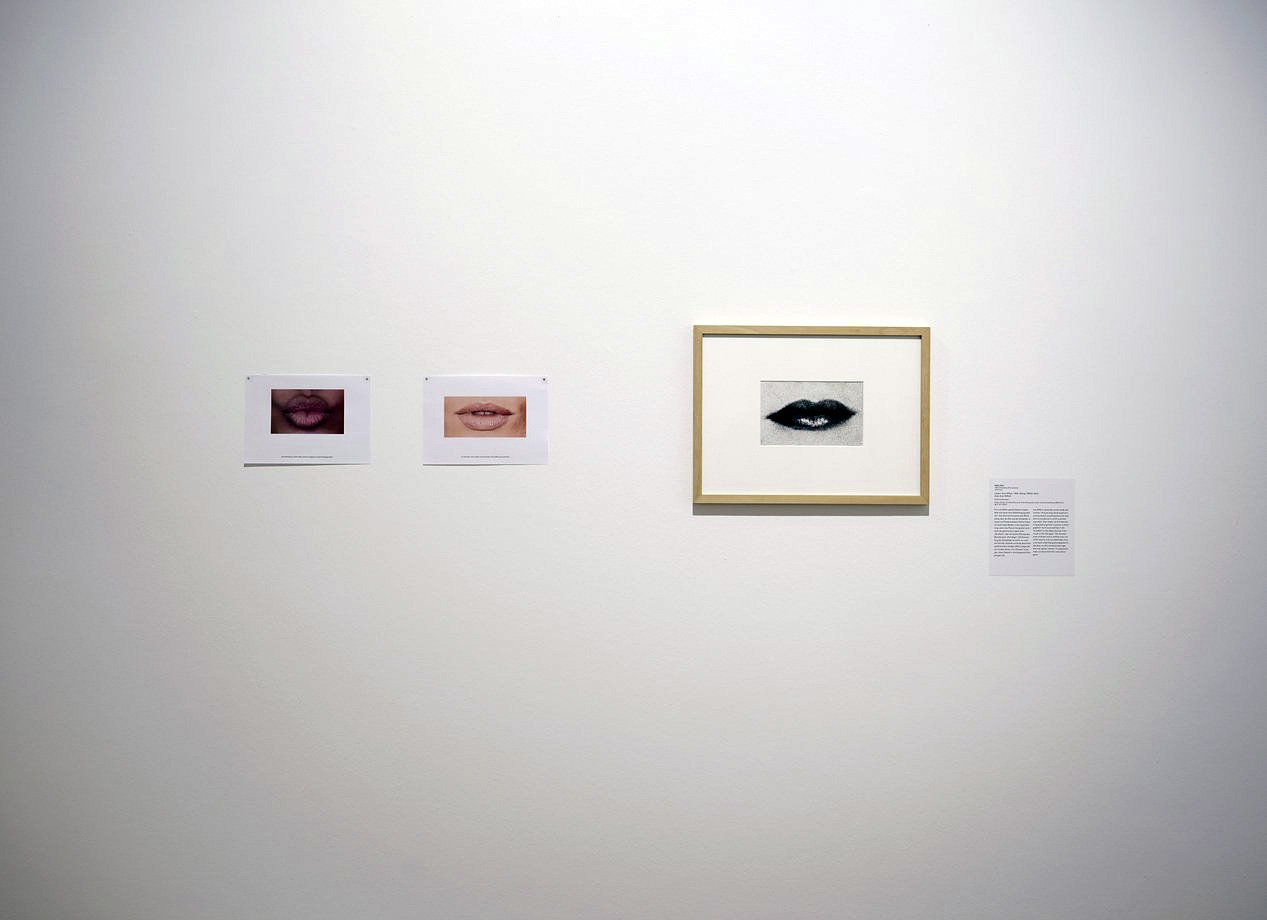
Installation view of the exhibition Smile! How the smile came into photography at the Museum Ludwig, Cologne, November 15, 2025 – March 22, 2026 showing at right, Man Ray’s Lips, (Lee Miller), (1930, below)
Photo: Historisches Archiv mit Rheinischem Bildarchiv/ Mark Weber
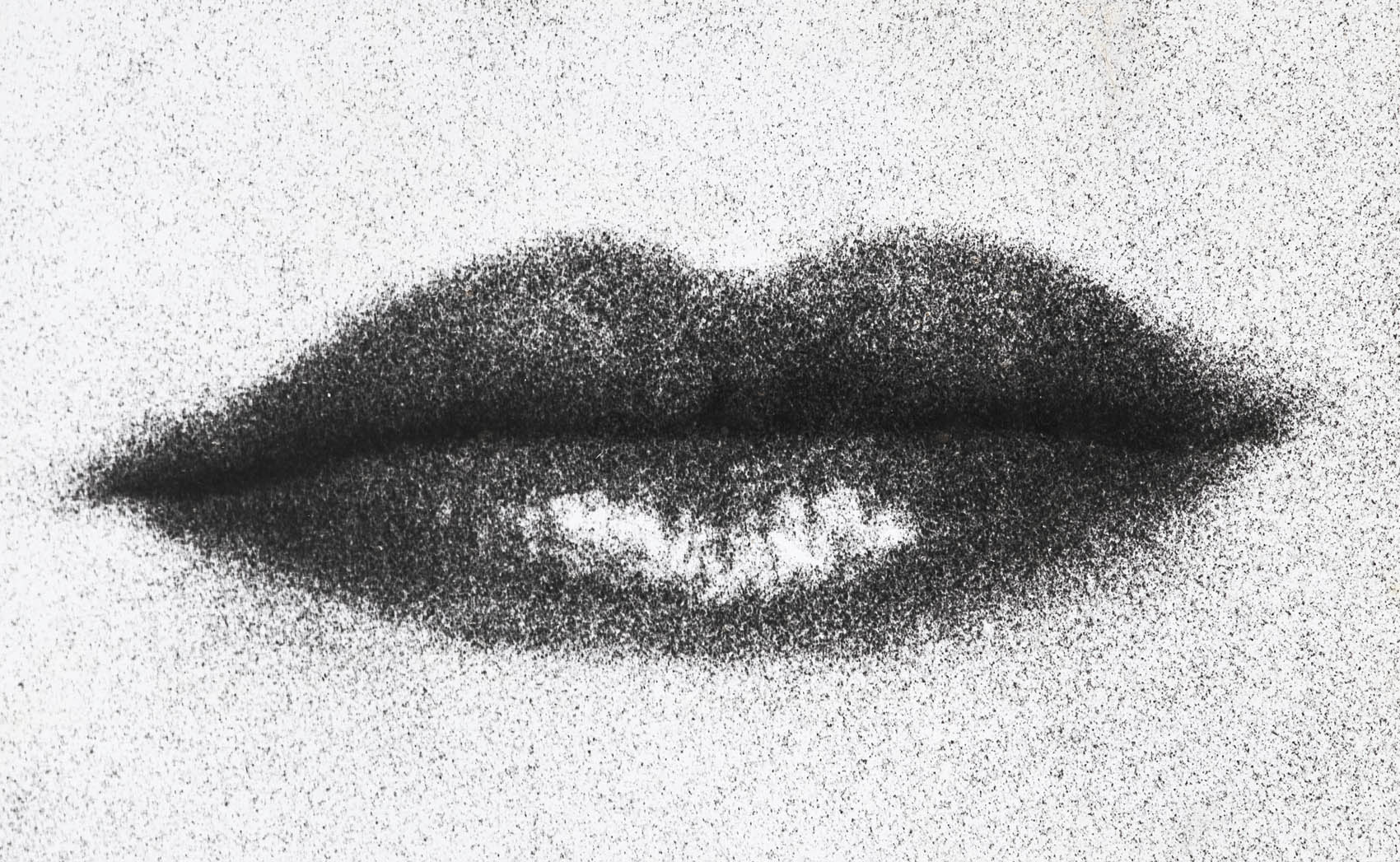
Man Ray (American, 1890-1976)
Lips, (Lee Miller)
1930
Print
21 x 25.5cm
Museum Ludwig, Cologne
Repro: Historisches Archiv mit Rheinischem B
Lee Miller’s closed lips reveal hardly any emotion. And yet every facial expression communicates something about the time and circumstances in which a portrait was taken. Even today, we find fashions in lip positioning when a person is photographed – such as pursed lips in the “duckface” or the slight opening of the mouth in the “fish gape.” The development of dental care is certainly only one of the reasons why we statistically show more teeth when being photographed today than we did a hundred years ago, and why saying “cheese” is supposed to make our faces look their most photogenic.
Smizing, squinching, duck face, fish gape, cheese, or prunes: Beauty ideals and social media have given rise to increasingly mercurial trends in portrait photography. Until the late nineteenth century, having one’s photo taken required the sitter to remain absolutely motionless in order to produce a sharp image, which more often than not resulted in a fixed and lifeless expression.
Smile! How the Smile Came Into Photography, presented in the Museum Ludwig Photography Rooms, investigates how our “photographic faces” have evolved over time. The show assembles a range of anonymous and artistic portrait photographs from the nineteenth to the twenty-first century to recount a history of the smile.
Whether or not we smile when being photographed, or whether we show our teeth, depends on social norms and the photographic technology available. In 1878, the photographer Josef Janssen observed that “the awkward situation in which a person finds themselves at the moment of having their photo taken is in itself enough to prevent them from displaying their individual personality. Motionless and with a fixed gaze, their head leaning on that dreaded, detestable head rest, they are required for a set period of time to stare at a certain point in space that generally offers the eye nothing of interest. What else could this result in but stiffness and lifelessness?”
The fact that people in the nineteenth century rarely smiled when having their picture taken in a photographic studio also reflected contemporary norms regarding how one should appear in a portrait, norms based on conventional ideas of class, gender, and context. Emotions were considered a private matter that had no place in a portrait.
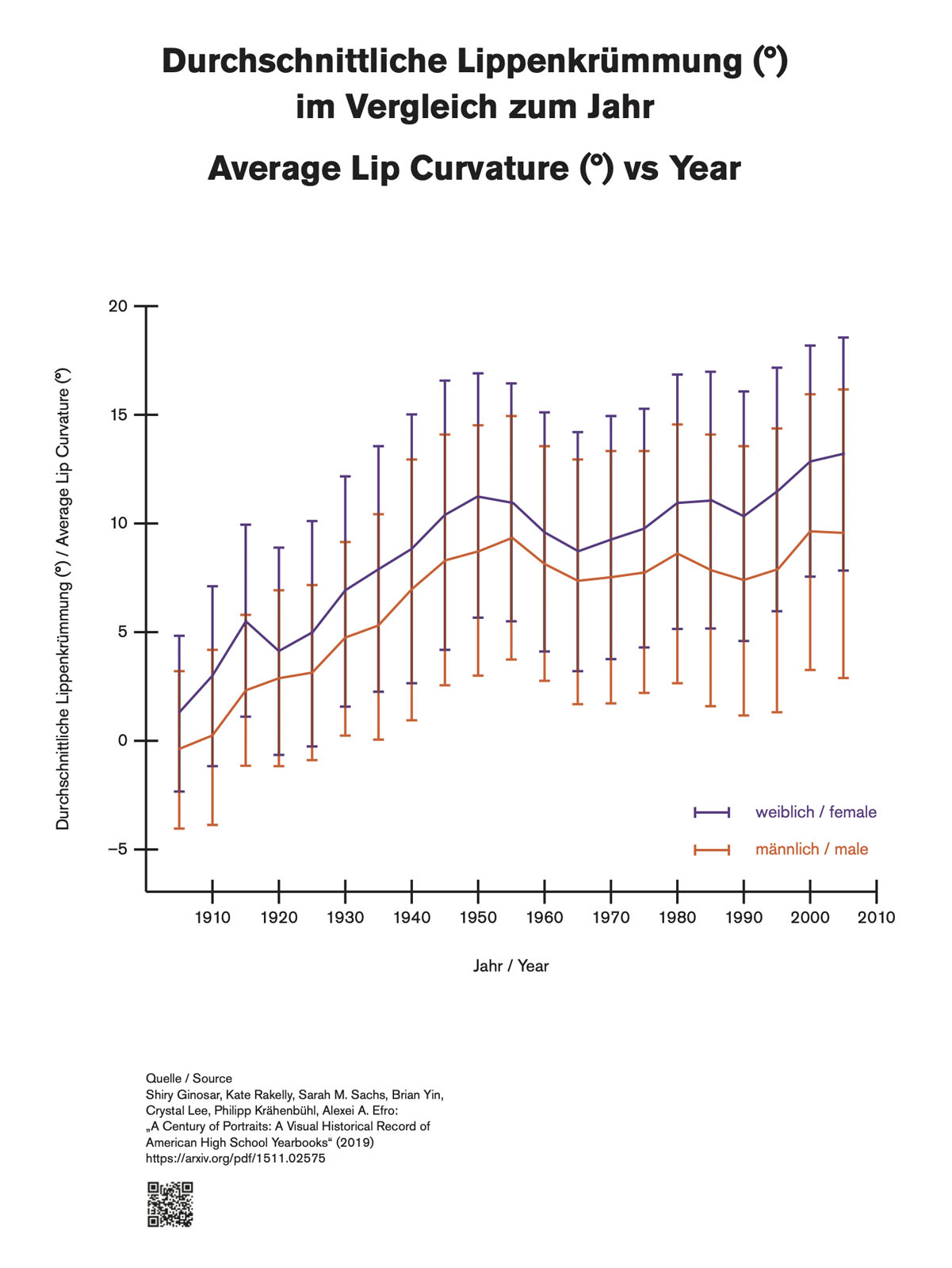
The emergence of silent film played a key role in the appearance of the smile in twentieth-century portraits. Facial expressions were used to convey emotions, filling the frame in tight close-up shots. Parallel to this, headshots increasingly replaced full-body portraits. Then came advertising, where the beaming smiles of actors served to embody the allure of products. The corners of the mouth began to rise ever upward. A 2015 study of student portraits in American yearbooks revealed that smiling in photographs has consistently increased since the start of the twentieth century, with results confirming that women smile more than men. A trend toward increased facial expressiveness can be observed the world over. A look at fashion photography, however, shows that status and coolness are conveyed with barely a smile. As early as 1927, the sociologist Siegfried Kracauer noted that the world – and thus the people in it – had taken on a “photographic face.” The presentation at the Museum Ludwig aims to show that this observation still holds true today and that the smile has a history.
The show is accompanied by a publication with a text by Katharina Sykora. #PhotographyFaces #MLxPhotography
Press release from Museum Ludwig
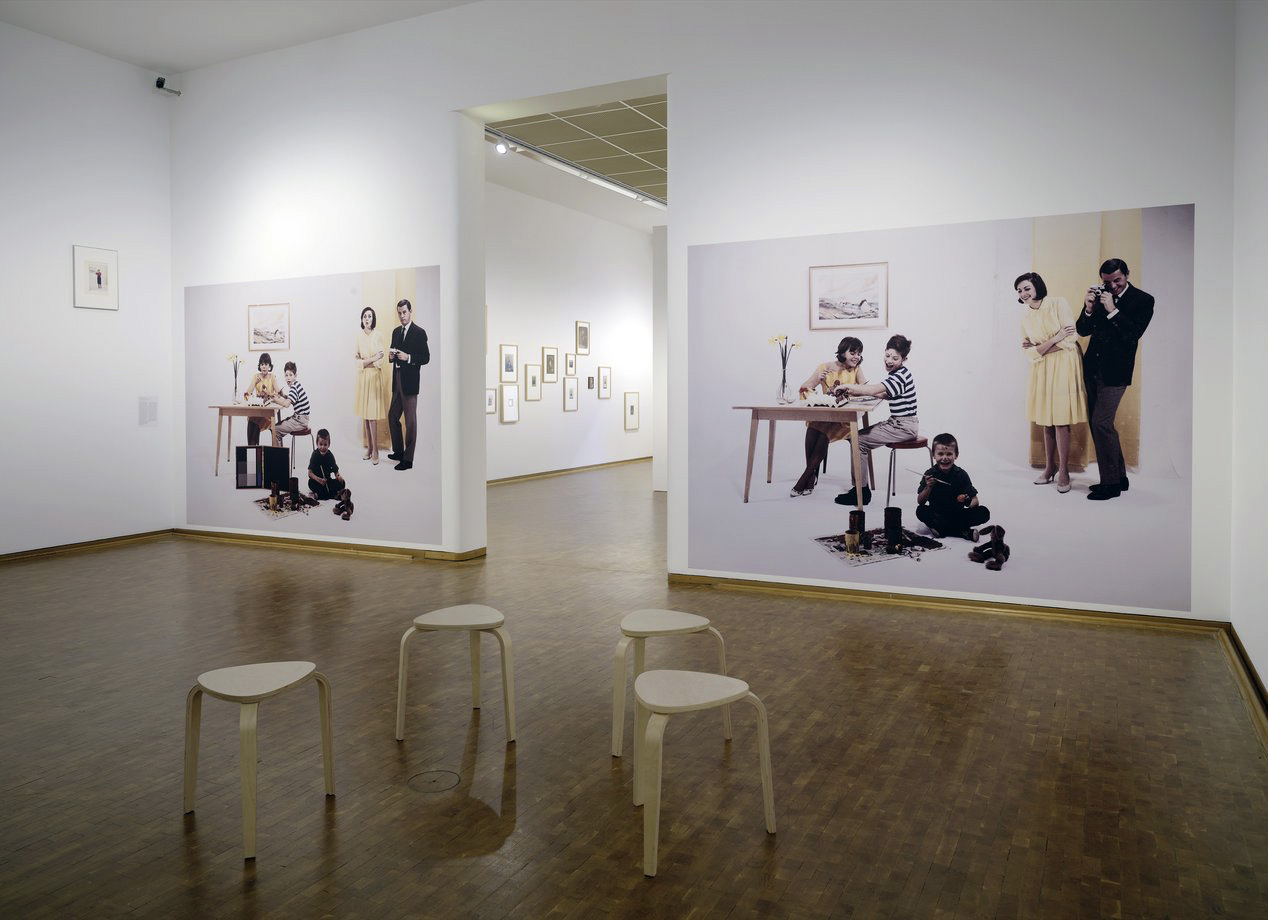
Installation view of the exhibition Smile! How the smile came into photography at the Museum Ludwig, Cologne, November 15, 2025 – March 22, 2026 showing Afga Advertising tests (around 1965, below)
Photo: Historisches Archiv mit Rheinischem Bildarchiv/ Mark Weber
These two photographs can be found in the archives of Agfa’s advertising department, which are now kept at the Museum Ludwig. While the color chart in one picture reveals that it is an informal test shot for the photographer, the other picture shows the official version of the advertisement. Only in the official version is everyone smiling – even the man holding the camera in front of his face to take a snapshot of his family. Since advertising has to communicate people’s happiness with a particular product, it contributed enormously to the spread and normalisation of smiling, laughing people in pictures. This is particularly the case with the advertisement of the photo industry. As Christina Kotchemidova writes in her article “Why we say ‘Chesse’: Producing the Smile in Snapshot Photography”: “Obviously, amateurs learned from advertisements (…). The visuals ensured that the advertising ideal was accurately replicated, thus making popular photography an extension of advertising culture.”
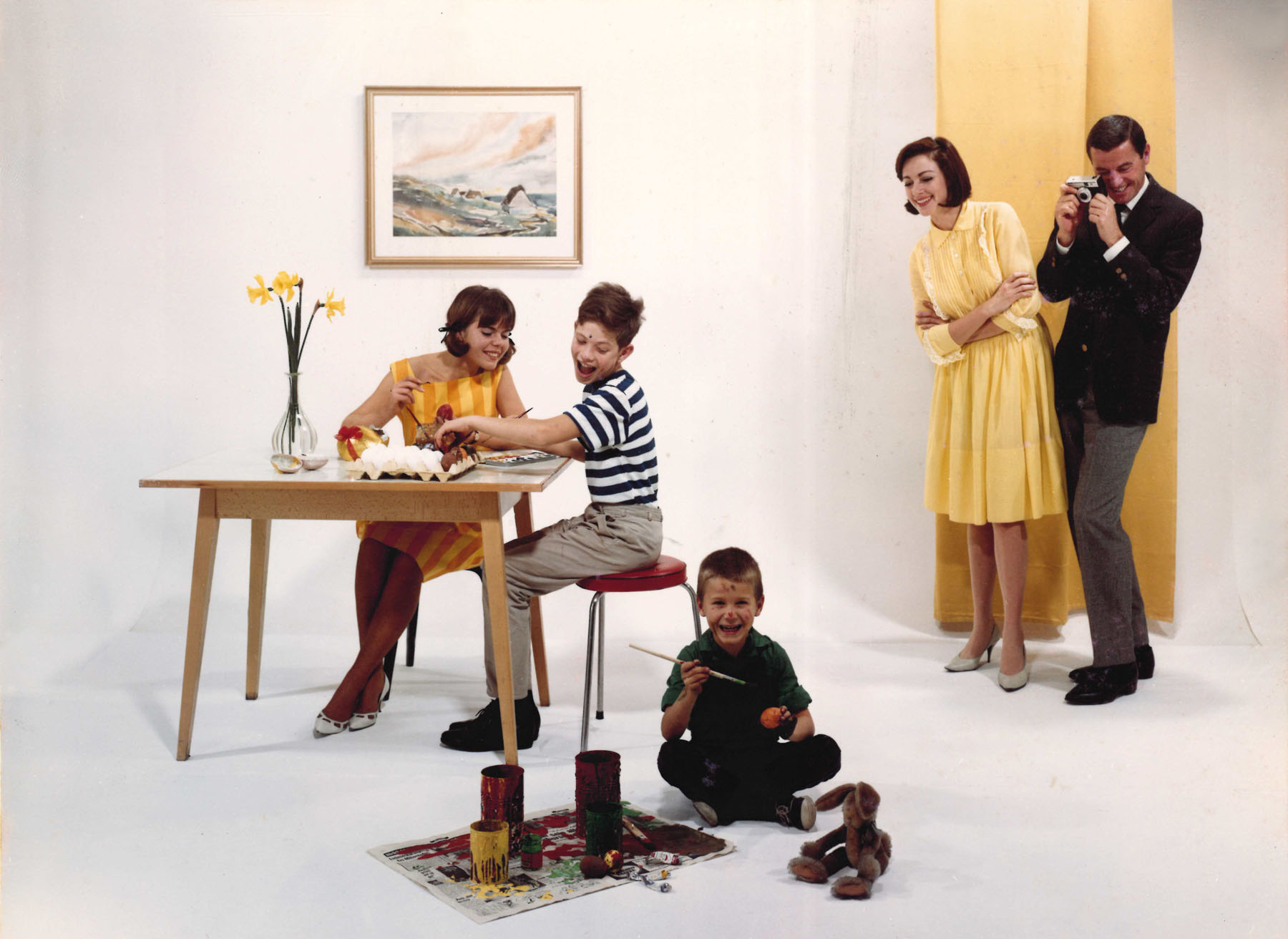
Unknown Photographer
Agfa advertising test
around 1965
Color photography
Museum Ludwig, Cologne
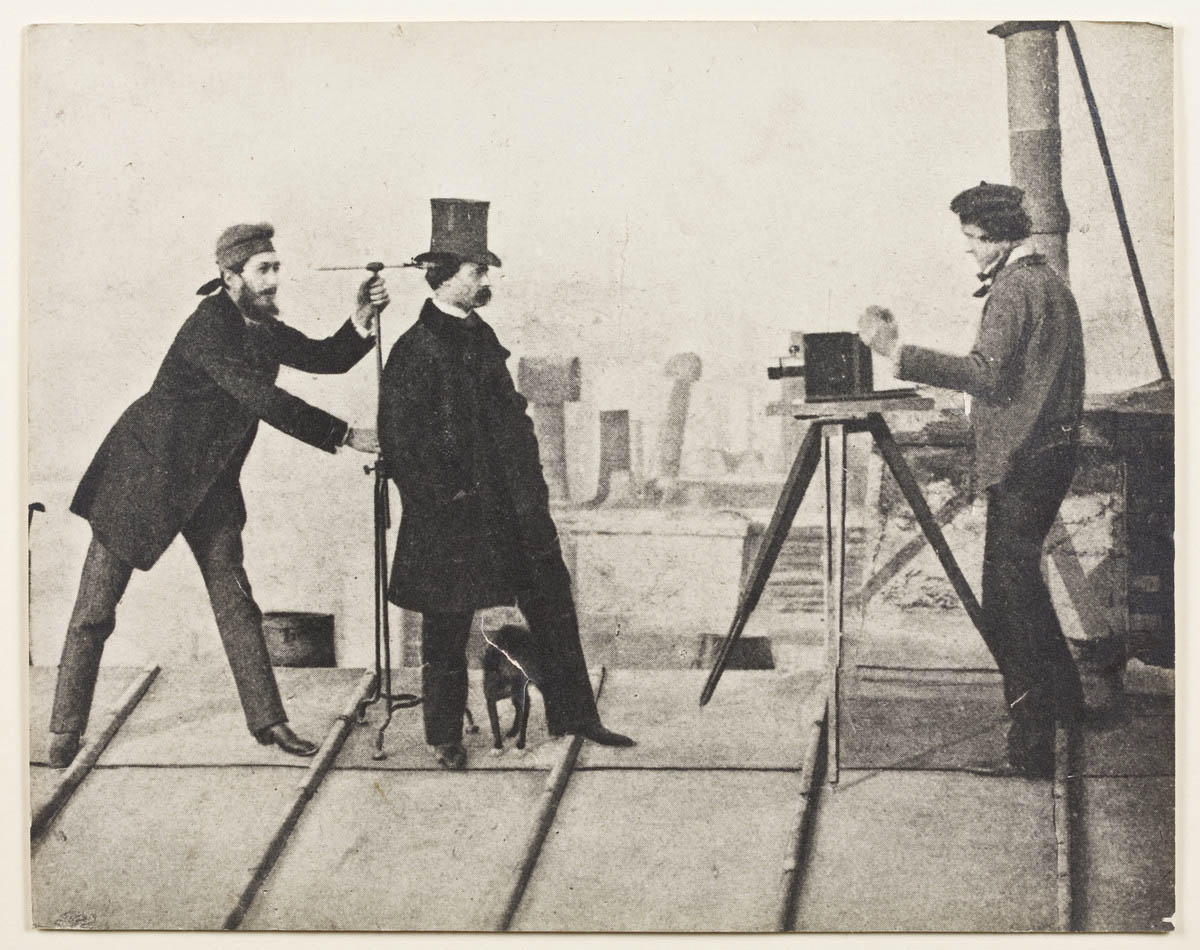
Photo studio on the roof
1845
Illustration from Erich Stenger: Siegeszug der Photographie in Kultur, Wissenschaft, Technik, 1950
Archiv Museum Ludwig, Köln
The more light there is, the shorter the exposure time when taking photographs. That is why photo studios in the 19th century were often set up in attics with large windows. In good weather, photographs were sometimes taken directly on the roof. Nevertheless, we can still see the head support that kept the person being photographed motionless for the duration of the shot and helped to ensure that the image was sharp. Such head supports were part of the necessary equipment of a photo studio and certainly did not help the subject to relax. In 1878, photographer Josef Janssen observed: “[…] the predicament in which the person finds themselves at the moment of the shot is enough to prevent them from freely expressing their individuality. Leaning against the much-hated and feared, yet indispensable head support, they are supposed to remain motionless and stare intently for a while at a certain point that usually offers nothing for the eye to look at. What else can be the result of this but rigidity and lifelessness?”
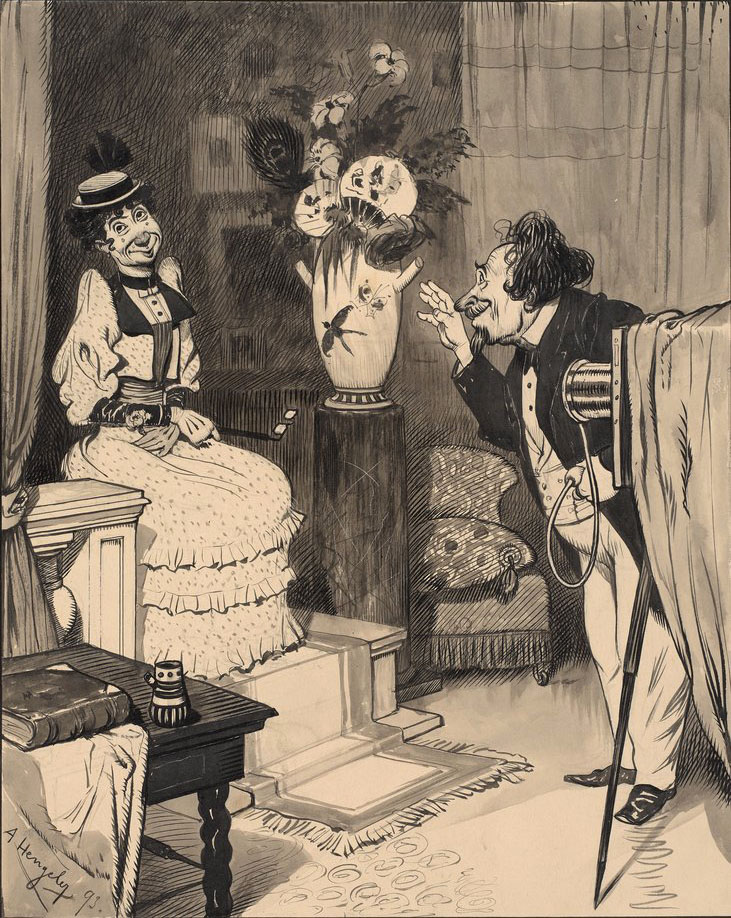
Adolf Hengeler (German, 1863-1927)
“At the photographer’s: ‘Now, young lady, please smile nicely and look friendly!…One, two, three!… That’s it, thank you! Now you can go back to your natural expression!'”
Published in Fliegende Blätter, 1893
Print
47 x 36.4cm
Museum Ludwig, Cologne
Repro: Historisches Archiv mit Rheinischem Bildarchiv
“Now, young lady, please make a nice and friendly!… One, two, three!… That’s it, thank you! Now you can go back to your natural expression!” This was the caption accompanying the caricature when it was published in the magazine Fliegende Blätter in 1893. The fact that the subject is depicted wearing a clown mask shows, on the one hand, that people were already familiar with smiling “photography faces” at the end of the 19th century and, on the other hand, that the women portrayed were supposed to appear ‘nice’ and ‘friendly’ through their smiles. The fact that there are other types of smiles was already mentioned in Grimm’s dictionary from 1885, such as happy, cheerful, mischievous, furtive, shy, malicious, bitter, scornful, mocking, and forced. In 2020, Carolita Johnson described in her article “‘I don’t have to smile if I don’t feel like it!’: Covid freed me from politeness and unwanted touching” in The Guardian how wearing face masks during the coronavirus pandemic freed her from the pressure of having to wear the mask of the friendly smiling woman.
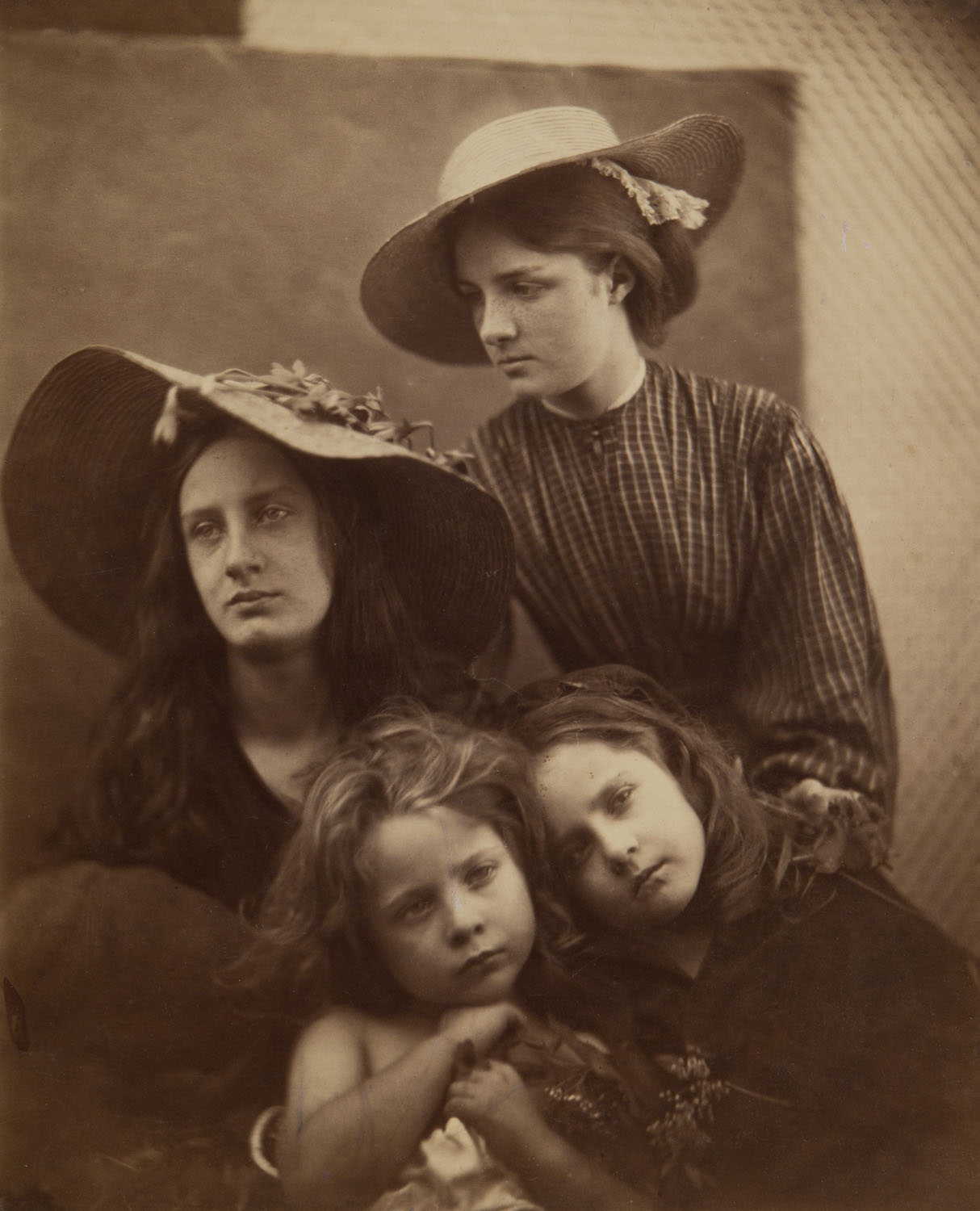
Julia Margaret Cameron (English born India, 1815-1879)
Summer-days
1866
Albumen print on cardboard
34.0 x 27.6cm
Museum Ludwig, Cologne
Repro: Historisches Archiv mit Rheinischem Bildarchiv
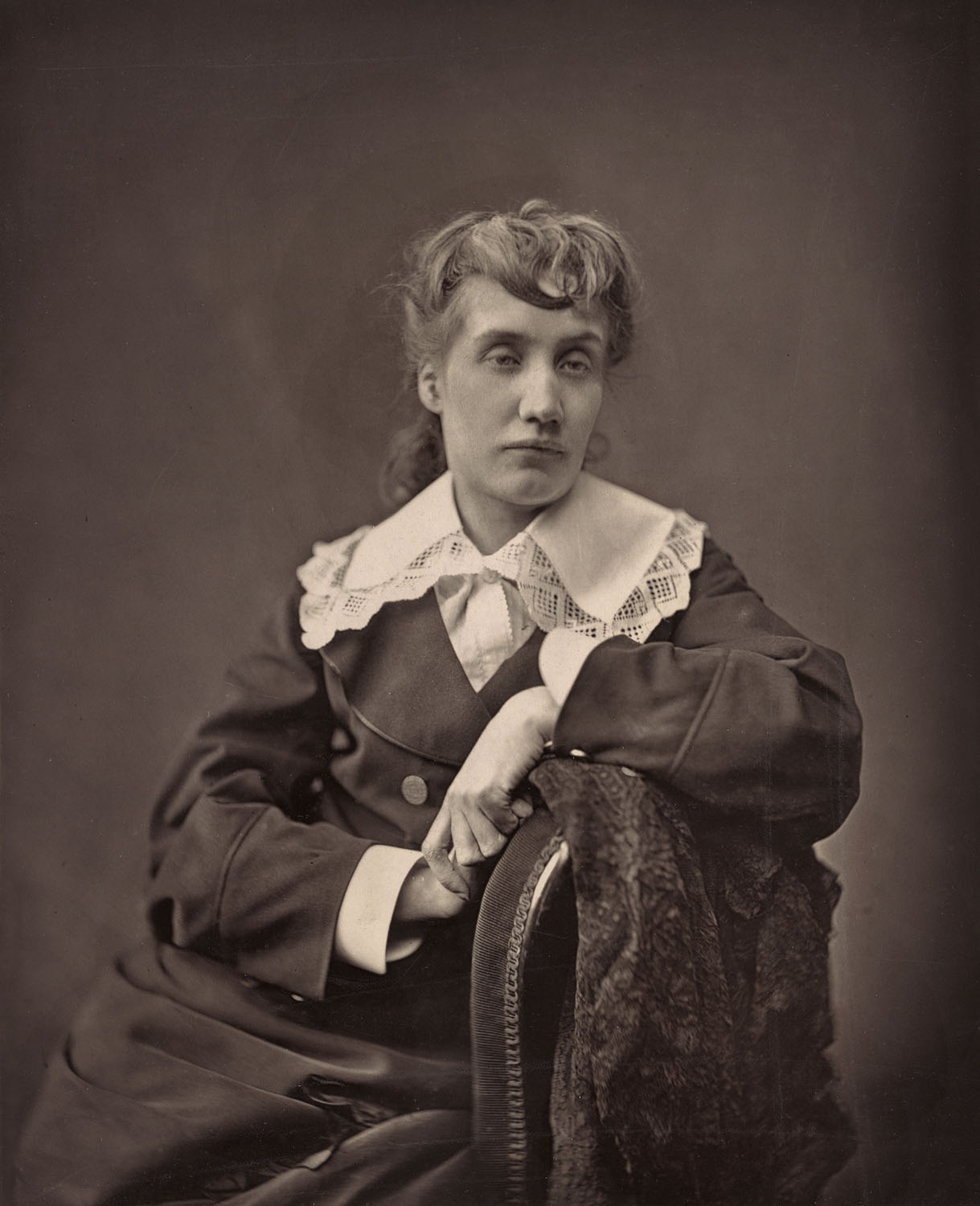
Nadar (Gaspard-Félix Tournachon) (French, 1820-1910)
Portrait of Marc de Montifaut
around 1877
Woodburytype on cardboard
22.9 x 18.6 cm
Museum Ludwig, Cologne
Repro: Historisches Archiv mit Rheinischem Bildarchiv
Gaspard-Félix Tournachon (French, 5 April 1820 – 20 March 1910), known by the pseudonym Nadar or Félix Nadar, was a French photographer, caricaturist, journalist, novelist and balloonist who was a proponent of heavier-than-air flight. In 1858, he became the first person to take aerial photographs. Photographic portraits by Nadar are held by many of the great national collections of photographs. His son, Paul Nadar, continued the studio after his death.
Smiling: A Photographic Balancing Act between Seriousness and Laughter
Katharina Sykora
Between spontaneity and strategy: smiling as an indicator of emotion
In everyday life, a smile immediately inspires feelings of happiness. While today we experience smiling as a spontaneous expression of affection, our understanding of smiling as a legible, socially acceptable facial gesture is the result of centuries of debate. It was oten viewed as an expression that sat midway between seriousness and laughter. Discussions around the nature of the smile gained in intensity in the nineteenth century with the invention of photography, which saw many in the aristocracy and the upwardly-mobile bourgeoisie discovering themselves anew in portrait studios. Meyers Encyclopaedia (1865) describes smiling as a weaker version of laughing because “it lacks the intermittent exhalation,”1 while in his remarks on The Expression of the Emotions in Man and Animals (1872), Charles Darwin describes laughter as “the full development of a smile or … a gentle smile as the last trace of a habit, firmly fixed during many generations, of laughing.”2 In both cases, smiling is cast not as an emotion in its own right but as a relative form derived from a strong, joyful feeling. This contrasts with the expressive range of smiles allowed for by the Brothers Grimm: “Smiling,” they write in their German Dictionary (1885) “may be friendly, happy, cheerful, affectionate, gentle, mischievous, furtive, shy, even malevolent, biter, mocking, scornful, or forced.”3
This highlights the long-standing controversy that has historically accompanied discussions around smiling and that continues today. On the one hand, a smile is evaluated based on where it is perceived to sit on a spectrum between seriousness and laughter and – depending on its proximity to either extreme – subjected to positive or negative moral, societal, or aesthetic judgements. On the other hand, because the spectrum between seriousness and laughter contains many nuances, smiling is perceived as a versatile
expression that can attest to a variety of different feelings and communicate a broad range of meanings in social interactions depending on the socio-historical context. The first perspective tends to view smiling within normative parameters, while the second situates it within a kaleidoscope of micro-sociological observations.
An important question running through historical and historiographical discussions of seriousness, smiling, and laughter asks whether these are expressions of inner emotion or learned facial gestures and behaviour patterns. In other words, whether laughing and smiling are anthropological constants common to all humans as immediate expressions of emotion, or whether they are a strategic means of communication used to one’s own advantage in specific situations.
In the mid-nineteenth century, photography played a prominent role in this debate. In his book The Mechanism of Human Facial Expression, published in 1862 and containing a hundred photographs,4 the doctor and physiologist Guillaume-Benjamin-Armand Duchenne de Boulogne presented an experiment in which he used targeted electric shocks to trigger a wide range of expressions on a test person whose facial nerves lacked sensation. One of these included a homogenous smile involving all of his features that resembled the kind of
facial expression observed in everyday settngs. But Duchenne was also able to trigger paradoxical facial expressions that could only be induced by electric shocks, such as a smiling mouth combined with eyes and forehead contorted by pain. Through such experiments, Duchenne sought a systematic “orthography of a supposedly universal language”5 of human physiognomy in order to render it more legible. Paradoxically, he disconnected inner affects from their outer manifestations while connectng them all the more strongly in terms of their
meaning, as when, by analogy with the laughing muscle, he describes the nasalis (nose) muscle as a “muscle of aggression” or the frontalis muscle (that moves the eyebrows) as a “muscle of suffering.”6
One far-reaching side effect of Duchenne’s test setup was the realization that
manifestations of human emotion can be manufactured without necessarily corresponding to a felt equivalent. By twinning electro-physical and photographic procedures, Duchenne proved in the field of science what had long been commonplace in the world of the theater – where professional actors routinely simulate emotions – and everyday life – where individuals control their expressions when interacting with others. In this way, Duchenne contributed his “theater of science”7 to the list of “production sites” for the decoupling of facial expression from emotion, where it joined the theatrical stage and milieus of social interaction.
At the same time, Duchenne’s use of electric shocks to produce expressions revealed their dual social function: Anyone could use them as a systematic means of portraying emotion detached from any corresponding internal feeling, and they could be decoded just as systematically by others as “artificial” rather than “natural” displays of sentiment. This benefited another site invested in the social coding of emotions: the increasingly numerous
photographic studios where the middle classes were now able to have portraits made of themselves, creating a specific repertoire of facial expressions as part of a class-specific pose. What these theatrical, scientific, and photographic settings all demonstrate is that seriousness, smiling, and laughter can be performed in a way that is legible. They are part of a social act that always involves two or more people.8 With Duchenne’s contribution to the
visual ordering and classification of seriousness, smiling, and laughter, photography advanced over the course of the nineteenth century to become the primary medium for the representation, communication, and standardisation of emotions. It became a platform for self-portrayal, for the negotiation of social hierarchies and values, and for the establishment and reinforcement of universal forms of emotional expression.
Looking back: a brief discursive and visual history of smiling
The history of smiling, as traced through past discourses and visual representations, reflects the shifts in society’s acceptance of the portrayal of specific emotions and the influence this has had on photographic (self-) presentations of people since the nineteenth century. What immediately becomes clear is that smiling has not always been understood as the midpoint between seriousness and laughter but situated somewhere closer to the later. Even more surprisingly from today’s perspective, laughter and especially smiling historically occupied no place at all in social behaviours and visual representations, and when they did appear, their initial connotations were largely negative.
“Before the twelfth century,” writes the art historian Monika E. Müller, “one can expect to find almost no illustrations of emotion in the form of facial expressions.”9 The reason for this was the dominance of Christian morals, which opposed the portrayal of strong emotions in general. The Greek and Roman Church Fathers shared a negative view of laughter, considering it antithetical to the ideal of a God-fearing person leading a life of humility and atonement. As a result, books of monastic precepts banned laughter as sinful behaviour.10
In the twelfth and thirteenth centuries, grinning devils increasingly appeared in
portrayals of the Apocalypse, there were chortling henchmen along Christ’s route to Calvary, and there were grotesque heads guffawing on the capitals of cathedrals or in the margins of illuminated manuscripts. These polarising counter-figures were depicted as bystanders, relegated to the edges of the sacred realm. Here, laughter was not an expression of cheerfulness but a sign of vice and evil.
In the thirteenth century, smiling made its first appearance as a positive trait in
Christian iconography but was reserved for Mary, the Christ Child, angels, and those souls resurrected into a state of heavenly bliss. Here, too, exceptions gradually emerged: In the portal of the Last Judgement at Strasbourg Cathedral, for example, we find the Prince of this World (c. 1280) flashing a mischievous grin in the direction of a Foolish Virgin with a flirtatiously simpering smile. This erotically charged tête-à-tête takes on a negative tone, however, once one notices that the Prince’s back is being devoured by snakes and vermin. Moreover, the coquette is shown to be doubly foolish – distracted by her “sinful” fleshly desire for a figure whose true nature is hidden from her, unlike the lamenting Wise Virgins, she has unwittingly dropped the oil lamp that was meant to remain lit in anticipation of Christ’s arrival. In this way, depictions of smiling joined those of laughter in Christian iconography, where their differentiation into the beatific and the seductive supported theological morals.
Once smiling began to feature in secular imagery – as in the statue of Margravine Regelinda in the west choir at Naumburg Cathedral (c. 1250) – the binary Christian model underwent a fundamental reevaluation. In the thirteenth century, a tradition of courtly politeness emerged in which smiling carried positive connotations, signalling friendly attentiveness guided by self-restraint. Books on courtly etiquete established gestural moderation as the norm. Smiling was courtly in a double sense: It bound the nobility together through a shared code of conduct while also distinguishing them from the “uncouth” populous.
As the modern age progressed, further differentiation took place. Courtiers amused each other by engaging in witty repartee. Eliciting a subtle smile that acknowledged one’s skill while remaining shielded from ridicule behind a noncommittal smile of one’s own was the basis of an amicable but increasingly competitive court culture. Smiling became an instrument with which to perpetually renegotiate one’s position within the court hierarchy. As a result, the rules governing seriousness, laughter, and smiling became ever more rigid
and complex, so that only a select few courtiers ever mastered the art of it. This in turn created gender and aesthetic norms: Young girls and high-ranking ladies were expected to wholly avoid displays of loud laughter, as they pointed to a lack of self-control in the “weaker sex,” and its distortion of the facial features was considered inappropriate for the “fairer sex.”
In the Renaissance, these norms were applied to portraits of the wealthy burghers of the urban centers. Here, the hint of a smile was considered acceptable, while open laughter was viewed as the hallmark of courtesans, marginal figures at court who, together with the fool or jester, broke with the rules of politeness through displays of untamed conduct while simultaneously affirming them.
A similarly paradoxical relationship emerged in the sixteenth and seventeenth centuries with the rise in popularity of genre paintings, which often depicted members of the lower classes boisterously laughing during exuberant scenes of eating and drinking and were often filled with erotic allusions. These paintings, mostly by Dutch artists, both challenged and affirmed the cultural conventions around laughter, often involving the viewer by establishing direct eye contact, creating a sense of complicity and shared amusement.
By contrast, in the eighteenth century, the aspiring bourgeoisie increasingly set itself apart, imposing stricter limits on exuberant laughter. With reference to the aristocratic norm of disciplined facial expressions, it adopted smiling as its hallmark. At the same time, it distanced itself from the courtly performance of smiling. Since those at court were all trying to functionalise their facial expressions and tame their emotions, it was no longer possible to trust their smiles.11 From the viewpoint of the bourgeoisie, courtly smiling was now
considered unnatural. This reflected changes in affect theory, as Johann Caspar Lavater’s physiognomy and Georg Christoph Lichtenberg’s pathognomy now postulated congruency between facial expressions and inner emotions.12 The “forced” smiles of the aristocrats at court were contrasted with the “genuine,” “heartfelt” bourgeois laughter that did not hurt anyone or assume superiority. However, such amiable laughter among equals was not part of public displays of bourgeois identity. In public and in official portraits, the bourgeoisie presented themselves with a seriousness that matched their social aspirations. The network building, convivial laughter of bourgeois men and the smiles of bourgeois women were reserved for smaller, more intimate formats such as drawings or miniatures. In other words, such displays of emotion were privatised, confined to salons and the home.
Photography and the smile: a tense relationship
At the end of the 1830s, during this transitional phase when bourgeois culture was still navigating between seriousness and smiling, photography emerged as a new medium for recording and representation. Its specific qualities allowed facial expressions to be captured with great precision while also imposing limits on the expression of emotions such as smiling and laughter.
The indexicality of photography – namely, the fact that the subject must have been present while their likeness was being transferred onto the image – meant that photographs were like a second skin. Just as it was assumed that one’s facial expression was a direct translation of one’s emotion, it was also believed that this emotion was directly imprinted onto the photograph. The indexical promise of photography thus suggested that one was looking directly – through a kind of double, transparent membrane – into the soul of the sitter. For the bourgeoisie, with its imperative of natural, uncontrived expression of emotions, photography thus served as proof of the authenticity of the emotions on display. It is all the more surprising, then, that it was well into the twentieth century before smiles began to appear on the faces of the bourgeoisie in studio photographs. For bourgeois men in particular, the expression of seriousness that prevailed in this context was a strategy that allowed them to present themselves as level-headed, stabilising members of society. The resulting contradiction remained a blind spot in their self-image: Photography as an
apparatus for capturing an indexical authentication of “genuine feelings” turned into its opposite as demonstrative seriousness became part of a bourgeois pose that was legitimated as “real” by the medium’s promise of truth.
Just as important as indexicality is another specific quality of the photographic
medium: the way it cuts through space and time. Since laughing and smiling are “fleeting signs of an emotion as expressive movement,”13 the moment in which a photograph is taken, fixing a single instant in the flow of living time, is especially precarious. While it is easy to maintain a serious expression for a long exposure time, laughter is comparatively brief and consists of a sequence of different expressions. Capturing a laugh at the peak of its crescendo requires a short exposure time, as well as technical skill and psychological foresight on the part of the photographer; they must be able to quickly intuit when to press
the shutter in order to capture the laugh on the sitter’s face, in turn underscoring the photographer’s ultimate control over the image compared to that of the subject. In temporal terms, photographs of laughter thus tend to be “stolen” images, a quality that can be compensated for by the consenting gaze of the sitter. The belated arrival of laughter as a viable photographic motif in the 1920s was, on the one hand, due to technical developments that allowed for shorter exposure times and, on the other, the result of a renegotiation of the power dynamics between the photographer and their subject.
Photographing a smile is different to capturing laughter. A smile can be maintained for considerably longer than a laugh, though not as long as a serious expression. Since smiling is a fluid movement of the mouth and the corners of the eyes, the way a photograph severs the sequence of a smile is both all the more obvious and all the more arbitrary. In the twentieth century, the request to “smile please” performed a function similar to that of “don’t move”
in the studio photography of the previous century. It directed the subject to “freeze” their smile, thus detaching it from any emotion that might have prompted it and seeing it into a pose. As a stabilised facial expression, smiling complied with the technical parameters of photography at the time. On a cultural level, however, it was precisely this compatibility that led to the smiling photo face becoming the norm – as witnessed in the monotony of smiles from family photographs after World War II to the selfies of the 2000s.
How the smiling photo face came to be
“Why do we smile in photographs?” asks the art historian André Gunthert,14 who suggests that this phenomenon may be due to the coincidence of two important developments: the evolving concept of the individual and its self-portrayal in the Western world and the emergence of visual mass media – first illustrated newspapers, then photography, and finally film. These developments influenced each other and continue to do so today: Thanks to
mass media, images are propagated at an increasingly rapid speed, reaching ever greater numbers of people, who model their behaviour on them. Photography, as a genuinely reproducible medium, has been foundational to these developments. As a result, the spread of the smile in photographs is closely linked to the medium’s technical developments and its growing accessibility. It wasn’t until the 1890s that cameras fell into the hands of amateur photographers, a transition made possible by the roll-film camera developed in 1888 by George Eastman. This was followed by ever more lightweight, user-friendly cameras, such as the first Leica made for small-format negatives, prototyped in 1913 and mass produced from 1925, or the Ermanox, designed in 1924, which played a crucial role in photojournalism,
enabling images to be taken in low-light conditions. The studios, where the standards of bourgeois seriousness were still largely upheld, now found themselves in competition with amateur photographers.
This shift altered the relationship between photographers and their subjects. The intimacy of the family or circle of friends made it possible to capture forms of coexistence that were not bound to the strict rules of public image. In such familiar settings, private “snapshots” of laughing or smiling people no longer risked being viewed as “stolen images” that would be exposed to an unpredictable public response. Instead, the pictures remained private, with viewing sessions and the exchange of prints strengthening ties among friends
and family members. As an agent of social cohesion, smiling demonstrated the sitter’s consent to being photographed and was just as important as the shared private enjoyment the resulting pictures generated. From this time, family albums began to contain more and more images of people smiling and laughing. Even in these private photographs, smiles often varied depending on the gender of the subject; bourgeois women and children of the late nineteenth and early twentieth centuries were still confined primarily to the private sphere, with smiling the “natural,” morally acceptable, and aesthetically appropriate mode of expression in this domain. A broad smile while looking directly into the camera continued to be associated more with the lower classes and those on the fringes of society, such as demimondaines, sex workers, and stage performers.
For a long time, studio photography clung to the tradition of a public image based on serious expressions and rigid poses, but it was unable to entirely prevent the new tendency toward smiling from creeping in. The studios countered this with biting satires that ridiculed smiling as improper and “false.” Spontaneous, private expressions of emotion did not make
the transition to the studios, where smiling remained a mask assumed only for the time it took to take a picture.
This changed over the course of the 1920s and 1930s. In 1932, the photographer
Gilbert de Chambertrand declared the old form of studio photography obsolete. It treated people like statues, he argued, whereas modern portrait photography focused on people influenced by outdoor pursuits, sports, and the cinema whose faces expressed lively emotions.15 Shifts in society, such as the rise of the urban middle classes (the “salaried masses”) and the emancipation of women (the “New Woman”), led to a greater variety of facial expressions in photographic portraits, and an aesthetic shaped by the motion pictures
contributed to a greater expressivity.16 With its extreme close-ups, bold cropping, and shifts in perspective, the New Vision movement was characterised by a formal dynamism that amplified the dynamism of the facial expressions it captured. And the role models multiplied, too: In studio portraits of the 1920s and 1930s, elegant women gaze out at us bearing smiles copied from photographs of famous actresses and sporty young girls laugh warmly at the person behind the camera. In extreme cases, a smile may even appear without a face, in a close-up shot of a mouth with lipstick. As its range expanded, smiling became the norm, fostered by its dissemination via the mass media of magazines and movies through which it eventually conquered the public sphere and official portrait photography.
After World War II, this development intensified, especially in the West, beginning in the United States where the commercialisation of amateur photography had opened up a huge market. An analysis of high school yearbook photographs over several decades shows the gradual trend toward smiling.17 By the 1950s at the latest, “social smiles” that marked those photographed as friendly members of the community had become mandatory.
Spontaneous smiles, which engaged the eye muscles, increasingly gave way to a mere upward curve of the mouth. In public, this more restrained smile became a compulsory sign of polite distance when encountering strangers, as an overly serious expression risked being misconstrued as aggression.18 Pervasive advertising, movies, and later television increasingly blended private and public spheres, ultimately elevating the once-private smile to the status of an omnipresent social norm.
In the United States in particular, this was accompanied by an upgrading of the kind of smile required by photographers, as “please smile” was replaced by calls to “say cheese,” prompting the sitter to smile broadly, showing their teeth. Different reasons have been given for this “cheesy grin”: the need for non-confrontational interactions in times of increasing social insecurity or the desire to display one’s wealth and radiant state of good health. (In the
past, possessing a perfect set of teeth could not be taken for granted and often involved considerable costs.) This time, the media role models were Hollywood stars,19 pin-up models, and the happy families depicted in advertisements.20 In this way, a flourishing post-war America spread its broad smile not only across its own country but across the whole of the Western world.
Since the 1990s, if not before, we have witnessed a strong counter-movement to the dominance of the smile. The concept of “coolness” categorically refuses the call to smile, demonstratively playing with the latent aggression associated with a serious expression, from which it derives the power of its image and gaze. The subject of a “cool” portrait is most often young, versed in street culture and involved in the worlds of music and fashion and their advertising campaigns. The straight face of cool has become the new photo face. Or has
it turned back into the old one? What distinguishes the serious expression of the “cool guy” from that of the bourgeois man in nineteenth-century studio photography? The underlying model of masculinity is comparable, a display of self-confidence, self-control, and defensiveness. The difference lies in the casual pose, the informal clothing, and the overt display of a fit physique, all set against an urban setting or edgy studio backdrop. But it is above all its contrast to the typical cheesy grin that makes not smiling such a surefire fashion
statement. A scene in the movie Triangle of Sadness (2022) offers a striking illustration of this: At a casting session, a number of young male models are asked to pose for the camera. To test their range of facial expressions, instead of asking for “cool” or “cheese,” the photographer alternately calls out “Balenciaga!” and “H&M!” Here, seriousness and smiling have undergone another shift in function and meaning: No longer manifestations of emotion or masks, they have become brands.
Footnotes
1/ Neues Konversations-Lexikon, ein Wörterbuch des allgemeinen Wissens, ed. Hermann J. Meyer, (Hildburgshausen: Bibliographisches Institut, 1865), 10: 474, under “Lachen,” quoted in Timm Starl, “Vom Lächeln: Erörterungen zu einer seltenen fotografischen Erscheinung des 19. Jahrhunderts,” in Fotografische Leidenschaften, ed. Katharina Sykora et al. (Marburg: Jonas, 2006), 34.
2/ Charles Darwin, The Expression of the Emotions in Man and Animals (New York: Appleton, 1872), 209.
3/ Jacob Grimm and Wilhelm Grimm, Deutsches Wörterbuch, vol. 6 (Leipzig: Hirzel, 1885; rep., Munich: dtv, 1984), 14-15, quoted in Starl, “Vom Lächeln,” 33.
4/ Guillaume-Benjamin-Armand Duchenne de Boulogne, Mécanisme de la physiognomie humaine ou analyse électrophysiologique de l’expression des passions (Paris: Asselin, 1862).
5/ Petra Löffler, Fabrikation der Affekte: Fotografien zwischen Wissenschaft und Ästhetik,” in Fotografische Leidenschaften, 43.
6/ Duchenne de Boulogne, quoted in Petra Löffler, Affektbilder: Eine Mediengeschichte der Mimik (Bielefeld: transcript, 2004), 123.
7/ Gunnar Schmidt, Das Gesicht: Eine Mediengeschichte (Munich: Fink, 2003), 51-75.
8/ See Beatrix Müller-Kampel, “Komik und das Komische: Kriterien und Kategorien,” in Lithes, Zeitschrift für Literatur- und Theatersoziologie 7 (2012): 22. See also Werner Rocke and Hans Rudolf Velten, “Einleitung,” in Lachgemeinschaften: Kulturelle Inszenierungen und soziale Wirkungen von Gelächter im Mittelalter und in der Frühen Neuzeit (Berlin: de Gruyter, 2005), 13: 22.
9/ Monika E. Müller, “Das Lachen ist dem Menschen eigen … Seine Darstellung in der Kunst des Mitelalters,” in Seliges Lächeln und höfisches Gelächter, exh. cat., Dom- und Diözesanmuseum Mainz (Regensburg: Schnell & Steiner, 2012), 71. The way strong emotions and passions were portrayed in antiquity, as in the statue of the Laocoön Group or Aristotle’s remarks on the link between affect and physical-facial expressions of emotion, only gained importance later.
10/ Müller, “Das Lachen ist dem Menschen eigen,” 72.
11/ See Adolph Freiherr von Knigge, Über den Umgang mit Menschen, 5th ed. (Hanover: Schmidtsche Buchhandlung, 1796).
12/ See Johann Caspar Lavater, Essays on Physiognomy, Designed to Promote the Knowledge and the Love of Mankind. Georg Christoph Lichtenberg, “On Physiognomy: Against the Physiognomists” (1778).
13/ Löffler, Affektbilder, 164.
14/ André Gunthert, Pourquoi sourit-on en photographie? (Lyon: 205, 2023).
15/ See Gilbert de Chambertrand, Le Portrait et l’Amateur (Paris: Paul Montel, 1937), 5, quoted in Gunthert, Pourquoi sourit-on en photographie?, 36.
16/ In the first half of the twentieth century, Expressionist and Soviet films in particular helped expand the vocabulary of facial expressions seen in modern individuals and their photographic portraits. See Gunthert, Pourquoi sourit-on en photographie?, 36-39.
17/ See Shiry Ginosar et al., “A Century of Portraits: A Visual Historical Record of American Highschool Yearbooks,” in IEEE Transactions on Computational Imaging 3, no.3 (2017): 421-31, quoted in Gunthert, Pourquoi sourit-on en photographie?, 15, fn. 7.
18/ Maria A. Arapova has shown that in the Soviet Union, in contrast to countries influenced by the United States, smiling in public was not customary, reserved instead for the private sphere. See Maria A. Arapova, “Cultural
Differences in Russian and Western Smiling,” Russian Journal of Communication 9 (2017): 34-52, quoted in Gunthert, Pourquoi sourit-on en photographie?, 47, fn. 30.
19/ See Angus Tumble, A Brief History of the Smile (New York: Basic Books, 2004), quoted in Gunthert, Pourquoi sourit-on en photographie?, 12, fn. 2.
20/ See Christina Kotchemidova, “Why We Say ‘Cheese’: Producing the Smile in Snapshot Photography,” Critical Studies in Media Communication 22, no. 1 (March 2005), quoted in Gunthert, Pourquoi sourit-on en photographie?, 14, fn. 6.
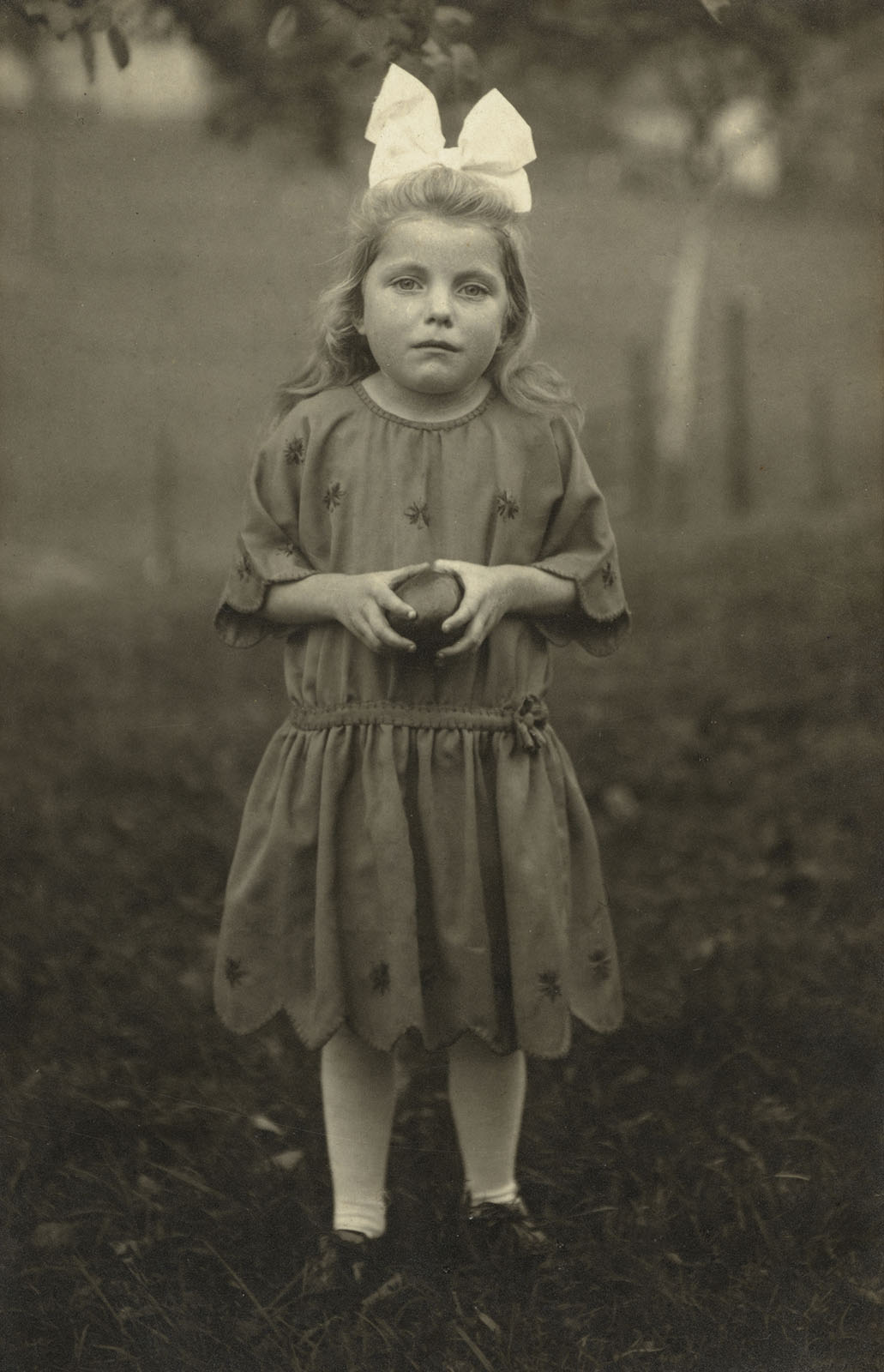
August Sander (German, 1876-1964)
Girl with Ball (Mädchen mit Ball)
1910s
Gelatin silver paper
10.7 x 6.9cm
Museum Ludwig, Cologne
Repro: Historisches Archiv mit Rheinischem Bildarchiv
© Die Photographische Sammlung/SK Stiftung Kultur-August Sander Archiv, Köln / VG Bild-Kunst, Bonn 2025
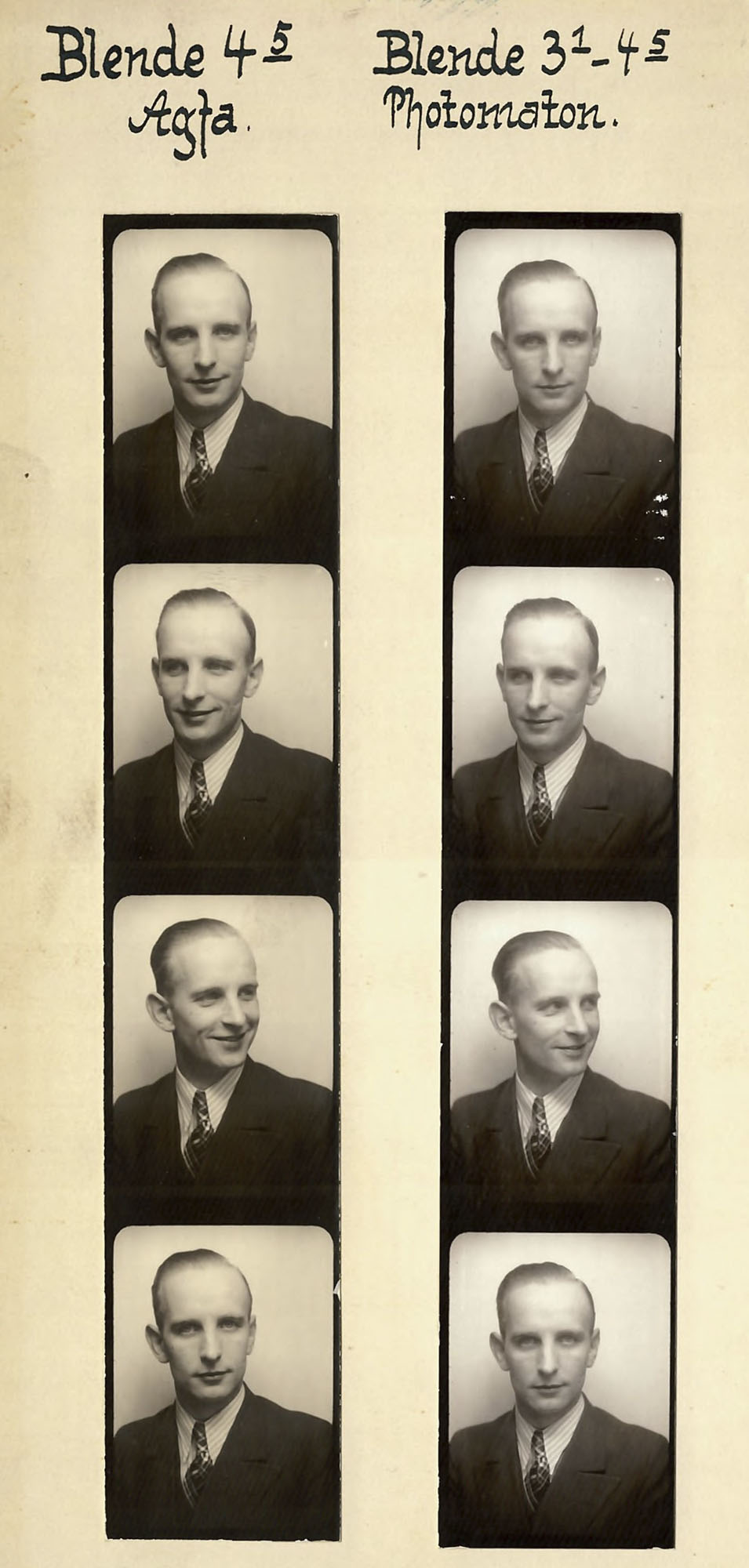
Test images from the photo booth, Kaufhof, Cologne
1920s
Gelatin silver paper
Archiv Museum Ludwig, Köln
The introduction of photo booths in the 1920s meant that portraits could be taken cheaply and without being observed by photographers, which encouraged people to experiment, as we can see in this test strip taken in a Cologne department store.
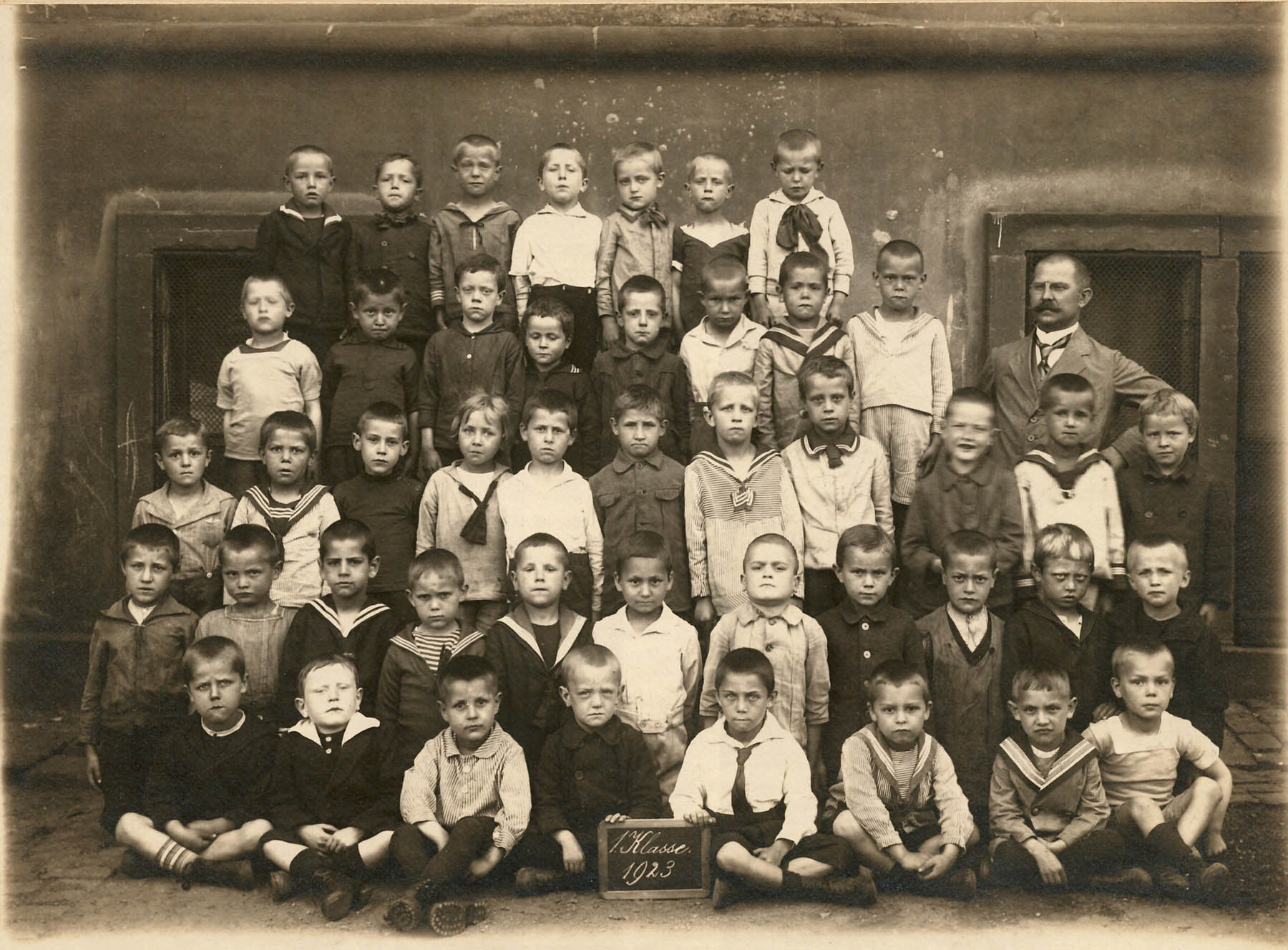
Unknown photographer
Class photo
1923
Archive Museum Ludwig
A comparative study of school photographs in the USA showed that the corners of the mouth have been rising steadily in portraits since 1900. A comparison of two class photos from the Museum Ludwig archive, taken forty years apart, confirms this: whereas in 1923 the expressions were still serious, in 1963 there are smiling faces. However, the US study also showed that girls and women smile significantly more than boys and men. “Photography faces,” whether they smile or not, are culturally formed faces.
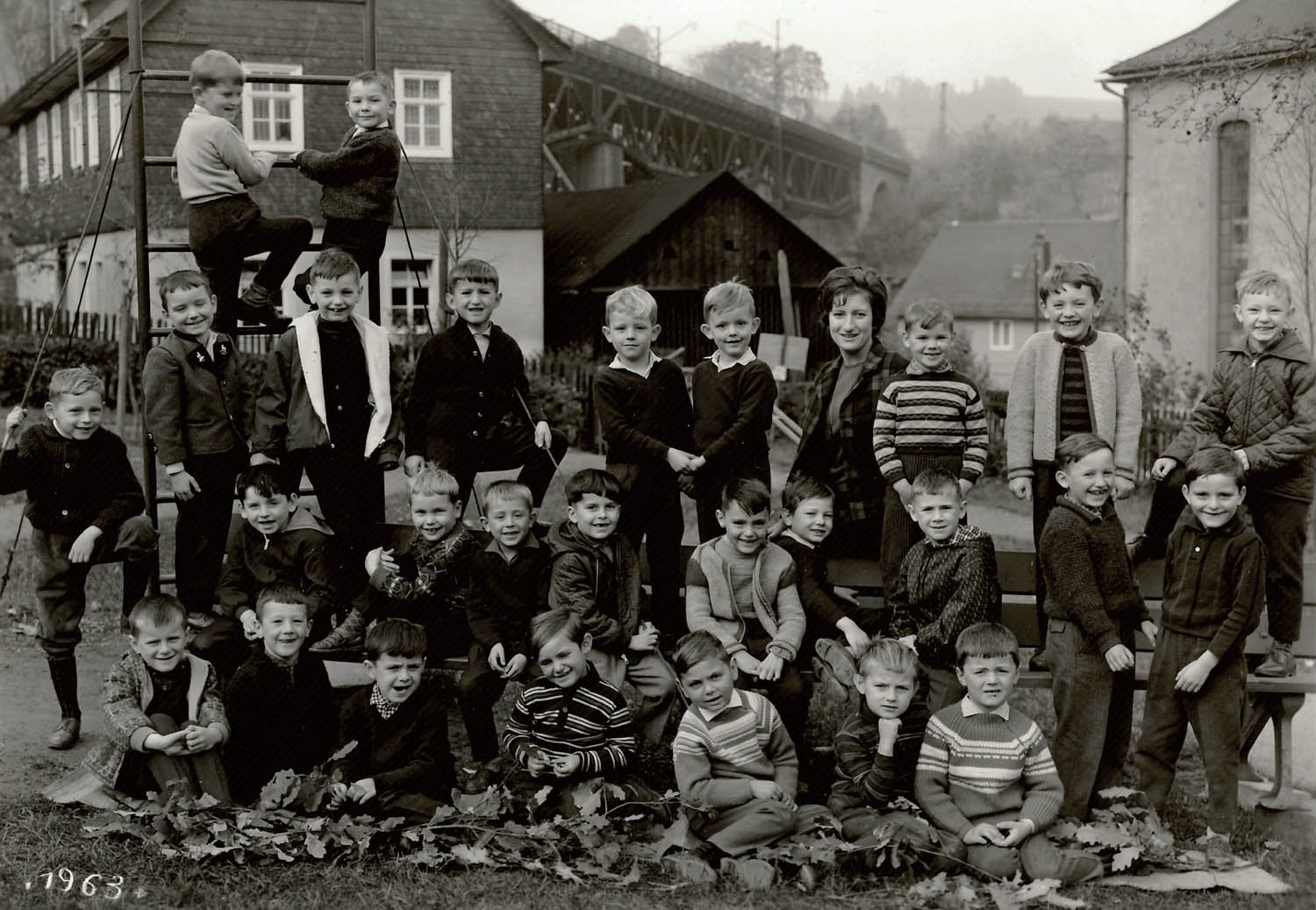
Unknown photographer
Class photo
1963
Archive Museum Ludwig
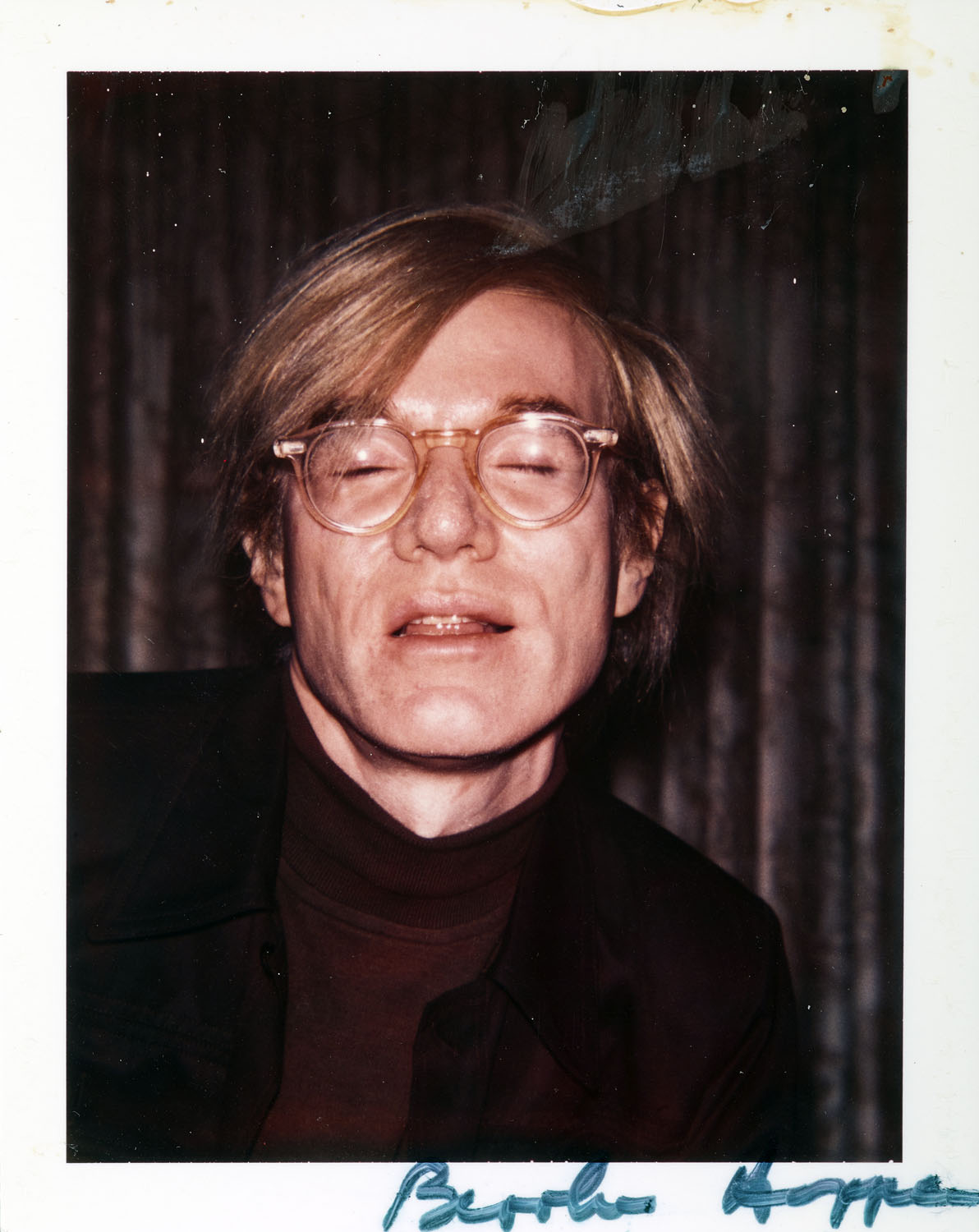
Andy Warhol (American, 1928-1987)
Warhol, Andy
1972
Polaroid
10.8 x 8.6cm
Museum Ludwig, Cologne
Repro: Historisches Archiv mit Rheinischem Bildarchiv
©2025 The Andy Warhol Foundation for the Visual Arts, Inc. / Licensed by Artists Rights Society (ARS), New York
Andy Warhol experimented early on with the Polaroid instant camera. He photographed himself as well as visitors to his studio, The Factory, in New York in the 1970s. He collected the snapshots in several photo albums. Their spontaneity is evident in the fact that they often appear flawed, whether because only the forehead is visible in the picture or because the face of the person portrayed is not yet a standard “photography face.”
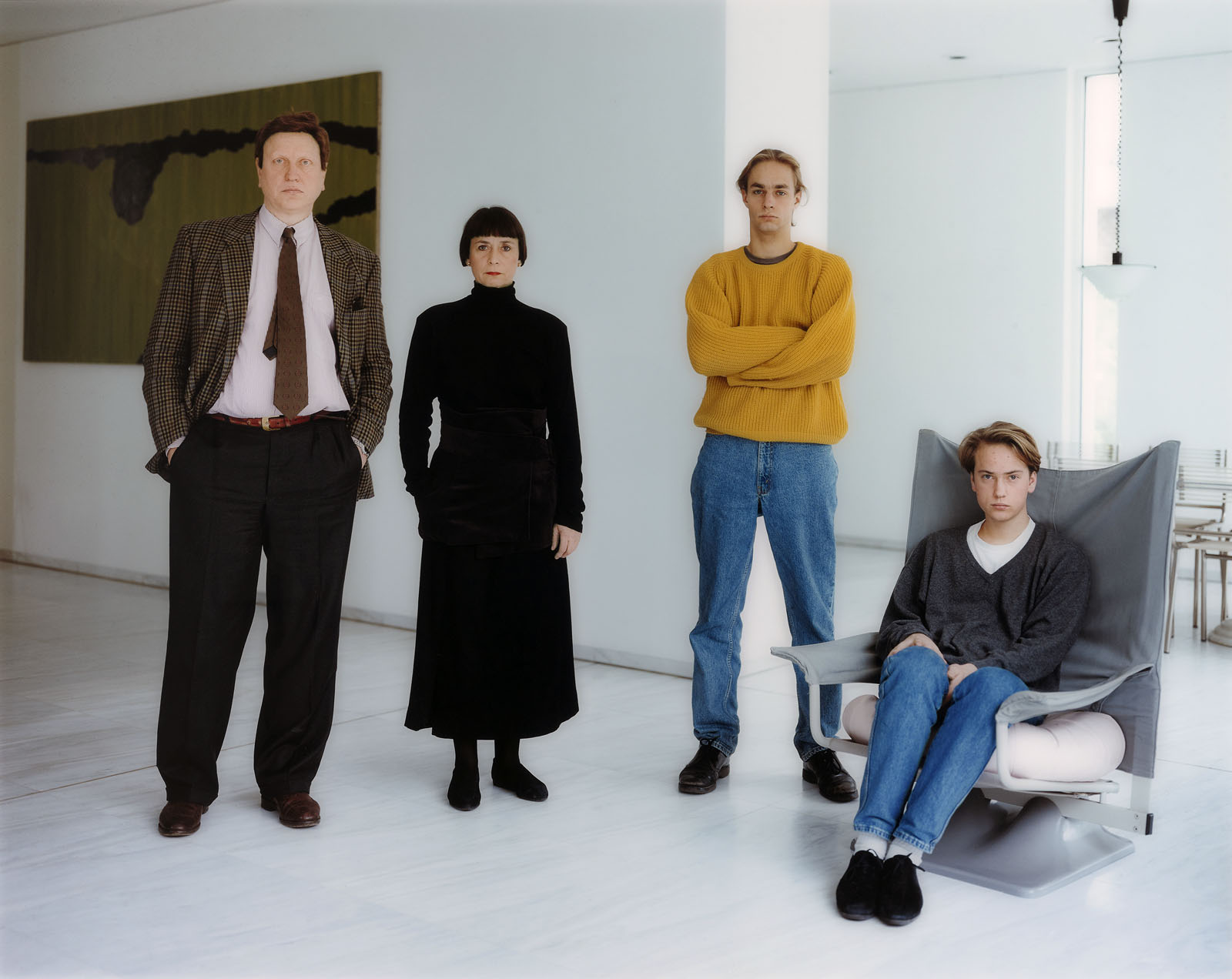
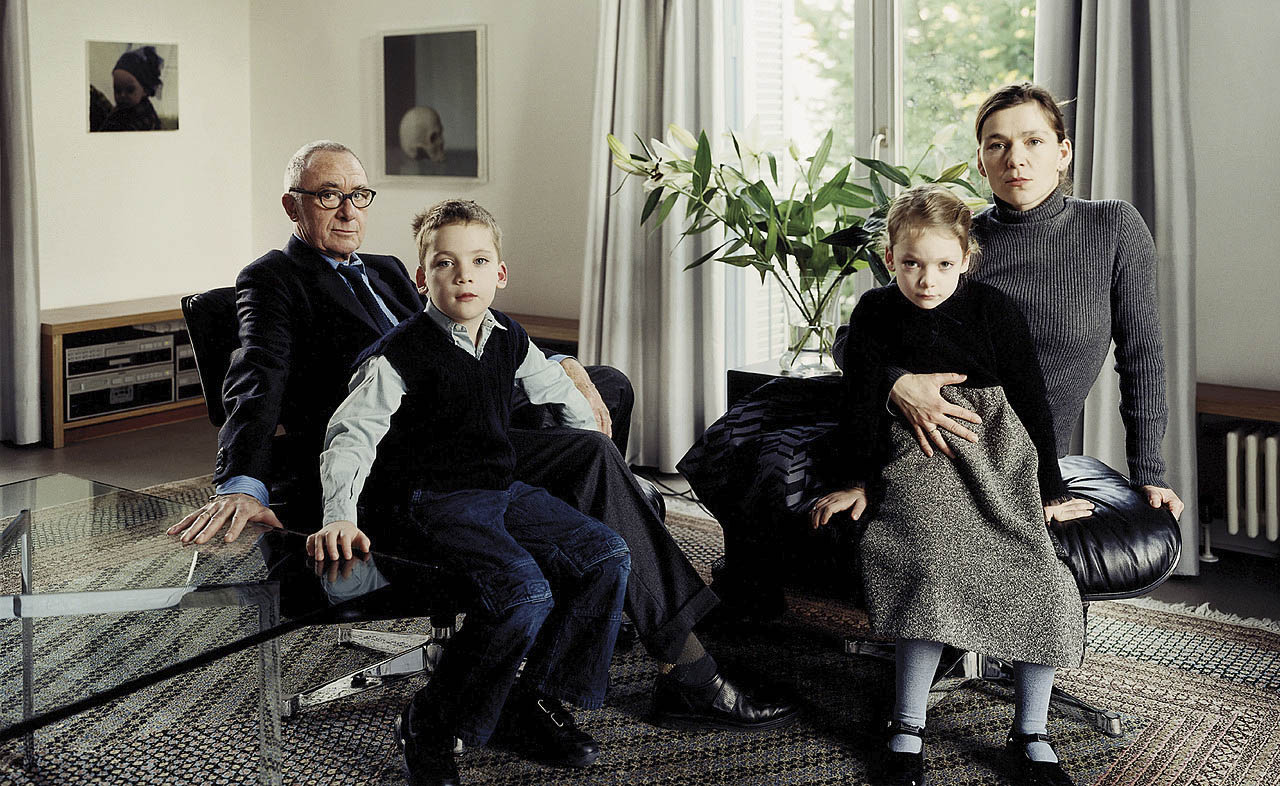
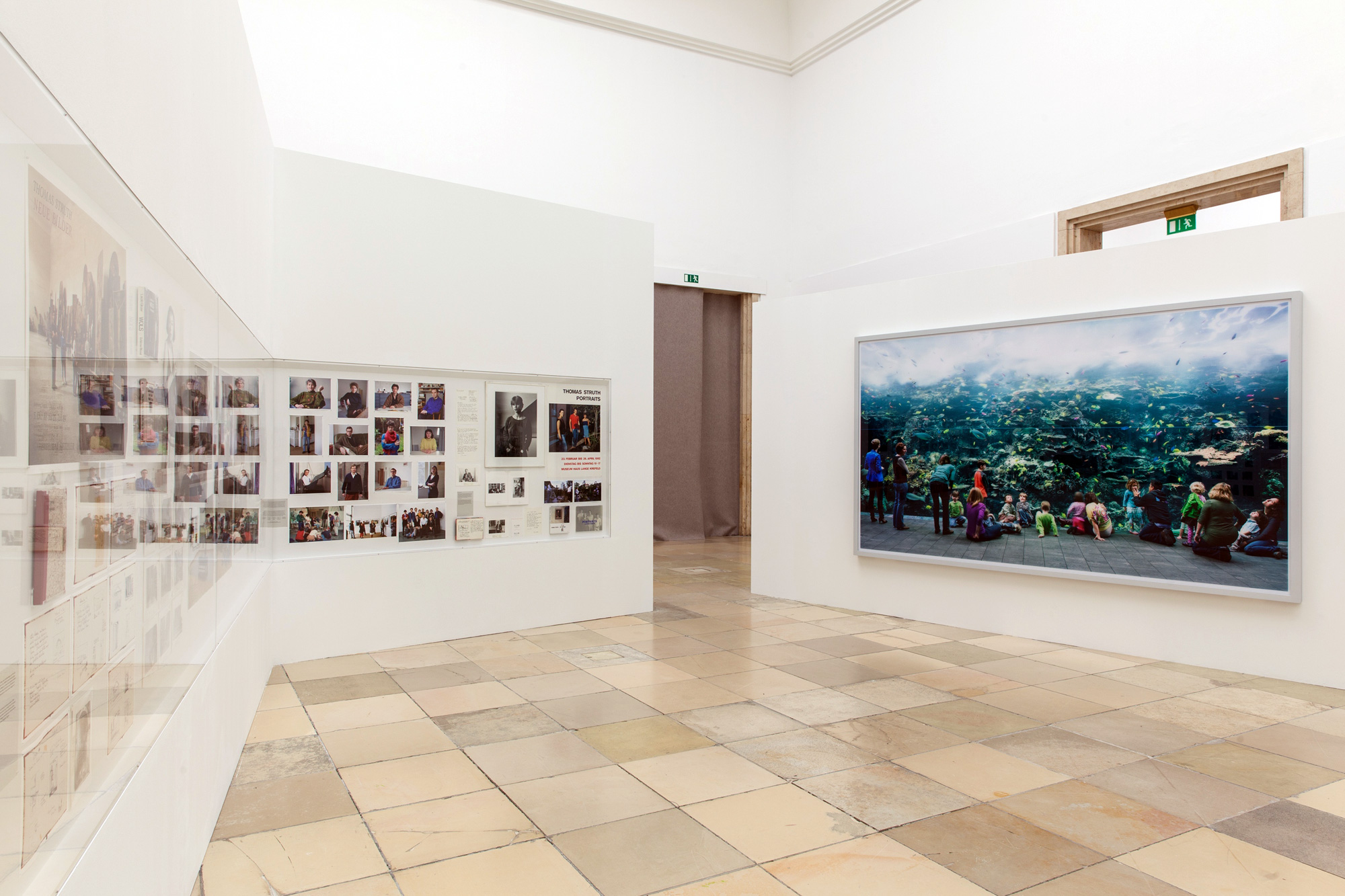
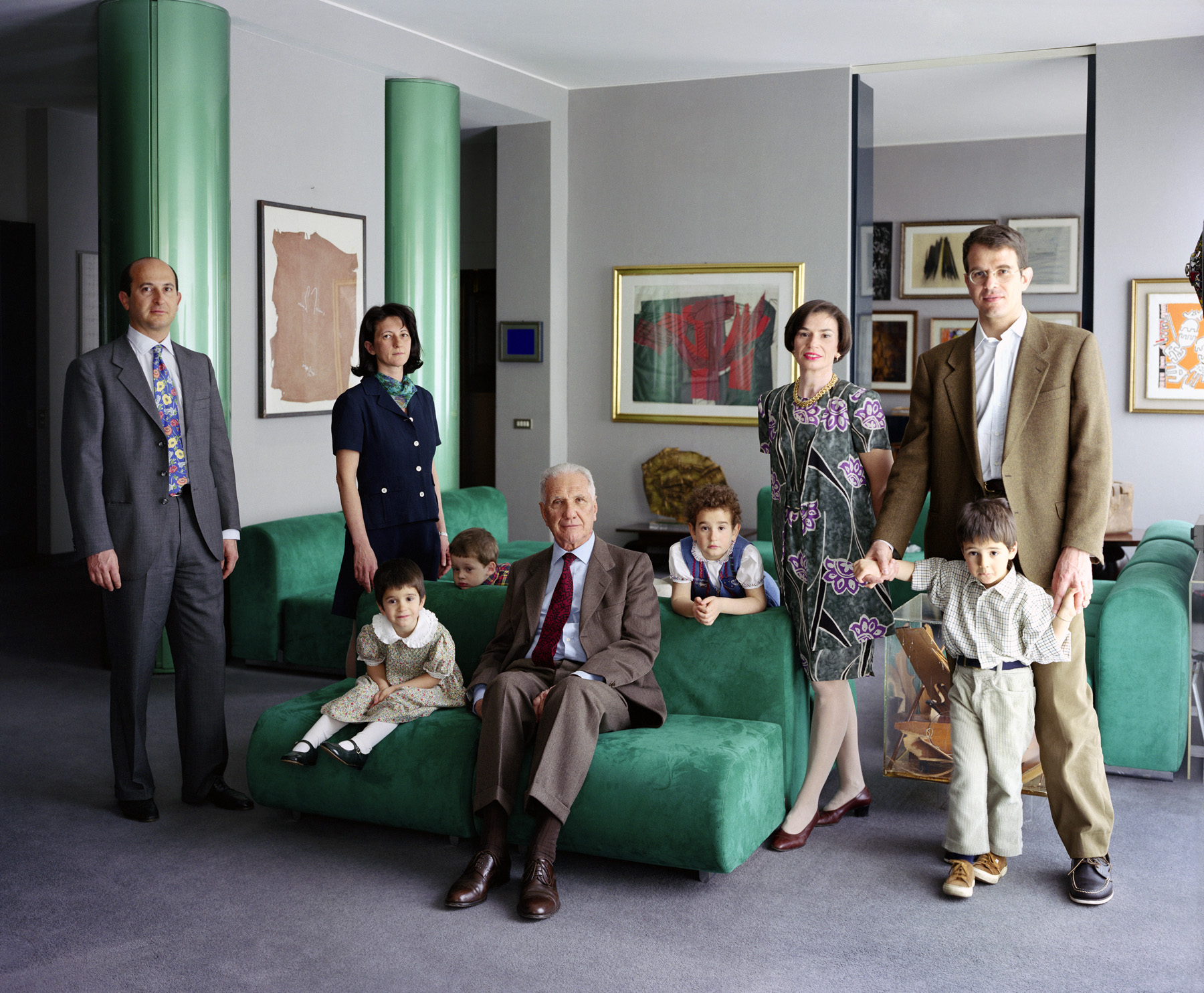
Thomas Struth (German, b. 1954)
The Schäfer Family, Meerbusch 1990
1990
C-print
166 x 198cm
Museum Ludwig, Cologne
Acquisition with the support of the Peter and Irene Ludwig Foundation
Repro: Historisches Archiv mit Rheinischem Bildarchiv
© Thomas Struth
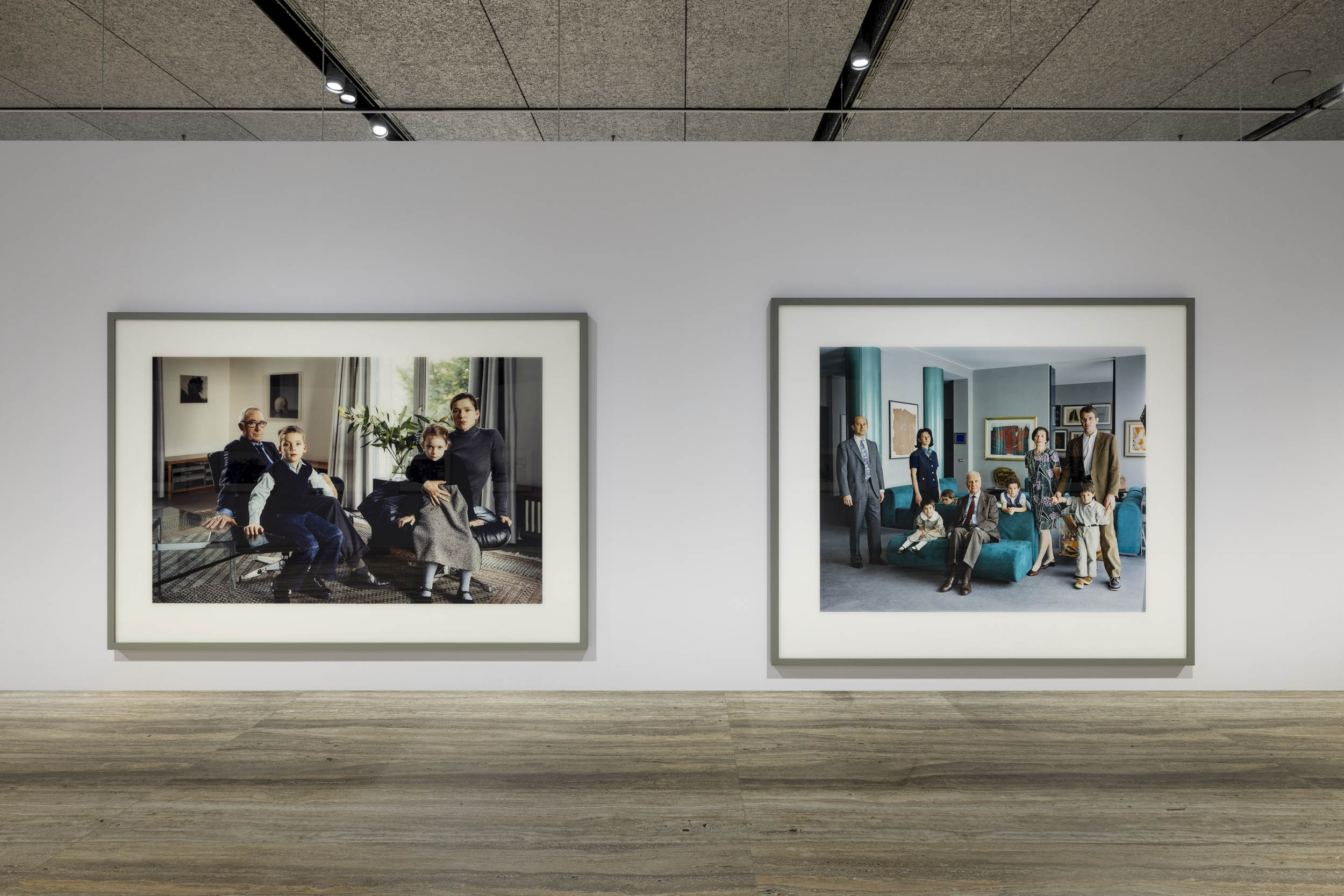
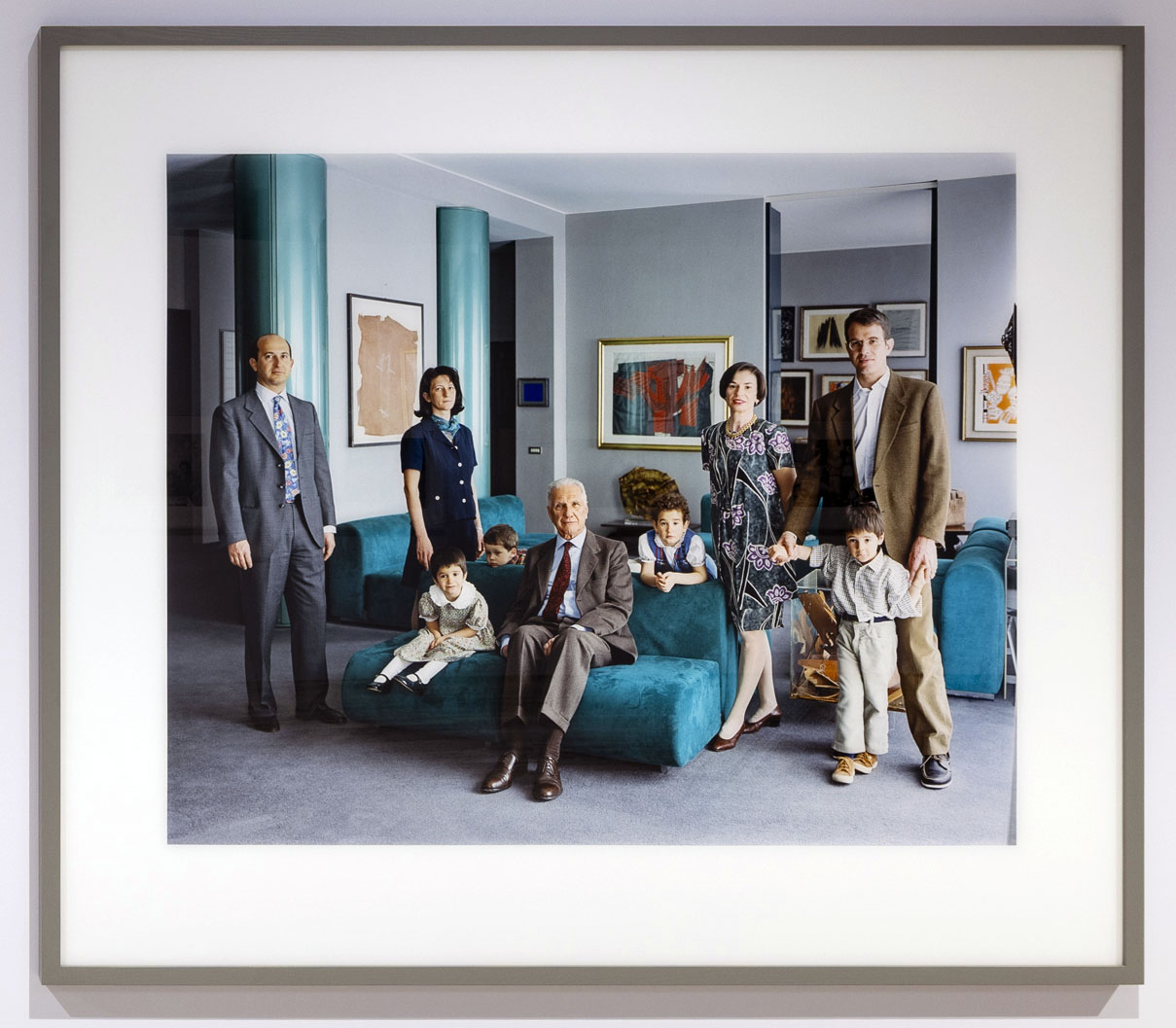
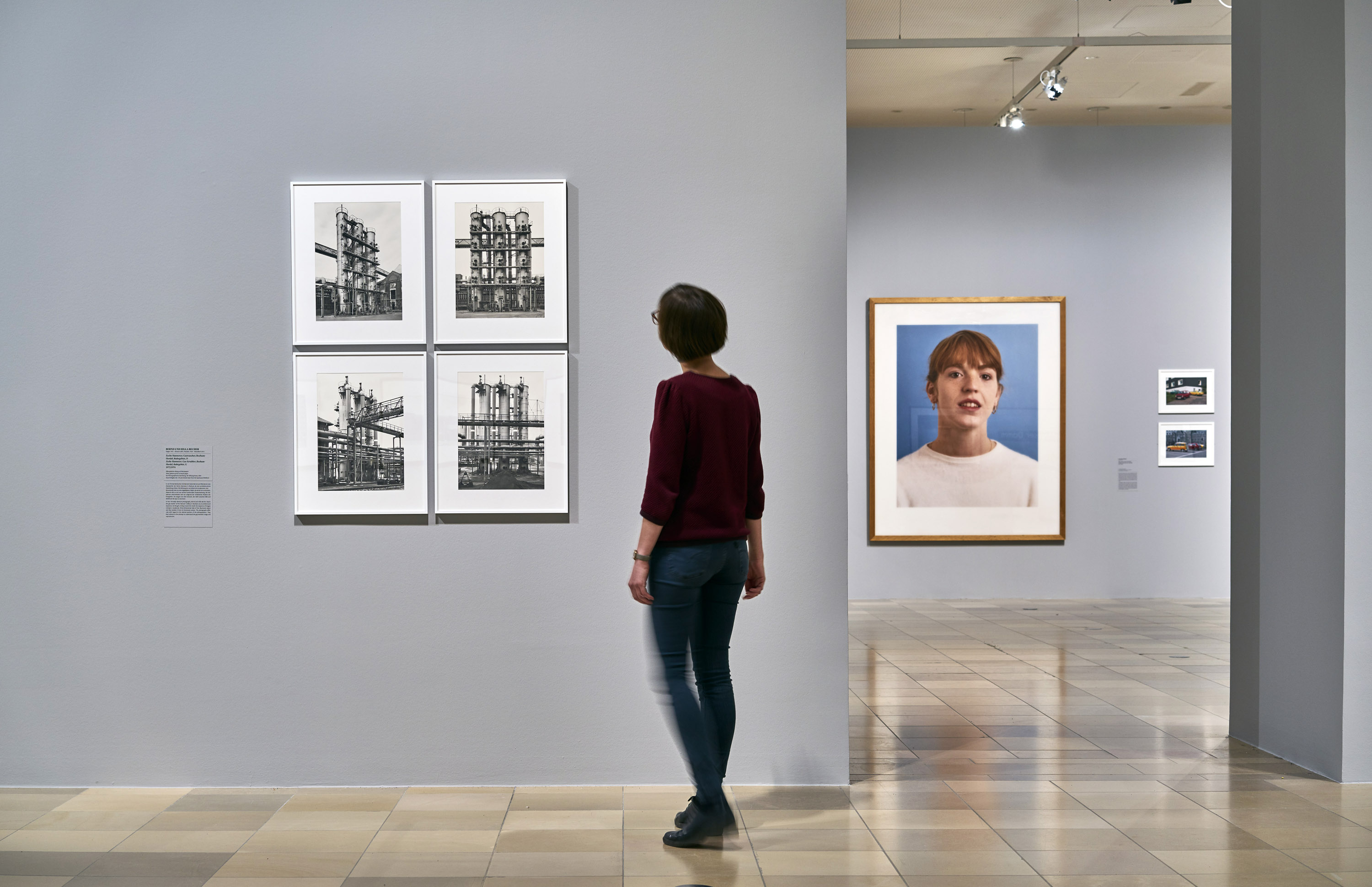
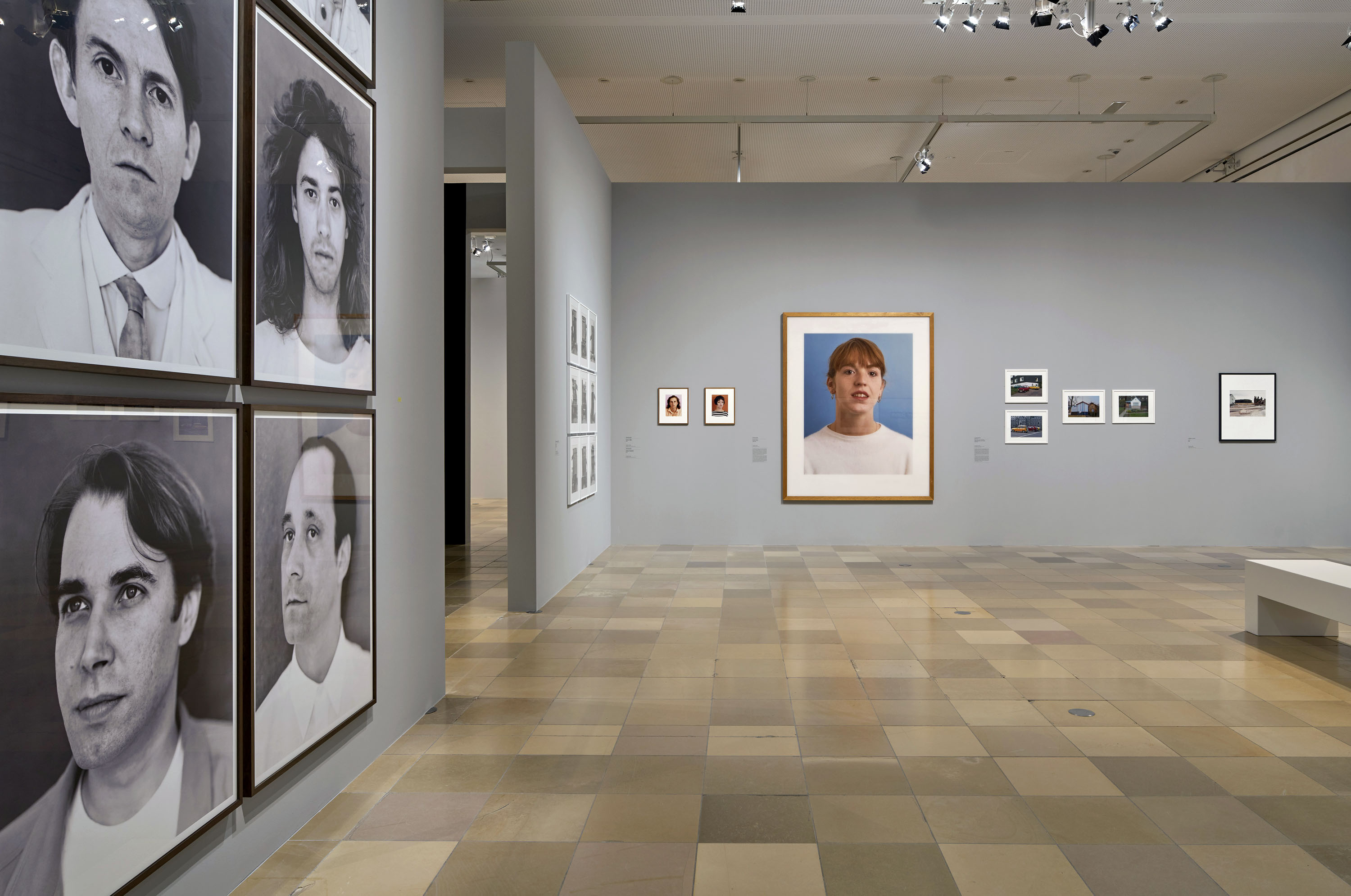
Since the 1980s, Thomas Struth has been photographing families from his circle in their familiar surroundings. While the people in his pictures choose their own clothing, gestures, and looks, he asks them not to smile for the camera. In an interview with the Süddeutsche Zeitung, the photographer explained this as follows: “It is often said that when everyone smiles, they all look the same. But they can’t all look different either. In my opinion, there are enough photos of people laughing.” Ann Katrin Harfensteller-Rufenach adds in her book Dazwischen-Sein. Familienporträts von Thomas Struth und jüngere Positionen in der Fotokunst in Deutschland (Being in Between: Family Portraits by Thomas Struth and Recent Positions in Photographic Art in Germany): “But the unusual size of the camera may also have been fascinating and encouraged an appealing facial expression.” In fact, Thomas Struth photographed this image with a large-format camera on a tripod, similar to the photographers of the 19th century.
Museum Ludwig
Heinrich-Böll-Platz, 50667 Köln, Germany
Opening hours:
Tuesday through Sunday: 10am – 6pm
![Heinrich Riebesehl (German, 1938-2010) 'Menschen Im Fahrstuhl, 20.11.1969' [People in the Elevator, 20.11.1969] 1969 from the exhibition 'Typologien: Photography in 20th-century Germany' at Fondazione Prada, Milan, April - July, 2025](https://artblart.com/wp-content/uploads/2025/06/2-typologien_heinrich-riebesehl_siae_sm.jpg "Heinrich Riebesehl (German, 1938-2010) 'Menschen Im Fahrstuhl, 20.11.1969' [People in the Elevator, 20.11.1969] 1969 from the exhibition 'Typologien: Photography in 20th-century Germany' at Fondazione Prada, Milan, April - July, 2025")
![Heinrich Riebesehl (German, 1938-2010) 'Menschen Im Fahrstuhl, 20.11.1969' [People in the Elevator, 20.11.1969] 1969](https://artblart.com/wp-content/uploads/2025/06/1-typologien_heinrich-riebesehl_siae_sm.jpg "Heinrich Riebesehl (German, 1938-2010) 'Menschen Im Fahrstuhl, 20.11.1969' [People in the Elevator, 20.11.1969] 1969")







![Hilla Becher (German, 1934-2015) 'Eichenblatt [Oak Leaf]' 1965](https://artblart.com/wp-content/uploads/2025/06/8-typologien_hilla-becher_sm.jpg "Hilla Becher (German, 1934-2015) 'Eichenblatt [Oak Leaf]' 1965")
![Karl Blossfeldt (German, 1865-1932) 'Adiantum pedatum, haarfarn, junge, noch eingerollte Wedel' [Maidenhair fern, young, still curled fronds] Nd](https://artblart.com/wp-content/uploads/2025/06/5-typologien_karl-blossfeldt_sm.jpg "Karl Blossfeldt (German, 1865-1932) 'Adiantum pedatum, haarfarn, junge, noch eingerollte Wedel' [Maidenhair fern, young, still curled fronds] Nd")


![August Sander (German, 1876-1964) 'Sekretärin beim Westdeutschen Rundfunk in Köln' [Secretary at West German Radio in Cologne] 1931-1950s](https://artblart.com/wp-content/uploads/2025/06/6-typologien_august-sander_siae_sm.jpg "August Sander (German, 1876-1964) 'Sekretärin beim Westdeutschen Rundfunk in Köln' [Secretary at West German Radio in Cologne] 1931-1950s")
![Erich Sander for August Sander's studio. 'Politischer Häftling' [Political Prisoner] 1941-1944 (print date late 1940s)](https://artblart.com/wp-content/uploads/2025/06/7-typologien_august-sander_siae_sm.jpg "Erich Sander for August Sander's studio. 'Politischer Häftling' [Political Prisoner] 1941-1944 (print date late 1940s)")



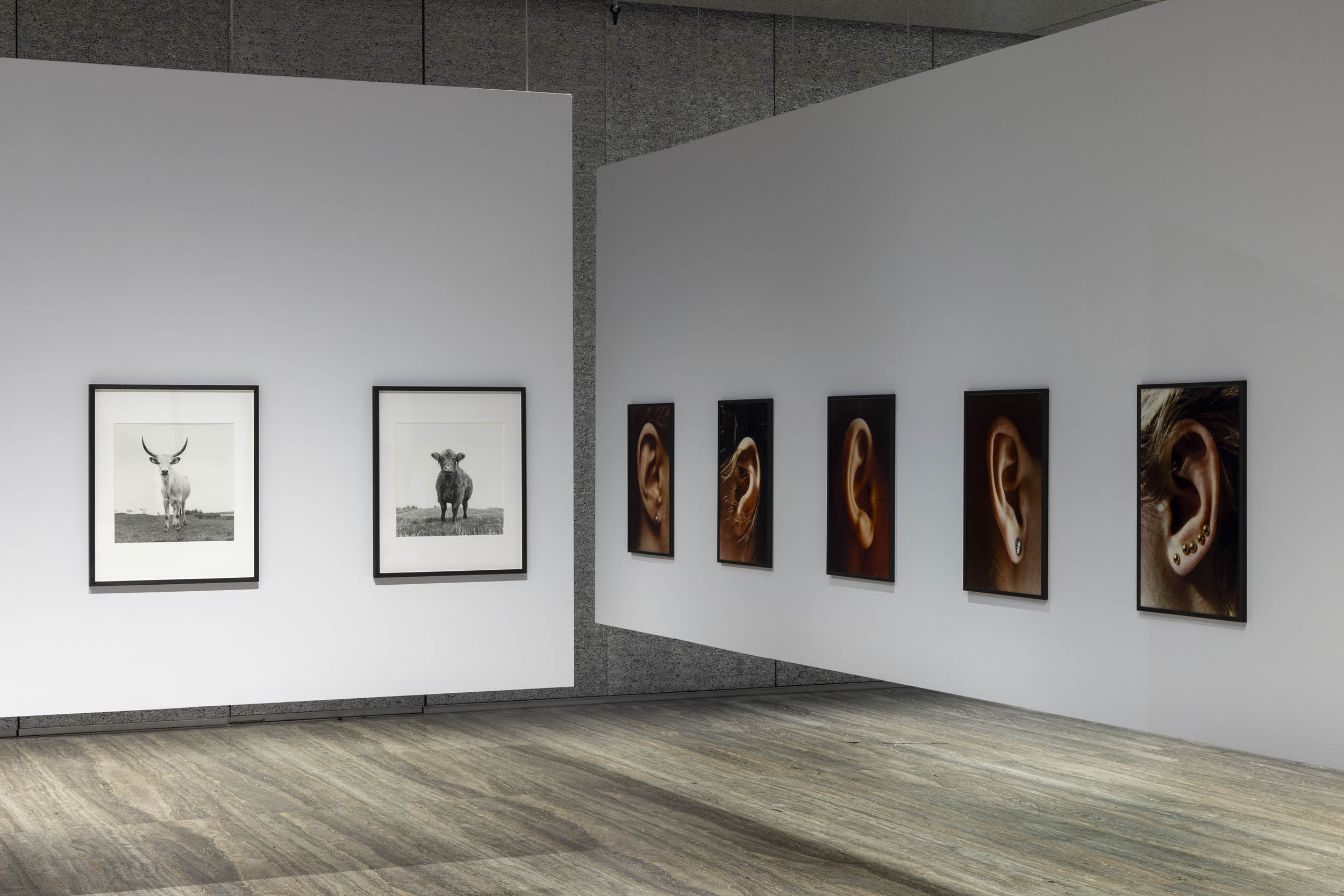
![Ursula Böhmer (German, b. 1965) 'Highland Grampians / Scotland [All Ladies – Cows in Europe]' 2011](https://artblart.com/wp-content/uploads/2025/06/21-typologien_ursula-bohmer_sm.jpg "Ursula Böhmer (German, b. 1965) 'Highland Grampians / Scotland [All Ladies – Cows in Europe]' 2011")
![Lotte Jacobi (American born Poland, 1896-1990) 'Folkwang-Auriga-Verlag, Orch 152. Neottia nidus avis. Vogel-Nestwurz, einzelne Blüte' [Bird's-nest orchid, single flower] c. 1930](https://artblart.com/wp-content/uploads/2025/06/4-typologien_lotte-jacobi_sm.jpg "Lotte Jacobi (American born Poland, 1896-1990) 'Folkwang-Auriga-Verlag, Orch 152. Neottia nidus avis. Vogel-Nestwurz, einzelne Blüte' [Bird's-nest orchid, single flower] c. 1930")













































![August Sander (German, 1876-1964) 'Stadtwald [Urban Forest]' c. 1938 from the exhibition 'People In A River Landscape: August Sander And The Photography Of The Present From The Lothar Schirmer Collection' at the Pinakothek der Moderne, Munich, April - August, 2014](https://artblart.com/wp-content/uploads/2014/08/sander-stadtwald-web.jpg "August Sander (German, 1876-1964) 'Stadtwald [Urban Forest]' c. 1938 from the exhibition 'People In A River Landscape: August Sander And The Photography Of The Present From The Lothar Schirmer Collection' at the Pinakothek der Moderne, Munich, April - August, 2014")



![August Sander (German, 1876-1964) 'Handlanger [Odd-job man]' 1928](https://artblart.com/wp-content/uploads/2014/08/sander-handlanger-web.jpg "August Sander (German, 1876-1964) 'Handlanger [Odd-job man]' 1928")

![August Sander (German, 1876-1964) 'The Architect [Hans Poelzig]' 1929](https://artblart.com/wp-content/uploads/2014/08/sander-der-architekt-web.jpg "August Sander (German, 1876-1964) 'The Architect [Hans Poelzig]' 1929")
![Thomas Ruff (German, b. 1958) 'Portrait (T. Ruff)' [Selfportrait] 1987](https://artblart.com/wp-content/uploads/2014/08/ruff-self-portrait-web.jpg "Thomas Ruff (German, b. 1958) 'Portrait (T. Ruff)' [Selfportrait] 1987")
![August Sander (German, 1876-1964) 'Der erdgebundene Mensch' [The Earthbound Human] 1910](https://artblart.com/wp-content/uploads/2014/08/sander-der-erdgebundene-mensch-web.jpg "August Sander (German, 1876-1964) 'Der erdgebundene Mensch' [The Earthbound Human] 1910")
![August Sander (German, 1876-1964) 'Bauernpaar – Zucht und Harmonie' [Peasant Couple – Breeding and Harmony] 1912](https://artblart.com/wp-content/uploads/2014/08/sander-bauernpaar-web.jpg "August Sander (German, 1876-1964) 'Bauernpaar – Zucht und Harmonie' [Peasant Couple – Breeding and Harmony] 1912")
![August Sander (German, 1876-1964) 'Painter [Heinrich Hoerle]' 1928](https://artblart.com/wp-content/uploads/2014/08/sander-maler-web.jpg "August Sander (German, 1876-1964) 'Painter [Heinrich Hoerle]' 1928")




 Art Blart _ art and cultural memory archive
You must be logged in to post a comment.