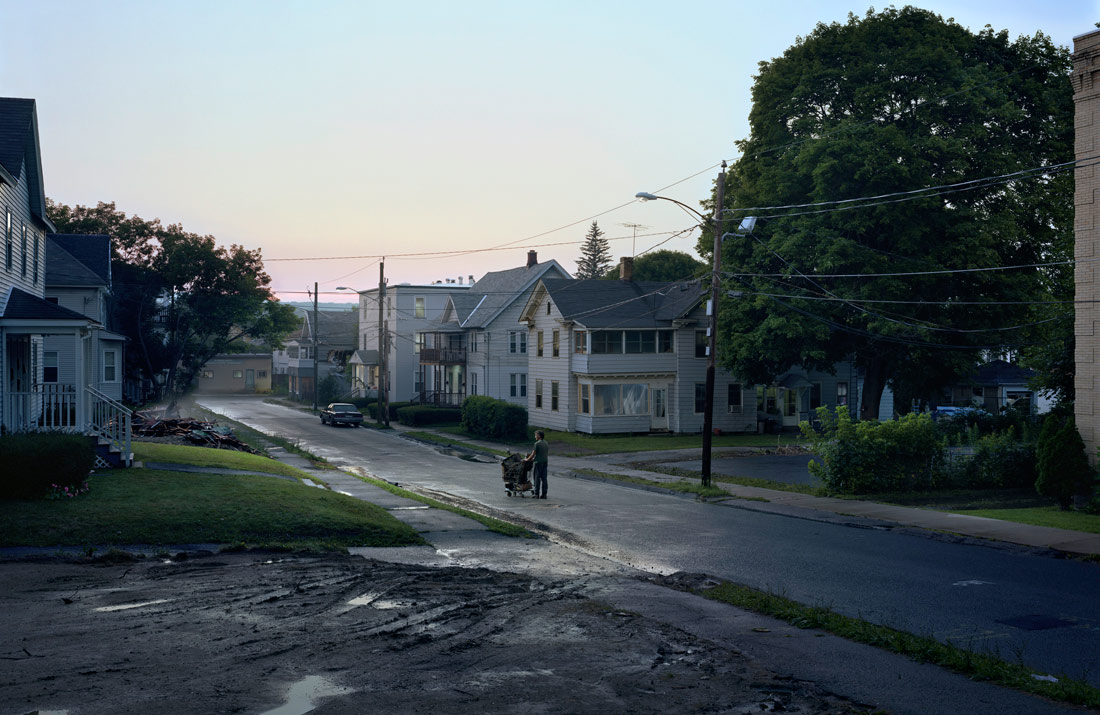
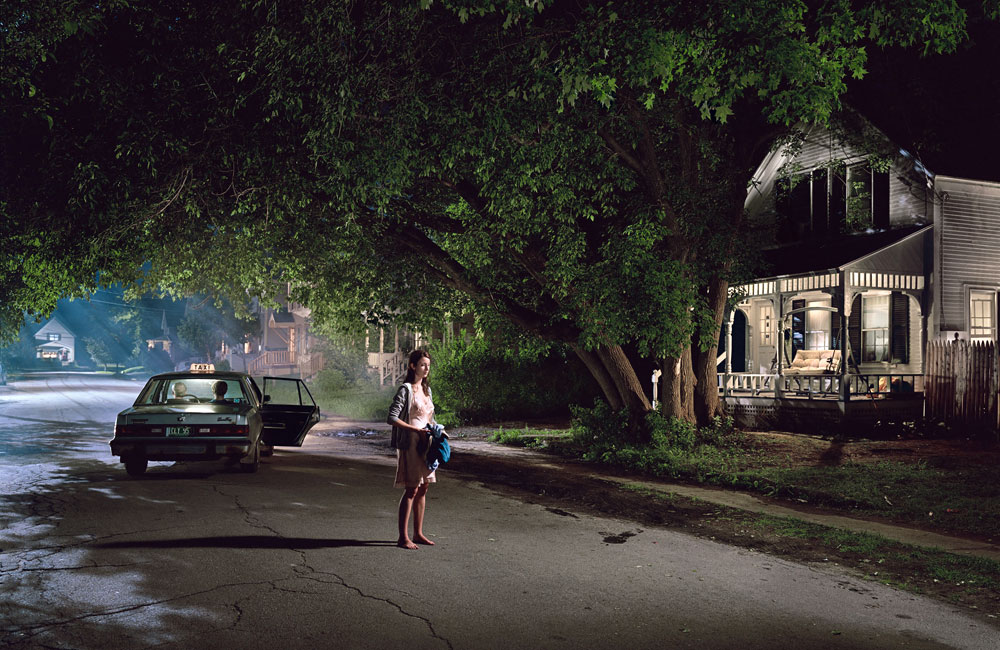
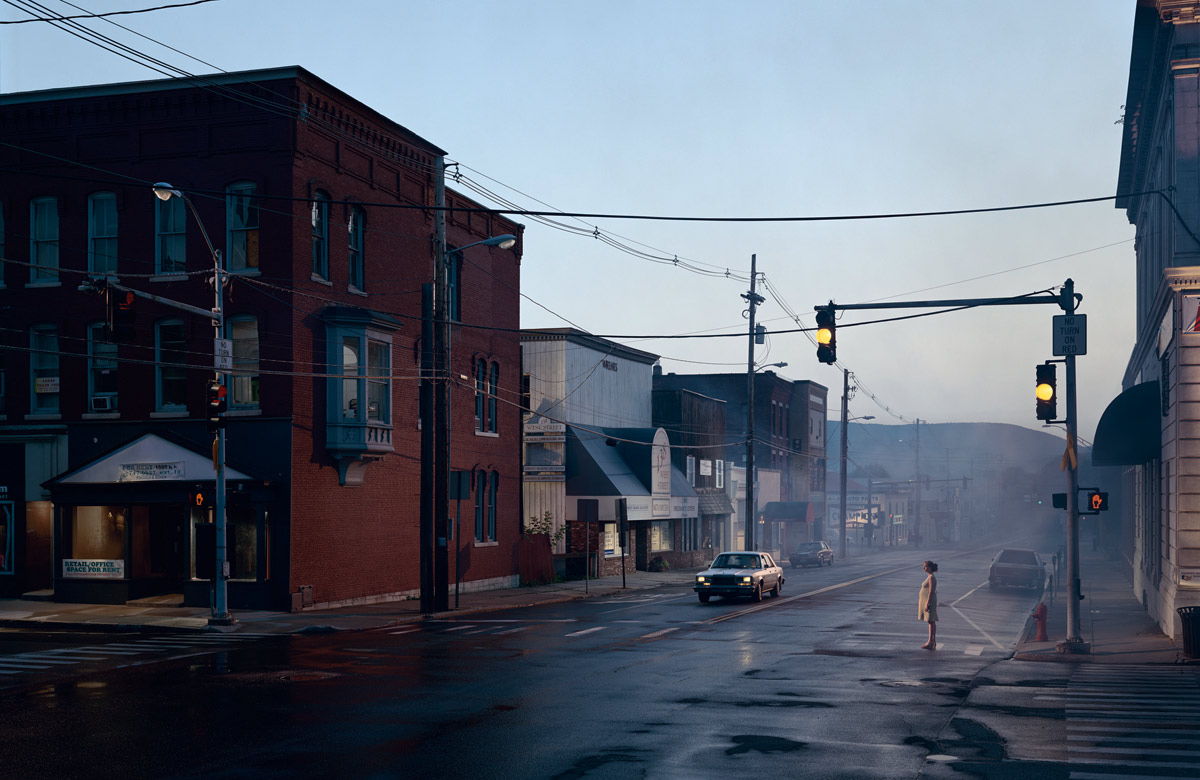
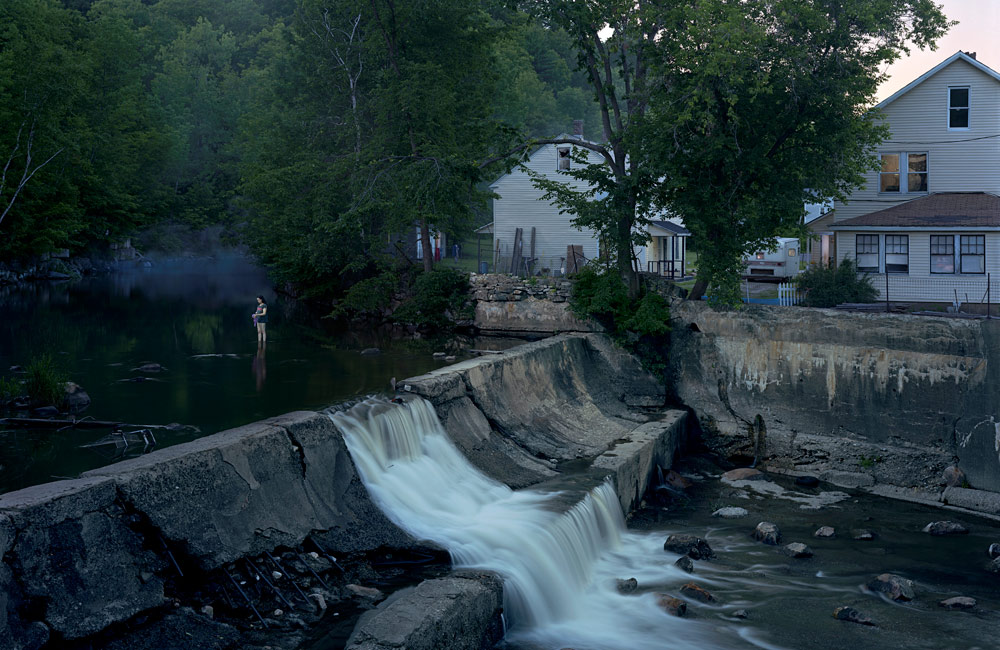
Exhibition: ‘Suburbia. Building the American Dream’ at the Centre de Cultura Contemporània de Barcelona | CCCB

Exhibition dates: 20th March – 8th September 2024

Curators: Philipp Engel and Francesc Muñoz


'Suburbia. Building the American Dream' exhibition poster


Suburbia. Building the American Dream exhibition poster


An offer you can’t refuse

“The “American dream” can be summed up in a mental image that seems frozen in time: a home of one’s own, surrounded by lawns, with a pool in the back garden and a couple of cars slumbering in the garage… Suburbia. Building the American Dream draws us into the imaginary of the idyllic family home and shows how this lifestyle has been sold and promoted by fiction and the entertainment industry.” (Text from the CCCB website)


To me, there has always be something slightly askew, slightly out of kilter about the “American dream”. It promotes a generalised simulation of a imaginary reality, sold as a lifestyle, more fiction than fact. It is the ghost of desire that haunts the everyday reality of life, entirely on the side of demand: I want therefore I must have.

This desire must be satiated in the nuclear family, the white picket fence, the idyllic family home, the loveable children – as much a surface that reflects the approbation of others as for the sustenance of the self. As Anthony Giddens observes we are inescapably involved in a

“‘reflexive project of the self’: this project is reflexive because it involves unremitting self-monitoring, self-scrutiny, planning and ordering of all elements of our lives appearances and performances in order to marshal them into a coherent narrative called ‘the self’. We have to interpret the past and plan the future in relation to an identity we are attempting to constitute in a particularly immediate and transient social present. Consumerism is central to this self-obsession. This is partly because we not only have to choose a self, but (as Foucault’s line of argument also indicates) have to constitute ourselves as a self who choses, a consumer.”1


The American Dream endeavours to direct the identity we are attempting to constitute (through consumerism), so that it fits into a particularly conformist idea of a wholesome life: patriarchal, hegemonic, puritan (most important in America), god fearing, white – a particularly hyperreal simulation of a world that never existed in the first place. An imaginary construction.2

Photographs reinforce this “imaginary” state of being, this desire for the American Dream. As the wonderful Victor Burgin observes,

“The structure of presentation – point-of-view and frame – is intimately implicated in the reproduction of ideology (the ‘frame of mind’ of our ‘points-of-view’). More than any other textual system, the photograph presents itself as ‘an offer you can’t refuse’. The characteristics of the photographic apparatus position the subject in such a way that the object photographed serves to conceal the textuality of the photograph itself – substituting passive receptivity for active (critical) reading. … With most photographs we see, […] decoding and investiture takes place instantaneously, unselfconsciously, ‘naturally’; but it does take place – the wholeness, coherence, identity, which we attribute to the depicted scene is a projection, a refusal of an impoverished reality in favour of an imaginary plenitude. The imaginary object here, however, is not ‘imaginary’ [as in fictive] in the usual sense of the word, it is seen, it has a projected image.”3 (My bold and italics)


The photographs of the American Dream, then, deny an impoverished reality in favour of a desired imaginary plenitude. You too can live the dream, because you have seen the evidence of the projected image, and this imaginary identification can have very real effects.

In the desire for the dream we witness (elsewhere in the world) the egocentric obsession of some of the builders in the British series “Grand Designs” where people mortgage themselves up to the hilt, become sick, have marriage breakdowns and can’t finish the project, because of a dream… to build huge houses with 7 bedrooms and 4 bathrooms that no one in their right mind needs to build for 2 people. Or the case of the Australian Melissa Caddick who, in a Ponzi scheme stole A$30 million from investors, including her friends and family, in order to appear a successful business woman. “Caddick used the proceeds of her crimes to acquire “all the trappings of wealth” and that her “success was all a façade and the financial services business was an elaborate front for Ms. Caddick’s Ponzi scheme”.”4

Ego is reinforced by the image reflected back to us by the photograph.

Christopher Lasch comments that, “The proliferation of recorded images undermines our sense of reality. As Susan Sontag observes in her study of photography, “Reality has come to seem more and more like what we are shown by cameras.” We distrust our perceptions until the camera verifies them. Photographic images provide us with the proof of our existence, without which we would find it difficult even to reconstruct a personal history…”5

Photographs posit a reality that promotes the dream, that verifies the dream, as ‘an offer you can’t refuse’.

Thankfully, some of the contemporary artists in this posting (I particularly like the work of Weronika Gęsicka) undermine the utopian ideal through wit, humour and critical inquiry.

Dr Marcus Bunyan


1/ Anthony Giddens. Modernity and Self-Identity: Self and Society in the Late Modern Age. Polity Press, Cambridge, 1991

2/ “In sociology, the imaginary as a Lacanian term refers to an illusion and fascination with an image of the body as coherent unity, deriving from the dual relationship between the ego and the specular or mirror image… “The term ‘imaginary’ is obviously cognate with ‘fictive’ but in its Lacanian sense it is not simply synonymous with fictional or unreal; on the contrary, imaginary identifications can have very real effects.””

David Macey, “Introduction”, Jacques Lacan, The Four Fundamental Concepts of Psycho-Analysis. London, 1994, p. xxi  quoted in “Imaginary (sociology)” on the Wikipedia website [Online] Cited 01/09/2024

3/ Victor Burgin (ed.,). Thinking Photography. Macmillan, Basingstoke, 1982, pp. 146-148.

4/ Farid Assaf SC quoted in Kate McClymont. “Melissa Caddick’s ‘trappings of wealth’ a front for her Ponzi scheme”. The Sydney Morning Herald 29 June 2021 in “Melissa Caddick,” on the Wikipedia website [Online] Cited 01/09/2024

5/ Christopher Lasch. The Culture of Narcissism. W.W.Norton and Company, New York, 1978, p. 48.


Many thankx to the Centre de Cultura Contemporània de Barcelona for allowing me to publish the photographs in the posting. Please click on the photographs for a larger version of the image.


Inside the exhibition: Suburbia. Building the American Dream 

Philipp Engel, curator of the exhibition “Suburbia”, examines the origin and vast expansion of residential neighbourhoods in the United States, an urban model centred on constructing large swathes of single-family homes on the outskirts of cities. Engel reflects on the allure that suburban landscapes have stirred in Western culture while highlighting the main issues and contradictions of the model, including segregation, safety paranoia and unsustainable consumption of water and energy.


Introduction
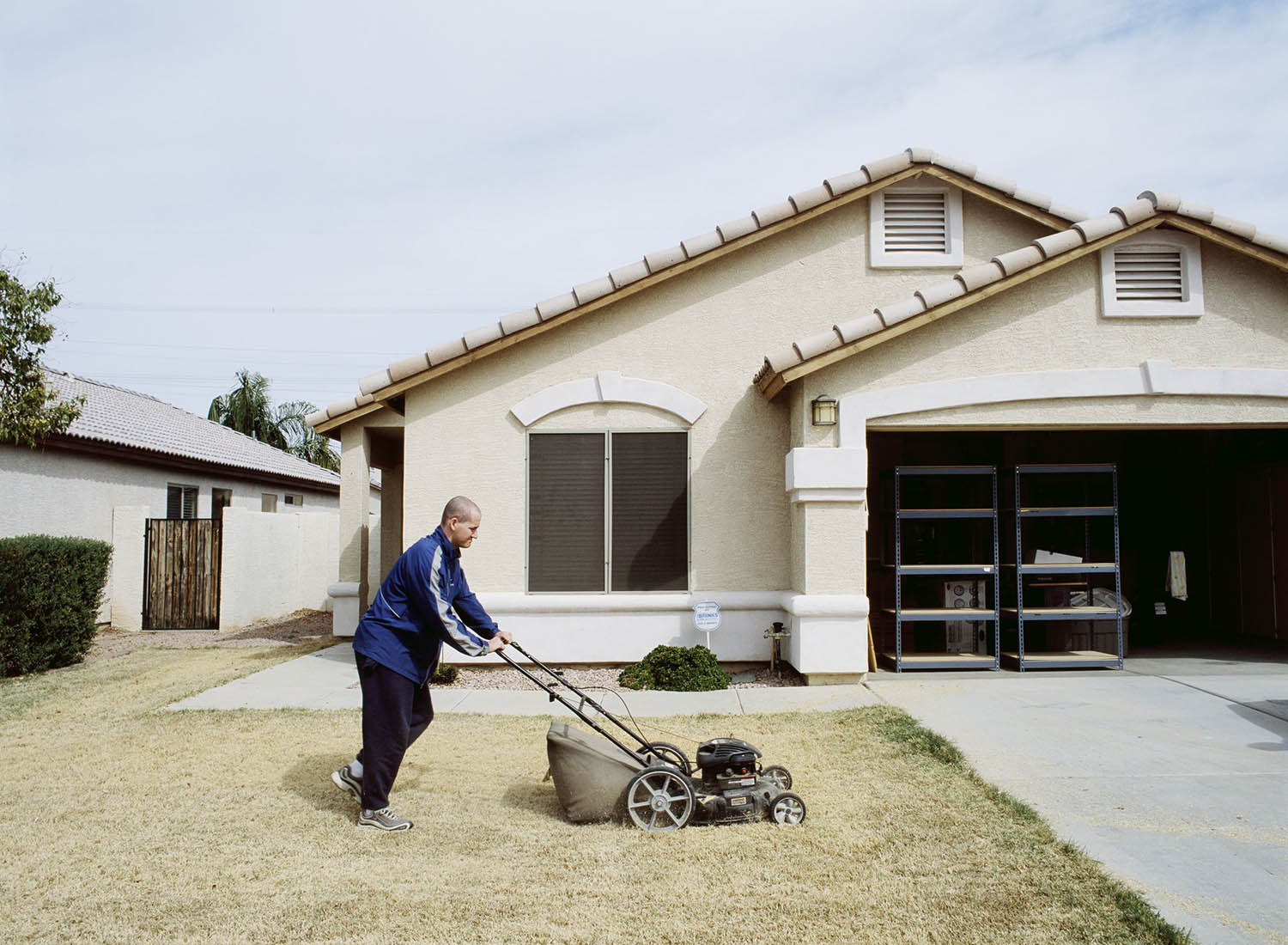
Greg Stimac (American, b. 1976) 'Chandler, Arizona' 2006 From 'Mowing the Lawn' portfolio


Greg Stimac (American, b. 1976)
Chandler, Arizona
2006
From Mowing the Lawn portfolio
Impressió digital Museum of Contemporary Photography, Columbia College Chicago


Who hasn’t longed for the American dream? A big house with a garden, a swimming pool and a couple of cars in the garage. A quiet, safe place to live as a family, close to nature in a people-friendly neighbourhood. This exhibition traces the cultural history of a lifestyle ideal that has been endlessly reproduced on television, in advertising and in cinema, and analyses the validity and the most controversial aspects of its urban planning model.

Suburbia. Building the American Dream draws us into the imaginary of the idyllic family home and shows how this lifestyle has been sold and promoted by fiction and the entertainment industry. The exhibition goes back to the origins of residential neighbourhoods in the early nineteenth century, explains how they developed massively in the 1950s, and reviews the economic, political and social context of their relentless expansion across the United States.

Now, when more and more families are pursuing their own version of the dream on the outskirts of cities, it is a good moment to analyse the contradictions of an urban planning model based on social, ethnic and gender segregation.

The dream of living in a house with a swimming pool is still very much alive today and has been exported all over the world. The exhibition shows the impact of this highly unsustainable model, based on constant car use, with examples of developments around Barcelona and Madrid.

With abundant historical material, period documentaries, photographs, paintings, films and series, novels and magazines, works of art and everyday objects, the exhibition places us in the mental paradise of the suburb and invites us to rethink the value of the city and public space today.

Suburbia. Building the American Dream presents the work of foremost creators who, from different points of view, help us to take a critical look at the famed American way of life: Jessica Chou, Gregory Crewdson, Thomas Doyle, Gerard Freixes, Rodrigo Fresán, Gabriele Galimberti, Weronika Gesicka, Benjamin Grant, Todd Hido, Joel Meyerowitz, Matthias Müller, Blanca Munt, Alberto Ortega, Bill Owens, Sheila Pree Bright, León Siminiani, Todd Solondz, Amy Stein, Greg Stimac, Angela Strassheim, Deborah Stratman, Ed & Deanna Templeton, Kate Wagner and Christopher Willan.

Text from the CCCB website
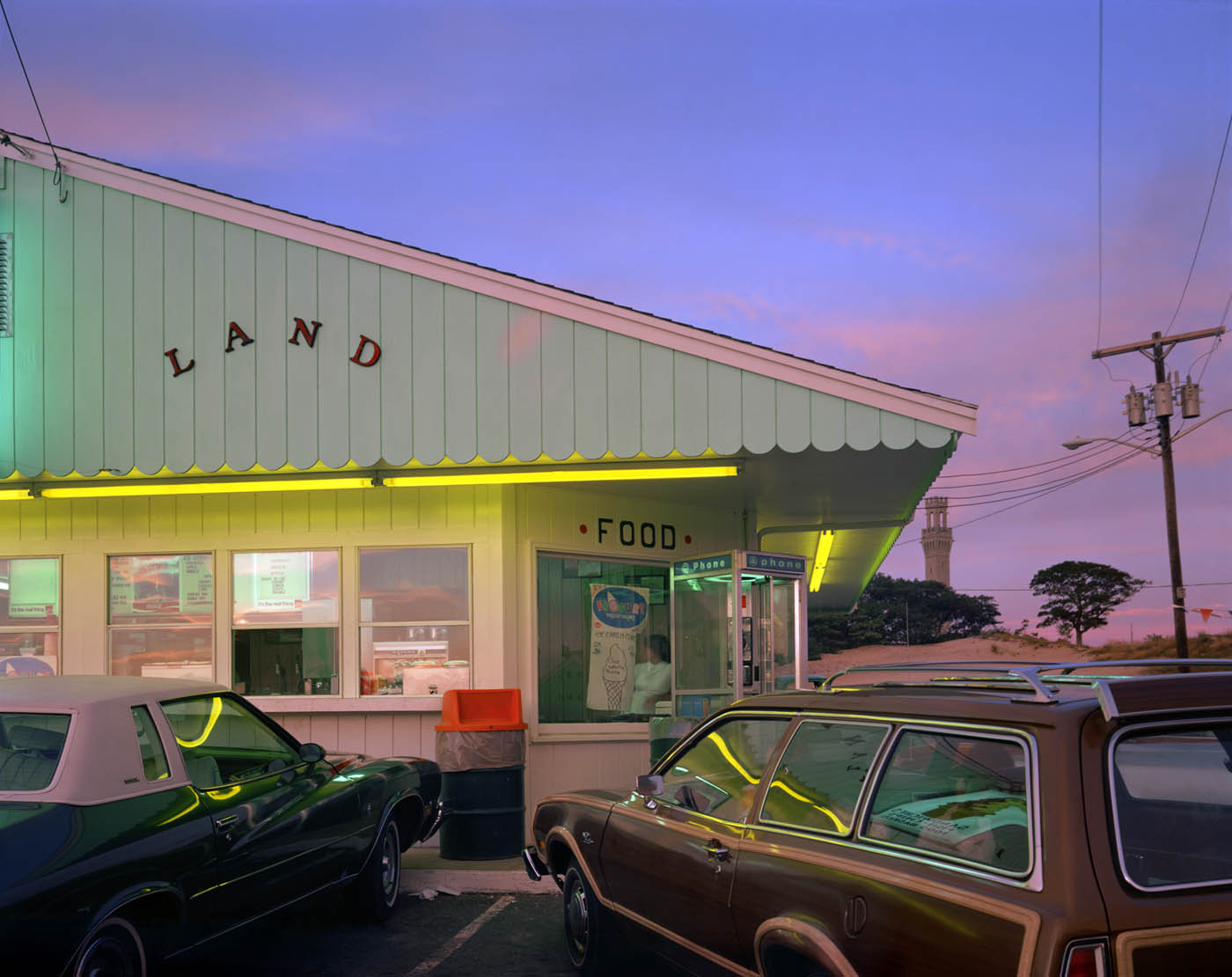
 

Joel Meyerowitz (American, b. 1938) 'Land. Provincetown' 1976


Joel Meyerowitz (American, b. 1938)
Land. Provincetown
1976
Archival pigment print
Collecció Pancho Saula i Michelle Ferrara / Galeria Alta, Andorra


Joel Meyerowitz (American, b. 1938) 'Dusk, New Jersey' 1978


Joel Meyerowitz (American, b. 1938)
Dusk. New Jersey
1978
Archival pigment print
Collecció Pancho Saula i Michelle Ferrara / Galeria Alta, Andorra


The “American dream” can be summed up in a mental image that seems frozen in time: a home of one’s own, surrounded by lawns, with a pool in the back garden and a couple of cars slumbering in the garage. Suburbia. Building the American Dream traces the cultural history of a lifestyle ideal shared far and wide by literature, television, advertising and cinema, and analyses the most controversial aspects of an urban planning model that has spread beyond US territory and reached our shores. Journalist Philipp Engel curates this exhibition with geographer Francesc Muñoz collaborating as adviser on the model in the local context.

Suburbia. Building the American Dream draws us into the imaginary of the idyllic family home and shows how this lifestyle has been sold and promoted by fiction and the entertainment industry. The exhibition goes back to the origins of residential neighbourhoods in the early nineteenth century, explains how they developed massively in the 1950s, and reviews the economic, political and social context of their relentless expansion across the United States.

Since the 1990s most of the American population has lived in this sprawling urban mass that has continued to spread, even beyond US borders. At a time when more and more families are pursuing their own version of the dream on city outskirts, the exhibition analyses the contradictions of an urban planning model based on social, ethnic and gender segregation. It also shows the impact of this highly unsustainable model, based on constant car use, with examples of developments around Barcelona and Madrid. With abundant historical material, photographs, paintings, audiovisuals, literature, works of art and everyday objects, the exhibition situates us in the mental paradise of the model of residential development inspired by American suburbia, and invites us to rethink the value of the city and public space today.

Suburbia. Building the American Dream decodes an almost abstract landscape that is still valid in pop culture. It does so through the work of foremost creators who help us take a critical look at the famed American way of life. It includes works by Jessica Chou, Gregory Crewdson, Thomas Doyle, Gerard Freixes, Gabriele Galimberti, Weronicka Gęsicka, Benjamin Grant, Todd Hido, Joel Meyerowitz, Matthias Müller, Blanca Munt, Alberto Ortega, Bill Owens, Sheila Pree Bright, León Siminiani, Amy Stein, Greg Stimac, Angela Strassheim, Deborah Stratman, Ed & Deanna Templeton, Kate Wagner and Christopher Willan, among others.
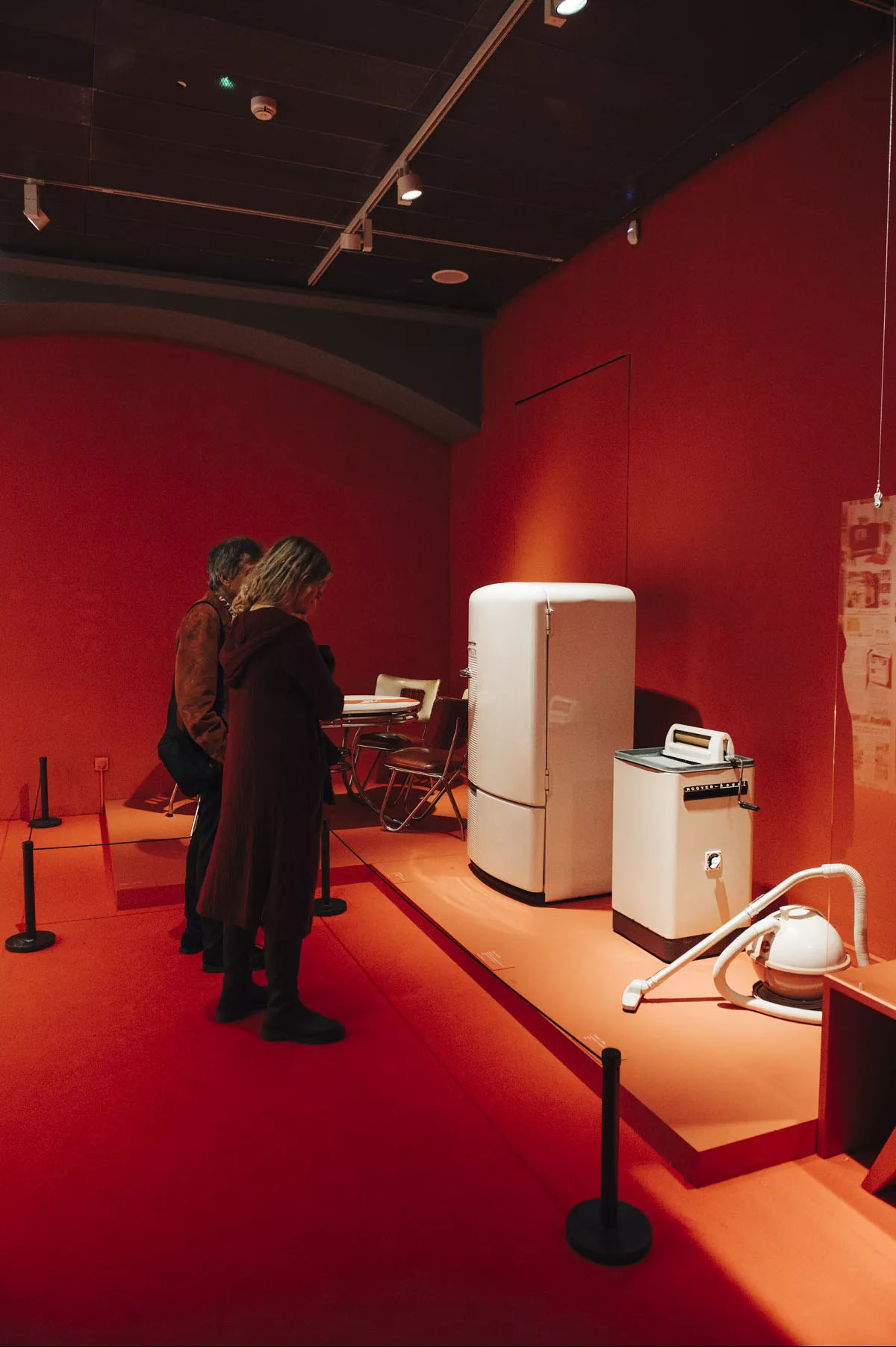
 

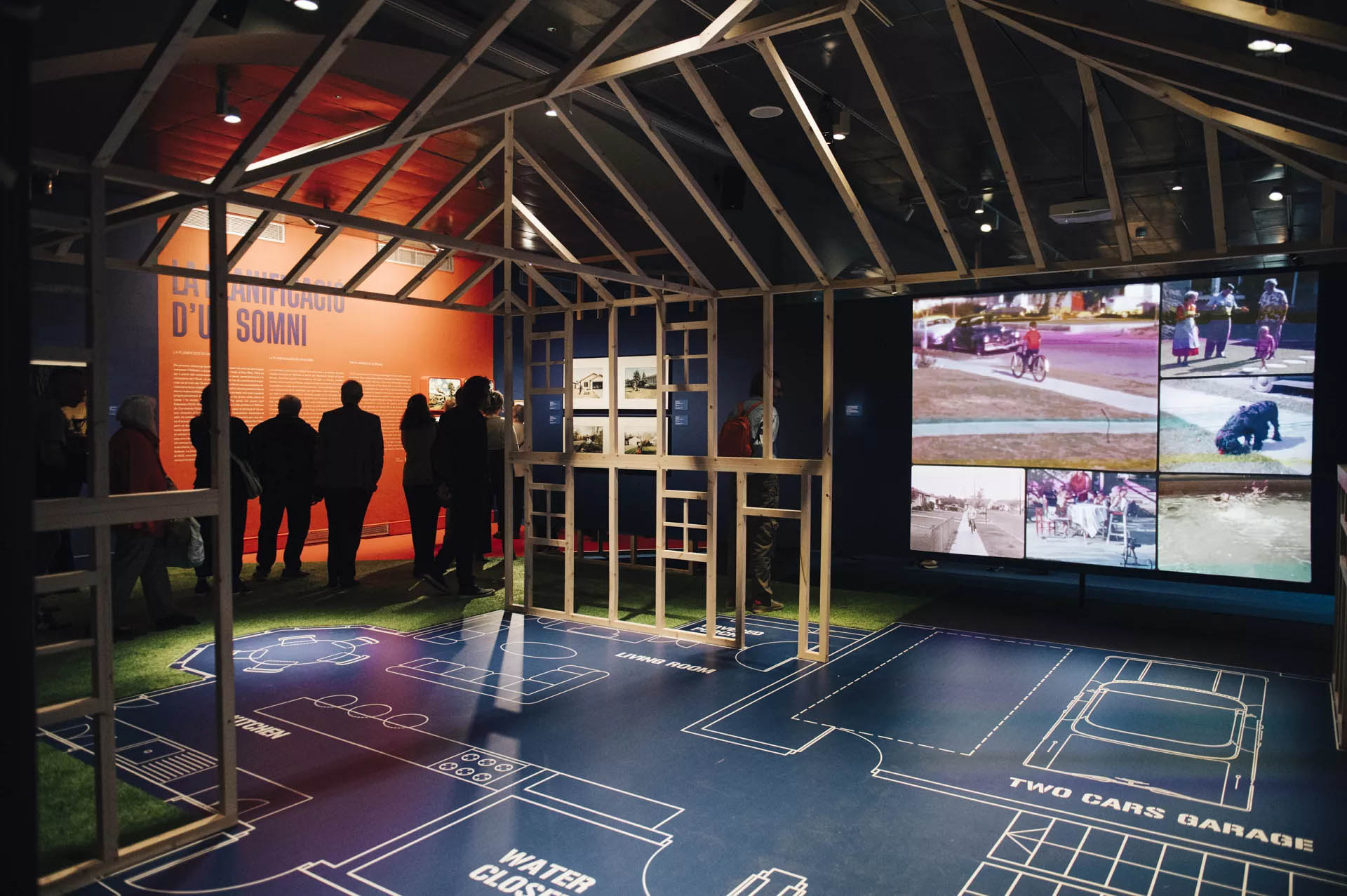
Installation view of the exhibition 'Suburbia. Building the American Dream' at the Centre de Cultura Contemporània de Barcelona | CCCB

Installation view of the exhibition 'Suburbia. Building the American Dream' at the Centre de Cultura Contemporània de Barcelona | CCCB

Installation view of the exhibition 'Suburbia. Building the American Dream' at the Centre de Cultura Contemporània de Barcelona | CCCB

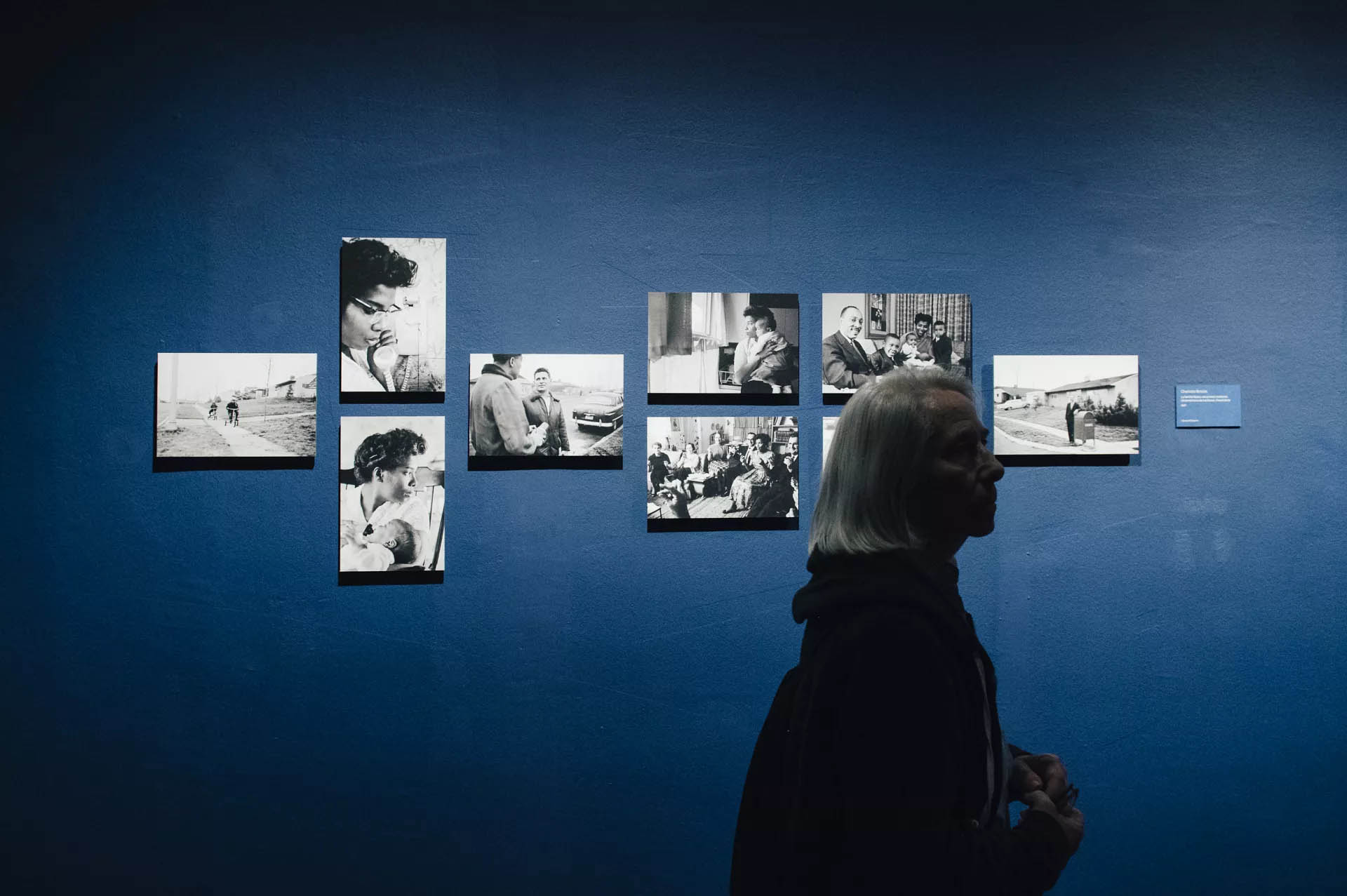
Installation view of the exhibition 'Suburbia. Building the American Dream' at the Centre de Cultura Contemporània de Barcelona | CCCB showing photographs by Charlotte Brooks

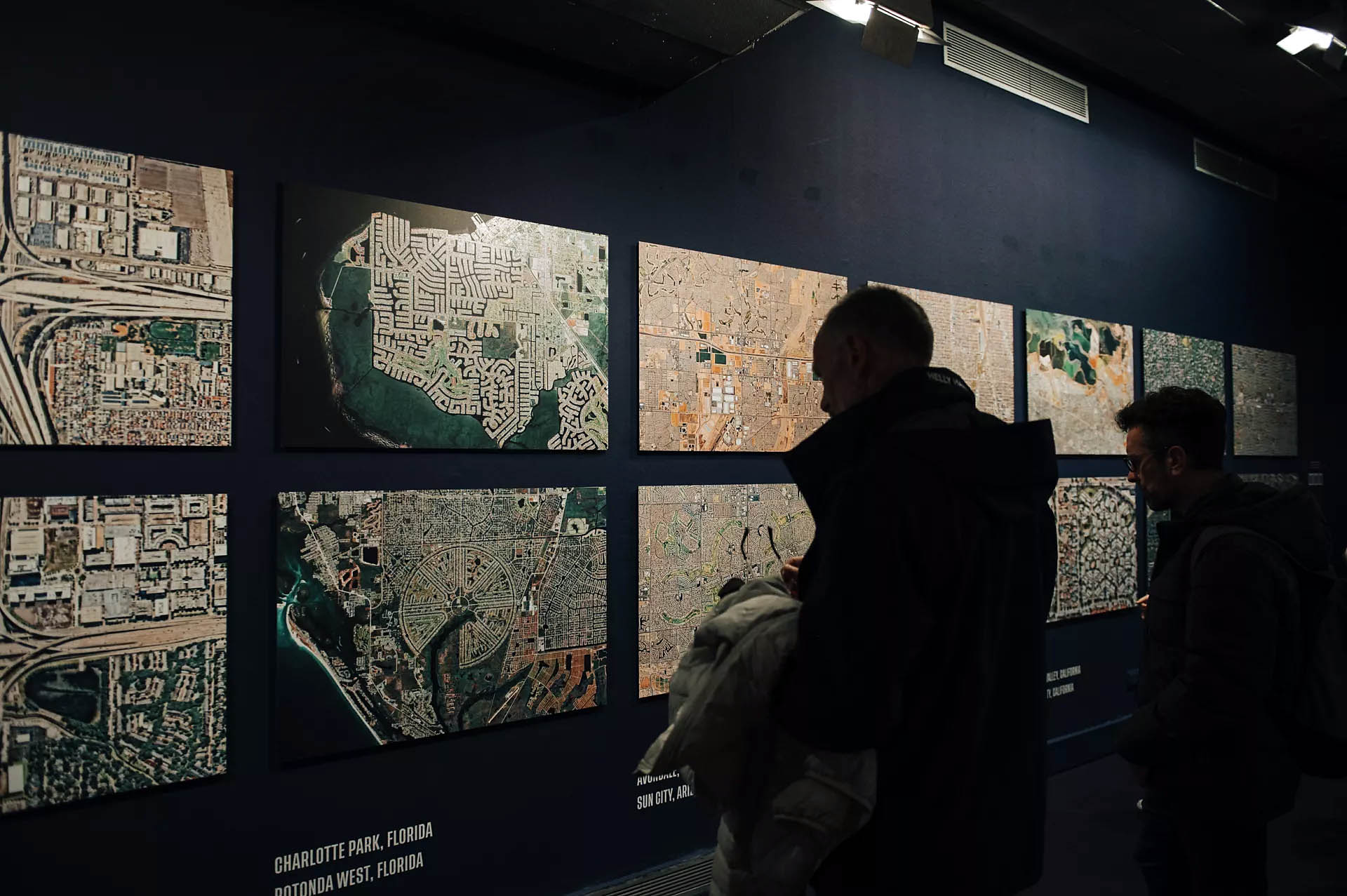
Installation view of the exhibition 'Suburbia. Building the American Dream' at the Centre de Cultura Contemporània de Barcelona | CCCB showing visitors looking at satellite images of US cities and suburbs that show their grid layout


Installation views of the exhibition Suburbia. Building the American Dream at the Centre de Cultura Contemporània de Barcelona | CCCB showing in the second image photographs by Charlotte Brooks (below); and in the bottom image, visitors looking at satellite images of US cities and suburbs that show their grid layout
© Alice Brazzit, CCCB, 2024


Charlotte Brooks (American, 1918-2014) '[Image from LOOK - Job 57-7621 titled Myers family]' 20th December 1957


Charlotte Brooks (American, 1918-2014)
[Image from LOOK – Job 57-7621 titled Myers family]
20th December 1957
Film negative
Look magazine photograph collection (Library of Congress)
Library of Congress Prints and Photographs Division Washington, D.C.


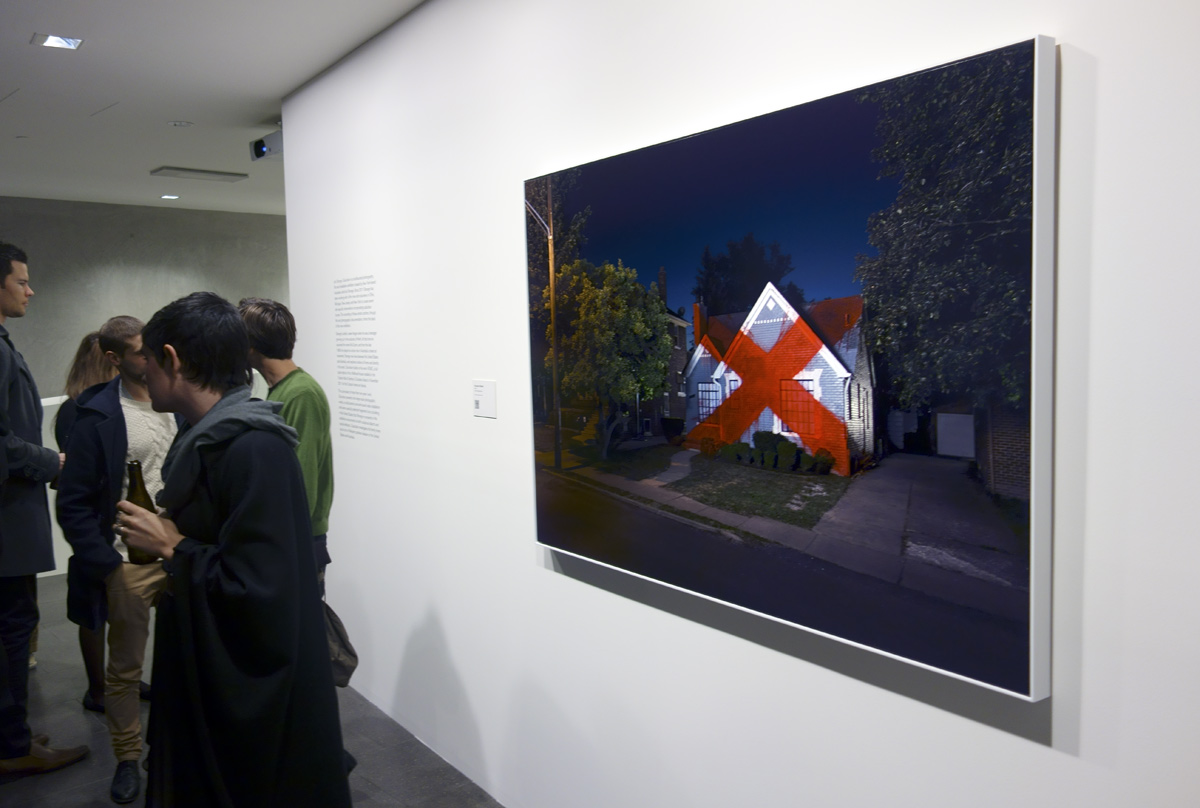
Installation view of the exhibition 'Suburbia. Building the American Dream' at the Centre de Cultura Contemporània de Barcelona | CCCB showing photographs by Gregory Crewdson


Installation view of the exhibition Suburbia. Building the American Dream at the Centre de Cultura Contemporània de Barcelona | CCCB showing photographs by Gregory Crewdson (below)


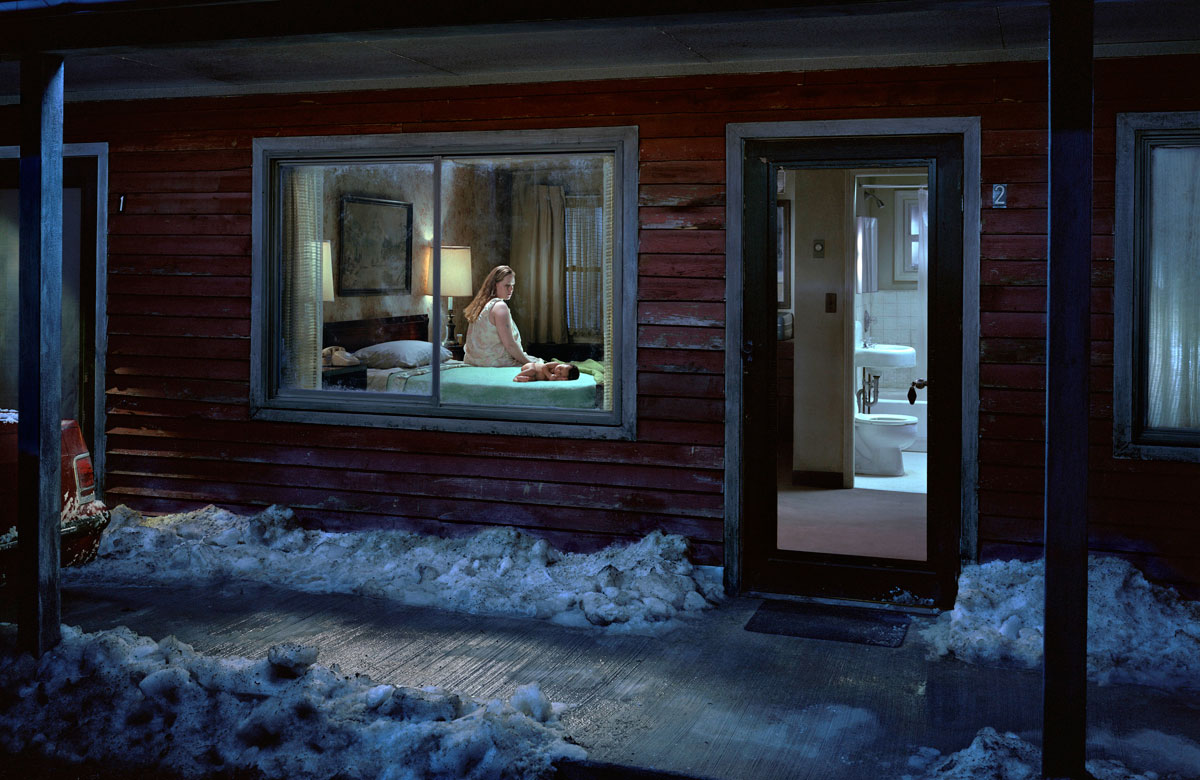
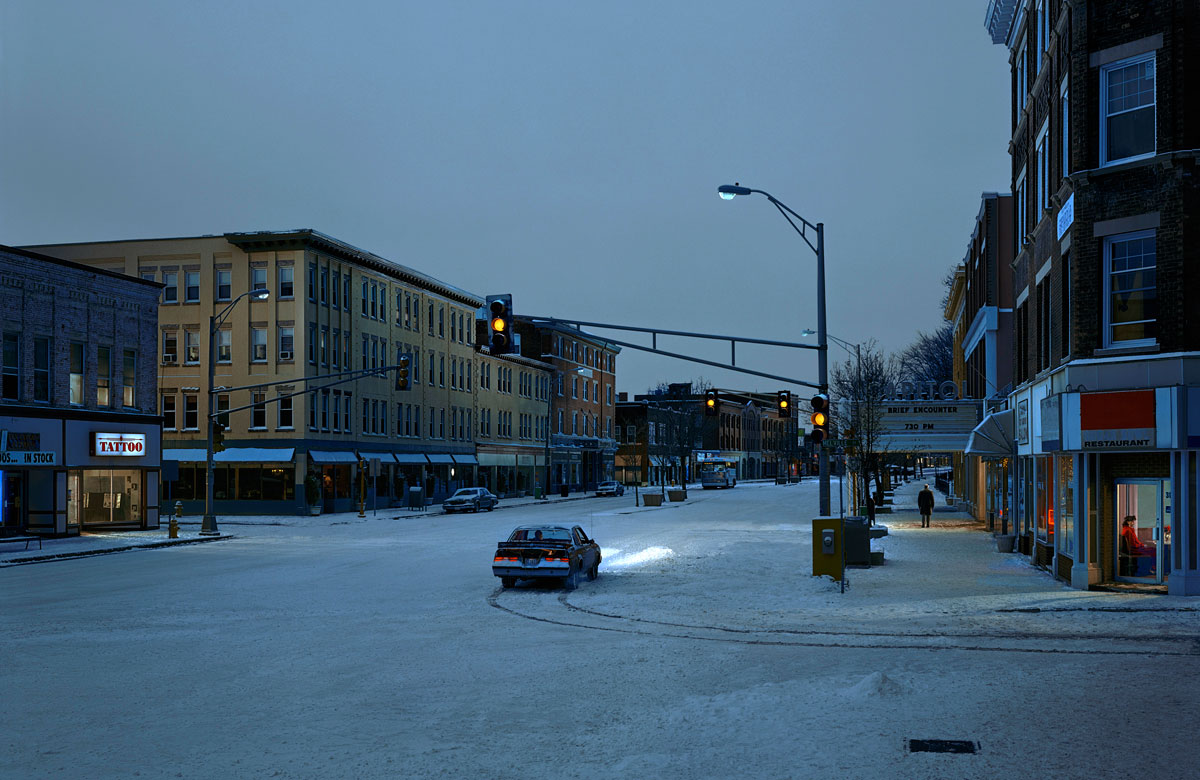
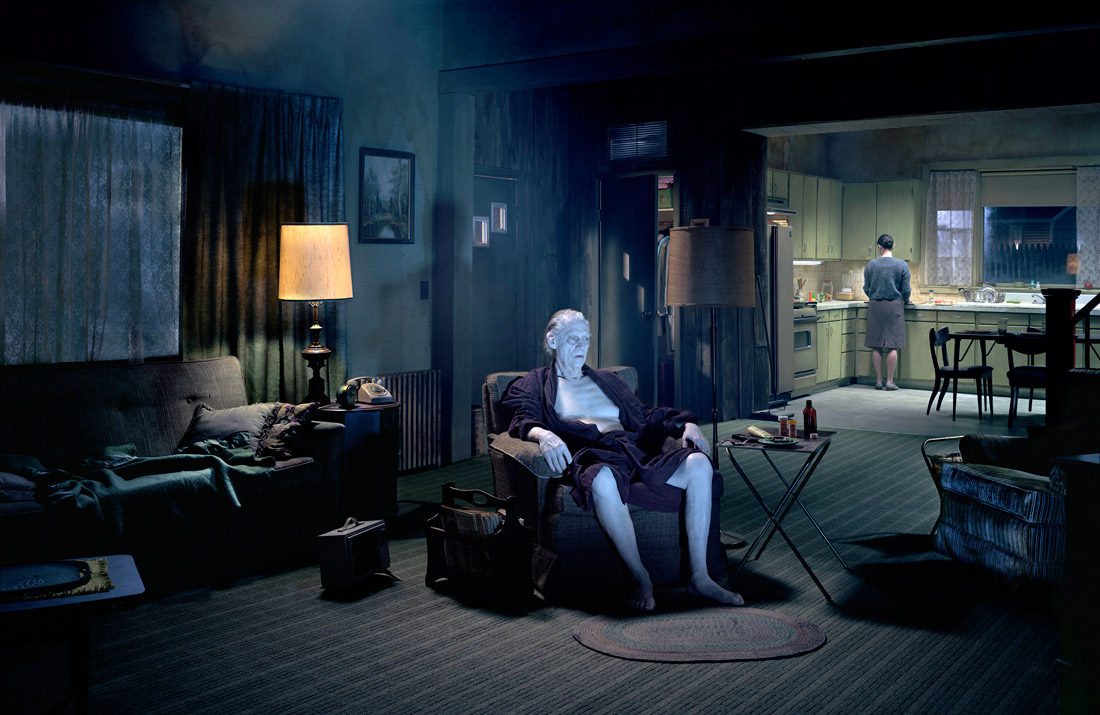
Gregory Crewdson (American, b. 1962) 'Untitled (Dream House)' 2002


Gregory Crewdson (American, b. 1962)
Untitled (Dream House)
2002
Digital C-print
29 x 44 inches


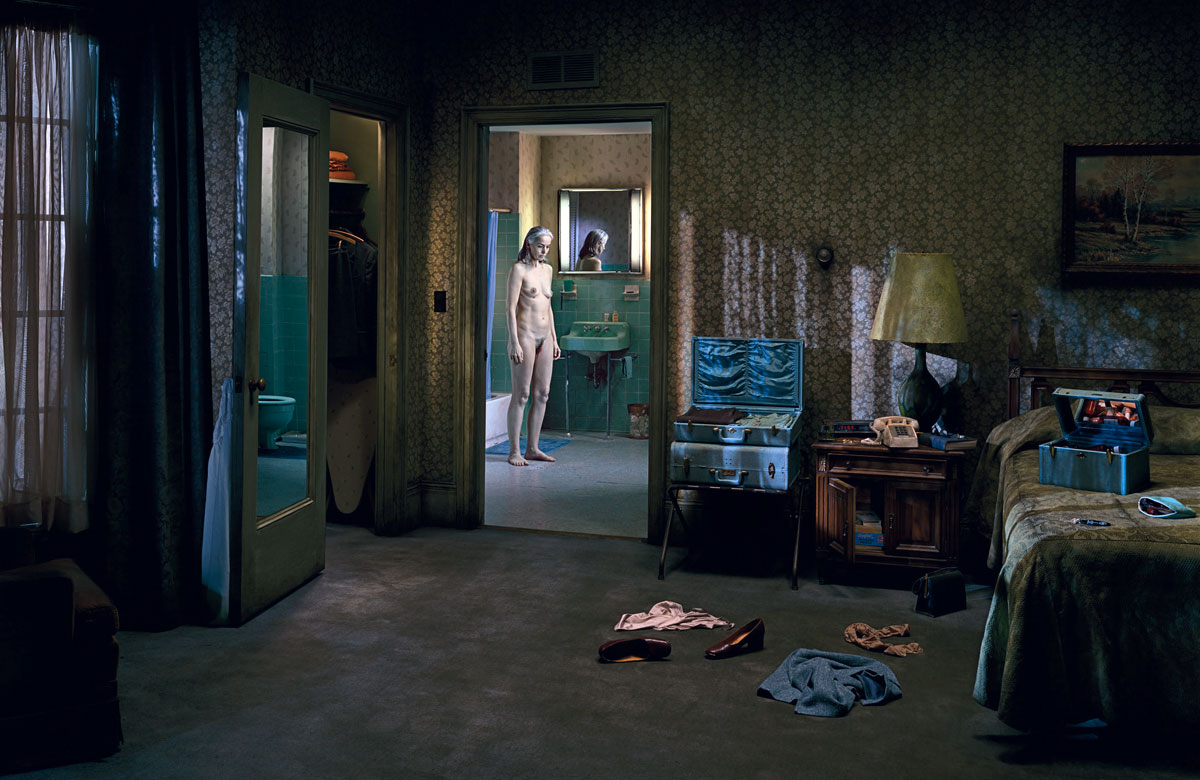
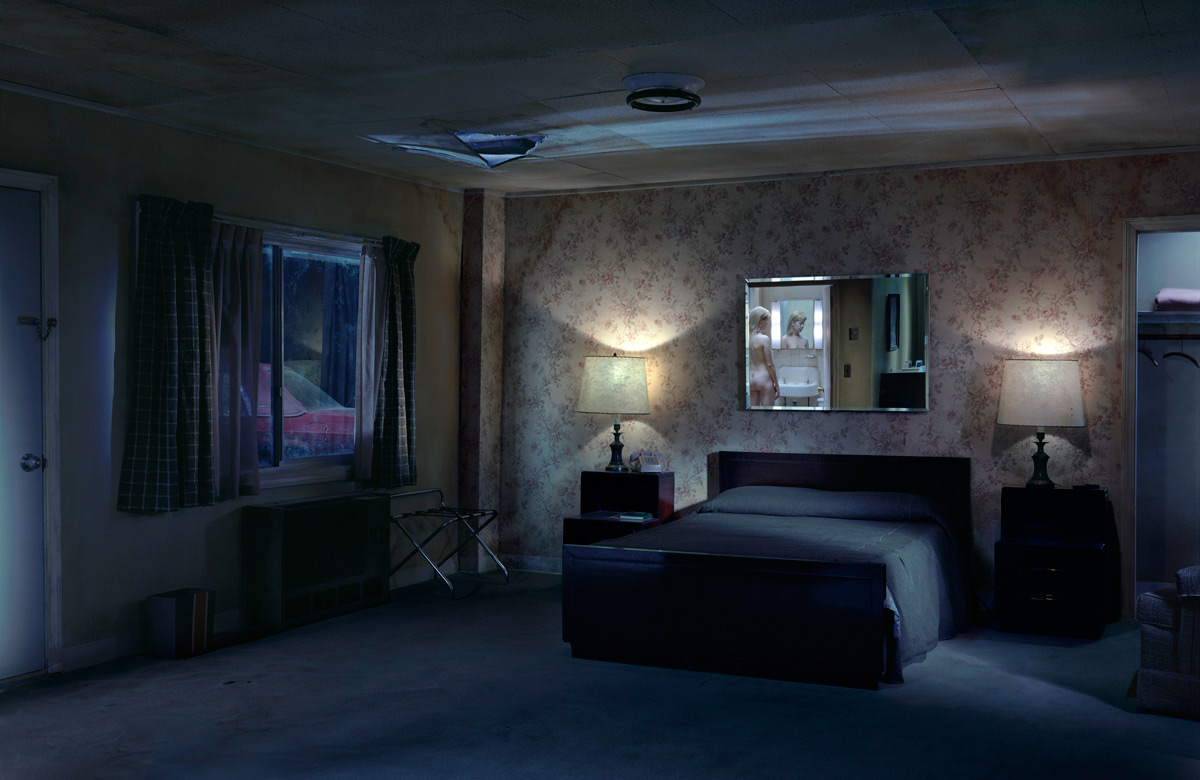
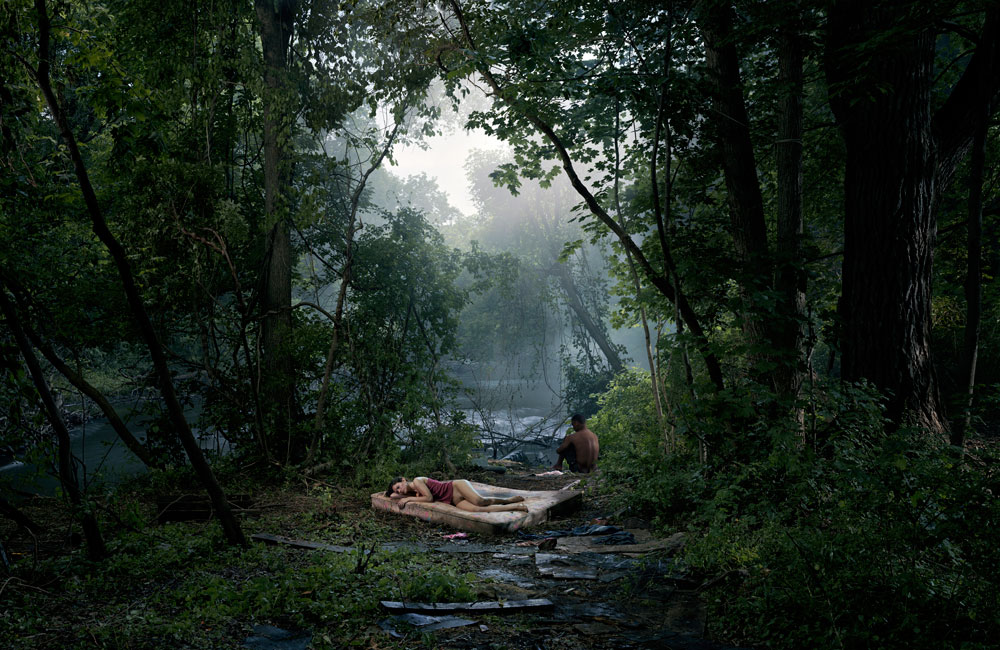
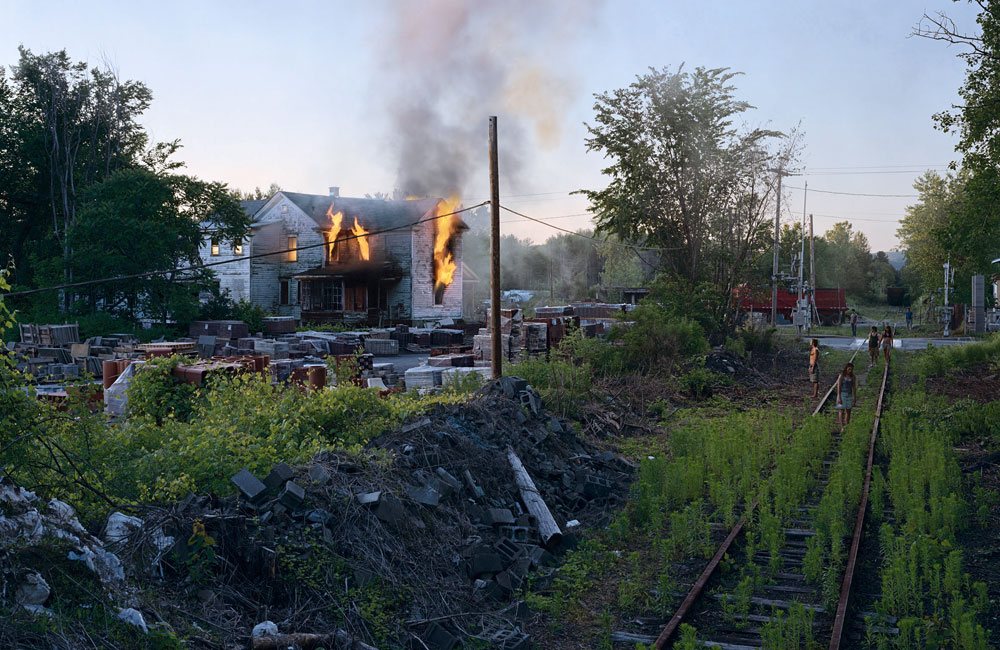
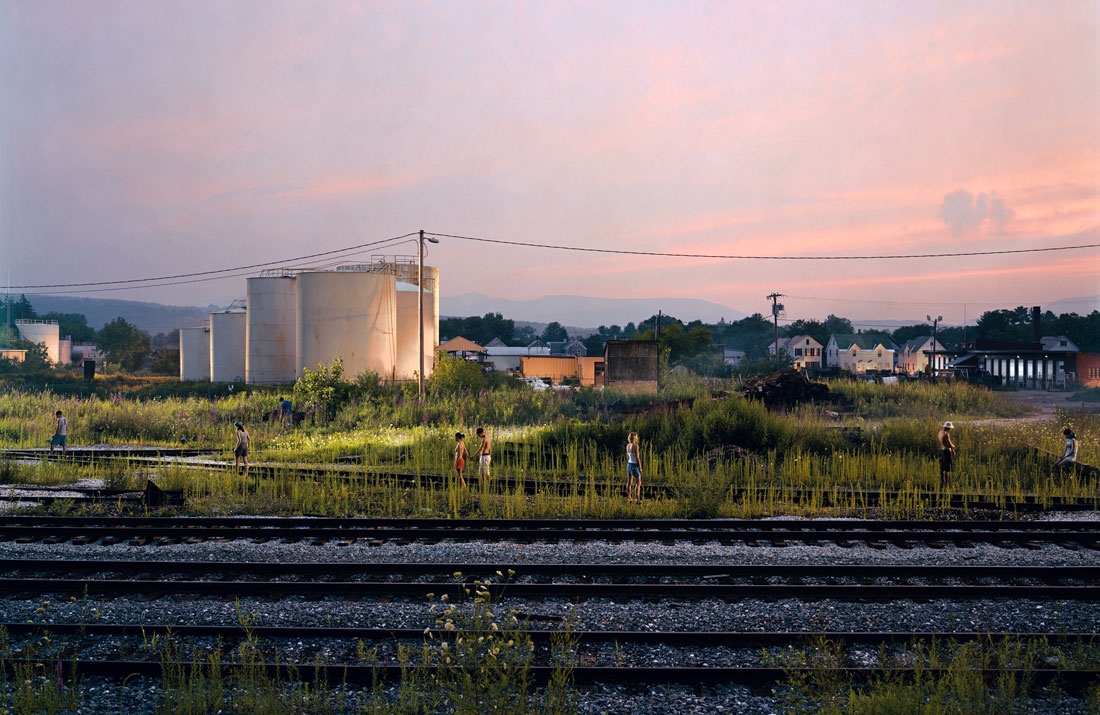
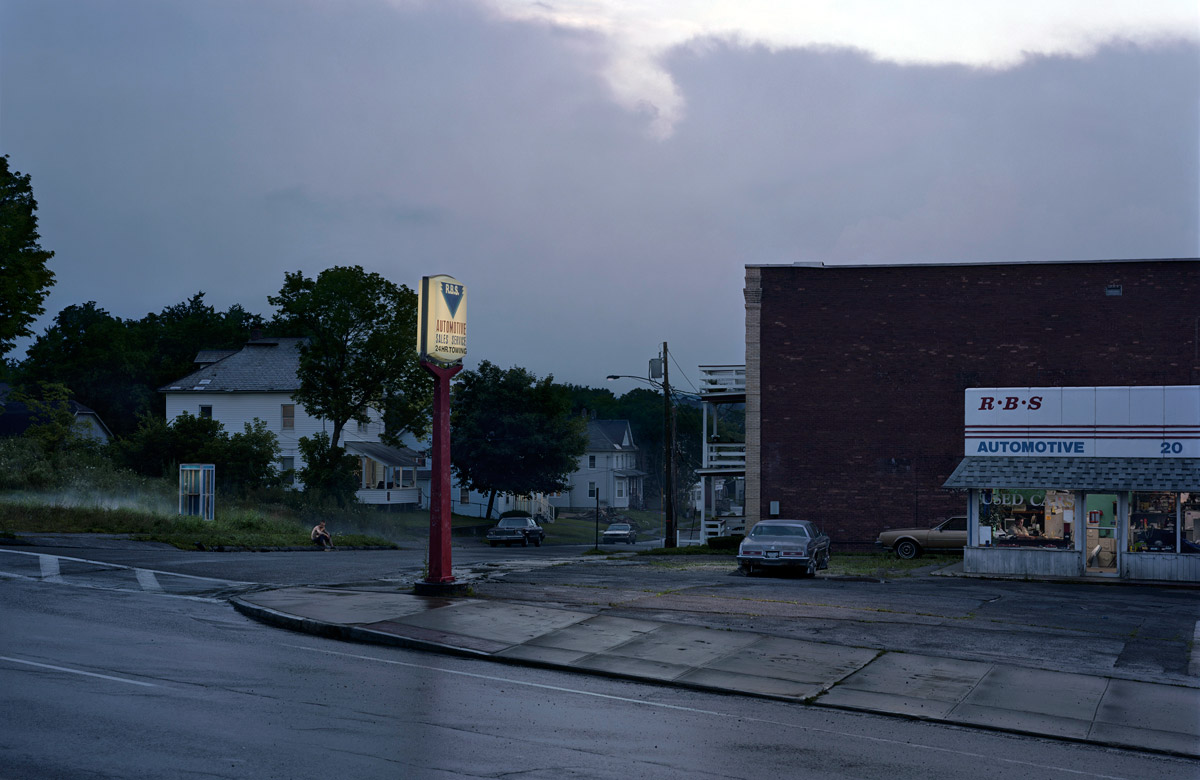
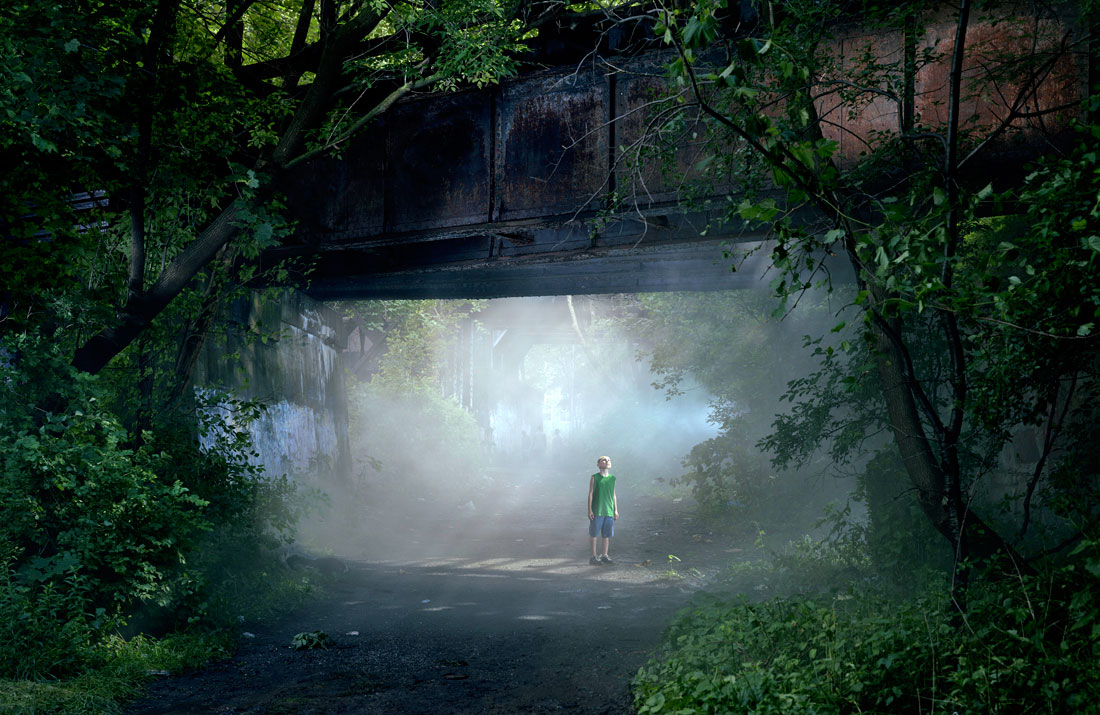
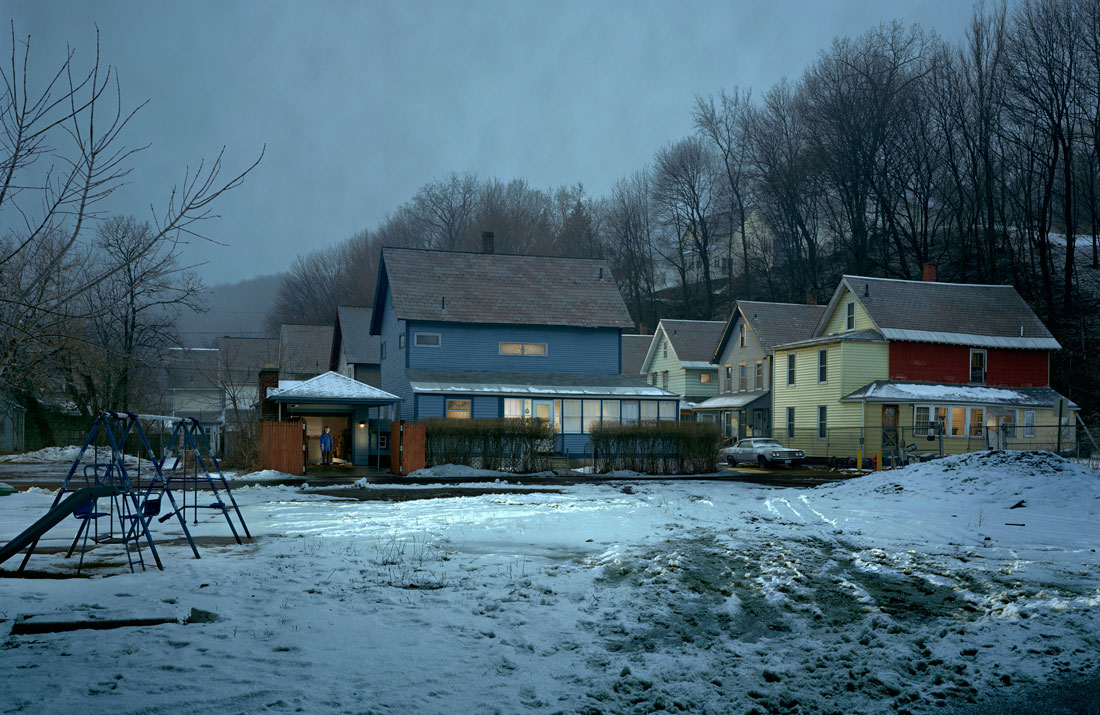
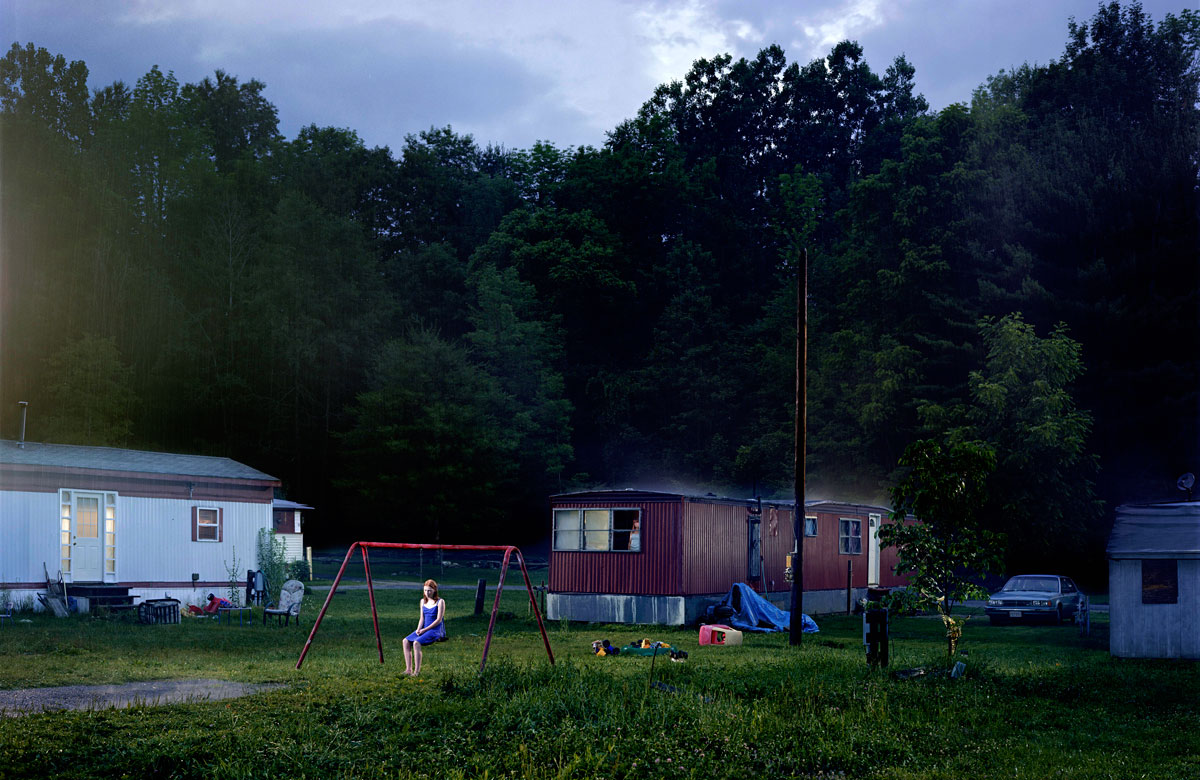
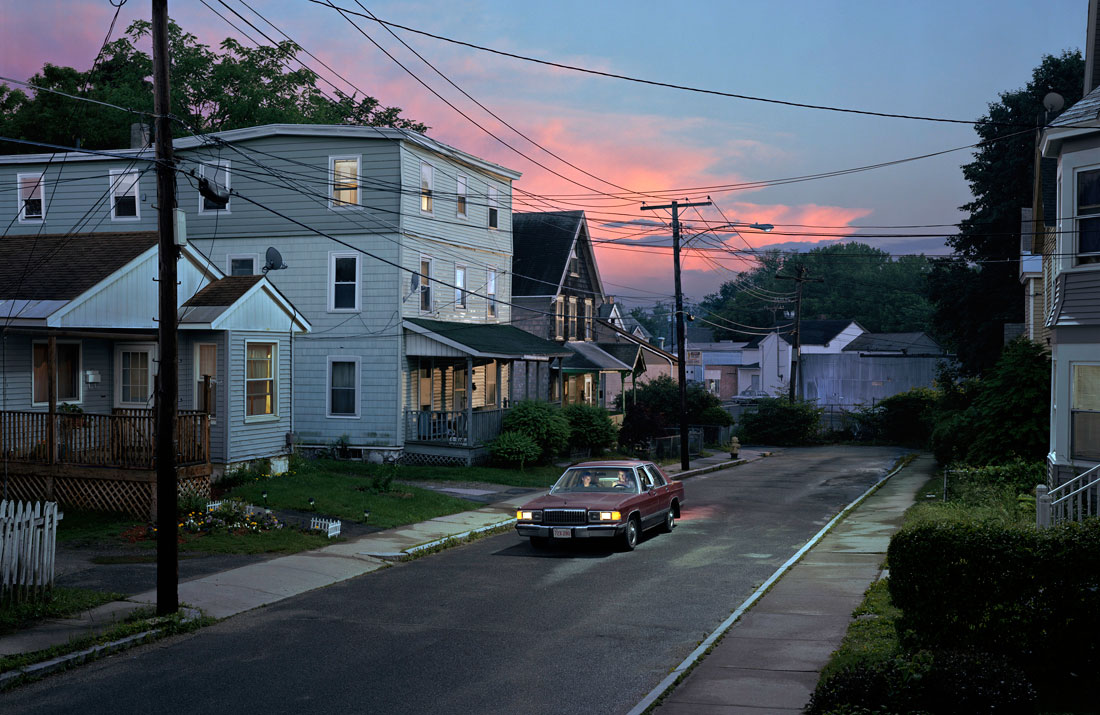
American photographer Gregory Crewdson is best known for his uncanny images of deceptively serene suburban life.  Using Hollywood film techniques and elaborate sets, Crewdson creates what he calls “frozen moments”: meticulously staged scenes whose narrative meaning remains a mystery.  Throughout this series, special attention is paid to light.  The twilight setting favoured by the photographer functions as a metaphor, an eerie evocation of the darkness on the edge of town.

Crewdson created this twelve-part portfolio, Dream House, as a commission for The New York Times Magazine in 2002.  The cinematic character of these frozen vignettes is underscored by the use of Hollywood actors (Gwyneth Paltrow, Tilda Swinton, and Philip Seymour Hoffman among others) whose celebrity contrasts with the “Anytown” anonymity of their environments.

Text from the Mutual Art website
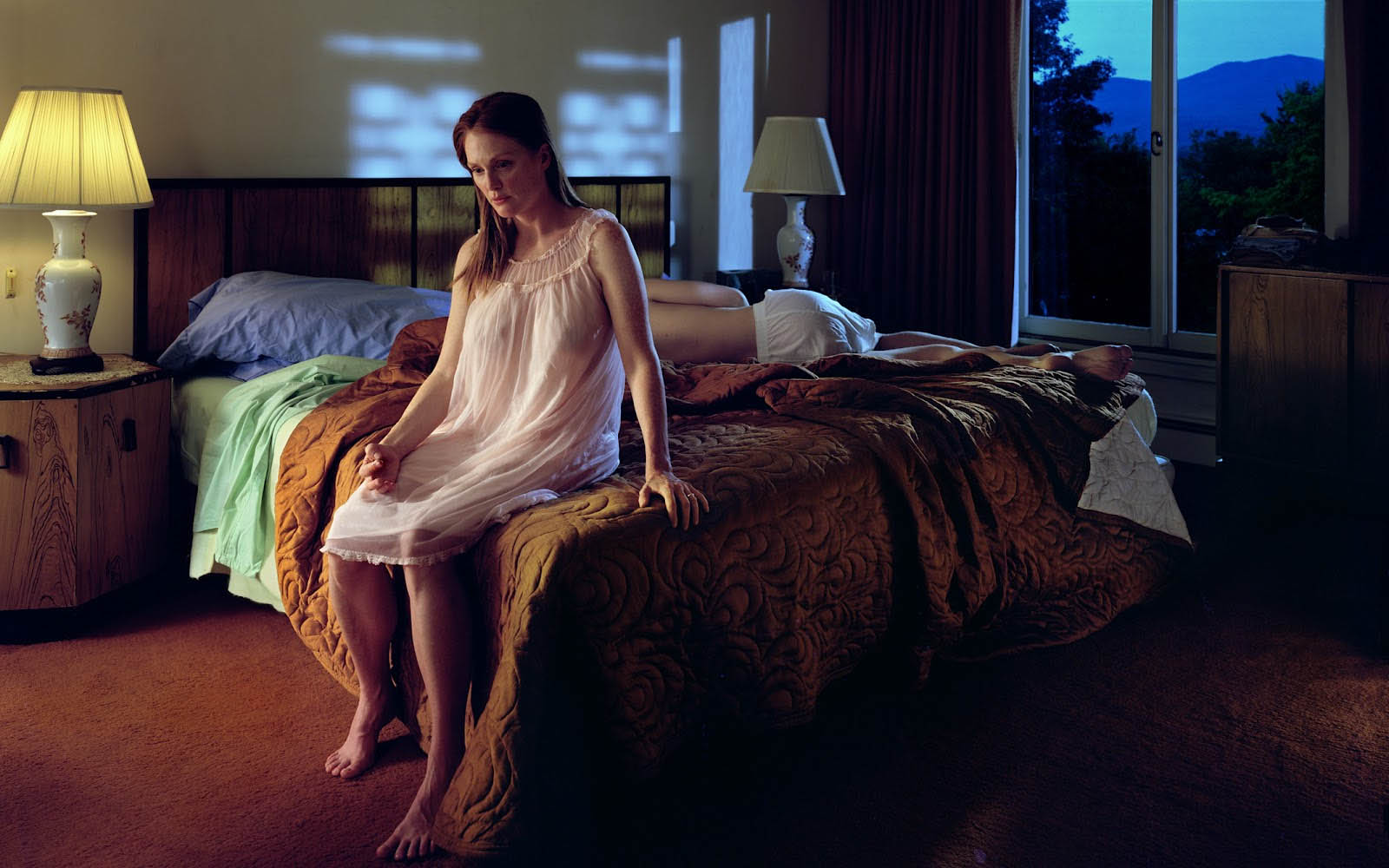
 

Gregory Crewdson (American, b. 1962) 'Julianne Moore (Dream House)' 2002


Gregory Crewdson (American, b. 1962)
Julianne Moore (Dream House)
2002
Digital C-print
29 x 44 inches


Sections of the exhibition

Planning A Dream

When the Industrial Revolution reached the USA in the first half of the 19th century, big cities became engines of progress, but they were also seen as dangerous places, in contrast with the opulent nature of the New World. With the emergence of the railway, the tram and the automobile, the mobility revolution prompted the gradual colonisation of city outskirts, transforming the countryside into residential neighbourhoods.

From Llewellyn Park (New Jersey) to Tuxedo Park (New York), throughout the 19th century the first gated communities began to pop up across the United States. At the end of the century, after the West was won, the appearance of the tram gave the middle classes access to the periphery, giving rise to a new type of housing that led to an orderly arrangement of city grids. But it wasn’t until the popularisation of the famous Ford Model T that the US landscape was radically transformed, crisscrossed by roads that became freeways. The automobile became a symbol of freedom, marking the birth of the suburbs that were to spring up everywhere.

This first section includes historical material like the original lithograph View of New York by John William Hill (1836); The American Woman’s Home by Catharine Beecher, the bible of “domestic feminism”; a Ford T Touring (1923) produced by General Motors, and films like The Suburbanite (1908), among other Harold Lloyd and Buster Keaton classics.


Alexander Jackson Davis (American, 1803–1892) 'Villa for David Codwise, near New Rochelle, NY (project; elevation and four plans)' 1835


Alexander Jackson Davis (American, 1803–1892)
Villa for David Codwise, near New Rochelle, NY (project; elevation and four plans)
1835
Pen and ink, watercolour, graphite
Sheet: 14 5/16 x 9 in. (36.4 x 22.9 cm)
Metropolitan Museum of Art, New York
Harris Brisbane Dick Fund, 1924
Public domain
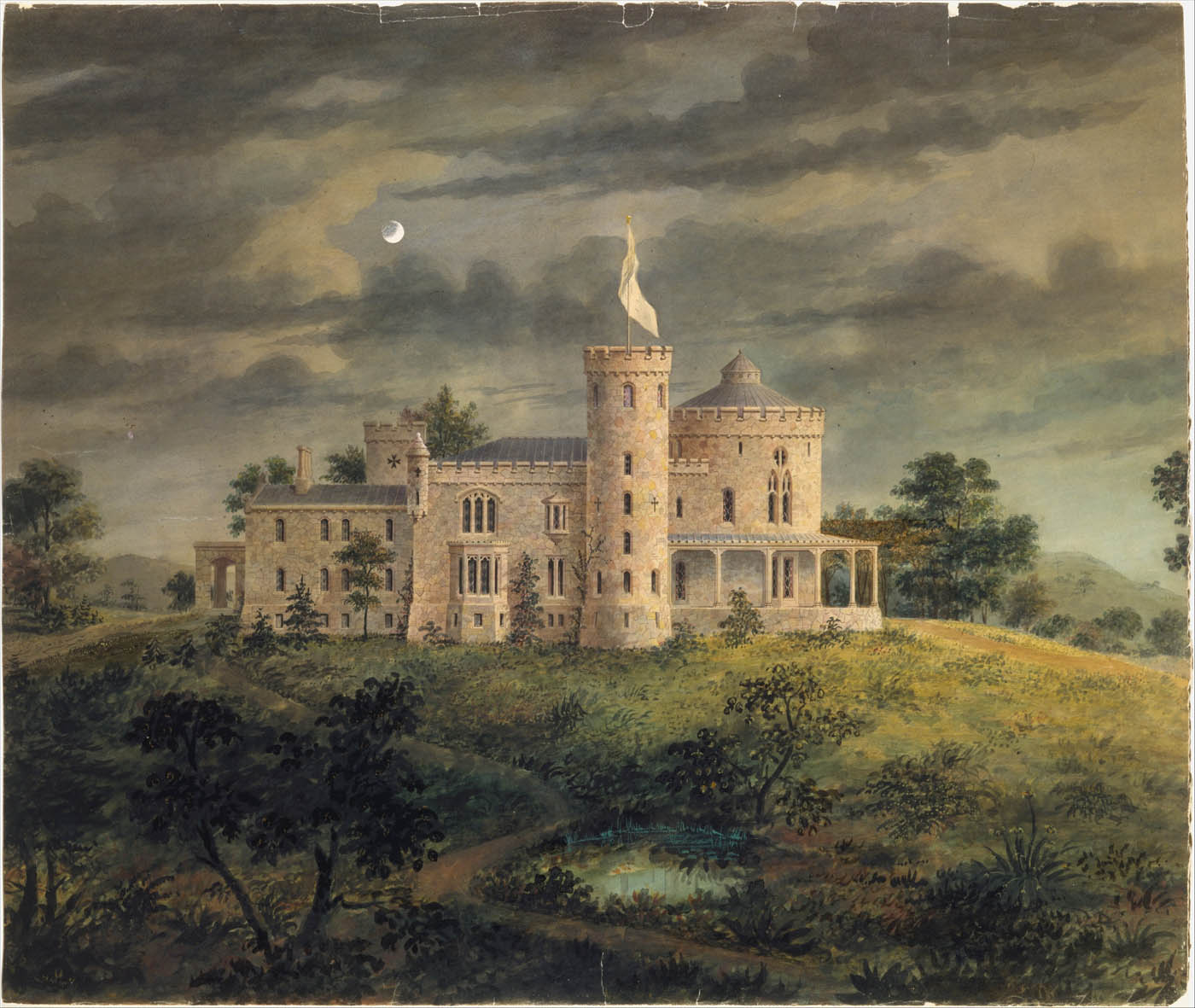
 

Alexander Jackson Davis (American, 1803-1892) 'Ericstan, for John J. Herrick, Tarrytown, New York (perspective)' 1855


Alexander Jackson Davis (American, 1803–1892)
Ericstan, for John J. Herrick, Tarrytown, New York (perspective)
1855
Watercolour, ink, and graphite on paper
25 5/16 x 30in. (64.3 x 76.2cm)
Metropolitan Museum of Art, New York
Harris Brisbane Dick Fund, 1924
Public domain


Davis’ most successful castellated villa was built for dry-goods merchant John J. Herrick. The design was dominated by an enormous three-story circular tower facing west over the Hudson River. The tower housed an extraordinary circular parlor that had an intricately vaulted ceiling springing from a massive central cluster of delicate Gothic columns. Ericstan was demolished in 1944.


After Alexander Jackson Davis (American, 1803-1892) Friend & Aub (Publisher Philadelphia, Pennsylvania) 'Map of Llewellyn Park and Villa Sites, on Eagle Ridge in Orange & West Bloomfield' 1857


After Alexander Jackson Davis (American, 1803-1892)
Friend & Aub (Publisher Philadelphia, Pennsylvania)
Map of Llewellyn Park and Villa Sites, on Eagle Ridge in Orange & West Bloomfield
1857
Lithograph
14 7/16 x 23 7/16 in. (36.7 x 59.6cm)
Metropolitan Museum of Art, New York
Harris Brisbane Dick Fund, 1924
Public domain


Morse & Fronti (Charles W. Morse and J. Fronti) 'Residence of Mr. E. Hooker, Fremont Ave., Orange, N.J.' 1860


Morse & Fronti (Charles W. Morse and J. Fronti)
Residence of Mr. E. Hooker, Fremont Ave., Orange, N.J.
1860
The Miriam and Ira D. Wallach Division of Art, Prints and Photographs: Photography Collection
The New York Public Library
Public domain
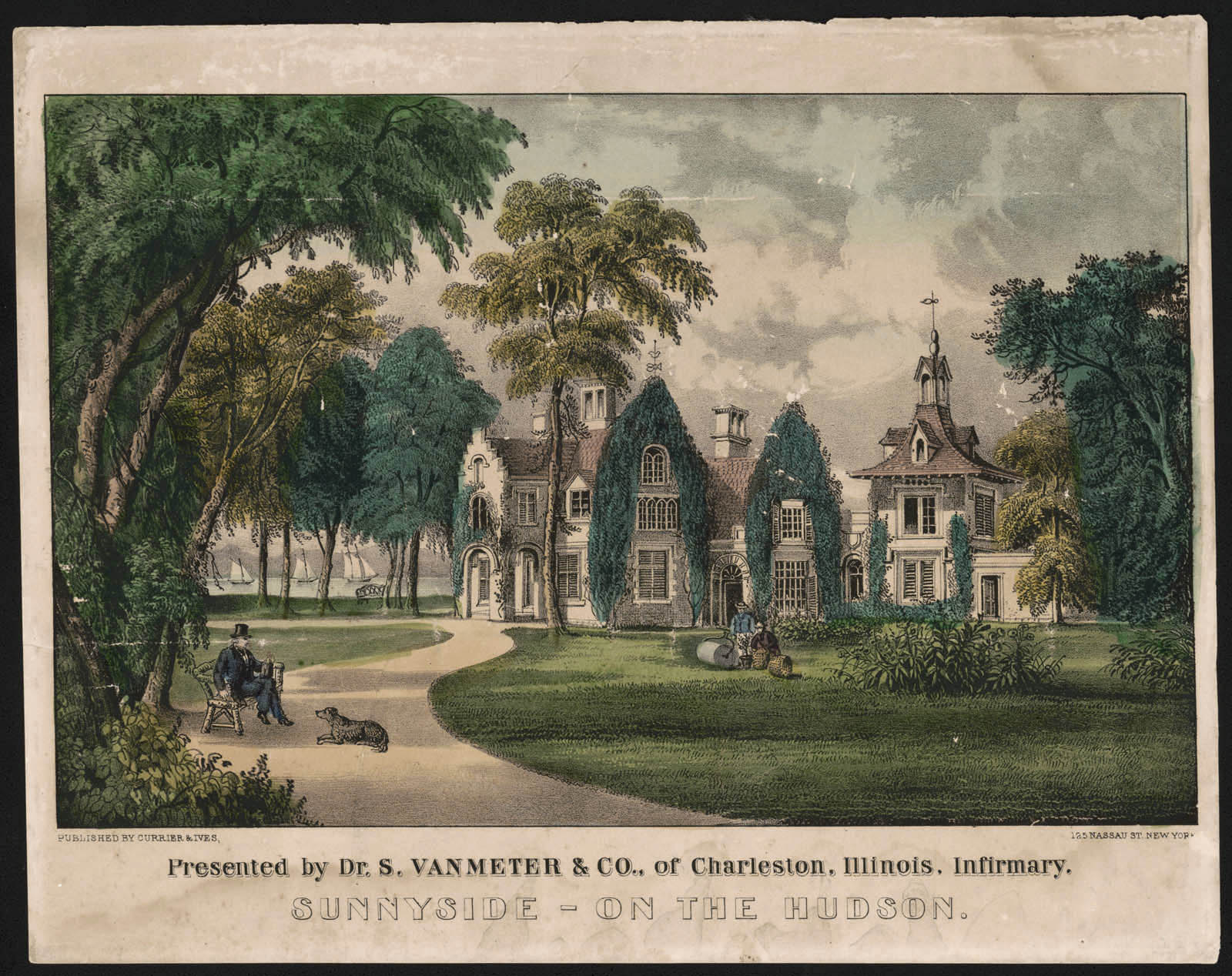
 

Currier & Ives (Publisher, New York active between 1856-1907) 'Sunnyside on the Hudson' 1856-1871


Currier & Ives (Publisher, New York active between 1856-1907)
Sunnyside on the Hudson
1856-1871
Hand coloured lithograph
Library of Congress Prints and Photographs Division Washington, D.C.
Public domain
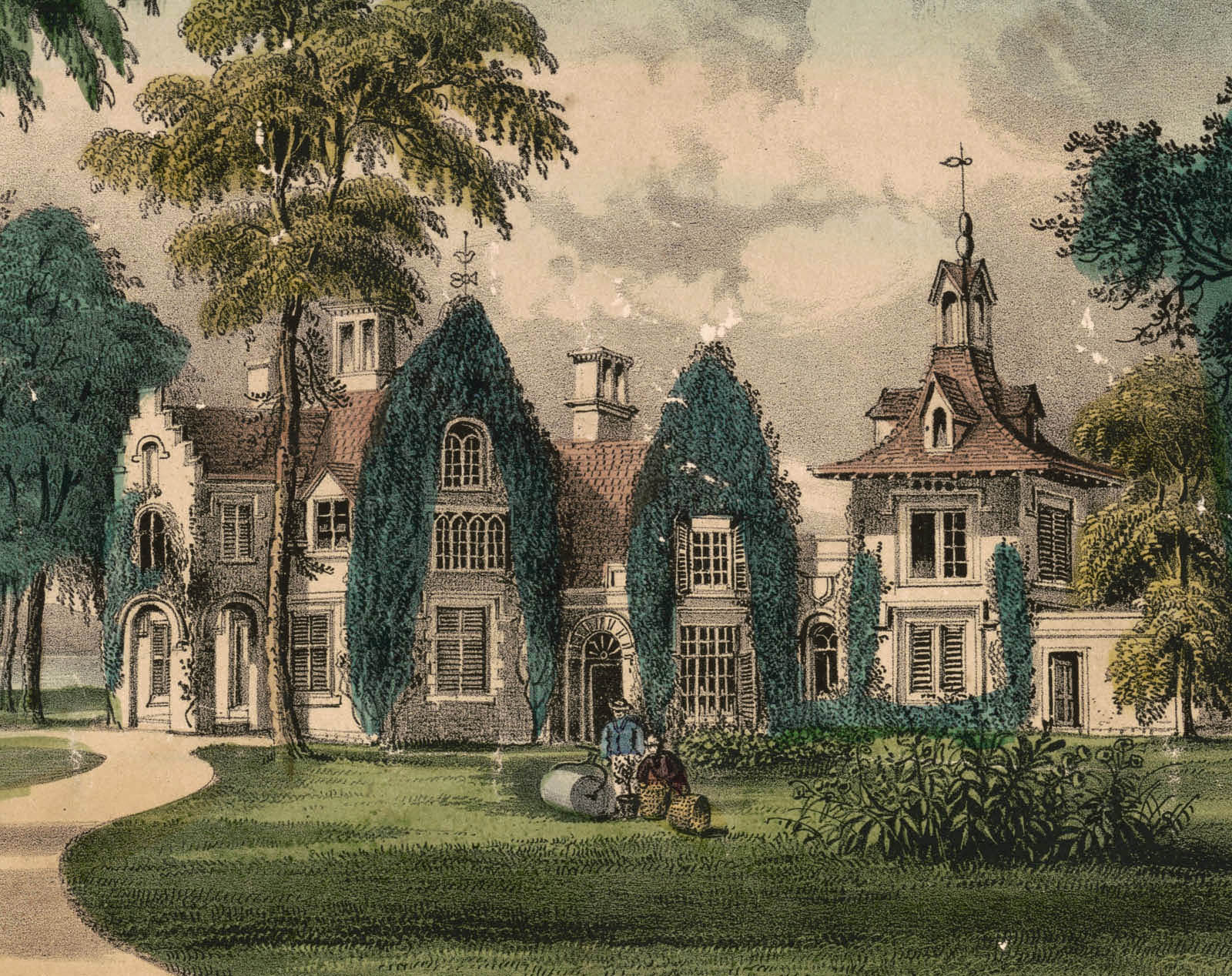
 

Currier & Ives (Publisher, New York active between 1856-1907) 'Sunnyside on the Hudson' 1856-1871 (detail)


Currier & Ives (Publisher, New York active between 1856-1907)
Sunnyside on the Hudson (detail)
1856-1871
Hand coloured lithograph
Library of Congress Prints and Photographs Division Washington, D.C.
Public domain


Currier & Ives (Publisher, New York active between 1856-1907) 'American railroad scene: lightning express trains leaving the junction' 1874


Currier & Ives (Publisher, New York active between 1856-1907)
American railroad scene: lightning express trains leaving the junction
1874
Hand coloured lithograph
Library of Congress Prints and Photographs Division Washington, D.C.
Public domain


Advertising by Samuel. E. Gross 'August Gast & Co. New York' c. 1900


Advertising by Samuel. E. Gross.
August Gast & Co. New York
c. 1900
Lithography
Library of Congress


Advertising by Samuel. E. Gross 'August Gast & Co. New York' c. 1900 (detail)


Advertising by Samuel. E. Gross.
August Gast & Co. New York (detail)
c. 1900
Lithography
Library of Congress
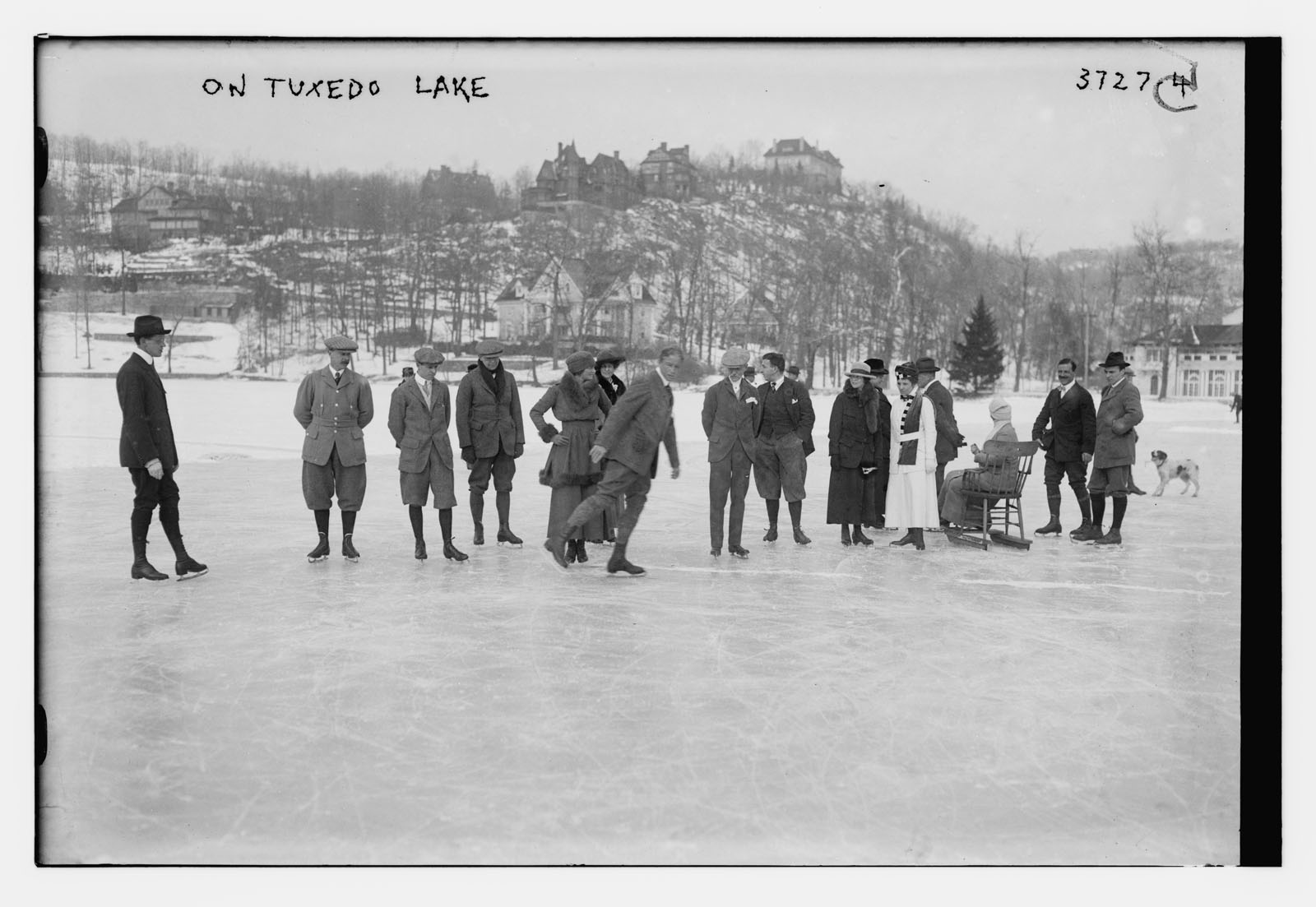
 

Anonymous photographer / Bain News Service (publisher) 'Skaters on the lake at Tuxedo Park' 1910


Anonymous photographer
Bain News Service
(publisher)
Skaters on the lake at Tuxedo Park
1910
Glass negative
Library of Congress Prints and Photographs Division Washington, D.C.
Public domain
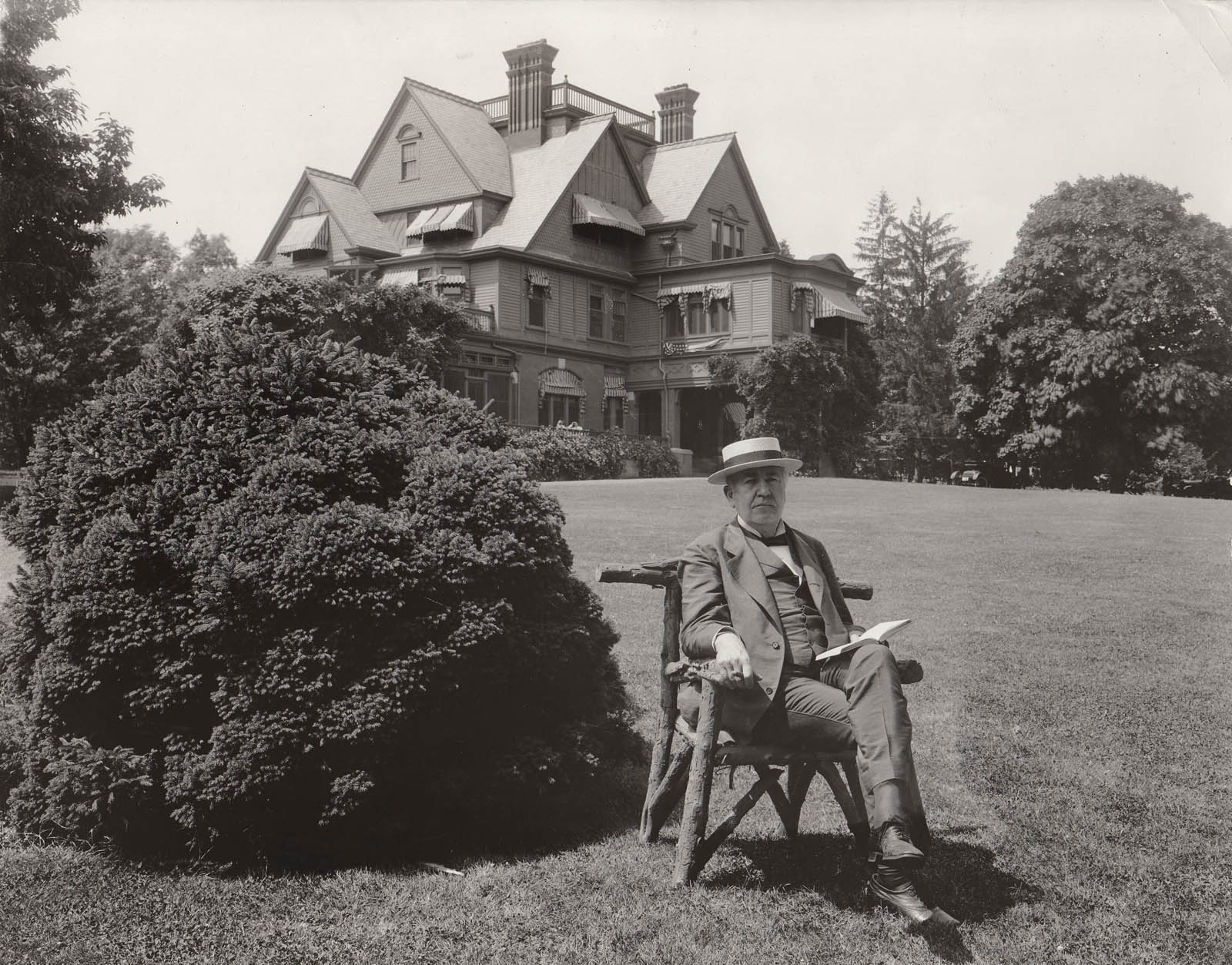
 

Anonymous photographer. 'Thomas Edison in the garden of his residence in Glenmont' 1917


Anonymous photographer
Thomas Edison in the garden of his residence in Glenmont
1917
Thomas Edison National Historical Park, West Orange, New Jersey


Anonymous photographer. 'General Motors Pavilion: Futurama, Norman Bel Geddes. New York World's Fair. General Motors – Crowds leading into Futurama' 1939


Anonymous photographer
General Motors Pavilion: Futurama, Norman Bel Geddes. New York World’s Fair. General Motors – Crowds leading into Futurama
1939
New York World’s Fair 1939-1940 records
Manuscripts and Archives Division, The New York Public Library
Public domain
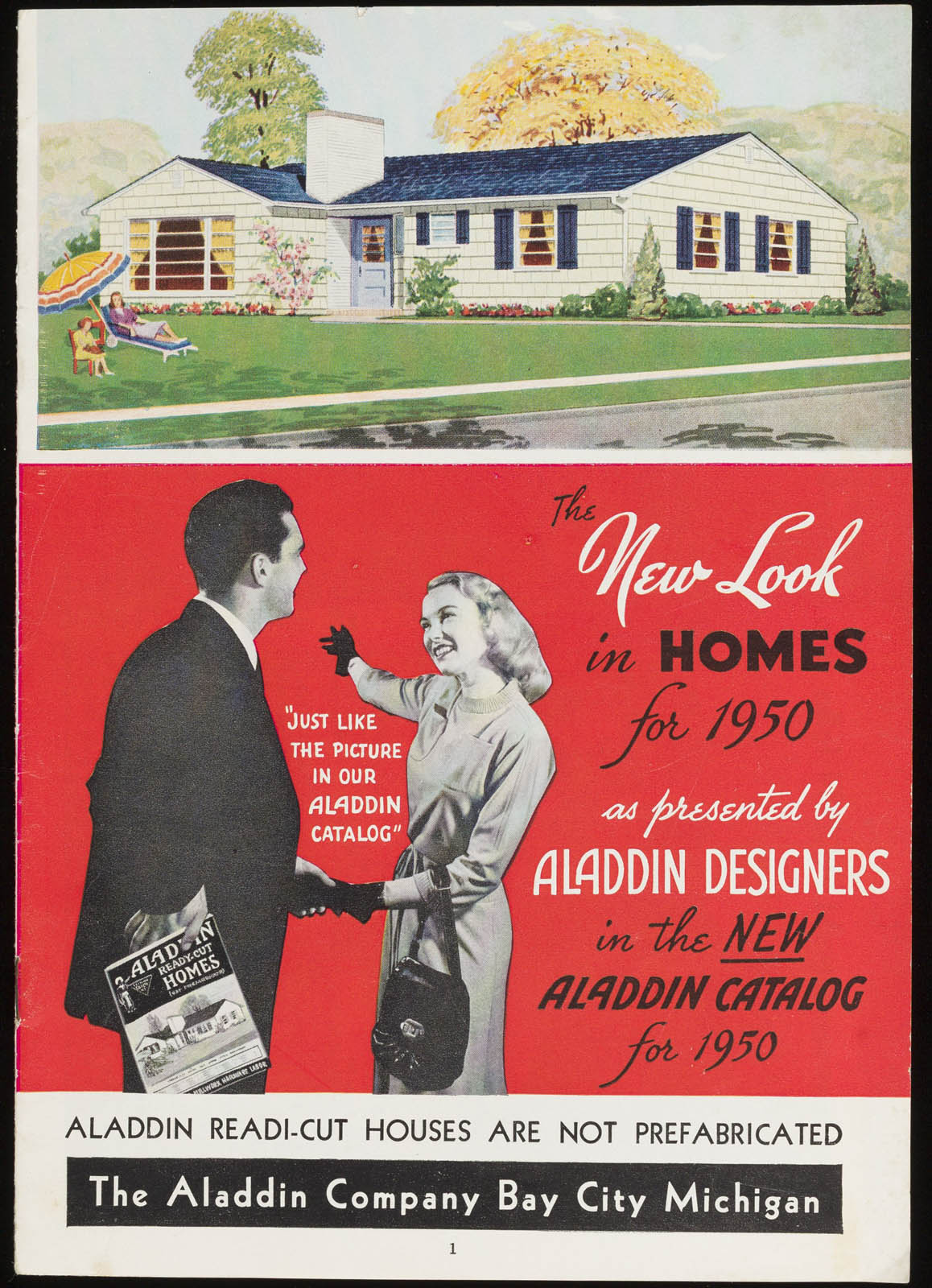
 

'Catalog of the Aladdin company selling houses by mail' 1950


Catalog of the Aladdin company selling houses by mail
1950
Courtesy Historic New England
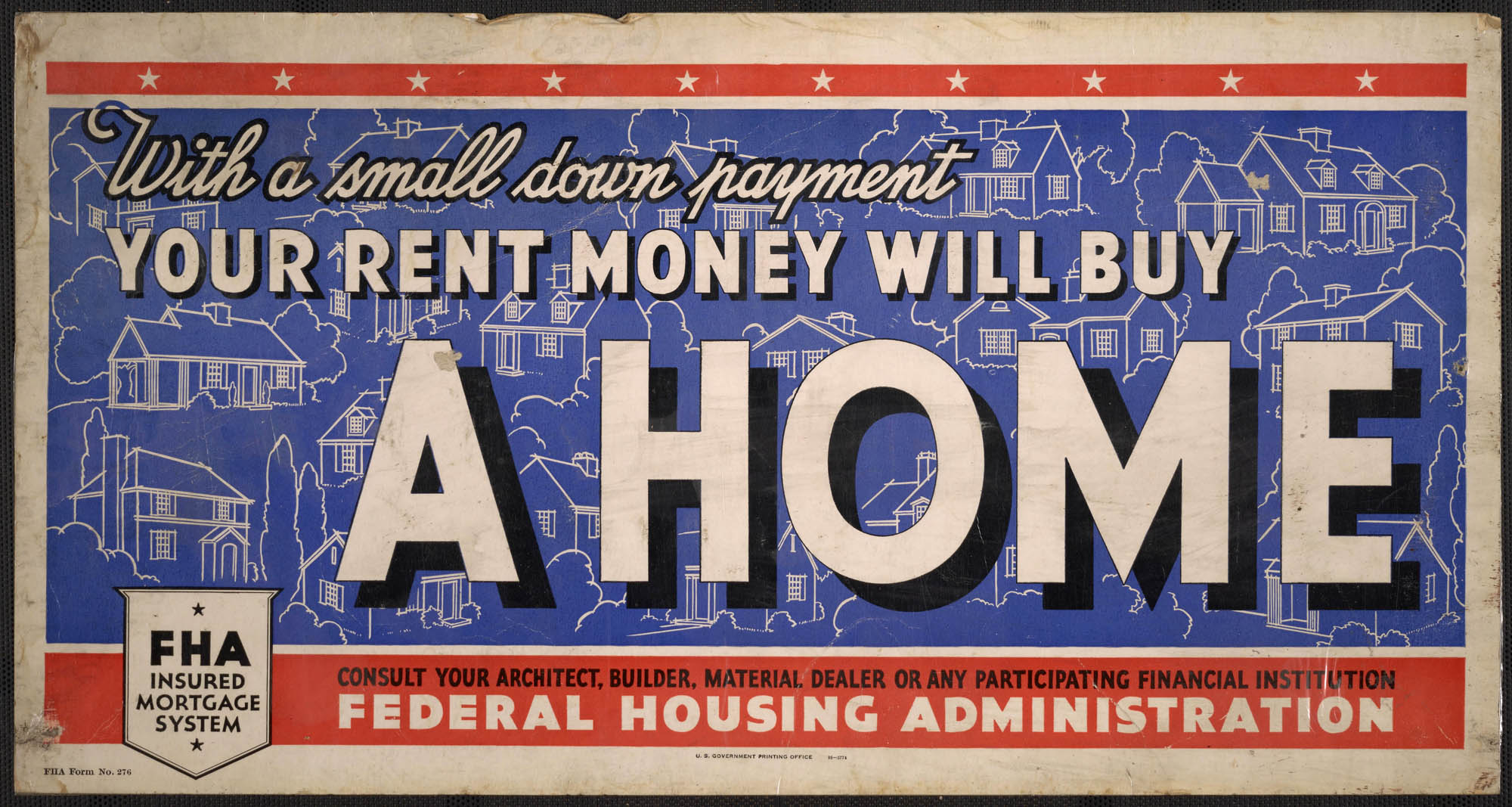
 

'Federal Housing Administration, Minneapolis and St. Paul, Minnesota' c. 1950


Federal Housing Administration, Minneapolis and St. Paul, Minnesota
c. 1950
Courtesy Minnesota Streetcar Museum, Minneapolis


The advertisement reads, “With a small down payment your rent money will buy a home. Consult your architect, builder, material dealer or any participating financial institution. Federal Housing Administration.”


The Suburban Room

The suburban explosion was first and foremost demographic, occurring as World War II soldiers returned, eager to set up home. There was no room for them in the crowded cities. With the support of the state, which offered generous loans, suburbs were built using the Fordist assembly-line production logic. It was the “American way of life”, the start of a collective dream that fascinated the whole world.

And so the baby boom took place in 11 million single-family homes fitted with all kinds of electrical domestic appliances, presided over by a brand new television set on which the new suburbanites watched idealised versions of themselves with identical skin colour and the same war experiences, age, mortgage and feeling of uprootedness. The media echoed this phenomenon, and cinema and literature reflected this standardised landscape in which a wife waited at home for her husband with a drink for him in her hand, children went everywhere by bicycle, and everyone had barbecues on Sundays.

Sponsored by the state, Suburbia became a paradise that excluded racial minorities. But little by little, by the sixties, the gates of paradise were opened to African Americans and other minorities, giving rise to a white exodus, the white flight.

As well as a variety of historical material, this section reviews sitcoms portraying the suburbs, from the 1940s to the present day. It also includes the famous illustration New Kids in the Neighborhood by Norman Rockwell and a broad selection of the photographs that make up Bill Owens’ Suburbia (1972), the first book of photographs about this American urban planning model.
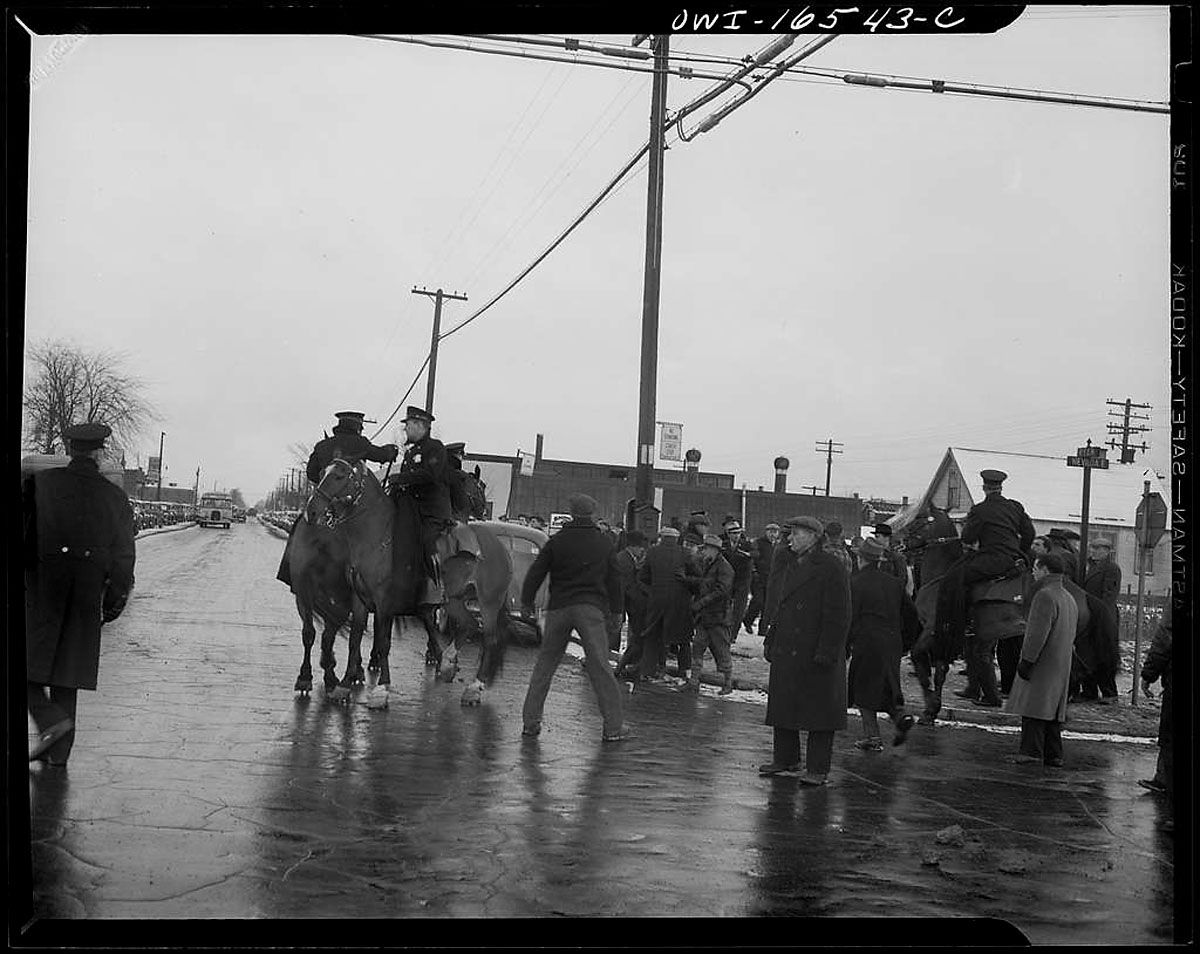
 

Arthur S. Siegel (American, 1913-1978) 'Detroit, Michigan. Riot at the Sojourner Truth homes, a new U.S. federal housing project, caused by white neighbours' attempt to prevent Negro tenants from moving in. Mounted police and whites' Detroit 1942


Arthur S. Siegel (American, 1913-1978)
Detroit, Michigan. Riot at the Sojourner Truth homes, a new U.S. federal housing project, caused by white neighbours’ attempt to prevent Negro tenants from moving in. Mounted police and whites
Detroit 1942
Library of Congress
Public domain


General Electric advertisement 'It's a promise' 1945


General Electric advertisement
It’s a promise
1945
Private collection, Barcelona
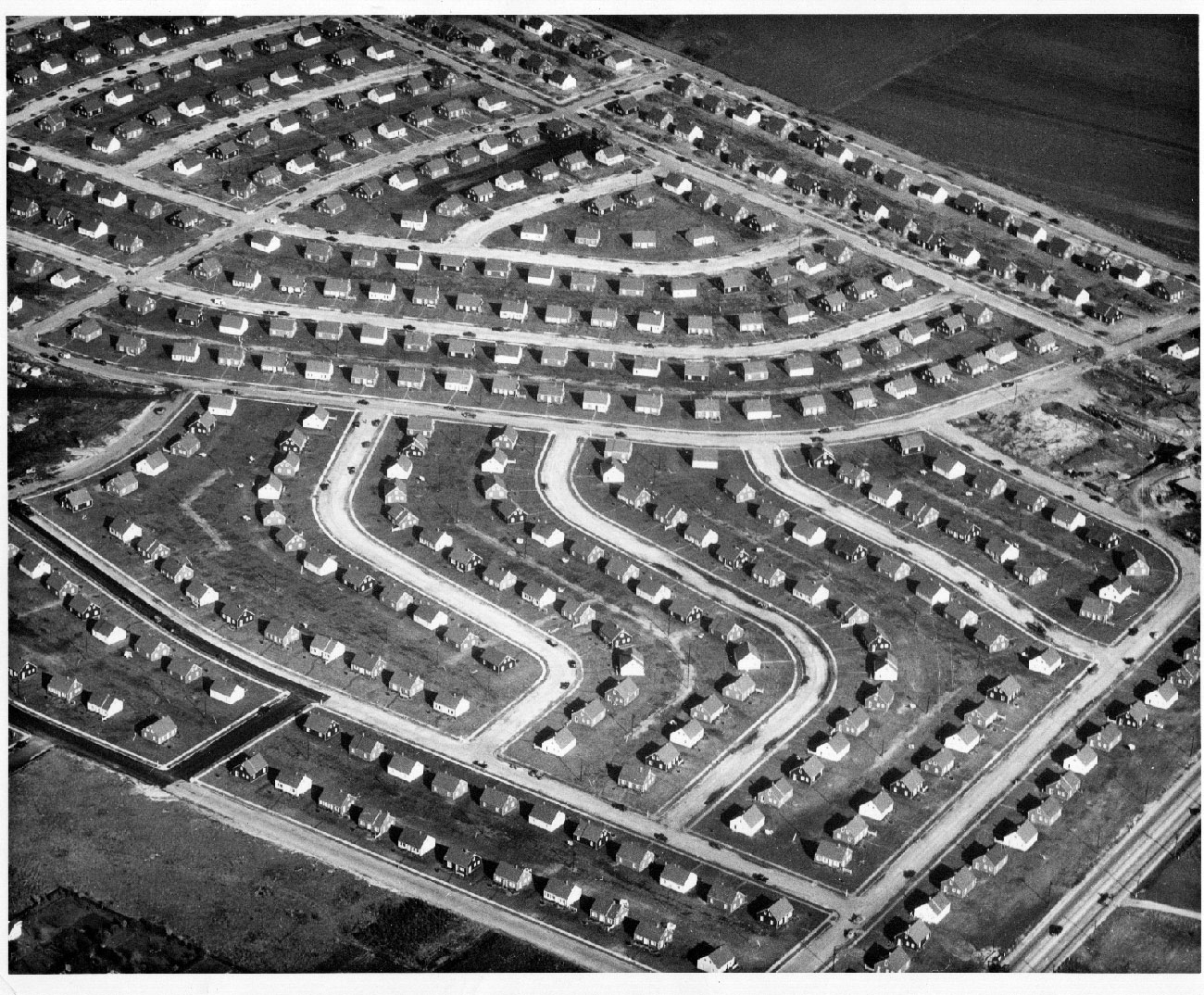
 

Anonymous photographer. 'Aerial view of Levittown' 1949


Anonymous photographer
Aerial view of Levittown
1949
Courtesy Levittown Public Library
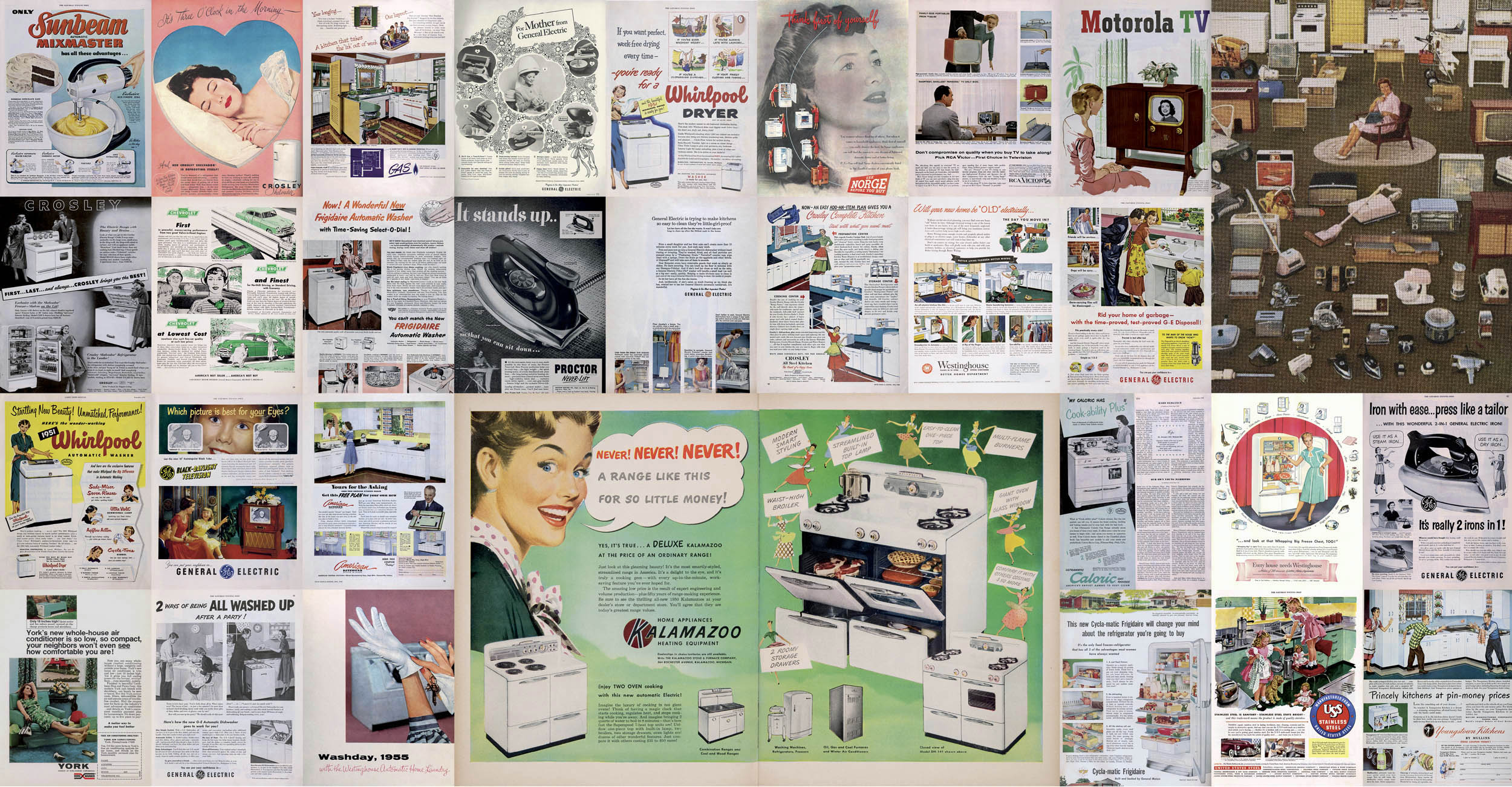
 

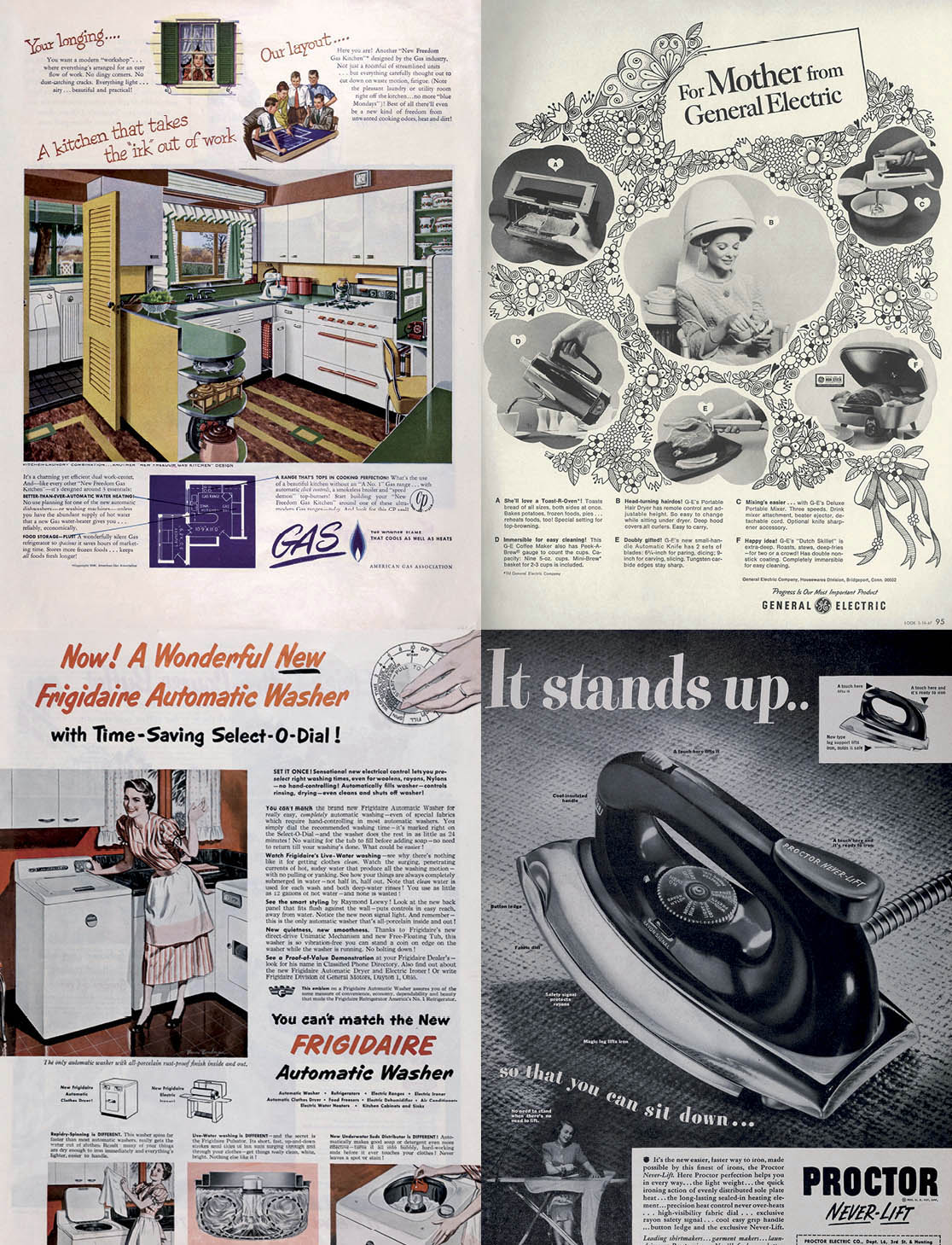
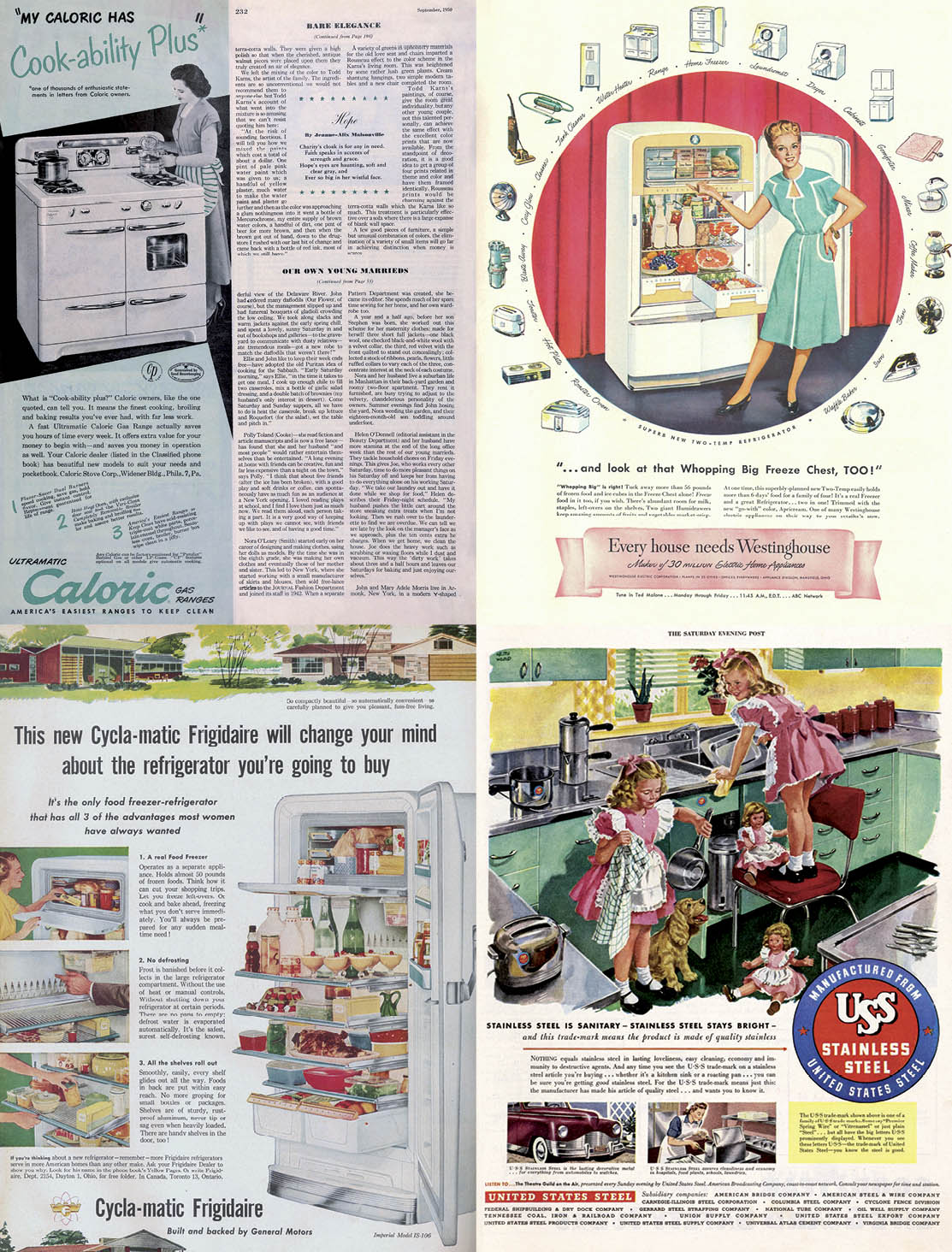
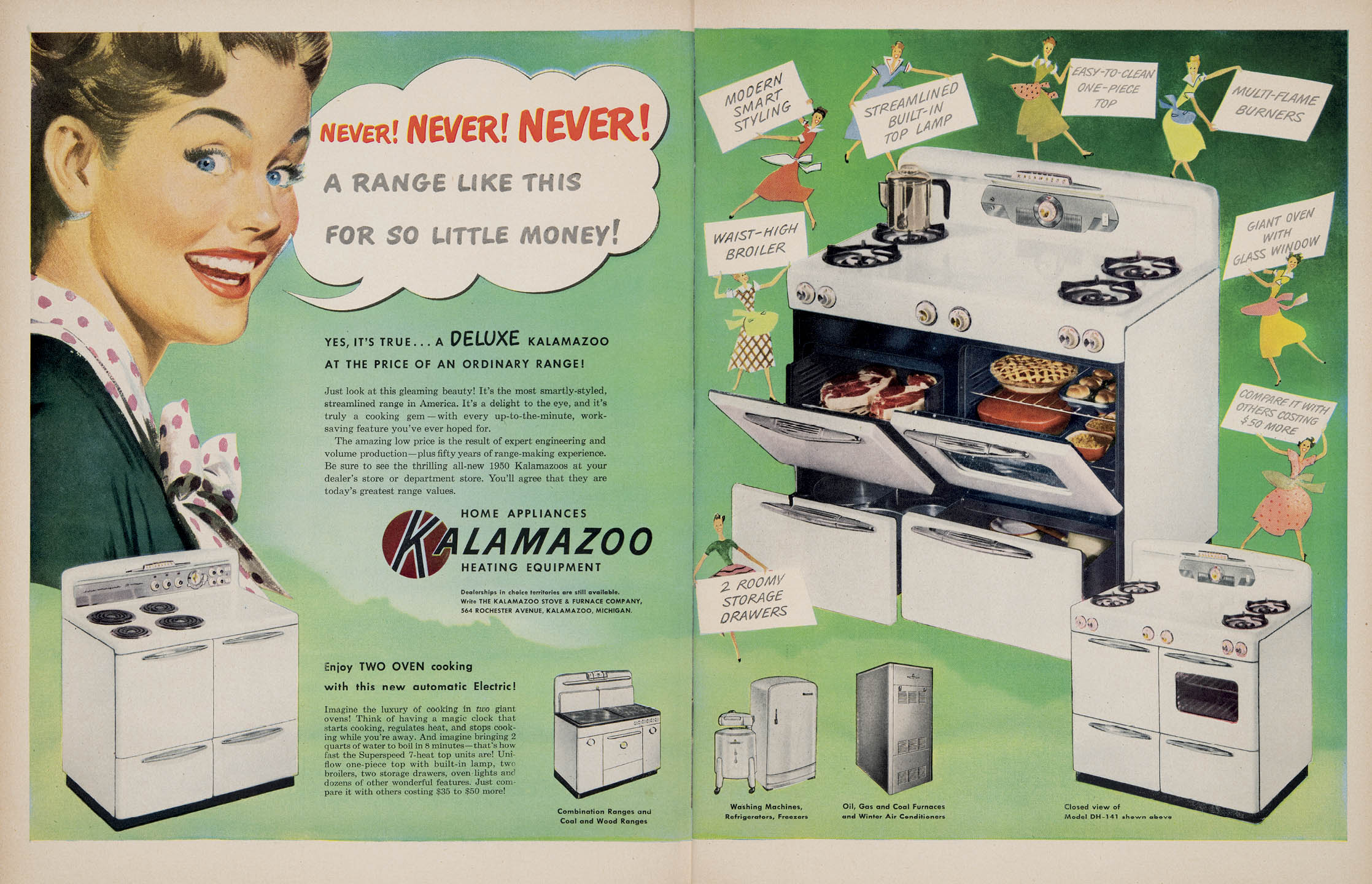
'Mural of household appliance advertisements published in different American magazines' 1947-1962


Mural of household appliance advertisements published in different American magazines
1947-1962
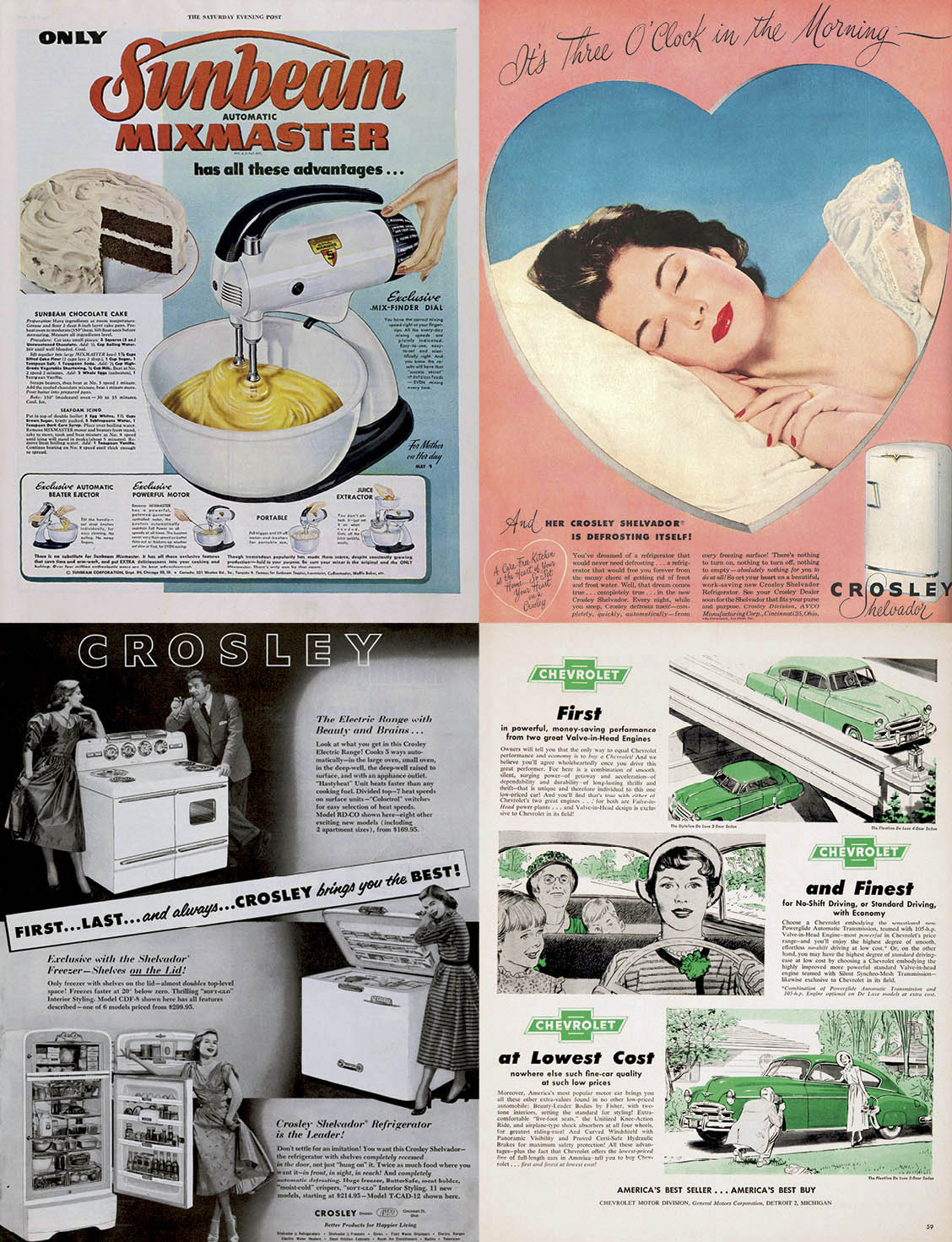
 

'Mural of household appliance advertisements published in different American magazines' 1947-1962 (detail)

'Mural of household appliance advertisements published in different American magazines' 1947-1962 (detail)

'Mural of household appliance advertisements published in different American magazines' 1947-1962 (detail)

'Mural of household appliance advertisements published in different American magazines' 1947-1962 (detail)


Mural of household appliance advertisements published in different American magazines (details)
1947-1962
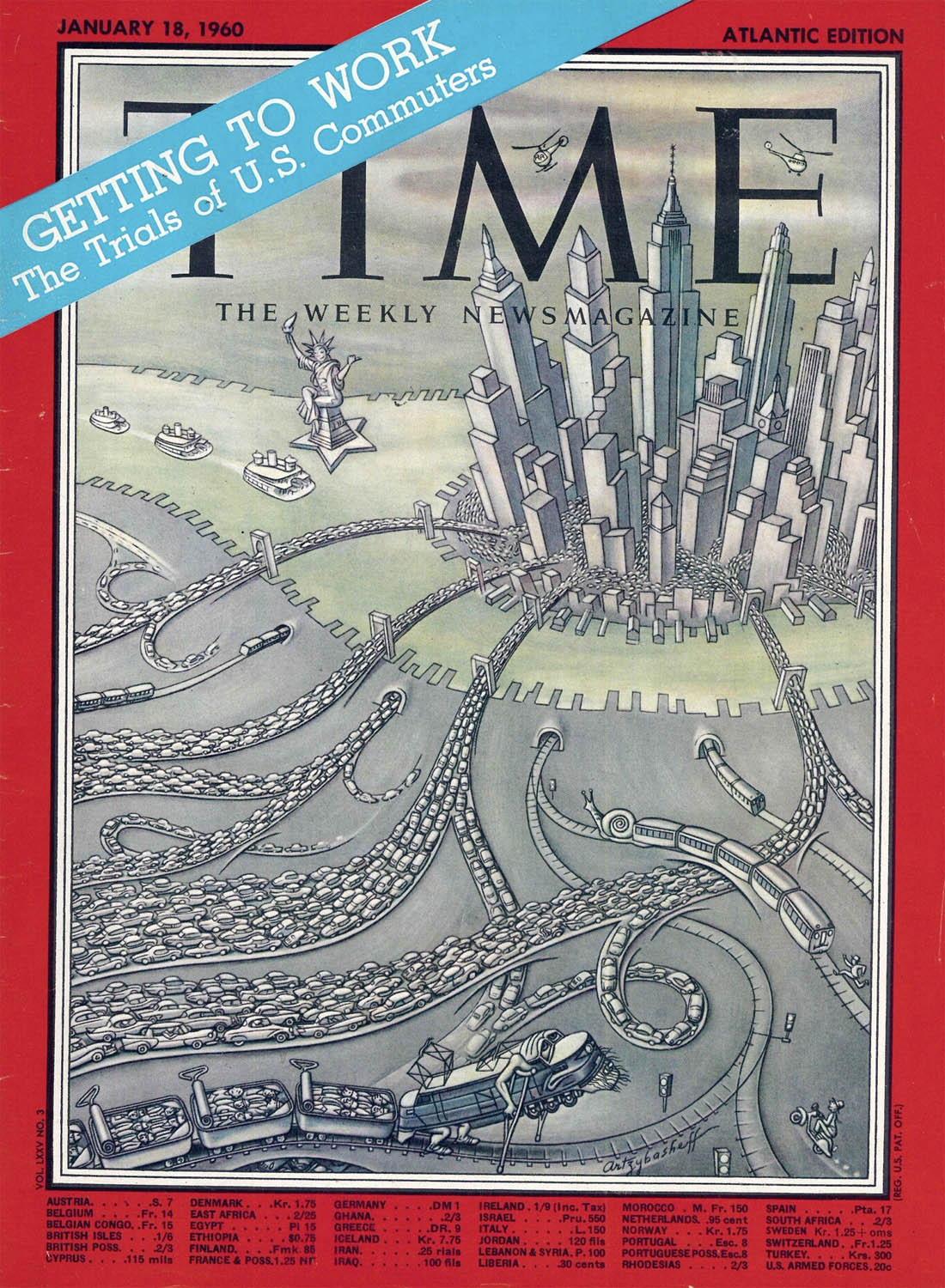
 

Getting to Work. The Trials to U.S. commuters 'Time', January 18, 1960


Getting to Work. The Trials to U.S. commuters
Time, January 18, 1960
Library of Catalonia, Barcelona
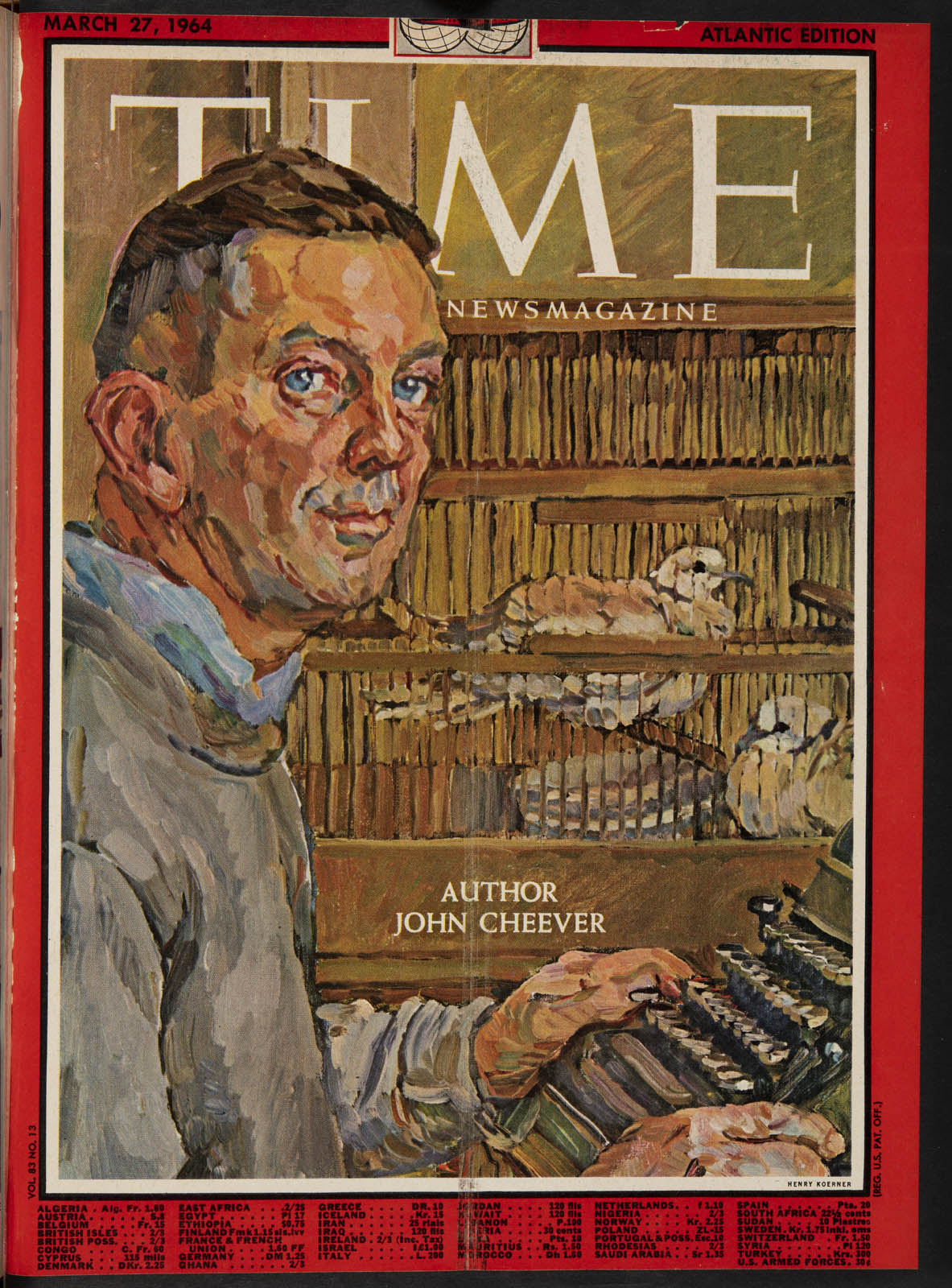
 

John Cheever 'Time', March 27, 1964


John Cheever
Time, March 27, 1964
Library of Catalonia, Barcelona
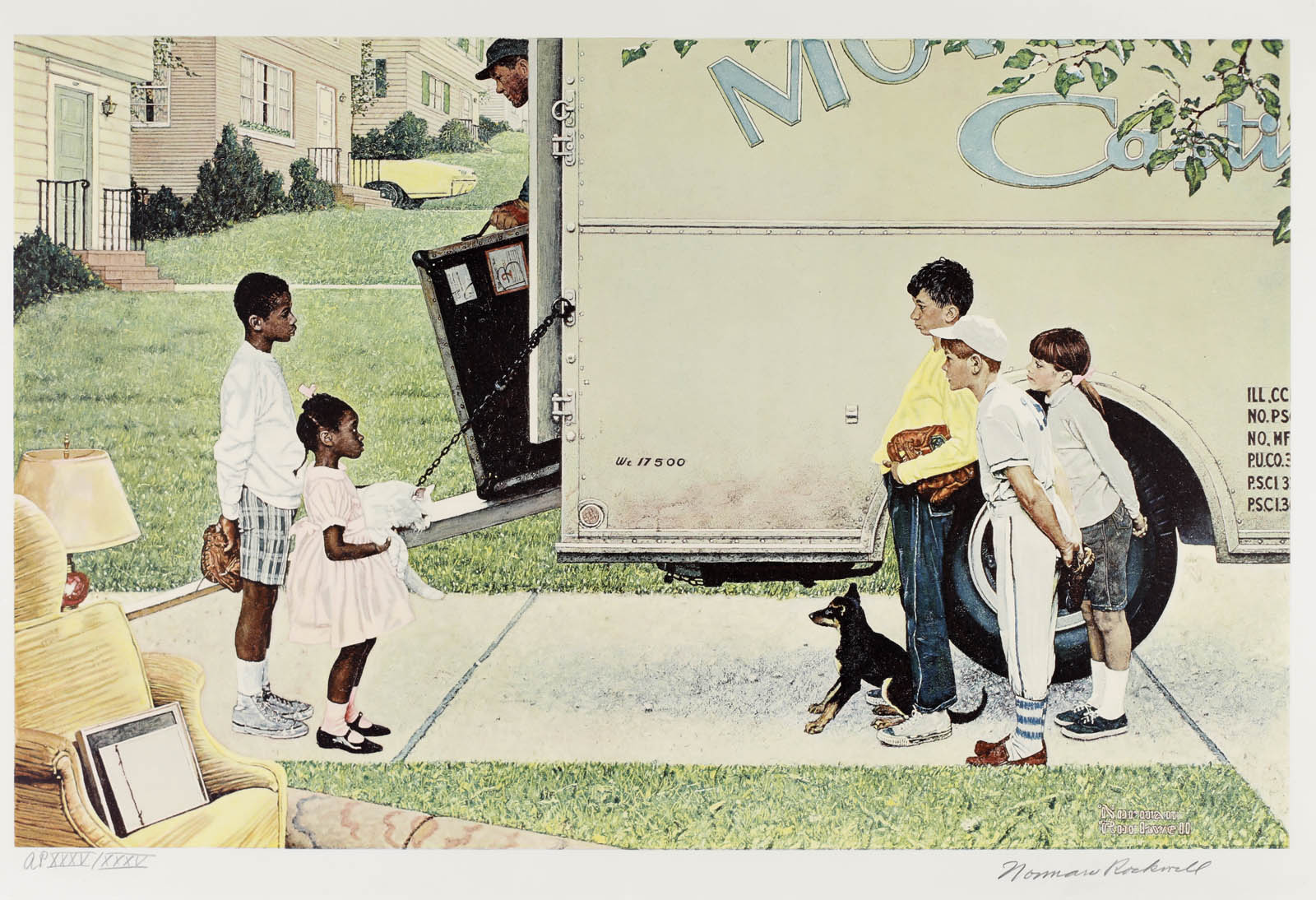
 

Norman Rockwell (American, 1894-1978) 'New Kids in the Neighbourhood' 1967


Norman Rockwell (American, 1894-1978)
New Kids in the Neighbourhood
1967
Lithograph
Norman Rockwell Museum Collection
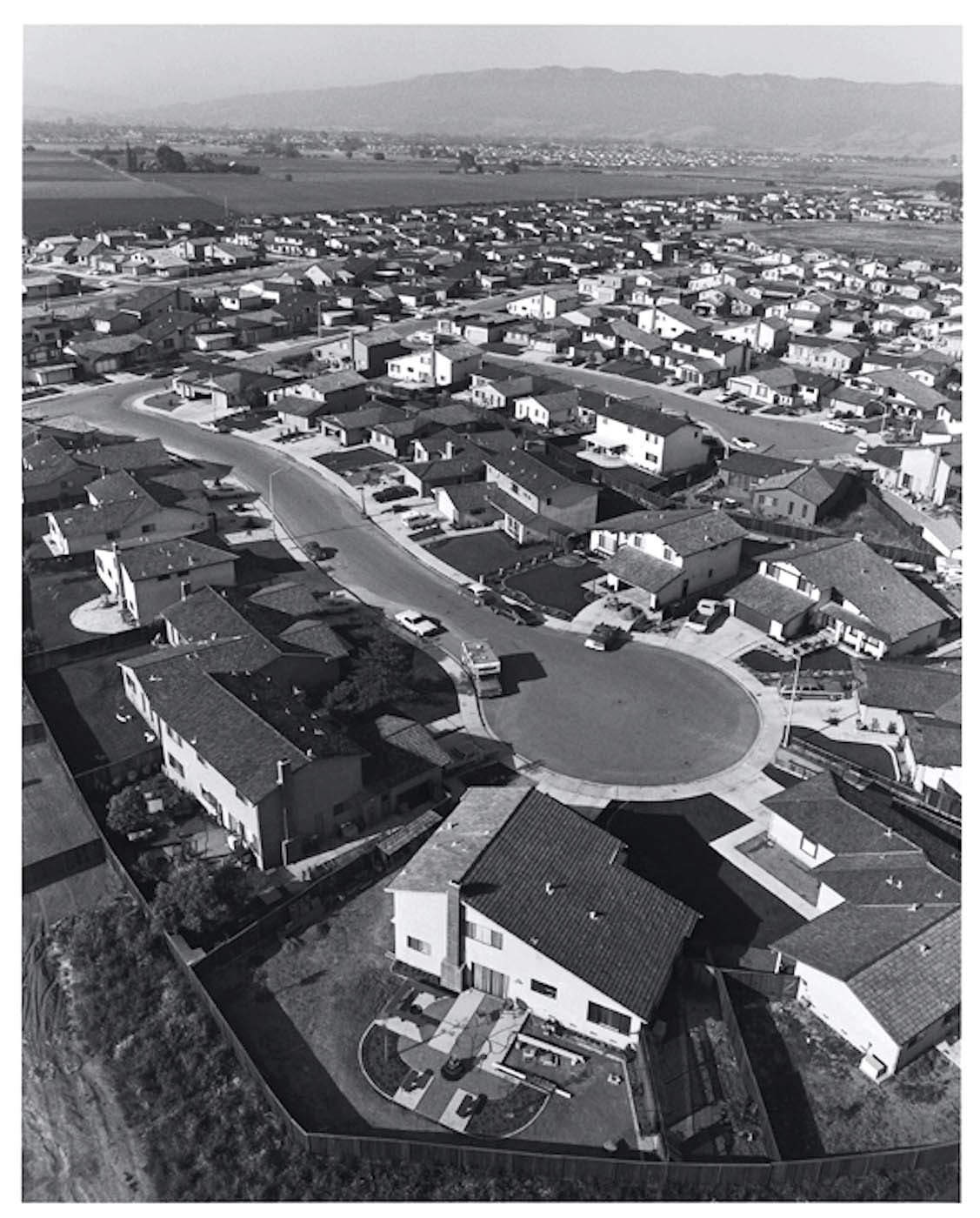
 

Bill Owens (American, b. 1938) 'Suburbia, Cul de sac, Pleseanton, California' 1972


Bill Owens (American, b. 1938)
Suburbia, Cul de sac, Pleseanton, California
1972
Gelatin silver
Bill Owens Archive, Milan


Bill Owens (American, b. 1938) 'I don't feel that Richie playing with guns will have a negative effect on his personality. (He already wants to be a policeman.)' 1972


Bill Owens (American, b. 1938)
I don’t feel that Richie playing with guns will have a negative effect on his personality. (He already wants to be a policeman.)
1972
Gelatin silver
Bill Owens Archive, Milan


The Residential Nightmare

And night fell on Suburbia. What had been a dream became a nightmare. The idea of a safe, healthy, happy place was gradually contaminated with fears, terrors and paranoias. Doors were bolted and alarms installed. After all, in the American Gothic tradition, the house, often haunted, had always been a source of horror – evil lurked there. With the appearance of mass-produced housing, a new sub genre called Suburban Gothic was consolidated, and began to manifest itself both in literature and in cinema. Unlike the traditional Gothic, in this new landscape the family residence was no longer tied to a specific territory, as it had been in New England; now, with its white picket fence and green lawn, it could be anywhere in the country. And evil came from outside, it threatened to invade the home and even undermine it. Under the guise of shiny normality, American suburbs always conceal cracks through which terror creeps.

To illustrate this residential nightmare, we take in historical materials of the atomic age, photographs of the dark side of suburbia by Amy Stein, Todd Hido, Gregory Crewdson, Angela Strassheim and Gabriele Galimberti, and Kate Wagner’s installation, McMansionHell. Alberto Ortega, an artist from Seville resident in the US who has devoted himself to painting the suburbs at night, presents two works for the first time at the CCCB.
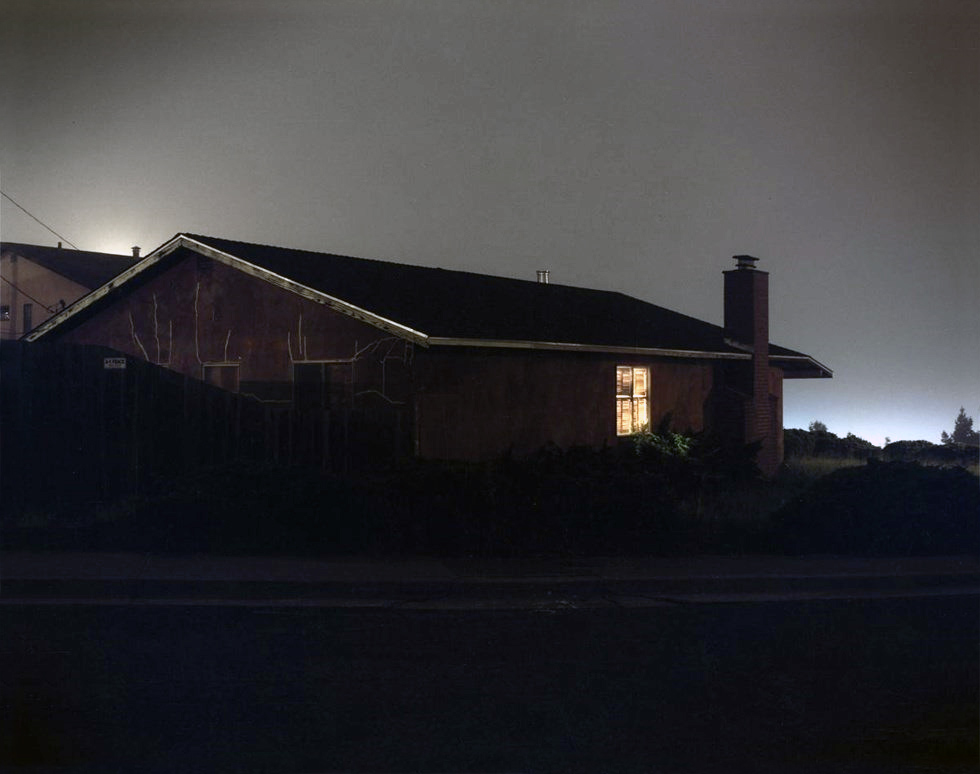
 

Todd Hido (American, b. 1968) 'Untitled #2214' 1998


Todd Hido (American, b. 1968)
Untitled #2214
1998
From the series House Hunting
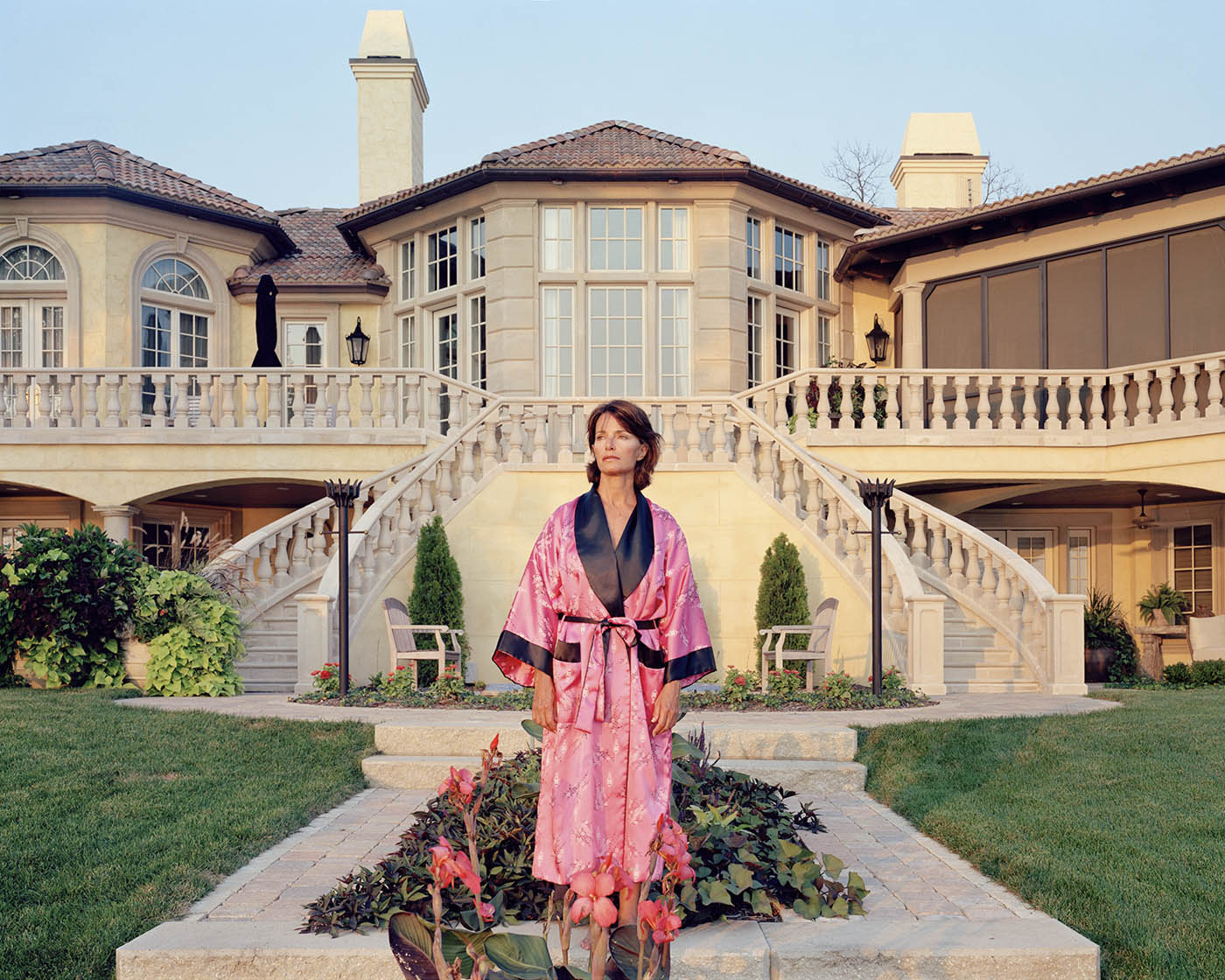
 

Angela Strassheim (American, b. 1969) 'Untitled (Elsa)' 2005


Angela Strassheim (American, b. 1969)
Untitled (Elsa)
2005
Left Behind series
Courtesy of the artist


Installation view of the exhibition 'Suburbia. Building the American Dream' at the Centre de Cultura Contemporània de Barcelona | CCCB showing the work of Gabriele Galimberti from the series 'The Ameriguns' with at top right, 'Joel, Lynne, Paige and Joshua (44, 43, 5 and 11 years old) – central Texas' 2021; and at bottom right, 'Eric Arnsberger (30) and Morgan Gagnier (22) – Lake Forest, California' 2021


Installation view of the exhibition Suburbia. Building the American Dream at the Centre de Cultura Contemporània de Barcelona | CCCB showing the work of Gabriele Galimberti from the series The Ameriguns with at top right, Joel, Lynne, Paige and Joshua (44, 43, 5 and 11 years old) – central Texas 2021; and at bottom right, Eric Arnsberger (30) and Morgan Gagnier (22) – Lake Forest, California 2021
© Alice Brazzit, CCCB, 2024
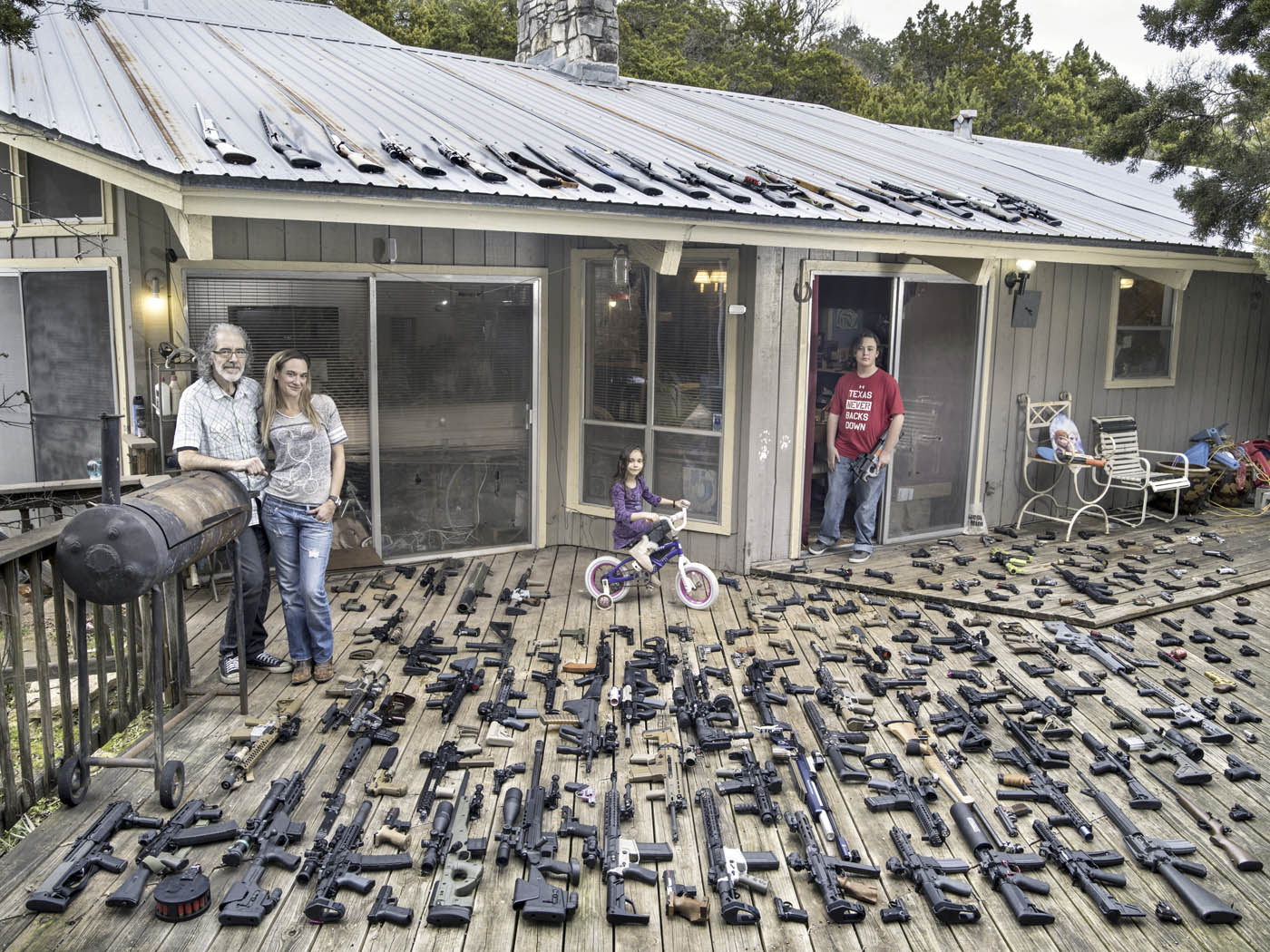
 

Gabriele Galimberti (Italian, b. 1977) 'Joel, Lynne, Paige and Joshua (44, 43, 5 and 11 years old) – central Texas' 2021


Gabriele Galimberti (Italian, b. 1977)
Joel, Lynne, Paige and Joshua (44, 43, 5 and 11 years old) – central Texas
2021
Digital printing
Courtesy of the artist
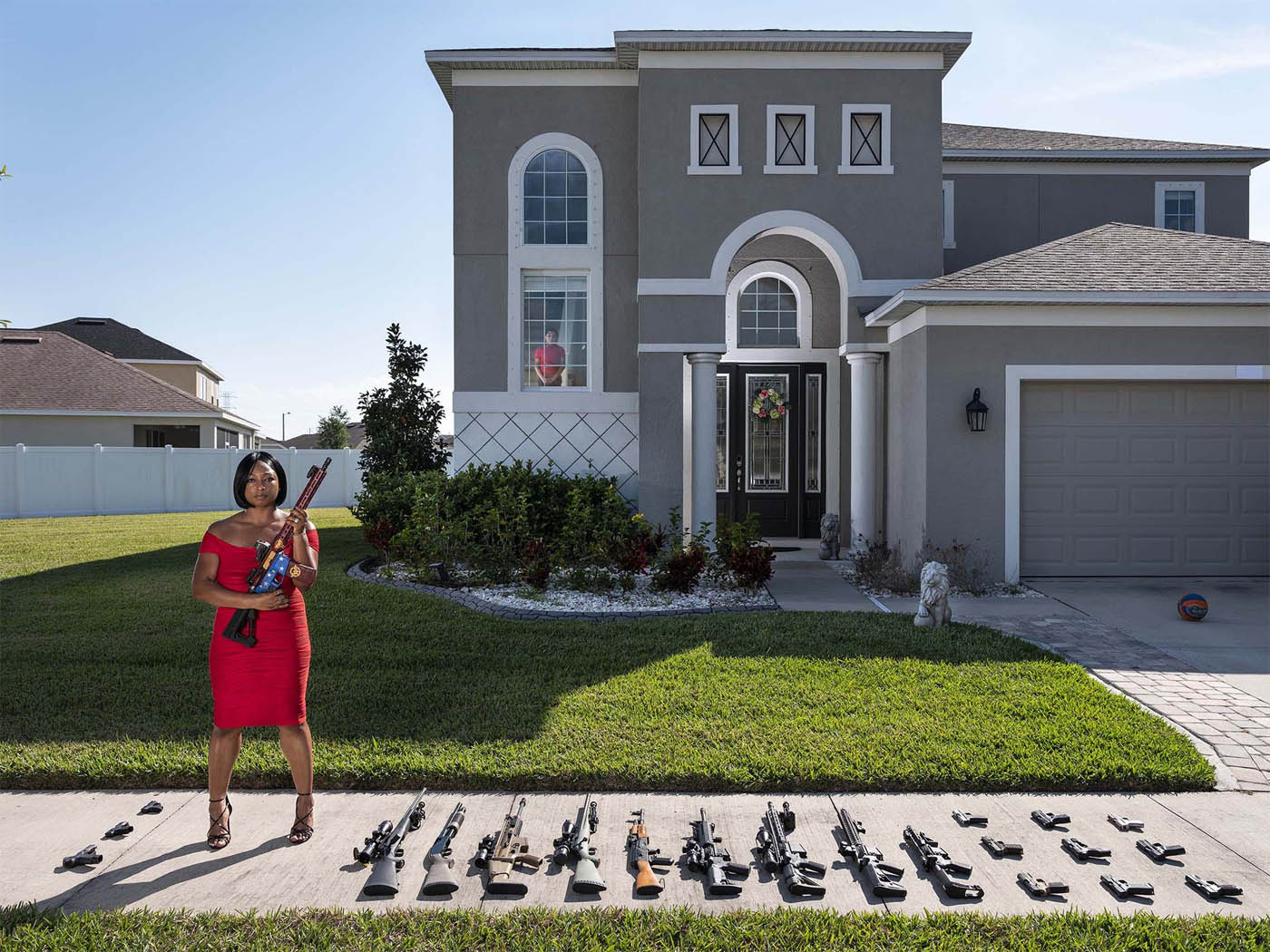
 

Gabriele Galimberti (Italian, b. 1977) 'Avery Skipalis (33) – Tampa, Florida' 2021


Gabriele Galimberti (Italian, b. 1977)
Avery Skipalis (33) – Tampa, Florida
2021
Digital printing
Courtesy of the artist


Avery Skipalis (33) stands with her firearms in front of her house in Tampa, Florida, USA. Her son looks on from a window. Avery joined the US Air Force when she was 17, and after serving in the UAE, Japan and Germany, left to start a company that offers firearms safety classes to adults and children.


Alberto Ortega (American born Spain, b. 1976) 'Annunciation' 2023


Alberto Ortega (American born Spain, b. 1976)
Annunciation
2023
Oil on aluminium panel
Courtesy of the artist


Alberto Ortega (Sevilla, Spain 1976) creates oil paintings made after miniature sets that he builds as references. The small-scale sets enable him to recreate suburban scenes using details that recall the 1950s. Since he’s able to control the angle and point of view, the lighting, the location of every element, much like a film director would do, his works have a strong cinematic feel.

As an immigrant to the United States, Alberto is intrigued by American suburban life as depicted in film, literature, and visual art. Through these images of American homes, buildings, and neighbourhoods, he portrays society and some of its contradictions. These scenes represent hopes and dreams, the threat of their failure, and alienation.

Text from the Alberto Ortega website
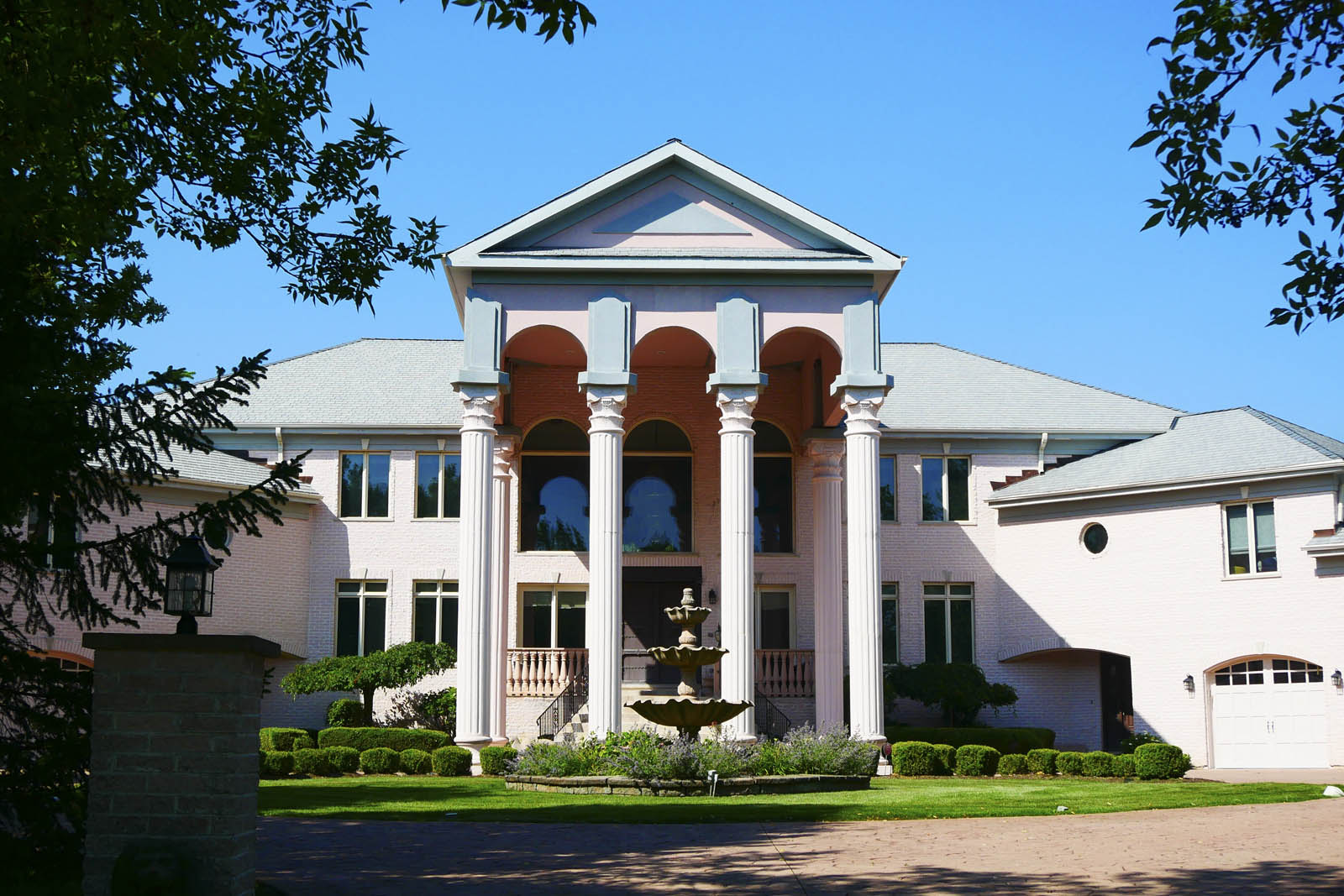
 

Kate Wagner (American, b. 1993) 'Observations from McMansion Hell' 2023


Kate Wagner (American, b. 1993)
Observations from McMansion Hell
2023
Digital print on palboard
Courtesy of the artist


McMansion Hell is a blog that humorously critiques McMansions, large suburban homes typically built from the 1980s to 2008 and known for their stylistic attempt to create the appearance of affluence using mass-produced architecture. The website is run by Kate Wagner, an architectural writer. …

The blog uses Wagner’s commentary atop images of the interiors and exteriors of McMansions, using arrows to note features she finds questionable or in poor taste. Besides critiquing the homes themselves, the website also criticises the perceived material culture of wastefulness McMansions can represent, gives anecdotes of situations when McMansions have been a poor financial investment, and provides other essays on urban planning and architectural history. The blog offers subscriptions with bonus content, generating sufficient funding for Wagner to work on the blog full-time.

Text from the Wikipedia website


Post-Suburbia?

The appearance of New Urbanism in the 1990s began to herald the inevitable death of Suburbia due to the announced depletion of oil that has not yet occurred. Meanwhile, Suburbia continues to spread, transform and diversify. Today, 8 out of 10 Americans live in sprawl and single-family homes, representing 75% of the residential areas where new generations continue to dream of living. This is a new suburbia that is more open but also more unequal.

This suburb is made up of very diverse communities, as captured by the cameras of the photographers Sheila Pree Bright (who portrays African American life around Atlanta) and Jessica Chou (who immortalises the Asian community in Monterrey Park, California). New lifestyles also proliferate there, like at Huntington Beach, a “contemporary suburb” and surfing capital featured in the works of artist and skateboarder Ed Templeton.

This section also focuses on the environmental impact of this highly polluting city model, through the apocalyptic bonsai of artist Thomas Doyle and the satellite photographs of Benjamin Grant, a lethal panorama of the effects of the sprawling city.
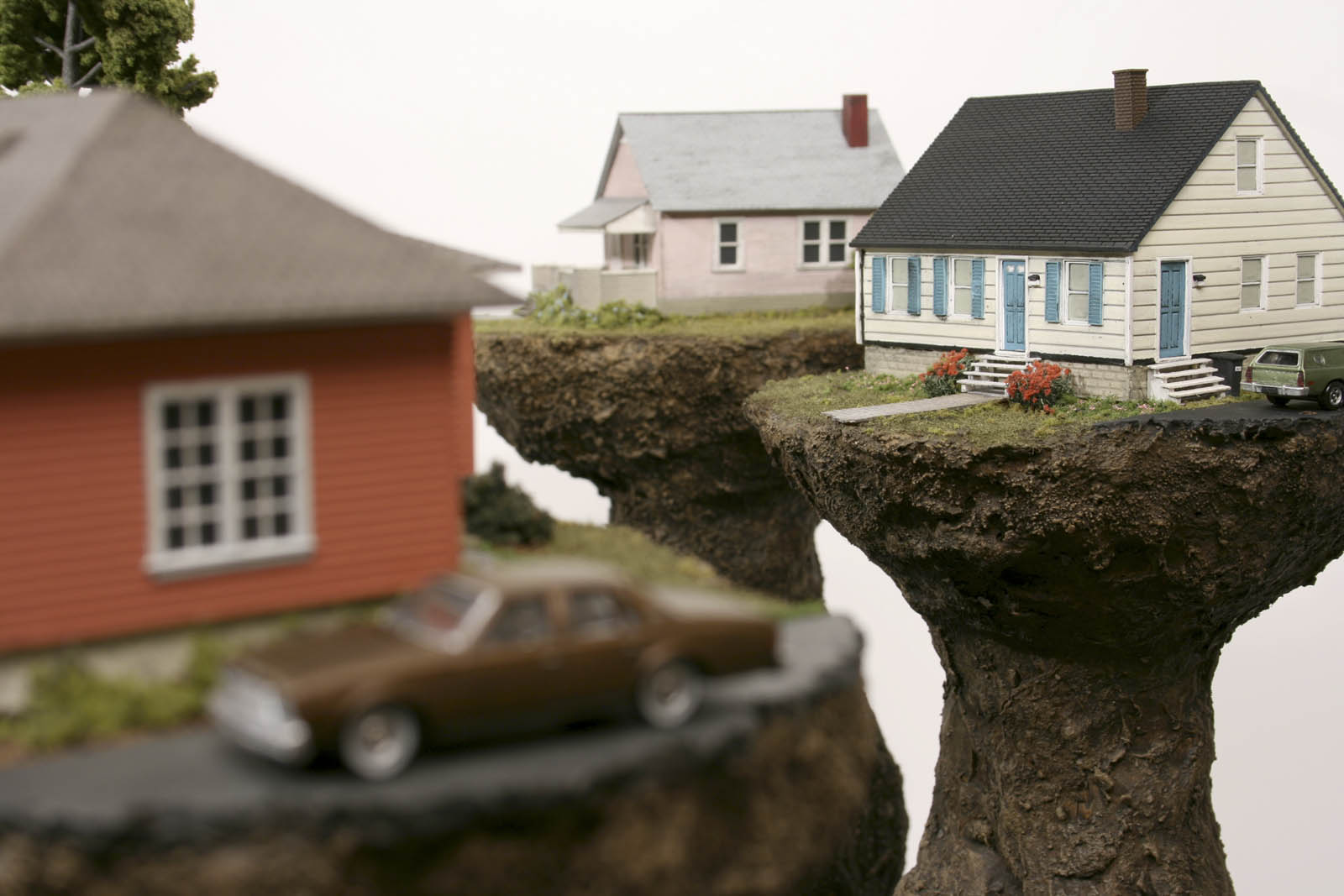
 

Thomas Doyle (American, b. 1976) 'Proxy (Haven Ln.)' 2012


Thomas Doyle (American, b. 1976)
Proxy (Haven Ln.)
2012
Mixed media
Courtesy of the artist


Thomas Doyle work mines the debris of memory through the creation of intricate worlds sculpted in 1:43 scale and smaller. Often sealed under glass, the works depict the remnants of things past – whether major, transformational experiences, or the quieter moments that resonate loudly throughout a life. In much the way the mind recalls events through the fog of time, the works distort reality through a warped and dreamlike lens.

Text from the Ronchini Gallery website


Weronika Gęsicka (Polish, b. 1984) 'Untitled #16' 2015-2017 From the series 'Traces'


Weronika Gęsicka (Polish, b. 1984)
Untitled #16
2015-2017
From the series Traces
Digital printing
Courtesy of the artist and Jednostka Gallery, Warsaw


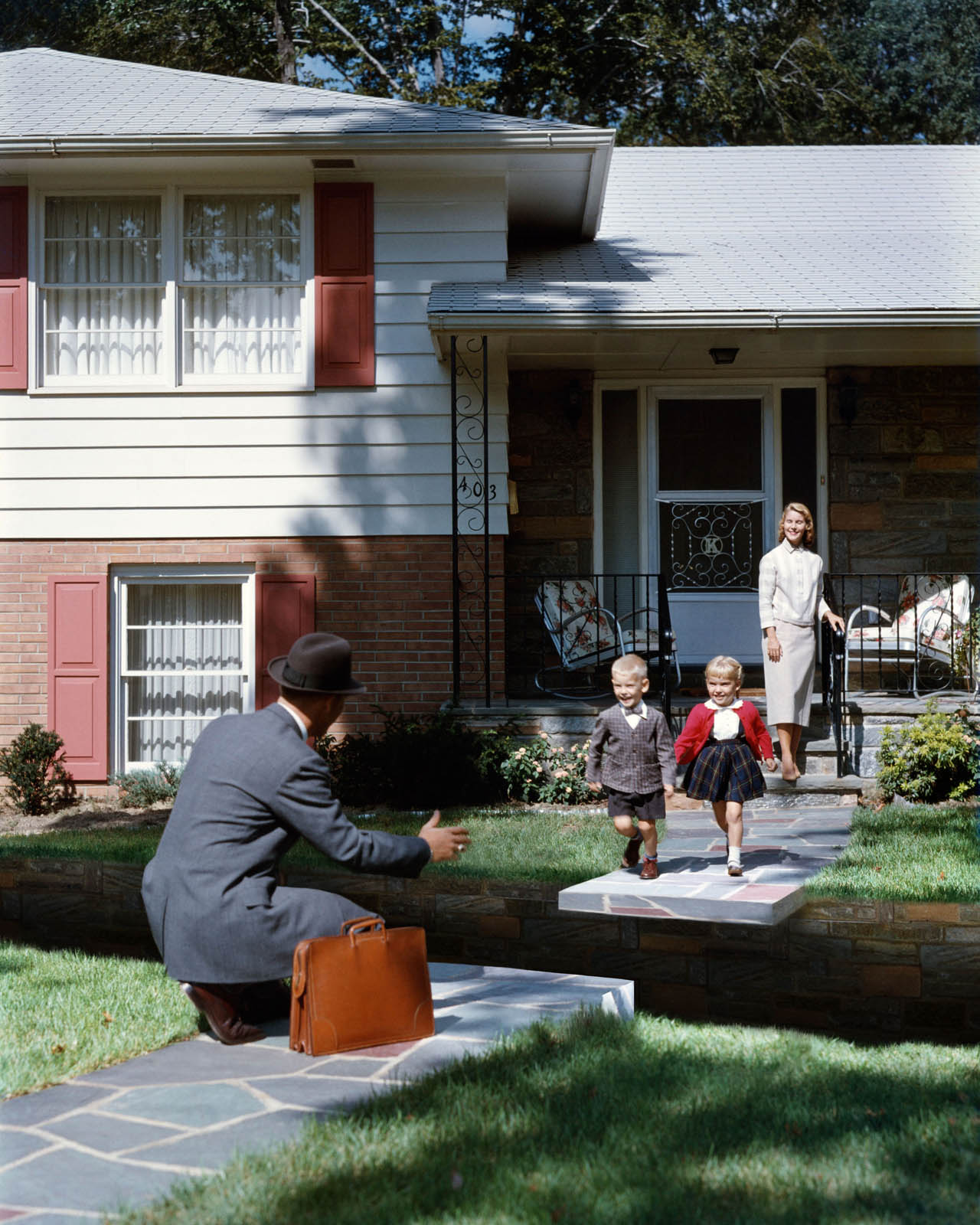
For her series “Traces”, Polish artist Weronika Gęsicka searched through various online image databases for photographs from the 1940s to the 1960s that in her eyes reflect the American way of life at that time. Many of these scenes are full of clichés, showing happy-looking people in an apparently perfect world. The exact origin of the pictures is not verifiable. As a result, they are a mixture of advertisements and private photos. Gęsicka manipulates the idyllic scenes in a playful way by digitally distorting the images. In doing so, she does not follow a strict pattern, but instead decides intuitively what detail she finds fascinating and will edit. In this way, the rather stereotypical scenes of suburban American life are transformed into a humorous, but also uncomfortable reality. Covered faces, deformed bodies and peculiar superimpositions create a distorted version of the American dream. Gęsicka’s photos are characterised by a discomforting, almost oppressive mood that sometimes only reveals itself at second glance: young men at a tea dance, whose heads are submerged in the cleavages of their oversized female partners, family members hidden behind a curtain at the dinner table, or a father coming home from work, separated by a trench from his children, who are running towards him.

In “Traces”, Weronika Gęsicka questions how we perceive images. In doing so, she makes us aware that even the medium of photography, which allegedly reflects reality, is not objective. Each photograph merely satisfies a perception of what is happening and, in the photographer’s eye, remains a subjective likeness. By modifying the images, she is playing with the observer, who is initially confident that he can quickly classify and identify the scene – until he notices that nothing in these pictures is as it seems at first glance.

Anonymous. “Weronika Gęsicka: A Disconcerting Idyll,” on the Deutsche Börse Photography Foundation website Nd [Online] Cited 13/08/2024
 

Weronika Gęsicka (Polish, b. 1984) 'Untitled #52' 2015-2017 From the series 'Traces'


Weronika Gęsicka (Polish, b. 1984)
Untitled #52
2015-2017
From the series Traces
Digital printing
Courtesy of the artist and Jednostka Gallery, Warsaw
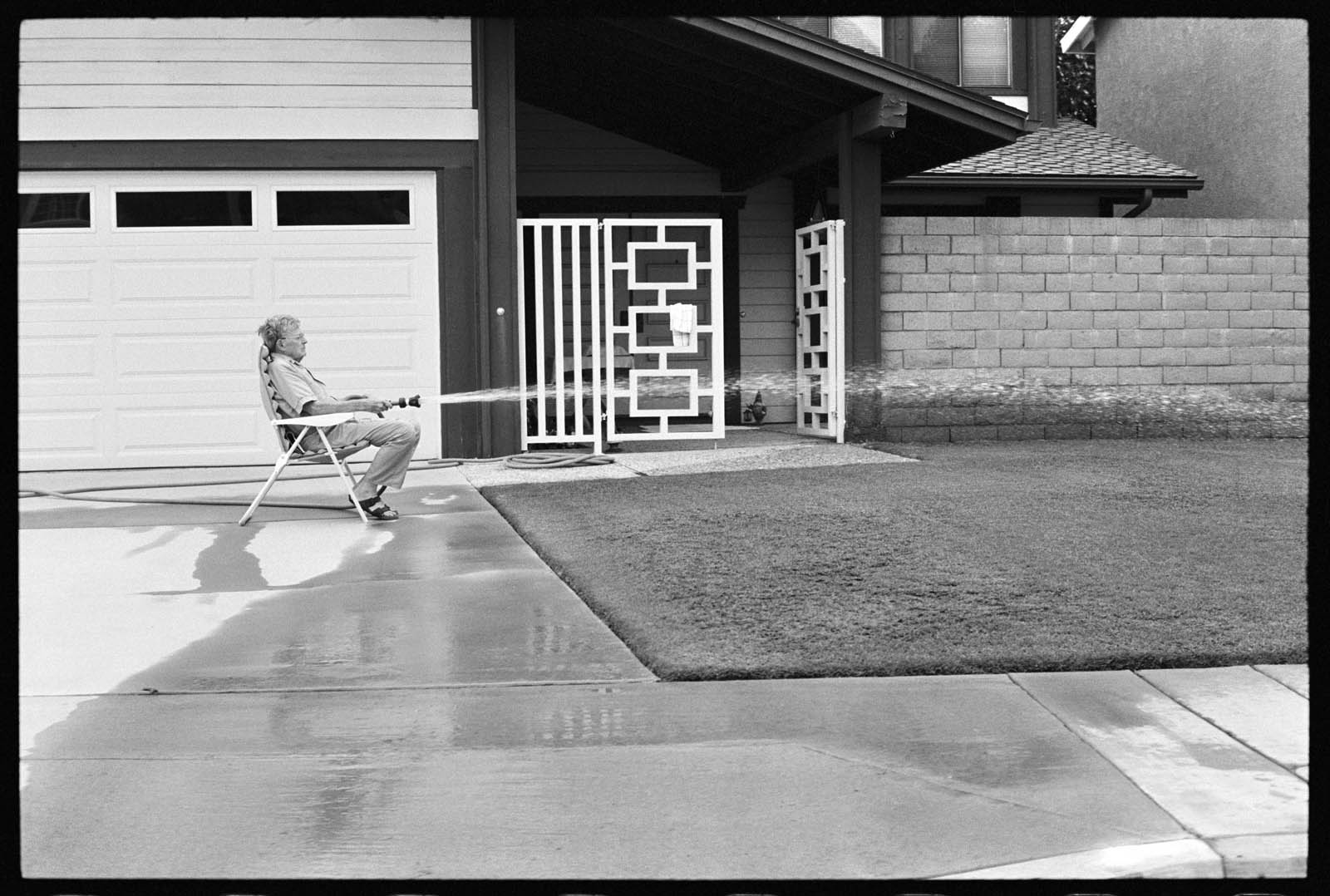
 

Ed Templeton (American, b. 1972) 'Contemporary Suburbium' 2017


Ed Templeton (American, b. 1972)
Contemporary Suburbium
2017
Digital printing on baryta paper
Courtesy of Roberts Projects, Los Angeles
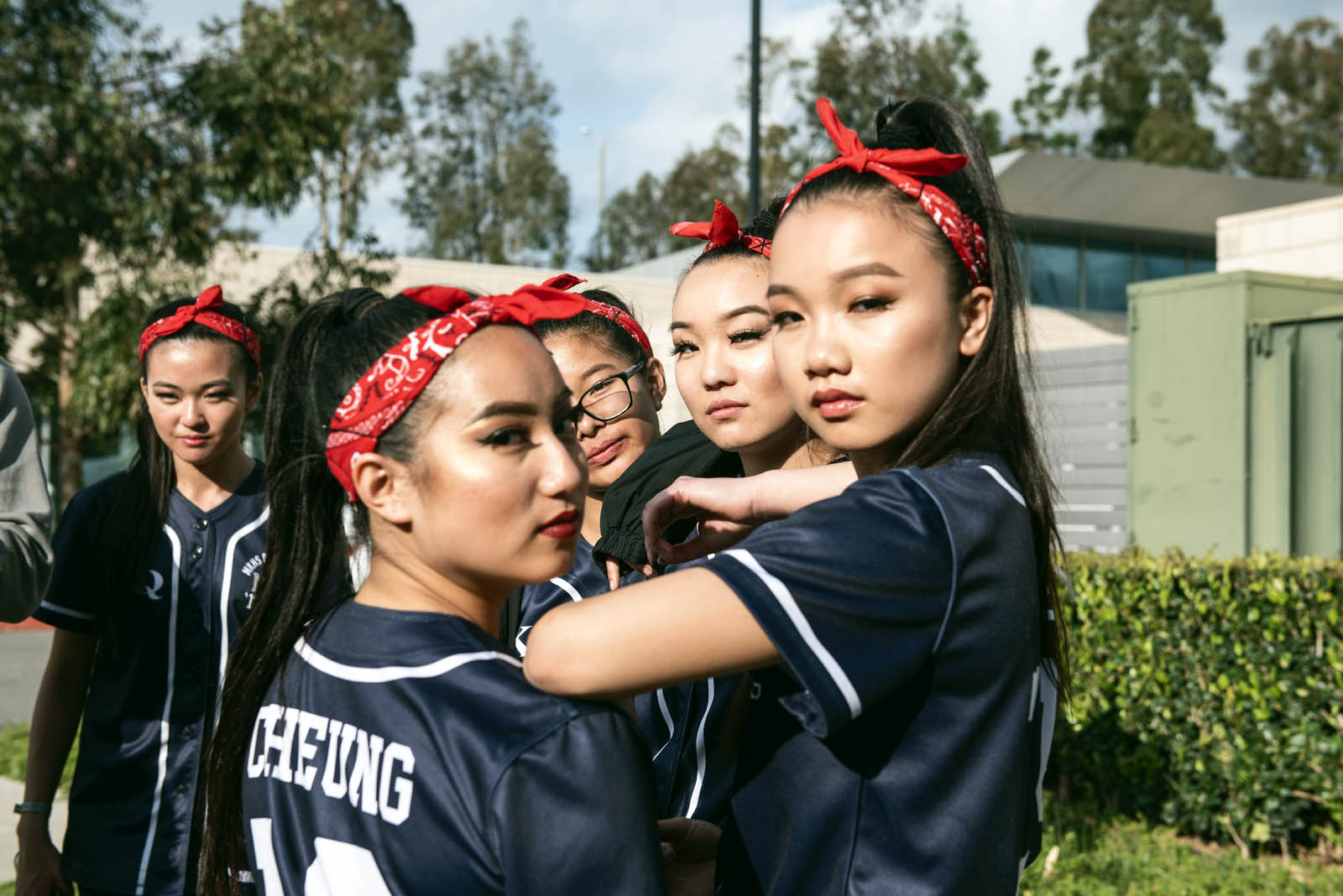
 

Jessica Chou (American born Taiwan, b. 1985) 'The Mark Keppel High School Dance Team at the 2019 Miss Dance Drill Team USA National Dance Competition' 2019


Jessica Chou (American born Taiwan, b. 1985)
The Mark Keppel High School Dance Team at the 2019 Miss Dance Drill Team USA National Dance Competition
2019
Digital printing
Courtesy of the artist
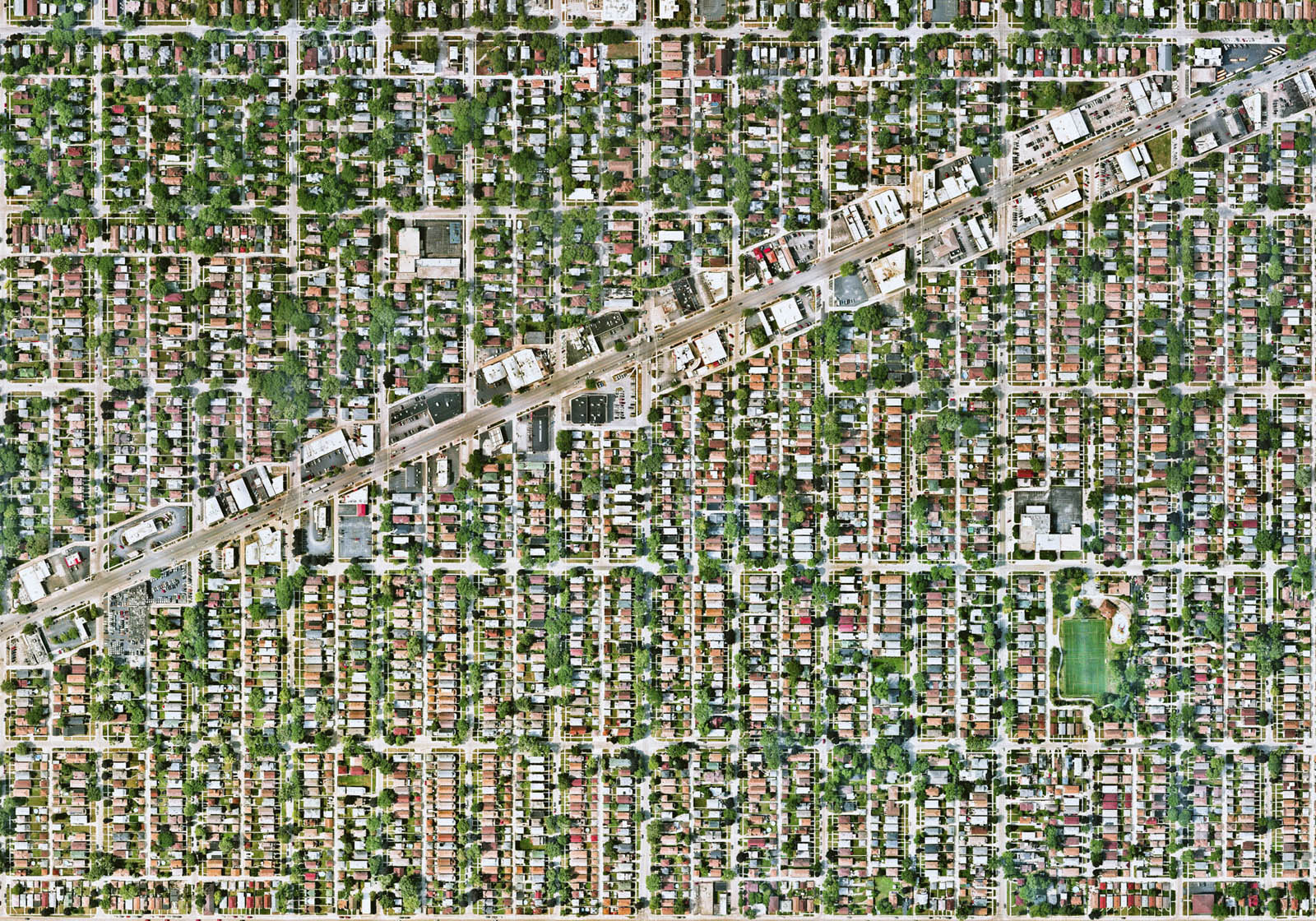
 

Benjamin Grant (American, b. 1984) 'Berwyn, Illinois' 2023


Benjamin Grant (American, b. 1984)
Berwyn, Illinois
2023
Digital printing
Images created by Overview, source images
© Nearmap


Overview takes its inspiration from Daily Overview – an Instagram account established by author Benjamin Grant. Since he began the project in December 2013, his daily posts have both delighted and challenged his audience from all corners of the globe. For Overview, Grant has curated and created more than 200 original images by stitching together numerous high-resolution satellite photographs. With each Overview, Grant aims to not only inspire a fresh perspective of our planet but also encourage a new understanding of what human impact looks like. He lives and rides his bike in New York City.

Text from the Penguin Books website
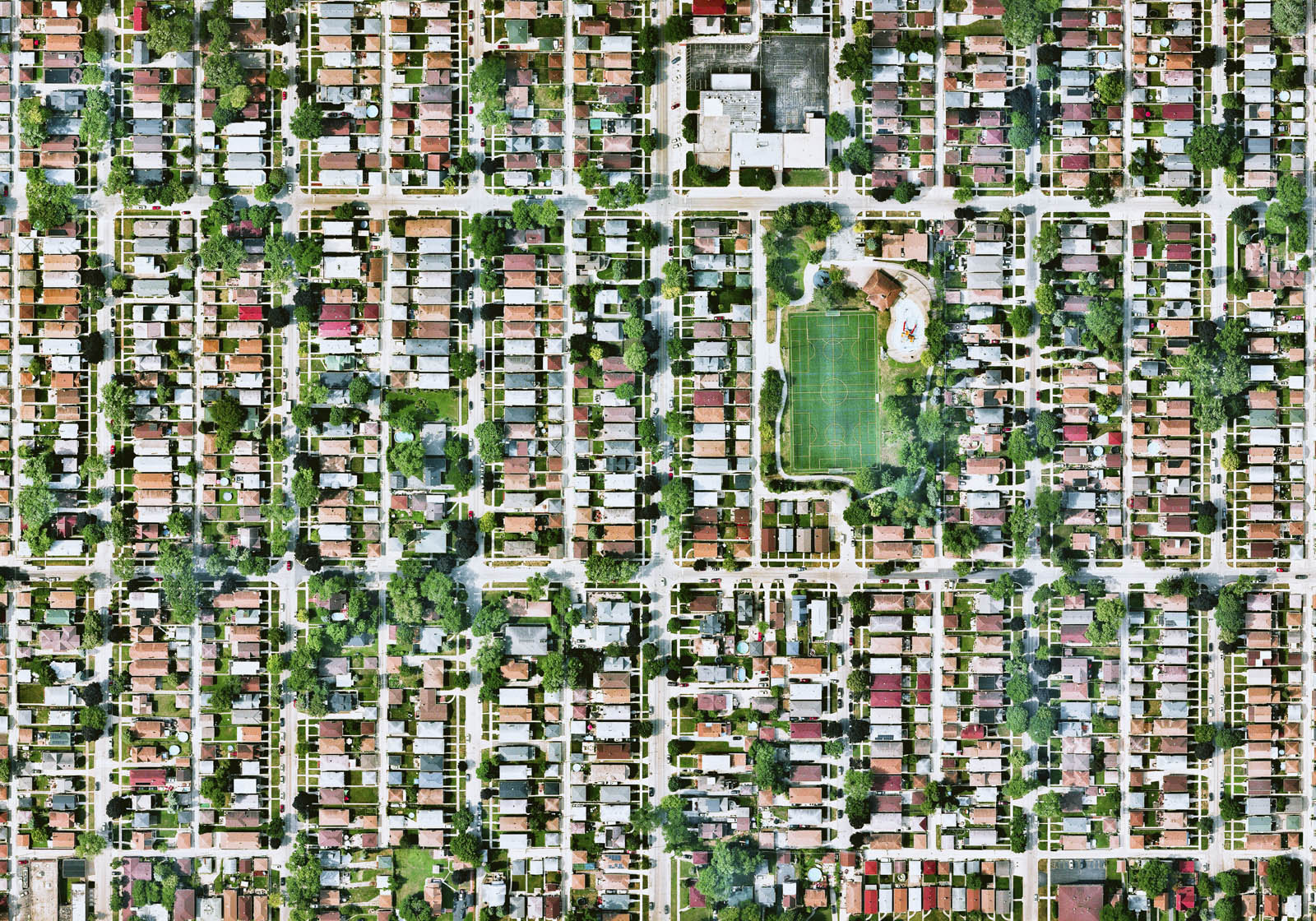
 

Benjamin Grant (American, b. 1984) 'Berwyn, Illinois' 2023 (detail)


Benjamin Grant (American, b. 1984)
Berwyn, Illinois (detail)
2023
Digital printing
Images created by Overview, source images
© Nearmap


Sprawl Reaches Our Shores

The formation of Suburbia as a cultural phenomenon in Catalonia is a reality historically ignored by narratives about the Catalan process of urbanisation, too focused on city growth and the ideological differentiation between an urban, Barcelona-based Catalonia and an “inner” Catalonia, the birthplace of what still today we call the “countryside”.

Suburban Catalonia shows how, in many territories, urban growth no longer corresponds to the well-known metaphor of city growth as an “oil stain”. In fact, an endless mass of oil stains has spread across the territory, giving rise to the same cloned reality everywhere: regional urban sprawl. The sprawl that is so commonplace today developed with the motorisation of society starting in the latter half of the 20th century as part and parcel of a very heterogeneous cultural discourse: the ideological propaganda of the American way of life mixed with local traditions derived from criticism of the built-up, crowded industrial city popularly disseminated in expressions such as “la caseta i l’hortet” (a little house and a garden) that idealised rural life. The path leading from those initial suburban choices to today’s regional urban sprawl is not a straight one, making the Catalan suburb a world yet to be discovered.

Christopher Willan has made a photographic reportage about the Catalan suburban world specially for the exhibition, which also includes Blanca Munt’s installation Mira-Sol Alert about the neighbourhood’s paranoid state of alert and an audiovisual piece by filmmaker León Siminiani that closes the exhibition.


Pere Torné Esquius (Spanish, 1879-1936) 'The rocking chair' 1913


Pere Torné Esquius (Spanish, 1879-1936)
The rocking chair (El balancí)
1913
Oil on canvas
National Art Museum of Catalonia, Barcelona


For different reasons, the singular work of the painter, illustrator and cartoonist Pere Torné Esquius (Barcelona 1879 – Flavancourt, France, 1936) doesn’t fit in with either the modernist proposals or the noucentista style (turn of the century), even though the latter considered him to be one of theirs.

Settled in Paris from 1905 onwards, although he would often return to Barcelona to regularly exhibit there, his work, of apparent simplicity, responded to a certain primitivism which was somewhat naive and with a strong French influence. His painting, highly singular, maintained pictorial and atmospheric values which provided the whole production with a sense of unity.

The favourite topics of Torné Esquius were interior or secluded spaces, such as gardens or living rooms, humble or of artisan extraction. It is worth highlighting, very often, the absence of the human figure and the main presence of inanimate elements that on occasions would cause a disturbing or even alarming effect. He also produced other genres such as landscapes or portraits.

Despite the fact that he was a painter, his professional work was based on illustration, focused on three main lines: children’s literature, the illustration of literary texts and the collaboration in magazines and periodical publications, often satirical, such as Papitu, Picarol or Le Rire, amongst others.

Anonymous. “Torné Esquius. Poetics of the Everyday,” on the Museu Nacional D’Art De Catalunya website 2017 [Online] Cited 13/08/2024


'XXIII Barcelona International Exhibition Fair, 1955. USA Pavilion. OITF: Office of International Trade Fair. Single-family house model: "house beautiful prefabricated"' 1955


XXIII Barcelona International Exhibition Fair, 1955. USA Pavilion. OITF: Office of International Trade Fair. Single-family house model: “house beautiful prefabricated”
1955
Historical Archive of the College of Architects of Catalonia
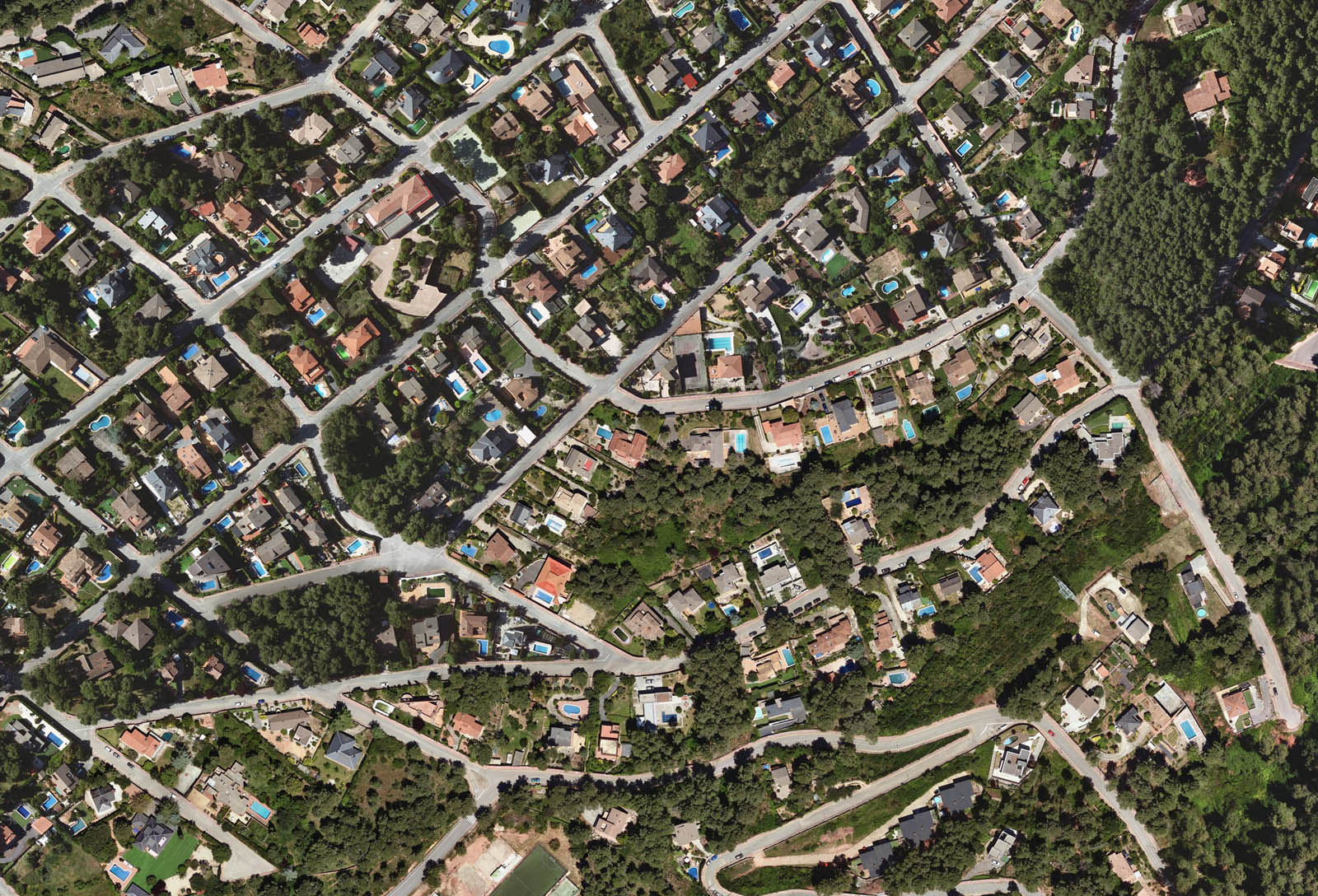
 

Barcelona Metropolitan Area. 'Orthophoto. Dispersed urbanisation in the municipality of Corbera de Llobregat' 2015


Barcelona Metropolitan Area
Orthophoto. Dispersed urbanisation in the municipality of Corbera de Llobregat
2015


Blanca Munt (Spanish, b. 1997) 'Mira-sol alert' 2023


Blanca Munt (Spanish, b. 1997)
Mira-sol alert
2023
Digital printing
Courtesy of the artist


In 2019, photographer Blanca Munt engaged in a neighbourhood chat group created to surveil her own neighbourhood and alert to any potential home burglaries or other suspicious activity. What is initially presented as an effective tool for the neighbours soon becomes a source of speculation, suspicion and paranoia. The seemingly quiet community life in a neighbourhood of well-lit streets and conventional homes founders due to the actual burglaries, but also due to the disintegration of the idea of community when personal security is at stake: mistrust, typically based on suspicious appearance or behaviour, now extends to any neighbours who fail to rigorously conform to the group’s purpose.

With a clean and sober design reminiscent of a real estate or security company brochure, the dispassionate pictures portrayed in Mira-sol Alert intertwine with the mental images stemming from an inflamed rhetoric, which gradually take shape as we learn the self-interested views of the different actors in this landscape – neighbours, suspects, police officers, local authorities – and which appeal strongly to our fears and contradictions. In her own words, Blanca Munt calls for a “reflection on the tension between the privilege of living in a peaceful place and the constant sense of lurking threat encouraged by our current culture of fear.”

Text from the Dalpine website
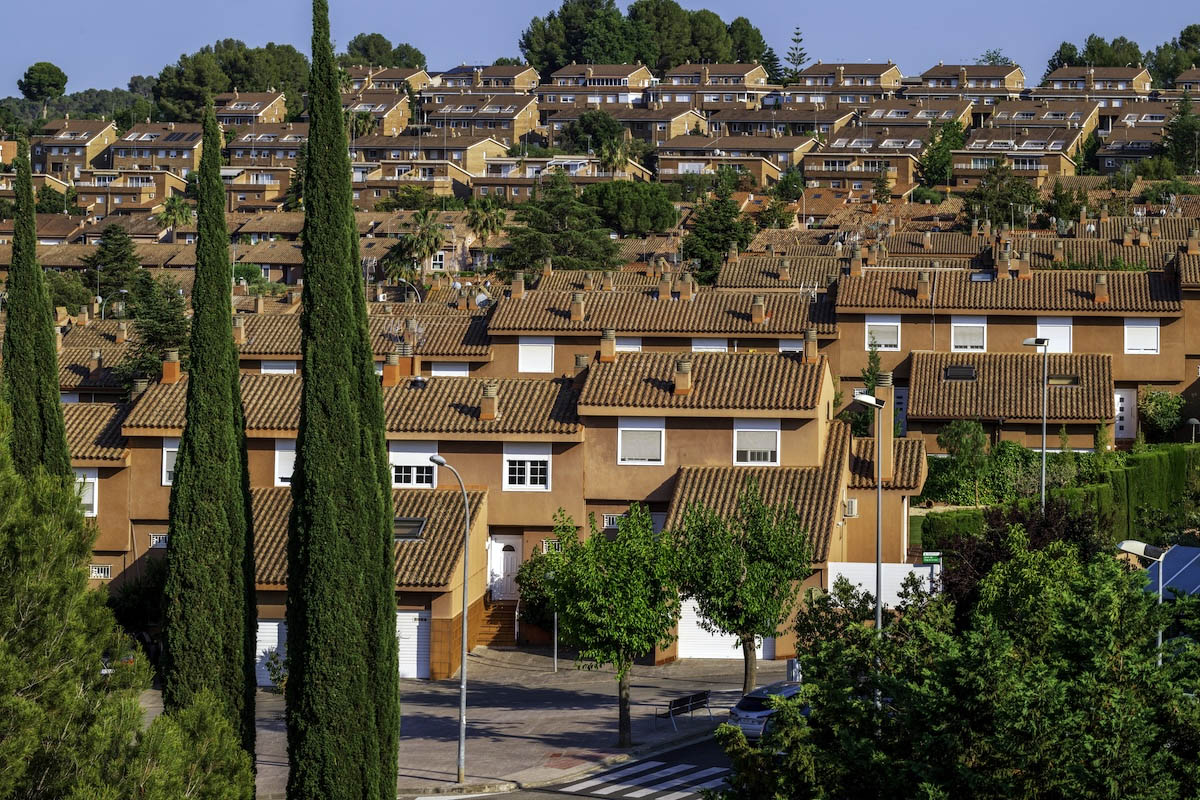
 

Christopher Willan (British lives Spain) 'Sant Quirze del Vallès' 2023


Christopher Willan (British lives Spain)
Sant Quirze del Vallès
2023
Digital printing
Courtesy of the artist
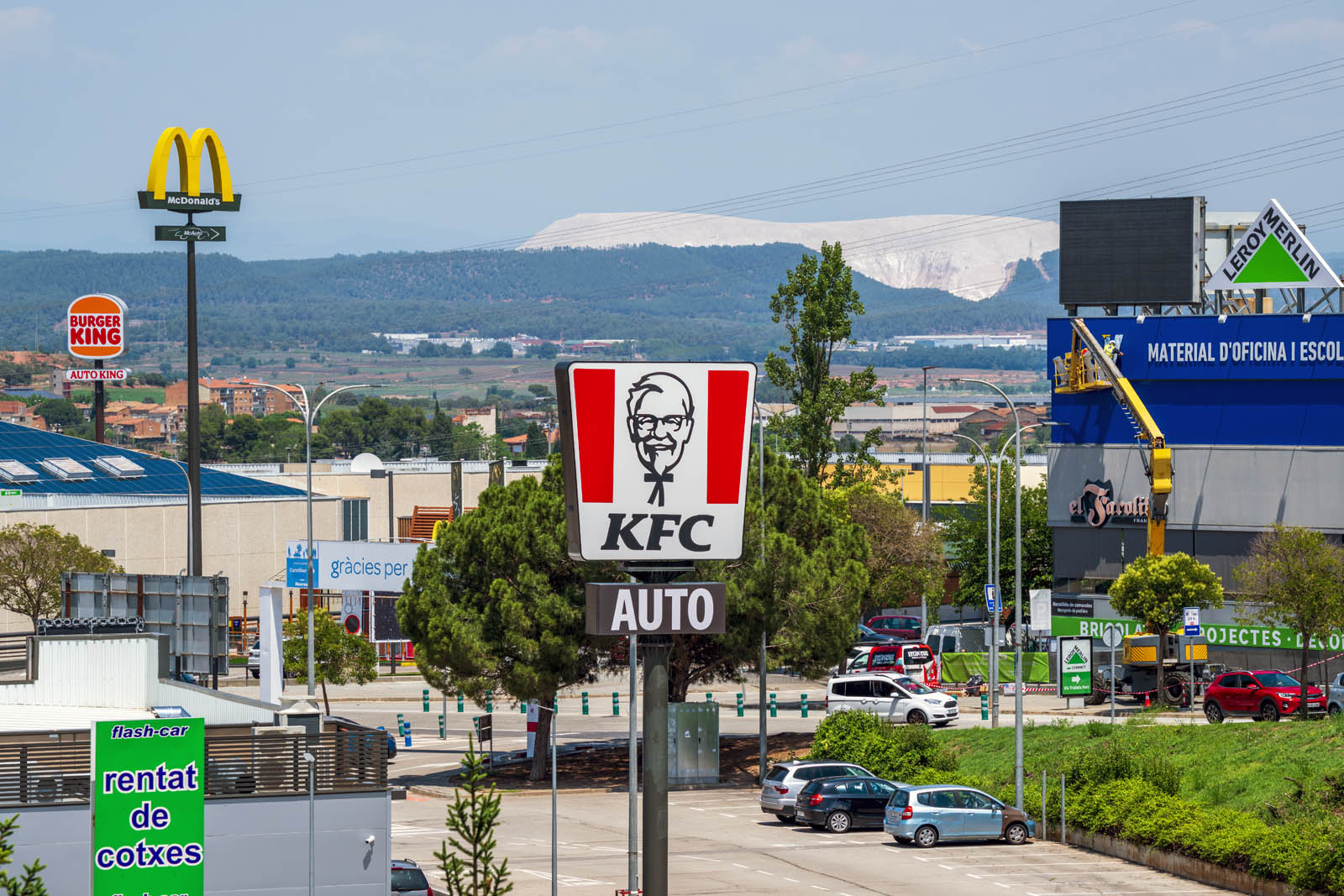
 

Christopher Willan (British lives Spain) 'Els Trullols Park-1' 2023


Christopher Willan (British lives Spain)
Els Trullols Park-1
2023
Digital printing
Courtesy of the artist


The Curators

Philipp Engel: Graduate in Modern Literature from the University of Toulouse, with a thesis on Bret Easton Ellis. After ten years in the music sales and distribution business, he started to work as a cultural journalist, specializing in cinema and literature. He is currently a contributor to various periodicals, such as Cultura(s), El Mundo, Cinemanía, Sofilm and Coolt.

Francesc Muñoz: Lecturer in Urban Geography, director of the Observatory of Urban Planning at the Universitat Autònoma de Barcelona, and professor at the Università IUAV di Venezia. He has received prizes such as the Prize for the Best Doctoral Thesis Attending to Human Values in Engineering (UPC, 2004) and the Bonaplata Award for the exhibition The Light Factory, about the power station in Sant Adrià de Besòs (2014). He has curated shows such as the commemorative exhibition of 30 years of democratic town councils, Local, Local! The City to Come (CCCB, 2010), and the exhibition Architectures on the Waterfront (Fundació Mies van der Rohe, 2019), and was a member of the Cerdà Year Advisory Board (2010).

Press release from the CCCB


Centre de Cultura Contemporània de Barcelona | CCCB
Montalegre, 5 – 08001 Barcelona
Phone: (+34) 933 064 100

Opening hours:
From Tuesday to Sunday and bank holidays 11.00 – 20.00
Closed Monday
Centre de Cultura Contemporània de Barcelona | CCCB website

LIKE ART BLART ON FACEBOOK

Back to top

Exhibition: ‘Bohemian Melbourne’ at the State Library of Victoria, Melbourne

Exhibition dates: 12th December 2014 – 22nd February 2015


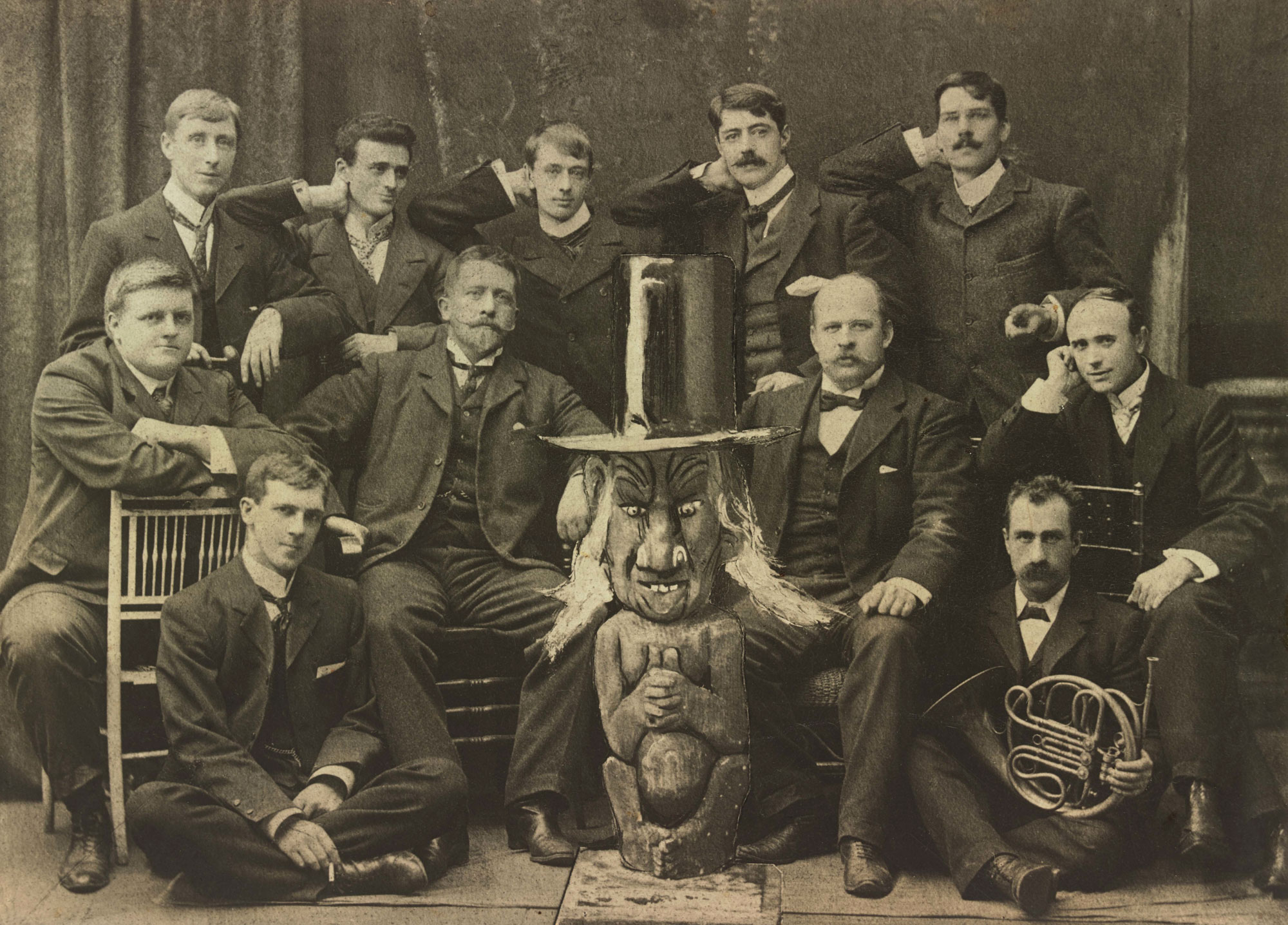
Unknown photographer. 'Members of the Ishmael Club' c. 1900


Unknown photographer
Members of the Ishmael Club
c. 1900
Gelatin silver photograph
State Library Victoria


Definition

Bohemianism is the practice of an unconventional lifestyle, often in the company of like-minded people, with few permanent ties, involving musical, artistic, or literary pursuits. In this context, Bohemians may be wanderers, adventurers, or vagabonds. (Wikipedia)

A Bohemian is a person, as an artist or writer, who lives and acts free of regard for conventional rules and practices.


This is a fantastic exhibition at the State Library of Victoria, one of the best I have seen so far in Melbourne this year. I have seen it three times and each time it has been a thoroughly rewarding experience.

~ Visually and intellectually stimulating, with a plethora of artefacts, texts and photographs

~ Excellent curatorship, with the exhibition logically structured in order to cohesively display the history, characters and stories, and strands of creativity and rebellious spirit that make up Melbourne’s cultural life

~ A great hang, with disparate elements and mediums all informing each other, pithy quotes, unique film footage, video, music

~ Not too big, just the right size to indulge your senses and brain power


One downside was that the exhibition needed a book or exhibition catalogue to flesh out the themes. Hopefully this will eventuate down the track. Also, it would have been nice to see more of what I would call ‘vernacular bohemianism’ – not just the famous people in each era, but the people that lived the life out on the streets, that supported the subcultures that sprung up from the 1950s onwards, but in a small exhibition it is understandable that there was not enough space.

Another perspective is that, in ordering such a diverse group of people who don’t want to be classified, who lived on the edge of society – you remove their cultural and historical ability to be transgressive, to cross moral and social taboos. By naming them as “bohemian” you seek to classify and order their existence and bring them within a frame of reference that is about control, power and visibility. This disciplinary power, Michel Foucault maintains, relies on surveillance to transform the subjects and the exhibition taxonomy is just that… a form of surveillance of the subject as well as a form of ordering it. Under this phenomena of power, dissonance / dissidence is neutralised and human beings are made subjects: through ‘the systematic linking of the categories of power and knowledge to form a hybrid, power-knowledge.’ (Hirst, 1992, “Foucault and Architecture,” in AA Files, No. 26, Autumn, pp. 52-60)

As John Tagg notes in his book The Burden of Representation (and this is what this exhibition does, it ‘represents’ a particular construction of identity as seen from the viewpoint of the establishment, the institution), “when Foucault examines power he is not just examining a negative force operating through a series of prohibitions … We must cease once and for all to describe the effects of power in negative terms – as exclusion, censorship, concealment, eradication. In fact, power produces. It produces reality. It produces domains of objects, institutions of language, rituals of truth.” (Tagg, John. The Burden of Representation: Essays on Photographies and Histories. Basingstoke: Macmillan, 1988, p. 87)

Ultimately, that is what this exhibition does, it produces a reality that many of these bohemians would not have bought into, for they lived outside the fold. It produces domains of objects, institutions of language, rituals of truth that, through their naming, seek to classify and negate the transgressive and subversive nature of many of these people and groups. These people lived in opposition to the tenants and morals of everyday society and that is why we still love them – for their creativity, their individuality, their thoughts and above all their panache, stepping outside the orthodoxies and regi/mentality of everyday life. Against the system, for life.

Dr Marcus Bunyan


Many thankx to the State Library of Victoria for allowing me to publish the photographs in the posting. Installation photographs © Marcus Bunyan and the State Library of Victoria. Please click on the photographs for a larger version of the image.


“The mania of young artists to
wish to live outside of their time,
with other ideas and other customs,
isolate them from the world,
render them strange and bizarre,
puts them outside the law, banished
from society. These are today’s
bohemians.”


Félix Pyat (French, 1810-1889)


Artist, rebel, hippie, hipster?

Revealing Melbourne’s enduring counter-cultures, Bohemian Melbourne celebrates a who’s who of creative free spirits through their art and the bohemian legacy that has shaped the character of this city. The exhibition shines a light on Melbourne’s cultural bohemians from 1860 to today, tracing individuals who have pushed against convention in their lives and art, from Marcus Clarke, Albert Tucker and Mirka Mora to Barry Humphries, Vali Myers and Nick Cave.

Venture into history’s backstreets and smoky salons to discover the stories of the daring poets, artists, visionaries, rebels and rock stars who changed Melbourne forever.

Text from the website


Marcus Clarke: “A Punk in the Age of Steam”

Marcus Clarke, writer, journalist and later a librarian at the Melbourne Public Library, is generally celebrated as the father of Bohemian Melbourne – although he was more its wild child. After a privileged start in a wealthy English family, which allowed him to cultivate the life of a young dandy and to indulge his passion for the writings of Honoré de Balzac and others, a 16-year-old Clarke suddenly found himself in colonial Melbourne in 1863, thanks to a turn in the family fortune.

Determined to maintain a semblance of the life to which he had become accustomed, Clarke was soon to be found strolling the streets of Melbourne as a flâneur, an observer of the city spectacle. A short-lived post as a bank clerk was followed by a stint on the land as a jackaroo, but by the age of 21 he was back in Melbourne and working as a journalist for the Argus newspaper.

Clarke’s bohemian ways soon attracted other young journalists and writers, and they began to congregate at various Melbourne watering holes, in particular the Cafe de Paris establishing the Yorick Club, the early members of which included fellow writers Henry Rendall, George Gordon McCrae and Adam Lindsay Gordon. The Yorick had a human skull for a mascot and rules that parodied the gentleman’s clubs of establishment Melbourne. Its members gathered in rooms adjoining the office of Melbourne Punch to smoke clay pipes, drink from pewter mugs, recite poetry and generally engage in horseplay. Bohemian society had found a Melbourne home and a creative community was born.

Wall text from exhibition


Unknown photographer. 'Marcus Clarke' 1866


Unknown photographer
Marcus Clarke
1866
Albumen silver photograph
State Library Victoria


Bohemian culture in marvellous Melbourne

Marvellous Melbourne, which arose out of the egalitarianism of the gold rushes, gave birth to a strong bohemian culture. Marcus Clarke, the London-born journalist, writer, librarian and professional bohemian, joined the Athenaeum Club and founded in 1868 the Yorrick Club, Australia’s first bohemian club, which became a magnet for men of letters.

He was a dressed-up dandy, a flâneur and a heavy drinker, but had a touch of genius with his novel, For the Term of His Natural Life (1874/75), one of the classics of Australian colonial literature. He was dead by the age of 35, with suicide rumoured but rejected by his actress wife, Marian Dunn, the mother of his six children. Clarke in his behaviour and creative achievement became a model for other Australian bohemians to follow.

Extract from Professor Sasha Grishin. “Celebrating Melbourne bohemians at the State Library of Victoria,” on The Conversation website, 16 January 2015 [Online] Cited 03/02/2015


Unknown photographer. 'Marcus Clarke'1866 (detail)


Unknown photographer
Marcus Clarke (detail)
1866
Albumen silver photograph
State Library Victoria


In 1863, when the young Marcus Clarke arrived in Melbourne, he could have slipped easily into what passed for mannered society in the booming gold-rush city. His uncle was a County Court judge, his cousin a politician, and Clarke himself was granted honorary membership of the elite Melbourne Club. But he chose to turn his back on the bunyip aristocracy. “I am a bohemian,” declared the man who would go on to write the first great Australian novel. “I live, I walk, I eat, drink and philosophise.”

All of which sounds perfectly normal – except, perhaps, for the philosophising – but in reality, Marcus Clarke’s life was far from average. He became a celebrated satirist of Marvellous Melbourne, by turns outraging and titillating 19th-century sensibilities in Australia’s modern metropolis. He befriended fellow intellectuals and bon vivants to form underground literary clubs that didn’t so much turn their backs on as raise an insulting finger to colonial mores. He was a poet and a playwright, a journalist and a novelist, a jackaroo, a wastrel and, above all, quite the tremendous wit.

Clarke’s most enduring gift is his writing, particularly the classic convict novel For The Term Of His Natural Life. But a new exhibition at the State Library of Victoria pays tribute to his other major legacy – that of Australia’s first bona fide bohemian.

“Clarke was an iconoclast, dangerous to know and a dandy about town,” explains historian Dr Tony Moore, author of Dancing With Empty Pockets: Australia’s Bohemians

“Most people think of him as a venerable old Victorian gentleman, but I characterise him as a punk in the age of steam.” [Marcus: I don’t know why a venerable old Victorian gentleman – he was dead at 35]

Moore, who is a Monash University academic and passionate chronicler of unconventional Australians, was an adviser to the exhibition and worked alongside curator Clare Williamson to create this retrospective of radicals. Melbourne’s roaming free spirits have been corralled together for the first time using material – some of it never previously displayed in public – drawn from State Library archives and borrowed from public and private collections. Viewed en masse, they comprise a rogues’ gallery of some of the country’s most indelible cultural icons…

His [Clarke’s] image adorns the exhibition posters, a larger-than-life bohemian in breeches and knee-high boots with a cabbage-tree hat perched jauntily above his broad, handsome face. Melbourne’s original radical would be thrilled to see that his notoriety lives on, more than a century after his death.

Extract from Kendall Hill. “Bohemian Melbourne: Exhibition” on the Qantas Travel Insider website [Online] Cited 03/02/2015. No longer available online


Installation view of the exhibition 'Bohemian Melbourne' at the State Library of Victoria, Melbourne

Installation view of the exhibition 'Bohemian Melbourne' at the State Library of Victoria, Melbourne


Installation views of the exhibition Bohemian Melbourne at the State Library of Victoria, Melbourne
Photos: Marcus Bunyan


Wall text 'Bohemians of the Bush' from the exhibition 'Bohemian Melbourne' at the State Library of Victoria, Melbourne


Wall text from the exhibition Bohemian Melbourne at the State Library of Victoria, Melbourne
Photo: Marcus Bunyan


Justus Jörgensen (Australian, 1893-1975) 'Fifteen of the Founders' 1944 (installation view)


Justus Jörgensen (Australian, 1893-1975)
Fifteen of the Founders (installation view)
1944
Oil on canvas and gauze mounted on panel
Collection of the Montsalvat Trust
Photo: Marcus Bunyan


Montsalvat is the result of Justus Jörgensen’s vision for a collective experience of art and life. Jörgensen had trained in architecture and then in painting with earlier bohemian Max Meldrum. His studio in Queen Street, the Mitre Tavern and the Latin and Chung Wah restaurants were sites for lively discussions in which Jörgensen put forward his philosophies of art, the revival of medieval craftsmanship and communal living. This vision began to take shape in 1934 when he and his wife, Lily, brought land at Eltham; with the assistance of friends and followers, he built Montsalvat, an artists’ colony of studios, workshops and the communal Great Hall.

While Justus Jörgensen rarely exhibited, his great love was painting. This multi-panelled work comprises portraits by Jörgensen of 15 significant figures from the early years of Montsalvat. They are, from top to bottom, left to right:

Ian Robertson – student of Jorgensen who also ran an antiques shop
Leo Brierley – businessman and backer of Mervyn Skipper’s Pandemonium journal
Helen (Nell) Lempriere – niece of Dame Nellie Melba, painter, sculptor, and an earl student of Jorgensen
Norman Porter – friend and student of Jorgensen and lecturer in philosophy
Mervyn Skipper – author, journalist and Melbourne editor of the Bulletin
Helen Skipper – Mervyn’s first daughter, Jorgensen’s partner for many years, and mother of Sebastian and Sigmund Jorgensen
Justus Jorgensen – founder and architect of Montsalvat, painter, assistant to artist Max Meldrum and teacher.
Sonia Skipper – second daughter of Mervyn Skipper, and painter and teacher
Arthur Munday – law student, sculptor and stonemason trained by Jorgensen
William (Bill) Cook – teacher, philosophy and president of the Victorian Rationalist Society
Norman Radcliffe – student and friend of Jorgensen, and philosopher
Ray Grant – student of Jorgensen and philosopher
Edward Goll – internationally renowned pianist and teacher at Melbourne Conservatorium of Music
Arthur (George) Chalmers – pharmacist, student of Jorgensen, stonemason and carver, who also planted the first vineyard at Montsalvat

(Label texts)


Montsalvat is an artist colony in Eltham, Victoria, Australia, established by Justus Jörgensen in 1934. It is home to over a dozen buildings, houses and halls set amongst richly established gardens on 48,562 m2 (12 acres) of land. The colony of Montsalvat has a detailed history that reflects the life of Jörgensen and his friends and family; there is also a legend behind its name, while its buildings and gardens are steeped in the art and culture of Melbourne and its surroundings.

Visitors can pay a small fee to walk throughout the colony’s historical gardens, artists’ houses/workshops and explore the surrounding buildings. All of the buildings on the site were designed and built by residents with locally available materials, from various sources. The Great Hall offers an extensive network of spaces from extravagant halls and vast exhibition spaces, to small corridors and tiny balconies overlooking the gardens.

Text from the Wikipedia website


Percy Grainger (Australian, 1882-1961) Ella Grainger (Australian, 1889-1979) 'Towelling tunic, shirt, leggings, belt, shoes worn by Percy Grainger' c. 1934 (installation view)


Percy Grainger (Australian, 1882-1961)
Ella Grainger (Australian, 1889-1979)
Towelling tunic, shirt, leggings, belt, shoes worn by Percy Grainger (installation view)
c. 1934
Cotton bath towels, plastic, leather and metal
Grainger Museum collection, University of Melbourne
Photo: Marcus Bunyan


“In 1932 or 1933 my wife and I took up again this idea of clothing made of towelling and when in Australia in 1934 and 1935 we were amazed by the beauty of the bath towels on sale in Australia – some imported from England, Czechoslovakia and America, but most of them (and among them the most beautiful ones) manufactured in Australia. Here was a chance to show what could be done with the beauty born of machinery – a beauty as rich and subtle, in its own way, as anything made by hand or loom.”

Percy Grainger, c. 1955-1956


Unknown photographer, New York. 'Percy Grainger wearing a towelling clothes outfit at his home in White Plains' 1936


Unknown photographer, New York
Percy Grainger wearing a towelling clothes outfit at his home in White Plains
1936
Silver gelatin print
Grainger Museum collection, University of Melbourne


Installation photograph of the exhibition 'Bohemian Melbourne' at the State Library of Victoria February 2015, including at left Albert Tucker, 'Self-portrait with Joy Hester', 1939


Installation photograph of the exhibition Bohemian Melbourne at the State Library of Victoria February 2015, including at left Albert Tucker, Self-portrait with Joy Hester, 1939 (see below)
Photo: Marcus Bunyan


Albert Tucker (Australian, 1914-1999) 'Self-portrait with Joy Hester' 1939


Albert Tucker (Australian, 1914-1999)
Self-portrait with Joy Hester
1939
Gelatin silver photograph
State Library Victoria


Albert Tucker Interview with an Australian Artist – Heide Museum

An Interview with Albert Tucker conducted by Justin O’Brien in 1997.

Albert expands on his many insights,during the time he spent with John and Sunday Reed and other artists at Heide during the1940’s. An intimate insight into a unique man.


Unknown photographer. 'Opening of Mirka Café' 1954


Unknown photographer
Opening of Mirka Café
1954
Gelatin silver photograph
Courtesy of Heide Museum of Modern Art and William Mora Galleries


Unknown photographer. 'Opening of Mirka Café' 1954 (detail)


Unknown photographer
Opening of Mirka Café (detail)
1954
Gelatin silver photograph
Courtesy of Heide Museum of Modern Art and William Mora Galleries


These clips features home movie footage taken by Gertie Anschel (c. 1953-1954) with audio commentary by film director Philippe Mora.

Part 1 of 3 features scenes of Melbourne, The Mirka Café and Joy Hester and Gray Smith’s property. Philippe reflects on his childhood and identifies key figures of the Melbourne art scene. 


Part 2 of 3 features the property of Roger de Stoop, artist friends and Arthur Boyd at work on his 1956 Melbourne Olympic statue. Philippe reflects on his childhood identifies key figures of the Melbourne art scene.


Part 3 of 3 features the Moras, the art gang at a balcony party and late American actor Melvyn Douglas. Philippe reflects on his childhood, parents and identifies key figures of the Melbourne art scene.


Making Your Own Fun in the 50s

On the surface at least, Melbourne in the 1950s was a rather dour affair. For some non-conformists, such as Vali Myers and Barry Humphries, it was a place to escape rather than a place to be. For others, however, it was a site for creating underground cultures that were largely invisible to the mainstream.

This was no more so than in the case of gay and lesbian, or ‘camp’, culture, as it was known at the time. Homosexuality was illegal in Victoria until 1960, and in the 1950s it was sensationalised in the tabloid press as a subject for mockery if not horror. As a result, homosexual men and women developed alternative bohemian cultures and communities, with their own covert venues, house parties, secret languages and dress codes.

The gala costume arts balls that raised money for mainstream theatre and other arts charities were grand exceptions to the generally underground clubs and private parties. They offered rare moments in which camp culture could be expressed in public without fear for reprisal. Theatres and dance companies provided employment for many, and bars, such as the one nicknamed the Snake Pit at the Hotel Australia, and restaurants such as Val’s Coffee Lounge, provided opportunities for the camp community to meet and to mix with others who were outside the establishment.


Norman Ikin (Australian, 1925-1962) 'Vali Myers' c. 1949
 

Norman Ikin (Australian, 1925-1962)
Vali Myers
c. 1949
Gelatin silver photograph
State Library Victoria


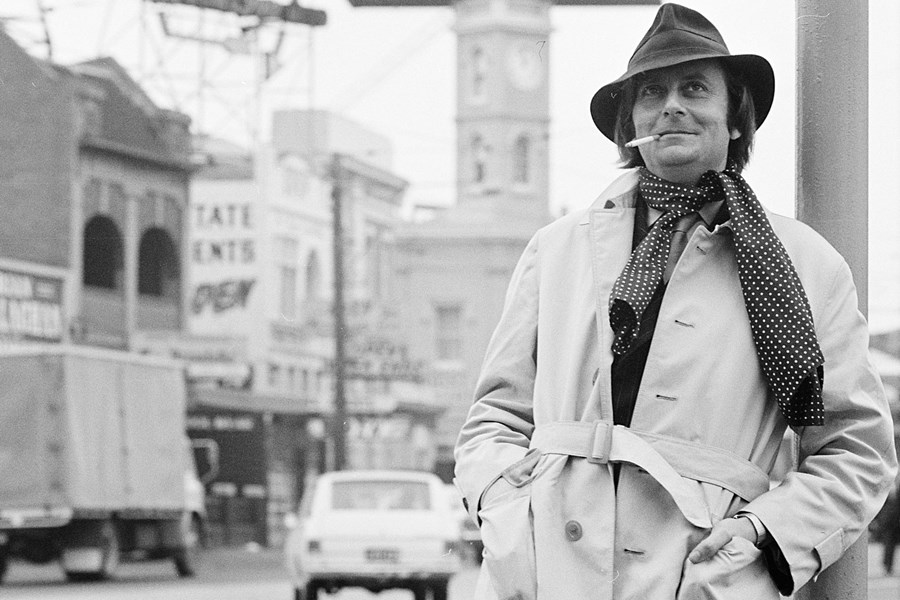
Mark Strizic (Australian, 1928-2012) 'Barry Humphries in Melbourne' 1969


Mark Strizic (Australian, 1928-2012)
Barry Humphries in Melbourne
1969
Exhibition print from flexible-base negative
State Library of Victoria
Courtesy of the Estate of the artist


A never seen on broadcast TV programme with Barry Humphries as Dame Edna Everage made in 1975. Barry Humphries was promoting his film ‘Barry McKenzie holds his own’. Films clips were provided officially by EMI. The interviewer trying to hold things together is Mark Caldwell. The programme was made in black and white.


Wall text 'North of the River' from the exhibition Bohemian Melbourne at the State Library of Victoria, Melbourne


Wall text from the exhibition Bohemian Melbourne at the State Library of Victoria, Melbourne
Photo: Marcus Bunyan


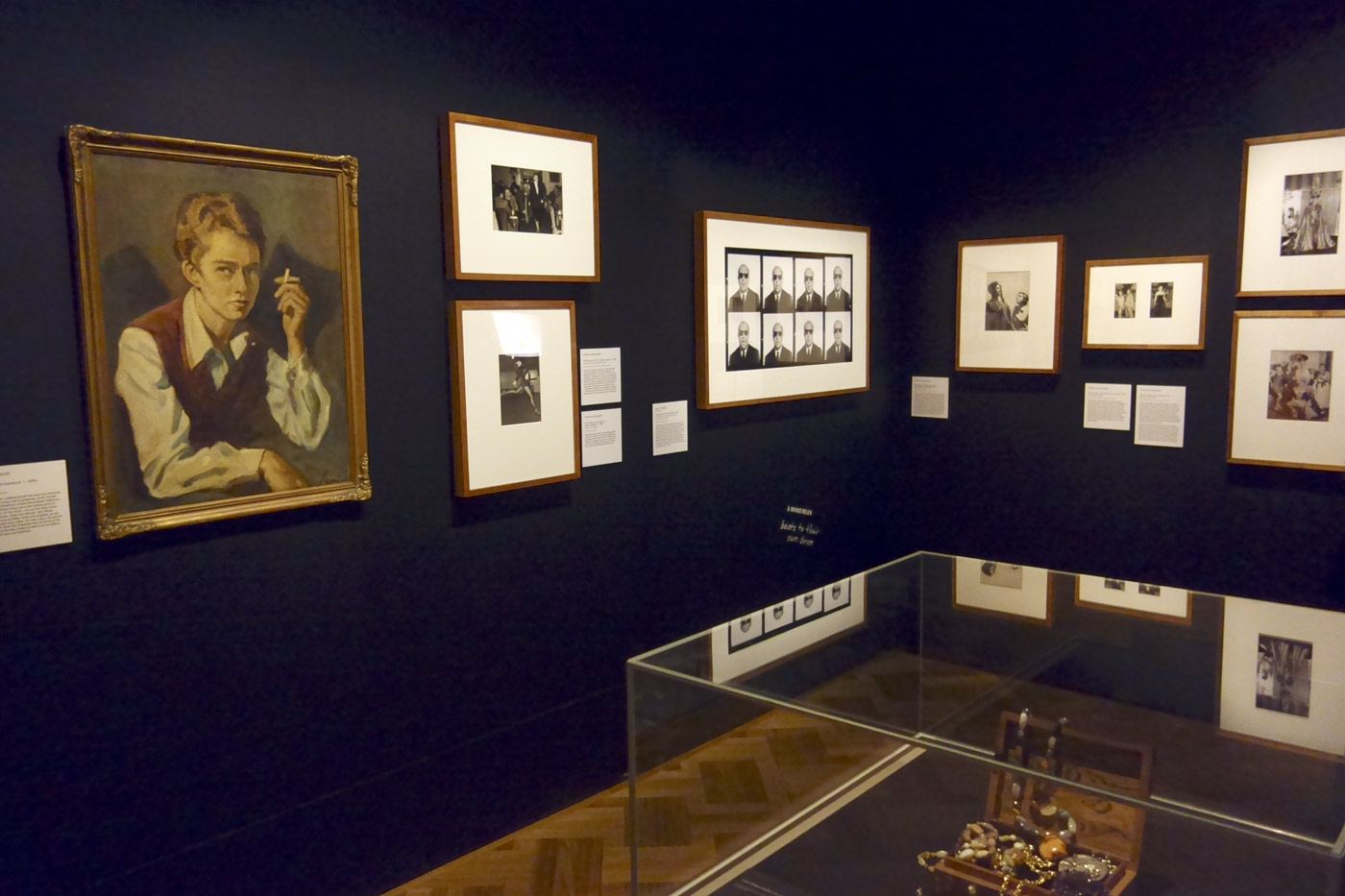
Installation photograph of the exhibition 'Bohemian Melbourne' at the State Library of Victoria February 2015 with, in the distance, Henry Talbot 'Portraits of actor Frank Thring' 1963, with Thring's jewellery box and contents in the foreground


Installation photograph of the exhibition Bohemian Melbourne at the State Library of Victoria February 2015 with, in the distance, Henry Talbot Portraits of actor Frank Thring 1963, with Thring’s jewellery box and contents in the foreground
Photo: Marcus Bunyan


It has been said of Frank Thring that he could make most stages or foyers seem small. His larger-than-life personality was almost matched by his frame, often decked out in imposing black and with flamboyant jewellery. Son of Frank Thring snr, founder of Efftee Films and 3XY Radio, Thring jnr earned fame as an actor in London’s West End and in Hollywood films such as Ben Hur, often playing sinister or decadent characters. In the 1950s, he would recite poems laden with innuendo and hold court at the ‘head table’ at Val’s Coffee Lounge. To be welcome at his table was a sign one was part of the ‘in’ crowd.

Label text


Unknown photographer. 'Arts Ball, Palais de Danse - John Anderson as Sun God' c. 1963-1964


Unknown photographer
Arts Ball, Palais de Danse – John Anderson as Sun God
c. 1963-1964
Gelatin silver photograph
Australian Lesbian and Gay Archives


John Anderson was first-prize winner at a number of arts balls in the 1960s. His costume shown here reflects the creativity and effort that many put into their outfits. Costumes and headdresses were sometimes so large that Anderson and others regularly hired furniture vans to take them to the ball. One year the van that was transporting Anderson broke down and he completed the journey strapped upright on the back of a ute. His Sun  God costume wowed new audiences when he was invited to take part in a pageant on ice base on the theme of The Kind and I – with Anderson as the King – at the Southland shopping centre ice rink around 1970.

Label text

But you will go to the ball, you will sweetie!


Richard Walsh (editor) 'The Review', Vol. 22, No. 22 Melbourne incorporated Newsagencies Co., March 1972


Richard Walsh (editor)
The Review, Vol. 22, No. 22
Melbourne incorporated Newsagencies Co.,
March 1972
State Library of Victoria
Photo: Marcus Bunyan


Before editing the irreverent Melbourne weekly The Review (Nation Review from July 1972, Richard Walsh edited counter-cultural Oz magazine with Richard Neville and Martin Sharp. Contributors to Nation Review included Max Harris, Bob Ellis, Phillip Adams, Michael Leunig and Germaine Greer. Greer had been part of the Drift in Melbourne, a loose association of artists, students and graduates. Enrolling in a Masters degree at Sydney University, in 1962 she becomes a leading light in the Sydney libertarian Push, an intellectual bohemia of larrikin anarchists. Gaining her PhD at Cambridge University, Greer then published her groundbreaking book The Female Eunuch.

Label text


Ashley Mackevicius (Australian, b. 1958) 'Nick Cave' 1973


Ashley Mackevicius (Australian, b. 1958)
Nick Cave
1973
Gelatin silver photograph
National Portrait Gallery, Canberra
Gift of the artist 2006


Ponch Hawkes (Australian, b. 1946) 'Soapbox Circus – The Fabulous Spagoni Family' c. 1977


Ponch Hawkes (Australian, b. 1946)
Soapbox Circus – The Fabulous Spagoni Family
c. 1977
Gelatin silver photograph
State Library Victoria
© the artist


Ponch Hawkes (Australian, b. 1946) 'Melantroppos, Circus Oz, Princes Park' 1979


Ponch Hawkes (Australian, b. 1946)
Melantroppos, Circus Oz, Princes Park
1979
Gelatin silver photograph
State Library Victoria
© the artist


Installation photograph of the exhibition 'Bohemian Melbourne' at the State Library of Victoria February 2015 with artist Ponch Hawkes' work at right


Installation photograph of the exhibition Bohemian Melbourne at the State Library of Victoria February 2015 with artist Ponch Hawkes’ work at right
Photo: Marcus Bunyan


Rennie Ellis (Australian, 1940-2003) 'Mirka Mora in her studio' 1978


Rennie Ellis (Australian, 1940-2003)
Mirka Mora in her studio
1978
Colour transparency
State Library Victoria
© Rennie Ellis Photographic Archive


For more information see the Rennie Ellis Archive website.


Vali Myers (Australian, 1930-2003) 'Passions' 1981-1982


Vali Myers (Australian, 1930-2003)
Passions
1981-82
Pen, black ink, sepia, burnt sienna and watercolour
Vali Myers Art Gallery Trust


Vali Myers discovered a love of drawing at an early age. Over the years it became her primary mode of artistic expression in place of contemporary dance. She dedicated her life to her art and would spend up to two years creating each of her intricately drawn artworks. Passions contains many elements that symbolically represent aspects of Vali Myers’ art and life. These include a fox (referencing her pet Foxy), ravens (Edgar Allan Poe’s The Raven being one of her favourite poems, a gypsy-like figure playing a violin and, at the centre of it all, a woman with flaming red hair.

Label text


Liz Ham (Australian born England, b. 1975) 'Vali Myers in her studio in the Nicholas Building' 1997


Liz Ham (Australian born England, b. 1975)
Vali Myers in her studio in the Nicholas Building
1997
Gelatin silver photograph
State Library Victoria


Ed van der Elsken “Vali” 1972

Australian artist Vali Myers moved to Paris from Australia at age 19 where she lived on the streets, danced in cafes, met Satre, Cocteau, Genet and Django Reinhardt. She moved to New York, tattooed Patti Smith’s knee, befriended Salvador Dali and met Andy Warhol and Tennessee Williams.

Vali was a great influence on lots of famous people Tennessee Williams, Jean Cocteau, Mick Jagger, Marianne Faithfull, Debbie Harry, Patti Smith, Jean Genet and Kate Bush.


Installation photograph of the exhibition 'Bohemian Melbourne' at the State Library of Victoria February 2015


Installation photograph of the exhibition Bohemian Melbourne at the State Library of Victoria February 2015
Photo: Marcus Bunyan


Howard Arkley

Australian artist Howard Arkley interviewed by ABC television shortly before his untimely death in 1999.


Howard Arkley (Australian, 1951-1999) 'The Ritual' 1986


Howard Arkley (Australian, 1951-1999)
The Ritual
1986
Synthetic polymer paint on canvas
State Library of Victoria


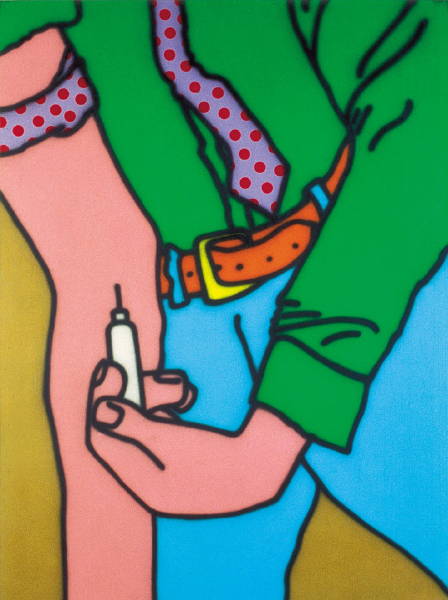
Howard Arkley is recognised as one of Australia’s most significant 20th-century artists. He is unique in embracing not only urban culture but also life in suburbia, a space generally shunned or scorned by bohemians, with exception of that other flaneur of suburbia, Barry Humphries. Like many bohemians before him, Arkley lived on the edge and experimented with mind-altering substances, and, like a good proportion of them, his life was tragically cut short as a result. Despite its large scale, comic-book style and pop colours, The Ritual is as much a cool and judgment-free study in composition and the human form as it is in the rituals or ‘habits’ associated with drug use.

Label text


State Library of Victoria
328 Swanston St,
Melbourne VIC 3000
Phone: (03) 8664 7000

Opening hours:
Daily 10am – 6pm

State Library of Victoria website

LIKE ART BLART ON FACEBOOK

Back to top

Text / exhibition: ‘Australian vernacular photography’ at the Art Gallery of New South Wales (AGNSW), Sydney

Exhibition dates: 8th February – 18th May 2014


John F Williams (Australian, 1933-2016) 'The Rocks, Sydney' 1973


John F Williams (Australian, 1933-2016)
The Rocks, Sydney
1973
Gelatin silver photograph
22.6 x 34.1cm
Purchased 1989
© John F Williams


Australian vernacular photography. Such a large subject. Such a small exhibition.

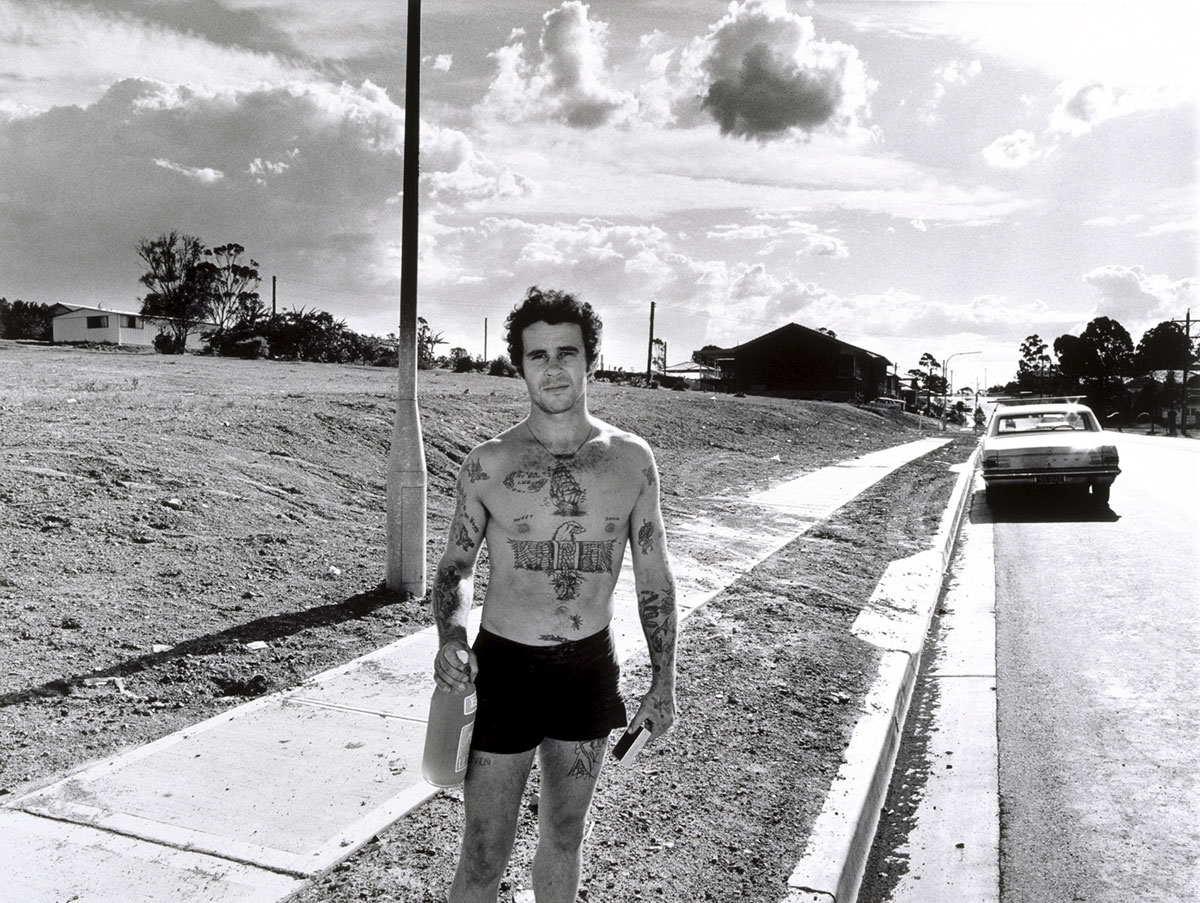
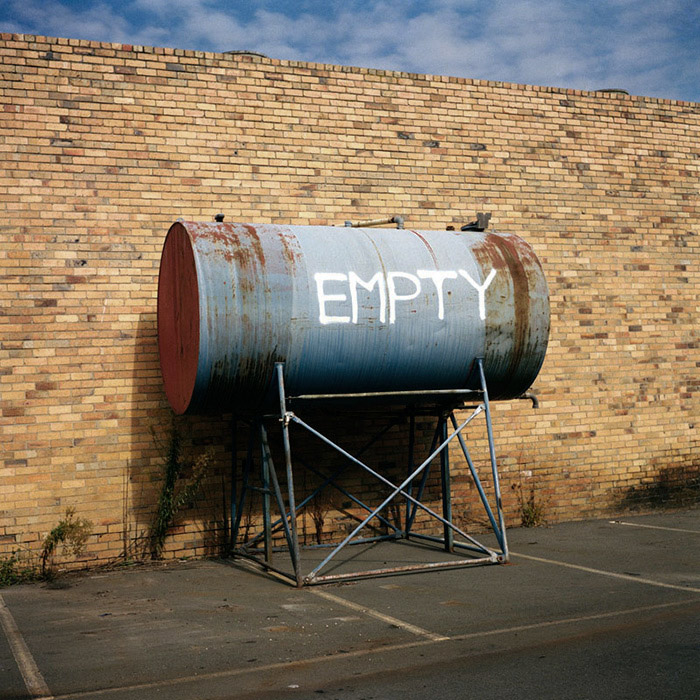
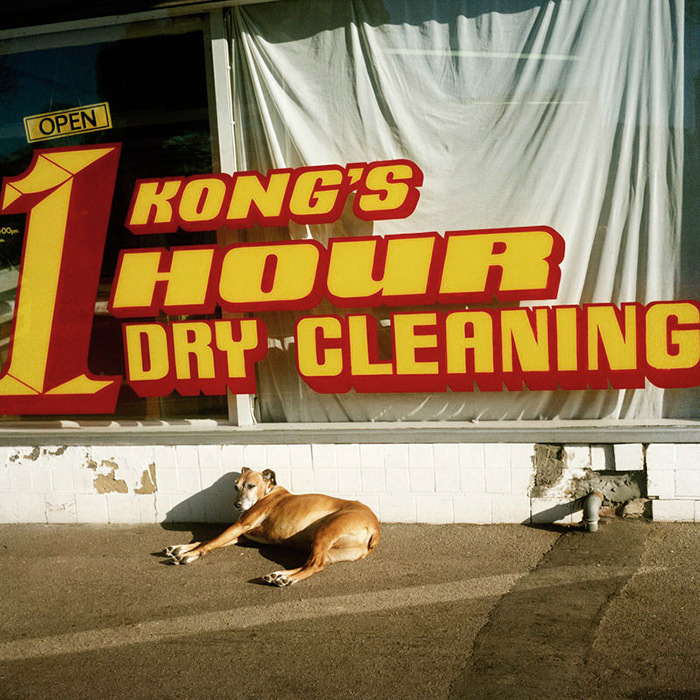
With only 27 photographs from various artists (18 of which are shown in this posting), this exhibition can only ever be seen as the runt of the litter. I would have thought such a large area of photographic investigation needed a more expansive exposition than is offered here. There are no photobook, photo booth, Aboriginal, anonymous, authorless, family, gay or marginalised cultural photographs / snapshots. There are no light leaks, blur, fingers obstructing lenses, double exposures – all examples of serendipity and happenstance which could enter into an aesthetic arena.

Vernacular photography1 can be defined as the “creation of photographs, usually by amateur or unknown photographers both professional and amateur, who take everyday life and common things as subjects… Examples of vernacular photographs include travel and vacation photos, family snapshots, photos of friends, class portraits, identification photographs, and photo-booth images. Vernacular photographs are types of accidental art, in that they often are unintentionally artistic.”2 ‘Found photography’ is the recovery of a lost, unclaimed, or discarded vernacular photograph or snapshot.

While all of the photographs in the exhibition are unique images, some are definitely not vernacular in their construction – they are planned and staged photographs, what I would call planned happenstance (after John Krumboltz’s theory of career development). A perfect example of this are the photographs by Sue Ford (Sue Pike, 1963, printed 1988, below), Anne Zahalka (The girls #2, Cronulla beach, 2007, below) and Fiona Hall (Bondi Beach, Sydney, Australia, October 1975, below) which have an air of ceremonial seriousness that belies their classification as part of this exhibition. My favourites are the fantastic images by Glen Sloggett – witty, colourful, humorous with the photographer “acutely aware of the photographer and photograph’s role in pointedly constructing a narrative around Australian identity and history” – they are nevertheless self-deprecating enough that this does not impact on their innate “found” quality, as though the artist had just wandered along and captured the shot.

The route that the AGNSW has taken is similar to that of MoMA. Residing in the collection and shot by artists, these “vernacular” photographs are placed in a high art context. Their status as amateur or “authorless” photographs is undermined. This exhibit does not present vernacular photographs as just that. As the article on the One Street blog notes, what is being exhibited is as much about what has been collected by the AGNSW, its methodical and historicising classification, as it is about vernacular photographic form: chance, mistake and miscalculation. It is about creating a cliché from which to describe an ideal Australian identity, be it the beach, larrikinism, or the ANZAC / sporting “warrior”, and not about a true emotional resonance in the image that is created by, or come upon by, chance.

Dr Marcus Bunyan


Many thankx to the Art Gallery of New South Wales for allowing me to publish the photographs in the posting. Please click on the photographs for a larger version of the image.


1/ “Vernacular photography,” on One Way Street blog 20th October 2007 [Online] Cited 11/05/2014

“What is vernacular photography? Too broad to be understood as a genre per se, it can encompass anonymous snapshots, industrial photography, scientific photography, “authorless” photography, advertising, smut, as well as work that might be perceived as “other” than any of this random list. It could be understood as an oppositional photography – outside technical or artistic histories, yet, especially with the snapshot, it could also be entirely conventionalised, a manifestation of visual banalities, or an image so enigmatic that its meaning or genesis is entirely obscured. It is mistakes & failures as much as it may not be, & how we understand the images may or may not be separate from their initial intents. Is this a category we are making up?

The idea of the vernacular in photography is also an indication of photography as a medium informing the everyday, prevalent, “naturalised.””

2/ Szarkowski, John. “INTERVIEW: “Eyes Wide Open: Interview with John Szarkowski” (2006)” by Mark Durden, Art in America, May, 2006, cited in “Vernacular photography,” on Wikipedia website [Online] Cited 11/05/2014. No longer available online


Ed Douglas (United States of America, Australia, b. 6 May 1943) 'City-spaces #28, (John Williams), Sydney' 1976 printed 2012


Ed Douglas (United States of America, Australia, b. 6 May 1943)
City-spaces #28, (John Williams), Sydney
1976 printed 2012
From the series City-spaces 1975-78
Purchased with funds provided by the Photography Collection Benefactors’ Program 2012
© Ed Douglas


Words and Photos: Geoffrey Batchen’s Writing About Vernacular Photography

“At first, I was simply interested in bringing attention to a diverse range of photographic objects and practices that had not been much written about. But I soon recognised that these objects represented a significant challenge to the predominant history of photography. This history, dominated by the values ​​and tropes of art history, was not well-equipped to talk about photographs that were openly commercial, hybrid and mundane. Ie: the history of photography ignores most types of photography. My interest, therefore, has become more methodological and theoretical, in an effort to establish new ways to think of photography that could address the medium as a whole. I suggest that any substantial inclusion of vernacular photographs into a general history of photography will require a total transformation of the character of that history…

I suggest that any inclusion of vernacular photography in the larger story, will require a complete transformation of the character of that story; it will require a new kind of history altogether. My writings may have encouraged this idea, but I am just one of many scholars who have been pursuing this goal. Indeed, I would say that this idea is now the norm. The next step is to look beyond this and engage other parts of the history of photography that have been similarly neglected. For example, there are many researchers at the moment that are examining the photographs produced outside Europe and the United States, such as China, Indonesia, and Africa…

Snapshots are complicated objects. They are unique to each maker and almost always completely generic. They happily adopt the visual economy that mediates most photographic practices: same but different. You might say that every snapshot is an authentic copy of a prescribed set of middle-class values and familiar pictorial clichés. That does not make them any less fascinating, especially for people who treasure them. But it does make them difficult to write about…

It is certainly possible to recognise the existence of regional practices of photography. I wrote, for example, about the making of fotoescultura in Mexico, and about a specific form of ambrotype in Japan. No doubt one could claim to see some regional aspects of snapshots made in the United States that distinguish them from ones made in Australia or, say, Indonesia. But the more challenging task is to talk about those things that can’t be seen. For example, snapshots made in Australia and China may look exactly the same to my eye, but it stands to reason that they don’t mean the same thing (after all, access to the camera for personal photos is a fairly recent phenomenon in China). We must learn how to write these kind of differences.”

Interview by LG. “Words and Photos: Geoffrey Batchen’s Writing About Vernacular Photography,” on the LesPHOTOGRAPHES.com website Nd (translated from the French) [Online] Cited 04/05/2014. No longer available online


Ed Douglas (United States of America, Australia, b. 6 May 1943) 'City-spaces #40, Sydney' 1976 printed 2012


Ed Douglas (United States of America, Australia, b. 6 May 1943)
City-spaces #40, Sydney
1976 printed 2012
From the series City-spaces 1975-78
Gelatin silver photograph
23.6 x 30.7cm image
Purchased with funds provided by the Photography Collection Benefactors’ Program 2012
© Ed Douglas


After relocating from USA to Australia in 1973, Ed Douglas spent a few years living in the country prior to taking on a teaching position at Sydney College for the Arts in 1976. The series City-spaces was commenced in Sydney and then developed further when Douglas moved to Adelaide in 1977. Having been schooled in the formal traditions of American documentary photography, Douglas’s images appear like notations of an urban explorer attempting to locate himself in a new country. Seemingly fragmentary, they look at the specificities of the mundane and the ordinary. Close acquaintances such as photographers Ingeborg Tyssen and John F. Williams appear in City spaces #29 and City spaces #28, indicating the personal nature of the series.

Intimately scaled and tonally rich, the black and white images exalt the formal beauty which can be found in the random textures of daily existence. They are also permeated with gentle humour and a sense of quiet drama that unfolds in the strangely misplaced confluences of objects, figures and spaces. Douglas’s interest in the formal and emotional qualities of topography was emblematic of new approaches in documentary photography of the time. His 1983 series of colour photographs depicting the gypsum mine on Kangaroo Island (collection of AGNSW) developed this trajectory further by fusing the aesthetics of abstraction and objective documentation.


Gerrit Fokkema (Papua New Guinea, Australia, b. 1954) 'Woman hosing, Canberra' 1979


Gerrit Fokkema (Papua New Guinea, Australia, b. 1954)
Woman hosing, Canberra
1979
Gelatin silver photograph
34.9 x 46.5 cm image
© Gerrit Fokkema


Gerrit Fokkema’s photographs of everyday Sydney and Canberra in the early 1980s are examples of Australian photography becoming more self-aware. These decisive snapshots of suburban life reveal an irony and conjure Fokkema’s own history growing up in Queanbeyan. Though captured in seemingly banal settings, the images intrigue, pointing to issues beyond what is represented in the frame. The housewife watering the road and a young tattooed man in front of a car are both depicted alone within a sprawling suburban landscape, suggesting the isolation and boredom in the Australian dream of home ownership. The sense of strangeness in these images is consciously sought by Fokkema, aided by his embrace of the glaring and unforgiving ‘natural’ Australian light.

Gerrit Fokkema’s Woman hosing, Canberra is an affectionate and gently ironic portrait of suburban life in Canberra. Fokkema was familiar with his subject matter, raised as he was in the nearby township of Queanbeyan. After studying photography at Canberra Technical College 1974-77 he became the staff photographer for the Canberra Times in 1975. He held his first exhibition in the same year at the Australian Centre for Photography, Sydney. His career as a photo-journalist lead him to work with the Sydney Morning Herald in 1980 and participation with several international Day in the life of…. projects between 1986 and 1989.

Fokkema uses the ‘decisive moment’ of photo-journalism to reveal the incidental quirks of ordinary life in this image. The bland uniformity of the streetscape, with its identical archways and mundanely shuttered doors, is punctuated by the absurd proposition of a woman watering the street rather than the adjacent grass. Her presence is the only sign of life in an otherwise inanimate scene, and her actions suggest a kind of strangeness that lies within the normality of suburbia. Many of Fokkema’s images play with such chance incidences and odd juxtapositions, revealing his interest in surrealism and the notion of automatism. Indeed, the repeated archways and the lone figure inhabiting otherwise empty urban space of Woman hosing, Canberra recall the proto-typical surrealist painting, Mystery and melancholy of a street 1914, by Giorgio de Chirico. Fokkema’s image is, however, very much a product of Australia – of its bright ‘available’ light and of the dream of home-ownership. Fokkema has continued to document the Australian way of life. In 1986 he left newspapers to freelance as a commercial photographer and published Wilcannia, portrait of an Australian town. He has since exhibited works based on tender observations of his family members and of family life.

© Art Gallery of New South Wales Photography Collection Handbook, 2007


Gerrit Fokkema (Papua New Guinea, Australia, b. 1954) 'Blacktown man' 1983


Gerrit Fokkema (Papua New Guinea, Australia, b. 1954)
Blacktown man
1983
Gelatin silver photograph
30.6 x 40.6cm image
© Gerrit Fokkema


The work of Gerrit Fokkema exhibits a particular sensitivity to the uneasiness of people in Australian landscapes, both urban and rural. Fokkema was born in New Guinea in 1954, but raised in Canberra and worked as a press photographer before freelancing from 1986. Although his photographs demonstrate an interest in the formal qualities of landscape, the sense of rhythm his compositions generate also evoke the monotony of Australian space – sweeping terracotta roofs and long straight paths. This monotony is only interrupted by the presence of the human figure, usually isolated, alone and awkwardly out of place. In Blacktown Man 1983, the flat image of the man appears dramatically superimposed on the land and sky of the suburban street. By reminding us of our sometimes uncomfortable relationship with the spaces we inhabit, Fokkema’s work rejects any attempt to romanticise Australian life.


Trent Parke (Australian, b. 1971) 'Backyard swing set, QLD' 2003


Trent Parke (Australian, b. 1971)
Backyard swing set, QLD
2003
From the series Minutes to midnight
Type C photograph
109.9 x 164cm
Gift of Albie Thoms in memory of Linda Slutzkin, former Head of Public Programmes, Art Gallery of New South Wales 2006
© Trent Parke


Australian vernacular photography traces developments in photographic practice from the postwar period through to the present day, with images ranging from documentary or ‘straight’ photography (where the subjects are usually unaware of the camera), through to those that look self-reflexively at the constructed nature of the medium.

The increasing role of photography in the latter part of the 20th century attests to the rising need Australians felt to apprehend the nation, personal identity and society through images. Many of these photographs offer frank perspectives on Australian culture without the romanticising tendencies of earlier photographers. Photographing the everyday became a way of understanding how Australia saw (and sees) itself, with recurrent themes such as beach culture, suburbia, race relations, protest and the role of women among the central concerns of image-makers then and now.

By the 1960s Australian photographers were comparing their work with international peers, thanks to photographic publications and the watershed 1959 tour of The family of man exhibition organised by the Museum of Modern Art, New York. Institutional support for photography didn’t come until the 1970s; however those committed to the medium forged on, intent on capturing their visions of Australia photographically. The family of man exhibition toured Australia in 1959 and was enormously influential, with its themes of birth, love and death common to all humanity. However, possibilities for Australian photographers to be noticed were rare until the 1970s due to the lack of institutional support. Nonetheless, photographers from David Moore and Robert McFarlane to the young Sue Ford forged on, trying to find their own vision of Australian life and how it could be represented photographically. This exhibition looks at some of the photographers from then as well as those working more recently – such as Anne Zahalka, Trent Parke and Glenn Sloggett – to consider their various approaches to the depiction of modern Australian life.

In the Australian Photography Annual of 1947, photographer and director of the Art Gallery of NSW Hal Missingham wrote: “In a country supposedly occupied by people indulging in a vigorous outdoor life, where are the [photographic] records of beach and sport… where are the photographs of the four millions of people who live and work in our cities? What are they like – what do they do – what do they wear, and think?”

Text from the AGNSW website


Jeff Carter (Australia, 05 Aug 1928 - Oct 2010) 'The Sunbather' 1966


Jeff Carter (Australia, 05 Aug 1928 – Oct 2010)
The Sunbather
1966
Gelatin silver photograph
39.1 x 27.6cm image
© Jeff Carter


“I don’t regard photography as an art form, although I know it can be for others… To me the camera is simply an unrivalled reporter’s tool. It is an aid to getting the story “properly true,”” Jeff Carter said in 2006. Working mainly as a photojournalist, Carter wanted to make images that depicted social reality. He aimed to show the ‘unknown’, those people who are rarely seen. His approach resulted in frank, arguably even unflattering, images of Australian life, such as this of a beach-goer in the 1960s, heralding the changing social mores of the time.


John F. Williams (Australia, 1933-2016) 'Sydney' 1964, printed later


John F Williams (Australia, 1933-2016)
Sydney
1964, printed later
Gelatin silver photograph
24.3 x 24.3 cm image
© John F Williams


Sydney photographer, lecturer and historian John F. Williams has a long and personal interest in the ramifications of the Allies’ commitment to and sacrifice in the First World War which he later explored in his 1985 series From the flatlands. Williams became an amateur street photographer, inspired by Henri Cartier-Bresson and the photojournalist W. Eugene Smith. He read The family of man catalogue and saw the exhibition in 1959 but he rejected its “saccharine humanism and deliberate ahistoricism” choosing instead to socially document the raw character of Australia.1

When interviewed in 1994 Williams said: “After the [First World War] you had a range of societies which were pretty much exhausted, and they tended to turn inwards. In a society like Australia which had a poorly formed image of itself, where there was no intellectual underpinning, the image of the soldier replaced everything else as a national identity.”2

Sydney expresses the ‘Anzac spirit’ born in the battlefields of Gallipoli, the Somme and Flanders, a character study of an independent, introspective soldier. With an air of grit, determinedly smoking and wearing his badge, ribbons and rosemary as remembrance, Sydney stands apart from the crowd, not marching with his regiment. Williams embraced the ‘element of chance’ or the ‘decisive moment’ as he documented the soldier in a public place observing the procession. Taken from a low angle and very close up the man is unaware of the photographer at the moment the shot was taken, apparently lost in his own memories. The old soldier represents a generation now lost to history but portraits such as these continue to reinforce the myth of national identity.

1/ Jolly, M. “Faith sustained,” in Art Monthly, September 1989, pp. 18-19
2/ “John Williams – photographer and historian: profile,” in Sirius, winter, Macquarie University, Sydney, 1994, p. 5

© Art Gallery of New South Wales Photography Collection Handbook, 2007


Robert McFarlane (Australia, b. 1942) 'Happening Centennial Park, Sydney' c. 1968


Robert McFarlane (Australia, b. 1942)
Happening Centennial Park, Sydney
c. 1968
Gelatin silver photograph
25.9 x 17.6cm image
© Robert McFarlane


Hal Missingham (Australia, 08 Dec 1906 - 07 Apr 1994) 'Surf carnival, Cronulla' 1968, printed 1978


Hal Missingham (Australia, 08 Dec 1906 – 07 Apr 1994)
Surf carnival, Cronulla
1968, printed 1978
Media category
Gelatin silver photograph
38.1 x 26.3cm image
© Hal Missingham Estate


Photographer and former Art Gallery of NSW director, Hal Missingham wrote in the 1947 Australian Photography annual: “In a country supposedly occupied by people indulging in a vigorous outdoor life, where are the [photographic] records of beach and sport…? Where are the photographs of the four millions of people who live and work in our cities? What are they like – What do they do – What do they wear, and think?” This image points to Missingham’s own attempts to answer that question. An interesting counterpoint to the images taken at Cronulla around 40 years later, here Missingham shows a group of young women standing behind a fence watching as young men train to be lifesavers.

Hal Missingham often holidayed at his beach house at Garie in the Royal National Park south of Sydney, not far from Cronulla. In 1970 he published Close focus a book of photographic details of rocks, pools, sand and driftwood. As a beachcomber and observer of beach culture Missingham delighted in his immediate environment. Surf carnival, Cronulla is a quintessential Australian scene, one that frames an important aspect of national identity and culture. As passive observers, the 1960s was a time when many girls were still ‘minding the towels’ for the boys who surfed or competed in carnivals. Barricaded from the beach and its male activity the young women in bikinis are oblivious to the photographer who has foregrounded their relaxed tanned bodies behind the wire as they in turn observe and discuss the surf lifesavers in formation at the water’s edge. Although a beach is accessible for the majority of Australians and is now an accepted egalitarian space where women bodysurf, ride surfboards and compete along with beachgoers from diverse ethnic backgrounds, Surf carnival, Cronulla suggests a specific demography.

© Art Gallery of New South Wales Photography Collection Handbook, 2007


Fiona Hall (Australia, b. 1953) 'Bondi Beach, Sydney, Australia, October 1975' 1975


Fiona Hall (Australia, b. 1953)
Bondi Beach, Sydney, Australia, October 1975
1975
Gelatin silver photograph
28.2 x 27.9cm image
Hallmark Cards Australian Photography Collection Fund 1987
© Fiona Hall


Australian vernacular photography considers how photographers have used their cameras to depict Australian life, and how ideas of the nation have been constructed through photographic images.

Sixteen Australian photographers are represented by some 27 photographs taken from the 1960s to the 2000s. The photographs range from the more conventionally photo-documentary through to later works by photographers positioned more consciously in an art context. A selection of photography books of the period are also on display.

Artists include: Jeff Carter, Ed Douglas, Peter Elliston, Gerrit Fokkema, Sue Ford, Fiona Hall, Robert McFarlane, Hal Missingham, David Moore, Trent Parke, Roger Scott, Glenn Sloggett, Ingeborg Tyssen, John F Williams, William Yang and Anne Zahalka. Each of these artists in their own way interweave personal, documentary and fictional aspects through their images.

The works in Australian vernacular photography expose the sense of humour or larrikinism often seen as typical to Australia through showing aspects of beach and urban culture that hadn’t been imaged so bluntly before the 1960s. The characters that emerge range from leathery sunbathers, beer-drinking blokes and hippies, to beach babes, student protesters and suburban housewives, shedding light on the sense of liberation and self-recognition that arose during this period.

As photography struggled to gain recognition as an art form in the mid 20th century, the influence of exhibitions such as the Museum of Modern Art, New York’s Family of Man, which toured Australia in 1959, was vital in allowing Australian photographers to compare their work to that of their international peers.

Throughout the 1960s and ’70s, photographers such as Jeff Carter, Sue Ford, David Moore, Roger Scott and John F Williams worked in a photo-documentary mode that was less about staging a shot or creating formal harmony within the frame than about capturing a moment of lived reality. To this end, such photographs involved minimal intervention from the photographer, both before and after the shutter release. Subjects were often unaware of being photographed and extensive darkroom manipulation was frowned upon, the rawness of prints was supposed to signal authenticity.

This approach resulted in images that seemed to offer a frank perspective on Australian culture, without the romanticising tendencies of earlier photography, which had sought to construct ideals rather than document what was actually there. As artists began to realise what they could do with the camera, so too did the images evolve. By the 1980s and ’90s photographers were making images that showed the subject’s awareness of being photographed, as with Gerrit Fokkema, or presented a harsh, even aggressive perspective on the depicted situations by removing people altogether, as with Peter Elliston. This signalled the increasingly self-conscious role of photographers themselves in the equation, suggesting the influence of post-modern theories of subjectivity and their effect on the images produced.

By the time we reach the 2000s, artists such as William Yang, Anne Zahalka and Trent Parke are acutely aware of the photographer and photograph’s role in pointedly constructing a narrative around Australian identity and history. The exhibition maps out this history and offers unexpected insight into the construction of a particularly Australian vernacular within photographic practice.

Press release from the AGNSW


Sue Ford (Australia, 1943 - 06 Nov 2009) 'Sue Pike' 1963, printed 1988


Sue Ford (Australia, 1943 – 06 Nov 2009)
Sue Pike
1963, printed 1988
Media category
Gelatin silver photograph
34.2 x 34.2cm image
Gift of Tim Storrier 1989
© Estate of Sue Ford


Sue Ford’s photograph of her friend Sue Pike blow-drying her hair in the kitchen captures the young woman preparing for a night out. Ford often photographed those close to her as well as continually making self-portraits throughout her career. The photograph is domestic and intimate, showing a common aspect of life for young women in the 1960s. It suggests the procedure of preening necessary to go out and find ‘marriage and children’, while the alcohol and cigarette indicates the emerging movement for women’s liberation.

“My earliest “studio portraits” … were of my friends from school … These photo sessions were approached with a ceremonial seriousness, My friends usually brought different clothes with them and during the sessions we would change clothes and hairstyles.” Sue Ford 1987 1

Sue Ford took the majority of her photographs at this time with the camera set on a 1/60th of a second at f/11, a ‘recipe’ she wrote which had more chance of success. Poetic, fragmentary text relating to Ford’s 1961 photo-essay in “A sixtieth of a second: portraits of women 1961-1981” identify the young women’s recipe for flirtatious endeavour – ‘gossamer hairspray’, ‘peroxide’, ‘plucked eyebrows’, ‘big hair rollers to achieve “La Bouffant”‘, ‘Saturday nite’ and ‘Jive’. Sue Pike exemplifies the era of girls preparing for a night out with the boys in their ‘FJ Holdens and Hot Rods’. Staged in the kitchen, probably on a Saturday afternoon, Sue Pike, in a padded brunch coat with hair in rollers plugged into a portable hair dryer, will be a part of the action, the gossip and camaraderie. A further portrait taken in the same year shows Sue Pike metamorphosed as a beautiful bride, carefully coifed ash blonde hair under a white net veil, eyes momentarily shut, traditionally decorated with pearls and posy. Ford suggests in her prose and portraits that there are choices to be made – ‘marriage and children’ or mini-skirts and the Pill, as her old school friends go in different directions.

1/ Ford. S. “A sixtieth of a second: portraits of women 1961-1981,” Experimental Art Foundation, Adelaide, 1987, p. 4

© Art Gallery of New South Wales Photography Collection Handbook, 2007


Anne Zahalka (Australia, b. 1957) 'The girls #2, Cronulla beach' 2007


Anne Zahalka (Australia, b. 1957)
The girls #2, Cronulla beach
2007
Type C photograph
72.5 x 89.5cm image
Gift of the artist 2011. Donated through the Australian Government’s Cultural Gifts Program
© Anne Zahalka. Licensed by Viscopy, Sydney


As part of a generation of Australian women artists who came to the fore in the early 1980s, Anne Zahalka’s practice has always been concerned with questioning dominant myths and cultural constructs. The broad sweep of Zahalka’s oeuvre has often been underpinned by a common strategy: the world in her images appears as theatre where place, gender and national identity are questioned.

Many of Zahalka’s more recent works are located outside the studio though the natural environment can be seen to be equally constructed. In The girls #2, Cronulla beach, the photographer has returned to the seaside, which was the setting for one of her most iconic series, Bondi: playground of the Pacific 1989. The girls was made as a response to the Cronulla riots and after an introduction to Aheda Zanetti, the designer of the burqini. Zahalka “also knew of a documentary film being made following the recruiting of Lebanese men and women into the lifesaving club. It seemed like there was change adrift on the beachfront.”1 The permutations and post-modern anxiety about what constitutes Australian identity seen in the Bondi… series, have spilled out into the real world. But the image of these young Muslim women lifeguards seems to celebrate the potential to transgress accepted value systems.

Anne Zahalka said in 1995: “I am primarily concerned with… representations to do with place, identity and culture. Through the appropriation and reworking of familiar icons and styles I seek to question (and understand) their influence, meaning and value.” Twelve years later, Zahalka continues this line of inquiry with the series Scenes from the Shire. In this image, three Muslim girls wearing Burqinis (swimwear made for Muslim women conceived by Lebanese-Australian designer Aheda Zanetti) are standing cross-armed on Cronulla beach, a lifesaving raft is in the background. Zahalka made this work in response to the Cronulla riots of 2005. The image juxtaposes Muslim tradition with the Australian icon of the lifesaver, suggesting cultural overlap and changing national identity.

1. A. Zahalka et al, “Hall of mirrors: Anne Zahalka portraits 1987-2007,” Australian centre of photography, Sydney 2007, p. 43


William Yang (Australia, b. 1943) 'Ruby's kitchen Enngonia' 2000, printed 2002


William Yang (Australia, b. 1943)
Ruby’s kitchen Enngonia
2000, printed 2002
From the series miscellaneous obsessions
Type C photograph
35.5 x 53.5cm image
© William Yang


William Yang was born in North Queensland, a third generation Chinese-Australian. He is known both as a photographer and for his monologues with slides which he has presented around the world to great acclaim. One of these, Sadness 1992, was adapted for the screen by Tony Ayres and won AWGIEs amongst other awards. A major retrospective of Yang’s work, Diaries, was held at the State Library of NSW in 1998. Through April 24 – June 1, 2003 Yang presented all his monologues at Belvoir St Theatre, Sydney.

Yang has documented various subcultures over the last 30 years and this is reflected in his photographs as well as his monologues. A remarkable storyteller with a unique style, his current work is a synthesis of his ongoing concerns. While these concerns spring very much from his experiences growing up with a Chinese background in far north Queensland, through to his exploration of the gay community in Sydney, the work transcends the personal and becomes a meditation on the subtleties of the ordinary and everyday.

This series of images reflects Yang’s current life of travel and contact with his far flung friends and extended family. Though the subject, at its most superficial, is food, where, when and who is there at the time is of equal importance. Consequently each photograph in the series presents a web of connections and is underpinned with similar intentions to Yang’s other work, regardless of the subject.

“I don’t think I have a great technical attitude but I am interested in people,” William Yang said in 1998. Yang is known for his candid photographs of friends and situations he encounters. The images are usually accompanied by a story about his life, sometimes handwritten on the print itself, sometimes spoken aloud in performative contexts. He uses narrative as a way of locating his images in a particular moment in his personal history as well as social history at large. Yang explores themes around Australian and gay identity in a way that is frank and sometimes confronting. In this work, from a series about food, a chunk of kangaroo meat sits casually atop a laminate bench; other Australian icons such as Wonder White and Weet-Bix are also visible. The work allows for a multiplicity of signs to coexist: the slaughtered Australian mascot, the drab generic kitchen, the processed ‘white’ bread, with the Chinese-Australian photographer observing it all.


Glenn Sloggett (Australia, b. 1964) 'Cheaper & deeper' 1996


Glenn Sloggett (Australia, b. 1964)
Cheaper & deeper
1996
From the series Cheaper & deeper
Type C photograph
80.0 x 79.9cm image
Gift of Amanda Love 2011. Donated through the Australian Government’s Cultural Gifts Program
© Glenn Sloggett


Based in Melbourne, Glen Sloggett has exhibited extensively across Australia, including a touring exhibition with the Australian Centre for Photography, New Australiana 2001. Internationally, his work was included in the 11th Asian Art Biennale in Bangladesh, 2004 and the 9th Mois de la Photo ‘Image and Imagination’ in Montreal 2005.

Sloggett’s work depicts scenes from Australian suburbia with a startling mix of warmth and melancholy. Devoid of people, his photographs reflect the isolation and abandonment that afflicts the fringes of Australian urban centres. His images don’t flinch from the ugly, kitsch, and bleak. Sloggett says, “No matter where I go, I always find places and environments that are in the process of falling down. These are the images of Australia that resonate most strongly for me as an artist. I want to capture the last signs of optimism before inevitable disrepair.” (Glen Sloggett, quoted in A. Foster. Cheaper and deeper, ex. Bro. ACP 2005) His images of disrepair are infused with black humour and at the same time, affection for Australian suburbia.

From dumpy derelict flats to pavements graffitied with the words ‘mum killers’, Sloggett’s photographs capture an atmosphere of neglect. One classic image depicts a pink hearse, with the slogan Budget burials cheaper & deeper!! stencilled in vinyl on the side window. Another image shows an industrial barrel, on which is scrawled the evocative word ‘Empty’. In a third image, a dog rests on the pavement outside ‘Kong’s 1 hour dry cleaning’ – the bold red and yellow lettering on its window in stark contrast to the cracked paint of the exterior wall, and half-clean sheet that forms a makeshift curtain. These images have a profundity that is at once touching and surprising; as Alasdair Foster has commented, “In a world of rabid materialism and shallow sentiment, Sloggett’s photographs show us that life really is much cheaper and deeper.”

These five works by Glenn Sloggett serve as forms of photographic black humour. Devoid of people and always in colour, his photographs often take mundane elements from the world and make us notice their tragicomedy. This group is rooted in a play with text, where the tension between what is written and what we see is paramount. Sloggett makes comment on Australian life and culture, showing how the fringes of towns and the paraphernalia of the everyday give insight into the Australian psyche.


Glenn Sloggett (Australia, b. 1964) 'Hope Street' 2000


Glenn Sloggett (Australia, b. 1964)
Hope Street
2000
From the series Cheaper & deeper
Type C photograph
80.4 x 80.6cm image
Gift of Amanda Love 2011. Donated through the Australian Government’s Cultural Gifts Program
© Glenn Sloggett


Glenn Sloggett (Australia, b. 1964) 'Empty' 2000


Glenn Sloggett (Australia, b. 1964)
Empty
2000
From the series Cheaper & deeper
Type C photograph
80.4 x 80.6cm image
Gift of Amanda Love 2011. Donated through the Australian Government’s Cultural Gifts Program
© Glenn Sloggett


Glenn Sloggett (Australia, b. 1964) 'Kong's 1 hour dry cleaning' 1998


Glenn Sloggett (Australia, b. 1964)
Kong’s 1 hour dry cleaning
1998
From the series Cheaper & deeper
Type C photograph
80.2 x 80.0cm image
Gift of Amanda Love 2011. Donated through the Australian Government’s Cultural Gifts Program
© Glenn Sloggett


Art Gallery of New South Wales
Art Gallery Road, The Domain
Sydney NSW 2000, Australia

Opening hours:
Open every day 10am – 5pm
except Christmas Day and Good Friday

Art Gallery of New South Wales website

LIKE ART BLART ON FACEBOOK

Back to top

Exhibition: ‘Photography at NOMA’ at The New Orleans Museum of Art

Exhibition dates: 10th November 2013 – 19th January 2014


André Kertész (American born Hungary, 1894-1985) 'Leger's Studio' 1926 - 1927


André Kertész (American born Hungary, 1894-1985)
Leger’s Studio
1926-1927
Gelatin silver print
Image: 3 1/8 x 4 1/4in. (8 x 10.8cm)
The New Orleans Museum of Art
Museum purchase, Women’s Volunteer Committee Fund


There are some rare and beautiful photographs in this posting. I have never seen the Kertész (Leger’s Studio 1926-1927) with its wonderful structure and tonality nor the unusual Mapplethorpe (Staircase, 1140 Royal 1982). I particularly like the Bellocq (Bedroom Mantel, Storyville c. 1911-1913) with its complex medley of shapes and images.

Marcus


Many thankx to The New Orleans Museum of Art for allowing me to publish the photographs in the posting. Please click on the photographs for a larger version of the image.


Lee Friedlander (American, b. 1934) 'Untitled (Self-Portrait Reflected in Window, New Orleans)' c. 1965


Lee Friedlander (American, b. 1934)
Untitled (Self-Portrait Reflected in Window, New Orleans)
c. 1965
Gelatin silver print
Image: 7 x 10 3/4 in. (17.6 x 27.2cm)
Mount: 11 x 14 in. (27.9 x 35.5cm)
The New Orleans Museum of Art
Museum purchase through the National Endowment for the Arts Grant


Robert Frank (American, 1924-2019) 'Canal Street, New Orleans' 1955


Robert Frank (American, 1924-2019)
Canal Street, New Orleans
1955
Gelatin silver print
Image: 11 x 13 4/5 in. (28 x 35.2cm)
The New Orleans Museum of Art
Museum purchase through the National Endowment for the Arts and Museum Purchase Funds


Ilse Bing (American, 1899-1998) 'New York, The Elevated and Me' 1936


Ilse Bing (American, 1899-1998)
New York, The Elevated and Me
1936
Gelatin silver print
Image: 7 15/16 x 11 in. (18.6 x 28cm)
The New Orleans Museum of Art
Museum purchase through the National Endowment for the Arts Matching Grant
© Estate of Ilse Bing


Henri Cartier-Bresson (French, 1908-2004) 'Louisiana' 1947, printed circa 1975


Henri Cartier-Bresson (French, 1908-2004)
Louisiana
1947, printed c. 1975
Gelatin silver print
Image: 9 5/8 x 14 3/16 in. (24.4 x 36cm)
Paper: 12 x 16 in. (30.3 x 40.4cm)
The New Orleans Museum of Art
Museum purchase, General Acquisition Fund


Theodore Lilienthal (American, 1829-1894) 'Charles Hotel, New Orleans' c. 1867


Theodore Lilienthal (American, 1829-1894)
Charles Hotel, New Orleans
c. 1867
Albumen print
Image: 10 3/4 x 13 13/16 in. (27.2 x 35.1cm)
Mount: 17 x 22 1/4 in. (43.3 x 56.6cm)
The New Orleans Museum of Art
Museum Purchase


Featuring masterworks by photographers Edward Weston, William Henry Fox Talbot, André Kertész, Robert Mapplethorpe, and many more, the New Orleans Museum of Art’s upcoming exhibition, Photography at NOMA, explores the Museum’s rich permanent photography collection through a selection of some of its finest works from the early 1840s to the 1980s.

The first comprehensive presentation of works from NOMA’s collection since the 1970s, the exhibition includes over 130 of the most important photographs in the Museum’s collection and presents rare and unusual examples from throughout photography’s history. On view November 10, 2013 through January 19, 2014, the exhibition highlights the tremendous depth and breadth of the Museum’s collection and includes photographs made as works of art as well as advertising images, social documents, and more. The photographers featured in the exhibition range from some of the most recognisable names in the field, including Henri Cartier-Bresson, Robert Frank, and Lewis Hine, to unknown photographers – reflecting the vast spectrum of photographic activity since the medium’s inception in the 19th century.

“NOMA began collecting photographs seriously in the early 1970s when photography was not commonly found in American art museum collections. Today our holdings include nearly 10,000 works, representing a broad range of creative energy and achievement,” said Susan Taylor, NOMA’s Director. “Our collection has strong roots in New Orleans history. Our city has long been an epicentre for the work of established and emerging photographers and we are delighted to share this aspect of New Orleans history with our audiences.”

“Since its origins, photography has infiltrated every aspect of modern life, from art to war, and religion to politics and many of these applications are represented in NOMA’s extensive collection,” said Russell Lord, Freeman Family Curator of Photographs. “Despite the collection’s long history, it remains one of the best kept secrets in this country. Photography at NOMA is an opportunity to re-examine and bring to the fore the diverse range of works found in the collection.”

Since the 1970s, NOMA has built an extensive collection of photographs that represents a wide range of achievement in that medium from the 1840s to the present. Today the collection comprises nearly 10,000 works with images by some of the most significant photographic artists including Berenice Abbott, Ansel Adams, Diane Arbus, Ilse Bing, and Edward Steichen, among many others. The collection includes examples that reflect photography’s international scope, from an 1843 view from his hotel window in Paris by William Henry Fox Talbot to a view of Mount Fuji by Kusakabi Kimbei, but it is also strong in photographs made in and around New Orleans by regional and national photographers such as E. J. Bellocq, Walker Evans, Clarence John Laughlin, and Robert Polidori.

Photography at NOMA features works by Berenice Abbott, Ansel Adams, Diane Arbus, Henri Cartier-Bresson, Walker Evans, Robert Frank, Robert Mapplethorpe, William Henry Fox Talbot, and Edward Weston, among many others.

Press release from the NOMA website


Felix Moissenet (American, b. circa 1814) 'Freeman' c. 1855


Felix Moissenet (American, b. circa 1814)
Freeman
c. 1855
Sixth plate daguerreotype
Image: 3 1/4 x 2 3/4 in. (8 x 6.8cm)
Case (open): 3 5/8 x 6 3/8 in. (9.2 x 16.1cm)
The New Orleans Museum of Art
Museum purchase


Thomas Augustine Malone (British, 1823-1867) 'Demonstration of the Talbotype' December 11, 1848


Thomas Augustine Malone (British, 1823-1867)
Demonstration of the Talbotype
December 11, 1848
Calotype (Talbotype) negative
7 3/8 x 9 2/16 in. (18.8 x 23.3cm)
The New Orleans Museum of Art
Museum purchase


Robert Mapplethorpe (American, 1946-1989) 'Staircase, 1140 Royal' 1982


Robert Mapplethorpe (American, 1946-1989)
Staircase, 1140 Royal
1982
Gelatin silver print
Image: 15 1/5 x 15 1/5 in. (38.5 x 38.5cm)
Paper: 20 x 16 in. (50.6 x 40.4cm)
The New Orleans Museum of Art
Promised gift from H. Russell Albright, MD


William Henry Fox Talbot (British, 1800-1877) 'View of the Paris Boulevards from the First Floor of the Hôtel de Louvais, Rue de la Paix' 1843


William Henry Fox Talbot (British, 1800-1877)
View of the Paris Boulevards from the First Floor of the Hôtel de Louvais, Rue de la Paix
1843
Salted paper print from a paper negative
Image: 6 3/8 x 6 3/4 in. (16.2 x 17.1cm)
Paper: 7 1/2x 9 in. (19 x 23cm)
The New Orleans Museum of Art
Museum purchase, 1977 Acquisition Fund Drive


Paul Outerbridge (American, 1896-1958) 'Groom Detective Agency' 1923


Paul Outerbridge (American, 1896-1958)
Groom Detective Agency
1923
Platinum print
Image: 4 1/2 x 3 1/2 in. (11.5 x 9cm)
Paper: 14 x 11 in. (35.5 x 28cm)
Paul Outerbridge, Jr.
© 2013 G. Ray Hawkins Gallery, Beverly Hills, CA


Morton Schamberg (American, 1881-1918) 'Cityscape' 1916


Morton Schamberg (American, 1881-1918)
Cityscape
1916
Gelatin silver print
Image: 9 1/2 x 7 1/2 in. (24 x 19cm)
Mount: 15 3/4 x 13 in. (40 x 33cm)
The New Orleans Museum of Art
Museum purchase, Women’s Volunteer Committee Fund


Clarence John Laughlin (American, 1905-1985) 'A Mangled Staircase (No. 2)' 1949


Clarence John Laughlin (American, 1905-1985)
A Mangled Staircase (No. 2)
1949
Gelatin silver print
Image: 13 1/2 x 10 13/16 in. (34.2 x 27.5cm)
Mount: 17 x 14 in. (43 x 35.5cm)
The New Orleans Museum of Art
Bequest of Clarence John Laughlin


E. J. Bellocq (American, 1873-1949) 'Bedroom Mantel, Storyville' c. 1911-1913


E. J. Bellocq (American, 1873-1949)
Bedroom Mantel, Storyville
c. 1911-1913
Glass negative
Plate: 10 x 8 in. (25.2 20.2cm)
Museum purchase


Lewis Hine (American, 1874-1940) '[Mechanic and Steam Pump]' c. 1930


Lewis Hine (American, 1874-1940)
[Mechanic and Steam Pump]
c. 1930
Gelatin silver print
Image: 9 1/2 x 7 in. (24.3 x 17.6cm)
Paper: 10 x 8 in. (25.2 x 20.3cm)
The New Orleans Museum of Art
Museum Purchase


The New Orleans Museum of Art
One Collins Diboll Circle, City Park
New Orleans, LA 70124
Phone: (504) 658-4100

Opening hours:
Tuesday – Sunday: 10am – 5pm
Closed Mondays

The New Orleans Museum of Art website

LIKE ART BLART ON FACEBOOK

Back to top

Review: ‘Ian Strange: SUBURBAN’ at NGV Studio, Melbourne

Exhibition dates: 27th July – 15th September 2013


Ian Strange (Australian, b. 1982) 'Corrine Terrace' 2011


Ian Strange (Australian, b. 1982)
Corrine Terrace
2011
Archival digital print
Collection of the artist, New York
© Ian Strange


It is disappointing when you invite friends from Melbourne and interstate to an opening and one of them turns to you and says, “Well, what was all the fuss about?” The trick is to go with no expectation and you will never be disappointed and may even be pleasantly surprised. Unfortunately, not in this case.

Despite all the years, not to mention money, that have gone into the Crewdson-esque production of this small body of work, what emerges in my mind at least are three interesting and beautiful images (a ying / yang black circle / white circle and a red painted house) and not much else. The three images are outstanding in their psychological excoriation of suburban belonging. Through use of colour and form the images interrogate a sense of home, place, identity and ‘fitting in’ that suburbia promotes, though under the surface there bubbles away the heart of the malcontent (the film American Beauty is a perfect example of this paradigm). In their Zen-like intensity these are incisive, insightful images.

And that’s it. The rest of the exhibition is stocking-filled with a couple more images that don’t really work, a series of stills of a house being set on fire from a film of the same thing. The photos and film of the house being set on fire mean nothing, take me nowhere.* In a word this exhibition is ‘THIN’ to say the least.

While the NGV is to be congratulated for promoting contemporary art, including street art, there has to be at least some basis of depth to an artist’s work, not just the fact that they are”now a noted contemporary artist with a developing international standing.” This is not enough. When you really look at this work it is obvious it needs more matter, more substance. Like a house of cards its foundation is built on shifting sands, foundations that need time to develop and solidify, thoughts that needed greater time to be delineated and teased out. There is no rush with this kind of investigation and that’s what it feels like here – an interesting idea, painted over, over produced and not fully developed to the point where it becomes unmissable, unmistakable.

Dr Marcus Bunyan

* Look no further than Gregory Crewdson’s Untitled (House Fire) from the series Beneath the Roses (2004), for the use of a burning building to create an interesting narrative about hope and despair in suburbia.


Many thankx to the National Gallery of Victoria for allowing me to publish some of the photographs in the posting. All the installation photographs © Marcus Bunyan. Please click on the photographs for a larger version of the image.


Installation photograph of Ian Strange's 'Corrine Terrace' 2011 taken at the opening of the exhibition © Marcus Bunyan


Installation photograph of Ian Strange’s Corrine Terrace 2011 taken at the opening of the exhibition
Photo: © Marcus Bunyan


Ian Strange (Australian, b. 1982) 'Lake Road' 2012


Ian Strange (Australian, b. 1982)
Lake Road
2012
Archival digital print
© Ian Strange 2013


Ian Strange (Australian, b. 1982) 'Lake Road' 2012 (detail)


Ian Strange (Australian, b. 1982)
Lake Road (detail)
2012
Archival digital print
© Ian Strange 2013


The remarkable work of New York-based Australian artist Ian Strange will take centre stage at NGV Studio from 27 July. Suburban is the culmination of Strange travelling for two and a half years through neighbourhoods in the US. Working on a massive scale across key cities, Strange painted directly on to the surfaces and facades of suburban homes, and in some cases burnt them to the ground, to create a moving statement around Western ideas of home.

These unique interventions staged across the cities of Ohio, Detroit, Alabama, New Jersey, New York and New Hampshire were documented with a film crew and volunteers and will be shared at NGV Studio as part of Strange’s multifaceted photographic, film and installation work.

Cinematic in both tone and scale, Suburban investigates the iconography surrounding the family home and its place in the current economic climate. Through the work, Strange articulates his own conflicted relationship with suburbia he experienced growing up in the Australian suburbs, juxtaposed with living in New York City and the United States. Strange’s exploration of suburban experience articulates a distinctively Australian sensibility to a global audience.

David Hurlston, Curator of Australian Art, NGV, said that Strange was fast becoming recognised, both locally and internationally, for his distinctive practice and, in particular, for this new and unique body of work.

“We are excited to be able to present this ground-breaking exhibition of work by Ian Strange. From his early work as a street artist in Australia he is now a noted contemporary artist with a developing international standing. Strange is one of the most exciting young artists to have emerged from the street art genre in recent times,” Mr Hurlston said.

Suburban considers the status of the family home in the United States and Australia through nine large-scale photographic works and a dramatic multi-channel, surround sound video installation. Carefully selected fragments of the original houses will also be on display in the exhibition as both sculptural objects and social artefacts. Exhibiting artist Ian Strange said that Suburban was a culmination of more than two years’ work.

“This project has been all consuming for the past two and a half years of my life. I wanted to create a body of work that reacted to the icon of the suburban home and to the suburbs as a whole. The suburbs have played an important role in shaping who I am as a person and an artist. The suburbs have always been home, but I have always found suburbia isolating. Suburban is my reaction to that,” Mr Strange said.

Strange’s early artistic career evolved as a teenager growing up in the suburbs of Perth. Here he took on the name Kid-Zoom and from the late 1990s played an active role in Australia’s street art movement. After relocating to New York in 2010 under the mentorship of Ron English, he participated in the now legendary underground exhibition The Underbelly Project, before his first solo exhibition and pop-up show in the Meatpacking district, This City Will Eat Me Alive, which generated critical acclaim and attention from the art world.  Now an internationally recognised artist living between the United States and Australia, Strange has more recently been exploring the notion of home and identity and exhibited in the inaugural Outpost Street Art Festival on Sydney Harbour’s Cockatoo Island with his work Home, a full-scale replication of his childhood house installed in the Turbine Hall.

Press release from the National Gallery of Victoria


Ian Strange (Australian, b. 1982) 'Harvard St' 2012


Ian Strange (Australian, b. 1982)
Harvard St
2012
Archival digital print
Collection of the artist, New York
© Ian Strange


Ian Strange (Australian, b. 1982) 'Harvard St' 2012 (detail)


Ian Strange (Australian, b. 1982)
Harvard St (detail)
2012 
Archival digital print
Collection of the artist, New York
© Ian Strange


Installation photograph of Ian Strange's 'Harvard St' 2012 taken at the opening of the exhibition © Marcus Bunyan


Installation photograph of Ian Strange’s Harvard St 2012 taken at the opening of the exhibition
Photo: © Marcus Bunyan


On location in Detroit, July 2012


On location in Detroit, July 2012
Photo: Jedda Andrews


Graffiti crosses the picket line

Dan Rule

Indeed, the works that populate the exhibition hardly fit the stylised representational or textual archetypes that have come to typify graffiti and street art. In this series, average suburban homes are immersed in monochrome-painted gestures and motifs or, in one case, flames. But while they bear a resemblance to impulse vandalism, their effect is allegorical rather than literal. In one work, a home in a Detroit street bears a bold, blood-red “X”, which could be read as a metaphor for the wave of loan foreclosures and socio-economic turmoil that has supplanted the city’s suburban dream. Another residence is coated in black paint but for an unpainted circular vacuum, a window into the psychological and emotional underpinnings behind the ideal of the weatherboard home on the spacious block.

And that’s precisely the level on which Strange sees the work operating. “There are some very strong political implications for this work … and I definitely acknowledge that,” he says. “But I was really careful not to make works that were just about these broken-down suburbs and this ‘ruin porn’ thing. I know that in Detroit they’re really sensitive about that kind of thing, and we were really aware of keeping this project focused on the idea of being a reaction to the icon of the house in the suburbs, rather than a reaction to some of those socio-economic factors.”

Dan Rule. “Graffiti crosses the picket line,” on The Age website July 20, 2013 [Online] Cited 05/09/2013


Ian Strange (Australian, b. 1982) Film still from 'SUBURBAN'


Ian Strange (Australian, b. 1982)
Film still from SUBURBAN
© Ian Strange 2013


Installation photograph of Ian Strange film still from 'SUBURBAN' © Marcus Bunyan


Installation photograph of Ian Strange film still from SUBURBAN
© Marcus Bunyan


Installation photograph of Ian Strange film stills from 'SUBURBAN' © Marcus Bunyan


Installation photograph of Ian Strange film stills from SUBURBAN
Photo: © Marcus Bunyan


NGV Studio
The Ian Potter Centre: NGV Australia, Federation Square

Opening hours:
Daily 10am – 5pm

National Gallery of Victoria website

LIKE ART BLART ON FACEBOOK

Back to top

Review: ‘Lee Grant / Belco Pride’ at Edmund Pearce Gallery, Melbourne

Exhibition dates: 5th June – 22nd June 2013


Lee Grant (Australian, b. 1973) 'Belco Pride' 2008


Lee Grant (Australian, b. 1973)
Belco Pride
2008
Archival pigment print
60 x 60cm
Edition of 8 + 2 AP


In Belco Pride, the photographer Lee Grant comes as close as you are ever likely to come to an Australian version of the American photographer Alec Soth (Sleeping by the Mississippi, Niagara). That is a great compliment indeed.

This is an intelligent, cohesive exhibition which features 5 large colour photographs and a grid of 3 x 9 smaller colour photographs that form a topographical map of a suburb in Canberra called Belconnen. The body of work investigates how humans inhabit a specific place and how that place in turn influences the formation of identity and a sense of belonging and community. These themes are set in the context of a shifting, migratory, multicultural Australian suburb. The photographs are beautifully shot and individually well resolved; these square photographs then go on to form a holistic body that gives the viewer a wonderful sense of the people and place being photographed.

Grant likes to shoot formally and frontally, but that does not mean that there is not subtly and humour present in these photographs. Technically she likes to vary depth of field to emphasise the context of place: in some images, for example Ashleigh in her Formal Dress (2008, below), depth of field is minimal in order to bring focus onto Ashleigh and the texture of her formal dress. The artist also likes to change light conditions from bright sunlight (Alisha and baby Saul, 2009 below), to overcast (Belco Pride, 2008 above) to gathering gloom (George with his model aeroplane, 2008 below); she also likes to push and pull figures and objects within the pictorial frame, from close up to mid-distance to infinity (the rendering of houses for example). This shading of space and tonality adds a beautiful luminosity to the series.

The humour and detail present is also fun: the suits of the sons two sizes too big in The Duot Family (2009, below); the barbed wire looming ominously above the white graffiti  ‘Belco Pride’; the off kilter lamp post in Suburban Hedge (2008, below) being swallowed by the hedge; and the delicious way that the lead from Kiki travels down and trails along the ground to Chucky the dog. There is a real affection and affinity for this place and people that is expressed in these photographs. They are unusually contemplative for this type of photography and that is perhaps a reflection on Grant’s Korean-Australian heritage.

Other work on her website is a mixed bag: the Sudanese Portraits are very successful, reminding me of the work of Mali photographer Malick Sidibé, while Window on the Orient is interesting but the photographs are a little ‘flat’ due to their subject matter. The Road to Kuvera and Welcome to Vietnam lack the same connection and insight into the human condition that Belco Pride possesses, and this body of work seems to be her strongest so far in terms of an enunciation of her inner vision. I await new work with interest.

Dr Marcus Bunyan


Many thankx to Edmund Pearce for allowing me to publish the photographs in the posting. Please click on the photographs for a larger version of the image.


Lee Grant (Australian, b. 1973) 'The Duot Family' 2009


Lee Grant (Australian, b. 1973)
The Duot Family
2009
Archival pigment print
110 x 110cm
Edition of 4 + 2 AP


Lee Grant (Australian, b. 1973) 'Cactus Garden' 2012


Lee Grant (Australian, b. 1973)
Cactus Garden
2012
Archival pigment print
110 x 110cm
Edition of 4 + 2 AP


Lee Grant (Australian, b. 1973) 'Ashleigh in her Formal Dress' 2008


Lee Grant (Australian, b. 1973)
Ashleigh in her Formal Dress
2008
Archival pigment print
110 x 110cm
Edition of 4 + 2 AP


Lee Grant (Australian, b. 1973) 'Suburban Hedge' 2008


Lee Grant (Australian, b. 1973)
Suburban Hedge
2008
Archival pigment print
110 x 110cm
Edition of 4 + 2 AP


Lee Grant (Australian, b. 1973) 'Graffheads' 2009


Lee Grant (Australian, b. 1973)
Graffheads
2009
Archival pigment print
60 x 60cm
Edition of 8 + 2 AP


Lee Grant (Australian, b. 1973) 'Roxy and Jess' 2008


Lee Grant (Australian, b. 1973)
Roxy and Jess
2008
Archival pigment print
60 x 60cm
Edition of 8 + 2 AP


Belco’s a hole… but it’s our hole.

I’ve been told that you never truly leave behind the place you grew up. That it remains deep within your experience of the world. Feeling conflicted about one’s place of origin is certainly not unique, but for me, the process of returning ‘home’ and reconciling my perception of place with its banal and vernacular reality was a surprising yet cathartic experience. The photographs in this series express the idea that belonging, connection and identity is deeply rooted in the specifics of one’s inhabited landscape. The landscape depicted here being the 25 northernmost suburbs of Canberra known as Belconnen, or to us locals, as ‘Belco’.

As a photographer, I am interested in the way migrant communities adapt to new environments, particularly in western cultures and much of my work explores themes of identity, belonging and community set often in the context of the Australian suburbs.

Lee Grant


“I always believed it was the things you don’t choose that makes you who you are. Your city, your neighbourhood, your family. People here take pride in these things, like it was something they’d accomplished. The bodies around their souls, the cities wrapped around those. I lived on this block my whole life; most of these people have.”

Dennis Lehane


Lee Grant’s latest exhibition at Edmund Pearce, Belco Pride, explores how belonging, connection and identity is deeply rooted in the specifics of one’s inhabited landscape. The landscape depicted here being the 25 northernmost suburbs of Canberra known as Belconnen, or to the locals, as ‘Belco’.

Lee is a documentary photographer who lives and works in Canberra. She holds a degree in Anthropology and in 2010 completed a Master of Philosophy at the ANU School of Art. Lee has exhibited at the Australian Centre for Photography, the Monash Gallery of Art and the National Portrait Gallery amongst others. She has been a finalist in the National Photographic Portrait Prize, the Head On Alternative Portrait Prize, the Josephine Ulrick and Win Schubert Prize and the Olive Cotton Award. Lee was also the winner of the prestigious Bowness Photography Prize in 2010. Her work is held in the National Library, the Canberra Museum and Art Gallery as well as numerous private collections.


Lee Grant (Australian, b. 1973) 'Kiki and Chucky' 2008


Lee Grant (Australian, b. 1973)
Kiki and Chucky
2008
Archival pigment print
60 x 60cm
Edition of 8 + 2 AP


Lee Grant (Australian, b. 1973) 'Nathan & Mac, BMX bros' 2009


Lee Grant (Australian, b. 1973)
Nathan & Mac, BMX bros
2009
Archival pigment print
60 x 60cm
Edition of 8 + 2 AP


Lee Grant (Australian, b. 1973) 'A View of Suburbia' 2009


Lee Grant (Australian, b. 1973)
A View of Suburbia
2009
Archival pigment print
60 x 60cm
Edition of 8 + 2 AP


Lee Grant (Australian, b. 1973) 'Alisha and baby Saul' 2009


Lee Grant (Australian, b. 1973)
Alisha and baby Saul
2009
Archival pigment print
60 x 60cm
Edition of 8 + 2 AP


Lee Grant (Australian, b. 1973) 'George with his model aeroplane' 2008


Lee Grant (Australian, b. 1973)
George with his model aeroplane
2008
Archival pigment print
60 x 60cm
Edition of 8 + 2 AP


Lee Grant (Australian, b. 1973) 'Ginninderra Creek on a Winter's morning' 2008


Lee Grant (Australian, b. 1973)
Ginninderra Creek on a Winter’s morning
2008
Archival pigment print
60 x 60cm
Edition of 8 + 2 AP


Lee Grant (Australian, b. 1973) 'The Beehive' 2008


Lee Grant (Australian, b. 1973)
The Beehive
2008
Archival pigment print
60 x 60cm
Edition of 8 + 2 AP


Lee Grant (Australian, b. 1973) 'Lee' 2010


Lee Grant (Australian, b. 1973)
Lee
2010
Archival pigment print
60 x 60cm
Edition of 8 + 2 AP


Edmund Pearce Gallery

This gallery is now closed.

LIKE ART BLART ON FACEBOOK

Back to top

Exhibition: ‘Eugène Atget: As Paris Was’ at Ticho House, the Museum of Israel, Jerusalem

Exhibition dates: 23rd March – 30th June 2012


Eugène Atget (French, 1857-1927) 'Saint-Cloud' Nd


Eugène Atget (French, 1857-1927)
Saint-Cloud
Nd
Albumen print


Some Atget photographs that I have never seen before makes this posting all the more pleasurable. The pendulous nature of the sea monster, like a leg hanging over the edge of a table (can’t u just feel the weight of it!); the oppressive solidity of the wall on the left hand side of Coin des rues Poulletier et Saint-Louis-en-l’île (c. 1915); and the two undated photographs of Saint-Cloud: the dark, spidery presence of the tree in winter and the absolute recognition of the visual escape point in the reflection of trees in pond. Magnificent.

Marcus


Many thankx to the Museum of Israel for allowing me to publish the photographs in the posting. Please click on the photographs for a larger version of the image.


Eugène Atget (French, 1857-1927) 'Saint-Cloud' Nd


Eugène Atget (French, 1857-1927)
Saint-Cloud
Nd
Albumen print


Eugène Atget (French, 1857-1927) 'Bagatelle' 1926


Eugène Atget (French, 1857-1927)
Bagatelle
1926
Albumen print


The photographic oeuvre of Eugène Atget (1857-1927) has become a landmark in the history of the medium, and his works are recognised as an integral part of the canon of documentary photography. His subject matter was Paris with its houses, streets, parks, and castles – interior and exterior details of architecture being transformed by modernity. His fame came decades later; however his enduring legacy in the field is still discernible worldwide. This exhibition of Atget’s photographs of Paris, the first ever in Israel.

The Israel Museum, Jerusalem has announced  the acquisition of 200 photographs by the pioneering French documentary photographer Eugène Atget, gifted by Pamela and George Rohr, New York, and an anonymous donor, New York. These works add an important new dimension to the Museum’s exceptional photography holdings, encompassing over 55,000 works from the earliest days of photography to contemporary times.

Seventy of these newly gifted works will be presented in Eugène Atget: As Paris Was, an exhibition at Ticho House, the Israel Museum’s historic venue in downtown Jerusalem, featuring Atget’s images of Paris from the mid-1890s until 1927. Marking the first ever presentation of the photographer’s work in Israel, the exhibition is curated by Nissan Perez, Horace and Grace Goldsmith Senior Curator in the Museum’s Noel and Harriette Levine Department of Photography.

French photographer Eugène Atget is recognised internationally for his integral role in the canon of documentary photography. After working as a sailor, actor, and painter for almost thirty years, he embarked on a self-assigned mission to document French life, culture, and history in and around Paris. He chose houses, streets, parks, and castles as his subjects, capturing interior and exterior details of architecture being transformed by modernity. Without any official recognition, this enterprise yielded a massive visual compendium of nearly 10,000 photographs that Atget loosely designated as “documents pour artistes” (documents for artists), created by means of anachronistic technology and an antiquated camera.

“We are deeply grateful to our donors for this generous gift of so important a trove of works by Eugène Atget, a pivotal figure in the history of photography,” said James S. Snyder, Anne and Jerome Fisher Director of the Israel Museum. “We are proud to be sharing Atget’s unique vision with Israeli audiences for the first time and in the resonant setting of our historic Ticho House, which also juxtaposes turn-of-the-last century Jerusalem with its encroaching modernity.”

“Atget’s photographs of Paris, including those featured in Eugène Atget: As Paris Was, do not depict the city as a bustling modern metropolis,” said exhibition curator Nissan Perez. “He trained his lens on the older, often decaying buildings and parks. The scenes he captured, mostly devoid of human presence, express desolation and solitude, reminiscent of an empty stage awaiting the actors’ entrance.”

Press release from the Museum of Israel, Jerusalem website


Eugène Atget (French, 1857-1927) 'Gargouille, cour du Louvre' 1902


Eugène Atget (French, 1857-1927)
Gargouille, cour du Louvre
1902
Albumen print


Eugène Atget (French, 1857-1927) 'Poupées, 63 rue de Sèvres' 1910-1911


Eugène Atget (French, 1857-1927)
Poupées, 63 rue de Sèvres
1910-1911
Albumen print


Eugène Atget (French, 1857-1927) 'Hôtel, 1 rue des Prouvaires et 54 rue Saint-Honoré' 1912


Eugène Atget (French, 1857-1927)
Hôtel, 1 rue des Prouvaires et 54 rue Saint-Honoré
1912
Albumen print


Eugène Atget (French, 1857-1927) 'Coin des rues Poulletier et Saint-Louis-en-l'île' c. 1915


Eugène Atget (French, 1857-1927)
Coin des rues Poulletier et Saint-Louis-en-l’île
c. 1915
Albumen print


Eugène Atget (French, 1857-1927) 'Place Pigalle' 1925


Eugène Atget (French, 1857-1927)
Place Pigalle
1925
Gelatin silver chloride printing-out paper print
17.8 × 22.9cm (7 × 9 in.)


When photographing this newly remodelled nightclub in the Place Pigalle section of Montmartre, Eugène Atget deviated from his usual subject matter, Paris’s historic architecture. Atget may have chosen to photograph this building to illustrate the sharp contrast between its flat, comparatively windowless planes and the colonnaded buildings that surround it.

Although this structure is new, the Place Pigalle had been a centre of bawdy nightlife since at least the 1870s, when artists and writers frequented its bohemian cafes and music halls. Despite the Place Pigalle’s colourful history, Atget seems not to have photographed here until 1925, when he made this picture. Today’s tourists still frequent the area’s strip joints, drag shows, and discotheques.

Text from the Google Arts & Culture website


Ticho House
10 HaRav Agan Street, Jerusalem
(near Zion Square)
Phone: 02-645-3746

Ticho House hours:
Wednesday: 12 – 8pm
Thursday: 12 – 8pm
Friday: 10am – 2pm

Ticho Museum website

LIKE ART BLART ON FACEBOOK

Back to top

Exhibition: ‘Robert Adams: The Place We Live, A Retrospective Selection of Photographs’ at the The Denver Art Museum (DAM)

Exhibition dates:  25th September 2011 – 1st January 2012


Many thankx to The Denver Art Museum for allowing me to publish the photographs in the posting. Please click on the photographs for a larger version of the image.


Robert Adams (American, b. 1937) 'Burning oil sludge, north of Denver, Colorado' 1973-1974


Robert Adams (American, b. 1937)
Burning oil sludge, north of Denver, Colorado
1973-1974
Gelatin silver print
Yale University Art Gallery, purchased with a gift from Saundra B. Lane, a grant from the Trellis Fund and the Janet and Simeon Braguin Fund


Robert Adams (American, b. 1937) 'North of Keota, Colorado' 1973


Robert Adams (American, b. 1937)
North of Keota, Colorado
1973 printed 1989
Gelatin silver print
Yale University Art Gallery, purchased with a gift from Saundra B. Lane, a grant from the Trellis Fund and the Janet and Simeon Braguin Fund


Robert Adams (American, b. 1937) 'Mobile home park, north edge of Denver, Colorado' 1973-1974


Robert Adams (American, b. 1937)
Mobile home park, north edge of Denver, Colorado
1973-1974
Gelatin silver print
Yale University Art Gallery, purchased with a gift from Saundra B. Lane, a grant from the Trellis Fund and the Janet and Simeon Braguin Fund


The Denver Art Museum (DAM) is the first U.S. venue for Robert Adams: The Place We Live, A Retrospective Selection of Photographs. The exhibition features more than 200 black-and-white photos spanning Adams’s 45-year career, showcasing the artistic legacy of the American photographer and his longstanding engagement with the contemporary Western landscape. Adams lived and worked in Colorado for nearly 30 years. Many of his most acclaimed images were taken in the Rocky Mountain region and will strike a familiar chord with visitors. The exhibition, organised by the Yale University Art Gallery, will be on view September 25, 2011 – January 1, 2012 in the museum’s Gallagher Family Gallery.

“We’re excited to host the work of one of the foremost photographers of our time,” said Eric Paddock, the DAM’s curator of photography. “Robert Adams’s striking yet quiet photos provoke thought about current economic, political and environmental issues Westerners confront every day. We think visitors will see something very familiar in his work.”

Since becoming a photographer in the mid-1960s, Adams has been widely regarded as one of the most significant and influential chroniclers of the American West. Adams’s photographs and writing insist that the realities of everyday landscapes are as beautiful as idealised scenes from nature. They ask questions about the ways people change and interact with nature, and what it means to live simply and quietly in today’s world. This commitment earned Adams prominence in photography’s “New Topographics” movement of the late 20th century and lends authority to his ongoing work. His photographs of Colorado suburban growth and clear cut forests in the Pacific Northwest, for example, express shock at mainstream social and economic values.

“The Denver Art Museum is pleased to be the first U.S. venue for The Place We Live, showcasing our continued commitment to our photography program,” said Christoph Heinrich, Frederick and Jan Mayer Director of the DAM. “Colorado has a rich photography history and we’re excited to have visitors engage with these artworks that provide a narrative to the American experience and take a fresh look at their surroundings.”

Featuring more than 200 gelatin silver prints, The Place We Live weaves together four decades of Adam’s work into a cohesive, epic narrative of American experience in the late 20th and early 21st centuries. Each of the photographer’s major projects is represented, from early pictures of quiet buildings and monuments erected by prior settlers of his native Colorado to his most recent images of forests and migratory birds in the Pacific Northwest.

Biography

Born in Orange, N.J., in 1937, Robert Adams moved with his family from Madison, Wis., to Denver, Colo., at the age of 15. He earned a doctorate degree from the University of Southern California and, intent on pursuing an academic career, returned to Colorado in 1962 as an assistant professor of English at Colorado College. Disturbed by the rapid transformation of the Colorado Springs and Denver areas, Adams began photographing a landscape transformed by tract housing, highways, strip malls and gas stations. “The pictures record what we purchased, what we paid and what we could not buy,” Adams wrote. “They document a separation from ourselves, and in turn from the natural world that we professed to love.” Since 1997, he has lived and worked in Oregon.”

Press release from The Denver Art Museum


Robert Adams (American, b. 1937) 'Lakewood, Colorado' 1968-1971


Robert Adams (American, b. 1937)
Lakewood, Colorado
1968-1971
Gelatin silver print
Yale University Art Gallery, purchased with a gift from Saundra B. Lane, a grant from the Trellis Fund and the Janet and Simeon Braguin Fund


Robert Adams (American, b. 1937) 'In a New Subdivision, Colorado Springs, Colorado' 1969


Robert Adams (American, b. 1937)
In a New Subdivision, Colorado Springs, Colorado
1969
Gelatin silver print
Yale University Art Gallery, purchased with a gift from Saundra B. Lane, a grant from the Trellis Fund and the Janet and Simeon Braguin Fund


Robert Adams (American, b. 1937) 'Frame for a Tract House, Colorado Springs, Colorado' 1969


Robert Adams (American, b. 1937)
Frame for a Tract House, Colorado Springs, Colorado
1969
Gelatin silver print
Yale University Art Gallery, purchased with a gift from Saundra B. Lane, a grant from the Trellis Fund and the Janet and Simeon Braguin Fund


Robert Adams (American, b. 1937) 'Pikes Peak, Colorado Springs, Colorado' 1969


Robert Adams (American, b. 1937)
Pikes Peak, Colorado Springs, Colorado
1969
Gelatin silver print
Yale University Art Gallery, purchased with a gift from Saundra B. Lane, a grant from the Trellis Fund and the Janet and Simeon Braguin Fund


Robert Adams (American, b. 1937) 'Denver, Colorado' c. 1970


Robert Adams (American, b. 1937)
Denver, Colorado
c. 1970
Gelatin silver print
Yale University Art Gallery, purchased with a gift from Saundra B. Lane, a grant from the Trellis Fund and the Janet and Simeon Braguin Fund


Robert Adams (American, b. 1937) 'Longmont, Colorado' 1973-1974, printed 2007


Robert Adams (American, b. 1937)
Longmont, Colorado
1973-1974, printed 2007
Gelatin silver print
Yale University Art Gallery, purchased with a gift from Saundra B. Lane, a grant from the Trellis Fund and the Janet and Simeon Braguin Fund


Robert Adams (American, b. 1937) 'Eden, Colorado' 1968


Robert Adams (American, b. 1937)
Eden, Colorado
1968
Gelatin silver print
Yale University Art Gallery
Purchased with a gift from Saundra B. Lane, a grant from the Trellis Fund and the Janet and Simeon Braguin Fund


Robert Adams (American, b. 1937) 'Colorado Springs, Colorado' 1974


Robert Adams (American, b. 1937)
Colorado Springs, Colorado
1968
Gelatin silver print
Yale University Art Gallery
Purchased with a gift from Saundra B. Lane, a grant from Trellis Fund, and the Janet and Simeon Braguin Fund


Robert Adams (American, b. 1937) 'Edge of San Timoteo Canyon, Redlands, California' 1978


Robert Adams (American, b. 1937)
Edge of San Timoteo Canyon, looking toward Los Angeles, Redlands, California
1978
Gelatin silver print
Yale University Art Gallery
Purchased with a gift from Saundra B. Lane, a grant from the Trellis Fund and the Janet and Simeon Braguin Fund


Robert Adams (American, b. 1937) 'Quarried Mesa Top, Pueblo County, Colorado' 1978


Robert Adams (American, b. 1937)
Quarried Mesa Top, Pueblo County, Colorado
1978
Gelatin silver print
Yale University Art Gallery
Purchased with a gift from Saundra B. Lane, a grant from Trellis Fund, and the Janet and Simeon Braguin Fund


Robert Adams (American, b. 1937) 'Longmont, Colorado' 1979, printed 1985


Robert Adams (American, b. 1937)
Longmont, Colorado
1979, printed 1985
Gelatin silver print
Yale University Art Gallery, purchased with a gift from Saundra B. Lane, a grant from the Trellis Fund and the Janet and Simeon Braguin Fund


Robert Adams (American, b. 1937) 'Santa Ana Wash, Redlands, California' 1982


Robert Adams (American, b. 1937)
Santa Ana Wash, Redlands, California
1983, printed 1991
Gelatin silver print
Yale University Art Gallery, purchased with a gift from Saundra B. Lane, a grant from the Trellis Fund and the Janet and Simeon Braguin Fund


Robert Adams (American, b. 1937) 'Sitka spruce, Cape Blanco State Park, Curry County, Oregon' 1999-2000


Robert Adams (American, b. 1937)
Sitka spruce, Cape Blanco State Park, Curry County, Oregon
1999-2000
Gelatin silver print
Yale University Art Gallery, purchased with a gift from Saundra B. Lane, a grant from the Trellis Fund and the Janet and Simeon Braguin Fund


The Denver Art Museum
Civic Center Cultural Complex
located on 13th Avenue between Broadway and Bannock in downtown Denver

Opening hours:
Daily 10am – 5pm

The Denver Art Museum website

LIKE ART BLART ON FACEBOOK

Back to top

Review: ‘Rosemary Laing: leak’ at Tolarno Galleries, Melbourne

Exhibition dates: 26th February – 19th March 2011


Rosemary Laing (Australian, b. 1959) 'Jim' 2010


Rosemary Laing (Australian, b. 1959)
Jim
2010
From the series Leak
C Type photograph
Large image size 110 x 238cm
Framed size 127 x 255cm
Edition of 8


You have just got to love these!

A wonderful suite of five panoramic photographs, framed in white, inhabit the beautiful space of Tolarno Galleries, Melbourne. The photographs, different angles of the same bleached bone inverted skeleton of a house that was constructed by five builders in the Australian landscape around Cooma, New South Wales (no Photoshop tricks here!) have a subdued colour palette of misty greys and greens – all except one that has a vibrant blue sky with clouds, a man with his sheep dogs and a flock of sheep. Two of the photographs are framed upside down, one photograph a closer study from the same angle.

The house on the hill is surrounded by wondrous light gently highlighting the wooden bones of the building embedded into the landscape in a context that is soon to become another suburban housing estate. The skeleton rises up (and falls into the sky) like a foundering ship amongst mysterious gum trees, surrounded by broken stumps and littered branches. The best photograph (top, below) has the effect of the bones being lit up like a giant puzzle.

Examining ‘the encroachment of suburban development and the socio-economic and environmental pressures on the Australian landscape’ these photographs, named after the characters from Patrick White’s novel The Twyborn Affair, are ecologically aware and politically astute, as well as being fine photographs. The title of the exhibition, leak, perfectly sums up the osmotic nature of the encroachment of human habitation upon the ‘natural’ environment, which is already a mediated landscape due to European farming techniques and clearance of the landscape. But this is not a one way discourse; what do we call the ‘new’ Australian bush? What if the humpy invaded suburbia and pushed back the tide?

I would love to see different types of houses in different contexts. I want to see more these are so good!

Dr Marcus Bunyan


Many thankx to Jan Minchin (Director) and Tolarno Galleries for allowing me to publish the photographs in the posting. Please click on the photographs for a larger version of the image. Both images courtesy of the artist and Tolarno Galleries © Rosemary Laing.


Rosemary Laing (Australian, b. 1959) 'Prowse' 2010


Rosemary Laing (Australian, b. 1959)
Prowse
2010
From the series Leak
C Type photograph
Large image size 110 x 247cm
Framed size 127 x 264cm
Edition of 8


Rosemary Laing (Australian, b. 1959) 'Aristide' 2010


Rosemary Laing (Australian, b. 1959)
Aristide
2010
From the series Leak
C Type photograph
60 x 122cm
Edition of 8


Rosemary Laing (Australian, b. 1959) 'Eddie' 2010


Rosemary Laing (Australian, b. 1959)
Eddie
2010
From the series Leak
Type C photograph
Framed 127.0 x 274.6cm
Edition of 8


Tolarno Galleries
Level 4
104 Exhibition Street
Melbourne VIC 3000
Australia
Phone: 61 3 9654 6000

Opening hours:
Tue – Fri 10am – 5pm
Sat 1pm – 4pm

Tolarno Galleries website

LIKE ART BLART ON FACEBOOK

Back to top

Exhibition: ‘Duane Hanson/Gregory Crewdson: Uncanny realities’ at Museum Frieder Burda, Baden-Baden

Exhibition dates: 27th November 2010 – 6th March 2011

Curators: Götz Adriani and Patricia Kamp


Installation photograph of the exhibition 'Duane Hanson/Gregory Crewdson: Uncanny realities' at Museum Frieder Burda


Installation photograph of the exhibition Duane Hanson/Gregory Crewdson: Uncanny realities at Museum Frieder Burda


A great double act!

An inspired curatorial choice brings the work of these two artist’s together – life-like sculptures of everyday Americans mixing with theatrical, deadpan staged images. The mis en scène created in the exhibition space, the tension between sculpture, photograph, frame and space – is delicious.

Crewdson is at his best when he resists the obvious narrative (for example, all the traffic lights stuck on yellow in the photograph Untitled (Brief Encounter) (2006, see below). Personally I prefer his staged photographs with pairs or groups of people within the image, rather than a single figure. The storyline is more ambiguous and the photographs of people walking along railway tracks always remind me of the Stephen King story filmed as Stand by Me (1986) with a young River Phoenix. Either way they are intoxicating, the viewer drawn into these wonderful, dark psychological dramas.

Dr Marcus Bunyan


Many thankx to Museum Frieder Burda for allowing me to publish the photographs in the posting. Please click on the photographs for a larger version of the image.


Installation photograph of the exhibition 'Duane Hanson/Gregory Crewdson: Uncanny realities' at Museum Frieder Burda with Duane Hanson 'Old Couple on a Bench' (1994) in the foreground and Gregory Crewdson 'Untitled (Worthington Street)' (2006) in the background


Installation photograph of the exhibition Duane Hanson/Gregory Crewdson: Uncanny realities at Museum Frieder Burda with Duane Hanson Old Couple on a Bench (1994) in the foreground and Gregory Crewdson Untitled (Worthington Street) (2006) in the background


The works by the two American artists Duane Hanson (1925-1996) and Gregory Crewdson (born in 1962) confuse and touch the observer.

Both artists present people in their everyday lives, with hopes, yearnings and broken dreams. People we usually do not notice, aged and marked by reality, by life itself. While Hanson shapes his life-sized figures with a great deal of sympathy, Crewdson rather spreads a gloomy and depressing atmosphere in his pictures of lonely people in their houses, gardens and in streets.

With his realistic sculptures, the American artist Duane Hanson has become a synonym for contemporary realism in contemporary art. Typical motives are average people like  housewives, waitresses, car dealers, janitors. Posture and expression of these figures are very close to reality. The photographer Gregory Crewdson arranges his large format pictures with cineastic arrangements and lets the abyss behind every-day life scenes become visible.

The exhibition at the Frieder Burda Museum presents about 30 figures by Duane Hanson, mainly from the artist’s estate, in dialogue with 20 large format works from the series Beneath the Roses by the photographer Gregory Crewdson. The photographies are mainly owned by the artist himself.

The curators Götz Adriani and Patricia Kamp are not aiming at a direct confrontation. They are rather presenting two artists who work with different materials, but deal with very similar topics. Both artists, Hanson and Crewdson, are grand when it comes to arranging their art. Crewdson always puts very much effort into the arrangements of the scenes in his pictures, and Hanson always keeps an eye on his close surroundings.

The works of both artists impressively reflect the complexity of the human existence. …


Duane Hanson (American, 1925-1996) 'Children Playing Game' 1979


Duane Hanson (American, 1925-1996)
Children Playing Game
1979
Polyvinyl chloride, coloured with oil, mixed technique and accessories
Collection Hanson, Davie, Florida
© VG Bild-Kunst, Bonn 2010


Duane Hanson (American, 1925-1996) 'Tourists II' 1988


Duane Hanson (American, 1925-1996)
Tourists II
1988
polyvinyl chloride, coloured with oil, mixed technique, accessories
Collection Hanson, Davie, Florida
© VG Bild-Kunst, Bonn 2010


Duane Hanson (American, 1925-1996) 'Self-Portrait with Model' 1979


Duane Hanson (American, 1925-1996)
Self-Portrait with Model
1979
Polyvinyl chloride, coloured with oil, mixed technique and accessories
Collection Hanson, Davie, Florida
© VG Bild-Kunst, Bonn 2010


Duane Hanson (American, 1925-1996) 'Housepainter I' 1984/1988


Duane Hanson (American, 1925-1996)
Housepainter I
1984/1988
Epoxy resin, coloured with oil, mixed technique, accessories
Collection Hanson, Davie, Florida
© VG Bild-Kunst, Bonn 2010


Duane Hanson (American, 1925-1996) 'Queenie II' 1988


Duane Hanson (American, 1925-1996)
Queenie II
1988
Epoxy resin, coloured with oil, mixed technique, accessories
Collection Hanson, Davie, Florida
© VG Bild-Kunst, Bonn 2010


Duane Hanson

Duane Hanson (1925-1996) is one of the most influential American sculptors of the 20th century committed to Realism.

The proximity to reality of his lifelike, detailed human figures make for perfect irritation. Despite all the seriousness hidden behind the socio-critical issue, which prompted Hanson to create his protagonists, the figures have a great deal of entertainment value, above all – and it is precisely this that makes them so appealing – due to their occasional gravitational bearing. Featuring twenty-five works, the exhibition presents a representative cross-section of the American’s extensive oeuvre, which comprises a total of only 114 works. The figures enter a dialogue with the large-format photographs by the American photo artist Gregory Crewdson, who has a flair for relating human abysses in a different and very subtle way.

In the early 1950s, after completing his study of sculpture at the Cranbrook Academy of Art in Bloomfield Hills, Michigan, Hanson was initially guided by the abstract style of art that prevailed during this period. However, this would not lead to a satisfactory result. In 1953, he turned his back on his homeland and spent nearly ten years of his life earning a living as an art teacher at American schools in Germany. It was during this period that he discovered the materials polyester resin and fibreglass, which would become crucial for his future creative work. After returning to the United States, Hanson spent the ensuing years perfecting his artistic skills in the treatment of these materials in such a way that the boundaries between reality and artificial figure seem to blur – where Hanson was never concerned with the mere illusionistic reproduction of reality, but chose this veristic manner of representation as a medium for communicating his concern in terms of content, i.e., shedding light on the tragedy of human lives that hauntingly consolidates in his characters.

In the human figures produced in the early work phase in the late 1960s, Hanson responded to the sociopolitical tension and protest movements of the day. He created sculptures and ensembles that very directly take issue with social hardship, violence, or racism, and he took a stand for the victims of this system, for the people who never had a chance to successfully face the demands made by life.

Influenced by Pop Art, Hanson turned to thematising everyday American life, frequently switching his observations to a critically satirical attitude that was, however, always guided by compassion. Housewives, construction workers, car salesmen, or janitors – the models for his figures are people in the American middle and working classes in whose biographies the disappointment in the American dream has become entrenched. He often puts his people and all of their small insufficiencies into perspective with ironic kindness, such as, for example, the Tourists, in whom are combined all of the clichés associated with the typical Florida tourist.

Hanson’s participation in documenta 5 in Kassel in 1972 gave rise to his international breakthrough. His figures became more lifelike; they more and more naturally blended into their surroundings. Their gestures, facial expressions, and postures related the emotional and physical burdens of life. The artist concentrated on older people in whose physiognomies one can read the traces of existence, the impact of loneliness, the problems that accompany being old, and their alienation. Hanson was struck by the isolation of this generation by society, a circumstance that has not lost any of its relevance.

Hanson’s interest in rendering the figures as lifelike as possible is surely not rooted in a desire to want to convince the viewer of their “authenticity”; rather, their lifelikeness was meant to move the viewer to experience empathy and concern, thus manifesting Hanson’s humanism. Human values and destinies comprise the focus of his art; he transforms the reality of life into the realism of art and in doing so sharpens our outlook and our view of the world, our fellow human beings, and our own life as well.


Gregory Crewdson (American, b. 1962) 'Untitled (Birth)' from the series 'Beneath the Roses' 2007


Gregory Crewdson (American, b. 1962)
Untitled (Birth)
From the series Beneath the Roses
2007
Digital carbon print
144.8 x 223.5cm
Gregory Crewdson, Courtesy Gagosian Gallery, New York
© Gregory Crewdson, 2010


Gregory Crewdson (American, b. 1962) 'Untitled (Blue Period)' from the series 'Beneath the Roses' 2005


Gregory Crewdson (American, b. 1962)
Untitled (Blue Period)
From the series Beneath the Roses
2005
Digital carbon print
144.8 x 223.5cm
Gregory Crewdson, Courtesy Gagosian Gallery, New York
© Gregory Crewdson, 2010


Gregory Crewdson (American, b. 1962) 'Untitled (Brief Encounter)' from the series 'Beneath the Roses' 2006


Gregory Crewdson (American, b. 1962)
Untitled (Brief Encounter)
From the series Beneath the Roses
2006
Digital carbon print
144.8 x 223.5cm
Gregory Crewdson, Courtesy Gagosian Gallery, New York
© Gregory Crewdson, 2010


Gregory Crewdson (American, b. 1962) 'Untitled (Debutante)' from the series 'Beneath the Roses' 2006


Gregory Crewdson (American, b. 1962)
Untitled (Debutante)
From the series Beneath the Roses
2006
Digital carbon print
144.8 x 223.5cm
Gregory Crewdson, Courtesy Gagosian Gallery, New York
© Gregory Crewdson, 2010


Gregory Crewdson (American, b. 1962) 'Untitled (Forest Clearing)' from the series 'Beneath the Roses' 2006


Gregory Crewdson (American, b. 1962)
Untitled (Forest Clearing)
From the series Beneath the Roses
2006
Digital carbon print
144.8 x 223.5cm
Gregory Crewdson, Courtesy Gagosian Gallery, New York
© Gregory Crewdson, 2010


Gregory Crewdson (American, b. 1962) 'Untitled (House Fire)' from the series 'Beneath the Roses' 2004


Gregory Crewdson (American, b. 1962)
Untitled (House Fire)
From the series Beneath the Roses
2004
Digital carbon print
144.8 x 223.5cm
Gregory Crewdson, Courtesy Gagosian Gallery, New York
© Gregory Crewdson, 2010


Gregory Crewdson (American, b. 1962) 'Untitled (Kent Street)' from the series 'Beneath the Roses' 2007


Gregory Crewdson (American, b. 1962)
Untitled (Kent Street)
From the series Beneath the Roses
2007
Digital carbon print
144.8 x 223.5cm
Gregory Crewdson, Courtesy Gagosian Gallery, New York
© Gregory Crewdson, 2010


Gregory Crewdson (American, b. 1962) 'Untitled (Maple Street)' from the series 'Beneath the Roses' 2004


Gregory Crewdson (American, b. 1962)
Untitled (Maple Street)
From the series Beneath the Roses
Digital carbon print
144.8 x 223.5cm
Gregory Crewdson, Courtesy Gagosian Gallery, New York
© Gregory Crewdson, 2010


Gregory Crewdson (American, b. 1962) 'Untitled (Merchants Row)' from the series 'Beneath the Roses' 2003


Gregory Crewdson (American, b. 1962)
Untitled (Merchants Row)
From the series Beneath the Roses
Digital carbon print
144.8 x 223.5cm
Gregory Crewdson, Courtesy Gagosian Gallery, New York
© Gregory Crewdson, 2010


Gregory Crewdson

Born in 1962 in Brooklyn, New York, Gregory Crewdson is one of the best-known contemporary photographers internationally. In his most important series to date Beneath the Roses, which he created between 2003 and 2008, Crewdson explores the American psyche and the disturbing realities at play within quotidian environments. In his dramatically detailed and realistic photographs situated in America’s morbid, small-town milieu, the artist succeeds to stimulate the viewer’s subconscious on various levels. Twenty outstanding works from the series are being placed in a dialogue with sculptures by Duane Hanson. Gregory Crewdson does not spare either effort or expenses for the production of his visual inventions, which are reminiscent of film productions. The stagings are planned and arranged in advance down to the smallest detail and then elaborately implemented in a major logistical and human effort. The final photograph is the result of what is frequently work lasting several weeks, a circumstance that is substantiated by its depths in terms of content and its technical perfection.

Gregory Crewdson works in two distinct ways to create his photographs. On one hand, he works on location in real neighborhoods and townships. On the other hand, the artist works on the soundstage inventing his world from scratch. Before the photographic location productions start, Crewdson drives around upstate Massachusetts looking for interesting settings, which he then has prepared in an elaborate process. In most cases, local residents of the ramshackle towns also play the characters in his work. Crewdson works closely with the art department of the museum MASSMoCA, when shooting his pictures done on the soundstage. The results are much like stills from a movie and reflect his affinity with cinema. Filmmakers such as Alfred Hitchcock, David Lynch, or Steven Spielberg are the inspiration for Crewdson’s uncanny stories, which he seems to freeze in a single snapshot in time.

The construction of this narrative instant demonstrates the artist’s extraordinary talent. Like sophisticated literature does the reader, his works pose a challenge to viewers, as they have to mount the decisive share of the creative effort themselves. A brief, fleeting glance is not enough. Viewers become immersed in the staged scenes full of details and accessories to experience a moment that is intensely real. Fantasy and the powers of imagination and association fashion the visual event in the mind to become a subjective, alternative reality – an uncanny reality.

In his photographs, Crewdson deliberately works with emotions and fears that extend through his oeuvre in recurring, in part very different scenarios. They mirror alienation, absence, shame, sexuality, and loss – human states of emotion that deeply touch the viewer. That the artist focuses on the mind in his works may be due to the fact that, as the son of a psychoanalyst, he experienced insight into the profundity of the human soul very early on. His works can be regarded as metaphors for fears and desires, for the things that take place below the surface, the palpable, as if Crewdson wanted to make visible a new or different level of reality situated somewhere between the conscious and subconscious.

At the same time, the Beneath the Roses series can be seen as a psychological study of the American province. The settings show social realities and document the economic decline of a society behind the backdrop of the American way of life. Unsentimental and direct, they reflect working-class life – which allows us to strike an arc to the work by Duane Hanson, whose oeuvre also revolves around the concept of humanity, the facets of which he lends expression to in his silent, introverted figures.

The evolution of Beneath the Roses was documented in a series of production stills, original drawings by the artist, and detailed lighting plans. About sixty works from this reservoir are presented in a studio exhibition at the museum in order to illustrate the complex technical process of producing the photographs. Gregory Crewdson completed his study of Street Photography at the Yale School of Art in New Haven in 1988. He returned to Yale in 1993 and has occupied the Chair of Photography since.

Press release from the Museum Frieder Burda website


Gregory Crewdson (American, b. 1962) 'Untitled (Natural Bridge)' from the series 'Beneath the Roses' 2007


Gregory Crewdson (American, b. 1962)
Untitled (Natural Bridge)
From the series Beneath the Roses
Digital carbon print
144.8 x 223.5cm
Gregory Crewdson, Courtesy Gagosian Gallery, New York
© Gregory Crewdson, 2010


Gregory Crewdson (American, b. 1962) 'Untitled (Railway Children)' from the series 'Beneath the Roses' 2003


Gregory Crewdson (American, b. 1962)
Untitled (Railway Children)
From the series Beneath the Roses
2003
Digital carbon print
144.8 x 223.5cm
Gregory Crewdson, Courtesy Gagosian Gallery, New York
© Gregory Crewdson, 2010


Gregory Crewdson (American, b. 1962) 'Untitled (RBS Automotive)' from the series 'Beneath the Roses' 2007


Gregory Crewdson (American, b. 1962)
Untitled (RBS Automotive)
From the series Beneath the Roses
2007
Digital carbon print
144.8 x 223.5cm
Gregory Crewdson, Courtesy Gagosian Gallery, New York
© Gregory Crewdson, 2010


Gregory Crewdson (American, b. 1962) 'Untitled (Shane)' from the series 'Beneath the Roses' 2006


Gregory Crewdson (American, b. 1962)
Untitled (Shane)
From the series Beneath the Roses
2006
Digital carbon print
144.8 x 223.5cm
Gregory Crewdson, Courtesy Gagosian Gallery, New York
© Gregory Crewdson, 2010


Gregory Crewdson (American, b. 1962) 'Untitled (Sunday Roast)' from the series 'Beneath the Roses' 2005


Gregory Crewdson (American, b. 1962)
Untitled (Sunday Roast)
From the series Beneath the Roses
2005
Digital carbon print
144.8 x 223.5cm
Gregory Crewdson, Courtesy Gagosian Gallery, New York
© Gregory Crewdson, 2010


Gregory Crewdson (American, b. 1962) 'Untitled (Temple Street)' from the series 'Beneath the Roses' 2006


Gregory Crewdson (American, b. 1962)
Untitled (Temple Street)
From the series Beneath the Roses
2006
Digital carbon print
144.8 x 223.5cm
Gregory Crewdson, Courtesy Gagosian Gallery, New York
© Gregory Crewdson, 2010


Gregory Crewdson (American, b. 1962) 'Untitled (The Father)' from the series 'Beneath the Roses' 2007


Gregory Crewdson (American, b. 1962)
Untitled (The Father)
From the series Beneath the Roses
Digital carbon print
144.8 x 223.5cm
Gregory Crewdson, Courtesy Gagosian Gallery, New York
© Gregory Crewdson, 2010


Gregory Crewdson (American, b. 1962) 'Untitled (Trailer Park)' from the series 'Beneath the Roses' 200


Gregory Crewdson (American, b. 1962)
Untitled (Trailer Park)
From the series Beneath the Roses
2007
Digital carbon print
144.8 x 223.5cm
Gregory Crewdson, Courtesy Gagosian Gallery, New York
© Gregory Crewdson, 2010


Gregory Crewdson (American, b. 1962) 'Untitled (Worthington Street)' from the series 'Beneath the Roses' 2006


Gregory Crewdson (American, b. 1962)
Untitled (Worthington Street)
From the series Beneath the Roses
2006
144.8 x 223.5cm
Gregory Crewdson, Courtesy Gagosian Gallery, New York
© Gregory Crewdson, 2010


Museum Frieder Burda
Lichtentaler Allee 8b
D-76530 Baden-Baden
Phone: +49 (0)7221 / 3 98 98-0

Opening hours:
Tuesday – Sunday 10am – 6pm
Closed Mondays

Museum Frieder Burda website

LIKE ART BLART ON FACEBOOK

Back to top