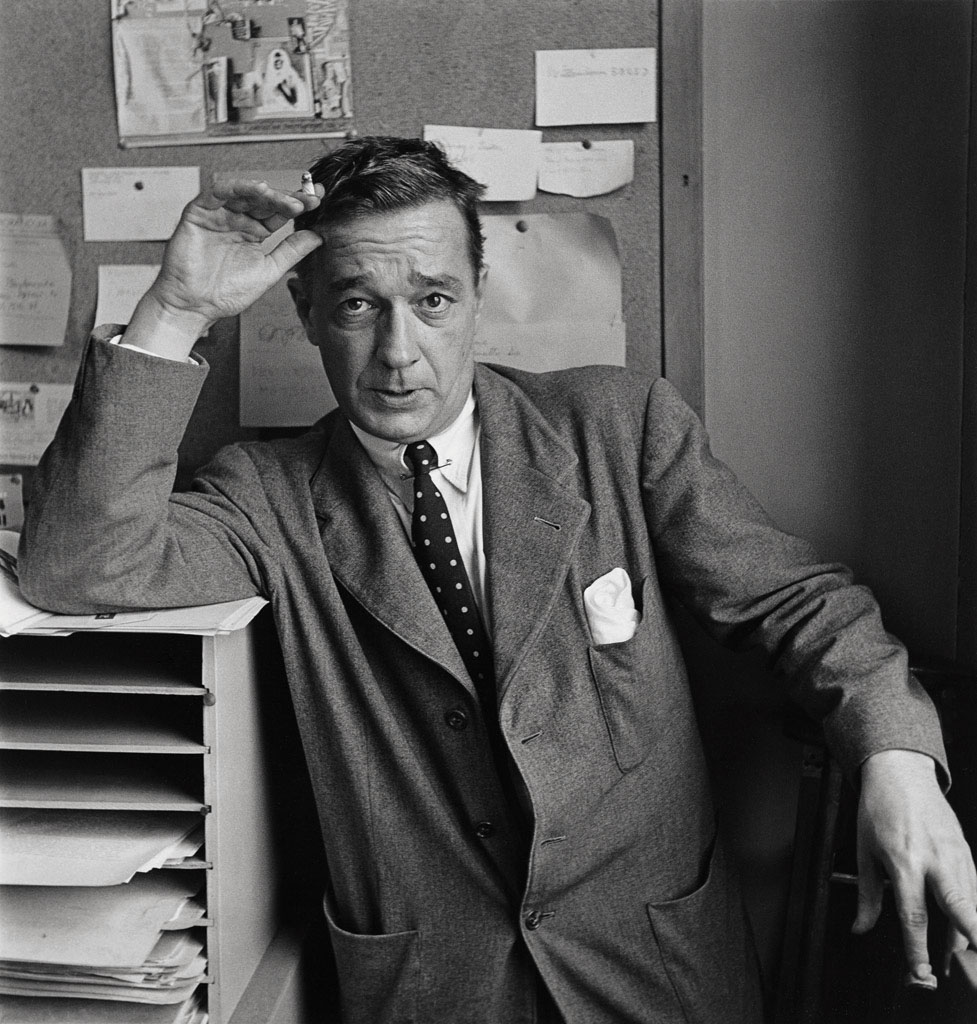
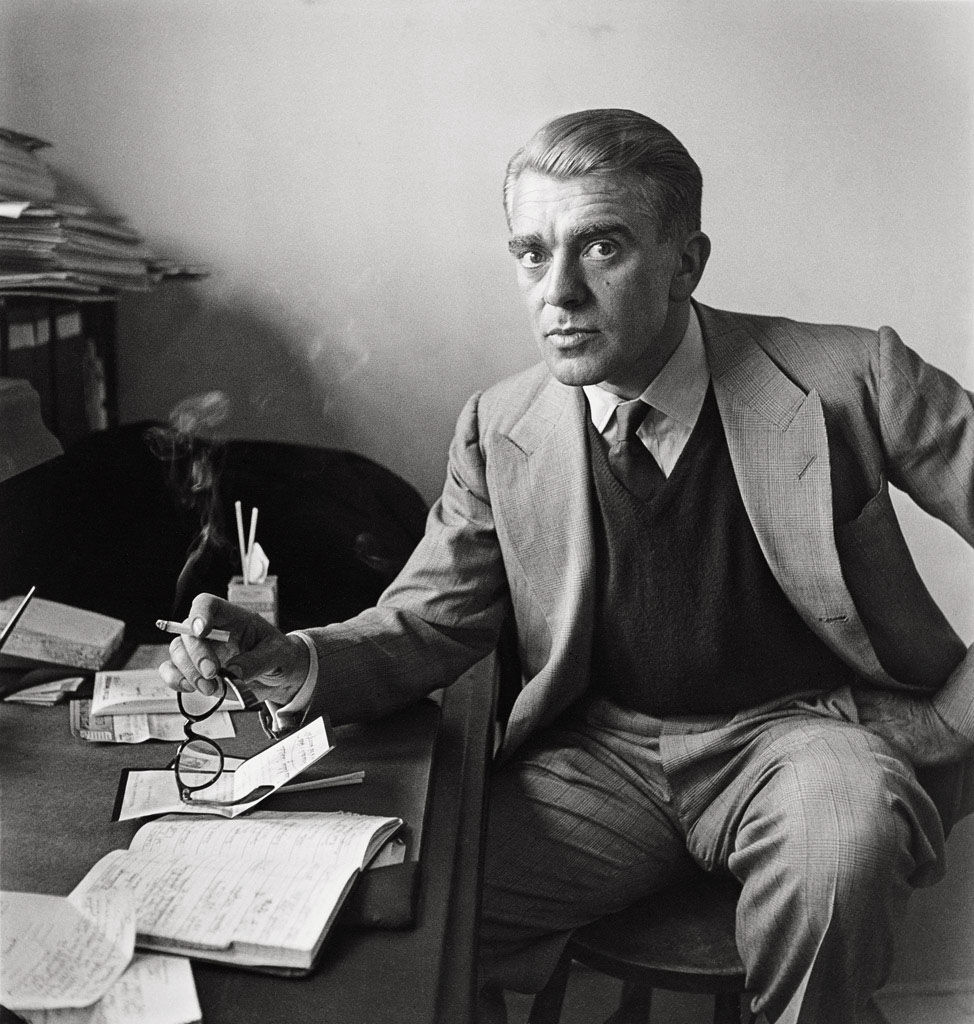
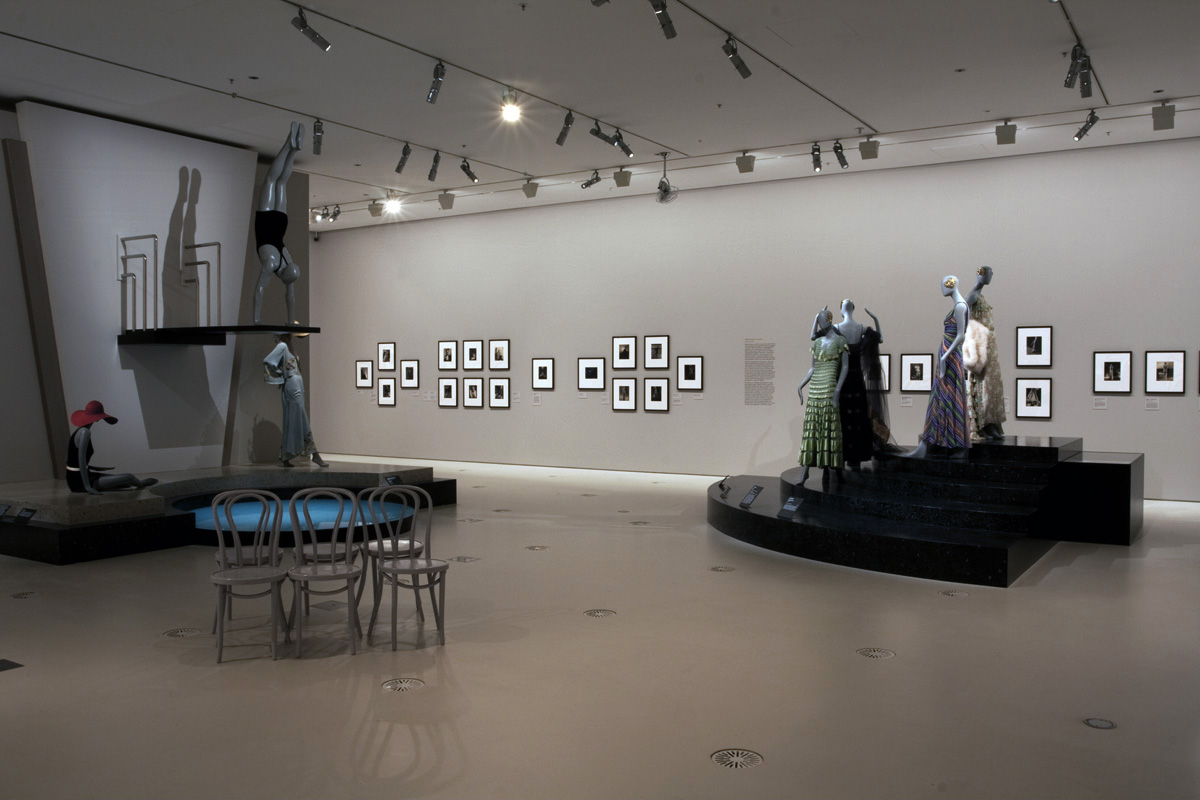
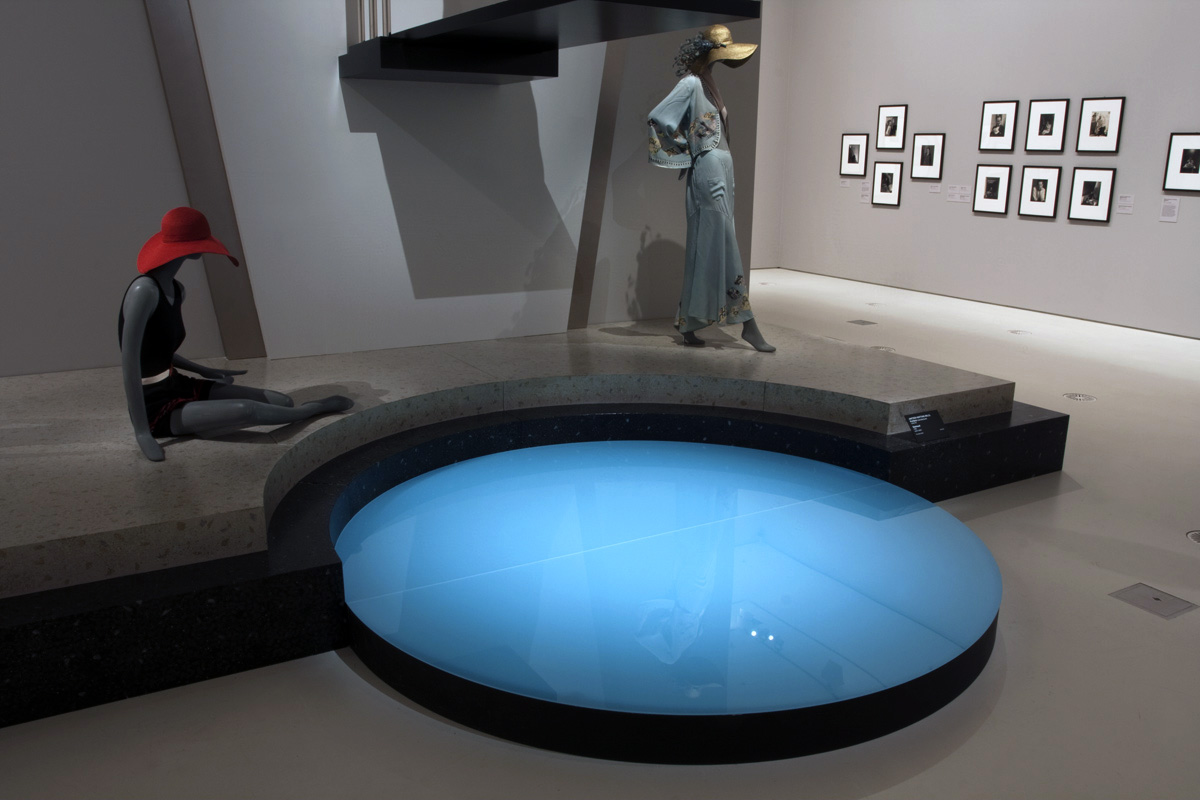
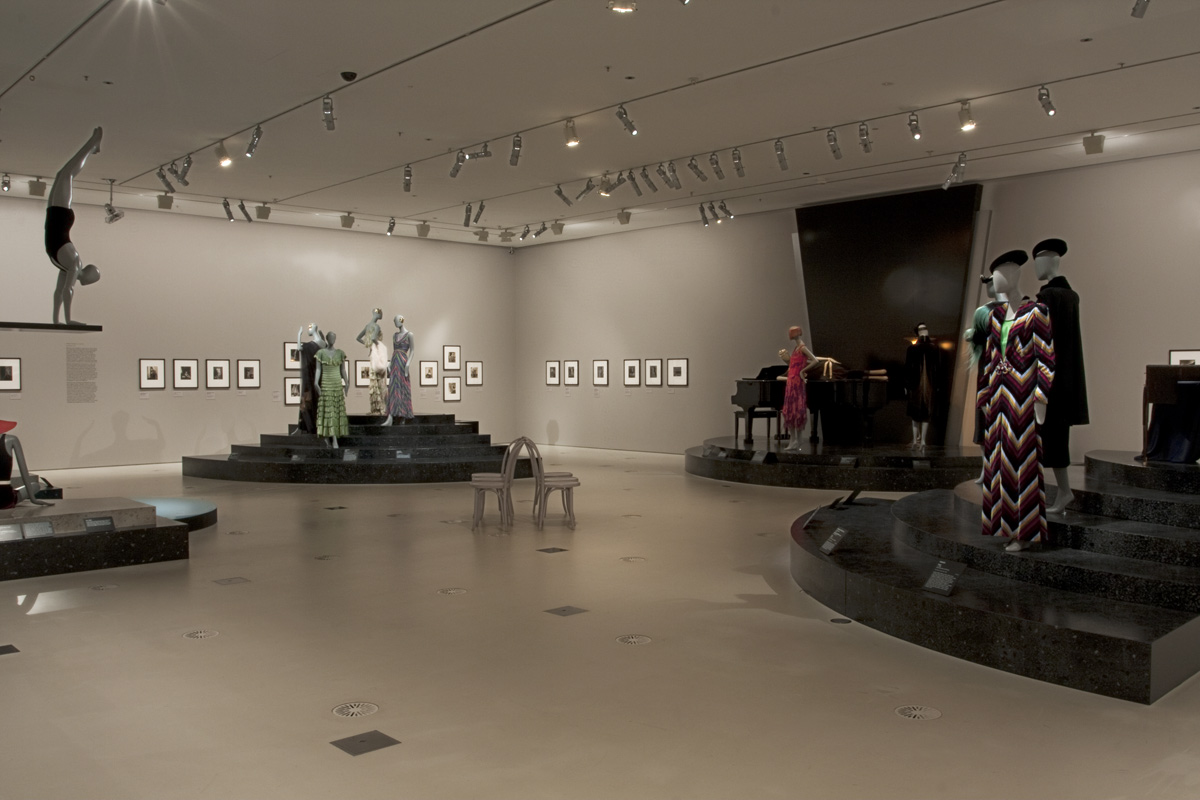
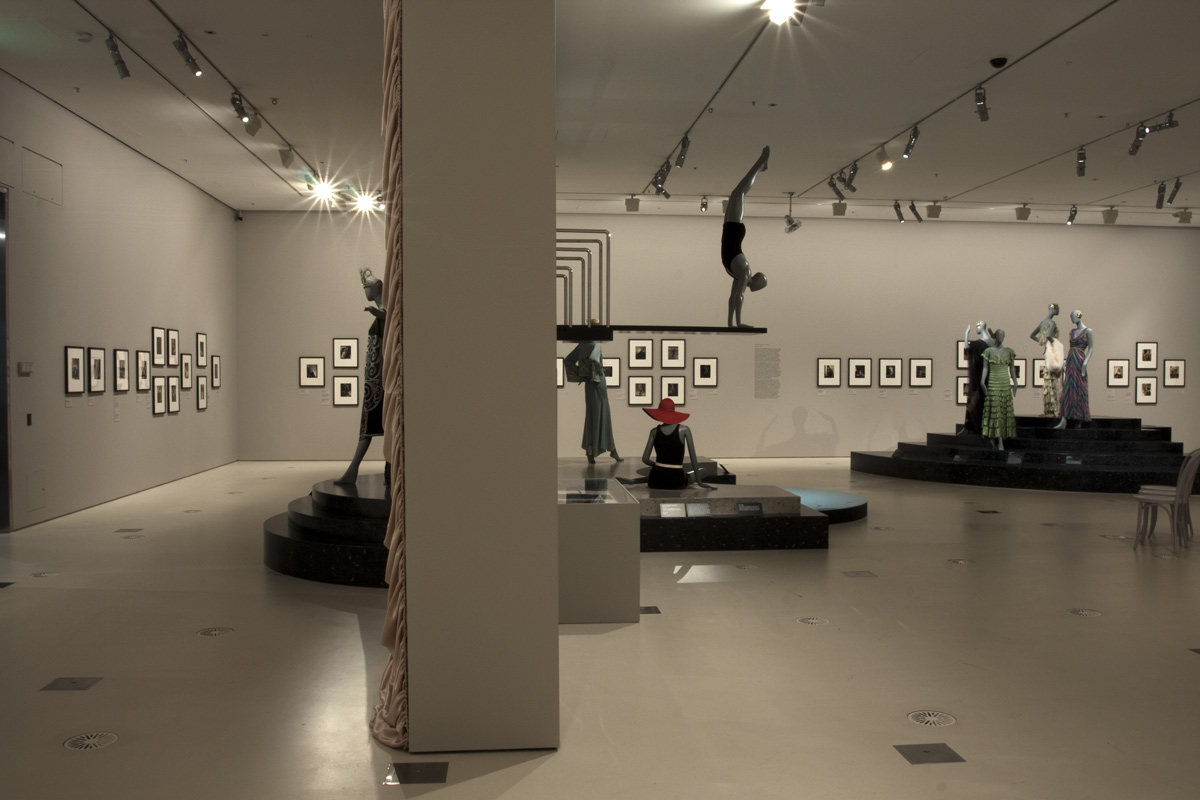
Exhibition: ‘A Way of Life – Swedish Photography from Christer Strömholm until Today’ at Moderna Museet Malmö, Sweden

Exhibition dates: 1st February – 18th May, 2014

Curator: Anna Tellgren, curator of photography, Moderna Museet

Featured photographers: Yngve Baum, Martin Bogren, Stina Brockman, Anna Clarén, Dawid, Ann Christine Eek, Agneta Ekman, JH Engström, Nan Goldin, Neil Goldstein, Catharina Gotby, Denise Grünstein, Kenneth Gustavsson, Walter Hirsch, Gerry Johansson, Rune Jonsson, Eva Klasson, Nina Korhonen, Tuija Lindström, Anders Petersen, Håkan Pieniowski, Marco Plüss, Inta Ruka, Ulf Simonsson, Gunnar Smoliansky, Christer Strömholm, Lars Tunbjörk, Odd Uhrbom, John S. Webb.


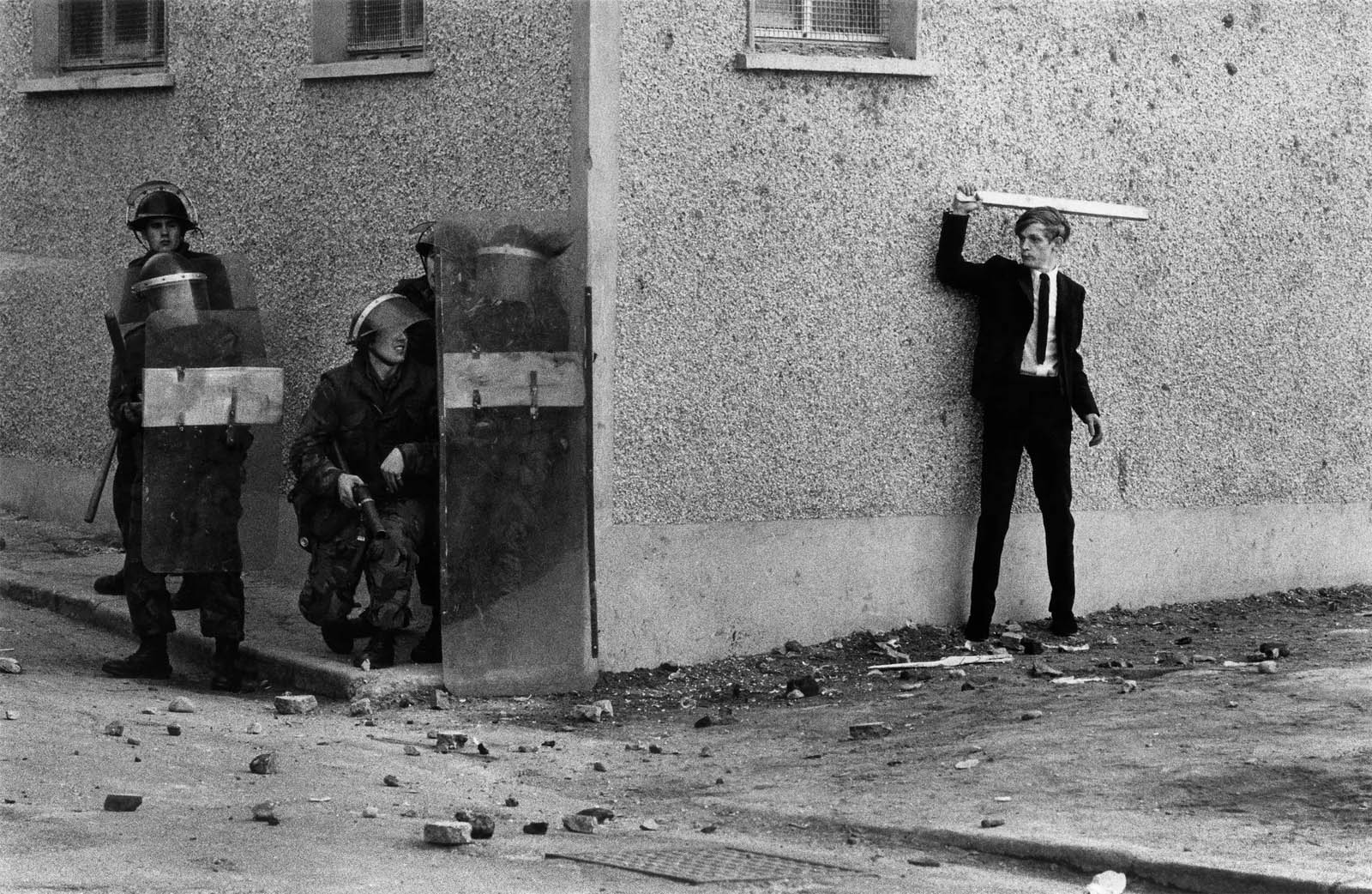
Kenneth Gustavsson (Swedish, 1946-2009) 'Berlin' 1983 from the exhibition 'A Way of Life – Swedish Photography from Christer Strömholm until Today' at Moderna Museet Malmö, Sweden, February - May, 2014


Kenneth Gustavsson (Swedish, 1946-2009)
Berlin
1983
© Kenneth Gustavsson Estate


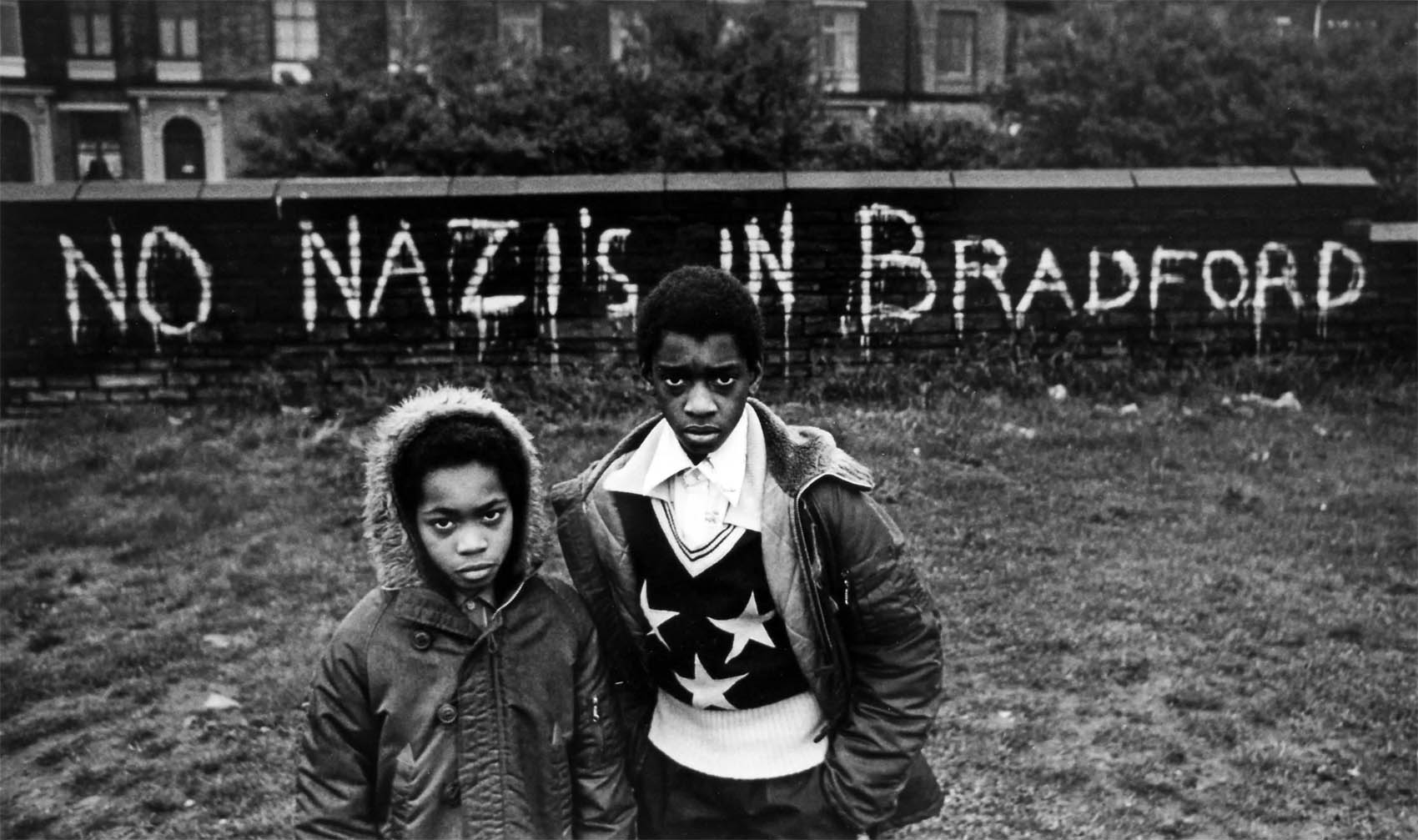
Gustavsson’s photographs are characterised by a strong personal expression. With tireless consistency, he sought his inner visions in urban environments such as New York, Berlin and Paris. His exceptional talent for creating everyday magic makes him timeless and always topical. The eighties were Gustavsson’s most creative period. His photographs from Belfast are an extraordinary visual interpretation of conditions in a city wracked by terror and violence.

Kenneth Gustavsson grew up in a suburb north west of Stockholm. Between 1964 and 1967 he studied photography at the Fotoskolan in Stockholm, where the photographer Christer Strömholm was head, at the same time as Anders Petersen. After graduation in 1967, he and Petersen co-founded the Saftra photo agency (Saftra Reportage Fotografi).

The Swedish photo magazine Foto published Gustavsson’s work in the 1960s. Together with Anders Petersen, Gustavsson portrayed the Stockholm slums in an exhibition at the Stockholm City Museum in 1969. After not working in photography for most of the 1970s, a feature in ETC magazine in 1983 revived Gustavsson’s career and he went on to complete assignments in Belfast, Chicago, Reykjavik and New York for ETC. In 1984 he was awarded FOTO magazine’s Photographer’s Price.

The critic Gerry Badger has said of Gustavsson’s work that “it certainly is very post-war, deeply existential and luminously poetic. And, like most good photography, it is a beguiling exploration of the human condition and our relationship with the world.”

Text from the Wikipedia website


Another posting on an eclectic subject that this archive likes to promote, this time on Swedish photography… a subject that I knew very little about.

Dr Marcus Bunyan


Many thanks to the Moderna Museet Malmö for allowing me to publish the photographs in the posting. Please click on the photographs for a larger version of the image.
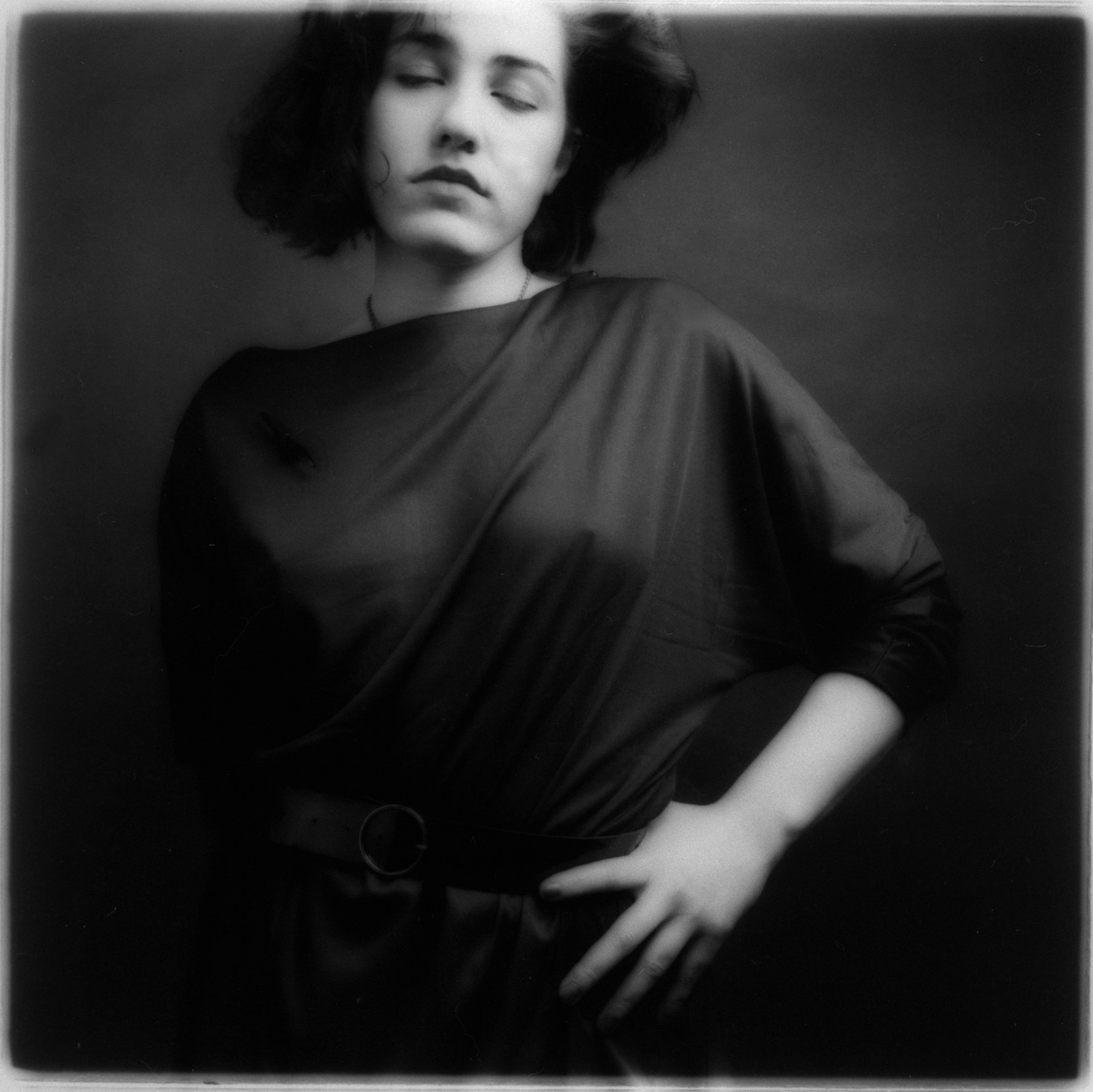


Tuija Lindström (Finnish-Swedish, 1950-2017) 'Pia' 1983


Tuija Lindström (Finnish-Swedish, 1950-2017)
Pia
1983
© Tuija Lindström


Tuija Lindström belongs to the great legends of Swedish photography. Her images gained great recognition when exhibited in a group show at Camera Obscura. Lindström’s work was at this time centred on a narrative with focus on a female experience where the male gaze and patriarchal structures were investigated. This theme also characterised the photographic series ‘The Girls at Bull’s Pond’ (1991), which can be counted as Tuija Lindstrom’s real breakthrough. Other subject matters in her work revolves around memories and recollections, time and social issues.

Tuija Lindström’s work is characterised by material experiments inherent to the medium and the darkroom becomes a place for meditative, alchemical operations. Here the presences of the darkroom functions as a kind of performance art. A place of evasion where the craftsmanship evoke the sometimes coarse images soft shades, deep blacks and contrasts.

In 1992 Lindström was appointed professor at the Photo Academy, now the School of Photography at the Academy of Fine Arts in Gothenburg, where she came to teach until 2002. As the first woman on record Tuija Lindström is significant for the introduction of a more artistic and theoretical photography where philosophy and art history were incorporated in the training. An achievement that meant a step away from the documentary tradition that for a long time had characterised Swedish photography.

Text from the Female Artists in History Facebook page [Online] Cited 19/03/2021. Used under fair use conditions for the purposes of education and research
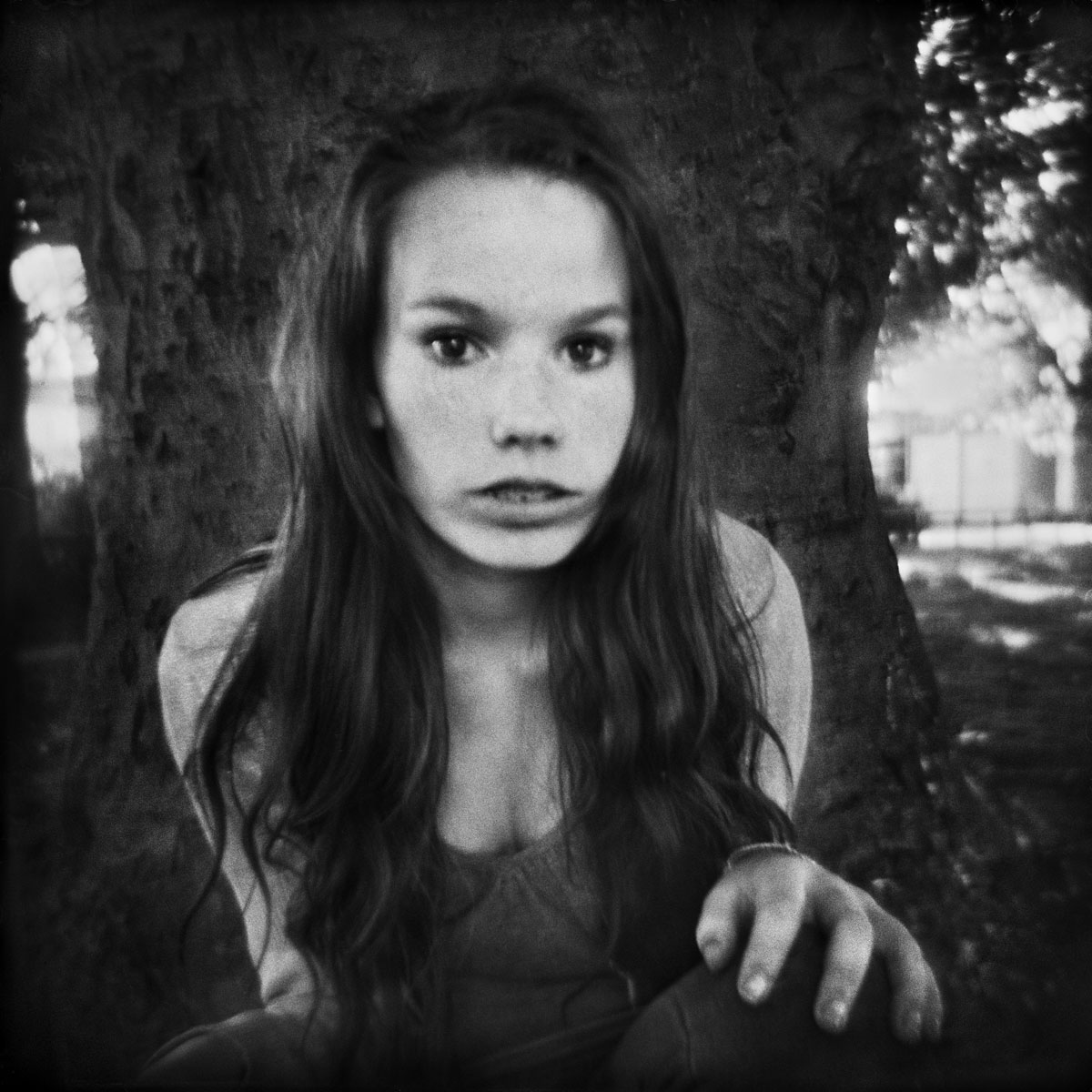
 

Martin Bogren (Sweden, b. 1967) 'No title'. From the series 'Lowlands' 2011


Martin Bogren (Sweden, b. 1967)
No title
2011
From the series Lowlands
© Martin Bogren


In the 1990s, Martin Bogren developed a personal approach of documentary photography by following Swedish musicians and artists on stage, tour, and studio. His first book “The Cardigans – Been It”, published at the top of the group’s success in 1996 , reveals his work and launches his career. Martin Bogren however aims at going beyond assignments and music field : he focuses on more personal photographic work.

Travels encounters, (Notes, 2008, Italia, 2016), joy of first discoveries (Ocean, 2008), or teenage spleen (Lowlands, 2011, Tractors boys, 2013, Embraces, 2014) : his works reveal a vivid desire to avoid boredom and to reach an elsewhere. He gets in contact with his subjects as a silent witness, as a subtle and caring observer. Through grainy black-and-white and highly grey nuanced photographs, he succeeds in combining a documentary approach with a sensitive affirmation of his subjective vision.

Martin Bogren “manages not to disrupt the world into which he immerses himself, with decency, with attention and acuity, and with respect, without judging – holding his breath (…) One thinks, of course, of all those photographers who – from Robert Franck onwards, from Anders Petersen to Michael Ackerman – have known how to give us the gift of their way of looking, telling us that they wanted to show nothing more than what they needed to show and to say.” (Christian Caujolle, Foreword to Tractor Boys, 2013)

Text from the Vu website [Online] Cited 19/03/2021. Used under fair use conditions for the purposes of education and research
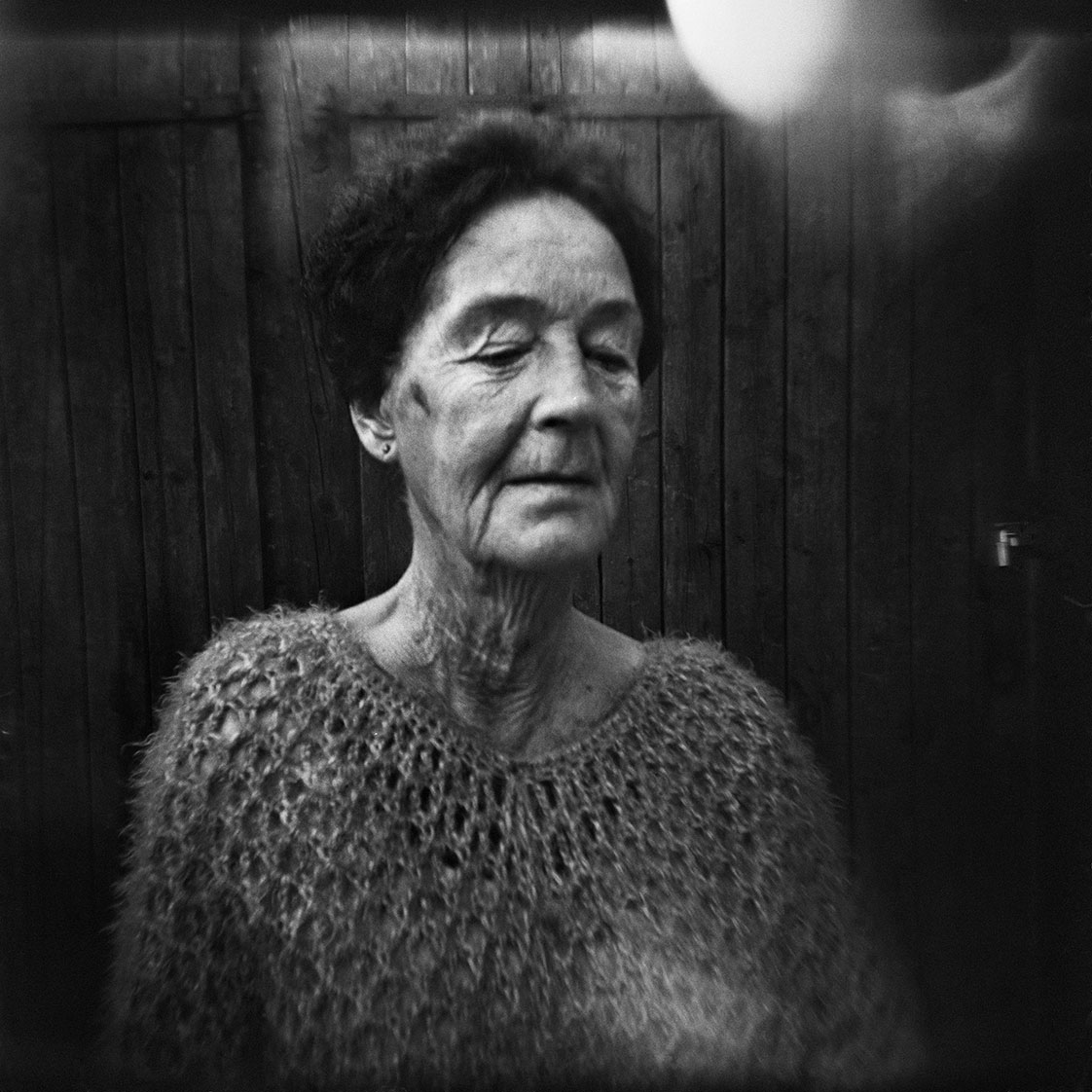
 

Martin Bogren (Sweden, b. 1967) 'No title'. From the series 'Lowlands' 2011


Martin Bogren (Sweden, b. 1967)
No title
2011
From the series Lowlands
© Martin Bogren


Christer Strömholm (1918-2002) is a predominant figure of Nordic photography and has inspired generations of young photographers. His images of the transsexuals of Place Blanche in Paris is some of his most known work. Included in the exhibition are photographers that have followed in the footsteps of Strömholm. Works, taken from the Moderna Museet collection, by photographers such as Yngve Baum, Agneta Ekman, Ann Christine Eek, Gunnar Smoliansky and not least Anders Petersen, who has most prominently carried on the Strömholm legacy.

“This is an exciting exhibition not only due to its extensive selection but also because we are experimenting with intersecting three separate exhibitions into one entirety,” says John Peter Nilsson, Director, Moderna Museet Malmö. The exhibition also highlights three contemporary photographers. J.H. Engström (b. 1969) has been seen as a successor to Christer Strömholm and Anders Petersen, his Tout va bien is the newest series to be featured. Anna Clarén (b. 1972) is just like Engström part of a generation of photographers that emerged in the late 1990’s. In her bright colour photos we meet people and spaces close to the photographer. Martin Bogren (b. 1967) is the third contemporary photographer, he is active in Limhamn and his series Lowlands (2011) tells a personal tale, in black and white, about a small village in the Skåne countryside.

“It’s fantastic to be able to show an important part of Swedish modern photography history using the Moderna Museet collection. Martin Bogren, Anna Clarén and J. H. Engström are all three contemporary photographers that are good examples of how strong and exciting the Nordic photography scene is right now,” says Anna Tellgren, curator of the exhibition.

The title of the exhibition comes from a quote taken from a lecture by Christer Strömholm. He explains that “… for me, working with photographic images is a way of life. When I think of it, and when I look carefully at my images, all of them, each in its particular way, are nothing but self-portraits, a part of my life.” That approach has shaped all photographers represented in the exhibition. Several self-portraits, portraits of friends and some portraits of Christer Strömholm can be found in the selection.

Press release from the Moderna Museet Malmö website
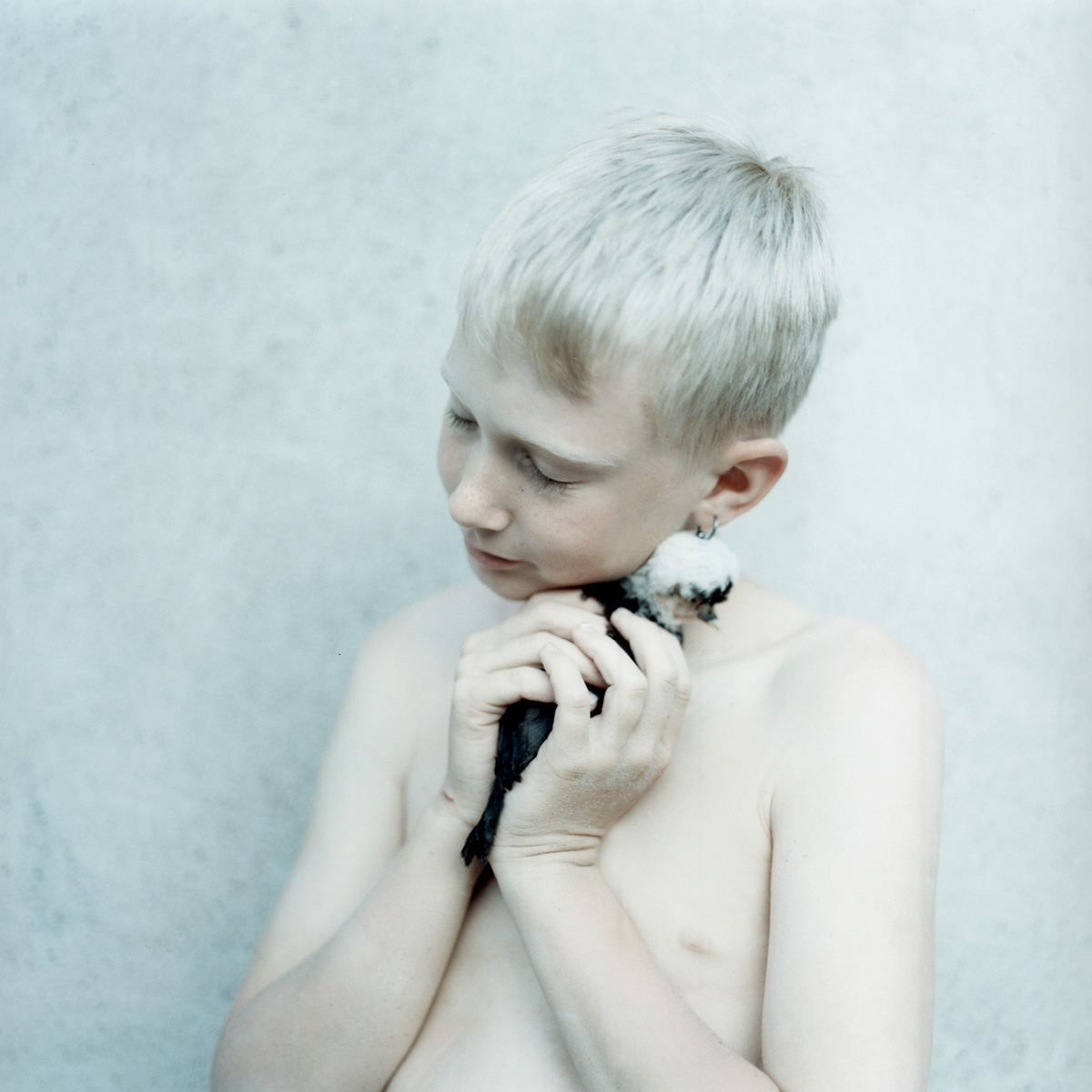
 

Anna Clarén (Swedish, b. 1972) 'No title'. From the series 'Holding' 2006


Anna Clarén (Swedish, b. 1972)
No title
2006
From the series Holding
© Anna Clarén


This work might be regarded as a diary documenting my life during a period when I took pictures 24/7, even in the night I let the shutter be wide open, exposing while I was asleep. The people in the pictures are persons that are close to me; parents, my sister, my closest friends, my self and also some people I only met by accident on the street.

In this work I use external, concrete attributes, things and events to describe interior associations, an imaginary reality. A reality which for me is entirely real.

The title of the book is a term derived from psychiatry, which means that each and every child should be entitled to a loving and caring environment by her or his parents. This child will enter life with the feeling of being held. Held by her parents, her self and by life itself.

The one child that for any reason grows up in a family where this love is not possible, will, as an adult, constantly find herself in an endless, desperate search for holding. And in some cases will experience a feeling of falling.

The search for somewhere to hold on to will express itself in various ways; symbiotic love affairs, destructiveness, escaping, a constant feeling of alienation, of being outside.

The book’s story is, in many ways, a self portrait, but deep down inside, human beings are very alike. In our searching, the questions, confusions, we may find a universal strand of humanity; the difference between us lies often in the answers. And therefore, this work is a self portrait with universally human questions / stories.

Anna Clarén. “Holding,” on the Josef Chladek website [Online] Cited 19/03/2021. Used under fair use conditions for the purposes of education and research


Anna Clarén (Swedish, b. 1972) 'No title'. From the series 'Holding' 2006


Anna Clarén (Swedish, b. 1972)
No title
2006
From the series Holding
© Anna Clarén


Christer Strömholm (Swedish, 1918-2002) 'Hotel Central, Paris' 1951/1981 from the exhibition 'A Way of Life – Swedish Photography from Christer Strömholm until Today' at Moderna Museet Malmö, Sweden, February - May, 2014


Christer Strömholm (Swedish, 1918-2002)
Hotel Central, Paris
1951-1981
© Christer Strömholm/Strömholm Estate


Christer Strömholm is one of the great personalities of Swedish photography. Born in Stockholm, he discovered photography via graphic art in the late 1940s. His photographs from this period are hard black-and-white compositions featuring walls, shadows and minimalist settings. During his sojourns in Paris in the 1950s and 60s, he developed a style reminiscent of street photography, and this is also where he produced his famous portraits of transsexuals at Place Blanche. Strömholm also went on numerous photographic expeditions to places around the globe in the early 1960s, including Spain, Japan, India and the USA. Early in his career, he began teaching at Kursverksamheten in Stockholm, and his classes eventually became the legendary Fotoskolan, from which some 1,200 students graduated between 1962 and 1974. Strömholm’s photographs and methods have inspired many generations of Swedish photographers, but he did not become known to the broader public until 1986, with the major exhibition 9 Seconds in My Life at Moderna Museet.

Text from the Lens Culture website [Online] Cited 19/03/2021. Used under fair use conditions for the purposes of education and research
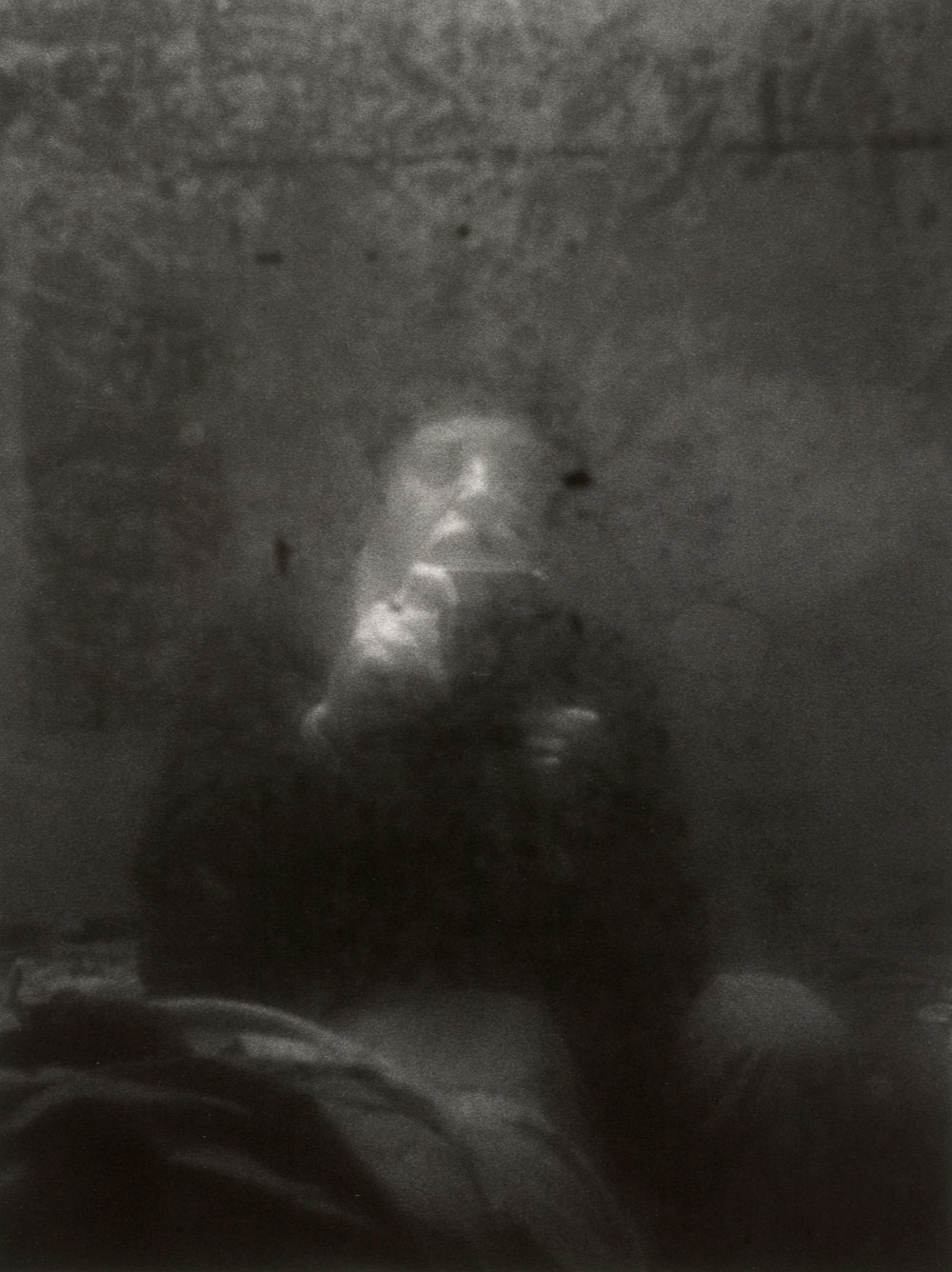
 

Christer Strömholm (Swedish, 1918-2002) 'Hotel Central, Paris (Self-portrait)' 1951/1981


Christer Strömholm (Swedish, 1918-2002)
Hotel Central, Paris (Self-portrait)
1951-1981
© Christer Strömholm/Strömholm Estate
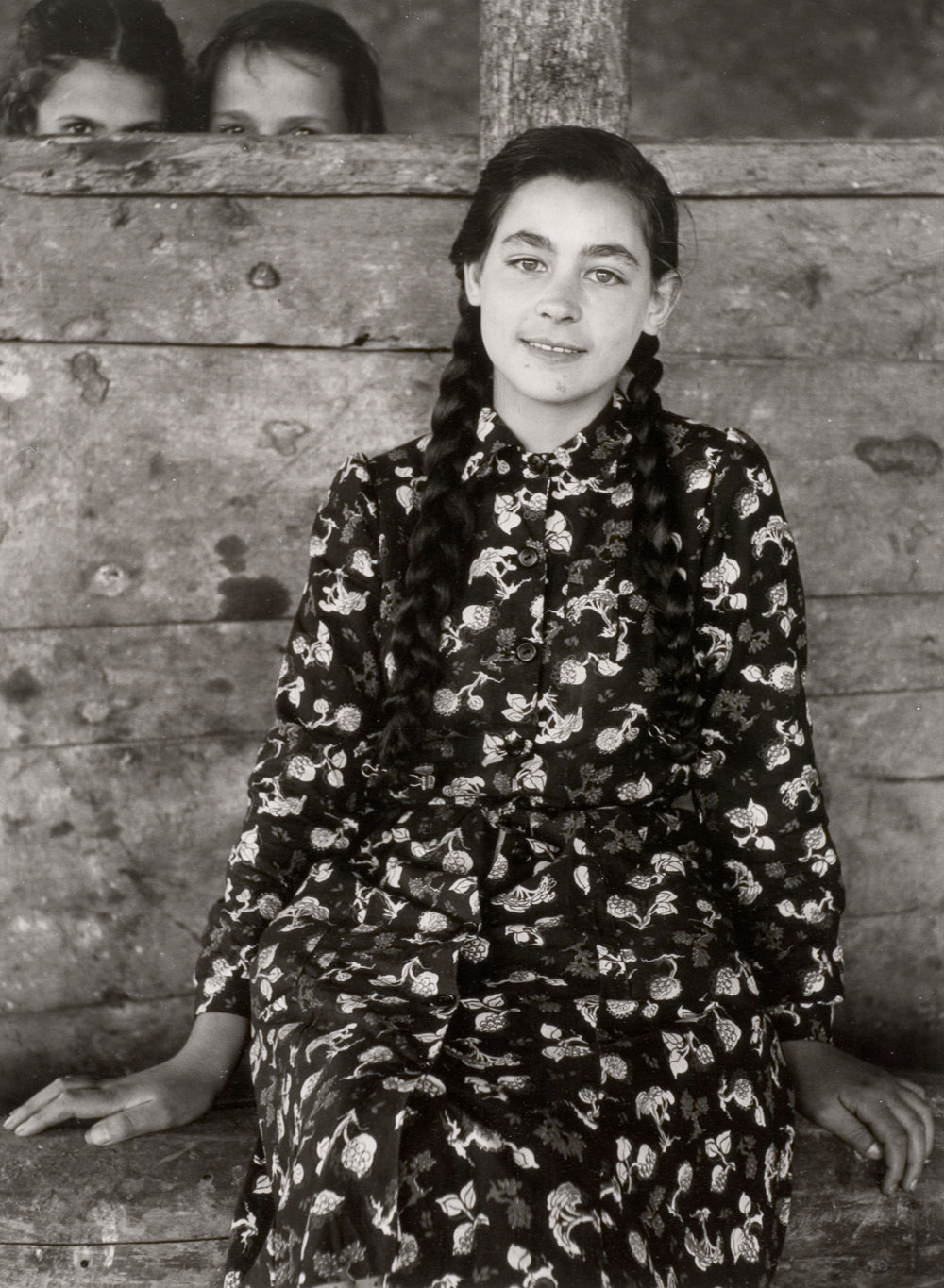
 

Christer Strömholm (Swedish, 1918-2002) 'No title' 1963/c. 1985


Christer Strömholm (Swedish, 1918-2002)
No title
1963 – c. 1985
© Christer Strömholm/Strömholm Estate


Anders Petersen (Swedish, b. 1944) 'Marlene' from the series 'Café Lehmitz' 1967-1970/1986


Anders Petersen (Swedish, b. 1944)
Marlene
1967-1970/1986
From the series Café Lehmitz
© Anders Petersen


“To me, it’s encounters that matter, pictures are much less important.”

“I can’t describe reality; at the most, I can try to capture things that seem to be valid, the way I see them.”


Anders Petersen


J. H. Engström (Swedish, b. 1969) 'No title' from the series 'Tout va bien' 2014


J. H. Engström (Swedish, b. 1969)
No title
2014
From the series Tout va bien (Everything is fine)
© JH Engström


Swedish artist JH Engström (born 1969) is an inveterate bookmaker. Most recently, his published works have explored ideas of place and home, including “Sketch of Paris” (Aperture, 2013), “La Résidence” (2010), “From Back Home” (2009) and “CDG/JHE” (2008). After more than a decade of such thematic projects, “Tout Va Bien” returns to the looser, more associative approach of Engström’s critically acclaimed volume “Trying to Dance” (2003). The source for these photographs is nevertheless strongly autobiographical, as well as vividly metaphorical; a reemphasis of the artist’s belief in photography’s potential as visual poetry. The sequencing is highly charged with contrasts: black-and-white images mix with colour; the gentle beauty of coastal rocks clashes with a flash-lit image of the bright, blood-red placentas from the birth of his twins. The book leaves it to the viewer to map his or her own network of meaning from image to image, page to page.

Text from the Aperture website [Online] Cited 19/03/2021. Used under fair use conditions for the purposes of education and research
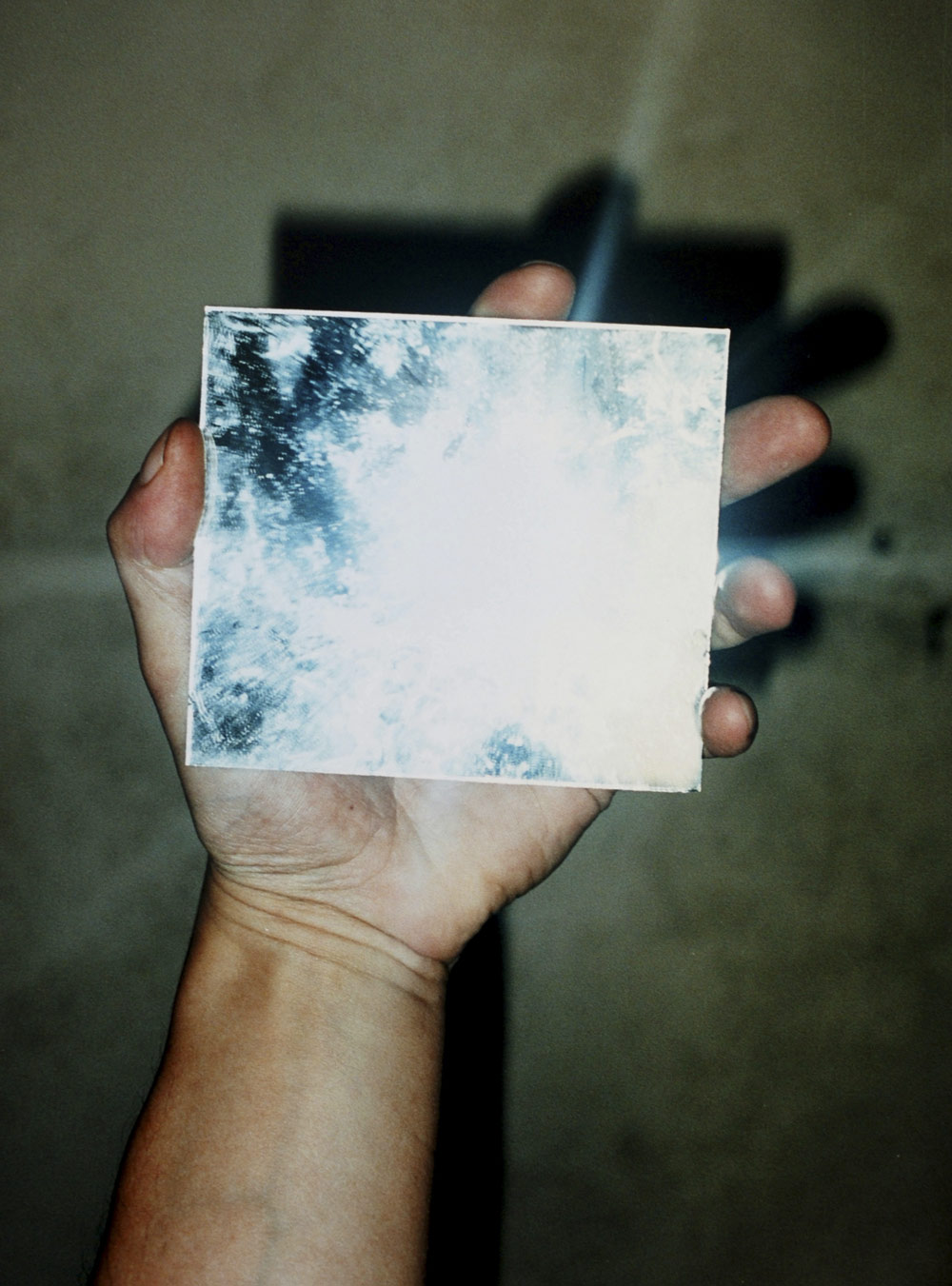
 

J. H. Engström (Swedish, b. 1969) 'No title' from the series 'Tout va bien' 2014


J. H. Engström (Swedish, b. 1969)
No title
2014
From the series Tout va bien (Everything is fine)
© JH Engström


Moderna Museet Malmö
Gasverksgatan 22 in Malmö

Moderna Museet Malmö is located in the city centre of Malmö. Ten minutes walk from the Central station, five minutes walk from Gustav Adolfs torg and Stortorget.

Opening hours:
Tuesday – Sunday 11 – 17
Mondays closed

Moderna Museet Malmö website

LIKE ART BLART ON FACEBOOK

Back to top

Exhibition: ‘Philippe Halsman, Astonish Me!’ at The Musée de l’Elysée, Lausanne

Exhibition dates: 29th January – 11th May, 2014

Curators: Anne Lacoste, Curator at the Musée de l’Elysée, and Sam Stourdzé, Director of the Musée de l’Elysée


Philippe Halsman (American, 1906-1979) 'The Versatile Jean Cocteau' 1949 from the exhibition 'Philippe Halsman, Astonish Me!' at The Musée de l'Elysée, Lausanne, January - May, 2014


Philippe Halsman (American, 1906-1979)
The Versatile Jean Cocteau
1949
Musée de l’Elysée
© 2013 Philippe Halsman Archive / Magnum Photos


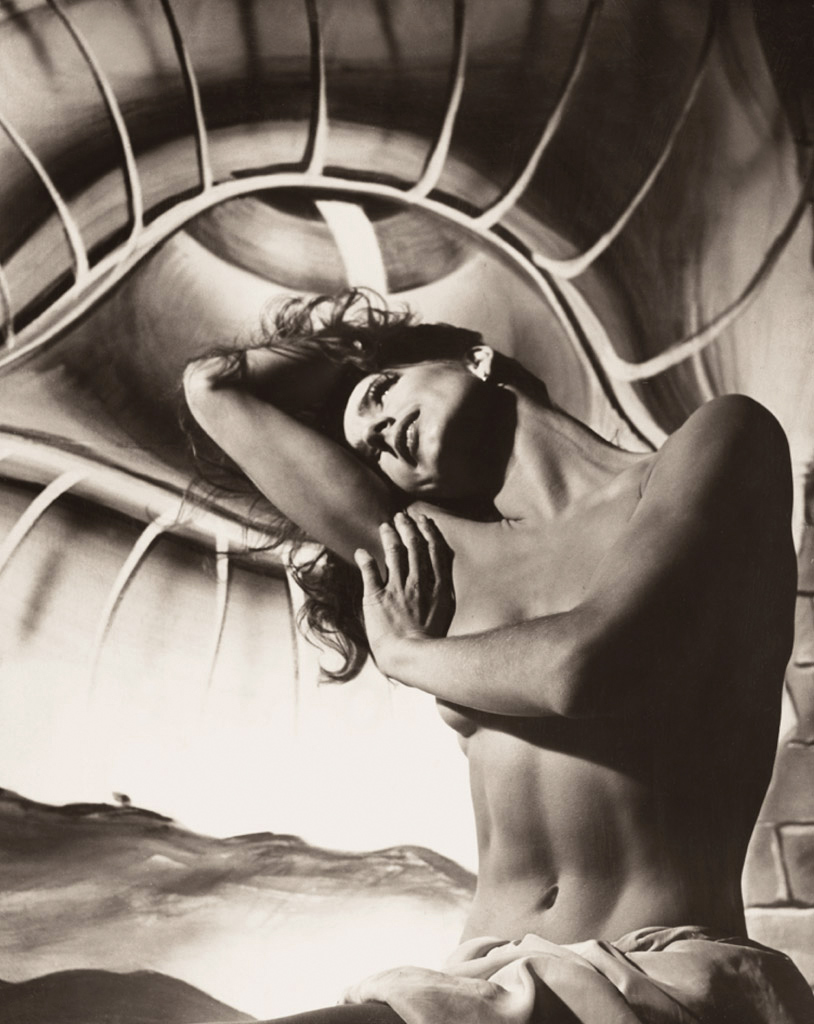
He “photographed a little bit of everything: animals, Paris, the homeless, underwater, nudes, advertising, fashion and, above all, celebrities portraits, from Ali, Einstein, Churchill, Hepburn, Warhol, Hitchcock and, of course, Marilyn Monroe.”

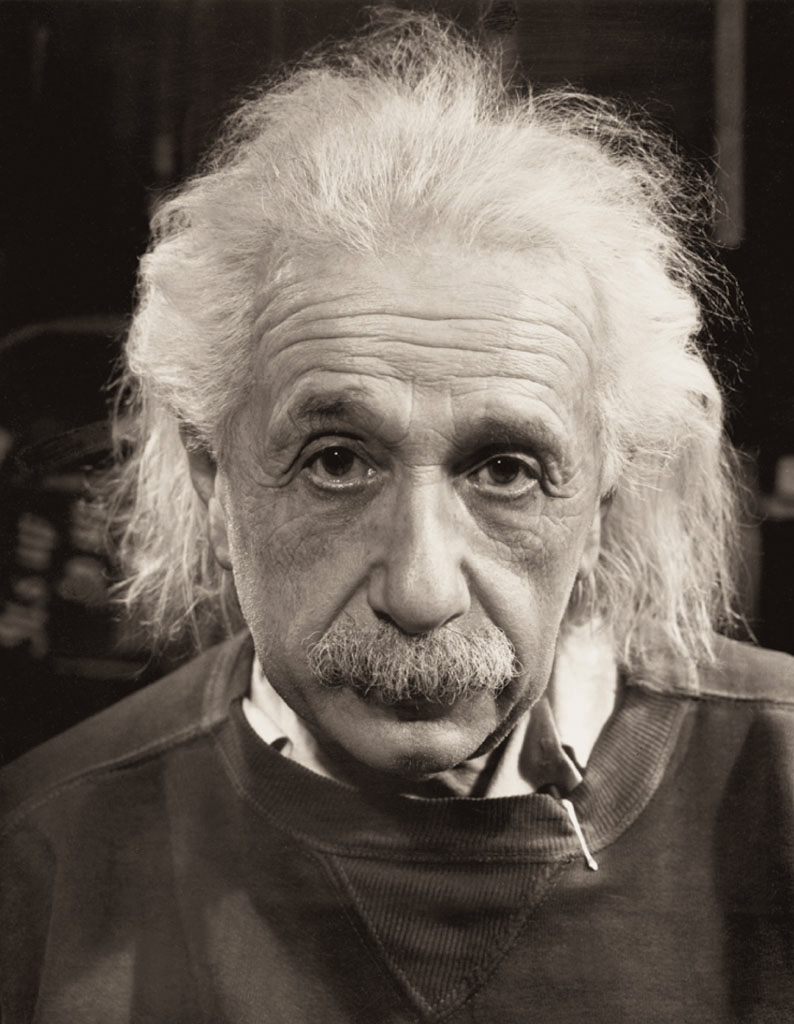
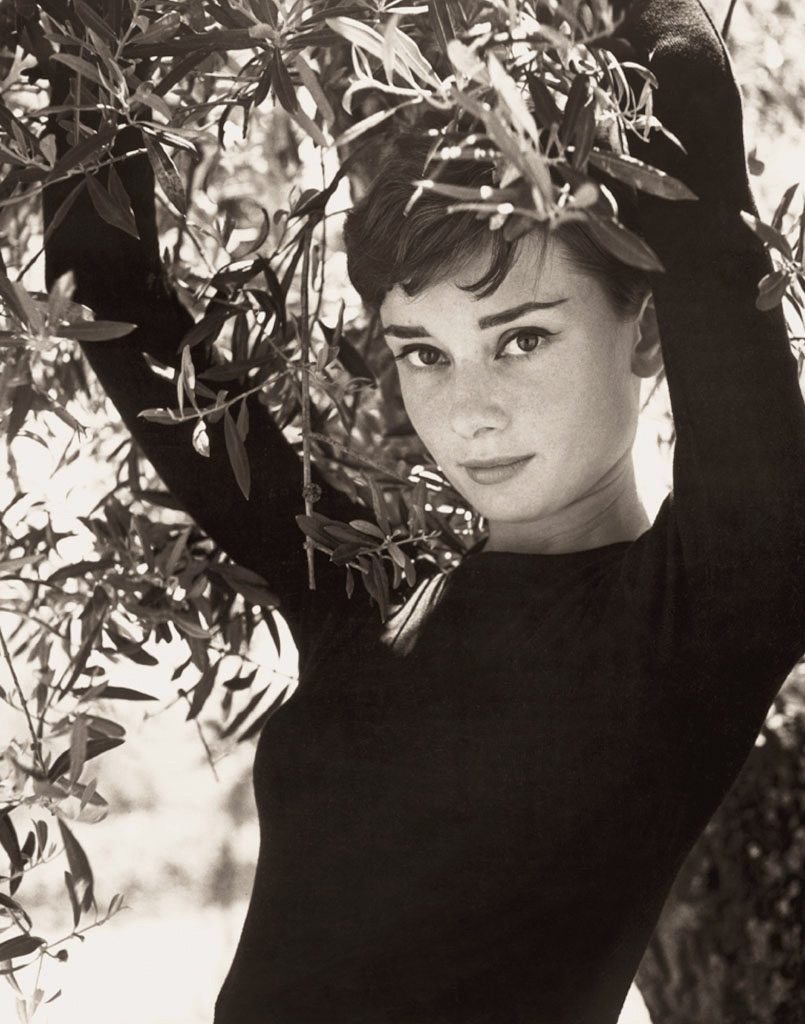
You could say that he was a versatile photographer, doing everything to pay the bills and anything to make interesting images. He never stopped experimenting with the image, but it is the “straight” portraits that I find are his strongest work. Not the “jump” photos, Monroe, or the surreal experiments with Dalí, much as they delight, but the portraits of Hepburn, Einstein and Churchill for example.

Look at the photograph of Winston Churchill (1951, below). What a way to portray the great man. The bulk of the overcoat, the slope of the shoulders (evincing a certain weariness), the famous Homburg hat pulled down on the head, the leader staring into the tranquil landscape. But what makes the image is the seam down the back of the overcoat which speaks to history itself – the backbone of the country, the never say die spirit, stiff upper lip, the rock of the British empire which Nazism could not defeat – epitomising the British bulldog spirit. Cometh the hour, cometh the man. Solid. Immovable. What a glorious photograph to capture that essence.

Dr Marcus Bunyan


Many thankx to the Elysée Lausanne for allowing me to publish the photographs in the posting. Please click on the photographs for a larger version of the image.


“Shortly before World War I, the greatest sensation in Paris was the Russian Imperial Ballet under Serge Diaghilev. The divine Nijinsky and Pavlova were dancing for him, Stravinsky composed, Picasso, Bakst, and Chagall were painting scenery for him. To work for Diaghilev was the highest accolade for an artist. Jean Cocteau approached Diaghilev and asked: ‘What can I do for you?’ Diaghilev looked at him and answered: ‘Etonne-moi!’ (‘Astonish me!’) These two words can be considered as a motto, as a slogan for the development of the modern art which followed.”


Philippe Halsman


“Photography is a separate form of expression since it falls between two art forms… It’s not only trying to give us a visual impression of reality, like painting and graphic arts, but also to communicate and inform us the way writing does. No writer should be blamed for writing about subjects that exist only in his imagination. And no photographer should be blamed when, instead of capturing reality, he tries to show things that he has only seen in his imagination.”


Philippe Halsman


Philippe Halsman (American, 1906-1979) 'Folle Iseult' 1944 from the exhibition 'Philippe Halsman, Astonish Me!' at The Musée de l'Elysée, Lausanne, January - May, 2014


Philippe Halsman (American, 1906-1979)
Folle Iseult
1944
Musée de l’Elysée
© 2013 Philippe Halsman Archive / Magnum Photos


“In my serious work I am striving for the essence of things and for goals which are possibly unobtainable. On the other hand, everything humorous has great attraction for me, and a childish streak leads me into all kinds of frivolous endeavour.”

Photographer Philippe Halsman had an exemplary career. Over a forty-year period, in Paris during the 1930s and in New York from 1940 on, he developed a broad range of activities (portraits, fashion, reportage, advertisements, personal projects, commissions from individuals and institutions). The Musée de l’Elysée presents the first study dedicated to his entire body of work, with a selection of over 300 pieces.

This project, produced in collaboration with the Philippe Halsman Archive, includes many exclusive unseen elements of the photographer’s work (contact sheets, annotated contact prints, preliminary proofs, original photomontages and mock-ups). The exhibition shows Philippe Halsman’s creative process and reveals a unique approach to photography: a means of expression to explore.

Born in 1906 in Riga, Latvia, Halsman studied engineering in Dresden before moving to Paris, where he opened a photographic studio in 1932. His years in Paris already heralded the approach he was to develop throughout his long career. A studio and reportage photographer, Halsman took inspiration from the contemporary art scene and participated in promoting it. Though he specialised in portraiture, he also branched out into advertising and publishing, which were thriving at the time. In 1940, the German invasion brought Halsman’s prosperous career to a halt, leading him to flee with his family to New York. Though initially unknown, he succeeded in establishing himself on the American market in under a year, and his studio soon became successful. Halsman stood out for his “psychological” approach to portraiture.

He distinguished himself in this area with his vast portrait gallery of celebrities (actors, industrialists, politicians, scientists, writers). Some of these images, such as Audrey Hepburn, Marilyn Monroe, Winston Churchill or Albert Einstein, became icons. He produced the largest number of covers (101) for Life magazine, the first weekly magazine to be illustrated only by photographs.

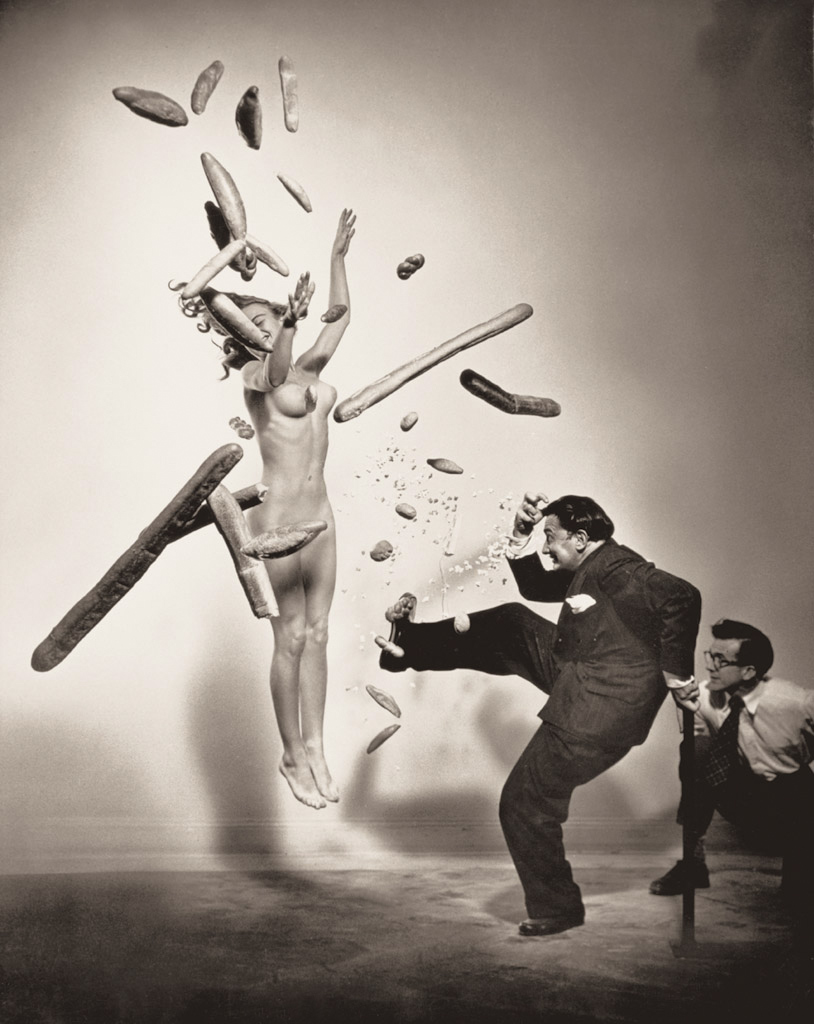
Halsman’s photography is characterised by a direct approach, masterful technique and a particular attention to detail. His work testifies to his constant research and his interest in all forms of technical and aesthetic experimentation, which he applied to a wide variety of subjects. For Halsman, photography was an excellent way of giving his imagination free reign. He was especially interested in mises en scène – in the form of single images or fictional series. He met Salvador Dalí in 1941 and the artist turned out to be the ideal accomplice. Their fruitful collaboration lasted 37 years. Philippe Halsman also introduced innovations through more personal creations such as the “photo-interview book” or ‘jumpology’.

Press release from the Musée de l’Elysée Lausanne website


Philippe Halsman (American, 1906-1979) 'Winston Churchill' 1951


Philippe Halsman (American, 1906-1979)
Winston Churchill
1951
Musée de l’Elysée
© 2013 Philippe Halsman Archive / Magnum Photos


Philippe Halsman (American, 1906-1979) 'Albert Einstein' 1947


Philippe Halsman (American, 1906-1979)
Albert Einstein
1947
Musée de l’Elysée
© 2013 Philippe Halsman Archive / Magnum Photos


Philippe Halsman (American, 1906-1979) 'Audrey Hepburn' 1955


Philippe Halsman (American, 1906-1979)
Audrey Hepburn
1955
Musée de l’Elysée
© 2013 Philippe Halsman Archive / Magnum Photos


Philippe Halsman (American, 1906-1979) 'Sammy Davis Jr' 1965


Philippe Halsman (American, 1906-1979)
Sammy Davis Jr
1965
Musée de l’Elysée
© 2013 Philippe Halsman Archive / Magnum Photos


Presentation of the exhibition

In 1921, Philippe Halsman found his father’s old camera, and spoke of a “miracle” when he developed his first glass plates in the family’s bathroom sink. He was 15 years old, and this was the first encounter with photography of someone who was to become one of the leading photographers of the 20th century. This exhibition, produced by the Musée de l’Elysée in collaboration with the Philippe Halsman Archive, showcases the American photographer’s entire career for the first time, from his beginnings in Paris in the 1930s to the tremendous success of his New York studio between 1940 and 1970.

Halsman was able to go to Paris thanks to the support of French minister Paul Painlevé – whose son Jean, a scientific filmmaker, gave him one of the best cameras of the time upon his arrival. He remained in Paris for ten years, until 1940. Over that period, he collaborated with the magazines Vogue, Vu and Voilà and created portraits of numerous celebrities like Marc Chagall, Le Corbusier and André Malraux. He exhibited his work several times at the avant-garde Pléiade gallery, alongside photographers like Laure Albin Guillot, whose work was exhibited at Musée de l’Elysée in 2013.

Fleeing Nazism, he left Paris in 1940 and moved to New York. There, he worked for many American magazines including Life, which brought him into contact with the century’s top celebrities – Marilyn Monroe, Rita Hayworth, Duke Ellington, the Duke and Duchess of Windsor, Richard Nixon, Albert Einstein to name only a few. Halsman shot 101 covers for Life magazine. Far from restricting himself to photographing celebrities, throughout his whole life Halsman never stopped experimenting and pushing the limits of his medium. He collaborated with Salvador Dalí for over thirty years and invented ‘jumpology’, which consisted in photographing personalities in the middle of jumping, offering a more natural, spontaneous portrait of his subjects.

The exhibition Philippe Halsman, Astonish me! is divided into four sections illustrating memorable periods, collaborations and themes in the photographer’s work and life.


Philippe Halsman (American, 1906-1979) 'Expérimentation pour un portrait de femme (Experimentation for a portrait of a woman)' 1931-1940


Philippe Halsman (American, 1906-1979)
Expérimentation pour un portrait de femme (Experimentation for a portrait of a woman)
1931-1940
Musée de l’Elysée
© 2013 Philippe Halsman Archive / Magnum Photos


Philippe Halsman (American, 1906-1979) 'Affiche exposition Pleiade (Poster for exhibition at La Pléiade gallery)' 1936


Philippe Halsman (American, 1906-1979)
Affiche exposition Pleiade (Poster for exhibition at La Pléiade gallery)
1936
Musée de l’Elysée
© 2013 Philippe Halsman Archive / Magnum Photos


“When I arrived in America in 1940 I had to adapt to the American style, that is to say, produce photographs that were technically perfect, clear, precise and properly modelled by the light without being distorted. Once, to accentuate the coldness of a rainy landscape I added a blue gelatin to my transparent film. Wilson Hicks took this gelatin off saying: ‘You’re cheating, Philippe’. Any hint of artifice was considered dishonest.”


Philippe Halsman


Paris in the 1930s

Philippe Halsman was born in Riga, Latvia in 1906. When he was 22, his father died in a hiking accident in Austrian Tyrol, and Philippe Halsman was wrongly convicted of his murder in a highly anti-Semitic climate. He was freed thanks to his sister’s support; she organised the support of prominent European intellectuals, who endorsed his innocence.

He went to Paris, where he began his career as a photographer, quickly distinguishing himself through his portrait technique. He explored various genres, such as views of Paris, nudes and fashion. His work was exhibited three times at the La Pléiade gallery, a famous avant-garde gallery where artists like Man Ray, André Kertész and Brassaï presented their works.

Focus on La Pléiade gallery

Founded by publisher Jacques Schiffrin in the spring of 1931 and located in the heart of the Latin Quarter, this art gallery was one of the first to present photographic exhibitions, and it started specialising in this field in April 1933 under directorship of Rose Sévèk. Dedicated to contemporary photography, the program incorporated its new practices and applications. It was one of the places where New Photography was promoted in the form of solo, group or thematic exhibitions.

It was probably through his friend Jean Painlevé that Halsman entered in contact with La Pléiade gallery. He was given a first solo exhibition, Portraits and Nudes, which ran from March 28 to April 30, 1936. The following year, his name became associated with the New Vision movement in the context of two group exhibitions: Portraits of Writers (April 17 to May 14, 1937) which included Emmanuel Sougez, Rogi André, Roger Parry and others; La Parisienne de 1900… à 1937 (June 4-30, 1937), which included photographs by Florence Henri and Maurice Tabard. It was one of the last exhibitions at the gallery, which was sold a few months later in October, to Paul Magné.

Having initially been unable to flee wartime Paris, Halsman finally received an emergency visa in 1940 thanks to a letter from Albert Einstein to Eleanor Roosevelt, making it possible for him to join his family, who had left six months earlier.


Philippe Halsman (American, 1906-1979) 'Marilyn Monroe jump' 1959


Philippe Halsman (American, 1906-1979)
Marilyn Monroe jump
1959
Musée de l’Elysée
© 2013 Philippe Halsman Archive / Magnum Photos


Philippe Halsman (American, 1906-1979) 'Marilyn Monroe jump' 1959


Philippe Halsman (American, 1906-1979)
Marilyn Monroe jump
1959
Musée de l’Elysée
© 2013 Philippe Halsman Archive / Magnum Photos


“Of the group of starlets only Marilyn emerged. Still photographers discovered her natural talent for flirting with the camera lens, and her blond looks of instant availability made her America’s most popular pin-up girl. Marilyn felt that the lens was not just a glass eye, but the symbol of the eyes of millions of men. She knew how to woo this lens better than any actress I ever photographed.”


Philippe Halsman


Portraits

Champion of the direct approach, Philippe Halsman also experimented with a wide range of techniques in order to capture the essence of his subjects and express their individuality. Many portraits became iconic images such as his 101 Life magazine covers.

Focus on Marilyn Monroe

Philippe Halsman photographed Marilyn Monroe on several occasions between 1949 and 1959. This important corpus traces the actress’s career and reveals the photographer’s varied approach during this period. In the autumn of 1949, Halsman was sent to Hollywood by Life magazine to do a report on eight young models embarking on acting careers. Halsman photographed them in four scenes he imposed (the approach of a monster, embracing a lover, reacting to a funny story and drinking a favourite drink). He quickly noticed the talents of the young Marilyn Monroe.

This opinion was confirmed three years later when Life commissioned him to do a feature on the actress entitled “The Talk of Hollywood”. These shots, some in colour and some in black and white, illustrated the actresses’s everyday life and talents. She acted out a series of scenes, humorously presenting the different stages of the strategy she used when being interviewed for roles. Most importantly, Halsman created several emblematic images of the actress and helped promote her by giving her a chance to have her first Life magazine cover.

In 1954, Halsman welcomed Marilyn Monroe to his New York studio. Halsman’s photographs reflect the ‘sex symbol’ image she cultivated. However, he managed to shoot a more natural portrait of the actress by asking her to jump in the air. There was only a few images of this type because when Halsman explained his ‘jumpology’ concept, Marilyn Monroe, frightened by the idea of revealing her personality, refused to repeat the experiment.

It took five years before she agreed to go along with ‘jumpology’. Marilyn Monroe had become a star by the time Life magazine offered to feature her on its cover in 1959 to illustrate a major article on Philippe Halsman’s ‘jumpology’. She treated it as a request for a performance. Over the course of three hours, the actress jumped over 200 times in front of Halsman’s lens, in order to achieve the “perfect jump”.

Several times Halsman suggested to Marilyn Monroe that they continue this collaboration, but without success. The actress was then at a turning point in her life that was foreshadowing her decline. However, Halsman continued his photographic work on the actress by creating new images, or more precisely variations of portraits he had previously shot. These compositions – montages of prints cut out and rephotographed together expressing the idea of movement, or reworked images transposed in negative format are characteristic of Halsman’s approach in the 1960s. Ten years later, he created a portrait of Marilyn Monroe as Chairman Mao, as requested by Salvador Dalí during his guest editorship of the French edition of Vogue magazine (December 1971 – January 1972).


Philippe Halsman (American, 1906-1979) 'Alfred Hitchcock for the promotion of the film 'The Birds'' 1962


Philippe Halsman (American, 1906-1979)
Alfred Hitchcock for the promotion of the film ‘The Birds’
1962
Musée de l’Elysée
© 2013 Philippe Halsman Archive / Magnum Photos


Cover of 'Life' magazine with a portrait of Marilyn Monroe jumping by Philippe Halsman, November 9, 1959


Cover of Life magazine with a portrait of Marilyn Monroe jumping by Philippe Halsman, November 9, 1959
Musée de l’Elysée
© 2013 Philippe Halsman Archive / Magnum Photos


Mises en scène

Halsman was often commissioned to photograph the contemporary art scene for magazines including dance, cinema and theatre. Collaborations with artists were important in Halsman’s career and inspired performances resulting in picture stories or striking individual images.

Focus on ‘Jumpology’

In 1950, Halsman invented ‘jumpology’, a new way of creating spontaneous, authentic portraits: “When you ask a person to jump, his attention is mostly directed toward the act of jumping and the mask falls so that the real person appears”. Over a period of ten years, Halsman created an extraordinary gallery of portraits of American society.

Containing over 170 portraits, Philippe Halsman’s Jump Book illustrated a new “psychological portrait” approach developed by Philippe Halsman in the 1950s. His method was systematic. During commissioned work, at the end of shooting sessions Halsman would ask his subjects if they would agree to take part in his personal project, and then the jumps were done on the spot. In this way he managed to photograph hundreds of jumps. Producing these shots was in fact simple: his equipment was limited to a Rolleiflex camera and an electronic flash, and as he pointed out, the only constraint was the height of the ceiling.

Although these portraits are characterised by their lightheartedness, Halsman viewed ‘jumpology’ as a new scientific tool for psychology. While the subject was concentrating on his jump, “the mask” fell, and it was this moment that the photographer needed to capture. Over the time that he was conducting this experiment, Halsman noticed the great diversity of the various participants’ postures, and discerned in these gestures – leg positions, arm positions, facial expressions and other details revealing signs of their character, expressed unwillingly.

The arrangement of the portraits in Philippe Halsman’s Jump Book illustrated these views. Halsman made a distinction in the form of two corpuses. First he presented influential personalities from different fields (political, industrial, scientific, theological, literary, etc…) resulting in a gallery of unexpected portraits that contrasted with their official image. For this project, Halsman also enjoyed the collaboration of actors, singers, dancers, etc… Conscious of the special character of their performances, Halsman assembled their images in a second part, categorised by discipline. This organisation was punctuated by various themes like American flamboyance, British reserve, and the eloquence of actresses’ legwork. The layout played with different photograph formats and assemblages.

Although it only presented well-known personalities, the publication nevertheless encouraged the democratisation of this practice: it ended with a photograph of Philippe Halsman jumping on a beach, with a caption asking: “How do you jump?”


Philippe Halsman (American, 1906-1979) 'Nu au pop-corn (Popcorn nude)' 1949


Philippe Halsman (American, 1906-1979)
Nu au pop-corn (Popcorn nude)
1949
Musée de l’Elysée
© 2013 Philippe Halsman Archive / Magnum Photos


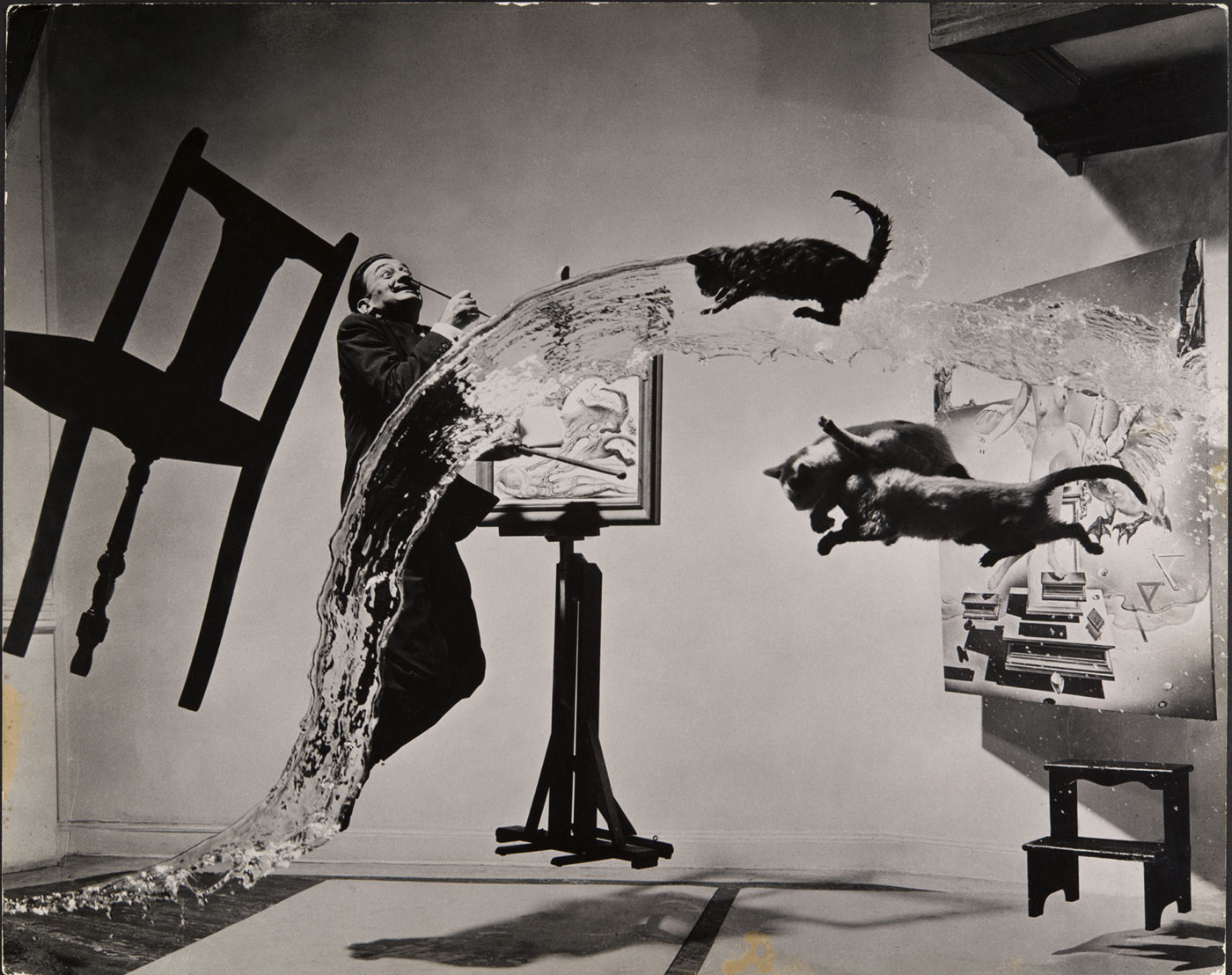
Philippe Halsman (American, 1906-1979) 'Dalí Atomicus' 1948 contact sheet


Philippe Halsman (American, 1906-1979)
Dalí Atomicus
1948
Contact sheet
Musée de l’Elysée
© 2013 Philippe Halsman Archive / Magnum Photos
Exclusive rights for images of Salvador Dalí: Fundació Gala-Salvador Dalí, Figueres, 2014


Philippe Halsman (American, 1906-1979) 'Dalí Atomicus' 1948


Philippe Halsman (American, 1906-1979)
Dalí Atomicus
1948
Musée de l’Elysée
© 2013 Philippe Halsman Archive / Magnum Photos
Exclusive rights for images of Salvador Dalí: Fundació Gala-Salvador Dalí, Figueres, 2014


Philippe Halsman (American, 1906-1979) 'Épreuve préparatoire pour "Certainement. Je m'adonne personnellement à des explosions atomiques," Dalí's Mustache (Test event for "Certainly. I personally engaged in atomic explosions," Dalí's Mustache)' 1953-1954


Philippe Halsman (American, 1906-1979)
Épreuve préparatoire pour “Certainement. Je m’adonne personnellement à des explosions atomiques,” Dalí’s Mustache
(Test event for “Certainly. I personally engaged in atomic explosions,” Dalí’s Mustache)
1953-1954
Musée de l’Elysée
© 2013 Philippe Halsman Archive / Magnum Photos


Philippe Halsman (American, 1906-1979) 'Portrait de Salvador Dalí avec casque de footballeur américain (Portrait of Salvador Dalí with American football helmet)' 1964


Philippe Halsman (American, 1906-1979)
Portrait de Salvador Dalí avec casque de footballeur américain (Portrait of Salvador Dalí with American football helmet)
1964
Musée de l’Elysée
© 2013 Philippe Halsman Archive / Magnum Photos


Philippe Halsman (American, 1906-1979) 'Dalí Cyclops' 1949


Philippe Halsman (American, 1906-1979)
Dalí Cyclops
1949
Musée de l’Elysée
© 2013 Philippe Halsman Archive / Magnum Photos


“In the thirty years of our friendship I have made countless photographs showing the surrealist painter in the most incredible situations. Whenever I needed a striking or famous protagonist for one of my wild ideas, Dalí would graciously oblige. Whenever Dalí thought of a photograph so strange that it seemed impossible to produce, I tried to find a solution. ‘Can you make me look like Mona Lisa?… Can you make a man one half of whom would look like Dalí and the other half like Picasso?’ I could and I did.”


Philippe Halsman


Halsman/Dalí

One of Halsman’s favourite subjects was Salvador Dalí with whom he shared a unique collaboration that spanned 37 years. Their 47 sittings, combining Dalí’s talent for performance and Halsman’s technical skill and inventiveness, resulting in an impressive repertoire of “photographic ideas”.

Focus on Dalí’s Mustache

As Halsman explains, Dalí’s Mustache is the fruit of this marriage of the minds. They conceived this book entirely dedicated to Dalí’s moustache, and created over thirty portraits of the painter absurdly answering Halsman’s questions. In 1953 Halsman realised that Salvador Dalí’s expanding moustache gave him the “chance to fulfil one his most ambitious dreams yet and create an extraordinarily eccentric work”. Dalí was enormously fond of his own person and of his mustache in particular, which he saw as a symbol of the power of his imagination, and was immediately thrilled at the idea. To create a “picture book” containing an interview with Salvador Dalí, Halsman reused an editorial concept he had introduced five years earlier with French actor Fernandel: a question asked of the artist was printed on one page, and the answer appeared on the following page in the form of a captioned photograph.

For this project, it was no longer just a matter of photographic expression, but of genuine mise en scène, combining Dalí’s theatrical character with Halsman’s impressive inventiveness and technical skill. Halsman presented the book as a genuine collaboration between two artists, representing their mutual understanding.

Halsman photographed Dalí with his 4×5 camera and his electronic flash through many sessions over a period of two years. Most of the plates in the book are portraits of the artist posing in a variety of positions, playing with his moustache in various ways, accentuated by light and framing effects. Dalí was ready to go along with any whim to create the scenes: he styles his precious moustache with the help of Hungarian wax, and agrees to take part in incongruous mises en scène, pressing his head behind a round of cheese to put the ends of his moustache through its holes, or plunging his head into a water-filled aquarium, his mouth full of milk.

As for Halsman, he put a lot of his effort into the post-production work in order to give concrete expression to their ideas. It sometimes took a laborious process to achieve images like the Mona Lisa portrait, inner conflicts, surrealism or the essence of Dalí, which not only required work on the print or negative (cutting, enlargement, deformation, double exposure) but also a montage and a new shot to create a negative of the final image. For the portrait of the artist in the form of a “soft watch”, Halsman worked around one hundred hours. He photographed Dali close up, then tacked a wet print of the image onto the edge of a table and re-photographed it at an angle that matched the angle of the original painting. He then cut it out, made a collage, and re-photographed it again – creating an image of Dali’s melted face. For the photographer, it was a genuine technical challenge, which he seized with patience and success.


Philippe Halsman (American, 1906-1979) 'Like Two Erect Sentries, My Mustache Defends the Entrance to My Real Self, Dalí’s Mustache' 1954


Philippe Halsman (American, 1906-1979)
Like Two Erect Sentries, My Mustache Defends the Entrance to My Real Self, Dalí’s Mustache
1954
Philippe Halsman Archive
© 2013 Philippe Halsman Archive / Magnum Photos
Exclusive rights for images of Salvador Dalí: Fundació Gala-Salvador Dalí, Figueres, 2014


The Musée de l’Elysée
18, avenue de l’Elysée
CH - 1014 Lausanne
Phone: + 41 21 316 99 11

Opening hours:
Wednesday – Monday 10am – 6pm
Closed Tuesday
The Musée de l’Elysée website

LIKE ART BLART ON FACEBOOK

Back to top

Review: ‘Stephen Dupont / The White Sheet Series No. 1’ at Edmund Pearce Gallery, Melbourne

Exhibition dates: 2nd April – 3rd May, 2014


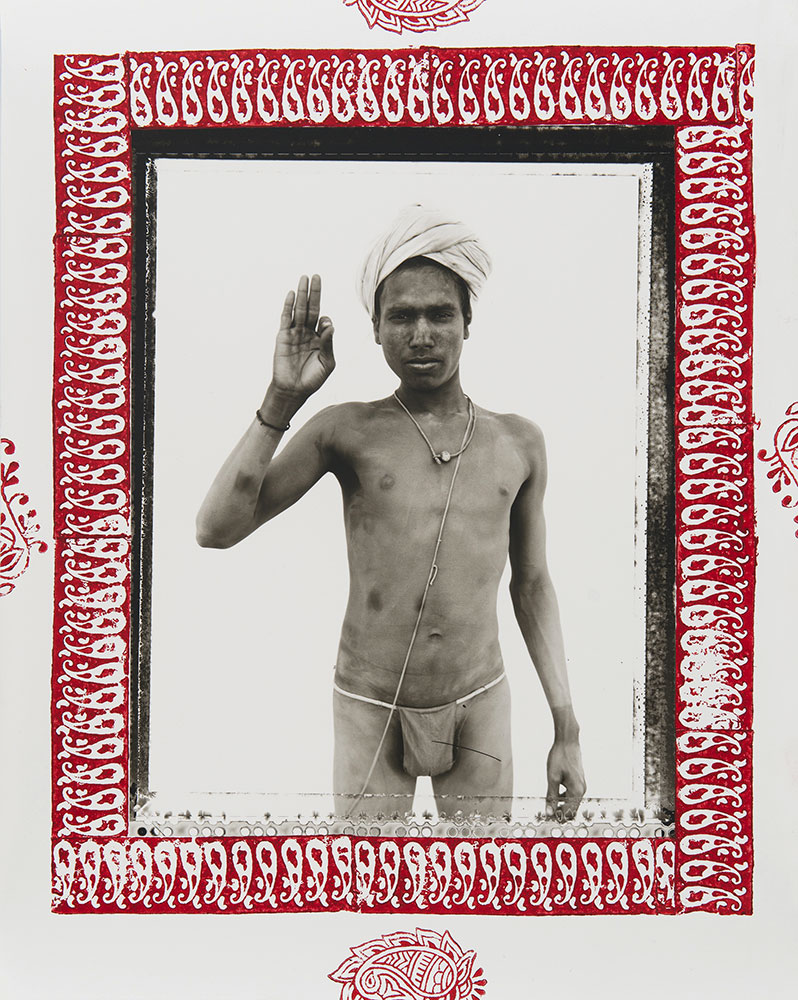
Stephen Dupont (Australian, b. 1967) 'Untitled #16' 2010 from the exhibition 'Stephen Dupont / The White Sheet Series No. 1' at Edmund Pearce Gallery, Melbourne, April - May, 2014


Stephen Dupont (Australian, b. 1967)
Untitled #16
2010
Silver gelatin print and ink
20 x 16″ (51 x 40.5cm) / edition of 5 + 2 AP’s


This is a wonderful exhibition by Stephen Dupont at Edmund Pearce Gallery. Using a 4″ x 5″ Polaroid type 55 and striping away the emulsion, Dupont is left with a fine grain large format black and white negative (which he can use in an enlarger) with the “Polaroid frame look”, which he incorporates into the silver gelatin prints.1

Most of the photographs are glorious, notably the ones where Dupont pulls back from his subject to reveal the context of the sitter (much like taking the mat off a Daguerreotype to reveal more of the studio hidden underneath). I particularly like where you can see two hands poking over the top of the white sheet hiding the person behind (see Untitled #08 2010, below). The spontaneity and improvisation of this act is very appealing.

As Dupont observes this allows him “to reveal the audience gathering and the environment around the sheet. This is meant to give the viewer a real sense of place and time, and a window onto the streets of Haridwar.” This technique gives the images real presence, they fairly “sing” to me from the gallery wall. And then! to surround the silver with hand printed Indian textile stamps in red ink… these images are really something.

Dupont’s incisiveness at the coal face of the pictorial plane is also exemplary. Notice the construction of Untitled #14 (2010, below), and observe the arms of the protagonists. An arm is raised aloft mirroring the arm of the swami in the photograph behind and also the supporting pole of the tent at top right. His other arm points to the earth but this is crossed by the arm of an out of focus man at left, which forms a strong diagonal intervention into the image as he reaches out. The money and mobile phone, at bottom left, add to the incongruity of the scene.

I am less enamoured with Dupont’s riff on Richard Avedon’s contextless background portraits. They don’t really possess the power or presence of the photographs mentioned above or of Avedon’s portraits from the series In The American West. I would have also liked to have seen the field journal (the small images at the bottom of the posting) in the exhibition. It would have been fascinating to read the text and view the other textile stamp designs. Finally, a couple of prints at a much larger size would have been good to see, to break the regularity of the series.

Having said that, you really have to see these images in the flesh for they look so much better than when reproduced online. The red is luminous and it is a joy to see good silver gelatin prints instead of so-so digital failures (Polly Borland I hope your ears are burning). This exhibition is a perfect example of what Bill Henson was talking about in his recently curated exhibition Wildcards: Bill Henson shuffles the deck at Monash Gallery of Art (MGA) where he states that his interest “is in the photograph as an object, in the physical presence of the print or whatever kind of technology is being used to make it…”2 where the images appeal not just to the eye but to the whole body, “because photographs are first and foremost objects, their size, shape grouping and texture are as important as the images they’re recording.”3

These photographs have, as Henson notes of some photographs, “the ability to suggest some other thing and that’s what draws you in.”4 You stand in front of the best of these images and contemplate them with a sense of wonder, for they suggest to the viewer – through the hand and eye of the artist in the analogue process, through the hand of the artist when applying the wood block printing which was made with much spontaneity and feeling – other worlds of which we know very little brought close to our imagination.

Through their inherent textures and tonalities, their physical presence, there is a sense of the people who populate that place, but more than that, there is a sense of our own fragility and mortality. A feeling of anOther existence for our life if we had been born into such worlds.

That is what makes these images so compelling.

Dr Marcus Bunyan


Footnotes

1/ According to Wikipedia, “Type 55 negatives are the famous source of the “Polaroid frame look” … the Polaroid reagent / gel is squeezed between the negative and positive. Some of the reagent is trapped underneath the onion-skin-like frame that crops the print into a perfect 4 x 5 image. This reagent however creates an impression of that frame on the negative, which is not protected. The result is a perfect negative, but with imperfect frame-like image surrounded 3 of the four sides, while the 4th side shows the impression of the connective mesh that controls aspects of the Polaroid packet’s sleeve functionality.”

2/ Interview with Bill Henson by Toby Fehily posted 01 Feb 2014 on the Art Guide Australia website [Online] Cited 18/02/2014. No longer available online

3/ Fiona Gruber. “Review of Wildcards, Bill Henson Shuffles the Deck” on the Guardian website, Wednesday 12 February 2014 [Online] Cited 16/03/2014

4/ Fehily op. cit.,


Many thankx to Edmund Pearce Gallery for allowing me to publish the photographs in the posting. Please click on the photographs for a larger version of the image.


Stephen Dupont (Australian, b. 1967) 'Untitled #08' 2010 from the exhibition 'Stephen Dupont / The White Sheet Series No. 1' at Edmund Pearce Gallery, Melbourne, April - May, 2014


Stephen Dupont (Australian, b. 1967)
Untitled #08
2010
Silver gelatin print and ink
20 x 16″ (51 x 40.5cm) / edition of 5 + 2 AP’s


Stephen Dupont (Australian, b. 1967) 'Untitled #14' 2010


Stephen Dupont (Australian, b. 1967)
Untitled #14
2010
Silver gelatin print and ink
20 x 16″ (51 x 40.5cm) / edition of 5 + 2 AP’s


Stephen Dupont (Australian, b. 1967) 'Untitled #04' 2010


Stephen Dupont (Australian, b. 1967)
Untitled #04
2010
Silver gelatin print and ink
20 x 16″ (51 x 40.5cm) / edition of 5 + 2 AP’s


Edmund Pearce is excited to present a solo exhibition by legendary Australian photographer Stephen Dupont, entitled The White Sheet Series Number 1. This new series was shot during India’s most important Hindu Festival, Kumbh Mela, and features portraits of pilgrims and visitors combined with hand printed Indian textile stamps.

Stephen Dupont has produced a remarkable body of visual work throughout his career; hauntingly beautiful photographs of fragile cultures and marginalised peoples. He captures the human dignity of his subjects with great intimacy and his images have received international acclaim for their artistic integrity and valuable insight into the people, culture and communities that have existed for hundreds of years, yet are fast disappearing from our world.

Mark Feeney of the Boston Globe states, “Inevitably, Dupont is an outsider; yet he’s an engaged outsider, full of calm, clear-eyed curiosity. There’s not just a sense of place in his work but also something that matters even more: a sense of the people who populate that place.”

Stephen’s work has earned him a number of photography’s most prestigious prizes, including a Robert Capa Gold Medal citation from the Overseas Press Club of America. His work has featured in influential publications such as The New Yorker, Aperture and The New York Times Magazine; and he has had major exhibitions in London, Paris, New York, Sydney, Canberra, Tokyo, and Shanghai. His photographic artist books and portfolios are held in numerous private collections and by prestigious institutions such as the National Gallery of Australia, the National Library of Australia, the British Library and the Library of Congress in Washington DC to name but a few.

Press release from the Edmund Pearce Gallery website


Stephen Dupont (Australian, b. 1967) 'Untitled #07' 2010


Stephen Dupont (Australian, b. 1967)
Untitled #07
2010
Silver gelatin print and ink
20 x 16″ (51 x 40.5cm) / edition of 5 + 2 AP’s


Stephen Dupont (Australian, b. 1967) 'Untitled #13' 2010


Stephen Dupont (Australian, b. 1967)
Untitled #13
2010
Silver gelatin print and ink
20 x 16″ (51 x 40.5cm) / edition of 5 + 2 AP’s


Stephen Dupont (Australian, b. 1967) 'Untitled #12' 2010


Stephen Dupont (Australian, b. 1967)
Untitled #12
2010
Silver gelatin print and ink
20 x 16″ (51 x 40.5cm) / edition of 5 + 2 AP’s


Stephen Dupont (Australian, b. 1967) 'Untitled #18' 2010


Stephen Dupont (Australian, b. 1967)
Untitled #18
2010
Silver gelatin print and ink
20 x 16″ (51 x 40.5cm) / edition of 5 + 2 AP’s


Richard Avedon at work


Richard Avedon at work


Richard Avedon (American, 1923-2004) 'Bill Curry, drifter, Interstate 40, Yukon, Oklahoma, 6/16/80' 1980


Richard Avedon (American, 1923-2004)
Bill Curry, drifter, Interstate 40, Yukon, Oklahoma, 6/16/80
1980
From In the American West, 1979-1984


Stephen Dupont artist book


This body of work is a selection of portraits I made in 2010 at India’s most important Hindu festival called the Kumbh Mela. In one of four locations every four years Hindu pilgrims and visitors descend into the holy waters of the Ganges River to purify the soul in a spiritual ritual considered the largest peaceful gathering in the world. The photographs were taken in Haridwar of pilgrims and sadhus I chose randomly during that festival.

Inspired by an earlier series I made of anonymous portraits of Afghans in Kabul titled Axe Me Biggie, or Mr Take My Picture, but instead of an existing Afghan outdoor studio backdrop I chose the white sheet this time for its purity and simplicity. My subjects were asked to simply stand and pose before my camera. I use a white bed sheet to create an outdoor studio that not only captures my subject but also allows me to reveal the audience gathering and the environment around the sheet. This is meant to give the viewer a real sense of place and time, and a window onto the streets of Haridwar. Had I used the backdrop in a conventional way, to solely isolate a person, you’d have the impression that they were taken anywhere – New York, Sydney, or in a studio. This process is a creative choice and allows me with some control over my sitter but brings with it the spontaneity and surprise of what may take place around the zone I am working in: the gaze of someone holding the sheet that has no idea they are in the frame, or a hand holding the sheet or something else that crops up in front or behind. In the end my portraits are environmental or even landscapes.

Over many years of travel throughout India I have been collecting textile stamps and I decided to use them on my photographs. The research and experiments started in my field journal and then to the final hand printed images in this show. I wanted to create a relationship with Indian design and cloth, the Polaroid borders and the people in my pictures. Much like my photographic practice here the wood block printing was made with much spontaneity and feeling. The photographs have been handcrafted by Chris Reid at Blanco Negro using warmtone paper and processed in a specialised developer for unique tonality.

Stephen Dupont
Sydney, February 28, 2014


Edmund Pearce Gallery

This gallery has now closed.

LIKE ART BLART ON FACEBOOK

Back to top

Exhibition: ‘Hermann Landshoff: A Retrospective Photographs 1930-1970’ at the Münchner Stadtmuseum

Exhibition dates: 29th November, 2013 – 21st April, 2014

Curator: Dr. Ulrich Pohlmann, head of the museum’s photography collection, in collaboration with the publisher Andreas Landshoff


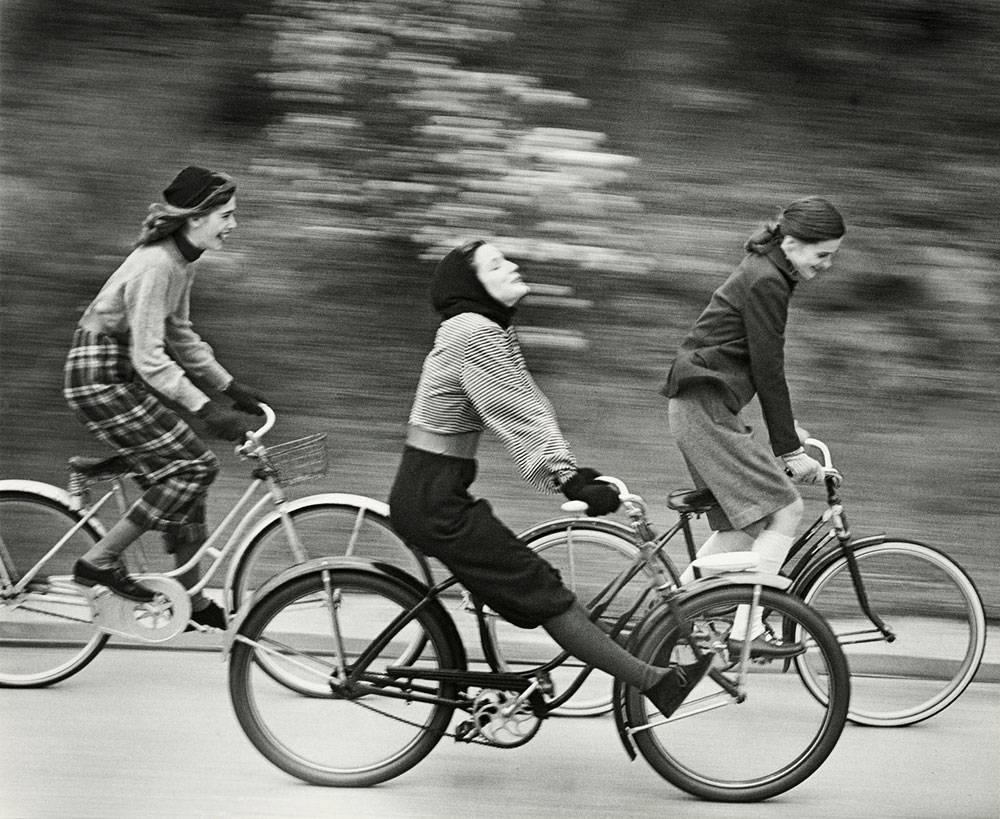
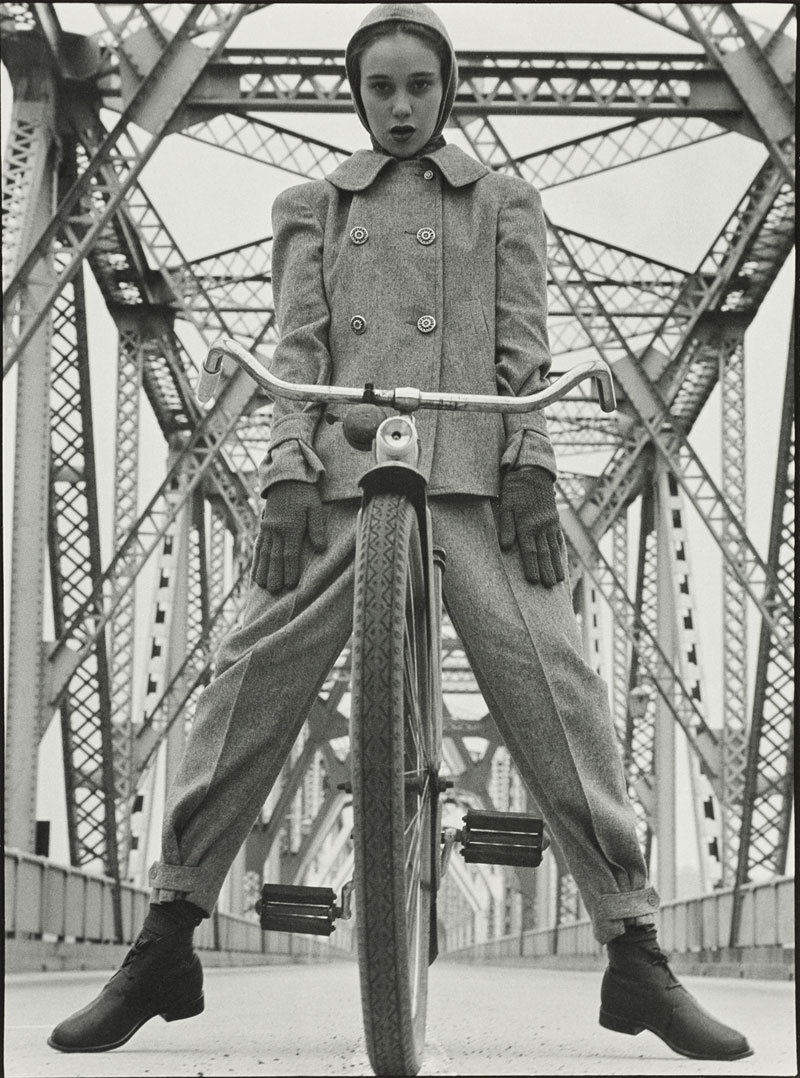
Hermann Landshoff (American-German, 1905-1986) 'The Bicyclers' Published in 'Junior Bazaar' August 1946 from the exhibition Exhibition: 'Hermann Landshoff: A Retrospective Photographs 1930-1970' at the Münchner Stadtmuseum, November 2013 - April 2014


Hermann Landshoff (American-German, 1905-1986)
The Bicyclers
Published in Junior Bazaar August 1946


Another artist who was lucky to escape Europe in the first years of the Second World War.

I would like to see the whole exhibition.

At the moment I can’t make a judgement on his work for I have not seen enough of it, but on the evidence of the images presented in this posting, I am not entirely convinced.

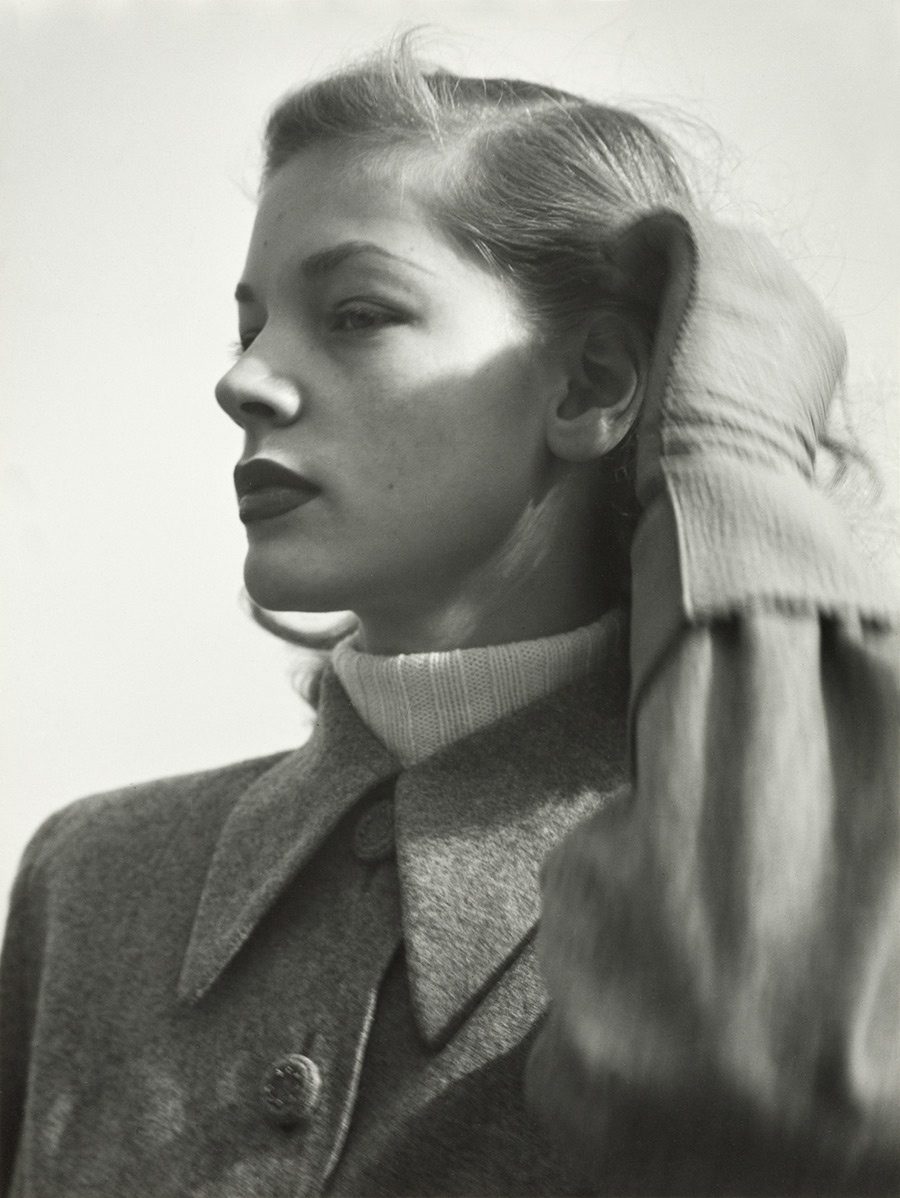
However, the photograph of Lauren Bacall in 1945 is ravishing…

Dr Marcus Bunyan


Many thankx to the Münchner Stadtmuseum for allowing me to publish the photographs in the posting. Please click on the photographs for a larger version of the image.


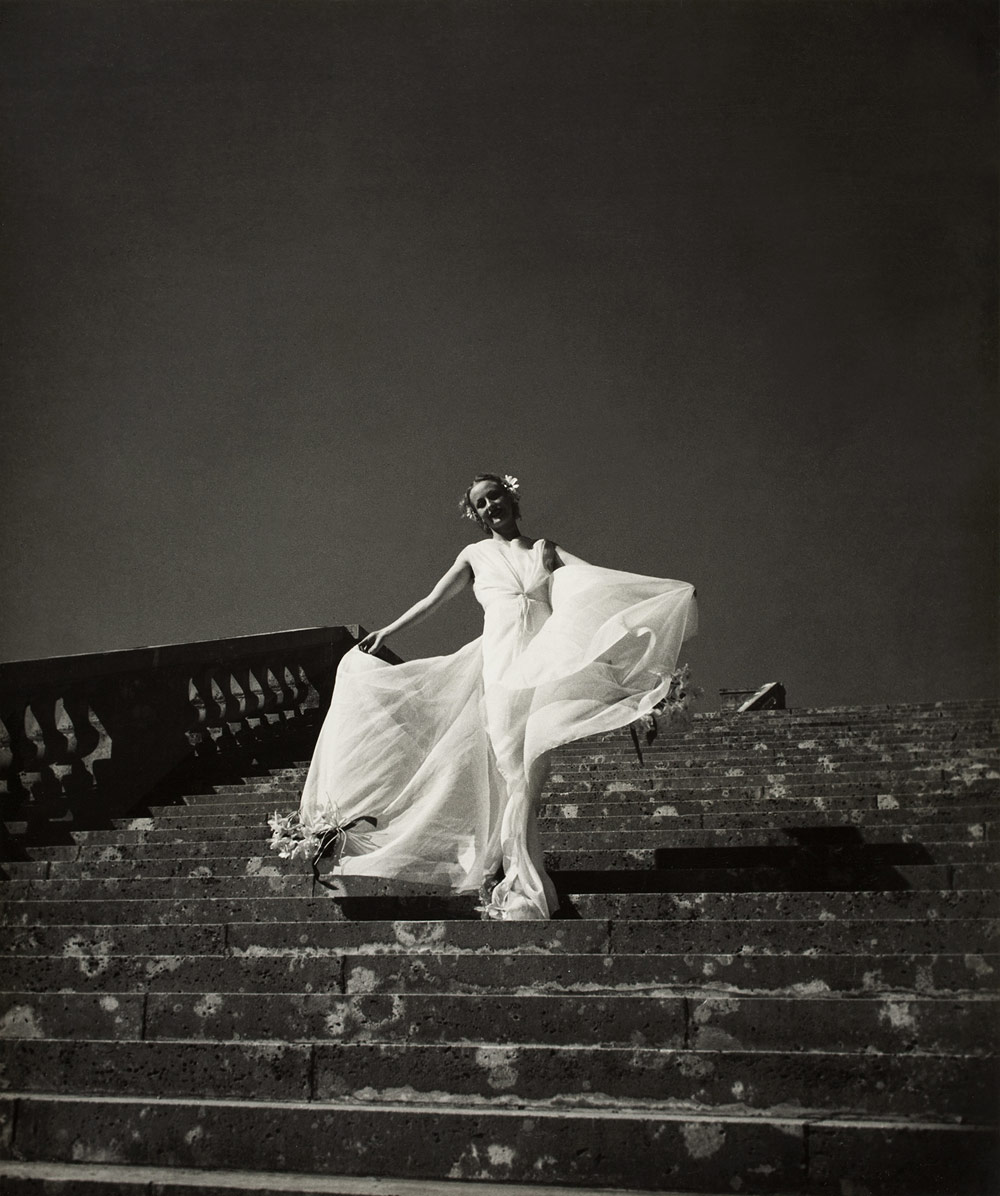
Hermann Landshoff (American-German, 1905-1986) 'Model Cora Hemmet on the Grand Versailles Staircase' 1934-1938


Hermann Landshoff (American-German, 1905-1986)
Model Cora Hemmet on the Grand Versailles Staircase
1934-1938
Gelatin silver print
Münchner Stadtmuseum Photography Collection


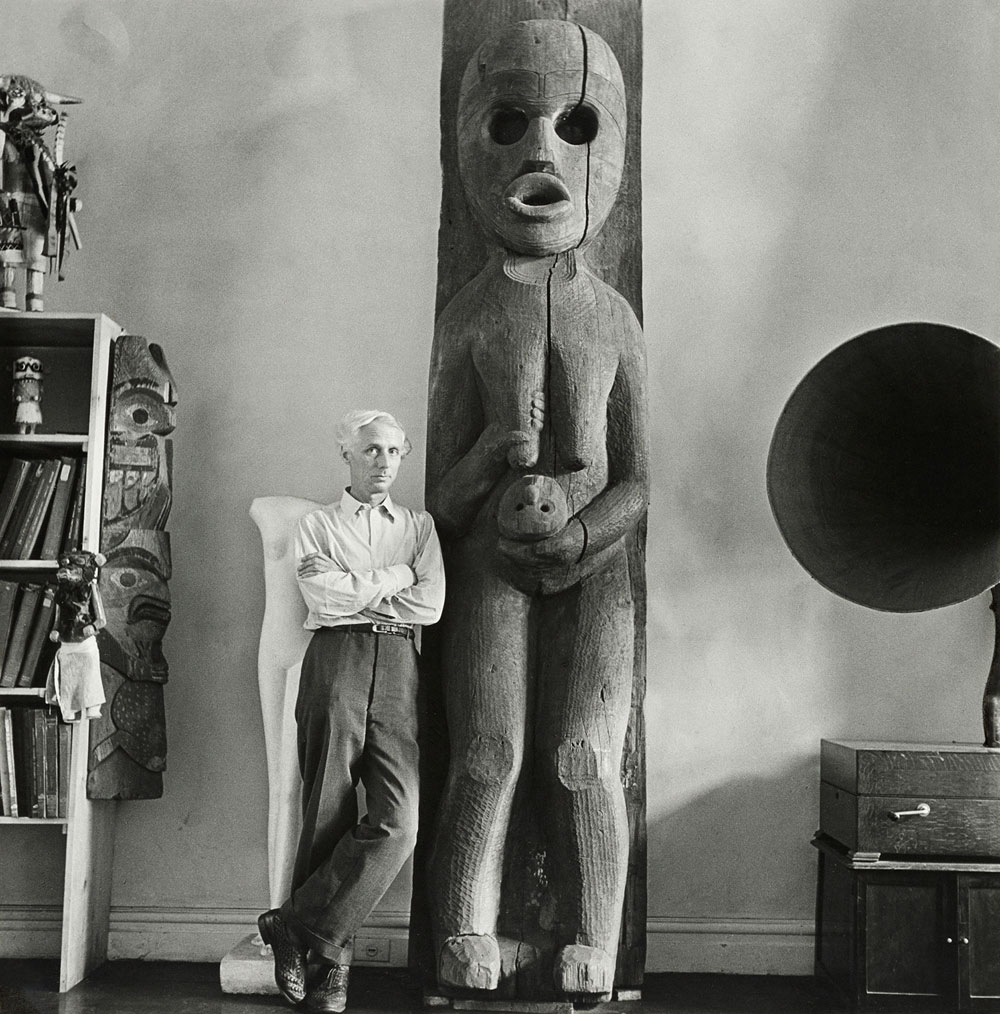
Hermann Landshoff (American-German, 1905-1986) 'Max Ernst at Peggy Guggenheim’s home, New York, fall 1942' 1942 from the exhibition Exhibition: 'Hermann Landshoff: A Retrospective Photographs 1930-1970' at the Münchner Stadtmuseum, November 2013 - April 2014


Hermann Landshoff (American-German, 1905-1986)
Max Ernst at Peggy Guggenheim’s home, New York, fall 1942
1942
Gelatin silver print
Münchner Stadtmuseum Photography Collection


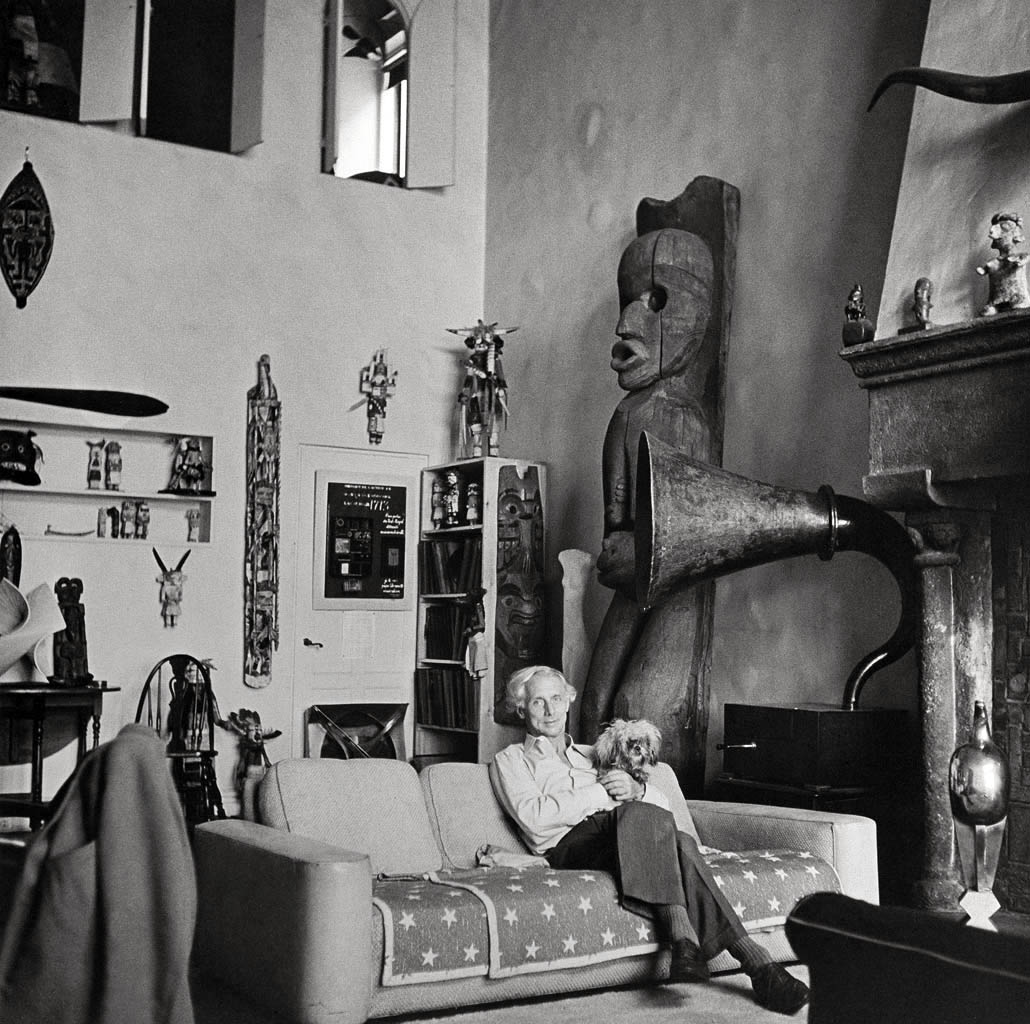
Hermann Landshoff (American-German, 1905-1986) 'Max Ernst at Peggy Guggenheim's home, New York, fall 1942' 1942


Hermann Landshoff (American-German, 1905-1986)
Max Ernst at Peggy Guggenheim’s home, New York, fall 1942
1942
Gelatin silver print
Münchner Stadtmuseum Photography Collection


Hermann Landshoff (American-German, 1905-1986) 'Rone Compton & Lily Carlson, Brooklyn Bridge' 1946


Hermann Landshoff (American-German, 1905-1986)
Rone Compton & Lily Carlson, Brooklyn Bridge
1946
Gelatin silver print
Münchner Stadtmuseum Photography Collection


Hermann Landshoff (American-German, 1905-1986) 'Photographer Irving Penn' 1948


Hermann Landshoff (American-German, 1905-1986)
Photographer Irving Penn
1948
Gelatin silver print
Münchner Stadtmuseum Photography Collection


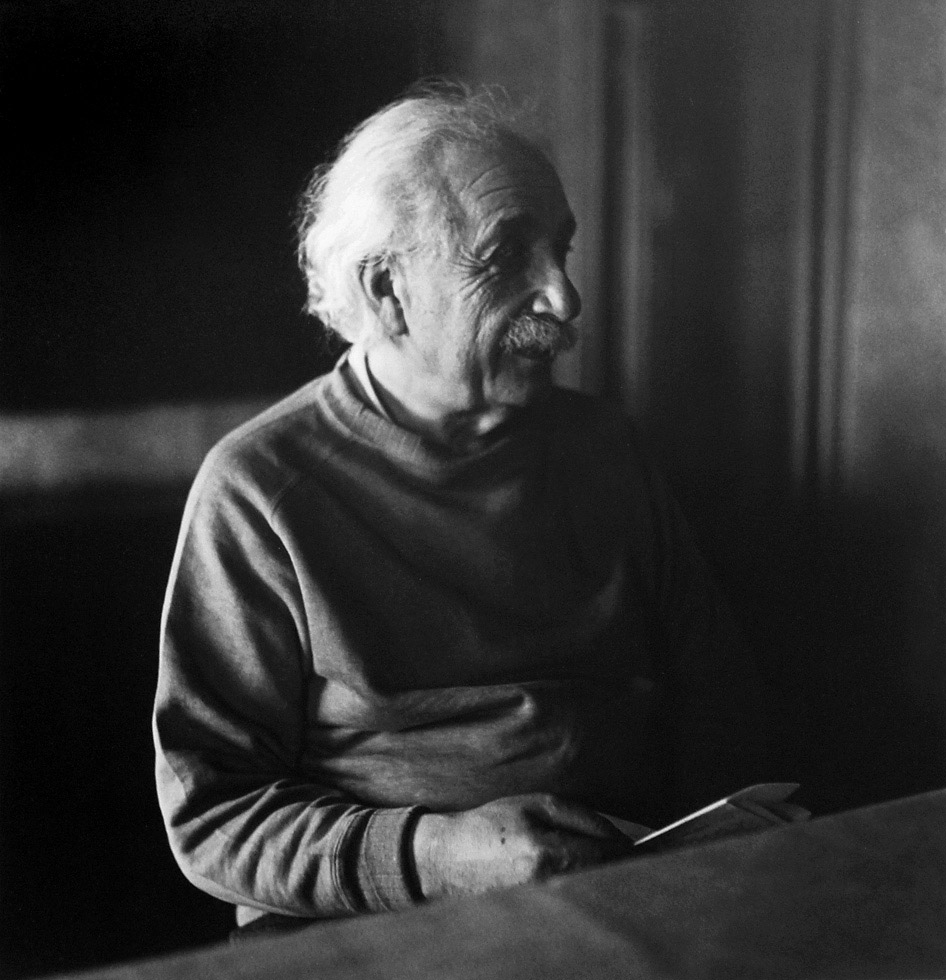
Hermann Landshoff (American-German, 1905-1986) 'Albert Einstein' c. 1950


Hermann Landshoff (American-German, 1905-1986)
Albert Einstein
c. 1950
Gelatin silver print
Münchner Stadtmuseum Photography Collection


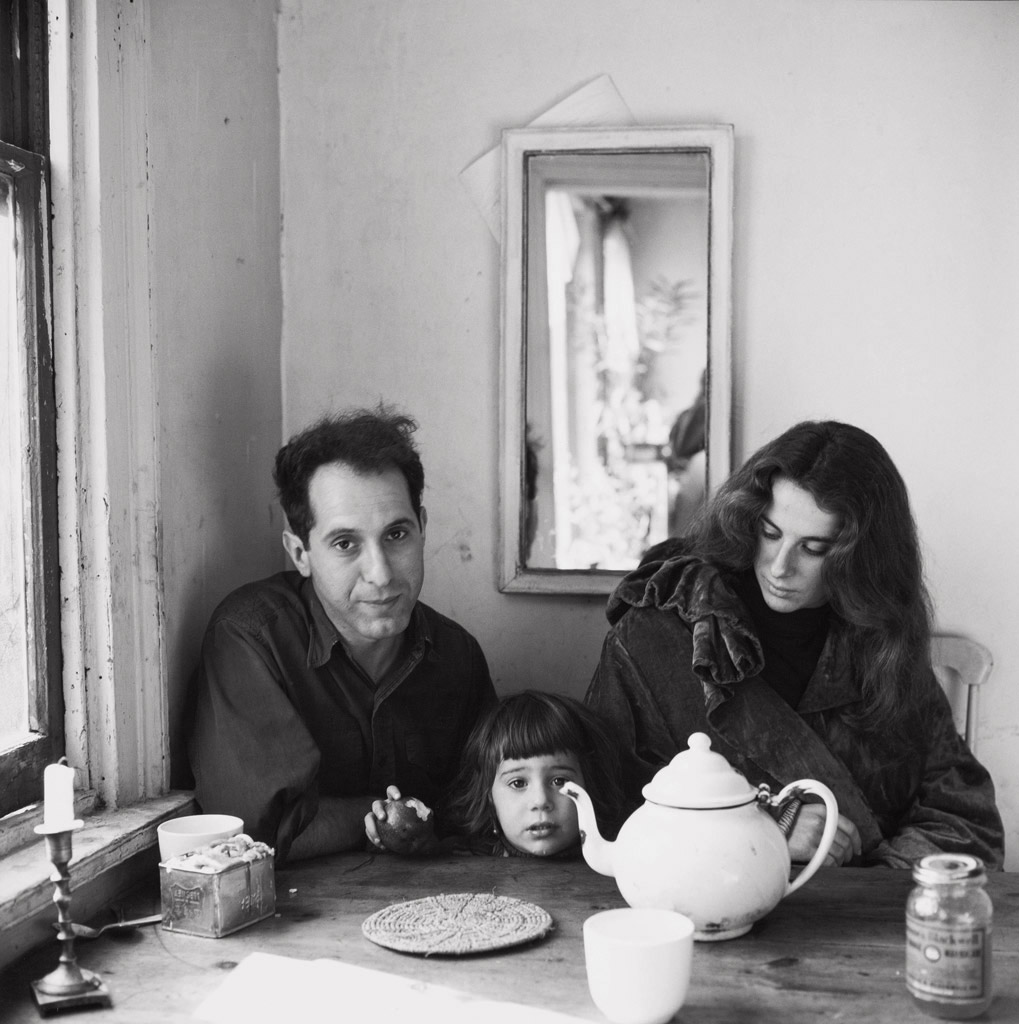
Hermann Landshoff (American-German, 1905-1986) 'Robert Frank with his wife Mary and his daughter Andrea, New York' 1956


Hermann Landshoff (American-German, 1905-1986)
Robert Frank with his wife Mary and his daughter Andrea, New York
1956
Gelatin silver print
Münchner Stadtmuseum Photography Collection


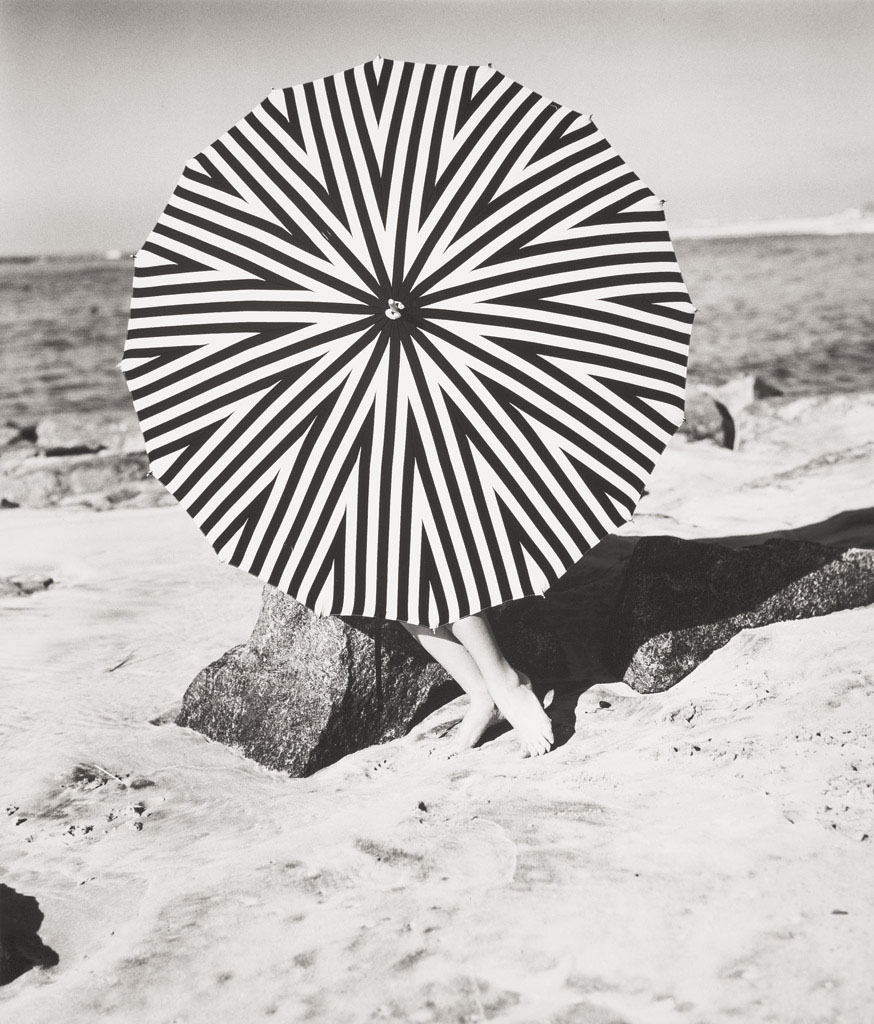
Hermann Landshoff (American-German, 1905-1986) 'The striped parasol, model Jan Rylander' 1957


Hermann Landshoff (American-German, 1905-1986)
The striped parasol, model Jan Rylander
1957
Gelatin silver print
Münchner Stadtmuseum Photography
Collection Archiv Hermann Landshoff


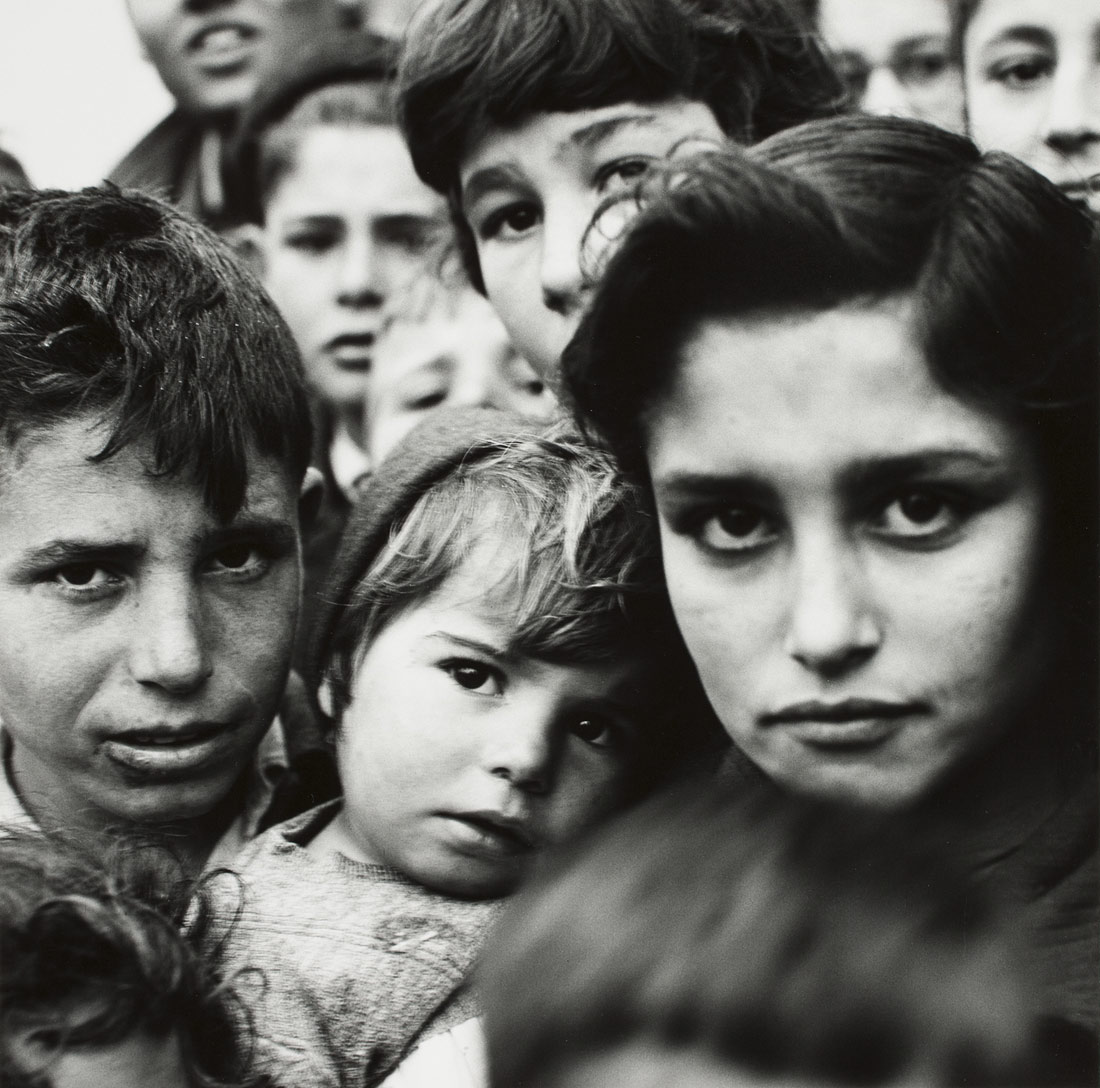
Hermann Landshoff (American-German, 1905-1986) 'Children in a Spanish village' 1957


Hermann Landshoff (American-German, 1905-1986)
Children in a Spanish village
1957
Gelatin silver print
Münchner Stadtmuseum Photography Collection


In the spring of 2012, the Münchner Stadtmuseum’s Photography Collection received a sensational addition to its archives. The complete artistic estate of German-American photographer Hermann Landshoff (1905-1986), featuring 3,600 original prints from between 1927 to 1970, were generously donated to the museum on behalf of the family by Andreas Landshoff.

Landshoff grew up in Munich-Solln as the son of a well-to-do Jewish family that was very much involved in the city’s art, literature and music scenes. His father, Ludwig Landshoff, was an internationally acclaimed musicologist and composer who was director and head of Munich’s Bach Society from 1917 to 1928. His mother, Philippine Wiesengrund, was a singer with the Royal Court Opera, while his sister Ruth Landshoff, better known by her married name of Vollmer, would become one of the founders of the conceptual art movement in the United States. In addition, writers such as Thomas Mann, Christian Morgenstern, Joachim Ringelnatz, Rainer Maria Rilke, Karl Wolfskehl and Franziska zu Reventlow were frequent visitors to his parents’ home. Another family member, the author Ruth Landshoff-Yorck, was the muse of Otto Umbehr and Paul Citroen and ran an art salon in Berlin that had a reputation as one of the most exciting meeting places for avant-garde artists in the whole of the Weimar Republic.

Other more distant relations of the family included important figures from the world of publishing such as Samuel Fischer, the founder of the S. Fischer Verlag publishing house, and Fritz H. Landshoff, who, from 1933, ran the Querido publishing house in Amsterdam which would become the most important forum for German exile literature, publishing novels by authors including Heinrich Mann, Klaus Mann, Hermann Kesten, Joseph Roth, Alfred Döblin, Lion Feuchtwanger, Anna Seghers, Ernst Toller and Arnold Zweig.

Even in his early years, Hermann Landshoff attracted attention with his cartoons and a photo reportage on Albert Einstein that was published in the Münchner Illustrierte Zeitung magazine. After training at Munich’s Kunstgewerbeschule (School of Arts and Crafts), he became a member of the circle of well-known typographer and book illustrator Fritz Helmuth Ehmcke. It was here that Landshoff met the Nuremberg illustrator Richard Lindner alongside whom he would subsequently work as part of the creative team at the Knorr & Hirth publishing house. When the Nazis seized power in 1933, Landshoff was forced to emigrate, initially settling in Paris where he worked as a fashion photographer. Between 1936 and 1939, his images were published in the popular Femina magazine and in the French edition of Vogue. He was then forced to flee France and, after an eventful journey spanning 1940 and 1941, he eventually pitched up in New York. Landshoff soon became one of the most fascinating fashion photographers to collaborate with legendary art director Alexey Brodovitch for fashion magazines such as Harper’s Bazaar, Junior Bazaar and latterly also Mademoiselle. He developed his own style as a fashion photographer, portraying the models in life-like everyday situations. American fashion photographer Richard Avedon considered himself to have been profoundly inspired by Landshoff, even being moved to claim that ‘I owe everything to Landshoff’.

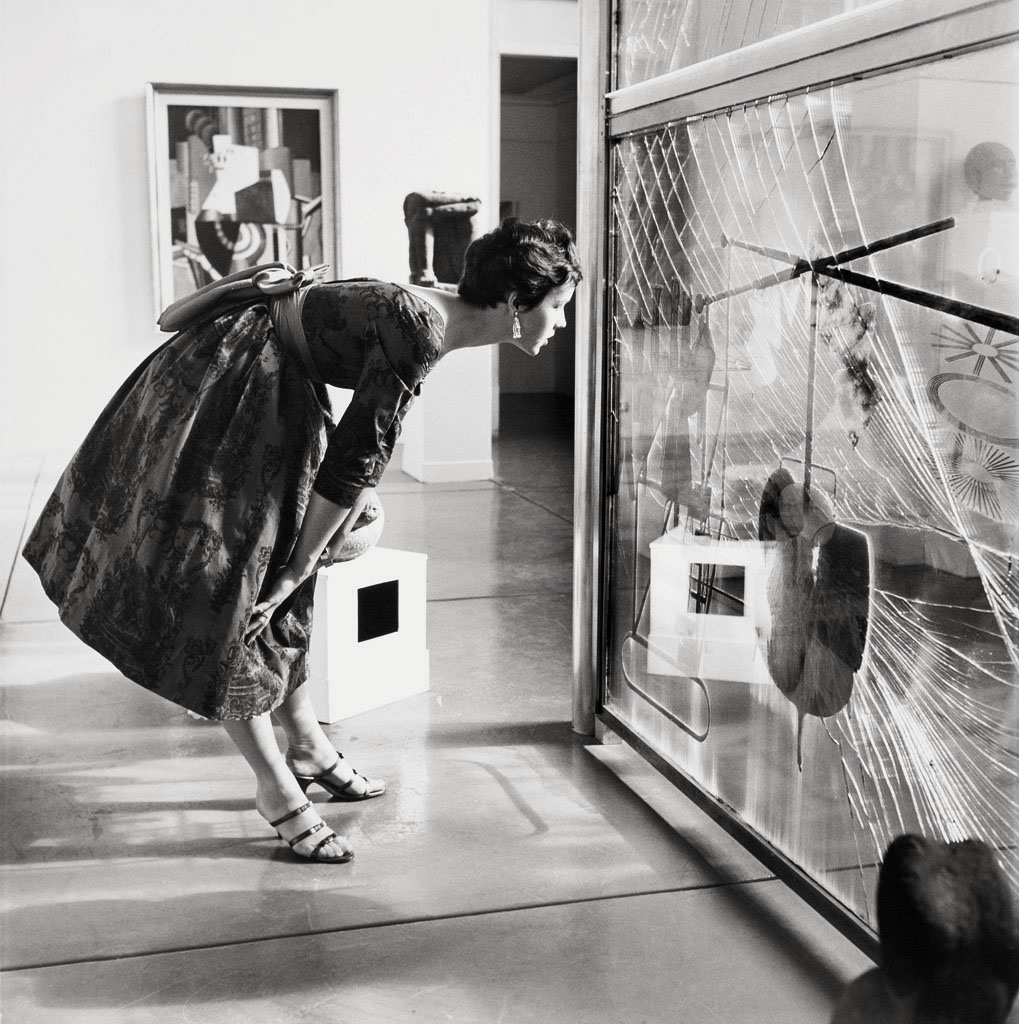
There is little doubt that Hermann Landshoff is one of the last great unsung heroes in (the history of) 20th century photography. Having been quite wrongly consigned to oblivion for all these years, the time has now come for him to be rediscovered. His multi-layered works show us various sides to the age in which he lived and the lives of artists who had settled in the United States having been exiled from Europe. The exhibition offers the first chance to see Landshoff’s portraits of European artists such as Max Ernst, Richard Lindner, Leonora Carrington or Frederick Kiessler who found a new artistic home in New York under the auspices of art collector Peggy Guggenheim. It also features a number of stunning group and individual portraits of members of the New York surrealist community centred around André Breton and Marcel Duchamp.

Finally, we also have Hermann Landshoff to thank for a unique cycle of around 70 portraits of different photographers that he created between 1942 and 1960. These striking images feature old masters like Walker Evans, Paul Strand, Alfred Stieglitz, Ansel Adams, Berenice Abbott, Margaret Bourke-White, Alfred Eisenstaedt, Andreas Feininger or WeeGee alongside young, up-and-coming photographers still at the start of their careers, such as Robert Frank, Irving Penn and Richard Avedon. This pantheon of eminent photographers occupies a unique place in the history of the medium.

Other collections of images tackle the urban architecture and people of New York, focusing particularly on those on the fringes of society. The exhibition also includes several portraits of prominent physicists such as Albert Einstein as well as some of the Los Alamos scientists such as Robert Oppenheimer and his cousin Rolf Landshoff involved in building the world’s first nuclear bomb. The exhibition will show a selection of more than 250 of Landshoff’s fascinating photographs for the first time, with subjects drawn from across the entire spectrum of his work, from fashion to portraits and architecture.

Press release from the Münchner Stadtmuseum website


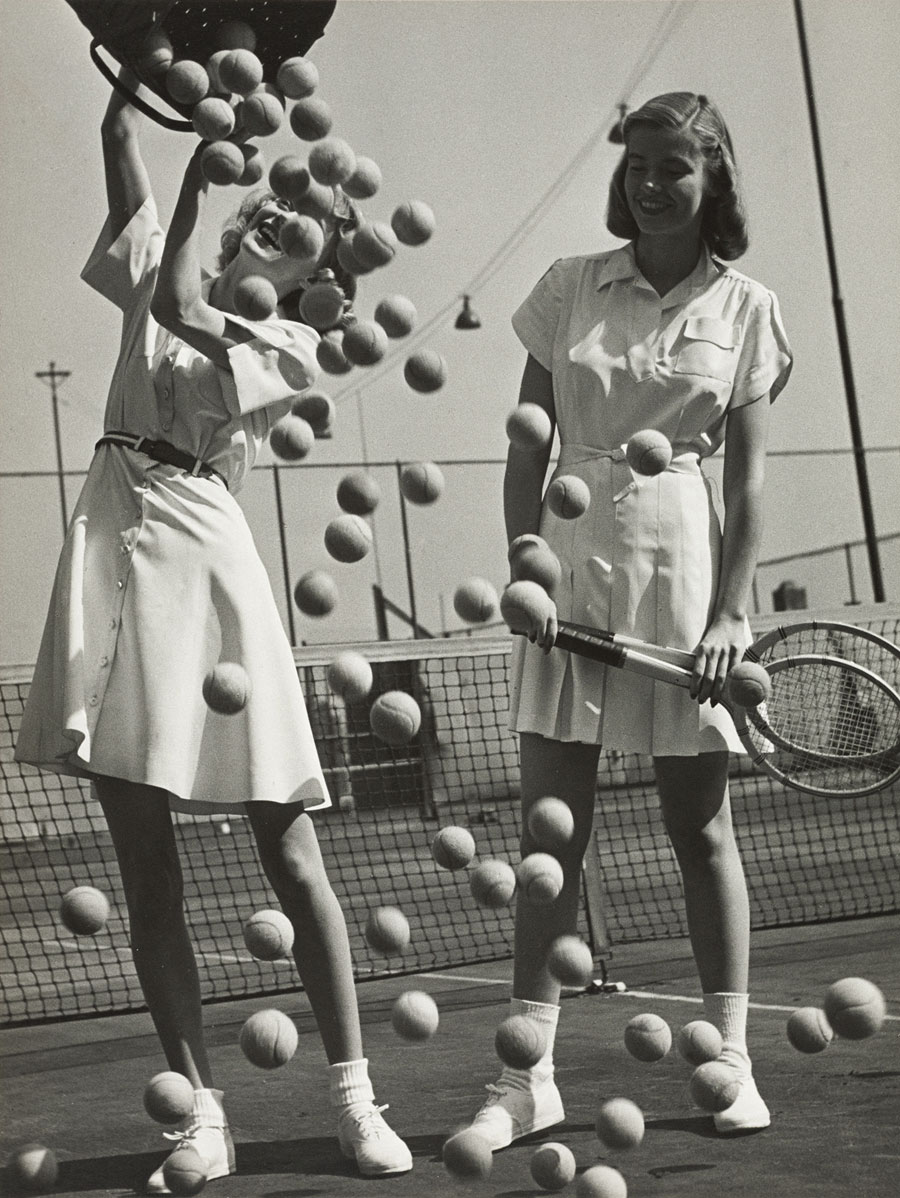
Hermann Landshoff (American-German, 1905-1986) 'Tennis balls' with models Wanda Delafield and Peggy Lloyd c. 1945


Hermann Landshoff (American-German, 1905-1986)
Tennis balls with models Wanda Delafield and Peggy Lloyd
c. 1945
Gelatin silver print
Münchner Stadtmuseum Photography Collection


Hermann Landshoff (American-German, 1905-1986) 'Model Beth Wilson at Rip Van Winkle Bridge spanning the Hudson River, New York 1946' 1946


Hermann Landshoff (American-German, 1905-1986)
Model Beth Wilson at Rip Van Winkle Bridge spanning the Hudson River, New York 1946
1946
Gelatin silver print
Münchner Stadtmuseum Photography Collection


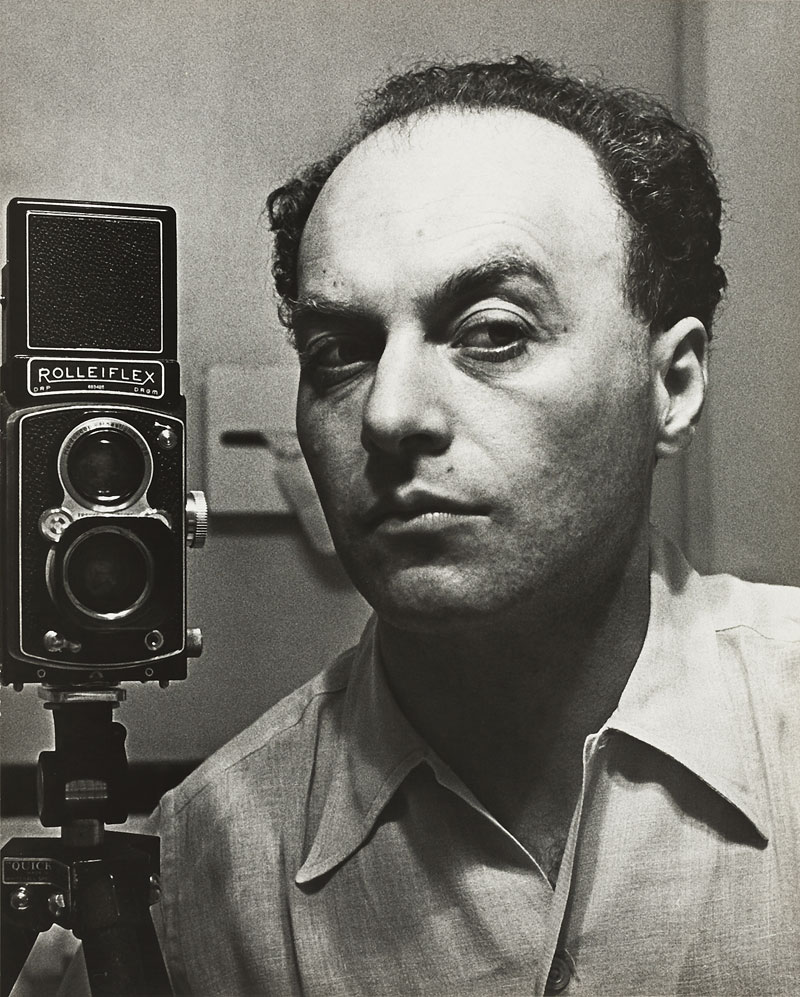
Hermann Landshoff (American-German, 1905-1986) 'Self-portrait, New York' c. 1942


Hermann Landshoff (American-German, 1905-1986)
Self-portrait, New York
c. 1942
Gelatin silver print
Münchner Stadtmuseum Photography Collection


Hermann Landshoff (American-German, 1905-1986) 'Actress Lauren Bacall, New York, 1945' 1945


Hermann Landshoff (American-German, 1905-1986)
Actress Lauren Bacall, New York, 1945
1945
Gelatin silver print
Münchner Stadtmuseum Photography Collection


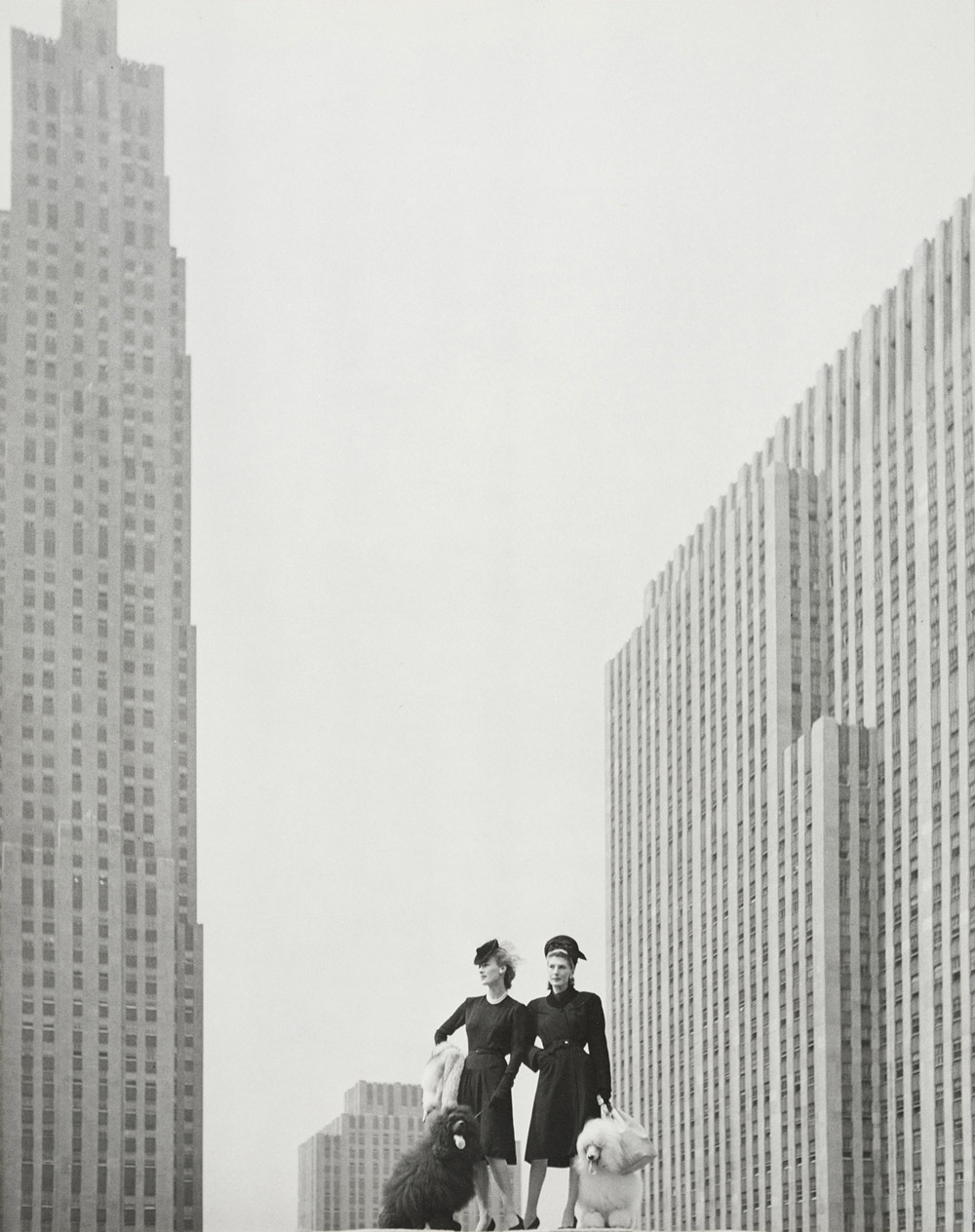
Hermann Landshoff (American-German, 1905-1986) 'On the roof of Saks Fifth Avenue Building, New York, 1942' 1942


Hermann Landshoff (American-German, 1905-1986)
On the roof of Saks Fifth Avenue Building, New York, 1942
1942
Gelatin silver print
Münchner Stadtmuseum Photography Collection


Hermann Landshoff (American-German, 1905-1986) 'Walker Evans, New York' 1948


Hermann Landshoff (American-German, 1905-1986)
Walker Evans, New York
1948
Gelatin silver print
Münchner Stadtmuseum Photography Collection


Hermann Landshoff (American-German, 1905-1986) 'Horst P. Horst, New York' 1948


Hermann Landshoff (American-German, 1905-1986)
Horst P. Horst, New York
1948
Gelatin silver print
Münchner Stadtmuseum Photography Collection


Hermann Landshoff (American-German, 1905-1986) 'Model in front of "The Large Glass" by Marcel Duchamp, Philadelphia Museum of Art' 1954


Hermann Landshoff (American-German, 1905-1986)
Model in front of “The Large Glass” by Marcel Duchamp, Philadelphia Museum of Art
1954
Gelatin silver print
Münchner Stadtmuseum Photography Collection


Münchner Stadtmuseum
St. Jakobs Platz 1
80331 München
Phone: +49-(0)89-233-22370

Opening hours:
Tuesday – Sunday 10am – 6pm
Closed on Mondays
Münchner Stadtmuseum website

LIKE ART BLART ON FACEBOOK

Back to top

Exhibition: ‘Julia Margaret Cameron’ at The Metropolitan Museum of Art, New York

Exhibition dates: 9th August, 2013 – 5th January, 2014

Curator: Malcolm Daniel, Senior Curator in the Department of Photographs at The Metropolitan Museum of Art


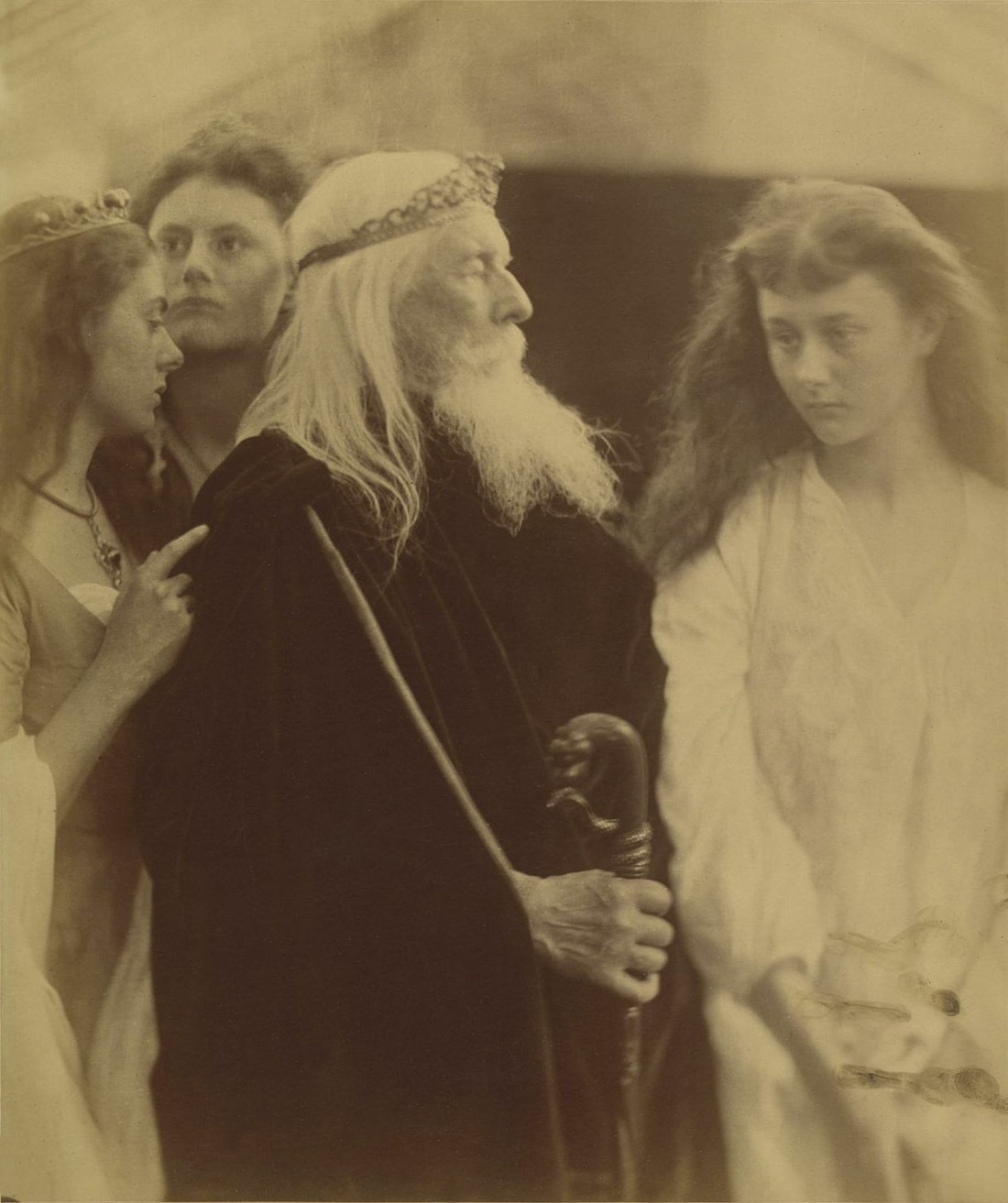
Julia Margaret Cameron (British born India, Calcutta 1815 - 1879 Kalutara, Ceylon) 'King Lear and his Three Daughters' 1872


Julia Margaret Cameron (British born India, Calcutta 1815 – 1879 Kalutara, Ceylon)
King Lear and his Three Daughters
1872
Albumen silver print from glass negative
Bequest of Maurice B. Sendak, 2013
The Metropolitan Museum of Art


The three Liddell sisters – Lorina, Elizabeth, and Alice – posed with the photographer’s husband playing the tragically deceived King Lear in one of Cameron’s few Shakespearean compositions. Goneril and Regan whisper false flattery in the ageing king’s ear while the truly devoted but disinherited Cordelia – here unadorned and dressed in white – stands before him, an embodiment of disillusioned innocence.


The first posting of a new year, and finally I get to do a posting on one of the greatest photographers of all time. Nobody has ever taken portraits like JMC before or since. What a unique vision, different from everyone else: “directed light, soft focus, and long exposures that allowed the sitters’ slight movement to register in her pictures, instilling them with a sense of breath and life.”

The portrait of Sir John Herschel (April 1867, below) is one of the most famous portraits in the history of photography. What a magnificent achievement, to capture the spirit of this human being on a glass plate… “Our Julia” as my friend Joyce Evans lovingly calls her. It’s funny how everyone takes her to their heart.
Dr Marcus Bunyan


Many thankx to the The Metropolitan Museum of Art for allowing me to publish the photographs in the posting. Please click on the photographs for a larger version of the image.


Julia Margaret Cameron (British born India, Calcutta 1815 - 1879 Kalutara, Ceylon) 'Sappho' 1865


Julia Margaret Cameron (British born India, Calcutta 1815 – 1879 Kalutara, Ceylon)
Sappho
1865
Albumen silver print from glass negative
The Rubel Collection, Purchase, Jennifer and Joseph Duke and Anonymous Gifts, 1997
The Metropolitan Museum of Art


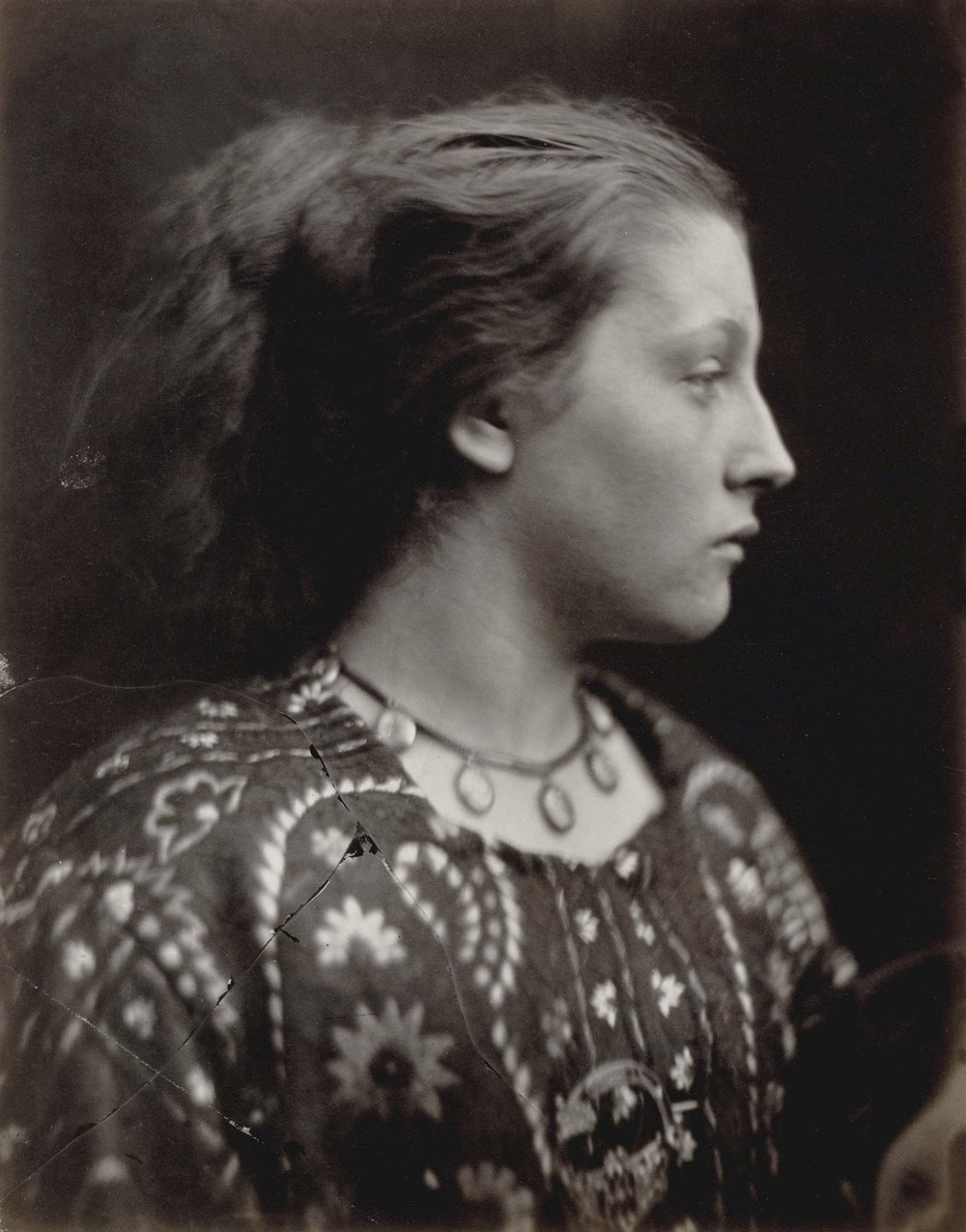
Mary Hillier, a beautiful young house servant at Dimbola, Cameron’s home in Freshwater, was often pressed into photographic service, frequently in the role of the Virgin Mary. She managed to assume her various guises in a remarkably unselfconscious way, projecting both gentleness and strength of character. Hillier is also the model for Cameron’s Sappho, a profile portrait in the Florentine Quattrocento style, perhaps inspired by the chromolithographic reproductions of Italian paintings distributed by the Arundel Society, of which Cameron was a member. The image has great presence, so much so that Cameron decided to print it even though she broke the negative. Precisely what the picture has to do with the Greek poet of Lesbos is unclear, especially since Cameron inscribed another print of the same image Adriana. The titles of two close variants reveal that, by looking left instead of right, Hillier was apparently transformed from Sappho into Dora or, when photographed from one step further back, Clio. Although Cameron often set out to portray a certain ideal, she also titled pictures after the fact, sometimes because the image seemed to embody the character of a certain literary or biblical figure, but sometimes, one suspects, quite simply because there was more of a market for images of the Virgin, Sappho, or Christabel than for portraits of the photographer’s niece or a parlour maid from the Isle of Wight.


Julia Margaret Cameron (British born India, Calcutta 1815 - 1879 Kalutara, Ceylon) 'The Mountain Nymph Sweet Liberty' 1866


Julia Margaret Cameron (British born India, Calcutta 1815 – 1879 Kalutara, Ceylon)
The Mountain Nymph Sweet Liberty
1866
Albumen silver print from glass negative
Harris Brisbane Dick Fund, 1941
The Metropolitan Museum of Art


In Cameron’s The Mountain Nymph Sweet Liberty, Miss Keene, an arresting model about whom we know nothing but her last name, stares directly at the camera (and, by extension, at the viewer), her hair loose and her eyes open wide. Filling the frame, she seems to step out of the picture. The photograph takes its title from John Milton’s poem L’Allegro, a celebration of life’s pleasures:

Come, and trip it as you go
On the light fantastic toe;
And in thy right hand lead with thee
The mountain nymph, sweet Liberty.


Cameron sent the photograph to her friend, the renowned scientist Sir John Herschel, who wrote back, “That head of the ‘Mountain Nymph Sweet liberty’ (a little farouche & égarée [timid and distraught] by the way, as if first let loose & half afraid that it was too good to last) is really a most astonishing piece of high relief. She is absolutely alive and thrusting out her head from the paper into the air. This is your own special style.” Herschel seized upon the photograph’s most striking quality, its startling sense of presence and of psychological connection with the viewer.


Julia Margaret Cameron (British born India, Calcutta 1815 - 1879 Kalutara, Ceylon) 'Zoe, Maid of Athens' 1866


Julia Margaret Cameron (British born India, Calcutta 1815 – 1879 Kalutara, Ceylon)
Zoe, Maid of Athens
1866
Albumen silver print from glass negative
The Rubel Collection, Purchase, Lila Acheson Wallace, Ann Tenenbaum and Thomas H. Lee, and Muriel Kallis Newman Gifts, 1997
The Metropolitan Museum of Art


Here Cameron photographed May Prinsep, her sister’s adopted daughter. By allowing Prinsep’s slight movement and by intentionally softening the focus, Cameron instilled a sense of breath and soul in this living apparition, for the true subject of her photograph was a poetic evocation of love and longing. “Maid of Athens, ere we part, / Give, oh, give me back my heart!” begin the verses composed by Lord Byron as he departed Greece in 1810. In the poem that inspired Cameron, Byron swore “By those tresses unconfined, / Wooed by each Aegean wind; / By those lids whose jetty fringe / Kiss thy soft cheeks’ blooming tinge; / By those wild eyes like the roe, / Zoë mou sas agapo [My life, I love you].”


Julia Margaret Cameron (British born India, Calcutta 1815 - 1879 Kalutara, Ceylon) 'Christabel' 1866


Julia Margaret Cameron (British born India, Calcutta 1815 – 1879 Kalutara, Ceylon)
Christabel
1866
Albumen silver print from glass negative
Harris Brisbane Dick Fund, 1941
The Metropolitan Museum of Art (41.21.26)


“Yea, she doth smile, and she doth weep,
Like a youthful hermitess,
Beauteous in a wilderness.”


Samuel Taylor Coleridge


Coleridge’s unfinished poem “Christabel” (1816) tells the story of a young woman debased by sorcery. A dark poem, full of rolling fog and lesbian innuendo, “Christabel” was the kind of tale that appealed to the Victorian palate – a soup of sexual transgression and moral repair. Cameron rarely made portraits of women; rather, when she photographed them, they appeared as representations of some biblical, mythological, or literary figure. Cameron’s niece, May Prinsep, who would later marry Hallam Tennyson, son of the poet laureate, appears here as the ethereal Christabel before her corruption. Cameron’s long exposure time and distinct soft-focus technique lend the work its idealising gravitas even while, paradoxically, intensifying the realistic presence of the individual before the lens. For all her “high art” aspirations, Cameron was always quick to note that her images were “from life.”


Julia Margaret Cameron (British born India, Calcutta 1815 - 1879 Kalutara, Ceylon) '[Kate Keown]' 1866


Julia Margaret Cameron (British born India, Calcutta 1815 – 1879 Kalutara, Ceylon)
[Kate Keown]
1866
Albumen silver print from glass negative
Gilman Collection, Purchase, Jennifer and Joseph Duke Gift, 2005
The Metropolitan Museum of Art


In spring and summer 1866, having purchased a new, larger camera capable of making twelve-by-fifteen-inch negatives, Cameron produced a series of twelve “life-sized heads,” including this angelic study of tender sorrow somewhat in the style of Botticelli. Throughout her work, poetic truth was valued above photographic truthfulness. She conveyed a sense of life and breath and of honest emotion through careful lighting, her models’ slight movement during long exposures, a shallow depth of field, and softness of focus. “My first successes in my out-of-focus pictures were a fluke,” Cameron wrote. “That is to say, that when focusing and coming to something which, to my eye, was very beautiful, I stopped there instead of screwing on the lens to the more definite focus which all other photographers insist on.” In so doing, she gave the feeling of both flesh and spirit without, in Rejlander’s words, “an exaggerated idea of the bark of the skin.”


Julia Margaret Cameron (British born India, Calcutta 1815 - 1879 Kalutara, Ceylon) 'Mrs. Herbert Duckworth' 1867


Julia Margaret Cameron (British born India, Calcutta 1815 – 1879 Kalutara, Ceylon)
Mrs. Herbert Duckworth
1867
Albumen silver print from glass negative
32.8 x 23.7cm (12 15/16 x 9 5/16 in.)
Gilman Collection, Purchase, Alfred Stieglitz Society Gifts, 2005


This portrait of Julia Jackson, which is usually trimmed to an oval, suggests an antique cameo carved in deep relief. Its success lies partly in its subject’s actual beauty and partly in the way the photographer modelled it to suggest Christian and classical ideals of purity, strength, and grace. The photograph was made the year Julia married Herbert Duckworth. Three years later she was a widow and the mother of three children.

Her second marriage, in 1878, to the great Victorian intellectual Sir Leslie Stephen, produced the painter Vanessa Bell and the writer Virginia Woolf. In her novel To the Lighthouse (1927), Virginia portrayed her mother as the searching, sensitive Mrs. Ramsay, ever suspended in thought. “She bore about with her, she could not help knowing it, the torch of her beauty; she carried it erect into any room that she entered.”


Julia Margaret Cameron (British born India, Calcutta 1815 - 1879 Kalutara, Ceylon) 'Alice Liddell / Pomona' 1872


Julia Margaret Cameron (British born India, Calcutta 1815 – 1879 Kalutara, Ceylon)
Alice Liddell / Pomona
1872
Albumen silver print from glass negative
David Hunter McAlpin Fund, 1963
The Metropolitan Museum of Art


Alice Liddell (1852-1934) – who, as a child, was Lewis Carroll’s muse and frequent photographic model – posed for Cameron a dozen times in August and September 1872. Against a dense background of foliage and bedecked with flowers, the twenty-year-old Liddell was photographed by Cameron as the embodiment of fruitful abundance, Pomona, Roman goddess of gardens and fruit trees.


One of the greatest portraitists in the history of photography, Julia Margaret Cameron (1815-1879) blended an unorthodox technique, a deeply spiritual sensibility, and a Pre-Raphaelite-inflected aesthetic to create a gallery of vivid portraits and a mirror of the Victorian soul. Julia Margaret Cameron, on view at the Metropolitan Museum of Art beginning August 19, 2013, is the first New York City museum exhibition devoted to Cameron’s work in nearly a generation and the first ever at the Met. The showing of 35 works is drawn entirely from the Metropolitan’s rich collection, including major works from the Rubel Collection acquired in 1997 and the Gilman Collection acquired in 2005. The exhibition is made possible by The Hite Foundation, in memory of Sybil Hite.

When she received her first camera in December 1863 as a Christmas gift from her daughter and son-in-law, Cameron was 48, a mother of six, and a deeply religious, well-read, somewhat eccentric friend of many notable Victorian artists, poets, and thinkers. “From the first moment I handled my lens with a tender ardour,” she wrote, “and it has become to me as a living thing, with voice and memory and creative vigour.” Condemned by some contemporaries for sloppy craftsmanship, she purposely avoided the perfect resolution and minute detail that glass negatives permitted, opting instead for carefully directed light, soft focus, and long exposures that allowed the sitters’ slight movement to register in her pictures, instilling them with a sense of breath and life.

The exhibition features masterpieces from each of her three major bodies of work: portraits of men “great thro’ genius” including the poet Alfred, Lord Tennyson, scientist Sir John Herschel, and philosopher Thomas Carlyle; women “great thro’ love” including relatives, neighbours, and household staff, often titled as literary, historical, or biblical subjects; and staged groupings such as her illustrations for Tennyson’s Idylls of the King, her Annunciation in the style of Perugino, or her depiction of King Lear and his daughters. Julia Margaret Cameron is organised by Malcolm Daniel, Senior Curator in the Department of Photographs at The Metropolitan Museum of Art.”

Press release from The Metropolitan Museum of Art website


Julia Margaret Cameron (British born India, Calcutta 1815 - 1879 Kalutara, Ceylon) 'Philip Stanhope Worsley' 1866


Julia Margaret Cameron (British born India, Calcutta 1815 – 1879 Kalutara, Ceylon)
Philip Stanhope Worsley
1866
Albumen silver print from glass negative
Gilman Collection, Purchase, The Horace W. Goldsmith Foundation Gift through Joyce and Robert Menschel, 2005
The Metropolitan Museum of Art


On February 21, 1866, Cameron wrote to Henry Cole, director of the South Kensington Museum, “I have been for 8 weeks nursing poor Philip Worsley on his dying bed… The heart of man cannot conceive a sight more pitiful than the outward evidence of the breaking up of his whole being.” An Oxford-educated poet who translated the Odyssey and part of the Iliad into Spenserian verse, Worsley died of tuberculosis at the age of thirty the following May. Cameron’s portrait, made the year of his death, vividly conveys the intensity of Worsley’s intellectual life and something of its tragedy. To her subject’s hypnotic gravity she added intimations of sacrifice, engulfing the dying poet in dramatic darkness.


Julia Margaret Cameron (British born India, Calcutta 1815 - 1879 Kalutara, Ceylon) 'Alfred, Lord Tennyson' July 4, 1866


Julia Margaret Cameron (British born India, Calcutta 1815 – 1879 Kalutara, Ceylon)
Alfred, Lord Tennyson
July 4, 1866
Albumen silver print from glass negative
The Rubel Collection, Purchase, Lila Acheson Wallace, Michael and Jane Wilson, and Harry Kahn Gifts, 1997
The Metropolitan Museum of Art


When Cameron’s husband retired in 1848 from the Calcutta Council of Education and the Supreme Council of India, they moved to England, settling first in Tunbridge Wells, near Charles’s old friend the poet Henry Taylor, and later in Putney Heath, near the poet laureate Alfred, Lord Tennyson and his wife. For Cameron, these men were not merely friends and neighbours, but also intellectual, spiritual, and artistic advisors. In 1860, while her husband was in Ceylon checking on the family coffee plantations, Cameron visited the Tennysons’ new home at Freshwater on the Isle of Wight and promptly purchased two cottages next door, which she joined together as the new family home. Cameron’s friendship and determination knew no bounds – indeed, her kindness could be overbearing at times. It took three years of pleading before Cameron convinced Tennyson (who jokingly referred to her models as “victims”) to sit for his portrait.


Julia Margaret Cameron (British born India, Calcutta 1815 - 1879 Kalutara, Ceylon) 'Sir John Herschel' April 1867


Julia Margaret Cameron (British born India, Calcutta 1815 – 1879 Kalutara, Ceylon)
Sir John Herschel
April 1867
Albumen silver print from glass negative
The Rubel Collection, Promised Gift of William Rubel
The Metropolitan Museum of Art


No commercial portrait photographer of the period would have portrayed Herschel as Cameron did here, devoid of classical columns, weighty tomes, scientific attributes, and academic poses – the standard vehicles for conveying the high stature and classical learning that one’s sitter possessed (or pretended to possess). To Cameron, Herschel was more than a renowned scientist; he was “as a Teacher and High Priest,” an “illustrious and revered as well as beloved friend” whom she had known for thirty years. Naturally, her image of him would not be a stiff, formal effigy. Instead, she had him wash and tousle his hair to catch the light, draped him in black, brought her camera close to his face, and photographed him emerging from the darkness like a vision of an Old Testament prophet.


Julia Margaret Cameron (British born India, Calcutta 1815 - 1879 Kalutara, Ceylon) 'A Study' 1865-1866


Julia Margaret Cameron (British born India, Calcutta 1815 – 1879 Kalutara, Ceylon)
A Study
1865-1866
Albumen silver print from glass negative
34.4 x 26.4cm (13 9/16 x 10 3/8 in.)
Bequest of James David Nelson, in memory of Samuel J. Wagstaff Jr., 1990


This image, also titled After Perugino / The Annunciation, is one of more than 130 religiously themed images inspired by Cameron’s deep Christian devotion and her artistic admiration of Italian painting of the early Renaissance. Such photographs adhere to traditional iconography only in the broadest sense. Here, for example, Cameron follows the precedent of paintings of the Annunciation in which the angel Gabriel presents a lily – symbol of purity – to the Virgin Mary. More important, however, Cameron’s sincerity of sentiment imbues her work with an aura of devotion and claims for it a place equal to sacred art of the past.


Julia Margaret Cameron (British born India, Calcutta 1815 - 1879 Kalutara, Ceylon) 'The Parting of Lancelot and Guinevere' 1874


Julia Margaret Cameron (English, 1815-1879)
The Parting of Lancelot and Guinevere
1874
Albumen silver print from glass negative
David Hunter McAlpin Fund, 1952
The Metropolitan Museum of Art


In 1874 Tennyson asked Cameron to make photographic illustrations for a new edition of his Idylls of the Kings, a recasting of the Arthurian legends. Responding that both knew that “it is immortality to me to be bound up with you,” Cameron willingly accepted the assignment. Costuming family and friends, she made some 245 exposures to arrive at the handful she wanted for the book. Ultimately – and predictably – she was unhappy with the way her photographs looked reduced in scale and translated into wood engravings, and she chose to issue a deluxe edition, at her own risk, that included a dozen full size photographic prints in each of two volumes.


The Metropolitan Museum of Art
1000 Fifth Avenue at 82nd Street
New York, New York 10028-0198
Phone: 212-535-7710

Opening hours:
Thursday – Tuesday 10am – 5pm

The Metropolitan Museum of Art website

LIKE ART BLART ON FACEBOOK

Back to top

Exhibition: ‘Edward Steichen & Art Deco Fashion’ at NGV International, Melbourne

Exhibition dates: 18th October, 2013 – 2nd March, 2014

Curators: Susan Van Wyk, Senior Curator of Photography, and Paola Di Trocchio, Curator of Fashion and Textiles both at the National Gallery of Victoria


Installation photograph of the exhibition 'Edward Steichen & Art Deco Fashion' at NGV International


Installation photograph of the exhibition Edward Steichen & Art Deco Fashion at NGV International
Photo: Marcus Bunyan


You saw it here first on Art Blart!

What a gorgeous exhibition. It’s about time Melbourne had a bit of style put back into the National Gallery of Victoria, and this exhibition hits it out of the park. Not only are the photographs absolutely fabulous but the frocks are absolutely frocking as well. Well done to the NGV for teaming the photographs with the fashion and for a great install (makes a change to see 2D and 3D done so well together). Elegant, sophisticated and oozing quality, this is a sure fire winner…. Review of the photographs to follow.

Dr Marcus Bunyan


Many thankx to the NGV for allowing me to take and publish the photographs. Please click on the photographs for a larger version of the image. All photographs © Marcus Bunyan and the National Gallery of Victoria. May be used freely if permission is sought and proper accreditation given.


Room 1


Installation photograph of the exhibition 'Edward Steichen & Art Deco Fashion' at NGV International

Installation photograph of the exhibition 'Edward Steichen & Art Deco Fashion' at NGV International

Installation photograph of the exhibition 'Edward Steichen & Art Deco Fashion' at NGV International

Installation photograph of the exhibition 'Edward Steichen & Art Deco Fashion' at NGV International

Installation photograph of the exhibition 'Edward Steichen & Art Deco Fashion' at NGV International


Installation photographs of the exhibition Edward Steichen & Art Deco Fashion at NGV International
Photos: Marcus Bunyan


Installation photograph of the exhibition 'Edward Steichen & Art Deco Fashion' at NGV International


(L-R) Vogue March First 1926; Vogue November 15, 1925; and Vanity Fair June 1926
Photo: Marcus Bunyan


Installation photograph of the exhibition 'Edward Steichen & Art Deco Fashion' at NGV International

Installation photograph of the exhibition 'Edward Steichen & Art Deco Fashion' at NGV International

Installation photograph of the exhibition 'Edward Steichen & Art Deco Fashion' at NGV International

Installation photograph of the exhibition 'Edward Steichen & Art Deco Fashion' at NGV International


Installation photographs of the exhibition Edward Steichen & Art Deco Fashion at NGV International
Photos: Marcus Bunyan


The National Gallery of Victoria will showcase the glamour and modernity of the Art Deco period through the work of fashion’s most influential photographer, Edward Steichen, and stunning Art Deco fashion garments and accessories. The exhibition Edward Steichen & Art Deco Fashion is the first Australian survey of Steichen, widely considered to have created the first modern fashion photo. The exhibition features almost 200 of Steichen’s original vintage photographs, drawn from the vast archives of Condé Nast where he was chief photographer for their most prestigious magazines Vanity Fair and Vogue during the 1920s and 30s, alongside more than forty exquisite Art Deco fashion items from the NGV Collection and select private collections.

Tony Ellwood, Director, NGV, said that Edward Steichen & Art Deco Fashion is the first major Australian retrospective dedicated to Steichen’s iconic Condé Nast work.

“Steichen’s evocative images are regarded as among the most striking in early-to-mid-20th century photography and his fashion work in particular revolutionised the genre of fashion photography. This exhibition provides a rare opportunity to view such a large body of his work and to see up close the intricate details of outstanding Art Deco fashion items that highlight the interplay between fashion and photography,” said Mr Ellwood.

The exhibition presents Steichen’s pioneering modernist fashion photography and celebrity portraiture, produced during his fifteen year career as chief photographer for esteemed Condé Nast publications Vanity Fair and Vogue. During this period he put his exceptional talents and prodigious energy to work, creating a legacy of unequalled brilliance as he photographed the world of high fashion and stars of contemporary popular culture including Marlene Dietrich, Joan Crawford, Charlie Chaplin, Katherine Hepburn, Clara Bow, Louise Brooks, Greta Garbo, Gary Cooper, Winston Churchill and George Gershwin. Steichen’s images transformed fashion photography and influenced generations of photographers, capturing the sophistication of the newly liberated ‘modern woman’ and encapsulating the chic beauty and avant-garde style of the Art Deco movement. Renowned as an innovator and master of lighting, his practice bridged the transition from photography’s early soft-focus, pictorialist style to clean, crisp modernism.

Echoing the aesthetics of Steichen’s photographs, this exhibition will also celebrate the fashion borne of the period with over forty exquisite Art Deco garments and accessories by leading designers of the day including Chanel, Lanvin, Madeleine Vionnet, Madame Paquin and Callot Soeurs. The elegance of old Hollywood glamour and high end fashion will be seen through a range of pieces – including swimsuits, coats, evening gowns, beach pyjamas, dresses, hats, bags and shoes, as well as an early example of Chanel’s little black dress. Art Deco style developed in response to changing lifestyles and ideals following the First World War. Typically characterised by sleek, geometric lines, rich colours and luxurious adornments, these new forms represented a shift away from traditional values; in fashion, hemlines rose and hairstyles became shorter, culminating in the infamous mid-twenties flapper style.

Edward Steichen & Art Deco Fashion also displays rare copies of Vogue and Vanity Fair that demonstrate the way Steichen’s photographs appeared on the magazine page. Two catalogues accompany the exhibition: Art Deco Fashion, a magazine-style volume that charts the development of the modern silhouette and highlights some of the leading designers of the period, and Edward Steichen: In High Fashion – The Condé Nast Years, 1923-1937, a lavishly illustrated 288 page publication that focuses on Steichen’s legendary Vogue and Vanity Fair work.

Press release from the National Gallery of Victoria


Room Two


CALLOT SOUERS, Paris couture hours 1925-1937 Marie CALLOT GERBER designer France c. 1870-1927 'Dress' c. 1925


Callot Souers, Paris
Couture house (1925-1937)
Marie Callot Gerber designer
France c. 1870-1927
Dress
c. 1925
Silk, glass beads, metallic thread


Installation photograph of the exhibition 'Edward Steichen & Art Deco Fashion' at NGV International

Installation photograph of the exhibition 'Edward Steichen & Art Deco Fashion' at NGV International

Installation photograph of the exhibition 'Edward Steichen & Art Deco Fashion' at NGV International

Installation photograph of the exhibition 'Edward Steichen & Art Deco Fashion' at NGV International

Installation photograph of the exhibition 'Edward Steichen & Art Deco Fashion' at NGV International

Installation photograph of the exhibition 'Edward Steichen & Art Deco Fashion' at NGV International

Installation photograph of the exhibition 'Edward Steichen & Art Deco Fashion' at NGV International

Installation photograph of the exhibition 'Edward Steichen & Art Deco Fashion' at NGV International

Installation photograph of the exhibition 'Edward Steichen & Art Deco Fashion' at NGV International

Installation photograph of the exhibition 'Edward Steichen & Art Deco Fashion' at NGV International

Installation photograph of the exhibition 'Edward Steichen & Art Deco Fashion' at NGV International


Installation photographs of the exhibition Edward Steichen & Art Deco Fashion at NGV International
Photos: Marcus Bunyan


NGV International
180 St Kilda Road

Opening hours:
Daily 10am – 5pm

National Gallery of Victoria website

LIKE ART BLART ON FACEBOOK

Back to top

Video: Installation of Erika Diettes ‘Sudarios (Shrouds) at the Ballarat International Foto Biennale 2013

Exhibition dates: 17th August – 15th September 2013


Installation video of Erika Diettes Sudarios (Shrouds) at the Ballarat International Foto Biennale 2013
© Dr Marcus Bunyan


“Erika Diettes travelled to different cities in the department of Antioquia (Colombia) to interview women who had been present at the torture and murder of their loved ones. Diettes photographed the women, closely cropped in black and white, at a moment of great vulnerability – all but one with their eyes closed. The resultant twenty photographs were printed on seven feet tall silk panels and form the work Sudarios (shrouds are a burial cloak, a cloth that shrouds the body of the deceased). The artist always intended for these images to be printed on silk and had the installation in mind before she took the photographs: in other words previsualisation was strong. The work is usually displayed in sacred spaces such as churches and convents with a sound track of a barely audible, sighing female voice; here in Ballarat the work is hung in the former Mining Exchange building, a seat of colonial power and wealth which can be read as appropriate for the presentation of this work, for torture is always about the power of one person over another.”

From the catalogue essay Intimations of Mor(t)ality: Sudarios (Shrouds) by Erika Diettes by Dr Marcus Bunyan.


Ballarat International Foto Biennale
12 Lydiard St North, Ballarat 3350

Ballarat International Foto Biennale website

Erika Diettes website

LIKE ART BLART ON FACEBOOK

Back to top

Exhibition: ‘Photographic Wonders: American Daguerreotypes from The Nelson-Atkins Museum of Art’ at the Taft Museum of Art, Cincinnati

Exhibition dates: 17th May – 25th August 2013


Unknown Maker (American) 'Three Lively Women' c. 1850


Unknown Maker (American)
Three Lively Women
c. 1850
Daguerreotype, quarter plate
3 1/4 x 4 1/4 inches
The Nelson-Atkins Museum of Art, Gift of Hallmark Cards, Inc.,
© Nelson Gallery Foundation


I love the word “occupationals” to describe portraits of individuals with the hallmarks of their trade.

Marcus


Many thankx to the Taft Museum of Art for allowing me to publish the photographs in the posting. Please click on the photographs for a larger version of the image.


Thomas Easterly (American, 1809-1882) 'Man with Elephant' c. 1850


Thomas Easterly (American, 1809-1882)
Man with Elephant
c. 1850
Daguerreotype, quarter plate
3 1/4 x 4 1/4 inches
The Nelson-Atkins Museum of Art, Gift of Hallmark Cards, Inc.,
© Nelson Gallery Foundation


Thomas Martin Easterly

A sometime calligrapher and writing teacher, Vermont-born Thomas Martin Easterly (b. 1809 Guilford, Vermont, d. 1882) learned the daguerreotype process in New York between 1841 and 1844, possibly from Charles and Richard Meade. In 1844 Easterly sailed from New York City to New Orleans, where he made photographs before returning to Vermont the following year. He did not remain for long: by October, he had entered into a daguerreotype studio partnership in Iowa. He and his partner operated as traveling photographers working throughout Iowa and Missouri for several years. Some scholars have credited Easterly with making the first photographs of Plains Indians.

After the dissolution of the partnership, Easterly moved to Saint Louis and took over a studio in 1848. He had a successful career for ten years, but his loyalty to the daguerreotype process after the introduction of the ambrotype, tintype, and paper photograph processes caused his business to falter. By 1860 Easterly had begun to sell farm implements in addition to continuing his daguerreotype practice.

Text from the J. Paul Getty Museum website


Attributed to Ezekiel Hawkins (American, 1808-1862) 'The Jacob Strader at Wharf, Cincinnati' c. 1853


Attributed to Ezekiel Hawkins (American, 1808-1862)
The Jacob Strader at Wharf, Cincinnati
c. 1853
Daguerreotype, half plate
4 1/4 x 5 1/2 inches
The Nelson-Atkins Museum of Art, Gift of Hallmark Cards, Inc.,
© Nelson Gallery Foundation


This daguerreotype of the side-wheel packet Jacob Strader was taken at the Cincinnati boatyard where she was built in 1853. Owned by the U.S. Mail Line Co., this steamboat was named to honour Jacob Strader, the company’s first president. The Jacob Strader ran regularly between Cincinnati and Louisville, however during the Civil War, because her large cabin contained 310 berths, she was frequently used to transport sick and wounded soldiers. This boat was dismantled in 1866.

As steamboats replaced flatboats and keelboats as the major mode of river transportation, travel along the Ohio River became faster and easier. By the middle of the nineteenth century, more than 3,000 steamboats arrived each year at the port of Cincinnati. The city’s prominent location along the river contributed to its rapid growth, and by 1850 Cincinnati became the sixth largest city in the country. The development of railroads slowly led to the decline of steamboats. They continued to operate on the Ohio River, but their numbers dwindled.

Text from the Ohio Memory Collection website


Unknown Maker (American) 'A Showing of Daguerreotypes' c. 1850


Unknown Maker (American)
A Showing of Daguerreotypes
c. 1850
Daguerreotype, quarter plate
3 1/4 x 4 1/4 inches
The Nelson-Atkins Museum of Art, Gift of Hallmark Cards, Inc.,
© Nelson Gallery Foundation


Unknown Maker (American) 'Comic Dentist' c. 1850


Unknown Maker (American)
Comic Dentist
c. 1850
Daguerreotype, sixth plate
3 1/4 x 2 3/4 inches
The Nelson-Atkins Museum of Art, Gift of Hallmark Cards, Inc.,
© Nelson Gallery Foundation


American Daguerreotypes from The Nelson-Atkins Museum of Art, on display May 17 – Aug. 25, features 82 astonishing images of life in 19th-century America. The exhibition includes rare images of such well-known Americans as Harriet Beecher Stowe, Frederick Douglass, and Tom Thumb.

By the middle of the 19th century, Cincinnati was the Queen City of the West. A transportation hub, the city was home to industry, art, and even a professional baseball team. Though there are numerous written accounts of life in the big city at this time, we are also fortunate to have images of this era because of the earliest “photographic” works, known as daguerreotypes. In 1839 the American public first encountered this exciting new invention. By 1843, daguerreotypists had set up shop in every major city in the United States. Visitors to the Taft will have the opportunity to view these remarkable works. This exhibition features about 90 daguerreotypes of exceptional quality and variety, with the high degree of resolution typical of these rare, one-of-a-kind photographs. Works by both famed and anonymous makers provide a window into mid-19th-century America: its occupations, trades, urban and rural scenery, and racial and ethnic diversity.

In 1839 the American public encountered the exciting new invention of photography in its earliest form, the daguerreotype. Together, these two Taft exhibitions present an in-depth look at the art of early photography, as well as candid, touching, and sometimes humorous image of life in mid-19th century America and Cincinnati. A daguerreotype is a unique image crafted on a silvered copper plate, a surface that acts like a mirror. While sometimes hard to view, this exhibition presents the works under perfect lighting conditions. The earliest daguerreotypes required exposures of up to thirty minutes. Within a few years, however, portraits could be made in about ten to twenty seconds.

Among the exceptional daguerreotypes in Photographic Wonders are post-mortem images (portraits taken after death) that tell sorrowful stories, while The Comic Dentist and other humorous subjects still amuse today’s audiences. Portraits of individuals with the hallmarks of their trade (called occupationals), including a blacksmith with his tools, a woman ironing, and a clown in costume, show Americans’ pride in their work. Outdoor scenes reveal quaint towns and growing cities, while landscapes feature popular tourist destinations. The wide range of subjects offers something for every interest. The exhibited works in Photographic Wonders are part of an acclaimed collection that Hallmark Cards, Inc., donated in 2005 to The Nelson-Atkins Museum of Art.

The choice examples selected for the Taft date from about 1840 to about 1860, while Nicholas Longworth and his family lived in the historic house that is now the Taft Museum of Art. Local Exposures, a captivating “snapshot” of life in Cincinnati in the 1800s, will delight Cincinnati history enthusiasts. A rarely exhibited Cincinnati streetscape reveals what the city looked like in 1848, while business cards and advertisements for daguerreotype studios show the prominence of the industry in Cincinnati.

“These were the first photographs. Prior to this the only way you could preserve your image was through a painting or sketch. Imagine seeing yourself in a photograph for the first time – it would seem like magic, and that’s exactly the first reaction people had,” says installing curator, Tamera Muente. Taft Museum of Art Director/CEO, Deborah Emont Scott, says, “It’s an amazing experience to view these precious, one-of-a-kind photographs. The images are small and the viewing experience is an intimate one – you step back in time and share a rare mid-19th-century moment with the sitter.”

Press release from the Taft Museum of Art website


William C. North (American, 1814-1890) 'The Fisherman' c. 1850


William C. North (American, 1814-1890)
The Fisherman
c. 1850
Daguerreotype, half plate
5 1/2 x 4 1/2 inches
The Nelson-Atkins Museum of Art, Gift of Hallmark Cards, Inc.,
© Nelson Gallery Foundation


Unknown Maker (American) 'Clown' c. 1850-1855


Unknown Maker (American)
Clown
c. 1850-1855
Daguerreotype, sixth plate
2 1/4 x 2 3/4 inches
The Nelson-Atkins Museum of Art, Gift of Hallmark Cards, Inc.,
© Nelson Gallery Foundation


Unknown Maker (American) 'Tightrope Walker' c. 1855


Unknown Maker (American)
Tightrope Walker
c. 1855
Daguerreotype, half plate
5 1/2 x 4 1/2 inches
The Nelson-Atkins Museum of Art, Gift of Hallmark Cards, Inc.,
© Nelson Gallery Foundation


Unknown Maker (American) 'Tom Thumb and his Mother' c. 1850-1855


Unknown Maker (American)
Tom Thumb and his Mother
c. 1850-1855
Daguerreotype, quarter plate
4 1/4 x 3 1/4 inches
The Nelson-Atkins Museum of Art, Gift of Hallmark Cards, Inc.,
© Nelson Gallery Foundation


General Tom Thumb was the stage name of Charles Sherwood Stratton (January 4, 1838 – July 15, 1883), a little person who achieved great fame under circus pioneer P.T. Barnum.


Unknown Maker (American) 'Woman Ironing' c. 1850-55


Unknown Maker (American)
Woman Ironing
c. 1850-1855
Daguerreotype, sixth plate
3 1/4 x 2 3/4 inches
The Nelson-Atkins Museum of Art, Gift of Hallmark Cards, Inc.,
© Nelson Gallery Foundation


Unknown Maker (American) 'Profile Portrait of Frederick Douglass' c. 1858


Unknown Maker (American)
Profile Portrait of Frederick Douglass
c. 1858
Daguerreotype, sixth plate
3 1/4 x 2 3/4 inches
The Nelson-Atkins Museum of Art, Gift of Hallmark Cards, Inc.,
© Nelson Gallery Foundation


Frederick Douglass

Frederick Douglass (born Frederick Augustus Washington Bailey, c. February 1818 – February 20, 1895) was an African American social reformer, orator, writer and statesman. After escaping from slavery, he became a leader of the abolitionist movement, gaining note for his dazzling oratory and incisive antislavery writing. He stood as a living counter-example to slaveholders’ arguments that slaves did not have the intellectual capacity to function as independent American citizens. Many Northerners also found it hard to believe that such a great orator had been a slave.

Douglass wrote several autobiographies, eloquently describing his experiences in slavery in his 1845 autobiography, Narrative of the Life of Frederick Douglass, an American Slave, which became influential in its support for abolition. He wrote two more autobiographies, with his last, Life and Times of Frederick Douglass, published in 1881 and covering events through and after the Civil War. After the Civil War, Douglass remained active in the United States’ struggle to reach its potential as a “land of the free”. Douglass actively supported women’s suffrage. Without his approval, he became the first African American nominated for Vice President of the United States as the running mate of Victoria Woodhull on the impracticable and small Equal Rights Party ticket. Douglass held multiple public offices.

Douglass was a firm believer in the equality of all people, whether black, female, Native American, or recent immigrant, famously quoted as saying, “I would unite with anybody to do right and with nobody to do wrong.”(Text from Wikipedia)

“I have often been asked, how I felt when first I found myself on free soil. And my readers may share the same curiosity. There is scarcely anything in my experience about which I could not give a more satisfactory answer. A new world had opened upon me. If life is more than breath, and the ‘quick round of blood,’ I lived more in one day than in a year of my slave life. It was a time of joyous excitement which words can but tamely describe. In a letter written to a friend soon after reaching New York, I said: ‘I felt as one might feel upon escape from a den of hungry lions.’ Anguish and grief, like darkness and rain, may be depicted; but gladness and joy, like the rainbow, defy the skill of pen or pencil.”

Douglass, Frederick. Life and Times of Frederick Douglass. 1882, p. 170.


Taft Museum of Art
316 Pike Street at the east end of Fourth Street
across from Lytle Park, in downtown Cincinnati

Opening hours:
Wednesday – Sunday 11am – 4pm
Closed Mondays and Tuesdays

Taft Museum of Art website

LIKE ART BLART ON FACEBOOK

Back to top

Marcus Bunyan black and white archive: South Yarra and surrounds, 1994

June 2013

PLEASE NOTE: THIS POSTING CONTAINS ART PHOTOGRAPHS OF MALE NUDITY – IF YOU DO NOT LIKE PLEASE DO NOT LOOK, FAIR WARNING HAS BEEN GIVEN


Marcus Bunyan (Australian, b. 1958) 'Stained glass, cracked' 1994


Marcus Bunyan (Australian, b. 1958)
Stained glass, cracked
1994
Silver gelatin photograph


I am scanning my negatives made during the years 1991-1997 to preserve them in the form of an online archive as a process of active memory, so that the images are not lost forever. These photographs were images of my life and imagination at the time of their making, the ideas I was thinking about and the people and things that surrounded me.

All images © Marcus Bunyan. Please click the photographs for a larger version of the image; remember these are just straight scans of the negatives !

Photographs are available from this series for purchase. As a guide, a vintage 8″ x 10″ silver gelatin print costs $700 plus tracked and insured shipping. For more information please see my Store web page.


Marcus Bunyan (Australian, b. 1958) 'White door 1' 1994


Marcus Bunyan (Australian, b. 1958)
White door 1
1994
Silver gelatin photograph


Marcus Bunyan (Australian, b. 1958) 'Damien, 1994' 1994


Marcus Bunyan (Australian, b. 1958)
Damien, 1994
1994
Silver gelatin photograph


Marcus Bunyan (Australian, b. 1958) 'Night repair' 1994


Marcus Bunyan (Australian, b. 1958)
Night repair
1994
Silver gelatin photograph


Marcus Bunyan (Australian, b. 1958) 'Jerry holding a brush, South Yarra' 1994


Marcus Bunyan (Australian, b. 1958)
Jerry holding a brush, South Yarra
1994
Silver gelatin photograph


Marcus Bunyan (Australian, b. 1958) 'Jerry behind safety screen, Punt Road, South Yarra' 1994


Marcus Bunyan (Australian, b. 1958)
Jerry behind safety screen, Punt Road, South Yarra
1994
Silver gelatin photograph


Marcus Bunyan (Australian, b. 1958) 'Presence' 1994


Marcus Bunyan (Australian, b. 1958)
Presence
1994
Silver gelatin photograph


Marcus Bunyan (Australian, b. 1958) 'Nautilus shell in cup' 1994


Marcus Bunyan (Australian, b. 1958)
Nautilus shell in cup
1994
Silver gelatin photograph


Marcus Bunyan (Australian, b. 1958) 'Jerry with shaved head' 1994


Marcus Bunyan (Australian, b. 1958)
Jerry with shaved head
1994
Silver gelatin photograph


Marcus Bunyan (Australian, b. 1958) 'Undergrowth' 1994


Marcus Bunyan (Australian, b. 1958)
Undergrowth
1994
Silver gelatin photograph


Marcus Bunyan (Australian, b. 1958) 'White door 2' 1994


Marcus Bunyan (Australian, b. 1958)
White door 2
1994
Silver gelatin photograph


Marcus Bunyan (Australian, b. 1958) 'Damien sitting outside his flat, South Yarra, 1994' 1994


Marcus Bunyan (Australian, b. 1958)
Damien sitting outside his flat, South Yarra, 1994
1994
Silver gelatin photograph


Marcus Bunyan (Australian, b. 1958) 'Trees, capstone, shadows' 1994


Marcus Bunyan (Australian, b. 1958)
Trees, capstone, shadows
1994
Silver gelatin photograph


Marcus Bunyan (Australian, b. 1958) 'Damien with snake' 1994


Marcus Bunyan (Australian, b. 1958)
Damien with snake
1994
Silver gelatin photograph


Marcus Bunyan (Australian, b. 1958) 'Glass bird, Punt Road, South Yarra' 1994


Marcus Bunyan (Australian, b. 1958)
Glass bird, Punt Road, South Yarra
1994
Silver gelatin photograph


Marcus Bunyan (Australian, b. 1958) 'Easter Sunday' 1994


Marcus Bunyan (Australian, b. 1958)
Easter Sunday
1994
Silver gelatin photograph


Marcus Bunyan (Australian, b. 1958) 'Capstone, night, Windsor train station' 1994


Marcus Bunyan (Australian, b. 1958)
Capstone, night, Windsor train station
1994
Silver gelatin photograph


Marcus Bunyan (Australian, b. 1958) 'Paul, cock on anvil' 1994


Marcus Bunyan (Australian, b. 1958)
Paul, cock on anvil
1994
Silver gelatin photograph


Marcus Bunyan black and white archive 1991-1997

LIKE ART BLART ON FACEBOOK

Back to top

Exhibition: ‘Don McCullin: A Retrospective’ at the National Gallery of Canada, Ottawa

Exhibition dates: 1st February – 14th April 2013


Don McCullin (British, b. 1935) 'Catholic youth escaping a CS gas assault in the Bogside, Londonderry, Northern Ireland' 1971


Don McCullin (British, b. 1935)
Catholic youth escaping a CS gas assault in the Bogside, Londonderry, Northern Ireland
1971
Gelatin silver print
© Don McCullin / Contact Press Images


“Photography for me is not looking, it’s feeling. If you can’t feel what you’re looking at, then you’re never going to get others to feel anything when they look at your pictures”

“You do not go away from here without carrying a huge burden, if you are a decent human being and you have a conscience.”

“I photograph the humble, the anonymous, who are spontaneous and mirror all of us.”


Don McCullin, Sleeping With Ghosts: A Life’s Work in Photography


Many thankx to the National Gallery of Canada for allowing me to publish the photographs in the posting. Please click on the photographs for a larger version of the image.


Don McCullin (British, b. 1935) 'American soldiers, Checkpoint Charlie, West Berlin' August 1961


Don McCullin (British, b. 1935)
American soldiers, Checkpoint Charlie, West Berlin
August 1961
Gelatin silver print
© Don McCullin / Contact Press Images


Don McCullin (British, b. 1935) 'American Troops Looking across the Wall, Berlin' 1961


Don McCullin (British, b. 1935)
American Troops Looking across the Wall, Berlin
1961
Gelatin silver print
© Don McCullin / Contact Press Images


Don McCullin (British, b. 1935) 'Protester, Cuban missile crisis, Whitehall, London' 1962


Don McCullin (British, b. 1935)
Protester, Cuban missile crisis, Whitehall, London
1962
Gelatin silver print
© Don McCullin / Contact Press Images


Don McCullin (British, b. 1935) 'Turkish defender leaving the side-entrance of a cinema, Limassol, Cyprus' 1964


Don McCullin (British, b. 1935)
Turkish defender leaving the side-entrance of a cinema, Limassol, Cyprus
1964
Gelatin silver print
© Don McCullin / Contact Press Images


Don McCullin (British, b. 1935) 'Turkish woman mourning the death of her husband killed by Greek forces during the Civil War, Limassol, Cyprus' 1964


Don McCullin (British, b. 1935)
Turkish woman mourning the death of her husband killed by Greek forces during the Civil War, Limassol, Cyprus
1964
Gelatin silver print
© Don McCullin / Contact Press Images


Don McCullin (British, b. 1935) 'Fishermen playing during their lunch break, Scarborough, Yorkshire' 1967


Don McCullin (British, b. 1935)
Fishermen playing during their lunch break, Scarborough, Yorkshire
1967
Gelatin silver print
© Don McCullin / Contact Press Images


Don McCullin (British, b. 1935) 'US marine throwing grenade, Tet Offensive, Hué, South Vietnam' February 1968


Don McCullin (British, b. 1935)
US marine throwing grenade, Tet Offensive, Hué, South Vietnam
February 1968
Gelatin silver print
© Don McCullin / Contact Press Images


Don McCullin (British, b. 1935) 'U.S. Marines with wounded soldier, the Citadel, Hue' 1968


Don McCullin (British, b. 1935)
U.S. Marines with wounded soldier, the Citadel, Hue
1968
Gelatin silver print
35.7 x 54.7cm
© Don McCullin / Contact Press Images


Don McCullin (British, b. 1935) 'The Bogside, Northern Ireland, Londonderry' 1971


Don McCullin (British, b. 1935)
The Bogside, Northern Ireland, Londonderry
1971
Gelatin silver print
© Don McCullin / Contact Press Images


Don McCullin (British, b. 1935) 'Two local boys in Bradford / No Nazis in Bradford, England' 1972


Don McCullin (British, b. 1935)
Two local boys in Bradford / No Nazis in Bradford, England
1972
Gelatin silver print
© Don McCullin / Contact Press Images


For the first time ever, the National Gallery of Canada is organising an monographic exhibition dedicated to the work of a contemporary British photographer. Don McCullin: A Retrospective features a collection of 134 exceptional black-and-white photographs taken by McCullin, an unflinching photojournalist best known for his coverage of the world’s most dangerous conflict zones. His photographs have been published in major newspapers and magazines, including The Observer, The Sunday Times and The Daily Telegraph. McCullin has also created an important body of social documentary work and a series of lyrical landscapes in his native Britain. Several of these photographs are included in the exhibition, which will be on display until April 14, 2013 in the NGC’s Prints, Drawings and Photographs Galleries. “McCullin’s photographs belong in an art gallery because they consistently bring clarity and compositional grace to their compelling subject matter. These pictures are both hard to look at and hard not to,” said NGC director and CEO Marc Mayer.

Don McCullin: A Retrospective highlights works from all of McCullin’s major series: portraits of the poor and the homeless in London and northern England (1950s to 1980s); the construction of the Berlin Wall (1961); war and famine in Cyprus, the Congo, Biafra, Vietnam, Bangladesh, Cambodia, Lebanon and Northern Ireland (1964-1982); peoples of Southeast Asia and Africa (1988-2004); and landscapes in Somerset, England, and northern France (1970-2011). In this exhibition, the artist’s journey from working class England to the killing fields and to the landscape of Arthurian myth reveals his searing outrage and profound compassion. Also included are magazines and newspapers relating to past assignments.

McCullin covered war zones on four continents, primarily from the 1960s to the 1980s. His photographs from the battlefields belong to a tradition of war art practiced by Francisco de Goya, Otto Dix and photographer Robert Capa, artists who, like himself, sought to communicate in images the horrors of human conflict. Particularly compelling for their narrative depth, sombre lighting and powerful composition, McCullin’s photographs convey the intensity and intimacy of his human encounters. His landscapes, although also dark and brooding, speak to his desire to distance himself from the subject of human suffering.

Although, McCullin did travel to Syria recently for The Times on one final war assignment (these photographs are not included in the exhibition), his exposure to the worst human atrocities took such a toll on him that he more or less retreated from conflict zones beginning in the 1980s. McCullin does not like being called a war photographer. Nor does he think of himself as an artist, but rather as a photojournalist, or simply, a photographer. In her insightful essay in the exhibition catalogue, Sobey Curatorial Assistant Katherine Stauble writes of the war photographs: “Likely (these images) were not meant to hang on a gallery wall, but rather, to communicate information, to reveal truths and to mobilise action. Now that McCullin has escaped the battlefield and for the past twenty years has been focusing his lens on landscape and still life, one might expect the artist moniker to sit more comfortably with him.”

Press release from the National Gallery of Canada website


Don McCullin (British, b. 1935) 'The Guvnors, Finsbury Park, London' 1958


Don McCullin (British, b. 1935)
The Guvnors, Finsbury Park, London
1958
Gelatin silver print
© Don McCullin / Contact Press Images


Don McCullin (British, b. 1935) 'At a café in Finsbury Park, London' 1958


Don McCullin (British, b. 1935)
At a café in Finsbury Park, London
1958
Gelatin silver print
© Don McCullin / Contact Press Images
Photo © NGC


Don McCullin (British, b. 1935) 'Old Vietnamese man, Tet Offensive, Hué, South Vietnam' February 1968


Don McCullin (British, b. 1935)
Old Vietnamese man, Tet Offensive, Hué, South Vietnam
February 1968
Gelatin silver print
© Don McCullin / Contact Press Images


Don McCullin (British, b. 1935) 'Homeless Irishman, Aldgate, East End, London' 1970


Don McCullin (British, b. 1935)
Homeless Irishman, Aldgate, East End, London
1970
Gelatin silver print
© Don McCullin / Contact Press Images


Don McCullin (British, b. 1935) 'Jean, a homeless woman, Aldgate, East End, London' 1984, printed c. 1985


Don McCullin (British, b. 1935)
Jean, a homeless woman, Aldgate, East End, London
1984, printed c. 1985
Gelatin silver print
© Don McCullin / Contact Press Images


Don McCullin (British, b. 1935) 'Along the Ganges during the Sonepur Mela festival, Bihar, India' 1993


Don McCullin (British, b. 1935)
Along the Ganges during the Sonepur Mela festival, Bihar, India
1993
Platinum print
Gelatin silver print
© Don McCullin / Contact Press Images


National Gallery of Canada
380 Sussex Dr  Ottawa
ON K1N 9N4, Canada
Phone: +1 613-990-1985

Opening hours:
Tuesday – Sunday 10am – 5pm
Closed Mondays

National Gallery of Canada website

LIKE ART BLART ON FACEBOOK

Back to top