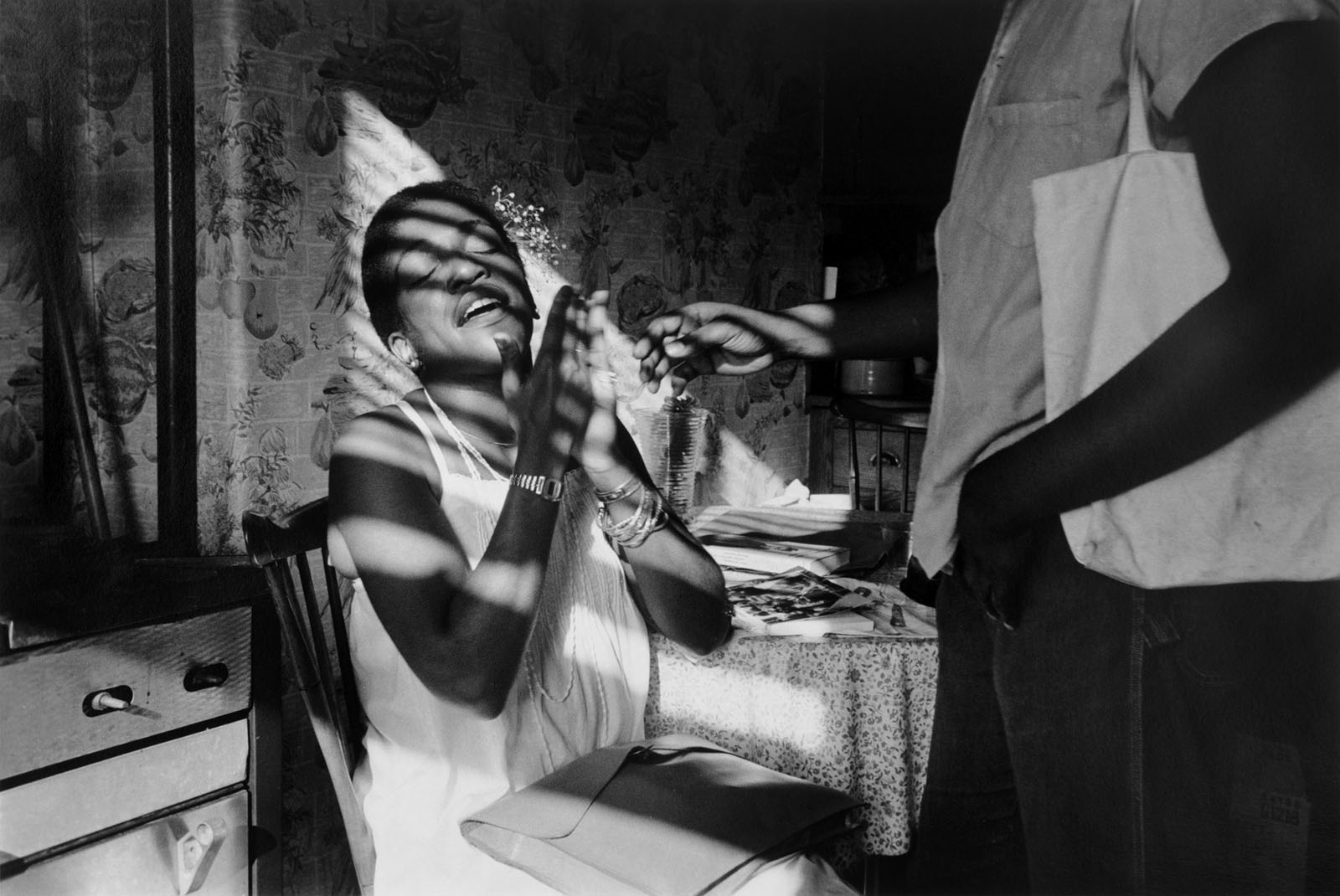
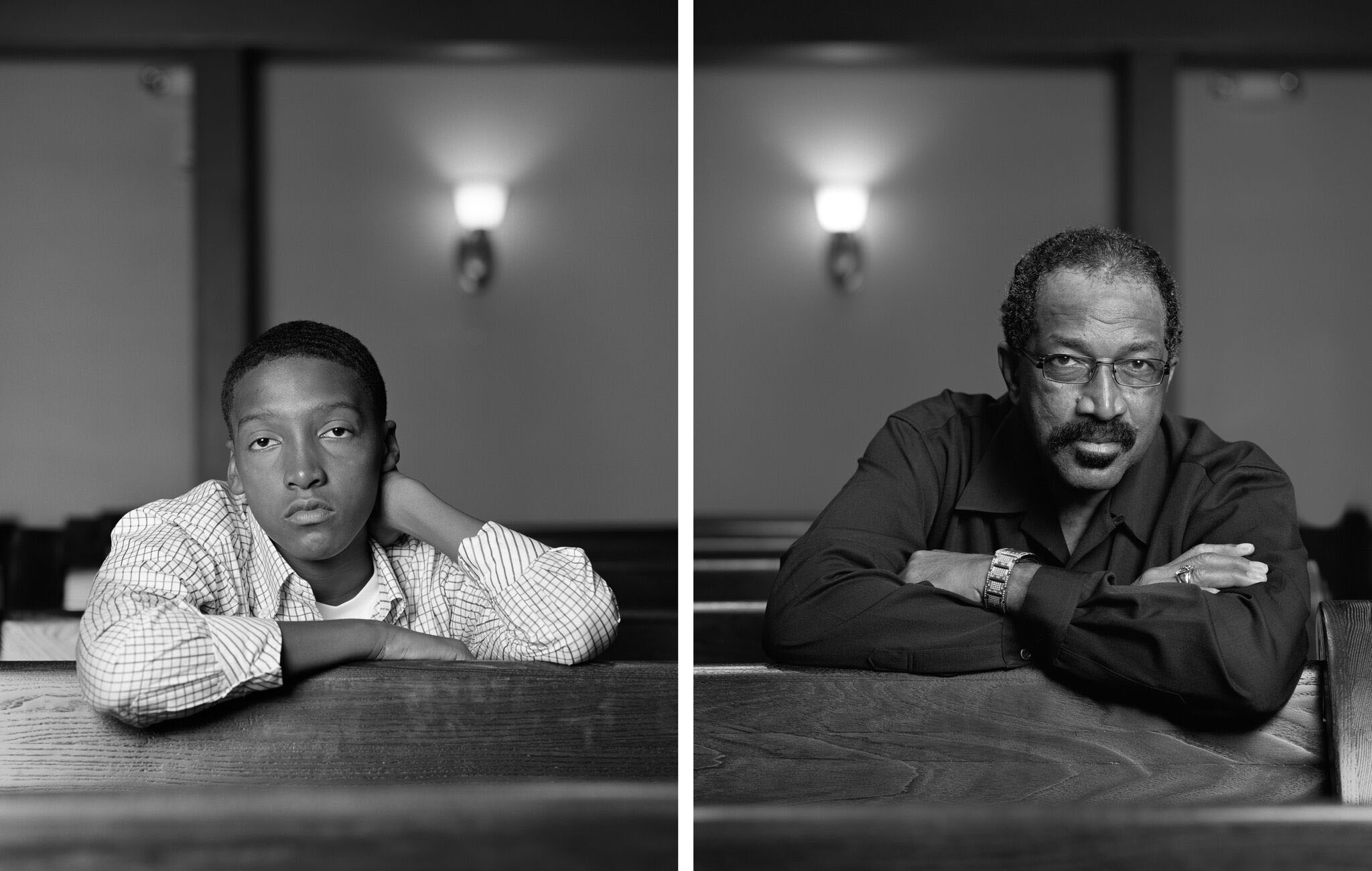
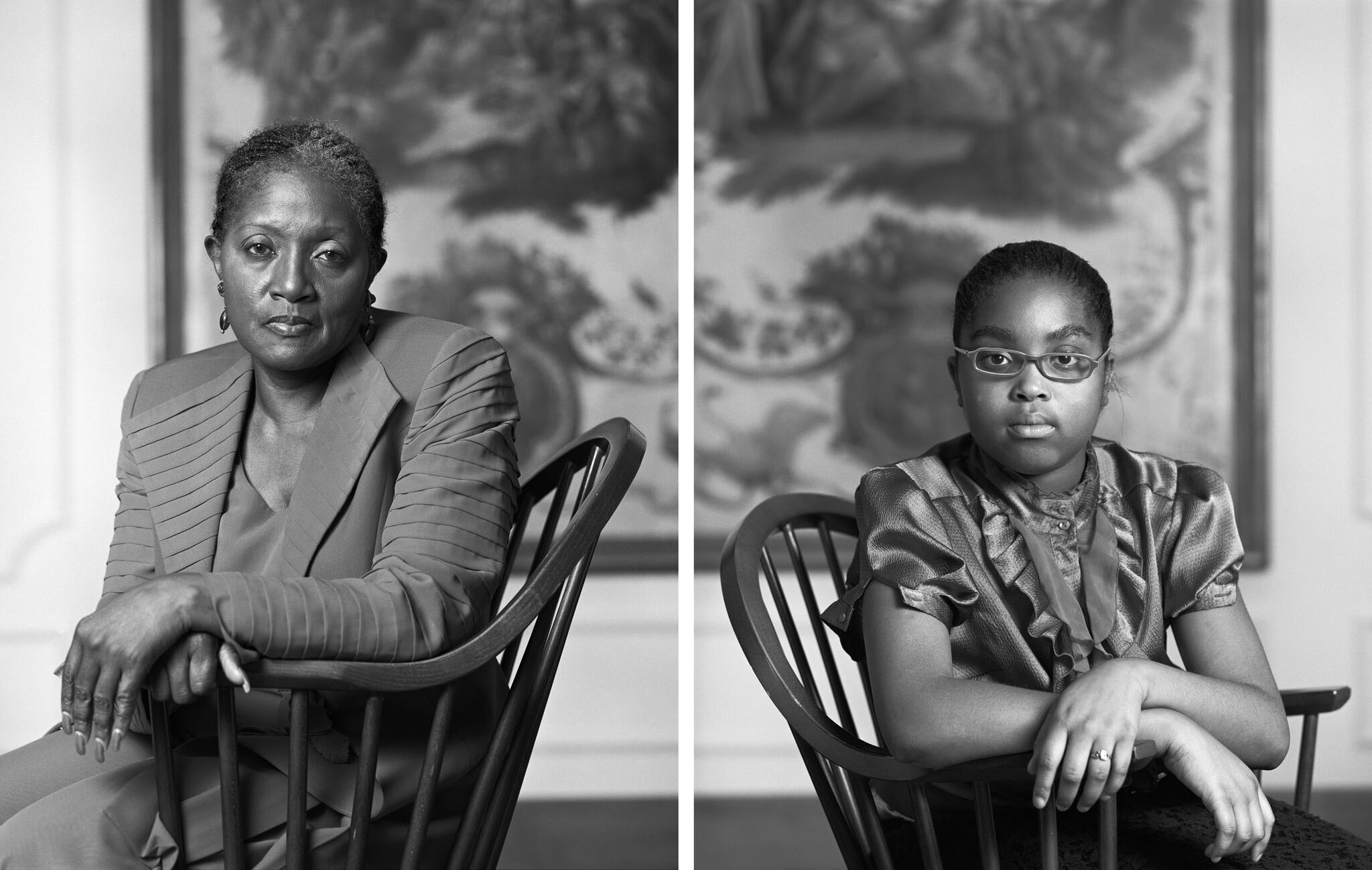
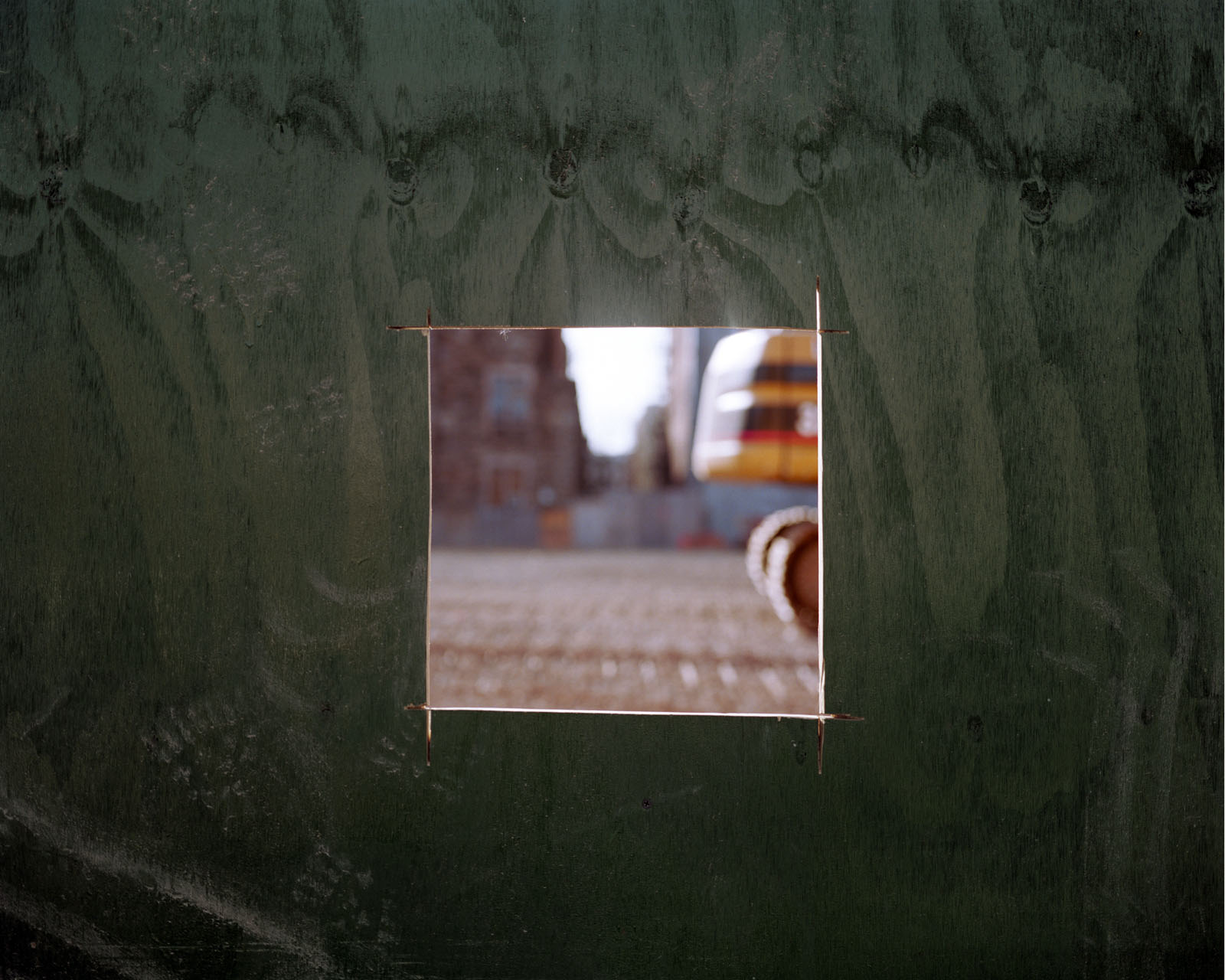
“Mixed-up times are overflowing with both pain and joy – with vastly unjust patterns of pain and joy, with unnecessary killing of ongoingness but also with necessary resurgence. The task is to make kin in lines of inventive connection as a practice of learning to live and die well with each other in a thick present. Our task is to make trouble, to stir up potent response to devastating events, as well as to settle troubled waters and rebuild quiet places.”
Donna Haraway, 2016
“… according to one’s structure and position, each of us sees certain facets, certain parts of facets (…).”
Alberto Giacometti
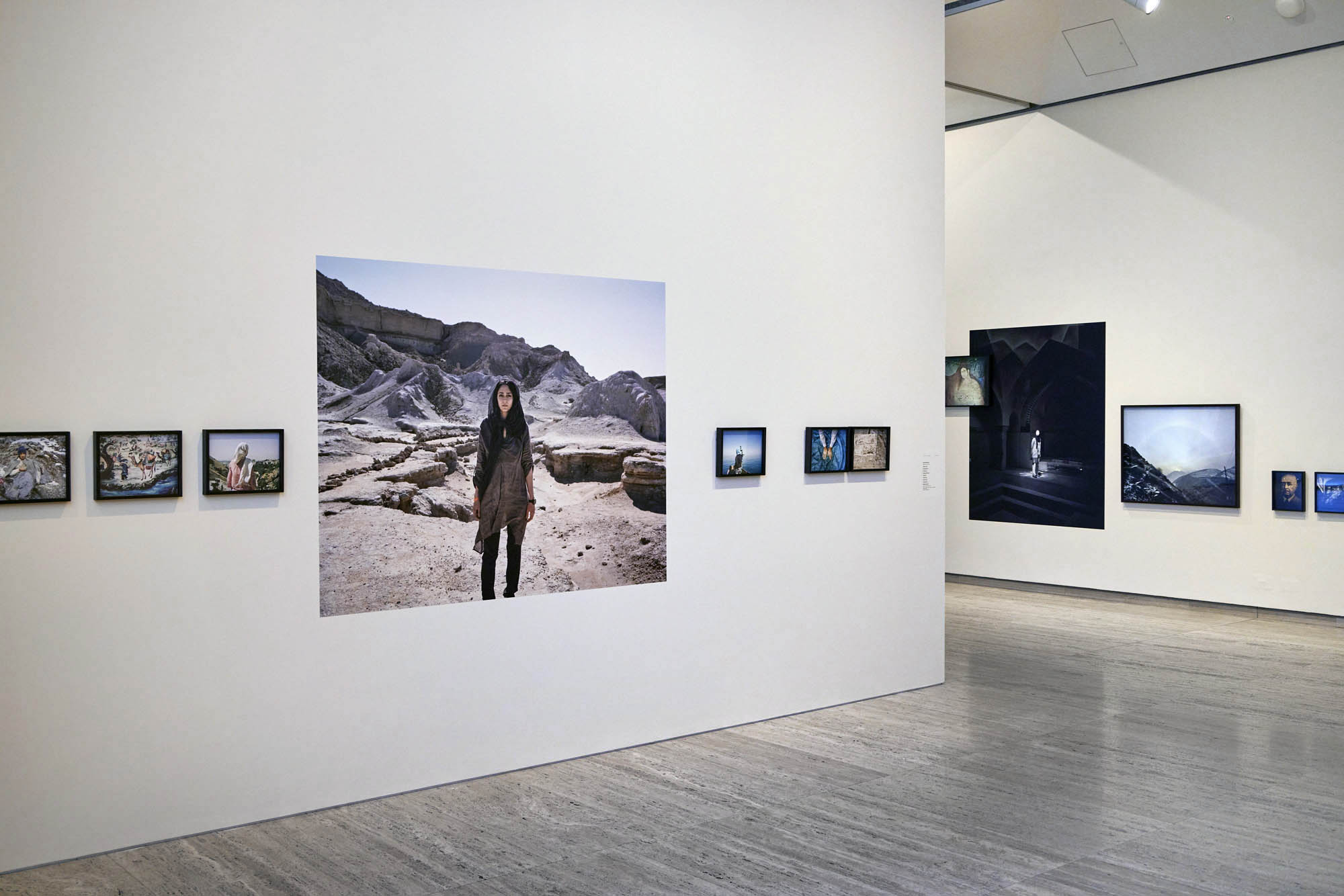
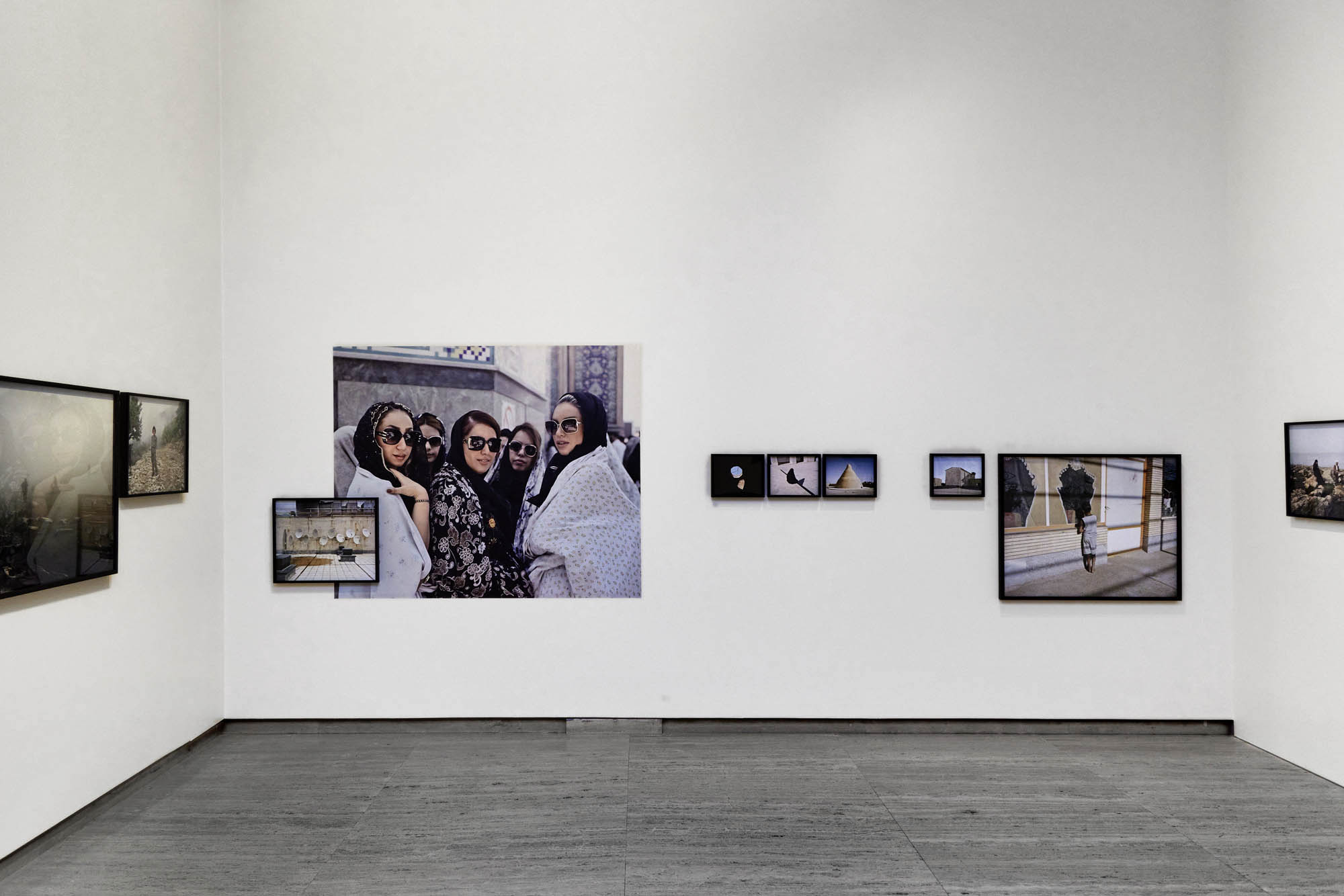
It’s great to see Melbourne artist Hoda Afshar have a mid-career survey exhibition at the Art Gallery of New South Wales. With her strong bodies of work over recent years she surely deserves such an accolade.
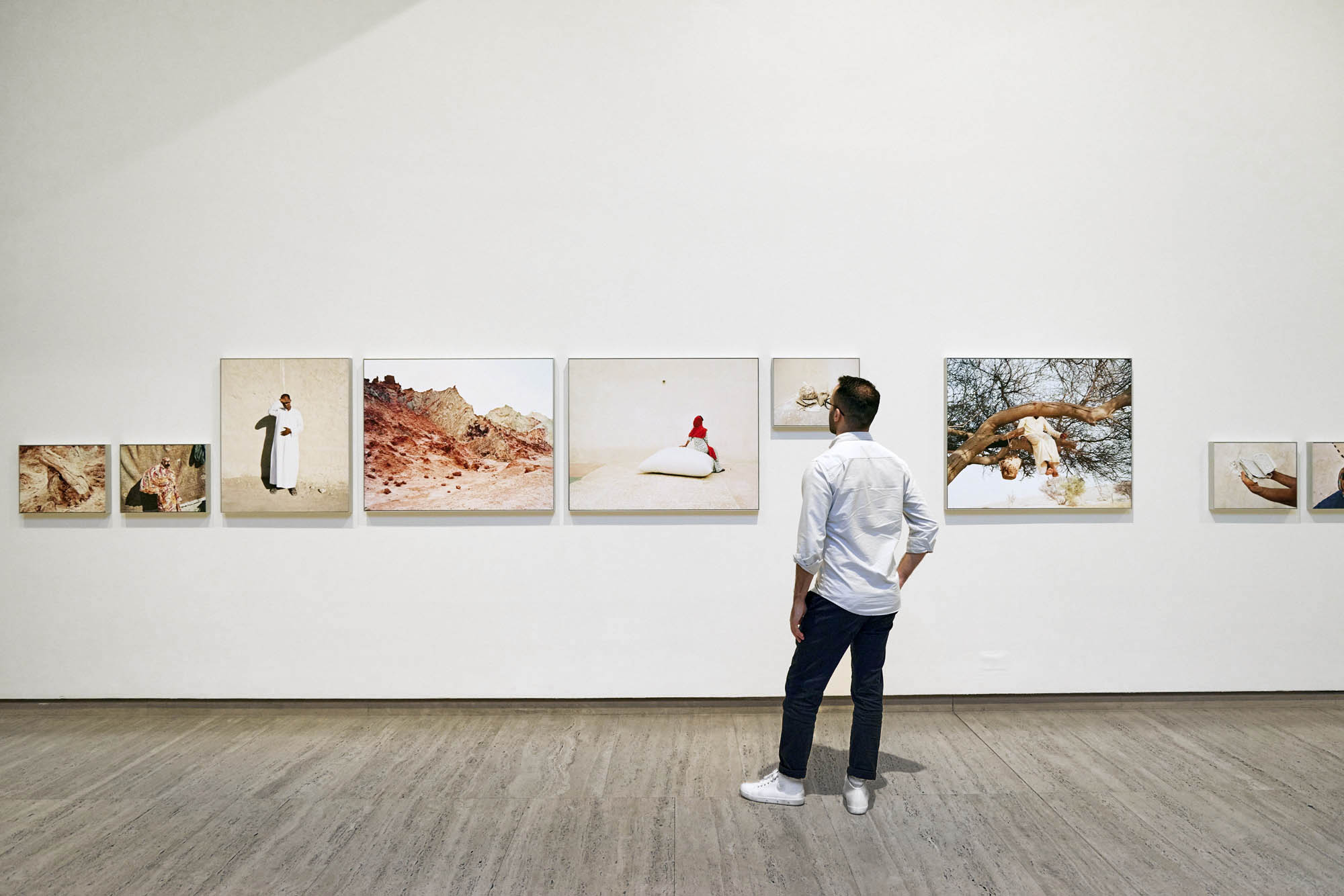
Unfortunately I can’t make any comment on the exhibition Hoda Afshar: A Curve is a Broken Line itself – its flow from body of work to body of work, from space to space; the colours used behind the photographs; the sequencing of the work; and how the different sizes of the photographs bring the viewer forward and push them back – because I have not seen the exhibition. But, as always with the work of Afshar, it would seem her compassionate, lyrical, conceptual images are displayed with a clear seeing and focus on the stories that the artist wishes to tell.
Many words have been written by others (below) about significant aspects of Afshar’s work: the layers of displacement, difference and marginality; othering and image-making; war, statelessness, diaspora, oppression, corruption, torment, identity, place … which relate to the “relativity of reality” (the view that people are active participants in the construction of their own reality) imbued in her work. Indeed, “concepts of identity develop across the social spectrum – from within the self, within the culture, and within the political arena.”1 You can read these texts at your leisure. But from what I can see in the media images the exhibition exemplifies, as writer Celina Lei notes, “how her practice has matured while still carrying forth that visual pull – aesthetically, intellectually and emotionally.”
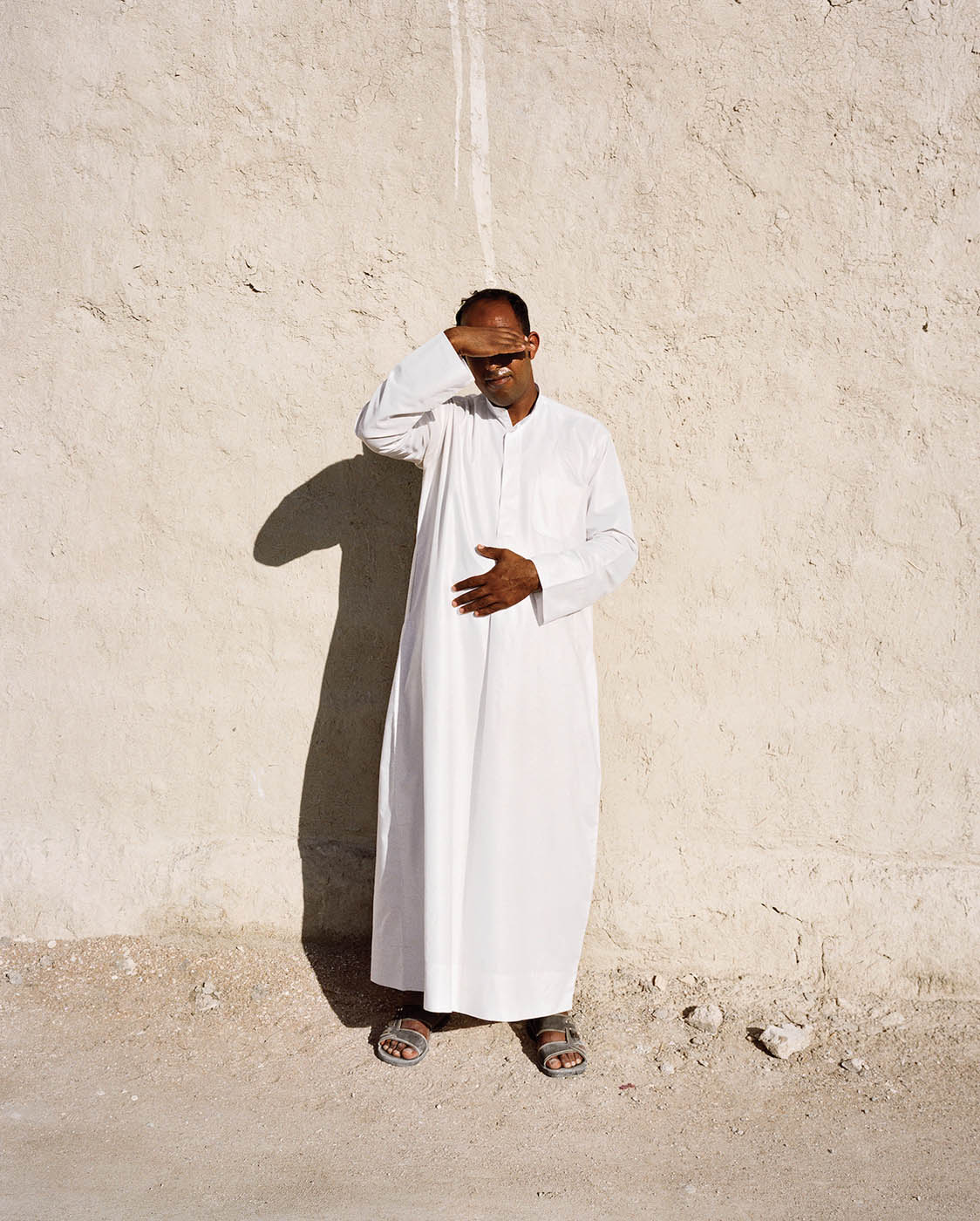
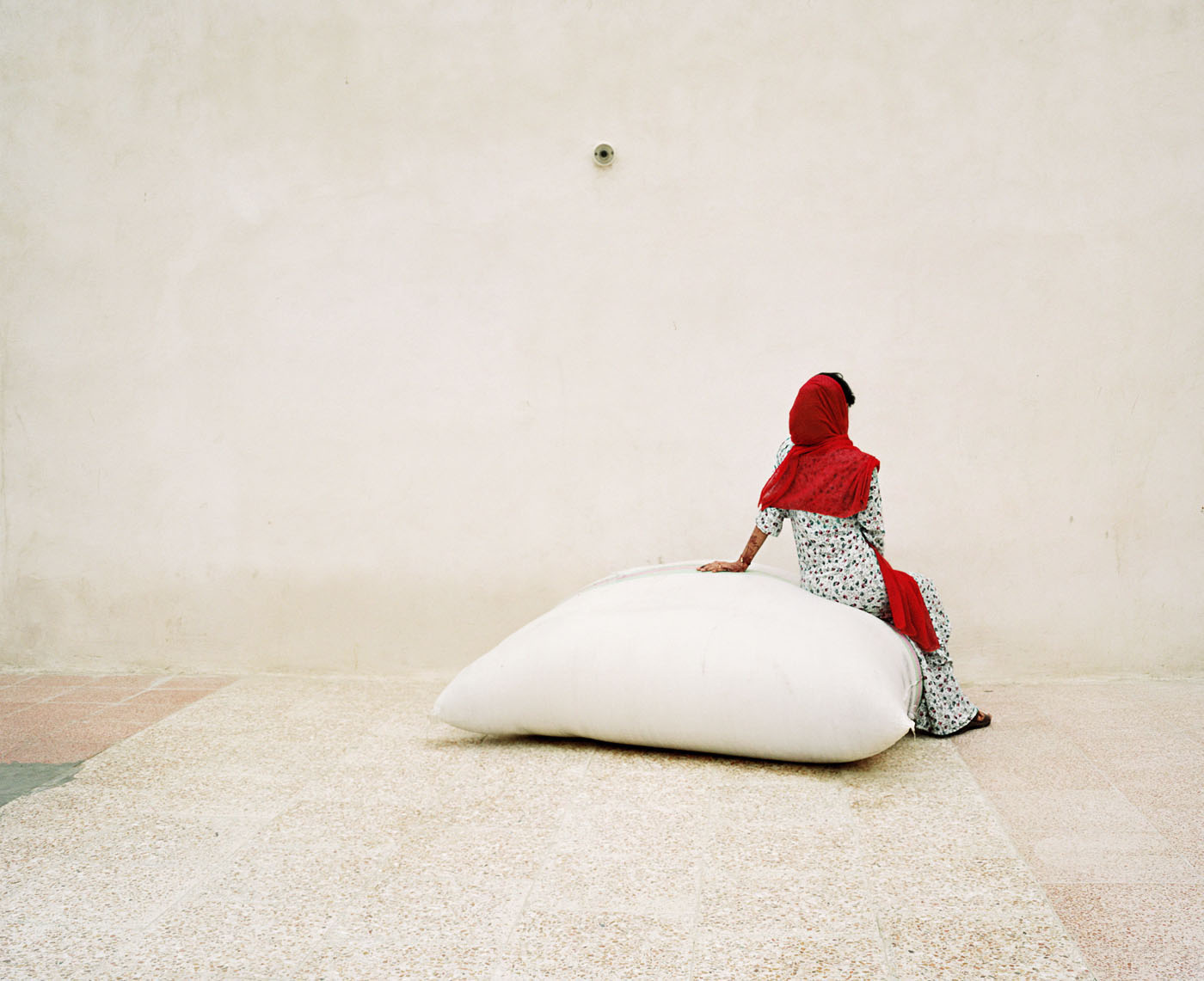
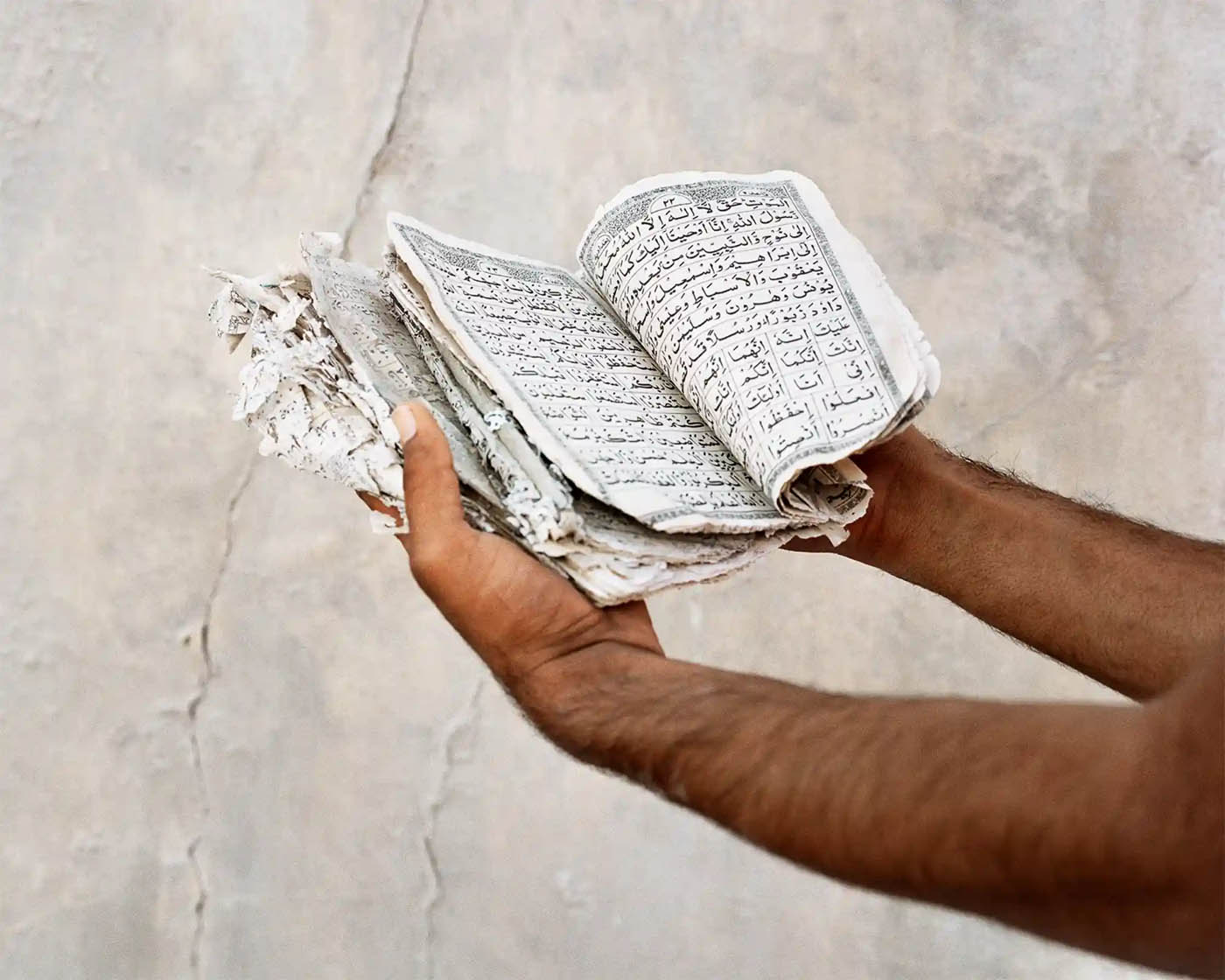
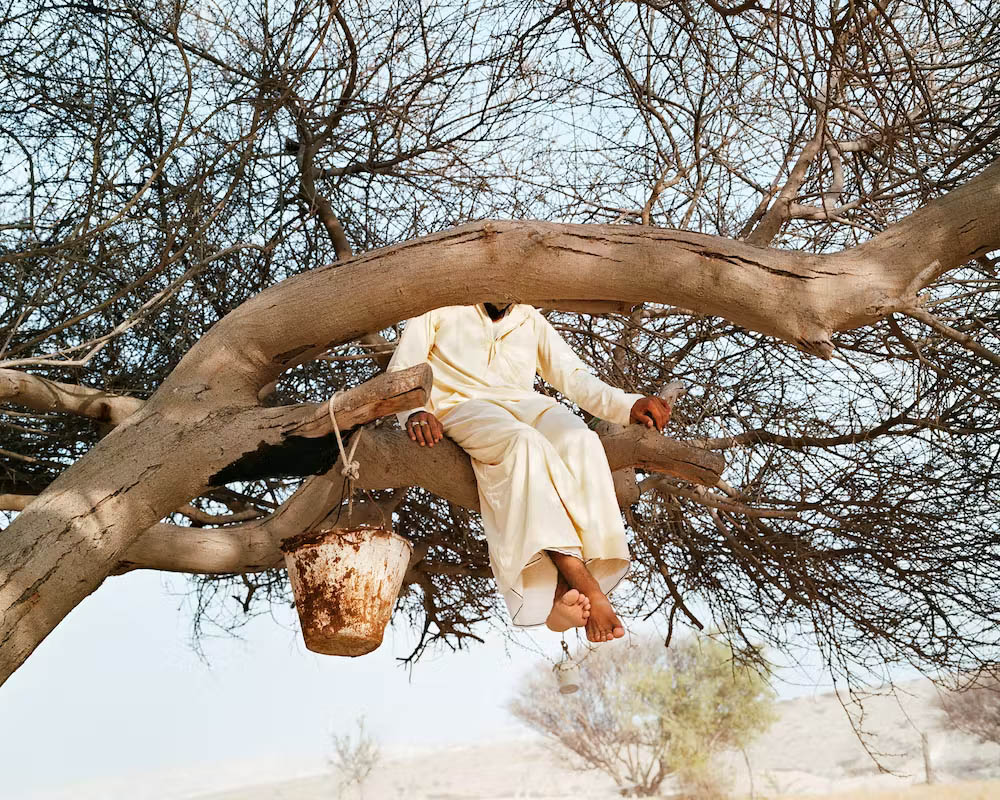
From what I can observe and feel the images are strongly composed, rigorously conceived and carry emotional weight when combined in sequences. Single images are ambiguous but when combined into a flow of images the narrative comes alive. People are framed against contextless backgrounds, they turn away from the camera, they shield their eyes and their identity or have their faces obscured by tree branches – so much of Afshar’s work is about absence, loss, longing, persecution, the impermanence of identity and the conflicting perceptions of a constructed, lived reality.
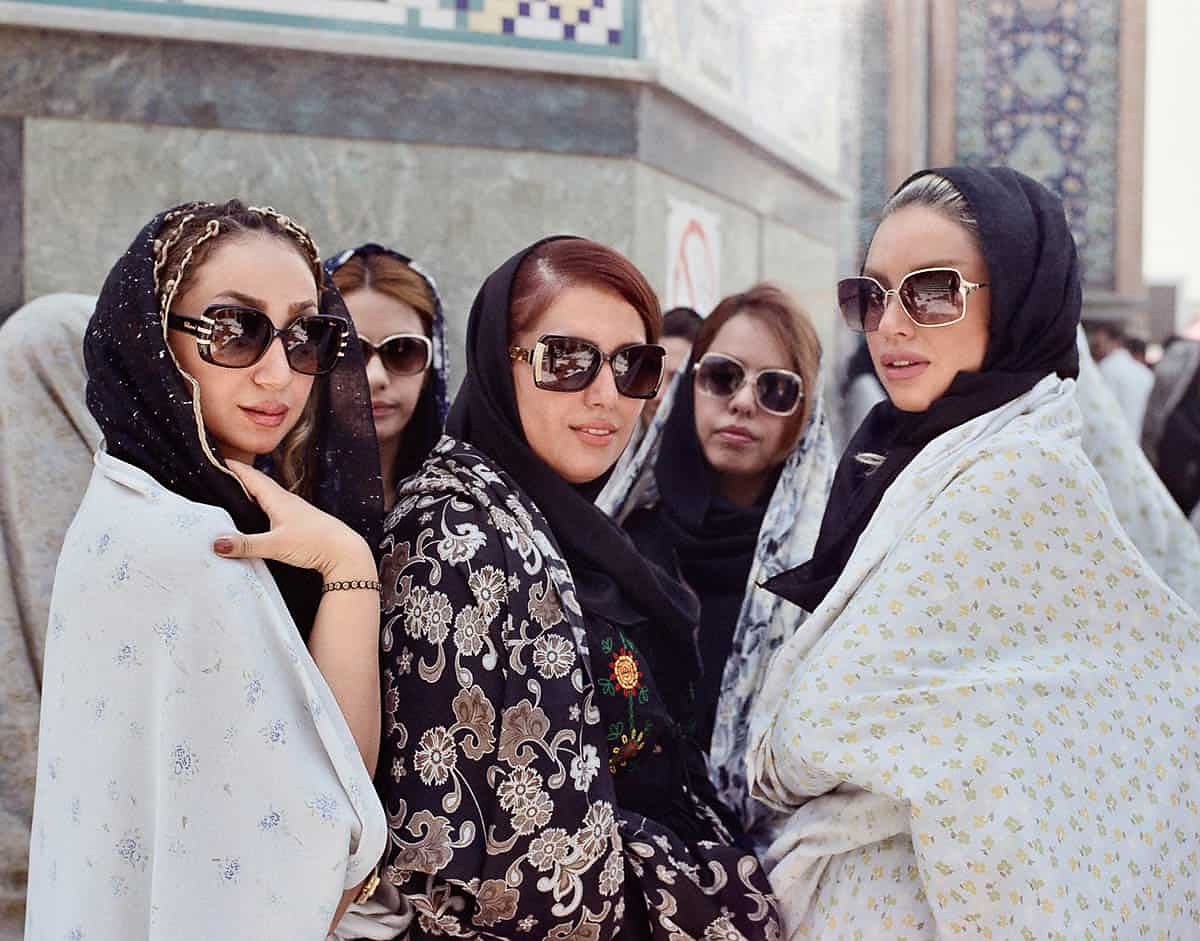
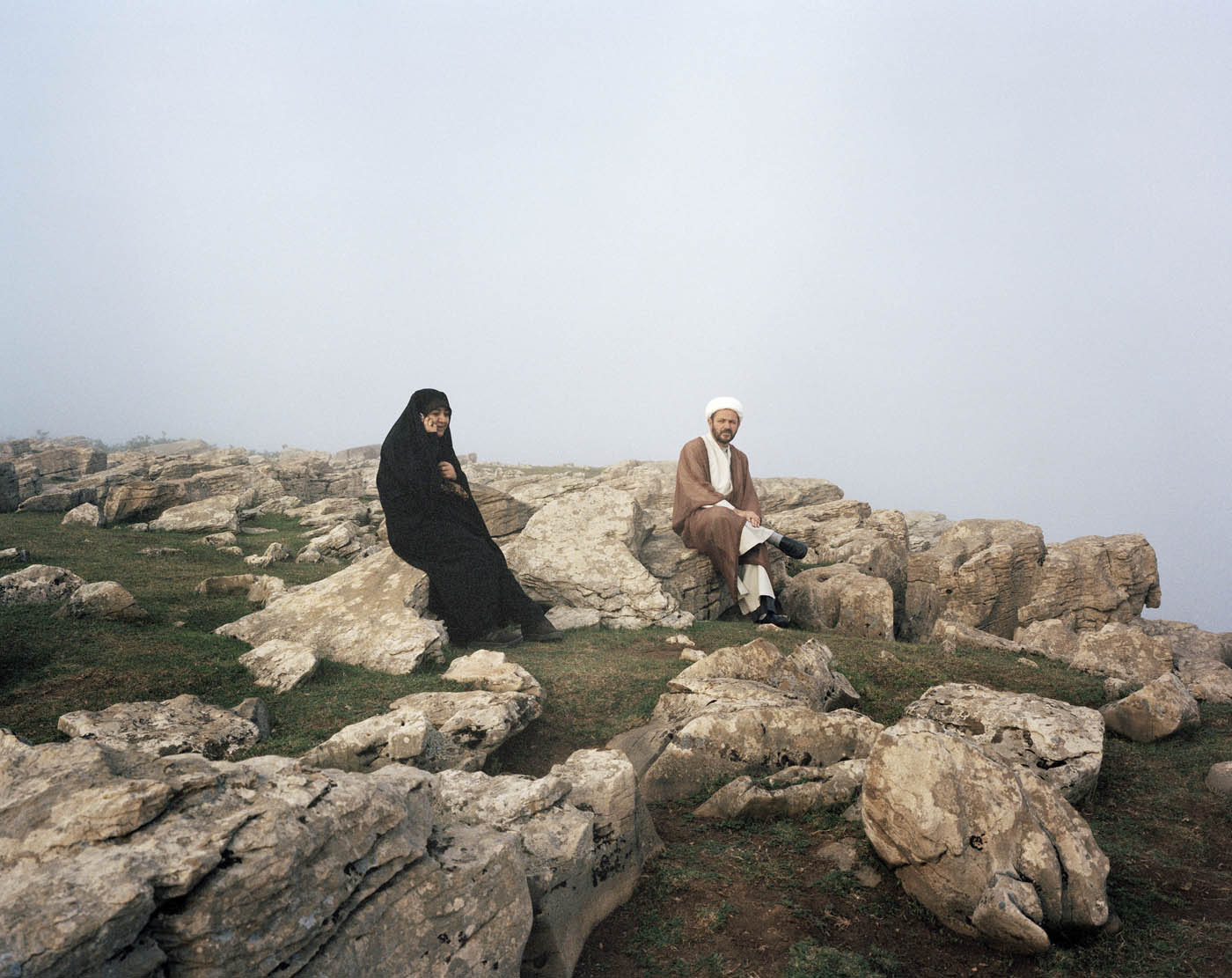
What I take issue with is John McDonald’s comparison of Afshar’s work with that of William Eggleston: works in her ongoing series In the exodus, I love you more (2014-) which capture diverse images of Iran “have the same mixture of ordinariness and oddity one finds in the work of a photographer such as William Eggleston.”2 Nothing could be farther from a form of reality. Eggleston’s images are never ordinary, are frequently surreal and bizarre, shot from a low or high angle (often with lurid colour ways) and possess a cutting social commentary on American culture … whereas Afshar’s photographs are poetic, sublime, lyrical emanations of ‘reality’ and if they do picture some oddity they lack the intense “bite” of an Eggleston image – something I would like to see Afshar reintroduce into her image making.
Many of her images are reflective, meditative, and approach the subject matter in an oblique manner which illuminates “how photography can activate new ways of thinking” … all well and good, but I long for a little more guts and directness to some of her individual images (physically, literally not intellectually). Her early series Under Western Eyes for example, contains biting, quirky creativity but for obvious reasons has not been included in this exhibition because it doesn’t fit the style of the smooth, polished, buffed, ambiguous and other worldly later work.
I also take issue with Tom Williams’ observation. “Even in her early, nominally “documentary” series, you can sense an embracing of the ambiguity of the still image, and an interest in composing a reality more vivid (and perhaps genuine) than dispassionate reportage might be capable of.”3 I disagree with the second part of this statement.
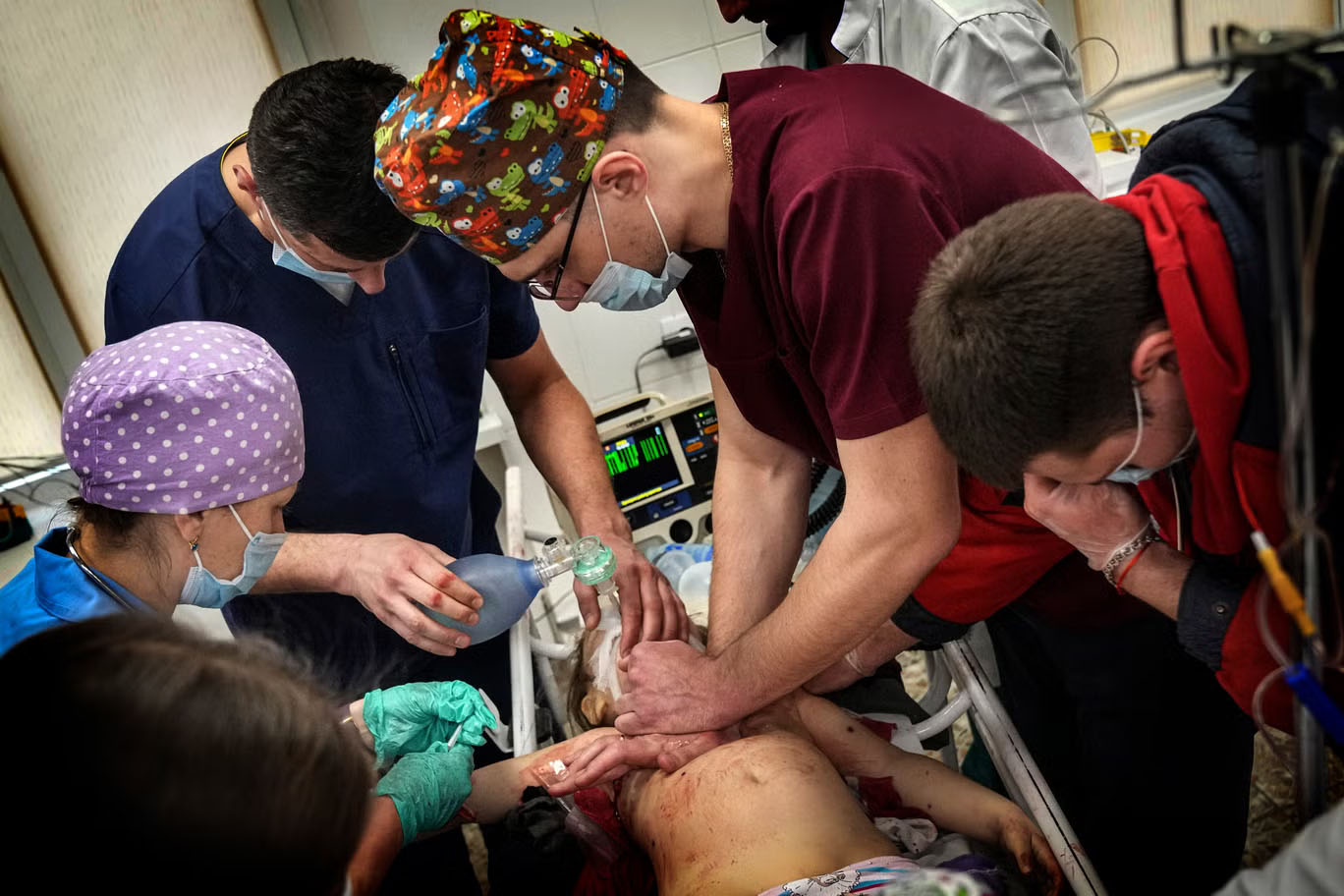
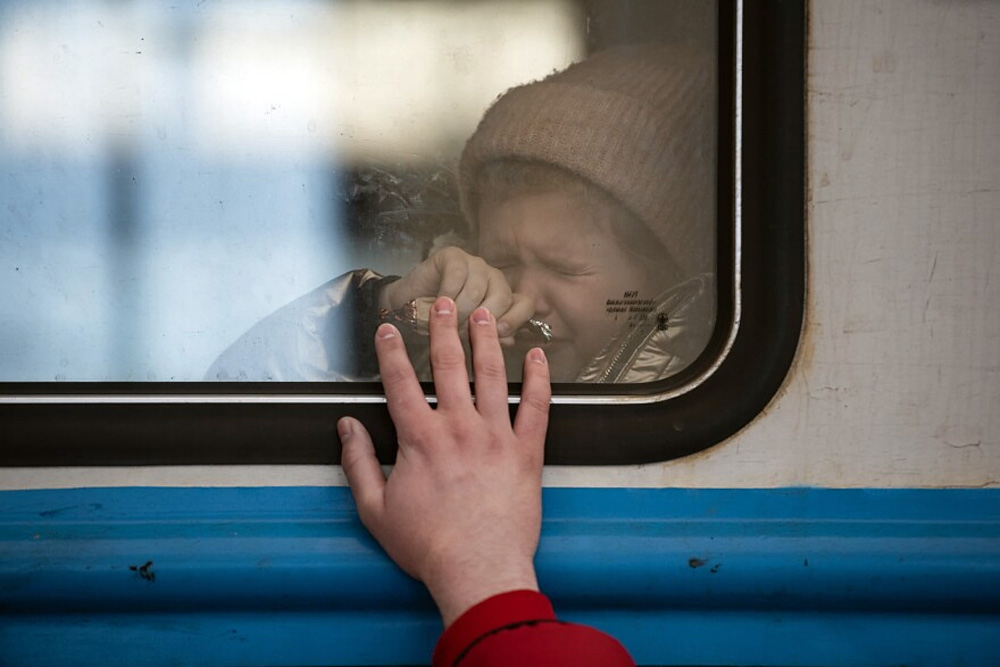
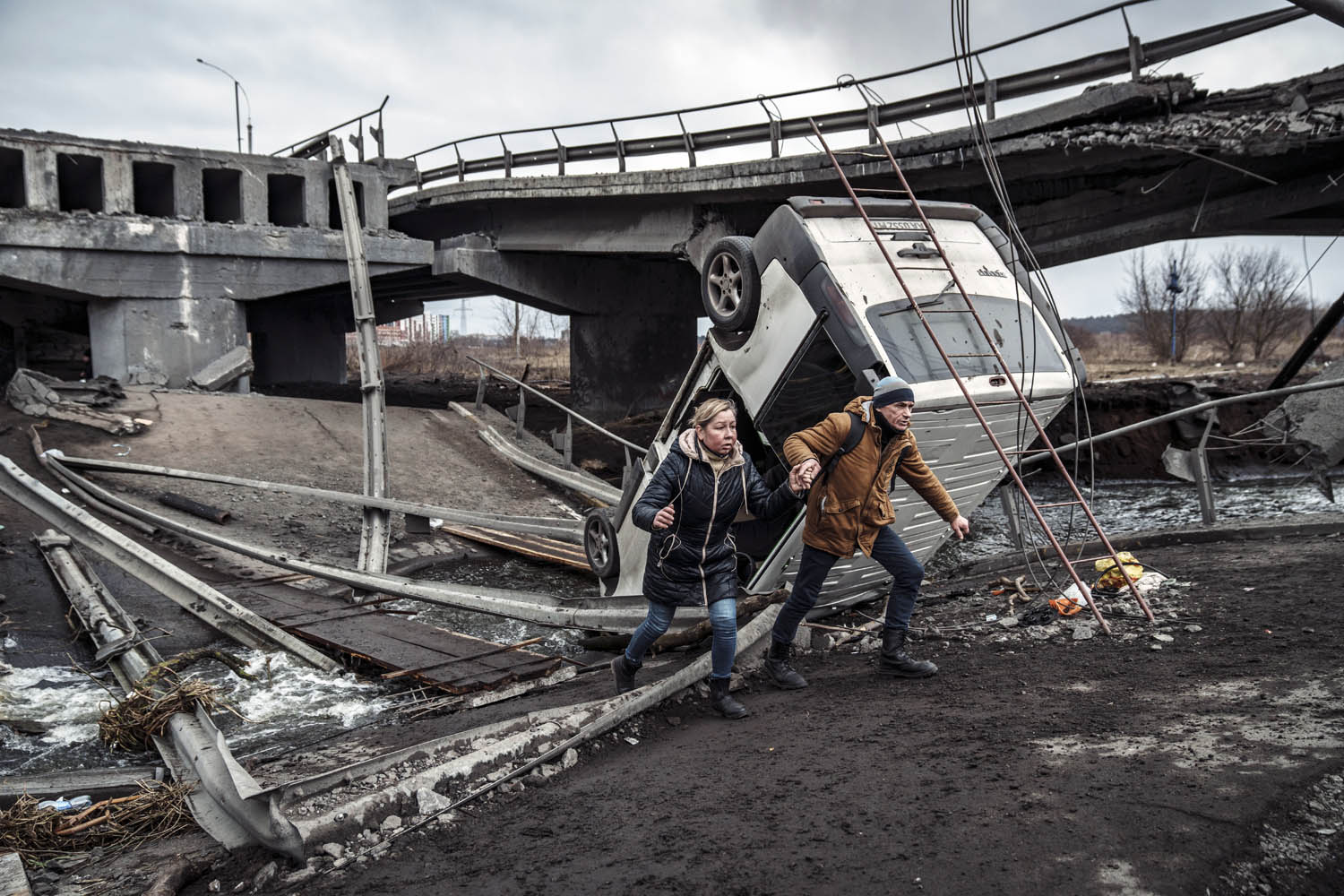
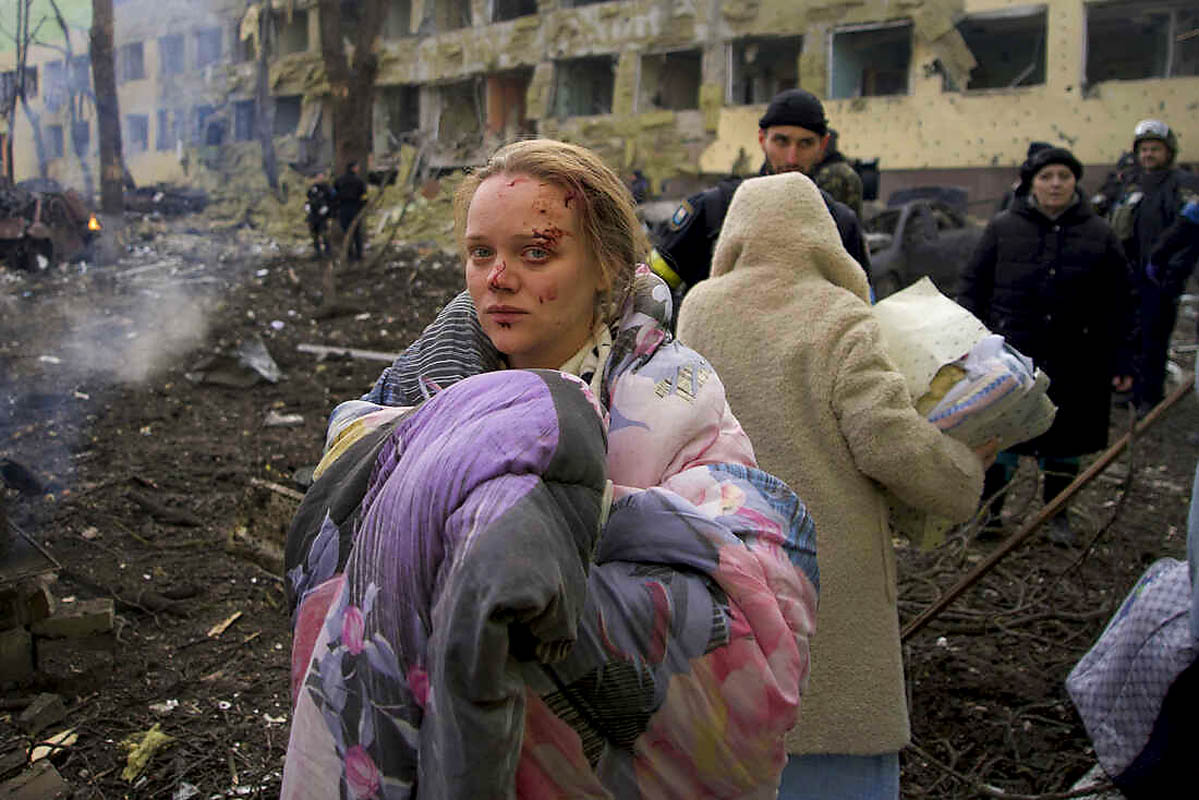
Having recently spent hours assembling a huge posting of photographs on the war in Ukraine – images which picture the ordinariness and atrocity of war – nothing, literally nothing, can be more vivid and genuine than the images of that war captured by brave Ukrainian photographers (see examples below). The same can be said of the genocide happening in Gaza and the photographs emerging from that massacre.
But as John McDonald intelligently observes, “The tragic events that have unfolded in Israel and Gaza over the past month should be enough to remind us that art is powerless in the face of real political upheaval. The most an artist can do to effect social and political change is to create a few striking images that circulate beyond the thought-absorbing walls of the art museum. Even then, any change to people’s attitudes is bound to be incremental and highly personal.”4
Most images then, have little power to change public and personal opinion… all they can do is proffer alternate visions and interpretations of the world and hope that some glimmer of recognition of injustice, difference and otherness will permeate the mind of the viewer. And while Afshar’s photographs do not effect social and political change what they do is bring to consciousness in the viewer “other” aspects of the realities of the world. Through the visibility of her images she exposes the phallocracy of the masculine, singular definition of truth. As David Smail suggests when speaking on the nature of ‘truth’,
“Though the truth is not just a matter of personal perspective, neither is it fixed and certain, objectively ‘out there’ and independent of human knowing. ‘The truth’ changes according to, among other things, developments and alterations in our values and understandings… the ‘non-finality’ of truth is not to be confused with a simple relativity of ‘truths’.”5
Afshar’s photographs address the simple relativity of many ‘truths’, the tension between “forms” … of truth and reality. Truths and reality, what is seen and not seen. So much of being alive is breaking…
Dr Marcus Bunyan
Footnotes
1/ Ari Hakkarainen. “‘The Urgency of Resistance’: Rehearsals of Death in the Photography of David Wojnarowicz” 2018
5/ David Smail. Illusion & Reality: The Meaning of Anxiety. London: J.M. Dent & Sons, 1984, p. 152.
Many thankx to the Art Gallery of New South Wales for allowing me to publish the photographs in the posting. Please click on the photographs for a larger version of the image.
Mstyslav Chernov (Ukrainian, b. 1985) / AP Doctors unsuccessfully try to resuscitate a girl hit by Russian shelling in Mariupol, Ukraine. February 27, 2022
2022
Used under fair use conditions for the purposes of education, research, criticism and review
Alexey FurmanAlexey Furman (Ukrainian, b. 1991) / Getty Images
A young girl cries as a man bids his daughter goodbye at the railway station in Lviv, Ukraine, on March 22, 2022. Lviv has served as a stopover and shelter for the millions of Ukrainians fleeing the Russian invasion, either to the safety of nearby countries or the relative security of western Ukraine’
2022
Used under fair use conditions for the purposes of education, research, criticism and review
Sergi Mykhalchuk (Ukrainian, b. 1972) Evacuation of civilians from Irpіn, Ukraine. March 4-5, 2022
2022
Used under fair use conditions for the purposes of education, research, criticism and review
Mstyslav Chernov (Ukrainian, b. 1985) / AP Mariana Vishegirskaya stands outside a maternity hospital that was damaged by shelling in Mariupol, Ukraine, March 9, 2022. Vishegirskaya survived the shelling and later gave birth to a girl in another hospital in Mariupol
2022
Used under fair use conditions for the purposes of education, research, criticism and review
“I see art-making as a process of “unselfing” – you can be outside of your body, less focused on what’s inside, and see yourself in relation to the broader world.”
Hoda Afshar
“In co-opting the documentary genre, Afshar harnesses its truth-telling power while simultaneously telling another story – one that is often unspoken or at odds with what we are told by those in power.”
Through her poetically constructed images, Hoda Afshar illuminates a world overshadowed by history and atrocity. Yet we never see despair: we see defiance, comradeship, reinvention and a search for how photography can activate new ways of thinking. …
What unites her materially diverse work is a concern with visibility: who is denied it, what is made visible by media, and how photography can reveal, overlook and manipulate truth.
Much of her work addresses critical humanitarian issues of our time: war, statelessness, diaspora, oppression, corruption. She challenges stereotypes. We don’t see passive victims or closed narratives: we are introduced to new perspectives that might lead us to reappraise the world we inhabit.
The title of the exhibition was inspired by lines in a poem by Kaveh Akbar:
a curve is a straight line broken at all its points so much of being alive is breaking.
Through her photographs and moving image works, Iranian-born, Melbourne-based Hoda Afshar examines the politics of image-making. Deeply researched yet emotionally sensitive, her work can be seen as a form of activism as much as an artistic inquiry.
Afshar uses the camera to give visibility to those who have been denied it, resolutely insisting on the humanity of her subjects. She makes us contend with violence and brutality, not through blunt imagery but through evocation. Her work is anchored in empathy yet also radical in the way it wrestles with injustice.
This exhibition will feature photography and film from the past decade to present a comprehensive overview of Afshar’s recent practice, including a newly commissioned series. Amassed together in dialogue for the first time in a major public institution, these works offer a poignant reminder of the power of images and their coercive potential.
An accompanying publication offers critical insight into Afshar’s work as well as creative and experimental responses from a range of writers.
Text from the Art Gallery of New South Wales website
“The tragic events that have unfolded in Israel and Gaza over the past month should be enough to remind us that art is powerless in the face of real political upheaval. The most an artist can do to effect social and political change is to create a few striking images that circulate beyond the thought-absorbing walls of the art museum. Even then, any change to people’s attitudes is bound to be incremental and highly personal. …
Like Valamanesh, Afshar has never been able to let go of her brutalised, much-maligned country. In her ongoing series, In the exodus, I love you more (2014-), which takes its title from a line by Palestinian poet Mahmoud Darwish, she returns time and again to Iran, capturing diverse images that have the same mixture of ordinariness and oddity one finds in the work of a photographer such as William Eggleston. Landscapes, street scenes, portraits, horses, peacocks, a building draped in heavy curtains, a hose in a courtyard … nothing is disqualified from an idiosyncratic overview that digs under the skin of her birthplace. The same applies, but with added eeriness, to the series Speak to the wind (2015-22), set on the island of Hormuz, off the southern coast of Iran.”
“Through her poetically constructed images, Hoda Afshar illuminates a world overshadowed by history and atrocity. Yet we never see despair: we see defiance, comradeship, reinvention and a search for how photography can activate new ways of thinking. …
Even in her early, nominally “documentary” series, you can sense an embracing of the ambiguity of the still image, and an interest in composing a reality more vivid (and perhaps genuine) than dispassionate reportage might be capable of. …
What unites her materially diverse work is a concern with visibility: who is denied it, what is made visible by media, and how photography can reveal, overlook and manipulate truth.
Much of her work addresses critical humanitarian issues of our time: war, statelessness, diaspora, oppression, corruption. She challenges stereotypes. We don’t see passive victims or closed narratives: we are introduced to new perspectives that might lead us to reappraise the world we inhabit. …
Hoda Afshar’s work addresses conflict, injustice, mobility and the often fragile state of being alive. It reminds us that dominant powers can be challenged by exposing truth and envisioning something new.”
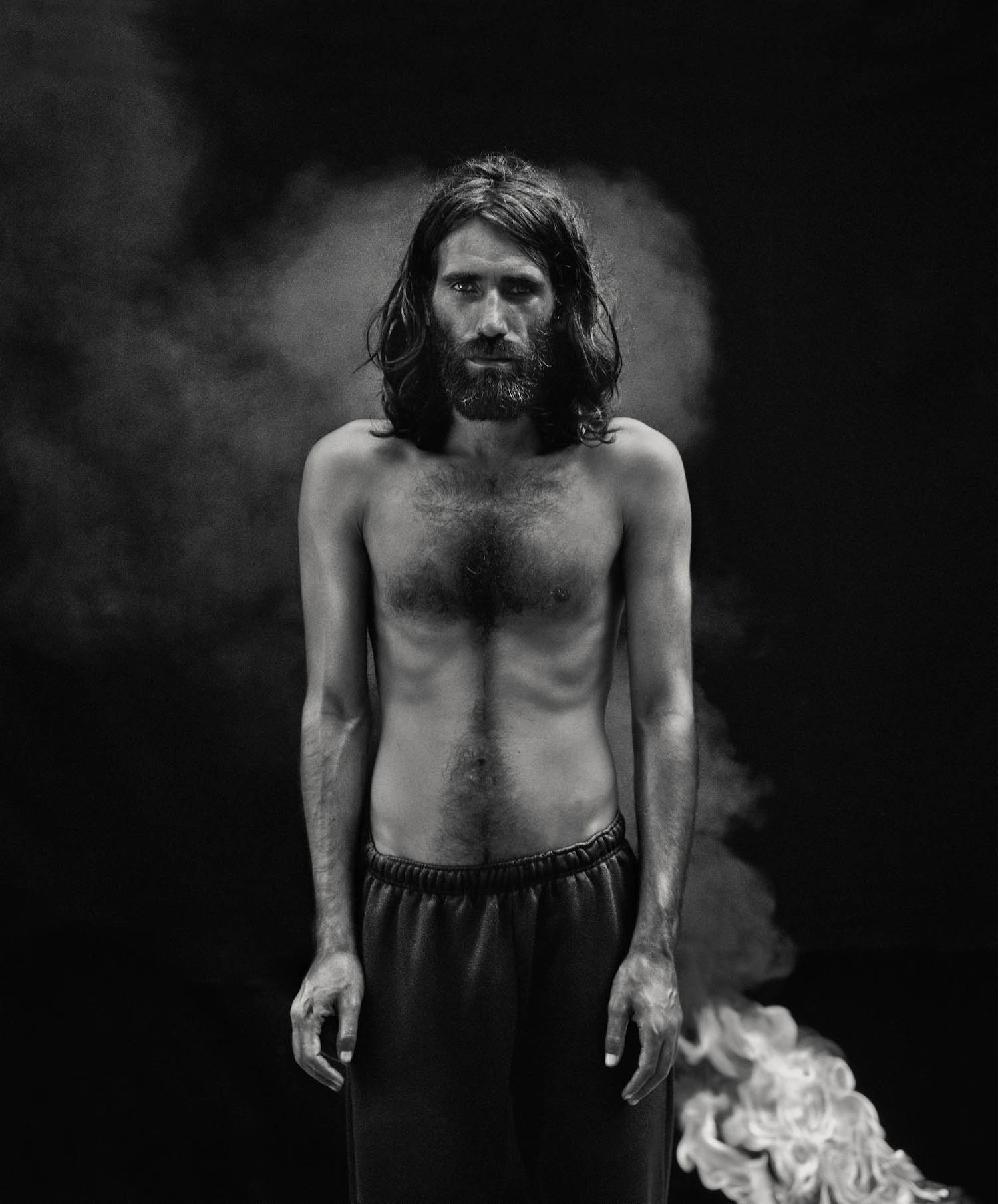
“Social and political commentary is a given in much of her work, but her lens remains sympathetic, never othering. This is highlighted in sections throughout Hoda Afshar: A Curve is a Broken Line. Her portraits of stateless asylum seekers on Manus Island, Papua New Guinea, taken in 2018, display power and dignity in visibility, despite lived experiences of harshness and torment.”
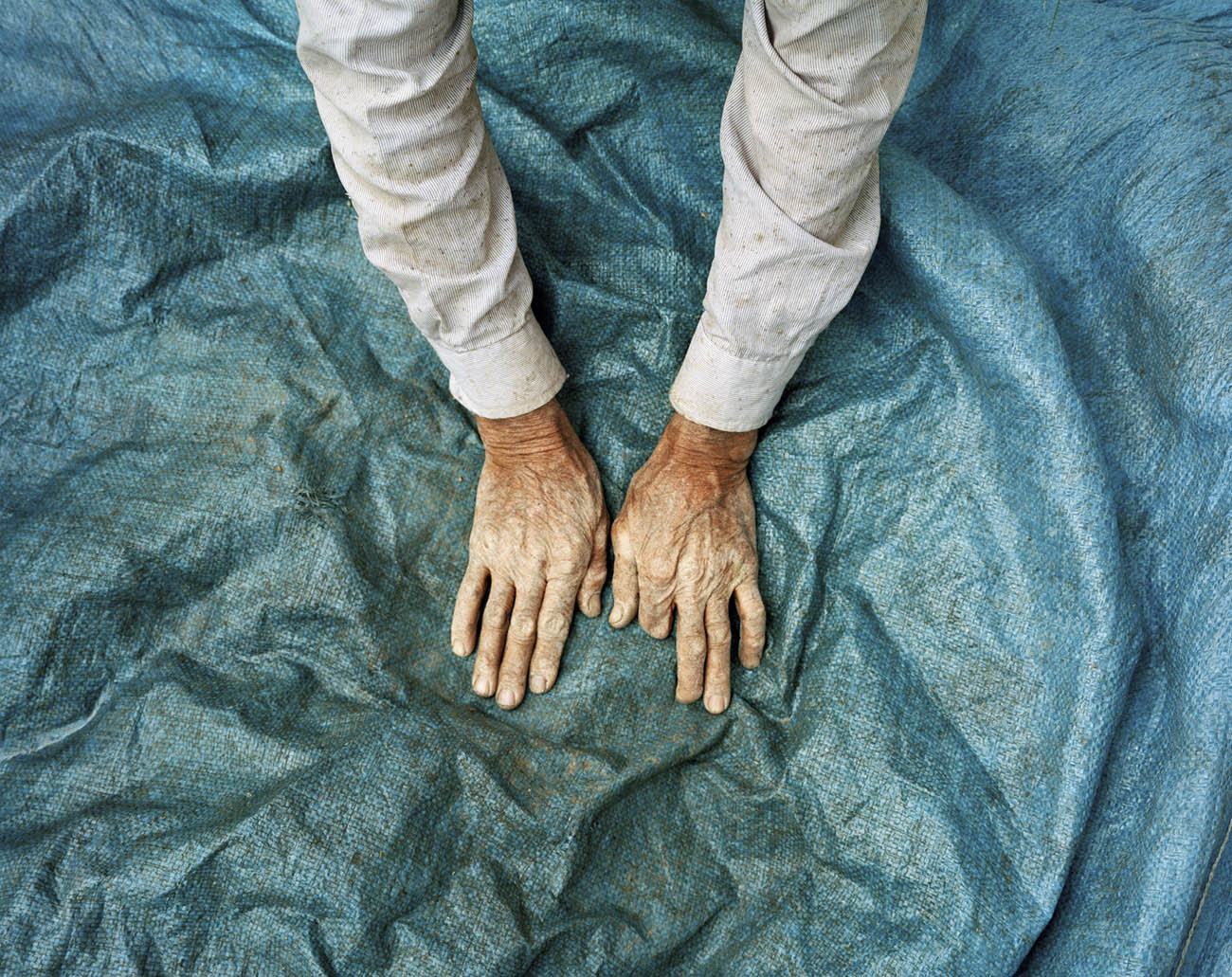
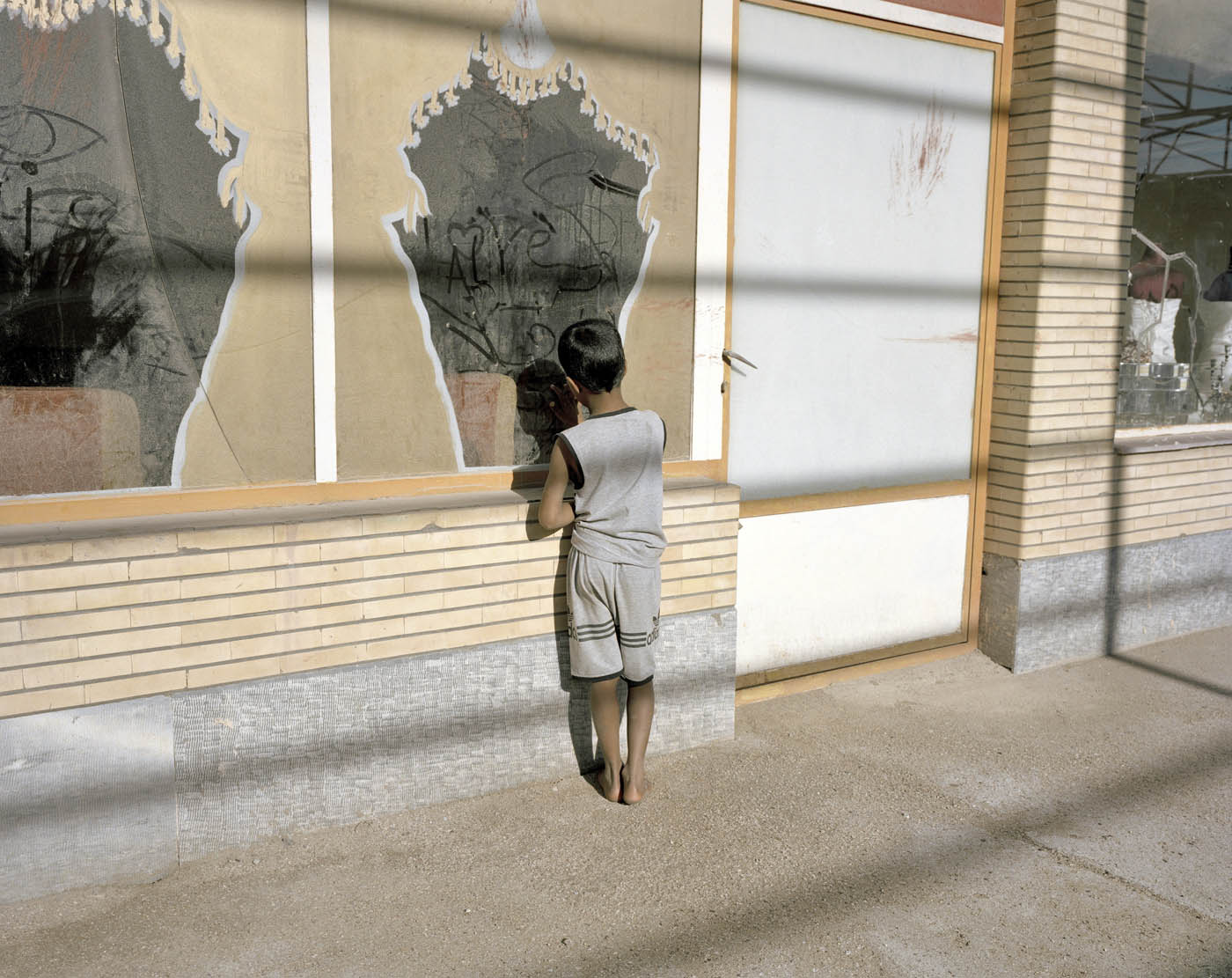
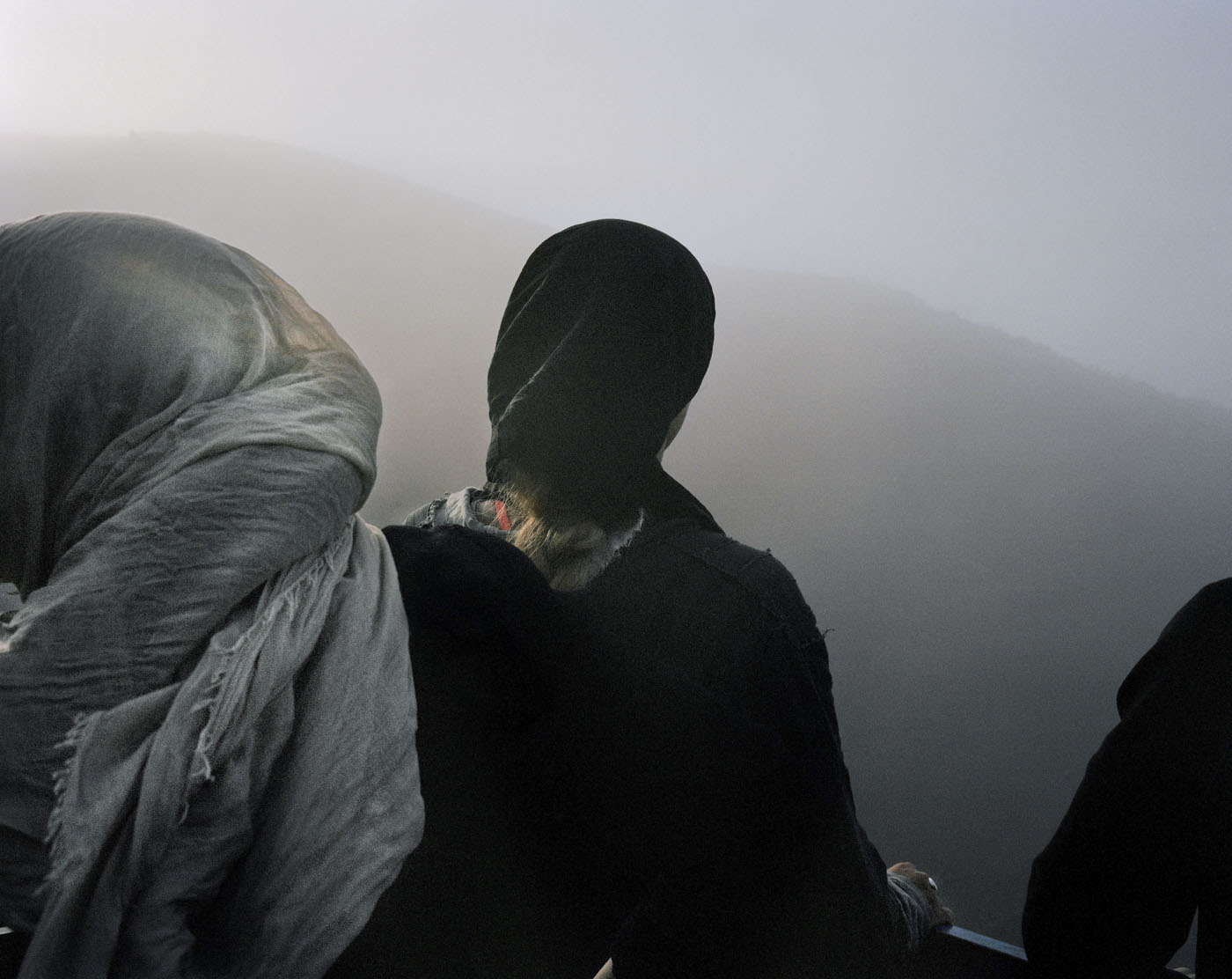
In the exodus, I love you more (2014-) is a portrait of her home country formed by experiences of familiarity and distance. The artist is both at home and searching, like an outsider. Images suggest at times an intimate proximity, and at others a separation akin to the one made by raising a camera to your eye.
Afshar examines her experience of migration and, she tells me, seeks to “dismantle the idea of there being one way of seeing Iran.”
The final image in this series shows the erasure of a woman’s face in a painted Persian miniature.
In September, the Art Gallery of New South Wales will present Hoda Afshar: A Curve is a Broken Line, the first major solo exhibition of one of Australia’s most innovative and unflinching photo-media artists, Iranian-born, Melbourne-based Hoda Afshar.
Featuring photographs and moving image works from the past decade, including a newly commissioned series, the comprehensive exhibition provides an overview of the artist’s recent practice and examines the politics of art making. Amassed together in dialogue for the first time by a major public institution, these works offer a poignant reminder of the power of images and their coercive potential.
Art Gallery of NSW director Michael Brand said it is a great pleasure to present Afshar’s first major solo exhibition at the Art Gallery of NSW.
‘Hoda Afshar is one of the most exciting artists working in Australia today. While her work explores themes of violence and pain, it also speaks to the transformative potential of image-making which is of profound importance to art institutions, as agents of advocacy and emotional encounter,’ said Brand.
‘Her work gives visibility to marginalised voices and serves as a powerful reminder of art’s capacity to embolden, inspire, and move. Her own voice as an artist is a defiantly international one.’
Since she first began working with photography in the early 2000s, Afshar has resolutely insisted on the humanity of her subjects. She is sensitive to the camera’s status as an imperialist tool that has long been used to define how history is told and how power is consolidated. Throughout her practice, she has involved her subjects in the act of photographing them in order to equalise the power dynamic that exists between photographer and photographed and return agency to those she depicts.
Exhibition curator, Art Gallery of NSW senior curator of contemporary Australian art Isobel Parker Philip said: ‘Hoda Afshar’s work is both deeply researched and poetically resonant and can be seen as a form of activism as much as an artistic inquiry.
‘Hoda’s approach is unique in that she makes us contend with brutality, not through blunt imagery but through evocation. Her work is anchored in compassion yet also radical in the way it wrestles with injustice.
‘Hoda’s photographs and videos are emotionally embroiled in the world they depict. It is this fact that makes a survey of her work both compelling and timely.’
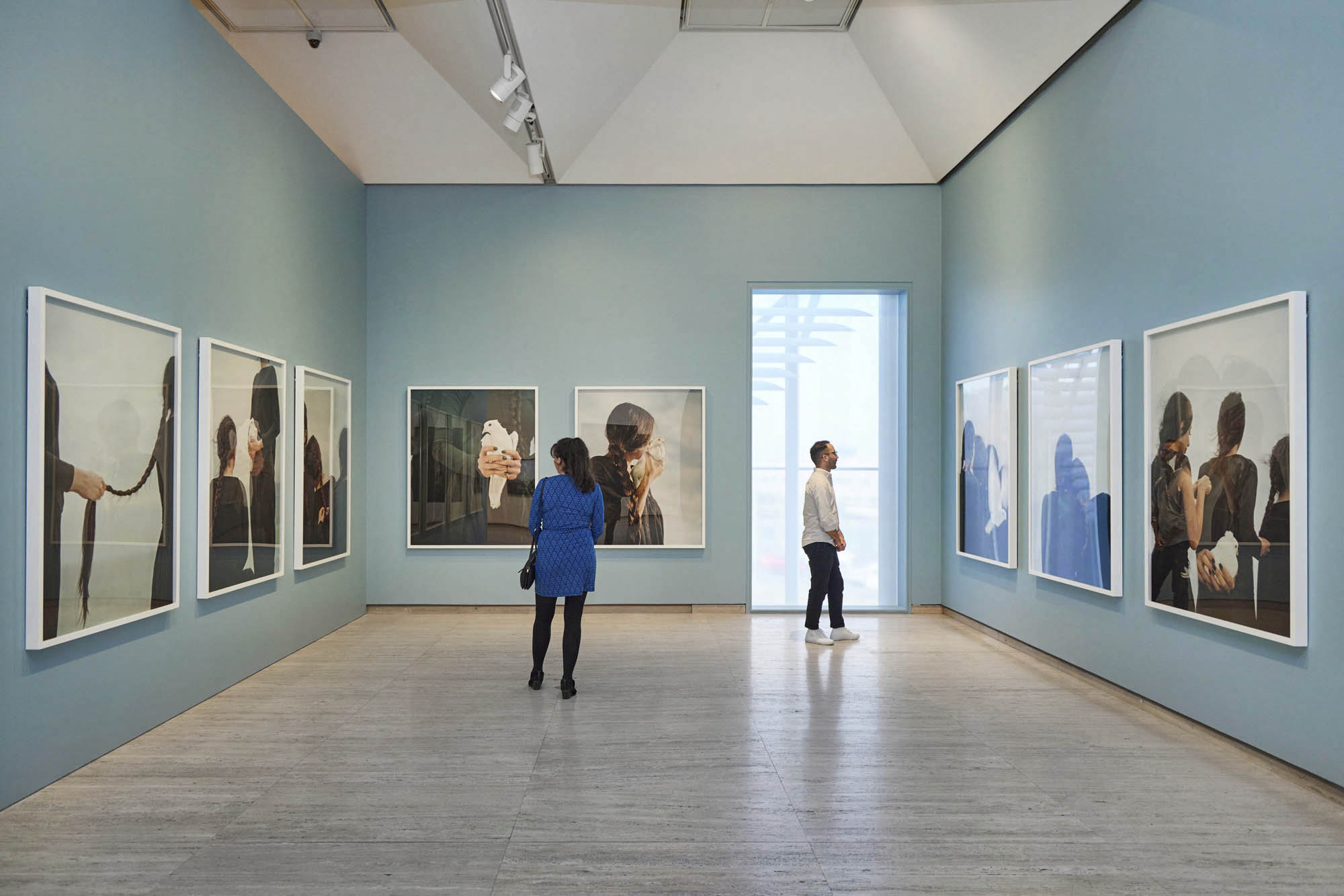
Hoda Afshar: A Curve is a Broken Line includes the reveal of a new body of work commissioned for the exhibition, titled In turn 2023, which is a series of large-scale photographs depicting Iranian women who, like Afshar, live in Australia and have watched, from afar, the women-led Iranian uprising that began in September 2022. Presented one year on from when the uprising started, the portrait series is something of an elegy, speaking to their shared grief and their shared hope.
Among the most recognisable works featured in the exhibition, is Behrouz Boochani – Manus Island 2018, which was acquired by the Art Gallery in 2020 from Afshar’s pivotal series Remain 2018, which comprises a video and suite of photographs. Made on Manus Island, Papua New Guinea with a group of stateless asylum seekers, the video and photographs of Remain serve as testimony to the lived impact of Australia’s border protection policy.
The exhibition is accompanied by a publication, Hoda Afshar: A Curve is a Broken Line (RRP$65) featuring new writing by curator Isobel Parker Philip and writers including Hala Alyan, Elyas Alavi, Behrouz Boochani, Andrew Brooks and Astrid Lorange (working as the duo Snack Syndicate), Taous Dahmani, Shahram Khosravi and Sarah Sentilles.
Press release from the Art Gallery of New South Wales
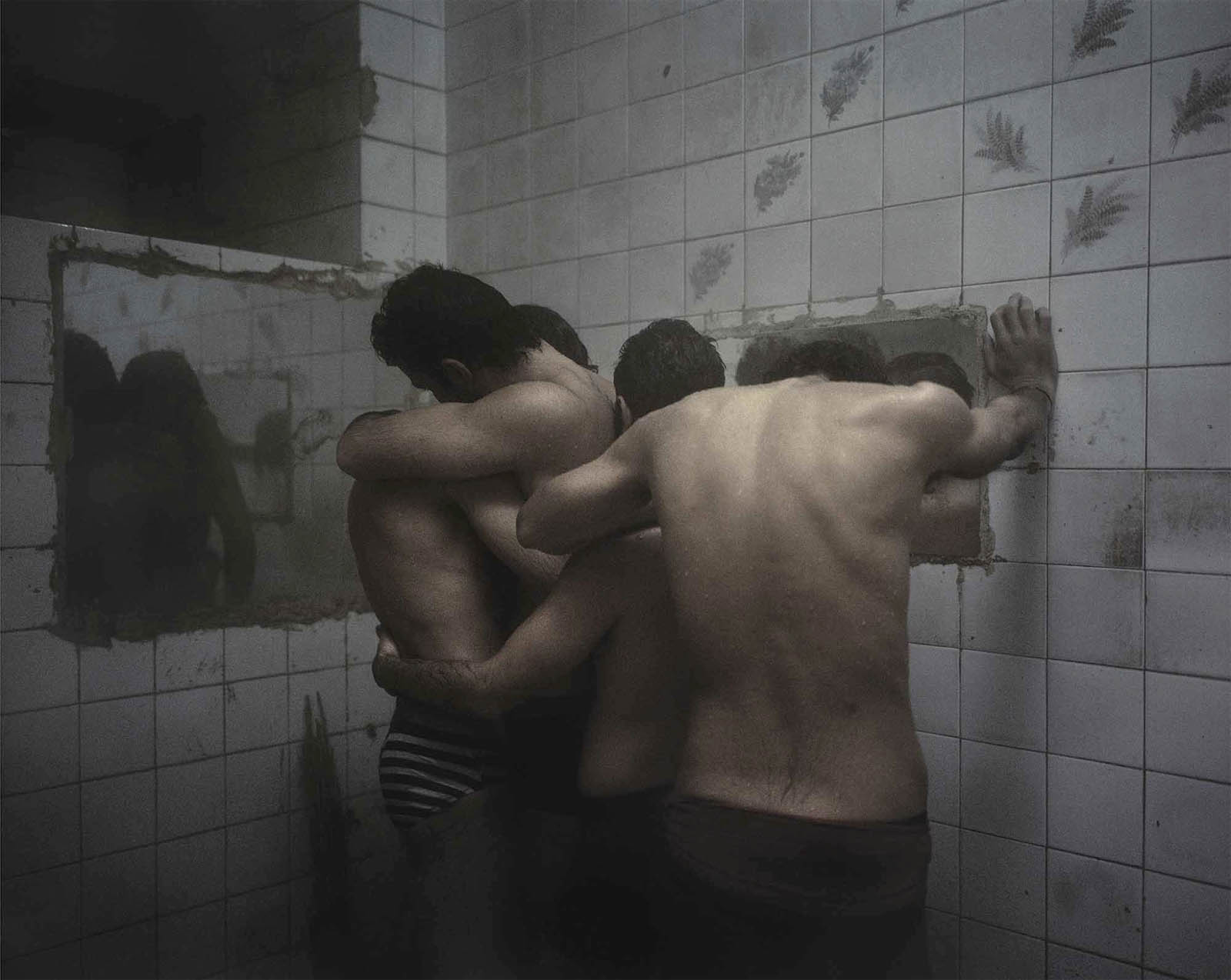
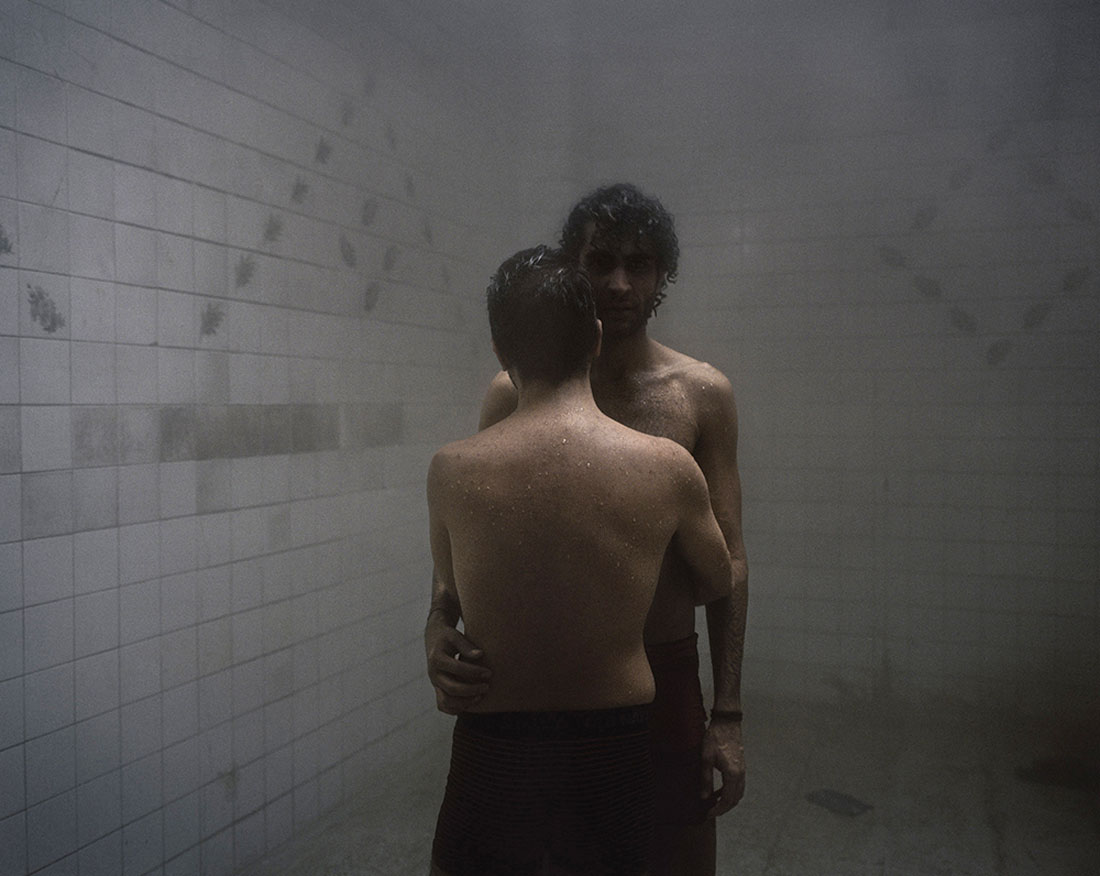
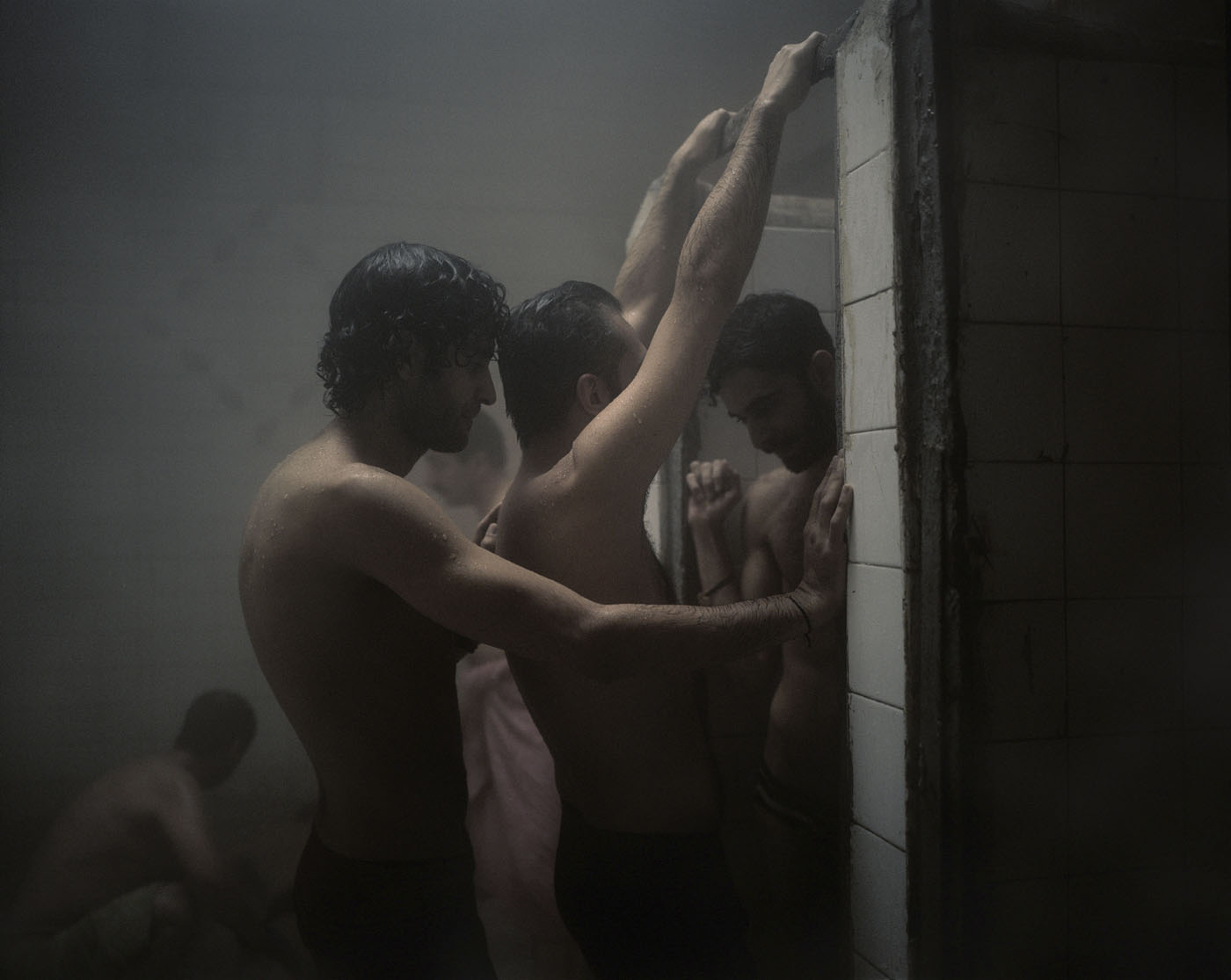
The series Behold was made while the artist was travelling in the Middle East and befriended a group of young gay men who invited her to photograph them in a local male-only bathhouse.
The title Behold is alluding to the role of the viewer, the camera, in partially constructing the meaning of these images. For instance, the visible expressions of male intimacy tend to be viewed through a very narrow sexualized frame in the West, but in Iran, like elsewhere in the East, it is quite normal to see men engaged in physical contact, embracing each other and kissing cheeks, physically massaging each other in bathhouses, without it being sexualized. It is like public displays of breastfeeding and images of naked infants or adolescents – and also male intimacy – it is always interesting for me the reactions that these things engender in the West – the weird sort of prohibitions, and paranoias that surround the displaying of certain bodies or their interactions.
Picking up on something that John Berger said for example – if we were to replace the men in these images with women then of course the reaction would be very different. So returning to the idea of viewing: this work for me (now, upon reflection) is also about challenging the viewer – or different viewers – about these things. because despite the points just mentioned, the dominant reading of the work will still likely be about the censorship of bodies and identities in a particularly religious environment. But again what I am suggesting is that this has something, though not everything, to do with our own framing.
Hoda Afshar Instagram page
In Behold (2016), once more we see acts of resolute defiance by people performing for the camera. Afshar was invited by a group of gay men to observe re-enacted gestures of protection and intimacy outlawed in most of the Middle East.
Unable to freely express their love in society, they disclose and affirm it for Afshar and her lens.
Behold was made unexpectedly, and without design. I was travelling in a city that I sometimes return to, and I got to know a group of gay men. There, where they live, these men (and many others like them) are mostly left to be. But only on the condition that they lead one part of their lives in secret. Rarely, that is, do their bodies ever meet in open honesty outside, in public. Only here, in this bathhouse, where their desire to be seen and embraced by others – just to be and to be held – is played out the partial openness of these four closed walls.
The bathhouse no longer exists. But while it still did, these men invited me to document it and a little glimpse of their lives in it. We arrived, but I was not allowed to enter. So we rented the place, and for a few hours I took pictures while these men played themselves performing their lives for my peering camera, in order that their desire to be seen might be realised, in part at least, here in the world of the images – in the act of beholding, where the bare thereness of life is transformed from mere appearing or appearance, into something more meaningful … into recognition.
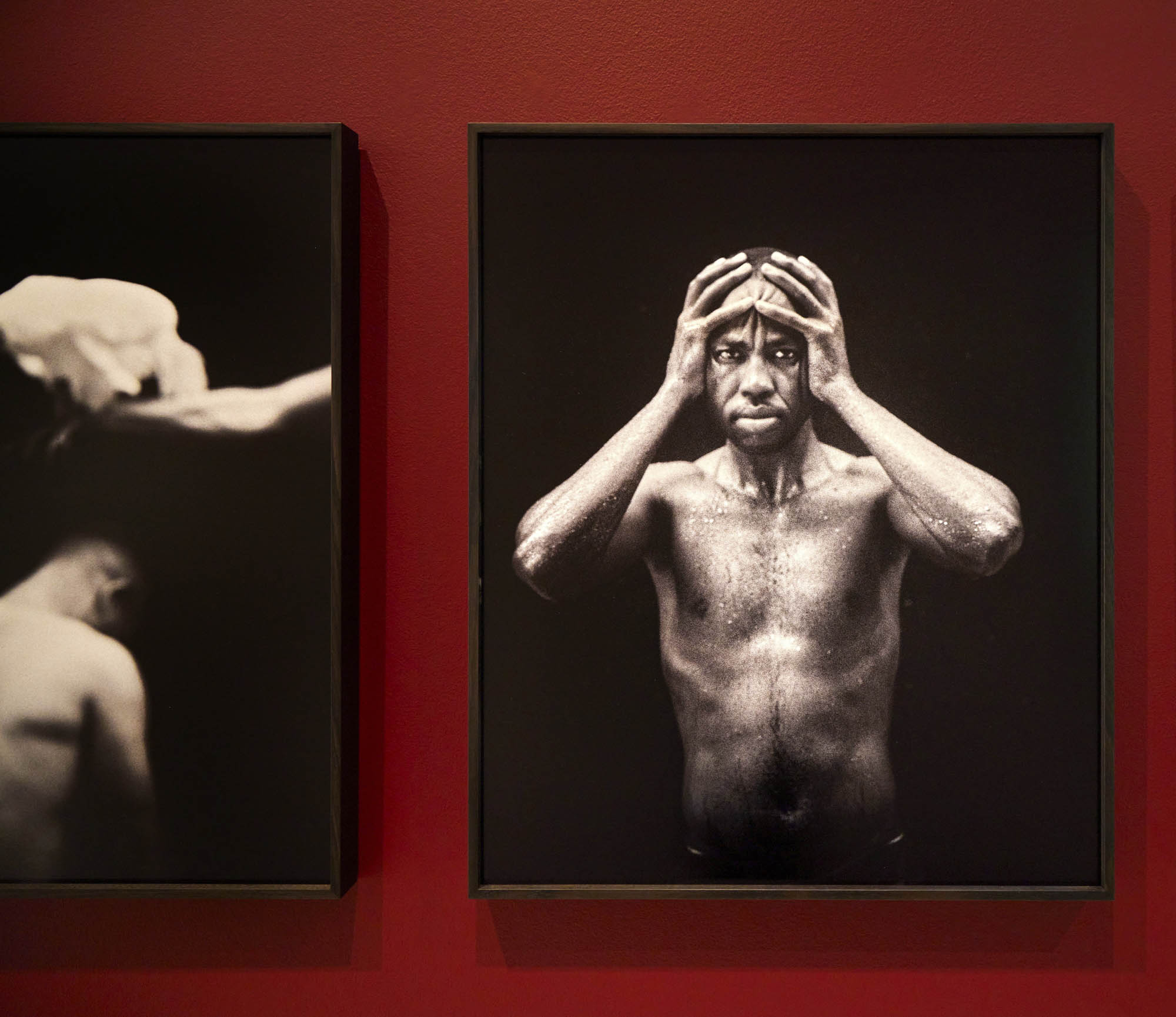
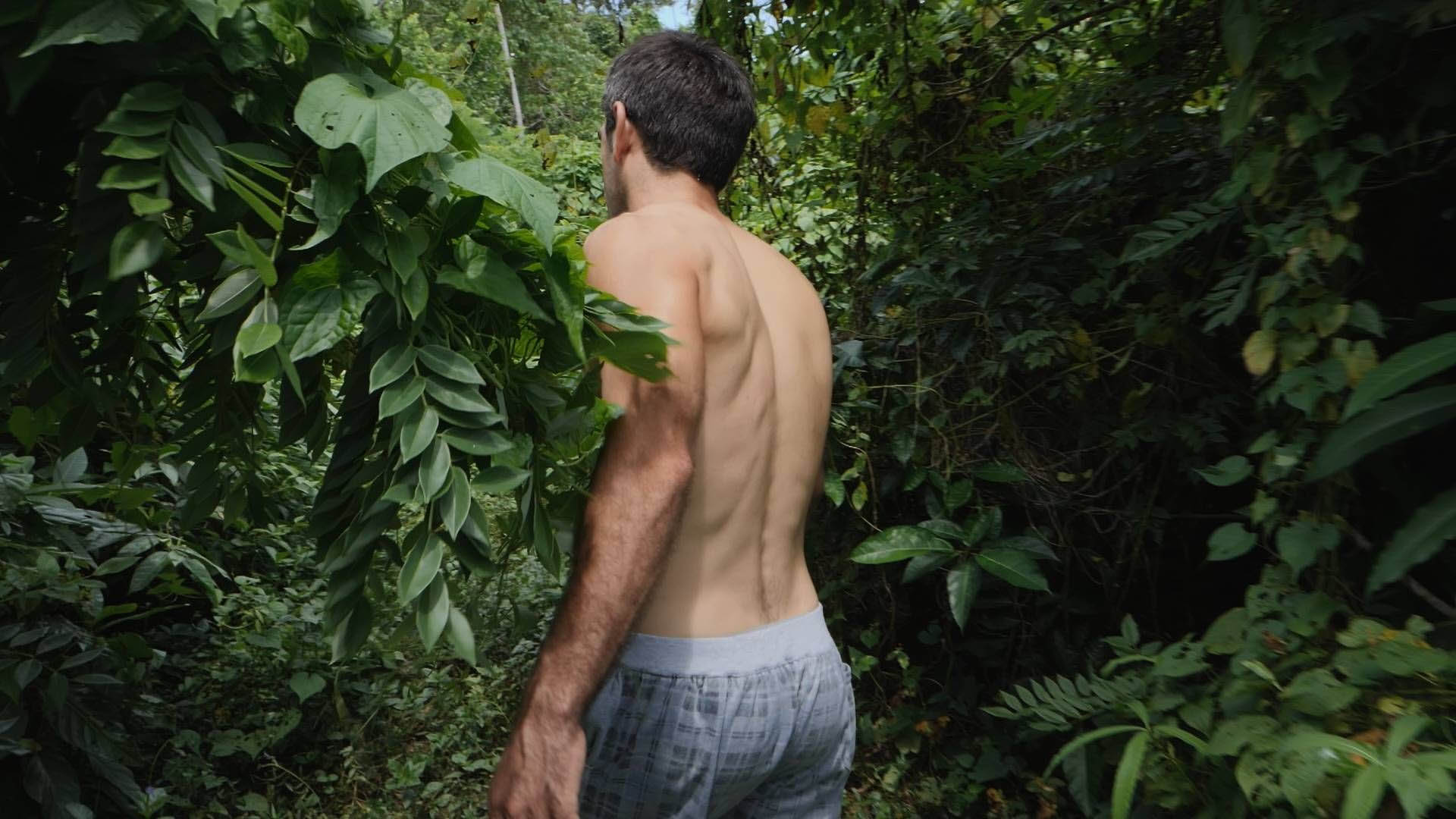
Remain addresses Australia’s contentious border protection policy and the human rights of asylum seekers. The work was made in collaboration with several of the men who remained on Manus Island, Papua New Guinea, six or more years after they left their homelands to seek asylum in Australia, but instead were sent to languish in the remote offshore detention centre. The work involves these men retelling their individual and shared stories through staged images, words, and poetry, and bearing witness to life in the Manus camps: from the death of friends and dreams of freedom, to the strange air of beauty, boredom, and violence that surrounds them on the island.
Afshar believes ‘typical images of refugees only reinforce in the eyes of the viewer their inferior image and position’. Afshar, in collaboration with the people in her
portraits, attempted to create ‘an artwork – using the language of poetry, performance, and song – that defies such logic, and forces the viewer to confront their
own incomprehension, as well as the very inexplicableness of the situation that these men face.’ Collaboration, trust and empathy is an important aspect of Afshar’s art practice. She says:
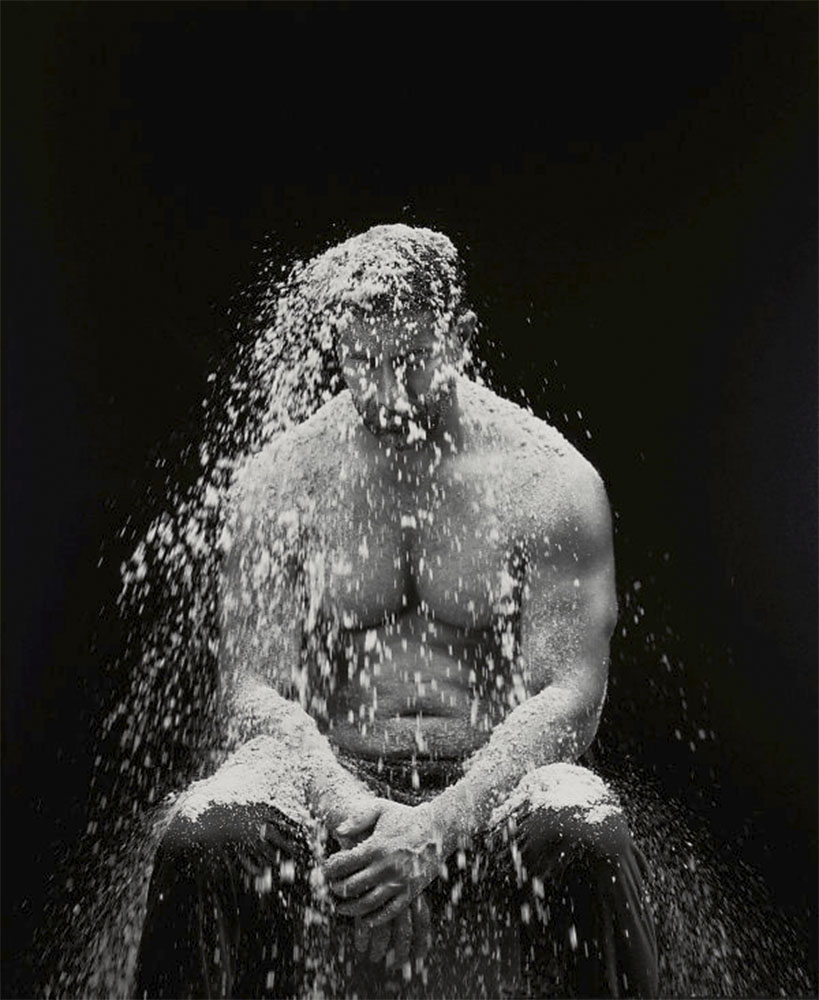
One portrait shows a stateless Kurdish refugee called Emad struggling under a downpour of sand. When I asked him what natural element he wanted to use in his image, he chose soil. He said: ‘It reminds me of land; the land that I was torn from; the land that has been torn from me. From us. Soil is the most precious idea in Kurdish culture. But we are stateless. I’ve been stateless my whole life.’
Afshar’s criticism of documentary photography isn’t aimed at photographers themselves, or their intentions: ‘It’s important for all of us to look at the visual languages that we inherited, that are predominantly imperial visual languages, and ask questions about why we’re framing things in a certain way.’
Hoda Afshar’s 2018 body of work Remain is an unflinchingly political commentary on Australia’s border protection policy and serves as testimony to its assault of human rights. Encompassing a film and a suite of photographic portraits, Remain speaks the stories of a group of stateless men who remained on Manus Island, Papua New Guinea, after the immigration detention centre closed in October 2017. In the film, their experiences are recounted as episodic fragments shot through with violence in voice overs that are by turns lyrical and brutal. Some recite poetry, some sing, some remember the riots and the suicides. As their stories unfold, the camera pans over a picturesque landscape – lush foliage and crystal-clear water. A ‘green hell’ as one man describes it. It is the abrupt collision of these two registers, the haunting narrative and the idyllic imagery, that carries the emotional force of the work. It is beautiful and horrifying at the same time.
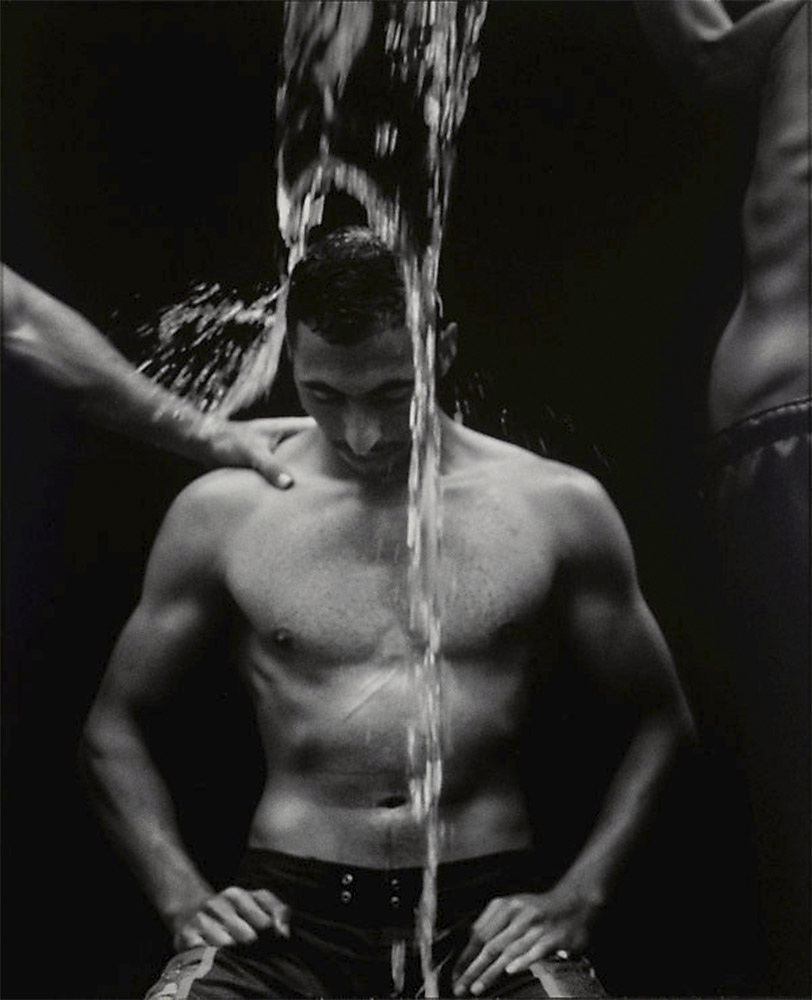
The accompanying photographic portraits of the same protagonists are insistent and powerful. They stand before us, in the foreground of the image, against a dark backdrop. In these photographs, there is nothing to distract us from the figures themselves. Nothing to detract from the simple fact of their presence. They each assert their right to be seen. The bluntness of this gesture is itself a political act. For that is what detention does; it makes individuals invisible. In these portraits, Afshar acknowledges the plight of these men metaphorically. They are beset by the elements, by fire, water and earth. But at no point is their humanity questioned.
Text from the Art Gallery of New South Wales website
Behrouz Boochani (Persian: بهروز بوچانی; born 23 July 1983) is a Kurdish-Iranian journalist, human rights defender, writer and film producer living in New Zealand. He was held in the Australian-run Manus Island detention centre in Papua New Guinea from 2013 until its closure in 2017. He remained on the island before being moved to Port Moresby along with the other detainees around September 2019. On 14 November 2019 he arrived in Christchurch on a one-month visa, to speak at a special event organised by WORD Christchurch on 29 November, as well as other speaking events. In December 2019, his one month visa to New Zealand expired and he remained on an expired visa until being granted refugee status in July 2020, at which time he became a Senior Adjunct Research Fellow at the University of Canterbury.
Boochani is the co-director, along with Iranian film maker Arash Kamali Sarvestani, of the documentary Chauka, Please Tell Us the Time, has published numerous articles in leading media internationally about the plight of refugees held by the Australian government on Manus Island, and has won several awards.
His memoir, No Friend But the Mountains: Writing from Manus Prison, won the Victorian Prize for Literature and the Victorian Premier’s Prize for Nonfiction in January 2019. The book was tapped out on a mobile phone in a series of single messages over time and translated from Persian into English by Omid Tofighian.
After the November 2022 publication of his second collection of writings, Freedom, Only Freedom: The Prison Writings of Behrouz Boochani, Boochani visited Australia for the first time to promote the book in December 2022.
Hoda Afshar’s 2018 body of work Remain is an unflinchingly political commentary on Australia’s border protection policy and serves as testimony to its assault of human rights. Encompassing a film and a suite of photographic portraits, Remain speaks the stories of a group of stateless men who remained on Manus Island, Papua New Guinea, after the immigration detention centre closed in October 2017. In the film, their experiences are recounted as episodic fragments shot through with violence in voice overs that are by turns lyrical and brutal. Some recite poetry, some sing, some remember the riots and the suicides. As their stories unfold, the camera pans over a picturesque landscape – lush foliage and crystal-clear water. A ‘green hell’ as one man describes it. It is the abrupt collision of these two registers, the haunting narrative and the idyllic imagery, that carries the emotional force of the work. It is beautiful and horrifying at the same time.
The accompanying photographic portraits of the same protagonists are insistent and powerful. They stand before us, in the foreground of the image, against a dark backdrop. In these photographs, there is nothing to distract us from the figures themselves. Nothing to detract from the simple fact of their presence. They each assert their right to be seen. The bluntness of this gesture is itself a political act. For that is what detention does; it makes individuals invisible. In these portraits, Afshar acknowledges the plight of these men metaphorically. They are beset by the elements, by fire, water and earth. But at no point is their humanity questioned.
Text from the Art Gallery of New South Wales website
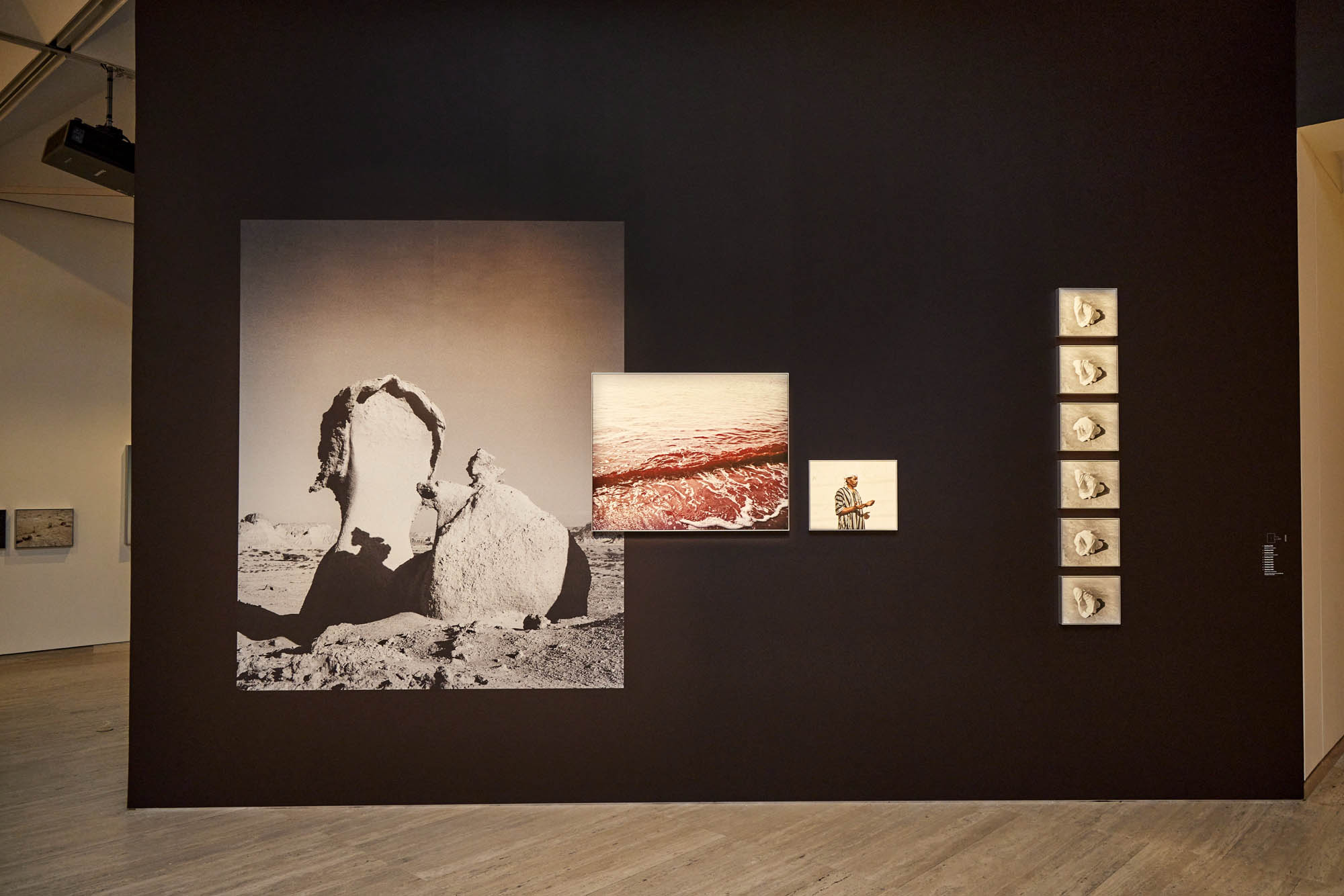
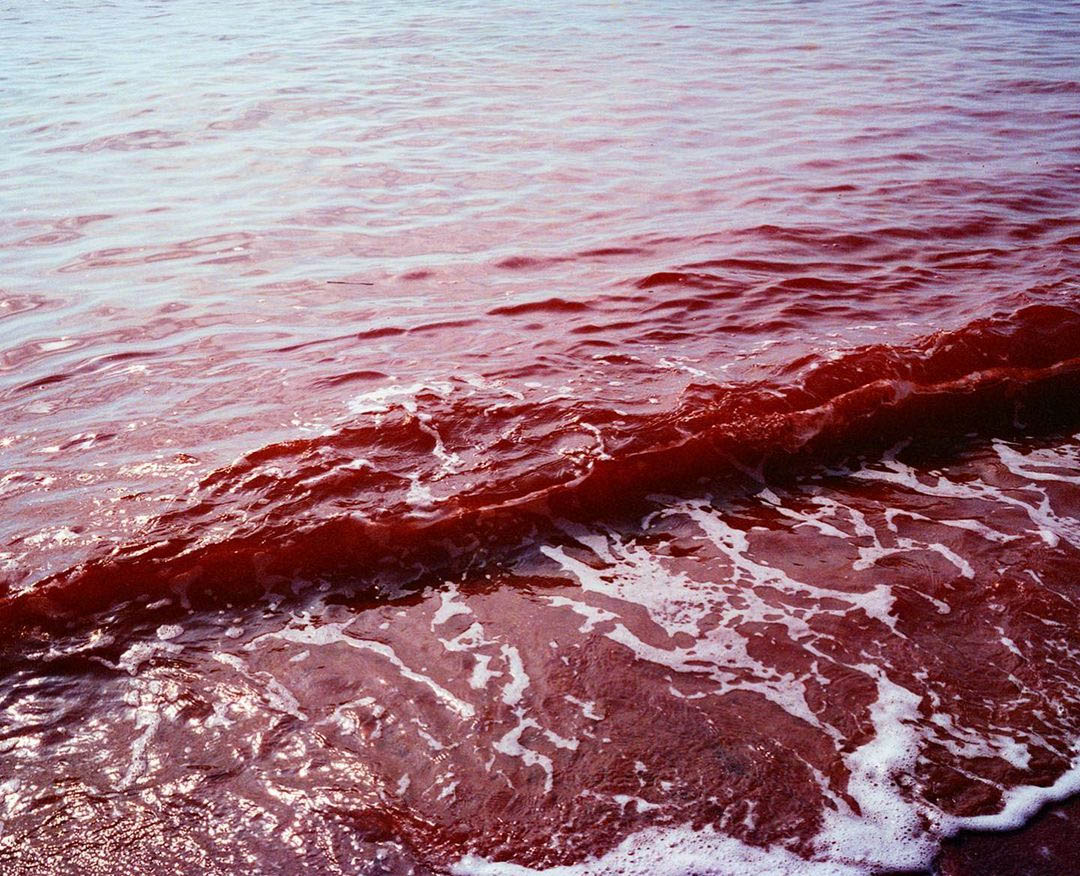
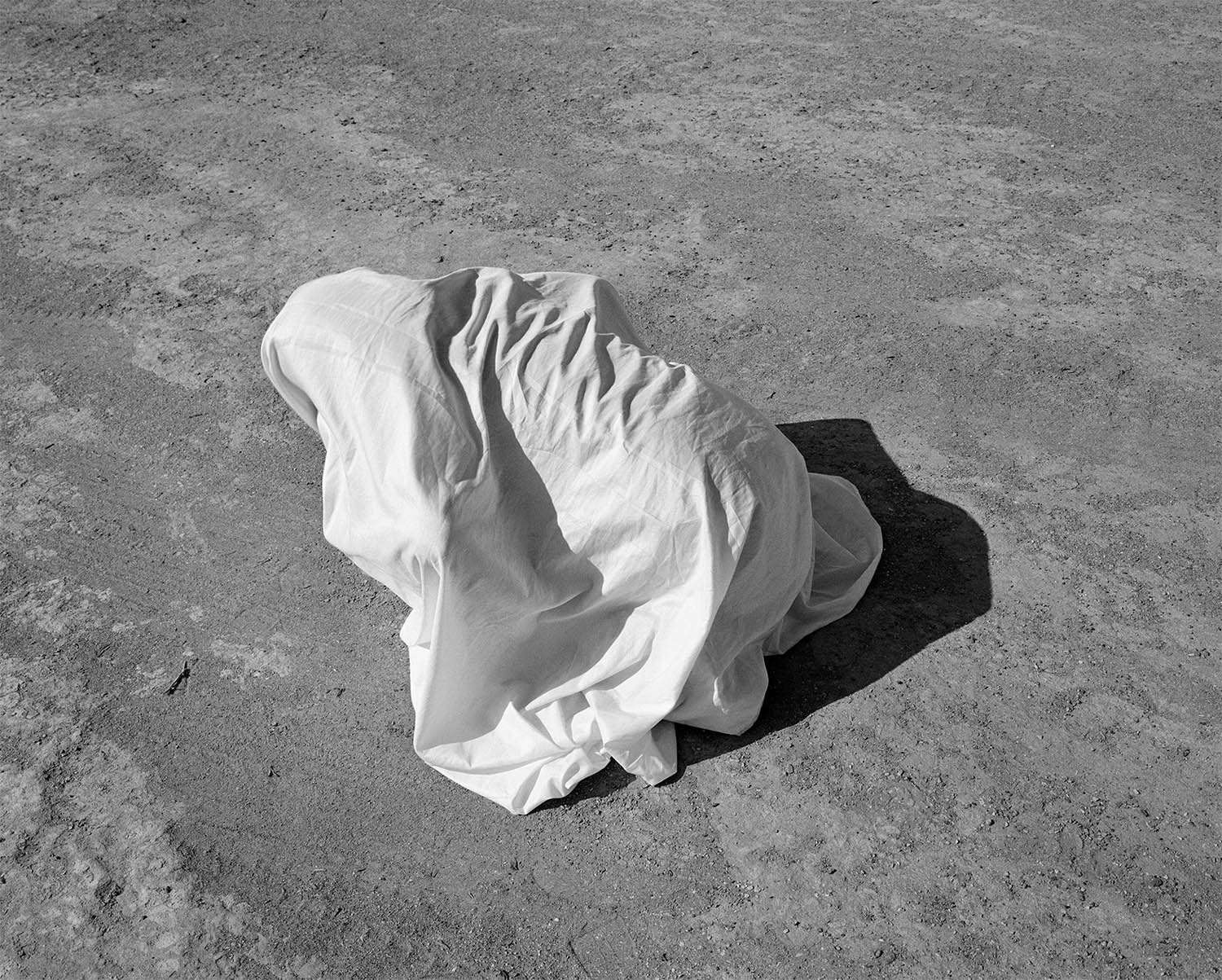
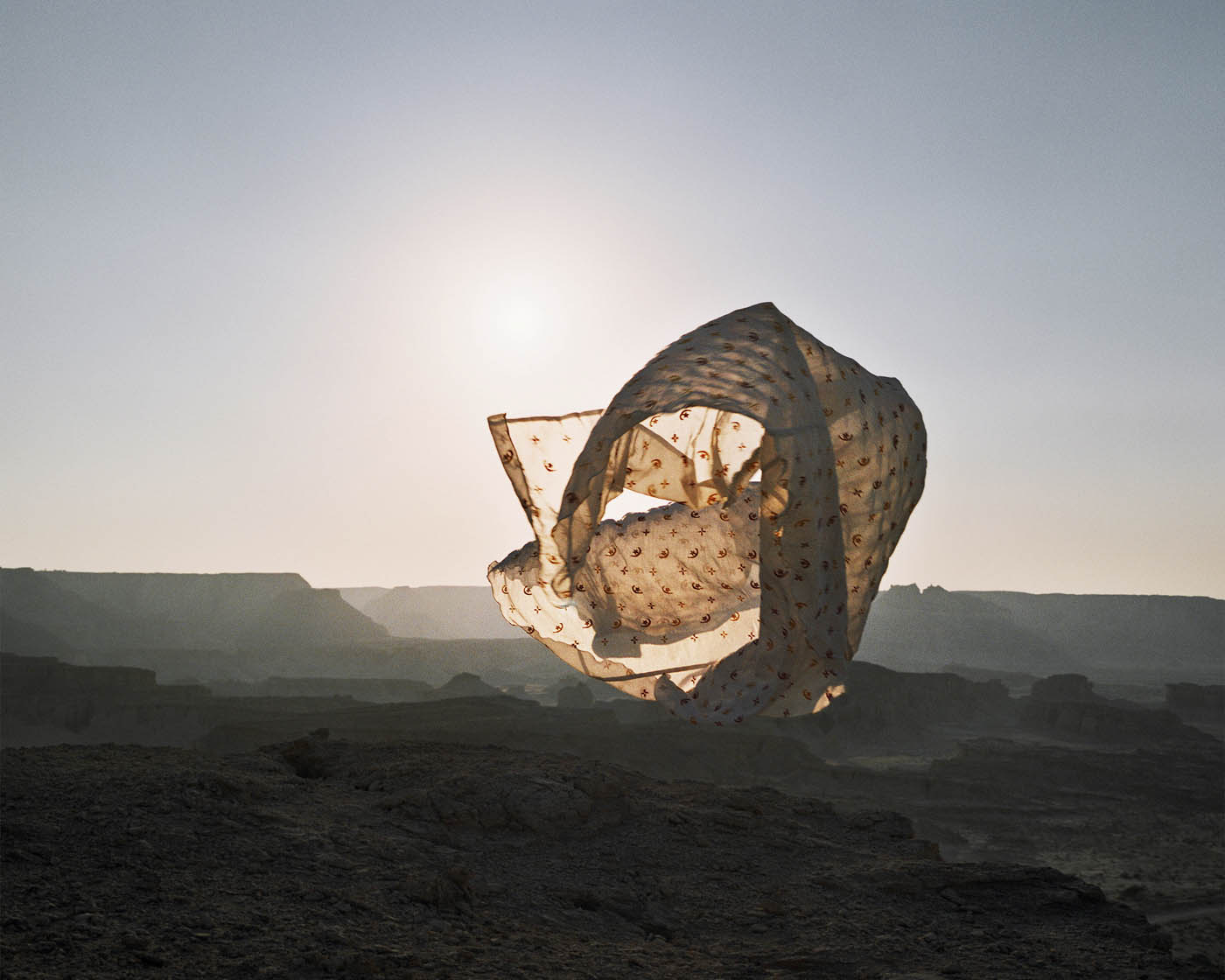
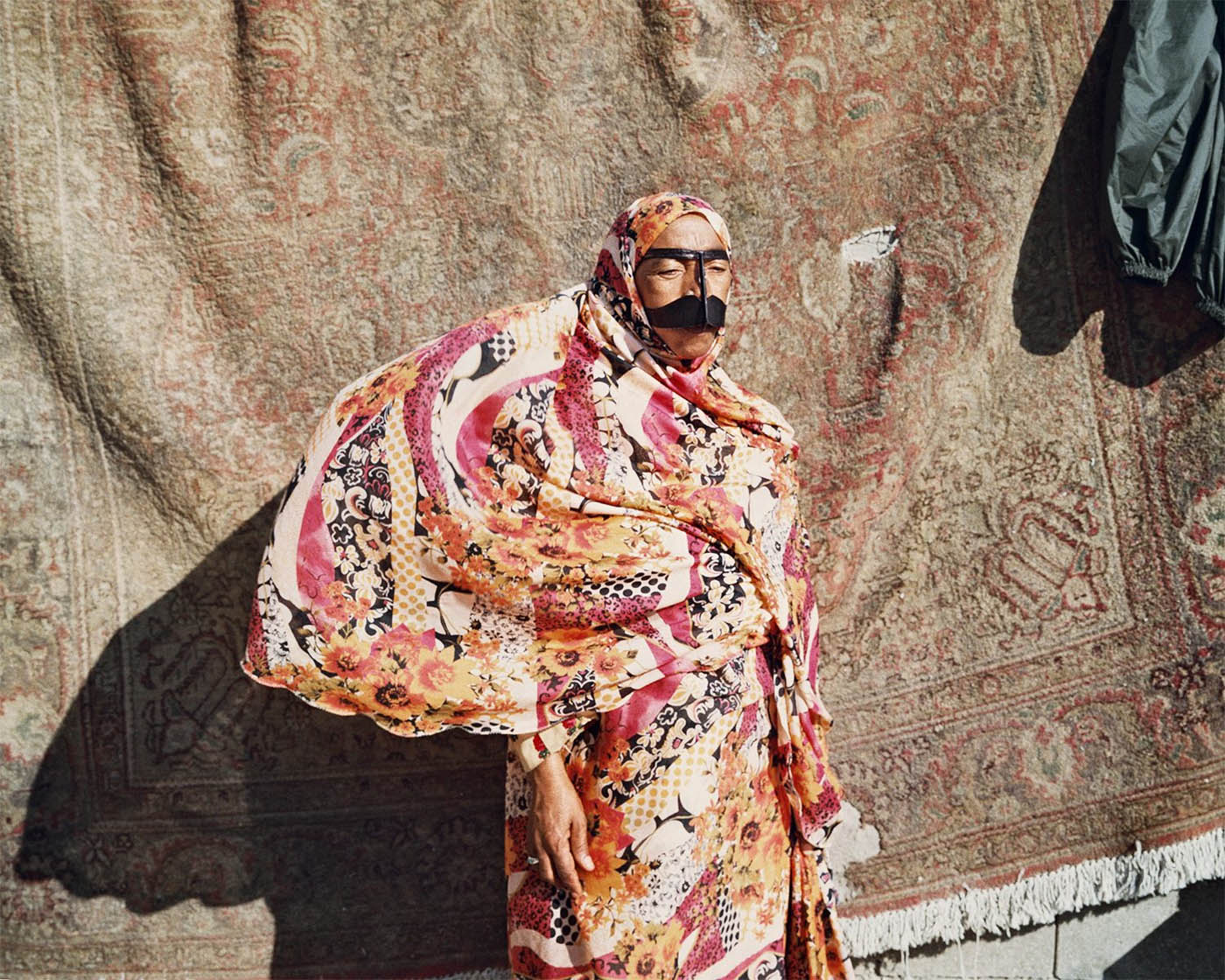
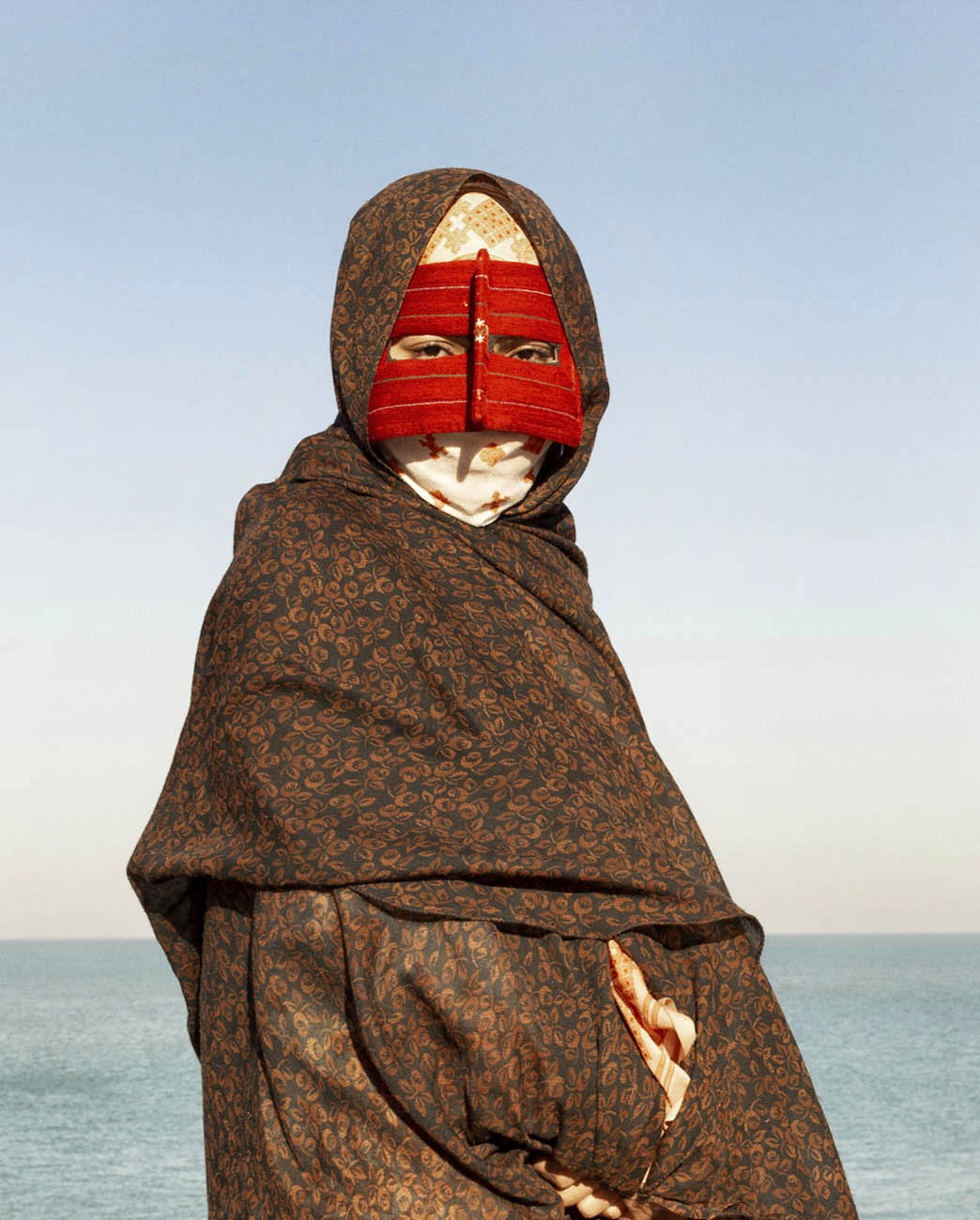
On the islands in the Strait of Hormuz, a belief exists that a wind, known as zār, can possess a person, and can be exorcised from them through an intense ceremony of dance and music.
On the islands of the Strait of Hormuz, near the southern coast of Iran, there is a belief that the winds – generally believed to be harmful – can possess a person, causing them to experience illness or disease. As part of a ritual placating the winds’ harmful effects, the islands’ inhabitants practice a ceremony involving incense, music and movement, in which a hereditary cult leader speaks with the wind through the afflicted patient in order to negotiate its exit.
When artist Hoda Afshar first visited the islands in 2015, she found herself drawn not only to these distinctive customs practiced by its inhabitants but also to its otherworldly landscapes – the strange valleys and statue-like mountains, themselves sculpted by the wind over many millennia. While the exact origins remain unclear, the existence of similar beliefs in many African countries suggests that the cult may have been brought to the south of Iran from southeast Africa through the Arab slave trade. This seldom spoken history became a starting point into an intriguing project for Afshar, who sought to document the story of these winds and the traces they have left on these islands and inhabitants.
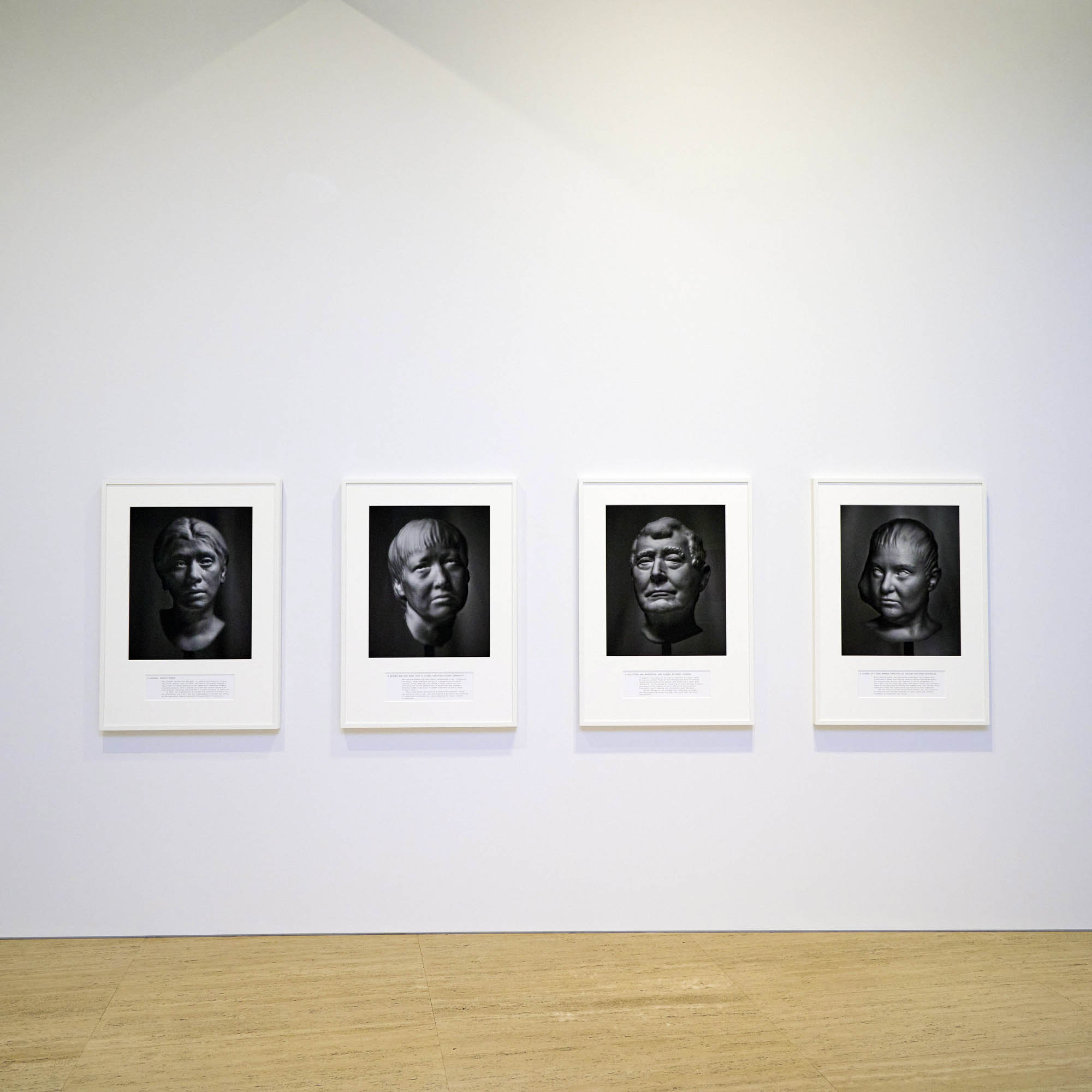
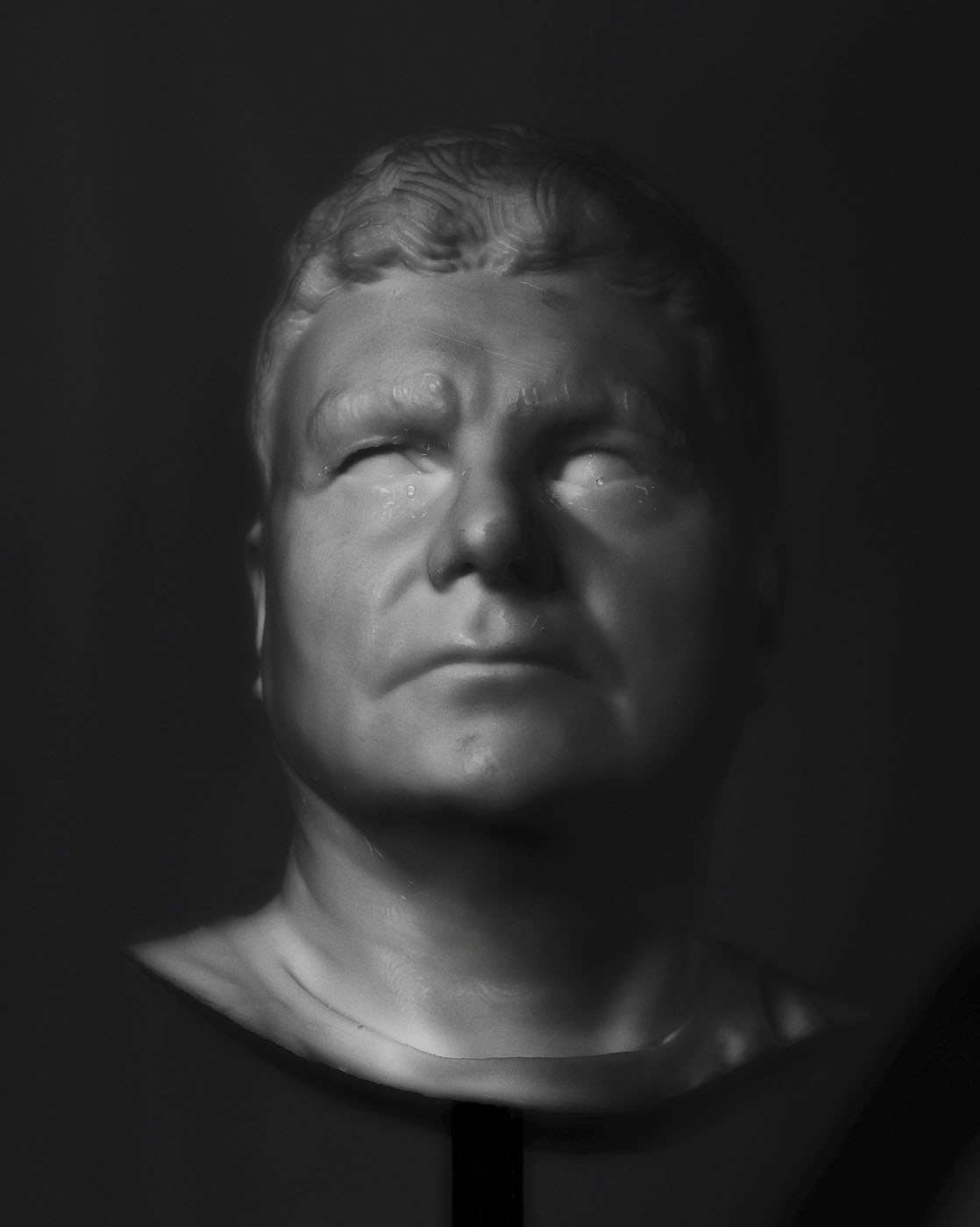
With 110 cameras functioning instantaneously in a photo studio, Afshar created 3D images of her subjects and used a 3D printer to convert them into statues.
An officer and lawyer in the Australian Special Forces
While serving in Afghanistan, he raised concerns that the Australian government were covering up the corruption of Australia’s defence force for political gain, and sacrificing the lives of Australian soldiers. After his concerns were consistently ignored, he copied over a hundred secret documents and distributed them to several journalists and to the ABC. He faces trial on five charges relating to National Security. If found guilty, he will face lifetime imprisonment.
Portrait of Rod St George, who exposed atrocious conditions at the Manus Island detention centre
Agonistes (2020)
Hoda Afshar explores the experiences of people who have spoken out. The artist worked with people known as whistle-blowers, who have brought to light various transgressions perpetrated in Australian institutions today. Although whistleblowing in Australia is considered a hallmark of our democracy, whistle blowers take great personal risks when drawing attention to institutional wrongdoing.
Agonistes is based on the experiences of several men and women – former employees in the areas of immigration, youth detention, disability care, and other government agencies – who chose to speak out, and who now live with the consequences. They describe the personal and professional ruin, the breakdown of friendships and family relationships, and the physical and mental anguish that followed their decision to call out alleged abuses, and the reasons that led them to do so, despite knowing their possible fate. They explain that if they could go back, they would do it all again.
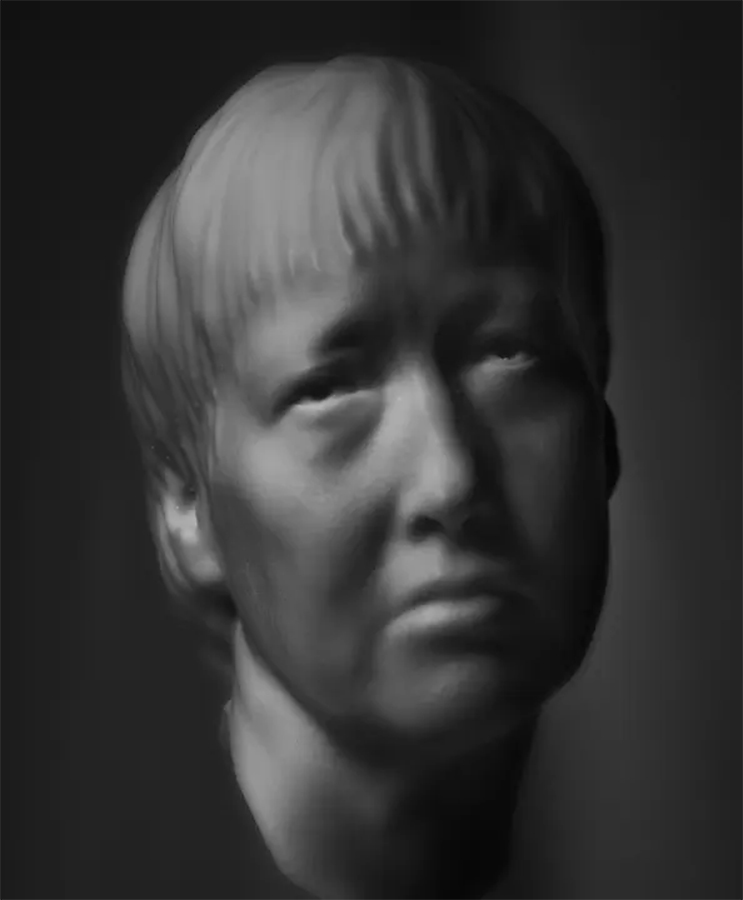
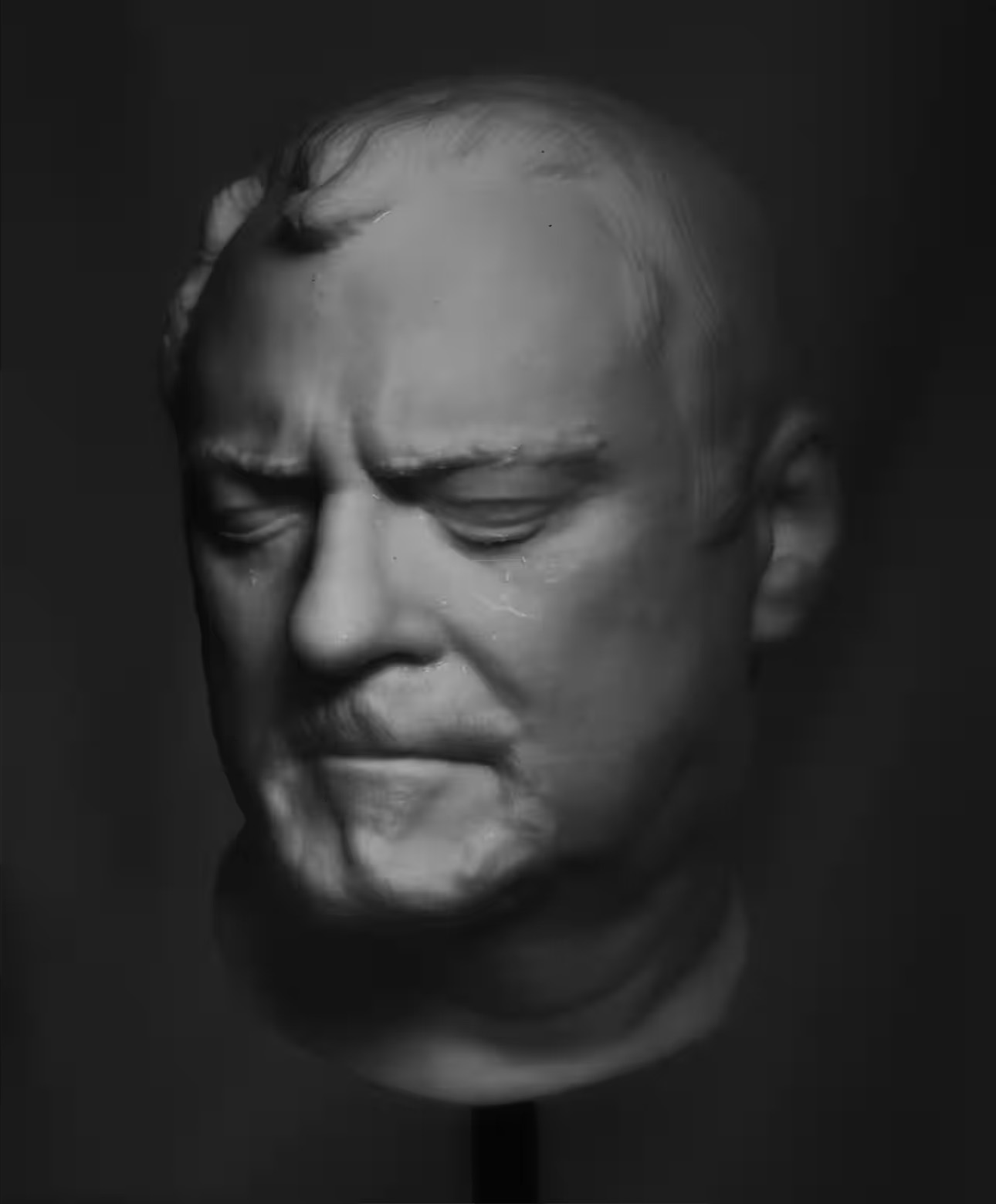
While their individual stories differ, the shared struggle of these men and women and their portraits expose the same agonizing truth: that the choice between responsibility and obligation – between morality and the law – is, in a very real sense, the essence of tragedy. Afshar produced a 3D scan of each of the whistle blowers. This was then 3D printed to create a bust. Afshar created studio photographs of the busts, which resulted in a suite of images that abstracts the identity of each subject. The eyes – a feature we usually use to identify people in photographs – become curiously blank.
“It took me 14 years to find that level of courage, or knowledge or connection to the place [Australia] to make a work like the Agonistes, to turn the lens inward, to feel like I’m authorised to talk about it as a citizen,” says Afshar.
To identify the whistleblowers to approach for the project, Afshar worked with Claire Loughnan, a lecturer in criminology at the University of Melbourne.
She flew each person to Melbourne and photographed them using a system of 110 cameras – which allowed her to essentially create a 360-degree portrait. She used this composite image to generate a 3D-printed sculpture of each whistleblower. …
Afshar was fascinated to discover that the one thing that the 110 cameras could not capture was the details of her subjects’ eyes – resulting in a glazed-over effect.
This accidental byproduct of the process had a certain poetic resonance for the photographer: it reminded her of the eyes on ancient Greek busts.
She points out that democracy and tragedy emerged in ancient Greece at the same time.
“Often in the tragic narratives, the main character is the one that is caught between two conflicting choices: responsibility and obligation, or morality and the law … [or] the public and the state.”
“The reality of Athens at the time was a system that was rooted in patriarchy, slavery, xenophobia, refugee crisis – which are still the struggles of our time. And the function of tragedy then was to give voice to the excluded voices.”
In the Agonistes video work, we hear the excluded voices of the whistleblowers while Afshar zooms in on her subjects’ eyes, mouths, hands.
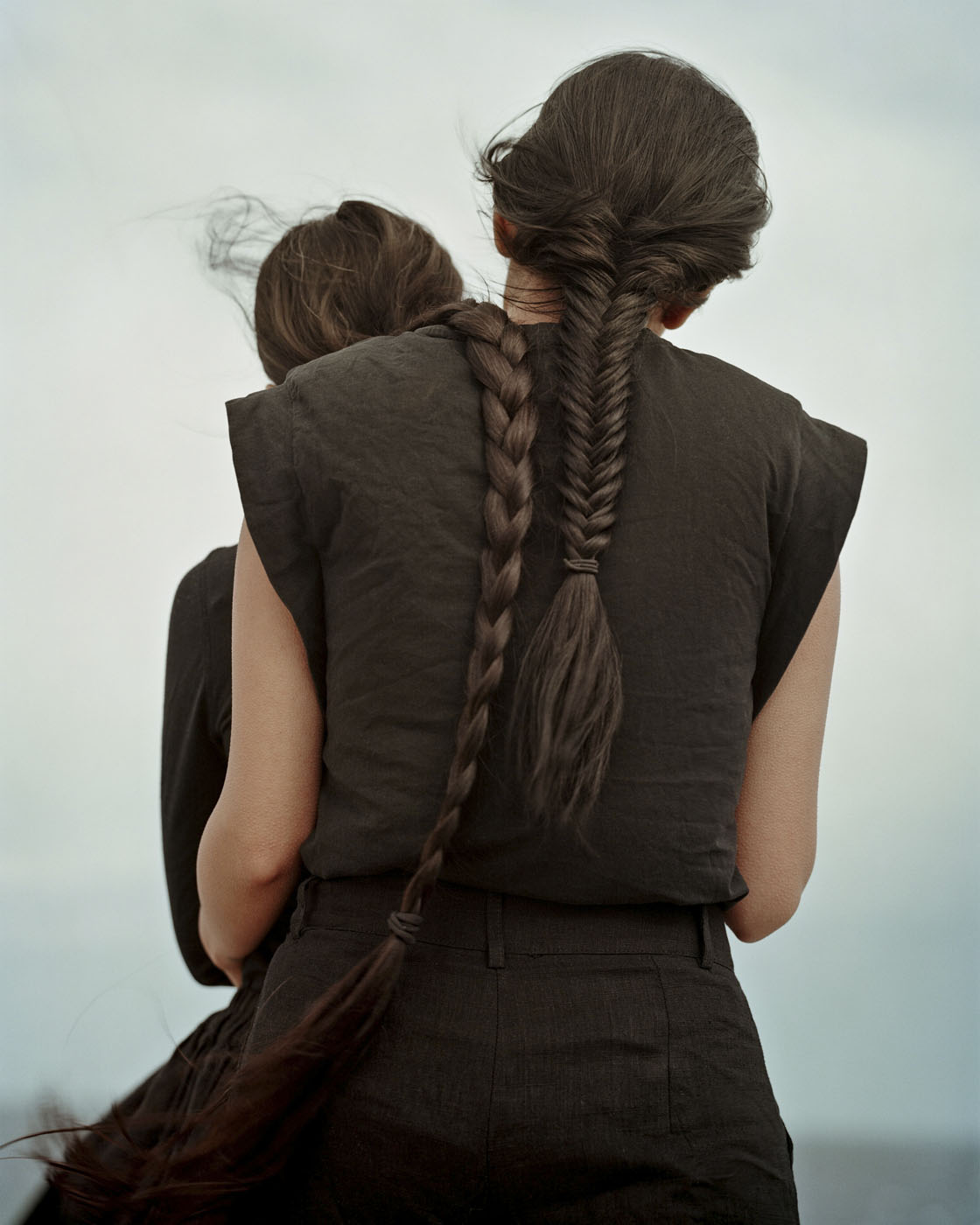
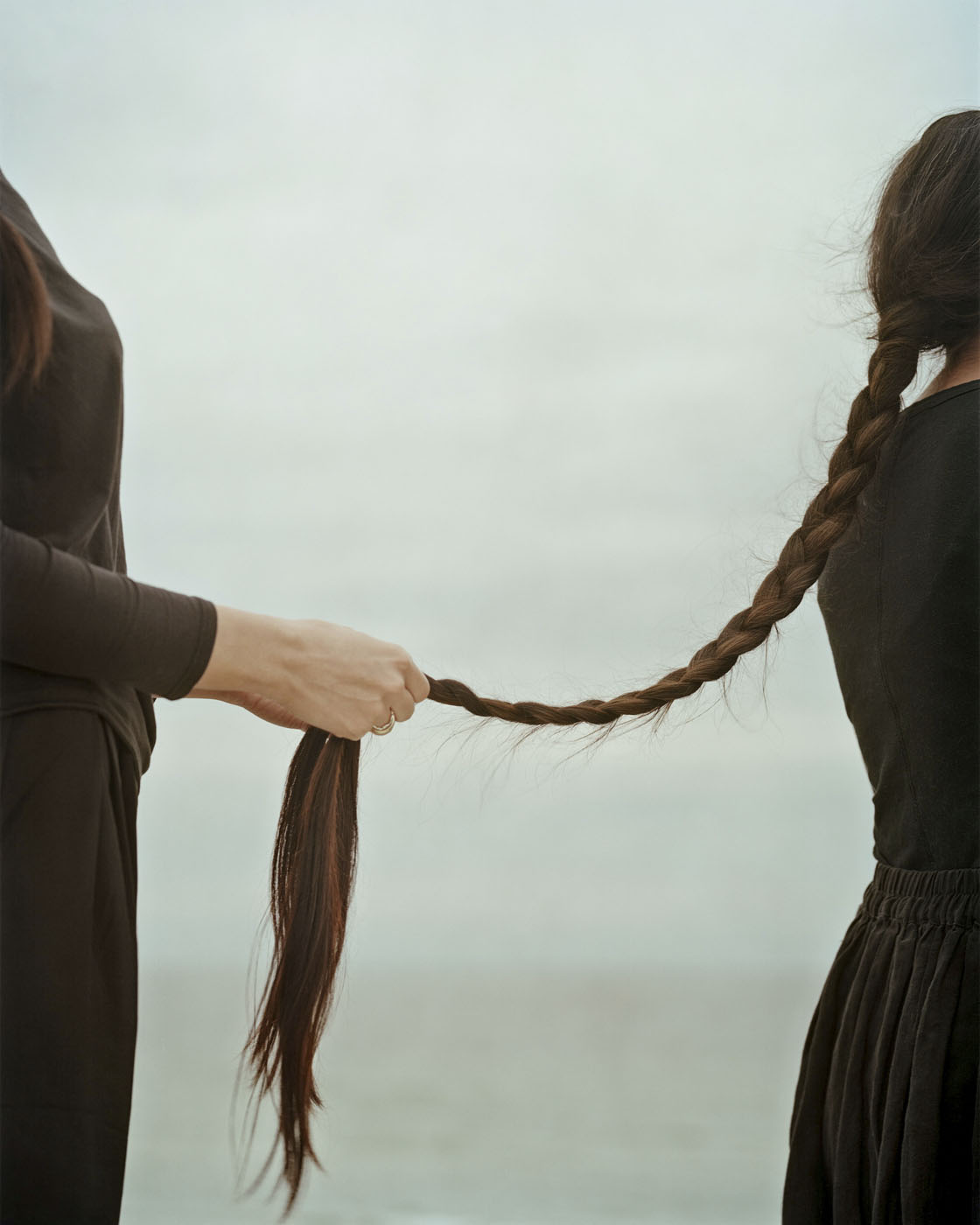
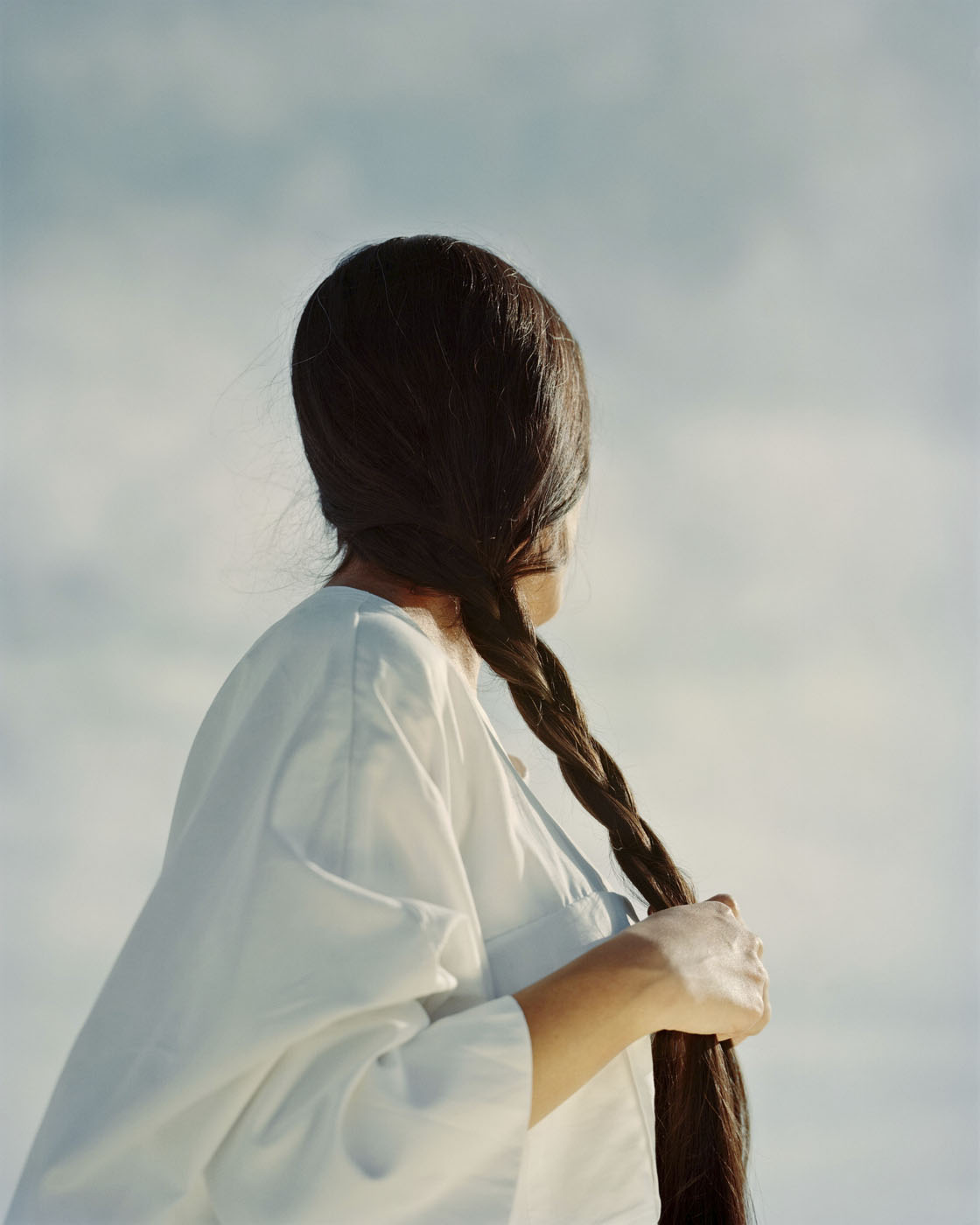
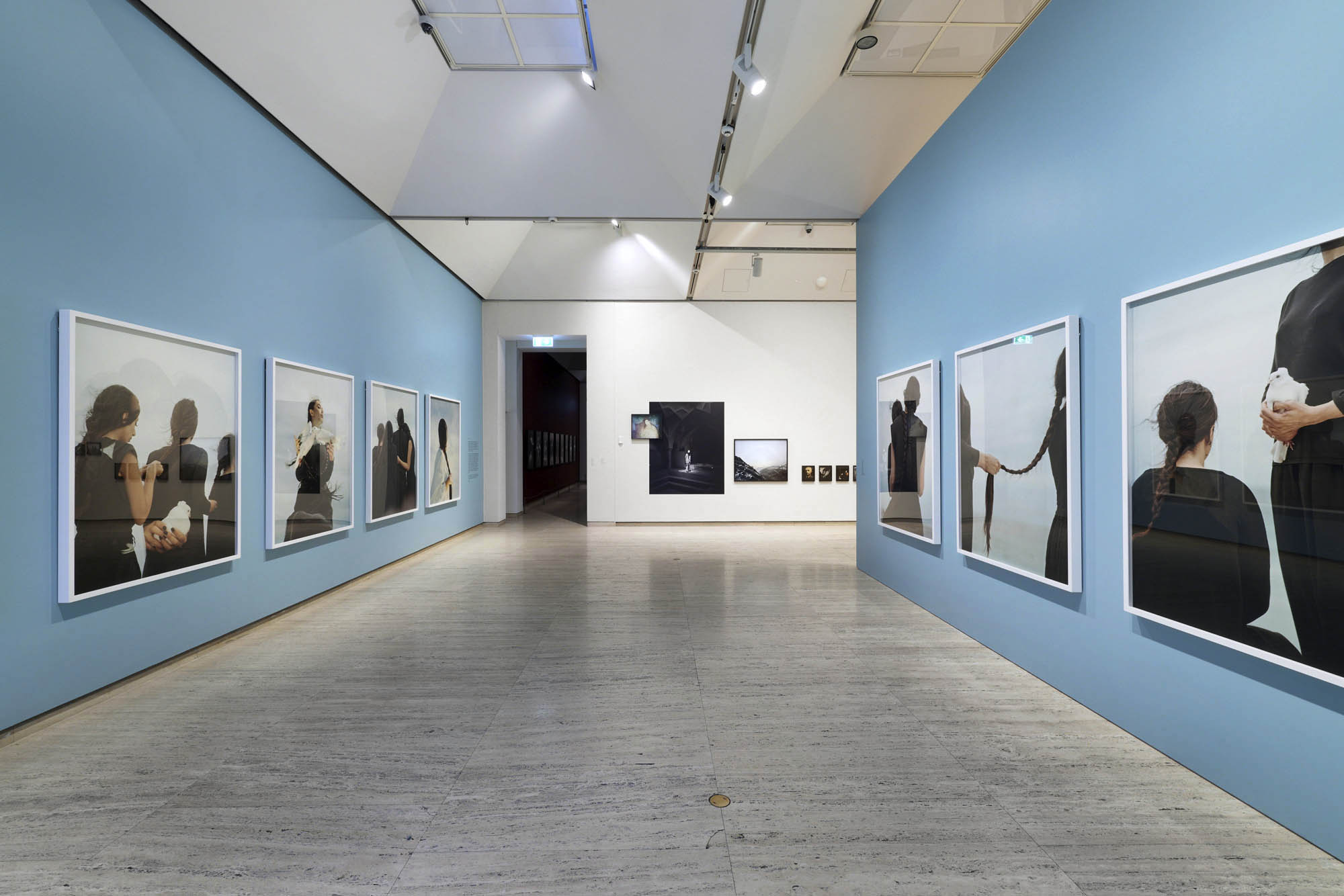
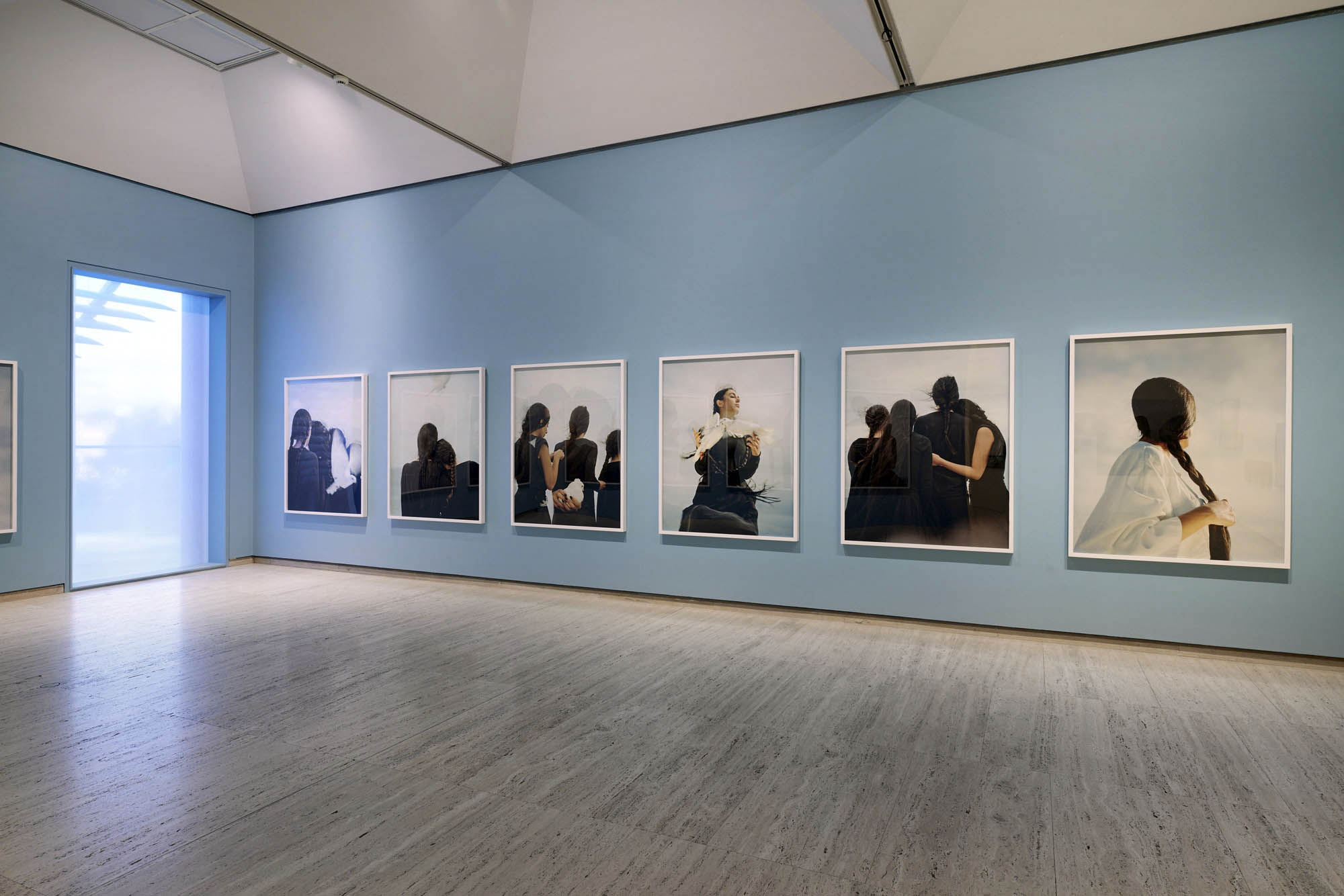
In the adjoining room, the new series In turn (2023) is a suite of large, framed photographs of Iranian women based in Australia. Many images show them as they tenderly braid one another’s hair. These women are unidentifiable, apart from artist and activist Mahla Karimian, who appears airborne with a pair of flying doves.
This work was catalysed by the women-led protest movement sparked by the death of Mahsa Jina Amini, an Iranian Kurdish woman arrested in September 2022 for not following Iran’s strict female dress codes. The uprising filled the streets with women chanting “Women, Life, Freedom!” and “Say her name!” in fearless defiance of authorities, who responded with murderous retaliation.
Afshar was observing her homeland from afar. She says she wanted to “share voices the media was ignoring”. She was inspired by social media images of women plaiting each other’s hair in public: a rebellious act that echoes a practice of female Kurdish fighters preparing for battle.
But the images aren’t violent. They’re quietly peaceful, showing solidarity in grief, hope and determination. In making this “visual letter” to her Iranian sisters, Afshar has risked long-term exile from her country of birth.
Exhibition dates: 17th October 2023 – 21st January 2024
Benjamin Brecknell Turner (English, 1815-1894) North Side of Quadrangle, Arundel Castle
1852-1854
Negative photograph on paper
29.7 x 39.6cm
BnF, department of Prints and Photography, RES PHOTO EI-6-BOITE FOL B (n° 3)
Gift of André and Marie-Thérèse Jammes, 1960
What a lovely exhibition to start the year 2024 on Art Blart.
My favourite photographs in the posting: three beautiful fashion photographs by Frères Séeberger; a stunning late Atget Parc de Sceaux, Duchess Alley (between 1925 and 1927, below) in which you can feel the crispness in the air of the early winter morning; and the glorious seascapes of Gustave Le Gray, probably the best (and most atmospheric) photographer of the sea in all time.
In this posting we observe how black and white photographs are never just black and white but full of different hues and colours. These colour variations tell us a lot about the perception of the image.
As the exhibition text notes: “The strength of the blacks and whites, the variations of hues influence our perception of the image: the more contrasted it is, the more readable it is for our eye saturated with absolute blacks and whites; the more nuanced it is, the more sensitive the distance of time becomes.”
As we enter a new year, another year further away from the origin of the light captured in these photographs, the sensitivity of early photographers and their ability to displace time continues to entrance the viewer.
Dr Marcus Bunyan
Many thankx to the Bibliothèque nationale de France (BnF) for allowing me to publish the photographs in the posting. Please click on the photographs for a larger version of the image.
Noir & Blanc: Une esthétique de la photographie
Black and white is inseparable from the history of photography: its developments, from the end of the 19th century to today, have revealed its plastic force. While the use of colour intensified from the 1970s, black and white reinvented itself as a means of assertive aesthetic expression emphasising graphics and material. Black and white photography remains less expensive and simpler, but its persistence to this day can be explained above all by the fact that it has come to embody the very essence of photography. It appears to carry a universal, timeless, even memorial dimension, where colour would be the sole translation of the contemporary world.
The National Library of France holds one of the richest photographic collections in the world with some six million prints, these are particularly representative of this abundant history of black and white photography.
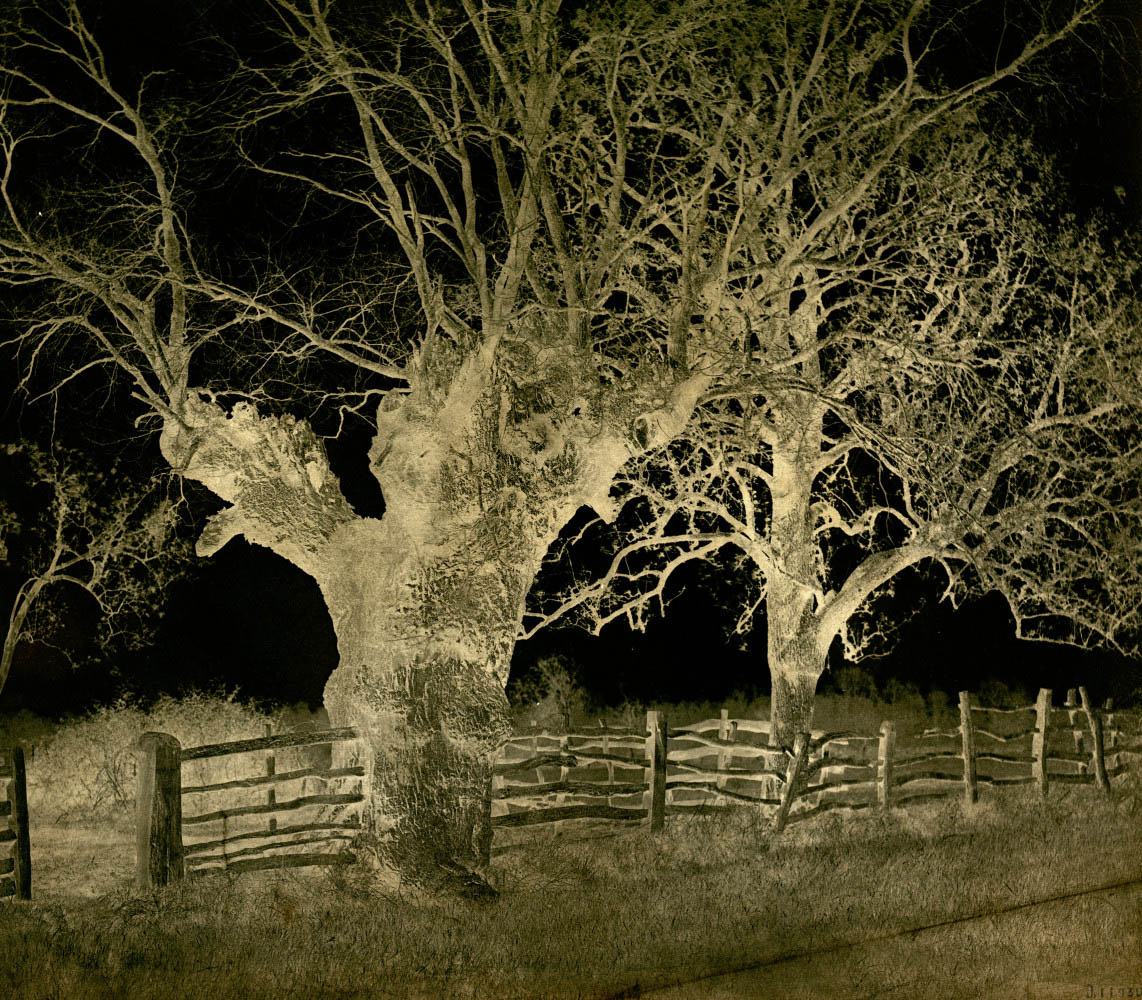
Benjamin Brecknell Turner (English, 1815-1894) Arbre le long d’une clotûre (Tree along a fence)
1852-1854
Negative photograph on paper
23.5 x 27.3cm
BnF, department of Prints and Photography, RES PHOTO EI-6-BOITE FOL B (n° 3)
Gift of André and Marie-Thérèse Jammes, 1960
Photography on paper, with its speed and precision, revolutionised image production in the mid-19th century. The prerequisite is the production of a negative then of the same size as the print. The first negatives are on paper. Reversing the values of blacks and whites, they offer an unknown vision of the world. These oppositions, inverted or not, are the basis of the aesthetics of photography.
One of the earliest British amateur photographers, Benjamin Brecknell Turner (1815-1894) was experimenting with photography barely ten years after the invention of the medium. He exhibited widely during his lifetime and is best known for his beautiful photographs of 19th-century England, picturesque ruins and rural scenes.
A founder member of the Photographic Society of London, Turner contributed to the rapid technical and aesthetic development of photography in the 1850s. Our collection includes a unique album compiled by Turner, ‘Photographic Views from Nature’, containing some of the earliest photographs made in and around the counties of Worcestershire, Surrey, Sussex, Kent and Yorkshire, alongside the radical modern architecture of the Crystal Palace in London’s Hyde Park.
Text from the V&A website
The origins of black and white
Before the invention of colour photography by the Lumière brothers in 1903, one might believe that all photography was black and white. The reality is more complex: the early days were more those of a varied range of values where pure blacks and whites were the exception and so-called sepia tones were the most common. The negative / positive process patented by the Englishman Fox Talbot in 1841 makes it possible to multiply the prints on paper and therefore to vary the shades.
Certain subjects play on oppositions: the mountain views of the Bisson brothers, the Great Wave by Gustave Le Gray, the portraits of the prolific amateur Blancard.
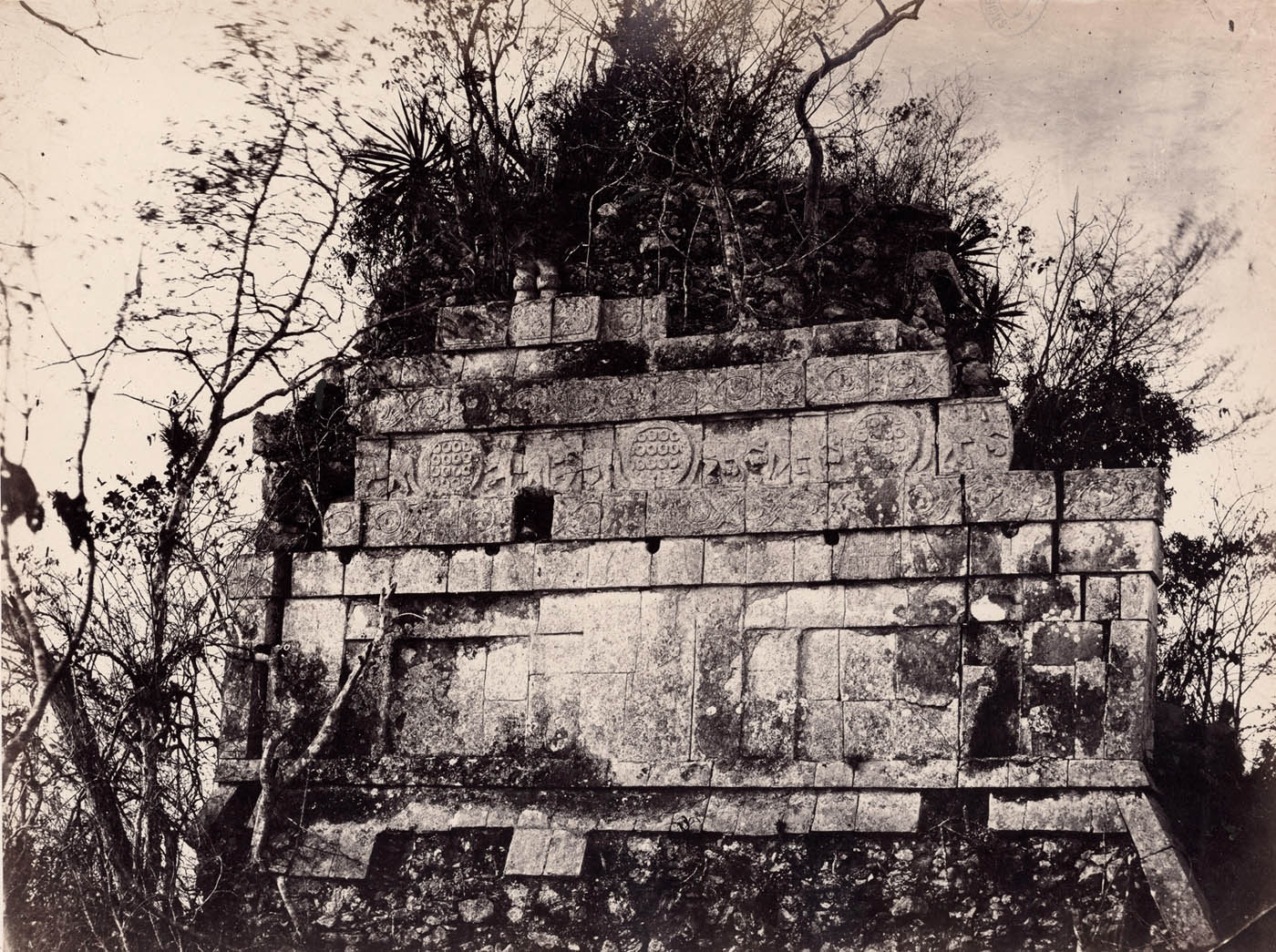
Désiré Charnay (French, 1828-1915) Chichen Itza: Bas-relief des Tigres, Palais du Cirque (Chichen Itza: Bas-relief of the Tigers, Circus Palace)
1859-1861
Print on gold-toned albumen paper from a collodion glass negative
BnF, Department of Prints and Photography, RES PHOTO VZ-940-FT4
In 1861, Charnay gave Napoleon III a copy of the album American Ruins composed for the Emperor of expensive proofs on albumen paper toned with gold, in an exceptional format, the miraculous result of his Mexican epic. The shift to gold accentuates the vigour of the contrasts and brings a cold tone to the blacks.
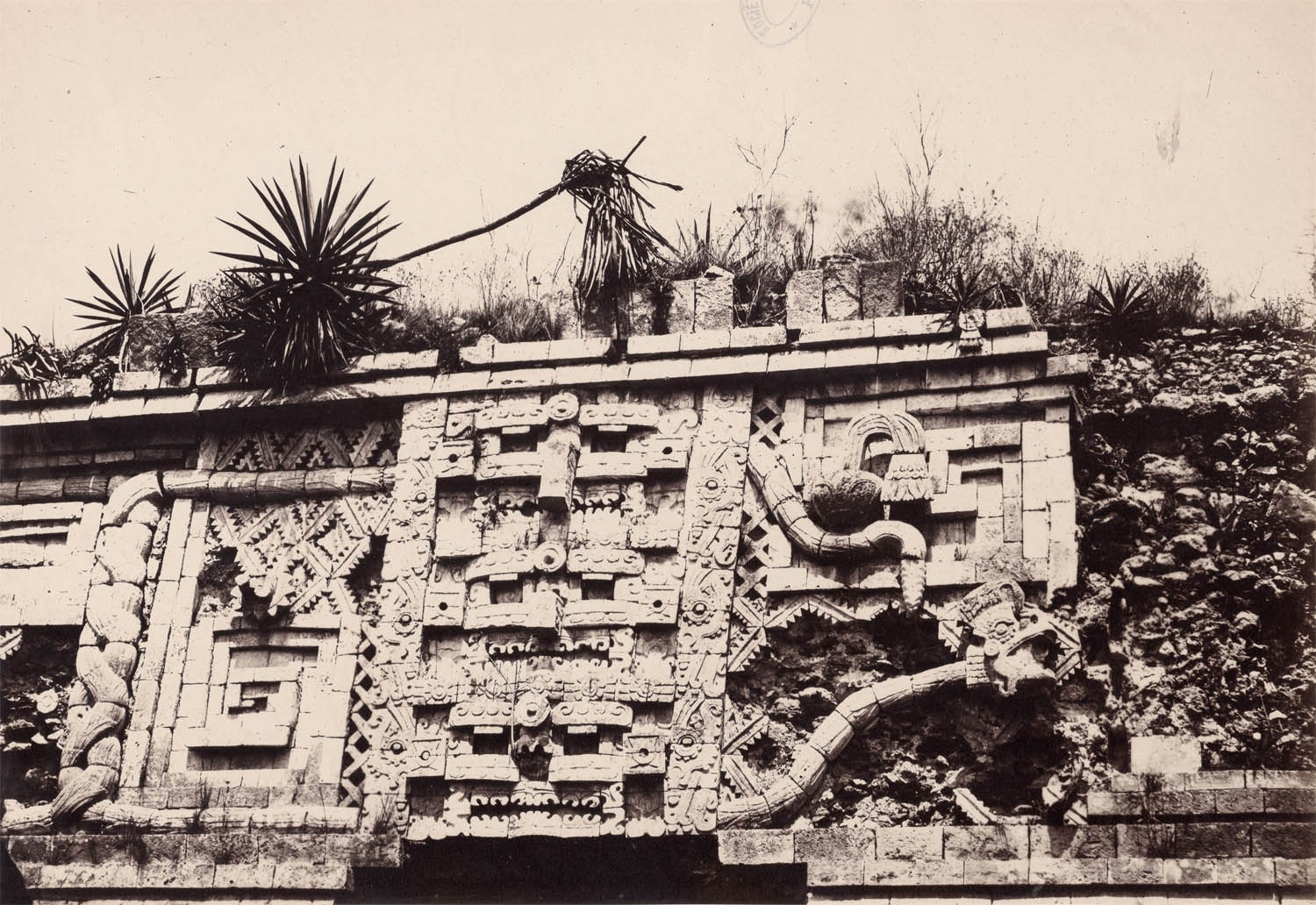
Désiré Charnay (French, 1828-1915) Uxmal: détail de la façade dite de la couleuvre (Uxmal: detail of the so-called snake facade)
1859-1861
From the album American Ruins
Print on gold-toned albumen paper from a collodion glass negative
59 x 78.2cm
BnF, Department of Prints and Photography, RES PHOTO VZ-940-FT4
The forty-nine views of the ruins of Yucatan, Chiapas, Tabasco and the province of Oaxaca constitute the first set of photographs entered into the collections of the Geographical Society, in 1861. During the general assembly of November 29 , Charnay presents his collection of photographs exhibited in the meeting room. The same day, at the Academy of Inscriptions and Belles Lettres, Jomard returns to the quality of Charnay’s photographs, which allow us to conclude that American art – the Egyptologist’s supreme tribute – “deserves a place alongside Assyrian art, and even alongside the art of the Egyptians.”
Bisson frères. Louis-Auguste (French, 1814-1876) and Auguste-Rosalie (French, 1826-1900) La crevasse (départ) sur le chemin du grand plateau, ascension du Mont-Blanc (The crevasse (departure) on the way to the grand plateau, ascent of Mont-Blanc)
1862
Print on albumen paper from a wet collodion glass negative
BnF, Department of Prints and Photography, EO-14 (3)-FOL
In 1861, the Bisson brothers managed to hoist their photographic equipment to the summit of Mont Blanc. Mountaineering feat, photographic feat: in these extreme conditions, the plate must be sensitised just before use and developed as soon as possible. The violence of the contrasts, when the brightness of the snow juxtaposes the black of the rocks, redoubles this technical challenge. This conquest of the limit is crowned by the harmony of the print, carried by a site with spectacular aesthetic qualities.
This exhibition brings together black and white masterpieces from the photographic collections of the National Library of France. Nadar, Man Ray, Ansel Adams, Willy Ronis, Helmut Newton, Diane Arbus, Mario Giacomelli, Robert Frank, William Klein, Daido Moriyama, Valérie Belin…: the big names in French and international photography are brought together in a journey which presents approximately 300 prints and embraces 150 years of history of black and white photography, from its origins in the 19th century to contemporary creation.
Black and white is inseparable from the history of photography: its developments, from the end of the 19th century to today, have revealed its plastic force. While the use of colour intensified from the 1970s, black and white reinvented itself as a means of assertive aesthetic expression emphasising graphics and material. Black and white photography remains less expensive and simpler, but its persistence to this day can be explained above all by the fact that it has come to embody the very essence of photography. It appears to carry a universal, timeless, even memorial dimension, where colour would be the sole translation of the contemporary world.
The exhibition in brief
The exhibition addresses the question of black and white from an aesthetic, formal and sensitive angle, emphasising the modes of image creation: plastic and graphic effects of contrasts, play of shadows and lights, rendering of materials in all the palette of values from black to white. The emphasis was placed on photographers who concentrated and systematised their artistic creation in black and white, experimented with its possibilities and limits or made it the very subject of their photography such as Man Ray, Ansel Adams, Ralph Gibson, Mario Giacomelli or Valérie Belin. Particular attention was paid to the quality of the prints, the variety of techniques and photographic papers, but also to the printing of black and white, books and magazines having long been the main relay to the public for photographic creation .
The exhibition thus shows the richness and extent of the BnF’s photographic collections. Among the richest in the world with some six million prints, these are particularly representative of this abundant history of black and white photography.
Exhibition co-organised with the Réunion des Musées Nationaux – Grand Palais
Commissariat
Sylvie Aubenas, director of the Prints and Photography department, BnF Héloïse Conésa, head of the photography department, responsible for contemporary photography at the Department of Prints and Photography, BnF Flora Triebel, curator in charge of 19th century photography at the Department of Prints and Photography, BnF Dominique Versavel, curator in charge of modern photography at the Department of Prints and Photography, BnF
Text from the Bibliothèque nationale de France (BnF)
Hippolyte Blancard (French, 1843-1924) Mademoiselle L. Vulliemin, à mi-corps, la tête couverte d’un chapeau (Miss L. Vulliemin, half-length, head covered with a hat)
1889
Platinum print from a gelatin-silver bromide glass negative
BnF, Department of Prints and Photography, EO-508-PET FOL
Gift of print dealer Maurice Rousseau, 1944
Amateur photographer, wealthy pharmacist enriched by the sale of digestive pills, Blancard creates a prolific and picturesque work in a superb contrast of black and white thanks to the use of platinum. This expensive process, patented in 1873, ensures stable prints with marked contrasts which do not stifle the rendering of halftones.
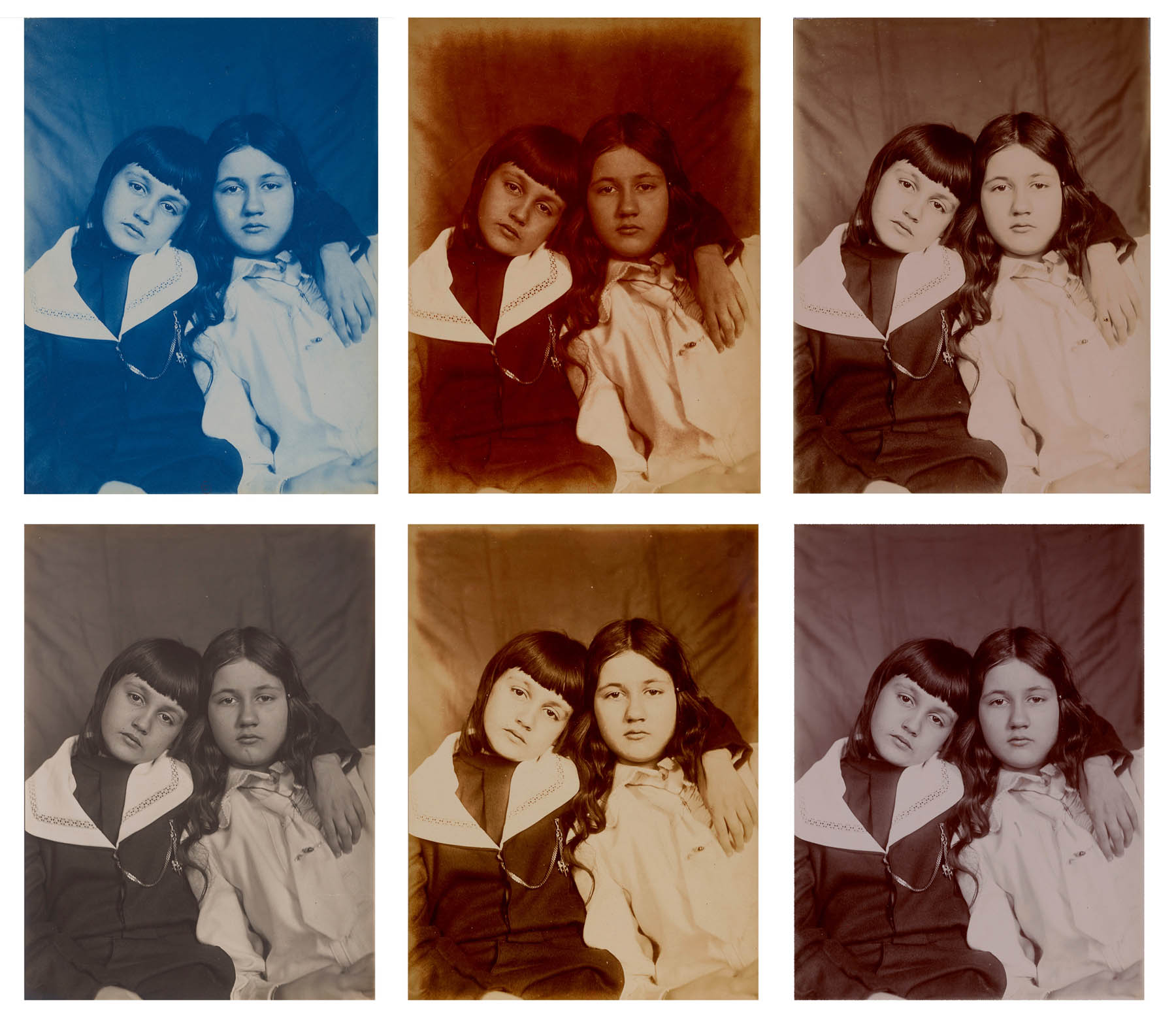
Émile Zola (French, 1840-1902) Denise et Jacques, les enfants d’Émile Zola (Denise and Jacques, the children of Émile Zola)
1898 or 1899
Gelatin aristotype, gelatin aristotype on matte velvety paper with toning, cyanotype, silver print, gelatin aristotype toned with gold, collodion aristotype with toning
BnF, Department of Prints and Photography, NZ-214-8
Purchase at public sale, 2017
From 1894, the novelist devoted himself with passion to photography, in an intimate vein. Here he tests the effects of his shooting by varying the papers, the processes, the tones based on the same negative on a glass plate. We see that black and white is a monochromy among others (brown, orange, blue). Very few of these test prints created in the privacy of the photographer’s laboratory have reached us; the collection of these six prints is exceptional.
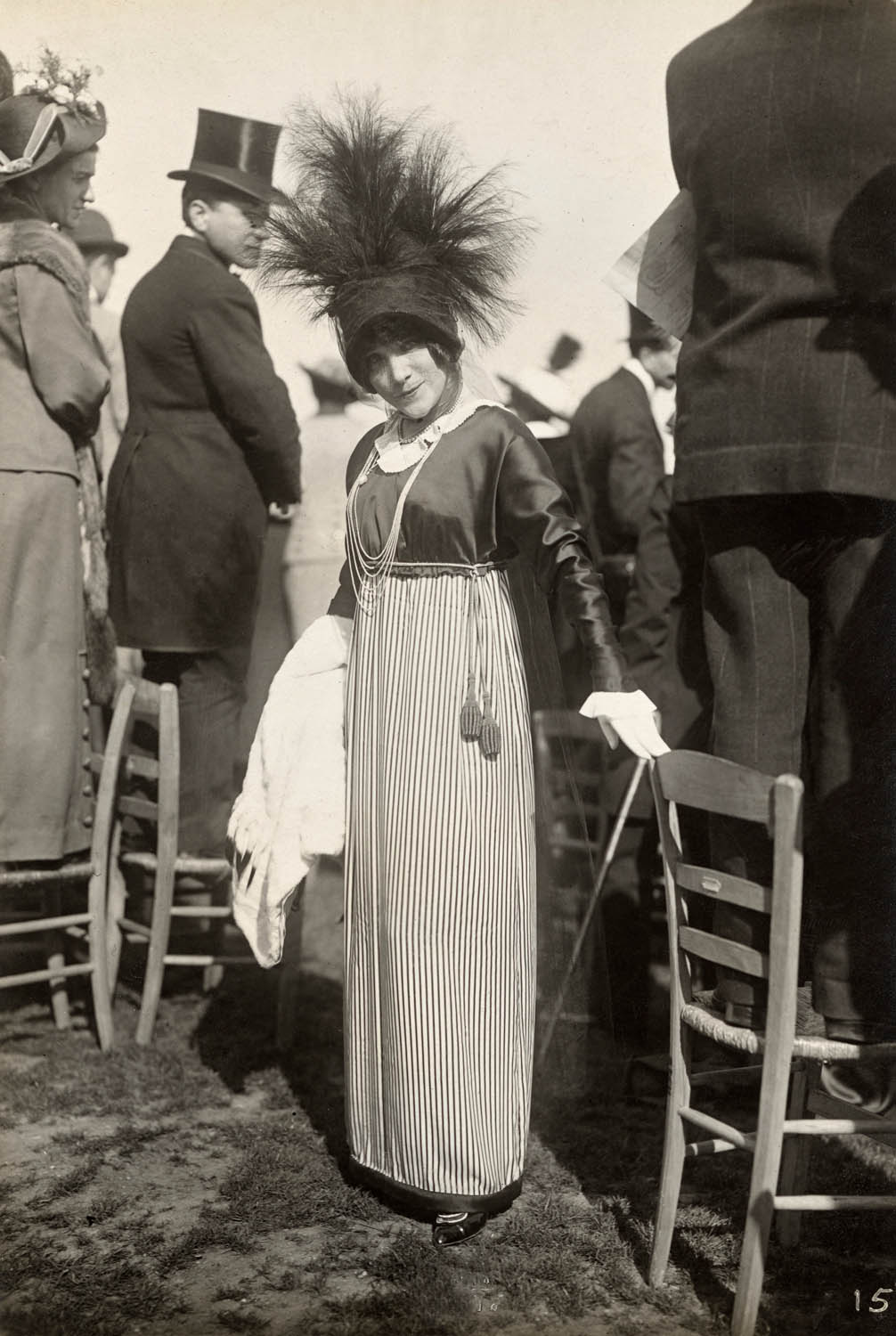
Frères Séeberger. Jules, Louis and Henri Séeberger (French, 1872-1932; 1874-1946; 1876-1956) Untitled
1909-1912
Silver print on baryta paper
BnF, Department of Prints and Photography, OA-38 (1)-BOITE FOL
Acquisition-donation from the family, 1976
Frères Séeberger. Jules, Louis and Henri Séeberger (French, 1872-1932; 1874-1946; 1876-1956) Untitled
1909-1912
Silver print on baryta paper
BnF, Department of Prints and Photography, OA-38 (1)-BOITE FOL
Acquisition-donation from the family, 1976
For almost half a century, the Séeberger brothers, specialising in fashion reporting, captured elegant women in their natural settings, racecourses, palaces, upscale beaches. The print on baryta paper, used here, marks a technical breakthrough. A layer of pure white barium sulfate is now interposed between the print support and the binder layer, where the image is formed. Manufactured industrially from the 1890s, chemically developed baryta papers and their characteristic cold tone would dominate silver production until the 1970s.
Frères Séeberger. Jules, Louis and Henri Séeberger (French, 1872-1932; 1874-1946; 1876-1956) Untitled
1909-1912
Silver print on baryta paper
BnF, Department of Prints and Photography, OA-38 (1)-BOITE FOL
Acquisition-donation from the family, 1976
In Black and White
Entirely designed from the Library’s rich collections, Black & White: An aesthetic of photography presents more than 300 works from the 19th century to the present day which bear witness to the use black and white from more than 200 photographers from around the world.
Considering black and white photographic creation from the 19th century to the most contemporary works, the exhibition presented at the François-Mitterrand affirms an ambition commensurate with the historical and geographical scope of the BnF’s collections and their immense variety technical and stylistic. The Department of Prints and photography has been a high place of conservation and emulation for monochrome photographic expression, under the impetus in particular of Jean-Claude Lemagny. Recently deceased, this very first curator of photography contemporary, in office from 1968 to 1996, was a fervent defender of black and white aesthetics.
In the 19th century, the powerlessness of photography to reproduce colours do not reduce it only to black and white and the tonal variations (blue, sepia, etc.) are in fact multiple. The exhibition opens with a spectacular monochrome of prints by Émile Zola, alongside luxurious prints by Gustave Le Gray, by Désiré Charnay and the Bisson brothers. It is at the turn of the 20th century that black and white became the tonality of photography par excellence, with the generalisation of the gelatin-silver bromide process.
An artistic and aesthetic approach
The rest of the journey deliberately interweaves creations of the 20th and 21st centuries, without chronological consideration. According to a primarily artistic and aesthetic approach to black and white, works of authors, decades, styles, schools and various origins interact, in order to highlight visual constants and graphics observable in use by black and white by photographers from 37 countries. That the photographers either suffered lack of colour or – from the 1950s-1970s – preferred to it, black and white is appreciated by artists for its numerous graphic, material and symbolic, which allow them to obtain certain effects features.
Write in black and white
These are these different ways of writing in black and white that the exhibition shows, starting with the contrasts: prints by Imogen Cunningham and André Kertész at the sculptural portraits of black women by Valérie Belin, in passing through the photograms of Man Ray, the books of William Klein or the fashion photographs of Helmut Newton, the contrast is deliberately sought by certain artists. By accentuating blacks and whites, or even making them disappear to any intermediate shade of grey, they bring out the essential lines of their subjects, retrace the design of the world,
gain visual and graphic expressiveness.
The play of shadows and light, at the origins of the photographic act, forms another part of the exhibition highlights. Bringing together the works of photographers as varied as Brassaï, Alexandre Rodtchenko, Henri CartierBresson, Willy Ronis, Flor Garduño, Daido Moriyama, Arthur Tress or Ann Mandelbaum, this part emphasises the dazzling effects or shadows cast, explored by these artists in their portrait practice, of the street snapshot, of the nocturnal shooting or in their laboratory experiments.
The exhibition continues with a chart of tests deployed in ribbon, from the blackest to the whitest. These prints signed Jun Shiraoka, Emmanuel Sougez, Edward Weston, Barbara Crane or Israel Ariño recall the ability of black and white to render effects of matter by its infinite variations of grey or, conversely, suggest the overflow or disappearance of all matter.
A sensory experience
The journey ends with a paradox with the works of photographers who, like Patrick Tosani, Marina Gadonneix or Laurent Cammal, disturbing the visitor’s perception by using colour processes to represent a black and white subject – an ultimate game with codes inherited from their art. Designed to show the historical depth and the richness of the BnF collections, this exhibition is intended to be educational and sensitive: emphasising certain technical aspects linked to printing practices, while insisting also on the irreducible material part of this art. By the high quality of prints presented, the exhibition offers to the public a sensory experience that will make them perceive the nuances hidden behind this apparently monolithic notion black and white.
Flora Triebel and Dominique Versavel. “En Noir et Blanc,” in Une saison en photographie, Chroniques No. 98, BnF, September – December 2023
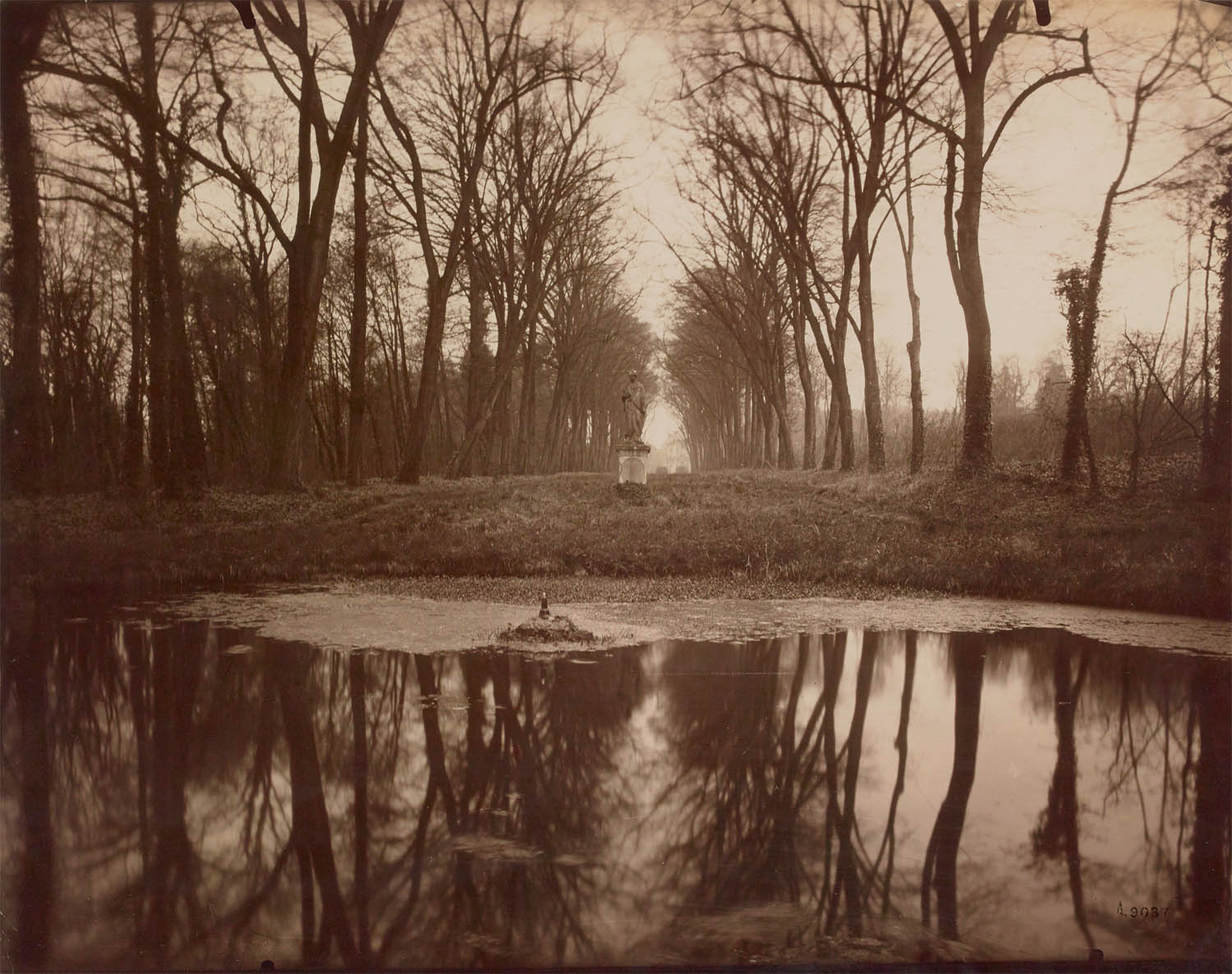
Eugène Atget (French, 1857-1927) Parc de Sceaux, Duchess Alley
Between 1925 and 1927
Print on matte albumen paper from gelatin-bromide glass negative
BnF, Department of Prints and Photography, EO-109 (16)-BOITE FOL B
Eugène Atget claimed a humble, artisanal practice of photography. He used the same old camera and printing paper for decades. Only the disappearance of his usual supplies forced him to change. There is therefore no aesthetic research, yet these colour variations tell us a lot about the perception of the image.
The photographer artist can choose the colours of his prints by playing on the chemistry of the fixing baths or on the nature of the papers.
Gold toning, known since the 1850s, produces deep blacks but is very expensive. Baryta or platinum papers appeared at the end of the century and made it possible to further accentuate contrasts.
Gustave Le Gray (French, 1820-1884) Plage de Sainte-Adresse avec les bains Dumont (Sainte-Adresse beach with Dumont baths)
1856
Print on albumen paper from a collodion glass negative
31.3 x 41.3cm
Former Alfred Armand collection
BnF, Department of Prints and Photography, RESERVE FOL-EO-13 (3)
The strength of the blacks and whites, the variations of hues influence our perception of the image: the more contrasted it is, the more readable it is for our eye saturated with absolute blacks and whites; the more nuanced it is, the more sensitive the distance of time becomes.
Provenance
This article was designed as part of the exhibition “Black & White – An aesthetic of photography” presented at the BnF from October 17, 2023 to January 21, 2024.
The marines of Le Gray
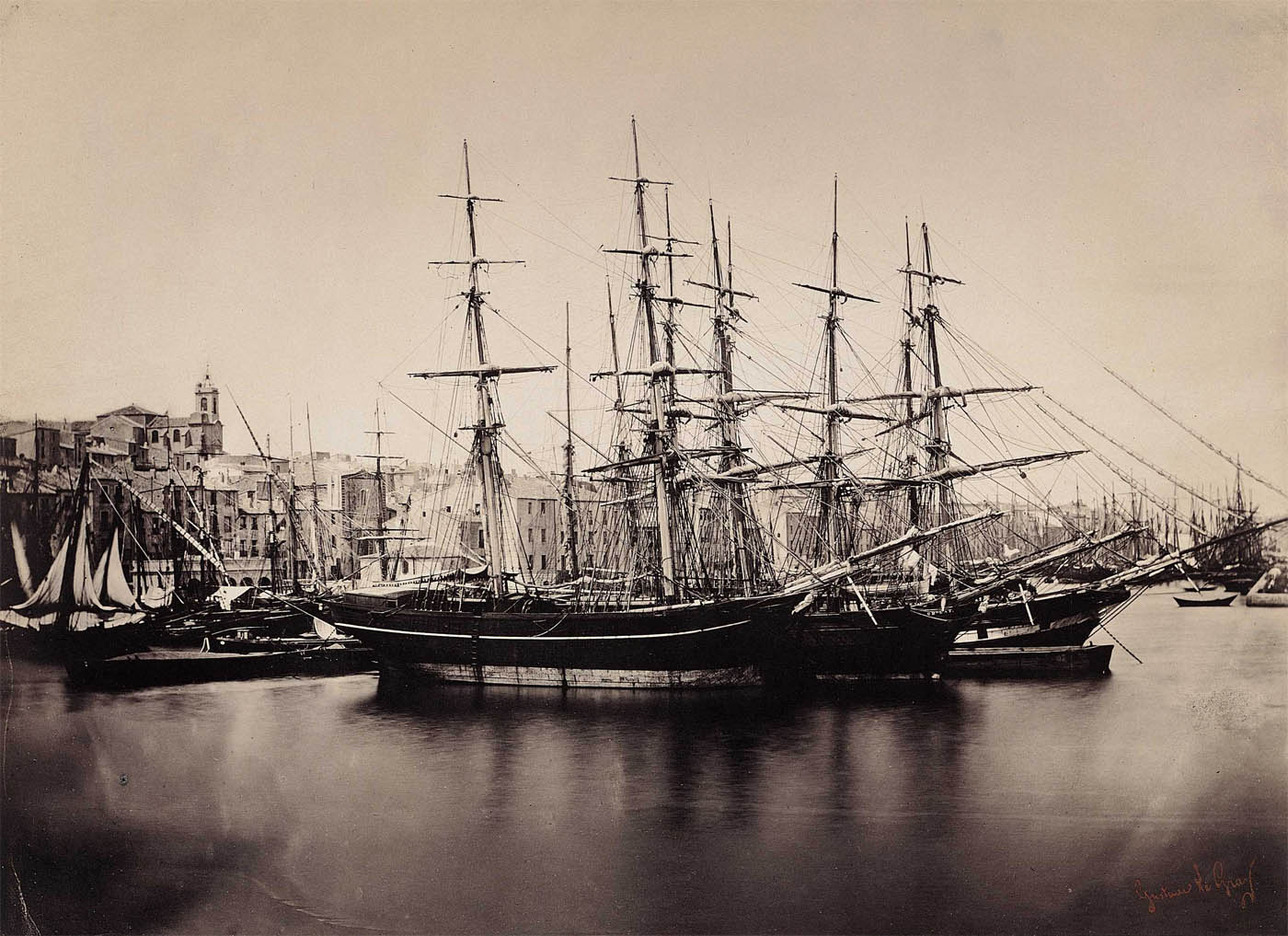
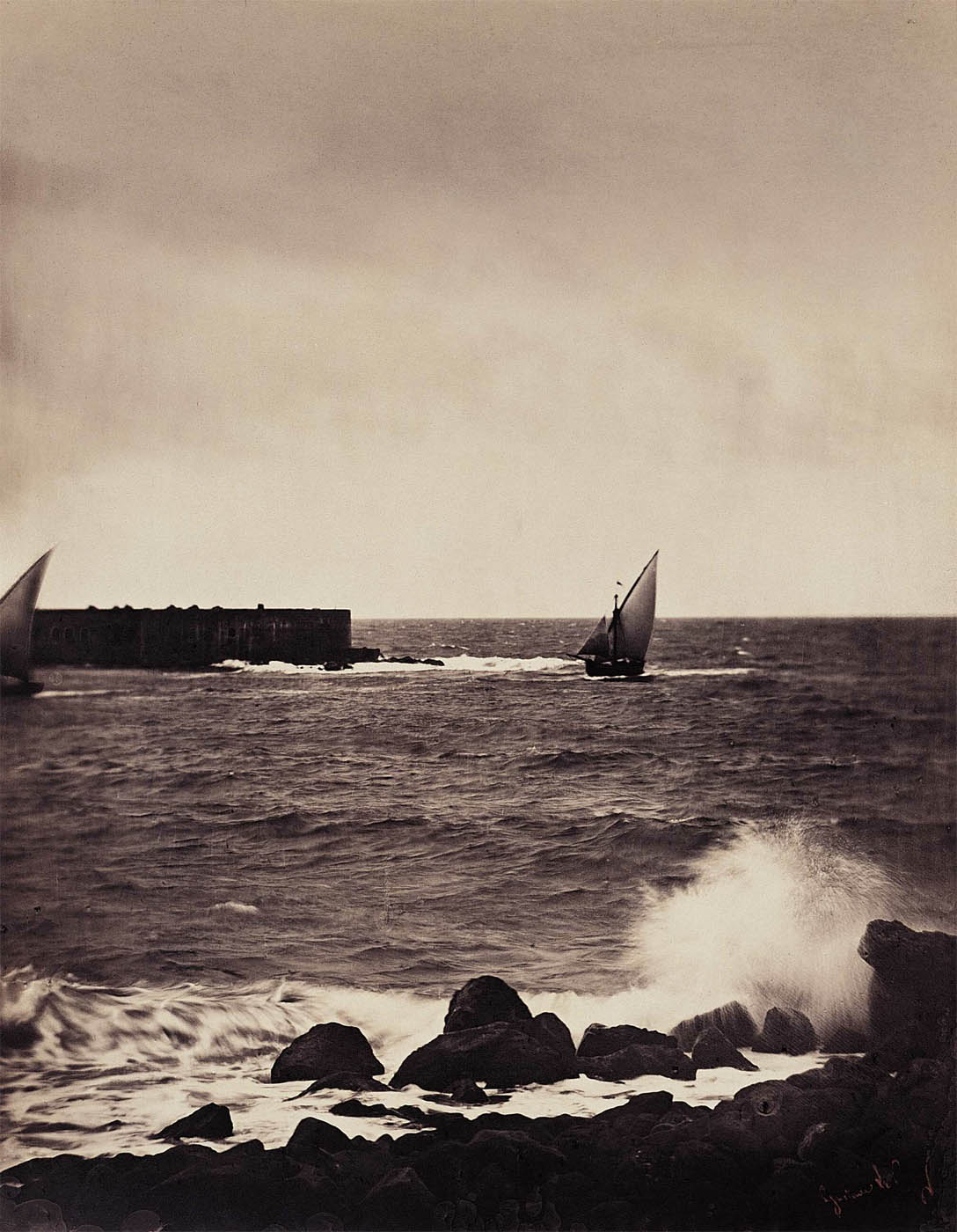
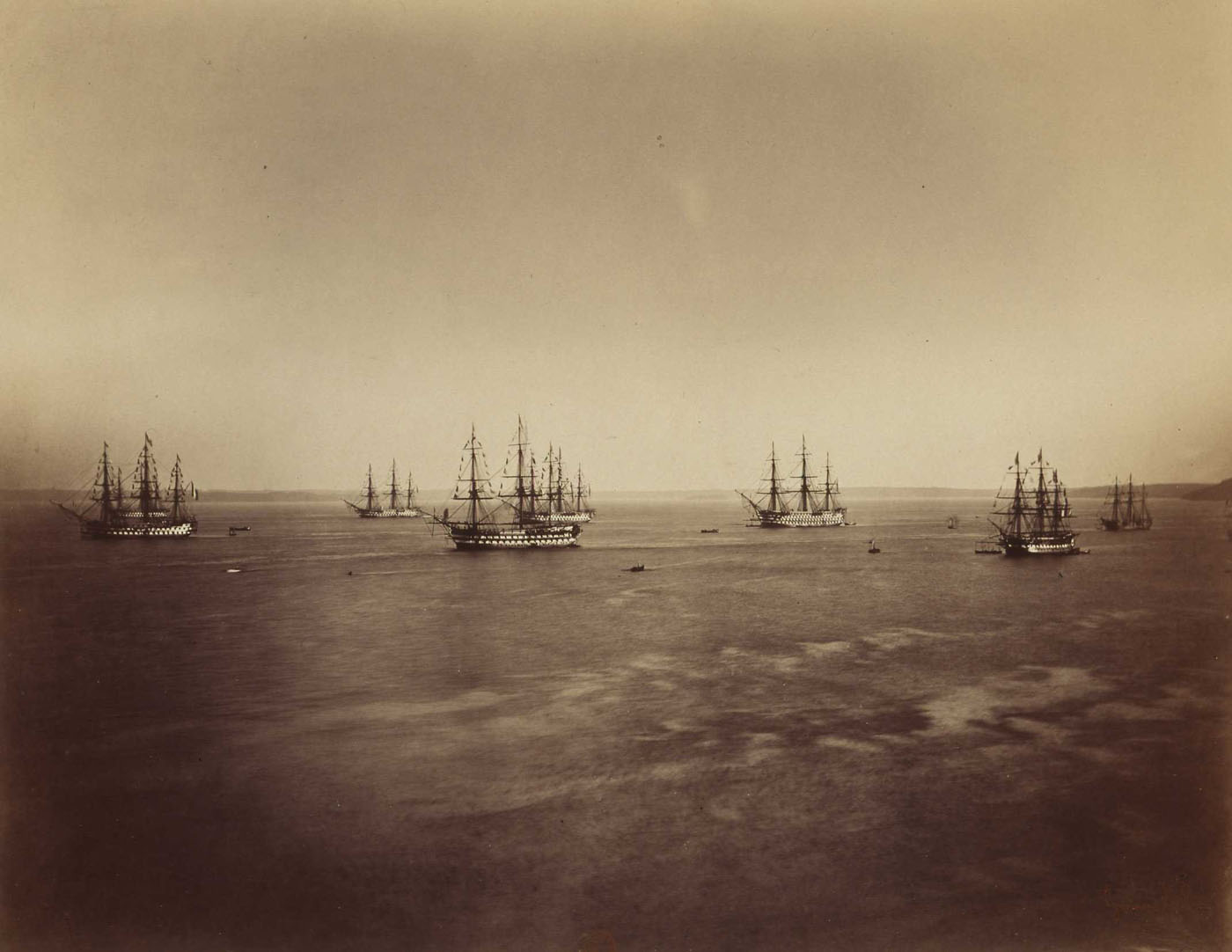
Gustave Le Gray (1820-1884) is a central figure in 19th century photography. A contemporary of photographers like Nadar, Charles Nègre and Henri Le Secq, he began his career by training as a painter. With great mastery of photographic technique, he developed two major inventions, the collodion glass negative in 1850 and the dry wax paper negative in 1851.
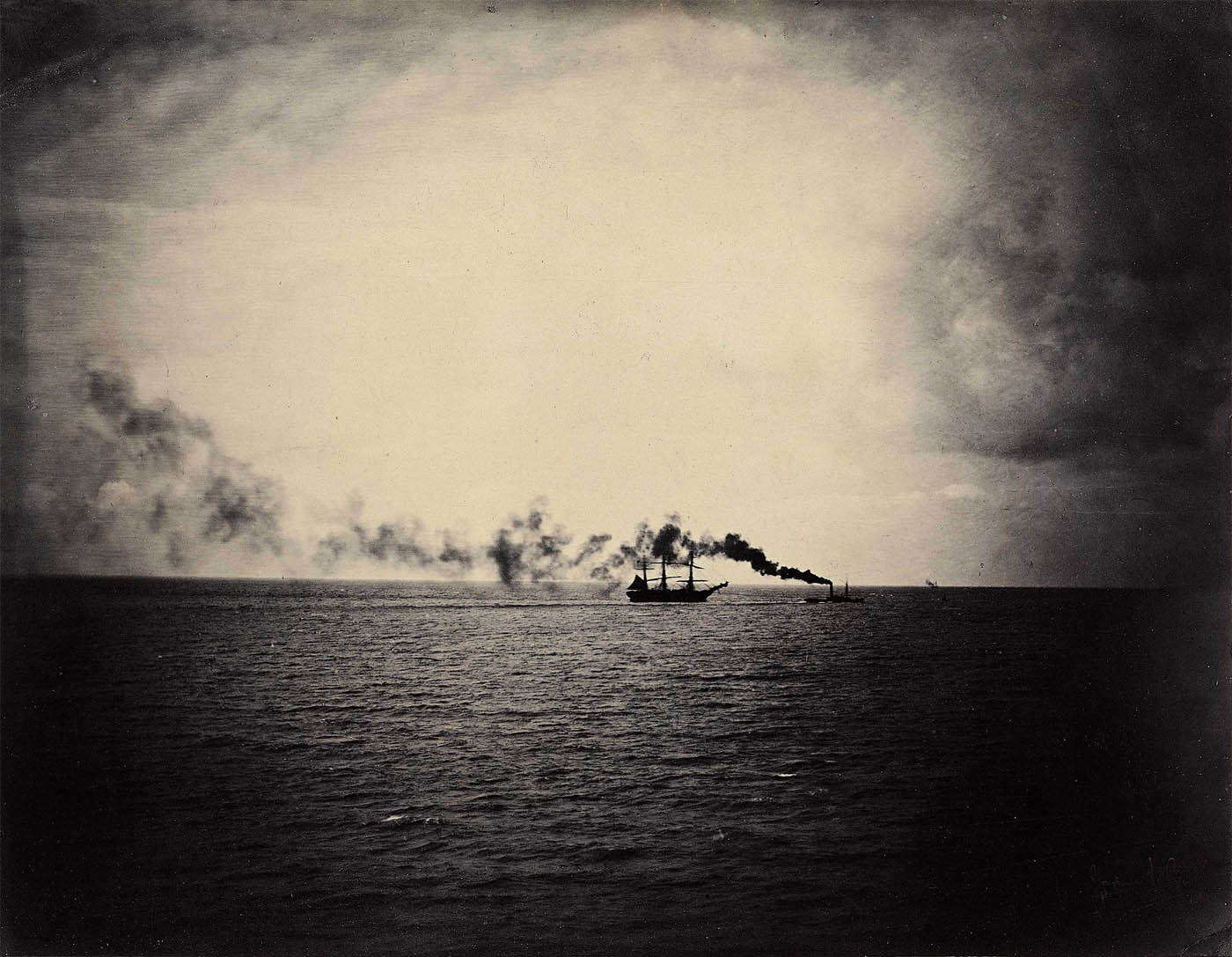
Le Gray’s seascapes mark not only a milestone in the history of photography, but also its true intrusion into a pictorial genre characteristic of the English school. Fixing the movement of the waves while the snapshot is still stammering, combining two negatives, one for the sky and one for the sea, Le Gray plays like a virtuoso with a complex technique in the service of a lyrical vision, which prefigures marine studies by Courbet in the 1860s-1870s. The success was immense in France and England: these “enchanted paintings” were acquired by crowned heads, aristocrats, artists and art collectors.
Gustave Le Gray (French, 1820-1884) Vapeur (Steam)
1856-1857
Print on albumen paper from a collodion glass negative
31.3 x 37.2cm
BnF, Department of Prints and Photography, ESERVE FOL-EO-13 (3)
Gustave Le Gray (French, 1820-1884) Groupe de navires – Sète – Méditerranée – No. 10 (Group of ships – Sète – Mediterranean – No. 10)
1857
Print on albumen paper from a collodion glass negative
29.9 x 41.2cm
Former Alfred Armand collection
BnF, Department of Prints and Photography, RESERVE FOL-EO-13 (3)
Gustave Le Gray (French, 1820-1884) La Vague brisée. Mer Méditerranée No. 15 (The Broken Wave. Mediterranean Sea No. 15)
1857
Photograph, albumen paper, collodion glass negative
41.7 x 32.5cm
BnF, Department of Prints and Photography, RESERVE FOL-EO-13 (3)
Gustave Le Gray (French, 1820-1884) La Grande vague – Sète – N° 17 (The Great Wave)
1857
Photograph, albumen paper, collodion glass negative
35.7 x 41.9 cm
BnF, Department of Prints and Photography, RESERVE FOL-EO-13 (3)
Gustave Le Gray (French, 1820-1884) Flotte franco-anglaise en rade de Cherbourg (Franco-English fleet in Cherbourg harbour)
August 4-8, 1858
Print on albumen paper from a collodion glass negative
31 x 39.8cm
Former Alfred Armand collection
BnF, Department of Prints and Photography, RESERVE FOL-EO-13 (3)
Félix Nadar (French, 1820-1910) La Princesse Marie Cantacuzène (The Princesse Marie Cantacuzène)
around 1855-1860
Varnished salted paper print from a collodion glass negative
20.8 × 15.3cm
BnF, Department of Prints and Photography, EO-15 (2)-PET FOL
Nadar created two portraits of this classically beautiful young woman. It indicates on the back of one of the proofs that it is the Romanian princess, Marie Cantacuzène.
The portrait by Félix Nadar
Until the beginning of the 1880s, Félix Nadar’s portraits were distinguished by their neutral backgrounds.
The merit of Mr. Nadar’s portraits does not consist only in the skill of the pose, which is entirely artistic, there is a learned and reasoned arrangement of the light, which attenuates or increases the daylight depending on the character of the head. and the operator’s instinct. We also find in the printing of the proofs a delicate search for harmony and slightly faded tones which soften the edges of the contours with their darkness.
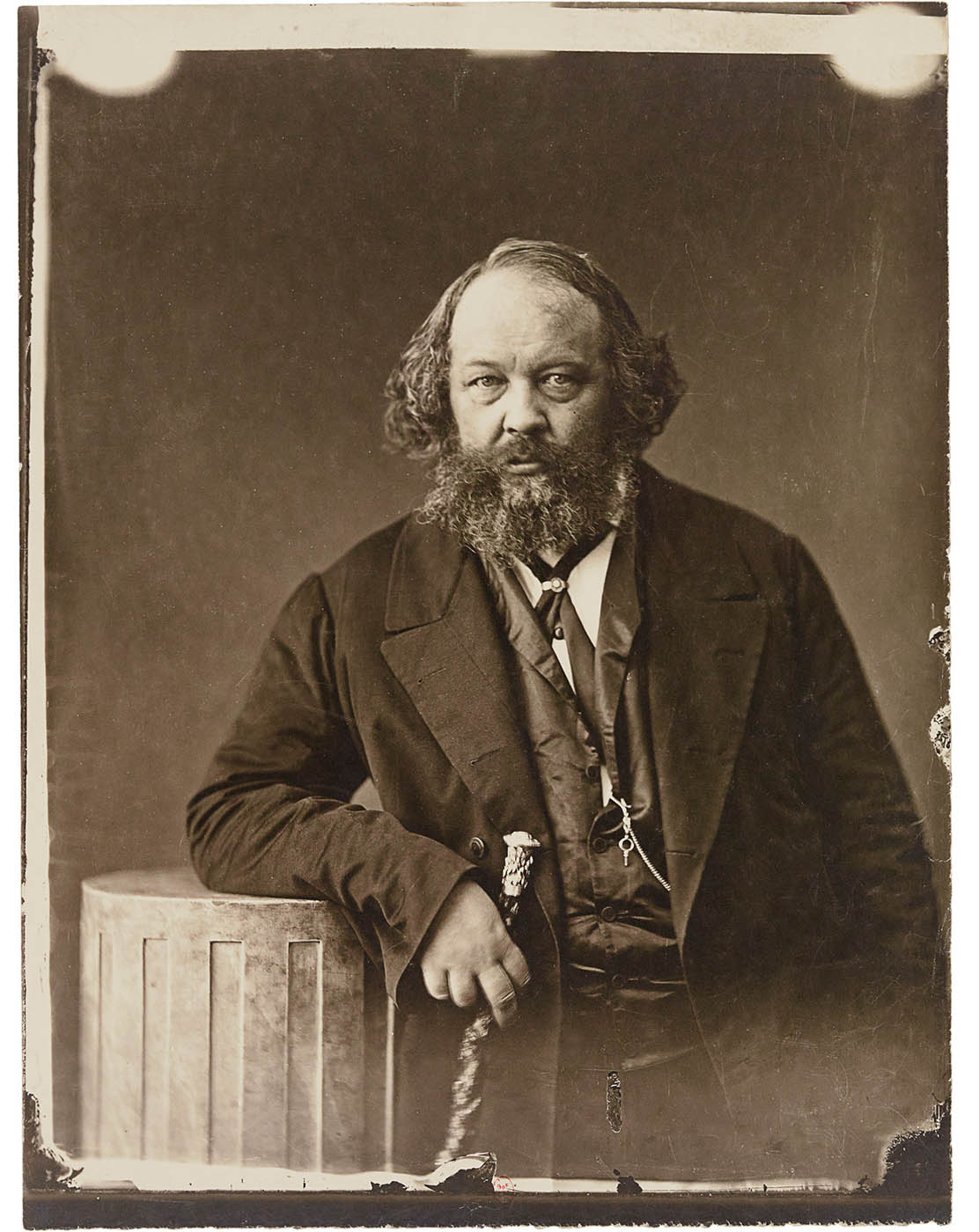
Félix Nadar (French, 1820-1910) Bakounine
About 1862
Silver print from the original negative on collodion glass
27.1 × 20.6cm
BnF, Department of Prints and Photography, EO-15 (4)-FOL
The revolutionary, philosopher and theoretician of socialism Mikhail Bakunin is one of the immense personalities that Nadar photographed during his career and offered to clients in his constantly enriched portrait gallery. We see here a print from 1862, contemporary with the shooting, but there is also a print made twenty years later and finally a print around 1900, brought up to date after heavy retouching. Thus until the end of the activity of the Nadar workshop, the oldest portraits of celebrities were always offered to customers.
Félix Nadar (French, 1820-1910) Jean Journet (1799-1861)
1857
Salted paper print from collodion glass negative
27.4 x 21.8cm
BnF, Department of Prints and Photography, EO-15 (9)-PET FOL
Jean Journet, nicknamed the Apostle, was a picturesque and eccentric Parisian figure, often ridiculed by his contemporaries. Former carbonaro, pharmacist in Limoux, he discovered the philosophy of Fourier and decided to spread his doctrine by abandoning his family and taking his pilgrim’s staff. His humanitarian evangelism, advocating fraternity and association, led him to write numerous pamphlets which he distributed in an untimely manner: by throwing them from “paradise” into theatres or by laying siege to famous writers and editorial offices. Interned several times in Bicêtre, Journet found upon his death a defender in Nadar who published an article in Le Figaro on October 27, 1861, concluding: “Ah my dear fools! that I love you much better than all these wise men.”
Nadar draws inspiration from Spanish painting from the Golden Age to render “this dazzling head of Saint Peter”.
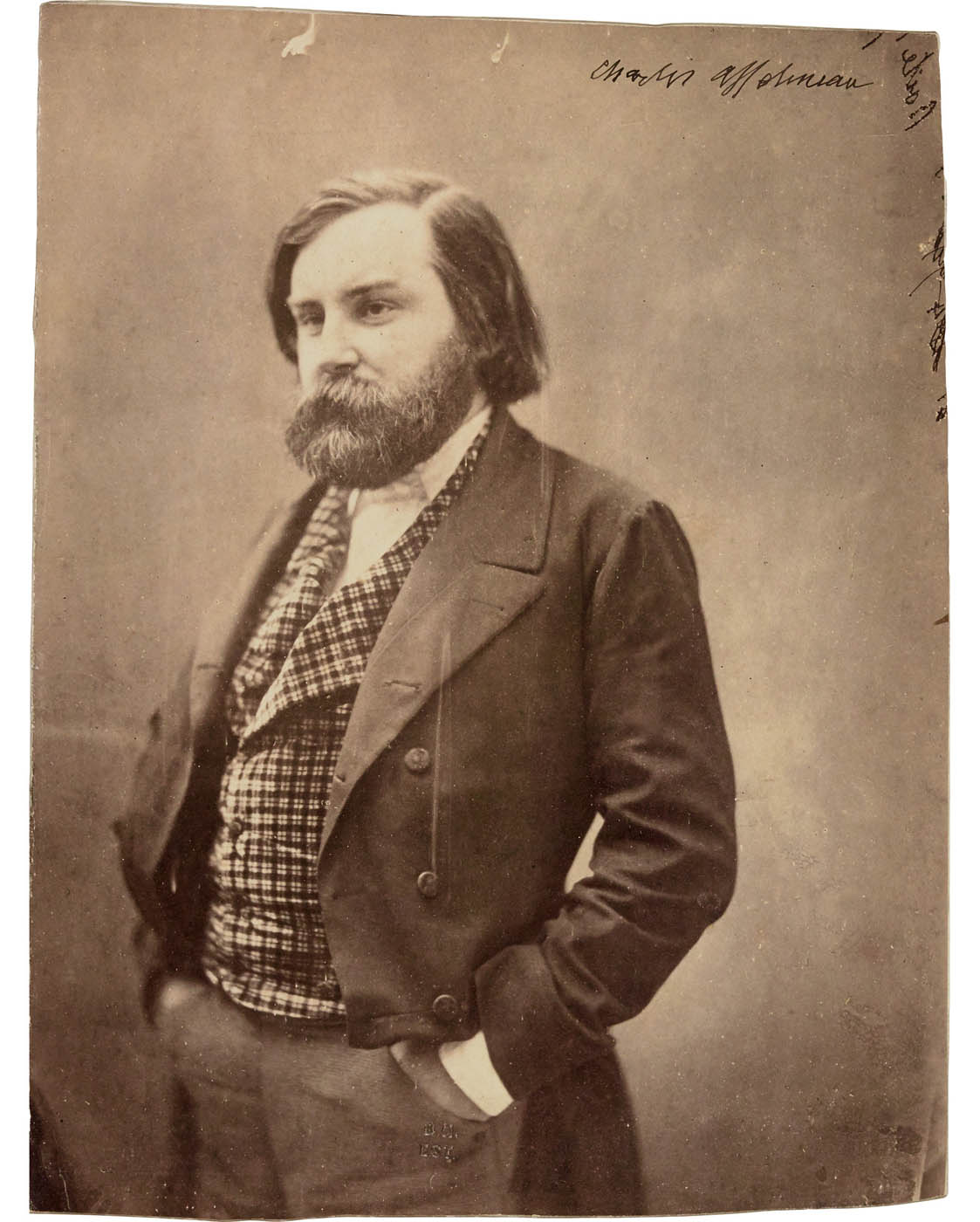
Félix Nadar (French, 1820-1910) Charles Asselineau (1820-1874)
Between 1854 and 1870
Print on albumen paper from a collodion glass negative
23.8 x 18.1cm
BnF, Department of Prints and Photography, EO-15 (1)-PET FOL
Charles Asselineau is one of Nadar’s oldest friends. They became friends at the Collège Bourbon and were both close friends of Baudelaire. A fine scholar and supernumerary librarian at Mazarine, Charles Asselineau, author of, among other things, Paradis des gens de lettres and L’Enfer du Bibliophile, was close to the publisher Poulet-Malassis, nicknamed by Baudelaire “Coco-mal-perché”. He collaborated with Nadar on two short stories published in April and August 1846: “The Healed Dead” and “The Found Paradise”, reprinted in When I Was a Student. He belonged to the small circle of editors who documented the Pantheon-Nadar to which biographies of each character were originally to be annexed.
He was Nadar’s best man at his wedding… warned, however, two weeks after the ceremony. The groom explained this in a letter: “It’s quite funny that my first witness learned of my marriage 15 days after the consummation and through an announcement letter. This, my good friend, will be explained to you by me on our first trip. I will limit myself to telling you for the present that I went to your house the day before, a Sunday and that on Monday morning at noon time fixed for the ceremony I did not know at 11 o’clock if I was getting married.” (NAF 25007, fol. 8).
Alexandre Rodtchenko (Russian, 1891-1956) Jeune fille au Leica (Young girl with Leica)
1934
BnF, prints and photography
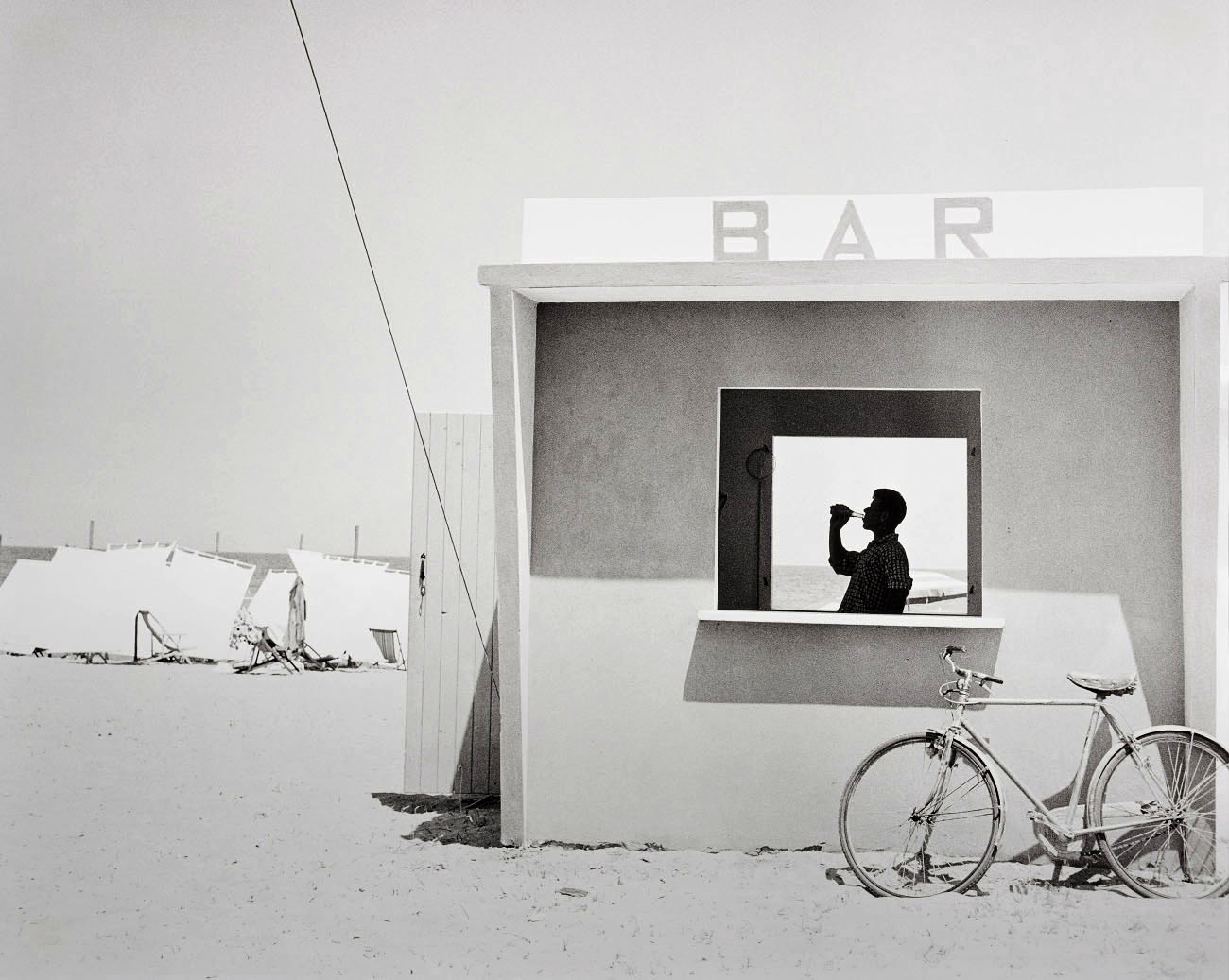
Piergiorgio Branzi (Italian, 1928-2022) Bar sur la plage, Adriatique (Beach bar, Adriatic)
1957
BnF, prints and photography
Willy Ronis (French, 1910-2009) Venise (Venice)
1959
BnF, prints and photography
A student of Harry Callahan and Aaron Siskind at the Institute of Design in Chicago, Metzker sublimates the formal particularities of this school through exceptional mastery black and white: he excels at stylising reality by constructing his images in direct opposition to dark and light flat areas.
Mario Giacomelli (Italian, 1925-2000) Je n’ai pas de main qui me caresse le visage (I have no Hands caress my face)
1961-1963
BnF, prints and photography
Daido Moriyama (Japanese, b. 1938) Portrait d’acteur (Actor portrait)
1968
From the series Japanese theatre
BnF, prints and photography
André Kertész (Hungarian, 1894-1985) 1er janvier 1972 à la Martinique (January 1, 1972 in Martinique)
1972
BnF, prints and photography
Bernard Plossu (French, b. 1945) Paris
1973
BnF, prints and photography
Mary Ellen Mark (American, 1940-2015) Immigrants, Istanbul, Turkey
c. 1977
BnF, prints and photography
Koichi Kurita (Japanese, b. 1962) Melting Snow on a Rock, Nagano, Japan
1988
BnF, prints and photography
Flor Garduño (Mexican, b. 1957) Canasta de Luz (Corbeille de lumière)(Basket of Light)
1989
BnF, prints and photography
Laurence Leblanc (French, b. 1967) Chéa, Cambodge (Chéa, Cambodia)
2000
From the series Rithy Chéa Kim Sour and the others
BnF, prints and photography
Bibliothèque François-Mitterrand
Quai François Mauriac, 75706 Paris Cedex 13 Phone: +33(0)1 53 79 59 59
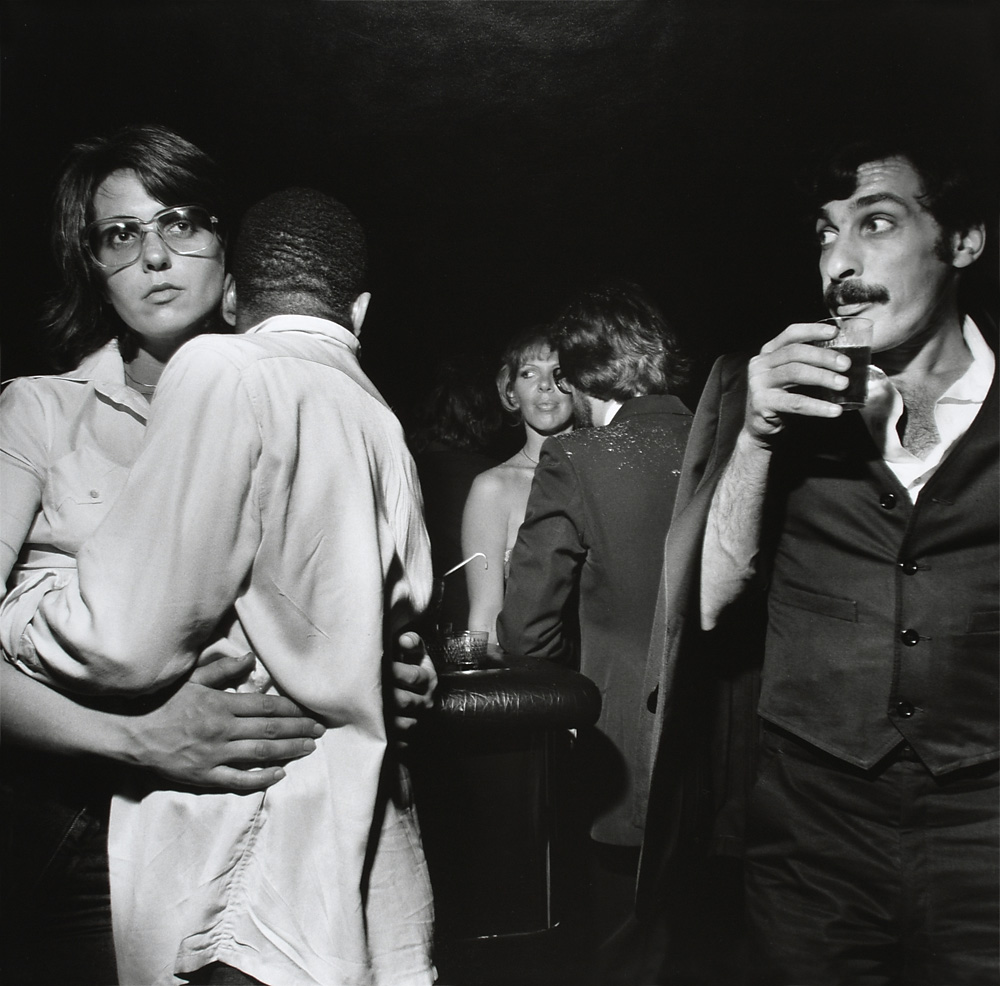
Larry Fink (American, 1941-2023) John Sabatine and Molly 1980 Gelatin silver print
“To try to see more and better is not a matter of whim or curiosity or self-indulgence. To see or to perish is the very condition laid upon everything that makes up the universe, by reason of the mysterious gift of existence.”
Teilhard de Chardin, “Seeing” 1947
Being human
Another master photographer has died. We are losing so many important visionaries who were born pre-Second World War, during the war and post-war period.
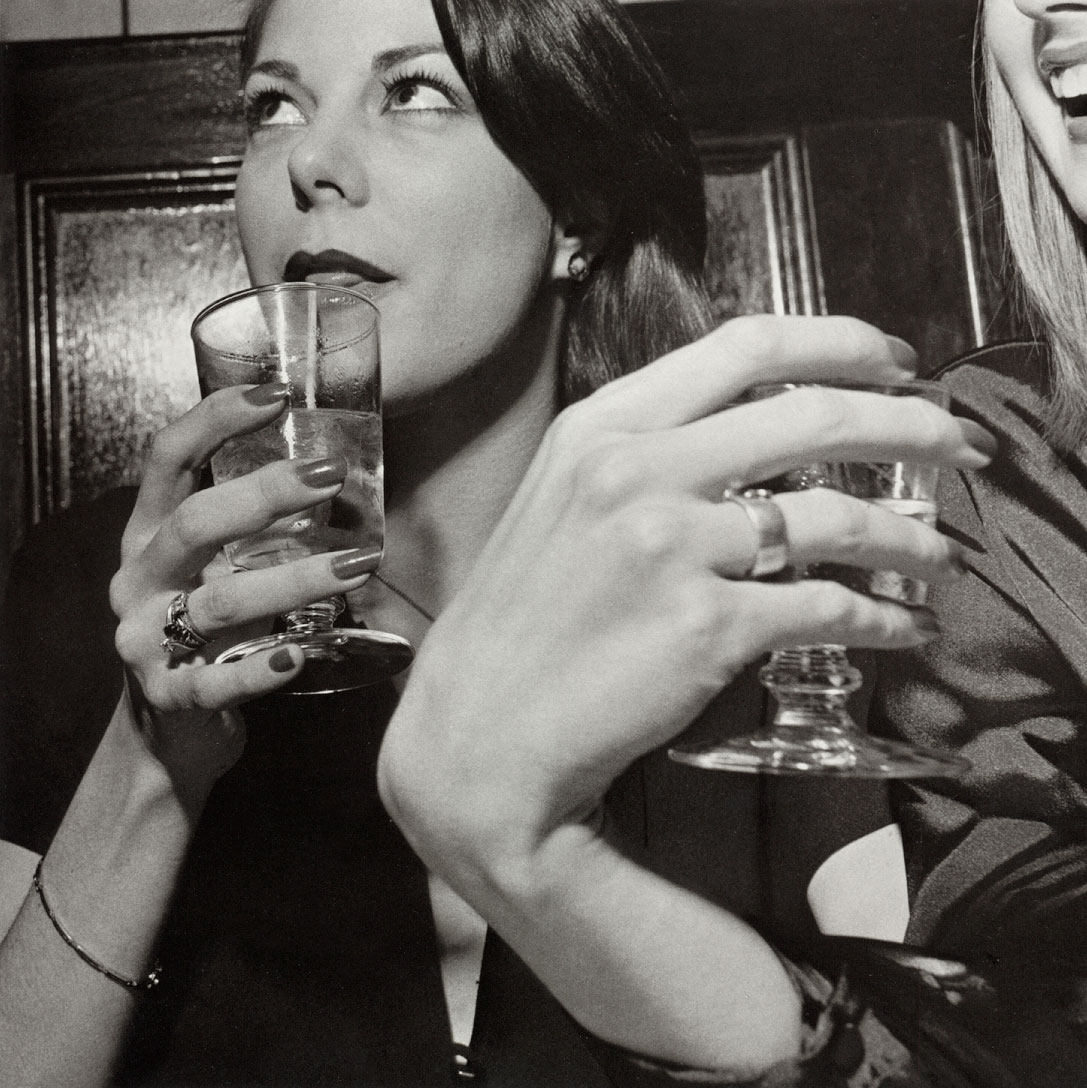
While I have sequenced this posting to highlight the dichotomy in Fink’s exploration of social class in America, that is, between the haves and the have-nots, between the hedonistic party people of Studio 54, the urban New Yorkers of “high society” and rural, working-class Pennsylvanians1 – as ever in life, Fink’s work is much more complex and nuanced than that.
Fink acknowledged that the photographs in his series “Social Graces” of New York “high society” at play were hard of heart. “I used to judge people out of the hardness of my heart. So, I went into these very voluptuous and elegant bourgeois circumstances, and I would judge these people as if they were the enemy.” That does not make these photographs any less valuable as a record of that brief moment of encounter between photographer and subject. For he observed, “The moment that we have is the only moment we will ever have, insofar as it is fleeting. Every breath counts. So does every moment and perception.”
Thus, in any of his photographs you have to admire his skill at capturing that fleeting moment: marvel at the flying pigtail in Studio 54 (1977, below) and feel the immediacy of hand gesture in Pat Sabatine’s 8th Birthday Party (1977, below) or the contemptuous look on the woman’s face in Pat Sabatine’s 11th Birthday Party (1980, below) to understand that.
In later life Fink – an empathetic human with an inquiring mind who obviously worked on his inner growth, who had acquired knowledge and a little wisdom – was aware how he had wronged himself and others during the taking of the photographs for “Social Graces”.
“When age had given me entry into life’s harder organic experiences – my back, my heart, my prostate, my hip – I started to look at my own face in the mirror and see the results of pain. I would see that many of the judgments I had made in the early days, based on an ideal sense of a physical equilibrium, were absolutely and horrendously bigoted. I was not at all sensitive to either the inner or external trappings of what it means to just be alive and all its various, vulnerable complexities.”2
With every breath he understood that when he took photographs he was attempting to touch the eternal, an expression of admiration and gratitude at being alive.
“I am involved with the idea of reaching deeply into the pulsing matter of what it means to be alive and being vulnerable and seeing if I can cast an emotional legacy about being human.”
The emotional legacy of his photographs attests to his enduring spirit.
Dr Marcus Bunyan
1/ “He paired the tales of these two worlds – the chilly anomie of the haute monde and the lively, messy domesticity of the Sabatines – in a collection of photographs he called “Social Graces,” which was first shown in an exhibition at the Metropolitan Museum of Art in 1979 and then published in a book of the same title in 1984, now considered a collector’s item.”
2/ Larry Fink quoted in Adriana Teresa. “A Moment With Larry Fink,” on The New York Times website Jan. 6, 2011 [Online] Cited 02/12/2023
Please click on the photographs for a larger version of the image.
“The goal, I suspect, through harmonies and edges and everything that we have in our command, is to take a dumb two-dimensional picture and make it something that a viewer enters and doesn’t want to leave.”
Larry Fink
“It’s about empathy. But the necessary methodology is conventionally in-your-face. Not like other practitioners, who are in your face for the sake of being in your face, I am in your face because I want to be your face. I like to say that if I was not a photographer, I would be in jail. I want to touch everything. My life is profoundly physical. Photography for me is the transformation of desire. …
I don’t like to hurt people. I go after something and I start pointing the camera at somebody, looking for those hard, edgy things I know I am going to find. My pictures will be out of bounds in terms of the convention of how this person wants to be represented. It gives me pause. I don’t feel I have the right to do that. But I do it nevertheless. After all, a picture is not a murder. It is simply a moment which suggests so many things. …
I was severely analytical when I was young, like when I was doing “Social Graces.” I was a good-looking kid. My mother was very vain, competitive and judgmental, and I took on the same characteristics as a younger person. I used to judge people out of the hardness of my heart. So, I went into these very voluptuous and elegant bourgeois circumstances, and I would judge these people as if they were the enemy. I believed the work to be analytical, in a political fashion.
When age had given me entry into life’s harder organic experiences – my back, my heart, my prostate, my hip – I started to look at my own face in the mirror and see the results of pain. I would see that many of the judgments I had made in the early days, based on an ideal sense of a physical equilibrium, were absolutely and horrendously bigoted. I was not at all sensitive to either the inner or external trappings of what it means to just be alive and all its various, vulnerable complexities. …
The moment that we have is the only moment we will ever have, insofar as it is fleeting. Every breath counts. So does every moment and perception. It’s a way to be alive. I am involved with the idea of reaching deeply into the pulsing matter of what it means to be alive and being vulnerable and seeing if I can cast an emotional legacy about being human.”
Larry Fink quoted in Adriana Teresa. “A Moment With Larry Fink,” on The New York Times website Jan. 6, 2011 [Online] Cited 02/12/2023
Larry Fink (American, 1941-2023) Studio 54 1977 Gelatin silver print
Larry Fink was born in Brooklyn in 1941. In the 1960s, he studied with noted photographer Lisette Model. This photograph from Studio 54, made in 1977 in the hedonistic heyday of the disco era, is a well know image from Fink’s series “Social Graces,” which explored social class in America by comparing two different worlds: that of urban New Yorkers of “high society” and that of rural, working-class Pennsylvanians through social events like birthday parties. Fink has described his approach to his subject in a straightforward, non-judgmental manner, “The one thing I was trained in being was non-hierarchical. I don’t have an internal class system. Who you are is who is in front of me and who I am in the same, and that’s how we have to relate to each other.”
Larry Fink (American, 1941-2023) Pat Sabatine’s 8th Birthday Party 1977 Gelatin silver print
Larry Fink (American, 1941-2023) Russian Ball, New York City 1976 Gelatin silver print
Larry Fink (American, 1941-2023) Pat Sabatine’s 11th Birthday Party 1980 Gelatin silver print
Larry Fink (American, 1941-2023) Benefit, MoMA, New York 1977 Gelatin silver print
Larry Fink, a kinetic photographer whose intimate black-and-white on-the-fly portraits of rural Pennsylvanians, Manhattan society figures, Hollywood royalty, boxers, musicians, fashion models and many others were both social commentary on class and privilege and an exuberant document of the human condition, died on Saturday at his home in Martins Creek, Pa. He was 82. …
… in the early 1970s he turned to overt social commentary, infiltrating the society benefits, debutante parties and watering holes of Manhattan’s privileged tribes and their hangers-on. He was fueled, he once wrote, both by curiosity and by his own rage at the privileged class – “its abuses, voluptuous folds, and unfulfilled lives.”
A few years later, he and his wife at the time, the painter Joan Snyder, moved to a farm in Pennsylvania, where he began photographing his rural neighbors, a charismatic family called the Sabatines who embraced him as one of their own. He went on to capture years’ worth of the family’s baptisms, birthdays and graduations.
He paired the tales of these two worlds — the chilly anomie of the haute monde and the lively, messy domesticity of the Sabatines – in a collection of photographs he called “Social Graces,” which was first shown in an exhibition at the Metropolitan Museum of Art in 1979 and then published in a book of the same title in 1984, now considered a collector’s item.
“Social Graces” placed Mr. Fink firmly in the photographic canon. It drew comparisons to the street photos of Weegee and Diane Arbus and even to the paintings of Caravaggio. (Mr. Fink was a master of shadow and light.) When the pictures were shown in 2001 at the Yancey Richardson gallery in Manhattan’s Chelsea section, Ken Johnson, writing in The New York Times, described them as “wonderfully absorbing, funny, skewed, ethereally glowing documents of human situations.”
Curators: Dr Grace Blakeley-Carroll and Shelly McGuire
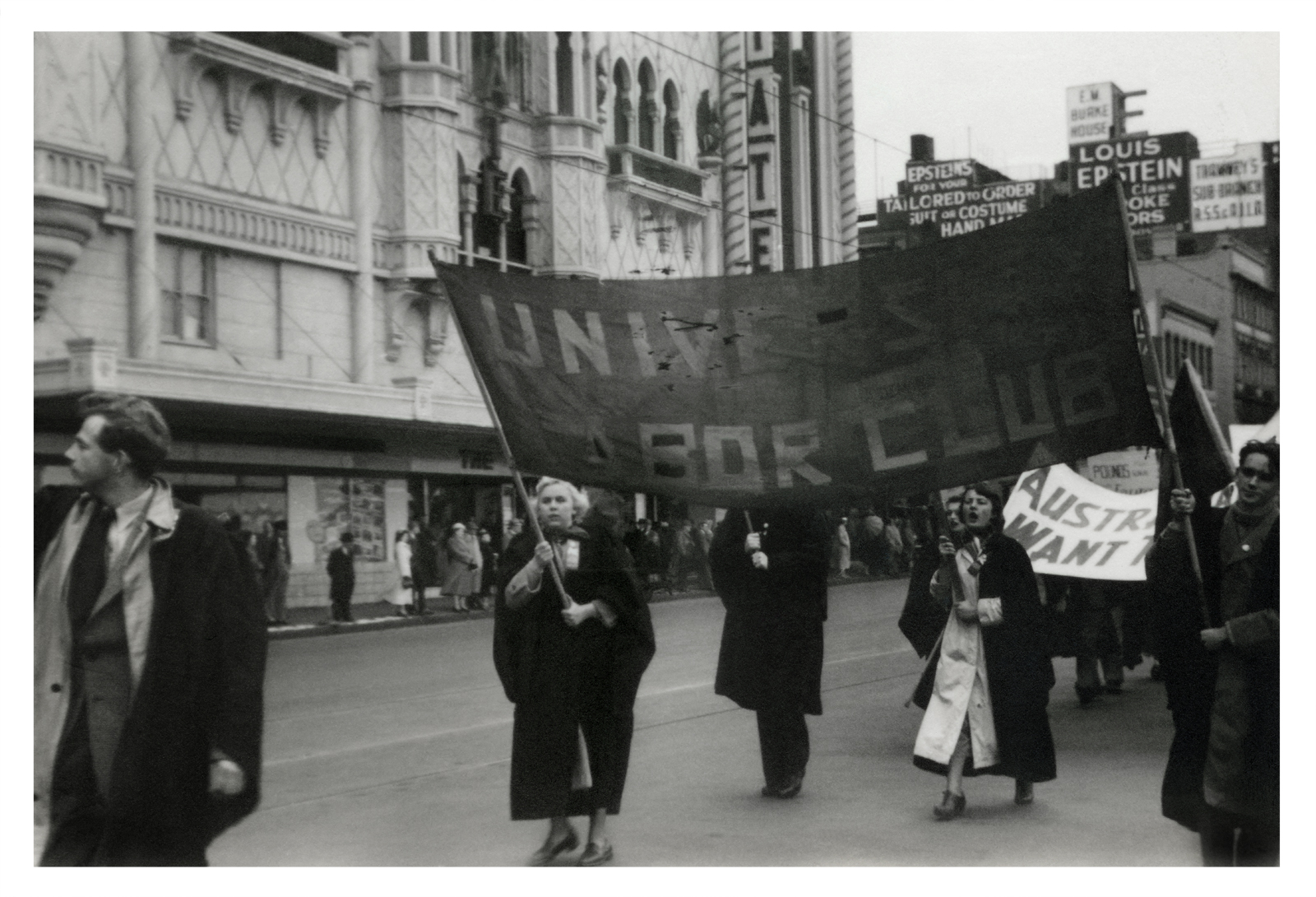
Joyce Evans (Australian, 1929-2019) Students Protesting during a May Day March on Flinders Street, Melbourne 1951 Photograph Joyce Evans Archive National Library of Australia
At far-left, John Clendenin, philosopher and president of University of Melbourne SRC. Banner-bearer Jill Warwick, later a TV Producer, vice-president UniMelb SRC. The Forum Theatre on Flinders Street in the background.
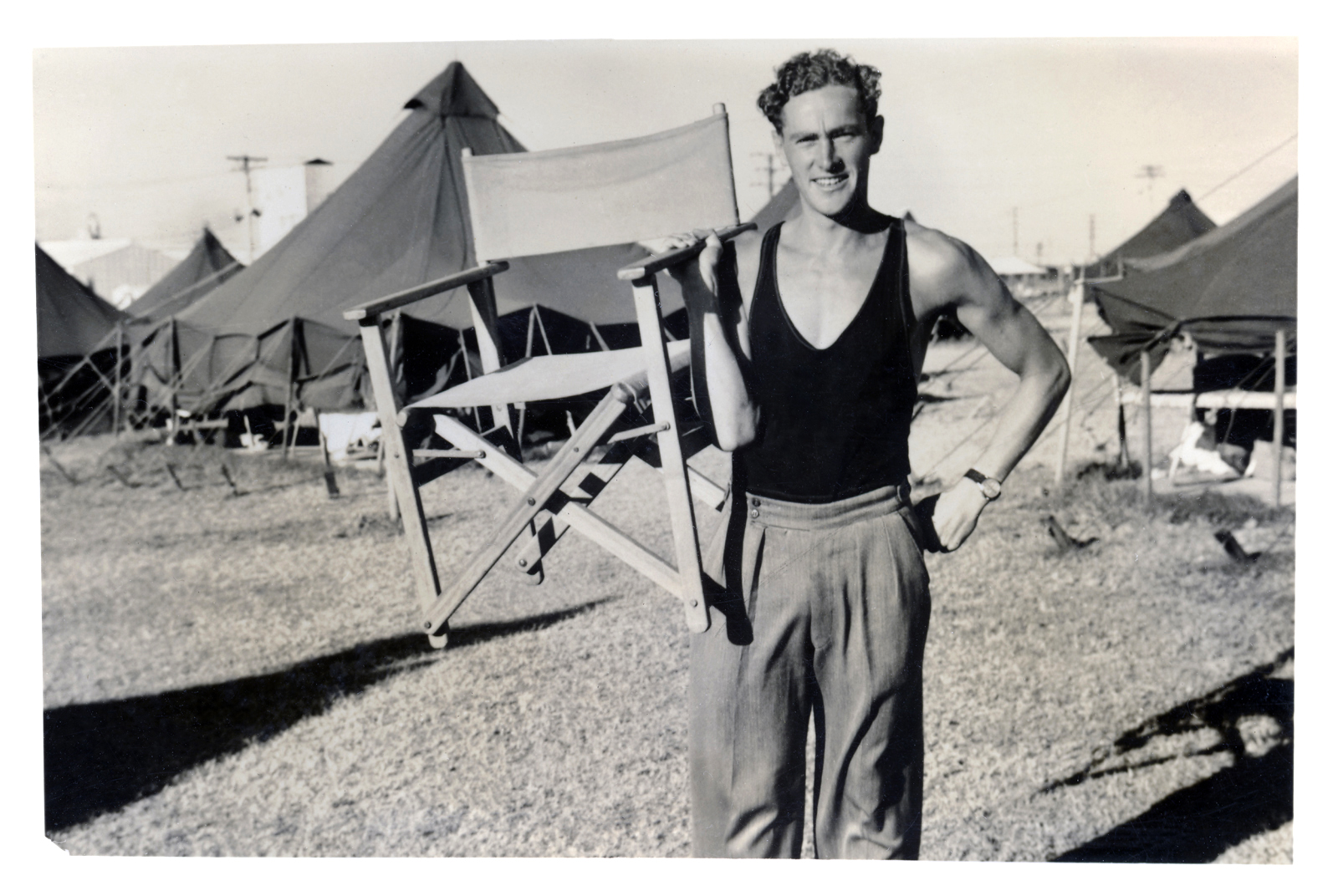
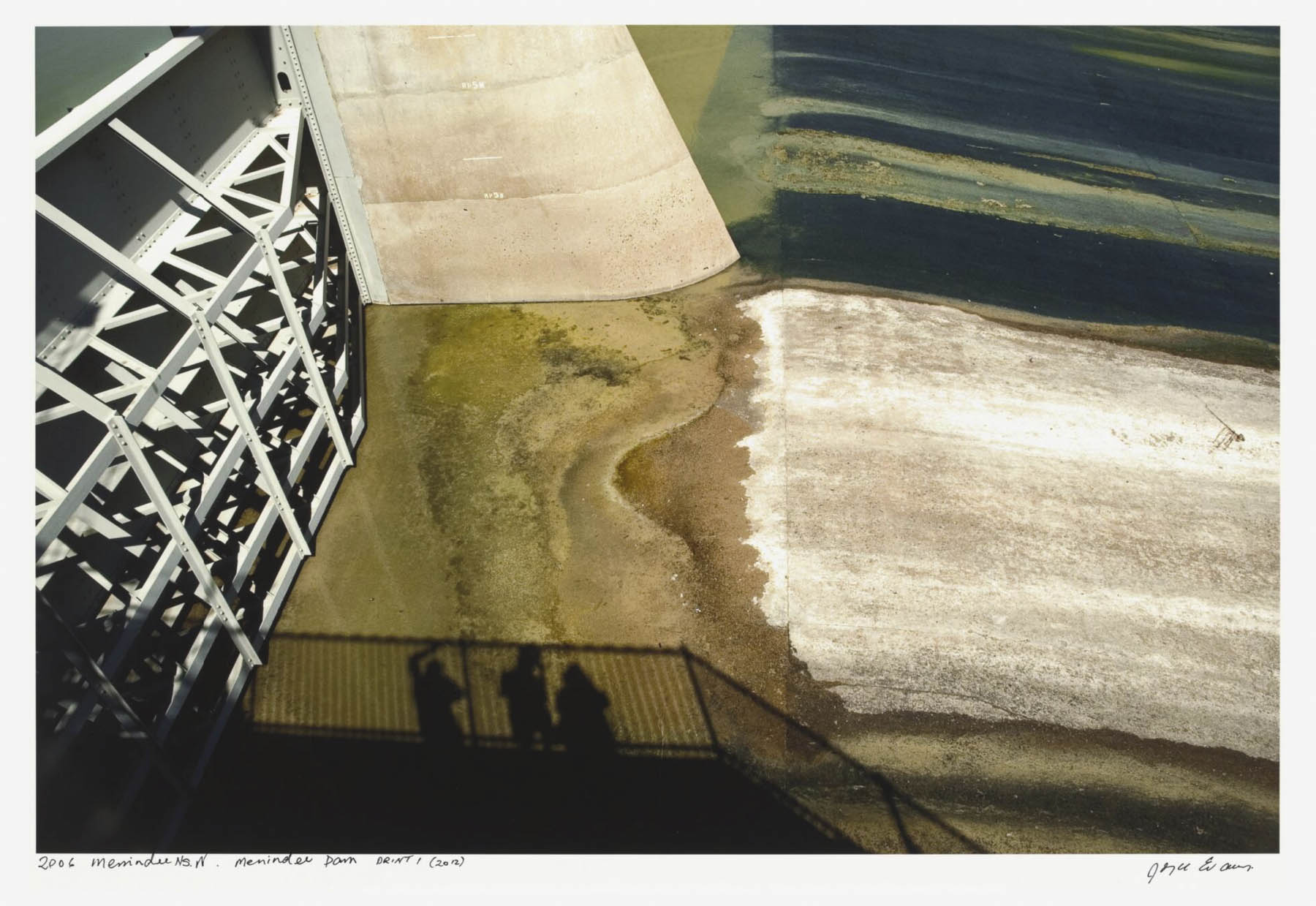
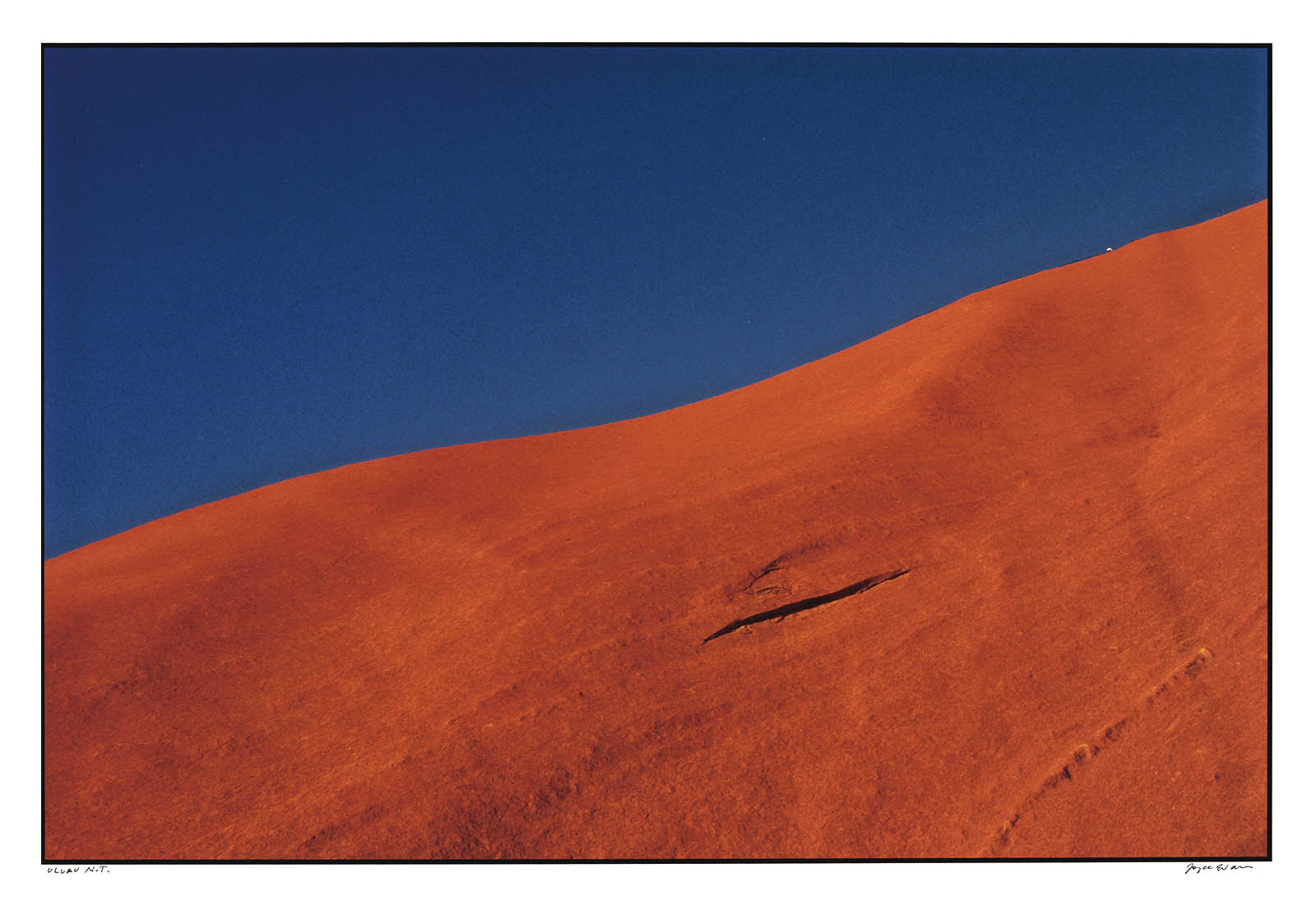
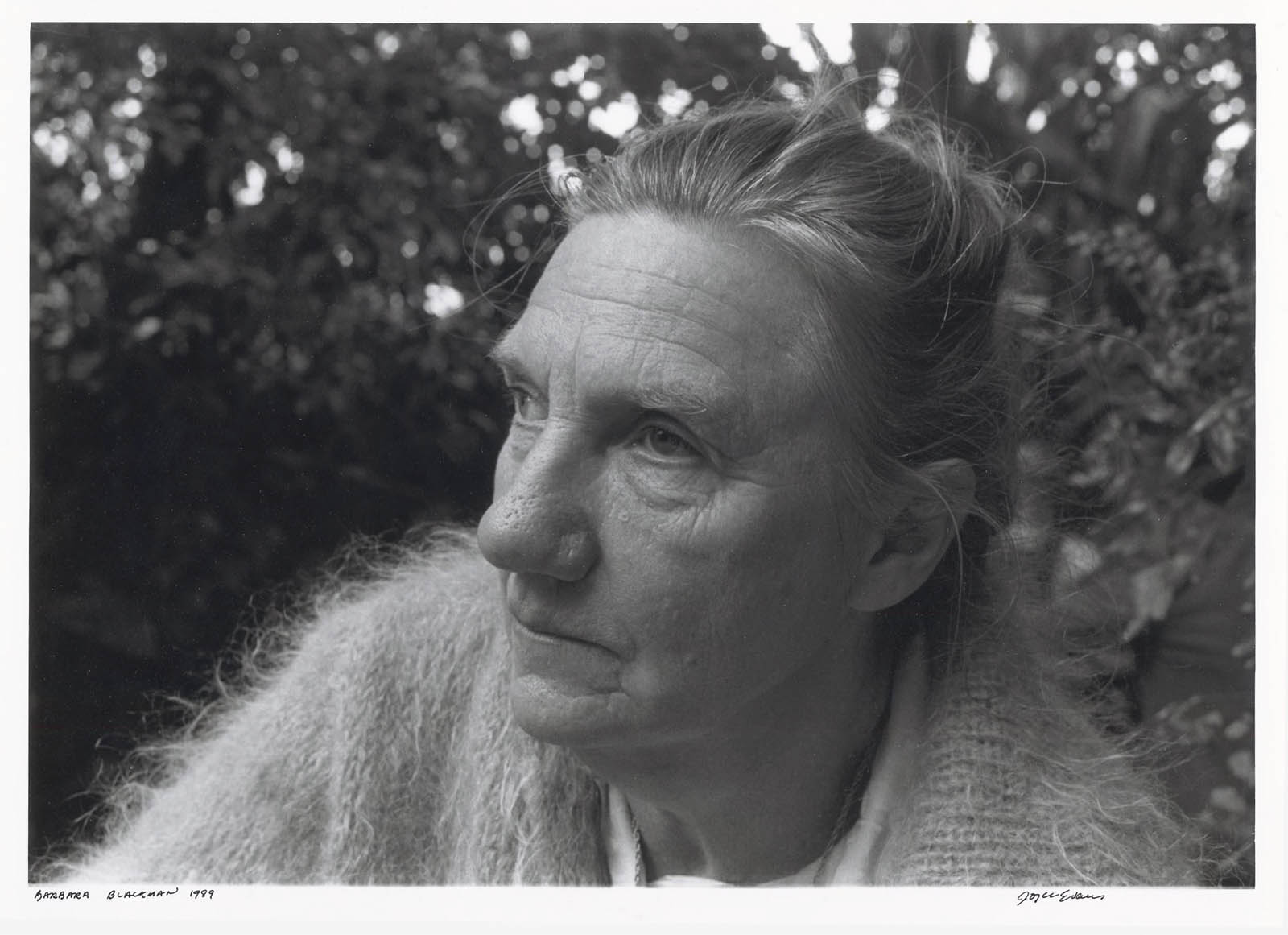
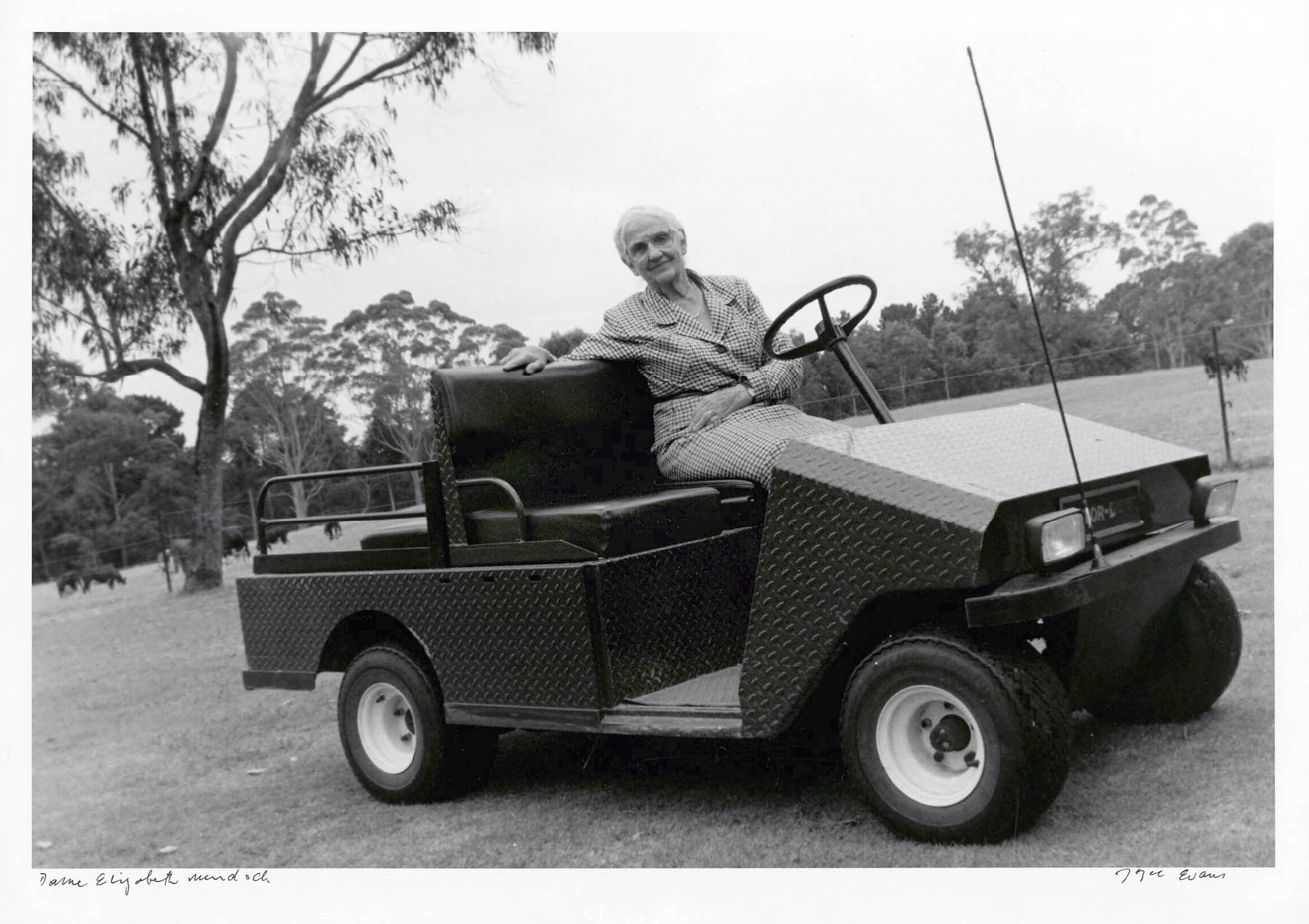
That bohemian force of nature who was Australian artist, curator, teacher, writer, philanthropist, poet, gallery owner and collector Joyce Evans OAM (1929-2019) would have been the first to admit that she was not the most naturally gifted photographer the world has ever known. But Joyce worked assiduously at her craft for over 70 years and became a very fine image maker, picturing her beloved Australia through landscape, documentary and portrait photographs for many a decade.
Joyce had an innate knack of putting people at their ease when having their photograph taken. Never without a camera close at hand, she would approach complete strangers anywhere and ask them whether she could take their portrait… and she was never refused. She had the most gracious way about her, as though she was speaking in communion with her subject: whether that be the contemplation of the Australian landscape, Indigenous Australians, or up close and personal portraits of the ordinary or famous. As author Professor Sasha Grishin observes in his book Joyce Evans (National Library of Australia, 2022) she “was an artist who possessed a definite photographic personality… [who] pursued an agenda that shone a light on racism, social inequality and environmental degradation.”
Joyce worked hard at her craft and it rewarded her soul in so many unconditional ways. Her energy for life and photography was full of unbridled enthusiasm. It is therefore a blessing that this passion has now found a permanent home: her complete photographic archive, the Joyce Evans Archive, is now housed at the National Library of Australia in Canberra, an institution for which she did much work over the years. And it is wonderful that they have staged this small exhibition of 27 of her photographs. My only quibble would be the lack of photographs of Indigenous Australians in the exhibition. Other than the portrait of Aboriginal activist Faith Bandler (1951, below) there are no other photographs of her immense engagement with Aboriginal communities and peoples in this exhibition – which is a great shame. Joyce was very proud of her photography of and relationship with remote Aboriginal communities and their people and it would have been nice to see that energy reflected in the photographs in this exhibition.
Dr Marcus Bunyan
Joyce Evans was a cherished friend of Marcus Bunyan.
Many thankx to the National Library of Australia for allowing me to publish the photographs in the posting. Please click on the photographs for a larger version of the image.
The career of Joyce Evans OAM (1929-2019) spans more than six decades of landscape, documentary, and portrait photography. Her work is preserved through the Library’s Joyce Evans Archive, one of our largest collections of images by a contemporary Australian photographer, and contains images which capture essential aspects of Australian life.
“We believed we had an obligation, neither social nor political, to make a difference. We were brought up as children to believe that we had an obligation to make that difference.
If we can find out what we are… that is the artist. This goes to the core element of your being, and the core element of your enquiry remains the same.
If the core part of your life is the search for the truth then that becomes a core part of your identity for the rest of your life. It becomes embedded in your soul.”
Joyce Evans
Joyce Evans (Australian, 1929-2019) Richard Woolcott AC at NUAUS Conference, Largs Bay, S.A. 1951, printed by David Chisolm and Joyce Evans, 2013 Photograph Joyce Evans Archive National Library of Australia
Richard Arthur WoolcottAC (11 June 1927 – 2 February 2023) was an Australian public servant, diplomat, author, and commentator.
The [photographic] form that Joyce found so early in her life was the music and poetry of humanist photographs, images that are subjective, lyrical, and reveal a state-of-mind. Here is passion and belief in the life of human beings, and the exquisiteness, beauty (and death) of the lived moment. You could label them “social documentary photography” if you were so inclined, but labels don’t capture the frisson of the creative process nor the joyous outcome of Joyce’s portraits. It’s as though Joyce, in a mixture of consciousness and unconsciousness, is making love to the world through her images: neither rational nor cerebral they evoke sensations and feelings, of being here and there, in that past space and time, now, all these years later. These were epic days of change and transformation – of nations, of continents, of cultures and of people. There was death and destruction but there was also such happiness, hope and joy.
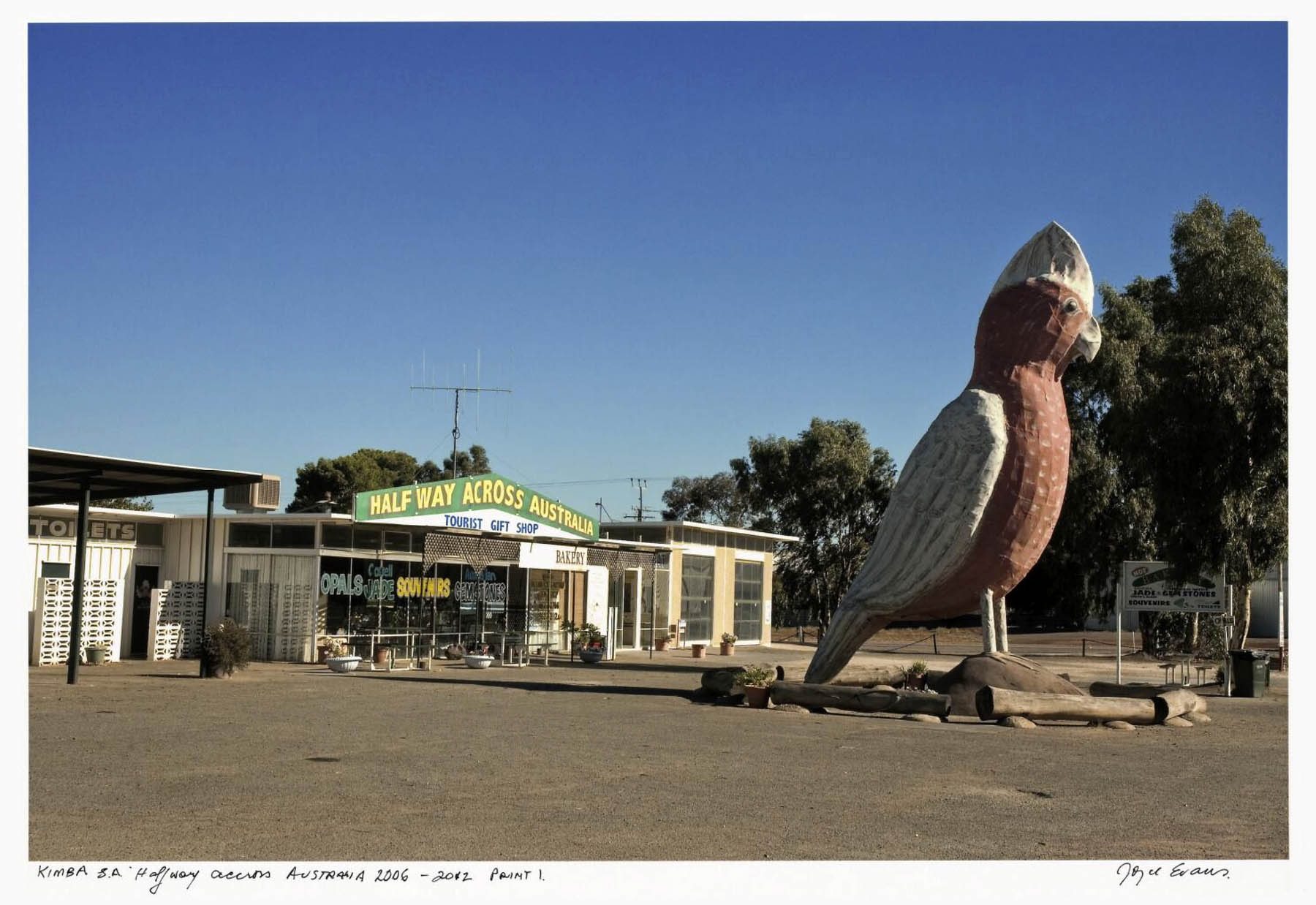
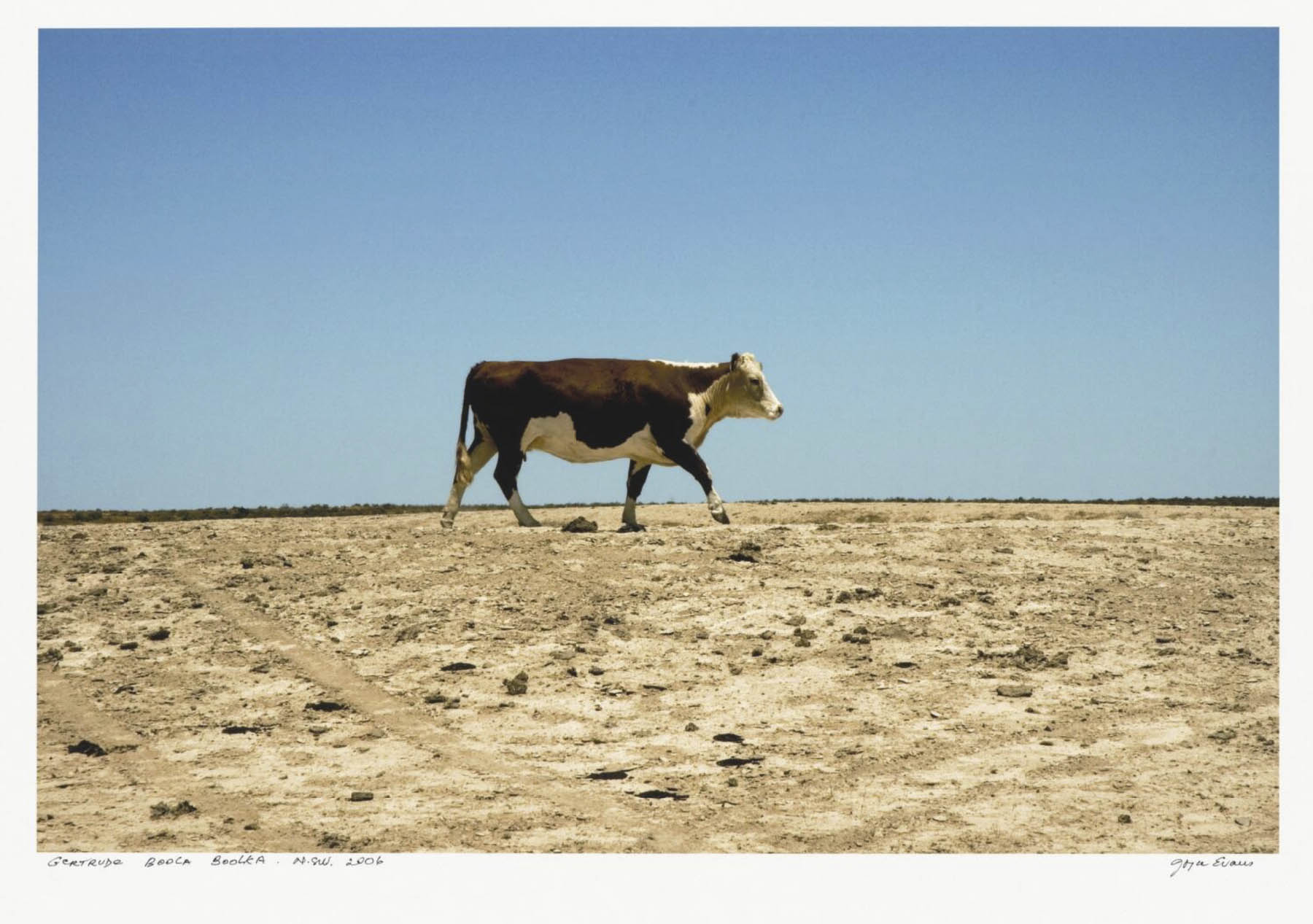
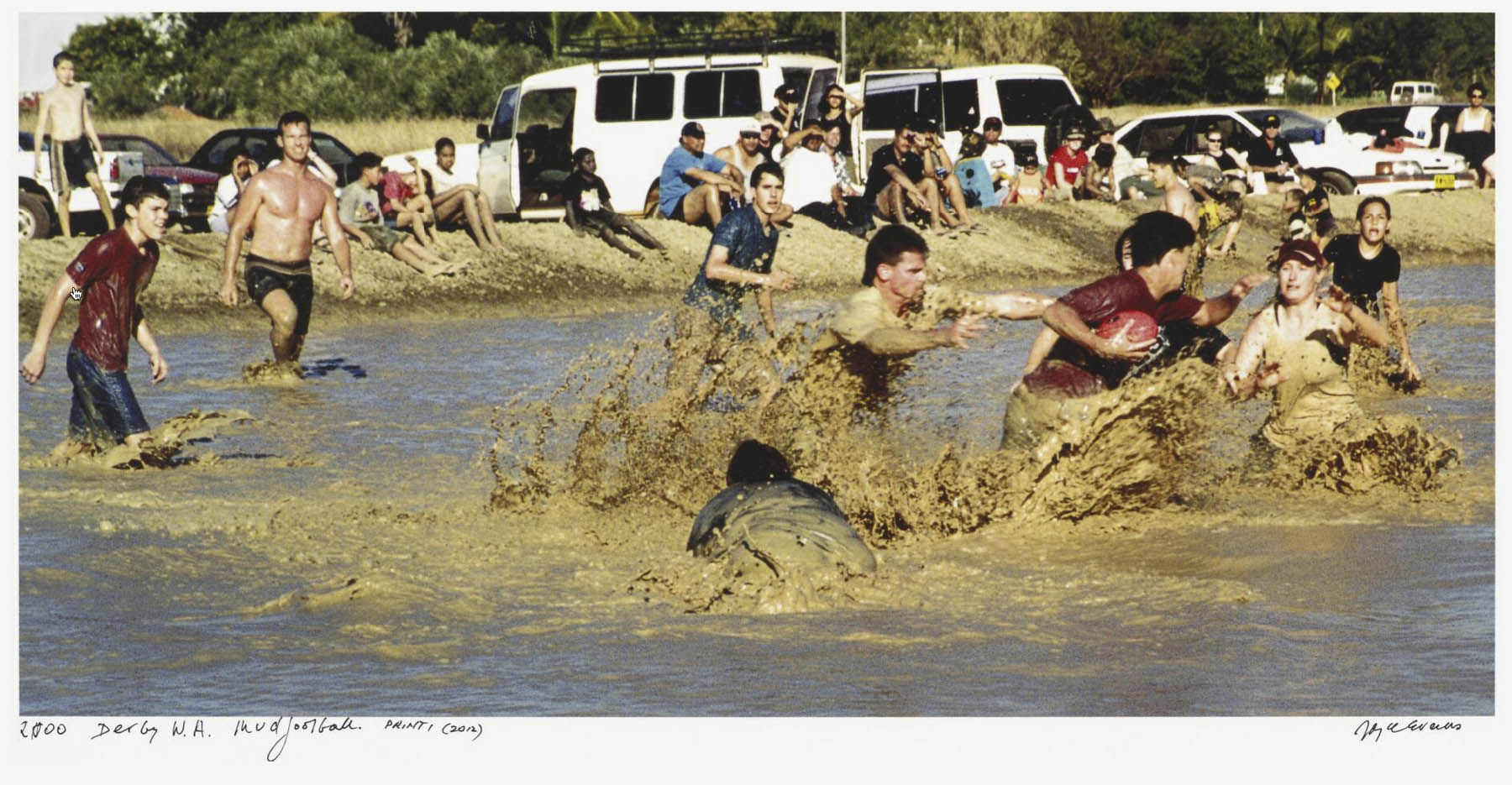
Further, what her photographs also depict is the rise of an informed Australian social consciousness after the Second World War. Her important historical and personal photographs shine a light on forgotten people, times, places and actions, such as the broad based youth movements opposition to the atomic bomb, associations and friendships which eventually form the basis for the progressive social and political protest movements of the 1960s. The voices raised later in support of feminism, gay liberation, free love and Vietnam anti-war protests did not appear fully formed, for there was a history of activism… a slow build, a groundswell of public opinion that was the basis for such emerging actions. Nothing ever emerges from nothing.
Marcus Bunyan. “Nothing emerges from nothing,” foreword from the book We Had Such High Hopes: Student Activism and the Peace Movement 1949-1952, A Photographic Memoir by Joyce Evans. Melbourne: Australian Scholarly Publishing, 2019
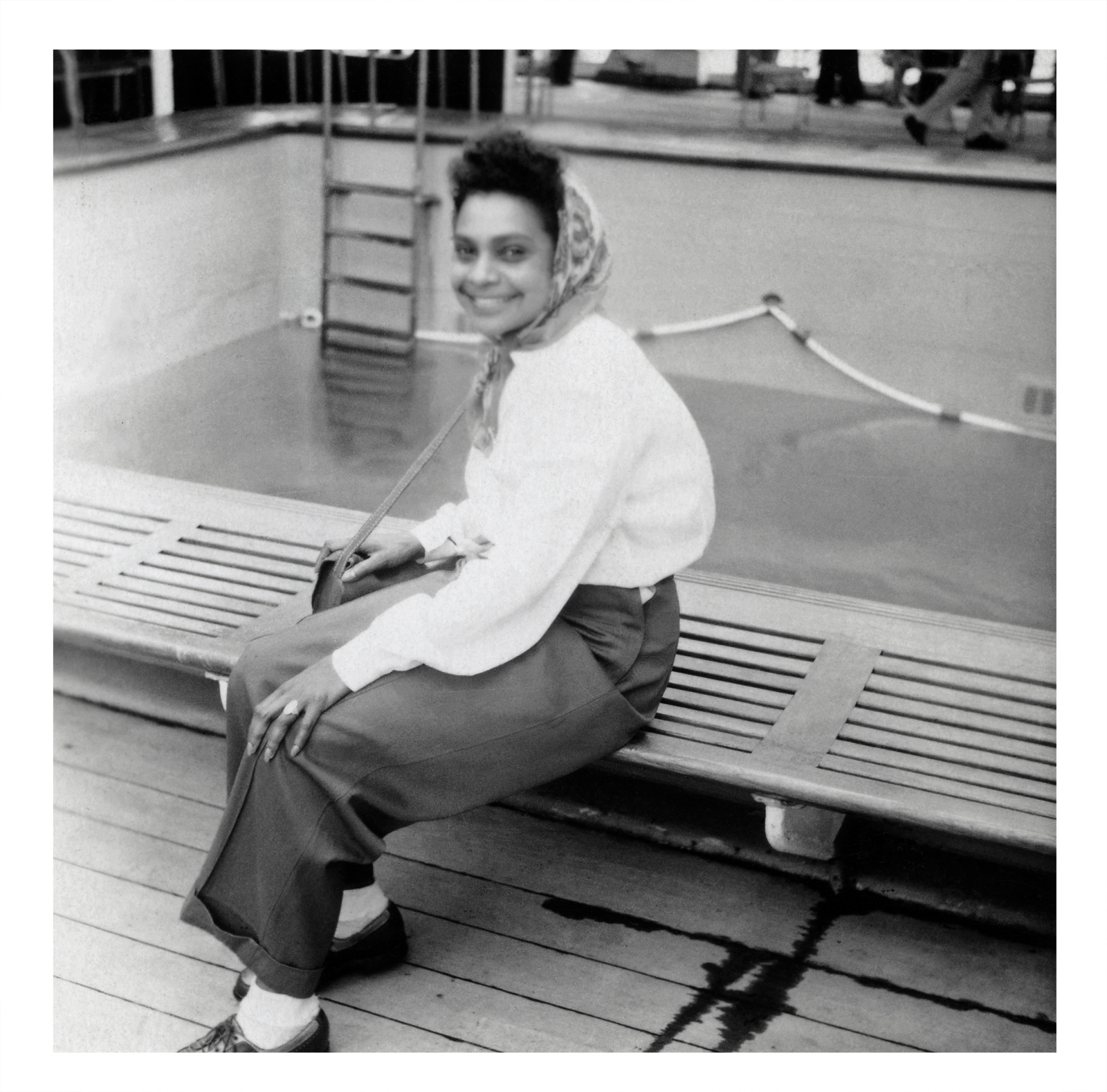
Joyce Evans (Australian, 1929-2019) Faith Bandler 1951, printed 2012 Photograph Joyce Evans Archive National Library of Australia
Faith Bandler AC MBE (27 September 1918 – 13 February 2015; née Ida Lessing Faith Mussing) was an Australian civil rights activist of South Sea Islander and Scottish-Indian heritage. A campaigner for the rights of Indigenous Australians and South Sea Islanders, she was best known for her leadership in the campaign for the 1967 referendum on Aboriginal Australians.
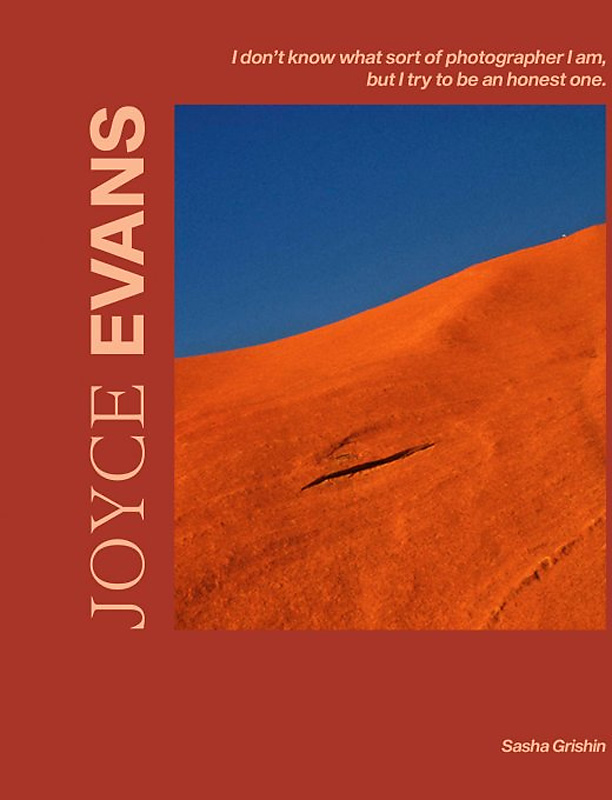
‘I don’t know what sort of photographer I am, but I try to be an honest one.’ ~ Joyce Evans.
The career of Joyce Evans OAM (1929-2019) spans more than six decades of landscape, documentary, and portrait photography. Her work is preserved through the Library’s Joyce Evans Archive, one of our largest collections of images by a contemporary Australian photographer, and contains images which capture essential aspects of Australian life.
This collection-in-focus display contains highlights from the Library’s Joyce Evans Archive, and can be seen in our Treasures Gallery from Tuesday 4 April 2023. Entry to the Gallery is free and no bookings are required.
You can read more about Evans’ life in the NLA Publishing title, Joyce Evans by Sasha Grishin.
Text from the National Library of Australia website.
Joyce Evans (Australian, 1929-2019) Cotswold Farm, Menzies Creek, Victoria 1982 Colour photograph Joyce Evans Archive National Library of Australia
Joyce Evans (Australian, 1929-2019) Moon over Coober Pedy, South Australia 1988, printed by David Chisolm and Joyce Evans, 2013 Colour photograph 35.2 x 35cm Joyce Evans Archive National Library of Australia
Joyce Evans (Australian, 1929-2019) Windmill on Weerewa/Lake George, New South Wales c. 1983-2012 Colour photograph 35.6 x 37.2cm Joyce Evans Archive National Library of Australia
Joyce Evans (Australian, 1929-2019) Desert Car on Gunbarrel Highway, Northern Territory 1991 Colour photograph 21 x 50.6cm Joyce Evans Archive National Library of Australia
Joyce Evans (Australian, 1929-2019) Mud Football, Derby, Western Australia 2000, printed 2012 Inkjet on Hahnemuhle photo rag paper 34.3 x 41cm Joyce Evans Archive National Library of Australia
Joyce Evans (Australian, 1929-2019) The Big Galah and Tourist Gift Shop, Kimba, South Australia c. 2006-2012 Colour photograph 33.6 x 50.7cm Joyce Evans Archive National Library of Australia
Joyce Evans (Australian, 1929-2019) Gertrude, Boola Boolka Station, New South Wales 2006 Colour photograph 33.9 x 50.7cm Joyce Evans Archive National Library of Australia
Joyce Evans (Australian, 1929-2019) Evidence of Severe Drought at Menindee Dam, Menindee, New South Wales 2006 Colour photograph Joyce Evans Archive National Library of Australia
Joyce Evans (Australian, 1929-2019) Uluru, Northern Territory 1987 Colour photograph Joyce Evans Archive National Library of Australia
Joyce Evans was an unusual phenomenon in the Australian photography scene. Her conversion to photography did not occur until she was already in her 40s, while her engagement in professional photography had to wait until she was 50. She never developed a signature style, nor had she become a template photographer, but she possessed a definite photographic personality. …
As a documentary photographer, Evans considered herself a hunter and gatherer waiting to find the image. She remarked, “as an artist, you channel the energy of the place – the image comes to you as a gift.”
Her oeuvre is remarkable for its diversity and includes landscapes, roadkill, portraiture, social documentation, brothels and erotica – all brought together through a unifying sensibility, the Evans photographic moment. She was also an artist with a social conscience and pursued an agenda that shone a light on racism, social inequality and environmental degradation.
Many of Evans’s photographs demand slow viewing and open up gradually. Uluru, Northern Territory, 1987 (above), shows the rock as if carved by nature. In one sense, it is a very simple photograph in which two colours meet – the brilliant red ochre of the rock and the fathomless blue of the sky. It is also an immensely complex photograph with the mysterious slit – like the womb of the earth – in the centre of the composition and galvanising the viewer’s attention.
Gradually, as you focus into the image, there are signs of human presence at the top of the rock: two climbers on the chain pathway, contrasted with organic shapes created through centuries of erosion – a contrast between the temporal and the eternal. Despite the sense of stillness and silence, there is also considerable movement as the light plays over the textured surfaces.
The photograph is rare in that it defines a space but also distils the spiritual essence of the place and asserts an atmosphere of mystery and contemplative presence.
In 2016, when I was working on a monograph on Evans’s work, she noted: “As a photographer – I have a voice – it is an Australian voice, as I do not know intimately any other culture. It comes at a time when you say: ‘This is my country’. One of the sub-texts, when I pick up a camera, is that I always try to identify the stereotypical that is always defined by that which is on the edge.”
Joyce Evans (Australian, 1929-2019) Barbara Blackman 1989 Photograph 30 x 40.7cm Joyce Evans Archive National Library of Australia
Barbara Blackman AO (née Patterson; born 22 December 1928) is an Australian writer, poet, librettist, broadcaster, model and patron of the arts. In 2004, she donated $1 million to a number of Australian music organisations, including Pro Musica, the Australian Chamber Orchestra, the Australian National University’s School of Music and the Stopera Chamber Opera Company. In 2006, she was awarded the Australian Contemporary Music Award for Patronage. Barbara Blackman was married for 27 years to renowned Australian artist Charles Blackman.
Joyce Evans (Australian, 1929-2019) Philanthropist Dame Elisabeth Murdoch, Langwarrin, Victoria 1995 Photograph 24.9 x 37.0cm Joyce Evans Archive National Library of Australia
Dame Elisabeth Joy Murdoch, Lady Murdoch AC DBE (née Greene; 8 February 1909 – 5 December 2012), also known as Elisabeth, Lady Murdoch, was an Australian philanthropist and matriarch of the Murdoch family. She was the wife of Australian newspaper publisher Sir Keith Murdoch and the mother of international media proprietor Rupert Murdoch. She was appointed a Dame Commander of the Order of the British Empire (DBE) in 1963 for her charity work in Australia and overseas.
Joyce Evans (Australian, 1929-2019) Bernard Smith, Victoria 2004, printed 2013 Colour photograph 47.5 x 37.5cm Joyce Evans Archive National Library of Australia
Bernard William Smith (3 October 1916 – 2 September 2011) was an Australian art historian, art critic and academic, considered the founding father of Australian art history, and one of the country’s most important thinkers. His book Place, Taste and Tradition: a Study of Australian Art Since 1788 (1945) is a key text in Australian art history, and influence on Robert Hughes. Smith was associated with the Communist Party of Australia, and after leaving the party remained a prominent left-wing intellectual and Marxist thinker.
Joyce Evans (Australian, 1929-2019) Stephen Dupont 2009, printed by David Chisolm and Joyce Evans, 2013 Photograph 35.6 x 35.6cm Joyce Evans Archive National Library of Australia
Stephen Dupont (b. 1967) is an Australian photographer and director working on films, commercials, magazine and newspaper assignments and long term personal projects.
Joyce Evans (Australian, 1929-2019) William Yang 1996 Photograph Joyce Evans Archive National Library of Australia
“William Yang [Aust., b.1943] belongs to a generation of artists who used photography to document alternative lifestyles and celebrate social diversity during the latter decades of the 20th century…Yang is the type of social documentary photographer who carries a camera around his neck, ready to capture things with a certain immediacy, as they happen around him.” ~ Museum of Contemporary Art
Joyce Evans was an unusual phenomenon in the Australian photography scene. Her conversion to photography did not occur until she was already in her forties, while her engagement in professional photography had to wait until she was fifty. She never developed a signature style, nor did she become a template photographer, but she possessed a sensibility that has become characteristic of her work, so that you can quickly recognise a Joyce Evans photograph. She was an artist who possessed a definite photographic personality.
Evans combined documentary photography, social photography, landscape photography and studio practice. She also had a social conscience. Although avoiding didactic images or illustrative propaganda, in her documentary work and in her choice of subjects, she had pursued an agenda that shone a light on racism, social inequality and environmental degradation.
This stylish and generously-illustrated monograph shows how Evans’ photography was about capturing not only the surface appearances, but ultimately the essences, of her subjects. It illustrates the Evans’ belief that in silence and stillness you come to feel the spirit of the subject, and that capturing this spirit was the photographer’s goal.
About the author
Professor Sasha Grishin AM, FAHA established the academic discipline of Art History at the ANU and was the Sir William Dobell Professor of Art History and Head of Art History and Curatorship at the ANU until December 2013. He works internationally as an art historian, art critic and curator. In 2005 he was awarded the Order of Australia (AM) for services to Australian art and art history. He has published over 25 books and over 2,000 articles and catalogue essays dealing with various aspects of art.
Text from the National Library of Australia website.
Dialogue: Old English dialogas (plural), from Latin from Greek dialogos, from dia ‘through’ + logos ‘word’
“As we define it, dialogue is “a communicative process in which people with different perspectives seek understanding.” To be in dialogue means that participants are not only engaging each other in light of their different views, but they are also striving to achieve a degree of mutual understanding.”
Jason Combs. “What is Dialogue?” on the University of Dayton website Monday October 28, 2019 [Online] Cited 01/07/2023
Short and sweet because I’m not feeling well.
What an inspired pairing for an exhibition. “Each [artist] addresses race, class, representation, and systems of power in their work, creating photographic series grounded in Black history and realities that speak to the human condition.”
From street-based photographs of everyday life to conceptual excavations of Black Histories, they produce incisive thought provoking works “that intermingle past and present, referenc[ing] African Americans whose lives and stories have been co-opted or lost.”
I love them both for their commitment to and passion for life in all its different forms. Bringing people together. Expressing a degree of mutual understanding.
#BlackLivesMatter #AllLivesMatter
Dr Marcus Bunyan
Many thankx to the J. Paul Getty Museum for allowing me to publish the photographs in the posting. Please click on the photographs for a larger version of the image.
Dawoud Bey and Carrie Mae Weems have been friends and colleagues for more than 40 years. Each addresses race, class, representation, and systems of power in their work, creating photographic series grounded in Black history and realities that speak to the human condition. This exhibition sheds light on their unique trajectories and modes of presentation, and their shared consciousness and principles. Organised by the Grand Rapids Art Museum.
In 1976 I had been making photographs for a couple of years. I had certainly been looking at a lot more photographs than I had actually made. From looking at photographs in books and magazines and going to exhibitions of pictures by Mike Disfarmer at MoMA, Richard Avedon at Marlborough, and haunting whatever other places there were to see photographs in New York in the early 1970s, I had begun to educate myself, with the intent of adding something to the conversation through my own pictures.
The artist Janet Henry, who was from the same Jamaica, Queens neighborhood that I lived in, had gotten a job in the Education Department at the Studio Museum in Harlem, then located above a Kentucky Fried Chicken on 125th Street and Fifth Avenue in a large second floor loft space. When Frank Stewart, the museum’s staff photographer and photo teacher, left to do a commissioned project in Cuba, Janet called me and asked if I would take over the class. On the first day of class a few students straggled in. One of them, a seemingly shy woman with big expressive eyes, introduced herself, “Hi, my name is Carrie. Do you think I could be a photographer?” she asked, holding her Leica camera in her hand. That began what has now been 33 years of friendship and camaraderie with one of the most brilliant people I know.
From the very beginning, Carrie Mae Weems has had a sharp intelligence that was looking for a way into the world. From her early documentary photographs to the more expansive and materially varied recent works, she has consistently set out to visually define the world on her own terms and to redefine for all of us the nature of the world that we are in. After all these years I still anticipate her work with a fresh sense of wonderment, knowing that her restless search for the deeper meaning of things will yield a continuing rich trove of objects and images. On a Sunday morning in May I called from my home in Chicago to reconnect with my dear friend while she was traveling in Seville, Spain.
Since meeting at the Studio Museum in Harlem in 1977, Dawoud Bey and Carrie Mae Weems have been intellectual colleagues and companions.
From the outset of their careers, both have operated from a deep social commitment to participate in, describe, and define culture. In seeking to express themselves fully, each has expanded possibilities within photography and video to address their chosen subjects.
Dawoud Bey & Carrie Mae Weems: In Dialogue, on view April 4 through July 9, 2023, brings together for the first time a focused selection of work from a period of over 40 years by two of today’s most important and influential photo-based artists. Each grapples with issues of race, class, and representation in their work, making art grounded in the experiences and realities of Black Americans while also speaking to the broader human condition.
“The Museum’s Department of Photographs has made great strides in recent years in building an exhibitions program that highlights more expansive narratives of photographic history,” says Timothy Potts, Maria Hummer-Tuttle and Robert Tuttle Director of the J. Paul Getty Museum. “Dawoud Bey and Carrie Mae Weems are two artists who reframe American traumas that have been ignored or simplified in the national historical record. We are proud to showcase their work in dialogue with one another.”
Jim Ganz, senior curator of photographs, adds, “These artists are two of the most dynamic and insightful of our time. As presented in this extraordinary exhibition, their eloquent dialogue gives unique perspective on their shared concerns as image makers.”
Dawoud Bey (American, born 1953) creates photographs that focus on individuals, communities, and important but often overlooked American histories. His carefully composed images convey the dignity and rich inner lives of his subjects. Carrie Mae Weems (American, born 1953) first gained recognition in the 1980s for exploring identity, race, power, and history, themes that still fuel her art. Over her career, Weems has turned increasingly to staged photography and the use of text to heighten the emotional intensity of her work.
This exhibition is divided into five sections, starting with early pictures that both artists made in the photodocumentary tradition and followed by ambitious, groundbreaking explorations of the medium as it developed technologically and artistically. The exhibition then focuses on how both artists moved beyond candid pictures of everyday life and began making larger scale work that is more planned than spontaneous. Bey’s portraiture evolved from street-based glimpses of the world made with a handheld camera to portraits that are formal but intimate, in which his subjects appear at ease and engage directly with the lens. With her Kitchen Table Series, Weems transitioned from representing real people in their natural environments to creating staged photo essays. For each artist, the techniques developed in this period became the foundation for future projects.
In Resurrecting Black Histories, each artist addresses the 19th century and its legacies in distinctive ways. Bey’s carefully composed landscapes evoke the experience of fleeing along the Underground Railroad, the clandestine network that helped enslaved people escape the South. Weems, by incorporating texts that intermingle past and present, references African Americans whose lives and stories have been co-opted or lost.
In Memorial & Requiem, Bey and Weems reference traumatic 20th-century events. They worked with community partners to stage scenes meant to reinvigorate discussion of the American legacy of racial violence. Each photographer also created a related video, bringing their own sensibility – Bey’s searching, intimate gaze; Weems’ choreographed social commentary – to the moving image, using sequencing and sound to deepen engagement with American history.
The exhibition ends with Revelation in the Landscape, where both Bey and Weems contemplate the built environments in which we live and how those spaces affect our perceptions of the world and ourselves. Bey returns to the Harlem neighbourhoods he photographed in the late 1970s, tracking the changes wrought by gentrification. Weems photographs imposing sites in Rome, inserting herself into historical places imbued with power and legacy. Both series reveal the economic and institutional forces that shape daily life.
In conjunction with the exhibition Getty has created a community program inspired by the exhibition, L.A.: In Dialogue. This program brings Dawoud Bey & Carrie Mae Weems: In Dialogue to a wider Los Angeles community, furthering the influence of the two artists and introducing their work to a new generation of artists and viewers. The artist-led program will host educational workshops for local teens and young adult photographers, and will teach participants techniques in black-and-white photography and the artistic practice of capturing portraiture and place. They will explore themes from the exhibition, collaborate with peers, and explore their local communities: Culver City (Black Image Center), South L.A. (LA Commons), Downtown L.A. (Inner-City Arts), and Venice Beach (Venice Arts). This program will result in a satellite exhibition that will open in June 2023.
Related programming includes Dawoud Bey and Carrie Mae Weems in Conversation on Tuesday, April 4 at 4pm. That evening at 7pm, the Museum presents master saxophonist David Murray in concert with his newly formed quartet as part of the exhibition programming.
The pose of the figures, other than the obvious reference to the Pieta, reminds me of that famous and most moving Eugene W. Smith photograph Tomoko and Mother in the Bath (1971)
The J. Paul Getty Museum 1200 Getty Center Drive Los Angeles, California 90049
Curated by Alistair O’Neill, professor of Fashion History and Theory at Central Saint Martins (University of the Arts London)
Please note: This exhibition includes photographs showing nudity and sexually suggestive scenes. There is no age restriction for visitors to the exhibition. We are leaving the decision to visit to the discretion of parents, guardians and carers.
Keith Vaughan (British, 1912-1977) Highgate Men’s Pond Album 1933 Courtesy Aberystwyth University School of Art Museum and Galleries
Nothing hard to see here…
This looks to be a fascinating exhibition albeit with not a single erect penis on show and about half the exhibition showing flaccid examples. The photographs seem particularly asexual. Hardly any of them are what you would call “erotic”, except perhaps the photographs from the earliest album in this posting, Keith Vaughan’s Highgate Men’s Pond Album (1933, above and below). For me, the most sexual photographs are the “rough trade” such as the skins and carnies… an archetype which has existed for centuries.
My Phd research titled Presing the Flesh: Sex, Body Image and the Gay Male (1997-2001) examined in part the history of the male body in photography, including photos of ephebes (young men), the muscular mesomorphic body as featured in the physique magazines and gay male pornography. My history of the male body in photography can be found in the Historical Pressings chapter while the Bench Press chapter investigates the ‘Cult of Muscularity’, the development of gym culture, its ‘masculinity’, ‘lifestyle’, and the images used to represent it.
Much as gay men had to speak ‘Polari’ (gay slang language) when going to pubs such as the Salisbury on St Martin’s Lane in London in the 1970s so that those around us could not understand what we were saying, so physique or ‘beefcake’ magazines of the 1950s and 1960s relied heavily on the iconography of classical Rome and Greece to legitimise and hide from unknowing eyes (in plain sight) their homo-erotic overtones. Use was made of columns, drapery, and sets that presented the male body as the contemporary equivalent of idealised male beauty of ancient times.
While Simon in his excellent post on the exhibition notes that there was a delicate balancing act in the photographs in their subtle aesthetics of constraint and tact and a “self-imposed restraint which made ‘physique photographs’ walk such an exciting fine line between factual depiction of male anatomy and objects of lust from the 1930s to the 80s,” behind the scenes the models were getting boners and having sex all over the place. Purely for private consumption in their day, none of these photographs are ever shown (as in this exhibition) or published today and hardly anyone knows about them. The limp, flaccid penis is all that we get to see for fear of offence and/or moral outrage… for what was covert activity at the time (with a wide underground circulation) is kept impotent today.
Dr Marcus Bunyan
Many thankx to The Photographers’ Gallery for allowing me to publish the photographs in the posting. Please click on the photographs for a larger version of the image.
“I think the interest is not so much in the images, per se, as in their variety, and also in the extraordinary density and complexity of the clandestine networks of gay photographers, subjects, printers, publishers and distributors which the wall labels describe and explain. That’s interesting social history.
And then, when you lay the complex mesh of legal and cultural and visual parameters over the images you get, as it were, another layer of complexity beyond the images themselves; you get to see them as varying visual strategies and approaches and sublimations of very powerful male urges of desire and sexuality.”
“The bodies in the ‘beefcake’ magazines of the 1950’s tend to be bigger than that of the ephebe, even when the models were quite young in some cases. As the name ‘beefcake’ implies, the muscular mesomorphic shape was the attraction of these bodies – perfectly proportioned Adonis’s with bulging pectorals, large biceps, hard as rock abdomens and small waists. The 1950’s saw the beginning of the fixation of gay men with the muscular mesomorph as the ultimate ideal image of a male body. The lithe bodies of young dancers and swimmers now gives way to muscle – a built body, large in its construction, solid and dependable, sculpted like a piece of rock. These bodies are usually smooth and it is difficult to find a hirsute body11 in any of the photographs from the physique magazines of this time. According to Alan Berube in his book, Coming Out Under Fire,
“The post-war growth and commercialization of gay male erotica in the form of mail-order 8 mm films, photographic stills, and physique magazines were developed in part by veterans and drew heavily on World War II uniforms and iconography for erotic imagery.”12
Looking through images from the 1940s in the collection at The Kinsey Institute, I did find that uniforms were used as a fetish in some of the explicitly erotic photographs as a form of sexual iconography. These photographs of male2male sex were for private consumption only. I found little evidence of the use of uniforms as sexual iconography in the published photographs of the physique magazines. Here image composition mainly featured classical themes, beach scenes, outdoor and studio settings. …
As the 1950s turned into the 1960s other stereotypes became available to the photographers – for example the imagery of the marine, the sailor, the biker, the boy on a tropical island, the wrestler, the boxer, the mechanic. The photographs become more raunchy in their depiction of male nudity.
In the 1950s, however, classical aspirations were never far from the photographers minds when composing the images as can be seen in the undated photograph Jim Stevens by Lon of New York in London taken from a book called ‘Art in Physique Photography’.14 This book, illustrated with drawings of classical warrior figures by David Angelo, is subtitled: ‘An Album of the world’s finest photographs of the male physique’.
Here we observe a link between art and the body. This connection was used to confirm the social acceptability of physique photographs of the male body while still leaving them open to other alternative readings. One alternative reading was made by gay men who could buy these socially acceptable physique magazines to gaze with desire upon the naked form of the male body. It is interesting to note that with the advent of the first openly gay pornography magazines after the ruling on obscenity by the Supreme Court in America in the late 1960s,15 classical figures were still used to justify the desiring gaze of the camera and viewer upon the bodies of men. Another reason used by early gay pornography magazines to justify photographs of men having sex together was that the images were only for educational purposes! …
As social morals relaxed in the age of ‘free love’, physique photographers such as Bob Mizer from Athletic Model Guild produced more openly homo-erotic images. In his work from the 1970s full erections are not prevalent but semi-erect penises do feature, as do revealing “moon” shots from the rear focusing on the arsehole as a site for male libidinal desires. A less closeted, more open expression of homosexual desire can be seen in the photographs of the male body in the 1970s.17 What can also be seen in the images of gay pornography magazines from the mid 1970s onwards is the continued development of the dominant stereotypical ‘ideal’ body image that is present in contemporary gay male society – that of the smooth, white, tanned, muscular mesomorphic body image.
Marcus Bunyan. “Historical Pressings,” from Presing the Flesh: Sex, Body Image and the Gay Male. PhD thesis, RMIT University, 2001
A Hard Man is Good to Find! celebrates a clandestine visual culture of men’s bodies that emerged in the post-war period, during a time when making and distributing such images was a criminal offence.
This exhibition highlights key areas of London which were a focus for men seeking out men to photograph. It maps out a territory of risk and possibility across Highgate, between Chelsea and Wellington Barracks, in Soho, Brixton, Portobello and Euston. Catalogues, print ordering sheets, personal albums, magazines and publications explore how these photographs were circulated, exchanged and shared.
While the 1955 Wolfenden Report and the 1967 Sexual Offences Act marked the partial decriminalisation of gay sexual activity, prompting gay liberation and the fight for social equality; any depiction of male nudity which suggested homosexuality remained subject to the 1857 Obscene Publications Act.
Including work by John S. Barrington, Cecil Beaton, Guy Burch, Basil Clavering, Rotimi Fani-Kayode, Bill Green, David Gwinnutt, Angus McBean, Patrick Procktor, Ajamu X and many more.
Whilst this is an exhibition of queer pictures, it is important to note that not all the photographers or models can be claimed as queer subjects. It also acknowledges that language evolves and while queer is employed today for its inclusivity, the reclaiming of the derogatory term can sit uneasily for the generation subjected to it; the term homosexual can be similarly problematic for a younger generation.
As a number of the works are historical documents, it has not been possible to identify all individuals represented in the exhibition. We welcome any amendments or additions.
Text from The Photographers’ Gallery website
A Hard Man is Good to Find! Interview with exhibition curator Alistair O’Neill
Alistair O’Neill, professor of Fashion History and Theory at Central Saint Martins (University of the Arts London) talks about curating the exhibition A Hard Man is Good to Find! – a bold new exhibition charting over 60 years of queer photography of the male physique.
Keith Vaughan (British, 1912-1977) Highgate Men’s Pond Album (detail) 1933 Courtesy Aberystwyth University School of Art Museum and Galleries
Keith Vaughan (British, 1912-1977) Highgate Men’s Pond Album 1933 Courtesy Aberystwyth University School of Art Museum and Galleries
Keith Vaughan (British, 1912-1977) Highgate Men’s Pond Album, front cover 1933 Courtesy Aberystwyth University School of Art Museum and Galleries
Highgate men’s pond has a history of accommodating physical culturists and queer men as swimmers and sunbathers. At the age of 21, artist Keith Vaughan purchased a Leica camera and set up a darkroom in his bedroom. One of his first projects was a photobook he designed and made charting the climbing temperature of a summer’s day at the pond. This is the first time the album has been exhibited.
Keith Vaughan (British, 1912-1977) Highgate Men’s Pond Album 1933 Courtesy Aberystwyth University School of Art Museum and Galleries
Keith Vaughan (British, 1912-1977) Highgate Men’s Pond Album (detail) 1933 Courtesy Aberystwyth University School of Art Museum and Galleries
Angus McBean (Welsh, 1904-1990) David Dulak 1946 Courtesy Rupert Smith Collection
In a study of Dulak taken in Angus McBean’s Covent Garden studio, an idealised diptych of the naked dancer is created from controlled lighting and double exposure. It was taken after McBean was released from prison, having served two years’ hard labour for gross indecency. During the Blitz, McBean relocated his studio to Bath and it was raided by police in 1941.
Between Chelsea and Wellington Barracks
I.e. Pimlico, an area of boarding houses and rented rooms, an enclave of queer life. Angus McBean opened his photographic studio on Belgrave Road in 1935.
Montague Glover had served in the First World War where he was awarded a medal. He went on to practice as an architect with photography on the side. His military career gave him easy access to the barracks where he recruited like-minded Guards to return to his studio or rented rooms and pose in less than full uniform. Squaddies available for gay sex were known as ‘a bit of scarlet’.
Angus McBean (Welsh, 1904-1990) David Dulak (detail) 1946 Courtesy Rupert Smith Collection
“… by the time of the 1939 National Register he was 35 and living in a Hertfordshire cottage with three other men; his 19 year old photographer’s assistant, a 21 year old theatre clerk, and a 26 year old builder’s carpenter. Because of the London Blitz McBean moved to Bath where he set up a studio in his ground floor flat in Kingston House, Pierrepont Street, which soon became a meeting place for gay men, including servicemen who were stationed nearby.
On 13 November 1941 Bath police raided the flat and arrested McBean and a 16 year old youth. This began a chain of arrests using evidence from letters, diaries and statements to the police. It also resulted in one, and possibly two, suicides.
McBean and five other men were tried “on grave charges” at Winchester Assizes in March 1942 in front of Bristol born and former Clifton College pupil Lord Chief Justice Thomas Inskip, 1st Viscount Caldecote. All six men were found guilty and sent to prison with McBean receiving a 4 year sentence of hard labour for three charges of gross indecency. On hearing the sentence McBean collapsed in the dock. Others convicted were: 25 year old Lt. Tom Gill, in civilian life an actor, who received 15 months in prison; 18 year old Theodore Parker who was found in possession of 36 love letters from Gill and was sent to borstal for three years; 28 year old Arthur Sigmund Politzer, a well known artist and glass designer serving with the Field Security Police who received a 20 month prison sentence; 21 year old Eric Hughes, a civil servant sentenced to three years Borstal; and 22 year old Brian Ball, a soldier stationed in Surrey and sentenced to 15 months imprisonment.
Two other lives were ended by the case, though neither was charged. Alan Farr, a 30 year old Admiralty electrical fitter and draughtsman had been interviewed twice by police in the week after the raid about connections with McBean. On 16 December 1941 a Detective Inspector called at Farr’s office to escort him to the police station, probably to be charged. On the pretext of visiting the cloakroom before leaving, Farr shot himself and died instantly. Also mentioned during the trial was 18 year old Allan Patrick Nottingham, already on probation for indecency charges in Portsmouth, who may have been the catalyst for the initial discovery of Bean’s circle. A week after the trial, the Bath Chronicle of 21 March 1942 reported that Nottingham had been found in a crashed car on the Wiltshire Downs and had died shortly after in Swindon Hospital.
Jonathan Rowe. “Angus McBean,” on the Out Stories Bristol website 2021 [Online] Cited 29/05/2023
Angus McBean (Welsh, 1904-1990) David Dulak Ballet, January 1946 Courtesy Rupert Smith Collection
Dulak was a dancer, found by physique photographer John S Barrington in 1938 on Charing Cross Road. Barrington introduced him to theatre photographer Angus McBean; this study featured on the cover of Richard Buckle’s progressive dance journal, Ballet.
The Photographers’ Gallery presents A Hard Man is Good to Find! – a bold new exhibition charting over 60 years of queer photography of the male physique, on display from 2 March to 11 June 2023.
Bringing together more than 100 works, the exhibition centres on queer photographs of men’s bodies, produced in London in the twentieth century. While the 1955 Wolfenden Report and the 1967 Sexual Offences Act marked the partial decriminalisation of gay sexual activity, prompting gay liberation and the fight for social equality; any depiction of male nudity which suggested homosexuality remained subject to the 1857 Obscene Publications Act, which made making or distributing such images a criminal offence.
A clandestine visual culture emerged, regulated by laws which enforced homosexuality as invisible. In turn, it directly fed the defiant, overt visuality of gay men’s bodies that emerged in the post-war period. The tension between invisibility and visibility was negotiated through ideas about the male body drawn from art, physical culturists, and pornography – both home-grown and imported.
Taking a novel approach, the exhibition highlights key areas of London which were a focus for men seeking out men to photograph. It maps out a territory of risk and possibility across Highgate, between Chelsea and Wellington Barracks, in Soho, Brixton, Portobello and Euston. Within each site it is possible to locate artists of all persuasions, creating work about queer sensibilities and men’s bodies in radical ways. Catalogues, print ordering sheets, personal albums, magazines and publications are also included in the exhibition to explore how these photographs were circulated, exchanged and shared. Drawing together photographs produced for commercial, as well as creative and personal purposes, A Hard Man is Good to Find! dissolves hierarchies, creates non-linear historical narratives and brokers unlikely adjacencies.
Covering the 1930s to early 1990s, many works are exhibited here for the firsttime including Keith Vaughan’s Highgate Men’s Pond album, a modernist photo collage made in 1933; ‘The Portobello Boys’, an anonymous and striking portfolio of young men taken in the late 1950s and early 1960s in North Kensington. A set of archetypes, ‘The Londoners’, documented in the late 1960s by Anthony C Burls (trading as Cain of London) and Martin Spenceley’s street portraits of subcultural men photographed in Euston in the 1980s.
The hinge of this history is the posing pouch, a modest fabric covering for the male genitals developed by gay physique photographers to show as much of the male body as possible. Its origins lie in the US, in the Athletic Model Guild established by Bob Mizer in 1945, although there is evidence of it being worn for sunbathing in London in the early 1930s. An original 1950s posing pouch will on display in the exhibition. Employed to circumvent the ban on full nudity (which included the postal system), the pouch was also painted on mail order reproductions so that customers could rub them off once received in the post. The sighting and dematerialising of the posing pouch is key to thinking through how such images were consumed, and how queer erotics were discursively constructed from imaginative forms of resistance to power and oppression.
The exhibition includes works by: John S Barrington, Cecil Beaton, Guy Burch, Basil Clavering (trading as Royale), Rotimi Fani-Kayode, Bill Green (trading as Vince), David Gwinnutt, Paul Hawker, Angus McBean and Ajamu X.
Press release from the Photographers’ Gallery
Installation view of the exhibition A Hard Man is Good to Find! at The Photographers’ Gallery, London
Mrs Mizer Tangerine Posing Strap 1955 Miles Chapman Collection
In 1945 Bob Mizer started the Athletic Model Guild, a model agency for bodybuilders for the film industry. In 1951 he launched a quarterly magazine, Physique Pictorial. For his photoshoots Mizer developed the skimpiest possible garment which dwindled down to the posing pouch. The exhibition explains that the earliest versions were sewn for him by his mother who, nonetheless, strongly disapproved of his sexuality. …
Slightly spoiling the effect, there is a small mention of the photographic evidence that this kind of super-minimalist covering was, in fact, being worn by sunbathing men in London in the early 1930s. Still. American has to be shoehorned in somehow. [see photographs by Keith Vaughan at the top of the posting]
Bill Green (Vince) catalogue sheet 31949 June 1949
Bill Green set up Vince Studio at 46 Manchester Street, Marylebone in 1946, specialising in photographs of bodybuilders. Prints could be ordered from catalogue sheets advertised in the classifieds of Health and Strength magazine. His catalogue sheets always had a gutter in the middle so they could be folded for discreet posting without creasing any image.
“Vince” had originally been the pseudonym of Bill Green, a photographer for men’s magazines, who shot wrestlers and bodybuilders naked but for nifty briefs he had cut down from chainstore trunks. These were so unlike available mens’ underwear that models and readers wanted to buy them. Green obliged by mail order, later adding to his catalogue the black sweater get-up of intellectual Paris and unshrunk Levis; in 1954 he set up in the Soho premises – described by Richard Benson of the Face magazine as “a CS Lewis of a wardrobe for young men” – they passed through its door into somewhere far out.
Vince and his boys supplied flagrant colour, untweedy texture, tight fit and low cut to a theatrical and artistic clientele, and many followers of camp. But these were not the only customers for that “certain ambiguity”: pink hipsters walked out of the shop on heteros, too.
Veronica Horwell. “John Stephen,” on The Guardian website Mon 9 Feb 2004 [Online] Cited 29/05/2023
Bill Green (Vince) Monotosh Roy c. 1950s Courtesy Rupert Smith Collection
Bill Green – ‘Vince Man’s Shop’
In the 1940s, Bill Green was a local photographer who specialised in artistic images of ‘muscle men’ and male wrestlers. His models wore fairly revealing (for the time) homo-erotic garments that were mainly designed by himself due to the lack of availability of commercial items. He decided to develop this business and by 1950 was selling them through mail-order catalogues appealing mainly to the gay community. Following European trips in the early Fifties he expanded his portfolio to include the ‘existentialist’ look that was popular in France and Italy and was the first to introduce British men to ‘Beatnik’-style fashions.
With the continued success of his mail-order business, and aware of its popularity with the gay community, he opened Vince Man’s Shop in 1954. The establishment was located in Newburgh Street, an intelligent business decision as this was right at the heart of London’s gay community and very close to Marshall Street Public Baths which was a well-known and popular meeting area for gay men. One of the earliest advertisements featured a muscular Sean Connery in a ‘matelot’ vest and skin-tight jeans.
His colourful and unconventional designs, which included velvet and silk materials and pre-faded denim, quickly widened its appeal by attracting younger members of the Bohemian and Thespian fraternities who frequented the West End of London. The window displays were provocative for the time, often featuring mannequins wearing outrageous fashions including briefs and pink hipster-style slacks, and his wide range of clientele included the likes of George Melly, Peter Sellers, Sean Connery, Pablo Picasso and even the King of Denmark!
The fashions in the establishment were not cheap, and were generally out of the normal price range of ordinary teenagers, but this brought a certain ‘respectability’ to the informality and flamboyance of new styles and were certainly one of the catalysts in the major changes that were to take place in the fashions appealing to young males in the Sixties. As the decade progressed, and ’boutiques’ started providing a progressively fast-moving outlet for cheap fashion clothing, Vince’s came under increasing financial pressure and the establishment was forced to move to a less expensive location in North London. Bill Green closed the shop for good in 1969, subsequently becoming the manager of a Soho restaurant.
Anonymous. “Carnaby Street,” on the Sixties City website Nd [Online] Cited 29/05/2023
Montosh Roy (1916-2014)
Monotosh Roy (1916-2014) was an Indian bodybuilder, who held the Mr. Universe title in Group III Amateur Division in 1951. Roy was the first Indian and Asian to be awarded the Mr. Universe title. …
In 1939, he competed in his first bodybuilding competition, but did not fare well. He resolved for success and engaged himself in further practice. In 1939, he won the East Indian Bodybuilding Championship. In 1947, he won the All India Bodybuilding Championship.
In 1951, Roy travelled to the United Kingdom and participated in the Mr. Universe competition. He won the Mr. Universe title in Group III Amateur Division category. The audience at the competition were mesmerised by his muscle display. They queued up for his autograph and even waited up to two and half hours for his autograph. Following his victory at the Mr. Universe competition, he was felicitated at the India House by the Indian High Commissioner.
After his return to India he acted as a trainer in many physical culture clubs. He used to train fitness and yoga to celebrities. He founded the Indian Bodybuilding Federation in 1958. He was also the founding member of Asian Bodybuilding Federation. He also taught at the Calcutta University and the Law College. He became a featured columnist in periodicals on health and fitness. He also wrote a few books on Yoga. He conducted bodybuilding programmes that were telecast in the Doordarshan. He set up several bodybuilding and yoga centres in Kolkata.
Bill Green (Vince) Vince advertisement Health and Strength, 29 May 1952
In 1951, Green was advertising posing briefs in the Daily Mirror. They were made by shortening and over-dyeing Marks & Spencer underwear. This advertisement was shot at the Serpentine Lido. In 1954, Green opened the first men’s fashion boutique, Vince Man’s Shop, on Fouberts Place, Soho; it was the start of the peacock revolution and Carnaby Street as a fashionable retail destination.
Bill Green (Vince) Vince Man’s Shop catalogue, model Sean Connery Spring/Summer 1957 Courtesy Alistair O’Neill Collection
Vince Man’s Shop was the first boutique to sell imported men’s fashion such as American workwear jeans and Italian suiting and shirting. It catered to homosexual men and benefited from its proximity to the Marshall Street gym, Soho’s coffee bars and Piccadilly Circus. The cover model here is aspiring actor Sean Connery, better known at the time as a bodybuilder and artist’s model
Cecil Beaton (British, 1904-1980) ‘Narcissus of 1967’ (Gervase Griffiths) c. 1967 Gelatin silver print
Marylebone
‘The City of Quebec’ pub in Marylebone is supposed to be London’s oldest gay pub. It opened in 1946 and was popular with gay RAF men. Bill Green learned photography and wrestling in the RAF and in 1946 set up Vince Studio at 46 Manchester Street, soon establishing a name for ‘physique photography’. He advised beginners to use a little oil to help highlight the contours of male musculature.
In 1954 Green opened a men’s fashion boutique in Foubert’s Place, Soho. In 1956 his assistant, John Stephen, opened another fashion store. According to the exhibition’s curator, Alistair O’Neill, Professor of Fashion History and Theory at Central Saint Martins, these sparked ‘the peacock revolution’ in men’s fashion. They helped turn Carnaby Street into the centre of modern fashion.
Artist Patrick Prockter also had a studio on Manchester Street. He took photos as preparatory studies for paintings, especially of his boyfriend Gervase Griffiths. He cultivated an artistic circle which included painter David Hockney, fashion designer Ossie Clark, and physique model Peter Hinwood. The veteran photographer Cecil Beaton was attracted to this young group of openly queer men. The exhibition includes sets of colour photos of Griffiths on a beach, and two by Beaton which are among my favourites, not because they’re nude, camp or gay – simply because they’re beautiful.
Basil Clavering (British, 1910-1973) (Royale, Hussar, Dolphin) Mail order Storyette print late 1950s Courtesy Rupert Smith Collection
Basil Clavering ran the Cameo Royal cinema on the Charing Cross Road, and the Cameo Poly (now Regent Street Cinema). He built a studio in the basement of his home on Denbigh Street, Pimlico, with his friend, John Charles Pankhurst, both of whom had served in the navy. In their studio Basil & John recruited military men to model in authentic uniforms, and Clavering innovated the ‘storyette’ where the catalogue sheet of photos available to order would set out a narrative drama like film stills from a motion picture.
Basil Clavering (British, 1910-1973) (Royale, Hussar, Dolphin) Photograph from Storyette EX FJSS 1950s Courtesy Rupert Smith Collection
“Clavering and Parkhurst’s work reflects in both imagery and subject matter the drawings of Tom of Finland (Touko Laaksonen, 1920-1991). Laaksonen met Clavering during a visit to London and Studio Hussar commissioned a series of 17 panel drawings from him entitled The Thieving Cowboy (1957). No other photographers of the time were extracting so much visual drama from the clothed male figure. Other physique photographers were viewing the legal restrictions of the time as a challenge, whereas Royale and Hussar embraced them as an opportunity to produce magnificent risqué images.
Clavering and Parkhurst both served in the Navy, and their experience and connection to their subject matter is evident in the way clothing and partial undress was depicted, reflecting an insider’s comprehension and understanding.
Many of the models were also active military personnel, who Clavering met in public houses close to Hyde Park and the Chelsea barracks. Consequently, the images are not simply of men dressing up in uniforms, but rather men fully aware of both the purpose and symbolism of the uniform.”
Basil Clavering (British, 1910-1973) (Royale, Hussar, Dolphin) Photograph from Storyette EX FJSS 1950s Courtesy Rupert Smith Collection
Clavering was a successful businessman, and owned the Gala-Royale cinema chain. More as a hobby than anything else, he established a photographic studio in the basement of his Pimlico home, with his friend John Charles Parkhurst (1927-2000). Both men had served in the Navy, and they were drawn to the military men around the Hyde Park and Chelsea barracks, whom they paid to model for them.
The studio operated under two names, Royale and Hussar, and Clavering sold the photographs by mail order. The images are profoundly erotic, despite there being no frontal nudity. Models are occasionally depicted solo, but more often in groups, and scenarios involve uniform, military and naval discipline, wrestling, light bondage and spanking – somehow always in a mood of levity and playfulness. Clavering met Tom of Finland, and several images from a biker series echo the Finn’s work; in 1957 Studio Hussar even commissioned a series of drawings from him.
As far as I know this photograph is not in the exhibition but I like it!
Paul Hawker Spencer Churchill 1951 Courtesy Rupert Smith Collection
The Serpentine
In the 1950s British bodybuilding magazines catered for two audiences, straight bodybuilders and a gay readership. As well as the obvious photos and articles, in their back pages these magazines offered discreet mail order services for ‘original physique studies’. This section features the work of mail order publisher William Domenique (trading as Lon of New York) and gay erotic artist Bill Ward.
Paul Hawker came from Bristol, moved to London, and took photos of young men preening and parading at the Serpentine Open Air swimming pool, another well-known gay haunt. He is represented by some of the photos he took of his friend, body builder Spencer Churchill. Apparently Churchill was one of the first to adopt the American fashion for denim workware jeans as regular casual clothing.
And once you knew, you could purchase. Lots of the images here skirt around the legality of the male nude by being available in bodybuilding magazines, or as a catalogue of physiques for fitness buffs to emulate at home. One amazing image shows Spencer Churchill tensed and glistening while wearing a posing pouch that you could scratch off to reveal the goods beneath. It’s a fascinating portrait of hidden mid-century male desire in London.
But there are ethical questions here too. John S Barrington pretended to be a Vogue photographer to persuade men to pose for him. That’s uncomfortable, exploitative and not really dealt with in the show. Also, lots of the subjects in the exhibition wouldn’t have considered themselves gay or queer either, so framing them anonymously in a queer context totally removes the sitters’ agency.
Then there’s the group of photos of young men lounging around in west London bedrooms and living rooms. They’re amazing images, totally unguarded and joyful, but they were purchased as a box of anonymous negatives from Portobello Antiques Market by Emmanuel Cooper. These men have had no say in their private nude moments being plastered across The Photographers’ Gallery decades after they were taken. This was a time when privacy not only mattered, but had a tangible impact on people’s lives, and this has taken the choice away from them.
So there are issues here and some tricky ethical moments, but there’s still a lot to like. At its best, this show is a celebration of the male form in London from a time when that was an incredibly dangerous thing to celebrate. The thing is, men are hot, always have been, and we should be very grateful that these days we can say that without getting put in prison.
Anonymous photogapher The Portobello Boys Early 1960s Courtesy Emmanuel Cooper Archive The Bishopsgate Institute Special Collections and Archives
Emmanuel Cooper purchased a set of negatives from Portobello Antiques Market in the early 1980s. Cooper was a ceramicist, writer, art critic and gay rights activist. He called this anonymous body of work The Portobello Boys, as he believed they were taken in the north Kensington area in the late 1950s to mid-60s. Taken in an era before gay liberation, they document young men posing, in turns uncertainly and assertively, in states of undress.
Notting Hill
Became known after the war for its combination of bachelor housing and growing immigrant community. In the early 1980s ceramics artist Emmanuel Cooper picked up a set of negatives at Portobello Market. It turned out to be a set of studies of nude or partially clothed young men with an obvious queer vibe taken in the late 1950s and early 1960s in North Kensington. Cooper titled it ‘The Portobello Boys’ and arranged for its publication. They are surprisingly homely, unguarded, intimate studies of everyday life.
Anthony C Burls (Cain of London) Catalogue sheet c. 1968-1970 Guy Burch collection
Anthony C Burls was a photographer who engaged young men to model through street casting. He also ran a coffee shop at World’s End in Chelsea in the 1960s, took casual work at Battersea Funfair and regularly attended a gym in Brixton. He used these contexts to find working-class men to photograph.
White Brixton
Anthony C. Burls was an interesting character. In the 1960s he ran a coffee shop at the World’s End in Chelsea, got odd jobs working at funfairs, and attended a gym in Brixton. In all these settings he asked working class men if he could photograph them and the result is a series of full length, mostly fully clothed studies which I think I liked most out of the exhibition. He named the series ‘The Londoners: Official reports’, including not just the photos but the man’s job description and a pen profile. His first business address was Studio 200 on Railton Road, also home to the South London Gay Community Centre. …
I liked Anthony C. Burls’ set of photos of the rough, dirty, tough-looking young men you get working at funfairs and such, swaggering among the dodgems in tight jeans, unbuttoned shirts and rocker brylcreemed hair. [see photograph at bottom of posting]
John S Barrington (British, 1920-1990) John Hamill c. 1966 Courtesy Rupert Smith Collection
John S. Barrington (1920-1991) was a British physique photographer and publisher. Barrington’s photos of nude or semi-nude men appeared widely in British and American physique magazines, sometimes under the pseudonym John Paignton. Barrington published many of his own physique magazines, including Male Model Monthly, the first in Britain. He also published a number of books related to photography and anthropometry. Barrington was a prolific artist and publisher, and by 1984 was said to have published more nude titles than any other individual in Europe or the United States.
Barrington had frequent sexual encounters with men throughout his life, particularly with the men who modeled for him, though he identified as heterosexual.
Barrington began photographing men in 1938 at the men’s bathing pond at Hampstead Heath. He studied at St Martin’s School of Art and L’Ecole des Beaux Arts in Paris. In addition to photography, Barrington was also a visual artist and sculptor.
Barrington began working as a physique photographer in 1948. In 1954, he began publishing Male Model Monthly, the first physique magazine in Britain. From 1954 until 1979, he would go on to publish many more physique magazines in Britain and the US, among the best-known being MAN-ifique, FORMosus, Superb Youth, and Youth in the Sun.
Barrington was known to select models in the “boy next door” mold, with average body types. His photographs were mostly taken outdoors, with models appearing in relaxed, natural poses.
In the 1950s and 1960s Barrington published books on anatomy and anthropometry, ostensibly for the benefit of artists.
John S Barrington (British, 1920-1990) Catalogue sheet c. 1970s Courtesy Rupert Smith Collection
John S Barrington (British, 1920-1990) Catalogue sheet (details) c. 1970s Courtesy Rupert Smith Collection
John S Barrington (British, 1920-1990) Catalogue sheet c. 1970s Courtesy Rupert Smith Collection
John S Barrington (British, 1920-1990) Catalogue sheet (details) c. 1970s Courtesy Rupert Smith Collection
Martin Spenceley Untitled 1980s Courtesy of the Michael Carnes Collection
Martin Spenceley photographed young men in Euston in the 1980s, scouting for Teds, punks and skinheads, persuading them to pose by cheekily lying that he worked for Vogue America.
Martin Spenceley Untitled 1980s Courtesy of the Michael Carnes Collection
Rough trade!
The show is split into different geographical areas of London, each of which had a slightly different character, lending themselves to different types of man and images. We start in the bedsit land of Pimlico. In the 1950s this was home to many single young queer men as well as soldiers living in the two nearby army barracks. We see pictures of many of the young fit soldiers who liked being photographed to earn a little extra money.
We then move on to Hampstead Heath the famous cruising area and home to the men-only Highgate Men’s Swimming Pond. A good collection of sunbathing men from the 1930s is included here. Other areas of London shown include a selection of 1950s male physique photography shot in Marylebone and in Hyde Park and ‘The Portobello Boys,’ an interesting selection of men shot at home in Notting Hill and Portobello in the 1960s. This area of West London was very queer back then.
Then we head south of the river to Battersea and Brixton where pictures range from 1960s fairground and other workers through to queer artists and activists in the 70s and 80s.
Anthony C Burls (Cain of London) The Young Londoners late 1960s – early 1970s
“The show is structured through areas of London that were known for attracting queer communities and related imagemaking practices,” he explains.
“This might be open air sites where men could see and be seen, such as Highgate Men’s Pond or the Serpentine Lido, but it also includes areas that offered furnished rooms for rent that were popular with single gay men, such as Pimlico or Notting Hill.”
Interesting adjacencies are revealed, such as the fact that artist Patrick Procktor had a studio in Marylebone in the same street as physique photographer Bill Green (who traded under the name Vince).
Many of the works in the show are being exhibited at the gallery for the first time, including a set of archetypes, ‘The Londoners’, documented in the late 60s by Anthony C Burls (who traded as Cain of London) and Martin Spenceley’s street portraits, photographed in Euston in the 80s.
It also highlights fascinating historical objects such as an original 1950s posing pouch, which has its origins in the US Athletic Model Guild established by Bob Mizer in 1945, but was widely used by gay physique photographers to show as much of the male body as possible.
In bringing the show to life, O’Neill hopes to demonstrate how this fascinating pocket of queer history has gone on to influence visual culture more broadly. “The movement certainly informed the body consciousness of queer visual culture,” he says, “but I would argue that it’s intertwined history with the emergence of men’s fashion in the 1950s and 60s has played a significant role in contemporary queer style positions, both naked and dressed.”
Anthony C Burls (Cain of London) Untitled (Carnie) 1960s
As far as I know this photograph is not in the exhibition but I like it!
A secret history
All this explains why, as the tools of photography became cheaper and more widely available, from the 1920s and 30s onwards a clandestine visual culture emerged. During the 1930s stunning images of athletic male physiques could be associated with the general social trend towards hiking and healthy outdoor activities. During the Second World War photographers were encouraged to take photos of our brave boys looking butch and manly. After the war publishers gained more confidence but were still liable for arrest and confiscation of stock. It was only really in the later 1960s that, along with so many other social movement, gay men felt increasing confidence in depicting their lifestyles and objects of desire openly.
Throughout the period there is a continual interplay and overlap between licit and illicit ways of visualising the male body: the naked athlete trope ultimately derived from statues of ancient Greek and Roman men. Images of tough soldiers could walk a narrow line between being heterosexual propaganda and gay adoration. Young men sunbathing could be following European models of health and fitness. Models and precedents from heterosexual art and culture were continually being subtly reworked, the borderline between legal art and illegal ‘obscenity’ shimmered and wavered within individual images, different definitions of desire fight in single photographs.
Anyway, the repression gay photos were liable to be subject to at any moment explains why a good deal of this visual culture was underground or hidden. Some gay publications were subscription only, others were available as a sideline in otherwise ‘respectable’ book and art shops. In the 60s and 70s more magazines and specialist shops came out of the closet.
Look at the “colour” of the Parmesan cheese in Strand’s photograph Parmesan, Luzzara (1953, above). If we think of Ansel Adam’s ‘Zone System’ (the 11 zones in the system from 0-10) where pure black is Zone 0, mid grey (the colour of a Kodak Grey Card) is Zone 5 and pure white is Zone 10… then in “real life” the colour of the wheel of Parmesan would fall in about Zone 5. But what does Strand do? He places the “colour” of the Parmesan wheel in Zone 2-3, much darker than in real life.
In Strand’s “continuous search for a photographic formalism” – that is, the most important aspect of the photograph being its form, the way it is made and its purely visual aspects rather than its narrative content or its relationship to the visible world – then we would ignore Strand’s moving zones, his dark, brooding cheese.
I think not.
Strand’s formalism does not stand alone, for his photographs breathe the subject he is photographing. They are not just surfaces (which is what formalism is), for the viewer is invited to imbibe (absorb or assimilate (ideas or knowledge)) of the intensity and feeling of the culture and people from which these photographs emerge. Feel the intensity of the gaze of Young Boy, Gondeville, Charente, France (1951, below). Imagine placing yourself in the ethereal space of Tir a’Mhurain, Isle of South Uist, Outer Hebrides (1954, below). Dark cheese.
Strand’s photographs are formal and yet they contain a luminiferous ether/real – transmitting light, but also acting as a medium for the transmission and propagation of spirit.
Dr Marcus Bunyan
Many thankx to the Fondation Henri Cartier-Bresson for allowing me to publish the photographs in the posting. Please click on the photographs for a larger version of the image.
Through each trip, Paul Strand tries to tell the real life of people: humble people, affected by wars, bad weather, diseases, oppressive regimes… The artist highlights those who fight for their freedom, for their happiness. Touching stories, which give all their power to these photographs.
Art and documentary research, social and political involvement and the desire to remain objective: these ambivalences bring great strength to Paul Strand’s work. It is these opposing imperatives that make his photographs so interesting, so exciting for us as viewers.
The Fondation HCB offers a new perspective on the work of American photographer Paul Strand (1890-1976) from the collections of the Fundación MAPFRE, Madrid. While Strand is often celebrated as a pioneer of straight photography, this exhibition also addresses the deeply political dimension of his work.
Interview de Clément Chéroux sur l’exposition Paul Strand ou l’équilibre des forces
In the mid 1910s Paul Strand produced a series of images of New York portraying a truly genuine perspective of the city. Strand, a young photographer at the time, connected with modern art and incorporated some of its tendencies into a series of unprecedented views of the metropolis. Anticipating Straight Photography, he made images that distanced themselves from the precepts of Pictorialism through a direct portrayal of reality.
His photographs rapidly found favourable reception within the pages of Camera Work, the legendary magazine directed by Alfred Stieglitz who dedicated the last two issues of the publication to Strand’s compositions. Almost half of the images that appeared were close-up portraits shot with a rudimentary system that allowed Strand to photograph his subjects without them noticing. These surprising shots offered a lively perspective of the city and focused on some of its figures, who were marginal albeit ubiquitous, and seldom represented. With this attention to the periphery of urban life, Strand manifested his commitment to reality rooted in the example of his mentor Lewis Hine.
Blind Woman is one of the most iconic images in the history of North American photography. Published in 1917 by Stieglitz it combines the compositional strength and sharp clarity characteristic of Strand’s work.
Text from the Fundación MAPFRE Collections website
The Fondation HCB offers a new perspective on the work of American photographer Paul Strand (1890-1976) from the collections of the Fundación MAPFRE, Madrid. While Strand is often celebrated as a pioneer of straight photography, this exhibition also addresses the deeply political dimension of his work.
“Opposites are cured by opposites,” goes the saying. American photographer Paul Strand (1890-1976) was heir to two great traditions in photography, often presented as opposed. He had a formalist approach that sought to prove photography an art, and a social approach, which saw photography as more of a documentary instrument serving political ends. Perhaps this is explained by the fact that Alfred Stieglitz and Lewis Hine, who occupy the two poles in photography history, were both Strand’s mentors in his formative years.
While in the mid-1910s Strand photographed faces of the people on the streets of New York, the first period of his work is especially marked by formalism. In 1917, when Stieglitz dedicated the latest issue of his famous magazine Camera Work to Strand, it was above all to show that photography had its own artistic language. Starting with a journey to Mexico City (1932-1934), then Moscow (1935), his approach became more political. He joined the American Labor Party and worked with more than twenty organisations classified “anti-American” during the McCarthy era, leading to his departure from the United States for France. Many of Strand’s choices were deliberated through this political conscience: his choice of subject, places he photographed, writers he worked with, the book as main vector for distributing his work.
In the past few decades, numerous exhibitions have been held on Strand focusing on his formalism. By no means minimising this perspective, the current project seeks to recontextualise Strand, emphasising the importance of his political commitments. Between formalist pursuits and social concerns, the two forces at work in his art are brought into balance here. If Strand often stands among the 20th century’s major photographers, it is precisely because he knew how to offer just equilibrium between the two poles.
The exhibition presents almost 120 prints from the collections of the Fundación MAPFRE, Madrid, the film Manhatta made by Paul Strand and Charles Sheeler in 1921 as well as several prints lent by the Centre Pompidou.
Biography
Born in 1890 in New York, Paul Strand entered the New York Ethical Culture School (ECS) in 1907 where he studied under Lewis Hine, who introduced him to the Photo Secession gallery, founded by Alfred Stieglitz at 291 Fifth Avenue. Stieglitz had an important influence on Paul Strand’s work from the beginning. In 1916, his work was published for the first time in Stieglitz’s magazine, Camera Work, of which he was an avid reader, and then exhibited at 291 in the exhibition Photographs from New York and Other Places. During the war, Paul Strand worked as a hospital radiographer and, after his close-ups of machines, began to take an interest in surgical technique. In 1919 he travelled to Nova Scotia in Canada where he photographed his first landscapes and rock piles.
In 1921, Paul Strand made the film Manhatta with the photographer and painter Charles Sheeler. Between 1925 and 1932, various exhibitions of his work were shown in New York galleries. He travelled to Mexico from 1932 to 1934, during which time he had a solo exhibition at the Sala de Arte in Mexico City, was appointed Head of Film and Photography at the Mexican Secretariat of Education, and directed the film The Revolts of Alvarado (Redes) for the Mexican government.
Paul Strand travelled to the USSR in 1935, where he met Sergei Eisenstein. He then joined the Nykino group, around Leo Hurwitz, Ralph Steiner and Lionel Berman. Two years later, he became president of Frontier Film, a non-profit educational film production company, with former Nykino members.
In 1943, Paul Strand returned to photography after more than ten years in the film industry. In 1945, MoMA gave him a solo exhibition. From 1949 to 1957, the photographer undertook several trips to Europe, from which several books were written, and began an exile outside the United States, which coincided with the period of McCarthyism. He settled in Orgeval, France, where he remained until his death in 1976.
Press release from the Fondation HCB
Manhatta (1921) | Paul Strand – Charles Sheeler
In 1920 Paul Strand and artist Charles Sheeler collaborated on Manhatta, a short silent film that presents a day in the life of lower Manhattan. Inspired by Walt Whitman’s book “Leaves of Grass,” the film includes multiple segments that express the character of New York. The sequences display a similar approach to the still photography of both artists. Attracted by the cityscape and its visual design, Strand and Sheeler favoured extreme camera angles to capture New York’s dynamic qualities. Although influenced by Romanticism in its view of the urban environment, Manhatta is considered the first American avant-garde film.
In 1945 a major exhibition dedicated to the work of Paul Strand took place at the Museum of Modern Art in New York that included 172 photographs, becoming the greatest retrospective devoted to a photographer to date. The project was conceived by Nancy Newhall, Head of the Department of Photography at the institution, who during the show’s preparation proposed to collaborate with Strand on a book about New England, a region located in the northeastern United States.
For a little over a month and a half Strand travelled with his camera throughout the region. His previous experience in Mexico had provided him with an attentive eye for capturing the social and cultural reality of the territory; in this instance through photographs of landscapes, diverse forms of architecture, and through his characteristic portraits. Resulting from this process his first photobook, Time in New England, was published in 1950, with texts by Nancy Newhall. The project’s outcome and his successful collaboration with Newhall inspired Strand to initiate a series of publications that coincided with a growing demand for travel books.
Text from the Fundación MAPFRE Collections website
In 1950 Paul Strand left the United States due in great measure to the increasingly hostile social and political environment generated by the “witch hunt” of McCarthyism. Together with Hazel Kingsbury, who would become his third wife, Strand arrived in France. After their wedding that following year, they traveled the country together. Resulting from this journey and following the format of joining image and text that was established in his book Time in New England, the artist produced La France de Profil [France in Profile] in 1952. The book was published by renowned Swiss publisher Guilde du Livre, with texts by the writer and poet Claude Roy, whose points of view on the social reality and the ethical commitment of artists coincided with Strand’s.
In Café Planchon Paul Strand presents a rhetoric characteristic of the avant-garde, one of texts that belie the visual reality they attempt to portray, which grants them an inevitable and warm ironical distance. The image also contains a sense of artistic joy that is not merely related to the formal composition but is manifested in the proliferation of the vegetation, in the tactility of textures, and in the charming gradation of light that is finally enveloped by shadow. The richness of the image arises as a result of the photographer’s attention to this particular reality, which is celebrated in the book, as well as his technical prowess and the dedication he poured into the prints made in the darkroom.
Text from the Fundación MAPFRE Collections website
In 1952 Paul Strand published La France de profil [France in Profile] which included the photographs he took during his trip throughout the country. With texts by Claude Roy, the book was published by Swiss publisher Guilde du Livre, which had been producing a collection of travel books since the 1940s containing texts by well known writers such as Paul Éluard and Jacques Prévert, and photographs by artists such as Robert Doisneau and Michel Huet.
In a similar fashion to how he had articulated a unique perspective far from the hegemonic exoticising of Mexico during the 1930s, Strand portrayed France in a way that did not settle on its most picturesque features. As inferred by the title, the series is an oblique perspective on the territory materialised through an assortment of images that are arranged in a singular style. Towns, landscapes, examples of vernacular architecture, and faces of elderly people and fishermen appear next to photographs detailing small objects that – beyond their documentary value – join the artistic language of images while simultaneously evoking the time that is inscribed within them.
Young Boy captures the characteristic intensity of the gamut of black and white hues in Strand’s work. The beauty hidden within the heroic ruggedness of the boy’s face, emphasised by the artist’s treatment of light, exemplifies the way in which Strand’s attention to the artistic values he upholds effectuates his political commitment.
Text from the Fundación MAPFRE Collections website
Throughout the 1960s, during the Cold War, Paul Strand continued his documentary work traveling to different socialist countries such as Romania, Egypt, and Ghana. As evidenced by the series of photobooks that he published, Strand’s perspective on these realities is translated into portraits, landscapes, and images of the communities’ daily life and their objects. Nevertheless, although direct references to political issues are eloquently scarce in his photographs, some elements can be observed that subtly point to the positive aspects of the revolutionary processes occurring in these countries.
Such is the case of the portrait of Anna Attinga Frafra – included in Ghana: An African Portrait (New York, Aperture, 1976) – in which the simplicity of the composition points to one dissonant element: the books balanced on the girl’s head. The symbolic character of the image serves as a reference to the literacy and education campaigns planned for the Ghanaian populations, which included women, and has an undoubtedly, albeit subtle, propagandistic nature. Nevertheless, the photograph makes sense and coexists seamlessly with the other images that make up the series. As a whole, they offer a vision that is an alternative from ethnographic typology, incorporating the reality of the aspirations, efforts, and hopes of the community without becoming crude propaganda.
Text from the Fundación MAPFRE Collections website
300,000 lire, 10 sheets, 10 pillowcases, 10 towels, 10 parures and the bedroom are not enough to marry me, you can’t do less. He has to go into the army, otherwise we’d get married right away even if there’s little work. This year he has done less than a thousand hours of work.
Text by Zavattini, photographs by Paul Strand, Turin, Einaudi, 1955, p. 73
Exhibition dates: 3rd October – 30th December, 2022
Curator: Thomas O’Callaghan, Image Specialist for Spanish Art, National Gallery of Art, Department of Image Collections
Juan Laurent (1816-1886, photographer) Panorama of Ávila c. 1870 Albumen silver photograph Madrid: J. Laurent (firm) National Gallery of Art Library, Department of Image Collections
Another eclectic posting… this time, wonderful early photographs of the people and places of Spain.
Dr Marcus Bunyan
Many thankx to the National Gallery of Art for allowing me to publish the photographs in the posting. Please click on the photographs for a larger version of the image.
Rafael Garzón Rodríguez (1863-1923, photographer) Retablo (Altar) by F. de Borgoña, Capilla Real, Granada c. 1890 Gelatin silver DOP photograph Granada: Rafael Garzón (firm) National Gallery of Art Library, Department of Image Collections
A distant land celebrated for its fusion of cultures, Spain in the time of John Singer Sargent (1856-1925) fascinated many. As railroads began crisscrossing the sun-drenched countryside, more visitors could reach more places. Artists like Sargent went to explore: he studied works by Spanish masters, viewed architecture and gardens – with their rich blend of influences, and encountered a land and people that fuelled his creative imagination. A craze for all things Spanish ensued, especially in the United States, where many Spanish artworks entered private collections.
A vibrant visual culture emerged in Spain as commercial photographers such as Juan Laurent established studios that catered to the influx of visitors. As this imagery was collected and dispersed, it entered the popular imagination and defined the region in ways that still influence us today. These materials – the period postcards, fine photographs, and albums – allow us to see Spain as Sargent did, from its landscapes, architecture, and art to its music, dance, and costumes.
Photography and Travel in Sargent’s Spain draws upon photographs and printed matter in the Department of Image Collections of the National Gallery of Art Library. This exhibition is held in conjunction with Sargent and Spain.
Organised by the National Gallery of Art, Washington
This exhibition is curated by Thomas O’Callaghan, Image Specialist for Spanish Art, National Gallery of Art, Department of Image Collections.
Text from the National Gallery of Art website
Juan Laurent (1816-1886, photographer) Tudela to Bilbao: Logroño Railway Station 1865 Albumen silver photograph Madrid: J. Laurent (firm) National Gallery of Art Library, Department of Image Collections
The Compañia de Ferrocarril de Tudela a Bilbao began construction of this railway line in northern Spain in 1857 and finished it in 1863. Two years later, the company commissioned Juan Laurent to document the newly completed line. Laurent photographed the iron tracks, viaducts and rural stations, including this view of the Logroño station, during the two-month-long project that culminated in a final presentation album for the company. With the arrival of the first railroads in Spain in 1848, the Spanish writer Modesto Lafuente (1806-1866) observed: “There is poetry in the little stations where a slow train stops for a long time, on a scorching summer morning; the sun fills everything and blinds the distances; everything is still; some birds sing in the acacias in front of the station; down the lonely, dusty road, a solitary carriage makes for the town, which stands out for its pointed bell tower with a black slate roof. Those other stations near the old cities have poetry, to which on Sunday afternoons, during the twilight, the girls go out for a walk and wander slowly along the platform, arm in arm, peering curiously at the passengers from other places inside the cars. Finally, the arrival of the train, at dawn, at a station in the provincial capital has poetry; after the first moment of arrival, the travellers who were waiting comfortably amid a profound silence, the snort of the locomotive is once again heard; a long voice sounds; the train starts moving again; and there, in the distance, in the darkness of the night, in these dense and deep hours of the morning, the dim, mysterious flicker of the little lights that shine in the sleeping city can be glimpsed: an old city, with narrow alleys, with a vast cathedral, with a dilapidated inn, into which now, rousing the waiter from his drowsiness, a newly arrived traveler is about to enter, while we ride the train away through the black countryside, contemplating the flickering of those little lights that lose themselves and arise anew, and end up completely disappearing.” (quoted in José Martínez Ruiz (Azorín), Castilla, Editorial Biblioteca Nueva, 1912, pp. 37-38)
Juan Laurent, noted French photographer, established a studio in Madrid in 1856. He is recognised for his architectural and landscape scenes of Spain and Portugal as well as his extensive documentation of the collections of the Prado Museum and the Royal Armory in Madrid. By the 1860s he was the proprietor of Laurent y Cia, the largest photographic publishing house in Spain. Laurent’s prints and albums were marketed to a wealthy clientele through his gallery in Paris and distributed in England by Marion & Co. of London. (Hannavy, Encyclopedia of Nineteenth-Century Photography, vol. 2, pp. 829-830).
This mounted photograph may have been sold from one of Laurent’s sales outlets for inclusion in an album. Laurent later commercialised this image in stereoscopic view and large format.
Text from the National Gallery of Art Library
Joseph Lacoste (1872 – c. 1930, photographer) Albumen silver photograph of Diego Velázquez’s Prince Baltasar Carlos on Horseback (1635-1636) 1900/1915 Madrid: J. Lacoste (firm) National Gallery of Art Library, Department of Image Collections
Baltasar Carlos gallops through the rolling Guadarrama mountain landscape near Madrid with an aristocratic bearing befitting a crown prince of the Spanish empire. Starting with the shocks of the empire’s dissolution, however, Spanish intellectuals of the 1860s and 1890s embraced Velázquez and Goya for being the first artists to paint the natural landscape of Castille. For these scholars, the arid landscape revealed the very heart of Spanish identity. Moreover, it was the key to Spain’s revitalisation, especially after the heartbreaking losses of the Spanish-American War of 1898. As a result of the newfound reclamation, the Spanish reformed Free Institution of Education (ILE) began emphasising the study of landscape painting and scientific disciplines like geography and geology. In addition, it encouraged the students to make excursions into nature. Likewise, it offered new art history courses that celebrated Velázquez and Goya for significantly including the Guadarrama mountains of central Spain in their paintings.
Joseph Jean Marie Lacoste y Borde was a French-born photographer who moved to Spain in 1894. He took over Laurent y Cía. from Juan Laurent’s stepdaughter Catalina Dosch de Roswag in 1900, and ran it up to the First World War, when he was drafted by the French armed forces. During the time he ran the company, he was, like Juan Laurent before him, an important photographer at the Museo del Prado. Many early Prado catalogues are printed with Lacoste images. Though he now controlled all the old Laurent negatives of the museum’s collections, Lacoste photographed the collections again, using the new gelatin dry plate process for his negatives. The dry plate process more faithfully rendered the true colours of the paintings in the scale of grey values than the old collodion wet plate process. The collodion process reproduced reds in nature, for example, as dark grey, even black. The smaller scale of this photograph as well as the more faithful reproduction of grey values suggest that it was printed from a gelatin negative made by Lacoste sometime after 1900.
Juan Laurent, noted French photographer who resided in Spain for 43 years, established a studio in Madrid in 1856. He is recognised for his architectural and landscape scenes of Spain and Portugal as well as his extensive documentation of the collections of the Prado Museum and the Royal Armory in Madrid. By the 1860s he was the proprietor of Laurent y Cia, the largest photographic publishing house in Spain. Laurent’s prints and albums were marketed to a wealthy clientele through his gallery in Paris and distributed in England by Marion & Co. of London. (Hannavy, Encyclopedia of Nineteenth-Century Photography, vol. 2, pp. 829-830).
This rare photograph is from A222, vol. 6. (loose photographs only). The six volumes comprising A222 have photographs of paintings, sculpture, architecture, archeological sites, streetscapes and landscapes of Italy and elsewhere on the “Grand Tour.” 514 are mounted in albums, and 59 are individually matted. Of these 59, many, like this albumen silver print of the Velázquez painting in the Prado, are dry-stamped “J. Lacoste – Madrid”, and two (of Murillo paintings) are dry-stamped with an interlaced J L & C monogram, which was an earlier iteration used by the Lacoste company.
Text from the National Gallery of Art Library
Charles Mauzaisse (1823-1885, photographer) The Court of the Lions, Alhambra, Granada 1862 Albumen silver photograph National Gallery of Art Library, Department of Image Collections
The Nasrid sultan Muhammad V (died 1391) conceived the Court of the Lions in his Garden Palace in the Alhambra as a paradisal garden, with sunken flowerbeds and waterways symbolising the rivers of Paradise, and pillars representing palm trees growing in an oasis. The court with its alabaster fountain supported by twelve stone lions taken from a Caliphal palace in Córdoba has become synonymous with the Alhambra.
Charles Mauzaisse was a French painter and the son of a painter. He emigrated to Spain in 1857 and signed the visitors’ log at the Alhambra on the 29th of January. After a peripatetic period traveling through southern Spain, he settled in Granada permanently, becoming one of the city’s few foreigners to become a local professional photographer. As a portrait photographer, he offered his clientele their likenesses on oilcloth, paper, glass, and ivory. He soon expanded his repertoire to views of the city and its architectural monuments, especially the Alhambra, catering to foreign visitors’ whims and custom requests and the booming tourist trade. In 1862, he returned from a visit to France with the latest advances in the photographic field.
From this date to the beginning of the 1880s, he made many photographs. However, their dispersal has left scant remnants in public collections. The Royal Palace in Madrid owns an album with 40 of Mauzaisse’s photos. He dedicated it to María de las Mercedes de Orleans y Bórbon on her marriage in 1878 to King Alfonso XII of Spain. Mauzaisse’s photography conjoined with his activity as a painter. Art deeply entered him as the son of Jean-Baptiste Mauzaisse (1784-1844), a prolific if minor French artist. By 1870, Charles established himself as a painter as well as a photographer in the Alhambra. He reportedly maintained close contact with French artists like Henry Regnault (1843-1871), whom he entertained on his way to Morocco. Recent research has shown that Gustave Doré used photos by Mauzaisse as the basis for his engraved illustrations in several publications.
In July 1871, Mauzaisse photographed the Fortuny-Madrazo family in the Alhambra when they gathered in Granada to celebrate the birth of Fortuny’s son, Mariano Fortuny y Madrazo. Unfortunately, Charles Mauzaisse may have died in the cholera epidemic that swept through Andalucía in 1885.
Text from the National Gallery of Art Library
Juan Laurent (1816-1886, photographer) The Palace of Monserrate, Sintra, Portugal 1869 Albumen silver photograph Madrid: J. Laurent (firm) National Gallery of Art Library, Department of Image Collections
“Sargent swept over America in a cloud of glory, and the dust never settled; it was stirred up even more, eagerly anticipating his return when he left for Spain. He wrote to Mrs. Gardner from Madrid (16 June [1903]), ‘I am leaving Madrid for Portugal and out of the way places and am not likely to be back for three weeks or a month’.” (Stanley Olson, John Singer Sargent: His Portrait, New York, St. Martin’s Press, 2001, p. 227)
Architect James Knowles designed this eclectic palace in 1858 for Francis Cook, the 1st Viscount of Monserrate, a wealthy British textile merchant, industrialist, and great art collector. Knowles modified an existing Neo-Gothic mansion built in the late 18th century on the ruins of an ancient chapel and added a curious mixture of Neo-Manueline, Neo-Mudéjar, Neo-Mughal, and Neo-Renaissance design elements. The result is an example of the innovative Romantic architecture that thrived in Sintra. The Portuguese court established a luxurious summer retreat in Sintra with views of the Atlantic from the cool foothills north of Lisbon. In 1809, the poet Byron visited the site of the future palatial villa and published his impressions of its natural beauty in his poem Childe Harold’s Pilgrimage. Francis Cook installed a large botanical garden on the property that is still renowned for its diverse and exotic plants and trees. In the Laurent photo, the tops of Araucaria conifers native to Chile rise in the lower left corner.
Juan Laurent, noted French photographer, established a studio in Madrid in 1856. He is recognised for his architectural and landscape scenes of Spain and Portugal as well as his extensive documentation of the collections of the Prado Museum and the Royal Armory in Madrid. By the 1860s he was the proprietor of Laurent y Cia, the largest photographic publishing house in Spain. Laurent’s prints and albums were marketed to a wealthy clientele through his gallery in Paris and distributed in England by Marion & Co. of London. (Hannavy, Encyclopedia of Nineteenth-Century Photography, vol. 2, pp. 829-830).
The collodion glass negative used to print this photograph is in the Ruiz Vernacci photo archive in the Spanish Culture Ministry in Madrid; VN-06923.
Text from the National Gallery of Art Library
Juan Laurent (1816-1886, photographer) The Fountain of Narcissus, Garden of the Prince, Palace of Aranjuez c. 1880s Albumen silver photograph printed from a Gramstorff collodion negative Boston: Soule later Gramstorff Art Publishing (firm) copying 1863 photograph by J. Laurent National Gallery of Art Library, Department of Image Collections
This small nineteenth-century albumen print is from the Gramstorff Collection. The department of image collections also has the collodion glass plate negative used to print it (Gramstorff 5754). The Soule (later Gramstorff) Art Publishing Company of Boston (active 1859 – c. 1906) was a purveyor of art, architecture, and topographical photographs specialising in Europe and the American West. The Soule Company acquired original photos from American and European art publishers and then copied them in their Boston workrooms for distribution in the United States. This small-format photograph is a copy by Soule of a larger albumen photograph by the Juan Laurent company of Madrid and Paris. However, the Madrid company may not have authorised Soule’s copies of original Laurent photographs for sale in the United States.
Photographers during this period followed murky standards, and John Soule appears to have been no exception, publishing images by other American photographers without crediting them. The Laurent company found it necessary to file a legal injunction to remedy a piracy case in Cádiz in 1883. Glass negative 5754, like many others in the Gramstorff Collection, is double printed with the same image.
Juan Laurent, noted French photographer who resided in Spain for 43 years, established a studio in Madrid in 1856. He is recognised for his architectural and landscape scenes of Spain and Portugal as well as his extensive documentation of the collections of the Prado Museum and the Royal Armory in Madrid. By the 1860s he was the proprietor of Laurent y Cia., the largest photographic publishing house in Spain. Laurent’s prints and albums were marketed to a wealthy clientele through his gallery in Paris and distributed in England by Marion & Co. of London. (Hannavy, Encyclopedia of Nineteenth-Century Photography, vol. 2, pp. 829-830).
During Laurent’s 1863 photographic campaign in Aranjuez, he remembered that earlier French travel writers had considered the gardens of the royal palace there particularly lovely. In 1855, author Antoine de Latour described the palace as the ‘Versailles of Madrid’ and its gardens as spring oases. In his photo of the Garden of the Prince, Laurent seems to signal its similarity with French palace gardens.
Text from the National Gallery of Art Library
Juan Laurent (1816-1886, photographer) Patio of the Acequia in the Generalife, Granada c. 1881 Albumen silver photograph Madrid: J. Laurent (firm) National Gallery of Art Library, Department of Image Collections
The narrow rectangular canal (acequia) with water jets pictured in this photograph was one of the primary conduits for the Alhambra’s water supply. The Nasrids, after diverting water from the Darro River six kilometres away, brought it by aqueduct to the Generalife, the summer palace in the cool woods above the Alhambra. From its entry point in the Generalife, the water fell to the main complex of palaces, buildings, and gardens below. The system was a marvel of Arab hydraulic engineering.
Text from the National Gallery of Art Library
Casiano Alguacil Blázquez (1832-1914, photographer) Inhabitants of Toledo c. 1880s in Spain: Toledo, Cordova, Granada, Seville, Valencia, Barcelona (1879/1894?), plate 23 from first of two albums of 189 albumen silver photographs Madrid: J. Laurent (firm) National Gallery of Art Library, Department of Image Collections
Casiano Alguacil Blázquez (1832-1914, photographer) Inhabitants of Toledo c. 1880s in Spain: Toledo, Cordova, Granada, Seville, Valencia, Barcelona (1879/1894?), plate 24 from first of two albums of 189 albumen silver photographs Madrid: J. Laurent (firm) National Gallery of Art Library, Department of Image Collections
Casiano Alguacil Blázquez (1832-1914, photographer) Inhabitants of Toledo c. 1880s in Spain: Toledo, Cordova, Granada, Seville, Valencia, Barcelona (1879/1894?), plate 25 from first of two albums of 189 albumen silver photographs Madrid: J. Laurent (firm) National Gallery of Art Library, Department of Image Collections
Casiano Alguacil Blázquez (1832-1914, photographer) Inhabitants of Toledo c. 1880s in Spain: Toledo, Cordova, Granada, Seville, Valencia, Barcelona (1879/1894?), plate 58 from first of two albums of 189 albumen silver photographs Madrid: J. Laurent (firm) National Gallery of Art Library, Department of Image Collections
Juan Laurent (1816-1886, photographer) Inhabitants of Quero, Toledo Province 1878 in Burgos, Madrid, Toledo, Escorial, Cordoba y Sevilla (1878/1890), plate 58 from album of 103 albumen silver photographs Madrid: J. Laurent (firm) National Gallery of Art Library, Department of Image Collections
T. E. Mott (active 1910s – 1920s, photographer) John Singer Sargent’s “El Jaleo” (1882) in the Spanish Cloister, Fenway Court c. 1922 Gelatin silver DOP photograph from an album of 55 views of the Isabella Stewart Gardner Museum, Boston Boston: Thomas E. Mott & Son (firm) National Gallery of Art Library, Department of Image Collections
J. E. Purdy (1859-1933, photographer) John Singer Sargent 1903 Cabinet card-mounted gelatin silver DOP photograph Boston: J. E. Purdy (firm) National Gallery of Art Library, Department of Image Collections Hertzmann Collection of Photographs of American Artists
National Gallery of Art National Mall between 3rd and 7th Streets Constitution Avenue NW, Washington
Curators: Clothilde Morette, Iheanyi Onwuegbucha, and Clara Stratmann
Samuel Fosso (Nigerian born Cameroon, b. 1962) 70’s Lifestyle 1974-1978
“Samuel Fosso was only 13 years old when he started his own photography studio in Bangui, the capital of the Central African Republic, in September 1975. The previous year, he had carried out a five-month-long apprenticeship with a local photographer, thanks to the support of his uncle’s wife… [his uncle] bought him a large camera in Cameroon and agreed to open a photography studio for him. Fosso named it Studio Photo National, to reflect how the Central African Republic had gained independence from France in 1960.” (Press release)
In the evening, his commercial work complete, he would finish off a Kodak roll by taking staged self-portraits. Can you imagine being a precocious 13 year-old, running your own commercial studio, and then at the end of the day creating sets and costumes and taking on roles to reflect his interest in African and Black American style. As a young man he is finding his own identity through pose and play. “Using the camera as a mirror, he takes on and explores various roles. It’s a game of trying on identities that is familiar to teenagers in particular the world over, a game we play in an attempt to find ourselves, or rather to construct an individual identity.”1 It’s not just playing dress ups or charades: the photographs are an exciting investigation into the desire to find oneself, as an artist and as a human being. Whom am I, who can I be in this life?
Fast forward 20 years or so, and “Tati, the French, low-budget department store, commissioned Fosso, as well as the eminent Malian photographers Seydou Keïta and Malick Sidibé, to make a group of self-portraits recreating the African photo-studio environment. Upon learning that Keïta and Sidibé had already made their pictures in black-and-white, Fosso asked if he could make his in colour. His goal was to take a new direction in his work and capture a different mood from the images associated with African photography.” (press release) Fosso’s goal was to register a different mood of the African imagination, and not the images that were already associated with African photography.
This is where it takes the courage of your own convictions, an inherent sense of your creativity as an artist, and respect for yourself as a human being … to strike out and do something different from everyone else, to recognise the chance of taking a different path, to use your imagination to create something fresh and new. Fosso understood this was a crossroads in his life. He could carry on down the same path as Keïta and Sidibé or he could take a chance and strike out on his own, to create “a unique and long-term photographic project that critically and playfully examines identity, sexuality, gender, and African self-representation” through “self-portraiture and performative photography, transforming his body and envisioning compelling variations of postcolonial African identities.”
Fosso was on his way. More insightful series followed which reflect the artist’s personal and artistic trajectory and global politics, which oscillate between personal introspection and collective narratives: reenacting historical photos of pan-African liberation and civil rights movement leaders and celebrities, performing an imaginary Black Pope, embodying Mao Zedong in the series Emperor of Africa which highlights the neo-colonial relationship between China and debt-ridden African countries, and posing as members of the French colonial military sporting uniforms from the First and Second World War.
“By centering himself in performative photographic processes, Fosso’s ideas transcend mere self-representation or self-reflection to encompass explorations of what Okwui Enwezor called “self-constituted theatre of postcolonial identity.” In this “theatre,” there is a manifestation of the paradox of guise and masking, where Fosso does not attempt to recreate an individual but the idea of that person as “characters in a larger human drama.”” (Press release)
By placing himself at the centre of the theatre of postcolonial identity, and at the centre of (sometimes tragic) human dramas, the artist acts (it being theatre), and performs as a prosopopoeia (Greek) which is a rhetorical device (one which conveys a meaning with the goal of persuading the viewer towards considering a topic from a perspective), in which the artist communicates to the audience by speaking as another person. The term literally derives from the Greek roots prósopon “face, person”, and poiéin “to make, to do;”. Prosopopoeiae are used mostly to give another perspective on the action being described.2
Fosso is both himself and the Black Pope; Fosso is himself and he is also the Chairman. Indeed, Fosso offers a complex conceptual framework in order / in disorder, to understand alternative histories of postcolonial identity. What if there was a Black Pope? What if the Chinese bankroll the finances of African governments and then make them subservient to the will of the Chinese government? How are the privileges of colonial occupation and disenfranchisement being played out on Black bodies and Black cultures even to this day?
Through his different personas the artist allows himself to perform what would otherwise be hidden from view, crossing the threshold between reality and fiction. Crossing such a threshold through performative photography and ritual, “makes possible the emergence of a space of play which asserts that the world does not express a determinate and final order but is infinitely open to the emergence of new… forms of self-organization”3
New forms of identity that critique colonial and world histories. In this sense, Fosso is saying that African creativity and representation matters.
“So, when you ask me why I privilege my self-portraits, I believe the answer is rooted in the condition of my life and the meaning of self-representation.”
2/ See Anonymous. “Prosopopoeia,” on the Wikipedia website Nd [Online] Cited 12/11/2022
3/ Massie, Pascal. “Masks and the Space of Play,” in Research in Phenomenology Vol. 48, No. 1 (Feb 2018), p. 119. Abstract. Brill publishers.
Many thankx to The Walther Collection for allowing me to publish the photographs in the posting. Please click on the photographs for a larger version of the image. All images Courtesy of The Walther Collection.
Samuel Fosso (Nigerian born Cameroon, b. 1962) 70’s Lifestyle 1974-1978
“My initial encounter with photographic images outside of the Central African Republic was purely through pictures in magazines, brought by young American Peace Corps volunteers who came to the Central African Republic to visit Pygmies. I was especially excited by the images of the African Americans and their sense of style. I was also very much taken with the style of the popular singer and musician Prince Nico Mbarga, who was very hot around West Africa in 1976 and 1977 with his record Sweet Mother. I wanted to replicate these two stylistic approaches in the studio with me, posing as a model.”
Text from the Samuel Fosso website / more images from the series can be found on the website
Samuel Fosso (Nigerian born Cameroon, b. 1962) 70’s Lifestyle 1974-1978
Samuel Fosso was only 13 years old when he started his own photography studio in Bangui, the capital of the Central African Republic, in September 1975. The previous year, he had carried out a five-month-long apprenticeship with a local photographer, thanks to the support of his uncle’s wife. Acknowledging his nephew’s precocious talent, Fosso’s uncle, a cobbler with whom he was living, bought him a large camera in Cameroon and agreed to open a photography studio for him. Fosso named it Studio Photo National, to reflect how the Central African Republic had gained independence from France in 1960.
Besides photographing families and friends and taking people’s passport photos, he captured popular occasions, weddings, baptisms and ceremonies. In the evening, his commercial work complete, he would finish off a Kodak roll by taking staged self-portraits. “If I hadn’t finished the film, I used the last two or three for my own account, and I benefited from that to make my own works,” says Fosso when we meet at the home of his long-standing agent, Jean-Marc Patras, in Paris.
There were two other reasons why Fosso became impassioned about photography. One was that he desperately wanted to send photographs of himself to his grandmother in Nigeria. “Whenever I would make my self-portraits, I would send one picture to my grandmother to reassure her that everything was going well for me and keep one for myself,” Fosso says. The other reason is linked to his early infancy. Born in 1962 in Kumba, south-western Cameroon, to Nigerian parents of Igbo ethnicity, Fosso was born partly paralysed. His mother took him to Nigeria – where his grandfather was a ‘native doctor’, or ‘priest healer’ – to be cured, so he could walk normally. He remained there with his grandparents during the Biafran War, during which time his mother died. After the war ended, his uncle collected him and the pair returned to Cameroon for one year before moving to Bangui.
Fosso had missed out on the tradition of being photographed as a three-month-old baby due to his health condition. In an interview with the late Okwui Enwezor (the influential Nigerian-born curator, for a forthcoming Steidl monographic book, Samuel Fosso: Autoportrait), Fosso recounts: “Even though my mother believed I was a normal child, despite the fact that I was paralysed, there was still no photograph commissioned, even after one year, because my father did not see the need to waste money on a paralysed child. So, when you ask me why I privilege my self-portraits, I believe the answer is rooted in the condition of my life and the meaning of self-representation.”
As if to compensate for what had been denied to him, Fosso began asserting his identity and marking his presence, existence and vitality for life by experimenting with self-portraiture, nurturing the freedom this offered. It is a selection of these seminal photographs, titled Autoportrait/Self-portrait from 70s Lifestyle (1975-1978), made between the ages of 13-16… They show the young, slim-framed Fosso striking poses in front of theatrical backdrops and wearing elegant outfits made by a local tailor with fabrics he had purchased. In one image, Fosso – dressed in a white shirt, dark flared trousers and patterned jacket – is bowing slightly, a smile across his face, as if imagining that he is about to meet someone. In others, he has gloved hands on his hips, sporting just a pair of underpants, or he dons tasselled trousers and high-heeled boots.
For inspiration for his looks, Fosso would peruse catalogues, magazines and album covers. “I used American magazines, especially photos of black musicians like James Brown, and showed the magazine pictures to the tailor,” he recalls. “During the colonial years, [African] ministers were obliged to wear a suit and tie, so I chose to make seven photos of me wearing suits like the French. I would also design the décor.” Providing an insight into Fosso’s studio, the photographs show a large picture of Bangui on the wall and several curtains being used for backgrounds. They also offer a social commentary about modern life in Bangui during the post-independence years. Coincidentally, Fosso was making these works at the same time as Cindy Sherman was developing her Murder Mystery series (1976) and Bus Riders (1976) in New Jersey before her iconic Untitled Film Stills (1977-1980). In a similar vein, Fosso was becoming his own director and character, developing his form of self-expression.
Anna Sansom. “Me, Myself & I,” on the 1854 photography website 3 May 2020 [Online] Cited 23/10/2022
Samuel Fosso (Nigerian born Cameroon, b. 1962) 70’s Lifestyle 1974-1978
Samuel Fosso (Nigerian born Cameroon, b. 1962) La femme américaine libérée des années 70 (The Liberated American Woman of the 1970s) 1997 From the series Tati
“That’s how my Tati series (1997) began, because I did not want to go back to the black-and-white style as Keïta and Sidibé had done for their Tati commissions. Since there were three African photographers, I wanted my project to register a different mood of the African imagination, and not the images that were already associated with African photography. My goal was to take a new direction in my work.”
Text from the Samuel Fosso website / more images from the series can be found on the website
Samuel Fosso (Nigerian born Cameroon, b. 1962) Le Rocker (The Rocker) 1997 From the series Tati
Three years later, Tati, the French, low-budget department store, commissioned Fosso, as well as the eminent Malian photographers Seydou Keïta and Malick Sidibé, to make a group of self-portraits recreating the African photo-studio environment. Upon learning that Keïta and Sidibé had already made their pictures in black-and-white, Fosso asked if he could make his in colour. His goal was to take a new direction in his work and capture a different mood from the images associated with African photography.
In each photograph in the Tati (1997) series, Fosso changes like a chameleon, masquerading as various figures, exploring issues around gender and stereotypes. His image titled The Chief (the one who sold Africa to the colonists), above, which was printed on the cover of the catalogue of the travelling exhibition, Africa Remix: Contemporary Art of a Continent (2004-2007), questions the role of African chiefs in the slave trade. Fosso also transforms himself into a liberated woman, wearing brightly coloured trousers, high heels and a Panama hat, a bourgeois woman in a sequinned top holding a white fur, and to a sailor.
How did people react to these pictures? “People asked if I was homosexual and why I wanted to disguise myself as a woman; wearing women’s clothes was taboo,” he replies. “Now the mentality is changing a bit. Now people are asking why I wanted to do it. I thought of doing something about how black Americans were liberated in the 1960s and 70s, and the liberated woman.”
Anna Sansom. “Me, Myself & I,” on the 1854 photography website 3 May 2020 [Online] Cited 23/10/2022
Samuel Fosso (Nigerian born Cameroon, b. 1962) The Chief (who sold Africa to the Colonists) 1997 From the series Tati
Samuel Fosso (Nigerian born Cameroon, b. 1962) The Golfer 1997 From the series Tati
Conceptual Framework
The Walther Collection presents a retrospective exhibition of photographic works by Samuel Fosso (b. 1962), one of the most renowned contemporary African artists working today. Spanning his five-decade career, Samuel Fosso: The Man with a Thousand Faces revisits bodies of work that explore issues central to the contemporary art scene. The exhibition retraces a career that oscillates between personal introspection and collective narratives through major series and lesser-known works from his youth.
Since the mid-1970s, Samuel Fosso has dedicated his artistic practice to self-portraiture and performative photography, transforming his body and envisioning compelling variations of postcolonial African identities. His early studio experiments and later series created innovative imagery that questioned ethnographic views of Africa as well as the economic imperatives of studio portraiture. Samuel Fosso: The Man with a Thousand Faces is presented across two galleries of The Walther Collection’s White Cube, bringing together a selection of works from all the artist’s series: early studio photography from the 1970s to 1990s is exhibited in the upper gallery and later works reflecting the artist’s personal and artistic trajectory and global politics are shown in the main gallery space.
Fosso’s work reflects the shifts that occurred in the history of photography in Africa when Africans began to turn the camera onto themselves and began to visualise and embody postcolonial perspectives. In 1975, at the age of thirteen, Fosso opened his Studio Photo Nationale in Bangui, the capital of the Central African Republic. By day he photographed paying clientele, highlighting their fashion and individual styles, depicting them in sometimes exuberant poses. At night, he focused the camera on himself. Fosso’s expressive black-and-white self-portraits from the 1970s reference West African popular culture, formulating a unique and long-term photographic project that critically and playfully examines identity, sexuality, gender, and African self-representation.
Another significant theme that runs through Fosso’s oeuvre is fashion as a powerful tool for expression, transformation, and image-making. In his words, ‘clothes help me tell the character’s story and share their own emotions… but most of all the clothes help me understand them.’ Several of his series examine how self-styling and (manipulation of) the mass media have shaped the representation of social and political ideals and selves.
While the series Tati (1997) investigates the transformative power of fashion through satirical representation, other photo essays such as Mémoire d’un ami (2000) explore themes of memory and ritual. Reconstructing a night in 1997, when the artist’s friend and neighbour was murdered by armed militia in Bangui, Fosso reflects on global socio-political issues through his photographic performance with astonishing vulnerability.
For the series African Spirits (2008), Fosso reenacted historical photos of pan-African liberation and civil rights movement leaders and celebrities, examining the power of iconography. The African and African-American figures represented in the series, like Angela Davis, Malcom X or Haile Selassie, are instantly recognisable through their iconic fashion and adopted poses, their masterful utilisation of self-styling imbuing them with undeniable power to create social and political impact.
Five years later, Fosso embodies Mao Zedong in the series Emperor of Africa (2013), manifesting the relationship between style and image again in a powerful project of political portraits, while at the same time highlighting the neo-colonial relationship between China and debt-ridden African countries.
The selection of two diptychs from the series ALLONZENFANS (2013) depicts Fosso’s intervention into the fraught history of France’s relationship with its former colonies. Fosso poses as members of the military sporting uniforms from the First and Second World War, alternating between a stern-looking soldier at attention and a smiling soldier at ease, drafted for the French regiments. Like African Spirits and Emperor of Africa, ALLONZENFANS illustrates the artist’s ongoing engagement with specific episodes of Africa’s and Europe’s history.
With the Black Pope (2017), Fosso confronts politics of religion between Europe and Africa, addressing the fact that, despite high populations of Roman Catholics on the continent, there has never been a pope of African heritage. While African Catholics hoped that this would be corrected during the 2013 conclave without success, Fosso’s evocative body of work created four years later, teases our imagination, and invites us to consider the improbable event of an African on the papal seat.
By presenting a wide spectrum of Fosso’s work, this comprehensive retrospective offers generous insight into how the artist’s practice deviates sharply from West African studio photography traditions established by Seydou Keïta and Malick Sidibé during the 1950s and 1960s – from his early work examining postcolonial African society’s burgeoning desires to his later conceptual work which explores the way photographs travel the world and change meaning over time. By centering himself in performative photographic processes, Fosso’s ideas transcend mere self-representation or self-reflection to encompass explorations of what Okwui Enwezor called “self-constituted theatre of postcolonial identity.” In this “theatre,” there is a manifestation of the paradox of guise and masking, where Fosso does not attempt to recreate an individual but the idea of that person as “characters in a larger human drama.”
Samuel Fosso was born in Kumba, Cameroon, in 1962 and raised in Nigeria. He fled the Biafran War as an adolescent, and in 1972 was taken in by his uncle in Bangui in the Central African Republic. After learning about photography from a neighbour, he set up his own photo studio at the age of 13.
Fosso was awarded the Afrique en Création prize in 1995 and was the recipient of the prestigious Prince Claus Award in 2001. His self-portraits are represented in the collections of international museums such as Tate Gallery in London, Centre Pompidou and musée du quai Branly – Jacques Chirac in Paris. In 2017, a solo exhibition of his work was held at the National Portrait Gallery in London. In 2020, the monograph Autoportrait, the first comprehensive survey of Fosso’s photographs was published by Steidl and The Walther Collection. Samuel Fosso lives and works between Nigeria and France.
Publications
On the occasion of the retrospective Samuel Fosso at MEP in 2021, Steidl has published a French edition of Autoportrait, the first comprehensive survey of Samuel Fosso’s oeuvre – originally co-published by The Walther Collection in 2020 – with essays and research by leading scholars and writers. Edited by Okwui Enwezor, it includes contributions by Quentin Bajac, Simon Baker, Yves Chatap, Elvira Dyangani Ose, Chika Okeke-Agulu, Oluremi C. Onabanjo, Jean Marc Patras, Terry Smith, Claire Staebler, James Thomas, and Artur Walther, as well as an in-depth conversation between Samuel Fosso and Okwui Enwezor.
SIXSIXSIX consists of 666 large-format Polaroid self-portraits, produced in an intensive process by Samuel Fosso with a small team in his Paris studio in 2015 and 2016. Shot against the same rich, coloured backdrop, these striking photographs depart from Fosso’s earlier self-portraits through their understated and stripped-back approach. Fosso’s challenge was to create 666 self-portraits each with a different bodily expression, reminding us of the link between his performances and photography. The publication opens with a conversation between Fosso and curator and critic Hans Ulrich Obrist.
About the Exhibition
Samuel Fosso: The Man with a Thousand Faces is a touring exhibition organised by the Maison Européenne de la Photographie (Paris) in collaboration with The Walther Collection (Neu-Ulm) and Huis Marseille (Amsterdam), with the support of Art Mentor Foundation Lucerne.
Text from The Walther Collection website
Samuel Fosso (Nigerian born Cameroon, b. 1962) Mémoire d’un ami 2000
“When I work, it’s always a performance that I choose to undertake. It’s not a subject or an object; it’s one more human being. I link my body to this figure, because I want to translate its history.”
Text from the Samuel Fosso website / more images from the series can be found on the website
Samuel Fosso (Nigerian born Cameroon, b. 1962) Mémoire d’un ami 2000
Samuel Fosso (Nigerian born Cameroon, b. 1962) Self-Portrait (Martin Luther King, Jr.) 2008 From the series African Spirits
“I see slavery as connected to all these questions of freedom, liberation, colonialism, and power. To me, slavery was the source, and I wanted to deal with it in a really deep way. My goal was to restage key images and figures in this history from King during the American civil rights movement to Kwame Nkrumah, Léopold Sédar Senghor, and Aimé Césaire during the independence and liberation of Africa. To my mind, all these struggles had one thing in common, and that is the history of slavery. And these figures were committed to the idea of freedom for black people in order to reclaim their culture and human dignity. This was the underlying concept of African Spirits.“
Text from the Samuel Fosso website / more images from the series can be found on the website
Samuel Fosso (Nigerian born Cameroon, b. 1962) Self-Portrait (Angela Davis) 2008 From the series African Spirits
Fosso’s quest to pay homage to historical, political figures that had fought for black civil rights became more precise in his black-and-white series, African Spirits (2008), produced in Patras’ former gallery in Paris. Marking a decisive shift in direction, each photograph is based on a specific image of one of Fosso’s heroes that he faithfully reinterpreted, casting himself as a different character each time. This involved creating elaborate backdrops, hiring costumes and imitating facial expressions. In one, Fosso interprets Martin Luther King Jr’s mugshot following King’s arrest in Alabama in 1956 for his leadership role in the Montgomery bus boycott. Others see him assuming the identities of African-Americans such as Muhammad Ali and the political activist Angela Davis (above), African leaders such as Nelson Mandela, Léopold Senghor and Aimé Césaire, who co-founded the Négritude movement to restore the cultural identity of black Africans, and Keïta.
Anna Sansom. “Me, Myself & I,” on the 1854 photography website 3 May 2020 [Online] Cited 23/10/2022
Samuel Fosso (Nigerian born Cameroon, b. 1962) Self-Portrait (Muhammad Ali) 2008 From the series African Spirits
Samuel Fosso (Nigerian born Cameroon, b. 1962) Self-Portrait (Malcolm X) 2008 From the series African Spirits
Samuel Fosso (Nigerian born Cameroon, b. 1962) Emperor of Africa 2013 From the series Emperor of Africa
“We cannot accept, because of Chinese money, the destruction of our environment. We must also preserve it for our children and for generations to come. This is what I wanted to say in Lagos, in 2013, on the occasion of my first exhibition in Nigeria, where my series Emperor of Africa was also presented for the first time. In this series, Mao is the emperor of this Africa that the Chinese have come to invade. It is the question of economic independence which arises after that of political independence.”
Text from the Samuel Fosso website / more images from the series can be found on the website
Samuel Fosso (Nigerian born Cameroon, b. 1962) Emperor of Africa 2013 From the series Emperor of Africa
Samuel Fosso (Nigerian born Cameroon, b. 1962) ALLONZENFANS 2013
“I want to show the black man’s relationship to the power that oppresses him.”
Text from the Samuel Fosso website / more images from the series can be found on the website
Samuel Fosso (Nigerian born Cameroon, b. 1962) ALLONZENFANS 2013
Samuel Fosso (Nigerian born Cameroon, b. 1962) Black Pope 2017
“Samuel Fosso’s Black Pope explores the way religion and its symbols and objects that are used to create the narrative of a papal figure are so removed from the African context and culture that it almost promotes this idea of whiteness and white supremacy. In the history of the papacy, there has never been a black pope, while today the greatest number of Roman Catholics is actually in Africa.”
Azu Nwagbogu, 2017
Text from the Samuel Fosso website / more images from the series can be found on the website
Samuel Fosso (Nigerian born Cameroon, b. 1962) Black Pope 2017
Next came the series Allonzenfans (2013), in which Fosso reflects upon how France conscripted men from its West African colonies to fight in the First and Second World Wars, followed by Black Pope (2017), above. For the latter, Fosso was awarded the Infinity Art Award 2018 from the International Centre of Photography in New York. At the Rencontres de Bamako in 2017, one enlarged image from the series was presented alongside contact sheets comprising dozens of shots of Fosso enacting the Pope. In total, 70 unique portraits are being produced, according to Patras. In some, Fosso is reading the Bible, praying or holding the papal ferula while standing on a meteorite – an evident pun on Maurizio Cattelan’s sculpture, La Nona Ora (1999), an effigy of Pope John Paul II being crushed by a meteorite. The series alludes to Fosso’s hope that one day the Catholic Church will have a black pope. “I asked myself why there has never been a black pope, but now there’s been a Polish pope [John Paul II], a German pope [Benedict XVI] and now a pope from South America [Francis], so perhaps one day there’ll be a black pope,” Fosso says.
Anna Sansom. “Me, Myself & I,” on the 1854 photography website 3 May 2020 [Online] Cited 23/10/2022
Samuel Fosso (Nigerian born Cameroon, b. 1962) Black Pope 2017
Samuel Fosso (Nigerian born Cameroon, b. 1962) SIXSIXSIX 2020 Polaroid
“It’s neither the body that smiles, nor the body that cries, but a representation of life and all the misfortunes that strike us deep within. In the end, it’s about buried emotions that we ourselves create, and about exorcising my own resentment in the face of this situation.”
Text from the Samuel Fosso website / more images from the series can be found on the website
Samuel Fosso (Nigerian born Cameroon, b. 1962) SIXSIXSIX 2020 Polaroid
Fosso’s series, SixSixSix (2015) – presented at the National Portrait Gallery in 2017 – is the subject of a second new Steidl book due later this year. Over three weeks in a Parisian studio, Fosso posed shirtless, sitting on a chair, two or three times a day in front of a crimson backdrop, staring at the camera. This culminated in 666 unique Polaroid images that capture Fosso’s varying emotional states, from glum, sad, angry to happy. The classical framing of each self-portrait depicting Fosso’s face and shoulders, his body almost merging into the background, is identical. What differs is the emanating mood and facial expression, no two images being exactly the same.
The title of the series referring to the evil connotation of the figure 666 in the Bible, the work was made partly in response to the Central African Republic’s civil war from 2012-2014. “My house, studio and photography accessories were completely destroyed,” laments Fosso, who eventually managed to escape the violence and catch a flight to France as he had a French passport. Although his archive has been preserved by Patras and the negatives of his series are with Griffin Editions in New York, Fosso lost some of his early colour photographs when his studio was set alight. “Unhappiness has often struck my path – illness and war in my childhood, then wars and wars,” Fosso says.
Anna Sansom. “Me, Myself & I,” on the 1854 photography website 3 May 2020 [Online] Cited 23/10/2022
Samuel Fosso (Nigerian born Cameroon, b. 1962) SIXSIXSIX 2020 Polaroid
The Walther Collection Reichenauer Strasse 21 89233 Neu-Ulm, Germany
Opening hours: Thurs – Sunday 2 – 5pm Public tours Saturday and Sunday at 3pm by appointment only
Entrance of the exhibition WHO ARE YOU: Australian Portraiture at NGV Australia, Federation Square, Melbourne Photo: Marcus Bunyan
The black and white show
This is a challenging and stimulating exhibition at NGV Australia, Federation Square that attempts to answer the question: “who are you” when coming to terms with what it is to be an Australian.
“WHO ARE YOU: Australian Portraiture is one of the most comprehensive explorations of portraiture ever mounted in Australia and the first exhibition to bring together the collections of the National Gallery of Victoria (NGV) and the National Portrait Gallery, Canberra… [it] considers portraiture in Australia across time and media, as well as the role of the portraiture genre in the development of a sense of Australian national identity… The exhibition also questions what actually constitutes portraiture by examining the surprising and sometimes unconventional ways of representing likeness… Presented across five thematic sections, the exhibition raises challenging and provocative questions about who we are and how we view others – historically, today and into the future…
The exhibition opens by considering the connection between people and place, reflecting on the relationship between artists, sitters and the environment, as well as the personification of the natural world… A further section explores the artistic tradition of the self-portrait and portraits of artists, as well as how this convention has been subverted or challenged by contemporary artists working today… Ideas of intimacy and alienation are juxtaposed through images of family and community presented alongside those of vulnerability and isolation… The exhibition also explores portraiture’s surprising capacity to reveal the inner worlds and mindsets of both the sitter and the artist… The final section of the exhibition interrogates Australian icons, identities and how we construct them.” (Press release)
This is an ambitious agenda for several large exhibitions, let alone cram so many ideas into one exhibition. And in the end the central question “who are you” is unknowable, unanswerable in any definitive way… for it all depends on your ancestry, and from what point of view you are looking and in what context – and these conditions can change from minute to minute, day to day, and era to era. Identity is always partially fixed and fluid at one and the same time. It is always a construction, a work in progress, governed by social and cultural relations.
“Identity is formed by social processes. Once crystallized, it is maintained, modified, or even reshaped by social relations. The social processes involved in both the formation and the maintenance of identity are determined by the social structure. Conversely, the identities produced by the interplay of the organism, individual consciousness and social structure react upon the given social structure, maintaining it, modifying it, or even reshaping it.”1
Identity construction is a self-referential system where identities are produced out of social systems. They (identities) then act upon those very systems to alter them, and then those systems re-act again forming anew, an ever changing identity. “The task of identity formation is to develop a stable, coherent picture of oneself that includes an integration of one’s past and present experiences and a sense of where one is headed in the future.”2 But that identity formation, while seeking to be stable, is both multiple and contestatory. It is through those contests that a future sense of self can challenge hegemonic power differentials. As Judith Butler observes,
“Thus every insistence on identity must at some point lead to a taking stock of the constitutive exclusions that reconsolidate hegemonic power differentials, exclusions that each articulation was forced to make in order to proceed. This critical reflection will be important in order not to replicate at the level of identity politics the very exclusionary moves that initiated the turn to specific identities in the first place … It will be a matter of tracing the ways in which identification is implicated in what it excludes, and to follow the lines of that implication for the map of future community that it might yield.”3
In other words, learn from the mistakes of the past and don’t let them repeat themselves in future identities! Do not exclude others in order to reconsolidate the hegemonic status quo. But people always form identities based on the “norm” – how can you change that? As A. David Napier states, “We rely, sometimes almost exclusively it seems, upon the construction and reconstruction of an evolutionary(?) sequence of events that simultaneously excludes outsiders and provides some basis for justifying our social rules and actions. Thus, we minimize diversity by reflecting on who we are, by achieving, that is, a self-conscious state that is not only accepted but considered desirable…”4
Critical reflection is thus so important in challenging who we are, both individually and collectively. In this sense, an exhibition like WHO ARE YOU is important in helping to reshape social relations, helping to challenge hegemonic power differentials, which in turn affects our personal identity construction by reflecting on who we are and changing our point of view, so that we become more informed, and more empathetic, towards different cultures and different people. So that we do not exclude other people and other points of view.
But all is not roses and light in this exhibition with regard to exclusion.
Whilst a lot of people acknowledge and empathise with First Nations people we can have NO IDEA of the ongoing pain and hurt centuries of invasion, disenfranchisement, genocide, massacres, Stolen Generation, lack of health care, massive incarceration, suicide rates and shorter life expectancy, land loss, cultural loss that the violence of the white Anglo gaze has inflicted on the oldest living culture on Earth. While there are moves afoot (as there have been for years) for Aboriginal constitutional recognition through a Voice to Parliament, a permanent body representing First Nations people that would advise government on Indigenous policy; and a treaty that would help secure sovereignty and self-determination, enabling First Nations people make their own decisions and control their own lives, economy and land, free from the effects of changing governments – personally I believe until there is a complete acknowledgement of the pain invasion has caused Aboriginal people by the whole of Australia, nothing will ever change.
Having said that, contemporary Australia is now the most multicultural country it as ever been. According to the Australian Bureau of Statistics 2021 Census, 27.6 per cent of the population were born overseas and the top 5 countries of birth (excluding Australia) were, in order, England, India, China, New Zealand and the Philippines.5 In Australia, 812,000 people identified as Aboriginal and/or Torres Strait Islander in the 2021 Census of Population and Housing. Aboriginal and Torres Strait Islander people represented 3.2% of the population.6
It is interesting to note that when looking through the art works in this exhibition – nearly all of which can be seen in this posting – how much of it is (historical) white art and how much of it is contemporary Aboriginal art, with a sop being made to art made by, or mentioning, other people including Chinese, Afghan, Muslim and Sudanese. Chinese people have been living in Australia for centuries, Afghan people similarly. Greek and Italian people arrived in droves in the 1950s-1960s, Vietnamese boat people in the 1970s, Sudanese, Indian and Sri Lankan people in the late 20th century. More (historical and contemporary) work from these people was needed in this exhibition because they inform the construction of modern Australian identities.
Obviously the inclusion of so much contemporary Aboriginal work is a deliberate curatorial decision, but its disproportionate representation in this exhibition makes it feel like a “catch all”. Why do the curators feel the need to include so much Indigenous work? Is that how they truly see Australian identity? Also, does the inclusion of this art mean it is the best contemporary art that is available in Australia at the moment, or does its inclusion simply exclude other voices from different nationalities and ethnic and religious backgrounds that are just as important in the construction of contemporary Australian identities? While there is no denying the historical significance of invasion there needs to be a balance in such representation, especially in an exhibition purporting to investigate “who are you” over a broad range of references. As it stands the inclusion of so much Indigenous work feels like an agenda, a set point of departure, perhaps even an apologia for white guilt. As the critic John McDonald noted recently, we are living “at a time when museums and commercial galleries have gone completely gaga for such [that is, Aboriginal] work.”
Personally, I would have liked to have seen a greater range of voices expressing themselves in this exhibition. It struck me that the inclusion of so much (historical) white art and so much contemporary Aboriginal art formed a rather limited framework in which to examine “who are you”. Rather, I would have liked a more balanced representation through art of the many voices that contribute to the formation of evolving Australian identities, which ultimately could lead to a greater insight into the construction of our own self-portrait. That is the truly important aspect of any navel gazing exercise.
Dr Marcus Bunyan
Word count: 1,450
1/ Peter Berger and Thomas Luckmann. The Social Construction of Reality: A Treatise in the Sociology of Knowledge. Allen Lane, London, 1967, p. 194.
2/ Erickson, E. Identity: Youth in Crisis. Norton, New York, 1968
3/ Judith Butler. Bodies That Matter. Routledge, New York, 1993, pp. 118-119
4/ A. David Napier. Foreign Bodies: Performance Art, and Symbolic Anthropology. University of California press, Berkeley, 1992, p.143
5/ “Cultural diversity: Census” 2021 on the Australian Bureau of Statistics website 28/06/2022 [Online] Cited 12/08/2022
Installation view of the exhibition WHO ARE YOU: Australian Portraiture at NGV Australia, Federation Square, Melbourne showing from left to right, Polixeni Papapetrou’s Magma Man (2012, below); Karla Dickens’ Mrs Woods and ‘Ere (2013, below); and Kaylene Whiskey’s Seven Sisters Song (2021, below) Photo: Marcus Bunyan
Polixeni Papapetrou’s series The Ghillies shows the artist’s son wearing extreme camouflage costumes that are used by the defence forces to blend in with their environment. The photographs reflect on the passing of childhood, and the journey out of a maternally centred world into a wider existence. Papapetrou proposes that this is a significant moment for many young men as they seek to separate themselves from their mothers, and assume the costumes and identities of masculine stereotypes, often hiding themselves in the process. Papapetrou photographed her children fro most of her career, and explored a range of stereotypes that surround childhood. These works examine the placement of children and adolescents in a society which is determined and defined by adults.
Tjayanka Woods (c. 1935-2014) was a senior Pitjantjatjara artist, born near Kalaya Pirti (Emu Water) near Mimili and Wataru, South Australia. She was a cultural custodian, leader and held significant knowledges regarding cultural law and medicine. As an artist, Woods often referred to the Kungkarrangkalpa Tjurkurpa (Seven Sisters) within her artworks. The Kungkarrangkalpa Tjurkurpa is an epic and ancient creation story revolving around the start cluster, also known as Pleiades. In 2013, Wiradjuri artist Karla Dickens, spent several weeks with Woods and other senior Pitjantjatjara artists research the creation story. During her time in Pitjantjatjara Country, Dickens photographed Woods as the aware and intelligent cultural leader she was, with dignity and strength.
Kaylene Whiskey seamlessly combines references to daily life in Indulkana with popular culture. Painted on an old road sign, Seven Sisters Song celebrates Whiskey’s witty sense of humour and personal reflection of Kungkarangkalpa Tjukurpa, the Seven Sisters creation story. Imbued within the work themes of sisterhood and kinship bonds, Whiskey brings together two vastly different worlds. Strong female characters including Wonder Woman, Whoopi Goldberg and Dolly Parton are situated within a desert landscape and seen interacting with native plants and wildlife, including traditional Anangu activities like hunting, collecting bush tucker, and cultivating mingkulpa (a native tobacco plant).
Wall text from the exhibition
Johannes Heyer (Australian, 1872-1945) William Barak at work on the drawing ‘Ceremony’ at Coranderrk 1902 Gelatin silver photograph, sepia toned on paper 8.7 x 8.7cm National Portrait Gallery, Canberra Purchased with the assistance of the Australian Decorative and Fine Arts Society 2000
Wurundjeri artist and ngurungaeta (Head Man) William Barak was an important cultural leader, diplomat and activist. Barak lived near Coranderrk Aboriginal Station, near Healesville, from 1863 until 1903, becoming an influential spokesman for the rights of his people and an informant on Wurundjeri cultural lore. The people of Coranderrk, however, were officially forbidden from observing traditional practices, so Barak began recording them in drawings, often using ochre and charcoals to depict ceremonies and aspects of Wurundjeri culture before colonisation. His artworks are significant expressions of cultural practice, and he is regarded as an important figure int he history of Indigenous Australian art.
Wall text from the exhibition
Beruk (William Barak) (1824-1903), an elder of the Wurundjeri clan of the Woi-worung, was the most famous Aboriginal person in Victoria in the 1890s. After attending the Reverend George Langhorne’s mission school, Barak joined the Native Police in 1844 and remained there until at least 1851. From 1863 until his death he lived at the government reserve at Coranderrk, at a site near the Yarra River in Victoria. The history of the reserve is one of official interference and mismanagement, and Barak played a significant part in representing the wishes of his community to the government. In the decade of the 1880s he made many paintings and artefacts, mostly of Aboriginal ceremonial subjects.
Beruk (1824-1903), artist, activist, leader and educator, was a Wurundjeri man of the Woiwurrung people, one of the five Kulin Nations whose Country encompasses Narrm (Melbourne). It is said that Beruk was present at the signing of the so-called treaty with which John Batman reckoned he’d acquired 240,000 hectares of Wurundjeri land in 1835. In reality, the men with whom Batman negotiated, including one of Beruk’s uncles, had not transferred ownership, but merely given Batman permission to stay temporarily. Beruk was given the name William Barak (a European mispronunciation) in 1844 when he joined the Native Police. He was among the group of people from across Victoria who were the first to join the settlement at Coranderrk, near Healesville, established by the Aboriginal Protection Board in 1863 following several years of petitioning by community leaders. Beruk emerged as a leader at Coranderrk, which developed into a self-sufficient agricultural settlement. Following the passing of his cousin Simon Wonga in 1874, Beruk became Ngurungaeta (head man) of the Wurundjeri people. During the same period, when European pastoral interests started lobbying for Coranderrk to be broken up and sold off, Beruk led the campaign to prevent the settlement’s closure. It was gazetted as a ‘permanent reservation’ in 1881.
By this time, Beruk was recognised as a leader of his people and as a revered custodian of language and cultural knowledge. As the people at Coranderrk were officially forbidden from observing their traditional ceremonies, including corroborees, Beruk began recording his knowledge in drawings, utilising introduced methods and materials including paper, cardboard, and watercolour to preserve and communicate important stories and aspects of culture and spirituality. On the one hand, his drawings and the artefacts he made functioned as a commodity and were sold as souvenirs to increasing numbers of tourists. Museums in Europe began acquiring examples of his work in the late nineteenth century. On the other hand, and more significantly, Beruk’s drawings represent a profound assertion of pride in his heritage and identity, and the survival of a rich and complex culture in the face of concerted attempts to diminish it. As Wurundjeri elder and Beruk’s great-great niece Aunty Joy Wandin Murphy says: “We believe that what he wanted was for people to remember those ceremonies, so that if he painted them … then people would always know about the ceremonies on Coranderrk and of Wurundjeri people.”
This photograph of Beruk was taken by Johannes Heyer, a Presbyterian clergyman called to the parish of Yarra Glen and Healesville in 1900. The drawing that Beruk is shown working on in the photograph is now in the collection of the Art Gallery of South Australia, Adelaide.
David Moore (Australia 1927-2003) Migrants arriving in Sydney 1966 Gelatin silver print National Gallery of Victoria, Melbourne Purchased, 1961
WHO ARE YOU: Australian Portraiture is the first exhibition to comprehensively bring together the rich portrait holdings of both the National Gallery of Victoria, Melbourne, and the National Portrait Gallery, Canberra. Revealing the artistic synergies and contrasts between the two institutions’ collections, this co-curated exhibition considers portraiture in Australia across time and media.
Through the examination of diverse and sometimes unconventional ways of representing likeness, WHO ARE YOU will question what actually constitutes portraiture – historically, today and into the future. Examples of some of the more abstract notions of portraits in the exhibition include John Nixon’s Self-portrait, (1990), and Boris Cipusev’s typographic portrait of Jeff from The Wiggles, titled Jeff the wiggle, 2009-2013. Polixeni Papapetrou’s Magma man, 2013, a photograph that merges sitter and landscape until the two are almost indecipherable, and Shirley Purdie’s multi-panelled evocation of biography and Country, Ngalim-Ngalimbooroo Ngagenybe, 2018, further challenge the conventions of the genre and touch upon the intimate connection between artist, sitter and land. NGV Collection highlights include new acquisitions: Kaylene Whiskey’s Seven Sisters Song, 2021 – a playful take on portraiture by a living artist and Joy Hester’s Pauline McCarthy,1945, a rare example of Hester producing a portrait in oil.
WHO ARE YOU is the largest exhibition of Australian portraiture ever mounted by either the NGV or NPG, and is the first time the two galleries have worked collaboratively on such a large-scale project.
Text from the NGV International website
Installation view of the exhibition WHO ARE YOU: Australian Portraiture at NGV Australia, Federation Square, Melbourne showing Lloyd Rees’ Portrait of some rocks (1948, below) Photo: Marcus Bunyan
One of Australia’s leading landscape artists of the mid-twentieth century, Lloyd Rees studied at Brisbane Technical College before moving to Sydney in 1917, where he worked as a commercial illustrator. In the early 1930s he concentrated solely on drawing, particularly the rocky landscapes around Sydney, but by the late 1930s he began painting in an increasingly romantic manner. Rocks were a meaningful subject for Rees because they evoked permanency and represented the constitution of the earth. Rees humanises his subject matter by using the word ‘portrait’ in the title, which suggests the rocks have shifted from inorganic to animate objects.
Wall text from the exhibition
Installation view of the exhibition WHO ARE YOU: Australian Portraiture at NGV Australia, Federation Square, Melbourne showing at right, Marshall Claxton’s An emigrant’s thoughts of home (1859, below) Photo: Marcus Bunyan
Marshall Claxton (English, 1813-1881, worked in Australia 1850-1854) An emigrant’s thoughts of home 1859 Oil on cardboard 60.7 × 47.0cm National Gallery of Victoria, Melbourne Presented by the National Gallery Women’s Association, 1974
Immigration underlies the European history of Australia. Between 1815 and 1840, more than 58,000 people, predominately from the British Isles, came to Australia in search of a better life. Women migrants were also assisted to curb a gender imbalance in the colonies, to work as domestic servants and to foster marriages and childbirth.
Text from the National Gallery of Victoria website
Immigration is central to the history of Australia. The wistful tilt of this young woman’s head and her thoughtful expression are powerful symbols of the intense nostalgia and fear of the unknown experienced by those in search of a new homeland. Despite its apparent simplicity and sentimentality, the painting captures the issues of poverty, deprivation and emigration that people, especially women, faced in the middle decades of the nineteenth century.
Monga Khan was a hawker, and one of the thousands of people who applied for an exemption to the White Australia Policy, a law which came into effect in 1901. Exemptions were considered for cameleers, hawkers and other traders who were considered essential workers. Drew created this poster and others in the Aussie series using photographs from the National Archives of Australia, and pasted them around Australia’s cities.
He explains: ‘When you address the public through the street you’re entering into a tradition that emphasises our fundamental freedom of expression, over the value of property. I enjoy examining our collective identities and my aim is always to emphasise the connections that bind us, rather than the fractures that divide us’.
Wall text from the exhibition
Installation view of the exhibition WHO ARE YOU: Australian Portraiture at NGV Australia, Federation Square, Melbourne showing at left, Maree Clarke’s Walert – gum barerarerungar (2020-2021, below); and at right, Uta Uta Tjangala’s Ngurrapalangu (1989, below) Photo: Marcus Bunyan
Uta Uta Tjangala (Australian / Puntupi, c. 1926-1990) Ngurrapalangu (installation view) 1989 Synthetic polymer paint on canvas National Gallery of Victoria, Melbourne Presented through the NGV Foundation by Elizabeth and Colin Laverty, Governors, 2001 Photo: Marcus Bunyan
Uta Uta Tjangala forged a new art form at Papunya during 1971-1972 with startling works such as this one. Working for the first time on a discarded scrap of composition board, artists at Papunya rendered visible and permanent ephemeral designs, formerly made only for use in closed and secret ceremonial contexts on bodies, objects or the ground. The painted designs are closely connected to the artist’s cultural identity, his understanding of Country, and of sacred men’s business, unknowable to uninitiated members of the community.
Wall text from the exhibition
Maree Clarke (Australian / Mutti Mutti/Wamba Wamba/Yorta Yorta/Boonwurrung, b. 1961) Walert – gum barerarerungar: Tipperary, Ireland Dunstable, Britain Yorta Yorta Trawlwoolway Boonwurrung, Muttu Mutti, Wamba Wamba (installation view) 2020-2021 Possum pelts National Gallery of Victoria, Melbourne Purchase, Victorian Foundation for Living Australian Artists, 2021 Photo: Marcus Bunyan
Maree Clarke is recognised as one of the most respected possum skin cloak makers and teachers in the world. This work represents the first time Clarke produced a cloak to represent her own ancestral identity. Depicted on the cloak are seven important places, which her ancestors come from: Yorta Yorta Country, Trawlwoolway Country, Boonwurrung Country, Muttu Mutti Country and Wamba Wamba Country, as well as Tiperrary in Ideland, and Dunstable in Britain. Clarke has used a rare green ochre to represent her European ancestors. Together, these seven ancestral sites of significance inform Clarke’s identity.
Wall text from the exhibition
Maree Clarke (Australian / Mutti Mutti/Wamba Wamba/Yorta Yorta/Boonwurrung, b. 1961) Walert – gum barerarerungar: Tipperary, Ireland Dunstable, Britain Yorta Yorta Trawlwoolway Boonwurrung, Muttu Mutti, Wamba Wamba (installation view detail) 2020-2021 Possum pelts National Gallery of Victoria, Melbourne Purchase, Victorian Foundation for Living Australian Artists, 2021 Photo: Marcus Bunyan
Portraiture
In its uniting of artist and sitter, the self-portrait is an intriguing facet of portraiture. The self-reflection is a format that appears to grant the viewer the assurance of revelation and intimate access to the artist’s psyche. However, what the artist intends to communicate to their audience through portraiture is highly varied, and the message each artist conveys is as individual as the artist themselves. Additionally, there is room for the viewer to question how the artist has chosen to depict their image.
Self-portraiture is a diverse genre: there are myriad ways an artist can present themselves. A typical way for the artist to portray themselves is in the role of ‘the artist’, including in the work a visual clue to their profession – for instance holding a brush or paint palette – or showing themselves at work in the studio. As part of an investigation of self, these representations can also communicate the complexities of status and gender. This selection of works explores what the artists intend to reveal or exclude about themselves through their self-representations, considering he environment in which the artists are placed, and the props and imagery they choose to include in the works.
Wall text from the exhibition
Pamela See (Australian, b. 1979) Making Chinese Shadows (sixteen silhouette portraits) (installation view) 2018 Twelve of sixteen papercut silhouette drawings National Portrait Gallery, Canberra Purchased 2019 Photo: Marcus Bunyan
Brisbane-born Pamela See (Xue Mei-Ling) studied at the Queensland College of Art from 1997 to 1999. She began papercutting during a period when she was without access to a studio, and was subsequently awarded grants that enabled her to study the technique in several centres throughout China. Her method and style resemble Foshan papercutting, which is widely practices in the home of her maternal grandparents, in Guangdong province. These papercuts are from a series investigating the lives of Chinese-Australians who flourished prior to the introduction of the White Australia policy. The works connect and juxtapose European silhouette portraiture and Chinese papercutting traditions, exploring the notion that a silhouette profile provides a means of ‘measuring’ a sitter’s character with the totemic and floral symbols evoking personal narratives, identity and professions.
Wall text from the exhibition
Pamela See (Australian, b. 1979) Making Chinese Shadows (sixteen silhouette portraits) (installation view detail) 2018 Twelve of sixteen papercut silhouette drawings National Portrait Gallery, Canberra Purchased 2019 Photo: Marcus Bunyan
Various unknown photographers (Australian) William and Martha Mary Robertson and their children (installation views) 1860s-1870s Eight cartes de visite, hand-coloured, contained in red leather presentation case National Portrait Gallery, Canberra Gift of Malcolm Robertson in memory of William Thomas Robertson 2018 Donated through the Australian Government’s Cultural Gifts Program Photos: Marcus Bunyan
Popular in nineteenth-century Australia, stereographs gave the illusion of three dimensions when placed in a handheld viewer. In this work, Liu Xiao Xian enlarges a typical example of this historical form of photographic portraiture and replaces the sitter’s face with his own on one side. Through this double-take, and the playful invitation to imagine an ‘other life’ for this sitter, this work is both a subtle self-portrait and a pointed reminder of the invisibility of the Chinese migrant experience in mainstream conceptions of Australian history and identity.
Brush in hand, there is no mistaking A. D. Colquhoun’s occupation or the studio setting. The young, glamorous model is an essential part of this carefully orchestrated self-portrayal. By also including his painting of the model on the easel, Colquhoun presents himself in the company of not one, but two women whose presence asserts his own dominant masculinity. The artist’s gaze meets the viewer, placing them as the subject of the painter’s attention, creating a complex network of visual relationships between the artist, model and viewer.
Wall text from the exhibition
Installation view of the exhibition WHO ARE YOU: Australian Portraiture at NGV Australia, Federation Square, Melbourne showing at right, Shirley Purdie’s Ngalim-Ngalimbooroo Ngagenybe (2018, below) Photo: Marcus Bunyan
Shirley Purdie (b. 1947) is a senior Gija artist at the Warmun Art Centre who has been painting for more than twenty years. Purdie has lived on her Country, Western Australia’s East Kimberley, all her life. Inspired by senior Warmun artists, including her late mother, Madigan Thomas, she began to paint sites and narratives associated with her Country in the early 1990s. A prominent leader in the Warmun community, her cultural knowledge and artistic skill allow her to pass on Gija stories and language to the younger generations.
In 2018, Purdie was selected to contribute to the National Portrait Gallery’s 20th anniversary exhibition, So Fine: Contemporary Women Artists Make Australian History. Composed of 36 paintings, Purdie’s self-portrait Ngalim-Ngalimbooroo Ngaginbe is an eloquent and stunning visualisation of personal history, identity and connection to Country. ‘It’s good to learn from old people. They keep saying when you paint you can remember that Country, just like to take a photo … When the old people die, young people can read the stories from the paintings. They can learn from the paintings and maybe they want to start painting too.’ Using richly textured ochres collected on her Country, Purdie’s work is a kaleidoscope of traditional Gija stories and Ngarranggarni passed down to her.
Shirley Purdie is senior Gija woman and a prominent leader within the Warmup Community in Western Australia’s East Kimberley. Combining her cultural knowledge with her art, Purdie creates visual depictions of Gija life and culture. Ngalim-Ngalimbooroo Ngagenybe, meaning ‘from my women’, is informed by Aboriginal ways of seeing, knowing and understanding oneself within the world. Each of the thirty-six panels shares a story about personal history, identity and Country to produce a non-representational self-portrait of the artist and her ongoing connection to women’s stories. By drawing on the significant women in her life, their relationships and histories, Purdie describes herself through these cultural connections and stories.
Wall text from the exhibition
Installation view of the exhibition WHO ARE YOU: Australian Portraiture at NGV Australia, Federation Square, Melbourne showing Sam Jink’s Divide (Self portrait) (2011, below) Photo: Marcus Bunyan
Sam Jinks developed a talent for drawing and constructing his ideas alongside his father, a Melbourne cabinetmaker. Jinks worked as an illustrator before turning to sculpture. He worked in film and television special effects before becoming a fabricator for artist Patricia Piccinini. For the last ten years he has sculpted independently, working in silicone, fibreglass, resin and hair – human, animal and synthetic.
Herbert Badham was an artist, writer and teacher who specialised in figures, urban life and beach scenes. Having studied for many years at the Julian Ashton School in the 1920s and 1930s, he produced a body of painting that typified the gentle, realist aspect of Sydney modernism of the prewar years. Head of the intermediate art department at East Sydney Tech from 1938 to 1961, he published the populist Study of Australian Art in 1949, and A Gallery of Australian Art in 1954. Badham’s work underwent a minor revival in the late 1980s, with a retrospective show held in Wollongong and Sydney, and three of his urban scenes were selected for the National Gallery’s Federation exhibition of 2001. Arguably the most interesting of several self-portraits of the artist, this painting was featured on the cover of the catalogue of the 1987 retrospective.
Janet Dawson (b. 1935) is best known for her contribution to abstract art in Australia. Following her family’s relocation from Forbes to Melbourne in the early 1940s, Dawson attended the private art school run by Harold Septimus Power. In 1951, aged sixteen, she enrolled at the National Gallery School and attended night classes with Sir William Dargie. Five years later, Dawson won a National Gallery of Victoria Travelling Scholarship and went to London, where she studied at the Slade School and the Central School. Returning to Melbourne in 1961, she held her first solo exhibition the same year and in 1963 set up an art school and workshop. Dawson was one of only three women included in the influential exhibition of Australian abstraction, The Field, at the National Gallery of Victoria in 1968. Her work is represented in all major public collections in Australia, and has been the subject of exhibitions at the NGV and the National Gallery of Australia.
Outside of her lyrical abstract work, Dawson always practised portraiture and won the Archibald Prize in 1973 with a portrait of her husband, the late writer, actor and playwright Michael Boddy. Painted during an evening class at the National Gallery School, this self portrait shows Dawson wearing an artist’s work shirt over her elegant day clothes, gazing confidently at the viewer.
Installation view of the exhibition WHO ARE YOU: Australian Portraiture at NGV Australia, Federation Square, Melbourne showing at left, Lina Bryans’ The babe is wise (1940, below); at middle, Janet Cumbrae Stewart’s Portrait of Jessie C. A. Traill (1920, below); and at right, Evelyn Chapman’s Self portrait (1911, below) Photo: Marcus Bunyan
Lina Bryans (Australian born Germany, 1909-2000) The babe is wise (installation view) 1940 Oil on cardboard National Gallery of Victoria, Melbourne Gift of Miss Jean Campbell, 1962 Photo: Marcus Bunyan
Lina Bryans was an important part of the modern movement and a member of literary and artistic circles in Melbourne during the late 1930s and 1940s. Her vibrant paintings are characterised by bold brushwork and the expressive use of colour. In 1937, Bryans began painting portraits of her friends. Her most famous work, The babe is wise, is a portrait of the writer Jean Campbell, who had recently published a novel of the same name.
Wall text from the exhibition
Lina Bryans (Australian born Germany, 1909-2000) The babe is wise 1940 Oil on cardboard National Gallery of Victoria, Melbourne Gift of Miss Jean Campbell, 1962
Chiefly known for her use of pastel, Janet Cumbrae Stewart devoted the most significant part of her career to producing sensuous studies of the female nude and portraits of women. Her portrait of fellow artist Jessie Traill shows Traill in the dress uniform of a Queen Alexandra Imperial Nurse. Nursing was one of the few options open to women wanting to serve in the First World War. Traill, who was living in France, volunteered and was stationed in Rouen in Northern France for three and a half years. Cumbrae Stewart and Traill were friends, both having grown up in Brighton, Victoria, and attended the National Gallery School alongside one another in the early 1900s.
Evelyn Chapman, artist, studied with Antonio Dattilo Rubbo in Sydney and travelled overseas to paint in Paris, where she exhibited at the Salon. A few weeks after the end of World War 1 she took up the opportunity to visit the battlefields of France with her father, who was attached to the New Zealand War Graves Commission. Thus, she became the first Australian female artist to depict the devastated battlefields, towns and churches of the western front. Chapman remained overseas with her father, an organist who played in Dieppe, Venice and elsewhere, and married a brilliant organist, George Thalben-Ball, herself. After she married, she gave up painting, but she encouraged her daughter, Pamela, to pursue art. For the rest of her life, Chapman lived in England, only returning to Australia for a visit in 1960. The Art Gallery of New South Wales has her 1911 portrait of Dattilo Rubbo and a number of her paintings of France, Belgium and England. The Australian War Memorial, too, has several of her evocative French scenes.
Installation view of the exhibition WHO ARE YOU: Australian Portraiture at NGV Australia, Federation Square, Melbourne showing at left, William Yang’s Self Portrait #2 (2007, below); and at centre in case, Alan Constable’s earthenware cameras (see below) Photo: Marcus Bunyan
William Yang shares childhood memories in this self-portrait. He recently reflected: ‘… I cal myself Australian, but I claim my Chinese heritage because that’s the way I look. Central to my art practice is my own story, which I tell in performances with projected images and music in theatres. My story is told against a backdrop of the times. This keys into my documentary-style photography. I have done a series of self-portraits of the same stories for exhibition in galleries. So my art and my life have become entwined and they both feed into each other. And I’ve come to terms with the way I look … It’s a great relief to feel comfortable in your own skin’.
Wall text from the exhibition
Installation view of the exhibition WHO ARE YOU: Australian Portraiture at NGV Australia, Federation Square, Melbourne showing at left, Alan Constable’s Green large format camera (2013, below); and at right Alan Constable’s Not titled (Black Mamiya large format camera) (2013, below) Photo: Marcus Bunyan
Alan Constable’s lifelong fascination with cameras began when he was just eight years old, as he sculpted the objects picture on cereal boxes. Legally blind, Constable’s sculptural practice sometimes extends to other optical objects, such as binoculars and video recorders. Constable’s method involves holding the camera millimetres from his eyes, as he scans and feels the object, before quickly rendering his impressions in clay. Constable has worked at Arts Project Australia since 1991 and held his first solo show in 2011. His works speak to the processes of seeing and looking, and self-reflexively capture the objects that capture the image.
Display case text from the exhibition
Christian Thompson (Australian / Bidjara, b. 1978) Authoring the explorer, James Cook 2015, printed 2016 From the Museum of Others series 2015-2016 Type C photograph on metallic paper National Gallery of Victoria, Melbourne Gift of an anonymous donor through the Australian Government’s Cultural Gifts Program, 2017
‘Today, we are still conditioned by historical tropes such as the bust-style portraits of colonial men who had roles in furthering the position of colonial Britain at the height of the imperial pursuit for claiming new frontiers, at the expense of the Indigenous custodians of countries including Australia. However, as famous as these colonial figures still are, I try to demonstrate that it is never too late to pierce, subvert and re-stage the spectres of history to gain agency from the position of the other. Through the work, I am proposing: let us scrutinise your history, your identities, your flaws.’ ~ Christian Thompson, 2017
Wall text from the exhibition
WHO ARE YOU: Australian Portraiture is one of the most comprehensive explorations of portraiture ever mounted in Australia and the first exhibition to bring together the collections of the National Gallery of Victoria (NGV) and the National Portrait Gallery, Canberra. The exhibition will be on display in Melbourne from 25 March to 21 August 2022 and Canberra from 1 October 2022 to 29 January 2023.
Revealing the rich artistic synergies and contrasts between the two institutions’ collections, this co-curated exhibition considers portraiture in Australia across time and media, as well as the role of the portraiture genre in the development of a sense of Australian national identity.
Featuring more than two-hundred works by Australian artists including Patricia Piccinini, Atong Atem, Howard Arkley, Vincent Namatjira and Tracey Moffatt, and featuring sitters including Cate Blanchett, Albert Namatjira, Queen Elizabeth II, Eddie Mabo and David Gulpilil, the exhibition explores our inner worlds and outer selves, as well as issues of sociability, intimacy, isolation, celebrity and ordinariness.
The exhibition also questions what actually constitutes portraiture by examining the surprising and sometimes unconventional ways of representing likeness, such as the abstract self-portrait by John Nixon and Boris Cipusev’s typographic portrait of Jeff from The Wiggles. Polixeni Papapetrou’s Magma Man, a photograph which merges sitter and landscape until the two are almost indecipherable, and Shirley Purdie’s multi-panelled evocation of biography and Country further challenge the conventions of the genre and touch upon the intimate connection between artist, sitter and land. Alongside these works, iconic self-portraits will also be displayed by artists including John Brack, Nora Heysen and William Yang.
Tony Ellwood AM, Director, NGV, said: “This exhibition marks the first major partnership between the NGV and the National Portrait Gallery in Canberra. By combining our respective portraiture collections and curatorial expertise in this area, we have been able to stage the largest thematic portraiture exhibition in the history of either institution. This presentation will no doubt offer audiences an unprecedented insight into the genre and its place in Australian art history.”
Karen Quinlan AM, Director, National Portrait Gallery, said: “The NPG is thrilled to work with the NGV on this extensive exploration of Australian portraiture. The exhibition comes at a time when, in the current global COVID environment, stories from home, about home, and the artists and identities who have shaped and continue to shape our nation are more compelling and important than ever. It is a privilege to be able to present our collection in conversation with the NGV’s and to explore the idea of Australian identity and its many layers and facets through the lens of portraiture.”
Presented across five thematic sections, the exhibition raises challenging and provocative questions about who we are and how we view others – historically, today and into the future. The exhibition opens by considering the connection between people and place, reflecting on the relationship between artists, sitters and the environment, as well as the personification of the natural world. Highlight works include a conceptual map depicting self and Country by Wawiriya Burton, Ngayaku Ngura (My Country) 2009, as well as the NGV’s recent acquisition Seven Sisters Song 2021 by Kaylene Whiskey, a painted road sign that is filled with personally significant, autobiographical references to pop culture.
A further section explores the artistic tradition of the self-portrait and portraits of artists, as well as how this convention has been subverted or challenged by contemporary artists working today. Works include Hari Ho’s Dadang Christanto 2005, which depicts the artist buried to the neck in sand, referencing the brutal killings of Indonesians in the failed military coup of September 1965, and Alan Constable’s Not titled (Green large format camera) 2013, personifying the act of photography with a hand modelled, ceramic camera.
Ideas of intimacy and alienation are juxtaposed through images of family and community presented alongside those of vulnerability and isolation. Works include Pat Larter’s Marty 1995, a graphic collage depicting a male sex worker, challenging the ease with which society consumes images of female nudity, and Naomi Hobson’s Warrior without a weapon 2019, a photographic series in which the artist challenges stereotypes about Indigenous men from her home community in Coen, by using flowers as a metaphor for male vulnerability.
The exhibition also explores portraiture’s surprising capacity to reveal the inner worlds and mindsets of both the sitter and the artist, as exemplified by Eric Thake’s satirical vignettes of figures in dream-like settings, and Hoda Afshar’s Remain 2018, a video exploring Australia’s controversial border protection policy and the human rights of those seeking asylum.
The final section of the exhibition interrogates Australian icons, identities and how we construct them. Works featured in this section include Michael Riley’s Maria 1986 and Polly Borland’s HM Queen Elizabeth II 2002, two works displayed side by side, drawing connections between archetypal imagery of royalty, with negative renderings of ‘otherness’ found in historical ethnographic portraiture.
WHO ARE YOU: Australian Portraiture is presented by the NGV and the National Portrait Gallery and will be on display at The Ian Potter Centre: NGV Australia at Fed Square from 25 March to 21 August 2022 and the National Portrait Gallery, Canberra from 1 October 2022 to 29 January 2023.
WHO ARE YOU: Australian Portraiture is generously supported by Major Partner, Deakin University.
Press release from the National Gallery of Victoria International
Installation view of the exhibition WHO ARE YOU: Australian Portraiture at NGV Australia, Federation Square, Melbourne showing at centre left, Bert Flugelman’s self portrait (1985, below). The legend of the artworks on the wall is below… Photo: Marcus Bunyan
Installation view of the exhibition WHO ARE YOU: Australian Portraiture at NGV Australia, Federation Square, Melbourne Photo: Marcus Bunyan
Herbert ‘Bert’ Flugelman, sculptor, painter and lecturer, came to Australia from his native Vienna in 1938, aged fifteen. In the late 1940s he trained at the National Art School; he travelled and studied overseas through the first half of the 1950s. In 1967 he won first prize at the Mildura Sculpture Triennial with a large cast-iron equestrian piece. His subsequent public commissions include the untitled copper and ceramic mosaic fountain at Bruce Hall at the Australian National University; Spheres 1977 (known locally as Bert’s Balls) for the Rundle Street Mall, Adelaide; and the Dobell Memorial 1978 for Martin Place, Sydney. Controversially, Tumbling cubes (Dice) (Untitled) 1978/1979, originally made for Cameron Offices in Belconnen ACT, was some years ago moved to a nearby park, according to the artist a ‘hopelessly inappropriate site’. Cones 1982 dominates the Sculpture Garden at the National Gallery of Australia, and the Winged figure (Lawrence Hargrave memorial) 1988 towers 6m high at Mt Keira, near Wollongong. Flugelman taught from 1973 to 1983 at the South Australian School of Art, and from 1984 to 1990 at the University of Wollongong, from which he received an honorary doctorate. There was a retrospective exhibition of his five decades’ work at the Drill Hall Gallery, Australian National University in 2009.
Lewis Morley (Hong Kong 125 – Australia 2013, England 1945-1971, Australia from 1971) Self portrait in reflection (installation view) 1973 Gelatin silver photograph National Portrait Gallery, Canberra Gift of the artist 2003 Donated through the Australian Government’s Cultural Gifts Program Photo: Marcus Bunyan
Lewis Morley OAM (1925-2013), photographer, was born in Hong Kong and went to the United Kingdom with his family at the end of World War 2. He studied commercial art in London and spent time in Paris before taking up photography in 1954, initially working for magazines like Tatler, London Life and She. In 1961, he founded Lewis Morley Studios in Peter Cook’s London club, The Establishment. Here, he built his reputation with photographs of the celebrities that defined the hip spirit of London in the 1960s, among them Cook, Dudley Moore, Charlotte Rampling, Twiggy, Vanessa Redgrave and Jean Shrimpton. In 1963, Morley took one of the world’s most famous photographic portraits – that of Christine Keeler, short-term shared mistress of a British politician and a Soviet diplomat, naked on a Scandinavian chair. By 1971, Morley’s magazine and theatre work in London was petering out, and he emigrated to Australia, where, he said, ‘bingo! there was the sixties all over again’. Shooting increasingly in colour, Morley took many photographs for Dolly, POL, Belle and other publications that now afford an evocative record of changing Australian culture through the 1970s and 1980s. Many of Morley’s portraits from this era were shown in the National Portrait Gallery’s retrospective exhibition Lewis Morley: Myself and Eye in 2003. His work was also the subject of a major exhibitions staged by the National Portrait Gallery, London, in 1989-1990; and the Art Gallery of New South Wales in 2006.
William Dargie (Australian, 1912-2003) Albert Namatjira (installation view) 1958 Oil on canvas laid on composition board National Portrait Gallery, Canberra Purchased with funds donated by Marilyn Darling AC and the assistance of Philip Bacon Galleries 2000 Photo: Marcus Bunyan
Albert Namatjira was a descendant of the Western Arrant people of the Northern Territory. Inspired by the spectacular landforms and vivid colours around his home at the Hermannsuburg Mission in the 1930s, Namatjira fused Western-influenced style of watercolour with unique expressions of traditional sites and sacred knowledge. Sir William Dargie CBE described Namatjira as having ‘tremendous inner dignity’ and within this portrait, he located Namatjira in his country in the MacDonnell Ranges. Holding one of his own landscapes, the portrait represents the intrinsic connection between the artist’s painting and identity. Namatjira was, and still is, an important presence in Australian art and a leading figure in the development of Aboriginal rights.
Wall text from the exhibition
William Dargie (Australian, 1912-2003) Albert Namatjira (installation view detail) 1958 Oil on canvas laid on composition board National Portrait Gallery, Canberra Purchased with funds donated by Marilyn Darling AC and the assistance of Philip Bacon Galleries 2000 Photo: Marcus Bunyan
Rennie Ellis (Australian, 1940-2003) Sharpies, Melbourne 1973, printed c. 1977-1978 Gelatin silver print National Gallery of Victoria, Melbourne Purchased NGV Foundation, 2006
‘Rather than capturing the subjects unawares I have encouraged them to pause, and even pose, from the camera. In this way they have an opportunity to communicate directly with me and to project whatever image they believe suits them best.’ ~ Rennie Ellis
Wall text from the exhibition
Max Dupain (Australian, 1911-1992) Hera Roberts (installation view) 1936 Gelatin silver photograph 23.6 cm x 21.4cm Gift of Rex Dupain 2003 Donated through the Australian Government’s Cultural Gifts Program Photo: Marcus Bunyan
Max Dupain (Australian, 1911-1992) Hera Roberts 1936 Gelatin silver photograph 23.6 cm x 21.4cm Gift of Rex Dupain 2003 Donated through the Australian Government’s Cultural Gifts Program
Hera Roberts (life dates unknown) was a painter, illustrator, designer, commercial artist and milliner. During the 1920s and 30s she produced many covers for the Home magazine, and arranged photo spreads for the magazine promoting fashionable interiors and furniture. She designed a complete room for the Burdekin House exhibition of 1929, including furniture, and also designed furniture for her companion Sydney Ure Smith. Roberts was regarded as an authoritative commentator on matters of style. She was the student and cousin of the artist Thea Proctor, who was also part of the network of ‘lady artists’ who were able to make their careers in interior decorating and taste arbitration. Co-owner of a millinery shop in Pitt Street called ‘June’, Roberts was also one of the finest female fencers in the Southern Hemisphere, operating out of the Sydney Swords Club.
Trevor Turbo Brown (Australian / Latje Latje, 1967-2017) Self-portrait, ‘I am the Dingo Spirit’ (installation view) 2015 Synthetic polymer paint on canvas National Gallery of Victoria, Melbourne Photo: Marcus Bunyan
Trevor Turbo Brown, or ‘Turbo’ as he was known, was born in Mildura and grew up on Latje Latje Country. In 1981, Turbo moved to Melbourne were he became a celebrity in the Koori community. He trained as a boxer at the Fitzroy Stars Gym from 1986 to 1991 and would do breakdance street performances throughout Melbourne during the 1980s and 1990s. It was here that he got his nickname. Turbo was a regular character on the streets of Brunswick before he passed away in 2017. In this self-portrait Turbo impinges himself as a dingo, wild and free in the night.
John Brack (Australian, 1920-1999) Self-portrait 1955 Oil on canvas National Gallery of Victoria, Melbourne Purchased with the assistance of the National Gallery Women’s Association, 2000
John Brack created images that explore the social rituals and realities of everyday living. Rendered in a subtle but complex colour scheme, with its subject stripped of vanity and dressed in early-morning attire, Self-portrait is a piercing study of a man engaged in the intimacy of shaving. Although images of women at their toilette have been recently depicted by both male and female Australian artists, it is unusual for men to be shown or to show themselves in this context.
Wall text from the exhibition
Installation view of the exhibition WHO ARE YOU: Australian Portraiture at NGV Australia, Federation Square, Melbourne with second from left, Michael Cook’s Tunnel No. 2 (2014, below); at third from left, Ron Mueck’s Two Women (2005, below) Photo: Marcus Bunyan
Michael Cook (Australian / Bidjara, b. 1968) Tunnel No. 2 (installation view) 2014 From the series Majority Rule Inkjet print National Gallery of Victoria, Melbourne Ybonne Pettengell Bequest, 2014 Photo: Marcus Bunyan
‘In Majority Rule I created staged scenarios that question Australian history and the dominance of those in power. The series features the same anonymous Indigenous Man, multiplied over and over in each image. Australia’s Indigenous population comprises around three or four percent of our total population. My images seek to defy this reality and ask the viewer to speculate about an Australia where Aboriginal people constitute the majority of the country’s population; they paint a picture of a societal structure reversed … The works also serve as reminders fo the lack of Indigenous representation within Parliament, the judicial system and the business world.’ ~ Michael Cook, 2017
Ron Mueck (Australian born England, b. 1958) Two women 2005 Polyester resin, fibreglass, silicone, polyurethane, aluminium, wire, steel, cotton, nylon, synthetic hair, plastic, metal National Gallery of Victoria, Melbourne Purchased, Victorian Foundation for Living Australian Artists, 2007
Ron Mueck (Australian born England, b. 1958) Two women (detail) 2005 Polyester resin, fibreglass, silicone, polyurethane, aluminium, wire, steel, cotton, nylon, synthetic hair, plastic, metal National Gallery of Victoria, Melbourne Purchased, Victorian Foundation for Living Australian Artists, 2007
Installation view of the exhibition WHO ARE YOU: Australian Portraiture at NGV Australia, Federation Square, Melbourne showing at left, Pierre Mukeba’s Impartiality (2018, below); at second right, William Frater’s Reclining nude (c. 1933, below); and at right, Pat Larter’s Marty (1995, below) Photo: Marcus Bunyan
Pierre Mukeba was a child when he fled with his family from the Democratic Republic of the Congo to Zambia, where they lived in a refugee camp before joining family in Zimbabwe. Following the Mugabe regime’s arrest order for non-nationals, the family applied for asylum through the Australian Embassy and relocated to Adelaide in 2006. In this work, Mukeba uses patterned Dutch wax print fabrics commonly perceived as being ‘African’, while in reality, they were appropriated from traditional Javanese bark by Dutch colonisers in the nineteenth century, mass produced in Europe and exported to Africa. This painting is part of a group of works by Mukeba, in which he draws on sociocultural standards of beauty and representations of his community.
Wall text rom the exhibition
William Frater (Australian born Scotland, 1890-1974, Australia from 1913) Reclining nude (installation view) c. 1933 Oil on canvas on cardboard National Gallery of Victoria, Melbourne Purchased, 1950 Photo: Marcus Bunyan
William Frater (Australian born Scotland, 1890-1974, Australia from 1913) Reclining nude (installation view detail) c. 1933 Oil on canvas on cardboard National Gallery of Victoria, Melbourne Purchased, 1950 Photo: Marcus Bunyan
William Frater (Australian born Scotland, 1890-1974) The artist’s wife 1915 Oil on canvas on plywood 47.0 x 32.9cm National Gallery of Victoria, Melbourne The Joseph Brown Collection Presented through the NGV Foundation by Dr Joseph Brown AO OBE, Honorary Life Benefactor, 2004
Pat Larter (Australian born England, 1936-1996, Australia from 1962) Marty (installation view) 1995 Coloured inks, synthetic polymer paint, plastic, glitter and self-adhesive plastic collage on canvas National Gallery of Victoria, Melbourne Purchased, 1997 Photo: Marcus Bunyan
Throughout her career, Pat Larter produced performance art, photography and multimedia images that focus on the consumption of the naked body throughout the media. Often adapting pornographic images to encourage debate on art, the body and censorship, Larter actively looked to challenge society’s ideas of the nude by producing striking, and sometimes humorous images. Marty is part of a series for which Larter visited Sydney’s brothels to photograph male sex workers. By showing the model in a full frontal, active position, Larter reflects on the double standards of how society consumes nudity in art. Images of naked women are viewed with ease, while depictions of naked men cause shock and often outrage.
Wall text from the exhibition
Installation view of the exhibition WHO ARE YOU: Australian Portraiture at NGV Australia, Federation Square, Melbourne showing at left, John Longstaff’s The young mother (1891, below); at centre Patricia Piccinini’s Nest (2006); at second right, a group of four photographs one by each of Jack Cato, Virginie Grange, Olive Cotton and Athol Shmith (see below); and at right Pierre Mukeba’s Impartiality (2018, above) Photo: Marcus Bunyan
John Longstaff (Australian, 1861-1941, France and England 1887-1895, England 1901-1920) The young mother (installation view) 1891 Oil on canvas National Gallery of Victoria, Melbourne Purchased with funds donated by the NGV Women’s Association, Alan and Mavourneen Cowen, Paula Fox, Ken and Jill Harrison and donors to the John Longstaff Appeal, 2013 Photo: Marcus Bunyan
A gifted student, John Longstaff was awarded the National Gallery School’s inaugural travelling scholarship in 1887. Longstaff and Rosa Louisa (Topsy) Crocker married two months before departing to London in September 1887. An intimate depiction of motherhood, The young mother shows Topsy tenderly waving a palm fan over the outstretched arms of her son, Ralph, who was born in 1890. Topsy appears pale and slim after a long winter spent in their one-room apartment, divided by a curtain into sleeping and eating quarters. The subject of the mother and child has its origins in the depiction of the biblical Madonna and Child, and continued to be a popular subject for nineteenth-century artists recoding their personal and secular experiences with tenderness and conviction.
Wall text rom the exhibition
John Longstaff (Australian, 1861-1941, France and England 1887-1895, England 1901-1920) The young mother (installation view detail) 1891 Oil on canvas National Gallery of Victoria, Melbourne Purchased with funds donated by the NGV Women’s Association, Alan and Mavourneen Cowen, Paula Fox, Ken and Jill Harrison and donors to the John Longstaff Appeal, 2013 Photo: Marcus Bunyan
Patricia Piccinini (Australian, b. 1965) Nest (installation view) 2006 Enamel paint on fibreglass, leather, plastic, metal, rubber, mirror, transparent synthetic polymer resin, glass (a-b) 104.2 × 197.0 × 186.4cm (variable) (installation) National Gallery of Victoria, Melbourne Purchased, Victorian Foundation for Living Australian Artists, 2006 Photo: Marcus Bunyan
Installation view of the exhibition WHO ARE YOU: Australian Portraiture at NGV Australia, Federation Square, Melbourne showing at top left, Jack Cato’s No title (Nude model) (c. 1928-1932, below); at top right, Virginie Grange’s Untitled (1990, below); at bottom left, Olive Cotton’s The photographer’s shadow (Olive Cotton and Max Dupain) (c. 1935, below); and at bottom right, Athol Shmith’s No title (Nude portrait of woman on beanbag) (1970s) Photo: Marcus Bunyan
Jack Cato (Australian, 1889-1971) No title (Nude model) c. 1928-1932 Gelatin silver photograph Image and sheet: 44.1 × 33.7cm Support: 49.1 × 37.8cm Gallery of Victoria, Melbourne Presented through the NGV Foundation by John Cato, Fellow, 2005
Olive Cotton (Australian, 1911-2003) The photographer’s shadow (Olive Cotton and Max Dupain) c. 1935 Gelatin silver print 16.6 cm x 15.2cm National Portrait Gallery, Canberra Purchased 2010
Olive Cotton (1911-2003) and Max Dupain OBE (1911-1992) were pioneering modernist photographers. Cotton’s lifelong obsession with photography began at age eleven with the gift of a Kodak Box Brownie. She was a childhood friend of Dupain’s and in 1934 she joined his fledgling photographic studio, where she made her best-known work, Teacup Ballet, in about 1935. Throughout the 1930s, Dupain established his reputation with portraiture and advertising work and gained exposure in the lifestyle magazine The Home. Between 1939 and 1941, Dupain and Cotton were married and she photographed him often; her Max After Surfing is frequently cited as one of the most sensuous Australian portrait photographs. While Dupain was on service during World War II Cotton ran his studio, one of very few professional women photographers in Australia. Cotton remarried in 1944 and moved to her husband’s property near Cowra, New South Wales. Although busy with a farm, a family, and a teaching position at the local high school, Cotton continued to take photographs and opened a studio in Cowra in 1964. In the 1950s, Dupain turned increasingly to architectural photography, collaborating with architects and recording projects such as the construction of the Sydney Opera House. Dupain continued to operate his studio on Sydney’s Lower North Shore until he died at the age of 81. Cotton was in her seventies when her work again became the subject of attention. In 1983, she was awarded a Visual Arts Board grant to reprint negatives that she had taken over a period of forty years or more. The resulting retrospective exhibition in Sydney in 1985 drew critical acclaim and has since assured her reputation.
Installation view of the exhibition WHO ARE YOU: Australian Portraiture at NGV Australia, Federation Square, Melbourne with at second left, Danila Vassielieff’s Young girl (Shirley) (1937, below) Photo: Marcus Bunyan
Ruth Hollick (Australian, 1883-1977) Janet Armstrong, Woodbury Estate, Deniliquin, New South Wales c. 1939 Gelatin silver photograph 21.6 × 28.8cm National Gallery of Victoria, Melbourne Gift of Mrs Lucy Crosbie Morrison, 1992
Danila Vassilieff (Australian born Russia, 1897-1958, Australia 1923-1929, Central and South America, Europe, England, 1929-1935, Australia from 1935) Young girl (Shirley) (installation view) 1937 Oil on canvas on composition board National Gallery of Victoria, Melbourne National Gallery Society of Victoria Century Fund, 1984 Photo: Marcus Bunyan
Danila Vassilieff (Australian born Russia, 1897-1958, Australia 1923-1929, Central and South America, Europe, England, 1929-1935, Australia from 1935) Young girl (Shirley) 1937 Oil on canvas on composition board National Gallery of Victoria, Melbourne National Gallery Society of Victoria Century Fund, 1984
The 1920s saw the advancement of modernism in Australia, due in large part to the dedication of women artists such as Grace Cossington Smith to work in modern styles. Celebrated for her iconic urban images and luminous interiors, Cossington Smith first studied with Antonio Dattilo Rubbo in Sydney, and between 912 and 1914, she toured Germany and England with her family. Following her return to Rubbo’s school, Cossington Smith starting producing work in a cutting-edge Post-Impressionistic style. For several years Cossington Smith worked as a part-time teacher at Turramurra College, a day and boarding school for boys. During this period she developed a painting technique based on the idea that vibrations emanating from colour expressed a spiritual condition as well as optical movement.
Wall text rom the exhibition
Robert Dowling (England 1827-1886, Australia 1834-1857, 1884-1886) Masters George, William and Miss Harriet Ware with the Aborigine Jamie Ware (installation view) 1856 Oil on canvas 63.7 × 76.4cm National Gallery of Victoria, Melbourne Eleanor M. Borrow Bequest, 2007 Photo: Marcus Bunyan
Robert Dowling (England 1827-1886, Australia 1834-1857, 1884-1886) Masters George, William and Miss Harriet Ware with the Aborigine Jamie Ware 1856 Oil on canvas 63.7 × 76.4cm National Gallery of Victoria, Melbourne Eleanor M. Borrow Bequest, 2007
Installation view of the exhibition WHO ARE YOU: Australian Portraiture at NGV Australia, Federation Square, Melbourne with at left, E. Phillips Fox’s Dolly, daughter of Hammond Clegg Esq. (1896, below); at second left, Nora Heysen’s Self portrait (1934, below); and at third right, Florence Fuller’s Paper Boy (1888, below) Photo: Marcus Bunyan
Florence Fuller (Australian born South Africa, 1867-1946, Australia from 1868) (Paper boy) (installation view) 1888 Oil on canvas 61.2 × 45.5cm National Gallery of Victoria, Melbourne Gift of Krystyna Campbell-Pretty AM and Family through the Australian Government’s Cultural Gifts Program, 2020 Photo: Marcus Bunyan
Paper boys were prominent part of street life in nineteenth-century Melbourne. Mostly from disadvantaged circumstances, boys as young as eight would work long hours selling newspapers on the city’s streets, many supporting single mothers or siblings, or working to survive independently. The boys were exposed to crime and exploitation, and were seen as hardened and cheeky, yet Florence Fuller’s portrait is sensitive and nuanced. Her work is often focused on those living in poverty, which provides insight into Melbourne’s social diversity. Fuller worked as a professional artist throughout her life – encouraged by her parents and her uncle, artist Robert Dowling – and exhibited at the Paris Salon and the Royal Academy, London.
Wall text rom the exhibition
Josephine Muntz Adams (Australian, 1862-1950) Italian girl’s head (installation view) 1913 Oil on canvas 51.0 × 42.9cm National Gallery of Victoria, Melbourne Felton Bequest, 1936 Photo: Marcus Bunyan
Josephine Muntz Adams (Australian, 1862-1950) Italian girl’s head 1913 Oil on canvas 51.0 × 42.9cm National Gallery of Victoria, Melbourne Felton Bequest, 1936
Installation view of the exhibition WHO ARE YOU: Australian Portraiture at NGV Australia, Federation Square, Melbourne showing the work of Simon Obarzanek from his series 80 Faces (2002, below) Photo: Marcus Bunyan
The black and white photographs from Simon Obarzanek’s 80 Faces series show frontal portraits of teenagers, captured from the shoulders up with a consistent, neutral backdrop. The sitters are all aged between fourteen and seventeen, the majority from Victoria’s state schools. When capturing their image, the artist only spends five minutes with each sitter, and discusses nothing about their life. In this body of work, Obarzanek explores the idea that the identity or appearance of an individual sitter reveals something new to the audience when viewed as part of a series.
Installation view of the exhibition WHO ARE YOU: Australian Portraiture at NGV Australia, Federation Square, Melbourne showing at left, Maria Brownrigg’s An evening at Yarra Cottage, Port Stephens (1857, below); and at second left, Samuel Metford’s MacKenzie family silhouette (1846, below) Photo: Marcus Bunyan
Maria Brownrigg (Australian born Ireland 1812-1880, South Africa date unknown – c. 1852, Australia from 1852) An evening at Yarra Cottage, Port Stephens (installation view) 1857 Watercolour and collage on paper National Portrait Gallery, Canberra Purchased, 2017 Photo: Marcus Bunyan
Maria Brownrigg (Australian born Ireland 1812-1880, South Africa date unknown – c. 1852, Australia from 1852) An evening at Yarra Cottage, Port Stephens 1857 Watercolour and collage on paper National Portrait Gallery, Canberra Purchased, 2017
Maria Caroline Brownrigg came to New South Wales in 1852, when her husband was appointed superintendent of the Australian Agricultural Company’s operations in the Hunter River district. The family lived at Stroud and subsequently at Port Stephens, where Brownrigg made this portrait of her six children. It is the only known example of Brownrigg’s work. Though ‘amateur’, it is valuable to decorative arts and social historians, for its detailed documentation of an appropriately conducted mid nineteenth-century drawing room, and for what it reveals about Victorian gender ideals and aspirations to gentility.
Wall text rom the exhibition
Samuel Metford (England 1810-1890, lived in United States 1834-1844) MacKenzie family silhouette 1846 Brush and ink, pen and ink, stencil cutout with watercolour highlights on paper 43.2 x 64.0cm National Portrait Gallery, Canberra Gift of the Estate of Nancy Wiseman
Samuel Metford was born in Glastonbury, into a Quaker family. In England he came to specialise in full-length silhouette likenesses, cut from black paper and embellished with gold and white paint. According to the standard text on British silhouettes, Metford made ‘some very fine family groups – Father and Mother surrounded by their children and pets, with hand-painted backgrounds of imposing rooms whose tall windows looked out on wide landscapes, or a seascape with a tall-funnelled steamship in a prominent position.’ Metford moved to America in about 1834, and spent some ten years there, working mostly in Connecticut but also in New York and South Carolina. He returned to England in the early 1840s, and lived there for the rest of his life, although he revisited America in 1869 and 1867. He died at Weston-Super-Mare.
Samuel Metford (1810-1896), specialised in full-length silhouette likenesses on hand-painted watercolour backgrounds, sometimes embellished with gold and white paint or featuring gentrified interiors. Born in Glastonbury, Somerset, he received tuition from French silhouette artist Augustin Edouart, before going to America and working for the next ten years in New York, Philadelphia and Boston. His return to England in the mid-1840s coincided with the downturn in demand for profile portraits occasioned by photography which, by the 1860s, had rendered art forms such as the silhouette passé. This silhouette depicts the family of Francis MacKenzie (1806-1851, seated far right) at Adlington Hall in Standish, Lancashire. Following Francis MacKenzie’s death, his widow, Maria (1810-1874, third from left) emigrated to Australia with her five children. Maria’s eldest son, John (1833-1917, seated, left, at the table), was Examiner of Coalfields in the Illawarra from 1863 and 1865, later becoming Examiner of Coalfields for NSW. Her sons Walter (1835-1886, seated, right, at the table) and Kenneth (d. 1903) are thought to have become clergymen. Her youngest daughter, Maria (1842-1917, second from left), married a doctor, Alexander Morson, in 1875. Another daughter, Caroline (1837-1922, fourth from left), remained unmarried and died at the family property near Dapto in 1922. Other sitters shown in the silhouette are Maria’s mother, Mrs Thomas Edwards (far left); and her youngest child, William, who died, aged six, in 1851. Maria MacKenzie died at Wallerawang in New South Wales in 1874. The silhouette was bequeathed to the Gallery by her great-grandaughter in 2007.
Installation view of the exhibition WHO ARE YOU: Australian Portraiture at NGV Australia, Federation Square, Melbourne showing by unknown artists – at left, Anna Josepha King (c. 1826-1832, below); and at right, Fanny Jane Marlay (c. 1841, below) Photo: Marcus Bunyan
Unknown artist (Australia) Anna Josepha King c. 1826-1832 watercolour and gouache on ivory Frame: 9.7 cm x 8.3cm Sheet: 8.5 cm x 6.5cm Image: 7.0 cm x 5.7cm National Portrait Gallery, Canberra Purchased 2018
Before the early 1840s, when photography began to take hold, portrait miniatures were a favoured means by which people might secure tangible and enduring mementos of their loved ones. Typically executed in watercolour on panels of ivory and contained in petite frames or mounted in pendants, brooches, rings, and lockets, miniatures were designed to be clutched, kissed, carried close to the heart or displayed on a bedside table. Many early Australian colonists brought British-made miniatures with them, but increasing numbers of free settlers from the 1820s onwards soon created demand for miniatures by local, readily-available artists.
Unknown artist (Australia) Fanny Jane Marlay c. 1841 watercolour on ivory Frame: 7.5 cm x 6.3cm National Portrait Gallery, Canberra Purchased 2013
Fanny Jane Marlay (1819-1848) came to Sydney with her free-settler family around 1825. In 1838, she met John Lort Stokes (1812-1885), an explorer, naval officer and surveyor appointed to HMS Beagle, which was then engaged in a surveying voyage of the Australian coast. In the course of it, Stokes charted much of what is now the coast of the Northern Territory; gave Darwin its name (after his former shipmate, Charles Darwin); and surveyed the Gulf of Carpentaria, the Arafura Sea, the Torres Strait, the Western Australian coast, and Bass Strait. He and Fanny married in Sydney in January 1841. Later the same year, Stoke succeeded to the command of the Beagle. Their daughter was born in 1842. Fanny returned with Stokes to England in 1843 and died while en route to Sydney again in 1848. Back in England from 1851, Stokes was eventually promoted to admiral. He died at his home, Scotchwell, in Pembrokeshire, in June 1885, survived by his second wife, Louisa, whom he’d married in 1856, and by his daughter from his marriage to Fanny.
Installation view of the exhibition WHO ARE YOU: Australian Portraiture at NGV Australia, Federation Square, Melbourne Photo: Marcus Bunyan
Ada Whiting (Australian, 1859-1953) The Earl of Linlithgow 1901 Watercolour on ivory 6.6 × 5.0cm National Gallery of Victoria, Melbourne Gift of Mrs Violet Whiting, 1989
Ludwig Becker (Australian born Germany, 1808-1861) Caroline Davidson (installation view) 1854 Watercolour on fictile ivory Image: 5.7 × 4.6cm National Gallery of Victoria, Melbourne Purchased, 1996 Photo: Marcus Bunyan
Unknown artist (Australia) Thomas and John Clarke, bushrangers, photographed in Braidwood gaol 1867 Albumen silver photograph laid down on a section cut from a nineteenth-century album page National Portrait Gallery, Canberra Purchased, 2019
John (c. 1846-1867) (left) and Thomas Clarke (c. 1840-1867), bushrangers, grew up near Braidwood and from a young age were schooled in nefarious activities including horse-theft. John was 17 when he first went to prison and Thomas was purported to have ridden with the infamous Ben Hall. In October 1865, Thomas escaped from gaol while awaiting trial for armed robbery; thereafter, aided by various mates, he embarked on a string of depredations around Braidwood, Araluen and further south. In April 1866, at Nerrigundah, the gang engaged in a hold-up that left a policeman dead. Thomas was outlawed in May, by which time John had joined him. Reports described them as ‘well-mounted, and armed to the teeth’. In September 1866 colonial secretary Henry Parkes sent four special constables to Braidwood ‘for the express purpose of hunting down the desperate marauders’. In January 1867, the four were murdered in an ambush at Jinden. The Clarkes were blamed immediately and the authorities offered rewards of £1000 each, alive or dead. Aided by an effective bush telegraph system, the brothers evaded capture until April 1867, when they were tracked to a hideout near Araluen, apprehended, and taken to Braidwood Gaol. There, an as yet unidentified photographer took portraits that were sold by a Goulburn bookseller for two shillings and sixpence each. The brothers were later tried in Sydney before Sir Alfred Stephen, who in sentencing them to death noted the more than 60 offences, excluding murders, of which they were suspected.
Installation view of the exhibition WHO ARE YOU: Australian Portraiture at NGV Australia, Federation Square, Melbourne showing a selction of cartes de visite: at top left, Freeman Brothers Studio, Sydney (Australia 1854-1900) Maria Windeyer (c. 1865-1868); at second left top, Batchelder & O’Neill (Australia active 1857-1863) Frances Perry (c. 1863); at second right top, Townsend Duryea (Australian born America, 1823-1888) Sarah and Ann Jacob c. 1866; at top right, Batchelder & O’Neill (Australia active 1857-1863) Lady Barkly (1863); at bottom left, James E. Bray (Australia 1832-1891) Madame Sibly, Phrenologist and Mesmerist (c. 1870); at centre bottom, Stephen Edward Nixon (England 1842 – Australia 1910) Catholic clergymen from the Diocese of Adelaide (c. 1862); and at bottom right, Archibald McDonald (Canada c. 1831 – Australia 1873, Australia from c. 1847) Chang the Chinese Giant with his wife Kin Foo and manager Edward Parlett (c. 1871) Photo: Marcus Bunyan
James E. Bray (Australia, 1832-1891) Madame Sibly, Phrenologist and Mesmerist c. 1870 albumen silver carte de visite photograph Mount: 10.1 cm x 6.2cm Image: 9.4 cm x 5.5cm National Portrait Gallery, Canberra Purchased, 2017
Marie Sibly (c. 1830-1894), mesmerist and phrenologist, performed in towns throughout Australia for nearly twenty years. Purportedly French-born, she arrived in Sydney around 1867 and worked as a clairvoyant, making her first stage appearances in 1868. By 1871 she was in Melbourne, ‘manipulating heads’ for packed houses at Weston’s Opera House on Bourke Street before embarking on a tour of Victoria. Through the 1870s she toured New South Wales and Queensland, her shows incorporating séances, phrenological readings and hypnotisms whereby audiences members were induced to fight, dance, sing or behave absurdly. A report of one performance described how she convinced two men to fetch a leg of lamb from the butcher; she then made them think they were dogs and they ate it. Her later repertoire included ‘baby exhibitions’ in which prizes were awarded to the specimens with the best mental and physical capacity. She took up land at Parkes in 1877 but continued touring regardless. By the mid-1880s she was in New South Wales again, performing with her daughter, ‘Zel the Magnetic Lady’, and advertising her range of remedies for conditions such as gout, rheumatism and neuralgia. She was known by various names throughout her career although it is unclear how many husbands she had. Having ‘retired from the platform’ she ran a store at Drake, near Tenterfield, where she died in April 1894.
James E Bray ran a business called the ‘Prince of Wales Photographic Gallery’ on George Street, Sydney, which was sold in late 1865. He then went to Victoria, and by early 1868 was reported as ‘having an extensive gallery built at his place of business, Camp Street, Beechworth’. There, he was enabled to ‘execute Every Variety of Photographic Portraiture’, including ‘Cartes de Viste, Tinted or Fully Colored in Water Colors’. He appears to have stocked portraits of international celebrities (such as the conman Arthur Orton, aka The Tichborne Claimant) in addition to taking likenesses for local citizens. Notably, he was among the photographers who documented the Kelly gang and their off-shoots: such as the 22 men of Irish descent who were banged up in Beechworth Gaol for four months without charge in 1879 on the off-chance they might be Kelly sympathisers. Another of Bray’s cartes shows constable Alexander Fitzpatrick, whose attempt to arrest Dan Kelly had initiated the gang’s formation in the first place. Marie Sibly performed in the Beechworth area on several occasions during Bray’s time there. Her reading of certain gentlemen’s heads in Eldorado in August 1871 was judged so accurate that it was assumed she’d ‘received some private information about the parties’; and at a séance in Wangaratta that year, ‘a young man, while under mesmeric influence’ had ‘rudely seized’ the wife of another chap, who struck said young man with a stick. In winter 1879 Sibly was in Beechworth, Chiltern, Corowa, Bright and other towns, variously causing offence, sensation or consternation, it seems, wherever she went – and thus becoming a ‘sure card’ for photographers.
Ah Xian (Australian born China, b. 1960) Dr John Yu (installation view) 2004 Glazed ceramic 42.0 x 42.0 depth 31.0cm Commissioned with funds provided by Marilyn Darling AC 2004 Photo: Marcus Bunyan
Ah Xian came to Australia from Beijing in 1989, having already gained some recognition and experience as an artist here. His application for permanent residency took many years to process, and he worked for a long time as a house painter. He began casting porcelain busts and painting them with traditional Chinese designs in 1997; an artist-in-residency followed, he sold a bust to Sydney’s Powerhouse Museum, and he held his first solo show in Melbourne in 2000. The following year, he won the National Gallery of Australia’s inaugural National Sculpture Prize with his life-size painted cloisonne enamel figure Human human: “Human Human : Lotus Cloisonne Figure 1 (2000-2001)”.
Dr John Yu (b. 1934), retired paediatrician and hospital administrator, was born in Nanking, China and moved to Australia with his parents when he was three years old. Educated in Sydney, from 1961 he worked at the Royal Alexandra Hospital for Children (which became the New Children’s Hospital, Westmead), becoming Head of Medicine and serving as its Chief Executive for 19 years before retiring in 1997. For many years he chaired and served on diverse bodies related to children’s health, education, medicine and the arts. From 2004 he was Chair of VisAsia, promoting appreciation of Asian visual arts and culture. He has published a number of books and many papers on paediatrics, hospital management and the decorative arts. Accepting his Australian of the Year Award in 1996, Yu said, ‘I am proud of my Chinese heritage but even prouder to be an Australian’.
In his celadon bust, Ah Xian depicts Yu life-size with his eyes closed while four colourful miniature children clamber over him. In Chinese tradition, children indicate great prosperity and happiness. As Yu noted: ‘A lot of Chinese sculptures have young children climbing all over the subject. I was really pleased because it related to and reflected on my life work as a paediatrician.’
Ah Xian celebrates a once-threatened Chinese artisanal tradition of porcelain-ming and decoration. His portraits are a statement of creative freedom and his Chinese-Australian identity, which he shares with his sitter. The mould for this bust was cast in plaster from life – ‘a funny spooky feeling’ according to the subject, who was 1996 Australian of the Year, Dr John Yu. Yu observed of his portrait, ‘people might assume that the first thing that remains me of my heritage is my facial appearance. But it’s not. It’s actually the children … A lot of Chinese sculptures have young children climbing all over the subject. I was really pleased because it related to and reflected on my life work as a paediatrician’.
Ricardo Idagi (Australian / Meriam Mir, b. 1957) False Evidence Appearing Real (installation view) 2012 Earthenware, under glaze, wood, steel, plastic and glassMeasurements 60.0 × 37.0 × 27.0cm National Gallery of Victoria, Melbourne Purchased, Victorian Foundation for Living Australian Artists, 2013 Photo: Marcus Bunyan
Brook Andrew (Australian, b. 1970) I Split Your Gaze 1997, printed 2005 Gelatin silver photograph National Gallery of Victoria, Melbourne Purchased with funds from the Victorian Foundation for Living Australian Artists, 2005
‘I’ve cut the image in half and then reversed it so you can’t actually look at the person straight on. And I suppose that’s what racism is about. It’s about cutting racism down the centre. It’s about cutting differences down the centre. Neither part of the portrait in I split your gaze is whole and in being simultaneously halved and doubled the viewer is forced to stare blankly through the image, rather than making eye contact with the subject. Identity becomes mutable through repetition and we observe the man without really looking at him. The work operates as a metaphor for Australia as a society divided on issues concerning race relations.’ ~ Brook Andrew, 2005
Wall text from the exhibition
Mike Parr (Australian, b. 1945) John Loane (printer) (Australian, b. 1950) 12 untitled self portraits (set 3) (installation view) 1990 Drypoint on 12 sheets of paper, unique state prints on paper National Portrait Gallery, Canberra Gift of Sara Kelly 2010. Donated through the Australian Government’s Cultural Gifts Program Photo: Marcus Bunyan
In the early 1980s Mike Parr embarked no his ‘Self Portrait Project’, exploring representation of the psychological self. An artist who works across live performance, photography, works on paper, sculpture and installation, Parr said: ‘I am constantly finding ways to perform the alienation of likeness’. In this work, Parr’s self-image simultaneously coalesces and violently disintegrates across the drypoint plates. The work’s burrs – jagged edges where the needle has ripped through the metal – record the violence of the printing process. The butts hold more ink, creating the deep black lines and a ferocious visualisation of internal turmoil and chaos.
Wall text from the exhibition
Installation view of the exhibition WHO ARE YOU: Australian Portraiture at NGV Australia, Federation Square, Melbourne showing at centre, Peter Booth’s Painting (1977, below) Photo: Marcus Bunyan
Installation view of the exhibition WHO ARE YOU: Australian Portraiture at NGV Australia, Federation Square, Melbourne showing at left, Selina Ou’s Anita ticket seller (2002m below); and at right, Peter Booth’s Painting (1977, above) Photo: Marcus Bunyan
Installation view of the exhibition WHO ARE YOU: Australian Portraiture at NGV Australia, Federation Square, Melbourne showing at second left, Petrina Hicks‘ Lauren (2003, below); at third right, Christian Waller‘s Destiny (1916, below); at second right, Charles Dennington‘s Adut Akech (2018, below); and at right, Tony Kearney‘s Gill Hicks (2016, below) Photo: Marcus Bunyan
In this series, Petrina Hicks draws on the tension between perfection and imperfection, the ideal and the real. The model, Lauren, has a look of serenity and otherworldliness – her pale skin, white hair and angelic pose are suggestive of a sculptural marble bust. However, what appears to be a picture of absolute perfection, is a skilfully manipulated image using complex studio lighting and digital technologies, techniques common to glamour and celebrity portraiture that subtly manipulate and remove physical imperfections. The result is a face that appears both fundamentally ‘real’ yet with a flawless quality, resulting in an uncanny and eerie element to the work.
Wall text from the exhibition
Christian Waller (Australian, 1894-1954) Destiny 1916 Oil on canvas National Gallery of Victoria, Melbourne Purchased with funds donated from the Estate of Ouida Marston, 2011
Destiny, personified by a female figure, blows gently into a large bowl of water in which can be seen hundreds of tiny need figures floating within fragile bubbles. An allegory of unpredictable foreign, Destiny would have had a particular relevance in the early years of the First World War, a time when Australians were becoming aware of the scale of loss of life the war would bring. Painted in 1916 soon after the artist’s marriage to Napier Waller in late 1915, and in the same years that Waller left for active service in France, Destiny may also have had more personal associations for the artist.
Adut Akech Bior (b. 1999), supermodel, was born in South Sudan and spent the first several years of her life in the UN’s Kakuma refugee camp in north-west Kenya, after her family fled from civil war. They came to Australia in 2008 and settled in Adelaide. Her break-out modelling assignment came at the age of sixteen, when she walked the runway for Yves Saint Laurent at Paris Fashion Week 2016. In 2017, she became only the second woman of colour to model bridal gowns for Chanel. The following year she featured in the Pirelli calendar, and made 33 appearances at Paris Fashion Week. She was selected by the Duchess of Sussex to feature in British Vogue’s ‘Forces for Change’ edition in 2019, which profiled her activism on humanitarian issues, the rights of asylum seekers, and racial and gender equality.
Charles Dennington’s portrait of Akech was originally taken for the December 2018 issue of Vogue Australia. Dennington discussed plans for the shoot with Akech in advance, giving him a deeper insight into the model’s personal life. This conceptual portrait is one of a group of images that present a funky and upbeat glimpse of the Sudanese-Australian model and her family at home in Adelaide.
Gill Hicks AM MBE (b. 1968) is a peace advocate, author, musician and artist. Having grown up in Adelaide, she moved to London in 1991 and worked as publishing director for architectural magazine Blueprint and as a senior curator with the Design Council. On 7 July 2005 Hicks set out for work as usual; within hours, she was the last living casualty rescued from one of three Underground trains attacked by terrorists in the ‘7/7’ London bombings. Having lost 80 per cent of her blood, she was not expected to live. Both her legs were amputated below the knee. As soon as she was able to walk on prosthetics, Hicks visited Beeston, where three of the bombers had come from, and met members of their community, who embraced her. She returned to Adelaide in 2012, where she has continued her work within the arts, launching a studio and online business, M.A.D Minds.
Tony Kearney took this photograph of Hicks in a dark basement in one of Port Adelaide’s old woolstores. Although she was in pain, Kearney notes: ‘We worked together for more than two hours, Gill uncomplaining and cheerful. Sometimes she would need to sit absolutely still for up to sixteen seconds in order to achieve the right exposure.’
James Gleeson (Australian, 1915-2008) We inhabit the corrosive littoral of habit (installation detail) 1940 Oil on canvas National Gallery of Victoria, Melbourne Anonymous gift, 1941 Photo: Marcus Bunyan
As an artist, writer and curator, James Gleeson was a key exponent of Surrealism in Australia. In 1937 he studied at Sydney Teachers’ College where he encountered the psychoanalytical theory of Sigmund Freud, and developed an interest in the art and literature of European artists associated with the Dada and Surrealist movements. He produced his first Surrealist paintings and poem-drawings soon after, in 1938. Although his style and subject matter continued to transform, Gleeson was committed to Surrealism throughout his sixty-year career and unsettling, dreamlike imagery remained a consistent thread in his work.
Wall text from the exhibition
Del Kathryn Barton (Australian, b. 1972) inside another land 13 (installation view) 2017 Synthetic polymer paint on inkjet print National Gallery of Victoria, Melbourne Purchased, Victorian Foundation for Living Australian Artists, 2018 Photo: Marcus Bunyan
In this montage, Del Kathryn Barton creates post-human imagery where the female body is both human and plant. Artists belonging to the early twentieth century art movement Dadaism used collage to access the Freudian domain of the unconscious mind, and the great Dada artist Hannah Höch was a key proponent of photomontage in her exploration of the role of women in a changing world. Similarly, Barton uses collage to critique the illusion of an orderly world, in favour of absurdity. The visual delirium induces a kind of hallucinatory experience in which new creatures seem possible. In part, Barton incorporates imagery of the flower as a widely understood symbol of female sexuality: their physical resemblance to women’s genitalia is coupled with an associate significance in their blooming, invoking the creation of new life.
Wall text from the exhibition
Del Kathryn Barton (Australian, b. 1972) inside another land 13 2017 Synthetic polymer paint on inkjet print National Gallery of Victoria, Melbourne Purchased, Victorian Foundation for Living Australian Artists, 2018
Rona Panangka Rubuntja joined the Hermannsberg Potters in 1988 and has since established herself as a prominent ceramic artist. This work celebrates legendary AFL star Nicky Winmar, who in 1993 defiantly protested racial taunts by pointing to his skin colour. Winner’s action held widespread attention across Australian media and called to action the ongoing issues of racism in Australian sport. As the artist recalls, ‘I remember when Nicky Winmar lifted his shirt to show that he was black. We will always support Nicky Winmar’.
Wall text from the exhibition
Installation view of the exhibition WHO ARE YOU: Australian Portraiture at NGV Australia, Federation Square, Melbourne showing at left, Adelaide Perry‘s Rachel Roxburgh (1939, below); at second left, Joy Hester‘s Pauline McCarthy (1945, below); at second right, Sybil Craig‘s Peggy (c. 1932, below); and at right, Constance Stokes‘ Portrait of a woman in a green dress (1930, below) Photo: Marcus Bunyan
Installation view of the exhibition WHO ARE YOU: Australian Portraiture at NGV Australia, Federation Square, Melbourne showing at left, Adelaide Perry‘s Rachel Roxburgh (1939, below); at second left, Joy Hester‘s Pauline McCarthy (1945, below) Photo: Marcus Bunyan
Adelaide Perry (Australian 1891-1973) Rachel Roxburgh 1939 Oil on canvas Frame:77.0 cm x 67.0cm National Portrait Gallery, Canberra Purchased 2018
Adelaide Perry held her first solo exhibition in Sydney in 1927, when she was described by Art in Australia magazine as ‘better equipped perhaps than any of the artist of her generation in this country’. The recipient, in 1920, of the National Gallery of Victoria Travelling Scholarship, Perry had studied in Paris and at the Royal Academy Schools, and became a founding member of the Contemporary Group after settling in Sydney in 1926. In 1933 she established the Adelaide Perry School of Art. Artist and conservationist Rachel Roxburgh studies there and, like Perry, exhibited with the Society of Artists, the Contemporary Group and at the Macquarie Galleries in the 1930s.
Wall text from the exhibition
Rachel Roxburgh BEM (1915-1991), artist, educator, conservationist, and heritage campaigner, was born in Sydney and studied at East Sydney Technical College and the Adelaide Perry Art School in the early 1930s. Subsequently, she exhibited with the Contemporary Group, the Society of Artists and at the Macquarie Galleries, and in 1940 organised an exhibition in aid of the Sydney Artists’ and Journalists’ Fund. During World War II she joined a Voluntary Aid Detachment and qualified as a nurse at Sydney Hospital. After the war she spent time in Europe, furthering her studies at the London Central and Hammersmith Art Schools and travelling and sketching in France, Italy, Spain and south-west England. She held her first solo exhibition after returning to Sydney in 1956 and the same year became a member of the newly-formed Potters Society with whom she also exhibited. During the same period she joined the National Trust of Australia (NSW), later becoming a member of its council (1961-1976) and executive (1961-1963). She also served on the Trust’s women’s committee and as a member of the survey committee worked to identify and classify the colonial architectural heritage of New South Wales. A school art teacher for over twenty years, Roxburgh also wrote several articles and books on colonial Australian architecture.
Joy Hester is known for her distinctive style of portraiture, charged with great emotion and dramatic feeling. Hester’s preferred techniques were drawing and brush and ink, and this portrait of Pauline McCarthy is a rare painting in oils by the artist. From 1938 until 1947 Hester was part of the circle of artists now known as the Angry Penguins and was associated with the group who gathered at the home of Sunday and John Reed. Hester was also a regular visitor to Pauline and Jack McCarthy’s Fitzroy bookshop and private lending library, Kismet. When Hester was diagnosed with Hodgkin’s disease at the age of twenty-seven, McCarthy provided her with both emotional and physical support. Hester died from the illness at forty years of age.
Constance Stokes (Australian, 1906-1991) Portrait of a woman in a green dress (installation view) 1930 Oil on canvas National Gallery of Victoria, Melbourne Bequest of Michael Niall, 2019 Photo: Marcus Bunyan
Installation view of the exhibition WHO ARE YOU: Australian Portraiture at NGV Australia, Federation Square, Melbourne showing at second left, Polly Borland’s HM Queen Elizabeth II (2002, below); at second right, Atong Atem’s Adut (2015, below); and at right, Treahna Hamm’s Barmah Forest breastplate (2005) Photo: Marcus Bunyan
‘The Studio series … has developed into an exploration of my blackness and my identity and culture through African cultural iconography, black visual languages, and diasporic traditions represented in the act of posing for a photograph. The photos are traditional, staged studio photographs similar to those found in my family albums and the photo albums of many people in the diaspora – they’re bright, colourful and depict a very precarious moment in African history between traditionalism and cultural changes brought on by colonialism … This Studio series responds to the ethnographic gaze of colonial photographs of black people and speaks to the importance of creating and owning one’s own narrative and depictions.’ ~ Atong Atem, 2019
I’m interested in people and their stories, and how someone from today is connected with the past. I like to paint people who are famous, and paint them here in my community. Painting them in the desert puts them into an unexpected place. Having just a little bit of humour can take the power out of a serious situation, whether something is happening to you right now, or it happened long ago – it lets you be in a little bit of control again, you can get a bit of cheeky revenge. A sense of humour and a paintbrush is a powerful thing.’ ~ Vincent Namatjira
Installation view of the exhibition WHO ARE YOU: Australian Portraiture at NGV Australia, Federation Square, Melbourne showing centre on the pedestal, Charles Summers’ Edmund FitzGibbon and Sarah FitzGibbon (1877); at left, Howard Arkley’s Nick Cave (1999, below); at second left, Julie Dowling’s Federation 1901-2001 series (2001, below and at second right, Julie Rrap’s Persona and shadow: Madonna (1984, below) Photo: Marcus Bunyan
Julie Dowling’s Federation series: 1901-2001 is a series of history paintings produced in response to the Centenary of Federation. The work registers Dowling’s dismay that the Australian Constitution did not included First Nations people when the country was declared a Federation. The narrative cycle of ten canvases, each symbolising a particular diva, presents a profound and multidimensional First Peoples history of the twentieth century. Like a family tree of resilience, the series portrays the faces of ten individual members of Dowling’s family, each affected by policies and events of history.
Installation view of the exhibition WHO ARE YOU: Australian Portraiture at NGV Australia, Federation Square, Melbourne showing at second left, Brenda L. Croft‘s Matilda (Ngambri) (2020, below); at third right, William Buelow Gould‘s John Eason (1838); at second right, Augustus Earle‘s Captain Richard Brooks (1826-1827); and at right, Augustus Earle‘s Mrs Richard Brooks (1826-1827) Photo: Marcus Bunyan
Ngambri woman, Dr Matilda House, is an activist who has dedicated her life to the pursuit of social justice and equity for First Nations peoples since the 1960s. Dr House is renowned for her work in establishing the Aboriginal Legal Service in Queanbeyan and her ongoing support for the Aboriginal Tent Embassy. Using a photographic technique known as a collodion wet plate process, Dr Brenda L. Croft created a powerful series honouring the spirit of Cammeraygal woman, Barangaroo (c. 1750-1791) – one of the Eora Nations earliest influential figures. This portrait of Dr House forms part of the suite, and like Barangaroo, her resilience, cultural authority and fiercely held connection to place continues to inspire many contemporary First Nations women.
Installation view of the exhibition WHO ARE YOU: Australian Portraiture at NGV Australia, Federation Square, Melbourne showing at left, William Buelow Gould‘s John Eason (1838); at centre, Augustus Earle‘s Captain Richard Brooks (1826-1827); and at right, Augustus Earle‘s Mrs Richard Brooks (1826-1827) Photo: Marcus Bunyan
Installation view of the exhibition WHO ARE YOU: Australian Portraiture at NGV Australia, Federation Square, Melbourne showing at second left background, AñA Wojak‘s Acacius (Stigmata) – Tony Carden (1991, below); at centre background, Julie Rrap‘s Persona and shadow: Madonna (1984, below); and at centre on pedestal, Charles Summers‘ Edmund FitzGibbon and Sarah FitzGibbon (1877) Photo: Marcus Bunyan
Installation view of the exhibition WHO ARE YOU: Australian Portraiture at NGV Australia, Federation Square, Melbourne showing at centre on pedestal, Charles Summers‘ Edmund FitzGibbon and Sarah FitzGibbon (1877); at centre background, AñA Wojak‘s Acacius (Stigmata) – Tony Carden (1991, below); and at right, Julie Rrap‘s Persona and shadow: Madonna (1984, below) Photo: Marcus Bunyan
AñA Wojak describes themselves as a ‘cross-disciplinary artist working in performance, painting, assemblage, installation and theatre design, with a particular interest in site-specificity, ritual and altered states’. Born in Australia, they studied in Gdansk, Poland in the period of martial law, attaining a master’s degree in fine arts in 1983. Wojak has been an Archibald finalist twice, a Portia Geach finalist several times and a Sculpture by the Sea finalist four times; they won the Blake Prize for religious art in 2004.
Anthony Carden (1961-1995), activist, studied acting in New York in the early 1980s before returning home to work in theatre, film and television in Sydney and Melbourne. After being diagnosed with AIDS, he joined ACTUP (AIDS Coalition to Unleash Power) and became a lobbyist for better standards of medical care, improved hospital facilities, and effective safe sex education. An activist against discrimination in all its forms, he was a prominent advocate for people living with HIV/AIDS. With Clover Moore, then the Member for Bligh in the New South Wales Legislative Assembly, he helped raise $1 million for the refurbishment of St Vincent’s Hospital’s Ward 17 South, Australia’s first dedicated ward for HIV/AIDS patients. He died five years after his diagnosis.
AñA Wojak met Carden at an ACTUP meeting in 1991, at which time the artist had begun working on a series exploring ideas of sainthood and martyrdom. Wojak painted Carden in the guise of Saint Acacius, an early Christian martyr, as he was ‘someone who was working for the rights of others whilst at the same time suffering himself’. Employing gold leaf and a blue paint derived from lapis lazuli, the work is intended to evoke Byzantine icons and Italian Renaissance altarpieces. The portrait was displayed in Don’t Leave Me This Way: Art in the Age of AIDS at the National Gallery of Australia in 1994-1995; at Carden’s wake; and later in Ward 17 South before being purchased by Carden’s mother, Lesley Saddington.
Julie Rrap dissects and subverts conventional visions of women in art history, so often depicted as ‘the Madonna’. This work is from a series called Persona and Shadow in which Rrap responded to her experience of seeing so few women artists represented in major contemporary art shows in Europe during the early 1980s. Rap takes outlines from work by Edvard Munch and incorporates a fractured photographic self-portrait. Her resulting vision personally and powerfully counters the dominant narrative of women in the art world.
Wall text from the exhibition
Installation view of the exhibition WHO ARE YOU: Australian Portraiture at NGV Australia, Federation Square, Melbourne showing at second left, John Citizen’s Eddie Mabo (after Mike Kelley’s ‘Booth’s Puddle’ 1985, from Plato’s Cave, Rothko’s Chapel, Lincoln’s Profile) No. 3 (1996, below); at third right, TextaQueen’s Creature from the Black Platoon starring Gary Foley 2011 (2011, below); and at right, Guido Maestri’s Geoffrey Gurrumul Yunupingu (2009, below) Photo: Marcus Bunyan
John Citizen is the artistic alter ego of Australian artist Gordon Bennett (1955-2014), painter and multi-media artist, addressed issues of identity and power in a postcolonial context. Within two years of graduating from the Queensland College of Art in 1988 he was awarded the prestigious Moët and Chandon Fellowship. He had numerous solo exhibitions and was represented in many travelling exhibitions within Australia and overseas. Of indigenous Australian and Anglo-Celtic descent, he was concerned with the use of language in delineating ethnocentric boundaries, viewing his work as ‘history painting’ in that it indicated the ways in which history is constructed after the event. Bennett is represented under both John Citizen and Gordon Bennett in many state, regional and tertiary collections.
Koiki (Eddie) Mabo (1937-1992), Torres Strait Islander man, initiated a legal case for native title against the State of Queensland in 1982. Along with his fellow Meriam people, Mabo was convinced that he owned his family’s land on Murray Island (Mer) in Torres Strait. By contrast, Queensland Crown lawyers argued that on annexation in 1879, all the land had become the property of the Crown. In 1992, the seven Justices of the High Court found 6-1 in favour of Mabo and his co-plaintiffs, overturning the accepted view that Australia had been terra nullius (empty land) before white settlement. Mabo died before the historic decision, which was to lead to the Land Title Act of 1993, and permanently to alter the way Australians think about Aboriginal land ownership.
John Citizen is the artistic alter ego of Australian artist Gordon Bennett (1955-2014). Bennett, who worked under his own name and that of John Citizen, grew up in Nambour, Queensland and only learned of his mother’s Indigenous heritage in his early teens. He went to art school as a mature student. Stating early in his career that ‘the bottom line of my work is coming to terms with my Aboriginality,’ he continued to engage with questions of cultural and personal identity, interrogating Australia’s colonial past and postcolonial present through a succession of allusive postmodern works. He won the John McCaughey Memorial Art Prize of the National Gallery of Victoria in 1997, and the NGV mounted a touring exhibition, Gordon Bennett, in 2007-2008. Bennett said that when he began to think about Eddie Mabo he ‘could not think of him as a real person … I only [knew] the Eddie Mabo of the “mainstream” news media, a very two-dimensional “copy” of the man himself.’ In making his portrait of Mabo, he used a newspaper image and headlines from newspaper articles about the Native Title furore, and combined them with an image by the American artist Mike Kelley. ‘To me the image of Eddie Mabo stood like the eye of a storm,’ Bennett said, ‘calmly asserting his rights while all around him the storm, a war of words and rhetoric, raged.’
TextaQueen (Australian, b. 1975) Creature from the Black Platoon starring Gary Foley 2011 (installation view) 2011 From the series We don’t need another hero Fibre-tipped pen on paper Frame: 119.0 x 135.0cm Sheet: 97.5 x 127.2cm National Portrait Gallery, Canberra Purchased, 2011 Photo: Marcus Bunyan
Through a series of fictional movie posters, TextaQueen explores a re-writing of colonial history by subverting roles of power. This work combines film posters to subvert the original leading white film cast, creating a mash-up of Gary Foley as a powerful Blak militia. Foley is a renowned Indigenous activist, known for his involvement in the black Power Movement in Australia, which saw the formation of the Aboriginal Legal Service and Medical Service Redfern in the 1970s to counter the problem of police harassment. Here, TextQueen poses Foley as an outlaw of his post-apocalypse, representing him as a survivor while simultaneously creating a platform for the Indigenous experiences of colonisation and racism to be acknowledged and recognised.
Wall text from the exhibition
Gary Foley (b. 1950) Indigenous activist and historian, has written extensively on Indigenous political movements and maintains the Koori History Website, an intensive history archive and education resource. Of Gumbainggir descent, at seventeen Foley moved from his native Grafton to Sydney. There, inspired by the biography of African-American human rights activist Malcolm X, he was instrumental in establishing Sydney’s Aboriginal Legal Service and Aboriginal Medical Service, and in 1972 he came to the Aboriginal Tent Embassy in Canberra. The first Indigenous Director of the Aboriginal Arts Board, he was Senior Curator for Southeastern Australia at Museum Victoria from 2001 to 2005. Since 2005 Foley has lectured and undertaken postgraduate research at the University of Melbourne.
TextaQueen’s (b. 1975) portrait of Gary Foley is from a series featuring ‘people of colour as outlaws of their post-apocalypse, drawn as if posters for fictional movies. As an artist of colour … I’ve sought out peers from various sociocultural and racial backgrounds to propose characters, costumes, and fictional surrounds to represent themselves as survivors of their Armageddon.’ Gary Foley launched the exhibition of the series in Melbourne.
Guido Maestri (Australian, b. 1974) Geoffrey Gurrumul Yunupingu (installation view) 2009 Oil on linen National Portrait Gallery, Canberra Gift of the artist 2011 Donated through the Australian Government’s Cultural Gifts Program Photo: Marcus Bunyan
Born blind, Geoffrey Gurrumul Yunupingu (1970-2017), was a talented musician with an extraordinary voice. Gurrumul was a self-taught instrumentalist, playing guitar, piano, drunks and yidaki. Growing up on the remote island of Gallwin’ku (Elcho Island), Gurrumul was taught all Yolngu culture in song, dance, art and ceremony. His gentle songs draw reference to these teachings of sacred animals, the sea and seasons, ancestors and reverence for the land. Guido Maestri’s portrait of the musician was created after the artist saw Gurrumul perform in Sydney on New Year’s Eve 2008. Using just one colour and applied by building upon layers of thin oil paint, this portrait plays homage ad respect to one of Australia’s most influential musicians.
Wall text from the exhibition
Guido Maestri (Australian, b. 1974) Geoffrey Gurrumul Yunupingu 2009 Oil on linen National Portrait Gallery, Canberra Gift of the artist 2011 Donated through the Australian Government’s Cultural Gifts Program
Ricky Maynard (Australian / Big River/Ben Lomond, b. 1953) Arthur, Wik elder 2000 From the series Returning to places that name us Gelatin silver photograph 96.1 × 121.3cm irreg. National Gallery of Victoria, Melbourne Gift of Milton and Penny Harris, 2007
Ricky Maynard (Australian / Big River/Ben Lomond, b. 1953) Wik Elder, Gladys Tybingoomba 2000 From the series Returning to places that name us Gelatin silver photograph 95.5 × 123.0cm National Gallery of Victoria, Melbourne Gift of Milton and Penny Harris, 2007
These intimate portraits of Wik Elders from the community of Aurukun, Far North Queensland, were inspired by the hard-fought battle for custodianship and recognition of the Wik people’s connection to traditional land and waterways. In this image, Maynard documents cultural leader and activist Gladys Tybingoompa, who is remembered today as a prolific figure in the Wik vs Queensland Case and a trailblazer for Indigenous land rights across Australia.
Wall text from the exhibition
Installation view of the exhibition WHO ARE YOU: Australian Portraiture at NGV Australia, Federation Square, Melbourne showing at left, Peter Corlett’s The connoisseur II (1984); at second left, Howard Arkley’s Nick Cave (1999, below) Photo: Marcus Bunyan
Anne Zahalka is best known for her photographs that address issues such as racial stereotyping, gender and difference. Using images largely drawn from art historical sources to create elaborately constructed sets, Zahalka’s work raises questions about identity, place and nationhood. The daughter of European immigrants displaced during the war, themes of belonging and national identity are intrinsic to Zahalka’s practice, allowing her to comment on the changing role migration and multiculturalism have had in Australia throughout history. The surfers challenge stereotypical representations of Australian beach-goers, presenting them against a painted backdrop of surf and sand.
One of Australia’s most acclaimed contemporary artists, Tracey Moffatt grew up in Brisbane and moved to Sydney after studying at the Queensland College of Art. She worked in photography, video and filmmaking, helped establish the Boomalli Aboriginal Artists Cooperative, and was part of the group of creatives engaged in reshaping the representation of First Nations peoples in the visual and performing arts. When Moffatt photographed him in 1985, Yolngu man David Gulpilil AM (1953-2021) had already appeared in several major film and television productions, including Walkabout (1971), Storm Boy (1976), The Last Wave (1977) and The Timeless Land (1980). This portrait of him was shown in NADOC ’86, which Wiradjuri / Kamilaroi artist Michael Riley described as the first exhibition where Aboriginal artists ‘were dictating … how they wanted to show images of their own people.’ Moffatt’s image of Gulpilil lazing at Bondi Beach might seem benignly tongue-in-cheek, but in fact makes an incisive reference to colonialism and the dispossession on which Australia’s supposedly egalitarian, laid-back lifestyle is based.
This work and Moffatt’s portrait of Nunukul and Yugambeh dancer Russell Page (1968-2002) were the first two photographs acquired by the National Portrait Gallery.
Installation view of the exhibition WHO ARE YOU: Australian Portraiture at NGV Australia, Federation Square, Melbourne showing photographs from Brenda L. Croft’s A man bout town series (2004, below) Photo: Marcus Bunyan
Brenda L. Croft (Australian / Gurindji/Mutpurra, b. 1965) A hostile landscape (installation view) 2003, printed 2004 From A man about town series 2004 84.0 × 124.8cm National Gallery of Victoria, Melbourne Purchased with funds arranged by Loti Smorgon for Contemporary Australian Photography, 2004 Photo: Marcus Bunyan
Brenda Croft stumbled upon the two photographs A hostile landscape and A man about town in 1997, while sorting the material possessions of her late father. As Croft has written, ‘I carried these images around in my mind for the next seven years, returning to them often and wondering about the city and countryscapes, the period in which they were set and the anonymous people in them’. The two photographs show Croft’s father as a solitary figure in the urban landscape. These depictions contrast with typical representations of the ‘businessman’ within society, which portray a white, middle-class man. These photographs also work to reposition prevailing imagery of Aboriginal Australians living purely in remote areas, as opposed to city environments.
Wall text from the exhibition
Brenda L. Croft (Australian / Gurindji/Mutpurra, b. 1965) A man about town 2003, printed 2004 From A man about town series 2004 84.0 × 124.8cm National Gallery of Victoria, Melbourne Purchased with funds arranged by Loti Smorgon for Contemporary Australian Photography, 2004
Edward Schafer & Co., Melbourne (retailer) Belt buckle c. 1900 15 ct gold, garnets, enamel (a-b) 6.2 x 8.3 x 1.8cm (overall) National Gallery of Victoria, Melbourne The Altmann Collection of Australian Silver Presented through The Art Foundation of Victoria by John and Jan Altmann, Founder Benefactors, 1986
You must be logged in to post a comment.