Exhibition: ‘The Shaping of New Visions: Photography, Film, Photobook’ at the Museum of Modern Art (MoMA), New York

Exhibition dates: 18th April 2012 – 29th April 2013
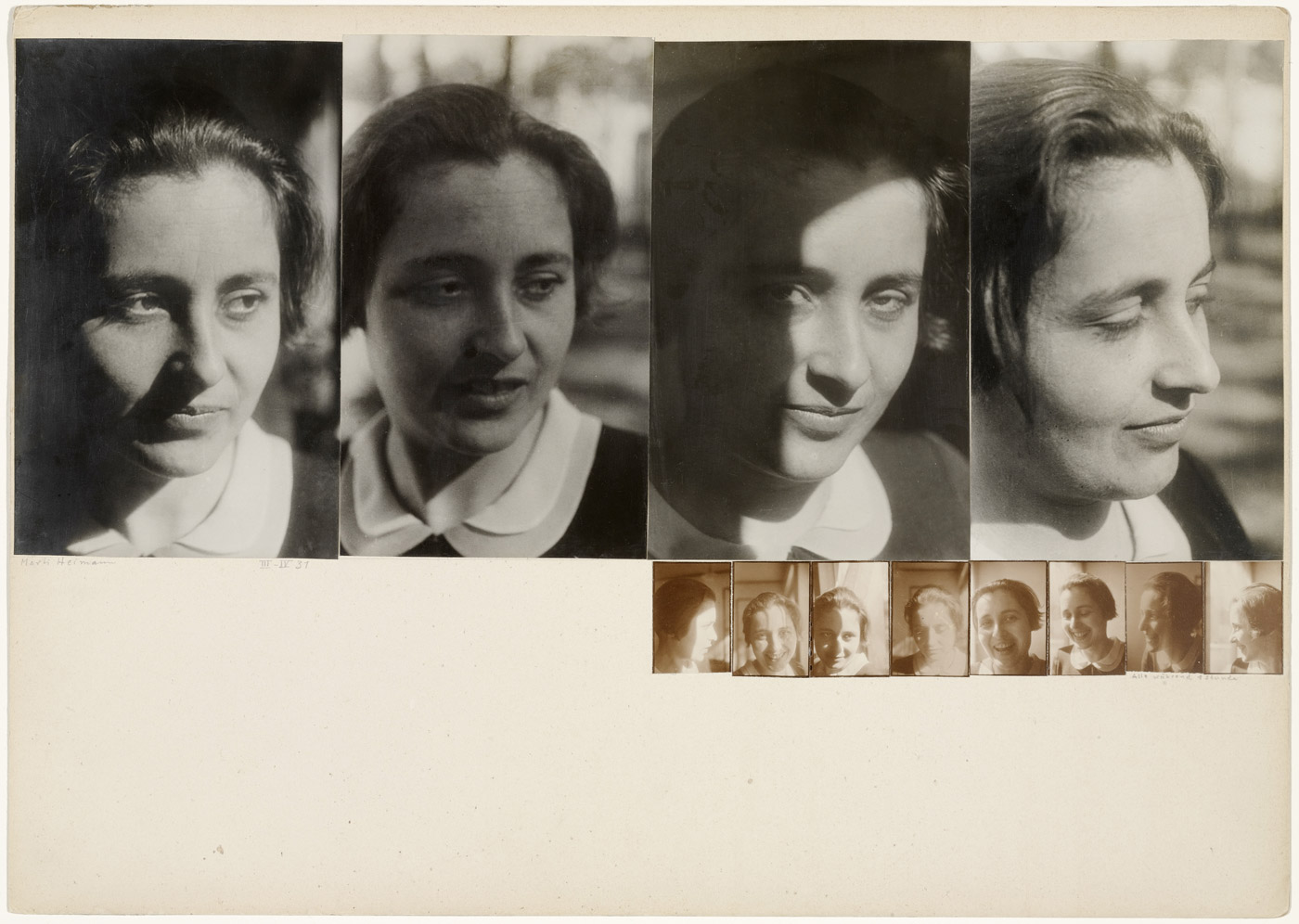
 

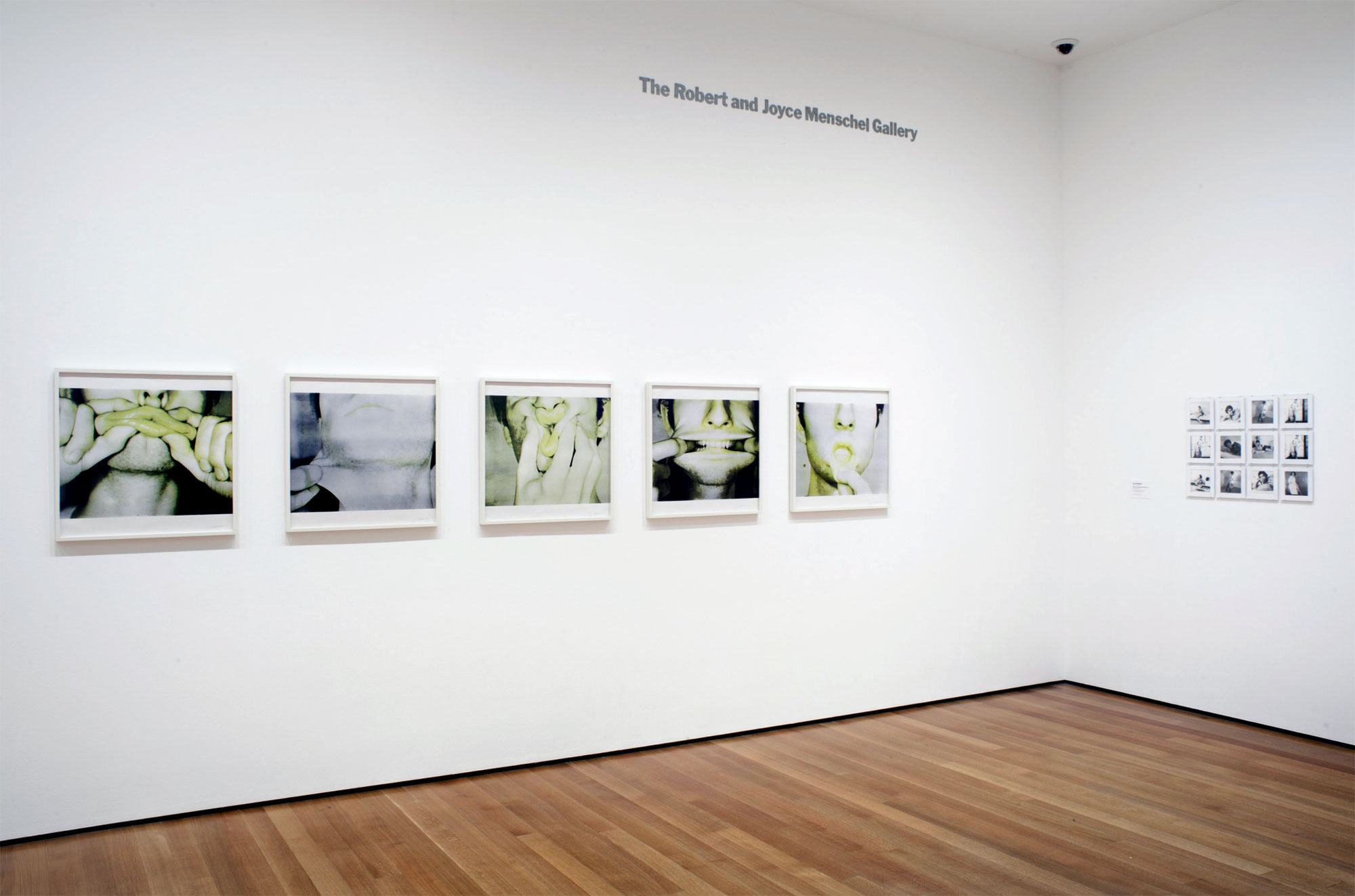
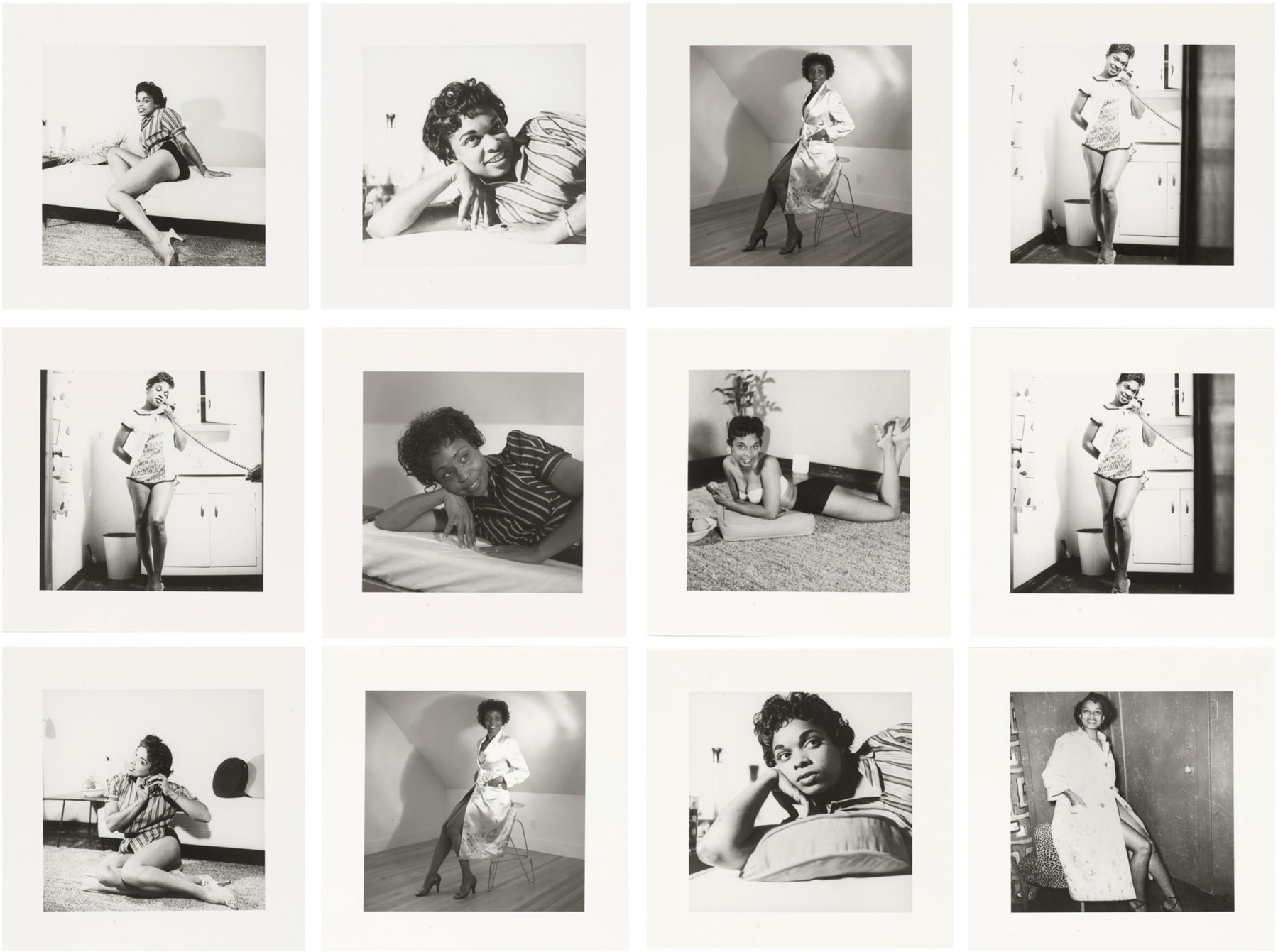
Josef Albers (German, 1888-1976) 'Marli Heimann, Alle während 1 Stunde (Marli Heimann, All During an Hour)' 1931


Josef Albers (German, 1888-1976)
Marli Heimann, Alle während 1 Stunde (Marli Heimann, All During an Hour)
1931
Twelve gelatin silver prints
Overall 11 11/16 x 16 7/16″ (29.7 x 41.8cm)
The Museum of Modern Art, New York
Gift of The Josef Albers Foundation, Inc.
© 2012 The Josef and Anni Albers Foundation / Artists Rights Society (ARS), New York


Another fascinating exhibition and a bumper posting to boot (pardon the pun!)

A panoply of famous photographers along with a few I had never heard of before (such as Georges Hugnet) are represented in this posting. As the press blurb states, through “key photographic projects, experimental films, and photobooks, The Shaping of New Visions offers a critical reassessment of photography’s role in the avant-garde and neo-avant-garde movements, and in the development of contemporary artistic practices.”

The large exhibition seems to have a finger in every pie, wandering from the birth of the 20th-century modern metropolis, through “New Vision” photography in the 1920s, experimental film, Surrealism, Constructivism and New Objectivity, Dada, Rayographs, photographic avant-gardism, photocollages, photomontages, street photography of the  1960s, colour slide projection performance, through New Topographics, self-published books, and conceptual photography, featuring works that reevaluate the material and contextual definitions of photography. “The final gallery showcases major installations by a younger generation of artists whose works address photography’s role in the construction of contemporary history.”

Without actually going to New York to see the exhibition (I wish!!) – from a distance it does seem a lot of ground to cover within 5 galleries even if there are 250 works. You could say this is a “meta” exhibition, drawing together themes and experiments from different areas of photography with rather a long bow. Have a look at the The Shaping of New Visions exhibition checklist to see the full listing of what’s on show and you be the judge. There are some rare and beautiful images that’s for sure. From the photographs in this posting I would have to say the distorted “eyes” have it…

Dr Marcus Bunyan


Many thankx to MoMA for allowing me to publish the photographs in the posting. Please click on the photographs for a larger version of the image.


Paul Strand (American, 1890-1976) and Charles Sheeler (American, 1883-1965)
Manhatta
1921
Film
Courtesy of the Museum of Modern Art, New York
© Aperture Foundation Inc., Paul Strand Archive


In 1920 Paul Strand and artist Charles Sheeler collaborated on Manhatta, a short silent film that presents a day in the life of lower Manhattan. Inspired by Walt Whitman’s book Leaves of Grass, the film includes multiple segments that express the character of New York. The sequences display a similar approach to the still photography of both artists. Attracted by the cityscape and its visual design, Strand and Sheeler favoured extreme camera angles to capture New York’s dynamic qualities. Although influenced by Romanticism in its view of the urban environment, Manhatta is considered the first American avant-garde film.


Man Ray (American, 1890-1976) 'Rayograph' 1922


Man Ray (American, 1890-1976)
Rayograph
1922
Gelatin silver print (photogram)
9 3/8 x 11 3/4″ (23.9 x 29.9cm)
The Museum of Modern Art, New York
Gift of James Thrall Soby
© 2012 Man Ray Trust / Artists Rights Society (ARS), New York / ADAGP, Paris
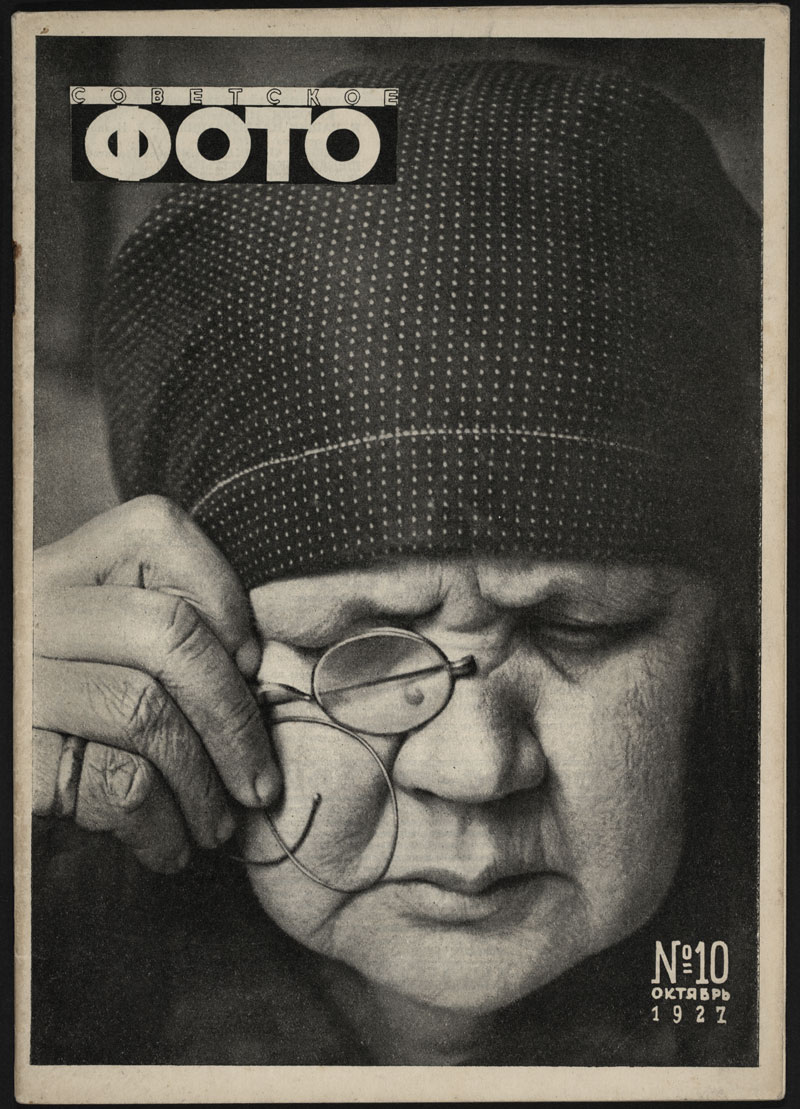
 

Aleksandr Rodchenko (Russian, 1891-1956) 'Sovetskoe foto (Soviet Photo)' No. 10 October 1927


Aleksandr Rodchenko (Russian, 1891-1956)
Sovetskoe foto (Soviet Photo) No. 10
October 1927
Letterpress
10 3/8 x 7 1/4″ (26.3 x 18.4cm)
Publisher: Ogonek, Moscow
The Museum of Modern Art, New York. Gift of the Judith Rothschild Foundation


August Sander (German, 1876-1964) 'Das rechte Auge meiner Tochter Sigrid (The Right Eye of My Daughter Sigrid)' 1928


August Sander (German, 1876-1964)
Das rechte Auge meiner Tochter Sigrid (The Right Eye of My Daughter Sigrid)
1928
Gelatin silver print
7 1/16 x 9″ (17.9 x 22.9cm)
The Museum of Modern Art, New York
Gift of the photographer
© 2012 Artists Rights Society (ARS), New York / VG Bild-Kunst, Bonn


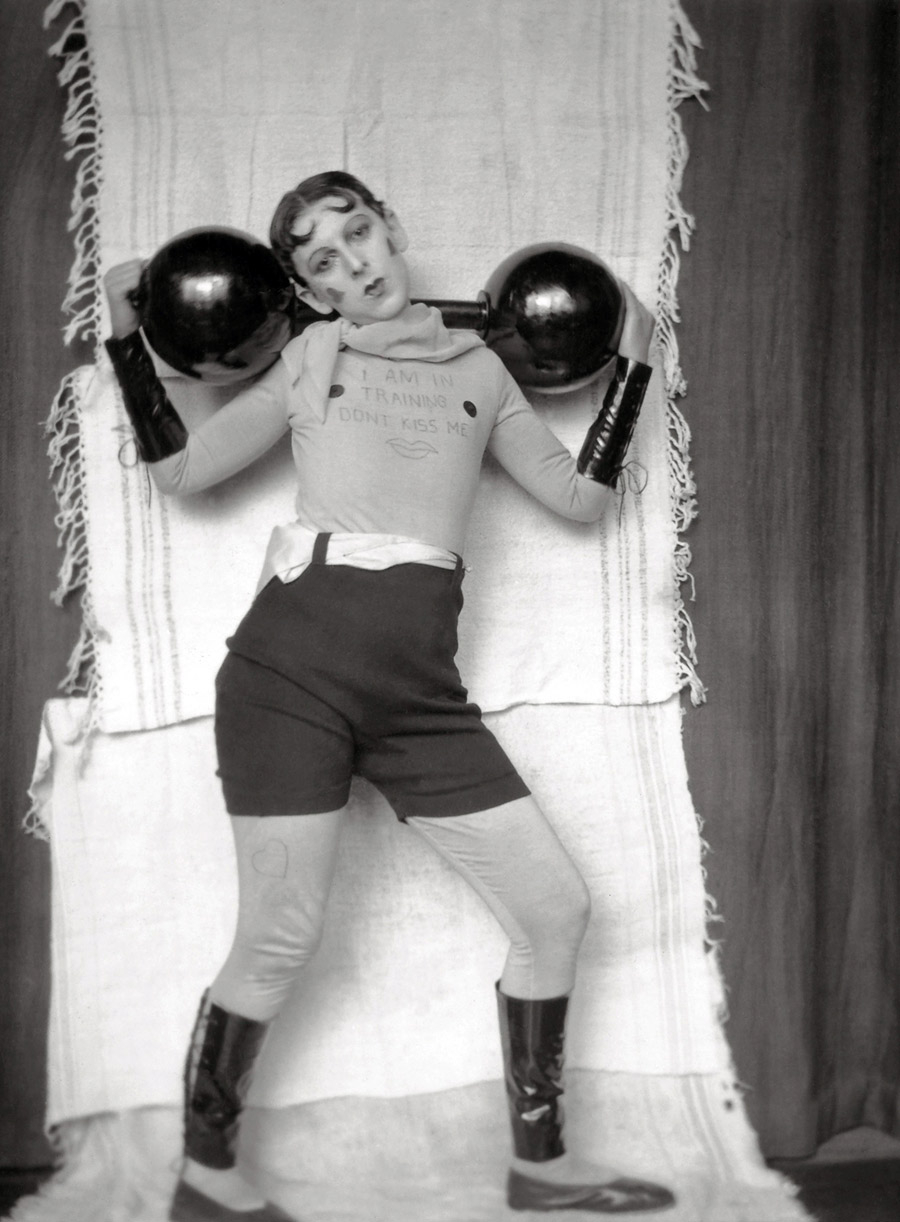
Claude Cahun (French, 1894-1954) 'Untitled' c. 1928


Claude Cahun (French, 1894-1954)
Untitled
c. 1928
Gelatin silver print
4 9/16 x 3 1/2″ (10 x 7.6cm)
The Museum of Modern Art, New York
Purchase and anonymous promised gift
© 2012 Estate of Claude Cahun
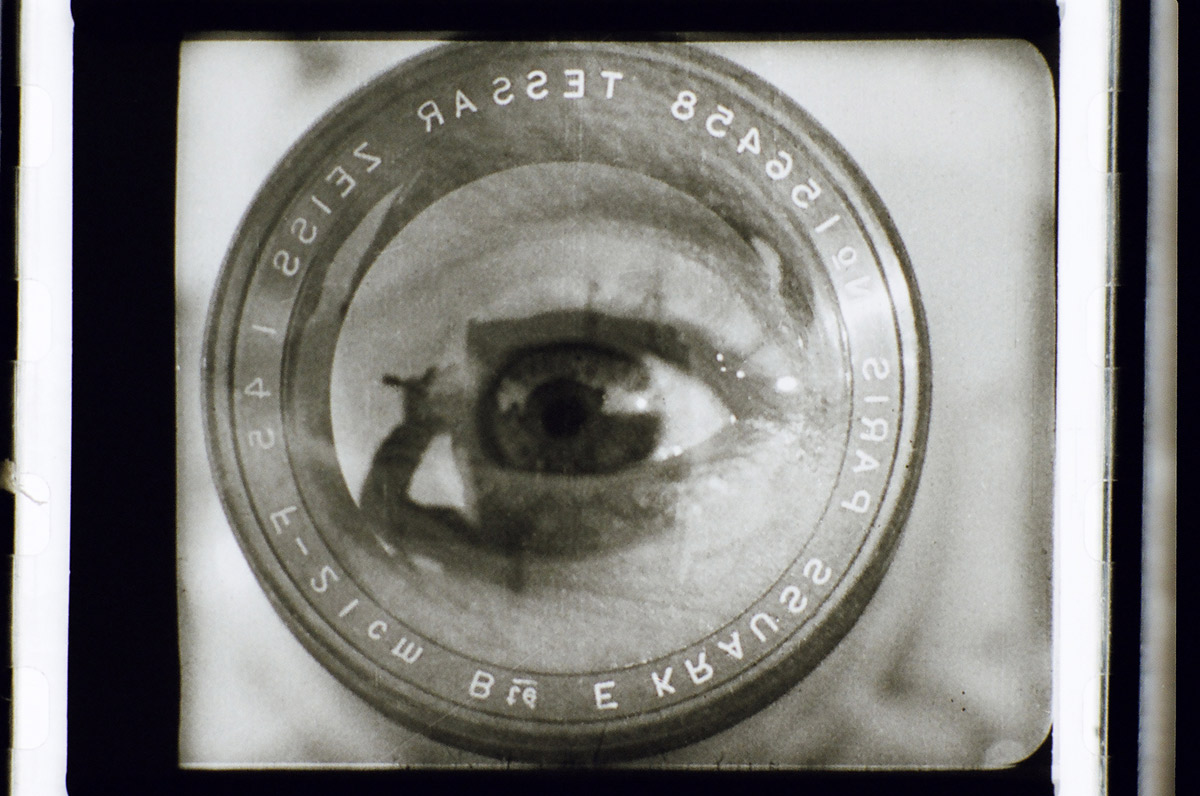
 

Dziga Vertov (Russian, 1896-1954) 'Chelovek s kinoapparatom (Man with a Movie Camera)' (still) 1929


Dziga Vertov (Russian, 1896-1954)
Chelovek s kinoapparatom (Man with a Movie Camera) (still)
1929
35mm film
65 min ( black and white, silent)
The Museum of Modern Art, New York
Department of Film


Excerpt from a camera operators diary
ATTENTION VIEWERS:
This film is an experiment in cinematic communication of real events
Without the help of Intertitles
Without the help of a story
Without the help of theatre
This experimental work aims at creating a truly international language of cinema based on its absolute separation from the language of theatre and literature


Man with a Movie Camera (Russian: Человек с киноаппаратом (Chelovek s kinoapparatom) is an experimental 1929 silent documentary film, with no story and no actors by Soviet-Russian director Dziga Vertov, edited by his wife Elizaveta Svilova.

Vertov’s feature film, produced by the film studio VUFKU, presents urban life in the Soviet cities of Kiev, Kharkov, Moscow and Odessa. From dawn to dusk Soviet citizens are shown at work and at play, and interacting with the machinery of modern life. To the extent that it can be said to have “characters,” they are the cameramen of the title, the film editor, and the modern Soviet Union they discover and present in the film.

This film is famous for the range of cinematic techniques Vertov invents, deploys or develops, such as double exposure, fast motion, slow motion, freeze frames, jump cuts, split screens, Dutch angles, extreme close-ups, tracking shots, footage played backwards, stop motion animations and self-reflexive visuals (at one point it features a split-screen tracking shot; the sides have opposite Dutch angles).

In the British Film Institute’s 2012 Sight & Sound poll, film critics voted Man with a Movie Camera the 8th best film ever made. In 2014 Sight & Sound also named it the best documentary of all time.

Text from the YouTube website


László Moholy-Nagy (Hungarian, 1895-1946)
Ein Lichtspiel: schwarz weiss grau (A Lightplay: Black White Gray) (excerpt)
1930


This short film made by László Moholy-Nagy is based on the shadow patterns created by his Light-Space Modulator, an early kinetic sculpture consisting of a variety of curved objects in a carefully choreographed cycle of movements. Created in 1930, the film was originally planned as the sixth and final part of a much longer work depicting the new space-time.


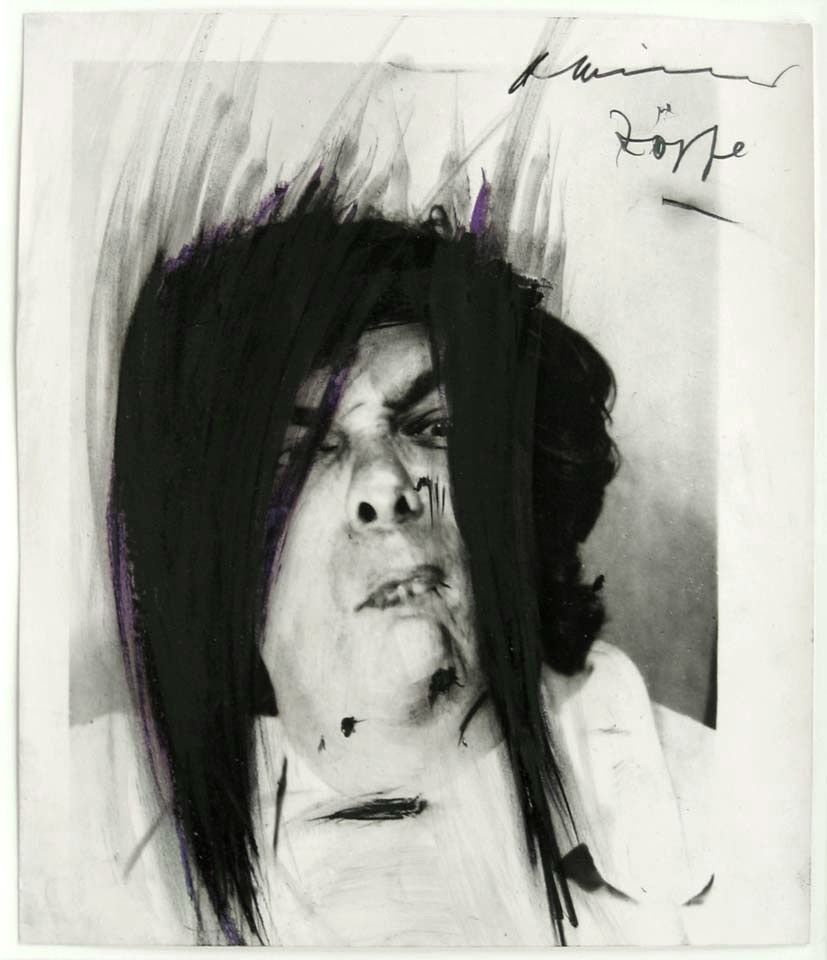
Raoul Hausmann (Austrian, 1886-1971) 'Untitled' February 1931


Raoul Hausmann (Austrian, 1886-1971)
Untitled
February 1931
Gelatin silver print
5 3/8 x 4 7/16″ (13.6 x 11.2cm)
The Museum of Modern Art, New York
Thomas Walther Collection Gift of Thomas Walther
© 2012 Raoul Hausmann / Artists Rights Society (ARS), New York / ADAGP, Paris


Georges Hugnet (French, 1906-1974) 'Untitled [Surrealist beach collage]' c. 1935


Georges Hugnet (French, 1906-1974)
Untitled [Surrealist beach collage]
c. 1935
Collage of photogravure, lithograph, chromolithograph and gelatin silver prints on gelatin silver print
11 7/8 x 9 7/16″ (30.2 x 24cm)
The Museum of Modern Art, New York
Gift of Timothy Baum in memory of Harry H. Lunn, Jr.
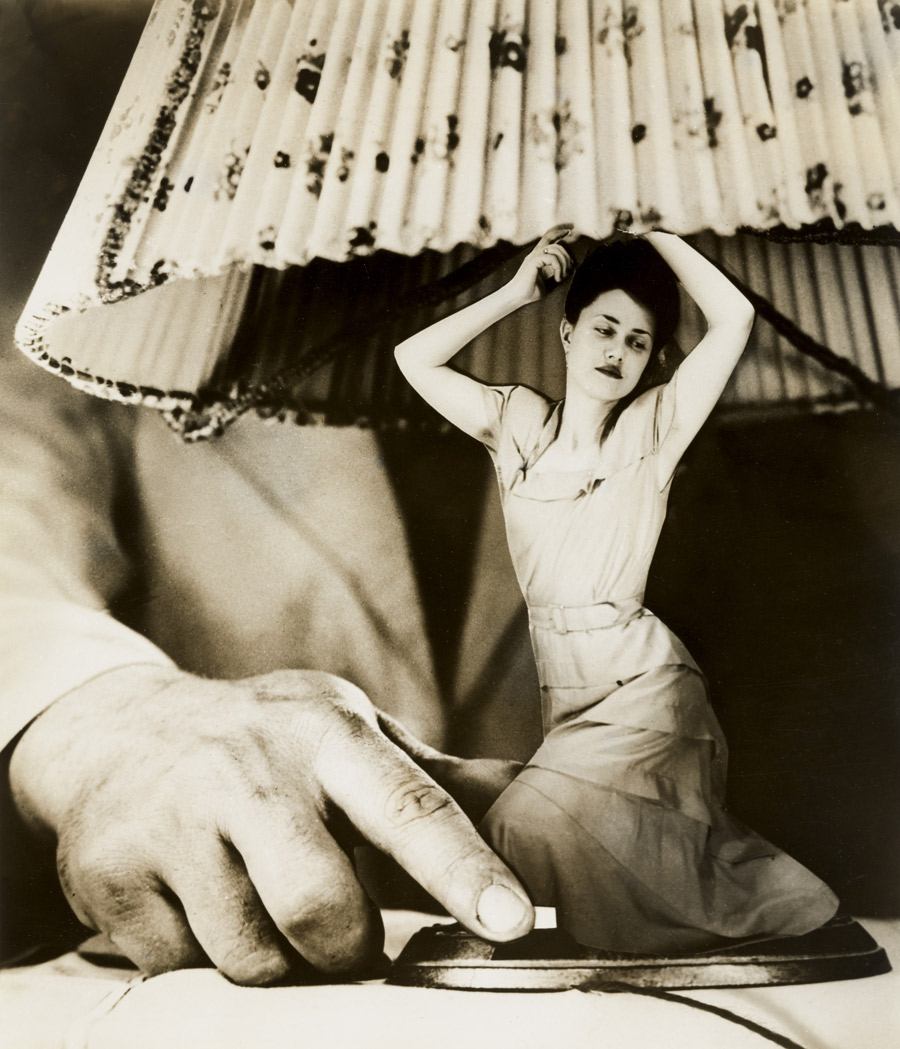
 

Grete Stern (German-Argentinian, 1904-1999) No. 1 from the series 'Sueños' (Dreams) 1949


Grete Stern (German-Argentinian, 1904-1999)
No. 1 from the series Sueños (Dreams)
1949
Gelatin silver print
10 1/2 x 9″ (26.6 x 22.9cm)
Latin American and Caribbean Fund through gift of Marie-Josée and Henry R. Kravis in honor of Adriana Cisneros de Griffin
© 2012 Horacio Coppola
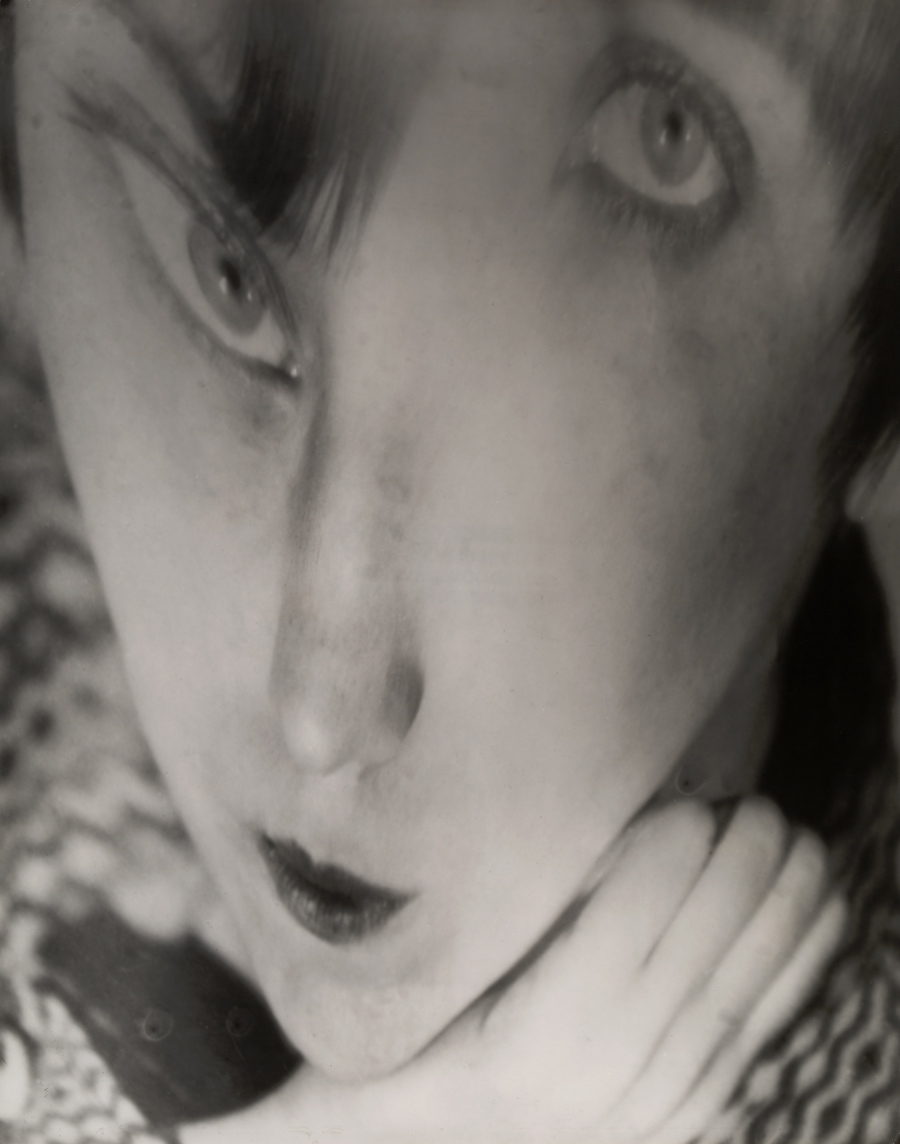
 

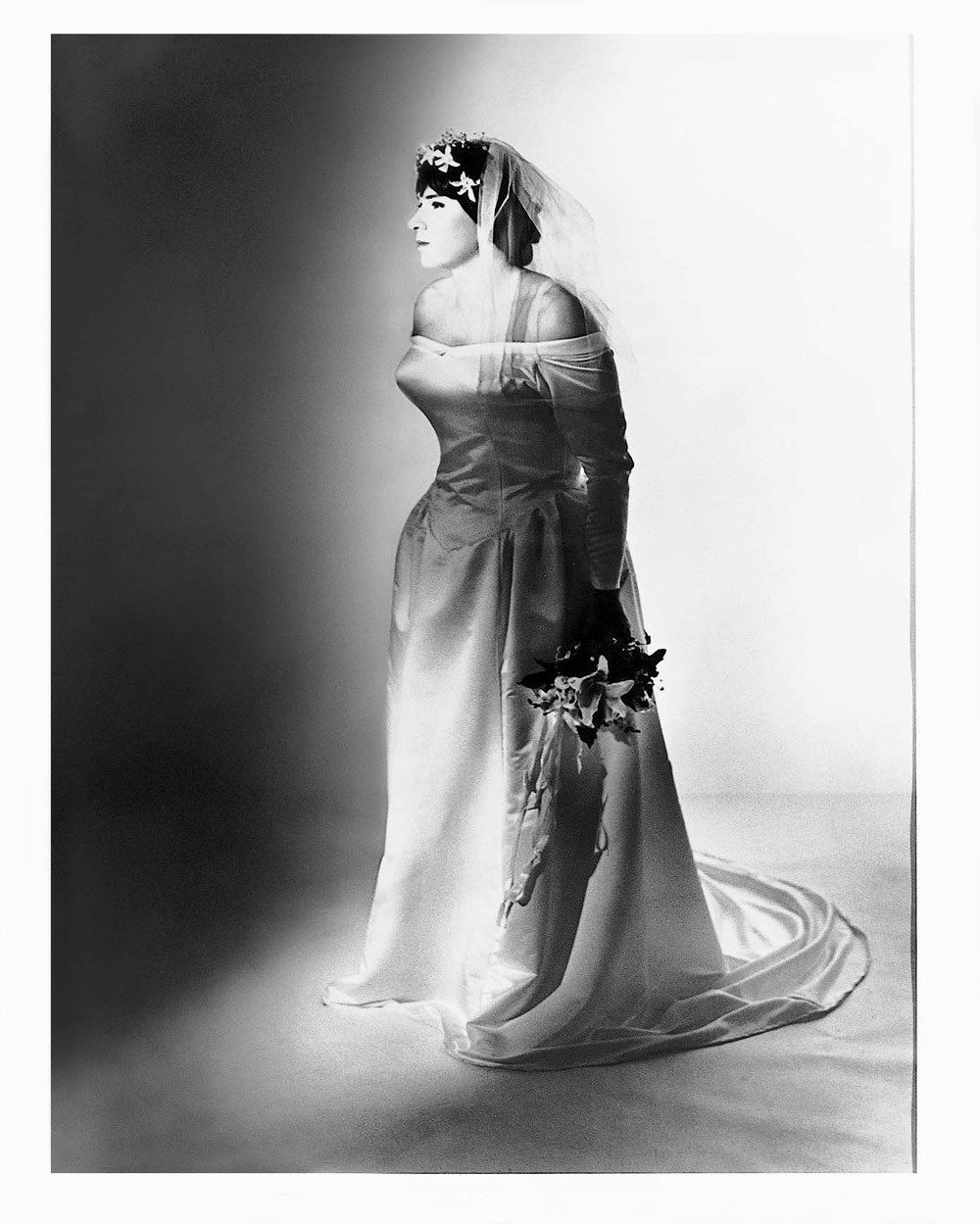
Berenice Abbott (American, 1898-1991) 'Portrait of the Artist as a Young Woman' Negative c. 1930/Distortion c. 1950


Berenice Abbott (American, 1898-1991)
Portrait of the Artist as a Young Woman
Negative c. 1930/Distortion c. 1950
Gelatin silver print
12 3/4 x 10 1/8″ (32.6 x 25.7cm)
The Museum of Modern Art, New York
Frances Keech Fund in honor of Monroe Wheeler
© 2012 Berenice Abbott/Commerce Graphics
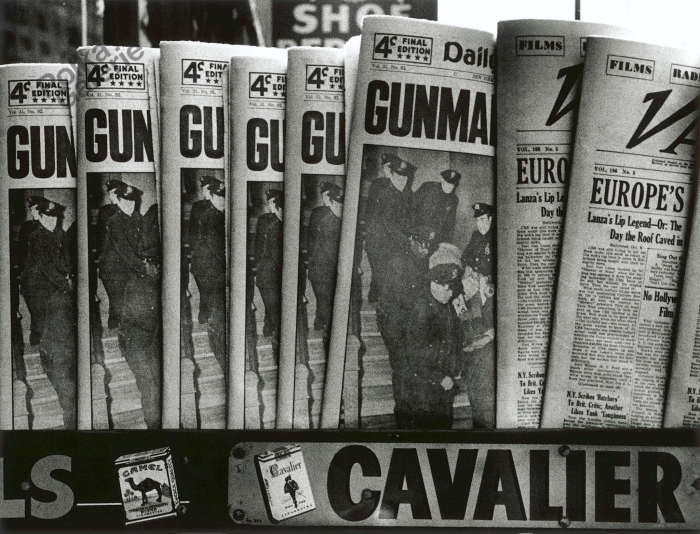
 

William Klein (American, 1928-2022) 'Gun, Gun, Gun, New York' 1955


William Klein (American, 1928-2022)
Gun, Gun, Gun, New York 
1955
Gelatin silver print
10 1/4 x 13 5/8″ (26 x 34.6cm)
The Museum of Modern Art, New York
Gift of Arthur and Marilyn Penn
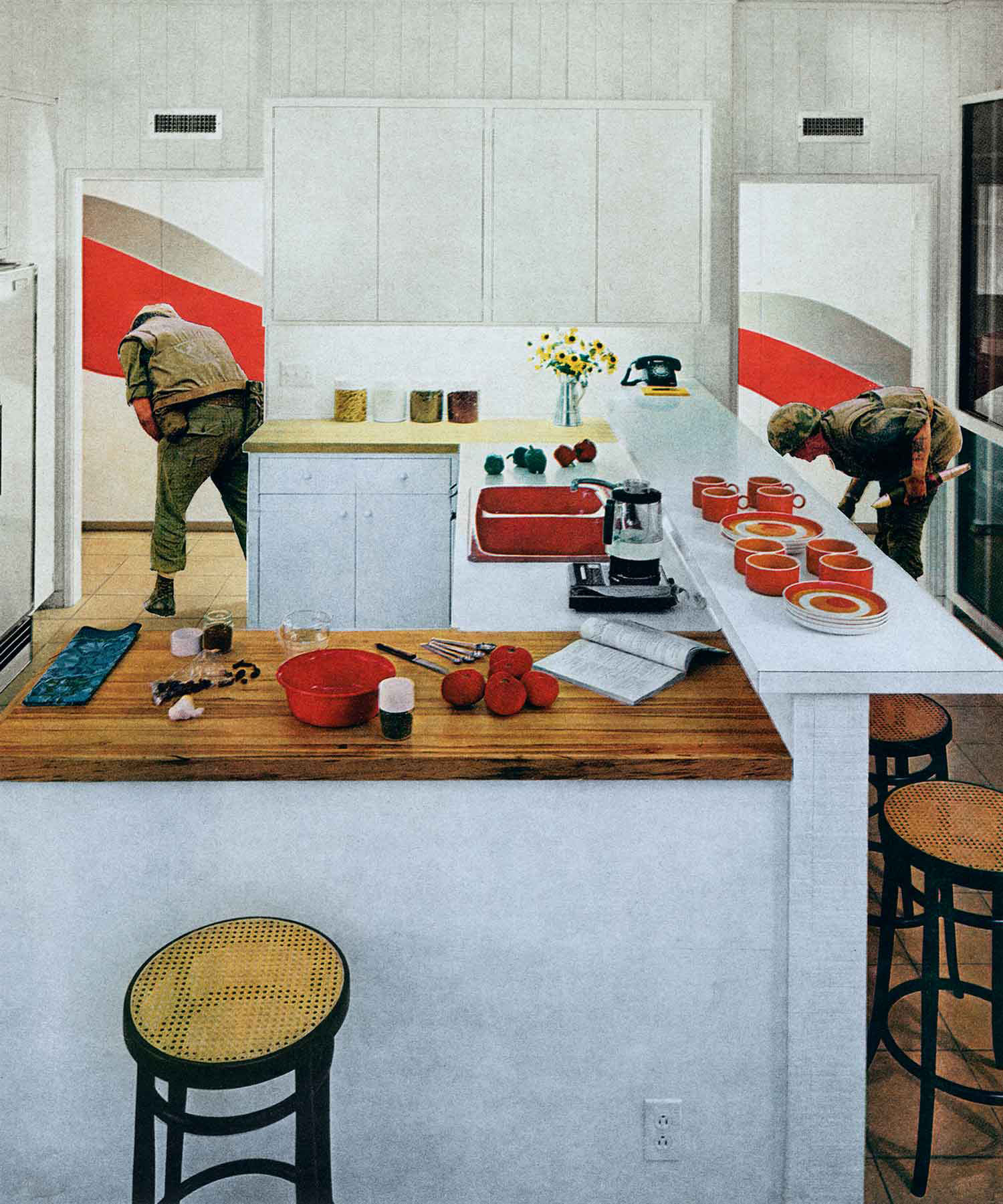
 

Martha Rosler (American, b. 1943) 'Red Stripe Kitchen' 1967-1972


Martha Rosler (American, b. 1943)
Red Stripe Kitchen
1967-1972
From the series Bringing the War Home: House Beautiful 
Pigmented inkjet print, printed 2011
23 3/4 x 18 1/8″ (60.3 x 46cm)
The Museum of Modern Art, New York
Purchase and The Modern Women’s Fund
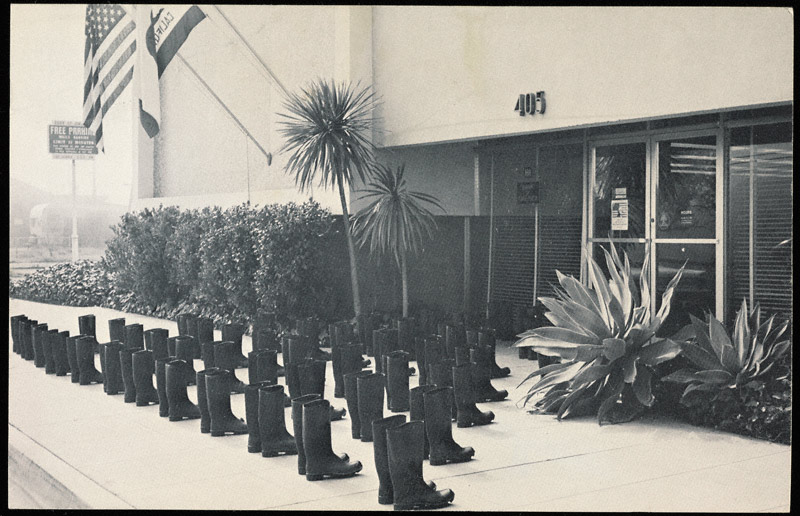
 

Eleanor Antin (American, b. 1935) '100 Boots' 1971-1973

Eleanor Antin (American, b. 1935) '100 Boots' 1971-1973

Eleanor Antin (American, b. 1935) '100 Boots' 1971-1973


Eleanor Antin (American, b. 1935)
100 Boots
1971-1973
Photographed by Philip Steinmetz
Halftone reproductions on 51 cards
4 1/2 x 7 in. each
Courtesy Ronald Feldman Fine Arts, New York
© Eleanor Antin


The Museum of Modern Art draws from its collection to present the exhibition The Shaping of New Visions: Photography, Film, Photobook on view from April 18, 2012, to April 29, 2013. Filling the third-floor Edward Steichen Photography Galleries, this installation presents more than 250 works by approximately 90 artists, with a focus on new acquisitions and groundbreaking projects by Man Ray, László Moholy-Nagy, Aleksandr Rodchenko, Germaine Krull, Dziga Vertov, Gerhard Rühm, Helen Levitt, Robert Frank, Daido Moriyama, Robert Heinecken, Edward Ruscha, Martha Rosler, Bernd and Hilla Becher, Philip-Lorca diCorcia, Paul Graham, and The Atlas Group / Walid Raad. The exhibition is organised by Roxana Marcoci, Curator, Department of Photography, The Museum of Modern Art.

Punctuated by key photographic projects, experimental films, and photobooks, The Shaping of New Visions offers a critical reassessment of photography’s role in the avant-garde and neo-avant-garde movements, and in the development of contemporary artistic practices. The shaping of what came to be known as “new vision” photography in the 1920s bore the obvious influence of “lens-based” and “time-based” works. The first gallery begins with photographs capturing the birth of the 20th-century modern metropolis by Berenice Abbott, Edward Steichen, and Alfred Stieglitz, presented next to the avant-garde film Manhatta (1921), a collaboration between Paul Strand and Charles Sheeler.

The 1920s were a period of landmark constructions and scientific discoveries all related to light – from Thomas Edison’s development of incandescent light to Albert Einstein’s theory of relativity and light speed. Man Ray began experimenting with photograms (pictures made by exposing objects placed on photosensitive paper to light) – which he renamed “rayographs” after himself – in which light was both the subject and medium of his work. This exhibition presents Man Ray’s most exquisite rayographs, alongside his first short experimental film, Le Retour à la raison (Return to Reason, 1923), in which he extended the technique to moving images.

In 1925, two years after he joined the faculty of the Bauhaus school in Weimar Germany, László Moholy-Nagy published his influential book Malerei, Fotografie, Film (Painting, Photography, Film) – part of a series that he coedited with Bauhaus director Walter Gropius – in which he asserted that photography and cinema are heralding a “culture of light” that has overtaken the most innovative aspects of painting. Moholy-Nagy extolled photography and, by extension, film as the quintessential medium of the future. Moholy-Nagy’s interest in the movement of objects and light through space led him to construct Light-Space Modulator, the subject of his only abstract film, Ein Lichtspiel: schwarz weiss grau (A Lightplay: Black White Gray, 1930), which is presented in the exhibition next to his own photographs and those of Florence Henri.

The rise of photographic avant-gardism from the 1920s to the 1940s is traced in the second gallery primarily through the work of European artists. A section on Constructivism and New Objectivity features works by Paul Citroën, Raoul Hausmann, Florence Henri, Germaine Krull, El Lissitzky, Albert Renger-Patzsch, and August Sander. A special focus on Aleksandr Rodchenko underscores his engagement with the illustrated press through collaborations with Vladimir Mayakovsky and Sergei Tretyakov on the covers and layouts of Novyi LEF, the Soviet avant-garde journal of the “Left Front of the Arts,” which popularised the idea of “factography,” or the manufacture of innovative aesthetic facts through photomechanical processes. Alongside Rodchenko, film director Dziga Vertov redefined the medium of still and motion-picture photography with the concept of kino-glaz (cine-eye), according to which the perfectible lens of the camera led to the creation of a novel perception of the world. The exhibition features the final clip of Vertov’s 1929 experimental film Chelovek s kinoapparatom (Man with a Movie Camera), in which the eye is superimposed on the camera lens to form an indivisible apparatus fit to view, process, and convey reality, all at once. This gallery also features a selection of Dada and Surrealist works, including rarely seen photographs, photocollages, and photomontages by Hans Bellmer, Claude Cahun, George Hugnet, André Kertész, Jan Lukas, and Grete Stern, alongside such avant-garde publications as Documents and Littérature.

The third gallery features artists exploring the social world of the postwar period. On view for the first time is a group of erotic and political typo-collages by Gerhard Rühm, a founder of the Wiener Gruppe (1959-1960), an informal group of Vienna-based writers and artists who engaged in radical visual dialogues between pictures and texts. The rebels of street photography – Robert Frank, William Klein, Daido Moriyama, and Garry Winogrand – are represented with a selection of works that refute the then prevailing rules of photography, offering instead elliptical, off-kilter styles that are as personal and controversial as are their unsparing views of postwar society. A highlight of this section is the pioneering slide show Projects: Helen Levitt in Color (1971-1974). Capturing the lively beat, humour, and drama of New York’s street theatre, Levitt’s slide projection is shown for the first time at MoMA since its original presentation at the Museum in 1974.

Photography’s tradition in the postwar period continues in the fourth gallery, which is divided into two sections. One section features “new topographic” works by Robert Adams, Bernd and Hilla Becher, Stephen Shore, and Joel Sternfeld, along with a selection of Edward Ruscha’s self-published books, in which the use of photography as mapmaking signals a conceptual thrust. This section introduces notable works from the 1970s by artists who embraced photography not just as a way of describing experience, but as a conceptual tool. Examples include Eleanor Antin’s 100 Boots (1971-1973), Mel Bochner’s Misunderstandings (A theory of photography) (1970), VALIE EXPORT’s Einkreisung (Encirclement) (1976), On Kawara’s I Got Up… (1977), and Gordon Matta-Clark’s Splitting (1974), all works that reevaluate the material and contextual definitions of photography. The other section features two major and highly experimental recent acquisitions: Martha Rosler’s political magnum opus Bringing the War Home (1967-1972), developed in the context of her anti-war and feminist activism, for which the artist spliced together images of domestic bliss clipped from the pages of House Beautiful with grim pictures of the war in Vietnam taken from Life magazine; and Sigmar Polke’s early 1970s experiments with multiple exposures, reversed tonal values, and under-and-over exposures, which underscore the artist’s idea that “a negative is never finished.” The unmistakably cinematic turn that photography takes in the 1980s and early 1990s is represented with a selection of innovative works ranging from Robert Heinecken’s Recto/Verso (1988) to Philip-Lorca diCorcia’s breakthrough Hustler series (1990-1992).

The final gallery showcases major installations by a younger generation of artists whose works address photography’s role in the construction of contemporary history. Tapping into forms of archival reconstitution, The Atlas Group / Walid Raad is represented with My Neck Is Thinner Than a Hair: Engines (1996-2004), an installation of 100 pictures of car-bomb blasts in Beirut during the Lebanese civil war (1975-1990) that provokes questions about the factual nature of existing records, the traces of war, and the symptoms of trauma. A selection from Harrell Fletcher’s The American War (2005) brings together bootlegged photojournalistic pictures of the U.S. military involvement in Southeast Asia, throwing into sharp focus photography’s role as a documentary and propagandistic medium in the shaping of historical memory. Jules Spinatsch’s Panorama: World Economic Forum, Davos (2003), made of thousands of still images and three surveillance video works, chronicles the preparations for the 2003 World Economic Forum, when the entire Davos valley was temporarily transformed into a high security zone. A selection of Paul Graham’s photographs from his major photobook project a shimmer of possibility (2007), consisting of filmic haikus about everyday life in today’s America, concludes the exhibition.

Press release from the MoMA website


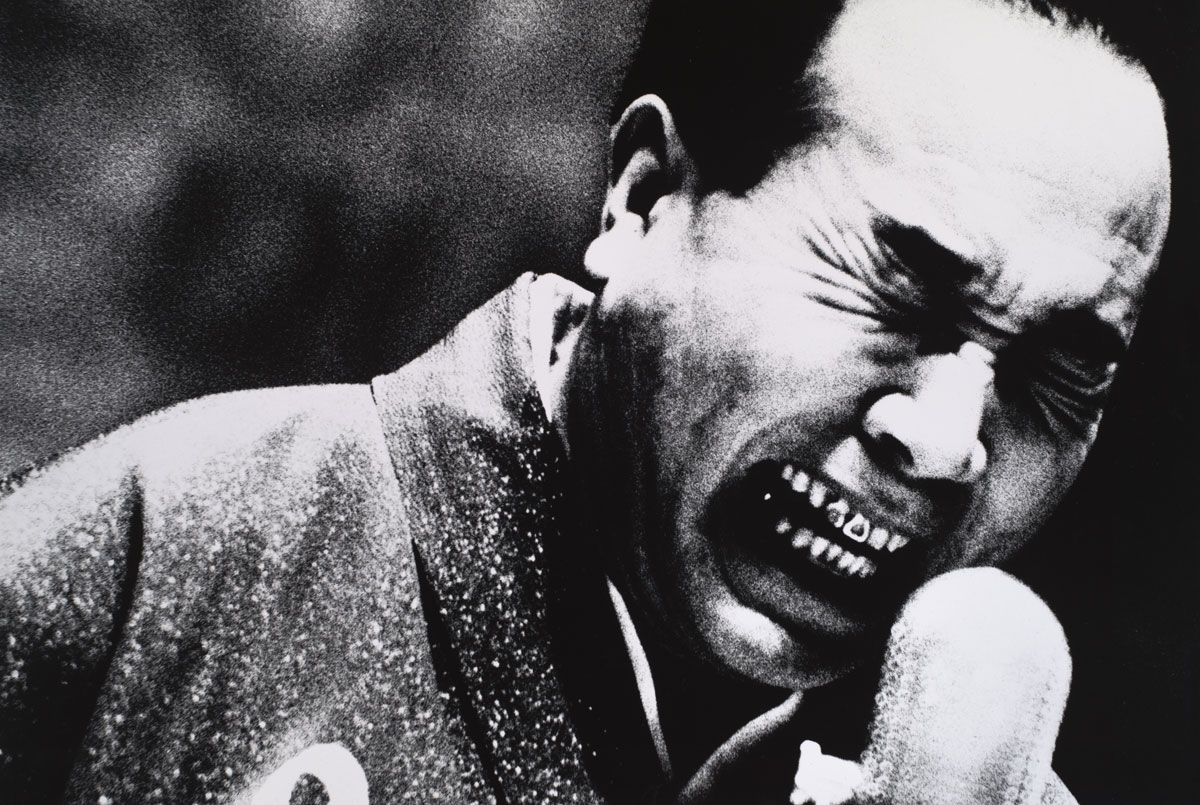
Daido Moriyama. 'Entertainer on Stage, Shimizu' 1967


Daido Moriyama (Japanese, b. 1938)
Entertainer on Stage, Shimizu
1967
Gelatin silver print
18 7/8 x 28″ (48.0 x 71.2cm)
The Museum of Modern Art, New York
Gift of the photographer
© 2012 Daido Moriyama


Martha Rosler (American, b. 1943) 'Hands Up / Makeup' 1967-1972


Martha Rosler (American, b. 1943)
Hands Up / Makeup
1967-1972
From the series Bringing the War Home: House Beautiful
Pigmented inkjet print, printed 2011
23 3/4 x 13 15/16″ (60.4 x 35.4cm)
The Museum of Modern Art, New York
Purchase and The Modern Women’s Fund
© 2012 Martha Rosler
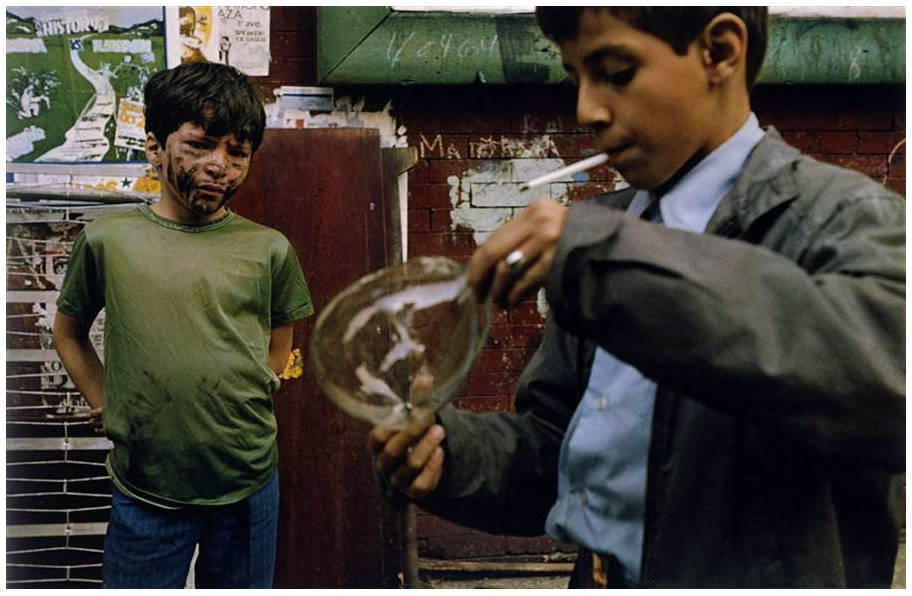
 

Helen Levitt (American, 1913-2009) 'Projects: Helen Levitt in Color' 1971-1974 (detail)

Helen Levitt (American, 1913-2009) 'Projects: Helen Levitt in Color' 1971-1974 (detail)


Helen Levitt (American, 1913-2009)
Projects: Helen Levitt in Color (detail)
1971-1974
40 colour slides shown in continuous projection
Originally presented at The Museum of Modern Art, New York, September 26-October 20, 1974
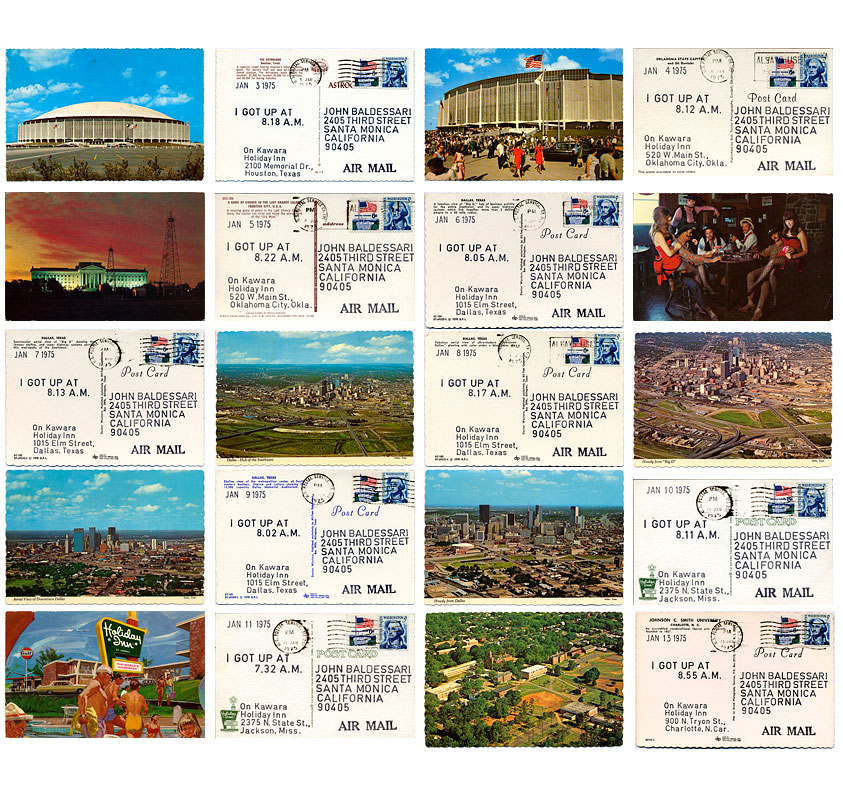
 

On Kawara (Japanese, 1932-2014) 'I Got Up At...' 1974-1975


On Kawara (Japanese, 1932-2014)
I Got Up At…
1974-1975
(Ninety postcards with printed rubber stamps)


The semi autobiographical I Got Up At… by On Kawara is a series of postcards sent to John Baldessari. Each card was sent from his location that morning detailing the time he got up. The time marked on each card varies drastically from day to day, the time stamped on each card is the time he left his bed as opposed to actually waking up. Kawara’s work often acts to document his existence in time, giving a material form to which is formally immaterial. The series has been repeated frequently sending the cards to a variety of friends and colleagues.
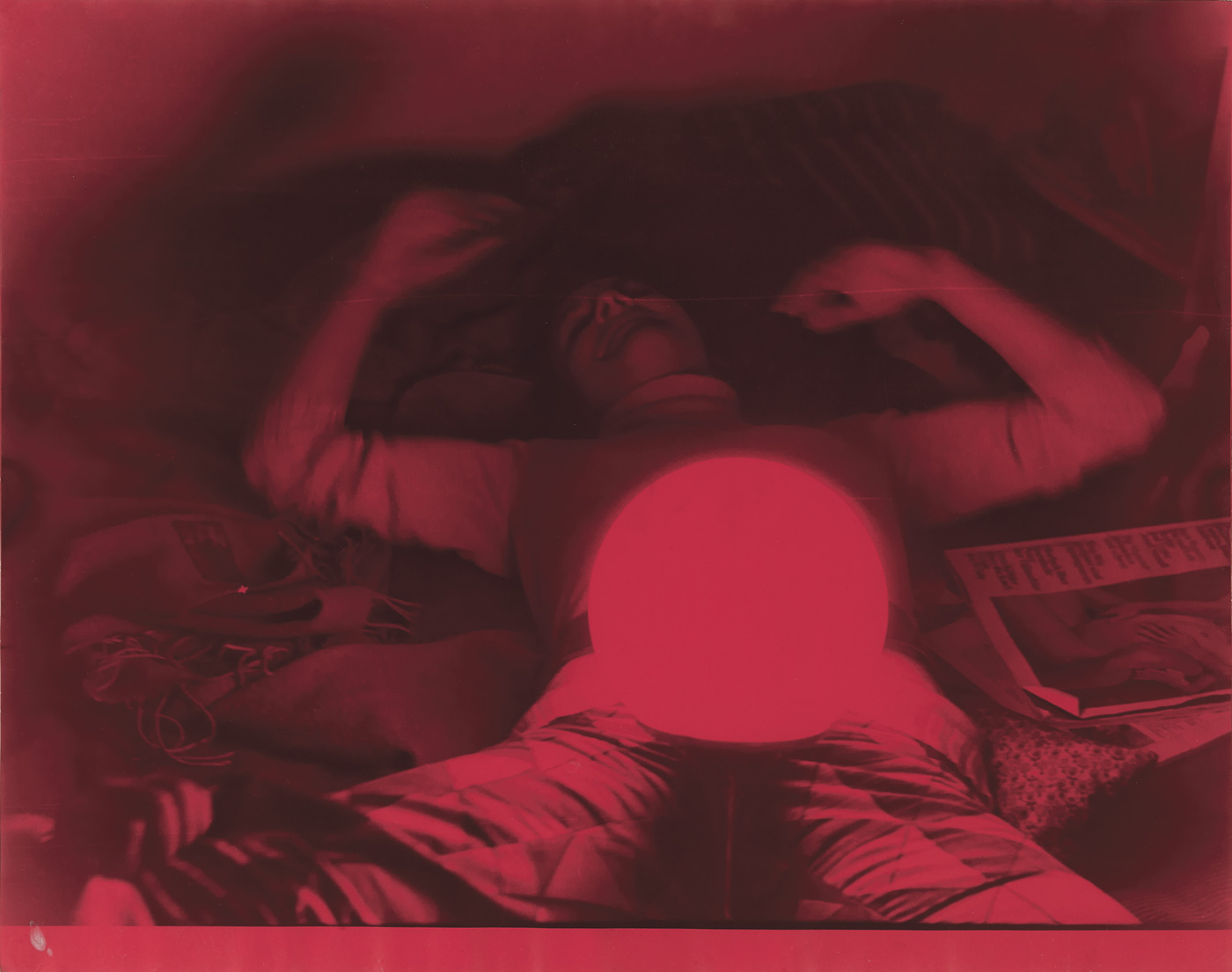
 

Sigmar Polke (German, 1941-2010) 'Untitled (Mariette Althaus)' c. 1975


Sigmar Polke (German, 1941-2010)
Untitled (Mariette Althaus)
c. 1975
Gelatin silver print (red toned)
9 1/4 x 11 13/16″ (23.5 x 30cm)
The Museum of Modern Art, New York
Acquired through the generosity of Edgar Wachenheim III and Ronald S. Lauder
© 2012 Estate of Sigmar Polke / Artists Rights Society (ARS), New York / VG Bild-Kunst, Bonn, Germany
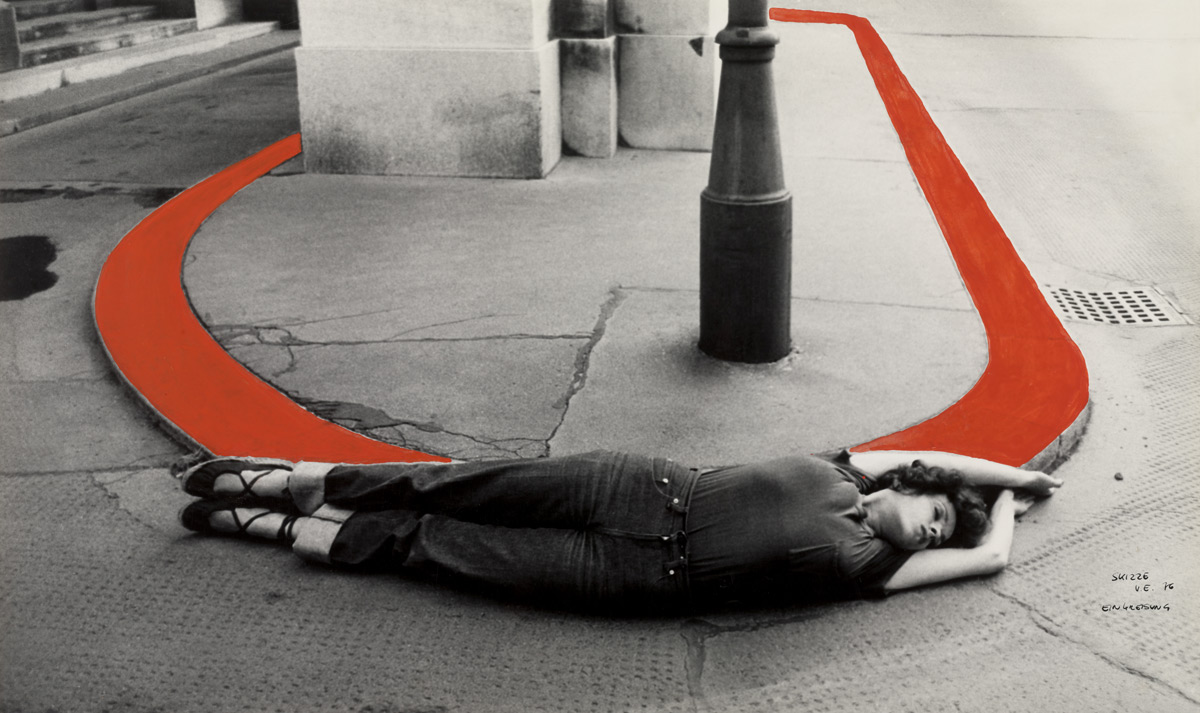
 

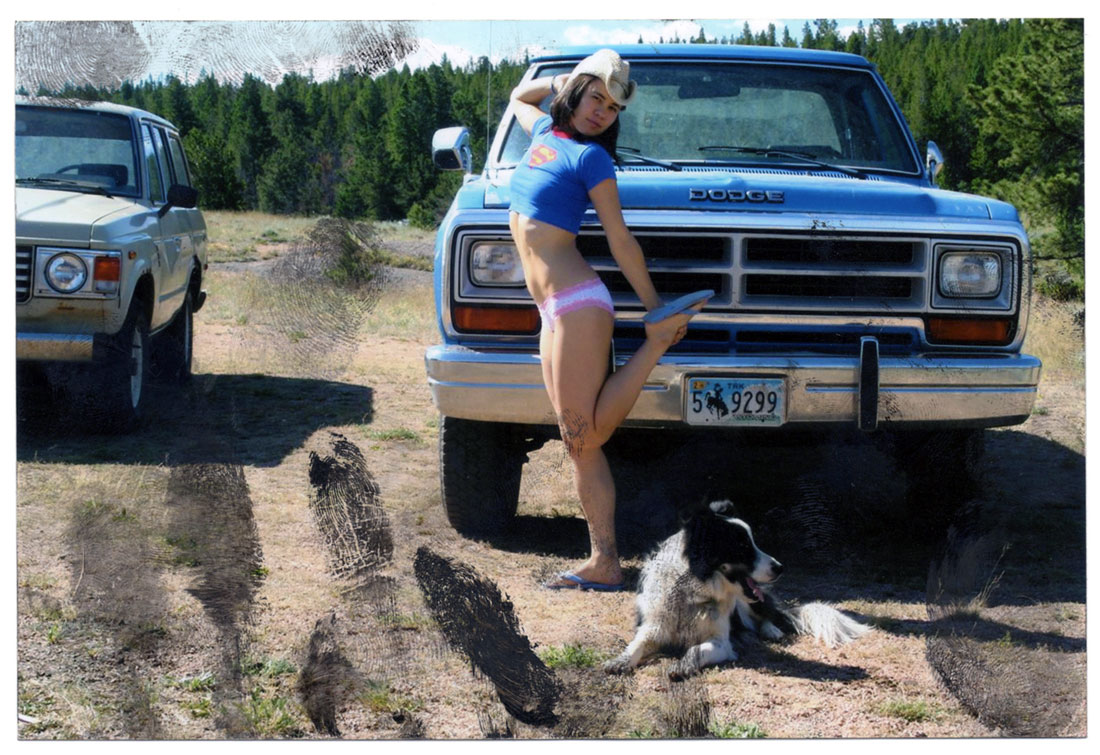
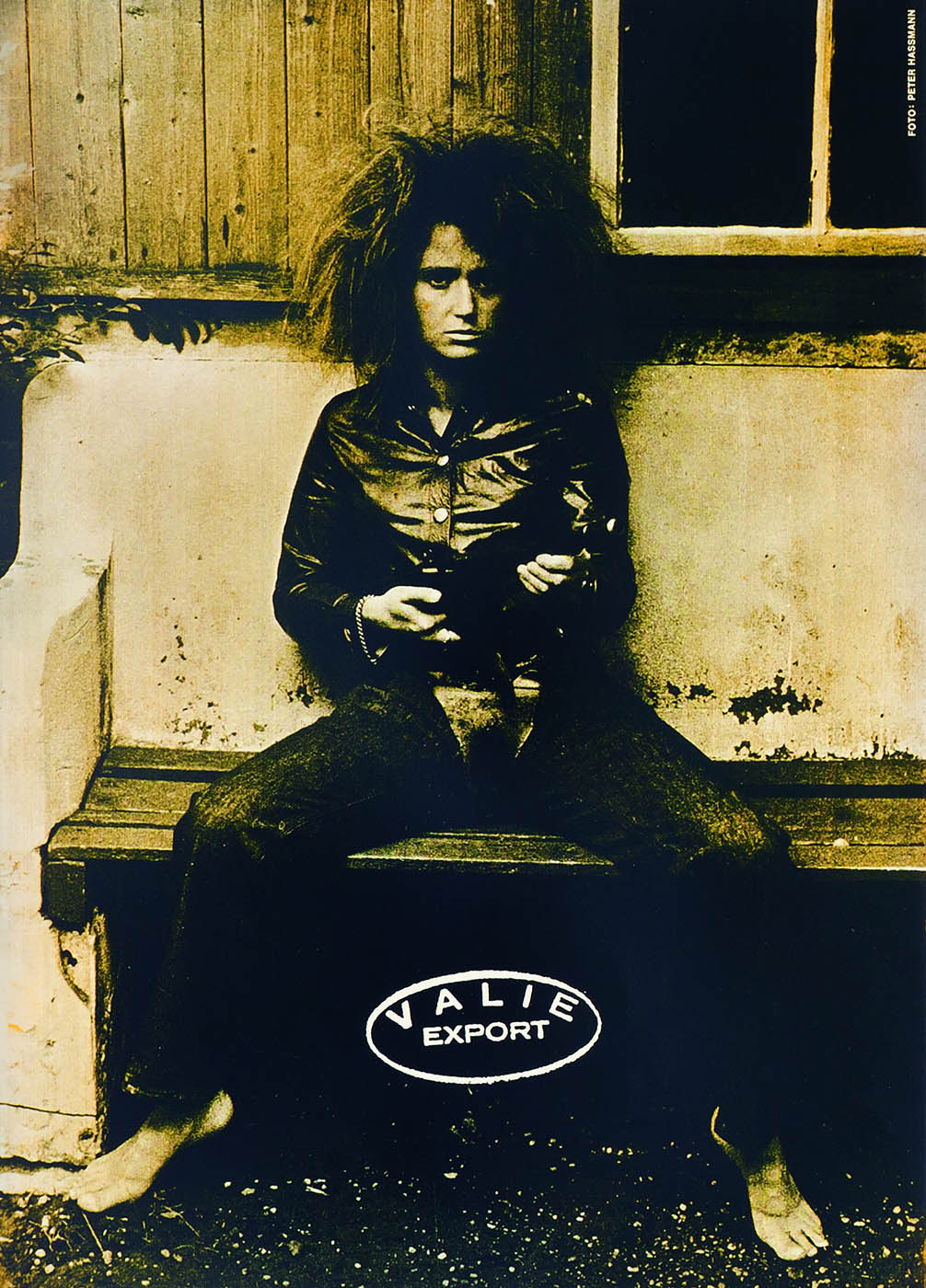
VALIE EXPORT (Austrian, b. 1940) 'Einkreisung (Encirclement)' 1976


VALIE EXPORT (Austrian, b. 1940)
Einkreisung (Encirclement)
1976
From the series Körperkonfigurationen (Body Configurations)
Gelatin silver print with red ink
14 x 23 7/16″ (35.5 x 59.6cm)
The Museum of Modern Art, New York
Carl Jacobs Fund
© 2012 VALIE EXPORT / Artists Rights Society (ARS), New York / VBK, Austria
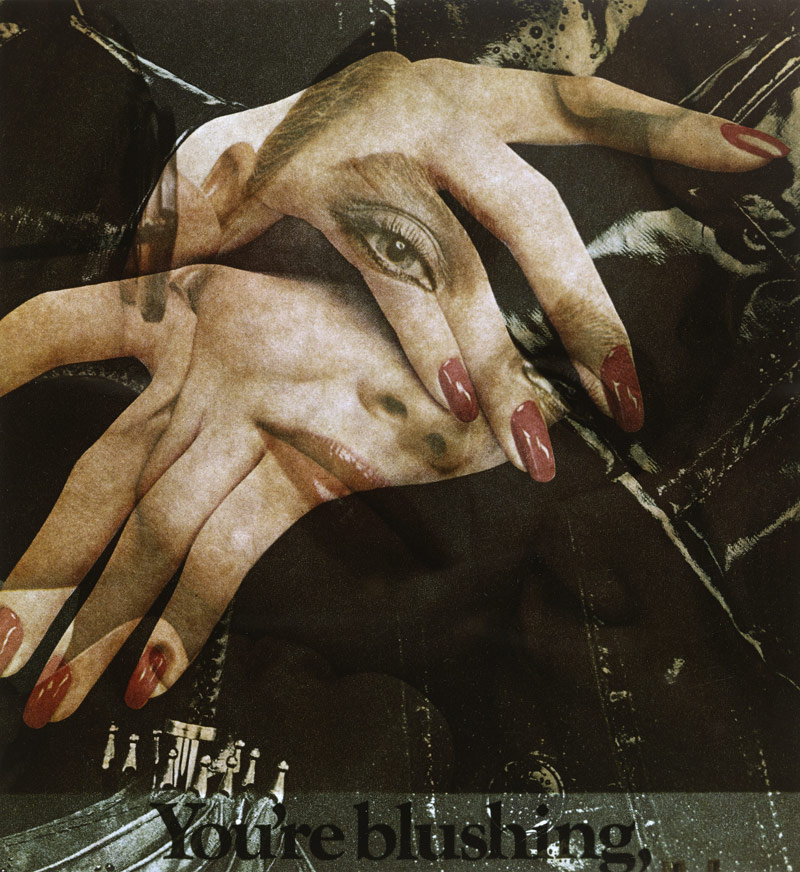
 

Robert Heinecken (American, 1931-2006) 'Recto/Verso #2' 1988


Robert Heinecken (American, 1931-2006)
Recto/Verso #2
1988
Silver dye bleach print
8 5/8 x 7 7/8″ (21.9 x 20cm)
The Museum of Modern Art, New York
Mr. and Mrs. Clark Winter Fund
© 2012 The Robert Heinecken Trust
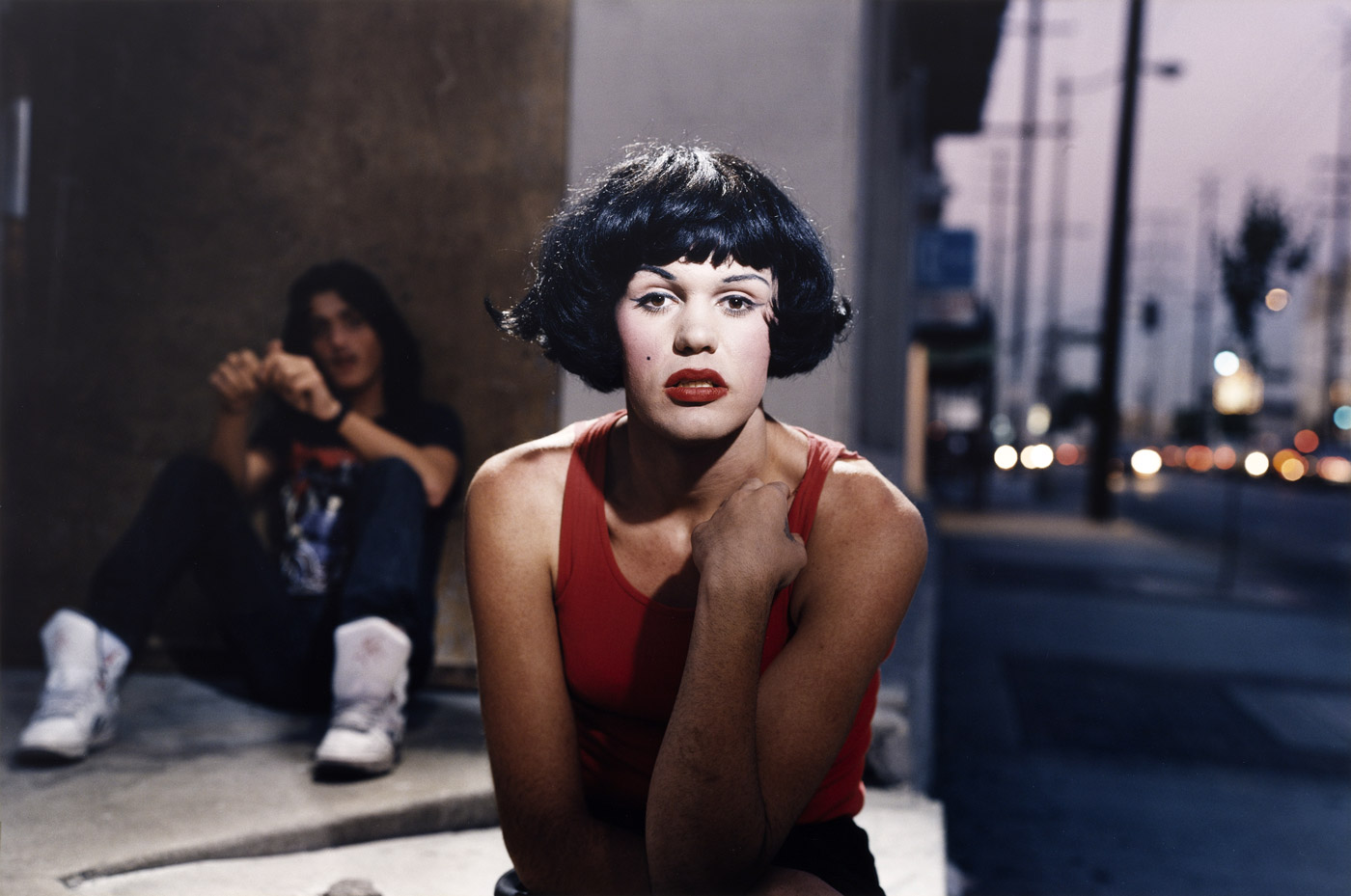
 

Philip-Lorca diCorcia (American, b. 1951) 'Marilyn; 28 Years Old; Las Vegas, Nevada; $30' 1990-1992


Philip-Lorca diCorcia (American, b. 1951)
Marilyn; 28 Years Old; Las Vegas, Nevada; $30
1990-1992
Chromogenic colour print
24 x 35 15/16″ (61 x 91.4cm)
The Museum of Modern Art, New York
E.T. Harmax Foundation Fund
© 2012 Philip-Lorca diCorcia, courtesy David Zwirner, New York
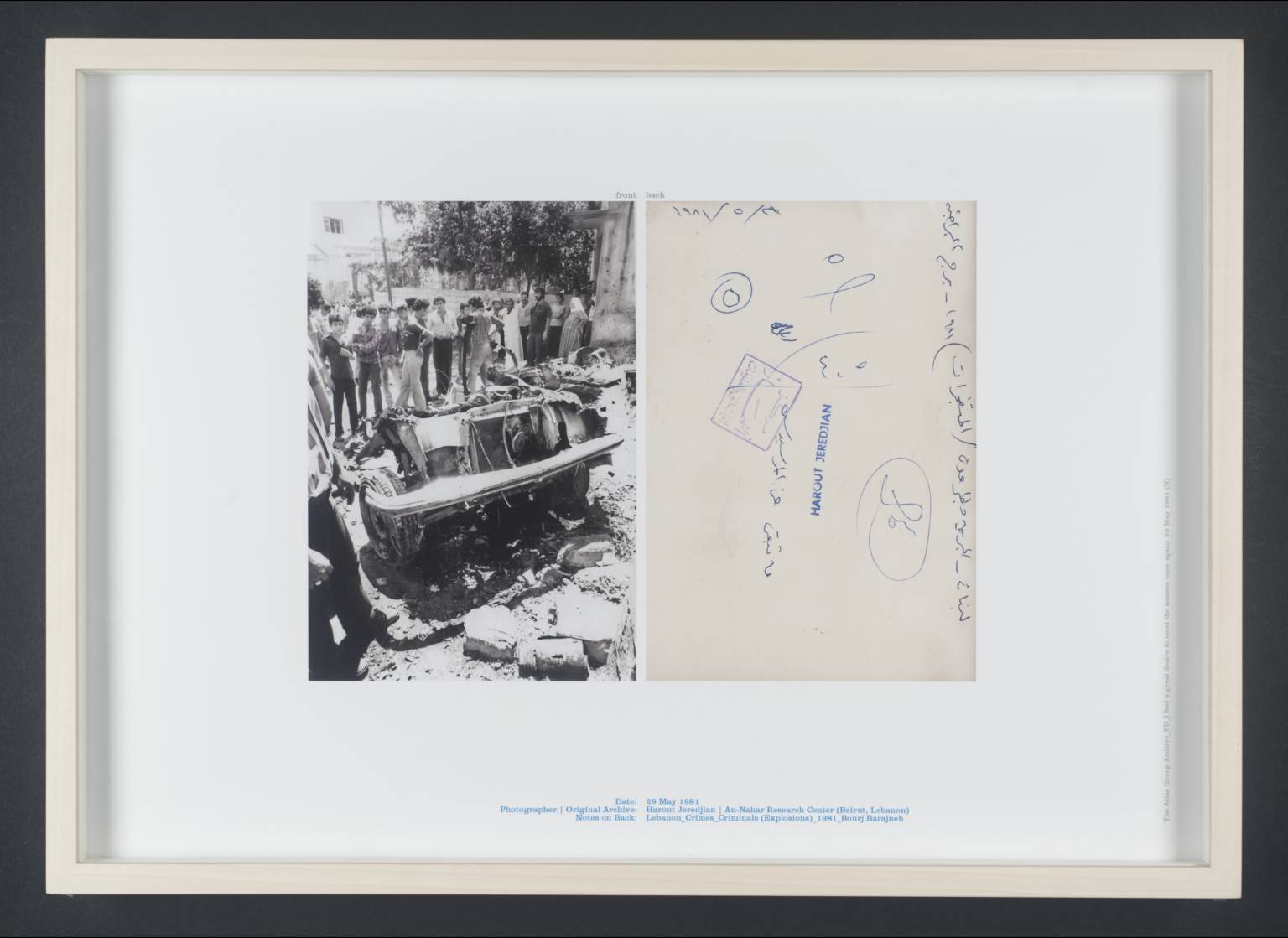
 

Atlas Group, Walid Raad. 'My Neck is Thinner Than a Hair: Engines' 1996-2004 (detail)


Atlas Group, Walid Raad
My Neck is Thinner Than a Hair: Engines (detail)
1996-2004
100 pigmented inkjet prints
9 7/16 x 13 3/8″ (24 x 34cm) each
The Museum of Modern Art, New York
Fund for the Twenty-First Century


The Museum of Modern Art
11 West 53 Street
New York, NY 10019
Phone: (212) 708-9400

Opening hours:
10.30am – 5.30pm
Open seven days a week
MoMA website

LIKE ART BLART ON FACEBOOK

Back to top

Exhibition: ‘Janina Green: Ikea’ at Edmund Pearce Gallery, Melbourne

Exhibition dates: 28th November 28 – 15th December 2012


Installation photograph of 'Ikea' by Janina Green at Edmund Pearce Gallery, Melbourne


Installation photograph of Ikea by Janina Green at Edmund Pearce Gallery, Melbourne


“It is necessary to revisit what Walter Benjamin said of the work of art in the age of its mechanical reproducibility. What is lost in the work that is serially reproduced, is its aura, its singular quality of the here and now, its aesthetic form (it had already lost its ritual form, in its aesthetic quality), and, according to Benjamin, it takes on, in its ineluctable destiny of reproduction, a political form. What is lost is the original, which only a history itself nostalgic and retrospective can reconstitute as “authentic.” The most advanced, the most modern form of this development, which Benjamin described in cinema, photography, and contemporary mass media, is one in which the original no longer even exists, since things are conceived from the beginning as a function of their unlimited reproduction.”


Jean Baudrillard. ‘Simulacra and Simulation’. 1981 (English translation 1994)


“To apprehend myself as seen is, in fact, to apprehend myself as seen in the world and from the standpoint of the world. The look does not carve me out in the universe; it comes to search for me at the heart of my situation and grasps me only in irresolvable relations with instruments. If I am seen as seated, I must be seen as “seated-on-a-chair,” … But suddenly the alienation of myself, which is the act of being-looked-at, involves the alienation of the world which I organise. I am seated on this chair with the result that I do not see it at all, that it is impossible for me to see it …”


Jean-Paul Satre. ‘Being and Nothingness’ (trans. Hazel Barnes). London: Methuen, 1966, p. 263


“It must be possible to concede and affirm an array of “materialities” that pertain to the body, that which is signified by the domains of biology, anatomy, physiology, hormonal and chemical composition, illness, age, weight, metabolism, life and death. None of this can be denied. But the undeniability of these “materialities” in no way implies what it means to affirm them, indeed, what interpretive matrices condition, enable and limit that necessary affirmation. That each of those categories [BODY AND MATERIALITY] have a history and a historicity, that each of them is constituted through the boundary lines that distinguish them and, hence, by what they exclude, that relations of discourse and power produce hierarchies and overlappings among them and challenge those boundaries, implies that these are both persistent and contested regions.”


Judith Butler. ‘Bodies That Matter’. New York: Routledge, 1993, pp. 66-67


Fable = invent (an incident, person, or story)

Simulacrum = pretends to be a faithful copy, but it is a copy with no original

Performativity = power of discourse, politicisation of abjection, ritual of being

Body / identity / desire = imperfection, fluidity, domesticity, transgression, transcendence


Intimate, conceptually robust and aesthetically sensitive.
The association of the images was emotionally overwhelming.
An absolute gem. One of the highlights of the year.

Dr Marcus Bunyan


Many thankx to Edmund Pearce Gallery for allowing me to publish the photographs in the posting. Please click on the photographs for a larger version of the image.


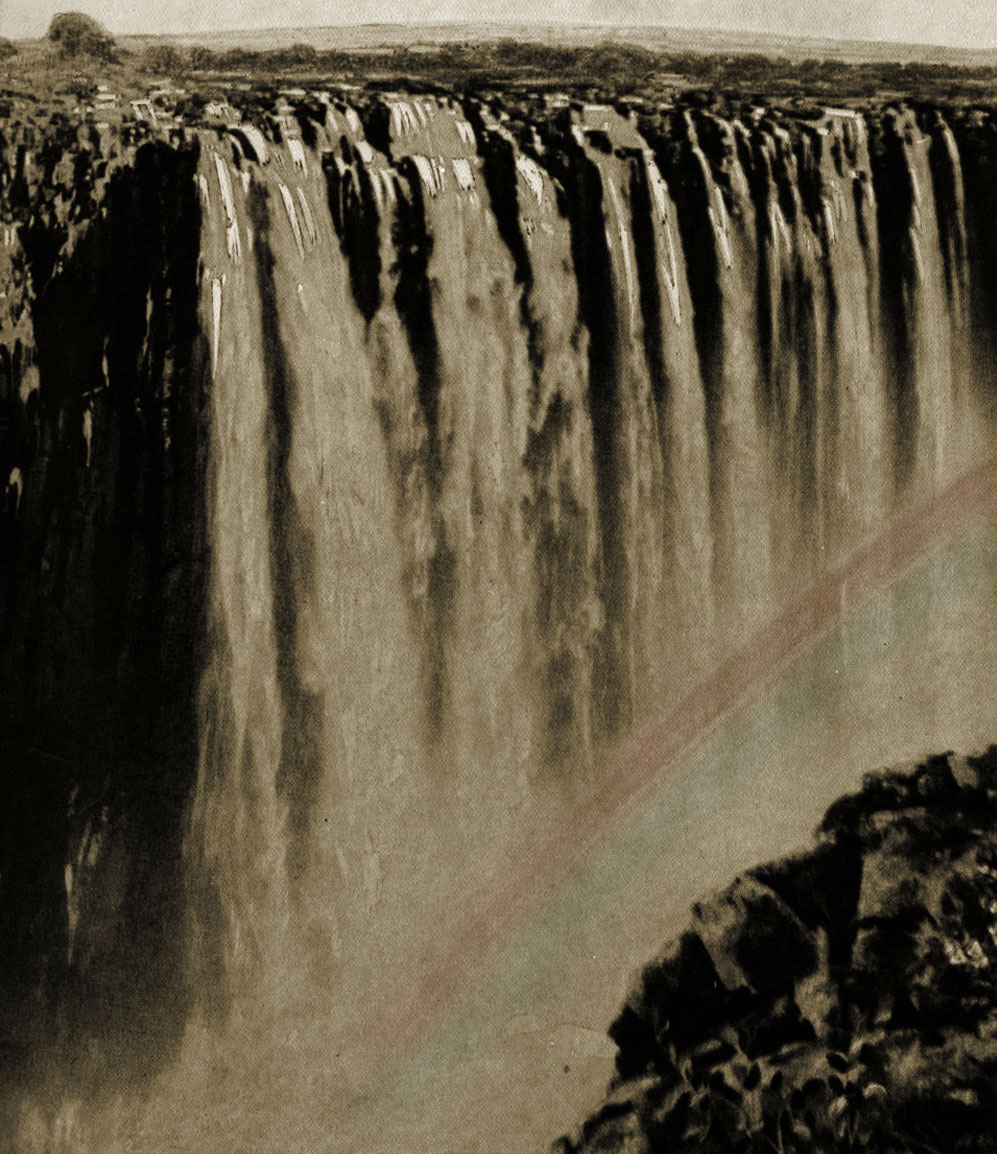
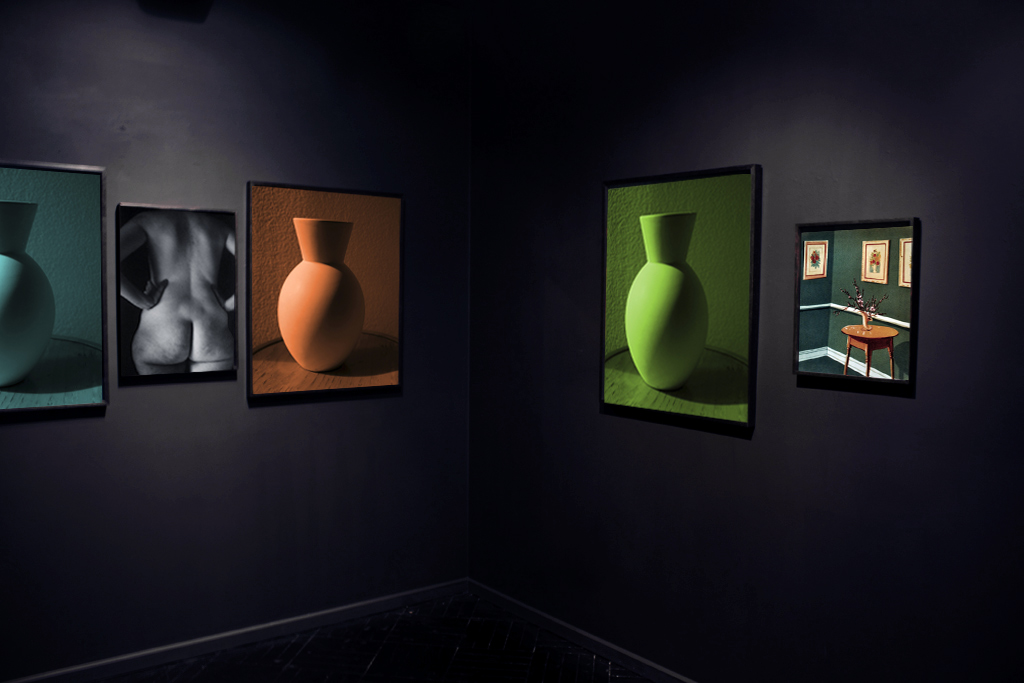
Janina Green (Australian born Germany, b. 1944) 'Waterfall' 1990


Janina Green (Australian born Germany, b. 1944)
Waterfall
1990
Silver gelatin print on Kentmere Parchment paper, tinted with coffee and photo dyes
58 x 48cm
Vintage print


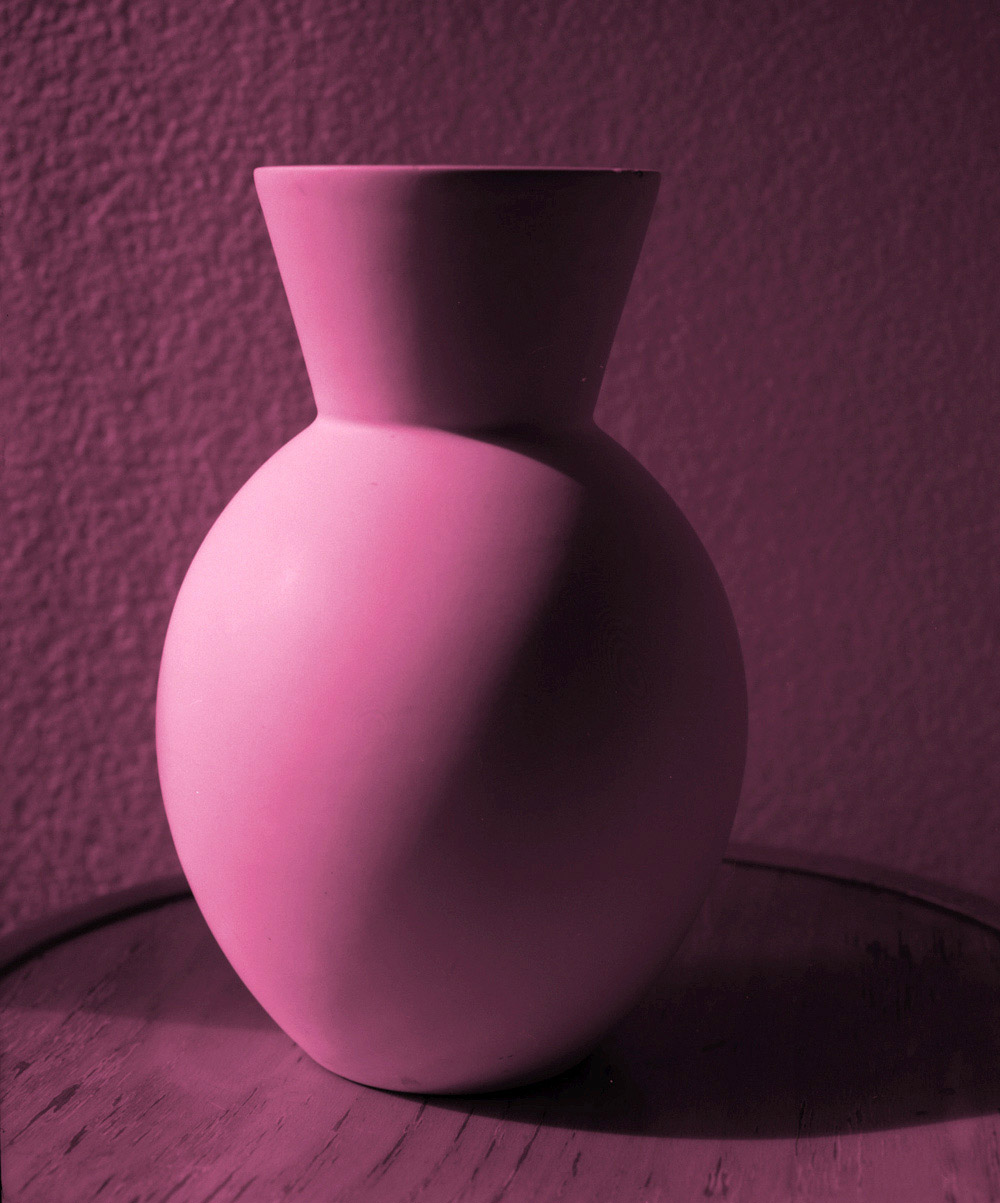
Janina Green (Australian born Germany, b. 1944) 'Pink vase' 1990 reprinted 2012


Janina Green (Australian born Germany, b. 1944)
Pink vase
1990 reprinted 2012
Silver gelatin print on fibre based paper, hand tinted with pink photo dye
85 x 70cm


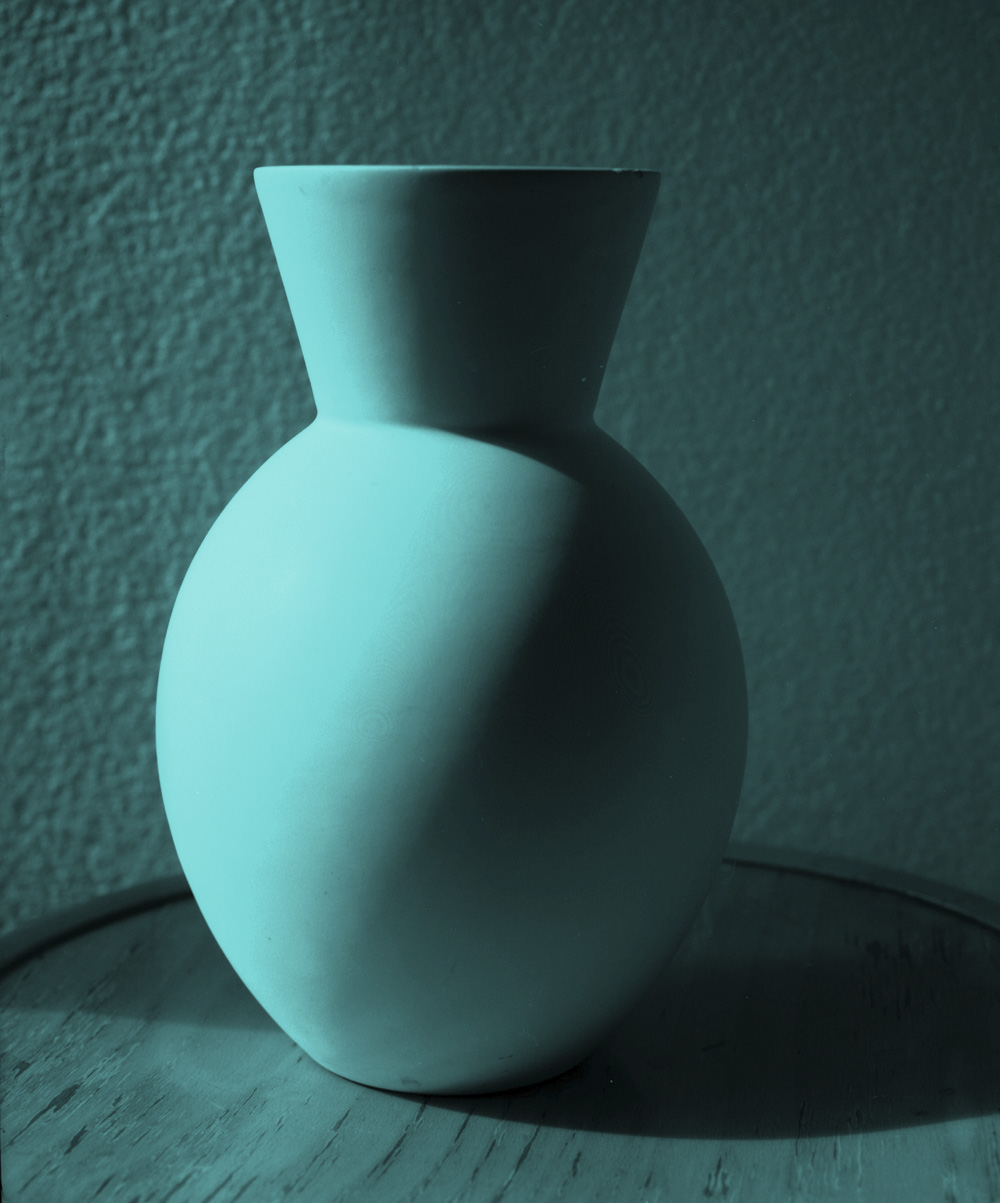
Janina Green (Australian born Germany, b. 1944) 'Blue vase' 1990 reprinted 2012


Janina Green (Australian born Germany, b. 1944)
Blue vase
1990 reprinted 2012
Silver gelatin print on fibre based paper, hand tinted with blue photo dye
85 x 70cm


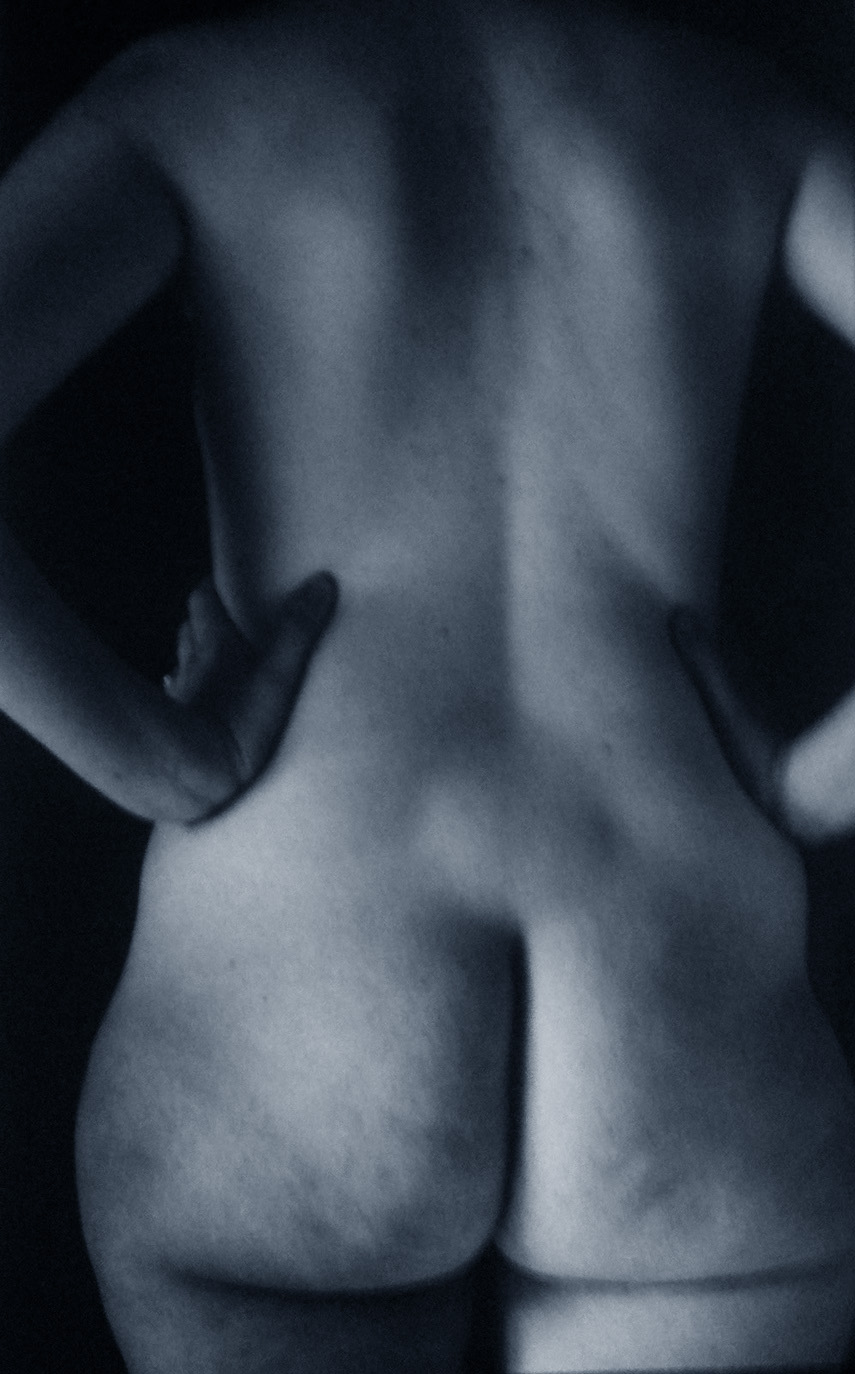
Janina Green (Australian born Germany, b. 1944) 'Nude' 1986


Janina Green (Australian born Germany, b. 1944)
Nude
1986
Silver gelatin print on fibre based paper, hand tinted with blue photo dye
60 x 45cm
Vintage print


My photographs are always about the past.

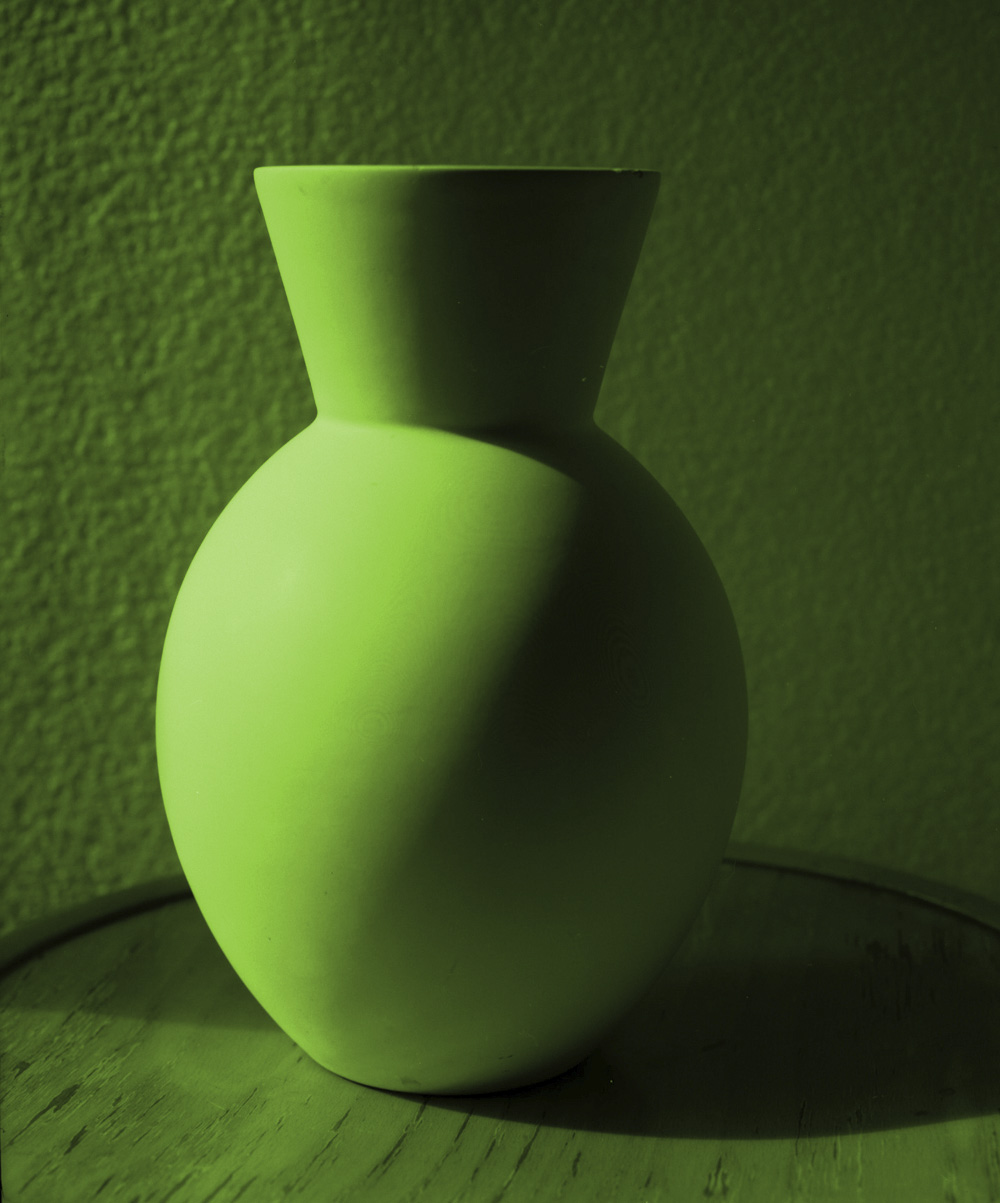
The Barthesian slogan, “this has been,” is for me, “I was there.” This series of images of a vase from Ikea consists of silver gelatin prints tinted in different coloured photographic dyes; photographs of a simple mass produced vase – its form the familiar vessel which so dominates Art History. “Ikea” for me is symbolic of the useful homely object and of the ideal home. The vase from Ikea no longer exists. The picture of that vase stands in for the vase that once existed. The photograph can be seen now – at this moment. It will continue to exist in the future. Its representation crosses time barriers.

My photographs are always documentations of a private performance.

Every photograph records what is in front of the camera, but my interest is in the occasion and the complex conditions of the making of the photograph – first the negative then the print. Each photograph ends up being a documentation of my state of mind during this intensely private moment as well as something for other people to look at. Because of changing conditions, every one of these prints from that same negative is different. For me each analogue print is an unsteady thing. They are now relics from another era, as is the vase.

As a counterpoint to the repetition of the vase prints, I have selected four vintage works from my archive.

Artists statement by Janina Green

Janina is represented by M.33


Janina Green (Australian born Germany, b. 1944) 'Orange vase' 1990 reprinted 2012


Janina Green (Australian born Germany, b. 1944)
Orange vase
1990 reprinted 2012
Silver gelatin print on fibre based paper, hand tinted with orange photo dye
85 x 70cm


Janina Green (Australian born Germany, b. 1944) 'Green vase' 1990 reprinted 2012


Janina Green (Australian born Germany, b. 1944)
Green vase
1990 reprinted 2012
Silver gelatin print on fibre based paper, hand tinted with green photo dye
85 x 70cm


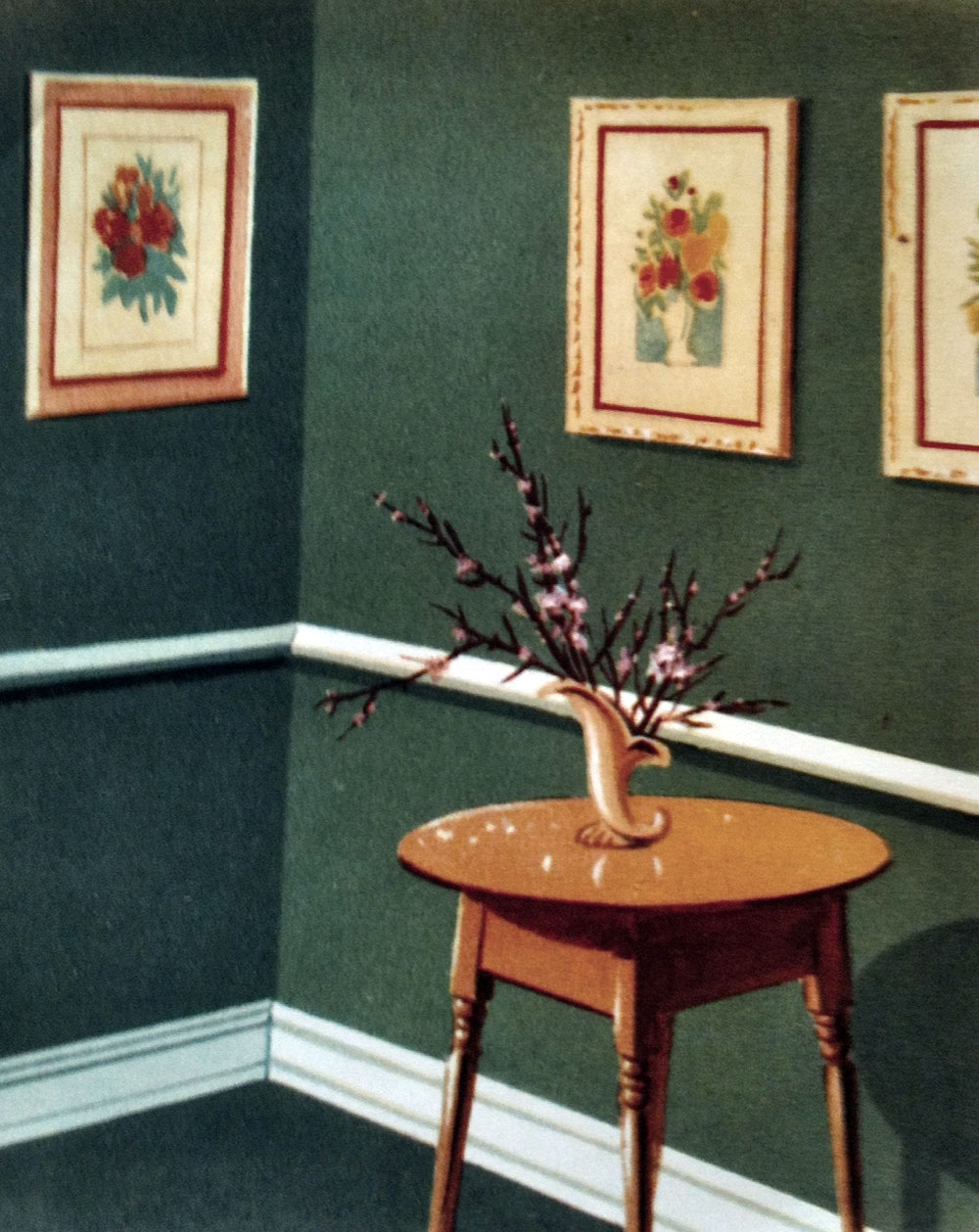
Janina Green (Australian born Germany, b. 1944) 'Interior' 1992


Janina Green (Australian born Germany, b. 1944)
Interior
1992
C Type print
38 x 30cm
Vintage print / edition of 5


Janina Green (Australian born Germany, b. 1944) 'Telephone' 1986 reprinted 2010


Janina Green (Australian born Germany, b. 1944)
Telephone
1986 reprinted 2010
Silver gelatin print on fibre based paper, tinted with coffee
58 x 48cm


Janina Green (Australian born Germany, b. 1944) 'Yellow vase' 1990 reprinted 2012


Janina Green (Australian born Germany, b. 1944)
Yellow vase
1990 reprinted 2012
Silver gelatin print on fibre based paper, hand tinted with yellow photo dye
85 x 70cm


Edmund Pearce Gallery

This gallery is now closed.

LIKE ART BLART ON FACEBOOK

Back to top

Exhibition: ‘Jeff Wall Photographs’ at The Ian Potter Centre: National Gallery of Victoria Australia, Melbourne

Exhibition dates: 30th November 2012 – 17th March 2013


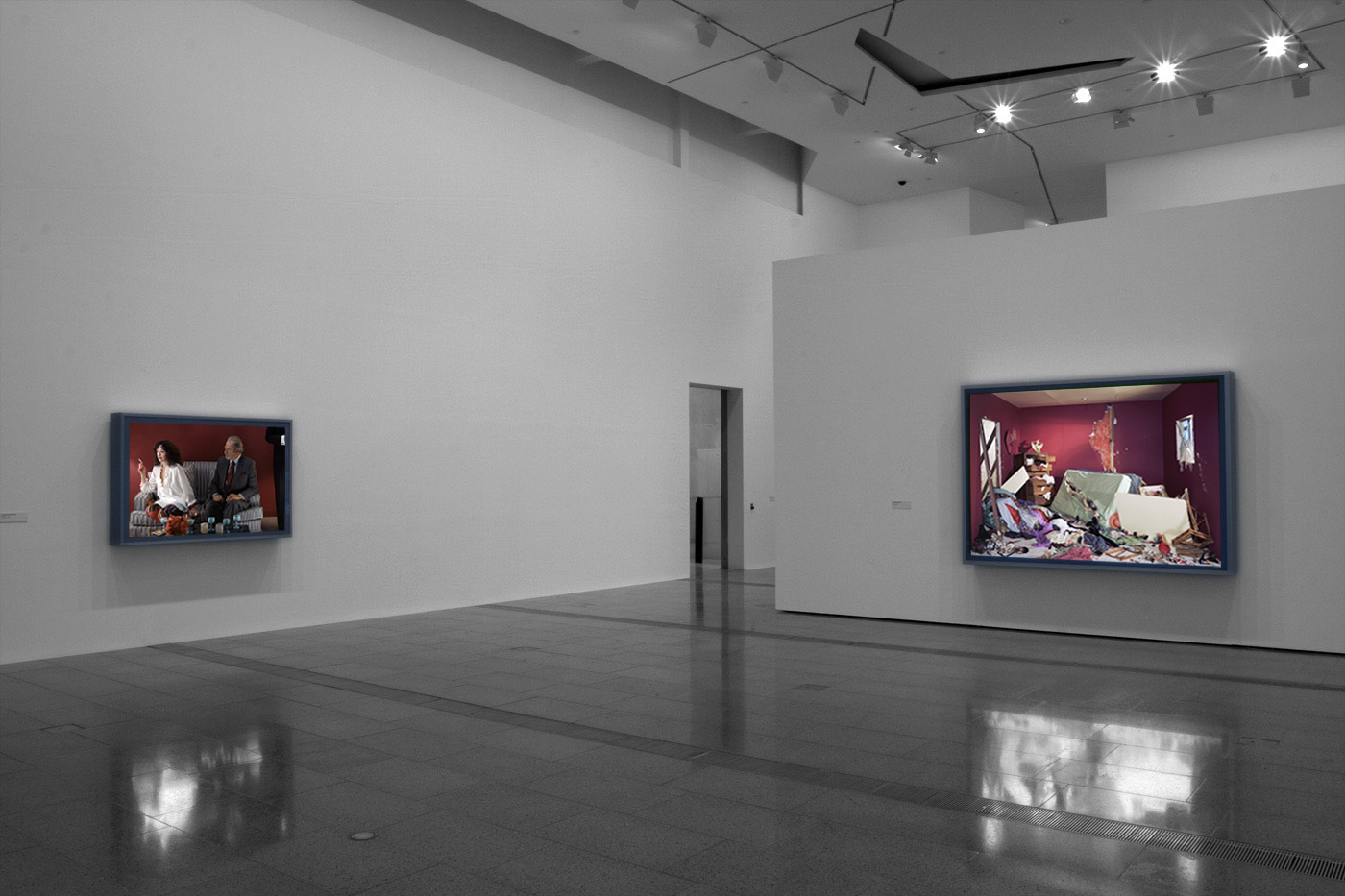
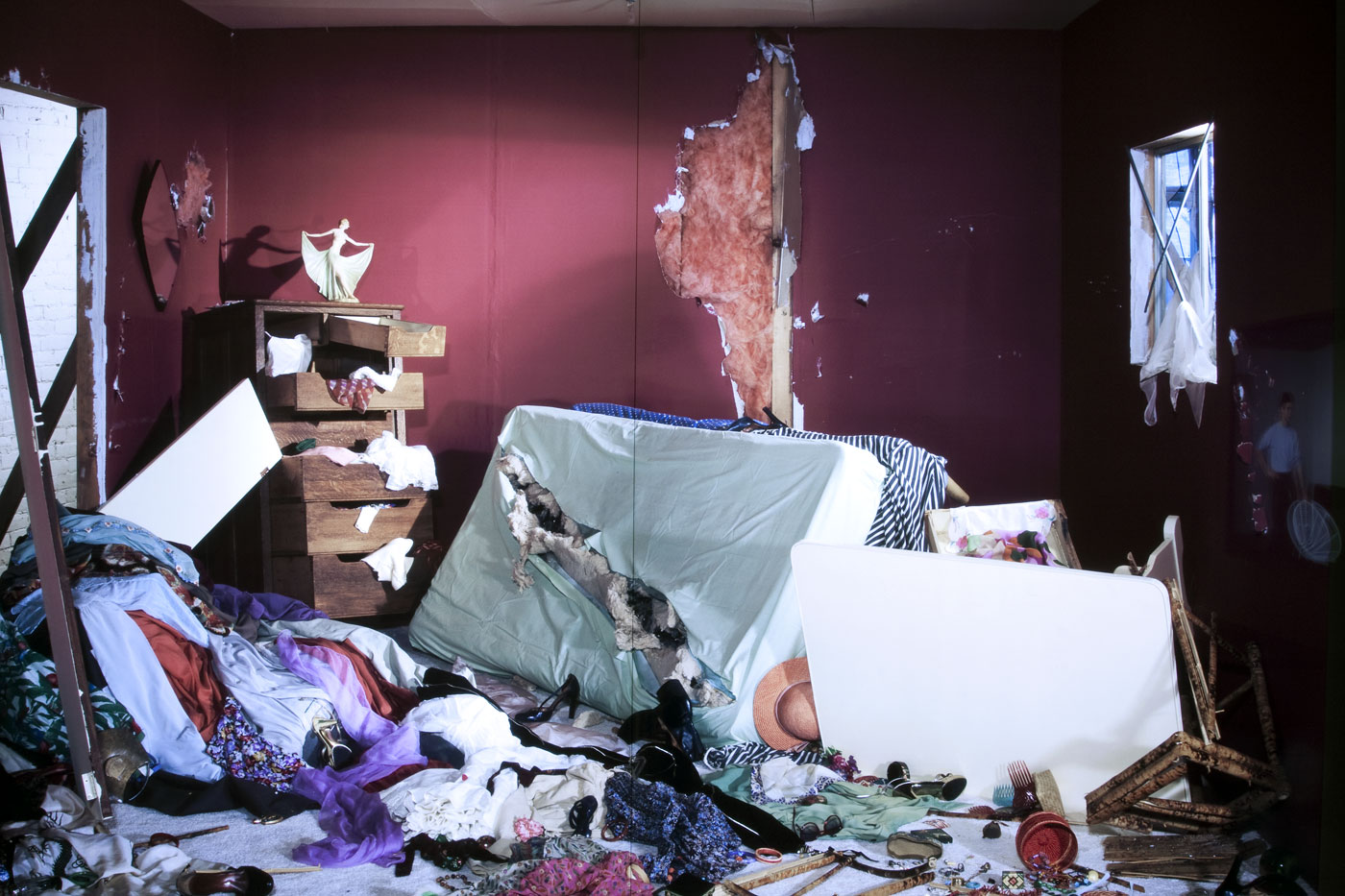
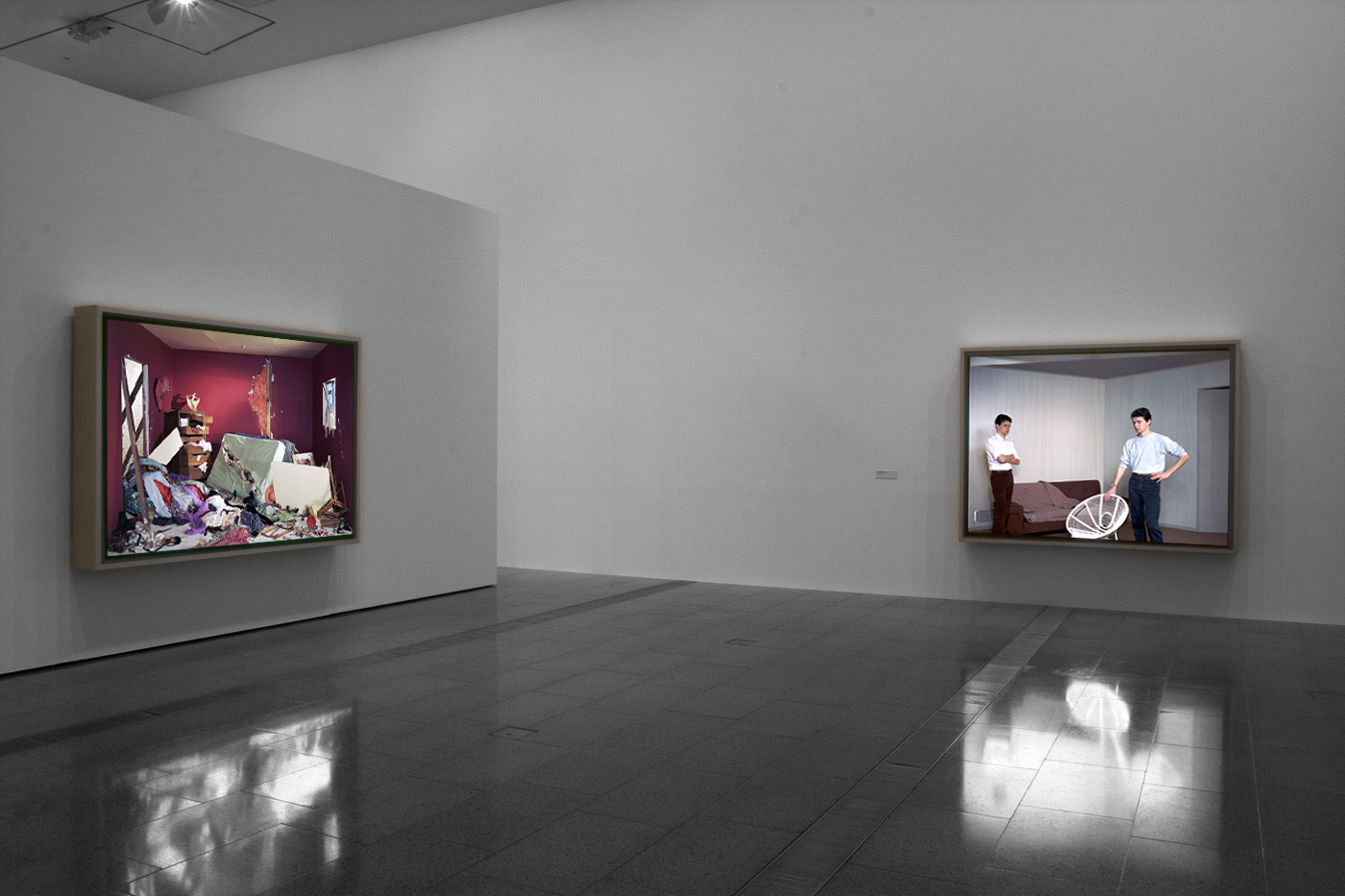
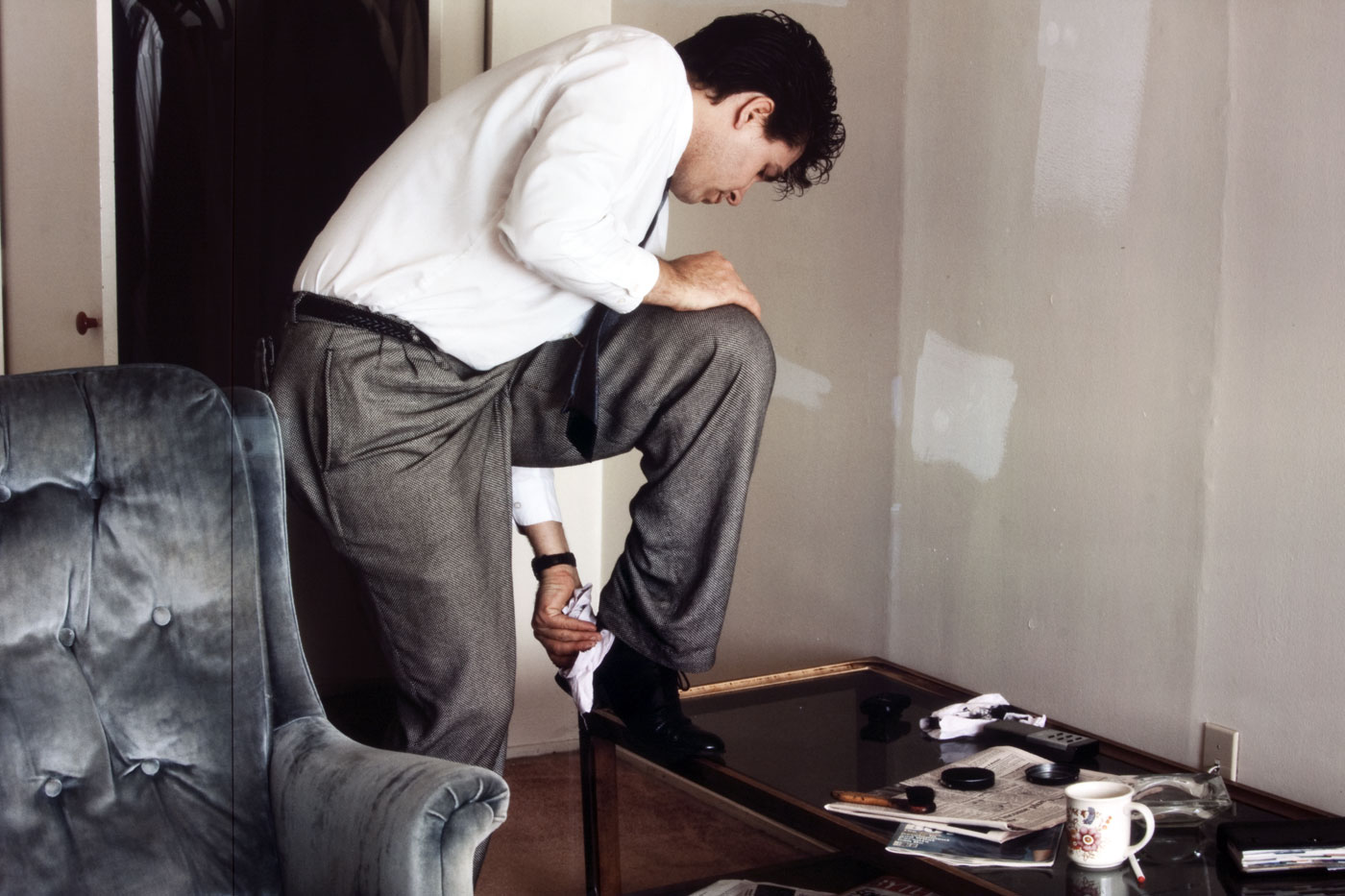
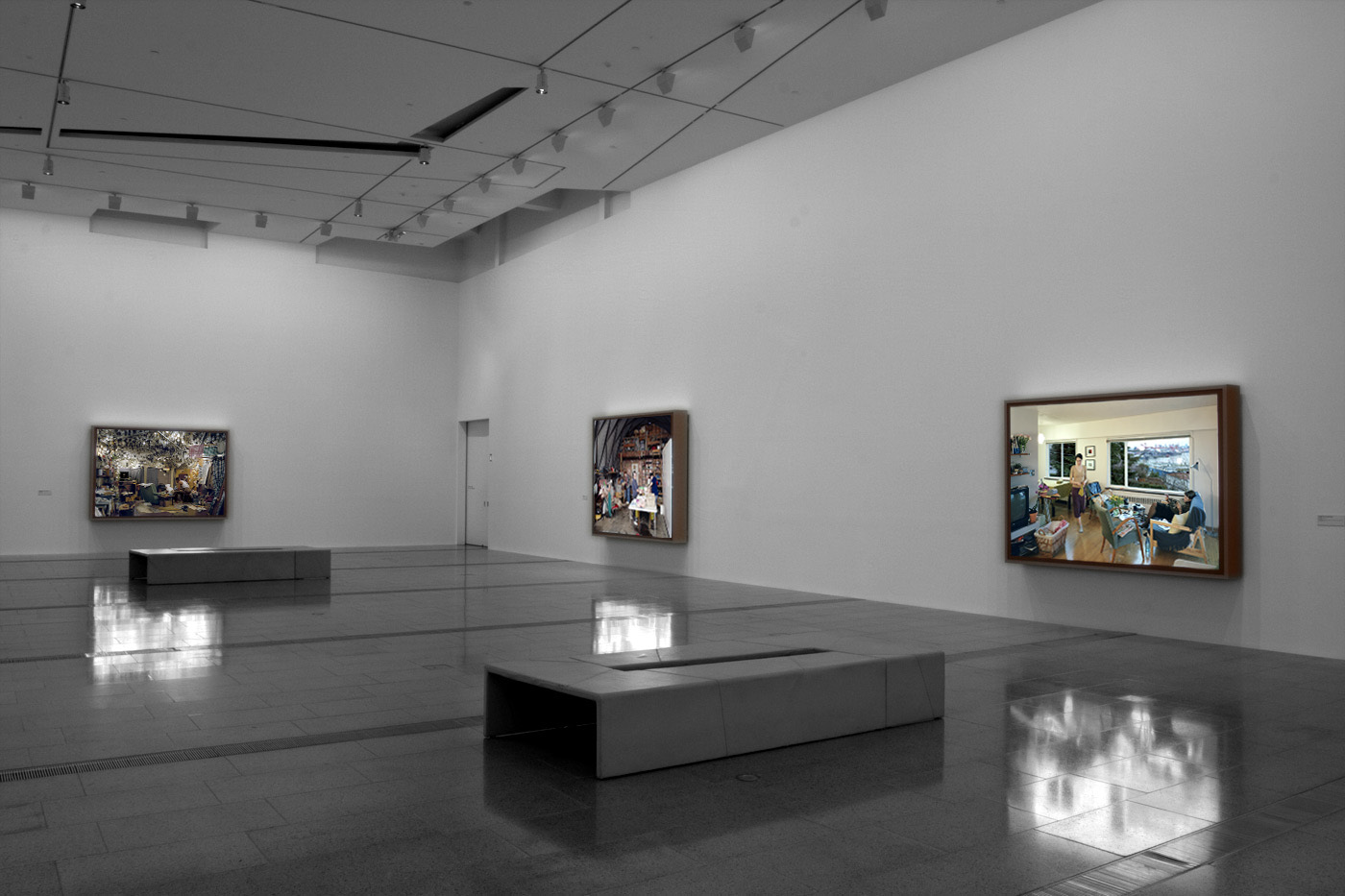
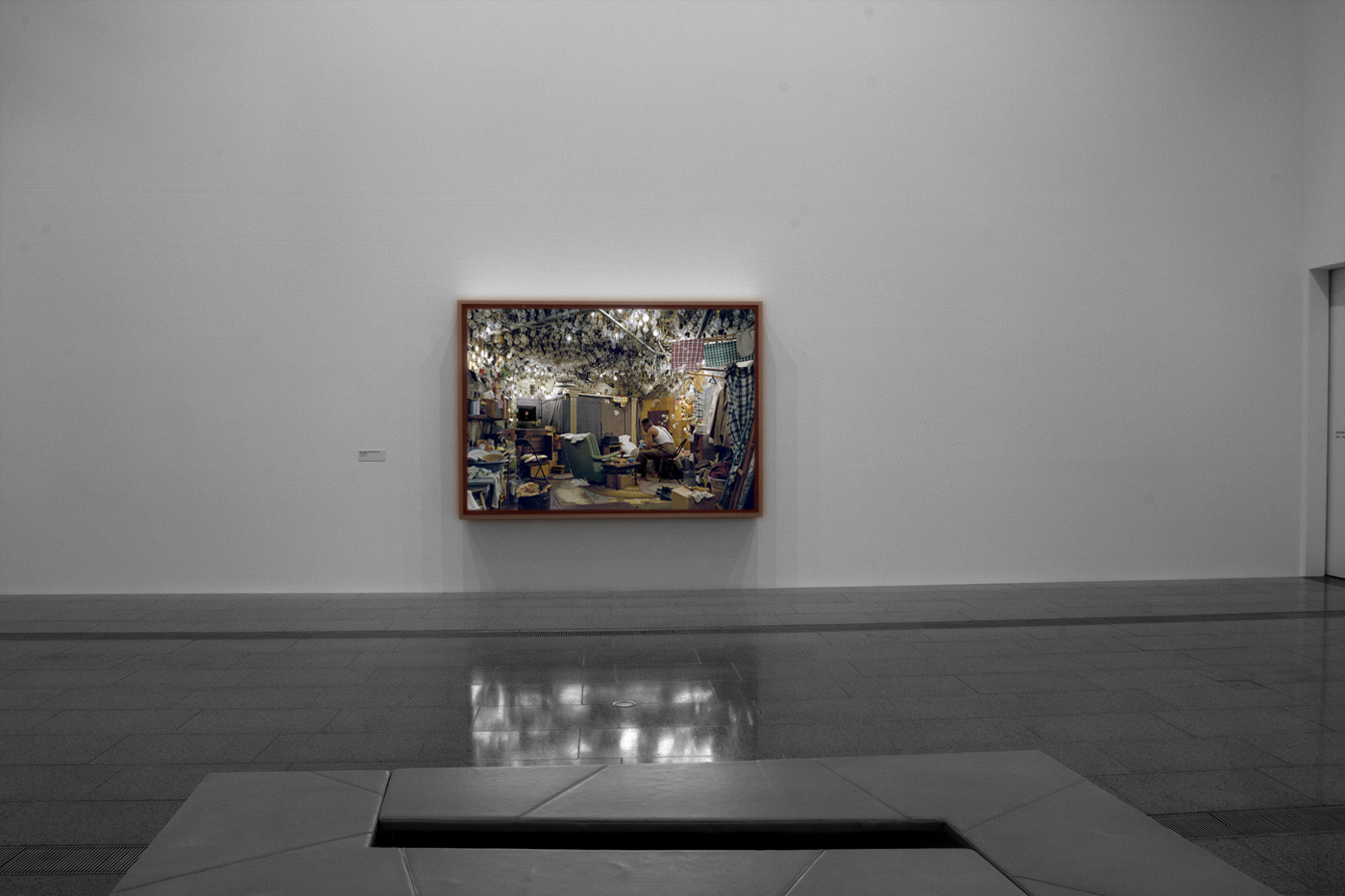
Installation view of 'Jeff Wall Photographs' at NGV Australia showing, at right, 'The Destroyed Room' 1978


Installation view of Jeff Wall Photographs at NGV Australia showing, at right, The Destroyed Room 1978
Photo: Marcus Bunyan


Installation shots of the new Jeff Wall exhibition at NGV Australia. Review to follow in due course.

Many thankx to Jemma Altmeier and all the media team at NGV for all their wonderful help and congratulations to the curators, Susan van Wyk and Dr Isobel Crombie, for their restrained yet contemporary installations and for getting the exhibitions to Melbourne. They look magnificent. Well done!

Dr Marcus Bunyan


Many thankx to the NGV for allowing me to publish the photographs in the posting. Please click on the photographs for a larger version of the image. All photographs © Marcus Bunyan © National Gallery of Victoria. May not be reproduced without permission.


Jeff Wall & Thomas Demand: In Conversation, National Gallery of Victoria


Jeff Wall (Canadian, b. 1946) 'The Destroyed Room' 1978 (detail)


Jeff Wall (Canadian, b. 1946)
The Destroyed Room (detail)
1978
Transparency in light box, AP
159.0 x 234.0cm
Collection of the artist
© Jeff Wall


Installation view of 'Jeff Wall Photographs' at NGV Australia showing, at left, 'The Destroyed Room' 1978, and at right, 'Double Self-Portrait' 1979


Installation view of Jeff Wall Photographs at NGV Australia showing, at left, The Destroyed Room 1978, and at right, Double Self-Portrait 1979
Photo: Marcus Bunyan


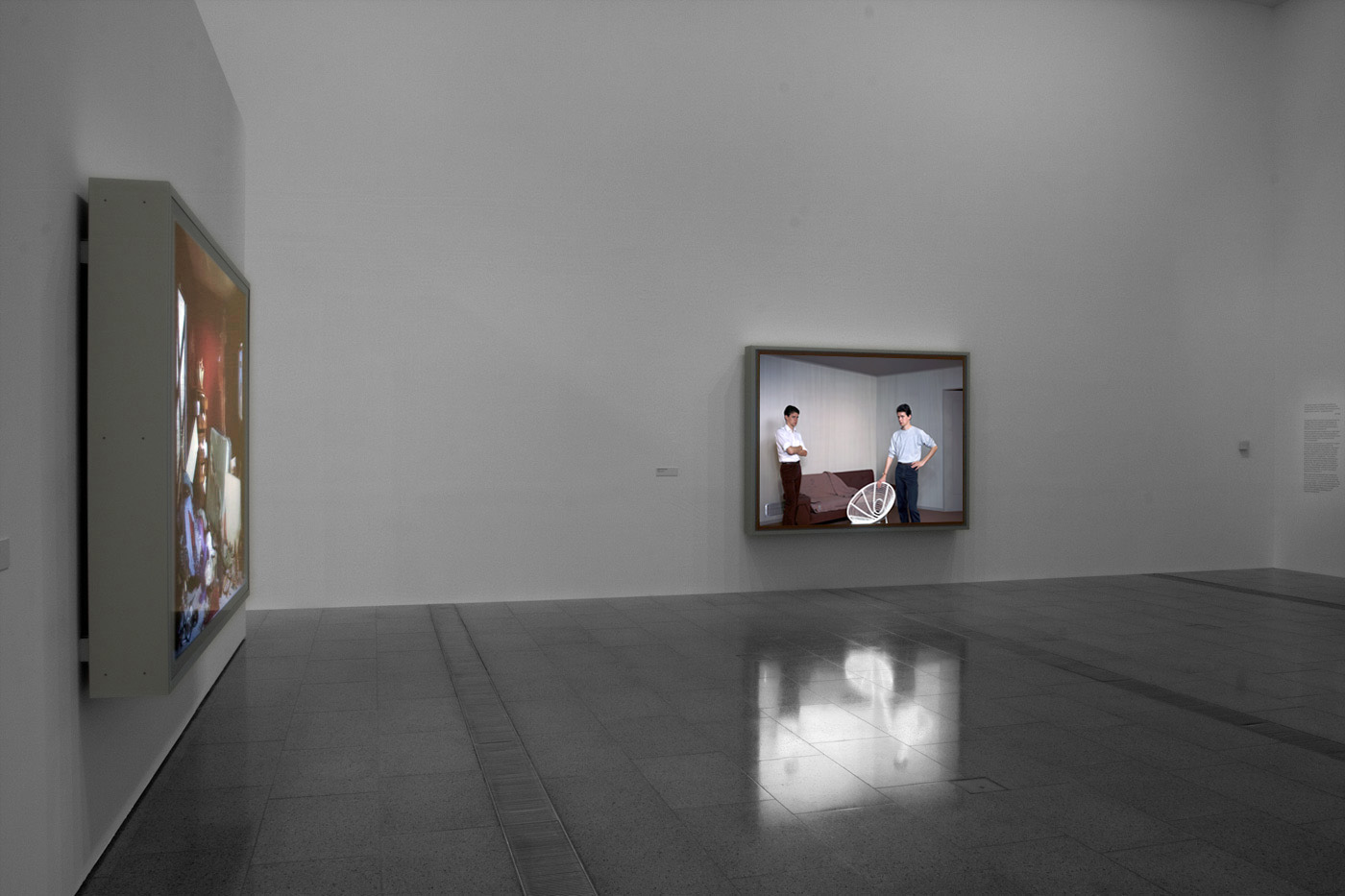
Installation view of 'Jeff Wall Photographs' at NGV Australia showing, at right, 'Double Self-Portrait' 1979


Installation view of Jeff Wall Photographs at NGV Australia showing, at right, Double Self-Portrait 1979
Photo: Marcus Bunyan


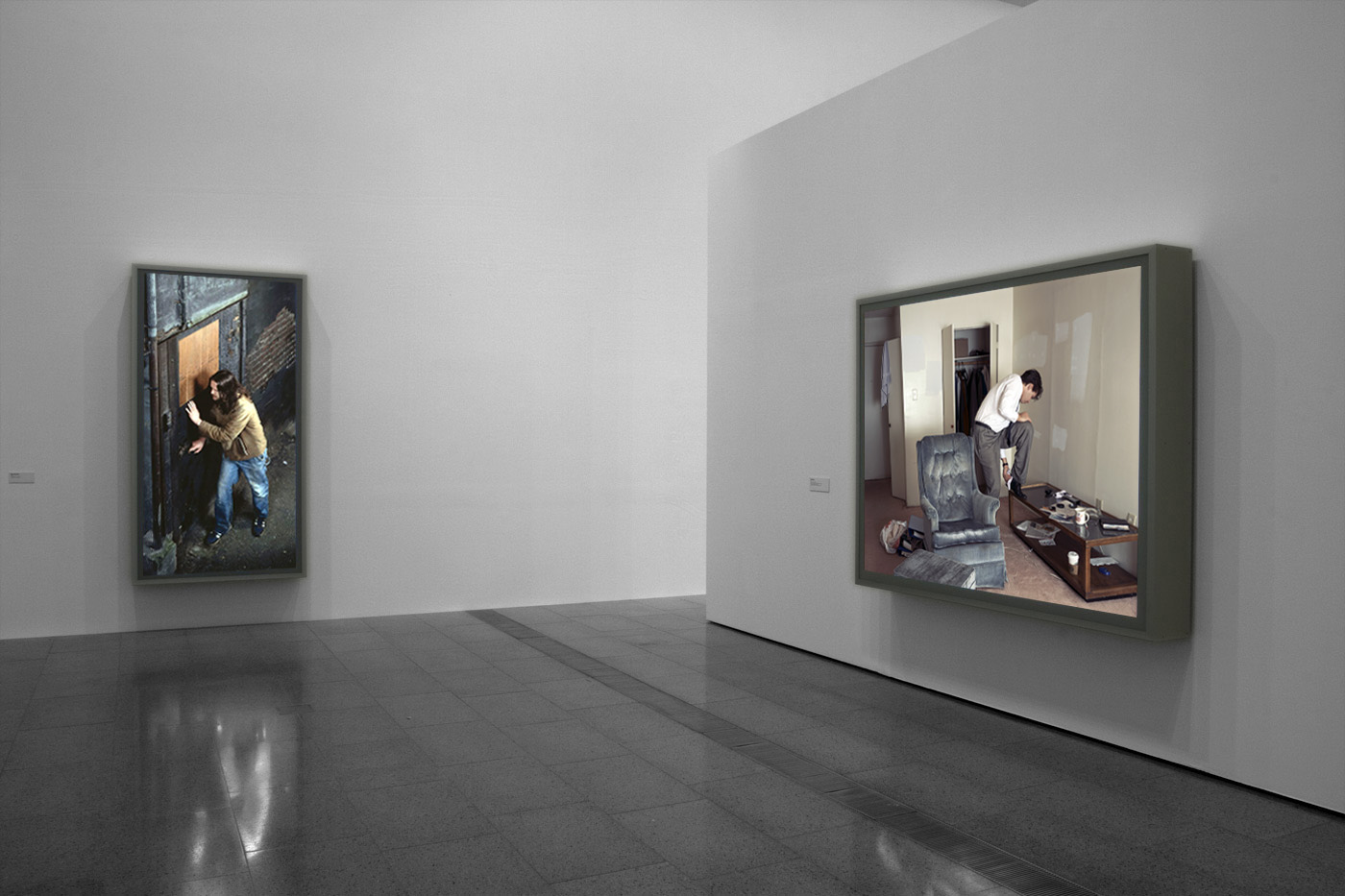
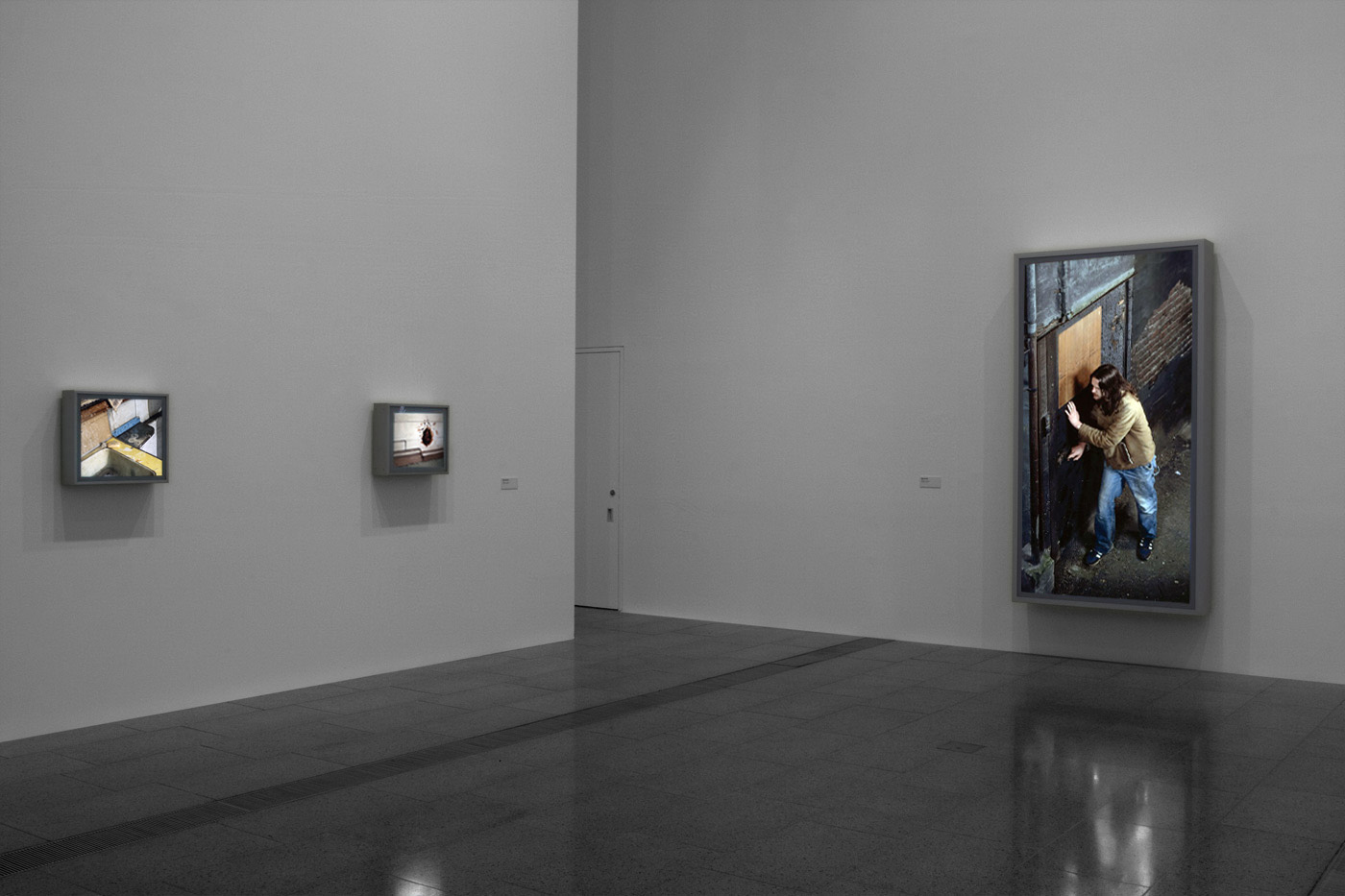
Installation view of 'Jeff Wall Photographs' at NGV Australia showing, at left, 'Doorpusher' 1984, and at right, 'Polishing' 1998


Installation view of Jeff Wall Photographs at NGV Australia showing, at left, Doorpusher 1984, and at right, Polishing 1998
Photo: Marcus Bunyan


Jeff Wall (Canadian, b. 1946) 'Polishing' 1998 (detail)


Jeff Wall (Canadian, b. 1946)
Polishing (detail)
1998
Transparency in light box, 1/2
162.0 x 207.0cm
State Art Collection, Art Gallery of Western Australia
Purchased with assistance from the Art Gallery of Western Australia Foundation, 1999
© Jeff Wall


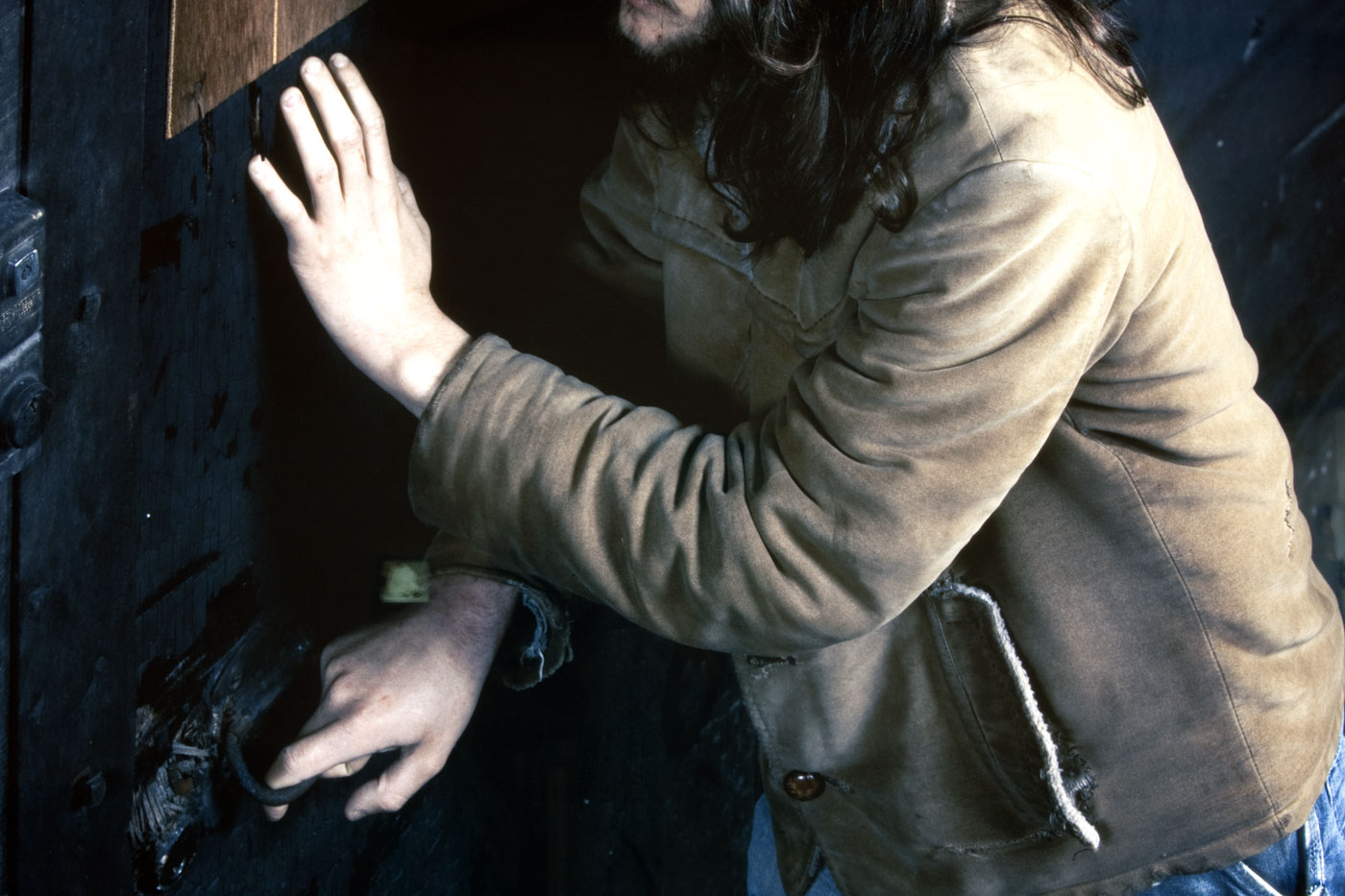
Jeff Wall (Canadian, b. 1946) 'Doorpusher' 1984 (detail)


Jeff Wall (Canadian, b. 1946)
Doorpusher
(detail)
1984
Transparency in lightbox
249 x 122cm
© Jeff Wall


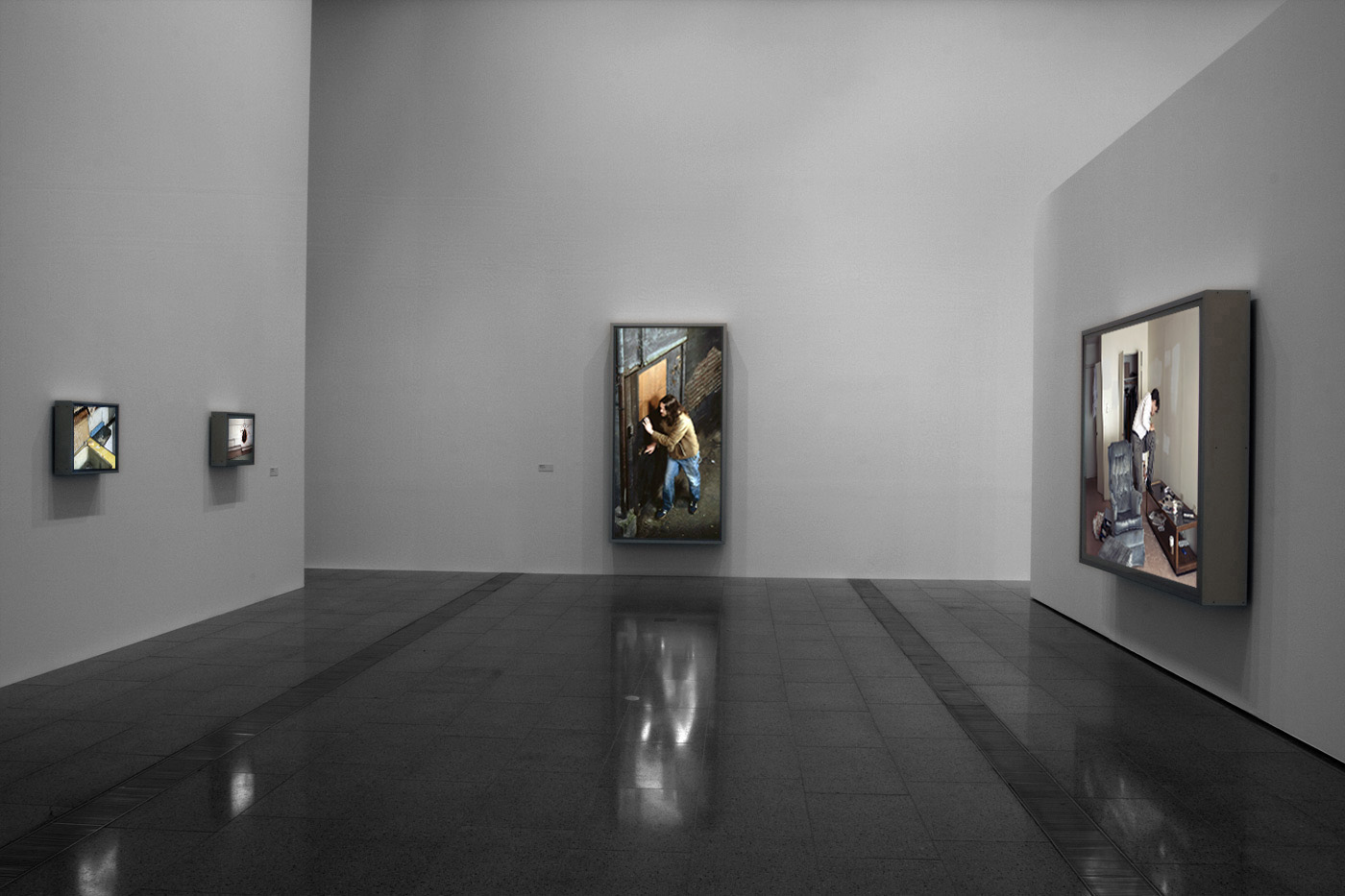
Installation view of 'Jeff Wall Photographs' at NGV Australia showing, at centre, 'Doorpusher' 1984, and at right, 'Polishing' 1998


Installation view of Jeff Wall Photographs at NGV Australia showing, at centre, Doorpusher 1984, and at right, Polishing 1998
Photo: Marcus Bunyan


Installation view of 'Jeff Wall Photographs' at NGV Australia showing, at left, 'Diagonal Composition' 1993, and at right, 'Doorpusher' 1984


Installation view of Jeff Wall Photographs at NGV Australia showing, at left, Diagonal Composition 1993, and at right, Doorpusher 1984
Photo: Marcus Bunyan


Jeff Wall (Canadian, b. 1946) 'Diagonal Composition' 1993


Jeff Wall (Canadian, b. 1946)
Diagonal Composition
1993
Transparency in light box, AP
40 x 46cm
Collection of the artist
© Jeff Wall


Jeff Wall (Canadian, b. 1946) 'Pipe Opening' 2002 (detail)


Jeff Wall (Canadian, b. 1946)
Pipe Opening (detail)
2002
Transparency in light box, AP
40 x 46cm
Collection of the artist
© Jeff Wall


Installation view of 'Jeff Wall Photographs' at NGV Australia showing, at right, 'A view from an apartment' 2004-2005


Installation view of Jeff Wall Photographs at NGV Australia showing, at right, A view from an apartment 2004-2005
Photo: Marcus Bunyan


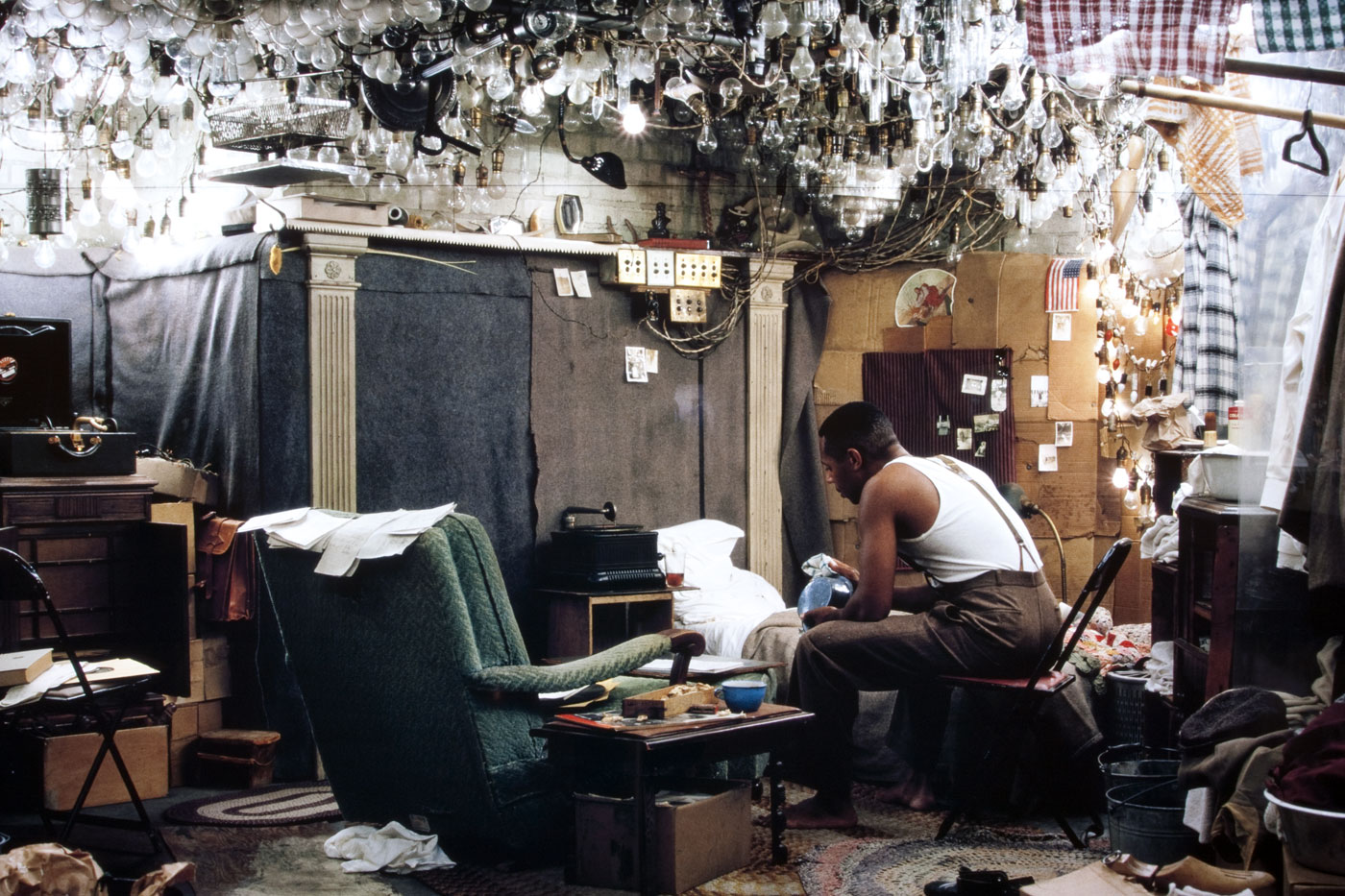
Installation view of 'Jeff Wall Photographs' at NGV Australia showing 'After 'Invisible Man' by Ralph Ellison, the Prologue' 1999-2000


Installation view of Jeff Wall Photographs at NGV Australia showing After ‘Invisible Man’ by Ralph Ellison, the Prologue 1999-2000
Photo: Marcus Bunyan


Jeff Wall (Canadian, b. 1946) 'After 'Invisible Man' by Ralph Ellison, the Prologue' 1999-2000 (detail)


Jeff Wall (Canadian, b. 1946)
After ‘Invisible Man’ by Ralph Ellison, the Prologue (detail)
1999-2000
Transparency in light box, AP
174 x 250.5cm
Collection of the artist
© Jeff Wall


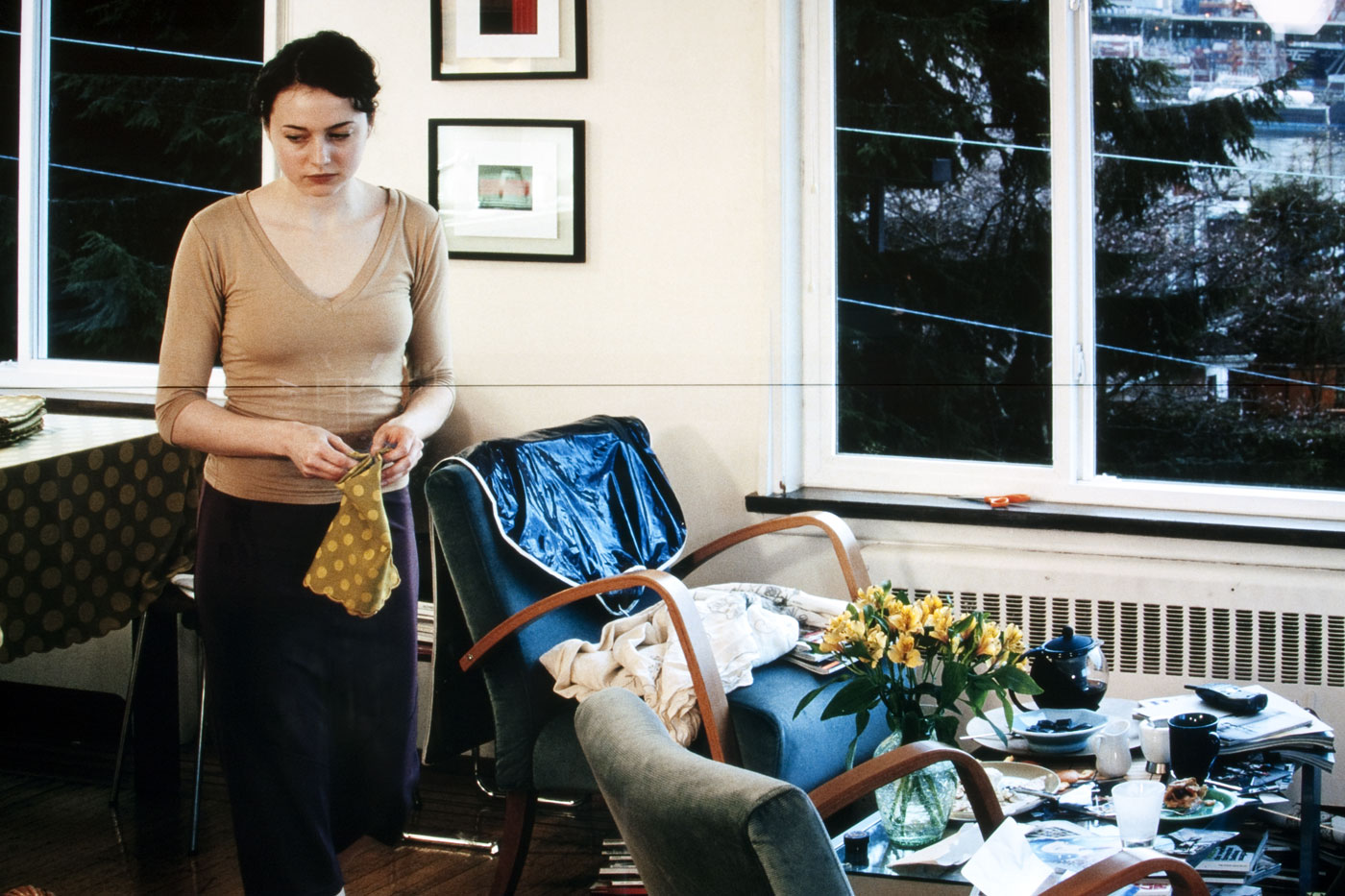
Jeff Wall (Canadian, b. 1946) 'A view from an apartment' 2004-05 (detail)


Jeff Wall (Canadian, b. 1946)
A view from an apartment (detail)
2004-2005
Transparency in light box, 1/2
167.0 x 244.0cm
Tate, London
Purchased with assistance from the American Fund for the Tate Gallery and Tate Members, 2006
© Jeff Wall


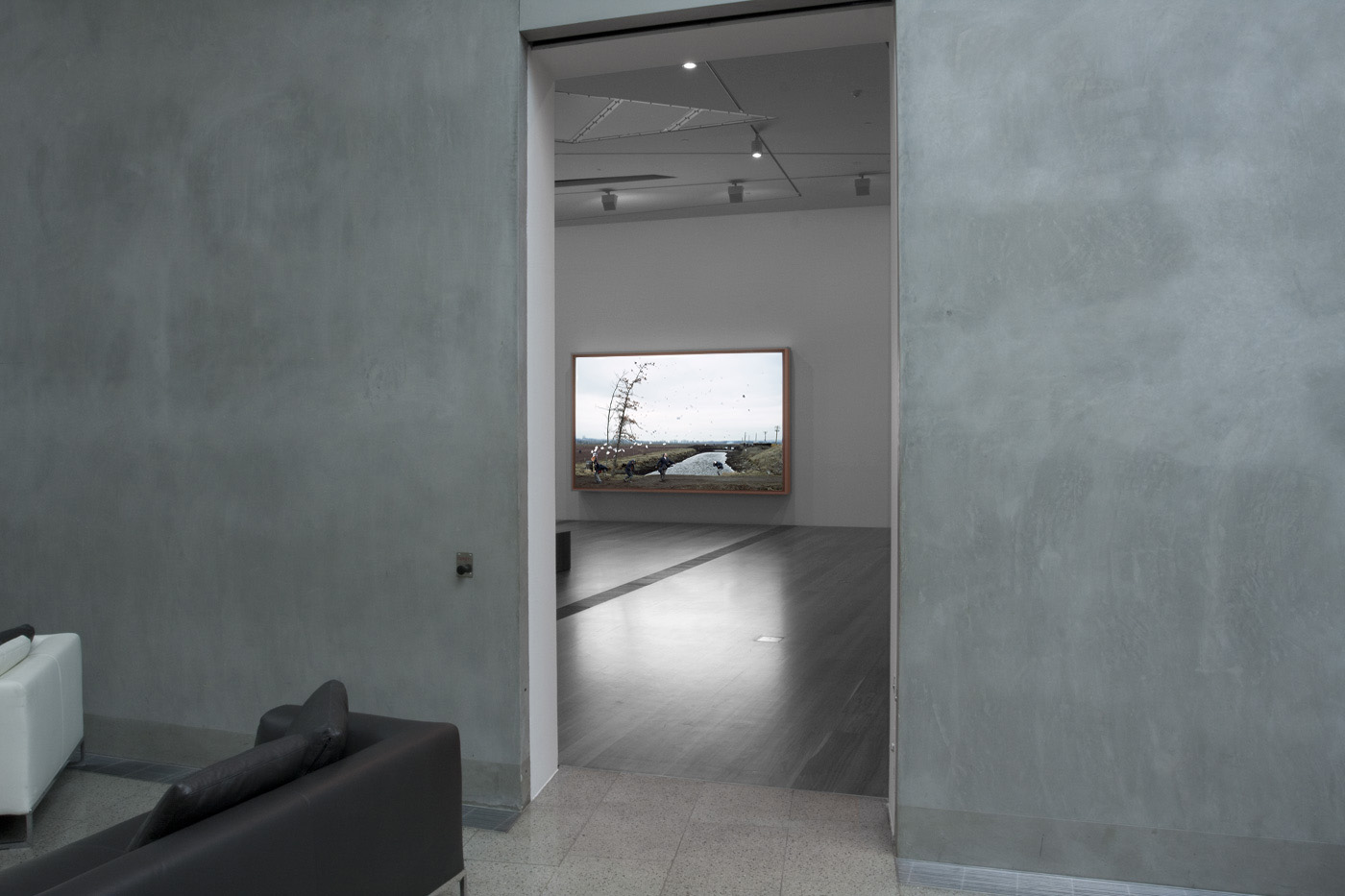
Installation view of 'Jeff Wall Photographs' at NGV Australia showing 'A sudden gust of wind (after Hokusai)' 1993


Installation view of Jeff Wall Photographs at NGV Australia showing A sudden gust of wind (after Hokusai) 1993
Photo: Marcus Bunyan


The Ian Potter Centre: NGV Australia
Federation Square
Corner of Russell and 
Flinders Streets, Melbourne

Opening hours:
Daily 10am – 5pm

National Gallery of Victoria website

LIKE ART BLART ON FACEBOOK

Back to top

Exhibition: ‘Thomas Demand’ at the National Gallery of Victoria International, Melbourne

Exhibition dates: 30th November 2012 – 17th March 2013


Installation view of 'Thomas Demand' at NGVI showing, at right, 'Lichtung / Clearing' 2003


Installation view of Thomas Demand at NGVI showing, at right, Lichtung / Clearing 2003
Photo: Marcus Bunyan


You saw it here first on Art Blart!

Beautiful installation shots of the new Thomas Demand exhibition at NGVI. Jeff Wall installation photographs to follow in the next posting on Saturday. Reviews to follow in due course.

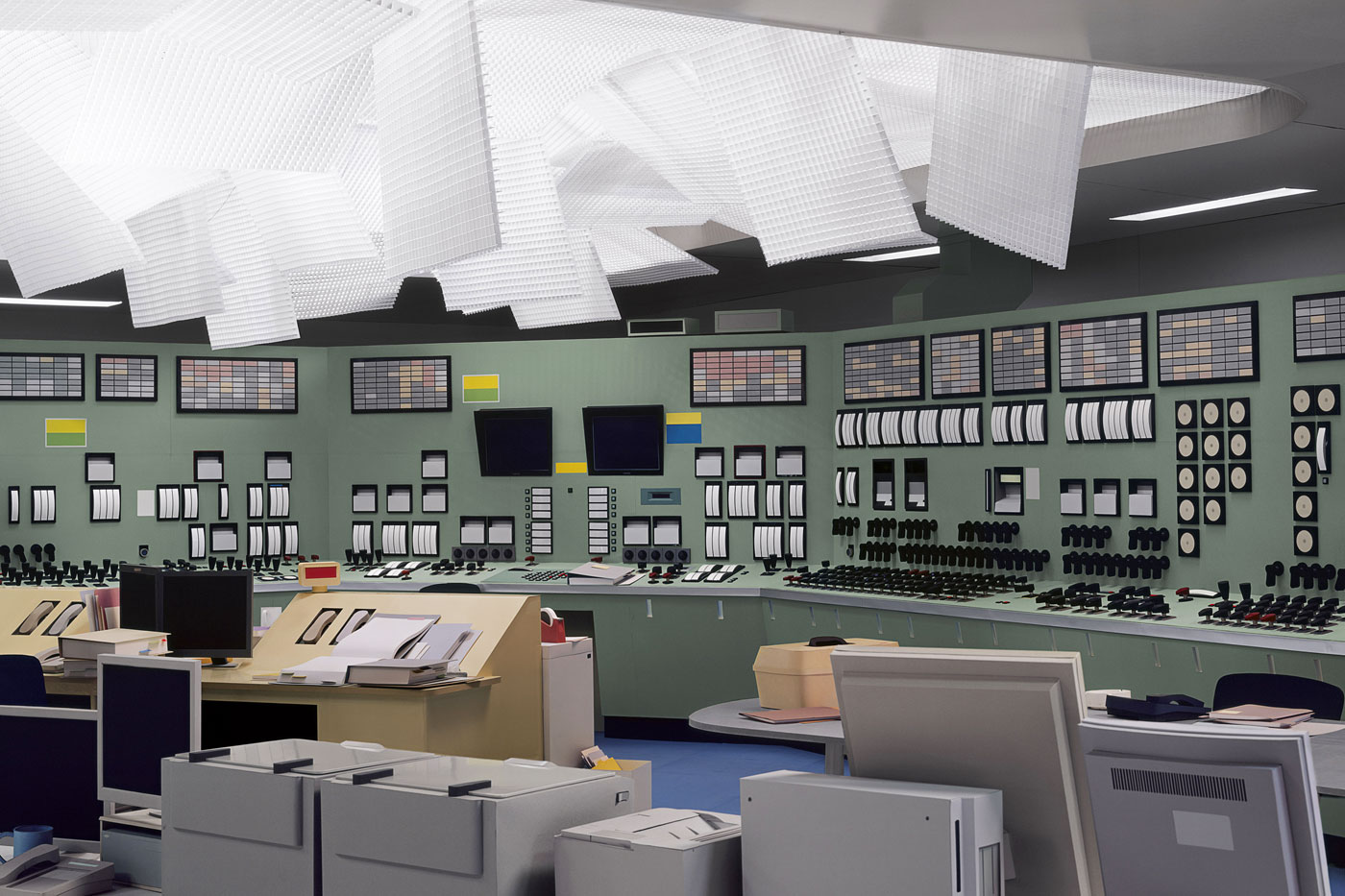
These are all cardboard models created in Thomas Demand’s studio and then photographed. The models are destroyed afterwards leaving the photographs as artefacts and remembrances, both a performance in their own right, but also a record of another performance, that of the creation of the models. Double self, double performativity, double ritual.

Many thankx to Jemma Altmeier and all the media team at NGV for all their wonderful help and congratulations to the curators, Susan van Wyk and Dr Isobel Crombie, for their restrained yet contemporary installations and for getting the exhibitions to Melbourne. They look magnificent. Well done!

Dr Marcus Bunyan


Many thankx to the NGV for allowing me to publish the photographs in the posting. Please click on the photographs for a larger version of the image. All photographs © Marcus Bunyan © National Gallery of Victoria. May not be reproduced without permission.


Thomas Demand is regarded as one of the world’s leading contemporary artists whose work in photography and, most recently stop-animation films, is at the forefront of contemporary art. Demand initially worked as a sculptor who used photography to document his ephemeral creations. From 1993 his creative practice changed and, from then on, he made sculptures for the sole purpose of photographing them. Demand begins with an image, often taken from media sources and frequently dealing with traumatic or politically important events, and creates a life-size replica of the image using paper and cardboard. The effect of these uncanny reconstructions is to destabilise our understanding of the sites which we ‘know’ so well through reproduction. This exhibition features a selection of photographs and 35mm films as chosen by the artist.


Jeff Wall & Thomas Demand: In Conversation, National Gallery of Victoria


Thomas Demand (German, b. 1964) 'Lichtung' / 'Clearing' 2003


Thomas Demand (German, b. 1964)
Lichtung / Clearing
2003
C-Print / Perspex
Courtesy Taka Ishii Gallery, Sprüth Magers Berlin London, Esther Schipper, Berlin, Matthew Marks Gallery
© Thomas Demand, VG Bild-Kunst, Bonn / VISCOPY, Sydney


Installation view of 'Thomas Demand' at NGVI showing, at left, 'Badezimmer / Bathroom' 1997 and, at right, 'Labor / Laboratory' 2000


Installation view of Thomas Demand at NGVI showing, at left, Badezimmer / Bathroom 1997 and, at right, Labor / Laboratory 2000
Photo: Marcus Bunyan


Thomas Demand (German, b. 1964) 'Laboratory (77-E-217)' 2000


Thomas Demand (German, b. 1964)
Labor / Laboratory
2000
C-Print / Perspex
180 × 268cm
Courtesy Taka Ishii Gallery, Sprüth Magers Berlin London, Esther Schipper, Berlin, Matthew Marks Gallery
© Thomas Demand, VG Bild-Kunst, Bonn / VISCOPY, Sydney


Installation view of 'Thomas Demand' at NGVI showing 'Badezimmer / Bathroom' 1997


Installation view of Thomas Demand. Badezimmer / Bathroom 1997 at NGVI
Photo: Marcus Bunyan


Thomas Demand (German, b. 1964) 'Badezimmer / Bathroom' 1997


Thomas Demand (German, b. 1964)
Badezimmer / Bathroom
1997
C-Print / Perspex
160.0 × 122.0cm
Courtesy Taka Ishii Gallery, Sprüth Magers Berlin London, Esther Schipper, Berlin, Matthew Marks Gallery
© Thomas Demand, VG Bild-Kunst, Bonn / VISCOPY, Sydney


Installation view of 'Thomas Demand' at NGVI showing 'Copyshop' 1999


Installation view of Thomas Demand at NGVI showing Copyshop 1999
Photo: Marcus Bunyan


Thomas Demand (German, b. 1964) 'Copyshop' 1999


Thomas Demand (German, b. 1964)
Copyshop
2009
C-Print / Perspex
Courtesy Taka Ishii Gallery, Sprüth Magers Berlin London, Esther Schipper, Berlin, Matthew Marks Gallery
© Thomas Demand, VG Bild-Kunst, Bonn / VISCOPY, Sydney


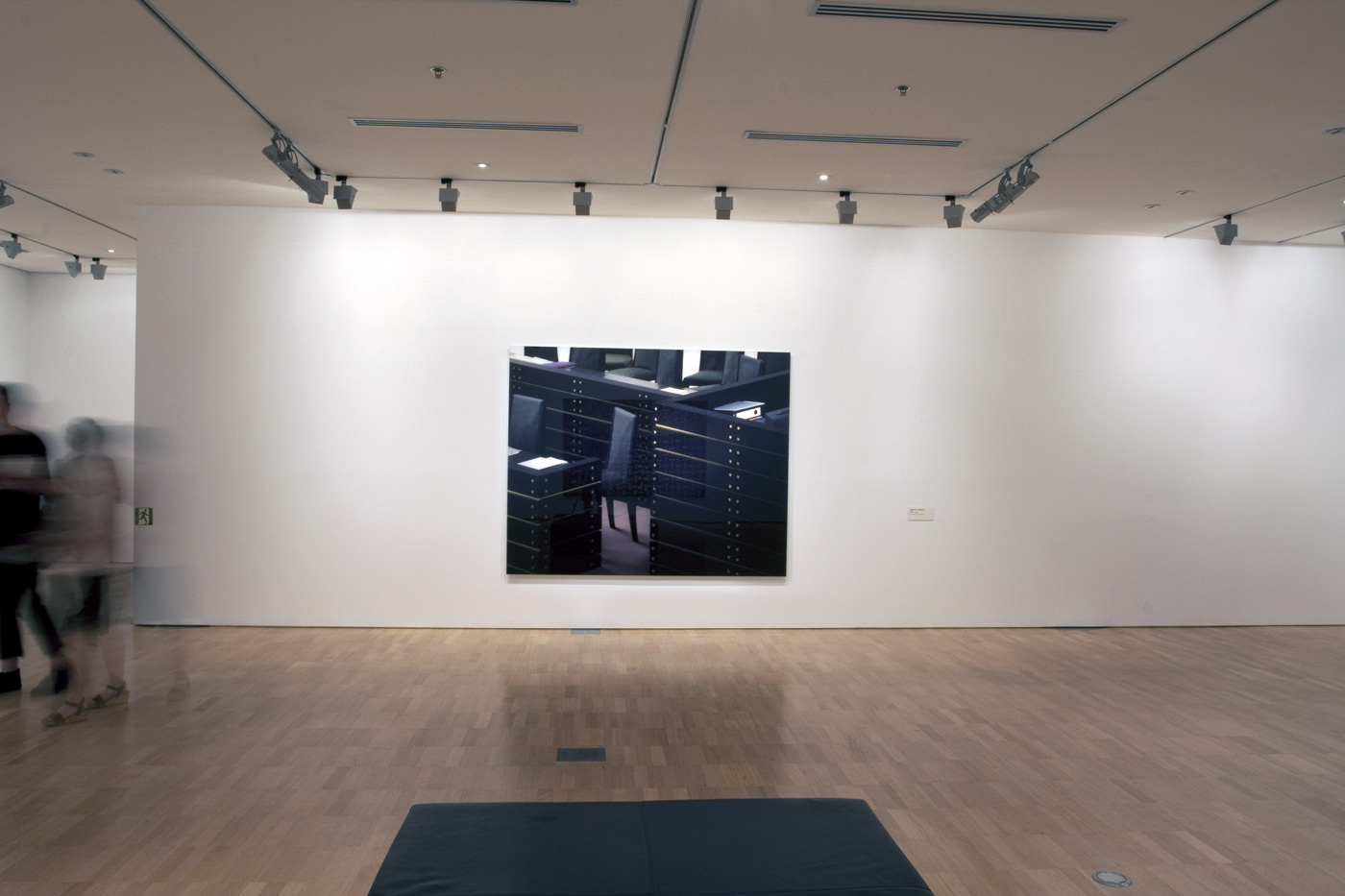
Installation view of 'Thomas Demand' at NGVI showing 'Parlament / Parliament' 2009


Installation view of Thomas Demand at NGVI showing Parlament / Parliament 2009
Photo: Marcus Bunyan


Thomas Demand (German, b. 1964) 'Parlament / Parliament' 2009


Thomas Demand (German, b. 1964)
Parlament / Parliament
2009
C-Print / Perspex
Courtesy Taka Ishii Gallery, Sprüth Magers Berlin London, Esther Schipper, Berlin, Matthew Marks Gallery
© Thomas Demand, VG Bild-Kunst, Bonn / VISCOPY, Sydney


When you step through the door into the Thomas Demand exhibition you enter a realm that was conceived, meticulously planned, and built to his exacting specifications. Demand designed every aspect of this exhibition. Having selected the photographs and films that he wanted to show in Melbourne, he then went on to design the exhibition space itself.

He was quite specific that the secondary walls had to be full height to create a sense of beautiful rooms rather than a space that has been partitioned. Once this was done he began work on the layout of the show. He carefully planned the sequence in which you would encounter each work, setting up an interesting play between the works. How we read these is an entirely individual experience. Recently someone said to me that they thought the placement of Lichtung / Clearing next to Paneel / Pegboard was an interesting comment on forest clearing and the devastating impact that pulp mills can have on the environment. Until then I had never seen those works in that way.

In conversation during the installation, Thomas explained that he was not interested in putting together an exhibition that then toured around the world. The usual practice of curating an exhibition and then ‘fitting’ it into different exhibition spaces in a number of venues holds little interest for him. So each time you see a Thomas Demand exhibition it has been curated, designed and installed for that particular space.

This is perhaps most obvious when you enter the rooms where the films are showing. From the brightly lit first room you can see through the door way into a darkened room lined with floor to ceiling curtains, but not really. What you see is a darkened room hung with wallpaper that the artist made to look like the kind of sweeping curtains that you might find in a cinema or theatre. It’s theatrical and spectacular but once you enter this space the real treat is Demands films.

Susan van Wyk, 6 February 2013 on the NGV website [Online] Cited 05/09/2020


Thomas Demand (German, b. 1964) 'Tribute' 2011


Thomas Demand (German, b. 1964)
Tribute
2011
C-Print / Perspex
166 x 125cm, edition of 6
Courtesy Taka Ishii Gallery, Sprüth Magers Berlin London, Esther Schipper, Berlin, Matthew Marks Gallery
© Thomas Demand, VG Bild-Kunst, Bonn / VISCOPY, Sydney


Installation view of 'Thomas Demand' at NGVI showing, at right, 'Space Simulator' 2003


Installation view of Thomas Demand at NGVI showing, at right, Space Simulator 2003
Photo: Marcus Bunyan


Installation view of 'Thomas Demand' at NGVI showing, at left, 'Grotte / Grotto' 2006 and, at right, 'Space Simulator' 2003


Installation view of Thomas Demand at NGVI showing, at left, Grotte / Grotto 2006 and, at right, Space Simulator 2003
Photo: Marcus Bunyan


Thomas Demand (German, b. 1964) 'Space Simulator' 2003


Thomas Demand (German, b. 1964)
Space Simulator
2003
C-Print / Perspex
300 × 429.4cm
Courtesy Taka Ishii Gallery, Sprüth Magers Berlin London, Esther Schipper, Berlin, Matthew Marks Gallery
© Thomas Demand, VG Bild-Kunst, Bonn / VISCOPY, Sydney


Installation view of 'Thomas Demand' at NGVI showing, at right, 'Grotte / Grotto' 2006


Installation view of Thomas Demand at NGVI showing, at right, Grotte / Grotto 2006
Photo: Marcus Bunyan


Thomas Demand (German, b. 1964) 'Grotte / Grotto' 2006 (detail)


Thomas Demand (German, b. 1964)
Grotte / Grotto (detail)
2006
C-Print / Perspex
Courtesy Taka Ishii Gallery, Sprüth Magers Berlin London, Esther Schipper, Berlin, Matthew Marks Gallery
© Thomas Demand, VG Bild-Kunst, Bonn / VISCOPY, Sydney


One of the world’s most influential contemporary artists, Thomas Demand, will be the subject of a new exhibition announced by the National Gallery of Victoria.

The exhibition will be the first major Australian survey of the artist’s work and will comprise large scale photographs and films never before shown in Australia.

NGV Director, Tony Ellwood said the addition of Thomas Demand to the NGV’s exhibition schedule is part of an exciting and ambitious summer program.

“When the opportunity came up to hold an exhibition of Thomas Demand’s work this summer, it was just too good to miss. Thomas Demand will be part of a great summer program at the NGV and has been timed to coincide with the Jeff Wall Photographs exhibition being held at NGV Australia.

“We are offering a two-for-one ticket for Thomas Demand and Jeff Wall Photographs, so visitors to the NGV can experience the work of two major artists of international contemporary photography for one ticket price,” said Mr Ellwood.

Works in the exhibition will span the artist’s career from 1997 to 2012. Recent works presented in the exhibition include Control Room (pictured below), which depicts the Fukushima Daiichi nuclear power plant and Tribute, a work based on images taken at the site of tragic mass panic at Europe’s biggest rave party.

Susan van Wyk, NGV Curator of Photography said Thomas Demand is widely regarded as one of the world’s leading contemporary artists.

“Thomas has a unique style in which he creates paper models of objects and scenes, often taken from media sources like flickr or newspaper reports. These intricate life size models are then photographed.

“The results are disquieting images that subvert our understanding of reality and fiction and draws attention to how we engage with the media and modern technologies,” said Ms Van Wyk.

Press release from the NGV website


Installation view of 'Thomas Demand' at NGVI showing, at left, 'Vault' 2012 and, at centre, 'Kontrollraum / Control Room' 2011


Installation view of Thomas Demand at NGVI showing, at left, Vault 2012 and, at centre, Kontrollraum / Control Room 2011
Photo: Marcus Bunyan


Thomas Demand (German, b. 1964) 'Kontrollraum / Control Room' 2011


Thomas Demand (German, b. 1964)
Kontrollraum / Control Room
2011
C-Print / Perspex
200 × 300cm
Courtesy Taka Ishii Gallery, Sprüth Magers Berlin London, Esther Schipper, Berlin, Matthew Marks Gallery
© Thomas Demand, VG Bild-Kunst, Bonn / VISCOPY, Sydney


Installation view of 'Thomas Demand' at NGVI showing 'Vault' 2012


Installation view of Thomas Demand at NGVI showing Vault 2012
Photo: Marcus Bunyan


Thomas Demand (German, b. 1964) 'Vault' 2012 (detail)


Thomas Demand (German, b. 1964)
Vault (detail)
2012
C-Print / Perspex
Courtesy Taka Ishii Gallery, Sprüth Magers Berlin London, Esther Schipper, Berlin, Matthew Marks Gallery
© Thomas Demand, VG Bild-Kunst, Bonn / VISCOPY, Sydney


NGV International
180 St Kilda Road

Opening hours:
Open daily 10am – 5pm

National Gallery of Victoria website

LIKE ART BLART ON FACEBOOK

Back to top

Review: ‘Gregory Crewdson: In A Lonely Place’ at the Centre for Contemporary Photography (CCP), Fitzroy, Melbourne

Exhibition dates: 28th September – 11th November 2012


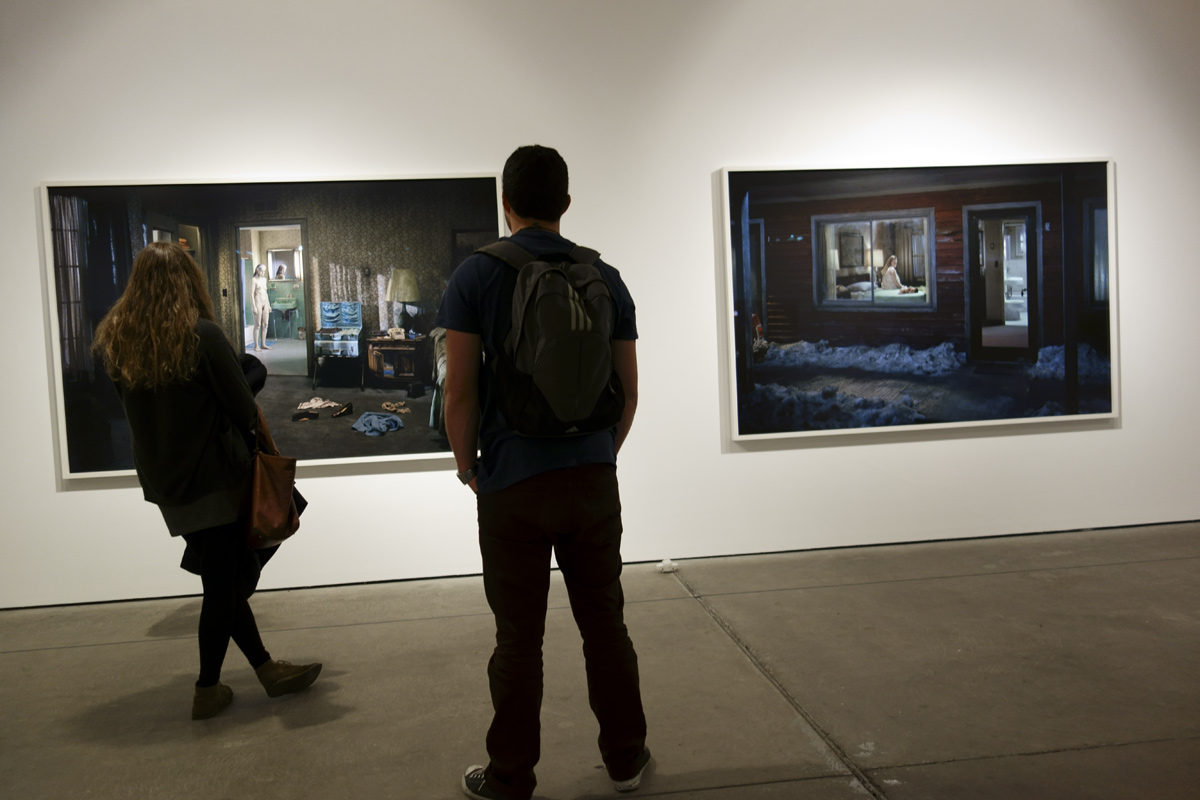
Installation photograph of the series 'Beneath the Roses' (2003-2008) from the exhibition 'Gregory Crewdson: In A Lonely Place' at the Centre for Contemporary Photography (CCP), Fitzroy, Melbourne

Installation photograph of the series 'Beneath the Roses' (2003-2008) from the exhibition 'Gregory Crewdson: In A Lonely Place' at the Centre for Contemporary Photography (CCP), Fitzroy, Melbourne


Installation photographs of the series Beneath the Roses (2003-2008) from the exhibition Gregory Crewdson: In A Lonely Place at the Centre for Contemporary Photography (CCP), Fitzroy, Melbourne
Photos: Dr Marcus Bunyan


Downfall of a dream: (n)framing the enigma in Gregory Crewdson’s Beneath the Roses

After the excoriating diatribe by Robert Nelson in The Age newspaper (“Unreal stills, unmoving images” Wednesday October 17 2012) I hope this piece of writing will offer greater insight into the work of this internationally renowned artist. With some reservations, I like Crewsdon’s work, I like it a lot – as do the crowds of people flocking to the Centre for Contemporary Photography, Fitzroy to see the exhibition. Never have I seen so many people at the CCP looking at contemporary photography before and that can only be a good thing.

Let’s get the basics out of the way first. The early series Fireflies are small silver gelatin photographs that capture “the tiny insects’ transient moments of light as they illuminate the summer night.” These are minor works that fail to transcend the ephemeral nature of photography, fail to light the imagination of the viewer when looking at these scenes of dusky desire and discontinuous lives. The series of beautiful photographs titled Sanctuary (2010) evidence the “ruin of the legendary Cinecittà studios, which was founded by Mussolini in the 1930s and is associated with the great Italian film director Federico Fellini.” Wonderful photographs of doorways, temples, dilapidated stage sets with excellent use of soft miasmic light creating an atmosphere of de/generation (as though a half-remembered version of Rome had passed down through the generations) interfaced with contemporary Rome as backdrop. The digital prints show no strong specular highlights, no deep blacks but a series of transmutable grey and mid tones that add to the overall feeling of romantic ruin. It is a pity that these photographs are not printed as silver gelatin photographs, for they would have had much more depth of feeling than they presently possess. They just feel a little “thin” to me to sustain the weight of atmosphere required of them.

But it is the series Beneath the Roses (2003-2008) that has made Crewdson truly famous. Shot using a large format camera, Crewdson makes large-scale photographs of elaborate and meticulously staged tableaux, which have been described as “micro-epics” that probe the dark corners of the psyche. Working in the manner of a film director, he leads a production crew, which includes a director of photography, special effects and lighting teams, casting director and actors. He typically makes several exposures that he later digitally combines to produce the final image. Photographs in the series of “brief encounters” include external dioramas (shot in a down at heel Western Massachusetts town), where Crewdson shuts down streets and lights the whole scene; to interior dialogues where houses are built on sound stages and the artist can control every detail of the production. Influences on these works include, but are not limited to:

David Lynch (Blue Velvet, Twin Peaks), Alfred Hitchcock (Vertigo), Steven Spielberg (Close Encounters), the paintings of Edward Hopper, Diane Arbus (the detritus of her photographic interiors), film noir, psychoanalysis, American suburbia, the American dream, the photographs of Walker Evans, Cindy Sherman and surrealism. Concepts that you could link to the work include loneliness, alienation, apathy, resignation, mystery, contemplation and confusion, identity, desire, memory and imagination.


Now to the nuts and bolts of the matter.

Another major influence that I will add is that of the great Italian director Federico Fellini (La Dolce Vita – The Sweet Life) who shot most of that film on the sets at Cinecittà studios in Rome. It is perhaps no coincidence that Crewdson, on his first overseas film shoot, shot the series Sanctuary at the very same location. Crewdson’s photographs in the series Beneath the Roses are an American form of  “The Sweet Life.” In 1961, the New York Times film critic Bosley Crowther praised Fellini’s “brilliantly graphic estimation of a whole swath of society in sad decay and, eventually, a withering commentary on the tragedy of the over-civilized… Fellini is nothing if not fertile, fierce and urbane in calculating the social scene around him and packing it onto the screen. He has an uncanny eye for finding the offbeat and grotesque incident, the gross and bizarre occurrence that exposes a glaring irony. He has, too, a splendid sense of balance and a deliciously sardonic wit that not only guided his cameras but also affected the writing of the script. In sum, it is an awesome picture, licentious in content but moral and vastly sophisticated in its attitude and what it says.”1 The same could equally be said of the Crewdson and his masterpieces in Beneath the Roses. Crewdson is in love with Fellini’s gesture – of the uplifting of the characters and their simultaneous descent into “sweet” hedonism, debauchery and decadence using the metaphor of downfall (downfall links each scene in La Dolce Vita, that of a “downward spiral that Marcello sets in motion when descending the first of several staircases (including ladders) that open and close each major episode.”)2 Crewdson’s “spectacular apocalypses of social enervation”3 mimic Fellini’s gestural flourishes becoming Crewdson’s theme of America’s downfall, America as a moral wasteland. Crewdson’s is “an aesthetic of disparity” that builds up a cumulative impression on the viewer that finds resolution in an “overpowering sense of the disparity between what life has been or could be, and what it actually is.”4

Crewdson’s cinematic encounters are vast and pin sharp when seen in the flesh. No reproduction on the web can do their physical presence justice; it is the details that delight in these productions. You have to get up close and personal with the work. His dystopic landscapes are not narratives as such, not stills taken from a movie (for that implies an ongoing story) but open-ended constructions that allow the viewer to imagine the story for themselves. They do not so much evoke a narrative as invite the viewer to create one for themselves – they are an “invitation” to a narrative, one that explores the anxiety of the (American) imagination, an invitation to empathise with the dramas at play within contemporary environments. For me, Crewdson’s extra ordinary photographs are a form of enigma (a puzzling or inexplicable occurrence or situation), the picture as master puzzle (where all the pieces fit perfectly together in stillness) that contains a riddle or hidden meaning. Clues to this reading can be found in one of the photographs from the series (Blue Period, see detail image, below) where Crewdson deliberately leaves the door of a bedside cupboard open to reveal a “Perfect PICTURE PUZZLE” box inside. The viewer has to really look into the image and understand the significance of this artefact.

Another reading that I have formulated is of the transience of space and time within Crewdson’s series. In the disquieting, anonymous townscapes people look out from their porches (or the verandas are lit and empty), they abandon their cars or walk down desolate streets hardly ever looking directly out at the viewer. The photographs become sites of mystery and wonder hardly anchored (still precisely anchored?) in time and space. This disparity is emphasised in the interior dialogues. The viewer (exterior) looks at a framed doorway or window (exterior) looking into an scene (interior) where the walls are usually covered with floral wallpaper (interior / exterior) upon which hangs a framed image of a Monet-like landscape (exterior) (see detail image, above). Exterior, exterior, interior, interior / exterior, exterior. The trees of the landscape invade the home but are framed; exterior/framed, interior/mind. There is something mysterious going on here, some reflection of an inner state of mind.

In his visual mosaics Crewdson engages our relationship with time and space to challenge the trace of experience. His tableaux act as a kind of threshold or hinge of experience – between interior and exterior, viewer and photograph. His photographs are a form of monism in which two forces (interior / exterior) try to absorb each other but ultimately lead to a state of equilibrium. It is through this “play” that the context of the photographs and their relationship to each other and the viewer are “framed.” This device emphasises the aesthetic as much as information and encourages the viewer to think about the relationship between the body, the world of which it is part and the dream-reason of time.5 This intertextual (n)framing (n meaning unspecified number in mathematics) encourages the viewer to explore the inbetween spaces in the non-narrative / meta-narrative,”and by leaps (intuitive leaps, poetic leaps, leaps of faith)”6 encourage escapism in the imagination of the viewer. It is up to us as viewers to seek the multiple, disparate significances of what is concealed in each photograph as “felt knowledge” (Walter Benjamin), recalling to mind the sensory data placed before our eyes, something that can be experienced but cannot be explained by man: “the single moment of the present amidst the transience of life and searching for some kind of eternal truth.”7

Finally, in a more adverse reading of the photographs from the series Beneath the Roses, I must acknowledge the physically (not mentally) static nature of the images where every detail of the mise-en-scène is fully articulated and locked down: from the perfect trickle of blood running from the woman’s vagina in Blue Period, to the reflections in mirrors, the detritus of living scattered on the bedroom floor, the dirty telephone, packed suitcases and keys in locks to the desolate looks of the participants that never engage with the viewer. Despite allusions of despair, in their efficacy (their static and certain world order), there is no real chthonic madness here, no real messiness of the capture of death, murder and the wastage of human life (famine, AIDS, cancer or the blood running over the pavement in one of Weegee’s murder scenes for example). This is Fellini’s gross and bizarre LITE. Americurbana “is being addressed with the same reserve and elegance that ensures that the institution – artistic, political, what you will – is upheld and never threatened. It is pre-eminently legible, it elicits guilt but not so much as to cause offence.”8 I must also acknowledge the male-orientated viewpoint of the photographs, where men are seated, clothed, lazy or absent and all too often women are doing the washing or cooking, are naked and vulnerable. In their portrayal of (usually) half dressed or naked females the photographs evidence a particularly male view of the world, one that his little empathy or understanding of how a female actually lives in the world. For me this portrait of the feminine simply does not work. The male photographer maintains control (and power) by remaining resolutely (in)visible.

Overall this is a outstanding exhibition that thoroughly deserves that accolades it is receiving. Sitting in the gallery space for an hour and a half and soaking up the atmosphere of these magnificent works has been for me one of the art experiences of 2012. Make sure that you do not miss these mesmerising prophecies.

Dr Marcus Bunyan


1/ Crowther’s review first published in The New York Times, April 20, 1961. In Fava and Vigano, 105 quoted in Anon. “La Dolce Vita,” on Wikipedia Footnote 30 [Online] Cited 20/10/2012. en.wikipedia.org/wiki/La_Dolce_Vita

2/ Anon. “La Dolce Vita,” on Wikipedia Footnote 30 [Online] Cited 20/10/2012. en.wikipedia.org/wiki/La_Dolce_Vita

3/ Sultanik, Aaron. Film, a Modern Art. Cranbury, N.J: Cornwall Books, 1986, p. 408

4/ Richardson, Robert. “Waste Lands: The Breakdown of Order,” in Bondanella (ed.), Federico Fellini: Essays in Criticism, p. 111 quoted in Anon. “La Dolce Vita,” on Wikipedia Footnote 30 [Online] Cited 20/10/2012. en.wikipedia.org/wiki/La_Dolce_Vita

5/ Bacon, Julie Louise. “Liquid Archive: On Ambivalence,” in Liquid Archive. Melbourne: Monash University Museum of Art (MUMA), 2012, p. 119

6/ Kirshenblatt-Gimblett, Barbara. “The Museum – A Refuge for Utopian Thought,” in Rüsen, Jörn; Fehr Michael, and Ramsbrock, Annelie (eds.). Die Unruhe der Kultur: Potentiale des Utopischen. Velbrück Wissenschaft, 2004. In German.
7/ Kataoka, Mami commenting on the work of Allan Kaprow. “Transient Encounters,” in Broadsheet: Criticism, Theory, Art Vol 41.3, September 2012, p. 174

8/ Geczy, Adam. “A dish served lukewarm,” in Broadsheet: Criticism, Theory, Art Vol 41.3, September 2012, p. 177

Many thankx to the artist, Gagosian Gallery and the Centre for Contemporary Photography for allowing me to publish the photographs in the posting. Special thankx to Director of the CCP Naomi Cass and Ms. James McKee from Gagosian Gallery for facilitating the availability of the media images. Please click on the photographs for a larger version of the image.

All photographs © Gregory Crewdson. Courtesy Gagosian Gallery.

Installation and detail photographs © Dr Marcus Bunyan


Gregory Crewdson (American, b. 1962) 'Untitled (Blue Period)' 2003-2005


Gregory Crewdson (American, b. 1962)
Untitled (Blue Period)
2003-2005
© Gregory Crewdson. Courtesy Gagosian Gallery


Gregory Crewdson (American, b. 1962) 'Untitled (Blue Period)' 2003-2005 (detail)

Gregory Crewdson (American, b. 1962) 'Untitled (Blue Period)' 2003-2005 (detail)

Gregory Crewdson (American, b. 1962) 'Untitled (Blue Period)' 2003-2005 (detail)


Details from Gregory Crewdson’s Untitled (Blue Period) (2003-2005, above) from the series Beneath the Roses (2003-2008)
Photos: Dr Marcus Bunyan


“The American middle-class nightmare: nothing is clean, orderly, idyllic, or romantic. In his perfectly staged, hyperrealistic tableaux, photographer Gregory Crewdson reveals the claustrophobic limbo and abyss of spiritual repression that is the typical suburb. Here, hushed-up violence, alienation, isolation, and emptiness are nothing new or unfamiliar, but rather part of the everyday neighbourhood experience.”

Gregory Crewdson, In a Lonely Place, Abrams Publishing, New York, 2011


“I have always been fascinated by the poetic condition of twilight. By its transformative quality. Its power of turning the ordinary into something magical and otherworldly. My wish is for the narrative in the pictures to work within that circumstance. It is that sense of in-between-ness that interests me.”


Gregory Crewdson


Gregory Crewdson (American, b. 1962) 'Untitled (Maple Street)' 2003-2005


Gregory Crewdson (American, b. 1962)
Untitled (Maple Street)
2003-2005
© Gregory Crewdson. Courtesy Gagosian Gallery


Gregory Crewdson (American, b. 1962) 'Untitled (Shane)' 2006


Gregory Crewdson (American, b. 1962)
Untitled (Shane)
2006
© Gregory Crewdson. Courtesy Gagosian Gallery


Gregory Crewdson (American, b. 1962) 'Untitled (Brief Encounter)' 2006


Gregory Crewdson (American, b. 1962)
Untitled (Brief Encounter)
2006
© Gregory Crewdson. Courtesy Gagosian Gallery


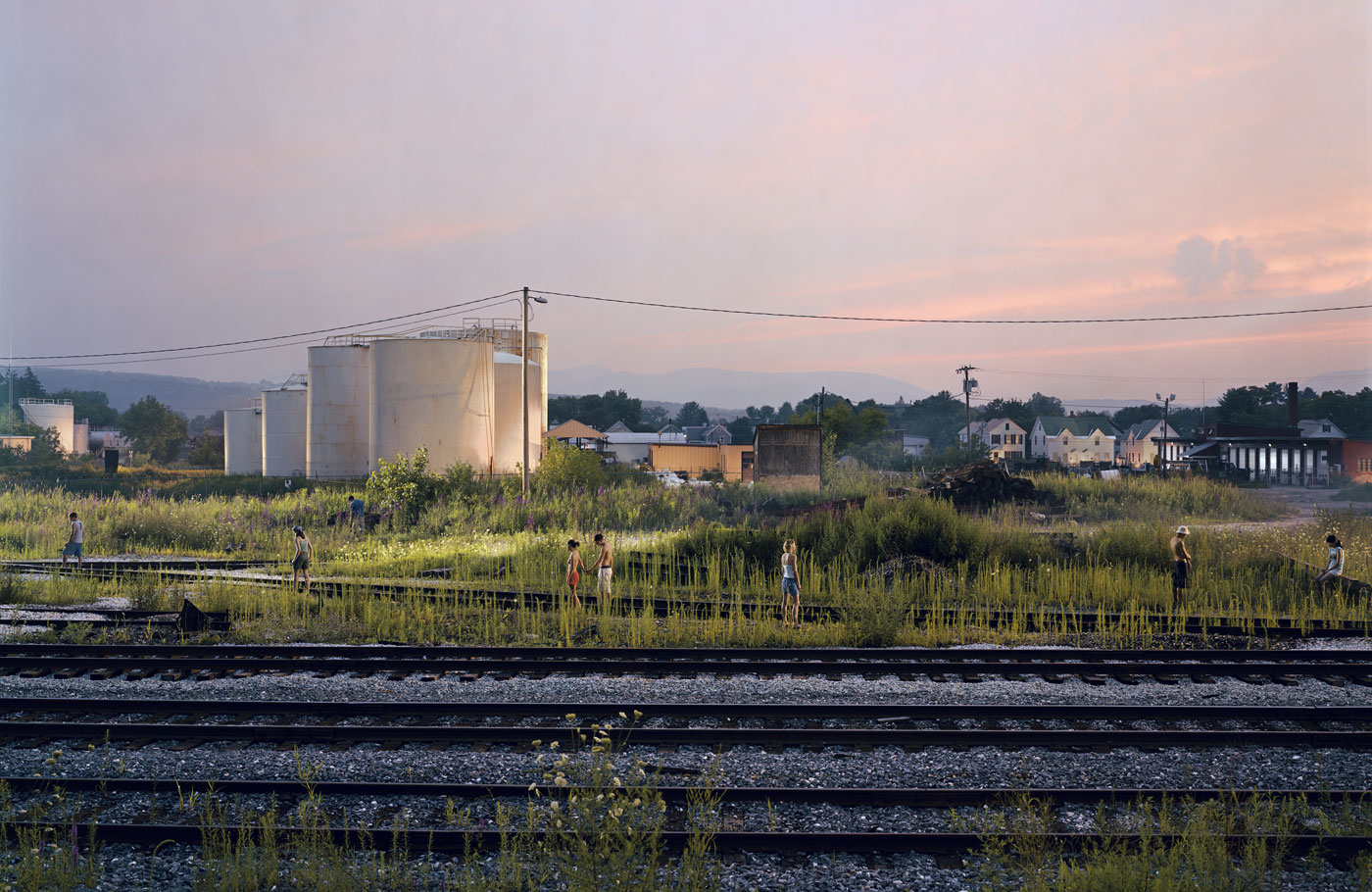
Gregory Crewdson (American, b. 1962) 'Untitled (Railway Children)' 2003-2005


Gregory Crewdson (American, b. 1962)
Untitled (Railway Children)
2003-05
© Gregory Crewdson. Courtesy Gagosian Gallery


In a Lonely Place presents selections from three major series by Gregory Crewdson, Fireflies (1996), Beneath the Roses (2003-2008), Sanctuary (2010) and, presented for the first time, the video Field Notes (2009). The exhibition title comes from Nicholas Ray’s 1950s film noir of the same name, one of many films that inspired Crewdson. In a Lonely Place is evocative of an underlying mood-a quiet feeling of alienation and loneliness that links the three series selected by curators Estelle Af Malmborg, Jens Erdman Rasmussen and Felix Hoffmann. In a Lonely Place presents the first comprehensive exhibition of Crewdson’s work in Australia.

In Beneath the Roses, anonymous townscapes, forest clearings and broad, desolate streets are revealed as sites of mystery and wonder; similarly, ostensibly banal interiors become the staging grounds for strange human scenarios. Crewdson’s scenes are tangibly atmospheric: visually alluring and often deeply disquieting. Never anchored precisely in time or place, these and the other narratives of Beneath the Roses are located in the dystopic landscape of the anxious American imagination. Crewdson explores the American psyche and the dramas at play within quotidian environments.

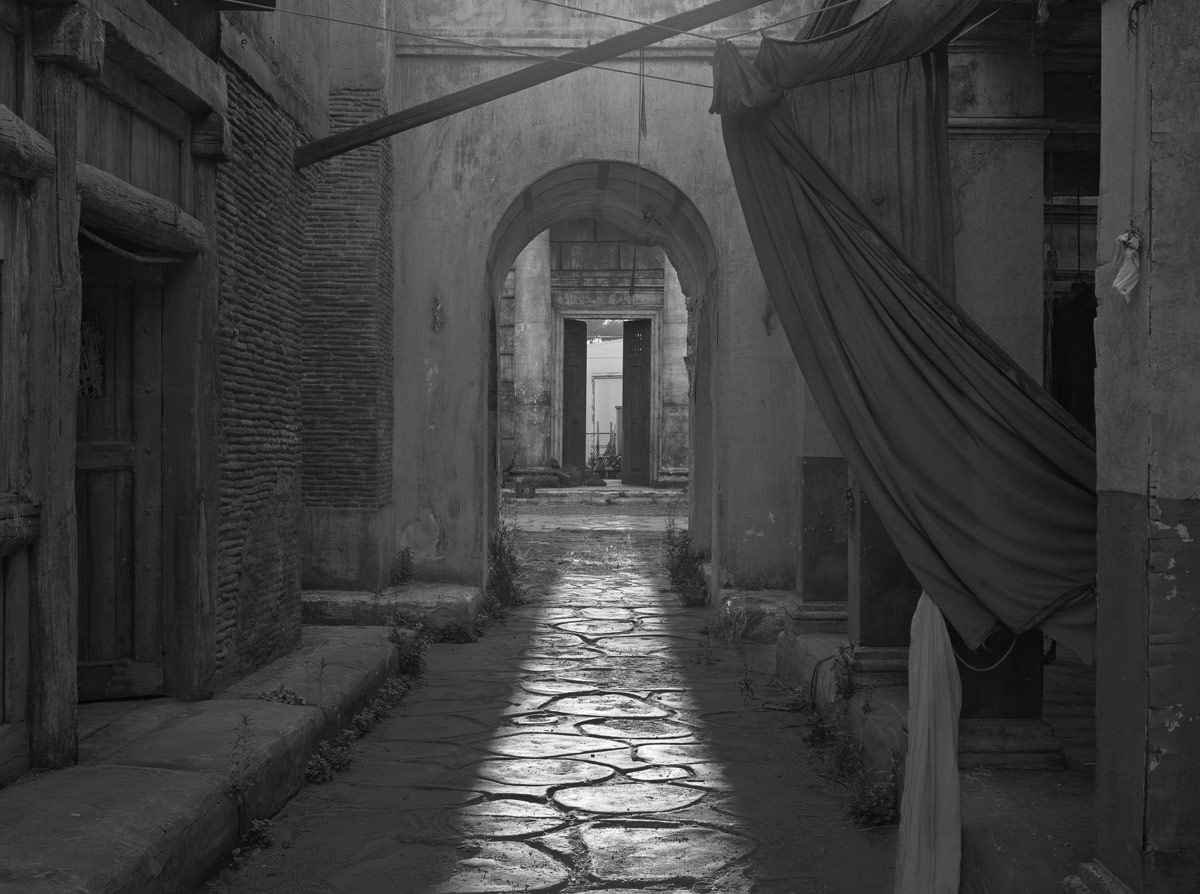
In his most recent series, Sanctuary (2010), Crewdson has taken a new direction, shooting for the first time outside the US. During a trip to Rome, he visited the legendary Cinecittà studios, which was founded by Mussolini in the 1930s and is associated with the great Italian film director Federico Fellini. Crewdson discovered fragments of a past glory, with occasional unexpected views of the surrounding contemporary Roman suburbia. Cinecittà is a lonely place deserted by the film crews who once used the site to recreate settings of ancient Rome, medieval Italy and nineteenth-century New York.

In the intimate photographs of Fireflies, Crewdson portrays the mating ritual of fireflies at dusk, capturing the tiny insects’ transient moments of light as they illuminate the summer night. Unlike the theatrical scale of the Beneath the Roses and Sanctuary series, Fireflies is a quiet meditation on the nature of light and desire, as the images reflect not only upon the fleeting movements of the insects in their intricate mating ritual, but upon the notion of photography itself, in capturing a single ephemeral moment.

Gregory Crewdson received a BA from the State University of New York, Purchase, New York in 1985 and an MFA in Photography from Yale School of Art, Yale University, New Haven, Connecticut in 1988. He has exhibited widely in the United States and Europe. He is Associate Professor and Director of Graduate Studies in Photography at the Yale School of Art, Yale University. Gregory Crewdson is represented by Gagosian Gallery and White Cube Gallery.

Press release from the Gagosian Gallery website


Installation photograph of the series 'Sanctuary' (2010) from the exhibition 'Gregory Crewdson: In A Lonely Place' at the Centre for Contemporary Photography (CCP), Fitzroy, Melbourne

Installation photograph of the series 'Sanctuary' (2010) from the exhibition 'Gregory Crewdson: In A Lonely Place' at the Centre for Contemporary Photography (CCP), Fitzroy, Melbourne


Installation photographs of the series Sanctuary (2010) from the exhibition Gregory Crewdson: In A Lonely Place at the Centre for Contemporary Photography (CCP), Fitzroy, Melbourne
Photos: Dr Marcus Bunyan


Gregory Crewdson (American, b. 1962) 'Untitled (1)' 2009


Gregory Crewdson (American, b. 1962)
Untitled (1)
2009
© Gregory Crewdson. Courtesy Gagosian Gallery


Gregory Crewdson (American, b. 1962) 'Untitled (17)' 2009


Gregory Crewdson (American, b. 1962)
Untitled (17)
2009
© Gregory Crewdson. Courtesy Gagosian Gallery


Gregory Crewdson (American, b. 1962) 'Untitled (8)' 2009


Gregory Crewdson (American, b. 1962)
Untitled (8)
2009
© Gregory Crewdson. Courtesy Gagosian Gallery


Gregory Crewdson (American, b. 1962) 'Untitled (2)' 2009


Gregory Crewdson (American, b. 1962)
Untitled (2)
2009
© Gregory Crewdson. Courtesy Gagosian Gallery


Gregory Crewdson (American, b. 1962) 'Untitled' 1996


Gregory Crewdson (American, b. 1962)
Untitled
1996
© Gregory Crewdson. Courtesy Gagosian Gallery


Gregory Crewdson – Close Up – Ovation

In this Ovation TV original special, acclaimed photographers Albert Maysles, Sylvia Plachy, Andrew Moore and Timothy Greenfield-Sanders discuss the impact their work has on their lives and on culture as a whole.

Gregory Crewdson is an American photographer who is best known for elaborately staged, surreal scenes of American homes and neighborhoods.

In this interview, acclaimed photographer, Gregory Crewdson shares with us insight into his techniques.


Centre for Contemporary Photography

No permanent exhibition space at the moment

Gagosian Gallery website

Centre for Contemporary Photography website

LIKE ART BLART ON FACEBOOK

Back to top

Exhibition: ‘Entre Nous: The Art of Claude Cahun’ at the Art Institute of Chicago

Exhibition dates:  25th February – 3rd June 2012


Claude Cahun (French, 1894-1954) 'Autoportrait' 1929


Claude Cahun (French, 1894-1954)
Autoportrait
1929
Gelatin silver print
24 x 19cm
Musée des Beaux-Arts de Nantes
© RMN/Gérard Blot


“In many ways, Cahun’s life was marked by a sense of role reversal, and her public identity became a commentary upon not only her own, but the public’s notions of sexuality, gender, beauty, and logic. Her adoption of a sexually ambiguous name, and her androgynous self-portraits display a revolutionary way of thinking and creating, experimenting with her audience’s understanding of photography as a documentation of reality. Her poetry challenged gender roles and attacked the increasingly modern world’s social and economic boundaries. Also Cahun’s participation in the Parisian Surrealist movement diversified the group’s artwork and ushered in new representations. Where most Surrealist artists were men, and their primary images were of women as isolated symbols of eroticism, Cahun epitomised the chameleonic and multiple possibilities of the female identity. Her photographs, writings, and general life as an artistic and political revolutionary continue to influence countless artists, namely Cindy Sherman, Nan Goldin and Del LaGrace Volcano.”


Text from the Wikipedia website


Cahun was a resistance fighter during the Second World War, was arrested, sentenced to death and survived. She lived with her longtime female partner and collaborator on Jersey from 1937 until 1954, the year of her death. Entre Nous means “Between Us,” such an appropriate title for their collaboration, love and partnership. What a talent, what a woman and gay to boot!

Dr Marcus Bunyan


Many thankx to the Art Institute of Chicago for allowing me to publish the photographs in the posting. Please click on the photographs for a larger version of the image.


Claude Cahun (French, 1894-1954) 'Autoportrait' 1929


Claude Cahun (French, 1894-1954)
Autoportrait
1929
Gelatin silver print
11.5 x 8.5cm
Jersey Heritage Collection
© Jersey Heritage


Claude Cahun (French, 1894-1954) 'Autoportrait' 1928


Claude Cahun (French, 1894-1954)
Autoportrait
1928
Gelatin silver print
13.9 x 9cm
Jersey Heritage Collection
© Jersey Heritage


Claude Cahun (French, 1894-1954) 'Autoportrait' 1927


Claude Cahun (French, 1894-1954)
Autoportrait
1927
Gelatin silver print
10.4 x 7.6cm
Soizic Audouard Collection


Claude Cahun (1894-1954) has something approaching cult status in today’s art world. However, her work was almost unknown until the early 1980s, when it was championed by the research of François Leperlier, after which exhibitions at the Musée des Beaux-Arts in Nantes (1994) and the Musée d’Art Moderne de la Ville de Paris (1995) brought it to public attention. Her life and work (both literary and artistic) bespeak an extraordinary libertarian personality who defied sexual, social and ethical conventions in what was an age of avant-garde and moral upheaval. Among her many photographs, it is undoubtedly her self-portraits that have aroused the greatest interest in recent years. Throughout her life, Cahun used her own image to dismantle the clichés surrounding ideas of identity. She reinvented herself through photography, posing for the lens with a keen sense of performance and role-play, dressed as a woman or a man, as a maverick hero, with her hair long or very short, or even with a shaved head. This approach was extended in innovative ways in her photographs of objects and use of photomontages, which asserted the primacy of the imagination and of metamorphosis.

By exploring the many different analyses made of Cahun’s work since the 1990s, and ranging across its different themes: from the subversive self-portraits that question identity, to her surrealist compositions, erotic metaphors and political forays, this exhibition confirms the modernity of a figure who, as a pioneer of self-representation and the poetry of objects, has been an important influence for many contemporary artists.

Metamorphoses of identity and the subversion of gender (I)

This set of photographs, going from 1913 to the end of the 1920s, includes some of Cahun’s major works, in which she staged her own persona, emphasising disguise and masks, and working through variations on gender: feminine, masculine, androgyne, undifferentiated. Sexual ambiguity is consciously cultivated and calls into question established norms and conventions. In 1928, she even represented herself with her head shaved, wearing a singlet, in profile, or with her hands against her face, or wearing a loose man’s jacket. Some of the mise-en-scènes from this period seem to anticipate contemporary performance.

Poetics of the object

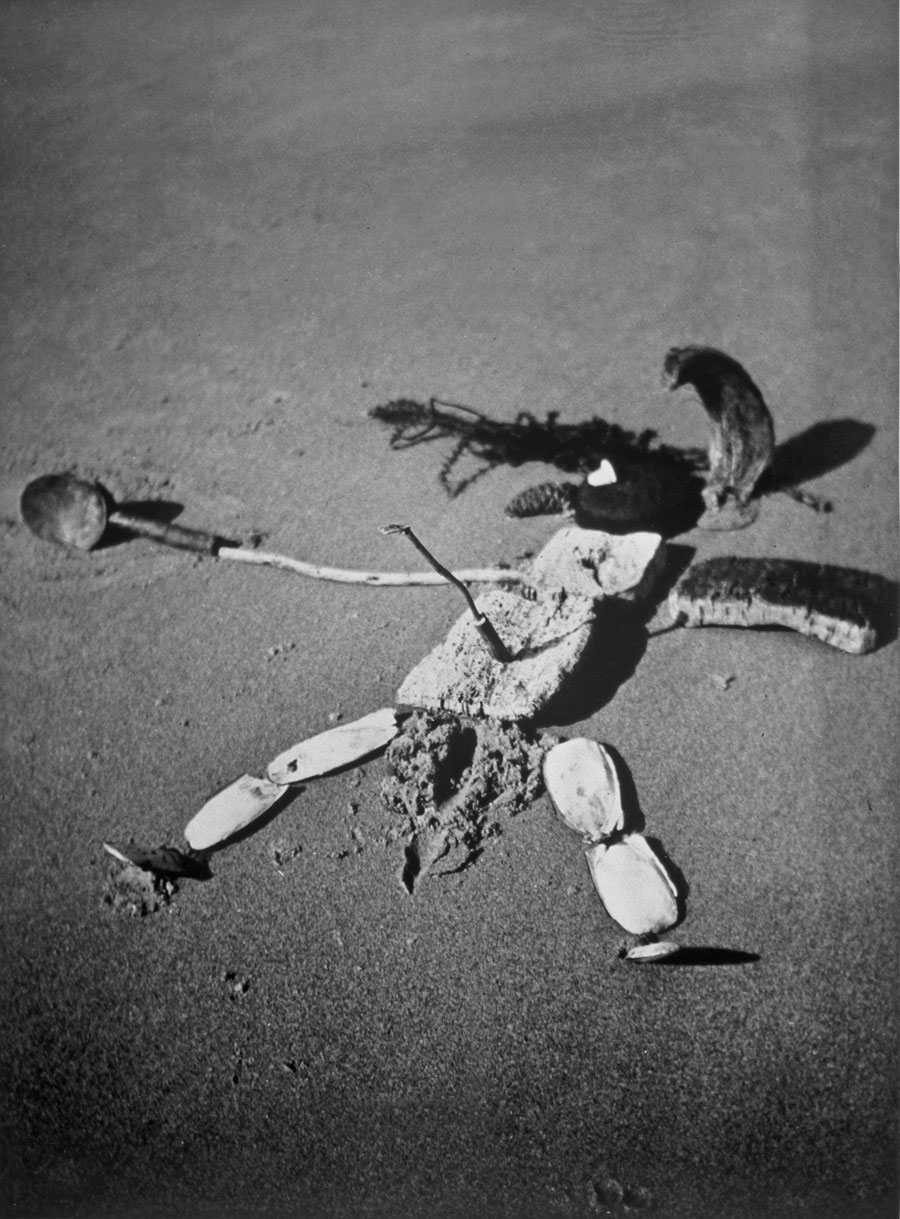
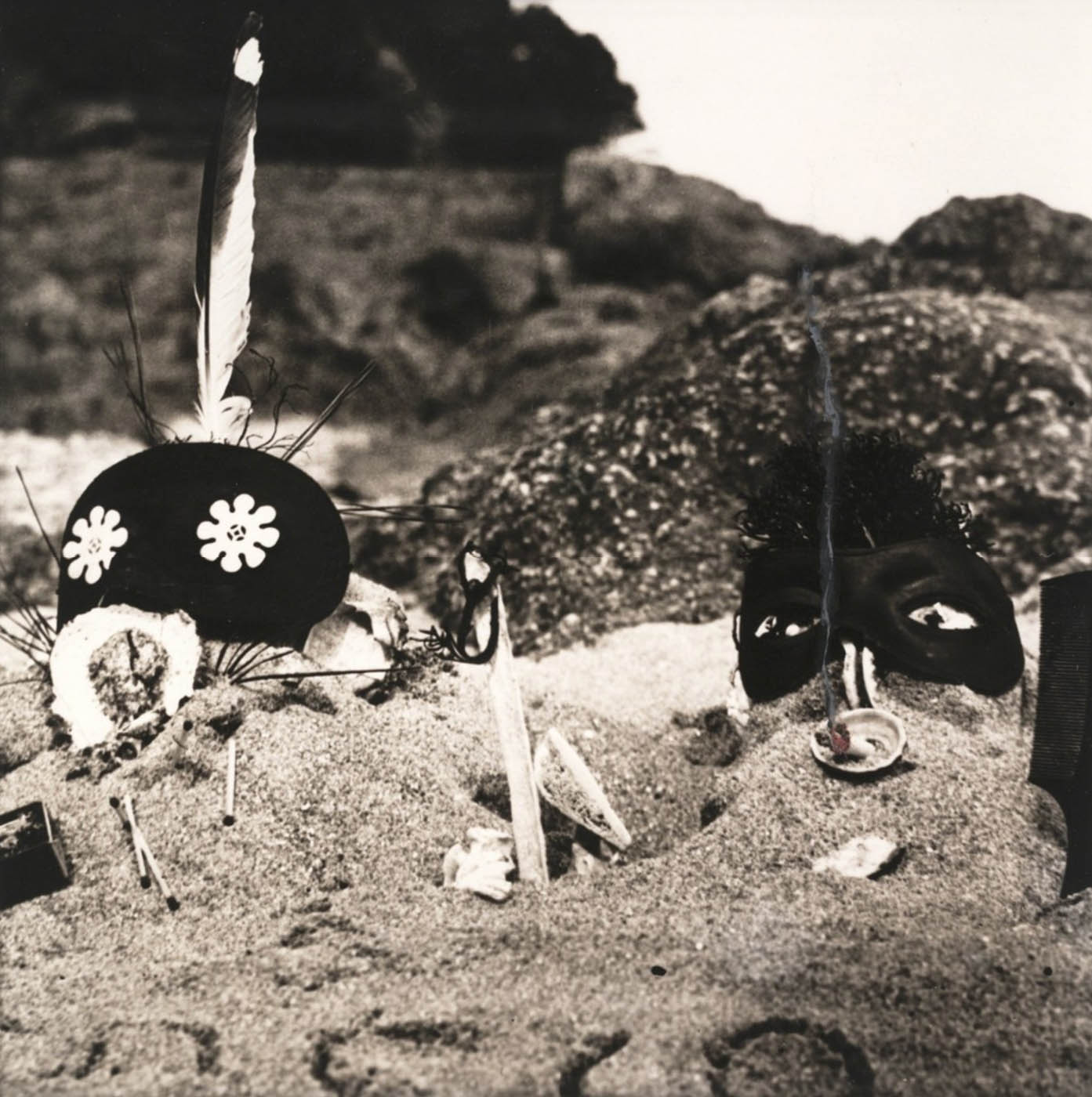
The “assemblages of objects,” which make their appearance in around 1925, inventively explore what at the time was still a rather new form. This work came to wider attention in the Surrealist exhibition at the Charles Ratton gallery, in May 1936, and then with the commissioning of 22 photographic plates to illustrate a book of poems by Lise Deharme, Le Coeur de Pic (1937), prefaced by Paul Eluard. These photographs capture ephemeral set-ups, often in a natural setting (garden, beach). Each “sketch” is a composition of heterogeneous elements, both found and made, such as knickknacks in spun glass, sewing items, twigs, bones, insects, feathers, gloves, pieces of fabric, shoes, tools, etc. This “theatre of objects” has both a visual and symbolic significance, which Cahun explained in her text Prenez garde aux objets domestiques (1936).

Metamorphoses of identity and the subversion of gender (continued)

The 1930s saw Cahun continuing to explore images of the self. However, questions of sexual difference and its social and cultural construction were now less to the fore as she went deeper into the potential of situations and disguises and experimented with duplication in a way that extended the work of the photomontages from the late 1920s.

Metaphors of desire

Eschewing the direct and sometimes reifying display of the female body found in many paintings and photographs, Cahun opted for a more subtle kind of “veiled eroticism” using distance and irony. Here we find some very evocative examples of her calculating games with desire. Whether through the contained display of the body, allegory (the bacchante or faun, surrounded by sensuous vegetation), or anthropomorphic objects (the hermaphroditic “père”), she aimed to capture the essence of desire, to bring out its essential grounding in fantasy.

The two of us. Claude Cahun and Suzanne Malherbe (Marcel Moore)

The photograph Entre nous (1926) clearly establishes the spirit of this section, which evokes various aspects of Claude Cahun’s intimate relationship and artistic collaboration with her partner, Suzanne Malherbe. In fact, a number of the photographs here were taken by Suzanne following Claude’s suggestions. A double portrait from 1921 shows a surprising parallel which could be read as a metaphor of their relationship, a deep closeness and understanding between two strong personalities. The linchpin of this section is constituted by the four photomontages used to illustrate Aveux non avenus (1930), Cahun’s most significant literary work, gathering together all the artist’s main themes and obsessive metaphors. The plates were executed by Moore in collaboration with Claude Cahun.

Elective encounters

This series of portraits, which reflect the importance of friendship in the development of Cahun’s work, gives an idea of the figures who were important to her and influenced her, or to whom she felt close, among them Henri Michaux, Robert Desnos, André Breton, Jacqueline Lamba and Suzanne Malherbe. There are also two photographs from performances at Pierre Albert-Birot’s theatre Le Plateau (1929). They attest Cahun’s keen interest in theatre and acting.

Poetry and politics

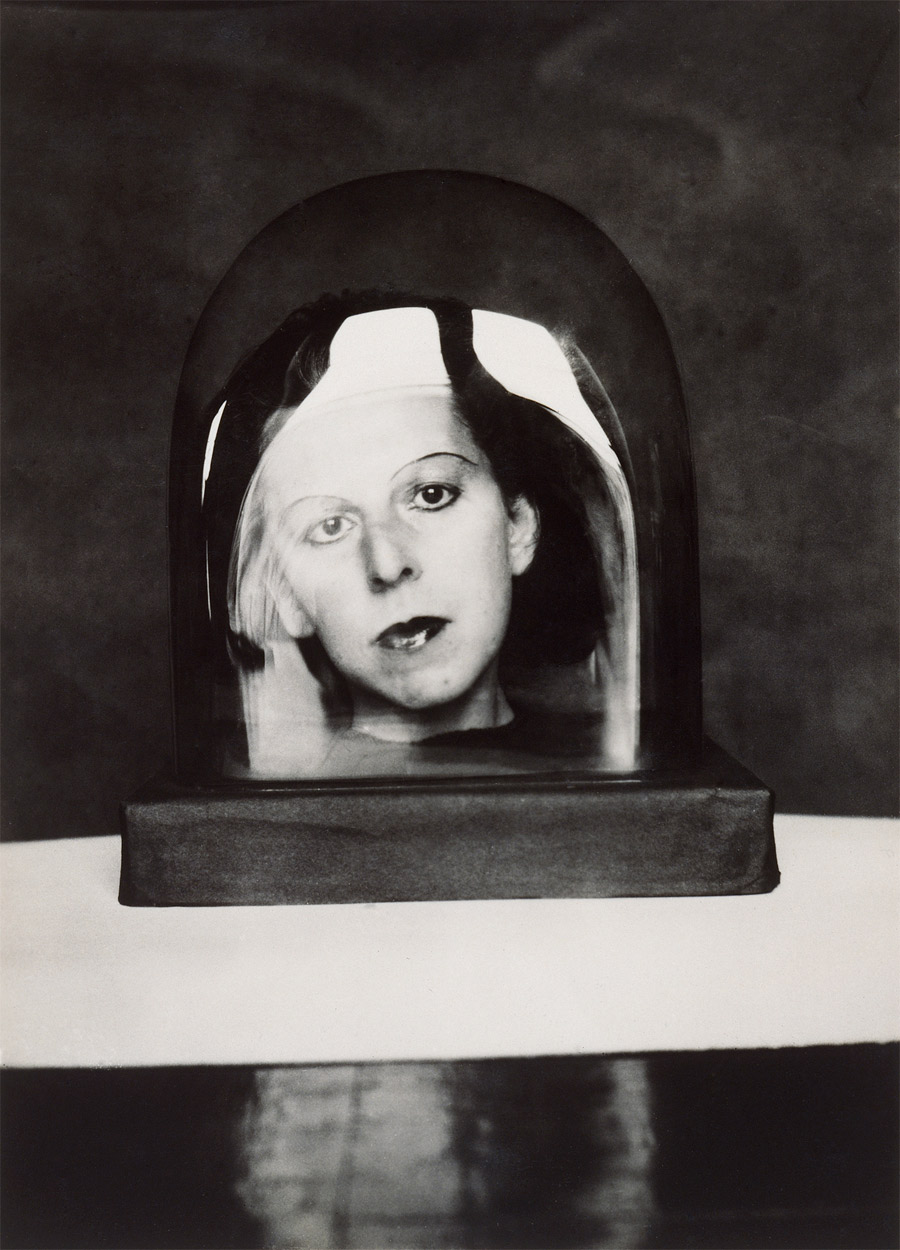
In the 1930s Cahun’s positions grew increasingly radical in response to the rise of totalitarianism. She joined the Surrealists and associated with a number of groups on the left and far left. This radicalisation is reflected in her aesthetic. In line with the ideas put forward in her pamphlet Les Paris sont ouverts (1934), she exploited the subversive qualities of “indirect action” in the sphere of symbolic expression, making a number of objects in which poetry and politics are intimately intertwined. This process culminated when she used these pieces for two big series of photographs dominated by a mood of irony, revolt and provocation: “La Poupée” (The Doll), a figure fashioned out of newspaper, and “Le Théâtre” (The Theatre), a wooden mannequin surrounded by various elements and placed under a glass dome.

Beyond the visible. The last self-portraits

Close study of Cahun’s photographs reveals the presence of allusions to non-visible phenomena, pointing the way to other realities – and perhaps, too, beyond death. Her attraction to symbolism, her interest in Eastern doctrines and her closeness to Surrealism only confirmed the primacy of fantasy and metamorphosis evidenced in the intellectual and aesthetic approaches she took throughout her life. The series Le Chemin des chats (The Way of Cats, around 1949 and 1953), suggests a mediation on and questioning of reality and appearance. Cahun was a true cat lover: for her, this animal was the great intercessor, the medium of an intuitive contact between the visible and the invisible, leading to sensorial worlds that are both unfamiliar and yet very near.

Juan Vicente Aliaga and François Leperlier, curators of the exhibition


Claude Cahun (French, 1894-1954) 'Autoportrait' 1939


Claude Cahun (French, 1894-1954)
Autoportrait
1939
Gelatin silver print
10 x 8cm
Jersey Heritage Collection
© Jersey Heritage


Claude Cahun (French, 1894-1954) 'Autoportrait' 1926


Claude Cahun (French, 1894-1954)
Autoportrait
1926
Gelatin silver print
11.1 x 8.6cm
IVAM, Institut Valencià d’Art Modern, Generalitat


Born Lucy Schwob to a family of French intellectuals and writers, Claude Cahun (who adopted the pseudonym at age 22) is best known for the staged self-portraiture, photomontages, and prose texts she made principally between 1920 and 1940. Rediscovered in the late 1980s, her work has not only expanded our understanding of the Surrealist era but also serves as an important touchstone to later feminist explorations of gender and identity politics. In her self-portraits, which she began creating around 1913, Cahun dismantled and questioned preexisting notions of self and sexuality. Posing in costumes and elaborate make-up, Cahun appears masked as various personae: man or woman, hero or doll, both powerful and vulnerable. Almost a century after their making, these innovative photographs and assemblages remain remarkably relevant in their treatment of gender, performance, and identity.

From her university years until her death, Cahun was accompanied by her partner and artistic collaborator, Suzanne Malherbe, a childhood friend and stepsister. They surrounded themselves with members of the Surrealist movement and created work that embraced leftist politics. Cahun, with assistance from Malherbe (under the pseudonym Marcel Moore), produced photographs, assemblages, and publications from the 1920s on. The photograph Entre Nous (Between Us), featuring a pair of masks embedded in sand, gives the title to this show and is emblematic of their multifaceted relationship.

The first retrospective exhibition in the United States of Cahun’s work, Entre Nous: The Art of Claude Cahun brings together over 80 photographs and published material by Cahun and Moore, including several photomontages from their 1930 collaborative publication Aveux non avenus (Disavowals), and the only surviving object by Cahun, which is in the Art Institute’s permanent collection.

Organiser: This exhibition was organised by the Jeu de Paume, Paris, and coproduced with La Virreina Centre de la Imatge, Barcelona.

Press release from the Art Institute of Chicago website


Claude Cahun (French, 1894-1954) 'Combat de pierres' 1931


Claude Cahun (French, 1894-1954)
Combat de pierres
1931
Gelatin silver print
21 x 15.5cm
Private collection
© Béatrice Hatala


Claude Cahun (French, 1894-1954) 'Le Père' 1932


Claude Cahun (French, 1894-1954)
Le Père
1932
Gelatin silver print
23.6 x 17.7cm
LAC


Claude Cahun (French, 1894-1954) Marcel Moore (French, 1892-1972) 'Entre nous' (Between Us) 1926


Claude Cahun (French, 1894-1954) Marcel Moore (French, 1892-1972)
Entre nous (Between Us)
1926
Gelatin silver print
4 11/16 × 4 5/8 in (11.9 × 11.7cm)


While the motivation for these remarkable self-portraits seems rooted in a commitment to leftist politics and subversion of gender norms, I also feel a great sense of intimate domesticity beneath the surface. Cahun and Moore first met in 1909 when they were both teenagers. Eight years later, Cahun’s father married Moore’s mother, which must have given the couple a convenient excuse for their close relationship at a time when such lifestyle choices were less than accepted.

Our curators have surmised that Cahun’s camera did not have a timer on it, so many if not all of these self-portraits must have been created with Moore’s assistance. When the two moved to the Isle of Jersey in the 1930s to escape the political climate developing in France, they began to live in almost total seclusion. Though often taken outside around the grounds of their estate, the photographs from this period seem to the most private and familiar. Beyond the thoughtful self-presentation and artistic experimentation, there is a palpable sense of play, of close friends having fun.

An interesting aside: In July of 1940, the Nazis invaded Jersey where Cahun and Moore were still living. For the next four years, they engaged in active resistance against the Germans, producing and distributing counterpropaganda leaflets to Nazi soldiers on the island. Continuing the kind of dress-up they’d played together for years, the two would dress in disguises to infiltrate German outposts where they would disseminate anti-Nazi leaflets signed as “der Soldat ohne Namen” (the solider with no name). They were eventually arrested in 1944 and sentenced to death. Fortunately, the island was liberated before the executions could be carried out.

Extract from Robby Sexton, “Between You and Me,” on the Art Institute of Chicago website March 15, 2012 [Online] Cited 08/10/2024


Claude Cahun (French, 1894-1954) 'Aveux non avenus, planche III' 1929-1930


Claude Cahun (French, 1894-1954)
Aveux non avenus, planche III
1929-1930
Gelatin silver print photomontage
15 x 10cm
Private collection


The Art Institute of Chicago
111 South Michigan Avenue
Chicago, Illinois 60603-6404
Phone: (312) 443-3600

Opening hours:
Thursday – Monday 11am – 5pm
Closed Tuesdays and Wednesdays

The Art Institute of Chicago website

LIKE ART BLART ON FACEBOOK

Back to top

Exhibition: ‘Staging Action: Performance in Photography Since 1960’ at The Museum of Modern Art (MoMA), New York

Exhibition dates: 26th January – 9th May 2011

Curators: Roxana Marcoci, Curator, and Eva Respini, Associate Curator, Department of Photography, The Museum of Modern Art


Many thank to The Museum of Modern Art, New York for allowing me to publish the photographs in the posting. Please click on the photographs for a larger version of the image.


William Wegman (American, b. 1943) 'Foamy Aftershave (L-Foamy; R-Aftershave)' 1982


William Wegman (American, b. 1943)
Foamy Aftershave (L-Foamy; R-Aftershave)
1982
28 1/2 x 22″ (72.4 x 55.9cm) each
The Museum of Modern Art, New York
Gift of Robert and Gayle Greenhill
© 2010 William Wegman


Laurel Nakadate (American, b. 1975) 'Lucky Tiger #151' 2009


Laurel Nakadate (American, b. 1975)
Lucky Tiger #151
2009
Chromogenic colour print with ink fingerprints
4 x 6″ (10.2 x 15.2cm)
The Museum of Modern Art, New York
Acquired through the generosity of the Peter Norton Family Foundation
© 2010 Laurel Nakadate


Laurel Nakadate (American, b. 1975) 'Lucky Tiger #181' 2009


Laurel Nakadate (American, b. 1975)
Lucky Tiger #181
2009
Chromogenic colour print with ink fingerprints
4 x 6″ (10.2 x 15.2cm)
The Museum of Modern Art, New York
Acquired through the generosity of the Peter Norton Family Foundation
© 2010 Laurel Nakadate


Gilbert & George (British) 'The Red Sculpture' 1975


Gilbert & George (British)
The Red Sculpture
1975
Chromogenic colour print with text
9 1/8 x 13 7/8″ (23.2 x 35.2cm)
The Museum of Modern Art, New York
Art & Project/Depot VBVR Gift
© 2010 Gilbert & George


Matthew Barney (American, b. 1967) 'Drawing Restraint 9: Shimenawa' 2005


Matthew Barney (American, b. 1967)
Drawing Restraint 9: Shimenawa
2005
Chromogenic colour print in self-lubricating plastic frame
The Museum of Modern Art, New York
Gift of Barbara Gladstone
© 2010 Matthew Barney


Installation view of the exhibition 'Staging Action: Performance in Photography Since 1960' at The Museum of Modern Art (MoMA)


Installation view of the exhibition Staging Action: Performance in Photography Since 1960 at The Museum of Modern Art (MoMA), New York showing at right, George Maciunas Performing for Self-Exposing Camera, New York 1966


George Maciunas (American, born Lithuania, 1931-1978) 'George Maciunas Performing for Self-Exposing Camera, New York' 1966


George Maciunas (American born Lithuania, 1931-1978)
George Maciunas Performing for Self-Exposing Camera, New York
1966
Gelatin silver print


Focusing on a wide range of images of performances that were expressly made for the artist’s camera, Staging Action: Performance in Photography Since 1960 draws together approximately 50 works from the Museum’s collection, and is on view from January 28 to May 9, 2011. Though performances are often intended to be experienced live, in real time, with photography playing an ancillary function in recording them, these works function as independent, expressive pictures, often staged in the absence of a public audience. At the center of these pictures is a performer (often the artist), posing or enacting an action conceived for the photographic lens. Among the works on view, approximately half are recent acquisitions by MoMA, including pieces by Laurel Nakadate, Rong Rong, Ai Weiwei, Huang Yan, and La Monte Young. Staging Action is organised by Roxana Marcoci, Curator, and Eva Respini, Associate Curator, Department of Photography, The Museum of Modern Art.

Beginning with Fluxus artists in the 1960s, Staging Action includes the work of George Maciunas, an artist who engaged the production of the self as positional rather than fixed and often played with transvestism. According to personal reminiscences of the American poet Emmett Williams, a friend, Maciunas’s closets were full of prom dresses that he scavenged from the Salvation Army. In his 1966 cross-dressing striptease, George Maciunas Performing for Self-Exposing Camera, New York, he reinforced the active construction of identity through gender indeterminacy. The participation of the camera as accomplice to the artist’s actions was also a constant theme in Vito Acconci’s work of the early 1970s. In Conversions I: Light, Reflections, Self-Control (1970-1971), Acconci tried to feminize his male body by plucking hair from his chest and navel area, pushing his pectorals together to mimic breasts, and hiding his genitals between his legs. Performances that explored gender play were soon embraced by other artists. A few years later, Richard Prince and Cindy Sherman collaborated on a photo shoot in which they sported identical suits and red-haired wigs, each playing androgynous double to the other.

Staging Action continues with artists who experimented with the camera to test the physical and psychological limits of the body. Reacting against the post-World War II repressive sexual and political atmosphere of Austrian society, the group known as the Vienna Actionists – including Günter Brus, Otto Muehl, Herman Nitsch, and Rudolf Schwarzkogler – staged highly provocative actions that were mostly ritualistic, incorporating elements such as wine and animal blood from Dionysian rites and Christian ceremonies in an attempt to free human instincts that had been repressed by society. In the early 1990s, numerous artists living in Beijing’s East Village artist community actively engaged in endurance-based performances. On view is East Village, Beijing No. 22 (1994) by Rong Rong, an iconic picture of the now seminal performance known as 12 Square Meters, which takes its title from the size of the public urinal where the action took place. The artist Zhang Huan covered himself in fish guts and honey and sat motionless for an hour in the heat of a summer day as flies gathered on his body, while the photographer Rong Rong captured the gritty performance.

The face as a site for alteration and extreme expression is of particular interest to several artists in the exhibition. In his five-part work, Studies for Holograms (1970), Bruce Nauman poked, pulled, pinched, and kneaded his mouth, neck, and cheeks in extreme and cartoonish ways. For her 1972 work (Untitled) Facial Cosmetic Variations, Ana Mendieta used tape and make-up to mould and manipulate her face to create, at turns, disturbing and humorous results that reference the cosmetic changes women inflict upon themselves in the name of beauty. Lucas Samaras’s transformations in a series of self-portrait Polaroids from 1969-1971 suggest the plasticity or mutability of identity itself. For these works, the artist utilised an array of wigs, pancake make-up, and props to transform himself into grotesque characters for the camera.

Other performances required a sustained, emotional engagement on the part of the artist. Bas Jan Ader’s particular brand of existential-based Conceptualism is crystallised in I’m too sad to tell you (1970), in which the artist cried in front of the camera. In 1971, Adrian Piper performed a time-lapse piece titled Food for Spirit. Inspired by an assignment to write a text on Immanuel Kant’s Critique of Pure Reason, Piper began fasting in order to isolate herself into a state of self-transcendence, and took pictures of herself in front of a mirror to insure reconnaissance of her own body. The ability of the camera to both freeze and extend a moment in time was also instrumental to the Japanese artist Mieko Shiomi. In Disappearing Music for Face (1966), Shiomi sequenced a series of film stills focusing on the mouth of Yoko Ono as her smile intermittently faded into a neutral facial expression. In Laurel Nakadate’s pictures from the Lucky Tiger series that she conceived of in 2009 during a road trip through the American West, the artist is seen riding a horse in a cropped T-shirt, doing a backbend in cowboy boots by the Grand Canyon, and striking a Playboy pose in her “lucky tiger” bikinis, rehashing photographic conventions inspired by 1950s-style “cheesecake” and camera-club pictures. Lorna Simpson’s multi-part work, May, June, July, August ’57 / ’09 (2009) also responds to the photographic conventions of posing for the camera. Simpson turned to the photographic archive as source material, combining found photographs of a young African-American woman who posed for hundreds of pin-up pictures in 1957 in Los Angeles with her own performative self-portraits, in which she replicates every outfit, pose, and setting of the original photographs. Through juxtaposition, repetition, and de-contextualization, a historical fiction arises, whereby the two women, despite the many differences that separate them, seem to be joined through a shared identity.

The exhibition includes both off-the-cuff and staged performative gestures of political dissent. Ai Weiwei’s photographic series Study of Perspective (1995-2003) reveals a spirited irreverence toward national monuments. Traveling to various landmarks – from the Eiffel Tower to Tiananmen Square to the White House – the artist photographed his own arm extended in front of the camera’s lens as he gave each marker the middle finger. Robin Rhode’s pictures, presented sequentially in storyboard format, record situations in which the artist interacts with a set of objects that he has drawn, erased and redrawn in black charcoal on dilapidated walls. Untitled, (Dream House) (2005) comprises a sequence of 28 colour photographs in which Rhode mimics the act of struggling to catch a television set, a chair, and a car that appear to have been thrown at him from above. In reality, these items are drawn in cartoonish lines on an exterior wall. Referencing the South African New Year custom of tossing out old objects, the artist identifies society’s two opposing poles: consumerism and dispossession. Rhode’s pictures, like those of the other artists in Staging Action, attest to the myriad ways in which photography constitutes – not just documents – performance as a conceptual exercise.

Press release from the MoMA website


Installation view of the exhibition 'Staging Action: Performance in Photography Since 1960' at The Museum of Modern Art (MoMA)


Installation view of the exhibition Staging Action: Performance in Photography Since 1960 at The Museum of Modern Art (MoMA), New York showing at right, Rong Rong’s East Village, Beijing, No. 81 1994


Rong Rong (Chinese, b. 1968) 'East Village, Beijing, No. 81' 1994


Rong Rong (Chinese, b. 1968)
East Village, Beijing, No. 81
1994
Gelatin silver print
The Museum of Modern Art, New York
Acquired through the generosity of Peter and Susan MacGill
© 2010 Rong Rong


Rong Rong (Chinese, b. 1968) 'East Village, Beijing, No. 22' 1994


Rong Rong (Chinese, b. 1968)
East Village, Beijing, No. 22
1994
Gelatin silver print
21 7/16 x 14 5/8″ (54.5 x 37.2cm)
The Museum of Modern Art, New York
The Family of Man Fund
© 2010 Rong Rong


Robert Gober (American, b. 1954) 'Untitled' 1992-1993


Robert Gober (American, b. 1954)
Untitled
1992-1993
Gelatin silver print
16 3/4 x 12 5/8″ (42.5 x 32.1cm)
The Museum of Modern Art, New York
Gift of Werner and Elaine Dannheisser
© 2010 Robert Gober


Günter Brus (Austrian, 1938-2024) 'Self-Painting 1' 1964


Günter Brus (Austrian, 1938-2024)
Self-Painting 1
1964
Gelatin silver print
15 7/8 x 11 15/16″ (40.4 x 30.4cm)
The Museum of Modern Art
Gift of Steven Johnson and Walter Sudol
© 2010 Günter Brus


Arnulf Rainer (Austrian, b. 1929) 'Braids' 1966


Arnulf Rainer (Austrian, b. 1929)
Braids
1966
Photograph, oil stick, crayon, and pencil on paper
11 1/2 x 10″ (29.2 x 25.1cm)
Gift of The Cosmopolitan Arts Foundation
© 2010 Arnulf Rainer


Installation view of the exhibition 'Staging Action: Performance in Photography Since 1960' at The Museum of Modern Art (MoMA)


Installation view of the exhibition Staging Action: Performance in Photography Since 1960 at The Museum of Modern Art (MoMA), New York showing at left, Ana Mendieta’s Facial Cosmetic Variations 1972; at centre, the work of Rudolf Schwarzkogler; and at right, VALIE EXPORT with Peter Hassmann’s Action Pants: Genital Panic (1969, below)


VALIE EXPORT (Austrian, b. 1941) with Peter Hassmann (photographer) 'Action Pants: Genital Panic' 1969 (detail)


VALIE EXPORT (Austrian, b. 1941) with Peter Hassmann (photographer)
Action Pants: Genital Panic (detail)
1969
Screenprints
Each 26 3/8 × 19 5/8″ (67 × 49.8cm)
Museum of Modern Art, New York
The Modern Women’s Fund
© 2025 VALIE EXPORT / Artists Rights Society (ARS), New York / VBK, Austria


This series of screenprints relates to a performance in which EXPORT reportedly walked into an experimental art-film house in Munich wearing crotchless trousers and a tight leather jacket, with her hair teased wildly, and roamed through the rows of seated spectators, her exposed genitalia level with their faces. Challenging the public to engage with a “real woman” instead of with images on a screen, she illustrated her notion of “expanded cinema,” in which the artist’s body activates the live context of watching. EXPORT’s defiant feminist action was memorialised in a picture taken the following year by the photographer Peter Hassmann in Vienna. EXPORT had the image, in which she holds a machine gun, screenprinted in a large edition and fly-posted it in public squares and on the street.

Gallery label from From the Collection: 1960-69, March 26, 2016 – March 12, 2017

Text from the MoMA website


Ana Mendieta (American born Cuba, 1948-1985) 'Untitled (Facial Cosmetic Variations)' January-February, 1972


Ana Mendieta (American born Cuba, 1948-1985)
Untitled (Facial Cosmetic Variations) (detail)
January – February, 1972
Four chromogenic color prints, printed 1997
Each 19 1/4 x 12 3/4″ (48.9 x 32.4cm)
Acquired through the generosity of The Contemporary Arts
Council of The Museum of Modern Art, in honour of Barbara Foshay
© The Estate of Ana Mendieta Collection Courtesy Galerie Lelong, New York


Bas Jan Ader (Dutch, 1942-1975) 'I'm Too Sad to Tell You' 1970


Bas Jan Ader (Dutch, 1942-1975)
I’m Too Sad to Tell You
1970
Gelatin silver print
Art & Project/Depot VBVR Gift
© 2019 The Estate of Bas Jan Ader


Lee Friedlander (American, b. 1934) 'California' 1997


Lee Friedlander (American, b. 1934)
California
1997
Gelatin silver print
14 15/16 x 14 13/16″ (37.7 x 37.2cm)
The Museum of Modern Art, New York
Robert and Joyce Menschel Fund
© 2010 Lee Friedlander


Installation view of the exhibition 'Staging Action: Performance in Photography Since 1960' at The Museum of Modern Art (MoMA), New York showing at left, Bruce Nauman's 'Studies for Holograms' (1970); and at right, Lorna Simpson's 'May, June, July, August '57/'09 #8' (2009)


Installation view of the exhibition Staging Action: Performance in Photography Since 1960 at The Museum of Modern Art (MoMA), New York showing at left, Bruce Nauman’s Studies for Holograms (1970); and at right, Lorna Simpson’s May, June, July, August ’57/’09 #8 (2009, below)


Lorna Simpson (American, b. 1960)
'May, June, July, August '57/'09 #8'
2009


Lorna Simpson (American, b. 1960)
May, June, July, August ’57/’09 #8
2009
Twelve gelatin silver prints
Each 5 × 5″ (12.7 × 12.7cm)
Museum of Modern Art, New York
Acquired through the generosity of The Contemporary Arts Council of The Museum of Modern Art
© 2025 Lorna Simpson


Lorna Simpson describes 1957-2009 as “a project that happened kind of by accident.” Since she often works with vintage photographs, advertisements, and magazines, she was on eBay in search of material, when she came across a couple of black-and-white photographs of a young black woman posing alluringly. As it turned out, these were part of a much larger album of photographs, featuring this woman, and, occasionally, a young black man, in attractively staged poses. The sellers offered the entire album to Simpson. Struck by the images, though not yet sure what to do with them, she bought it.

When the album arrived, she hung the photographs in her studio, where they remained for months. Taken in 1957, in modest domestic and outdoor settings, most of them appeared to be inspired by the pin-up, mass-produced images of seductively posed actresses and models, widely circulated in the 1940s and 50s. But the identities of the photographer, the woman, and the man were unknown. Ultimately, Simpson decided to restage these images. Using herself as her model, she mimicked the settings, clothing, hairstyles, and poses of both the woman and the man and photographed herself using black-and-white film. She then paired her own photographs with the originals (for a total of 307 individually framed images) and has displayed them together in various arrangements.

As with much of her work, it is up to viewers to draw their own conclusions about the identities of the subjects of 1957-2009. A feminist and an African American woman, Simpson has been concerned with black female identity since the beginning of her career. By providing little or no information about the people who appear in her images, she poses challenging questions about how we perceive and make assumptions about others based upon their appearance – and upon stereotypes associated with aspects of identity like skin colour, hair, gender, and clothing.

Text from the MoMA website


The Museum of Modern Art
11 West 53rd Street
New York, NY 10019
(212) 708-9400

Opening hours:
Sun – Fri 10.30am – 5.30pm
Sat 10.30am – 7.00pm

The Museum of Modern Art website

LIKE ART BLART ON FACEBOOK

Back to top

Review: ‘The Feast of Trimalchio’ by AES+F at Anna Schwartz Gallery, Melbourne

Exhibition dates: 7th October – 23rd October 2010


AES+F. 'The Feast of Trimalchio Panorama #1' 2009


AES+F
The Feast of Trimalchio Panorama #1
2009


Searching for identity like mould spore taking root

In one sense these large panoramic, digitally constructed mis en scene photographs by Russian collective AES+F at Anna Schwartz Gallery, (taken from the “celebrated” video of the same name which debuted at the Venice Biennale in 2009) are mere echoes of the lyrical, dance and fugue-like structures of the moving work.

In another sense they work well as still photographs. The balance inherent within the picture frame is exemplary, the use of colour and the feeling of rhythm and flow of the figures in pictorial space, wonderful. This rhythm can be called the physiognomy of the work, its style.1 In these photographs style is hard to miss and the photographs fulfil what Susan Sontag saw as one of the main prerequisites for good art: that of emotional distance from lived reality, that allows us to the look at the work dispassionately before bringing those observations back into the real world:

“All works of art are founded on a certain distance from the lived reality which is represented. This “distance” is, by definition, inhuman or impersonal to a certain degree; for in order to appear to us as art, the work must restrict sentimental intervention and emotional participation, which are functions of “closeness.” It is the degree and manipulating of this distance, the conventions of distance, which constitute the style of the work … But the notion of distance (and of dehumanisation, as well) is misleading, unless one adds that the movement is not just away from but toward the world.”2

.
In these photographs we have a pastiche of cultural attitudes and mores that allows us to reflect on the foibles, paradoxes, consumerism and stereotypes of identity formation of the contemporary world, mixed with a healthy serving of voyeurism. As Javier Panera notes, “AES+F’s work is nurtured from moral and cultural paradoxes: seduction and threat; hyperrealism and artificiality; classicism and contemporaneity; spirituality and sensuality; historicism and the end of history,”3 and they construct a new oligarchy within a dystopic, Arcadian world. Variously, we have masters and servants, oriental and neoclassical architecture, haute couture, lesbianism, adoration, a youth dressed in white falling out of a priests robes (or is a kimono?) onto an altar-like table, savages and beasts, homoerotic encounters and many more besides – all constructed in an imagined world of a temporary hotel performing rituals of leisure and pleasure, an orgiastic but chaste imagining in this world, looking back at lived reality.

And for me there is the problem. While the photographs offer this vision of temptation and delight in the end they just reinforce the basis of belief in the status quo, the power of cultural hegemony. Subversion as an act, a decorative performance imbued with titillation. As Marco Fusinato observed, using a quotation from an anarchist website in a work in his latest exhibition at Anna Schwartz Gallery (and the irony does not escape me, far from it!):

“The artist is also the mainstay of a whole social milieu – called a “scene” – which allows him to exist and which he keeps alive. A very special ecosystem: agents, press attachés, art directors, marketing agents, critics, collectors, patrons, art gallery managers, cultural mediators, consumers… birds of prey sponge off artists in the joyous horror of showbiz. A scene with its codes, norms, outcasts, favourites, ministry, exploiters and exploited, profiteers and admirers. A scene which has the monopoly on good taste, exerting aesthetic terrorism upon all that which is not profitable, or upon all that which doesn’t come from a very specific mentality within which subversion must only be superficial, of course at the risk of subverting.”4

.
The subversion of these images is superficial, a surface appearance of insurrection.

Despite protestations to the contrary (an appeal on the AES+F website to the idea of the Roman saturnalia, see text below) – where the masters serve the slaves at a dinner once a year, this reversal was only ever superficial at best: “the reversal of the social order was mostly superficial; the banquet, for example, would often be prepared by the slaves, and they would prepare their masters’ dinner as well. It was license within careful boundaries; it reversed the social order without subverting it.”5

It was a license within careful boundaries.
It reversed the social order without subverting


The same can be said of these wonderful, colourful, rhythmic, chaste, trite, in vogue, pale imitations of subversion. The images come from a very specific mentality within which subversion must only be superficial because they are, after all, images that are searching for an identity in order to access and survive in the Western art world.

ex nihilo nihil fit (Nothing comes of nothing) and please, don’t bite the hand that feeds you.

Dr Marcus Bunyan


1/ Sontag, Susan. “On Style,” in Against Interpretation and Other Essays. New York: Delta Book, 1966, pp. 30-31

2/ Ibid.,

3/ Panera, Panera. “AES+F’s The  Feast of Trimalchio,” on FlashArtonline.com [Online] Cited 17/10/2010. No longer available online

4/ Anon. “Escapism has its price The artist has his income,” on Non Fides website Wednesday 17 September 2008 [Online] Cited 28/12/2019. No longer available online

5/ Anon. “Saturnalia,” on Wikipedia website [Online] Cited 28/12/2019


    Many thankx to The Melbourne International Arts Festival and Anna Schwartz Gallery for allowing me to publish the photographs in the posting.

    Viewers: please click on the photographs for a larger version of the image as it is essential to see the freeze frame action, what is actually going on within the images. All images courtesy the artists and Anna Schwartz Gallery, Melbourne & Sydney.


    AES+F The Feast of Trimalchio – part 1, 2 and 3


    AES+F. 'The Feast of Trimalchio Panorama #2' 2009


    AES+F
    The Feast of Trimalchio Panorama #2
    2009


    AES+F. 'The Feast of Trimalchio Panorama #3' 2009


    AES+F
    The Feast of Trimalchio Panorama #3
    2009


    AES+F. 'The Feast of Trimalchio Panorama #4' 2009


    AES+F
    The Feast of Trimalchio Panorama #4
    2009


    AES+F. 'The Feast of Trimalchio Panorama #5' 2009


    AES+F
    The Feast of Trimalchio Panorama #5
    2009


    In the Satyricon, the work of the great wit and melancholic lyric poet of Nero’s reign, Gaius Petronius Arbiter, the best preserved part is The Feast of Trimalchio (Cena Trimalchionis). Thanks to Petronius’s fantasy, Trimalchio’s name became synonymous with wealth and luxury, with gluttony and with unbridled pleasure in contrast to the brevity of human existence.

    We searched for an analogue in the third millennium and Trimalchio, the former slave, the nouveau riche host of feasts lasting several days, appeared to us not so much as an individual as a collective image of a luxurious hotel, a temporary paradise which one has to pay to enter.

    The hotel guests, the ‘masters’, are from the land of the Golden Billion. They’re keen to spend their time, regardless of the season, as guests of the present-day Trimalchio, who has created the most exotic and luxurious hotel possible. The hotel miraculously combines a tropical coastline with a ski resort. The ‘masters’ wear white which calls to mind the uniform of the righteous in the Garden of Eden, or traditional colonial dress, or a summer fashion collection. The ‘masters’ possess all of the characteristics of the human race – they are all ages and types and from all social backgrounds. Here is the university professor, the broker, the society beauty, the intellectual. Trimalchio’s ‘servants’ are young, attractive representatives of all continents who work in the vast hospitality industry as housekeeping staff, waiters, chefs, gardeners, security guards and masseurs. They are dressed in traditional uniforms with an ethnic twist. The ‘servants’ resemble the brightly-coloured angels of a Garden of Eden to which the ‘masters’ are only temporarily admitted.

    On one hand the atmosphere of The Feast of Trimalchio can be seen as bringing together the hotel rituals of leisure and pleasure (massage and golf, the pool and surfing). On the other hand the ‘servants’ are more than attentive service-providers. They are participants in an orgy, bringing to life any fantasy of the ‘masters’, from gastronomic to erotic. At times the ‘masters’ unexpectedly end up in the role of ‘servants’. Both become participants in an orgiastic gala reception, a dinner in the style of Roman saturnalia when slaves, dressed as patricians, reclined at table and their masters, dressed in slaves’ tunics, served them.

    Every so often the delights of The Feast of Trimalchio are spoiled by catastrophes which encroach on the Global Paradise…

    AES+F, 2009
    Translated by Ruth Addison

    Text from the AES+F website [Online] Cited 28/12/2019


    AES+F. 'The Feast of Trimalchio Panorama #6' 2009


    AES+F
    The Feast of Trimalchio Panorama #6
    2009


    AES+F. 'The Feast of Trimalchio Panorama #7' 2009


    AES+F
    The Feast of Trimalchio Panorama #7
    2009


    Russian collective AES+F work with photography, video, sculpture and mixed media. Since 1987, they have interwoven imagery relating to modern technology, Hollywood cinema, fashion photography, advertising, death, religion, the British Royal Family, mass media, popular culture and youth obsession throughout their work.

    The Feast of Trimalchio is an interpretation of the witty but melancholy fiction Satyricon by the Roman poet Petronius. In the ancient version Trimalchio’s feast was portrayed as the ideal celebration that Trimalchio imagined for his own funeral. In the AES+F 21st Century version, an orgy of consumerism reflects on the contemporary state of Russia and indeed the world. Created from over 75,000 photographs, the complete work is a nine-channel panoramic media that made its celebrated debut at the 2009 Venice Biennale. For the Festival, Anna Schwartz Gallery features a set of three expansive photographic tableaux. These captivating images of a temporary hotel paradise portray opulence and excess overshadowed by a dark uneasiness.

    Text from the Melbourne International Arts Festival website


    AES+F. 'The Feast of Trimalchio Panorama #8' 2009


    AES+F
    The Feast of Trimalchio Panorama #8
    2009


    AES+F. 'The Feast of Trimalchio Panorama #9' 2009


    AES+F
    The Feast of Trimalchio Panorama #9
    2009


    Anna Schwartz Gallery
    185 Flinders Lane
    Melbourne, Victoria 3000

    Opening hours:
    Tuesday – Friday 12 – 5pm
    Saturday 1 – 5pm

    Anna Schwartz Gallery website

    LIKE ART BLART ON FACEBOOK

    Back to top