Exhibitions: ‘Howard Greenberg, Collection’ and ‘Freaks, The Monstrous Parade: Photographs from Enrico Praloran Collection’ at the Musée de l’Elysée, Lausanne

Exhibition dates: both 21st September 2012 – 6th January 2013


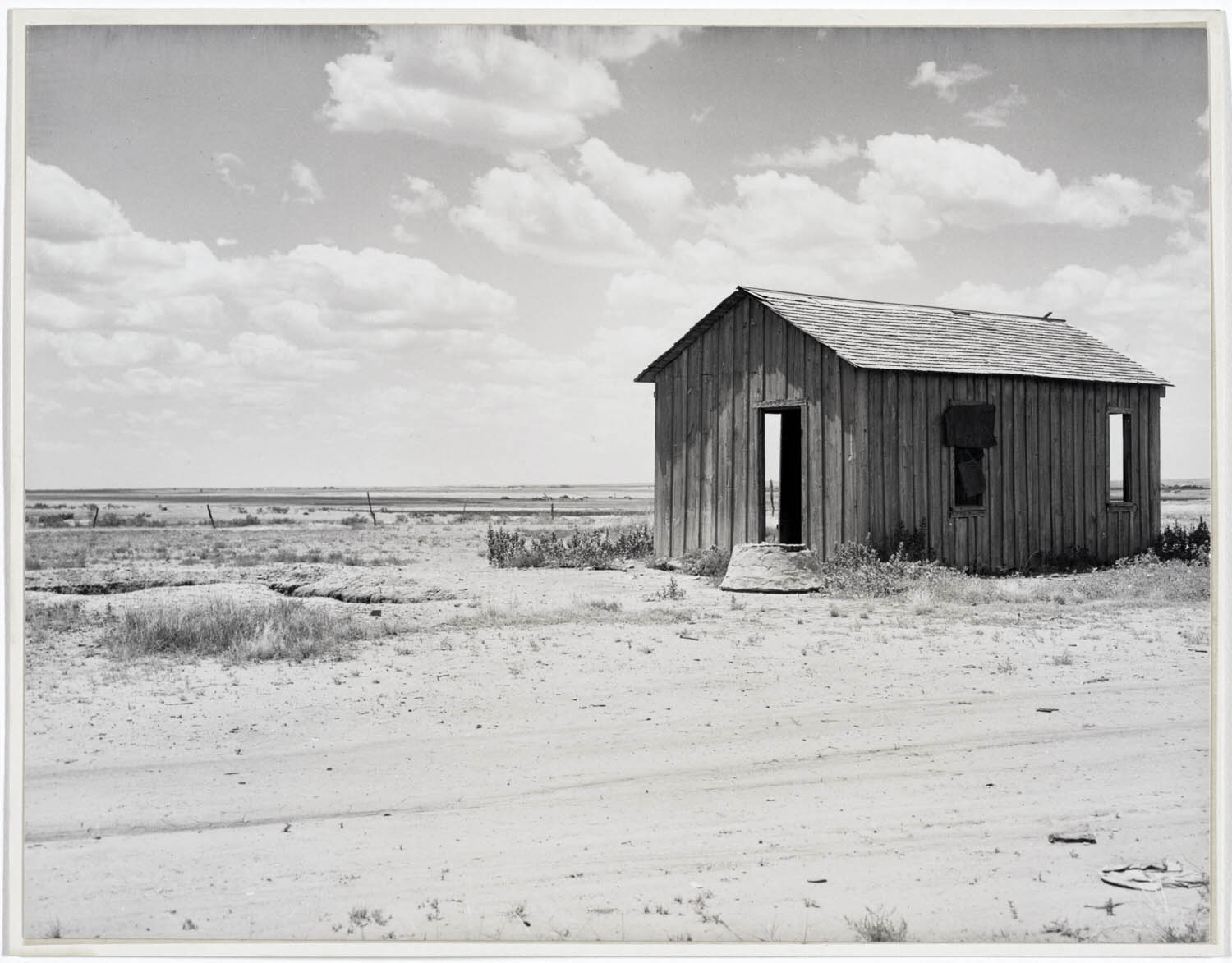
Dorothea Lange (American, 1895-1965) 'Migratory Cotton Picker' Eloy, Arizona 1940


Dorothea Lange (American, 1895-1965)
Migratory Cotton Picker
Eloy, Arizona, 1940
Gelatin silver print
© Library of Congress
Courtesy of Howard Greenberg Collection


This is a meta-post where I have brought together photographs from the second exhibition Freaks, The Monstrous Parade: Photographs from Enrico Praloran Collection and all the good quality images of Todd Browning’s cult film Freaks (1932) that were available online, since the museum only provided me with three media images (the first three) on a fascinating subject. By reflection, the photographs from Freaks have a strange correlation to the photographs that appear in the Howard Greenberg, Collection.

There is an interesting discussion by Amanda Ann Klein on her blog (see link below) about her students reaction to the film that she taught as part of her Trash Cinema class. She observes that, “Freaks preaches acceptance and… the belief that we are all “God’s children.” And yet, the film was intended to “out horror” Frankenstein through its fantastic display of disabled bodies…” but that her students did not see it as an exploitation film, in fact they approved of the revenge taken by the freaks on Cleopatra and Hercules at the end of the film, even though this seemed to replicate the very imagery Browning denounced earlier in the film. Klein insightfully notes that “it did prove to be an interesting example of how a film’s reception can change dramatically over time.”

The content of a work of art is never fixed by the author as the context and meaning of the work is never fixed by the viewer. As David Smail notes the truth changes according to, among other things, developments in our values and understandings. There can be many truths depending on our line-of-sight and point-of-view but a subjective non-final truth has to be actively struggled for:

“Where objective knowing is passive, subjective knowing is active – rather than giving allegiance to a set of methodological rules which are designed to deliver up truth through some kind of automatic process [in this case the image], the subjective knower takes a personal risk in entering into the meaning of the phenomena to be known … Those who have some time for the validity of subjective experience but intellectual qualms about any kind of ‘truth’ which is not ‘objective’, are apt to solve their problem by appealing to some kind of relativity. For example, it might be felt that we all have our own versions of the truth about which we must tolerantly agree to differ. While in some ways this kind of approach represents an advance on the brute domination of ‘objective truth’, it in fact undercuts and betrays the reality of the world given to our subjectivity. Subjective truth has to be actively struggled for: we need the courage to differ until we can agree. Though the truth is not just a matter of personal perspective, neither is it fixed and certain, objectively ‘out there’ and independent of human knowing. ‘The truth’ changes according to, among other things, developments and alterations in our values and understandings … the ‘non-finality’ of truth is not to be confused with a simple relativity of ‘truths’.”

Smail, David. Illusion and Reality: The Meaning of Anxiety. London: J.M. Dent & Sons, 1984, pp.152-153.

Dr Marcus Bunyan


Many thankx to the Musée de l’Elysée, Lausanne for allowing me to publish some of the photographs in the posting. Please click on the photographs for a larger version of the image.


Henri Cartier-Bresson (French, 1908-2004) 'Madrid' 1933


Henri Cartier-Bresson (French, 1908-2004)
Madrid
1933
Gelatin silver print
© Henri Cartier-Bresson/Magnum Photos
Courtesy of Fondation HCB and Howard Greenberg Collection
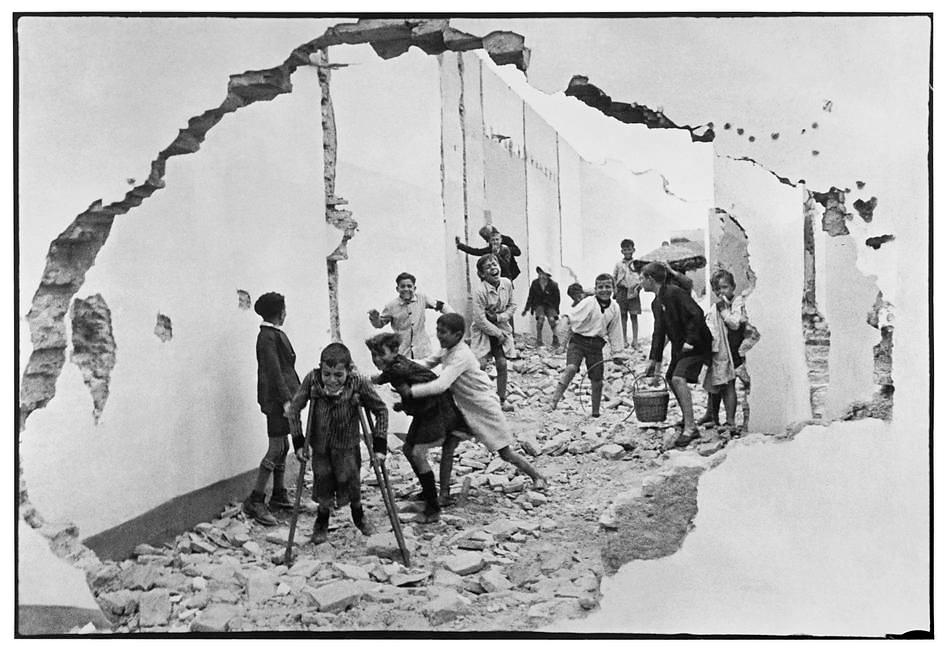
 

Henri Cartier-Bresson (French, 1908-2004) 'Children in Seville' 1933


Henri Cartier-Bresson (French, 1908-2004)
Seville
1933
Gelatin silver print
© Henri Cartier-Bresson/Magnum Photos
Courtesy of Fondation HCB and Howard Greenberg Collection
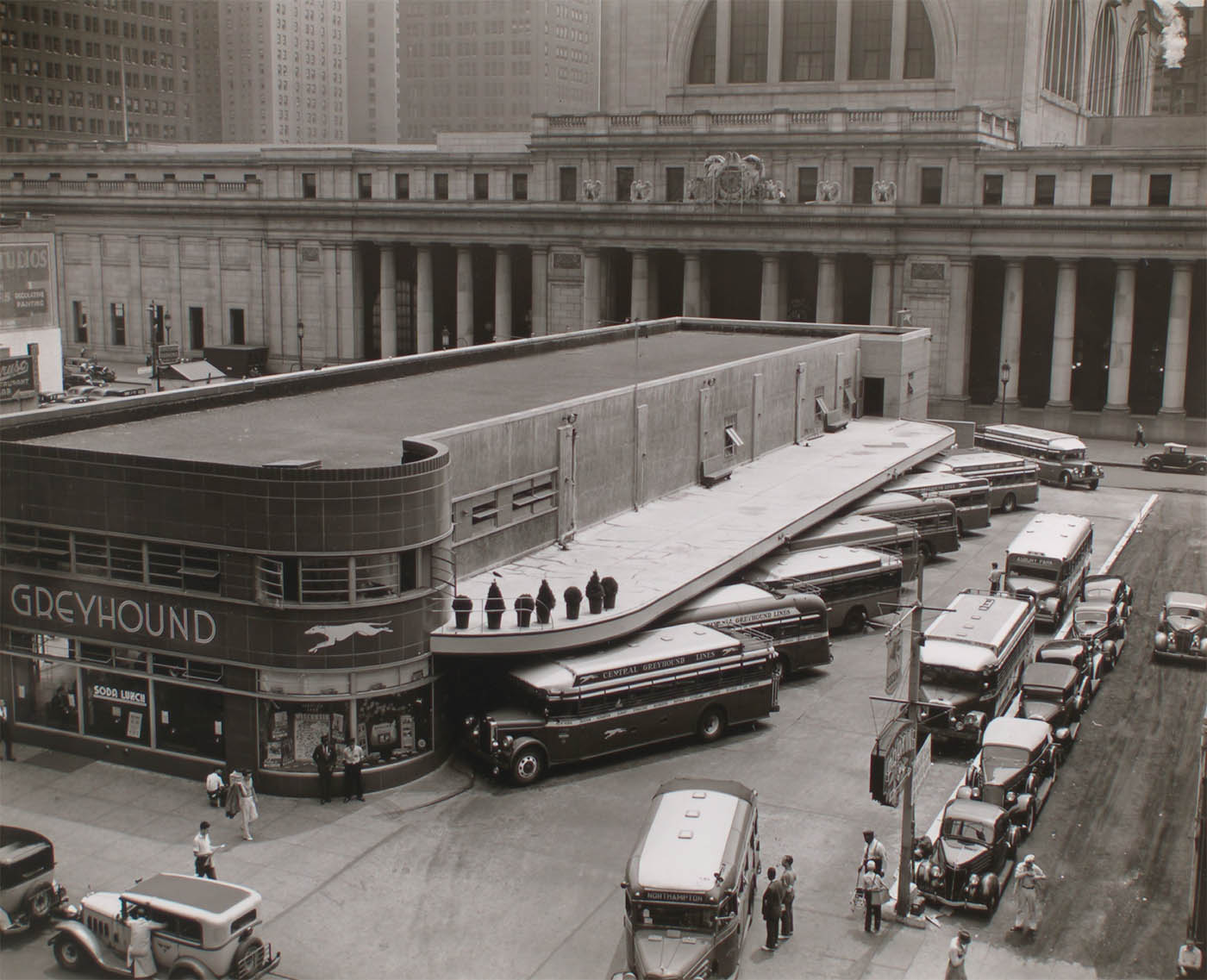
 

Berenice Abbott (American, 1898-1991) 'Greyhound Bus Terminal, 33rd and 34th Streets between Seventh and Eighth Avenues, Manhattan' 1936


Berenice Abbott (American, 1898-1991)
Greyhound Bus Terminal, 33rd and 34th Streets between Seventh and Eighth Avenues, Manhattan
1936
Gelatin silver print
Courtesy of Howard Greenberg Collection
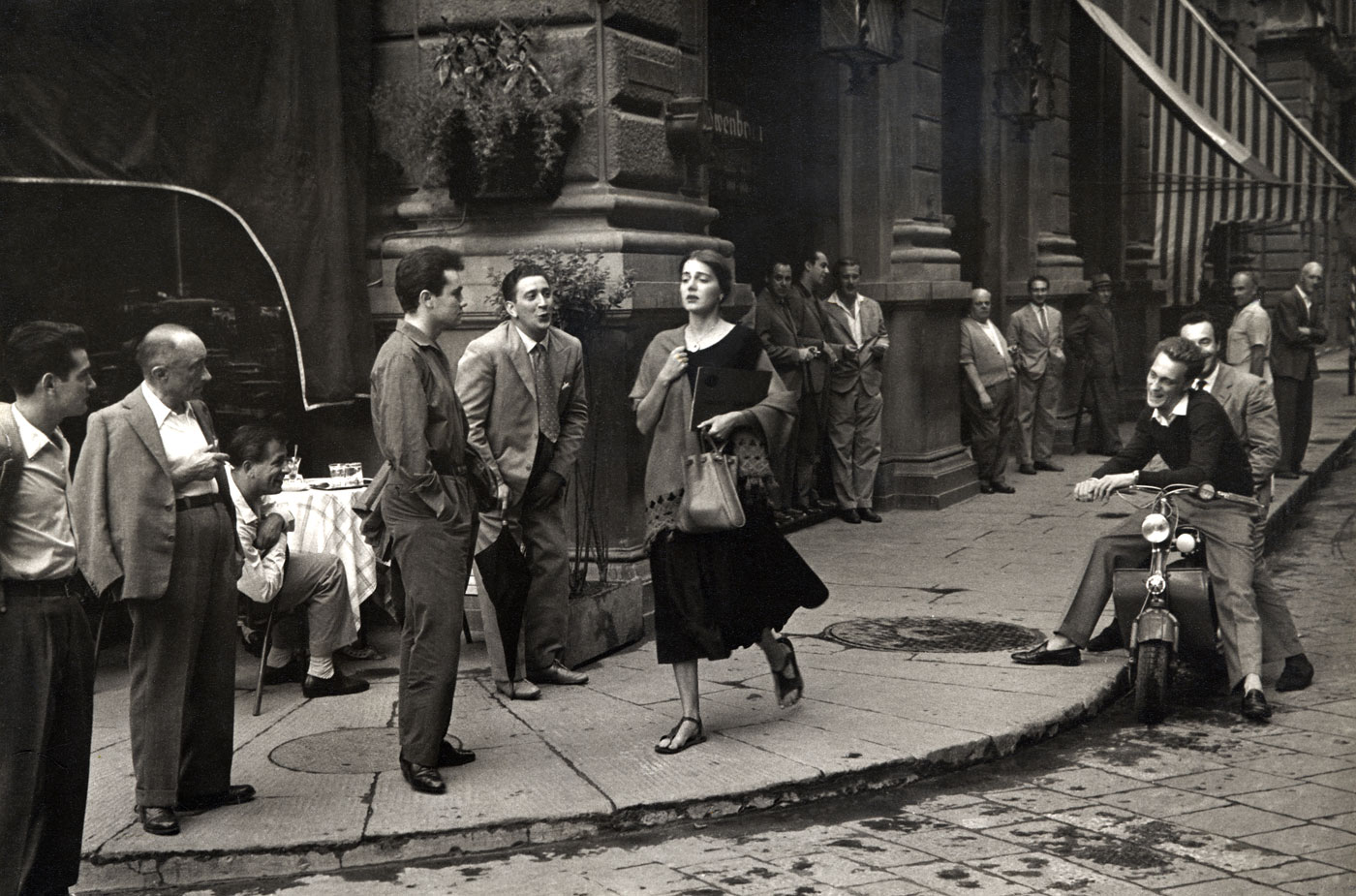
 

Ruth Orkin (American, 1921-1985) 'American Girl in Italy' 1951


Ruth Orkin (American, 1921-1985)
American Girl in Italy
1951
Gelatin silver print
© Ruth Orkin
Courtesy of Howard Greenberg Collection
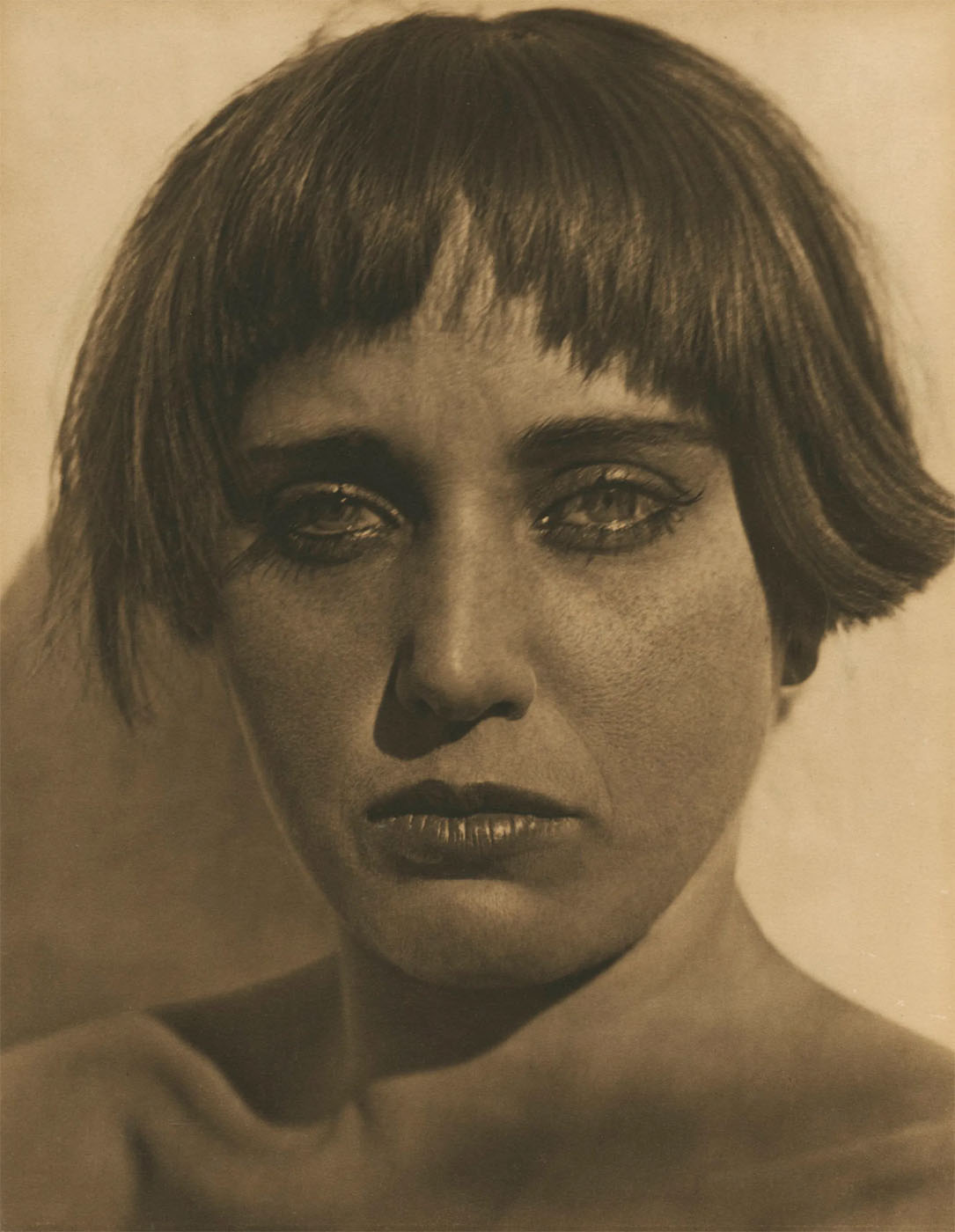
 

Edward Weston (American, 1886–1958) 'Nahui Olin' 1923


Edward Weston (American, 1886–1958)
Nahui Olin
1923
Platinum print
Courtesy of Howard Greenberg Collection


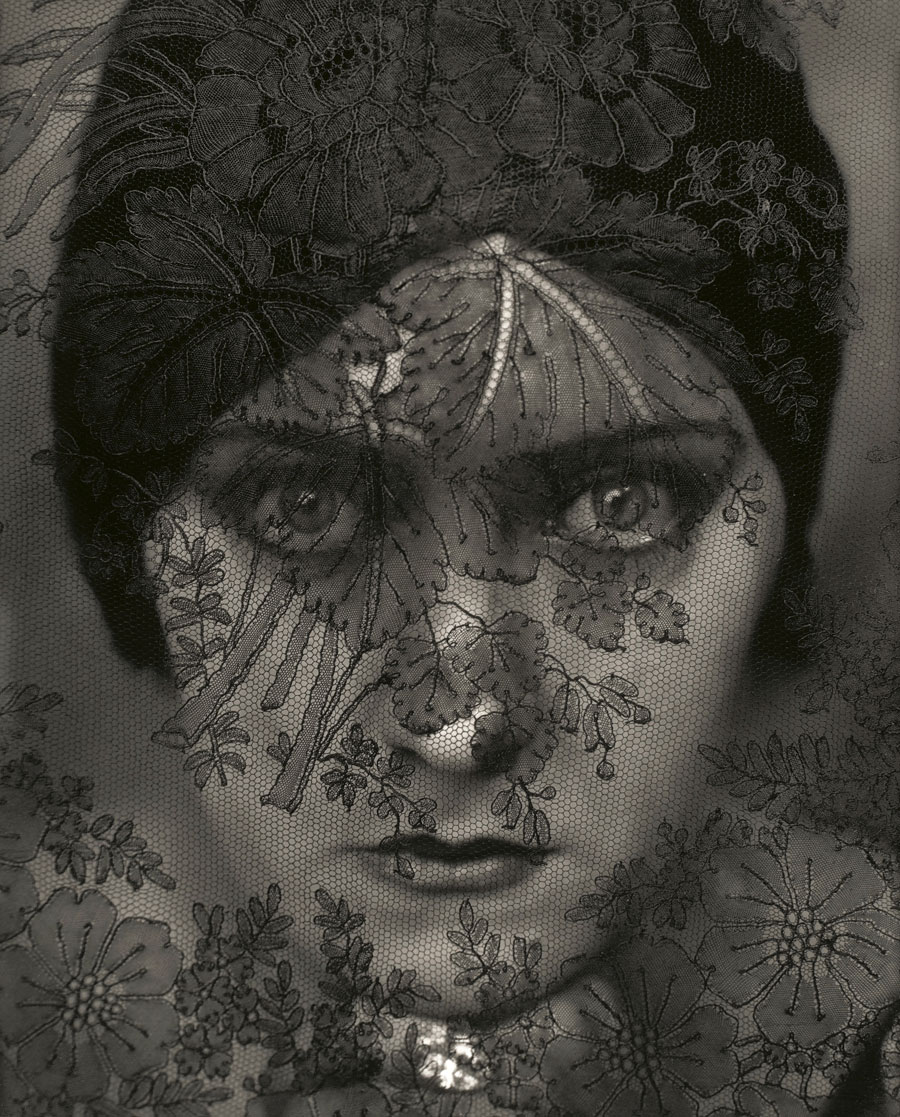
Edward Steichen (American born Luxembourg, 1879–1973) 'Gloria Swanson' 1924


Edward Steichen (American born Luxembourg, 1879–1973)
Gloria Swanson
1924
Gelatin silver print
Courtesy of Howard Greenberg Collection
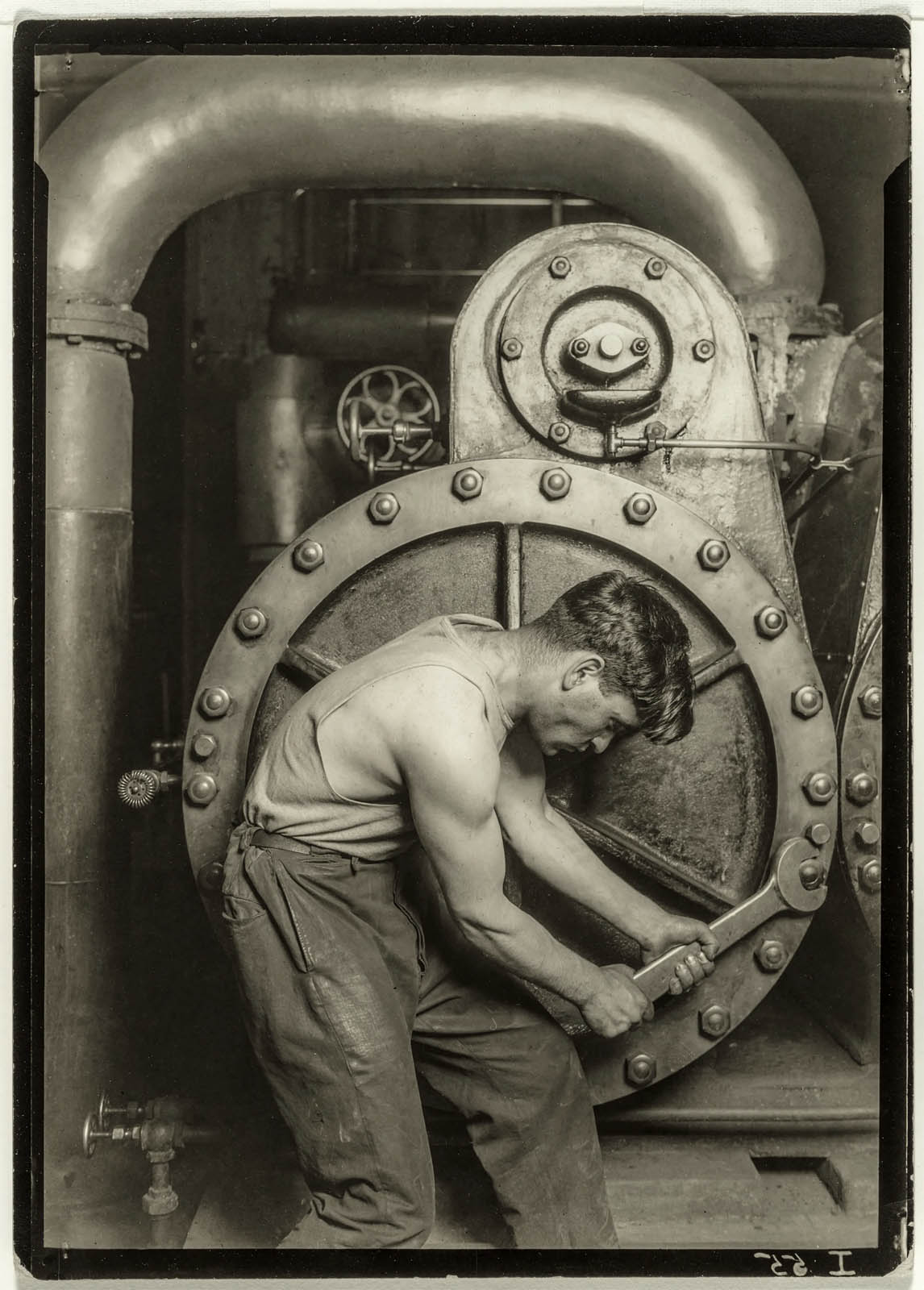
 

Lewis W. Hine (American, 1874-1940) 'Powerhouse Mechanic' 1924


Lewis W. Hine (American, 1874–1940)
Powerhouse Mechanic
1924
Gelatin silver print
Courtesy of Howard Greenberg Collection


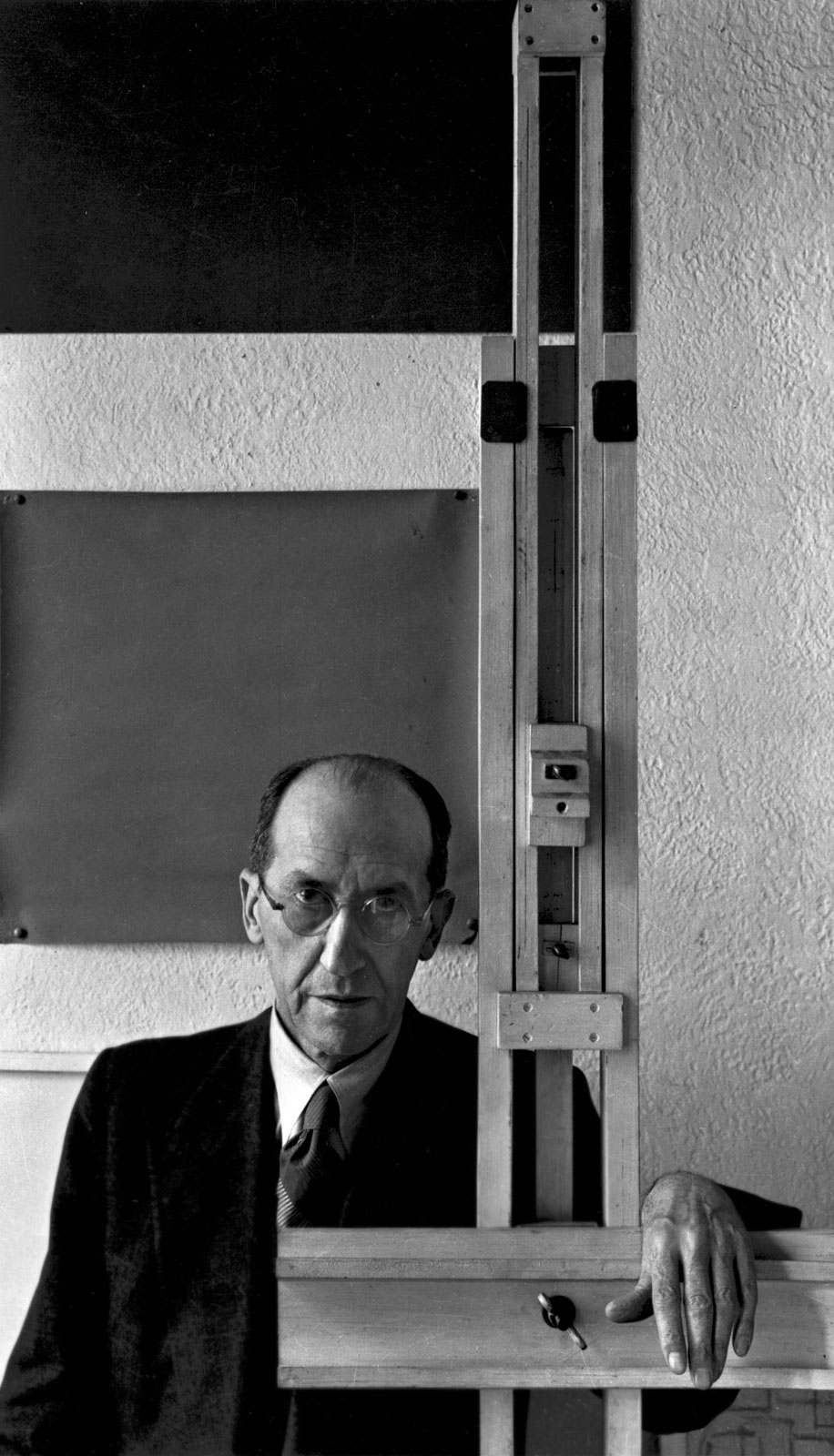
André Kertész (American born Hungary, 1894-1985) 'Chez Mondrian' 1926


André Kertész (American born in Hungary, 1894-1985)
Chez Mondrian
1926
Gelatin silver print on carte postale
The Howard Greenberg Collection
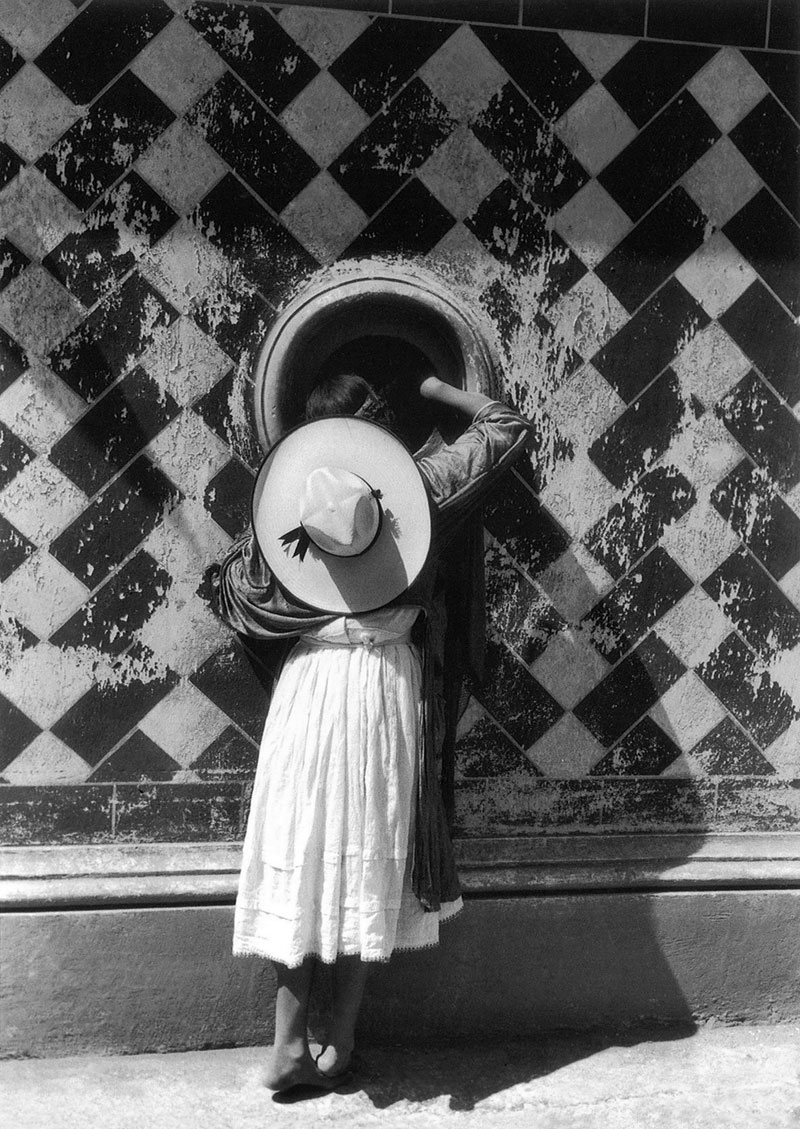
 

Manuel Álvarez Bravo (Mexican, 1902-2002) 'The Daughter of the Dancers' (La hija de los danzantes) 1933


Manuel Alvarez Bravo (Mexican, 1902–2002)
The Daughter of the Dancers
1933
Gelatin silver print
Courtesy of Howard Greenberg Collection
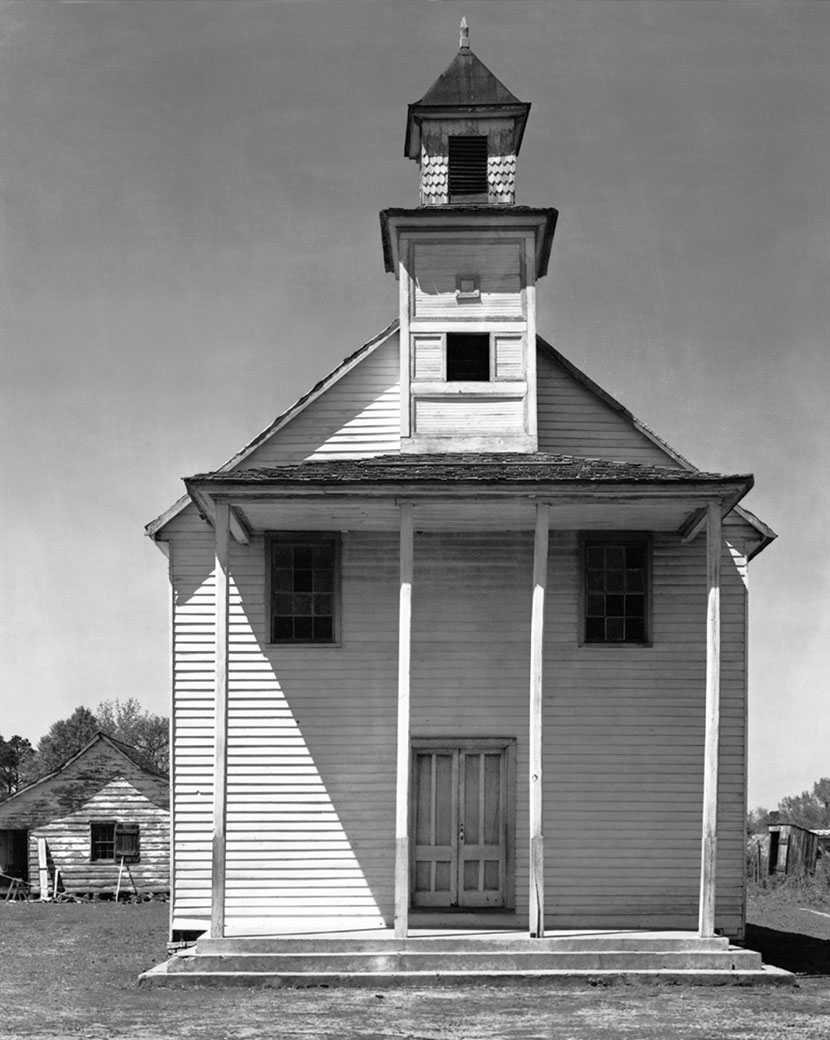
 

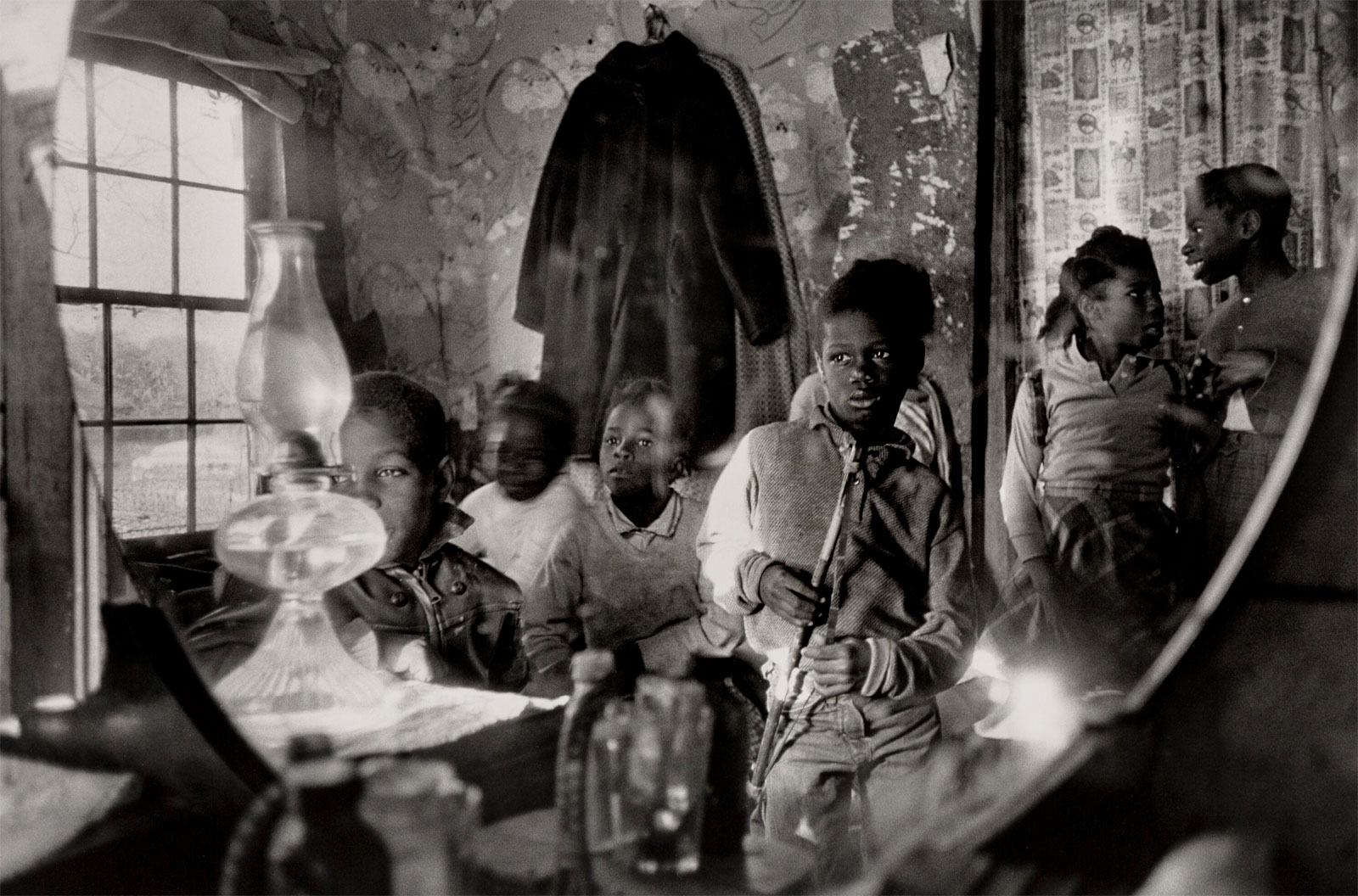
Walker Evans (American, 1903-1975) 'Negro Church, South Carolina' 1936


Walker Evans (American, 1903-1975)
Negro Church, South Carolina
1936
Gelatin silver print
© Library of Congress
Courtesy of Howard Greenberg Collection


Dorothea Lange (American, 1895-1965) 'Migrant Mother, Nipomo, California' 1936


Dorothea Lange (American, 1895-1965)
Migrant Mother, Nipomo, California
1936
Gelatin silver print
© Library of Congress
Courtesy of Howard Greenberg Collection
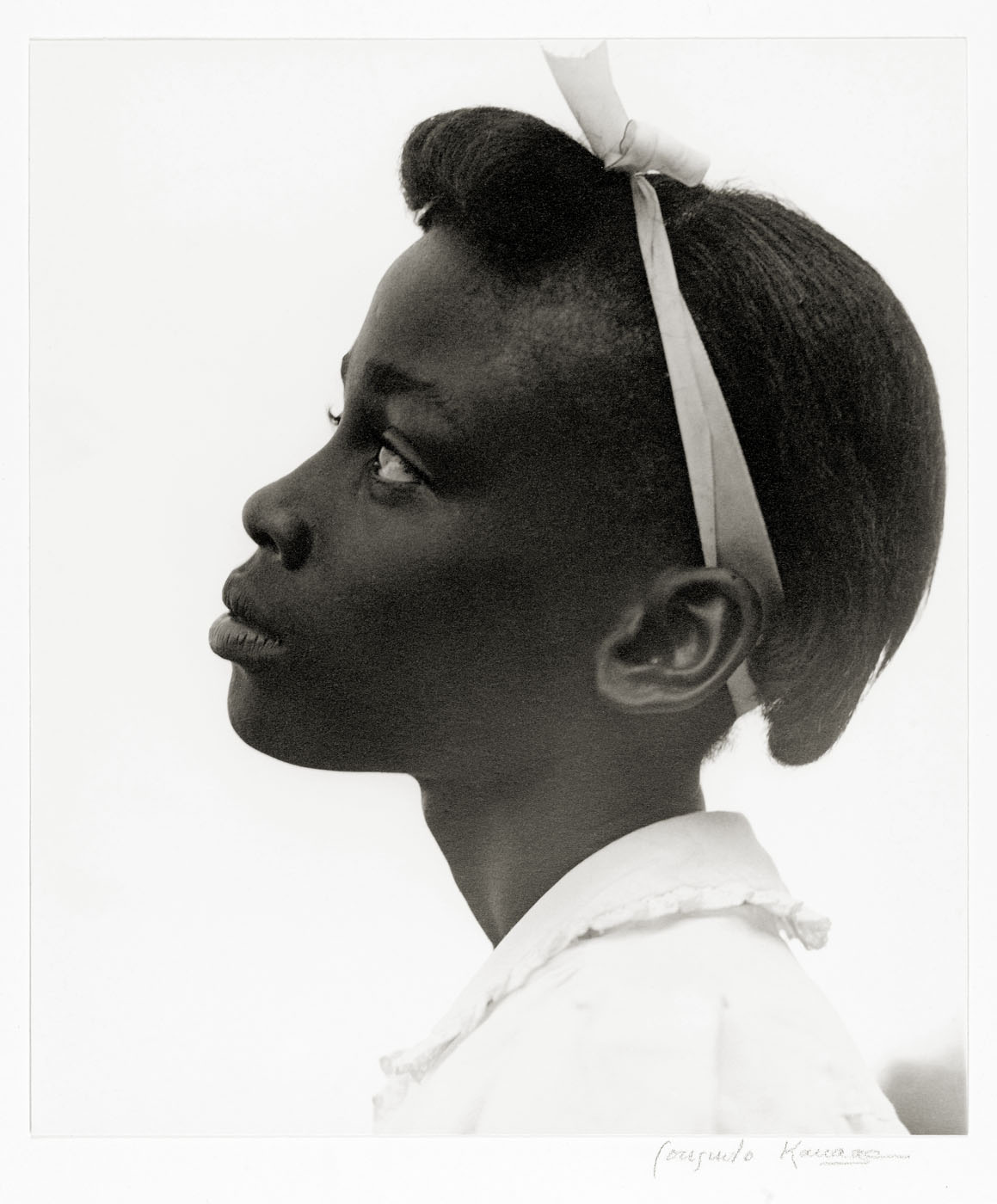
 

Consuelo Kanaga (American, 1894-1978) 'Young Girl in Profile' 1948


Consuelo Kanaga (American, 1894-1978)
Young Girl in Profile
1948
Gelatin silver print
Courtesy of Howard Greenberg Collection


Leon Levinstein (American, 1910-1988) 'Fifth Avenue' c. 1959


Leon Levinstein (American, 1910-1988)
Fifth Avenue
c. 1959
© Howard Greenberg Gallery
Courtesy of Howard Greenberg Collection


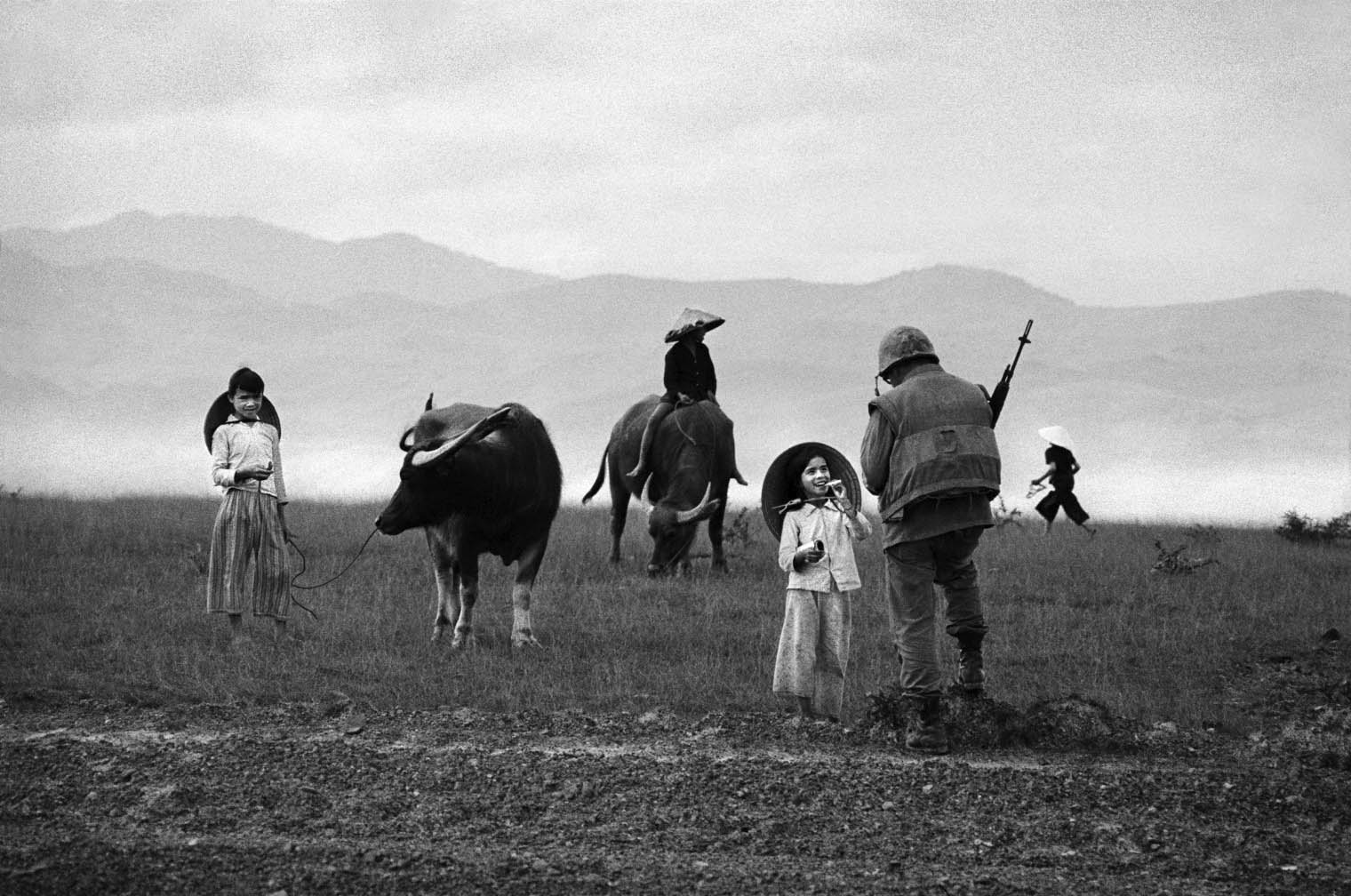
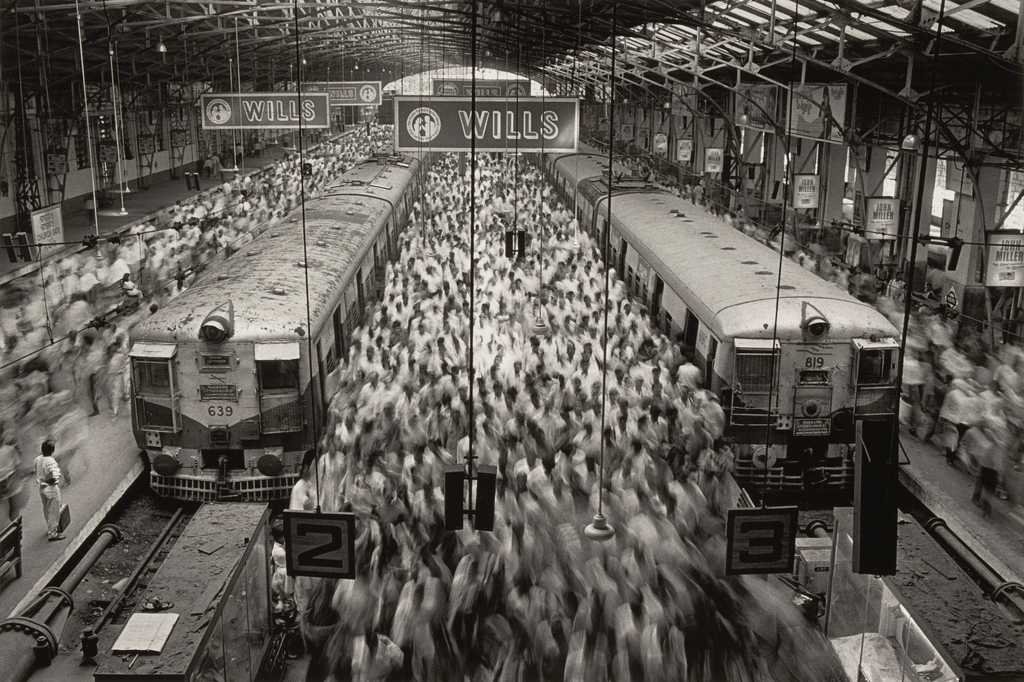
The Musée de l’Elysée presents different approaches to collecting photography by means of these original exhibitions.

Howard Greenberg, Collection

Howard Greenberg has been a gallery owner for over thirty years and is considered today one of the pillars of the New York photography scene. While his position as a dealer is well established, little was known of his passion for collecting, presently revealed to the public for the first time. The primary reason to explain why it took so long to discover this collection is because building such a collection demands time. Only in time can the maturity of a collection be measured; the time necessary to smooth trends, confirm the rarity of a print, and in the end, validate the pertinence of a vision. In an era of immediacy, when new collectors exhibit unachieved projects or create their own foundation, great original collections are rare. Howard Greenberg’s is certainly one of the few still to be discovered.

The quality of a collection does not rely on the sole accumulation of master pieces but can best be assessed through a dialectical movement: a collection is the collector’s oeuvre, a set of images operating a transformation in the perception not only of the photographs, but also of photography. This renewed perception is two-fold in the Greenberg collection; through the surprising combination of two approaches, the experimental practice of photography that questions the medium as such, bringing it to the limits of abstraction on one hand, and on the other, a documentary practice, carried out through its recording function of the real. This apparently irreconcilable duality takes on a particular signification in the Greenberg collection, an investigation of the possibilities offered by photography, a quest for photography itself, questioning what it is.

Howard Greenberg and his collection have largely contributed to the writing of a chapter of history. While contributing to the recognition of long neglected figures of the New York post-war photography scene, filling a gap, as gallery owner, Howard Greenberg, the collector, ensured the preservation of a coherent body by building over that period a unique collection of major photographs.

This collection of over 500 photographs was patiently built over the last thirty years and stands out for the high quality of its prints. A set of some 120 works are exhibited for the first time at the Musée de l’Elysée, revealing different aspects of Howard Greenberg’s interests, from the modernist aesthetics of the 20s and 30s, with works by Edward Steichen, Edward Weston or the Czech School, to contemporary photographers such as Minor White, Harry Callahan and Robert Frank. Humanist photography is particularly well represented, including among others, Lewis Hine and Henri Cartier-Bresson. An important section is dedicated to the Farm Security Administration’s photographers, such as Walker Evans or Dorothea Lange, witnesses to the Great Depression years of the 30s. Above all, the collection demonstrates the great influence of New York in the history of 20th century photography with the images of Berenice Abbott, Weegee, Leon Levinstein or Lee Friedlander conveying its architecture and urban lifestyle. Commending its work and prominent position, and wishing to make his private collection available to a large audience, Howard Greenberg selected the Musée de l’Elysée to host his collection.

The Musée de l’Elysée and the Fondation Henri Cartier-Bresson jointly produce this exhibition which, after Lausanne, will subsequently be presented in Paris.

Press release from the Musée de l’Elysée website


Freaks, The Monstrous Parade: Photographs from Enrico Praloran Collection

American director Tod Browning (1880-1962) has a particular attraction for the uncanny. Freaks, his cult movie shot in 1932, is inspired by a short story written by Clarence Aaron “Tod” Robbins. Set in a circus, the performers are disabled actors. The movie caused a scandal when it was released and Freaks was soon censored, reedited, shortened, sometimes removed from theatres, and in cases banned in some countries. Not until the 60s, when it was presented at the Cannes Festival, was the movie acclaimed to the point of becoming a reference for artists such as Diane Arbus or David Lynch.

The Musée de l’Elysée presents a selection of some fifty vintage black and white silver prints, gathered by Enrico Praloran, a collector based in Zurich. This unique set is the opportunity for an encounter with the movie’s strange protagonists, Johny Eck, the Half Boy, Daisy and Violet Hilton, the Siamese sisters, Martha Morris, the “Armless Marvel”, or the Bearded Lady and the Human Skeleton. They all are artists for real, coming from the Barnum Circus.

The plot is transcribed in images through stills from the movie’s major scenes, completed by set or shooting photographs, taking us behind the scenes, including on the footsteps of Tod Browning himself.

Press release from the Musée de l’Elysée website
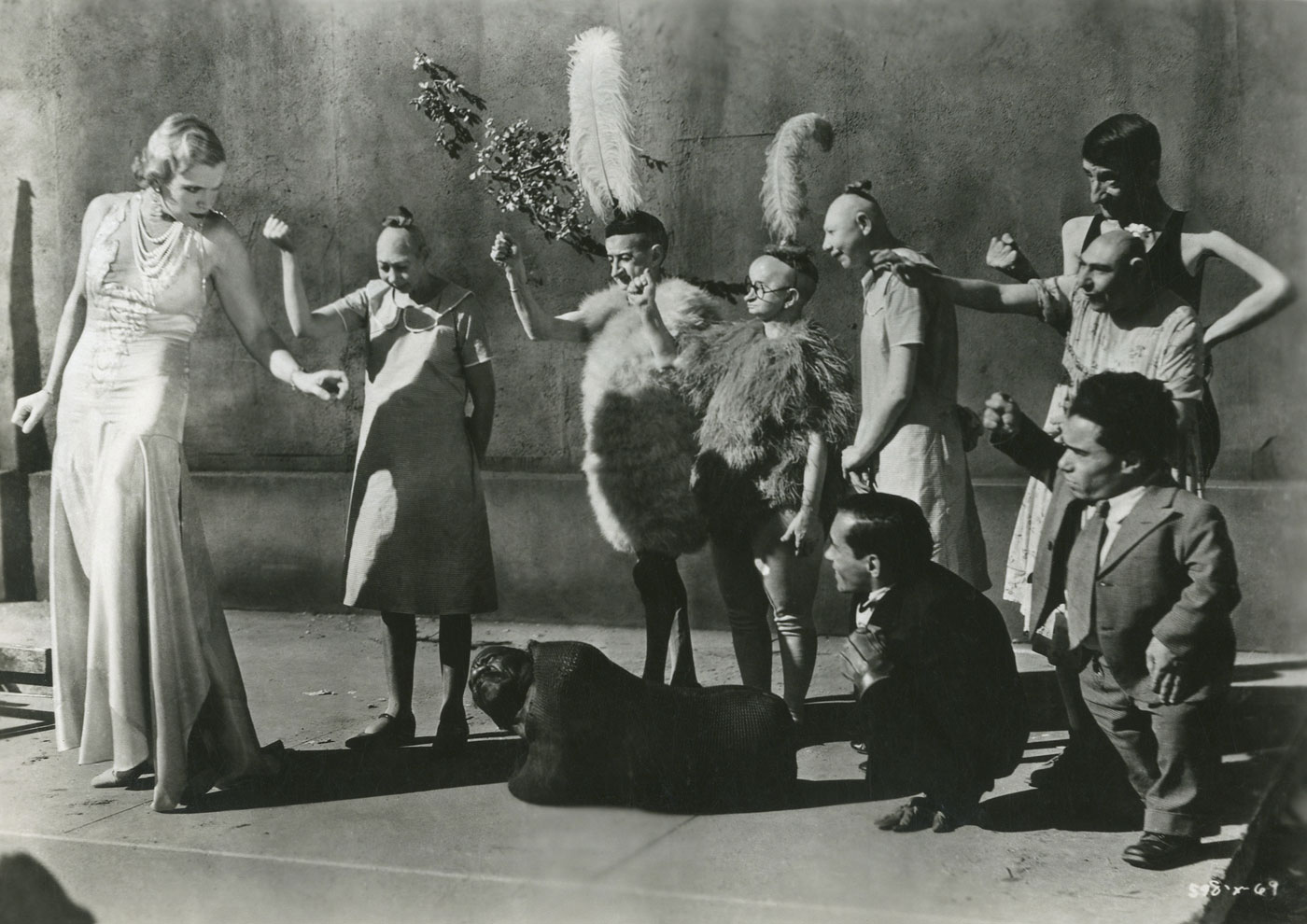
 

Tod Browning (director) 'Freaks' 1932 Still photograph Courtesy of Praloran Collection, Zurich


Tod Browning (director)
Freaks (Cleopatra followed by the freaks)
1932
Still photograph
1932
Courtesy of Praloran Collection, Zurich


Tod Browning (director) 'Freaks' 1932 Still photograph Courtesy of Praloran Collection, Zurich


Tod Browning (director)
Freaks (Johnny Eck)
1932
Still photograph
Courtesy of Praloran Collection, Zurich


Tod Browning (director) 'Freaks' 1932 Still photograph Courtesy of Praloran Collection, Zurich


Tod Browning (director)
Freaks
1932
Still photograph
Courtesy of Praloran Collection, Zurich


Freaks centres on an enchanting performer, Cleopatra, who entices a “midget,” named Hans, into falling in love with her. They were called midgets then, now they are referred to as little people. The “midget” is in fact engaged to another woman who is incidentally, also a “midget,” named Freida. Cleopatra was at first only trying to fool around with Hans and get money from him occasionally. She soon realised that Hans had inherited quite a large amount of money. She devises a plan to marry Hans and later poison him to inherit the money. Arguably, the most famous scene in Freaks is Hans and Cleo’s wedding reception. The “freaks” reluctantly decide to accept her despite her “normality” and chant the notoriously disturbing yet hilarious quote, “We accept you, one of us! Gooble Gobble!” Afterwards, Hans then becomes very ill by Cleo’s hand. He soon figures out her plan and the freaks become offended. They knew she could not be one of them. The film ends with a horrific and disturbing chase in the rain where the “freaks” follow her slowly and Cleo screams for her life. Her and her lover, the “muscle man,” are caught and not killed, but worse. They become freaks themselves. They are mutilated, castrated, and deformed until they are the subject of a freak show. They became one of the “freaks” they hated so much…

One of the most gut-wrenching things about this films is the fact that every “freak” in the film was a real person with the same deformity their characters had. This gives the story a profound sense of reality, making the betrayal of Hans by Cleo all the more tragic. The film was extremely controversial when released and hated by audiences. The scenes where Cleo and the muscle man were mutilated had to be cut from the film in order to be shown in theatres. That footage has since been lost. In a viewing of the film, a sudden jump takes place after the freaks catch Cleo. The audience feels cheated. We have waited so long to see Cleo get her punishment. Part of that dissatisfaction adds to the mystique of this bizarre trip. The film was forgotten about until the mid 1970s where it was rediscovered as a counterculture cult film. A counterculture film runs counter to the the norm of society. Freaks is a great example of fame by taboos and controversy. It explores themes of humanity that are still relatively unexplored today.

Text from the Cult Films and Cultural Significance website December 6, 2011 [Online] Cited 14/09/2020


Freaks is a tale of love and vengeance in a traveling circus…

In her essay “Intolerable Ambiguity: Freaks as/at the Limit,” Elizabeth Grosz attempts to unpack our fascination with freak shows. She concludes that the individuals most frequently showcased in these spectacles, including Siamese twins, hermaphrodites, “pinheads” (microcephalics), midgets, and bearded ladies “imperil the very definitions we rely on to classify humans, identities and sexes – our most fundamental categories of self-definition and boundaries dividing self from otherness” (57). In other words, while we comfort ourselves by breaking down the world into neat binary oppositions, such as Male/Female, Self/Other, Human/Animal, Child/Adult, “freaks” blur the boundaries between these reassuring oppositions. She concludes, “The freak confirms the viewer as bounded, belonging to a ‘proper’ social category. The viewer’s horror lies in the recognition that this monstrous being is at the heart of his or her identity, for it is all that must be ejected or abjected from self-image to make the bounded, category-obeying self possible” (65). We need the freak to confirm our own static, bounded identities. And yet, I think there is a certain terror that we may not be as bounded as we think. If the hermaphrodite can transcend traditional gender categories, then perhaps our own genders are more fluid. For many that is a truly horrifying thought.

For example, in one of the film’s earliest scenes we witness the “pinheads” Schlitze, Elvira and Jenny Lee dancing and playing in the forest. From a distance they look like innocent, happy children. But as the camera approaches, it is clear that they are neither children, nor are they quite adults either. Thus it is the ambiguity here, rather than the disability itself, which is momentarily disturbing…

Grosz also mentions that “Any discussion of freaks brings back into focus a topic that has had a largely underground existence in contemporary cultural and intellectual life, partly because it is considered below the refined sensibilities of ‘good taste’ and ‘personal politeness’ in a civilised and politically correct milieu” (55).

Amanda Ann Klein. “Teaching Todd Browning’s FREAKS,” on the Judgemental Observer blog, September 13, 2009 update September 1, 2014 [Online] Cited 14/09/2020


~ Grosz, Elizabeth. “Intolerable Ambiguity: Freaks as/at the Limit,” in Rosemarie Garland Thomson (ed.). Freakery: Cultural Spectacles of the Extraordinary Body. New York: New York University Press, 1996, pp. 55-68

~ Hawkins, Joan. “‘One of Us’: Tod Browning’s Freaks,” in Rosemarie Garland Thomson (ed.). Freakery: Cultural Spectacles of the Extraordinary Body. New York: New York University Press, 1996, pp. 265-276

~ Norden, Martin F. The Cinema of Isolation: A History of Physical Disability in the Movies. New Brunswick: Rutgers University Press, 1994


Tod Browning (director) 'Freaks (Cleopatra and freaks)' 1932 (still photograph)


Tod Browning (director)
Freaks (Cleopatra and freaks)
1932
Still photograph


Tod Browning (director) 'Publicity photo for Freaks, featuring much of the cast with director, Tod Browning' 1932


Tod Browning (director)
Publicity photo for Freaks, featuring much of the cast with director, Tod Browning
1932
Still photograph


Tod Browning (director) 'Freaks (with Siamese Twins Daisy and Violet Hilton)' 1932 (still photograph)


Tod Browning (director)
Freaks (with Siamese Twins Daisy and Violet Hilton)
1932
Still photograph


Tod Browning (director) 'Freaks' 1932 (still photograph)


Tod Browning (director)
Freaks
1932
Still photograph
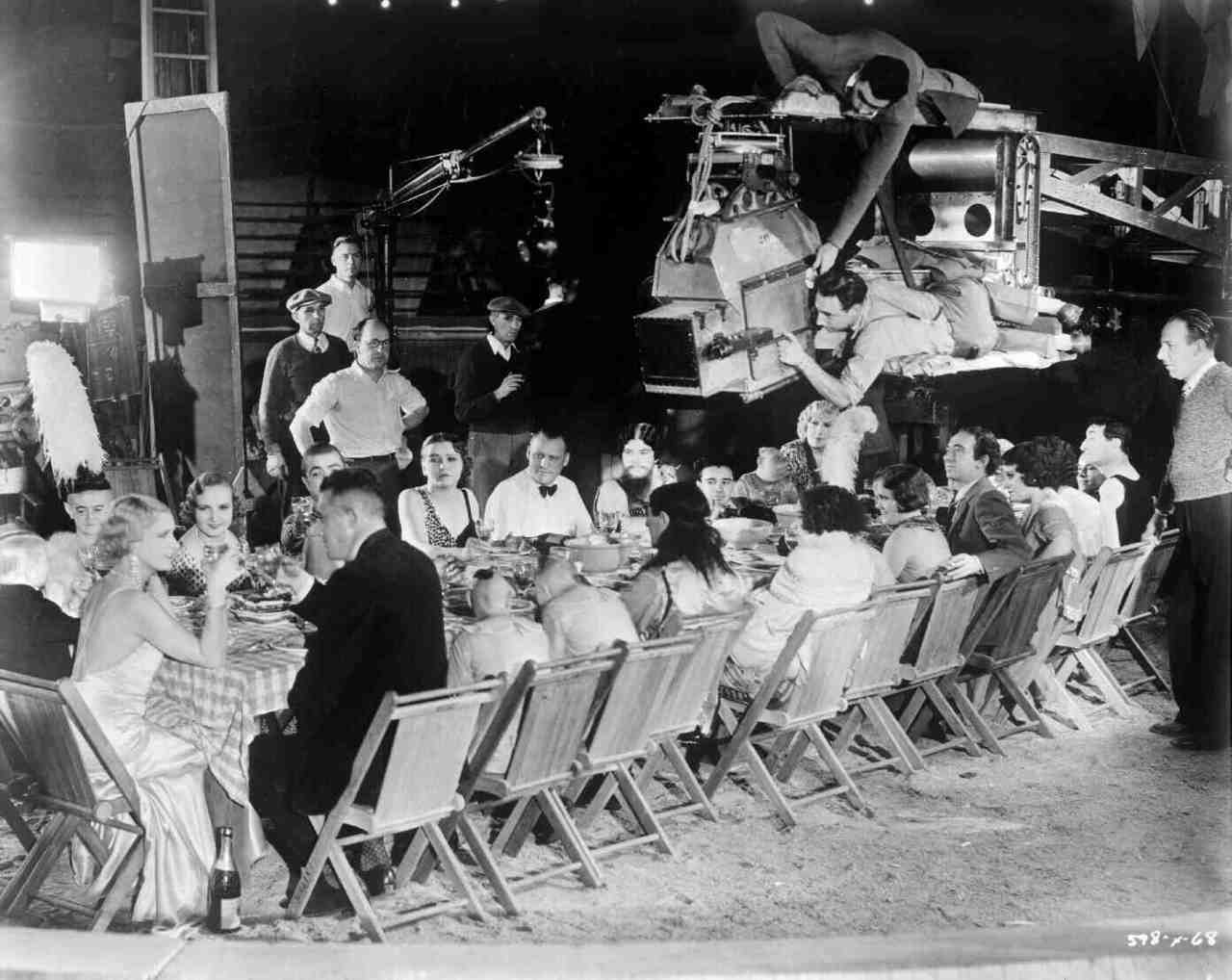
 

Tod Browning (director) 'Freaks (shooting the wedding banquet)' 1932 (still photograph)


Tod Browning (director)
Freaks (shooting the wedding banquet)
1932
Still photograph


Tod Browning (director) 'Freaks (with Cleopatra and Hans at the wedding banquet)' 1932 (still photograph)


Tod Browning (director)
Freaks (with Cleopatra and Hans at the wedding banquet)
1932
Still photograph


Tod Browning (director) 'Freaks (Olga Baclanova as Cleopatra after her transformation into chicken woman)' 1932 (still photograph)


Tod Browning (director)
Freaks (Olga Baclanova as Cleopatra after her transformation into chicken woman)
1932
Still photograph


Theatrical poster for 'Freaks' 1932


Theatrical poster for Freaks
1932


God’s Children

In this scene from Freaks (1932, Tod Browning), we meet several of the film’s characters.


The Freaks Revenge

In this scene from Freaks (1932, Tod Browning), the freaks take their revenge on Hercules and Cleopatra.


The Musée de l’Elysée 
18, avenue de l’Elysée
CH – 1014 Lausanne
Phone: + 41 21 316 99 11

Opening hours:
Wednesday – Monday 10am – 6pm
Closed Tuesdays
The Musée de l’Elysée website

LIKE ART BLART ON FACEBOOK

Back to top

Exhibition: ‘Lewis Hine: Photography for a Change’ at the Netherlands Museum of Photography, Rotterdam

Exhibition dates: 15th September – 6th January 2013


Lewis Hine
 (American, 1874-1940) 'Lunch Time, New York' 1910


Lewis Hine
 (American, 1874-1940)
Lunch Time, New York
1910
Gelatin silver print
© George Eastman House


“In the last analysis, good photography is a question of art.”

“I wanted to show the thing that had to be corrected: I wanted to show the things that had to be appreciated.”


Lewis Wickes Hines


Something that you really don’t get in reproductions is the absolutely beautiful tonality of Hine’s social documentary photography. Even less so when the images provided by the institution are degraded by scratches, dust, spots and colour irregularities. Despite these media images being 300 dpi when I received them from the museum media department they were in very average condition. For example, the image of Christmas Fiddles (below) was in such poor condition when enlarged that I had to spend over half and hour cleaning up the image to make it pictorially legible to the viewer at a larger size.

This is not an unusual occurrence and, unbeknownst to the readers of the archive, I spend many hours quickly cleaning the digital files before they are presented to you. Some individual images and sets of images are of such poor quality that I simply cannot use them at all. I will do a posting on this issue soon, but suffice to say that museums that spend thousands of hours and dollars staging impressive photographic exhibitions really let themselves down in the promotion of the exhibition if they provide dodgy scans and unusable media images to people that promote the exhibition for free. In this world of media saturated images it should be the norm that the “quality” of the image outweighs the indifferent quantity. With faster and faster download speeds larger images can be viewed more readily online and therefore scans provided by institutions must live up to this enlarged capacity.

Hopefully you can get some idea of the work of this socially conscious photographer, an American photographer who saw the camera as both a research tool and an instrument of social reform, whose images helped change the world with regard to child labour. Unfortunately success and reputation counted for nought. He died totally impoverished in 1940, shortly before a resurgence of public interest in his work raised him to the highest level of American photographers. What an infinite sadness.

Dr Marcus Bunyan


Many thankx to the Netherlands Museum of Photography for allowing me to publish the photographs in the posting. Please click on the photographs for a larger version of the image.


Installation view of the exhibition 'Lewis Hine: Photography for a Change' at the Netherlands Museum of Photography, Rotterdam 


Installation view of the exhibition Lewis Hine: Photography for a Change at the Netherlands Museum of Photography, Rotterdam


Lewis Hine
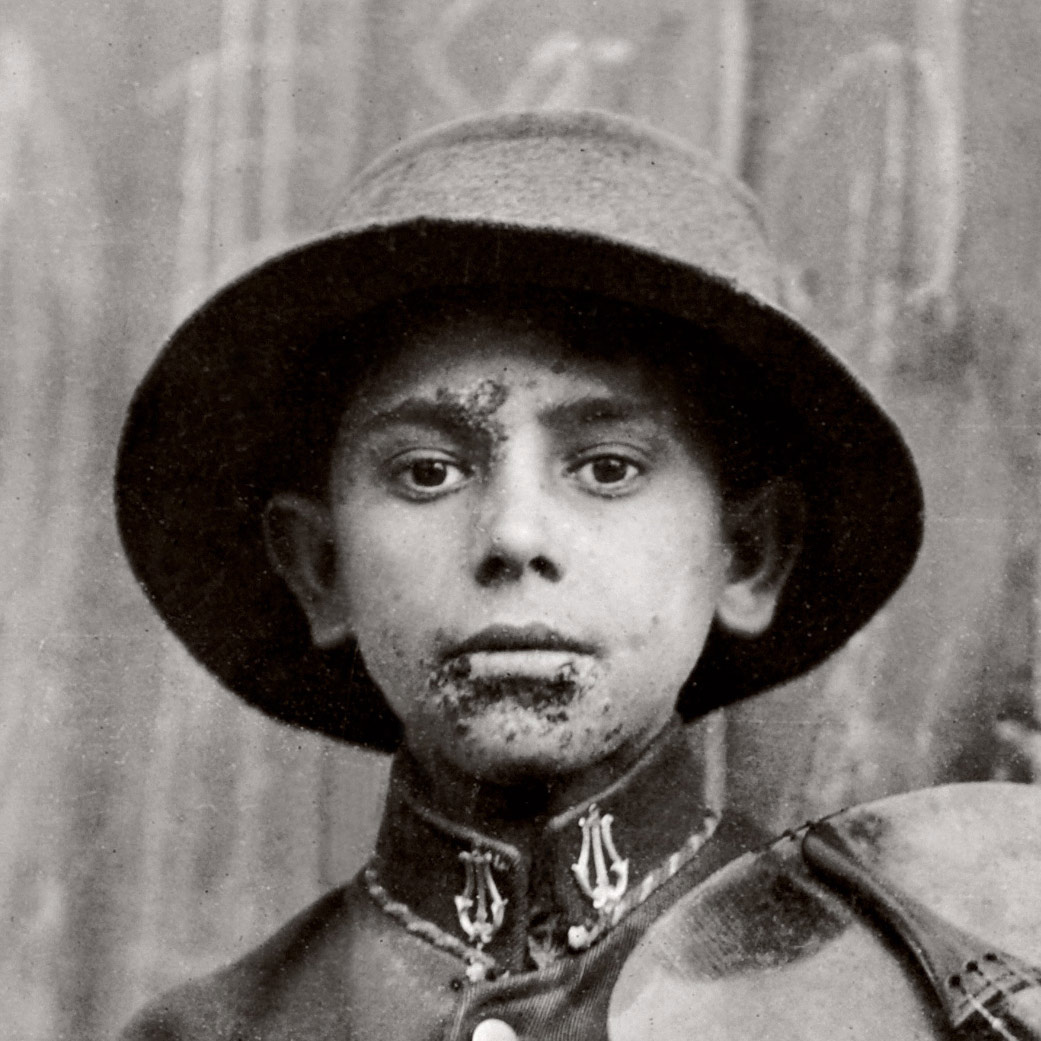
 (American, 1874-1940) 'Belgrade. Christmas Fiddles' 1918


Lewis Hine
 (American, 1874-1940)
Belgrade. Christmas Fiddles
1918
Gelatin silver print
© George Eastman House


Lewis Hine
 (American, 1874-1940) 'Belgrade. Christmas Fiddles' 1918 (detail)


Lewis Hine
 (American, 1874-1940)
Belgrade. Christmas Fiddles (detail)
1918
Gelatin silver print
© George Eastman House


Lewis Hine
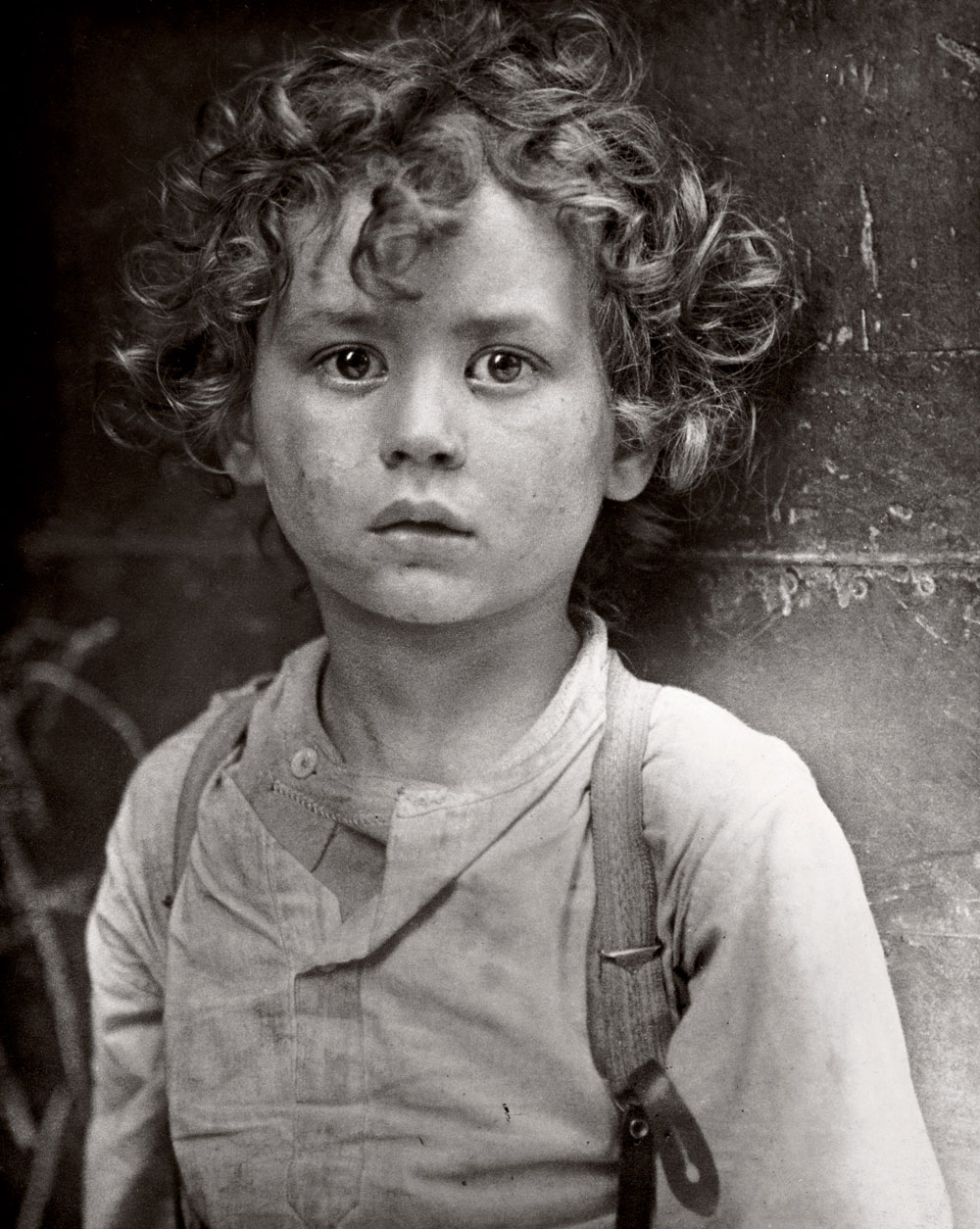
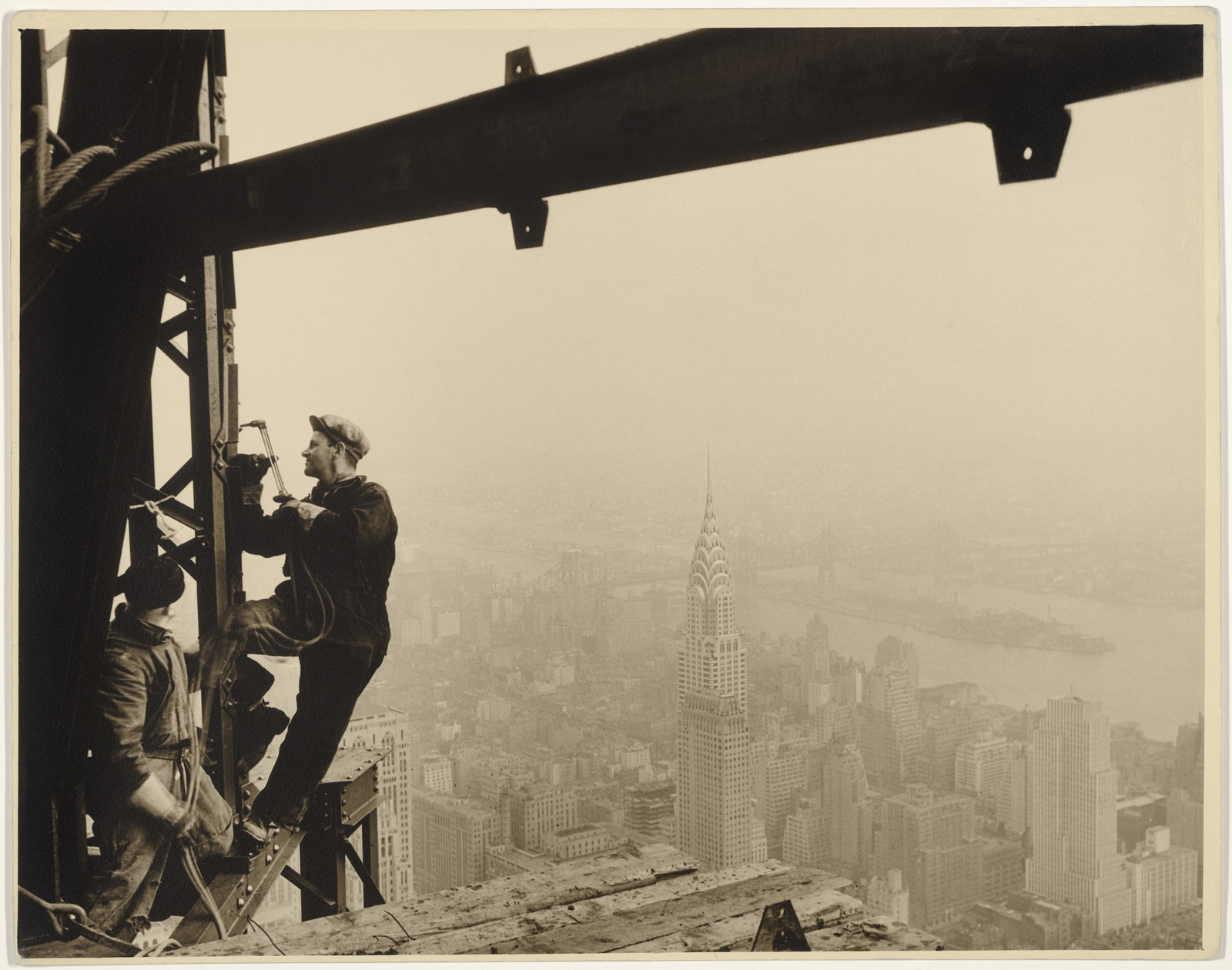
 (American, 1874-1940) 'Construction workers, Empire State Building, NYC' 1930-1931


Lewis Hine
 (American, 1874-1940)
Construction workers, Empire State Building, NYC
1930-1931
Gelatin silver print
© George Eastman House


From 15 September 2012 to 6 January 2013, the Netherlands Museum of Photography will present the first large retrospective in the Netherlands of the work of the renowned American photographer Lewis Hine. Hine was an enthusiastic photographer who wished to improve people’s lives through his photos. His pictures of immigrants on Ellis Island, of child labour, and of workers busy on the Empire State Building high above New York belong to the visual icons of the 20th century. The internationally touring exhibition contains more than 200 photos and documents, many in their original state and originating from the collection of the George Eastman House in Rochester, New York State. Lewis Hine is an initiative of three European institutions: Fondation Henri Cartier-Bresson (Paris), Fundación MAPFRE (Madrid) and the Netherlands Museum of Photography (Rotterdam). It is with great pride that the Netherlands Museum of Photography can now present this exhibition that harmonises perfectly with its aim to pay attention to the canon of international documentary photography.

Lewis W. Hine (Wisconsin, 1874 – New York, 1940), a sociologist and photographer, belongs to the group of famous photographers such as Joel Meyerowitz, Robert Frank, Robert Capa, Eugène Atget to whom the Netherlands Museum of Photography has previously devoted impressive exhibitions. Hine is known as a 20th-century pioneer of social documentary photography. It is characteristic of Hine that he strongly believed in the camera’s powers of conviction. Thus, armed only with a heavy camera he fought for social justice. For the National Child Labor Committee he travelled more than 75,000 kilometres through the United States to photograph children working in agriculture, the mines, factories, sewing attics, and on the streets. His photos were partly responsible for reforms in these fields. The themes in Hine’s work – child labour, situations of human indignity, and the vulnerability of immigrants and refugees – are still current. Despite his present reputation, his early successes and the fact that many governmental organisations made use of his photos, he died totally impoverished in 1940.

Empire State Building and Building the Rotterdam

In 1932 Lewis Hine published the famous photographic book entitled Men at Work, which covered the construction of the Empire State Building. From the most audacious vantage points he took photos of the 381-metre building, showing the strength and willpower of humankind, man’s contribution to industry. The tall buildings on the Wilhelminapier have determined the skyline of Rotterdam for many years, just as the Empire State Building did in New York around 1930. The Wilhelminapier is now under full development. De Rotterdam Building, designed by Rem Koolhaas of OMA (Office for Metropolitan Architectural) will be completed in 2013-2014. The photographer Ruud Sies has followed the genesis of the largest building in the Netherlands for four years now. The project entitled Building the Rotterdam – a work in progress by Ruud Sies was inspired by the work of Lewis Hine and establishes the connection with the Wilhelminapier as a historical location. To the Netherlands Museum of Photography, this is a reason to include this project in the exhibition of the work of Lewis Hine.

Exhibition

With 170 vintage photos from the period 1903-1937 as well as 42 documents, this exhibition of Hine’s work is the first extensive and well-documented overview in the Netherlands and even in Europe. Hine’s entire oeuvre is on show, ranging from his earliest portraits of immigrants on Ellis Island to his work in Europe after the First World War. The Lewis Hine touring exhibition was on display in Paris toward the end of 2011, and in Madrid at the beginning of this year. For this international journey, Hine’s work has undergone preventative preservation treatment and is exposed to a minimum amount of light. After the exhibition in the Netherlands, the work will return to the George Eastman House in America to relax in a dark depot.”

Press release from the Netherlands Museum of Photography website


Lewis Hine
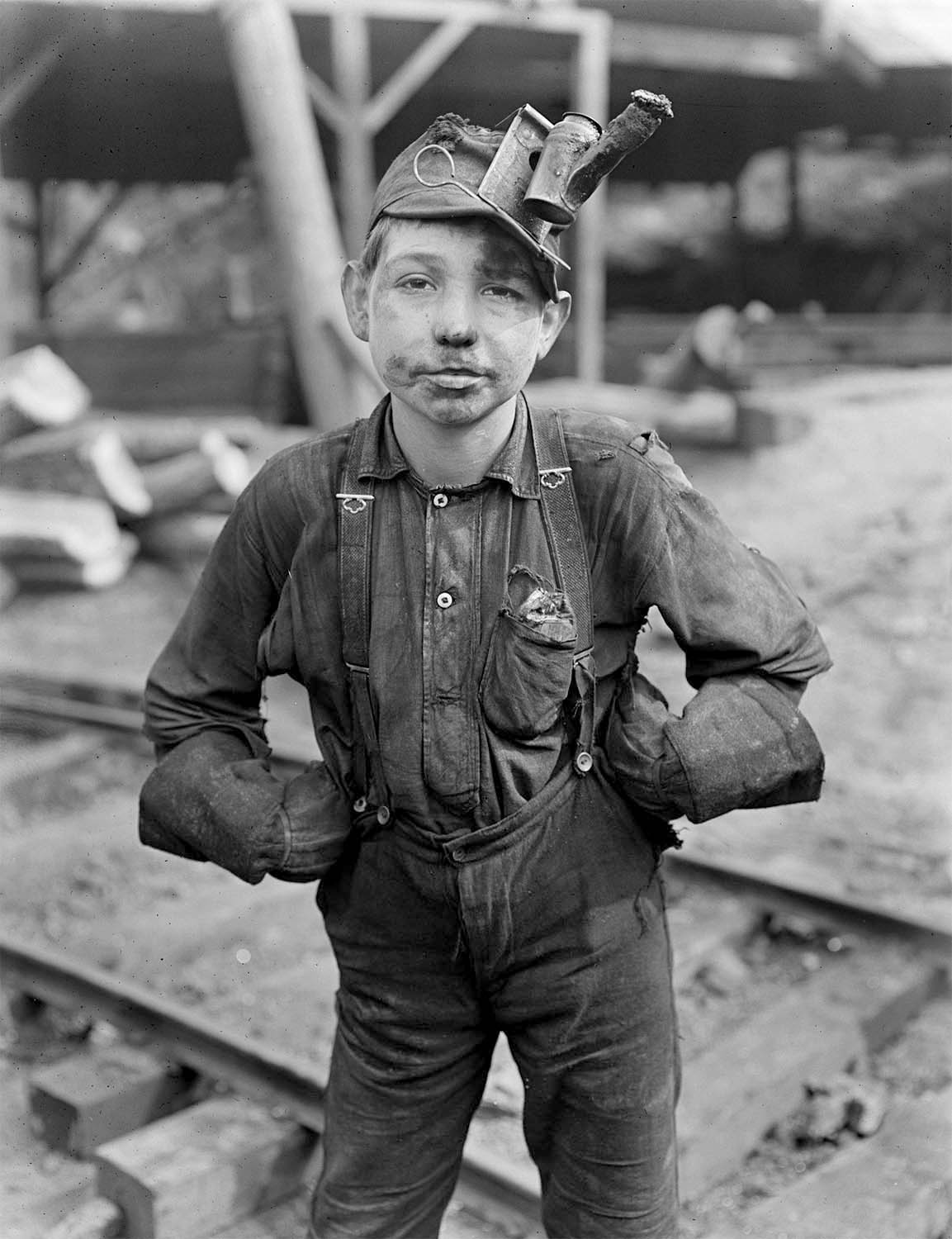
 (American, 1874-1940) 'Coal mine worker in West Virginia. Eleven year old boy. Tipple boy at the Turkey Knob coal mine in Macdonald, West Virginia' 1908


Lewis Hine
 (American, 1874-1940)
Coal mine worker in West Virginia. Eleven year old boy
Tipple boy at the Turkey Knob coal mine in Macdonald, West Virginia
1908
Gelatin silver print
© George Eastman House


Lewis Hine
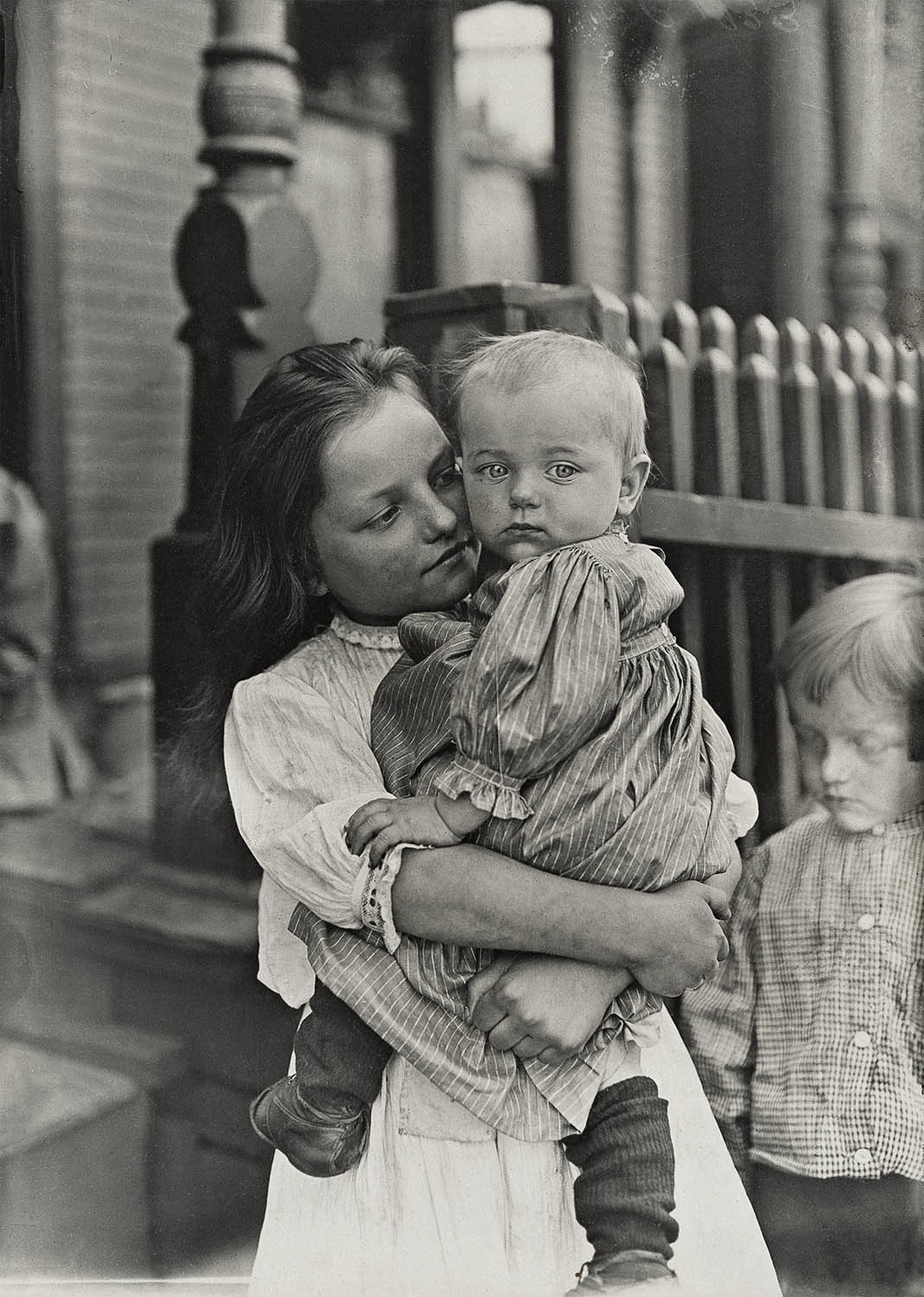
 (American, 1874-1940) 'Little Mother, Pittsburgh District' 1909


Lewis Hine
 (American, 1874-1940)
Little Mother, Pittsburgh District
1909
Gelatin silver print
© George Eastman House


Anonymous photographer (American) 'Lewis Hine photographing children in a slum' 1910


Anonymous photographer (American)
Lewis Hine photographing children in a slum
1910
© George Eastman House


Lewis Hine
 (American, 1874-1940) 'Waiting for the dispensary to open Hull House District, Chicago' 1910


Lewis Hine
 (American, 1874-1940)
Waiting for the dispensary to open Hull House District, Chicago
1910
Gelatin silver print
© George Eastman House


Lewis Hine was born in Oshkosh, Wisconsin, in 1874. He moved to New York City in 1901 to teach at the Ethical Culture School. There Hine used photographs as educational tools, and soon began to photograph immigrants at Ellis Island. He hoped his photographs would encourage people to “exert the force to right wrongs.” While continuing to teach at ECS, Hine began to do freelance work for the National Child Labor Committee, an association that transformed his professional life.

In 1908, the NCLC provided Hine a monthly salary to photographically document children in factories, mills, canneries, textile mills, street trades, and agricultural industries. Through his photographs he sought to alert the public to the extent of child labor in America, and the degree to which it denied these children their childhood, health, and education. In one year, Hine covered 12,000 miles in his quest to end abusive child labor. By 1913, Hine was considered the leading social welfare photographer in America.

Hine enjoyed a long and successful career following his work for the NCLC. He worked for the American Red Cross (1917-1920), photographing refugees and civilians in war-torn Europe, a new series of photographs of immigrants at Ellis Island (1926), a series of photographs documenting the construction of the Empire State Building (1930), photographs of drought-ridden communities in Arkansas and Kentucky (1931), as well as work for the Tennessee Valley Authority.

In 1936-1937 Hine was appointed head photographer for the National Research Project of the Works Progress Administration. The ageing Hine, however, was disappointed at the rebuff of his attempts to secure work with the Farm Services Administration, where director Roy Stryker considered Hine old fashioned and difficult. Lewis Hine died in 1940, shortly before a resurgence of public interest in his work raised him to the highest level of American photographers.

Text from Child Labour in Virginia: Photographs by Lewis Hine web page [Online] Cited 21/12/2012 no longer available online


Lewis Hine
 (American, 1874-1940) 'Paris Gamin' 1918


Lewis Hine
 (American, 1874-1940)
Paris Gamin
1918
Gelatin silver print
© George Eastman House


Lewis Hine
 (American, 1874-1940) 'Mechanic at steam pump in electric power house' 1920


Lewis Hine
 (American, 1874-1940)
Mechanic at steam pump in electric power house
1920
Gelatin silver print
© George Eastman House


Lewis Hine
 (American, 1874-1940) 'Candy Worker, New York' 1925


Lewis Hine
 (American, 1874-1940)
Candy Worker, New York
1925
Gelatin silver print
© George Eastman House


Lewis Hine
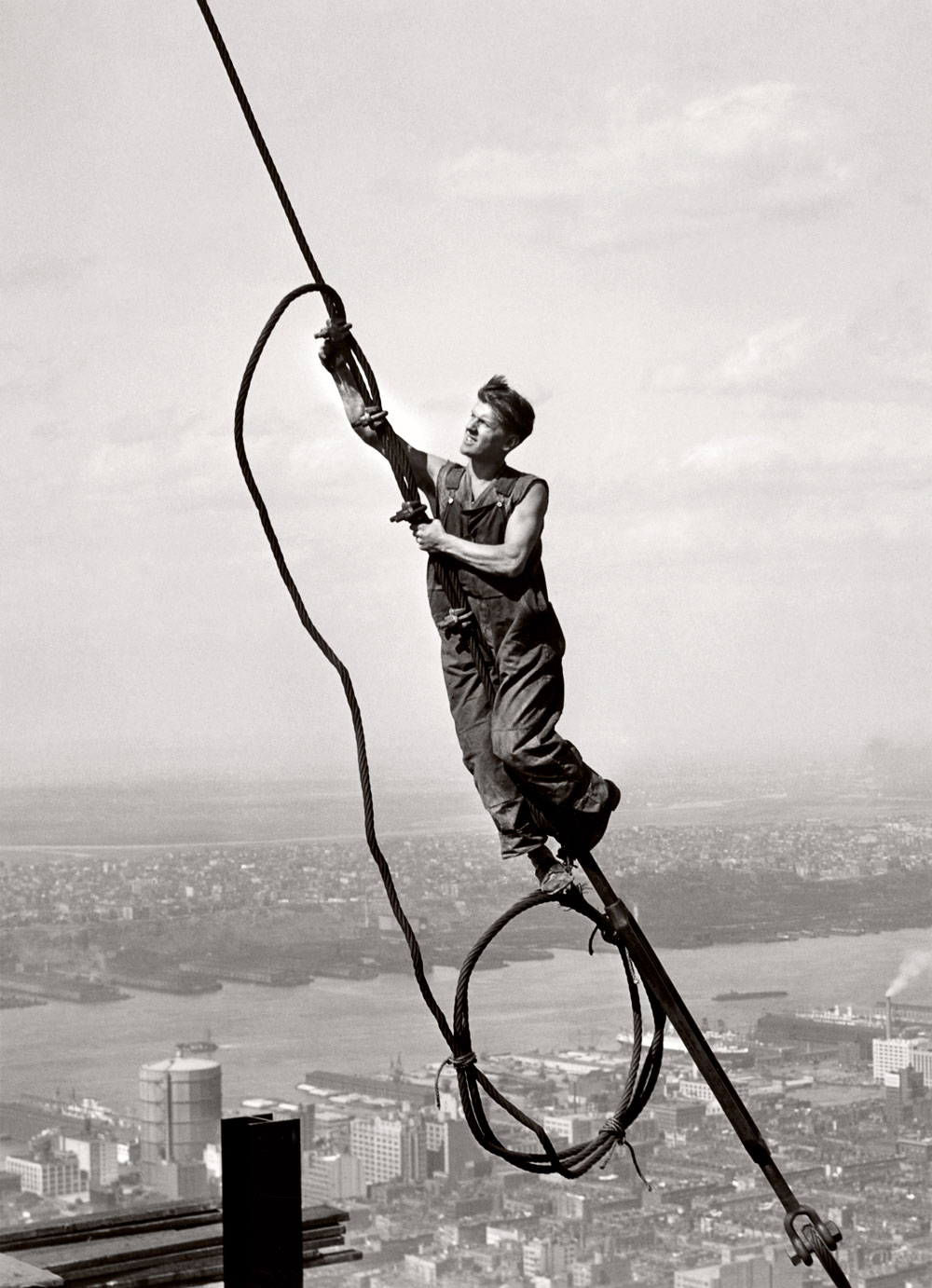
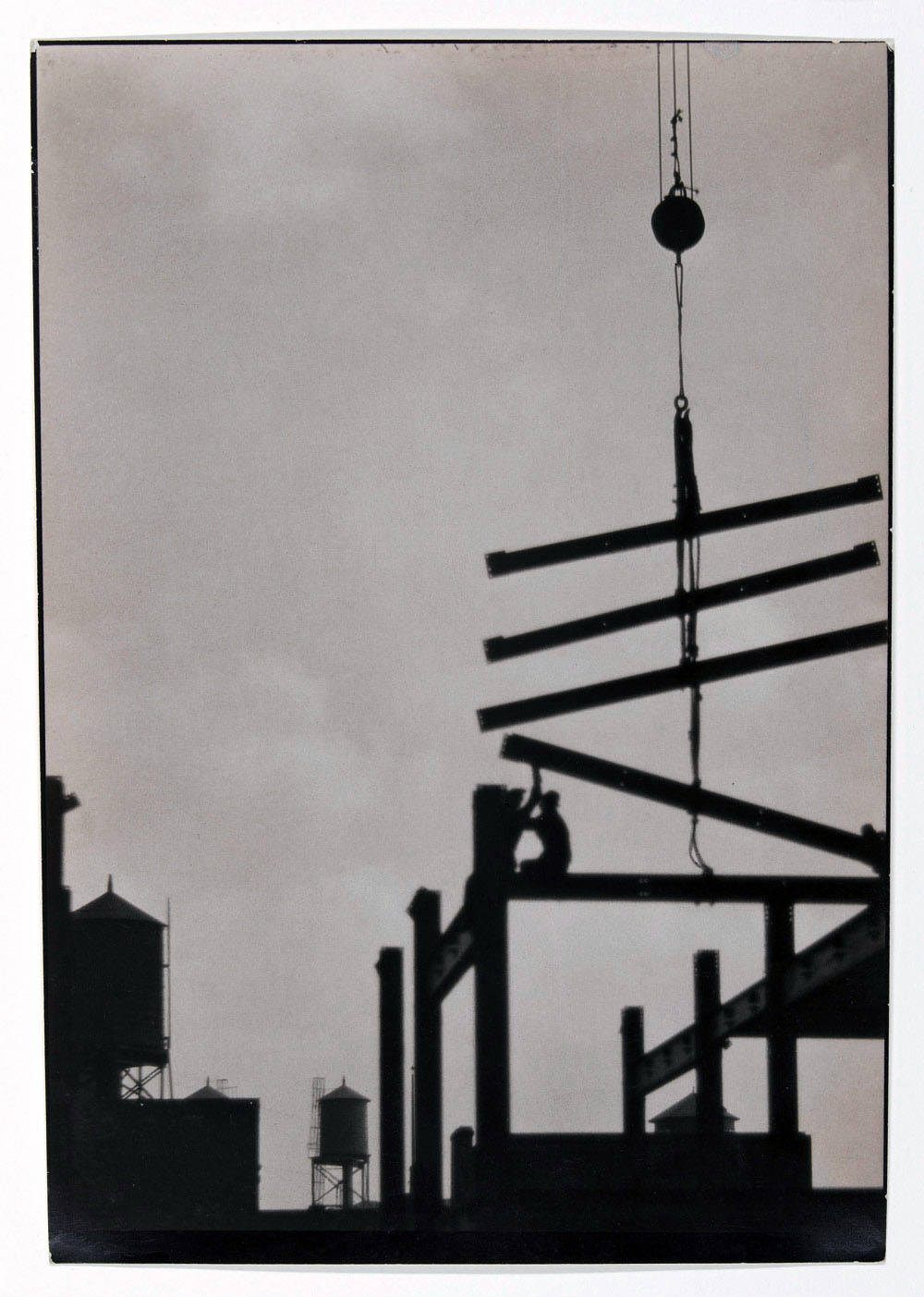
 (American, 1874-1940) 'Man on hoisting ball, Empire State building' 1931


Lewis Hine
 (American, 1874-1940)
Man on hoisting ball, Empire State building
1931
Gelatin silver print
© George Eastman House


Lewis Hine
 (American, 1874-1940) 'Steelworker standing on beam' 1931


Lewis Hine
 (American, 1874-1940)
Steelworker standing on beam
1931
Gelatin silver print
© George Eastman House


Lewis Hine
 (American, 1874-1940) 'The Sky Boy' 1931


Lewis Hine
 (American, 1874-1940)
The Sky Boy
1931
Gelatin silver print
© George Eastman House


Netherlands Museum of Photography
Wilhelminakade 332
3072 AR Rotterdam
The Netherlands

Opening hours
Tuesday – Sunday 11am – 5pm
Closed Mondays

Nederlands Museum of Photography website

LIKE ART BLART ON FACEBOOK

Back to top

Exhibition: ‘The Lives of Great Photographers’ at The National Media Museum, Bradford

Exhibition dates: 15th April – 4th September 2011


Many thankx to The National Media Museum for allowing me to publish the photographs in the posting. Please click on the photographs for a larger version of the image.


Lady Clementina Hawarden (British, 1822-1865) 'Self Portrait' c. 1864
 

Lady Clementina Hawarden (British, 1822-1865)
Self Portrait
c. 1864
Albumen print
Courtesy of the National Media Museum/SSPL


Clementina, Lady Hawarden, is a poetic, if elusive, presence among nineteenth-century photographers. As a devoted mother, her life revolved around her eight children. She took up photography in 1857; using her daughters as models, she created a body of work remarkable for its technical brilliance and its original depiction of nascent womanhood.
Lady Hawarden showed her work in the 1863 and 1864 exhibitions of the Photographic Society. With the exception of a few rare examples, her photographs remained in the possession of her family until 1939, when the more than eight hundred images were donated to the Victoria and Albert Museum. Only recently have they been the objects of research, publication, and exhibition.

Text from The Metropolitan Museum of Art website


John Moffat (Scottish, 1819-1894) 'William Henry Fox Talbot with camera and lens' 1864


John Moffat (Scottish, 1819-1894)
William Henry Fox Talbot with camera and lens
1864


Julia Margaret Cameron (British born India, 1815-1879) 'Carlyle like a rough block of Michael Angelo's sculpture' 1867


Julia Margaret Cameron (British born India, 1815-1879)
Carlyle like a rough block of Michael Angelo’s sculpture
1867
Albumen print
Courtesy The Royal Photographic Society Collection at the National Media Museum/SSPL


Henry Herschel Hay Cameron (British born India, 1852-1911) 'Mrs Julia Margaret Cameron' 1870


Henry Herschel Hay Cameron (British born India, 1852-1911)
Mrs Julia Margaret Cameron
1870
Albument print
Courtesy of the National Media Museum/SSPL


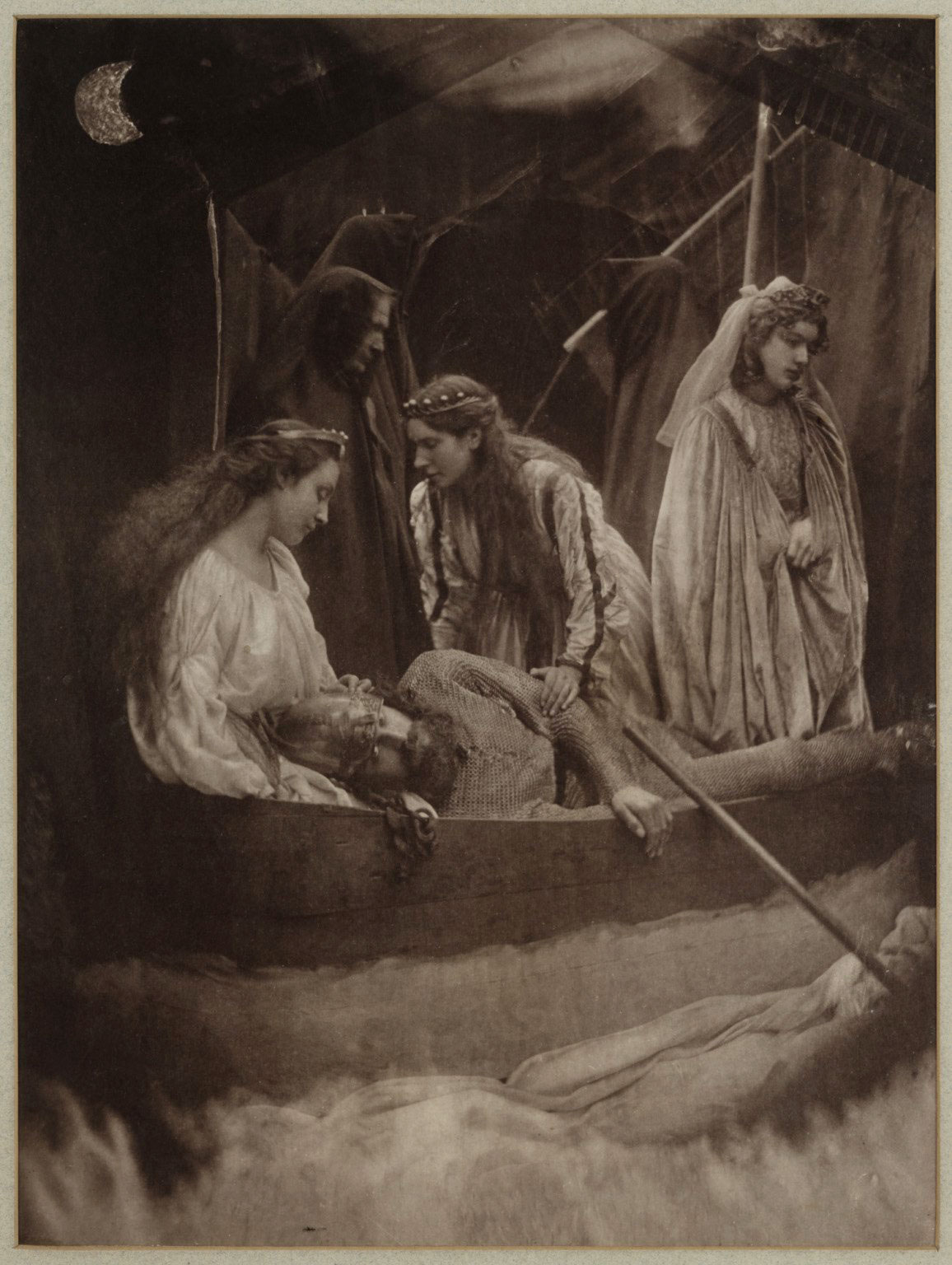
Julia Margaret Cameron (British born India, 1815-1879) 'So Like a Shatter'd Column Lay the King' 1875


Julia Margaret Cameron (British born India, 1815-1879)
So Like a Shatter’d Column Lay the King
1875
Albumen print
Courtesy of The Royal Photographic Society Collection at the National Media Museum


Photographers have created some of the most famous and memorable images ever produced, combining science and art since 1839. The Lives of Great Photographers, a free to enter exhibition at the National Media Museum in Bradford, draws on the Museum’s renowned collection to focus on the pioneers behind the camera, exploring the extraordinary stories surrounding some of photography’s most important innovators and artists.

Featuring Henri Cartier-Bresson, Julia Margaret Cameron, Robert Capa, William Henry Fox Talbot, Weegee, Tony Ray-Jones, Fay Godwin and Eadweard Muybridge, the exhibition will display iconic images and artefacts from these and other great names, selected exclusively from the National Collection of Photography.

Exhibition curator Brian Liddy said: “Photography has been with us for more than 170 years, and in that time countless famous photographs have been taken by many famous photographers. Often we may think we know these men and women because we know their work so well, but over time so many photographers’ personal stories have become overshadowed by their most famous pictures. This major exhibition aims to redress the balance.”

The show begins with an investigation into the rivalry between two of the medium’s earliest pioneers. Without Louis Jacques Mandé Daguerre and William Henry Fox Talbot, photography as it known today would not exist. Daguerre, a former theatrical designer, presented the photographic process to France and the world in 1839. Working in parallel and in competition, Talbot, who became an MP for Chippenham, went on to create the first negative from which multiple copy photographs could be produced.

As technology evolved, the breadth and range of photography increased, and the methods by which it could provide a source of income, or artistic expression, became more diverse. Julia Margaret Cameron, although primarily considered an artist, copyrighted her work and attempted to make a living by selling copies. Her personal connections gave her the opportunity to produce some of the first celebrity photographs in existence. Olive Edis employed photography as a serving war artist during the First World War and Edward Steichen’s career was remarkable for its variety as he moved effortlessly from art, to fashion, to advertising.

Photography also proved an ideal medium when it came to documenting world events. Lewis Hine and Dorothea Lange were both driven by their social consciences to record the Great Depression in America. Photojournalism, the cousin of documentary photography, is represented in the exhibition by names such as Henri Cartier-Bresson and Robert Capa, founding members of the world’s first photographic agency, Magnum. Both served in the Second World War and produced images that helped define an era.

One of the most notorious life stories is that of the English photographer Eadweard Muybridge. His pioneering work in chronophotography, whereby movement is captured by a sequence of photographic exposures, famously demonstrated that all four legs of a horse left the ground as it galloped. Until then the motion of a horse’s hooves were too quick for the human eye to determine. Perhaps less well known is the fact that Muybridge murdered his wife’s lover in cold blood but was later acquitted with a verdict of ‘justifiable homicide’.

The exhibition also includes Roger Fenton, Lady Clementina Hawarden, Alfred Stieglitz, André Kertész, and Larry Burrows. Each photographer is represented by their photographic portrait and a selection of their images. None is living, as only those whose lives and work can be evaluated in their entirety have been selected.

Brian Liddy added: “This exhibition shows just how rich the museum’s collections are. The work of some of the best-known photographers in history will be shown alongside the kinds of cameras they would have had to carry and use in the course of their work. We’ve also taken the opportunity to show rarely seen material, such as pages from the notebooks of Tony Ray-Jones detailing what was going through his mind when he was thinking about how to get the pictures he wanted.”

“By recounting the lives of these great photographers, we hope to provide an insight into what led them to produce some of the greatest photographs ever taken.”

Press release from The National Media Museum


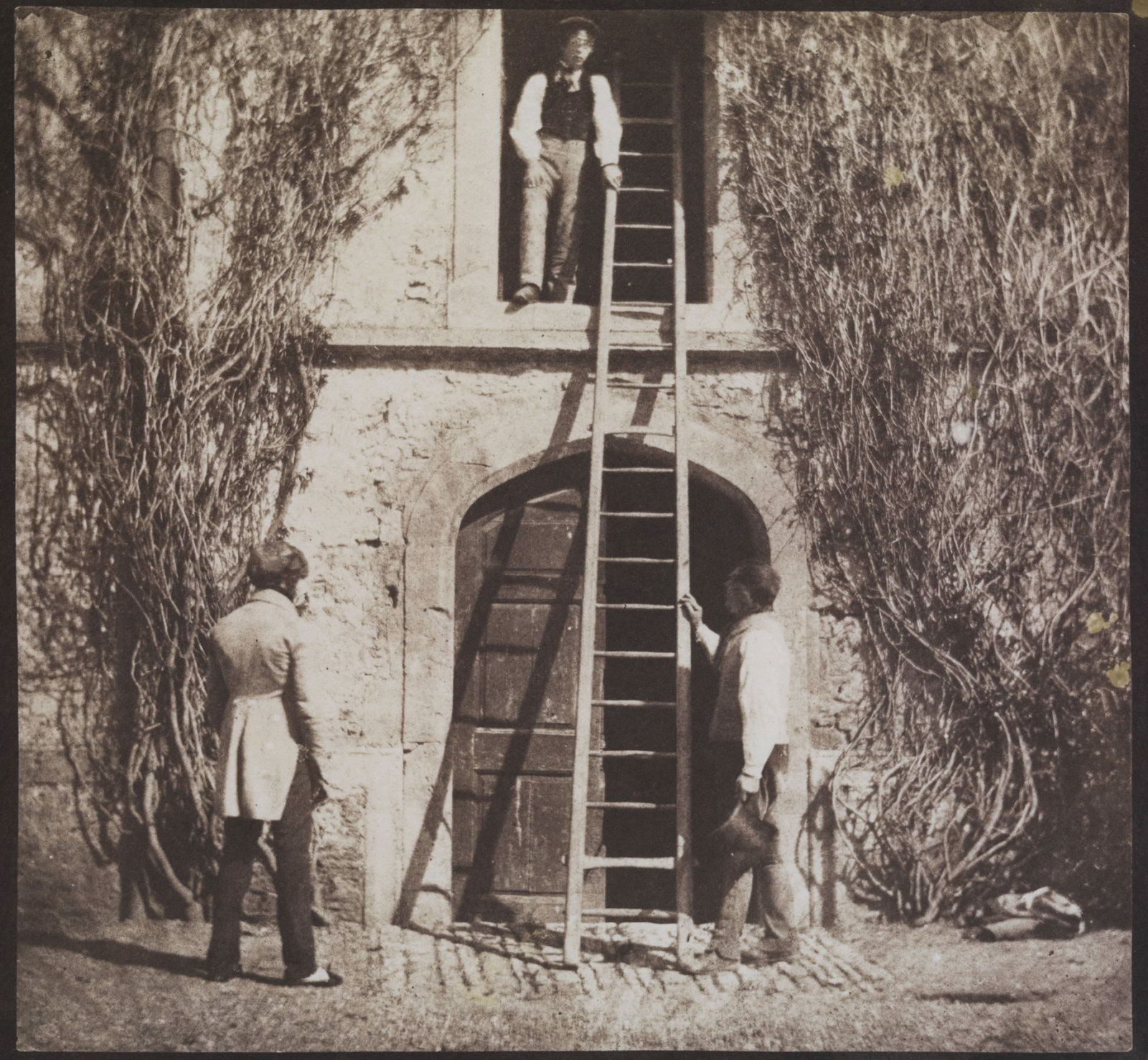
Henry Fox Talbot (British, 1800-1877) 'The Ladder' 1844


Henry Fox Talbot (British, 1800-1877)
The Ladder
1844
Salted paper print from paper negative
Courtesy of the National Media Museum/SSPL


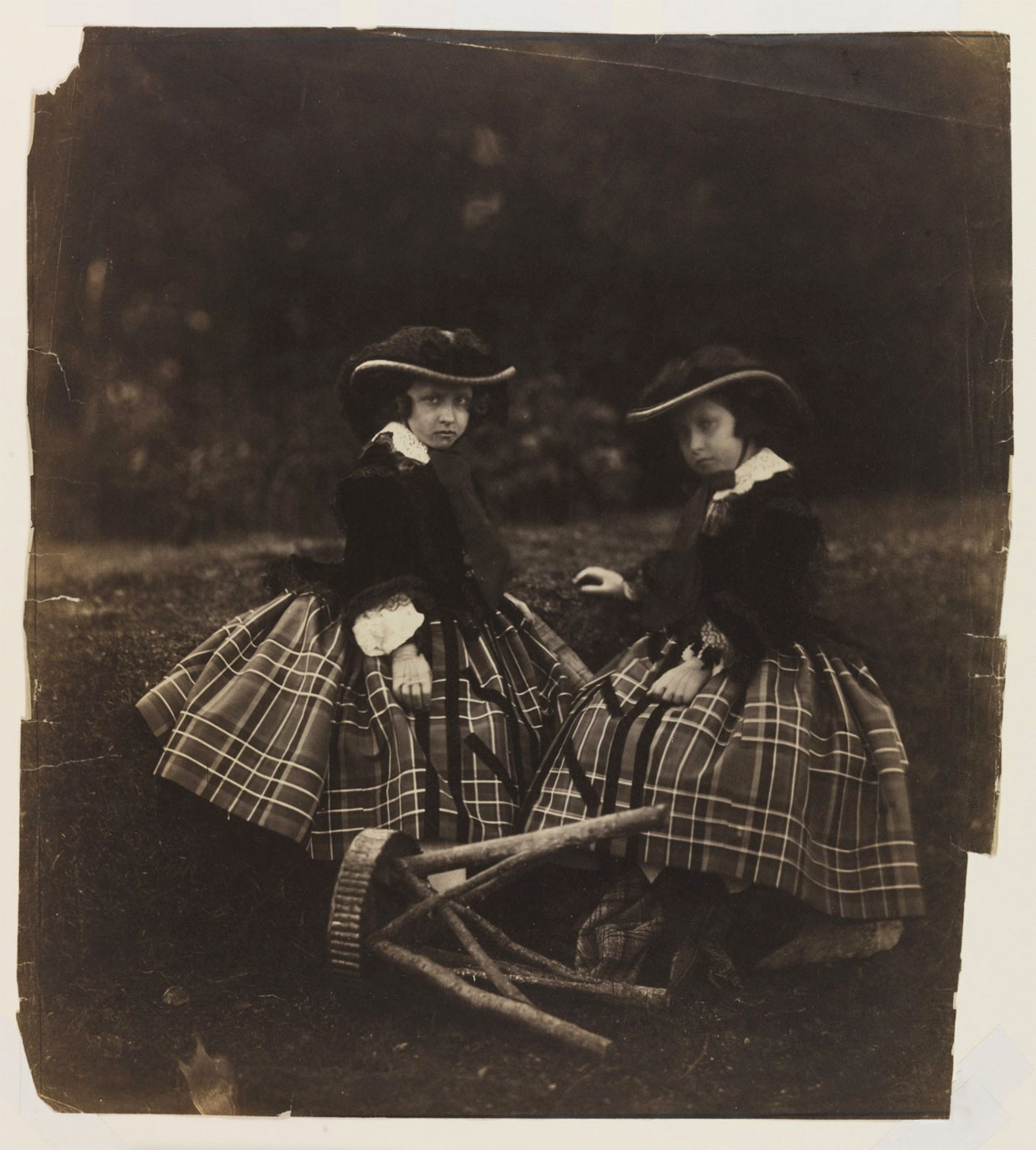
Roger Fenton (British, 1819-1869) 'Princesses Helena and Louise' 1856


Roger Fenton (British, 1819-1869)
Princesses Helena and Louise
1856
Albumen print
Courtesy of The Royal Photographic Society Collection at the National Media Museum


Photograph of Princess Helena and Princess Louise, seated outside together wearing identical outfits, including hats. Both look to front. Upturned stool in foreground.

The two princesses look straight at the camera in what is an unusually direct pose. Princess Helena (1846-1923) and Princess Louise (1848-1939) were the fifth and six children of Queen Victoria and Prince Albert. Princess Helena was herself a keen collector of photographs and compiled a number of albums commemorating her many visits to Balmoral

Text adapted from Roger Fenton – Julia Margaret Cameron: Early British photographs from the Royal Collection, London, 2010 on the Royal Collection Trust website


Eadweard Muybridge (English, 1830-1904) Man (Muybridge) throwing discus walking up steps walking Plate 519 Animal Locomotion


Eadweard Muybridge (English, 1830-1904)
Man (Muybridge) throwing discus walking up steps walking
Plate 519 Animal Locomotion
1887
Collotype
Courtesy of the National Media Museum/SSPL


Unknown photographer. 'Eadweard Muybridge' date unknown


Unknown photographer
Eadweard Muybridge
Date unknown
Courtesy of The Royal Photographic Society Collection at the National Media Museum


Alvin Langdon Coburn (American, 1882-1966) 'Alfred Stieglitz' 1905


Alvin Langdon Coburn (American, 1882-1966)
Alfred Stieglitz
1905
Courtesy of the National Media Museum/SSPL


Lewis Hine (American, 1874-1940) 'Albanian woman Ellis Island' 1905


Lewis Hine (American, 1874-1940)
Albanian woman Ellis Island
1905
Gelatin silver print
Courtesy of the National Media Museum/SSPL


At the Ethical Culture School in New York Lewis Hine taught photography to teenagers, encouraging them to observe others. He took his classes to Ellis Island to see arriving immigrants. “At times it looked like a costume ball,” he wrote, “with the multicoloured, many-styled national costumes,” This is one of over 200 photographs that Hine made himself at Ellis Island, representing an Albanian immigrant, wearing her best clothes, cleaned and immaculately pressed. Hine’s empathy with the neglected him led to a job with the National Child Labor Committee. He traveled the country photographing children at work in factories in New England, at coal mines in Pennsylvania, and canneries on the Gulf Coast. Hine’s photographs helped secure child labor laws in this country.

From Touchstones of the Twentieth Century: A History of Photography at the University of Notre Dame (exhibition, 2020-21)


Unknown photographer. 'Lewis Hine photographing children in a slum' c. 1910


Unknown photographer
Lewis Hine photographing children in a slum
c. 1910
Gelatin silver print
Courtesy of the National Media Museum/SSPL


Alvin Langdon Coburn (American, 1882-1966) 'George Davison' 1918


Alvin Langdon Coburn (American, 1882-1966)
George Davison
1918
Gelatin silver print
Courtesy of the National Media Museum/SSPL


George Davison (19 September 1854 – 26 December 1930) was an English photographer, a proponent of impressionistic photography, a co-founder of the Linked Ring Brotherhood of British artists and a managing director of Kodak UK. He was also a millionaire, thanks to an early investment in Eastman Kodak.


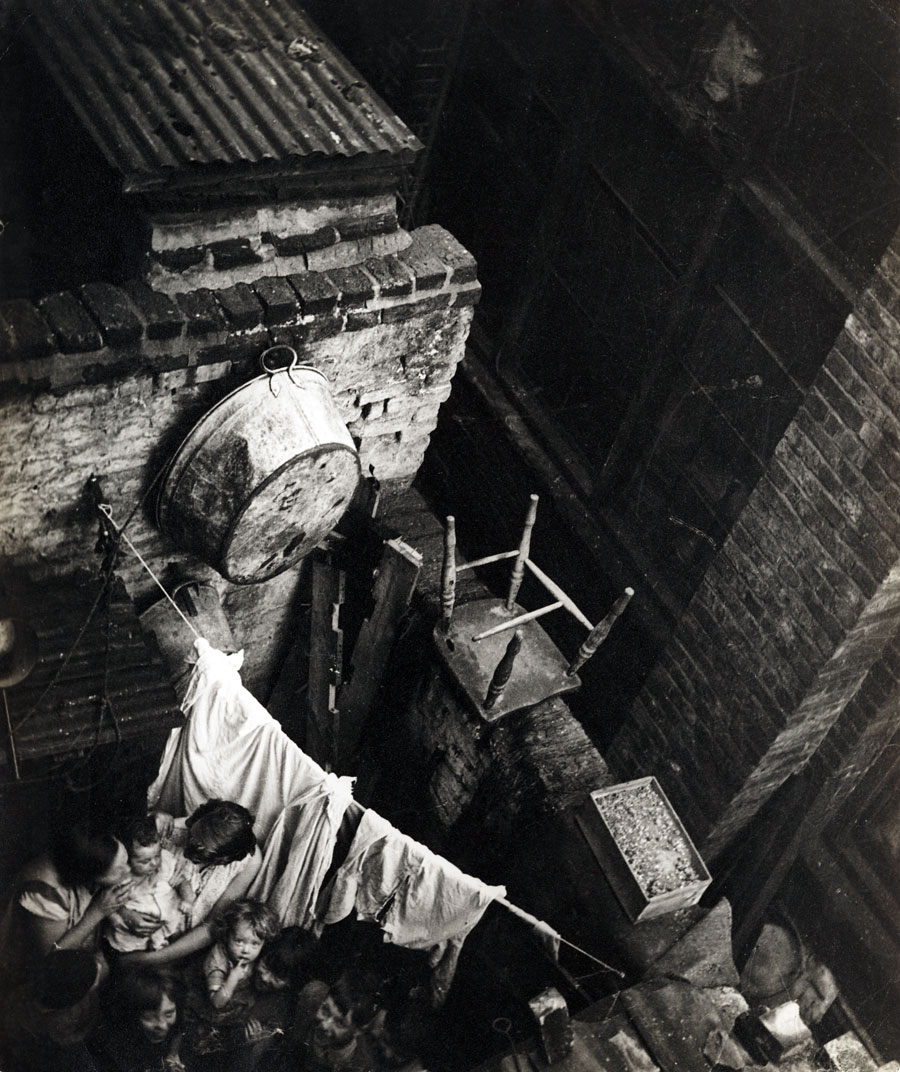
Edith Tudor Hart (Austrian-British, 1908-1973) 'Gee Street, Finsbury' 1936


Edith Tudor Hart (Austrian-British, 1908-1973)
Gee Street, Finsbury
1936
Courtesy of the National Media Museum/SSPL
© Wolfgang Suschitzky


This photograph was published alongside Poodle Parlour, London (PGP 279.33B) in the satirical magazine Lilliput in 1939, offering a comparison between the living conditions of the urban poor and the care lavished on pets by their wealthy owners. The juxtaposition made a simple political point and encouraged the viewer to think about the unequal organisation of society. This was a rhetorical technique common in left-wing illustrated journals on the Continent. The Austrian magazine, Der Kuckuck, had published a similar story in 1931 comparing the living conditions of the Berlin poor with the more salubrious accommodation of the city’s dog home.

Text from the National Galleries of Scotland website


Henri Cartier-Bresson (French, 1908-2004) 'Dessau, Germany' 1945


Henri Cartier-Bresson (French, 1908-2004)
Dessau, Germany
1945
Gelatin silver print
Courtesy of the National Media Museum/SSPL
© Henri Cartier-Bresson, Magnum, HCB Fondation


Cartier-Bresson had been a prisoner of war in Germany for nearly three years. He tried to escape two times, and then on the third time was successful. And partly because of that experience he was commissioned by the US Office of War Information to make a film about the return of displaced persons and prisoners of war.

And this incident appears in the film. The cameraman is filming this scene, and Cartier-Bresson, is right next to him making his own pictures. This is at a displaced person’s camp. And the woman in the black dress had been denounced to the Gestapo by the woman she’s about to hit. And here they’re both telling their stories to the man on the right who’s obviously the man in authority.

And what’s typical in this picture of Cartier-Bresson’s best work after the war, is that it’s all boiled down to these three protagonists. The anger of the woman who had been betrayed totally saturates her body, just the way the shame and the guilt of the woman who had done the betraying occupies her body, right down to where she’s got her thumb inside her fist.

Peter Galassi on the Museum of Modern Art website


Richard Sadler (British, 1927-2020) Weegee in Coventry, "Weegee the Famous" 1963


Richard Sadler (British, 1927-2020)
Weegee in Coventry, “Weegee the Famous”
1963
Gelatin silver print
Courtesy of the National Media Museum/SSPL


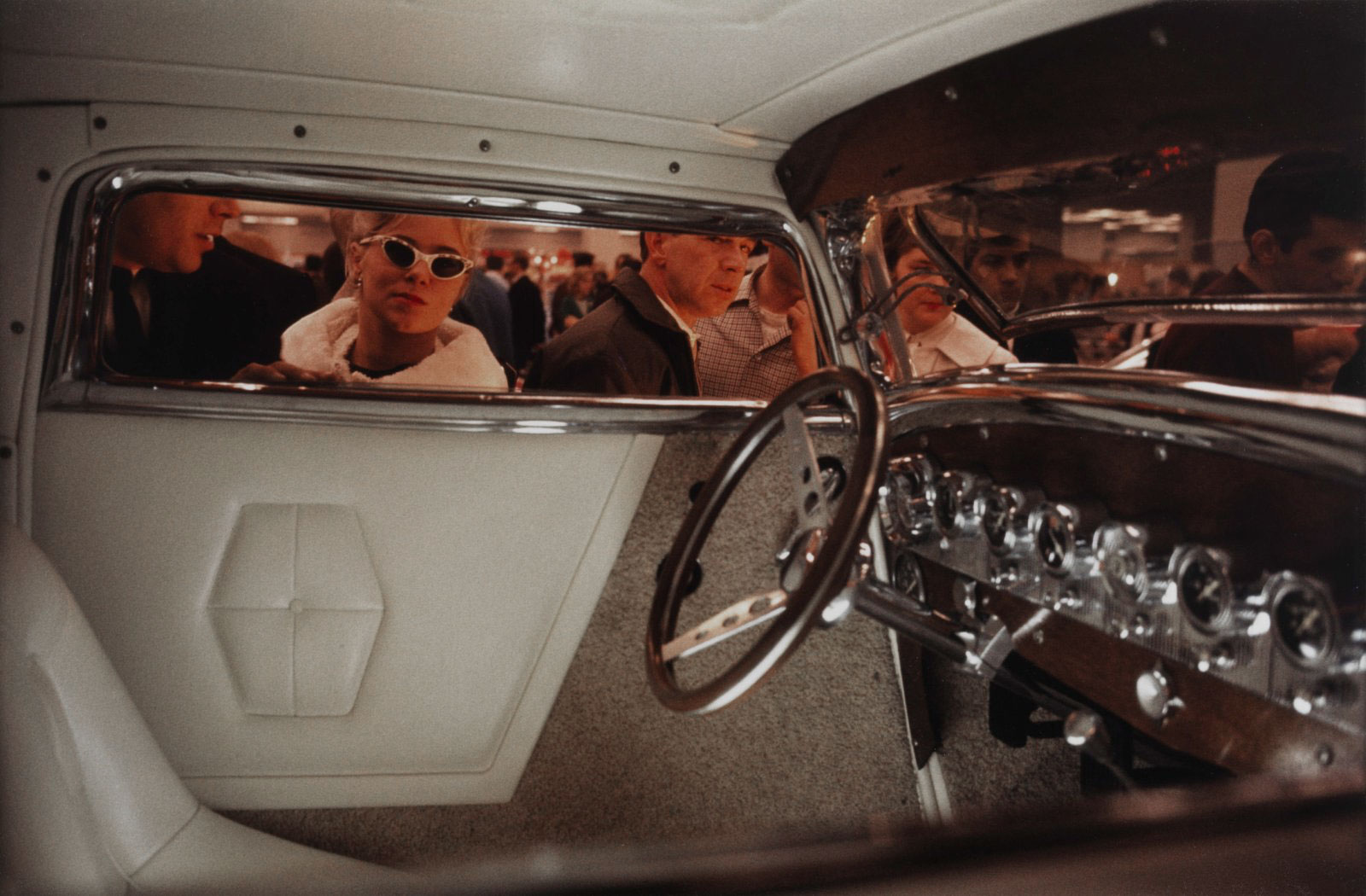
Tony Ray-Jones (English, 1941-1972) 'Auto Show, Daytona' 1965


Tony Ray-Jones (English, 1941-1972)
Auto Show, Daytona
1965
Gelatin silver print
Courtesy of the National Media Museum/SSPL


Unknown photographer. 'Portrait of Bill Brandt' c. 1979


Unknown photographer
Portrait of Bill Brandt
c. 1979
Gelatin silver print
Courtesy of the National Media Museum/SSPL


National Media Museum
Bradford,
West Yorkshire,
BD1 1NQ

Opening hours:
Wednesday – Sunday 10.00 – 17.00

National Media Museum website

LIKE ART BLACK ON FACEBOOK

Back to top

Review: ‘American Dreams: 20th century photography from George Eastman House’ at Bendigo Art Gallery, Victoria

Exhibition dates: 16th April – 10th July 2011


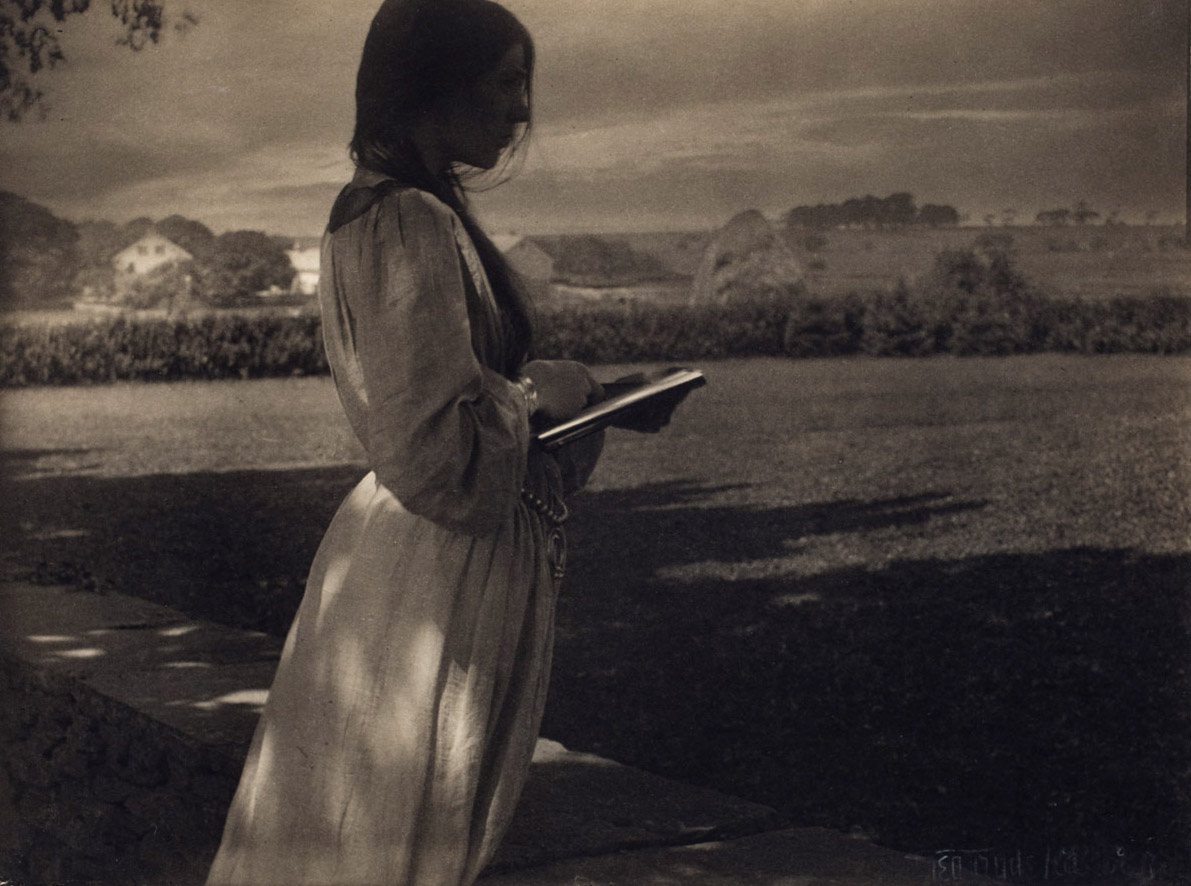
Gertrude Käsebier (American, 1852-1934) 'The Sketch (Beatrice Baxter)' 1903


Gertrude Käsebier (American, 1852-1934)
The Sketch (Beatrice Baxter)
1903
Platinum print
Gift of Hermine Turner
Collection of George Eastman House, International Museum of Photography and Film


This is a fabulous survey exhibition of the great artists of 20th century American photography, a rare chance in Australia to see such a large selection of vintage prints from some of the masters of photography. If you have a real interest in the history of photography you must see this exhibition, showing as it is just a short hour and a half drive (or train ride) from Melbourne at Bendigo Art Gallery.

I talked with the curator, Tansy Curtin, and asked her about the exhibition’s gestation. This is the first time an exhibition from the George Eastman House has come to Australia and the exhibition was 3-4 years in the making. Tansy went to George Eastman House in March last year to select the prints; this was achieved by going through solander box after solander box of vintage prints and seeing what was there, what was available and then making work sheets for the exhibition – what a glorious experience this would have been, undoing box after box to reveal these magical prints!

The themes for the exhibition were already in the history of photography and Tansy has chosen almost exclusively vintage prints that tell a narrative story, that make that story accessible to people who know little of the history of photography. With that information in mind the exhibition is divided into the following sections:

Photography becomes art; The photograph as social document; Photographing America’s monuments; Abstraction and experimentation; Photojournalism and war photography; Fashion and celebrity portraiture; Capturing the everyday; Photography in colour; Social and environmental conscience; and The contemporary narrative.


There are some impressive, jewel-like contact prints in the exhibition. One must remember that, for most of the photographers working after 1940, exposure, developing and printing using Ansel Adams Zone System (where the tonal range of the negative and print can be divided into 11 different ‘zones’ from 0 for absolute black and to 10 for absolute white) was the height of technical sophistication and aesthetic choice, equal to the best gaming graphics from today’s age. It was a system that I used in my black and white film development and printing. Film development using a Pyrogallol staining developer (the infamous ‘pyro’, a developer I tried to master without success in a few trial batches of film) was also technically difficult but the ability of this developer to obtain a greater dynamic range of zones in the film itself was outstanding.

“The Zone System provides photographers with a systematic method of precisely defining the relationship between the way they visualise the photographic subject and the final results… An expressive image involves the arrangement and rendering of various scene elements according to photographer’s desire. Achieving the desired image involves image management (placement of the camera, choice of lens, and possibly the use of camera movements) and control of image values. The Zone System is concerned with control of image values, ensuring that light and dark values are rendered as desired. Anticipation of the final result before making the exposure is known as visualisation.”1

Previsualisation, the ability of the photographer to see ‘in the mind’s eye’ the outcome of the photograph (the final print) before even looking through the camera lens to take the photograph, was an important skill for most of these photographers. This skill has important implications for today’s photographers, should they choose to develop this aspect of looking: not as a mechanistic system but as a meditation on the possibilities of each part of the process, the outcome being an expressive print.


A selection of the best photographs in the exhibition could include,

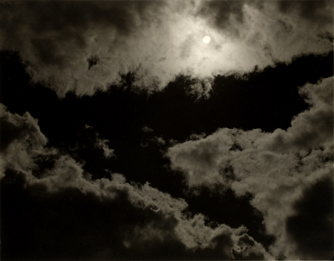
1/ An original 1923 Alfred Steiglitz Equivalent contact print – small (approx. 9cm x 12cm, see below), intense, the opaque brown blacks really strong, the sun shining brightly through the velvety clouds. In the Equivalents series the photograph was purely abstract, standing as a metaphor for another state of being, in this case music. A wonderful melding of the technical and the aesthetic the Equivalents “are generally recognised as the first photographs intended to free the subject matter from literal interpretation, and, as such, are some of the first completely abstract photographic works of art.”2

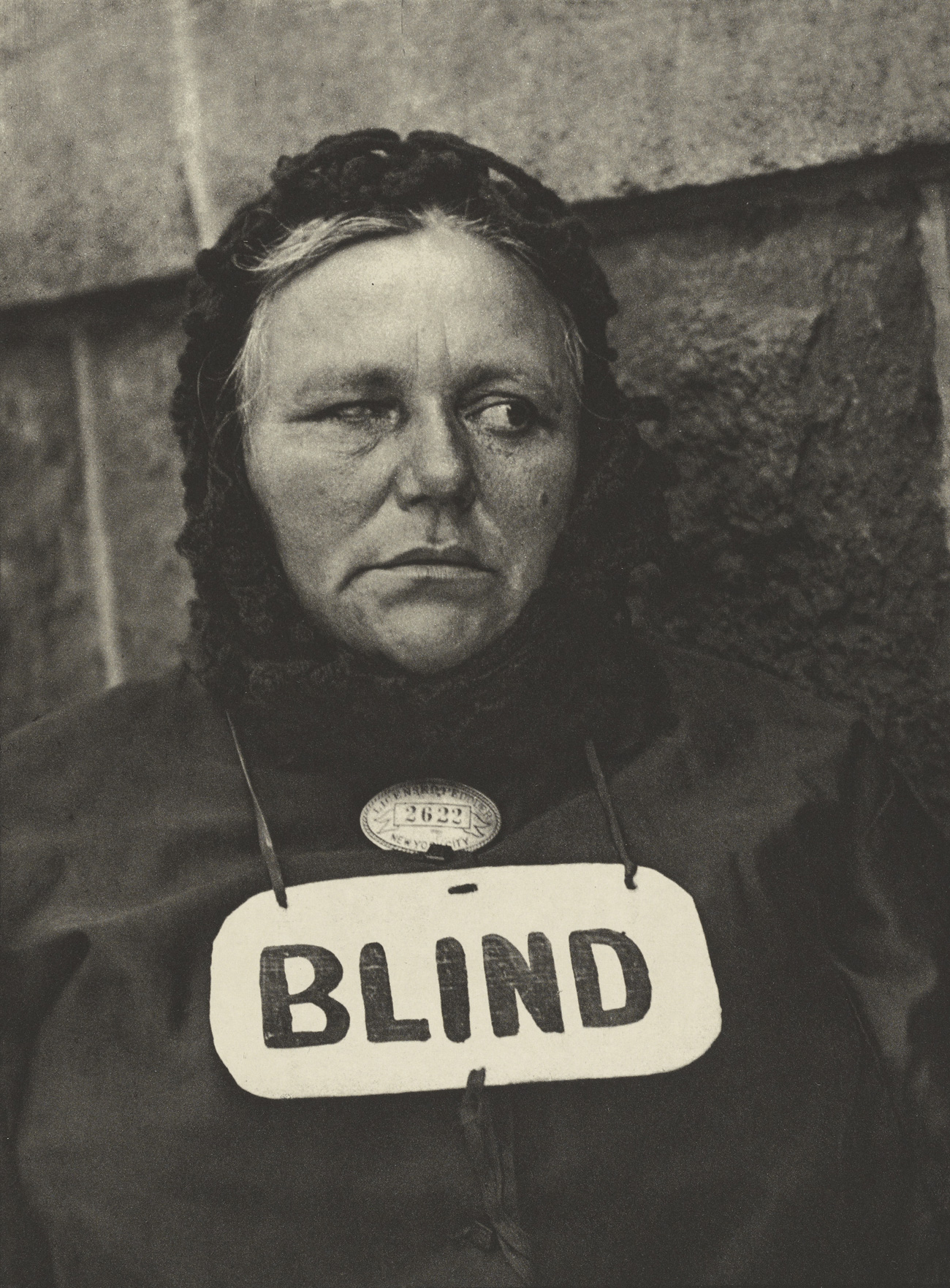
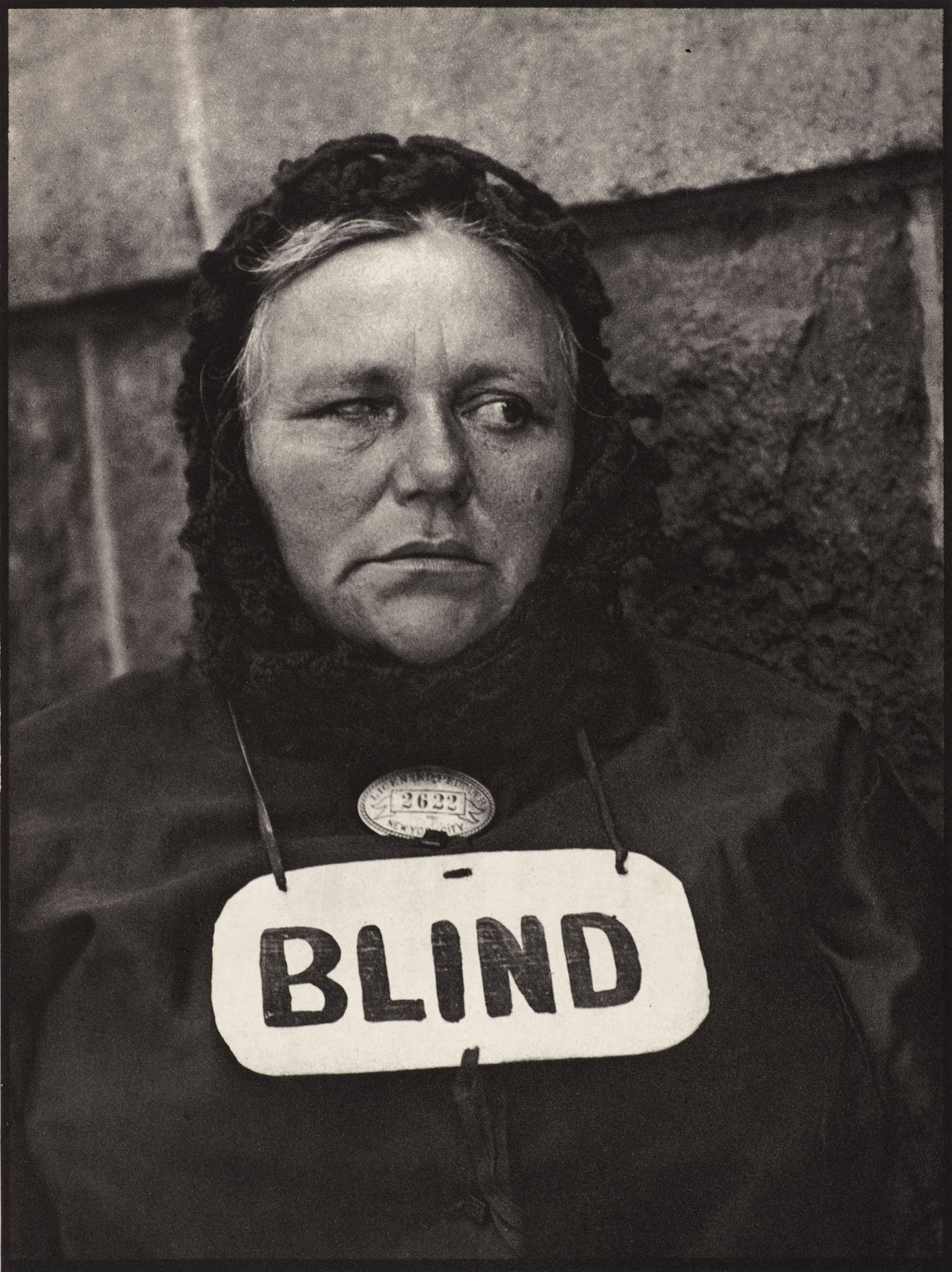
2/ Paul Strand Blind (1915, printed 1945) – printed so dark that you cannot see the creases in the coat of the blind woman with a Zone 3 dark skin tone.

3/ Lewis Hine [Powerhouse mechanic] see below, vintage 1920 print full of subtle tones. Usually when viewing reproductions of this image it is either cropped or the emphasis is on the body of the mechanic; in this print his skin tones are translucent, silvery and the emphasis is on the man in unison with the machine. The light is from the top right of the print and falls not on him directly, but on the machinery at upper right = this is the emotional heart of this image!

4/ Three tiny vintage Tina Modotti prints from c. 1929 – so small, such intense visions. I have never seen one original Modotti before so to see three was just sensational.

5/ Walker Evans View of Morgantown, West Virginia vintage 1935 print – a cubist dissection of space and the image plane with two-point perspective of telegraph pole with lines.

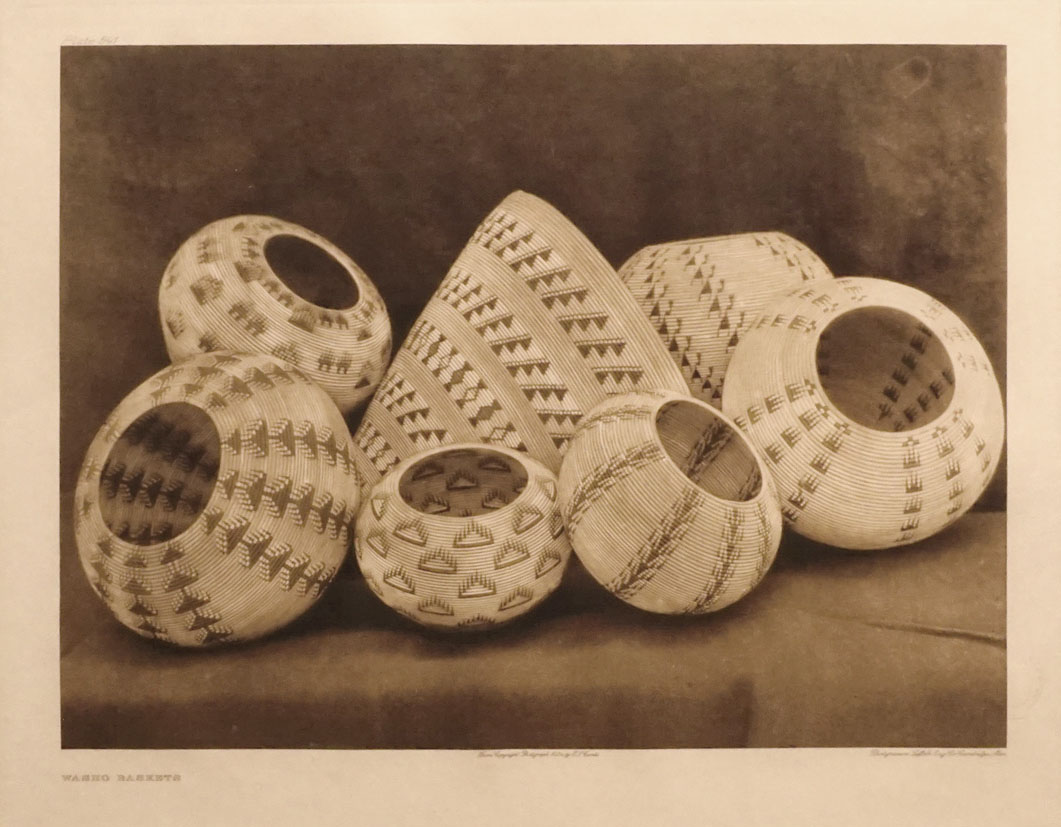
6/ An Edward S. Curtis photogravure Washo Baskets (1924, from the portfolio The North American Indian) – such a sumptuous composition and the tones…

7/ Ansel Adams 8″ x 10″ contact print of Winter Storm (1944, printed 1959, see above) where the blackness of the mountain on the left hand side of the print was almost impenetrable and, because of the large format negative, the snow on the rock in mid-distance was like a sprinkling of icing sugar on a cake it was that sharp.

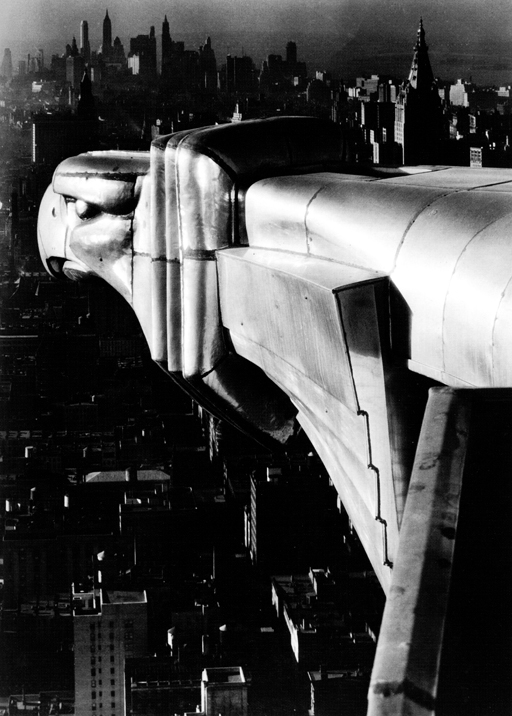
8/ A most splendid print of the Chrysler Building (vintage 1930 print, approx. 48 x 34cm) by Margaret Bourke-White – tonally rich browns, smoky, hazy city at top; almost like a platinum print rather than a silver gelatin photograph. The bottom left of the print was SO dark but you could still see into the shadows just to see the buildings.

9/ An original Robert Capa 1944 photograph from the Omaha Beach D Day landings!

10/ Frontline soldier with canteen, Saipan (1944, vintage print) by W Eugene Smith where the faces of the soldiers were almost Zone 2-3 and there was nothing in the print above zone 5 (mid-grey) – no physical and metaphoric light.

11/ One of the absolute highlights: two vintage Edward Weston side by side, the form of one echoing the form of the other; Nude from the 50th Anniversary Portfolio 1902-1952 (1936, printed 1951), an 8″ x 10″ contact print side by side with an 8″ x 10″ contact print of Pepper No. 30 (vintage 1930 print). Nothing over zone 7 in the skin tones of the nude, no specular highlights; the sensuality in the pepper just stunning – one of my favourite prints of the day – look at the tones, look at the light!

12/ Three vintage Aaron Siskind (one of my favourite photographers) including two early prints from 1938 – wow. Absolutely stunning.

13/ Harry Callahan. That oh so famous image of Eleanor and Barbara, Chicago (vintage 1953 print) that reminds me of the work of Jeffrey Smart (or is it the other way around). The wonderful space around the figures, the beautiful composition, the cobblestones and the light – just ravishing.

14/ The absolute highlight: Three vintage Diane Arbus prints in a row – including a 15″ square image from the last series of work Untitled (6) (vintage 1971 print, see above) – the year in which she committed suicide. This had to be the moment of the day for me. This has always been one of my favourite photographs ever and it did not disappoint; there was a darkness to the trees behind the three figures and much darker grass (zone 3-4) than I had ever imagined with a luminous central figure. The joyousness of the figures was incredible. The present on the ground at the right hand side was a revelation – usually lost in reproductions this stood out from the grass like you wouldn’t believe in the print. Being an emotional person I am not afraid to admit it, I burst into tears…

15/ And finally another special… Two vintage Stephen Shore chromogenic colour prints from 1976 where the colours are still true and have not faded. This was incredible – seeing vintage prints from one of the early masters of colour photography; noticing that they are not full of contrast like a lot of today’s colour photographs – more like a subtle Panavision or Technicolor film from the early 1960s. Rich, subtle, beautiful hues. For a contemporary colour photographer the trip to Bendigo just to see these two prints would be worth the time and the car trip/rail ticket alone!


Not everything is sweetness and light. The print by Dorothea Lange Migrant Mother, Nipomo, California is a contemporary print from 2003, the vintage print having just been out on loan; the contemporary section, ‘The contemporary narrative’, is very light on, due mainly to the nature of the holdings of George Eastman House; and there are some major photographers missing from the line up including Minor White, Fredrick Sommer, Paul Caponigro, Wynn Bullock and William Clift to name just a few.

Of more concern are the reproductions in the catalogue, the images for reproduction supplied by George Eastman House and the catalogue signed off by them. The reproduction of Margaret Bourke-White’s Chrysler Building (1930, see below) bears no relationship to the print in the exhibition and really is a denigration to the work of that wonderful photographer. Other reproductions are massively oversized, including the Alfred Stieglitz Equivalent, Lewis Hine’s Powerhouse mechanic (see below) and Tina Modotti’s Woman Carrying Child (c. 1929). In Walter Benjamin’s terms (The Work of Art in the Age of Mechanical Reproduction) the aura of the original has been lost and these reproductions further erode the authenticity of the original in their infinite reproducability. Conversely, it could be argued that the reproduction auraticizes the original:

“The original artwork has become a device to sell its multiply-reproduced derivatives; reproductability turned into a ploy to auraticize the original after the decay of aura…”3

In other words, after having seen so many reproductions when you actually see the original – it is like a bolt of lightning, the aura that emanates from the original. This is so true of this exhibition but it still begs the question: why reproduce in the catalogue at a totally inappropriate size? Personally, I believe that the signification of the reproduction (in terms of size and intensity of visualisation) is so widely at variance with the original one must question the decision to reproduce at this size knowing that this variance is a misrepresentation of the artistic interpretation of the author.

In conclusion, this is a sublime exhibition well worthy of the time and energy to journey up to Bendigo to see it. A true lover of classical American black and white and colour photography would be a fool to miss it!

Dr Marcus Bunyan


1/ Anon. “Zone System,” on Wikipedia [Online] Cited 13/06/2011
2/ Anon. “Equivalents,” on Wikipedia [Online] Cited 13/06/2011
3/ Huyssen, Andreas. Twilight Memories: Marking Time in a Culture of Amnesia. London: Routledge, 1995, pp. 23-24


Many thankx to Tansy Curtin, Senior Curator, Programs and Access at Bendigo Art Gallery for her time and knowledge when I visited the gallery; and to Bendigo Art Gallery for allowing me to publish the text and photographs in the posting. Please click on the photographs for a larger version of the image.


Alfred Stieglitz (American, 1864-1946) 'Equivalent' 1923


Actual size of print: 9.2 x 11.8 cm
Size of print in catalogue: 18.5 x 13.9 cm

These two photographs represent a proportionate relation between the two sizes as they appear in print and catalogue but because of monitor resolutions are not the actual size of the two prints.


Alfred Stieglitz (American, 1864-1946) 'Equivalent' 1923


Alfred Stieglitz (American, 1864-1946)
Equivalent
1923
Gelatin silver print
Collection of George Eastman House, International Museum of Photography and Film 


Lewis Hine (American, 1874-1940) '[Powerhouse mechanic]' 1920 catalogue size


Actual size of print: 16.9 x 11.8cm
Size of print in catalogue: 23.2 x 15.8cm

These two photographs represent a proportionate relation between the two sizes as they appear in print and catalogue but because of monitor resolutions are not the actual size of the two prints.


Lewis Hine (American, 1874-1940) '[Powerhouse mechanic]' 1920 catalogue size


Lewis Hine (American, 1874-1940)
[Powerhouse mechanic]
1920
Gelatin silver print
Transfer from the Photo League Lewis Hine Memorial Committee, ex-collection Corydon Hine
Collection of George Eastman House, International Museum of Photography and Film


Margaret Bourke-White (American, 1904-1971) 'Chrysler Building' New York City, 1930


As it approximately appears in the exhibition (above, from my notes, memory and comparing the print in the exhibition with the catalogue reproduction)

Below, as the reproduction appears in the catalogue (scanned)


Margaret Bourke-White (American, 1904-1971) 'Chrysler Building' New York City, 1930


Margaret Bourke-White (American, 1904-1971)
Chrysler Building
New York City
1930
Silver gelatin photograph


An exhibition of treasures from arguably the world’s most important photographic museum, George Eastman House, has been developed by Bendigo Art Gallery. The exhibition American Dreams will bring, for the first time, eighty of some of the most iconic photographic images from the 20th Century to Australia.

The choice of works highlights the trailblazing role these American artists had on the world stage in developing and shaping the medium, and the impact these widely published images had on the greater community.

Curator Tansy Curtin, who worked closely with George Eastman House developing the exhibition commented, “Through these images we can recognise the extraordinary ability of these artists, and their pivotal role influencing the evolution of photography. Their far-reaching images helped shape American culture, and impacted on the fundamental role photography has in communications today. Even more than this we can see through these artists the burgeoning love of photography that engaged a nation.”

Through these images we can see not only the development of photography, but also as some of the most powerful social documentary photography of last century, we see extraordinary moments captured in the lives of a wide range of Americans. The works distil the dramatic transformation that affected people during the 20th century – the affluence, degradation, loss, hope and change – both personally and throughout society.

The role of photography in nation building is exemplified in Ansel Adams’ majestic portraits of Yosemite national park, Bourke-White’s Chrysler building and images of migrants and farm workers during the Depression. Tansy Curtin added, “We see the United States ‘growing up’ through photography. We see hopes raised and crushed and the inevitable striving for the American Dream.” Director of Bendigo Art Gallery Karen Quinlan said, “We are thrilled to have been given this unprecedented opportunity to work with this unrivalled photographic archive. The resulting exhibition American Dreams, represents one of the most important and comprehensive collections of American 20th Century photography to come to Australia.”

George Eastman House holds over 400,000 images from the invention of photography to the present day. George Eastman, one time owner of the home in which the archives are housed, founded Kodak and revolutionised and democratised photography around the world. Eastman is considered the grandfather of snapshot photography.

American Dreams is one of the first exhibitions from this important collection to have been curated by an outside institution. It will be the first time Australian audiences have been given the opportunity to engage with this vast archive.

Press release from the Bendigo Art Gallery


Paul Strand (American, 1890-1976) 'Photograph - New York' Negative 1916; print June 1917


Paul Strand (American 1890-1976)
Blind woman, New York
1916
Platinum print
Collection of George Eastman House, International Museum of Photography and Film


Edward S. Curtis (American, 1868-1952) 'Washo Baskets' 1924


Edward S. Curtis (American, 1868-1952)
Washo Baskets
1924
From the portfolio The North American Indian
Photogravure
Collection of George Eastman House, International Museum of Photography and Film


Tina Modotti (Italian / American / Mexican, 1896-1942) 'Woman Carrying Child' c. 1929


Tina Modotti (Italian / American / Mexican, 1896-1942)
Woman Carrying Child
c. 1929
Gelatin silver print
Collection of George Eastman House, International Museum of Photography and Film


Edward Weston (American, 1886-1958) 'Pepper No. 30' 1930


Edward Weston (American, 1886-1958)
Pepper No. 30
1930
Vintage silver gelatin print
Collection of George Eastman House, International Museum of Photography and Film


Walker Evans (American, 1903-1975) 'Torn Poster, Truro, Massachusetts' 1930


Walker Evans (American, 1903-1975)
Torn Poster, Truro, Massachusetts
1930
Gelatin silver contact print
Purchased with funds from National Endowment for the Arts
Collection of George Eastman House, International Museum of Photography and Film


Alfred Steiglitz (American, 1864-1946) '[Georgia O'Keefe hand on back tire of Ford V8]' 1933


Alfred Steiglitz (American, 1864-1946)
[Georgia O’Keefe hand on back tire of Ford V8]
1933
gelatin silver print
Part purchase and part gift from Georgia O’Keefe
Collection of George Eastman House, International Museum of Photography and Film


Walker Evans (American, 1903-1975) 'View of Morgantown, West Virginia' June, 1935


Walker Evans (American, 1903-1975)
View of Morgantown, West Virginia
June, 1935
Gelatin silver print
Collection of George Eastman House, International Museum of Photography and Film


Dorothea Lange (American, 1895-1965) 'Migrant Mother, Nipomo, California' 1936, printed c. 2003


Dorothea Lange (American, 1895-1965)
Migrant Mother, Nipomo, California
1936, printed c. 2003
Photogravure print
Gift of Sean Corcoran
Collection of George Eastman House, International Museum of Photography and Film


Edward Weston (American, 1886-1958) 'Nude' 1936


Edward Weston (American, 1886-1958)
Nude
1936, printed 1951
From the Fiftieth Anniversary Portfolio: 1902-1952, c. 1952
Vintage silver gelatin print
Collection of George Eastman House, International Museum of Photography and Film


Dorothea Lange (American, 1895-1965) 'Kern County California' 1938


Dorothea Lange (American, 1895-1965)
Kern County California
1938
Gelatin silver print
Exchange with Roy Stryker
Collection of George Eastman House, International Museum of Photography and Film


Ansel Adams (American, 1902-1984) 'Clearing Winter Storm, Yosemite National Park' c. 1938


Ansel Adams (American, 1902-1984)
Clearing Winter Storm, Yosemite National Park
c. 1938
Gelatin silver print
Collection of George Eastman House, International Museum of Photography and Film


W. Eugene Smith (American, 1918-1978) '[Frontline Soldier with Canteen at Saipan]' June 1944


W. Eugene Smith (American, 1918-1978)
[Frontline Soldier with Canteen at Saipan]
June 1944
Gelatin silver print
41.1 × 32.4cm
Collection of George Eastman House, International Museum of Photography and Film


Harry Callahan (American, 1912-1999) 'Eleanor and Barbara, Chicago' 1953


Harry Callahan (American, 1912-1999)
Eleanor and Barbara, Chicago
1953
Vintage gelatin silver print
Collection of George Eastman House, International Museum of Photography and Film


Diane Arbus (American, 1923-1971) 'Untitled (6)' 1971


Diane Arbus (American, 1923-1971)
Untitled (6)
1971
Gelatin silver print
Collection of George Eastman House, International Museum of Photography and Film


Bendigo Art Gallery
42 View Street Bendigo
Victoria Australia 3550
Phone: 03 5434 6088

Opening hours:
Bendigo Art Gallery is open daily 10 am – 5 pm

Bendigo Art Gallery website

LIKE ART BLART ON FACEBOOK

Back to top

Exhibition: ‘Stieglitz, Steichen, Strand’ at The Metropolitan Museum of Art, New York

Exhibition dates: 10th November 2010 – 10th April 2011


Many thankx to the The Metropolitan Museum of Art for allowing me to publish the photographs in the posting. Please click on the photograph for a larger version of the image.


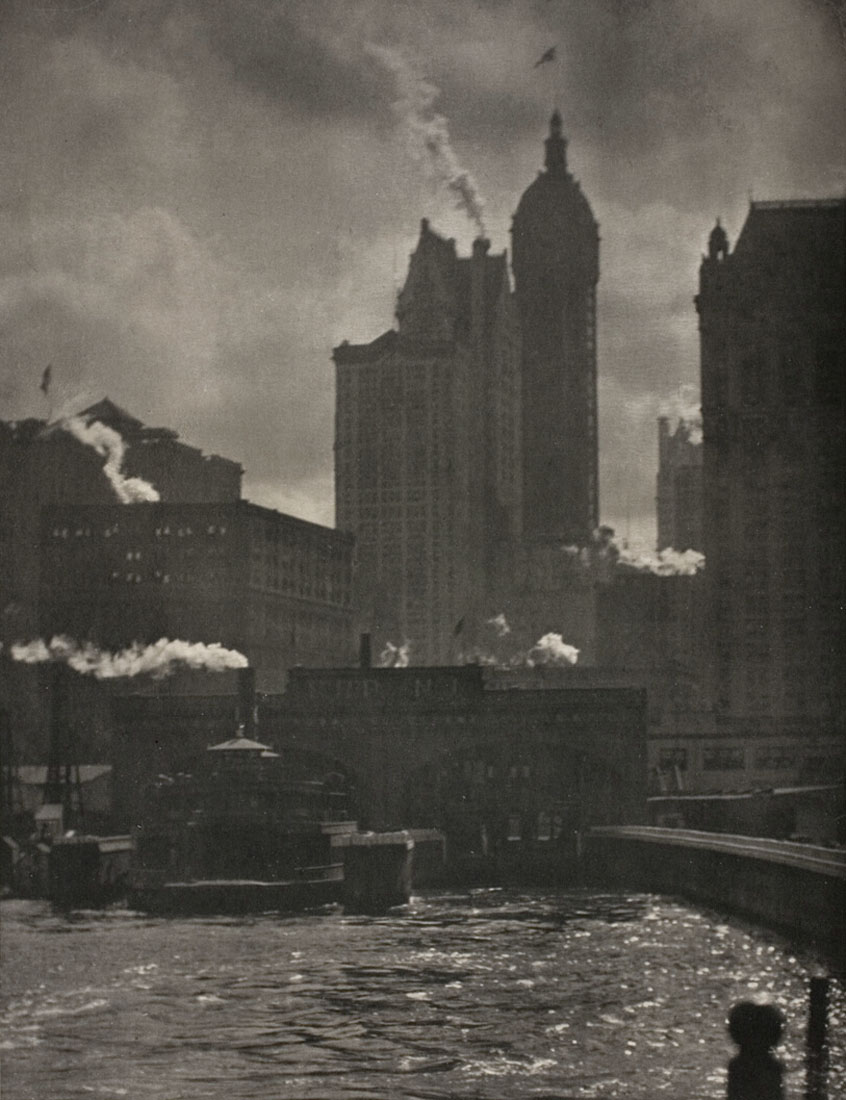
Alfred Stieglitz (American, 1864-1946) 'The Terminal' 1893


Alfred Stieglitz (American, 1864-1946)
The Terminal
1893, printed 1920s-30s
Gelatin silver print
8.9 x 11.5cm (3 1/2 x 4 1/2 in.)
The Metropolitan Museum of Art
Alfred Stieglitz Collection, 1949


As proprietor of the Little Galleries of the Photo-Secession and publisher of the photographic journals Camera Notes and later Camera Work, Stieglitz was a major force in the promotion and elevation of photography as a fine art in America in the late nineteenth and early twentieth centuries. His own photographs had an equally revolutionary impact on the advancement of the medium.

Stieglitz took this picture using a small 4 x 5″ camera, an instrument not considered at the time to be worthy of artistic photography. Unlike the unwieldy 8 x 10″ view camera (which required a tripod), this camera gave Stieglitz greater freedom and mobility to roam the city and respond quickly to the everchanging street life around him. The Terminal predicts by over a decade the radical transformation of the medium from painterly prints of rarified subjects to what the critic Sadakichi Hartmann dubbed “straight photography.” This new photography would take as its subject matter the quotidian aspects of modern, urban life, using only techniques that are unique to the medium.

Text from The Metropolitan Museum of Art website


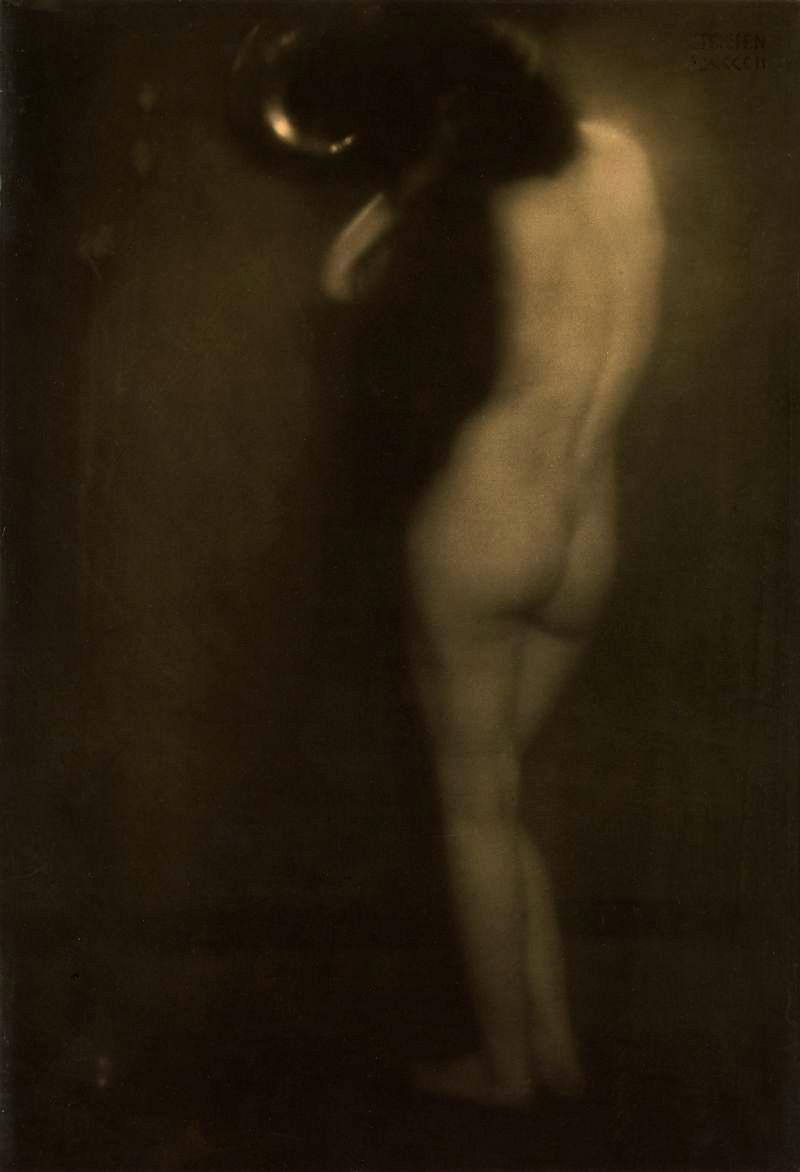
Edward Steichen (American, born Luxembourg, 1879-1973) 'The Little Round Mirror' 1901, printed 1905


Edward Steichen (American born Luxembourg, 1879-1973)
The Little Round Mirror
1901, printed 1905
Gum bichromate over platinum print
48.3 x 33.2cm (19 x 13 1/16 in.)
The Metropolitan Museum of Art
Alfred Stieglitz Collection, 1933


Alfred Stieglitz (American, 1864-1946) 'The Hand of Man' 1902


Alfred Stieglitz (American, 1864-1946)
The Hand of Man
1902, printed 1910
Photogravure
24.2 x 31.9cm (9 1/2 x 12 9/16 in.)
The Metropolitan Museum of Art
Alfred Stieglitz Collection, 1949


The Hand of Man was first published in January 1903 in the inaugural issue of Camera Work. With this image of a lone locomotive chugging through the train yards of Long Island City, Stieglitz showed that a gritty urban landscape could have an atmospheric beauty and a symbolic value as potent as those of an unspoiled natural landscape. The title alludes to this modern transformation of the landscape and also perhaps to photography itself as a mechanical process. Stieglitz believed that a mechanical instrument such as the camera could be transformed into a tool for creating art when guided by the hand and sensibility of an artist.

Text from The Metropolitan Museum of Art website


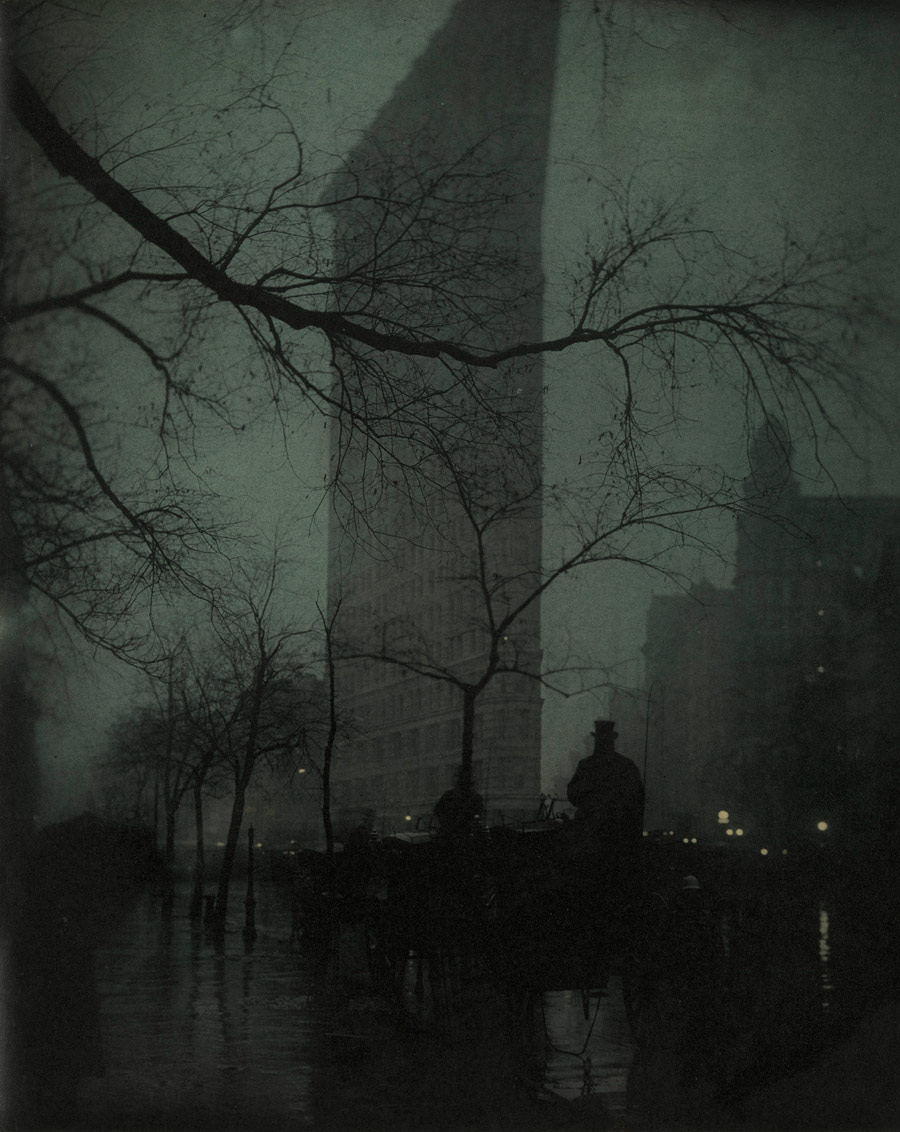
Edward Steichen (American, born Luxembourg, 1879-1973) 'The Flatiron' 1904


Edward Steichen (American born Luxembourg, 1879-1973)
The Flatiron
1904
Gum bichromate over platinum print
47.8 x 38.4cm (18 13/16 x 15 1/8 in.)
The Metropolitan Museum of Art
Alfred Stieglitz Collection, 1933


Edward Steichen (American, born Luxembourg, 1879-1973) 'Alfred Stieglitz' 1907


Edward Steichen (American born Luxembourg, 1879-1973)
Alfred Stieglitz
1907
Autochrome
23.9 x 18cm
The Metropolitan Museum of Art
Alfred Stieglitz Collection, 1955


For the first time in more than 25 years, The Metropolitan Museum of Art will display five of its original Autochromes by Edward Steichen and Alfred Stieglitz for one week only – January 25-30, 2011 – as part of the current exhibition Stieglitz, Steichen, Strand. Invented by Auguste and Louis Lumière in 1907, Autochromes are one-of-a-kind color transparencies that are seductively beautiful when backlit.

The invention of the Autochrome was a milestone in the history of photography. It was the first commercially available means of making color photographs. Steichen was enthralled by the process and recommended it to his fellow photographers. Praising the luminosity of the new medium, he wrote, “One must go to stained glass for such color resonance, as the palette and canvas are a dull and lifeless medium in comparison.” Among the five Autochromes exhibited are Steichen’s portrait of Rodin in front of his sculpture The Eve and his widely reproduced portrait of Stieglitz holding an issue of his influential publication, Camera Work.

These fragile photographs – composed of minute grains of potato starch dyed red, blue, and green – cannot withstand the exposure of long-term display without suffering irreversible damage. Because of the high risk of the color fading, the Metropolitan – like most museums – has had a policy of not exhibiting its important collection of Autochromes. The Metropolitan recently completed a three-year study of the stability and light-sensitivity of Autochrome dyes, conducted by Luisa Casella, the Museum’s first Mellon Research Scholar in Photo Conservation, in close collaboration with Masahiko Tsukada of the Museum’s Department of Scientific Research, and supervised by Nora Kennedy, Sherman Fairchild Conservator of Photographs at the Metropolitan Museum. The study established that the Autochrome dyes are partially, though not completely, protected from light fading when in an environment where all oxygen has been removed.

Guided by this research, the Museum will display five original Autochromes by Steichen and Stieglitz within individual oxygen-free enclosures and under carefully controlled lighting conditions from January 25 to 30 in the exhibition Stieglitz, Steichen, Strand. During the other weeks of the exhibition, facsimiles of the photographs are displayed in their place.

Text from The Metropolitan Museum of Art website


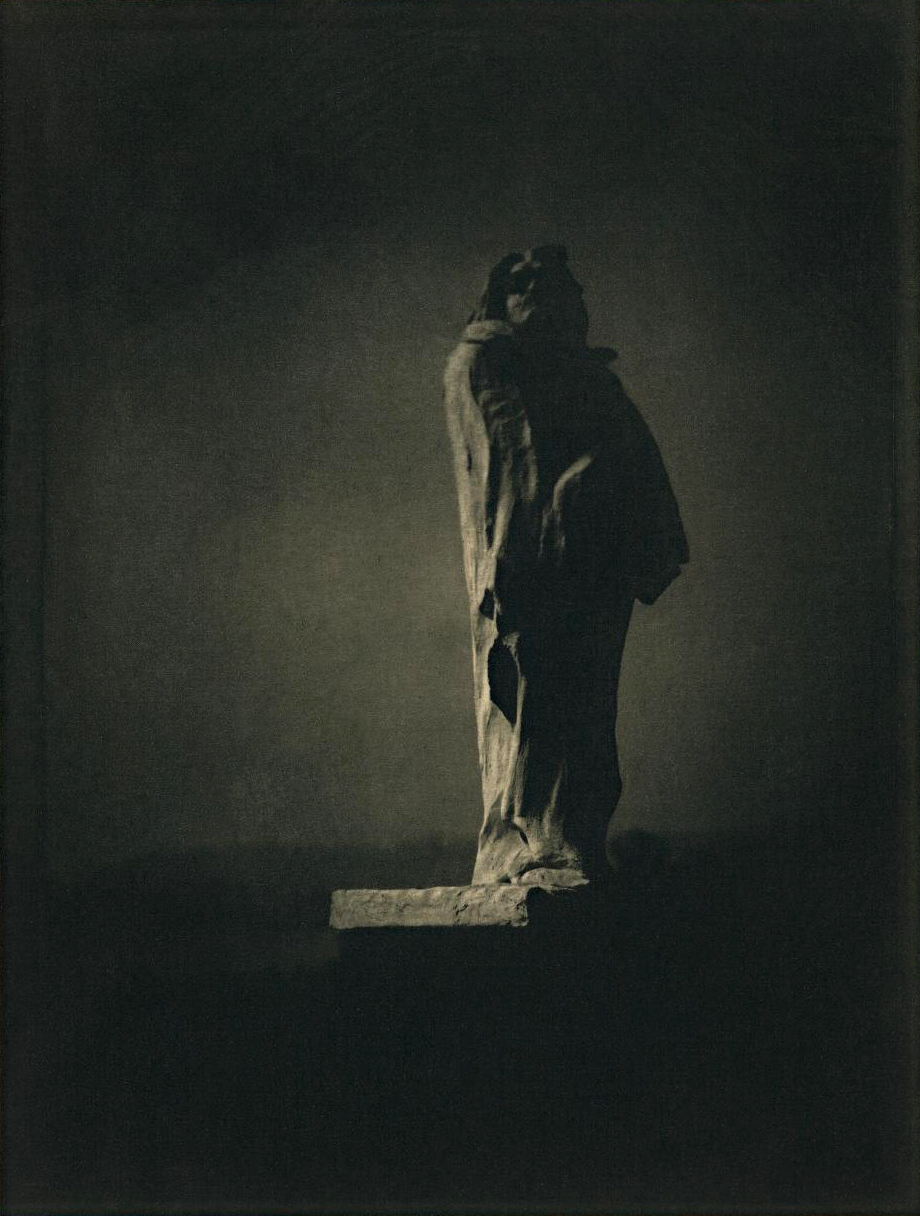
Edward J. Steichen (American born Luxembourg, 1879-1973) 'Balzac, The Open Sky - 11 P.M.' 1908


Edward J. Steichen (American born Luxembourg, 1879-1973)
Balzac, The Open Sky – 11 P.M.
1908, printed 1909
Direct carbon print
48.7 x 38.5cm (19 3/16 x 15 3/16 in.)
The Metropolitan Museum of Art
Alfred Stieglitz Collection, 1933


In late summer 1908 Rodin moved the plaster of his sculpture of the French writer Honoré de Balzac out of his studio and into the open air so that Steichen, who disliked its chalky aspect in the daylight, could photograph it by the moon. Waiting through several exposures as long as an hour each, Steichen made this exposure at 11 p.m., when the moonlight transformed the plaster into a monumental phantom rising above the brooding nocturnal landscape. Steichen recalled that when he presented his finished prints some weeks later, an elated Rodin exclaimed: “You will make the world understand my Balzac through your pictures. They are like Christ walking on the desert.”

Text from The Metropolitan Museum of Art website


Stieglitz, Steichen, Strand

Go behind the lens with Sarah Greenough and Joel Smith as they speak about the relationships between three giants of early twentieth-century photography – Alfred Stieglitz, Edward Steichen, and Paul Strand – whose diverse and groundbreaking works are among the Metropolitan’s greatest photographic treasures. Followed by a discussion among the participants. Malcolm Daniel, Curator in Charge, Department of Photographs, MMA, introduces the program.

“Steichen, Stieglitz, and the Art of Change”
Joel Smith, Curator of Photography, Princeton University Art Museum

“Stieglitz and Strand: Mentor and Protégé/Friend and Rival”
Sarah Greenough, Senior Curator of Photographs, National Gallery
of Art, Washington.


Stieglitz and the New York Art Scene (1905-46)

Lisa M. Messinger, associate curator, Department of Nineteenth-Century, Modern, and Contemporary Art, The Metropolitan Museum of Art


Three giants of 20th-century American photography – Alfred Stieglitz, Edward Steichen, and Paul Strand – are featured at The Metropolitan Museum of Art, New York, through April 10, 2011, in the exhibition Stieglitz, Steichen, Strand. The diverse and groundbreaking work of these artists will be revealed through a presentation of 115 photographs, drawn entirely from the Museum’s collection. On view will be many of the Metropolitan’s greatest photographic treasures from the 1900s to 1920s, including Stieglitz’s famous portraits of Georgia O’Keeffe, Steichen’s large coloured photographs of the Flatiron building, and Strand’s pioneering abstractions.

Alfred Stieglitz (1864-1946) was a photographer of supreme accomplishment and a forceful and influential advocate for photography and modern art through his gallery “291” and his sumptuous journal Camera Work. Stieglitz also laid the foundation for the Museum’s collection of photographs. In 1928, he donated 22 of his own works to the Metropolitan; these were the first photographs to enter the Museum’s collection as works of art. In later decades he gave the Museum more than 600 photographs by his contemporaries, including Edward Steichen and Paul Strand.

Among Stieglitz’s works to be featured in this exhibition are portraits, views of New York City from the beginning and end of his career, and the 1920s cloud studies he titled Equivalents, through which he sought to arouse in the viewer the emotional equivalent of his own state of mind at the time he made the photograph, and to show that the content of a photograph was different from its subject.

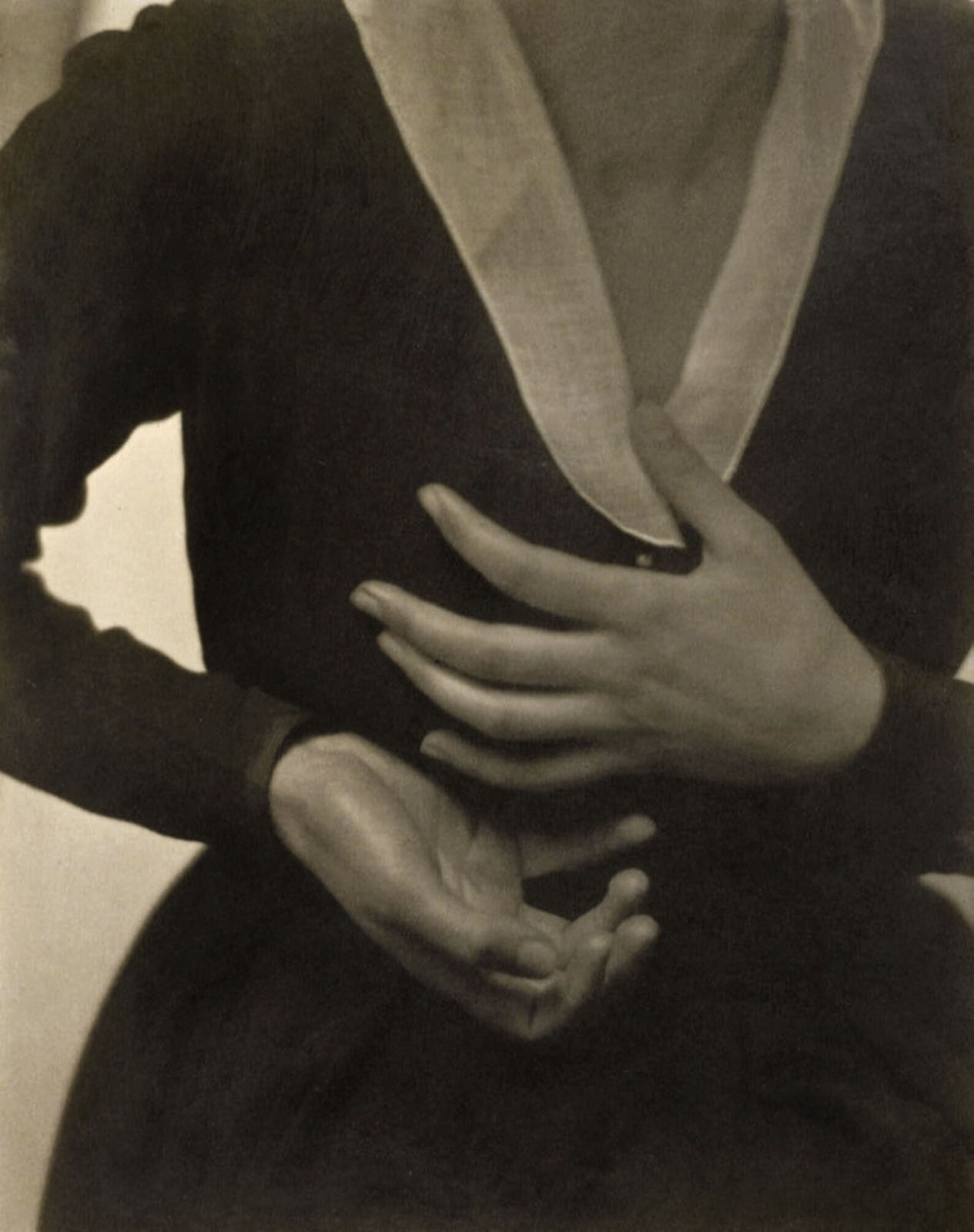
The exhibition will also include numerous photographs from Stieglitz’s extraordinary composite portrait of Georgia O’Keeffe (1887-1986), part of a group of works selected for the Museum’s collection by O’Keeffe herself. Stieglitz made more than 330 images of O’Keeffe between 1917 and 1937 – of her face, torso, hands, or feet alone, clothed and nude, intimate and heroic, introspective and assertive. Through these photographs Stieglitz revealed O’Keeffe’s strengths and vulnerabilities, and almost single-handedly defined her public persona for generations to come.

Stieglitz’s protégé and gallery collaborator, Edward Steichen (1879-1973), was the most talented exemplar of the Photo-Secession, the loosely-knit group of artists founded by Stieglitz in 1902, seceding, in his words, “from the accepted idea of what constitutes a photograph,” but also from the camera clubs and other institutions dominated by a more retrograde establishment. In works such as The Pond – Moonrise (1904), made using a painstaking technique of multiple printing, Steichen rivalled the scale, colour, and individuality of painting.

Steichen’s three large variant prints of The Flatiron (1904) are prime examples of the conscious effort of Photo-Secession photographers to assert the artistic potential of their medium. Steichen achieved coloristic effects reminiscent of Whistler’s Nocturne paintings by brushing layers of pigment suspended in light-sensitive gum solution onto a platinum photograph. Although he used only one negative to create all three photographs, the variable colouring enabled him to create three significantly different images that convey the chromatic progression of twilight. The Metropolitan’s three prints, all donated by Stieglitz in 1933, are the only exhibition prints of Steichen’s iconic image.

In 1908 Steichen photographed the plaster of Rodin’s sculpture of Honoré de Balzac in the open air, by the light of the moon, making several exposures as long as an hour each. In Balzac, The Silhouette – 4 A.M., the moonlight has transformed the plaster into a monumental phantom rising above the brooding nocturnal landscape. Steichen recalled that when he presented his finished prints to Rodin, the elated sculptor exclaimed, “You will make the world understand my Balzac through your pictures.”

Among the unique early-20th-century works by Stieglitz and Steichen in the Museum’s collection are Autochromes, an early process of colour photography that became commercially available in 1907. Because of the delicate and light-sensitive nature of these glass transparencies, five original Autochromes by Stieglitz and Steichen will be displayed for one week only, January 25-30, 2011. During the other weeks of the exhibition, facsimiles of these Autochromes will be on view.

Stieglitz’s and Steichen’s younger contemporary, Paul Strand (1890-1976), pioneered a shift from the soft-focus aesthetic and painterly prints of the Photo-Secession to the straight approach and graphic power of an emerging modernism. Strand was introduced to Stieglitz as a high-schooler by his camera club advisor, Lewis Hine, the social reformer and photographer. He quickly became a regular visitor to “291,” where he was exposed to the latest trends in European art through groundbreaking exhibitions of works by Cézanne, Picasso, Matisse, and Brancusi.

Strand incorporated the new language of geometric abstraction into his interest in photographing street life and machine culture. His photographs from 1915-1917 treated three principal themes: movement in the city, abstractions, and street portraits. Stieglitz, whose interest in photography had waned as he grew more interested in avant-garde art, saw in Strand’s work a new approach to photography. He showed Strand’s groundbreaking photographs at 291 and devoted the entire final double issue of Camera Work (1917) to this young photographer’s work, marking a pivotal moment in the course of photography.

In From the El (1915), Strand juxtaposed the ironwork and shadows of the elevated train with the tiny form of a lone pedestrian. In 1916, he experimented with radical camera angles and photographing at close range. Among the astonishingly modern photographs he made that summer is Abstraction, Twin Lakes, Connecticut, one of the first photographic abstractions to be made intentionally. When Stieglitz published a variant of this image in Camera Work, he praised Strand’s results as “the direct expression of today.”

In the same year, Strand made a series of candid street portraits with a hand-held camera fitted with a special lens that allowed him to point the camera in one direction while taking the photograph at a 90-degree angle. Blind, his seminal image of a street peddler, was published in Camera Work and immediately became an icon of the new American photography, which integrated the humanistic concerns of social documentation with the boldly simplified forms of Modernism. As is true for most of the large platinum prints by Strand in the exhibition, the Metropolitan’s Blind, a gift of Stieglitz, is the only exhibition print of this image from the period.

Stieglitz, Steichen, Strand is organised by Malcolm Daniel, Curator in Charge of the Metropolitan Museum’s Department of Photographs, assisted by Russell Lord, Jane and Morgan Whitney Fellow in the Department of Photographs.

Text from the Metropolitan Museum of Art website


Alfred Stieglitz (American, 1864-1946) 'The City of Ambitions' 1910


Alfred Stieglitz (American, 1864-1946)
The City of Ambitions
1910, printed 1910-1913
Photogravure
33.8 x 26.0cm (13 5/16 x 10 1/4 in.)
The Metropolitan Museum of Art
Alfred Stieglitz Collection, 1949


This photograph belongs to a series of dynamic images Stieglitz made of New York of 1910. It appeared in the October 1911 issue of Camera Work along with eight other examples of his lyrical urban modernism – a contemporary vision certainly not lost on Coburn, Struss, and Strand.


Alfred Stieglitz (American, 1864-1946) 'Old and New New York' 1910, printed in or before 1913


Alfred Stieglitz (American, 1864-1946)
Old and New New York
1910, printed in or before 1913
Photogravure
33.2 x 25.5cm (13 1/16 x 10 1/16 in.)
The Metropolitan Museum of Art
Alfred Stieglitz Collection, 1949


Paul Strand (American, 1890-1976)
'From the El' 1915


Paul Strand (American, 1890-1976)
From the El
1915
Platinum print
33.6 x 25.9cm (13 1/4 x 10 3/16 in.)
The Metropolitan Museum of Art
Alfred Stieglitz Collection, 1949


Paul Strand was introduced to Alfred Stieglitz by his teacher Lewis Hine, and quickly became part of the coterie of painters and photographers that gathered at Stieglitz’s gallery at 291 Fifth Avenue. There he was exposed to the latest trends in European vanguard art through groundbreaking exhibitions of Cézanne, Picasso, Matisse, and Brancusi. Strand incorporated their abstracting compositional techniques into his work, marrying the new language of geometric surface design to his interest in street life and machine culture.

Strand’s vision of the city during these years often focuses on the problematic exchange between the sweep and rigor of the urban grid with the human lives that inhabit and pass through it. From the El is a good example of this dialectical approach, with the graphic power of the ironwork and street shadows punctuated by the tiny, lone pedestrian at the upper right. Strand addresses the effects of the new urban condition obliquely here, embedding a subtle political statement within the formal structure of the image.

Text from The Metropolitan Museum of Art website


Alfred Stieglitz (American, 1864-1946) 'From the Back Window – 291' 1915


Alfred Stieglitz (American, 1864-1946)
From the Back Window – 291
1915
Platinum print
25.1 x 20.2cm (9 7/8 x 7 15/16 in.)
The Metropolitan Museum of Art
Alfred Stieglitz Collection, 1949


At the turn of the century, Stieglitz’s duties as gallery owner, publisher, editor, and promoter left him little time to photograph. When the mood struck him, however, which began to happen with some frequency about 1915, he did not look far afield but photographed his colleagues at the gallery and the view from his window with a modernist rigor exceeded only by Strand.


Paul Strand (American 1890-1976) 'Blind woman, New York' 1916


Paul Strand (American, 1890-1976)
Blind
1916
Platinum print
34 x 25.7cm (13 3/8 x 10 1/8 in.)
The Metropolitan Museum of Art
Alfred Stieglitz Collection, 1933


Alfred Stieglitz (American, 1864-1946) 'Hodge Kirnon' 1917


Alfred Stieglitz (American, 1864-1946)
Hodge Kirnon
1917
Palladium print
24.6 x 19.9cm (9 11/16 x 7 13/16 in.)
The Metropolitan Museum of Art
Alfred Stieglitz Collection, 1949


One of the least well known and most beautiful of Stieglitz’s portraits, this photograph depicts Hodge Kirnon, a man Stieglitz saw in passing every day. When preparing to close his historic gallery “291” in 1917 as a result of World War I, Stieglitz assessed his work and life and saw that Kirnon – who operated the elevator that transported the gallery’s visitors, its critics, and its provocative modern art – had been a true fellow passenger on the momentous trip.

Text from The Metropolitan Museum of Art website


Alfred Stieglitz (American, 1864-1946) 'Georgia O'Keeffe – Hands' 1917


Alfred Stieglitz (American, 1864-1946)
Georgia O’Keeffe – Hands
1917
Platinum print
22.6 x 16.8cm (8 7/8 x 6 5/8 in.)
The Metropolitan Museum of Art
Gift of Georgia O’Keeffe, through the generosity of The Georgia O’Keeffe Foundation and Jennifer and Joseph Duke, 1997


Georgia O’Keeffe – Hands is one of the images that Stieglitz made during his first portrait session with O’Keeffe, in 1917, when she traveled by train to New York to see her second show of drawings and watercolours at 291. “A few weeks after I returned to Texas, photographs of me came,” she recalled. “In my excitement at such pictures of myself I took them to school and held them up for my class to see. They were surprised and astonished too. Nothing like that had come into our world before.” The notion that an expressive portrait might be made without including the sitter’s face was indeed novel.

Text from The Metropolitan Museum of Art website


Exhibition Overview

This exhibition features three giants of photography – Alfred Stieglitz (American, 1864-1946), Edward Steichen (American, b. Luxembourg, 1879-1973), and Paul Strand (American, 1890-1976) – whose works are among the Metropolitan’s greatest photographic treasures. The diverse and groundbreaking work of these artists will be revealed through a presentation of approximately 115 photographs, drawn entirely from the collection.

Alfred Stieglitz, a photographer of supreme accomplishment as well as a forceful and influential advocate for photography and modern art through his gallery “291” and his sumptuous journal Camera Work, laid the foundation of the Met’s collection. He donated twenty-two of his own works in 1928 – the first photographs to be acquired by the Museum as works of art – and more than six hundred by other photographers, including Steichen and Strand, in later decades. Featured in the exhibition will be portraits, city views, and cloud studies by Stieglitz, as well as numerous images from his composite portrait of Georgia O’Keeffe (American, 1887-1986), part of a group selected for the collection by O’Keeffe herself.

Stieglitz’s protégé and gallery collaborator Edward Steichen was the most talented exemplar of Photo-Secessionist ideas, with works such as his three large variant prints of The Flatiron and his moonlit photographs of Rodin’s Balzac purposely rivaling the scale, color, and individuality of painting. By contrast, the final issue of Camera Work (1917) was devoted to the young Paul Strand, whose photographs from 1915-1917 treated three principal themes – movement in the city, abstractions, and street portraits – and pioneered a shift from the soft-focus Pictorialist aesthetic to the straight approach and graphic power of an emerging modernism.

Text from The Metropolitan Museum of Art website


Alfred Stieglitz (American, 1864-1946). 'Georgia O'Keeffe - Neck' 1921


Alfred Stieglitz (American, 1864-1946)
Georgia O’Keeffe – Neck
1921
Palladium print
23.6 x 19.2cm (9 5/16 x 7 9/16 in.)
The Metropolitan Museum of Art
Gift of Georgia O’Keeffe, through the generosity of The Georgia O’Keeffe Foundation and Jennifer and Joseph Duke, 1997


Alfred Stieglitz (American, 1864-1946) 'Dancing Trees' 1922


Alfred Stieglitz (American, 1864-1946)
The Dancing Trees
1922
Palladium print
24.2 x 19.3cm (9 1/2 x 7 5/8 in.)
The Metropolitan Museum of Art
Gift of David A. Schulte, 1928


Alfred Stieglitz (American, 1864-1946) 'Spiritual America' 1923


Alfred Stieglitz (American, 1864-1946)
Spiritual America
1923
Gelatin silver print
11.6 x 9.2cm (4 9/16 x 3 5/8 in.)
The Metropolitan Museum of Art
Alfred Stieglitz Collection, 1949


In the decade leading up to the Great Depression, American modernism was a highly contested concept. Stieglitz, perhaps justifiably, considered himself one of the few qualified to dictate its course, having surrounded himself with a group of like-minded and devoted artists, critics, and writers whom he directed in an almost shamanistic fashion. Spirituality loomed large in his vision of American identity, but he was disheartened and offended with what he viewed as a pent-up, materialist, and culturally bankrupt American way. In a rare attempt at ironic commentary, Stieglitz produced this picture of a harnessed, castrated horse – a pure representation of eradicated sexual prowess and restrained muscular energy – and labelled it Spiritual America. In effect, he suggested that America was lacking in spirit by reinterpreting the horse, a traditional American symbol of unstoppable force, as a trussed-up pattern of slick geometry.

Text from The Metropolitan Museum of Art website


Edward J. Steichen (American born Luxembourg, 1879-1973) 'Gloria Swanson' 1924, printed 1960s


Edward J. Steichen (American born Luxembourg, 1879-1973)
Gloria Swanson
1924, printed 1960s
Gelatin silver print
24.0 x 19.1cm (9 7/16 x 7 1/2 in.)
The Metropolitan Museum of Art
Gift of Grace M. Mayer, 1989


Paul Strand (American, 1890-1976) 'Wild Iris, Maine' 1927-28


Paul Strand (American, 1890-1976)
Wild Iris, Maine
1927-1928
Gelatin silver print
24.8 x 19.8cm (9 3/4 x 7 13/16 in.)
The Metropolitan Museum of Art
Alfred Stieglitz Collection, 1955
Courtesy Aperture Foundation, Inc., Paul Strand Archive


Alfred Stieglitz (American, 1864–1946) 'Looking Northwest from the Shelton, New York' 1932


Alfred Stieglitz (American, 1864-1946)
Looking Northwest from the Shelton, New York
1932
Gelatin silver print
24.2 x 19.2cm (9 1/2 x 7 9/16 in.)
The Metropolitan Museum of Art
Ford Motor Company Collection
Gift of Ford Motor Company and John C. Waddell, 1987


Stieglitz recorded the construction of the skyscrapers of midtown Manhattan from the windows of his gallery and of his nearby apartment in the Shelton Towers. His photographs seem not to celebrate the astonishing growth of new buildings but rather almost geological permanence and stability: “Crammed on the narrow island the million-windowed buildings will jut glittering, pyramid on pyramid…,” as John Dos Passos wrote.


Alfred Stieglitz (American, 1864-1946) 'Georgia O'Keeffe – Hand and Wheel' 1933


Alfred Stieglitz (American, 1864-1946)
Georgia O’Keeffe Hand and Wheel
1933
Gelatin silver print
24.1 x 19.5cm (9 1/2 x 7 11/16 in.)
The Metropolitan Museum of Art
Gift of Georgia O’Keeffe, through the generosity of The Georgia O’Keeffe Foundation and Jennifer and Joseph Duke, 1997


Paul Strand (American, 1890-1976) 'Cristo - Oaxaca' 1933, printed 1940


Paul Strand (American, 1890-1976)
Cristo – Oaxaca
1933, printed 1940
Photogravure
25.4 x 20.2cm (10 x 7 15/16 in.)
The Metropolitan Museum of Art
David Hunter McAlpin Fund, 1940


Paul Strand (American, 1890-1976) 'Church, Coapiaxtla' 1933, printed 1940


Paul Strand (American, 1890-1976)
Coapiaxtla, Church
1933, printed 1940
Photogravure
16.2 x 12.7cm (6 3/8 x 5 in.)
David Hunter McAlpin Fund, 1940


The Metropolitan Museum of Art
1000 Fifth Avenue at 82nd Street
New York, New York 10028-0198
Information: 212-535-7710

Opening hours:
Sunday – Tuesday and Thursday: 10am – 5pm
Friday and Saturday: 10am – 9pm
Closed Wednesday

The Metropolitan Museum of Art website

LIKE ART BLART ON FACEBOOK

Back to top

Exhibition: ‘ “Our Future Is In The Air”: Photographs from the 1910s’ at the Metropolitan Museum of Art, New York

Exhibition dates: 10th November 2010 – 10th April 2011


Aleksey Ivanovich Saveliev (Russian, 1883-1923) 'At the Prepared Grave' 1910


Aleksey Ivanovich Saveliev (Russian, 1883-1923)
At the Prepared Grave
1910
Gelatin silver print
8.9 x 13.3cm (3 1/2 x 5 1/4 in.)
The Metropolitan Museum of Art
Gift of Pierre Apraxine, 2010


These six photo-postcards show various places and moments surrounding the death and burial of Leo Tolstoy. In November 1910 the eighty-two-year-old novelist walked away from his great wealth to devote himself to Christian charity and died in a stationmaster’s house after falling ill on a train. Tolstoy’s death was of tremendous national importance, and how he was to be mourned – whether to kneel or stand at the grave, for instance – signified a contrast between old and new that would be decided during the Russian Revolution seven years later.

Text from the Metropolitan Museum of Art website


What an eclectic group of photographs in this posting as well as a great title for an exhibition!

Marcus


Many thankx to the The Metropolitan Museum of Art for allowing me to publish the photographs in the posting. Please click on the photograph for a larger version of the image.


Aleksey Ivanovich Saveliev (Russian, 1883-1923) 'Peasant Carts with Funeral Wreaths' 1910


Aleksey Ivanovich Saveliev (Russian, 1883-1923)
Peasant Carts with Funeral Wreaths
1910
Gelatin silver print
8.9 x 13.3cm (3 1/2 x 5 1/4 in.)
The Metropolitan Museum of Art
Gift of Pierre Apraxine, 2010


Aleksey Ivanovich Saveliev (Russian, 1883-1923) 'Deputation of the Yasno-Polyanskyi Peasants' 1910


Aleksey Ivanovich Saveliev (Russian, 1883-1923)
Deputation of the Yasno-Polyanskyi Peasants
1910
Gelatin silver print
8.9 x 13.3cm (3 1/2 x 5 1/4 in.)
The Metropolitan Museum of Art
Gift of Pierre Apraxine, 2010


Felix Thiollier (French, 1842-1914)
'A Village Street in the Auvergne' c. 1910


Felix Thiollier (French, 1842-1914)
A Village Street in the Auvergne
c. 1910
Gelatin silver print
The Metropolitan Museum of Art
Twentieth-Century Photography Fund, 2008


An industrialist and serious amateur photographer in Saint-Étienne, Thiollier left to posterity a vast archive of photographs and negatives. Most are landscapes done in the Pictorialist style, but his more unusual images depict factories and daily life outside major cities in early twentieth century France.


Paul Haviland (American, 1880-1950)
'Passing Steamer' 1910


Paul Haviland (American, 1880-1950)
Passing Steamer
1910
Platinum print
The Metropolitan Museum of Art
Gilman Collection
Purchase, Harriette and Noel Levine Gift, 2005


The son of a well-off china manufacturer in Limoges, Haviland encountered Alfred Stieglitz’s Little Galleries of the Photo-Secession in 1908. He soon contributed articles to and published photographs in Stieglitz’s journal Camera Work (and acted as the gallery’s secretary at one point), even bankrolling the gallery’s three-year lease for Stieglitz when the rent was raised. In 1915 he started – with the Mexican-born caricaturist and gallerist Marius de Zayas and the journalist Agnes Ernest Meyer – a new magazine called 291, named for Stieglitz’s gallery at 291 Fifth Avenue.

This image appeared as a photogravure in a 1912 issue of Camera Work. While the soft focus and platinum printing are traces of the waning Pictorialist style, the unexpected vantage point and stark design made Passing Steamer a harbinger of things to come.

Text from The Metropolitan Museum of Art


Anton Giulio Bragaglia (Italian, 1890–1960) 'Change of Position' 1911


Anton Giulio Bragaglia (Italian, 1890-1960)
Change of Position
1911
Gelatin silver print
12.8 x 17.9cm (5 1/16 x 7 1/16 in)
The Metropolitan Museum of Art
Gilman Collection
Purchase, The Horace W. Goldsmith Foundation Gift, through Joyce and Robert Menschel, 2005


At age nineteen, Bragaglia became enamored of the Italian Futurist movement, which espoused the beauty of speed and war, the interdependence of time and space, and the total dissolution of time-consecrated institutions. Not following the stop-motion photography of Eadweard Muybridge and Étienne-Jules Marey from the previous century, Bragaglia left the camera’s shutter open to register the absolute fluidity of motion itself – in this case, the trajectory created by the sweeping, continuous arc of a simple change of body position. The result is a dissolution or dematerialisation of the man’s body in a seamless picture of active life. Although later banished from the Futurists’ ranks, the photographer created perhaps the first truly avant-garde images with the camera – the kind that would become prevalent across the continent only a decade later.

Text from The Metropolitan Museum of Art


Adolph de Meyer (American born France, 1868-1949) '[Dance Study]' c. 1912


Adolph de Meyer (American born France, 1868-1949)
[Dance Study]
c. 1912
Platinum print
The Metropolitan Museum of Art
Alfred Stieglitz Collection, 1949


De Meyer – who would become Vogue magazine’s first official fashion photographer, in 1913 – photographed the dancer Nijinsky and other members of Sergei Diaghilev’s troupe when L’Après midi d’un Faun was presented in Paris in 1912. It has been suggested that this photograph, the only nude by de Meyer, has some connection to the Russian ballet, but if so, it remains mysterious. In 1913 Mabel Dodge, a patroness of the avant-garde, wrote: “Nearly every thinking person nowadays is in revolt against something, because the craving of the individual is for further consciousness, and because consciousness is expanding and bursting through the moulds that have held it up to now.”

Text from The Metropolitan Museum of Art


Stanislaw Ignacy Witkiewicz (Polish, 1885-1939) 'Tadeus Langier, Zakopane' 1912-1913


Stanislaw Ignacy Witkiewicz (Polish, 1885-1939)
Tadeus Langier, Zakopane
1912-1913
Gelatin silver print
12.6 x 17.6cm (4 15/16 x 6 15/16 in)
The Metropolitan Museum of Art
Gilman Collection
Purchase, Denise and Andrew Saul Gift, 2005


Jacques Henri Lartigue (French, 1894-1986) 'Le Grand Prix A.C.F.' 1913


Jacques Henri Lartigue (French, 1894-1986)
Le Grand Prix A.C.F.
1913
Gelatin silver print
11.5 x 17.1cm (4 1/2 x 6 3/4 in)
The Metropolitan Museum of Art
Gilman Collection
Purchase, Ann Tenenbaum and Thomas H. Lee Gift, 2005
© Ministère de la Culture-France/AAJHL


A painter who considered photography a hobby, Lartigue was seven when his father, an accomplished amateur photographer, presented him with his first camera. reserving his images from childhood onward in album after album, Lartigue created a rich chronicle of the sporting life and entertainments of his upper-class milieu but one that, like his diaries, remained essentially private. Until 1963, when a show at the Museum of Modern Art, New York, revealed Lartigue as a major photographer, his work was known only to a group of friends.

[This print has] been made by Lartigue prior to his public recognition, in his customary intimate scale. He made the Grand Prix picture by swinging the camera from left to right as the racing car sped by. It captures the same awestruck, slate-erasing feeling that inspired the Futurist Marinetti to rhapsodise four years earlier, “A roaring motor car which seems to run on machine-gun fire, is more beautiful than the Victory of Samothrace.”

Text from The Metropolitan Museum of Art


Unknown Artist, British School. 'The Great British Advance in the West: A Raiding Party Waiting for the Word to Go' 1914-1918


Unknown Artist, British School
The Great British Advance in the West: A Raiding Party Waiting for the Word to Go
1914-1918
Gelatin silver print
The Metropolitan Museum of Art
Twentieth-Century Photography Fund, 2010
Wikipedia Commons public domain


Unknown Artist, French School. 'The Great Nave: Wounded Soldiers Performing Arms Drill at the End of Their Medical Treatment, Grand Palais, Paris' 1916


Unknown Artist, French School
The Great Nave: Wounded Soldiers Performing Arms Drill at the End of Their Medical Treatment, Grand Palais, Paris
1916
Gelatin silver print
The Metropolitan Museum of Art
Gilman Collection
Purchase, Ann Tenenbaum and Thomas H. Lee Gift, 2005
Wikipedia Commons public domain


During World War I, wounded soldiers who had been sent to Paris to recover were drilled in the cavernous Grand Palais to prepare them for a return to the front.


Unknown Artist, American School. '(Charlie Chaplin and Douglas Fairbanks Selling Liberty Loans during the Third Loan Campaign at the Sub Treasury Building on Wall Street, New York City)' 1918


Unknown artist (American School)
(Charlie Chaplin and Douglas Fairbanks Selling Liberty Loans during the Third Loan Campaign at the Sub Treasury Building on Wall Street, New York City)
1918
Gelatin silver print
19.4 x 24.1cm (7 5/8 x 9 1/2 in)
The Metropolitan Museum of Art
Purchase
The Horace W. Goldsmith Foundation Gift, through Joyce and Robert Menschel, 1996


The twentieth century was truly born during the 1910s. This exhibition, which accompanies Stieglitz, Steichen, Strand, surveys the range of uses to which photography was put as its most advanced practitioners and theorists were redefining the medium as an art. The title “Our Future Is in the Air is taken from a military aviation pamphlet that figures prominently (in French) in a 1912 Cubist tabletop still life by Picasso; it suggests the twinned senses of exhilarating optimism and lingering dread that accompanied the dissolution of the old order.

Photography was handmaiden and witness to the upheavals that revolutionised perception and consciousness during this tumultuous era. Space and time were overcome by motorcars and airplanes, radio and wireless, and man seemed liberated from the bounds of gravity and geography. This seemingly limitless expanse was mirrored by a new understanding of the unconscious as infinitely deep, complex, and varied – a continent ripe for discovery. The camera was seen as the conduit between these two states of self and world, and “straight photography” – stripped of the gauzy blur of Pictorialist reverie – was espoused by Alfred Stieglitz and Paul Strand among others.

This turn was not accidental: since handheld cameras became available in the late 1880s, anyone could be a photographer; similarly, photography had snaked its way into every corner of the culture. Elevated perception would distinguish the new artists from the amateur and the tradesman. The exhibition casts the widest possible net in order to show the foundations upon which the medium staked its claim as an independent art.

The 1910s – a period remembered for “The Great War,” Einstein’s theory of relativity, the Russian Revolution, and the birth of Hollywood – was a dynamic and tumultuous decade that ushered in the modern era. This new age – as it was captured by the quintessentially modern art of photography – will be the subject of the exhibition “Our Future Is In The Air”: Photographs from the 1910s, on view at The Metropolitan Museum of Art from November 10, 2010, through April 10, 2011.

An eclectic centennial exhibition devoted to photography of the 1910s, “Our Future Is In The Air” provides a fascinating look at the birth of modern life through 58 photographs by some 30 artists, including Eugène Atget, Alvin Langdon Coburn, Eugène Druet, Lewis Hine, Jacques-Henri Lartigue, Adolph de Meyer, Christian Schad, Morton Schamberg, Charles Sheeler, and Stanislaw Witkiewicz, among others. Drawn exclusively from the Museum’s collection, the exhibition also features anonymous snapshots, séance photographs, and a family album made by Russian nobility on the eve of revolution. “Our Future Is In The Air” complements the Museum’s concurrent presentation of groundbreaking photographs by Alfred Stieglitz, Edward Steichen, and Paul Strand in the exhibition Stieglitz, Steichen, Strand. The exhibition’s title is taken from a pamphlet for military aviation that figures prominently (in French) in a 1912 Cubist tabletop still-life by Picasso, but is used here because of its double meaning: the feelings of excitement and anxiety that accompanied such radical change.

“Our Future Is In The Air” opens in dramatic fashion with a series of photographs showing moments in the funeral procession and burial of Leo Tolstoy on November 9, 1910. The great Russian novelist passed away just after walking away from his great wealth and literary fame to lead a life of Christian charity. Certain details that can be seen in the photo-postcards – such as whether or not to kneel by the grave – represented a long simmering struggle between old and new, spiritual and secular, that would lead to revolution seven years later.

As cameras became smaller, faster, and easier to operate, amateur photographers such as the child prodigy Jacques-Henri Lartigue pushed the medium in directions that trained photographers shied away from. Since Lartigue was only recognised much later as a key figure in photography, prints such as the ones included here – showing speeding motorcars – are exceedingly rare. Lartigue made one of his most memorable photographs, Le Grand Prix A.C.F. (1913), by swinging his camera in the same direction as the car, as it sped by.

The camera also afforded access to the previously invisible, whether capturing a broken leg bone, revealed in an X-ray from 1916 or the trajectory created by a simple change in body position, in a 1911 motion study by the Futurist artist Anton Giulio Bragaglia.

At the same time, photography became an agent of democratic communication, and documentary photographers used its growing influence to expose degrading conditions of workers, the injustice of child labor, and the devastation of war. Beginning in 1908, Lewis Hine made 5,000 photographs of children working in mills, sweatshops, factories, and street trades; six of his photographs will be featured in this exhibition, including Newsboy asleep on stairs with papers, Jersey City, New Jersey, February 1912. Hine’s reports and slide lectures were meant to trigger a profound, empathetic response in the viewer.

During World War I, photography was utilised to document the mass casualties of mechanised warfare; in the exhibition, an affecting image from 1916, by an unknown artist, shows wounded French soldiers performing drills in the nave of the Grand Palais in Paris as part of their rehabilitation.

Also in the exhibition is an evocative 1918 photograph, again by an unknown artist, of Charlie Chaplin and Douglas Fairbanks entertaining a huge crowd at a war bonds rally on Wall Street.

“Our Future Is In The Air” accompanies the exhibition Stieglitz, Steichen, Strand, which focuses on contemporaneous works by three modernist masters of American photography: Alfred Stieglitz, Edward Steichen, and Paul Strand. It includes photographs by several friends and compatriots of Alfred Stieglitz, from Adolph de Meyer, Alvin Langdon Coburn, Paul Haviland, and Karl Struss to Morton Schamberg and Charles Sheeler, in whose works one can trace the transition from soft focus Pictorialism to a harder-edged, more detached “straight photography.”

Press release from the Metropolitan Museum of Art website


Alvin Langdon Coburn (British born America, 1882-1966) 'The Octopus' 1909


Alvin Langdon Coburn (British born America, 1882-1966)
The Octopus
1909
Platinum print
The Metropolitan Museum of Art
Ford Motor Company Collection, Gift of Ford Motor Company and John C. Waddell, 1987


During the early 1910s, photographers such as Paul Strand, Karl Struss, and Coburn were using Pictorialist techniques from the previous century to depict startling perspectives on contemporary urban subjects, such as this dizzying, bird’s-eye view of New York’s Madison Square from a new skyscraper.


Unknown Artist, American School. '(Man Holding Baseball in Catcher’s Mitt)' 1910


Unknown artist (American School)
(Man Holding Baseball in Catcher’s Mitt)
1910
Gelatin silver print
13.8 x 8.7cm (5 7/16 x 3 7/16 in.)
The Metropolitan Museum of Art
Funds from various donors, 1998


Lewis Hine (American, 1874-1940)
'11:00 A.M. Monday, May 9th, 1910. Newsies at Skeeter’s Branch, Jefferson near Franklin. They were all smoking. Location: St. Louis, Missouri' 1910


Lewis Hine (American, 1874-1940)
11:00 A.M. Monday, May 9th, 1910. Newsies at Skeeter’s Branch, Jefferson near Franklin. They were all smoking. Location: St. Louis, Missouri
1910
Gelatin silver print
The Metropolitan Museum of Art, Gilman Collection
Gift of Phyllis D. Massar, 1970


Trained as a sociologist at Columbia University, Hine gave up his teaching job in 1908 to become a full-time photographer for the National Child Labor Committee. The success of the reform agency, created four years earlier, was largely dependent on its ability to sway public opinion.

Influenced by Jacob Riis’s pictures of slum conditions on New York’s Lower East Side, Hine obsessively documented the working conditions of children in mills, factories, and fields across the country, often going undercover to gain access to his subjects. The results – more than five thousand photographs – were used in field reports, exhibitions, pamphlets, and slide lectures. Hine’s decidedly unromantic, understated pictures served as a potent weapon of persuasion.

Text from The Metropolitan Museum of Art


Lewis Hine (American, 1874-1940) 'Addie Card, 12 years' 1910


Lewis Hine (American, 1874-1940)
Addie Card, 12 years. Spinner in North Pownal Cotton Mill. Girls in mill say she is ten years. She admitted to me she was twelve; that she started during school vacation and now would “stay”. Location: Vermont, August 1910
1910
Gelatin silver print
24.4 x 19.3cm (9 5/8 x 7 5/8 in)
The Metropolitan Museum of Art
Gilman Collection
Purchase, Anonymous Gifts, by exchange, 2005


Lewis Hine (American, 1874-1940) 'Newsboy asleep on stairs with papers, Jersey City, New Jersey' February 1912


Lewis Hine (American, 1874-1940)
Newsboy asleep on stairs with papers, Jersey City, New Jersey
February 1912
Gelatin silver print
Image: 11.5 x 16.8cm (4 1/2 x 6 5/8 in)
Metropolitan Museum of Art
Gilman Collection, Purchase, Ann Tenenbaum and Thomas H. Lee Gift, 2005


Exhibition Overview

The twentieth century was truly born during the 1910s. This exhibition, which accompanies Stieglitz, Steichen, Strand, surveys the range of uses to which photography was put as its most advanced practitioners and theorists were redefining the medium as an art. The title “Our Future Is in the Air” is taken from a military aviation pamphlet that figures prominently (in French) in a 1912 Cubist tabletop still life by Picasso; it suggests the twinned senses of exhilarating optimism and lingering dread that accompanied the dissolution of the old order.

Photography was handmaiden and witness to the upheavals that revolutionised perception and consciousness during this tumultuous era. Space and time were overcome by motorcars and airplanes, radio and wireless, and man seemed liberated from the bounds of gravity and geography. This seemingly limitless expanse was mirrored by a new understanding of the unconscious as infinitely deep, complex, and varied – a continent ripe for discovery. The camera was seen as the conduit between these two states of self and world, and “straight photography” – stripped of the gauzy blur of Pictorialist reverie – was espoused by Alfred Stieglitz and Paul Strand among others.

This turn was not accidental: since handheld cameras became available in the late 1880s, anyone could be a photographer; similarly, photography had snaked its way into every corner of the culture. Elevated perception would distinguish the new artists from the amateur and the tradesman. The exhibition casts the widest possible net in order to show the foundations upon which the medium staked its claim as an independent art.

Text from the Metropolitan Museum of Art website


Eugène Atget (French, 1857-1927) 'Boulevard de Strasbourg' 1912


Eugène Atget (French, 1857-1927)
Boulevard de Strasbourg
1912
Albumen silver print from glass negative
22.4 x 17.5cm (8 13/16 x 6 7/8 in.)
The Metropolitan Museum of Art
Gilman Collection
Purchase, Ann Tenenbaum and Thomas H. Lee Gift, 2005


Atget found his vocation in photography in 1897, at the age of forty, after having been a merchant seaman, a minor actor, and a painter. He became obsessed with making what he termed “documents for artists” of Paris and its environs and compiling a visual compendium of the architecture, landscape, and artefacts that distinguish French culture and history. By the end of his life, Atget had amassed an archive of more than eight thousand negatives, which he organized into such categories as Parisian Interiors, Vehicles in Paris, and Petits Métiers (trades and professions). In Atget’s inventory of Paris, shop windows figure prominently and the most arresting feature mannequin displays. In the 1920s the Surrealists recognised in Atget a kindred spirit and reproduced a number of his photographs in their journals and reviews. Antiquated mannequins such as the ones depicted here struck them as haunting, dreamlike analogues to the human form.

Text from The Metropolitan Museum of Art


Stanislaw Ignacy Witkiewicz (Polish, 1885-1939) 'Jadwiga Janczewska, Zakopane' c. 1913


Stanislaw Ignacy Witkiewicz (Polish, 1885-1939)
Jadwiga Janczewska, Zakopane
c. 1913
Gelatin silver print
The Metropolitan Museum of Art
Gilman Collection
Museum Purchase, 2005


Witkiewicz was prolific in many mediums, writing plays, novels, and philosophical treatises as well as painting and making darkly brooding photographic portraits and self-portraits. In all his work, he describes a proto-existential sense of the self struggling in vain against the undifferentiated mass of men and the indifference of death; he often turned to drugs to recover this missing plenitude of existence.

Between 1912 and 1913, when he thought he was going mad, Witkiewicz made a series of extraordinary self-portraits and portraits of friends, his dying father, and his fiancée, Jadwiga Janczewska. After this time, his engagement with photography was brief, as he devoted himself instead to literature and painting. He took his life on the day Russian troops entered Poland in 1939 – in part a gesture of national solidarity.

Text from The Metropolitan Museum of Art


Karl Struss (American, 1886-1981)
'Claremont Inn, Riverside Drive' 1915


Karl Struss (American, 1886–1981)
Claremont Inn, Riverside Drive
1915
Platinum print
The Metropolitan Museum of Art
Warner Communications Inc. Purchase Fund, 1977


A member of the Photo-Secession, Struss was a student of Clarence White and a friend of Alfred Stieglitz. He made dozens of photographs of New York City at dusk, delighting in the way things merged and were illuminated by strings of fine lights. This photograph, with its gleaming automobiles and electric lights, shows a popular summer restaurant housed in a colonial-era home on the Upper West Side. Four years later, Struss moved to Los Angeles to work as a still photographer in the burgeoning movie business. He wound up being hired as a cameraman by Cecil B. DeMille and in 1927 won the first Oscar for cinematography for his work on F. W. Murnau’s Sunrise.

Text from The Metropolitan Museum of Art


Morton Schamberg (American, 1881–1918) '[View of Rooftops]' 1917


Morton Schamberg (American, 1881–1918)
[View of Rooftops]
1917
Gelatin silver print
The Metropolitan Museum of Art
Ford Motor Company Collection, Gift of Ford Motor Company and John C. Waddell, 1987
Public domain


Had he not died of influenza in 1918, Schamberg likely would have remained one of the best avant-garde painters and photographers of his generation in America. He absorbed the lessons of Cubism through his contacts with the Stieglitz and Arensberg circles, and in photographs such as this one he demonstrated his deft application of the new artistic idioms.

After reaching a point of almost pure abstraction in his painting in the wake of the Armory show of 1913, Schamberg turned in 1915 toward more objective machine forms in his pastels and paintings, and toward urban images in his photographs.

Like Stieglitz’s photographs of the city made from the windows of his galleries, Schamberg’s New York is seen from an elevated perspective, but unlike the elder photographer’s images, Schamberg’s photograph is cool, altogether lacking in human or natural references, and celebrates an almost wholly geometric order underscored by his calculated framing and point of view. For many years this print, the only one Schamberg made from this negative, belonged to his closest friend, Charles Sheeler.

Text from The Metropolitan Museum of Art website


Morton Schamberg (American,  1881-1918) Elsa von Freytag-Loringhoven (German, 1874–1927) (sculptor) '"God" by Baroness Elsa von Freytag-Loringhoven and Morton Schamberg' 1917


Morton Schamberg (American, 1881-1918)
Elsa von Freytag-Loringhoven (German, 1874-1927)
“God” by Baroness Elsa von Freytag-Loringhoven and Morton Schamberg
1917
Gelatin silver print
24.1 x 19.2cm (9 1/2 x 7 9/16 in.)
The Metropolitan Museum of Art
The Elisha Whittelsey Collection, The Elisha Whittelsey Fund, 1973
Wikipedia Commons public domain


This photograph of a drain pipe attached to a miter box documents one of the most famous examples of American Dada. The sculpture God, a Readymade in the spirit of Marcel Duchamp’s upended urinal Fountain, has traditionally been attributed to Schamberg. Recent scholarship suggests, however, that it was primarily the creation of Baroness Elsa von Freytag Loringhoven, a poet, shoplifter, junk collector, and Duchamp worshiper famous for strolling the streets of Greenwich Village with cancelled postage stuck to her face and a birdcage with a live canary dangling from her neck. The sculpture’s irreverent title recalls the sculptor Beatrice Wood’s unattributed comment, included in a published defence of Duchamp’s Fountain, “The only works of art America has given are her plumbing and her bridges.”

Text from The Metropolitan Museum of Art


Charles Sheeler (American, 1883–1965) 'Dan Mask' c. 1918


Charles Sheeler (American, 1883–1965)
Dan Mask
c. 1918
Gelatin silver print
24.2 x 18.2cm (9 1/2 x 7 3/16 in.)
The Metropolitan Museum of Art
Gilman Collection, Purchase, Denise and Andrew Saul Gift, 2005


When Charles Sheeler took up the camera sometime in 1910-11, he was already a modestly accomplished painter. He began to photograph domestic architecture in the Philadelphia area, and within three years he had a successful sideline documenting fine private and public American collections of Chinese bronzes, Meso-American pots, and modern painting and sculpture by Cézanne, Picasso, and Duchamp. Through this work Sheeler met Walter Arensberg, Alfred Stieglitz, and other important collectors and dealers; to a few of them he sold his paintings.

The rigorous demands of detailed record photography soon influenced his painting as the direct, generally frontal assessment of both an object’s form and structure retrained and refined his eye. By 1916, Sheeler had begun to paint from photographs and also to pursue photography as an end in itself. With his first exhibition of photographs, a three-person show with Paul Strand and Morton Schamberg at Marius de Zayas’s Modern Gallery in 1917, Sheeler emerged as one of America’s few prominent artists equally skilled with brush and camera.

This photograph of a Dan mask from Ivory Coast may have been commissioned by John Quinn, a New York lawyer, collector of African art, and patron of the avant-garde. The ceremonial mask emerges from virtual obscurity, filled with mystery, its highly polished wood surface animated by a raking, angular light. The photograph functions as a fetish, speaking with its own voice, commanding our attention, and even, it would seem, judging our response.

This photograph was published in the March 1923 issue of “The Arts,” in an article by de Zayas entitled “Negro Art.”

Text from The Metropolitan Museum of Art website


Charles Sheeler (American, 1883-1965) 'Doylestown House - Stairs from Below' 1917


Charles Sheeler (American, 1883-1965)
Doylestown House – Stairs from Below
1917
Gelatin silver print
21 x 15cm (8 1/4 x 5 15/16 in.)
The Metropolitan Museum of Art
Alfred Stieglitz Collection, 1933


The Metropolitan Museum of Art
1000 Fifth Avenue at 82nd Street
New York, New York 10028-0198
Information: 212-535-7710

Opening hours:
Sunday – Tuesday and Thursday: 10am – 5pm
Friday and Saturday: 10am – 9pm
Closed Wednesday

The Metropolitan Museum of Art website

LIKE ART BLART ON FACEBOOK

Back to top

Exhibition: ‘Acquisitions of Twentieth-Century Photography’ at the Rijksmuseum, Amsterdam

Exhibition dates: 7th December 2010 – 14th February 2011


Many thankx to the Rijksmuseum for allowing me to publish the photographs in the posting. Please click on the photographs for a larger version of the image.


Lewis Hine (American, 1874-1940) 'Don't Smoke, Visits Saloons' 1910


Lewis Hine (American, 1874-1940)
Don’t Smoke, Visits Saloons
1910

Lewis Hine. May 1910. Wilmington, Delaware. “James Lequlla, newsboy, age 12. Selling newspapers 3 years. Average earnings 50 cents per week. Selling newspapers own choice. Earnings not needed at home. Don’t smoke. Visits saloons. Works 7 hours per day.”


Gordon Parks (American, 1912-2006) 'Bessie Fontenelle and Little Richard in bed, Harlem New York' 1968


Gordon Parks (American, 1912-2006)
Bessie Fontenelle and Little Richard in bed, Harlem New York
1968
Gelatin silver print


Helen Levitt (American, 1913-2009) 'Squatting girl/spider girl, New York City' 1980


Helen Levitt (American, 1913-2009)
Squatting girl/spider girl, New York City
1980


From 7 December, the Rijksmuseum will display a selection of 20th-century photographic works acquired in recent years with the support of Baker & McKenzie. The sponsorship from the renowned law firm has already allowed the museum to purchase more than thirty photographs, including works by László Moholy-Nagy, Bill Brandt, Robert Capa and Helen Levitt, as well as photography books by Man Ray and others. When it reopens in 2013, the Rijksmuseum will be the only museum in the Netherlands able to provide an overview of the history of photography in the Netherlands and abroad.

The most recent acquisition sponsored by Baker & McKenzie and the independent art fund Vereniging Rembrandt is a monumental photograph by Bauhaus photographer László Moholy-Nagy (1895-1946). The photograph from 1929 is a key work that marks the transition into modernity. From atop a high bridge, the Pont Transbordeur in Marseille, Moholy-Nagy pointed his camera straight down, where an almost abstract pattern of metal beams contrasted with the sailing boat passing under the bridge. Metal, bridges, machines, aeroplanes and cars formed the icons of a new era for Moholy-Nagy’s generation of artists. They were faced with advancing technology, an enormous increase in scale and mechanisation, and a faster pace of life.

The other photographs to be displayed represent a range of movements in the history of photography. Two photographs by Emil Otto Hoppé (1878-1972) will be displayed. They are both studies of form focusing first and foremost on composition, just as in the Moholy-Nagy work. It was in around 1920 that Hoppé photographed the play of light on cobblestones in New York, and the building of a metal construction in Philadelphia.

The documentary aspects of photography will also be highlighted, with magnificent portraits of a black mother and her child in a report about Harlem in the late 1960s (by Gordon Parks), and a portrait of two men in the southern ‘Cotton States’ of America during the Great Depression of the 1930s (by Peter Sekaer). As early as 1909, Lewis Hine used photography as a weapon in the struggle against injustice. Commissioned by the National Child Labour Committee he documented the child labour industry, in this case a small boy standing on the street selling newspapers.

During the 1930s, Bill Brandt published a (now famous) book on life in London at the time, from which came the photograph Sky lightens over the suburbs, which is both a study of form and documentary in nature. It shows a forest of glistening roofs, depicted in a melancholy yet realistic manner.

In 1942, Piet Mondrian was photographed in his studio by Arnold Newman, a session from which the Rijksmuseum has acquired a range of photographs. There are few portraits of Mondrian in Dutch collections, making this series particularly special.

A work by Helen Levitt is one of the few colour photographs included in the exhibition. Until the 1980s, colour photography was simply ‘not done’ and Levitt was one of the first to experiment with the method. The photograph of a girl searching for something underneath a green car is a marvellous example of composition in colour.

Press release from the Rijksmuseum website


Arnold Newman (American, 1918-2006) 'Piet Mondrian, New York' 1942


Arnold Newman (American, 1918-2006)
Piet Mondrian, New York
1942
Gelatin silver print


Emil Otto Hoppé (British born Germany, 1979-1942) 'Steel construction, Philadelphia' 1926


Emil Otto Hoppé (British born Germany, 1979-1942)
Steel construction, Philadelphia
1926
Gelatin silver print


László Moholy-Nagy (Hungary, 1895-1946) 'View from Pont Transbordeur, Marseille' 1929


László Moholy-Nagy (Hungary, 1895-1946)
View from Pont Transbordeur, Marseille
1929
Gelatin silver print


Rijksmuseum, Amsterdam
Jan Luijkenstraat 1, Amsterdam

Opening hours:
Every day from 9.00 to 17.00

Rijksmuseum website

LIKE ART BLART ON FACEBOOK

Back to top

Exhibition: ‘Engaged Observers: Documentary Photography since the Sixties’ at The J. Paul Getty Museum, Los Angeles

Exhibition dates: 29th June – 14th November 2010


Many thankx to the The J. Paul Getty Museum for allowing me to publish the photographs in the posting.


Leonard Freed (American, 1929-2006) 'New York City' 1963


Leonard Freed (American, 1929-2006)
New York City
1963
Gelatin silver print
24.6 x 16.4cm (9 11/16 x 6 7/16 in.)
The J. Paul Getty Museum, Los Angeles
© Leonard Freed / Magnum Photos, Inc.


W. Eugene Smith (American, 1918-1978) 'Industrial Waste from the Chisso Chemical Company' 1972


W. Eugene Smith (American, 1918-1978)
Industrial Waste from the Chisso Chemical Company
1972
Gelatin silver print
24.4 x 34cm (9 5/8 x 13 3/8 in.)
Minamata photographs by W. Eugene Smith & Aileen M. Smith
Courtesy of Robert Mann Gallery, New York, New York
© Aileen Smith H. Christopher Luce


In the decades following World War II, an independently minded and critically engaged form of photography began to gather momentum. Situated between journalism and art, its practitioners created extended photographic essays that delved deeply into topics of social concern and presented distinct personal visions of the world. On view at the J. Paul Getty Museum, the Getty Center, June 29 – November 14, 2010, Engaged Observers: Documentary Photography since the Sixties looks in depth at projects by a selection of the most vital photographers who have contributed to the development of this documentary approach. Passionately committed to their subjects, these photographers have captured both meditative and searing images, from the deep south in the civil rights era to the war in Iraq in 2006. Their powerful visual reports, often published extensively as books, explore aspects of life that are sometimes difficult and troubling but are worthy of attention.

“This exhibition focuses on the tradition of socially engaged photographic essays since the 1960s,” explains Brett Abbott, associate curator of photographs and curator of the exhibition. “Working beyond traditional media outlets, these photographers have authored evocative bodies of work that transcend the realm of traditional photojournalism.”

Engaged Observers is structured around suites of photographs from the following projects: “Girl Culture” by Lauren Greenfield, “The Mennonites” by Larry Towell, “Streetwise” by Mary Ellen Mark, “Black in White America” by Leonard Freed, “Nicaragua, June 1978 – July 1979” by Susan Meiselas, “Vietnam Inc.” by Philip Jones Griffiths, “The Sacrifice” by James Nachtwey, “Migrations: Humanity in Transition” by Sebastião Salgado, and “Minamata” by W. Eugene and Aileen M. Smith.

Although one does not always associate style with photojournalism, where objectivity and neutrality are traditionally valued, aesthetics have been an important consideration for all of the photographers represented in the exhibition. One of the strengths of this tradition has been its ability to harness artistic decisions in reporting on the world. Meiselas chose colour film for her Nicaragua project because she felt it better conveyed the spirit of the revolution as she experienced it. Salgado noted that the solemn beauty so characteristic of his approach is important in conjuring a persistent grace among his migrant subjects, allowing him to present them in a dignified way while calling attention to their plight. Nachtwey used tight framing of messy conglomerations of tubes, instruments, and arms in The Sacrifice as a way of conjuring the atmosphere of controlled chaos that he experienced in trauma centres in Iraq. In this kind of work, subject and style, message and delivery, are deliberately intertwined.

All of the photographers in this exhibition use a series of images to address conceptual issues. For instance, Freed was concerned with bridging cultural divides to engender support of basic civil rights, while Griffiths denounced violent commercialisation; Salgado pointed to the effects of globalisation, while the Smiths addressed the related issue of industrial pollution; Meiselas engaged and countered the fragmented process by which we receive news and understand history, while Towell challenged the meaning of “newsworthy” and explored, as did Greenfield, how cultural values affect life; Nachtwey found the human toll of war unacceptable, and Mark, the idea of homeless street kids in one of the wealthiest nations in the world.

Many of the photographers have published books to further convey their socially engaged messages. Books allow for a greater depth of reporting than magazine articles since their length can be tailored to the needs of a particular project. And because they can be read in private, books are conducive to extended contemplation and the slow absorption of ideas, both of which are important to understanding projects that are broad in scope and have layers of meaning that, in many cases, were developed over the course of years. Moreover, they provide photographers authorial control over the presentation of their work. Each artist has the ability to decide how pictures are captioned and with what information.

A final section of the exhibition is devoted to tracing the origins of the documentary photography tradition, touching on American Civil War photographs by Alexander Gardner, turn-of-the-century activism by Lewis Hine, Depression-era photography, and photojournalism in pre-World War II picture magazines. This section also looks closely at the formation of Magnum Photos. Founded in 1947 by Robert Capa, Henri Cartier-Besson, and several other photographers, Magnum provided a new platform for an independent documentary approach to photojournalism and became one of the world’s most prestigious photographic organisations. Magnum was structured to allow its members to pursue stories of their own choosing, spend as much time as they wanted on a particular topic, and be as involved as they desired in the editing, captioning, and publication of their work. The organisation was meant to harness commercial assignments as a base from which to pursue independent work, and the concept has given rise to generations of independent photographers, including many of those in Engaged Observers.

Press release from The J. Paul Getty Museum website [Online] Cited 28/12/2019


Lewis W. Hine (American, 1874-1940)
'[Crowd of Newsies, Including One Girl]' 1910


Lewis W. Hine (American, 1874-1940)
[Crowd of Newsies, Including One Girl]
1910
Gelatin silver print
Sheet: 11.4 × 16.5cm (4 1/2 × 6 1/2 in.)
The J. Paul Getty Museum


Walker Evans (American, 1903-1975) 'Sharecropper's Family, Hale County, Alabama / Bud Fields and His Family, Hale County, Alabama / Bud Woods and His Family' 1936


Walker Evans (American, 1903-1975)
Sharecropper’s Family, Hale County, Alabama / Bud Fields and His Family, Hale County, Alabama / Bud Woods and His Family
1936
Gelatin silver print
19.4 x 24.3cm (7 5/8 x 9 9/16 in.)
© The J. Paul Getty Museum, Los Angeles


Walker Evans (American, 1903-1975) 'Alabama Tenant Farmer's Kitchen Near Moundville' 1936


Walker Evans (American, 1903-1975)
Alabama Tenant Farmer’s Kitchen Near Moundville
1936
Gelatin silver print
21.7 × 24.1cm (8 9/16 × 9 1/2 in.)
The J. Paul Getty Museum, Los Angeles


Dorothea Lange (American, 1895-1965) 'Abandoned Dust Bowl Home'
About 1935-1940


Dorothea Lange (American, 1895-1965)
Abandoned Dust Bowl Home
About 1935-1940
Gelatin silver print
18.9 × 24.4cm (7 7/16 × 9 5/8 in.)
The J. Paul Getty Museum, Los Angeles


Leonard Freed (American, 1929-2006) 'Johns Island, South Carolina' 1964


Leonard Freed (American, 1929-2006)
Johns Island, South Carolina
1964, printed later
Gelatin silver print
16 × 24 cm (6 5/16 × 9 7/16 in.)
The J. Paul Getty Museum, Los Angeles
© Leonard Freed / Magnum Photos


Philip Jones Griffiths (Welsh, 1936-2008) 'Vietnam' 1967


Philip Jones Griffiths (Welsh, 1936-2008)
Vietnam
1967
Gelatin silver print
21.3 x 31.8cm (8 3/8 x 12 1/2 in.)
The J. Paul Getty Museum, Los Angeles
© The Philip Jones Griffiths Foundation / Magnum Photos


Limits of friendship. A Marine introduces a peasant girl to king-sized filter-tips. Of all the U.S. forces in Vietnam, it was the Marines that approached Civic Action with gusto. From their barrage of handouts, one discovers that, in the month of January1967 alone, they gave away to the Vietnamese 101,535 pounds of food, 4,810 pounds of soap, 14,662 books and magazines, 106 pounds of candy, 1,215 toys, and 1 midwifery kit. In the same month they gave the Vietnamese 530 free haircuts.


James Nachtwey (American, b. 1948) "The Sacrifice" negative 2006-2007; print 2010


James Nachtwey (American, b. 1948)
The Sacrifice
negative 2006-2007; print 2010
Inkjet print
111.8 x 983cm (44 x 387 in.)
James Nachtwey, New York, New York
© James Nachtwey


Sebastião Salgado (Brazilian, b. 1944) "Church Gate Station, Western Railroad Line, Bombay, India" negative 1995; print 2009


Sebastião Salgado (Brazilian, b. 1944)
Church Gate Station, Western Railroad Line, Bombay, India
negative 1995; print 2009
Gelatin silver print
34.3 x 51.4cm (13 1/2 x 20 1/4 in.)
The J. Paul Getty Museum, Los Angeles
© Sebastião Salgado


Photographic essays

Leonard Freed

BLACK IN WHITE AMERICA

“Photography shows the connection between things, how they relate. Photography is not entertaining, this is not decoration, this is not advertising. Photographing is an emotional thing, a graceful thing. Photography allows me to wander with a purpose.”

Leonard Freed (American, 1923-2006), interview in Worldview, 2007


While working in Germany in 1962, photographer Leonard Freed happened to notice a black American soldier guarding the divide between East and West as the Berlin Wall was being erected. It was not the partition between the forces of Communism and Capitalism that captured Freed’s imagination, however. Instead, he was haunted by the idea of a man standing in defence of a country in which his own rights were in question. The experience ignited the young photographer’s interest in the American civil rights movement raging on the other side of the globe. In June 1963 Freed headed back to the United States to embark on a multiyear documentary project, published in about 1968 as Black in White America, that would become the signature work of his career.

The Black in White America series is a kind of visual diary with a moralising purpose. It is highly personal and socially engaged with an implicit goal of effecting change through communication. While Freed made pictures of important events in the civil rights struggle, including the 1963 March on Washington, he quickly found that his interests lay not in recording the progress of the civil rights movement per se but in exploring the diverse, everyday lives of a community that had been marginalised for so long. Penetrating the fabric of daily existence, his work portrays the common humanity of a people persevering in unjust circumstances. His sensitive and empathetic approach sought not to stimulate outrage but to foster understanding and bridge cultural divides as a means of transcending racial antipathy.

Lauren Greenfield

FAST FORWARD and GIRL CULTURE

“Girl Culture has been my journey as a photographer, as an observer of culture, as part of the media, as a media critic, as a woman, as a girl… I was… thinking about my chronic teenage dieting, my gravitation toward good-looking and thin friends for as long as I can remember, and the importance of clothes and status symbols in the highly materialistic, image-oriented Los Angeles milieu in which I grew up.”

Lauren Greenfield (American, born 1966), Girl Culture, 2002


Photographer and documentary filmmaker Lauren Greenfield has built her reputation as a chronicler of mainstream American culture. In 2002 she published a photographic project, Girl Culture, that delves into the ways consumer society affects the lives of women in America. Of central concern to Greenfield was the exhibitionist tendencies of contemporary American femininity. Visiting girls of all ages at home, in doctors’ offices, and out with friends,

Greenfield examined personal issues of public consequence, providing an intense and intimate exploration of girls’ relationships to their bodies and the effects of popular culture on self-image.

Many of her pictures and accompanying interviews focus on what she refers to as “body projects,” the daily grooming rituals undertaken in an effort to express identity through appearance. Others look at the social and consumerist influences from which these young women take their cues as well as the difficulty of living up to such expectations.

Girl Culture grew out of an earlier study, Fast Forward, that critically surveyed what life is like for children growing up in Los Angeles. The work revolves around her perception of an early loss of innocence among her young subjects and traces Hollywood’s role as a homogenising force in their lives.

Greenfield’s lens becomes a mirror in which to reflect upon ourselves. Together Fast Forward and Girl Culture sensitively explore how culture leaves its imprint on individuals.

Philip Jones Griffiths

VIETNAM INC.

“The “bang-bang” aspect of any war is the least likely to offer any explanation of the underlying causes. My task is to discover the why, so it’s the actions surrounding the battlefields that present the best clues.”

Philip Jones Griffiths (Welsh, 1936-2008), Aperture, spring 2008


A lifelong desire to leave the world a better place drove Philip Jones Griffiths, whose work is marked by a fiercely independent approach, deep engagement with his subjects, and a skeptical view of authority. Vietnam Inc., the photographer’s critical 1971 account of America’s armed intervention in Southeast Asia, is one of the most detailed photographic stories of a war published by a single photographer. The project’s exploration of the why, and not just the what, behind the war’s failures made it a particularly engaging and ambitious work of advocacy journalism and a model to which many photographers still aspire.

Griffiths’s independent approach is remarkable because of its sensitivity to the people of Vietnam and its eschewing of a Western point of view. In Vietnam Inc. there are few photographs documenting American troops and the might of their military prowess. Instead, his primary focus was on Vietnamese civilians and a culture in crisis. His book put the conflict in the context of Vietnam’s history and culture, showing the ways in which the Capitalist values that America promoted in its efforts to contain the spread of Communism were out of sync with Vietnam’s predominantly communal and agrarian way of life.

Vietnam, for Griffiths, became a “goldfish bowl where the values of Americans and Vietnamese can be observed, studied, and, because of their contrasting nature, more easily appraised.” And in Griffiths’s appraisal, it was America’s “misplaced confidence in the universal goodness” of its own values that would ultimately lead to an imperialist failure and, more importantly, the unjust devastation of a people.

Mary Ellen Mark

STREETWISE

“One of the reasons we chose Seattle was because it is known as “America’s most liveable city.” Los Angeles, San Francisco, and New York were well known for their street kids. By choosing America’s ideal city we were making the point “If street kids exist in a city like Seattle then they can be found everywhere in America, and we are therefore facing a major social problem of runaways in this country.””

Mary Ellen Mark (American, 1940-2015), Streetwise, 1988


Mary Ellen Mark has reported on the state of our social environment for more than four decades. Far removed from the immediacy of war and conflict, her work plumbs the basic commonality of human experience.

In 1983 Mark traveled to Seattle to do an article for Life magazine on runaway children. Focusing on a set of streets in the city’s downtown area, she began building a sense of trust with the community of runaways and learning about their survival methods. Her pictures showed teenagers who managed to survive on the tough streets through petty crime, prostitution, foraging in dumpsters, and panhandling. She presented the abandoned buildings and underpasses they inhabited and the bonds they built with one another in the absence of family. Mark’s compositions are striking and uncomfortable, emphasising her subjects’ youth while capturing them engaged in activities beyond their years.

Following publication of an article in Life, she continued to develop the story as both a documentary film and still photographic project with her husband, filmmaker Martin Bell, and reporter Cheryl McCall. The film, titled Streetwise, was released the following year and was nominated for an Academy Award. Mark published her still photographs from the project in a book of the same title in 1988.

The Streetwise project provided dimension to an important issue of its day. In giving specific shape, individuality, and visibility to the problem of runaway children, it called for greater social and political commitment to addressing America’s epidemic of broken families.

Susan Meiselas

NICARAGUA, JUNE 1978 – JULY 1979

“We all cross histories, and the ones that we cross shape us as much as we shape them.”

Susan Meiselas (American, born 1948), in conversation with the curator, 2010


In 1978 Magnum photographer Susan Meiselas traveled to Nicaragua. Tensions were high following the assassination of Pedro Joaquín Chamorro, the editor of an opposition newspaper critical of the repressive, hard-line government. Meiselas witnessed the eruption of a full-scale revolution in August of that year. Aware that a momentous process was taking place, she stayed to record its unfolding, including the celebration of the revolutionaries’ victory in the central plaza of Managua in July 1979.

Meiselas was taken by the bravery of those who were willing to risk their lives against the dictatorship for the promise of a better future, and she took pains to photograph the action from the perspective of those involved in it. The record of her movements around the country formed a narrative about the progress of their insurrection. She made a decision, which at the time was still considered somewhat unusual in serious war reportage, to record the revolution on colour film, seeing it as a more appropriate medium for capturing the vibrancy and optimism of the resistance.

The photographer’s compelling pictures were picked up by major newspapers and magazines around the world, giving individual images a public life, but one that was beyond her immediate control with regard to captioning and that was fragmented from the context of her larger body of pictures. In collecting seventy-one of her photo-graphs into a book, first published in 1981 as Nicaragua, June 1978 – July 1979, Meiselas reasserted the narrative of the revolution as she experienced it and gave greater permanence and coherence to her documentary endeavour.

James Nachtwey

THE SACRIFICE

“For me, the strength of photography lies in its ability to evoke a sense of humanity. If war is an attempt to negate humanity, then photography can be perceived as the opposite of war. And if it is used well, it can be a powerful ingredient in the antidote to war.”

James Nachtwey (American, born 1948), from the film The War Photographer, 2001


For nearly thirty years James Nachtwey has dedicated himself to delivering an antiwar message by documenting those around the world affected by conflict. Traveling with emergency medical units in Iraq in 2006, the photographer began a photo essay, The Sacrifice, that documents the struggle to save and rebuild lives. The series depicts the helicopter transfers from battle sites to treatment centers, the emergency rooms where lives hang in the balance, and the difficult process of recovery.

In anticipation of showing the work, Nachtwey created a monumental installation print, consisting of sixty individual trauma-center images, tightly framed and digitally collaged into a grid. The work stands as a grim reminder of the human costs of war. The object’s sheer size, in which one picture gives way to the next in a seemingly endless stream of torn flesh, metal instruments, snaking tubes, and bloodied hands, effectively conveys a sense of the controlled chaos that permeates these medical centres as well as the overwhelming volume of casualties flowing through the medics’ hands on a daily basis.

While it may be easy to contemplate and even support war in abstract, strategic terms, it is difficult to face Nachtwey’s portrayal of its inevitable results. In its aggressive scale, his intentionally unsettling work demands that we reconcile the goals and achievements of armed conflict with its human costs, that we be prepared to acknowledge in particular visual terms the sacrifice it entails and the valiant work of those who do their best to mend its path of destruction.

Sebastião Salgado

MIGRATIONS: HUMANITY IN TRANSITION

“My hope is that, as individuals, as groups, as societies, we can pause and reflect on the human condition at the turn of the millennium. Can we claim “compassion fatigue” when we show no sign of consumption fatigue?”

Sebastião Salgado (Brazilian, born 1944), Migrations, 2000


Trained in economics before taking up photography, Sebastião Salgado has used his camera to raise awareness of the world’s economic disparities and provoke discussion about the state of our international social environment. Between 1994 and 1999 Salgado pursued an enormous project to document migrant populations around the world. Published in 2000 as Migrations: Humanity in Transition, this epic work of twentieth-century photojournalism documents people across forty-three countries who have been uprooted by globalisation, persecution, or war. The pictures in this exhibition represent several themes in Salgado’s study, including the effects of population surges in cities of developing countries, the conditions of refugees fleeing war in Africa, and the process of migration from Latin America to the United States.

Salgado’s work is marked by a heightened attention to aesthetic grace that attempts to endow his subjects with dignity even as it communicates the discomfort of their circumstances. His photographs are constructed with careful attention to dramatic lighting, elegant contours, and striking visual impact. Ultimately, Salgado sees himself as a storyteller and a communicator, a bridge between the fortunate and the unfortunate, the developed and the undeveloped, the stable and the uprooted. Portrayed lyrically and sensitively, his subjects are transformed into metaphors for complex inequities that exist in the world – problems that must be recognised and acknowledged before they can be addressed.

W. Eugene Smith and Aileen M. Smith

MINAMATA

“[Pollution] is closing more tightly upon us each day… After reflecting on the rights and wrongs of the situation in Minamata, we hope through this book to raise our small voices of words and photographs in a warning to the world. To cause awareness is our only strength.”

W. Eugene Smith (American, 1918-1978) and Aileen M. Smith (American, born 1950), Minamata, 1975


In 1971 W. Eugene Smith, a major figure in the history of socially concerned photography, and his wife, Aileen M. Smith, were told of a controversy over industrial pollution taking place in the small Japanese fishing village of Minamata. Beginning in the 1950s, thousands of people in the area were severely affected by mercury poisoning, brought about by eating fish contaminated with chemical waste dumped in the bay by the Chisso Corporation. Victims were afflicted with brain damage, paralysis, and convulsions. The ailment, which came to be known as Minamata Disease, is not reversible.

When the Smiths arrived in Minamata, lawsuits had already begun, and the couple set out to document the progress of the claims. They spent three years on the project, calling attention to the victims’ cause. Aileen acted as an equal collaborator, making pictures and writing texts with W. Eugene. The work resulted in numerous magazine publications, exhibitions, and a coauthored book, Minamata, published in 1975.

The Smiths’ study records the course of the trial through the court’s ruling in favour of the plaintiffs in 1973. The essay relates the importance of the sea and fishing to the town’s culture, reports on the company’s drainage pipes into the sea, chronicles the lives transformed by the disease, and depicts the demonstrations that took place in opposition to Chisso. As a tale of the dangers of industrial pollution, the project gained traction within the political atmosphere of the 1970s, when the environmental movement was taking off.

Larry Towell

THE MENNONITES

“When a Mennonite loses his land, a bit of his human dignity is forfeited; so is his financial solvency. He becomes a migrant worker, an exile who will spend the rest of his life drifting among fruit trees and vegetable vines, dreaming of owning his own farm some day. But for these who struggle with God at the end of a hoe, the refuge of land, Church, and community may be at least a generation away.”

Larry Towell (Canadian, born 1953), The Mennonites, 2000


Wary of the media’s commitment to speed, photographer Larry Towell insists on the integrity of extended-coverage reporting. In 1989 he came into contact with members of a Mennonite community near his home in Canada. The Old Colony Mennonites are a nonconformist Protestant sect related to the Amish that originated in Europe in the 1500s.

Over the centuries, they have migrated between countries to preserve their way of life, living in colonies where faith and tradition are intertwined and modern amenities, such as cars, rubber tires, and electricity, are not welcome.

The Mennonites Towell befriended had migrated to Canada from colonies in Mexico in search of seasonal work. Due to shrinking water tables in Mexico, the effects of international trade, and a rising population in the colonies, many Mennonites have found themselves landless and economically marginalised, forced to compromise their beliefs in order to survive. Towell was eventually invited to join them in their treks back to Mexico for the winter. With his unique and intimate access, he spent the next ten years photographing their activities, capturing their struggle to preserve a lifestyle incongruent with the larger world on which they have become interdependent.

Towell’s work documented the Mennonites’ way of life for the historical record and inspires greater understanding today for a group whose attempts to embrace life could be easily overlooked. In spending a decade on a subject that would be of only passing interest to mainstream media, he asserts a form of visual reporting in which reflection takes precedence over profitability and immediacy.

Text from the J. Paul Getty Museum


Sebastião Salgado (Brazilian, b. 1944) 'Mexico Border, desert of San Ysidro, California' negative 1997; print 2009


Sebastião Salgado (Brazilian, b. 1944)
U.S. – Mexico Border, desert of San Ysidro, California
Negative 1997; print 2009
Gelatin silver print
34.4 x 51.4cm (13 9/16 x 20 1/4 in.)
The J. Paul Getty Museum, Los Angeles
© Sebastião Salgado


Mary Ellen Mark (American, 1940-2015) 'Lillie with Her Rag Doll, Seattle' 1983


Mary Ellen Mark (American, 1940-2015)
Lillie with Her Rag Doll, Seattle
1983
Gelatin silver print
22.6 x 34cm (8 7/8 x 13 3/8 in.)
The J. Paul Getty Museum, Los Angeles
© Mary Ellen Mark


Mary Ellen Mark (American, 1940-2015) '"Rat" and Mike with a Gun, Seattle' 1983


Mary Ellen Mark (American, 1940-2015)
“Rat” and Mike with a Gun, Seattle
1983
Gelatin silver print
22.8 x 34.2cm (9 x 13 7/16 in.)
The J. Paul Getty Museum, Los Angeles
© Mary Ellen Mark


Susan Meiselas (American, b. 1948)
'Muchachos attendant la riposte de la Garde nationale, Matagalpa, Nicaragua' (Awaiting counterattack by the Guard in Matagalpa, Nicaragua) 1978, printed 1980s


Susan Meiselas (American, b. 1948)
Muchachos attendant la riposte de la Garde nationale, Matagalpa, Nicaragua (Awaiting counterattack by the Guard in Matagalpa, Nicaragua)
1978, printed 1980s
Silver-dyer bleach print
22.4 × 34.3cm (8 13/16 × 13 1/2 in.)
The J. Paul Getty Museum, Los Angeles
© Susan Meiselas / Magnum Photos


Susan Meiselas (American, b. 1948)
'Traditional Indian dance mask adopted by the rebels during the fight against Somoza, Nicaragua'
1978, printed 1980s


Susan Meiselas (American, b. 1948)
Traditional Indian dance mask adopted by the rebels during the fight against Somoza, Nicaragua
1978, printed 1980s
Silver-dye bleach print
49.5 × 33cm (19 1/2 × 13 in.)
The J. Paul Getty Museum, Los Angeles
© Susan Meiselas / Magnum Photos


Lauren Greenfield (American, b. 1966) 'Sheena tries on clothes with Amber, 15, in a department store dressing room, San Jose, California' negative 1999; print 2002


Lauren Greenfield (American, b. 1966)
Sheena tries on clothes with Amber, 15, in a department store dressing room, San Jose, California
Negative 1999; print 2002
Dye destruction print
32.5 x 49.1cm (12 13/16 x 19 5/16 in.)
The J. Paul Getty Museum, Los Angeles
© Lauren Greenfield/INSTITUTE


Lauren Greenfield (American, b. 1966) 'Erin, 24, is blind-weighed at an eating-disorder clinic, Coconut Creek, Florida. She has asked to mount the scale backward so as not to see her weight gain' negative 2001; print 2002


Lauren Greenfield (American, b. 1966)
Erin, 24, is blind-weighed at an eating-disorder clinic, Coconut Creek, Florida. She has asked to mount the scale backward so as not to see her weight gain
Negative 2001; print 2002
Dye destruction print
32.5 x 49.1cm (12 13/16 x 19 5/16 in.)
The J. Paul Getty Museum, Los Angeles
© Lauren Greenfield/INSTITUTE


The J. Paul Getty Museum
1200 Getty Center Drive
Los Angeles, California 90049

Opening hours:
Open 10am – 5.30pm
Saturday 10am – 8pm
Closed Mondays

The J. Paul Getty Museum website

LIKE ART BLART ON FACEBOOK

Back to top

Exhibition: ‘Timelines: Photography and Time’ at the National Gallery of Victoria, Melbourne

Exhibition dates: 7th May – 3rd October 2010


Many thankx to Alison Murray and the National Gallery of Victoria for allowing me to publish the photographs in the posting. Please click on the photographs for a larger version of the image.


Lewis Hine (American, 1874-1940) 'Lacy, twelve years old and Savannah, eleven years old' 1908 from the exhibition 'Timelines: Photography and Time' at the National Gallery of Victoria, Melbourne, May - Oct 2010


Lewis Hine (American, 1874-1940)
Lacy, twelve years old and Savannah, eleven years old
1908
Gelatin silver print
Image and sheet: 11.9 × 17.1cm
National Gallery of Victoria, Melbourne
Purchased, 1980


‘Perhaps you are weary of child labour pictures. Well, so are the rest of us, but we propose to make you and the whole country so sick and tired of the whole business that when the time for action comes, child labour pictures will be records of the past.’

Lewis Hine, 1909


Unknown photographer, 'No title (Ritual washing for funeral)' c. 1880 from the exhibition 'Timelines: Photography and Time' at the National Gallery of Victoria, Melbourne, May - Oct 2010


Unknown photographer
No title (Ritual washing for funeral)
c. 1880
Albumen silver photograph, colour dyes
Image and sheet: 21.2 × 26.5cm
National Gallery of Victoria, Melbourne
Purchased, 2001


Felice Beato (Italian/English, 1832-1909, worked throughout Europe and Asia, 1853-1890) 'No title (Maiko)' (1866-1868, printed 1877-1985)


Felice Beato (Italian/English, 1832-1909, worked throughout Europe and Asia, 1853-1890)
Stillfried and Anderson and the Japan Photographic Association (studio) (Japanese, 1877-1885)
No title (Maiko)
1866-1868, printed 1877-1885
albumen silver photograph, coloured dyes
24.4 x 19.6cm
National Gallery of Victoria, Melbourne
Purchased through the NGV Foundation with the assistance of The Herald & Weekly Times Limited, Fellow, 2001


Christine Godden (Australian, b. 1947) 'Joanie with Jade' 1973; printed 1986 from the exhibition 'Timelines: Photography and Time' at the National Gallery of Victoria, Melbourne, May - Oct 2010


Christine Godden (Australian, b. 1947)
Joanie with Jade
1973; printed 1986
Gelatin silver photograph
20.3 × 30.6cm
National Gallery of Victoria, Melbourne
Purchased from Admission Funds, 1991
© Christine Godden


Ruth Maddison (Australian, b. 1945) 'Molly O'Sullivan, 82' 1990


Ruth Maddison (Australian, b. 1945)
Molly O’Sullivan, 82
1990
From the After work series 1990
Gelatin silver photograph, oil paint, fibre-tipped pen
24.8 x 20.6cm
National Gallery of Victoria, Melbourne
Purchased through The Art Foundation of Victoria with the assistance of the Hugh Williamson Foundation, Founder Benefactor, 1990
© Ruth Maddison


Opening 7 May, the National Gallery of Victoria will present Timelines: Photography and Time, a captivating exhibition exploring the notion of time in photographs.

Time is a slippery notion. It is everywhere and always moving but this powerful regulating force cannot be seen. It is only apparent in context: in the changing seasons, in another wrinkle on our faces, in the growth of children. Photography has a unique role to play in our sometimes poignant sense of time passing. The camera’s ability to depict ‘a moment in time’ – to stop the clock for a brief moment – gives photographs a unique capacity to direct our consideration towards the mechanics and poetics of this pervasive and mysterious cosmic force.

In this exhibition one aspect of time is considered from a photographic perspective: namely, human life. Works have been selected from the permanent collection both by International and Australian photographers that show an interest in some aspect of lifecycles. Arranged, in part, in a ‘timeline’, these works provoke our understanding of the mediums capacity to suggest the concept of time in ways that may be surprising, moving or even confronting. The exhibition also looks at how photographers have extended a sense of time and duration through images that work in series

Timelines will feature almost forty photographs from the NGV Collection by both Australian and international photographers including work by Diane Arbus, Micky Allan and Bill Brandt.

Isobel Crombie, Senior Curator of Photography, NGV said photography has a unique role to play in capturing the way that time passes.

“The camera’s ability to ‘stop the clock’ enables the medium to direct our consideration towards the mechanics and poetics of this pervasive and mysterious cosmic force.

“The instant that the photograph captures can be a potent reminder to seize the day rather than dreaming about the past or worrying about the future,” said Dr Crombie.

The exhibition also looks at how photographers have extended a sense of time and duration through images that work in series. From the 1960s onwards, photographers began experimenting with stretching time by creating a series or sequence of photographs.

This is seen in Rod McNicol’s powerful series titled A portrait revisited (1986-2006), (pictured Jack, below). Purchased by the NGV in 2009, the series features portraits of men and women; each posed directly facing the camera against a plain backdrop. There are two portraits of each subject photographed twenty years apart, inviting the viewer to compare the portraits to see how time has changed them. The sense of time passing is highlighted with the portrait of Peter, who is photographed only once. The blank image next to him is a reminder that he died before the second portrait was made.

Each phase of human existence has characteristic traits and features, and photographers have worked with these qualities in ways that evoke the passing of time and our place in this cycle. Arranged in part in a human timeline, the exhibition begins with the start of a new life as depicted in Christine Godden’s Joanie pregnant (1972) and Joanie with Jade (1973) and concludes with Kusakabe Kimbei’s Ritual washing for a funeral (c. 1880, see above – now labelled as ‘Unknown’ on the NGV website in 2019), an image of a deceased man being prepared in the traditional Japanese way for burial. This final scene captures the grief of the moment when a lifetime ends.

Frances Lindsay, Deputy Director, NGV said: “The works in the exhibition show how artists have explored the concept of time in ways that may surprise, move or even confront viewers. This exhibition provides visitors with a special opportunity to view this remarkable collection of photographs from the NGV Collection, many of which are on display for the first time.”

Timelines will include photographs by Micky Allan, Diane Arbus, Felice Beato, Bill Brandt, Brassaï, Harry Callahan, Imogen Cunningham, Walker Evans, Christine Godden, Ponch Hawkes, Petrina Hicks, Lewis Hine, Kusakabe Kimbei, Rosemary Laing, J.H. Lartigue, Ruth Maddison, Rod McNicol, David Moore, Jan Saudek, John Thompson, Roman Vishniac, and Edward Weston.

Text from the National Gallery of Victoria International website [Online] Cited 17/09/2010 no longer available online


Rosemary Laing (Australian, 1959-2024) 'a dozen useless actions for grieving blondes #10' 2009


Rosemary Laing (Australian, 1959-2024)
a dozen useless actions for grieving blondes #10
2009
Type C photograph
76.3 x 132.1cm
National Gallery of Victoria, Melbourne
Purchased, Victorian Foundation for Living Australian Artists, 2010
© Rosemary Laing and Tolarno Galleries, Melbourne


Rod McNicol (Australian, b. 1946) 'Jack' 2006


Rod McNicol (Australian, b. 1946)
Jack
2006
From the A portrait revisited series 1986-2006
Digital type C print
48.0 x 67.1cm
National Gallery of Victoria, Melbourne
Purchased, Victorian Foundation for Living Australian Artists, 2009
© Rod McNicol


Ponch Hawkes (Australian, b. 1946) 'The watch that Lucy gave to Beci' (1987, printed 1989) from the exhibition 'Timelines: Photography and Time' at the National Gallery of Victoria, Melbourne, May - Oct 2010


Ponch Hawkes (Australian, b. 1946)
The watch that Lucy gave to Beci
1987, printed 1989
Gelatin silver photograph
23.8 x 35.1cm
National Gallery of Victoria, Melbourne
Purchased with funds donated by Hallmark Cards Australia Pty Ltd, 1989
© Ponch Hawkes


David Moore (Australian, 1927-2003) 'Outback children, South Australia' 1963


David Moore (Australian, 1927-2003)
Outback children, South Australia
1963
Gelatin silver photograph
36.8 x 57.6cm
National Gallery of Victoria, Melbourne
Purchased through the KODAK (Australasia) Pty Ltd Fund, 1969
© David Moore Estate


NGV International
180 St Kilda Road

Opening hours
Daily 10am – 5pm

National Gallery of Victoria website

LIKE ART BLART ON FACEBOOK

Back to top

Exhibition: ‘Picturing New York: Photographs from The Museum of Modern Art’ at the Irish Museum of Modern Art, Dublin

Exhibition dates: 25th November, 2009 – 7th February, 2010


Many thankx to Monica Cullinane and the Irish Museum of Modern Art for allowing me the reproduce photographs from the exhibition. Please click on the photographs for a larger version of the image.

Marcus


Times Wide World Photos (American, active 1919-1941) 'Mr. and Mrs. Joe Louis Out for a Stroll' September 25, 1935 from the exhibition 'Picturing New York: Photographs from The Museum of Modern Art' at the Irish Museum of Modern Art, Dublin, November 2009 - February 2010


Times Wide World Photos (American, active 1919-1941)
Mr. and Mrs. Joe Louis Out for a Stroll
September 25, 1935
Gelatin silver print
8 3/4 x 6 5/8″ (22.2 x 16.8cm)
The Museum of Modern Art, New York. The New York Times Collection


Cindy Sherman (American, b. 1954) 'Untitled Film Still #21' 1978 from the exhibition 'Picturing New York: Photographs from The Museum of Modern Art' at the Irish Museum of Modern Art, Dublin, November 2009 - February 2010


Cindy Sherman (American, b. 1954)
Untitled Film Still #21
1978
Gelatin silver print
7 1/2 x 9 1/2″ (19.1 x 24.1cm)
The Museum of Modern Art, New York
Horace W. Goldsmith Fund through Robert B. Menschel


Each of Sherman’s sixty-nine Untitled Film Stills (1977-1980), presents a female heroine from a movie we feel we must have seen. Here, she is the pert young career girl in a trim new suit on her first day in the big city. Among the others are the luscious librarian (#13), the chic starlet at her seaside hideaway (#7), the ingenue setting out on life’s journey (#48), and the tough but vulnerable film noir idol (#54). To make the pictures, Sherman herself played all of the roles or, more precisely, played all of the actresses playing all of the roles. In other words, the series is a fiction about a fiction, a deft encapsulation of the image of femininity that, through the movies, took hold of the collective imagination in postwar America – the period of Sherman’s youth, and the crucible of our contemporary culture.

In fact, only a handful of the Untitled Film Stills are modelled directly on particular roles in actual movies, let alone on individual stills of the sort that the studios distribute to publicise their films. All the others are inventive allusions to generic types, and so our sure sense of recognition is all the more telling. It tells us that, knowingly or not, we have absorbed the movie culture that Sherman invites us to examine as a powerful force in our lives.

Publication excerpt from The Museum of Modern Art, MoMA Highlights, New York: The Museum of Modern Art, revised 2004, originally published 1999, p. 295.


Helen Levitt (American, 1913-2009) 'New York' 1982 from the exhibition 'Picturing New York: Photographs from The Museum of Modern Art' at the Irish Museum of Modern Art, Dublin, November 2009 - February 2010


Helen Levitt (American, 1913-2009)
New York
1982
Gelatin silver print
9 9/16 x 6 7/16″ (24.3 x 16.4cm)
The Museum of Modern Art, New York
Gift of Marvin Hoshino in memory of Ben Maddow
© 2009 The Estate of Helen Levitt, courtesy Fraenkel Gallery, San Francisco


Louis Stettner (American, born 1922) 'Manhattan from the Promenade, Brooklyn, New York' 1954


Louis Stettner (American, 1922-2016)
Manhattan from the Promenade, Brooklyn, New York
1954
Gelatin silver print
12 1/4 x 18 1/4″ (31.1 x 46.4cm)
The Museum of Modern Art, New York. Gift of the photographer in memory of his brother, David Stettner
© 2009 Louis Stettner, courtesy Bonni Benrubi Gallery, New York


Diane Arbus (American, 1923-1971) 'Woman with Veil on Fifth Avenue, N.Y.C' 1968


Diane Arbus (American, 1923-1971)
Woman with Veil on Fifth Avenue, N.Y.C.
1968
Gelatin silver print
The Museum of Modern Art, New York


An exhibition of 145 masterworks from the photographic collection of The Museum of Modern Art (MoMA) in New York , celebrating the architecture and life of that unique city from the 1880s to the present day, opens to the public at the Irish Museum of Modern Art on Wednesday, November 25, 2009. “Picturing New York” draws on one of the most important collections of modern and contemporary photography in the world to celebrate the long tradition of photographing New York, a tradition that continues to frame and influence our perception of the city to this day. Presenting the work of some 40 photographers including such influential figures as Berenice Abbott, Diane Arbus, Garry Winogrand, Lisette Model, Alfred Stieglitz and Cindy Sherman, the exhibition features both the city and its inhabitants, from its vast, overwhelming architecture to the extraordinary diversity of its people.

The exhibition reflects photographers’ ongoing fascination with New York, a city whose vitality, energy, dynamism and sheer beauty have also inspired innumerable artists, writers, filmmakers and composers. New York’s unique architecture is explored, from elegant skyscrapers to small shop fronts; likewise the life of its citizens, from anonymous pedestrians to celebrities and politicians. The city’s characteristic optimism is caught time and again in these images, even in those taken in difficult times. Together, they present a fascinating history of the city over more than a century, from Jacob Riis’s 1888 view of bandits on the Lower East Side to Michael Wesely’s images taken during the recent expansion at MoMA.

The photographs reveal New York as a city of contrasts and extremes through images of towering buildings and tenements, party-goers and street-dwellers, hurried groups and solitary individuals. “Picturing New York” suggests the symbiosis between the city’s progression from past to present and the evolution of photography as a medium and as an art form. Additionally, these photographs of New York contribute significantly to the notion that the photograph, as a work of art, is capable of constructing a sense of place and a sense of self.

“I am thrilled that ‘Picturing New York’ will be presented in Dublin – a city whose vitality, grit, and vibrant artistic community resonates with that of New York ,” said Sarah Meister, Curator in MoMA’s Department of Photography, who organised the exhibition. “In addition, the layout and scale of the galleries at IMMA will allow this story – of New York and photography becoming modern together throughout the twentieth century – to unfold as if chapter by chapter.”

Press release from the Irish Museum of Modern Art website [Online] Cited 26/01/2010. No longer available online


Jacob Riis (Danish-American, 1849-1914) 'Bandit's Roost at 59½ Mulberry Street' 1888


Jacob Riis (Danish-American, 1849-1914)
Bandit’s Roost at 59½ Mulberry Street
1888
Gelatin silver print, printed 1958
19 3/16 x 15 1/2″ (48.7 x 39.4cm)
The Museum of Modern Art, New York
Gift of the Museum of the City of New York


Late 19th-century New York City was a magnet for the world’s immigrants, and the vast majority of them found not streets paved with gold but nearly subhuman squalor. While polite society turned a blind eye, brave reporters like the Danish-born Jacob Riis documented this shame of the Gilded Age. Riis did this by venturing into the city’s most ominous neighbourhoods with his blinding magnesium flash powder lights, capturing the casual crime, grinding poverty and frightful overcrowding. Most famous of these was Riis’ image of a Lower East Side street gang, which conveys the danger that lurked around every bend. Such work became the basis of his revelatory book How the Other Half Lives, which forced Americans to confront what they had long ignored and galvanised reformers like the young New York politician Theodore Roosevelt, who wrote to the photographer, “I have read your book, and I have come to help.” Riis’ work was instrumental in bringing about New York State’s landmark Tenement House Act of 1901, which improved conditions for the poor.

Anonymous. “Bandit’s Roost, 59½ Mulberry Street,” on the Time 100 Photos website [Online] Cited 09/06/2019 no longer available online


Paul Strand (American, 1890-1976) 'Wall Street, New York' 1915


Paul Strand (American, 1890-1976)
Wall Street
1915
Gelatin silver print
The Museum of Modern Art, New York


Lewis W. Hine (American, 1874-1940) 'Welders on the Empire State Building' c. 1930


Lewis W. Hine (American, 1874-1940)
Welders on the Empire State Building
c. 1930
Gelatin silver print
10 5/8 x 13 5/8″ (27 x 34.6cm)
The Museum of Modern Art, New York. Committee on Photography Fund


Dan Weiner (American, 1919-1959)
'New Year's Eve, Times Square' 1951


Dan Weiner (American, 1919-1959)
New Year’s Eve, Times Square
1951
Gelatin silver print
9 1/4 x 13 3/16″ (23.5 x 33.5cm)
The Museum of Modern Art, New York. Gift of Sandra Weiner
© 2009 Estate of Dan Weiner


Bruce Davidson (American, b. 1933) 'Untitled' from the 'Brooklyn Gang' series 1959


Bruce Davidson (American, b. 1933)
Untitled from the Brooklyn Band series
1959
Gelatin silver print
6 3/4 x 10″ (17.1 x 25.4cm)
The Museum of Modern Art, New York. Purchase
© 2019 Magnum Photos, Inc. and Bruce Davidson


Weegee (Arthur Fellig) (American born Austria, 1899-1968) 'Coney Island' 1940


Weegee (Arthur Fellig) (American born Austria, 1899-1968)
Coney Island
c. 1939
Gelatin silver print
10 5/16 x 13 11/16″ (26.2 x 34.8cm)
The Museum of Modern Art, New York. Anonymous gift


Unknown photographer. 'Brooklyn Bridge' c. 1914


Unknown photographer (American)
Brooklyn Bridge
c. 1914
Gelatin silver print
7 5/8 x 9 9/16″ (19.4 x 24.3cm)
The Museum of Modern Art, New York, The New York Times Collection


Ted Croner (American, 1922-2005) 'Central Park South' 1947-1948


Ted Croner (American, 1922-2005)
Central Park South
1947-1948
Gelatin silver print
The Museum of Modern Art, New York


Walker Evans (American, 1903-1975)
'Girl in Fulton Street, New York' 1929
Screenshot


Walker Evans (American, 1903-1975)
Girl in Fulton Street, New York
1929
Gelatin silver print
7 5/16 × 4 5/8″ (18.6 × 11.7cm)
Museum of Modern Art
Gift of the artist


Bernice Abbott (American, 1898-1991) 'Night View, New York City' 1932


Bernice Abbott (American, 1898-1991)
Night View, New York City
1932
Gelatin silver print
The Museum of Modern Art, New York


Lee Friedlander (American, b. 1934)
'New York City' 1980


Lee Friedlander (American, b. 1934)
New York City
1980
Gelatin silver print
The Museum of Modern Art, New York


Irish Museum of Modern Art/Áras Nua-Ealaíne na hÉireann
Royal Hospital
 Military Road
Kilmainham
Dublin 8
Ireland
Phone: +353-1-612 9900

Opening hours:
Tuesday, Thursday – Saturday: 10.00am – 5.30pm
Wednesday: 11.30am – 5.30pm
Sundays and Bank Holidays: 12pm – 5.30pm

Irish Museum of Modern Art website

LIKE ART BLACK ON FACEBOOK

Back to top