Exhibition: ‘In Light of the Past’ at the National Gallery of Art, Washington

Exhibition dates: 3rd May – 26th July 2015

Curators: The curators of In Light of the Past: Celebrating 25 Years of Photography at the National Gallery of Art are Sarah Greenough, senior curator and head of the department of photographs, and Diane Waggoner, associate curator, department of photographs, National Gallery of Art.


Charles Nègre (French, 1820-1880) 'Market Scene at the Port of the Hotel de Ville, Paris' before February 1852


Charles Nègre (French, 1820-1880)
Market Scene at the Port of the Hotel de Ville, Paris
before February 1852
Salted paper print
14.7 x 19.9cm
National Gallery of Art, Washington, Patrons’ Permanent Fund, 2003


What a great title for an exhibition. Photography always evidences light of the past, we live in light of the past (the light of the Sun takes just over 8 minutes to reach Earth) and, for whatever reason, human beings never seem to learn from mistakes, in light of the past history of the human race.

My favourites in this postings are the 19th century photographs, to which I am becoming further attuned the more I look at them. There is almost a point when you become psychologically enmeshed with their light, with the serenity of the images, a quality that most contemporary photographs seem to have lost. There is a quietness to their presence, a contemplation on the nature of the world through the pencil of nature that is captivating. You only have to look at Gustave Le Gray’s The Pont du Carrousel, Paris: View to the West from the Pont des Arts (1856-1858, below) to understand the everlasting, transcendent charisma of these images. Light, space, time, eternity.

Dr Marcus Bunyan


Many thankx to the National Gallery of Art for allowing me to publish the photographs in the posting. Please click on the photographs for a larger version of the image.
The Collection of Photographs at the National Gallery of Art, Washington (110kb Word doc)


William Henry Fox Talbot (English, 1800-1877) 'A Scene in York: York Minster from Lop Lane' 1845


William Henry Fox Talbot (English, 1800-1877)
A Scene in York: York Minster from Lop Lane
1845
Salted paper print
16.2 x 20.4cm
National Gallery of Art, Washington, Edward J. Lenkin Fund, Melvin and Thelma Lenkin Fund and Stephen G. Stein Fund, 2011


A British polymath equally adept in astronomy, chemistry, Egyptology, physics, and philosophy, Talbot spent years inventing a photographic process that created paper negatives, which were then used to make positive prints – the conceptual basis of nearly all photography until the digital age. Calotypes, as he came to call them, are softer in effect than daguerreotypes, the other process announced in 1839. Though steeped in the sciences, Talbot understood the ability of his invention to make striking works of art. Here the partially obstructed view of the cathedral rising from the confines of the city gives a sense of discovery, of having just turned the corner and encountered this scene.


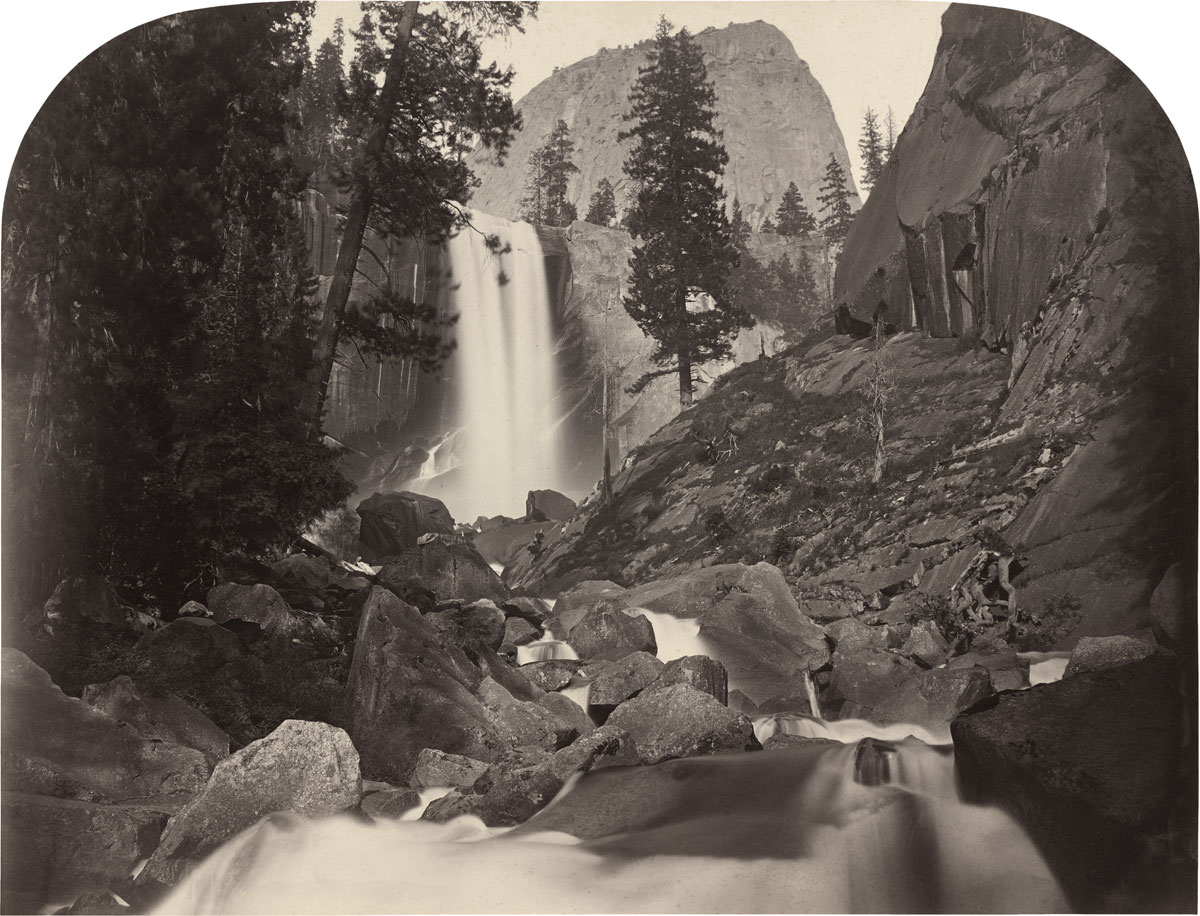
Carleton E. Watkins (American, 1829-1916) 'Piwac, Vernal Falls, 300 feet, Yosemite' 1861


Carleton E. Watkins (American, 1829-1916)
Piwac, Vernal Falls, 300 feet, Yosemite
1861
Albumen print
39.9 x 52.3cm
National Gallery of Art, Washington, Gift of Mary and David Robinson, 1995


The westward expansion of America opened up new opportunities for photographers such as Watkins and William Bell. Joining government survey expeditions, hired by railroad companies, or catering to tourists and the growing demand for grand views of nature, they created photographic landscapes that reached a broad audience of scientists, businessmen, and engineers, as well as curious members of the middle class. Watkins’s photographs of the sublime Yosemite Valley, which often recall landscape paintings of similar majestic subjects, helped convince Congress to pass a bill in 1864 protecting the area from development and commercial exploitation.


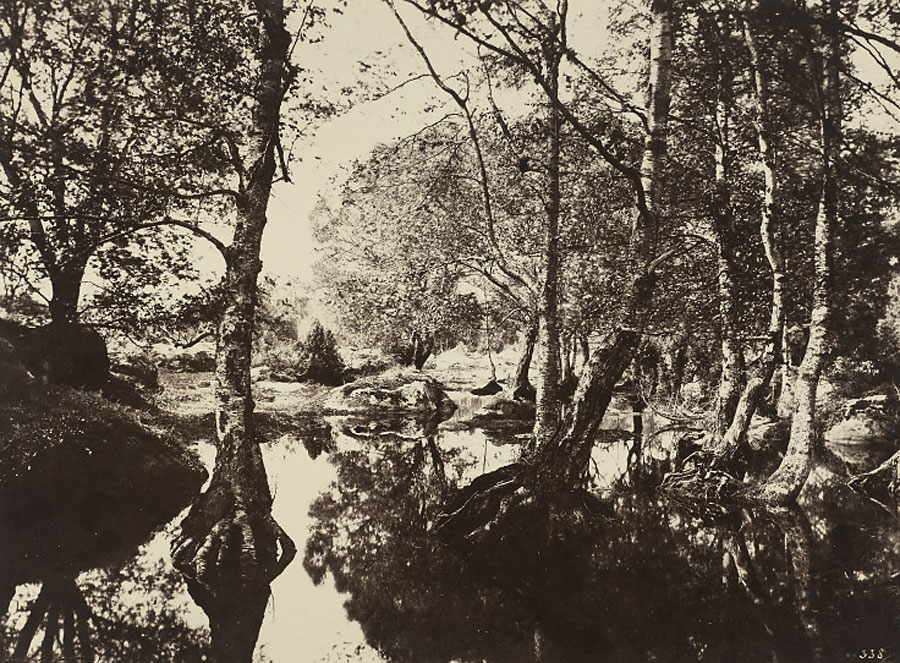
Eugène Cuvelier (French, 1837-1900) 'Belle-Croix' 1860s


Eugène Cuvelier (French, 1837-1900)
Belle-Croix
1860s
Albumen print
25.4 x 34.3cm
National Gallery of Art, Washington, Gail and Benjamin Jacobs for the Millennium Fund, 2007


In the second half of the nineteenth century, some photographers in France, hired by governmental agencies to make photographic inventories or simply catering to the growing demand for pictures of Paris, drew on the medium’s documentary abilities to record the nation’s architectural patrimony and the modernisation of Paris. Others explored the camera’s artistic potential by capturing the ephemeral moods of nature in the French countryside. Though photographers faced difficulties in carting around heavy equipment and operating in the field, they learned how to master the elements that directly affected their pictures, from securing the right vantage point to dealing with movement, light, and changing atmospheric conditions during long exposure times.


Gustave Le Gray (French, 1820-1884) 'The Pont du Carrousel, Paris: View to the West from the Pont des Arts' 1856-1858


Gustave Le Gray (French, 1820-1884)
The Pont du Carrousel, Paris: View to the West from the Pont des Arts
1856-1858
Albumen print
37.8 x 48.8cm
National Gallery of Art, Washington, Patrons’ Permanent Fund, 1995


Édouard-Denis Baldus (French, 1813-1889) 'Toulon, Train Station' c. 1861


Édouard-Denis Baldus (French, 1813-1889)
Toulon, Train Station
c. 1861
Albumen print
27.4 x 43.1cm
National Gallery of Art, Washington, Patrons’ Permanent Fund, 1995


In Light of the Past: Celebrating 25 Years of Photography at the National Gallery of Art, on view in the West Building from May 3 through July 26, 2015, will commemorate more than two decades of the Gallery’s robust photography program. Some 175 of the collection’s most exemplary holdings will reveal the evolution of the art of photography, from its birth in 1839 to the late 1970s. In Light of the Past is one of three stellar exhibitions that will commemorate the 25th anniversary of the National Gallery of Art’s commitment to photography acquisitions, exhibitions, scholarly catalogues, and programs.

In Light of the Past includes some of the rarest and most compelling photographs ever created,” said Earl A. Powell III, director, National Gallery of Art, Washington. “It also honours the generous support of our donors who have enabled us to achieve this new place of prominence for photography at the Gallery.

About the exhibition

In Light of the Past begins with exceptional 19th-century salted paper prints, daguerreotypes, and albumen prints by acclaimed early practitioners such as William Henry Fox Talbot (1800-1877), Gustave Le Gray (1820-1884), Roger Fenton (1819-1869), Julia Margaret Cameron (1815-1879), Albert Sands Southworth (1811-1894), and Josiah Johnson Hawes (1808-1901). It also displays works by American expeditionary photographers, including William Bell (1830-1910) and Carleton E. Watkins (1829-1916).

The exhibition continues with late 19th- and early 20th-century American Pictorialist photographs by Alfred Stieglitz (1864-1946), Clarence H. White (1871-1925), Gertrude Käsebier (1852-1934), and Alvin Langdon Coburn (1882-1966), among others, as well as European masters such as Eugène Atget (1857-1927). The exhibition also examines the international photographic modernism of artists such as Paul Strand (1890-1976), André Kertész (1894-1985), Marianne Brandt (1893-1983), László Moholy-Nagy (1895-1946), and Ilse Bing (1899-1998) before turning to the mid-20th century, where exceptional work by Walker Evans (1903-1975), Robert Frank (b. 1924), Harry Callahan (1912-1999), Irving Penn (1917-2009), Lee Friedlander (b. 1934), and Diane Arbus (1923-1971) will be on view.

The exhibition concludes with pictures from the 1960s and 1970s, showcasing works by photographers such as Robert Adams (b. 1937), Lewis Baltz (1945-2014), and William Eggleston (b. 1939), as well as Mel Bochner (b. 1940) and Sol LeWitt (1928-2007), which demonstrate the diverse practices that invigorated photography during these decades.

Press release from the National Gallery of Art


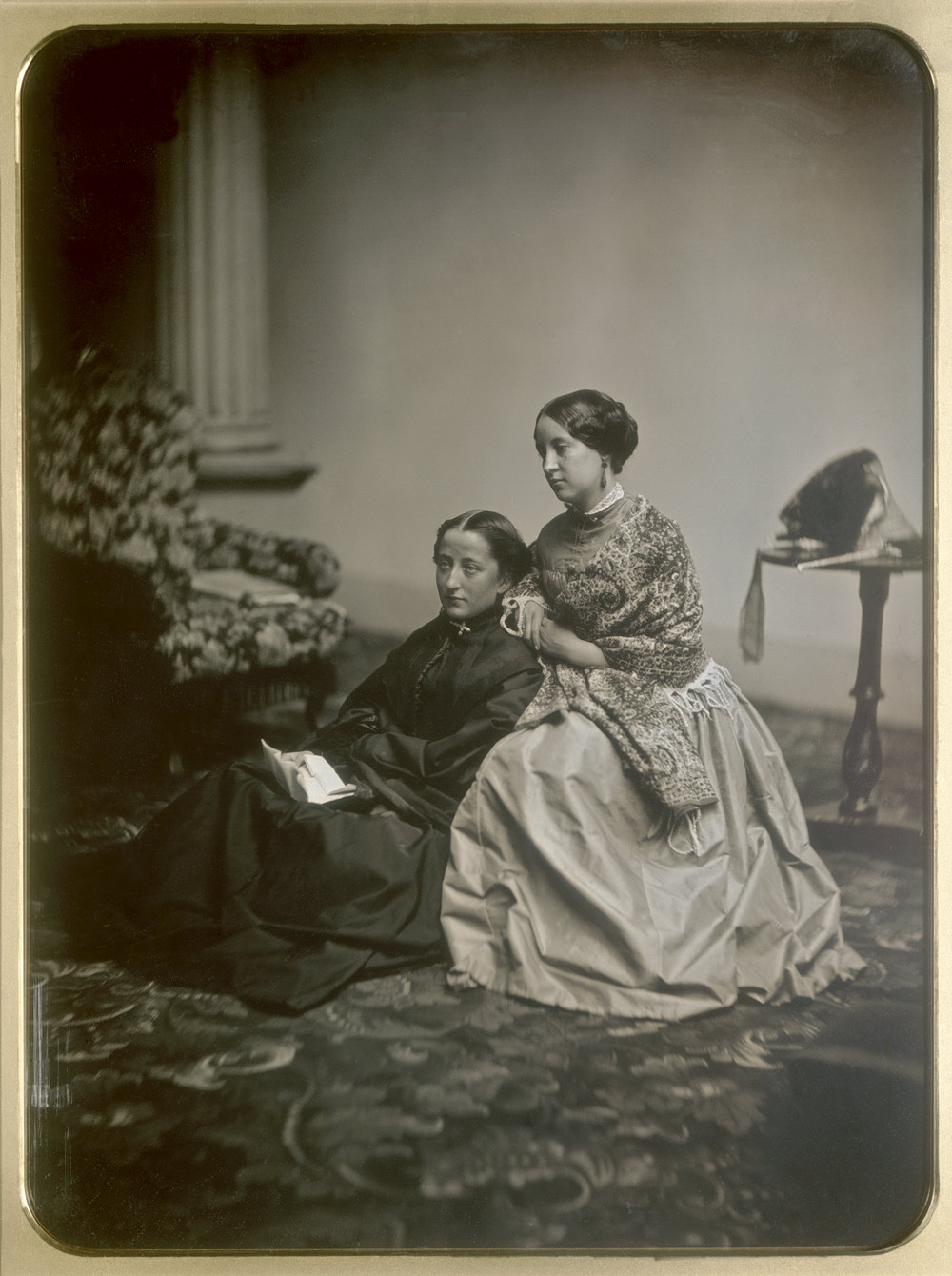
Albert Sands Southworth (American, 1811-1894) and Josiah Johnson Hawes (American, 1808-1901) 'The Letter' c. 1850


Albert Sands Southworth (American, 1811-1894) and Josiah Johnson Hawes (American, 1808-1901)
The Letter
c. 1850
Daguerreotype
Plate: 20.3 x 15.2cm
National Gallery of Art, Washington, Patrons’ Permanent Fund, 1999


Working together in Boston, the portrait photographers Southworth and Hawes aimed to capture the character of their subjects using the daguerreotype process. Invented in France and one of the two photographic processes introduced to the public in early 1839, the daguerreotype is made by exposing a silver-coated copper plate to light and then treating it with chemicals to bring out the image. The heyday of the technique was the 1840s and 1850s, when it was used primarily for making portraits. The daguerreotype’s long exposure time usually resulted in frontal, frozen postures and stern facial expressions; this picture’s pyramidal composition and strong sentiments of friendship and companionship are characteristic of Southworth and Hawes’s innovative approach.


Clarence H. White (American, 1871-1925) 'The Hillside' c. 1898


Clarence H. White (American, 1871-1925)
The Hillside
c. 1898
Gum dichromate print
20.8 x 15.88cm
National Gallery of Art, Washington, Patrons’ Permanent Fund, 2008


The Photo-Secession

At the turn of the century in America, Alfred Stieglitz and his colleague Edward Steichen led the movement to establish photography’s status as a fine art. In 1902 Stieglitz founded an organisation called the Photo-Secession, consisting of young artists who shared his belief in the creative potential of the medium. Many of the photographers featured here were members of the group, including Gertrude Käsebier, Clarence White, and Alvin Langdon Coburn. Through the exhibitions Stieglitz organised in his New York gallery, called 291, and the essays he published in his influential quarterly, Camera Work, he and the Photo-Secession promoted the Pictorialist aesthetic of softly textured, painterly pictures that elicit emotion and appeal to the imagination. Occasionally the photographers’ compositions refer to other works of art, such as Steichen’s portrait of his friend Auguste Rodin, whose pose recalls one of the sculptor’s most famous works, The Thinker. Influenced by the modern European and American painting, sculpture, and drawing he exhibited at 291, Stieglitz lost interest in the Photo-Secession in the early 1910s and began to explore a more straightforward expression.


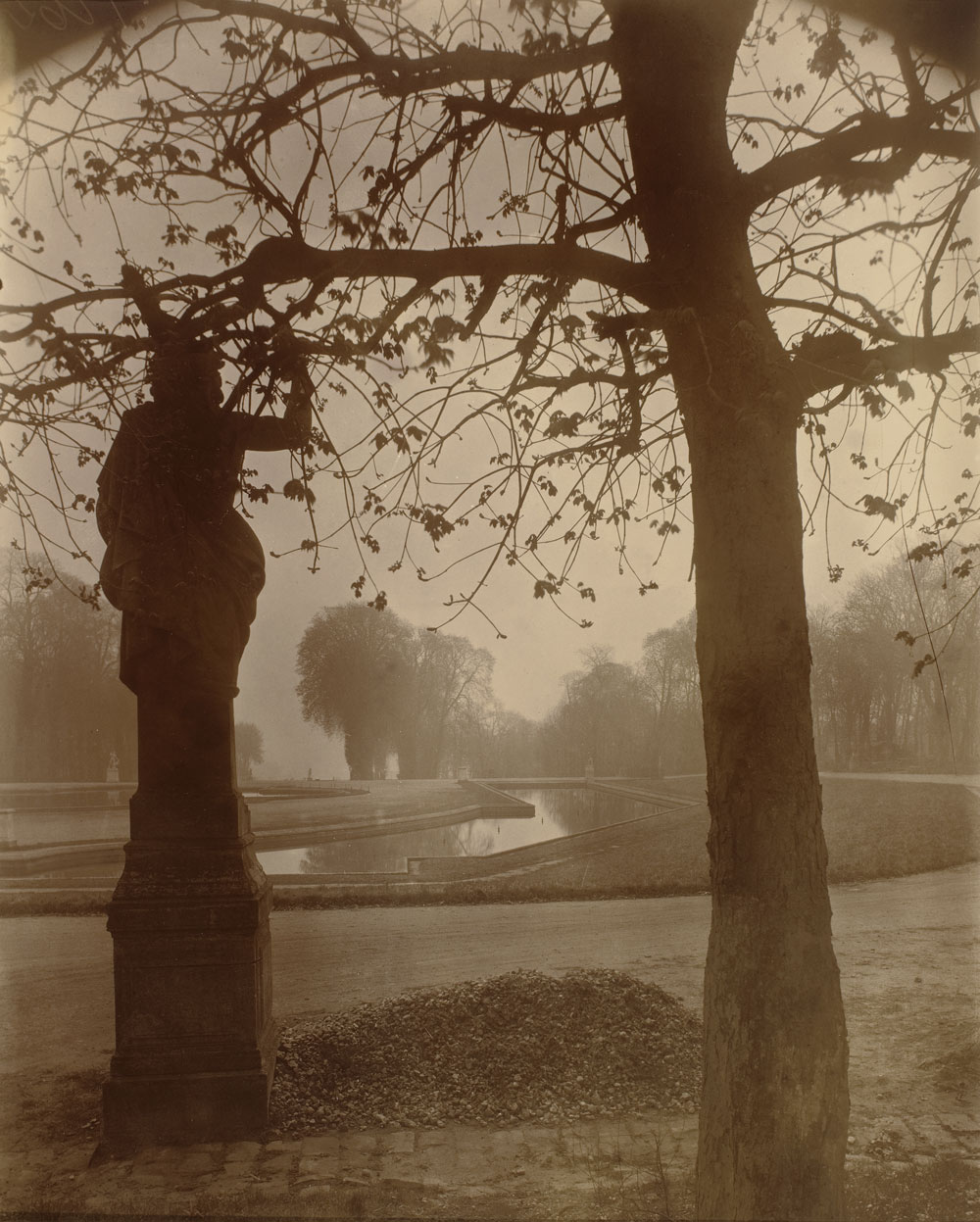
Eugène Atget (French, 1857-1927) 'Saint-Cloud' 1926


Eugène Atget (French, 1857-1927)
Saint-Cloud
1926
Albumen print
22.2 x 18.1cm
National Gallery of Art, Washington, Gift of Mary and Dan Solomon and Patrons’ Permanent Fund, 2006


Using a cumbersome camera mounted on a tripod, Atget recorded the myriad facets of Paris and its environs at the turn of the century. Transforming ordinary scenes into poetic evocations, he created a visual compendium of the objects, architecture, and landscapes that were expressive of French culture and its history. He sold his photographs to artists, architects, and craftsmen, as well as to libraries and museums interested in the vanishing old city. Throughout his career he returned repeatedly to certain subjects and discovered that the variations caused by changing light, atmosphere, and season provided inexhaustible subjects for the perceptive photographer.


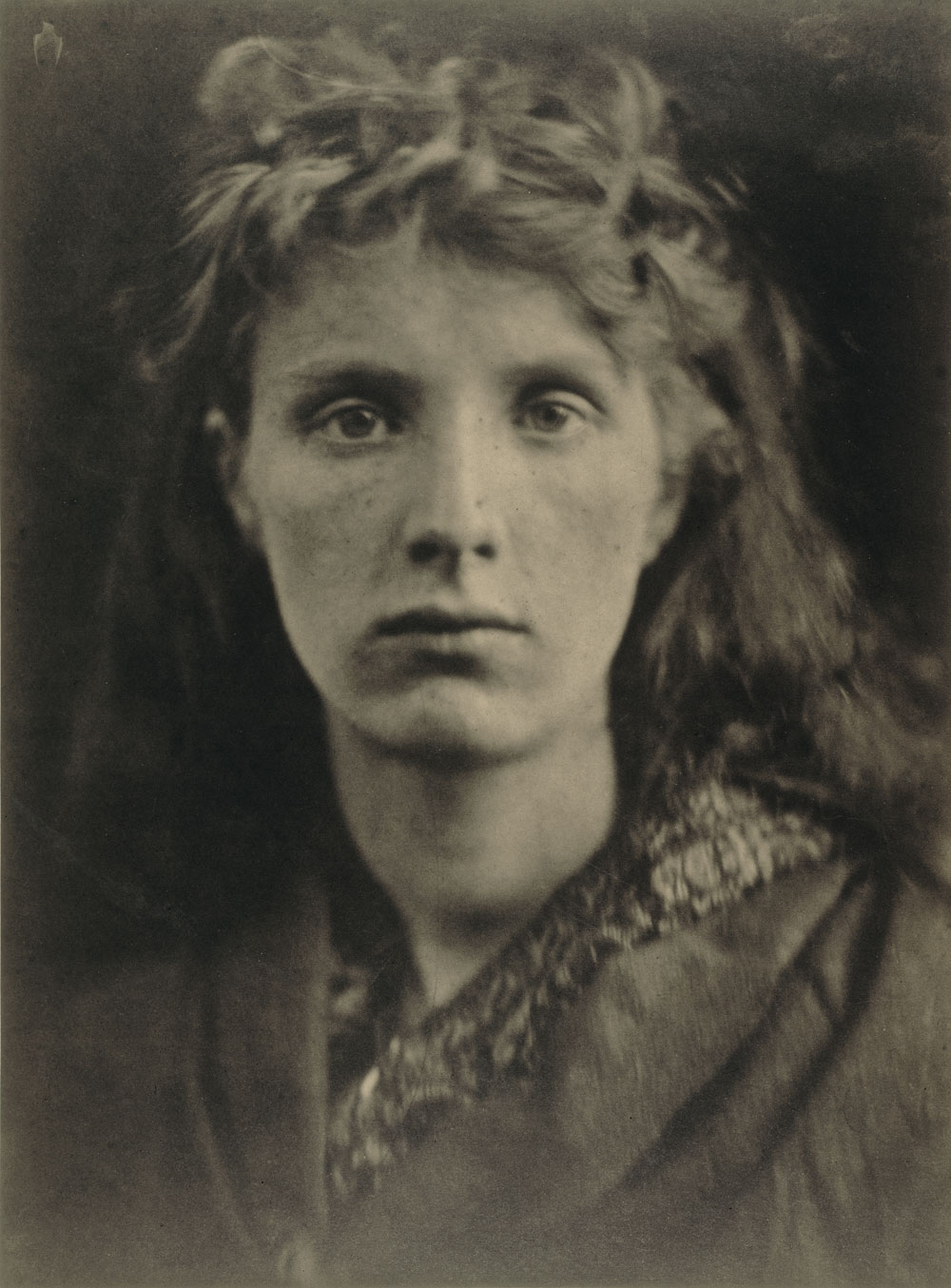
Julia Margaret Cameron (British, 1815-1879) 'The Mountain Nymph, Sweet Liberty' June 1866


Julia Margaret Cameron (British, 1815-1879)
The Mountain Nymph, Sweet Liberty
June 1866
Albumen print
36.1 x 26.7cm
National Gallery of Art, Washington, New Century Fund, 1997


Ensconced in the intellectual and artistic circles of midcentury England, Cameron manipulated focus and light to create poetic pictures rich in references to literature, mythology, and history. Her monumental views of life-sized heads were unprecedented, and with them she hoped to define a new mode of photography that would rival the expressive power of painting and sculpture. The title of this work alludes to John Milton’s mid-seventeenth-century poem L’Allegro. Describing the happy life of one who finds pleasure and beauty in the countryside, the poem includes the lines:

Come, and trip it as ye go
On the light fantastic toe;
And in thy right hand lead with thee,
The mountain nymph, sweet Liberty.


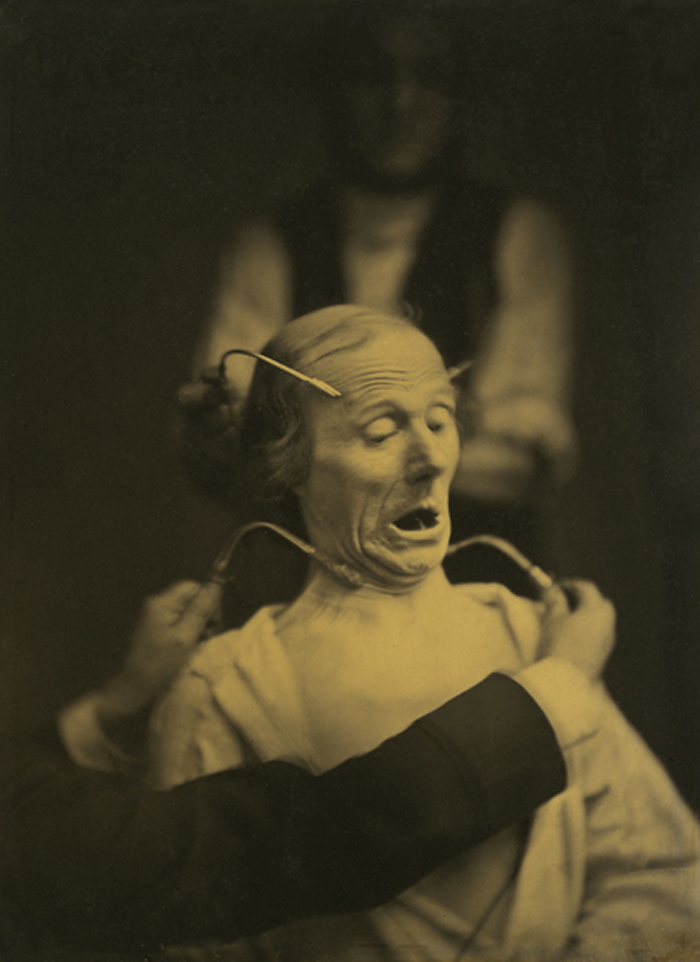
Dr Guillaume-Benjamin-Amant Duchenne (de Boulogne) (French, 1806-1875) 'Figure 63, "Fright" from "Mécanisme de la physionomie humaine (Mechanism of human physiognomy)" (1862)' 1854-1855


Dr Guillaume-Benjamin-Amant Duchenne (de Boulogne) (French, 1806-1875)
Figure 63, “Fright” from “Mécanisme de la physionomie humaine (Mechanism of human physiognomy)” (1862)
1854-1855
Albumen print
21.5 × 16cm
National Gallery of Art, Washington, Pepita Milmore Memorial Fund, 2015


A neurologist, physiologist, and photographer, Duchenne de Boulogne conducted a series of experiments in the mid-1850s in which he applied electrical currents to various facial muscles to study how they produce expressions of emotion. Convinced that these electrically-induced expressions accurately rendered internal feelings, he then photographed his subjects to establish a precise visual lexicon of human emotions, such as pain, surprise, fear, and sadness. In 1862 he included this photograph representing fright in a treatise on physiognomy (a pseudoscience that assumes a relationship between external appearance and internal character), which enjoyed broad popularity among artists and scientists.


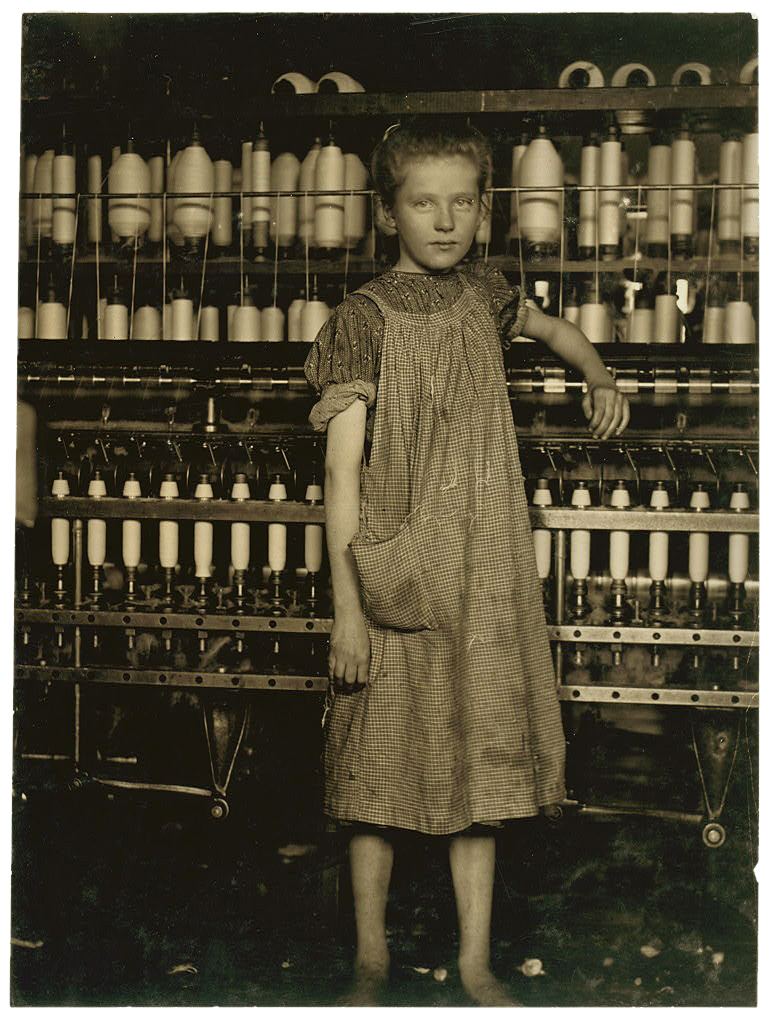
Lewis Hine (American, 1874-1940) 'An Anaemic Little Spinner in a New England Cotton Mill (North Pownal, Vermont)' 1910


Lewis Hine (American, 1874-1940)
An Anaemic Little Spinner in a New England Cotton Mill (North Pownal, Vermont)
1910
Gelatin silver print
24.1 × 19.2cm
National Gallery of Art, Washington, Pepita Milmore Memorial Fund, 2015


Trained as a sociologist and initially employed as a teacher, Hine used the camera both as a research tool and an instrument of social reform. One of the earliest and most influential social documentary photographers of his time, he made many pictures under the auspices of the National Child Labor Committee, an organisation formed in 1904 to promote better working conditions for children. Hine’s focus on the thin, frail body of this barefoot twelve-year-old spinner, who stands before rows of bobbins in the mill where she worked, was meant to illustrate the unhealthy effects of her employment. Photographs like this one were crucial to the campaign to change American child labor laws in the early twentieth century.


In Light of the Past: Twenty-Five Years of Photography at the National Gallery of Art

Georgia O’Keeffe and the Alfred Stieglitz Estate laid the foundation of the photography collection of the National Gallery of Art in 1949 with their donation of 1,650 Stieglitz photographs, an unparalleled group known as the Key Set. Yet the Gallery did not start actively acquiring photographs until 1990, when it launched an initiative to build a collection of works by European and American photographers from throughout the history of the medium and mount major exhibitions with scholarly publications. Now including nearly fifteen thousand prints, the collection encompasses the rich diversity of photographic practice from fine art to scientific and amateur photography, as well as photojournalism. It is distinguished by its large holdings of works by many of the medium’s most acclaimed masters, such as Paul Strand, Walker Evans, André Kertész, Ilse Bing, Robert Frank, Harry Callahan, Lee Friedlander, Gordon Parks, Irving Penn, and Robert Adams, among others.

In Light of the Past celebrates the twenty-fifth anniversary of the 1990 initiative by presenting some of the Gallery’s finest photographs made from the early 1840s to the late 1970s. It is divided into four sections arranged chronologically. The first traces the evolution of the art of photography during its first decades in the work of early British, French, and American practitioners. The second looks at the contributions of late nineteenth and early twentieth-century photographers, from Stieglitz and the American Pictorialists to European masters such as Eugène Atget. The third section examines the international photographic modernism of the 1920s and 1930s, and the fourth features seminal mid-twentieth-century photographers. The exhibition concludes with pictures representing the varied practices of those working in the late 1960s and 1970s.

The Nineteenth Century: The Invention of Photography

In 1839 a new means of visual representation was announced to a startled world: photography. Although the medium was immediately and enthusiastically embraced by the public at large, photographers themselves spent the ensuing decades experimenting with techniques and debating the nature of this new invention. The works in this section suggest the range of questions addressed by these earliest practitioners. Was photography best understood as an art or a science? What subjects should photographs depict, what purpose should they serve, and what should they look like? Should photographers work within the aesthetics established in other arts, such as painting, or explore characteristics that seemed unique to the medium? This first generation of photographers became part scientists as they mastered a baffling array of new processes and learned how to handle their equipment and material. Yet they also grappled with aesthetic issues, such as how to convey the tone, texture, and detail of multicoloured reality in a monochrome medium. They often explored the same subjects that had fascinated artists for centuries – portraits, landscapes, genre scenes, and still lifes – but they also discovered and exploited the distinctive ways in which the camera frames and presents the world.

Photography at the Turn of the Twentieth Century

In the late nineteenth century, improvements in technology and processing, along with the invention of small handheld cameras such as the Kodak, suddenly made it possible for anyone of middle-class means to take photographs. Many amateurs took up the camera to commemorate family, friends, and special events. Others, such as the sociologist Lewis Hine, used it as a tool for social and political change. Partially in response to the new ease of photography, more serious practitioners in America and Europe banded together to assert the artistic merit of the medium. Called Pictorialists, they sought to prove that photography was just as capable of poetic, subjective expression as painting. They freely manipulated their prints to reveal their authorial control, often resulting in painterly effects, and consciously separated themselves from amateur photographers and mechanised processes.

Photography Between the Wars

In the aftermath of World War I – the first modern, mechanised conflict – sweeping changes transformed photography. Avant-garde painters, graphic designers, and journalists turned to the medium, seeing it as the most effective tool to express the fractured, fast-paced nature of modernity and the new technological culture of the twentieth century. A wide variety of new approaches and techniques flourished during these years, especially in Europe. Photographers adopted radical cropping, unusual angles, disorienting vantage points, abstraction, collage, and darkroom alchemy to achieve what the influential Hungarian teacher László Moholy-Nagy celebrated as the “new vision.” Other photographers, such as the German August Sander or the Americans Alfred Stieglitz, Edward Weston, and Walker Evans, sought a more rigorous objectivity grounded in a precise examination of the world.

Postwar Photography

Photography thrived in the decades after World War II, invigorated by new ideas, practices, and expanding venues for circulating and displaying pictures. Immediately after the war, many photographers sought to publish their pictures in illustrated magazines, which prospered during these years. Some, such as Gordon Parks, made photographs highlighting racial, economic, and social disparities. Others, such as Louis Faurer, Sid Grossman, and Robert Frank, turned to the street to address the conditions of modern life in pictures that expose both its beauty and brutality. Using handheld cameras and available light, they focused on the random choreography of sidewalks, making pictures that are often blurred, out of focus, or off-kilter.

In the later 1950s and 1960s a number of photographers pushed these ideas further, mining the intricate social interactions of urban environments. Unlike photographers from the 1930s, these practitioners, such as Garry Winogrand, Lee Friedlander, and Diane Arbus, sought not to reform American society but to record it in all its complexity, absurdity, and chaos. By the late 1960s and 1970s, other photographers, such as Robert Adams and Lewis Baltz, looked beyond conventional notions of natural beauty to explore the despoliation of the urban and suburban landscape. Their pictures of tract houses, highways, and motels are stripped of any artistic frills, yet they are exquisitely rendered and replete with telling details. Also starting in the 1960s, many conceptual or performance artists working in a variety of media embraced what they perceived to be photography’s neutrality and turned to it as an essential part of their experiments to expand traditional notions of art. In the late 1960s, improvements in colour printing techniques led others, such as William Eggleston, to explore the artistic potential of colour photography.


Edward Steichen (American, 1879-1973) 'An Apple, A Boulder, A Mountain' 1921


Edward Steichen (American, 1879-1973)
An Apple, A Boulder, A Mountain
1921
Platinum print
National Gallery of Art, Washington, Patrons’ Permanent Fund, 2014


After World War I, Steichen became disillusioned with the painterly aesthetic of his earlier work and embarked on a series of experiments to study light, form, and texture. Inverting an apple, he demonstrated how a small object, when seen in a new way, can assume the monumentality and significance of a much larger one. His close-up scrutiny of a natural form closely links this photograph with works by other American modernists of the 1920s, such as Edward Weston, Paul Strand, and Georgia O’Keeffe.


Paul Strand (American, 1890-1976) 'People, Streets of New York, 83rd and West End Avenue' 1916


Paul Strand (American, 1890-1976)
People, Streets of New York, 83rd and West End Avenue
1916
Platinum print
24.2 x 33cm
National Gallery of Art, Washington, Patrons’ Permanent Fund, 1990


Strand was introduced to photography in high school by his teacher Lewis Hine, who instilled in him a strong interest in social issues. In 1907, Hine took his pupil to Alfred Stieglitz’s 291 gallery in New York, which launched Strand’s desire to become a fine art photographer. By the early 1910s, influenced by Stieglitz, he began to make clearly delineated portraits, pictures of New York, and nearly abstract still lifes. Strand came to believe that photography was a gift of science to the arts, that it was an art of selection, not translation, and that objectivity was its very essence.


American 20th Century. 'Untitled' c. 1930


American 20th Century
Untitled
c. 1930
Gelatin silver print
5.7 x 10cm
National Gallery of Art, Washington, Gift of Robert E. Jackson, 2007


Snapshots

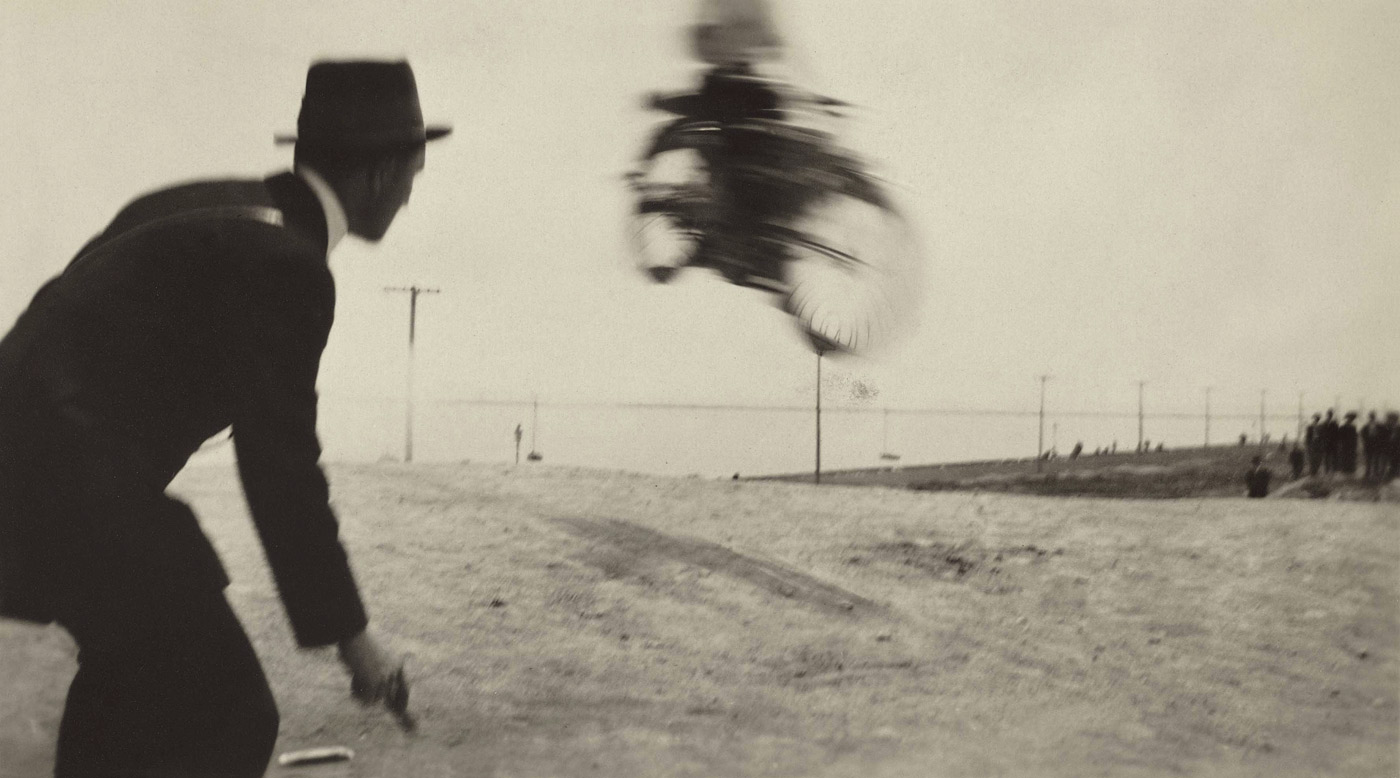
After World War I, a parade of technological improvements transformed the practice of photography. With smaller cameras, faster shutter speeds, and more sensitive film emulsions, both amateurs and more serious practitioners could now easily record motion, investigate unexpected angles and points of view, and work in dim light and inclement weather. The amateur’s less staid, more casual approach began to play an important role in the work of modernist photographers as they explored spontaneity and instantaneity, seeking to capture the cacophony and energy of modern life. Blurriness, distorted perspectives, and seemingly haphazard cropping-once considered typical amateur mistakes-were increasingly embraced as part of the modern, vibrant way of picturing the world.


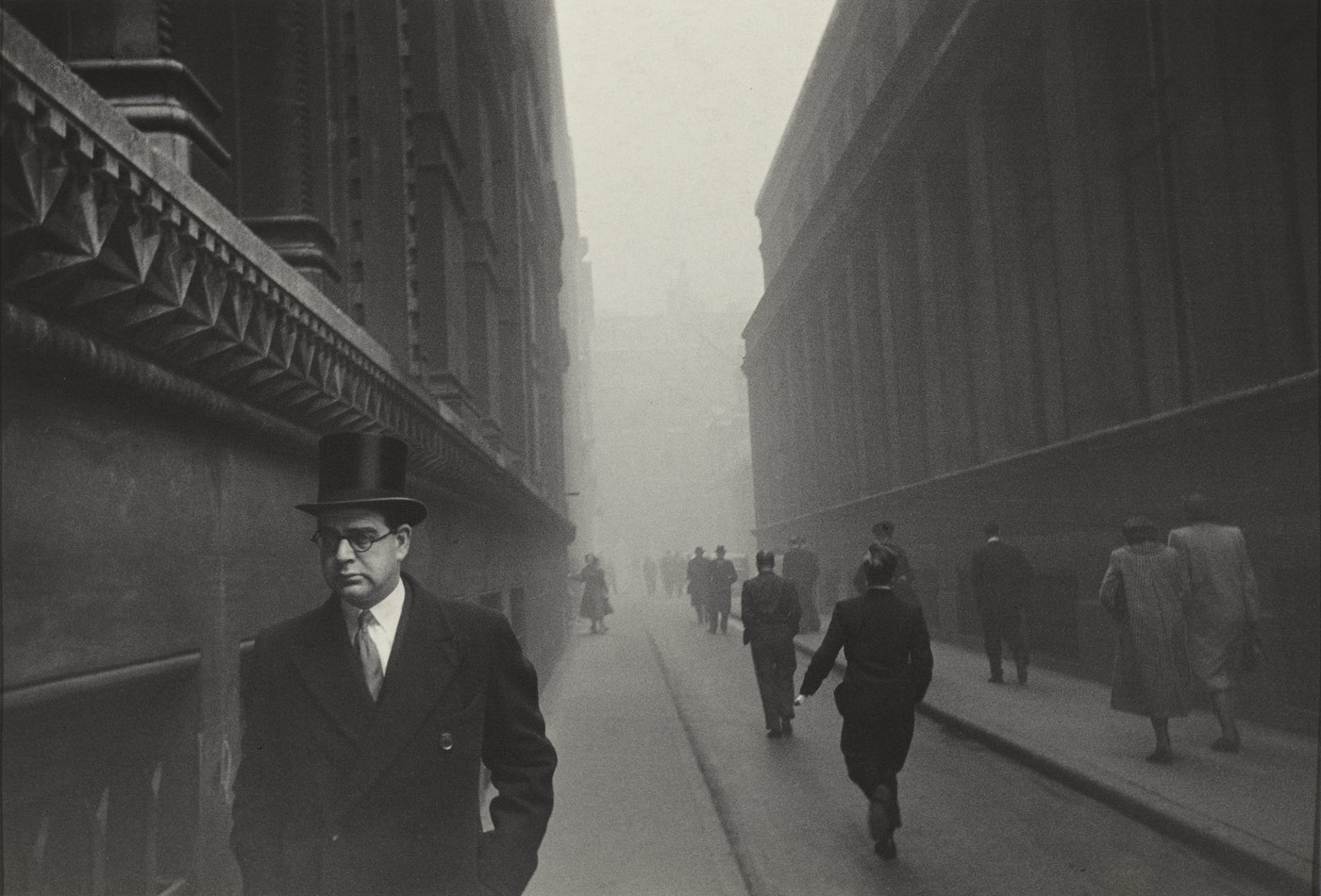
Robert Frank (Swiss, 1924-2019) 'City of London' 1951


Robert Frank (Swiss, 1924-2019)
City of London
1951
Gelatin silver print
23 x 33.6cm
National Gallery of Art, Washington, Robert Frank Collection, Purchased as a Gift of The Howard Gilman Foundation, in Honor of the 50th Anniversary of the National Gallery of Art, 1991


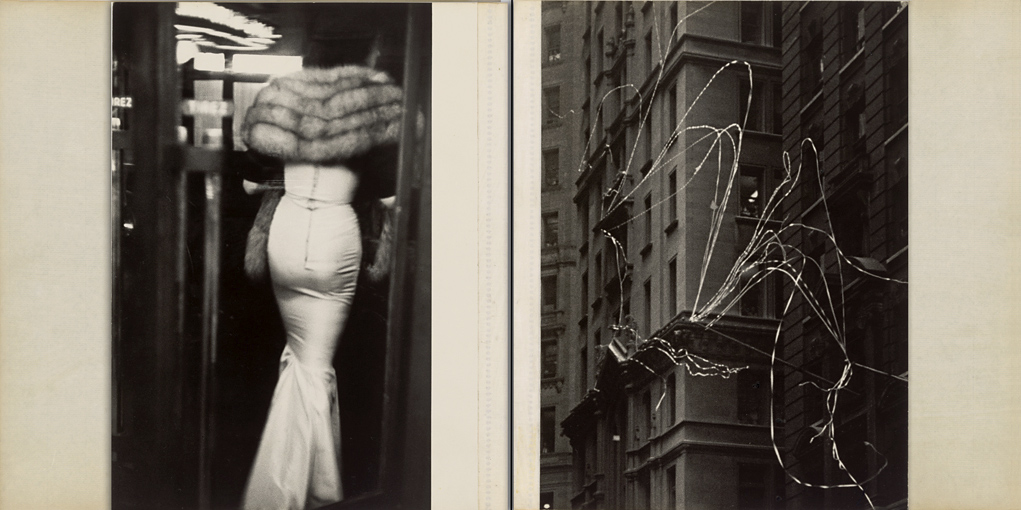
Robert Frank (Swiss, 1924-2019) 'Woman/Paris' 1952


Robert Frank (Swiss, 1924-2019)
Woman/Paris
1952
Gelatin silver print in bound volume
Image: 35.1 x 25.4cm
National Gallery of Art, Washington, Robert Frank Collection, Gift (Partial and Promised) of Robert Frank, in Honor of the 50th Anniversary of the National Gallery of Art, 1990


In the late 1940s and early 1950s, Frank made several handbound volumes of photographs, exploring different ways to link his pictures through non-narrative sequences. While in Zurich in October 1952, he assembled pictures taken in Europe, South America, and the United States in a book called Black White and Things. With a brief introductory quote from Antoine de Saint-Exupéry – “it is only with the heart that one can see rightly; what is essential is invisible to the eye” – the photographs are arranged in a sophisticated sequence that uses formal repetition, conceptual contrasts, and, as here, witty juxtapositions to evoke a range of ideas …

While in Zurich in October of 1952, Frank assembled photographs taken in Europe, South America, and the United States in the preceding years into a bound book called Black White and Things. Designed by Frank’s friend Werner Zryd, and with only a brief introductory statement describing the three sections, the photographs appear in a sophisticated sequence that relies on subtle, witty juxtapositions and powerful visual formal arrangements to evoke a wide range of emotions.

Frank made three copies of this book, all identical in size, construction, and sequence. He gave one copy to his father, gave one to Edward Steichen, and kept one. The book that belonged to his father is now in a private collection; Steichen’s copy resides at the Museum of Modern Art, New York; and in 1990 Frank gave his copy to the Robert Frank Collection at the National Gallery of Art.


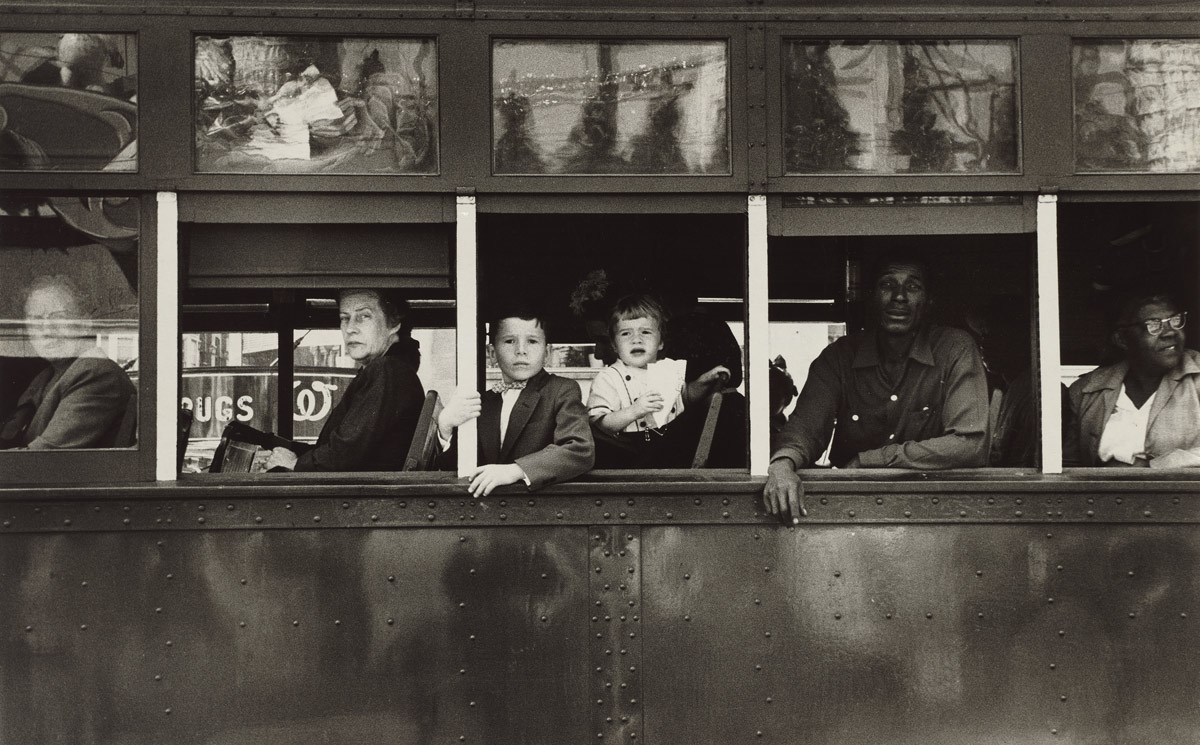
Robert Frank (Swiss, 1924-2019) 'Trolley - New Orleans' 1955


Robert Frank (Swiss, 1924-2019)
Trolley – New Orleans
1955
Gelatin silver print
Sheet: 21 x 31.6cm
National Gallery of Art, Washington, Gift of Maria and Lee Friedlander, 2001


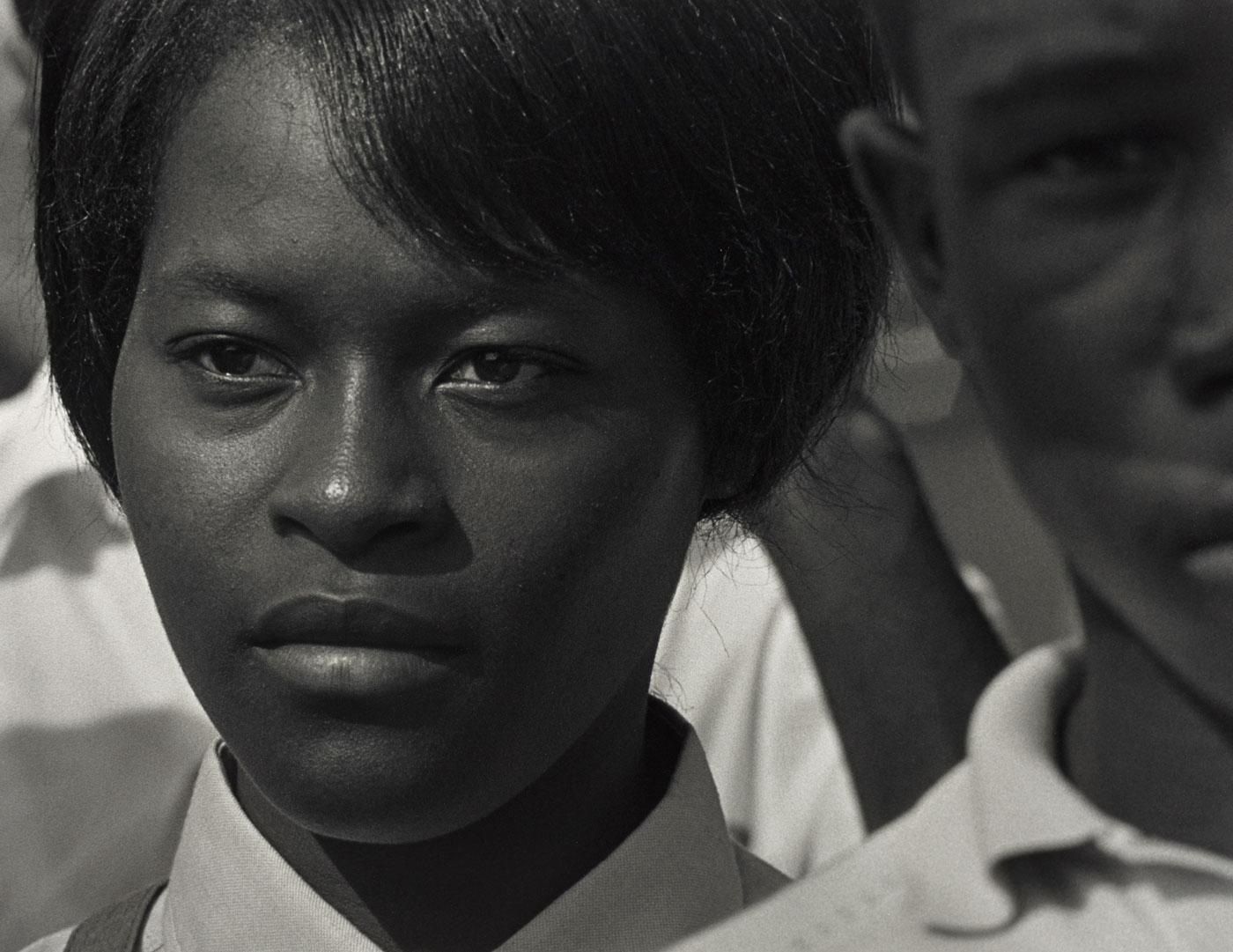
Roy DeCarava (American, 1919-2009) 'Mississippi Freedom Marcher, Washington, D.C.' 1963


Roy DeCarava (American, 1919-2009)
Mississippi Freedom Marcher, Washington, D.C.
1963
Gelatin silver print
25.5 x 33cm
National Gallery of Art, Washington, Horace W. Goldsmith Foundation through Robert and Joyce Menschel, 1999


Lee Friedlander (American, b. 1934) 'New York City' 1966


Lee Friedlander (American, b. 1934)
New York City
1966
Gelatin silver print
Image: 13.3 x 20.6 cm
National Gallery of Art, Washington, Trellis Fund, 2001


Heir to the tradition of documentary photography established by Eugène Atget, Walker Evans, and Robert Frank, Friedlander focuses on the American social landscape in photographs that can seem absurd, comical, and even bleak. In dense, complex compositions, he frequently depicts surprising juxtapositions that make the viewer look twice. He has made numerous self-portraits, yet he appears in these pictures in oblique and unexpected ways, for example reflected in a mirror or window. The startling intrusion of Friedlander’s shadow onto the back of a pedestrian’s coat, at once threatening and humorous, slyly exposes the predatory nature of street photography.


Giovanni Anselmo (Italian, 1934-2023) 'Entering the Work' 1971


Giovanni Anselmo (Italian, 1934-2023)
Entering the Work
1971
Photographic emulsion on canvas
49 x 63.5cm
National Gallery of Art, Washington, Glenstone in honor of Eileen and Michael Cohen, 2008


Conceptual Photography

In the 1960s, many painters and sculptors questioned the traditional emphasis on aesthetics and turned to creating art driven by ideas. Photography’s association with mechanical reproduction appealed to them as they sought to downplay the hand of the artist while promoting his or her role as idea maker. Some conceptual artists, such as Sol Lewitt and Mel Bochner, used photographs to explore an interest in perspective, scale, and mathematics. Others turned to photography as a tool to record performances and artistic undertakings, the resulting pictures acting as an integral part of those projects.

Anselmo was a member of the Italian Arte Povera group, which sought to break down the separation of art and life through experimental performances and the use of natural materials such as trees and leaves. To make this work, Anselmo set his camera up with a timed shutter release, and raced into view so that his running figure creates a modest yet heroic impression on the landscape.


Robert Adams (American, b. 1937) 'Colorado Springs, Colorado' 1974


Robert Adams (American, b. 1937)
Colorado Springs, Colorado
1974
Gelatin silver print, printed 1983
15.2 x 15.2cm
National Gallery of Art, Washington, Gift of Mary and Dan Solomon and Patrons’ Permanent Fund, 2006


For more than forty years, Adams has recorded the changing American landscape, especially the ongoing settlement of the West. Although he has photographed roads, tract houses, and strip malls that have utterly transformed the landscape, he has also captured the beauty that remains and indeed, that refuses to die, as in his poetic picture of morning fog over California hills. He is convinced, as he wrote in 1974, that “all land, no matter what has happened to it, has over it a grace, an absolutely persistent beauty.”


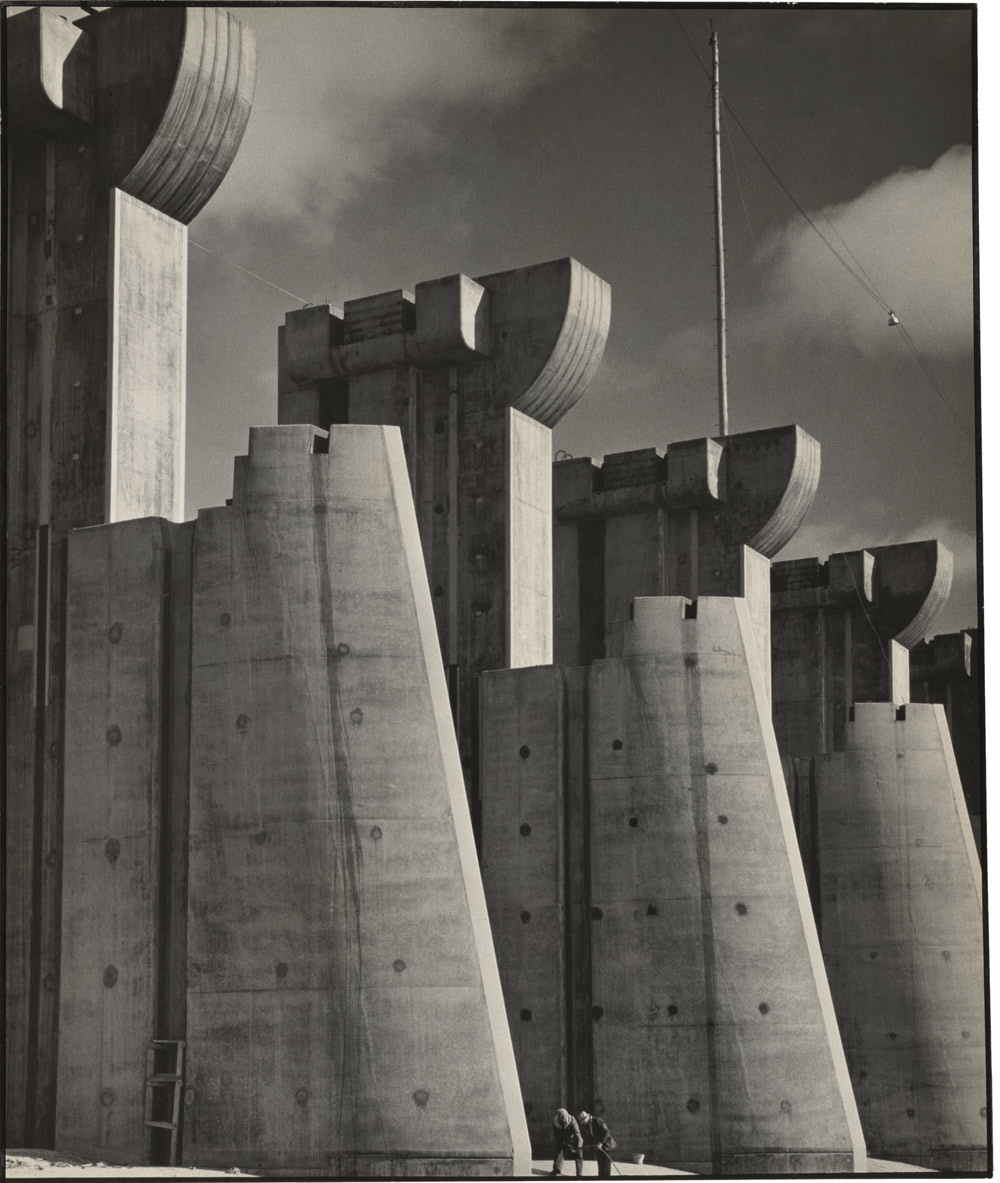
Margaret Bourke-White (American, 1904-1971) 'Fort Peck Dam, Montana' 1936


Margaret Bourke-White (American, 1904-1971)
Fort Peck Dam, Montana
1936
Gelatin silver print
33.02 × 27.31cm
National Gallery of Art, Washington, Patrons’ Permanent Fund, 2014


One of the most iconic photographs by the pioneering photojournalist Bourke-White, Fort Peck Dam, Montana was published on the cover of the inaugural issue of Life magazine on November 23, 1936. A striking representation of the machine age, the photograph depicts the stark, massive piers for an elevated highway over the spillway near the dam. The two men at the bottom of the print indicate the piers’ massive scale while revealing the vulnerable position of the worker in the modern industrial landscape.


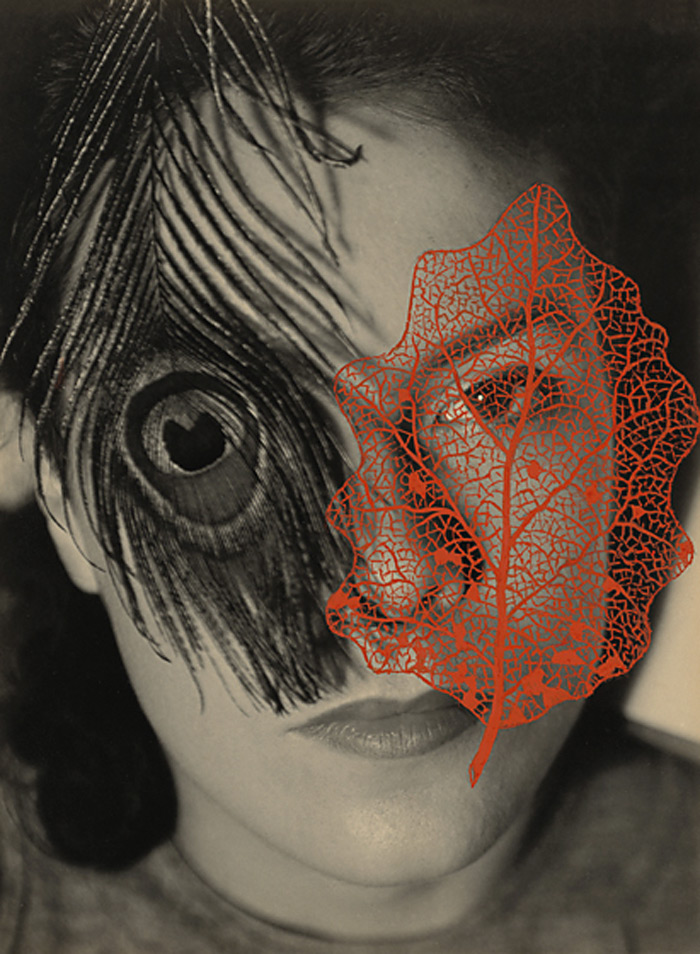
György Kepes (American born Hungary, 1906-2001) 'Juliet with Peacock Feather and Red Leaf' 1937-1938


György Kepes (American born Hungary, 1906-2001)
Juliet with Peacock Feather and Red Leaf
1937-1938
Gelatin silver print with gouache
15.7 × 11.6cm
National Gallery of Art, Washington, Pepita Milmore Memorial Fund, 2014


Trained as a painter at the Academy of Fine Arts in Budapest, Kepes was an influential designer, educator, aesthetic theorist, and photographer. In 1930 he moved to Berlin, where he worked with László Moholy-Nagy, but eventually settled in Chicago and later Cambridge, Massachusetts. Created soon after his arrival in America, this startling photograph is both an intimate depiction of Kepes’s wife and a study of visual perception. Like the red leaf that seems to float above the image, the peacock feather – its eye carefully lined up with Juliet’s – obscures not only her vision but also the viewer’s ability to see her clearly.


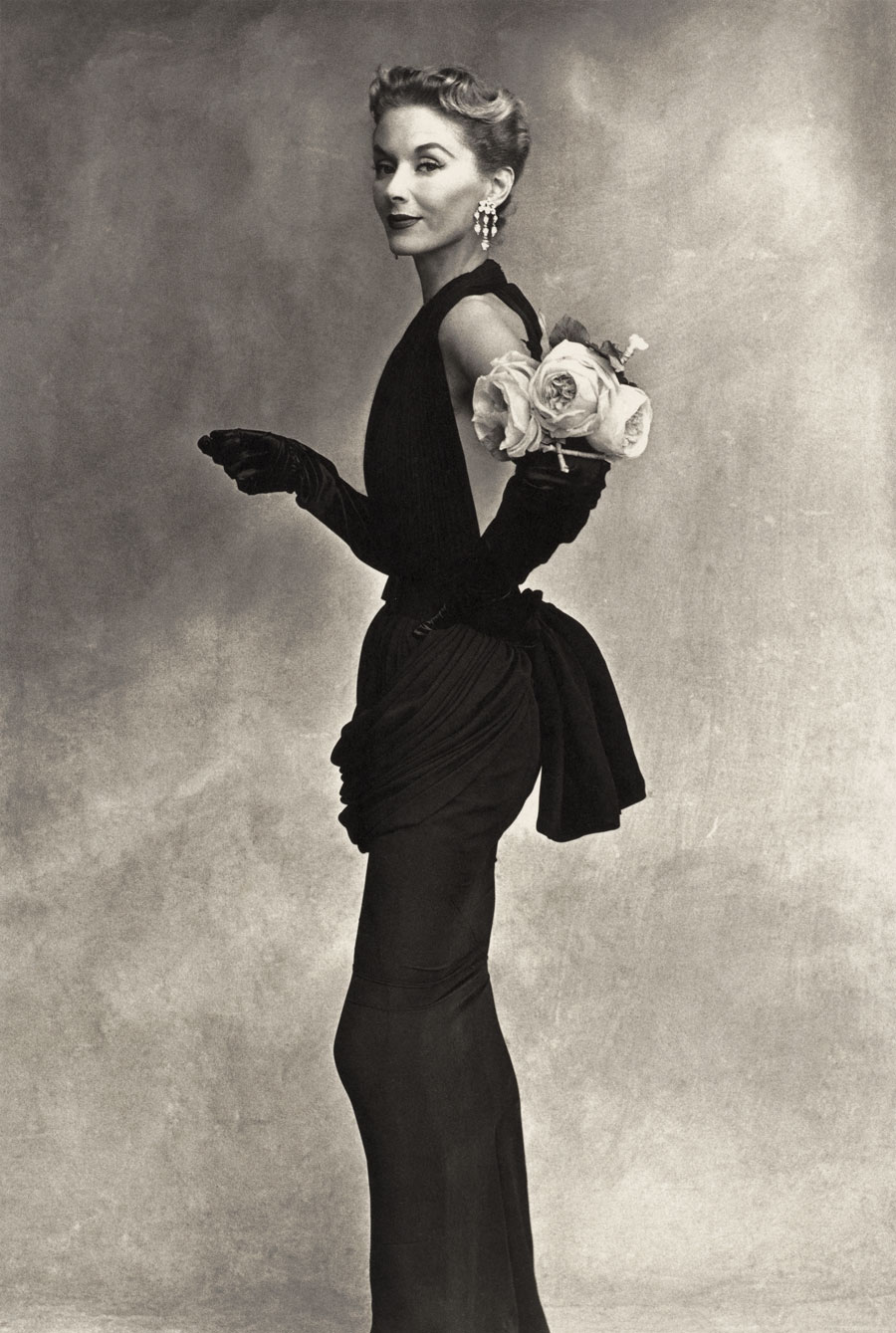
Irving Penn (American, 1917-2009) 'Woman with Roses (Lisa Fonssagrives-Penn in Lafaurie Dress), Paris' 1950


Irving Penn (American, 1917-2009)
Woman with Roses (Lisa Fonssagrives-Penn in Lafaurie Dress), Paris
1950
Platinum/palladium print, 1977
55.1 x 37cm
National Gallery of Art, Washington, Gift of Irving Penn, 2002


One of the most influential fashion and portrait photographers of his time, Penn made pictures marked by refinement, elegance, and clarity. Trained as a painter and designer, he began to photograph in the early 1940s while working at Vogue; more than 150 of his photographs appeared on the cover of the magazine during his long career. A perfectionist, Penn explored earlier printing techniques, such as a late nineteenth-century process that used paper coated with solutions of platinum or palladium rather than silver, to achieve the subtle tonal range he desired.


National Gallery of Art
National Mall between 3rd and 7th Streets
Constitution Avenue NW, Washington

Opening hours:
Open daily 10.00 am – 5.00pm

National Gallery of Art website

LIKE ART BLART ON FACEBOOK

Back to top

Exhibition: ‘Hold That Pose: Erotic Imagery in 19th Century Photography’ at the Kinsey Institute, Bloomington, Indiana Part 2

Exhibition dates: 23rd January – 4th September 2015

Kinsey Institute Gallery, Indiana University

*PLEASE NOTE THIS POSTING CONTAINS ART PHOTOGRAPHS OF HUMAN EROTIC ACTIVITY AND NUDITY – IF YOU DO NOT LIKE PLEASE DO NOT LOOK, FAIR WARNING HAS BEEN GIVEN*


Unknown photographer. 'Female nude' 1850s


Unknown photographer
Female nude
1850s
Daguerreotype in case


Part 2 of this special posting of photographs from the Kinsey Institute for Research in Sex, Gender, and Reproduction.

I especially like the allusion to Romanticism and class in Bijoux 118 (catalog card) (below) through the picture on the wall behind the copulating couple; and the allusion to the landscape and the sublime in Man performing analinctus on another man (1885-1900, below) through the painted studio backdrop. The sheer pleasure on the faces of some of the people in these photographs, such as in Clothed man kneeling behind a nude woman (1884-1886, below) is a joy to behold.

See Part 1 of the posting.

Dr Marcus Bunyan


Many thankx for the Kinsey Institute for allowing me to publish the photographs in the posting. Please click on the photographs for a larger version of the image.


The Kinsey Institute research collection contains thousands of examples of erotic imagery produced over centuries by artists around the world. When the new technology of photography was announced in France in 1839, it was not long before it became the most popular medium for depictions of the nude figure, as well as erotic imagery. The first photographic process to be widely used was the daguerreotype, which produced a unique image. With the invention of other processes that used negatives to make multiple prints, the mass production of erotic photographs became possible. Hold That Pose features daguerreotypes, tintypes, albumen and gelatin silver prints, stereocards, and other examples of photographic processes that were used by professional photographers in the 19th century to produce and distribute erotic material.


W.H. Gilbert Tate (London, England) 'Portrait of an actress' c.1870


W.H. Gilbert Tate (London, England)
Portrait of an actress
c. 1870
Albumen print (carte de visite)


Cartes de visite and cabinet cards

Mass produced on cheap paper or cardstock, actress cards served as cartes de visite – photographic cards left as messages – and as collectible portraits of popular stars of the theatre in London and Paris. One could purchase larger photographs, known as cabinet cards, from the photography studio or the pocket-sized cartes de visite. In an era when women were expected to stay at home, living quiet lives as wives and mothers, actresses were seen as having turned their backs on their ‘God given duty’ to be devoted homemakers. Though looked down upon socially, some actresses achieved fame and notoriety, through their work on stage as well as their lives outside the theatre.


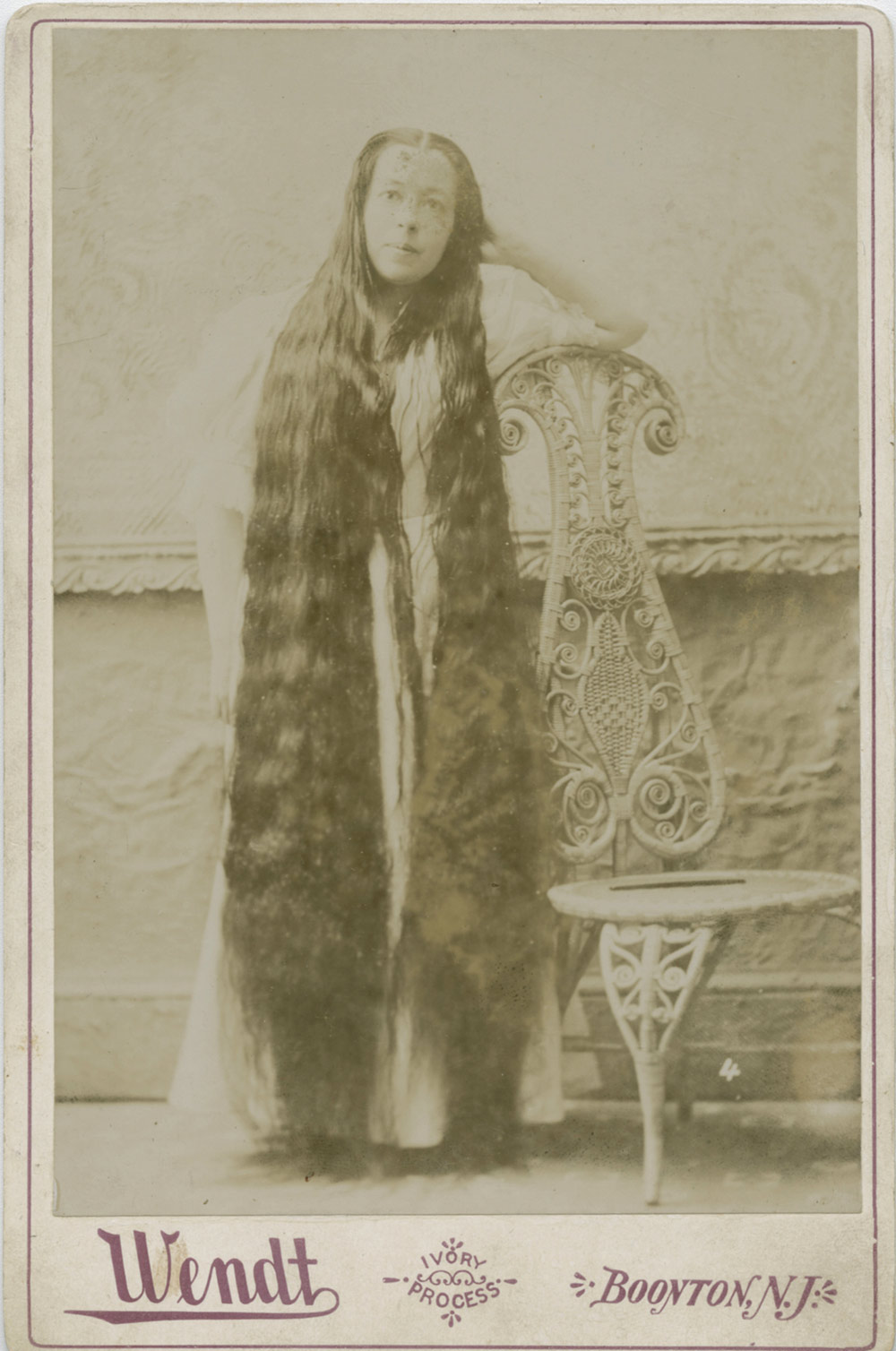
Wendt Studio, New Jersey, United States 'Helen Mathews, Length of hair 6 feet 4 inches' 19th century


Wendt Studio (New Jersey, United States)
Helen Mathews, Length of hair 6 feet 4 inches
19th century
Albumen print mounted on cabinet card


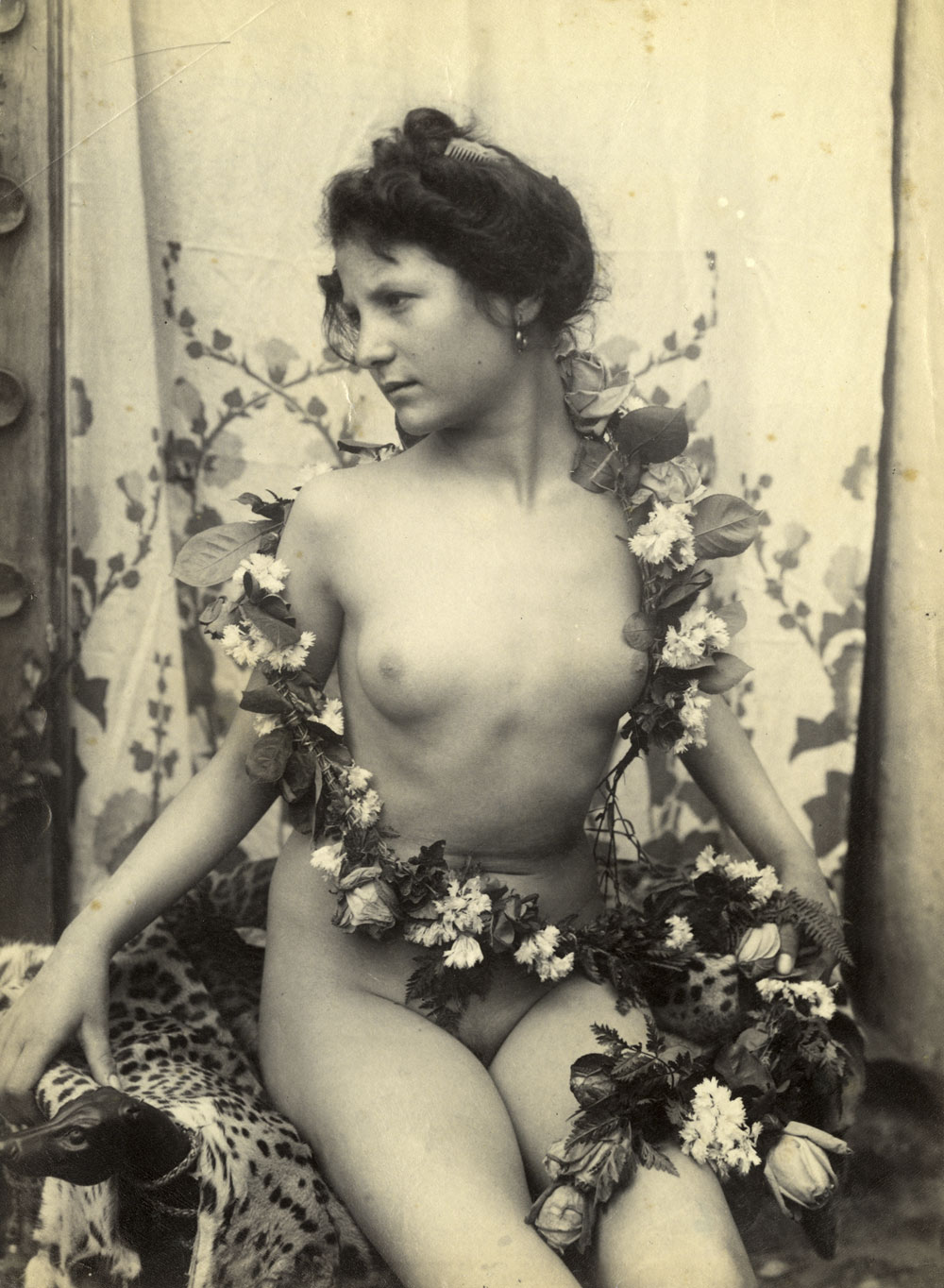
Guglielmo Plüschow (Wilhelm von Plüschow,1852-1930), Germany 'Female nude' Italy, c.1890


Guglielmo Plüschow (Wilhelm von Plüschow, Germany 1852-1930)
Female nude
Italy, c. 1890
Albumen print


Unknown photographer. 'Bijoux 118 (catalog card)' 19th century


Unknown photographer
Bijoux 118 (catalog card)
19th century
Gelatin silver print


Unknown photographer. 'Bijoux 118 (catalog card)' 19th century (detail)


Unknown photographer
Bijoux 118 (catalog card) (detail)
19th century
Gelatin silver print


Unknown photographer. 'Bijoux 118 (catalog card)' 19th century (detail)


Unknown photographer
Bijoux 118 (catalog card) (detail)
19th century
Gelatin silver print


Unknown photographer. 'Entre Forains/L'Apache en Rut' 1895


Unknown photographer
Entre Forains/L’Apache en Rut
1895
Gelatin silver print


Stillfried & Andersen (Baron Raimund von Stillfried-Ratenicz (1839-1911), Austria, and Hermann Andersen. 'Reclining female nude' Yokohama, Japan, 1880-1882?


Stillfried & Andersen (Baron Raimund von Stillfried-Ratenicz Austria, 1839-1911) and Hermann Andersen
Reclining female nude
Yokohama, Japan, 1880-1882?
Hand-colored albumen print mounted on cabinet card


Unknown photographer. 'Group sexual encounter between a man and two women dressed in clerical costumes' 1883-1885


Unknown photographer
Group sexual encounter between a man and two women dressed in clerical costumes
1883-1885
Gelatin silver print


Unknown photographer, France 'Clothed man kneeling behind a nude woman' 1884-1886


Unknown photographer (France)
Clothed man kneeling behind a nude woman
1884-1886
Albumen print


Unknown photographer. 'Man and woman kissing while seated on a chair' 1890-1893


Unknown photographer
Man and woman kissing while seated on a chair
1890-1893
Gelatin silver copy print
Donated in 1954


Unknown photographer. 'Woman sitting on a man to engage in coitus' 1895-1898


Unknown photographer
Woman sitting on a man to engage in coitus
1895-1898
Gelatin silver print


Unknown photographer, France 'Man performing analinctus on another man' 1885-1900

Unknown photographer (France)
Man performing analinctus on another man
1885-1900
Albumen print


Unknown photographer. 'Two men performing mutual masturbation' 1880


Unknown photographer
Two men performing mutual masturbation
1880
Albumen print


Unknown photographer. 'Woman masturbating with a bedpost' 1887


Unknown photographer
Woman masturbating with a bedpost
1887
Albumen print


Unknown photographer (France) 'Man in robe receiving oral sex from a kneeling man' c.1890


Unknown photographer (France)
Man in robe receiving oral sex from a kneeling man
c.1890
Gelatin silver print


Unknown photographer. 'Woman spanking another woman with birch rod' 1895-1898


Unknown photographer
Woman spanking another woman with birch rod
1895-1898
Gelatin silver print


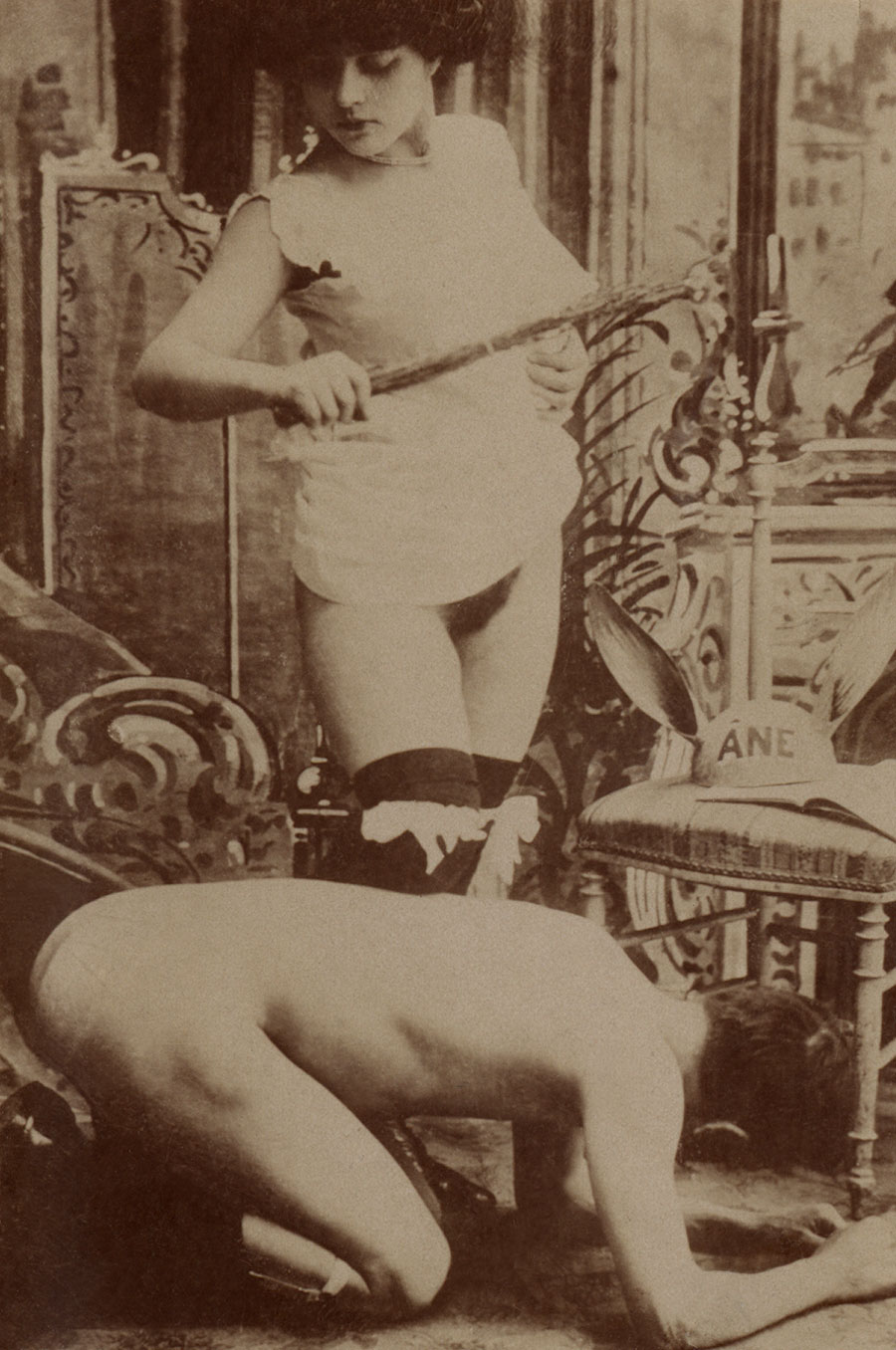
Unknown photographer (France) 'Woman holding a birch rod over a kneeling nude man' 1890-1900


Unknown photographer (France)
Woman holding a birch rod over a kneeling nude man
1890-1900
Gelatin silver print


The Kinsey Institute
Morrison Hall 313, Indiana University
Bloomington, Indiana, USA

Opening hours
Monday – Friday 1 – 5pm

The Kinsey Institute website

LIKE ART BLART ON FACEBOOK

Back to top

Selection of images part 2

April 2015


Edward Weston (American, 1886-1958) 'Shipyard detail, Wilmington' 1935


Edward Weston (American, 1886-1958)
Shipyard detail, Wilmington
1935
Silver gelatin print


Another selection of interesting images.

My favourites: the weight of Weston’s Shipyard detail, Wilmington (1935, above); and the romanticism (Jean-François Millet-esque), sublime beauty of Boubat’s Lella, Bretagne, France (1947, below).

Marcus

Please click on the photographs for a larger version of the image.


Cecil Stoughton (American, 1920-2008) 'Pres. John F. Kennedy's Lincoln Continental' 1963


Cecil Stoughton (American, 1920-2008)
Pres. John F. Kennedy’s Lincoln Continental
1963
Silver gelatin print


Cecil Stoughton (American, 1920-2008) 'Pres. John F. Kennedy's Lincoln Continental' 1963


Cecil Stoughton (American, 1920-2008)
Pres. John F. Kennedy’s Lincoln Continental
1963
Silver gelatin print


Cecil Stoughton (American, 1920-2008) 'Pres. John F. Kennedy's Lincoln Continental' 1963


Cecil Stoughton (American, 1920-2008)
Pres. John F. Kennedy’s Lincoln Continental
1963
Silver gelatin print


Cecil Stoughton (American, 1920-2008)

Cecil William Stoughton (January 18, 1920 – November 3, 2008) was an American photographer. Born in Oskaloosa, Iowa, Stoughton is best known for being President John F. Kennedy’s photographer during his White House years.

Stoughton took the only photograph ever published showing John F. Kennedy, Bobby Kennedy and Marilyn Monroe together. Stoughton was present at the motorcade at which Kennedy was assassinated, and was subsequently the only photographer on board Air Force One when Lyndon B. Johnson was sworn in as the next President. Stoughton’s famous photograph of this event depicts Johnson raising his hand in oath as he stood between his wife Lady Bird Johnson and a still blood-spattered Jacqueline Kennedy.

Text from the Wikipedia website


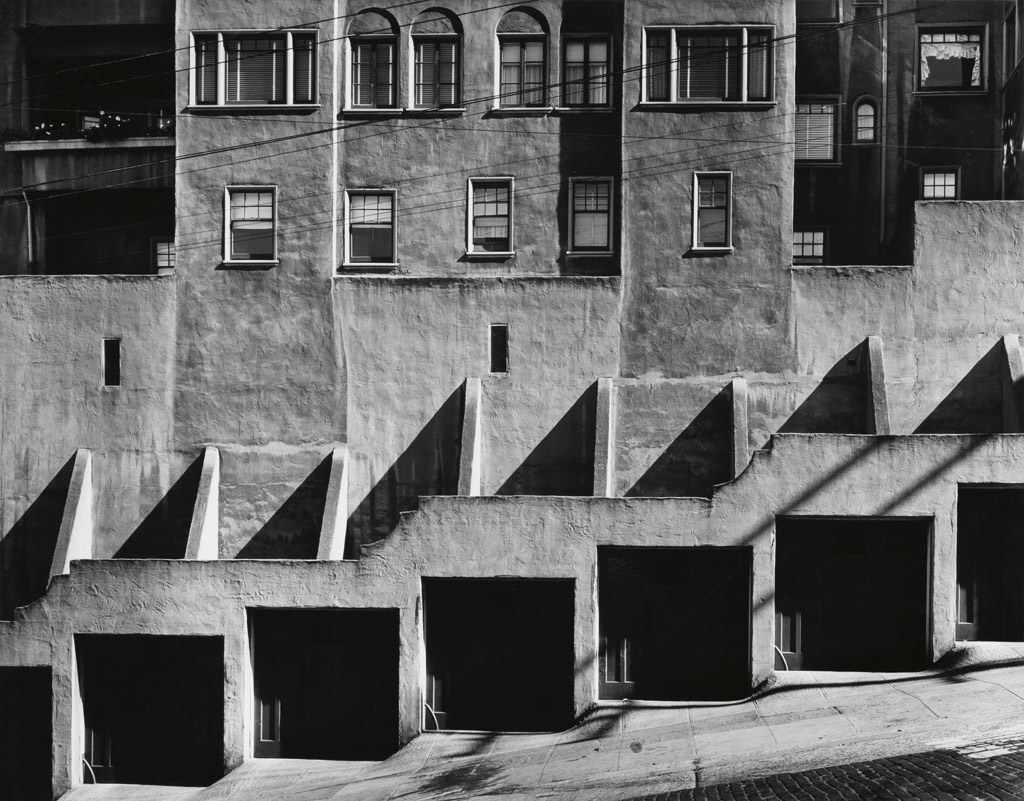
Max Yavno (American, 1911-1985) 'Garage Doors, San Francisco' 1947


Max Yavno (American, 1911-1985)
Garage Doors, San Francisco
1947
Silver gelatin print


Max Yavno (American, 1911-1985)

Max Yavno (1911-1985) was a photographer who specialised in street scenes, especially in Los Angeles and San Francisco, California.

He did photography for the Works Progress Administration from 1936 to 1942. He was president of the Photo League in 1938 and 1939. Yavno was in the U.S. Army Air Corps from 1942 to 1945, after which he moved to San Francisco and began specialising in urban-landscape photography. Photographer Edward Steichen selected twenty of Yavno’s prints for the permanent collection at New York’s Museum of Modern Art in 1950, and the next year Yavno won a Guggenheim fellowship.

History professor Constance B. Schulz said of him:

For financial reasons he worked as a commercial advertising photographer for the next twenty years (1954-75), creating finely crafted still lifes that appeared in Vogue and Harper’s Bazaar. He returned to artistic landscape photography in the 1970s, when his introspective approach found a more appreciative audience.

Text from the Wikipedia website


Paul Strand (American, 1890-1976) 'Bombed Area, Gaeta, Italy' 1952


Paul Strand (American, 1890-1976)
Bombed Area, Gaeta, Italy
1952
Silver gelatin print


Ralph Steiner (American, 1899-1986) 'American Rural Baroque' 1929


Ralph Steiner (American, 1899-1986)
American Rural Baroque
1929
Silver gelatin print


Ralph Steiner (American, 1899-1986)

Ralph Steiner (February 8, 1899 – July 13, 1986) was an American photographer, pioneer documentarian and a key figure among avant-garde filmmakers in the 1930s.

Born in Cleveland, Steiner studied chemistry at Dartmouth, but in 1921 entered the Clarence H. White School of Modern Photography. White helped Steiner in finding a job at the Manhattan Photogravure Company, and Steiner worked on making photogravure plates of scenes from Robert Flaherty’s Nanook of the North. Not long after, Steiner’s work as a freelance photographer in New York began, working mostly in advertising and for publications like Ladies’ Home Journal. Through the encouragement of fellow photographer Paul Strand, Steiner joined the left-of-centre Film and Photo League around 1927. He was also to influence the photography of Walker Evans, giving him guidance, technical assistance, and one of his view cameras.

In 1929, Steiner made his first film, H2O, a poetic evocation of water that captured the abstract patterns generated by waves. Although it was not the only film of its kind at the time – Joris Ivens made Regen (Rain) that same year, and Henwar Rodekiewicz worked on his similar film Portrait of a Young Man (1931) through this whole period – it made a significant impression in its day and since has become recognised as a classic: H2O was added to theNational Film Registry in December 2005. Among Steiner’s other early films, Surf and Seaweed (1931) expands on the concept of H2O as Steiner turns his camera to the shoreline; Mechanical Principles (1933) was an abstraction based on gears and machinery.

Text from the Wikipedia website


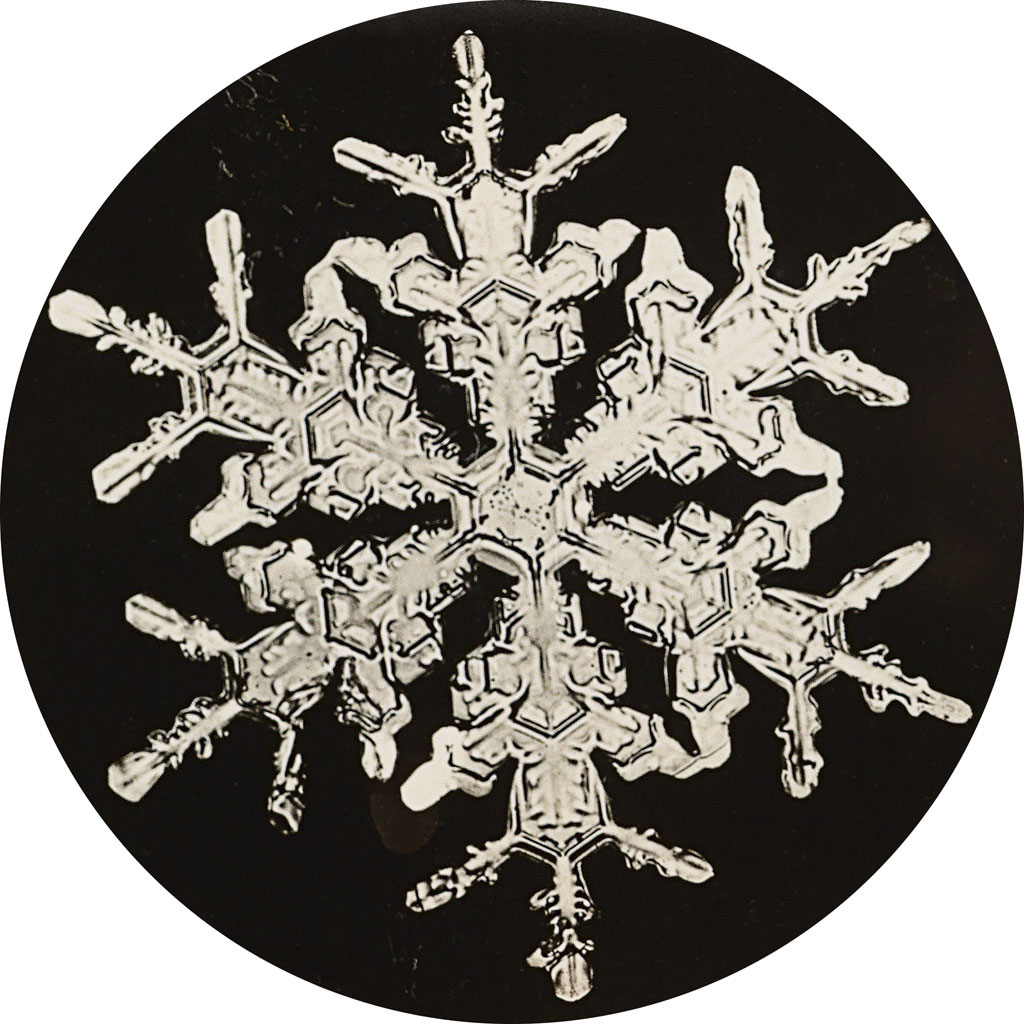
Wilson A. Bentley (American, 1865-1931) 'Snowflake' c. 1920


Wilson A. Bentley (American, 1865-1931)
Snowflake
c. 1920
Gold-chloride toned microphotographs from glass plate negatives


Andre de Dienes (Hungarian, 1913-1985) 'Erotic Nude' 1950s


Andre de Dienes (Hungarian, 1913-1985)
Erotic Nude
1950s
Silver gelatin print


Andre de Dienes (Hungarian, 1913-1985)

Andre de Dienes (born Andor György Ikafalvi-Dienes) (December 18, 1913 – April 11, 1985) was a Hungarian-American photographer, noted for his work with Marilyn Monroe and his nude photography.

Dienes was born in Transylvania, Austria-Hungary, on December 18, 1913, and left home at 15 after the suicide of his mother. Dienes travelled across Europe mostly on foot, until his arrival in Tunisia. In Tunisia he purchased his first camera, a 35mm Retina. Returning to Europe he arrived in Paris in 1933 to study art, and bought a Rolleiflex shortly after.

Dienes began work as a professional photographer for the Communist newspaper L’Humanité, and was employed by the Associated Press until 1936, when the Parisian couturier Captain Molyneux noted his work and urged him to become a fashion photographer. In 1938 the editor of Esquire, Arnold Gingrich offered him work in New York City, and helped fund Dienes’ passage to the United States. Once in the United States Dienes worked for Vogue and Life magazines as well as Esquire.

When not working as a fashion photographer Dienes travelled the USA photographing Native American culture, including the Apache, Hopi, and Navajo reservations and their inhabitants. Dissatisfied with his life as a fashion photographer in New York, Dienes moved to California in 1944, where he began to specialise in nudes and landscapes.

Text from the Wikipedia website


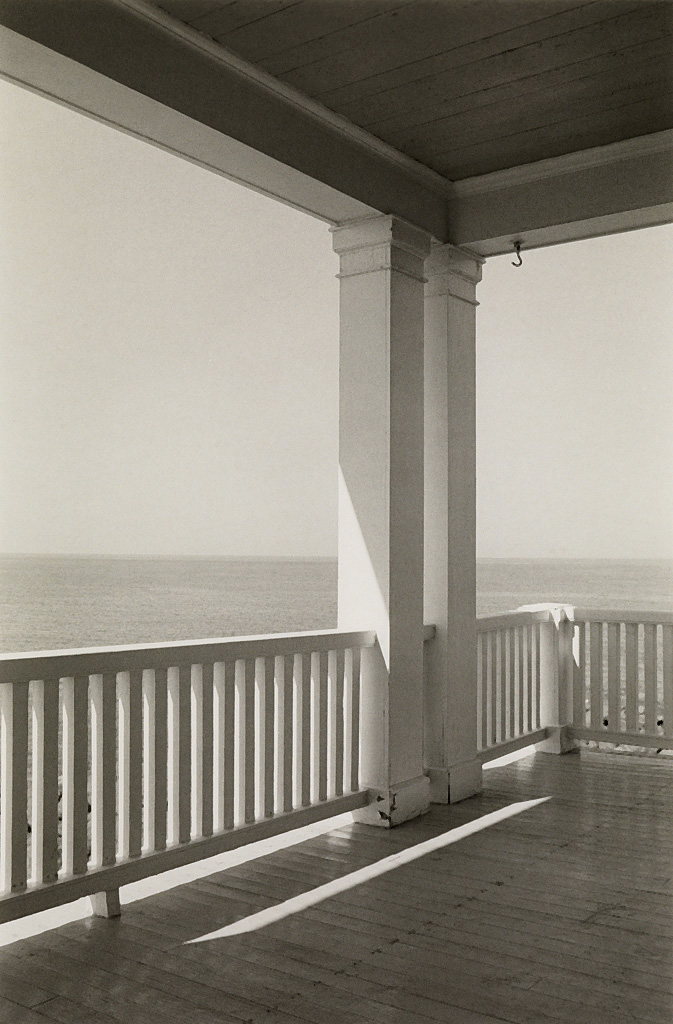
George A. Tice (American, b. 1938) 'Porch, Monhegan Island, Maine' 1971


George A. Tice (American, b. 1938)
Porch, Monhegan Island, Maine
1971
Selenium-toned silver print


George A. Tice (American, b. 1938)

George Tice (b. 1938) is an American photographer best known for his large-format black-and-white photographs of New Jersey, New York, and the Amish. Tice was born in Newark, New Jersey, and self-trained as a photographer. His work is included in major museum collections around the world and he has published many books of photographs, including Fields of Peace: A Pennsylvania German Album (1970), Paterson, New Jersey (1972), Seacoast Maine: People and Places (1973), Urban Landscapes: A New Jersey Portrait (1975), “Lincoln” (1984), Hometowns: An American Pilgrimage (1988), Urban Landscapes (2002), Paterson II (2006), Urban Romantic (1982), and George Tice: Selected Photographs 1953-1999 (2001).

Text from the Wikipedia website


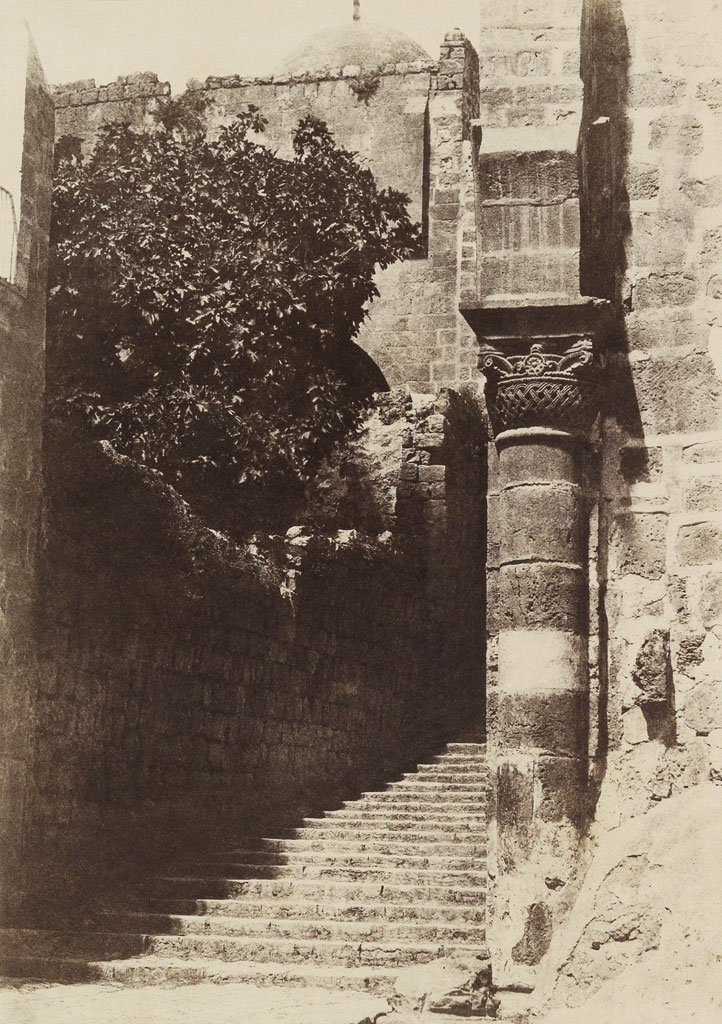
Auguste Salzmann (French, 1824-1872) 'Jerusalem, Sainte Sepulchre, Colonne du Parvis' 1854


Auguste Salzmann (French, 1824-1872)
Jerusalem, Sainte Sepulchre, Colonne du Parvis
1854
Blanquart-Evrard salted paper print from a paper negative


Weegee (Arthur Fellig) (American, 1899-1968) 'Billie Dauscha and Mabel Sidney, Bowery Entertainers' December 4, 1944


Weegee (Arthur Fellig) (American, 1899-1968)
Billie Dauscha and Mabel Sidney, Bowery Entertainers
December 4, 1944
Silver gelatin print


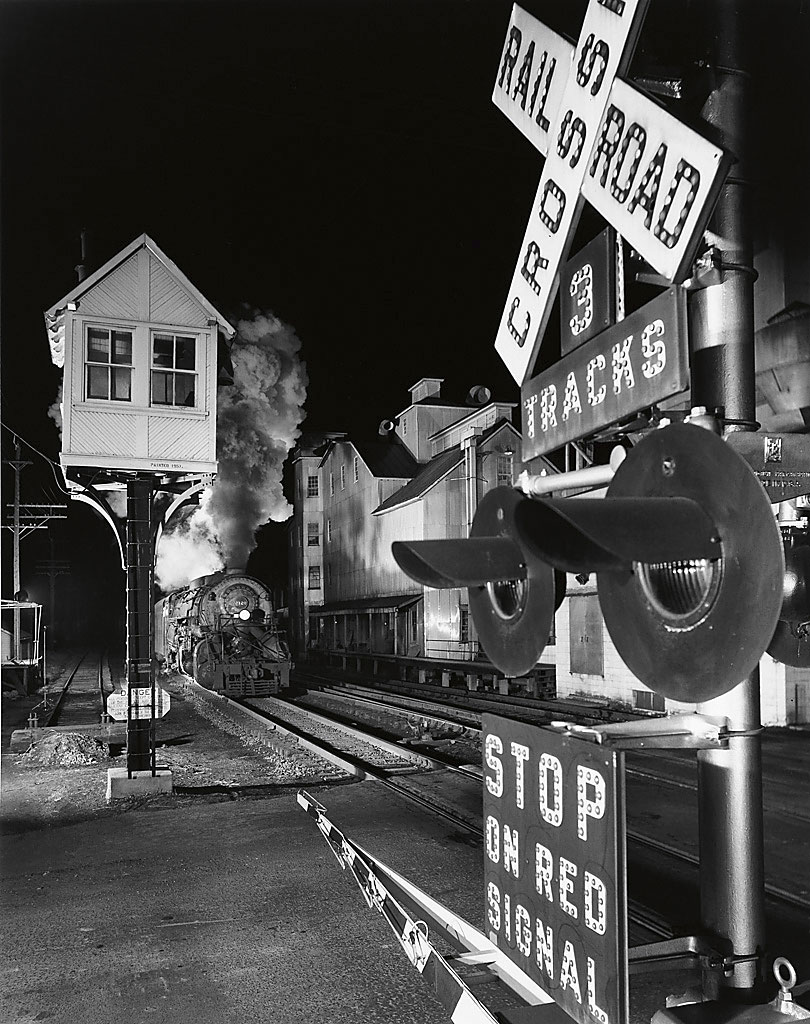
Winston O. Link (American, 1914-2001) 'Luray Crossing, Luray, Virginia' 1956


Winston O. Link (American, 1914-2001)
Luray Crossing, Luray, Virginia
1956
Silver gelatin print


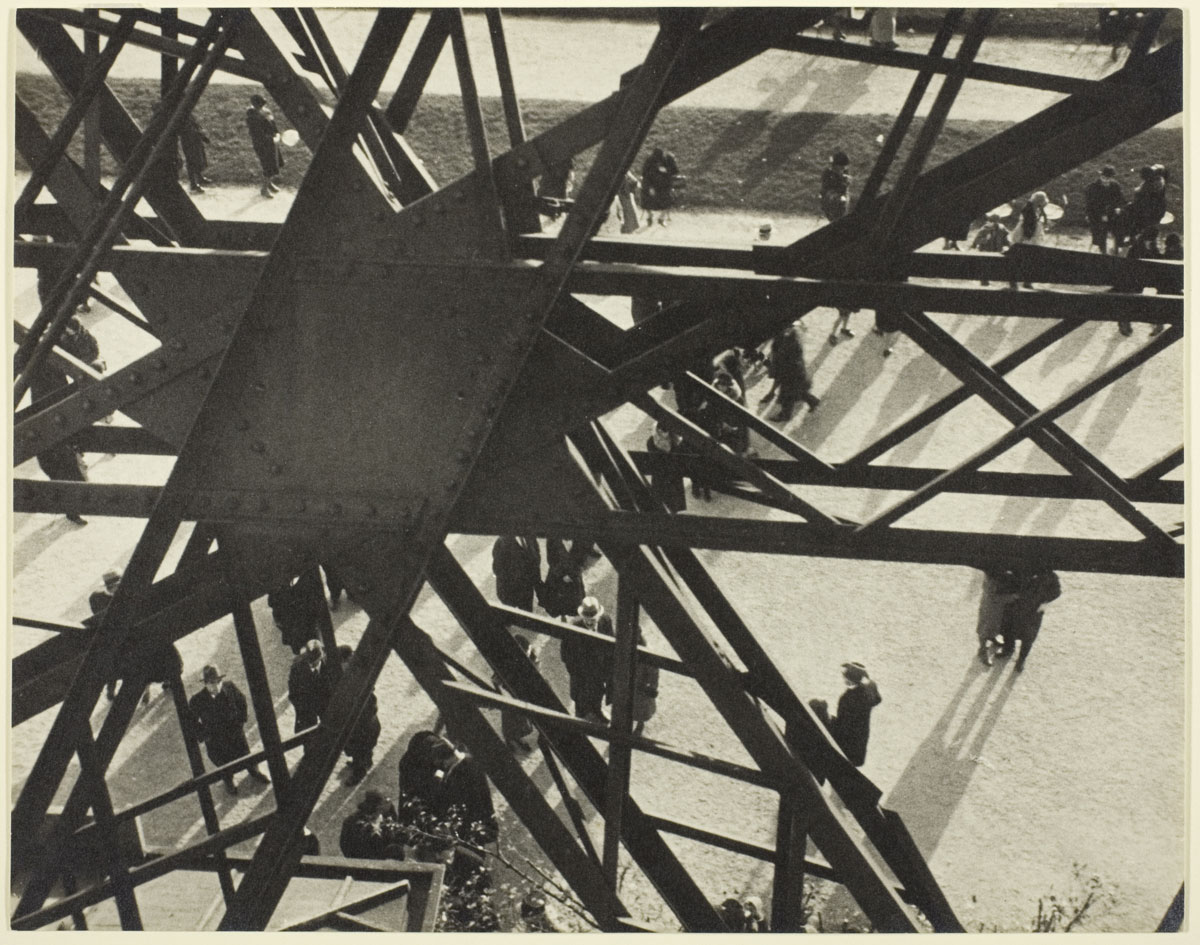
Paul J. Woolf (American, 1899-1985) 'Looking down on Grand Central Station' 1935


Paul J. Woolf (American, 1899-1985)
Looking down on Grand Central Station
1935
Silver gelatin print


Paul J. Woolf began his photographic career in London, taking pictures as a child. He attended the University of California, Berkeley and the Clarence White School of Photography. By 1942 he was established as a professional photographer who specialised in design and night-time photography. Woolf also maintained a practice as a clinical social worker while continuing his work as a photographer.


Henri Cartier-Bresson (French, 1908-2004) 'Alicante' 1933


Henri Cartier-Bresson (French, 1908-2004)
Alicante
1933
Silver gelatin print


Joel-Peter Witkin (American, b. 1939) 'Leda' 1986


Joel-Peter Witkin (American, b. 1939)
Leda
1986
Silver gelatin print


Roman Vishniac (Russian-American, 1897-1990) 'Father taking his son to the first day of cheder' 1937-1938


Roman Vishniac (Russian-American, 1897-1990)
Father taking his son to the first day of cheder
1937-1938
Silver gelatin print


Julia Margaret Cameron (British, 1815-1879) 'James Rogers' 1867


Julia Margaret Cameron (British, 1815-1879)
James Rogers
1867
Albumen print


Julia Margaret Cameron (British, 1815-1879) 'The Dream' 1869


Julia Margaret Cameron (British, 1815-1879)
The Dream
1869
Albumen print


Lewis W. Hine (American, 1874-1940) 'An Albanian Woman from Italy at Ellis Island' 1905


Lewis W. Hine (American, 1874-1940)
An Albanian Woman from Italy at Ellis Island
1905
Silver gelatin print


Lewis W. Hine (American, 1874-1940) 'Italian laborer, Ellis Island' 1905-1912


Lewis W. Hine (American, 1874-1940)
Italian laborer, Ellis Island
1905-1912
Silver gelatin print


Laure Albin-Guillot (French, 1879-1962) 'Opale' c. 1930


Laure Albin-Guillot (French, 1879-1962)
Opale
c. 1930
Silver gelatin print


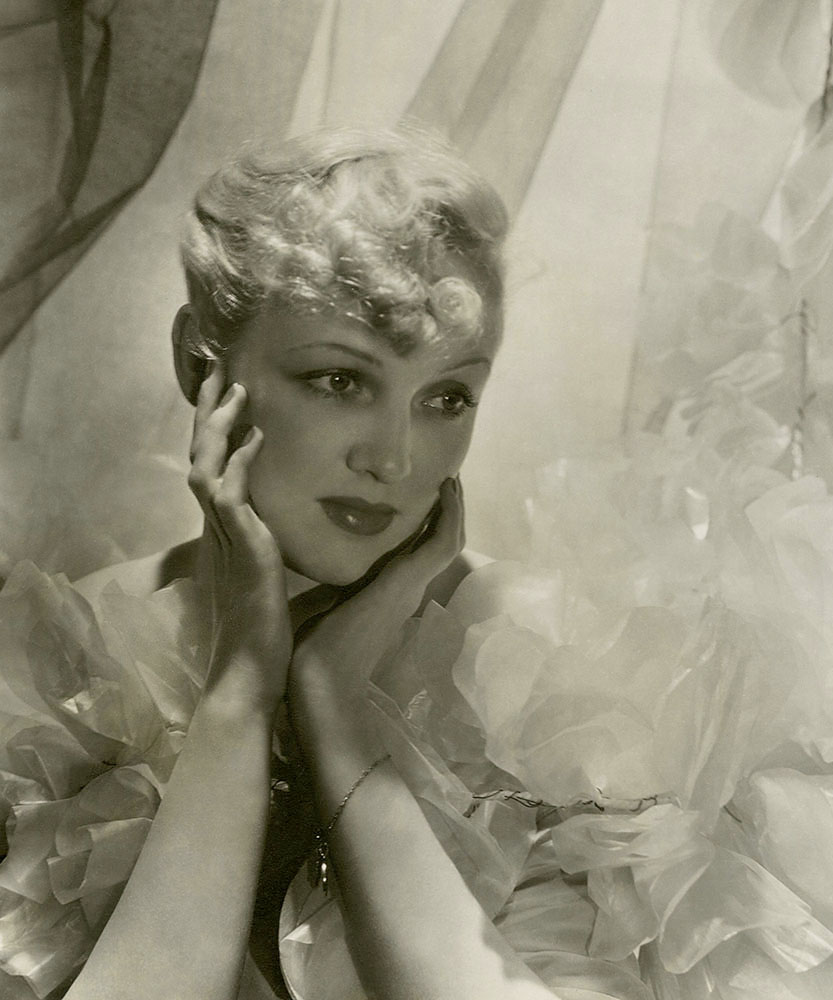
Cecil Beaton (British, 1904-1980) 'Virginia Cherrill' 1930s


Cecil Beaton (British, 1904-1980)
Virginia Cherrill
1930s
Silver gelatin print


Édouard Boubat (French, 1923-1999) 'Lella, Bretagne, France' 1947


Édouard Boubat (French, 1923-1999)
Lella, Bretagne, France
1947
Silver gelatin print


Édouard Boubat (French, 1923-1999)

Édouard Boubat (1923-1999) was a French photojournalist and art photographer.

Boubat was born in Montmartre, Paris. He studied typography and graphic arts at the École Estienne and worked for a printing company before becoming a photographer. In 1943 he was subjected to service du travail obligatoire, forced labour of French people in Nazi Germany, and witnessed the horrors of World War II. He took his first photograph after the war in 1946 and was awarded the Kodak Prize the following year. He travelled the world for the French magazine Réalités and later worked as a freelance photographer. French poet Jacques Prévert called him a “peace correspondent” as he was apolitical and photographed uplifting subjects.

Text from the Wikipedia website


LIKE ART BLART ON FACEBOOK

Back to top

Exhibition: ‘Shatter Rupture Break’ at the Art Institute of Chicago

Exhibition dates: 15th February – 3rd May 2015


Ivan Albright (American, 1897-1983) 'Medical Sketchbook' 1918


Ivan Albright (American, 1897-1983)
Medical Sketchbook
1918
The Art Institute of Chicago
Gift of Philip V. Festoso
© The Art Institute of Chicago


Again, I am drawn to these impressive avant-garde works of art. I’d have any of them residing in my flat, thank you very much. The Dalí, Delaunay and Léger in painting and drawing for me, and in photography, the muscular Ilse Bing, the divine Umbo and the mesmeric, disturbing can’t take your eyes off it, Witkiewicz self-portrait.

Marcus


Many thankx to the Art Institute of Chicago for allowing me to publish the art works in the posting. Please click on the photographs for a larger version of the image.


“Everything had broken down in any case, and new things had to be made out of the fragments.”


Kurt Schwitters, 1930


Salvador Dalí (Spanish, 1904-1989) 'City of Drawers' 1936


Salvador Dalí (Spanish, 1904-1989)
City of Drawers
1936
The Art Institute of Chicago
Gift of Frank B. Hubachek
© Salvador Dalí, Fundació Gala-Salvador Dalí / Artists Rights Society (ARS), New York, 2014


Ilse Bing (German, 1899-1998) 'Eiffel Tower, Paris, 1931' 1931


Ilse Bing (German, 1899-1998)
Eiffel Tower, Paris, 1931
1931
Julien Levy Collection, Gift of Jean and Julien Levy
© Estate of Ilse Bing


Luis Buñuel (Spanish, 1900-1983) and Salvador Dalí (Spanish, 1904-1989)
Un Chien Andalou
1929

Director – Luis Buñuel
Writers – Salvador Dali, Luis Buñuel
Cast – Simone Mareuil, Pierre Batcheff


Un Chien Andalou (An Andalusian Dog) is a 1929 Franco-Spanish silent surrealist short film by Spanish director Luis Buñuel and artist Salvador Dalí. Buñuel’s first film, it was initially released in a limited capacity at Studio des Ursulines in Paris, but became popular and ran for eight months.

Un Chien Andalou has no plot in the conventional sense of the word. With disjointed chronology, jumping from the initial “once upon a time” to “eight years later” without events or characters changing, it uses dream logic in narrative flow that can be described in terms of the then-popular Freudian free association, presenting a series of tenuously related scenes.


Fernand Léger (French, 1881-1955) and Dudley Murphy (American, 1897-1968)
Ballet Mécanique
1924


Ballet Mécanique (1923-1924) is a Dadaist post-Cubist art film conceived, written, and co-directed by the artist Fernand Léger in collaboration with the filmmaker Dudley Murphy (with cinematographic input from Man Ray). It has a musical score by the American composer George Antheil. However, the film premiered in silent version on 24 September 1924 at the Internationale Ausstellung neuer Theatertechnik (International Exposition for New Theater Technique) in Vienna presented by Frederick Kiesler. It is considered one of the masterpieces of early experimental filmmaking.


Ballet mécanique (1924) | MoMA

Ballet mécanique, conceived by painter Fernand Léger and photographed by filmmaker Dudley Murphy (possibly with some involvement from Man Ray), is a rhythmic interplay between human and object. Affected by his experience of fighting in World War I, and in particular by the mustard gas attack that left him hospitalised for a year, Léger became fascinated with mechanical technology, which would feature heavily in his post-1917 art. Ballet mécanique, his only film, is an example of this juxtaposition of man and machine: gears and pendulums vs. eyes and mouths, pistons pumping vs. a woman’s endless climb up the stairs, clocks vs. legs. A kaleidoscopic combination of faces and kitchen utensils, Ballet mécanique was completely unlike contemporary commercial movies, and would pave the way for other revolutionary films like Metropolis and Limite.

If you were to see Ballet mécanique installed in one of our galleries or projected in one of our theaters, it would look a little different than it does here – the frameline would be stabilised and the edges of the picture would either be cropped or camouflaged with masking around the screen. However, we are presenting this version the way a scholar visiting the Film Study Center would see it on a flatbed viewing machine, with a slight bounce to the image and the sprocket holes visible, and without live musical accompaniment. (The score, composed by George Antheil and usually performed as a separate concert piece, was finished several years after Ballet mécanique premiered and is significantly longer than the film.)

MoMA text from the YouTube website


Claude Cahun (French, 1894-1954) 'Object' 1936


Claude Cahun (French, 1894-1954)
Object
1936
The Art Institute of Chciago
Through prior gift of Mrs. Gilbert W. Chapman


A century ago, society and life were changing as rapidly and radically as they are in today’s digital age. Quicker communication, faster production, and wider circulation of people, goods, and ideas – in addition to the outbreak of World War I – produced a profoundly new understanding of the world, and artists in the early years of the 20th century responded to these issues with both exhilaration and anxiety. Freeing themselves from the restraints of tradition, modern artists developed groundbreaking pictorial strategies that reflect this new shift in perception.

Shatter Rupture Break, the first exhibition in The Modern Series, explores the manifold ways that ideas of fragmentation and rupture, which permeated both the United States and Europe, became central conceptual and visual themes in art of the modern age. Responding to the new forms and pace of the metropolis, artists such as Robert Delaunay and Gino Severini disrupted traditional conventions of depth and illusionism, presenting vision as something fractured. Kurt Schwitters and George Grosz explored collage, using trash and bits and pieces of printed material in compositions to reflect social and political upheaval and produce something whole out of fragments. In the wake of new theories of the mind as well as the literal tearing apart of bodies in war, artists such as Hans Bellmer, Salvador Dalí, and Stanisław Witkiewicz produced photographs and objects revealing the fractured self or erotic dismemberment. The theme of fragmentation was ubiquitous as inspiration for both the formal and conceptual revolutions in art making in the modern age.

Shatter Rupture Break unites diverse objects from across the entire holdings of the Art Institute – paintings, sculpture, works on paper, photographs, decorative arts and designed objects, textiles, books, and films – to present a rich cacophony that exemplifies the radical and generative ruptures of modern art.

The Modern Series

A quintessentially modern city, Chicago has been known as a place for modern art for over a century, and the Art Institute of Chicago has been central to this history. The Modern Series exhibitions are designed to bring together the museum’s acclaimed holdings of modern art across all media, display them in fresh and innovative ways within new intellectual contexts, and demonstrate the continued vitality and relevance of modern art for today.

Text from the Art Institute of Chicago website


Robert Delaunay (French, 1885-1941) 'Champs de Mars: The Red Tower' 1911/1923


Robert Delaunay (French, 1885-1941)
Champs de Mars: The Red Tower
1911/1923
The Art Institute of Chicago
Joseph Winterbotham Collection


Fernand Léger (French, 1881-1955) 'Composition in Blue' 1921-1927


Fernand Léger (French, 1881-1955)
Composition in Blue
1921-1927
The Art Institute of Chicago
Charles H. and Mary F. S. Worcester Collection
© 2014 Artists Rights Society (ARS), New York / ADAGP, Paris


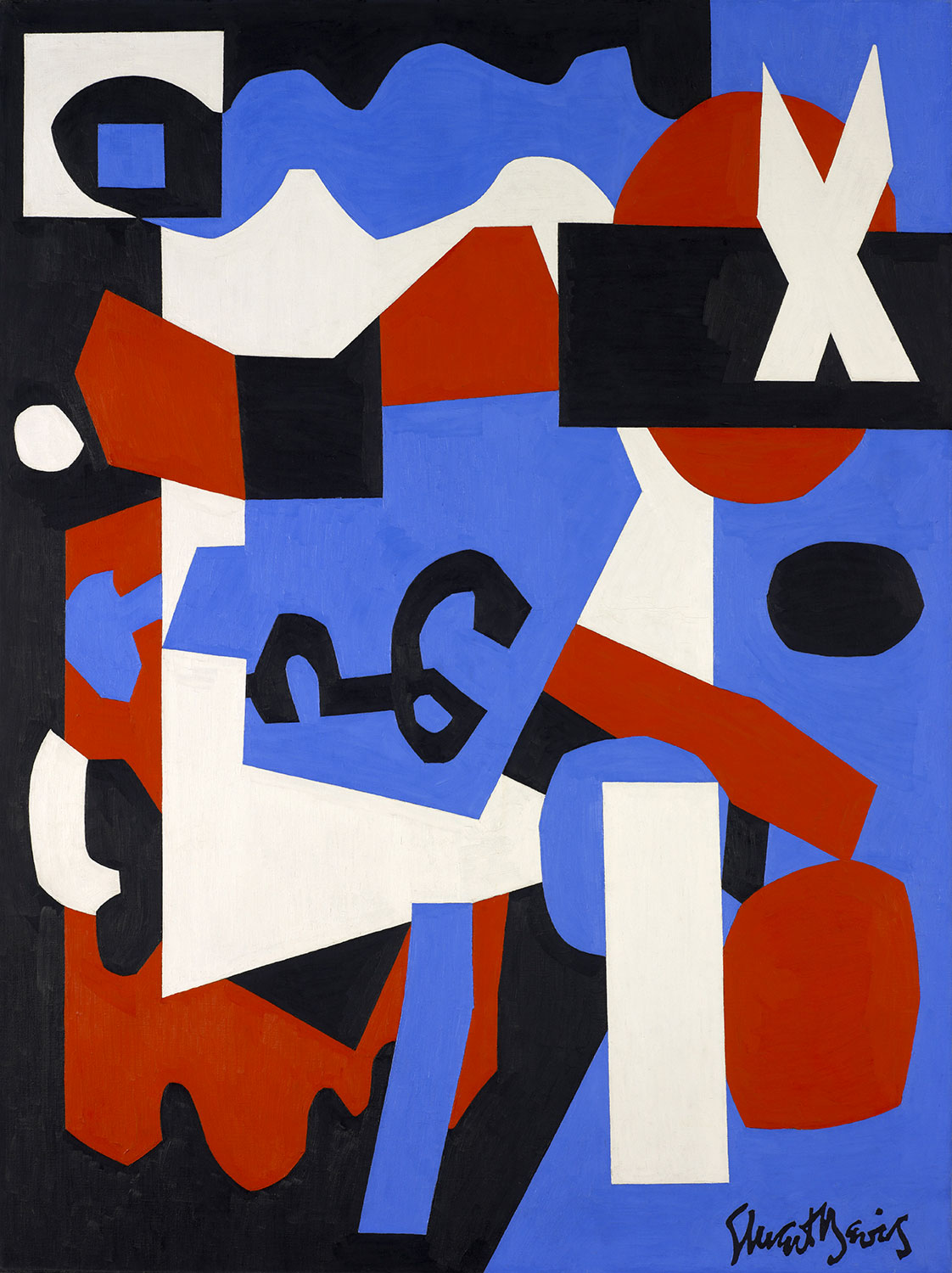
Stuart Davis (American, 1892-1964) 'Ready-to-Wear' 1955


Stuart Davis (American, 1892-1964)
Ready-to-Wear
1955
The Art Institute of Chicago
Restricted gift of Mr. and Mrs. Sigmund W. Kunstadter; Goodman Endowment


Designed by Ruben Haley, Made by Consolidated Lamp and Glass Company. "Ruba Rombic" Vase, 1928/1932


Designed by Ruben Haley
Made by Consolidated Lamp and Glass Company
“Ruba Rombic” Vase
1928/1932
Art Institute of Chicago
Raymond W. Garbe Fund in honor of Carl A. Erikson; Shirley and Anthony Sallas Fund


Kurt Schwitters (German, 1887-1948) 'Mz 13 Call' 1919


Kurt Schwitters (German, 1887-1948)
Mz 13 Call
1919
The Art Institute of Chicago
Gift of Mr. and Mrs. Maurice E. Culberg
© 2014 Artists Rights Society (ARS), New York / VG Bild-Kunst, Bonn


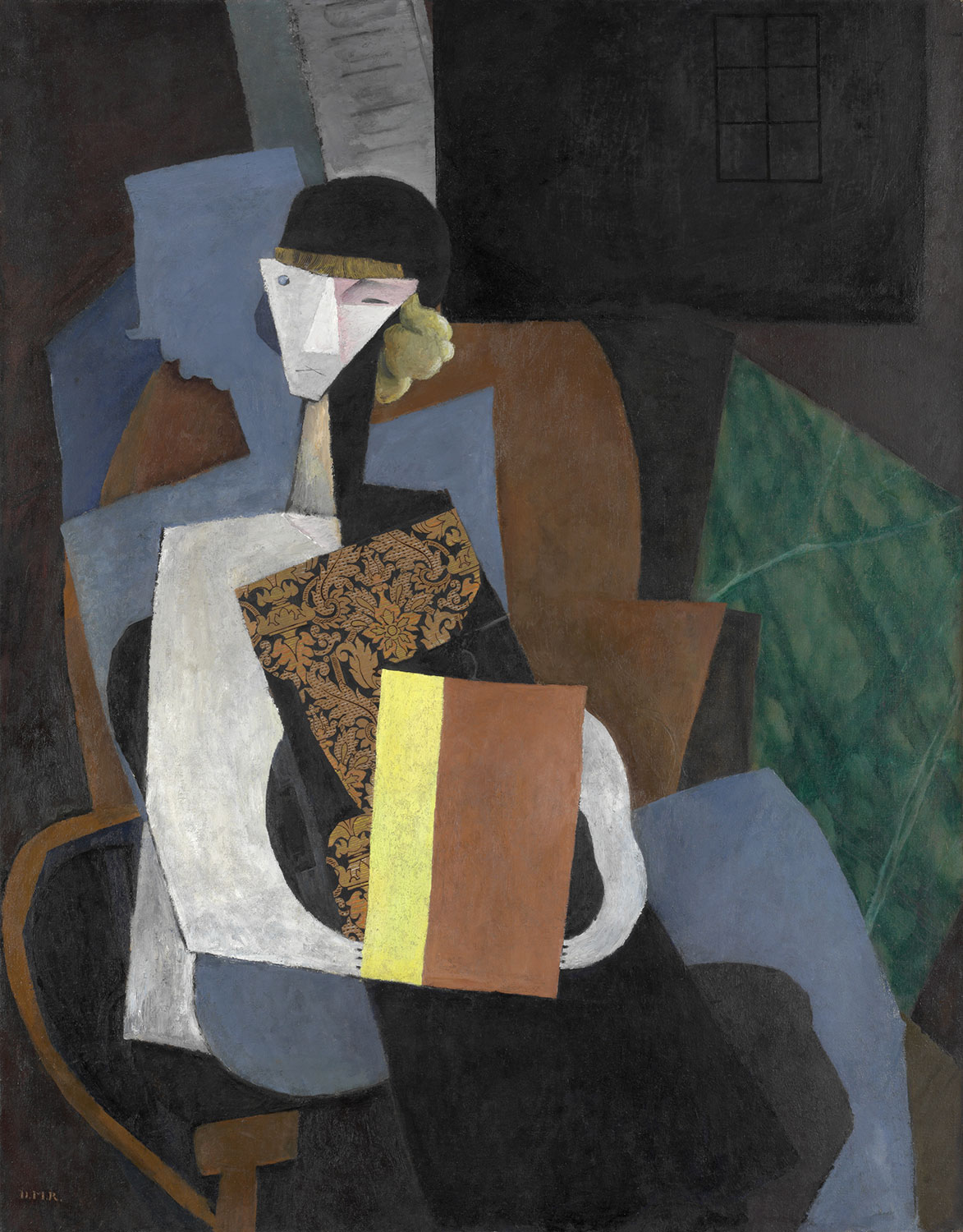
Diego Rivera (Mexican, 1886-1957) 'Portrait of Marevna' c. 1915


Diego Rivera (Mexican, 1886-1957)
Portrait of Marevna
c. 1915
The Art Institute of Chicago
Alfred Stieglitz Collection, gift of Georgia O’Keeffe
© 2014 Banco de México Diego Rivera Frida Kahlo Museums Trust, Mexico, D.F. / Artists Rights Society (ARS), New York


The Art Institute of Chicago is introducing an innovative new series of exhibitions that presents works from the museum’s acclaimed collection of modern art in reimagined ways that demonstrate the continued vitality and significance these works have today.

The Modern Series debuts with Shatter Rupture Break, opening Sunday, February 15, in Galleries 182 and 184 of the museum’s Modern Wing. The exhibition unites such diverse objects as paintings, sculpture, works on paper, photographs, decorative arts and designed objects, textiles, books, and films.

“We wanted to explore how the idea of rupture permeated modern life in Europe and the Americas,” said Elizabeth Siegel, Associate Curator of Photography, who, with Sarah Kelly Oehler, the Gilda and Henry Buchbinder Associate Curator of American Art, took the lead in organising the first exhibition. “It served as an inspiration for revolutionary formal and conceptual developments in art making that remain relevant today.”

A century ago, society was changing as rapidly and radically as it is in today’s digital age. Quicker communication, faster production, and wider circulation of people, goods, and ideas – in addition to the outbreak of World War I – produced a profoundly new understanding of the world, and artists responded with both anxiety and exhilaration. Freeing themselves from the restraints of tradition, modern artists developed groundbreaking pictorial strategies that reflected this new shift in perception.

Responding to the new forms and pace of cities, artists such as Robert Delaunay (French, 1885-1941) and Gino Severini (Italian, 1883-1966) disrupted traditional conventions of depth and illusionism, presenting vision as something fractured. Delaunay’s Champs de Mars: The Red Tower fragments the iconic form of the Eiffel Tower, exemplifying how modern life – particularly in an accelerated urban environment – encouraged new and often fractured ways of seeing. Picturesque vistas no longer adequately conveyed the fast pace of the modern metropolis.

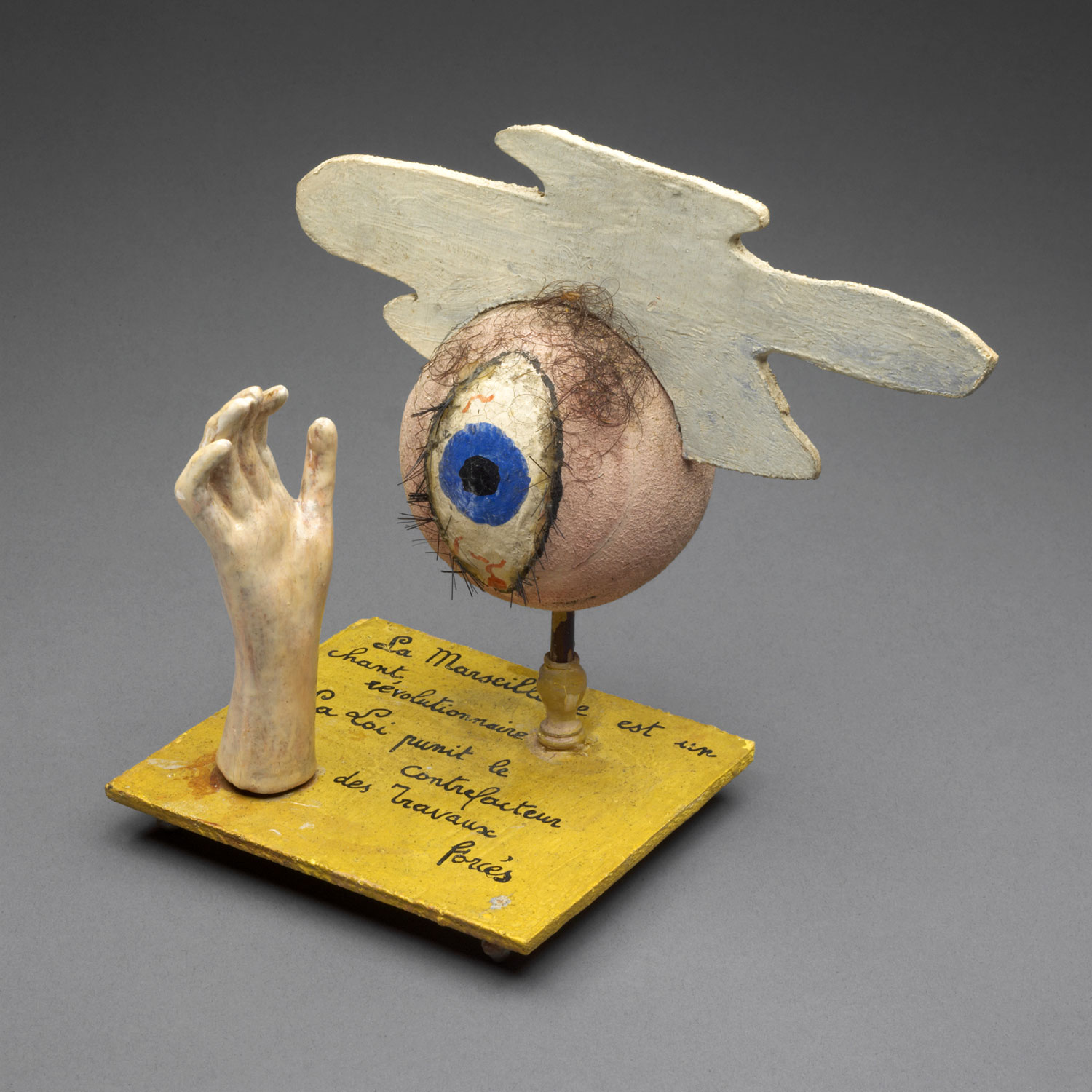
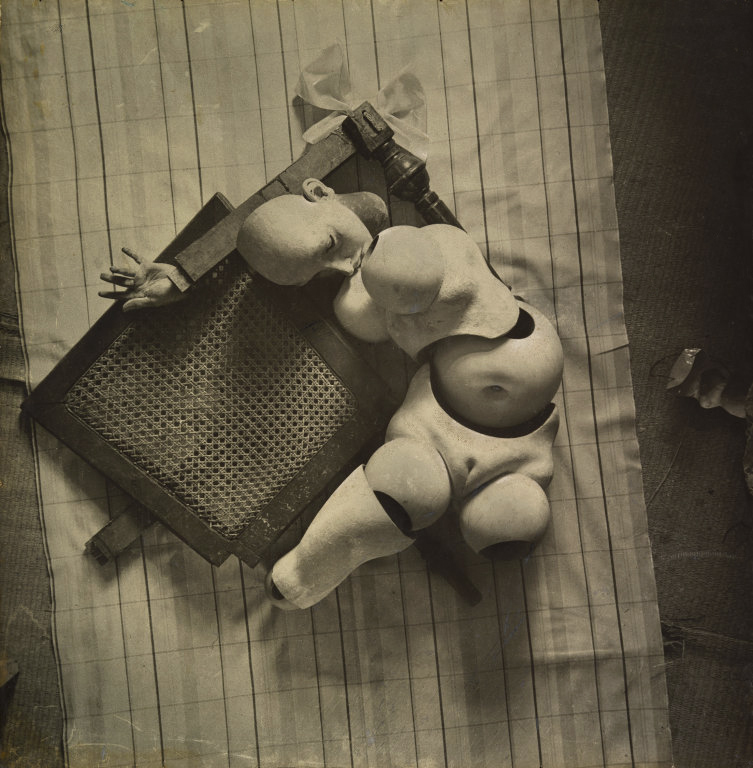
The human body as well could no longer be seen as intact and whole. A devastating and mechanised world war had returned men from the front with unimaginable wounds, and the fragmented body became emblematic of a new way of understanding a fractured world. Surrealists such as Hans Bellmer (German, 1902-1975), Claude Cahun (French, 1894-1954) and Salvador Dalí (Spanish, 1904-1989) fetishised body parts in images, separating out eyes, hands, and legs in suggestive renderings. A more literal representation of the shattered body comes from Chicago’s own Ivan Albright, who was a medical draftsman in World War I. In his rarely shown Medical Sketchbook, he created fascinatingly gruesome watercolours that documented injured soldiers and the x-rays of their wounds.

Just as with the body, the mind in the modern era also came to be seen as fragmented. Stanislaw Witkiewicz (Polish, 1885-1939) produced a series of self-portraits as an act of psychological exploration. His work culminated in one stunning photograph made by shattering a glass negative, which he then reassembled and printed, thus conveying an evocative sense of a shattered psyche. The artistic expression of dreams and mental imagery perhaps reached a pinnacle not in a painting or a sculpture, but in a film. Luis Buñuel and Salvador Dalí’s film Un chien andalou (An Andalusian Dog) mystified viewers with its dreamlike narrative, dissolves from human to animal forms, dismembered body parts, and shockingly violent acts in an attempt to translate the unconscious mind onto a celluloid strip.

Kurt Schwitters (German, 1887-1948) and George Grosz (German, 1893-1959) explored collage, which took on new importance for avant-garde artists thanks to the aesthetic appeal and widespread availability of mass-produced media. Schwitters used the ephemera of German society to create what he called Merz, an invented term signifying an artistic practice that included collage, assemblage, painting, poems, and performance. The Art Institute owns a significant group of these collages by Schwitters, and six will appear in the exhibition. The use of thrown-away, ripped up, and scissored-out pieces of paper, divorced from their original meaning and reassembled with nails and glue into new objects, was an act that exposed the social and political disruptions of a German society that seemed broken and on the edge of collapse in the aftermath of World War I.

Shatter Rupture Break is unusual in that it unites objects from across the entire museum – from seven curatorial departments as well as the library. This multiplicity is significant because modern artists did not confine themselves to one medium, but explored different visual effects across a variety of media. As well, the show prominently features the voices of artists, writers, scientists, and other intellectuals of the period. The goal is to create a dynamic space that evokes the electrifying, disruptive, and cacophonous nature of modern art at the time.

“We hope to excite interest in the modern period as a crucial precursor to the changes of our own time, to show how what might seem old now was shockingly fresh then,” said Oehler.

Considered one of the finest and most comprehensive in the world, the Art Institute’s collection of modern art includes nearly 1,000 works by artists from Europe and the Americas. The museum was an early champion of modern artists, from its presentation of the Armory Show in 1913 to its early history of acquiring major masterpieces. This show highlights some recent acquisitions of modern art, but also includes some long-held works that have formed the core of the modern collection for decades. Shatter Rupture Break celebrates this history by bringing together works that visitors may know well, but have never seen in this context or with this diverse array of objects.”

Press release from the Art Institute of Chicago


Hans Bellmer (German born Poland, 1902-1975) 'The Doll (La Poupée)' 1935


Hans Bellmer (German born Poland, 1902-1975)
The Doll (La Poupée)
1935
Gelatin silver print overpainted with white gouache
65.6 x 64cm
Anonymous restricted gift; Special Photography Acquisition Fund; through prior gifts of Boardroom, Inc., David C. and Sarajean Ruttenberg, Sherry and Alan Koppel, the Sandor Family Collection, Robert Wayne, Simon Levin, Michael and Allison Delman, Charles Levin, and Peter and Suzann Matthews; restricted gift of Lynn Hauser and Neil Ross
© 2015 Artists Rights Society (ARS), New York / ADAGP, Paris


Umbo (Otto Umber) (German, 1902-1980) 'Untitled' 1928


Umbo (Otto Umber) (German, 1902-1980)
Untitled
1928
Julien Levy Collection, Gift of Jean and Julien Levy
© 2014 Phyllis Umbehr/Galerie Kicken Berlin/ Artists Rights Society (ARS), New York


Stanisław Ignacy Witkiewicz (Polish, 1885-1939) 'Self-Portrait, Zakopane [Broken Glass]' 1910


Stanisław Ignacy Witkiewicz (Polish, 1885-1939)
Self-Portrait, Zakopane [Broken Glass]
1910
Promised Gift of a Private Collection


The Art Institute of Chicago
111 South Michigan Avenue
Chicago, Illinois 60603-6404
Phone: (312) 443-3600

Opening hours:
Thursday – Monday 11am – 5pm
Closed Tuesday and Wednesday
The museum is closed Thanksgiving, Christmas, and New Year’s days.

The Art Institute of Chicago website

LIKE ART BLART ON FACEBOOK

Back to top

Exhibition: ‘Florence Henri. Mirror of the avant-garde 1927-1940’ at Jeu de Paume, Paris

Exhibition dates: 24th February – 17th May 2015

Curator: Cristina Zelich


Florence Henri (New York 1893 - Compiègne 1982) 'Composition' 1928


Florence Henri (New York 1893 – Compiègne 1982)
Composition
1928
Gelatin silver print, vintage
27.2 x 37.5cm
Bauhaus Archiv, Berlin
© Florence Henri / Galleria Martini & Ronchetti Photo
© Bauhaus Archiv


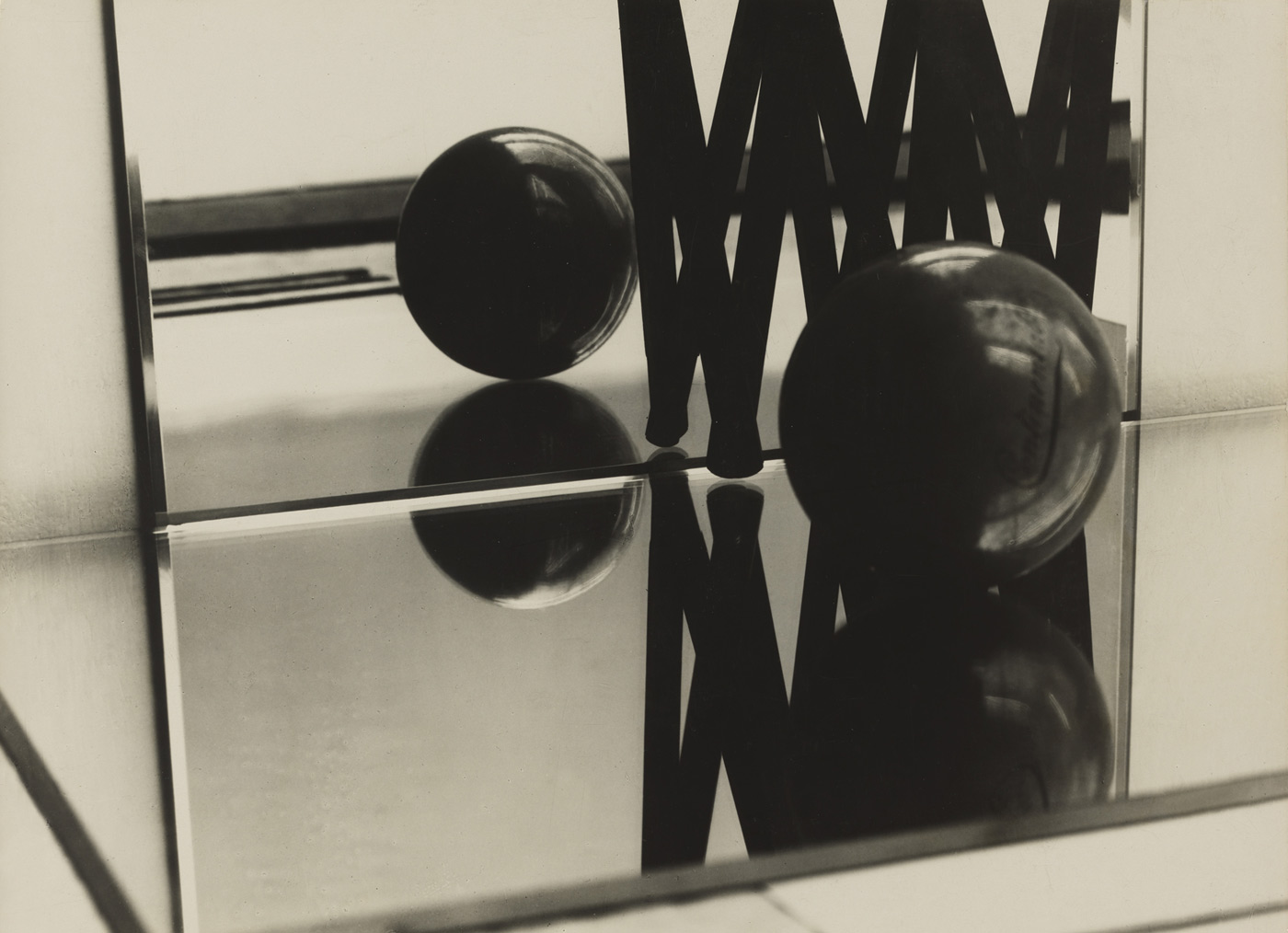
Objects in and of space, the two the same

Florence Henri is rapidly becoming one of my favourite photographers, an artist who emerged during one of the golden periods of photography, the avant-garde of the 1920s-30s. While we have seen some of these photographs before in a previous posting, there are some new and delightful images to enjoy here.

If you believe the text by Priscilla Frank, “Meet Florence Henri, The Under-Acknowledged Queen Of Surrealist Photography,” on the Huffington Post website [02/20/2015], you could be forgiven for thinking that her photography is based on Surrealist themes. Nothing could be farther from the truth. There is nothing about Henri’s photographs to suggest that they are based on the creative potential of the unconscious mind exemplified by the irrational juxtaposition of images. Henri’s photographs are quite logical and ordered, being an investigation into space, time and object using the “extension of the formal and structural aesthetics of Cubism, Purism and Constructivism.”

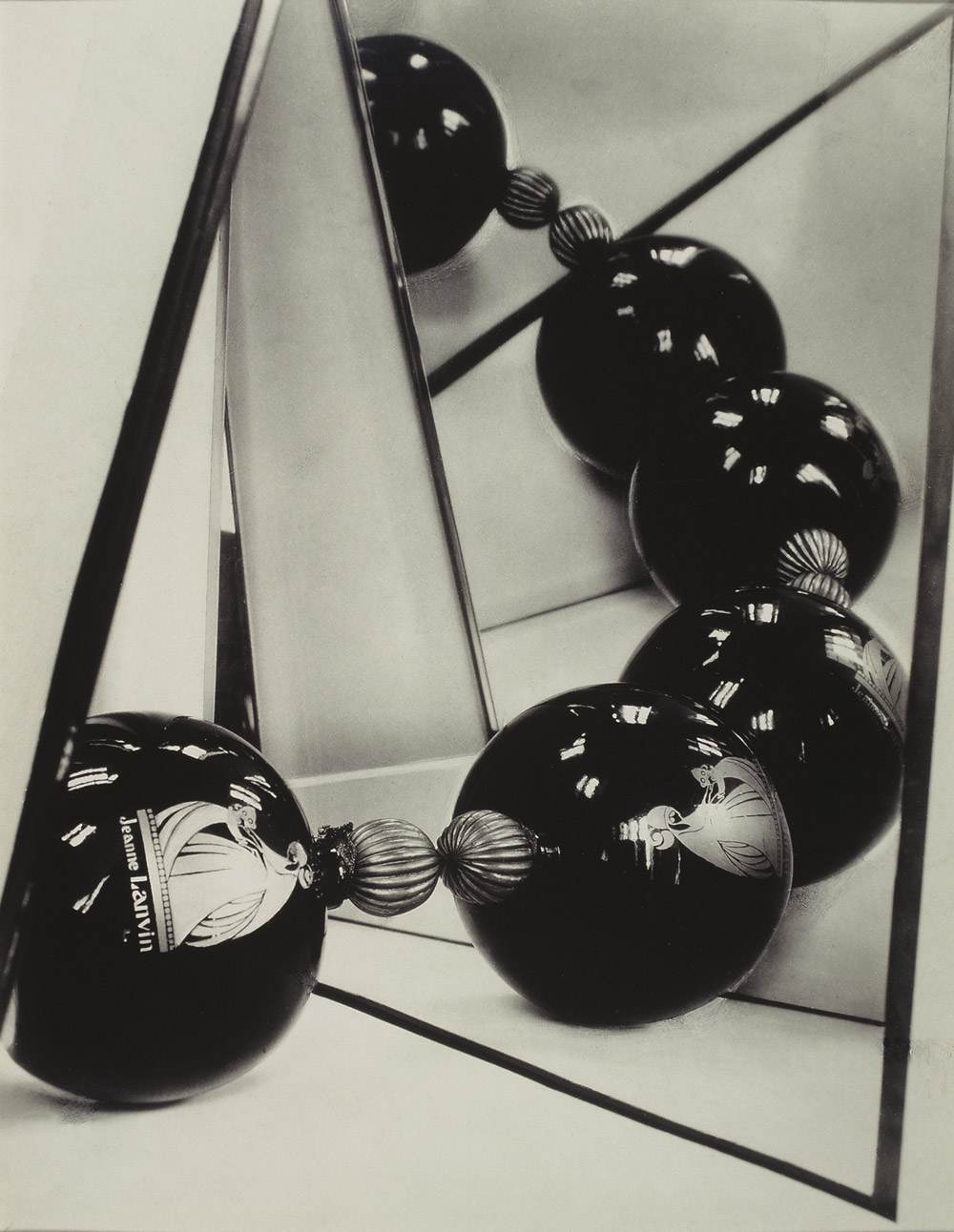
Her geometric abstractions “exploited the dialogue between realism and abstraction… and she explored spatial extension and fragmentation in her utter modern vocabulary. Her still life and abstract compositions achieved by balancing abstraction with a pure and essential subject were created in the spirit of the machine age. She viewed space as if it were elastic, distorting figure and ground and altering planes through the use of mirrors and lenses.”

Through attention and attentiveness to subject, Henri achieved her results by using created space to investigate the fragmentation and distortion of the world. Her art is not about the production of phenomena (the spectacle), but about the creation of volumes that are in an of space itself. As Donald Judd’s observes of his created volumes in 1981: “… familiar objects, objects as we habitually perceive them, assume physical neutrality because they and their environment are deactivated: “They are points in space, and space is an empty surround. Instead, what is needed is a created space, space made by someone, space that is formed as a solid, the two the same, with the space and the solid defining each other.” Objects in and of space, the two the same: this was the crux. Judd did more than set new solids into existing voids. He formed solids and their correlative spaces as an integrated operation, as if he were establishing an architecture from the ground up, creating the entire environment, intensifying it, saturating it with its own sensation.”1

In a photographic sense, Henri can be seen as a precursor to Judd’s volumes, creating her own worlds from the ground up, creating the entire environment where the space and the object are one and the same thing… only to then record and flatten that space into the essential nature of the photograph, its physicality. Her sensory affects “remain fixed in the concatenation of materials, structure and placement that generates it. They are the lived equivalent of those conditions, experienced as continuous in time – hence, timeless – remaining wholly the same until interrupted.”2 How appropriate for Henri’s photographs for they do indeed have a timeless “air”, a transcendence of the time and place they were taken, a transcendence of the space which her volumes inhabit. Objects in and of space, the two the same.

As Judd observes, “Time and space don’t exist [as idealised abstractions]; they are made by events and positions. Time and space can be made and don’t have to be found like stars in the sky or rocks on a hillside.” Time and space are grounded in being human: they exist when someone experiences them.”3 Here is the nub of the matter, for it matters that we experience Henri’s photographs each in its definite time and space. Henri’s being is immersed in these volumes and they hold our interest because the created environments are saturated with her own sensations.

Dr Marcus Bunyan


Footnotes

1/ Donald Judd quoted in Richard Shiff. “Sensous Thoughts,” in Marianne Stockebrand (ed.,). Donald Judd. The Multicolored Works. Yale University Press, 2014, p. 106

2/ Ibid.,

3/ Ibid., p. 107.


Many thankx to the Jeu de Paume for allowing me to publish the photographs in the posting. Please click on the photographs for a larger version of the image.


“With photography, what I really want to do is compose the image, as I do in painting. The volumes, lines, shadows and light should submit to my will and say what I would like them to say. All of this under the strict control of the composition, because I do not claim to be able to explain the world or to explain my own thoughts.”


Florence Henri in an interview with Attilio Colombo, “Specchio, essenzialità, geometría,” in ‘Florence Henri’ (Milan: Gruppo Editoriale Fabbri, 1983)


“Henri soon recognised the medium’s capacity as a pictorial language and outlet for creative expression. Upon returning to France [from the Bauhaus], Henri began to develop a large body of photographic work based upon her Bauhaus experience and an extension of the formal and structural aesthetics of Cubism, Purism and Constructivism. These non-objective principles forged an alternative to the then-dominant French art movement Surrealism. Henri transcended the avant-garde of one art form to that of another…

Henri’s greatest experimentation with geometric abstraction occurred during the period between 1929-1930… In the photographic work, Florence Henri exploited the dialogue between realism and abstraction, but always maintained a recognisable subject. She was concerned with transparency and movement, and she explored spatial extension and fragmentation in her utter modern vocabulary.

Her still life and abstract compositions achieved by balancing abstraction with a pure and essential subject were created in the spirit of the machine age. She viewed space as if it were elastic, distorting figure and ground and altering planes through the use of mirrors and lenses.”


Lynne Warren. ‘Encyclopedia of Twentieth-Century Photography’, 3-Volume set. Routledge, 2005, p. 691.


Florence Henri (New York 1893 - Compiègne 1982) 'Composition' 1928


Florence Henri (New York 1893 – Compiègne 1982)
Composition
1928
Gelatin silver print, vintage
27 x 37.1cm
Museum Folkwang, Essen
© Florence Henri / Galleria Martini & Ronchetti


Florence Henri (New York 1893 - Compiègne 1982) 'Composition abstraite [Still-life composition]' 1929


Florence Henri (New York 1893 – Compiègne 1982)
Composition abstraite [Still-life composition]
1929
Collage, gelatin silver print cut and pasted on paper
12 x 14cm
Private collection, courtesy Florence Henri Archive, Genoa
© Florence Henri / Galleria Martini & Ronchetti


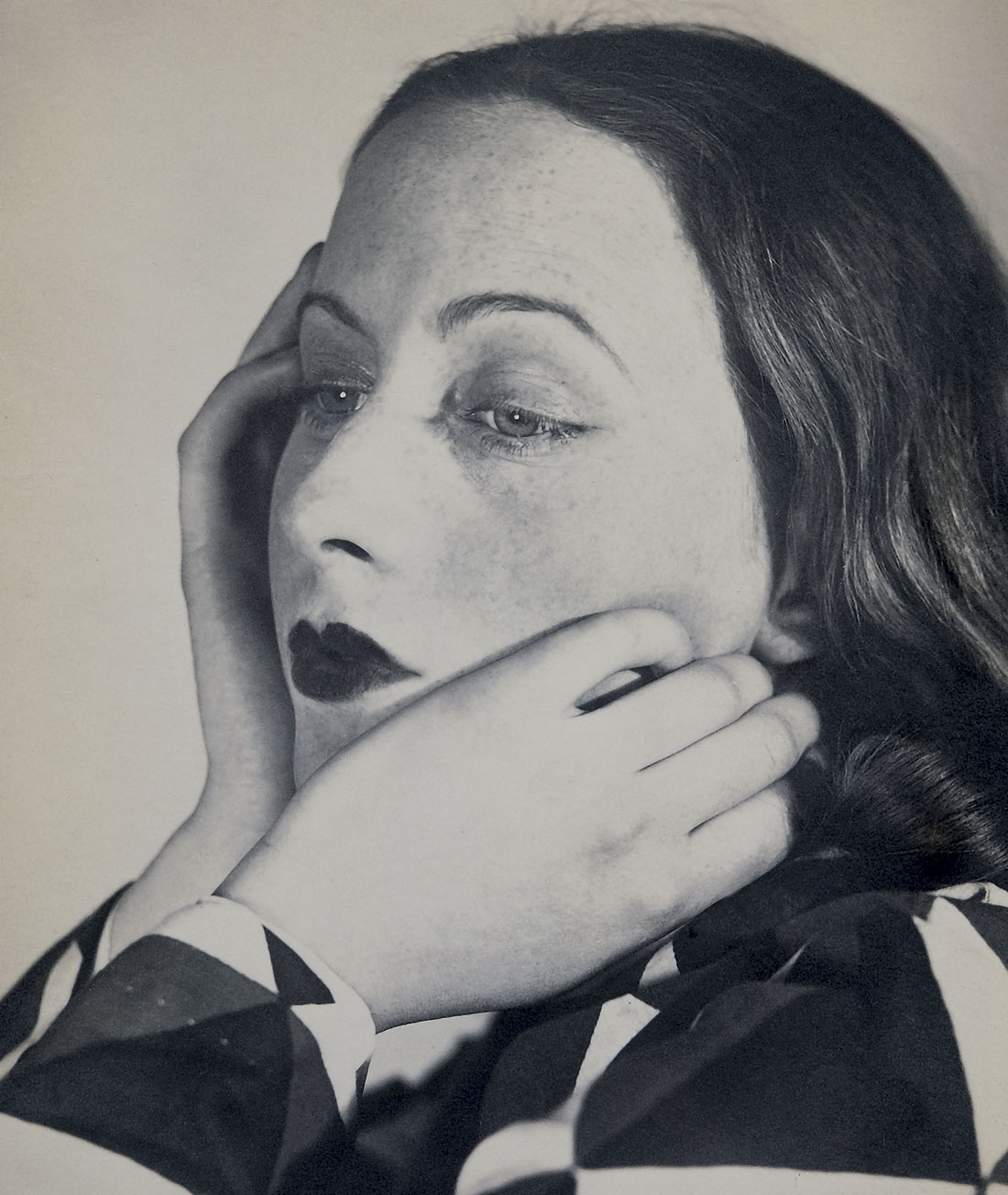
Florence Henri (New York 1893 - Compiègne 1982) 'Portrait Composition, Tulia Kaiser' c. 1930


Florence Henri (New York 1893 – Compiègne 1982)
Portrait Composition, Tulia Kaiser
c. 1930
Gelatin silver print, vintage
23 x 29.2cm
Achat grâce au mécénat de Yves Rocher, 2011
Ancienne collection Christian Bouqueret Centre Pompidou, Paris. Musée national d’art moderne / Centre de création industrielle
© Florence Henri / Galleria Martini & Ronchetti Photo
© Centre Pompidou, Mnam-Cci, Dist. Rmn-Grand Palais / Georges Meguerditchian


Summary of exhibition

Florence Henri. Mirror of the avantgarde illustrates the desire of the Jeu de Paume to highlight the important role played by women photographers from the 1920s to the 1950s, and follows on from previous exhibitions devoted to Claude Cahun, Kati Horna, Eva Besnyö, Berenice Abbott, Lisette Model, Laure Albin Guillot and indeed, Lee Miller.

The exhibition brings together, for the first time in France, over 130 vintage prints by Florence Henri, as well as rare documents and publications, revealing the artist’s photographic production. Influenced by Constructivism, Cubism and Surrealism, Florence Henri’s work is part of the exciting creative tenor of the period, during which, photography, like cinema or architecture, embodied a spirit of innovation and progress, as well as a certain unconventionality in terms of the dominant visual order.

Familiar with Bauhaus, Florence Henri was one of the figures of the European artistic intelligentsia of the time. Her friendship with Fernand Léger, the Delaunays, Hans Arp, László Moholy-Nagy and Theo van Doesburg would have a profound influence on her work. In 1929, Florence Henri opened a photography studio in Paris. It soon rivalled that of Man Ray’s. Her classes were very well-attended and her talents as a portrait photographer were quickly recognised.

It is not so much the image alone as the constant research that brings Florence Henri’s work to life. Lines and geometric compositions are recurring elements in her photographs. Over the years, she made her compositions increasingly complex through the use of mirrors, industrial and natural objects, or through collage and superposition. The exhibition attempts to both decipher and highlight the work of Florence Henri in terms of reflections, perspective, the depth of field and photomontage – key technical experimentations in the history of modern photography.


Florence Henri (New York 1893 - Compiègne 1982) 'Mannequin de tailleur [Tailor's mannequin]' 1930-1931


Florence Henri (New York 1893 – Compiègne 1982)
Mannequin de tailleur [Tailor’s mannequin]
1930-1931
Gelatin silver print, vintage
17.1 x 22.8cm
Private collection, courtesy Florence Henri Archive, Genoa
©Florence Henri / Galleria Martini & Ronchetti


Florence Henri (New York 1893 - Compiègne 1982) 'Composition Nature morte [Still-life composition]' 1931


Florence Henri (New York 1893 – Compiègne 1982)
Composition Nature morte [Still-life composition]
1931
Gelatin silver print dated 1977
23 x 30cm
Private collection, courtesy Florence Henri Archive, Genoa
© Florence Henri / Galleria Martini & Ronchetti


Florence Henri (New York 1893 - Compiègne 1982) 'Pont [Bridge]' 1930-1935


Florence Henri (New York 1893 – Compiègne 1982)
Pont [Bridge]
1930-1935
Gelatin silver print dated 1977
23.5 x 23.8cm
Private collection, courtesy Florence Henri Archive, Genoa
© Florence Henri / Galleria Martini & Ronchetti


Florence Henri (New York 1893 - Compiègne 1982) 'Composition, The Glory that was Greece' c. 1933


Florence Henri (New York 1893 – Compiègne 1982)
Composition, The Glory that was Greece
c. 1933
Photomontage, gelatin silver print dated 1975
23.5 x 29.5cm
Private collection, courtesy Florence Henri Archive, Genoa
© Florence Henri / Galleria Martini & Ronchetti


“All that I know, and how I know this, is primarily made up of abstract elements: spheres, planes, and grids whose parallel lines provide numerous opportunities, without taking into account the mirrors I use, to present the same object from several different angles within a single photograph, in order to yield, in the same way, different visions that complement and complete each other, and which when taken as a whole, are better able to explain it. Essentially, all of this is much more difficult to explain than to do.”


Florence Henri in an interview with Attilio Colombo, “Specchio, essenzialità, geometría,” in ‘Florence Henri’ (Milan: Gruppo Editoriale Fabbri, 1983)


Florence Henri (New York 1893 – Compiègne (France) 1982) was a multi-faceted artist, who was first known for her paintings before making a name for herself as a major figure in avant-garde photography between the end of the 1920s and the beginning of the 1940s. She lived in Silesia, Munich, Vienna, Rome and above all Berlin, before finally settling in Paris in 1924 and devoting herself to photography. This medium enabled her to experiment new relationships with space, in particular by the use of mirrors and other objects in her compositions.

The Jeu de Paume is presenting a vast panorama of Florence Henri’s photographic production from 1927 to 1940, including her self-portraits, abstract compositions, portraits of artists, nudes, photomontages, photocollages, as well as documentary photos taken in Rome, Paris and Brittany. The exhibition comprises vintage prints, various documents and published material.

When she was young, Florence Henri studied music and painting in England and Germany. In 1919, when she was a student at the Berlin Academy of Arts, she made the acquaintance of writer and art historian Carl Einstein and became friends with several figures of the avant-garde, including Hans Arp, Adrian Ludwig Richter, John Heartfield and Lázló Moholy-Nagy. She took classes with Paul Klee and Vassily Kandinsky at the Bauhaus in Weimar. In 1924 she moved to Paris, where she followed classes at the Académie Montparnasse, whose director was André Lhote, then at the Académie moderne (founded by Fernand Léger and Amédée Ozenfant). In 1927, after a visit to Bauhaus in Dessau, she abandoned painting in favour of photography. It was at this time that she produced her famous self-portraits in mirrors and her still lifes; the result of her first steps in the spatial research that she would carry out through the medium of photography.

Between the end of the 1920s and the beginning of the 1930s, three mythical exhibitions in terms of the history of European photography took place in Germany: “Fotografie der Gegenwart” at the Folkwang Museum in Essen (1929); “Film ind Foto” (Fifo) organised the same year by the Deutscher Werkbund in Stuttgart and “Das Lichtbild” held in Munich (1931). These exhibitions bore witness to the rapid expansion of new photographic concepts and a rupture with tradition. Fifo marked the zenith of the Neues Sehen (New Vision) movement of which László Moholy-Nagy was an exponent and “Das Lichtbild” marked the triumph of Neue Sachlichkeit (New Objectivity), whose leading representative was Albert Renger-Patzsch.

Florence Henri was invited to show an important number of prints at these three exhibitions in recognition of her photographic production during this fundamental period that saw the photography used to free our vision and open out onto new experiences.

Florence Henri’s studio rivalled that of Man Ray, even if she had also opened a school of photography where Lisette Model and Gisèle Freund, amongst others, would enrol. In fact, despite the central position that her oeuvre occupied in avant-garde photography at the end of the 1920s, her reputation as a portraitist in Paris, and the fact that her photos had been published in many of the period’s illustrated magazines such as Arts et Métiers and Lilliput etc, Florence Henri’s body of work remains largely unknown.

László Moholy-Nagy’s* comments are a perfect illustration of Florence Henri’s position: “With Florence Henri’s photos, photographic practice enters a new phase, the scope of which would have been unimaginable before today. Above and beyond the precise and exact documentary composition of these highly defined photos, research into the effects of light is tackled not only through abstract photograms, but also in photos of real-life subjects. The entire problem of manual painting is taken onboard by the photographic process and is manifestly given a whole new depth thanks to this new optical instrument. Reflections and spatial relationships, superposition and intersections are just some of the areas explored from a totally new perspective and viewpoint.”

*László Moholy-Nagy, “Zu den Fotografien von Florence Henri”, i10, No 17-18, Amsterdam, December 20, 1928.

Press release from the Jeu de Paume website


Florence Henri (New York 1893 - Compiègne 1982) 'Double portrait' 1927-1928


Florence Henri (New York 1893 – Compiègne 1982)
Double portrait
1927-1928
Gelatin silver print dated 1977
24 x 18cm
Private collection, courtesy Florence Henri Archive, Genoa
© Florence Henri / Galleria Martini & Ronchetti


Florence Henri (New York 1893 - Compiègne 1982) 'Autoportrait [Self-portrait]' 1928


Florence Henri (New York 1893 – Compiègne 1982)
Autoportrait [Self-portrait]
1928
Gelatin silver print, vintage
39.3 x 25.5cm
Staatliche Museen zu Berlin, Kunstbibliothek
© Florence Henri / Galleria Martini & Ronchetti


Her most well-known work is a self-portrait, in which Henri sits before a mirror, dolled up almost as if in drag. Two silver balls lay reflected up against the mirror, equivocal symbols of both testicles and breasts. Henri, influential in both her artistic style and personal styles, toyed with gender binaries, using her personal appearance to emphasise the performative nature of gender. The artist was married to a Swiss house servant, but went on to have other relationships with both men and women, including a longtime affair with artist and model Margarete Schall.

Henri established herself as a formidable photographer, and remained consistent in her work up until World War II. Then her work declined considerably, both due to lack of materials and the prohibitions imposed under the Nazi occupation. Henri briefly returned to painting, but her central period of output remained in the 1920s and 1930s. Her compositions, simultaneously warm, playful, clever and inquisitive, set the stage for future explorations into the limits of photography, or lack thereof.

Priscilla Frank. “Meet Florence Henri, The Under-Acknowledged Queen Of Surrealist Photography,” on the Huffington Post website, 20th February 2015 [Online] Cited 10/03/2015.


Florence Henri (New York 1893 - Compiègne 1982) 'Femme aux cartes [Woman with cards]' 1930


Florence Henri (New York 1893 – Compiègne 1982)
Femme aux cartes [Woman with cards]
1930
Gelatin silver print, vintage
39 x 28.5cm
Private collection, courtesy Florence Henri Archive, Genoa
© Florence Henri / Galleria Martini & Ronchetti


Florence Henri (New York 1893 - Compiègne 1982) 'Portrait Composition, Cora' 1931


Florence Henri (New York 1893 – Compiègne 1982)
Portrait Composition, Cora
1931
Gelatin silver print, vintage
13.6 x 11.4cm
Private collection, courtesy Florence Henri Archive, Genoa
© Florence Henri / Galleria Martini & Ronchetti


Florence Henri (New York 1893 - Compiègne 1982) 'Fernand Léger' 1934


Florence Henri (New York 1893 – Compiègne 1982)
Fernand Léger
1934
Gelatin silver print, vintage
30.4 x 24cm
Private collection, courtesy Archives Florence Henri, Genoa
© Florence Henri / Galleria Martini & Ronchetti


Earliest compositions

Her earliest compositions introduce an element that would be fundamental for her artistic investigations, namely the mirror. Using a very limited number of elements, Henri created extremely complex images characterised by the fragmentation of space and the use of multiple viewpoints. They include one of her best-known works, the self-portrait looking in the mirror with two metal spheres, which may be said to embody the spirit of freedom typical of that period, conveying the image of a modern and emancipated female artist, one who failed to conform to the societal status traditionally assigned to women.

Multiple exposure

Florence Henri uses methods such as multiple exposures when shooting, or a combination of several negatives, some inverted, to obtain abstract images, in which she manages to bestow static objects with a sense of dynamism. Florence Henri’s output during this early phase can be described as a perfect synthesis between abstract geometrical painting and the innovations of New Vision photography.

“Florence Henri’s work lured me to come to Paris in 1929. I wanted to live in a place where images were made that coincided with my own concepts.”

~ Ilse Bing, quoted in Gisèle Freund’s preface to Ilse Bing 1929/1955: Femmes de l’enfance à la vieillesse

Advertising photography

In the field of professional photography, Florence Henri stands out for her very personal approach to advertising photography. Indeed, her images are the natural extension of her photographic experimentation and investigations using objects and mirrors.

Collages

She quickly substitutes industrial objects with natural elements in her compositions. In addition, she introduces a new tool in her work: collage. She makes them with fragments of prints, and then reproduces them to create the final print. She also introduces a new technique into her work – collage – thereby underlining her interest in autonomous images that move away from a simple reproduction of reality, all the while emphasising the conceptual work of the artist.

Shadows

Her quest for experimentation leads Florence Henri to work on the shadows passing vertically through the frame, creating a dark gap that interrupts and fragments the continuity of the image.

Nu composition

Their aesthetic characteristics clearly place the works grouped under the title Nu composition as part of the formal research Florence Henri carried out from the early 1930s, where the mastery of the composition obviously remains the central concern of her work.

Here, the camera is positioned at a slight distance in order to capture the sensuality of the female form, while natural objects – hyacinths and shells – or other more enigmatic elements, such as a comb or cards, also appear in the frame.

Rome

In late 1931 and early 1932, Florence Henri visits Rome where she takes a series of photographs, notably at the Roman Forum, but also at Saint Peter’s Square, which she uses, upon her return to Paris, as material for numerous collages, developing the technique she had already used in certain of her still lifes.

Portrait composition

The series Portrait Composition, is characterised by the tight framing of the central figurer – though some are models, most are her friends, including Grete Willers, Sonia Delaunay, Woty Werner, Kurt Wilhelm-Kästner, Fernand Léger, and Tulia Kaiser. The artist often makes use of harsh lighting, which marks the traits or make-up of her subjects with a diagonal composition or even distorts the image.

Brittany

The photographs taken in Brittany, which at first glance could be seen as purely documentary, reveal a very carefully considered attention to structure. In some of the more general shots, Florence Henri inserts a blurred, graphic element between the lens and the landscape, thereby going against the idea of photography as merely capturing reality, and once again, reinforcing the notion of composition.

Store windows

When Florence Henri strolls through Paris with her camera, her images reveal a very different preoccupation to that of other photographers. Faithful to her attention to structure, in the reflections of store windows she finds the same spirit that brings life to her studio compositions using mirrors. In 1936, Florence Henri moves to the Rue Saint-Romain in Montparnasse, where she makes use of the terrace to work in natural light, and to pursue her study of the fragmentation of the image through the use of shadows and reflections. She also returns to her self-portrait work.


Florence Henri (New York 1893 - Compiègne 1982) 'Fenêtre [Window]' 1929


Florence Henri (New York 1893 – Compiègne 1982)
Fenêtre [Window]
1929
Gelatin silver print, vintage
37.3 x 27.5cm
Staatliche Museen zu Berlin, Kunstbibliothek
© Florence Henri / Galleria Martini & Ronchetti


Florence Henri (New York 1893 - Compiègne 1982) 'Jeanne Lanvin' 1929


Florence Henri (New York 1893 – Compiègne 1982)
Jeanne Lanvin
1929
Gelatin silver print, vintage
36.7 x 28.7cm
Collection particulière, courtesy Archives Florence Henri, Gênes
© Florence Henri / Galleria Martini & Ronchetti


Florence Henri (New York 1893 - Compiègne 1982) 'Composition Nature morte [Still-life composition]' 1931


Florence Henri (New York 1893 – Compiègne 1982)
Composition Nature morte [Still-life composition]
1931
Gelatin silver print, vintage
45.9 x 37.7cm
Private collection, courtesy Florence Henri Archive, Genoa
© Florence Henri / Galleria Martini & Ronchetti


Florence Henri (New York 1893 - Compiègne 1982) 'Composition Nature morte [Still-life composition]' c. 1933


Florence Henri (New York 1893 – Compiègne 1982)
Composition Nature morte [Still-life composition]
c. 1933
Photomontage, épreuve gélatino-argentique d’époque
29.4 x 24cm
Private collection, courtesy Florence Henri Archive, Genoa
© Florence Henri / Galleria Martini & Ronchetti


Florence Henri (New York 1893 - Compiègne 1982) 'Robert Delaunay' c. 1935


Florence Henri (New York 1893 – Compiègne 1982)
Robert Delaunay
c. 1935
Gelatin silver print, vintage
49.5 x 39.7cm
Private collection, courtesy Florence Henri Archive, Genoa
© Florence Henri / Galleria Martini & Ronchetti


Florence Henri (New York 1893 - Compiègne 1982) 'Robert Delaunay' c. 1935 'Bretagne [Brittany]' 1937-1940


Florence Henri (New York 1893 – Compiègne 1982)
Bretagne [Brittany]
1937-1940
Gelatin silver print, vintage
28.2 x 24.2cm
Private collection, courtesy Florence Henri Archive, Genoa
© Florence Henri / Galleria Martini & Ronchetti


Florence Henri (New York 1893 - Compiègne 1982) 'Structure (intérieur du Palais de l'Air, Paris, Exposition Universelle) [Structure (Interior of the Palais de l'Air, Paris, World's Fair)]' 1937


Florence Henri (New York 1893 – Compiègne 1982)
Structure (intérieur du Palais de l’Air, Paris, Exposition Universelle) [Structure (Interior of the Palais de l’Air, Paris, World’s Fair)]
1937
Gelatin silver print dated 1976
17.5 x 17.5cm
Private collection, courtesy Florence Henri Archive, Genoa
© Florence Henri / Galleria Martini & Ronchetti


Florence Henri (New York 1893 - Compiègne 1982) 'Autoportrait [Self-portrait]' 1938


Florence Henri (New York 1893 – Compiègne 1982)
Autoportrait [Self-portrait]
1938
Gelatin silver print dated 1970’s
24.8 x 23.1cm
Private collection, courtesy Florence Henri Archive, Genoa
© Florence Henri / Galleria Martini & Ronchetti


Jeu de Paume
1, Place de la Concorde
75008 Paris
métro Concorde
Phone: 01 47 03 12 50

Opening hours:
Tuesday: 12.00 – 21.00
Wednesday – Sunday: 10.00 – 19.00
Closed Monday

Jeu de Paume website

LIKE ART BLART ON FACEBOOK

Back to top

Exhibition: ‘Witness at a Crossroads: Photographer Marc Riboud in Asia’ at The Rubin Museum of Art, New York

Exhibition dates: 16th October 2014 – 23rd March 2015


Marc Riboud (French, 1923-2016) 'Road to Khyber Pass' Afghanistan, 1956


Marc Riboud (French, 1923-2016)
Road to Khyber Pass
Afghanistan, 1956
60 x 94cm


I am not convinced by these. There are a couple of brilliant images in the posting, such as Forbidden City (Beijing, 1957) and Photography Fair 150 Kilometers from Tokyo (Japan, 1958) but the rest vary between plain (Between Konark and Puri, Orissa, India, 1956), kitsch or is it cheesy (Road to Khyber Pass, Afghanistan, 1956) to downright obvious (Cave Dwelling, between Urgup and Uchisar, Cappadocia, Turkey, 1955).

Dr Marcus Bunyan


Many thankx to The Rubin Museum of Art for allowing me to publish the photographs in the posting. Please click on the photographs for a larger version of the image.


Marc Riboud (French, 1923-2016) 'Photography Fair 150 Kilometers from Tokyo' Japan, 1958


Marc Riboud (French, 1923-2016)
Photography Fair 150 Kilometers from Tokyo
Japan, 1958
40 x 50cm


Marc Riboud (French, 1923-2016) 'Darjeeling' Darjeeling, India, 1956


Marc Riboud (French, 1923-2016)
Darjeeling
Darjeeling, India, 1956
30 x 40cm


Marc Riboud (French, 1923-2016) 'Forbidden City' Beijing, 1957


Marc Riboud (French, 1923-2016)
Forbidden City
Beijing, 1957
40 x 50cm


Marc Riboud (French, 1923-2016) 'Between Konark and Puri' Orissa, India, 1956


Marc Riboud (French, 1923-2016)
Between Konark and Puri
Orissa, India, 1956
Vintage print
18 x 27.2cm


Marc Riboud (French, 1923-2016) 'Camel Market' Nagaur, Rajasthan, India, 1956


Marc Riboud (French, 1923-2016)
Camel Market
Nagaur, Rajasthan, India, 1956
Vintage print
33.5 x 49.5cm


Marc Riboud’s first New York exhibition in over 25 Years chronicles the artist’s expeditions across Asia

Photography exhibition at Rubin Museum of Art offers rare glimpse into life at critical time in trans-regional Asian history

This October, the Rubin Museum of Art will open Witness at a Crossroads: Photographer Marc Riboud in Asia, a photography exhibition that chronicles the French artist’s journeys across Asia, with particular focus on his travels from 1955 through 1958. The first New York museum exhibition of Riboud’s work in over 25 years, Witness at a Crossroads will illustrate the artist’s perspective on the confluence of tradition and modern culture in mid-century Asia. On view from October 16, 2014 through March 23, 2015, Witness at a Crossroads will feature approximately 100 black-and-white photographs from the mid-to-late 1950s, as well as images from Riboud’s pioneering visit to China in the 1960s. The exhibition will also present ephemeral objects including press cards, contact sheets, and international magazines where photographs of Riboud’s travels were published.

Organized in thematic clusters – regionally and chronologically – the exhibition will examine Riboud’s travels across Turkey, Iran, Afghanistan, Pakistan, India, Nepal, China, and Japan. Riboud’s photographs provide an honest and accessible window into the daily lives of the diverse people of the region and illuminate the tension created by cultural shifts during this period. These early images provide important context for Riboud’s later works and illuminate the influence of his experience in Asia on his career.

“Marc Riboud captured a period of significant cultural transformation and postwar modernisation through the lives of everyday individuals, creating an important living document. The exhibition provides a broad lens through which to look at trans-regional Asian dynamics and history in these critical years,” said Beth Citron, Assistant Curator at the Rubin Museum of Art. “Witness at a Crossroads is the latest exhibition at the Rubin Museum of Art to illuminate the profound impact of cultures across Asia on the work of modern and contemporary artists from across the globe. Our latest exhibition affirms the institution’s commitment to providing a comprehensive view of artistic activity coming out of – and impacted by – these diverse cultures.”

Riboud left for Asia shortly after beginning his career at the photo agency Magnum. The photographer’s explorations were shaped in part by his correspondence with his mentor Henri Cartier-Bresson, the father of photojournalism, who provided insight to his protégé on engaging with new cultures. The exhibition highlights common themes in Riboud’s work and underscores the artist’s use of photography to investigate culture and his ability to capture intimate glimpses of everyday life. One of the first foreign photographers allowed into China after the country’s Cultural Revolution of 1949, Riboud was a pioneer in documenting the region, as demonstrated in images such as Forbidden City (1957), where a silhouette of a figure is framed by the angular rooftops, fences, and walls. A strong sense of composition is also apparent in images like On the Backs of Ganges (1956), where bathers relaxing after a swim are divided by a draping sheet in the centre of the photograph. Works like Darjeeling (1956), a look at the Indian city on a rainy day, demonstrate Riboud’s ability to create poetic and atmospheric images of the countries he explored.

About Marc Riboud

Before beginning his career as a photographer, Marc Riboud worked as a factory engineer until 1951. After a week on holiday, during which he covered the cultural festival of Lyon, Riboud dropped his engineering job for photography and moved to Paris in 1952. He was invited by Henri Cartier-Bresson and Robert Capa to join Magnum as an associate that same year.

In 1957, Riboud made his first trip to China. He returned multiple times, including a 1965 trio with writer K.S. Karol. In 1968, 1972, and 1976, Riboud made several reportages on North Vietnam in addition to continuing his travels all over the world, mostly in Asia, Africa, the U.S., and Japan. He is best known for his extensive reports on the East: The Three Banners of China (1966), Face of North Vietnam (1970), Visions of China (1981) and In China (1966). He has received many awards including two by the Overseas Press Clun, the Time-Life Achievement, the Lucie Award and the ICP Infinity Award.

Press release from The Rubin Museum of Art website


Marc Riboud (French, 1923-2016) 'Cave Dwelling, between Urgup and Uchisar' Cappadocia, Turkey, 1955


Marc Riboud (French, 1923-2016)
Cave Dwelling, between Urgup and Uchisar
Cappadocia, Turkey, 1955
24 x 30cm


Marc Riboud (French, 1923-2016) 'Istanbul' Istanbul, Turkey, 1955


Marc Riboud (French, 1923-2016)
Istanbul
Istanbul, Turkey, 1955
30 x 40cm


Marc Riboud (French, 1923-2016) 'Jaipur' Jaipur, India, 1956


Marc Riboud (French, 1923-2016)
Jaipur
Jaipur, India, 1956
23.2 x 33cm


Marc Riboud (French, 1923-2016) 'On a Train from Hong Kong to Guangzhou' China, January 1, 1957


Marc Riboud (French, 1923-2016)
On a Train from Hong Kong to Guangzhou
China, January 1, 1957
20.2 x 30cm


Marc Riboud (French, 1923-2016) 'Preparing Kites on a Sunday Morning' Ankara, Turkey, 1955


Marc Riboud (French, 1923-2016)
Preparing Kites on a Sunday Morning
Ankara, Turkey, 1955
Vintage print
17 x 25.3cm


Marc Riboud (French, 1923-2016) 'Untitled' Afghanistan, 1955


Marc Riboud (French, 1923-2016)
Untitled
Afghanistan, 1955
Vintage print
16.2 x 23.7cm


Marc Riboud (French, 1923-2016) 'Street Show' Beijing, China, 1957


Marc Riboud (French, 1923-2016)
Street Show
Beijing, China, 1957
Vintage print
20.4 x 29.9cm


The Rubin Museum of Art
150 West 17th Street
New York City

Opening hours:
Thursday 11.00am – 5.00pm
Friday 11.00am – 10.00pm
Saturday – Sunday 11.00am – 5.00pm
Closed Mondays – Wednesdays
The museum is closed on Christmas, Thanksgiving, and New Year’s Day

The Rubin Museum of Art website

LIKE ART BLART ON FACEBOOK

Back to top

Review: ‘Victor Hugo: Les Misérables – From Page to Stage’ at the State Library of Victoria, Melbourne

Exhibition dates: 18th July – 9th November 2014


Victor Hugo (French, 1802-1885) 'Les Misérables vol. 1' 1845-1862


Victor Hugo (French, 1802-1885)
Les Misérables vol. 1
1845-1862
Autograph manuscript
Bibliothèque nationale de France


Devour the main course but don’t stay for dessert

This is an exhibition in two galleries. In the first you are not allowed to take photographs but in the second you can take as many as you want. You are told this as you enter the exhibition but the import of this incantation only becomes apparent much later in your visit.

The first gallery is a profound experience: manuscripts, letters, photographs, paintings, and posters that all relate to the great man and his work Les Misérables. The Charles Marville photographs are sublime (as always) with the width of the vertical prints being the element that I noticed most on this viewing. The space that Marville manages to capture in these vertical images makes them seem almost as wide as they are high giving them an almost panoramic feel, as though the space of the image goes on forever, from side to side and into the distance. There is a wonderful sense of volume in the atmosphere, tones and textures of these images. One juxtaposition is particularly tantalising, the pairing of Marville’s Rue Tirechape (1865) with engravings such as the demolition work for constructing the Boulevard St. Germain by Maxine Lalanne (1827-1886). The illusion that one could be the other is enlightening, and there is an established association (especially in Pictorialist photography) between representation in etching and photography.1

As Philip Ebury observes,

“It has often been said that Pictorial photographs resemble works in other media. The analogy with etchings is especially striking and the comparison is more than physical. Between 1890 and the late 1920s, etching and Pictorial photography had a shared history and many similar aims. Parallels between the two disciplines in Australia had their antecedents in England. In the late nineteenth century many photographers in that country were consciously promoting artistic, as opposed to documentary work. At the same time, printmakers were reviving the art of original etching as an expressive rather than a reproductive medium.”2

But the Charles Marville photographs are not the star of the show, oh no. That is left to five things:

a) An album of which you can see only one leaf in the exhibition, Les Proscrits (‘The Exiles’) (1856, below), but that one leaf is enough. The enigma, light and intimacy of this one page is just magnificent.

b) Equally impressive are the very small intense portraits of Victor Hugo such as the silver gelatin photograph attributed to Arsène Garnier (1820-1909) – dark, atmospheric with Neo-classical sculptures and chandeliers reflected in expansive mirrors, VH propped up by a favourite chair; or Charles Hugo’s salted paper print from a collodion negative of his father in Jersey leaning on the back of a chair (1853-1855). The intensity of these portraits is remarkable.

c) Victor Hugo’s own paintings, usually pen and brown ink wash on paper, are also very powerful. In images such as Ma destinée (My destiny) (1867, below) where VH wrote in direct conversation with the ocean and The bowels of the Leviathan (1866) – dark, dank labyrinthine Parisian sewers – Hugo draws you into a world of the disenfranchised, the poor, the destitute and their (and his) destiny.

d) The beautiful theatre posters (1880s-1910s) worth the price of admission on their own

e) Leaving the best till last, the autographed manuscript Volume 1 of Les Misérables in all its glory (the first time it has ever left France), complete with revisions, crossings out and the final version in red, resting innocuously in a glass display cabinet. The psychological weight of the volume is immense. This is getting as close to the ‘source’ as you can possibly get without touching it. I remember once holding a first edition of Oscar Wilde’s The Ballad of Reading Gaol in my hand. This had that same spine tingling effect.


The first gallery assembles this incredible story and builds a glorious intensity of experience. I was on such an elevated level it was great.

And then, in literally two minutes, it was gone… No, no, no, no!

The second gallery is such a let down. It features costumes, posters, pamphlets and video in an exploration of the musical ‘phenomena’ this is the (Disney-fied) Les Misérables. A stage set from the musical with cut our heads so people can have their photo taken, and for performances; very poor quality black and white images of the sets of the theatrical productions of Les Misérables; a cardboard cut-out two-wheeled cart that is the worst thing that you could possibly see; and videos of workshops with men explaining how they are using a bandsaw to create the stage for the musical (as if I want to see that after what has gone before!). From the sublime to the ridiculous. I’m sure the kids might like it but after seeing such an amazing first half of the exhibition, for me this was like being tied with a ball and chain and dropped over the side to sink like a stone. Why do curators insist on doing this. Do they think that they always have to have a “popular” space for the family and the kids these days. That more is really more?

In this case it quite ruined what was up till then an incredible experience. So visit the exhibition for the main course (and don’t take any photos), but if I were you I would turn around after the first gallery and walk out the way I came in, thinking to myself ‘less is more!

Dr Marcus Bunyan


1/ See Ebury, Frances. “Engravers and Etchers, Pictorialists and Photographers,” Part 2, Chapter 2 in Making Pictures: Australian Pictorial Photography as Art 1897 – 1957 Volume 1. Phd thesis, The University of Melbourne, 2001, p. 73.

2/ Ibid.,


Many thankx to the State Library of Victoria for allowing me to publish the photographs in the posting. Please click on the photographs for a larger version of the image.


“As long as social damnation exists, through laws and customs, artificially creating hell at the heart of civilization and muddying a destiny that is divine with human calamity; as long as the three problems of the century – man’s debasement through the proletariat, woman’s demoralisation through hunger, the wasting of the child through darkness – are not resolved … as long as ignorance and misery exist in this world, books like the one you are about to read are, perhaps, not entirely useless.”


Victor Hugo, Hauteville House, 1 January 1862


Victor Hugo (French, 1802-1885) 'Title page of 'Les Misérables' vol. 1' 1845-1862


Victor Hugo (French, 1802-1885)
Title page of Les Misérables vol. 1
1845-1862
Autograph manuscript
Bibliothèque nationale de France


Victor Hugo (French, 1802-1885) 'Paris' Paris, 1867


Victor Hugo (French, 1802-1885)
Paris
Paris, 1867
Maison Littéraire de Victor Hugo


Victor Hugo (French, 1802-1885) 'Ma destinée (My destiny)' 1867


Victor Hugo (French, 1802-1885)
Ma destinée (My destiny)
1867
Ink and brown-ink wash
© Maisons de Victor Hugo / Roger-Viollet


'Les Proscrits' ('The Exiles') 1856


Les Proscrits (‘The Exiles’)
1856
Album of photographs
Bibliothèque nationale de France


Album The Exiles – Victor Hugo and his circle of friends in exile started in Guernsey on the 1st January 1856. The album creates an allegorical portrait of VH. His family is represented by Victor Hugo’s hand (left), Adele’s hand (right), Marine Terrace their home in Jersey 1852-1856 (centre) and VH posing at his desk in his study at Hauterville House, Guernsey, where he completed Les Misérables surrounded by sunlight. The page appears in the posting the correct way up, as it appears in the album.


Les Proscrits ('The Exiles') album 1856 (detail of page)


Victor Hugo’s hand
From the album Les Proscrits (‘The Exiles’) (detail of page)
1856
Album of photographs
Bibliothèque nationale de France


'Victor Hugo posing at his desk in his study at Hauterville House, Guernsey' From the album 'Les Proscrits' ('The Exiles') 1856 (detail of page)


Victor Hugo posing at his desk in his study at Hauterville House, Guernsey
From the album Les Proscrits (‘The Exiles’) (detail of page)
1856
Album of photographs
Bibliothèque nationale de France


Edmond Bacot (French, 1814-1875) 'Victor Hugo en 1862' (Victor Hugo in 1862) 1862


Edmond Bacot (French, 1814-1875)
Victor Hugo en 1862 (Victor Hugo in 1862)
1862
Maison de Victor Hugo
Image © Edmond Bacot / Maisons de Victor Hugo / Roger-Viollet


Auguste Rodin (French, 1840-1917) 'Victor Hugo, buste dit À l'Illustre Maître' (Victor Hugo, bust known as 'To the illustrious master') 1883


Auguste Rodin (French, 1840-1917)
Victor Hugo, buste dit À l’Illustre Maître (Victor Hugo, bust known as ‘To the illustrious master’)
1883
Musée Rodin


Rodin states that Hugo would not pose. “I worked out on the veranda. I observed him swiftly, but carefully as he refused to pose. He accepted to be looked at, from all angles, but he would not pose. And so I looked at his conscience. And this is how I was able to capture the real Hugo.”


When the first two volumes of Les Misérables arrived in Paris in April 1862, all 6000 copies sold in a day. Public readings were organised when copies sold out. Everyone was reading it, from the literary intelligentsia to the common people. It was also quickly translated into nine languages to reach a global audience. After only three months, 100,000 authorised copies (and countless editions on the black market) had been sold worldwide, making the novel into an unprecedented literary bestseller of western literature. In 1870 after the fall of Napoleon III, Hugo returned to France and was hailed a national hero.

Victor Hugo’s legacy and the iconic story of Les Misérables endure to this day with various adaptations being created around the world. There have been at least 48 films, 14 animated films or TV series, radio plays, 12 television miniseries, numerous comic books, and at least 286 editions of Les Misérables published, sung and spoken. The stage musical of Boublil and Schönberg’s Les Misérables is in itself a worldwide phenomenon. It is the longest running theatre performance in London and has been seen by over 65 million people in 43 countries and in 21 languages. It returns to Melbourne in June 2014.

About Victor Hugo

Victor Hugo is considered one of the most important and influential authors of the 19th century. Through his transformative literary works and political activism, French society’s most vulnerable were given a voice in a nation ruled by those with power and privilege. Best known for his novels Les Misérables and The Hunchback of Notre Dame Hugo is also acclaimed for his theatre, essays, drawings and poetry.

Born in Besançon, France in 1802, Hugo was the son of an atheist and anti-monarchist French General and a Catholic pro-monarchist mother. A precocious talent, Hugo’s first work was published at the age of 15. His debut as a professional writer soon followed with the release of his first volume of romantic poems; Ode et poésies diverses in 1822Many of his early romantic works drew inspiration from his childhood sweetheart and wife Adele Foucher, with whom he had four children. Another powerful female influence on Hugo’s writings was his mistress of more than fifty years, Juliette Drouet.

As Hugo’s career progressed, his aptitude and fondness for romantic literature was matched by his passion for addressing themes of disadvantage and poverty. Hugo’s first major masterpiece The Hunchback of Notre Dame published in 1831 reflected his interest in highlighting such prejudices. However, it was his greatest masterpiece, Les Misérables, that first challenged and then changed the social and political understanding of poverty, disadvantage and inherited privilege in society. In Les Misérables Hugo casts an ex-convict, Jean Valjean, as the revered protagonist and paints a villain of the character representing authority and privilege, Inspector Javert.

Hugo dedicated 17 years of his life to plan and write the epic three part story beginning in the early 1840s and finally publishing the novel in 1862. In addition to his social and political sympathies, Hugo drew from many of his own personal experiences and professional turmoil to inform the characters and themes in Les Misérables. These included the tragic drowning of his eldest daughter, Leopoldine, in a boating accident in 1843, and Hugo’s exile from France by Louis Napoleon III in 1851 – a result of his public opposition to the increasingly authoritarian rule of the self-declared emperor.

From his exile on the Channel Islands of Jersey and Guernsey where he lived for 19 years, Hugo maintained his trenchent opposition to the political status quo and the death penalty, while also publishing widely and spending three years finishing his magnum opus Les Misérables. When Les Misérables finally hit the stands in Paris in 1862 the response by the public was explosive. All 6000 copies sold out in a day, and three months later the book was an international best seller and had been translated into nine languages. Following the success of Les Misérables Hugo returned to France in 1870 after the fall of Napoleon III and was hailed a national hero. He continued to work until he died on 22 May 1885. At his state funeral it was estimated that close to two million people attended. Hugo’s wish to be buried in a pauper’s coffin was granted and his body lay in state under the Arc de Triomphe until he was interred in the Panthéon.

Today Victor Hugo’s extraordinary legacy continues. Les Misérables has been published in at least 250 editions since 1862, 48 films have been made of the story and the Boublil and Schönberg Les Misérables musical has been seen by over 65 million people worldwide in 42 countries and 22 languages, and is one of the most popular musicals of all time. Victor Hugo is remembered as an international literary giant and a French national hero.

Themes

The possibility that the condemned can rise above poverty and degradation to become good and honourable, and perhaps above all to fight for freedom of body and soul.


Charles Marville (French, 1813-1879) 'Percement de l'avenue de l'Opéra' (Clearing of the Avenue de l'Opéra) c. 1876


Charles Marville (French, 1813-1879)
Percement de l’avenue de l’Opéra (Clearing of the Avenue de l’Opéra)
c. 1876
State Library of Victoria


Charles Marville (French, 1813-1879) 'Rue Soufflot (pendant la démolition)' (Rue Soufflot [during demolition]) c. 1876-1877


Charles Marville (French, 1813-1879)
Rue Soufflot (pendant la démolition) (Rue Soufflot [during demolition])
c. 1876-1877
State Library of Victoria


Charles Marville (French, 1813-1879) 'Avenue d'Iéna' c. 1877


Charles Marville (French, 1813-1879)
Avenue d’Iéna
c. 1877
State Library of Victoria


Charles Marville (French, 1813-1879) 'Boulevard Haussmann' c. 1877


Charles Marville (French, 1813-1879)
Boulevard Haussmann
c. 1877
State Library of Victoria


Charles Marville (French, 1813-1879) 'Cour du Dragon' c. 1863-1869


Charles Marville (French, 1813-1879)
Cour du Dragon, Rue de Taranne
c. 1863-1869
State Library of Victoria


Charles Marville (French, 1813-1879) 'Rue Tirechape' c. 1863-1869


Charles Marville (French, 1813-1879)
Rue Tirechape
c. 1863-1869
State Library of Victoria


Charles Marville (French, 1813-1879) 'Rue de Fontaines' c. 1863-1869


Charles Marville (French, 1813-1879)
Rue de Fontaines
c. 1863-1869
State Library of Victoria


Charles Marville (French, 1813-1879) 'Rue du Marche aux fleurs' c. 1863-1869


Charles Marville (French, 1813-1879)
Rue du Marche aux fleurs
c. 1863-1869
State Library of Victoria


Paul Carpentier (French, 1787-1877) 'Episode du 29 juillet 1830, rue Chilperic, face á la colonnade du Louvre' (Event of 29 July 1830, rue Chilperic, before the colonnade of the Louvre) 1830


Paul Carpentier (French, 1787-1877)
Episode du 29 juillet 1830, rue Chilperic, face á la colonnade du Louvre (Event of 29 July 1830, rue Chilperic, before the colonnade of the Louvre)
1830
© Musée Carnavalet / Roger-Viollet


Charles Méryon (French, 1821-1868) 'Le petit pont' (The little bridge) 1850


Charles Méryon (French, 1821-1868)
Le petit pont (The little bridge)
1850
National Gallery of Victoria, purchased 1891


Ottavio Rodella Tavio (Italian, 1864-1910) Poster for 'I Miserabili di Victor Hugo' (Les Misérables by Victor Hugo) 1890


Ottavio Rodella Tavio (Italian, 1864-1910)
Poster for I Miserabili di Victor Hugo (Les Misérables by Victor Hugo)
1890
Bibliothèque nationale de France


'Les Misérables by Victor Hugo' New York, Classics Illustrated No. 9, 1950


Les Misérables by Victor Hugo
New York, Classics Illustrated no. 9
1950
State Library of Victoria


Design by Slawomir Kitowski. 'Les Misérables poster' 1989-2000


Design by Slawomir Kitowski
Les Misérables
poster
1989-2000
Teatr Muzyczny, Gdynia, Poland
Courtesy Cameron Mackintosh Ltd


State Library of Victoria
328 Swanston St,
Melbourne VIC 3000
Phone: (03) 8664 7000

Opening hours:
10am to 6pm daily

State Library of Victoria website

LIKE ART BLART ON FACEBOOK

Back to top

Exhibition: ‘The World c. 1914. Colour Photography Before the Great War’ at Martin-Gropius-Bau Berlin

Exhibition dates: 1st August – 2nd November 2014

Albert Kahn, Sergej M. Prokudin-Gorskii, Adolf Miethe


Stéphane Passet (French, 1875-1941) 'Morocco, Benguerir' December 1912 / January 1913


Albert Kahn, Les Archives de la planète

Stéphane Passet (French, 1875-1941)
Morocco, Benguerir
December 1912 / January 1913
Autochrome
© Musée Albert-Kahn, Departement des Hauts-de-Seine


One of the most beautiful postings that I have ever done on the blog. The colours, the people, the faces, the places: magnificent.

This was Sarajevo two years before Archduke Franz Ferdinand of Austria was assassinated there, catalyst that sparked the beginning of The Great War. Bread and dirty clothes, rough hands and mud-stained shoes.

Can you imagine the journey of Stéphane Passet in those days with plate cameras:

Turkey: September 1912
Morocco: December 1912 / January 1913
China: May 1913
Mongolia: July 1913
India: December 1913 – January 1914
France: June 1914

Marcus


Many thankx to Martin-Gropius-Bau Berlin for allowing me to publish the photographs in the posting. Please click on the photographs for a larger version of the image.


Stéphane Passet (French, 1875-1941) 'Turkey, Istanbul September' 1912


Albert Kahn, Les Archives de la planète

Stéphane Passet (French, 1875-1941)
Turkey, Istanbul
September 1912
Autochrome
© Musée Albert-Kahn, Departement des Hauts-de-Seine


Stéphane François Marie Passet (French, 1875-1941) was an amateur photographer and appointed operator on behalf of the Archives de la Planète (Archives of the Planet). This archival project began thanks to the rich French-based banker and philanthropist Albert Kahn (1860-1940), who became concerned about the Chinese cultural heritage after his part-business, part-pleasure trip to China between November 1908 and May 1909.

After his return to Paris, Kahn decided to launch the worldwide project Les Archives de la Planète. This three-decade long project distinguished itself from any other initiated at that time thanks to the compilation of a visual inventory of the world utilising ground-breaking types of media from that time, namely autochrome and film. With the utopian aim to ‘fix once and for all the aspects, the practices, and modes of human activity whose fatal disappearing is just a question of time’, Kahn hired a dozen operators to help him visualise the world, including Passet.

Biographical elements of Passet remain quite meagre. What is known is that he volunteered in the French Army for fifteen years, settled down in Paris in 1910, and worked for Kahn’s Archives de la Planète from 1912 onwards. The circumstances of his previous training as a photographer and cameraman, as well as his recruitment, remain unknown. The visual archive left to us today reveal that two trips were organised [to China] in 1912 (between May and August) and 1913 (between the end of May and the end of June). Passet and his team travelled across China, visiting and recording places such as Beijing (which composes a large part of the archive in China) and northern sites (Great Wall and Ming Tombs), Shenyang, Zhangjiakou, Qufu, Shanghai, places along the Yangtze River, and Mount Tai (hereinafter referred to as Taishan).

The Archives de la Planète ended in 1931 when Kahn was bankrupted.

Anonymous text. “Stéphane Passet,” on the Photography of China website Nd [Online] Cited 10/11/2022


Auguste Leon (French, 1857-1942) 'Bosnia-Herzegovina, Sarajevo' 15 October 1912


Albert Kahn, Les Archives de la planète

Auguste Leon (French, 1857-1942)
Bosnia-Herzegovina, Sarajevo
15 October 1912
Autochrome
© Musée Albert-Kahn, Departement des Hauts-de-Seine


Auguste Leon (French, 1857-1942) 'Bosnia-Herzegovina, Sarajevo' 15 October 1912 (detail)

Auguste Leon (French, 1857-1942) 'Bosnia-Herzegovina, Sarajevo' 15 October 1912 (detail)


Albert Kahn, Les Archives de la planète

Auguste Leon (French, 1857-1942)
Bosnia-Herzegovina, Sarajevo (details)
15 October 1912
Autochrome
© Musée Albert-Kahn, Departement des Hauts-de-Seine


Auguste Leon (French, 1857-1942), French photographer who worked for the project “Archives of the Planet” (French: Les Archives de la Planète) of millionaire French banker and philanthropist Albert Kahn (1860-1940) since 1909. Together with Jean Brin, another French photographer, they visited Macedonia during the Balkan wars in the period of 1912-1913 where they made series of autochromes (very first colour photograps) which today are in the collection of Albert Kahn museum and were published later in the publication: Macedonia in 1913 – Autochromes from the collection of the Museum Albert Kahn.


Stéphane Passet (French, 1875-1941) 'Mongolia, near Ulaanbaatar' 17 July 1913


Albert Kahn, Les Archives de la planète

Stéphane Passet (French, 1875-1941)
Mongolia, near Ulaanbaatar
17 July 1913
Autochrome
© Musée Albert-Kahn, Departement des Hauts-de-Seine


Auguste Leon (French, 1857-1942) 'Egypt, Giza' 6 January 1914


Albert Kahn, Les Archives de la planète

Auguste Leon (French, 1857-1942)
Egypt, Giza
6 January 1914
Autochrome
© Musée Albert-Kahn, Departement des Hauts-de-Seine


Stéphane Passet (French, 1875-1941) 'India, Uttar Pradesh' 19 - 21 January 1914


Albert Kahn, Les Archives de la planète

Stéphane Passet (French, 1875-1941)
India, Uttar Pradesh
19 – 21 January 1914
Autochrome
© Musée Albert-Kahn, Departement des Hauts-de-Seine


Auguste Leon (French, 1857-1942) 'Bosnia-Herzegovina, Mostar' 29 April 1913


Albert Kahn, Les Archives de la planète

Auguste Leon (French, 1857-1942)
Bosnia-Herzegovina, Mostar
29 April 1913
Autochrome
© Musée Albert-Kahn, Departement des Hauts-de-Seine


The Archives of the Planet (French: Les Archives de la Planète) was photographical endeavour to document buildings and cultures.

In 1909, Kahn travelled with his chauffeur and photographer, Alfred Dutertre to Japan on business and returned with many photographs of the journey. On his return to Europe, he decided to go back, this time with the professional photographer Augustus Leon, for a second two-month trip to South America in 1909 where he visited Uruguay, Argentina, and Brazil. All materials became the first of the “Archives of the Planet” based in Paris: a collection of colour photographs (process autochrome plates, invented by the Lumiere brothers) and movies.

This prompted him to begin a project collecting a photographic record of the entire Earth. He appointed Jean Brunhes as the project director, and sent photographers to every continent to record images of the planet using the first colour photography, autochrome plates, and early cinematography.

Professional operators were recruited and sent around the world and in France to photograph (colour) and film (the movement) as evidence “aspects, practices and modes of human activity, including the fatal disappearance is only a matter of time.” Among them, the photographer Stéphane Passet conducted between 1912 and 1914, several trips to China, Mongolia and in the British Raj (India and Pakistan), yielding several thousand Autochromes and movies on the people and customs of these country. At the same time Kahn sent his operators, including Augustus Leon, to Scandinavia and more than twenty European countries on the eve of the Great War. Kahn’s photographers began documenting France in 1914, just days before the outbreak of World War I, and by liaising with the military managed to record both the devastation of war, and the struggle to continue everyday life and agricultural work. Other parts of France are not forgotten either, Kahn sending Brittany operators to take monochromes from 1909-1931. In 1926 and 1927, it was to Japan that he sends an operator, Roger Dumas.

Between 1909 and 1931 they collected 72,000 colour photographs and 183,000 meters of film. These form a unique historical record of 50 countries, known as The Archives of the Planet. Between 1909 and 1931, it is thus some 72,000 autochrome (first global fund of early colour photography), 4000 black-and-white, and a hundred hours of footage that will be reported from fifty country. These images are the iconographic side of a large documentation project that will take other forms (publications, documentation centres, etc.) and whose goal is a better understanding of other nations for a better deal in order to prevent conflicts. The images are also projected for this purpose to the guests, often prestigious people from around the world, as well as in higher education structures.

Translated from the French Wikipedia website


Stéphane Passet (French, 1875-1941) 'Mongolia, Ulaanbaatar' 25 July 1913


Albert Kahn, Les Archives de la planète

Stéphane Passet (French, 1875-1941)
Mongolia, Ulaanbaatar
25 July 1913
Autochrome
© Musée Albert-Kahn, Departement des Hauts-de-Seine


Stéphane Passet (French, 1875-1941) 'India, Bombay' 17 December 1913


Albert Kahn, Les Archives de la planète

Stéphane Passet (French, 1875-1941)
India, Bombay
17 December 1913
Autochrome
© Musée Albert-Kahn, Departement des Hauts-de-Seine


Stéphane Passet (French, 1875-1941) 'France, Paris' 24 June 1914


Albert Kahn, Les Archives de la planète

Stéphane Passet (French, 1875-1941)
France, Paris (Family in the Rue du Pot-de-Fer)
24 June 1914
Autochrome
© Musée Albert-Kahn, Departement des Hauts-de-Seine


Auguste Leon (French, 1857-1942) 'Serbia, Krusevac' 29 April 1913


Albert Kahn, Les Archives de la planète

Auguste Leon (French, 1857-1942)
Serbia, Krusevac
29 April 1913
Autochrome
© Musée Albert-Kahn, Departement des Hauts-de-Seine


Auguste Leon (French, 1857-1942) 'Serbia, Krusevac' (detail) 29 April 1913


Albert Kahn, Les Archives de la planète

Auguste Leon (French, 1857-1942)
Serbia, Krusevac (detail)
29 April 1913
Autochrome
© Musée Albert-Kahn, Departement des Hauts-de-Seine


In commemoration of the outbreak of the First World War, the Martin-Gropius-Bau is presenting an exhibition entitled The World c. 1914 – Colour Photography Before the Great War, which features nearly forgotten colour photographs and films commissioned by the French banker Albert Kahn (1860-1940) before the First World War. As the nations of Europe were already arming themselves for battle, Kahn, who was excited by the Lumière Brothers’ colour photography process, dispatched photographers out into the world to develop a unique photo archive. Over 70,000 colour photos have survived in this collection. They represent an immense ethnographic treasure and were also intended to perform a mission of peace: Bringing the outside world closer to home. Kahn’s activities were intended to help secure the fragile peace. The exhibition brings this treasure trove of images from a long forgotten world to light.

For Albert Kahn, knowledge of peoples, buildings, landscapes and lifestyles was directly related to his desire for global peace: People who know and respect one another, and who encounter one another face to face, do not need to wage war. In 1908/09, excited by the new autochrome process of the brothers August and Louis Lumière, Kahn commissioned his photographers to document the world with the goal of assembling an archive of colour photographs from Europe, Asia and Africa. They photographed local scenes and people in typical clothing as well as monuments of cultural history. From this global treasure trove, more than 160 images have been selected for this exhibition. The autochromes from the Kahn archive form the centrepiece. The exhibition also displays images and projections by Adolf Miethe (1862-1927) and Sergei M. Prokudin-Gorskii (1863-1944).

Adolf Miethe, the inventor of a panchromatic film-coating process and thus the creator of three-colour printing, played a significant role in the development of colour photography. His presentation before the Kaiser led to a commission to create a colour documentation of German landscapes for the St. Louis World’s Fair. His work also enjoyed great popularity as collectible pictures sold with chocolate bars. This resulted in the “Stollwerck Album” – Germany’s first coloured photographic album.

Moreover, the Miethe Process inspired the Russian photographer Sergei Mikhailovich Prokudin-Gorskii. His work is present in the form of approximately twenty-five colour prints and fifty projected photos. A special item is on loan from the German Museum in Munich: The original projector with which Sergei Prokudin-Gorskii exhibited his work to Nicholas II, the last tsar. In 1909, as a result of this presentation, Prokudin-Gorskii received a commission to record the Russian Empire in 10,000 photos. Between 1909 and 1915, Gorskii made several thousand photographs of great brilliance. He documented the cultural diversity of the tsarist empire from the Crimean Peninsula to Siberia.

Text from the Martin-Gropius-Bau website


Auguste Leon (French, 1857-1942) 'Egypt, Assuan' 20 January 1914


Albert Kahn, Les Archives de la planète

Auguste Leon (French, 1857-1942)
Egypt, Assuan
20 January 1914
Autochrome
© Musée Albert-Kahn, Departement des Hauts-de-Seine


Stéphane Passet (French, 1875-1941) 'Morocco, Fes' January 1913


Albert Kahn, Les Archives de la planète

Stéphane Passet (French, 1875-1941)
Morocco, Fes
January 1913
Autochrome
© Musée Albert-Kahn, Departement des Hauts-de-Seine


Stéphane Passet (French, 1875-1941) 'China, Beijing' 26 May 1913


Albert Kahn, Les Archives de la planète

Stéphane Passet (French, 1875-1941)
China, Beijing
26 May 1913
Autochrome
© Musée Albert-Kahn, Departement des Hauts-de-Seine


Stéphane Passet (French, 1875-1941) 'Turkey, Istanbul, Pera' (today: Beyoğlu) September 1912


Albert Kahn, Les Archives de la planète

Stéphane Passet (French, 1875-1941)
Turkey, Istanbul, Pera (today: Beyoğlu)
September 1912
Autochrome
© Musée Albert-Kahn, Departement des Hauts-de-Seine


Stéphane Passet (French, 1875-1941) 'Le Moulin Rouge, Boulevard de Clichy (18°) Paris' 24 June 1914


Albert Kahn, Les Archives de la planète

Stéphane Passet (French, 1875-1941)
Le Moulin Rouge, Boulevard de Clichy (18°), Paris
24th June 1914
Autochrome
© Musée Albert-Kahn, Departement des Hauts-de-Seine


Martin-Gropius-Bau Berlin
Niederkirchnerstraße 7
Corner Stresemannstr. 110
10963 Berlin
Phone: +49 (0)30 254 86-0

Opening hours:
Wednesday to Monday 10 – 19 hrs
Tuesday closed

Martin-Gropius-Bau website

LIKE ART BLART ON FACEBOOK

Back to top

Exhibition: ‘Paul Martial’s World Of Ordinary Things’ at Kunstmuseum Basel Museum für Gegenwartskunst

Exhibition dates: 5th July – 19th October 2014


Éditions Paul Martial, Paris. 'Sliced ​​mattress' c. 1928-1929


Éditions Paul Martial, Paris
Sliced ​​mattress
c. 1928-29
Gelatin silver print
17.9 x 23.9cm
Kunstmuseum Basel, Prints and Drawings
Donation by Ruth and Peter Herzog, Basel
© Kunstmuseum Basel


My god, how can a dryer hood or a pine cone become so sensual?

It should have been Paul-Martial’s World of Extra-Ordinary Things!

Marcus


Many thankx to the Kunstmuseum Basel for allowing me to publish the photographs in the posting. Please click on the photographs for a larger version of the image.

Download the exhibition brochure (in German) (570kb pdf) with contributions by Anne-Céline Callens, Anita Haldemann, and Peter Herzog.


Éditions Paul Martial, Paris. 'Front view of a Citroën automobile' c. 1927-1928


Éditions Paul Martial, Paris
Front view of a Citroën automobile
c. 1927-1928
Gelatin silver print
17.8 x 23.7cm
Kunstmuseum Basel, Prints and Drawings
Donation by Ruth and Peter Herzog, Basel
© Kunstmuseum Basel


Éditions Paul Martial, Paris. 'Pine cone' c. 1931-1932


Éditions Paul Martial, Paris
Pine cone
c. 1931-1932
Gelatin silver print
17.6 x 23.8cm
Kunstmuseum Basel, Prints and Drawings
Purchase from the Herzog Collection, Basel
© Kunstmuseum Basel


Éditions Paul Martial, Paris. 'Young woman with leather handbag and gloves posing; Set with leather handbag and gloves' August 1935


Éditions Paul Martial, Paris
Young woman with leather handbag and gloves posing; Set with leather handbag and gloves
August 1935
Gelatin silver print
17.9 x 23.9cm
Kunstmuseum Basel, Prints and Drawings
Purchase from the Herzog Collection, Basel
© Kunstmuseum Basel


Éditions Paul Martial, Paris. 'Eiffel tower, tank and rail bridge' c. 1930-1931


Éditions Paul Martial, Paris
Eiffel tower, tank and rail bridge
c. 1930-1931
Gelatin silver print
17.9 x 23.9cm
Kunstmuseum Basel, Prints and Drawings
Donation by Ruth and Peter Herzog, Basel
© Kunstmuseum Basel


On July 5, 2014, the Kunstmuseum Basel opens a new exhibition presenting a selection of one hundred photographs from the archives of the Paris-based advertising agency Éditions Paul-Martial. The black-and-white pictures formed the basis for posters, newspaper advertisements, and brochures and show ordinary things: buildings, cars, typewriters, radiators, mannequins. What was unusual and novel, however, were the composition, lighting, and exposure of the pictures. In today’s perspective, the collection reflects the multifaceted evolution of photography from the 1920s onward. At the same time, it is an invaluable source for historians, documenting early forms of the carefully designed presentation of commodities and strategies designed to lure the consumer. The photographs are part of a collection newly acquired from the Herzog Collection and have never been on public display.

Cans make it possible to preserve food for the long term; zippers allow bags and pockets to be securely closed; rubber soles protect the walker from slipping; car jacks make it easier to change a tire: the advertising photographs produced by Éditions Paul-Martial tell stories about everyday life and how products like radiators, boilers, and cooking stoves help make it more pleasant. This renders the collection an extraordinarily valuable resource for historians: it illustrates the early history of the staging of consumer goods and the strategies employed to seduce the viewer. Beyond consumer products, the agency’s photographers also captured the new worlds of work in factories and offices and the rise of modern travel and communication technologies. For the time being, most of the photographs’ creators remained anonymous; in the business perspective, individual authorship was obviously a secondary concern, especially since the majority of the pictures were a sort of intermediate product to be used by graphic artists in the design of brochures and posters.

New Objectivity and Neues Sehen

The historic photographs also reflect the multifaceted evolution of photography as an art in its own right from the 1920s onward. Pictures of buildings, machines, and selected products hew to the sober aesthetic of the New Objectivity, which took hold after the Great War. Photographs of transformer stations and bridges point to the Neues Sehen (New Vision) of the Bauhaus photographers and the works of the Russian avant-garde, which emphasised diagonal lines to heighten the dynamic quality of the picture – this influence is also evident in techniques such as photomontage and double exposures. In isolated objects and enigmatic motifs such as a pinecone, the surreal, mysterious, and sometimes also absurd infiltrate the world of ordinary things.

The photographers’ love of experimentation is palpable throughout: they often created small series in which they tried different lighting effects and unusual angles of view. The selection of a hundred photographs is drawn from a larger collection the museum acquired from the collection of Peter and Ruth Herzog, Basel, in 2012 through a combined purchase-and-donation agreement. The exhibition was designed in close collaboration between the curator, Anita Haldemann, and the photography collector and expert Peter Herzog.

The Fonds Paul-Martial – considerable parts of its inventory have also gone to the Musée d’Art Moderne de Saint-Étienne Métropole, the department of prints and photography at the Bibliothèque nationale de France, and the collection of Marc Pagneux, France – is still widely unknown, and the work of exploring this exceptionally rich archive, which promises important insights into the history of photography and especially of contemporary art, has only just begun.

Press release from the Kunstmuseum Basel website


Éditions Paul Martial, Paris. 'Working with metal working parts in the factory Fillod in Florange (Moselle)' August 1931


Éditions Paul Martial, Paris
Working with metal working parts in the factory Fillod in Florange (Moselle)
August 1931
Gelatin silver print
23.8 x 17.8cm
Kunstmuseum Basel, Prints and Drawings
Purchase from the Herzog Collection, Basel
© Kunstmuseum Basel


Éditions Paul Martial, Paris. 'Car Headlights "Marchal"' c. 1929-1930


Éditions Paul Martial, Paris
Car Headlights “Marchal”
c. 1929-1930
Gelatin silver print
23.7 x 17.8cm
Kunstmuseum Basel, Prints and Drawings
Purchase from the Herzog Collection, Basel
© Kunstmuseum Basel


Éditions Paul Martial, Paris. 'Cocktail "Gratte-Ciel" Cointreau, advertising design' June 1931


Éditions Paul Martial, Paris
Cocktail “Gratte-Ciel” Cointreau, advertising design
June 1931
Gelatin silver print
23.8 x 17.9cm
Kunstmuseum Basel, Prints and Drawings
Donation by Ruth and Peter Herzog, Basel
© Kunstmuseum Basel


Éditions Paul Martial, Paris. 'Typewriter "Hermes 2000"' November 1933


Éditions Paul Martial, Paris
Typewriter “Hermes 2000”
November 1933
Gelatin silver print
23.8 x 17.9cm
Kunstmuseum Basel, Prints and Drawings
Donation by Ruth and Peter Herzog, Basel
© Kunstmuseum Basel


Éditions Paul Martial, Paris. 'Dryer hood "Hollywood"' June 1937


Éditions Paul Martial, Paris
Dryer hood “Hollywood”
June 1937
Gelatin silver print
23.8 x 17.9cm
Kunstmuseum Basel, Prints and Drawings
Purchase from the Herzog Collection, Basel
© Kunstmuseum Basel


Éditions Paul Martial, Paris. 'Welding women in factory hall' c. 1940-1945


Éditions Paul Martial, Paris
Welding women in factory hall
c. 1940-45
Gelatin silver print
23 x 17.2cm
Kunstmuseum Basel, Prints and Drawings
Purchase from the Herzog Collection, Basel
© Kunstmuseum Basel


Éditions Paul Martial, Paris. 'Woman posing next to radiator, advertising photography for "Gaz et Eaux"' April 1936


Éditions Paul Martial, Paris
Woman posing next to radiator, advertising photography for “Gaz et Eaux”
April 1936
Gelatin silver print
23.9 x 17.9cm
Kunstmuseum Basel, Prints and Drawings
Purchase from the Herzog Collection, Basel
© Kunstmuseum Basel


Éditions Paul Martial, Paris. 'Standing young woman in corset, advertising photography for PMH' September 1932


Éditions Paul Martial, Paris
Standing young woman in corset, advertising photography for PMH
September 1932
Gelatin silver print
23.8 x 18cm
Kunstmuseum Basel, Prints and Drawings
Purchase from the Herzog Collection, Basel
© Kunstmuseum Basel


Kunstmuseum Basel
St. Alban-Graben 16
CH-4010 Basel
Phone: +41 61 206 62 62

Opening hours:
Tuesday – Sunday 10am – 6pm
Closed on Monday

Kunstmuseum Basel website

LIKE ART BLART ON FACEBOOK

Back to top

Exhibition: ‘Florence Henri. Compositions’ at the Pinakothek der Moderne, Munich

Exhibition dates: 21st March – 14th September 2014


Florence Henri (French born America, 1893-1982) 'Composition' Nd


Florence Henri (French born America, 1893-1982)
Composition
Nd


When I started experimenting with a camera in the early 80s, my first experiments were with mirrors, shoes, tripod legs, cotton buds and reflections of myself in mirrors (with bright orange hair). I still have the commercially printed colour photos from the chemist lab!

Henri’s sophisticated, avante-garde, sculptural compositions have an almost ‘being there’ presence: a structured awareness of a way of looking at the world, a world in which the artist questions reality. She confronts the borders of an empirical reality (captured by a machine, the camera) through collage and mirrors, in order to take a leap of faith towards some form of transcendence of the real. Here she confronts the limitless freedom of creativity, of composition, to go beyond objectivity and science, to experience Existenz (Jaspers) – the realm of authentic being.*

These photographs are her experience of being in the world, of Henri observing the breath of being – the breath of herself, the breath of the objects and a meditation on those objects. There is a stillness here, an eloquence of construction and observation that goes beyond the mortal life of the thing itself. That is how these photographs seem to me to live in the world. I may be completely wrong, I probably am completely wrong – but that is how these images feel to me: a view, a perspective, the artist as prospector searching for a new way of authentically living in the world.

I really like them.

Dr Marcus Bunyan


*For his own existential philosophy, [Karl] Jaspers’ aim was to indirectly outline the metaphysical features of human Existenz – which means, what it’s like to experience being human in our full freedom – and to encourage every individual to realise his or her own authentic self-being by a subjective existential activity of thought which isn’t objectively describable.

“Existence in one sense refers to the sum total of reality, and in another sense, the elusive characteristic of being which differentiates real things from fictional ones.7 For Jasper, Existence as it pertains to Being is called Encompassing. It is the form of our awareness of being which underlies all our scientific and common-sense knowledge and which is given expression in the myths and rituals of religion. This awareness is not that of an object, but reflection on the subjective situation of being. Thus existence is about reflection upon the horizon of life, accepting the limitless possibilities in reality and also accepting that even though we can enlarge the extent of our knowledge, we can never escape the fact that it is fragmentary and has a limit.

He says:

“By reflecting upon that course (the limitless horizon of reality) we ask about being itself, which always seems to recede from us, in the very manifestation of all the appearances we encounter. This being we call the encompassing. But the encompassing is not the horizon of our knowledge at any particular moment. Rather, it is the source from which all new horizons emerge, without itself ever being visible even as a horizon.9″”


Jaspers Karl, Philosophy of Existence. (Philadelphia: University of Pennsylvanian Press, 1971), p. 18 quoted in Onyenuru Okechukwu. P. “The Theme of Existence in the Philosophy of Karl Jaspers,” No date, pp. 3-4 on the PhilPapers website [Online] Cited 16/06/2021.


Thankx to the Pinakothek der Moderne, Munich for allowing me to publish five of the photographs in the posting. The other images have all been sourced from the internet. Please click on the photographs for a larger version of the image.


Florence Henri (French born America, 1893-1982) 'Composition' 1931


Florence Henri (French born America, 1893-1982)
Composition
1931


Florence Henri (French born America, 1893-1982 'Composition No 10' 1928


Florence Henri (French born America, 1893-1982)
Composition No 10
1928


Florence Henri (French born America, 1893-1982) 'Abstract Composition' 1928


Florence Henri (French born America, 1893-1982)
Abstract Composition
1928
Stiftung Ann und Jürgen Wilde, Pinakothek der Moderne, Munich


The photographs and photo-montages of Florence Henri (1893-1982) attest to her broad artistic education and an unusual openness for new currents in the art of the time.

The artist, who had studied the piano under Ferruccio Busoni in Rome and painting in Paris under Fernand Léger, in Berlin under Johann Walter-Kurau and in Munich under Hans Hofmann, spent a brief semester as a guest at the Bauhaus in Dessau in 1927. Although photography was not part of the curriculum at the Bauhaus at this time, lecturers such as László Moholy-Nagy and Georg Muche, as well as pupils including Walter Funkat and Edmund Collein experimented intensively with this medium. It was here that Florence Henri gained the inspiration to become a photographer herself.

That same year she returned to Paris, stopped painting and devoted herself thoroughly to photography. She created extensive series of still lifes and portrait and self-portrait compositions, in which the artist divided up the pictorial space using mirrors and reflective spheres, expanding it structurally. The fragmented images created this way point to the inspiration Florence Henri gained from Cubist and Constructivist pictorial concepts.

Through her experimental photography Florence Henri swiftly became a highly respected exponent of modern photography and participated in numerous international shows such as the trailblazing Werkbund exhibition ‘Film und Foto’ in 1929. After World War II, however, the artist no longer pursued her photographic interest with the same intensity as before, devoting herself instead almost exclusively to painting. This most certainly also contributed to her photographs largely falling into oblivion after 1945.

The emphasis in the exhibition Florence Henri. Compositions in the Pinakothek der Moderne has been placed on the artist’s compositions using mirrors and her photo-montages, It comprises some 65 photographs, including the portfolio published in 1974, as well as documents and historical publications from the holdings of the Ann and Jürgen Wilde Foundation. As such, Ann and Jürgen Wilde significantly contributed towards the rediscovery of this exceptional artist’s work. Her photographic oeuvre now has a permanent place within the art of the avant-garde.

Press release from the Pinakothek der Moderne website


Florence Henri (French born America, 1893-1982) 'Still-Life Composition' 1929


Florence Henri (French born America, 1893-1982)
Still-Life Composition
1929


Florence Henri (French born America, 1893-1982) 'Abstract Composition' 1932


Florence Henri (French born America, 1893-1982)
Abstract Composition
1932


Florence Henri (French born America, 1893-1982) Still-life with Lemon and Pear' c. 1929


Florence Henri (French born America, 1893-1982)
Still-life with Lemon and Pear
c.1929


Florence Henri (French born America, 1893-1982) 'Little Boot' 1931


Florence Henri (French born America, 1893-1982)
Little Boot
1931


Florence Henri was born in New York on 28 June 1893; her father was French and her mother was German. Following her mother’s death in 1895, she and her father moved first to her mother’s family in Silesia; she later lived in Paris, Munich and Vienna and finally moved to the Isle of Wight in England in 1906. After her father’s death there three years later, Florence Henri lived in Rome with her aunt Anni and her husband, the Italian poet Gino Gori, who was in close touch with the Italian Futurists. She studied piano at the music conservatory in Rome.

During a visit to Berlin, Henri started to focus on painting, after meeting the art critic Carl Einstein and, through him, Herwarth Walden and other Berlin artists. In 1914, she enrolled at the Academy of Art in Berlin, and starting in 1922, trained in the studio of the painter Johannes Walter-Kurau. Before moving to Dessau, Henri studied painting with the Purists Fernand Léger and Amédée Ozenfant at the Académie Moderne in Paris. She arrived at the Bauhaus in Dessau in April 1927. She had already met the Bauhaus artists Georg Muche and László Moholy-Nagy and had developed a passion for Marcel Breuer’s tubular steel furniture. Up to July 1927, Henri attended the preliminary course directed by Moholy-Nagy, lived in the Hungarian artist’s house, and became a close friend of his first wife,Lucia Moholy, who encouraged her to take up photography. From the Moholy-Nagys, Henri learned the basic technical and visual principles of the medium, which she used in her initial photographic experiments after leaving Dessau. In early 1928, she abandoned painting altogether and from then on focused on photography, with which she established herself as a professional freelance photographer with her own studio in Paris – despite being self-taught.

Even during her first productive year as a photographer, László Moholy-Nagy published one of her unusual self-portraits, as well as a still life with balls, tyres, and a mirror, in i10. Internationale Revue. The first critical description of her photographic work, which Moholy-Nagy wrote to accompany the photos, recognises that her pictures represented an important expansion of the entire ‘problem of manual painting’, in which ‘reflections and spatial relationships, overlapping and penetrations are examined from a new perspectival angle’.

Mirrors become the most important feature in Henri’s first photographs. She used them both for most of her self-dramatisations and also for portraits of friends, as well as for commercial shots. She took part in the international exhibition entitled Das Lichtbild [The Photograph] in Munich in 1930, and the following year she presented her images of bobbins at a Foreign Advertising Photography exhibition in New York. The artistic quality of her photographs was compared with Man Ray, László Moholy-Nagy and Adolphe Baron de Mayer, as well as the with winner of the first prize at the exhibition, Herbert Bayer. Only three years after the new photographer had taken her first pictures, her self-portrait achieved the equal status with her male colleagues that she had been aiming for.

Up to the start of the Second World War, Henri established herself as a skilled photographer with her own photographic studio in Paris (starting in 1929). When the city was occupied by the Nazis, her photographic work declined noticeably. The photographic materials needed were difficult to obtain, and in any case Henri’s photographic style was forbidden under the Nazi occupation; she turned her attention again to painting. With only a few later exceptions, the peak of her unique photographic experiments and professional photographic work was in the period from 1927 to 1930.

Even in the 1950s, Henri’s photographs from the Thirties were being celebrated as icons of the avant-garde. Her photographic oeuvre was recognised during her lifetime in one-woman exhibitions and publications in various journals, including N-Z Wochenschau. She also produced photographs during this period, such as a series of pictures of the dancer Rosella Hightower. She died in Compiègne on 24 July 1982.

Text from the Florence Henri web page on the Bauhaus Online website [Online] Cited 06/07/2014. No longer available online


Florence Henri (French born America, 1893-1982) 'Parisian Window' 1929
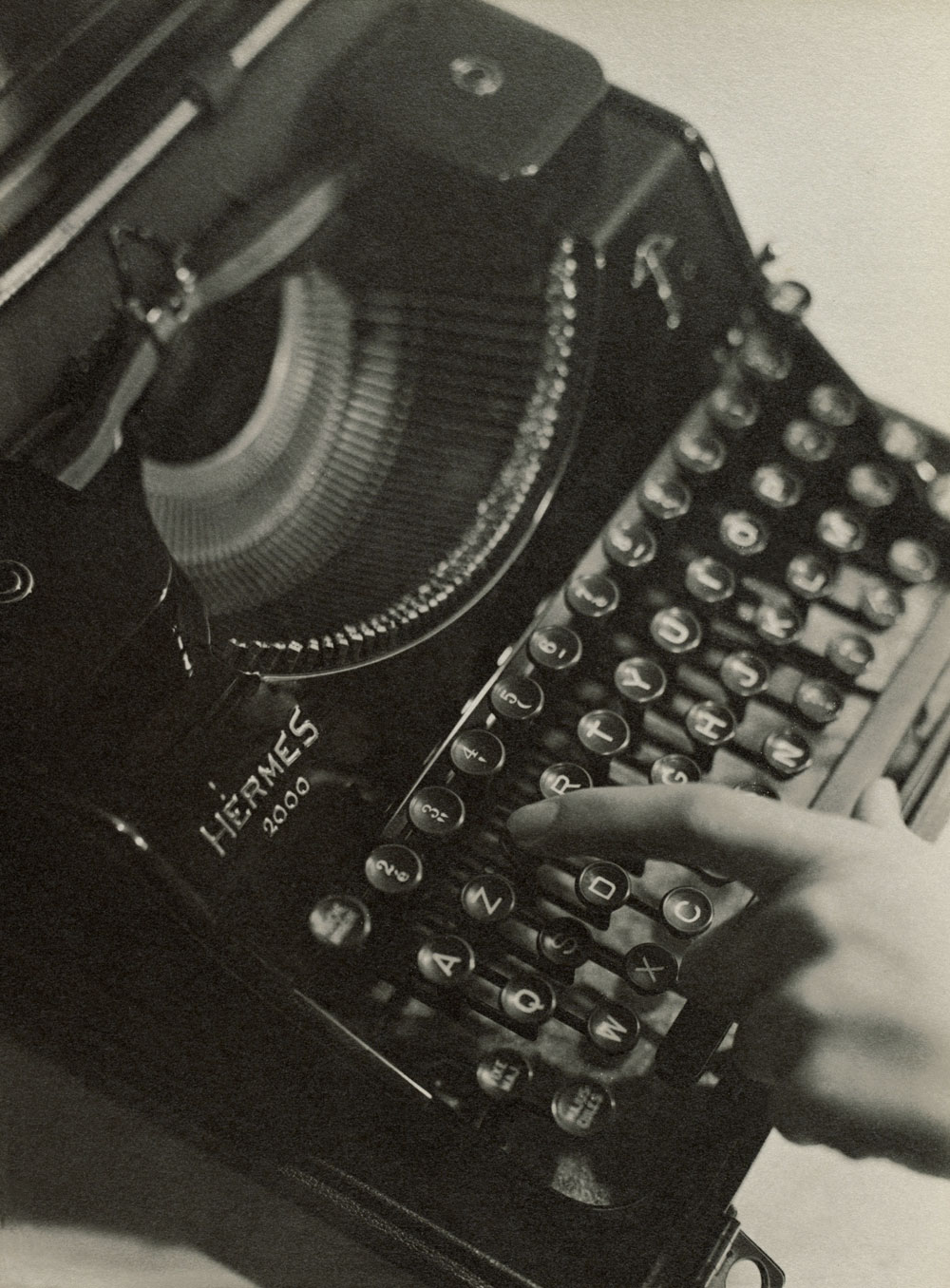
 

Florence Henri (French born America, 1893-1982)
Parisian Window
1929


Florence Henri (French born America, 1893-1982) 'The Forum' 1934


Florence Henri (French born America, 1893-1982)
The Forum
1934


Florence Henri (French born USA, 1893-1982) 'Rome' 1933-1934


Florence Henri (French born USA, 1893-1982)
Rome
1933-1934


Florence Henri (French born America, 1893-1982) 'Abstract Composition' 1929


Florence Henri (French born America, 1893-1982)
Abstract Composition
1929


Florence Henri (French born America, 1893-1982) 'Self-portrait in a mirror' 1928


Florence Henri (French born America, 1893-1982)
Self-portrait in a mirror
1928


Florence Henri (French born America, 1893-1982) 'A Bunch of Grapes' c. 1934


Florence Henri (French born America, 1893-1982)
A Bunch of Grapes
c. 1934


Florence Henri (French born America, 1893-1982) 'Composition' 1932


Florence Henri (French born America, 1893-1982)
Composition
1932
Stiftung Ann und Jürgen Wilde, Pinakothek der Moderne, Munich


Florence Henri (French born America, 1893-1982) 'Untitled, USA' 1940


Florence Henri (French born America, 1893-1982)
Untitled, USA
1940


Florence Henri (French born America, 1893-1982) 'Paris Window' 1929


Florence Henri (French born America, 1893-1982)
Paris Window
1929
Stiftung Ann und Jürgen Wilde, Pinakothek der Moderne, Munich


Florence Henri (French born America, 1893-1982) 'Portrait' 1928


Florence Henri (French born America, 1893-1982)
Portrait
1928
Stiftung Ann und Jürgen Wilde, Pinakothek der Moderne, Munich


Florence Henri (French born America, 1893-1982) 'Self Portrait' 1928


Florence Henri (French born America, 1893-1982)
Self Portrait
1928
Stiftung Ann und Jürgen Wilde, Pinakothek der Moderne, Munich


Pinakothek der Moderne
Barer Strasse 40
Munich

Opening hours:
Daily except Monday 10am – 6pm
Thursday 10am – 8pm

Pinakothek der Moderne website

LIKE ART BLART ON FACEBOOK

Back to top