This is one of those unheralded exhibitions on a photographer that you may never have heard of that Art Blart likes to promote.
Gabrielle Hébert as she became, married the painter Ernest Hébert in 1880. She was 28, he was 63. From 1888 until his death in 1908 at the age of 91, she documented her husband painting, their surroundings and their affluent, upper class social milieux. And then she stopped, she gave up photography, she lost the amour fou, that incredible passion that had driven her for so many years to take photographs.
While “her photographs provide an intimate look into the artistic life of the time, portraying artists, models, and domestic scenes” they also do something more – they represent the viewpoint of a female artist which challenges the masculine conventions of the day. “Overturning gender stereotypes, she watched him obsessively and was never tired of capturing him on film… Thanks to her images, which she shared and exchanged with her friends and family, she became recognised as an auteur and gained social status in a milieu where artistic creation was the preserve of men.” (Text from the Musée d’Orsay website)
Further, from my point of view, Gabrielle Hébert was not an amateur photographer taking snapshots for her “visual diary” but an artist fully conversant with current trends in photography. While there are the standard documentary photographs of sculptures and Ernest Hébert and friends painting … there is so much more!
Photographs such as the allegorical Peppino Scossa endormi dans les bras de sa mère, 11 août 1888 (Peppino Scossa asleep in his mother’s arms, August 11, 1888) (1888, above) and La duchesse de Mondragone et l’une de ses bellessoeurs posent pour une Annonciation, juin 1890(The Duchess of Mondragone and one of her sisters-in-law pose for an Annunciation, June 1890) (1890, below) are redolent of the photographer Julia Margaret Cameron (British born India, 1815-1879).
Other photographs such as Lys des parterres, juin 1890 (Flowerbed lilies, June 1890) (1890, below) evidence her consummate skill at capturing the perfume of a place whilst images such as Procession sur le port de Brindisi (Pouilles) (Procession in the port of Brindisi (Apulia)) (1893, below) show her ability to picture the informality of large groups of people and the atmosphere of the scene.
Then there are the joyous highs of a modern woman looking at the world with perceptive eyes. In the photograph Amalia Scossa et Ernest Hébert à sa peinture La Vierge au chardonneret sur la terrasse du campanile (around 1891, below), Gabrielle Hébert was not afraid to dissect the pictorial plane with strong verticals, horizontal and diagonal lines, providing the viewer with the feeling of an almost voyeuristic in-sight into the creative scene, each section of the photograph holding out attention – two chairs, one upturned on the other, supporting the umbrella shielding the painter from the sun; the Virgin and her child filling the distant space; the painting on the easel leading our eye down and then back up into the cloaked, wizened figure of the artist holding his easel; folding stool for him to rest and other accoutrements earthing the foreground; and the massive pillars slightly askew enclosing our furtive view. Magnificent!
My favourite photograph in the posting is Garçon au coin de la place Zocodover, Tolède, 31 octobre 1898 (Boy on the corner of Zocodover Square, Toledo, October 31, 1898) (1898, below), taken when Hébert had abandoned her large format camera for a more portable Kodak. A wonderful use of depth of field, movement, vanishing point, light, architecture and the ghostly presence of a boy, forever peering at us through eons of time, lend the image an enigmatic, allegorical mystery … as to the passage of time, the journey of life.
How I wish we could have seen more of these later photographs where Hébert proposed “daring viewpoints – notably from a speeding train – a camera in motion, glances towards the camera, the operator’s shadow cast on the ground, motion blur of people and things (smoke, clouds, and waves), truncated figures, and close-ups.” (Marie Robert)
And then there is the crux of the matter. As the text on the Musée d’Orsay website insightfully observes, “… above all, photography revealed her to herself: through capturing a particularly remarkable geography and era, she effectively invented her own mythology.”
Through love and life, through devotion to husband, through devotion to photography, and through devotion to herself, she revealed her to herself and to the world. What crazy, mad love!
Dr Marcus Bunyan
PS. With photographs like Femmes à la fenêtre, Taormine (Sicile), mai 1893 (Women at the window, Taormina (Sicily), May 1893) (1893, below) it is likely Gabrielle Hébert would have met Baron Wilhelm von Gloeden (German, 1856-1931) who lived and worked there between 1878-1931.
Many thankx to the Musée d’Orsay, Paris for allowing me to publish the photographs in the posting. Please click on the photographs for a larger version of the image.
Active between 1888 and 1908, Gabrielle documented daily life at Villa Medici in Rome, where her husband served as director of the French Academy. Her photographs provide an intimate look into the artistic life of the time, portraying artists, models, and domestic scenes. The exhibition features original prints, albums, diaries, glass plate negatives, and her cameras, alongside works by Ernest Hébert and personal items that tell their love story. With over 3.500 prints, Gabrielle Hébert is considered a pioneer of female photography, having sensitively and precisely documented an artistic environment predominantly male.
When Gabriele von Uckermann and a friend discovered Ernest Hébert’s painting, La Mal’aria [below], at the Munich International Exhibition of Fine Arts in 1869, the two young women sent a telegram to the artist expressing their admiration. A few months later, the painter agreed to receive Gabriele in his Parisian studio, and their marriage in 1880 sealed their whirlwind romance. He was 63, she was 28. Five years later, Ernest Hébert’s reappointment as director of the French Academy in Rome allowed the young woman to have her own studio. Gabrielle Hébert, who had Gallicized her first name, dates her photographic debut to July 8, 1888. From that day forward, she never stopped photographing her husband. She also dedicated herself to visually documenting their stay at the Villa Medici, as well as their travels in Italy, Sicily, and Spain. …
The exhibition’s subtitle, “Mad Love at the Villa Medici,” while certainly catchy, is somewhat misleading, as the section strictly devoted to photographs related to her stay at the French Academy in Rome represents only a third of the exhibition. However, each period of this prolific output is contextualised using a variety of documents: diary entries, correspondence, camera footage, albums, contact sheets, and more.
Christine Coste. “Gabrielle Hébert, un itinéraire photographique singulier,” on the Le Journal des Arts website, 17th December, 2025 [Online] Cited 02/01/2026. Translated from the French by Google Translate. Used under fair use conditions for the purposes of education and research
Ernest Hébert (French, 1817-1908) The Mal’aria 1848-1849 Oil on canvas 1930 x 1350cm Musée d’Orsay, dist. RMN / Patrice Schmidt Bought 1851
Used under fair use conditions for the purposes of education and research
The photograph above shows a nude woman posing for the artist Alexis Axilette for his painting Summertime (c. 1891, below)
Alexis Axilette (French, 1860-1931) Summertime c. 1891
Only a black and white reproduction is available of this work
At the Salon exhibition of 1891, a picture which attracted a marked amount of attention was a vividly painted midsummer landscape, with the figures of three wood-nymphs, basking in the flood of golden sunshine. It was entitled “Summertime.” The painter was A. Axilette, a Parisian artist whose studio was already well known to collectors. The success of “Summertime” in Europe was enormous. It was successively exhibited at various continental exhibitions, and everywhere repeated the hit it had made in France. It was, in fact, one of those works of which it is said that they “make” their authors, and in the sense that it completely established the painter’s reputation, “Summertime” realised this figure of speech.
Mary S. Van Deusen. “Alexis Axilette,” on the Master Paintings of the World website 2007 [Online] Cited 02/01/2026. Used under fair use conditions for the purposes of education and research
Alexis Axilette (French, 1860-1931)
Alexis Axilette was born in 1860 in Durtal, a small town in Maine-et-Loire. From a modest background – his father was a merchant – his future seemed predetermined, far removed from the world of art. His parents, who dreamed of a career as a notary’s clerk for him, were nonetheless surprised to discover his talent for drawing. After encouraging him to prove his abilities, they supported his choice to become an artist, a vocation he embraced with passion and determination. This ambition led him to become one of the most remarkable painters of his time.
A Promising Start
At the age of 16, Alexis Axilette began working as an apprentice in a photography studio, retouching photographs by hand, a modern activity for the time. At the same time, he attended evening classes at the Angers Municipal School of Fine Arts, where he distinguished himself with his talent and won several prizes. Supported by his teachers, he obtained a scholarship to attend the École des Beaux-Arts in Paris. Between 1878 and 1880, he learned Neoclassical principles there under the influence of the renowned painter Jean-Léon Gérôme, teachings that would profoundly shape his artistic approach.
The Rise to Recognition
At 24, Alexis Axilette reached a major turning point in his career by winning the prestigious Premier Grand Prix de Rome with his painting Themistocles Taking Refuge with Admetus (1885), a masterfully executed historical scene. This success, achieved at such a young age only by Fragonard, propelled his career, marked by gold medals, honorary distinctions, and the Legion of Honor. From that moment on, he became a central figure in the artistic and literary life of the Third Republic, frequenting high society and financial circles. An accomplished artist, he traveled throughout Europe and forged an international reputation, becoming a sought-after portraitist with prestigious commissions, notably from the Imperial Court of Russia.
In 1898, he received a major state commission: the creation of a monumental triptych for the ceiling of the Social Museum, entitled Humanity, Fatherland, and Muse. This work, both moral and balanced, perfectly embodies the republican ideals of the time.
Historical and Artistic Context
Under the Third Republic, the arts were seen as a privileged means of promoting national cohesion. Axilette’s academic style, rooted in moral and patriotic values, perfectly aligned with this objective. However, the late 19th and early 20th centuries saw the emergence of new artistic movements such as Impressionism, Symbolism, and Expressionism. Axilette’s attachment to classicism and a rigorous aesthetic set him apart from the avant-garde movements that favored experimentation and creative freedom. Thus, although he perfectly embodied his era, his art gradually came to be perceived as outdated and obsolete.
A Transition to Pastels
In the 1910s, as artistic tastes evolved, Alexis Axilette turned to the use of pastels. This more subtle and delicate medium allowed him to explore a new sensibility while remaining true to his academic style. His works from this period, primarily portraits and landscapes, testify to his desire to renew his approach while remaining rooted in classical tradition. These pastels reveal an undiminished technical mastery and a willingness to adapt to new artistic trends, although his style seems to have been less appreciated at this time.
Posthumous Oblivion
Like many academic artists, Alexis Axilette suffered from the evolution of tastes in the 20th century. Classical art, once revered, lost ground to the avant-garde, relegating its works to museum storage. Furthermore, his image as a society artist, associated with the establishment of the Third Republic, did not help his legacy. While artists like Gauguin symbolized rebellion and innovation, Axilette remains perceived as a representative of a bygone academicism.
A body of work to be rediscovered
Alexis Axilette died on July 3, 1931, in Durtal, his birthplace. Today, his legacy lives on through his works held in private and public collections: academic drawings, nude sketches, portrait studies, landscapes, and historical paintings. These paintings bear witness to his exceptional talent and his dedication to his art. Although he was a major figure of his time, he remains relatively unknown today. He embodies the fate of many artists: celebrated in their lifetime, but gradually forgotten by history.
Anonymous. “Alexis Axilette,” on the French Wikipedia website, translated by Google Translate
Designed in partnership with the Musée Départemental Ernest Hébert in La Tronche (Isère), where it will be hosted in spring 2026, the exhibition will also be presented at the French Academy in Rome – Villa Medici in autumn 2026, where the exhibition’s curator Marie Robert spent a year in the context of a Villa Medici/ Musée d’Orsay cross-residency.
The exhibition Who’s Afraid of Women Photographers? (1839-1945) presented at the Musée d’Orsay and the Musée de l’Orangerie in 2015 was a milestone for recognition of women artists in France. One of the many photographers featured was Gabrielle Hébert (1853, Dresden, Germany – 1934, La Tronche, France). Born Gabrielle von Uckermann, she was an amateur painter before marrying Ernest Hébert in 1880, an academic artist twice appointed Director of the French Academy in Rome. She went on to develop an intensive, extremely prolific photography practice, begun at Villa Medici in 1888 and ending twenty years later in La Tronche (near Grenoble) following the death of the man she had idolised, her elder by almost forty years, and whose place in history she largely ensured by supporting the creation of two monographic museums.
In the late 19th century, between France and Italy, like many artists and writers (including Henri Rivière, Pierre Bonnard, Maurice Denis and Émile Zola) who equipped themselves with a camera to record their and their families’ daily lives, Gabrielle Hébert pursued a private, sentimental photography practice, helped along by the technical and aesthetic revolution brought about by the invention of snapshot photography. At Villa Medici, as the wife of its director, she organised receptions and received elite visitors. She was not long in escaping her assigned duties, however, and acquired a camera. She took a few lessons with a Roman professional and, along with a resident of her own age, set up a darkroom to develop and print her negatives and retouch the results. It was the beginning of an extremely voluminous output of photos, which she consigned to her diaries. Hardly a day passed without her taking a snapshot, interspersing them with remarks that tell us how she set about taking pictures: “Je photo…. Je photographie…”.
Although Gabrielle Hébert shared her taste for society portraits and tableaux vivants with Luigi and Giuseppe Primoli, Princess Mathilde Bonaparte’s nephews and pioneers of snapshot photography in Italy, she explored all photographic genres on her own at Villa Medici, including nudes, reproductions of artworks, landscapes, still lifes and “photographic recreations” … Providing us with the viewpoint of a permanent resident who is dazzled by the palace, the site and its inhabitants (artists in residence, employees, models, dogs and cats) as seen from the inside and in all seasons, her output reveals a completely unknown aspect of life in that artistic phalanstery. Her “diary in images” is the first photo-report on daily life in the institution, a centre for residencies, training and creation by winners of the Grand Prix de Rome (many of whose works are now conserved by the Musée d’Orsay) as well as a laboratory for the new political relationship between France and Italy, which had just been “unified” (1861) and of which Rome became the capital in 1871. It also constitutes a unique testimony on one of the first couples of creators at Villa Medici. Although Gabrielle assisted Ernest with his activities as an artist, posing for him, preparing his canvases, retouching his paintings and even copying them, it was Ernest himself who was the photographer’s real focus. Overturning gender stereotypes, she watched him obsessively and was never tired of capturing him on film. Posing sessions with sitters, progress made in his paintings, moments of conviviality with visitors and interactions with residents, along with walks in the Roman countryside, bathing in the sea and alone in his office: all these aspects of artist, director and husband Ernest Hébert’s life were scrutinised and documented. When she returned permanently to France with him, Gabrielle stopped cultivating her passion for photography, a passion born in Italy and in exile, but nevertheless continued to photograph Hébert until the very end of his life, determined to immortalise him through images. Before that, though, in 1898, she escaped the closed quarters formed by the Renaissance Palace and its eccentric occupants and performed her photographic swansong during a trip to Spain, which she photographed with a resolutely modern eye influenced by the early days of cinema.
This chrono-thematic exhibition, from Gabrielle Hébert’s photographic beginnings (1888) to her last images (1908), will seek to present what she made of photography and what photography made of her. Thanks to her images, which she shared and exchanged with her friends and family, she became recognised as an auteur and gained social status in a milieu where artistic creation was the preserve of men. But above all, photography revealed her to herself: through capturing a particularly remarkable geography and era, she effectively invented her own mythology. By doing so, she was Villa Medici’s first photographic chronicler and made a place for herself in the medium’s history.
Most of the works on exhibition are original prints (in 9 x 12 cm format), along with photograph albums created by Gabrielle Hébert, her diaries, boxes of glass plates and cameras she used. Enlargements created from negatives she never printed will add further life to the presentation. The itinerary will be rounded out by drawings and paintings by Ernest Hébert, as well as sentimental relics (palette, medallion and letters), testimony to a story of love for a man and a country.
“Ciociaria” refers to a historic, rustic region southeast of Rome in Italy, and “ciociara” (singular) or “ciociare” (plural/feminine) describes people, especially women, from that area, known for their traditional leather sandals (ciocie), embodying a simple, rural Italian identity, famously portrayed in the film La Ciociara (Two Women). The term evokes a strong connection to the land, traditional life, and the unique culture of this central Italian territory.
Adaptation of the texts from the exhibition in large print
Introduction
An amateur painter and wife of the artist Ernest Hébert, director of the French Academy in Rome, Gabrielle Hébert began photography intensively and passionately at the Villa Medici in 1888. She abruptly stopped twenty years later in La Tronche (near Grenoble), upon the death of the man she idolised and who was forty years her senior. She will ensure her legacy through the creation of two monographic museums.
Like Henri Rivière, Maurice Denis, or Émile Zola, who at the end of the 19th century seized upon a camera to record family life, Gabrielle developed a private and sentimental practice, fostered by the technical and aesthetic revolution of the snapshot. As the entries “I take photos” or “I photograph” in her diary show, not a day went by without her taking pictures. Securing her place as an author through these images in a milieu where artistic creation was reserved for men, she discovered herself.
Through the chronicle of her chosen land and happy days, she creates a work of memory and inscribes herself in History.
A Woman Under the Influence
On July 21, 1888, Gabrielle “went out to buy things necessary for photography.” This marked the beginning of an obsessive production of two thousand photographs, mostly taken at the Villa Medici where, as First Lady of a prestigious cultural institution, she organised receptions and received visiting high society. Gabrielle quickly escaped the constraints of her duties: she acquired a camera, took lessons from Cesare Vasari, a Roman professional, and, together with fellow resident Alexis Axilette, set up a darkroom to develop her negatives, print, and retouch her photographs.
She already had an eye for it thanks to her artistic background and her practice of painting and drawing. But it was with the Franco-Italian counts Giuseppe and Luigi Primoli that Gabrielle explored the potential of the instantaneous, becoming the subject of a creative and existential experience: photography.
An art of joy
Gabrielle chronicles the Villa Medici, at once an architectural masterpiece overlooking the Eternal City, a residence for the winners of the Grand Prix de Rome, and a laboratory for a new relationship between France and Italy, newly unified. She focuses her gaze on its inhabitants: artists and models, foreign visitors on holiday, Italian employees at work, flowers, and animals. She enjoys working alongside the “button-pushers” in her circle, as amateurs equipped with handheld cameras are known.
She also observes professionals capturing perspectives of the palace with their imposing camera. “Magnificent weather. I’m photographing the residents”: Gabrielle often associates the day’s weather with an urgent need to act. Present in the world, joyful in her being, she then presses the shutter. Taking the picture is an epiphany. “I photograph, therefore I exist,” she seems to be saying.
Mein Alles (My Everything)
Gabrielle focuses her attention on her husband, around whom she circles and whose activities she seems to observe when he is painting or showing guests around the premises. The tender and sensitive portrait she paints of him is that of a director, an artist entirely devoted to his work at his workplaces, or sketching en plein air on excursions. She also captures him in his nakedness, as an elderly man bathing in the sea. She is concerned about his state of health; she notes how he slept or the time he got up.
The couple’s asymmetry, commonplace at that time and in that social circle, is also expressed in their writings: while he uses the informal “tu” with her, she uses the formal “vous” and addresses him with the superlative phrase “Mein Alles”: My Everything.
Travels in Italy
During their eleven-year stay in Italy, Ernest and Gabrielle travelled all over the country.
The artist enjoys returning to favorite places painted during her youth. They take with them a boarder or student, Amelia Scossa, Ernest’s beloved model, or a few friends; the dogs are always present. In 1893, they travel to Sicily, to the Duke of Aumale’s estate, and then explore the ancient sites of Selinunte and Agrigento, and the Greek theaters of Syracuse and Taormina. By escaping the confines of the Villa Medici and its eccentric inhabitants, Gabrielle literally leaves her social milieu.
With an attention full of empathy for popular and regional culture, she manages to get groups of strangers, women and men, to pose in front of her lens, no doubt placed on a tripod, whom she brings together in an amusing jumble around a fountain or on the steps of a building, arousing in return a certain curiosity.
In Spain, a cinematic perspective
In 1896, the couple left Italy with great regret and sorrow, returning to Paris and La Tronche where they continued to lead an intense social life. Two years later, Gabrielle completed her photographic swan song during a final journey, this time to Spain, which took them both from Burgos to Granada via Madrid, El Escorial, Toledo, Granada, and Seville.
Abandoning her large-format camera for a Kodak, she amplified in nearly three hundred photographs what she had already experimented with: daring viewpoints – notably from a speeding train – a camera in motion, glances towards the camera, the operator’s shadow cast on the ground, motion blur of people and things (smoke, clouds, and waves), truncated figures, and close-ups.
The nascent cinematograph had passed by. She no longer poses her subjects; she captures them on the fly. She seizes fleeting gestures, radiant moments, the stroll of passersby, the burst of laughter. This journey is an enchanted interlude that allows the couple to get back on their feet, one last time.
The tomb of an artist
Upon returning from Spain, Gabrielle ceased to cultivate her passion, born under the Italian sky. Her output diminished significantly, ceasing altogether in 1908, with Ernest’s death.
During his final months, she recorded his last visits and outings in the sun, his walks, and setting up his easel outdoors. She portrayed him as a draftsman and painter to the very end, then staged his posthumous portrait, for eternity. Containing the seeds of anticipation of the end, the photographs of moments lived, places visited, and people met, were in reality intended to be viewed by others besides their sole author.
With her thousands of images, Gabrielle composed a tomb, in the poetic sense of the word, erected in memory of her husband and their love. In the museum she created in Isère, in La Tronche, in honour of Ernest, it would take until the beginning of the 21st century for her photographic work to be discovered by a happy accident.
Marie Robert, Chief Curator, Photography and Cinema at the Musée d’Orsay, Paris, translated from the French by Google Translate
Prince Semyon Semyonovich Abamelek-Lazarev (also Abamelik-Lazaryan; Russian: Семён Семёнович Абамелек-Лазарев; 24 November 1857 in Moscow – 2 October 1916 in Kislovodsk) was a Russian millionaire of Armenian ethnicity noted for his contributions to archaeology and geology.
Count Giuseppe Napoleone Primoli (in French, Joseph Napoléon Primoli; 2 May 1851 in Rome – 13 June 1927 in Rome) was an Italian nobleman, collector and photographer. …
Giuseppe Primoli lived in Paris from 1853 to 1870. He befriended writers and artists both in Italy and France, and was host to Guy de Maupassant, Paul Bourget, Alexandre Dumas fils, Sarah Bernhardt and others in Palazzo Primoli in Rome. In 1901 he became the sole owner of the palazzo, which he enlarged and modernised between 1904 and 1911.
Primoli was a bibliophile and collector, who assembled a large collection of books and prints. He amassed a collection of books by Stendhal as well as many from the writer’s library.
During the last decades of the nineteenth century, Primoli, an avid photographer, produced over 10,000 photographs.
With photographs like the one above, taken at Taormina, it is likely Gabrielle Hébert would have met Baron Wilhelm von Gloeden (German, 1856-1931) who lived and worked there between 1878-1931.
Hippolyte Bayard (French, 1801-1887) William Henry Fox Talbot (English, 1800-1877) Samuel Buckle (British, 1808-1860) Nicolaas Henneman (British, 1813-1893) Reverend Calvert Jones (British, 1804-1877) David Kinnebrook (English, 1819-1865) M.H. Nevil Story-Maskelyne (British, 1823-1911) Unknown maker Cover of Dessins photographiques sur Papier. Recueil No. 2. [The “Bayard Album”]
1839-1855
The J. Paul Getty Museum, Los Angeles
Public domain
Shock of the new
At the moment the archive is going through a veritable feast of wonderful exhibitions on 19th century photography, this exhibition at the Getty a companion to last week’s posting on the exhibition Nineteenth-Century Photography Now also at the J. Paul Getty Museum. What a delight!
This posting on the important photographer and inventor Hippolyte Bayard (French, 1801-1887) – one of the pioneers of photography who was finally acknowledged as such during his lifetime and received due recognition – offers the visitor the opportunity to view fragile photographs from the Getty’s treasured Bayard album, one of the first photographic albums ever created, before the leaves of the album are reassembled after restoration.
“The album includes 145 of Bayard’s experiments with different photographic processes on paper, primarily salted paper prints from paper negatives from about 1839 to the late 1840s… Bayard divided the album into four sections: still lifes, portraits, urban and rural landscapes, and an assortment of miscellaneous images. The inclusion of twenty-two photographs by British photographers, including William Henry Fox Talbot, provides evidence of Bayard’s interactions with his fellow pioneers across the English Channel. …
Inscriptions found on the Getty album pages and versos of its photographs support the theory that the artist himself – or someone with firsthand knowledge of the chemicals he used – compiled this volume. Thus, this treasure offers intriguing insights into Bayard’s practice, aesthetic choices, and strategies for presenting himself through the order and arrangement of the photographs.”1
The full album and layout can be viewed on the Getty’s website.
What I find delightful about this “album of experiments” – other than Bayard’s perceptive, inquisitive self-portraits and delicate, atmospheric cyanotype and salted paper print photograms – is the colour (including hand coloured), size and placement of the photographic prints on the pages of the album. Sometimes gridded, sometimes singular in grand isolation, sometimes asymmetrical with empty pages between images, the album seems to flow allow like a river… only for the viewer then to have to change orientation, as vertical images on one page are then abutted next to a page of images that need to be viewed in a horizontal format but turning the album through 90 degrees.
It’s as if the compiler of the album, probably Bayard himself, applied this prick of consciousness to the viewing of the album, to stop the viewer skimming over the images but forcing them to be attentive, to be aware, of the progression of the story that the artist was telling, to be aware of a certain “disposition” in the viewer in order to – a/ disrupt the tendency of something to act in a certain manner under given circumstances and b/ impinge on a person’s inherent quality of mind and character. To offer a new dispensation on reality.
In other words, the artist challenges the viewer as to how photographs are read and interpreted through changes to the perception and point of view said “reader”. I don’t think I have ever seen such an early photo book that proposes such a daring reorientation of consciousness as does this album.
New technologies, new aesthetics, new dispositions.
The shock of the new.
Dr Marcus Bunyan
1/ Carolyn Peter, J. Paul Getty Museum, Department of Photographs, 2024
Many thankx to the J. Paul Getty Museum for allowing me to publish the photographs in the posting. Please click on the photographs for a larger version of the image.
Parisian bureaucrat by day and tireless inventor after hours, Hippolyte Bayard (French, 1801-1887) was one of the most important, if lesser-known, pioneers of photography. During his thirty-year career, he invented the direct positive process and several other photographic techniques on paper. This exhibition presents an extraordinarily rare opportunity to view some of Bayard’s highly fragile photographs dating from the 1840s – the first decade of the new medium. The exhibition journeys back to the 19th century to unveil a collection of Bayard’s delicately crafted photographs, offering an extraordinarily rare glimpse into his unique processes, subjects, and persistent curiosity. He brought an artistic sensitivity into capturing the first staged self-portraits and set precedents for photography as we know it today. It highlights Getty’s treasured Bayard album, one of the first photographic albums ever created.
This exhibition is presented in English and Spanish.
Text from the J. Paul Getty Museum website
Hippolyte Bayard (French, 1801-1887) William Henry Fox Talbot (English, 1800-1877) Samuel Buckle (British, 1808-1860) Nicolaas Henneman (British, 1813-1893) Reverend Calvert Jones (British, 1804-1877) David Kinnebrook (English, 1819-1865) M.H. Nevil Story-Maskelyne (British, 1823-1911) Unknown maker Title page of Dessins photographiques sur Papier. Recueil No. 2. [The “Bayard Album”] with Hippolyte Bayard’s [Self-Portrait in the Garden] June 1845
1839-1855
The J. Paul Getty Museum, Los Angeles
Public domain
Text above the photograph: Bromure d’argent vapeurs de Mercure (Silver bromide Mercury vapors)
Hippolyte Bayard’s self-portrait at his garden gate [Self-Portrait in the Garden] introduces the contents of this 184-page album, one of the earliest photographic albums ever created…
Titled Dessins photographiques sur Papier. Receuil No. 2 [Photographic Drawings on Paper. Collection No. 2], the album includes 145 of Bayard’s experiments with different photographic processes on paper, primarily salted paper prints from paper negatives from about 1839 to the late 1840s. Twenty-two photographs by six of his British peers are also interspersed through the album. With its green-and-black marbled covers, it is similar in style to the other known album devoted to Bayard – Album d’essais [Album of Experiments] – owned by the Société française de photographie (SFP) in Paris. Inscriptions found on the Getty album pages and versos of its photographs support the theory that the artist himself – or someone with firsthand knowledge of the chemicals he used – compiled this volume. Thus, this treasure offers intriguing insights into Bayard’s practice, aesthetic choices, and strategies for presenting himself through the order and arrangement of the photographs.
Bayard divided the album into four sections: still lifes, portraits, urban and rural landscapes, and an assortment of miscellaneous images. The inclusion of twenty-two photographs by British photographers, including William Henry Fox Talbot, provides evidence of Bayard’s interactions with his fellow pioneers across the English Channel.
This album has passed through several owners over its 180-plus year life. While gaps still exist, we have traced much of its provenance, or history of ownership. Working back in time, the Getty Museum purchased the album in 1984 from the American collector Arnold Crane (1932-2014) as part of its foundational photography collection. Crane had acquired it in 1970 from Alain Brieux (1922-1985), a Parisian book dealer. By the early 1950s, the album was in the possession of the commune of Breteuil-sur-Noye, Bayard’s hometown, or its mayor, François Monnet (1890-1970). A member of Bayard’s extended family may have given or sold the album to Breteuil. Moving further back into the nineteenth century, Bayard’s family likely chose to keep the album at the time of his death in 1887. We believe that Bayard possessed the album from its creation until he passed away.
Over time different individuals have added inscriptions, numbering systems, correspondence, a biography, and a souvenir from a 1959-1960 exhibition on Bayard in Essen, Germany. At the top left corner of pages, an early inventory system notes the page number, the number of images on the page, and total number of photographs in the album up to that point. Numbers under each photograph represent a second system. At the bottom of the pages, Getty Museum staff and Crane each assigned an accession number to identify the album within their collections. Note that Getty numbers begin with “84.XO.968.” and Crane numbers with “A58.”.
With each change of hands, the album has adopted new meanings. It started as an artist’s notebook and portfolio. Upon Bayard’s death it became a family memento and then a symbol of a commune’s pride. Later in the twentieth century, it shifted from an antiquarian book dealer’s curious commodity to a collector’s treasure. Today it is a museum object valued for what it tells us about processes, subject matter, and sophisticated lines of communication between photographers during the earliest years of photography.
Carolyn Peter, J. Paul Getty Museum, Department of Photographs, 2024
For more information see:
~ Hellman, Karen and Carolyn Peter, eds. Hippolyte Bayard and the Invention of Photography. Los Angeles: J. Paul Getty Museum, 2024.
~ Peter, Carolyn. “The Many Lives of the Getty Bayard Album.” Getty Research Journal 15 (2022): 67-86.
Hippolyte Bayard (French, 1801-1887) William Henry Fox Talbot (English, 1800-1877) Samuel Buckle (British, 1808-1860) Nicolaas Henneman (British, 1813-1893) Reverend Calvert Jones (British, 1804-1877) David Kinnebrook (English, 1819-1865) M.H. Nevil Story-Maskelyne (British, 1823-1911) Unknown maker Dessins photographiques sur Papier. Recueil No. 2. [The “Bayard Album”] showing at top left Hippolyte Bayard’s [Three Feathers] About 1842-1843
1839-1855
The J. Paul Getty Museum, Los Angeles
Public domain
Hippolyte Bayard (French, 1801-1887) [Three Feathers]
About 1842-1843
Part of Dessins photographiques sur Papier. Recueil No. 2. [The “Bayard Album”] 1839-1855
Cyanotype
13.8 x 11.1cm (5 7/16 x 4 3/8 in.)
The J. Paul Getty Museum, Los Angeles
Public domain
Hippolyte Bayard (French, 1801-1887) William Henry Fox Talbot (English, 1800-1877) Samuel Buckle (British, 1808-1860) Nicolaas Henneman (British, 1813-1893) Reverend Calvert Jones (British, 1804-1877) David Kinnebrook (English, 1819-1865) M.H. Nevil Story-Maskelyne (British, 1823-1911) Unknown maker Dessins photographiques sur Papier. Recueil No. 2. [The “Bayard Album”] showing at top right, Hippolyte Bayard’s Arrangement of Flowers about 1839-1843
1839-1855
The J. Paul Getty Museum, Los Angeles
Public domain
Hippolyte Bayard (French, 1801-1887) Arrangement of Flowers
About 1839-1843
Part of Dessins photographiques sur Papier. Recueil No. 2. [The “Bayard Album”] 1839-1855
Salted paper print
17.5 × 21.3cm (6 7/8 × 8 3/8 in.)
The J. Paul Getty Museum, Los Angeles
Public domain
Hippolyte Bayard (French, 1801-1887) William Henry Fox Talbot (English, 1800-1877) Samuel Buckle (British, 1808-1860) Nicolaas Henneman (British, 1813-1893) Reverend Calvert Jones (British, 1804-1877) David Kinnebrook (English, 1819-1865) M.H. Nevil Story-Maskelyne (British, 1823-1911) Unknown maker Dessins photographiques sur Papier. Recueil No. 2. [The “Bayard Album”] showing at bottom right, Hippolyte Bayard’s [Portrait of a Man] 1843-1845
1839-1855
The J. Paul Getty Museum, Los Angeles
Public domain
Hippolyte Bayard (French, 1801-1887) [Portrait of a Man]
1843-1845
Part of Dessins photographiques sur Papier. Recueil No. 2. [The “Bayard Album”] 1839-1855
Salted paper print Image: 15.3 × 11.6 cm (6 × 4 9/16 in.) Sheet: 15.7 × 12 cm (6 3/16 × 4 3/4 in.)
The J. Paul Getty Museum, Los Angeles
Public domain
Hippolyte Bayard (French, 1801-1887) [In Bayard’s Studio]
About 1845
Part of Dessins photographiques sur Papier. Recueil No. 2. [The “Bayard Album”] 1839-1855
Salted paper print
23.5 × 17.5cm (9 1/4 × 6 7/8 in.)
The J. Paul Getty Museum, Los Angeles
Public domain
Hippolyte Bayard is one of the earliest photographers to explore self-portraiture using a camera. The Getty Museum’s collection includes seven of Bayard’s self-portraits (see 84.XO.968.1, 84.XO.968.166, 84.XO.968.20).* While Bayard is not present in this image, it too can be considered a self-portrait of sorts as it offers the viewer a window onto his artistic world. The seemingly casual composition shows a make-shift photographic studio with wood doors leaning up against a brick wall to form the principal back wall. The floor is rough; it isn’t clear whether it is made of tile, wood, or simply dirt. Bayard featured the tools of his trade – glass bottles filled with chemicals, a beaker, a funnel, a dark canvas backdrop, and a light curtain or coverlet as well as some of his favourite subjects – three plaster casts and a porcelain vase. The Société française de photographie (SFP) collection in Paris has two versions of this image; one of them is hand-coloured. The overpainting with watercolour heightens the various patterns and adds colours that the photographic process was unable to capture.
Many of these same props can be found in a number of Bayard’s photographs. The vase with its elaborate floral design as well as the small figure with arms extended, the coverlet, backdrop, and bench are integral parts of Bayard’s most famous self-portrait, Le Noyé [The Drowned Man], now housed at the SFP.
*Four of the Getty’s Bayard self-portraits are part of a portfolio printed in 1965 by M. Gassmann and Son from Bayard’s original negatives that are housed in the SFP collection. (See: 84.XO.1166.1, 84.XO.1166.2, 84.XO.1166.8, and 84.XO.1166.25).
Carolyn Peter. J. Paul Getty Museum, Department of Photographs
2019
Hippolyte Bayard (French, 1801-1887) William Henry Fox Talbot (English, 1800-1877) Samuel Buckle (British, 1808-1860) Nicolaas Henneman (British, 1813-1893) Reverend Calvert Jones (British, 1804-1877) David Kinnebrook (English, 1819-1865) M.H. Nevil Story-Maskelyne (British, 1823-1911) Unknown maker Dessins photographiques sur Papier. Recueil No. 2. [The “Bayard Album”] showing at bottom right, Hippolyte Bayard’s [Galerie de la Madeleine with Scaffolding, Place de la Madeleine] 1843
1839-1855
The J. Paul Getty Museum, Los Angeles
Public domain
Hippolyte Bayard (French, 1801-1887) [Galerie de la Madeleine with Scaffolding, Place de la Madeleine]
1843
Part of Dessins photographiques sur Papier. Recueil No. 2. [The “Bayard Album”] 1839-1855
Salted paper print Image: 16.5 × 22cm (6 1/2 × 8 11/16 in.) Sheet: 16.8 × 22.3cm (6 5/8 × 8 3/4 in.)
The J. Paul Getty Museum, Los Angeles
Public domain
Hippolyte Bayard (French, 1801-1887) William Henry Fox Talbot (English, 1800-1877) Samuel Buckle (British, 1808-1860) Nicolaas Henneman (British, 1813-1893) Reverend Calvert Jones (British, 1804-1877) David Kinnebrook (English, 1819-1865) M.H. Nevil Story-Maskelyne (British, 1823-1911) Unknown maker Dessins photographiques sur Papier. Recueil No. 2. [The “Bayard Album”] showing at top right, Hippolyte Bayard’s [Rue des Batignolles] about 1845
1839-1855
The J. Paul Getty Museum, Los Angeles
Public domain
Hippolyte Bayard (French, 1801-1887) [Rue des Batignolles]
About 1845
Part of Dessins photographiques sur Papier. Recueil No. 2. [The “Bayard Album”] 1839-1855
Salted paper print
15.4 x 11 cm (6 1/16 x 4 5/16 in.)
The J. Paul Getty Museum, Los Angeles
Public domain
Hippolyte Bayard (French, 1801-1887) [Bitch in profile]
About 1865
Part of Dessins photographiques sur Papier. Recueil No. 2. [The “Bayard Album”] 1839-1855
Albumen silver print Mount: 10 x 6.1cm (3 15/16 x 2 3/8 in.)
J. Paul Getty Museum, Los Angeles
Public domain
Hippolyte Bayard (French, 1801-1887) [Unidentified woman standing, leaning against a credenza]
About 1861
Albumen silver print Mount: 10.4 x 6.1 cm (4 1/8 * 2 3/8 in.)
The J. Paul Getty Museum, Los Angeles
Public domain
Hippolyte Bayard (French, 1801-1887) William Henry Fox Talbot (English, 1800-1877) Samuel Buckle (British, 1808-1860) Nicolaas Henneman (British, 1813-1893) Reverend Calvert Jones (British, 1804-1877) David Kinnebrook (English, 1819-1865) M.H. Nevil Story-Maskelyne (British, 1823-1911) Unknown maker Dessins photographiques sur Papier. Recueil No. 2. [The “Bayard Album”]
1839-1855
The J. Paul Getty Museum, Los Angeles
Public domain
Hippolyte Bayard (French, 1801-1887) [Two Men and a Girl in a Garden]
About 1847
Part of Dessins photographiques sur Papier. Recueil No. 2. [The “Bayard Album”] 1839-1855
Albumenised salted paper print
12.9 x 15.6cm (5 1/16 x 6 1/8 in.)
The J. Paul Getty Museum, Los Angeles
Public domain
Hippolyte Bayard
Frenchman Hippolyte Bayard was one of the earliest experimenters in photography, though few will recognise his name today. While working as a civil servant in the Ministry of Finance in the late 1830s and early 1840s, he devoted much of his free time to inventing processes that captured and fixed images from nature on paper using a basic camera, chemicals, and light. The announcement of the inventions of his fellow countryman Louis-Jacques Mandé Daguerre’s daguerreotype on January 7, 1839, and Englishman William Henry Fox Talbot’s photogenic drawing soon after greatly diminished opportunities for recognition of Bayard’s contributions. He was most likely persuaded by François Arago, the head of the French Academy of Sciences, to keep quiet about his own distinct process until after the announcement of Daguerre’s process and subsequent celebration in August of 1839.
Bayard nonetheless continued his investigations and submitted letters detailing three photographic recipes to the Academy of Sciences. Though he exhibited examples of his work in what has been recognised as the first public exhibition of photography in July 1839 and presented his direct positive process at the Academy of Fine Arts in November of 1839, where it was lauded as an important tool for artists, he remained in the shadows of Daguerre and Talbot.
Bayard is best known today for his 1840 self-portrait as a drowned man, to which he added text protesting the lack of recognition for his invention. The humorous, yet biting text read:
The corpse of the gentleman you see here…. is that of Monsieur Bayard, inventor of the process that you have just seen…. As far as I know this ingenious and indefatigable experimenter has been occupied for about three years with perfecting his discovery…. The Government, who gave much to Monsieur Daguerre, has said it can do nothing for Monsieur Bayard, and the poor wretch has drowned himself. Oh! The precariousness of human affairs! …
In reality, of the three inventors, it was Bayard who actively continued to photograph the longest. He was a founding member in the 1850s of the Société héliographique and its successor, the Société française de photographie. He kept up with the latest developments in the world of photography and integrated new processes into his practice. He was one of only five photographers selected to be part of the Missions héliographiques in 1851, charged with the task of documenting France’s historic architecture for the Commission des Monuments historiques. He exhibited regularly in the universal expositions and, in the 1860s after his retirement from the Ministry of Finance, opened a photographic portrait studio in Paris with Charles Albert d’Arnoux, known as Bertall (1820-1882). During his lifetime, Bayard was described as the “Grandfather of Photography” by several commentators. The Légion d’honneur (still considered today the highest order of military and civil decoration in France) awarded him the first level of merit – Chevalier – in 1863. In the late 1860s he left Paris and moved to Nemours near his lifelong friend, the actor and painter Edmond Geffroy (1804-1895). Bayard died there in 1887.
Hippolyte Bayard (French, 1801-1887) [Self-Portrait in the Garden]
1847
Salted paper print Image: 16.5 × 12.3cm (6 1/2 × 4 13/16 in.) Sheet: 17.1 × 12.5cm (6 3/4 × 4 15/16 in.)
The J. Paul Getty Museum, Los Angeles
Public domain
By October 1840, a little over a year after several competing photographic processes had been made public, Hippolyte Bayard began staging elaborate self-portraits in his garden and other locations. His best known, Le Noyé [The Drowned Man], was made on October 18, 1840 (three variants are now part of the collection of the Société française de photographie in Paris).
The Getty Museum’s collection includes six other self-portraits by Bayard in addition to this 1847 Self-portrait in the Garden (See: 84.XO.968.1, 84.XO.968.166).* In five of the seven self-portraits, he placed himself in garden settings. This was, in part, a practical decision since natural light was required to make photographs at the time. However, his choice of setting also reflects his passion for plants. He came from a family of gardeners – his maternal grandfather worked in the extensive grounds of the abbey in Breteuil, the village where Bayard grew up. His father, a justice of the peace, was a passionate amateur gardener who grew peaches in an orchard attached to the family home. The garden(s) featured in Bayard’s self-portraits may indeed be part of the family property in Breteuil or his own home in Batignolles – an area that was just on the outskirts of Paris.
The setting becomes an integral aspect of these portraits; Bayard, the man, merges with his environment. In this particular image, he is surrounded by vegetation and is seated in a wooden chair whose arms and legs resemble vine branches. The lower portion of his legs merges into the darkened lower foreground as if he too is rooted in the earth and has sprouted from it. He shares the foreground with a tall leafy plant that bursts into blossoms at the top. The artist’s choice of clothing, including his cravat, brimmed cap, as well as his direct gaze, all combine to convey a sense of confidence.
Another image found mounted on a separate page in the same album in which this one appears offers a slightly more distant view of almost all the same elements. Bayard is no longer part of the composition, which instead features a watering can and an extra pot (See 84.XO.968.85). Perhaps this photograph was a study in preparation for this self-portrait.
*Four of the Getty’s Bayard self-portraits are part of a portfolio printed in 1965 by M. Gassmann and Son from Bayard’s original negatives that are housed in the SFP collection. (See: 84.XO.1166.1, 84.XO.1166.2, 84.XO.1166.8, and 84.XO.1166.25).
Carolyn Peter, J. Paul Getty Museum, Department of Photograph
2019
Hippolyte Bayard (French, 1801-1887) [Self-Portrait in the Garden]
June 1845
Hand-coloured
Salted paper print
12 1/4 × 9 13/16 in.
The J. Paul Getty Museum, Los Angeles
Public domain
The 19th-Century Selfie Pioneer
Before Instagram influencers, there was Hippolyte Bayard
More than 160 years before smartphones and selfie sticks allowed even the most inexperienced shutterbug to snap a photo of themselves, Hippolyte Bayard was turning his camera on himself.
The year was 1840. Several competing photographic processes had just been made public for the first time the year before, effectively introducing the medium of photography to the world. Bayard, a bureaucrat who worked at the Ministry of Finance in Paris and took pictures on weekends or his lunch hour, was one of the first photographers to practice the art of the self-portrait. Examples of these are on view in the new Getty Center exhibition Hippolyte Bayard: A Persistent Pioneer.
With himself as the subject, Bayard could experiment with new photographic processes, set a scene, and pose in front of the camera, creating images that represented his hobbies, frustrations, and achievements. Sound familiar?
“The earliest photographers wanted to capture people in photographs. Bayard was one of the first to actually succeed,” says Carolyn Peter, the exhibition’s co-curator. He also demonstrated that photography was a new art form. “The public was so taken by the realistic depictions of the world in photography, but he was saying that you can also make things up. You can stage things.”
Bayard in the Garden
Self-portraits were an appealing solution in those early days of photography largely because taking a picture required a long, labor-intensive process, explains Peter. Photographers had to set their cameras in front of their (motionless) subjects for anywhere between 20 minutes and three hours – a daunting ask for any human being – to expose the sensitised surface (metal, paper, or glass) to enough light to create the image.
“He probably didn’t want to subject others to this endurance test, but he still wanted to try and work on his photography techniques. Gradually, the amount of time it took to make a photo shortened, maybe down to around 10 minutes, and finally down to seconds,” Peter said.
In a series of self-portraits from the 1840s, Bayard posed himself in his or his family’s gardens, among plants and tools, emphasising his passion for horticulture. The outdoor setting was a necessity as it offered plenty of natural light. He adopted several different configurations of items and positions in each portrait. Notice how in one image (above left) he hid his feet behind greenery, as if he were planted in the earth.
“Today artists, along with the rest of us, still try a lot of different positions and poses with slight variations when we are making self-portraits,” Peter says.
Hippolyte Bayard (French, 1801-1887) [Self-Portrait in the Garden]
About 1845-1849
Salted paper print Image: 15.9 × 12.7 cm (6 1/4 × 5 in.) Sheet: 16.3 × 13.1 cm (6 7/16 × 5 3/16 in.)
The J. Paul Getty Museum, Los Angeles
Public domain
Bayard as Dramatist
Perhaps Bayard’s best-known photo is his Drowned Man (1840), in which he slumps over, partially covered by a sheet, eyes closed, as if he had perished. Bayard created three versions of the image, changing the pose and props in each one, and eventually added this over-the-top lament to the back of the final version:
“The corpse of the gentleman that you see here… is that of M. Bayard, inventor of the process you have just seen…. To my knowledge, for about three years this ingenious and indefatigable researcher has been working to perfect his invention…. The Government, which has given so much to M. Daguerre, said it could do nothing for M. Bayard, and the unfortunate man drowned himself. Oh! The precariousness of human affairs!”
Clearly, Bayard had a few frustrations about his position in the photography world and about how little respect he felt he had been given in comparison to fellow photographer Louis Daguerre. This self-portrait allowed him to express his woes in a humorous and, yes, dramatic way, perhaps inspired by his connections to the theater.
“One of his very best friends from childhood on was Edmond Geffroy, a famous actor, so Bayard hung out with actors and theater people as well as fine artists and writers,” Peter says. “He had this connection to theatricality and theater. He attended a lot of plays. So I think that influenced him.”
A Special Effects Pioneer
In the 1860s, Bayard opened a portrait studio where customers could pay to have their pictures taken. Exposure times had been dramatically reduced, making it significantly easier for ordinary folks to sit for photographs. Bayard continued to experiment, using himself as a subject. Here he combined two negatives to make it look as though he is having a conversation with himself (or an imaginary identical twin?). This is 100 years before The Parent Trap was released!
“He’s just got this sense of humour and this desire to keep playing around,” says Peter.
A Self-Portrait of Pride
Bayard might have felt profoundly under acknowledged for his work in the 1840s, but it turns out he just needed to wait a little to get his due. In 1863 he was awarded the cross of the French Legion of Honor, a prestigious award bestowed in recognition of his contributions to photography. He took the portrait above while wearing the badge, showing off what must have been one of his proudest achievements. Bayard retired from photography soon after.
Bayard’s selfies are now more than 160 years old, but selfie-takers of today seem to be (unconsciously) following the same principles Bayard experimented with. He was one of the first to show that photography could represent not just the literal world but also how you wanted to present yourself. While selfies may appear to be a new phenomenon spawned by the reverse-camera button on smartphones, selfie aficionados should pay proper homage to Bayard for pioneering this art form.
“Today, selfies often include humour. Photographers invest a lot of strategic thought into how they want to present themselves. Selfies are performative and create something that isn’t fully realistic. Bayard was also conscious of the power of photography to visually imagine other worlds and invent different versions of himself.”
Exhibition dates: 17th October 2023 – 21st January 2024
Benjamin Brecknell Turner (English, 1815-1894) North Side of Quadrangle, Arundel Castle
1852-1854
Negative photograph on paper
29.7 x 39.6cm
BnF, department of Prints and Photography, RES PHOTO EI-6-BOITE FOL B (n° 3)
Gift of André and Marie-Thérèse Jammes, 1960
What a lovely exhibition to start the year 2024 on Art Blart.
My favourite photographs in the posting: three beautiful fashion photographs by Frères Séeberger; a stunning late Atget Parc de Sceaux, Duchess Alley (between 1925 and 1927, below) in which you can feel the crispness in the air of the early winter morning; and the glorious seascapes of Gustave Le Gray, probably the best (and most atmospheric) photographer of the sea in all time.
In this posting we observe how black and white photographs are never just black and white but full of different hues and colours. These colour variations tell us a lot about the perception of the image.
As the exhibition text notes: “The strength of the blacks and whites, the variations of hues influence our perception of the image: the more contrasted it is, the more readable it is for our eye saturated with absolute blacks and whites; the more nuanced it is, the more sensitive the distance of time becomes.”
As we enter a new year, another year further away from the origin of the light captured in these photographs, the sensitivity of early photographers and their ability to displace time continues to entrance the viewer.
Dr Marcus Bunyan
Many thankx to the Bibliothèque nationale de France (BnF) for allowing me to publish the photographs in the posting. Please click on the photographs for a larger version of the image.
Noir & Blanc: Une esthétique de la photographie
Black and white is inseparable from the history of photography: its developments, from the end of the 19th century to today, have revealed its plastic force. While the use of colour intensified from the 1970s, black and white reinvented itself as a means of assertive aesthetic expression emphasising graphics and material. Black and white photography remains less expensive and simpler, but its persistence to this day can be explained above all by the fact that it has come to embody the very essence of photography. It appears to carry a universal, timeless, even memorial dimension, where colour would be the sole translation of the contemporary world.
The National Library of France holds one of the richest photographic collections in the world with some six million prints, these are particularly representative of this abundant history of black and white photography.
Benjamin Brecknell Turner (English, 1815-1894) Arbre le long d’une clotûre (Tree along a fence)
1852-1854
Negative photograph on paper
23.5 x 27.3cm
BnF, department of Prints and Photography, RES PHOTO EI-6-BOITE FOL B (n° 3)
Gift of André and Marie-Thérèse Jammes, 1960
Photography on paper, with its speed and precision, revolutionised image production in the mid-19th century. The prerequisite is the production of a negative then of the same size as the print. The first negatives are on paper. Reversing the values of blacks and whites, they offer an unknown vision of the world. These oppositions, inverted or not, are the basis of the aesthetics of photography.
One of the earliest British amateur photographers, Benjamin Brecknell Turner (1815-1894) was experimenting with photography barely ten years after the invention of the medium. He exhibited widely during his lifetime and is best known for his beautiful photographs of 19th-century England, picturesque ruins and rural scenes.
A founder member of the Photographic Society of London, Turner contributed to the rapid technical and aesthetic development of photography in the 1850s. Our collection includes a unique album compiled by Turner, ‘Photographic Views from Nature’, containing some of the earliest photographs made in and around the counties of Worcestershire, Surrey, Sussex, Kent and Yorkshire, alongside the radical modern architecture of the Crystal Palace in London’s Hyde Park.
Text from the V&A website
The origins of black and white
Before the invention of colour photography by the Lumière brothers in 1903, one might believe that all photography was black and white. The reality is more complex: the early days were more those of a varied range of values where pure blacks and whites were the exception and so-called sepia tones were the most common. The negative / positive process patented by the Englishman Fox Talbot in 1841 makes it possible to multiply the prints on paper and therefore to vary the shades.
Certain subjects play on oppositions: the mountain views of the Bisson brothers, the Great Wave by Gustave Le Gray, the portraits of the prolific amateur Blancard.
Désiré Charnay (French, 1828-1915) Chichen Itza: Bas-relief des Tigres, Palais du Cirque (Chichen Itza: Bas-relief of the Tigers, Circus Palace)
1859-1861
Print on gold-toned albumen paper from a collodion glass negative
BnF, Department of Prints and Photography, RES PHOTO VZ-940-FT4
In 1861, Charnay gave Napoleon III a copy of the album American Ruins composed for the Emperor of expensive proofs on albumen paper toned with gold, in an exceptional format, the miraculous result of his Mexican epic. The shift to gold accentuates the vigour of the contrasts and brings a cold tone to the blacks.
Désiré Charnay (French, 1828-1915) Uxmal: détail de la façade dite de la couleuvre (Uxmal: detail of the so-called snake facade)
1859-1861
From the album American Ruins
Print on gold-toned albumen paper from a collodion glass negative
59 x 78.2cm
BnF, Department of Prints and Photography, RES PHOTO VZ-940-FT4
The forty-nine views of the ruins of Yucatan, Chiapas, Tabasco and the province of Oaxaca constitute the first set of photographs entered into the collections of the Geographical Society, in 1861. During the general assembly of November 29 , Charnay presents his collection of photographs exhibited in the meeting room. The same day, at the Academy of Inscriptions and Belles Lettres, Jomard returns to the quality of Charnay’s photographs, which allow us to conclude that American art – the Egyptologist’s supreme tribute – “deserves a place alongside Assyrian art, and even alongside the art of the Egyptians.”
Bisson frères. Louis-Auguste (French, 1814-1876) and Auguste-Rosalie (French, 1826-1900) La crevasse (départ) sur le chemin du grand plateau, ascension du Mont-Blanc (The crevasse (departure) on the way to the grand plateau, ascent of Mont-Blanc)
1862
Print on albumen paper from a wet collodion glass negative
BnF, Department of Prints and Photography, EO-14 (3)-FOL
In 1861, the Bisson brothers managed to hoist their photographic equipment to the summit of Mont Blanc. Mountaineering feat, photographic feat: in these extreme conditions, the plate must be sensitised just before use and developed as soon as possible. The violence of the contrasts, when the brightness of the snow juxtaposes the black of the rocks, redoubles this technical challenge. This conquest of the limit is crowned by the harmony of the print, carried by a site with spectacular aesthetic qualities.
This exhibition brings together black and white masterpieces from the photographic collections of the National Library of France. Nadar, Man Ray, Ansel Adams, Willy Ronis, Helmut Newton, Diane Arbus, Mario Giacomelli, Robert Frank, William Klein, Daido Moriyama, Valérie Belin…: the big names in French and international photography are brought together in a journey which presents approximately 300 prints and embraces 150 years of history of black and white photography, from its origins in the 19th century to contemporary creation.
Black and white is inseparable from the history of photography: its developments, from the end of the 19th century to today, have revealed its plastic force. While the use of colour intensified from the 1970s, black and white reinvented itself as a means of assertive aesthetic expression emphasising graphics and material. Black and white photography remains less expensive and simpler, but its persistence to this day can be explained above all by the fact that it has come to embody the very essence of photography. It appears to carry a universal, timeless, even memorial dimension, where colour would be the sole translation of the contemporary world.
The exhibition in brief
The exhibition addresses the question of black and white from an aesthetic, formal and sensitive angle, emphasising the modes of image creation: plastic and graphic effects of contrasts, play of shadows and lights, rendering of materials in all the palette of values from black to white. The emphasis was placed on photographers who concentrated and systematised their artistic creation in black and white, experimented with its possibilities and limits or made it the very subject of their photography such as Man Ray, Ansel Adams, Ralph Gibson, Mario Giacomelli or Valérie Belin. Particular attention was paid to the quality of the prints, the variety of techniques and photographic papers, but also to the printing of black and white, books and magazines having long been the main relay to the public for photographic creation .
The exhibition thus shows the richness and extent of the BnF’s photographic collections. Among the richest in the world with some six million prints, these are particularly representative of this abundant history of black and white photography.
Exhibition co-organised with the Réunion des Musées Nationaux – Grand Palais
Commissariat
Sylvie Aubenas, director of the Prints and Photography department, BnF Héloïse Conésa, head of the photography department, responsible for contemporary photography at the Department of Prints and Photography, BnF Flora Triebel, curator in charge of 19th century photography at the Department of Prints and Photography, BnF Dominique Versavel, curator in charge of modern photography at the Department of Prints and Photography, BnF
Text from the Bibliothèque nationale de France (BnF)
Hippolyte Blancard (French, 1843-1924) Mademoiselle L. Vulliemin, à mi-corps, la tête couverte d’un chapeau (Miss L. Vulliemin, half-length, head covered with a hat)
1889
Platinum print from a gelatin-silver bromide glass negative
BnF, Department of Prints and Photography, EO-508-PET FOL
Gift of print dealer Maurice Rousseau, 1944
Amateur photographer, wealthy pharmacist enriched by the sale of digestive pills, Blancard creates a prolific and picturesque work in a superb contrast of black and white thanks to the use of platinum. This expensive process, patented in 1873, ensures stable prints with marked contrasts which do not stifle the rendering of halftones.
Émile Zola (French, 1840-1902) Denise et Jacques, les enfants d’Émile Zola (Denise and Jacques, the children of Émile Zola)
1898 or 1899
Gelatin aristotype, gelatin aristotype on matte velvety paper with toning, cyanotype, silver print, gelatin aristotype toned with gold, collodion aristotype with toning
BnF, Department of Prints and Photography, NZ-214-8
Purchase at public sale, 2017
From 1894, the novelist devoted himself with passion to photography, in an intimate vein. Here he tests the effects of his shooting by varying the papers, the processes, the tones based on the same negative on a glass plate. We see that black and white is a monochromy among others (brown, orange, blue). Very few of these test prints created in the privacy of the photographer’s laboratory have reached us; the collection of these six prints is exceptional.
Frères Séeberger. Jules, Louis and Henri Séeberger (French, 1872-1932; 1874-1946; 1876-1956) Untitled
1909-1912
Silver print on baryta paper
BnF, Department of Prints and Photography, OA-38 (1)-BOITE FOL
Acquisition-donation from the family, 1976
Frères Séeberger. Jules, Louis and Henri Séeberger (French, 1872-1932; 1874-1946; 1876-1956) Untitled
1909-1912
Silver print on baryta paper
BnF, Department of Prints and Photography, OA-38 (1)-BOITE FOL
Acquisition-donation from the family, 1976
For almost half a century, the Séeberger brothers, specialising in fashion reporting, captured elegant women in their natural settings, racecourses, palaces, upscale beaches. The print on baryta paper, used here, marks a technical breakthrough. A layer of pure white barium sulfate is now interposed between the print support and the binder layer, where the image is formed. Manufactured industrially from the 1890s, chemically developed baryta papers and their characteristic cold tone would dominate silver production until the 1970s.
Frères Séeberger. Jules, Louis and Henri Séeberger (French, 1872-1932; 1874-1946; 1876-1956) Untitled
1909-1912
Silver print on baryta paper
BnF, Department of Prints and Photography, OA-38 (1)-BOITE FOL
Acquisition-donation from the family, 1976
In Black and White
Entirely designed from the Library’s rich collections, Black & White: An aesthetic of photography presents more than 300 works from the 19th century to the present day which bear witness to the use black and white from more than 200 photographers from around the world.
Considering black and white photographic creation from the 19th century to the most contemporary works, the exhibition presented at the François-Mitterrand affirms an ambition commensurate with the historical and geographical scope of the BnF’s collections and their immense variety technical and stylistic. The Department of Prints and photography has been a high place of conservation and emulation for monochrome photographic expression, under the impetus in particular of Jean-Claude Lemagny. Recently deceased, this very first curator of photography contemporary, in office from 1968 to 1996, was a fervent defender of black and white aesthetics.
In the 19th century, the powerlessness of photography to reproduce colours do not reduce it only to black and white and the tonal variations (blue, sepia, etc.) are in fact multiple. The exhibition opens with a spectacular monochrome of prints by Émile Zola, alongside luxurious prints by Gustave Le Gray, by Désiré Charnay and the Bisson brothers. It is at the turn of the 20th century that black and white became the tonality of photography par excellence, with the generalisation of the gelatin-silver bromide process.
An artistic and aesthetic approach
The rest of the journey deliberately interweaves creations of the 20th and 21st centuries, without chronological consideration. According to a primarily artistic and aesthetic approach to black and white, works of authors, decades, styles, schools and various origins interact, in order to highlight visual constants and graphics observable in use by black and white by photographers from 37 countries. That the photographers either suffered lack of colour or – from the 1950s-1970s – preferred to it, black and white is appreciated by artists for its numerous graphic, material and symbolic, which allow them to obtain certain effects features.
Write in black and white
These are these different ways of writing in black and white that the exhibition shows, starting with the contrasts: prints by Imogen Cunningham and André Kertész at the sculptural portraits of black women by Valérie Belin, in passing through the photograms of Man Ray, the books of William Klein or the fashion photographs of Helmut Newton, the contrast is deliberately sought by certain artists. By accentuating blacks and whites, or even making them disappear to any intermediate shade of grey, they bring out the essential lines of their subjects, retrace the design of the world,
gain visual and graphic expressiveness.
The play of shadows and light, at the origins of the photographic act, forms another part of the exhibition highlights. Bringing together the works of photographers as varied as Brassaï, Alexandre Rodtchenko, Henri CartierBresson, Willy Ronis, Flor Garduño, Daido Moriyama, Arthur Tress or Ann Mandelbaum, this part emphasises the dazzling effects or shadows cast, explored by these artists in their portrait practice, of the street snapshot, of the nocturnal shooting or in their laboratory experiments.
The exhibition continues with a chart of tests deployed in ribbon, from the blackest to the whitest. These prints signed Jun Shiraoka, Emmanuel Sougez, Edward Weston, Barbara Crane or Israel Ariño recall the ability of black and white to render effects of matter by its infinite variations of grey or, conversely, suggest the overflow or disappearance of all matter.
A sensory experience
The journey ends with a paradox with the works of photographers who, like Patrick Tosani, Marina Gadonneix or Laurent Cammal, disturbing the visitor’s perception by using colour processes to represent a black and white subject – an ultimate game with codes inherited from their art. Designed to show the historical depth and the richness of the BnF collections, this exhibition is intended to be educational and sensitive: emphasising certain technical aspects linked to printing practices, while insisting also on the irreducible material part of this art. By the high quality of prints presented, the exhibition offers to the public a sensory experience that will make them perceive the nuances hidden behind this apparently monolithic notion black and white.
Flora Triebel and Dominique Versavel. “En Noir et Blanc,” in Une saison en photographie, Chroniques No. 98, BnF, September – December 2023
Eugène Atget (French, 1857-1927) Parc de Sceaux, Duchess Alley
Between 1925 and 1927
Print on matte albumen paper from gelatin-bromide glass negative
BnF, Department of Prints and Photography, EO-109 (16)-BOITE FOL B
Eugène Atget claimed a humble, artisanal practice of photography. He used the same old camera and printing paper for decades. Only the disappearance of his usual supplies forced him to change. There is therefore no aesthetic research, yet these colour variations tell us a lot about the perception of the image.
The photographer artist can choose the colours of his prints by playing on the chemistry of the fixing baths or on the nature of the papers.
Gold toning, known since the 1850s, produces deep blacks but is very expensive. Baryta or platinum papers appeared at the end of the century and made it possible to further accentuate contrasts.
Gustave Le Gray (French, 1820-1884) Plage de Sainte-Adresse avec les bains Dumont (Sainte-Adresse beach with Dumont baths)
1856
Print on albumen paper from a collodion glass negative
31.3 x 41.3cm
Former Alfred Armand collection
BnF, Department of Prints and Photography, RESERVE FOL-EO-13 (3)
The strength of the blacks and whites, the variations of hues influence our perception of the image: the more contrasted it is, the more readable it is for our eye saturated with absolute blacks and whites; the more nuanced it is, the more sensitive the distance of time becomes.
Provenance
This article was designed as part of the exhibition “Black & White – An aesthetic of photography” presented at the BnF from October 17, 2023 to January 21, 2024.
The marines of Le Gray
Gustave Le Gray (1820-1884) is a central figure in 19th century photography. A contemporary of photographers like Nadar, Charles Nègre and Henri Le Secq, he began his career by training as a painter. With great mastery of photographic technique, he developed two major inventions, the collodion glass negative in 1850 and the dry wax paper negative in 1851.
Le Gray’s seascapes mark not only a milestone in the history of photography, but also its true intrusion into a pictorial genre characteristic of the English school. Fixing the movement of the waves while the snapshot is still stammering, combining two negatives, one for the sky and one for the sea, Le Gray plays like a virtuoso with a complex technique in the service of a lyrical vision, which prefigures marine studies by Courbet in the 1860s-1870s. The success was immense in France and England: these “enchanted paintings” were acquired by crowned heads, aristocrats, artists and art collectors.
Gustave Le Gray (French, 1820-1884) Vapeur (Steam)
1856-1857
Print on albumen paper from a collodion glass negative
31.3 x 37.2cm
BnF, Department of Prints and Photography, ESERVE FOL-EO-13 (3)
Gustave Le Gray (French, 1820-1884) Groupe de navires – Sète – Méditerranée – No. 10 (Group of ships – Sète – Mediterranean – No. 10)
1857
Print on albumen paper from a collodion glass negative
29.9 x 41.2cm
Former Alfred Armand collection
BnF, Department of Prints and Photography, RESERVE FOL-EO-13 (3)
Gustave Le Gray (French, 1820-1884) La Vague brisée. Mer Méditerranée No. 15 (The Broken Wave. Mediterranean Sea No. 15)
1857
Photograph, albumen paper, collodion glass negative
41.7 x 32.5cm
BnF, Department of Prints and Photography, RESERVE FOL-EO-13 (3)
Gustave Le Gray (French, 1820-1884) La Grande vague – Sète – N° 17 (The Great Wave)
1857
Photograph, albumen paper, collodion glass negative
35.7 x 41.9 cm
BnF, Department of Prints and Photography, RESERVE FOL-EO-13 (3)
Gustave Le Gray (French, 1820-1884) Flotte franco-anglaise en rade de Cherbourg (Franco-English fleet in Cherbourg harbour)
August 4-8, 1858
Print on albumen paper from a collodion glass negative
31 x 39.8cm
Former Alfred Armand collection
BnF, Department of Prints and Photography, RESERVE FOL-EO-13 (3)
Félix Nadar (French, 1820-1910) La Princesse Marie Cantacuzène (The Princesse Marie Cantacuzène)
around 1855-1860
Varnished salted paper print from a collodion glass negative
20.8 × 15.3cm
BnF, Department of Prints and Photography, EO-15 (2)-PET FOL
Nadar created two portraits of this classically beautiful young woman. It indicates on the back of one of the proofs that it is the Romanian princess, Marie Cantacuzène.
The portrait by Félix Nadar
Until the beginning of the 1880s, Félix Nadar’s portraits were distinguished by their neutral backgrounds.
The merit of Mr. Nadar’s portraits does not consist only in the skill of the pose, which is entirely artistic, there is a learned and reasoned arrangement of the light, which attenuates or increases the daylight depending on the character of the head. and the operator’s instinct. We also find in the printing of the proofs a delicate search for harmony and slightly faded tones which soften the edges of the contours with their darkness.
Félix Nadar (French, 1820-1910) Bakounine
About 1862
Silver print from the original negative on collodion glass
27.1 × 20.6cm
BnF, Department of Prints and Photography, EO-15 (4)-FOL
The revolutionary, philosopher and theoretician of socialism Mikhail Bakunin is one of the immense personalities that Nadar photographed during his career and offered to clients in his constantly enriched portrait gallery. We see here a print from 1862, contemporary with the shooting, but there is also a print made twenty years later and finally a print around 1900, brought up to date after heavy retouching. Thus until the end of the activity of the Nadar workshop, the oldest portraits of celebrities were always offered to customers.
Félix Nadar (French, 1820-1910) Jean Journet (1799-1861)
1857
Salted paper print from collodion glass negative
27.4 x 21.8cm
BnF, Department of Prints and Photography, EO-15 (9)-PET FOL
Jean Journet, nicknamed the Apostle, was a picturesque and eccentric Parisian figure, often ridiculed by his contemporaries. Former carbonaro, pharmacist in Limoux, he discovered the philosophy of Fourier and decided to spread his doctrine by abandoning his family and taking his pilgrim’s staff. His humanitarian evangelism, advocating fraternity and association, led him to write numerous pamphlets which he distributed in an untimely manner: by throwing them from “paradise” into theatres or by laying siege to famous writers and editorial offices. Interned several times in Bicêtre, Journet found upon his death a defender in Nadar who published an article in Le Figaro on October 27, 1861, concluding: “Ah my dear fools! that I love you much better than all these wise men.”
Nadar draws inspiration from Spanish painting from the Golden Age to render “this dazzling head of Saint Peter”.
Félix Nadar (French, 1820-1910) Charles Asselineau (1820-1874)
Between 1854 and 1870
Print on albumen paper from a collodion glass negative
23.8 x 18.1cm
BnF, Department of Prints and Photography, EO-15 (1)-PET FOL
Charles Asselineau is one of Nadar’s oldest friends. They became friends at the Collège Bourbon and were both close friends of Baudelaire. A fine scholar and supernumerary librarian at Mazarine, Charles Asselineau, author of, among other things, Paradis des gens de lettres and L’Enfer du Bibliophile, was close to the publisher Poulet-Malassis, nicknamed by Baudelaire “Coco-mal-perché”. He collaborated with Nadar on two short stories published in April and August 1846: “The Healed Dead” and “The Found Paradise”, reprinted in When I Was a Student. He belonged to the small circle of editors who documented the Pantheon-Nadar to which biographies of each character were originally to be annexed.
He was Nadar’s best man at his wedding… warned, however, two weeks after the ceremony. The groom explained this in a letter: “It’s quite funny that my first witness learned of my marriage 15 days after the consummation and through an announcement letter. This, my good friend, will be explained to you by me on our first trip. I will limit myself to telling you for the present that I went to your house the day before, a Sunday and that on Monday morning at noon time fixed for the ceremony I did not know at 11 o’clock if I was getting married.” (NAF 25007, fol. 8).
Alexandre Rodtchenko (Russian, 1891-1956) Jeune fille au Leica (Young girl with Leica)
1934
BnF, prints and photography
Piergiorgio Branzi (Italian, 1928-2022) Bar sur la plage, Adriatique (Beach bar, Adriatic)
1957
BnF, prints and photography
Willy Ronis (French, 1910-2009) Venise (Venice)
1959
BnF, prints and photography
A student of Harry Callahan and Aaron Siskind at the Institute of Design in Chicago, Metzker sublimates the formal particularities of this school through exceptional mastery black and white: he excels at stylising reality by constructing his images in direct opposition to dark and light flat areas.
Mario Giacomelli (Italian, 1925-2000) Je n’ai pas de main qui me caresse le visage (I have no Hands caress my face)
1961-1963
BnF, prints and photography
Daido Moriyama (Japanese, b. 1938) Portrait d’acteur (Actor portrait)
1968
From the series Japanese theatre
BnF, prints and photography
André Kertész (Hungarian, 1894-1985) 1er janvier 1972 à la Martinique (January 1, 1972 in Martinique)
1972
BnF, prints and photography
Bernard Plossu (French, b. 1945) Paris
1973
BnF, prints and photography
Mary Ellen Mark (American, 1940-2015) Immigrants, Istanbul, Turkey
c. 1977
BnF, prints and photography
Koichi Kurita (Japanese, b. 1962) Melting Snow on a Rock, Nagano, Japan
1988
BnF, prints and photography
Flor Garduño (Mexican, b. 1957) Canasta de Luz (Corbeille de lumière)(Basket of Light)
1989
BnF, prints and photography
Laurence Leblanc (French, b. 1967) Chéa, Cambodge (Chéa, Cambodia)
2000
From the series Rithy Chéa Kim Sour and the others
BnF, prints and photography
Bibliothèque François-Mitterrand
Quai François Mauriac, 75706 Paris Cedex 13 Phone: +33(0)1 53 79 59 59
Curator: Geoffrey Batchen, Professor of the History of Art at the University of Oxford
Artist unknown (England) Portrait of a man (resembling Jabez Hogg) operating a daguerreotype camera c. 1845 Oil on canvas The Bodleian Libraries, University of Oxford
This painting was acquired by the Bodleian Libraries at an auction and is the only known painting of a daguerreotypist at work. The man bears a strong resemblance to the photographer (and later ophthalmic surgeon) Jabez Hogg, who in 1843 published a ‘Manual of Photography’ and worked at the Illustrated London News from 1850 to 1866.
Fickle, fleeting time: illuminating a relationship between adaptability and uncertainty
The new medium – (in art) the substance the artist uses to create a piece of artwork, (in science) the substance that transfers the energy, or light from one substance to another substance or from one place to another, or from one surface to another, (in spirit) a person reputedly able to make contact with the world of spirits – of photography possessed the power to capture a pictorial truth to reality that could liberate, educate and memorialise while at the same time being used by the coercive power of the state, police, scientists and doctors (for example) to classify and control the sick, criminals, deviants, “natives” and “other” subjugated peoples.
In the Age of Machinery this instrument of new power harnessed technology and science to capture light in order to reflect back to man an image of himself as he would like to be seen – freezing a moment in time – as indeed the sitter had to stand still in order for their likeness to be captured in the early photographic processes. This action machine, an all dancing singing mix of paraphernalia, lens, metal, wood, glass and chemical reaction, forced a stillness in the sitter commensurate with the stillness of the resulting portrait image, im/mortal at one and the same time. By then by reflecting on that captured image the viewer could transcend time, bringing past time to present future time.
Imagine having never seen your picture before except in a cut-out silhouette or in a portrait drawing or oil painting. Imagine the shock of seeing your likeness before your eyes as a manifestation of a truth: this is what I look like at this point in time from the camera’s point of view – a manifestation of the energy of a person captured through the suspension of time, through the the spirit of the medium and, perhaps, through the medium of the spirit. That moment when the photograph is taken when you are taken out of yourself into another time and space. And then by looking at that image, coming to the understanding that you were already picturing your own death.
Within this exhibit one could dwell upon the Power of the new medium (to do what? to illuminate – make (something) visible/to help clarify or explain. What something is it helping to explain?) but rather, you might like to consider its adapt/ability to be so many things to so many people, to time travel a singular truth into the many truths to which reality points us. The shadow moves. In a medium where everything is supposedly “fixed” nothing is fixed, for everything is up for negotiation. Despite classification systems used to define categories and stereotypes in a bourgeois capitalist industrial society, this uncertainty of representation would have been incredibly confronting to a Victorian sensibility based on order and control – where everything, and every body (literally), had to be kept in its place.
Dr Marcus Bunyan
Many thankx to the Bodleian Libraries for allowing me to publish the photographs in the posting. Please click on the photographs for a larger version of the image.
“We are in the infancy of invention with sun pictures, and no man can predict the results which may be obtained from a further advance in the paths of discovery … an instrument of new power [has been] placed at the disposal of Ingenuity and of Art.”
From a leaflet published in 1846
A New Power: Photography in Britain 1800-1850 is a free exhibition in the Weston Library, running until the 7th May, 2023. This exhibition explores the early history of photography and its impact on British life. It examines the invention of the medium in its earliest incarnation, and how the broad range of uses had an unequivocal impact on British culture. From the invention of celebrity to the very first ‘travel photography’ and how this helped to consolidate colonial sensibilities. By showing how photography intersected with all aspects of a nascent modernity, A New Power reveals photography’s crucial role in making Britain the society it is today.
“The advent of photography was a complex historical event involving social, cultural and technological changes in about equal measure. These changes included significant developments in European society, such as the onset of the Industrial Revolution, but also important advances in scientific thinking and technology, and revolutionary shifts in the experience of time, space and subjectivity. All these elements were necessary to the conception of photography in the early 19th century.”
Exhibition text
Philippe Jacques de Loutherbourg RA (French, 1740-1812) Iron Works, Coalbrook Dale c. 1824 From The romantic and picturesque scenery of England and Wales, London 1805, pl.[7] Etching, aquatint
“The men, women, children, country and houses are all black … The country continues black, … everywhere, smoking and burning coal heaps, intermingled with wretched huts and carts and little ragged children”
~ The Princess Victoria in a diary entry about a trip to Birmingham, 1832
The advent of photography was a complex historical event involving social, cultural and technological changes in about equal measure. These changes included significant developments in European society, such as the onset of the Industrial Revolution, but also important advances in scientific thinking and technology, and revolutionary shifts in the experience of time, space and subjectivity. All these elements were necessary to the conception of photography in the early 19th century.
“Were we required to characterise this age of ours by any single epithet, we should be tempted to call it … the Mechanical Age. It is the Age of Machinery, in every outward and inward sense of that word”
View of factory interior with five rows of c. 100 power looms using overhead lathe drives, operatives women, visitor and children looking around, spare rollers in corner. [James Nasmyth patents for printing calicoes etc, 1849-1850; Thomas Robinson textile machinery patents, 1844-1849] Factory located in Stockport, Cheshire.
About the exhibition
The announcement of photography’s invention in January 1839, first in Paris and then in London, introduced a ‘new power’ into British life. This new power – derived from photography’s capacity to automatically capture the images created in a camera – was soon being used for every conceivable purpose.
A New Power: Photography in Britain 1800-1850 explores the early history of photography, starting with the invention of the medium and the earliest dissemination of photographic images in Britain and ending with the famous Great Exhibition of 1851. It examines the broad range of uses that photography would quickly come to fill, from documenting the invention of celebrity to the very first ‘travel photography’ and how this helped to shore up colonial sensibilities.
By showing how photography intersected with all aspects of a nascent modernity, A New Power reveals photography’s crucial role in making Britain the society it is today.
Early experiments
In June 1802, Thomas Wedgwood and Humphry Davy co-authored an essay in the Journals of the Royal Institution. It described various experiments the two men had undertaken on making images by exposing to light some pieces of white paper or leather moistened with a solution of silver nitrate. The essay is often considered to be the first to describe specifically photographic experiments. Davy’s colleague Thomas Young made further experiments with silver nitrate in 1804.
“White paper, or white leather, moistened with solution of nitrate of silver, undergoes no change when kept in a dark place; but, on being exposed to the day light, it speedily changes colour, and, after passing through different shades of grey and brown, becomes at length nearly black … Nothing but a method of preventing the unshaded part of the delineation from being coloured by exposure to the day is wanting, to render the process as useful as it is elegant.”
~ Humphry Davy and Thomas Wedgwood (1802)
“I formed an image of the rings, by means of the solar microscope, with the apparatus which I have described in the Journals of the Royal Institution, and I threw this image on paper dipped in a solution of nitrate of silver, placed at the distance of about nine inches from the microscope”
~ Thomas Young (1804)
Scientific entertainments
Scientific experiments were frequently presented as public entertainments in the early 19th century. One satirical cartoon shows an experiment conducted at the Royal Institution in London by Thomas Young. He is seen administering nitrous oxide, or laughing gas, to Sir John Coxe Hippisley, with hilariously unfortunate results. On Young’s left is Humphry Davy, holding a pair of bellows. The audience includes many celebrities of the time. Davy and Young also conducted photographic experiments in this laboratory.
Fleeting time
A number of artists in the early 19th century tried to reconcile ‘fleeting time’ with the stasis of a painted landscape. In 1822, Louis Daguerre and his fellow artist Charles Marie Bouton opened their Diorama building in Paris. In the Diorama, viewers sat on a platform that slowly moved so that different views of the same painted scene, enhanced by special lighting and other effects, could appear to gradually reveal themselves. This apparatus was described by its inventors as ‘imitating aspects of nature as presented to our sight, that is to say, with all the changes brought by time, wind, light, atmosphere’.
“An attempt has been made to arrest the more abrupt and transient appearance of the Chiar’oscuro in Nature … to give ‘to one brief moment caught from fleeting time’ a lasting and sober existence”
~ John Constable (1833)
John Constable (British 1776-1837) Study of clouds 1822 Oil on paper, laid on canvas [verso inscribed ’31 Sep.r 10-11 o’clock morning looking Eastward a gentle wind to East’] H 48 x W 59cm Ashmolean Museum, University of Oxford Presented by Sir E. Farquhar Buzzard, Bt, 1933
One of a group of cloud studies from 1822 which are so accurate in their record of weather conditions, that Constable’s mistake in dating this example can be silently corrected to 1 October 1822.
Computing and photography
Shortly after his announcement of photography, William Henry Fox Talbot sent Charles Babbage eight examples of his photogenic drawings. Babbage went on to display Talbot’s photographs at his famous London soirées, intellectual gatherings that Talbot and his family occasionally attended in person. The other entertainments included a working model of a portion of Babbage’s first computing machine, the Difference Engine. Visitors therefore encountered photography and computing together, seeing both for the first time at the same time.
“Many thanks for the loan of those beautiful photographs. They were much admired last Saturday Evg … In the meantime, I gave Lady Byron a treat to whom I lent them for a few hours”
~ Charles Babbage, in a letter to William Henry Fox Talbot, 26 February 1844
Women and photography
Women played an often overlooked but important role in the development of British photography. Pioneering scholars like Elizabeth Fulhame and Mary Somerville were among the first to conduct experiments with light-sensitive silver salts and publish their results.
“The possibility of making cloths of gold, silver, and other metals, by chymical processes, occurred to me in the year 1780 ….”
~ Elizabeth Fulhame, from An Essay On Combustion with a View to a New Art of Dying and Painting, wherein the Phlogistic and Antiphlogistic Hypotheses are Proved Erroneous (November 1794)
“In my experiments … I employ the chloride of silver, which Mr Faraday was so kind as to prepare for me, and which, accordingly, was perfectly pure and white. It was liquid and might be uniformly spread over the paper.”
~ Mary Somerville, from ‘Extract of a letter from Mrs Somerville to M. Arago: Chemical Rays of the Solar Spectrum’, The Edinburgh New Philosophical Journal (October 1836 – April 1837)
Beautiful shadows
English scientist William Henry Fox Talbot first conceived of the possibility of a photographic process in 1833 and soon began experimenting with light-sensitive chemistry at his home, Lacock Abbey in Wiltshire. Initially, he only shared the results of his experiments with family members, including his sister-in-law, Laura Mundy. Her reply is the earliest description we have of photographic images.
“Dear Mr Talbot, Thank you very much for sending me such beautiful shadows.”
~ Laura Mundy, in a letter to William Henry Fox Talbot, 13 December 1834
Sir Francis Leggatt Chantrey RA (English, 1781-1841) Bust of Miss Mundy 1825-1826 Plaster Ashmolean Museum, University of Oxford
Inventing photography
“The most transitory of things, a shadow, the proverbial emblem of all that is fleeting and momentary, may be fettered by the spells of our natural magic, and may be fixed for ever in the position which it seems only destined for a single instant to occupy.”
~ William Henry Fox Talbot, writing in January 1839
The invention of the daguerreotype – a photographic process in which an image is recorded on a sheet of silver-plated copper – was announced in Paris on 7 January 1839. Daguerreotypomania ensued. The extraordinary news was reported in British newspapers just a few days later. This prompted English scientist William Henry Fox Talbot to reveal that he, too, had been working on photographic experiments, a paper-based process that he called photogenic drawing. These twin announcements heralded the advent of photography in Britain. Soon, actual examples could be seen in shops or in reproduction.
“M. Daguerre has discovered a method to fix the images which are represented at the back of a camera obscura; so that these images are not the temporary reflection of the object, but their fixed and durable impress.”
~ Hippolyte Gaucheraud, as translated in The Literary Gazette, 12 January 1839
Photogenic drawings
William Henry Fox Talbot published the details of his invention of photogenic drawing in January 1839, so that anyone with the means and some chemical knowledge could use the process. John Herschel soon devised his own light-sensitive formula and made a camera picture, a view of the framework of his father’s forty-foot telescope. He ‘washed out’ the image with hyposulphite of soda, which, unlike Talbot’s use of table salt, entirely prevented further development. In contrast, Talbot’s photogenic drawings remain light sensitive and therefore cannot be displayed in this exhibition.
‘Pictures Formed by the Action of Light’ From The Mechanic and Chemist: a Magazine of the Arts and Sciences (13 April 1839) Wood engravings after photogenic drawings Radcliffe Science Library, University of Oxford
“The Mechanic and Chemist was one of the better-established of the pioneering illustrated journals, already entering its fourth year of publication. It was started by George Berger, a publisher and bookseller based in the Strand, who launched a wide range of such publications. Most of these collapsed by the mid-1840s, but were in their heyday in 1839. Wood engravings were the most practical way for these publications to include pictures. Far less expensive and much faster for ‘woodcutters’ or ‘woodpeckers’ to produce than steel or copper engravings, unlike lithographs they were intaglio and could be printed alongside the type in a conventional letterpress. The journal had already published accounts of Daguerre’s and Talbot’s inventions, with a strong bias towards Daguerre, and on 13 April 1839 it attempted to express these inventions in visual form. The photographer here, ‘Q.E.D’, said that the silhouette negative had been “taken with the sun behind, forming a strong contrast of light and shade: the preparation not being sensible enough to show the intermediate shades directly.” Apparently overlooking the fact that Talbot had published the idea of making a print from the negative right from the start, Q.E.D. thought he had invented “a method of transforming such pictures into true representations of nature.””
Larry J Schaaf. “Revelations & Representations,” on the the Talbot Catalogue Raisonné blog 27th May 2016 [Online] Cited 21/02/2023
‘Fac-Simile of a Photogenic Drawing’ From The Mirror of Literature, Amusement, and Instruction (20 April 1839) Wood engraving after a photogenic drawing contact photograph by Golding Bird
My personal favourite early woodcut representation of a photogenic drawing is this one, published a week later and coming much closer to mimicking the nature of one of Talbot’s originals. The Mirror of Literature, Amusement, and Instruction had taken the exceptional step of printing the wood block in a brown ink similar to the tone of photogenic drawings; this would have required a second printing of that sheet in black in for the type and represented a willingness to go to extra expense for the sake of accuracy. (Before colour printing became ubiquitous, I wish that publishers in the 1960s-1980s had recognised the value of this approach more often). The Mirror was one of the older illustrated journals, having started in 1822, and not everyone favoured its antiquarian editor, John Timbs. He explained that “our prefixed engraving is a fac-simile of a photogenic drawing, for which we are indebted to the kindness of Dr. Golding Bird, a distinguished botanist, who has published the following very interesting paper on the application of the photographic art to botanical purposes, in that excellent periodical, the Magazine of Natural History.” Dr. Bird (1814-1854) had been an outstanding chemist ever since a child. By 1836 he held the chair of Natural Philosophy at Guy’s Hospital in London. The next time your physician applies his stethoscope to your chest you will be benefitting from one of Bird’s many inventions. Bird wrote about the effects of light before 1839 and once photography was announced he devoted considerable attention to it in his publications. He at first tried Daguerre’s little-known process on paper, but preferred Talbot’s process, although noting that he wished that Talbot had published even more detailed instructions. Sadly, he died early and none of his own photographs are known to have survived.
Larry J Schaaf. “Revelations & Representations,” on the the Talbot Catalogue Raisonné blog 27th May 2016 [Online] Cited 21/02/2023
‘Fac-Similes of Photogenic Drawings’ From The Magazine of Science (27 April 1839) Wood engravings after photogenic drawing contact photographs by George William Francis
A very new journal, The Magazine of Science featured the work of a botanist contemporary with Talbot, George William Francis (1800-1865). In 1843 he emigrated to Australia, forming the first Botanic Garden there, in Adelaide. Francis explained that he had photographically sensitised boxwood blocks and made the above photographic impressions directly on them. These were then sent to the wood engraver. The editor felt that the lace was accurately represented but “in the flowers he has failed to express the delicacy and beauty of the drawings.”
Unlike the other journals, The Magazine of Science had delayed publishing about the new invention “because we were desirous in this, as in all things else, to test and, if possible, improve upon the experiments suggested by Mr. Talbot, and since pursued with such ardour by all the philosophers and artists of this country, of France, and of Germany. We now however proceed to give all the information in our power, having tried all the different receipts published.”
Larry J Schaaf. “Revelations & Representations,” on the the Talbot Catalogue Raisonné blog 27th May 2016 [Online] Cited 21/02/2023
Sir John Herschel (British, 1792-1871) Experimental photogenic drawing of the mounting of Sir William Herschel’s 40-foot telescope in the garden of Herschel’s house at Slough October 1839 Photogenic drawing History of Science Museum, University of Oxford
At the time that this was taken, Sir William Herschel’s 40-foot telescope was already a famous astronomical symbol, although it was being demolished – hence the absence of the telescope’s tube. The only camera images Sir John Herschel is know to have taken are of his father’s telescope; they also include the first photograph to be taken on glass (now in the Science Museum, London).
Anonymous. “Photogenic Drawing 5,” on the Museum of the History of Science website Nd [Online] Cited 19/02/2023. No longer available online
Daguerreotypes and their copies
Shortly after the announcement of the invention of the daguerreotype in France, British enthusiasts began to import examples of such photographs. The glass shop owned by Claudet & Houghton also offered their customers a selection of French engravings derived from daguerreotypes. Daguerreotypes were taken in London as public demonstrations for the edification of audiences eager to see the latest advances in science and technology. In September 1840, the English journal Westminster Review published two lithographic images, traced from daguerreotypes that had been made in the Polytechnic Institution in London.
Studio of Noël Marie Paymal Lerebours (France) (French, 1807-1873) West façade of Notre Dame cathedral, Paris 1839-1840 Daguerreotype Magdalen College, University of Oxford
Lerebours, an optical instrument maker, quickly embraced photography in his business, and pioneered both the market in architectural and scenic Daguerreotypes, as well as their reproduction as engravings, as witnessed in his serial work Excursions Daguerriennes. The plate size is 8.5 x 6.5 inches, the image is laterally reversed, and there is no gold toning – all characteristics of early Daguerreotypes from the period before portraiture became possible.
Anonymous. “Daguerreotype 1,” on the Museum of the History of Science website Nd [Online] Cited 19/02/2023. No longer available online
Noël Marie Paymal Lerebours (French, 1807-1873) Plate 6: Egypte: Harem de Méhémet-Ali a Alexandre c. 1840 From Excursions daguerriennes, vues et monuments les plus remarquables du Globe (Paris: Rittner & Goupil, 1840-1842) Engraving after daguerreotype 10 13/16 × 15 1/2 × 2 3/16 in. (27.5 × 39.3 × 5.5cm) (Book) Public domain
This print played an important role in popularising the notion of the artist-daguerreotypist as trustworthy eyewitness. In March 1840, while Goupil-Fesquet and his teacher, Horace Vernet, were on a daguerreotype tour of Egypt and the Levant, a fake story circulated in the Parisian press claiming that Vernet had gained access to Muhammad ‘Ali’s harem. With this print and the accompanying text, Goupil-Fesquet aimed to prove, as “both ocular witness and daguerreotype operator,” that they had seen only the guarded entrance.
Noël Marie Paymal Lerebours (French, 1807-1873) Plate 4, England, St Pauls and London c. 1840 From Excursions daguerriennes, vues et monuments les plus remarquables du Globe (Paris: Rittner & Goupil, 1840-1842) Engraving after daguerreotype 10 13/16 × 15 1/2 × 2 3/16 in. (27.5 × 39.3 × 5.5cm) (Book) Courtesy of a Private Collection
L.L. Boscawen Ibbetson (English, 1799-1869) Fossils, engraved on a daguerreotype plate 1840 From The Westminster Review September 1840, p. 460 Ink-on-paper lithograph by A. Friedel
Captain Levett Landon Boscawen Ibbetson (1799 – 8 September 1869) was an English 19th century geologist, inventor, organiser and soldier. He is particularly associated with early developments in photography. He was a member of the London Electrical Society and later a Fellow of the Royal Society (elected 6 June 1850). Capt. Ibbetson developed a method of taking lithographic impressions from daguerreotypes… His illustration of a fossil, “Transverse section of madrepore” in TheWestminster Review of September 1840 is credited with being the first example of the use of limelight to shorten exposure times when making daguerreotypes.
Paper photographs had one distinct advantage over daguerreotypes: they could be printed in multiple copies and pasted into publications. A number of books and journals containing photographs were produced, seeking to demonstrate the efficacy of the new medium as a means of illustration. These publications met with mixed success, as the unreliable quality of their photographs could not compete with traditional engravings.
Anna Atkins and cyanotype
In a paper delivered to the Royal Society on 13 June 1842, John Herschel proposed a photographic process involving an iron salt that resulted in Prussian-blue images. He decided to call this ‘cyanotype’. Exploiting this invention, the English botanist Anna Atkins issued albums of cyanotype prints of seaweed and algae from 1843, and these are often regarded as the earliest photographic books.
Anna Atkins (British, 1799-1871) Sargassum bacciferum 1843 From Photographs of British Algae: Cyanotype Impressions (1843-1853) Cyanotype 25.3 x 20cm (9 15/16 x 7 7/8 in.)
This photograph: The Metropolitan Museum of Art, Gilman Collection, Purchase, The Horace W. Goldsmith Foundation Gift, through Joyce and Robert Menschel, 2005. Public domain
The photograph in the exhibition: Oriel College, University of Oxford
The first book to be photographically printed and illustrated, Photographs of British Algae was published in fascicles beginning in 1843 and is a landmark in the history of photography. Using specimens she collected herself or received from other amateur scientists, Atkins made the plates by placing wet algae directly on light-sensitised paper and exposing the paper to sunlight. In the 1840s, the study of algae was just beginning to be systematised in Britain, and Atkins based her nomenclature on William Harvey’s unillustrated Manual of British Algae (1841), labelling each plate in her own hand.
Although artistic expression was not her primary goal, Atkins was sensitive to the visual appeal of these “flowers of the sea” and arranged her specimens on the page in imaginative and elegant compositions. Uniting rational science with art, Photographs of British Algae is an ambitious and effective book composed entirely of cyanotypes, a process invented in 1842 by Sir John Herschel and long used by architects to duplicate their line drawings as blueprints.
In 1846, the editor of the journal The Art-Union asked William Henry Fox Talbot to supply approximately 7000 salt prints to accompany a story about the calotype process. These prints were made at the Reading Establishment, a printing business run by Talbot’s former Dutch valet Nicolaas Henneman. Unfortunately for Talbot and Henneman, the Art-Union project proved to be a promotional and financial disaster, with most of the photographs, made in a rush, fading soon after publication.
William Henry Fox Talbot (English, 1800-1877) View of one of the towers of Orleans Cathedral Taken on 21 June 1843 Published in The Art‑Union: Monthly Journal of the Fine Arts and the Arts, Decorative, Ornamental (June 1846) Salted paper photograph from calotype negatives 16.3 x 20.2cm (6 7/16 x 7 15/16 in.)
This photograph: The Metropolitan Museum of Art, Purchase, Barbara Schwartz Gift, in memory of Eugene M. Schwartz, and Rogers Fund, 1996. Public domain
The photograph in the exhibition: Private Collection
In 1840 Talbot devised a negative/positive process that allowed multiple prints of a single image – the procedural basis of nearly all photography since. Talbot’s negatives were made of thin writing paper; the fibrous texture obscured some detail, but it imparted softness and a graded tonality to the resulting print. This photograph, showing the upper levels of one tower of Orléans Cathedral, was made on June 7, 1843, when Talbot was en route to Paris to sell the French rights to his patented process. Because he was unsuccessful in this enterprise, the French did not make paper photographs for another decade.
Anonymous. “Cathedral at Orléans,” on the Metropolitan Museum of Art website Nd [Online] Cited 22/02/2023
Nicolaas Henneman (Netherlands/England, 1813-1898) The West Façade of Westminster Abbey Taken before May 1845 Published in The Art-Union: Monthly Journal of the Fine Arts and the Arts, Decorative, Ornamental (June 1846) Salted paper photograph from calotype negatives The Metropolitan Museum of Art Gift of Jean Horblit, in memory of Harrison D. Horblit, 1994
Talbot’s negative-positive photographic process, first made public in 1839, would change the dissemination of knowledge as had no other invention since movable type. To demonstrate the paper photograph’s potential for widespread distribution – its chief advantage over the contemporaneous French daguerreotype – Talbot produced The Pencil of Nature, the first commercially published book illustrated with photographs. With extraordinary prescience, Talbot’s images and brief texts proposed a wide array of applications for the medium, including portraiture, reproduction of paintings, sculptures, and manuscripts, travel views, visual inventories, scientific records, and essays in art.
Despite the revolutionary nature of Talbot’s undertaking, or perhaps because of it, The Pencil of Nature was not a commercial success. Today fewer than forty substantially complete copies – many quite faded – are extant. The present example, containing all twenty-four plates and still in its rare original fascicle covers, was formerly in the collection of Talbot’s daughter Matilda.
Anonymous. “Westminster Abbey,” on the Metropolitan Museum of Art website Nd [Online] Cited 22/02/2023
Born in the Netherlands village of Heemskerk on December 8, 1813, virtually nothing is known about the life of Nicolaas Henneman, until he was hired as a member of inventor William Henry Fox Talbot’s domestic staff shortly after relocating to England in 1838. He quickly progressed to his master’s valet, and finally his most trusted darkroom assistant. Mr. Henneman was an eager student, and was soon collaborating with Mr. Talbot on a wide range of photographic experiments. He became an expert in the intricate calotype process that required both advanced chemistry knowledge and technical precision, but most of all patience. …
In 1843, Mr. Henneman accompanied his boss to France, where his photographs were subsequently featured in Mr. Talbot’s The Pencil of Nature publication. Buoyed by the critical acceptance, he took the bold move of leaving his employment with Mr. Talbot to open his own full-service calotype business, believed to be the first of its kind. Within the modest grounds of a former schoolyard, Mr. Henneman constructed a glass house to serve as his studio, and he received some modest commissions to illustrate various historical texts, including Mr. Talbot’s Sun Pictures in Scotland and Sir William Stirling’s Annals of the Artists of Spain. In 1848, chemist Thomas Malone became a junior partner, necessitating a name change to Henneman & Malone. With the appointment as “Photographer in Ordinary to Her Majesty,” his conversion to wet-collodion processing, and his successful experiments to reduce exposure times, Mr. Henneman seemed assured of financial prosperity. However, his target market was too small, and his business closed with little notice.
Although Nicolaas Henneman was of the industry’s earliest architects, by the mid-1850s, the London photographic community was becoming exceedingly overcrowded. The soft-spoken Dutchman found himself being pushed out by a younger generation. After Mr. Henneman’s business went bankrupt, his steadfast champion Mr. Talbot quietly paid off his creditors. He moved to Birmingham, where he became an operator for master photographers Napoleon Sarony and Robert White Thrupp, among others. This proved to be both commercially unsuccessful and creatively unsatisfying. Ever the survivor, Mr. Henneman bought and operated a lodging house at 18 Half Moon Street in London during the 1870s. He died on January 18, 1898 at the age of 84, with his photographic contributions virtually forgotten. Fortunately, however, many of Nicolaas Henneman’s photographs have been preserved and can be seen in the collections of Lacock Abbey, Bradford’s National Media Museum, and in Amsterdam’s Rijksmuseum.
Anonymous. “Nicolaas Henneman,” on the Historic Camera website 3rd May 2020 [Online] Cited 22/02/2023
William Henry Fox Talbot (English, 1800-1877) Palace of Justice, Rouen Taken in May 1843 Published in The Art-Union: Monthly Journal of the Fine Arts and the Arts, Decorative, Ornamental (June 1846) Salted paper photograph from calotype negatives
Talbot may not have intended his brief diversion to Rouen to be as significant as it has become, but during those four days of miserable weather, the creative baton was handed from art to photography – from Turner to Talbot. During a brief “éclairci” from bad weather, Henry took his camera half a mile from the hotel and into another era of history. Le Palais de Justice was one of the secular buildings of medieval Rouen, completed in 1508, occupying three fifths of an acre in a three sided quadrangle. It was described as an elaborately florid style “sumptuous in its decorations both without and within; its triple canopy windows enriched with mullions and tracery.”
Talbot concentrated on the ornate detail of these windows, isolating the intricate elements sculpted by skilled stonemasons over three centuries earlier. Now housing the Rouen criminal courts, Le Palais de Justice represented Henry’s liberation from rain-soaked captivity. The image above stands in magnificent contrast to his study of the lace curtained view from within the Hotel l’Angleterre. This time he was outside looking in.
“The most transitory of things, a shadow, the proverbial emblem of all that is fleeting and momentary, may be fettered by the spells of our natural magic, and may be fixed for ever in the position which it seems only destined for a single instant to occupy.”
William Henry Fox Talbot, writing in January 1839
Most extraordinary
A first-hand account of a demonstration of the daguerreotype process was given by two naval architects from India in a book they published in 1841: ‘And we also saw [at the Adelaide gallery in London] the Daguerreotype which is the most extraordinary production of modern times. We know not how better to describe it than to say, that it is embodying a shadow … In a room fitted up as a Theatre, with shutters by which the light can be totally excluded, M. Dele Croix, a French gentleman, explains all the process’.
“The appearance of these drawings is very peculiar. The shadows are a dull grey, varying until they become almost blacky and though the pictures they delineate are accurate in the extreme, they are not pleasing. They appear unnatural and look somewhat like a moonlight scene. The Daguerreotype, with all its necessary apparatus, is manufactured and sold in Paris, for about £20. In Bombay, where the sun is always powerful, pictures of scenery could daily be produced.”
~ Jehangeer Nowrojee and Hirjeebhoy Merwanjee, Journal of residence of two years and a half in Great Britain, London, 1841
Views of London
The earliest photographs of London were taken by visiting Frenchmen. Soon, however, demonstrations of the new process were being offered to audiences at the Polytechnic Institution and Adelaide Gallery in London. In early 1842, Antoine Claudet was commissioned by the newly established Illustrated London News to make a series of daguerreotype views of London. A wood-engraved panorama of the city was then derived from them. This panorama, ‘a picture bigger than anything previously issued’, was promised in the News‘s inaugural issue of 14 May 1842 as a gift to all who subscribed to the journal for six months.
M. de St Croix (French) Parliament Street from Trafalgar Square 1839 Daguerreotype in wood frame Victoria & Albert Museum, London
This is the oldest photograph in the Museum’s collection. It is a daguerreotype, a unique image formed on a silvered copper plate. The daguerreotype was the first photographic process, publicised in January 1839. It was named after its inventor, Louis Daguerre. Just a few weeks after the French Government revealed the secrets of daguerreotypy in Paris in August 1839, Monsieur de St Croix organised the first public demonstration of the process in London. This is therefore among the very first photographs taken in London. The scene is reversed – as is characteristic of the process – and the image on the shiny surface is difficult to read. However, once caught at the correct angle, amazing detail emerges. In the foreground there is a statue of Charles I and in the distance the royal Banqueting House. There are also traces of the people who stayed still long enough to register on the exposure, which probably lasted some minutes.
Ebenezer Landells (engraver) et al ‘London in 1842, Taken from the Summit of the Duke of York’s Column (north view)’ From the Illustrated London News (7 January 1843) Hand-coloured panoramic print, from wood engravings after daguerreotypes by Antoine Claudet taken in 1842
A view of London looking northwards from the summit of the Duke of York’s statue, with Carlton Gardens in the foreground, beyond is Waterloo Place, lower Regent Street and Piccadilly circus.
London labour, London poor
Numerous engraved portraits of members of the working class are featured in Henry Mayhew’s London Labour and the London Poor, first published in 1851. Mayhew’s text provided a richly ethnological and often racialised commentary on London’s street workers, based on interviews and social analysis, given added force by the addition of wood engravings based on daguerreotypes.
Portrait of Henry Mayhew (From a Daguerreotype by BEARD)
“My earnest hope is that the book may serve to give the rich a more intimate knowledge of the sufferings, and the frequent heroism under those sufferings, of the poor.”
The London Coffee-Stall (From a Daguerreotype by BEARD)
“The struggle to get a living is so great, that, what with one and another in the coffee-trade, it’s only those as can get good ‘pitches’ that can get a crust at it.”
The Irish Street-Seller (From a Daguerreotype by BEARD) From Henry Mayhew’s ‘London labour and the London poor: a cyclopedia of the condition and earnings of those that will work, cannot work, and will not work’, Volume 1 page 97, 1851. Bodleian Libraries, University of Oxford
“I wish people that thinks we’re idle now were with me for a day. I’d teach them.”
Hindoo Tract-Seller (From a Daguerreotype by BEARD)
“The man whose portrait supplies the daguerreotyped illustration of this number is unable to speak a word of English, and the absence of an interpreter, through some accident, prevented his statement being taken at the time appointed.”
The Blind Boot-Lace Seller (From a Daguerreotype by BEARD)
“I only wish vaccination had been in vogue then as it is now, and I shouldn’t have lost my eyes. God bless the man who brought it up, I say; people doesn’t know what they’ve got to thank him for.”
All from
Henry Mayhew (English, 1812-1887) London labour and the London poor; a cyclopedia of the condition and earnings of those that will work, those that cannot work, and those that will not work: The London street-folk; comprising, street sellers. Street buyers. Street finders. Street performers. Street artizans. Street labourers. With numerous illustrations from photographs London, 1851
‘London Labour and the London Poor’ is an oral account of London’s working classes in the mid-19th century. Taking the form of verbatim interviews that carefully preserve the grammar and pronunciation of every interviewee, the completed four-volume work amounts to some two million words: an exhaustive anecdotal report on almost every aspect of working life in London.
Henry Mayhew (25 November 1812 – 25 July 1887) was an English journalist, playwright, and advocate of reform. He was one of the co-founders of the satirical magazine Punch in 1841, and was the magazine’s joint editor, with Mark Lemon, in its early days. He is also known for his work as a social researcher, publishing an extensive series of newspaper articles in the Morning Chronicle that was later compiled into the book series London Labour and the London Poor (1851), a groundbreaking and influential survey of the city’s poor.
Henry Mayhew (English, 1812-1887) London labour and the London poor; a cyclopedia of the condition and earnings of those that will work, those that cannot work, and those that will not work: The London street-folk; comprising, street sellers. Street buyers. Street finders. Street performers. Street artizans. Street labourers. With numerous illustrations from photographs London, 1851
Priests and politicians
All sorts of celebrities were celebrated in engravings based on daguerreotypes, from priests to politicians. One example is Lájos Kossuth, former regent-president of the Kingdom of Hungary, who arrived as an exile at the port of Southampton on 23 October 1851. Over the next three weeks he toured Britain, giving lectures in support of the struggle to free Hungary from the Hapsburg Empire. During this period, he and his family visited Antoine Claudet’s studio in London to have a number of daguerreotype portraits made. Versions of these images were subsequently distributed around the world in the form of lithographs or engravings.
Alonzo Chappel (American, 1828-1887)(engraver) Thomas Chalmers: Likeness from a daguerreotype by Claudets [sic] 1873 Steel engraving of a Scottish clergyman after a daguerreotype by Antoine Claudet studio in c. 1847 Public domain
Alonzo Chappel (March 1, 1828 – December 4, 1887) was an American-Spanish painter, best known for paintings depicting personalities and events from the American Revolution and early 19th-century American history.
Thomas Chalmers FRSE (17 March 1780 – 31 May 1847), was a Scottish minister, professor of theology, political economist, and a leader of both the Church of Scotland and of the Free Church of Scotland. He has been called “Scotland’s greatest nineteenth-century churchman.”
Notable commissions
A particularly notable commission for the Beard studio involved making daguerreotype portraits in May 1845 on the deck of the H.M.S. Erebus. The subjects were fourteen of the officers about to set out under the command of Sir John Franklin in search of the Northwest Passage above Canada. These pictures became particularly famous when the entire expedition disappeared, never to be heard from again. After a public campaign by Lady Franklin in the illustrated press, many other ships were sent over during the ensuing years to try and find the expedition.
Installation view of Studio of Richard Beard daguerreotypes of Sir John Franklin (May 1845, below) and Lieutenant Graham Gore, Commander (May 1845, below)
Studio of Richard Beard (English, 1801-1885) Sir John Franklin May 1845 Daguerreotype in leather case The Scott Polar Institute, University of Cambridge Public domain
Sir John Franklin, 16 May 1845, suffering from influenza before leaving for the Arctic. He is wearing the 1843-1846 pattern Royal Navy undress tailcoat with cocked hat.
Lady Franklin commissioned daguerreotype photographs of the twelve senior officers of HMS Erebus and Captain Crozier of HMS Terror. They were taken on board the Erebus at the dockside in Greenhithe on 16 May 1845, just before the ships sailed. Franklin was fascinated by this new technology and included photographic apparatus as part of the expedition’s equipment.
Sir John Franklin KCH FRS FLS FRGS (16 April 1786 – 11 June 1847) was a British Royal Navy officer and Arctic explorer. After serving in wars against Napoleonic France and the United States, he led two expeditions into the Canadian Arctic and through the islands of the Arctic Archipelago, in 1819 and 1825, and served as Lieutenant-Governor of Van Diemen’s Land from 1839 to 1843. During his third and final expedition, an attempt to traverse the Northwest Passage in 1845, Franklin’s ships became icebound off King William Island in what is now Nunavut, where he died in June 1847. The icebound ships were abandoned ten months later and the entire crew died, from causes such as starvation, hypothermia, and scurvy.
Richard Beard (22 December 1801 – 7 June 1885) was an English entrepreneur and photographer who vigorously protected his photographic business by litigation over his photographic patents and helped to establish professional photography in the UK.
Studio of Richard Beard (English, 1801-1885) Lieutenant Graham Gore, Commander May 1845 Daguerreotype in leather case The Scott Polar Institute, University of Cambridge Public domain
This daguerreotype, produced and enamelled by the studio of Richard Beard, was purchased by Queen Victoria in 18522, the same year in which her mother, the Duchess of Kent, arranged for the Tyrolese minstrels to surprise the Queen with a serenade at breakfast for her birthday at Osborne. About the event, the Duchess wrote: “Victoria appeared very much pleased with the surprise.”
Hand-coloured enamelled daguerreotype of a group of Tyrolese singers called Klier, Rainer, Margreiter, Rahm and Holaus. Rahm is seated facing partly left playing a dulcimer and Rainer holds a guitar. All are wearing traditional Tyrolese costume, coloured with both dark and pastel tones. The daguerreotype is mounted in a large dark blue leather case with a red velvet interior. Queen Victoria had first seen this troupe of Tyrolese singers at Kensington Palace in 1833. Her mother, the Duchess of Kent, later arranged for the singers to perform at Osborne on her birthday in 1852. The Duchess recorded in her diary that ‘dearest Victoria appeared very much pleased with the surprise’. Later the same year Queen Victoria acquired this daguerreotype. Beard had shown examples of his enamelled daguerreotypes at the Great Exhibition in 1851. The process involved varnishing the daguerreotype and then heating and adding another coat of varnish after the colour pigments had been added.
This daguerreotype shows Tyrolese minstrels in carefully tinted folkloric costumes and holding musical instruments. A variant view was the basis of a wood engraving published in the Illustrated London News in 1851 (below). For Queen Victoria’s birthday at Osborne in 1852, her mother, the Duchess of Kent, arranged for the singers to serenade her at breakfast. ‘Victoria appeared very much pleased with the surprise’, the Duchess wrote. This daguerreotype, enamelled according to Beard’s patented formula, was purchased by the Queen in the same year.
Smyth (engraver) ‘The Tyrolese Minstrels – from a photograph taken by Beard, by desire of H.R.H. The Duchess of Kent’ From the Illustrated London News (6 December 1851) Wood engraving after a daguerreotype by Richard Beard Jr. Private Collection
Fascinating people
The popular press, and especially the Illustrated London News, soon included wood engraved copies of photographic portraits of celebrities and indigenous people from the colonies of the British Empire. Equally exotic to middle-class viewers, however, were photographic illustrations of members of the British working class. In every case, the daguerreotype was destroyed during the tracing process that led to its wood-engraved copy, leaving these reproductions behind as a kind of shadow history of the medium. In this form, photographic images circulated all around the globe.
Photographer unknown (English) Seated man holding a copy of the Illustrated London News c. 1850 Hand-painted daguerreotype in leather case Private Collection
Engraver unknown (England) ‘The Walpole Islanders at the Panopticon. – From a photograph by Claudet’ 1856 From the Illustrated London News (12 July 1856), page 41 Courtesy of a Private Collection
Modern art and swansdown
These ‘lords and ladies’ dressed in historical costumes for a ball appeared as wood engravings after daguerreotypes taken by Richard Beard Jr. in the Illustrated London News in July 1848. A review in the Nottingham Mercury on 6 October 1848 commended the photographer for the quality of his work, calling it ‘modern art combined with science’.
“Swansdown on black is produced in the most exquisite style, and the finest white lace brought out in bold relief on a dress of white satin.”
~ Nottingham Mercury (6 October 1848)
Smyth (engraver) ‘The Spitalfields Ball. Costume Portraits, from daguerreotypes, by Beard’ From the Illustrated London News (15 July 1848, p. 24) Wood engravings after daguerreotypes by Richard Beard Jr. Bodleian Libraries, University of Oxford
Extraordinary Australians
The English-born photographer Douglas T. Kilburn (brother of Edward Kilburn) arrived in Melbourne, Australia, in 1847. Kilburn made a series of daguerreotypes of local indigenous people in about October of that same year. These daguerreotype images were then reproduced around the world in various media. They found their widest audience when a number of them were reproduced as wood engravings in an 1850 issue of the Illustrated London News, along with an accompanying text that expressed the usual racial prejudices of the time.
Unknown engravers (England) ‘Australia Felix’ From the Illustrated London News (26 January 1850, p. 53) Wood engravings after daguerreotypes by Douglas Kilburn, Melbourne Private Collection
Daguerrotype studios
The first commercial photography studio in England was opened by Richard Beard in the Royal Polytechnic Institution in London in March 1841. It made small daguerreotype portraits using an American invention, a camera that employed a concave mirror rather than a lens to focus the light. Soon, superior, lens-enhanced cameras and more light-sensitive plates allowed for larger and more lively portraits to be made by an ever-increasing number of professional studios.
One of the earliest clients of the Richard Beard studio in London was the 73-year-old Anglo-Irish writer Maria Edgeworth. She had several portraits taken, at a guinea each, during mid-morning on 25 May 1841. About five years later, she returned to the same studio and had a second portrait made.
Her letter to her half-sister Fanny Wilson describes her first portrait session.
“I fear you will not like any of my daguerreotype faces – I am sure I do not – the truer, the worse”
~ Maria Edgeworth, in a letter to Fanny Wilson, 28 May 1841
‘Lestock came with me to breakfast here at 8 o’clock and then he took Honora and Captain Beaufort and me to the Polytechnic and we all had our likenesses taken and I will tell you no more lest I should some way or other cause you disappointment. For my own part my object is secure for I have done my dear what you wished. It is a wonderful mysterious operation. You are taken from one room into another up stairs and down and you see various people whispering and hear them in neighbouring passages and rooms unseen and the whole apparatus and stool on high platform under a glass dome casting a snap-dragon blue light making all look like spectres and the men in black gliding about like &c. I have not time to tell you more of that’.
Maria Edgeworth, Letter to Fanny Wilson, 25 May 1841 MS. Eng. Lett. c. 710, fol. 1r
Studio of Richard Beard (English, 1801-1885) (Royal Polytechnic Institution, London) Portrait of Maria Edgeworth May 1841 Daguerreotype in vertical leather case
Studio of Richard Beard (English, 1801-1885) (Royal Polytechnic Institution, London) Portrait of an older man c. 1841 Courtesy of a Private Collection
Forty a day
Using a number of different operators, the studio owned by Richard Beard claimed to make about 40 daguerreotype portraits per day. Soon he ran three such studios in London and had licensed a dozen more elsewhere in England. As the English patent holder for the daguerreotype process, Beard insisted that each of these daguerreotypes be stamped with the words ‘Beard Patentee’, wherever they were made. Having established photography as a franchise system, he became, in effect, the Colonel Sanders of early English photography.
Laman Blanchard ed. ‘Photographic Phenomena’ George Cruikshank’s Omnibus (London Tilt and Borgue, 1842) London, 1842 Wood engraving by George Cruikshank of the Beard Studio and a poem by S.L. Blanchard Courtesy of a Private Collection
Fierce enemy
Disputing who had exclusive rights to the commercial use of the daguerreotype process, Richard Beard and Antoine Claudet took several legal actions against each other. In a letter to William Henry Fox Talbot dated 18 January 1843, Claudet refers to Beard as his ‘competitor and fierce enemy’. Having overturned an injunction prohibiting his use of the process, Claudet quickly became Beard’s greatest rival. Soon, however, other competitors also opened studios in London, with those run by Edward Kilburn and John Mayall among the most significant.
Studio of Antoine Claudet (French, 1797-1867) (Adelaide Gallery, London) Portrait of Michael Faraday c. 1848 Daguerreotype and leather case History of Science Museum, University of Oxford
Claudet invented one of the improvements that made the Daguerreotype fast enough to take portraits; Faraday’s association with photography began in January 1839 when he announced Talbot’s discovery at the Royal Institution in London.
Michael Faraday FRS (22 September 1791 – 25 August 1867) was an English natural philosopher who contributed to the study of electromagnetism and electrochemistry. His main discoveries include the principles underlying electromagnetic induction, diamagnetism and electrolysis.
Antoine François Jean Claudet (French, 1797-1867)
Antoine François Jean Claudet (August 18, 1797 – December 27, 1867) was a French photographer and artist active in London who produced daguerreotypes. …
Early in his career Claudet headed a glass factory at Choisy-le-Roi, Paris, together with Georges Bontemps, and moved to England to promote the factory with a shop in High Holborn, London. Having acquired a share in L. J. M. Daguerre’s invention, he became one of England’s first commercial photographers using the daguerreotype process for portraiture, improving the sensitising process by using chlorine (instead of bromine) in addition to iodine, thus gaining greater rapidity of action.
He invented the red darkroom safelight, and it was he who suggested the idea of using a series of photographs to create the illusion of movement. The idea of using painted backdrops has also been attributed to him.
From 1841 to 1851 he operated a studio on the roof of the Adelaide Gallery (now the Nuffield Centre), behind St. Martin’s in the Fields church, London, where in 1843 he took one of only two surviving photographs of Ada Lovelace. He opened additional studios at the Colosseum, Regent’s Park (1847-1851) and in 1851 he moved his entire business to 107 Regent Street, where he established what he called a “Temple to Photography.”
It has been estimated that he made 1,800 pictures every year with subjects including Michael Faraday and Charles Babbage. His daguerreotype of Hemi Pomara, in the National Library of Australia, is the oldest known photograph of any Māori person.
In 1848 he produced the photographometer, an instrument designed to measure the intensity of photogenic rays; and in 1849 he brought out the focimeter, for securing a perfect focus in photographic portraiture.
He was elected a fellow of the Royal Society in 1853, and in 1858 he produced the stereomonoscope, in reply to a challenge from Sir David Brewster.
Claudet received many honours, among which was the appointment, in 1853, as “Photographer-in-ordinary” to Queen Victoria, and the award, ten years later, of an honor from Napoleon III of France.
Antoine Claudet (French, 1797-1867) (18 King William St Strand) Portrait of seated man and woman c. 1850 Half-plate daguerreotype with applied colour in stamped leather case Courtesy of a Private Collection
Claudet learned photography from Louis Daguerre in the late 1830s, and established his first daguerreotype studio in London in 1841 behind St Martin-in-the-Fields church, receiving honours from both Queen Victoria and Napoleon III for his skills as a photographer. However, he is best known for his experiments with photographic instruments and his chemical experiments, which succeeded in speeding up the photographic process.
Unfortunately horrid
François Arago, in a report to the Chamber of Deputies in Paris on 3 July 1839, warned that touching the surface of a daguerreotype was like ‘brushing the wings of a butterfly’. This fragility is demonstrated in an 1852 group portrait of Queen Victoria and her family. Apparently, Victoria had been captured with her eyes closed. So, she scratched out her face on the plate in a blizzard of annoyance, leaving herself decapitated but the children unblemished. Despite this experience, Victoria and Albert were enthusiastic patrons of photography.
This group portrait of Queen Victoria with her five eldest children was taken in January 1852 by William Edward Kilburn, who, as one of the leading photographers in London, was commissioned to photograph the Royal family on a number of occasions. The Queen was portrayed with her eyes closed, which is why she wiped out her face on the plate, but spared the images of the children.
“Went back to the Gardens, where a Daguerreotype by Mr. Kilburn was taken of me & 5 of the children. The day was splendid for it. Mine was unfortunately horrid, but the children’s were pretty.”
Hand-coloured daguerreotype of Prince Albert, seated and facing partly right. His left arm rests on the arm of the chair and his right rests on his lap. He is wearing a beige jacket and a dark brown waistcoat. The background is painted blue with white clouds and the daguerreotype is mounted under glass. On the reverse there is a label reading ‘The Prince from Life 1848’, handwritten by Queen Victoria. Prince Albert was an early enthusiast of photography and closely followed the development of the medium. In February 1847 Kilburn showed examples of his coloured daguerreotypes, made by adding fine coloured powders to the photographic plate, to the Society of Arts. In 1848 Prince Albert commissioned a portrait using the new technique. This is one of two surviving hand-coloured daguerreotypes produced from the sitting. Commissioned by Prince Albert in 1848
By the mid-1840s, it was common for middle-class British citizens to have a daguerreotype portrait made. Often, these were enhanced with applied colour, giving a touch of life to an otherwise monochrome medium.
Studio of Richard Beard (English, 1801-1885) Portrait bust of a man c. 1845 Hand-painted daguerreotype in vertical leather case Courtesy of a Private Collection
Richard Beard was a businessman who purchased a licence to use the daguerreotype process in 1841 and opened the world’s first photographic studio. It was set up in a glasshouse on the roof of London’s Royal Polytechnic Institution to provide all-round lighting necessary to the daguerreotype process. There were huge profits from his studios in London and Liverpool and from the sale of licences to take daguerreotypes, but Beard was ruined by his many legal actions against rivals, and went bankrupt in 1850.
Itinerant and transnational
The career of James William Newland exemplifies the itinerant, transnational character of many early photographers. Born in Suffolk in about 1810, Newland opened his first daguerreotype studio in 1845 in New Orleans in the USA. He subsequently travelled throughout Central and South America and then across the Pacific to Sydney, Australia. In 1848, he established a studio there and exhibited 200 daguerreotypes he had taken during his journey. After Australia, he headed back to England for a brief visit, before moving to India to set up a studio in Calcutta. It was there that he died, killed during the Indian Uprising of 1857.
J.W. Newland (English, c. 1810-1857) Portrait of a standing man, Calcutta c. 1855 Quarter-plate daguerreotype in leather case with red velvet pad Courtesy of a Private Collection
Photo journalism
This daguerreotype records the immense crowds at one of the Chartist rallies held in South London in 1848. Calling for political reform, the Chartist movement was seen by many as a terrifying threat to the established order. Fears were so great, the Duke of Wellington stationed troops across London and the royal family was moved to Osborne House on the Isle of Wight. In the event, the rally passed peacefully, and Prince Albert himself purchased this record of it.
Studio of William Edward Kilburn (English, 1818-1881) (234 Regent St, London) The Chartist Meeting on Kennington Common, 10 April 1848 10 April 1848 Daguerreotype Royal Collection, London
Daguerreotype of a large crowd of supporters of the Chartist movement gathered together on Kennington Common. At the centre of the crowd there is a platform for the speakers, and a number of people hold banners and flags. Behind the crowd there is a tall factory chimney and a large house to the right. In the foreground a man stands facing the crowds in a horse-drawn cart. The daguerreotype is mounted under glass.
This daguerreotype records the immense crowds at one of the Chartist rallies held in South London in 1848. Calling for political reform, and spurred on by the recent February Revolution in France, the Chartist movement was seen by many as a terrifying threat to the established order. Fears were so great that on the eve of the meeting, the Duke of Wellington stationed troops across London and the royal family were moved to Osborne House on the Isle of Wight. In the event the rally passed peacefully. Prince Albert later spoke about his concern for the working classes at a meeting of the Society for the Improvement of the Condition of the Labouring Classes, 18 May 1848. This is one of a pair of daguerreotypes of the event acquired by Prince Albert.
One of a pair of daguerreotypes of the Chartist Meeting on Kennington Common purchased by Prince Albert in 1848
Although his opinion of photography evolved over the years, John Ruskin was initially enthusiastic about the daguerreotype, importing early examples from France and learning the process himself in order to make photographic sketches of architecture and landscape.
“Daguerreotypes taken by this vivid sunlight are glorious things. It is very nearly the same thing as carrying off the palace itself: every chip of stone and stain is there, and of course there is no mistake about proportions… It is a noble invention.”
~ John Ruskin, in a letter to his father from Venice, 7 October 1845
John Ruskin (English, 1819-1900) and John Hobbs (?) View of the façade of a building in Venice c. 1850 Daguerreotype History of Science Museum, University of Oxford Minn Collection Bequeathed by Henry Minn in 1961
John Ruskin (8 February 1819 – 20 January 1900) was an English writer, philosopher, art critic and polymath of the Victorian era. He wrote on subjects as varied as geology, architecture, myth, ornithology, literature, education, botany and political economy.
Ruskin’s writing styles and literary forms were equally varied. He wrote essays and treatises, poetry and lectures, travel guides and manuals, letters and even a fairy tale. He also made detailed sketches and paintings of rocks, plants, birds, landscapes, architectural structures and ornamentation. The elaborate style that characterised his earliest writing on art gave way in time to plainer language designed to communicate his ideas more effectively. In all of his writing, he emphasised the connections between nature, art and society.
Ruskin was hugely influential in the latter half of the 19th century and up to the First World War. After a period of relative decline, his reputation has steadily improved since the 1960s with the publication of numerous academic studies of his work. Today, his ideas and concerns are widely recognised as having anticipated interest in environmentalism, sustainability and craft.
Ruskin first came to widespread attention with the first volume of Modern Painters (1843), an extended essay in defence of the work of J. M. W. Turner in which he argued that the principal role of the artist is “truth to nature”. From the 1850s, he championed the Pre-Raphaelites, who were influenced by his ideas. His work increasingly focused on social and political issues. Unto This Last (1860, 1862) marked the shift in emphasis. In 1869, Ruskin became the first Slade Professor of Fine Art at the University of Oxford, where he established the Ruskin School of Drawing. In 1871, he began his monthly “letters to the workmen and labourers of Great Britain”, published under the title Fors Clavigera (1871-1884). In the course of this complex and deeply personal work, he developed the principles underlying his ideal society. As a result, he founded the Guild of St George, an organisation that endures today.
This stereo-daguerreotype includes a selection of the instruments found in the studio of London photographer Antoine Claudet in 1853. They include a focimeter (a device of his own devising that aided focus), a distillation device hanging on the back wall, a telescope on a stand, an upside-down globe, an array of chemical jars and glass vessels, a centrifugal force speed controller, a photographometer (an early kind of light metre), three different kinds of stereoscope, the Post Office London Directory of 1852, a magnifying glass, a slide rule, a glass prism, a French treatise on photography, two of his dynactinometers (another device of his own invention), a mortar and pestle, and an apothecary’s scales.
Photographs of paintings
Daguerreotypes were used to make records of paintings and prints. Sometime in the 1850s, the studio of London-based photographer Edward Kilburn was commissioned to make a daguerreotype of a painting then thought to be by Raphael. The client was the British art dealer Morris Moore. Moore engaged in a decades-long struggle to have this painting, now titled Apollo and Marsyas and attributed to Perugino, accepted as an early work by Raphael. This daguerreotype no doubt played a part in that campaign. Moore displayed it, for example, in Berlin in 1856.
Keepsake and memory
Ada Lovelace, the English mathematician and computing pioneer, had a number of daguerreotype portraits made of herself. The last of these, taken by an unknown photographer, is of a small painted portrait of Lovelace. Frail and thin and suffering from cancer, she is shown sitting at her piano. Shortly before she died, Lovelace wrote a note in which she leaves ‘a daguerreotype from Philips’s picture of me’ to her mother’s friend, a Mary Millicent Montgomery.
Photographer unknown (English) Copy of an 1852 painting of Ada Lovelace by Henry Wyndam Phillips 13 August 1852 Daguerreotype Private Collection Reproduction courtesy of Geoffrey Bond Public domain
Augusta Ada King, Countess of Lovelace (née Byron; 10 December 1815 – 27 November 1852) was an English mathematician and writer, chiefly known for her work on Charles Babbage’s proposed mechanical general-purpose computer, the Analytical Engine. She was the first to recognise that the machine had applications beyond pure calculation, and to have published the first algorithm intended to be carried out by such a machine. As a result, she is often regarded as the first computer programmer.
2th Sept 1852 I leave to my Mother’s oldest Friend, Mary Millicent Mont= =gomery, three articles, viz: 1. A Red Cornelian Brooch which I have much used I have much used, & to which I desire my Hair to be added; 2. A Daguerreotype from Philip’s Picture of me; 3. 4 Books printed out by me. I request this Paper also to be given to Mary Millicent Mont= =gomery; & I wish her to understand that I leave her …
As well as being customers of the new photographers, Ada Lovelace and her circle were intrigued by the science of photography and the contribution photographic processes might make to science. Apart from her famous paper on Babbage’s Analytical Engine, her only other known publication is in the form of long footnotes to an article by her husband, William Earl of Lovelace, in the Royal Agricultural Society journal. The article, which he describes as being written for the ‘leather-gaiter-and-top-boot-mind’, reviews a paper by the French economist Gasparin, about possible laws linking climate and the yield of crops, referring to a wide variety of observations of weather and plants collected by both professionals and amateurs. Ada Lovelace observes that photographic devices, such as the actinograph designed by her friend John Herschel, allow the construction of ‘meteorological instruments of the utmost delicacy’, and criticises Gasparin ‘who seems to write unaware of the means which photography has offered’.
In similar vein, she reflected on the potential of photography in providing objective evidence of psychic phenomena. In an unpublished article she writes, ‘If amateurs, of either sex, would amuse their idle hours with experimenting on this subject, & would keep an accurate journal of their daily observations, we should in a few years have a mass of registered facts to compare with the observation of the Scientific’, concluding that ‘we believe that it is as yet quite unsuspected how important a part photography is to play in the advancement of human knowledge’.
A third poignant daguerreotype, by an unknown photographer, is a photograph of a small portrait of Ada Lovelace, frail and thin, painted by Henry Wyndham Phillips in the last months of her life, when she was in great pain from uterine cancer. Her husband recorded progress on the portrait in his diary – on 2 August ‘she managed to remain long enough when he came for him to make some progress’, on 3 August that he was ‘getting on with the portrait’, and on 13 August that though ‘the suffering was so great that she could scarce avoid crying out’, yet ‘she sat at the piano some little time so that the artist could portray her hands’. The Bodleian archives contain a note written in her last days, in which she leaves ‘a daguerreotype from Philips’s portrait of me’ to her mother’s friend, Miss Montgomery.
George Hollis (British, 1793-1842) (engraver) Mr Couldock as Richard III 1851 From Tallis’s Drawing Room Table Book of Theatrical Portraits, Memoirs and Anecdotes Hand-coloured steel engraving after daguerreotype by William Paine of Islington
This engraving: The British Museum CC BY-NC-SA 4.0
The engraving in the exhibition: Private collection
Celebrity actors
Tallis’s Drawing Room Table Book of Theatrical Portraits, Memoirs and Anecdotes offered a series of engraved copies of daguerreotype portraits of celebrated Shakespearean actors. Sometimes these actors are shown as if in a portrait studio, but more often they are posing in costume (and even in blackface), as if in the midst of a performance. The series is a reminder of the popularity of the theatre and actors in the mid-19th century (even Queen Victoria bought a copy of this publication), but also of the casual racism that was part of everyday British life.
Engraver unknown (British) Mr Charles Kean as Hamlet 1851 From Tallis’s Drawing Room Table Book of Theatrical Portraits, Memoirs and Anecdotes Steel engraving after daguerreotype by William Paine of Islington
This engraving: The British Museum CC BY-NC-SA 4.0
The engraving in the exhibition: Private collection
‘Mr Ira Aldridge as Aaron in Titus Andronicus’ From Tallis’s Drawing Room Table Book of Theatrical Portraits, Memoirs and Anecdotes c. 1851 Steel engraving after daguerreotype by William Paine of Islington Bodleian Libraries, University of Oxford
Ira Aldridge
Born in New York, Ira Aldridge (1807-1867) was an African-American actor, playwright, and theatre manager. From 1824, the year he emigrated to the UK, Aldridge made his career largely on the London stage and in Europe. He became well known as a performer in plays by Shakespeare, including roles usually played by white actors, such as Richard III, King Lear and Macbeth. Aldridge’s career took off at the height of the movement to abolish slavery throughout the British Empire. He chose to play a number of anti-slavery roles and often addressed his audiences on closing night, speaking passionately about the injustice of slavery.
The Great Exhibition
Six million people – equivalent to a third of the entire population of Britain at the time – visited the Great Exhibition of the Works of Industry of All Nations, an international showcase for goods, raw materials and industrial products and machinery. It took place in Hyde Park, London, from 1 May to 15 October in 1851. Photographs were among the thousands of exhibits, but the Great Exhibition was itself much photographed, as evidenced in the many photographic images reproduced in the illustrated press.
“Today is sunshine and mild weather. I peeped in thro’ a window at the East End of the Crystal palace, and found myself in the territories of the United States, who ought rather to have been located in the Far West of the building. The perspective looked beautiful.”
~ William Henry Fox Talbot, in a letter to his wife Constance, 30 April 1851
Engravers unknown (English) The Great Exhibition: The east nave, viewed from the south-western gallery 1851 From Illustrated London News, 6 September 1851, p. 296 Stipple and line engraving from daguerreotype by William Edward Kilburn 210 x 270 mm Courtesy of a Private Collection
Held at Crystal Palace in London in 1851, the Great Exhibition of the Works of Industry of All Nations was one of the most influential cultural events of the 19th century and the Illustrated London New did not fail to record its scale and significance using an equally influential invention that would shape the current century and those to come.
Sir Joseph Paxton (1801-1865) began his career as a gardener’s boy, eventually becoming head gardener for the Duke of Devonshire. He remodelled the Duke’s gardens at Chatsworth and Chiswick, designing large glass and iron conservatories for them. These later became the model for his design of the Great Exhibition building, now known as the Crystal Palace, for which he received his knighthood. After this success, Paxton continued to work on landscape gardening and public parks as well as designing various country houses. Published by Peter Jackson, London.
Sir Joseph Paxton (English, 1801-1865)
Sir Joseph Paxton, (born Aug. 3, 1801, near Woburn, Bedfordshire, Eng. – died June 8, 1865, Sydenham, near London), English landscape gardener and designer of hothouses, who was the architect of the Crystal Palace for the Great Exhibition of 1851 in London.
He was originally a gardener employed by the duke of Devonshire, whose friend, factotum, and adviser he became. From 1826 he was superintendent of the gardens at Chatsworth, the duke’s Derbyshire estate; he built in iron and glass the famous conservatory there (1840) and the lily house for the duke’s rare Victoria regia (1850). Also in 1850, after a cumbersome design had been officially accepted by the Great Exhibition’s organisers, Paxton’s inspired plan for a building of prefabricated elements of sheet glass and iron was substituted. His design, based on his earlier glass structures, covered four times the area of St. Peter’s, Rome, and the grandeur of its conception was a challenge to mid-19th-century technology. Although it was built within six months and he was knighted for his efforts (1851), it was not until later that the structure was seen as a revolution in style. In 1852-1854 its components were moved to Sydenham Hill in Upper Norwood, where they remained (reerected in a different form from the original) until destroyed by fire in 1936.
Paxton was a member of Parliament for Coventry from 1854 until his death. During the period of his glass structures, he also designed many houses in eclectic styles and laid out a number of public parks.
Kathleen Kuiper. “Sir Joseph Paxton,” on the Britannica website Nd [Online] Cited 23/02/2023
Joseph John Jenkins (English, 1811-1885) (engraver) Joseph Paxton, designer of the Crystal Palace c. 1851 Stipple and line engraving from daguerreotype by William Edward Kilburn
This engraving: from the Britannica website
The engraving in the exhibition: Private collection
Joseph John Jenkins (1811 – 9 March 1885) was a British engraver and watercolour painter. He is best known for his portraits and landscapes paintings.
Jenkins engraved many portraits, and among other works, Susanna and the Elders, after Francesco Mola, and The Greenwich Pensioner and The Chelsea Pensioner, after Michael William Sharp. He engraved plates and drew illustrations for the annuals, such as The Keepsake and Heath’s Book of Beauty, Plates from his drawings are in Charles Heath’s Illustrations to Byron and similar works.
Grand Panorama
The Illustrated London News issued a commemorative Grand Panorama of the Great Exhibition of All Nations 1851 in its December issue. Comprising fold-out pages, each sheet was based on daguerreotypes of the interior of the Exhibition taken by an operator from the Beard studio. The panorama showed frontal views of each side of the interior of the Crystal Palace, with distinct sections suitably captioned and clusters of figures added to give interest to an otherwise drab set of facades.
Commodities and things
The taking of photographs inside the building was restricted to between 6 and 9 am, before it opened to the public, or on Sundays, when it was otherwise closed. Often, the resulting views are undemonstrative and frontal, even if they are also sometimes animated by the engraver through the addition of figures peering at the exhibits. These scenes confirm the fetishisation of the commodity that was the Great Exhibition’s singular attraction, turning that spectacle into a picture to be gazed at in its turn.
John Tallis (English, 1817-1876) and Jacob George Strutt (British, 1790-1864) Tallis’s history and description of the Crystal Palace, and the exhibition of the world’s industry in 1851 (p. 13) 1852 Steel engravings, from original drawings and daguerreotypes by Beard and Mayall studios
The Swedish Nightingale
Prizes were awarded to photographers whose displays at the Great Exhibition were considered to be particularly notable. One of those prizes was awarded to Edward Kilburn. The jury was particularly impressed by a full-length daguerreotype portrait made by Kilburn in 1848 of Swedish opera singer Jenny Lind, known as the Swedish Nightingale. Lind is posed so that her image is reflected in a large mirror; ‘that the reflection in the glass is equally perfect with the original is the point worthy of remark and commendation’.
“… a masterpiece of this art, not excelled, if equalled, by any other specimen exhibited throughout the entire building.”
Daguerreotype of a full length portrait of Jenny Lind standing beside a piano, facing away from the camera, with her head and upper body turned left towards the camera. Her right hand rests on the top of the piano and her left hand is touching the keys. She is wearing a long dress and a dark colour lace shawl. The mirror on the wall to the right reflects her back and there is an ornate side table beneath it. The daguerreotype is mounted under glass.
Queen Victoria attended the first London performance given by the Swedish soprano Jenny Lind on the 4th of May 1847. She described the occasion in her journal: ‘The great event of the evening however was Jenny Lind’s appearance & her complete triumph. She has the most exquisite, powerful, & really quite peculiar voice’. She later sang among the choristers at the wedding of the Prince of Wales in St George’s Chapel in 1863.
William Kilburn exhibited several daguerreotypes at the 1851 Great Exhibition, with this image being particularly well received. The exhibition jury commented: ‘For novelty of design we may mention a small picture of the interior of a room, including a whole-length portrait of Jenny Lind: beside, and near her, is a large mirror, in which the figure is reflected. That the reflection in the glass is equally perfect with the original is the point worthy of remark and commendation’.
The daguerreotype was also reproduced with significant cropping in carte-de-visite format, such as in the example today kept at the Victoria & Albert Museum, London (Museum Number S.138:66-2007). Acquired by Queen Victoria and Prince Albert in 1849.
Anonymous. “Jenny Lind (1820-1887),” on the Royal Collection Trust website Nd [Online] Cited 23/02/2023
Really marvellous
Stuffed frogs being shaved and promenading under an umbrella were among the most remarkable of the exhibits daguerreotyped by the Claudet studio at the Great Exhibition. The animals were prepared for anthropomorphic display by Hermann Ploucquert, a taxidermist at the Royal Museum in Stuttgart. The stall at which these creations were exhibited was apparently perpetually surrounded by a crowd. Queen Victoria herself described them in her diaries as ‘really marvellous’. Claudet’s images were issued as a book of coloured wood engravings titled The Comical Creatures from Wurtemberg.
News from home
The dissemination of engravings after daguerreotypes in the Illustrated London News meant that photographic images became itinerant entities. Distributed all over the world, the same image was capable of being experienced, simultaneously, in – say – Sydney, Hong Kong, Calcutta, New York, and London. By 1851, when Harden Melville completed the painting that this coloured engraving commemorates – titled Australia: News from Home – even settlers in outback Australia were able to get copies. One of them is looking at an issue of the Illustrated London News that celebrates the opening of the Great Exhibition in London.
Official reports
Not one of the many photographs exhibited in the Great Exhibition was by William Henry Fox Talbot, England’s claimant to the medium’s invention. Nevertheless, Talbot’s calotype process was chosen to illustrate the official reports on the event, even if the majority of these illustrations was shot and printed by French photographers rather than English ones. The other claimant to photography’s invention, the Frenchman Louis Daguerre, lived long enough to read about London’s Great Exhibition but died two months after it opened. Fittingly, his obituary in the Illustrated London News was accompanied by a wood-engraved portrait based on a daguerreotype.
The Duke of Wellington
The Ryall engraving faithfully imitates the composition and details of the daguerreotype made by the Claudet studio, but reverses the orientation of the Duke’s body. A story in the Illustrated London News, published on 13 November 1852, tells us that the Duke himself was not particularly impressed by the print. Apparently, ‘he looked at it for a moment, shook his head, and, with a half smile and half frown of recognition, muttered “Very old! Hum!” and turned away in thought’. This engraving was in turn copied by others, reappearing in a variety of media over the next few decades, and especially in 1852, the year of Wellington’s death.
Edward J. Pickering, for studio of Antoine Claudet (London) Portrait of the Duke of Wellington 1 May 1844 Daguerreotype
This image: Getty Public domain
Image in the exhibition: Wellington Collection, Stratfield Saye House
John Sartain (English, 1808-1897) The Duke of Wellington 1852 Mezzotint, etching and aquatint engraving (‘engraved by J. Sartain after Claudet’s portrait’) 7 x 4 15/16 in. (17.78 x 12.54cm)
This engraving: Pennsylvania Academy of the Fine Arts Bequest of Dr. Paul J. Sartain Public domain
The engraving in the exhibition: Private collection
Salt prints
In September 1840, William Henry Fox Talbot discovered how to greatly increase his photographic paper’s sensitivity to light. This new process produced a latent image which remained invisible to the eye until it was developed for a second time. The result was a sharp negative from which numerous positive salt prints could be made. Resisting his mother’s entreaty to call this process ‘Talbotype’, after himself, he gave it the more modest name of ‘calotype’ (‘beautiful picture’). Other photographers soon took up this new process, including Welshman Calvert Richard Jones and the Scottish duo of David Hill and Robert Adamson.
“A better picture can now be obtained in a minute than by the former process in an hour.”
~ William Henry Fox Talbot, in a letter to the Literary Gazette, 13 February 1841
William Henry Fox Talbot (English, 1800-1877) Lace Early 1840s Salt print from a calotype negative 22.7 x 18.7cm
Rev. Calvert Richard Jones (Welsh, 1804-1877) Colosseum, Rome, 2nd view 1846 Salt print (printed by Nicolaas Henneman) from a calotype negative
This image: Metropolitan Museum of Art Public domain
Image in the exhibition: MS. WHF Talbot photogr. 6
The Reverend Calvert Richard Jones was the son of a landowner from Wales. He became a marine painter, draftsman, and daguerreotypist before turning to the calotype, the negative/positive paper process invented by William Henry Fox Talbot, with whom Jones occasionally photographed. During travels to Italy in 1841, Jones stopped in France, where he met and photographed with Hippolyte Bayard, the French inventor of direct positive prints on paper. Through Jones, Bayard and Talbot were introduced to each other and their respective pioneering processes.
Jones was enthusiastic about the creative possibilities of photography. He used the photographic panorama, a device that provided the viewer with a wide-angle view of a given scene. His body of work includes marine landscapes and genre portraits of local men and women at work and leisure, as well as travel landscapes of Italy and France. After 1856 Jones apparently gave up photography, although he continued to paint.
William Henry Fox Talbot (English, 1800-1877) Loch Katrine 1844 Salt print (printed by Nicolaas Henneman) from a calotype negative
David Octavius Hill and Robert Adamson (Scottish, 1802-1870 and Scottish, 1821-1848) Portrait of James Inglis 2 October 1844 Salt print from a calotype negative History of Science Museum, University of Oxford Presented by Sir John R. Findlay in 1929
Calotype (salted paper print from a calotype negative) of James Inglis, a doctor from Halifax, seated nearly three-quarter length, head very nearly in profile looking left, a leather glove on his left hand; photographed at the British Association for the Advancement of Science meeting at York in 1844. Mostly greenish sepia, pale at edges, retaining the original brown only at centre; discolouration mark from juxtaposed paper on back. For fuller descriptive and historical commentary see narratives.
David Octavius Hill (1802-1870) and Robert Adamson (1821-1848)
Brewster, sensing that Hill’s intention to sketch each of the several hundred ministers before they returned to the far corners of Scotland would be close to impossible, suggested that the painter use the services of the newly established Adamson to make photographic sketches instead. “I got hold of the artist,” Brewster wrote to Talbot in early June, “showed him the Calotype, & the eminent advantage he might derive from it in getting likenesses of all the principal characters before they were dispersed to their respective homes. He was at first incredulous, but went to Mr. Adamson, and arranged with him preliminaries for getting all the necessary portraits.” Within weeks Hill was completely won over, and the two were working seamlessly in partnership. As artistic director, Hill composed each picture, placing his sitters as they might appear in the finished painting.
Adamson operated the camera and carried out the chemical manipulations. Hill and Adamson were a perfect team. Hill, twenty years older than Adamson, was trained as a painter and had important connections in artistic and social circles in Edinburgh; he easily attracted a distinguished clientele to the team’s portrait studio at Adamson’s home, Rock House. Most of all, he possessed a geniality, a “suavity of manner and absence of all affectation,” that immediately set people at ease and permitted him to pose his sitters without losing their natural sense of posture and expression. Adamson was young but had learned his lessons well. He was a consummate technician, excelling in – and even improving upon – the various optical and chemical procedures developed by Talbot. Both men had a profound understanding of the way the world would translate into monochrome pictures.
If in May Hill had been incredulous, by June he was convinced; by July he was proud to exhibit the first photographs as “preliminary studies and sketches” for his picture, and by the end of the year he and his partner had photographed nearly all the figures who would have a place in his grand painting. Their hundreds of preparatory “sketches” ranged from single portraits to groups of as many as twenty-five ministers posed as Hill envisioned them in his ambitious composition. Some portraits, such as that of Thomas Chalmers, first moderator of the Free Church, were used as direct models for the finished work. However, at each sitting, Hill and Adamson made numerous photographs in various poses, and many photographs of the ministers have no direct correspondence with the painting. Still other portraits, of people who were not present for the signing of the Deed of Demission – but whom Hill apparently thought should have been – were used as models for the painting.
“The pictures produced are as Rembrandt’s but improved,” wrote the watercolorist John Harden on first seeing Hill and Adamson’s calotypes in November 1843, “so like his style & the oldest & finest masters that doubtless a great progress in Portrait painting & effect must be the consequence.” In actuality, though, it was so easy to make the portrait “sketches” by means of photography that Hill’s painting was ultimately overburdened by a surfeit of recognizable faces: 450 names appear on his key to the painting. The final composition – not completed for two decades and as dull a work as one can imagine – lacks not only the fiery dynamism of Hill’s first sketches of the event but also the immediacy and graphic power of the photographs that were meant to serve it.
By August 1844, Hill and Adamson clearly understood the value of their calotypes as works of art in their own right and decided to expand their collaboration far beyond the original mission, announcing a forthcoming series of volumes illustrated with photographs of subjects other than the ministers of the Free Church: The Fishermen and Women of the Firth of Forth; Highland Character and Costume; Architectural Structures of Edinburgh; Architectural Structures of Glasgow, &c.; Old Castles, Abbeys, &c. in Scotland; and Portraits of Distinguished Scotchmen. Although these titles were never issued as published volumes, photographs intended for each survive, and those made in the small fishing town of Newhaven are a particularly noteworthy group.
William Henry Fox Talbot (English, 1800-1877) An Ancient Door in Magdalen College, Oxford April 1843 Salted paper print from paper negative Dimensions overall: 18.8 x 22.7cm (7 3/8 x 8 15/16 in.)
This image: National Gallery of Art, Robert B. Menschel Fund CC0 1.0 Universal
Image in the exhibition: MS. WHF Talbot photogr. 4, item 3
A New Power: Photography in Britain 1800-1850 is made possible through the generosity of donors and lenders. In particular the Bodleian Libraries would like to thank: Professor Raymond Dwek CBE FRS and Mrs Sandra Dwek Sir Brian and Lady Pomeroy Ian and Caroline Laing Lenders His Majesty King Charles III Blackie House Library and Museum, Edinburgh The Trustees of the British Museum English Heritage Trust Polar Museum, Scott Polar Research Institute, University of Cambridge Victoria and Albert Museum The Wellington Collection, Stratfield Saye House Ashmolean Museum, University of Oxford History of Science Museum, University of Oxford Oxford University Museum of Natural History The President and Fellows of Magdalen College The Provost and Fellows of Oriel College The Principal and Fellows of Somerville College Geoffrey Batchen G C Bond K & J Jacobson Gregory Page-Turner William Zachs
We would like to thank HM Government for providing Government Indemnity for the loans and the Department for Culture, Media and Sport and Arts Council England for arranging the indemnity. We are also grateful to those whose skill and labour have made this exhibition possible.
A New Power: Photography in Britain 1800-1850 exhibition poster
Likely by Antoine-François-Jean Claudet (French, Lyon 1797 – 1867 London) Possibly by Nicolaas Henneman (Dutch, Heemskerk 1813 – 1898 London) The Chess Players (detail) c. 1845 Salted paper print from paper negative Sheet: 9 5/8 × 7 11/16 in. (24.5 × 19.6cm) Image: 7 13/16 × 5 13/16 in. (19.8 × 14.7cm) Bequest of Maurice B. Sendak, 2012 The Metropolitan Museum of Art Public domain
An excellent selection of photographs in this posting. I particularly like the gender-bending, shape-shifting, age-distorting 1850s-60s Carte-de-visite Album of Collaged Portraits by an unknown artist. I’ve never seen anything like it before, especially from such an early date. Someone obviously took a lot of care, had a great sense of humour and definitely had a great deal of fun making the album.
Other fascinating details include the waiting horses and carriages in Fox Talbot’s View of the Boulevards of Paris (1843); the mannequin perched above the awning of the photographic studio in Dowe’s Photograph Rooms, Sycamore, Illinois (1860s); and the chthonic underworld erupting from the tilting ground in Carleton E. Watkins’ California Oak, Santa Clara Valley (c. 1863).
Dr Marcus Bunyan
Many thankx to the Metropolitan Museum of Art for allowing me to publish the photographs in the posting. Please click on the photographs for a larger version of the image.
When The Met first opened its doors in 1870, photography was still relatively new. Yet over the preceding three decades it had already developed into a complex pictorial language of documentation, social and scientific inquiry, self-expression, and artistic endeavour.
These initial years of photography’s history are the focus of this exhibition, which features new and recent gifts to the Museum, many offered in celebration of The Met’s 150th anniversary and presented here for the first time. The works on view, from examples of candid portraiture and picturesque landscape to pioneering travel photography and photojournalism, chart the varied interests and innovations of early practitioners.
The exhibition, which reveals photography as a dynamic medium through which to view the world, is the first of a two-part presentation that plays on the association of “2020” with clarity of vision while at the same time honouring farsighted and generous collectors and patrons. The second part will move forward a century, bringing together works from the 1940s through the 1960s.
Text from the Metropolitan Museum of Art website
Likely by Antoine-François-Jean Claudet (French, Lyon 1797 – 1867 London) Possibly by Nicolaas Henneman (Dutch, Heemskerk 1813 – 1898 London) The Chess Players c. 1845 Salted paper print from paper negative Sheet: 9 5/8 × 7 11/16 in. (24.5 × 19.6cm) Image: 7 13/16 × 5 13/16 in. (19.8 × 14.7cm) Bequest of Maurice B. Sendak, 2012 The Metropolitan Museum of Art Public domain
Lewis Carroll (British, Daresbury, Cheshire 1832 – 1898 Guildford) [Alice Liddell] June 25, 1870 Albumen silver print from glass negative Sheet: 6 1/4 × 5 9/16 in. (15.9 × 14.1cm) Image: 5 7/8 × 4 15/16 in. (15 × 12.6cm) Bequest of Maurice B. Sendak, 2012 The Metropolitan Museum of Art Public domain
Eighteen-year-old Alice Liddell’s slumped pose, clasped hands, and sullen expression invite interpretation. A favoured model of Lewis Carroll, and the namesake of his novel Alice in Wonderland, Liddell had not seen the writer and photographer for seven years when this picture was made; her mother had abruptly ended all contact in 1863. The young woman poses with apparent unease in this portrait intended to announce her eligibility for marriage. The session closed a long and now controversial history with Carroll, whose portraits of children continue to provoke speculation. In what was to be her last sitting with the photographer, Liddell embodies the passing of childhood innocence that Carroll romanticised through the fictional Alice.
Unknown photographer (American) [Surveyor] c. 1854 Daguerreotype Case: 1.6 × 9.2 × 7.9cm (5/8 × 3 5/8 × 3 1/8 in.) Gift of Charles Isaacs and Carol Nigro, in celebration of the Museum’s 150th Anniversary, 2019 The Metropolitan Museum of Art Public domain
This portrait of a surveyor from an unknown daguerreotype studio was made during the heyday of the Daguerreian era in the United States, a time that coincided with an increased need for survey data and maps for the construction of railways, bridges, and roads. The unidentified surveyor, seated in a chair, grasps one leg of the tripod supporting his transit, a type of theodolite or surveying instrument that comprised a compass and rotating telescope. The carefully composed scene, in which the angle of the man’s skyward gaze is aligned with the telescope and echoed by one leg of the tripod, conflates its surveyor subject with an astronomer. As a result, the lands of young America are compared to the vast reaches of space, with both territories full of potential discovery.
Unknown photographer (American) [Surveyor] c. 1854 Daguerreotype Case: 1.6 × 9.2 × 7.9cm (5/8 × 3 5/8 × 3 1/8 in.) Gift of Charles Isaacs and Carol Nigro, in celebration of the Museum’s 150th Anniversary, 2019 The Metropolitan Museum of Art Public domain
Alphonse Delaunay (French, 1827-1906) Patio de los Arrayanes, Alhambra, Granada, Spain 1854 Albumen silver print from paper negative 10 in. × 13 5/8 in. (25.4 × 34.6cm) Gift of W. Bruce and Delaney H. Lundberg, 2017 The Metropolitan Museum of Art Public domain
One of the most talented students of famed French photographer Gustave Le Gray, Delaunay was virtually unknown before a group of his photographs appeared at auction in 2007. Subsequent research led to the identification of several bodies of work, including the documentation of contemporary events through instantaneous views captured on glass negatives. Delaunay also was a particular devotee of the calotype (or paper negative) process, with which he created his best pictures – including this view of the Alhambra. Among a group of pictures he made between 1851 and 1854 in Spain and Algeria, this view of the Patio de los Arrayanes reveals the extent to which Delaunay was able to manipulate the peculiarities of the paper negative. He revels in the graininess of the image, purposefully not masking out the sky before printing the negative, so that the marble tower appears somehow carved out of the very atmosphere that surrounds it. In contrast, the reflecting pool remains almost impossibly limpid, its dark surface offering a cool counterpart to the harsh Spanish sky.
Hippolyte Bayard (French, 1801-1887) [Classical Head] probably 1839 Salted paper print 6 1/2 × 5 7/8 in. (16.5 × 15cm) Purchase, Horace W. Goldsmith Foundation Gift, 2019 The Metropolitan Museum of Art Public domain
This luminous head seems to materialise before our very eyes, as if we are observing the moment in which the latent photographic image becomes visible. Nineteenth-century eyewitnesses to Hippolyte Bayard’s earliest photographs (direct positives on paper) described a similarly enchanting effect, in which hazy outlines coalesced with light and tone to form charmingly faithful, if indistinct, images. These works, which Bayard referred to as essais (tests or trials), often included statues and busts, which he frequently arranged in elaborate tableaux. In this case, he photographed the lone subject (an idealised classical head) from the front and side, as if it were a scientific specimen. The singular object emerges as a relic from photography’s origins and now distant past.
William Henry Fox Talbot (British, Dorset 1800 – 1877 Lacock) Group Taking Tea at Lacock Abbey August 17, 1843 Salted paper print from paper negative Mount: 9 15/16 in. × 13 in. (25.3 × 33cm) Sheet: 7 3/8 × 8 15/16 in. (18.7 × 22.7cm) Image: 5 in. × 7 1/2 in. (12.7 × 19cm) Bequest of Maurice B. Sendak, 2012 The Metropolitan Museum of Art Public domain
Although Talbot’s groundbreaking calotype (paper negative) process allowed for more instantaneous image making, works such as this one nevertheless reflect the technical limitations of early photography. Here, he adapts painterly conventions to the new medium, staging a genre scene on his family estate. The stilted arrangement of figures – rigidly posed to produce a clear image – belies Talbot’s attempt to show action in progress. To achieve sufficient light exposure, he photographed the domestic tableau outdoors, arranging his subjects before a blank backdrop to create the illusion of interior space.
Unknown artist (American or Canadian) [Carte-de-visite Album of Collaged Portraits] 1850s-1860s Albumen silver prints 5 15/16 × 5 1/8 × 2 1/16 in. (15.1 × 13 × 5.3cm) Bequest of Herbert Mitchell, 2008 The Metropolitan Museum of Art Public domain
Beginning in the late 1850s, cartes de visite, or small photographic portrait cards, were produced on a scale that put photography in the hands of the masses. This unusual collection of collages is ahead of its time in spoofing the rigidity of the format. The images play with scale and gender by juxtaposing cutout heads and mismatched sitters, thereby highlighting the difference between social identity – which was communicated in part through the exchange of calling cards – and individuality.
Unknown artist (American) [Studio Photographer at Work] c. 1855 Salted paper print Image: 5 1/8 × 3 13/16 in. (13 × 9.7cm) Sheet: 9 1/2 × 5 5/8 in. (24.1 × 14.3cm) William L. Schaeffer Collection, Promised Gift of Jennifer and Philip Maritz, in celebration of the Museum’s 150th Anniversary The Metropolitan Museum of Art
In this evocative image, picture making takes centre stage. Underneath a canopy of dark cloth, the photographer poses as if to adjust the bellows of a large format camera. The view reflected on its ground glass would appear reversed and upside down. Viewers’ expectations are similarly overturned, because the photographer’s subject remains unseen.
Unknown artist (American) [Boy Holding a Daguerreotype] 1850s Daguerreotype with applied colour Image: 3 1/4 × 2 3/4 in. (8.3 × 7cm) William L. Schaeffer Collection, Promised Gift of Jennifer and Philip Maritz, in celebration of the Museum’s 150th Anniversary The Metropolitan Museum of Art
The boy in this picture clutches a cased image to his chest, as if to illustrate his affection for the subject depicted within. Daguerreotypes were a novel form of handheld picture, portable enough to slip into a pocket or palm. Portraits exchanged between friends and family could be kept close – a practice often mimed by sitters, who would pose for one daguerreotype while holding another.
James Fitzallen Ryder (American, 1826-1904) Locomotive James McHenry (58), Atlantic and Great Western Railway 1862 Albumen silver print Image: 7 3/8 × 9 1/4 in. (18.7 × 23.5cm) Mount: 10 × 13 in. (25.4 × 33cm) William L. Schaeffer Collection, Promised Gift of Jennifer and Philip Maritz, in celebration of the Museum’s 150th Anniversary The Metropolitan Museum of Art
In spring 1862, the chief engineer in charge of building the Atlantic and Great Western Railway – which ran from Salamanca, New York, to Akron, Ohio, and from Meadville to Oil City, Pennsylvania – engaged James Ryder to make photographs that would convince shareholders of the worthiness of the project. Ryder’s assignment was “to photograph all the important points of the work, such as excavations, cuts, bridges, trestles, stations, buildings and general character of the country through which the road ran, the rugged and the picturesque.” In a converted railroad car kitted out with a darkroom, water tank, and developing sink, he processed photographs that make up one of the earliest rail surveys.
Attributed to Josiah Johnson Hawes (American, Wayland, Massachusetts 1808 – 1901 Crawford Notch, New Hampshire) Winter on the Common, Boston 1850s Salted paper print Window: 6 15/16 × 8 15/16 in. (17.6 × 22.7cm) Mat: 16 × 20 in. (40.6 × 50.8cm) William L. Schaeffer Collection, Promised Gift of Jennifer and Philip Maritz, in celebration of the Museum’s 150th Anniversary The Metropolitan Museum of Art
Having originally set his sights on a career as a painter, Josiah Hawes gave up his brushes for a camera upon first seeing a daguerreotype in 1841. Two years later, he joined Albert Sands Southworth in Boston to form the celebrated photographic studio Southworth & Hawes. Turning to paper-based photography in the early 1850s, Hawes frequently depicted local scenery. This surprising picture, which presents Boston Common through a veil of snow-laden branches, shows that Hawes brought his creative ambitions to the nascent art of photography.
Carleton E. Watkins (American, 1829-1916) [California Oak, Santa Clara Valley] c. 1863 Albumen silver print Image: 12 in. × 9 5/8 in. (30.5 × 24.5cm) Mount: 21 1/4 in. × 17 5/8 in. (54 × 44.8cm) William L. Schaeffer Collection, Promised Gift of Jennifer and Philip Maritz, in celebration of the Museum’s 150th Anniversary The Metropolitan Museum of Art
For viewers today, the crown of this majestic oak tree, with its complex network of branches, might evoke the allover paintings of Abstract Expressionism with their layers of dripped paint. As photographed by Carleton Watkins, the dark, flattened silhouette of the tree feathers out across the camera’s field of view. The sloped horizon line, uncommon in Watkins’s output, both echoes the ridge in the distance and grounds the energy of the tree canopy, ably demonstrating his masterful command of pictorial composition.
George Wilson Bridges (British, 1788-1864) Garden of Selvia, Syracuse, Sicily 1846 Salted paper print from paper negative Image: 6 15/16 × 8 9/16 in. (17.7 × 21.7cm) Sheet: 7 5/16 × 8 13/16 in. (18.5 × 22.4cm) Bequest of Maurice B. Sendak, 2012 The Metropolitan Museum of Art Public domain
The monk’s gesture of prayer in this image by George Wilson Bridges is a touchstone of stillness against the impressive landscape and vegetation that rise up behind him. Bridges was an Anglican reverend and friend of William Henry Fox Talbot, the inventor of the calotype (paper negative), who instructed him on the method before it was patented. Bridges was also one of the earliest photographers to embark upon a tour of the Mediterranean region; he wrote to Talbot that he conceived of the excursion both as a technical mission to advance photography and as a pilgrimage to collect imagery of religious sites.
Pietro Dovizielli (Italian, 1804-1885) [Spanish Steps, Rome] c. 1855 Albumen silver print from glass negative Image: 14 11/16 × 11 5/16 in. (37.3 × 28.8cm) Sheet: 24 7/16 × 18 7/8 in. (62 × 48cm) Gift of W. Bruce and Delaney H. Lundberg, in celebration of the Museum’s 150th Anniversary, 2019 The Metropolitan Museum of Art Public domain
Made in late afternoon light, Pietro Dovizielli’s picture shows a long shadow cast onto Rome’s Piazza di Spagna that almost obscures one of the market stalls flanking the base of the famed Spanish Steps. Rising above the sea of stairs is the church of Trinità dei Monti, its facade neatly bisected by the Sallustiano obelisk. In the piazza, a lone figure – the only visible inhabitant of this eerily empty public square – rests against the railing of the Barcaccia fountain. Keenly composed pictures like this led reviewers of Dovizielli’s photographs to proclaim them “the very paragons of architectural photography.”
Edouard Baldus (French (born Prussia), 1813-1889) [Amphitheater, Nîmes] c. 1853 Salted paper print from paper negative Overall: 12 3/8 × 15 3/16 in. (31.5 × 38.5cm) Gift of Joyce F. Menschel, in celebration of the Museum’s 150th Anniversary, 2019 The Metropolitan Museum of Art
Instead of photographing the entire arena in Nîmes, as he had two years earlier, Baldus focusses here on a section of the façade, playing the superimposed arches against the vertical, shadowed pylons in the foreground. The resulting composition manages to isolate and monumentalise the architecture, while creating a rhythmic play of light and dark that energises the picture. The photograph was part of a massive, four-year project, Villes de France photographiées, in which the views from the south of France were said to surpass all of the photographer’s previous work in the region.
William Henry Fox Talbot (British, Dorset 1800 – 1877 Lacock) View of the Boulevards of Paris 1843 Salted paper print from paper negative Mount: 9 in. × 10 1/16 in. (22.8 × 25.6cm) Sheet: 7 3/8 × 10 1/8 in. (18.7 × 25.7cm) Image: 6 5/16 × 8 1/2 in. (16.1 × 21.6cm) Bequest of Maurice B. Sendak, 2012 The Metropolitan Museum of Art Public domain
In May 1843 Talbot traveled to Paris to negotiate a licensing agreement for the French rights to his patented calotype process. His invention used a negative-positive system and a paper base – not a copper support as in a daguerreotype. Although his negotiations were not fruitful, Talbot’s views of the elegant new boulevards of the French capital were highly successful.
Filled with the incidental details of urban life, architectural ornamentation, and the play of spring light, this photograph appears as the second plate in Talbot’s groundbreaking publication The Pencil of Nature (1844). The chimney posts on the roofline of the rue de la Paix, the waiting horses and carriages, and the characteristically French shuttered windows evoke as vivid a notion of mid-nineteenth-century Paris now as they must have 170 years ago.
Lewis Dowe (American, active 1860s-1880s) [Dowe’s Photograph Rooms, Sycamore, Illinois] 1860s Albumen silver print Image: 5 7/8 × 7 5/8 in. (14.9 × 19.3cm) Mount: 8 × 10 in. (20.3 × 25.4cm) William L. Schaeffer Collection, Promised Gift of Jennifer and Philip Maritz, in celebration of the Museum’s 150th Anniversary The Metropolitan Museum of Art
Above a bustling thoroughfare in Sycamore, Illinois, boldface lettering advertises the services of photographer Lewis Dowe, a portraitist who also published postcards and stereoviews. Easier to miss in the image is a mannequin perched above the awning to promote the studio. The flurry of activity below Dowe’s storefront and the prime location of the outfit, poised between a tailor and a saloon, speak to the important role of photography in town life.
E. & H. T. Anthony (American) [Specimens of New York Bill Posting] 1863 Albumen silver prints Mount: 3 1/4 in. × 6 3/4 in. (8.3 × 17.1cm) Image: 2 15/16 in. × 6 in. (7.5 × 15.3cm) William L. Schaeffer Collection, Promised Gift of Jennifer and Philip Maritz, in celebration of the Museum’s 150th Anniversary The Metropolitan Museum of Art
Benefit concerts, minstrel shows, lectures, and horse races all clamour for attention in this graphic field of broadsides posted in the Bowery neighbourhood of Manhattan. The stereograph format lends added depth and dimensionality to the layered fragments of text, transporting viewers to a hectic city sidewalk. Published for a national market, the scene indexes a precise moment in the summer of 1863, offering armchair tourists an inadvertent trend report on downtown cultural life.
Roger Fenton (British, 1819-1869) The Diamond and Wasp, Balaklava Harbour March, 1855 Albumen silver print from glass negative Image: 8 in. × 10 1/8 in. (20.3 × 25.7cm) Mount: 19 5/16 × 24 3/4 in. (49 × 62.9cm) Gift of Thomas Walther Collection, in celebration of the Museum’s 150th Anniversary, 2019 The Metropolitan Museum of Art
Fenton’s view of the Black Sea port of Balaklava, which the British used as a landing point for their siege of Sevastopol during the Crimean War, shows a busy but orderly operation. The British naval ships, HMS Diamond and HMS Wasp, oversaw the management of transports into and out of the harbour, which explains the presence of ships and rowboats, as well as the large stack of crates near the rail track in the foreground. Against claims of “rough-and-tumble” mismanagement of Balaklava in the British press, Fenton (commissioned by a Manchester publisher to record the theatre of war) offers documentation of a well-functioning port.
Roger Fenton (British, 1819-1869) The Mamelon and Malakoff from front of Mortar Battery April, 1855 Salted paper print from glass negative Image: 9 1/8 × 13 1/2 in. (23.1 × 34.3cm) Sheet: 14 3/4 × 17 13/16 in. (37.5 × 45.3cm) Gift of Joyce F. Menschel, in celebration of the Museum’s 150th Anniversary, 2019 The Metropolitan Museum of Art
Fenton’s extensive documentation of the Crimean War – the first use of photography for that purpose – was a commercial endeavour that did not include pictures of battle, the wounded, or the dead. His unprepossessing view of a vast rocky valley instead discloses, in the distance, a site of crucial strategic importance. Fort Malakoff, the general designation of Russian fortifications on two hills (Mamelon and Malakoff) is just perceptible at the horizon line. Malakoff’s capture by the French in September 1855, five months after Fenton made this photograph, ended the eleven-month siege of Sevastopol and was the final episode of the war.
Felice Beato (British (born Italy), Venice 1832-1909 Luxor) and James Robertson (British, 1813-1881) [Dome of the Rock, Jerusalem] 1856-1857 Albumen silver print Image: 9 in. × 11 1/4 in. (22.9 × 28.6cm) Mount: 17 5/8 in. × 22 1/2 in. (44.8 × 57.2cm) Gift of Joyce F. Menschel, 2013 The Metropolitan Museum of Art
This detailed print showing the Dome of the Rock in Jerusalem provides a sense of the structure’s natural and architectural surroundings. Felice Beato depicted the religious site from a pilgrim’s point of view – walls and roads are given visual priority and stand between the viewer and the shrine. Holy sites such as this were the earliest and most common subjects of travel photography. Beato made multiple journeys to the Mediterranean and North Africa, and he is perhaps best known for photographing East Asia in the 1880s.
R.C. Montgomery (American, active 1850s) [Self-Portrait (?)] 1850s Daguerreotype with applied colour Image: 3 1/4 × 4 1/4 in. (8.3 × 10.8cm) William L. Schaeffer Collection, Promised Gift of Jennifer and Philip Maritz, in celebration of the Museum’s 150th Anniversary The Metropolitan Museum of Art
The insouciant subject here may be the daguerreotypist himself, posing in bed for a promotional picture or a private joke. His rumpled suit and haphazard hairstyle affect intimacy, perhaps in an effort to showcase an informal portrait style. Because they required long exposure times, daguerreotypes often captured sitters at their most stilted. With this surprising picture, the maker might have hoped to attract clients who were in search of a more novel or natural likeness.
The Metropolitan Museum of Art 1000 Fifth Avenue at 82nd Street New York, New York 10028-0198 Phone: 212-535-7710
Exhibition dates: 30th August – 27th November, 2016
Curator: Karen Hellman, assistant curator of photographs at the J. Paul Getty Museum
Gustave Le Gray (French, 1820-1884) Pavillon Mollien Pavilion, the Louvre, Paris 1859 Albumen silver print from a glass negative 36.7 x 47.9cm (14 7/16 x 18 7/8 in.) The J. Paul Getty Museum, Los Angeles
The best fun I had was putting together Nadar’s Self-Portrait (c. 1855, below) with Henri Le Secq’s North Transept, Chartres Cathedral (Negative 1852; print 1870s, below). The relationship of the hands between the two prints is just delicious. I also love the waxed paper negative and salted paper prints: such a feeling of ephemerality can be obtained in the final image even though the photographs are rendering solid objects. According to my friend Ellie Young of Gold Street Studios who is an expert in early photographic processes, salted paper prints (and their relative, the Calotype) can be as light as a feather or as strong and solid as an albumen print. “Salt prints from Calotype negatives exhibit an expressive softness of tone much prized by early photographers.” With their use of chiaroscuro (from chiaro ‘clear, bright’ – from Latin clarus + oscuro ‘dark, obscure’ – from Latin obscurus), Gustave Le Gray’s seascapes, for which he is widely known and admired, are masterful.
Dr Marcus Bunyan
Many thankx to the J. Paul Getty Museum for allowing me to publish the photographs in the posting. Please click on the photographs for a larger version of the image.
Édouard Baldus (French born Germany, 1813-1889) Amphitheater, Nîmes 1850s Albumen silver print from a paper negative 33.3 x 43.3cm (13 1/8 x 17 1/16 in.) The J. Paul Getty Museum, Los Angeles
Calotypes and Waxed Paper Negatives
“The Calotype proper is a negative image (along with its offshoot the waxed paper negative), although its positive counterpart, the salted paper print, is the more common form in which it is encountered. Calotypes are made by brushing the best quality drawing or writing paper with a solution of silver nitrate, drying the paper, and then immersing it in a solution of potassium iodide to form a light-sensitive layer of silver iodide. Immediately before use the surface it treated with ‘gallo-nitrate of silver’ (a mixture of silver nitrate solution and gallic acid) to act as an accelerator. Exposure in a camera, where the paper must be held in a dark slide, produces a latent (invisible) image which is developed by washing in gallo-nitrate of silver, fixed in hypo and thoroughly washed. The translucency of Calotypes can be improved by waxing, and a positive can be made by repeating the original process or by ‘printing out’ the image in much the same way as making a Photogenic Drawing. When toned, in, for instance, gold chloride solution (to give it a purpleish tone), a positive produced in this way is known as a ‘salted paper print’.
With the exception perhaps of the waxed paper process, which was invented in 1851 by Gustave Le Gray (1820-1882) and extended the life of paper negatives into the 1870s, the first generation processes – the Daguerreotype, Photogenic Drawing and Calotype – were all extinct by the end of the 1850s, having given way to their own offspring: the wet collodion glass negative and the albumen print.”
Anonymous. “Calotypes,” on the University of Oxford Museum of the History of Science website [Online] Cited 11/11/2016. No longer available online
Salted Paper Print
Once a paper negative had been secured, any number of positive prints could be created by contact printing. Preparation involved soaking good quality paper in a sodium chloride solution (table salt) and then brushing it with a solution of silver nitrate to produce light-sensitive silver chloride. Exposure of the sensitised paper to sunlight, in contact with a negative held in a frame, resulted in the emergence of a visible image without subsequent development. This ‘printed-out’ image was then fixed and toned. Salt prints, unless subsequently coated, have a characteristically matt appearance, with the image embedded in the paper. Although lacking the sharpness of detail associated with the daguerreotype, salt prints from Calotype negatives exhibit an expressive softness of tone much prized by early photographers. This portrait of the Rev. Julius Wood is one of a large series taken by Hill and Adamson to serve as references for a group portrait of the founders of the Free Church of Scotland that Hill had been commissioned to paint. These portraits, with other scenes and views, were later issued in a small ‘edition’ of 12 known copies, entitled One Hundred Calotype Sketches.
Wet collodion negative
Frederick Scott Archer’s wet collodion process, announced in 1851, became the standard photographic negative process for both amateurs and professionals from the mid-1850s until the early 1880s. The glass negative, with its structureless film, fine grain and clear whites proved immediately popular and within a decade had superseded both the daguerreotype and the calotype processes. To prepare the negative for exposure, a sheet of glass was coated with a solution of iodised collodion (a syrupy liquid composed of soluble gun-cotton, ether and alcohol) and then made light-sensitive by immersion in a bath of silver nitrate. Known as a wet process because the glass negative required sensitising, exposing and processing while the chemicals were still damp, it required considerable manipulative skill, but produced a negative of unsurpassed sharpness and a broad tonal range. This view, on a 10 x 12 inch glass plate, is one of a large collection of photographs of architectural subjects commissioned from Lyon by the Madras and Bombay Governments in the late 1860s.
Albumen Print
The albumen print, announced by the French photographer and publisher Louis-Désiré Blanquard-Évrard in 1850, was the most widespread print medium in use between the mid-1850s and the 1890s. While the printing process was chemically similar to the salt print, the albumen print is generally distinguishable by the glossy sheen imparted by a preliminary sizing of the paper with albumen (egg white) and salt. This sealing of the paper created a surface layer on which the silver image was formed, and made possible much greater density, contrast and sharpness in the final image than had been possible with the plain salted paper print. After the albumen coating had been applied, the paper was made light sensitive by the addition of silver nitrate, and printed in contact with the negative. The fixed print could then be toned to create a wide variety of colours, ranging from purple-black to a rich chocolate brown. Although it continued to be used well into the twentieth century, its popularity declined after the mid-1890s, in favour of a variety of manufactured papers. This print is one of a series of studies of objects in the Royal Armoury at Madrid made around 1866 and is notable for its finely-controlled lighting and rich toning. The blacking-out of the background in this image isolates and increases the dramatic impact of the objects.
Anonymous. “Historic Photographs: Historic Processes,” on the British Library website [Online] Cited 11/11/2016
Henri Le Secq (French, 1818-1882) Tower of the Kings at Reims Cathedral Negative, 1851-1853; print, 1853 Salted paper print from a paper negative 35.1 x 25.9cm (13 13/16 x 10 3/16 in.) The J. Paul Getty Museum, Los Angeles
Édouard Baldus (French born Germany, 1813-1889) Tour Saint-Jacques, Paris 1852-1853 Salted paper print from a paper negative 42.9 x 34cm (16 7/8 x 13 3/8 in.) The J. Paul Getty Museum, Los Angeles
Henri Le Secq (French, 1818-1882) Small Dwelling in Mushroom Cave 1851 Salted paper print from a paper negative 35.1 x 22.7cm (13 13/16 x 8 15/16 in.) The J. Paul Getty Museum, Los Angeles
Charles Nègre (French, 1820-1880) Notre-Dame, Paris c. 1853 Waxed paper negative 33.6 x 24cm (13 1/4 x 9 7/16 in.) The J. Paul Getty Museum, Los Angeles
Charles Nègre (French, 1820-1880) Tarascon 1852 Waxed paper negative with selectively applied pigment 23.7 x 33.2cm (9 5/16 x 13 1/16 in.) The J. Paul Getty Museum, Los Angeles
Charles Nègre (French, 1820-1880) Tarascon c. 1852 Albumen silver print from paper negative
In the shadow of the political revolutions of 1848, an artistic revolution was also brewing in France within the young medium of photography. An unprecedented period of creativity and discovery among photographers emerged between the first French announcement of a paper negative process in 1847 and more mechanical processes for photographs in the 1860s, sparking debates about photography’s prospects in the divergent fields of art and science.
Organised around the Getty Museum’s rich holdings of early French photography and supplemented with important international loans, Real/Ideal: Photography in France, 1847-1860, on view August 30-November 27, 2016 at the J. Paul Getty Museum, Getty Center, highlights the work of four pioneering French photographers – Édouard Baldus (1813-1889), Gustave Le Gray (1820-1884), Henri Le Secq (1818-1882), and Charles Nègre (1820-1880) – alongside other artists who championed the paper and glass negative and contended with photography’s unprecedented “realism.”
“This exhibition tells a pivotal story about a short period – some 12 years – in the early history of photography; one that the Getty is uniquely positioned to tell given our extensive holdings of nineteenth-century French photographs,” explains Timothy Potts, director of the J. Paul Getty Museum. “It is also an opportunity to showcase – for the first time – an important, recent acquisition of paper negatives from the collection of Jay McDonald. The exhibition sheds light on the freedom that early photographers enjoyed as they explored new means for developing images, and as they balanced the ‘real’ recording of the world as it is with the ‘ideal’, creative possibilities of the medium.”
The Paper Negative and Possibilities
The first paper negatives, created by William Henry Fox Talbot in England in the 1830s, first inspired French photographers in the early 1840s. In 1847, a cloth manufacturer named Louis Désiré Blanquart-Evrard (1802-1872) published a method of improving the paper negative, a process which created a more refined positive image. Due to the political turmoil of 1848, his discovery went unnoticed by the French government, which had long favoured the hyper-real quality of the silver-plated daguerreotype invented by Louis Daguerre (French, 1787-1851) in 1839.
Without a national mandate or commercial viability, French photographers using the paper negative enjoyed a brief period of freedom and experimentation between 1847 and 1860. Gustave Le Gray’s innovation of the “waxed paper negative,” which involved the addition of a layer of wax before the negative was sensitised with photo chemistry, was particularly vital, rendering the negative more translucent and portable. Rare waxed paper negatives by these photographers from the Getty Museum’s collection and from the Médiathèque de l’architecture et du patrimoine and the Musée D’Orsay in Paris will be on view. The exhibition will also include a view of Montmartre from “barrière de Clichy,” a photographic school and studio that Le Gray founded in 1849, as well as other early prints from paper negatives by Hippolyte Bayard, Henri-Victor Regnault, and Humbert de Molard.
The Rise of Realism
Originally trained as painters, Baldus, Le Gray, Le Secq, and Nègre saw the creative potential of photography and became its greatest champions. They were founding members of the Société héliographique, the first professional group devoted to photography, which published an important journal, La lumière. Experimentation in photography coincided with an increasing interest in “realism” – a word first used by critics in reference to paintings exhibited by Gustave Courbet (French, 1819-1877) at the 1849 Salon des Beaux-Arts. Artists and writers were increasingly rejecting academic, idealist subjects for everyday ones, and vanguard photographers similarly turned their attention towards the common individual, the worker, and the everyday scene. Nègre’s staged genre scenes of figures posed on the streets of Paris demonstrate how photography could interweave the “real” and “ideal.” Additionally, in Baldus’s documentation of the southern French seaside town of Bandol the idealised landscape is abandoned for a more realistic view, including the rugged foreground and industrial elements that lead back to a recently-constructed railroad bridge far in the distance.
Commissions, Demolitions, and Renovations
The new photographers of the period increased their profile through commissioned work for the French government. The Mission héliographique, which formed in 1851, hired five photographers (Baldus, Le Gray, Le Secq, Auguste Mestral, and Hippolyte Bayard) to travel across France and record hundreds of significant historical monuments before they were transformed through restoration under the government of Napoléon III. Nègre also pursued a six-month project to document the Midi region of France. The exhibition features examples from these projects, including images of Reims Cathedral, Chateau of Chenonceaux, and St. Gabriel près Arles.
Upon returning from their respective photographic missions, Baldus, Le Secq, Le Gray, and Nègre turned their attention to documenting the transformations – through demolition and restoration – of Parisian monuments, including the Cathedral of Notre Dame, the Hotel de Ville, the Louvre Museum, the Place du Carrousel, and the Tour Saint-Jacques, images of which are also on view in the exhibition.
“Baldus and Nègre, who were friends as well as competitors, took a subject like the same cloister of Saint-Trophime in Arles and photographed it in different ways,” says Karen Hellman assistant curator of photographs at the J. Paul Getty Museum and curator of the exhibition. “Nègre captured a narrow, vertical section of the colonnade, while Baldus carefully joined ten negatives to create a more all-encompassing view of the space.”
The Rise of Commercial Photography
The administration of Napoléon III and its free-market policies led to an explosion of commercial activity in photography, which was becoming increasingly industrialised and commonplace. The use of the paper negative fell out of favour and was gradually replaced by the sharper and more sensitive glass plate negative. The Getty’s exhibition thus presents a rare insight into a brief yet important moment in the history of photography that was shaped by these four pioneering photographers.
Real/Ideal: Photography in France 1847-1860 is on view August 30-November 27, 2016 at the J. Paul Getty Museum, Getty Center. The exhibition is curated by Karen Hellman, assistant curator of photographs at the J. Paul Getty Museum. An accompanying publication, Real/Ideal: Photography in Mid-Nineteenth-Century France will be available, with essays by Sylvie Aubenas, Anne de Mondenard, Paul-Louis Roubert, Sarah Freeman and Karen Hellman. Also on view in the Center for Photographs will be Richard Learoyd: In the Studio, curated by Arpad Kovacs, assistant curator of photographs at the J. Paul Getty Museum.
Press release from the J. Paul Getty Museum
Gustave Le Gray (French, 1820-1884) Seascape with a Ship Leaving Port 1857 Albumen silver print from a glass negative 31.3 x 40.3cm (12 5/16 x 15 7/8 in.) The J. Paul Getty Museum, Los Angeles
Édouard Baldus (French born Germany, 1813-1889) Cloister of Saint-Trophime, Arles c. 1861 Albumen silver print from a glass negative 33.7 x 42.9cm (13 1/4 x 16 7/8 in.) The J. Paul Getty Museum, Los Angeles
Henri Le Secq (French, 1818-1882) Statue of Christ at Reims Cathedral Negative 1851; print 1870s Photolithograph 35 x 24.8cm (13 3/4 x 9 3/4 in.) The J. Paul Getty Museum, Los Angeles
Charles Nègre (French, 1820-1880) Organ Grinder at 21, Quai de Bourbon, Paris c. 1853 Salted paper print from a paper negative 10 x 8.3cm (3 15/16 x 3 1/4 in.) The J. Paul Getty Museum, Los Angeles
Charles Nègre (French, 1820-1880) Aisle of the Cloister of Saint-Trophime, Arles c. 1852 Salted paper print from a paper negative 32.4 x 23.2cm (12 3/4 x 9 1/8 in.) The J. Paul Getty Museum, Los Angeles
Henri Le Secq (French, 1818-1882) South Porch, Central Portal, Chartres Cathedral 1852 Waxed paper negative 34 x 24cm (13 3/8 x 9 7/16 in.) The J. Paul Getty Museum, Los Angeles
Édouard Baldus (French born Germany, 1813-1889) Viaduct, La Voulte-sur-Rhône c. 1861 Albumen silver print from a glass negative, from the album Chemins de Fer de Paris à Lyon et à la Méditerranée 31 x 42.7cm (12 3/16 x 16 13/16 in.) The J. Paul Getty Museum, Los Angeles
Nadar (Gaspard Félix Tournachon) (French, 1820-1910) Self-Portrait c. 1855 Salted paper print from a glass negative 20.5 x 17cm (8 1/16 x 6 11/16 in.) The J. Paul Getty Museum, Los Angeles
Henri Le Secq (French, 1818-1882) North Transept, Chartres Cathedral Negative 1852; print 1870s Photolithograph 33.3 x 22.9cm (13 1/8 x 9 in.) The J. Paul Getty Museum, Los Angeles
Nadar (Gaspard Félix Tournachon) (French, 1820-1910) Jean-François Philibert Berthelier, Actor 1856-1859 Salted paper print from a glass negative 24.2 x 18.9cm (9 1/2 x 7 7/16 in.) The J. Paul Getty Museum, Los Angeles
Nadar (Gaspard Félix Tournachon) (French, 1820-1910) George Sand (Amandine-Aurore-Lucile Dupin), Writer c. 1865 Albumen silver print from a glass negative 24.1 x 18.3 cm (9 1/2 x 7 1/4 in.) The J. Paul Getty Museum, Los Angeles
Jean-Louis-Marie-Eugène Durieu (French, 1800-1874) Possibly with Eugène Delacroix (French, 1798-1863) Draped Model c. 1854 Albumen silver print 18.6 x 13cm (7 5/16 x 5 1/8 in.) The J. Paul Getty Museum, Los Angeles
Gustave Le Gray (French, 1820-1884) The Sun at Its Zenith, Normandy 1856 Albumen silver print from a glass negative 32.5 x 41.6cm (12 13/16 x 16 3/8 in.) The J. Paul Getty Museum, Los Angeles
The J. Paul Getty Museum 1200 Getty Center Drive Los Angeles, California 90049
Curators: Carol Jacobi, Curator, British Art 1850-1915, Tate Britain, Simon Baker, Curator, Photography and International Art, Tate, and Hannah Lyons, Assistant Curator, 1850-1915, Tate
“Salt prints are the very first photographs on paper that still exist today. Made in the first twenty years of photography, they are the results of esoteric knowledge and skill. Individual, sometimes unpredictable, and ultimately magical, the chemical capacity to ‘fix a shadow’ on light sensitive paper, coated in silver salts, was believed to be a kind of alchemy, where nature drew its own picture.”
These salted paper prints, one of the earliest forms of photography, are astonishing. The delicacy and nuance of shade and feeling; possessing a soft, luxurious aesthetic that is astounding today… but just imagine looking at these images at the time they were taken. The shock, the recognition, the delight and the romance of seeing aspects of your life and the world around you, near and far, drawn in light – having a physical presence in the photographs before your eyes. The aura of the original, the photograph AS referent – unlike contemporary media saturated society where the image IS reality, endlessly repeated, divorced from the world in which we live.
The posting has taken a long time to put together, from researching the birth and death dates of the artists (not supplied), to finding illustrative texts and biographies of each artist (some translated from the French). But the real joy in assembling this posting is when I sequence the images. How much pleasure does it give to be able to sequence Auguste Salzmann’sTerra Cotta Statuettes from Camiros, Rhodes followed by three Newhaven fishermen rogues (you wouldn’t want to meet them on a dark night!), and then the totally different feel of Fenton’s Group of Croat Chiefs. Follow this up with one of the most stunning photographs of the posting, Roger Fenton’s portrait Captain Mottram Andrews, 28th Regiment (1st Staffordshire) Regiment of Foot of 1855 and you have a magnificent, almost revelatory, quaternity/eternity.
Dr Marcus Bunyan
Many thankx to Tate Britain for allowing me to publish the photographs in the posting. Please click on the photographs for a larger version of the image.
Calvert Jones (Welsh, December 4, 1804 – November 7, 1877) The Fruit Sellers c. 1843 Photograph, salted paper print from a paper negative
David Hill (Scottish, 1802-1870)and Robert Adamson (Scottish, 1821-1848) Five Newhaven fisherwomen c. 1844 Photograph, salted paper print from a paper negative
David Hill (Scottish, 1802-1870) and Robert Adamson (Scottish, 1821-1848) The Gowan [Margaret and Mary Cavendish] c. 1843-1844 Photograph, salted paper print from a paper negative
Salt and Silver: Early Photography 1840-1860 is the first major exhibition in Britain devoted to salt prints, the earliest form of paper photography. The exhibition features some of the rarest and best early photographs in the world, depicting daily activities and historic moments of the mid 19th century. The ninety photographs on display are among the few fragile salt prints that survive and are seldom shown in public. Salt and Silver: Early Photography 1840-1860 opens at Tate Britain on 25 February 2015.
In the 1840s and 50s, the salt print technique introduced a revolutionary new way of creating photographs on paper. It was invented in Britain and spread across the globe through the work of British and international photographers – artists, scientists, adventurers and entrepreneurs of their day. They captured historic moments and places with an immediacy not previously seen, from William Henry Fox Talbot’s images of a modern Paris street and Nelson’s Column under construction, to Linnaeus Tripe’s dramatic views of Puthu Mundapum, India and Auguste Salzmann’s uncanny studies of statues in Greece.
In portraiture, the faces of beloved children, celebrities, rich and poor were recorded as photographers sought to catch the human presence. Highlights include Fox Talbot’s shy and haunting photograph of his daughter Ela in 1842 to Nadar’s images of sophisticated Parisians and Roger Fenton’s shell-shocked soldiers in the Crimean war.
William Henry Fox Talbot unveiled this ground-breaking new process in 1839. He made the world’s first photographic prints by soaking paper in silver iodide salts to register a negative image which, when photographed again, created permanent paper positives. These hand-made photographs ranged in colour from sepia to violet, mulberry, terracotta, silver-grey, and charcoal-black and often had details drawn on like the swishing tail of a horse. Still lifes, portraits, landscapes and scenes of modern life were transformed into luxurious, soft, chiaroscuro images. The bold contrasts between light and dark in the images turned sooty shadows into solid shapes. Bold contrasts between light and dark turned shadows into abstract shapes and movement was often captured as a misty blur. The camera drew attention to previously overlooked details, such as the personal outline of trees and expressive textures of fabric.
In the exciting Victorian age of modern invention and innovation, the phenomenon of salt prints was quickly replaced by new photographic processes. The exhibition shows how, for a short but significant time, the British invention of salt prints swept the world and created a new visual experience.
Salt and Silver: Early Photography 1840 – 1860 is organised in collaboration with the Wilson Centre for photography. It is curated by Carol Jacobi, Curator, British Art 1850-1915, Tate Britain, Simon Baker, Curator, Photography and International Art, Tate, and Hannah Lyons, Assistant Curator, 1850-1915, Tate. ‘Salt and Silver’ – Early Photography 1840-1860 is published by Mack to coincide with the exhibition and will be accompanied by a programme of talks and events in the gallery.
Press release from the Tate website
William Henry Fox Talbot (British, 11 February 1800 – 17 September 1877) Scene in a Paris Street 1843 Photograph, salted paper print from a paper negative
By 1841, Talbot had dramatically reduced, from many minutes to just seconds, the exposure time needed to produce a negative, and on a trip to Paris to publicise his new calotype process he took a picture from his hotel room window, an instinctive piece of photojournalism. The buildings opposite are rendered in precise and exquisite detail, the black and white stripes of the shutters neat alternations of light and shade. In contrast to the solidity of the buildings are the carriages waiting on the street below; the wheels, immobile, are seen in perfect clarity, while the skittish horses are no more than ghostly blurs.
William Henry Fox Talbot (British, 11 February 1800 – 17 September 1877) Nelson’s Column Under Construction, Trafalgar Square 1844 Salted paper print from a glass plate negative
William Henry Fox Talbot (British, 11 February 1800 – 17 September 1877) Nelson’s Column Under Construction, Trafalgar Square 1844 Salted paper print from a glass plate negative
This is the first exhibition in Britain devoted to salted paper prints, one of the earliest forms of photography. A uniquely British invention, unveiled by William Henry Fox Talbot in 1839, salt prints spread across the globe, creating a new visual language of the modern moment. This revolutionary technique transformed subjects from still lifes, portraits, landscapes and scenes of daily life into images with their own specific aesthetic: a soft, luxurious effect particular to this photographic process. The few salt prints that survive are seldom seen due to their fragility, and so this exhibition, a collaboration with the Wilson Centre for Photography, is a singular opportunity to see the rarest and best early photographs of this type in the world.
“The technique went as follows: coat paper with a silver nitrate solution and expose it to light, thus producing a faint silver image. He later realised if you apply salt to the paper first and then spread on the silver nitrate solution the resulting image is much sharper. His resulting photos, ranging in colour from sepia to violet, mulberry, terracotta, silver-grey, and charcoal-black, were shadowy and soft, yet able to pick up on details that previously went overlooked – details like the texture of a horse’s fur, or the delicate silhouette of a tree.”
Priscilla Frank. “The First Paper Photographs Were Made With Salt, And They Look Like This,” on the Huffington Post website 03/06/2015 [Online] Cited 03/06/2015. Used under fair use conditions for the purposes of education and research
William Henry Fox Talbot (British, 11 February 1800 – 17 September 1877) Cloisters, Lacock Abbey 1843
William Henry Fox Talbot (11 February 1800 – 17 September 1877)
William Henry Fox Talbot (11 February 1800 – 17 September 1877) was a British scientist, inventor and photography pioneer who invented the salted paper and calotype processes, precursors to photographic processes of the later 19th and 20th centuries. Talbot was also a noted photographer who made major contributions to the development of photography as an artistic medium. He published The Pencil of Nature (1844), which was illustrated with original prints from some of his calotype negatives. His work in the 1840s on photo-mechanical reproduction led to the creation of the photoglyphic engraving process, the precursor to photogravure. Talbot is also remembered as the holder of a patent which, some say, affected the early development of commercial photography in Britain. Additionally, he made some important early photographs of Oxford, Paris, Reading, and York.
John Beasly Greene (French-American, 1832-1856) El Assasif, Porte de Granit Rose, No 2, Thébes 1854 Salted paper print from a waxed plate negative
John Beasly Greene (French-American, 1832-1856)
A French-born archeologist based in Paris and a student of photographer Gustave Le Gray, John Beasly Greene became a founding member of the Société Française de Photographie and belonged to two societies devoted to Eastern studies. Greene became the first practicing archaeologist to use photography, although he was careful to keep separate files for his documentary images and his more artistic landscapes.
In 1853 at the age of nineteen, Greene embarked on an expedition to Egypt and Nubia to photograph the land and document the monuments and their inscriptions. Upon his return, Louis Désiré Blanquart-Evrard published an album of ninety-four of these photographs. Greene returned to Egypt the following year to photograph and to excavate at Medinet-Habu in Upper Egypt, the site of the mortuary temple built by Ramses III. In 1855 he published his photographs of the excavation there. The following year, Greene died in Egypt, perhaps of tuberculosis, and his negatives were given to his friend, fellow Egyptologist and photographer Théodule Devéria.
James Robertson (British, 1813-1888) and Felice Beato (Italian-British, 1832 – 29 January 1909) Pyramids at Giza 1857 Photograph, salted paper print from a glass plate negative
James Robertson (British, 1813-1888)
James Robertson (1813-1888) was an English photographer and gem and coin engraver who worked in the Mediterranean region, the Crimea and possibly India. He was one of the first war photographers.
Robertson was born in Middlesex in 1813. He trained as an engraver under Wyon (probably William Wyon) and in 1843 he began work as an “engraver and die-stamper” at the Imperial Ottoman Mint in Constantinople. It is believed that Robertson became interested in photography while in the Ottoman Empire in the 1840s.
In 1853 he began photographing with British photographer Felice Beato and the two formed a partnership called Robertson & Beato either in that year or in 1854 when Robertson opened a photographic studio in Pera, Constantinople. Robertson and Beato were joined by Beato’s brother, Antonio on photographic expeditions to Malta in 1854 or 1856 and to Greece and Jerusalem in 1857. A number of the firm’s photographs produced in the 1850s are signed Robertson, Beato and Co. and it is believed that “and Co.” refers to Antonio.
In late 1854 or early 1855 Robertson married the Beato brothers’ sister, Leonilda Maria Matilda Beato. They had three daughters, Catherine Grace (born in 1856), Edith Marcon Vergence (born in 1859) and Helen Beatruc (born in 1861). In 1855 Robertson and Felice Beato travelled to Balaklava, Crimea where they took over reportage of the Crimean War from Roger Fenton. They photographed the fall of Sevastopol in September 1855. Some sources have suggested that in 1857 both Robertson and Felice Beato went to India to photograph the aftermath of the Indian Rebellion, but it is more probable that Beato travelled there alone. Around this time Robertson did photograph in Palestine, Syria, Malta, and Cairo with either or both of the Beato brothers.
In 1860, after Felice Beato left for China to photograph the Second Opium War and Antonio Beato went to Egypt, Robertson briefly teamed up with Charles Shepherd back in Constantinople. The firm of Robertson & Beato was dissolved in 1867, having produced images – including remarkable multiple-print panoramas – of Malta, Greece, Turkey, Damascus, Jerusalem, Egypt, the Crimea and India. Robertson possibly gave up photography in the 1860s; he returned to work as an engraver at the Imperial Ottoman Mint until his retirement in 1881. In that year he left for Yokohama, Japan, arriving in January 1882. He died there in April 1888.
James Robertson (British, 1813-1888) Base of the Obelisk of Theodosius, Constantinople 1855 Salted paper print from a glass plate negative
Exhibition of intriguing images that charts the birth of photography
Another week, another photography show about death. It’s not officially about death, mind you; it’s officially about the years 1840 to 1860, when photographers made their images on paper sensitised with silver salts. The process was quickly superseded, but the pictures created this way have a beautiful artistic softness and subtlety of tone, quite apart from the fact that every single new photograph that succeeded represented a huge leap forward in the development of the medium. You see these early practitioners start to grasp the scope of what might be possible. Their subjects change, from ivy-covered walls and carefully posed family groups to more exotic landscapes and subjects: Egypt, India, the poor, war.
By the time you get to Roger Fenton’s portrait Captain Lord Balgonie, Grenadier Guards of 1855 you have an inkling of how photography is changing how we understand life, for ever. Balgonie is 23. He looks 50. His face is harrowed by his service in the Crimean War, his eyes bagged with fatigue, fear and what the future may hold. He survived the conflict, but was broken by it, dying at home two years after this picture was taken. That is yet to come: for now, he is alive.
This sense of destiny bound within a picture created in a moment is what is new about photography, and you start to see it everywhere, not just in the images of war. It’s in William Henry Fox Talbot’s The Great Elm at Lacock: a huge tree against a mottled sky, battered by storms. It’s in John Beasly Greene’s near-abstract images of Egyptian statuary, chipped, cracked, alien. And it’s in the portraits of Newhaven fisherwomen by DO Hill and Robert Adamson (their cry was ‘It’s not fish, it’s men’s lives’). In a world where death is always imminent, photography arrives as the perfect way to preserve life, and the perfect way to leave your mark, however fleeting.
Chris Waywell. “Salt and Silver: Early Photography 1840-1860,” on the Time Out London website 22 July 2015 [Online] Cited 18/12/2022. Used under fair use conditions for the purposes of education and research
Eugène Piot was a French journalist, art critic, art collector and photographer. His pen name was Nemo. Piot was born in Paris.
Paul Marés (French) Ox cart in Brittany c. 1857 Photograph, salted paper print from a paper negative
One of the most beautiful photographs in this exhibition is Paul Marès Ox Cart, Brittany, c. 1857. At first it seems a picturesque scene of bucolic tranquillity, the abandoned cart an exquisite study in light and tone. But on the cottage wall are painted two white crosses, a warning – apparently even as recently as the 19th century – to passers-by that the household was afflicted by some deadly disease. Photography’s ability to indiscriminately aestheticise is a dilemma that has continued to present itself ever since, especially in the fields of reportage and war photography.
Around 1850 Frénet meets in Lyon personalities involved in the nascent photography, and he has to discover this technique to reproduce the frescoes he painted in Ainay. Curious, he is passionate about this new medium that offers him a respite space in the setbacks he suffers with his painting.
Frénet applies the stereotyped views taken of the time involving heavy stagings and is one of the first to practice the instant, the familiar and intimate subject. Five years before Nadar he produces psychological portraits and engages in close-up. He sees photography as an art, the opinion which has emerged in the first issue of the magazine La Lumière (The Light), text of the young and ephemeral gravure company founded in 1851. Frénet open a professional practice photography in 1866 and 1867 in Lyon. Unknown to the general public, his photographic work was discovered in 2000 at the sale of his photographic collection, many parts were purchased by the Musée d’Orsay.
In June 1856, in the midst of his work at the Louvre, Baldus set out on a brief assignment, equally without precedent in photography, that was in many ways its opposite: to photograph the destruction caused by torrential rains and overflowing rivers in Lyon, Avignon, and Tarascon. From a world of magnificent man-made construction, he set out for territory devastated by natural disaster; from the task of re-creating the whole of a building in a catalogue of its thousand parts, he turned to the challenge of evoking a thousand individual stories in a handful of transcendent images. Baldus created a moving record of the flood without explicitly depicting the human suffering left in its wake. The “poor people, tears in their eyes, scavenging to find the objects most indispensable to their daily needs,” described by the local Courier de Lyon, are all but absent from his photographs of the hard-hit Brotteaux quarter of Lyon, as if the destruction had been of biblical proportions, leaving behind only remnants of a destroyed civilization.
Malcolm Daniel. “Édouard Baldus (1813-1889),” in Heilbrunn Timeline of Art History. New York: The Metropolitan Museum of Art, 2000 [Online] Cited 16/12/2022. Used under fair use conditions for the purposes of education and research
Auguste Salzmann (French, 1824-1872) painter, photographer and archaeologist who pioneered the use of photography in the recording of historic sites. He excavated archaeological material in Rhodes in collaboration with Alfred Biliotti.
Roger Fenton (British, 28 March 1819 – 8 August 1869) Cossack Bay, Balaclava 1855
It is likely that in autumn 1854, as the Crimean War grabbed the attention of the British public, that some powerful friends and patrons – among them Prince Albert and Duke of Newcastle, secretary of state for war – urged Fenton to go the Crimea to record the happenings. He set off aboard HMS Hecla in February, landed at Balaklava on 8 March and remained there until 22 June. The resulting photographs may have been intended to offset the general unpopularity of the war among the British people, and to counteract the occasionally critical reporting of correspondent William Howard Russell of The Times.The photographs were to be converted into woodblocks and published in the less critical Illustrated London News. Fenton took Marcus Sparling as his photographic assistant, a servant known as William and a large horse-drawn van of equipment…
Despite summer high temperatures, breaking several ribs in a fall, suffering from cholera and also becoming depressed at the carnage he witnessed at Sebastopol, in all Fenton managed to make over 350 usable large format negatives. An exhibition of 312 prints was soon on show in London and at various places across the nation in the months that followed. Fenton also showed them to Queen Victoria and Prince Albert and also to Emperor Napoleon III in Paris. Nevertheless, sales were not as good as expected.
A woman who carries a canteen for soldiers; a vivandière.
Roger Fenton (British, 28 March 1819 – 8 August 1869) Captain Lord Balgonie, Grenadier Guards 1855 Photograph, salted paper print from a paper negative
Roger Fenton (British, 28 March 1819 – 8 August 1869) Captain Lord Balgonie, Grenadier Guards 1855 Photograph, salted paper print from a paper negative
If I had to choose a figure it would be the Franco-American, archaeological photographer John Beasly Greene. His career was short and dangerous, he died at 24, but he challenged the trend towards clarity that dominated his field. Instead, he used the limits of the medium – burn-out, shadow, halation and the beautiful grainy texture of the print itself – to explore the poetic ambiguity of Egyptian sites.
This revolutionary photographic process transformed subjects, still lifes, portraits, landscapes and scenes of daily life into images. It brings it’s own luxurious aesthetic, soft textures, matt appearance and deep rich red tones, the variations seen throughout this exhibition is fascinating to observe. It’s also an incredible opportunity to view the original prints in an exhibition format, which has never been done before on a scale like this before.
The process starts with dipping writing paper in a solution of common salt, then partly drying it, coating it with silver nitrate, then drying it again, before applying further coats of silver nitrate, William Henry Fox Talbot pioneered what became known as the salt print and the world’s first photographic print! The specifically soft and luxurious aesthetic became an icon of modern visual language.
The few salt prints that survive are rarely seen due to their fragility. This exhibition is extremely important to recognise this historical process as well as a fantastic opportunity to see the rarest and best up close of early photographs of this type in the world.
Anon. “Salt and Silver: Early Photography 1840-1860,” on the Films not dead website [Online] Cited 03/06/2015. No longer available online. Used under fair use conditions for the purposes of education and research
Tournachon’s nickname, Nadar, derived from youthful slang, but became his professional signature and the name by which he is best known today. Poor but talented, Nadar began by scratching out a living as a freelance writer and caricaturist. His writings and illustrations made him famous before he began to photograph. His keenly honed camera eye came from his successful career as a satirical cartoonist, in which the identifying characteristic of a subject was reduced to a single distinct facet; that skill proved effective in capturing the personality of his photographic subjects.
Nadar opened his first photography studio in 1854, but he only practiced for six years. He focused on the psychological elements of photography, aiming to reveal the moral personalities of his sitters rather than make attractive portraits. Bust- or half-length poses, solid backdrops, dramatic lighting, fine sculpturing, and concentration on the face were trademarks of his studio. His use of eight-by-ten-inch glass-plate negatives, which were significantly larger than the popular sizes of daguerreotypes, accentuated those effects.
At one point, a commentator said, “[a]ll the outstanding figures of [the] era – literary, artistic, dramatic, political, intellectual – have filed through his studio.” In most instances these subjects were Nadar’s friends and acquaintances. His curiosity led him beyond the studio into such uncharted locales as the catacombs, which he was one of the first persons to photograph using artificial light.
Lodoisch Crette Romet (1823-1872) A Lesson of Gustave Le Gray in His Studio [Antoine-Emile Plassan] 1850-1853 24.2 x 17.7cm Photograph, salted paper print from a paper negative
John S. Johnston (American, c. 1839 – December 17, 1899) One of Dr Kane’s Men [possibly William Morton] c. 1857
John S. Johnston was a late 19th-century maritime and landscape photographer. He is known for his photographs of racing yachts and New York City landmarks and cityscapes. Very little is known about his life. He was evidently born in Britain in the late 1830s, and was active in the New York City area in the late 1880s and 1890s. He died in 1899.
William Morton
“Belief in the Open Polar Sea theory subsided until the mid-1800s, when Elisha Kent Kane set forth on a number of expeditions north with hopes of finding this theorised body of water. On an 1850s expedition organised by Kane, explorer William Morton, believing he discovered the Open Polar Sea, described a body of water containing…
“Not a speck of ice… As far as I could discern, the sea was open… The wind was due N(orth) – enough to make white caps, and the surf broke in on the rocks in regular breakers.”
Morton, however, did not find the Open Polar Sea – he found a small oasis of water. Morton’s quote is likely tinged with a desire to raise the spirits of his boss, Kane, who saw the Polar Sea as a possible utopia, an area brimming with life amidst a harsh arctic world.”
Keith Veronese. “The Open Polar Sea, a balmy aquatic Eden at the North Pole?” on the Gizmodo website 4/20/12 [Online] Cited 03/06/2015. Used under fair use conditions for the purposes of education and research
David Hill (Scottish, 1802-1870)and Robert Adamson (Scottish, 1821-1848) Thought to be Elizabeth Rigby c. 1844 Photograph, salted paper print from a paper negative
Jean-Baptiste Frénet (French – Lyon, 31 January 1814 – Charly, 12 August 1889) Thought to be a Mother and Son c. 1855 Photograph, salted paper print from a collodion negative transferred from glass to paper support
William Henry Fox Talbot (British, 11 February 1800 – 17 September 1877) The Photographer’s Daughter, Ela Theresa Talbot 1843-1844
Roger Fenton (British, 28 March 1819 – 8 August 1869) Portrait of a Woman c. 1854 Photograph, salted paper print from a glass plate negative
John Wheeley Gough Gutch (1809-1862) was a British surgeon and editor. He was also a keen amateur naturalist and geologist, and a pioneer photographer.
In 1851, Dr. Gutch gave up his medical practice to become a messenger for Queen Victoria, and he began photographing the many cities he visited on his diplomatic missions. During a trip to Constantinople, he became seriously ill, resulting in permanent partial paralysis that ended his public service career. While undergoing experimental treatments in Malvern, England, Dr. Gutch again turned to photography as a cure for his melancholy. His works were exhibited throughout London and Edinburgh from 1856-1861, and he became a frequent contributor to the Photographic Notes publication. Dr. Gutch’s camera of choice was Frederick Scott Archer’s wet-plate camera because he liked the convenience of developing glass negatives within the camera, which eliminated the need for a darkroom. However, the camera proved too cumbersome for him to handle, and had to be manipulated by one of his photographic assistants. His photographs were printed on salt-treated paper and were placed into albums he painstakingly decorated with photographic collages.
Dr. Gutch’s “picturesque” photographic style was influenced by artist William Gilpin. Unlike his mid-nineteenth century British contemporaries who recorded urban expansion, he preferred focusing on ancient buildings, rock formations, archaeological ruins, and tree-lined streams. In 1857, an assignment for Photographic Notes took him to Scotland, northern Wales, and the English Lake District, where he photographed the lush settings, but not always to his satisfaction. Two years’ later, he aspired to photograph and document the more than 500 churches in Gloucestershire, a daunting and quite expensive task. He fitted his camera with a Ross Petzval wide-angle lens and managed to photograph more than 200 churches before illness forced him to abandon the ambitious project. Fifty-three-year-old John Wheeley Gough Gutch died in London on April 30, 1862.
Anonymous text. “John Wheeley Gough Gutch,” on the Historic Camera website Nd [Online] Cited 03/06/2015. Used under fair use conditions for the purposes of education and research
Exhibition dates: 12th October – 9th November 2012
Edouard Baldus (French, 1813-1889) Vue generale de Paris pont neuf c. 1855
Salt print mounted on card
33.6 x 43.9cm (13.20 x 17.25 ins)
Negative: Lower left inscribed in negative: no 82 Mount: Lower right beneath negative: stamped E. Baldus Lower left bottom: Vue generales des Paris pont neuf
A beautiful, complimentary post to the last one on the exhibition Eugène Atget: Old Paris. It is interesting to compare the styles of the two photographers and the change in photography that takes place between the 1850s and the 1890s. Baldus’ photographs are eloquent in their grandeur and frontality, tonality and texture. Atget’s photographs on the other hand are slightly claustrophobic in their intensity, the camera obliquely placed to capture old buildings, narrow cobbled streets and distant vanishing points. Both, in their own way, are very modern photographers. Baldus’ legacy, as Dr James Hyman correctly notes, was his influence on his German compatriots such as the Bechers, Thomas Struth and, to a lesser extent, Andreas Gursky. His rigorous frontality (the photographing of the thing itself) gives his photographs the simplicity of diagrams and emphasises their topographical state, while their density of detail offers encyclopaedic richness. This straightforward “objective” point of view was most notably used by Bernd and Hilla Becher in contemporary photography. Atget’s photographs, on the other hand, aroused an immediate interest “among the Surrealists because of the composition, ghosting, reflections, and its very mundanity.”
Conversely, it is the subjective signature of both artists that make their work truly great – not the mundanity, not the topographic objectivity but their intimate vision of this city, Paris. As I noted in an earlier posting on the Bechers,
“These are subjective images for all their objective desire. The paradox is the more a photographer strives for objectivity, the more ego drops away, the more the work becomes their own: subjective, beautiful, emotive… What makes great photographers, such as Eugène Atget, Walker Evans, August Sander and the Bechers, is the idiosyncratic “nature” of their vision: how Atget places his large view camera – at that particular height and angle to the subject – leaves an indelible feeling that only he could have made that image, to reveal the magic of that space in a photograph. It is their personal, unique thumbprint, recognisable in an instant.”
The same can be said of Baldus and these magnificent, ethereal photographs.
Dr Marcus Bunyan
Many thankx to James Hyman Gallery for allowing me to publish the photographs in the posting. Please click on the photographs for a larger version of the image.
Edouard Baldus (French, 1813-1889) Le Nouveau Louvre c. 1857
Salt print mounted on card
31.6 x 44.3cm (12.42 x 17.41 ins) Le Nouveau Louvre series: 1855-1857 Negative: Lower left inscribed in negative: no 107 Mount: Lower right beneath negative: stamped E. Baldus Lower left bottom: Le Nouveau Louvre
Mid-nineteenth century Paris was a city in the midst of modernisation, and as such, was ripe for documentation of its changing landscape. Counted as one of the premier photographers of his day, Edouard Baldus captured the aesthetic of the Second Empire’s ideology in his monumental views of both old and new Parisian landmarks. In 1855, Baldus received his largest commission, to document the construction of the Musee du Louvre. This rich salt print is a survey of the project as it nears almost full completion. Baldus produced over two thousand images of each part of the new Louvre, from large pavilions to small decorative statue. This photograph, however, takes a step back from the individual pieces of the lengthy project, and allows the viewer to appreciate the endeavour as a whole.
Edouard Baldus (French, 1813-1889) Le Pantheon
1853
Salt print mounted on card
33.8 x 43.5cm (13.28 x 17.10 ins)
Negative: Lower left inscribed in negative: Le Pantheon Lower right inscribed in negative: Baldus Mount: Lower right beneath negative: stamped E. Baldus Lower left bottom: Le Pantheon
Due to the strength of his architectural imagery and work with the Mission Heliographique, Baldus would go on to gain the support of a government commission, Les Villes de France Photographies, which focused on the landmarks of Paris in particular, such as the Pantheon. Similar in style to the frontal views of the Louvre pavilions, this image is a precursor to that project, and also includes Saint Etienne du Mont in its background. The Pantheon is one of Paris’ best-known landmarks, and was originally built as a church dedicated to Saint Genevieve. Looking out over the whole of the city, it is now a mausoleum that houses the remains of distinguished French citizens.
Edouard Baldus (French, 1813-1889) Arc de Caroussel
c. 1853
Salt print mounted on card
34.1 x 44.3 cms (13.40 x 17.41 ins)
Negative: Lower left inscribed in negative: signature of E.Baldus Lower right inscribed in negative: no.81 Mount: Lower right beneath negative: stamped E.Baldus Lower left bottom: Arc de Caroussel Mount: 43.9 x 61 cms Image: 34.1 x 44.3 cms
One of Baldus’ greatest projects was to provide a photographic inventory of the New Louvre and adjoing Tuilleries. A number of these works are of particular interest, expecially those of the Tuilleries Palace, which would be burnt down in 1870-1871. All that remains today is the central triumphal arch, the Caroussel, which is depicted here, still with the palace visible in the background. Built between 1806 and 1808, the Arc de Caroussel is a monument commemorating Napolean’s military victories, with Peace riding a triumphal chariot atop the central archway. Two guards flank the sides of the arch, each atop their own horse, which not only provide for a sense of scale, but, being slightly blurred, also hint at the length of Baldus’ exposure. This enhances the effects of the delicately carved sculptures that adorn the archway, presented here with a clarity that defined the standard Baldus set with his architectural images.
James Hyman is proud to present a loan exhibition of one of the greatest photographers of the nineteenth century, Edouard Baldus. Remarkably, this is the first major exhibition of Edouard Baldus ever to be staged in London. Baldus was famed for his monumental photographs of the buildings of Paris at a time of massive transition under Napoleon III, Baron Haussman and Viollet Le Duc, as well as the depiction of the contemporary landscape of France. Acclaimed as the greatest architectural photographer of the nineteenth century, Baldus’s prints were some of the largest photographs in existence and pioneered an aesthetic of presenting modernity and the modern city that would have a profound influence on later photographers from the Bechers to John Davies.
Baldus was one of the great calotypists of the 1850s, producing works of an unprecedented range and scale. He moved to Paris in 1838 to study painting alongside other future photographers such as Le Gray, Le Secq, and Negre. He frequently retouched his paper negatives, adding pencil and ink, to add clouds or clarify details, then printing his own large-scale negatives. He was also adept at stitching several negatives together to re-create architectural views, most famously in his views of the cloisters of Saint Trophime.
Famed especially for his depiction of architecture, Baldus not only documented the modernisation of Paris but also travelled widely through France recording modernity and new construction – including new railways and aqueducts, as well as the building of the new Louvre. In 1851 the Commission des Monuments Historiques cited Baldus as one of the five best architectural photographers and he was commissioned to record the monuments of France for what became known as the Mission heliographic. His beginnings in photography are not well documented before his participation in the Mission heliographique, although it is known that he took photographs of Montmajour in 1849.
In 1852 he began Villes de France photographies to which the minister of Beaux-Arts subscribed until 1860. In 1854 he travelled with his student Petiot-Groffier in Auvergne and in 1855 the Baron James de Rothschild commissioned him to photograph the new Northern train line from Paris to Boulogne as a gift, in the form of a commemorative album, for Queen Victoria before her visit to the Exposition Universelle. Later, in his commission to document the reconstruction of the Louvre, Baldus took more than two thousand views in a period of three years. His last big commission was from 1861-1863 documenting the Paris-Lyon-Mediterranean train line illustrating seventy views of the train’s track. After this, Baldus tried to provide more commercial alternatives to his large-format works, creating smaller prints and heliogravures of his earlier work. Unfortunately, the effort was unsuccessful and Baldus passed away in bankruptcy and relative obscurity.
Press release from the James Hyman website
Edouard Baldus (French, 1813-1889) Pavillon Colbert, Nouveau Louvre, Paris c. 1855 Salt print mounted on card
43.2 x 34.1cm (16.98 x 13.40 ins)
Stamped ‘E. Baldus’ on the lower right of the mount and titled lower left ‘Pavillon Colbert Nouveau Louvre’
Of the many photographs Baldus took of the Louvre during the period 1855-1857, it is his large-format photographs of the main pavilions that best demonstrate the stretch of his artistic achievements. Commissioned by the French government once again, Baldus was charged with documenting every aspect of the new Palace’s construction, which was to be the Second Empire’s largest building project. Consequently, over the course of two years, it also evolved into the largest photographic commission to date, and Baldus took over two thousand photographs ranging in subject matter from individual statuary to the grand frontal views of each completed pavilion, such as this example of the Pavillon Colbert.
This particular photograph is an astounding example of the precision and clarity wet plate negatives afforded Baldus in capturing the texture of New Louvre’s stonework. Each part of the façade, from the temple relief statuary to the columns flanking the entryway, is bathed in a bright light that emphasises the three-dimensionality of the new pavilion. The sense of crisp stonework evident in this image is only heightened by the blurred tree in the bottom left corner, as well as the trace of a ghostly figure in the foreground – a horse and cart that paused long enough to be captured, just barely, in Baldus’ long exposure.
The subject of this picture brings to bear the importance of the symbolism of the architecture of the Nouveau Louvre for the reign of Napoleon III. The relief and figures on the façade of the Pavillon Colbert highlight France’s greatest realms of achievement, from the conquering of nature through to industry. The upmost relief represents Earth and Water, while the figures to either side personify Science and Industry. Baldus has also ensured that a human figure on the right-hand side of the central entrance has stood still long enough to provide the viewer with a sense of the imposing scale of the statuary, as well as the entire façade. The result is a striking image that is sharper than any contemporary enlargement, exemplary of Baldus’ ability to isolate and capture architecture while giving a slight hint to the life that continued to move around it.
Edouard Baldus (French, 1813-1889) Pavillon de la Bibliotheque, Rue de Rivoli, Paris
c. 1855
Salt print mounted on card
43.2 x 34.3cm (16.98 x 13.48 ins)
Inscribed ‘no 103’ in the negative, lower left. Stamped E. Baldus on the lower right of the mount and titled lower left ‘Nouveau Louvre Rue Rivoli’
Edouard Baldus (French, 1813-1889) Pavillon Richelieu, Nouveau Louvre, Paris
c. 1855
Salt print mounted on card
45 x 34.5cm (17.69 x 13.56 ins)
Inscribed ‘no 79’ in the negative, lower left and signed in the negative lower right ‘E. Baldus’ Stamped E. Baldus on the lower right of the mount and titled lower left ‘Pavillon Richelieu Nouveau Louvre’
An image that the Metropolitan Museum of Art describes as “among the most spectacular of all Baldus photographs,” it is clear that Baldus took full advantage of the opportunity to use larger equipment, which was necessary to capture his tremendous subject. The technical advantages afforded by glass plate negatives allowed him to create equally large contact prints without joining separate negatives, as was his practice with many of his earlier images. Here, the resulting photograph depicts the Pavillon Richelieu in a striking range of tonality, from the crisp texture of the street to the glowing reflection of the pavilion’s new tiled roof.
Edouard Baldus (French, 1813-1889) Pavillon Sully, Nouveau Louvre, Paris
c. 1857
Salt print mounted on card
44.5 x 34.5cm (17.49 x 13.56 ins)
Inscribed ‘no 92’ in the negative, lower left. Stamped E. Baldus on the lower right of the mount and titled lower left ‘Pavillon Sully Nouveau Louvre’
Baldus returned to this particular pavilion numerous times, his earliest images of the structure produced while he was photographing for the Mission Heliographique. The Pavillon Sully was originally built during the Classical Period of Louis XIV in 1625, and served as a model for the Second Empire additions. One of the grandest of all the completed facades, the Pavillon Sully acquired many sculptural additions during the reconstruction, but the central clock from which the pavilion derived its original name (Pavillon de l’Horloge) remained central.
Taking an elevated view, Baldus depicted the Pavillon Sully with exemplary precision that is sharper than any contemporary enlargement. The result is one of the most imposing images of the Nouveau Louvre pavilions, giving the entire façade a commanding sense of presence as it rises above trees in the foreground, which are just blurred enough to reveal Baldus’ long exposure.
Edouard Baldus (French, 1813-1889) Saint Etienne du Mont, Paris
c. 1858
Salt print mounted on card
44.1 x 34.2cm (17.33 x 13.44 ins)
Stamped E Baldus on the lower right of the mount and titled lower left ‘St Etienne du Mont’ Mount: 61 x 43.9 cms Image: 44.1 x 34.2 cms
Edouard Baldus (French, 1813-1889) Notre Dame, Facade Principale, Paris
1857
Salt print mounted on card
44.5 x 34.2cm (17.49 x 13.44 ins)
Inscribed ‘no 34’ in the negative, lower right. Stamped E. Baldus on the lower right of the mount and titled lower left ‘Notre Dame Facade Principal’
Dimensions Mount: 61 x 44 cms Image: 44.5 x 34.2 cms
This iconic image of Notre Dame embodies the direct and frontal style that came to define Baldus’ architectural images. Here, he has captured the majesty of one of Paris’ most notable landmarks by elevating his vantage point and placing the viewer at eye level with its magnificent rose window. This print is a carefully executed example of the type of balance and symmetry Baldus aimed to capture while working on this commission.
James Hyman Gallery
16 Savile Row
London W1S 3PL
Telephone 020 7494 3857
Many thankx to the National Portrait Gallery, London for allowing me to publish the photographs in the posting. Please click on the photographs for a larger version of the image.
When Camille Silvy originally exhibited this photograph in 1859 (with the title Vallée de l’Huisne), a reviewer wrote: “It is impossible to compose with more artistry and taste than M. Silvy has done. The Vallée de l’Huisne… [is a] true picture in which one does not know whether to admire more the profound sentiment of the composition or the perfection of the details.”
Early collodion-on-glass negatives, such as those Silvy used to render this scene, were particularly sensitive to blue light, making them unsuitable for simultaneously capturing definition in land and sky. Silvy achieved this combination of richly defined clouds and terrain by skilfully wedding two exposures and disguising any evidence of his intervention with delicate drawing and brushwork on the combination negative. The print exemplifies the tension between reality and artifice that is an integral part of the art of photography.
The Huisne River provided power for flour and tanning mills and was significant in the history of Nogent-le-Rotrou, the town where Silvy was born. This photograph was taken from the Pont de Bois, a bridge over the river, looking toward the south and downstream. It was only a few minutes’ walk from Silvy’s birthplace. As the reviewer suggested, it is a sentimental image, an idyllic landscape full of reverence for and memory of a timeless place that was significant in the artist’s development.
James Pinson Labulo Davies was a 19th-century African merchant-sailor, naval officer, influential businessman, farmer, pioneer industrialist, statesman, and philanthropist who married Sarah Forbes Bonetta in colonial Lagos.
Sara Forbes Bonetta, otherwise spelled Sarah, was a West African Egbado princess of the Yoruba people who was orphaned in intertribal warfare, sold into slavery and, in a remarkable twist of events, was liberated from enslavement and became a goddaughter to Queen Victoria. She was married to Captain James Pinson Labulo Davies, a wealthy Victorian Lagos philanthropist.
Now best known as Sarah Forbes Bonetta, Aina lived a life of extraordinary contrasts. Her story is one of displacement and reveals how she was fetishized in both Africa and England. Born in modern-day south-west Nigeria, Aina was about five years old when she was captured by soldiers of King Ghezo of Dahomey, a central figure in the transatlantic slave trade. She was discharged by the King to Captain Frederick Forbes, who was sent to west Africa to persuade the King to abandon slavery. He bargained to save the child, convincing the King to send her as a ‘gift’ to Queen Victoria. Before setting sail for England on board HMS Bonetta, Forbes had Aina baptised Sarah Forbes Bonetta. This stripped her of her original name ‘Aina’ and symbolically, of her west-African identity. The Queen, impressed by the young girl’s intelligence and dignity, became her protector, funding her education and providing for her welfare. She became one of the Queen’s favourites and by her late teens, had entered elite society. She was highly regarded in the royal household, appearing at many social events including the wedding of Princess Victoria, the Queen’s eldest daughter. It was at one such event that a Sierra Leonian merchant, prominent in missionary circles, first saw her and declared his interest in marrying her. The match was considered a suitable one and Aina was encouraged to accept the proposal from widower James Pinson Labulo Davies. In 1862, the couple married in a lavish wedding featuring ten carriages. They settled in colonial Lagos, naming their first child Victoria with the Queen’s blessing. When Aina died of tuberculosis in Madeira, aged just 37, the Queen wrote: “Saw poor Victoria Davies, my black godchild, who learnt this morning of the death of her dear mother.” Caught up in Britain’s imperial ambitions and plunged into Victorian high society, Aina had crossed immense boundaries between places, cultures and identities – often without a choice.
This is the first retrospective exhibition devoted to Camille Silvy, pioneer of street photography, early image manipulation and photographic mass production. The exhibition includes photographs not seen for over 150 years.
The first retrospective exhibition of work by Camille Silvy, one of the greatest French photographers of the nineteenth century, will open at the National Portrait Gallery this summer. Marking the centenary of Silvy’s death, Camille Silvy, Photographer of Modern Life, 1834-1910, includes over a hundred objects, many of which have not been exhibited since 1860. The portraits on display offer a unique glimpse into nineteenth-century Paris and Victorian London through the eyes of one of photography’s greatest innovators.
Focusing on Silvy’s ten-year creative burst from 1857-67 when he was working in Algiers, rural France, Paris and London, the exhibition will show how Silvy pioneered many branches of the photographic medium including theatre, fashion, military and street photography. Working under the patronage of Queen Victoria, Silvy photographed royalty, statesmen, aristocrats, celebrities, the professional classes, businessmen and the households of the country gentry. Silvy’s London studio was a model factory producing portraits in the new carte de visite format – small, economically priced, and collectable. Silvy played an important role in the popularity of the carte de visite format in London and these portraits show how the modern and fashionably dressed looked. Silvy’s Bayswater studio, with a staff of forty, produced over 17,000 portraits.
Works on display will include River Scene, France (1858), considered Silvy’s masterpiece, alongside his London series on twilight, sunlight and fog. Anticipating our own era of digital manipulation, Silvy created photographic illusions in these works by using darkroom tricks. Mark Haworth-Booth, the curator of this exhibition, claims that Camille Silvy came closest in photography to embodying the vision of ‘the painter of modern life’ sketched out by Charles Baudelaire in a famous essay.
The exhibition draws on works from public and private collections including that belonging to Silvy’s descendants, seen for the first time, along with a cache of letters in which Silvy describes to his parents how he set up and ran his London studio. A selection of Daybooks, providing a unique record of the day to day workings of Silvy’s studio will also be on display. The Daybooks were bought by the National Portrait Gallery in 1904 and are among the rarely seen treasures of the Gallery’s photography collection. Albums, documents, a dress worn by Silvy’s wife for a portrait session in 1865 and other items which build up a picture of Silvy’s working practice will also be included in the exhibition. The exhibition will illustrate the transformation of photographic art into industry, the beginnings of the democratisation of portraiture and the life of this photographic genius who fell into obscurity.
Born 1834 in Nogent-le-Rotrou, France, Silvy graduated in arts and law and took up a diplomatic post in the French foreign office in 1853 and was first sent to London the following year. In 1857, he joined a six month mission to Algeria to draw buildings and scenes but he soon realised the inadequacy of his talents and turned to photography. Returning to London, he exhibited River Scene, France to immense success in the 3rd annual exhibition of the Photographic Society in Edinburgh and at the first ever Salon of photography as a fine art in Paris. In 1859 he took over the photographic studio of Caldesi and Montecchi at 38 Porchester Terrace in Bayswater, London. After ten years of creative productivity, in 1869, at the age of thirty-five, Silvy retired from photography. He went on to fight with distinction in the Franco-Prussian War of 1870 before being diagnosed with folie raisonnante (manic-depression) in 1875. Camille Silvy spent the remaining thirty-one years of his life in psychiatric asylums before dying from bronchopneumonia in the Hôpital de St Maurice, France in 1910.
Press release from the National Portrait Gallery website [Online] Cited 13/10/2010 no longer available online
Adelina Patti (10 February 1843 – 27 September 1919) was an Italian 19th-century opera singer, earning huge fees at the height of her career in the music capitals of Europe and America. She first sang in public as a child in 1851, and gave her last performance before an audience in 1914. Along with her near contemporaries Jenny Lind and Thérèse Tietjens, Patti remains one of the most famous sopranos in history, owing to the purity and beauty of her lyrical voice and the unmatched quality of her bel canto technique.
The composer Giuseppe Verdi, writing in 1877, described her as being perhaps the finest singer who had ever lived and a “stupendous artist”. Verdi’s admiration for Patti’s talent was shared by numerous music critics and social commentators of her era.
Camille Silvy was a pioneer of early photography and one of the greatest French photographers of the nineteenth century. This exhibition includes many remarkable images which have not been exhibited since the 1860s.
Over 100 images, including a large number of carte de visites, focus on a ten-year creative burst from 1857-1867 working in Algiers, rural France, Paris and London, and illustrate how Silvy pioneered many now familiar branches of the medium including theatre, fashion and street photography.
Working under the patronage of Queen Victoria, Silvy photographed royalty, aristocrats and celebrities. He also portrayed uncelebrated people, the professional classes and country gentry, their wives, children and servants. The results offer a unique glimpse into nineteenth-century society through the eyes of one of photography’s outstanding innovators.
Exhibition organised by the Jeu de Paume, Paris, in collaboration with the National Portrait Gallery, London
Introducing Camille Silvy
Camille Silvy was one of the photographic pioneers who burst on the scene in the 1850s.
The great photographer Nadar described him as one of photography’s ‘primitives’ and a ‘zélateur’ or enthusiast. Silvy was born in 1834 in Nogentle-Rotrou, about forty miles west of Chartres, trained in law and became a diplomat.
Silvy took up photography as an amateur in 1857 and his work was first exhibited in 1858. He gave up his career in the French diplomatic service, moved from Paris to London, and set up a portrait studio in fashionable Bayswater, just north of Hyde Park. Silvy met and married Alice Monnier in 1863.
Portraits of Silvy capture his passionate horsemanship and dashing presence. He portrayed his wife on many occasions, dressed in the most elegant fashions. Silvy’s self-portraits show him posing in his studio or in impressive fancy-dress. The most characteristic self-portrait presents him four times over: Silvy – like Andy Warhol a century later – made his studio a factory.
Early Photographs: Algeria and Rural France
While still a diplomat, Silvy visited Algeria in 1857 on a commission from the Minister of Public Instruction to draw buildings and scenes. He later confessed that ‘when I realised the inadequacy of my talent in obtaining exact views of the places we travelled through, I dedicated myself to photography and … concentrated especially on reproducing everything interesting – archaeologically or historically – that presented itself to me’.
Two of the photographs are shown here. On returning to France, Silvy studied with an innovative amateur, Count Olympe Aguado. Silvy photographed the countryside around Nogent-le-Rotrou. His rural subjects included a self-portrait with a local priest. These rural photographs were shown in the first exhibition devoted to photography as a fine art, held in Paris in spring 1859.
River Scene, France and ‘The Emperor’s Order of the Day’
The climax of Silvy’s photography of his native countryside was ‘River Scene, France’ or ‘La Vallée de l’Huisne’, from the summer of 1858. The river Huisne runs through Silvy’s birthplace, Nogent-le-Rotrou.
Silvy’s subject, modern leisure at the edge of town, became popular with Impressionist painters a decade later. Silvy’s next tableau presented an important moment in French military history. Napoleon III led his army to Italy to drive out the Austrians.
After arriving in Genoa, the Emperor wrote out an Order of the Day for his army. The text was telegraphed to Paris, printed up overnight and posted in the streets of Paris the next morning. The proclamations showed that although the Emperor was away he was still in control of the volatile capital.
The Streets of London
In summer 1859 Silvy established his London studio in Bayswater on the north side of Hyde Park. He chose this location because he was a keen and knowledgeable horseman and wanted to make equestrian portraits. The poet Baudelaire, in his famous essay ‘The Painter of Modern Life’ (1863), recommended sleek carriages and smart grooms as a subject for modern artists.
Silvy also responded to what the novelist Henry James called ‘the thick detail of London life’. He became entranced by the light effects in the capital’s streets. In this section, three tableaux – ‘Sun’, ‘Twilight’ and ‘Fog’ – comprise his highly original series Studies on Light from autumn 1859. All sorts of special effects and manipulations were required to create the illusion of fog and twilight. It is likely, for example, that four separate negatives were combined to produce Twilight. This picture includes perhaps the first ever deliberate use of blur in a photograph to suggest movement.
London Portrait Studio
Silvy’s studio occupied a house at 38 Porchester Terrace, Bayswater, which is still standing, and the yard behind it (now built over). The yard was used to print out the photographs by sunlight. The reception rooms were grandly appointed, with tapestries, choice furniture, sculptures and Old Master paintings. There was a dressing room in which to prepare for a sitting and the ‘Queen’s Room’ was created to welcome the monarch if she were ever to come to sit for Silvy. She did not but sent her family and friends.
Generally, two poses were recorded, three times each, on one glass negative. When the sitter had chosen which they preferred, the portraits would be printed, gold-toned, trimmed, mounted on card and dispatched by post. Over 17,000 portraits were made here between 1859 and 1868, and over a million prints produced for sale.
Theatre
Portraits of actors and actresses became popular in the 1850s. When Silvy opened his London studio, he sought out stage performers. They needed portraits to sell to fans and Silvy needed sitters. The tactic worked, launching Silvy’s studio and spreading his fame.
Silvy began working with London’s resident theatricals but soon he photographed one of the greatest international operatic stars – Adelina Patti. He portrayed Patti in many of the roles she performed at Covent Garden and she brought the best out of his talent.
Although Patti sometimes seems to be caught by Silvy’s camera in mid-aria, all of his theatre portraits were made in the studio. Given the cumbersome cameras and relatively slow exposures of the period, only studio lighting – natural light, controlled by a system of blinds – provided Silvy with the conditions he required.
Photographing Art
Silvy set up a Librairie photographique in 1860. This was envisaged as a series of photographic facsimiles of illuminated manuscripts. The Manuscrit Sforza was published in two volumes in 1860. Silvy wrote an introduction and set out a typically bold claim for photographic reproduction. He argued that the medium of photography could not merely reproduce manuscripts but also appear to restore them. This was because the standard photographic medium of the time, the wet collodion process, recorded yellow as black.
Another early commercial venture was the reproduction of paintings by Sir Peter Lely at Windsor Castle. These were published as an instalment of Silvy’s magazine, the London Photographic Review – another of his publishing ventures – in 1860.
1867 and after
Silvy wound up his London studio in 1868 but may have taken his last portraits in 1867. There were several reasons for selling up. He was often unwell in London’s coal-smoke-laden atmosphere; he had expended huge amounts of energy on photography and become wealthy; the craze for carte-de-visites had waned and perhaps he wanted to resume his diplomatic career.
In spring 1867 Silvy demonstrated a new photographic system he had designed to record battlefields. From the middle of the Champs Elysées, in the heart of Paris, Silvy produced a panoramic photograph which made the French capital look – prophetically – like a battlefield.
In 1874 he succumbed to what would later be termed manic-depression and spent most of the rest of his life in psychiatric hospitals until his death in 1910. His friend Nadar remembered Silvy in a memoir published in 1889: ‘This photographer and his studio … had no equals’.
Text from the National Portrait Gallery, London website

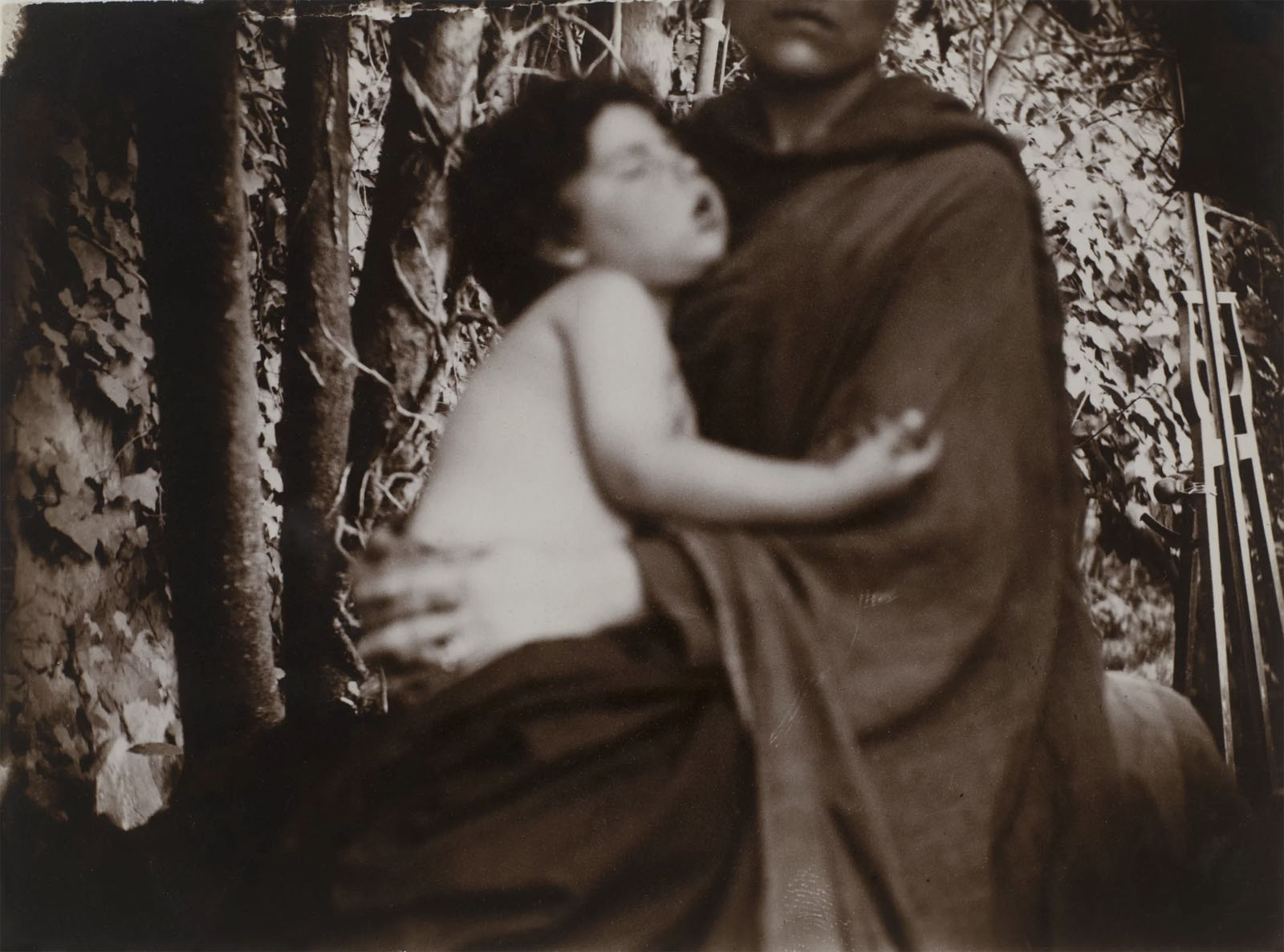
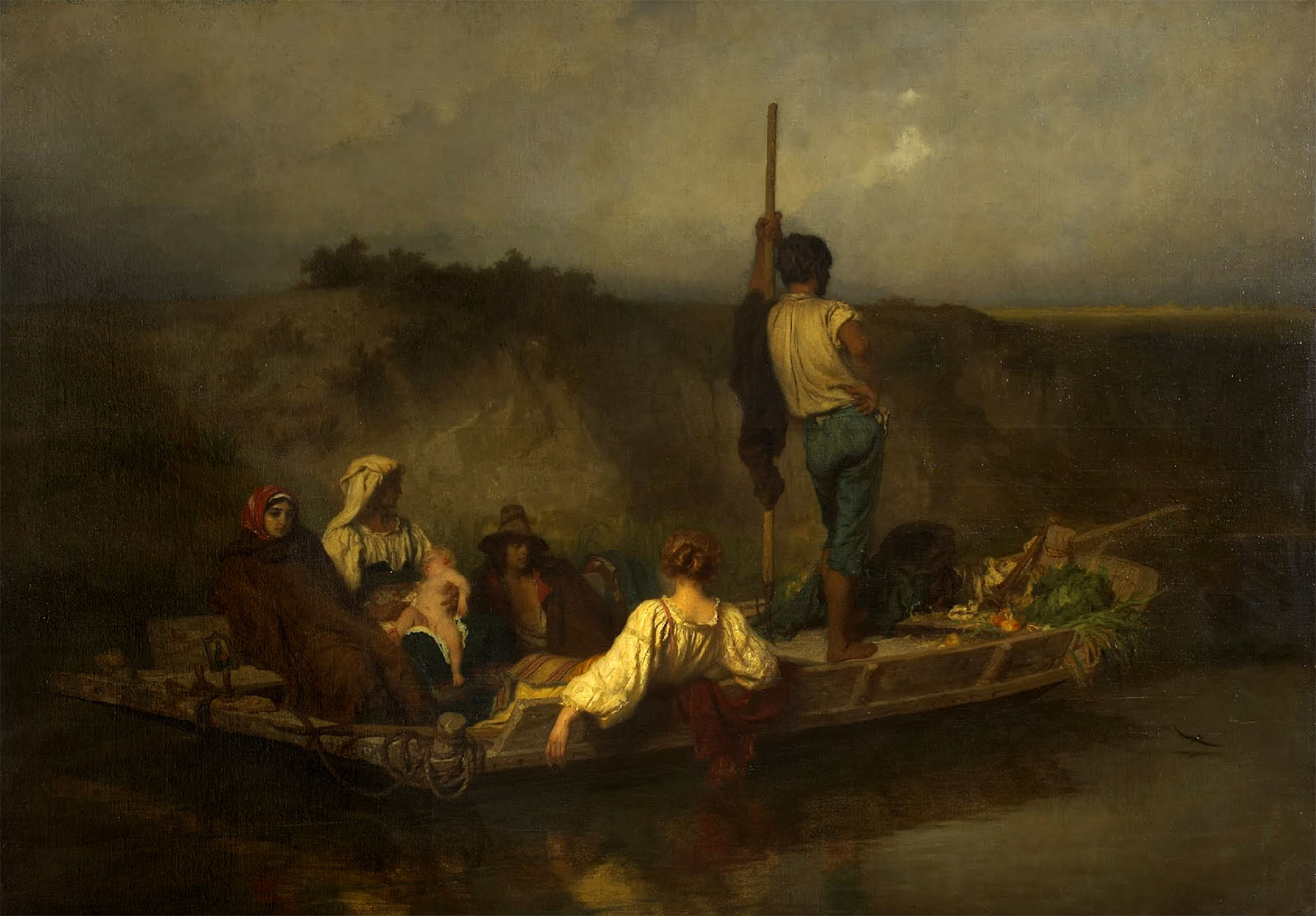
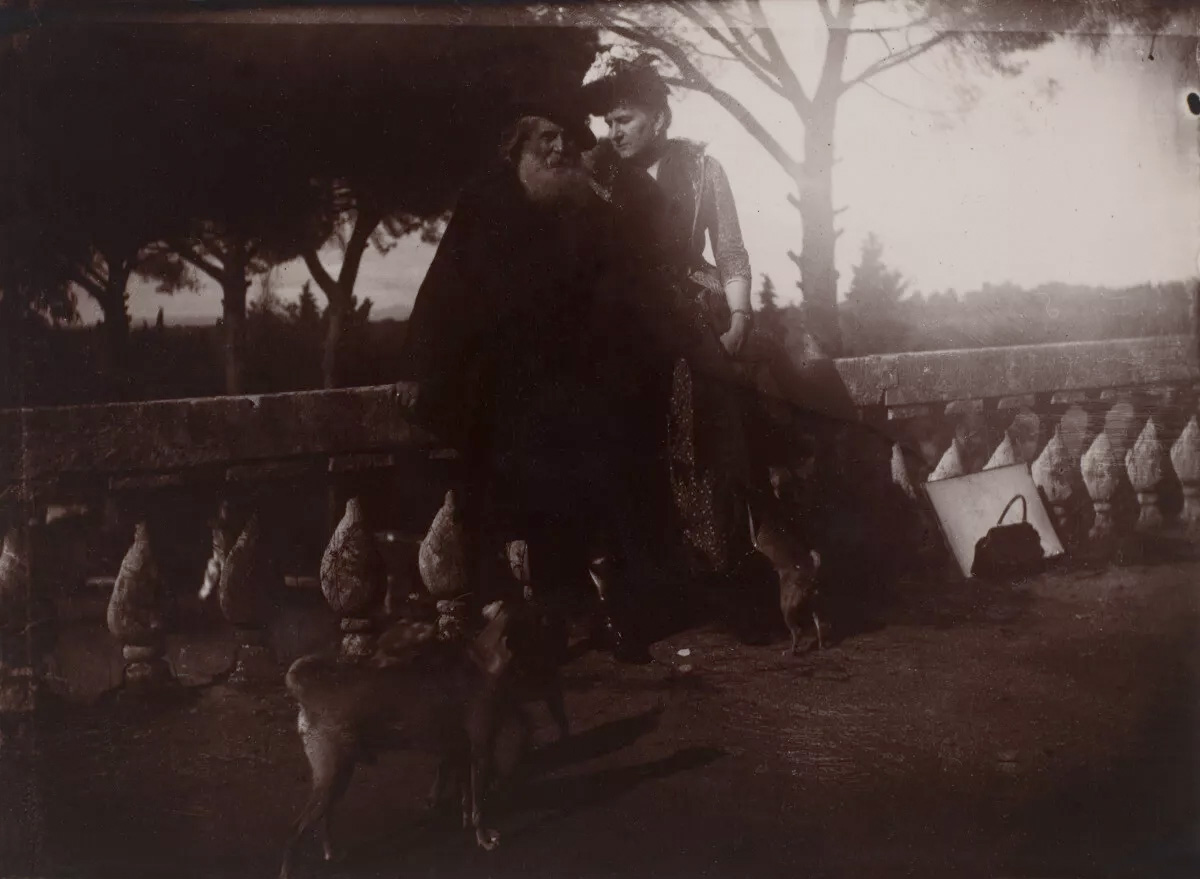
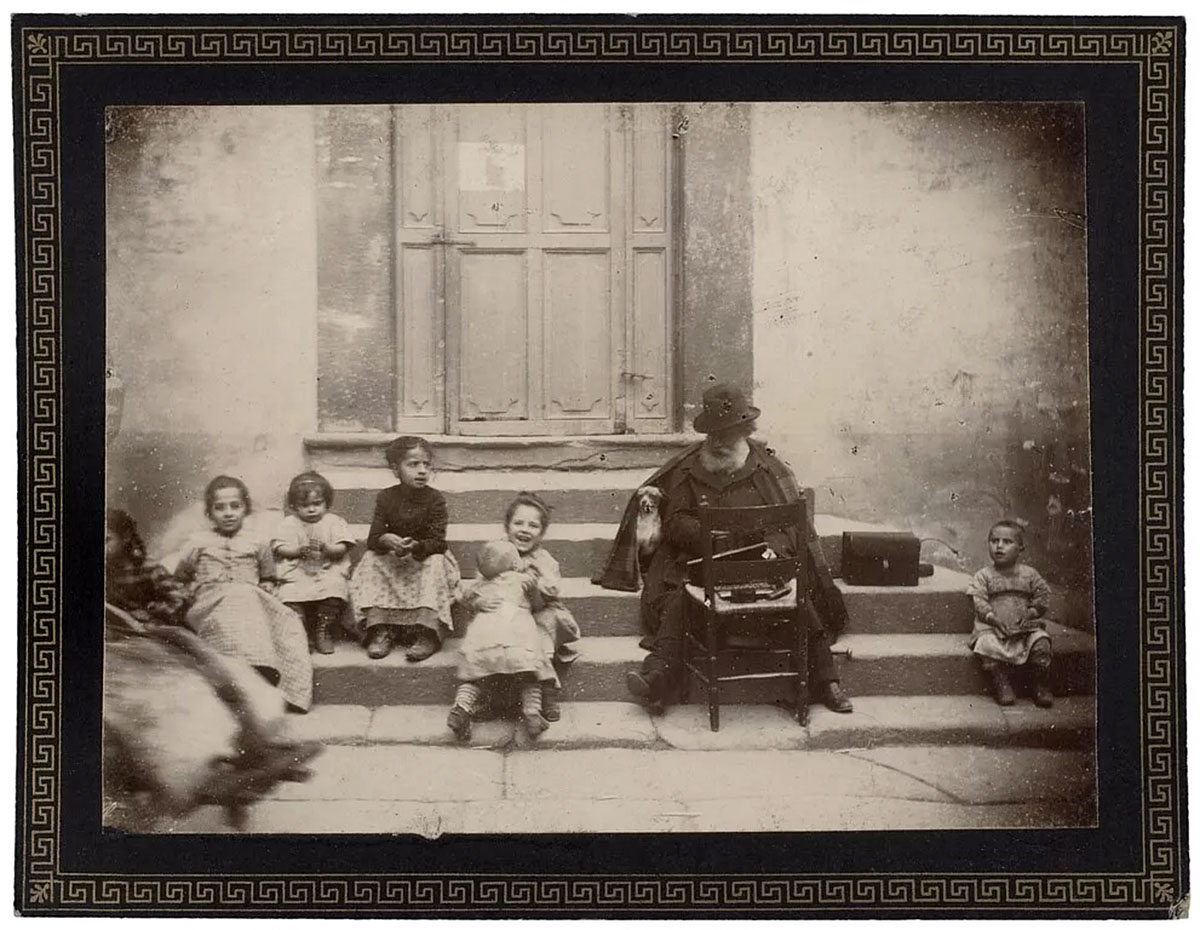
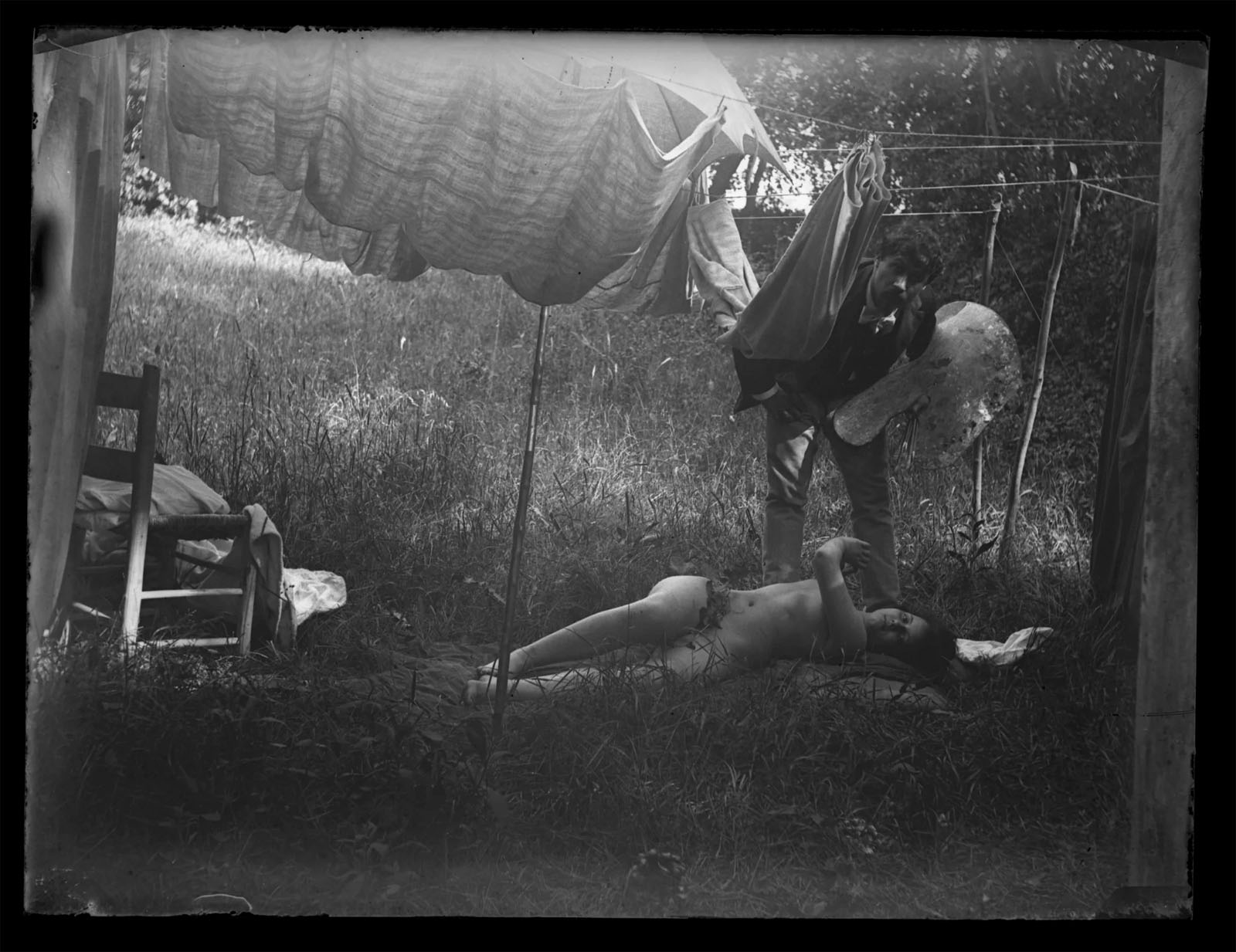
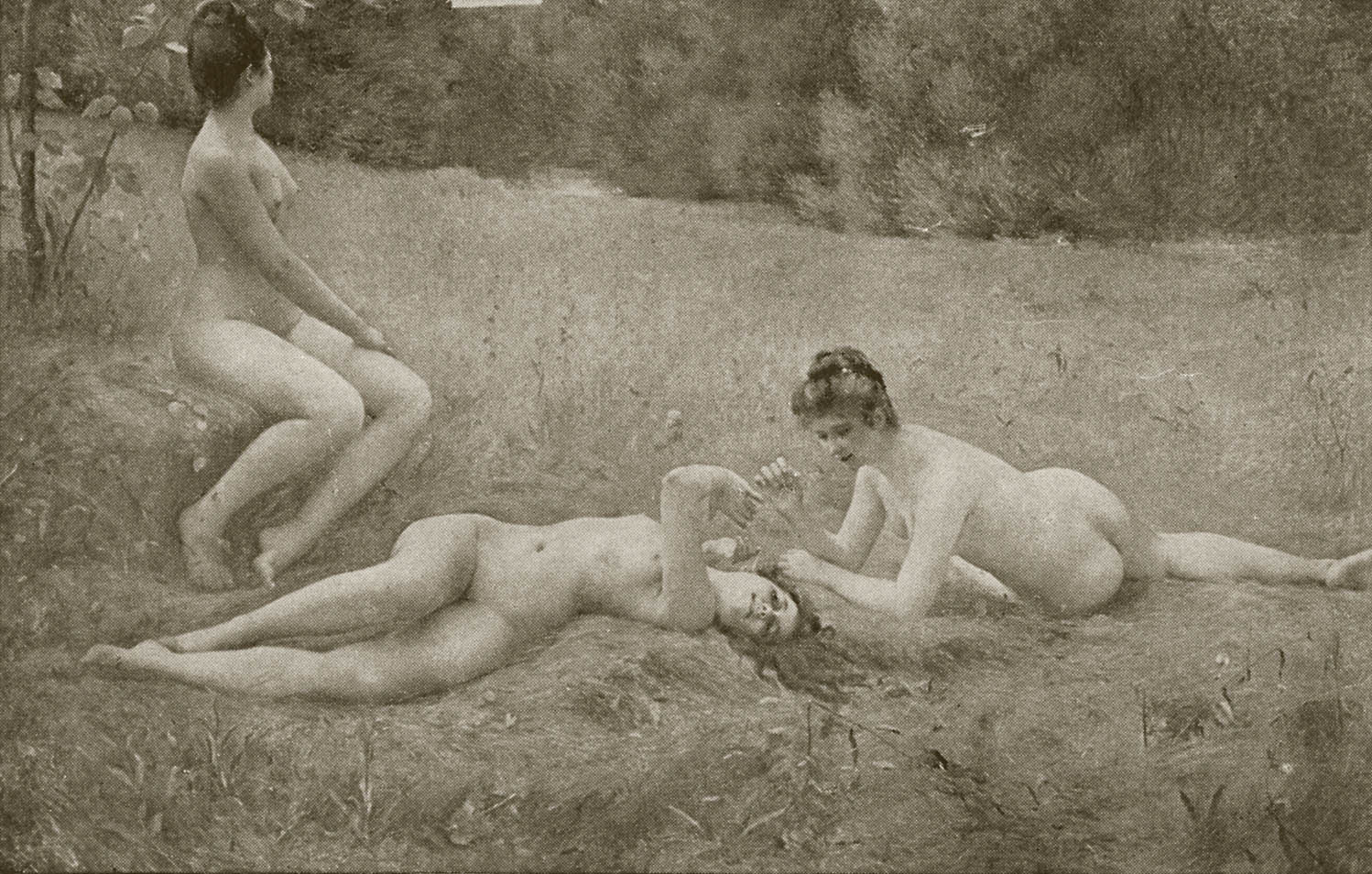
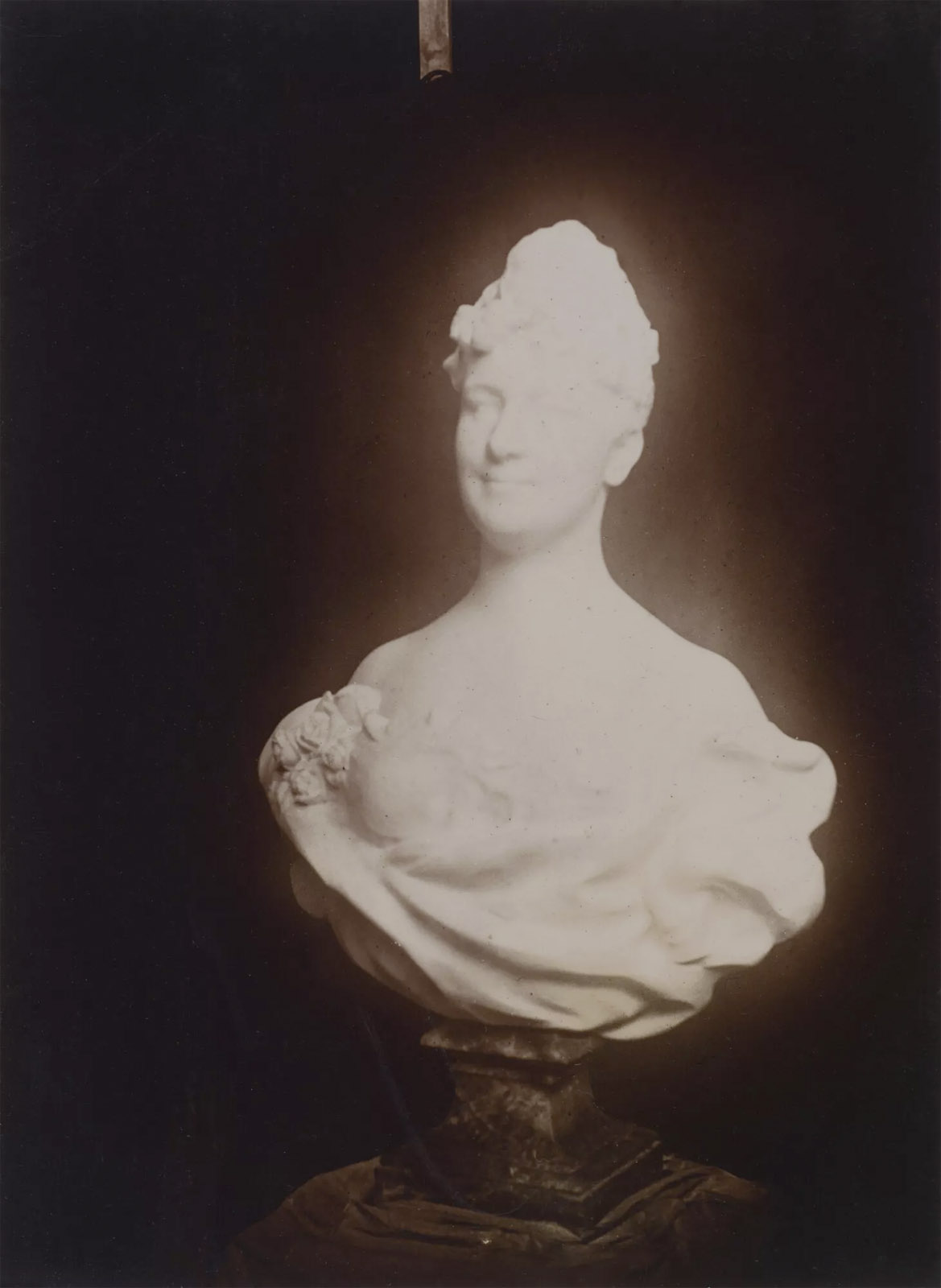
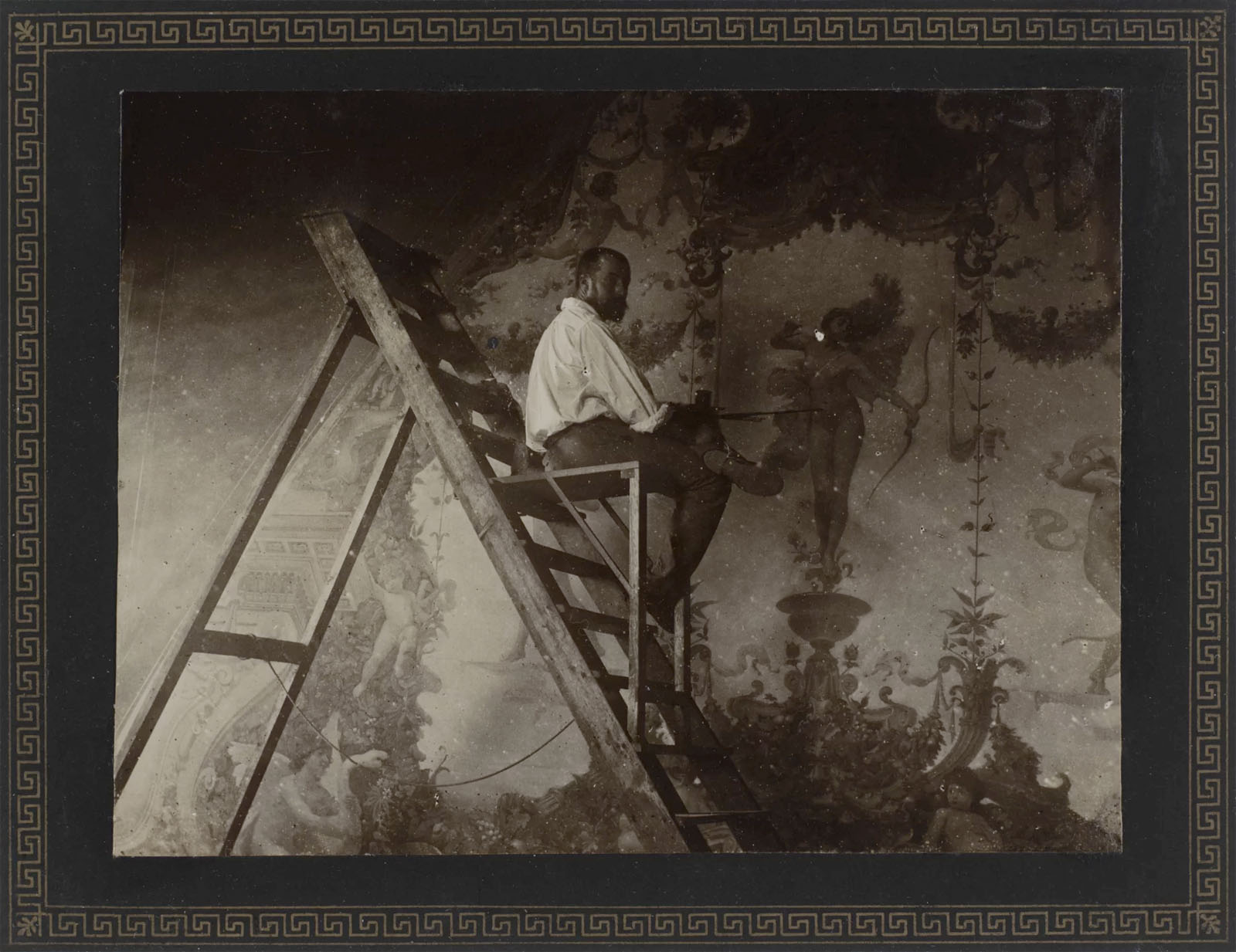
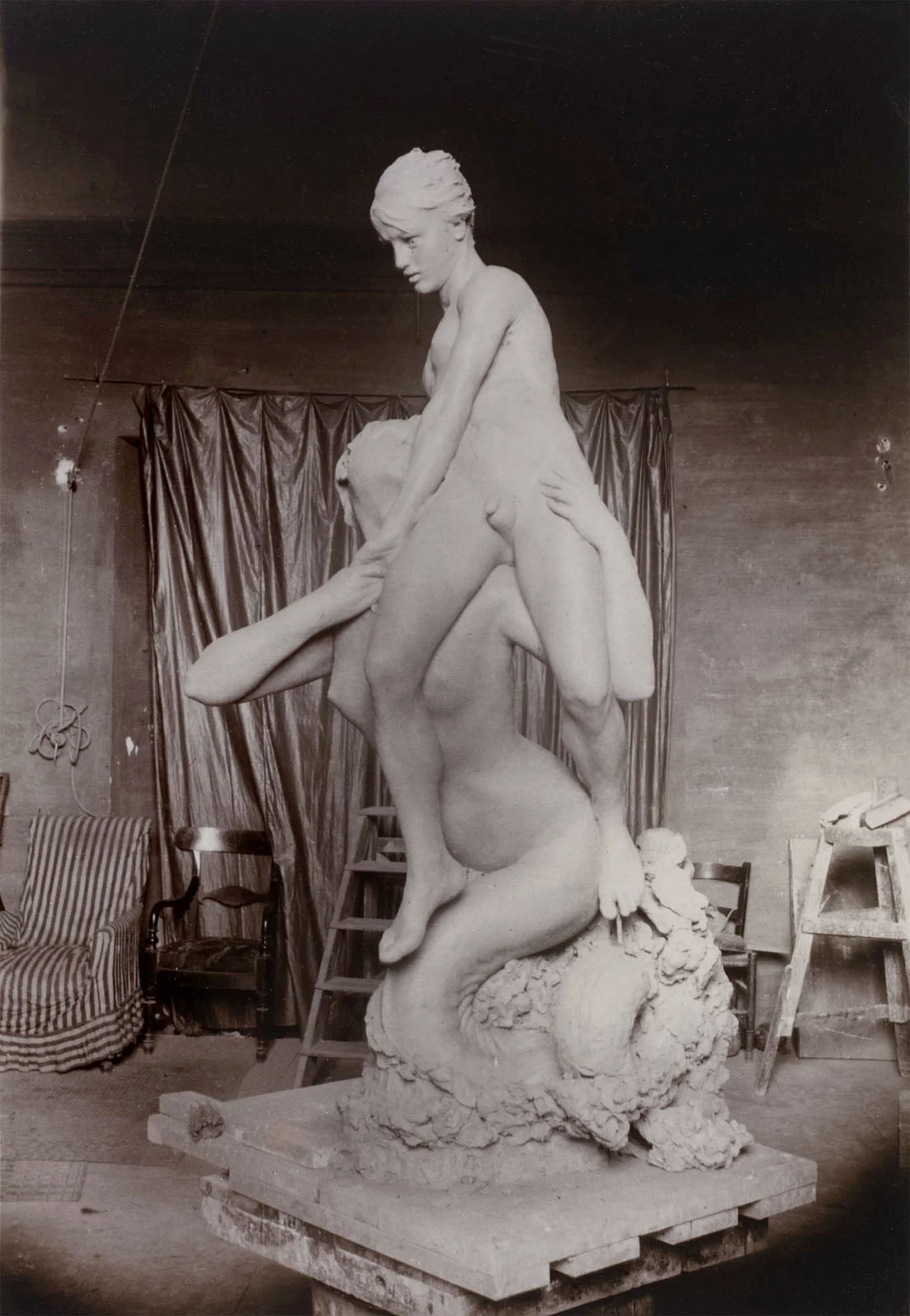
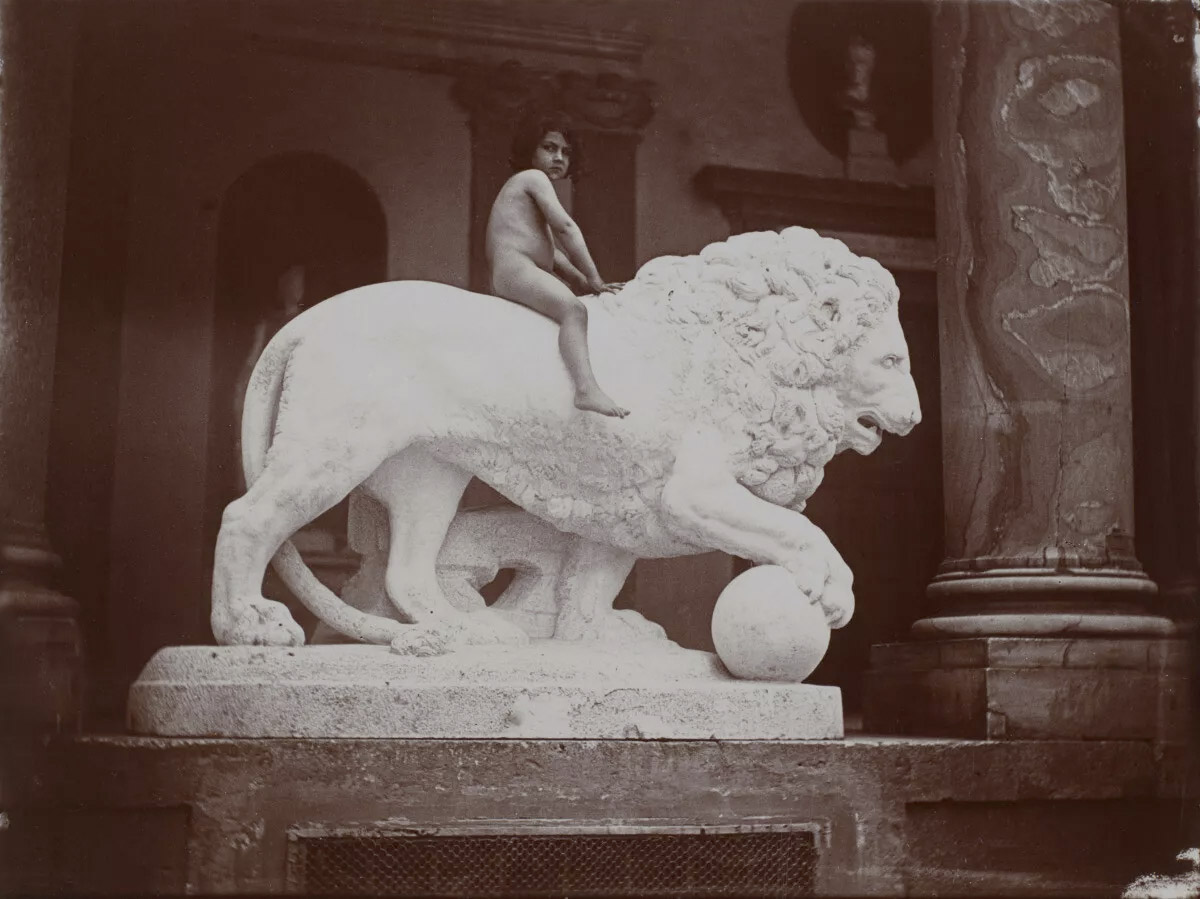
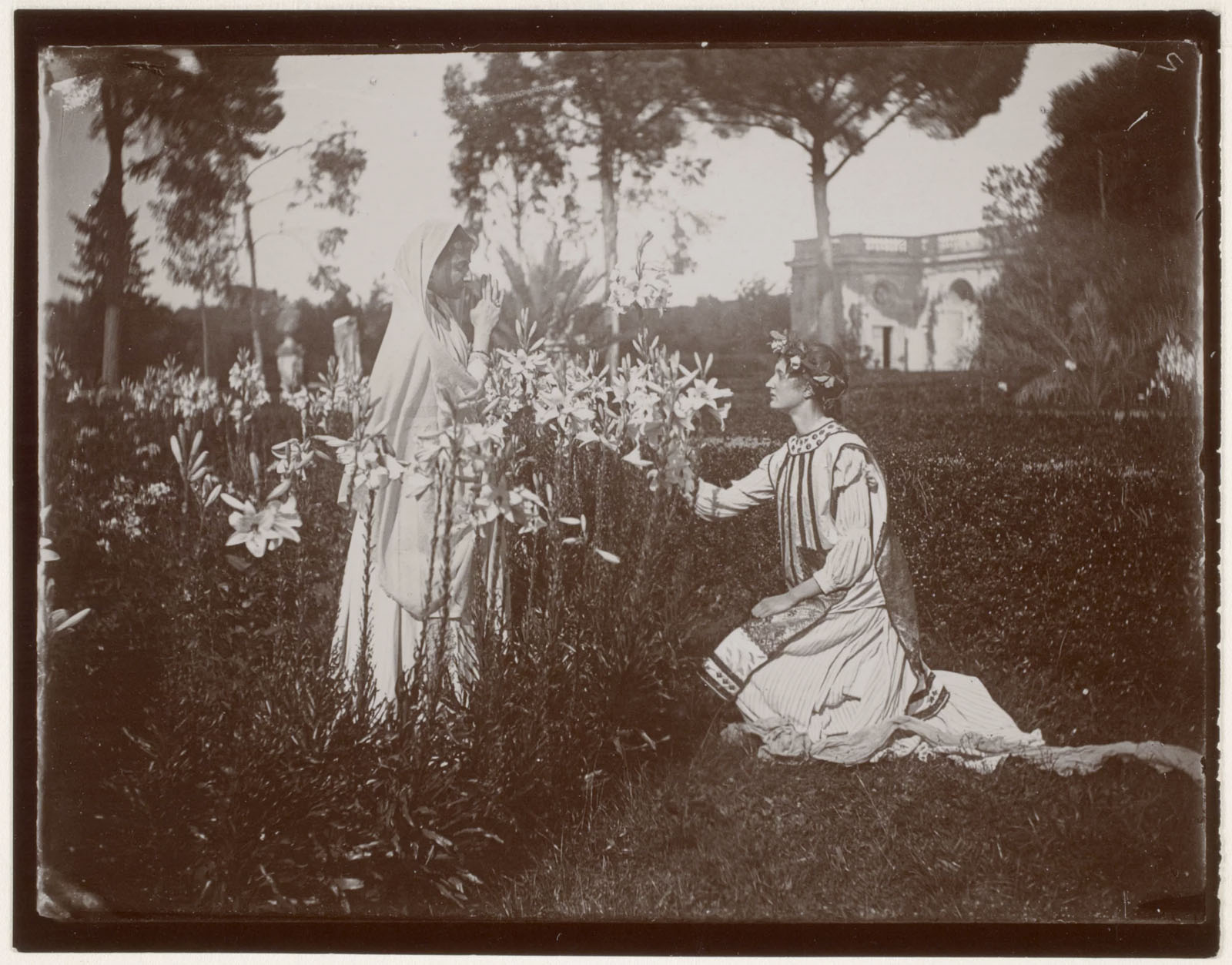
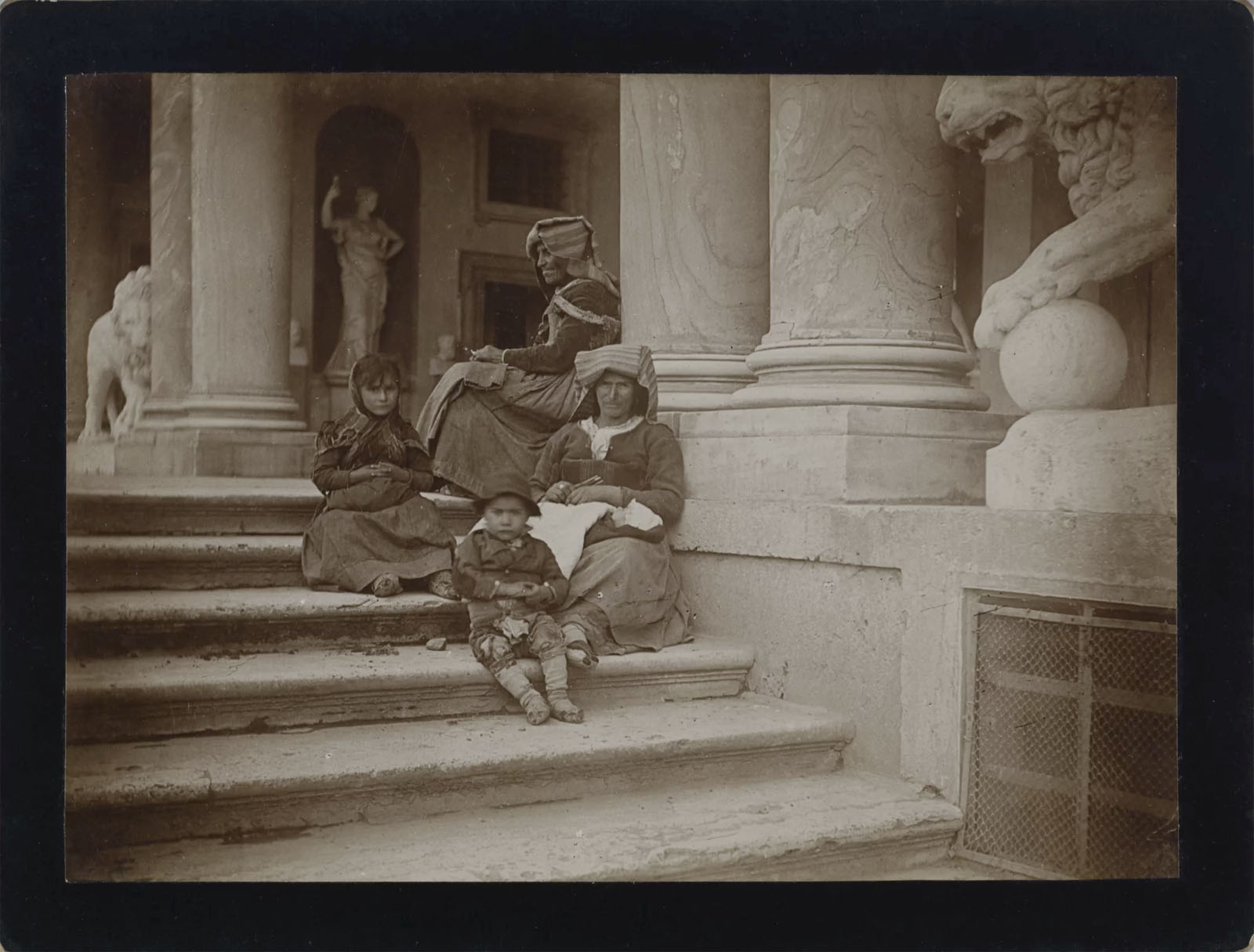
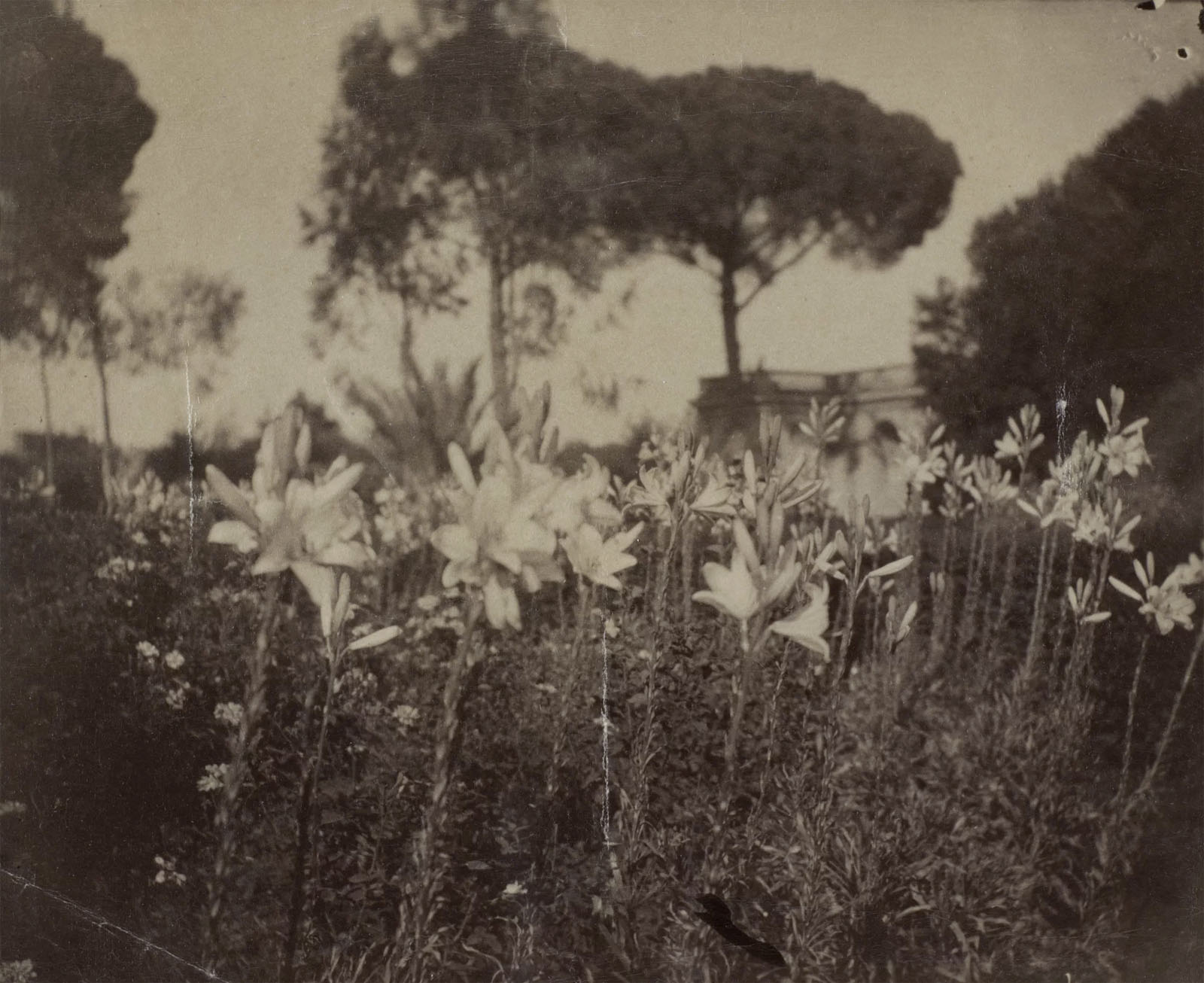
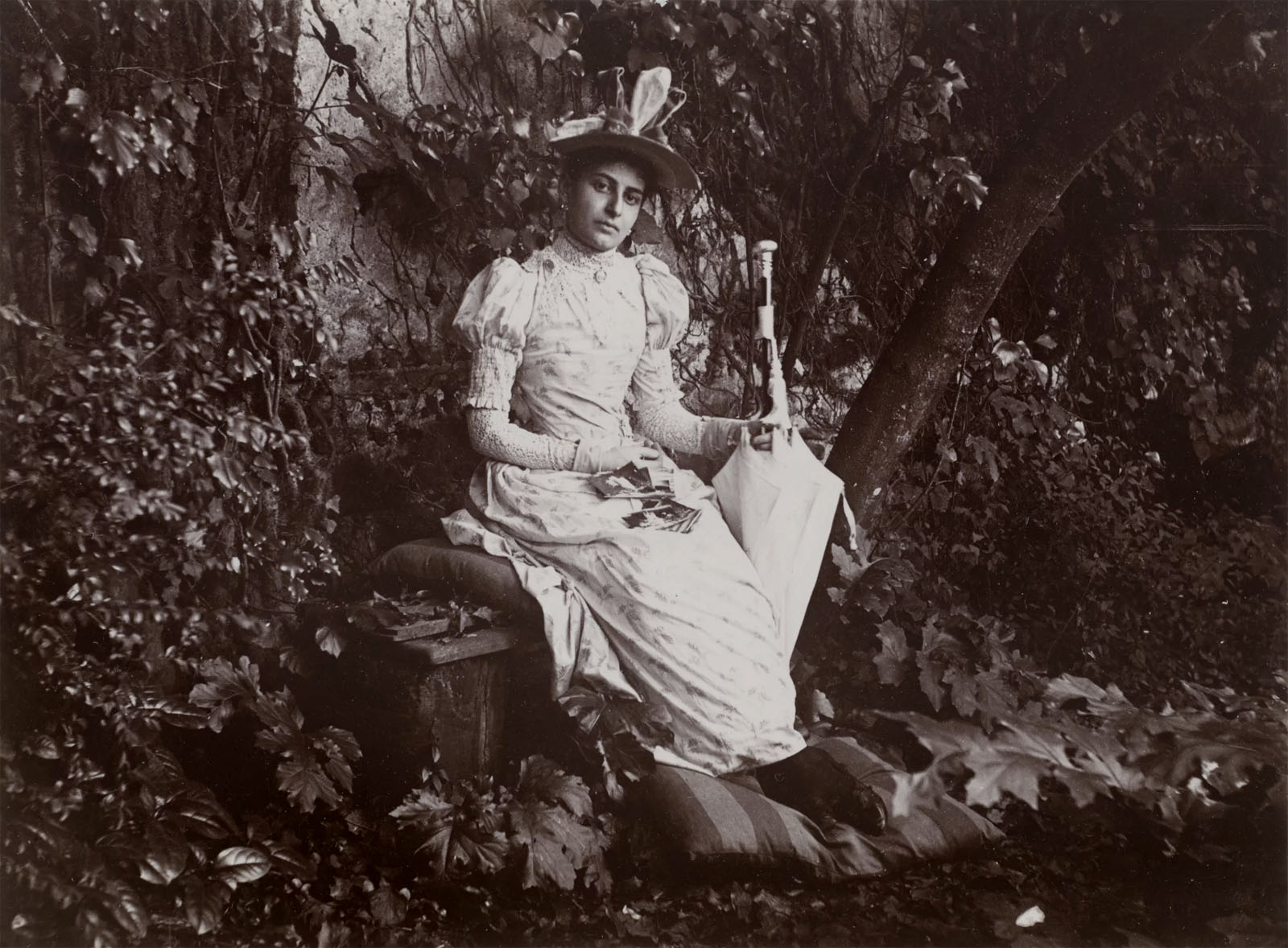
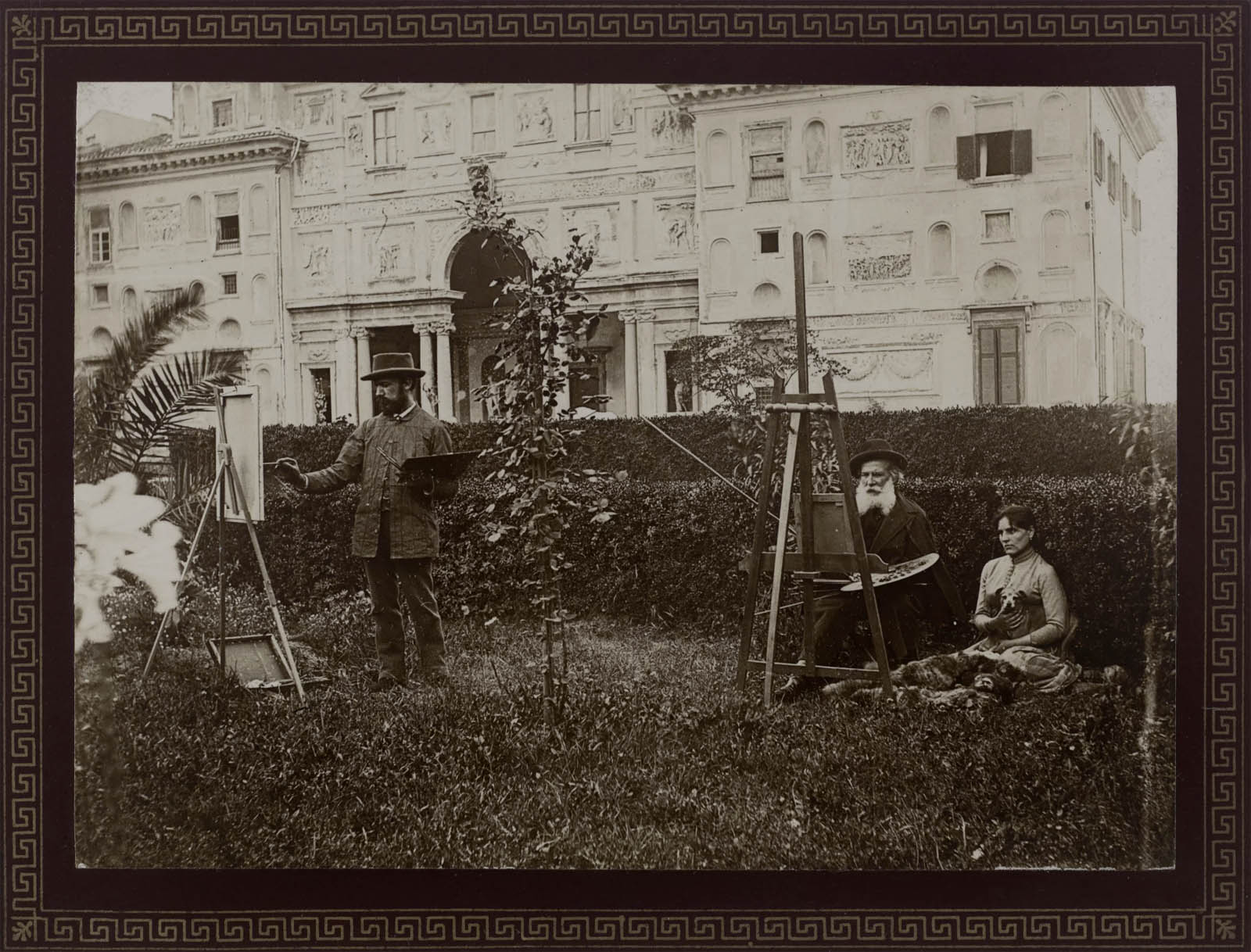
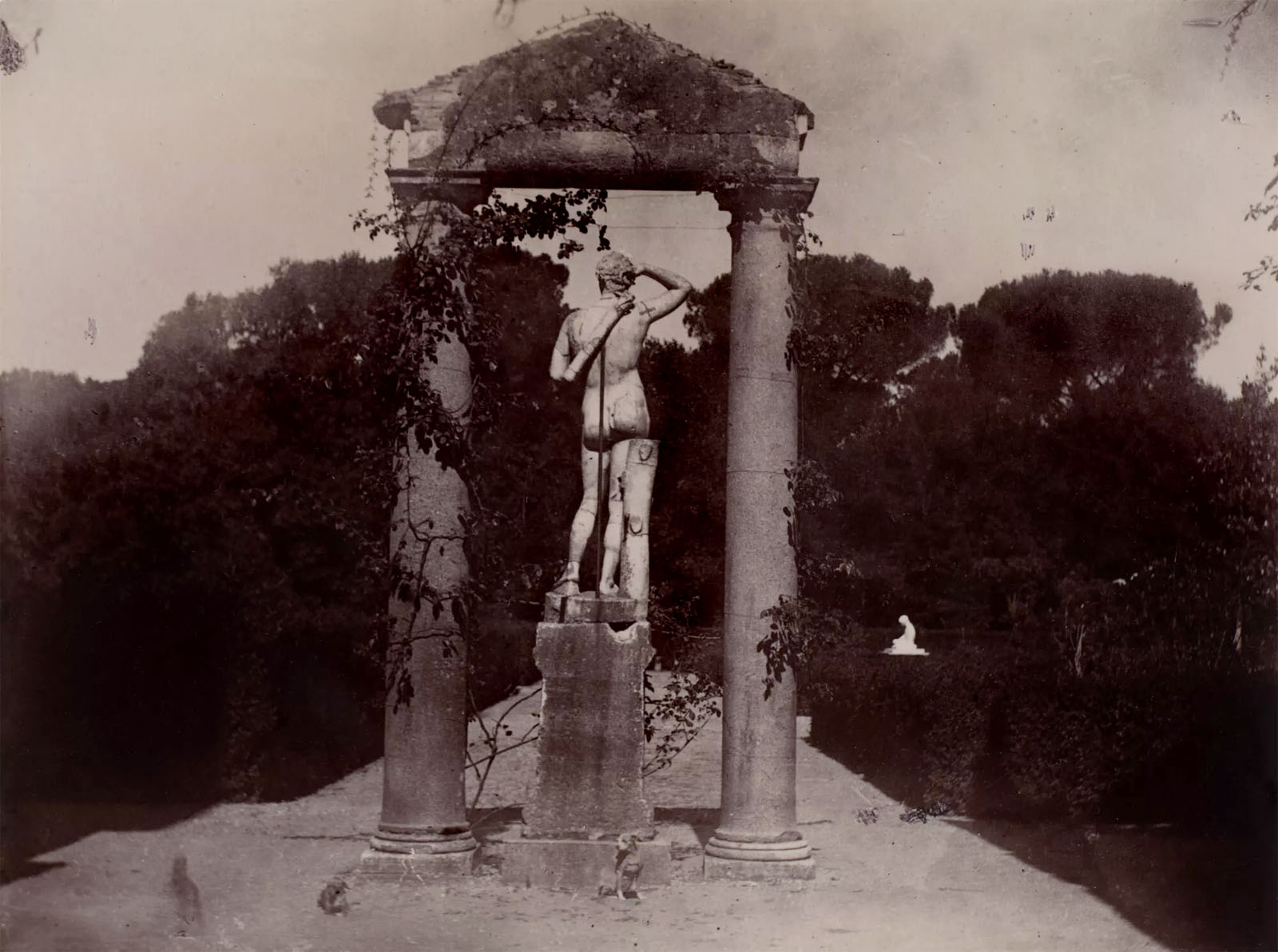
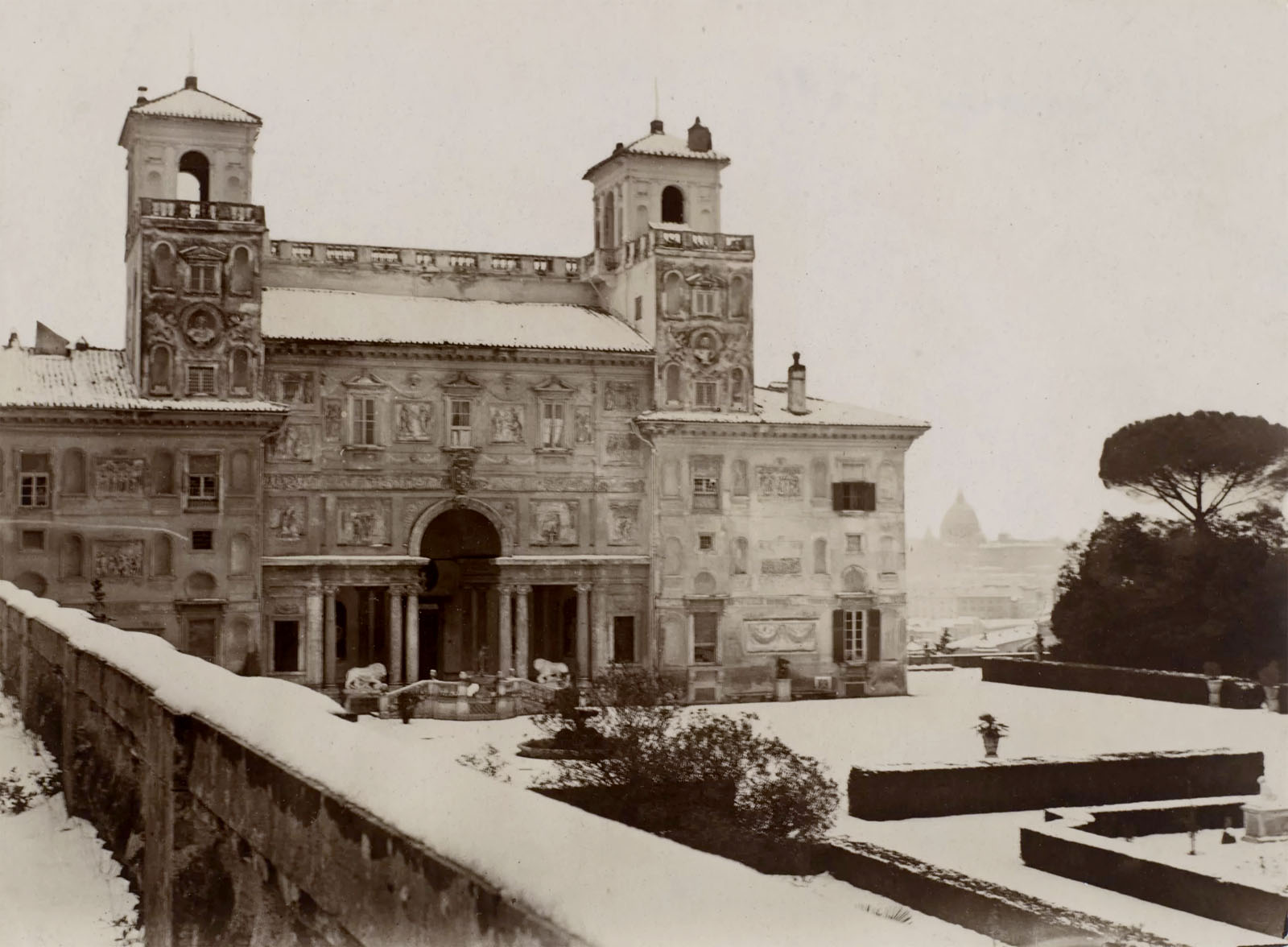
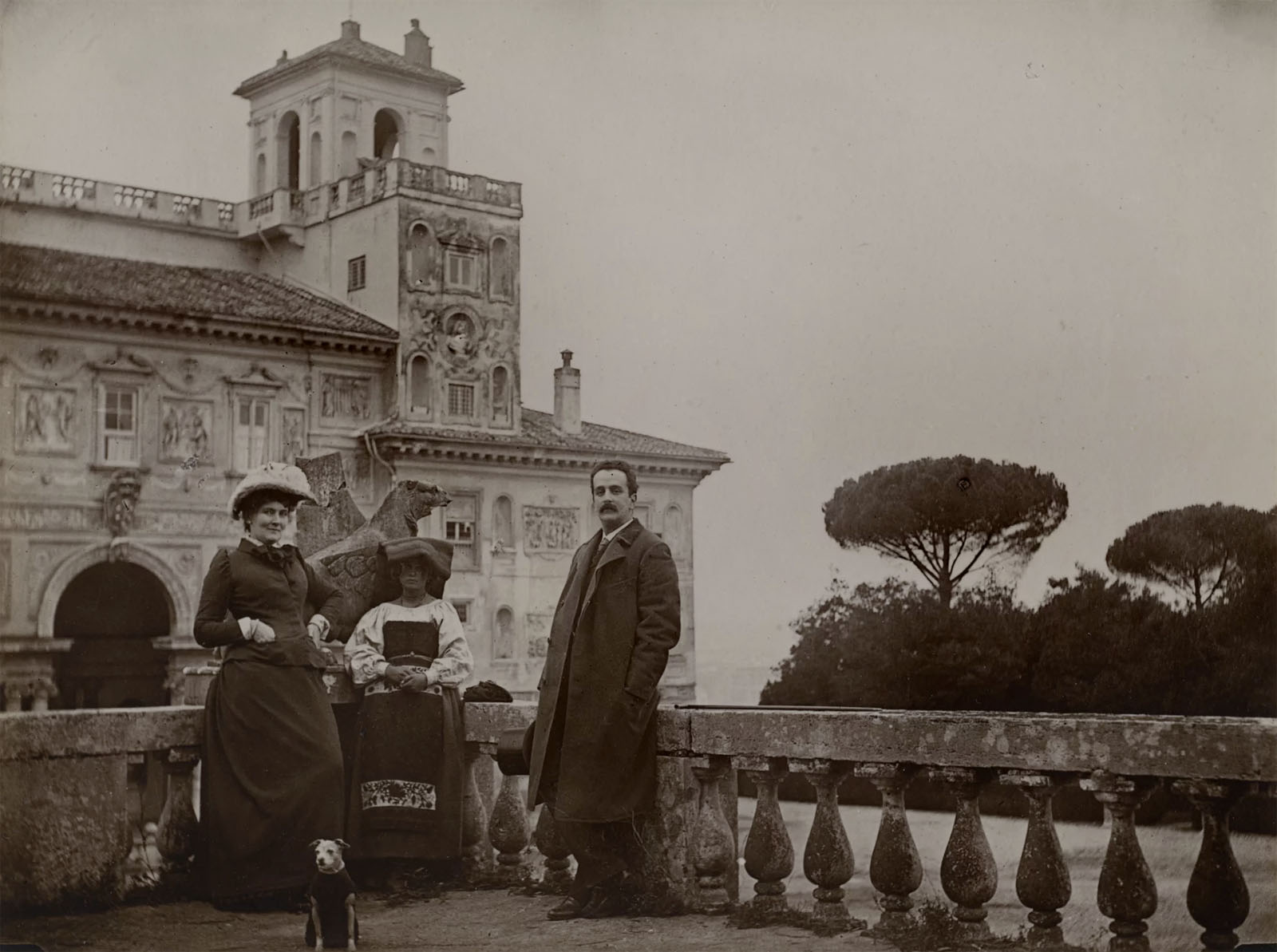
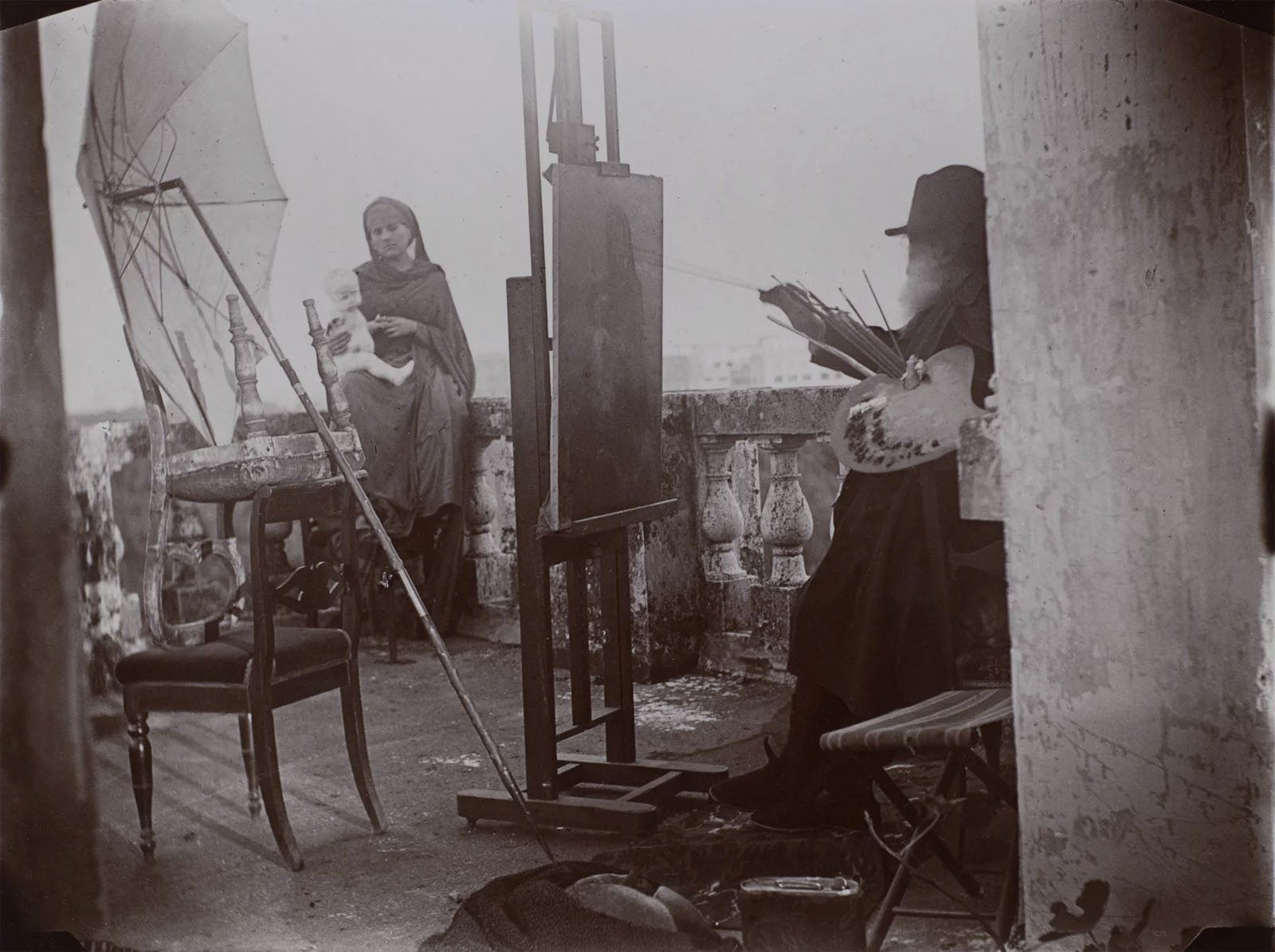
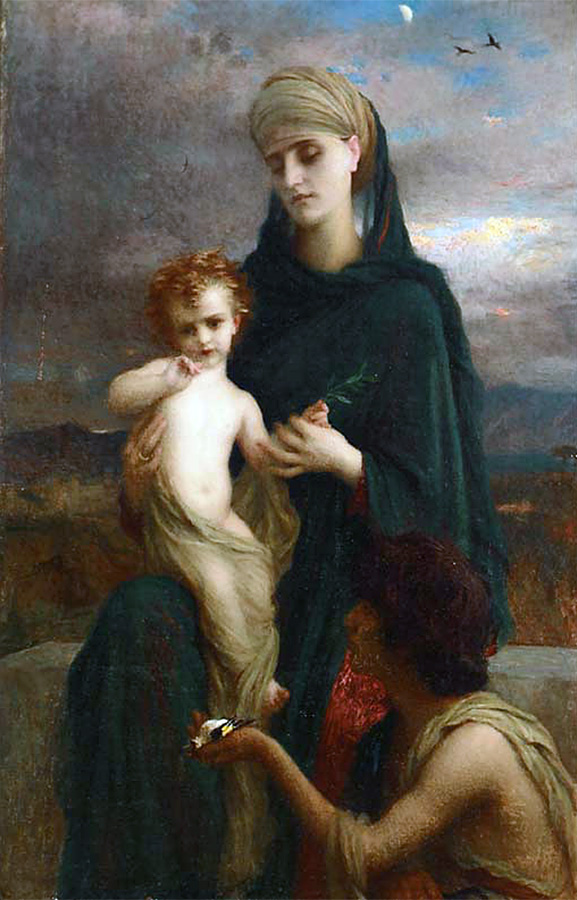
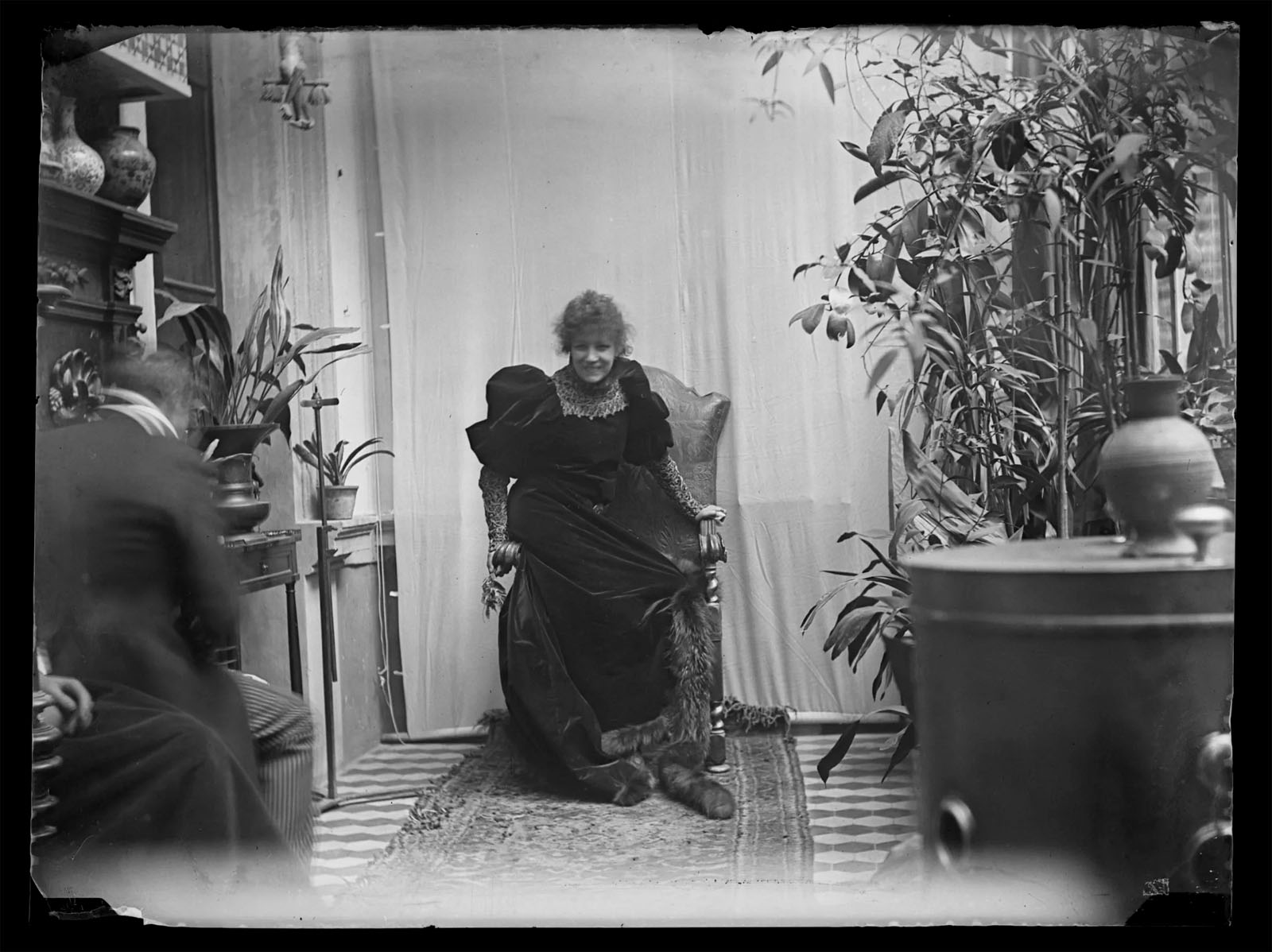
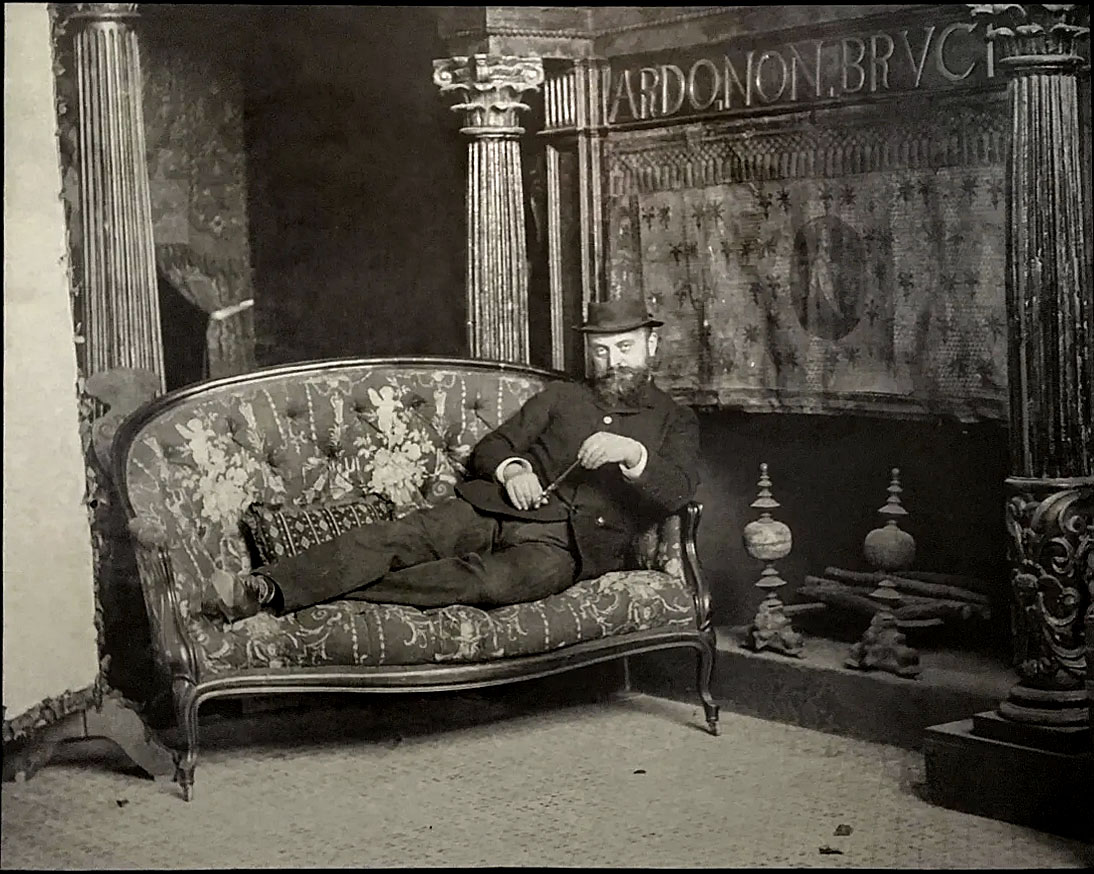
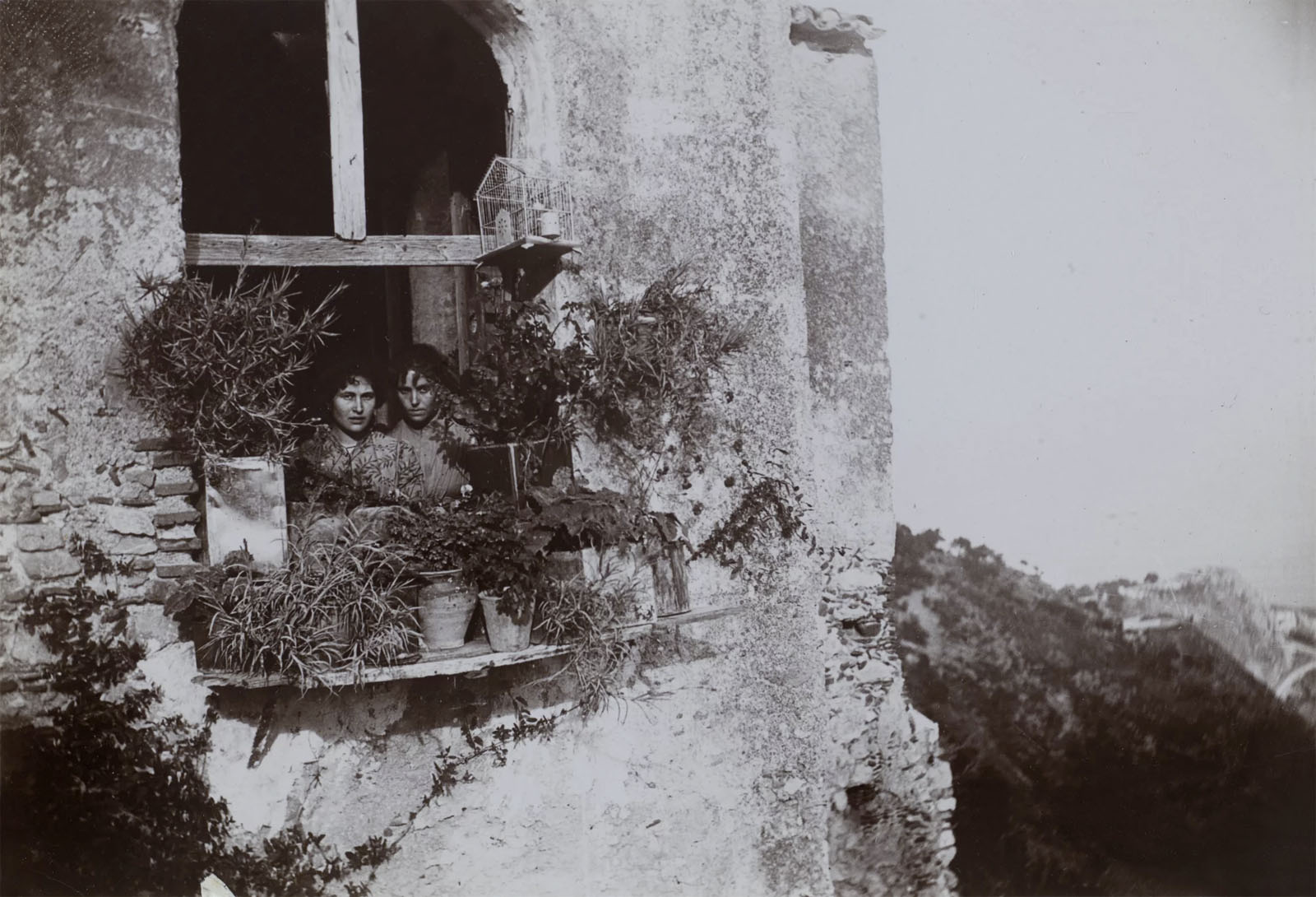
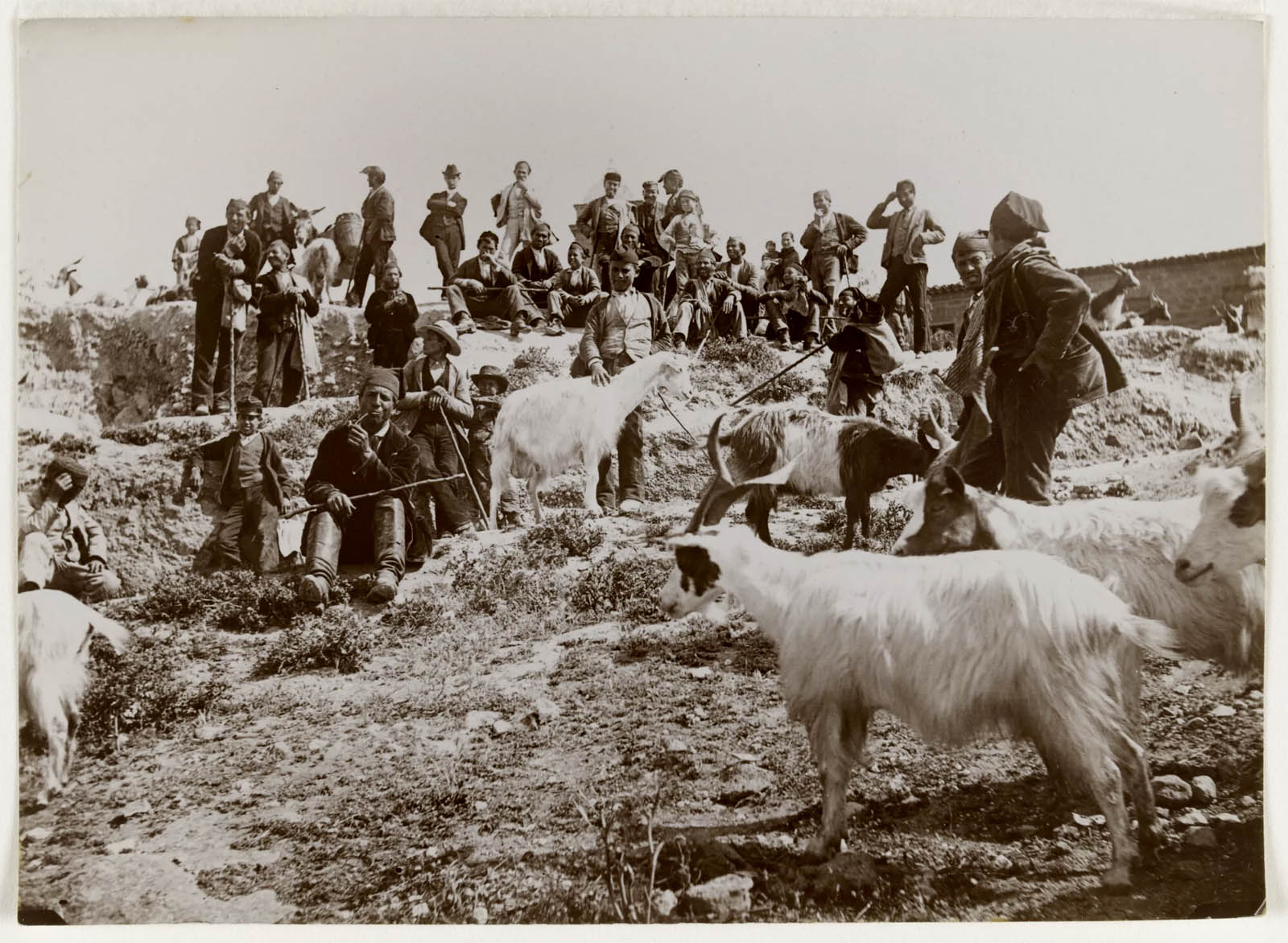
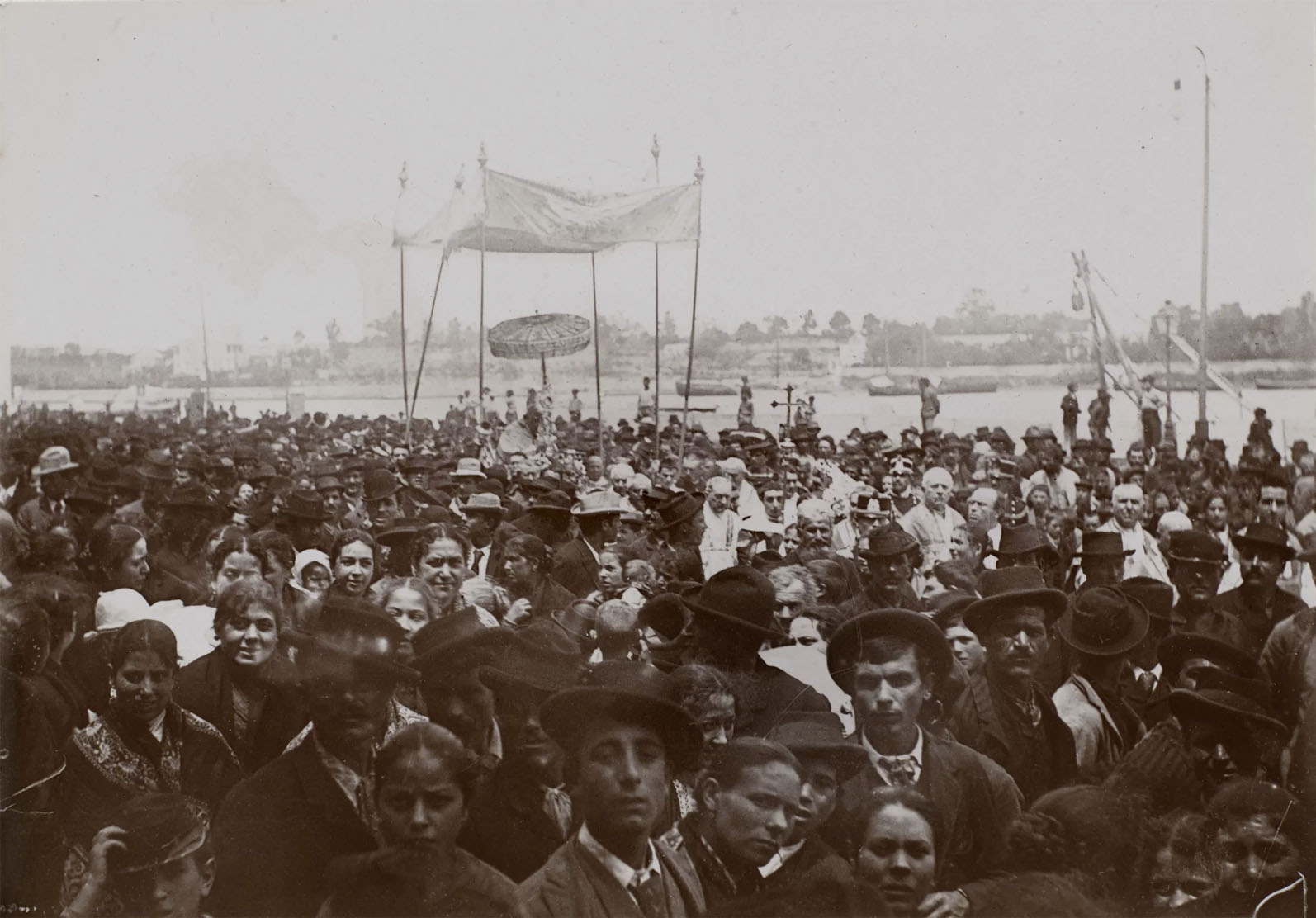
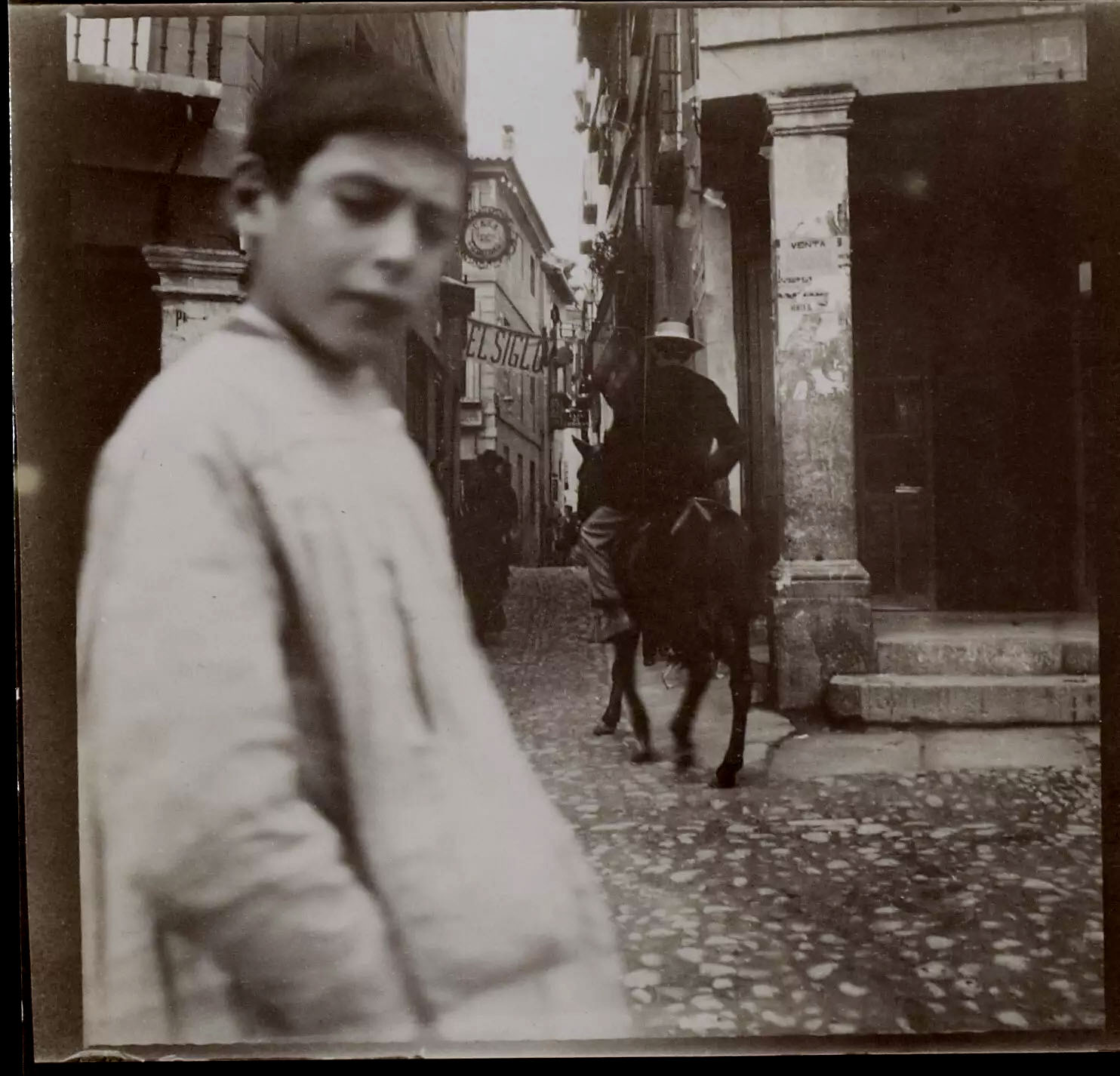
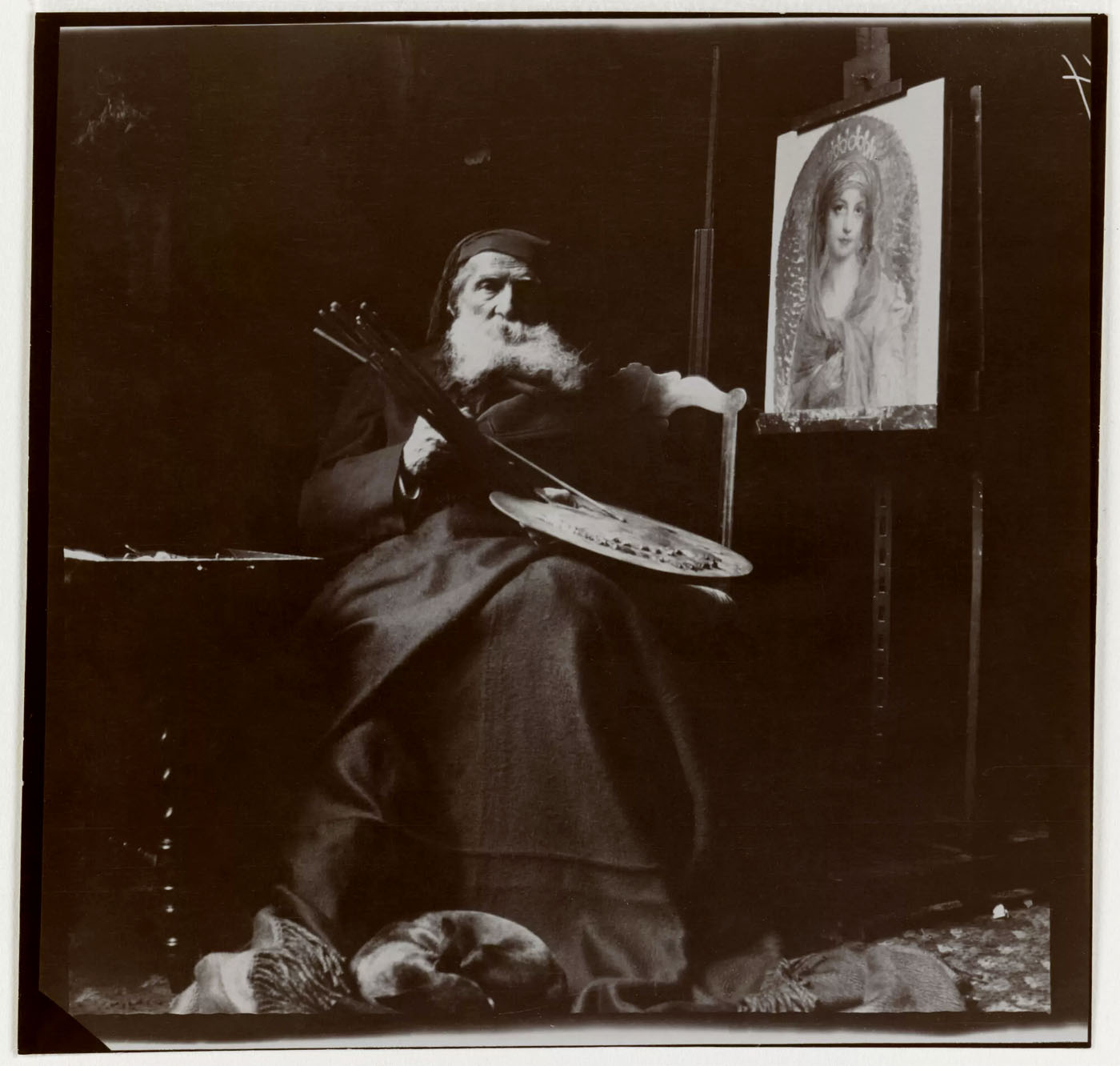
![Hippolyte Bayard (French, 1801-1887) William Henry Fox Talbot (English, 1800-1877) Samuel Buckle (British, 1808-1860) Nicolaas Henneman (British, 1813-1893) Reverend Calvert Jones (British, 1804-1877) David Kinnebrook (English, 1819-1865) M.H. Nevil Story-Maskelyne (British, 1823-1911) Unknown maker. 'Cover of Dessins photographiques sur Papier. Recueil No. 2. [The "Bayard Album"]' 1839-1855](https://artblart.com/wp-content/uploads/2024/05/the-bayard-album-cover.jpg "Hippolyte Bayard (French, 1801-1887) William Henry Fox Talbot (English, 1800-1877) Samuel Buckle (British, 1808-1860) Nicolaas Henneman (British, 1813-1893) Reverend Calvert Jones (British, 1804-1877) David Kinnebrook (English, 1819-1865) M.H. Nevil Story-Maskelyne (British, 1823-1911) Unknown maker. 'Cover of Dessins photographiques sur Papier. Recueil No. 2. [The \"Bayard Album\"]' 1839-1855")
![Hippolyte Bayard (French, 1801-1887) William Henry Fox Talbot (English, 1800-1877) Samuel Buckle (British, 1808-1860) Nicolaas Henneman (British, 1813-1893) Reverend Calvert Jones (British, 1804-1877) David Kinnebrook (English, 1819-1865) M.H. Nevil Story-Maskelyne (British, 1823-1911) Unknown maker. 'Title page of Dessins photographiques sur Papier. Recueil No. 2. [The "Bayard Album"] with Hippolyte Bayard 's [Self-Portrait in the Garden] June 1845' 1839-1855](https://artblart.com/wp-content/uploads/2024/05/title-page-of-the-bayard-album-with-bayards-self-portrait-in-the-garden.jpg "Hippolyte Bayard (French, 1801-1887) William Henry Fox Talbot (English, 1800-1877) Samuel Buckle (British, 1808-1860) Nicolaas Henneman (British, 1813-1893) Reverend Calvert Jones (British, 1804-1877) David Kinnebrook (English, 1819-1865) M.H. Nevil Story-Maskelyne (British, 1823-1911) Unknown maker. 'Title page of Dessins photographiques sur Papier. Recueil No. 2. [The \"Bayard Album\"] with Hippolyte Bayard 's [Self-Portrait in the Garden] June 1845' 1839-1855")
![Hippolyte Bayard (French, 1801-1887) William Henry Fox Talbot (English, 1800-1877) Samuel Buckle (British, 1808-1860) Nicolaas Henneman (British, 1813-1893) Reverend Calvert Jones (British, 1804-1877) David Kinnebrook (English, 1819-1865) M.H. Nevil Story-Maskelyne (British, 1823-1911) Unknown maker. 'Dessins photographiques sur Papier. Recueil No. 2. [The "Bayard Album"]' 1839-1855 showing at top left Hippolyte Bayard's '[Three Feathers]' about 1842-1843](https://artblart.com/wp-content/uploads/2024/05/bayard-album-a.jpg "Hippolyte Bayard (French, 1801-1887) William Henry Fox Talbot (English, 1800-1877) Samuel Buckle (British, 1808-1860) Nicolaas Henneman (British, 1813-1893) Reverend Calvert Jones (British, 1804-1877) David Kinnebrook (English, 1819-1865) M.H. Nevil Story-Maskelyne (British, 1823-1911) Unknown maker. 'Dessins photographiques sur Papier. Recueil No. 2. [The \"Bayard Album\"]' 1839-1855 showing at top left Hippolyte Bayard's '[Three Feathers]' about 1842-1843")
![Hippolyte Bayard (French, 1801-1887) '[Three Feathers]' About 1842-1843](https://artblart.com/wp-content/uploads/2024/05/gm_10846601_web.jpg "Hippolyte Bayard (French, 1801-1887) '[Three Feathers]' About 1842-1843")
![Hippolyte Bayard (French, 1801-1887) William Henry Fox Talbot (English, 1800-1877) Samuel Buckle (British, 1808-1860) Nicolaas Henneman (British, 1813-1893) Reverend Calvert Jones (British, 1804-1877) David Kinnebrook (English, 1819-1865) M.H. Nevil Story-Maskelyne (British, 1823-1911) Unknown maker. 'Dessins photographiques sur Papier. Recueil No. 2. [The "Bayard Album"]' 1839-1855 showing at top right, Hippolyte Bayard's 'Arrangement of Flowers' about 1839-1843](https://artblart.com/wp-content/uploads/2024/05/bayard-album-b.jpg "Hippolyte Bayard (French, 1801-1887) William Henry Fox Talbot (English, 1800-1877) Samuel Buckle (British, 1808-1860) Nicolaas Henneman (British, 1813-1893) Reverend Calvert Jones (British, 1804-1877) David Kinnebrook (English, 1819-1865) M.H. Nevil Story-Maskelyne (British, 1823-1911) Unknown maker. 'Dessins photographiques sur Papier. Recueil No. 2. [The \"Bayard Album\"]' 1839-1855 showing at top right, Hippolyte Bayard's 'Arrangement of Flowers' about 1839-1843")

![Hippolyte Bayard (French, 1801-1887) William Henry Fox Talbot (English, 1800-1877) Samuel Buckle (British, 1808-1860) Nicolaas Henneman (British, 1813-1893) Reverend Calvert Jones (British, 1804-1877) David Kinnebrook (English, 1819-1865) M.H. Nevil Story-Maskelyne (British, 1823-1911) Unknown maker. 'Dessins photographiques sur Papier. Recueil No. 2. [The "Bayard Album"] showing at bottom right, Hippolyte Bayard's [Portrait of a Man] 1843-1845' 1839-1855](https://artblart.com/wp-content/uploads/2024/05/bayard-album-d.jpg "Hippolyte Bayard (French, 1801-1887) William Henry Fox Talbot (English, 1800-1877) Samuel Buckle (British, 1808-1860) Nicolaas Henneman (British, 1813-1893) Reverend Calvert Jones (British, 1804-1877) David Kinnebrook (English, 1819-1865) M.H. Nevil Story-Maskelyne (British, 1823-1911) Unknown maker. 'Dessins photographiques sur Papier. Recueil No. 2. [The \"Bayard Album\"] showing at bottom right, Hippolyte Bayard's [Portrait of a Man] 1843-1845' 1839-1855")
![Hippolyte Bayard (French, 1801-1887) '[Portrait of a Man]' 1843-1845](https://artblart.com/wp-content/uploads/2024/05/bayard-portrait-of-a-man.jpg "Hippolyte Bayard (French, 1801-1887) '[Portrait of a Man]' 1843-1845")
![Hippolyte Bayard (French, 1801-1887) '[In Bayard's Studio]' About 1845](https://artblart.com/wp-content/uploads/2024/05/bayard-in-bayards-studio.jpg "Hippolyte Bayard (French, 1801-1887) '[In Bayard's Studio]' About 1845")
![Hippolyte Bayard (French, 1801-1887) William Henry Fox Talbot (English, 1800-1877) Samuel Buckle (British, 1808-1860) Nicolaas Henneman (British, 1813-1893) Reverend Calvert Jones (British, 1804-1877) David Kinnebrook (English, 1819-1865) M.H. Nevil Story-Maskelyne (British, 1823-1911) Unknown maker. 'Dessins photographiques sur Papier. Recueil No. 2. [The "Bayard Album"] showing at bottom right, Hippolyte Bayard's [Galerie de la Madeleine with Scaffolding, Place de la Madeleine] 1843' 1839-1855](https://artblart.com/wp-content/uploads/2024/05/bayard-album-e.jpg "Hippolyte Bayard (French, 1801-1887) William Henry Fox Talbot (English, 1800-1877) Samuel Buckle (British, 1808-1860) Nicolaas Henneman (British, 1813-1893) Reverend Calvert Jones (British, 1804-1877) David Kinnebrook (English, 1819-1865) M.H. Nevil Story-Maskelyne (British, 1823-1911) Unknown maker. 'Dessins photographiques sur Papier. Recueil No. 2. [The \"Bayard Album\"] showing at bottom right, Hippolyte Bayard's [Galerie de la Madeleine with Scaffolding, Place de la Madeleine] 1843' 1839-1855")
![Hippolyte Bayard (French, 1801-1887) '[Galerie de la Madeleine with Scaffolding, Place de la Madeleine]' 1843](https://artblart.com/wp-content/uploads/2024/05/bayard-galerie-de-la-madeleine-with-scaffolding.jpg "Hippolyte Bayard (French, 1801-1887) '[Galerie de la Madeleine with Scaffolding, Place de la Madeleine]' 1843")
![Hippolyte Bayard (French, 1801-1887) William Henry Fox Talbot (English, 1800-1877) Samuel Buckle (British, 1808-1860) Nicolaas Henneman (British, 1813-1893) Reverend Calvert Jones (British, 1804-1877) David Kinnebrook (English, 1819-1865) M.H. Nevil Story-Maskelyne (British, 1823-1911) Unknown maker. 'Dessins photographiques sur Papier. Recueil No. 2. [The "Bayard Album"] showing at top right, Hippolyte Bayard's [Rue des Batignolles] about 1845' 1839-1855](https://artblart.com/wp-content/uploads/2024/05/bayard-album-f.jpg "Hippolyte Bayard (French, 1801-1887) William Henry Fox Talbot (English, 1800-1877) Samuel Buckle (British, 1808-1860) Nicolaas Henneman (British, 1813-1893) Reverend Calvert Jones (British, 1804-1877) David Kinnebrook (English, 1819-1865) M.H. Nevil Story-Maskelyne (British, 1823-1911) Unknown maker. 'Dessins photographiques sur Papier. Recueil No. 2. [The \"Bayard Album\"] showing at top right, Hippolyte Bayard's [Rue des Batignolles] about 1845' 1839-1855")
![Hippolyte Bayard (French, 1801-1887) '[Rue des Batignolles]' about 1845](https://artblart.com/wp-content/uploads/2024/05/gm_04476001_web.jpg "Hippolyte Bayard (French, 1801-1887) '[Rue des Batignolles]' about 1845")
![Hippolyte Bayard (French, 1801-1887) '[Bitch in profile]' about 1865](https://artblart.com/wp-content/uploads/2024/05/gm_09531001_web.jpg "Hippolyte Bayard (French, 1801-1887) '[Bitch in profile]' about 1865")
![Hippolyte Bayard (French, 1801-1887) '[Unidentified woman standing, leaning against a credenza]' about 1861](https://artblart.com/wp-content/uploads/2024/05/gm_09860801_web.jpg "Hippolyte Bayard (French, 1801-1887) '[Unidentified woman standing, leaning against a credenza]' about 1861")
![Hippolyte Bayard (French, 1801-1887) William Henry Fox Talbot (English, 1800-1877) Samuel Buckle (British, 1808-1860) Nicolaas Henneman (British, 1813-1893) Reverend Calvert Jones (British, 1804-1877) David Kinnebrook (English, 1819-1865) M.H. Nevil Story-Maskelyne (British, 1823-1911) Unknown maker. 'Dessins photographiques sur Papier. Recueil No. 2. [The "Bayard Album"]' 1839-1855](https://artblart.com/wp-content/uploads/2024/05/bayard-album-c.jpg "Hippolyte Bayard (French, 1801-1887) William Henry Fox Talbot (English, 1800-1877) Samuel Buckle (British, 1808-1860) Nicolaas Henneman (British, 1813-1893) Reverend Calvert Jones (British, 1804-1877) David Kinnebrook (English, 1819-1865) M.H. Nevil Story-Maskelyne (British, 1823-1911) Unknown maker. 'Dessins photographiques sur Papier. Recueil No. 2. [The \"Bayard Album\"]' 1839-1855")
![Hippolyte Bayard (French, 1801-1887) '[Two Men and a Girl in a Garden]' About 1847](https://artblart.com/wp-content/uploads/2024/05/bayard-two-men-and-a-girl-in-a-garden.jpg "Hippolyte Bayard (French, 1801-1887) '[Two Men and a Girl in a Garden]' About 1847")
![Hippolyte Bayard (French, 1801-1887) '[Self-Portrait in the Garden]' 1847](https://artblart.com/wp-content/uploads/2024/05/bayard-self-portrait-in-the-garden1.jpg "Hippolyte Bayard (French, 1801-1887) '[Self-Portrait in the Garden]' 1847")
![Hippolyte Bayard (French, 1801-1887) '[Self-Portrait in the Garden]' June 1845](https://artblart.com/wp-content/uploads/2024/05/bayard-self-portrait-in-the-garden-june-1845.jpg "Hippolyte Bayard (French, 1801-1887) '[Self-Portrait in the Garden]' June 1845")
![Hippolyte Bayard (French, 1801-1887) '[Self-Portrait in the Garden]' About 1845-1849](https://artblart.com/wp-content/uploads/2024/05/bayard-self-portrait-in-the-garden.jpg "Hippolyte Bayard (French, 1801-1887) '[Self-Portrait in the Garden]' About 1845-1849")

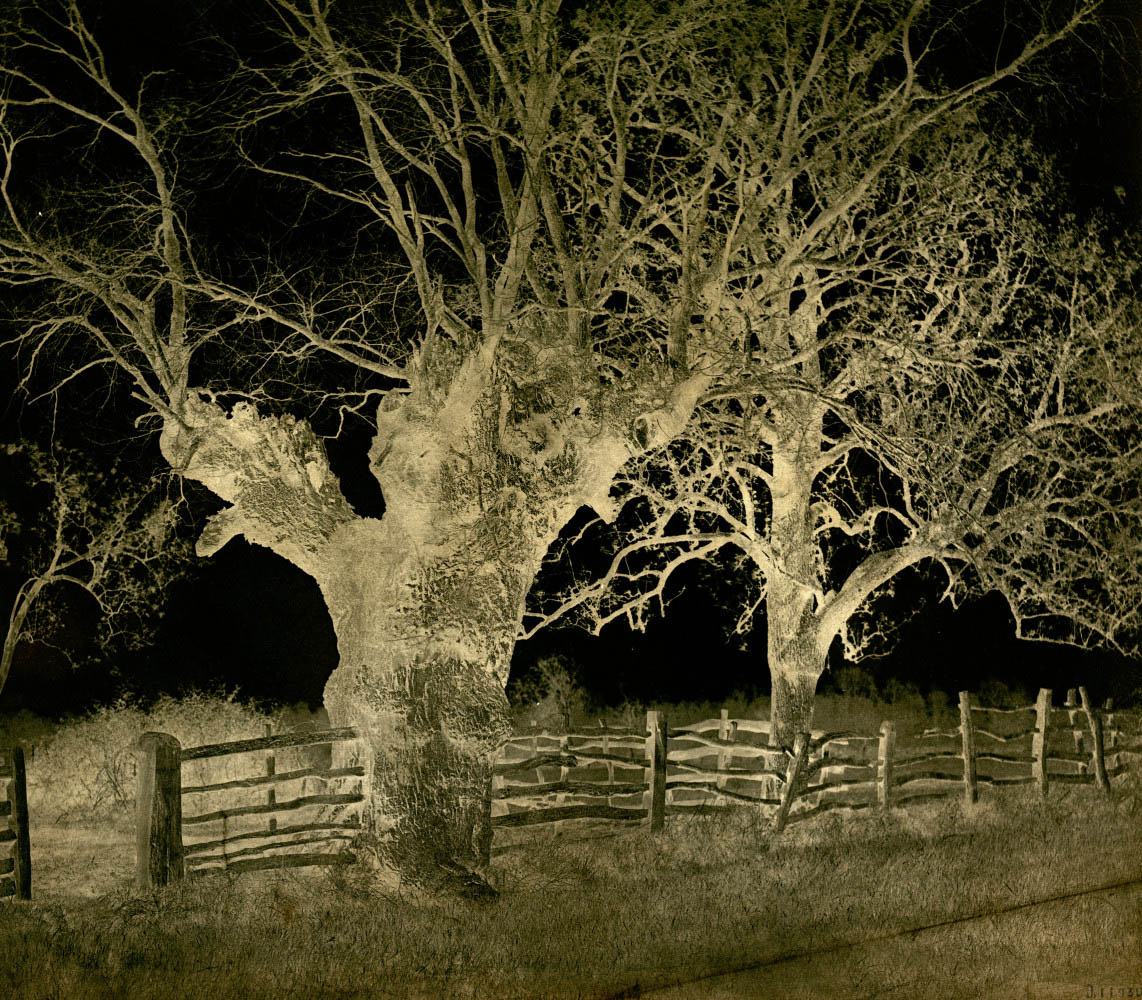
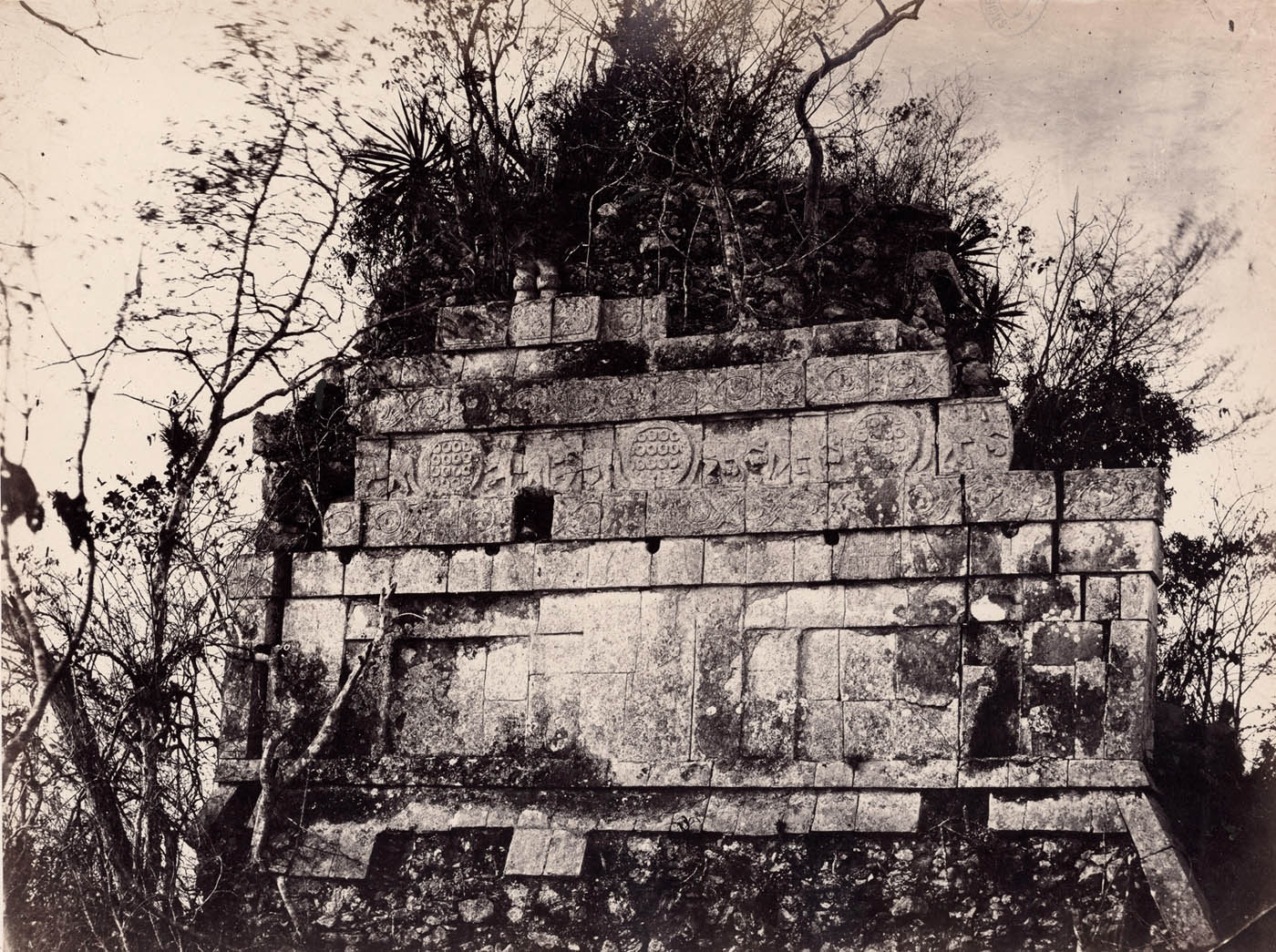
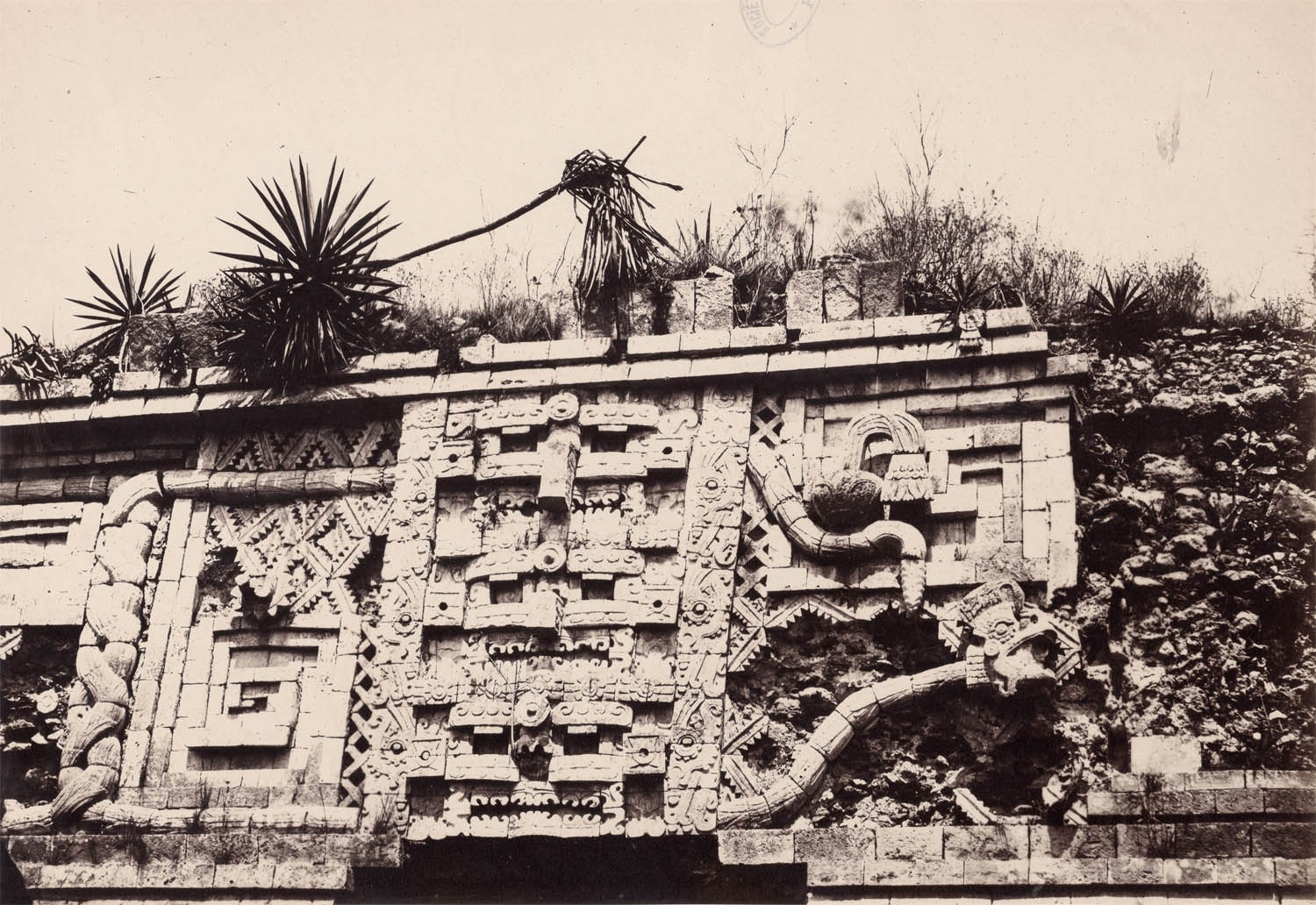


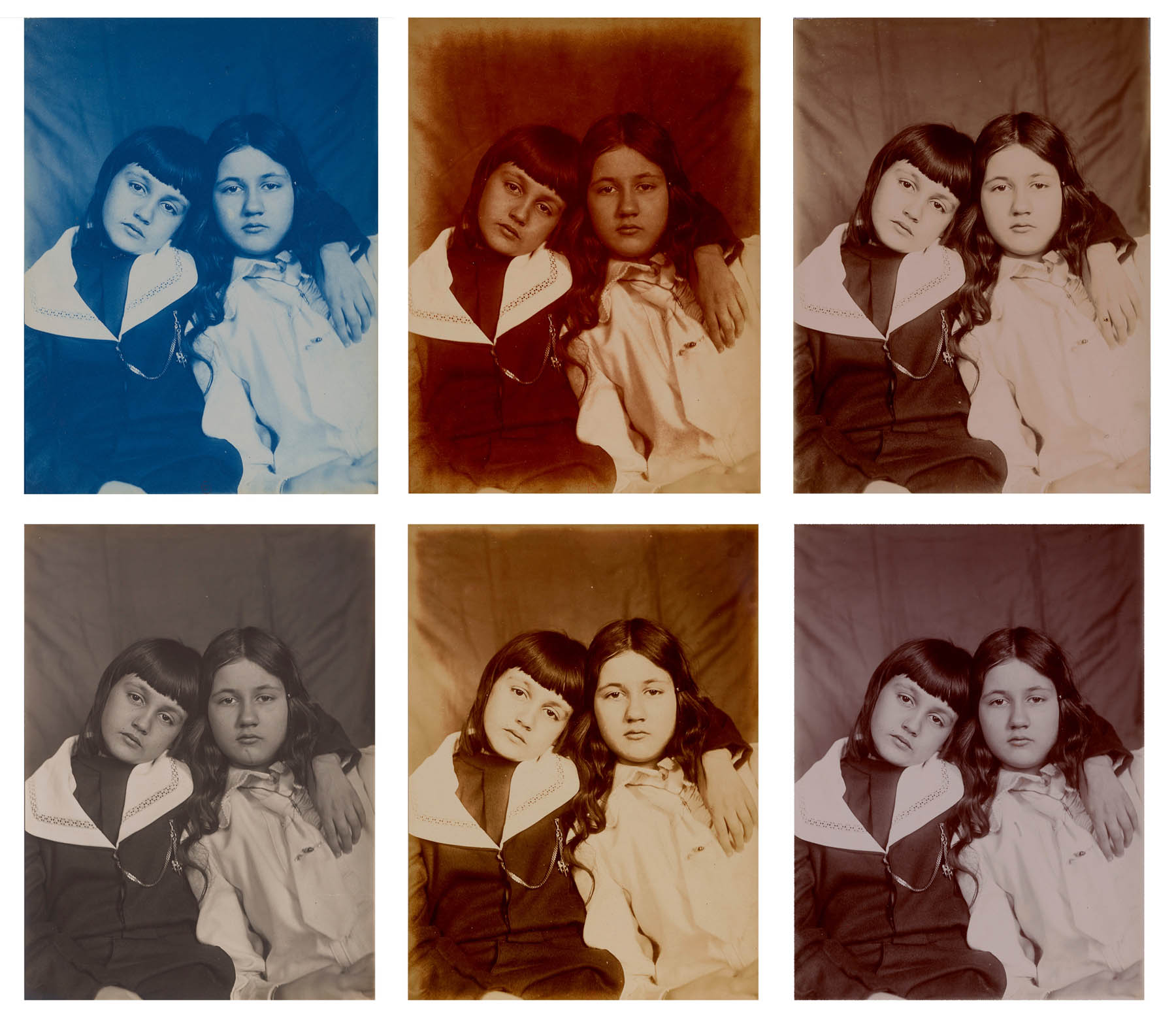
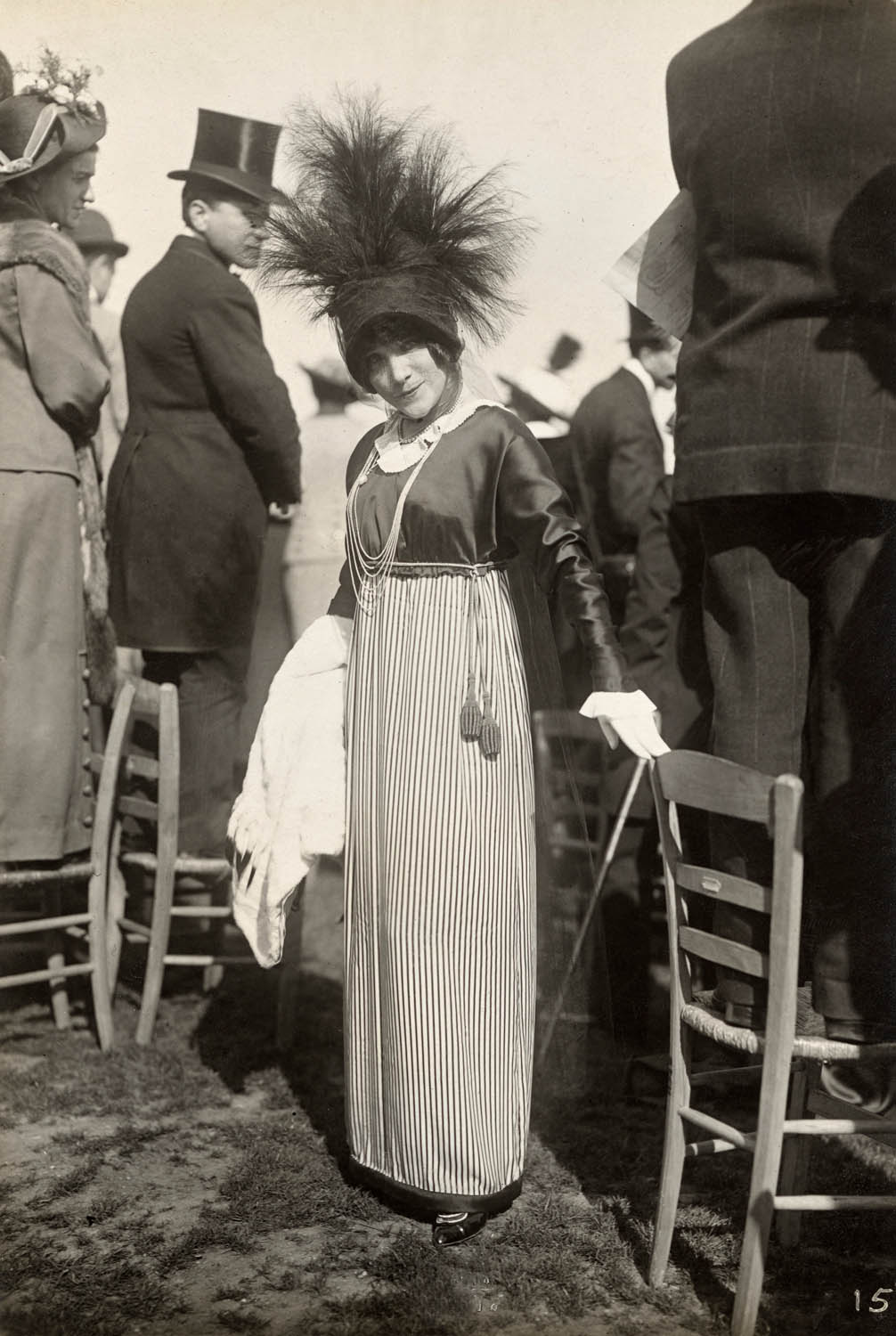


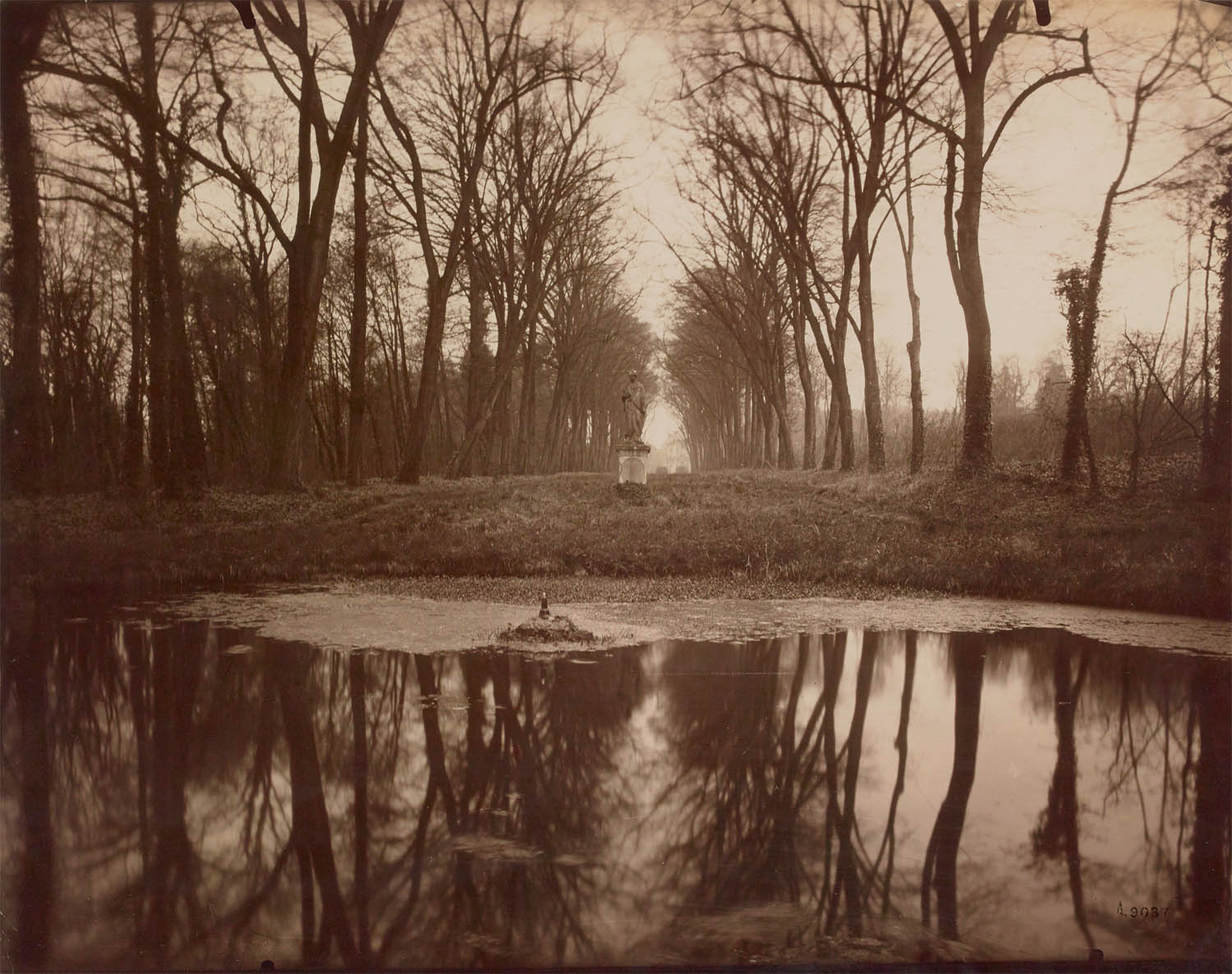

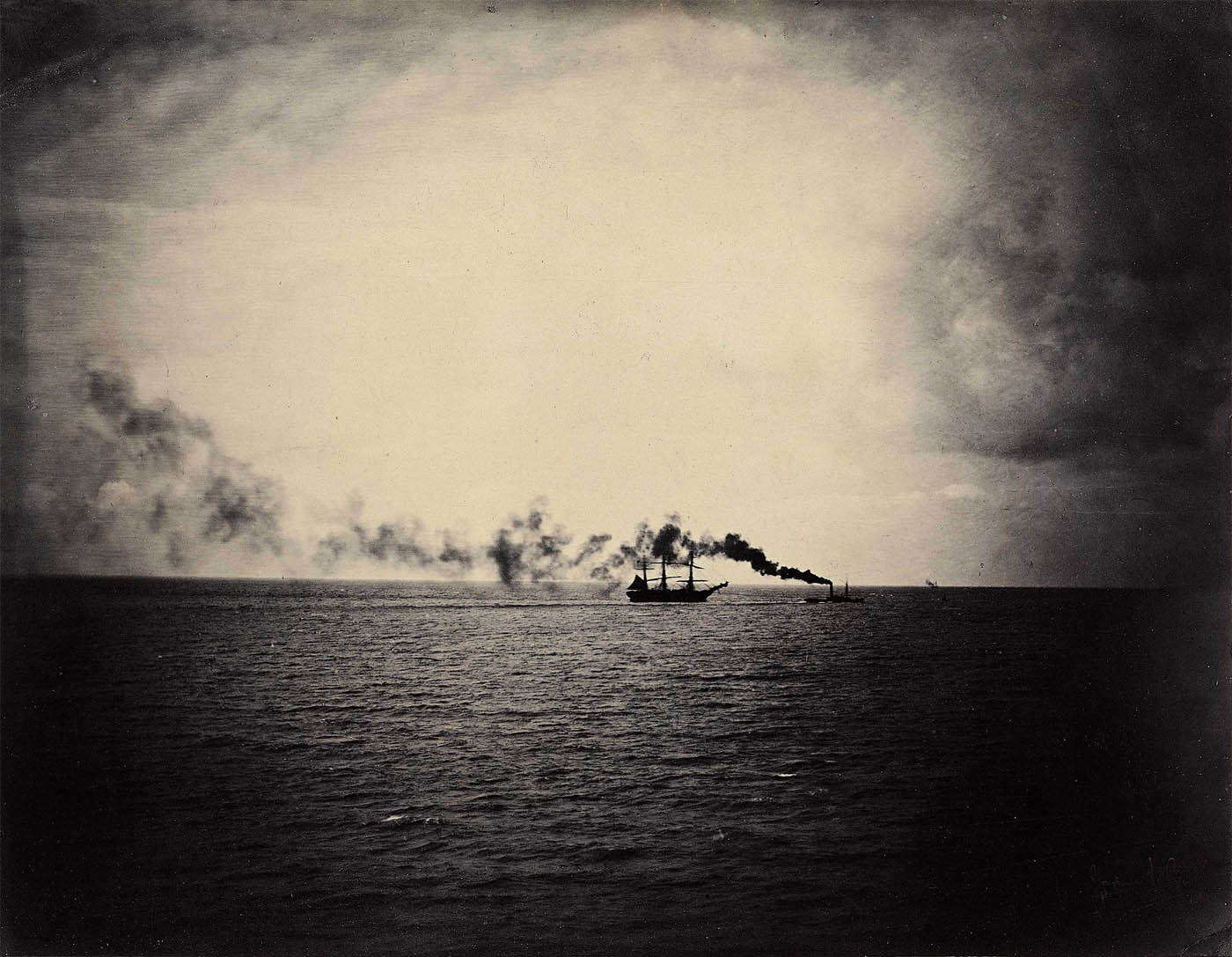
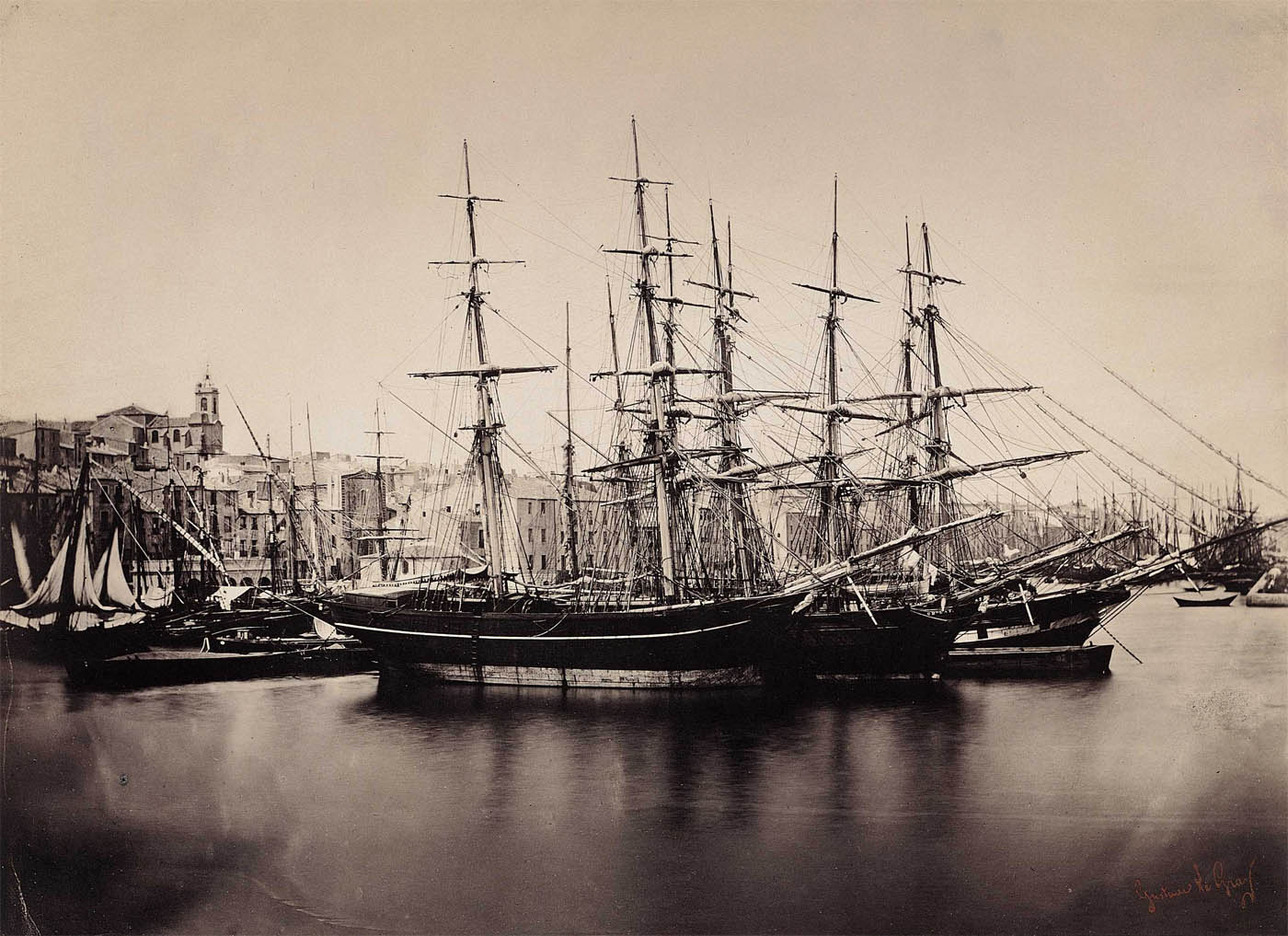
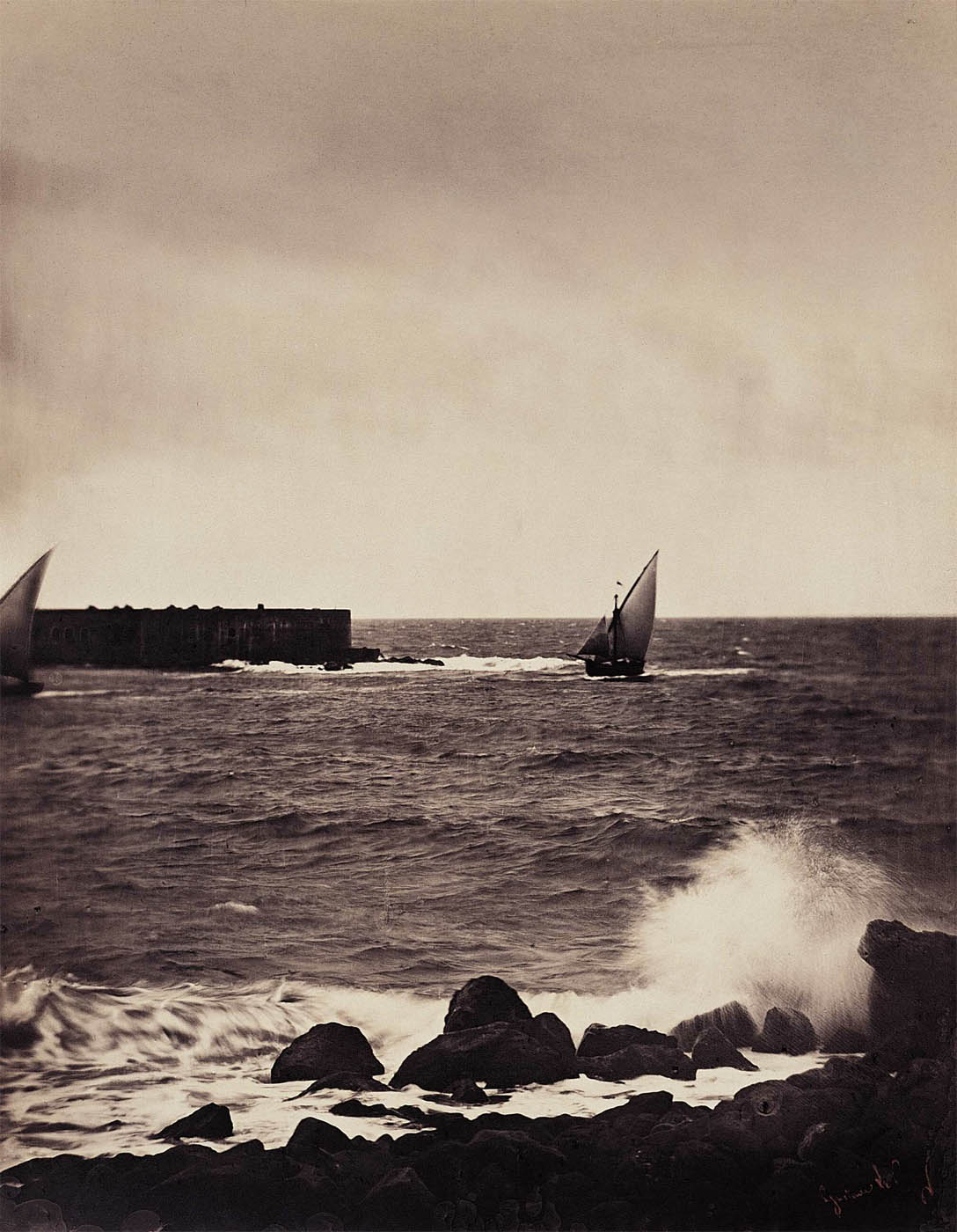

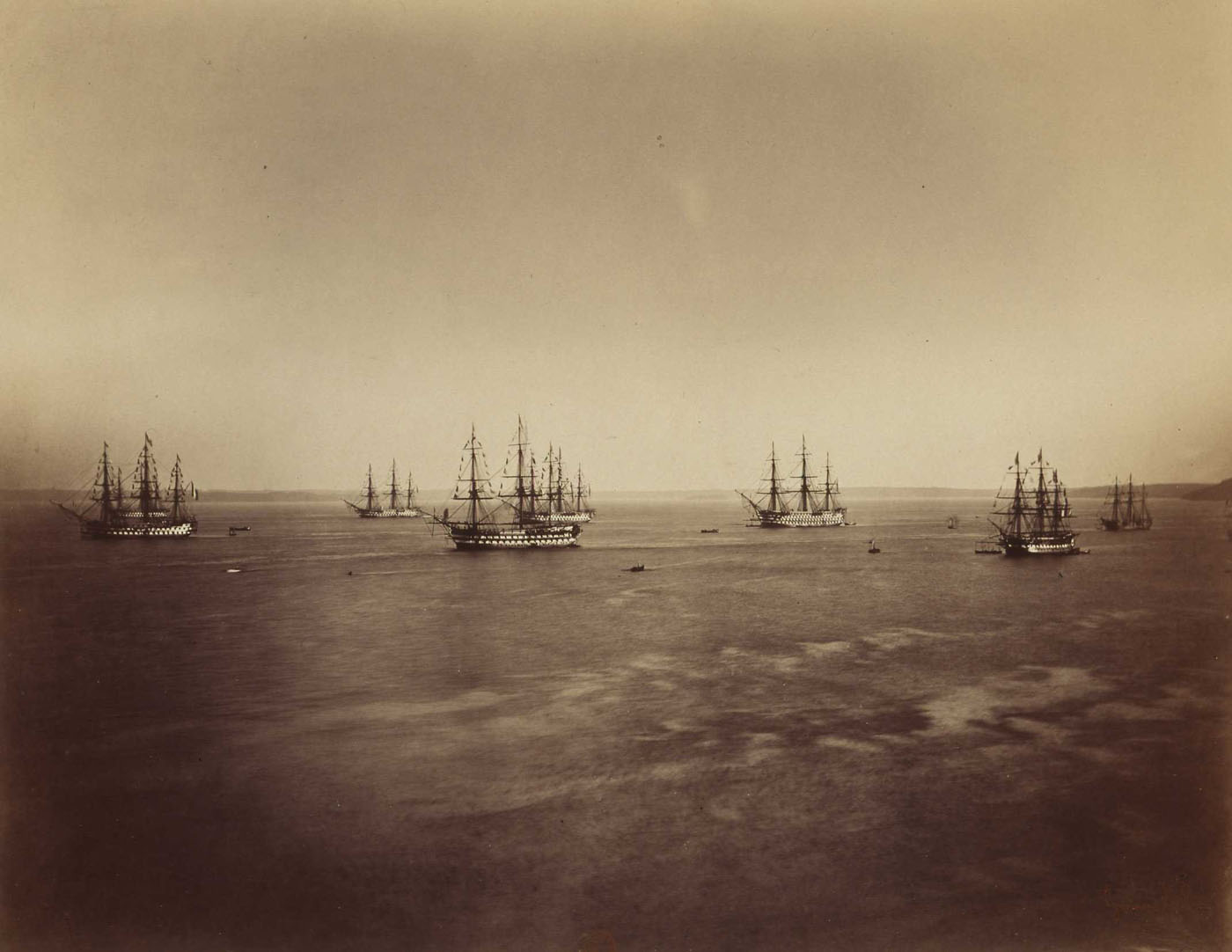

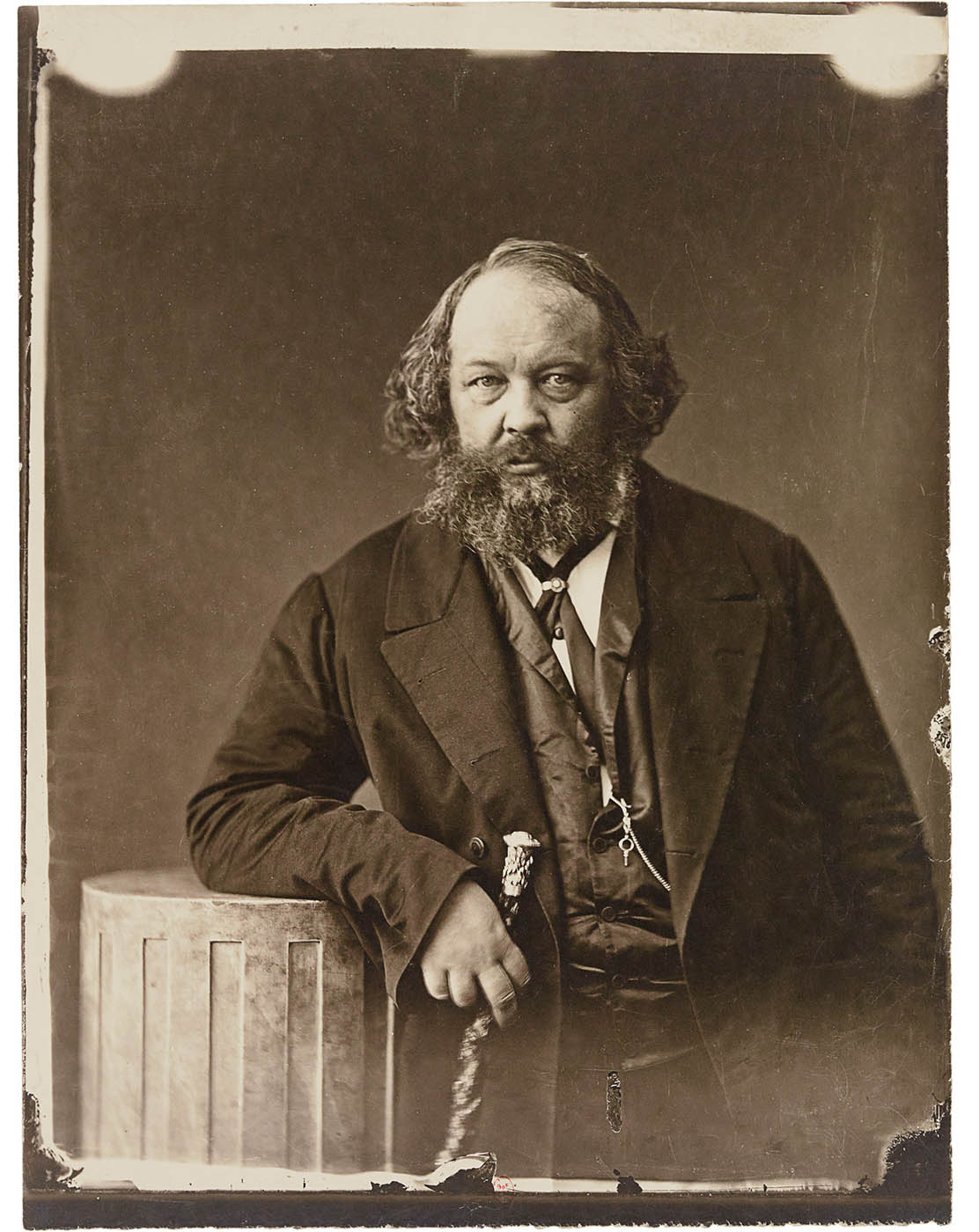

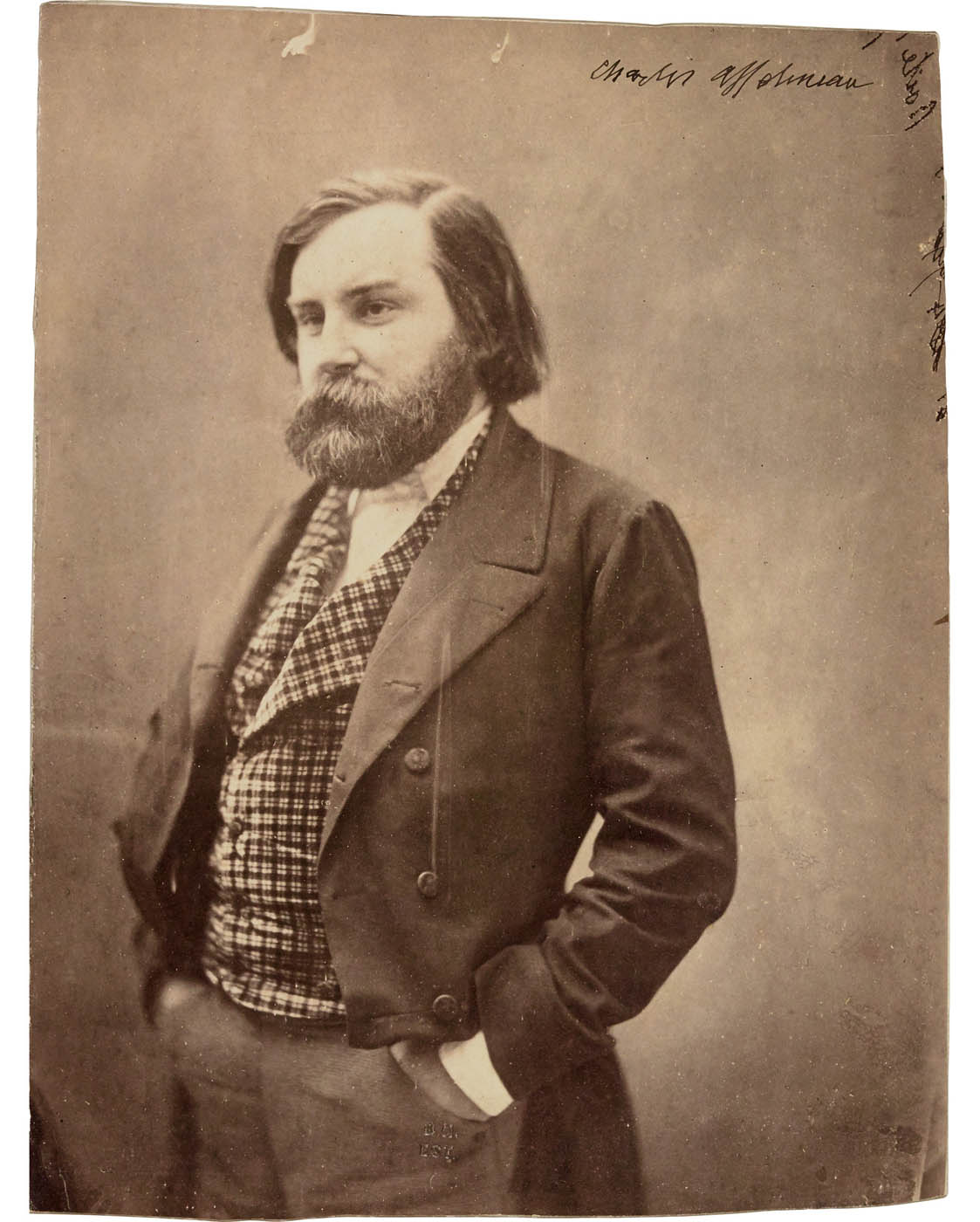

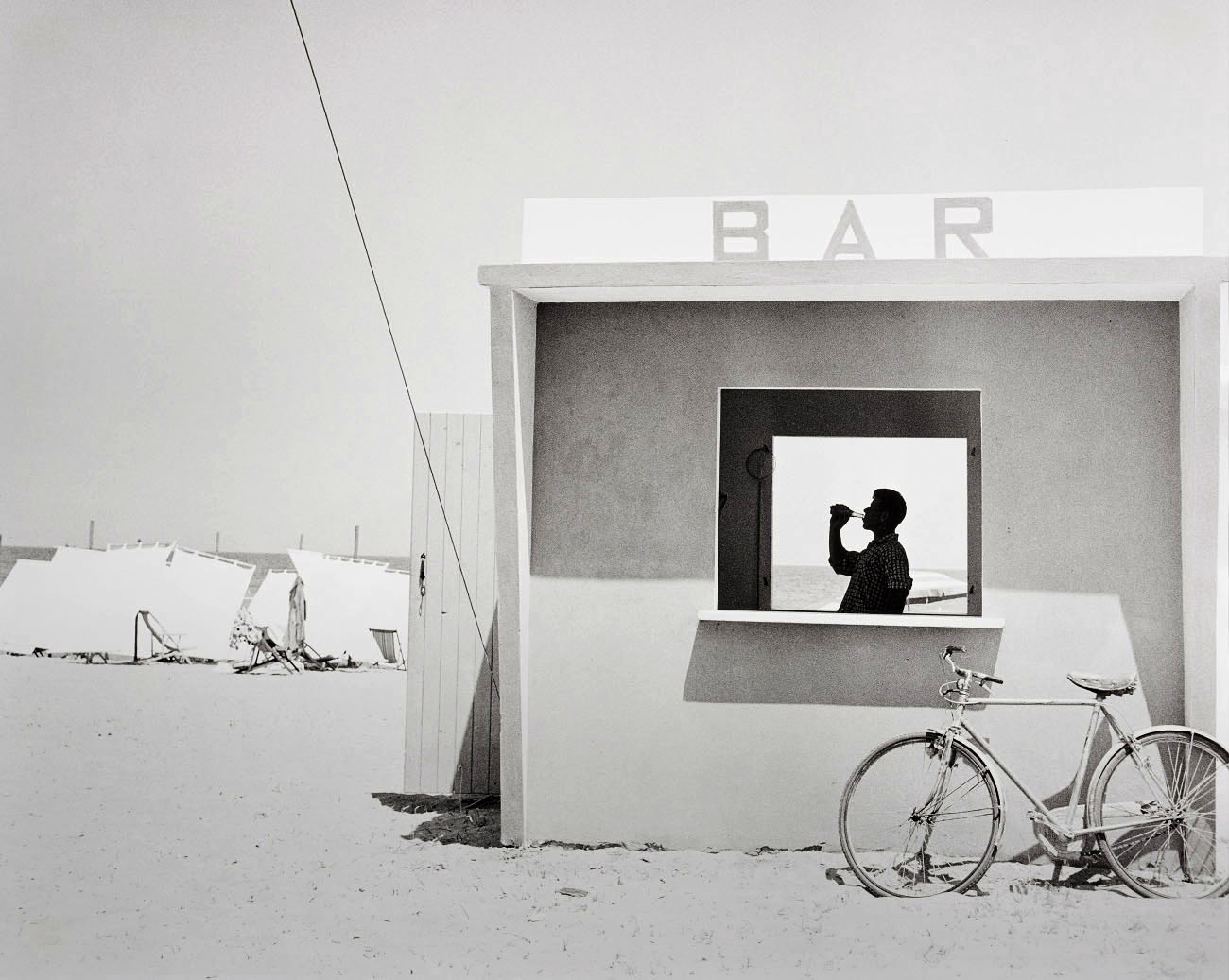





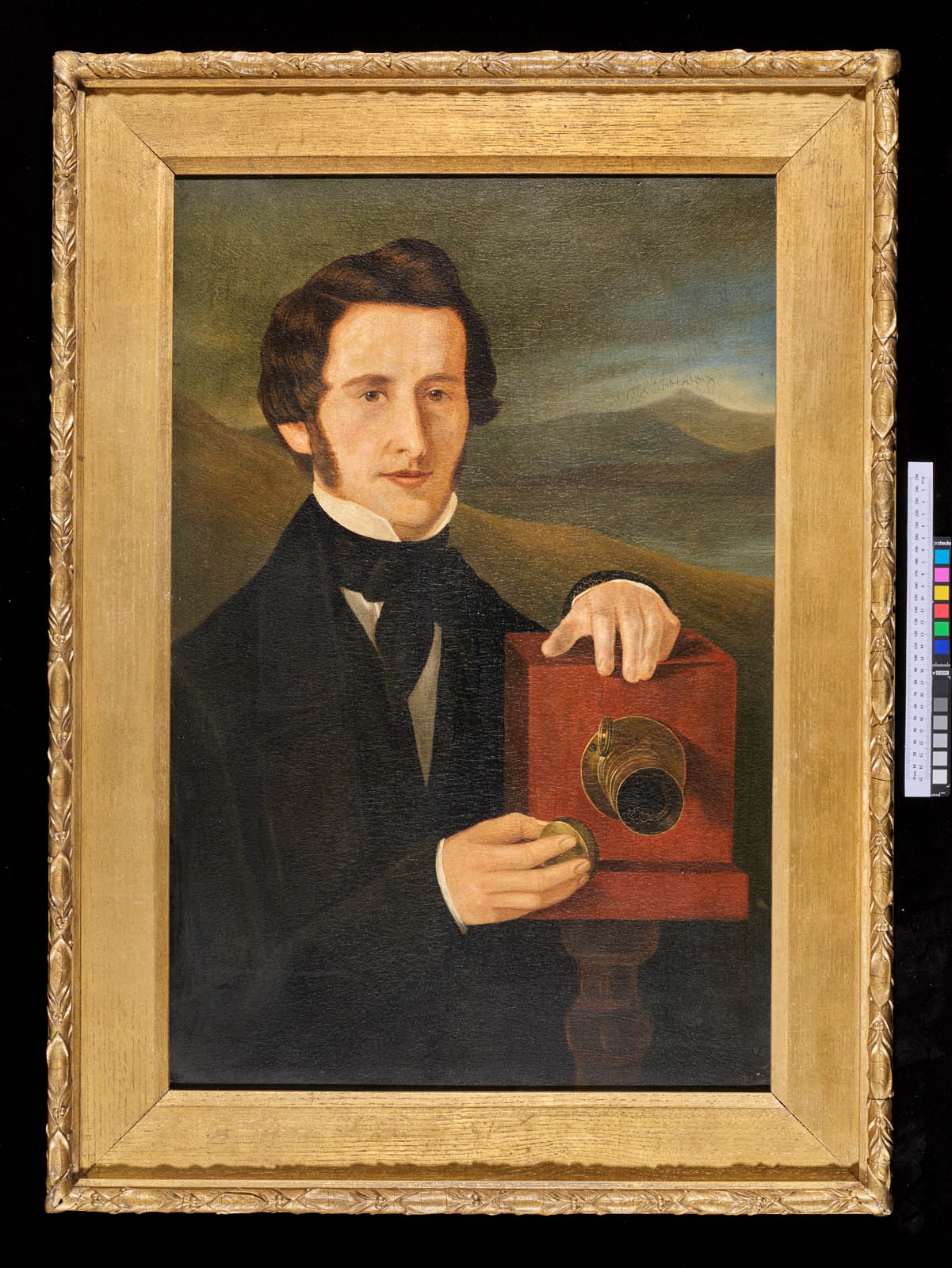


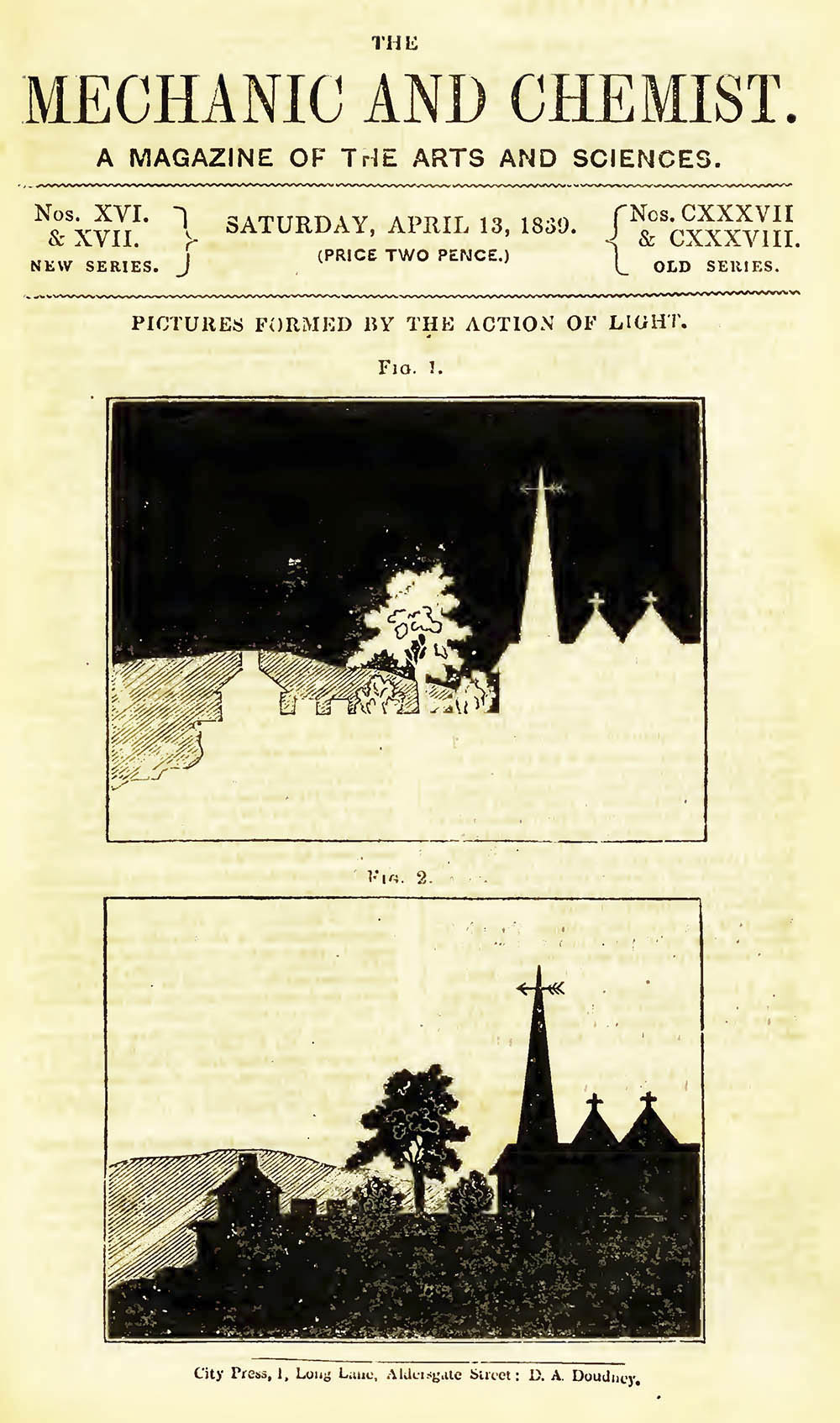
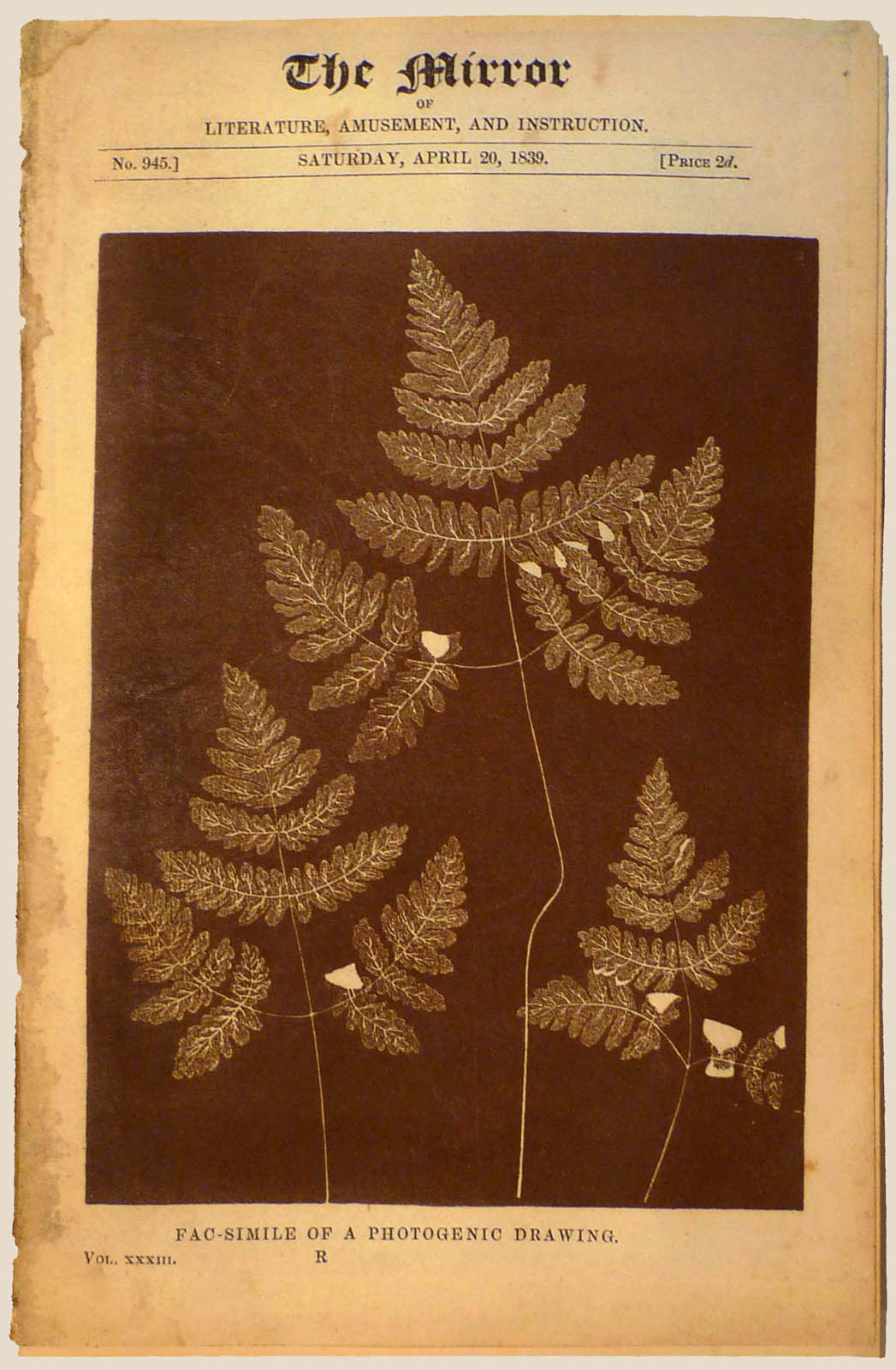


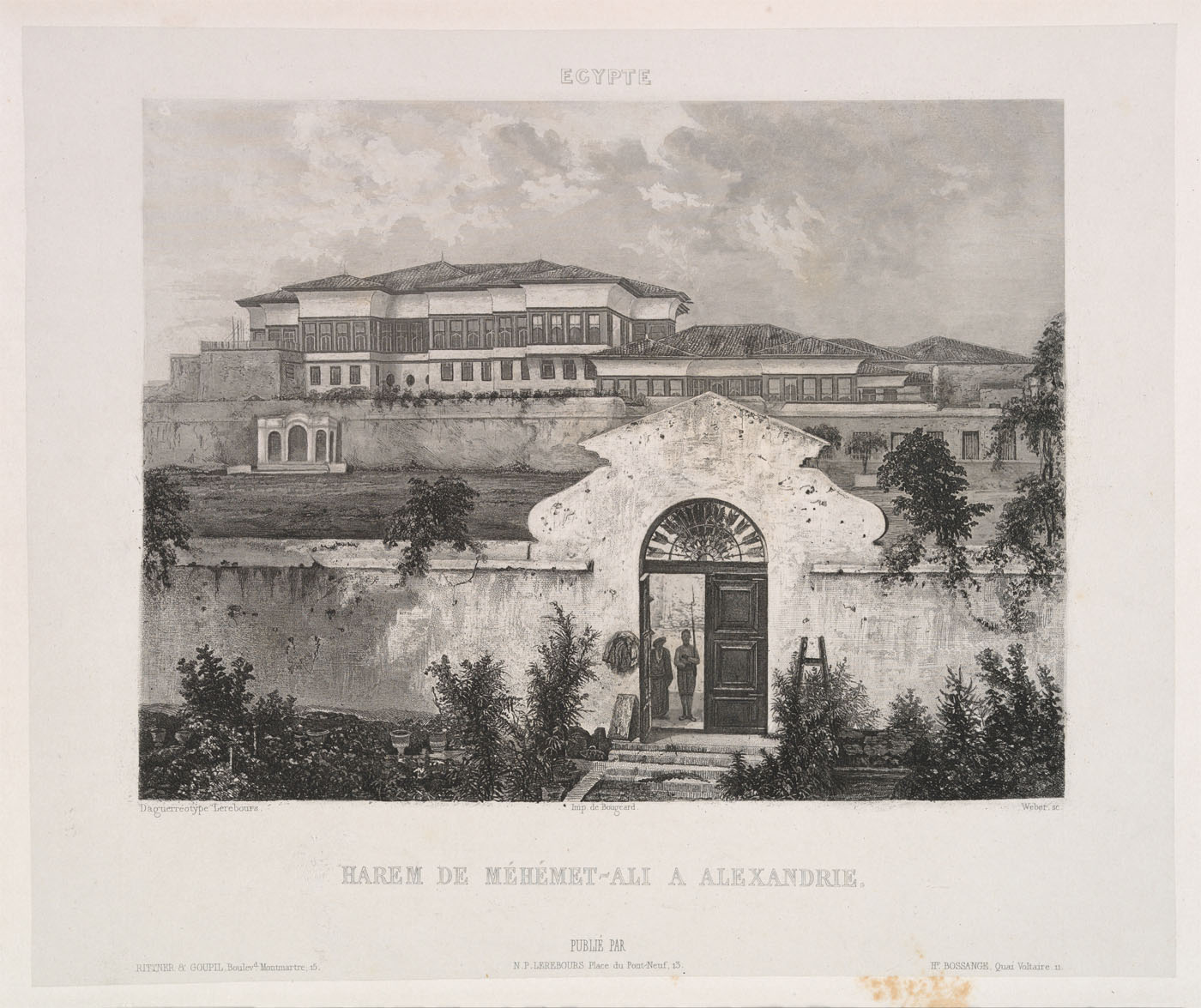


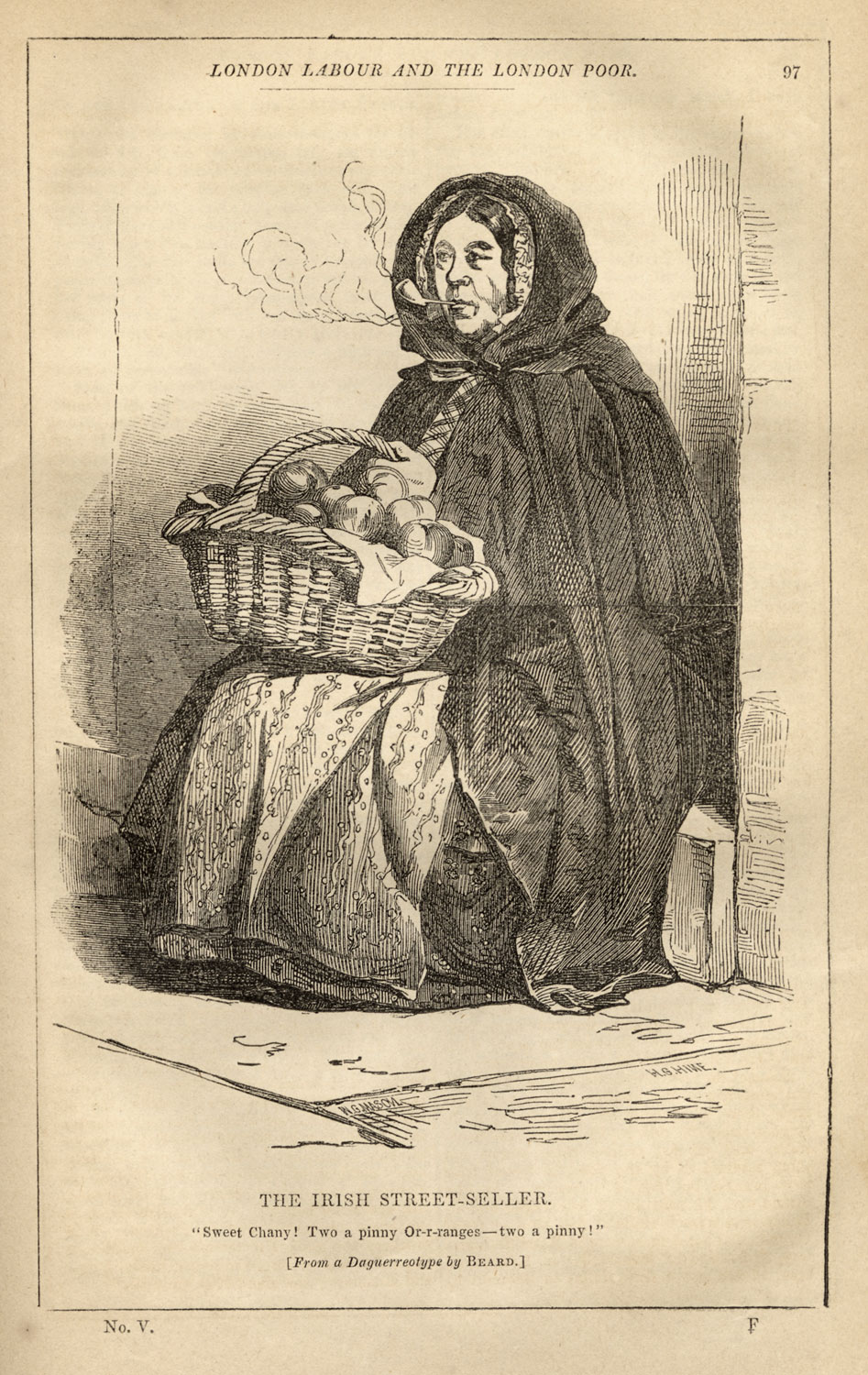
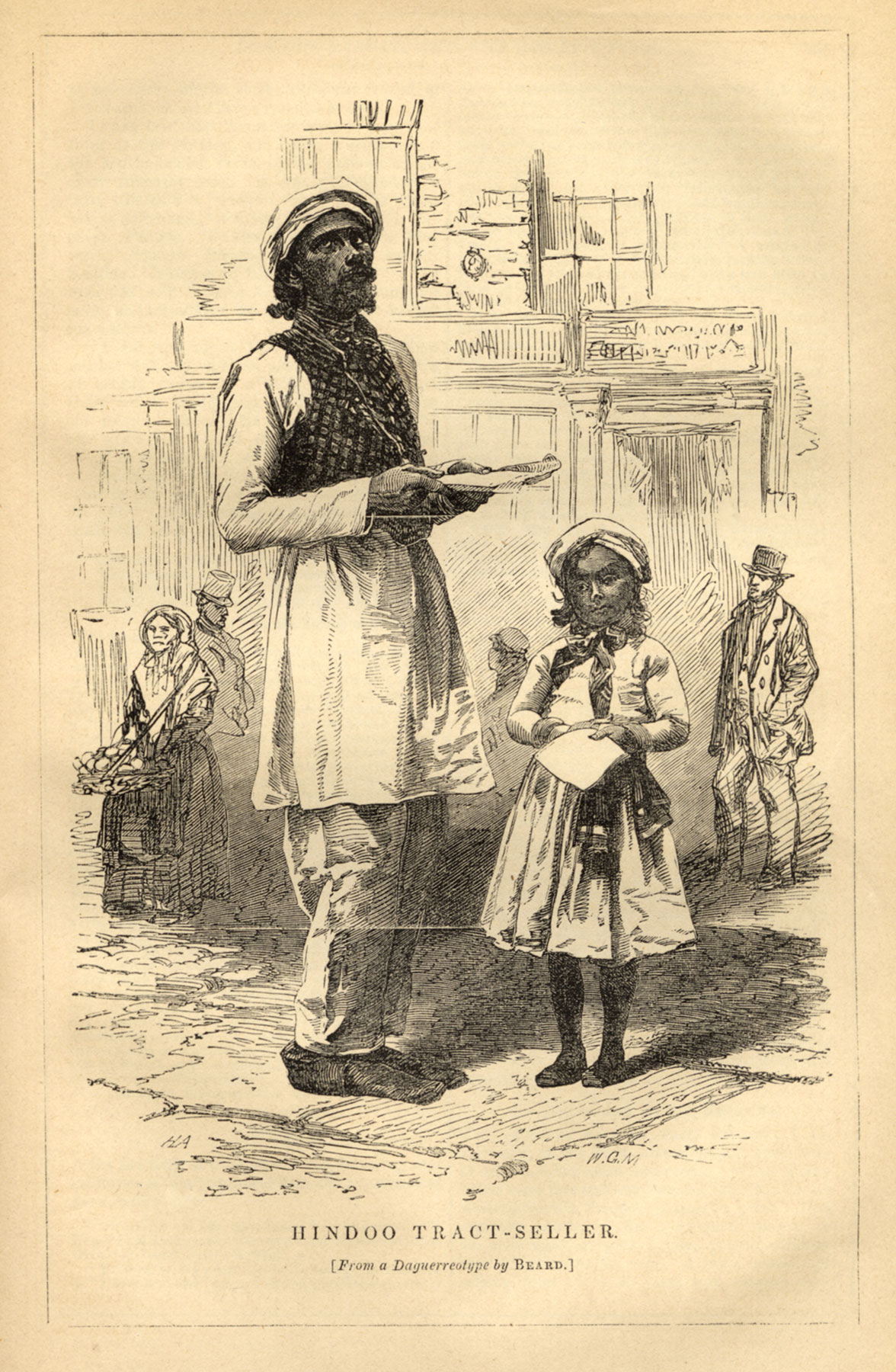
![Alonzo Chappel (American, 1828-1887)(engraver) 'Thomas Chalmers: Likeness from a daguerreotype by Claudets [sic]' 1873](https://artblart.com/wp-content/uploads/2023/02/chappel-thomas-chalmers.jpg "Alonzo Chappel (American, 1828-1887)(engraver) 'Thomas Chalmers: Likeness from a daguerreotype by Claudets [sic]' 1873")


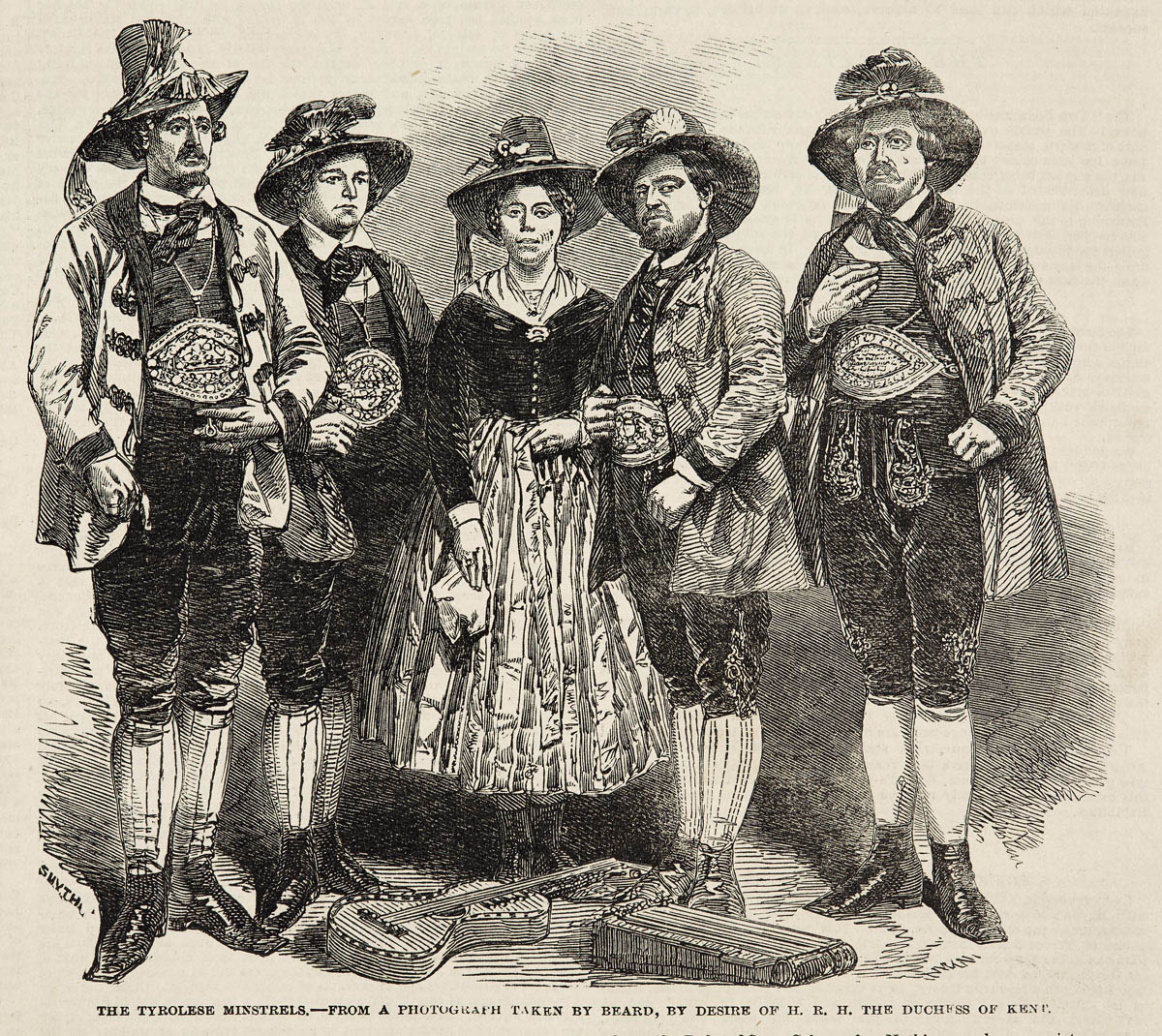


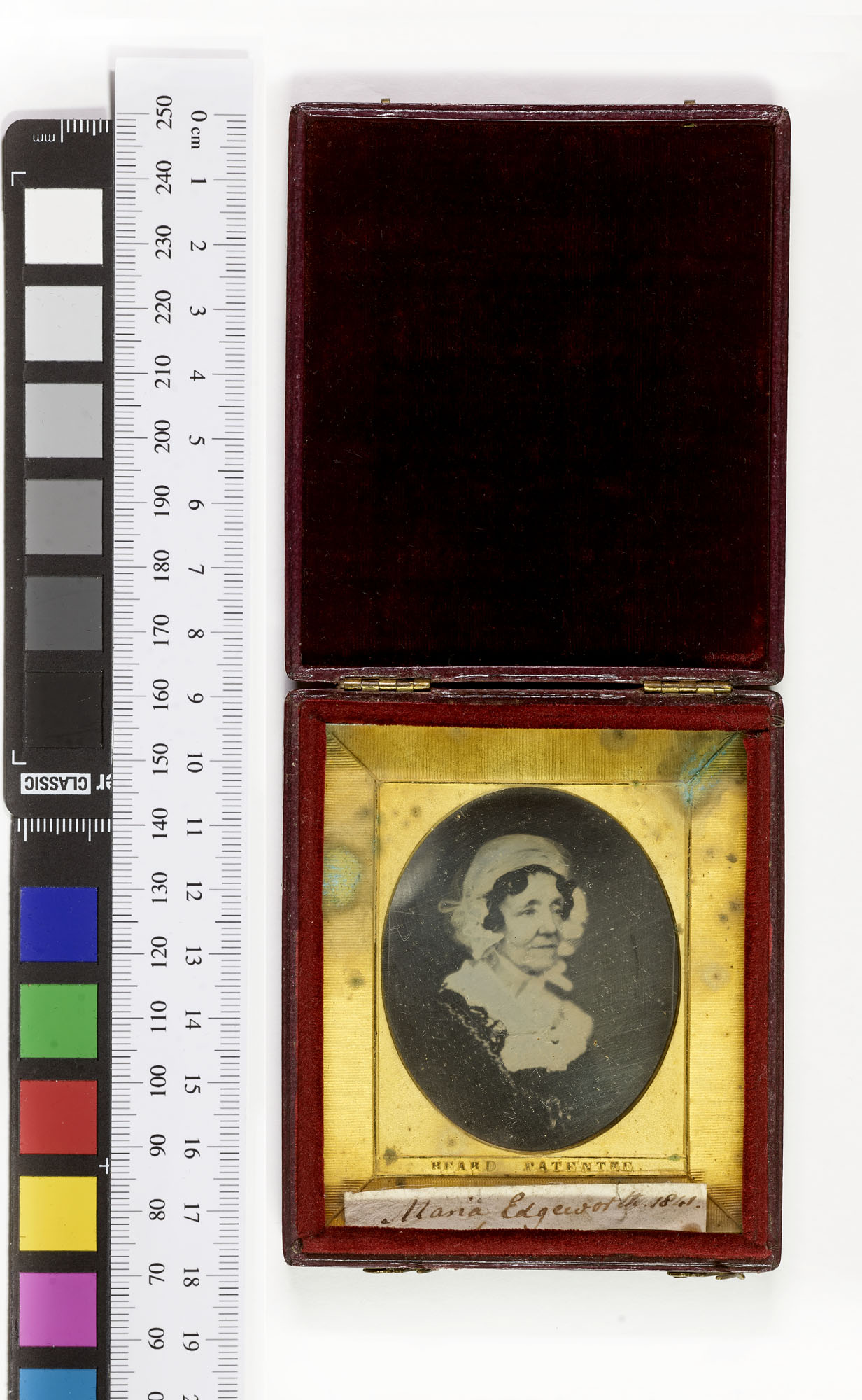
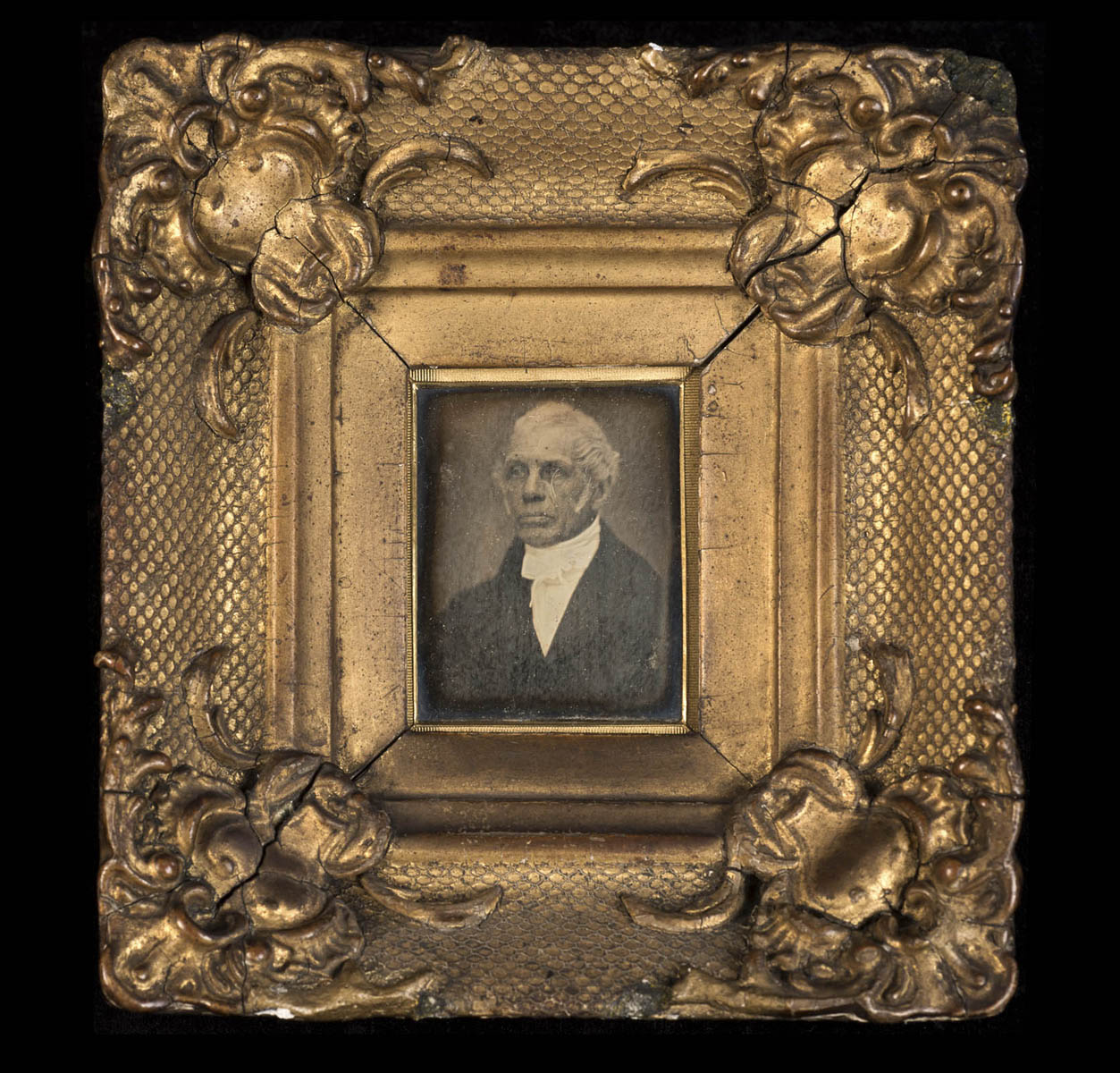


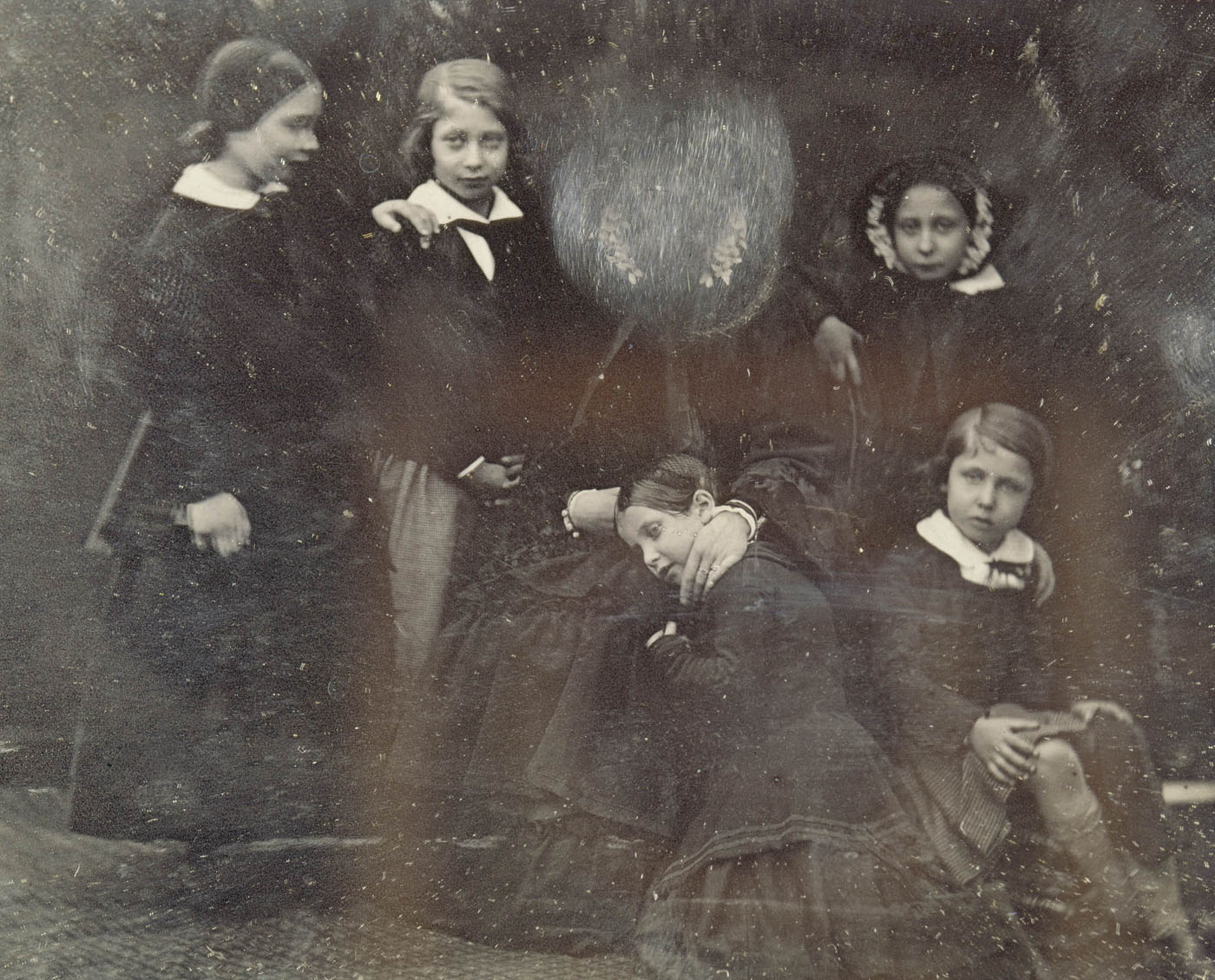




![Lewis Carroll (British, Daresbury, Cheshire 1832 - 1898 Guildford) '[Alice Liddell]' June 25, 1870 from the exhibition '2020 Vision: Photographs, 1840s-1860s' at the Metropolitan Museum of Art, New York, Dec 2019 - Dec 2020](https://artblart.com/wp-content/uploads/2020/07/lewis-carroll-alice-liddell.jpg "Lewis Carroll (British, Daresbury, Cheshire 1832 - 1898 Guildford) '[Alice Liddell]' June 25, 1870 from the exhibition '2020 Vision: Photographs, 1840s-1860s' at the Metropolitan Museum of Art, New York, Dec 2019 - Dec 2020")
![Unknown photographer (American) '[Surveyor]' c. 1854](https://artblart.com/wp-content/uploads/2020/07/anon-surveyor-a.jpg "Unknown photographer (American) '[Surveyor]' c. 1854")
![Unknown photographer (American) '[Surveyor]' c. 1854](https://artblart.com/wp-content/uploads/2020/07/anon-surveyor-b.jpg "Unknown photographer (American) '[Surveyor]' c. 1854")

![Hippolyte Bayard (French, 1801-1887) '[Classical Head]' probably 1839](https://artblart.com/wp-content/uploads/2020/07/bayard-classical-head.jpg "Hippolyte Bayard (French, 1801-1887) '[Classical Head]' probably 1839")
![Unknown artist. '[Carte-de-visite Album of Collaged Portraits]' 1850s-1860s](https://artblart.com/wp-content/uploads/2020/07/anon-collaged-portraits-a.jpg "Unknown artist. '[Carte-de-visite Album of Collaged Portraits]' 1850s-1860s")
![Unknown artist. '[Carte-de-visite Album of Collaged Portraits]' 1850s-1860s](https://artblart.com/wp-content/uploads/2020/07/anon-collaged-portraits-b.jpg "Unknown artist. '[Carte-de-visite Album of Collaged Portraits]' 1850s-1860s")
![Unknown artist. '[Carte-de-visite Album of Collaged Portraits]' 1850s-1860s](https://artblart.com/wp-content/uploads/2020/07/anon-collaged-portraits-c.jpg "Unknown artist. '[Carte-de-visite Album of Collaged Portraits]' 1850s-1860s")
![Unknown artist. '[Carte-de-visite Album of Collaged Portraits]' 1850s-1860s](https://artblart.com/wp-content/uploads/2020/07/anon-collaged-portraits-d.jpg "Unknown artist. '[Carte-de-visite Album of Collaged Portraits]' 1850s-1860s")
![Unknown artist. '[Carte-de-visite Album of Collaged Portraits]' 1850s-1860s](https://artblart.com/wp-content/uploads/2020/07/anon-collaged-portraits-e.jpg "Unknown artist. '[Carte-de-visite Album of Collaged Portraits]' 1850s-1860s")
![Unknown artist. '[Carte-de-visite Album of Collaged Portraits]' 1850s-1860s](https://artblart.com/wp-content/uploads/2020/07/anon-collaged-portraits-f.jpg "Unknown artist. '[Carte-de-visite Album of Collaged Portraits]' 1850s-1860s")
![Unknown artist. '[Carte-de-visite Album of Collaged Portraits]' 1850s-1860s](https://artblart.com/wp-content/uploads/2020/07/anon-collaged-portraits-g.jpg "Unknown artist. '[Carte-de-visite Album of Collaged Portraits]' 1850s-1860s")
![Unknown artist. '[Carte-de-visite Album of Collaged Portraits]' 1850s-1860s](https://artblart.com/wp-content/uploads/2020/07/anon-collaged-portraits-h.jpg "Unknown artist. '[Carte-de-visite Album of Collaged Portraits]' 1850s-1860s")
![Unknown artist (American) '[Studio Photographer at Work]' c. 1855](https://artblart.com/wp-content/uploads/2020/07/unknown-artist-american-studio-photographer-at-work-c-1855.jpg "Unknown artist (American) '[Studio Photographer at Work]' c. 1855")
![Unknown artist (American) '[Boy Holding a Daguerreotype]' 1850s](https://artblart.com/wp-content/uploads/2020/07/unknown-american-active-1850s-boy-holding-a-daguerreotype-1850s.jpg "Unknown artist (American) '[Boy Holding a Daguerreotype]' 1850s")

![Carleton E. Watkins (American, 1829-1916) '[California Oak, Santa Clara Valley]' c. 1863](https://artblart.com/wp-content/uploads/2020/07/watkins-california-oak-santa-clara-valley.jpg "Carleton E. Watkins (American, 1829-1916) '[California Oak, Santa Clara Valley]' c. 1863")
![Pietro Dovizielli (Italian, 1804-1885) '[Spanish Steps, Rome]' c. 1855](https://artblart.com/wp-content/uploads/2020/07/dovizielli-spanish-steps.jpg "Pietro Dovizielli (Italian, 1804-1885) '[Spanish Steps, Rome]' c. 1855")
![Edouard Baldus (French (born Prussia), 1813-1889) '[Amphitheater, Nîmes]' c. 1853](https://artblart.com/wp-content/uploads/2020/07/baldus-amphitheater.jpg "Edouard Baldus (French (born Prussia), 1813-1889) '[Amphitheater, Nîmes]' c. 1853")

![Lewis Dowe (American, active 1860s-1880s) '[Dowe's Photograph Rooms, Sycamore, Illinois]' 1860s](https://artblart.com/wp-content/uploads/2020/07/lewis-dowe-dowes-photograph-rooms-sycamore-illinois-1860s.jpg "Lewis Dowe (American, active 1860s-1880s) '[Dowe's Photograph Rooms, Sycamore, Illinois]' 1860s")
![E. & H. T. Anthony (American) '[Specimens of New York Bill Posting]' 1863](https://artblart.com/wp-content/uploads/2020/07/e-h-t-anthony-specimens-of-new-york-bill-posting-1863.jpg "E. & H. T. Anthony (American) '[Specimens of New York Bill Posting]' 1863")
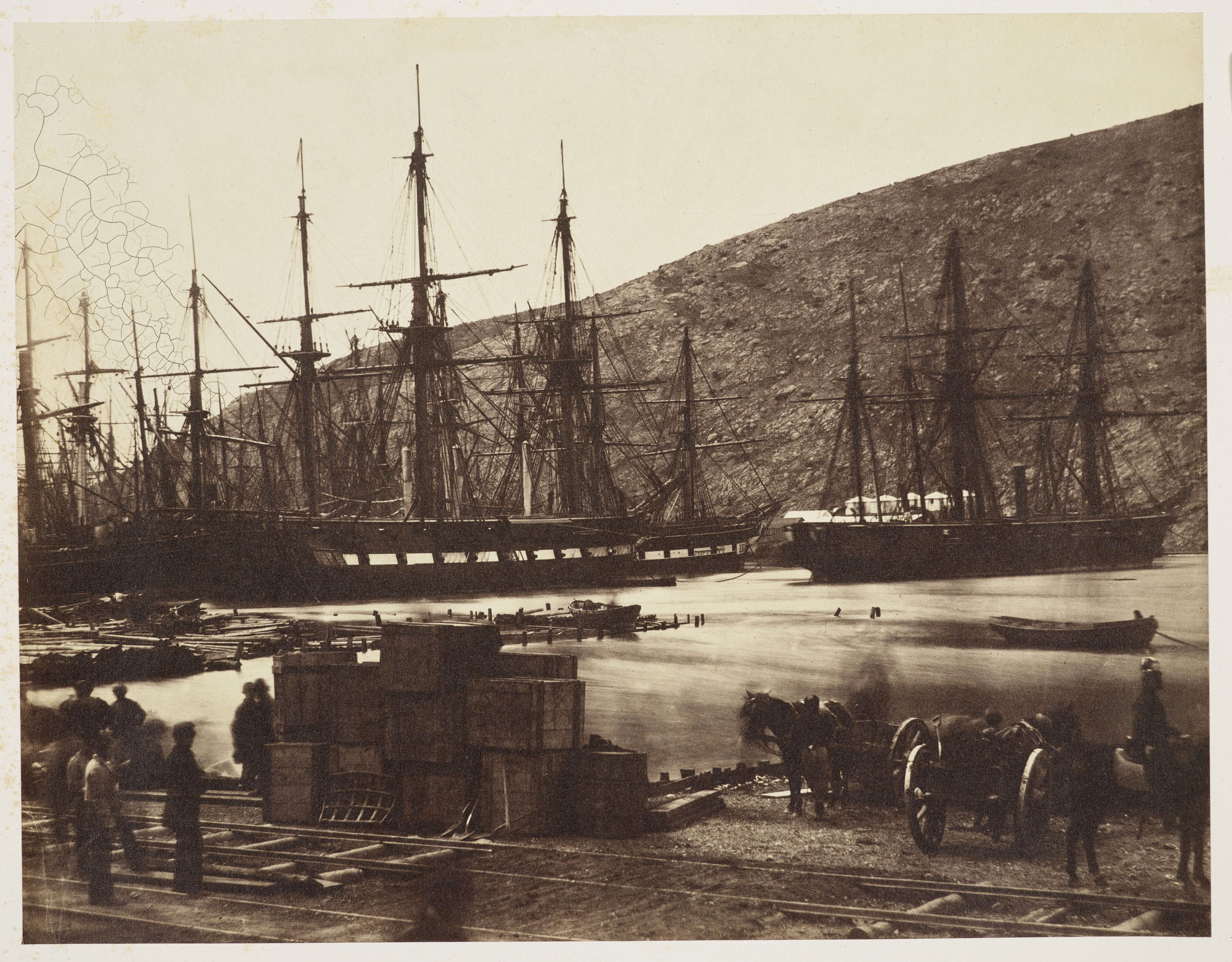

![Felice Beato (British (born Italy), Venice 1832-1909 Luxor) and James Robertson (British, 1813-1881) [Dome of the Rock, Jerusalem] 1856-1857](https://artblart.com/wp-content/uploads/2020/07/beato-dome.jpg "Felice Beato (British (born Italy), Venice 1832-1909 Luxor) and James Robertson (British, 1813-1881) [Dome of the Rock, Jerusalem] 1856-1857")
![R.C. Montgomery (American, active 1850s) '[Self-Portrait (?)]' 1850s](https://artblart.com/wp-content/uploads/2020/07/r.c.-montgomery-self-portrait-1850s.jpg "R.C. Montgomery (American, active 1850s) '[Self-Portrait (?)]' 1850s")
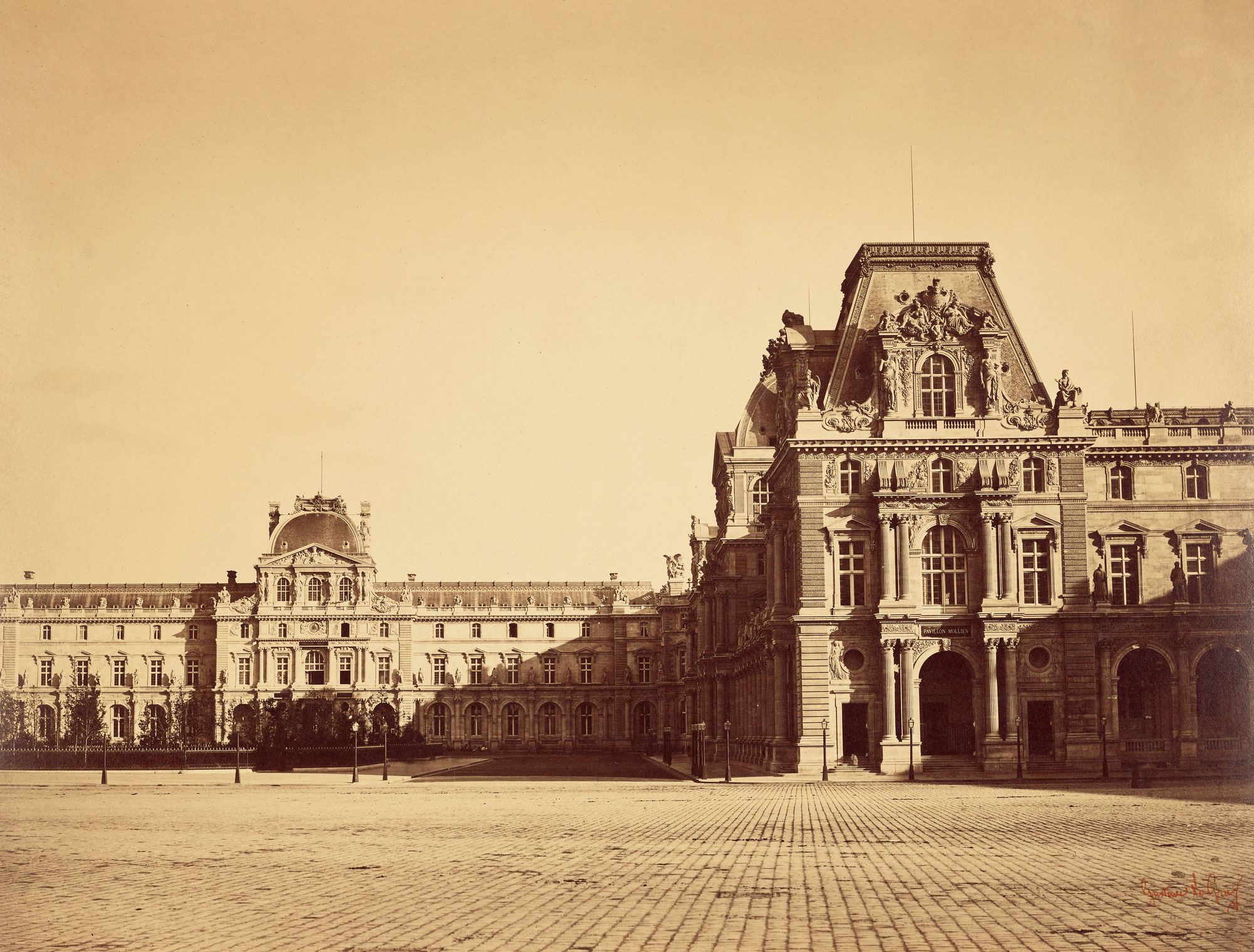
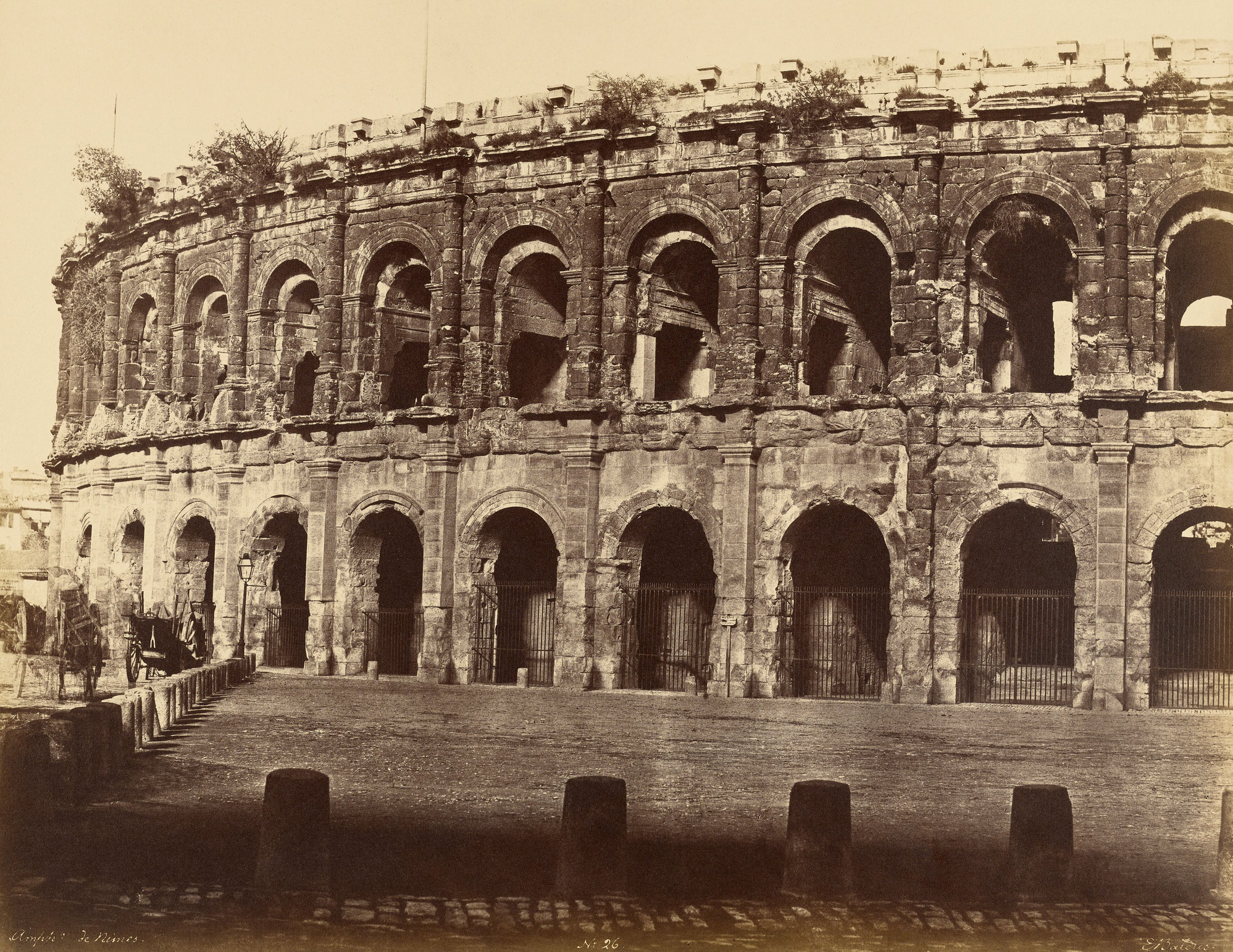
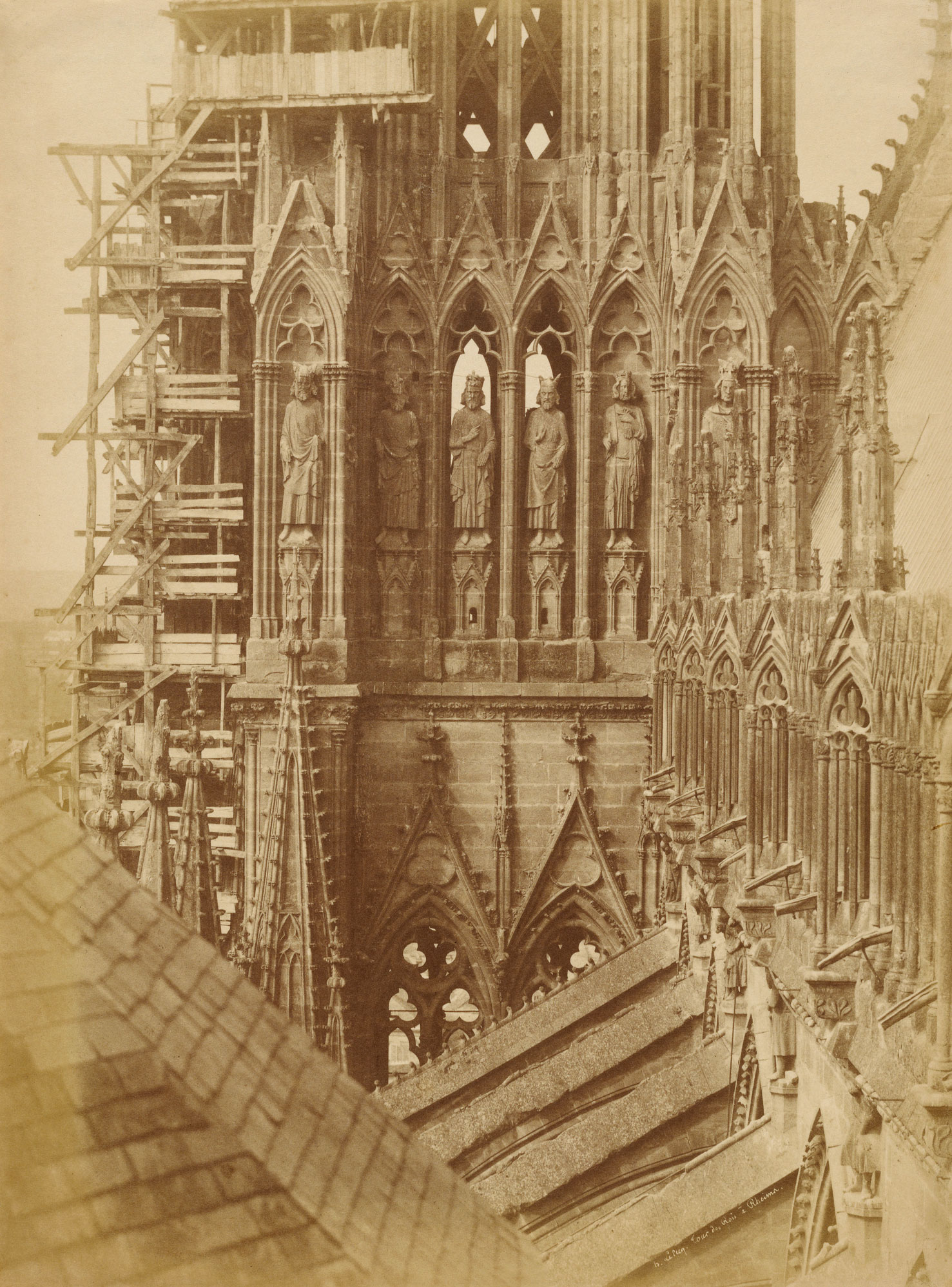


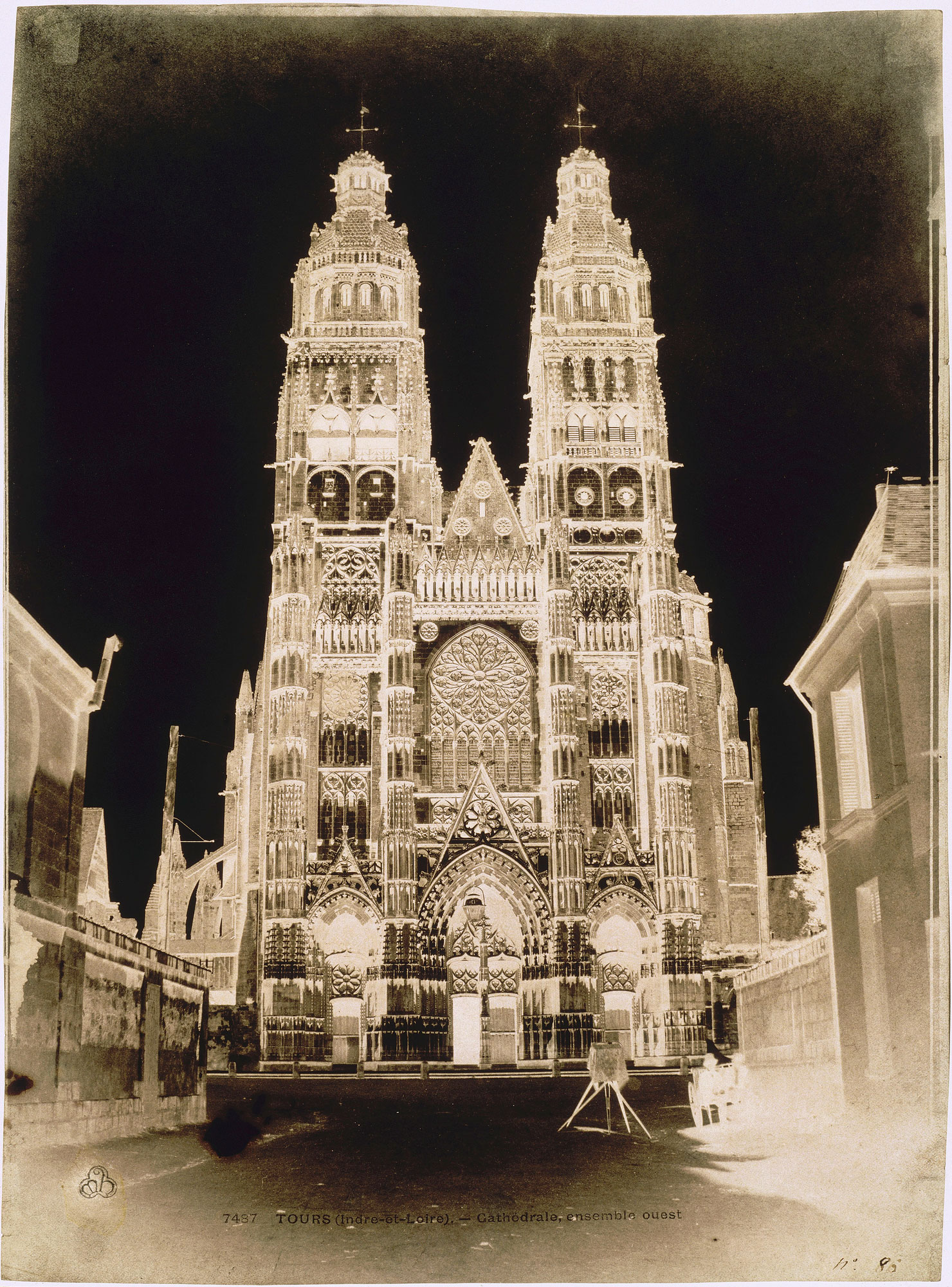
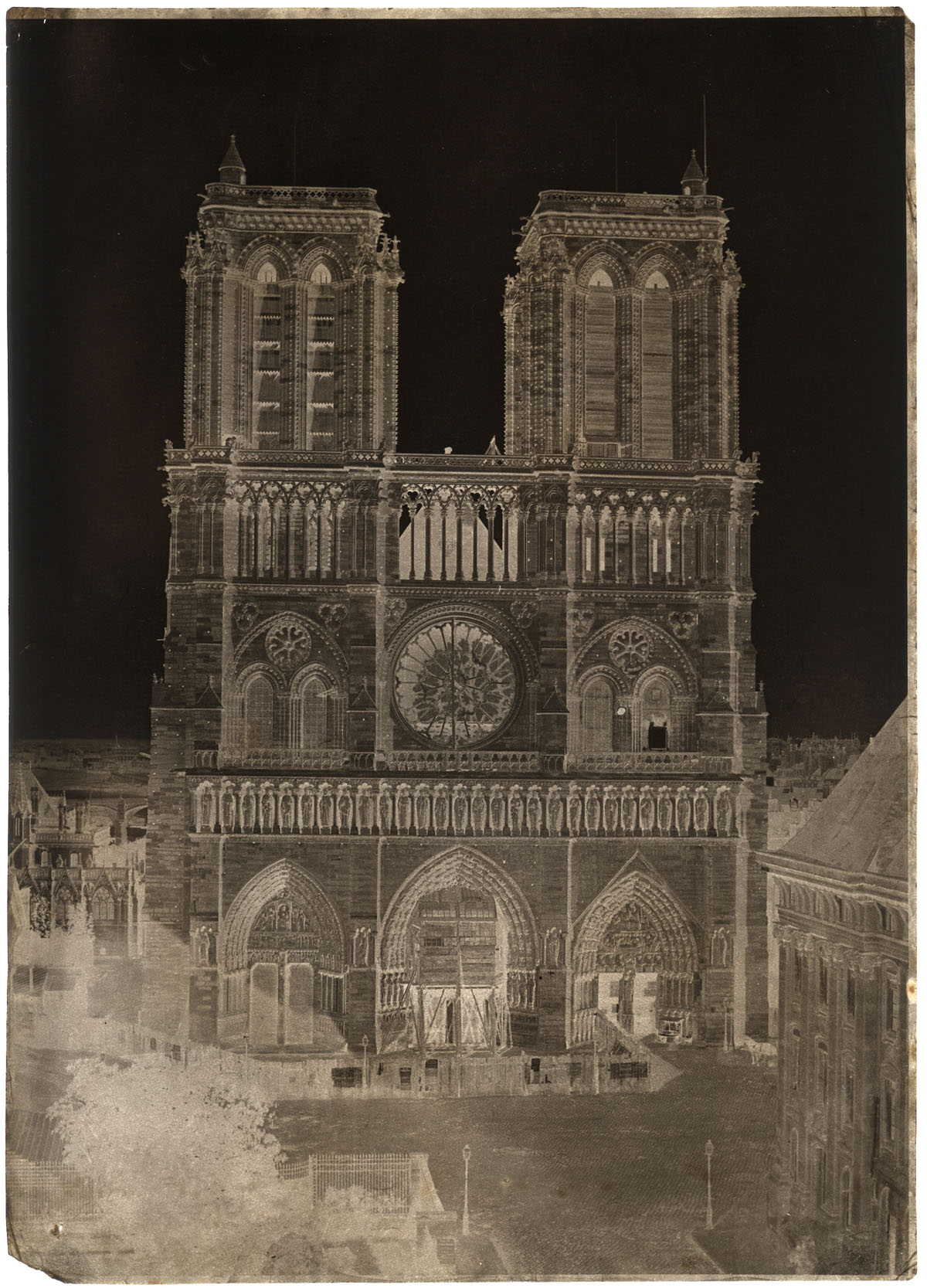

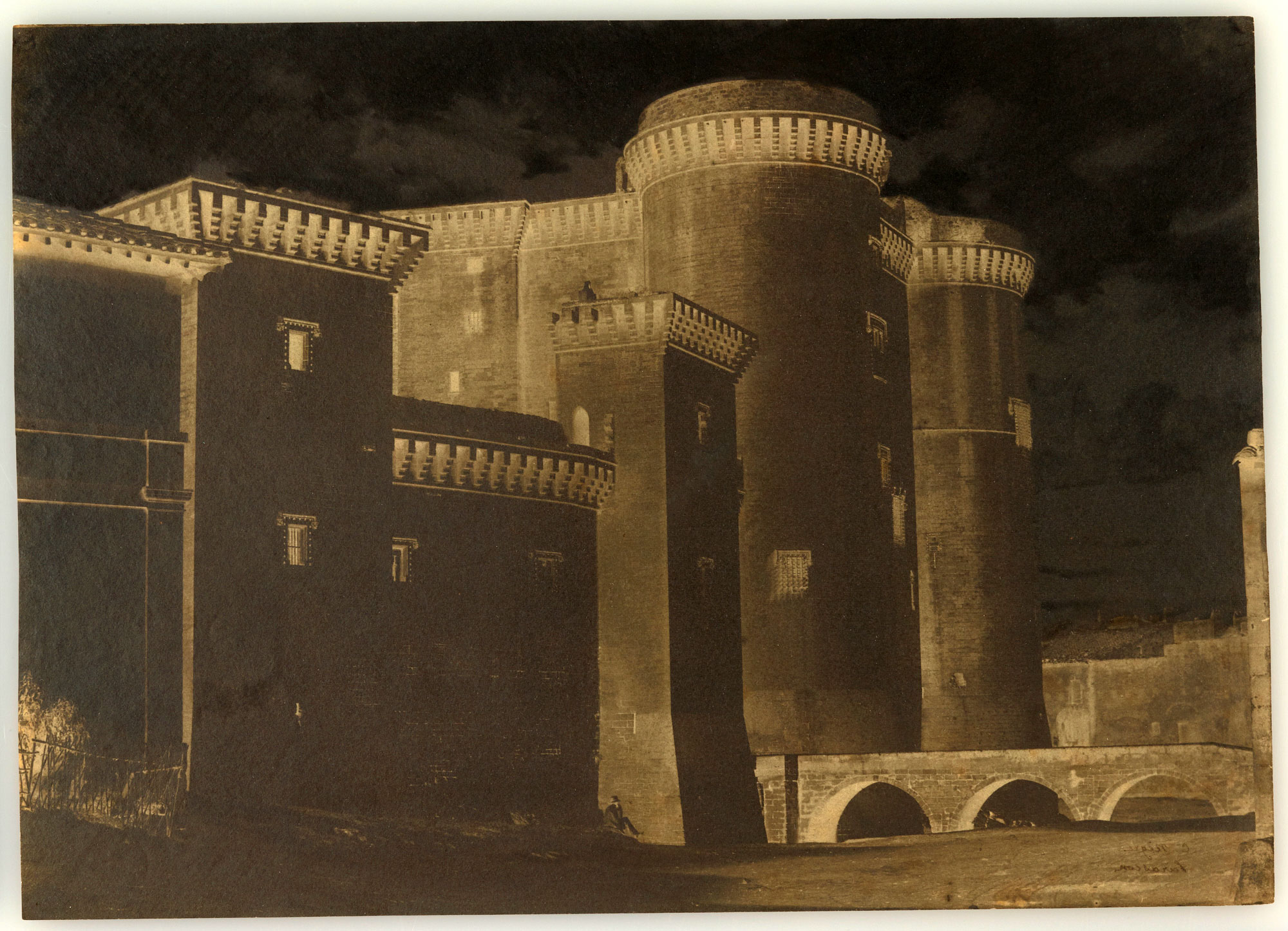
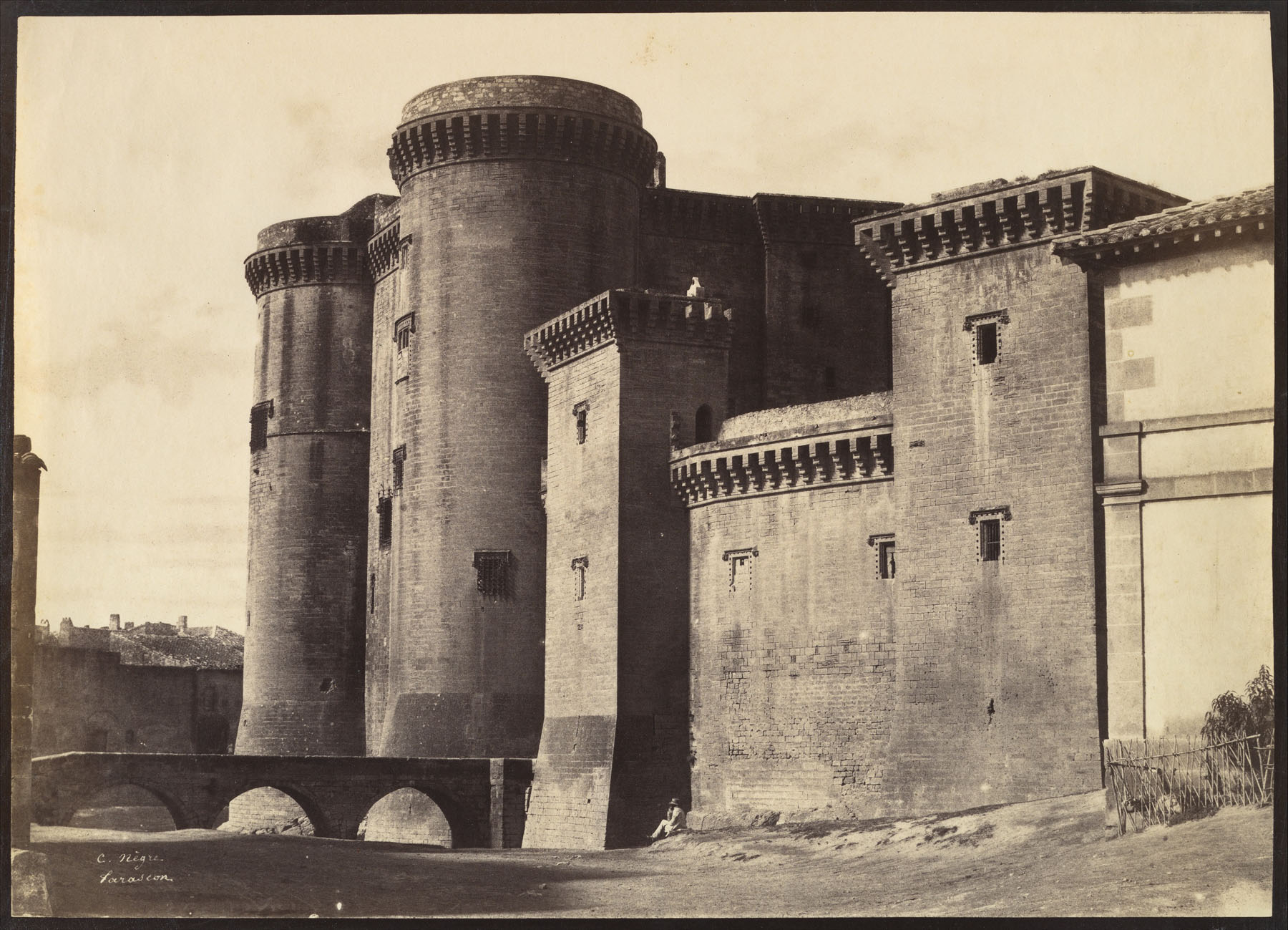

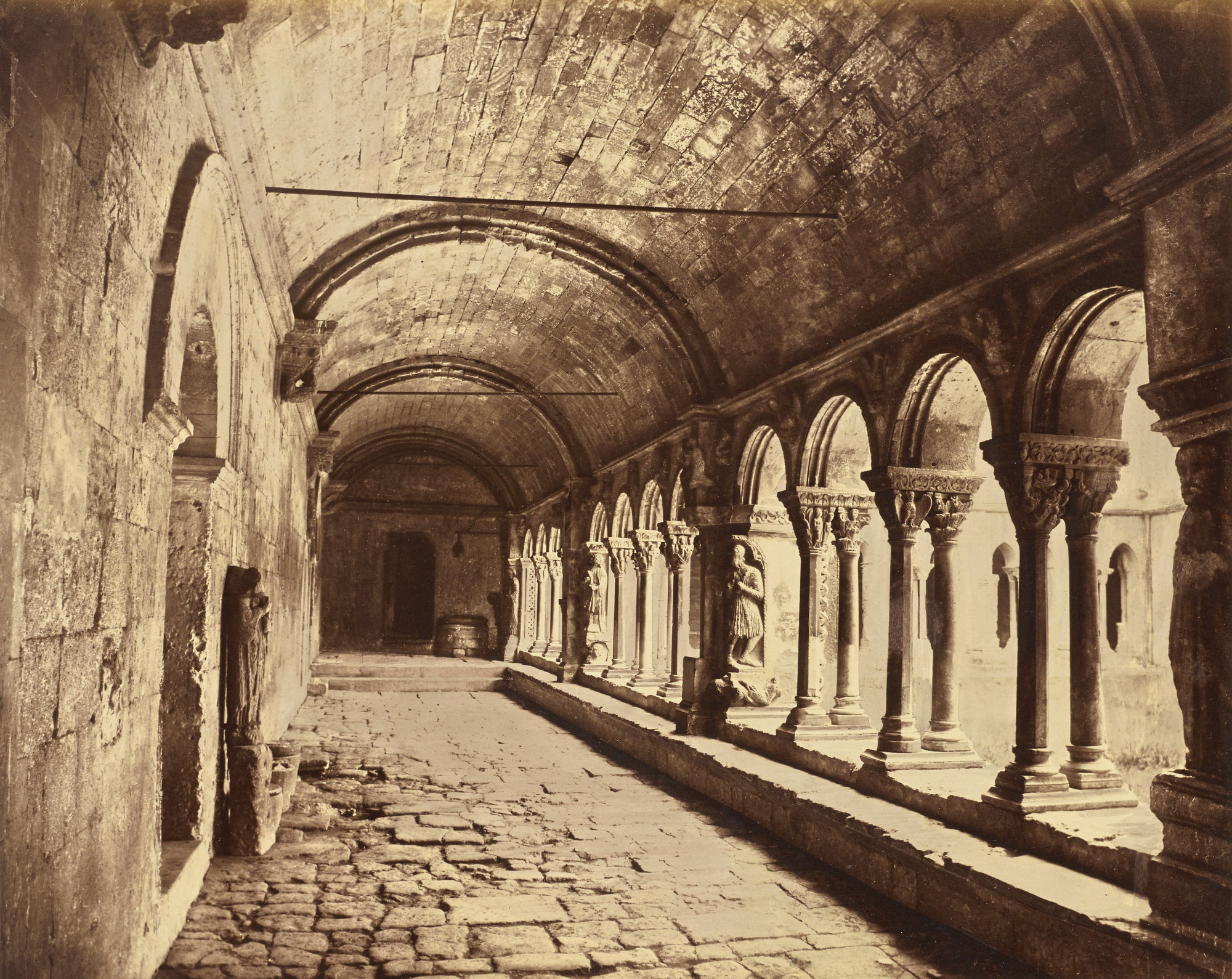
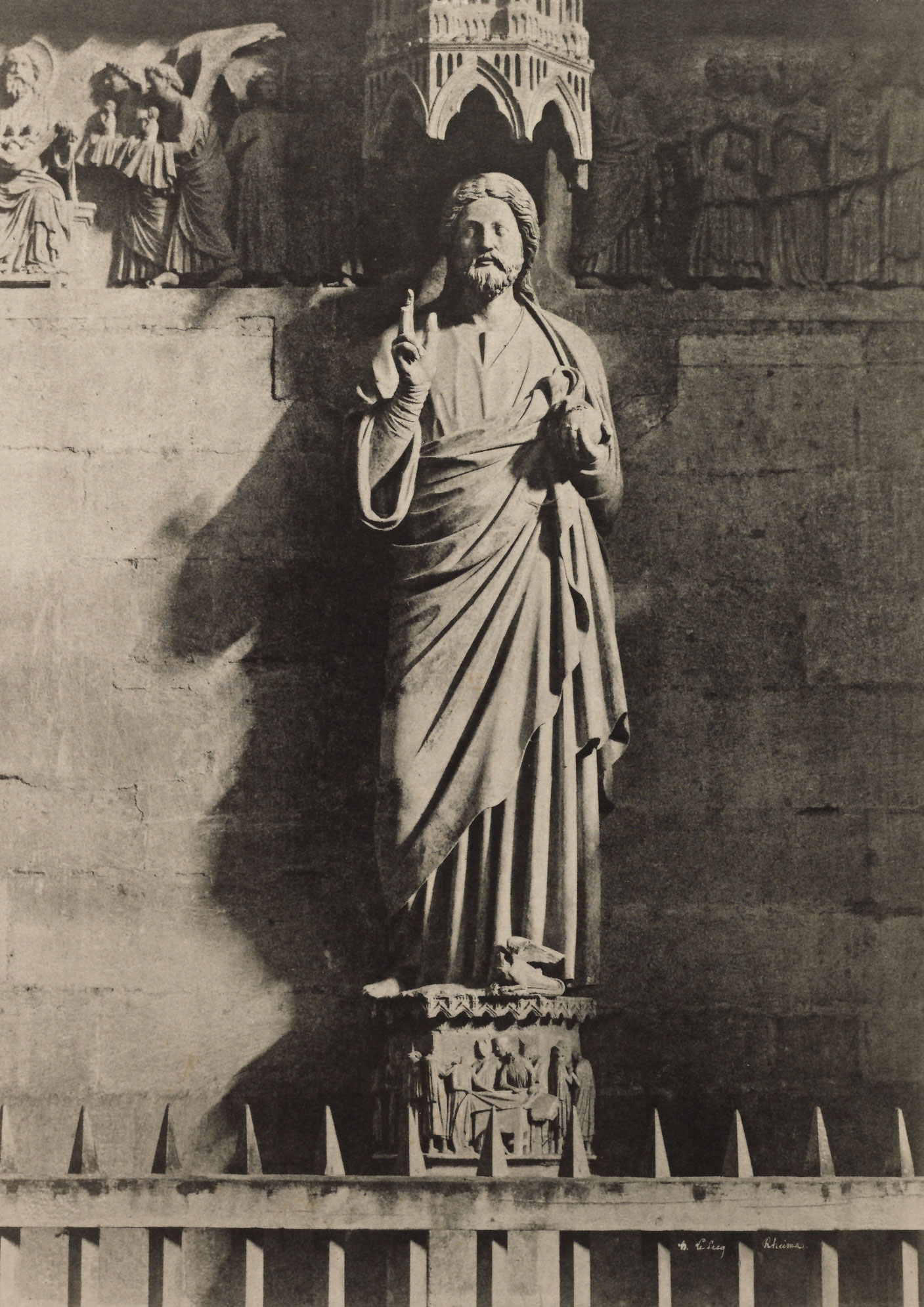
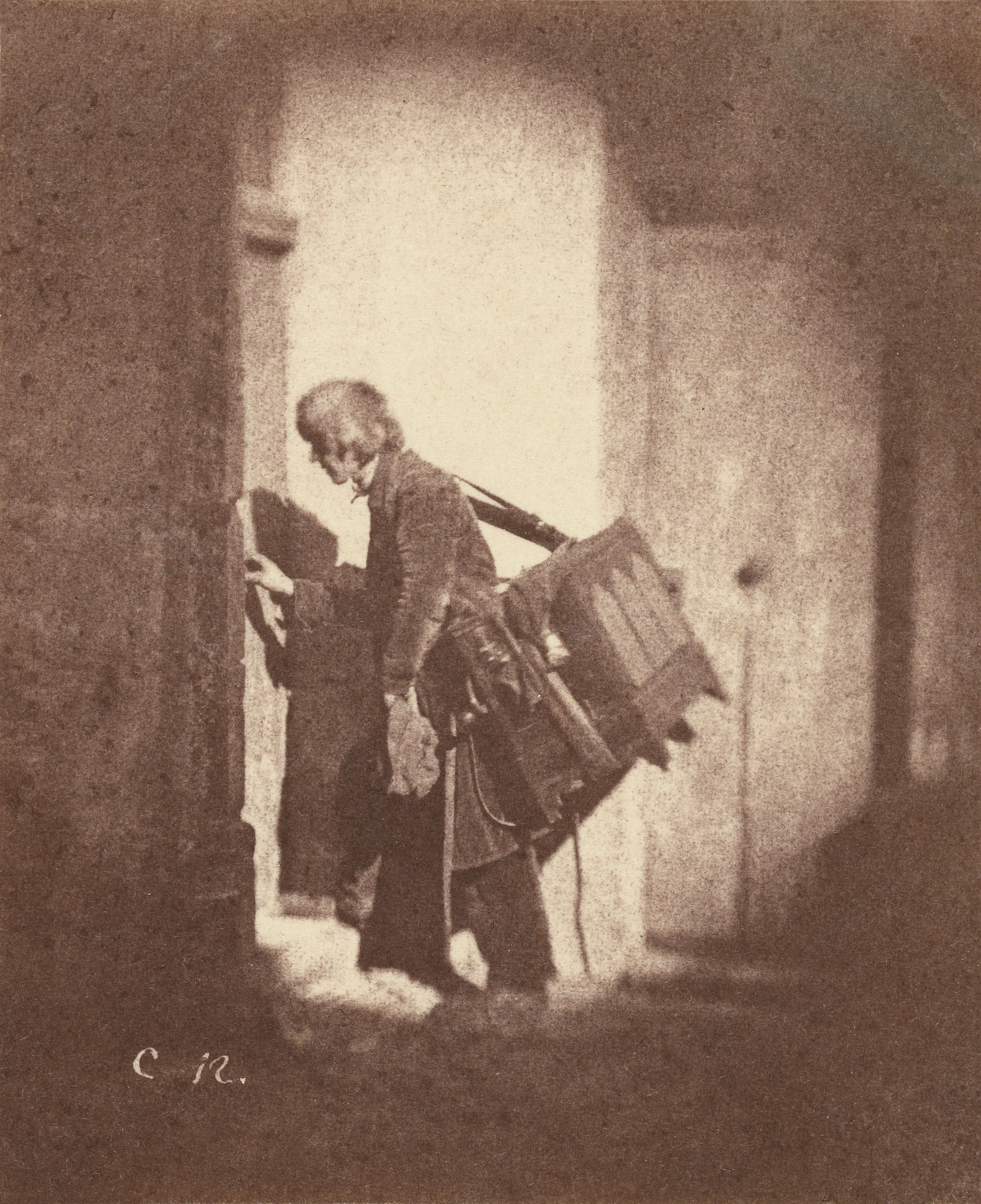
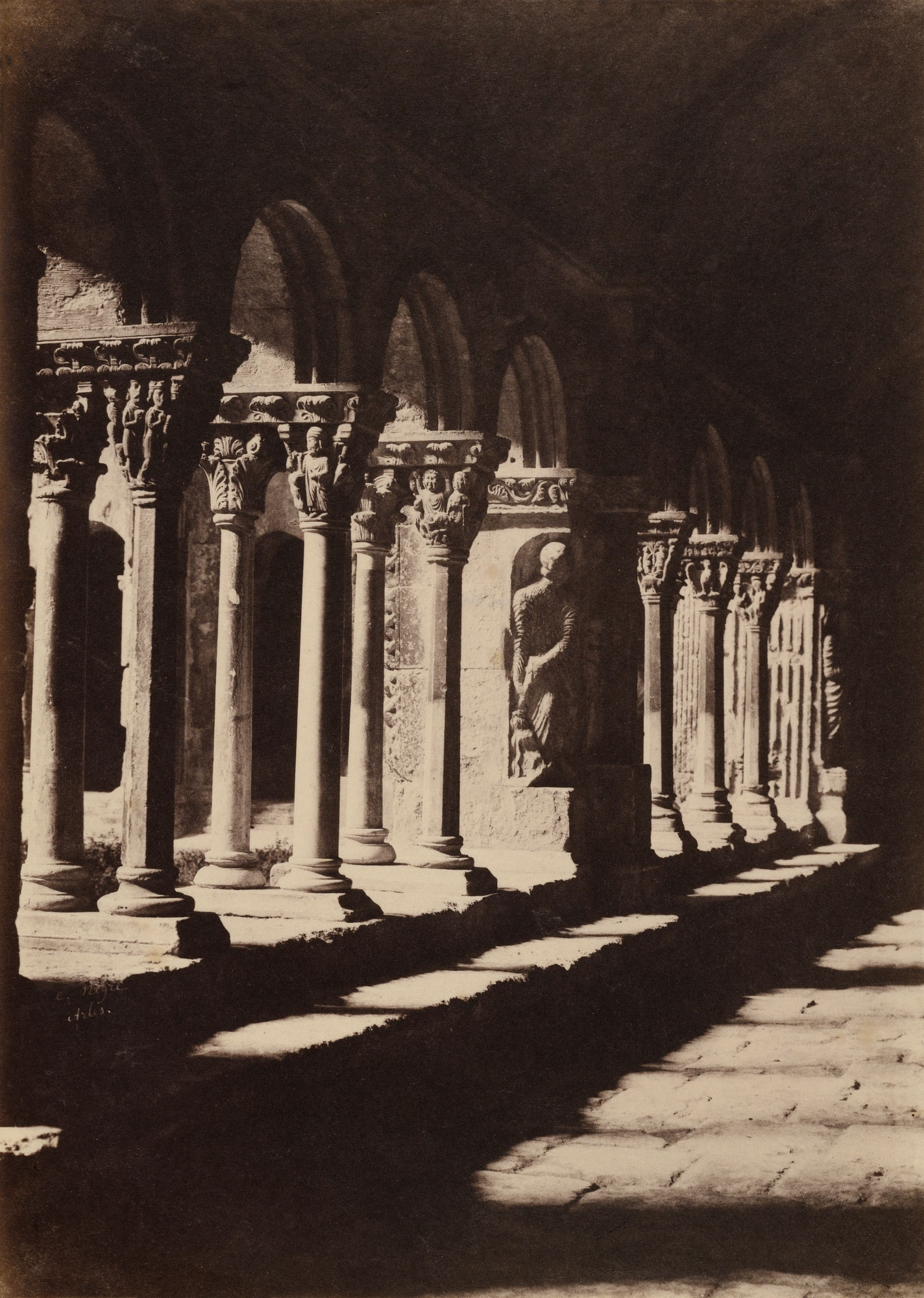

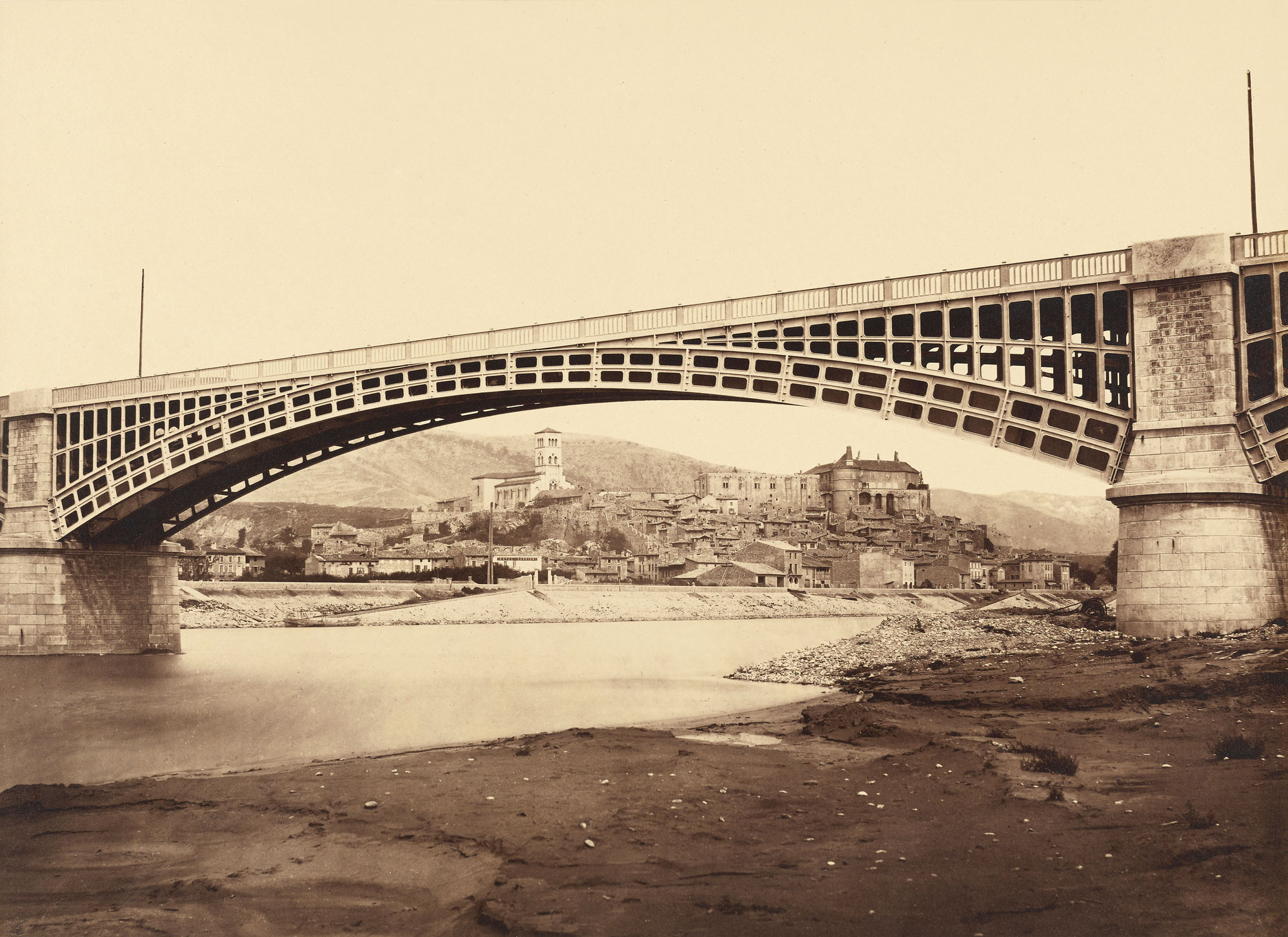
![Nadar [Gaspard Félix Tournachon] (French, 1820-1910) 'Self-Portrait' c. 1855](https://artblart.com/wp-content/uploads/2016/10/realideal12-web.jpg "Nadar [Gaspard Félix Tournachon] (French, 1820-1910) 'Self-Portrait' c. 1855")
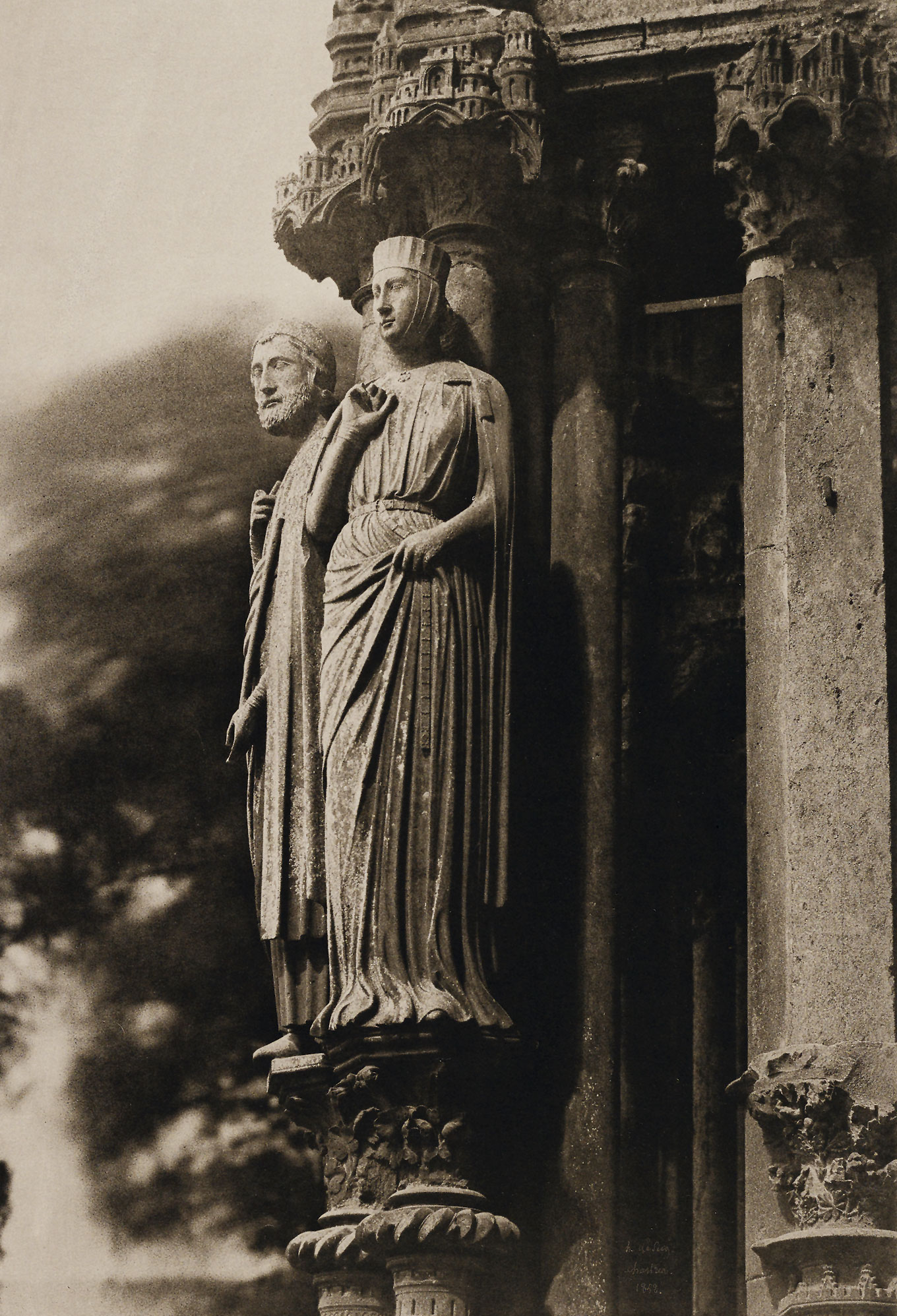
![Nadar [Gaspard Félix Tournachon] (French, 1820-1910) 'Jean-François Philibert Berthelier, Actor' 1856-1859](https://artblart.com/wp-content/uploads/2016/10/realideal21-web.jpg "Nadar [Gaspard Félix Tournachon] (French, 1820-1910) 'Jean-François Philibert Berthelier, Actor' 1856-1859")
![Nadar [Gaspard Félix Tournachon] (French, 1820-1910) 'George Sand (Amandine-Aurore-Lucile Dupin), Writer' c. 1865](https://artblart.com/wp-content/uploads/2016/10/realideal5-web.jpg "Nadar [Gaspard Félix Tournachon] (French, 1820-1910) 'George Sand (Amandine-Aurore-Lucile Dupin), Writer' c. 1865")
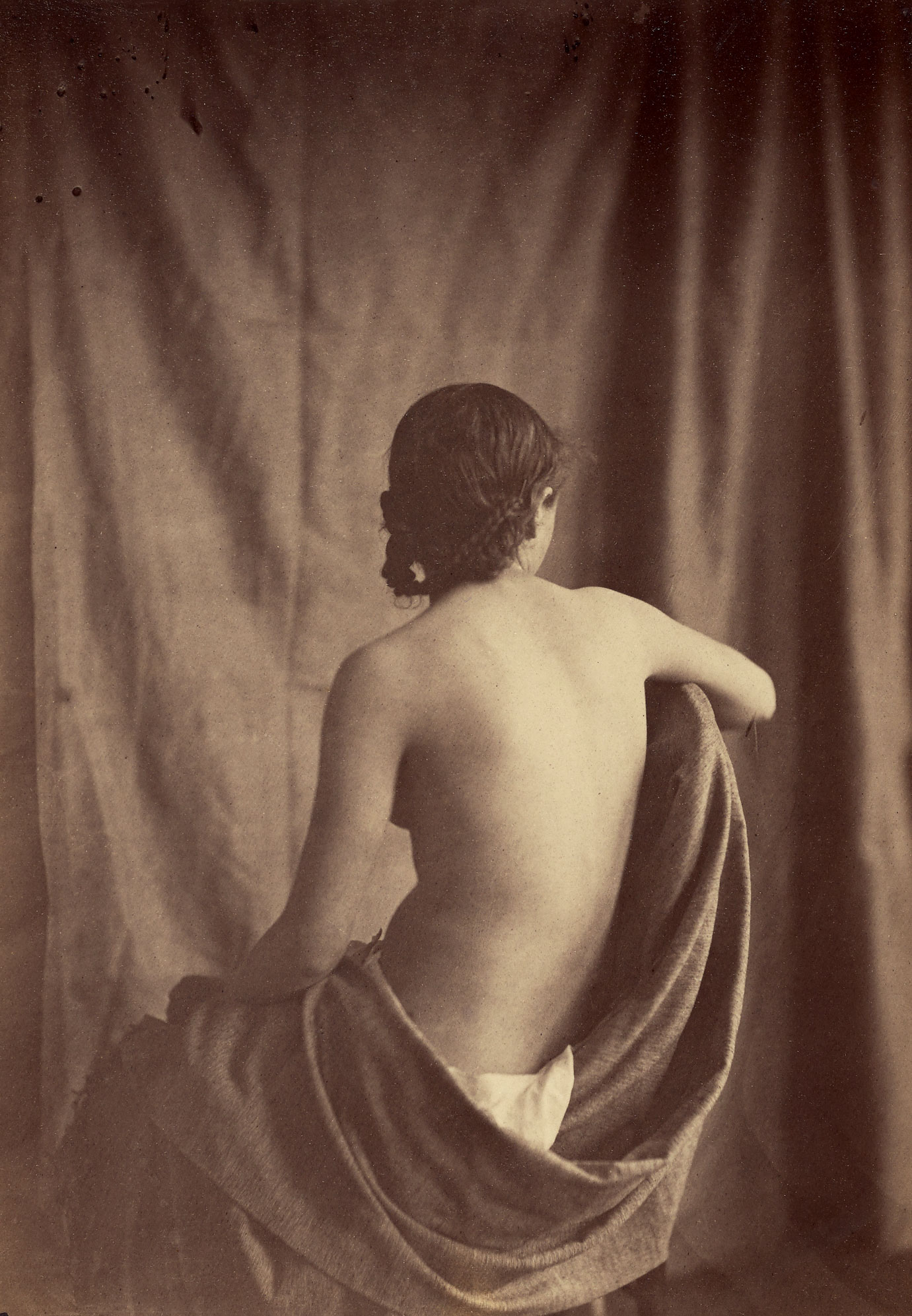
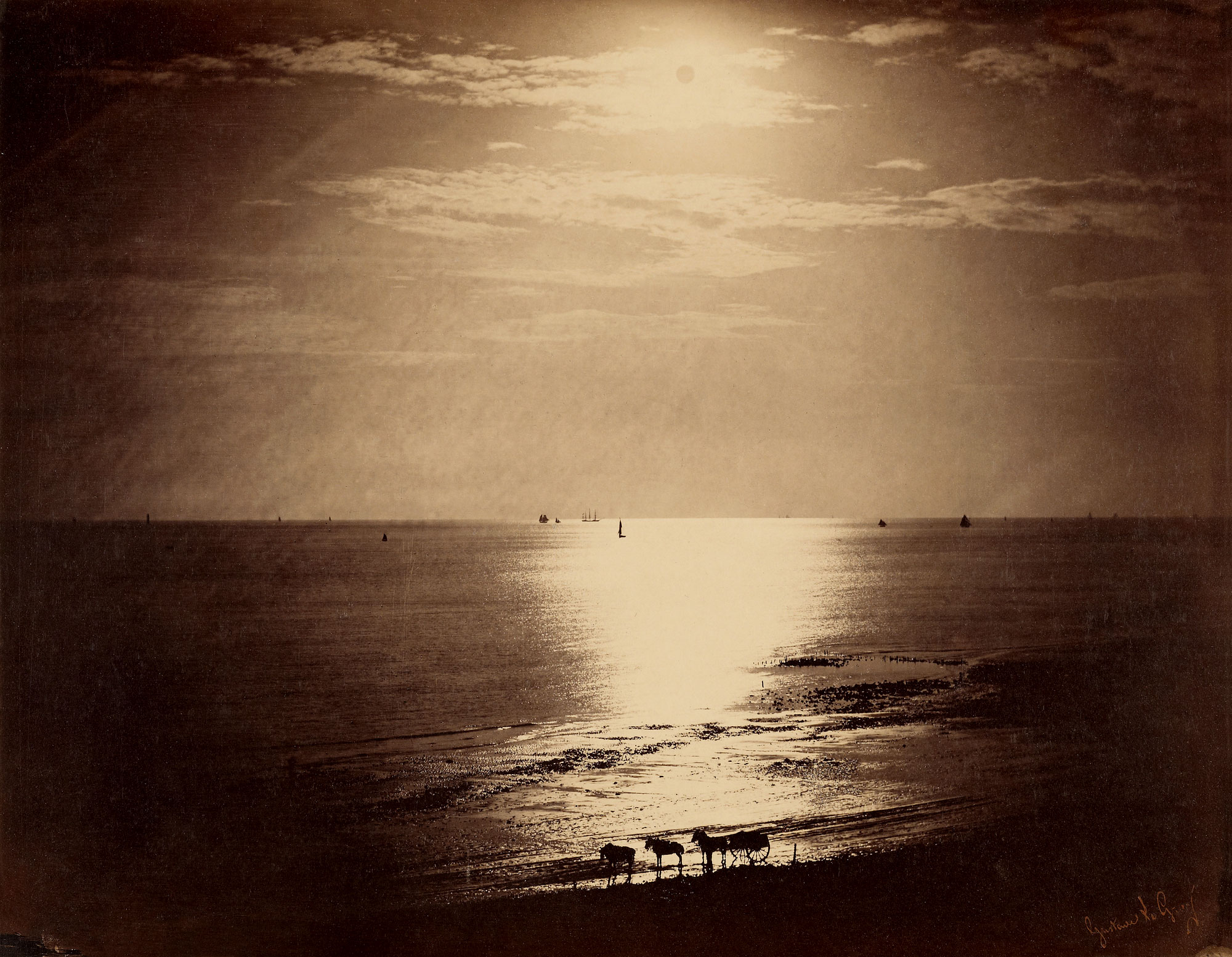


![David Hill (Scottish, 1802-1870) and Robert Adamson (Scottish, 1821-1848) 'The Gowan [Margaret and Mary Cavendish]' c. 1843-1848](https://artblart.com/wp-content/uploads/2015/06/david-hill-and-robert-adamson-the-gowan-margaret-and-mary-cavendish-c-1843-1848-web.jpg "David Hill (Scottish, 1802-1870) and Robert Adamson (Scottish, 1821-1848) 'The Gowan [Margaret and Mary Cavendish]' c. 1843-1848")


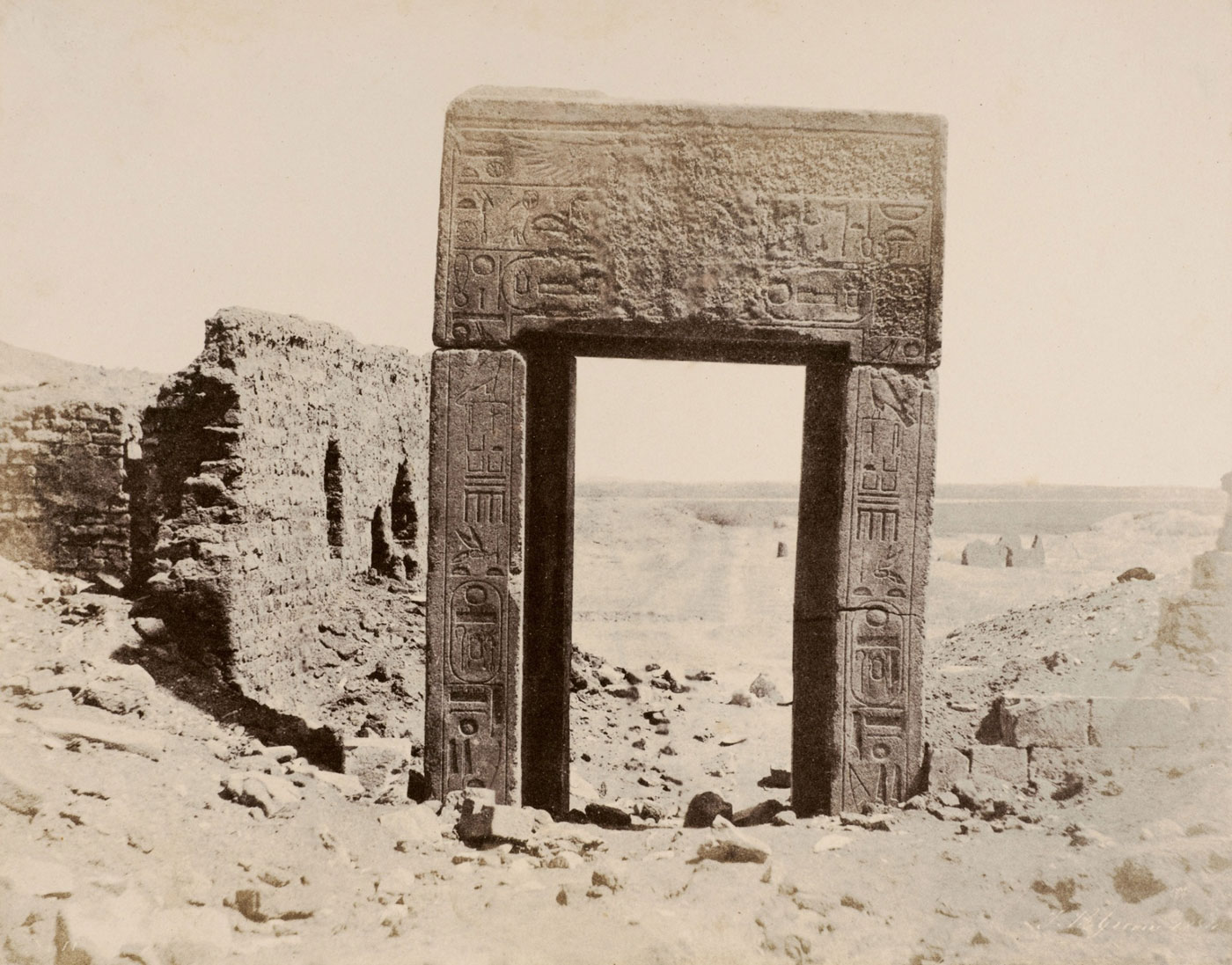


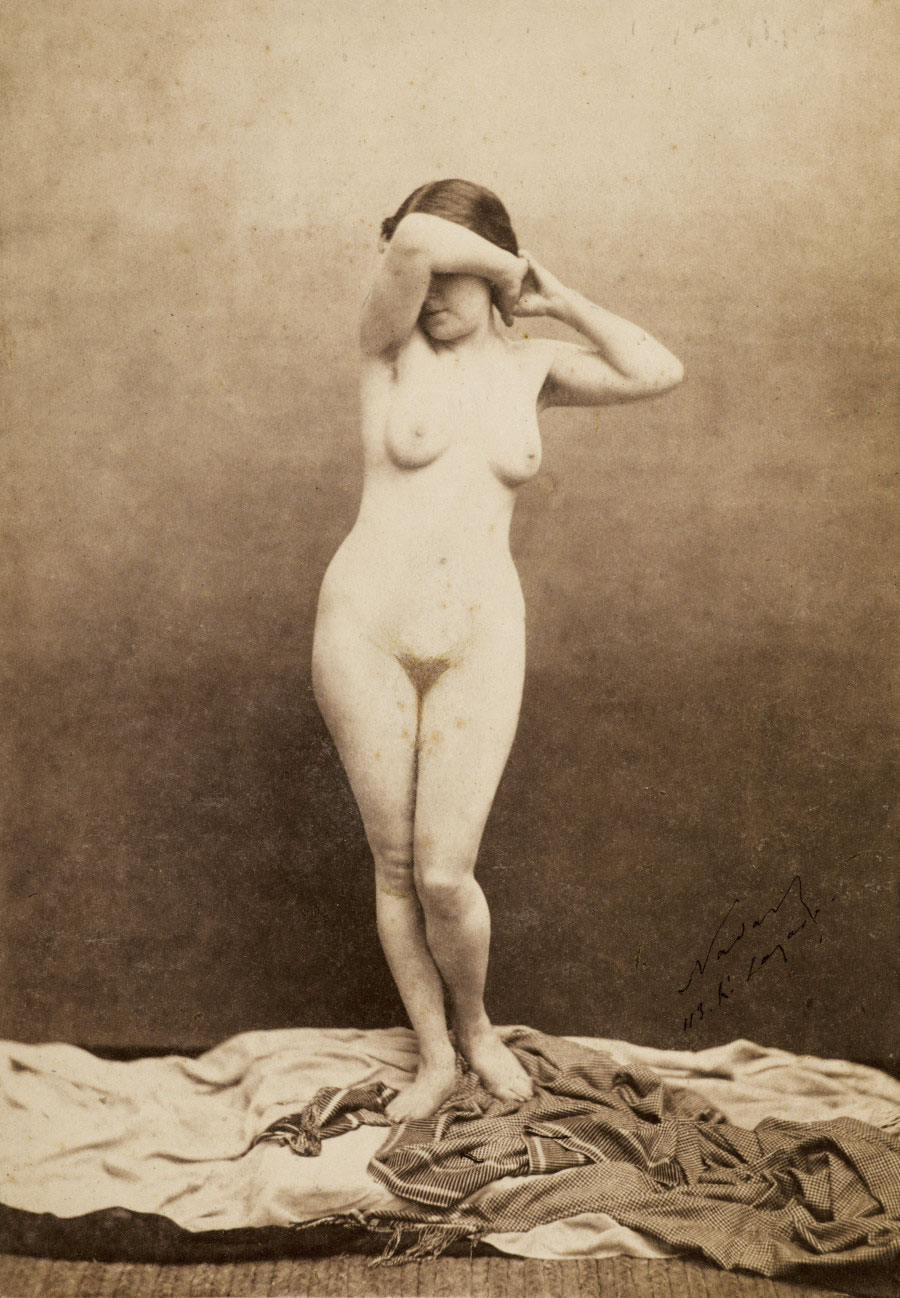


![John S. Johnston (American, c. 1839 - December 17, 1899) 'One of Dr Kane’s Men [possibly William Morton]' c. 1857](https://artblart.com/wp-content/uploads/2015/06/john-s-johnston-one-of-dr-kanes-men-possibly-william-morton-c-1857-web.jpg "John S. Johnston (American, c. 1839 - December 17, 1899) 'One of Dr Kane’s Men [possibly William Morton]' c. 1857")


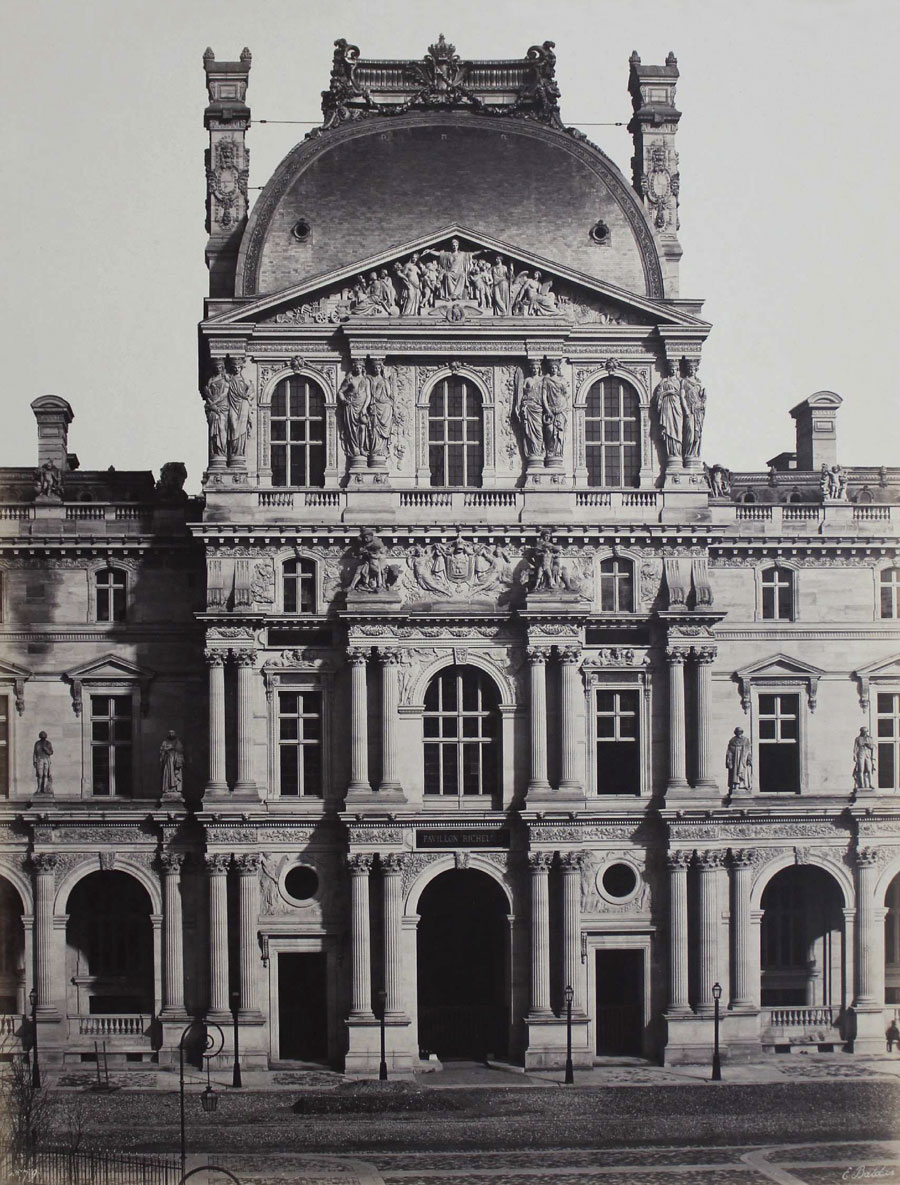


![Camille Silvy (French, 1834-1910) '[River Scene, France]' Negative 1858; print 1860s from the exhibition 'Camille Silvy, Photographer of Modern Life, 1834-1910' at the National Portrait Gallery, London, July - Oct 2010](https://artblart.com/wp-content/uploads/2010/10/silvy-river-scene-web.jpg "Camille Silvy (French, 1834-1910) '[River Scene, France]' Negative 1858; print 1860s from the exhibition 'Camille Silvy, Photographer of Modern Life, 1834-1910' at the National Portrait Gallery, London, July - Oct 2010")
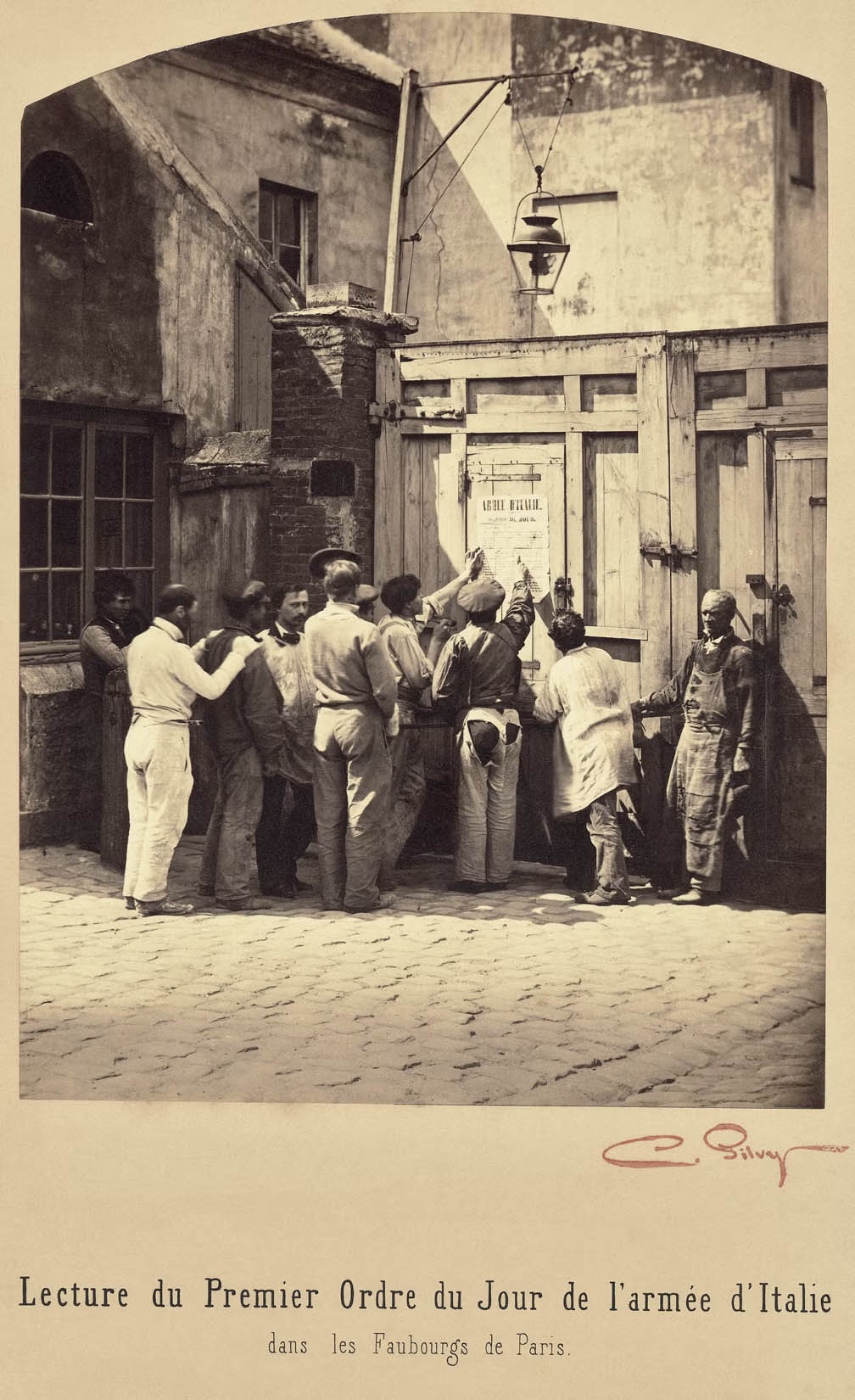

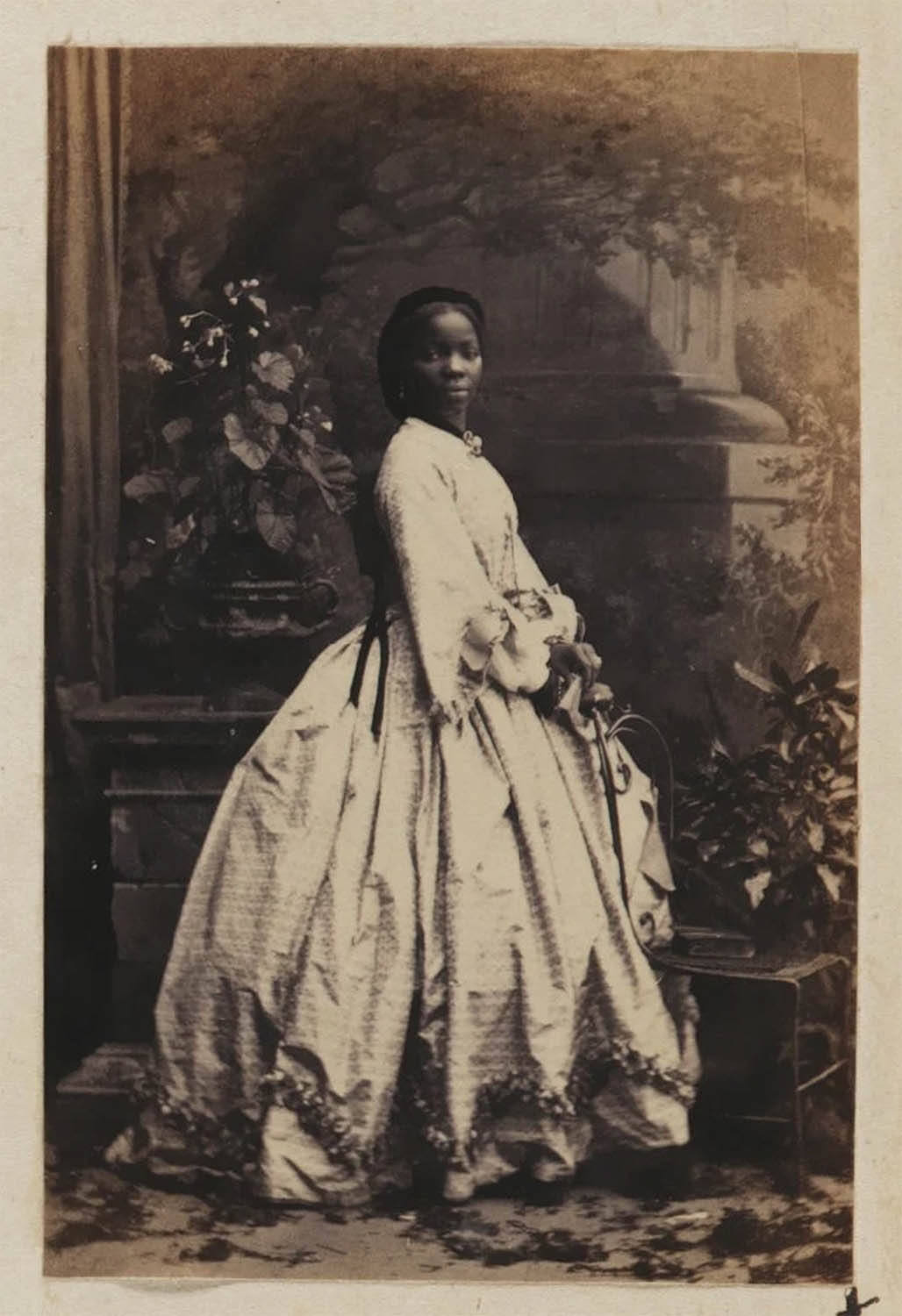
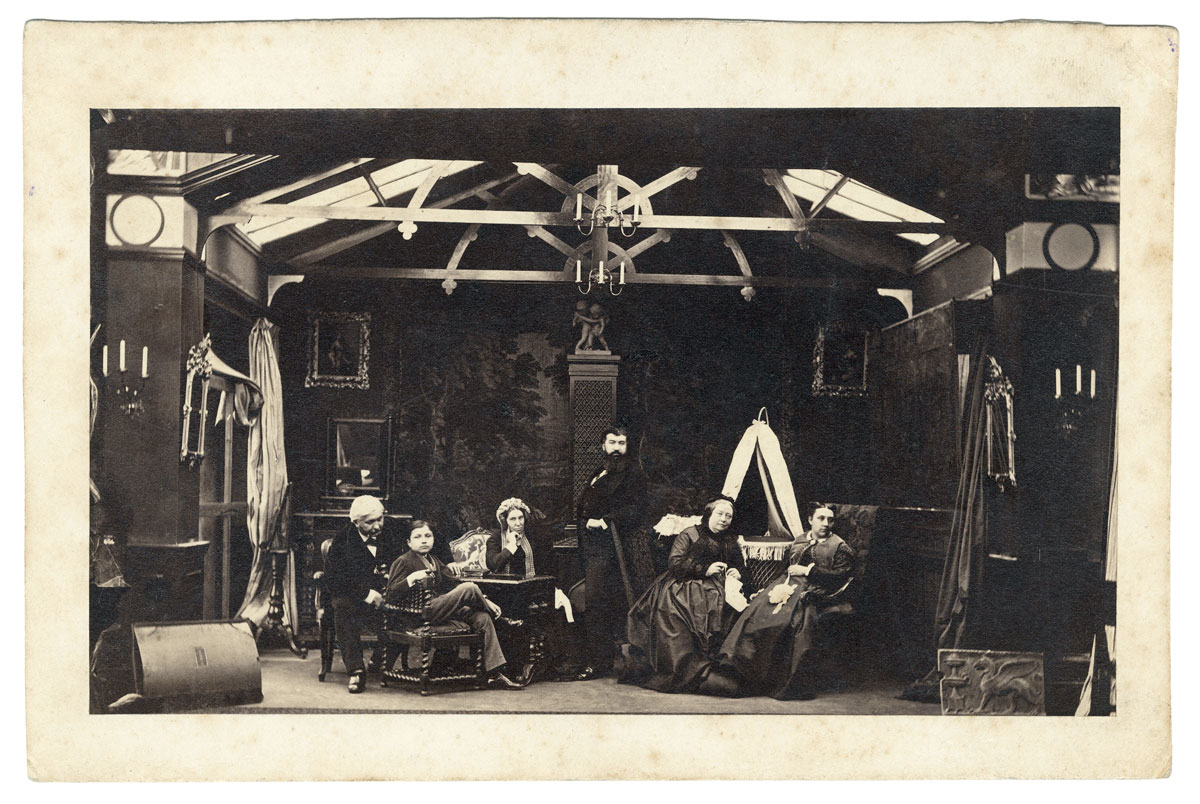


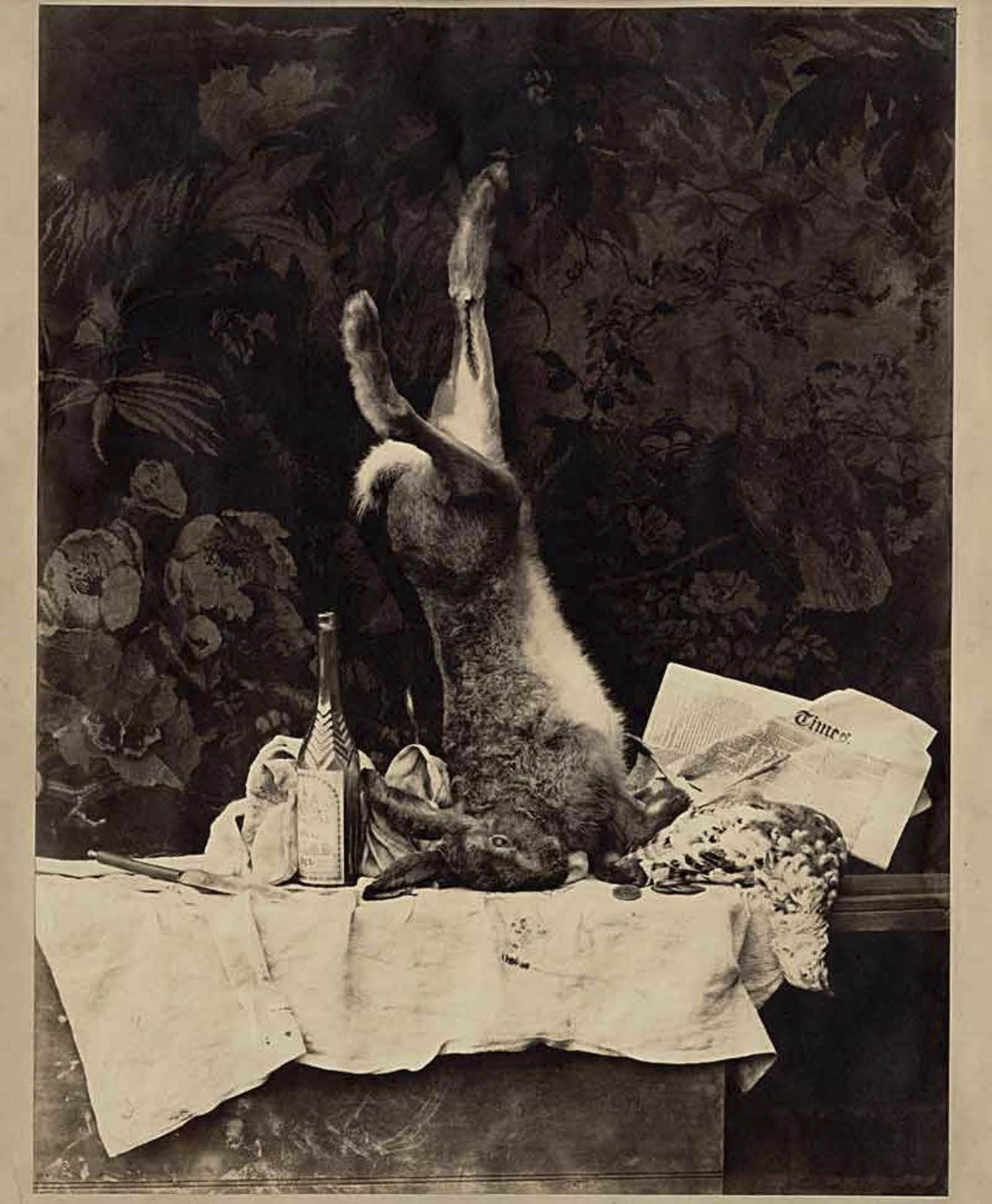
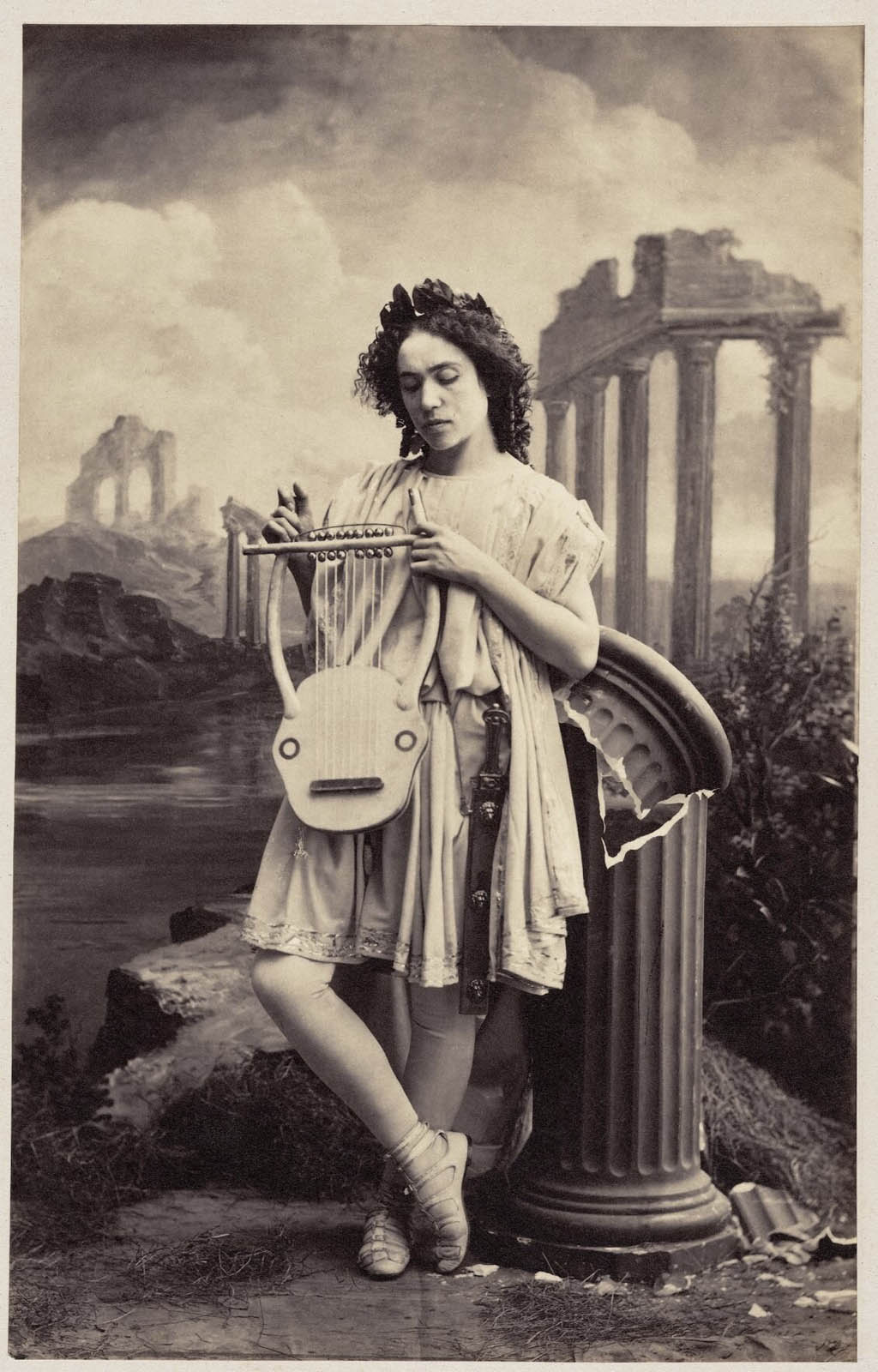
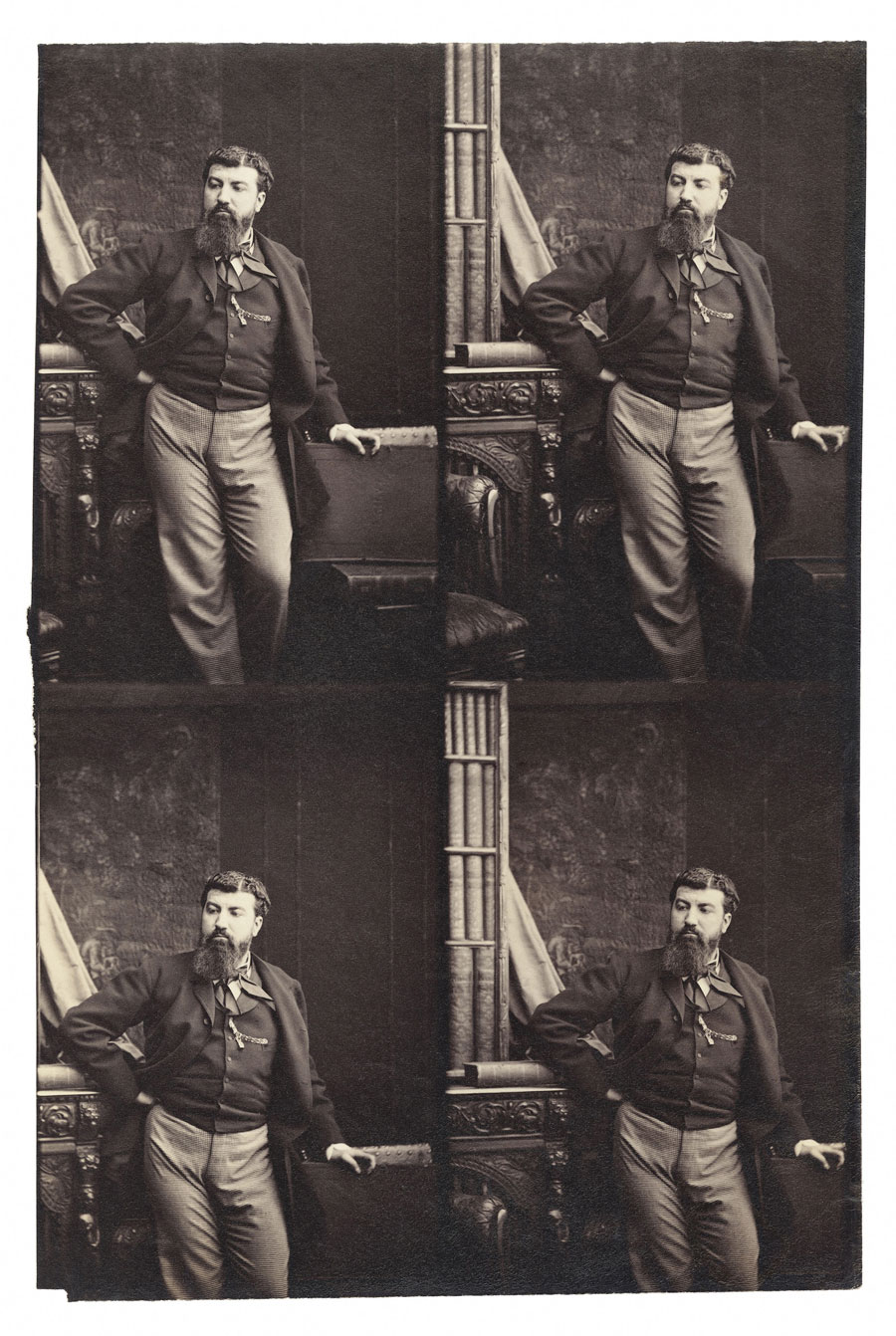
 Art Blart _ art and cultural memory archive
You must be logged in to post a comment.