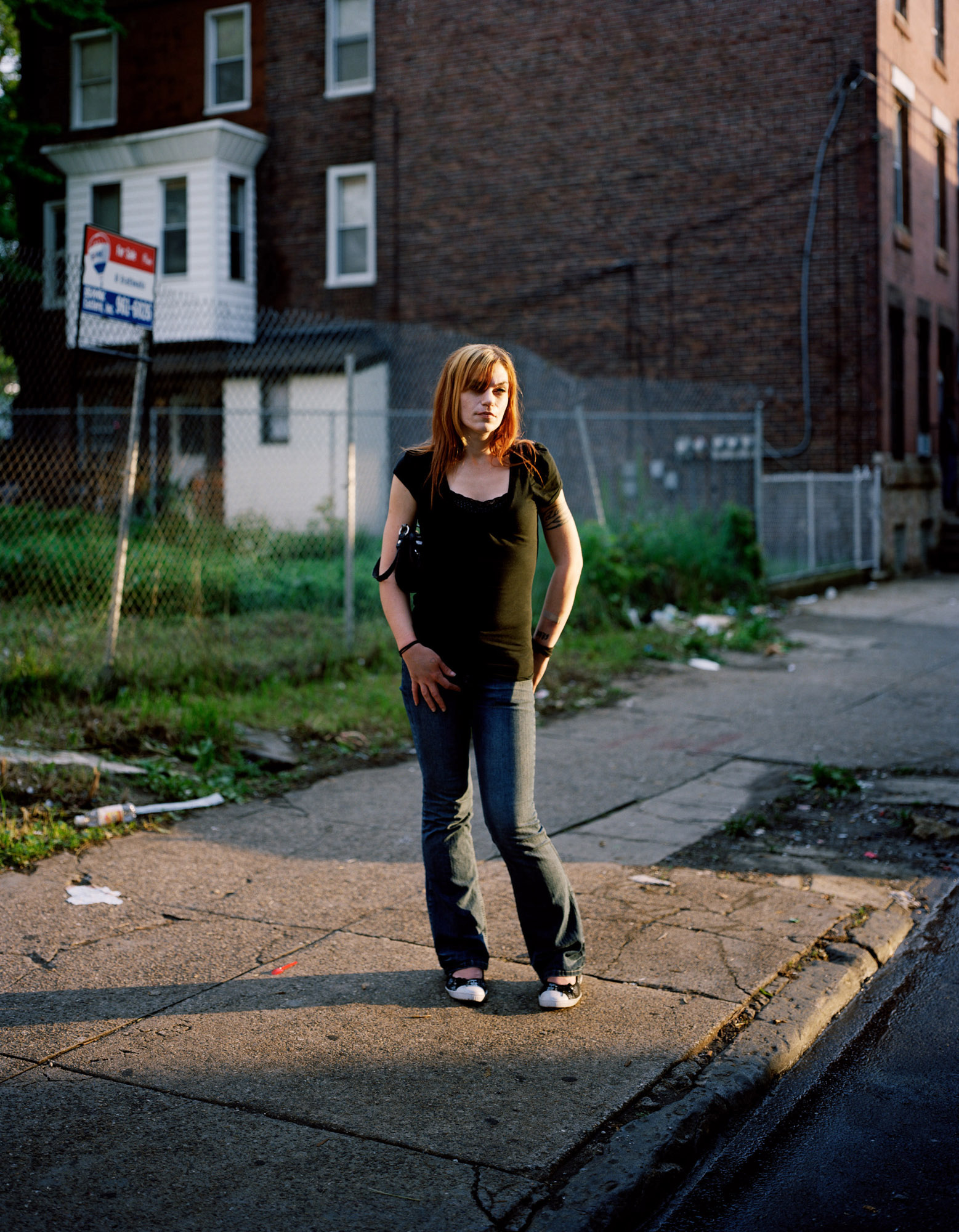
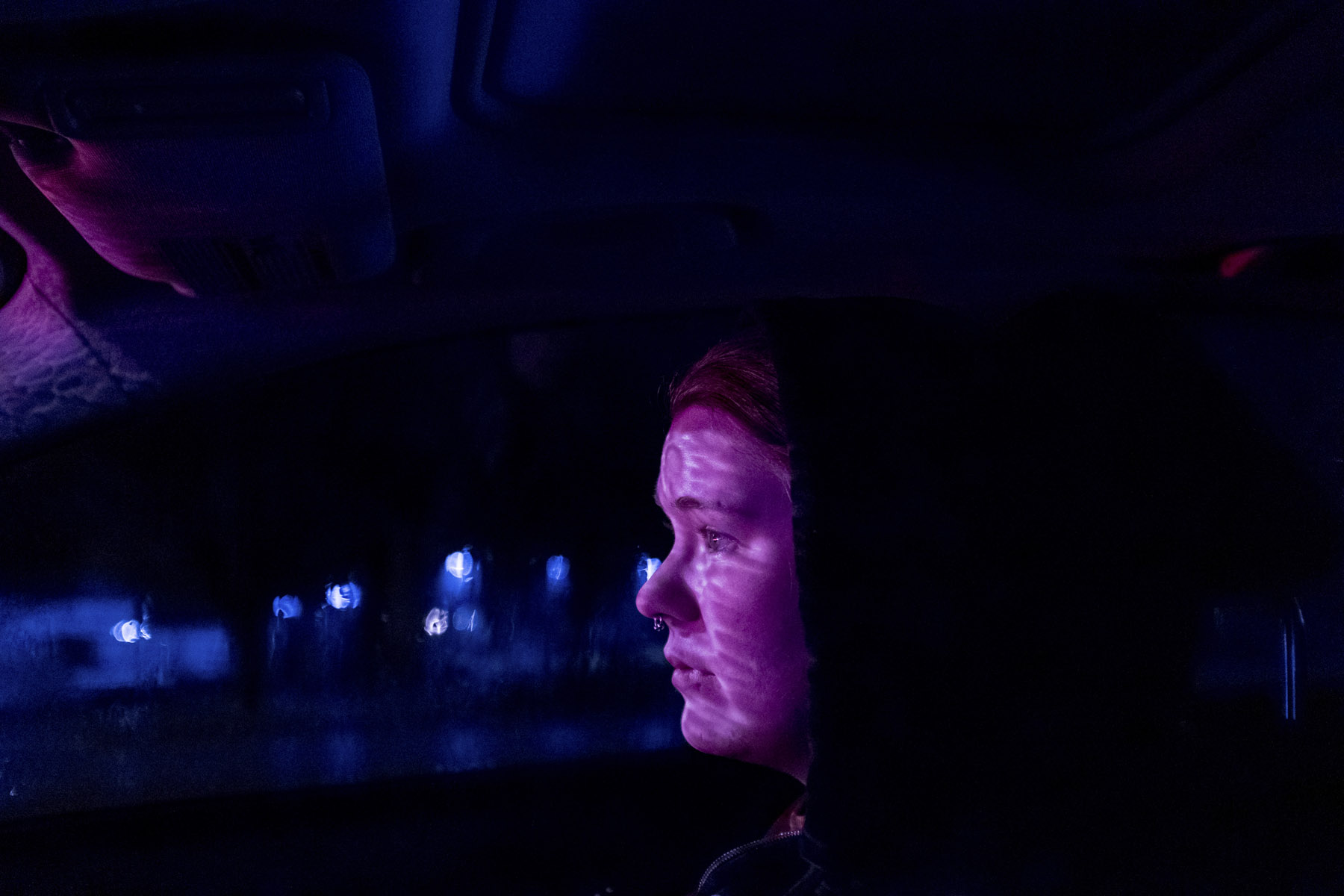
Exhibition: ‘Fashioning Self: The Photography of Everyday Expression’ at the Phoenix Art Museum

Exhibition dates: 8th March – 12th November 2023

Curator: Rebecca A. Senf, chief curator at CCP and curator of Fashioning Self
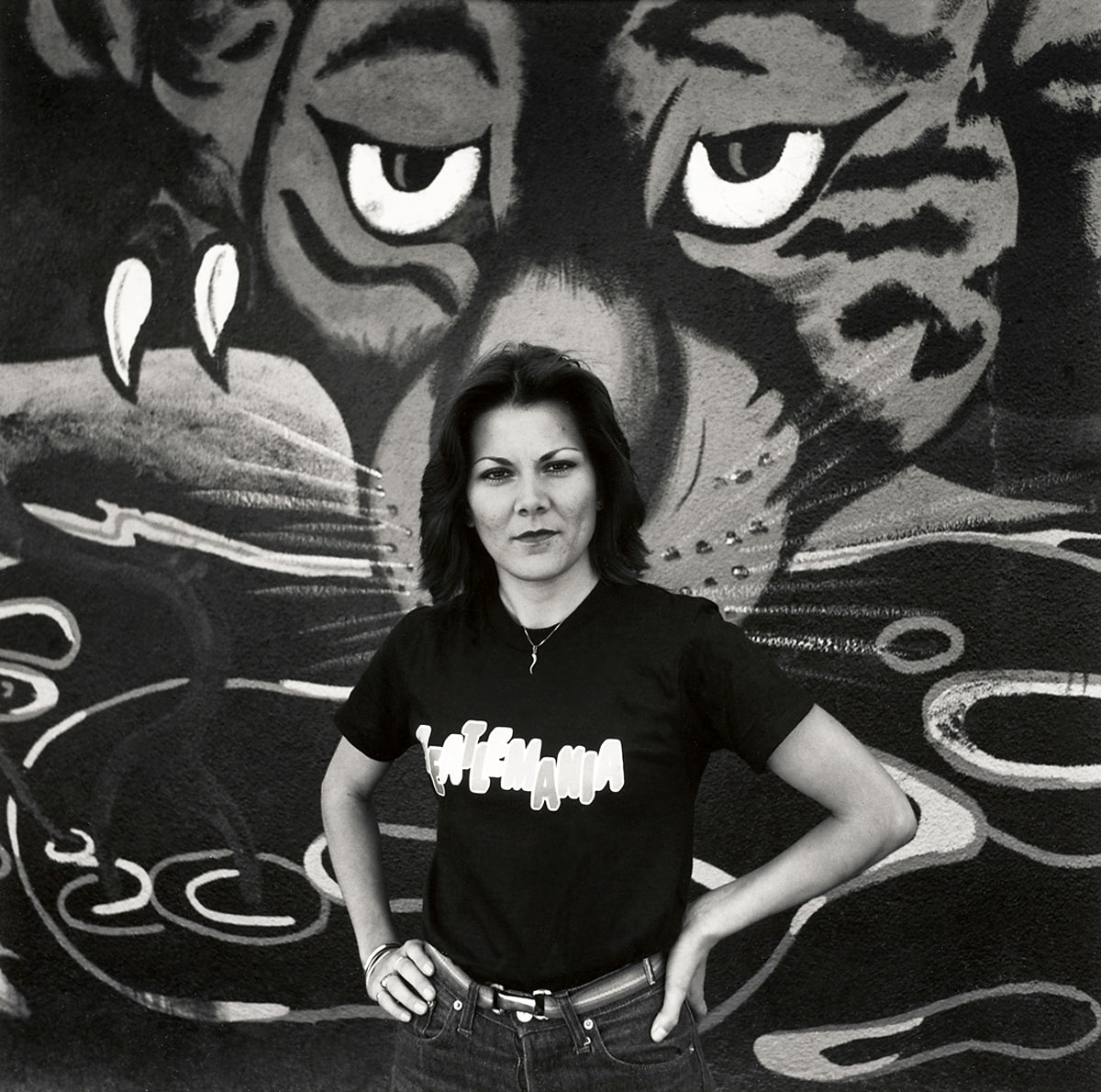
 

Roger Minick (American, b. 1944) 'Young Woman in Black with Pendant, Estrada Courts, Boyle Heights, East Los Angeles, 1978' 1978 from the exhibition 'Fashioning Self: The Photography of Everyday Expression' at the Phoenix Art Museum, March - Nov 2023


Roger Minick (American, b. 1944)
Young Woman in Black with Pendant, Estrada Courts, Boyle Heights, East Los Angeles, 1978
1978
Gelatin silver print
Center for Creative Photography, University of Arizona
Gift of the Mexican American Legal Defense and Educational Fund
© Roger Minick 1978


Freedom of the self

This is a strange group of photographs with which to investigate the “long-intertwined relationship between fashion as a tool for self-expression and photography’s role in chronicling it,” for while the many historical portrait photographs depict a link between fashion and photography of the self (through the need to fit into a regimented cultural norm), many of the vernacular images are not about fashion, are a kind of non-fashion, where the people who “pose” for the photographs are just wearing whatever they are in at the time… thereby undermining the premise of the exhibition, that the performance of self becomes a visual language through the picturing of fashion.

Indeed, despite the assertion that historical genres such as street photography “inform contemporary evolutions, such as selfies and carefully crafted social-media platforms”, most selfies taken today through the ubiquity of the phone camera are not carefully crafted, are the very antithesis of the old purpose of a portrait: that is, to picture how we choose to dress, adorn, and re/present ourselves at a particular moment in time.

In today’s contemporary age self is more about the style and context of the individual (as pictured in a photograph) rather than about the fashion (the latest style; the manner of doing something) of the individual or the collective.

Today, style is casual, informal, ephemeral, temporary… which leads us to pose the questions, are historical photographs evidence of a self-expression of more substance, compared to the rapid self, the throw away self, the narcissistic self of today? Are selfies today just a shallow expression of self or are they intended to be more, can they be more?

Today, there is less a consciousness of fashionability than there is the ability to enact the self without resort to fashion. As Yves Saint Laurent once said, “Fashion fades, style is eternal.”

While visual representations of identity continue to shape our understandings of self and each other “with intimate details that alert viewers to who we are, as filtered through the photographic medium” this is no longer achieved through the definition of self as “fashionable” (as defined on a hierarchical scale of who is fashionable and who isn’t, who is beautiful and who isn’t) – rather, it is through the equivalence of a nonhierarchical expression of self where everything becomes valuable, every selfie and portrait of equal awareness and importance in a collective and individual consciousness of self.

The very non-fashion of contemporary self expression is a non-performance, an anti-ritual if you like (which destroys the ritual of production of consumable fashion), which negates fashion as defining the self, much as photography of the self does not define who we are but is only a very small facet of a multi-layered identity.

All of which makes the premise of this exhibition (that the performance of self becomes a visual language through the picturing of fashion) and the first part of its title – Fashioning Self – highly problematic.

Dr Marcus Bunyan

PS. Many thankx to my friend and artist Elizabeth Gertsakis for her help in providing thoughts and inspiration for this text.


Many thankx to the Phoenix Art Museum for allowing me to publish the photographs in the posting. Please click on the photographs for a larger version of the image.


Louis Carlos Bernal (American, 1941-1993) 'Albert and Lynn Morales, Silver City, New Mexico' 1978 from the exhibition 'Fashioning Self: The Photography of Everyday Expression' at the Phoenix Art Museum, March - Nov 2023


Louis Carlos Bernal (American, 1941-1993)
Albert and Lynn Morales, Silver City, New Mexico
1978
Chromogenic print. Center for Creative Photography, University of Arizona
Gift of the Mexican American Legal Defense and Educational Fund
© Lisa Bernal Brethour and Katrina Berna


Louis Carlos Bernal (1941-1993) was born in Douglas, Arizona, and grew up in Phoenix. After completing his M.F.A. at Arizona State University in 1972, he joined the faculty of Pima Community College in Tucson, where he remained for the duration of his career, developing and heading its photography program. In 1979, Bernal, along with four other photographers – Morrie Camhi, Abigail Heyman, Roger Minick, and Neal Slavin – received funding from the Mexican American Legal Defense and Educational Fund to photograph Chicano culture in the Southwest for an exhibition and a book project entitled ESPEJO: Reflections of the Mexican American. The commission brought him closer to his ethnic roots and fueled a passionate direction for his work that gained him international recognition for championing regional diversity while symbolizing his exploration of identity as a Mexican American.

Following a tradition of Latin American documentary street photography, Bernal photographed in the barrio – a young girl and her grandfather in a corner barber shop, a girl taking her quinceañera, or locals posing in front of colourful wall murals – images that captured the unique character of Chicano life. He wrote, “My images speak of the religious and family ties I have experienced as a Chicano. I have concerned myself with the mysticism of the Southwest and the strength of the spiritual and cultural values of the barrio.”

Bernal also centered on the family and the home, believing these two elements combined to form the most significant structure within the Mexican-American community. As he wandered streets from Texas to Los Angeles, and met people who were soon drawn to charismatic personality, he was often invited into their homes. He asked permission to photograph them surrounded by their treasured possessions, their family portraits and mementos, and their shrines decorated with saints, candles, and flowers. His subjects appear at ease and confident in front of his camera, a product of Bernal’s deep respect for them. Bernal’s interest in what people chose to surround themselves with led him to photograph the interiors of homes without people. These sensitive portraits of both prized and everyday items in living rooms, bedrooms and gardens were perhaps his most significant innovation.

Bernal’s interest in strong compositional design and technical expertise are evident in both his skilfully printed black-and-white images and his colour work that luminously captures the bright pinks, blues, and greens of interior painted adobe walls, window curtains, and religious icons. He felt a particular urgency to document the streets, people, homes, and artefacts in historic neighbourhoods, as many were undergoing rapid changes or being bulldozed to make way for urban renewal. In recording the Mexican- American experience of Southwest towns and barrios, Bernal created a visual document that preserves the specific iconography and reveals many aspects of this distinct culture.

The Louis Carlos Bernal Collection contains 98 fine prints, both black-and-white and colour, and research materials that include project records, correspondence, clippings, writings and publications.

Anonymous. “Louis Carlos Bernal,” on the Centre for Creative Photography website Nd [Online] Cited 28/09/2023


Kozo Miyoshi (Japanese, b. 1947) 'Tucson, Arizona' 1992 from the exhibition 'Fashioning Self: The Photography of Everyday Expression' at the Phoenix Art Museum, March - Nov 2023


Kozo Miyoshi (Japanese, b. 1947)
Tucson, Arizona
1992
Gelatin silver print
Center for Creative Photography, University of Arizona
Gift of the artist, DEP’T CO.,LTD., Tokyo, Nippon Polaroid, Tsudani Oil Co. Ltd.
© Kozo Miyosh


Kozo Miyoshi was born in Chiba, Japan in 1947. He graduated from the Department of Photography at Nihon University College of Art in 1971. He began his photographic career in the 1970s and started shooting an 8 × 10-inch large format camera in 1981. In 2009 he upgraded to an ultra large format 16 × 20-inch camera which he continues to use on his travels. Miyoshi’s photographs have received international acclaim for their unique and sincere approach to his fleeting subjects.


Dennis Feldman (American, b. 1946) 'Man with Reflective Glasses' 1969-1972


Dennis Feldman (American, b. 1946)
Man with Reflective Glasses
1969-1972
Center for Creative Photography, University of Arizona
Gift of the artist
© Dennis Feldman


Dennis Feldman (American, b. 1946) 'White Girl 1970' 1970


Dennis Feldman (American, b. 1946)
White Girl 1970
1970
Gelatin silver print
Center for Creative Photography, University of Arizona
Gift of the artist
© Dennis Feldman


From the seedy streets of Los Angeles to empty living rooms and apartments across the United States, the photographs of Dennis Feldman (b. 1946) explore the ways popular entertainment seeps into American consciousness. Pictures from his most acclaimed series, Hollywood Boulevard, 1969-1972, invite subjects from social parade of Los Angeles’s famed sidewalk to animate their self-styled identities. His American Images series, published in 1977, pursues other disclosures, revealing tensions that have come to define the underside of the American dream. In some pictures, people relish the escape and freedom symbolised by cars and movieland, while others seem to search for more elusive horizons. Like Walker Evans, Robert Frank, and Frederick Sommer – pioneering photographers whom he considers mentors – Feldman carefully crafts compositions that do not judge their subjects. Instead, they pry apart the world of appearances to reflect on fantasy and desire as they intertwine with paths of everyday life.

Anonymous. “Dennis Feldman: Photographs,” on the BAMPFA website 2019 [Online] Cited 28/09/2023


Garry Winogrand (American, 1928-1984) 'Untitled [Liberace with his mother]' New York, 1954


Garry Winogrand (American, 1928-1984)
Untitled [Liberace with his mother]
New York, 1954
Gelatin silver print
Center for Creative Photography, University of Arizona
Garry Winogrand Archive
Gift of the artist
© The Estate of Garry Winogrand, courtesy Fraenkel Gallery, San Francisco


Fashioning Self: The Photography of Everyday Expression examines the role of photography in shaping, sharing, and shifting identity.

About the exhibition

Whether for a selfie or formal portrait, we all craft our appearance and identity for a public audience. We consider cultural and social norms, the emotions we wish to express or hide away, where we’re going and with whom, and the purpose of the photograph when choosing how we dress, adorn, and present ourselves. The resulting images serve as a window into a particular moment of our life, with intimate details that alert viewers to who we are, as filtered through the photographic medium.

Organised by Phoenix Art Museum and the Center for Creative Photography (CCP), Fashioning Self: The Photography of Everyday Expression features 54 works of street, documentary, and self-portrait photography from 1912 to 2015 that explore this long-intertwined relationship between fashion as a tool for self-expression and photography’s role in chronicling it. Iconic views by Dennis Feldman, Laura Volkerding, Linda Rich, John Simmons, David Hume Kennerly, Teenie Harris, and more illuminate the dialogue that occurs between photographer and subject – the give-and-take between self-performance and art making.

Alongside these works drawn from CCP’s outstanding collection, Fashioning Self also features a rotating display of social media images reflecting community members and individuals from across the United States. Throughout the duration of the exhibition, the Museum and CCP will invite visitors, Arizona residents, and our collective social media followings to take their own selfies and portraits in the galleries or in their environments and share them via the hashtag #FashioningSelf for display in Norton Gallery. By placing these contemporary, real-time images in conversation with works by renowned photographers of the Americas, the exhibition interrogates what it means to be an artist or maker in a world where cameras are commonplace and everyone curates a feed.

Text from the Phoenix Art Museum website
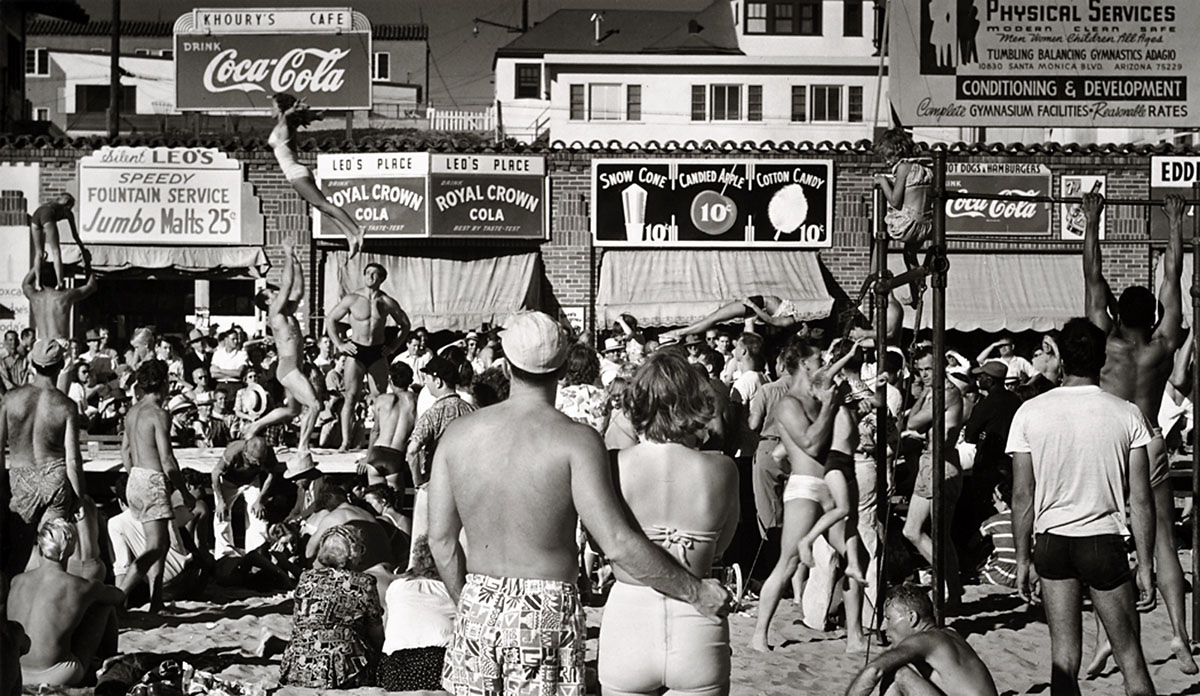
 

Max Yavno (American, 1911-1985) 'Muscle Beach, Los Angeles' 1949


Max Yavno (American, 1911-1985)
Muscle Beach, Los Angeles
1949
Gelatin silver print
Center for Creative Photography, University of Arizona
Purchase
© Center for Creative Photography, The University of Arizona Foundation
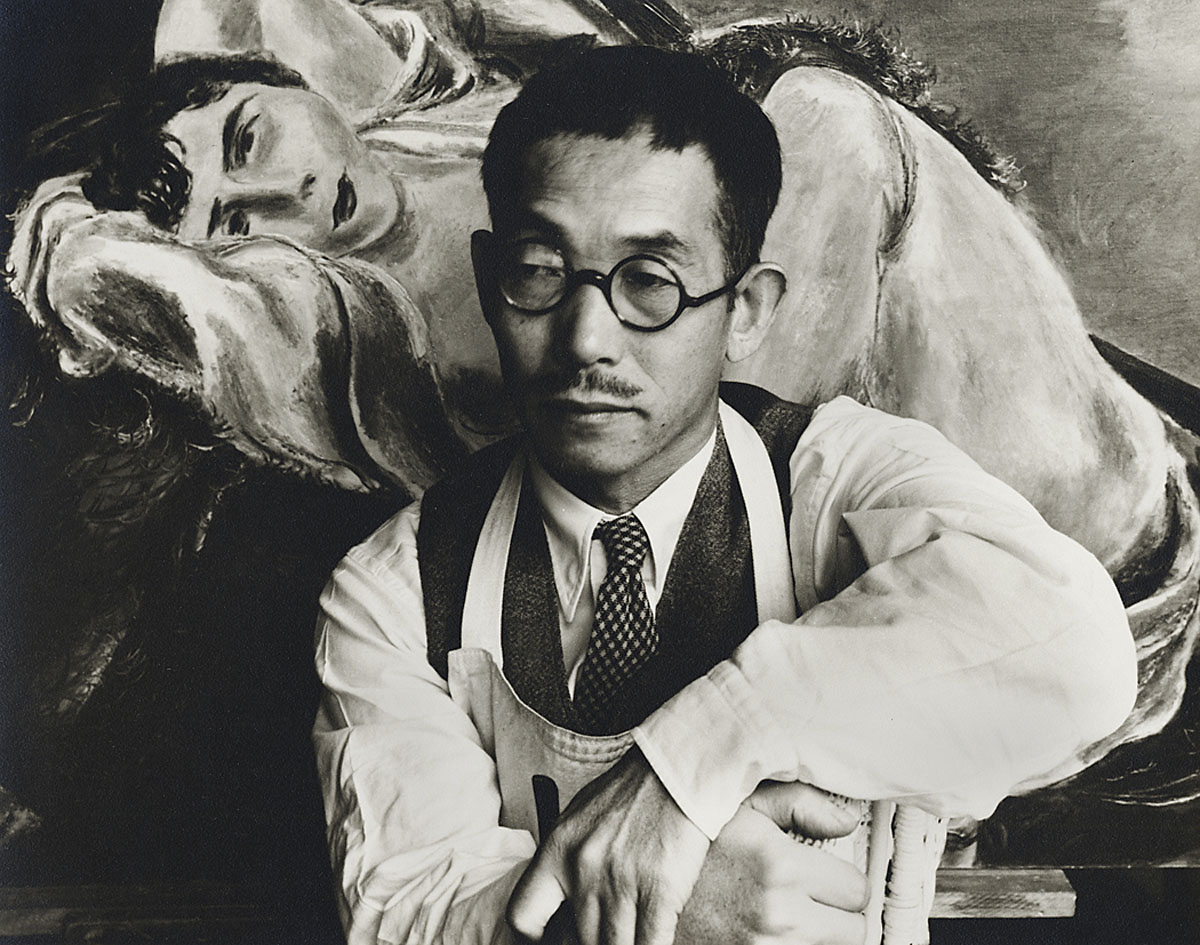
 

Max Yavno (American, 1911-1985) 'Kuniyoshi Portrait' c. 1941


Max Yavno (American, 1911-1985)
Kuniyoshi Portrait
c. 1941
Gelatin silver
Center for Creative Photography, University of Arizona
Max Yavno Archive
© Center for Creative Photography, The University of Arizona Foundation


Yasuo Kuniyoshi (国吉 康雄, Kuniyoshi Yasuo, September 1, 1889 – May 14, 1953) was an eminent 20th-century Japanese-American painter, photographer and printmaker.


Max Yavno (American, 1911-1985) 'Untitled [Opening Night at the San Francisco Opera]' 1947


Max Yavno (American, 1911-1985)
Untitled [Opening Night at the San Francisco Opera]
1947
Gelatin silver print
Center for Creative Photography, University of Arizona
Max Yavno Archive
© Center for Creative Photography, The University of Arizona Foundation


Social documentary photographer Max Yavno (1911-1985) identified the odd charm that constitutes the identity of a place and people. Born in New York, Yavno was a social worker from 1932-1936; this background clearly informed his photographic career. His humanistic sensibility is revealed in his work, which includes street photographs made in New York, San Francisco, and Los Angeles. Yavno is best known for his depictions of these great American cities and the cultural and social detail of their inhabitants, many of which distinctively reflect their era.

In 1936, Yavno began photographing New York street life for the Works Progress Administration’s Federal Theater Project. As his interest in photography burgeoned, Yavno joined the Photo League and served as its President in the late 1930s. Through this organisation he met Aaron Siskind who became his roommate and lifelong friend. During World War II, Yavno served in the United States Army Air Force as a film and photography instructor. Following the war, he relocated to San Francisco and continued teaching. There, Yavno began a freelance career with clients including Vogue and Harper’s Bazaar. During this time Yavno achieved success both as a fine art and a commercial photographer.

Yavno was included in “Seventeen American Photographers,” a 1947 exhibition at the Los Angeles County Museum of Art. This placed him alongside established photographers Berenice Abbott, Ansel Adams, Man Ray, and Edward Weston. Following this pivotal exhibition, Yavno published The San Francisco Book in 1948 and The Los Angeles Book in 1950, both of which chronicled the urban landscape and its population. By 1952, Edward Steichen had purchased Yavno’s prints for The Museum of Modern Art, New York. With recommendations by Edward Weston and Steichen, he was awarded a Guggenheim Fellowship in 1953. From 1954-75, Yavno owned and operated a thriving commercial photography studio in Los Angeles.

In 1975, the sixty four year old photographer closed his studio to allow for more personal pursuits. Yavno continued to photograph California, but also worked in Mexico, Morocco, Israel, and Egypt, securing funds for the later trips from the National Endowment for the Arts. The Photography of Max Yavno was published by University of California press in 1981, to accompany a retrospective at Los Angeles Municipal Art Gallery. Yavno continued to make and exhibit photographic works until his death in 1985.

The Max Yavno Archive contains papers, records of commercial assignments, correspondence, information regarding the Photo League, memorabilia, photographic materials and over 800 fine photographs.

Anonymous. “Max Yavno,” on the Centre for Creative Photography website Nd [Online] Cited 28/09/2023


Max Yavno (American, 1911-1985) 'Air Force Pilot' 1975-1980


Max Yavno (American, 1911-1985)
Air Force Pilot
1975-1980
Gelatin silver print
Center for Creative Photography, University of Arizona
Max Yavno Archive
© Center for Creative Photography, The University of Arizona Foundation


Elliott Erwitt (American born France, b. 1928) 'Pennsylvania Dutch & Adidas, Santa Cruz, U.S.A.' 1975


Elliott Erwitt (American born France, b. 1928)
Pennsylvania Dutch & Adidas, Santa Cruz, U.S.A.
1975
Gelatin silver print
Center for Creative Photography, University of Arizona
Gift of Al Cohen
© Elliott Erwitt


Marion Post Wolcott (American, 1910-1990) 'Jitterbugging in a night club. Memphis, Tennessee, 1939' 1939-11


Marion Post Wolcott (American, 1910-1990)
Jitterbugging in a night club. Memphis, Tennessee, 1939
1939-11
Gelatin silver print
Center for Creative Photography, University of Arizona
Gift of John H. Wolcott
© Courtesy of Linda Wolcott Moore for the Estate of Marion Post Wolcott


Marion Post Wolcott (American, 1910-1990) 'Spectators at the Paddock Fence, Warrenton, West Virginia' 1941


Marion Post Wolcott (American, 1910-1990)
Spectators at the Paddock Fence, Warrenton, West Virginia
1941
Gelatin silver print
Center for Creative Photography, University of Arizona
Gift of Robin Moore
© Courtesy of Linda Wolcott Moore for the Estate of Marion Post Wolcott


Marion Post Wolcott (American, 1910-1990) 'Board of Directors of the Two Rivers Non-stock Cooperative at a Demonstration of Farmall "M" Tractor, Waterloo, Nebraska' 1941


Marion Post Wolcott (American, 1910-1990)
Board of Directors of the Two Rivers Non-stock Cooperative at a Demonstration of Farmall “M” Tractor, Waterloo, Nebraska
1941
Gelatin silver print
Center for Creative Photography, University of Arizona
Gift of Robin Lee Moore
© Courtesy of Linda Wolcott Moore for the Estate of Marion Post Wolcott


Marion Post Wolcott was born in Montclair, New Jersey, and educated at the New School for Social Research, New York University, and at the University of Vienna. Upon graduation in 1932, she returned to New York to pursue a career in photography and attended workshops with Ralph Steiner. By 1936, she was a freelance photographer for Life, Fortune, and other magazines. She became a staff photographer for the Philadelphia Evening Bulletin in 1937 and remained there until Paul Strand recommended her to Roy Stryker at the Farm Security Administration, where she worked from 1938 to 1942. Wolcott suspended her photographic career thereafter in order to raise her family, but continued to photograph periodically as she traveled and taught, in Iran, Pakistan, Egypt, and New Mexico. In 1968 she returned to freelance photography in California and concentrated on colour work, which she had been producing in the early 1940s. Wolcott’s photographs have been included in group and solo exhibitions at the Museum of Modern Art in 1962, ICP, and elsewhere. Among other honours she has received are the Dorothea Lange Award, and the 1991 Society of Photographic Education’s Lifetime Achievement Award. The several books on her life and career include Paul Henrickson’s Looking for the Light: The Hidden Life of Marion Post Wolcott (1992).

Wolcott’s documentary photographs for the FSA are notable for their variation in subject matter. Because she joined the organisation late in its existence, Stryker often gave her assignments intended to complete projects already begun by others. Wolcott’s photographs show wealthy and middle-class subjects in addition to the poor people and migrant workers who appeared in most FSA photographs. Her body of work provides a view into another side of the 1930s in America, among that small percentage of people who could afford to escape the damaging effects of the Depression.

Lisa Hostetler

Handy et al. Reflections in a Glass Eye: Works from the International Center of Photography Collection, New York: Bulfinch Press in association with the International Center of Photography, 1999, p. 232 “Marion Post Wolcott,” on the International Center of Photography website Nd [Online] Cited 28/09/2023


Francis J. Bruguière (American, 1879-1945) 'Self-portrait with Friend' c. 1912


Francis J. Bruguière (American, 1879-1945)
Self-portrait with Friend
c. 1912
Gelatin silver print
Center for Creative Photography, University of Arizona
Gift of James Enyeart


This spring, Phoenix Art Museum (PhxArt) presents Fashioning Self: The Photography of Everyday Expression, a new major photography exhibition organised by PhxArt and the Center for Creative Photography (CCP) in Tucson. It will be on view from March 8 through November 12 in the Doris and John Norton Gallery for the Center for Creative Photography at Phoenix Art Museum.

Spanning the 1910s through the present, Fashioning Self explores the long-intertwined relationship between self-expression, fashion, and the photographic medium, with more than 50 works by Dennis Feldman, Laura Volkerding, Louis Carlos Bernal, Tseng Kwong Chi, David Hume Kennerly, Helen Levitt, Teenie Harris and others drawn from the CCP collection. These fine-art photographs are displayed alongside a social-media feed of community photos and selfies to spark reflection on the dynamic between photographer and subject, particularly as new technologies, self-styling, and the photographic medium continue to shape visual culture and personal and collective identities around the globe.

“Since the mid-1800s, photographers have captured our world and the captivating cast of characters who inhabit it, documenting all the varied and nuanced presentations of style and expression,” said the Sybil Harrington Director and CEO of Phoenix Art Museum, Jeremy Mikolajczak. “Fashioning Self: The Photography of Everyday Expression sparks fascinating conversations around historical photography genres, including street photography, and how they inform contemporary evolutions, such as selfies and carefully crafted social-media platforms, while also exploring the give-and-take between self-performance and art making.”

Fashioning Self showcases 54 works of street, documentary and self-portrait photography that present slices of everyday public life in the United States from 1912 through 2015. Featured works include those by Garry Winogrand, Marion Post Wolcott, Kozo Miyoshi, Laura Volkerding, Tseng Kwong Chi, Joan Liftin and Rosalind Solomon.

The exhibition’s fine-art images are complemented by a rotating display of social-media photos reflecting community members and individuals from across the United States. Throughout the duration of the exhibition, the museum and CCP will invite visitors, Arizona residents and the institutions’ collective social-media followings to snap their own selfies and portraits in the galleries or other environments and share them via the hashtag #FashioningSelf for display in Norton Gallery. By placing these contemporary, real-time images in conversation with works by renowned photographers of the Americas, the exhibition interrogates what it means to be an artist or maker when cameras are commonplace and everyone curates a feed.

“I am excited for visitors to contribute their own photos to Fashioning Self and engage with works from CCP’s collection in a fun and unique way,” said Rebecca A. Senf, chief curator at CCP and curator of Fashioning Self. “By participating in the gallery’s regularly updated social-media feed, they will be included in a century-long history of photographers who have fashioned, captured and distributed visual representations of identity, while considering how technology, digital platforms, and the ubiquity of the camera continue to shape our understandings of self and each other.”

Press release from the Phoenix Art Museum


Laura Volkerding (American, 1939-1996) 'Mrs. Mary Hatchett, Chicago' 1979


Laura Volkerding (American, 1939-1996)
Mrs. Mary Hatchett, Chicago
1979
Gelatin silver print
Center for Creative Photography, University of Arizona
Laura Volkerding Archive
© Center for Creative Photography, The University of Arizona Foundation


Educator and photographer Laura Volkerding (1939-1996) began her artistic career making prints and drawings, and discovered her passion for photography in 1972, at age thirty-three. Volkerding studied fine arts at the University of Louisville and the Institute of Design at the Illinois Institute of Technology where she received a Master’s degree in graphic design. She taught at University of Chicago from 1970 to 1980, and then served as a senior lecturer in photography at Stanford University until her death in 1996.

Citing photographs by Walker Evans and Art Sinsabaugh, as well as Chicago’s modernist architecture as visual influences, Volkerding’s early photographic work depicts quirky vernacular architecture, campgrounds and suggestive landscapes. In the late 1970s, Laura Volkerding, Nicholas Nixon, Stephen Shore, Frank Gohlke, and Lewis Baltz were among twenty-four photographers chosen to participate in an intensive project entitled Court House that documented historic court house architecture across America. Published in 1979, the monograph Court House: A Photographic Document exhibits a diverse and inclusive examination of America’s architectural heritage. In 1980, Volkerding moved to California and embarked on a project documenting the development of the San Francisco and San Pablo Bay waterfronts creating panoramic images by joining continuous frames of 5 x 7 inch negatives into a more expansive view.

Volkerding experimented with multiple photographic formats before settling, in 1984, on the rich clarity of prints produced with a Deardorff 8 x 10 inch view camera. This same year, Volkerding discovered the subject that would drive her work for over a decade: Les Compagnons du Devoir, a French sculpture apprentice community founded in medieval times. Their history of sculptural practice and reverence for craftsmanship resonated for Volkerding. She was attracted to the figurative and architectural forms that populated their work space. Volkerding photographed classrooms and apprentice projects, foundries and workshops, and cathedral restoration projects. The images suggest the presence of the craftsmen, but are devoid of the actual artisans, thus alluding to the longer craft tradition rather than the contemporary individuals. In addition to making many photographs of Les Compagnons in France, Volkerding photographed other sculpture workshops in Quebec, Tunisia, Spain, Greece, Italy, and the United States. This body of work was exhibited at Stanford in 1986; in 1988 she was awarded her second Guggenheim fellowship. The Center for Creative Photography published a related monograph, Solomon’s Temple: the European Building-Crafts Legacy, shortly before Volkerding’s death.

The Laura Volkerding Endowment and the naming of the Laura Volkerding Reading Room at the Center for Creative Photography serve to perpetuate her important role in photography. The Laura Volkerding Archive contains photographic work prints, negatives, personal papers, and a substantial collection of multi-colour intaglio prints and one-colour lithographs, as well as 968 fine prints.

Anonymous. “Laura Volkerding,” on the Centre for Creative Photography Nd [Online] Cited 28/09/2023


Laura Volkerding (American, 1939-1996) 'Easter, Chicago' 1979


Laura Volkerding (American, 1939-1996)
Easter, Chicago
1979
Gelatin silver print
Center for Creative Photography, University of Arizona
Laura Volkerding Archive
© Center for Creative Photography, The University of Arizona Foundation


“Our choices about clothing, makeup, hairstyles and accessories are a component of the way we communicate who we are, what we value, and what is important to us,” says Rebecca A. Senf, Chief Curator at the Center for Creative Photography …

“These prints are not just evidence of the photographer’s process; they are also evidence of the self presentation process of the people who appear in the pictures,” says Senf. “When you have your portrait made, there’s a process that goes behind thinking about what you’ll wear, how you’ll do your hair and what kind of sense of yourself are you trying to convey through the picture.”

Featuring works by Helen Levitt, Tseng Wong Chi, Charles “Teenie” Harris and Dennis Feldman, among others, Fashioning Self considers both the formal and informal ways in which people employ visual signifiers to transit their identities to the world. Whether donning ball gowns and fur wraps, cowboy hats and boots, bandana and chest tattoos, or unironic trucker hats, each subject conveys an intuitive sense of ease and authenticity that comes from being true to who they are.

Senf brings this integrity to the curation of the show, offering a broad array of images sparkling with individual expressions of character and poise that can resonate with the widest possible audience. “One of the most exciting things about photography is that it’s functioning as a visual language and people are using it to communicate ideas,” she says.

Miss Rosen. “Symbiotic relationship between art and identity,” on the Huck website Monday 14 August 2023 [Online] Cited 28/09/2023
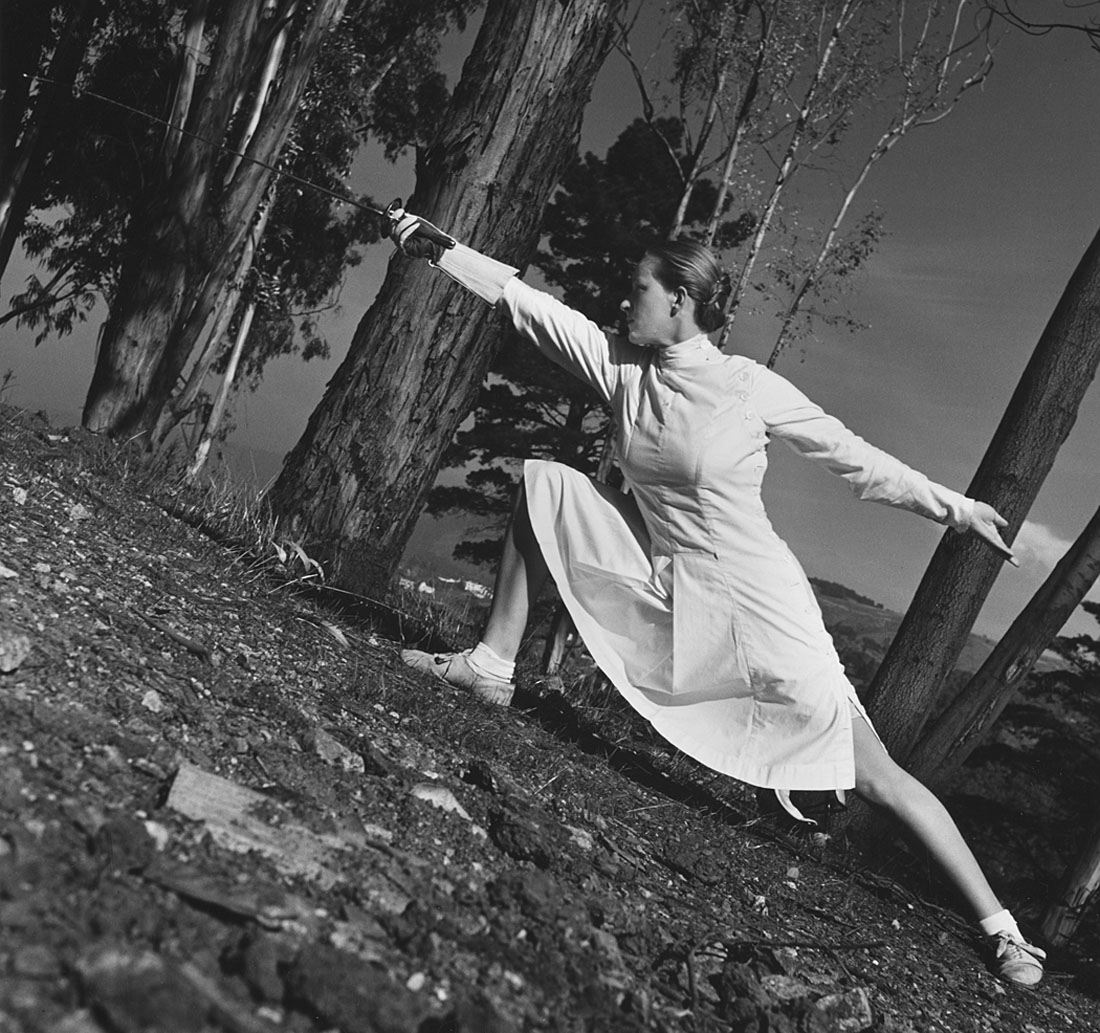
 

John Gutmann (American born Germany, 1905-1998) 'Helene Mayer, Two Time Olympic Fencing Champion' 1935


John Gutmann (American born Germany, 1905-1998)
Helene Mayer, Two Time Olympic Fencing Champion
1935
Gelatin silver print
Center for Creative Photography, University of Arizona
John Gutmann Archive
© Center for Creative Photography, Arizona Board of Regents


John Gutmann received his bachelor’s degree from the State Academy of Arts and Crafts in Breslau, Germany (now Wroclaw, Poland) and studied with master painter Otto Mueller, one of the founding members of the New Realist movement in Germany. Gutmann moved to Berlin in 1927 where he earned his master’s degree at the State Institute for Higher Education. The arts were flourishing in Berlin, and the city’s vibrant social scene provided inspiration for subject matter and aesthetic. Gutmann’s paintings were done in the vein of well-known German painter Otto Dix, who represented Berlin nightlife as both dizzily exciting and darkly isolating. In 1933, due to the rise of the Nazi regime, Gutmann was no longer able to exhibit his paintings or teach and began to experiment with photography as a means of supporting himself. He bought a Rolleiflex camera, shot three rolls of film, and immediately secured a contract with a German agency, Presse-Foto, to photograph in America and send pictures back for German publications. That same year he arrived in San Francisco and started to document America from the detached eye of an anthropologist. By 1936 he had secured a teaching position at San Francisco State College, where a decade later he founded its creative photography program, one of the first in the country. By the end of the thirties, Gutmann switched agencies to Pix, Inc., a New York-based agency, which promoted his work for publication in magazines such as Time, The Saturday Evening Post, Life, and Look. During World War II, he studied at the Signal Corps Motion Picture School in Queens and made still and motion pictures for the United States Army Signal Corps. He focused much of his work during this time on China, Burma, and India. Gutmann retired from teaching in 1973 and began to print and edit his earlier work for exhibition and publication. The San Francisco Museum of Modern Art held a two-man exhibition in 1976 of John Gutmann and Walker Evan’s work focusing on images of the Great Depression and the American culture that emerged from it. Two years later he was awarded a Guggenheim fellowship. In 1984 his first publication titled The Restless Decade was published by Harry N. Abrams, showcasing his work from the 1930s. Beginning in 1989 a major retrospective, Beyond the Document, traveled from San Francisco Museum of Modern Art to the Museum of Modern Art in New York and then to the Los Angeles County Museum of Art. Gutmann died on June 12, 1998 in San Francisco.

Gutmann brings a strong modernist sensibility to his black-and-white documentary photographs. Using a Rolleiflex camera and shooting from the waist, he combines unusual angles, close cropping, and careful – almost classical – framing to create works that are as poetic as they are impactful. Like Walker Evans, he finds beauty in ordinary and everyday subjects such as advertisements, street scenes, and automobiles–subjects he would return to throughout his career. His straight-style depictions of Depression-era America often include an element of humour, capturing quiet moments of human drama, charged with anxiety, but also hope.

Anonymous. “John Gutmann,” on the International Center of Photography website Nd [Online] Cited 28/09/2023


Joan Liftin (American, 1933-2023) 'Drive-in Owners, North Carolina' 1987


Joan Liftin (American, 1933-2023)
Drive-in Owners, North Carolina
1987
Chromogenic print
Center for Creative Photography, University of Arizona
Gift of Helen Levitt
© Joan Liftin


Joan Liftin (American, 1933-2023) 'Marseille' 2008


Joan Liftin (American, 1933-2023)
Marseille
2008
Gelatin silver print
Center for Creative Photography, University of Arizona
Gift of Andrea Stern
© Joan Liftin


Joan Liftin (American, 1933-2023) '70-40, Clairsville, Ohio' 1978


Joan Liftin (American, 1933-2023)
70-40, Clairsville, Ohio
1978
Dye coupler print
Center for Creative Photography, University of Arizona
Gift of artist
© Joan Liftin


Milton Rogovin (American, 1909-2011) 'Untitled' 1973


Milton Rogovin (American, 1909-2011)
Untitled
1973
Gelatin silver print
Center for Creative Photography, University of Arizona
Gift of Dr. and Mrs. John Knaus
© The Rogovin Collection


Milton Rogovin (American, 1909-2011) 'Untitled' 1985


Milton Rogovin (American, 1909-2011)
Untitled
1985
Gelatin silver print
Center for Creative Photography, University of Arizona
Gift of Dr. and Mrs. John Knaus
© The Rogovin Collection


Milton Rogovin (American, 1909-2011) 'Untitled' 1992


Milton Rogovin (American, 1909-2011)
Untitled
1992
Gelatin silver print
Center for Creative Photography, University of Arizona
Gift of Dr. and Mrs. John Knaus
© The Rogovin Collection


Milton Rogovin (American, 1909-2011) 'Untitled' 1963


Milton Rogovin (American, 1909-2011)
Untitled
1963
Gelatin silver print
Center for Creative Photography, University of Arizona
Gift of Dr. J. Patrick Kennedy
© The Rogovin Collection
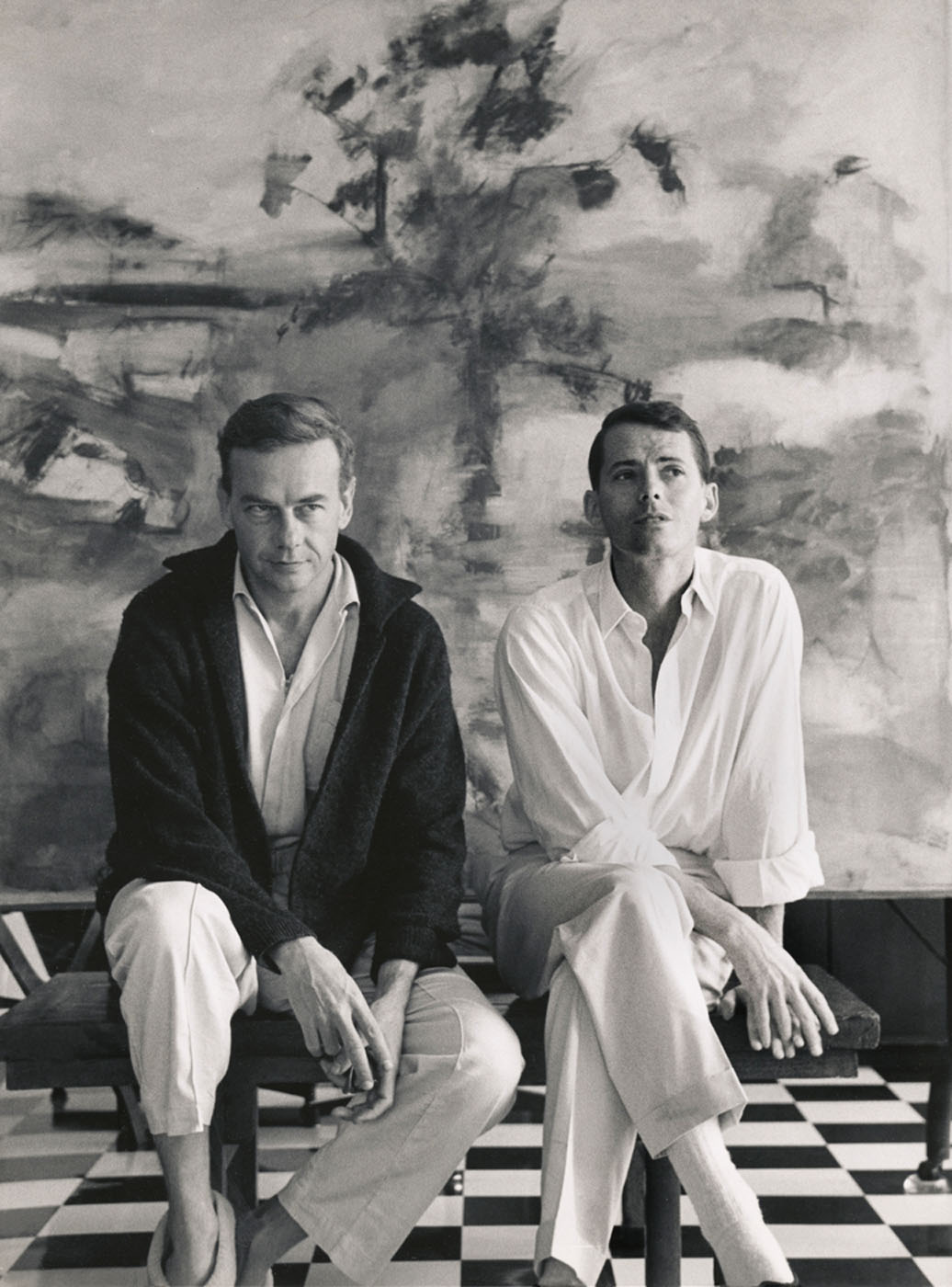
 

Rollie McKenna (American, 1918-2003) 'David Jackson and James Merrill, Stonington, Connecticut' 1961


Rollie McKenna (American, 1918-2003)
David Jackson and James Merrill, Stonington, Connecticut
1961
Gelatin silver print
Center for Creative Photography, University of Arizona
Rosalie Thorne McKenna Archive
© Rosalie Thorne McKenna Foundation


David Noyes Jackson (September 16, 1922 – July 13, 2001) was the life partner of poet James Merrill (1926-1995).

A writer and artist, Jackson is remembered today primarily for his literary collaboration with Merrill. The two men met in May 1953 in New York City, after a performance of Merrill’s play, “The Bait.” They shared homes in Stonington, Connecticut, Key West, Florida, and Athens, Greece. “It was, I often thought, the happiest marriage I knew,” wrote Alison Lurie, who got to know both men in the 1950s and thought enough of the relationship to write a memoir about it more than forty years later, Familiar Spirits (2001).

Over the course of decades conducting séances with a Ouija board, Merrill and Jackson took down supernatural transcriptions and messages from otherworldly entities. Merrill’s and Jackson’s ouija transcriptions were first published in verse form in The Book of Ephraim (printed for the first time in Divine Comedies, 1976, which was awarded the Pulitzer Prize in 1977).

Jackson collaborated with James Merrill on much of his most significant poetic output. The Book of Ephraim (1976), Mirabell: Books of Number (1978), and Scripts for the Pageant (1980) were all written with Jackson’s assistance. Together, they constitute the epic trilogy The Changing Light at Sandover, a 560-page apocalyptic poem published in its entirety in 1982.

He and James Merrill are buried side by side at Evergreen Cemetery, Stonington. Jackson’s former wife and Merrill’s friend, Doris Sewell Jackson is buried behind them.

Text from the Wikipedia website


Rollie McKenna (American, 1918-2003) 'Georgia O'Keeffe with René d'Harnoncourt, Director of MoMA, at the Georges Seurat Opening, NYC' 1958


Rollie McKenna (American, 1918-2003)
Georgia O’Keeffe with René d’Harnoncourt, Director of MoMA, at the Georges Seurat Opening, NYC
1958
Gelatin silver print
Center for Creative Photography, University of Arizona
Rosalie Thorne McKenna Archive
© Rosalie Thorne McKenna Foundation


Rosalie Thorne “Rollie” McKenna (November 15, 1918 – June 14, 2003) was an American photographer. Writers photographed by McKenna include Sylvia Plath, Robert Frost, Dylan Thomas, and Truman Capote. McKenna had a long-term friendship with John Malcolm Brinnin, who helped her come in contact with many of the people she photographed. In addition to portraiture, McKenna also had an interest in architecture, particularly the architecture of Stonington, Connecticut.


John Yang (American, 1933-2009) 'Untitled' 1948


John Yang (American, 1933-2009)
Untitled
1948
Gelatin silver print
Center for Creative Photography, University of Arizona
John Yang Archive
© Naomi Yang


John Yang (1933-2009) was an American architect and photographer. Born in China, he settled in the United States with his family in 1939. His interest in photography began as a child and was later developed when he was a student at The Putney School in Vermont where he was classmates with other future photographers such as Tim Asch. In the summer of 1951, he studied with Minor White at The California School of the Fine Arts. He graduated from Harvard College majoring in Philosophy, and in 1957 he earned a MA in Architecture from the University of Pennsylvania studying under Louis Kahn. Before becoming a photographer full-time, Yang worked as an architect and continued in that practice until 1978.

Yang photographed the architecture and streets of New York as well as the surrounding landscape and gardens. Using traditional equipment and alternative darkroom techniques, he produced exquisite large format contact prints, often toned rich magentas: 11″ x 14″, 8″ x 10″, 5″ x 7″ and 10″ x 78″ panoramas. All work was printed by Yang himself.


Larry Fink (American, 1941-2023) 'Ronis Wedding II, Easton Pennslyvania' January 1989


Larry Fink (American, 1941-2023)
Ronis Wedding II, Easton Pennslyvania
January 1989
Gelatin silver print
Center for Creative Photography, University of Arizona
Purchase
© Larry Fink


Larry Fink (American, 1941-2023) 'Melzer Family Picnic, Eastport, Long Island, New York' June 2002


Larry Fink (American, 1941-2023)
Melzer Family Picnic, Eastport, Long Island, New York
June 2002
Gelatin silver print
Center for Creative Photography, University of Arizona
Purchase
© Larry Fink
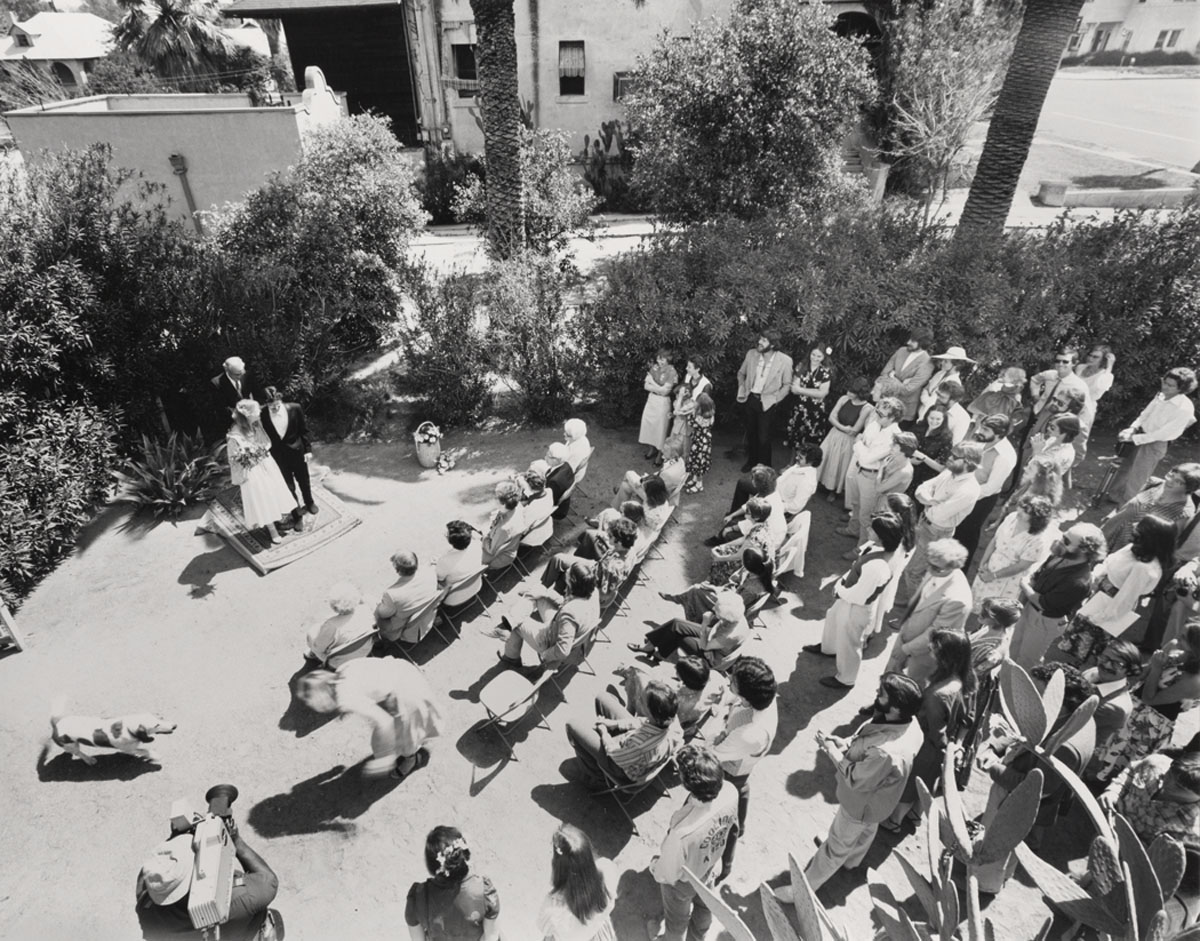
 

Harold Jones (American, b. 1940) 'John and Sandy's Wedding' 1980


Harold Jones (American, b. 1940)
John and Sandy’s Wedding
1980
Gelatin silver print
Center for Creative Photography, University of Arizona
Gift of Harold Jones
© Harold Jones


Harold Jones (born 1940) has contributed to photography as an artist, educator, curator and arts administrator. Born in Morristown, New Jersey in 1940, he graduated from the Maryland Institute with a BFA in Painting and Photography, and from the University of New Mexico with an MFA in Art History and Photography. After graduation Jones worked as an assistant curator at the George Eastman House and in 1971 became the first director of LIGHT Gallery in New York City, the first gallery to exclusively represent contemporary photographers, such as Harry Callahan, Aaron Siskind, and Frederick Sommer. In 1975 Jones became the founding director of the Center for Creative Photography and then went on to start the photography program at the University of Arizona where he taught for the next 30 years. Presently he is professor emeritus and volunteer coordinator of the Voices of Photography oral history project at the Center. Jones continues to be a constant student and practitioner of photography.

Harold Jones’s photography is difficult to categorise, and there are no generalisations that satisfactorily describe his varied body of work. His original training in painting and photography led to a practice that Jones referred to as “photodrawings” – gelatin silver prints worked with a variety of hand-coloured surfaces. Over the years, Jones used ink, food colouring, and oil paints as well as a variety of chemical toners to produce effects that range from subtle to direct. The resulting images are unique and cannot be duplicated. Initially he was ambivalent about altering the surfaces of his prints, feeling that it was an impure practice, but ultimately concluded that creating the photograph was the first phase of drawing, and surface treatments and colouring constituted the second phase. Jones’ approach has varied even within his unaltered prints. He has worked with both multiple and long-duration exposures to capture motion. Jones’s subjects are everyday objects arranged in compositions that require viewing and re-viewing. The photographer has described his delight in the process in which a person moves beyond a superficial reading of his work for closer inspection. His images reinforce the idea that a world continues beyond the picture plane; that one is seeing a fragment of a larger whole. Although he often photographs mundane objects, such as a water tower or laundry hanging, his unusual vantage points or unexpected cropping, produce a range of effects from humour to mystery.

The Harold Jones Archive contains over 150 prints, including a number of unique photodrawings, correspondence, biographical materials, teaching and exhibition files, records of the Society for Photographic Education, publications and clippings, and ephemera covering his career. Correspondents include Robert Heinecken, Jim Alinder, Robert Fichter, Beaumont Newhall, Jerry Uelsmann, and many others. An archive highlight is: University: A Photographic Inquiry, 1984-85: a 2-volume maquette from a project titled Universe City, containing 44 gelatin silver prints and 3 colour prints. Jones’s career can also be studied at the Center for Creative Photography through the LIGHT Gallery archive.

Anonymous. “Harold Jones,” on the International Center of Photography website Nd [Online] Cited 28/09/2023


John Simmons (American, b. 1950) 'The Cotillion' 2015


John Simmons (American, b. 1950)
The Cotillion
2015
Inkjet print
Center for Creative Photography, University of Arizona
Gift of the artist
© John Simmons
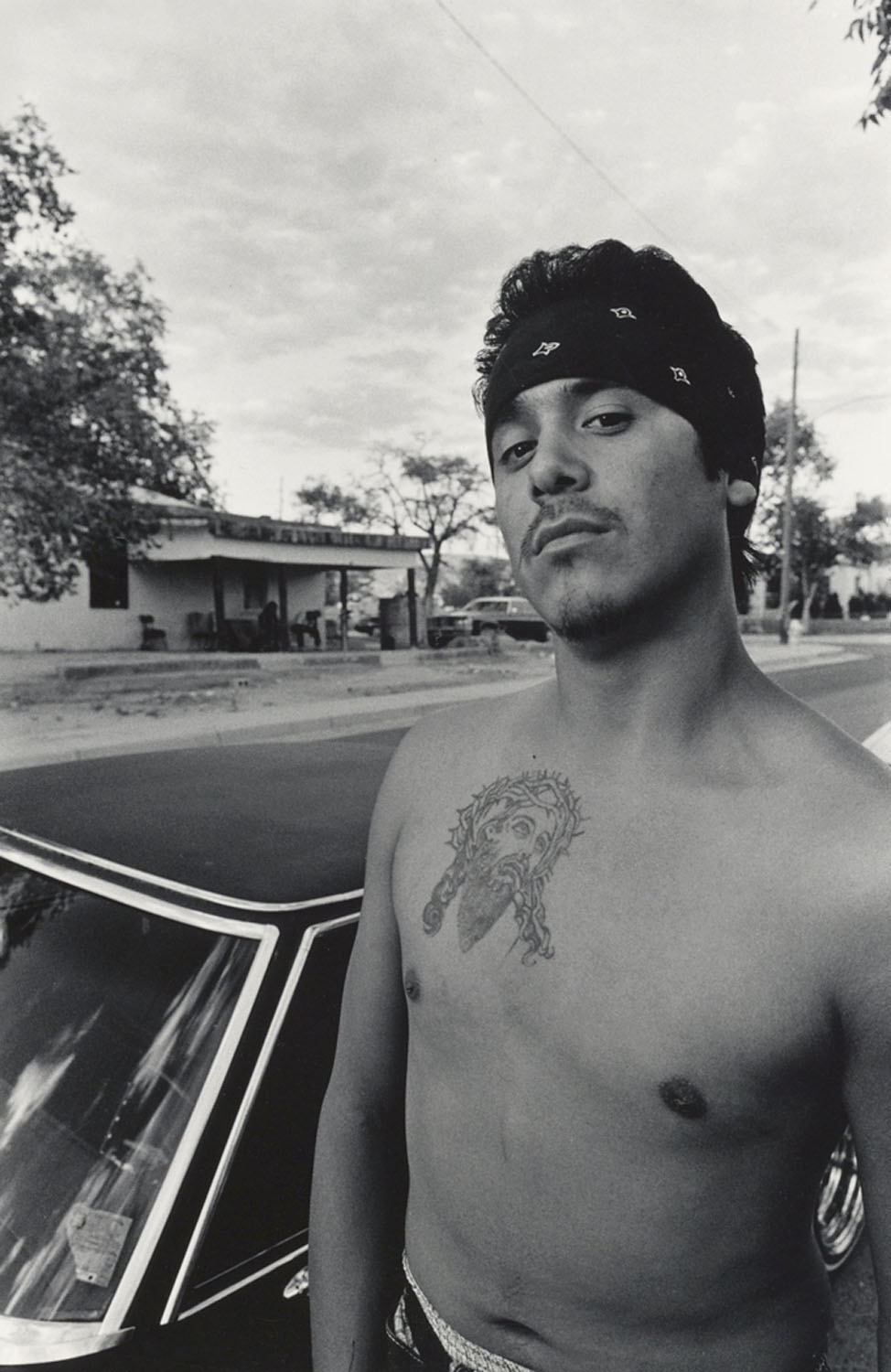
 

Miguel A. Gandert (American, b. 1956) 'Juanito with Jesus Tattoo, Albuerquerque, NM' 1986


Miguel A. Gandert (American, b. 1956)
Juanito with Jesus Tattoo, Albuerquerque, NM
1986
Gelatin silver print
Center for Creative Photography, University of Arizona
Gift of Alan Manley
© Miguel Gandert


David Hume Kennerly (American, b. 1947) 'President Barack Obama And First Lady Michelle Obama Attend The Inaugural Balls' 2009


David Hume Kennerly (American, b. 1947)
President Barack Obama And First Lady Michelle Obama Attend The Inaugural Balls
2009
Chromogenic print
Center for Creative Photography, University of Arizona
David Hume Kennerly Archive
© Center for Creative Photography, Arizona Board of Regents


David Hume Kennerly (born March 9, 1947) is an American photographer. He won the 1972 Pulitzer Prize for Feature Photography for his portfolio of photographs of the Vietnam War, Cambodia, East Pakistani refugees near Calcutta, and the Ali-Frazier fight in Madison Square Garden. He has photographed every American president since Lyndon B Johnson. He is the first presidential scholar at the University of Arizona.

Text from the Wikipedia website


Rosalind Solomon (American, b. 1930) 'On the Ranch, Wyoming, USA' 1977


Rosalind Solomon (American, b. 1930)
On the Ranch, Wyoming, USA
1977
Gelatin silver print
Center for Creative Photography, University of Arizona
Rosalind Solomon Archive
© Rosalind Solomon, all rights reserved


The photographer Rosalind Fox Solomon turned her camera on Washington, D.C., between 1977 and 1979. With access to spaces ranging from artist studios to the White House, Solomon made probing portraits, such as this one of First Lady Rosalynn Carter aboard Air Force 2. During her years as first lady, Carter (born in Plains, Georgia, in 1927) expanded the role of the presidential spouse, regularly attending cabinet meetings and representing her husband, Jimmy Carter, in an official capacity at home and abroad.

Carter continues to devote her life to public service. For more than four decades, she has championed the needs of people with mental illness while also advocating on behalf of numerous other causes, including the Equal Rights Amendment, early childhood immunisation, the Cambodian refugee crisis, and homelessness. In 1982, she and her husband co-founded the Carter Center to promote peace and human rights worldwide. They jointly received the Presidential Medal of Freedom in 1999.

Text from the Smithsonian National Portrait Gallery website


Rosalind Solomon (American, b. 1930) 'First Lady Rosalyn Carter, Airforce 2 en route Orlando, USA' 1978


Rosalind Solomon (American, b. 1930)
First Lady Rosalyn Carter, Airforce 2 en route Orlando, USA
1978
Gelatin silver print
Center for Creative Photography, University of Arizona
Rosalind Solomon Archive
© Rosalind Solomon, all rights reserved


Phoenix Art Museum
McDowell Road & Central Avenue
1625 N. Central Avenue
Phoenix, AZ 85004

Opening hours:
Monday and Tuesday Museum closed
Wednesday: 10am – 7pm
Thursday – Sunday: 10am – 5pm

Phoenix Art Museum website

LIKE ART BLART ON FACEBOOK

Back to top

Exhibition: ‘Conditions of Living: Home and Homelessness in London’s East End’ at Four Corners, London

Exhibition dates: 30th June – 2nd September 2023

Photographers: the exhibition features work by Katalin Arkell, Peter Arkell, Cyril Arapoff, Chris Bethell, A.R. Coster, Firmin, John Galt, David Granick, Bert Hardy, Brian Harris, Hawkins, Nick Hedges, David Hoffman, Tom Learmonth, Steve Lewis, Jack London, Marketa Luskacova, Anthony Luvera, MacGregor, Monty Meth, Douglas Miller, Moyra Peralta, Ray Rising, Reg Sayers, Andrew Scott, Alex Slotzkin, Norah Smyth, Humphrey Spender, Andrew Testa, Paul Trevor, Edith Tudor-Hart, as well as several unknown photographers.


Jack London Collection (American, 1876-1916) 'People of the Abyss' 1902


Jack London Collection (American, 1876-1916)
People of the Abyss
1902
© Huntington Library, San Marino, California


1902: a policeman disturbs a rough-sleeping youth in Whitechapel, one of many photographs by the American author Jack London that illustrated his book The People of the Abyss.


Another insightful, socially-minded (ie. actively interested in social welfare or the well-being of society as a whole) exhibition from Four Corners who champion creative expression, education and empowerment and build upon almost 50 years of radical, socially-engaged approaches to photography and film.

“This timely exhibition draws shocking comparisons with today’s housing precarity, high rents and homelessness. From Victorian slums and the first model estates, to the mass postwar council house construction and the subsequent demolition of many tower blocks, it ends with post-Thatcherite gentrification and its impact on affordable housing.” (Press release)

I have included bibliographic information on the artists in the posting where possible.

Dr Marcus Bunyan

PS. For more information on slum photography and urban poverty please see the essay by Sadie Levy Gale. “Exposed,” on the AEON website 21 August 2023 [Online] Cited 31/08/2023


Many thankx to Four Corners for allowing me to publish the photographs in the posting. Please click on the photographs for a larger version of the image.


Jack London (American, 1876-1916) 'Homeless people in Itchy Park, Spitalfields' 1902


Jack London (American, 1876-1916)
Homeless people in Itchy Park, Spitalfields
1902
From People of the Abyss

NOTE: Photograph not in the exhibition


Images of housing, homelessness and resistance in London’s East End

Our summer exhibition explores how photographers have represented conditions of housing and homelessness for over a century. From workhouses to slums, damp council flats to Thatcherite gentrification, images reveal the systemic poverty that East Londoners have endured and how the medium of photography has been used to campaign for change. We are delighted to feature new artwork by Anthony Luvera, which addresses economic segregation in Tower Hamlets’ housing developments, a phenomenon known as ‘poor doors’. Created with a forum of local residents, this examines the rise of market-driven ‘affordable’ housing and the state of social housing today.

This exhibition is supported using public funding by the National Lottery through Arts Council England and the National Lottery Heritage Fund. We particularly thank Getty Images Hulton Archive and Tower Hamlets Local History Library and Archives for their generous contributions which made this exhibition possible. We are grateful for the kind support of Report Digital.

Text from the Four Corners website


Jack London (American, 1876-1916) 'View in Hoxton' 1902


Jack London (American, 1876-1916)
View in Hoxton
1902
From People of the Abyss

NOTE: Photograph not in the exhibition


Jack London (American, 1876-1916) 'Homeless women in Spitalfields Garden' 1902


Jack London (American, 1876-1916)
Homeless women in Spitalfields Garden
1902
From People of the Abyss

NOTE: Photograph not in the exhibition


Not many people know that the famous American author Jack London was also a skilled documentary photographer and photojournalist. He took thousands of pictures over the years from the slums of London’s East End to the islands of the South Pacific.

In 1902 Jack London visited his namesake city London where he took pictures of its people and their everyday life. In the book “The People of the Abyss”, London describes this first-hand account by living in the East End (including the Whitechapel District) for several months, sometimes staying in workhouses or sleeping on the streets. The conditions he experienced and wrote about were the same as those endured by an estimated 500,000 of the contemporary London poor.

Even before, Jack London had talked about a book on the London slums with George Brett, one of his publishers. Thus, the writer knew what he was ought to expect ‘down there’: “He meant to expose the underside of imperialism, the degradation of the workers…”. The “evolutionary Socialist” wanted to find “the Black Hole of capitalism”.

With this preconceived vision in his mind, he disguised himself as an American sailor who had lost his ship and went into the East End taking pictures and experiencing their life. To be more precise, he wandered about Whitechapel, Hoxton, Spitalfields, Bethnal Green, and Wapping to the East India Docks. Jack London disguised as one of the working-class poor and pretended to be one of them, which made it easier for him to get to know the conditions of their everyday life. …

In his 1903 “The People of the Abyss”, the American gives this description of the poor Londoners: “the air he breathes, and from which he never escapes, is sufficient to weaken him mentally and physically, so that he becomes unable to compete with the fresh virile life from the country hastening on to London Town… It is incontrovertible that the children grow up into rotten adults, without virility or stamina, a weak-kneed, narrow-chested, listless breed, that crumples up and goes down in the brute struggle for life with the invading hordes from the country.”

Anonymous. “London’s East End life through the lens of Jack London, 1902,” on the Rare Historical Photos website Nd [Online] Cited 04/08/2023


Jack London (American, 1876-1916) 'Whitechapel on a bank holiday' 1902


Jack London (American, 1876-1916)
Whitechapel on a bank holiday
1902
From People of the Abyss

NOTE: Photograph not in the exhibition


Jack London (American, 1876-1916) 'Frying Pan alley, Spitalfields' 1902


Jack London (American, 1876-1916)
Frying Pan alley, Spitalfields 
1902
From People of the Abyss

NOTE: Photograph not in the exhibition


Norah Smyth (British, 1874-1963) 'A Street in Bow' 1914


Norah Smyth (British, 1874-1963)
A Street in Bow
1914
© Paul Isolani-Smyth


1914: residents of a street in Bow, photographed by the activist and suffragette Norah Smyth. A street in Bow in 1914 where the East London Federation of the Suffragettes (ELFS) took care of children during the first world war. Smyth documented children in Bow through a series of intimate street photographs.


Norah Smyth

Smyth, a suffragette, socialist and pioneering female photographer was a founding member of the East London Federation of Suffragettes (ELFS) and right-hand woman to Sylvia Pankhurst, who set up the federation in 1914.

Her years of activism included a spell as a prominent member of the Communist Workers’ Party (CWP) during the 1920’s. Her active participation in the international socialist movement came to an end with the dissolution of the CWP. After twelve years in the East End of London, it was time to move on. Smyth decided to join brother Maxwell in Florence, where she took up a post at the British Institute.

Jane McChrystal. “The adventures of Norah Smyth: her life as a suffragette, philanthropist and artist,” on the Roman Road LDN website 22 March 2023 [Online] Cited 04/08/2023


Anonymous photographer. 'Shadwell Family' 1920


Anonymous photographer
Shadwell Family
1920
© Topical Press Agency, Hulton Archive, Getty Images


1920: a poverty-stricken family make a meal from a loaf of bread in Shadwell, traditionally an area of slum housing where the population lived in closely packed tenements.


Exhibition reveals East End’s history of poor housing and homelessness

Opening at Four Corners Gallery this month, Conditions of Living: Home and Homelessness in London’s East End takes a visual journey from workhouses to slums, damp tower blocks to homeless shelters, exploring how photographers have represented these conditions for over a century. It sheds light on little-known histories: the tenants’ rent strikes of the 1930s, post-war squatting, and ‘bonfire corner’, a meeting place for homeless people at Spitalfields Market for more than twenty years.

This timely exhibition draws shocking comparisons with today’s housing precarity, high rents and homelessness. From Victorian slums and the first model estates, to the mass postwar council house construction and the subsequent demolition of many tower blocks, it ends with post-Thatcherite gentrification and its impact on affordable housing.

The exhibition features new work by the artist Anthony Luvera, which addresses the rise of economic segregation in recent housing developments across Tower Hamlets, a phenomenon commonly known as ‘poor doors’. Also titled Conditions of Living, this socially  engaged artwork by Luvera is built upon extensive research into the social, political, and economic contexts behind the rise of market-driven ‘affordable’ housing provision and the state of social housing today, and is created in collaboration with a community forum of local residents who live in the buildings themselves. This new work builds upon Luvera’s twenty-year career dedicated to working collaboratively with people who have experienced homelessness, and addressing issues of housing precarity and housing justice.

Anthony Luvera says: ‘London is one of the world’s last major cities still to ban the practice of allowing property developers to build ‘poor doors’, despite proclamations by successive governments and mayors about stopping the appalling practice. My work with people experiencing homelessness began twenty years ago in Spitalfields. To be back in Tower Hamlets creating this new work about economic segregation in housing developments and the broken social housing system feels urgent, especially at a time when the costs of living crisis has sunk its claws into the lives of ordinary working people.’

Carla Mitchell, Artistic Director at Four Corners says: ‘this is a highly relevant exhibition, given the extortionate London rents which create forms of social cleansing for long established local communities. We were inspired by Four Corners’ own building, which was a Salvation Army working men’s hostel.’

Four Corners

We are a cultural centre for film and photography, based in East London for fifty years. Our exhibitions explore unknown social histories that might not otherwise be told.

Tower Hamlets Local History Library and Archives

THLHLA holds outstanding resources for the study of the history of London’s East End. Run by the London Borough of Tower Hamlets, collections cover the areas of Bethnal Green, Poplar and Stepney. Explore the changing landscape and lived experiences of individuals and communities in Tower Hamlets through original documents, images and reference books.

Press release from Four Corners


Edith Tudor-Hart (British born Austria, 1908-1973) 'Stepney family' 1932


Edith Tudor-Hart (British born Austria, 1908-1973)
Stepney family
1932
© The Estate of W. Suschitzky


1932: portrait of an impoverished family in Stepney. Edith Tudor-Hart was one of the most significant documentary photographers of the period. Closely affiliated with the Communist party, she recorded the conditions of the working class.


Edith Tudor-Hart

Edith Tudor-Hart, née Suschitzky, was one of the most significant documentary photographers working in Britain in the 1930s and 1940s. Born in Vienna, she grew up in radical Jewish circles. Edith married Alex Tudor-Hart, a British doctor, and the pair moved to England. There she worked as a documentary photographer, closely associated with the Communist Party, compiling a remarkable archive of images of working people in London and later, the south of Wales. Although still active in the 1950s, the difficulties of finding work as a woman photographer led eventually to Tudor-Hart abandoning photography altogether.


Bert Hardy (British, 1913-1995) 'Bombed East End' 1940


Bert Hardy (British, 1913-1995)
Bombed East End
1940
© Bert Hardy, Picture Post, Getty Images


1940: a couple carry their salvaged belongings after bomb damage to their home, photographed by photojournalist Bert Hardy, best known for his work for Picture Post


Bert Hardy

If one photographer sums up the spirit and sheer brilliance of the seminal British newsweekly Picture Post, it is Bert Hardy (1913-1995). Alongside Bill Brandt and Don McCullin, former Victoria & Albert curator Mark Haworth-Booth regarded Hardy as one of the three greatest British photojournalists from the genre’s Golden Age. Indeed, Hardy stands alongside Cartier-Bresson, Robert Capa and Werner Bischoff as the giants of 20th-century photography.

London born and entirely self-taught, Hardy was one of the UK’s first professionals to embrace the 35mm Leica in favour of a traditional large-format press camera. The smaller camera and faster film suited his instinctual shooting style and allowed him to consistently create something unique even in high-pressure situations. His confidence and courage enabled him to produce some of the most memorable images of the Blitz and postwar England and Europe. An inspiration to a generation of photojournalists, Hardy was often greeted as warmly by his subjects as he was by his peers – so much so one dubbed him the ‘professional Cockney’.

Anonymous. “Bert Hardy,” on the Getty Images Gallery website Nd [Online] Cited 04/08/2023


Monty Meth (British, 1926-2021) 'New Houses' 1951


Monty Meth (British, 1926-2021)
New Houses
1951
© Monty Meth, Topical Press Agency, Hulton Archive, Getty Images


1951: workers stand on the ruins of Trinity church in Poplar, which was destroyed during the Blitz, and overlook new housing built in the wake of slum clearances.


Monty Meth

Monty was born above a barber’s shop in Bethnal Green, east London, the youngest of three sons of Millie Epstein, a domestic servant, and Max Meth, a Czech Jewish immigrant who found intermittent work as a bread roundsman and tailor.

Educated at the local Mansford St Central school, Monty learned photography at the Cambridge and Bethnal Green boys’ club, which he credited with rescuing him from teenage pilfering, and at 14 went to work as a messenger for the Fleet Street picture agency Photopress, then on to the Topical Press agency. He returned after second world war service in the Navy to become a prize-winning photographer and photojournalist.

Martin Adeney. “Monty Meth obituary,” on The Guardian website Sun 28 Mar 2021 [Online] Cited 03/08/2023


David Granick (British, 1912-1980) 'Stifford Estate' 1961


David Granick (British, 1912-1980)
Stifford Estate
1961
Retouched by Chris Dorley-Brown
© Tower Hamlets Local History Library and Archives


1961: the now demolished Stifford Estate in Tower Hamlets, built in the late 1950s to replace slum housing, and comprised of three 17-storey tower blocks. Photographed by lifelong Stepney resident David Granick, who recorded the East End pre-gentrification.


David Granick

David Granick (1912-1980) was a photographer who lived in the East End his whole life. His colour slides laid untouched until 2017 when a local photographer, Chris Dorley-Brown, examined them at Tower Hamlets Local History Library & Archives. These images capture the post-war streets of Stepney, Whitechapel, Spitalfields and beyond in the warm hues of Kodachrome film at a time when black and white photography was the norm.

David Granick was born in 1912 and lived his whole life in Stepney. A Jew, a keen photographer and a long-serving member of the East London History Society, he gave lectures on various local history themes illustrated with colour slides taken by himself or his fellow members of the Stepney Camera Club. Bequeathed to Tower Hamlets Local History Library & Archives after his death in 1980, where they have been preserved ever since, these photographs show the East End on the cusp of social change.


The London East End In Colour 1960-1980 David Granick 2019 Hoxton Mini Press


David Granick (British, 1912-1980) 'Spitalfields Market' 1973


David Granick (British, 1912-1980)
Spitalfields Market
1973
Photo restoration by Chris Dorley-Brown
© Tower Hamlets Local History Library and Archives


David Hoffman (British, b. 1946) 'Houses Stand Empty' 1973


David Hoffman (British, b. 1946)
Houses Stand Empty
1973
© David Hoffman


Photojournalist David Hoffman has spent more than 40 years photographing the happenings on the streets of London, with a particular focus on his East End hometown, and with his lens predominantly focused on those less fortunate than most.

His subjects have included the homeless, the addicted, and the enraged, and spanned slums, shelters, and the streets, in good spirits and bad.

‘Really, my work is about oppression,’ he explains, ‘It’s not about class, but how people’s lives are constrained and shaped by society. And that’s most visible at the bottom of society. You and I are constrained, too, but in far less, and far less damaging, ways.’ Besides, he adds, ‘No one’s going to get a feature published on how the middle class is having a tough time.’

What defines his work, Hoffman says, is that ‘I’m always looking for extremes.’

Hoffman’s first photographic training came from a course at the University of York, where, with Chris Steele-Perkins, he set up a Student Union-sponsored darkroom. Steele-Perkins went on to work for Magnum Photos and become their president. In contrast, after two years Hoffman ‘slung the course in at the same time that they slung me’.

He moved back to London in 1969, to the East End in 1970, and worked ‘rubbish jobs’ to support his photography.

‘I did van driving and jobs like that. I would work to save up money, and then take time off to do photography (until my money ran out).’ A polytechnic course helped: ‘It was a poor course and taught me nothing but I had three years being supported on grants so I could really put some effort into my photography’, and squatting ‘meant that I didn’t have to spend my time working to raise the rent and could build my photography into a survivable income.’

Amy Freeborn. “David Hoffman: chaos, riots, slums and the East End,” on the Roman Road LDN website 27 November 2014 [Online] Cited 04/08/2023


Marketa Luskacova (Czech, b. 1944) 'Homeless men, Spitalfields' 1975


Marketa Luskacova (Czech, b. 1944)
Homeless men, Spitalfields
1975
© Markéta Luskačová


1975: homeless men in Spitalfields, photographed by the Czech documentarist Markéta Luskačová.


Marketa Luskacova

Marketa Luskacova’s work is marked by her own lived experiences. Themes like cultural identity and social behaviour are at the core of her candid photographs. Born in Prague in 1944 during the communist regime, Luskacova graduated from Charles University with a degree in Sociology in 1967 and studied Photography at FAMU (1967-1969). Around this time, she began to take photographs as a means to document local traditions in some of the poorest communities of Slovakia.

She moved to London in 1975, where she continued her career as a photographer. She began to document her surroundings, producing captivating portraits of everyday life in some of the least privileged areas of the city. She felt particularly drawn towards the cultural atmosphere of Brick Lane and Spitalfields street markets, where she used to buy her own groceries.

‘I was poor and I needed to do my shopping there as it was the cheapest place to buy things. I could identify with the people in Brick Lane because they were immigrants and they were in need of cheap goods. Once I had done my shopping, I would leave my bag with a stall holder while I took my photographs.’

In her series London Street Markets, Luskacova documents daily life in the city, capturing powerful and emphatic portraits of its people and their traditions and offering a glimpse into the diverse cultural fabric of London East End’s society in the seventies.

‘I don’t go to Brick Lane regularly anymore, sometimes six months pass between one visit and another … I photographed what I saw there and what I thought it was good to record, be it a face or a smile, an animal or a shoe. I believe in the evidential quality of photography, and I know that unless things are done in a visually interesting way they are not remembered.’

Anonymous. “Artist Profile: Marketa Luskacova,” on the Arts Council Collection website Nd [Online] Cited 04/08/2023


Tom Tom Learmonth (British, b. 1955) 'Usher Rd Bow, Tower Hamlets' 1976, Usher Rd Bow, Tower Hamlets, 1976 © Tom Learmonth


Tom Learmonth (British, b. 1955)
Usher Rd Bow, Tower Hamlets
1976
© Tom Learmonth


1976: children play on rubble on waste ground on Usher Road, Tower Hamlets.


Tom Learmonth

Born in Liverpool but brought up in England, Wales, India and Australia, he studied on the first BA degree in photographic arts in the UK, at the Polytechnic of Central London. “There I developed a social and political view of what photography could and should do,” he says. “My work concentrated on the community in the East End of London. After graduating I worked in community photography projects in the East End and freelanced as a photojournalist in the wide sense of the word; I wrote as well as photographed.”


Tom Learmonth (British, b. 1955) 'Mrs Baldwin, Mansford Street Estate, Bethnal Green' 1978


Tom Learmonth (British, b. 1955)
Mrs Baldwin, Mansford Street Estate, Bethnal Green
1978
© Tom Learmonth


1978: Mrs Baldwin on the balcony of her flat on the Mansford Street Estate, Bethnal Green. The estate of more than 700 homes was built over 20 years from 1957.


Andrew Testa (English, b. 1965) 'Bailiffs move along rooftops towards protesters as they evict Claremont Road on the route of the M11 motorway' 1994


Andrew Testa (English, b. 1965)
Bailiffs move along rooftops towards protesters as they evict Claremont Road on the route of the M11 motorway
1994
© Andrew Testa


1994: bailiffs move along rooftops towards protesters as they evict occupants of Claremont Road on the route of the M11 motorway, prior to the demolition of the houses.


Anthony Luvera (Australian, b. 1974) 'Assisted Self-Portrait of Ruben Torosyan' 2004


Anthony Luvera (Australian, b. 1974)
Assisted Self-Portrait of Ruben Torosyan
2004
© Anthony Luvera


2004: assisted self-portrait of Ruben Torosyan by Anthony Luvera. Luvera started the project in 2001, helping homeless people to document their lives and experiences.


Anthony Luvera

Anthony Luvera (born 1974) is an Australian artist, writer and educator, living in London. He is a socially engaged artist who works with photography on collaborative projects, which have included working with those who have experienced homelessness and LGBT+ people. Luvera is an Associate Professor of Photography at Coventry University… Luvera has worked extensively with people who have experienced homelessness. Many of these projects use his “assisted self-portrait” methodology, where the subject of the photograph, assisted by Luvera, makes and selects the pictures.

Text from the Wikipedia website


Photographs and Assisted Self-Portraits

Photographs

I had never wanted to photograph homeless people before. I’d read the (de)constructive writings by photo critics on ‘others’, poverty and representation. I knew about the complexities of the find-a-bum school of photography trounced by Martha Rosler. So in December 2001, when it was put to me by a friend to get involved as a photographer at Crisis Open Christmas, the annual event for homeless people in London, the invitation threw me. “I’d much prefer to see what the people I met would photograph.”

Over the following months, the conversation with my friend about photography and homelessness bounced louder in the back of my head. I became extremely interested in how homeless people have been represented and in questions about the process of representation itself. To what degree could the apparently fixed proximities between photographer, subject and camera be dismantled and reconfigured? How could a ‘subject’ become actively involved in the creation of a representation? What use, if any, would all this serve in the meanings offered in the final presentation?

I sourced 1,000 cameras and processing vouchers, and spent every day and many late nights at the following Crisis Open Christmas…

Between 25 and 40 people dropped in to each following weekly session. Around a big communal table, we gathered to look at the photos, to show and tell the stories held in the images, and to drink endless cups of tea. The sessions were high-energy, swarming with vibrant personalities. The youngest participant was 19 and the oldest was nearing 90. Different people got involved for different reasons. Some wanted to make snapshots of their special times, favourite places, friends and family. While others had ideas about art and concepts to explore with photography. I explained how to use the cameras and listened to each participant’s ambitions, encouraging everyone to simply go and do it. I never brought along photography books or showed my own photographs, nor did I tell any of the participants how or what to photograph. When looking at the photographs I asked each participant to pull out their favourites, or the images that best represented what they wanted to show. With permission I took scans of these photographs and held the negatives in a file. Release forms and licenses were provided, written especially for the project by specialist intellectual property copyright lawyers. Permission was not always given, which was always completely respected.

I never asked why anybody was homeless. Though over time stories came out with the photographs. In the four years the sessions have taken place I have worked with over 250 people. Every person I’ve met has a very different and particular story to tell. Some are entirely abject, while others are remarkable for their ordinariness. All are compelling in their own way. And while there may be commonalities between the experiences of particular individuals, not one situation of any participant could be seen as being broadly representative of the cause or experience of homelessness.

Ruben Torosyan

Ruben Torosyan left Georgia in the late 1980’s when the country was still under harsh Soviet rule. Not issued a birth certificate and unable to get a passport, Ruben was determined to get to the capitalist West to create a better life for himself. He spent over five years traveling across Europe attempting to obtain political asylum in over 15 different countries. In every place he was unsuccessful, largely for the same bureaucratic reasons, boiling down to the incredible fact that Ruben has absolutely no official way of proving who he is or where he comes from. In Spain Ruben smuggled himself on to a shipping freight container. Squished in with bottles and bags for his excrement, and packets of biscuits to eat, he travelled for 35 nights in complete darkness to get to New York. After failing to get legal rights to remain there, and escaping detainment, he struggled on the streets of Brooklyn in conditions worse than back home in Georgia. After two years, determined not to go back to Georgia, Ruben did the same shipping container trip to Ireland to get to London, where shortly after we met.

Ruben came to the sessions with a very clear idea about what he wanted to use the cameras to photograph in making his contribution to the archive; the discrepancy between what he expected London to be and what, in his experience, it actually was. Ruben’s depictions of dirty, litter strewn streets (serendipitously replete with the newspaper headline, “I Feel Used”), a naked man with mental health issues running down the road, people begging and a poor woman walking by without shoes, are for him, depictions of the filthy, hostile, brutal and ugly place that is London. Where there is “no mercy and the food is rubbish”.

Anthony Luvera. “Photographs and Assisted Self-Portraits,” in Source, Issue 47 2006 published on the Anthony Luvera website [Online] Cited 03/08/2023 (with permission of the author)


Four Corners
121 Roman Road, Bethnal Green,
London E2 0QN
Nearest tube: Bethnal Green, Central Line

Opening hours:
Tuesday to Saturday 11am – 6pm
Thursday 11am – 8pm (July and on 31 Aug)

Four Corners website

LIKE ART BLART ON FACEBOOK

Back to top

Exhibition: ‘Lucinda Devlin – Frames of Reference’ at the Photographische Sammlung/SK Stiftung Kultur, Cologne

Exhibition dates: 10th March – 16th July 2023


Lucinda Devlin (American, b. 1947) 'Bath, Pocono Palace, Marshall's Creek, Pennsylvania' 1980


Lucinda Devlin (American, b. 1947)
Bath, Pocono Palace, Marshall’s Creek, Pennsylvania
1980
From the series Pleasure Ground
© Lucinda Devlin, courtesy Galerie m, Bochum


I love these works in series!

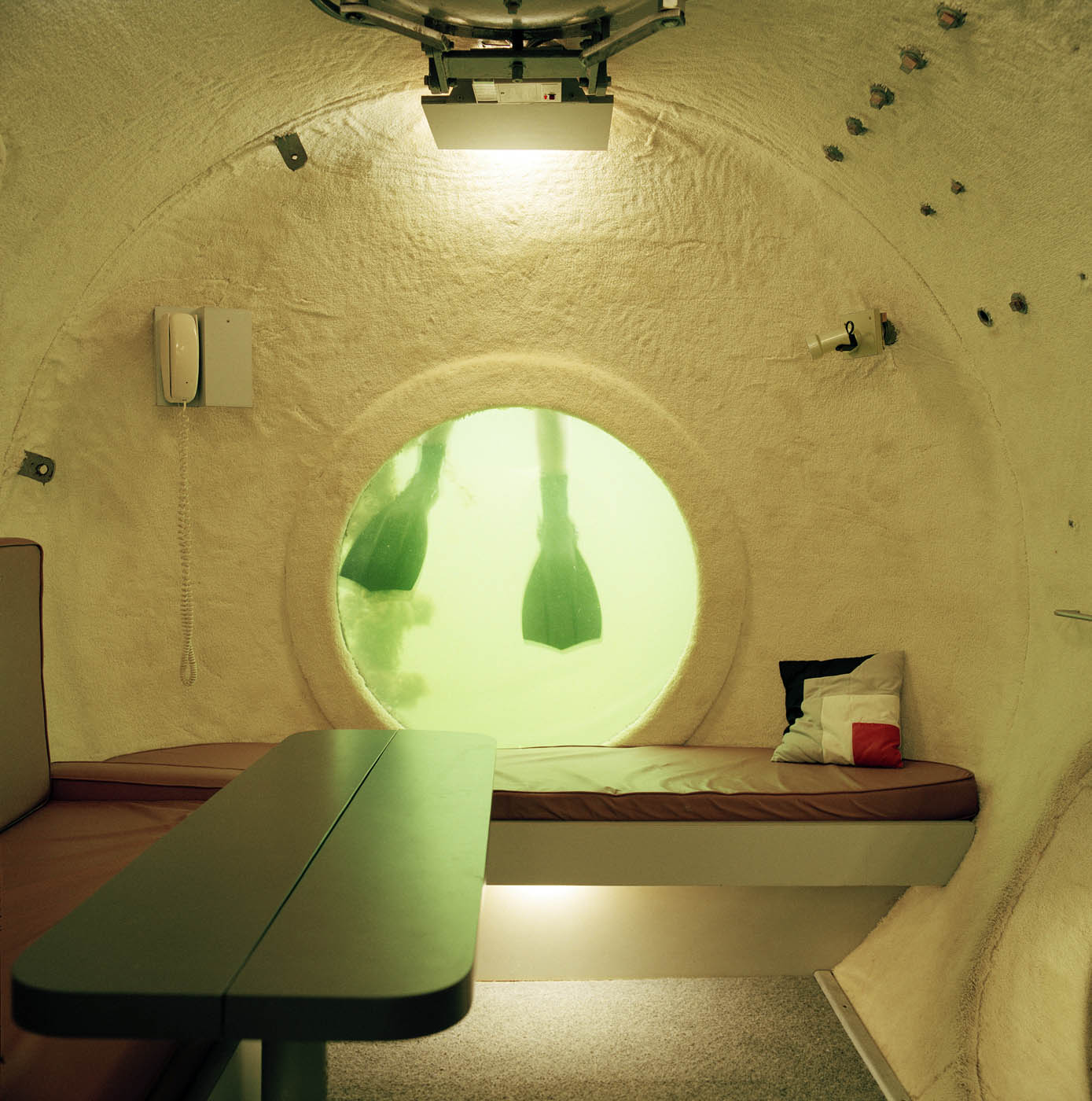
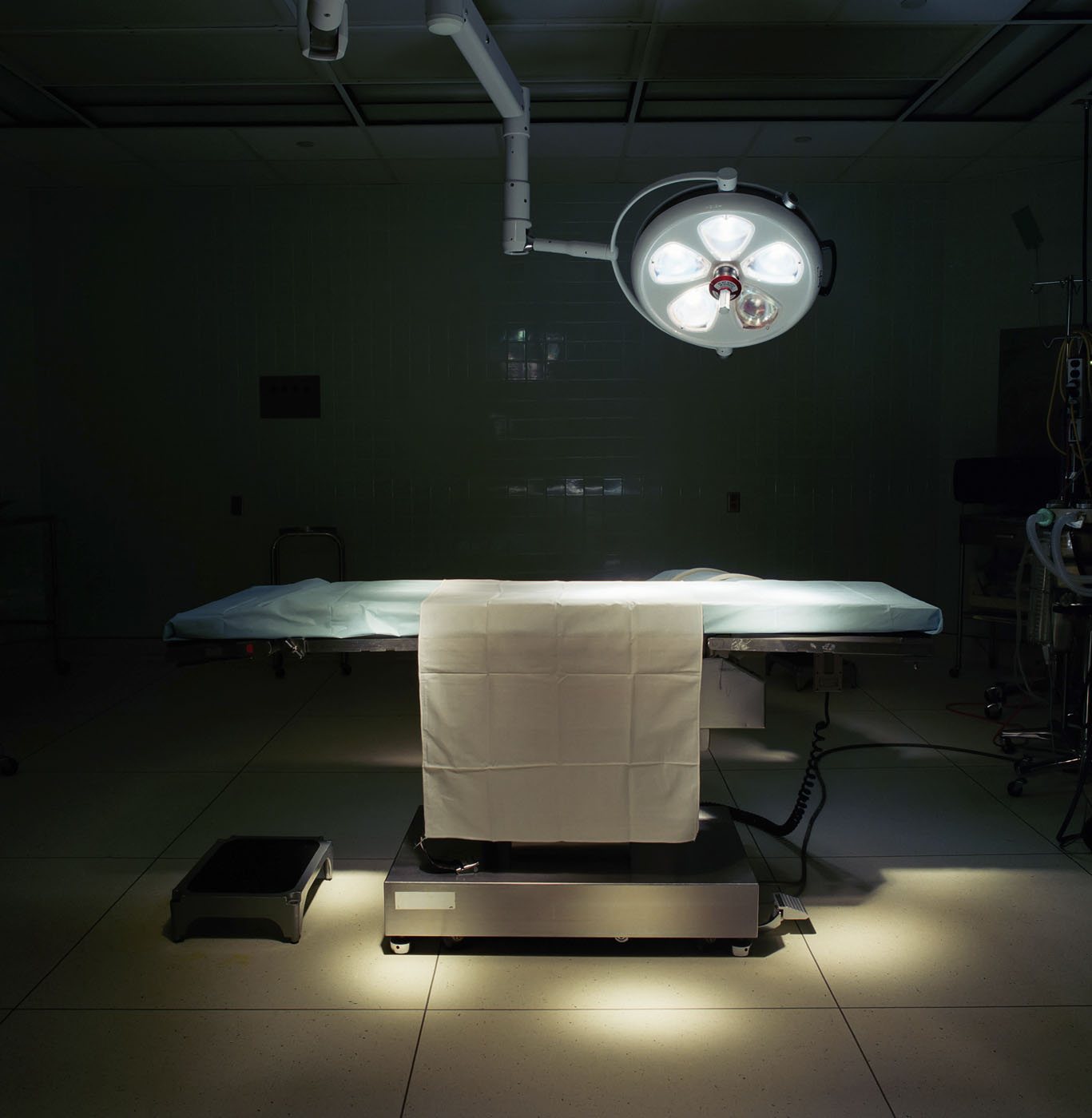
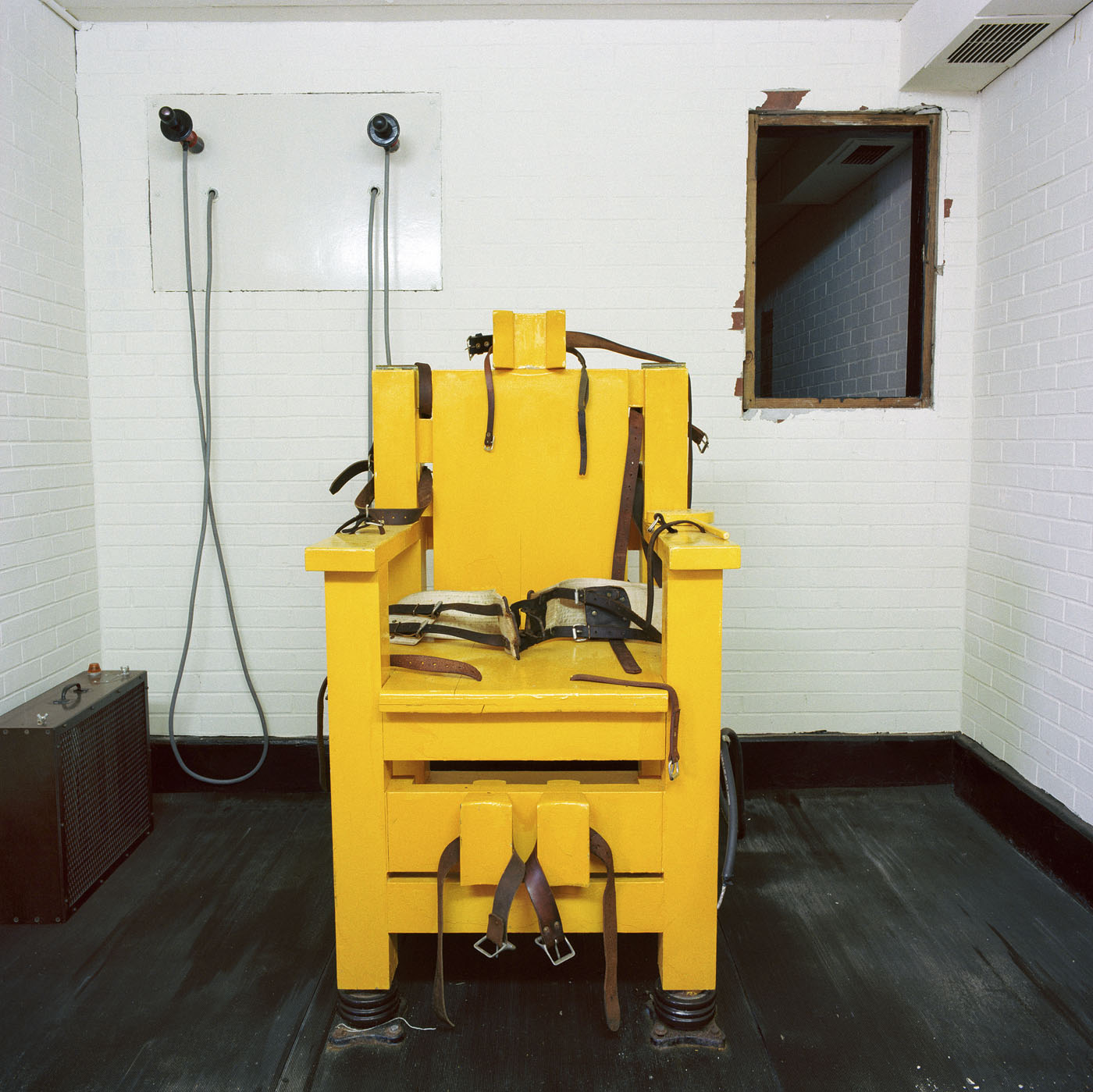
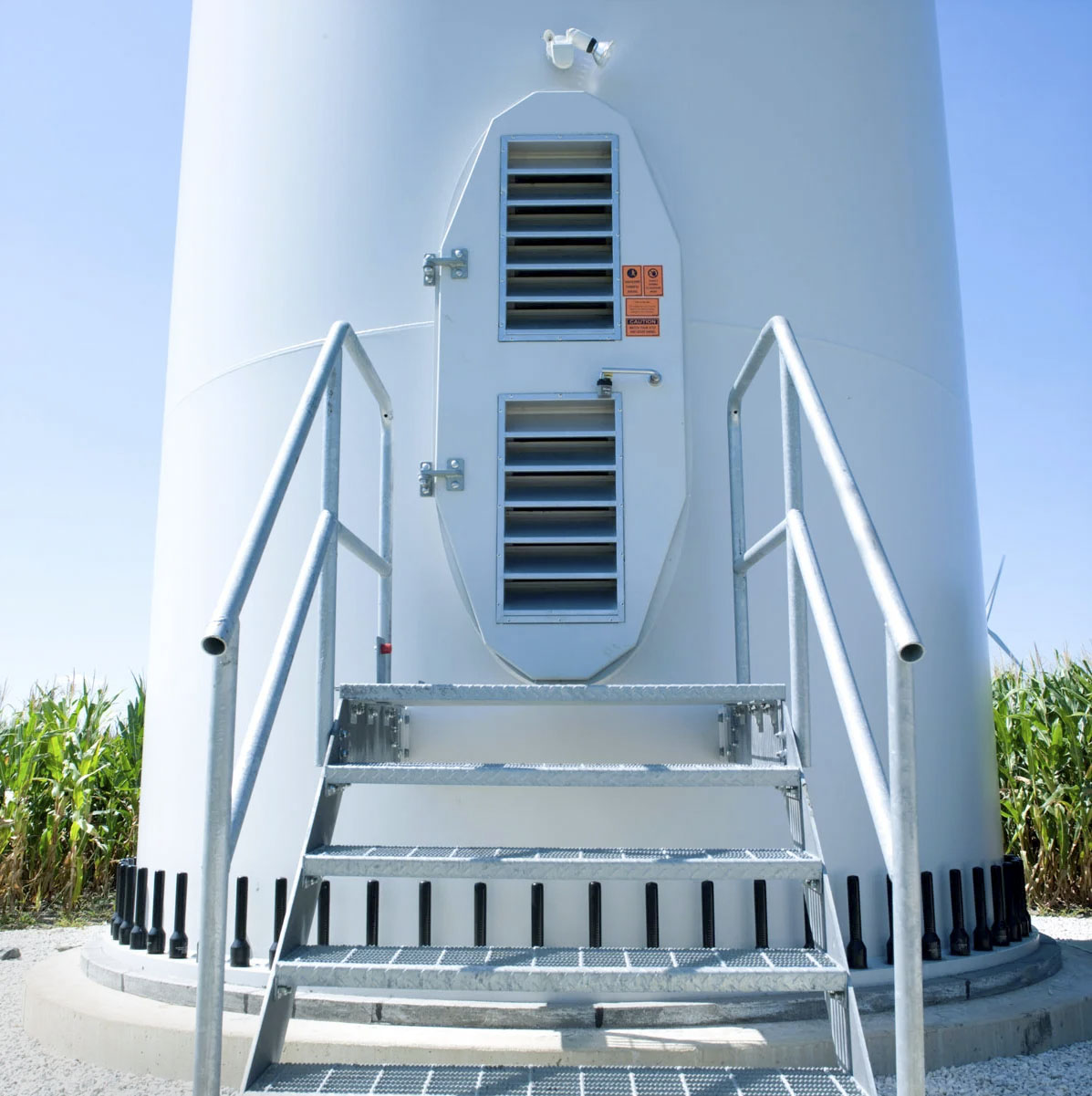
Frames of reference: spaces that humans construct (mainly interiors that serve specific functions) – for example, spaces of pleasure, corporate arenas, sanctioned death chambers, subterranean spaces, human habitats for captured animals, fields of industrial agriculture.

Format: The square format perfectly supports the themes being investigated, balancing and tensioning the pictorial plane within each image.

Colour palette: The limited colour palette of each image heightens the atmosphere and focuses the senses of the viewer.

Lighting: As in a movie set or theatrical production, whether ambient light, spot light, interior light.

Staging: Nothing is out of place. These are utilitarian/utopian/dystopian spaces.


Everything is perfectly ordered within Devlin’s human(less) worlds… and yet the photographs are instilled with a hyperreality where everything is not as it seems, where spaces exist as a “reality” we do not normally perceive.

The luscious heart shaped red bath surrounded by a halo of lights and flowered red carpet; the unexpected, alien flippers in the round portal of an undersea lodge; “a surgical lamp that looks like an oversized star in the night sky which illuminates the pictorial space”; a bright yellow electric (in colour and intent) chair that looks like an oversized piece of Lego; the ether-reality of the purple haze glacier paradise at the Matterhorn. The spaces are full of human presence even as we acknowledge their physical absence. Their fossilised fingerprints are all over these fantastical creations – these disturbing, sometimes grim, fairy tales.

While acknowledging a debt to the history of photography through the New Color Photography movement, New Topographics, “the direct and objective methodology pursued by August Sander”, and “the strict comparative typology practiced by the photographers Bernd and Hilla Becher” … the photographs are most definitely Devlin’s own. They hold a particular signature, more theatrical than ever New Topographics, Sander or the Bechers.

“The way each space is staged can tell us something about its intended impact and use.” And the recognition and interpretation of that staging can ultimately tell us as much about the artist as about the space itself: perfectionist, environmentalist, passionate creative artist who perceives difference in the everyday, who is aware, aware of the different realities that life (re)presents.

It’s best to view Devlin’s work in the complete series to get the full immersive effect. More photographs from each series can be found on the Lucinda Devlin website.

Dr Marcus Bunyan


Many thankx to the Photographische Sammlung/SK Stiftung Kultur for allowing me to publish the photographs in the posting. Please click on the photographs for a larger version of the image.


Lucinda Devlin – Frames of Reference


American artist Lucinda Devlin rose to fame in the 1990s with a series of soberly observed photographs of execution rooms in US correctional facilities titled “The Omega Suites.” The images caused a sensation at the Venice Biennale in 2001. One of the motifs had already attracted attention in 1992 when it was featured in a controversial advertising campaign for an Italian fashion label. “The Omega Suites” is one of nine photographic series, along with a video, on view in Frames of Reference, the first large-scale survey to be devoted to Lucinda Devlin in Europe.

Devlin, once part of the New Color Photography movement, seeks out her motifs mainly in interiors that serve specific functions. Most of her subjects are in the USA, but she has also done projects in Germany and other countries. In the mid-2000s, the artist added landscape scenes to her repertoire.

One searches in vain for people in Devlin’s pictures, and yet her images tell of human sensitivities and values, evoking existential life questions. In the series “Pleasure Ground” (1977-1990), for example, Devlin provides glimpses of hotel rooms with fantasy themes, discotheques, and beauty salons – places that promise relaxation and enjoyment. By contrast, the interiors in the “Corporal Arenas” series (1982-1998) have an unsettling effect.

Operating rooms for human or animal patients, treatment spaces, and morgues are reproduced here in all objectivity. Viewers are compelled to reflect on their own feelings and experiences in such settings.

It was themes such as these that led the photographer to pursue the project she titled “The Omega Suites” (1991-1998). Devlin did not intend her photographs taken in maximum security prisons to be understood as a statement for or against the death penalty.

Contemplation of these very specific spaces is instead meant as an encouragement to engage personally with a difficult subject.

With the support of a DAAD grant, Devlin shot her series “Water Rites” (1999-2002) in German spas, adding a new twist to “Corporal Arenas.” “Water Rites” takes a look at what are in some cases time-honoured institutions devoted to promoting well-being as well as to healing and convalescence. In Devlin’s “Subterranea” series (ongoing since 1980), she focuses her lens on caves and tunnels that have been made accessible for various uses, reproducing in her pictures the luminous colours generated by artificial lighting schemes installed underground. The way each space is staged can tell us something about its intended impact and use. That Devlin’s interests extend beyond spaces occupied by humans is evident from her “Habitats” series (ongoing since 1985), which spotlights zoo enclosures and aquariums that are modelled on natural animal habitats.

With “Field Culture” (primarily since 2007), the artist has turned to the question of how humans shape the outdoor environment. Here she investigates industrial agriculture in the USA, where genetic engineering and the need to generate sufficient energy are major factors in food production.

Devlin has found an enduring source of inspiration in the vast expanses of Lake Huron, to which she dedicated a series between 2010 and 2019 called “Lake Pictures,” with images illustrating the beauty and grandeur of nature. She presents similarly imposing views of salt lakes and salt flats in Utah in the series “Salt” (ongoing since 2014).

The documentary and serial nature of Devlin’s projects suggests close parallels with the style of depiction represented in the collection of Die Photographische Sammlung / SK Stiftung Kultur. In the 1980s, while working as a university professor and curator, the artist already developed a fascination with the direct and objective methodology pursued by August Sander in his portraiture. And her photos also echo in some ways the strict comparative typology practiced by the photographers Bernd and Hilla Becher. Here as well, compelling correlations can be found among the Cologne collection’s central holdings.

The exhibition has been made possible by generous loans from the artist; Galerie m, Bochum; DZ Bank, Frankfurt/Main; and private lenders.

A publication will accompany the exhibition, featuring essays by Gabriele Conrath-Scholl, Lucinda Devlin, and Claudia Schubert, as well as an interview conducted with the artist by Lisa Le Feuvre (Steidl Verlag, approx. 300 pages, DE/EN).

Press release from Photographische Sammlung/SK Stiftung Kultur


Lucinda Devlin (American, b. 1947) 'Jules UnderSea Lodge, Key Largo, Florida' 1989


Lucinda Devlin (American, b. 1947)
Jules UnderSea Lodge, Key Largo, Florida
1989
From the series Pleasure Ground
© Lucinda Devlin, courtesy Galerie m, Bochum


Pleasure Ground

This series marks the beginning of Lucinda Devlin’s artistic work. Recorded between 1977 and 1996, for example in imaginative theme hotels, in spa and cosmetic areas, in discotheques or striptease bars. Where people seek pleasure and distraction from the toils of everyday life, where desires and dreams provide the incentive to set up these spaces. In their functions and legitimised offers, they are still rarely factual and people are presented in a virtually unrecorded way. They are “stages” for which social agreements exist, but also “space capsules” that are temporary and can become private, taboo-free zones. Socially harmonious, ritualised manners are to be expected as well as one’s hedonistic and borderline actions.

Red emerges as a prominent colour in Pleasure Ground, it signals warmth, love and eroticism. All the more so when in the vicinity of these “islands of happiness” as in the case of the humble Creative Pines Motel little more than highways, gas stations and fast food places. They appear flooded red light retreats with frivolously rigged equipment, even more of the rough world relieved. Lucinda Devlin’s numerous emblematic images in this group of works succeed. That of the heart-shaped whirlpool at Pocono Palace is one of them. The camera stands in the luxurious tub and exposes with the self-timer in the ceiling mirror installed above. This technical trick enabled Devlin to capture the big red heart framed with mirrors and lights undistorted and centred in the picture. The narrow square frame emphasises the rounded shape as well as the oscillating between near and deep space.

Text translated from the German by Google Translate from the Photographische Sammlung / SK Stiftung Kultur


Lucinda Devlin (American, b. 1947) 'Massage Room, Greenbrier Hotel, White Sulphur Springs, WV' 1989


Lucinda Devlin (American, b. 1947)
Massage Room, Greenbrier Hotel, White Sulphur Springs, WV
1989
From the series Corporal Arenas
© Lucinda Devlin, courtesy Galerie m, Bochum

Corporal Arenas

For Lucinda Devlin, the question of physical well-being is of great importance: how much control over your own body and personality is given and in which moments one is in other hands or spheres of influence is handed over. Aspects that make them different in the field of medical treatment and examination rooms for humans and animals. So explores the photographer in her series Corporal Arenas, created between 1986 and 1998, insights into sometimes highly specialised rooms that are mostly shielded from the outside world connect with exceptional situations up to death, while the rooms present themselves as workplaces for certain professional groups.

The picture Operating Room # 8, Forrest General Hospital Hattiesburg is a salient example that meets both the requirements of an operating room clarified as well as the skilful implementation of the subject. He is almost in the middle of the picture operating table provided with a cover protected by cloths. Essential for the constellation is a surgical lamp that looks like an oversized star in the night sky which illuminates the pictorial space above the table to the floor while the surroundings disappear in the dark. This light and line management creates a balanced image geometry. The furnishings thus gain a type spiritual power. Even an altar can be associated.

The other practice rooms considered by Devlin are also connected by a pragmatic decor with smooth, easy-to-clean surfaces and prevailing artificial light. Mostly, however, these are lighter and can be walked through visually. Lucinda Devlin’s pictures also connect in this way to soberly presented documentation views from health technology or from textbooks. But what sets her recordings apart is that they are far removed from any idealised model and in them material ageing and signs of wear as well as irregularities in the arrangement of objects have their place.

Text translated from the German by Google Translate from the Photographische Sammlung / SK Stiftung Kultur


Lucinda Devlin (American, b. 1947) 'Operating Room #8, Forrest General Hospital, Hattiesburg' 1998


Lucinda Devlin (American, b. 1947)
Operating Room #8, Forrest General Hospital, Hattiesburg
1998
From the series Corporal Arenas
© Lucinda Devlin, courtesy Galerie m, Bochum


Lucinda Devlin (American, b. 1947) 'Scotch Douche, The Homestead, Hot Springs, Virginia' 1989


Lucinda Devlin (American, b. 1947)
Scotch Douche, The Homestead, Hot Springs, Virginia
1989
From the series Corporal Arenas
© Lucinda Devlin, courtesy Galerie m, Bochum


Lucinda Devlin (American, b. 1947) 'Electric Chair, Holman Unit, Atmore, Alabama' 1991


Lucinda Devlin (American, b. 1947)
Electric Chair, Holman Unit, Atmore, Alabama
1991
From the series The Omega Suites
© Lucinda Devlin, courtesy Galerie m, Bochum


The Omega Suites

With her views of execution rooms in American prisons, in which are electric chairs, operating tables for administering lethal injections are located or the massive lockable entrances of gas chambers are show, Lucinda Devlin raises awareness of an oppressive topic: the enforcement of the death penalty, which applies in the US and in other countries. However, the photographer is concerned with her project – which took place between 1991 and 1998 in over 20 correctional facilities in various US states – which is neither a sensation nor an accusation. Again, she relies on her thoughtful restrained imagery, which is characterised by realistic colouring and precise perspective and line management of the pictorial space. Not only finding execution rooms with windows and executioners’ technical rooms but also neighbouring cells in which the convicts spend their last hours. There are also rooms for witnesses to witness the execution through a window. To carry out the photographic work Lucinda Devlin completed extensive research. Only the locations of the institutions were laboriously located by her – at that time without the internet – each visit prepared by prior correspondence. A selection of extensive correspondence can be seen in the exhibition showcases.

Text translated from the German by Google Translate from the Photographische Sammlung / SK Stiftung Kultur


Lucinda Devlin (American, b. 1947) 'Ruheraum, Friedrichsbad, Baden-Baden, Germany' 1999


Lucinda Devlin (American, b. 1947)
Ruheraum, Friedrichsbad, Baden-Baden, Germany
1999
From the series Water Rites
© Lucinda Devlin, courtesy Galerie m, Bochum


Water Rites

At the end of the 1990s, Lucinda Devlin developed her Water Rites series. The series is themed with and performs in conjunction with Corporal Arenas, facilities that deal with the physical and mental well-being of the people. Specific objects are the typical spa and bathing landscapes with its extensive range of medical treatments and wellness offers. Lucinda Devlin has visited traditional spa towns where the element of water is used and therapeutic measures for healing are practiced. The American art historian Michael Mackenzie states that that the construction periods of the baths visited by Lucinda Devlin can be divided into three phases: “The earliest is the architecture of the 19th century with its high tiled rooms, with the equipment made of cast iron and stainless steel. They are followed by the cool clinical rooms of the healthcare industry during the post-war period and finally as a recent development spaces that are modelled like ice caves or Arabian oases and the surprising fantasy rooms of American hotels from the Pleasure Ground series” (in: Lucinda Devlin: Water Rites, Göttingen 2003, p. 6)

An overview of the motifs from Water Rites confirms that the photographer is especially looking at manageable parts of the room as well as utensils and furnishings in which the room is dressed, which she encounters at eye level with her camera and gives an optical order by maintaining the central perspective; thus creating an emblem that, like a trademark, has a direct visual access allowed. Again in this series, Lucinda Devlin asks to what extent the body and thus the affected individual has the possibility and ability to control and regulate these influences, or whether this is done by the person or is desired at all.

Text translated from the German by Google Translate from the Photographische Sammlung / SK Stiftung Kultur


Lucinda Devlin (American, b. 1947) 'Massageraum #1, Hufeland Therme, Bad Pyrmont' 2002


Lucinda Devlin (American, b. 1947)
Massageraum #1, Hufeland Therme, Bad Pyrmont
2002
From the series Water Rites
© Lucinda Devlin, courtesy Galerie m, Bochum


Lucinda Devlin (American, b. 1947) 'Römische Bäder, Carolus Thermen, Bad Aachen' 2002


Lucinda Devlin (American, b. 1947)
Römische Bäder, Carolus Thermen, Bad Aachen
2002
From the series Water Rites
© Lucinda Devlin, courtesy Galerie m, Bochum


Lucinda Devlin (American, b. 1947) 'Glacier Paradise at the Matterhorn #4, Zermatt, Switzerland' 2008


Lucinda Devlin (American, b. 1947)
Glacier Paradise at the Matterhorn #4, Zermatt, Switzerland
2008
From the series Subterranea
© Lucinda Devlin, courtesy Galerie m, Bochum


Subterranea

As with the Habitats series, Subterranea dates back to the 1980s. The subject of the series are different natural cave formations in America and Europe, Lucinda Devlin also has tunnels from the former mining industry included.

The cave is always in its uses, as well as in representational contexts, been connected with basic human needs and issues. Due to its circumstances, it can be considered the archetype of dwelling, it can be used as a shelter as well as serve a place of worship. Early evidence of human expression can be found in caves, one thinks, for example, of the paintings of Lascaux in France or of those in Spanish Altamira. For Lucinda Devlin, who designs functional spaces as an expression of cultural self-understanding and cultural acceptance, caves may appear to be downright predestined, and this is exactly what she visually reflects. A look at art history reveals a long iconographic tradition of cave representations. In the visualisation of Christian themes for example the birth of Jesus not only in a stable, but often in one cave shown. His grave is also sometimes located in a rock cave. Saints such as Aegidius are depicted in cave settings. In the psychoanalytic Dream Interpretation can symbolise the unconscious or a reference to caves be female sexuality.

Caves are shrouded in mystery, dark and cool, you can get inside them get lost and never find out. They are fear rooms or can offer protection and be a hiding place in threatening situations. This complexity and ambivalence is captivating in Lucinda Devlin’s recordings in which transparent, iridescent colours are definitely perceptible. The images contrast light and dark, allow a glimpse into corridors whose end cannot be made out and offer bizarre sculptural rock formations.

Text translated from the German by Google Translate from the Photographische Sammlung/SK Stiftung Kultur


Lucinda Devlin (American, b. 1947) 'Lake Huron, 9/1/2012 6-31am' 2012


Lucinda Devlin (American, b. 1947)
Lake Huron, 9/1/2012 6-31am
2012
From the series Lake Pictures
© Lucinda Devlin, courtesy Galerie m, Bochum


Lake Pictures

In 2010, the first recording was made on the shore of Lake Huron, which is one of the five great lakes of the USA. Until 2019 Lucinda Devlin worked on this series, which differs conceptually and compositionally from its other series. First it is noticeable that they always have a view looking out over the shore viewpoint photographing the lake towards the east. The central picture element is the horizon which Devlin takes at the same height and in the centre of each picture. Accurate to the second, Lucinda Devlin has the time, day, month and year noted for each photograph. Through this precision, combined with the rigorous image structure, the series has the character of a painterly quality for all empirical series that brings together comparative meteorological observations. Seasons, light situations, sky formations and the texture of the water can be understood so clearly that in their interaction they become the real actors. They seem endless variations and leave impressions of a high degree of artistic abstraction which emerge to invite contemplation and reflection.

In addition, it is important to Lucinda Devlin to point out the existential importance in reference to the element of water, from which life arose and without it no life is possible on planet earth. Lake Huron offers the photographer an essential, at the same time exemplary, field of exploration which brings significant habitat to the region, its biodiversity threatened from environmental pollution and climate change.

Text translated from the German by Google Translate from the Photographische Sammlung/SK Stiftung Kultur


Lucinda Devlin (American, b. 1947) 'Lake Huron, 9/1/2012 6:44am' 2012


Lucinda Devlin (American, b. 1947)
Lake Huron, 9/1/2012 6:44am
2012
From the series Lake Pictures
© Lucinda Devlin, courtesy Galerie m, Bochum


Lucinda Devlin (American, b. 1947) 'Lake Huron, 3-4-13, 6-31pm' 2013


Lucinda Devlin (American, b. 1947)
Lake Huron, 3-4-13, 6-31pm
2013
From the series Lake Pictures
© Lucinda Devlin, courtesy Galerie m, Bochum


Lucinda Devlin (American, b. 1947) 'Pygmy Hippopotamus, Berlin Zoo, Germany' 1999


Lucinda Devlin (American, b. 1947)
Pygmy Hippopotamus, Berlin Zoo, Germany
1999
From the series Habitats
© Lucinda Devlin, courtesy Galerie m, Bochum


Habitats

The Habitats series has been photographed in numerous zoos and aquariums since the 1980s originating mainly in America. In this decade lies the beginning of Lucinda Devlin’s interest in the animal world and in particular how humans interact with the creatures they handle. In order to trace this request, zoological gardens were a very suitable terrain. The photographer especially likes aquariums, her fascination with the element of water can also be felt here, mirrored repeatedly. But basically, aquariums are like the enclosures of zoos around constructed purpose-built spaces, around replicas of natural habitats, ideally the needs of the respective animal adjusted. Lucinda Devlin argues that this must inevitably be an illusion, as in a touching picture of a pygmy hippopotamus in the Berlin zoo from 1999. The animal stands on the bottom of its pool and nudges its snout against a glass border. As can be in front of a shop window with goods on offer the zoo visitor – currently the viewer of the photograph – from a safe distance look at every movement of the living being in front of him. About zoology and animal science, it is a central function of zoological gardens to meet this human need to see. This is also intended as a mastery of man over nature.

And yet, in Lucinda Devlin’s Habitats series, there are photographic compositions that seem to elude real space. So drift in a picture three jellyfish through seemingly infinite deep blue waters in one, in others a shark swims directly towards the viewer. Habitats is the only series showing those for whom the spaces have been created.

Text translated from the German by Google Translate from the Photographische Sammlung / SK Stiftung Kultur


Lucinda Devlin (American, b. 1947) 'Georgia Aquarium #1 (Shark), Atlanta' 2021


Lucinda Devlin (American, b. 1947)
Georgia Aquarium #1 (Shark), Atlanta
2021
From the series Habitats
© Lucinda Devlin, courtesy Galerie m, Bochum


Lucinda Devlin (American, b. 1947) 'Turbine Base, Earl Park, IN' 2009


Lucinda Devlin (American, b. 1947)
Turbine Base, Earl Park, IN
2009
From the series Field Culture
© Lucinda Devlin, courtesy Galerie m, Bochum


Field Culture

Lucinda Devlin also sees the outside space as a designed space, shaped according to human needs and ideas. Her series Field Culture redeems this to a particular degree by showing the diverse phenomena of industrial agriculture in the USA. In the Corn Belt states and beyond, which are characterised by large-scale cultivation of grain, cotton or soya, for example, is in what the photographer finds her own expressive motifs. Monocultures prevail in these areas, geared towards maximum yield and profit. Such conditions can only be with appropriate plant breeding, often implemented using genetic engineering, chemical fertilisers and intensive energy management. Lucinda Devlin has the necessary structures, constructions and buildings in her series to provide numerous insights. In numerous photographs technology dominates nature, traditional forms of tillage are a thing of the past, direct contact with the earth is only a marginal phenomenon. A shot of the view into a magenta-coloured illuminated greenhouse, the futuristic-surreal. Another shot shows the entrance to one wind turbine reminiscent of a rocket.

Lucinda Devlin sees her Field Culture series in the tradition of the legendary New Topographics. It was under this name in 1975 at the George Eastman House in Rochester, NY, an exhibition of photographs by Robert Adams, Lewis Baltz, Bernd and Hilla Becher, Joe Deal, Frank Gohlke, Stephen Shore and Henry Wessel were shown. They all have a critical view of the environment they encounter: no untouched nature, no romantic moods, no reverential bowing to nature characterise her pictorial creations. Rather, it is a far-reaching urban sprawl with highways and related motels, parking lots and gas stations, industry and peripherals that determine the American landscape.

Text translated from the German by Google Translate from the Photographische Sammlung / SK Stiftung Kultur


Lucinda Devlin (American, b. 1947) 'Greenhouse 48, Copperstate Farms, Snowflake, Arizona' 2022


Lucinda Devlin (American, b. 1947)
Greenhouse 48, Copperstate Farms, Snowflake, Arizona
2022
From the series Field Culture
© Lucinda Devlin, courtesy Galerie m, Bochum


Die Photographische Sammlung/SK Stiftung Kultur
Im Mediapark 7
50670 Cologne
Phone: 0049-(0)221-88895 300

Opening hours:
Open daily 14 – 19hrs
Closed Wednesdays

Die Photographische Sammlung/SK Stiftung Kultur website

LIKE ART BLART ON FACEBOOK

Back to top

Exhibition: ‘Dawoud Bey & Carrie Mae Weems: In Dialogue’ at the J. Paul Getty Museum, Los Angeles

Exhibition dates: 4th April – 9th July, 2023


Dawoud Bey (American, b. 1953) 'Two Women at a Parade' 1978 from the exhibition 'Dawoud Bey & Carrie Mae Weems: In Dialogue' at the J. Paul Getty Museum, Los Angeles, April-  July, 2023


Dawoud Bey (American, b. 1953)
Two Women at a Parade
1978
Gelatin silver print
Grand Rapids Art Museum, Michigan Museum purchase
© Dawoud Bey
Courtesy of Stephen Daiter Gallery


Engaging each other in light

Dialogue: Old English dialogas (plural), from Latin from Greek dialogos, from dia ‘through’ + logos ‘word’

“As we define it, dialogue is “a communicative process in which people with different perspectives seek understanding.” To be in dialogue means that participants are not only engaging each other in light of their different views, but they are also striving to achieve a degree of mutual understanding.”

Jason Combs. “What is Dialogue?” on the University of Dayton website Monday October 28, 2019 [Online] Cited 01/07/2023


Short and sweet because I’m not feeling well.

What an inspired pairing for an exhibition. “Each [artist] addresses race, class, representation, and systems of power in their work, creating photographic series grounded in Black history and realities that speak to the human condition.”

From street-based photographs of everyday life to conceptual excavations of Black Histories, they produce incisive thought provoking works “that intermingle past and present, referenc[ing] African Americans whose lives and stories have been co-opted or lost.”

I love them both for their commitment to and passion for life in all its different forms. Bringing people together. Expressing a degree of mutual understanding.

#BlackLivesMatter #AllLivesMatter

Dr Marcus Bunyan


Many thankx to the J. Paul Getty Museum for allowing me to publish the photographs in the posting. Please click on the photographs for a larger version of the image.


Dawoud Bey and Carrie Mae Weems have been friends and colleagues for more than 40 years. Each addresses race, class, representation, and systems of power in their work, creating photographic series grounded in Black history and realities that speak to the human condition. This exhibition sheds light on their unique trajectories and modes of presentation, and their shared consciousness and principles. Organised by the Grand Rapids Art Museum.


Dawoud Bey (American, b. 1953) 'The Woman in the Light, Harlem, NY' 1980 from the exhibition 'Dawoud Bey & Carrie Mae Weems: In Dialogue' at the J. Paul Getty Museum, Los Angeles, April-  July, 2023


Dawoud Bey (American, b. 1953)
The Woman in the Light, Harlem, NY
1980
Gelatin silver print
© Dawoud Bey
Courtesy of Stephen Daiter Gallery


Dawoud Bey (American, b. 1953) 'Self and Shadow, New York, NY' 1980 from the exhibition 'Dawoud Bey & Carrie Mae Weems: In Dialogue' at the J. Paul Getty Museum, Los Angeles, April-  July, 2023


Dawoud Bey (American, b. 1953)
Self and Shadow, New York, NY
1980
Gelatin silver print
© Dawoud Bey
Courtesy of Stephen Daiter Gallery


Dawoud Bey (American, b. 1953) 'A Young Man Resting on an Exercise Bike, Amityville, NY' 1988


Dawoud Bey (American, b. 1953)
A Young Man Resting on an Exercise Bike, Amityville, NY
1988
Gelatin silver print
© Dawoud Bey
Courtesy of Stephen Daiter Gallery


Dawoud Bey (American, b. 1953) 'Couple in Prospect Park, Brooklyn, NY' 1990


Dawoud Bey (American, b. 1953)
Couple in Prospect Park, Brooklyn, NY
1990
Gelatin silver print Getty Museum
© Dawoud Bey


In 1976 I had been making photographs for a couple of years. I had certainly been looking at a lot more photographs than I had actually made. From looking at photographs in books and magazines and going to exhibitions of pictures by Mike Disfarmer at MoMA, Richard Avedon at Marlborough, and haunting whatever other places there were to see photographs in New York in the early 1970s, I had begun to educate myself, with the intent of adding something to the conversation through my own pictures.

The artist Janet Henry, who was from the same Jamaica, Queens neighborhood that I lived in, had gotten a job in the Education Department at the Studio Museum in Harlem, then located above a Kentucky Fried Chicken on 125th Street and Fifth Avenue in a large second floor loft space. When Frank Stewart, the museum’s staff photographer and photo teacher, left to do a commissioned project in Cuba, Janet called me and asked if I would take over the class. On the first day of class a few students straggled in. One of them, a seemingly shy woman with big expressive eyes, introduced herself, “Hi, my name is Carrie. Do you think I could be a photographer?” she asked, holding her Leica camera in her hand. That began what has now been 33 years of friendship and camaraderie with one of the most brilliant people I know.

From the very beginning, Carrie Mae Weems has had a sharp intelligence that was looking for a way into the world. From her early documentary photographs to the more expansive and materially varied recent works, she has consistently set out to visually define the world on her own terms and to redefine for all of us the nature of the world that we are in. After all these years I still anticipate her work with a fresh sense of wonderment, knowing that her restless search for the deeper meaning of things will yield a continuing rich trove of objects and images. On a Sunday morning in May I called from my home in Chicago to reconnect with my dear friend while she was traveling in Seville, Spain.

Dawoud Bey quoted in “Carrie Mae Weems by Dawoud Bey,” on the BOMB Magazine website July 1, 2009 [Online] Cited 18/06/2023


Dawoud Bey (American, b. 1953) 'Taneesha' 1999


Dawoud Bey (American, b. 1953)
Taneesha
1999
Dye diffusion prints
Collection of Jack and Sandra Guthman
© Dawoud Bey
Courtesy of Stephen Daiter Gallery


Dawoud Bey (American, b. 1953) 'The Birmingham Project: Wallace Simmons and Eric Allums' 2012


Dawoud Bey (American, b. 1953)
The Birmingham Project: Wallace Simmons and Eric Allums
2012
Inkjet prints
Rennie Collection, Vancouver
© Dawoud Bey
Courtesy of Stephen Daiter Gallery


Dawoud Bey (American, b. 1953) 'The Birmingham Project: Taylor Falls and Deborah Hackworth' 2012


Dawoud Bey (American, b. 1953)
The Birmingham Project: Taylor Falls and Deborah Hackworth
2012
Inkjet prints
Rennie Collection, Vancouver
© Dawoud Bey
Courtesy of Stephen Daiter Gallery


Dawoud Bey (American, b. 1953) 'Braxton McKinney and Lavone Thomas, Birmingham, AL' 2012


Dawoud Bey (American, b. 1953)
The Birmingham Project: Braxton McKinney and Lavone Thomas
2012
Inkjet prints
Rennie Collection, Vancouver
© Dawoud Bey
Courtesy of Stephen Daiter Gallery


Dawoud Bey (American, b. 1953) 'Betty Selvage and Faith Speights, Birmingham, AL' 2012


Dawoud Bey (American, b. 1953)
The Birmingham Project: Betty Selvage and Faith Speights
2012
Inkjet prints
Rennie Collection, Vancouver
© Dawoud Bey
Courtesy of Stephen Daiter Gallery


Dawoud Bey (American, b. 1953) 'Boy on Skateboard, Harlem, NY' 2014


Dawoud Bey (American, b. 1953)
Boy on Skateboard, Harlem, NY
2014
Inkjet print
© Dawoud Bey
Courtesy of Stephen Daiter Gallery


Dawoud Bey (American, b. 1953) 'Former Renaissance Ballroom Site, Harlem, NY' 2015


Dawoud Bey (American, b. 1953)
Former Renaissance Ballroom Site, Harlem, NY
2015
Inkjet print
© Dawoud Bey
Courtesy of Stephen Daiter Gallery


Dawoud Bey (American, b. 1953) 'Untitled #15 (Forest with Small Trees)' 2017


Dawoud Bey (American, b. 1953)
Untitled #15 (Forest with Small Trees)
2017
Gelatin silver print
Getty Museum, purchased with funds provided by the Photographs Council
© Dawoud Bey


Since meeting at the Studio Museum in Harlem in 1977, Dawoud Bey and Carrie Mae Weems have been intellectual colleagues and companions.

From the outset of their careers, both have operated from a deep social commitment to participate in, describe, and define culture. In seeking to express themselves fully, each has expanded possibilities within photography and video to address their chosen subjects.

Dawoud Bey & Carrie Mae Weems: In Dialogue, on view April 4 through July 9, 2023, brings together for the first time a focused selection of work from a period of over 40 years by two of today’s most important and influential photo-based artists. Each grapples with issues of race, class, and representation in their work, making art grounded in the experiences and realities of Black Americans while also speaking to the broader human condition.

“The Museum’s Department of Photographs has made great strides in recent years in building an exhibitions program that highlights more expansive narratives of photographic history,” says Timothy Potts, Maria Hummer-Tuttle and Robert Tuttle Director of the J. Paul Getty Museum. “Dawoud Bey and Carrie Mae Weems are two artists who reframe American traumas that have been ignored or simplified in the national historical record. We are proud to showcase their work in dialogue with one another.”

Jim Ganz, senior curator of photographs, adds, “These artists are two of the most dynamic and insightful of our time. As presented in this extraordinary exhibition, their eloquent dialogue gives unique perspective on their shared concerns as image makers.”

Dawoud Bey (American, born 1953) creates photographs that focus on individuals, communities, and important but often overlooked American histories. His carefully composed images convey the dignity and rich inner lives of his subjects. Carrie Mae Weems (American, born 1953) first gained recognition in the 1980s for exploring identity, race, power, and history, themes that still fuel her art. Over her career, Weems has turned increasingly to staged photography and the use of text to heighten the emotional intensity of her work.

This exhibition is divided into five sections, starting with early pictures that both artists made in the photodocumentary tradition and followed by ambitious, groundbreaking explorations of the medium as it developed technologically and artistically. The exhibition then focuses on how both artists moved beyond candid pictures of everyday life and began making larger scale work that is more planned than spontaneous. Bey’s portraiture evolved from street-based glimpses of the world made with a handheld camera to portraits that are formal but intimate, in which his subjects appear at ease and engage directly with the lens. With her Kitchen Table Series, Weems transitioned from representing real people in their natural environments to creating staged photo essays. For each artist, the techniques developed in this period became the foundation for future projects.

In Resurrecting Black Histories, each artist addresses the 19th century and its legacies in distinctive ways. Bey’s carefully composed landscapes evoke the experience of fleeing along the Underground Railroad, the clandestine network that helped enslaved people escape the South. Weems, by incorporating texts that intermingle past and present, references African Americans whose lives and stories have been co-opted or lost.

In Memorial & Requiem, Bey and Weems reference traumatic 20th-century events. They worked with community partners to stage scenes meant to reinvigorate discussion of the American legacy of racial violence. Each photographer also created a related video, bringing their own sensibility – Bey’s searching, intimate gaze; Weems’ choreographed social commentary – to the moving image, using sequencing and sound to deepen engagement with American history.

The exhibition ends with Revelation in the Landscape, where both Bey and Weems contemplate the built environments in which we live and how those spaces affect our perceptions of the world and ourselves. Bey returns to the Harlem neighbourhoods he photographed in the late 1970s, tracking the changes wrought by gentrification. Weems photographs imposing sites in Rome, inserting herself into historical places imbued with power and legacy. Both series reveal the economic and institutional forces that shape daily life.

In conjunction with the exhibition Getty has created a community program inspired by the exhibition, L.A.: In Dialogue. This program brings Dawoud Bey & Carrie Mae Weems: In Dialogue to a wider Los Angeles community, furthering the influence of the two artists and introducing their work to a new generation of artists and viewers. The artist-led program will host educational workshops for local teens and young adult photographers, and will teach participants techniques in black-and-white photography and the artistic practice of capturing portraiture and place. They will explore themes from the exhibition, collaborate with peers, and explore their local communities: Culver City (Black Image Center), South L.A. (LA Commons), Downtown L.A. (Inner-City Arts), and Venice Beach (Venice Arts). This program will result in a satellite exhibition that will open in June 2023.

Related programming includes Dawoud Bey and Carrie Mae Weems in Conversation on Tuesday, April 4 at 4pm. That evening at 7pm, the Museum presents master saxophonist David Murray in concert with his newly formed quartet as part of the exhibition programming.

Press release from the J. Paul Getty Museum


Carrie Mae Weems (American, b. 1953) 'First Self Portrait' 1975 from the exhibition 'Dawoud Bey & Carrie Mae Weems: In Dialogue' at the J. Paul Getty Museum, Los Angeles, April-  July, 2023


Carrie Mae Weems (American, b. 1953)
First Self Portrait
1975
Gelatin silver print
© Carrie Mae Weems
Courtesy of the artist and Jack Shainman Gallery, New York


Carrie Mae Weems (American, b. 1953) 'Harlem Street' 1976-1977 from the exhibition 'Dawoud Bey & Carrie Mae Weems: In Dialogue' at the J. Paul Getty Museum, Los Angeles, April-  July, 2023


Carrie Mae Weems (American, b. 1953)
Harlem Street
1976-1977
Gelatin silver print
© Carrie Mae Weems
Courtesy of the artist and Jack Shainman Gallery, New York


Carrie Mae Weems (American, b. 1953) 'Woman in Shorts, Boardwalk, Santa Monica' 1980-1982


Carrie Mae Weems (American, b. 1953)
Woman in Shorts, Boardwalk, Santa Monica
1980-1982
Gelatin silver print
© Carrie Mae Weems
Courtesy of the artist and Jack Shainman Gallery, New York


Carrie Mae Weems (American, b. 1953) 'Reclining Girl, Fiji' 1982-1983


Carrie Mae Weems (American, b. 1953)
Reclining Girl, Fiji
1982-1983
Gelatin silver print
© Carrie Mae Weems
Courtesy of the artist and Jack Shainman Gallery, New York


Carrie Mae Weems (American, b. 1953) 'Untitled (Woman and daughter with children)' 1990


Carrie Mae Weems (American, b. 1953)
Untitled (Woman and daughter with children)
1990
Gelatin silver print
© Carrie Mae Weems
Courtesy of the artist and Jack Shainman Gallery, New York


Carrie Mae Weems (American, b. 1953) 'Untitled (Woman standing alone)' 1990


Carrie Mae Weems (American, b. 1953)
Untitled (Woman standing alone)
1990
Gelatin silver print
© Carrie Mae Weems
Courtesy of the artist and Jack Shainman Gallery, New York


Carrie Mae Weems (American, b. 1953) 'Untitled (Woman and Daughter with Makeup)' 1990


Carrie Mae Weems (American, b. 1953)
Untitled (Woman and Daughter with Makeup)
1990
Gelatin silver print
© Carrie Mae Weems
Courtesy of the artist and Jack Shainman Gallery, New York


Carrie Mae Weems (American, b. 1953) 'See No Evil' 1991


Carrie Mae Weems (American, b. 1953)
See No Evil
1991
Dye diffusion print (Polaroid Polacolor)
61 × 50.5cm (24 × 19 7/8 in.)
The J. Paul Getty Museum, Los Angeles, Gift of Daniel Greenberg and Susan Steinhauser
© Carrie Mae Weems


Carrie Mae Weems (American, b. 1953) 'Road Sign' 1991-1992


Carrie Mae Weems (American, b. 1953)
Road Sign
1991-1992
Gelatin silver print
© Carrie Mae Weems
Courtesy of the artist and Jack Shainman Gallery, New York


Carrie Mae Weems (American, b. 1953) 'Untitled (Ebo Landing)' 1992


Carrie Mae Weems (American, b. 1953)
Untitled (Ebo Landing)
1992
Two gelatin silver prints and one screenprinted text panel
© Carrie Mae Weems
Courtesy of the artist and Jack Shainman Gallery, New York


Carrie Mae Weems (American, b. 1953) 'You Became a Scientific Profile / An Anthropological Debate / A Negroid Type / A Photographic Subject' 1995-1996


Carrie Mae Weems (American, b. 1953)
You Became a Scientific Profile / An Anthropological Debate / A Negroid Type / A Photographic Subject
1995-1996
From From Here I Saw What Happened and I Cried
© Carrie Mae Weems
Courtesy of the artist and Jack Shainman Gallery, New York


Carrie Mae Weems (American, b. 1953) 'The Edge of Time – Ancient Rome' 2006


Carrie Mae Weems (American, b. 1953)
The Edge of Time – Ancient Rome
2006
Chromogenic print
© Carrie Mae Weems


Carrie Mae Weems (American, b. 1953) 'The Tragedy of Hiroshima' 2008


Carrie Mae Weems (American, b. 1953)
The Tragedy of Hiroshima
2008
Inkjet print
© Carrie Mae Weems
Courtesy of the artist and Jack Shainman Gallery, New York


The pose of the figures, other than the obvious reference to the Pieta, reminds me of that famous and most moving Eugene W. Smith photograph Tomoko and Mother in the Bath (1971)


The J. Paul Getty Museum
1200 Getty Center Drive
Los Angeles, California 90049

Opening hours:
Daily 10am – 5pm
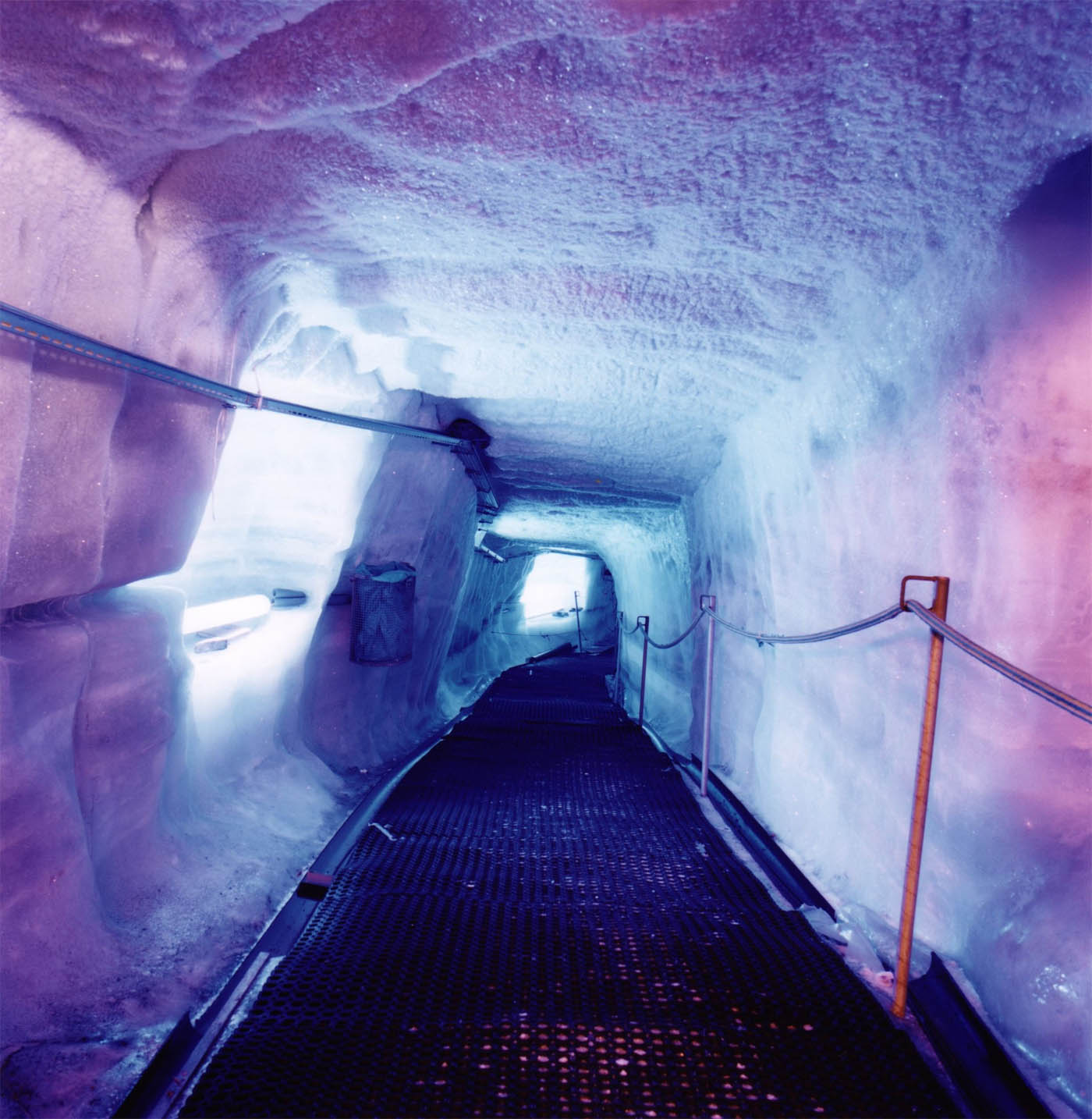
The J. Paul Getty Museum website

LIKE ART BLACK ON FACEBOOK

Back to top

Exhibition: ‘This Is Britain: Photographs from the 1970s and 1980s’ at the National Gallery of Art, Washington

Exhibition dates: 29th January – 11th June 2023

Curator: The exhibition is curated by Kara Felt, assistant curator of art at the Denver Botanic Gardens and a former Andrew W. Mellon Postdoctoral Curatorial Fellow in the department of photographs at the National Gallery of Art, with the organisational assistance of Diane Waggoner, Curator of Photographs, National Gallery of Art.


Gilles Peress (French, b. 1946) 'NORTHERN IRELAND. Belfast. Summer evening' 1989


Gilles Peress (French, b. 1946)
NORTHERN IRELAND. Belfast. Summer evening
1989
Gelatin silver print
Corcoran Collection
Museum Purchase with funds donated by the Marlin Miller, Jr. Family Foundation and by exchange: John Bryant and Patricia Bauman


I lived through these years in Britain.

Strikes, unemployment, high inflation and economic failure
New Right, monetarist ideas and the free market economy
The Troubles
The Winter of Discontent
The queens silver jubilee
Glam Rock, punk and then New Romantics; disco and then HiNRG
Aston Martin, Triumph TR7, two door Capri and MGB GT
Falklands War
Charles and Diana
1984-1985 miners’ strike
Recession
North-South divide
Gay Liberation, women’s liberation
Clause 28
HIV/AIDS
Brixton Riots (September 1985)
Racism and the National Front
Victorian values and moral behaviour vs the permissive society

and Margaret Thatcher

That one name still sends shivers down my spine.

The photographs in this posting capture the grittiness of those years… and the surreality of the lived experience. From my perspective, I worked really hard and partied even harder at clubs such as Scandals, Adams, Bang and Heaven. I spent as much as I earnt and careered around London in my beloved Mini 1275 GT as fast as I could, listening to David Bowie, Barry White and the Love Unlimited Orchestra, Pink Floyd, and the inimitable Grace Jones.

In black and white, Graham Smith’s Bennetts Corner (Giro Corner), the Erimus Club and Commercial Pub, South Bank, Middlesbrough (1982, below) perfectly encapsulates the depressive, dank mood of the country during these years. The meaning of “Giro corner” in the title references a place where people would go, in this case two pubs, to spend their Giro cheque: an unemployment or income support payment by giro cheque, posted fortnightly.

In colour, Martin Parr’s two photographs of New Brighton, Merseyside (1984, below) reference the absurdity of the British at play: leisure time in “new” Brighton on Mersyside in North West England (many miles from the affluent Brighton on the south coast of England) – eating surrounded by rubbish and relaxing on a hard concrete ramp with crying baby, while other artists capture the isolation of individuals, their working class lives and middle class pretensions.

Dr Marcus Bunyan


Many thankx to the National Gallery of Art for allowing me to publish the photographs in the posting. Please click on the photographs for a larger version of the image.


Profound changes in British society in the 1970s and 1980s inspired a revolution in British photography. This Is Britain highlights the socially conscious photographers who captured this moment in time, among them Vanley Burke, Pogus Caesar, Anna Fox, Paul Graham, Sunil Gupta, Chris Killip, Sirkka-Liisa Konttinen, and Martin Parr. The exhibition features some 45 newly acquired prints in the National Gallery of Art’s collection. It brings together works by photographers who explored the national identity as Britain grappled with deindustrialisation, uprisings in inner cities, the Troubles in Northern Ireland, and the controversial policies of Prime Minister Margaret Thatcher. The exhibition also includes Handsworth Songs (1986, below), a 59-minute film on the uprisings that rocked London and Birmingham in 1985. It was produced by the Black Audio Film Collective and directed by John Akomfrah. The exhibition is organised by the National Gallery of Art.

Text from the National Gallery of Art website


Anna Fox (British, b. 1961) 'Advertising Agency, Docklands Enterprise Zone' 1988


Anna Fox (British, b. 1961)
Advertising Agency, Docklands Enterprise Zone
1988
From the series Work Stations
Chromogenic print
Image (visible): 44.5 x 54.8 cm (17 1/2 x 21 9/16 in.)
Framed: 68.5 x 83.8 cm (26 15/16 x 33 in.)
National Gallery of Art, Washington, Alfred H. Moses and Fern M. Schad Fund


Anna Fox (British, b. 1961) 'Conference and Exhibitions Organiser, Euston. Personal Assistant to the Director' 1988, printed later


Anna Fox (British, b. 1961)
Conference and Exhibitions Organiser, Euston. Personal Assistant to the Director
1988, printed later
From the series Work Stations
Chromogenic print
Image (visible): 44.5 x 54.8cm (17 1/2 x 21 9/16 in.)
Framed: 68.5 x 83.8cm (26 15/16 x 33 in.)
National Gallery of Art, Washington, Alfred H. Moses and Fern M. Schad Fund


Anna Fox (British, b. 1961) 'Cafe, the City. Salesperson' 1988 from the series 'Work Stations'


Anna Fox (British, b. 1961)
Cafe, the City. Salesperson
1988
From the series Work Stations
Chromogenic print
Image (visible): 44.5 x 54.8cm (17 1/2 x 21 9/16 in.)
Framed: 68.5 x 83.8cm (26 15/16 x 33 in.)
National Gallery of Art, Washington, Alfred H. Moses and Fern M. Schad Fund


Britain experienced profound changes in the 1970s and 1980s, when it was racked by deindustrialization, urban uprisings, the controversial policies of Prime Minister Margaret Thatcher, and the Troubles in Northern Ireland. Photography became a central form of creative expression during this period, supported and disseminated through new schools, galleries, artists’ collectives, magazines, and government funding.

This Is Britain brings together the work of a generation of photographers who were commenting on the deep unrest of these pivotal decades. Vanley Burke, Pogus Caesar, Anna Fox, Paul Graham, Sunil Gupta, Chris Killip, Sirkka-Liisa Konttinen, Martin Parr, and others pictured communities, traditions, and landscapes affected by Britain’s shifting social and economic realities. Together, they photographed a nation redefining what it meant to be British and, ultimately, modern.

Text from the National Gallery of Art website


Profound changes in British society in the 1970s and 1980s inspired a revolution in British photography. This Is Britain: Photographs from the 1970s and 1980s highlights the work of socially conscious photographers who captured this period of unrest. The exhibition features some 45 newly acquired prints by Vanley Burke, Pogus Caesar, Anna Fox, Paul Graham, Sunil Gupta, Chris Killip, Sirkka-Liisa Konttinen, Martin Parr, and others. It brings together photographers who examined national identity as Britain grappled with deindustrialisation, uprisings in inner cities, the Troubles in Northern Ireland, and the sometimes controversial policies of Prime Minister Margaret Thatcher. On view on the Ground Floor of the National Gallery’s West Building from January 29 through June 11, 2023, the exhibition also features the film Handsworth Songs (1986). The 59-minute film, produced by the Black Audio Film Collective and directed by John Akomfrah, explores uprisings in London and Birmingham in 1985. Reece Auguiste, a member of the Black Audio Film Collective, is the guest curator for an accompanying film program.

Beginning in the 1970s, photography gained its contemporary prominence in Britain, with a rapidly expanding network of galleries, artists’ collectives, schools, and magazines dedicated to promoting the medium. Immigrants and artists of colour, reflecting Britain’s growing multiculturalism, introduced fresh perspectives, as did the many women who entered the field. A generation of young photographers moved from largely black-and-white, documentary styles to more conceptual and often humorous projects in colour in the 1980s. As photographers forged new directions, they pictured a country redefining what it meant to be British and, ultimately, modern.

This Is Britain tells history on an intimate scale, highlighting stories we may have otherwise missed. The addition of these photographs to the National Gallery’s collection allows us to reflect on two decades of artistic innovation and celebrate the talented, diverse group of creators who captured them. We hope that this exhibition inspires visitors, as they contemplate some of the highs and lows experienced by British citizens in the ’70s and ’80s,” said Kaywin Feldman, director of the National Gallery of Art.

Exhibition overview

This Is Britain: Photographs from the 1970s and 1980s focuses on the work of photographers who recorded ways of life that were under threat or disappearing in those tumultuous decades. John Davies’s expansive view of Agecroft Power Station, Salford (1983​) emphasises the displacement of industrial structures. Paul Graham’s​ elegiac series A1: The Great North Road (1982​) examines the shift away from the A1 – a major thoroughfare from London to Edinburgh – to the newer, more direct M1 motorway, resulting in businesses along the former highway to suffer. With their forlorn colours and barren spaces, his pictures challenged the expectation that photography on social themes should be in black and white. Reflecting Britain’s growing immigration and multiculturalism during this period of modernisation, Vanley Burke’s Boy with Flag, Winford in Handsworth Park (1970) pictures a Black youth proudly displaying the Union Jack from his bike.

Many artists in the 1980s continued exploring colour photography, using intense hues inspired by advertising to poke fun at the rise of leisure activities, consumerism, and corporate greed. The series The Last Resort (1983-1986) by Martin Parr, arguably Britain’s most influential living photographer, surveys seaside tourists in New Brighton with acerbic wit. Chris Steele-Perkins​’s decade-long project The Pleasure Principle (1980-1989) captures Margaret Thatcher’s England through surreal images, such as Hypnosis Demonstration, Cambridge University Ball. Six photographs from Anna Fox’s Work Stations (1987-1988​) signal the competition and stress of London office life in the late 1980s. Sunil Gupta strikes a more polemical tone in his series “Pretended” Family Relationships (1988) by responding to Thatcher’s policy prohibiting the promotion of gay and lesbian lifestyles.

The final room presents Handsworth Songs (1986, 59 minutes), a landmark nonfiction film that connects the civil unrest in London and the Handsworth section of Birmingham in 1985 with Britain’s colonial past, weaving contemporary reports and interviews with historical footage and photographs. The film, produced by the Black Audio Film Collective and directed by the acclaimed filmmaker John Akomfrah, features a soundtrack that mixes reggae and post-punk with industrial noises and voiceovers.

Press release from the National Gallery of Art, Washington


Martin Parr (British, 1952-2025) 'New Brighton, Merseyside' 1984 from the series 'The Last Resort'


Martin Parr (British, 1952-2025)
New Brighton, Merseyside
1984
From the series The Last Resort
Chromogenic print
Image: 26.67 x 33.02cm (10 1/2 x 13 in.)
Sheet: 30.48 x 40.64cm (12 x 16 in.)
National Gallery of Art, Washington, Alfred H. Moses and Fern M. Schad Fund
© Martin Parr, Courtesy Rocket Gallery


Martin Parr (British, 1952-2025) 'New Brighton, Merseyside' 1984 from the series 'The Last Resort'


Martin Parr (British, 1952-2025)
New Brighton, Merseyside
1984
From the series The Last Resort
Chromogenic print
Image: 26.67 × 33.02cm (10 1/2 × 13 in.)
Sheet: 30.48 × 40.64cm (12 × 16 in.)
National Gallery of Art, Washington, Alfred H. Moses and Fern M. Schad Fund
© Martin Parr, Courtesy Rocket Gallery


Punk Rock, record unemployment, urban uprisings, Margaret Thatcher, the Troubles in Northern Ireland: profound changes shook British society and inspired a revolution in photography in the 1970s and 1980s. A generation of young photographers used their cameras to comment on the deep unrest of these pivotal decades. With a keen eye for social critique and a spirit of rebellion, they photographed a country redefining what it meant to be British and, ultimately, modern.

Photography during this period became a central form of creative expression, fuelled by a rapidly expanding network of galleries, museum departments, artists’ collectives, schools, and magazines dedicated to the medium. Immigrants and artists of colour, reflecting the nation’s growing multiculturalism, introduced new perspectives, as did the many women who entered the field.

Moving from largely black-and-white, documentary styles toward more conceptual projects in colour, photographers adopted new strategies to examine national identity. In the face of severe economic dislocation, widespread civil disorder, and Prime Minister Thatcher’s controversial policies, these artists declared: This is Britain.

Documenting the Deindustrial Revolution

The decline of British heavy industry in the 1970s led to labor disputes and high unemployment in the early 1980s. As the country prioritised modern technologies and greater efficiency, photographers recorded the communities, structures, and ways of life that were under threat or disappearing. Graham Smith and Vanley Burke portrayed people they had known for decades, while Chris Killip, Sirkka-Liisa Konttinen, and Gilles Peress undertook long-term projects to create intimate yet often bleak photographs of life on the margins of society. Paul Graham and John Davies explored England’s uneasy embrace of the future by showing the people and places being left behind. While these photographers held no real hope of inspiring change, they shared an earnest concern for who and what was being lost as the nation modernised.

Picturing Absurdity in the Thatcher Years

As the leader of the Conservative Party from 1975 and as prime minister from 1979 to 1990, Margaret Thatcher was a polarising figure in Britain. She oversaw the development of an American-style free market economy, the resurgence of British nationalism, and major cutbacks to public spending (famously declaring that “there is no such thing” as society). During the Thatcher years, photographers Martin Parr and Anna Fox used the brash colours of advertising to poke fun at the rise of leisure activities, consumerism, and corporate greed. Combining text and image, Karen Knorr and Sunil Gupta considered how traditional English institutions sidelined women, people of colour, and gay and lesbian communities. Their works openly satirise long-held traditions and question emerging values in British society.

Wall text from the exhibition


Tony Ray-Jones (English, 1941-1972) 'Butlin's Holiday Camp, Scarborough' 1968


Tony Ray-Jones (English, 1941-1972)
Butlin’s Holiday Camp, Scarborough
1968
Gelatin silver print
Image: 15.8 x 24.8cm (6 1/4 x 9 3/4 in.)
Sheet: 35.8 x 28cm (14 1/8 x 11 in.)
National Gallery of Art, Washington, Alfred H. Moses and Fern M. Schad Fund


Karen Knorr (American born Germany, b. 1954) 'A mood of Highly Coloured Naturalism' 1983 from the series 'Country Life'


Karen Knorr (American born Germany, b. 1954)
A mood of Highly Coloured Naturalism
1983
From the series Country Life
Gelatin silver print mounted on board
Image: 40.2 x 40.9cm (15 13/16 x 16 1/8 in.)
Sheet: 60.7 x 51cm (23 7/8 x 20 1/16 in.)
National Gallery of Art, Washington, Alfred H. Moses and Fern M. Schad Fund


Karen Knorr (American born Germany, b. 1954) 'Newspapers are no longer ironed, Coins no longer boiled So far have Standards Fallen' 1981-1983, printed 2015 from the series 'Gentlemen'


Karen Knorr (American born Germany, b. 1954)
Newspapers are no longer ironed, Coins no longer boiled So far have Standards Fallen
1981-1983, printed 2015
From the series Gentlemen
Gelatin silver print
Image: 40.6 × 40.5cm (16 × 15 15/16 in.)
Sheet: 61.5 × 50.7cm (24 3/16 × 19 15/16 in.)
Mat: 71 × 55.8cm (27 15/16 × 21 15/16 in.)
National Gallery of Art, Washington, Alfred H. Moses and Fern M. Schad Fund


Karen Knorr (American born Germany, b. 1954) 'We owe it to the Free world not to Allow Brutal Forces to succeed. When the Rule of law Breaks down, the World takes a further Step towards Chaos' 1981-1983, printed 2015 from the series 'Gentlemen'


Karen Knorr (American born Germany, b. 1954)
We owe it to the Free world not to Allow Brutal Forces to succeed. When the Rule of law Breaks down, the World takes a further Step towards Chaos
1981-1983, printed 2015
From the series Gentlemen
Gelatin silver print
Image: 40.5 x 40.7cm (15 15/16 x 16 in.)
Sheet: 60.8 x 50.5cm (23 15/16 x 19 7/8 in.)
National Gallery of Art, Washington, Alfred H. Moses and Fern M. Schad Fund


Chris Killip (Isle of Man, 1946-2020) 'Margaret, Rosie, and Val, Seacoal Camp, Lynemouth, Northumberland' 1983


Chris Killip (Isle of Man, 1946-2020)
Margaret, Rosie, and Val, Seacoal Camp, Lynemouth, Northumberland
1983
Gelatin silver print
Image: 40.5 x 50.5cm (15 15/16 x 19 7/8 in.)
Sheet: 47.8 x 57.6cm (18 13/16 x 22 11/16 in.)
National Gallery of Art, Washington, Alfred H. Moses and Fern M. Schad Fund


Chris Killip (Isle of Man, 1946-2020) 'Crabs and People, Skinningrove, North Yorkshire, UK' 1981


Chris Killip (Isle of Man, 1946-2020)
Crabs and People, Skinningrove, North Yorkshire, UK
1981
Gelatin silver print
Image: 39.9 × 48.9cm (15 11/16 × 19 1/4 in.)
Sheet: 50.7 × 59.7cm (19 15/16 × 23 1/2 in.)
Mat: 56 × 71.2cm (22 1/16 × 28 1/16 in.)
National Gallery of Art, Washington, Alfred H. Moses and Fern M. Schad Fund
© Chris Killip Photography Trust / Magnum Photos, Courtesy Augusta Edwards Fine Art


Colin Jones (English, 1936-2021) 'The Black House, London' 1973-1976


Colin Jones (English, 1936-2021)
The Black House, London
1973-1976
Gelatin silver print
Image: 33.8 x 49.1cm (13 5/16 x 19 5/16 in.)
Sheet: 41 x 50.8cm (16 1/8 x 20 in.)
National Gallery of Art, Washington, Alfred H. Moses and Fern M. Schad Fund


Vanley Burke (British born Jamaica, b. 1951) 'Young Men on See-Saw, Handsworth Park, Birmingham' 1984, printed 2021


Vanley Burke (British born Jamaica, b. 1951)
Young Men on See-Saw, Handsworth Park, Birmingham
1984, printed 2021
Gelatin silver print
Image: 30.1 x 45.4cm (11 7/8 x 17 7/8 in.)
Sheet: 40.4 x 50.5cm (15 7/8 x 19 7/8 in.)
National Gallery of Art, Washington, Alfred H. Moses and Fern M. Schad Fund


Vanley Burke (British born Jamaica, b. 1951) 'Boy with Flag, Winford in Handsworth Park' 1970, printed 2022


Vanley Burke (British born Jamaica, b. 1951)
Boy with Flag, Winford in Handsworth Park
1970, printed 2022
Gelatin silver print
National Gallery of Art, Washington, Alfred H. Moses and Fern M. Schad Fund


Sirkka-Liisa Konttinen (Finland, b. 1948) 'Young Couple in a Backyard on a Summer's Day' 1975, printed 2012


Sirkka-Liisa Konttinen (Finland, b. 1948)
Young Couple in a Backyard on a Summer’s Day
1975, printed 2012
Gelatin silver print
Image: 36.1 × 39.3cm (14 3/16 × 15 1/2 in.)
Sheet: 40.4 × 50.5cm (15 7/8 × 19 7/8 in.)
National Gallery of Art, Washington, Alfred H. Moses and Fern M. Schad Fund Courtesy L. Parker Stephenson Photographs


John Davies (British, b. 1949) 'Agecroft Power Station, Salford' 1983


John Davies (British, b. 1949)
Agecroft Power Station, Salford
1983
Gelatin silver print
Image: 37.6 × 56.1cm (14 13/16 × 22 1/16 in.)
Sheet: 50.5 × 60.4cm (19 7/8 × 23 3/4 in.)
National Gallery of Art, Washington, Alfred H. Moses and Fern M. Schad Fund Courtesy L. Parker Stephenson Photographs


Graham Smith (British, b. 1947) 'The Queen's Pub, Southbank, Middlesbrough' 1981


Graham Smith (British, b. 1947)
The Queen’s Pub, Southbank, Middlesbrough
1981
Gelatin silver print
Image: 17.8 × 22.8cm (7 × 9 in.)
Sheet: 21.8 × 26.8cm (8 9/16 × 10 9/16 in.)
Mat: 28 × 35.6cm (11 × 14 in.)
National Gallery of Art, Washington, Alfred H. Moses and Fern M. Schad Fund
© Graham Smith, Courtesy Augusta Edwards Fine Art


Graham Smith (British, b. 1947) 'Bennetts Corner (Giro Corner), the Erimus Club and Commercial Pub, South Bank, Middlesbrough' 1982, printed 2008


Graham Smith (British, b. 1947)
Bennetts Corner (Giro Corner), the Erimus Club and Commercial Pub, South Bank, Middlesbrough
1982, printed 2008
Gelatin silver print
Image: 37.4 x 47cm (14 3/4 x 18 1/2 in.)
Sheet: 47.7 x 57.4cm (18 3/4 x 22 5/8 in.)
National Gallery of Art, Washington, Alfred H. Moses and Fern M. Schad Fund


Paul Graham (British, b. 1956) 'Café Assistants, Compass Café, Colsterworth, Lincolnshire' November 1982


Paul Graham (British, b. 1956)
Café Assistants, Compass Café, Colsterworth, Lincolnshire
November 1982
Chromogenic print
Image: 19.4 x 24cm (7 5/8 x 9 7/16 in.)
Sheet: 27.4 x 35cm (10 13/16 x 13 3/4 in.)
National Gallery of Art, Washington, Alfred H. Moses and Fern M. Schad Fund


Paul Graham (British, b. 1956) 'Little Chef in Rain, St. Neots, Cambridgeshire' May 1982


Paul Graham (British, b. 1956)
Little Chef in Rain, St. Neots, Cambridgeshire
May 1982
Chromogenic print
Image: 24.2 x 30.6cm (9 1/2 x 12 1/16 in.)
Sheet: 27.9 x 35.7cm (11 x 14 1/16 in.)
Mat: 35.5 x 45.8cm (14 x 18 1/16 in.)
National Gallery of Art, Washington, Alfred H. Moses and Fern M. Schad Fund
© Paul Graham, courtesy Pace Gallery


Tom Wood (Irish, b. 1951) 'Between Chester and Birkenhead' 1989


Tom Wood (Irish, b. 1951)
Between Chester and Birkenhead
1989
Vintage gelatin silver print
Image: 17.2 x 26.1cm (6 3/4 x 10 1/4 in.)
Sheet: 27.9 x 35.2cm (11 x 13 7/8 in.)
National Gallery of Art, Washington, Alfred H. Moses and Fern M. Schad Fund


Tom Wood (Irish, b. 1951) 'Lime Street' 1995


Tom Wood (Irish, b. 1951)
Lime Street
1995, printed 1997
Analogue hand print
Image: 19 x 25.6 cm (7 1/2 x 10 1/16 in.)
Sheet: 19.8 x 27.2cm (7 13/16 x 10 11/16 in.)
National Gallery of Art, Washington, Alfred H. Moses and Fern M. Schad Fund


Sunil Gupta on Community and Activism

Sunil Gupta, photographer, curator, writer, and activist has maintained a visionary approach to photography, producing bodies of work with keen social and political commentary. Gupta’s diasporic experience of multiple cultures informs a practice dedicated to themes of race, migration, and queer identity. His photographic projects – born from a desire to see himself and others like him represented in art history – draw upon his own life as a point of departure.

The Arnold Newman Lecture Series on Photography provides a forum for leading photographers, primarily known for portraits, to discuss contemporary issues in the medium. Arnold Newman (1918-2006) is acknowledged as one of the great masters of the twentieth and twenty-first centuries whose work changed portraiture. The Arnold and Augusta Newman Foundation generously supported this series to make such conversations available to the public.

Text from the YouTube website


Sunil Gupta (Canadian born India, b. 1953) 'Untitled #1' 1988, printed 2020


Sunil Gupta (Canadian born India, b. 1953)
Untitled #1
1988, printed 2020
From the series “Pretended” Family Relationships
Inkjet print
Image: 61 x 91.4cm (24 x 36 in.)
Sheet: 63.5 x 94cm (25 x 37 in.)
National Gallery of Art, Washington, Alfred H. Moses and Fern M. Schad Fund
© Sunil Gupta


Pogus Caesar (British born St. Kitts, b. 1953) 'Handsworth Riots: Birmingham, United Kingdom September' 1985, printed 2022


Pogus Caesar (British born St. Kitts, b. 1953)
Handsworth Riots: Birmingham, United Kingdom
September 1985, printed 2022
Gelatin silver print
Image: 50.8 × 60.96cm (20 × 24 in.)
Sheet: 41.6 × 57.4cm (16 3/8 × 22 5/8 in.)
National Gallery of Art, Washington, Alfred H. Moses and Fern M. Schad Fund
© Pogus Caesar/OOM Gallery Archive, ARS, New York, DACS, London


Handsworth Songs (1986)

A landmark in nonfiction filmmaking, Handsworth Songs was the first film directed by the Ghanaian-born artist John Akomfrah. It was produced by the Black Audio Film Collective (1982-1998), a group of experimental Black artists who examined the diasporic African and Asian experience in Britain. The film weaves archival footage with scenes, interviews, and pictures from contemporary events, including photographs by Vanley Burke, with a haunting soundtrack that mixes reggae and post-punk music with industrial noises and voiceovers. This layered structure connects Britain’s colonial past with unrest in London’s Tottenham and Brixton neighbourhoods and Birmingham’s Handsworth area in 1985. Today, Handsworth Songs reveals the solidarity shared by Britons of African and Asian descent in the face of inequality as it brings historical perspective to civil disturbances in the 1980s.

This film includes depictions of police violence and the use of racial slurs. Viewer discretion is advised.

Wall text from the exhibition


Chris Steele-Perkins (British, b. 1947) 'Hypnosis Demonstration, Cambridge University Ball' 1980-1989


Chris Steele-Perkins (British, b. 1947)
Hypnosis Demonstration, Cambridge University Ball
1980-1989
Silver dye bleach print
Image: 25.4 × 38.1cm (10 × 15 in.)
Sheet: 30.2 × 40.4cm (11 7/8 × 15 7/8 in.)
National Gallery of Art, Washington, Alfred H. Moses and Fern M. Schad Fund


Paul Reas (British, b. 1955) 'Constable County, Flatford Mill, Suffolk' c. 1992


Paul Reas (British, b. 1955)
Constable County, Flatford Mill, Suffolk
c. 1992
From the series Flogging a Dead Horse
Inkjet print image: 41 x 50.5cm (16 1/8 x 19 7/8 in.)
Sheet: 50.5 x 61cm (19 7/8 x 24 in.)
National Gallery of Art, Washington, Alfred H. Moses and Fern M. Schad Fund


National Gallery of Art
National Mall between 3rd and 7th Streets
Constitution Avenue NW, Washington

Opening hours:
Daily 10am – 5pm

National Gallery of Art website

LIKE ART BLART ON FACEBOOK

Back to top

Exhibition: ‘George Tice Lifework: A Tribute, Photographs 1953-2013’ at Joseph Bellows Gallery, La Jolla, California

Exhibition dates: 21st June – 30th July, 2022


George Tice (American, b. 1938) 'Petit's Mobil Station, Cherry Hill, New Jersey' 1974


George Tice (American, b. 1938)
Petit’s Mobil Station, Cherry Hill, New Jersey
1974
Gelatin silver print
8 x 10 inches


I have always loved the work of George Tice. I have one of his photographs in my collection. I think his work is very underrated.

Tice’s consumate control of the construction of the image plane never gets in the way of the elemental, eternal, and magical aspects of the photograph.

Photographers such as Tice, and Atget, have an innate ability to place the camera in such as position as to reveal the subject matter in a new light. More intuitive, more sensitive to other ways of seeing, these great photographers look at the world from a different point of view.

In this posting, the hovering spaceship that is Petit’s Mobil Station, Cherry Hill, New Jersey (1974, above) is a superb example of this … almost hallucinatory feeling in the image. Other mesmerising photographs include the Cubist Houses and Water Towers, Moorestown, New Jersey (1973, below) and Industrial Landscape, Kearny, New Jersey (1973, below) with its acknowledgment of Alfred Stieglitz’s The Hand of Man (1902, below). Notice how Tice lowers the level of his camera when compared to Stieglitz’s photograph, thus raising the horizon line, so we now follow the bare, ascending train tracks to the massed stacks of the barren industrial landscape instead of looking down on the scene as in The Hand of Man. Here is a master of previsualisation at work.

Other photographs have already been seen in postings on Art Blart, but it is always a pleasure to look at George Tice’s work – especially his dusk and night time photographs such as New International Cinema, New Brunswick, New Jersey (1974, below), Steve’s Diner, Route 130, North Brunswick, New Jersey (1974, below) and Ideal Diner, Perth Amboy, New Jersey (1980, below). There are hints of the intimacies of Walker Evans and the clinical observations of Bernd and Hiller Becker in Tice’s work, but somehow he always makes images which possess his own signature, his own creative writing.

Following on from last week’s posting where I was banging on about the “spiritual” in contemporary photography (and by “spiritual” I mean an energy and feeling for subject matter captured in the negative and then revealed in the image), the photographs I have presented by Tice in this posting are a perfect example of this alternate perspective. As he observes, “The great difficulty of what I attempt is seeing beyond the moment; the everydayness of life gets in the way of the eternal.”

Dr Marcus Bunyan


Many thankx to Joseph Bellows Gallery for allowing me to publish the photograph in the posting. Please click on the photographs for a larger version of the image.


“It takes the passage of time before an image of a commonplace subject can be assessed. The great difficulty of what I attempt is seeing beyond the moment; the everydayness of life gets in the way of the eternal.”


George Tice


George Tice (American, b. 1938) 'Houses and Water Towers, Moorestown, New Jersey' 1973


George Tice (American, b. 1938)
Houses and Water Towers, Moorestown, New Jersey
1973
Gelatin silver print
11 x 14 inches


George Tice (American, b. 1938) 'Industrial Landscape, Kearny, New Jersey' 1973


George Tice (American, b. 1938)
Industrial Landscape, Kearny, New Jersey
1973
Gelatin silver print
8 x 10 inches


Alfred Stieglitz (American, 1864-1946) 'The Hand of Man' 1902


Alfred Stieglitz (American, 1864-1946)
The Hand of Man
1902
Photogravure
24.1 × 31.8cm (9 1/2 × 12 1/2 in.)
The J. Paul Getty Museum, Los Angeles


A locomotive engine steams toward the camera on its barely visible tracks, wearing a billowing black cloud of smoke like a plumed hat. The criss-crossing lines of tracks beside it snake off toward the horizon, and the telephone poles at the left appear to be making the same march. Alfred Stieglitz’s composition is a treatise on the importance of the machine in the modern Industrial Age. The title of the photograph, The Hand of Man, sets up a comparison between the machine that is depicted and the human artistic impulse that created the image. Stieglitz reproduced this photograph in the January 1903 issue of Camera Work, a journal that he both founded and edited. In the early 1930s he returned to the image and printed additional photographs.

Text from the Google Arts and Culture website


George Tice (American, b. 1938) 'Railroad Bridge, High Bridge, New Jersey' 1974


George Tice (American, b. 1938)
Railroad Bridge, High Bridge, New Jersey
1974
Gelatin silver print
8 x 10 inches


George Tice (American, b. 1938) 'Rooftops, 21st and King Street, Paterson, New Jersey' 1969


George Tice (American, b. 1938)
Rooftops, 21st and King Street, Paterson, New Jersey
1969
Vintage gelatin silver print
16 x 20 inches


George Tice (American, b. 1938) 'Tenement Rooftops, Hoboken, New Jersey' 1974


George Tice (American, b. 1938)
Tenement Rooftops, Hoboken, New Jersey
1974
Vintage gelatin silver print
8 x 10 inches


George Tice (American, b. 1938) 'Pulaski Skyway, Jersey City, New Jersey' 1974


George Tice (American, b. 1938)
Pulaski Skyway, Jersey City, New Jersey
1974
Vintage gelatin silver print
8 x 10 inches


George Tice (American, b. 1938) 'Drawbridge, Morgan, New Jersey' 1973


George Tice (American, b. 1938)
Drawbridge, Morgan, New Jersey
1973
Vintage gelatin silver print
8 x 10 inches


The gallery’s current exhibition is a tribute to the lifework of George Tice, including many vintage prints of both famous and lesser-known images. Signed copies of his new book, Lifework, 1953-2013, are also available.

Tice is drawn to vestiges of American culture on the verge of extinction – from people in rural or small-town communities to suburban buildings and neighbourhoods that are often in decline. Although he has photographed throughout the Northwestern United States, he is best known for pictures of his native New Jersey, and the impeccable quality of his black-and-white prints.

Tice was born and raised in Newark, New Jersey – the state in which his ancestors had settled generations earlier. At fourteen, he joined a camera club. A turning point in his self-training happened two years later when a professional photographer critiquing club members’ work praised his picture of an alleyway. Tice briefly studied commercial photography at Newark Vocational and Technical High School; he then joined the Navy. A published image he made of an explosion aboard an American ship caught the eye of photographer Edward Steichen, who purchased it for The Museum of Modern Art. For about a decade, Tice worked as a portrait photographer and helped establish a gallery. That success enabled him to concentrate on personal projects.

In the 1960s, Tice shifted from smaller camera formats to larger ones, which enabled him to craft carefully toned and detailed prints. He portrayed traditional Amish and Shaker communities, as well as the hard lives of fishermen in Maine. In the 1970s, Tice began exploring his home state. Those photographs formed the beginnings of his Urban Landscapes series, which he worked on until the year 2000.

Text from the Joseph Bellows Gallery website


George Tice (American, b. 1938) 'Strand Theater, Keyport, New Jersey' 1973


George Tice (American, b. 1938)
Strand Theater, Keyport, New Jersey
1973
Gelatin silver print
16 x 20 inches


George Tice (American, b. 1938) 'New International Cinema, New Brunswick, New Jersey' 1974


George Tice (American, b. 1938)
New International Cinema, New Brunswick, New Jersey
1974
Vintage gelatin silver print
8 x 10 inches


George Tice (American, b. 1938) 'Ideal Diner, Perth Amboy, New Jersey' 1980


George Tice (American, b. 1938)
Ideal Diner, Perth Amboy, New Jersey
1980
Gelatin silver print
11 x 14 inches


George Tice (American, b. 1938) 'Steve's Diner, Route 130, North Brunswick, New Jersey' 1974


George Tice (American, b. 1938)
Steve’s Diner, Route 130, North Brunswick, New Jersey
1974
Vintage gelatin silver print
16 x 20 inches


George Tice (American, b. 1938) 'Palace Funhouse, Ashbury Park, New Jersey' 1995


George Tice (American, b. 1938)
Palace Funhouse, Ashbury Park, New Jersey
1995
Gelatin silver print
16 x 20 inches


George Tice (American, b. 1938) 'Lexington Avenue, Passaic, New Jersey' 1973


George Tice (American, b. 1938)
Lexington Avenue, Passaic, New Jersey
1973
Vintage gelatin silver print
8 x 10 inches


George Tice (American, b. 1938) 'Goldy Pharmacy, Mount Holly, New Jersey' 1974


George Tice (American, b. 1938)
Goldy Pharmacy, Mount Holly, New Jersey
1974
vintage gelatin silver print
8 x 10 inches


George Tice (American, b. 1938) 'Gar's Bakery and Leisure Laundry, Newark, New Jersey' 1974


George Tice (American, b. 1938)
Gar’s Bakery and Leisure Laundry, Newark, New Jersey
1974
Vintage gelatin silver print
8 x 10 inches


George Tice (American, b. 1938) 'Dari O' Lite, Wood Avenue, Linden, New Jersey' 1973


George Tice (American, b. 1938)
Dari O’ Lite, Wood Avenue, Linden, New Jersey
1973
Vintage gelatin silver print
8 x 10 inches


George Tice (American, b. 1938) 'Jimmy's Bar and Grill, Newark, New Jersey' 1973


George Tice (American, b. 1938)
Jimmy’s Bar and Grill, Newark, New Jersey
1973
Gelatin silver print
8 x 10 inches


George Tice (American, b. 1938) 'Hudson's Fish Market, Atlantic City, New Jersey' 1973


George Tice (American, b. 1938)
Hudson’s Fish Market, Atlantic City, New Jersey
1973
Vintage gelatin silver print
8 x 10 inches


George Tice (American, b. 1938) 'Houses, Ocean Grove, New Jersey' 1974


George Tice (American, b. 1938)
Houses, Ocean Grove, New Jersey
1974
Vintage gelatin silver print
8 x 10 inches


George Tice (American, b. 1938) 'Dorn's Photoshop, Red Bank, New Jersey' 1999


George Tice (American, b. 1938)
Dorn’s Photoshop, Red Bank, New Jersey
1999
Gelatin silver print
16 x 20 inches


Joseph Bellows Gallery
7661 Girrard Avenue
La Jolla, California
Phone: 858 456 5620

Opening hours:
Tuesday – Saturday 11am – 5pm and by appointment

Joseph Bellows Gallery website

LIKE ART BLART ON FACEBOOK

Back to top

Photographs: ‘Venice Views’ by Fratelli Gajo c. 1880s

June 2022


Fratelli Gajo – Piazza S.Marco 139 – Venezia. 'Castelo canal with a view of the Church of San Geremia' 1880s


Fratelli Gajo – Piazza S.Marco 139 – Venezia
Castelo canal with a view of the Church of San Geremia 
1880s
Hand-coloured albumen print mounted on cardboard
Image: 20 x 26cm
Support: 27 x 36cm


I bought this album of 30 hand-coloured albumen prints by Fratelli Gajo together with numerous other black and white albumen prints at auction. Unfortunately the album had no cover but to save it for prosperity I had it rebound in leather at one of the only bookbinders left in Melbourne: White’s Law Bindery. They did a superb job.

I cannot find out anything about the Venetian photographer Fratelli Gajo except the address of his business. No dates, no bibliographic information.

What I do know is that these hand-coloured photographs are rare and exceptionally beautiful. They add an early chapter to the story of hand-coloured photography, which stretches from daguerreotypes, albumen prints, and silver gelatin prints to hand-coloured digital photographs with an equally varied subject matter – aerial photographs, landscapes, portraits, bodies, social documentary photographs and architectural renderings to name but a few.

The photographs in the posting are in the order they appear in the album. I have interleaved the albumen photographs with historical and contemporary images giving us a vista of Venice through time. Enjoy.

Dr Marcus Bunyan


Please click on the photographs for a larger version of the image.


Fratelli Gajo – Piazza S.Marco 139 – Venezia. '153 Rivo delle Maravege' 1880s


Fratelli Gajo – Piazza S.Marco 139 – Venezia
153 Rivo delle Maravege
1880s
Hand-coloured albumen print mounted on cardboard
Image: 20 x 26cm
Support: 27 x 36cm


Fratelli Gajo – Piazza S.Marco 139 – Venezia. 'Untitled [The Doges' Palace and the Piazzetta]' 1880s


Fratelli Gajo – Piazza S.Marco 139 – Venezia
Untitled [The Doges’ Palace and the Piazzetta]
1880s
Hand-coloured albumen print mounted on cardboard
Image: 20 x 26cm
Support: 27 x 36cm


Fratelli Gajo – Piazza S.Marco 139 – Venezia. '89 Venezia – Palazzo Ferry, Grand Hotel' 1880s


Fratelli Gajo – Piazza S.Marco 139 – Venezia
89 Venezia – Palazzo Ferry, Grand Hotel
1880s
Hand-coloured albumen print mounted on cardboard
Image: 20 x 26cm
Support: 27 x 36cm


Wolfgang Moroder. 'Palazzo Ferro Fini in Venice. Facade on Grand Canal' 18 April 2016


Wolfgang Moroder
Palazzo Ferro Fini in Venice. Facade on Grand Canal
18 April 2016
CC BY-SA 3.0


Fratelli Gajo – Piazza S.Marco 139 – Venezia. '680 Venezia' 1880s


Fratelli Gajo – Piazza S.Marco 139 – Venezia
680 Venezia
1880s
Hand-coloured albumen print mounted on cardboard
Image: 20 x 26cm
Support: 27 x 36cm


Fratelli Gajo – Piazza S.Marco 139 – Venezia. 'Untitled [St Mark's Basilica]' 1880s


Fratelli Gajo – Piazza S.Marco 139 – Venezia
Untitled [St Mark’s Basilica]
1880s
Hand-coloured albumen print mounted on cardboard
Image: 20 x 26cm
Support: 27 x 36cm


Francesco Guardi (Italy, 1712-93) 'The Piazza San Marco, Venice' c. 1770-1775

Francesco Guardi (Italy, 1712-93) 'The Piazza San Marco, Venice' c. 1770-1775


Francesco Guardi (Italy, 1712-1793)
The Piazza San Marco, Venice (installation views)
c. 1770-1775
Oil on canvas
55.2 x 85.4cm
Scottish National Gallery, Edinburgh Accepted by HM Government in lieu of inheritance tax and allocated to the Scottish National Gallery, 1978
© Trustees of the National Galleries of Scotland
Photos: © Marcus Bunyan and the Art Gallery of New South Wales


Fratelli Gajo – Piazza S.Marco 139 – Venezia. 'Untitled' 1880s


Fratelli Gajo – Piazza S.Marco 139 – Venezia
Untitled
1880s
Hand-coloured albumen print mounted on cardboard
Image: 20 x 26cm
Support: 27 x 36cm


Fratelli Gajo – Piazza S.Marco 139 – Venezia. 'Untitled' 1880s


Fratelli Gajo – Piazza S.Marco 139 – Venezia
Untitled
1880s
Hand-coloured albumen print mounted on cardboard
Image: 20 x 26cm
Support: 27 x 36cm


Fratelli Gajo – Piazza S.Marco 139 – Venezia. 'Canale grande verso Rialto' 1880s


Fratelli Gajo – Piazza S.Marco 139 – Venezia
Canale grande verso Rialto
1880s
Hand-coloured albumen print mounted on cardboard
Image: 20 x 26cm
Support: 27 x 36cm


Canaletto (Italian, 1697-1768) 'Grand Canal from Palazzo Balbi towards the Rialto' between 1720 and 1723


Canaletto (Italian, 1697-1768)
Grand Canal from Palazzo Balbi towards the Rialto
Between 1720 and 1723
Oil on canvas
Height: 144cm (56.6 in)
Width: 207cm (81.4 in)
Museum of 18th-century Venice
Public domain


Fratelli Gajo – Piazza S.Marco 139 – Venezia. 'Untitled [Bridge of Sighs]' 1880s


Fratelli Gajo – Piazza S.Marco 139 – Venezia
Untitled [Bridge of Sighs]
1880s
Hand-coloured albumen print mounted on cardboard
Image: 20 x 26cm
Support: 27 x 36cm


Fratelli Gajo – Piazza S.Marco 139 – Venezia. 'A. Paoletti, Venezia' 1880s


Fratelli Gajo – Piazza S.Marco 139 – Venezia
After the painting by A. Paoletti, Venezia
1880s
Hand-coloured albumen print mounted on cardboard
Image: 20 x 26cm
Support: 27 x 36cm


Antonio Ermolao Paoletti (Venezia, 1834-1912) 'A Venetian ice cream seller' Nd


Antonio Ermolao Paoletti (Venezia, 1834-1912)
A Venetian ice cream seller
Nd
Oil on canvas
50.2 x 74.9cm (19.8 x 29.5 in.)


Fratelli Gajo – Piazza S.Marco 139 – Venezia. 'Untitled [The Courtyard of the Doge's Palace looking towards the Torricella]' 1880s


Fratelli Gajo – Piazza S.Marco 139 – Venezia
Untitled [The Courtyard of the Doge’s Palace looking towards the Torricella]
1880s
Hand-coloured albumen print mounted on cardboard
Image: 20 x 26cm
Support: 27 x 36cm


Fratelli Gajo – Piazza S.Marco 139 – Venezia. 'No. 5 Piazza S. Marco dai Leoni' 1880s


Fratelli Gajo – Piazza S.Marco 139 – Venezia
No. 5 Piazza S. Marco dai Leoni
1880s
Hand-coloured albumen print mounted on cardboard
Image: 20 x 26cm
Support: 27 x 36cm


Fratelli Gajo – Piazza S.Marco 139 – Venezia. '13 Libreria e Loggetto' 1880s


Fratelli Gajo – Piazza S.Marco 139 – Venezia
13 Libreria e Loggetto
1880s
Hand-coloured albumen print mounted on cardboard
Image: 20 x 26cm
Support: 27 x 36cm


Fratelli Gajo – Piazza S.Marco 139 – Venezia. '35. Venezia – Porta del P. Ducale detta della Carta' 1880s


Fratelli Gajo – Piazza S.Marco 139 – Venezia
35. Venezia – Porta del P. Ducale detta della Carta
1880s
Hand-coloured albumen print mounted on cardboard
Image: 20 x 26cm
Support: 27 x 36cm


Jean-Pol Grandmont. 'The Porta della Carta of the Doges Palace on Piazzetta San Marco in Venice' 1 June 2013


Jean-Pol Grandmont
The Porta della Carta of the Doges Palace on Piazzetta San Marco in Venice
1 June 2013
CC BY-SA 4.0


Fratelli Gajo – Piazza S.Marco 139 – Venezia. '230 [Interior of the Doges Palace]' 1880s


Fratelli Gajo – Piazza S.Marco 139 – Venezia
230 [Interior of the Doges Palace]
1880s
Hand-coloured albumen print mounted on cardboard
Image: 20 x 26cm
Support: 27 x 36cm


Torre dell'Orologio, Piazza san Marco, Venice


Torre dell’Orologio, Piazza san Marco, Venice


Fratelli Gajo – Piazza S.Marco 139 – Venezia. '101. Torre del Orologio' 1880s


Fratelli Gajo – Piazza S.Marco 139 – Venezia
101. Torre del Orologio
1880s
Hand-coloured albumen print mounted on cardboard
Image: 20 x 26cm
Support: 27 x 36cm


Fratelli Gajo – Piazza S.Marco 139 – Venezia. '141. Venezia Chiesa della Salute' 1880s


Fratelli Gajo – Piazza S.Marco 139 – Venezia
141. Venezia Chiesa della Salute
1880s
Hand-coloured albumen print mounted on cardboard
Image: 20 x 26cm
Support: 27 x 36cm


Walter Richard Sickert (British, 1860-1942) 'Santa Maria della Salute, Venice' c. 1901


Walter Richard Sickert (British, 1860-1942)
Santa Maria della Salute, Venice
c. 1901
Oil on canvas
56 x 46cm
Royal Academy of Arts


Fratelli Gajo – Piazza S.Marco 139 – Venezia. 'Untitled' 1880s


Fratelli Gajo – Piazza S.Marco 139 – Venezia
Untitled
1880s
Hand-coloured albumen print mounted on cardboard
Image: 20 x 26cm
Support: 27 x 36cm


Fratelli Gajo – Piazza S.Marco 139 – Venezia. '65 Monumento Collooni' 1880s


Fratelli Gajo – Piazza S.Marco 139 – Venezia
65 Monumento Collooni
1880s
Hand-coloured albumen print mounted on cardboard
Image: 20 x 26cm
Support: 27 x 36cm


Federico Moja (Italian, 1802-1885) 'Venice, a View of the Campo Santi Giovanni e Paolo, with the Equestrian Monument to Bartolomeo Colleoni and the Scuola Grande di San Marco in the Background' 1848


Federico Moja (Italian, 1802-1885)
Venice, a View of the Campo Santi Giovanni e Paolo, with the Equestrian Monument to Bartolomeo Colleoni and the Scuola Grande di San Marco in the Background
1848
Oil on canvas
Unframed: 74.5 by 104.5cm
Framed: 89 by 118.5cm


Fratelli Gajo – Piazza S.Marco 139 – Venezia. 'No. 30 Rivo di Canonica' 1880s


Fratelli Gajo – Piazza S.Marco 139 – Venezia
No. 30 Rivo di Canonica
1880s
Hand-coloured albumen print mounted on cardboard
Image: 20 x 26cm
Support: 27 x 36cm


Fratelli Gajo – Piazza S.Marco 139 – Venezia. 'Untitled [Entry to the presbytery of St Mark's Basilica]' 1880s


Fratelli Gajo – Piazza S.Marco 139 – Venezia
Untitled [Entry to the presbytery of St Mark’s Basilica]
1880s
Hand-coloured albumen print mounted on cardboard
Image: 20 x 26cm
Support: 27 x 36cm


Fratelli Gajo – Piazza S.Marco 139 – Venezia. 'Untitled [Bridge of Sighs]' 1880s


Fratelli Gajo – Piazza S.Marco 139 – Venezia
Untitled [Bridge of Sighs]
1880s
Hand-coloured albumen print mounted on cardboard
Image: 20 x 26cm
Support: 27 x 36cm


Fratelli Gajo – Piazza S.Marco 139 – Venezia. 'Untitled' 1880s


Fratelli Gajo – Piazza S.Marco 139 – Venezia
Untitled
1880s
Hand-coloured albumen print mounted on cardboard
Image: 20 x 26cm
Support: 27 x 36cm


Fratelli Gajo – Piazza S.Marco 139 – Venezia. '58. Rio S. Agostino' 1880s


Fratelli Gajo – Piazza S.Marco 139 – Venezia
58. Rio S. Agostino
1880s
Hand-coloured albumen print mounted on cardboard
Image: 20 x 26cm
Support: 27 x 36cm


Didier Descouens. 'Rio di S. Agostino seen from the S. Agostino Bridge in Venice' 11 May 2015


Didier Descouens
Rio di S. Agostino seen from the S. Agostino Bridge in Venice
11 May 2015
CC BY-SA 4.0


Fratelli Gajo – Piazza S.Marco 139 – Venezia. 'Untitled [Torre del Orologio]' 1880s


Fratelli Gajo – Piazza S.Marco 139 – Venezia
Untitled [Torre del Orologio]
1880s
Hand-coloured albumen print mounted on cardboard
Image: 20 x 26cm
Support: 27 x 36cm


Fratelli Gajo – Piazza S.Marco 139 – Venezia. 'Untitled [The Doge's Palace]' 1880s


Fratelli Gajo – Piazza S.Marco 139 – Venezia
Untitled [The Doge’s Palace]
1880s
Hand-coloured albumen print mounted on cardboard
Image: 20 x 26 cm
Support: 27 x 36 cm


Fratelli Gajo – Piazza S.Marco 139 – Venezia. '87 Venezia – Palazzo Contarini Fasan' 1880s


Fratelli Gajo – Piazza S.Marco 139 – Venezia
87 Venezia – Palazzo Contarini Fasan
1880s
Hand-coloured albumen print mounted on cardboard
Image: 20 x 26cm
Support: 27 x 36cm


Wolfgang Moroder. 'Palazzo Contarini Fasan in Venice. Facade on Grand Canal' 31 July 2010


Wolfgang Moroder
Palazzo Contarini Fasan in Venice. Facade on Grand Canal
31 July 2010
CC BY-SA 4.0


Fratelli Gajo – Piazza S.Marco 139 – Venezia. 'Venezia – Palazzo Pisaro' 1880s


Fratelli Gajo – Piazza S.Marco 139 – Venezia
Venezia – Palazzo Pisaro
1880s
Hand-coloured albumen print mounted on cardboard
Image: 20 x 26cm
Support: 27 x 36cm


Fratelli Gajo – Piazza S.Marco 139 – Venezia. '100. Venezia – Palazzo Rezzonico' 1880s


Fratelli Gajo – Piazza S.Marco 139 – Venezia
100. Venezia – Palazzo Rezzonico
1880s
Hand-coloured albumen print mounted on cardboard
Image: 20 x 26cm
Support: 27 x 36cm


Didier Descouens. 'Ca 'Rezzonico, Venice facade of Giorgio Massari on the Grand Canal' 7 May 2012


Didier Descouens
Ca ‘Rezzonico, Venice facade of Giorgio Massari on the Grand Canal
7 May 2012
CC BY-SA 4.0


Fratelli Gajo – Piazza S.Marco 139 – Venezia. 'Untitled [Statue of King Vittorio Emanuel II by the sculptor Ettore Ferrari 1887]' c. 1887


Fratelli Gajo – Piazza S.Marco 139 – Venezia
Untitled [Statue of King Vittorio Emanuel II by the sculptor Ettore Ferrari 1887]
c. 1887
Hand-coloured albumen print mounted on cardboard
Image: 20 x 26cm
Support: 27 x 36cm


Didier Descouens. 'The main gate at the Venetian Arsenal' 9 May 2012


Didier Descouens
The main gate at the Venetian Arsenal
9 May 2012
CC BY-SA 4.0


The so-called “Solid ground entrance” of the Arsenale in Venice was built between 1692 and 1694 on a project by Alessandro Tremignon. Eight standing figures on pedestals on the ground: At the front row: from left to right: La Giustizia by Giovanni Antonio Comino, Marte by Giovanni Antonio Comino, Nettuno by Giovanni Antonio Comino, Bellona by Francesco Cabianca At the the second and the third rows: L’Abbondanza by Francesco Cabianca (last row on the right), La Vigilanza by Francesco Cabianca (second row on the right), Two more Allegorical statues by Giovanni Antonio Comino, (second and third row on the left)


Fratelli Gajo – Piazza S.Marco 139 – Venezia. '157 33 Arsenale' 1880s


Fratelli Gajo – Piazza S.Marco 139 – Venezia
157 33 Arsenale
1880s
Hand-coloured albumen print mounted on cardboard
Image: 20 x 26cm
Support: 27 x 36cm


Keystone View Company (American, Manufacturers and Publishers) 'The Rialto Bridge, Venice' 1929


Keystone View Company (American, Manufacturers and Publishers)
The Rialto Bridge, Venice
1929
Stereograph print on card mount
Mount: 9 x 18cm


Fratelli Gajo – Piazza S.Marco 139 – Venezia 'Untitled [Rialto Bridge]' 1880s


Fratelli Gajo – Piazza S.Marco 139 – Venezia
Untitled [Rialto Bridge]
1880s
Hand-coloured albumen print mounted on cardboard
Image: 20 x 26cm
Support: 27 x 36cm


Fratelli Gajo – Piazza S.Marco 139 – Venezia. '211. Bis- Venezia – Chiesa S. Marco – Interno' (Interior of the San Marco Church) 1880s


Fratelli Gajo – Piazza S.Marco 139 – Venezia
211. Bis- Venezia – Chiesa S. Marco – Interno (Interior of the San Marco Church)
1880s
Hand-coloured albumen print mounted on cardboard
Image: 20 x 26cm
Support: 27 x 36cm


Fratelli Gajo – Piazza S.Marco 139 – Venezia. 'Untitled' c. 1880


Fratelli Gajo – Piazza S.Marco 139 – Venezia
Untitled
1880s
Hand-coloured albumen print mounted on cardboard
Image: 20 x 26cm
Support: 27 x 36cm


LIKE ART BLART ON FACEBOOK

Back to top

Photographs: ‘Circus performers in America’

April 2022


Chicago Photo Co., 389 State Street, Chicago (John B. Wilson, photographer). 'Ada Zingara (Harriett O. Shipley, 1861-1937)' early 1900s


Chicago Photo Co., 389 State Street, Chicago (John B. Wilson, photographer)
Ada Zingara (Harriett O. Shipley, 1861-1937)
early 1900s
Photo-Albumen silver cabinet card
6 1/2 x 4 1/4″


A selection of albumen photographs on cabinet cards and cartes de visite of wonderful human beings. I have added biographical and other information about the photographers and subjects where possible.

Dr Marcus Bunyan


All photographs are used under fair use conditions for the purpose of education and teaching. Please click on the photographs for a larger version of the image.


Obermüller and Kern, 388 Bowery, N.Y. 'Amy Arlington, snake charmer' c. 1880s-1890s


Obermüller and Kern, 388 Bowery, N.Y.
Amy Arlington, snake charmer
c. 1880s-1890s
Photo-Albumen silver cabinet card
6 1/2 x 4 1/4″


Charles Eisenmann (American, 1855-1927) 'Amy Arlington, snake charmer' c. 1880s-1890s


Charles Eisenmann (American, 1855-1927)
Amy Arlington, snake charmer
c. 1880s-1890s
Photo-Albumen silver cabinet card
6 1/2 x 4 1/4″


About Charles Eisenmann

Charles Eisenmann was an American photographer. His work, which dates from the Victorian-era “Gilded Age” (1870-1890), focused almost exclusively on the “freaks” of the circuses, sideshows, and living museums of New York’s Bowery area. The subject matter was profitable enough to provide a living for both Eisenmann and Frank Wendt, his successor in the business.

Eisenmann was born in Germany in 1850 and emigrated to the United States some time before 1870, settling in New York City. At an early age, Eisenmann established a photography studio in the Bowery. A lower class area that was the hub of popular entertainment, the Bowery was known for its cheap photographic galleries and dime museums. Here Eisenmann discovered his clientele. Dime museums were modelled on P.T. Barnum‘s American Museum on Broadway which exhibited various human “curiosities” as well as many unusual and questionable “scientific” exhibits. Similar in many respects to the circus sideshows, these museums featured human “freaks” who displayed their odd physiognomies and performed before gawking visitors. To help these performers market themselves, Eisenmann and his successor Frank Wendt supplied them with small photographs that they could sell or distribute to publicists. Precisely why Eisenmann was drawn to and focused on this peculiar clientele is not known, though there was evidently money to be made.

Among Eisenmann’s subjects were the famous as well as obscure. They included the “father” of the sideshow, P. T. Barnum, and performers like General Tom Thumb, Jo Jo the Dog-faced Boy, the Wild Men of Borneo, Annie Jones the Bearded Lady, and the Skeleton Man. He also photographed Siamese twins, giants, dwarfs, armless and legless “wonders,” albinos, tattoo artists, and even abnormal animals, such as two-headed cows. While many of these “freaks” were genuine, many were not, having been created out of the imagination and costuming talents of sideshow managers.

Eisenmann’s career in New York began to decline around 1890, and in 1899 he relocated to Plainfield, New Jersey. Wendt joined Eisenmann during this period, at first becoming his business partner, and then son-in-law. Around this same time the warm-toned albumen print process began to disappear, and to be replaced by the cooler silver gelatin process. The change in process did not favour Eisenmann’s techniques. …

The verso of many of Eisenmann’s photographs contained his characteristic tagline, “extra inducements to the theatrical profession,” which reflected the emphasis he placed on his primary clientele.

Anonymous text. “Ronald G. Becker Collection of Charles Eisenmann Photographs,” on the Syracuse University Library website 1998 updated 2016 [Online] Cited 02/04/2022


Charles Eisenmann (American, 1855-1927) 'Amy Arlington, snake charmer' c. 1880s-1890s


Charles Eisenmann (American, 1855-1927)
Amy Arlington, snake charmer
c. 1880s-1890s
Photo-Albumen silver cabinet card
6 1/2 x 4 1/4″


Serpent Queens

Snake charming was another speciality that moved from being an almost exclusively male occupation to domination by women. In fact, as snake charming and handling moved into the twentieth century it became almost exclusively a female calling.

Large exotic snakes were exhibited in early museums, and the 1876 and 1893 world fairs imported male snake charmers as part of native villages. During the last two decades of the nineteenth century, when demand for freaks was so high, people, especially partially clad and exotic-looking women, handling or “charming” boas, anacondas, rattlers, cobras, and other serpents became common freak show fare.

Snake charmers – or serpent enchantresses, as they were also called – were, like tattooed persons and Circassians, easy to come by. Although there were tricks to make large snakes lethargic and poisonous snakes benign, some acts contained a distinct elements of danger. For the most part, however, snake charming involved little skill and, aside from the ability to master repulsion and fear, few personal qualifications. There was a seemingly unending supply of charmers – more charmers than snakes by far. Indeed, the cost and supply of snakes was a bigger factor in controlling the number of acts than the number of applicants. While charmers became commonplace and never demanded the high salaries of featured attractions, there was always a place for them on the platform. Audiences continued to squirm in delighted disgust year after year, and, as with human art galleries, innovation provided a continuous element of novelty. After Circassians became commonplace, there were Circassian snake-charmers. In search of novelty, one man wrestled pythons in a five-hundred-gallon tank. Although the types and number of snakes the charmer worked with provided some variety as well, the most important element of the exhibit was the presentation.

There were snake charmers and serpent queens who claimed to be from the East, having learned their skill through apprenticeship to mystics. Others claimed to be born with serpent power. Even though a few who practiced the art probably were from India and other far-off places, most were homegrown Americans…

Whether a domestic exotic or an import, one’s story and stage presence were important elements of success. The difference between a fill-in and an attraction was ingenuity and flair. But most snake charmers were minor attractions, and we know very little about the women around whom the snakes wrapped themselves. A few, however, like Amy Arlington who as with Barnum and Bailey in the 1890s, left many photo portraits of themselves entwined by serpents. Some “true life” booklets are preserved, and, although less elaborate and sophisticated than those of featured stars, they do provide a glimpse of their presentation – a presentation in the high exotic mode.

Robert Bogdan. Freak Show: Presenting Human Oddities for Amusement and Profit. Chicago and London: University of Chicago Press, 1988, pp. 256-258


Charles Eisenmann (American, 1855-1927) 'Charles B. Tripp "Armless Wonder"' 1888


Charles Eisenmann (American, 1855-1927), New York
Charles B. Tripp “Armless Wonder” (33 years old)
1888
Photo-Albumen silver cabinet card
6 1/2 x 4 1/4″


Albumen print on original studio mount features the armless Tripp drinking tea with his feet. Notice the date “1888” near Tripp’s right foot.


Charles B. Tripp (Canadian-American, 1855-1930) was an artist and sideshow performer known as the “Armless Wonder”.

A native of Woodstock, Ontario, Tripp was born without arms but learned to use his legs and feet to perform everyday tasks. He was a skilled carpenter and calligrapher and started supporting his mother and sister when he was a teenager. In 1872, Tripp visited P. T. Barnum in New York City and was quickly hired to work for Barnum’s Great Traveling World’s Fair. He worked for Barnum (and later James Anthony Bailey) for twenty-three years, then toured for the Ringling brothers for twelve years.

On stage, Tripp cultivated a gentlemanly persona and exhibited his skills in carpentry and penmanship. He also cut paper, took photographs, shaved, and painted portraits. For extra income, he signed promotional pictures of himself with his feet. Tripp often appeared in photographs with Eli Bowen, a “legless wonder” from Ohio. In the photographs, the two rode a tandem bicycle, with Tripp pedalling and Bowen steering.

By the 1910s, Tripp was no longer drawing large crowds for the major circuses, so he joined the traveling carnival circuit. He was accompanied by his wife, Mae, who sold tickets for midway attractions. Tripp died of pneumonia (or asthma) in Salisbury, North Carolina, where he had been wintering for several years. He was buried in Olney, Illinois.

Text from the Wikipedia website


Charles Eisenmann

Charles Eisenmann (October 5, 1855 – December 8, 1927) was a famous New York photographer during the late 1880s who worked in the Bowery district.

Eisenmann’s photography was sold in the form of Cabinet cards, popular in this era, available to the middle class. Eisenmann also supplied Duke Tobacco Company with cheesecake photography to stuff in their tobacco cans. The book Victorian Cartes-de-Visite credits Eisenmann with being the most prolific and well known photographer when it comes to Cabinet cards.

His work was the subject of a 1979 monograph, Monsters of the Gilded Age, focusing on his work on human oddities from the Barnum and Bailey circus, with a notable widely circulated picture of Jojo the Dog-faced Boy. Although a number of his photographs were of obvious fakes (called “gaffed freaks”), many others were genuinely anomalous, including the giant Routh Goshen, the four-legged girl Myrtle Corbin, and the Siamese twins Chang and Eng and Millie and Christine. …

Humbugs

In his book, Secrets of the Sideshows, Joe Nickell points out that Eisenmann used a number of notable humbugs or gaffs. These included his “Circassian beauties”, women with teased, large hairdos who were said to have escaped from Turkish harems. The models were locals from the Bronx with hair made frizzy and wild by washing in beer, who earned money for posing. …

Victorian society and circus freaks

In the late 1880s, A new phenomenon appeared with Victorian society’s fascination and sympathy for people who appeared to have genetic abnormalities. There was much publicity, for example, over Princess Alexandra’s attention to Joseph Merrick, the “Elephant Man.”

Eisenmann saw the golden opportunity in this fascination, and photographed circus people dressed as Victorian society, and conversely Victorian society with circus props. In New York city circus people were quite well received, as evidenced by the proliferation of dime museums and the PT Barnum circus located in New York.

One of Eisenmann’s subjects, Charles Stratton (Major Tom Thumb) was quite well known, and his wedding was quite the affair. “The couple’s elaborate wedding took place in Grace Episcopal Church in New York City. The Astors and the Vanderbilts were said to have attended as Barnum sold tickets for $75.”

Other prestigious clients included Mark Twain, and Annie Oakley. In some ways Eisenmann can be considered a kind of Annie Leibovitz of the Victorian Bowery district. His career suffered a downturn with the introduction of Gelatin silver process photography which made photographs more inexpensive and available for mass consumption. Also, Vaudeville overtook circuses in popularity at this time as well. In 1898 Eisenmann closed his studio and was succeeded by Frank Wendt. Frank was a sort of intern of his. For a few years, he sold photographic equipment and took conventional portraits in Plainfield, New Jersey but by 1907 he had disappeared from the public record, some believing he went to Germany. This was the second time he went off the radar, the first time being when his first wife died. At that time he was believed to have gone to Asia.

Eventually, in the early 1900s, he resurfaced as the head of the photography department for DuPont taking pictures of employees. He died in 1927.

Text from the Wikipedia website


Charles Eisenmann (American, 1855-1927) 'Miss Delina Rossa (age 28)' c. 1880s


Charles Eisenmann (American, 1855-1927), New York
Miss Delina Rossa (age 28)
c. 1880s
Photo-Albumen silver cartes de visite
4 1/4 x 2 1/2″


Rossa is presumed from Paris, as one photo of her is marked “born in Paris” but nothing much else is known about her.


Unknown photographer (American). 'Mademoiselle Zana, The only Bearded Russian Lady, 20 years of age' c. 1880s


Unknown photographer (American)
Mademoiselle Zana, The only Bearded Russian Lady, 20 years of age
c. 1880s
Photo-Albumen silver cartes de visite
4 1/4 x 2 1/2″


Unknown photographer (American). "Bearded Girl and her Mother" c. 1880s


Unknown photographer (American)
“Bearded Girl and her Mother”
c. 1880s
Photo-Albumen silver cartes de visite
4 1/4 x 2 1/2″


Charles Eisenmann (American, 1855-1927), New York Frank Wendt (American, 1858-1930), New York. 'Waino and Plutano "The Wild Men of Borneo" (60-70 years old)' c. 1880s


Charles Eisenmann (American, 1855-1927), New York
Frank Wendt (American, 1858-1930), New York
Waino and Plutano “The Wild Men of Borneo” (60-70 years old)
c. 1880s
Photo-Albumen silver cabinet cards
Image: 5 1/2 x 3 7/8 in. (14 x 9.8cm)
Mount: 6 1/2 x 4 1/4 in. (16.5 x 10.8cm)


Wild Men of Borneo

The Wild Men of Borneo, Waino and Plutanor, were a pair of exceptionally strong dwarf brothers who were most famously associated with P. T. Barnum and his freak show exhibitions.

Life

Waino and Plutanor were actually Hiram W. and Barney Davis, two mentally disabled brothers from Pleasant Township, Knox County, Ohio farm, born in 1825 in England and 1827 in Ohio respectively. The 1850 census for them suggests they were born slightly later in 1829 and 1831. Their parents were David Harrison Davis and Catherine Blydenburgh. After their father’s death in 1842, their mother remarried to William Porter. They were each 40 inches tall (100cm) and weighed about 45 pounds (20kg), yet could perform feats of great strength such as lifting heavy weights and wrestling with audience members on stage. Discovered and subsequently promoted by a traveling showman known as Doctor Warner in 1852, Hiram and Barney were given new names, Waino and Plutanor, and a sensational back story – they were said to be from the island of Borneo, where they had been captured after a great struggle with armed sailors. They initially had modest success, but at least one newspaper believed them to be dwarves from the United States. The two soon went on to be exhibited at state fairs across the United States. At the time of the 1860 census they were living in Somerville, Massachusetts in the household of Henry Harvey, a showman. At some point in the next few years management of the pair was transferred to a relative of Doctor Warner, Hanford A. Warner.

In 1874 they were valued at $50,000. In January 1877 they were performing at the New American Museum located in Manhattan. In June 1880 at the time of the federal census, they were touring with William C. Coup’s circus and were enumerated under their assumed identities. By 1882 Waino and Plutanor became involved with P. T. Barnum and his traveling exhibitions. With Barnum’s fabled promotional skill, the careers of the Wild Men of Borneo took off and over the course of the next 25 years, the pair earned approximately $200,000, which was an enormous sum in that era, equivalent to $6,000,000 today. Their exhibitions primarily consisted of performing acts of great strength, such as lifting adult audience members and wrestling with both audience members and each other. They were said to be able to lift up to 300 pounds (140 kg) each. In November 1887 they were performing at Eugene Robinson’s Dime Museum and Theatre. In the 1890s Hanford’s son Ernest took over the management duties of the Davis brothers due to the elder Hanford becoming blind.

In 1903 the brothers were withdrawn from exhibitions by the Warner family. Hiram died in Waltham, Massachusetts on March 16, 1905. Barney stopped working after his brother’s death. Their former manager Hanford Warner died in 1910. Barney died on May 31, 1912 at Waltham, Massachusetts at the Warner family home. The two are buried together in Mount Vernon, Ohio, under a gravestone marked “Little Men.” Newspapers from the time report them being buried in Waltham, Massachusetts. It is unknown when their bodies were moved to Ohio.

Text from the Wikipedia website


Morris Yogg (American, active c. 1885 to 1935, d. 1939). 'Sharpshooter Wyoming Jack' c. 1890s


Morris Yogg (American, active c. 1885 to 1935, d. 1939), Newark, NJ
Sharpshooter Wyoming Jack
c. 1890s
Photo-Albumen silver cabinet card
6 3/4 x 4 1/4″


The long-haired sharpshooter posing with a revolver at his waist and three rifles at his side.

Stated on the verso of Yogg’s cards: “If you have beauty, come, we’ll take it; if you have none, come, we’ll make it.” Where Yogg was challenged by lack of beauty, he used accessories in an effort to enhance the sitter’s appearance. The photographer was at 162 Springfield Ave. between 1885-1914.


Charles Stacy (American) 'Corner 9th St. & 5th Ave. Brooklyn Col. W. F. Cody "Buffalo Bill"' c. 1900s


Charles Stacy (American) Corner 9th St. & 5th Ave. Brooklyn
Col. W. F. Cody “Buffalo Bill”
c. 1900s
Photo-Albumen silver cabinet card
6 1/2 x 4 1/4″


Charles Eisenmann (American, 1855-1927). 'Ettie Rogers' c. 1880s-1890s


Charles Eisenmann (American, 1855-1927), New York
Ettie Rogers
c. 1880s-1890s
Photo-Albumen silver cartes de visite
4 1/4 x 2 1/2″


Unknown photographer (American). 'Ettie Rogers' c. 1880s-1890s


Unknown photographer (American)
Ettie Rogers
c. 1880s-1890s
Photo-Albumen silver cartes de visite
4 1/4 x 2 1/2″


Ettie Rogers was an albino woman who featured in many traveling shows, notably P. T. Barnum’s travelling museums.


Unknown photographer (American). 'Ettie Rogers' c. 1880s-1890s


Unknown photographer (American)
Ettie Rogers
c. 1880s-1890s
Photo-Albumen silver cartes de visite
4 1/4 x 2 1/2″


Abraham Bogardus (American, 1822-1908). 'Chang Yu Sing "The Chinese Giant"' c. 1880s


Abraham Bogardus (American, 1822-1908), New York
Chang Yu Sing “The Chinese Giant”
c. 1880s
Photo-Albumen silver cabinet card
5 7/8 in. x 4 in. (150 mm x 101 mm)


Card imprinted with Chang’s height and weight, advertising that he is now appearing with Barnum, Bailey & Hutchinson


Abraham Bogardus

Abraham Bogardus (November 29, 1822 – March 22, 1908) was an American daguerreotypist and photographer who made some 200,000 daguerreotypes during his career. …

Wanting to retire in 1884, Bogardus advertised in the Philadelphia Photographer: “Wishing to retire from the photographic business, I now offer my well-known establishment for sale, after thirty-eight years’ continuous existence in this city. The reputation of the gallery is too well known to require one word of comment. The stock of registered negatives is very valuable, containing a large line of regular customers, and also very many of our prominent men, Presidents, Senators, etc., and for which orders are constantly received. They include Blaine and Logan. Entire apparatus first-class; Dallmeyer lens, etc. For further information, address Abraham Bogardus & Co., 872 Broadway cor. 18th St., New York.”

Text from the Wikipedia website


Bogardus thought extensive retouching of images a kind of representational violence. In national venues he spoke in favour of minimal intervention on the negative – “I retouch but very little, just enough to smooth down the rough parts of the picture, and remove the freckles or spots, or anything we want removed, and soften down the heavy lights.” For Bogardus, altering some defect of a sitter’s appearance for the better violated the verisimilitude of the photographic resemblance, that very thing that made the image true and valuable. This modesty stood at odds with the aesthetic of Sarony, and particularly Mora, who wished to push celebrity images in the direction of the ideal. For this reason, Bogardus enjoyed a particularly high regard among prominent male sitters. He was the only photographer that Cornelius Vanderbilt allowed to sell his image. Politicians, churchmen, plutocrats, and soldiers reckoned him the reliable artist who could fix their characters on paper.

Bogardus had a second talent that rivalled his skill with a camera. He was an excellent writer, with a familiar plain style, and an orderly way of presenting complex subjects. For much of the 1880s he edited an eight-page monthly entitled The Camera, cherished as a fund of wit and common sense. He contributed frequently to the pages of the photographic journals. He retired from active business in 1887, and spent the remainder of his life restoring daguerreotypes, insuring that the first popular vehicle of “light writing” remained in pristine condition for posterity to experience.

Like most of the successful New York celebrity photographers, Bogardus hired a chief camera operator and a good chemist as a head of his print processing department. In the 1880s these assistants, Charles Sherman and A. Joseph McHugh, were granted a credit line on prints, and in 1889 took over the running of the portrait aspect of the business. This partnership ceased in 1895.

Anonymous. “Abraham Bogardus,” on the Broadway Photographs website Nd [Online] Cited 04/03/2022. No longer available online


Abraham Bogardus (American, 1822-1908). 'Chang Yu Sing "The Chinese Giant"' c. 1890s


Abraham Bogardus (American, 1822-1908), New York
Chang Yu Sing “The Chinese Giant”
c. 1880s
Photo-Albumen silver cabinet card
5 7/8 in. x 4 in. (150 mm x 101 mm)


Chang Woo Gow (Chang Yu Sing) (1841-1893), ‘The Chinese Giant’

Born in the Canton Province, China, Gow grew to the height of 7 feet and 8.75 inches (235.5cm) tall. Well-travelled, he was a man of exceptional intelligence, speaking at least 10 languages. Believed to be the tallest man in the world, he earned money through appearances billed as ‘The Chinese Giant’, becoming a popular tourist attraction. In Australia he met his second wife Catherine who bore him two sons, Edwin (born in Beijing) and Ernest (born in Paris). After appearing in Barnum and Bailey’s ‘Greatest Show on Earth’ he tired of 30 years of travelling the world as a marvel and retired. To cure his suspected tuberculosis, the family settled in Bournemouth (1890), establishing an Oriental-bazaar and tea-room business at their home. He became a popular local ‘attraction’ in Bournemouth when he and his wife took walks in the evenings, now known as ‘The Gentle Giant’ he was always kind and friendly, but he sought a quiet life. Heartbroken at the death of his wife, he died 4 months later. Still mourning the loss of his wife, on his deathbed he requested a quiet funeral. His funeral was therefore kept a secret to prevent hundreds of onlookers from attending. He was buried in an unmarked grave alongside his wife in a coffin said to be eight and a half feet long.

Anonymous. “Chang Woo Gow (Chang Yu Sing) (1841-1893),” on the National Portrait Gallery website Nd [Online] Cited 04/03/2022


Abraham Bogardus (American, 1822-1908). 'Chang Yu Sing "The Chinese Giant"' c. 1890s


Abraham Bogardus (American, 1822-1908), New York
Chang Yu Sing “The Chinese Giant”
c. 1880s
Photo-Albumen silver cabinet cards
5 7/8 in. x 4 in. (150 mm x 101 mm) (each)


Jacob J. Ginther (American, b. 1859), Buffalo, NY 'Gustavo Arcaris Knife-Thrower' c. 1890


Jacob J. Ginther (American, b. 1859), Buffalo, NY
Gustavo Arcaris Knife-Thrower
c. 1890
Photo-Albumen silver cabinet card
6 1/2 x 4 1/4″


Jacob J. Ginther, born 1859 in NY, and was working into the early 1930’s in Buffalo, is said to have started his Buffalo photography business in 1884.

Sepia-toned albumen print on original studio mount of a knife (and other weapons) thrower, Arcaris, and his female assistant with her body outlined in knives against a board.


Gustavo Arcaris, Father of Modern Knife Throwing

Gustavo Arcaris, better known as “The Great Arcaris”, was discovered by P. T. Barnum in Italy in the late 1880s. Barnum brought him to the US to act as a show man for the Barnum circus. The woman who performed as his assistant was Gustavo’s sister Kate.

Gustavo Arcaris and his wife were born in Italy. He came from Naples and in 1887 he emigrated with his wife Mary to America, first living in Illinois and then settled in Detroit, Michigan. In 1897 he and his wife were naturalised. According to the 1920 census he was living with his wife Mary and their four children in Detroit. The couple is listed with their three sons, Salvatore, Louis, and George, and one daughter, Virginia – who was still with the circus.


Unknown photographer (American) 'Nettie Littell' c. 1885


Unknown photographer (American)
Nettie Littell
c. 1885
Photo-Albumen silver cabinet card
6 1/2 x 4 1/4″


Early albumen print of Littell, with pencil inscription on verso reading “Capt. Nettie Littell Champion Long Distant (sic) Rider of America”. Littell was a Colorado long distance rider and shooter.


Frank Wendt (American, 1858-1930), Bowery N.Y. 'Mille Mojur, Sword Walker' c. 1890s


Frank Wendt (American, 1858-1930), Bowery N.Y.
Mille Mojur, Sword Walker
c. 1890s
Photo-Albumen silver cabinet card
6 1/2 x 4 1/4″


Other than Charles Eisenmann, Frank Wendt was the most well-known freak and dime museum photographer of the 19th century. Wendt was Charles Eisenmann’s protege, successor and son-in-law, taking over his father-in-law’s business in 1875 at 229 Bowery in New York City.

Anonymous text. “Frank Wendt, photographer,” on the Show History website Nd [Online] Cited 04/03/2022


Mille Mojur posing by a ladder made of swords. Signed faintly in pencil on the verso, likely by the performer herself.


LIKE ART BLART ON FACEBOOK

Back to top

Exhibition: ‘Bill Brandt’ at the Fundación Mapfre, Madrid

Exhibition dates: 3rd June – 29th August, 2021

Curator: Ramón Esparza (University of the Basque Country)


Bill Brandt (British born Germany, 1904-1983) 'St. Paul's Cathedral in the moonlight' 1942 from the exhibition 'Bill Brandt' at the Fundación Mapfre, Madrid, June - August, 2021


Bill Brandt (British born Germany, 1904-1983)
St. Paul’s Cathedral in the moonlight
1942
25.72 x 20.32cm
Private collection
Courtesy Bill Brandt Archive and Edwynn Houk Gallery
© Bill Brandt / Bill Brandt Archive Ltd.


Bill Brandt: master of photography, master of reinvention

“I’m 70% sure this was a reality not a dream”

In 12 years of writing this archive, this is the first chance I have had to assemble a posting and really think about the work of Bill Brandt, one of the most significant and inventive photographers of the 20th century. Brandt exhibitions are few and far between.

Son of a British father and German mother, Bill Brandt was born in Hamburg in 1904. As an adolescent he contracted tuberculosis and spent much of his youth in a sanatorium in Davos, Switzerland. In 1927 he travelled to Vienna, “to see a lung specialist and then decided to stay and find work in a photography studio. There, in 1928, he met and made a successful portrait of the poet Ezra Pound, who subsequently introduced Brandt to the American-born, Paris-based photographer Man Ray. Brandt arrived in Paris to begin three months of study as an apprentice at the Man Ray Studio in 1929 … his work from this time shows the influence of André Kertész and Eugène Atget, as well as Man Ray and the Surrealists.”1

“For any young photographer at that time, Paris was the centre of the world. Those were the exciting early days when the French poets and surrealists recognised the possibilities of photography.” ~ Bill Brandt


Having visited London in 1928, upon his return to London, in 1931, Brandt was well versed in the language of photographic modernism. In 1933 Brandt settled permanently in North London with his wife. With the rise of Nazism in Germany, Brandt Anglicised his name and disowned his German background and would claim he was born in South London. “He adopted Britain as his home and it became the subject of his greatest photographs.” Here is his first reinvention: the obfuscation of his German heritage, but he could not hide that heritage in his photographs.

As a photojournalist working for magazines such as News Chronicle, Weekly Illustrated, Lilliput, Harper’s Bazaar and Picture Post, Brandt documented all levels of British society. In his first book, The English at Home (1936), “comprising sixty-three photographs, Brandt traversed the country to make a pictorial survey of sorts, moving across the social classes, and between rural life and the urban city.”2 In the book Brandt pairs upper and lower class photographs across double page spreads, mixing joy (girl dancing in the street) with sobriety (the parlourmaids). As David Campany observes in his excellent writing on the artist, “There is nothing overtly angry or revolutionary in the generally restrained tone of Brandt’s book. However it was unusual in bringing different classes into one volume, leaving the viewer to reconcile the social contradictions and inequities.”3

“The extreme social contrast, during those years before the war, was, visually, very inspiring for me. I started by photographing in London, the West End, the suburbs, the slums.” ~ Bill Brandt


The book was not a success. Much like Robert Frank’s The Americans (published in France in 1958), another book by an émigré photographing as an outsider a foreign country, the British did not understand the book and probably did not like the mirror that was being held up to their society – much as the Americans hated Frank’s book for the pointed insights its probing images revealed of their fractured society, which had never been shown to them before. Campany notes, “In the 1930s Brandt was drawn to the rituals and customs of daily life, with what he saw as the deeply unconscious ways people inhabit their social roles and class positions. For him, to photograph these minutiae was not simply to document but to estrange through a heightened sense of atmosphere, theatrical artifice and a dreamlike sensibility. As an outsider he seemed to see English behaviour as bordering on passive automatism.”4

In the midst of the Great Depression of the 1930s, the photographs would have made the English feel very uncomfortable. Through their social commentary and poetic resonance, through their direct, modernist gaze and Surrealist dances (the women washing the blackened coal miner, a man sheltering in a coffin), Brandt squeezes (conflates?) documentary and art together, seeing the familiar and unfamiliar at the same time. Through reinvention he recasts the very nature of his characters, finding out what else is essential in the photographs, challenging the viewer to understand the complexities of the image as it moves across time and from documentary to art. Often this left the viewer perplexed and grasping at the mystery, the unknown.

Other bodies of work and books followed. In 1937, Brandt visited the North of England for the first time, photographing the desperate plight of the poor scavenging for coal on the slag-heaps. In 1938 Brandt published A Night in London which was based on Paris de Nuit (1936) by Brassaï, photographing pubs, common lodging houses at night, theatres, Turkish baths, prisons and people in their bedrooms. By 1939, he was back in London, photographing the blackout and people sheltering from the Blitz in the London Underground.

“In 1939, at the beginning of the war, I was back in London photographing the blackout. The darkened town, lit only by moonlight, looked more beautiful than before or since.” ~ Bill Brandt


And so it went, on through Literary Britain (1951) which combined brooding, atmospheric landscapes and photographs of William Wordsworth’s room at Dove Cottage, Shaw’s Corner, Glamis Castle from Macbeth, and the scene of Oscar Wilde’s imprisonment at Reading Gaol opposite British poetry and prose; from the 1940s onwards, portraits of the notable and creative, made during the 1960s using a wide-angle lens; and perspectives on nudes made from 1944 onwards using a 1931 Kodak mahogany and brass camera with a wide-angle lens used by the police for crime scene records, which allowed him to see, he said, ‘like a mouse, a fish or a fly’.

“The nudes reveal Brandt’s intimate knowledge of the École de Paris – particularly Man Ray, Picasso, Matisse and Arp – together with his admiration for Henry Moore. He published Perspective of Nudes in 1961. It featured nudes in domestic interiors and studios, and on the beaches of East Sussex and northern and southern France. He used a Superwide Hasselblad for the beach photographs. In 1977-1978 Brandt added further nudes, published in Nudes, 1945-1980.”5

Through all of this there is the reinvention… reinvention of the portrait where the sitter is now part of the whole scenario (the surroundings), reinvention of the landscape where the landscape emerges from chthonic darkness, and reinvention of the nude where Brandt transplants Brassai’s Distortions into domestic interiors and exterior beaches – where the Surrealist, distorted, enigmatic fragment, like an ear or a big toe, comes to stand for the whole embedded in an alien landscape. Finally, there was the big reinvention in the 1960s, where Brandt began to reprint his earlier photojournalist images with a much harsher contrast (see various comparison images in this posting) in order to enhance their (Surrealist) art credentials and keep them relevant in an Abstract Expressionist, Pop Art world.

As David Campany states, “In the 1960s there were two major changes in his work and its reception. Both were related to his emerging position in art photography. He began to print his negatives much more harshly, sacrificing the mid-tones for more modish graphic blocks of black and white. The rich descriptive information in his negatives would be subsumed, even obliterated in his new aesthetic… While his latest photography was pursued more openly as art, notably his nudes (published as a book in 1960), his expressionism was released anew upon his earlier work. His books from the 1960s are printed with graphic extremes of black and white.”6

These are the images that are now famous, these graphic reinventions of the work and the Self. The reinvention of the old into the new. Through rethinking, recalculating and reimagining his old photographs and how they looked (“the way in which the artist interpreted a single negative had changed over time”), Brandt opened up his way of seeing and opened up new matter… ‘in rerum natura‘: in the nature of things; in the realm of actuality; in existence. Perhaps never before in the history of photography had the negative just been a step in the production of an ever changing image.

It was in the totality of this new work that his eloquent eye emerged. To me Brandt is like a Zen master. Whether it be socio-documentary, portrait, landscape or nude, it was his ability to focus on a particular subject at any one time – to concentrate on seeing subjects and ideas clearly – that became a hallmark of his later artistic creation. Through bodies of work that mix reality and dream the artist challenges straight photographic seeing in order for us to understand that enigmatic fragments can stand alone from each other while at the same time combining to make the whole. While A snicket in Halifax (1937, below) may not be present in Unemployed miner returning home from Jarrow (1937, below), it is when they combine that the circle is closed. It is in the entirety of his imaged (imagined) world, in the entirety of his vision, when all fragments combine, that Brandt emphasises that the whole of anything is greater than its parts.

Dr Marcus Bunyan


Footnotes

1/ “Bill Brandt.” Introduction by Mitra Abbaspour, Associate Curator, Department of Photography, 2014 on the MoMA website Nd [Online] Cited 22/08/2021

2/ David Campany. “The Career of a Photographer, the Career of a Photograph – Bill Brandt’s Art of the Document,” on the David Company website [Online] Cited 10/06/2021. First published in the Tate Liverpool exhibition catalogue ‘Making History: Art and documentary in Britain from 1929-Now’, 2006

3/ Ibid.,

4/ Ibid.,

5/ Anonymous. “Bill Brandt Biography,” archived from the original on the V&A website Nd [Online] Cited 22/08/2021

6/ Campany, op cit.,


Many thankx to Fundación Mapfre for allowing me to publish the photographs in the posting. Please click on the photographs for a larger version of the image.


Fundación MAPFRE is presenting the first retrospective in Spain on Bill Brandt (1904-1983), considered one of the most influential British artists of the 20th century. The exhibition brings together 186 photographs developed by Brandt himself who, over the course of five decades, made use of almost all the photographic genres: social documentary, portraiture, the nude and landscape.


“Each of Brandt’s well-known images aims for a tight formal organisation, its content given dramatic charge and dense psychological resonance. As documents they aim unapologetically to exceed visual description. In this sense what served him ill as a photojournalist was just what predisposed his images toward posterity via art. …

In the 1950s he continued to work professionally but concentrated on the more established genres of portraiture and landscape. In the 1960s there were two major changes in his work and its reception. Both were related to his emerging position in art photography. He began to print his negatives much more harshly, sacrificing the mid-tones for more modish graphic blocks of black and white. The rich descriptive information in his negatives would be subsumed, even obliterated in his new aesthetic. It was a technique that looked backward through German expressionist cinema to art photography’s Pictorialist preference for deep shadows and chiaroscuro, but it also connected with the emerging Pop sensibility.

While his latest photography was pursued more openly as art, notably his nudes (published as a book in 1960), his expressionism was released anew upon his earlier work. His books from the 1960s are printed with graphic extremes of black and white. …

The reprinting of Parlourmaid and under-parlourmaid ready to serve dinner was never too harsh. Brandt knew well that the force of this photograph resided in its details as much as its bold graphic organisation. Shadow of Light even improved on its past reproductions allowing new layers of meaning to emerge. …

While some meanings of Brandt’s photograph have been buried as the image has moved across time and from documentary to art, new meanings have come to the surface, meanings entirely dependent on art’s demand for superior qualities of reproduction.

As with many photographers who were discovered by a wider audience later in life, Brandt found himself regarded as a ‘figure from the past’ and as a contemporary artist at the same time. Layered on top of this was what looked like a shift from documentarist to artist. The reality, as always, was more complicated. At his best Brandt was a ‘documentary artist’ with all the paradoxes and interpretative difficulties that entails. There could never be any simple distinction between his artistry and his documentary description. The two are inextricable and give us no clear answers. And in the end these tensions are at the heart of his work and its success.”


David Campany. Extract from “The Career of a Photographer, the Career of a Photograph – Bill Brandt’s Art of the Document,” on the David Company website [Online] Cited 10/06/2021. First published in the Tate Liverpool exhibition catalogue ‘Making History: Art and documentary in Britain from 1929-Now’, 2006


Bill Brandt (British born Germany, 1904-1983) 'Death and the industrialist, Barcelona' 1932 from the exhibition 'Bill Brandt' at the Fundación Mapfre, Madrid, June - August, 2021


Bill Brandt (British born Germany, 1904-1983)
Death and the industrialist, Barcelona
1932
25.40 x 20.32cm
Private collection
Courtesy Bill Brandt Archive and Edwynn Houk Gallery
© Bill Brandt / Bill Brandt Archive Ltd.


An apprentice in the studio of Man Ray and influenced in his origins by artists such as Brassaï, André Kertész or Eugène Atget, Bill Brandt (Hamburg, 1904 – London, 1983), one of the founders of modern photography, conceives the photographic language as a powerful means of contemplation and understanding of reality, but always from a primacy of aesthetic considerations over documentaries. Published in the press or in books, some of his photographs quickly became iconic pieces, indispensable to understanding mid-century English society.

His work also expresses a permanent attraction for the strange , for that which causes as much attraction as it is strange and causes unease. His aesthetics are thus close to the concept of “the sinister”, understood as something opposite to the idea of ​​the familiar, of the usual. This element will act as a plot line for a professional and artistic production that, at first, seems erratic and dispersed.

His late work shows a more experimental facet, a search for innovation through cropping and framing, present above all in nude images.

The exhibition brings together 186 photographs made by Bill Brandt himself, who throughout the almost five decades of his career did not stop addressing any of the great genres of the photographic discipline: social reporting, portraiture, nude and landscape .

The tour, divided into six sections (“First photographs”, “Up and down”, “Portraits”, “Described landscapes”, “Nudes” and “In Praise of imperfection”), tries to show how all these aspects – in the that identity and the concept of “the sinister” become protagonists – they come together in the work of this eclectic artist who was considered, above all, a flâneur, a “stroller” in terms similar to those of his admired Eugene Atget, whom he always considered one of his teachers. One hundred and eighty-six photographs that are complemented by writings, some of his cameras and various documentation (among which the interview he gave to the BBC shortly before his death stands out), as well as illustrated publications of the time. All thanks to the courtesy of the Bill Brandt Archive in London and the Edwynn Houk Gallery in New York.

Four keys

Surrealist beginnings

After starting his foray into photography in Vienna, where he made the famous portrait of the poet Ezra Pound in 1928, Bill Brandt went to Paris to enter as an assistant, for a short period of time, in the studio of Man Ray, which prompted him to blend in with the surrealist atmosphere of the French capital, which will permeate all of his work from then on. This influence, together with that of his admiration for Eugène Atget, the photographer who documented “old Paris” and for whom Fundación MAPFRE also organised an exhibition in 2011, led to images where the disturbing was already making an appearance: street scenes and Parisian nights are some of the most frequent motifs in the artist’s images during this period.

Concealment of German heritage

Together with his partner and future wife, Eva Boros, he also made numerous trips to the Hungarian steppe, to his native Hamburg and to Spain, where they visited Madrid and Barcelona, ​​before moving to London in 1934. It was in this city when Brandt got rid of his German roots, eliminating all reference to them, a concealment due to the growing animosity towards Germany that followed the rise of Nazism. Brandt invented a British birth, creating an artistic corpus in which the United Kingdom that is at the core of his identity.

The portrait

After having made several portraits in the early days of his career, starting in the 1940s – a period in which he worked for magazines such as Picture Post, Liliput and Harper’s Bazaar – Bill Brandt approached this genre in a professional way. Some of the portraits represented a break with tradition, such as those that appeared in the aforementioned Lilliput in 1941, illustrating the article “Young Poets of Democracy”, which included some of the most representative faces of the writers and poets of the Auden Generation.

In Praise of Imperfection

In his introduction to Camera in London, the book on the British capital published in 1948, Bill Brandt noted: ‘I consider it essential that the photographer make his own copies and enlargements. The final effect of the image depends to a large extent on these operations, and only the photographer knows what he intends. For the artist, work in the laboratory was essential and, at the beginning of his career, he learned a whole range of artisan techniques: from magnification to enlargement, the use of brushes, scrapers or other tools.’ This manual retouching sometimes gave his photographs that somewhat crude aspect that can be associated with the aforementioned Freudian concept of the “unheimlich”: the sinister.

Text from the Fundación Mapfre website translated from the Spanish by Google Translate


Bill Brandt (British born Germany, 1904-1983) 'Bond Street hatter's show-case' 1934


Bill Brandt (British born Germany, 1904-1983)
Bond Street hatter’s show-case
1934
30.48 x 23.50cm
Private collection
Courtesy Bill Brandt Archive and Edwynn Houk Gallery
© Bill Brandt / Bill Brandt Archive Ltd.


Born Hermann Wilhelm Brandt in Hamburg in 1904 to a wealthy family of Russian origin, after a period living in Vienna and Paris Brandt decided to settle in London in 1934. Within the context of growing hostility to all things German due to the rise of Nazism, he attempted to erase all traces of his origins to the point of stating that he was British by nationality. This concealment and the creation of a new personality enveloped Brandt’s life in an aura of mystery and conflict that is directly reflected in his works.

This aspect combines with the photographer’s interest in psychoanalysis, which he underwent during his youth in Vienna. A few years earlier, in 1919, Sigmund Freud had published the essay Das Unheimliche in which he analysed this term, which is generally translated as “the uncanny” in the sense of something that produces unease. Almost all Brandt’s photographs, both the pre-war social documentary type and those from his subsequent more “artistic” phase, possess a powerful poetic charge as well as that very typical aura of strangeness and mystery in which, as in his own life, reality and fiction are always mixed.

The structure of the exhibition, which is divided into six sections, reveals how all these qualities – in which identity and the concept of “the uncanny” become the principal ones – blend together in the work of this eclectic artist. Above all Brandt was considered a flâneur or stroller in a way comparable to his admired Eugène Atget, whom he always considered one of his masters. The exhibition also reveals the relationship between Brandt’s images and Dada and Surrealism. This interest is reflected in clear references to psychoanalytical issues, expressed through increasingly sombre tones and an obsession with collecting found objects.

The exhibition is completed with a range of documentation, a number of Brandt’s cameras and examples of the illustrated press of the period that published some of his most iconic images. All this has been made possible courtesy of the Bill Brandt Archive in London and the Edwynn Houk Gallery in New York.

Press release from the Fundación Mapfre website


Bill Brandt (British born Germany, 1904-1983) 'East Durham coal-searchers' 1937


Bill Brandt (British born Germany, 1904-1983)
East Durham coal-searchers
1937
25.24 x 20.16cm
Private collection
Courtesy Bill Brandt Archive and Edwynn Houk Gallery
© Bill Brandt / Bill Brandt Archive Ltd.


East Durham coal-searchers near Henworth, 1937. Coal searchers on slag heap searching for bits of coal 1940s.


Bill Brandt (British born Germany, 1904-1983) 'Coal-Miner's Bath, Chester-le-Street, Durham' 1937


Bill Brandt (British born Germany, 1904-1983)
Coal-Miner’s Bath, Chester-le-Street, Durham
1937
© Bill Brandt / Bill Brandt Archive Ltd.


Bill Brandt

Considered one of the most influential British photographers of the 20th century and one of the artists who, together with Brassaï, Henri Cartier-Bresson and others, laid the foundations of modern photography, Bill Brandt’s oeuvre can be considered an eclectic one, reflecting a career of nearly five decades during which he encompassed almost all the photographic genres: social documentary, portraiture, the nude and landscape.

Born Hermann Wilhelm Brandt in Hamburg in 1904 to a wealthy family of Russian origin, after a period living in Vienna and Paris Brandt decided to settle in London in 1934. Within the context of growing hostility to all things German due to the rise of Nazism, he attempted to erase all traces of his origins to the point of stating that he was British by nationality. This concealment and the creation of a new personality enveloped Brandt’s life in an aura of mystery and conflict that was directly reflected in his work. His images aim to construct a vision of the country that he embraced as his own, although not of the real country but rather of the idea that he had created of it during his childhood through reading and from stories told by relatives.

Brandt had tuberculosis as a child and it was seemingly in the Swiss sanatoriums at Agra and Davos where his family sent him to convalesce that he first became interested in photography. After some years in Switzerland he moved to Vienna to undergo an innovative treatment for tuberculosis based on psychoanalysis. Imbued with a post-Romantic air, Brandt’s photography always seems to be located on the edge, provoking simultaneous attraction and rejection. It can be related to the concept of unheimlich, a term first used by Sigmund Freud in 1919. The adjective unheimlich – generally translated as “the uncanny”, “the sinister” or “the disturbing”, and which according to Eugenio Trías “constitutes the condition and limit of the beautiful” – is one of the characteristic traits that remains present throughout Brandt’s career. Psychoanalytical theories were among the fundamental pillars of Surrealism and their influence extended to the entire Parisian cultural scene in the 1930s. Brandt and his first partner, Eva Boros, moved to the French capital in 1930 where he worked as an assistant in Man Ray’s studio. It was at this point that he assimilated the ideas circulating in a city filled with young artists, many of them immigrants looking to make their way in the professional art world. His images of this initial period suggest a catalogue of psychoanalytical “themes”, clearly reflecting the influence of Surrealism on him even though he never actively participated in any of the historic avant-garde groups.

Almost all Brandt’s images, both the pre-war social documentary type and those from his subsequent more “artistic” phase, possess a powerful poetic charge as well as that very typical aura of strangeness and mystery in which, as in his own life, reality and fiction are always combined.

Bill Brandt died in London in 1983.

Ramón Esparza, curator


Early photographs

Following his apprenticeship as a photographer in Vienna, Brandt left for Paris in order to work for a brief period as an assistant in Man Ray’s studio, an activity that allowed him to move in the city’s Surrealist circles. Nonetheless, his photographs of this period are closer to those of his admired Eugène Atget. Brandt followed Atget, becoming a stroller or flâneur whose images of Parisian nightlife and street scenes anticipate his subsequent work and possess an already palpable sense of unease.

Brandt and his partner Eva Boros travelled on numerous occasions to the Hungarian steppes, to his native Hamburg and to Spain, where they visited Madrid and Barcelona among other cities and with the plan of spending their holidays in Majorca before moving to London in 1934. It was in London that Brandt shed his German origins and created a body of work in which the United Kingdom – a country marked by significant social inequality at that time – established itself as the core of his identity.


Bill Brandt (British born Germany, 1904-1983) 'Dressmaker's dummy, Paris' 1929


Bill Brandt (British born Germany, 1904-1983)
Dressmaker’s dummy, Paris
1929
© Bill Brandt / Bill Brandt Archive Ltd


During his years in Paris Brandt established connections with the Surrealist circle and with groups of photographers who aimed to make the camera both a means of expression and of earning a living. He never followed the principal trends and focused his attention on the daily life of the suburbs rather than on events of the day. Brandt’s photographs of this period reveal how he increasingly assimilated Surrealist concepts into his way of seeing. This dressmaker’s dummy found on the street is a metaphor for the idea of the double. Other images from these years, such as the hot air balloon flying over the skies of Paris, allow his early work to be seen as a type of catalogue of the principal themes of Surrealism.

Upstairs downstairs

The growing antipathy on the part of the British towards Nazi Germany meant that many immigrants who had arrived from the latter country changed their name. Brandt went even further than this as he completely concealed his origins and for more than twenty-five years passed himself off as a British citizen.

The 1930s was the decade of the great social protest movements and of strikes over working conditions following the 1929 financial crash. It was within this context that in 1936 Brandt published his first book, The English at Home, produced in a wide, album format. He employed a design particularly favoured by Central European graphic publications based on the combination of opposites in order to achieve a significant contrast between each pair of photographs. With these double-page spreads Brandt aimed to juxtapose two opposing social social classes, thus generating two parallel narrative discourses without mixing them together.

Following the outbreak of World War II Brandt started to work for the Ministry of Information. It was at this point that he produced two of his most famous series of images: his photographs of Londoners sleeping in Underground stations converted into improvised shelters; and his images of the city at ground level, showing a ghostly London lit only by the moon as protection against the air raids. Brandt abandoned the class differences that he had previously portrayed in favour of other types of scenes which denounced the effects of the war on the civilian population.


Bill Brandt (British born Germany, 1904-1983) 'Couple in Peckham' 1936


Bill Brandt (British born Germany, 1904-1983)
Couple in Peckham
1936
© Bill Brandt / Bill Brandt Archive Ltd


Following in the wake of Brassaï and the success of his book Paris de nuit (1932), Brandt began to elaborate his own version of London at night. To do this he made regular use of friends and relatives who posed for him to create the scene he wished to photograph. In this case the “accosted” woman is his sister-in-law Ester Brandt and the man in the hat is his brother Rolf. The image allows for different interpretations but the reference to the genre of crime thrillers or simply to prostitution is clear.


Bill Brandt (British born Germany, 1904-1983) 'Unemployed miner returning home from Jarrow' 1937


Bill Brandt (British born Germany, 1904-1983)
Unemployed miner returning home from Jarrow
1937
© Bill Brandt / Bill Brandt Archive Ltd


The 1930s were economically harsh and politically turbulent years in Europe. The 1929 financial crash led the United Kingdom to close its mines and steelworks, resulting in unemployment rising to more than 2.5 million people. Activities such as collecting pieces of coal from mining waste on the beach became a way of life for many families. Brandt’s photograph shows one of these former miners, exhausted after an unproductive day’s labour and pushing his bicycle loaded with a sack of coal, the result of his efforts.


Bill Brandt (British born Germany, 1904-1983) 'Parlourmaid and Under-parlourmaid ready to serve dinner' 1936


Bill Brandt (British born Germany, 1904-1983)
Parlourmaid and Under-parlourmaid ready to serve dinner
1933 printed later
23.81 x 20.32cm
Private collection
Courtesy Bill Brandt Archive and Edwynn Houk Gallery
© Bill Brandt / Bill Brandt Archive Ltd.


This photograph was taken for a reportage published in Picture Post on 29 July 1939 with the title “The Perfect Parlourmaid” [but it never appeared in the Picture Post photo story of that name in July 1939]. Following his habitual practice, Brandt turned to his own family, in this case making use of his uncle Henry’s house. Pratt the parlourmaid waits in the dining room for the family members and their guests to be seated for dinner before starting to serve the food and attend the diners. This could be a classic image of social documentary photography except for the fact that Brandt very probably sat down at the table with the rest of the family after taking his shot. The image, however, reveals far more. The faces and poses of the two maids convey the difference between the gaze of the senior parlourmaid, which suggests both experience and assimilation of her social role, and that of her assistant, which seems to wander vaguely around the room.


“In his marvellous photograph the two house parlourmaids, prepared to wait at table, have eyes loaded like blunderbusses. Their starched caps and cuffs, their poker backs, mirror the terrible rectitude of learned attitudes. They have the same irritated loathing in defence of caste that shows in portraits of Evelyn Waugh.”

Mark Haworth-Booth cites Henderson in his introduction to the second edition of Brandt’s book Shadow of Light, Gordon Fraser, London 1977, p. 17.


Bill Brandt (British born Germany, 1904-1983) 'Parlourmaid and Under-parlourmaid ready to serve dinner' 1933


Bill Brandt (British born Germany, 1904-1983)
Parlourmaid and Under-parlourmaid ready to serve dinner
1933
© Bill Brandt / Bill Brandt Archive Ltd.


“… Brandt’s parlourmaids image is unusual in that something of those social contrasts is at play within its frame and so the image doesn’t lend itself to juxtaposition in the same way.

We see a dressed dinner table of a well-to-do household and the attendant women. The head parlourmaid seems at first glance to express a stern resentment mixed with weariness and professional discipline, but there is a kind of blankness about her too. Her junior has the vacant expression of an adolescent, not yet able to grasp the social forces that will shape her, perhaps. A reading of the image made by the photographer Nigel Henderson is similar but more pointed:

“In his marvellous photograph the two house parlourmaids, prepared to wait at table, have eyes loaded like blunderbusses. Their starched caps and cuffs, their poker backs, mirror the terrible rectitude of learned attitudes. They have the same irritated loathing in defence of caste that shows in portraits of Evelyn Waugh.”

Rhetorically, this is an image of doubles and differences. Its economy of form and content forces us to see in opposites, tapping into and reinforcing a general understanding of the social structures of class and service. It is as barbed as The English at Home gets. There is nothing overtly angry or revolutionary in the generally restrained tone of Brandt’s book. However it was unusual in bringing different classes into one volume, leaving the viewer to reconcile the social contradictions and inequities.”

David Campany. Extract from “The Career of a Photographer, the Career of a Photograph – Bill Brandt’s Art of the Document,” on the David Company website [Online] Cited 10/06/2021. First published in the Tate Liverpool exhibition catalogue Making History: Art and documentary in Britain from 1929-Now, 2006


Bill Brandt (British born Germany, 1904-1983) 'Sheltering in a Spitalfields crypt' 1940


Bill Brandt (British born Germany, 1904-1983)
Sheltering in a Spitalfields crypt
1940
© Bill Brandt / Bill Brandt Archive Ltd


Isidore Ducasse, who used the grandiloquent nom de plume of “the Comte de Lautréamont” for his poetic output, wrote one of the most frequently quoted definitions of Surrealist beauty: “As beautiful as the chance meeting, on a dissecting table, of a sewing machine and an umbrella.” Locating incongruence and transforming it into a work of art was one of Surrealism’s key strategies. By adding a dash of well-developed humour to this formula Brandt brought off the recipe with aplomb. At the height of the war, with German bombing raids nightly assailing a London whose inhabitants took shelter in the Underground and in basements, Bill Brandt photographed this man. Poor and working-class, to judge from his appearance, he is seen peacefully asleep in an open tomb in a crypt in clear defiance of death itself and of the terror it supposedly arouses.

Portraits

As a portraitist, a genre to which he devoted himself professionally from 1943, Bill Brandt considered that the photographer’s aim should be that of capturing a “suspended” moment rather than just the appearance: “I think a good portrait ought to tell something about a subject’s past and suggest something about their future”; in other words, achieving an image that asks questions and raises issues about both the sitter and the viewer. Some of Brandt’s portraits mark a break from tradition, such as the ones published in the magazine Lilliput in 1941 to accompany the article “Young Poets of Democracy”, which includes images of some of the leading names of the Auden generation.

Brandt subsequently began to distort the space in his portraits, for example Francis Bacon on Primrose Hill, London (1963). He also produced a new series of portraits of eyes of clearly Surrealist inspiration. The eyes of Henry Moore, Georges Braque and Antoni Tàpies are among the examples of gazes that transformed the way of seeing and representing the world.


“I always take portraits in my sitter’s own surroundings. I concentrate very much on the picture as a whole and leave the sitter rather to himself. I hardly talk and barely look at him.” ~ Bill Brandt


Bill Brandt (British born Germany, 1904-1983) 'Francis Bacon on Primrose Hill, London' 1963


Bill Brandt (British born Germany, 1904-1983)
Francis Bacon on Primrose Hill, London
1963
25.40 x 20.32cm
Private collection
Courtesy Bill Brandt Archive and Edwynn Houk Gallery
© Bill Brandt / Bill Brandt Archive Ltd.


Brandt’s portraits evolved over time. Some mark a break with tradition, such as the images published in Lilliput in 1941 to accompany the article “Young Poets of Democracy”, which included some of the most famous faces of the writers and poets of the Auden generation. He subsequently began to distort the space in his images, as evident in Francis Bacon on Primrose Hill, London (1963), and also produced a new series of portraits of eyes of clearly Surrealist inspiration. The eyes of Henry Moore, Georges Braque and Antoni Tàpies are among the examples of gazes that transformed the way of seeing and representing the world.

One of several portraits of Francis Bacon by Brandt, here the photographer used the camera he had bought for his nudes on the beach. The notably wide angle lens, which produces a sense of space distorted in depth, and the chosen moment, just after sunset with the last light of day blending with the artificial light, give the scene a strange “atmosphere” (a term Brandt considered fundamental in his images). The familiar setting of an English park becomes disturbing with the dark sky, the curiously small and bent street light and Bacon, either indifferent or engaged, who turns his back on it all.


Bill Brandt (British born Germany, 1904-1983) 'Henry Moore in his studio at Much Hadham, Hertfordshire' 1946


Bill Brandt (British born Germany, 1904-1983)
Henry Moore in his studio at Much Hadham, Hertfordshire
1946
© Bill Brandt / Bill Brandt Archive Ltd


The friendship and professional relations between Bill Brandt and the sculptors Henry Moore and Barbara Hepworth was a lifelong one and they frequently collaborated. Moore accompanied Brandt on his visits to the night shelters in the London Underground and drew while his friend took photographs. Their work is being exhibited at The Hepworth Wakefield in 2020. The mutual influence between the two artists is evident in this portrait of Moore alongside one of his sculptures. The biomorphic forms that Moore has created from the wood recall those of Brandt’s nudes.


Bill Brandt (British born Germany, 1904-1983) 'Graham Greene in his flat, St James's Street, London' 1948


Bill Brandt (British born Germany, 1904-1983)
Graham Greene in his flat, St James’s Street, London
1948
© Bill Brandt / Bill Brandt Archive Ltd


The writer Graham Greene appears in this photograph next to a window which gives onto the interior courtyard of his London flat. Brandt, however, transformed a view of a simple courtyard into a type of labyrinth of lines in which it is difficult to discern what belongs to the window, what to the triangular shape located immediately next to Greene and what to the construction in the background. This confusion, the repetition of triangles and the mixture of lines can be seen as mimicking the author’s complex plots in his novels, while the harsh light that illuminates his face, falling from the upper right downwards, imbues his figure with a theatrical aura of mystery.


Bill Brandt (British born Germany, 1904-1983) 'Georges Braque' 1960


Bill Brandt (British born Germany, 1904-1983)
Georges Braque
1960
© Bill Brandt / Bill Brandt Archive Ltd


The eye of…

In the early 1960s Brandt embarked on a photographic series in which he reduced the sitter’s face to a foreground shot of one of the eyes. The subjects photographed in this manner were some of the leading visual artists of the day: Ernst, Braque, Vasarely, Moore, Tàpies, Arp, Dubuffet and Giacometti. The series aims to make the viewer reflect on the role of the gaze in art. Once the imperative of resemblance is rejected, what makes a painting powerful and interesting is the artist’s gaze, the way he or she has to look at and represent reality, or simply to produce a visible reality that does not refer to any other, as in the case of Victor Vasarely and Jean Arp. The camera, that glass eye which reflected the world in the 20th century, is used here to depict the instrument through which artists have seen and interpreted that world. To be exact, however, it should be acknowledged that both the camera and the eye are mere tools and that the essence of the process takes place “further back”, in the mind.


Bill Brandt (British born Germany, 1904-1983) 'Jean Dubuffet' 1960


Bill Brandt (British born Germany, 1904-1983)
Jean Dubuffet
1960
© Bill Brandt / Bill Brandt Archive Ltd


This closely cropped eye belongs to the artist Jean Dubuffet. Brandt made ten photographs of notable visual artists; a few seem to have been taken at the same session as a published portrait, although none appear to be enlargements from other known works. They are striking departures from Brandt’s typical practice, mysterious despite their clarity of description, and they underscore the photographer’s experimental impulse, even late in his career. There is no record of their ever being published in a magazine.

MoMA gallery label from Bill Brandt: Shadow and Light, March 6 – August 12, 2013.


Landscapes described

Following his engagement with portraiture Brandt introduced landscape into his repertoire, thus encompassing all the categories traditionally considered to constitute the classic artistic genres. In his landscapes he aimed to introduce an atmosphere that connects with the viewer in order to provoke an emotional response from contemplation of the work. In this sense it would seem that Brandt did not merely aim to represent a place but to capture its very essence in a single image, as in Halifax; “Hail Hell & Halifax” (1937) and Cuckmere River (1963). When these landscapes started to include stone constructions such as tombs and crosses Brandt considered that he had achieved his aim: “Thus it was I found atmosphere to be the spell that charged the commonplace with beauty. … I only know it is a combination of elements … which reveals the subject as familiar and yet strange.”

It should be remembered that for Brandt the concept of landscape was deeply rooted in painting and the photographic tradition but also in literature. Literary Britain, which was published in 1951, makes this relationship clear. Brandt used images already published in other weekly magazines as well as photographs specially taken for this book, accompanying them with extracts from works by British authors.


Bill Brandt (British born Germany, 1904-1983) Halifax; 'Hail, Hell and Halifax' 1937


Bill Brandt (British born Germany, 1904-1983)
Halifax; ‘Hail, Hell and Halifax’
1937
23.50 x 20.32cm
Bill Brandt Archive
© Bill Brandt / Bill Brandt Archive Ltd.


In the social portrait that Brandt created of England in the 1930s the northern industrial cities made an inevitable appearance. Coal mining and steel production, both affected by a major crisis during this period, gave cities like Halifax and Newcastle a dark, sombre appearance which Brandt masterfully conveyed in his images. The photograph’s title refers to a verse from a popular 17th century poem by John Taylor: “From Hell, Hull and Halifax, Good Lord, deliver us!”, referring to the harshness of justice in those two cities.


The reputation of the great British documentary photographer Bill Brandt rests in large part on his capacity to manage the tension between black and white in a photograph. For Brandt, strong tonal contrast came to represent the social and cultural experience of Britain between the wars – a place of vast contrasts between rich and poor, worker and elite, urban and rural. But strong tonal contrast, and blackness in particular, carried other, more metaphysical associations. For Brandt, blackness represented the forces and mysteries at work in the world, a place of power and tragedy. Blackness in a photograph also introduced ‘a new beauty’ to the subject, one that intensified the visual and emotional experience of it.

Text © National Gallery of Australia, Canberra


Bill Brandt (British born Germany, 1904-1983) 'Gull's nest, midsummer evening, Skye' 1947


Bill Brandt (British born Germany, 1904-1983)
Gull’s nest, midsummer evening, Skye
1947
© Bill Brandt / Bill Brandt Archive Ltd


Brandt saw this gull’s nest on a sunny afternoon during his trip to photograph northern Scotland. The light was too flat so he decided to return later. This was close to the time of year of the midnight sun. As Brandt wrote: “When I approached the nest on an isolated outpost of rocks, an enormously large gull which had been sitting on the eggs flew off and circled low around my head, barking like a dog. It was windstill, the mountains of the Scottish mainland were reflected in the sea – the light was now just right for the picture.”


Bill Brandt (British born Germany, 1904-1983) 'Nude, London' 1952


Bill Brandt (British born Germany, 1904-1983)
Nude, London
1952
22.86 x 19.37cm
Private collection
Courtesy Bill Brandt Archive and Edwynn Houk Gallery
© Bill Brandt / Bill Brandt Archive Ltd.


Nudes

In 1944 Brandt returned to the theme of the nude. For the artist, documentary photography had become a widely extended fashion while the old Great Britain with its marked class divisions was now something of the past. It should also be remembered that the nude is one of the traditional themes of painting and as such signals Brandt’s evolution from documentary photography to the social status of “artist”.

In the 1950s he visited the French Channel Coast beaches in order to make a series of portraits of the painter Georges Braque. Seeing those pebble beaches led to a change of direction and he started to photograph stones and parts of the female body as if they were stones themselves. He combined flesh and rock, heat and cold, hardness and softness in a single formal discourse.

The distortions are often so pronounced that the parts of the body have lost any reference point but they nonetheless produce sensations that are more poetic or profound. It may be that for Brandt these “fragments” of the human body in comparison or communion with natural forms represented primordial forms of some type through which we can perceive “the totality of the world”, as with the Urformen of the Gestalt School and its theory of perception.

Brandt’s nudes of the late 1970s bear no relation to his earlier ones. They transmit a certain sense of violence which reveals the alienation of an artist who no longer felt himself part of the world in which he lived.


“Instead of photographing what I saw, I photographed what the camera was seeing. I interfered very little, and the lens produced anatomical images and shapes which my eyes had never observed.” ~ Bill Brandt


Bill Brandt (British born Germany, 1904-1983) 'Nude, Campden Hill, London' 1947


Bill Brandt (British born Germany, 1904-1983)
Nude, Campden Hill, London
1947
© Bill Brandt / Bill Brandt Archive Ltd


The Kodak camera that Brandt found in a second-hand shop near Covent Garden was designed to produce a clear image of an interior space without any major technical complications. It offered an unusual vision of the motif, creating a space that evokes a dreamlike mood. Most of Brandt’s photographs of nudes in interiors were taken with this old wooden camera which imbues the scene with a sensation of both beauty and disquiet. The repetition of specific visual elements such as windows, which are always in the background of the scene, half-open doors and different pieces of furniture, including the two chairs in this image, suggests issues such as absence, the desire to escape or a complex representation of desire stripped of the object (equivalent to reducing it to its most primary sense).


Bill Brandt (British born Germany, 1904-1983) 'Nude, East Sussex coast' 1959


Bill Brandt (British born Germany, 1904-1983)
Nude, East Sussex coast
1959
© Bill Brandt / Bill Brandt Archive Ltd


Bill Brandt (British born Germany, 1904-1983) 'Nude, East Sussex coast' 1977


Bill Brandt (British born Germany, 1904-1983)
Nude, East Sussex coast
1977
© Bill Brandt / Bill Brandt Archive Ltd


While walking on the Channel Coast beaches, Brandt’s attention was caught by the rounded forms of the rocks on the beach and their resemblance to some forms of the human body. This idea gave rise to his series of nudes photographed outdoors. For this project he abandoned his old Kodak plate camera in favour of a Hasselblad with a wide angle lens and his much used Rolleiflex. The formal interplay that he began to develop in this photograph is closely related to the constructivist nature of what the theoreticians of the Gestalt school (the German psychology movement which began to analyse the bases of human perception in the early 20th century) called Urformen or primordial forms. The combination of both elements, rock and flesh, hard and soft, produces a series of relationships that can be associated with Henry Moore and Barbara Hepworth’s sculpture.

In Praise of Imperfection

In the introduction to Camera in London, his book on that city published in 1948, Brandt wrote: “I consider it essential that the photographer should do his own printing and enlarging. The final effect of the finished print depends so much on these operations. And only the photographer himself knows the effect he wants.”

For the artist, hands-on work in the photographic lab was essential for ensuring control over the final image, which in most cases was the stage prior to the publishing process when the image appeared in a book or magazine. At the outset of his career Brandt had learned a wide range of traditional techniques, including blow-up, enlarging and the use of brushes, scrapers and other tools.

These manual retouchings sometimes gave his photographs that rather crude look which can be associated with the above-mentioned Freudian concept of unheimlich or “sinister”. Many of them clearly show brushstrokes of black wash on the surface, for example At Charlie Brown’s, Limehouse (1946), displayed in this section of the exhibition.


Bill Brandt (British born Germany, 1904-1983) 'At Charlie Brown's, Limehouse' 1945/1946


Bill Brandt (British born Germany, 1904-1983)
At Charlie Brown’s, Limehouse
1945/1946
© Bill Brandt / Bill Brandt Archive Ltd


Bill Brandt (British born Germany, 1904-1983) 'At Charlie Brown's, Limehouse' 1945/1946


Bill Brandt (British born Germany, 1904-1983)
At Charlie Brown’s, Limehouse
1945/1946
© Bill Brandt / Bill Brandt Archive Ltd


In the background of this image, taken in one of London’s East End pubs, is another one: a poster issued by the military Red Cross and referring to that organisation’s work on the battlefields during World War I. It is not known why, in the second version of the image, Brandt partly obscured the poster with black wash, the medium he most commonly used to retouch his photographs.


Bill Brandt (British born Germany, 1904-1983) 'A snicket in Halifax' 1937


Bill Brandt (British born Germany, 1904-1983)
A snicket in Halifax
1937
25.40 x 20.50cm
Private collection
Courtesy Bill Brandt Archive and Edwynn Houk Gallery
© Bill Brandt / Bill Brandt Archive Ltd.


Bill Brandt (British born Germany, 1904-1983) 'A snicket in Halifax' 1937


Bill Brandt (British born Germany, 1904-1983)
A snicket in Halifax
1937, printed later
25.40 x 20.50cm
Private collection
Courtesy Bill Brandt Archive and Edwynn Houk Gallery
© Bill Brandt / Bill Brandt Archive Ltd.


In 1951 Brandt started to develop his photographs using a high contrast paper in order to obtain very dark and light zones in the same image. This led him to develop some of his best known images again, including A snicket in Halifax. In contrast to the earlier prints of that photograph, in which the details of the façade of the building on the left are perfectly visible, he now reinterpreted the image with the façade totally blackened and thus strongly contrasting with the glint on the ramp’s cobblestones while adding a plume of black smoke in the sky.

As early as 1997 Nigel Warburton, an art historian who has undertaken some of the best work on Brandt, questioned the concept of authenticity in this photograph in one of his texts, reflecting on the changes that Brandt had introduced in the prints of his images. Warburton asked which is the most “authentic”, emphasising the fact that the way in which the artist interpreted a single negative had changed over time and rejecting the idea that the simple distinction between what are known as “vintage” prints and later reprints resolves this issue.


Bill Brandt (British born Germany, 1904-1983) 'Nude, Vasterival, Normandy' 1954


Bill Brandt (British born Germany, 1904-1983)
Nude, Vasterival, Normandy
1954
© Bill Brandt / Bill Brandt Archive Ltd


Bill Brandt (British born Germany, 1904-1983) 'Nude, Vasterival, Normandy' 1954


Bill Brandt (British born Germany, 1904-1983)
Nude, Vasterival, Normandy
1954
© Bill Brandt / Bill Brandt Archive Ltd.


In contrast to photographic purists such as Edward Weston, Brandt had no objection to retouching his images, cropping them or reversing the negative in accordance with his preferences or to meet the requirements of its layout on the printed page. Here we see two versions of the same image with the negative flipped in the enlarger. This is not a unique case and there are other examples in the exhibition: Policeman in a dockland alley, Bermondsey was published in two versions, while Behind the restaurant is a photograph that was always printed in reverse, as evident from the lettering on the boxes.


Bill Brandt (British born Germany, 1904-1983) 'Policeman in a Dockland Alley, Bermondsey' 1934


Bill Brandt (British born Germany, 1904-1983)
Policeman in a Dockland Alley, Bermondsey
1934
© Bill Brandt / Bill Brandt Archive Ltd.


Bill Brandt (British born Germany, 1904-1983) 'Top Withens, West Riding, Yorkshire' 1944-1945


Bill Brandt (British born Germany, 1904-1983)
Top Withens, West Riding, Yorkshire
1944-1945
© Bill Brandt / Bill Brandt Archive Ltd


This photograph was included in Brandt’s book Literary Britain (1951) and he recalled how he visited the place various times in order to take it, considering it one of the settings that best conveyed the world of Emily Brontë’s works. The farm, now a ruin, is supposedly the place that inspired her novel Wuthering Heights.

For the painter David Hockney, a great admirer of Brandt, this was one of his favourite photographs but he was extremely disappointed to discover that it is in fact a composite image and that the storm filled clouds, which descend almost to the ground, were taken from another negative and added in the photography lab. The other photograph, taken from higher up on the hill, provides the reverse shot on a foggy winter day.


Bill Brandt (British born Germany, 1904-1983) 'Top Withens, West Riding, Yorkshire' 1944-1945


Bill Brandt (British born Germany, 1904-1983)
Top Withens, West Riding, Yorkshire
1944-1945
© Bill Brandt / Bill Brandt Archive Ltd


Bill Brandt (British born Germany, 1904-1983) 'Barmaid at the Crooked Billet, Tower Hill' March 1939


Bill Brandt (British born Germany, 1904-1983)
Barmaid at the Crooked Billet, Tower Hill
March 1939
© Bill Brandt / Bill Brandt Archive Ltd


Bill Brandt employed a wide range of retouching techniques on his prints, which was common practice in analogue photography, in which tiny scratches on the negative or specks of dust that cannot be completely removed leave marks on the photographic paper. In addition, Brandt often attempted to conceal imperfections in the individuals or objects photographed. The most widely used materials for this were watercolour, Conté crayon and even lead pencil. Brandt, however, also frequently used a scraper and Indian ink.

In this photograph the outline of the barmaid’s face, her eye and eyebrows have been reinforced with a metal point to define the lines, while the use of watercolour and Conté crayon allows various imperfections in the area of the left arm to be concealed.

Bill Brandt

Born Hermann Wilhelm Brandt in Hamburg in 1904 to a wealthy family of Russian origin, after a period living in Vienna and Paris in 1934 Brandt decided to settle in London. Within the context of growing hostility to all things German due to the rise of Nazism, he attempted to erase all traces of his origins to the point of stating that he was British by nationality. This concealment and the creation of a new personality enveloped Brandt’s life in an aura of mystery and conflict that was directly reflected in his work. His images aim to construct a vision of the country that he embraced as his own, although not of the real country but rather of the idea that he had created of it during his childhood through reading and from stories told by relatives.

Brandt had tuberculosis as a child and it was seemingly in the Swiss sanatoriums at Agra and Davos where his family sent him to convalesce that he first became interested in photography and where he made many of his literary discoveries: Fyodor Dostoyevsky, Gustave Flaubert, Franz Kafka, Guy de Maupassant, Ernest Hemingway and Charles Dickens. After some years in Switzerland he moved to Vienna to undergo an innovative treatment for tuberculosis based on psychoanalysis. Imbued with a post-Romantic air, Brandt’s photographs always seems to be located on the edge, provoking simultaneous attraction and rejection.

As the exhibition’s curator Ramón Esparza has noted, they can be related to the concept of unheimlich, a term first used by Sigmund Freud in 1919. The adjective unheimlich – generally translated as “the uncanny”, “the sinister” or “the disturbing”, and which according to Eugenio Trías “constitutes the condition and limit of the beautiful” – is one of the characteristic traits that remains present throughout Brandt’s career. Psychoanalytical theories were one of the fundamental pillars of Surrealism and their influence extended to the entire Parisian cultural scene in the 1930s. Brandt and his first partner, Eva Boros, moved to the French capital in 1930 where he worked as an assistant in Man Ray’s studio. Without ever actively participating in any of the historic avant-garde movements, he undoubtedly assimilated the ideas that circulated in a city filled with young artists, many of them immigrants looking to make their way in the professional art world. Brandt’s images of this period suggest a catalogue of psychoanalytical “themes”, clearly reflecting the influence of Surrealism on him.

Almost all Brandt’s images, both the pre-war social documentary type and those from his subsequent more “artistic” phase, possess a powerful poetic charge as well as that very typical aura of strangeness and mystery in which, as in his own life, reality and fiction are always mixed.

The exhibition

Fundación MAPFRE is delighted to be presenting the first retrospective in Spain on Bill Brandt (Hamburg 1904 – London, 1983), considered one of the most influential British photographers of the 20th century. The exhibition, together with Paul Strand. Fundación MAPFRE Collections, inaugurates the KBr Fundación MAPFRE, our new Photography Centre in Barcelona.

The exhibition presents 186 photographs developed by Brandt himself who, over the course of nearly five decades of professional activity, encompassed almost all the principal photographic genres: reportage, portraiture, the nude and landscape, as noted by his biographer Paul Delany in Bill Brandt. A Life, 2004.

The structure of the exhibition, which is divided into six sections, reveals how all these qualities – in which identity and the concept of “the uncanny” become the principal ones – blend together in the work of this eclectic artist. Above all Brandt was considered a flâneur or stroller in a way comparable to his admired Eugène Atget, whom he always considered one of his masters.

The early photographs

After initiating his activities as a photographer in Vienna, where he produced the famous and widely praised portrait of the poet Ezra Pound in 1928, Bill Brandt left for Paris in order to work for a short period as an assistant in Man Ray’s studio. In the French capital Brandt encountered Surrealism, which would influence his work from that point onwards. Some of his images, such as Balloon flying over the northern suburbs of Paris (1929), can be related to the psychoanalytical theories of Freud, who considered a hot air balloon in a dream to be a symbol of the masculine. Brandt’s photographs of this period are also closely related to the earlier work of his admired Eugène Atget; like him, Brandt photographed street scenes and Parisian nightlife (images that precede his subsequent, better known work) in which the above-mentioned notion of the disturbing makes its appearance.


Bill Brandt (British born Germany, 1904-1983) 'Evening in Kew Gardens' 1932


Bill Brandt (British born Germany, 1904-1983)
Evening in Kew Gardens
1932
25.24 x 20.48cm
Private collection
Courtesy Bill Brandt Archive and Edwynn Houk Gallery
© Bill Brandt / Bill Brandt Archive Ltd.


Brandt and his partner Eva Boros (another of Man Ray’s students who had previously studied with André Kertész) travelled on numerous occasions to the Hungarian steppes, to his native Hamburg and to Spain, where they visited Madrid and Barcelona among other cities and with the plan of spending their holidays in Majorca before moving to London in 1934. It was at this point that Brandt shed his German origins, even to the point of inventing British nationality for himself and creating a body of work in which the United Kingdom – a country marked by significant social inequality at that time – established itself as the core of his identity.

Upstairs, downstairs

“Bill Brandt was a man who loved secrets, and needed them. The face he presented to the world was that of an English-born gentleman, someone who could easily blend in with the racegoers at Ascot whom he liked to photograph. [A] façade which he would defend with outright lies if he had to […]. Today, many people are eager to discover their roots and make an identity from them. Brandt did the exact opposite: he buried his true origins and presented himself as a completely different person from the one he had been, in reality, for the first twenty-five years of his life.”

Paul Delany starts his biography of Bill Brandt with these lines. According to that author, Brandt not only wanted to live in England but to become English, which was understandable in the context of the growing British antipathy to Nazi Germany and to the events that followed Hitler’s rise to power and the outbreak of World War II. In the London art world it was habitual practice for emigrants arriving from Germany to change their name. Among those who had done so were Stefan Lorant, a Hungarian who had been the editor-in-chief of the Münchner Illustrierte Presse, and two of his photographers, Hans Baumann and Kurt Hübschmann, who anglicised their names to Felix Man and Kurt Hutton, just as Brandt changed his first name to Bill.


Bill Brandt (British born Germany, 1904-1983) 'East End girl dancing the 'Lambeth Walk'' March 1939


Bill Brandt (British born Germany, 1904-1983)
East End girl dancing the ‘Lambeth Walk’
March 1939
22.86 x 19.68cm
Private collection
Courtesy Bill Brandt Archive and Edwynn Houk Gallery
© Bill Brandt / Bill Brandt Archive Ltd.


In February 1936, two years after his arrival in London, Brandt published his first book, The English at Home. Despite their natural, spontaneous appearance, the scenes reproduced in the book were carefully prepared in advance. For this first book Brandt opted for a wide, album format and made use of one of the design formats most commonly employed in Central European graphic publications: the combination of opposites in order to create a significant contrast between each pair of photographs. Brandt aimed to juxtapose and counterbalance two different social classes on each double-page spread, developing two parallel narrative discourses but without mixing them together. We thus see family scenes of the upper classes out strolling or dining, followed by the same activities undertaken by working-class and mining families. Two years after the publication of The English at Home Brandt published A Night in London, which represents a type of replica of a work by Brassaï, one of the photographers he most admired, whose book Paris de nuit had appeared in France six years earlier. A Night in London can be seen as Brandt’s contribution to the photographic and cinematographic genre that some art historians have termed “the symphony of the metropolis.”


Bill Brandt (British born Germany, 1904-1983) 'Elephant & Castle Underground' 1940


Bill Brandt (British born Germany, 1904-1983)
Elephant & Castle Underground
1940
25.72 x 20.32cm
Private collection
Courtesy Bill Brandt Archive and Edwynn Houk Gallery
© Bill Brandt / Bill Brandt Archive Ltd.


Elephant and Castle underground station during WWII. 1942. Deep underground at Elephant and Castle Underground station, Bill Brandt photographed many hundreds sleeping as they sought shelter from the Blitz overhead.

Following the outbreak of World War II, Brandt started to work for the Ministry of Information, producing two of his most celebrated series. The first comprises photographs of hundreds of Londoners sleeping in Underground stations converted into improvised shelters, while the second portrays the city on the surface; a ghostly London lit only by moonlight as a safety precaution due to the air raids. The United Kingdom had become a single country united against the enemy. Brandt abandoned the class differences that he had previously portrayed in favour of other types of scenes which denounced the effects of the war on the civilian population.

Portraits

While Brandt produced photographs on an independent basis that he would subsequently group together for his different books, much of his output appeared in publications and magazines such as Picture Post, as well as in Lilliput and in the American edition of Harper’s Bazaar, for which he started to work in 1943. It was at this point that he turned to portraiture as a professional activity. His first reference to his portraits, of which more than 400 are known, was published in Lilliput in 1948. In Brandt’s words: “André Breton once said that a portrait should not only be an image but an oracle one questions, and that the photographer’s aim should be a profound likeness, which physically and morally predicts the subject’s entire future. […] The photographer has to wait until something between dreaming and action occurs in the expression of a face.”


Bill Brandt (British born Germany, 1904-1983) 'Francis Bacon' c. 1951


Bill Brandt (British born Germany, 1904-1983)
Francis Bacon
c. 1951
© Bill Brandt / Bill Brandt Archive Ltd.


Brandt’s portraits evolved over time. Some mark a break with tradition, such as the images published in Lilliput in 1941 to accompany the article “Young Poets of Democracy”, which included some of the most famous faces of the writers and poets of the Auden generation. He subsequently began to distort the space in his images, as evident in Francis Bacon on Primrose Hill, London (1963), and also produced a new series of portraits of eyes of clearly Surrealist inspiration. The eyes of Henry Moore, Georges Braque and Antoni Tàpies are among the examples of gazes that transformed the way of seeing and representing the world.

Landscape described

Following his focus on portraiture, Brandt introduced landscape into his repertoire, thus encompassing all the categories traditionally considered to constitute the classic artistic genres. In his landscapes he aimed to introduce an atmosphere – a term that for Brandt seems to involve an entire series of aesthetic references associated with both the pictorial and the literary traditions – which connects with the viewer in order to provoke an emotional response from contemplation of the image. In this sense it would seem that Brandt did not aim to merely represent a place but to capture its very essence in a single image, as in Halifax; “Hail Hell & Halifax” (1937) and Cuckmere River (1963). When these landscapes started to include stone constructions such as tombs and crosses Brandt considered that he had achieved his aim of capturing the atmosphere.


Bill Brandt (British born Germany, 1904-1983) 'Cuckmere River' (Río Cuckmere) 1963


Bill Brandt (British born Germany, 1904-1983)
Cuckmere River (Río Cuckmere)
1963
20 x 24.13cm
Private collection
Courtesy Bill Brandt Archive and Edwynn Houk Gallery
© Bill Brandt / Bill Brandt Archive Ltd.


It should be remembered that for Brandt the concept of landscape was deeply rooted in painting and the photographic tradition but also in literature. Literary Britain, which was published in 1951, makes this relationship clear. Using images already published in other weekly magazines as well as photographs specially taken for this book, Brandt accompanied his photographs with extracts from works by British authors. It is here that an explanation of his somewhat imprecise concept of “atmosphere” can be found: the moment when the different elements that make up the landscape (nature, light, viewpoint, weather conditions) converge in an aesthetic canon rooted in a cultural tradition.

Nudes

When Brandt focused again on the theme of the nude in 1944 he seemed to feel the need to return to a more poetic type of image. For the artist, documentary photography had become a widely extended fashion while the old Great Britain with its marked class divisions was now something of the past. It should also be remembered that the nude is one of the traditional themes of painting and as such signals Brandt’s evolution from documentary photography to the social status of “artist”. For this transition he made use of an old plate camera with a lens that produced an effect of broad spatiality and depth, transforming the everyday space of a room into a dreamlike setting.


Bill Brandt (British born Germany, 1904-1983) 'Nude, Baie des Anges, France' 1959


Bill Brandt (British born Germany, 1904-1983)
Nude, Baie des Anges, France (Desnudo, Baie de Anges, Francia)
1959
25.24 x 20.32cm
Private collection
Courtesy Bill Brandt Archive and Edwynn Houk Gallery
© Bill Brandt / Bill Brandt Archive Ltd.


In the 1950s Brandt visited the beaches of Normandy in order to make a series of portraits of the painter Georges Braque. Seeing those pebble beaches led to a change of direction and he started to photograph stones and parts of the female body as if they were stones themselves. He combined flesh and rock, heat and cold, hardness and softness in a single formal discourse. The distortions are often so pronounced that the parts of the body have lost any reference point but they nonetheless produce sensations that are more poetic or profound. It may be that for Brandt these “fragments” of the human body in comparison or communion with natural forms represented primordial forms of some type through which we can perceive “the totality of the world”, as with the Urformen of the Gestalt School and its theory of perception.

In the late 1970s Brandt again returned to the theme of the nude but these images bear no relation to his earlier ones. They transmit a certain sense of violence which reveals the alienation of an artist who no longer felt himself part of the world in which he lived.

In Praise of Imperfection

In the introduction to Camera in London, his book on that city published in 1948, Brandt wrote: “I consider it essential that the photographer should do his own printing and enlarging. The final effect of the finished print depends so much on these operations. And only the photographer himself knows the effect he wants.” Brandt was far more concerned than many other photographs with the actual developing of his analogue photographs. He considered working in the photographic lab to be essential and he could spend hours there in order to ensure complete control over the final image, which in most cases was the stage prior to the publishing process when the image appeared in a book or magazine. At the outset of his career he had learned a wide range of traditional techniques, including blow-up, enlarging and the use of brushes, scrapers and other tools, as can be seen in the works displayed in the case in this room, which include various prints of the same image retouched in different ways. These manual retouchings sometimes gave his photographs that rather crude look which can be seen in the context of the above-mentioned Freudian concept of unheimlich or “the uncanny”. A large number of these images clearly show brushstrokes of black wash on the surface. Another example is Top Withens, West Riding, Yorkshire of 1945, an image taken for Brandt’s book Literary Britain. It includes clear signs that the stormy sky which gives the landscape a more threatening appearance was added later in the lab.

The catalogue

The catalogue that accompanies the exhibition includes reproductions of all the works on display, in addition to a principal essay by the project’s curator, Ramón Esparza, doctor of Communication Sciences and professor of Audiovisual Communication at the Universidad del País Vasco, and another by Maud de la Forterie, doctor in Art History at the Sorbonne, whose doctoral thesis was devoted to the work of Bill Brandt. The catalogue also features an essay by Nigel Warburton on the artist, originally published in 1993 and revised for the present edition, and Bill Brandt’s text “A Statement” which was published in the magazine Album in March 1970.


FUNDACIÓN MAPFRE – Instituto de Cultura
Paseo de Recoletos, 23
28004 Madrid, Spain
Phone: +34 915 81 61 00

Opening hours:
Monday (except holidays) from 2.00pm – 8.00pm
Tuesday to Saturday from 11am – 8pm
Sundays and holidays from 11am – 7pm

Fundación Mapfre website

LIKE ART BLART ON FACEBOOK

Back to top

Exhibition: ‘The Human Cost: America’s Drug Plague’ at the Bronx Documentary Center, New York

Exhibition dates: 5th June – 5th July, 2021

Curators: Michael Kamber and Cynthia Rivera

Artists: James Nachtwey; Jeffrey Stockbridge; Mark Trent

*PLEASE NOTE: THIS POSTING CONTAINS PHOTOGRAPHS OF DRUG USE – IF YOU DO NOT LIKE PLEASE DO NOT LOOK, FAIR WARNING HAS BEEN GIVEN*


James Nachtwey (American, b. 1943) 'A woman, who goes by Jen, struggling to inject herself in the freezing cold in Boston on Jan. 14. 2018' 2018 from the exhibition Exhibition: 'The Human Cost: America's Drug Plague' at the Bronx Documentary Center, New York, June - July, 2021


James Nachtwey (American, b. 1943)
A woman, who goes by Jen, struggling to inject herself in the freezing cold in Boston on Jan. 14. 2018
2018
James Nachtwey for TIME 


Nature ∞ nurture

Last year, over 81,000 men, women and children were lost to drug overdoses in America. Visualise that number of people if you can… nearly 4/5ths capacity of the Melbourne Cricket Ground (MCG) in Australia.

According to medical doctors (see quotation below), the causes of addiction “may involve an interaction of environmental effects – for example, stress, the social context of initial opiate use, and psychological conditioning – and a genetic predisposition in the form of brain pathways that were abnormal even before the first dose of opioid was taken.” So both nature and nurture.

Through experience, I understand both strands that lead to possible addiction: a genetic, psychological illness within family members coupled with the need for escape, the need for pleasure, peer group activity and the desire to loose oneself from the world. Luckily, I do not have a personality that easily becomes addicted, but the possibility within people is always there, no matter their background or social position in the world. While the photo stories in this posting concentrate on human beings from lower socio-economic backgrounds, addiction can affect anyone at anytime. Again through experience, I know that lots of high performing professional people suffer from chronic addiction but keep the fact well hidden from the community.

Addiction occurs when dependence interferes with daily life… when independence, that much searched for freedom from outside control or support (you don’t need or accept help, resources, or care from others), morphs into ‘in dependence’ – where the independence of the self, in addiction, opposes the autonomy of the self (meaning that you have free will and that you can stand behind your actions and their values while still exchanging support and care with others). In autonomy, no one is forcing you to do something you disagree with; in addiction, ‘in dependence’, those actions can no longer be justified. These are just my thoughts… but they can be seen to be linked to Self-Determination Theory (STD). “The interplay between the extrinsic forces acting on persons and the intrinsic motives and needs inherent in human nature is the territory of Self-Determination Theory.” Nature and nurture.

The word addicted (adjective) arises in the “mid 16th century: from the obsolete adjective addict ‘bound or devoted (to someone’), from Latin addict- ‘assigned’, from the verb addicere, from ad- ‘to’ + dicere ‘say’.” Its use has diminished from the 18th century until now. Conversely, the word addiction (noun) comes from the same root, but was unknown until 1900 with the use of the word skyrocketing since the 1950s onwards (with a particular spike in the use of the word in the 1960-70s, the era of free love). Perhaps this says a lot about the pressure of living in a high intensity, 24 hour world, a world where the gods of capitalism can write off 81,000 people in a year, in one country, without the blink of an eye.

What all three photo stories in this posting have ad- ‘to’ + dicere ‘say’ is this: every human being has a story worth listening to.

By embedding themselves in the communities they were photographing (instead of being “snatch and grab” photojournalists), all three photographers give their participants an opportunity to have their voice heard. To tell their stories in their own words and have those stories told with dignity and respect, through images and text. (I have linked all three segments to the full stories online).

As Jeffrey Stockbridge comments, “Everyone’s wading through problems that are unique to them, and I think it’s important to tell these stories… Hearing people discuss their past in their own words is something that you can’t ignore. It’s very powerful. I want the general public to forget what they thought they knew about prostitution, drug addiction, homelessness and poverty, and just listen to an actual person explain what they’ve been through. It’s important to remember that life is unpredictable!” James Natchwey observes, “Photography can cut through abstractions and rhetoric to help us understand complex issues on a human level.”

This is the crux of the matter: photography helps us understand these complex issues on a human level.

Every human being is a life, has a life, and is valuable as such. Every story, every breath, every death is connected to Mother Earth. In their indifference, what capitalism and society do to others, we do to ourselves.

Dr Marcus Bunyan


Many thankx to the Bronx Documentary Center for allowing me to publish the photographs in the posting. Please click on the photographs for a larger version of the image.


“Brain abnormalities resulting from chronic use of heroin, oxycodone, and other morphine-derived drugs are underlying causes of opioid dependence (the need to keep taking drugs to avoid a withdrawal syndrome) and addiction (intense drug craving and compulsive use). The abnormalities that produce dependence, well understood by science, appear to resolve after detoxification, within days or weeks after opioid use stops. The abnormalities that produce addiction, however, are more wide-ranging, complex, and long-lasting. They may involve an interaction of environmental effects – for example, stress, the social context of initial opiate use, and psychological conditioning – and a genetic predisposition in the form of brain pathways that were abnormal even before the first dose of opioid was taken. Such abnormalities can produce craving that leads to relapse months or years after the individual is no longer opioid dependent.”


Thomas R. Kosten, M.D. and Tony P. George, M.D. “The Neurobiology of Opioid Dependence: Implications for Treatment,” in Science & Practice Perspectives. 2002 Jul; 1(1), pp. 13-20.


“Photography can cut through abstractions and rhetoric to help us understand complex issues on a human level. Never is photography more essential than in moments of crisis. To witness people suffering is difficult. To make a photograph of that suffering is even harder. The challenge is to remain open to very powerful emotions and, rather than shutting down, channel them into the images. It is crucial to see with a sense of compassion and to comprehend that just because people are suffering does not mean they lack dignity.”


James Natchwey


James Nachtwey (American, b. 1943) 'Holly, detoxing in the Montgomery County Jail in Dayton, Ohio, on July 3, 2017' 2017 from the exhibition Exhibition: 'The Human Cost: America's Drug Plague' at the Bronx Documentary Center, New York, June - July, 2021


James Nachtwey (American, b. 1943)
Holly, detoxing in the Montgomery County Jail in Dayton, Ohio, on July 3, 2017
2017
© Photograph by James Nachtwey for TIME


Last year, America lost 81,000 men, women and children to drug overdoses. Driven primarily by the opioid crisis – and abetted by the pill-pushing of pharmaceutical companies – millions of individuals and countless families were devastated by addiction.

The war on drugs has failed: from sea to shining sea, fentanyl, heroin, K2, crystal meth, cocaine and other drugs are available in nearly every town and city. Drug-related violence has endangered many of our streets, including Courtlandt Avenue, home to the Bronx Documentary Center.

After decades of ever changing anti-drug strategies, we are still left with familiar and yet unanswered questions: how to stop the overdoses; how to keep our youth from addiction; how to stop drug-related violence; how to offer humanitarian treatment.

The Bronx Documentary Center’s upcoming photo exhibition, The Human Cost: America’s Drug Plague, explores these issues and portrays the human toll of America’s drug scourge. The deeply personal stories told here – of losing children, families and freedom – provide a stark but compassionate look at a very complex dynamic.

James Nachtwey, the dean of American conflict photographers, reports with visual journalist and editor, Paul Moakley, from New Hampshire, Ohio, Boston, San Francisco and beyond. Jeffrey Stockbridge documents Philadelphia’s Kensington neighbourhood over the course of 6 years. And Mark Trent follows a tight-knit group of friends in West Virginia through cycles of substance abuse and tragic death. The BDC hopes this exhibition will lead to productive discussions about an intractable American problem.

Exhibition curated by Michael Kamber and Cynthia Rivera.

Press release from the Bronx Documentary Center


James Nachtwey (American, b. 1943) 'Dorothy Onikute, 33, a deputy sheriff with the Rio Arriba County sheriff's office, responding to an overdose call on Feb. 4, on the side of the road in Alcalde, N.M.' Nd


James Nachtwey (American, b. 1943)
Dorothy Onikute, 33, a deputy sheriff with the Rio Arriba County sheriff’s office, responding to an overdose call on Feb. 4, on the side of the road in Alcalde, N.M.
Nd
© Photograph by James Nachtwey for TIME


‘This sort of thing happens so often, it’s sad to say it’s on to the next once they are out of our care.’

~ Dorothy Onikute


The Opioid Diaries – James Nachtwey and Paul Moakley

The opioid crisis is the worst addiction epidemic in American history. Drug overdoses kill more than 64,000 people per year, and the nation’s life expectancy has fallen for two years in a row. But there is a key part of the story that statistics can’t tell. In 2017, for over the course of a year, photographer James Nachtwey set out to document the opioid crisis in America through the people on its front lines. Alongside TIME‘s deputy director of photography, Paul Moakley, the pair traveled the country gathering stories from users, families, first responders and others at the heart of the epidemic. Here, Nachtwey’s images are paired with quotes from Moakley’s interviews, which have been edited. The voices are a mix of people in the photos and others who are connected to them. The Opioid Diaries is a visual record of a national emergency – and it demands our urgent attention.

Text from the Bronx Documentary Center website

The full text and more images from the series can be found on the TIME website


James Nachtwey (American, b. 1943) 'Chad Colwell, 32, being revived by EMS workers after overdosing in his truck in Miamisburg, Ohio, on July 4, 2017. He says this, his fourth overdose, led him to seek treatment' 2017


James Nachtwey (American, b. 1943)
Chad Colwell, 32, being revived by EMS workers after overdosing in his truck in Miamisburg, Ohio, on July 4, 2017. He says this, his fourth overdose, led him to seek treatment
2017
© Photograph by James Nachtwey for TIME


‘Heroin grabs ahold of you, and it won’t let go. It turned me into somebody I never thought I would be.’

~ Chad Colwell


James Nachtwey (American, b. 1943) 'Billy, 31, right, preparing to use drugs in Boston on Jan. 14' Nd


James Nachtwey (American, b. 1943)
Billy, 31, right, preparing to use drugs in Boston on Jan. 14
Nd
© Photograph by James Nachtwey for TIME


James Nachtwey (American, b. 1943) 'Cheryl Schmidtchen, 67, being consoled at the funeral for her granddaughter Michaela Gingras in Manchester, N.H., on September 17th, 2017. Gingras, a heroin user, was 24' 2017


James Nachtwey (American, b. 1943)
Cheryl Schmidtchen, 67, being consoled at the funeral for her granddaughter Michaela Gingras in Manchester, N.H., on September 17th, 2017. Gingras, a heroin user, was 24
2017
© Photograph by James Nachtwey for TIME


‘After Michaela died, I saw it clear as day. They’re not only destroying themselves, they’re destroying us.’

~ Cheryl Schmidtchen


What I Saw

James Natchwey

Like most people, I’d heard about the opioid epidemic. It was especially hard to get my mind around a statistic from 2016: almost as many deaths from drug overdoses as in all of America’s recent wars combined. But numbers are an abstraction. I had no idea what it looked like on the ground. The only way to make real sense of it, I told my editors, was to see what happens to individual human beings, one by one.

Photography can cut through abstractions and rhetoric to help us understand complex issues on a human level. Never is photography more essential than in moments of crisis. To witness people suffering is difficult. To make a photograph of that suffering is even harder. The challenge is to remain open to very powerful emotions and, rather than shutting down, channel them into the images. It is crucial to see with a sense of compassion and to comprehend that just because people are suffering does not mean they lack dignity.

Over the past 35 years, my work as a photojournalist has taken me to other countries to document wars, uprisings, natural disasters and global health crises. In revisiting my own country I discovered a national nightmare. But the people living through it aren’t deviants. They are ordinary citizens, our neighbours, our family members. I don’t think I met one user whom I would consider to be a bad person. No one wants to be an addict.

I also saw signs of hope, particularly from the people who are dealing with the crisis at the street level. Some of them are former users who have lifted themselves up and are using their experience to help others. They are refusing to allow our country to be defined by this problem. Instead, they are helping us define ourselves by finding solutions. We must join them.

James Natchwey


Jeffrey Stockbridge (American, b. 1982) 'Bobby' 2010


Jeffrey Stockbridge (American, b. 1982)
Bobby
2010
© Jeffrey Stockbridge


Kensington Blues – Jeffrey Stockbridge

Kensington Blues by Jeffrey Stockbridge is a decade-long documentary project about the opioid crisis in Philadelphia, Pennsylvania. Featuring large-format photography, audio interviews, journal entries and video Stockbridge utilises a combination of styles and formats to humanise those suffering from addiction.

“During the 19th century the neighbourhood of Kensington in North Philadelphia was a strong working-class district, a national leader of the textile industry and home to a diverse population of immigrants. Like many rust belt cities, industrial restructuring of the mid twentieth century led to a sharp economic decline including high unemployment and a significant population loss.

Today, half of Kensington residents live at or below the poverty line. The neighbourhood has become an epicentre of the opioid crisis and is infamous for open air drug use, prostitution and violent crime. With the roaring El train overhead, Kensington Avenue (the major business corridor in the neighbourhood) is in a state of perpetual hustle. Heroin, Fentanyl, K-2, Crystal, Crack, Xanax, Subs – just about any drug that exists in the modern world is bought and sold in Kensington. Women, some as young as twenty years old, and others who’ve been working the Avenue for decades, populate the neighbourhood in great numbers. Prostitution has become a social norm. Drug users sell clean packaged needles for a dollar a piece – five needles equals a bag of dope.

Working with a large-format film camera, I chose a slow photographic process in order to literally slow down the rapid speed of life as it happens along the Ave. The focus of my photographic work is portraiture. I want to tap into the state of mind of those who are struggling to survive their addiction. Together my subjects and I have entered into a collaboration of sorts. Through audio recordings, journal entries and video, we are working to highlight the voices of those with lived experience. This work would not be possible without their trust and guidance. By sharing the intimate details of their plight, those I photograph are taking a stand to effectively humanise addiction and challenge the stigma that all drug addicts are morally corrupt. As the opioid crisis has taught us, addiction can happen to anyone.”

Text from the Bronx Documentary Center website


Jeffrey Stockbridge (American, b. 1982) 'Jamie' 2012


Jeffrey Stockbridge (American, b. 1982)
Jamie
2012
© Jeffrey Stockbridge


Jeffrey Stockbridge (American, b. 1982) 'Carol' 2010


Jeffrey Stockbridge (American, b. 1982)
Carol
2010
© Jeffrey Stockbridge


LC: Drug addicts, prostitutes and the homeless are often seen as “the other” in our society. Your photos show a different side of this – a side that people can relate to and empathise with. Can you say more?

JS: There are a million different reasons why people become homeless to begin with. You dehumanise people by lumping them into the lowest common denominator. By looking down on them and saying, “You’re all homeless because you couldn’t get your lives together” – that doesn’t help anybody. Everyone’s wading through problems that are unique to them, and I think it’s important to tell these stories. Alongside the photographs I feature a short bio or quotes; sometimes I’ll also incorporate diary entries written by my subjects, and I’ve recorded audio interviews that I post on my Kensington Blues blog.

Hearing people discuss their past in their own words is something that you can’t ignore. It’s very powerful. I want the general public to forget what they thought they knew about prostitution, drug addiction, homelessness and poverty, and just listen to an actual person explain what they’ve been through. It’s important to remember that life is unpredictable! I could end up on Kensington Avenue if certain circumstances occurred – anybody could.

LC: The images are “still” and considered. They communicate a feeling of respect and consent. You don’t seem to shoot from the hip or take the “fearless flashgun” approach like many street photographers. Can you talk about your process?

JS: I shoot with a 4 x 5 view camera. For these photographs to work, there has to be consent! My subjects have to hold still – if they move an inch forward or an inch back, they’ll be out of focus. It’s a slow-moving, old-looking camera, so it’s automatically a topic of conversation. People look at it and think, “Woah, what is that?” But it has certain limitations – you can’t photograph quickly. It takes time. I have to set it up, I have to focus, use the dark cloth, take a meter reading … It’s at least five minutes until I’m ready to go. Meanwhile, my subject has to stand around waiting. So consent is fairly important!

I’m not looking at the back of an LCP screen when I shoot; I’m in the moment. I’m connecting entirely with my subject, not just communicating with a computer. The camera is a trusted friend that’s standing there by my side. In the Kensington project it really grounded me in the neighbourhood. I think it put people at ease, because they knew I wasn’t going to take a photo and run off – I was stuck with a tripod and a big heavy camera!

Jeffrey Stockbridge, interviewed by Francesca Cronan. “Kensington Blues,” on the LensCulture website 2016 [Online] Cited 03/06/2021.

The full text and more images from the series can be found on the LensCulture website.


Jeffrey Stockbridge (American, b. 1982) 'Kevin' 2011


Jeffrey Stockbridge (American, b. 1982)
Kevin
2011
© Jeffrey Stockbridge


Surviving Kensington: behind the photos of ‘Kensington Blues’

What used to be a proud blue-collar neighbourhood in Philadelphia is now a deteriorating haven for drugs, crime, and prostitution. Kensington is famous for the place to get your fix; and for the place you end up stuck when you’ve let your vices get the best of you.

For the last five years, Philly-based photographer Jeffrey Stockbridge has been taking intimate portraits of current residents (‘survivors’) in Kensington. But the stories he finds here aren’t just about Philly: Jeffrey’s photographs and raw interviews show a side of the desperation, hopelessness, and broken dreams that plague America’s addicts across the country.

Through a walk with Jeffrey on the Avenue, we get a glimpse of what it’s like to survive on Kensington.


Jeffrey Stockbridge (American, b. 1982) 'Krysta' 2009


Jeffrey Stockbridge (American, b. 1982)
Krysta
2009
© Jeffrey Stockbridge


Mark E. Trent (American) 'Allie in traffic after losing a close friend in her recovery group to an overdose' Nd


Mark E. Trent (American)
Allie in traffic after losing a close friend in her recovery group to an overdose
Nd
© Mark E. Trent


Despair, Love and Loss – Mark E. Trent

None of us knew what was happening or how destructive this would be. We began seeing more and more overdoses and suicides in our community. The details were scarce and the stigma that came with drug abuse masked the early deaths until it was so common it didn’t phase us anymore; the word pillhead began being used to describe those people on drugs. This was long before it touched nearly everyone in West Virginia and across the country.

With the help of friends I travelled to interview small time dealers, addicts and local law enforcement in an attempt to understand the scope of it all. I never did. This body of work started taking shape when I was at a softball game with a long time friend. Her name is Allie. I told her what I was trying to do and she said “Stick with me and I will show you what’s going on.”

From there it was a matter of seeing what was right in front of me. I documented Allie and her friends and lovers as they struggled in active addiction and slowly lost themselves and each other. This group of women let me into their lives behind closed doors and gave me access to make this work possible. They didn’t have to. They are the reason this work exists. They were star basketball players, young mothers, and individuals that held jobs and had real dreams. One day a knee injury supplied the prescription opiate that led to the addiction that spread through their group of friends and community.

My goal with this project was longevity. I wanted to follow it through until the end. My hope is that these photographs will tell a story about a small group of individuals that suffered through a crisis few saw coming. Today Allie is six years sober. Peakay is working toward sobriety with medical assisted treatments. Barbie died of an overdose in her bed alongside her lover Kim. Jessie tells me she is “going good,” but to be honest I never know the truth with her.

Text from the Bronx Documentary Center website


Mark E. Trent (American) 'Allie freebasing a prescription opioid' Nd


Mark E. Trent (American)
Allie freebasing a prescription opioid
Nd
© Mark E. Trent


There were times whenever I was really strung out and I didn’t realise how bad I was. What you always say is, ‘Well at least I’m not doing it to anyone else. At least I’m not hurting anyone. I’m just hurting myself. I’m not sticking needles in anyone else. It’s just me.’ But I didn’t realise how much I’d hurt my family, and my mom.

I don’t know how many people died in the house I was living in, I can’t even – three off the top of my head, because of drugs, overdoses.

But it just didn’t, it just didn’t hit me that way, I didn’t think – I wasn’t ready to see it that way I think. I feel like I had to go through everything I went through to be where I am.


Mark E. Trent (American) 'Jessie injecting Barbie with morphine' Nd


Mark E. Trent (American)
Jessie injecting Barbie with morphine
Nd
© Mark E. Trent


Barbie really was like my big sister.

She told me a year before she died she had to go to the doctor for something. They couldn’t find a vein and she had to make them put it in her neck. And they asked about the scarring on her neck.

They asked her, ‘Do you shoot in your neck? Jesus.’ And she was like, ‘Yeah.’ And they were like, ‘You’re going to be dead in a year anyway.’ But I sort of didn’t believe it. Barbie really was invincible.


Mark E. Trent (American) 'Cooking pills for injection next to dinner' Nd


Mark E. Trent (American)
Cooking pills for injection next to dinner
Nd
© Mark E. Trent


Mark E. Trent (American) 'Allie crying, facing jail time and missing Barbie who died of an overdose, after a long night of using' Nd


Mark E. Trent (American)
Allie crying, facing jail time and missing Barbie who died of an overdose, after a long night of using
Nd
© Mark E. Trent


Sometimes I thought it was fine; other times I thought, ‘How did I get here? What did I do?’ I was supposed to be somebody. I was supposed to do something great with my life. I was supposed to go places. I wanted to travel. I wanted to play basketball. I wanted to be all these things.

And instead I was living in a house with no electricity, crying in the bathroom because I can’t find a vein, miserable. Absolutely miserable.

It took me getting sober and being sober for a while to look back and be like, ‘That was all really low, man. That was all really low.’

“Allie Rambo tells her story below in her own words” in ‘Despair, Love and Loss: A Journey Inside West Virginia’s Opioid Crisis’ on the NY Times website Dec. 13, 2018 [Online] Cited 03/06/2021

The full text and more images from the series can be found on the NY Times website


Mark E. Trent (American) 'Allie and Regina catching snowflakes after a close friend's funeral' Nd


Mark E. Trent (American)
Allie and Regina catching snowflakes after a close friend’s funeral
Nd
© Mark E. Trent


Bronx Documentary Center Annex Gallery
364 E 151st St, Bronx, NY 10455

Opening hours:
Wednesday – Friday 3 – 7pm
Saturday – Sunday 12 – 5pm

Bronx Documentary Center website

LIKE ART BLART ON FACEBOOK

Back to top