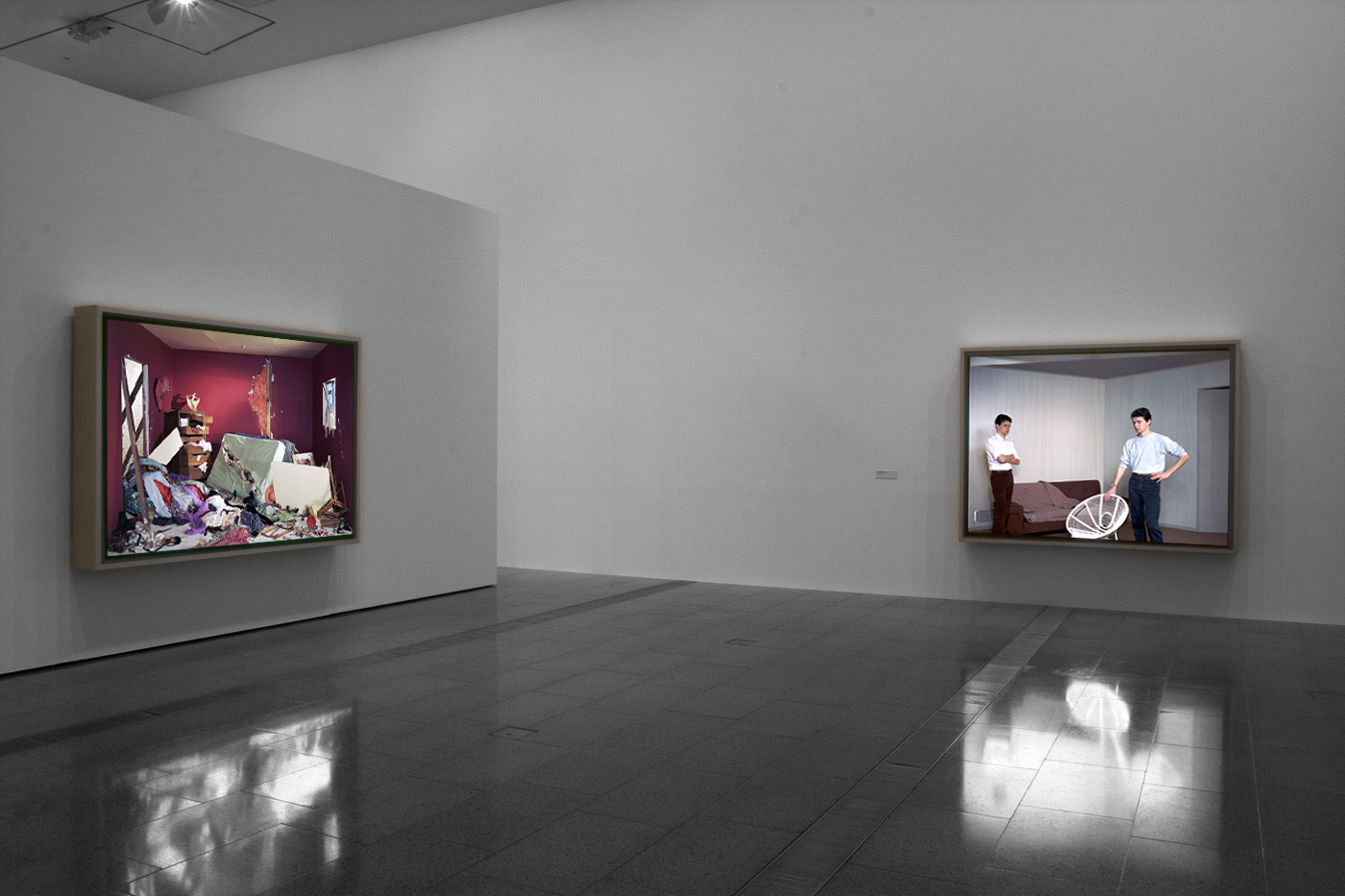
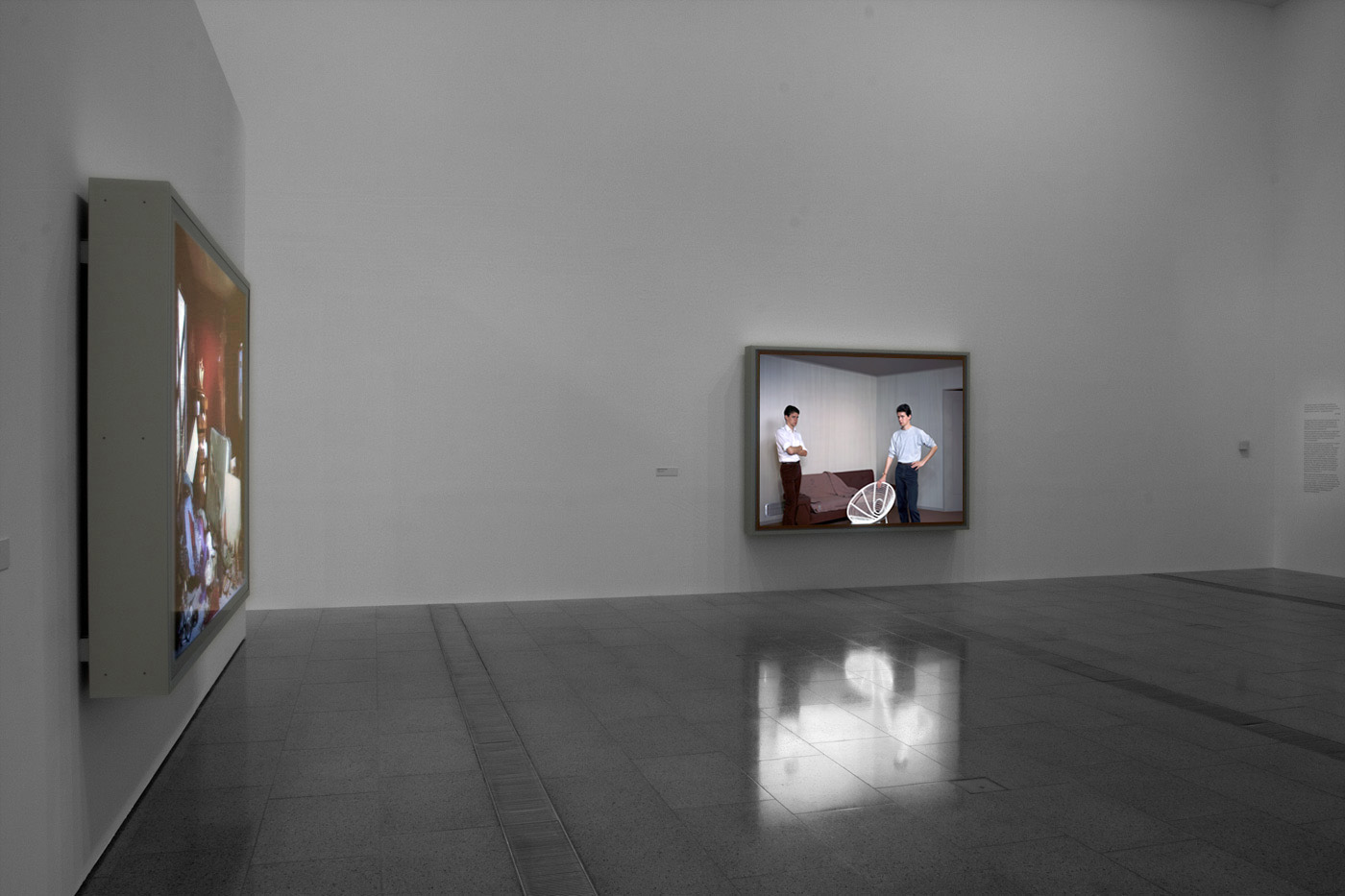
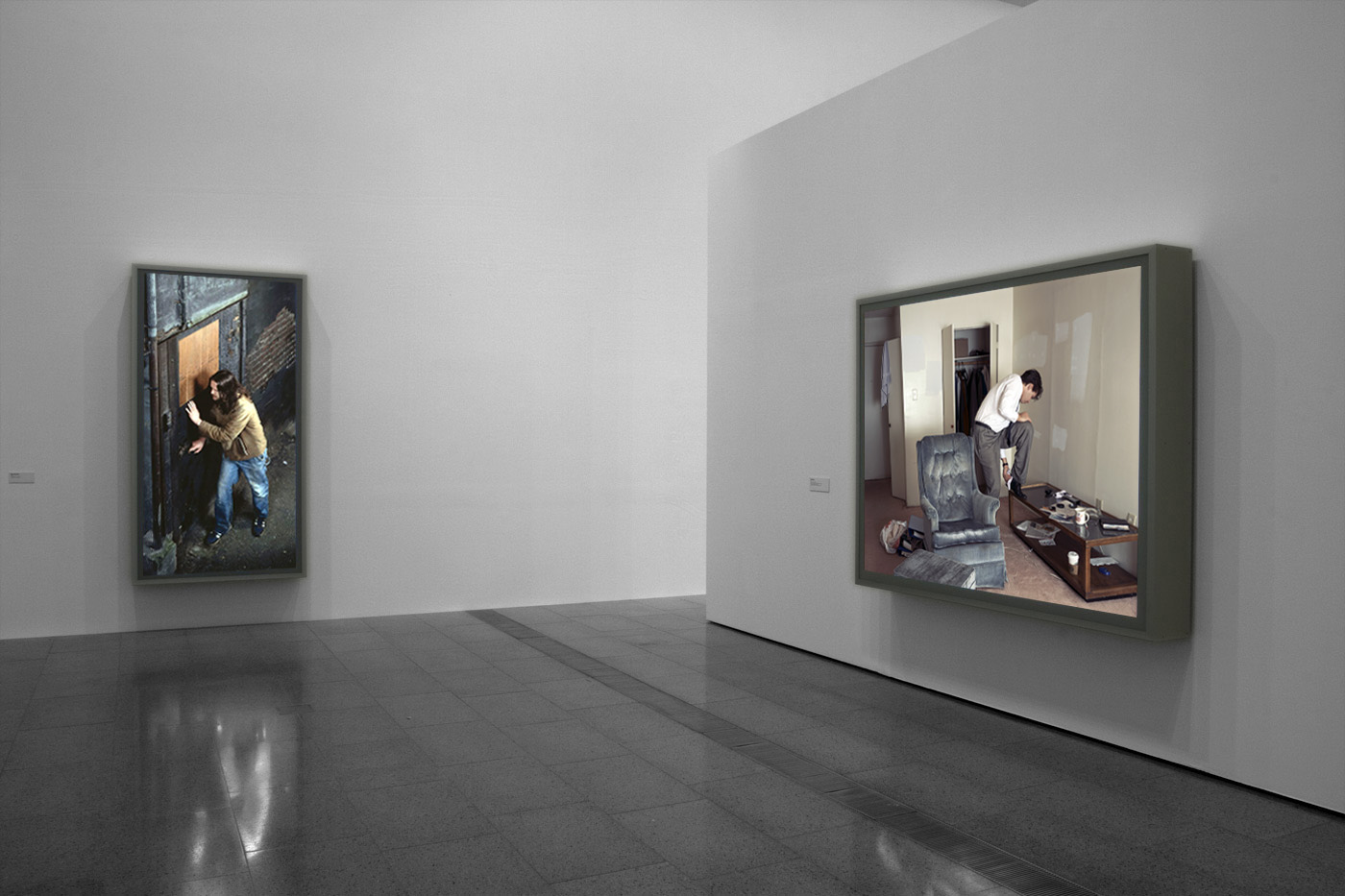
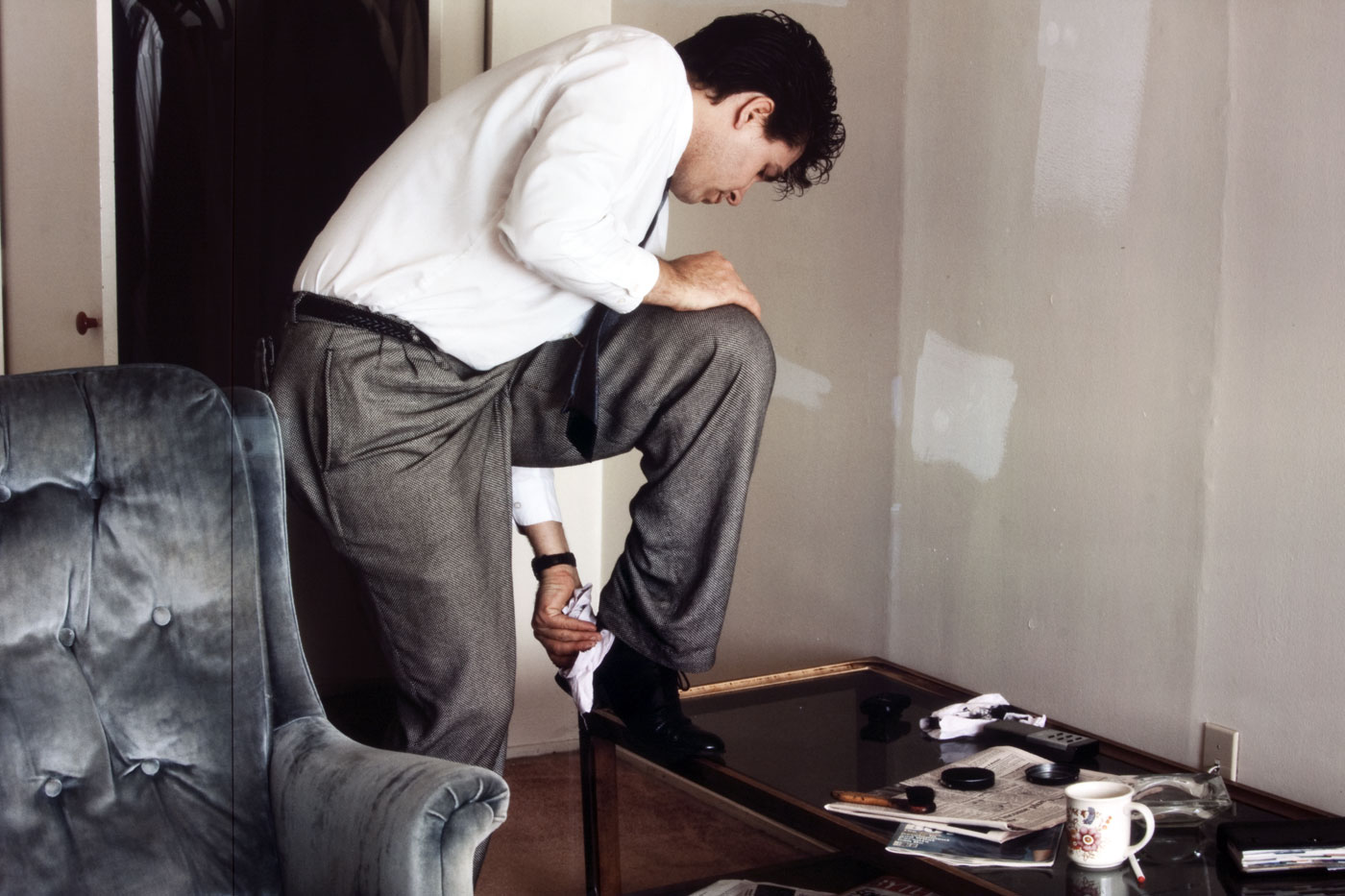
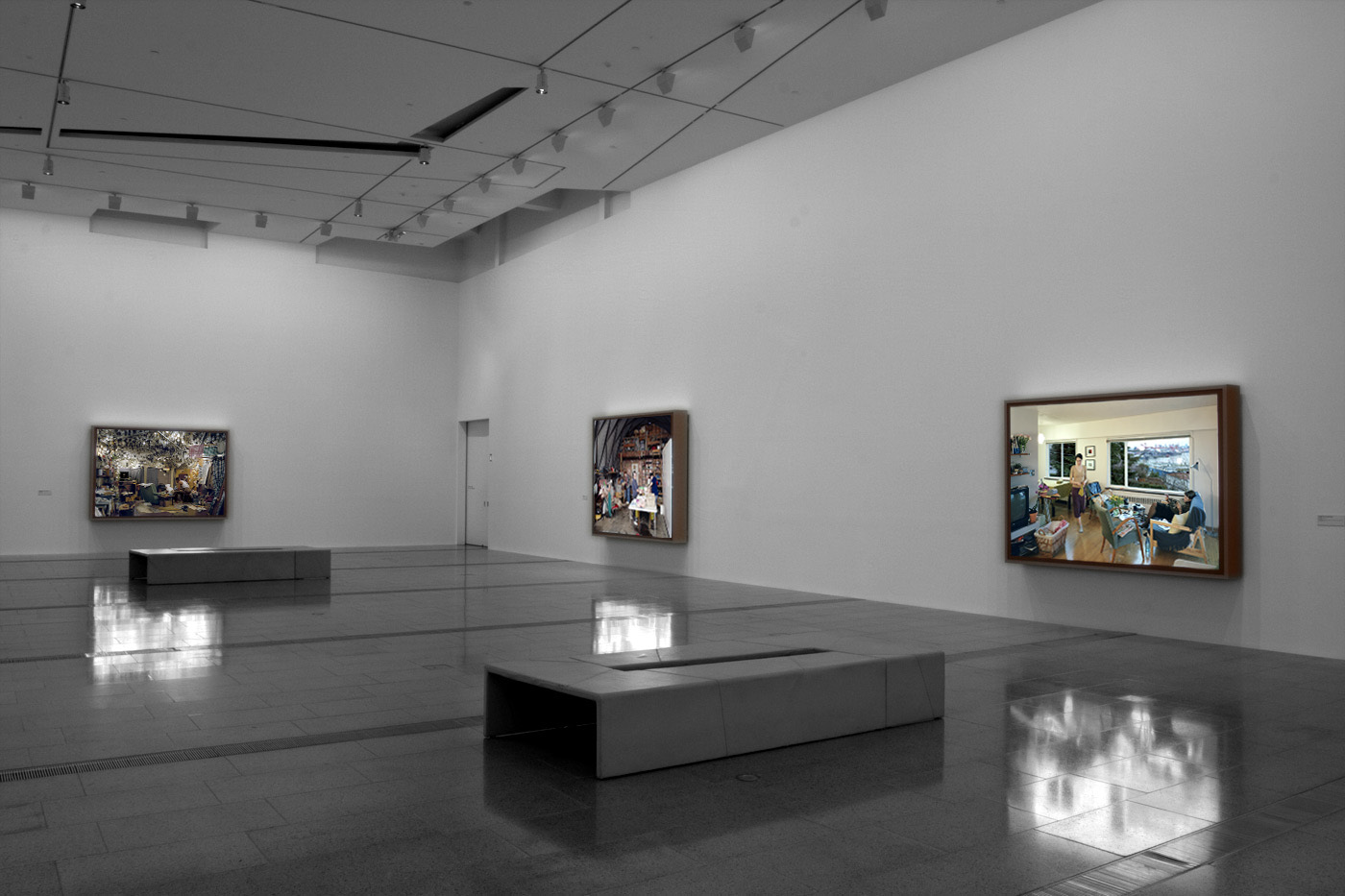
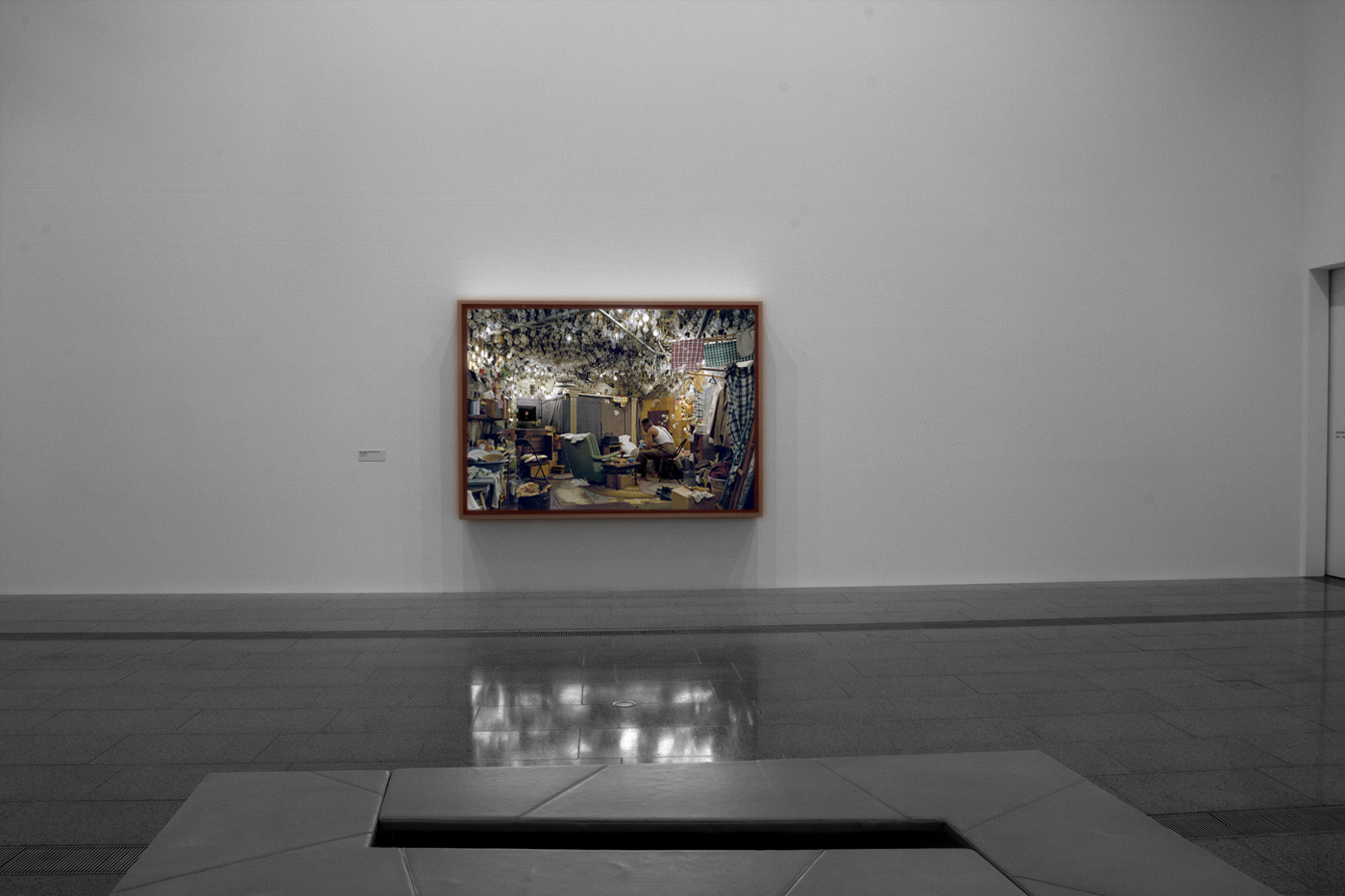
Text: ‘Un/settling Aboriginality’ Dr Marcus Bunyan / Exhibition: ‘Brook Andrew: 52 Portraits’ at Tolarno Gallery, Melbourne

Exhibition dates: 15th June – 20th July 2013


Many thankx to Tolarno Gallery for allowing me to publish the photographs in the posting. Please click on the photographs for a larger version of the image.

Download the text Un/settling Aboriginality (1.1Mb pdf)


Un/settling Aboriginality

Dr Marcus Bunyan

Abstract

This text investigates the concepts of postcolonialism / neo-colonialism and argues that Australia is a neo-colonial rather than a postcolonial country. It examines the work of two Australian artists in order to understand how their work is linked to the concept of neo-colonialism and ideas of contemporary Aboriginal identity, Otherness, localism and internationalism.

Keywords

postcolonialism, postcolonial, art, neo-colonialism, Australian art, Australian artists, Aboriginal photography, hybridism, localism, internationalism, Otherness, Australian identity, Brook Andrew, Ricky Maynard, Helen Ennis.


Australia and postcolonialism / neo-colonialism

Defining the concept of postcolonialism is difficult. “To begin with, “post-colonial” is used as a temporal marker referring to the period after official decolonisation,”1 but it also refers to a general theory that Ania Loomba et al. call “the shifting and often interrelated forms of dominance and resistance; about the constitution of the colonial archive; about the interdependent play of race and class; about the significance of gender and sexuality; about the complex forms in which subjectivities are experienced and collectivities mobilized; about representation itself; and about the ethnographic translation of cultures.”2

“Postcolonial theory formulates its critique around the social histories, cultural differences and political discrimination that are practised and normalised by colonial and imperial machineries… Postcolonial critique can be defined as a dialectical discourse which broadly marks the historical facts of decolonisation. It allows people emerging from socio-political and economic domination to reclaim their sovereignty; it gives them a negotiating space for equity.”3

While colonialism and imperialism is about territory, possession, domination and power,4 postcolonialism is concerned with the history of colonialism, the psychology of racial representation and the frame of representation of the ‘Other’. It addresses the ongoing effects of colonialism and imperialism even after the colonial period has ended.
“Past and present inform each other, each implies the other and… each co-exists with the other.”5 Even after colonialism has supposedly ended there will always be remains that flow into the next period. What is important is not so much the past itself but its bearing upon cultural attitudes of the present and how the uneven relationships of the past are remembered differently.6 While the aims of postcolonialism are transformative, its objectives involve a wide-ranging political project – to reorient ethical norms, turn power structures upside down and investigate “the interrelated histories of violence, domination, inequality and injustice”7 and develop a tradition of resistance to the praxis of hegemony.

McCarthy and Dimitriadis posit three important motifs in postcolonial art.8 Briefly, they can be summarised as follows:

1/ A vigorous challenge to hegemonic forms of representation in Western models of classical realism and technologies of truth in which the eye of the Third World is turned on the West and challenges the ruling narrating subject through multiple perspectives and points of view.

2/ A rewriting of the narrative of modernity through a joining together of the binaries ‘centre’ and ‘periphery’, ‘developed’ and ‘underdeveloped’, and ‘civilised’ and ‘primitive’. “Culture, for these [postcolonial] artists, is a crucible of encounter, a crucible of hybridity in which all of cultural form is marked by twinness of subject and other.”9

3/ A critical reflexivity and thoughtfulness as elements of an artistic practice of freedom. This practice looks upon traditions with dispassion, one in which all preconceived visions and discourses are disrupted, a practice in which transformative possibilities are not given but have to worked for in often unpredictable and counter-intuitive ways.


According to Robert Young the paradigm of postcolonialism is to “locate the hidden rhizomes of colonialism’s historical reach, of what remains invisible, unseen, silent or unspoken” to examine “the continuing projection of past conflicts into the experience of the present, the insistent persistence of the afterimages of historical memory that drive the desire to transform the present.”10 This involves an investigation into a dialectic of visibility and invisibility where subjugated peoples were present but absent under the eye of the coloniser through a refusal of those in power to see who or what was there. “Postcolonialsm, in its original impulse, was concerned to make visible areas, nations, cultures of the world which were notionally acknowledged, technically there, but which in significant other senses were not there…”11 In other words, to acknowledge the idea of the ‘Other’ as a self determined entity if such an other should ever exist because, as Young affirms, “Tolerance requires that there be no “other,” that others should not be othered. We could say that there can be others, but there should be no othering of “the other.”12

The “Other” itself is a product of racial theory but Young suggests that “the question is not how to come to know “the other,” but for majority groups to stop othering minorities altogether, at which point minorities will be able to represent themselves as they are, in their specific forms of difference, rather than as they are othered.”13 Unfortunately, with regard to breaking down the divisiveness of the same-other split, “As soon as you have employed the very category of “the other” with respect to other peoples or societies, you are imprisoned in the framework of your own predetermining conceptualisation, perpetuating its form of exclusion.”14 Hence, as soon as the dominant force names the “other” as a paradigm of society, you perpetuate its existence as an object of postcolonial desire. This politics of recognition can only be validated by the other if the other choses to name him or herself in order to “describe a situation of historical discrimination which requires challenge, change and transformation… Othering was a colonial strategy of exclusion: for the postcolonial, there are only other human beings.”15

Important questions need to be asked about the contextual framework of postcolonialism as it is linked to race, culture, gender, settler and native: “When does a settler become coloniser, colonised and postcolonial? When does a race cease to be an oppressive agent and become a wealth of cultural diversities of a postcolonial setting? Or in the human history of migrations, when does the settler become native, indigenous, a primary citizen? And lastly, when does the native become truly postcolonial?”16


This last question is pertinent with regard to Australian culture and identity. It can be argued that Australia is not a postcolonial but a neo-colonial country. Imperialism as a concept and colonialism as a practice are still active in a new form. This new form is neo-colonialism. Rukundwa and van Aarde observe that, “Neo-colonialism is another form of imperialism where industrialised powers interfere politically and economically in the affairs of post-independent nations. For Cabral (in McCulloch 1983: 120-121), neo-colonialism is “an outgrowth of classical colonialism.” Young (2001: 44-52) refers to neo-colonialism as “the last stage of imperialism” in which a postcolonial country is unable to deal with the economic domination that continues after the country gained independence. Altbach (1995: 452-56) regards neo-colonialism as “partly planned policy” and a “continuation of the old practices”.”17

Australia is not a post-independent nation but an analogy can be made. The Australian government still interferes with the running of Aboriginal communities through the NT Intervention or, as it is more correctly known, Northern Territory National Emergency Response Act 2007. Under the Stronger Futures legislation that recently passed through the senate, this intervention has been extended by another 10 years. “Its flagship policies are increased government engagement, income management, stabilisation, mainstreaming, and the catch cries “closing the gap” and “real jobs”.”18 As in colonial times the government has control of a subjugated people, their lives, income, health and general wellbeing, instead of partnering and supporting Aboriginal organisations and communities to take control of their futures.19

Further, Australia is still a colony, the Queen of England is still the Queen of Australia; Britannia remains in the guise of the “Commonwealth.” Racism, an insidious element of the colonial White Australia Policy (which only ended in 1973), is ever prevalent beneath the surface of Australian society. Witness the recent racial vilification of Sydney AFL (Aussie Rules!) player Adam Goodes by a teenager20 and the inexcusable racial vilification by Collingwood president Eddie McGuire when he said that Goodes could be used to promote the musical King Kong.21

“The dialectics of liberation from colonialism, whether political, economic, or cultural, demand that both the colonizer and the colonized liberate themselves at the same time.”22 This has not happened in Australia. The West’s continuing political, economic and cultural world domination has “lead to a neo-colonial situation, mistakenly called post-coloniality, which does not recognize the liberated other as a historical subject (in sociological theory, a historical subject is someone thought capable of taking an active role in shaping events) – as part of the historical transforming processes of modernity.”23 As has been shown above, Aboriginal communities are still thought incapable of taking an active role in shaping and administering their own communities. The result of this continuation of old practices is that Australia can be seen as a neo-colonial, not postcolonial, country.

Kathryn Trees asks, “Does post-colonial suggest colonialism has passed? For whom is it ‘post’? Surely not for Australian Aboriginal people at least, when land rights, social justice, respect and equal opportunity for most does not exist because of the internalised racism of many Australians. In countries such as Australia where Aboriginal sovereignty, in forms appropriate to Aboriginal people, is not legally recognised, post-colonialism is not merely a fiction, but a linguistic manoeuvre on the part of some ‘white’ theorists who find this a comfortable zone that precludes the necessity for political action.”24


Two Australian artists, two different approaches

There are no dots or cross-hatching in the work of Ricky Maynard or Brook Andrew; no reference to some arcane Dreaming, for their work is contemporary art that addresses issues of identity and empowerment in different ways. Unlike remote Indigenous art that artist Richard Bell has labelled ‘Ooga Booga Art’ (arguing that it is based upon a false notion of tradition that casts Indigenous people as the exotic other, produced under the white, primitivist gaze),25 the work of these two artists is temporally complex (conflating past, present and future) and proposes that identity is created at the intersection of historically shifting subject positions, which destabilises any claim to an ‘authentic’ identity position and brings into question the very label ‘Aboriginal’ art and ‘Aboriginality’. By labelling an artist ‘Aboriginal’ or ‘gay’ for example, do you limit the subject matter that those artists can legitimately talk about, or do you just call them artists?

As Stephanie Radok has speculated, “surely as long as we call it Aboriginal art we are defining it ethnically and foregrounding its connection to a particular culture, separating it from other art and seeing it as a gift, a ‘present’ from another ethnography.”26 Be that as it may, artists can work from within a culture, a system, in order to critique the past in new ways: “The collective efforts of contemporary artists… do not reflect an escapist return to the past but a desire to think about what the past might now mean in new, creative ways.”27

Ways that un/settle Aboriginality through un/settling photography, in this case.


Since the 1980s photographers addressing Indigenous issues have posed an alternative reality or viewpoint that, “articulates the concept of time as a continuum where the past, present and future co-exist in a dynamic form. This perspective has an overtly political dimension, making the past not only visible but also unforgettable.”28 The perspective proposes different strategies to deliberately unsettle white history so that “the future is as open as the past, and both are written in tandem.”29

Artists Ricky Maynard and Brook Andrew both critique neo-colonialism from inside the Western gallery system using a relationship of interdependence (Aboriginal/colonial) to find their place in the world, to help understand who they are and, ex post facto, to make a living from their art. They both offer an examination of place, space and identity construction through what I call ‘the industry of difference’.

Ricky Maynard works with a large format camera and analogue, black and white photography in the Western documentary tradition to record traditional narratives of Tasmanian Aboriginal people in order to undermine the myth that they were all wiped off the face of the planet by colonisation. Through his photography he re-identifies the narratives of a subjugated and supposedly exterminated people, narratives that are thousands of years old, narratives that challenge a process of Othering or exclusion and which give voice to the oppressed.

Portrait of a Distant Land is done through the genre of documentary in a way that offers authenticity and honest image making in the process. It has to deal with all those ethical questions of creating visual history, the tools to tell it with and how we reclaim our own identity and history from the way we tell our own stories. It comes from the extension of the way the colonial camera happened way back in the 19th century and how it misrepresented Aboriginal people. The Government anthropologists and photographers were setting up to photograph the dying race. Of course it simply wasn’t true. That was a way that colonial people wanted to record their history. You see those earlier colonial and stereotypical images of Aboriginal people in historic archives, their photographic recordings were acts of invasion and subjugation used for their own purpose.”30


Ricky Maynard (Australian, b. 1953) 'Coming Home' 2005


Ricky Maynard (Australian, b. 1953)
Coming Home
2005
from Portrait of a Distant Land
Gelatin silver print
34 x 52cm, edition of 10 + 3 AP


“I can remember coming here as a boy in old wooden boats to be taught by my grandparents and my parents.

I’ll be 57 this year and I have missed only one year when my daughter Leanne was born. Mutton birding is my life. To me it’s a gathering of our fella’s where we sit and yarn we remember and we honour all of those birders who have gone before us. Sometimes I just stand and look out across these beautiful islands remembering my people and I know I’m home. It makes me proud to be a strong Tasmanian black man.

This is something that they can never take away from me.”

Murray Mansell Big Dog Island, Bass Strait, 2005 31
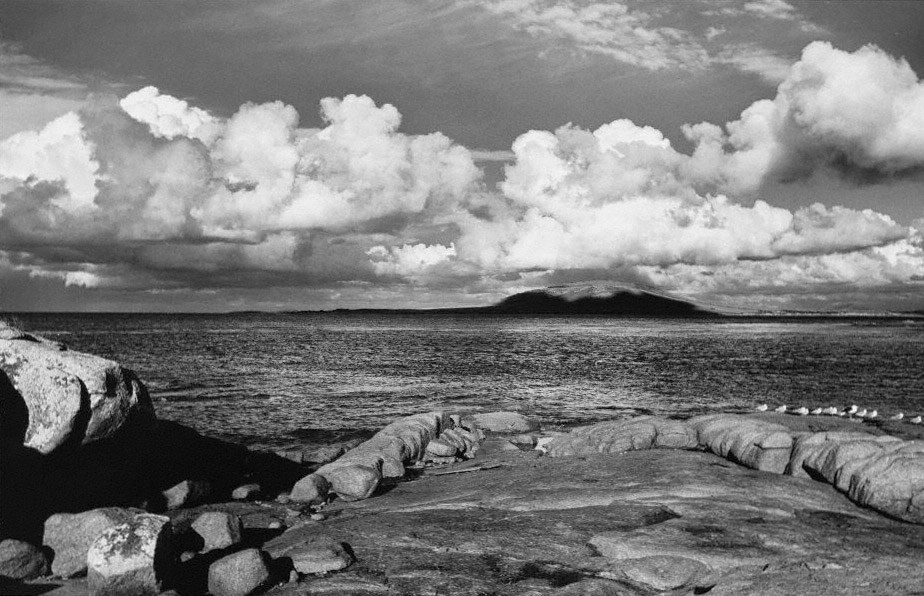
 

Ricky Maynard (Australian, b. 1953) 'Vansittart Island, Bass Strait, Tasmania' 2005


Ricky Maynard (Australian, b. 1953)
Vansittart Island, Bass Strait, Tasmania
2005
from Portrait of a Distant Land
Gelatin silver print
34 x 52cm, edition of 10 + 3 AP


“As late as 1910 men came digging on Vansittart and Tin Kettle Islands looking for skeletons here. We moved them where none will find them, at the dead of night my people removed the bodies of our grandmothers and took them to other islands, we planted shamrocks over the disturbed earth, so the last resting place of those girls who once had slithered over the rocks for seals will remain a secret forever.”

Old George Maynard 1975 32
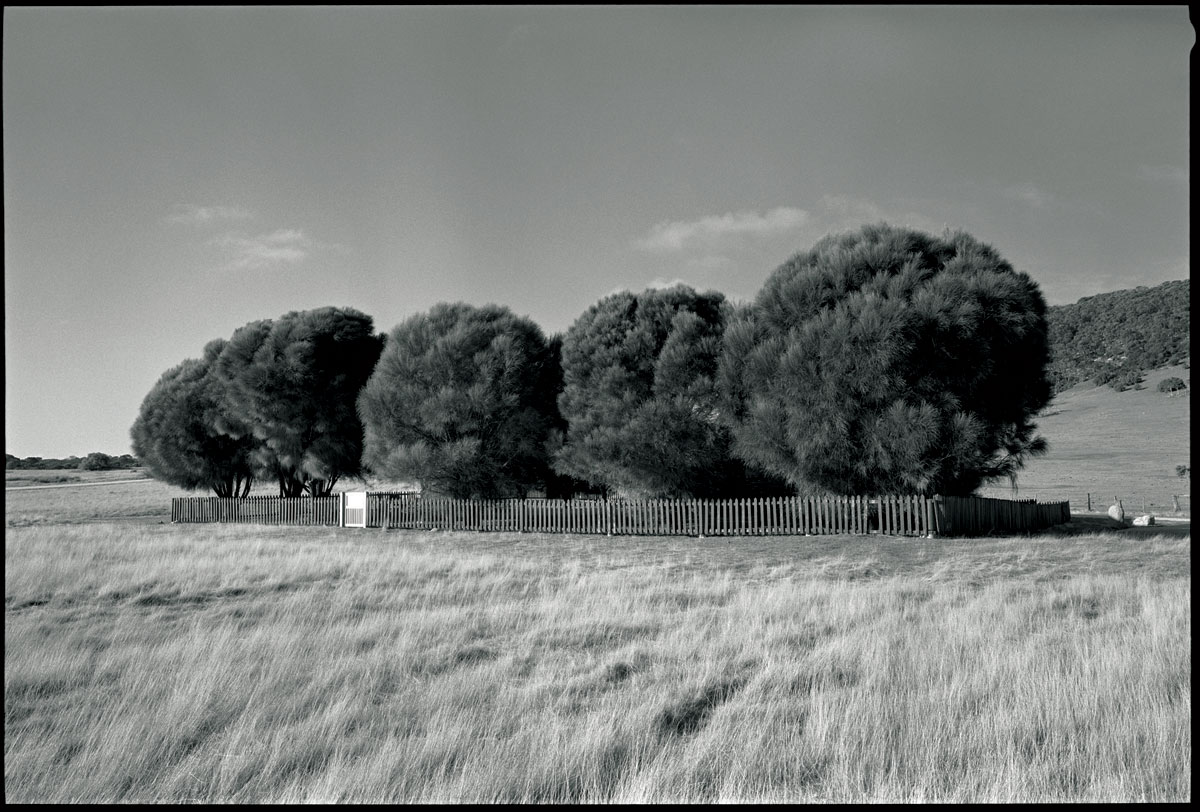
 

Ricky Maynard (Australian, b. 1953) 'The Healing Garden, Wybalenna, Flinders Island, Tasmania' 2005


Ricky Maynard (Australian, b. 1953)
The Healing Garden, Wybalenna, Flinders Island, Tasmania
2005
from Portrait of a Distant Land
Gelatin silver print
34 x 52cm, edition of 10 + 3 AP


“It’s pretty important you know, the land, it doesn’t matter how small, it’s something, just a little sacred site, that’s Wybalenna. There was a massacre there, sad things there, but we try not to go over that. Where the bad was we can always make it good.”

Aunty Ida West 1995 Flinders Island, Tasmania 33


Maynard’s photographs are sites of contestation, specific, recognisable sites redolent with contested history. They are at once both local (specific) and global (addressing issues that affect all subjugated people and their stories, histories). Through his art practice Maynard journeys from the periphery to the centre to become a fully recognised historical subject, one that can take an active role in shaping events on a global platform, a human being that aims to create what he describes as “a true visual account of life now.”34 But, as Ian McLean has noted of the work of Derrida on the idea of repression, what returns in such narratives is not an authentic, original Aboriginality but the trace of an economy of repression: “Hence the return of the silenced nothing called Aboriginal as the being and truth of the place, is not the turn-around it might seem, because it does not reinstate an original Aboriginality, but reiterates the discourses of colonialism.”35

Sad and poignant soliloquies they may be, but in these ‘true’ visual accounts it is the trace of repression represented through Western technology (the camera, the photograph) and language (English is used to describe the narratives, see above) that is evidenced in these critiques of neo-colonialism (a reiteration of the discourses of colonialism) – not just an authentic lost and reclaimed Aboriginality – for these photographs are hybrid discourses that are both local/global, European/Indigenous.

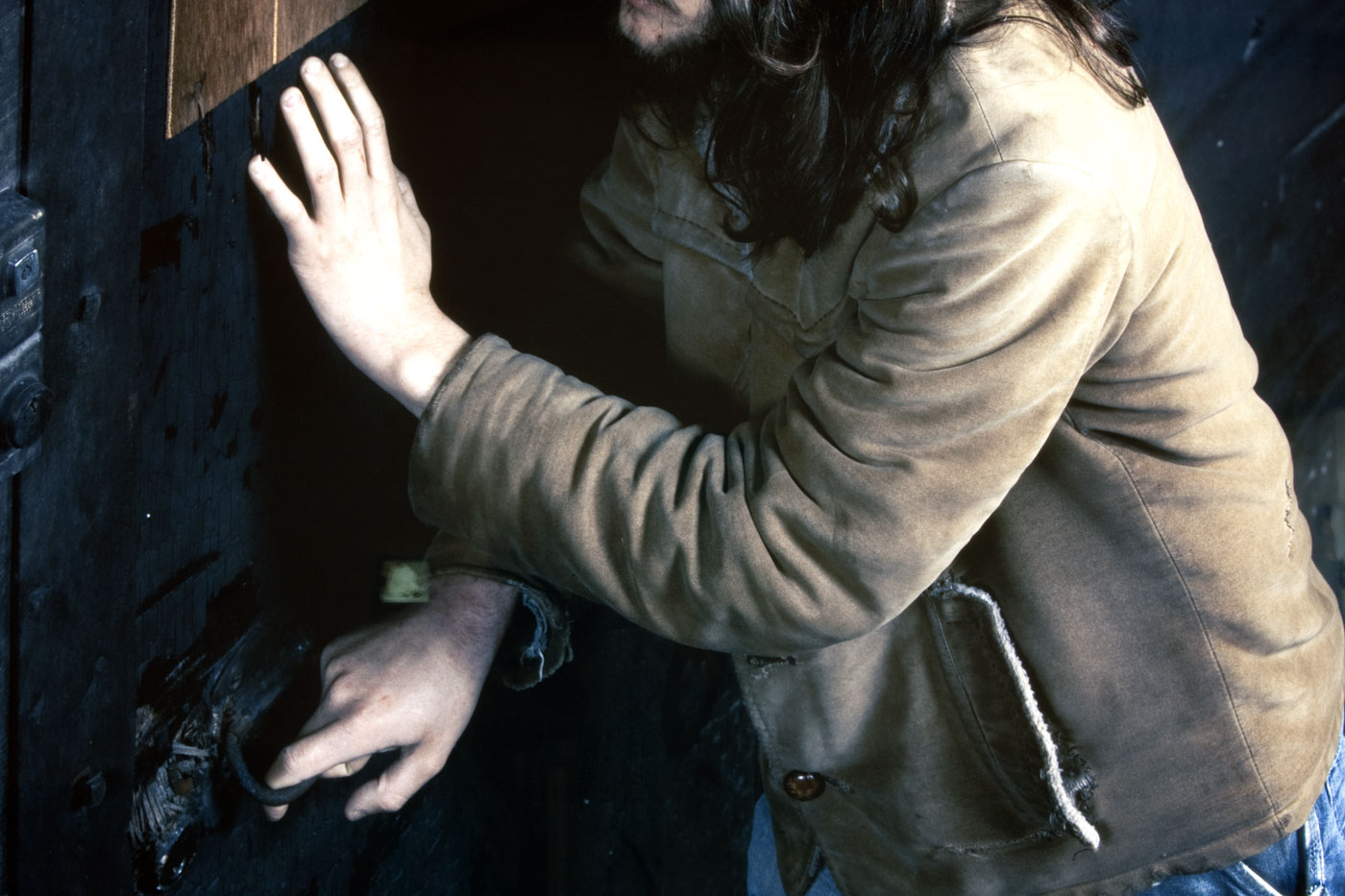
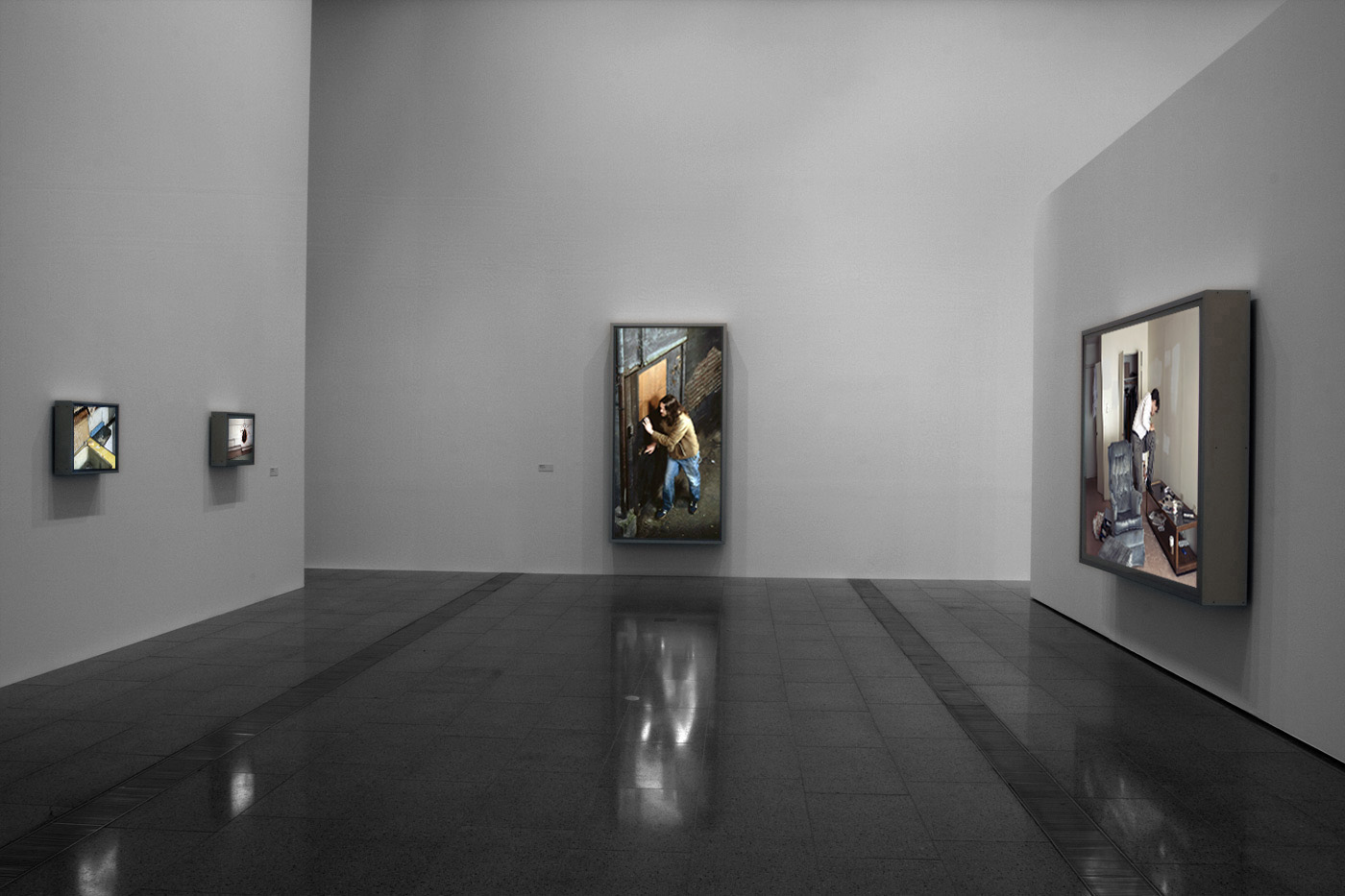
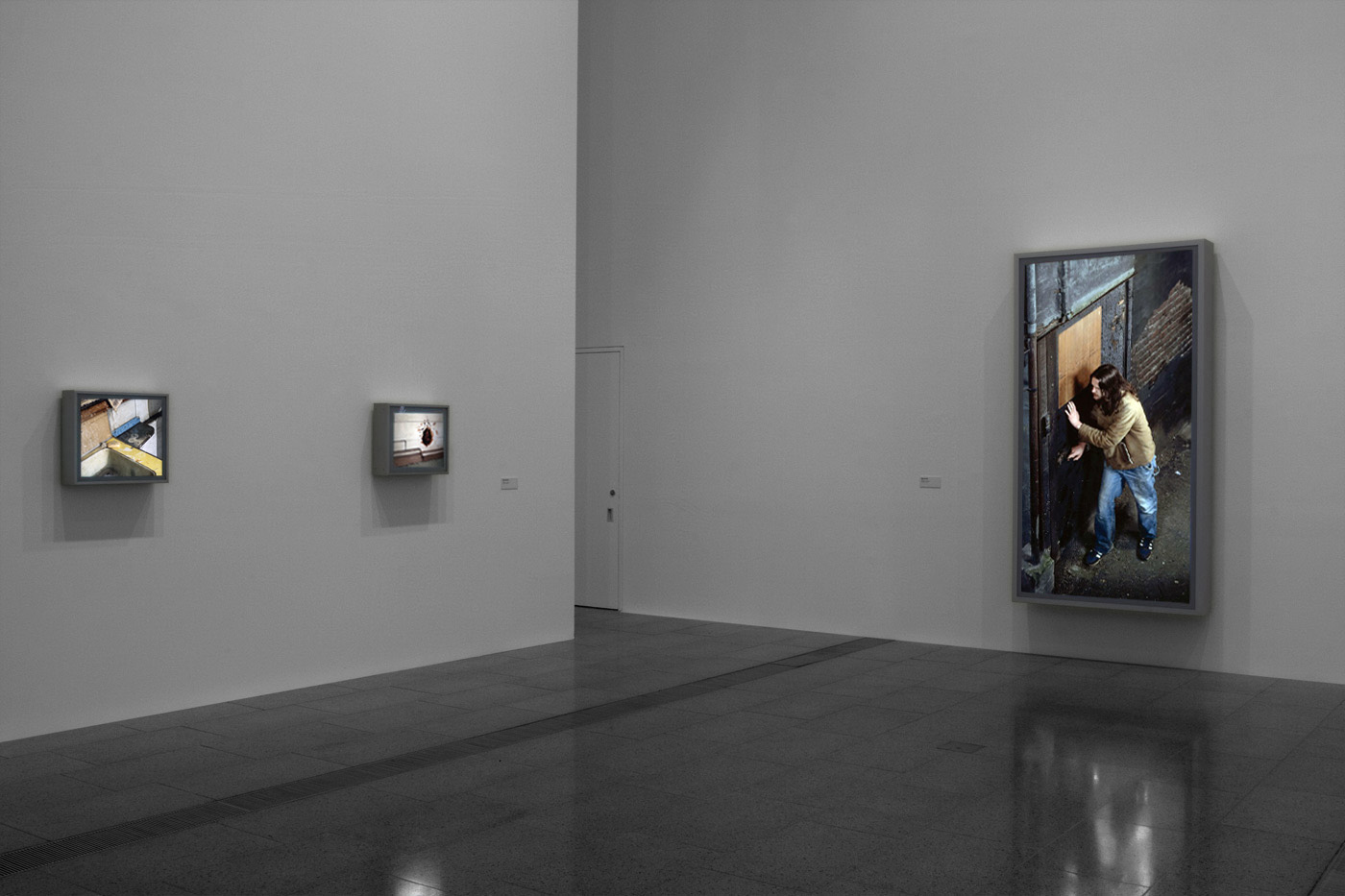
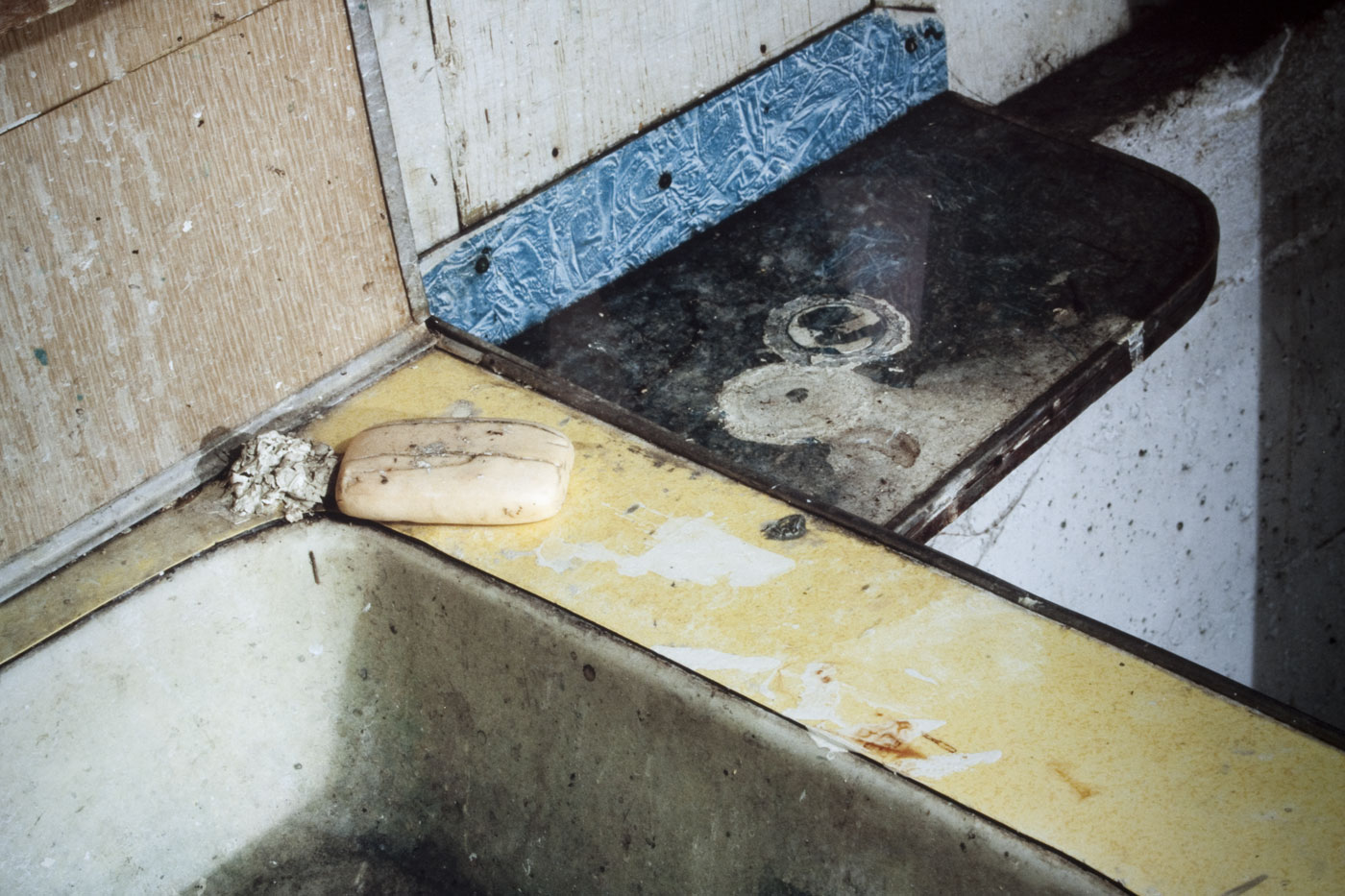
In his art practice Brook Andrew pursues a more conceptual mutli-disciplinary approach, one that successfully mines the colonial photographic archive to interrogate the colonial power narrative of subjugation, genocide, disenfranchisement through a deconstructive discourse, one that echoes with the repetitions of coloniality and evidences the fragments of racism through the status of appearances. “Through his persistent confrontation with the historical legacy of physiognomia in our public Imaginary”36 in video, neon, sculpture, craniology, old photography, old postcards, music, books, ethnography and anthropology, Andrew re-images and reconceptualises the colonial archive. His latest body of work 52 Portraits (Tolarno Galleries 15 June – 20 July 2013), is “a play on Gerhard Richter’s 48 Portraits projects, which lifted images of influential Western men from the pages of encyclopaedias, 52 Portraits shifts the gaze to the ubiquitous and exotic other.”37 The colonial portraits are screen-printed in black onto silver-coated canvases giving them an ‘other’ worldly, alien effect (as of precious metal), which disrupts the surface and identity of the original photographs. Variously, the unnamed portraits taken from his personal collection of old colonial postcards re-present unknown people from the Congo, Africa, Argentina, Ivory Coast, Brazil, Algeria, Australia, South America, etc… the images incredibly beautiful in their silvered, slivered reality (as of the time freeze of the camera), replete with fissures and fractures inherent in the printing process. Accompanying the series is an installation titled Vox: Beyond Tasmania (2013), a Wunderkammer containing a skeleton and colonial artefacts, the case with attached wooden trumpet (reminding me appropriately of His Master’s Voice) that focuses the gaze upon an anonymous skull, an unknowable life from the past. In the catalogue essay for the exhibition, Ian Anderson observes, “His view is global – and even though my response is highly local – I too see the resonances of a global cultural process that re-ordered much of humanity through the perspective of colonizing peoples.”38

While this may be true, it is only true for the limited number of people that will see the exhibition – usually white, well-educated people, “The realities of the commercial art world are such that it is chiefly the white upper crust that will see these works. Make of that what you will.”39 Through a lumping together of all minority people – as though multiple, local indigeneties can be spoken for through a single global indigeneity – Andrew seems to want to speak for all anonymous Indigenous people from around the world through his ‘industry of difference’. Like colonialism, this speaking is again for the privileged few, as only they get to see these transformed images, in which only those with money can afford to buy into his critique.

Personally, I believe that Andrew’s constant remapping and re-presentation of the colonial archive in body after body of work, this constant picking at the scab of history, offers no positive outcomes for the future. It is all too easy for an artist to be critical; it takes a lot more imagination for an artist to create positive images for a better future.


Conclusion

By the mid-eighties black and indigenous subjectivities were no longer transgressive and the ‘black man’s’ burden’ had shifted from being a figure of oblivion to that of a minority voice.40 Black subjectivities as minority identities use the language of difference to envisage zones of liberation in which marginality is a site of transformation. But, as Ian McLean asks, “Have these post or anti-colonial identities repulsed the return of coloniality?”41 In the fight against neo-colonialism he suggests not, when the role of minority discourses “are simultaneously marginalised and occupy an important place in majority texts.”42 Periphery becomes centre becomes periphery again. “Minority artists are not left alone on the periphery of dominant discourse. Indeed, they are required to be representatives of, or speak for, a particular marginalised community; and because of this, their speech is severely circumscribed. They bear a ‘burden of representation’.”43 McLean goes on to suggest the burden of representation placed on Aboriginal artists is one that cannot be escaped. The category ‘Aboriginal’ is too over determined. Aboriginal artists, like gay artists addressing homosexuality, can only address issues of race, identity and place.44

“Aboriginal artists must address issues of race, and all on the stage of an identity politics. Black artists, it seems, can perform only if they perform blackness. Reduced to gestures of revolt, they only reinforce the scene of repression played out in majority discourses of identity and otherness. Allowed to enter the field of majority language as divergent and hence transgressive discourses which police as much as they subvert the boundaries of this field, they work to extend certain boundaries necessary to Western identity formations, but which its traditions have repressed. In other words, minority discourses are complicit with majority texts.”45

As social constructs (the heart of the political terrain of imperial worlds) have been interrogated by artists, this has led to the supposed dissolution of conceptual binaries such as European Self / Indigenous Other, superior / inferior, centre / periphery.46 The critique of neo-colonialism mobilises a new, unstable conceptual framework, one that unsettles both imperialist structures of domination and a sense of an original Aboriginality. Counter-colonial perspectives might critique neo-colonial power through disruptive inhabitations of colonialist constructs (such as the photograph and the colonial photographic archive) but they do so through a nostalgic reworking and adaptation of the past in the present (through stories that are eons old in the case of Ricky Maynard or through appropriation of the colonial photographic archive in the case of Brook Andrew). Minority discourses un/settle Aboriginality in ways not intended by either Ricky Maynard or Brook Andrew, by reinforcing the boundaries of the repressed ‘Other’ through a Western photographic interrogation of age-old stories and the colonial photographic archive.

Both Maynard and Andrew picture identities that are reductively marshalled under the sign of minority discourse, a discourse that re-presents a field of representation in a particularly singular way (addressed to a privileged few). The viewer is not caught between positions, between voices, as both artists express an Aboriginal (not Australian) subjectivity, one that reinforces a black subjectivity and oppression by naming Aboriginal as ‘Other’ (here I am not proposing “assimilation” far from it, but inclusion through difference, much as gay people are now just members of society not deviants and outsiders).

Finally, what interests me further is how minority voices can picture the future not by looking at the past or by presenting some notion of a unitary representation (local / global) of identity, but by how they can interrogate and image the subject positions, political processes, cultural articulation and critical perspectives of neo-colonialism in order that these systems become the very preconditions to decolonisation.

Dr Marcus Bunyan
July 2013

Word count: 3,453 excluding image titles and captions.


Endnotes

1/ Abraham, Susan. “What Does Mumbai Have to Do with Rome? Postcolonial Perspectives on Globalization and Theology,” in Theological Studies 69, 2008, pp. 376-93 cited in Kenzo, Mabiala Justin-Robert. What Is Postcolonialism and Why Does It Matter: An African Perspective. Nd [Online] Cited 13/06/2013. No longer available online

2/ Loomba, Ania et al. “Beyond What? An Introduction,” in Loomba, Ania et al. (ed.,). Postcolonial Studies and Beyond. Durham, N.C.: Duke University, 2005, pp. 1-38

3/ Rukundwa, Lazare S and van Aarde, Andries G. “The formation of postcolonial theory,” in HTS Teologiese Studies / Theological Studies 63(3), 2007, p. 1174

4/ “Neither imperialism nor colonialism is a simple act of accumulation and acquisition. Both are supported and perhaps even impelled by impressive ideological formations that include notions that certain territories and people require and beseech domination, as well as forms of knowledge affiliated with domination: the vocabulary of classic nineteenth-century imperial cultural is plentiful with such words and concepts as ‘inferior’ or ‘subject races’, ‘subordinate people’, ‘dependency’, ‘expansion’, and ‘authority’.”
Said, Edward. “Overlapping Territories, Intertwined Histories,” in Said, Edward. Culture and Imperialism. London: Chatto and Windus, 1993, p. 8

5/ Ibid., p. 2

6/ Ibid., p. 19

7/ Young, Robert J.C. “Postcolonial Remains,” in New Literary History Vol. 43. No. 1. Winter 2012, p. 20

8/ See McCarthy, Cameron and Dimitriadis, Greg. “The Work of Art in the Postcolonial Imagination,” in Discourse: Studies in the Cultural Politics of Education 21(1), 2000, p. 61

9/ Ibid., p. 61

10/ Young, Op. cit., p. 21

11/ Young, Ibid., p. 23

12/ “Critical analysis of subjection to the demeaning experience of being othered by a dominant group has been a long-standing focus for postcolonial studies, initiated by Frantz Fanon in his Black Skin, White Masks (1952).”
Young, Robert J.C. “Postcolonial Remains,” in New Literary History Vol. 43. No. 1. Winter 2012, p. 36

13/ Ibid., p. 37

14/ Ibid., p. 38

15/ Ibid., p. 39

16/ Rukundwa, Op cit., p. 1173

17/ Ibid., p. 1173

18/ Anon. “The 30-year cycle: Indigenous policy and the tide of public opinion” on The Conversation website 06/06/2012 [Online] Cited 16/06/2013

19/ Karvelas, Patricia. “Senate approves Aboriginal intervention by 10 years,” on The Australian website June 29, 2012 [Online] Cited 16/06/2013. No longer available online

20/ ABC/AAP. “AFL: Adam Goodes racially abused while leading Sydney to Indigenous Round win over Collingwood Sat May 25, 2013” on the ABC News website [Online] Cited 15/06/2013

21/ Anon. “Eddie McGuire, Adam Goodes and ‘apes’: a landmark moment in Australian race relations,” on The Conversation website, 31 May 2013 [Online] Cited 15/06/2013

22/ Araeen, Rasheed. “The artist as a post-colonial subject and this individual’s journey towards ‘the centre’,” in King, Catherine. View of Difference. Different Views of Art. Yale University Press, 1999, p. 232

23/ Ibid.,

24/ Trees, Kathryn. “Postcolonialism: Yet Another Colonial Strategy?” in Span, Vol. 1, No. 36, 1993, pp. 264-265 quoted in Heiss, Anita. “Post-Colonial-NOT!” in Dhuuluu Yala (To Talk Straight): Publishing Aboriginal Writing in Australia. Canberra: Aboriginal Studies Press, 2003, pp. 43-46

25/ Skerritt, Henry F. “Drawing NOW: Jus’ Drawn'” in Art Guide Australia, September/ October 2010, pp. 34-35 [Online] Cited 17/06/2013.

26/ Ibid.,

27/ Ennis, Helen. “The Presence of the Past,” in Ennis, Helen. Photography and Australia. London: Reaktion Books, 2007, p. 141

28/ Ibid., p. 135

29/ Ibid., “Black to Blak,” p. 45

30/ Maynard, Ricky quoted in Perkins, Hetti. Art + Soul. Melbourne: The Miegunyah Press, Melbourne University Publishing, 2010, p. 85

31/ Mansell, Murray quoted on the Stills Gallery website [Online] Cited 22/06/2013

32/ Maynard, George quoted on the Stills Gallery website [Online] Cited 22/06/2013

33/ West, Ida quoted on the Stills Gallery website [Online] Cited 22/06/2013

34/ Maynard, Ricky. “The Craft of Documentary Photography,” in Phillips, Sandra. Racism, Representation and Photography. Sydney, 1994, p. 115 quoted in Ennis, Helen. Photography and Australia. London: Reaktion Books, 2007, p. 106

35/ McLean, Ian. “Post colonial: return to sender” 1998 paper delivered as the Hancock lecture at the University of Sydney on 11/11/1998 as part of the annual conference of the Australian Academy of Humanities which had as its theme: ‘First Peoples Second Chance Australia In Between Cultures’

36/ Papastergiadis, Nikos. “Brook Andrew: Counterpoints and Harmonics.” Catalogue essay for Brook Andrew’s exhibition 52 Portraits at Tolarno Galleries, Melbourne, June 2013

37/ Rule, Dan. “Brook Andrew: 52 Portraits,” in Arts & Entertainment, Lifestyle, in The Saturday Age newspaper, June 29th 2013, p. 5

38/ Anderson, Pangkarner Ian. “Re-Assembling the trophies and curios of Colonialism & the Silent Terror.” Catalogue essay for Brook Andrew’s exhibition 52 Portraits at Tolarno Galleries, Melbourne, June 2013

39/ Rule, Dan. Op. cit.,

40/ McLean, Ian. “Post colonial: return to sender” 1998

41/ Ibid.,

42/ Ibid.,

43/ Ibid.,

44/ “Whether they like it or not, they [Aboriginal artists] bear a burden of representation. This burden is triply inscribed. First, they can only enter the field of representation or art as a disruptive force. Second, their speaking position is rigidly circumscribed: they are made to speak as representatives of a particular, that is, Aboriginal community. Third, this speaking is today made an essential component of the main game, the formation of Australian identity – what Philip Batty called ‘Australia’s desire to know itself through Aboriginal culture’.”
McLean, Ian. “Post colonial: return to sender” 1998

45/ Ibid.,

46/ Jacobs observes, “As the work on the nexus of power and identity within the imperial process has been elaborated, so many of the conceptual binaries that were seen as fundamental to its architecture of power have been problematised. Binary couplets like core / periphery, inside / outside. Self / Other, First World / Third World, North / South have given way to tropes such as hybridity, diaspora, creolisation, transculturation, border.”
Jacobs, J. M. “(Post)colonial spaces,” Chapter 2 in Edge of Empire. London: Routledge, 1996, p. 13


Bibliography

Anderson, Pangkarner Ian. “Re-Assembling the trophies and curios of Colonialism & the Silent Terror.” Catalogue essay for Brook Andrew’s exhibition 52 Portraits at Tolarno Galleries, Melbourne, June 2013

Araeen, Rasheed. “The artist as a post-colonial subject and this individual’s journey towards ‘the centre’,” in King, Catherine. View of Difference. Different Views of Art. Yale University Press, 1999, p. 232

ABC/AAP. “AFL: Adam Goodes racially abused while leading Sydney to Indigenous Round win over Collingwood Sat May 25, 2013” on the ABC News website [Online] Cited 15/06/2013.

Abraham, Susan. “What Does Mumbai Have to Do with Rome? Postcolonial Perspectives on Globalization and Theology,” in Theological Studies 69, 2008, pp. 376-93 cited in Kenzo, Mabiala Justin-Robert. What Is Postcolonialism and Why Does It Matter: An African Perspective. Nd [Online] Cited 13/06/2013

Anon. “Eddie McGuire, Adam Goodes and ‘apes’: a landmark moment in Australian race relations,” on The Conversation website, 31 May 2013 [Online] Cited 15/06/2013

Anon. “The 30-year cycle: Indigenous policy and the tide of public opinion,” on The Conversation website 06/06/2012 [Online] Cited 16/06/2013

Ennis, Helen. “The Presence of the Past,” in Ennis, Helen. Photography and Australia. London: Reaktion Books, 2007, p. 141

Heiss, Anita. “Post-Colonial-NOT!” in Dhuuluu Yala (To Talk Straight): Publishing Aboriginal Writing in Australia. Canberra: Aboriginal Studies Press, 2003, pp. 43-46

Jacobs, J. M. “(Post)colonial spaces,” Chapter 2 in Edge of Empire. London: Routledge, 1996, p. 13

Karvelas, Patricia. “Senate approves Aboriginal intervention by 10 years,” on The Australian website June 29, 2012 [Online] Cited 16/06/2013

Kenzo, Mabiala Justin-Robert. What Is Postcolonialism and Why Does It Matter: An African Perspective. Nd [Online] Cited 13/06/2013.

King, Catherine. View of Difference. Different Views of Art. Yale University Press, 1999

Loomba, Ania et al. “Beyond What? An Introduction,” in Loomba, Ania et al. (ed.,). Postcolonial Studies and Beyond. Durham, N.C.: Duke University, 2005, pp. 1-38

Maynard, Ricky. “The Craft of Documentary Photography,” in Phillips, Sandra. Racism, Representation and Photography. Sydney, 1994, p.115 quoted in Ennis, Helen. Photography and Australia. London: Reaktion Books, 2007, p. 106

McCarthy, Cameron and Dimitriadis, Greg. “The Work of Art in the Postcolonial Imagination,” in Discourse: Studies in the Cultural Politics of Education 21(1), 2000, p. 61

McLean, Ian. “Post colonial: return to sender” 1998 paper delivered as the Hancock lecture at the University of Sydney on 11/11/1998 as part of the annual conference of the Australian Academy of Humanities which had as its theme: ‘First Peoples Second Chance Australia In Between Cultures’

Papastergiadis, Nikos. “Brook Andrew: Counterpoints and Harmonics.” Catalogue essay for Brook Andrew’s exhibition 52 Portraits at Tolarno Galleries, Melbourne, June 2013

Perkins, Hetti. Art + Soul. Melbourne: The Miegunyah Press, Melbourne University Publishing, 2010, p. 85

Phillips, Sandra. Racism, Representation and Photography. Sydney, 1994, p. 115

Rukundwa, Lazare S and van Aarde, Andries G. “The formation of postcolonial theory” in HTS Teologiese Studies/Theological Studies 63(3), 2007, p. 1174

Rule, Dan. “Brook Andrew: 52 Portraits,” in Arts & Entertainment, Lifestyle, in The Saturday Age newspaper, June 29th 2013, p. 5

Said, Edward. “Overlapping Territories, Intertwined Histories,” in Said, Edward. Culture and imperialism. London: Chatto and Windus, 1993, p. 8

Skerritt, Henry F. “Drawing NOW: Jus’ Drawn'” in Art Guide Australia, September/ October 2010, pp. 34-35 [Online] Cited 17/06/2013

Trees, Kathryn. “Postcolonialism: Yet Another Colonial Strategy?” in Span, Vol. 1, No. 36, 1993, pp. 264-265 quoted in Heiss, Anita. “Post-Colonial-NOT!” in Dhuuluu Yala (To Talk Straight): Publishing Aboriginal Writing in Australia. Canberra: Aboriginal Studies Press, 2003, pp. 43-46

Young, Robert J.C. “Postcolonial Remains,” in New Literary History Vol. 43. No. 1. Winter 2012, p. 20


Brook Andrew (Australian, b. 1970) 'Portrait 19 (Manitoba, Canada)' 2013


Brook Andrew (Australian, b. 1970)
Portrait 19 (Manitoba, Canada)
2013
Mixed media on Belgian linen
70 x 55 x 5cm
Edition of 3 + 2 AP
Real photo postcard
Title: An Old Savage of Manitoba


Brook Andrew (Australian, b. 1970) 'Portrait 9 (Arab)' 2013


Brook Andrew (Australian, b. 1970)
Portrait 9 (Arab)
2013
Mixed media on Belgian linen
70 x 55 x 5cm
Edition of 3 + 2 AP
Real photo postcard
Title: Danseuse arabe
Publisher: Photo Garrigues Tunis – 2008
Inscribed on front: Tunis 20/8/04


Brook Andrew (Australian, b. 1970) 'Portrait 7 (Australia)' 2013


Brook Andrew (Australian, b. 1970)
Portrait 7 (Australia)
2013
Mixed media on Belgian linen
70 x 55 x 5cm
Edition of 3 + 2 AP
Title: “An Australian Wild Flower”
Pub. Kerry & Co., Sydney One Penny Stamp with post mark on image side of card. No Address.


Brook Andrew (Australian, b. 1970) 'Portrait 40 (Unknown)' 2013


Brook Andrew (Australian, b. 1970)
Portrait 40 (Unknown)
2013
Mixed media on Belgian linen
70 x 55 x 5cm
Edition of 3 + 2 AP
Title: “Typical Ricksha Boys.”
R.111. Copyright Pub. Sapsco Real Photo, Pox 5792, Johannesburg
Pencil Mark €5


Brook Andrew (Australian, b. 1970) 'Portrait 44 (Syria)' 2013


Brook Andrew (Australian, b. 1970)
Portrait 44 (Syria)
2013
Mixed media on Belgian linen
70 x 55 x 5cm Edition of 3 + 2 AP
Real photo postcard
Title: Derviches tourneurs á Damas
Printed on verso: Turquie, Union Postal Universelle, Carte postale


Brook Andrew (Australian, b. 1970) 'Vox: Beyond Tasmania' 2013

Brook Andrew (Australian, b. 1970) 'Vox: Beyond Tasmania' 2013

Brook Andrew (Australian, b. 1970) 'Vox: Beyond Tasmania' 2013

Brook Andrew (Australian, b. 1970) 'Vox: Beyond Tasmania' 2013 (detail)

Brook Andrew (Australian, b. 1970) 'Vox: Beyond Tasmania' 2013 (detail)

Brook Andrew (Australian, b. 1970) 'Vox: Beyond Tasmania' 2013 (detail)


Brook Andrew (Australian, b. 1970)
Vox: Beyond Tasmania (full piece and detail shots)
2013
Timber, glass and mixed media
267 x 370 x 271cm


Brook Andrew’s newest exhibition is a blockbuster comprising 52 portraits, all mixed media and all measuring 70 x 55 x 5cm. The portraits are of unknown people from Africa, Argentina, Ivory Coast, Syria, Sudan, Japan, Australia … They are based on 19th century postcards which Brook Andrew has collected over many years. These postcards were originally made for an international market interested in travel.

‘Colonial photographers made a trade in photographic images, which were on sold as postcards and souvenirs,’ writes Professor Ian Anderson in Re-assembling the trophies and curios of Colonialism & the Silent Terror. According to Brook Andrew, ‘names were not recorded when Indigenous peoples were photographed for ethnographic and curio purposes. The history and identity of these people remain absent.  In rare instances, some families might know an ancestor from a postcard.’

The exhibition takes it title from a book of drawings by Anatomist Richard Berry: TRANSACTIONS of the ROYAL SOCIETY OF VICTORIA. Published in 1909, Volume V of this rare book contains FIFTY-TWO TASMANIA CRANIA – tracings of 52 Tasmanian Aboriginal skulls that were at the time mainly in private collections.

‘These skulls,’ says Brook Andrew, ‘represented a pan-international practice of collecting Aboriginal skulls as trophies, a practice dependent on theories of Aboriginal people being part of the most primitive race of the world, hence a dying species. This theory activated many collections and grave robbing simultaneously.’

In 52 Portraits Brook Andrew delves into hidden histories such as the ‘dark art of body-snatching’ and continues his fascination with the meaning of appearances. ‘He zooms in on the head and torso of young men and women,’ says Nikos Papastergiadis. ‘Brook Andrew’s exhibition, takes us to another intersection where politics and aesthetics run in and over each other.’

The original images embody the colonial fantasies of innocence and backwardness, as well as more aggressive, but tacit expression of the wish to express uninhibited sexual availability. Brook Andrew aims to confront both the lascivious fascination that dominated the earlier consumption of these images and prudish aversions and repressive gaze that informs our more recent and much more ‘politically correct’ vision. His images make the viewer consider the meaning of these bodies and his focus also directs a critical reflection on the assumptions that frame the status of these images.

The centre piece of the exhibition is a kind of Wunderkammer containing all manner of ‘curiosities’ including a skull, drawings of skulls, a partial skeleton, photographs, diaries, glass slides, a stone axe and Wiradjuri shield. Titled Vox: Beyond Tasmania, the Wunderkammer/Gramophone plays out stories of Indigenous peoples.

In the interplay between the 52 Portraits and Vox: Beyond Tasmania, Brook Andrew aims to stir and open our hearts with his powerful 21st century ‘memorial’.

Press release from the Tolarno Galleries website


Tolarno Galleries
Level 4
104 Exhibition Street
Melbourne VIC 3000
Australia
Phone: 61 3 9654 6000

Opening hours:
Tuesday – Friday 10am – 5pm
Saturday 1pm – 4pm
Tolarno Galleries website

LIKE ART BLART ON FACEBOOK

Back to top

Review: ‘Johsel Namkung: A Retrospective’ published by Cosgrove Editions, 2013

June 2013

Published by Cosgrove Editions, Johsel Namkung • A Retrospective is a collection of one hundred exquisite images selected from a remarkable career in photography spanning six decades.


Johsel Namkung (Korean American, 1919-2013) 'Big Meadow, Washington Pass, Washington September, 2000' 2000


Johsel Namkung (Korean American, 1919-2013)
Big Meadow, Washington Pass, Washington September, 2000
2000


“I like to give my viewers questions, not answers. Let them find beauty in the most mundane things, like roadside wildflowers and tumbled weeds.”


Johsel Namkung


“When we can find the abstract in nature we find the deepest art.”


Mark Tobey


“Photographs give us information; it seems that they give us information that is very packaged and they give us the information that we are already prepared to recognise obviously. It’s as if the words don’t have the weight they should have, so that one of the statements being made by any photograph is: “This really exists.” The photograph is a kind of job for the imagination to do something that we should have been able to do if we were not so disturbed by so many different kinds of information that are not really absorbed. Photographs have this authority of being testimony, but almost as if you have some direct contact with the thing, or as if the photograph is a piece of the thing; even though it’s an image, it really is the thing.”


Susan Sontag. Excerpt from a speech, Wellesley College photographic symposium, April 21, 1975


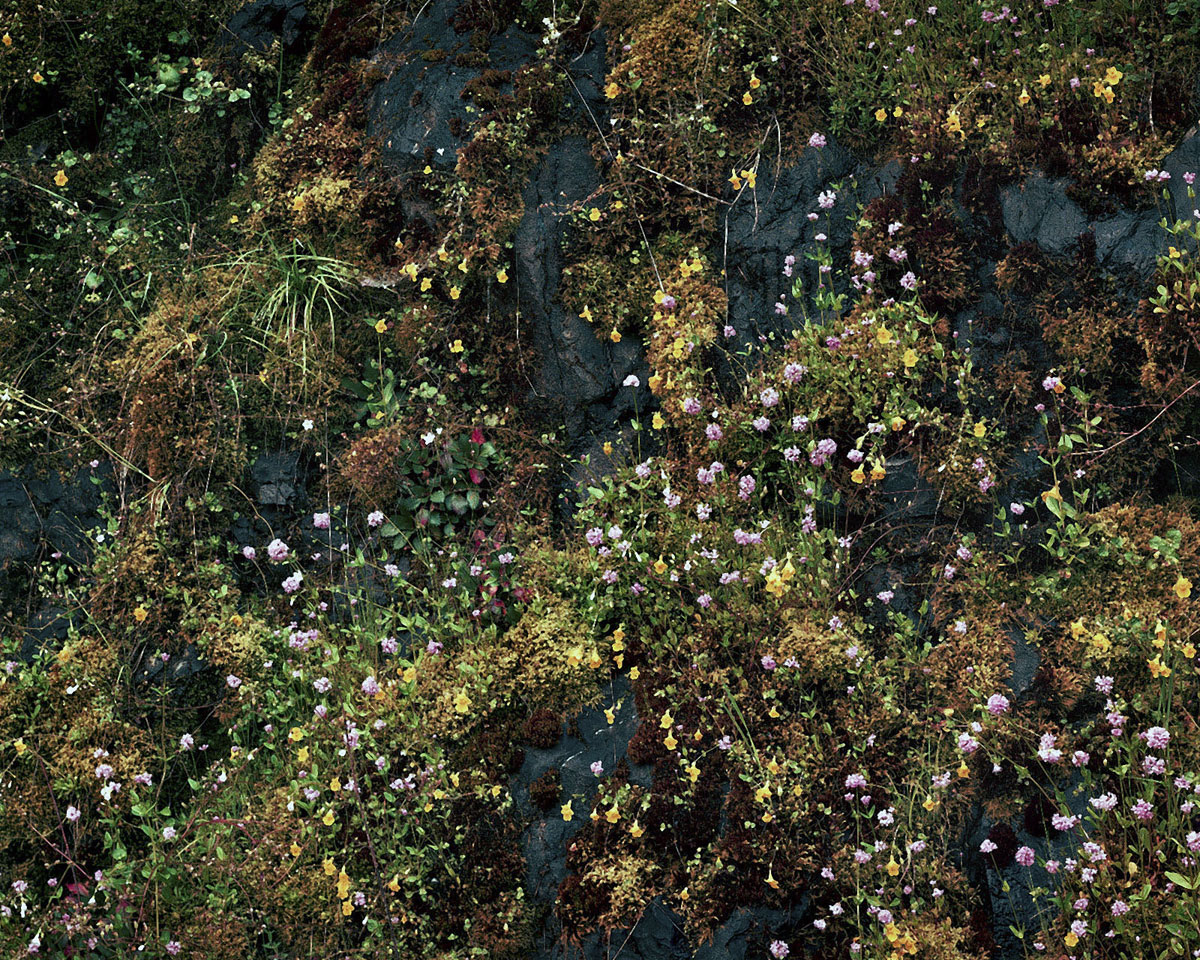
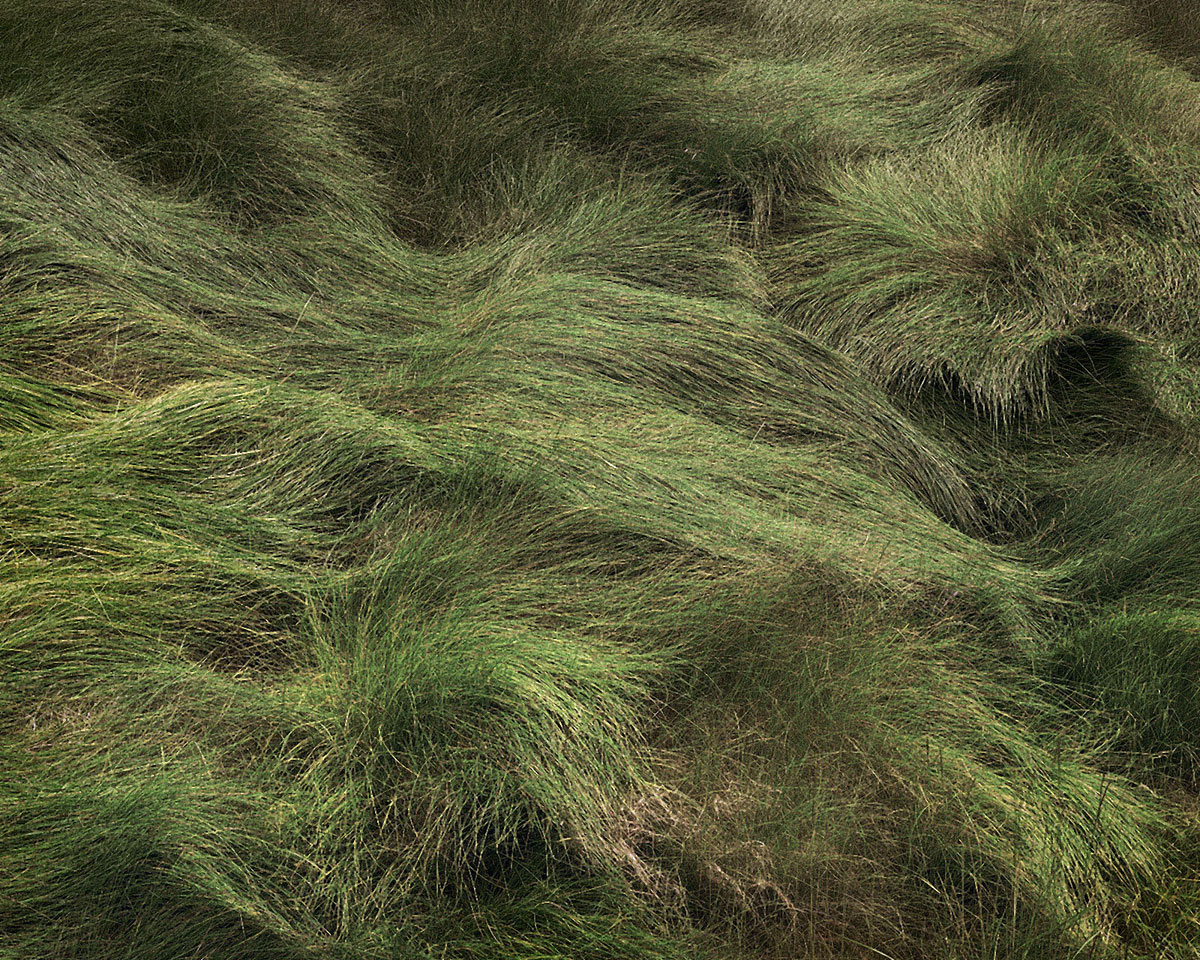
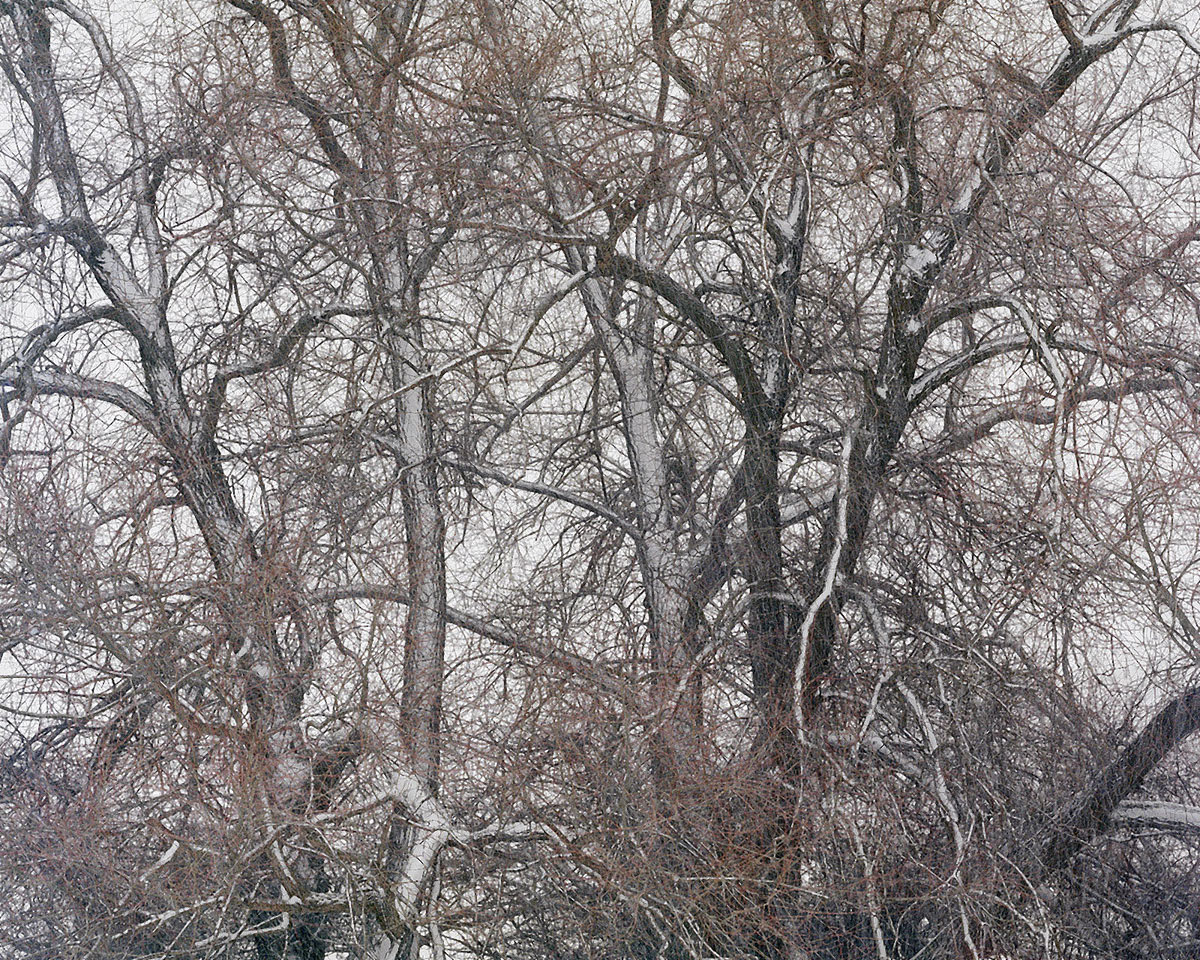
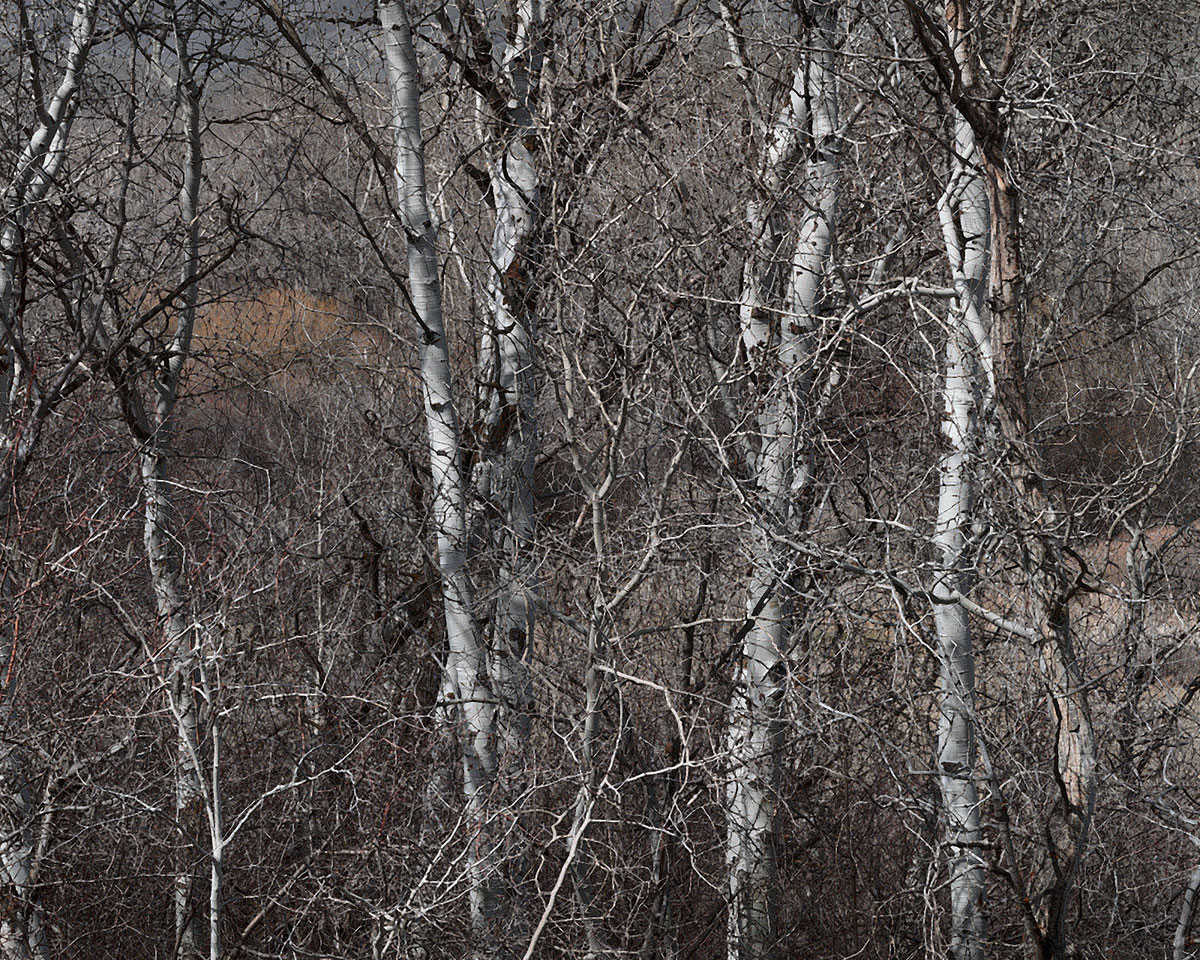
This is a superlative book by Cosgrove Editions that celebrates the sixty-year life in photography of the now 94-year-old Johsel Namkung. Rather than a retrospective I see this book as testimony to Johsel Namkung’s vision as an artist and the photographs, as Susan Sontag observes above, as testaments that allow the viewer to have some direct contact with the things that Johsel photographed, to see and feel with him the places that he visited and the things that he saw.

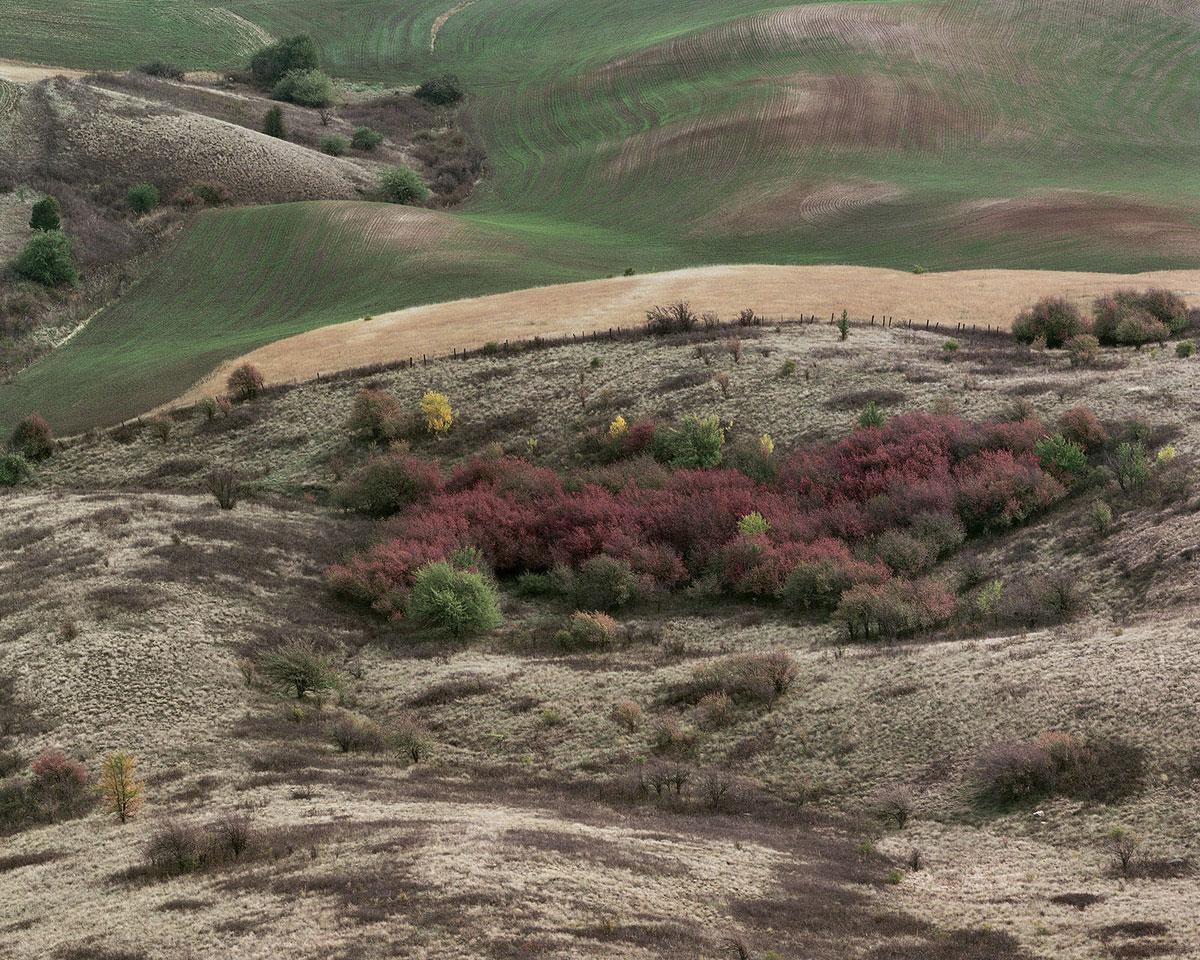
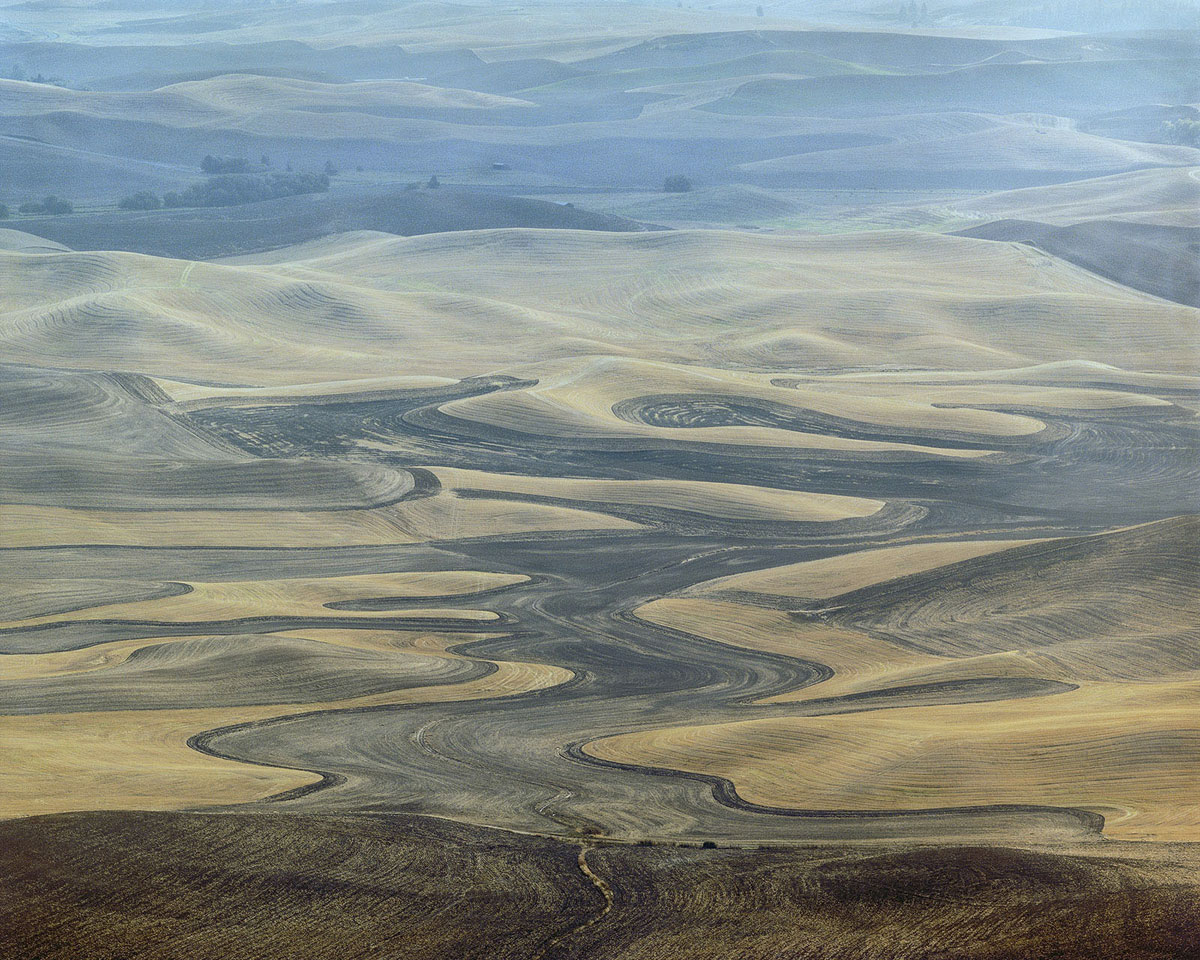
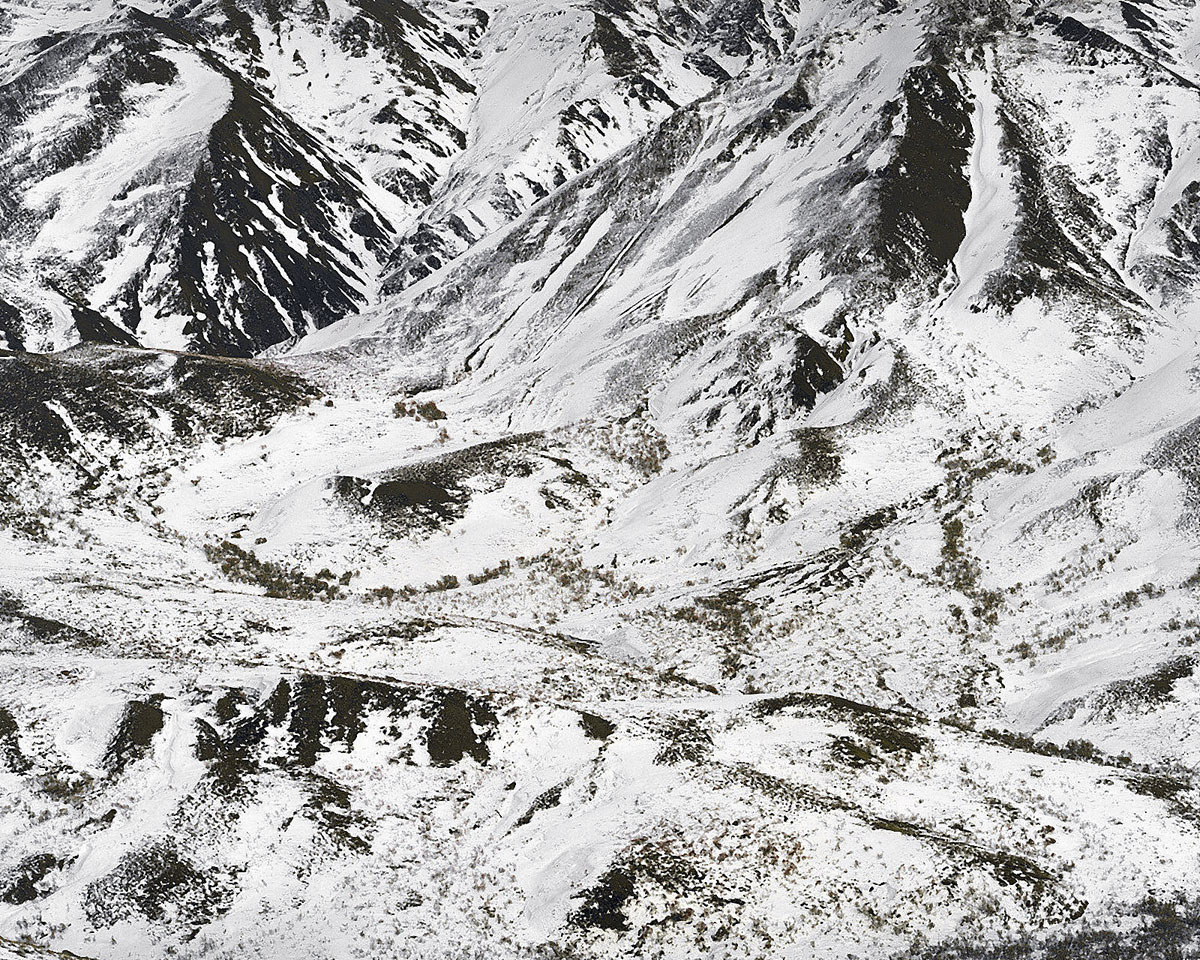
Some of the photographs in this book take your breath away. Taken with a large format camera Johsel’s compositions are heavily influenced by music and are almost fugue-like in their structure. They vibrate and sing like few other landscape photographs that I have ever seen. There is the absence of a horizon, so that his photographs seem to agree with the picture-plane rather than with the world at large.1 Rather, Johsel lets his images flow and in that flow he creates patterning that distinctly creates layers of landscape. The juxtaposing of lines on the landscape is reinforced in the sequencing of the book, where binary opposites are paired on facing pages: feminine / masculine, yang / ying, macro / micro. For example Rainy Pass, Washington July, 1989 is printed opposite Picture Lake, Mount Baker, Washington July 1979 (feminine / masculine); Steptoe Butte, Washington January, 1989 is printed opposite Oak Creek, Washington March, 1991 (yang / ying); and the vast Denali National Park, Alaska September, 1987 is printed opposite the almost Japanese-like delicacy of Arrigetch, Alaska September, 1980 (macro / micro). Although there are links to Abstract Expressionist painters such as Jackson Pollock and Mark Toby and photographers Ansel Adams, Minor White and Eliot Porter this work is wholly Johsel’s in its compositional structure – the position that the photographer puts himself in, both physically and mentally, to obtain these most beautiful of images.

Johsel has a love of small triangular shapes within the pictorial frame. They act like small punctum or pizzicato in musical terms and these given details are intended as such by the photographer. The little punctum in Johsel’s individual works become an accumulation of small punctum that resonate throughout the whole testimony of his work – through the placement of rocks and twigs, the use of triangles and layers whose presence Johsel so loves within the photograph. In this sense (that the photograph is written by the photographer), these are photographs of the mind as much as they are of the landscape. Working in the manner of Minor White (photographing in meditation, creating a pathway from the self to the object, from the object through the camera and back to the self, forming a circle), harmonising all elements (visual, physical, elemental, spiritual), Johsel exposes himself as much as the landscape he is photographing. This is his spirit in relation to the land, to the cosmos, even. Like Monet’s paintings of water lilies these photographs are a “small dreaming” of his spirit with a section of the land not necessarily, as in Aboriginal art, a dreaming and connection to the whole land.

As Minor White observes of the “recognition” of such dreaming when working with the view camera,

“First, there is a store of images, experience, ego problems, ideals, fears, which the man brings to his seeing at the start. Second, during the activity of seeing they are matched against the images in the visual world, like matching colours. This is done with some conscious effort and a great deal of unconscious participation. At the moment of matching or “recognition” there is a feeling of important at least, and sometimes a merciless impact. This in turn is secured by exposure – like a sudden gust of wind drops a ripe apple. So we can say “recognition” is the trigger of exposure. In view camera work the lapse between recognition and exposure may be relatively long. There is time for analysis and criticism of image and idea, and exposure sums up the entire experience.”2


Like the sudden gust of wind drops the ripe apple.

Oh the joy Johsel must have found when he recognised such invocations, by being aware of his surroundings and his relationship to the earth. I know from my own experience that when you find such a place and recognise it for what it is, it is then an entirely different matter to capture it on film for the camera imparts its own perspective. It is almost as if Johsel and the camera are one, and that the camera itself has disappeared into the landscape (I like the way that you can nearly see his camera but it is actually hidden in the photograph at the bottom of the posting). I get the feeling that Johsel is quite consciously working within an adopted aesthetic – sort of like a tea ceremony – and just making things purposefully and having faith that it is some sort “of way” of doing things. At no point is there any sense of difficulty here – it has all been removed. Yet there was so much physical effort: climbing, walking, waiting, patience, no trace of it. What a heroic act this is!

Johsel approaches a metaphysics of the Real, creating authentic visualisations of the world – an idealised, abstracted Real tending towards a (mental) s(t)imulation. In other words, he photographs the world not to reveal a specific place but a particular state of mind. Is the link to indexicality broken? No, but there is no ultimate truth or origin here, for his is an art of transformation (theatricality) through structure (modernism) which is the essence of aesthetic arts.

“This strategy rejects the search for an origin or ultimate Truth and instead interprets reality as composed, contingent and intersubjective; reality is, therefore, theatrical… Theatricality is made of this endless play and of these continuous displacements of the position of desire, in other words, of the position of the subject in process with an imaginary constructive space.”3


In Johsel’s photographs desire is displaced, ego is removed and his photographs become images of the mind as much as they are of the landscape. This is Johsel at play recognising, becoming these imaginary, constructive spaces. He is in the zone, he becomes the zone, even. Finally we can say: his photographs and his life are transformational; his imagination is the representation of possibility; his work is testimony to that representation.

Dr Marcus Bunyan


1/ Adapted from Robert Nelson commenting on the painting of Monet. “Impressionist’s ode to beauty trips into light fantastic,” The Age newspaper, Wednesday May 22nd 2013, p. 42

2/ White, Minor. “Exploratory Camera,” 1949 in Bunnell, Peter C. (ed.,). Aperture Magazine Anthology – The Minor White Years 1952-1976. Aperture, 2013, p. 64

3/ Féral, Josette. “Performance and Theatricality: The Subject Demystified,” in Modern Drama 25 (March) 1982, p. 177


Many thankx to Johsel Namkung, Dick Busher and Cosgrove Editions for allowing me to publish the text and photographs in the posting. Dick Busher allowed me to pick the photographs that I wanted to illustrate this posting and for that I am most grateful. Please click on the photographs for a larger version of the image.

The book has recently taken top honours in two different award competitions among independent publishers for photography books: The Independent Book Publishers Association’s Benny Awards, and the Independent Publishers IPPY Awards.

PS. I think that photographer is very aware of: “Let the subject generate its own composition” (MW) – coming from Weston’s “Composition is the strongest way of seeing.”


Johsel Namkung (Korean American, 1919-2013) 'Cougar Lake, Oregon June 1991' 1991


Johsel Namkung (Korean American, 1919-2013)
Cougar Lake, Oregon June 1991
1991


Johsel Namkung (Korean American, 1919-2013) 'Rainy Pass, Washington July, 1989' 1989


Johsel Namkung (Korean American, 1919-2013)
Rainy Pass, Washington July, 1989
1989


Johsel Namkung (Korean American, 1919-2013) 'Picture Lake, Mount Baker, Washington July 1979' 1979


Johsel Namkung (Korean American, 1919-2013)
Picture Lake, Mount Baker, Washington July 1979
1979


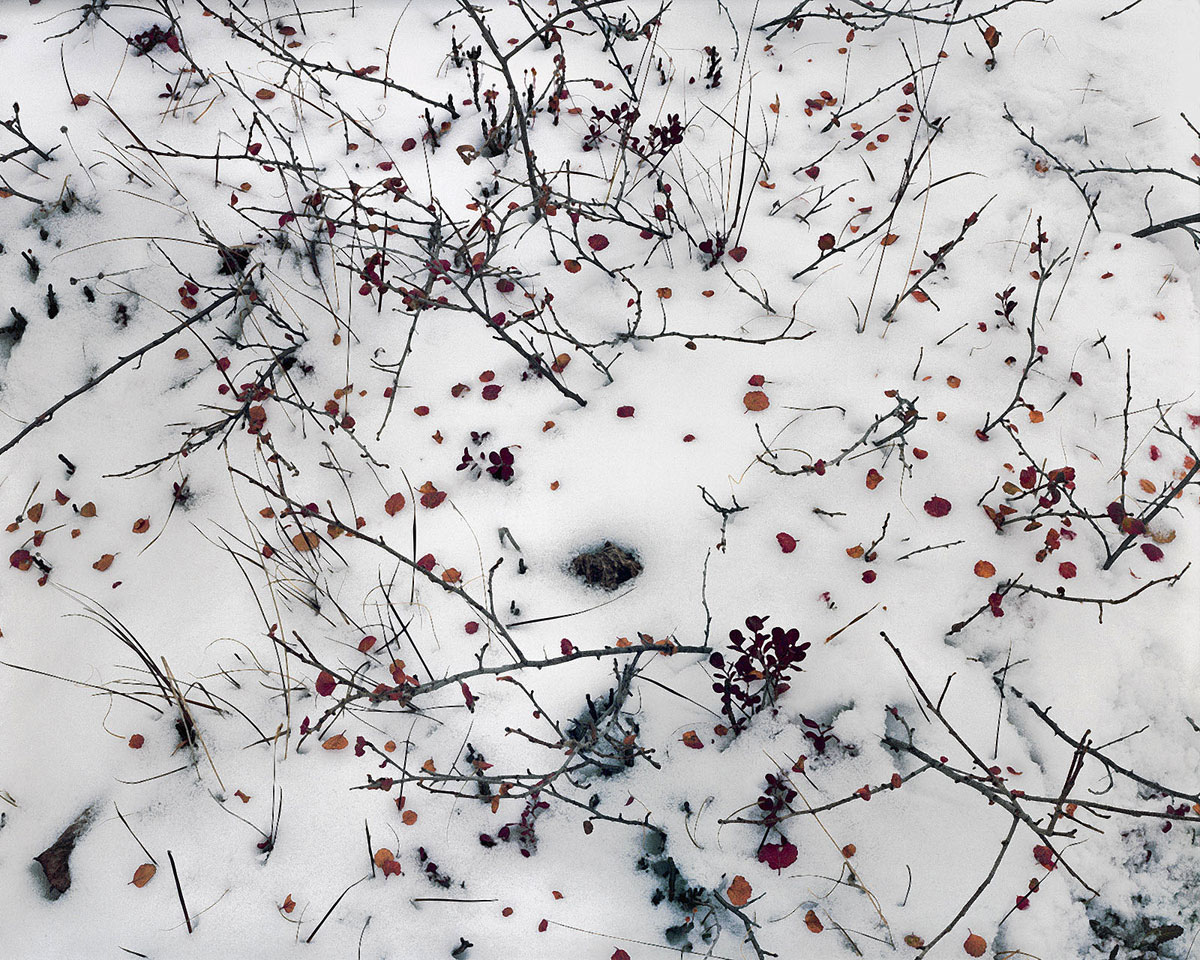
In his photography Johsel brings attention and importance to elements of nature that most people pass by on their way to the grand vistas. One of my favourite locations in Washington is the Palouse as seen from Steptoe Butte; Johsel’s interpretations of the undulating wheat fields just greening with new growth are sensuous and impressionistic. One feels the slope of the earth, the texture of the tilled fields rather than seeing it. The sophisticated simplicity of his vision is highlighted in a simple composition of a dark pond surface, afloat with delicate grasses; the fine lines flowing this way and that give a sense of constant movement, yet it is a still photograph. In a twig reaching out of the snow, the subtle reflection on a pond in late afternoon light, delicate frozen ripples of ice clinging to river rock, the geometric chaos of tree branches covered in snow, the rich patina of weather-beaten stone, Johsel celebrates the minute in a grand way; it becomes the symbol for the greater whole. Textures, rhythm of line and movement become the foremost elements in his work. Some of Johsel’s images are quiet and abstract, singing a single note, while others are full-out symphonies in a celebration of the rhythms. In particular I find his Korean landscapes extraordinary. In winter the alpine hillsides bare their architecture; ridge after ridge, speckled with leafless birch and pyramidal conifers, they overlap in a crescendo of natural beauty.

Art Wolfe, Introduction to Johsel Namkung • A Retrospective


Johsel Namkung (Korean American, 1919-2013) 'Steptoe Butte, Washington January, 1989' 1989


Johsel Namkung (Korean American, 1919-2013)
Steptoe Butte, Washington January, 1989
1989


Johsel Namkung (Korean American, 1919-2013) 'Oak Creek, Washington March, 1991' 1991


Johsel Namkung (Korean American, 1919-2013)
Oak Creek, Washington March, 1991
1991


Johsel Namkung (Korean American, 1919-2013) 'Steptoe Butte, Washington October, 1977' 1977


Johsel Namkung (Korean American, 1919-2013)
Steptoe Butte, Washington October, 1977
1977


Johsel Namkung (Korean American, 1919-2013) 'Steptoe Butte, Washington October, 1983' 1983


Johsel Namkung (Korean American, 1919-2013)
Steptoe Butte, Washington October, 1983
1983


Johsel Namkung (Korean American, 1919-2013) 'Denali National Park, Alaska September, 1987' 1987


Johsel Namkung (Korean American, 1919-2013)
Denali National Park, Alaska September, 1987
1987


Johsel Namkung (Korean American, 1919-2013) 'Arrigetch, Alaska September, 1980' 1980


Johsel Namkung (Korean American, 1919-2013)
Arrigetch, Alaska September, 1980
1980


Photography as a medium is still relatively young. Introduced publicly in 1839, its definition has remained complicated in discourse and practice, oscillating between practical application – whether scientific illustration, family record, or aid to commerce – and aesthetic or expressive concerns. Debates that arose shortly after its invention, contesting whether photography could be an artistic medium, remained heated a century later and beyond, resolving only after Photoshop and other types of photographic manipulation became commonplace. Questions about the role of the photographer, the relative merits of colour versus black-and-white, truth to the original shot versus darkroom manipulation, investigations about canon, hierarchy, and genre have continued to multiply, as have the social organisations – art schools, technical assistance and supplies, professional and amateur societies, regular shows and publications – that foster photographic work. Becoming a photographer in the middle of the twentieth century, Johsel Namkung emerged at the intersection of all these social and conceptual shifts. Taking advantage of this opening, he made several unconventional choices: deciding to work in colour although it was black and white that signified art photography until the 1970s or later; working abstractly, but hewing to the dictates of straight photography: available light, no darkroom manipulation, print the full negative.

From the acquisition of his first camera, Namkung developed high standards for his photographic practice, recalling to interviewer Alan Lau, “I always had a confidence in myself… I had a sort of a vision toward my photographic future. I knew I was going to be something.”1 Trained first as a musician, from the beginning Namkung defined photography in abstract terms, approaching his motifs in terms of rhythms, tonal relationships, pattern, and texture. Individual works reveal specific affinities. The calligraphic grasses in Lizzard Lake, Stampede Pass, WA, August 1976 suggests Harry Callahan’s images of reeds, which are associated with Abstract Expressionist photography. The lichen-covered stone in Blue Mountain, Olympic National Park, WA, September 1976 resembles Jackson Pollock or the famed White Paintings of Namkung’s friend Mark Tobey. The screen of regular tree trunks in Sherman Pass, WA, August 1993, recalls the hatched lines representing driving rain in modern Japanese printmaking. Like limpid watercolor strokes, the rolling hills of the Palouse – distinct in each version of Steptoe Butte, of 1976, 1977, and 1983 – allude to Morris Louis’s colour field paintings.

Namkung’s preface here recounts how successive unusual jobs supplied him with professional training as a photographer. Seattle in the postwar boom years also provided a rich and supportive context for his art. Skilled artists from the ranks of first- and second-generation immigrants, from Japan, China, Korea, and the Philippines, gathered in the International District but worked and showed farther afield. Art photography had a popular following and many innovative practitioners; Pictorialism – promoted by annual exhibitions like those organised by the Seattle Camera Club – encouraged aesthetic and technical exploration with cameras. The so-called Northwest Mystics represented only one of several artistic communities exploring abstraction, some emphasising its expressive potential, others seeking formal invention. Creativity was equally celebrated beyond fine art. Rarefied technical challenges were tackled and mastered at The Boeing Company as well as the scientific laboratories of the University of Washington. The richness of this cultural ecology fostered the unique development of Namkung’s career. In return, his thoughtful production has nourished local and international audiences for over four decades.

Elizabeth Brown, Former Chief Curator, Henry Art Gallery, Introduction to Johsel Namkung • A Retrospective


1/ Alan Chong Lau interview of Johsel Namkung conducted in Seattle, Washington, on October 5, 1989, for the Archives of American Art Northwest Asian American Project.


Johsel Namkung (Korean American, 1919-2013) 'Shi Shi Beach Buoy, Olympic National Park, Washington August, 1981' 1981


Johsel Namkung (Korean American, 1919-2013)
Shi Shi Beach Buoy, Olympic National Park, Washington August, 1981
1981


Johsel Namkung (Korean American, 1919-2013) 'Bissell, Washington December, 1981' 1981


Johsel Namkung (Korean American, 1919-2013)
Bissell, Washington December, 1981
1981


Johsel Namkung (Korean American, 1919-2013) 'Alaska Lichens, Date Unknown' Nd


Johsel Namkung (Korean American, 1919-2013)
Alaska Lichens, Date Unknown
Nd


Johsel Namkung (Korean American, 1919-2013) 'Blue Mountain, Olympic National Park, Washington September, 1976' 1976


Johsel Namkung (Korean American, 1919-2013)
Blue Mountain, Olympic National Park, Washington September, 1976
1976


Johsel Namkung (Korean American, 1919-2013) 'Weston Beach, Point Lobos, California May, 1988' 1988


Johsel Namkung (Korean American, 1919-2013)
Weston Beach, Point Lobos, California May, 1988
1988


Johsel Namkung (Korean American, 1919-2013) 'Frenchman Coulee, Washington May, 2002' 2002


Johsel Namkung (Korean American, 1919-2013)
Frenchman Coulee, Washington May, 2002
2002


Johsel Namkung (Korean American, 1919-2013) 'Kalaloch Beach, Olympic National Park, Washington October, 1984' 1984


Johsel Namkung (Korean American, 1919-2013)
Kalaloch Beach, Olympic National Park, Washington October, 1984
1984


Joshel Namkung on Hurricane Ridge, photographed by his friend Ken Levine


Joshel Namkung on Hurricane Ridge, photographed by his friend Ken Levine


Johsel Namkung • A Retrospective website

Cosgrove Editions is an independent publisher of books on photography. We also provide production and printing assistance for artists who self publish their work. Many of our projects have won some of the highest international awards for printing quality.

LIKE ART BLART ON FACEBOOK

Back to top

Exhibition: ‘Sophia Szilagyi: water studies’ at Beaver Galleries, Canberra

Exhibition dates: 23rd May – 11th June 2013


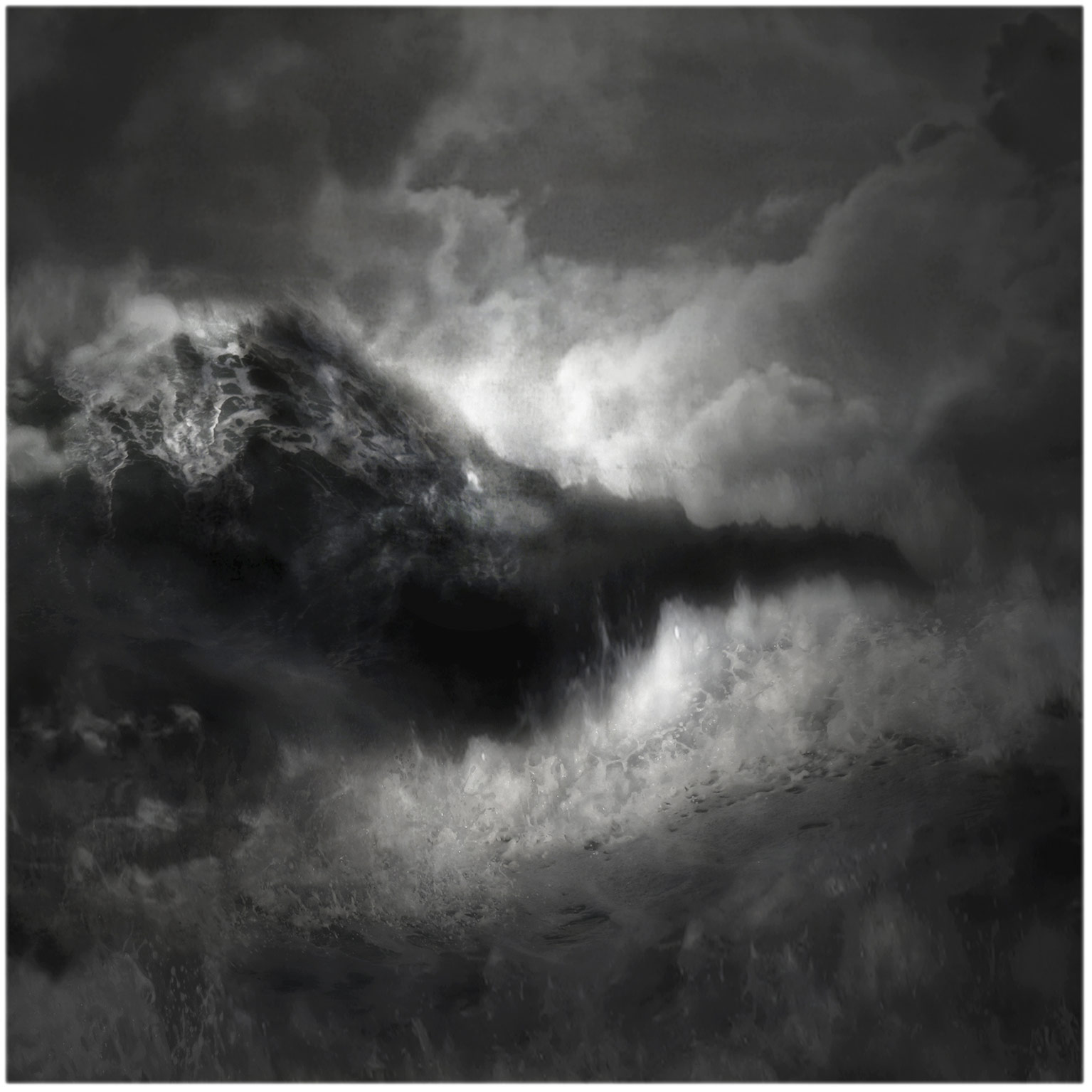
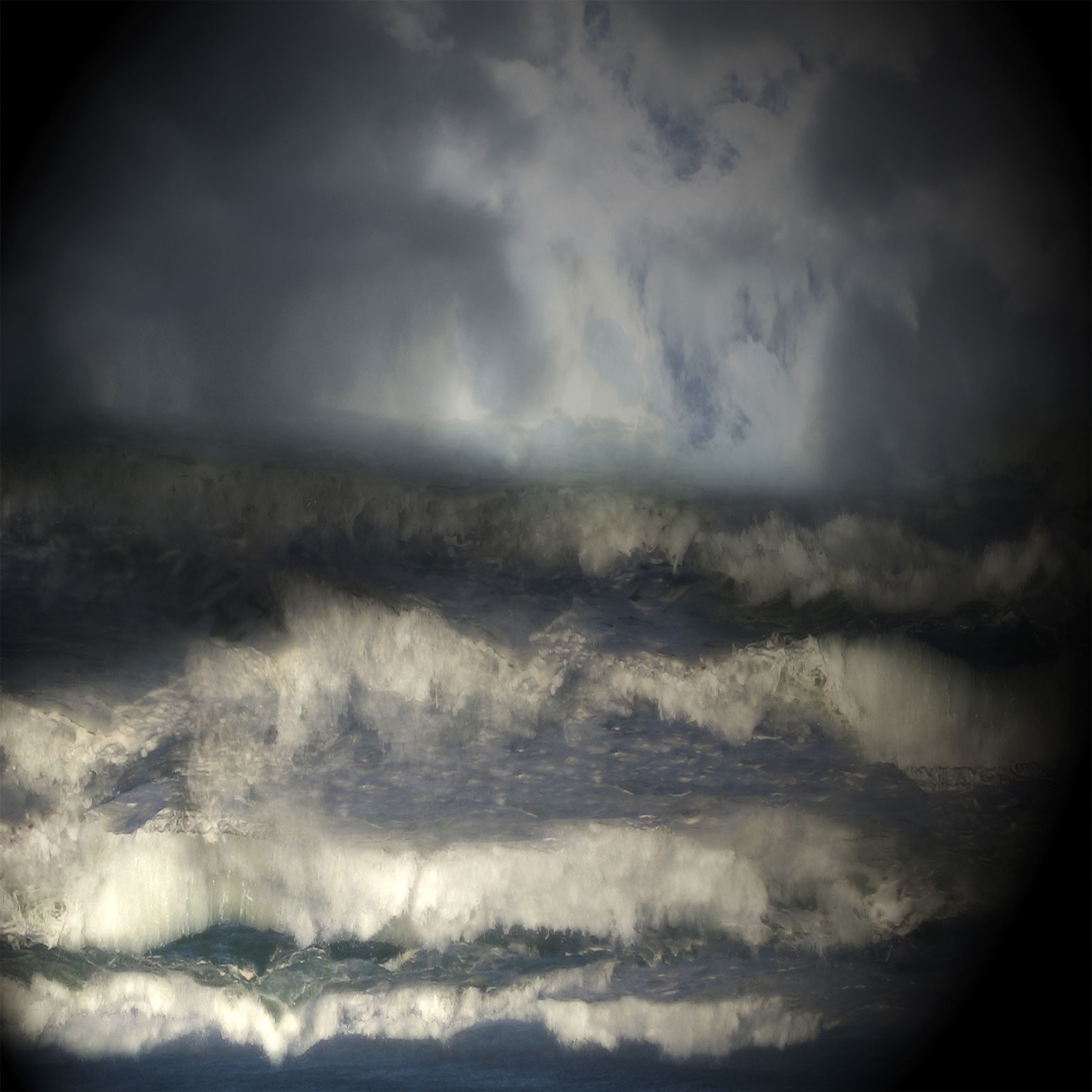
Sophia Szilagyi (Australian, b. 1973) 'night waves I' 2013


Sophia Szilagyi (Australian, b. 1973)
night waves I
2013
Pigment print on archival rag paper
Edition 2 of 15
29 x 29cm


“It is intangible, incalculable, a thing to be felt, not comprehended – a music of the eyes, a melody of the heart…”


John Ruskin, art critic


“Once, Turner had himself lashed to the mast of a ship for several hours, during a furious storm, so that he could later paint the storm. Obviously, it was not the storm itself that Turner intended to paint. What he intended to paint was a representation of the storm. One’s language is frequently imprecise in that manner, I have discovered.”

David Markson, Wittgenstein’s Mistress


How appropriate that these stunning water studies by artist Sophia Szilagyi should be exhibited in Canberra as the blockbuster J. M. W. Turner exhibition Turner from the Tate: The Making of a Master opens at the National Gallery of Australia.

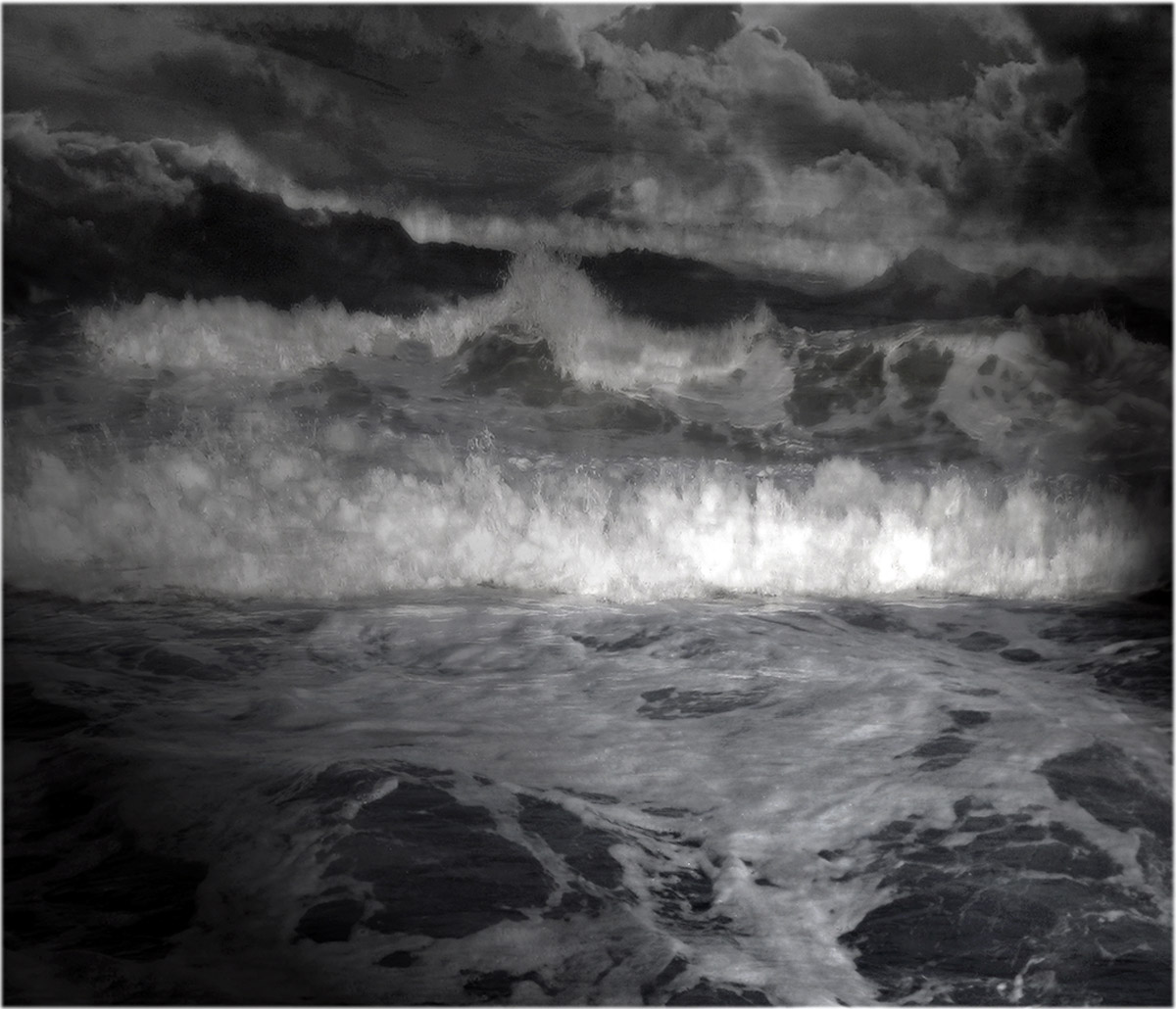
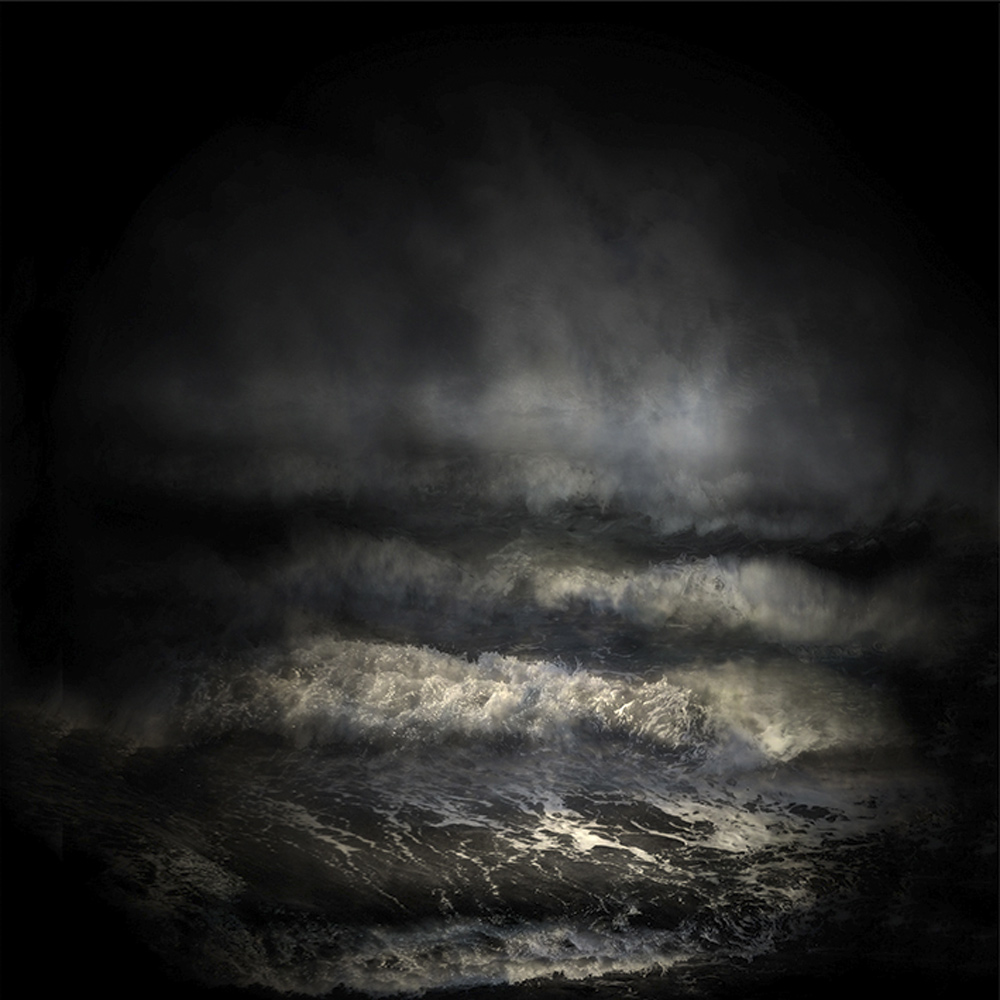
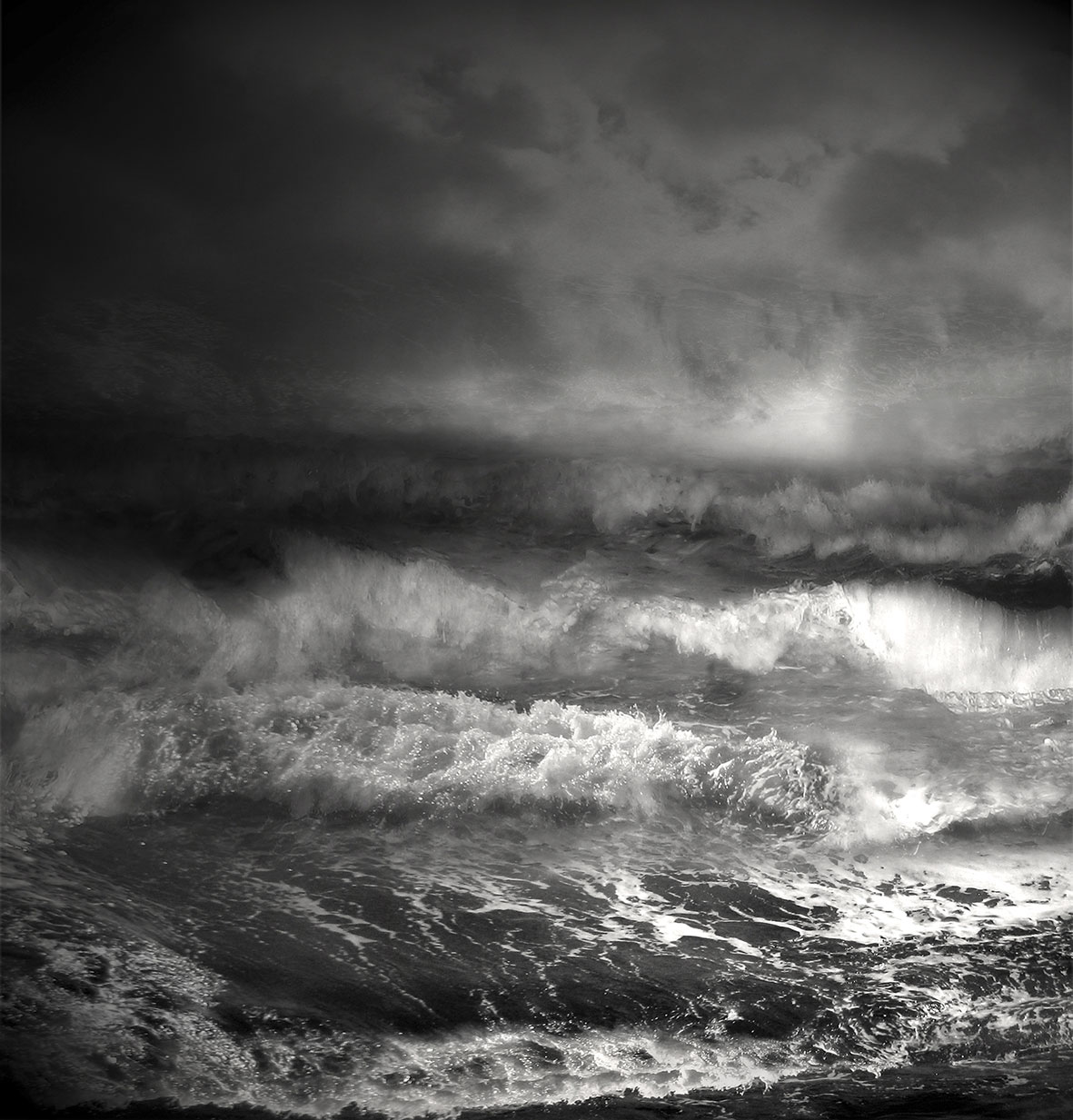
I love everything thing about these works: the compacted and layered sense of space (the eye of the printmaker brought to bare in the construction of the images rather than the eye of the photographer), the lack of a traditional vanishing point that allows the viewer to be immersed in the prints, the tonality, the texture and immediacy of the images. Szilagyi pushes the work to the limits and, amid the swirling masses of light and colour, a powerful mood is evoked.1 These towering, raging canvases portray the gathering force of the sea, its immediacy and energy; its danger, wonder and sublime beauty. They are as much landscapes of the mind and the imagination as of the sea. Turner, lashed to  a mast during a furious storm so that he could later paint a representation of the storm, would surely have been proud of these meditations upon nature/life. Bravura. Bravo.

Dr Marcus Bunyan


1/ See Grishin, Sasha. “Genius shows his true colours,” in The Age newspaper, Saturday, June 1, 2013, p. 2.


Many thankx to Beaver Galleries for allowing me to publish the photographs in the posting. Please click on the photographs for a larger version of the image.


“Light shimmers, darkness settles, the sea opens its arms to swallow up the sky. Sophia Szilagyi’s imagery evokes the natural world and imbues it with an emotional resonance through the artist’s skilful manipulation of diametrically opposed elements. Light abuts dark, the dense almost claustrophobic space in some works contrast with open seas and vast skies that imply the infinite in others. Imagery is constructed through digital printmaking techniques, layered to create textural complexities, while capturing the oscillations in mood and atmosphere that mirror the ebb and flow of human emotions. Fear, wonder, and danger exist in these images that capture the beauty and grandeur found in the physical world, while also charting an internal topography.”


Marguerite Brown


Sophia Szilagyi (Australian, b. 1973) 'stormy seas (after Courbet)' 2013


Sophia Szilagyi (Australian, b. 1973)
stormy seas (after Courbet)
2013
Pigment print on archival rag paper
Edition 2 of 15
30 x 35cm


Sophia Szilagyi (Australian, b. 1973) 'wave' 2013


Sophia Szilagyi (Australian, b. 1973)
wave
2013
Pigment print on archival rag paper
Edition 9 of 20
49.5 x 57cm


Sophia Szilagyi (Australian, b. 1973) 'breaking' 2013


Sophia Szilagyi (Australian, b. 1973)
breaking
2013
Pigment print on archival rag paper
Edition 4 of 10
96 x 122cm


Sophia Szilagyi is a printmaker who uses digital printmaking to create scenes of re-interpreted memory and experience. In her multi-layered compositions, Sophia explores the relationship between fiction and non-fiction, challenging our perceptions of reality and the effects of physical sensation and emotional response on memory. Sophia’s artistic process begins with an impression of a certain painting, personal photograph or experience. Images from a variety of sources are combined and overlapped so that the general interpretation of her work is a patchwork of real and imagined experiences. Sophia achieves this seamless layering by using digital technology, giving her the freedom to manipulate the imagery to create the desired mood and expression. The completed works are printed on archival rag paper as this highly absorbent surface enhances the softness and dreamlike quality of her imagery. In this current exhibition, Sophia draws her inspiration from the sea and coast, exploring the dualities of intersections between light and dark, earth and ocean. Through her prints, Sophia seeks to capture a sense of wonder, fear, beauty and, sometimes, danger that exists in both nature and the imagination.

Sophia Szilagyi graduated with First Class Honours from the School of Art and Culture at RMIT in 2000. Since graduating, Sophia has held a number of solo shows as well as participating in many group exhibitions across Australia. Her work has been selected in numerous print awards including the Fremantle Print Prize (2007) and the Banyule Award for Works on Paper (2011, 2009 and 2007). In 2005, Sophia was commissioned to complete a work for the Print Council of Australia and her work is represented in collections including the Burnie Regional Art Museum, La Trobe Regional Art Gallery, Wagga Wagga Art Gallery, Queensland University of Technology and State Library of Victoria.

Press release from Beaver Galleries


Sophia Szilagyi (Australian, b. 1973) 'light sea' 2013


Sophia Szilagyi (Australian, b. 1973)
light sea
2013
Pigment print on archival rag paper
Edition 1 of 15


Sophia Szilagyi (Australian, b. 1973) 'dark sea' 2013


Sophia Szilagyi (Australian, b. 1973)
dark sea
2013
Pigment print on archival rag paper
Edition 1 of 15
22 x 22 cm


Sophia Szilagyi (Australian, b. 1973) 'ocean view I' 2013


Sophia Szilagyi (Australian, b. 1973)
ocean view I
2013
Pigment print on archival rag paper
Edition 1 of 5
76 x 77cm


Sophia Szilagyi (Australian, b. 1973) 'ocean view II' 2013


Sophia Szilagyi (Australian, b. 1973)
ocean view II
2013
Pigment print on archival rag paper
Edition 4 of 5
78 x 74cm


Sophia Szilagyi (Australian, b. 1973) 'settling' 2013


Sophia Szilagyi (Australian, b. 1973)
settling
2013
Pigment print on archival rag paper
Edition 2 of 10
80 x 70cm


Beaver Galleries
81 Denison Street
Deakin, Canberra
ACT 2600, Australia
Phone: 02 6282 5294

Opening hours
Tuesday – Saturday 10am – 5pm
Beaver Galleries website

LIKE ART BLART ON FACEBOOK

Back to top

Video: ‘InsideArt – Marcus Bunyan’ talks about the exhibition ‘Confounding: Contemporary Photography’ at NGV International, Melbourne

Published on 11th March 2013


InsideArt TV
Marcus Bunyan – Confounding: Contemporary Photography
2013


This week on InsideArt TV, Michel Lawrence talks with Dr Marcus Bunyan about the National Gallery of Victoria’s intriguing photographic exhibition, Confounding: Contemporary Photography, where the photographs exhibited are not always what they seem (Series 3, Episode 1, Part 2).
Many thankx to Michel and Inside Art for inviting me to speak about the exhibition, and the NGV for allowing us to film in the gallery.

See my review of the exhibition Confounding: Contemporary Photography at NGV International, Melbourne February 23, 2013.


National Gallery of Victoria website

LIKE ART BLART ON FACEBOOK

Back to top

Review: ‘Confounding: Contemporary Photography’ at NGV International, Melbourne

Exhibition dates: 5th October 2012 – 3rd March 2013


Thomas Demand (Germany, b. 1964) 'Public housing' 2003


Thomas Demand (Germany, b. 1964)
Public housing
2003
Type C photograph
100.1 x 157.0cm (image and sheet)
National Gallery of Victoria, Melbourne
Purchased with funds donated by the Bowness Family Fund for Contemporary Photography, 2010
© Thomas Demand/VG Bild-Kunst, Bonn. Licensed by VISCOPY, Sydney


Thinking contemporary photography

At its birth in the 19th century, photography was seen as the ultimate tool for the representation and classification of the visual world.1 Photography recorded reality; a photograph was seen as a visual and literal truth of something that existed in the world. It re-presented the world to the viewer, telling something of the world, reflecting the world. A photograph provided a freeze frame – the snap of the shutter – of one point in time and space. People were astounded that their likeness and that of the world around them could be captured for all to see.

Technological advancements in the early twentieth century, such as faster exposure times and more portable cameras, transformed the potential of the medium to not only show things that escaped the eye but new ways of seeing them as well.2 The photograph began to reveal the personal dimensions of reality. It began to explore the intangible spaces that define our physical and spiritual relationship with reality. “Photographers and artists attempted to depict via photographic means that which is not so easily photographed: dreams, ghosts, god, thought, time” (Jeffrey Fraenkel The Unphotographable Fraenkel Gallery Books 2013). With the advent of modernism, they sought to capture fragments, details and blurred boundaries of personal experience.3 The indexical link photograph and referent, between the camera, the object being photographed and the photograph itself was being stretched to breaking point.

Think of it like this. Think of a photograph of an apple that a camera has taken. There is a link between the photograph and its referent, the photograph of the apple and the object itself (in reality, in the lived world). As a viewer of the photograph of the apple we are secondary witness to the fact that, at some point in time, someone took a photograph of this apple in real life. We bear witness to the eyewitness. Now what if I rip up the photograph of the apple and reassemble it in a different order? Is this still not an apple, only my subjective interpretation of how I see an apple existing in the world? Is it no less valid than the “real” photograph of the apple? What kinds of visual “truth” can exist in images?

Presently, contemporary photography is able to reveal intangible, constructed vistas that live outside the realm of the scientific. A photograph becomes a perspective on the world, an orientation to the world based on human agency. An image-maker takes resources for meaning (a visual language, how the image is made and what it is about), undertakes a design process (the process of image-making), and in so doing re-images the world in a way that it has never quite been seen before.

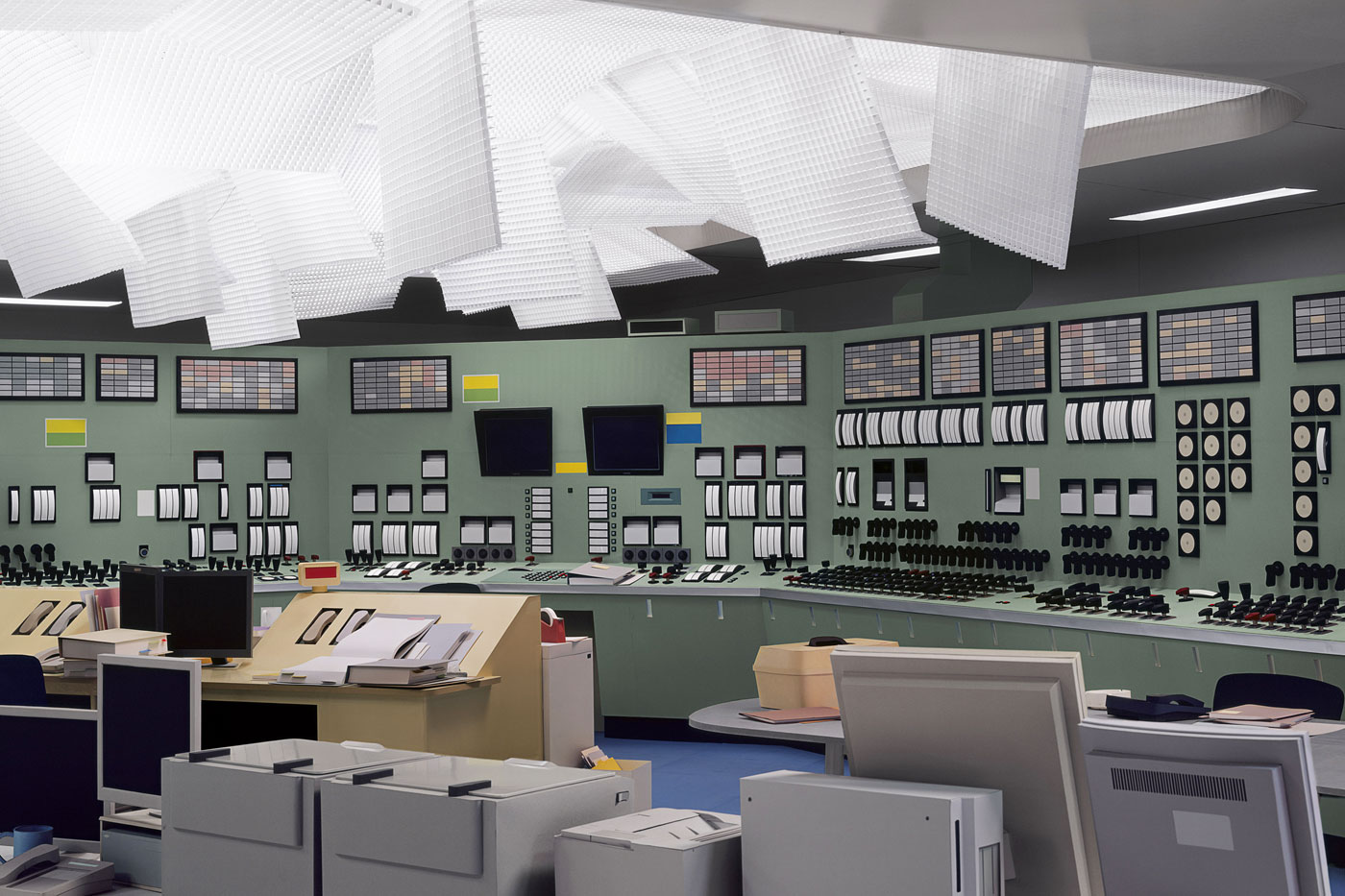
These ideas are what a fascinating exhibition titled Confounding: Contemporary Photography, at the National Gallery of Victoria, Melbourne investigates. In the confounding of contemporary photography we are no longer witnessing a lived reality but a break down of binaries such as sacred and profane, public and private, natural and artificial, real and dreamed environments as artists present their subjective visions of imagined, created worlds. Each image presents the viewer with a conundrum that investigates the relationship between photographs and the “real” world they supposedly record. How do these photographs make you feel about this constructed, confounding world? These fields of existence?

Thomas Demand’s Public Housing (2003, above) plays with the real and the fictional, presenting the viewer with an idealised vision of a public housing complex illustrated on a Singapore $10 note. Demand makes large models out of paper and cardboard in his studio and then photographs the result before destroying the basis of his performance, the model, leaving only the photograph as evidence of their existence, an existence that emanated from the imagination of the artist. This particular Demand is unusual in that it depicts the totality of an outdoor structure, for the artist usually focuses on details of buildings, plants and environments in mid to close up view. The flattened perspective, limited colour palette and absence of detail adds to the utopian nature of the work (almost like a photographic Jeffrey Smart), aping the aesthetic and social ideals of Le Courbusier. As John Meades notes, “From early in its history, photography was adopted by architects as a means of idealising their buildings. As beautiful and heroic, as tokens of their ingenuity and mankind’s progress, etc. This debased tradition continues to thrive. At its core lies the imperative to show the building out of context, as a monument, separate from streetscape, from awkward neighbours, from untidiness.”4

In Roger Ballen’s photograph Terminus (2004, below), one the more moody works in the exhibition, a heavy wooden board with a deflated leather bladder on top presses down on a human face. Although it is not a human face (it confounds!), it is the painted face of a mannequin which the viewer can only acknowledge after a jolt of recognition. There is a feeling of entombment, a palpable feeling of claustrophobia, as the meta / physical “weight” of the bladder (like the weight of a heavy meteorite) presses down on the half obscured, thin lipped, black eyed face. Similarly confounding are the two photographs by Eliza Hutchison called The ancestors (2004, below). Shot from the waist up, these photographs remind you of those old black and white Photo Booth snapshots that you used to get for passports (there are still two of those machines outside the Elizabeth Street entrance to Flinders Street railway station, standing there like forlorn sentinels of a by gone age), complete with nondescript curtain that you used to pull behind you. There is something “not quite right” about the people in the photographs but you can’t put your finger on it until the text panel, a little gleefully, informs you that the portraits had been shot upside down. Now you realise what is out of kilter: more cheek and jowl rather than cheek by jowl.

The exhibition makes a powerful point as Robert Nelson in his review of the exhibition in The Age newspaper observes: photography doesn’t necessarily have to be confounding to be art, to become enduring, it just has to have a decent idea behind it.

“I would say that being confounding is not a necessary property of art photography; and even when it’s present, it isn’t in itself a sufficient ingredient to guarantee enduringly valuable art. Photography doesn’t have to confound in order to be art, but it does have to have an idea in it. The idea is always the issue, whether it works by confounding us or not.”5


The idea has always been the issue. Collectively, it is the ideas contained within the images in this exhibition that unsettle the relationship between the photograph and the world in the mind of the viewer, not their confounding. I don’t find any of these images contain much emotion (except possibly the Ballen) but the images are transformational because they fire up our imagination. Images speak not just of the world, but to the world; they challenge our beliefs, our politics and our daily practices. The camera’s single viewpoint, our single viewpoint, our field of existence has changed. People find themselves somehow, somewhere, not in a lived reality but in an imagined one.

Much is staged, scaled and variations in perspective are paramount. This affects the relationship between the viewer and the viewed for we can no longer take anything at face value. In a media saturated world full of images we begin to question every image that we see: has it been digitally manipulated, does it, did it actually exist in the world? These days “truth” in photography is an elusive notion and that might not be such a bad thing as people question the nature of images that surround them, their authenticity and their aura. In a media saturated world, in a world no longer of our making, seeing is no longer believing.

Dr Marcus Bunyan


Footnotes

1/ Anon. “Flatlands: photography and everyday space,” press release from the Art Gallery of New South Wales website posted on Art Blart [Online] Cited 19/02/2013

2/ Ibid.,

3/ Ibid.,

4/ Meades, Jonathan. “Architects are the last people who should shape our cities,” on The Guardian website, Tuesday 18 September 2012 [Online] Cited 19/02/2013

5/ “First, do all confounded photographic images qualify as art? Or does a photograph have to be founding in a special way? And second, can a photograph be art without being confounding? Bundling these questions together, I would say that being confounding is not a necessary property of art photography; and even when it’s present, it isn’t in itself a sufficient ingredient to guarantee enduringly valuable art. Photography doesn’t have to confound in order to be art, but it does have to have an idea in it. The idea is always the issue, whether it works by confounding us or not.”
Nelson, Robert. “Getting the picture can be confounding,” in The Age newspaper, Wednesday January 2nd, 2013, p. 11.


Many thankx to the National Gallery of Victoria for allowing me to publish the photographs in the posting. Please click on the photographs for a larger version of the image.


Peter Peryer (New Zealand, 1941-2018) 'Home' 1991


Peter Peryer (New Zealand, 1941-2018)
Home
1991
Gelatin silver photograph
35.6 x 53.8cm
National Gallery of Victoria, Melbourne
Purchased, 1996
© Peter Peryer


Loretta Lux (Germany, b. 1969) 'The drummer' 2004


Loretta Lux (Germany, b. 1969)
The drummer
2004
Cibachrome photograph
Image: 45.0 x 37.7cm
Sheet: 56.0 x 49.0cm
National Gallery of Victoria, Melbourne
Purchased, NGV Foundation, 2006
© Loretta Lux/VG BILD-KUNST, Bonn. Licensed by VISCOPY, Australia


On 5 October, the National Gallery of Victoria will present Confounding: Contemporary Photography, an exploration of the uncanny worlds created by human imagination, dreams and memories.

Drawn from the NGV’s collection, the fourteen works on display transform the strange, uncomfortable and awkward into plausible realities. Visitors will discover the gaze of unnerving children in the hyper-real work of Loretta Lux; be jolted upon realising the hidden reality of Wang Qingsong’s monumental tableaux; and wonder at the strange beauty in the carefully constructed cardboard world of Thomas Demand.

Susan van Wyk, Curator, Photography, NGV, said: “Like the recollection of a dream, the photographs displayed in Confounding seem to make sense, but do not sit comfortably in the world. There are subtle, slightly sinister elements within the images that suggest a mystifying alternative reality… Through a selection of works by Australian and international artists, including two new acquisitions by Thomas Demand and Roger Ballen, Confounding explores the unexpected with images that bridge the divide between real and fictional.”

Confounding will present works by contemporary photographers including Roger Ballen, Pat Brassington, Thomas Demand, Eliza Hutchison, Rosemary Laing, Loretta Lux, Patricia Piccinini, Peter Peryer, Wang Qingsong and Ronnie van Hout.

Press release from the National Gallery of Victoria website


Patricia Piccinini (b. Sierra Leone 1965, lived in Italy 1968-1972, arrived Australia 1972) 'Protein lattice – subset blue, portrait' 1997


Patricia Piccinini (b. Sierra Leone 1965, lived in Italy 1968-1972, arrived Australia 1972)
Protein lattice – subset blue, portrait
1997
From the Protein lattice series 1997
Type C photograph
Image: 80.5 x 80.3cm irreg.
Sheet: 90.0 x 126.9cm
National Gallery of Victoria, Melbourne
Purchased through The Art Foundation of Victoria with the assistance of Optus Communications Pty Limited, Member, 1998
© Patricia Piccinini


Rosemary Laing (Australian, 1959-2024) 'flight research #8' 1999, printed 2000


Rosemary Laing (Australian, 1959-2024)
flight research #8
1999, printed 2000
Type C photograph
Image: 59.8 x 59.8 cm
Sheet: 78.7 x 78.7 cm
National Gallery of Victoria, Melbourne
Purchased with funds from the Victorian Foundation for Living Australian Artists, 2004
© Estate of Rosemary Laing


Wang Qingsong (Chinese, b. 1966) 'Preincarnation' 2002


Wang Qingsong (Chinese, b. 1966)
Preincarnation
2002
Type C photographs
(a) 100.0 × 63.0cm (image)
(b) 100.0 × 61.0cm (image)
(c) 100.1 × 63.0cm (image)
National Gallery of Victoria, Melbourne
Purchased with the assistance of the Lillian Ernestine Lobb Bequest, 2007
© Wang Qingsong


Ronnie van Hout (New Zealand, b. 1962) 'Mephitis' 1995


Ronnie van Hout (New Zealand, b. 1962)
Mephitis
1995
Gelatin silver photograph
Image: 47.2 x 32.6cm
Sheet: 50.5 x 40.9cm
National Gallery of Victoria, Melbourne
Purchased, 1996
© Courtesy the artist and Darren Knight Gallery, Sydney


Roger Ballen (American, b. 1950, worked in South Africa 1982- ) 'Terminus' 2004


Roger Ballen (American, b. 1950, worked in South Africa 1982- )
Terminus
2004
Carbon print
45.2 x 44.9cm
National Gallery of Victoria, Melbourne
Gift of Bill Bowness through the Australian Government’s Cultural Gift’s Program, 2012
© courtesy the artist and Stills Gallery, Sydney


Eliza Hutchison (Australian, b. 1965) 'The ancestors' 2004


Eliza Hutchison (Australian, b. 1965)
The ancestors
2004
Light-jet print
Image: 95.4 x 72.9cm
Sheet: 105.4 x 82.9cm
National Gallery of Victoria, Melbourne
Purchased with funds arranged by Loti Smorgon for Contemporary Australian Photography, 2005
© Eliza Hutchison, courtesy Murray White Room


Eliza Hutchison (Australian, b. 1965) 'The ancestors' 2004


Eliza Hutchison (Australian, b. 1965)
The ancestors
2004
Light-jet print
Image: 95.3 x 73.0cm
Sheet: 105.3 x 83.0cm
National Gallery of Victoria, Melbourne
Purchased with funds arranged by Loti Smorgon for Contemporary Australian Photography, 2005
© Eliza Hutchison, courtesy Murray White Room


NGV International
180 St Kilda Road

Opening hours
Open daily 10am – 5pm
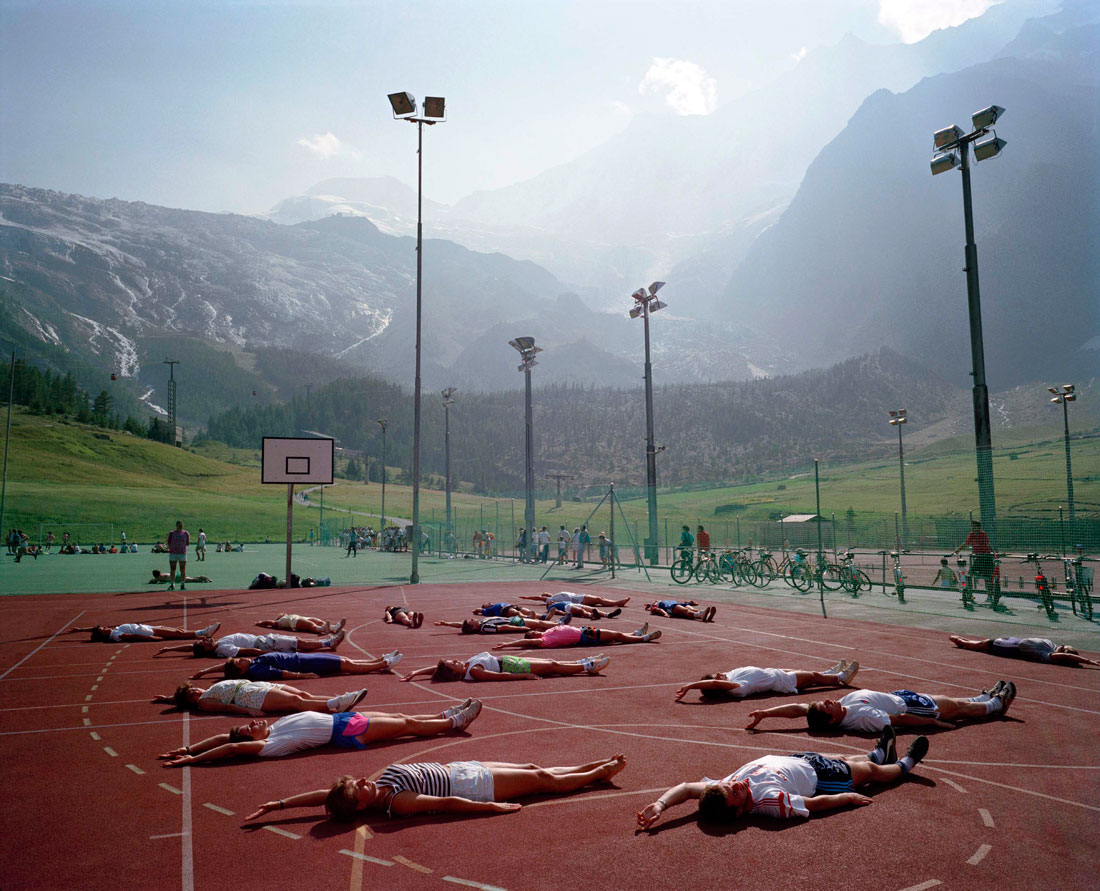
National Gallery of Victoria website

LIKE ART BLART ON FACEBOOK

Back to top

Exhibition: ‘Jeff Wall Photographs’ at The Ian Potter Centre: National Gallery of Victoria Australia, Melbourne

Exhibition dates: 30th November 2012 – 17th March 2013


Installation view of 'Jeff Wall Photographs' at NGV Australia showing, at right, 'The Destroyed Room' 1978


Installation view of Jeff Wall Photographs at NGV Australia showing, at right, The Destroyed Room 1978
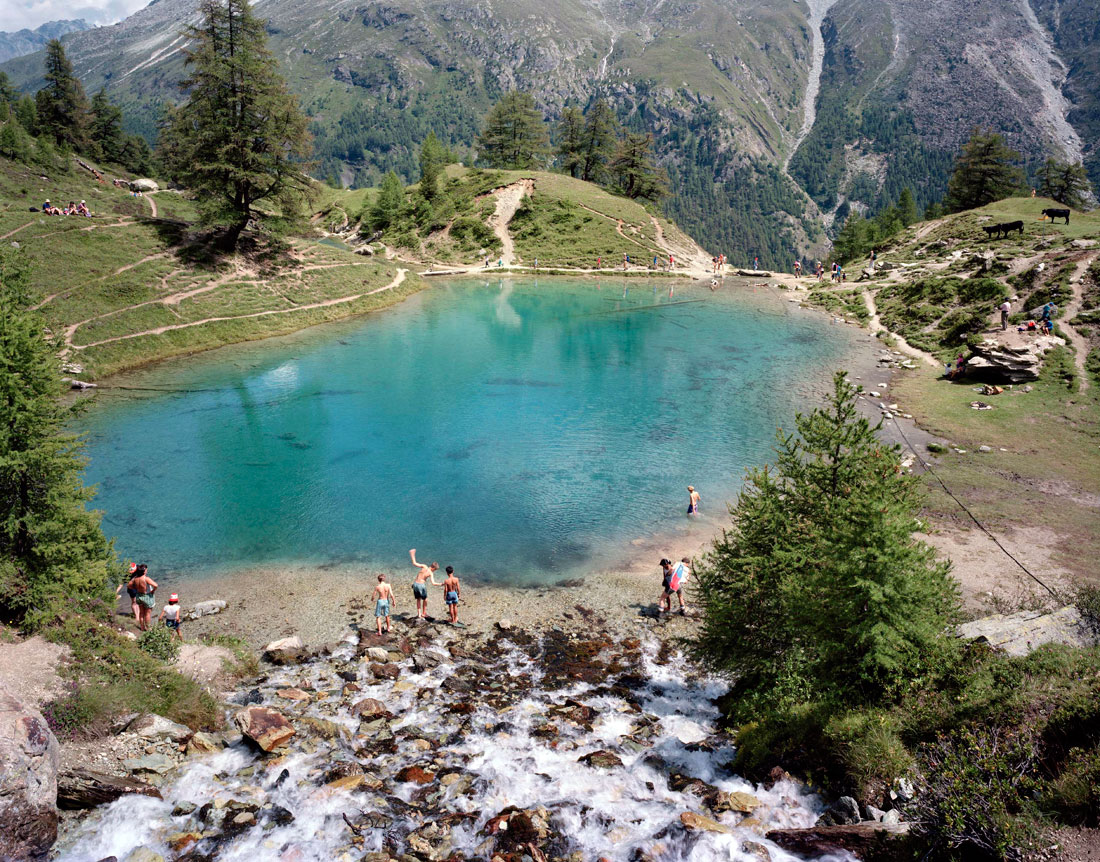
Photo: Marcus Bunyan


Installation shots of the new Jeff Wall exhibition at NGV Australia. Review to follow in due course.

Many thankx to Jemma Altmeier and all the media team at NGV for all their wonderful help and congratulations to the curators, Susan van Wyk and Dr Isobel Crombie, for their restrained yet contemporary installations and for getting the exhibitions to Melbourne. They look magnificent. Well done!

Dr Marcus Bunyan


Many thankx to the NGV for allowing me to publish the photographs in the posting. Please click on the photographs for a larger version of the image. All photographs © Marcus Bunyan © National Gallery of Victoria. May not be reproduced without permission.


Jeff Wall & Thomas Demand: In Conversation, National Gallery of Victoria


Jeff Wall (Canadian, b. 1946) 'The Destroyed Room' 1978 (detail)


Jeff Wall (Canadian, b. 1946)
The Destroyed Room (detail)
1978
Transparency in light box, AP
159.0 x 234.0cm
Collection of the artist
© Jeff Wall


Installation view of 'Jeff Wall Photographs' at NGV Australia showing, at left, 'The Destroyed Room' 1978, and at right, 'Double Self-Portrait' 1979


Installation view of Jeff Wall Photographs at NGV Australia showing, at left, The Destroyed Room 1978, and at right, Double Self-Portrait 1979
Photo: Marcus Bunyan


Installation view of 'Jeff Wall Photographs' at NGV Australia showing, at right, 'Double Self-Portrait' 1979


Installation view of Jeff Wall Photographs at NGV Australia showing, at right, Double Self-Portrait 1979
Photo: Marcus Bunyan


Installation view of 'Jeff Wall Photographs' at NGV Australia showing, at left, 'Doorpusher' 1984, and at right, 'Polishing' 1998


Installation view of Jeff Wall Photographs at NGV Australia showing, at left, Doorpusher 1984, and at right, Polishing 1998
Photo: Marcus Bunyan


Jeff Wall (Canadian, b. 1946) 'Polishing' 1998 (detail)


Jeff Wall (Canadian, b. 1946)
Polishing (detail)
1998
Transparency in light box, 1/2
162.0 x 207.0cm
State Art Collection, Art Gallery of Western Australia
Purchased with assistance from the Art Gallery of Western Australia Foundation, 1999
© Jeff Wall


Jeff Wall (Canadian, b. 1946) 'Doorpusher' 1984 (detail)


Jeff Wall (Canadian, b. 1946)
Doorpusher
(detail)
1984
Transparency in lightbox
249 x 122cm
© Jeff Wall


Installation view of 'Jeff Wall Photographs' at NGV Australia showing, at centre, 'Doorpusher' 1984, and at right, 'Polishing' 1998


Installation view of Jeff Wall Photographs at NGV Australia showing, at centre, Doorpusher 1984, and at right, Polishing 1998
Photo: Marcus Bunyan


Installation view of 'Jeff Wall Photographs' at NGV Australia showing, at left, 'Diagonal Composition' 1993, and at right, 'Doorpusher' 1984


Installation view of Jeff Wall Photographs at NGV Australia showing, at left, Diagonal Composition 1993, and at right, Doorpusher 1984
Photo: Marcus Bunyan


Jeff Wall (Canadian, b. 1946) 'Diagonal Composition' 1993


Jeff Wall (Canadian, b. 1946)
Diagonal Composition
1993
Transparency in light box, AP
40 x 46cm
Collection of the artist
© Jeff Wall


Jeff Wall (Canadian, b. 1946) 'Pipe Opening' 2002 (detail)


Jeff Wall (Canadian, b. 1946)
Pipe Opening (detail)
2002
Transparency in light box, AP
40 x 46cm
Collection of the artist
© Jeff Wall


Installation view of 'Jeff Wall Photographs' at NGV Australia showing, at right, 'A view from an apartment' 2004-2005


Installation view of Jeff Wall Photographs at NGV Australia showing, at right, A view from an apartment 2004-2005
Photo: Marcus Bunyan


Installation view of 'Jeff Wall Photographs' at NGV Australia showing 'After 'Invisible Man' by Ralph Ellison, the Prologue' 1999-2000


Installation view of Jeff Wall Photographs at NGV Australia showing After ‘Invisible Man’ by Ralph Ellison, the Prologue 1999-2000
Photo: Marcus Bunyan


Jeff Wall (Canadian, b. 1946) 'After 'Invisible Man' by Ralph Ellison, the Prologue' 1999-2000 (detail)


Jeff Wall (Canadian, b. 1946)
After ‘Invisible Man’ by Ralph Ellison, the Prologue (detail)
1999-2000
Transparency in light box, AP
174 x 250.5cm
Collection of the artist
© Jeff Wall


Jeff Wall (Canadian, b. 1946) 'A view from an apartment' 2004-05 (detail)


Jeff Wall (Canadian, b. 1946)
A view from an apartment (detail)
2004-2005
Transparency in light box, 1/2
167.0 x 244.0cm
Tate, London
Purchased with assistance from the American Fund for the Tate Gallery and Tate Members, 2006
© Jeff Wall


Installation view of 'Jeff Wall Photographs' at NGV Australia showing 'A sudden gust of wind (after Hokusai)' 1993


Installation view of Jeff Wall Photographs at NGV Australia showing A sudden gust of wind (after Hokusai) 1993
Photo: Marcus Bunyan


The Ian Potter Centre: NGV Australia
Federation Square
Corner of Russell and 
Flinders Streets, Melbourne

Opening hours:
Daily 10am – 5pm

National Gallery of Victoria website

LIKE ART BLART ON FACEBOOK

Back to top

Exhibition: ‘Thomas Demand’ at the National Gallery of Victoria International, Melbourne

Exhibition dates: 30th November 2012 – 17th March 2013


Installation view of 'Thomas Demand' at NGVI showing, at right, 'Lichtung / Clearing' 2003


Installation view of Thomas Demand at NGVI showing, at right, Lichtung / Clearing 2003
Photo: Marcus Bunyan


You saw it here first on Art Blart!

Beautiful installation shots of the new Thomas Demand exhibition at NGVI. Jeff Wall installation photographs to follow in the next posting on Saturday. Reviews to follow in due course.

These are all cardboard models created in Thomas Demand’s studio and then photographed. The models are destroyed afterwards leaving the photographs as artefacts and remembrances, both a performance in their own right, but also a record of another performance, that of the creation of the models. Double self, double performativity, double ritual.

Many thankx to Jemma Altmeier and all the media team at NGV for all their wonderful help and congratulations to the curators, Susan van Wyk and Dr Isobel Crombie, for their restrained yet contemporary installations and for getting the exhibitions to Melbourne. They look magnificent. Well done!

Dr Marcus Bunyan


Many thankx to the NGV for allowing me to publish the photographs in the posting. Please click on the photographs for a larger version of the image. All photographs © Marcus Bunyan © National Gallery of Victoria. May not be reproduced without permission.


Thomas Demand is regarded as one of the world’s leading contemporary artists whose work in photography and, most recently stop-animation films, is at the forefront of contemporary art. Demand initially worked as a sculptor who used photography to document his ephemeral creations. From 1993 his creative practice changed and, from then on, he made sculptures for the sole purpose of photographing them. Demand begins with an image, often taken from media sources and frequently dealing with traumatic or politically important events, and creates a life-size replica of the image using paper and cardboard. The effect of these uncanny reconstructions is to destabilise our understanding of the sites which we ‘know’ so well through reproduction. This exhibition features a selection of photographs and 35mm films as chosen by the artist.


Jeff Wall & Thomas Demand: In Conversation, National Gallery of Victoria


Thomas Demand (German, b. 1964) 'Lichtung' / 'Clearing' 2003


Thomas Demand (German, b. 1964)
Lichtung / Clearing
2003
C-Print / Perspex
Courtesy Taka Ishii Gallery, Sprüth Magers Berlin London, Esther Schipper, Berlin, Matthew Marks Gallery
© Thomas Demand, VG Bild-Kunst, Bonn / VISCOPY, Sydney


Installation view of 'Thomas Demand' at NGVI showing, at left, 'Badezimmer / Bathroom' 1997 and, at right, 'Labor / Laboratory' 2000


Installation view of Thomas Demand at NGVI showing, at left, Badezimmer / Bathroom 1997 and, at right, Labor / Laboratory 2000
Photo: Marcus Bunyan


Thomas Demand (German, b. 1964) 'Laboratory (77-E-217)' 2000


Thomas Demand (German, b. 1964)
Labor / Laboratory
2000
C-Print / Perspex
180 × 268cm
Courtesy Taka Ishii Gallery, Sprüth Magers Berlin London, Esther Schipper, Berlin, Matthew Marks Gallery
© Thomas Demand, VG Bild-Kunst, Bonn / VISCOPY, Sydney


Installation view of 'Thomas Demand' at NGVI showing 'Badezimmer / Bathroom' 1997


Installation view of Thomas Demand. Badezimmer / Bathroom 1997 at NGVI
Photo: Marcus Bunyan


Thomas Demand (German, b. 1964) 'Badezimmer / Bathroom' 1997


Thomas Demand (German, b. 1964)
Badezimmer / Bathroom
1997
C-Print / Perspex
160.0 × 122.0cm
Courtesy Taka Ishii Gallery, Sprüth Magers Berlin London, Esther Schipper, Berlin, Matthew Marks Gallery
© Thomas Demand, VG Bild-Kunst, Bonn / VISCOPY, Sydney


Installation view of 'Thomas Demand' at NGVI showing 'Copyshop' 1999


Installation view of Thomas Demand at NGVI showing Copyshop 1999
Photo: Marcus Bunyan


Thomas Demand (German, b. 1964) 'Copyshop' 1999


Thomas Demand (German, b. 1964)
Copyshop
2009
C-Print / Perspex
Courtesy Taka Ishii Gallery, Sprüth Magers Berlin London, Esther Schipper, Berlin, Matthew Marks Gallery
© Thomas Demand, VG Bild-Kunst, Bonn / VISCOPY, Sydney


Installation view of 'Thomas Demand' at NGVI showing 'Parlament / Parliament' 2009


Installation view of Thomas Demand at NGVI showing Parlament / Parliament 2009
Photo: Marcus Bunyan


Thomas Demand (German, b. 1964) 'Parlament / Parliament' 2009


Thomas Demand (German, b. 1964)
Parlament / Parliament
2009
C-Print / Perspex
Courtesy Taka Ishii Gallery, Sprüth Magers Berlin London, Esther Schipper, Berlin, Matthew Marks Gallery
© Thomas Demand, VG Bild-Kunst, Bonn / VISCOPY, Sydney


When you step through the door into the Thomas Demand exhibition you enter a realm that was conceived, meticulously planned, and built to his exacting specifications. Demand designed every aspect of this exhibition. Having selected the photographs and films that he wanted to show in Melbourne, he then went on to design the exhibition space itself.

He was quite specific that the secondary walls had to be full height to create a sense of beautiful rooms rather than a space that has been partitioned. Once this was done he began work on the layout of the show. He carefully planned the sequence in which you would encounter each work, setting up an interesting play between the works. How we read these is an entirely individual experience. Recently someone said to me that they thought the placement of Lichtung / Clearing next to Paneel / Pegboard was an interesting comment on forest clearing and the devastating impact that pulp mills can have on the environment. Until then I had never seen those works in that way.

In conversation during the installation, Thomas explained that he was not interested in putting together an exhibition that then toured around the world. The usual practice of curating an exhibition and then ‘fitting’ it into different exhibition spaces in a number of venues holds little interest for him. So each time you see a Thomas Demand exhibition it has been curated, designed and installed for that particular space.

This is perhaps most obvious when you enter the rooms where the films are showing. From the brightly lit first room you can see through the door way into a darkened room lined with floor to ceiling curtains, but not really. What you see is a darkened room hung with wallpaper that the artist made to look like the kind of sweeping curtains that you might find in a cinema or theatre. It’s theatrical and spectacular but once you enter this space the real treat is Demands films.

Susan van Wyk, 6 February 2013 on the NGV website [Online] Cited 05/09/2020


Thomas Demand (German, b. 1964) 'Tribute' 2011


Thomas Demand (German, b. 1964)
Tribute
2011
C-Print / Perspex
166 x 125cm, edition of 6
Courtesy Taka Ishii Gallery, Sprüth Magers Berlin London, Esther Schipper, Berlin, Matthew Marks Gallery
© Thomas Demand, VG Bild-Kunst, Bonn / VISCOPY, Sydney


Installation view of 'Thomas Demand' at NGVI showing, at right, 'Space Simulator' 2003


Installation view of Thomas Demand at NGVI showing, at right, Space Simulator 2003
Photo: Marcus Bunyan


Installation view of 'Thomas Demand' at NGVI showing, at left, 'Grotte / Grotto' 2006 and, at right, 'Space Simulator' 2003


Installation view of Thomas Demand at NGVI showing, at left, Grotte / Grotto 2006 and, at right, Space Simulator 2003
Photo: Marcus Bunyan


Thomas Demand (German, b. 1964) 'Space Simulator' 2003


Thomas Demand (German, b. 1964)
Space Simulator
2003
C-Print / Perspex
300 × 429.4cm
Courtesy Taka Ishii Gallery, Sprüth Magers Berlin London, Esther Schipper, Berlin, Matthew Marks Gallery
© Thomas Demand, VG Bild-Kunst, Bonn / VISCOPY, Sydney


Installation view of 'Thomas Demand' at NGVI showing, at right, 'Grotte / Grotto' 2006


Installation view of Thomas Demand at NGVI showing, at right, Grotte / Grotto 2006
Photo: Marcus Bunyan


Thomas Demand (German, b. 1964) 'Grotte / Grotto' 2006 (detail)


Thomas Demand (German, b. 1964)
Grotte / Grotto (detail)
2006
C-Print / Perspex
Courtesy Taka Ishii Gallery, Sprüth Magers Berlin London, Esther Schipper, Berlin, Matthew Marks Gallery
© Thomas Demand, VG Bild-Kunst, Bonn / VISCOPY, Sydney


One of the world’s most influential contemporary artists, Thomas Demand, will be the subject of a new exhibition announced by the National Gallery of Victoria.

The exhibition will be the first major Australian survey of the artist’s work and will comprise large scale photographs and films never before shown in Australia.

NGV Director, Tony Ellwood said the addition of Thomas Demand to the NGV’s exhibition schedule is part of an exciting and ambitious summer program.

“When the opportunity came up to hold an exhibition of Thomas Demand’s work this summer, it was just too good to miss. Thomas Demand will be part of a great summer program at the NGV and has been timed to coincide with the Jeff Wall Photographs exhibition being held at NGV Australia.

“We are offering a two-for-one ticket for Thomas Demand and Jeff Wall Photographs, so visitors to the NGV can experience the work of two major artists of international contemporary photography for one ticket price,” said Mr Ellwood.

Works in the exhibition will span the artist’s career from 1997 to 2012. Recent works presented in the exhibition include Control Room (pictured below), which depicts the Fukushima Daiichi nuclear power plant and Tribute, a work based on images taken at the site of tragic mass panic at Europe’s biggest rave party.

Susan van Wyk, NGV Curator of Photography said Thomas Demand is widely regarded as one of the world’s leading contemporary artists.

“Thomas has a unique style in which he creates paper models of objects and scenes, often taken from media sources like flickr or newspaper reports. These intricate life size models are then photographed.

“The results are disquieting images that subvert our understanding of reality and fiction and draws attention to how we engage with the media and modern technologies,” said Ms Van Wyk.

Press release from the NGV website


Installation view of 'Thomas Demand' at NGVI showing, at left, 'Vault' 2012 and, at centre, 'Kontrollraum / Control Room' 2011


Installation view of Thomas Demand at NGVI showing, at left, Vault 2012 and, at centre, Kontrollraum / Control Room 2011
Photo: Marcus Bunyan


Thomas Demand (German, b. 1964) 'Kontrollraum / Control Room' 2011


Thomas Demand (German, b. 1964)
Kontrollraum / Control Room
2011
C-Print / Perspex
200 × 300cm
Courtesy Taka Ishii Gallery, Sprüth Magers Berlin London, Esther Schipper, Berlin, Matthew Marks Gallery
© Thomas Demand, VG Bild-Kunst, Bonn / VISCOPY, Sydney


Installation view of 'Thomas Demand' at NGVI showing 'Vault' 2012


Installation view of Thomas Demand at NGVI showing Vault 2012
Photo: Marcus Bunyan


Thomas Demand (German, b. 1964) 'Vault' 2012 (detail)


Thomas Demand (German, b. 1964)
Vault (detail)
2012
C-Print / Perspex
Courtesy Taka Ishii Gallery, Sprüth Magers Berlin London, Esther Schipper, Berlin, Matthew Marks Gallery
© Thomas Demand, VG Bild-Kunst, Bonn / VISCOPY, Sydney


NGV International
180 St Kilda Road

Opening hours:
Open daily 10am – 5pm

National Gallery of Victoria website

LIKE ART BLART ON FACEBOOK

Back to top

Exhibition: ‘Edouard Baldus and the Modern Landscape. Important Salt Prints of Paris from the 1850s’ at James Hyman Gallery, London

Exhibition dates: 12th October – 9th November 2012


Edouard Baldus (French, 1813-1889) 'Vue generale de Paris pont neuf' c. 1855


Edouard Baldus (French, 1813-1889)
Vue generale de Paris pont neuf
c. 1855
Salt print mounted on card
33.6 x 43.9cm (13.20 x 17.25 ins)
Negative: Lower left inscribed in negative: no 82 Mount: Lower right beneath negative: stamped E. Baldus Lower left bottom: Vue generales des Paris pont neuf


A beautiful, complimentary post to the last one on the exhibition Eugène Atget: Old ParisIt is interesting to compare the styles of the two photographers and the change in photography that takes place between the 1850s and the 1890s. Baldus’ photographs are eloquent in their grandeur and frontality, tonality and texture. Atget’s photographs on the other hand are slightly claustrophobic in their intensity, the camera obliquely placed to capture old buildings, narrow cobbled streets and distant vanishing points. Both, in their own way, are very modern photographers. Baldus’ legacy, as Dr James Hyman correctly notes, was his influence on his German compatriots such as the Bechers, Thomas Struth and, to a lesser extent, Andreas Gursky. His rigorous frontality (the photographing of the thing itself) gives his photographs the simplicity of diagrams and emphasises their topographical state, while their density of detail offers encyclopaedic richness. This straightforward “objective” point of view was most notably used by Bernd and Hilla Becher in contemporary photography. Atget’s photographs, on the other hand, aroused an immediate interest “among the Surrealists because of the composition, ghosting, reflections, and its very mundanity.”

Conversely, it is the subjective signature of both artists that make their work truly great – not the mundanity, not the topographic objectivity but their intimate vision of this city, Paris. As I noted in an earlier posting on the Bechers,

“These are subjective images for all their objective desire. The paradox is the more a photographer strives for objectivity, the more ego drops away, the more the work becomes their own: subjective, beautiful, emotive… What makes great photographers, such as Eugène Atget, Walker Evans, August Sander and the Bechers, is the idiosyncratic “nature” of their vision: how Atget places his large view camera – at that particular height and angle to the subject – leaves an indelible feeling that only he could have made that image, to reveal the magic of that space in a photograph. It is their personal, unique thumbprint, recognisable in an instant.”

The same can be said of Baldus and these magnificent, ethereal photographs.

Dr Marcus Bunyan


Many thankx to James Hyman Gallery for allowing me to publish the photographs in the posting. Please click on the photographs for a larger version of the image.


Edouard Baldus (French, 1813-1889) 'Le Nouveau Louvre' c. 1857


Edouard Baldus (French, 1813-1889)
Le Nouveau Louvre
c. 1857
Salt print mounted on card
31.6 x 44.3cm (12.42 x 17.41 ins)
Le Nouveau Louvre series: 1855-1857 Negative: Lower left inscribed in negative: no 107 Mount: Lower right beneath negative: stamped E. Baldus Lower left bottom: Le Nouveau Louvre


Mid-nineteenth century Paris was a city in the midst of modernisation, and as such, was ripe for documentation of its changing landscape. Counted as one of the premier photographers of his day, Edouard Baldus captured the aesthetic of the Second Empire’s ideology in his monumental views of both old and new Parisian landmarks. In 1855, Baldus received his largest commission, to document the construction of the Musee du Louvre. This rich salt print is a survey of the project as it nears almost full completion. Baldus produced over two thousand images of each part of the new Louvre, from large pavilions to small decorative statue. This photograph, however, takes a step back from the individual pieces of the lengthy project, and allows the viewer to appreciate the endeavour as a whole.


Edouard Baldus (French, 1813-1889) 'Le Pantheon' 1853


Edouard Baldus (French, 1813-1889)
Le Pantheon
1853
Salt print mounted on card
33.8 x 43.5cm (13.28 x 17.10 ins)
Negative: Lower left inscribed in negative: Le Pantheon Lower right inscribed in negative: Baldus Mount: Lower right beneath negative: stamped E. Baldus Lower left bottom: Le Pantheon


Due to the strength of his architectural imagery and work with the Mission Heliographique, Baldus would go on to gain the support of a government commission, Les Villes de France Photographies, which focused on the landmarks of Paris in particular, such as the Pantheon. Similar in style to the frontal views of the Louvre pavilions, this image is a precursor to that project, and also includes Saint Etienne du Mont in its background. The Pantheon is one of Paris’ best-known landmarks, and was originally built as a church dedicated to Saint Genevieve. Looking out over the whole of the city, it is now a mausoleum that houses the remains of distinguished French citizens.


Edouard Baldus (French, 1813-1889) 'Arc de Caroussel' c. 1853


Edouard Baldus (French, 1813-1889)
Arc de Caroussel
c. 1853
Salt print mounted on card
34.1 x 44.3 cms (13.40 x 17.41 ins)
Negative: Lower left inscribed in negative: signature of E.Baldus Lower right inscribed in negative: no.81 Mount: Lower right beneath negative: stamped E.Baldus Lower left bottom: Arc de Caroussel
Mount: 43.9 x 61 cms
Image: 34.1 x 44.3 cms


One of Baldus’ greatest projects was to provide a photographic inventory of the New Louvre and adjoing Tuilleries. A number of these works are of particular interest, expecially those of the Tuilleries Palace, which would be burnt down in 1870-1871. All that remains today is the central triumphal arch, the Caroussel, which is depicted here, still with the palace visible in the background. Built between 1806 and 1808, the Arc de Caroussel is a monument commemorating Napolean’s military victories, with Peace riding a triumphal chariot atop the central archway. Two guards flank the sides of the arch, each atop their own horse, which not only provide for a sense of scale, but, being slightly blurred, also hint at the length of Baldus’ exposure. This enhances the effects of the delicately carved sculptures that adorn the archway, presented here with a clarity that defined the standard Baldus set with his architectural images.


James Hyman is proud to present a loan exhibition of one of the greatest photographers of the nineteenth century, Edouard Baldus. Remarkably, this is the first major exhibition of Edouard Baldus ever to be staged in London. Baldus was famed for his monumental photographs of the buildings of Paris at a time of massive transition under Napoleon III, Baron Haussman and Viollet Le Duc, as well as the depiction of the contemporary landscape of France. Acclaimed as the greatest architectural photographer of the nineteenth century, Baldus’s prints were some of the largest photographs in existence and pioneered an aesthetic of presenting modernity and the modern city that would have a profound influence on later photographers from the Bechers to John Davies.

Baldus was one of the great calotypists of the 1850s, producing works of an unprecedented range and scale. He moved to Paris in 1838 to study painting alongside other future photographers such as Le Gray, Le Secq, and Negre. He frequently retouched his paper negatives, adding pencil and ink, to add clouds or clarify details, then printing his own large-scale negatives. He was also adept at stitching several negatives together to re-create architectural views, most famously in his views of the cloisters of Saint Trophime.

Famed especially for his depiction of architecture, Baldus not only documented the modernisation of Paris but also travelled widely through France recording modernity and new construction – including new railways and aqueducts, as well as the building of the new Louvre. In 1851 the Commission des Monuments Historiques cited Baldus as one of the five best architectural photographers and he was commissioned to record the monuments of France for what became known as the Mission heliographic. His beginnings in photography are not well documented before his participation in the Mission heliographique, although it is known that he took photographs of Montmajour in 1849.

In 1852 he began Villes de France photographies to which the minister of Beaux-Arts subscribed until 1860. In 1854 he travelled with his student Petiot-Groffier in Auvergne and in 1855 the Baron James de Rothschild commissioned him to photograph the new Northern train line from Paris to Boulogne as a gift, in the form of a commemorative album, for Queen Victoria before her visit to the Exposition Universelle. Later, in his commission to document the reconstruction of the Louvre, Baldus took more than two thousand views in a period of three years. His last big commission was from 1861-1863 documenting the Paris-Lyon-Mediterranean train line illustrating seventy views of the train’s track. After this, Baldus tried to provide more commercial alternatives to his large-format works, creating smaller prints and heliogravures of his earlier work. Unfortunately, the effort was unsuccessful and Baldus passed away in bankruptcy and relative obscurity.

Press release from the James Hyman website


Edouard Baldus (French, 1813-1889) 'Pavillon Colbert, Nouveau Louvre, Paris' c.1855


Edouard Baldus (French, 1813-1889)
Pavillon Colbert, Nouveau Louvre, Paris
c. 1855
Salt print mounted on card
43.2 x 34.1cm (16.98 x 13.40 ins)
Stamped ‘E. Baldus’ on the lower right of the mount and titled lower left ‘Pavillon Colbert Nouveau Louvre’


Of the many photographs Baldus took of the Louvre during the period 1855-1857, it is his large-format photographs of the main pavilions that best demonstrate the stretch of his artistic achievements. Commissioned by the French government once again, Baldus was charged with documenting every aspect of the new Palace’s construction, which was to be the Second Empire’s largest building project. Consequently, over the course of two years, it also evolved into the largest photographic commission to date, and Baldus took over two thousand photographs ranging in subject matter from individual statuary to the grand frontal views of each completed pavilion, such as this example of the Pavillon Colbert.

This particular photograph is an astounding example of the precision and clarity wet plate negatives afforded Baldus in capturing the texture of New Louvre’s stonework. Each part of the façade, from the temple relief statuary to the columns flanking the entryway, is bathed in a bright light that emphasises the three-dimensionality of the new pavilion. The sense of crisp stonework evident in this image is only heightened by the blurred tree in the bottom left corner, as well as the trace of a ghostly figure in the foreground – a horse and cart that paused long enough to be captured, just barely, in Baldus’ long exposure.

The subject of this picture brings to bear the importance of the symbolism of the architecture of the Nouveau Louvre for the reign of Napoleon III. The relief and figures on the façade of the Pavillon Colbert highlight France’s greatest realms of achievement, from the conquering of nature through to industry. The upmost relief represents Earth and Water, while the figures to either side personify Science and Industry. Baldus has also ensured that a human figure on the right-hand side of the central entrance has stood still long enough to provide the viewer with a sense of the imposing scale of the statuary, as well as the entire façade. The result is a striking image that is sharper than any contemporary enlargement, exemplary of Baldus’ ability to isolate and capture architecture while giving a slight hint to the life that continued to move around it.


Edouard Baldus (French, 1813-1889) 'Pavillon de la Bibliotheque, Rue de Rivoli, Paris' c. 1855


Edouard Baldus (French, 1813-1889)
Pavillon de la Bibliotheque, Rue de Rivoli, Paris
c. 1855
Salt print mounted on card
43.2 x 34.3cm (16.98 x 13.48 ins)
Inscribed ‘no 103’ in the negative, lower left. Stamped E. Baldus on the lower right of the mount and titled lower left ‘Nouveau Louvre Rue Rivoli’


Edouard Baldus (French, 1813-1889) 'Pavillon Richelieu, Nouveau Louvre, Paris' c. 1855


Edouard Baldus (French, 1813-1889)
Pavillon Richelieu, Nouveau Louvre, Paris
c. 1855
Salt print mounted on card
45 x 34.5cm (17.69 x 13.56 ins)
Inscribed ‘no 79’ in the negative, lower left and signed in the negative lower right ‘E. Baldus’ Stamped E. Baldus on the lower right of the mount and titled lower left ‘Pavillon Richelieu Nouveau Louvre’


An image that the Metropolitan Museum of Art describes as “among the most spectacular of all Baldus photographs,” it is clear that Baldus took full advantage of the opportunity to use larger equipment, which was necessary to capture his tremendous subject. The technical advantages afforded by glass plate negatives allowed him to create equally large contact prints without joining separate negatives, as was his practice with many of his earlier images. Here, the resulting photograph depicts the Pavillon Richelieu in a striking range of tonality, from the crisp texture of the street to the glowing reflection of the pavilion’s new tiled roof.


Edouard Baldus (French, 1813-1889) 'Pavillon Sully, Nouveau Louvre, Paris' c. 1857


Edouard Baldus (French, 1813-1889)
Pavillon Sully, Nouveau Louvre, Paris
c. 1857
Salt print mounted on card
44.5 x 34.5cm (17.49 x 13.56 ins)
Inscribed ‘no 92’ in the negative, lower left. Stamped E. Baldus on the lower right of the mount and titled lower left ‘Pavillon Sully Nouveau Louvre’


Baldus returned to this particular pavilion numerous times, his earliest images of the structure produced while he was photographing for the Mission Heliographique. The Pavillon Sully was originally built during the Classical Period of Louis XIV in 1625, and served as a model for the Second Empire additions. One of the grandest of all the completed facades, the Pavillon Sully acquired many sculptural additions during the reconstruction, but the central clock from which the pavilion derived its original name (Pavillon de l’Horloge) remained central.

Taking an elevated view, Baldus depicted the Pavillon Sully with exemplary precision that is sharper than any contemporary enlargement. The result is one of the most imposing images of the Nouveau Louvre pavilions, giving the entire façade a commanding sense of presence as it rises above trees in the foreground, which are just blurred enough to reveal Baldus’ long exposure.


Dr James Hyman text


Edouard Baldus (French, 1813-1889) 'Saint Etienne du Mont, Paris' c. 1858


Edouard Baldus (French, 1813-1889)
Saint Etienne du Mont, Paris
c. 1858
Salt print mounted on card
44.1 x 34.2cm (17.33 x 13.44 ins)
Stamped E Baldus on the lower right of the mount and titled lower left ‘St Etienne du Mont’
Mount: 61 x 43.9 cms
Image: 44.1 x 34.2 cms


Edouard Baldus (French, 1813-1889) 'Notre Dame, Facade Principale, Paris' 1857


Edouard Baldus (French, 1813-1889)
Notre Dame, Facade Principale, Paris
1857
Salt print mounted on card
44.5 x 34.2cm (17.49 x 13.44 ins)
Inscribed ‘no 34’ in the negative, lower right. Stamped E. Baldus on the lower right of the mount and titled lower left ‘Notre Dame Facade Principal’
Dimensions Mount: 61 x 44 cms Image: 44.5 x 34.2 cms


This iconic image of Notre Dame embodies the direct and frontal style that came to define Baldus’ architectural images. Here, he has captured the majesty of one of Paris’ most notable landmarks by elevating his vantage point and placing the viewer at eye level with its magnificent rose window. This print is a carefully executed example of the type of balance and symmetry Baldus aimed to capture while working on this commission.


James Hyman Gallery
16 Savile Row
London W1S 3PL
Telephone 020 7494 3857

Opening hours:
By appointment

James Hyman Gallery website

LIKE ART BLART ON FACEBOOK

Back to top

Exhibition: ‘Light Sensitive: Photo Art from the Collection’ at Aargauer Kunsthaus, Aarau, Switzerland

Exhibition dates: 12th May – 12th August 2012


Many thankx to the Aargauer Kunsthaus for allowing me to publish the photographs in the posting. Please click on the photographs for a larger version of the image.


Art Ringger
 (Swiss, b. 1946) 'Eastbourne' 1996


Art Ringger
 (Swiss, b. 1946)
Eastbourne
1996
Black-and-white photograph on aluminium, embossed
20.3 x 30.3cm
Aargauer Kunsthaus Aarau / deposited by the Andreas Züst Collection


Art Ringger
 (Swiss, b. 1946) 'Quimperlé' 1997


Art Ringger
 (Swiss, b. 1946)
Quimperlé
1997
Black-and-white photograph on aluminium, embossed
19.9 x 29.7cm
Aargauer Kunsthaus Aarau / deposited by the Andreas Züst Collection


Hannah Villiger
 (Swiss, 1951-1997) 'Arbeit' 1979


Hannah Villiger
 (Swiss, 1951-1997)
Arbeit
1979
Black-and-white photograph on baryte paper, matt
125 x 189.5cm
Aargauer Kunsthaus Aarau / deposited by a private collection


Claudia Böhm.
 'Leda' 1991


Claudia Böhm

Leda
1991
Black-and-white photograph with retouching colour on paper
40 x 56cm
Aargauer Kunsthaus Aarau / deposited by the Andreas Züst Collection


Installation view of the exhibition 
'Light Sensitive – Photo Art from the Collection' at Aargauer Kunsthaus showing photographs from Balthasar Burkhard's work 'Das Knie' (The Knee) 1983


Installation view of the exhibition 
Light Sensitive – Photo Art from the Collection at Aargauer Kunsthaus showing photographs from Balthasar Burkhard’s work Das Knie (The Knee) 1983
Photo: Dominic Büttner, Zurich


Balthasar Burkhard (Swiss, 1944-2010) 'Das Knie' (The Knee) 1983 (detail)


Balthasar Burkhard (Swiss, 1944-2010)
Das Knie (The Knee) (detail)
1983
Photography on baryta paper in original iron frame and on colour canvas
270 x 91cm, photography; 150.3 x 50.3cm, colour canvas


The exhibition Light Sensitive presents works from the rich photography holdings of the Aargauer Kunsthaus. In addition, it shows photographs of urban spaces by Andreas Tschersich and works by Bianca Dugaro.

Light Sensitive is a presentation of works from the collection of the Aargauer Kunsthaus that focuses on the medium of photography. The exhibition delves into the museum’s rich and quite substantial holdings of over 800 photographic works, sounding out core themes. In the process, two thematic focus areas come to the fore: on the one hand an exploration of the human body and on the other an examination of abstract, architectural or public space.

The 20th century has seen a major shift in the status of photography as an artistic medium, a change reflected by the holdings of the Aargauer Kunsthaus. Starting out with rather small-scale works of a documentary nature, photography graduated to photo art and today naturally takes its place among the wide range of artistic media. The exhibition Light Sensitive takes us on a journey of discovery through the collection, contrasting big names with unexpected work. A series of large-scale cityscapes by Berlin-based Swiss artist Andreas Tschersich as well as works by Swiss artist Bianca Dugaro complement the presentation.

Included in the exhibition are works by, among others Claudia Böhm, Balthasar Burkhard, Marie-Antoinette Chiarenza / Daniel Hauser, Hans Danuser, Silvie Defraoui, Achim Duchow, Olivia Etter, Nicolas Faure, Marc-Antoine Fehr, Peter Fischli / David Weiss, Katrin Freisager, Max Grüter / Patrick Rohner, Simone Hopferwieser, Markus Käch, Heiner Kielholz, Fred Knecht Engelbert, Rudolf Lichtsteiner, Urs Lüthi, Max Matter, Billy Eduard Albert Meier, Claudio Moser, Marianne Müller, Anita Niesz, Guido Nussbaum, Sigmar Polke, Markus Raetz, Ursina Rösch, Annelies Štrba, Beat Streuli, Hannah Villiger.

Press release from the Aargauer Kunsthaus website


Installation view of the exhibition 'Light Sensitive: Photo Art from the Collection' at Aargauer Kunsthaus showing the work of Andreas Tschersich


Installation view of the exhibition Light Sensitive: Photo Art from the Collection at Aargauer Kunsthaus showing the work of Andreas Tschersich including at left, Peripher 1903 (Detroit) 2011 (below); and at second left, Peripher 1337 (New York City) Nd (below)
Photo: Dominic Büttner, Zurich


Andreas Tschersich
 (Swiss, b. 1971) 'Peripher 1903 (Detroit)' 2011


Andreas Tschersich
 (Swiss, b. 1971)
Peripher 1903 (Detroit)
2011
C-Print / Diasec
198 x 167cm


Andreas Tschersich
 (Swiss, b. 1971) 'Peripher 1337 (New York City)' Nd


Andreas Tschersich
 (Swiss, b. 1971)
Peripher 1337 (New York City)
Nd
C-Print / acrylic glass


Andreas Tschersich
 (Swiss, b. 1971) 'Peripher 1827 (Detroit)' Nd


Andreas Tschersich
 (Swiss, b. 1971)
Peripher 1827 (Detroit)
Nd
C-Print / acrylic glass


“This engagement with the place makes it become a part of me. They have kind of grown on me. This is the reason I try, whenever possible, to revisit them to see how they are going. Normally the places have become worse or are completely gone. I seem to have the right touch for disappearing places…”


~ Andreas Tschersich


Andreas Tschersich
 (Swiss, b. 1971) 'Peripher 130 (Berlin)' 2004


Andreas Tschersich
 (Swiss, b. 1971)
Peripher 130 (Berlin)
2004
C-Print / acrylic glass
219 x 170cm


Billy Eduard Albert Meier
 (Swiss, b. 1937) 'Ohne Titel' 1975


Billy Eduard Albert Meier
 (Swiss, b. 1937)
Ohne Titel
1975
Photograph on paper, 8 parts
18 x 26.5cm
Aargauer Kunsthaus Aarau / deposited by the Andreas Züst Collection


Nicolas Faure
 (Swiss, b. 1949) 'Silvaplana (GR), Juli' 1988


Nicolas Faure
 (Swiss, b. 1949)
Silvaplana (GR), Juli
1988
Colour photograph on aluminium
63 x 80cm
Aargauer Kunsthaus Aarau


Nicolas Faure
 (Swiss, b. 1949) 'Saas-Fee (VS), Juli' 1989


Nicolas Faure
 (Swiss, b. 1949)
Saas-Fee (VS), Juli
1989
Colour photograph on aluminium
63 x 80cm
Aargauer Kunsthaus Aarau


Nicolas Faure
 (Swiss, b. 1949) 'Le Lac Bleu. Val d’Arolla (VS), August' 1997


Nicolas Faure
 (Swiss, b. 1949)
Le Lac Bleu. Val d’Arolla (VS), August
1997
Colour photograph on aluminium
63 x 80cm
Aargauer Kunsthaus Aarau


Born in Geneva in 1949, Nicolas Faure left his native city in 1976 to settle in New York and learn the technique of photography. Self-taught, he acquired his training by working in a lab and shooting documentary photos for publications like Time Life Books and GEO. After taking part in the 1978 group project American Vision, Faure returned to Switzerland in 1982.

Through group and individual portraits, he observed the relationship the Swiss have with clothing and popular forms of leisure (tennis, swimming pools, bicycles, etc.). In the early 1990s his art began to take shape around Swiss landscapes that had been refashioned by human beings and their activities. His body of photographic work now developed in three successive series, Pierres fétiches (fetish stones), Schweizer Autobahnen (Swiss motorways) and Paysage A (landscape A).

Text from the Collection Pictet website


Nicolas Faure
 (Swiss, b. 1949)
 'Château d’Oex (VD), Januar' 1989


Nicolas Faure
 (Swiss, b. 1949)
Château d’Oex (VD), Januar
1989
Colour photograph on aluminium
63 x 80cm
Aargauer Kunsthaus Aarau


Aargauer Kunsthaus
Aargauerplatz
CH-5001 Aarau
Switzerland
Phone: +41 (0) 62 835 23 30

Opening hours:
Tuesday – Sunday 10am – 5pm
Thursday 10am – 8pm
Closed Mondays

Aargauer Kunsthaus website

LIKE ART BLART ON FACEBOOK

Back to top

Artwork: ‘Transit’ series by Katrin Koenning, Melbourne

July 2012


Katrin Koenning (Australian born Germany, b. 1978) 'Untitled' from the series 'Transit' (2009 - )


Katrin Koenning (Australian born Germany, b. 1978)
Untitled from the series Transit
2009


Transit is a stimulating body of work by Melbourne artist Katrin Koenning that documents mostly everyday journeys. As Koenning notes, “It is concerned with the space that lies between destinations, routines and obligations – the space between distances, if you so like,” where strangers are thrown together in an intimate space. The outcome of these encounters is mainly silence. In these works photography and the depiction of the lived world becomes the primer and reference point for a mediated existence, one based on longing, desire, reverie, absent presence and the phantasies of daydreams.

Compositionally the work is strong. Koenning shows an excellent understanding of the construction of the image plane and the use of colour, light and dark complements her intellectual enquiry. This much is given: these are excellent images that immerse the viewer in a visual dreamscape. What I am more interested in here is the transitional spaces of the journey, the traces of light that reflect back to us the concerns of the photographer and the conceptual ideas upon which the work is based.

Even when people are asleep in these photographs (which they sometimes are) it is as if an internal image, a day dream, a subconscious image is projected into/onto the external world in an act of scopophilic [the desire for pleasurable looking] voyeurism. It is as though our daydreams are inscribed in a physical location and we identify with this imaginary image and take it for reality.1 “This specific joy of receiving from the external world images that are usually internal… of seeing them inscribed in a physical location… of discovering in this way something almost realisable in them”2 becomes one reality of the journey. We become possessed, possessed by the phantasies of our daydreams, possessed by desire for this imaginary image.

Paradoxically these daydreams, the longing and yearning of the inner voice for a better place to be, for a holiday, for an escape from the drudgery of everyday life (for an imaginary, hallucinatory image) promote an escapism in the traveller and the absenting of presence that can be seen on any tram or train, any day of the week in cities throughout the world. The enactment of absent presence is usually performed through technology of some kind – a book, headphones, smart phones that connect to the internet, conversation on the mobile which is mainly gossip and texting – that distract people from having a quiet mind that leads to the contemplation of Self. The fear of silence is the fear of quietening the chattering voice in your head, being afraid of what you might find. The act of non-engagement is supplemented by the necessity of avoiding eye contact with fellow travellers, of making conversation, of engaging with strangers in any meaningful way. Hence the silence of forcibly intimate spaces.

The photographs that make up the series Transit form a theatrical space, a dramatic space where the people in them are separated from the outside world, neither here nor there, present but absent at one and the same time. This ritual of (non)spectatorship begins long before we begin our journey: the preparation, leaving the house with headphones and iPod, iPad, iPhone and I. This is followed by the ritual of buying a ticket (or not), boarding the train, tram, bus, plane or car being an effective way of transforming time and space. Our practices of mobility, that is our acts of moving are constituted in our acts of staying. What we take with us (for example our passport when we go overseas), always takes our place of residing, of staying, with us. Travel becomes the enactment or enfolding of bodies that move and bodies that stay, of stability.3 As Mary Louise Pratt has observed recently, the Western subject is an autonomous being with inherent conditions attached to its body and mobility is the privileged figure of its freedom, the proof and performance of its liberated state. In the metaphor of flow there is the enactment of freedom.4 Ironically, in the flow of travel envisaged in these photographs there is a dis/placement of desire onto the object of our (non)attention: in other words if we observe the world and desire it (as in the woman looking out of the window onto the distant view of the city, below) we displace our desire onto the object of our affection. If, on the other hand, we ignore the distant vista (as in the man playing with his iPod while the world flashes past outside, below) we displace our own presence through non-attention and our desire becomes a narcissistic attraction to Self. The remainer (who remains) and the remainder (what is left) is dictated by the place and placedness of the encounter, the interdependent modalities along the points of un/freedom (displacement of desires onto other may, in fact, not be freedom at all!)

In a sense, and I use that word advisedly, these images become trans-sensual, hovering between one desirous place and the next, between one condition or possibility of becoming and another. Here I must note that I see a philosophical difference between ‘transit’ and ‘in transit’. ‘Transit’ suggests a pre-determined path between point A and point B: for example in the transit of Venus that recently took place the path that Venus would take was already mapped out, even before the event happened, even if Venus was absent. The DNA of the journey, its blueprint if you like, is already formed in the knowledge: we are going to Collins Street, Melbourne, the path immanent in the tabula rasa of the journey even before it has started. ‘In transit’ on the other hand, suggests an amorphous space that has no beginning and no end. There is no boundary that defines the journey, much as in these images “amorphous thinking in visual terms is inextricably bound up with sensation and perception. In many ways, how we think is how we see and vice versa.”5 Perhaps the series should have been called In Transit, for the images visualise a conception of boundary and form that is constantly in flux, emanating as it does from the subconscious desires of the traveller. These are scenarios for an intuitive vision of an amorphous space that image a lapse in time, where energy and information, light and shadow, harmony and form challenge an absolute identity, the pre-determined path.6

Projection of inner desires onto the actual world becomes the locality for the contemporary mythologies of values, beliefs, dreams and desires.7 In a Buddhist sense, in the longing of an individual to effect his or her liberation this flow of sense-desire must be cut completely. Instead of a desire to possess the object of their longing and then to be possessed by that desire (desire to possess / possessed by desire) we must learn, as Krishnamurti has insightfully observed, not to make images out of every word, out of every vision and desire. We must be attentive to the clarity of not making images – of desire, of prejudice, of flattery – and then we might become aware of the world that surrounds us, just for what it is and nothing more.8 Then there would be less need for the absenting of self into the technological ether or the day dreams of foreign lands or the desire for a better life.

The strength of this work is the trans-sensuality of the photographs. Their trans-sensuality initiates differently configured constructions of the world, one that will not allow the world to simply be displaced by a lack of awareness, a lack of presence in the world. The photographs physically queer the performative aspect of the actor upon the stage, allowing the viewer to understand the process that is happening within the photographs and then NOT construct alternate narratives of longing and desire if they so wish. What they do for the viewer is collapse the boundaries between the subjective and the objective, between the conscious and the subconscious, inducing in the viewer a glimpse of self-actualization,9 whereby the viewer has the ability to enjoy the experience of just being. As the viewer becomes the person in the photograph (by understanding the experience of being, not by making an image) the permeability and lack of fixity of the boundaries between self and other, between self and amorphous space, between self and the physical world becomes evident. We become aware of the suspension of time and space in these momentary, (photographic) acts of transcendence. These wonderful, never ending moments.

Dr Marcus Bunyan

July 2012


1/ Leonard, Richard. The Mystical Gaze of the Cinema: the Films of Peter Weir. Melbourne: Melbourne University Press, 2009, p. 23

2/ Metz, C. Essais Sémiotiques. Paris: Klincksieck, 1977, p. 136 quoted in Leonard, Op. cit.

3/ Pratt, Mary Louise. “On Staying.” Keynote speech presented at the international conference Travel Ideals: Engaging with Spaces of Mobility. July 18th 2012 at the University of Melbourne

4/ Ibid.,

5/ Navarro, Kevin. “An Amorphous Image Process,” on Rhizome: Image Theory website. January 19th 2010 [Online] Cited 29/07/2012

6/ Ibid.,

7/ Leonard Op. cit., p. 56

8/ KrishnamurtiBeginnings of Learning. London: Penguin, 1975, p. 131

9/ “It must be noted that self-actualization is not necessarily related to vocation or career choice … From Malsow’s (Maslow, A (1970) Motivation and Personality. New York, Harper & Row) standpoint, self-actualization is not primarily concerned with results of a particular kind of activity – it is concerned with the experience of the activity itself – not the composition but the composing – not the work of art but the creative process by which it is produced – not the taste of the food, but the creativity in the cooking of it. This is not to say that the product has no importance. What Maslow is emphasizing is the fact that the self-actualized persons is fulfilling his potentiatlities in the act itself. A byproduct of this creative act is a unique outcome. He may admire the result of this process. But the enjoyment of the process itself is also extremely important. The ability to enjoy the experience of being, therefore, is one of the essential capabilities of the healthy individual.” (My italics)
Benson, Lou. Images,Heroes and Self-Perceptions. Englewood Hills, New Jersey: Prentice Hall, 1974, pp. 352-354


Many thankx to Katrin Koenning for allowing me to publish the photographs in the posting. Please click on the photographs for a larger version of the image. All photographs Untitled from the series Transit (2009) © Katrin Koenning.


Katrin Koenning (Australian born Germany, b. 1978) 'Untitled' from the series 'Transit' (2009 - )


Katrin Koenning (Australian born Germany, b. 1978) 'Untitled' from the series 'Transit' (2009 - )


Katrin Koenning (Australian born Germany, b. 1978) 'Untitled' from the series 'Transit' (2009 - )


Katrin Koenning (Australian born Germany, b. 1978) 'Untitled' from the series 'Transit' (2009 - )


Katrin Koenning (Australian born Germany, b. 1978)
Untitled from the series Transit
2009


Transit documents people on mostly everyday journeys. It is concerned with the space that lies between between destinations, routines and obligations – the space between distances, if you so like. While I travel and observe, I write down snippets of overheard conversations. Old ladies talk about the weather, teenagers gossip, you hear laughter and bits of stories in amongst the monotonous sighing of the train or the mourning sound of an aching ship. Mostly, you hear silence – strangers are thrown together for a short while, forced to share an intimate space. They rarely talk.

Artist statement


Katrin Koenning (Australian born Germany, b. 1978) 'Untitled' from the series 'Transit' (2009 - )


Katrin Koenning (Australian born Germany, b. 1978) 'Untitled' from the series 'Transit' (2009 - )


Katrin Koenning (Australian born Germany, b. 1978) 'Untitled' from the series 'Transit' (2009 - )


Katrin Koenning (Australian born Germany, b. 1978) 'Untitled' from the series 'Transit' (2009 - )


Katrin Koenning (Australian born Germany, b. 1978) 'Untitled' from the series 'Transit' (2009 - )


Katrin Koenning (Australian born Germany, b. 1978) 'Untitled' from the series 'Transit' (2009 - )


Katrin Koenning (Australian born Germany, b. 1978) 'Untitled' from the series 'Transit' (2009 - )


Katrin Koenning (Australian born Germany, b. 1978) 'Untitled' from the series 'Transit' (2009 - )


Katrin Koenning (Australian born Germany, b. 1978)
Untitled from the series Transit
2009


Katrin Koenning website

LIKE ART BLART ON FACEBOOK

Back to top