Exhibition: ‘Still Performing: Costume, Gesture, and Expression in 19th Century European Photography’ at the Nelson-Atkins Museum of Art, Kansas City

Exhibition dates: 24th August, 2024 – 12th January, 2025


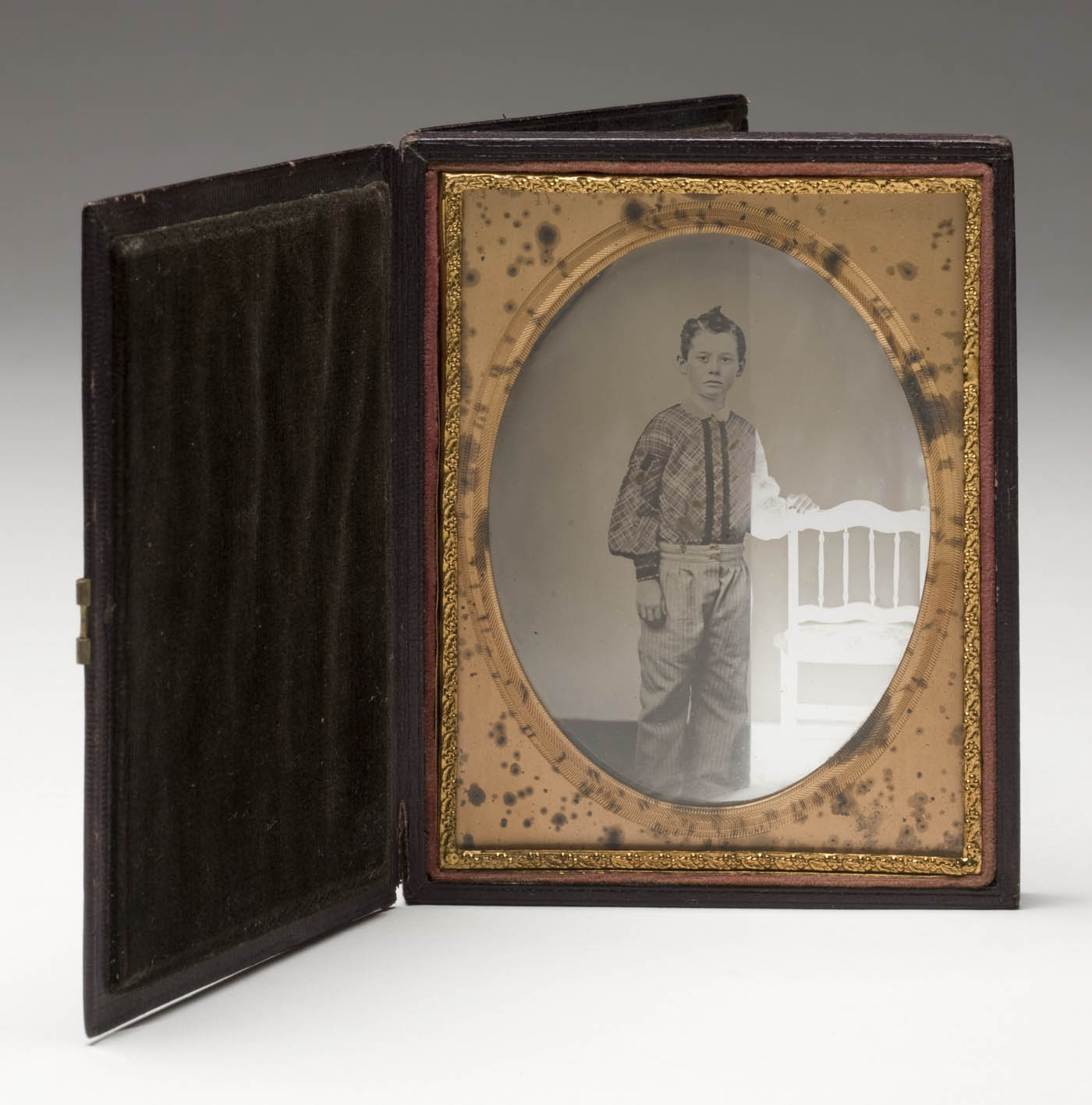
Victor Plumier (Belgian, 1820-1878) 'Lady in Costume' About 1850 from the exhibition 'Still Performing: Costume, Gesture, and Expression in 19th Century European Photography' at the Nelson-Atkins Museum of Art, Kansas City


Victor Plumier (Belgian, 1820-1878)
Lady in Costume
About 1850
Daguerreotype, half plate
5 1/2 × 4 1/2 inches
The Nelson-Atkins Museum of Art
Gift of the Hall Family Foundation


Past present

Magnificent photographs that bring past presence into present consciousness.

Costume. variedly, the term “costume,” indicating clothing exclusively from the eighteenth century onward, can be traced back to the Latin consuetudo, meaning “custom” or “usage.”

Gesture. late Middle English: from medieval Latin gestura, from Latin gerere ‘bear, wield, perform’. The original sense was ‘bearing, deportment’, hence ‘the use of posture and bodily movements for effect in oratory’.

Expression. the action of making known one’s thoughts or feelings. a look on someone’s face that conveys a particular emotion. late Middle English: from Latin expressio(n- ), from exprimere ‘press out, express’.


The emotions and the sentiments, the gestures and the expressions.

The actor and the stage, the photographer and the sitter.

The staged photograph and the tableaux vivant.

The Self and the Other.


Today, something happens when we look at these photographs. Today, the social spaces, gestures and expressions in these photographs are not fixed, monological re-presentations or presences. Our experience of the photographs enables them to be seen as nodes within a network caught up in a system of social and cultural references, whose unity is variable and relative.1

Thus,

” …in my reading (of the photograph), I relied upon a number of semiological systems, each one being a social / cultural construct: the sign language of clothes, of facial expressions, of bodily gestures, of social manner, etc. Such semiological systems do indeed exist and are continually being used in the making and reading of images. Nevertheless the sum total of these systems cannot exhaust, does not begin to cover, all that can be read in appearances.”2

The intertextuality of images.

Dr Marcus Bunyan


1/ Roland Barthes. “From Work to Text” and Michel Foucault. The Order of Things: An Archeology of the Human Sciences in Kurt Thumlert. Intervisuality, Visual Culture, and Education. [Online] Cited 10/08/2006. No longer available online

2/ John Berger and Jean Mohr. Another Way of Telling. New York: Pantheon Books, 1982, p. 112


Many thankx to the Nelson-Atkins Museum for allowing me to publish the photographs in the posting. Please click on the photographs for a larger version of the image.


“There is no perfection, no infinite completeness. But always, there is a way to move toward being whole. The capital letter, the Self is a wholeness that does not and will never exist. It is a direction that I move toward no matter the meanders of my feet.”


Kendrick VanZant


Camille Dolard (French, 1810-1884) 'Self-portrait as ailing man' c. 1843-1845


Camille Dolard (French, 1810-1884)
Self-portrait as ailing man
c. 1843-1845
Daguerreotype
Plate (whole): 8 1/2 × 6 1/2 inches (21.59 × 16.51cm)
Mat: 10 3/8 × 8 3/8 inches (26.37 × 21.29cm)
The Nelson-Atkins Museum of Art
Gift of the Hall Family Foundation


French painter Camille Dolard briefly embraced photography in the 1840s as an innovative creative tool. This daguerreotype, and the one in the next case, are from a group of three theatrical self-portraits created by Dolard in his studio. Here, the artist performs for the camera, posing with props and costumes as a patient in the care of his attentive wife. In the other plate, he uses a similarly theatrical approach, depicting himself smoking a hookah (a water pipe used to smoke tobacco) while lounging on a patterned rug.

Text from the Nelson-Atkins Museum website


Jean-Pierre Thierry (French, 1810-1870) 'Two ladies reading a letter' c. 1845


Jean-Pierre Thierry (French, 1810-1870)
Two ladies reading a letter
c. 1845
Daguerreotype
Plate (quarter): 4 1/4 × 3 1/4 inches (10.8 × 8.26 cm)
Mat: 6 1/16 × 5 1/8 inches (15.39 × 13.03 cm)
The Nelson-Atkins Museum of Art
Gift of the Hall Family Foundation


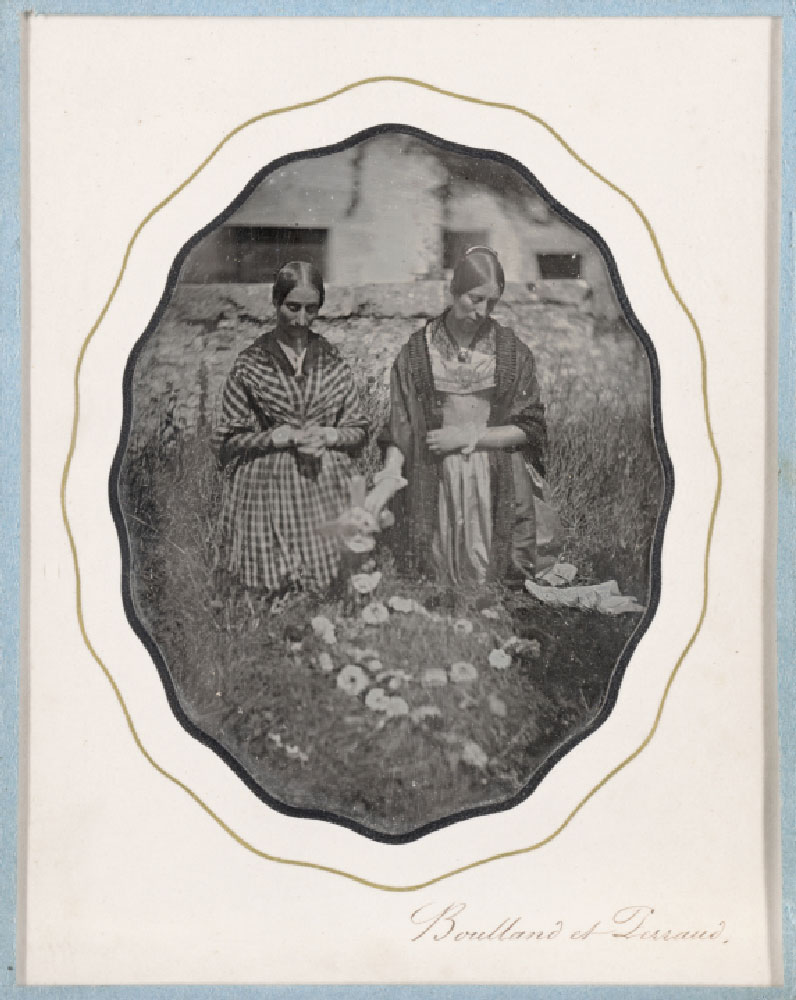
Philibert Perraud (French, 1815 - after 1863) 'Deux femmes se recueillent sur la tombe d'une etre cher ...' (Two women at the grave of a loved one) c. 1845


Philibert Perraud (French, 1815 – after 1863)
Deux femmes se recueillent sur la tombe d’une etre cher … (Two women at the grave of a loved one)
c. 1845
Daguerreotype
Plate (quarter): 4 1/4 × 3 1/4 inches (10.8 × 8.26cm)
 Mount: 5 1/8 × 4 1/8 inches (13.02 × 10.48cm)
The Nelson-Atkins Museum of Art
Gift of the Hall Family Foundation


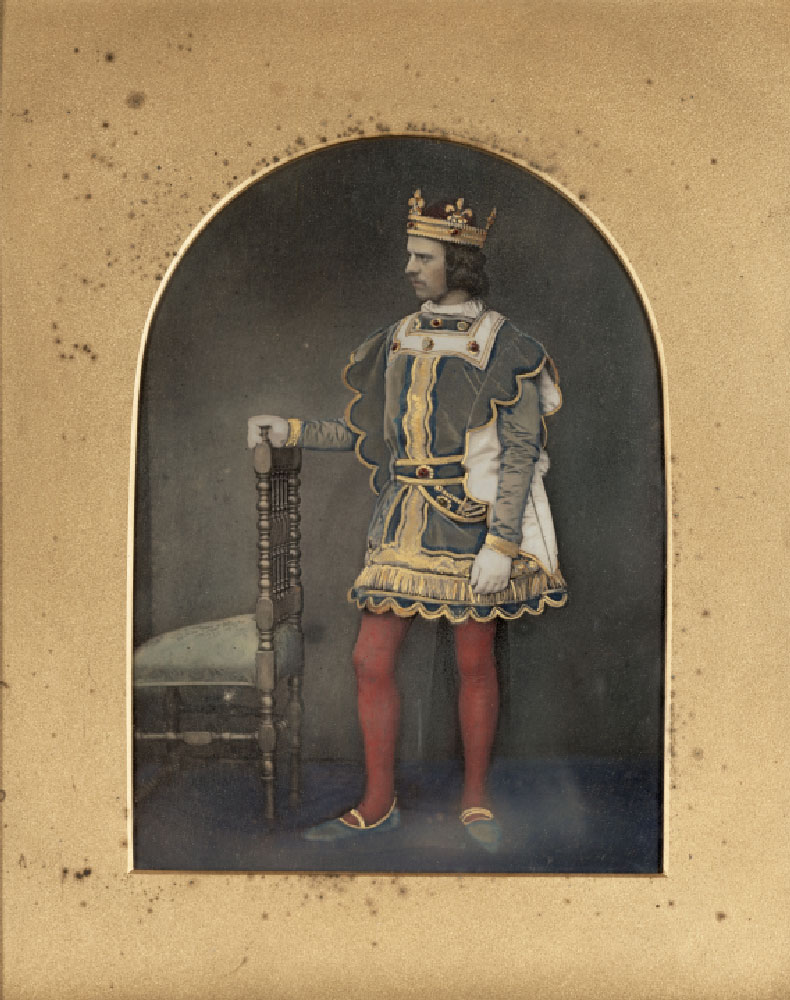
Unknown photographer. 'Actor in Costume' c. 1850 from the exhibition 'Still Performing: Costume, Gesture, and Expression in 19th Century European Photography' at the Nelson-Atkins Museum of Art, Kansas City


Unknown photographer
Actor in Costume
c. 1850
Daguerreotype
Plate (three-quarter): 6 × 4 1/2 inches (15.24 × 11.43 cm)
Case (open): 8 1/8 × 13 1/4 × 3/8 inches (20.64 × 33.66 × 0.95 cm)
Case (closed): 8 1/8 × 6 5/8 × 5/8 inches (20.64 × 16.83 × 1.59 cm)
The Nelson-Atkins Museum of Art
Gift of the Hall Family Foundation


Though the pose and expression in this photograph are stiff, the extensive hand-colouring enlivens the portrait, drawing attention to the fine details in the actor’s costume. Sitting for a daguerreotype portrait in the 1850s required patience and a certain degree of stamina. Photographic exposure times – which varied according to plate sensitivity and studio lighting – typically ranged from three to 30 seconds. Studio props, such as chairs and head braces, were used to help sitters remain as motionless as possible for the duration of the exposure.

Text from the Nelson-Atkins Museum website


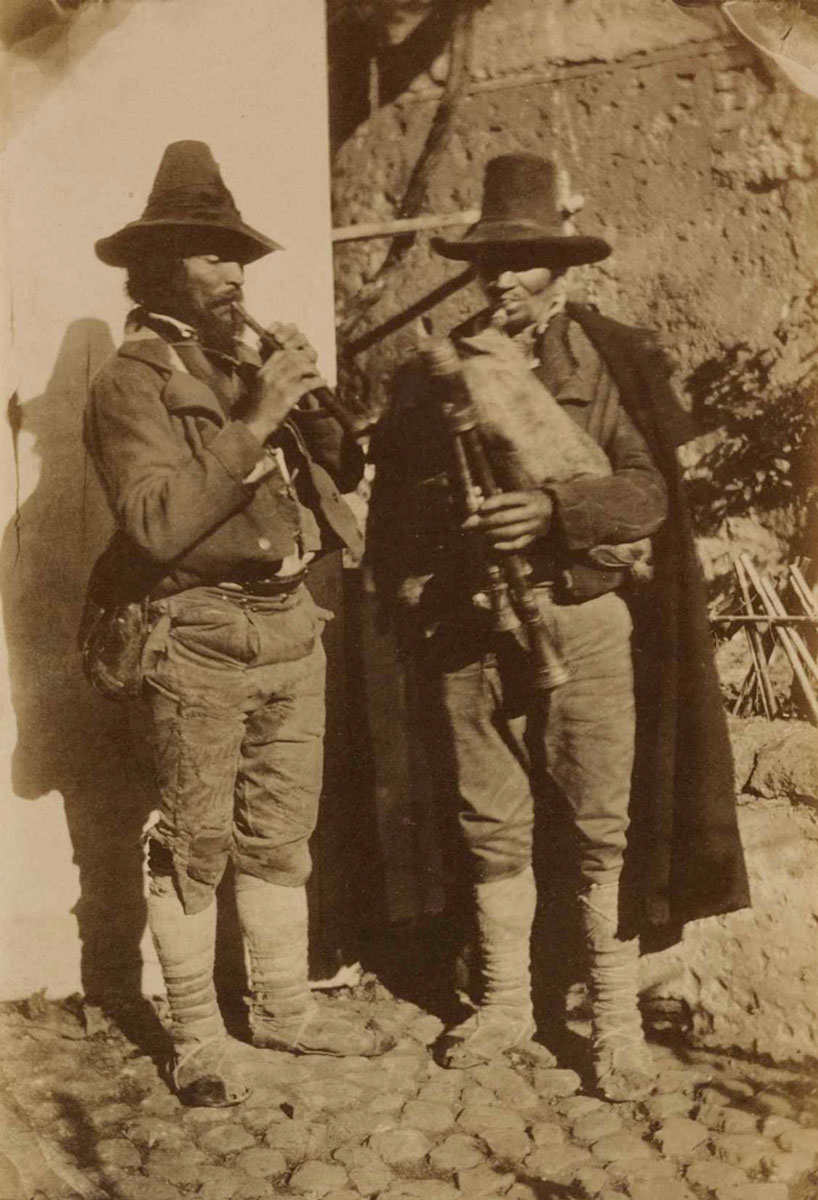
Giacomo Caneva (Italian, 1813-1865) 'Two Pifferari' c. 1850s


Giacomo Caneva (Italian, 1813-1865)
Two Pifferari
c. 1850s
Salt print
Image: 8 3/8 × 5 11/16 inches (21.27 × 14.45cm)
Sheet: 11 3/16 × 5 11/16 inches (28.42 × 14.45cm)
The Nelson-Atkins Museum of Art
Gift of the Hall Family Foundation


Nothing summed up picturesque modern Italy as well as the Pifferari; described by Hector Berlioz (1803-1869) in 1832: ‘These are strolling musicians who, towards Christmas, come down from the mountains in groups of four or five, armed with bagpipes and ‘pifferi’ (a sort of oboe), to play in homage before statues of the Madonna. They are generally dressed in large brown woollen coats and the pointed hats that brigands sport, and their whole appearance is instinct with a kind of mystic savagery that is most striking’. He admits that close to the music is ‘overpoweringly loud, but at a certain distance the effect of this strange ensemble of instruments is haunting and few are unmoved by it’.

Text from the Royal Collection Trust website


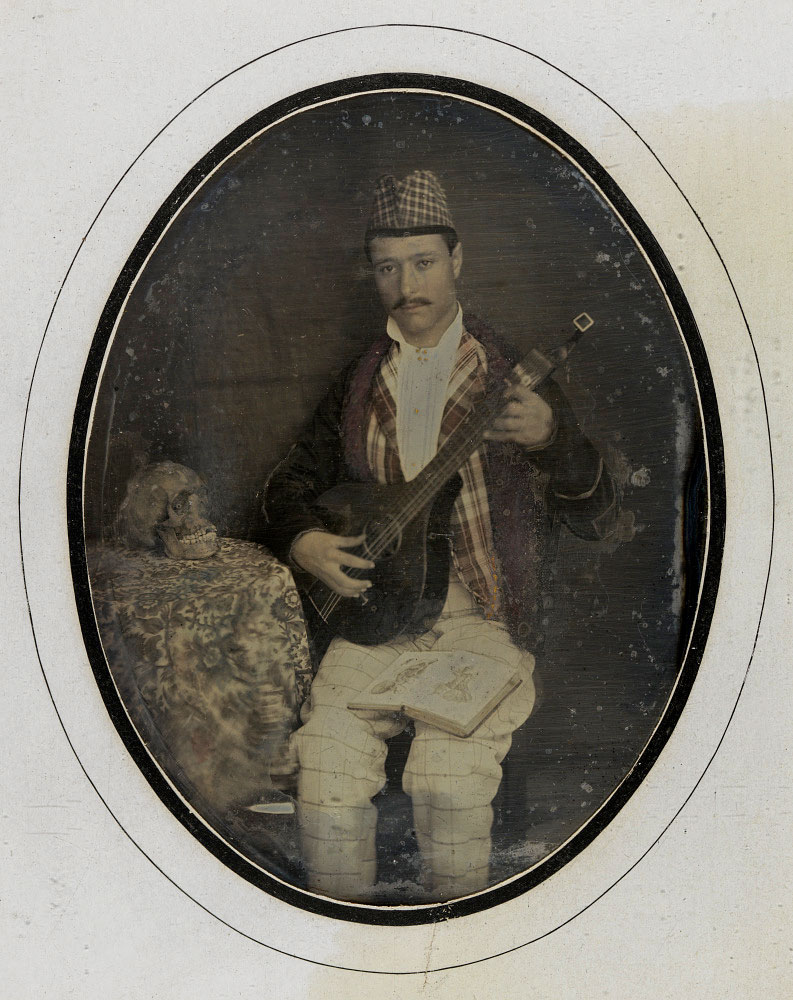
José Maria Blanco (Spanish, active c. 1850) 'Man with mandolin' 1851 from the exhibition 'Still Performing: Costume, Gesture, and Expression in 19th Century European Photography' at the Nelson-Atkins Museum of Art, Kansas City


José Maria Blanco (Spanish, active c. 1850)
Man with mandolin
1851
Daguerreotype
Plate (quarter): 4 × 3 1/4 inches (10.16 × 8.26cm)
Mat: 5 5/8 × 4 7/8 inches (14.29 × 12.38cm)
The Nelson-Atkins Museum of Art
Gift of the Hall Family Foundation


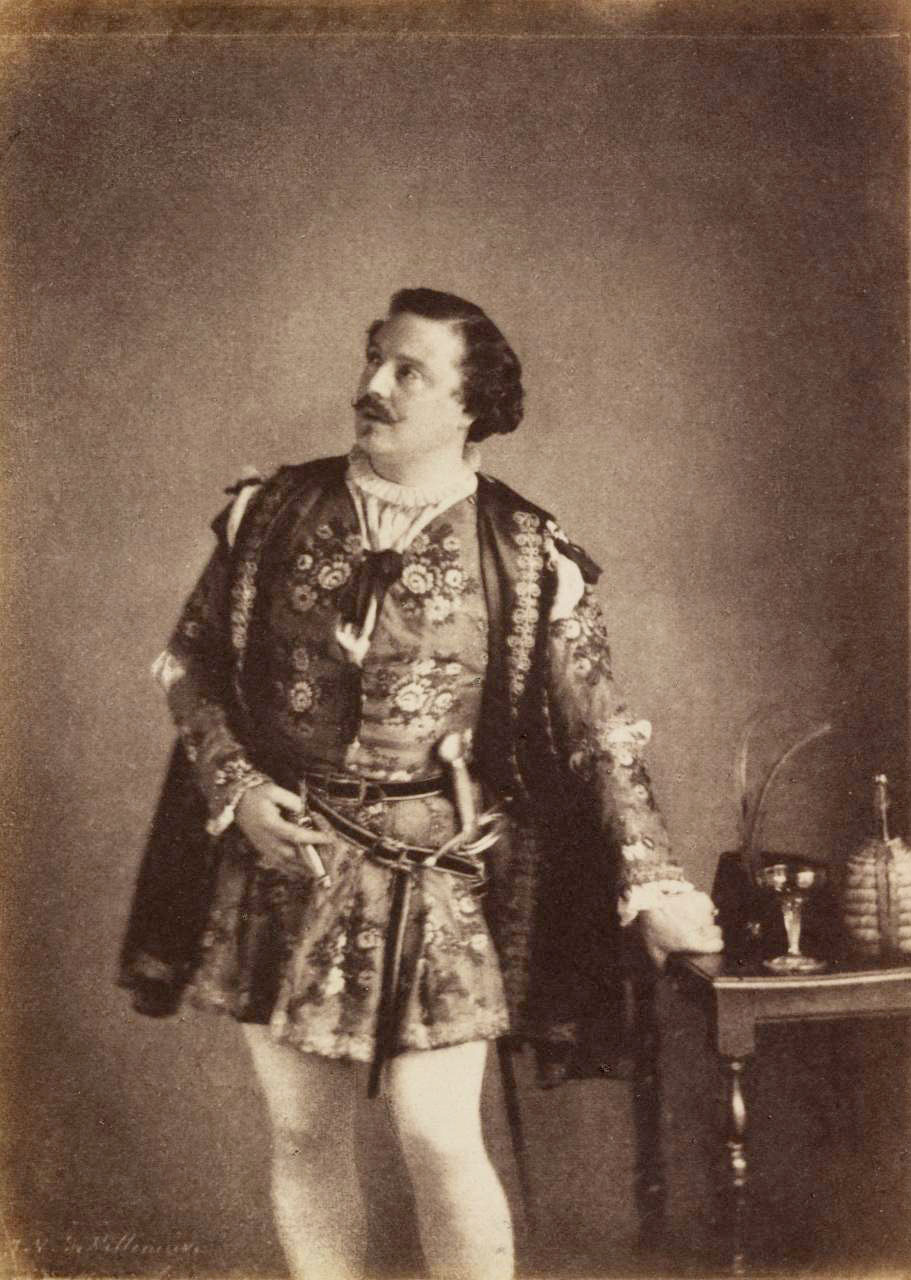
Julien Vallou de Villeneuve (French, 1795-1866) 'Portrait of Edouard Brindeau' 1853


Julien Vallou de Villeneuve (French, 1795-1866)
Portrait of Edouard Brindeau
1853
Salt print
6 1/4 × 4 5/8 inches
The Nelson-Atkins Museum of Art
Gift of the Hall Family Foundation


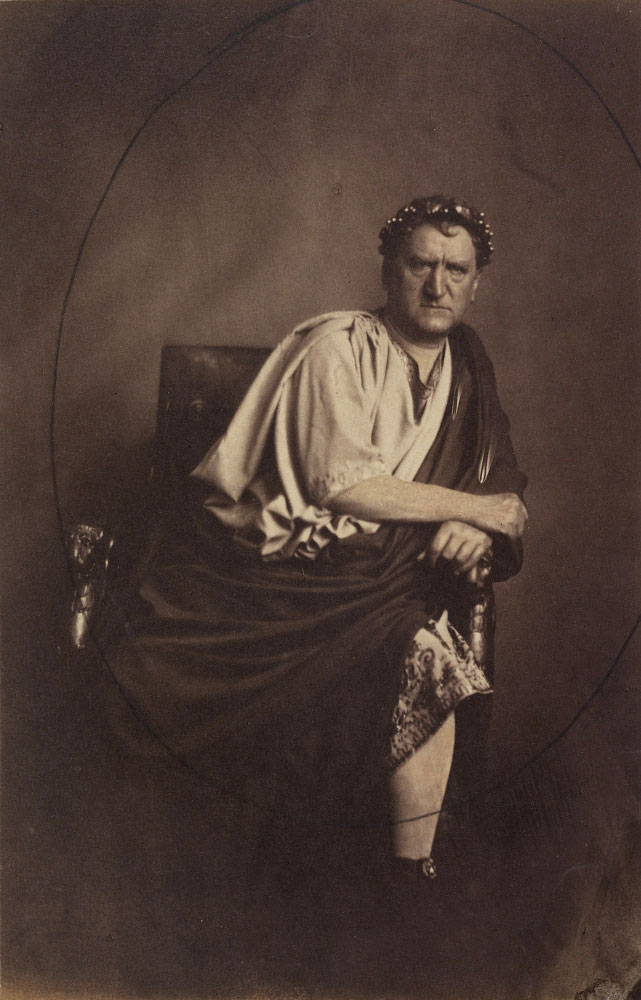
Julien Vallou de Villeneuve (French, 1795-1866) 'Portrait of Jean-Baptiste Provost, in the role of the emperor Claude in the play Valeria' 1853


Julien Vallou de Villeneuve (French, 1795-1866)
Portrait of Jean-Baptiste Provost, in the role of the emperor Claude in the play Valeria
1853
Portraits of Actors from the Comédie Française
Salt print
Image and sheet: 6 7/16 × 4 1/8 inches (16.35 × 10.48cm)
The Nelson-Atkins Museum of Art
Gift of the Hall Family Foundation


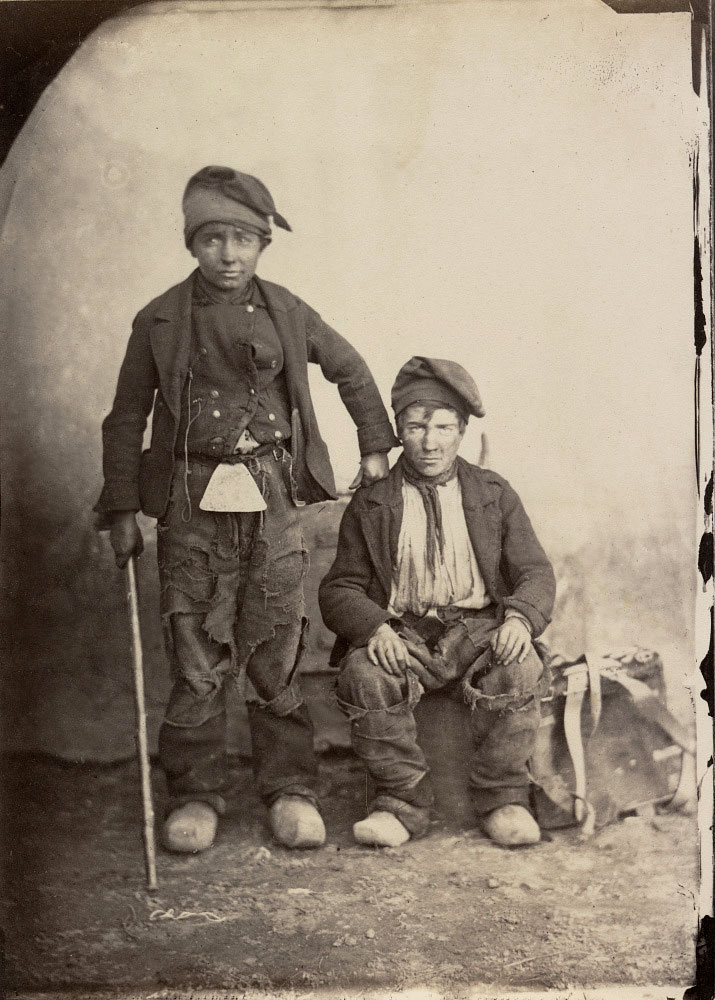
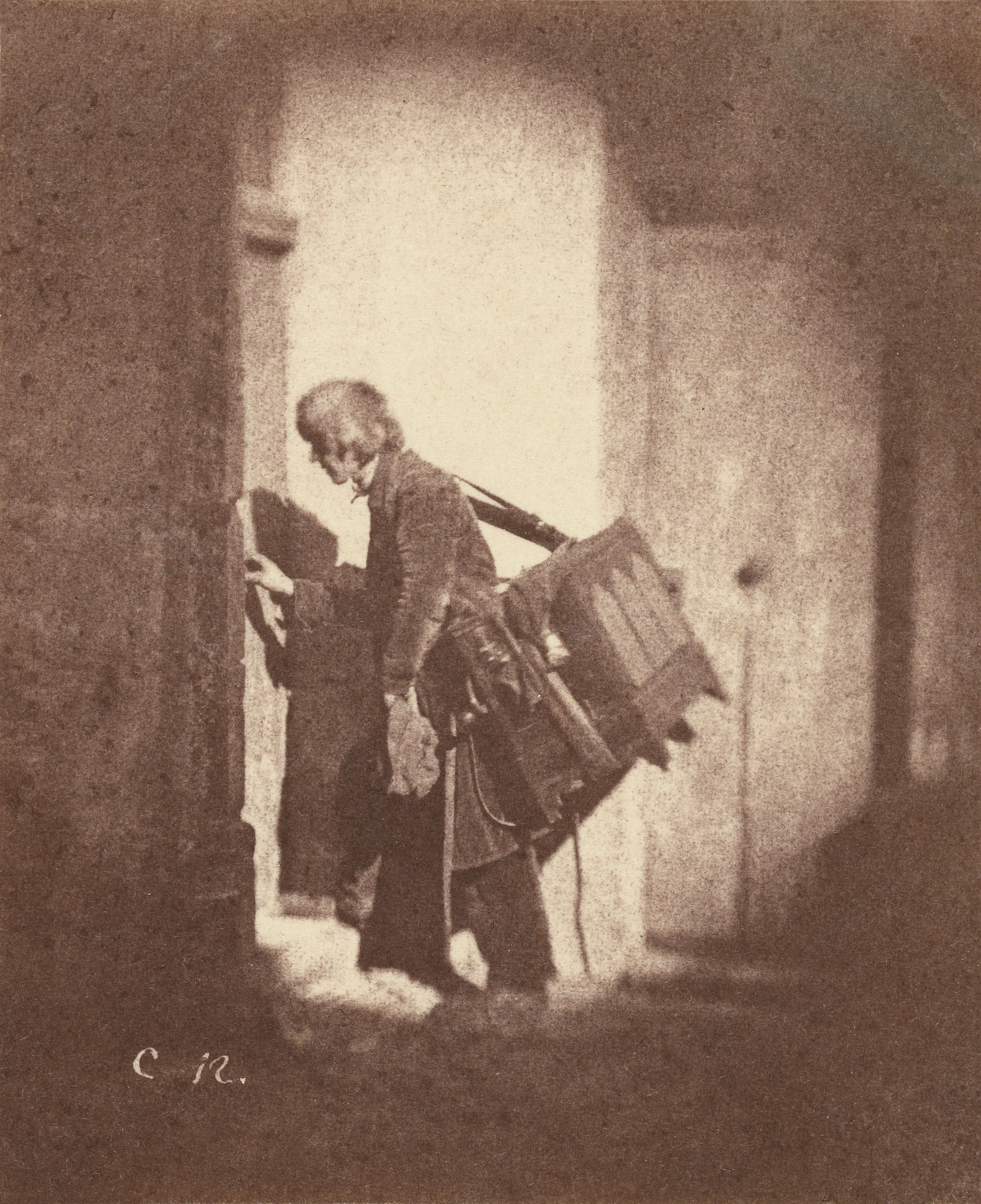
Charles Nègre (French, 1820-1880) 'Two Small Savoyards' c. 1853 from the exhibition 'Still Performing: Costume, Gesture, and Expression in 19th Century European Photography' at the Nelson-Atkins Museum of Art, Kansas City


Charles Nègre (French, 1820-1880)
Two Small Savoyards
c. 1853
Albumen print
Image and sheet: 7 × 5 3/16 inches (17.78 × 13.12cm)
Mount: 17 × 15 inches (43.18 × 38.1cm)
The Nelson-Atkins Museum of Art
Gift of the Hall Family Foundation


Charles Nègre refers to the threadbare young men in this photograph as “Savoyards” (originating from the Savoy region of France). Impoverished, migrant Savoyards have appeared in European art since the 1700s, and Nègre’s title could be shorthand for a certain type of person seen in the streets of Paris, regardless of the two boys’ actual place of origin. A painter and a photographer, Nègre practiced the two mediums side-by-side. Like other artists of his time, he ascribed nobility to the poor, seeking to convey their “truth, warmth, and life.”

Text from the Nelson-Atkins Museum website


Alban-Adrien Tournachon (French , 1825-1903) and Nadar [Gaspard Félix Tournachon] (French, 1820-1910) 'Pierrot Yawning' 1854 from the exhibition 'Still Performing: Costume, Gesture, and Expression in 19th Century European Photography' at the Nelson-Atkins Museum of Art, Kansas City


Alban-Adrien Tournachon (French , 1825-1903) and Nadar [Gaspard Félix Tournachon] (French, 1820-1910)
Pierrot Yawning
1854
Salt print
11 1/4 × 8 1/2 inches
The Nelson-Atkins Museum of Art
Gift of the Hall Family Foundation


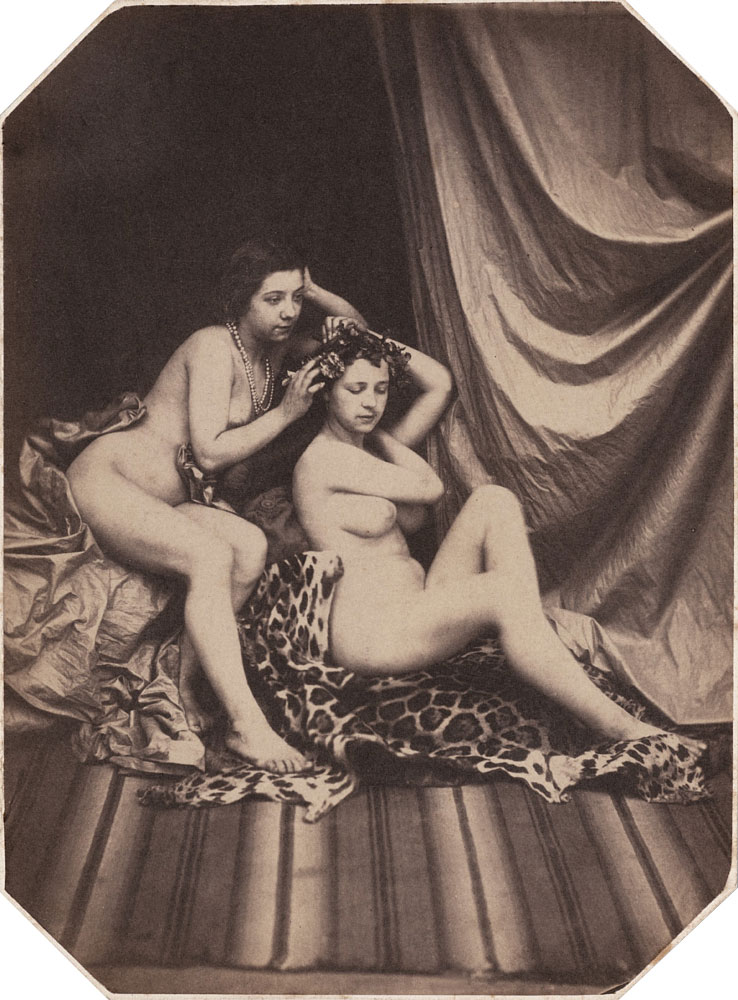
Auguste Belloc (French, 1805 -1873) 'Une étude de nu de deux femmes' c. 1855


Auguste Belloc (French, 1805 -1873)
Une étude de nu de deux femmes
c. 1855
Salt print
Image and sheet: 8 5/16 × 6 1/8 inches (21.11 × 15.56cm)
The Nelson-Atkins Museum of Art
Gift of the Hall Family Foundation


A masterful printer, Auguste Belloc created nudes that surpassed the typical erotic fare found in Parisian markets. In this scene, Belloc strategically positions the models and surrounding drapery to make the photograph appear more artistic than pornographic. Though nude paintings, drawings, and sculptures were immensely common, at this time photography was treated far more harshly by censors. In October 1860, the French government seized some 5,000 of Belloc’s photographs, declaring them obscene, and by 1868 he had abandoned his photographic studio.

Text from the Nelson-Atkins Museum website


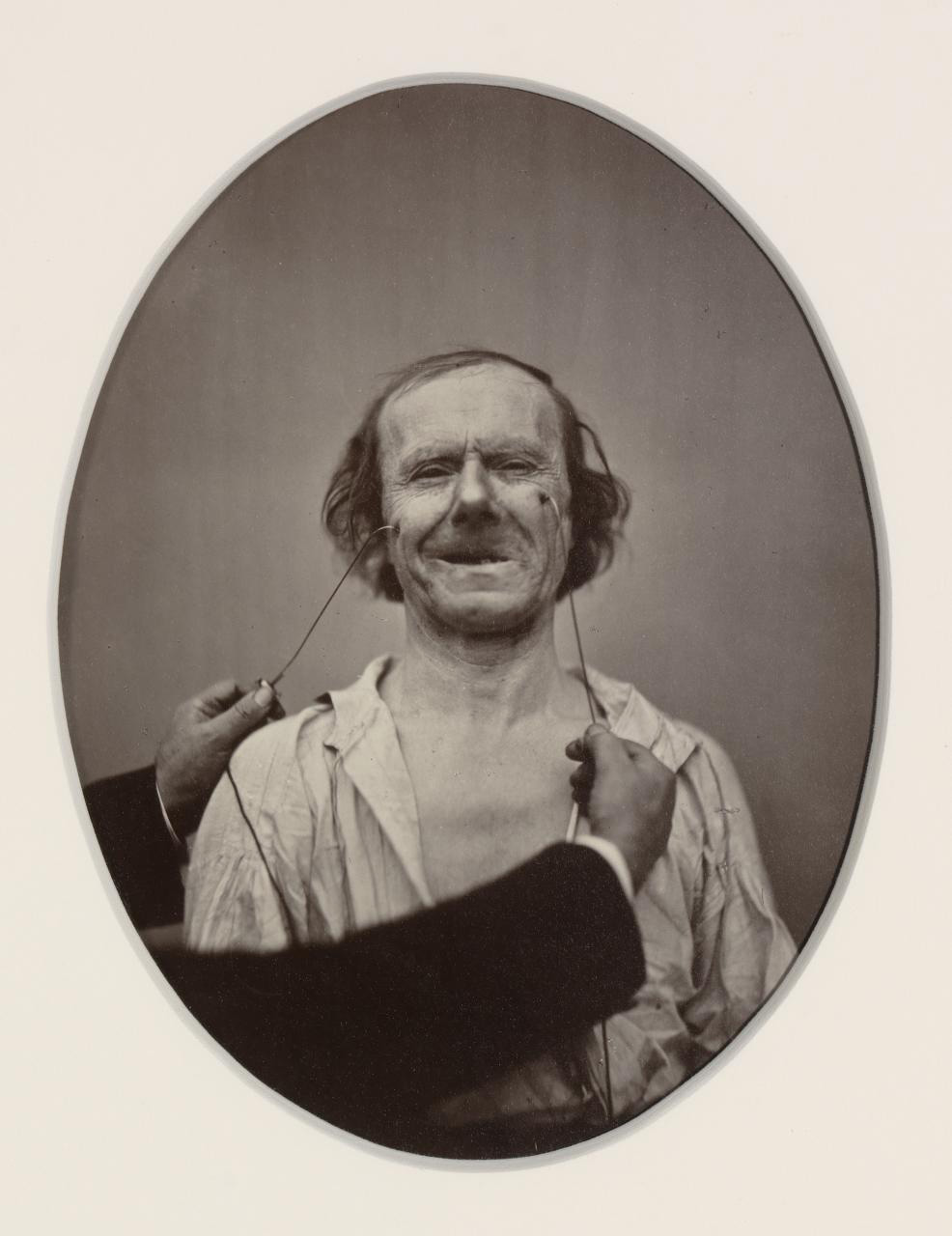
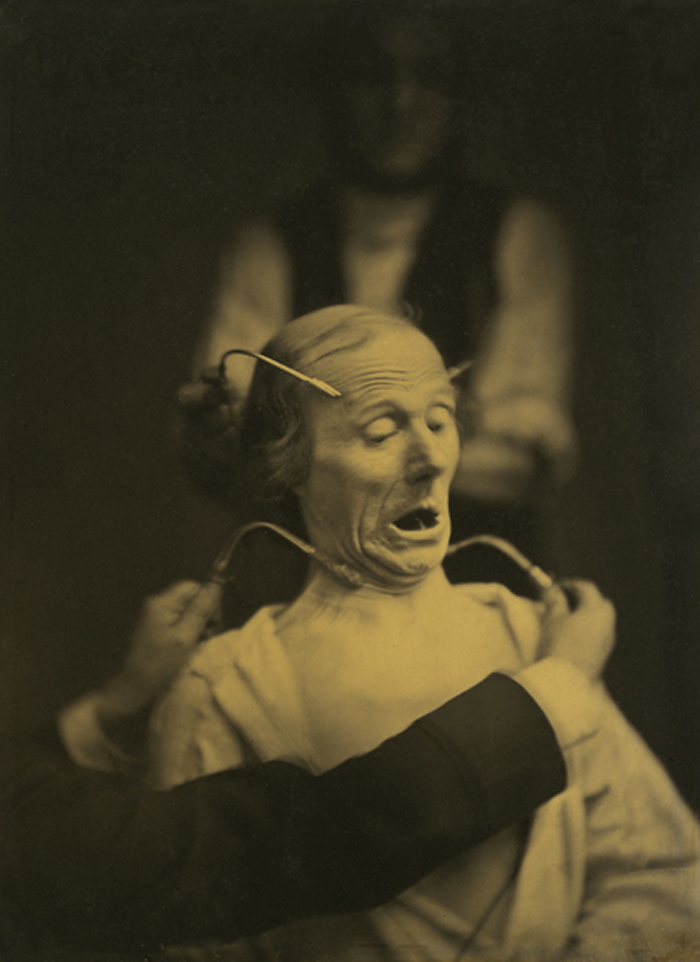
Guillaume-Benjamin-Amand Duchenne de Boulogne (French, 1806-1875) and Alban-Adrien Tournachon (French, 1825-1903) 'The Muscles of Weeping and Whimpering' About 1855-1857


Guillaume-Benjamin-Amand Duchenne de Boulogne (French, 1806-1875) and Alban-Adrien Tournachon (French, 1825-1903)
The Muscles of Weeping and Whimpering
About 1855-1857
Albumen print
9 1/16 × 6 15/16 inches
The Nelson-Atkins Museum of Art
Gift of the Hall Family Foundation


Facial expressions and their corresponding emotions have been studied by artists for centuries. In the 1850s, Dr. Guillaume-Benjamin-Amand Duchenne de Boulogne used photography to document the facial expressions produced by localised electric shock. Working in partnership with photographer Adrien Alban Tournachon, Duchenne felt these photographs truthfully recorded his experiments and that “none shall doubt the facts presented here.” Praising photography for its accurate rendering of the subject’s deep wrinkles, he wrote, “the distribution of light is in perfect harmony with the passions represented by these expressive lines. Thus, the face depicting the dark, concentric passions – aggression, wickedness, suffering, pain, dread, torture mixed with fear – gain an uncommon amount of energy.”

Text from the Nelson-Atkins Museum website


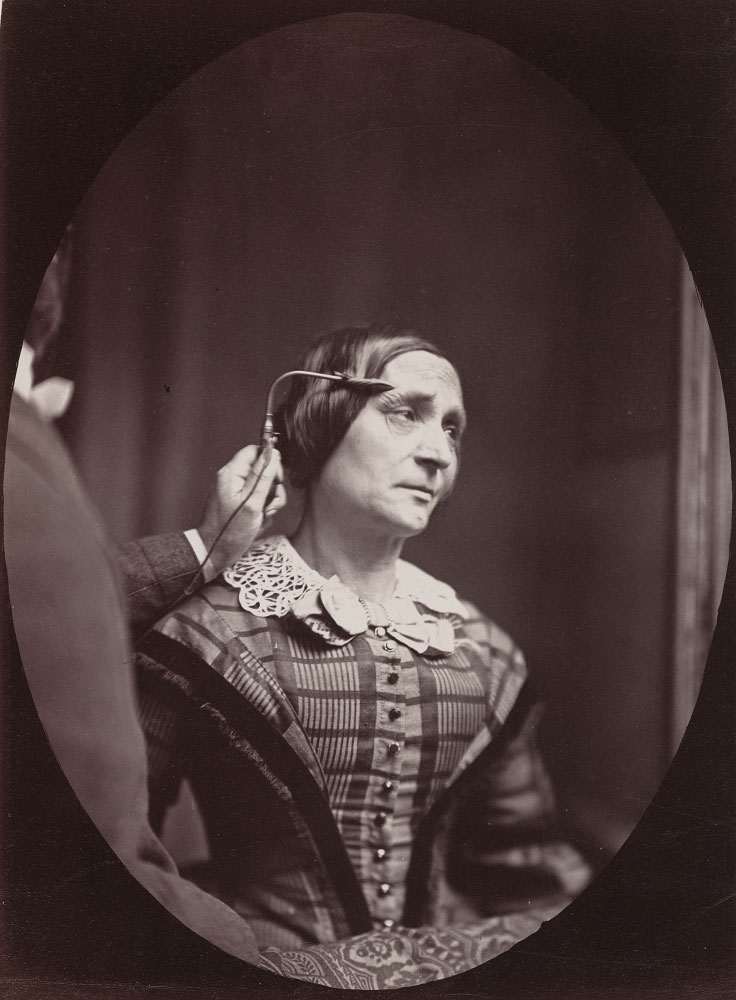
Guillaume-Benjamin-Amand Duchenne de Boulogne (French, 1806-1875) and Alban-Adrien Tournachon (French, 1825-1903) 'The Muscle of Pain' c. 1854-1857


Guillaume-Benjamin-Amand Duchenne de Boulogne (French, 1806-1875) and Alban-Adrien Tournachon (French, 1825-1903)
The Muscle of Pain
c. 1854-1857
Figure 27, plate 63 from The Mechanism of Human Facial Expression
Albumen print
Image and sheet: 9 1/16 × 6 5/8 inches (23.01 × 16.84cm)
Mount: 16 1/16 × 10 13/16 inches (40.79 × 27.51cm)
The Nelson-Atkins Museum of Art
Gift of the Hall Family Foundation


In this uncanny double portrait, the physiologist Dr. Guillaume-Benjamin-Amand Duchenne de Boulogne holds a mechanical device to the face of a 52-year-old, Italian-born woman believed to have been institutionalised in a Parisian asylum. Duchenne asserted that localised electric shock could force facial muscles to “contract to speak the language of the emotions and the sentiments.” “Armed with electrodes,” he wrote, “one would be able, like nature herself, to paint the expressive lines of the emotions of the soul on the face of man.”

Text from the Nelson-Atkins Museum website


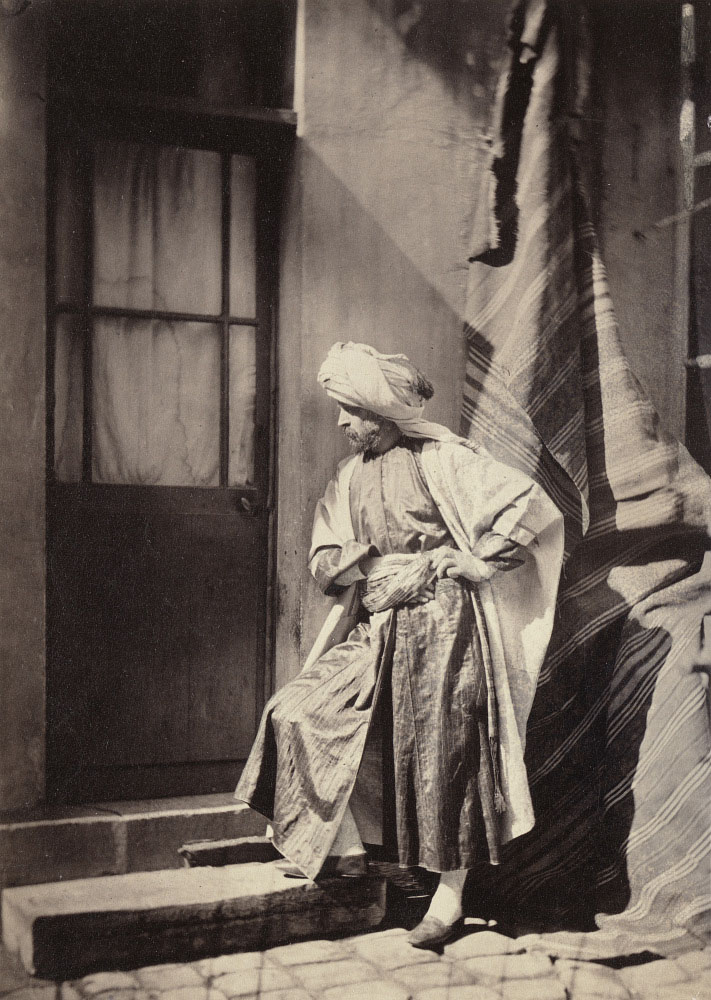
Roger Fenton (English, 1819-1869) 'Self-portrait as a Zouave' 1855


Roger Fenton (English, 1819-1869)
Self-portrait as a Zouave
1855
Salt print:
Image and sheet: 7 13/16 × 6 7/16 inches (19.84 × 16.35cm)
Mount: 22 1/8 × 16 1/8 inches (56.2 × 40.96cm)
The Nelson-Atkins Museum of Art
Gift of the Hall Family Foundation


Cocking a rifle and smoking a pipe, with alcohol by his side, Roger Fenton poses for his camera with bravado. Wearing the distinctive baggy uniform of a Zouave (skilled infantry soldiers from the French army in Algeria), Fenton fashions himself as a hardened, glowering soldier, though he never fought in any war. Fenton did, however, photograph the Crimean War (1853-1856) from a great distance. The war brought together an alliance of soldiers from England, Croatia, Algeria, Turkey, Egypt, and France whom Fenton encountered while photographing the conflict.

Text from the Nelson-Atkins Museum website


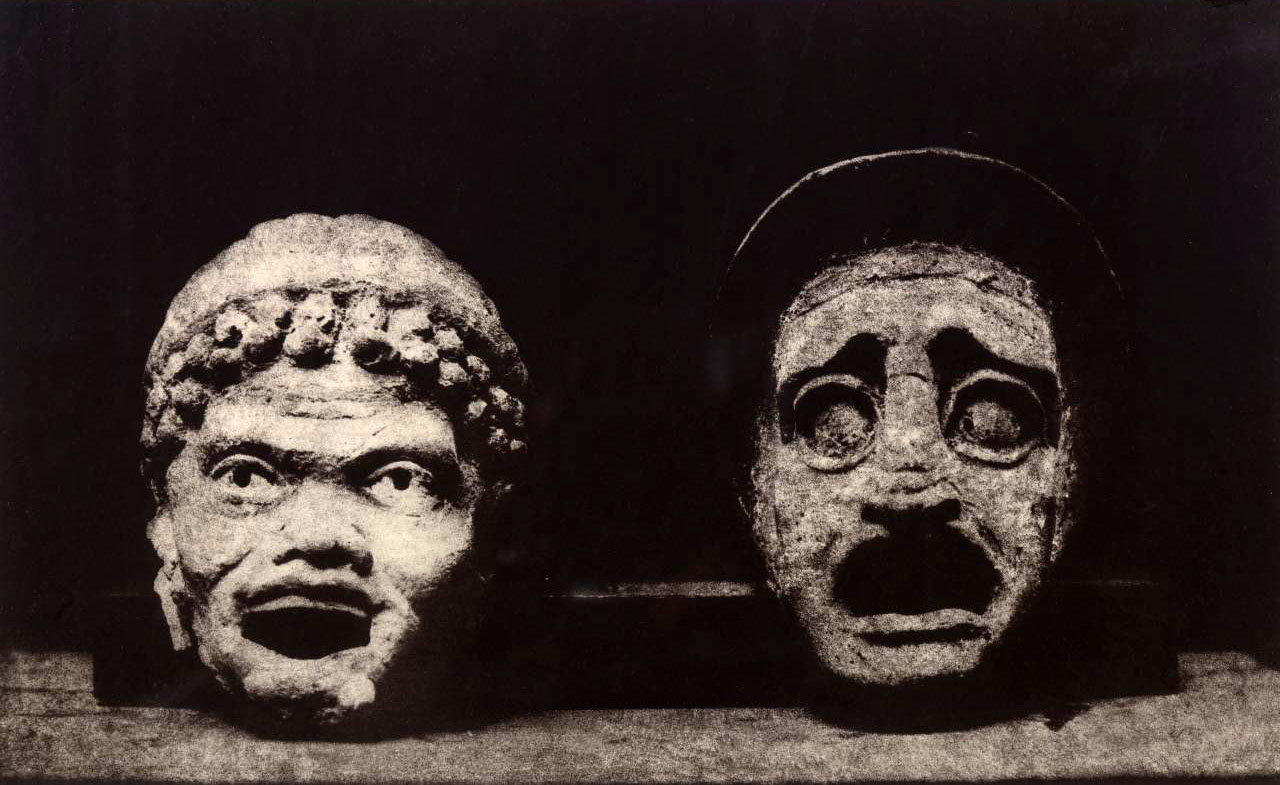
Marcel Gustave Laverdet (French, 1816-1886) 'Masks from the album Selection of Ancient Terra Cotta from the Collection of M. Le Vicomte H. de Janzé' 1857


Marcel Gustave Laverdet (French, 1816-1886)
Masks from the album Selection of Ancient Terra Cotta from the Collection of M. Le Vicomte H. de Janzé
1857
Photolithograph
8 15/16 × 14 9/16 inches
The Nelson-Atkins Museum of Art
Gift of the Hall Family Foundation


Charles Nègre (French, 1820-1880) 'Self-portrait' About 1855-1860


Charles Nègre (French, 1820-1880)
Self-portrait
About 1855-1860
Salt print
7 5/8 × 5 7/16 inches
The Nelson-Atkins Museum of Art
Gift of the Hall Family Foundation


Early photography is ripe with creative fictions. Actors, children, aristocrats, models, artists, psychiatric patients, maids, and all manner of the working class posed in front of cameras and were transformed into figures from history, literature, the Bible, or into an idealised version of themselves. Still Performing: Costume, Gesture, and Expression in 19th Century European Photography, which opens at The Nelson-Atkins Museum of Art in Kansas City Aug. 24, celebrates the unique and compelling ways 19th century European photographers used the medium to explore and document performance, transforming the photographer’s studio into a theatrical stage. The exhibition runs through Jan. 12, 2025.

“The subjects in this exhibition were highly influenced by popular entertainment – live theatre, tableaux vivant, and dioramas – as well as tastes and trends in painting, drawing, and sculpture,” said Julián Zugazagoitia, Director & CEO of the Nelson-Atkins. “These works were made in a time of anxiety about photography’s relationships to the fine arts and reflect a close intermingling between the worlds of the ‘high’ and the ‘low’.”

Visiting a photographer’s studio in Europe in the mid to late 1800s was like going behind the scenes of a theatrical production. Props, backdrops, costumes, curtains, and controlled lighting converted otherwise ordinary portrait sessions into staged productions. Whether working in their homes or commercial studios, photographers cast themselves, friends, actors, models, and strangers in their photographs, transforming them into all types of characters, from young pickpockets to ancient Greek gods.

“These portraits are so fascinating, and I think our guests are going to be amazed at the rich creative complexity found in European photography’s first 50 years,” said Marijana Rayl, Assistant Curator, Photography.

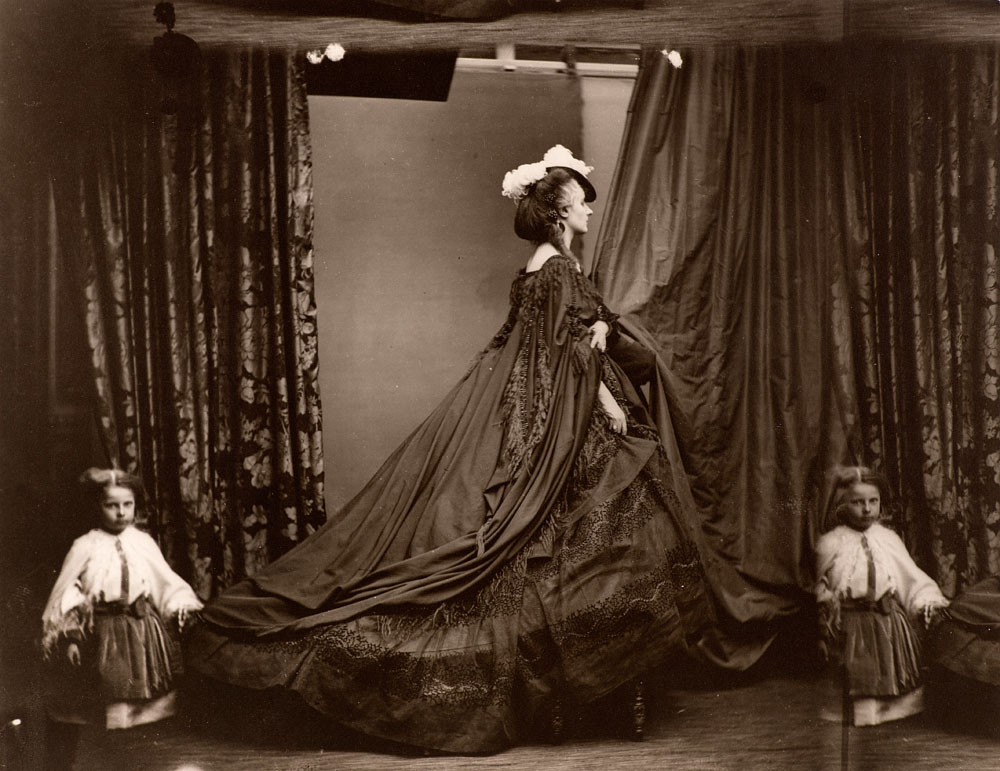
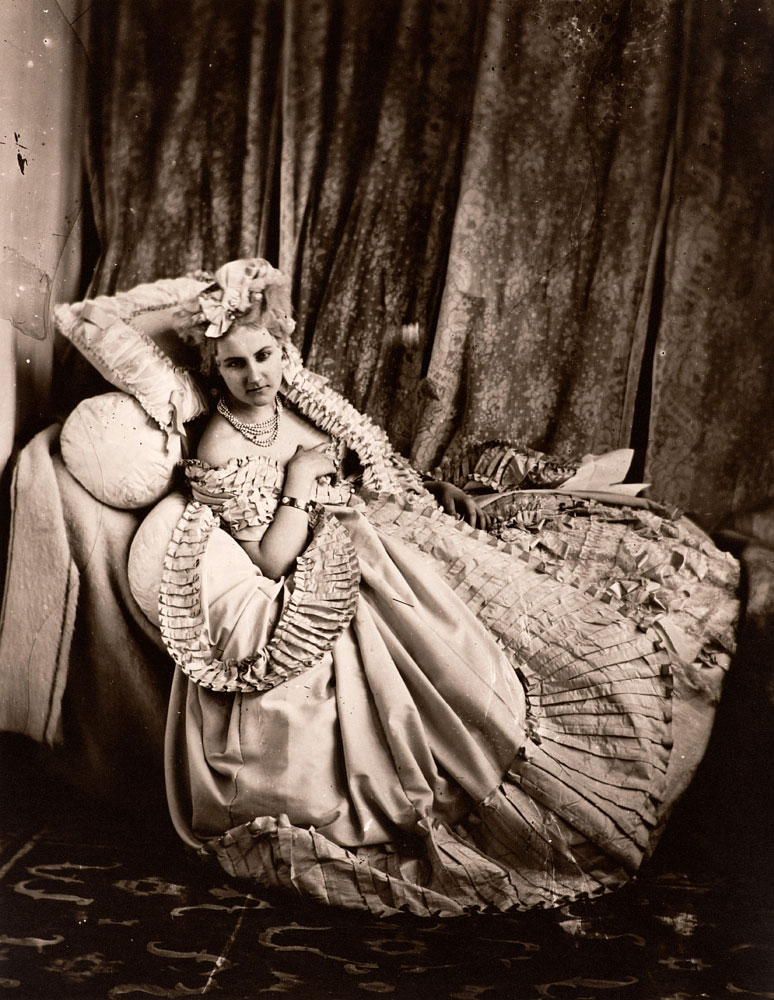
Deliberately made, not casually taken, these staged photographs are often the result of collaborative efforts between photographer and sitter, such as with a series of portraits of Virginia Oldoini, the Countess of Castiglione. A prodigious narcissist, or perhaps just ahead of her time, the countess collaborated with the photographer Pierre-Louis Pierson to produce hundreds of portraits, directing every aspect of the picture-making process. Included in Still Performing is a very rare, hand-coloured portrait of the countess.

The resulting photographs are an outstanding array of complex and compelling fictions showcasing the medium’s early creative potential.

Press release from the Nelson-Atkins Museum


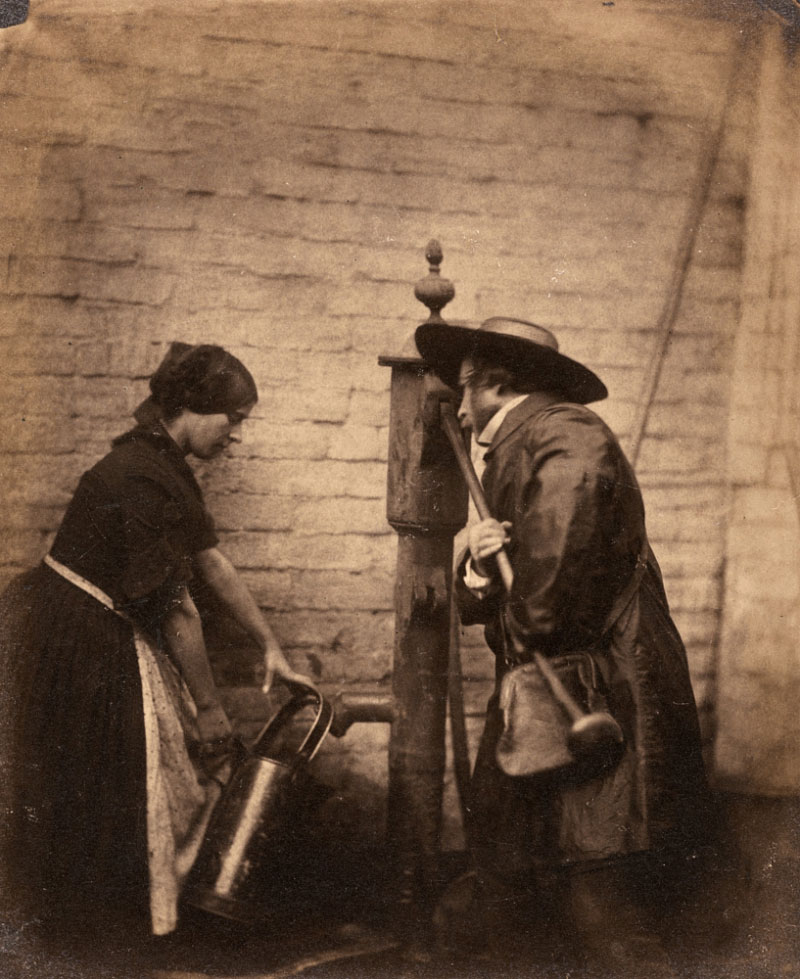
Oscar Gustav Rejlander (English born Sweden, 1813-1875) 'Drawing Water from a Well (O.G. Rejlander and model)' c. 1858


Oscar Gustav Rejlander (English born Sweden, 1813-1875)
Drawing Water from a Well (O.G. Rejlander and model)
c. 1858
Salt print
Image and sheet: 7 15/16 × 6 1/2 inches (20.16 × 16.51cm)
Mount: 14 1/16 × 11 5/16 inches (35.72 × 28.73cm)
The Nelson-Atkins Museum of Art
Gift of the Hall Family Foundation


Oscar Rejlander occasionally cast himself in staged photographs like this one, which was made to appear like a candid image of ordinary people going about their daily lives. Here he poses, turned away from the camera, as though he is helping a peasant woman retrieve water from a well. These kinds of genre scenes were immensely popular in the 1800s across painting, drawing, printmaking, and photography. Rejlander passionately advocated for photography to be treated as a fine art, believing that it must emulate painting.

Text from the Nelson-Atkins Museum website


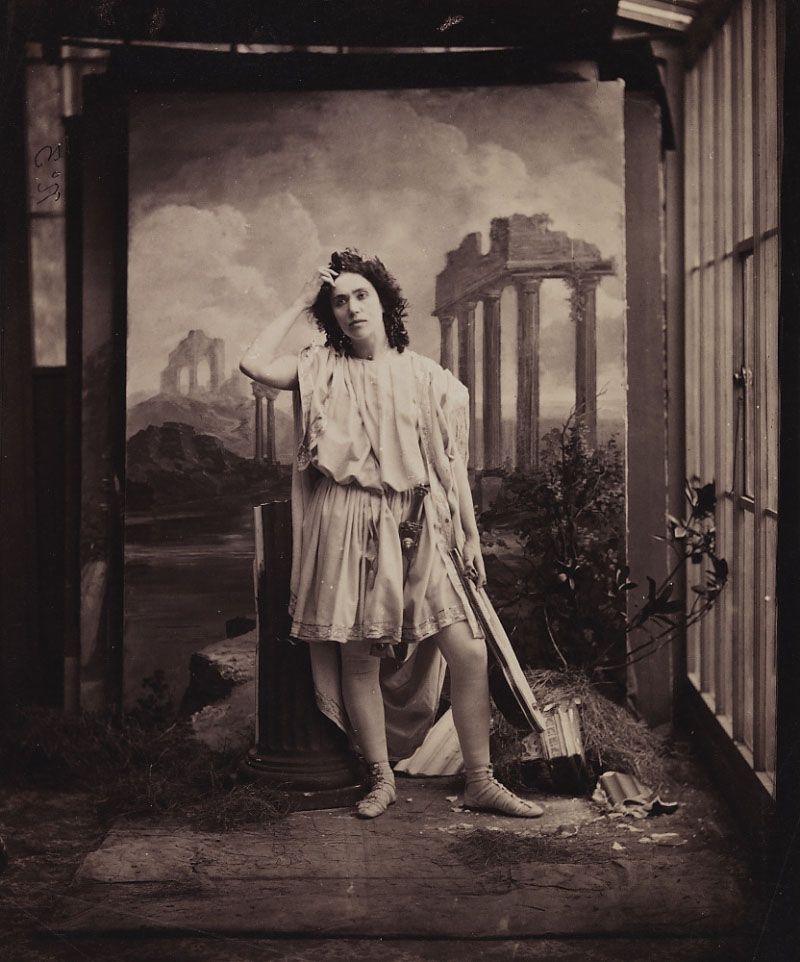
Camille Silvy (French, 1834-1910) 'Actress Rosa Csillag in the Role of Orpheus' 1860


Camille Silvy (French, 1834-1910)
Actress Rosa Csillag in the Role of Orpheus
1860
Albumen print
9 3/16 × 7 5/8 inches
The Nelson-Atkins Museum of Art
Gift of the Hall Family Foundation


Pierre-Louis Pierson (French, 1822-1913) 'The Countess de Castiglione' 1860s


Pierre-Louis Pierson (French, 1822-1913)
The Countess de Castiglione
1860s
Gelatin silver print (printed about 1930)
10 15/16 x 14 1/8 inches
The Nelson-Atkins Museum of Art
Gift of the Hall Family Foundation


Pierre-Louis Pierson (French, 1822-1913) 'The Countess de Castiglione' 1860s


Pierre-Louis Pierson (French, 1822-1913)
The Countess de Castiglione
1860s
Gelatin silver print (printed about 1930)
Image: 14 3/16 x 11 inches (36.04 x 27.94cm)
Sheet: 14 3/16 x 11 inches (36.04 x 27.94cm)
The Nelson-Atkins Museum of Art
Gift of the Hall Family Foundation


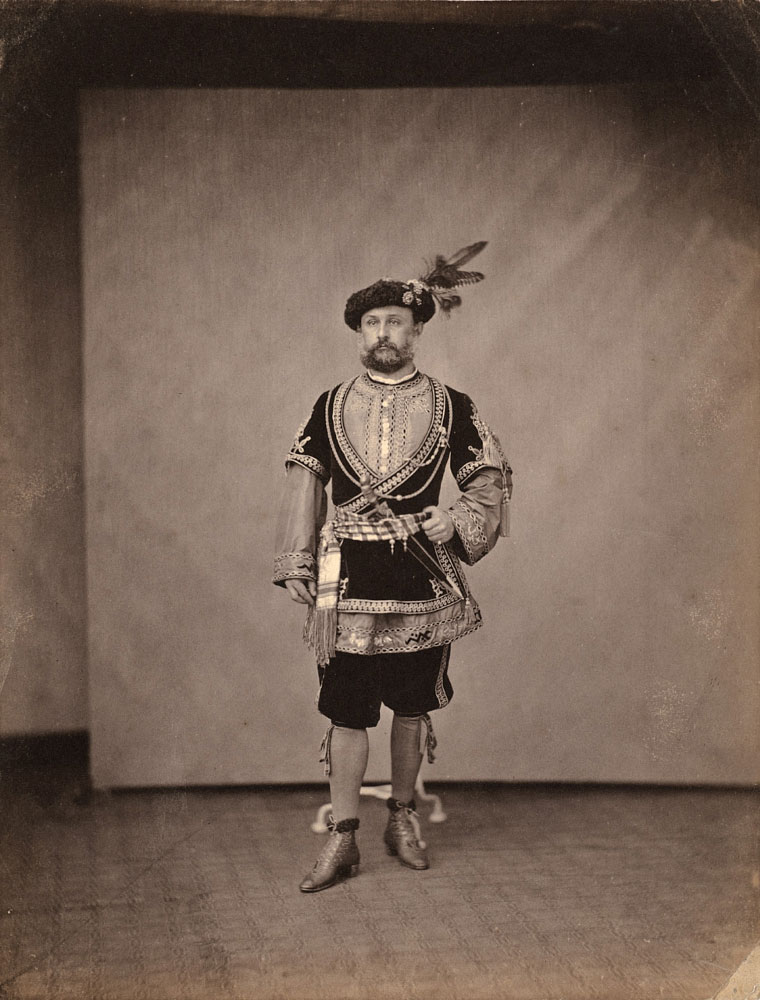
Pierre-Louis Pierson (French, 1822-1913) 'Bal en Costume, Royaume de Belgique' c. 1860


Pierre-Louis Pierson (French, 1822-1913)
Bal en Costume, Royaume de Belgique
c. 1860
Salt print
Image and sheet: 11 1/2 × 8 3/4 inches (29.21 × 22.23cm)
The Nelson-Atkins Museum of Art
Gift of the Hall Family Foundation


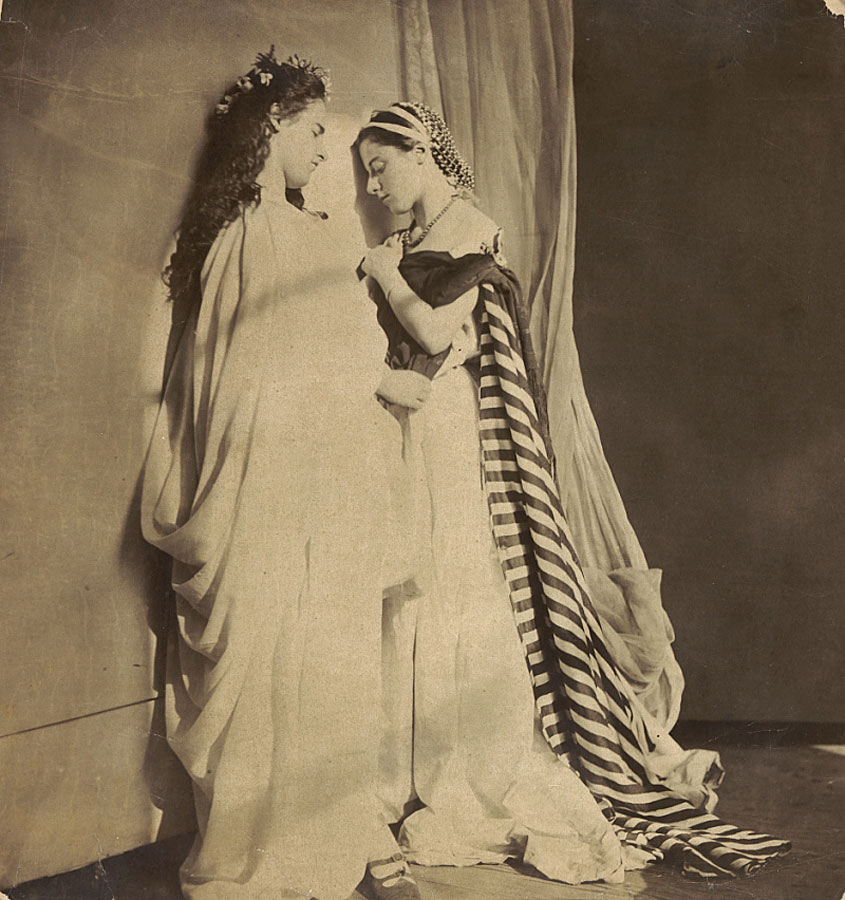
Lady Clementina Hawarden (English, born Scotland, 1822-1865) 'Clementina Maude and Isabella Grace' c. 1863


Lady Clementina Hawarden (English, born Scotland, 1822-1865)
Clementina Maude and Isabella Grace
c. 1863
Albumen print
Image and sheet: 9 13/16 × 9 11/16 inches (24.97 × 24.61cm)
The Nelson-Atkins Museum of Art
Gift of the Hall Family Foundation


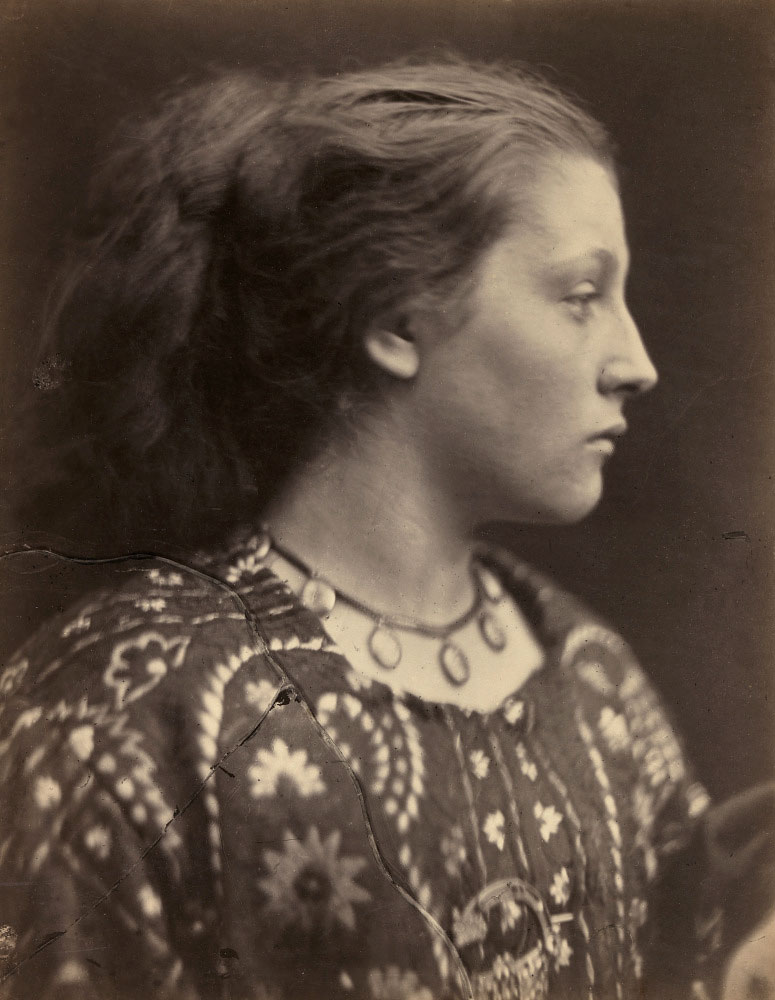
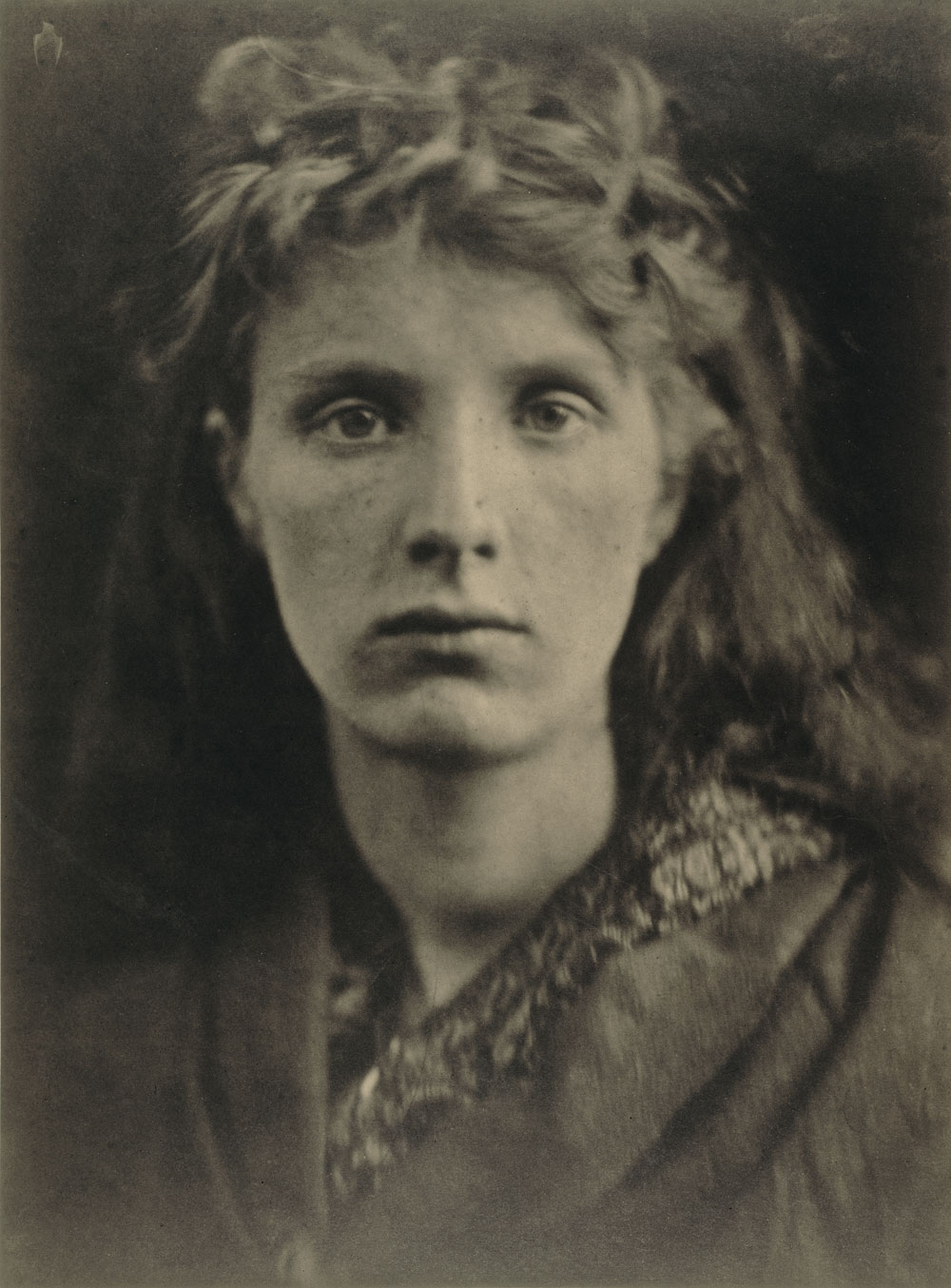
Julia Margaret Cameron (English, born India, 1815-1879) 'Sappho (Mary Hillier)' 1865


Julia Margaret Cameron (English, born India, 1815-1879)
Sappho (Mary Hillier)
1865
Albumen print
Image and sheet: 12 15/16 × 10 1/8 inches (32.86 × 25.72cm)
Mount: 20 13/16 × 16 13/16 inches (52.86 × 42.7cm)
The Nelson-Atkins Museum of Art
Gift of the Hall Family Foundation


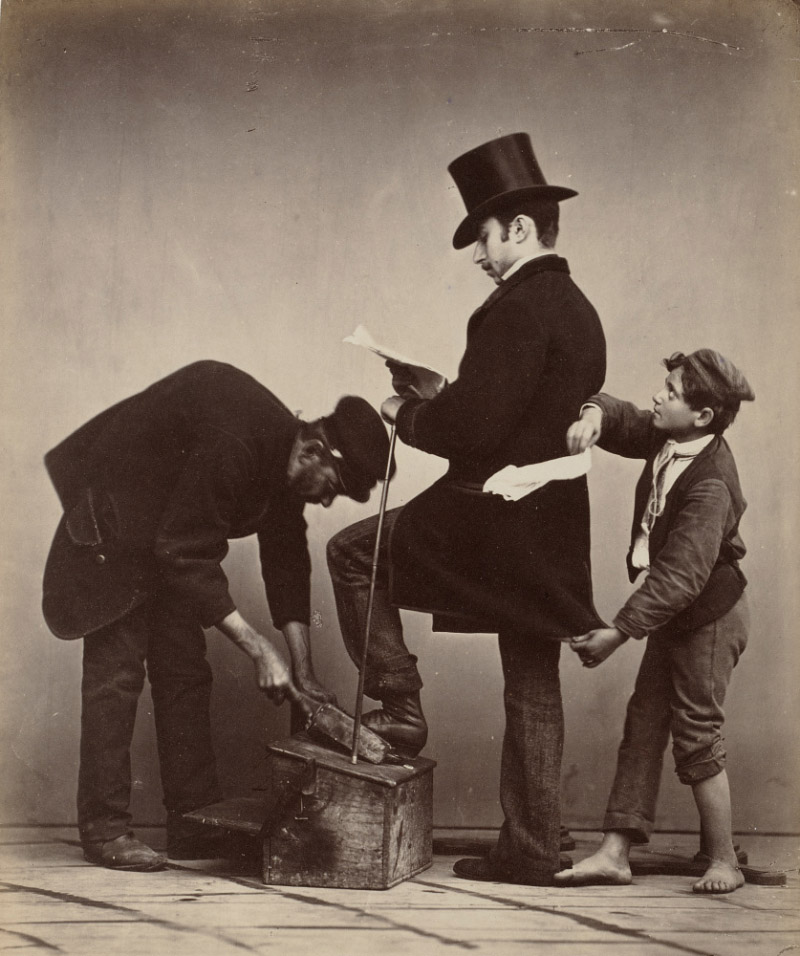
Giorgio Sommer (Italian born Germany, 1834-1914) 'The Pickpocket' About 1865


Giorgio Sommer (Italian born Germany, 1834-1914)
The Pickpocket
About 1865
Albumen print
9 3/8 × 7 5/8 inches
The Nelson-Atkins Museum of Art
Gift of the Hall Family Foundation


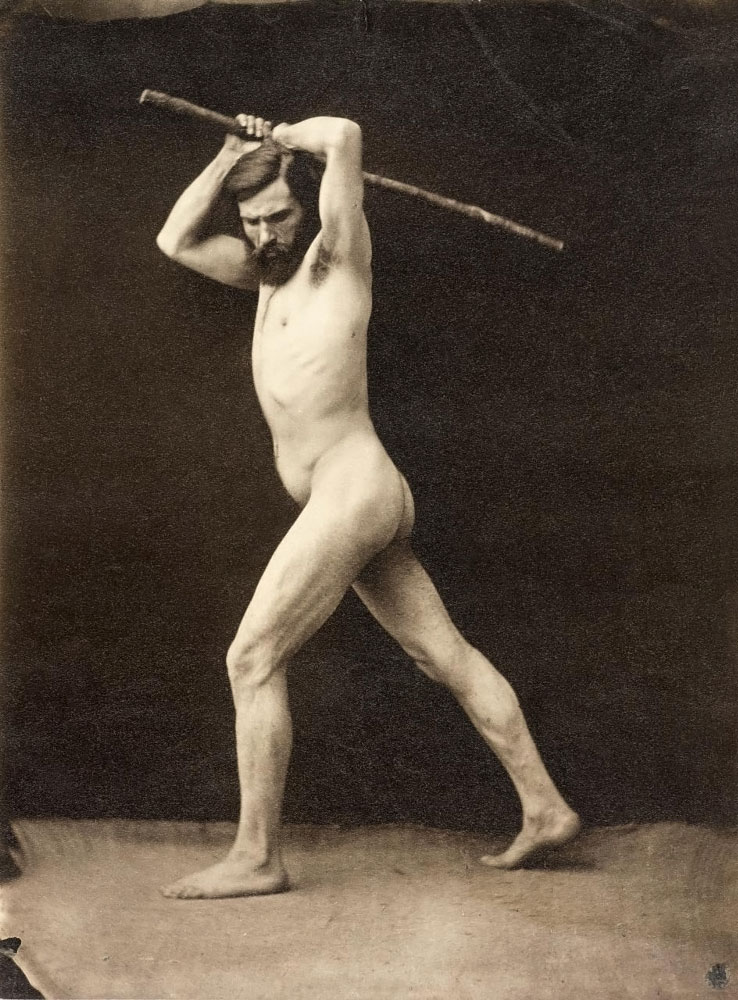
Gaudenzio Marconi (French born Switzerland, 1842-1885) 'Male nude for artist' c. 1870


Gaudenzio Marconi (French born Switzerland, 1842-1885)
Male nude for artist
c. 1870
Albumen print
Image and sheet: 8 5/8 × 6 3/8 inches (21.91 × 16.19cm)
Mount: 12 9/16 × 9 3/4 inches (31.91 × 24.77cm)
The Nelson-Atkins Museum of Art
Gift of the Hall Family Foundation


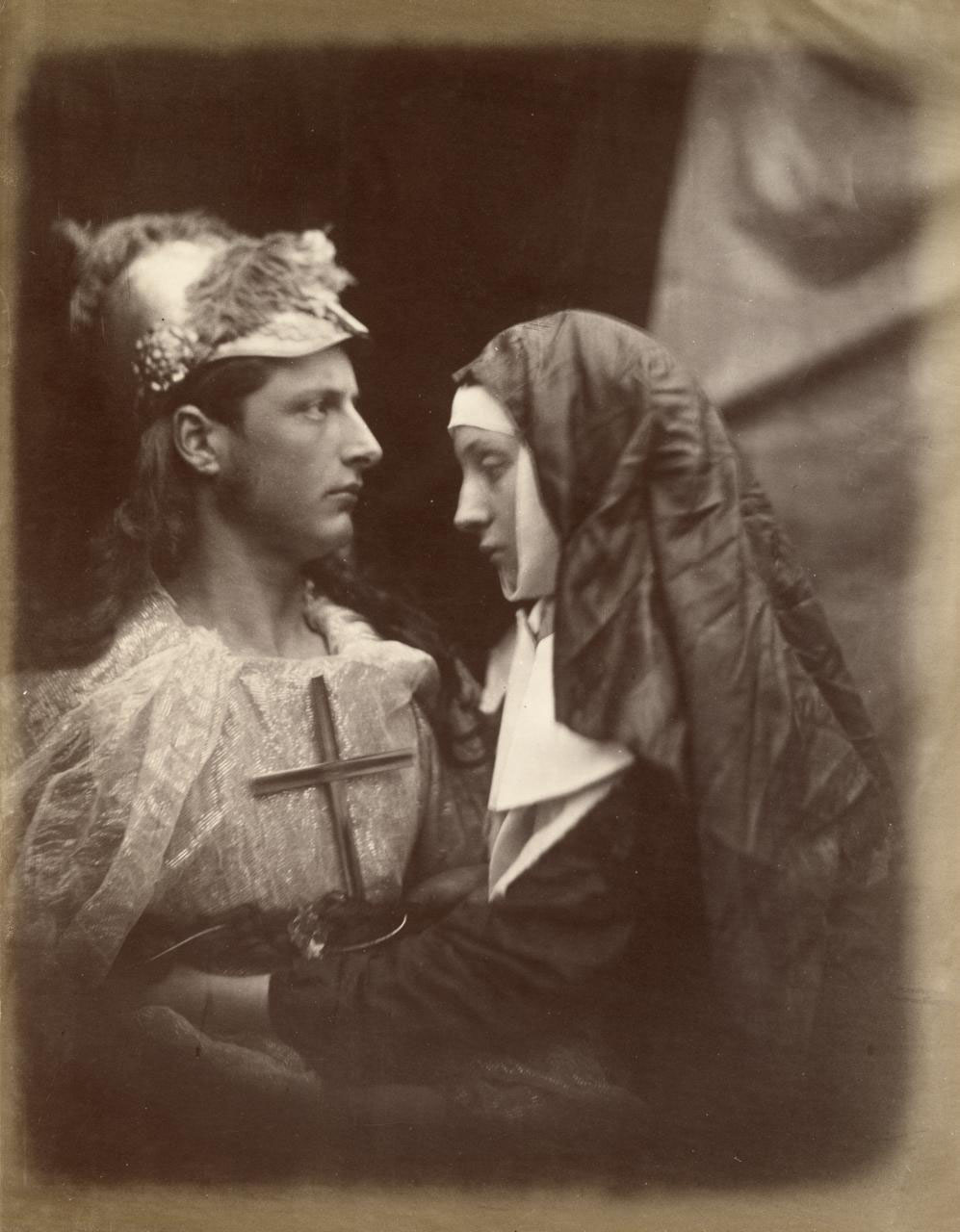
Julia Margaret Cameron (English born India, 1815-1879) 'Sir Galahad and the Pale Nun' 1874


Julia Margaret Cameron (English born India, 1815-1879)
Sir Galahad and the Pale Nun
1874
Albumen print
13 7/16 × 10 1/2 inches
The Nelson-Atkins Museum of Art
Gift of the Hall Family Foundation


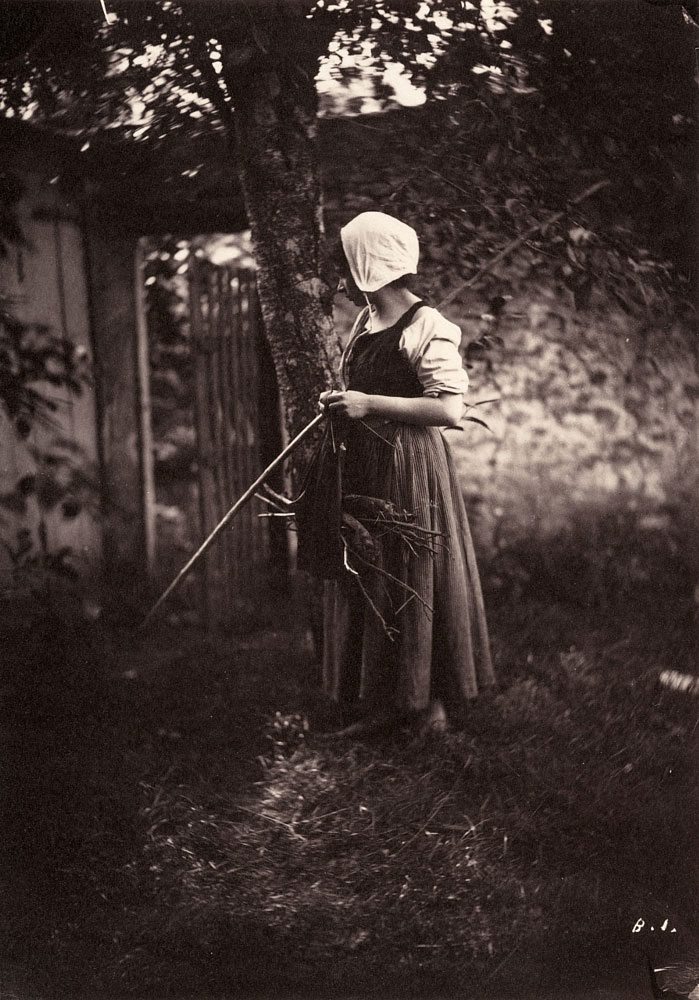
Giraudon's Artist (French, active c. 1875) 'Woman with bundle of twigs' c. 1875-1880


Giraudon’s Artist (French, active c. 1875)
Woman with bundle of twigs
c. 1875-1880
Albumen print
Image and sheet: 6 5/8 × 4 11/16 inches (16.83 × 11.91cm)
The Nelson-Atkins Museum of Art
Gift of the Hall Family Foundation


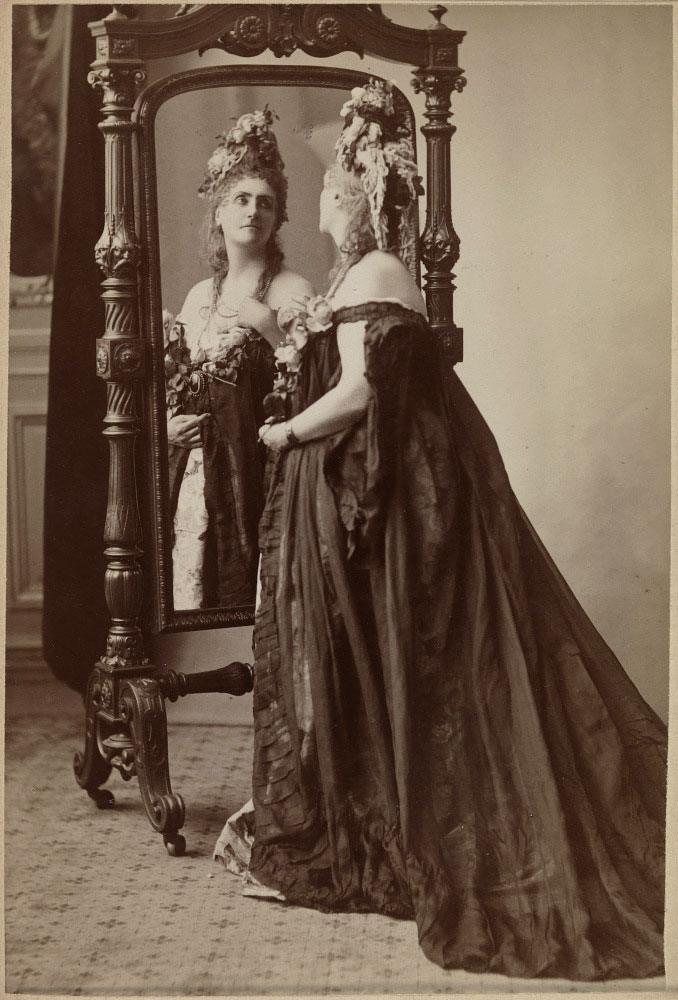
Pierre-Louis Pierson (French, 1822-1913) 'Portrait of the Countess of Castiglione from Série des Roses' 1895


Pierre-Louis Pierson (French, 1822-1913)
Portrait of the Countess of Castiglione from Série des Roses
1895
Albumen cabinet card
Image and sheet: 5 15/16 × 3 15/16 inches (15.06 × 9.98cm)
Mount: 6 3/8 × 4 1/4 inches (16.21 × 10.8cm)
The Nelson-Atkins Museum of Art
Gift of the Hall Family Foundation


The Countess of Castiglione became reclusive with age, rumored to only leave her home at night, hidden behind veils. Social chroniclers of the time claimed that she removed all mirrors from her home to avoid her appearance; however, this portrait seems to contradict her alleged displeasure. Taken toward the end of her life, the countess admires her reflection in the mirror, donning a youthful blond wig elaborately decorated with roses.

Text from the Nelson-Atkins Museum website


The Nelson-Atkins Museum of Art
4525 Oak Street
Kansas City, MO 64111

Opening hours:
Thursday – Monday 10am – 5pm
Closed Tuesdays and Wednesdays

The Nelson-Atkins Museum of Art website

LIKE ART BLART ON FACEBOOK

Back to top

Exhibition: ‘The Real Thing: Unpackaging Product Photography’ at the Metropolitan Museum of Art, New York

Exhibition dates: 11th March – 4th August 2024

Curator: Virgina McBride, Research Associate in the Department of Photographs at The Met


Anton Bruehl (American born Australia, 1900-1982) 'Four Roses Whiskey: Worth Reaching For' 1949


Anton Bruehl (American born Australia, 1900-1982)
Four Roses Whiskey: Worth Reaching For
1949
Laminated photomechanical printer’s proof
26.1 x 27.4cm (10 1/4 x 10 13/16 in.)
The Metropolitan Museum of Art, New York
Ford Motor Company Collection, Gift of Ford Motor Company and John C. Waddell, 1987
© Estate of Anton Bruehl


Meticulously staged by the pioneering colour photographer Anton Bruehl, this work was part of a series showing the whiskey in many exciting scenarios: the glass appeared to travel by train and cruise liner, as well as hot air balloon. Bruehl’s pictures ran as ads in LIFE and Newsweek, conjuring worldly associations for his client, the Kentucky distiller Four Roses.

Against all odds, these eye-catching scenes were not darkroom fabrications – Bruehl arranged them by hand, with the help of miniaturists, set dressers, and a celebrity florist.

Testing appetites for novelty, illusion, and abundance against the limits of good taste, he wagered that this crisp construction would quench your thirst, then melt into hot air.

Text from the Metropolitan Museum of Art Instagram page

Anton Bruehl was born in 1900 of German émigré parents in the small town of Hawker, Australia. By 1919, when he moved to the United States to work as an electrical engineer, he was a skilled amateur photographer. A show of student work from the Clarence H. White School of Photography at the Art Center, New York, in 1923 convinced Bruehl to quit his engineering job to become a photographer. White taught Bruehl privately for six months and then asked him to teach at his school, including its summer sessions in Maine. White’s sudden death, in 1925, prompted Bruehl to open a studio, at first partnering with photographer Ralph Steiner and then with his older brother, Martin Bruehl; it was immediately successful. Specializing in elaborately designed and lit tableaux, Bruehl won top advertising awards throughout the late 1920s and early 1930s. A favourite of Condé Nast Publications, he developed the Bruehl-Bourges colour process with colour specialist Fernand Bourges, which gave Condé Nast a monopoly on colour magazine reproduction from 1932 to 1935.

Text from the MoMA Object: Photo website


What a thoughtful, stimulating and well presented exhibition which contains some absolutely beautiful product photographs. These photographs awaken in the consumer a desire to possess the object of the camera’s attention, the aesthetisication of the object as a form of “readymade” available for immediate consumption.

It’s such a pity that for some of sections – such as “The Array”, “The Montage”, and “The Ideal user” – I only have one or two media image to illustrate the theme.

I have included in the posting a wonderful photograph from my own collection – a postcard with a real photograph on the front by an unknown photographer, showing a proprietor standing by the front door of his shop advertising the wares for “Howard, Watchmaker & Jeweller”, no date – probably British from 1890s-1910s due to his attire, the typeface on the front of the shop, and how “jewellery” is spelt. In the window there is an effusive display of clocks, watches, rings and Prince Albert watch chains.

My favourite photographs in the posting are the portrait of The Silver Merchants (c. 1850, below); the photograph of a tombstone from the Vermont Marble Tombstone Catalogue (1880s, below); the hand-coloured photograph by the Schadde Brothers of High Grade Jelly Eggs, from a Brandle & Smith Co. Catalogue (c. 1915, below); and the sublime Edward G. Budd Manufacturing Co. photograph Automotive Component (February 22, 1927, below)

Through these product photographs we begin to understand how, “The conventions of the past inform these norms and explain the advertisements that we see in our daily lives.” And how we have lost that spark of creativity, use of colour and form and appreciation of beauty in product photography that was the essence of what has gone before.

For those that are interested, I have included some expressive quotations on the complexity of the relationship between the construction of the self, commodities and consumer culture at the bottom of the posting.

Dr Marcus Bunyan


Many thankx to the Metropolitan Museum of Art for allowing me to publish the photographs in the posting. Please click on the photographs for a larger version of the image.


“Consumer capitalism, with its efforts to standardise consumption and to shape tastes through advertising, plays a basic role in furthering narcissism. The idea of generating an educated and discerning public has long since succumbed to the pervasiveness of consumerism, which is a ‘society dominated by appearances’. Consumption addresses the alienated qualities of modern social life and claims to be their solution: it promises the very things the narcissist desires – attractiveness, beauty and personal popularity – through the consumption of the ‘right’ kinds of goods and services. Hence all of us, in modern social conditions, live as though surrounded by mirrors; in these we search for the appearance of an unblemished, socially valued self.”


Anthony Giddens. Modernity and Self-Identity: Self and Society in the Late Modern Age. California: Stanford University Press, 1991, p. 172.


Unknown photographer (British?) 'Howard – Watchmaker and Jeweller' 1890s-1910s?

Unknown photographer (British?) 'Howard – Watchmaker and Jeweller' 1890s-1910s? (verso)


Unknown photographer (Brtish?)
Howard – Watchmaker and Jeweller (front and verso)
1890s-1910s?
Silver gelatin photograph on postcard
Collection of Marcus Bunyan

This photograph is not in the exhibition


“”Product photography is, now, completely inescapable – it follows you around and stalks you on social media – and that condition is very interesting,” said [curator] McBride. The conventions of the past inform these norms and explain the advertisements that we see in our daily lives…

When I visited the exhibition, I was lucky enough to meet Drew, an advertisement photographer who spoke to me about her impressions of The Real Thing: Unpackaging Product Photography. “As someone who works in advertising photography, I find it quite interesting how I think we’ve lost some of the creativity that I see here in this imagery, as far back as the 1920s. It makes me wonder about how I could implement or think about new ways of composition or exploring basic objects in a more exciting way. I’m curious about how these objects were received as advertisements back then. Now, I think we see them more as fine art, so it is interesting to think about what our advertising images could look like twenty years from now.” Drew was strong in her belief that much of the beauty and wonder of advertisement photography has been lost over the decades.

In the 1920s, rising industrial output and consumer demand led executives to seek ways to make their products stand out in a crowded market. Applied psychology shifted managers’ focus to the consumer’s mind, emphasizing the need to persuade consumers that they could find individuality and personal meaning in standardized goods. Consumers “believe what the camera tells them because they know that nothing tells the truth so well.” …

The Real Thing: Unpackaging Product Photography exposes the truth in an entirely new way. It exposes the secrets of photography and how the truth shifted through years of capitalism and consumerism, demanding different sales strategies from producers… [By the 1950s] As the American capitalist market demanded printed ads and mass consumption increased, photographers lost their creative control, with advertisement directors taking up the mantle. There is a straightforward appeal and very little left to the imagination.”


Ayana Chari. “A Review of the Met Museum’s ‘The Real Thing: Unpackaging Product Photography’,” on The Science Survey website July 10, 2024 [Online] Cited 26/07/2024


The photographs in this exhibition do not depict rare or special things. They show toothpaste, tombstones, and hats. But these familiar trappings of everyday life will be, at times, unrecognisable – so altered by the camera as to constitute something entirely new. Enticing consumers with increasingly experimental approaches to the still life genre, the photographs featured transform everyday objects into covetable commodities. The camera abstracts them from functional use, at times distorting them through dizzying perspectives and modulations of scale. Spanning the first century of photographic advertising, the exhibition will illustrate how commercial camerawork contributed to the visual language of modernism, suggesting new links between the promotional strategies of vernacular studios and the tactics of the interwar avant-garde. Corporate commissions by celebrated innovators, including Paul Outerbridge, August Sander, and Piet Zwart, will appear alongside obscure catalogues and trade publications, united by a common cause: to snatch the ordinary out of context, and sell it back at full price.

The exhibition is made possible by The Robert Mapplethorpe Foundation, Inc.

Text from the Metropolitan Museum of Art website


Installation view of the exhibition 'The Real Thing: Unpackaging Product Photography' at the Metropolitan Museum of Art, New York 

Installation view of the exhibition 'The Real Thing: Unpackaging Product Photography' at the Metropolitan Museum of Art, New York showing at right, introductory wall text to the exhibition (below) and F. D. Hampson's Panama Hats, from a Sloan-Force Co. Catalogue c. 1916 (below)


Installation views of the exhibition The Real Thing: Unpackaging Product Photography at the Metropolitan Museum of Art, New York showing at right in the bottom image, introductory wall text to the exhibition (below) and F. D. Hampson’s Panama Hats, from a Sloan-Force Co. Catalogue (c. 1916, below)


Introduction to the exhibition

The photographs in this exhibition do not depict rare or special things. They show toothpaste, tombstones, and hats. But here these familiar trappings of everyday life are, at times, unrecognisable – so altered by the camera as to constitute something entirely new. The Real Thing charts these tactics across the first century of photographic advertising.

If functional objects can be difficult to see, the camera is uniquely equipped to bring them into focus. Excised from mundane contexts and ushered into the studio, they assume new allure, independent of their value or means of production. For early retailers and ad agencies, photography bolstered consumer confidence; the medium offered unprecedented realism, and better still, an aura of truth. Beginning in the late 1850s, new demand for manufactured goods subsidised commercial photography, and the industry grew quickly, spurred by evolving technologies of image reproduction. In the decades that followed, photographers’ increasingly experimental still lives adapted modernism for the mass market.

In the spirit of early photo manuals and how-to guides, the exhibition unfolds thematically, exploring a range of approaches to what is today termed product photography. Pictures from across the commercial section – made in storerooms, corporate studios, and avant-garde ateliers – entice buyers and invent needs, transforming everyday objects into covetable commodities. Works by celebrated innovators appear here alongside obscure catalogues and trade publications, united by a common cause to snatch the ordinary out of context and sell it back at full price.

Wall text from the exhibition


Installation view of the exhibition 'The Real Thing: Unpackaging Product Photography' at the Metropolitan Museum of Art, New York 


Installation views of the exhibition The Real Thing: Unpackaging Product Photography at the Metropolitan Museum of Art, New York showing at right, Irving Penn’s Theatre Accident, New York (1947)


The Inventory

Installation view of the exhibition 'The Real Thing: Unpackaging Product Photography' at the Metropolitan Museum of Art, New York showing the section 'The Inventory' including at second left, 'Fashions 1837-1887, by William Charles Brown' (1888); and at third right, 'Vermont Marble Tombstone Catalogue' (1880s)


Installation view of the exhibition The Real Thing: Unpackaging Product Photography at the Metropolitan Museum of Art, New York showing the section The Inventory including at second left, Fashions 1837-1887, by William Charles Brown (1888, below); and at third right, Vermont Marble Tombstone Catalogue (1880s, below)


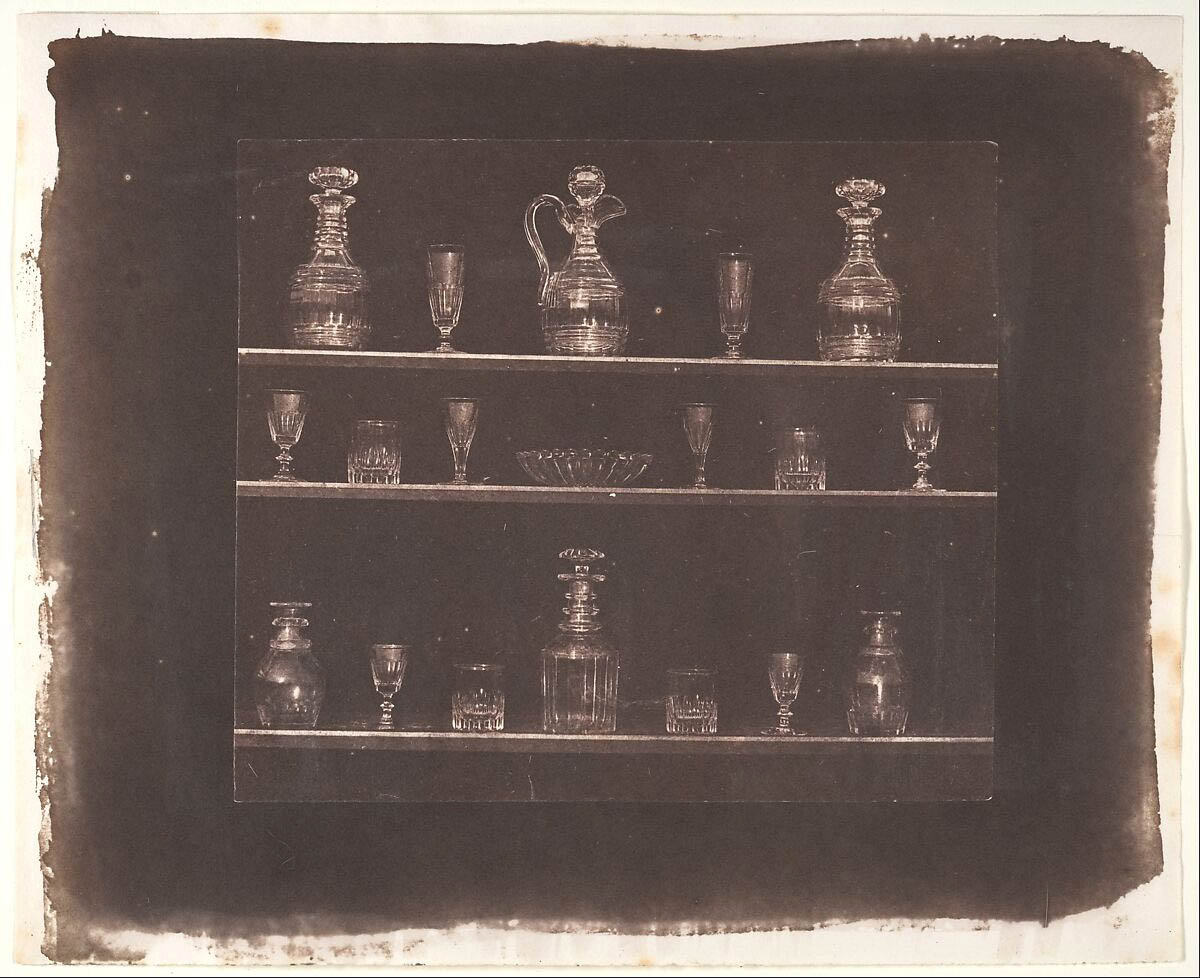
William Henry Fox Talbot (English, 1800-1877) 'Articles of Glass' before June 1844


William Henry Fox Talbot (English, 1800-1877)
Articles of Glass
before June 1844
Salted paper print from paper negative
Image: 13.2 x 15.1 cm. (5 3/16 x 5 15/16 in.)
Frame: 14 3/4 x 14 3/4 in.
Metropolitan Museum of Art
Purchase, The Horace W. Goldsmith Foundation Gift, through Joyce and Robert Menschel, and Harrison D. Horblit Gift, 1988
Public domain


Talbot’s negative-positive photographic process, first made public in 1839, would change the dissemination of knowledge as had no other invention since movable type. To demonstrate the paper photograph’s potential for widespread distribution – its chief advantage over the contemporaneous French daguerreotype – Talbot produced The Pencil of Nature, the first commercially published book illustrated with photographs. With extraordinary prescience, Talbot’s images and brief texts proposed a wide array of applications for the medium, including portraiture, reproduction of paintings, sculptures, and manuscripts, travel views, visual inventories, scientific records, and essays in art.

This photograph and the plate preceding it, “Articles of China,” were offered as examples of photography’s usefulness as a tool for creating visual inventories of unprecedented accuracy. Talbot wrote: “The articles presented on this plate are numerous: but, however numerous the objects – however complicated the arrangement – the Camera depicts them all at once.”

Text from the Metropolitan Museum of Art website


Unknown photographer (American) Case manufactured by Hiram Studley (American, active 1840s) 'The Silver Merchants' c. 1850


Unknown photographer (American)
Case manufactured by Hiram Studley (American, active 1840s)
The Silver Merchants
c. 1850
Daguerreotype
Image: 2 3/16 × 2 3/4 in. (5.5 × 7cm)
Case: 3 1/8 × 3 11/16 × 9/16 in. (8 × 9.3 × 1.5cm)
Approx. 6 1/2 x 3 1/2 in. open
The Metropolitan Museum of Art
Purchase, Joyce F. Menschel Gift, 2017
Public domain


The first product photographs doubled as portraits. Posing with their wares, peddlers demonstrated a standard of work and an assurance of quality. The daguerreotype, a direct-positive image on silver-plated copper, offered all manner of workers an increasingly affordable likeness. Here, silver dealers make the most of the medium, modelling careful attention to their inventory. They examine pocket watches, pendants, and fobs splayed in a sales case. Plying their trade before the camera, they mirror the work of the era’s newest silver merchants: photographers themselves.

Text from the Metropolitan Museum of Art website


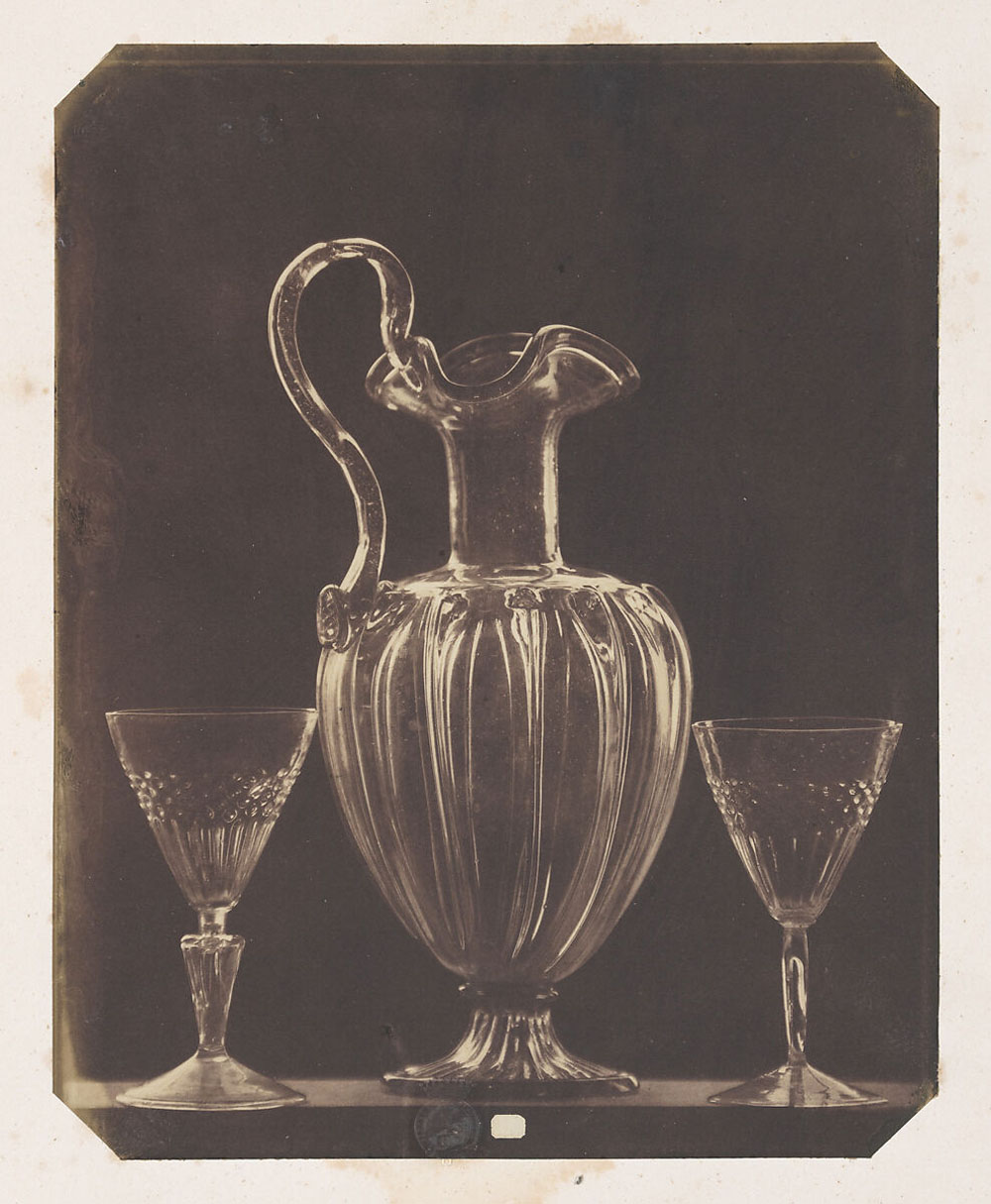
Ludwig Belitski (German, 1830-1902) 'Pitcher and Two Glasses, Venetian, 15th Century' 1854


Ludwig Belitski (German, 1830-1902)
Pitcher and Two Glasses, Venetian, 15th Century
1854
Salted paper print from glass negative
8 3/4 × 6 15/16 in. (22.2 × 17.7cm)
The Metropolitan Museum of Art
The Horace W. Goldsmith Foundation Fund, through Joyce and Robert Menschel, 2016
Public domain


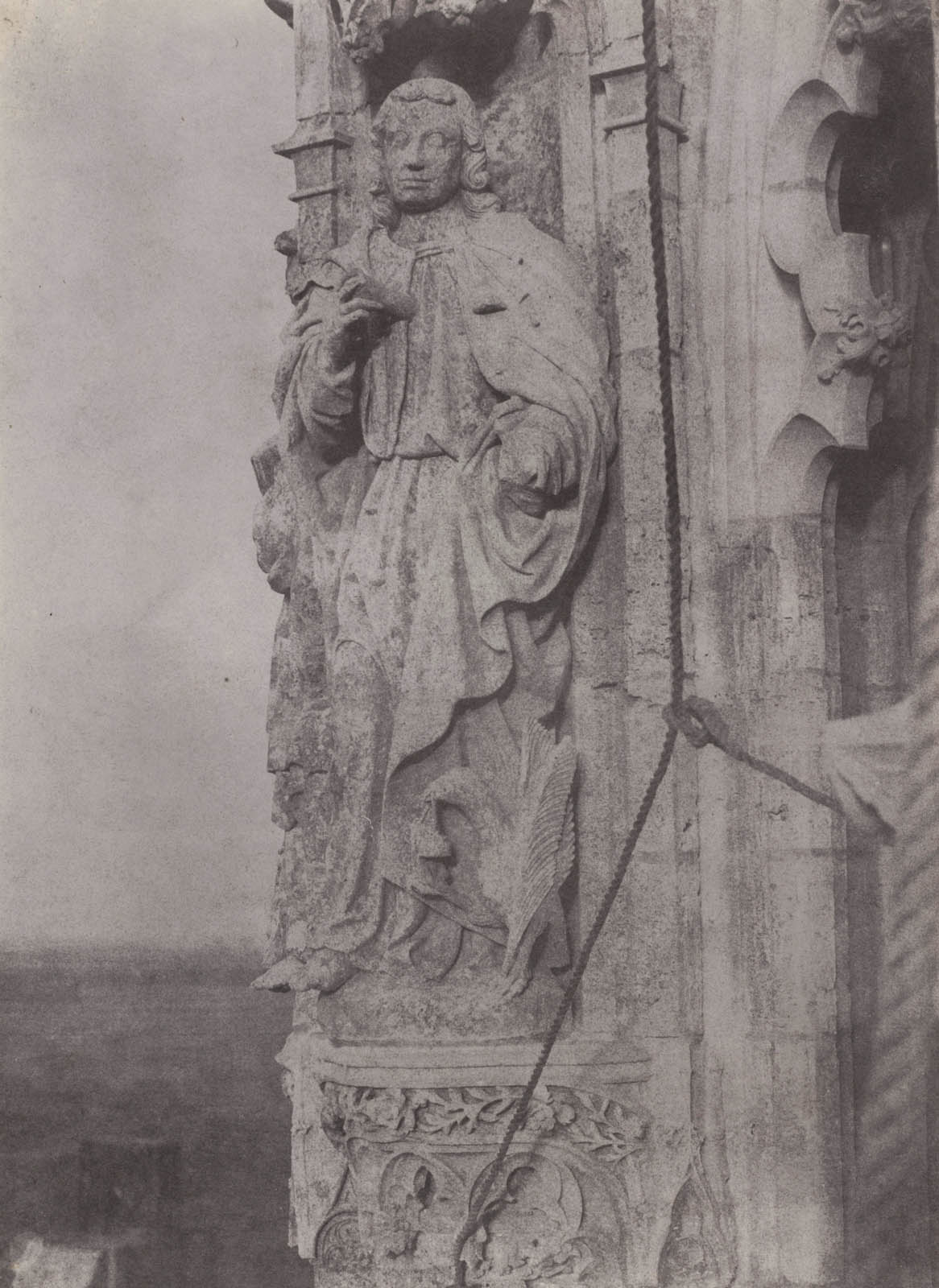
Charles Nègre (French, 1820-1880) '[Plaster Casts of Bishops' Miters, South Porch, Chartres]' c. 1855


Charles Nègre (French, 1820-1880)
[Plaster Casts of Bishops’ Miters, South Porch, Chartres]
c. 1855
Salted paper print from paper negative
Image: 22 x 32.5cm (8 11/16 x 12 13/16 in.)
Frame: 18 1/2 x 22 1/2 in.
Metropolitan Museum of Art
Gilman Collection, Purchase, The Howard Gilman Foundation Gift, 2002
Public domain


When early photographers turned to the material world of things, it was often to document property or record cultural heritage. Their efforts reveal the camera’s remarkable capacity to abstract and transform the objects before its lens. In 1855, Charles Nègre accepted a commission to make architectural studies of Chartres Cathedral as part of a larger initiative to preserve and promote French patrimony. A complement to his sweeping views of sculpted facades, this still life monumentalises the site’s smaller details. It shows plaster replicas of ecclesiastical headgear, taken from the cathedral exterior. These are simulacra of simulacra, yet Nègre recasts them anew, registering their textured surfaces in a splendid study of shadow and mass.

Text from the Metropolitan Museum of Art website
 

Unknown maker (American) 'Man Demonstrating Patent Model for Sash Window' Late 1850s-1860s


Unknown maker (American)
Man Demonstrating Patent Model for Sash Window
Late 1850s-1860s
Tintype with applied colour
4.8 x 3.6cm (1 7/8 x 1 7/16 in.)
Metropolitan Museum of Art
Bequest of Herbert Mitchell, 2008
Public domain


Pine & Bell (photographic studio) (American, active 1860s, Troy, New York) William H. Bell (American born England, Liverpool 1831-1910 Philadelphia, Pennsylvania) George W. Pine (American, active 1860s, Troy, New York) '[Display of Hats and Accessories of 1868]' 1868


Pine & Bell (photographic studio) (American, active 1860s, Troy, New York)
William H. Bell (American born England, Liverpool 1831-1910 Philadelphia, Pennsylvania)
George W. Pine (American, active 1860s, Troy, New York)
[Display of Hats and Accessories of 1868]
1868
Albumen silver print from glass negative
Image: 3 9/16 × 2 1/8 in. (9 × 5.4 cm)
Mount: 3 11/16 in. × 2 3/8 in. (9.3 × 6 cm)
The Metropolitan Museum of Art
William L. Schaeffer Collection, Promised Gift of Jennifer and Philip Maritz, in celebration of the Museum’s 150th Anniversary


Unknown photographer. '[E. Adkins Gun Merchant]' c. 1874


Unknown photographer
[E. Adkins Gun Merchant]
c. 1874
Ambrotype
6.3 x 7.5cm (2 1/2 x 2 15/16 in.) visible
The Metropolitan Museum of Art
Gift of Charles Wilkinson, 1965
Public domain


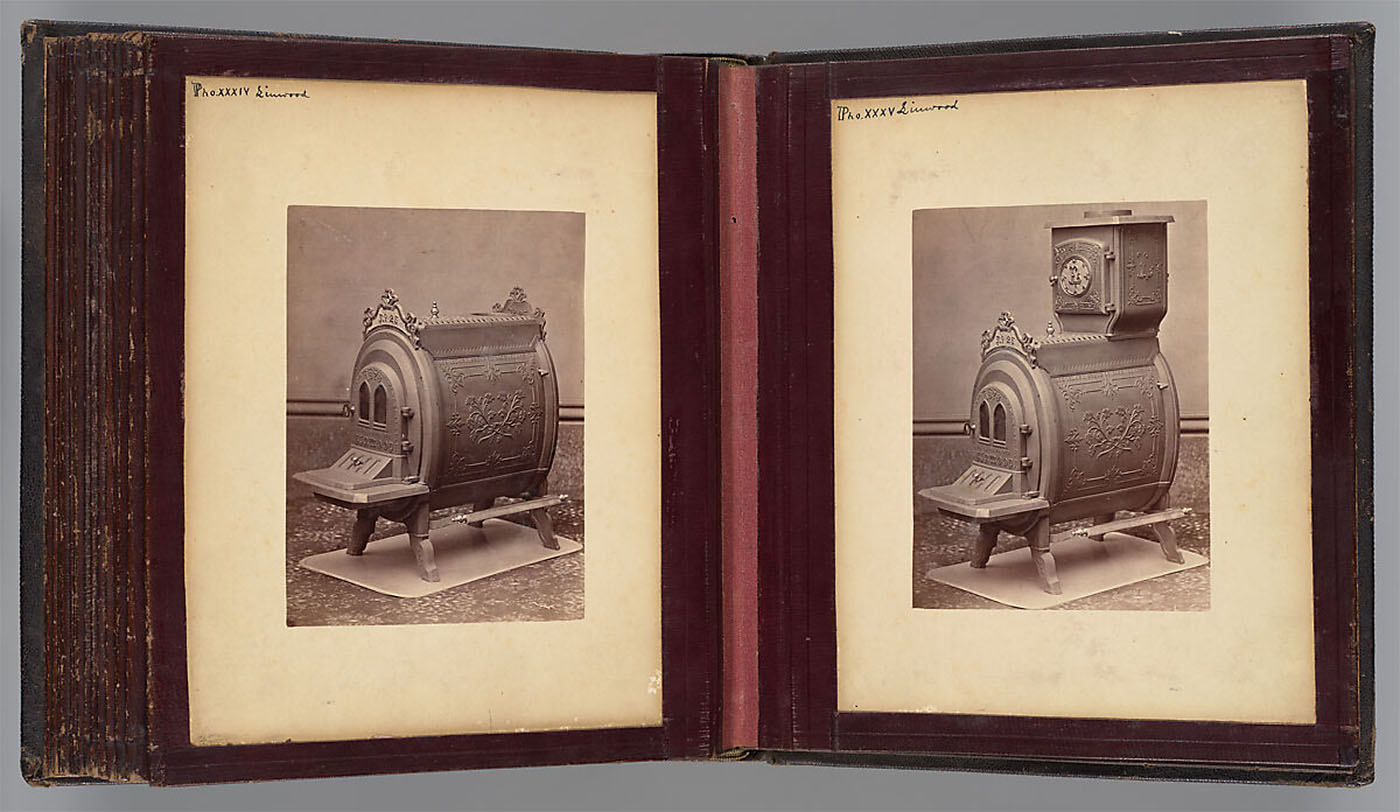
Unknown maker (American) 'Rock Island Stove Company Catalogue' 1878-1883


Unknown maker (American)
Rock Island Stove Company Catalogue
1878-1883
Albumen silver prints
The Metropolitan Museum of Art
Joyce F. Menschel Photography Library Fund, 2003
Public domain


Unknown maker (British) 'Fashions 1837-1887 by William Charles Brown (British, active late 19th century)' 1888


Unknown maker (British)
Fashions 1837-1887 by William Charles Brown (British, active late 19th century)
1888
Woodburytypes
22.5 x 17cm (8 7/8 x 6 11/16 in.)
Approx. 9 x 14 in. open
The Metropolitan Museum of Art
Joyce F. Menschel Photography Library Fund, 2011


In the back of this catalogue from Queen Victoria’s milliner, a disclaimer confirms that no British songbirds were sacrificed for its production. Nevertheless, a flock of hats in fine feather fills this page spread, flaunting designs fit for the royal family. The deluxe volume is illustrated with woodburytypes, an early photomechanical process with a rich tonal range to register varied velvets, silks, straws, and plumes. Hatstands and supports have been edited out of these images to suspend the specimens midair. Surreal to modern eyes, the effect accentuates the hats’ commodity status and implies inventory soaring out of stock.

Text from the Metropolitan Museum of Art website


Frank M. Sutcliffe (British, 1853-1941) '[Display of Whitby Seascape Photographs]' c. 1888


Frank M. Sutcliffe (British, 1853-1941)
[Display of Whitby Seascape Photographs]
c. 1888
Albumen silver print
Image: 4 1/4 × 5 1/2 in. (10.8 × 14 cm)
Sheet: 6 15/16 × 9 1/2 in. (17.7 × 24.1 cm)
Frame: 11 x 14 in.
Metropolitan Museum of Art
Purchase, Anonymous Gift, 2023
Public domain


“Choose one subject, anything will do,” Frank Sutcliffe advised aspiring photographers. If his career-spanning preoccupation with the British seaside town of Whitby seemed myopic to some peers, it allowed him to cultivate a distinctive brand. This typology of seascapes testifies to his years of work along the town harbour, where he weathered storms and punishing wind in pursuit of the perfect view. Pinned up for purchase at an exhibition, his photographs here become products. This rudimentary style of display seems to have served him well; at one such showcase, he counted the Prince of Wales among his customers.

Text from the Metropolitan Museum of Art website


Unknown (American) '[Vermont Marble Tombstone Catalogue]' 1880s


Unknown (American)
[Vermont Marble Tombstone Catalogue]
1880s
Albumen silver prints
Approx. 17 1/4 x 4 in. open
The Metropolitan Museum of Art
Jefferson R. Burdick Bequest, 1972
Public domain


“When you are met with a flood of tears, the best thing to do is politely say that you will call again,” advised one traveling salesman in the tombstone trade. For Cyrus Creigh, a thirty-something Virginian who sold stones from this annotated catalogue, such considerations were part of the job. In each new town, he might solicit names of bereaved families from undertakers and local cemetery staff. Slipped from a suit pocket and proffered door-to-door, his book of bluntly descriptive photographs sold surviving relatives a modicum of consolation. The stones, posed in a corporate studio and silhouetted in darkness, assume a solemn universality, as if any of their blank faces might soon bear a familiar name.

Text from the Metropolitan Museum of Art website


Schadde Brothers (American, active Minneapolis, 1890s-1910s) Alvin J. Schadde (American, 1872-1937) Herman T. Schadde (American, 1874-1937) '[High Grade Jelly Eggs, from a Brandle & Smith Co. Catalogue]' c. 1915


Schadde Brothers (American, active Minneapolis, 1890s-1910s)
Alvin J. Schadde (American, 1872-1937)
Herman T. Schadde (American, 1874-1937)
[High Grade Jelly Eggs, from a Brandle & Smith Co. Catalogue]
c. 1915
Gelatin silver print with applied colour
Image: 8 1/4 × 9 3/4 in. (21 × 24.8cm)
Frame: 18 x 20 in.
Metropolitan Museum of Art
Twentieth-Century Photography Fund, 2013


Schadde Brothers (American, active Minneapolis, 1890s-1910s) Alvin J. Schadde (American, 1872-1937) Herman T. Schadde (American, 1874-1937) '[Satinettes, Filled Confections and Ye Old Style Stick Candy, from a Brandle & Smith Co. Catalogue]' c. 1915


Schadde Brothers (American, active Minneapolis, 1890s-1910s)
Alvin J. Schadde (American, 1872-1937)
Herman T. Schadde (American, 1874-1937)
[Satinettes, Filled Confections and Ye Old Style Stick Candy, from a Brandle & Smith Co. Catalogue]
c. 1915
Gelatin silver print with applied colour
Image: 8 1/2 × 10 5/8 in. (21.6 × 27cm)
Frame: 18 x 20 in.
Metropolitan Museum of Art
Twentieth-Century Photography Fund, 2013


This trade catalogue tricks the eye to tempt the tongue. An artisan has coloured its black-and-white prints, illustrating each sugar stripe and speckled bean. Philadelphia confectioner Brandle & Smith understood that their candy was its own best advertisement, and at one point even induced a museum to accession it for display. Wider distribution was achieved by the salesmen who carried catalogues across the country, taking bulk orders from local shops. Here, the limitations of hand-colouring work to their advantage. Because sweets in jars proved too tricky to tint, the satinettes and candy sticks seem to burst into brilliant colour as they spill from their packaging, satiating the viewer and assisting the sale.

Text from the Metropolitan Museum of Art website
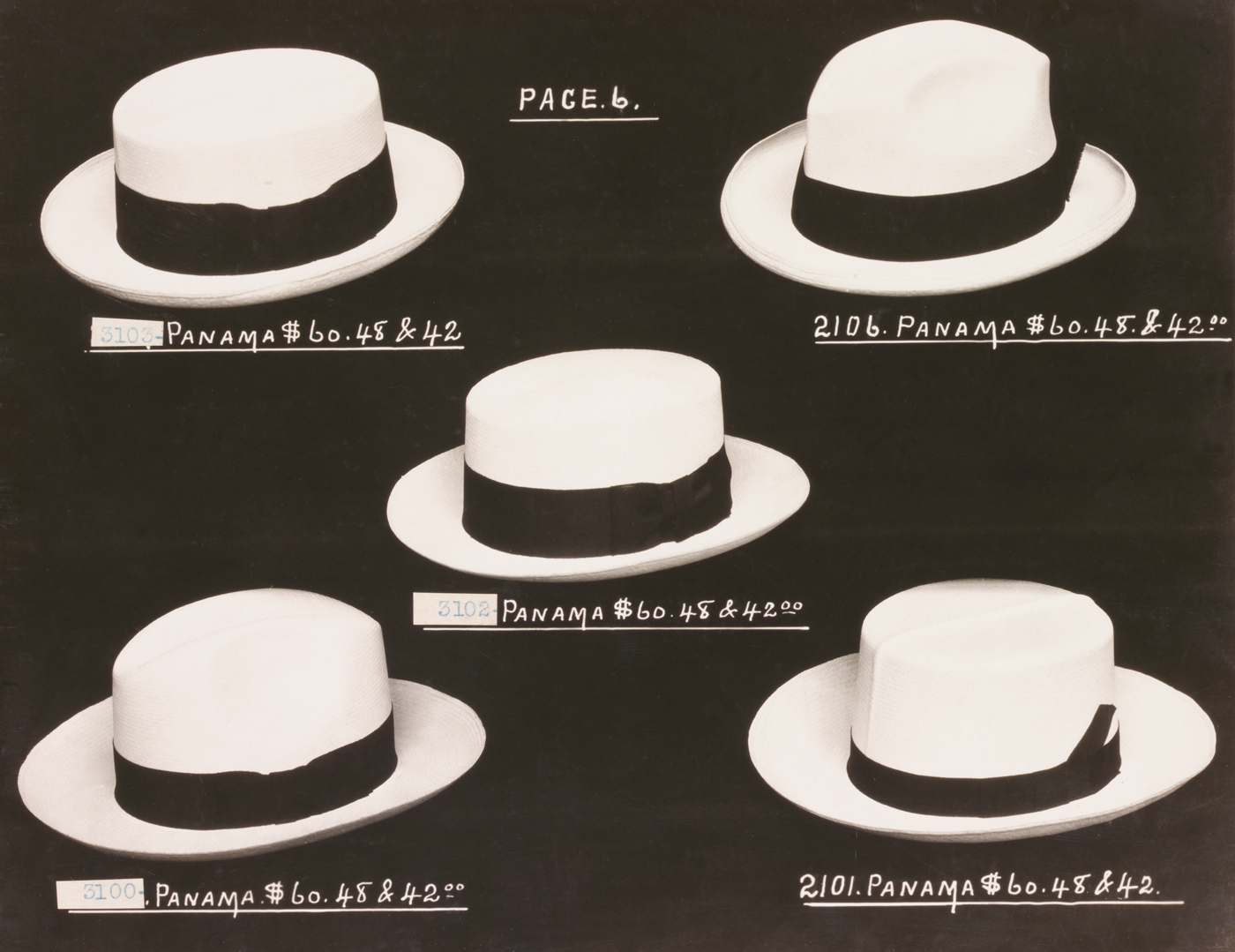
 

F. D. Hampson (American, 1871-1947) 'Panama Hats, from a Sloan-Force Co. Catalogue' c. 1916


F. D. Hampson (American, 1871-1947)
Panama Hats, from a Sloan-Force Co. Catalogue
c. 1916
Gelatin silver print
Image: 18.5 x 23.4 cm (7 5/16 x 9 3/16 in. )
Frame: 16 x 20 in.
Metropolitan Museum of Art
Purchase, The Horace W. Goldsmith Foundation Gift, through Joyce and Robert Menschel, 2001


Like satellites, these straw hats hover in a void. Their absence of context invites imaginative projection: how easy to envision this or that model touching down on one’s head. Popularised by association with the new Panama Canal, the hats were photographed for a St. Louis sales catalogue. Their spare, surreal configuration anticipates an avant-garde approach; in the coming years, disembodied hats would pop up in works by Max Ernst and Hans Richter, evoking the callous consumer – a bourgeois icon ripe for critique. Here, such premonitions of modernism serve practical ends. Suspended together, their varied brims and bands elicit comparison, demanding scrutiny. In an era of exponentially increasing consumer choice, such photographic displays could make anyone into a connoisseur.

Text from the Metropolitan Museum of Art website


Ralph Bartholomew Jr. (American, 1907-1985) '[Soap Packaging]' 1936


Ralph Bartholomew Jr. (American, 1907-1985)
[Soap Packaging]
1936
Carbro print
32.8 x 25.7cm (12 15/16 x 10 1/8 in.)
The Metropolitan Museum of Art
Ford Motor Company Collection, Gift of Ford Motor Company and John C. Waddell, 1987
© Estate of Ralph Bartholomew, Courtesy Keith de Lellis Gallery, NY


If mouthwatering soap seems a contradiction in terms, commercial photographer Ralph Bartholomew Jr. confounds the senses with eye candy to rival the confections nearby. Photographed two decades later, this work did not depend on paint for its delectable palette. It is an example of the early carbro process – a complex tricolor printing technique that gained popularity in the 1930s, as art directors courted Depression-era audiences. Brilliant colour is essential here, in a photograph likely commissioned to sell not the soap but its packaging. Marketed to producers in an array of trade publications (including Modern Packaging, and the industry-specific standby Soap), fine paper wrappers were a booming industry unto themselves. Here, Bartholomew parades his bedecked bars across a page of newsprint showing stock prices to suggest that in this market, even cleanliness was a commodity.

Bartholomew was a successful commercial photographer best known for his innovative use of stop-action and multiple exposure techniques in advertising and editorial work. He made this photograph while he was a student at the Clarence H. White School of Photography.

Text from the Metropolitan Museum of Art website


The Array

Margaret Bourke-White (American, 1904-1971) 'RCA Speakers' 1933


Margaret Bourke-White (American, 1904-1971)
RCA Speakers
1933
Gelatin silver print
Image: 33.3 x 23.3 cm (13 1/8 x 9 3/16 in.)
Frame: 22 1/2 x 18 1/2 in.
The Metropolitan Museum of Art
Warner Communications Inc. Purchase Fund, 1976


In a single voice, the assembled speakers broadcast the scope and influence of American radio. Commissioned by audio manufacturer RCA Victor, this photograph is one component of a monumental photomural for the NBC rotunda at Rockefeller Center. Amplified to a height of ten feet, this and other views of radio technology comprised a work of corporate propaganda to rival those public projects Margaret Bourke-White had recently seen on tours of the Soviet Union. She completed the mural at breakneck speed, often working through the night to photograph equipment at regional stations (lest she risk electrocution during daytime transmission hours). Seeking a visual analogue to audio, she captured the speakers in staccato sequence, their scalloped shapes reverberating beyond the frame.

Text from the Metropolitan Museum of Art website


On March 11, 2024, The Metropolitan Museum of Art opened The Real Thing: Unpackaging Product Photography, an exhibition exploring how commercial camerawork contributed to the visual language of modernism. The photographs featured depict the familiar trappings of everyday life – from toothpaste to tombstones to hats – but at times these subjects will be unrecognisable, so altered by the camera as to constitute an entirely new view.

Spanning the first century of photographic advertising, The Real Thing unites more than 60 works from across the commercial sector. In these photographs, artists – some famous, some forgotten – transform common objects into covetable commodities. Corporate commissions by celebrated innovators, such as Paul Outerbridge, August Sander, and Piet Zwart, appear alongside obscure catalogues and trade publications. Bringing these photographs together, the exhibition reveals links between the promotional strategies of vernacular studios and the radical tactics of the interwar avant-garde.

“This dynamic exhibition looks anew at the commercial history of photographs in the Museum’s collection,” said Max Hollein, The Met’s Marina Kellen French Director and Chief Executive Officer. “By embracing this discerning lens, we gain a renewed appreciation of the intricacies and aesthetics of our everyday surroundings.”

“Not many of the photographers in this exhibition would have identified as fine artists, but their inventive commercial work harnesses the artistic potential of the camera to persuade and enchant,” added the show’s curator, Virginia McBride, Research Associate in the Department of Photographs. “Now that photography’s place in museums no longer needs defending, The Real Thing considers how working photographers, in corporate studios and industrial storerooms, advanced modern art’s visual revolution.”

The first advertising photographs were published in albums and used to peddle products door to door. For early retailers and ad agencies, photography offered unprecedented realism and, better still, an aura of truth; the medium’s perceived objectivity bolstered consumer confidence. Beginning in the late 1850s, new demand for manufactured goods subsidised commercial photography, spurred by evolving technologies of image reproduction. In the decades that followed, increasingly inventive approaches to the still life, from dizzying perspectives to extreme modulations of scale, adapted modernism for the mass market. Historically framed as avant-garde experimentation, this work is rarely acknowledged in its original context of commercial enterprise. This exhibition resituates such innovation within the realm of advertising and investigate its unlikely origins.

Drawn entirely from The Met collection and featuring many photographs from The Ford Motor Company Collection of modernist European and American photography, the exhibition brings together a wide range of photographic media. Included are proof prints, tear sheets, and sample books used by travelling merchants, along with photomontages and rare examples of early colour printing. Such masterworks as André Kertész’s elegant study of a fork and Grete Stern and Ellen Auerbach’s surrealist-inflected advertisements for hair dye and gloves are presented together with the projects of overlooked studios and anonymous makers. Debuting dozens of objects from the Department of Photographs that have never before been shown, and introducing timely new acquisitions, the exhibition considers photography in an expanded field of commercial practice.

The Real Thing: Unpackaging Product Photography is organised by Virgina McBride, Research Associate in the Department of Photographs at The Met.

Press release from the Metropolitan Museum of Art


Grit Kallin-Fischer (German, 1897-1973) 'KPM Ceramics' 1930


Grit Kallin-Fischer (German, 1897-1973)
KPM Ceramics
1930
Gelatin silver print
6 5/8 × 4 3/16 in. (16.8 × 10.7cm)
The Metropolitan Museum of Art
Funds from various donors, 2023


The Isolated Object
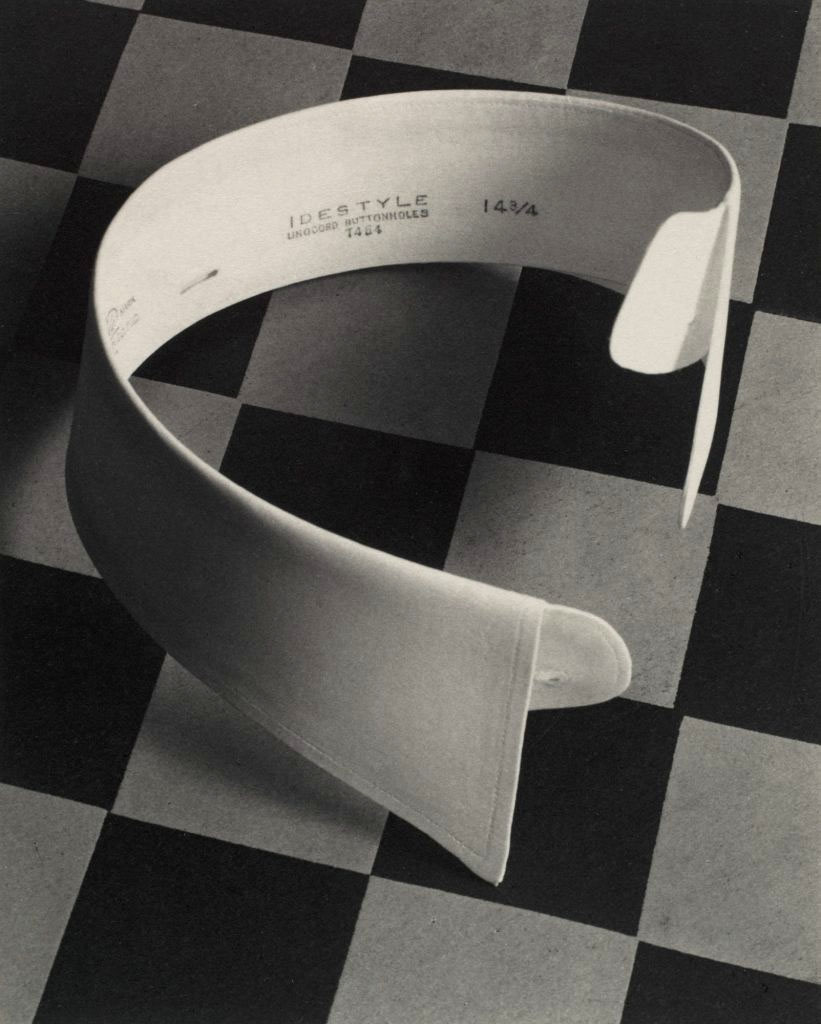
Paul Outerbridge Jr. (American, 1896-1959) 'Ide Collar' 1922


Paul Outerbridge Jr. (American, 1896-1959)
Ide Collar
1922
Platinum print
Image: 11.8 x 9.3 cm (4 5/8 x 3 11/16 in.)
Frame: approx. 14 x 17 in.
The Metropolitan Museum of Art
Ford Motor Company Collection, Gift of Ford Motor Company and John C. Waddell, 1987


“I have attempted to interpret the beauty of the simplest and humblest of objects,” Paul Outerbridge Jr. wrote in 1922. Inspired by his teacher Clarence H. White’s artistic vision for applied photography, Outerbridge regarded the aperture as a kind of canvas in which to arrange compositions with absolute balance. In this, his first commercial assignment, he achieved such equilibrium by custom-cutting a grid of linoleum squares to the scale of his subject. When published as an ad in Vanity Fair, the photograph was ensnared in a scrollwork frame. Such a Victorian flourish seems incongruous today, but at the time, a picture as stark as this seemed to need dressing up. Nevertheless, Marcel Duchamp was said to have clipped the ad and pinned it to his studio wall, apprehending the mass-market collar’s readymade style.

Text from the Metropolitan Museum of Art website
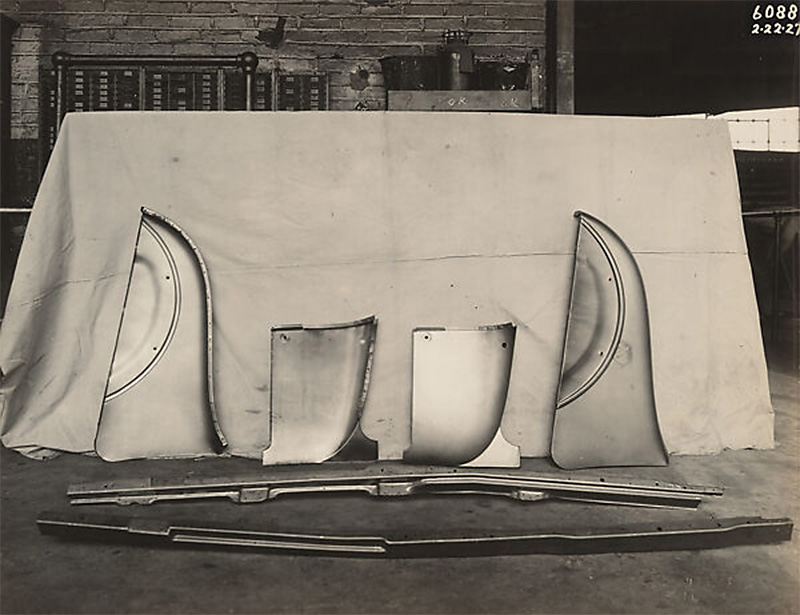
 

Edward G. Budd Manufacturing Co. (American) 'Automotive Component' February 22, 1927


Edward G. Budd Manufacturing Co. (American)
Automotive Component
February 22, 1927
Gelatin silver print
7 1/2 × 9 1/2 in. (19 × 24.1 cm)
The Metropolitan Museum of Art
Purchase, David Hunter McAlpin Fund, by exchange, 2024
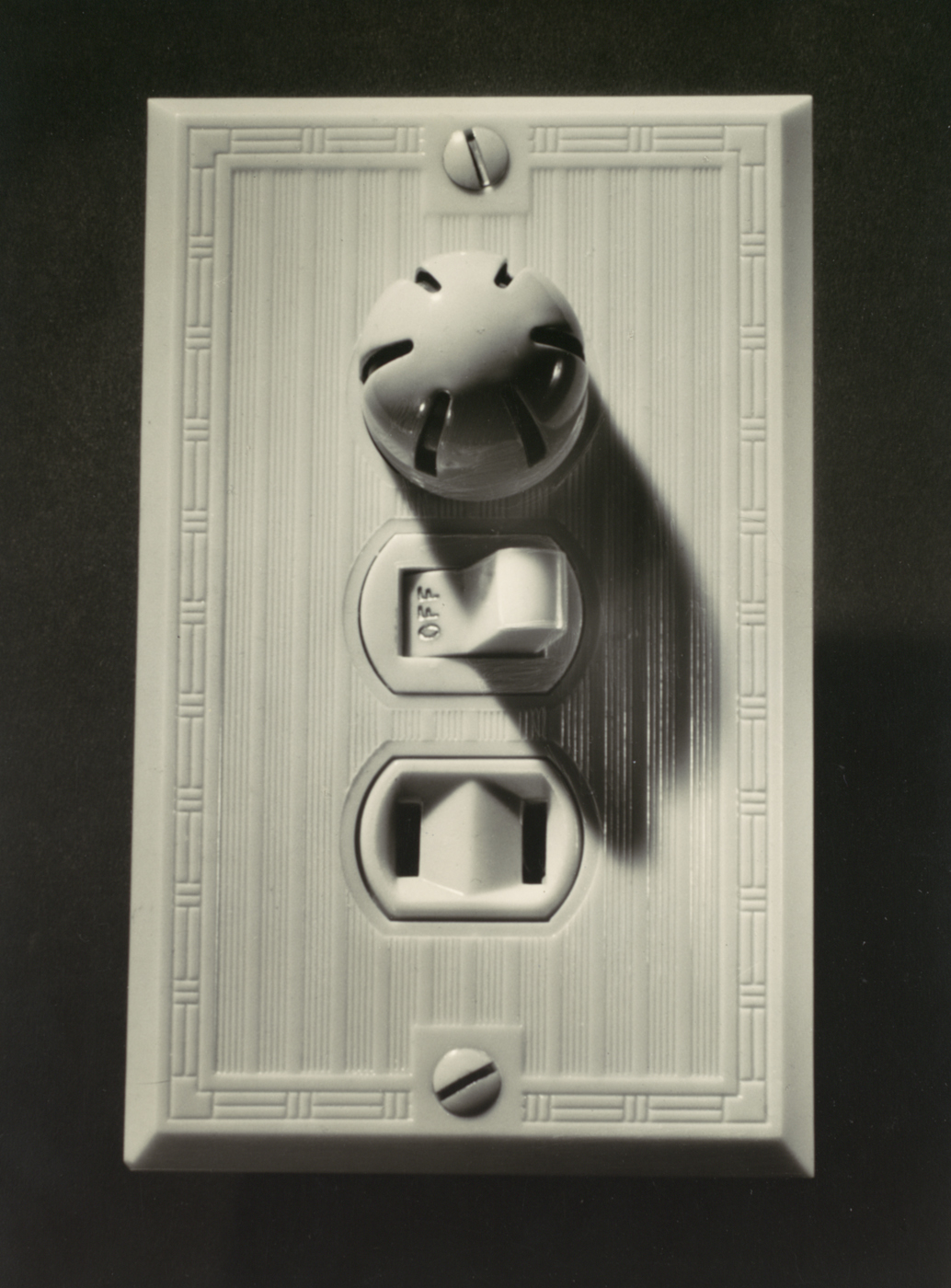
 

Fay Sturtevant Lincoln (American, 1894-1975) 'Pass & Seymour Switch Plate' c. 1949


Fay Sturtevant Lincoln (American, 1894-1975)
Pass & Seymour Switch Plate
c. 1949
Gelatin silver print
Image: 23.8 x 17.9 cm (9 3/8 x 7 1/16 in.)
Frame: approx. 20 x 16 in.
The Metropolitan Museum of Art
Ford Motor Company Collection, Gift of Ford Motor Company and John C. Waddell, 1987


Please resist the urge to flip this light switch. Photographed at close range, the switch plate is so crisply articulated that it tempts touch. Fay Sturtevant Lincoln captures the sculptural quality of this mundane fixture, revealing a keen eye for the texture and detail of domestic life. Now coveted for their retro cachet, molded Bakelite furnishings like this one were ubiquitous in the late 1940s. Though Lincoln was better known for views of glamorous art deco interiors, his attention to the vernacular architecture of homes and offices offers an intimate view of everyday design.

Text from the Metropolitan Museum of Art website


Murray Duitz (American, 1917-2010) 'A.S. Beck "Executive" Shoe' 1957


Murray Duitz (American, 1917-2010)
A.S. Beck “Executive” Shoe
1957
Gelatin silver print
Image: 12 1/2 x 9 1/2 in. (31.8 x 22.9cm)
Frame: 20 x 16 in.
The Metropolitan Museum of Art
Gift of the artist, 1975
© Estate of Murray Duitz


The Unfamiliar Thing
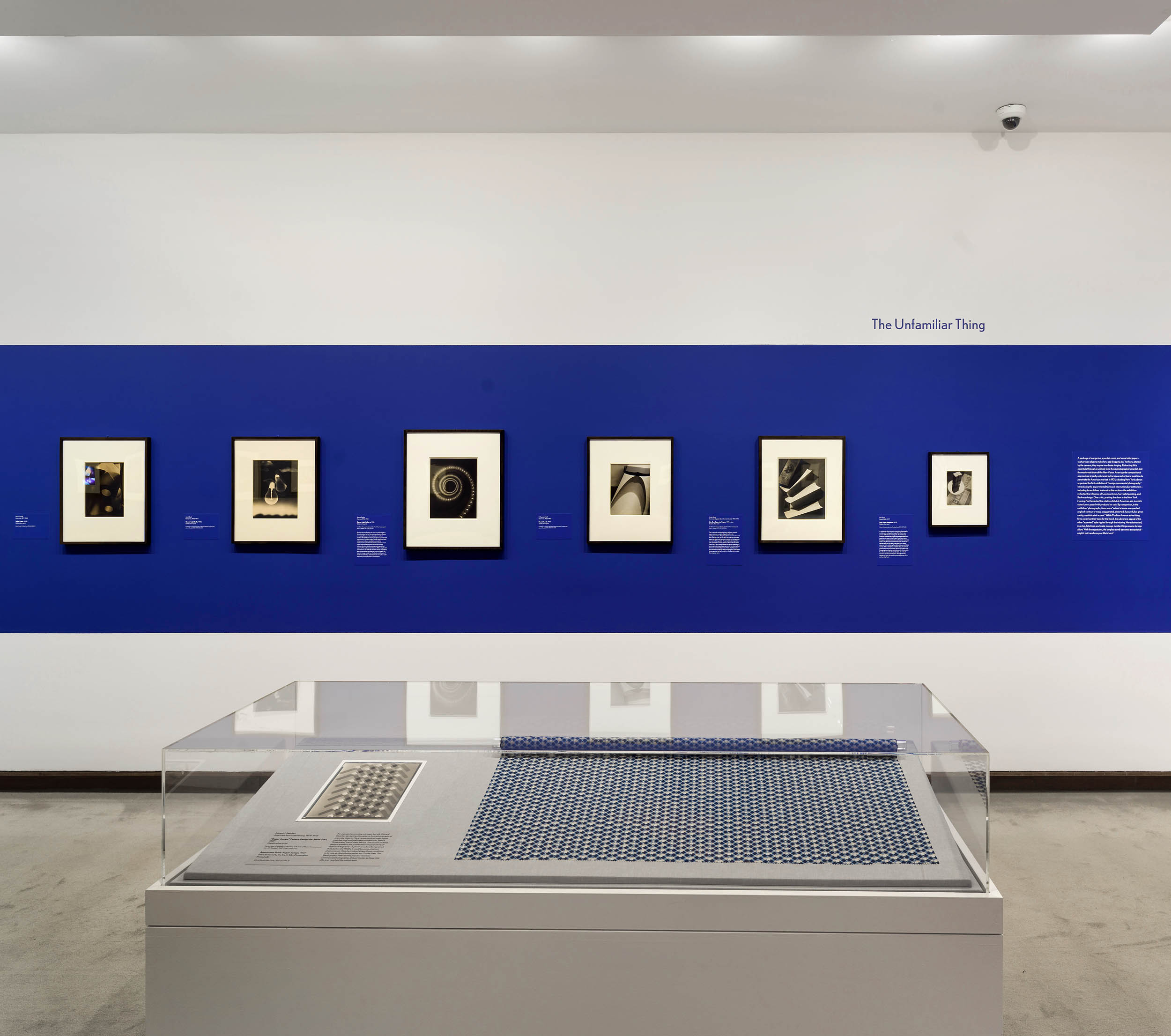
Installation view of the exhibition 'The Real Thing: Unpackaging Product Photography' at the Metropolitan Museum of Art, New York showing the section 'The Unfamiliar Thing' including at third left, August Sander's 'Osram Light Bulbs' (c. 1930); and at third right, H. Raymond Ball's 'Pocket Comb' (1930s)


Installation view of the exhibition ‘The Real Thing: Unpackaging Product Photography’ at the Metropolitan Museum of Art, New York showing the section The Unfamiliar Thing including at third left, August Sander’s Osram Light Bulbs (c. 1930, below); and at third right, H. Raymond Ball’s Pocket Comb (1930s, below)


Edward J. Steichen (American born Luxembourg, Bivange 1879 - 1973 West Redding, Connecticut) '["Sugar Lumps" Pattern Design for Stehli Silks]' 1927


Edward J. Steichen (American born Luxembourg, Bivange 1879 – 1973 West Redding, Connecticut)
[“Sugar Lumps” Pattern Design for Stehli Silks]
1927
Gelatin silver print
25.3 x 20.3cm (9 15/16 x 8 in.)
The Metropolitan Museum of Art
Ford Motor Company Collection, Gift of Ford Motor Company and John C. Waddell, 1987
© 2024 Artists Rights Society (ARS), New York


For a project promoting not sugar but silk, Edward Steichen devised textile patterns from photographs of everyday objects. His arrangements of sugar cubes, matches, and mothballs were printed onto Stehli’s “Americana” line of dress fabrics. The success of these designs speaks to the proliferation and popularity of object photography – a genre so culturally ingrained that, by the late 1920s, it could become a fashion phenomenon. Steichen helped shape these conditions in his influential role as chief photographer for Condé Nast. The Stehli project reflected his populist vision for commercial photography, at least insofar as these chic silks ever reached the mainstream.

Text from the Metropolitan Museum of Art website


August Sander (German, 1876-1964) '[Osram Light Bulbs]' c. 1930


August Sander (German, 1876-1964)
[Osram Light Bulbs]
c. 1930
Gelatin silver print
Image: 29.5 x 22.9 cm (11 5/8 x 9 in.)
Frame: 22 1/2 x 18 1/2 in.
The Metropolitan Museum of Art
Ford Motor Company Collection, Gift of Ford Motor Company and John C. Waddell, 1987
© 2024 Artists Rights Society (ARS), New York


Photography itself makes the case for artificial light in this commission for the German manufacturer Osram. Leveraging the camera’s codependence on their products, the lightbulb company sought out experimental practitioners, including August Sander, to promote the transformative potential of illumination. Sander is best known as the great portraitist of German society between the wars, but the commercial projects that supported his studio remain obscure. With a simple shift in perspective, he radically reorients viewer and subject, abstracting a spiral staircase into a swirl of pearls. His hypnotic image reveals how the shock and pleasure of modernist aesthetics – of looking for its own sake – could seamlessly convey the joys of consumption.

Text from the Metropolitan Museum of Art website
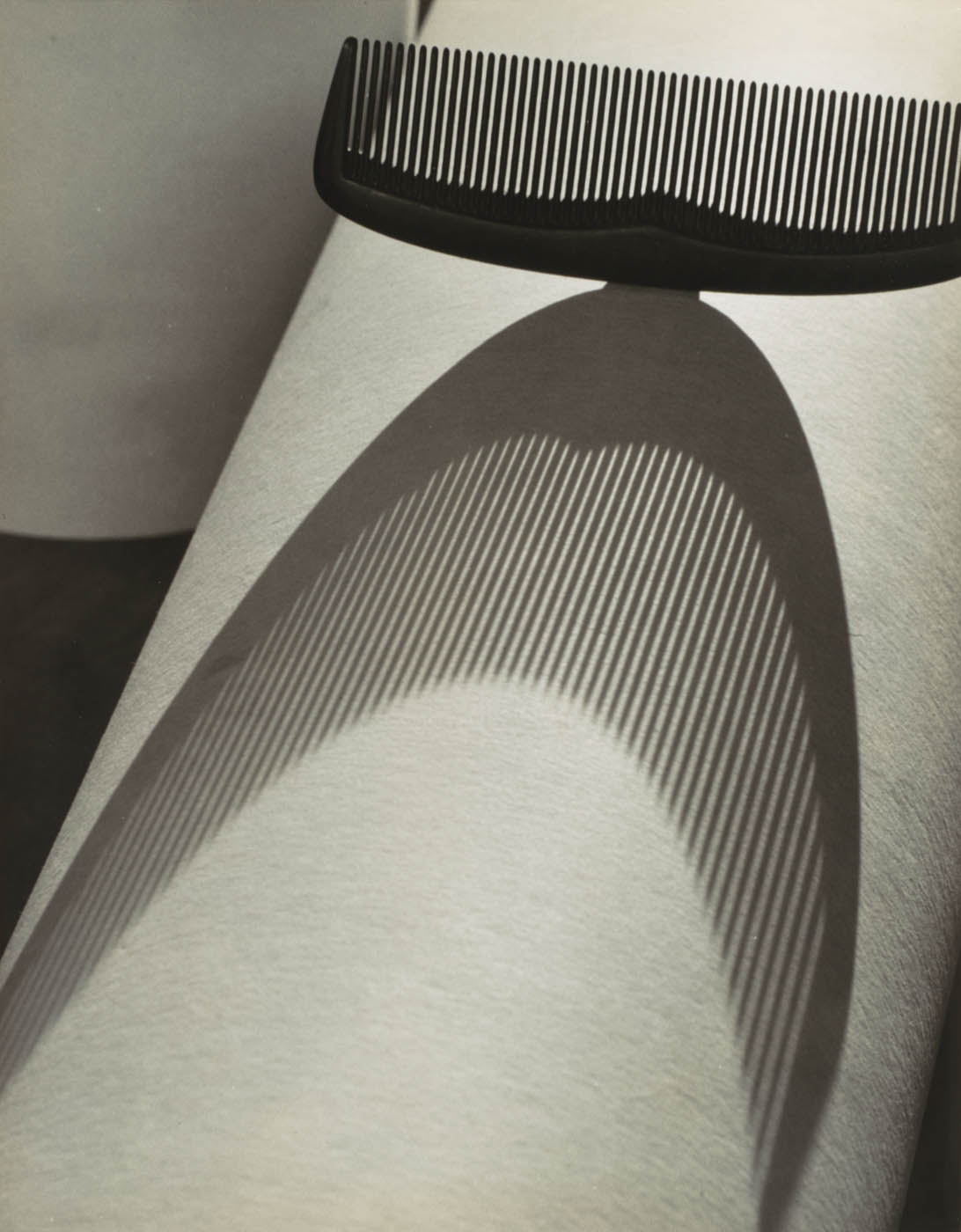
 

H. Raymond Ball (American, 1903-1983) 'Pocket Comb' 1930s


H. Raymond Ball (American, 1903-1983)
Pocket Comb
1930s
Gelatin silver print
Image: 25.2 x 19.8 cm (9 15/16 x 7 13/16 in.)
Frame: 20 x 16 in.
The Metropolitan Museum of Art
Ford Motor Company Collection, Gift of Ford Motor Company and John C. Waddell, 1987


The Montage

César Domela (Dutch, 1900-1992) '[Ruthsspiecher Tanks]' 1928


César Domela (Dutch, 1900-1992)
[Ruthsspiecher Tanks]
1928
Gelatin silver print
Image: 19.3 x 16.6 cm (7 5/8 x 6 9/16 in.)
Frame: 17 x 14 in.
The Metropolitan Museum of Art
Ford Motor Company Collection, Gift of Ford Motor Company and John C. Waddell, 1987
© 2024 Artists Rights Society (ARS), New York


Unknown (American) '[Montage for Packard Super Eight]' c. 1940


Unknown (American)
[Montage for Packard Super Eight]
c. 1940
Gelatin silver print
Image: 22.9 x 18.6 cm (9 x 7 5/16 in.)
Frame: 17 x 14 in.
The Metropolitan Museum of Art
Ford Motor Company Collection, Gift of Ford Motor Company and John C. Waddell, 1987


The Tableau

Installation view of the exhibition 'The Real Thing: Unpackaging Product Photography' at the Metropolitan Museum of Art, New York showing photographs from the section 'The Tableau' including at left, André Kertész's 'Fork' (1928); and at second and third right, ringl + pit's 'Dents' (c. 1934) and 'Komol' (1931)


Installation view of the exhibition The Real Thing: Unpackaging Product Photography at the Metropolitan Museum of Art, New York showing photographs from the section The Tableau including at left, André Kertész’s Fork (1928, below); and at second and third right, ringl + pit’s Dents (c. 1934) and Komol (1931, below)
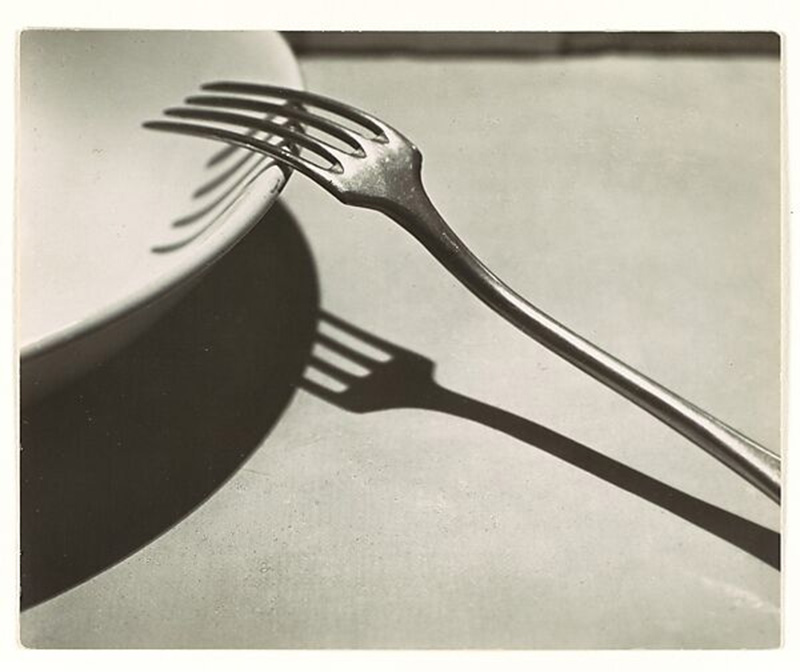
 

André Kertész (American born Hungary, 1894-1985) 'Fork' 1928


André Kertész (American born Hungary, 1894-1985)
Fork
1928
Gelatin silver print
7.5 x 9.2cm (2 15/16 x 3 5/8 in.)
The Metropolitan Museum of Art
Ford Motor Company Collection, Gift of Ford Motor Company and John C. Waddell, 1987
© The Estate of André Kertész / Higher Pictures


As a dinner party wound down in his friend Fernand Léger’s Paris studio, André Kertész found an unlikely tableau left on the table. In this chance encounter between fork and plate, he locates an incidental elegance. The photograph was never intended as an ad – Kertész instead chose it to represent his work in a series of European photography shows. On the exhibition circuit, it came to exemplify a strain of New Vision photography characterised by its clear-eyed reassessment of ordinary things. Only after this did Kertész grant permission for its use in a German silverware campaign. In the ad layout, the photograph was credited and uncropped – atypically presented as a true work of art. The truth of the ad was another question: despite its German rebranding, this fork remained a French department-store product.

Text from the Metropolitan Museum of Art website
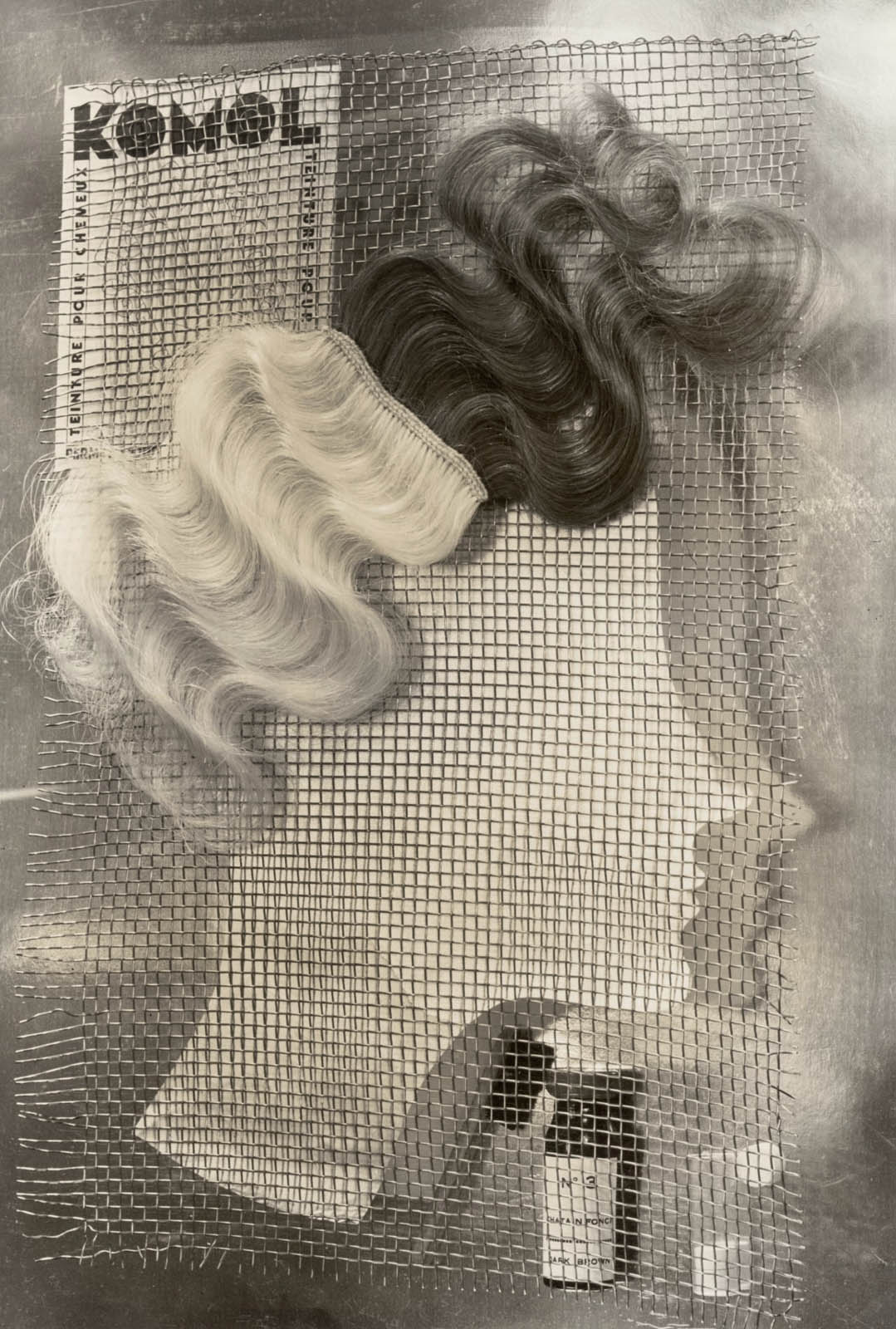
 

ringl+pit (German active 1930-1933) Grete Stern (German, 1904-1999) Ellen Auerbach (German 1906-2004) 'Komol' 1931


ringl + pit (German active 1930-1933)
Grete Stern (German, 1904-1999)
Ellen Auerbach (German 1906-2004)
Komol
1931
Gelatin silver print
Image: 35.9 x 24.4 cm (14 1/8 x 9 5/8 in.)
Frame: 20 x 15 5/8
The Metropolitan Museum of Art
Ford Motor Company Collection, Gift of Ford Motor Company and John C. Waddell, 1987
© ringl+pit, Courtesy Robert Mann Gallery
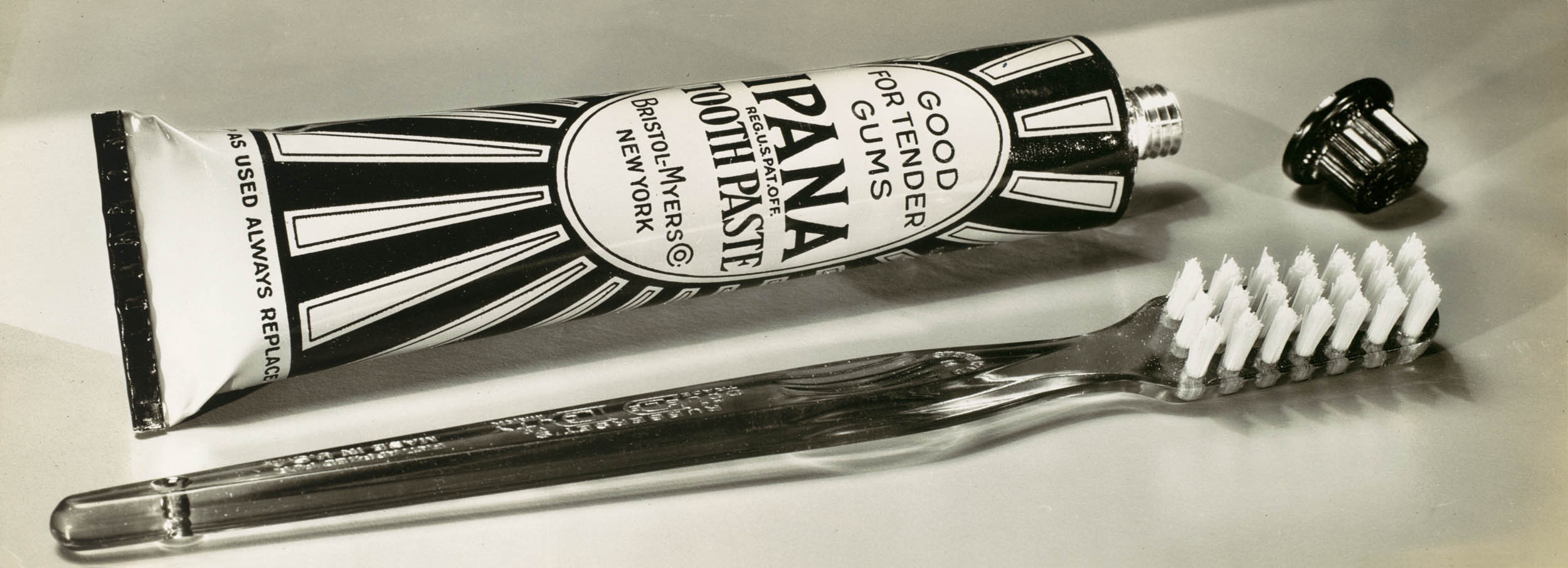
 

Grancel Fitz (American, 1894-1963) 'Ipana Toothpaste' c. 1937


Grancel Fitz (American, 1894-1963)
Ipana Toothpaste
c. 1937
Gelatin silver print
Image: 12.9 x 32.5cm (5 1/16 x 12 13/16 in.)
Frame: approx. 12 x 20 in.
The Metropolitan Museum of Art
Ford Motor Company Collection, Gift of Ford Motor Company and John C. Waddell, 1987


The Ideal User
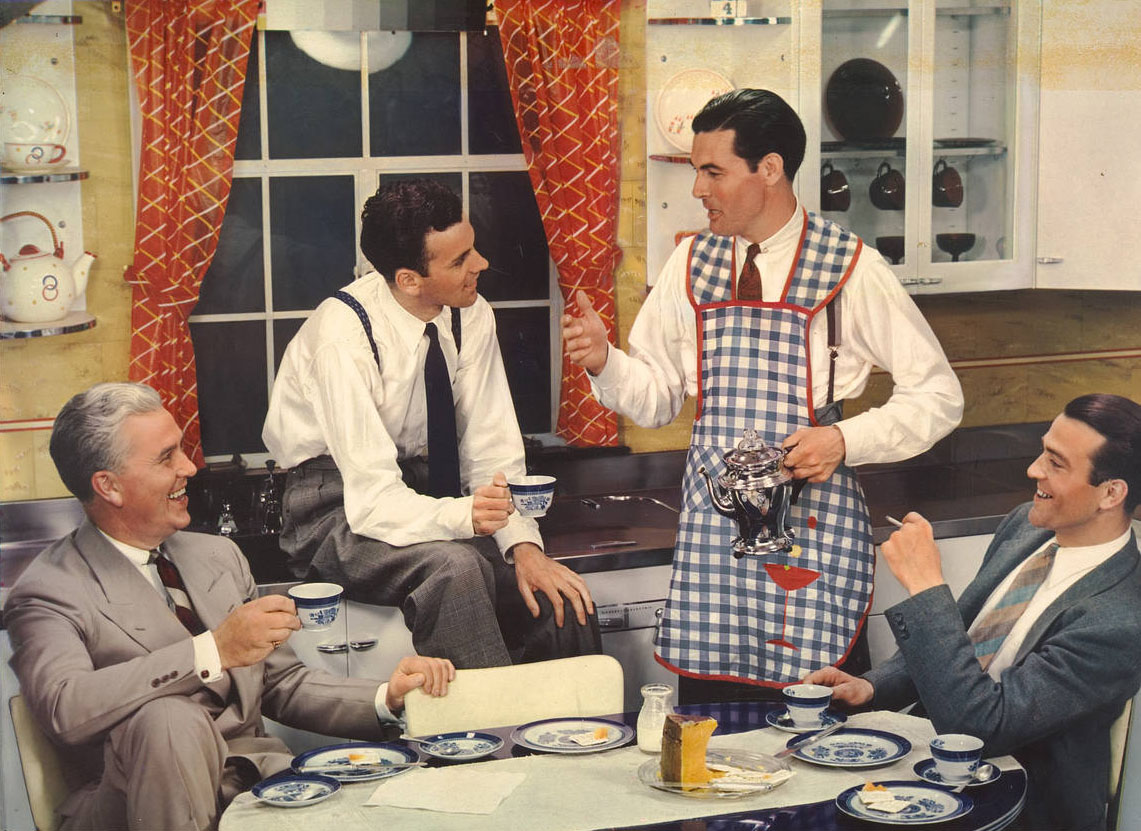
Paul Outerbridge Jr. (American, 1896-1959) 'The Coffee Drinkers' 1940


Paul Outerbridge Jr. (American, 1896-1959)
The Coffee Drinkers
1940
Carbro print
Image (overall): 27 x 38 cm (10 5/8 x 14 15/16 in.)
Mount: 40.7 x 50.7cm (16 x 19 15/16in.)
Frame: 18 1/2 x 22 1/2 in.
The Metropolitan Museum of Art
Ford Motor Company Collection, Gift of Ford Motor Company and John C. Waddell, 1987


With a background in staging and an unwavering belief in the power of images to inspire a better life, Paul Outerbridge Jr. was well suited to the directorial tasks of advertising photography. For A&P Grocery’s Eight O’Clock Coffee, he orchestrated this scene in the display kitchen of a department store, painstakingly diagramming the setup in advance.

“How’d you learn to make such swell coffee, Dick?” the copy teased, when the ad ran in LIFE magazine. Such work exceeds the sum of its parts, selling more than just a jolt of caffeine. The after-dinner air of repose courts camp, conjuring an intimate blend of leisure and power. With it, Outerbridge offers the consumer the chance to be a man among men, all for the price of a can of coffee.

Text from the Metropolitan Museum of Art website


Some expressive quotations about the construction of the self, commodities and consumer culture


“Although the value of commodities is materially embodied in them, it is not visible in the objects themselves as a physical property. The illusion that value resides in objects rather than in the social relations between individuals and objects Marx calls commodity fetishism. When the commodity is fetishized, the labour that has gone into its production is rendered invisible.”

Rosemary Hennessey. “Queer Visibility in Commodity Culture,” Chapter 6 in Nicholson, Linda and Seidman, Steven (eds.,). Social Postmodernism – Beyond Identity Politics. Cambridge: Cambridge University Press, 1995, pp. 161-162.


“When the commodity is dealt with merely as a matter of signification, meaning, or identities, only one of the elements of its production – the process of image making it relies on – is made visible. The exploitation of human labour on which the commodities appearance as an object depends remains out of sight.”

Rosemary Hennessey. “Queer Visibility in Commodity Culture,” Chapter 6 in Nicholson, Linda and Seidman, Steven (eds.,). Social Postmodernism – Beyond Identity Politics. Cambridge: Cambridge University Press, 1995, p. 162.


“The processes of capitalist relationships reproduce themselves in the consciousness of man and, in turn, reproduce a society that reflects an image of man as the seller and buyer of work, talent, aspiration and fantasies.”

Frankl, G. The Failure of the Sexual Revolution. Hove: Kahn and Averill, 1974, p. 26 quoted in Evans, David. Sexual Citizenship, The Material Construction of Sexualities. London: Routledge, 1993, p. 47.


“What was achieved was unprecedented scientific and technical progress and, eventually, the subordination of all other values to those of a world market which treats everything, including people and their labour and their lives and their deaths, as a commodity.”

John Berger and Jean Mohr. Another Way of Telling. New York: Pantheon Books, 1982, p. 99.


“Consumption produces production … because a product becomes a real product only by being consumed. For example, a garment becomes a real garment only in the act of being worn; a house were no one lives is in fact not a real house; thus the product, unlike a mere natural object, proves itself to be, becomes, a product only through consumption. Only by decomposing the product does consumption give the product the finishing touch.”

Karl Marx and Frederick Engels. On Literature and Art. New York: International General, 1973, p. 91 quoted in Wolff, Janet. The Social Production of Art. Basingstoke: Macmillan, 1993, p. 95.


“… the propaganda of consumption turns alienation itself into a commodity. It addresses itself to the spiritual desolation of modern life and proposes consumption as the cure. It not only promises to palliate all the old unhappiness to which flesh is heir; it creates or exacerbates new forms of unhappiness – personal insecurity, status anxiety …”

Christopher Lasch. The Culture of Narcissism. New York: W.W.Norton and Company, 1978, p.73.


“Consumer culture is notoriously awash with signs, images, publicity. Most obviously, it involves an aestheticization of commodities and their environment …

Firstly, problems of status and identity … promote a new flexibility in the relations between consumption, communication and meaning. It is not so much that goods and acts of consumption become more important in signalling status (they were always crucial) but that both the structure of status and the structure of meaning become unstable, flexible, and highly negotiable. Appearance becomes a privileged site of strategic action in unprecedented ways.

Secondly, the nature of market exchange seems intrinsically bound up with aestheticization. As indicated above, commodities circulate through impersonal and anonymous networks: the split between producer and consumer extends beyond simple commissioning (where a personal relationship still exists) to the production for an anonymous general public … Haug (1986) theorizes this in the notion of ‘commodity aesthetics’: the producer must create an image of use value in which potential buyers can recognize themselves. All aspects of the product’s meaning and all channels through which its meaning can be constructed and represented become subject to intense and radical calculation.

This gives rise to some of the central issues of sociological debate on consumer culture. On the one hand, the eminently modern notion of the social subject as a self-creating, self-defining individual is bound up with self-creation through consumption: it is partly through the use of goods and services that we formulate ourselves as social identities and display these identities. This renders consumption as the privileged site of autonomy, meaning, subjectivity, privacy and freedom. On the other hand, all these meanings around social identity and consumption become objects of strategic action by dominating institutions. The sense of autonomy and identity in consumption is placed constantly under threat.”

Don Slater. Consumer Culture and Modernity. London: Polity Press, 1997, p. 31.


The Metropolitan Museum of Art
1000 Fifth Avenue at 82nd Street
New York, New York 10028-0198
Phone: 212-535-7710

Opening hours:
Thursday – Tuesday 10am – 5pm
Closed Wednesday

The Metropolitan Museum of Art website

LIKE ART BLART ON FACEBOOK

Back to top

Exhibition: ‘Etched by Light: Photogravures from the Collection, 1840-1940’ at the National Gallery of Art, Washington

Exhibition dates: 15th October, 2023 – 4th February, 2024

Curators: The exhibition is curated by Sarah Greenough, senior curator and head of the department of photographs, with Andrea Coffman, collection manager in the department of photographs, both at the National Gallery of Art.


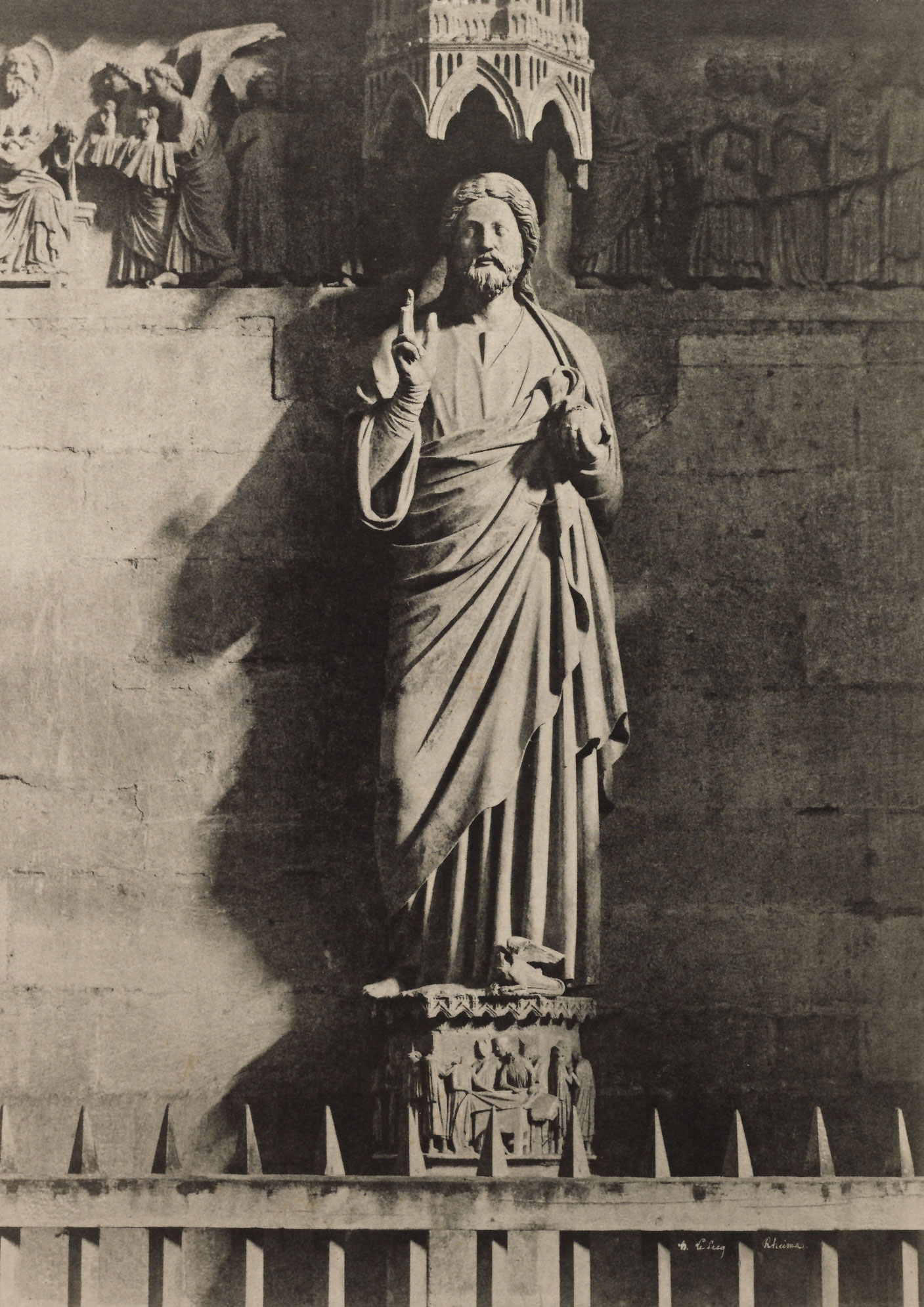
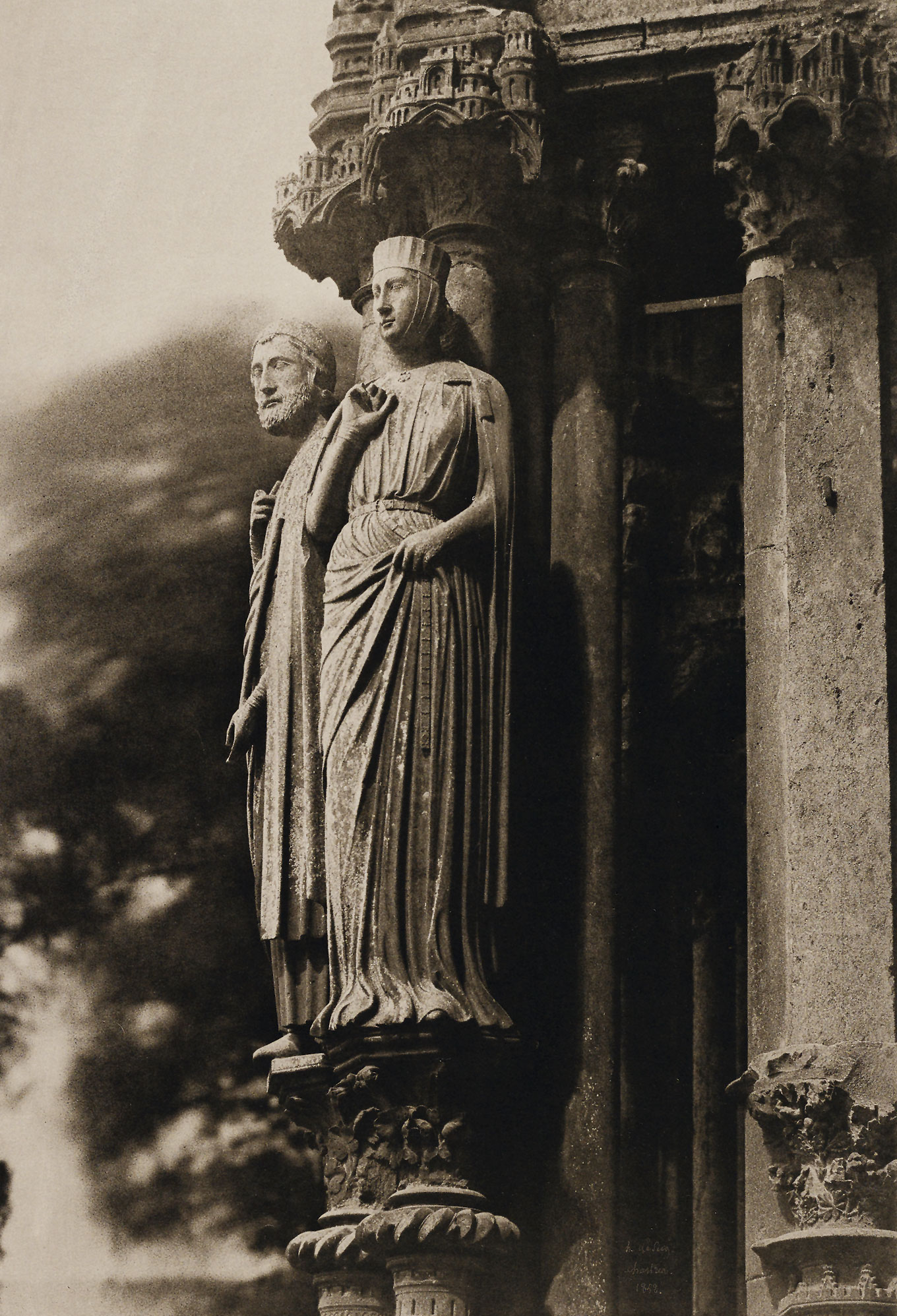
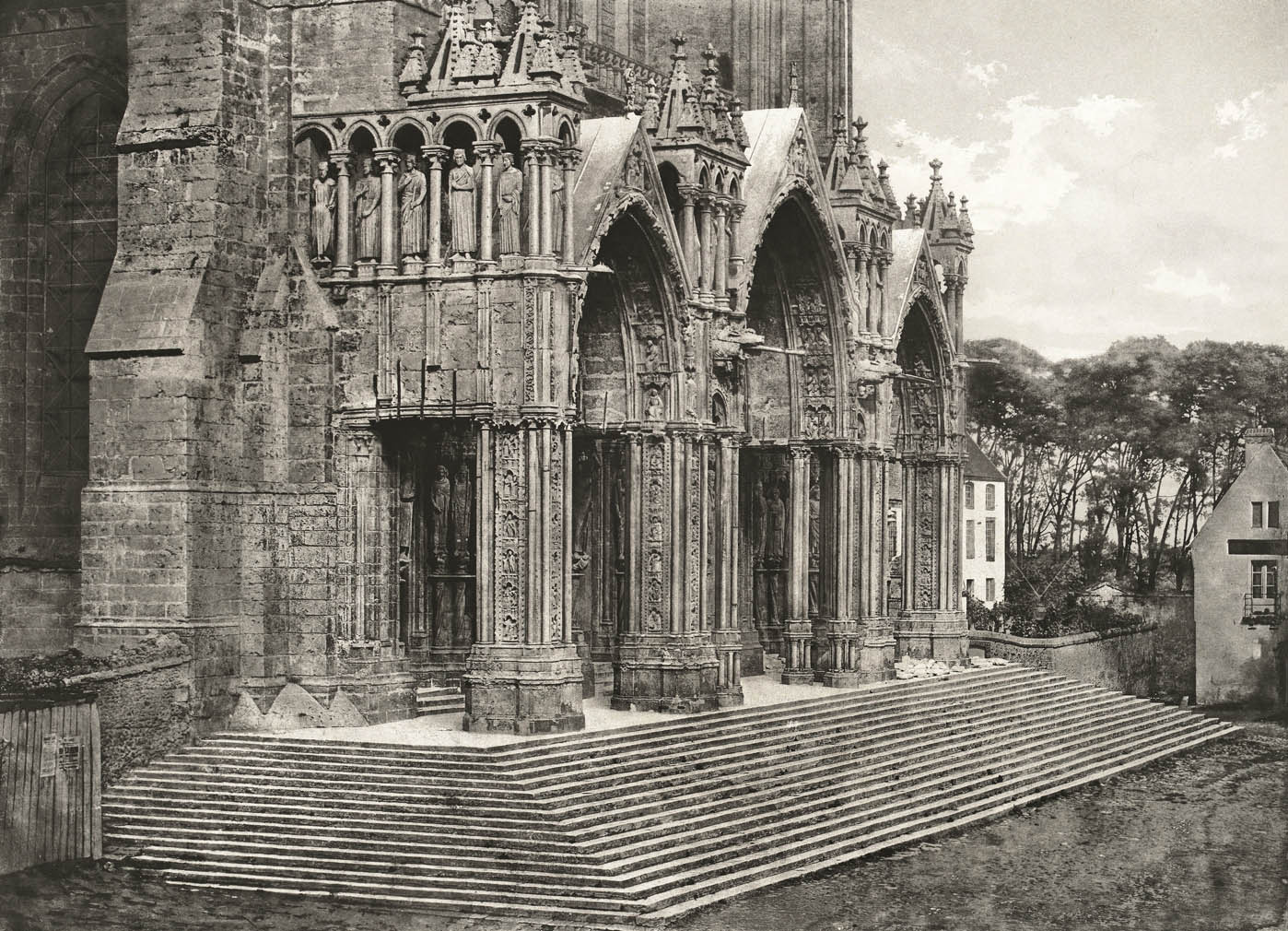
Charles Nègre (French, 1820-1880) 'Cathédrale de Chartres – Portique du Midi XIIe Siècle' c. 1854, printed c. 1857


Charles Nègre (French, 1820-1880)
Cathédrale de Chartres – Portique du Midi XIIe Siècle
c. 1854, printed c. 1857
Photogravure
Image: 53 x 73cm (20 7/8 x 28 3/4 in.)
Sheet: 59.3 x 80cm (23 3/8 x 31 1/2 in.)
National Gallery of Art, Washington, The Sarah and William L Walton Fund


The under appreciated photogravure process, which prints photographs in ink on paper, produces images of luscious lucidity.

In the “photomechanical process, which came to be called photogravure, a photographic image is etched into a printmaking plate, ink is rubbed into the etched surface, a damp sheet of paper is laid on top of the plate, and both are put through a printing press to transfer the ink to paper.” (Press release)

The prints are tonally rich and have a smooth, continuous tonal range and, depending on the choice of paper and inks, can be produced in a variety of colours and textures. While the process is time-consuming and labour-intensive nothing – except perhaps a platinum print developed in Amidol or alike whose negative has been developed in Pyro developer – comes close to the beauty and tonality of the gravure. “This intricate, painstaking and time-consuming method produces images with rich tones and a sense of light, depth, and realism.”

“The process offers the most sophisticated photomechanical means to reproduce large editions while still retaining the warm blacks and subtle shades of gray. It thrived into the 1930s, but World War II brought an end to its popularity due to costs and availability. As the spirit of hands-on experimentation returned to photography in the 1960s, Jon Goodman (b. 1953) is credited with its revival, and is lauded for creating sumptuous portfolios of the works of famed photographers Paul Strand (1890-1976) and Edward Steichen (1879-1973).”1


Some of the most beautiful photographs ever made are printed in the photogravure process. Alfred Stieglitz (American, 1864-1946), that pioneering artist, publisher and teacher, used them extensively in his influential quarterly photographic journal Camera Work (1903-1917).

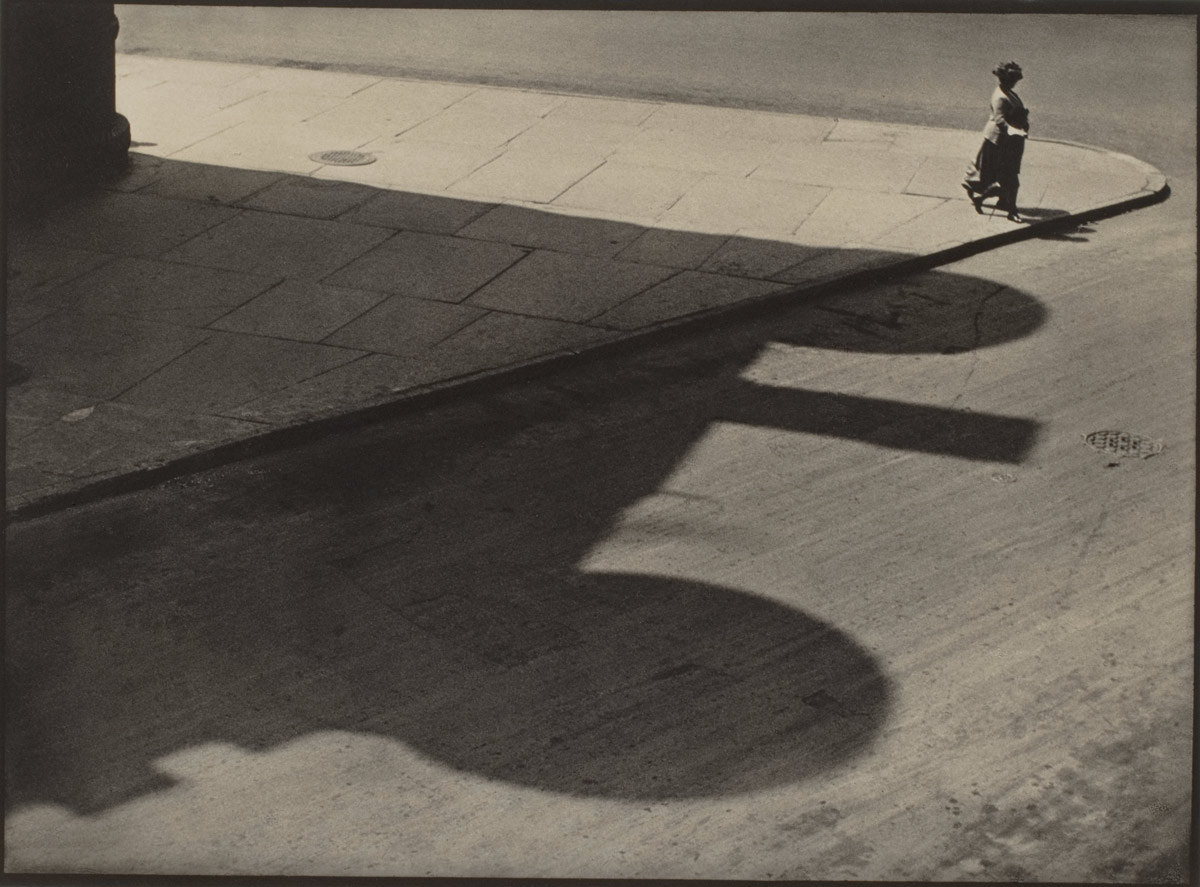
One of my favourite photographs of all time, Paul Strand’s Wall Street (1915) is known only in two vintage platinum palladium prints, but is more commonly seen in reproduction as a photogravure print, notably in Stieglitz’s Camera Work Number 48 October 1916 (see below). “Wall Street became one of his most famous images because of his willingness to reproduce it in various photographic media and at different periods throughout his career.” (Philadelphia Museum of Art website)

Thus the reproducibility of the photogravure process led to the wider distribution of beautiful photographs. Crucially these hand printed photomechanical prints still retain an aura – of reality, presence and the hand of the artist, spirit if you like – unlike many reproductions in later photography books.

Dr Marcus Bunyan


1/ Robin O’Dell. “The Photogravure Process,” on the Florida Museum of Photographic Arts website Nov 15, 2020 [Online] Cited 26/01/2024


Many thankx to the National Gallery of Art for allowing me to publish the photographs in the posting. Please click on the photographs for a larger version of the image.


Paul Strand (American, 1890-1976) 'New York [Wall Street]' Negative 1915; print 1916 Photogravure

Paul Strand (American, 1890-1976) 'New York [Wall Street]' Negative 1915; print 1916 Photogravure


Paul Strand (American, 1890-1976)
New York [Wall Street]
Negative 1915; print 1916
Photogravure
From Camera Work. Number 48. Alfred Stieglitz (American, 1864-1946) publisher
Image: 13 × 16.2 cm (5 1/8 × 6 3/8 in.)
Sheet: 27.8 × 19.7 cm (10 15/16 × 7 3/4 in.)
The J. Paul Getty Museum, Los Angeles
Public domain

Please note: As far as I know, this photograph is not in the exhibition.


Discover an intriguing chapter in the history of photography, as innovative practitioners searched for and perfected a method to produce identical photographic prints in ink. The process, which came to be called photogravure, yielded some of the most beautiful photographs ever made – featuring delicate highlights, lush blacks, a remarkably rich tonal range, and a velvety matte surface. Etched by Light: Photogravures from the Collection, 1840-1940 tells the story of the first 100 years of this process. Artists and scientists working across Europe from the 1840s through the 1870s were dismayed to discover that identical silver-based photographic prints were not only difficult to make but also faded quickly. Building on one another’s discoveries, innovators such as William Henry Fox Talbot, Hippolyte Fizeau, and Charles Nègre perfected a way to etch a photographic image into a copperplate and print it in ink. In the late 19th and early 20th centuries, photographers such as James Craig Annan and Peter Henry Emerson utilised this process to demonstrate the artistic nature of photography while somewhat later photographers such as Alfred Stieglitz, Man Ray, and Laure Albin-Guillot used the technique to create large, bold pictures that they disseminated widely. Including 46 photogravures and 5 bound volumes illustrated with photogravures, many never before exhibited, Etched by Light shows how these works, through their proliferation, have helped shape our collective visual experience.


Bisson Frères. Louis-Auguste Bisson (French, 1814-1876) and Auguste-Rosalie Bisson (French, 1826-1900) 'Notre-Dame' 1850s


Bisson Frères. Louis-Auguste Bisson (French, 1814-1876) and Auguste-Rosalie Bisson (French, 1826-1900)
Notre-Dame
1850s
Heliogravure on chine colle
Sheet: 35.7 x 27.3cm (14 1/16 x 10 3/4 in.)
National Gallery of Art, Washington, Alfred H. Moses and Fern M. Schad Fund
Public domain


Joseph Cundall (British, 1818-1895) and Robert Howlett (British, 1831-1858) 'Crimean Braves – Men of the Trenches and Battlefields in the Crimea' 1856


Joseph Cundall (British, 1818-1895) and Robert Howlett (British, 1831-1858)
Crimean Braves – Men of the Trenches and Battlefields in the Crimea
1856
Photogalvanograph proof on chine collé
Plate: 31 x 25cm (12 3/16 x 9 13/16 in.)
Sheet: 55.8 x 38cm (21 15/16 x 14 15/16 in.)
National Gallery of Art, Washington, Alfred H. Moses and Fern M. Schad Fund
Public domain


Peter Henry Emerson (British, 1856-1936) 'A Winter's Morning' 1887


Peter Henry Emerson (British, 1856-1936)
A Winter’s Morning
1887
Photogravure
Image: 17.7 x 28.7cm (6 15/16 x 11 5/16 in.)
Sheet: 21.5 x 32.4cm (8 7/16 x 12 3/4 in.)
Mount: 40 x 50.8cm (15 3/4 x 20 in.)
National Gallery of Art, Washington, Carolyn Brody Fund and Robert B. Menschel and the Vital Projects


Peter Henry Emerson (British born Cuba, 1856-1936) 'The Poacher – A Hare in View' 1888


Peter Henry Emerson (British born Cuba, 1856-1936)
The Poacher – A Hare in View
1888
Photogravure
Image: 28.5 x 23.7cm (11 1/4 x 9 5/16 in.)
Sheet: 30.5 x 25.7cm (12 x 10 1/8 in.)
National Gallery of Art
Gift of Mary and Dan Solomon and Patrons’ Permanent Fund
Public domain


Peter Henry Emerson (British born Cuba, 1856-1936) 'The Poacher – A Hare in View' 1888 (detail)


Peter Henry Emerson (British born Cuba, 1856-1936)
The Poacher – A Hare in View (detail)
1888
Photogravure
Image: 28.5 x 23.7cm (11 1/4 x 9 5/16 in.)
Sheet: 30.5 x 25.7cm (12 x 10 1/8 in.)
National Gallery of Art
Gift of Mary and Dan Solomon and Patrons’ Permanent Fund
Public domain


James Craig Annan (British, 1864-1946) 'A Black Canal' 1894


James Craig Annan (British, 1864-1946)
A Black Canal
1894
Photogravure
Image: 9.1 x 12.6cm (3 9/16 x 4 15/16 in.)
Sheet: 9.6 x 12.8cm (3 3/4 x 5 1/16 in.)
National Gallery of Art
Pepita Milmore Memorial Fund and Robert B. Menschel and the Vital Projects Fund


Peter Henry Emerson (British born Cuba, 1856-1936) 'Marsh Leaves' Published 1895


Peter Henry Emerson (British born Cuba, 1856-1936)
Marsh Leaves
Published 1895
1 vol: ill: 16 photogravures on wove paper
Page size: 28.4 x 18.4cm (11 3/16 x 7 1/4 in.)
National Gallery of Art, Washington, Gift of Harvey S. Shipley Miller and J. Randall Plummer, in Honor of the 50th Anniversary of the National Gallery of Art


Clarence H. White (American, 1871-1925) 'Spring' 1899


Clarence H. White (American, 1871-1925)
Spring
1899
Photogravure overmatted and mounted on gray wove paper
Image (sight): 12.9 x 13cm (5 1/16 x 5 1/8 in.)
Mat: 28.5 x 19.5cm (11 1/4 x 7 11/16 in.)
Mount: 38 x 27.8cm (14 15/16 x 10 15/16 in.)
National Gallery of Art, Washington, Anonymous Gift
Public domain


Mathilde Weil (American, 1872-1942) 'Beatrice' 1899


Mathilde Weil (American, 1872-1942)
Beatrice
1899
Photogravure in sepia on chine collé mounted on cream wove paper
Image: 16.7 x 9cm (6 9/16 x 3 9/16 in.)
Sheet: 18.8 x 10.4cm (7 3/8 x 4 1/8 in.)
Mount: 37.8 x 27.8cm (14 7/8 x 10 15/16 in.)
National Gallery of Art, Washington, Anonymous Gift


Clarence H. White (American, 1871-1925) 'Edge of the Woods, Evening' 1900


Clarence H. White (American, 1871-1925)
Edge of the Woods, Evening
1900
Photogravure
Image: 14.5 x 10.1cm (5 11/16 x 4 in.)
Sheet: 28.5 x 19.8cm (11 1/4 x 7 13/16 in.)
National Gallery of Art
Robert B. Menschel and the Vital Projects Fund
Public domain


Clarence H. White (American, 1871-1925) 'Morning' 1905


Clarence H. White (American, 1871-1925)
Morning
c. 1905
Photogravure
Image: 20.2 x 15.5cm (7 15/16 x 6 1/8 in.)
Mount: 20.7 x 16.2cm (8 1/8 x 6 3/8 in.)
National Gallery of Art Washington, Robert B. Menschel and the Vital Projects Fund
Public domain


Etched by Light: Photogravures from the Collection, 1840-1940 tells the fascinating story of the search to find and perfect a way to print photographs in ink. The process, which came to be called photogravure, resulted in some of the most beautiful photographs ever made – featuring delicate highlights, lush blacks, a remarkably rich tonal range, and a velvety matte surface. Presenting 40 photogravures and 4 bound volumes illustrated with them (many recently acquired and exhibited here for the first time), Etched by Light shows how this process enabled photographs to circulate widely and help shape our collective visual experience. The exhibition is on view from October 15, 2023, through February 4, 2024, in the West Building of the National Gallery of Art.

“Discover an intriguing chapter in the history of photography, as innovative practitioners developed a method to produce photographic prints in ink,” said Sarah Greenough, senior curator and head of the department of photographs at the National Gallery of Art. “Including photogravures from the National Gallery’s collection, this exhibition shows the pivotal role photogravures played in the history of photography by enabling the creation and widespread dissemination of tonally rich and lasting prints.”


About the Exhibition

From its very beginnings, photography revolutionised the way pictures were made and knowledge about the visual world was disseminated. But in the early 1840s, artists and scientists working across Europe discovered that it had drawbacks. The daguerreotype process, developed by Louis-Jacques-Mandé Daguerre, created astonishingly vivid images, but each one was unique and could only be copied by making another photograph. William Henry Fox Talbot’s negative / positive process held more promise, but his silver-chloride prints faded when exposed to light. Early practitioners also learned that it was hard to make numerous identical prints that could be tipped into books or journals, owing to variabilities in the paper and chemicals that were used to make prints. Such obstacles, at least initially, frustrated their hopes of fully realising the potential of this new medium.

Divided into three sections, Etched by Light traces the search – unfolding across 100 years – for a process to print photographs in ink, which were more stable than traditional silver-based photographic prints. It moves from the experiments in the 1840s and 1850s by French and British photographers such as Armand-Hippolyte-Louis Fizeau, Charles Nègre, and Talbot, who discovered the chemical and technical components necessary to print photographs in ink, to the successful solution invented by Talbot in the 1850s and perfected by Karl Klíč in 1879. In their photomechanical process, which came to be called photogravure, a photographic image is etched into a printmaking plate, ink is rubbed into the etched surface, a damp sheet of paper is laid on top of the plate, and both are put through a printing press to transfer the ink to paper. Favoured from the mid-1880s through the 1930s, revived in the 1980s and 1990s, and still popular today, photogravures have a smooth, continuous tonal range, although an extremely fine grain is evident under magnification.

The exhibition also shows how photographers working in the late 19th and early 20th centuries, including Peter Henry Emerson and Alfred Stieglitz, exploited the photogravure process for its artistic potential. They highlighted the individuality of their pictures through their choice of paper and inks, and even manipulated the photographic image itself. They also utilised the reproducibility of the process, inserting their photogravures into limited edition books, portfolios, and journals that they circulated in an effort to prove the artistic merit of photography.

The exhibition concludes with the work of modernist photographers, such as Alvin Langdon Coburn, Laure Albin Guillot, Man Ray, and Margaret Bourke-White, who used the process to enlarge small negatives, creating big, bold, and sometimes colourful photogravures. Circulating their photogravures widely in books and portfolios, as well as commercial advertisements, these artists demonstrated that photography could tackle new subjects, revitalising our view of life, art, and science, and in the process revealing critical new insights about the world around us.

The exhibition is organised by the National Gallery of Art, Washington

Press release from the National Gallery of Art


Alvin Langdon Coburn (British born United States, 1882-1966) 'Trafalgar Square' 1909


Alvin Langdon Coburn (British born United States, 1882-1966)
Trafalgar Square
1909
Photogravure
Image: 21.2 x 16.2cm (8 3/8 x 6 3/8 in.)
Sheet: 21.7 x 16.7cm (8 9/16 x 6 9/16 in.)
National Gallery of Art
Robert B. Menschel and the Vital Projects Fund


Alvin Langdon Coburn (British born United States, 1882-1966) 'Brooklyn Bridge' c. 1910


Alvin Langdon Coburn (British born United States, 1882-1966)
Brooklyn Bridge
c. 1910
Photogravure
Image: 19.9 x 14.7cm (7 13/16 x 5 13/16 in.)
Sheet: 21.2 x 15.3cm (8 3/8 x 6 in.)
National Gallery of Art
Robert B. Menschel and the Vital Projects Fund


Alvin Langdon Coburn (British born United States, 1882-1966) 'The Battery' c. 1909


Alvin Langdon Coburn (British born United States, 1882-1966)
The Battery
c. 1909
Photogravure
Image: 16 x 15.56cm (6 5/16 x 6 1/8 in.)
Sheet: 17.3 x 16.4cm (6 13/16 x 6 7/16 in.)
National Gallery of Art
Robert B. Menschel and the Vital Projects Fund


Alfred Stieglitz (American, 1864-1946) 'The Street - Design for a Poster / The Street – Fifth Avenue' 1896? / 1901-1902?, printed 1903


Alfred Stieglitz (American, 1864-1946)
The Street – Design for a Poster / The Street – Fifth Avenue
1896? / 1901-1902?, printed 1903
Photogravure
National Gallery of Art
Public domain


Alfred Stiegitz (American, 1864-1946) 'The Steerage' 1907


Alfred Stieglitz (American, 1864-1946)
The Steerage
1907, printed in or before 1913
Photogravure on cream moderately thick smooth wove Japanese paper
Image: 33.2 x 26.4cm (13 1/16 x 10 3/8 in.)
Sheet: 46.3 x 31.9cm (18 1/4 x 12 9/16 in.)
National Gallery of Art
Alfred Stieglitz Collection


Alfred Stieglitz (American, 1864-1946) 'Old and New New York' 1910, printed in or before 1913


Alfred Stieglitz (American, 1864-1946)
Old and New New York
1910, printed in or before 1913
Photogravure on beige thin slightly textured laid Japanese paper
Image: 33.3 x 25.7cm (13 1/8 x 10 1/8 in.)
Sheet: 40.3 x 28.3cm (15 7/8 x 11 1/8 in.)
National Gallery of Art
Alfred Stieglitz Collection


Alfred Stieglitz (American, 1864-1946) 'After Working Hours – The Ferry Boat' 1910, printed in or before 1913


Alfred Stieglitz (American, 1864-1946)
After Working Hours – The Ferry Boat
1910, printed in or before 1913
Photogravure
Image: 33.6 x 25.9cm (13 1/4 x 10 3/16 in.)
Sheet: 40.4 x 28.1cm (15 7/8 x 11 1/16 in.)
National Gallery of Art
Alfred Stieglitz Collection


Alfred Stieglitz (American, 1864-1946) 'The City of Ambition' 1910, printed in or before 1913


Alfred Stieglitz (American, 1864-1946)
The City of Ambition
1910, printed in or before 1913
Photogravure on beige thin slightly textured laid Japanese paper
Sheet (trimmed to image): 34 x 26cm (13 3/8 x 10 1/4 in.)
Mount: 43.3 x 32 cm (17 1/16 x 12 5/8 in.)
National Gallery of Art, Washington, Alfred Stieglitz Collection


Anne Brigman (American, 1859-1960) 'The Cleft of the Rock' 1912


Anne Brigman (American, 1859-1960)
The Cleft of the Rock
1912
Photogravure
Image: 21 x 16cm (8 1/4 x 6 5/16 in.)
National Gallery of Art, Washington, Gift of Mark Katzman and Hilary Skirboll


Alvin Langdon Coburn (British born United States, 1882-1966) 'The Tunnel Builders' 1913


Alvin Langdon Coburn (British born United States, 1882-1966)
The Tunnel Builders
1913
Photogravure
Image: 21 x 17cm (8 1/4 x 6 11/16 in.)
National Gallery of Art, Washington, Gift of Funds from John S. Parsley and Nancy Nolan Parsley


Man Ray (American, 1890-1976) 'Électricité' 1931


Man Ray (American, 1890-1976)
Électricité
1931
Photogravure
Image: 26 x 20.5cm (10 1/4 x 8 1/16 in.)
Mount: 37.5 x 27.5cm (14 3/4 x 10 13/16 in.)
National Gallery of Art, Washington, Gift of Robert B. Menschel


Man Ray (American, 1890-1976) 'Le Monde' 1931


Man Ray (American, 1890-1976)
Le Monde
1931
Photogravure
Image: 26 x 20.5cm (10 1/4 x 8 1/16 in.)
Mount: 37.5 x 27.5cm (14 3/4 x 10 13/16 in.)
National Gallery of Art, Washington, Gift of Robert B. Menschel


Man Ray (American, 1890-1976) 'The City' (Èlectricité - La Ville) 1931


Man Ray (American, 1890-1976)
La Ville (The City)
1931
Photogravure
Image: 26 x 20.5cm (10 1/4 x 8 1/16 in.)
Mount: 37.5 x 27.5cm (14 3/4 x 10 13/16 in.)
National Gallery of Art, Washington, Gift of Robert B. Menschel


Man Ray (American, 1890-1976) 'Le Souffle' (Breeze) 1931


Man Ray (American, 1890-1976)
Le Souffle (Breeze)
1931
Photogravure
Image: 26 x 20.2cm (10 1/4 x 7 15/16 in.)
Mount: 37.5 x 27.5cm (14 3/4 x 10 13/16 in.)
National Gallery of Art, Washington, Gift of Robert B. Menschel


Paul Strand (American, 1890-1976) 'Virgin San Felipe, Oaxaca, Mexico' (Virgen San Felipe, Oaxaca, Mexico) 1933


Paul Strand (American, 1890-1976)
Virgin, Sand Felipe, Oaxaca
1933, printed 1940
Photogravure
Image: 26.4 x 20.7cm (10 3/8 x 8 1/8 in.)
Sheet: 40.4 x 31.7cm (15 7/8 x 12 1/2 in.)
National Gallery of Art, Washington, Alfred H. Moses and Fern M. Schad Fund


Paul Strand. 'Men of Santa Ana, Lake Patzcuaro, Michoacan' 1933


Paul Strand (American, 1890-1976)
Men of Santa Anna, Michoacan
1933, printed 1940
Photogravure
Image: 16.1 x 12.7cm (6 5/16 x 5 in.)
Sheet: 40.4 x 31.7cm (15 7/8 x 12 1/2 in.)
National Gallery of Art, Washington, Alfred H. Moses and Fern M. Schad Fund


Paul Strand (American, 1890-1976) 'Boy, Uruapan, Michoacán, Mexico' (Niño, Uruapan, Michoacán, México) 1933


Paul Strand (American, 1890-1976)
Boy, Uruapan
1933, printed 1940
Photogravure
Image: 25.7 x 20.5cm (10 1/8 x 8 1/16 in.)
Sheet: 40.4 x 31.7cm (15 7/8 x 12 1/2 in.)
National Gallery of Art, Washington, Alfred H. Moses and Fern M. Schad Fund


Paul Strand. 'Cristo - Oaxaca' 1933


Paul Strand (American, 1890-1976)
Cristo, Tiacochoaya, Oaxaca
1933, printed 1940
Photogravure
Image: 26 x 20.4cm (10 1/4 x 8 1/16 in.)
Sheet: 40.4 x 31.7cm (15 7/8 x 12 1/2 in.)
National Gallery of Art, Washington, Alfred H. Moses and Fern M. Schad Fund


Paul Strand (American, 1890-1976) 'Cristo with Thorns, Huexotla' 1933, printed 1940


Paul Strand (American, 1890-1976)
Cristo with Thorns, Huexotla
1933, printed 1940
Photogravure
Image: 26 x 20.5cm (10 1/4 x 8 1/16 in.)
Sheet: 40.4 x 31.7cm (15 7/8 x 12 1/2 in.)
National Gallery of Art, Washington, Alfred H. Moses and Fern M. Schad Fund


Paul Strand (American, 1890-1976) 'Church, Coapiaxtla' 1933, printed 1940


Paul Strand (American, 1890-1976)
Church, Coapiaxtla
1933, printed 1940
Photogravure
Image: 16.2 x 12.7cm (6 3/8 x 5 in.)
Sheet: 40.4 x 31.7cm (15 7/8 x 12 1/2 in.)
National Gallery of Art, Washington, Alfred H. Moses and Fern M. Schad Fund


Doris Ulmann (American, 1882-1934) 'Plate 35' 1933


Doris Ulmann (American, 1882-1934)
Plate 35
1933
Photogravure
Image: 21 x 16cm (8 1/4 x 6 5/16 in.)
National Gallery of Art, Washington, Gift of Mary and Dan Solomon


Doris Ulmann (American, 1882-1934) 'Plate 47' 1933


Doris Ulmann (American, 1882-1934)
Plate 47
1933
Photogravure
Image: 16 x 21cm (6 5/16 x 8 1/4 in.)
National Gallery of Art, Washington, Pepita Milmore Memorial Fund


National Gallery of Art
National Mall between 3rd and 7th Streets
Constitution Avenue NW, Washington

Opening hours:
Daily 10am – 5pm

National Gallery of Art website

LIKE ART BLART ON FACEBOOK

Back to top
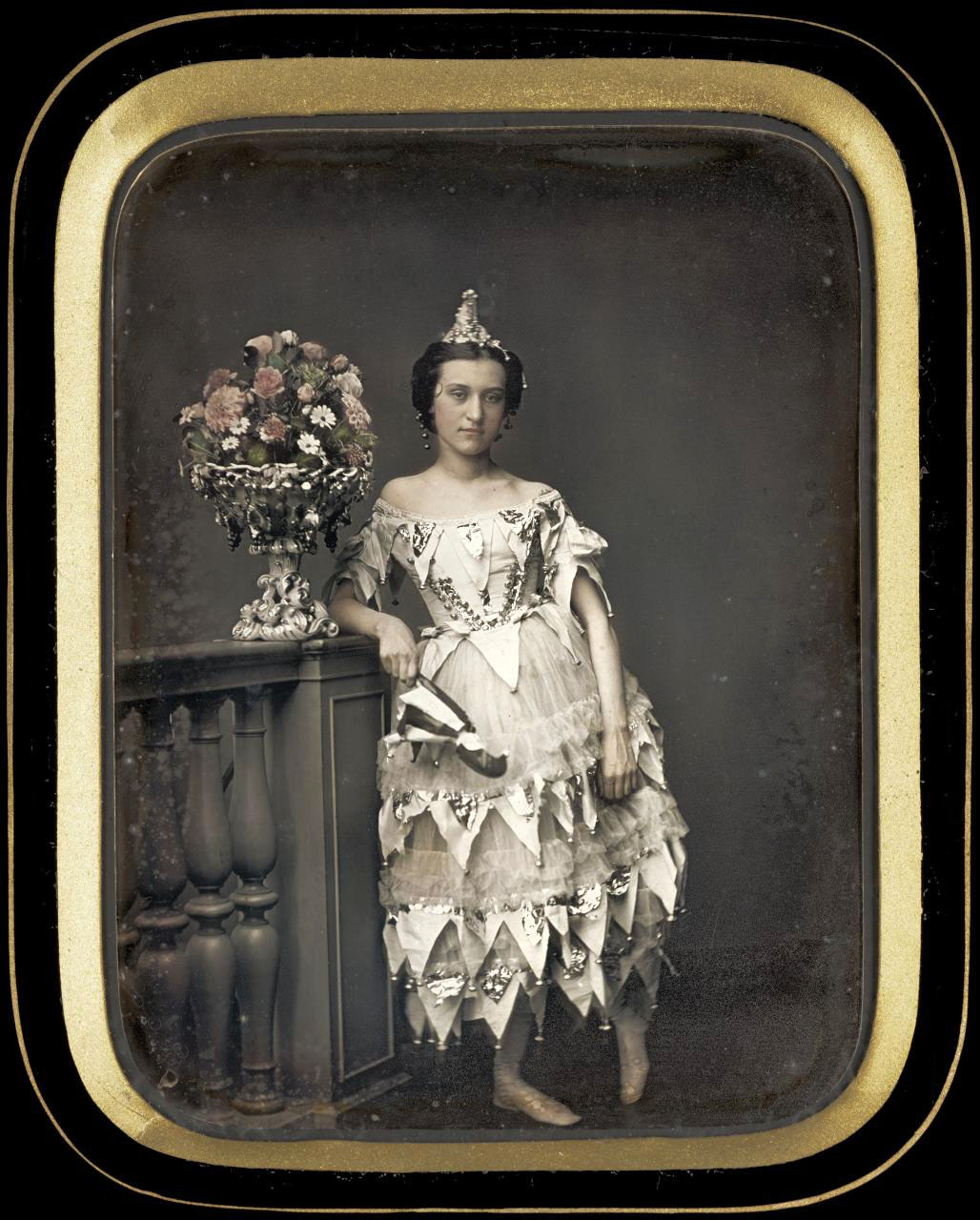
Exhibition: ‘Real/Ideal: Photography in France, 1847-1860’ at the J. Paul Getty Museum, Getty Center, Los Angeles

Exhibition dates: 30th August – 27th November, 2016

Curator: Karen Hellman, assistant curator of photographs at the J. Paul Getty Museum


Gustave Le Gray (French, 1820-1884) 'Pavillon Mollien Pavilion, the Louvre, Paris' 1859 from the exhibition 'Real/Ideal: Photography in France, 1847-1860' at the J. Paul Getty Museum, Getty Center, Los Angeles, Aug - Nov, 2016


Gustave Le Gray (French, 1820-1884)
Pavillon Mollien Pavilion, the Louvre, Paris
1859
Albumen silver print from a glass negative
36.7 x 47.9cm (14 7/16 x 18 7/8 in.)
The J. Paul Getty Museum, Los Angeles


The best fun I had was putting together Nadar’s Self-Portrait (c. 1855, below) with Henri Le Secq’s North Transept, Chartres Cathedral (Negative 1852; print 1870s, below). The relationship of the hands between the two prints is just delicious. I also love the waxed paper negative and salted paper prints: such a feeling of ephemerality can be obtained in the final image even though the photographs are rendering solid objects. According to my friend Ellie Young of Gold Street Studios who is an expert in early photographic processes, salted paper prints (and their relative, the Calotype) can be as light as a feather or as strong and solid as an albumen print. “Salt prints from Calotype negatives exhibit an expressive softness of tone much prized by early photographers.” With their use of chiaroscuro (from chiaro ‘clear, bright’ – from Latin clarus + oscuro ‘dark, obscure’ – from Latin obscurus), Gustave Le Gray’s seascapes, for which he is widely known and admired, are masterful.

Dr Marcus Bunyan


Many thankx to the J. Paul Getty Museum for allowing me to publish the photographs in the posting. Please click on the photographs for a larger version of the image.


Édouard Baldus (French born Germany, 1813-1889) 'Amphitheater, Nîmes' 1850s from the exhibition 'Real/Ideal: Photography in France, 1847-1860' at the J. Paul Getty Museum, Getty Center, Los Angeles, Aug - Nov, 2016


Édouard Baldus (French born Germany, 1813-1889)
Amphitheater, Nîmes
1850s
Albumen silver print from a paper negative
33.3 x 43.3cm (13 1/8 x 17 1/16 in.)
The J. Paul Getty Museum, Los Angeles


Calotypes and Waxed Paper Negatives

“The Calotype proper is a negative image (along with its offshoot the waxed paper negative), although its positive counterpart, the salted paper print, is the more common form in which it is encountered. Calotypes are made by brushing the best quality drawing or writing paper with a solution of silver nitrate, drying the paper, and then immersing it in a solution of potassium iodide to form a light-sensitive layer of silver iodide. Immediately before use the surface it treated with ‘gallo-nitrate of silver’ (a mixture of silver nitrate solution and gallic acid) to act as an accelerator. Exposure in a camera, where the paper must be held in a dark slide, produces a latent (invisible) image which is developed by washing in gallo-nitrate of silver, fixed in hypo and thoroughly washed. The translucency of Calotypes can be improved by waxing, and a positive can be made by repeating the original process or by ‘printing out’ the image in much the same way as making a Photogenic Drawing. When toned, in, for instance, gold chloride solution (to give it a purpleish tone), a positive produced in this way is known as a ‘salted paper print’.

With the exception perhaps of the waxed paper process, which was invented in 1851 by Gustave Le Gray (1820-1882) and extended the life of paper negatives into the 1870s, the first generation processes – the Daguerreotype, Photogenic Drawing and Calotype – were all extinct by the end of the 1850s, having given way to their own offspring: the wet collodion glass negative and the albumen print.”

Anonymous. “Calotypes,” on the University of Oxford Museum of the History of Science website [Online] Cited 11/11/2016. No longer available online

Salted Paper Print

Once a paper negative had been secured, any number of positive prints could be created by contact printing. Preparation involved soaking good quality paper in a sodium chloride solution (table salt) and then brushing it with a solution of silver nitrate to produce light-sensitive silver chloride. Exposure of the sensitised paper to sunlight, in contact with a negative held in a frame, resulted in the emergence of a visible image without subsequent development. This ‘printed-out’ image was then fixed and toned. Salt prints, unless subsequently coated, have a characteristically matt appearance, with the image embedded in the paper. Although lacking the sharpness of detail associated with the daguerreotype, salt prints from Calotype negatives exhibit an expressive softness of tone much prized by early photographers. This portrait of the Rev. Julius Wood is one of a large series taken by Hill and Adamson to serve as references for a group portrait of the founders of the Free Church of Scotland that Hill had been commissioned to paint. These portraits, with other scenes and views, were later issued in a small ‘edition’ of 12 known copies, entitled One Hundred Calotype Sketches.

Wet collodion negative

Frederick Scott Archer’s wet collodion process, announced in 1851, became the standard photographic negative process for both amateurs and professionals from the mid-1850s until the early 1880s. The glass negative, with its structureless film, fine grain and clear whites proved immediately popular and within a decade had superseded both the daguerreotype and the calotype processes. To prepare the negative for exposure, a sheet of glass was coated with a solution of iodised collodion (a syrupy liquid composed of soluble gun-cotton, ether and alcohol) and then made light-sensitive by immersion in a bath of silver nitrate. Known as a wet process because the glass negative required sensitising, exposing and processing while the chemicals were still damp, it required considerable manipulative skill, but produced a negative of unsurpassed sharpness and a broad tonal range. This view, on a 10 x 12 inch glass plate, is one of a large collection of photographs of architectural subjects commissioned from Lyon by the Madras and Bombay Governments in the late 1860s.

Albumen Print

The albumen print, announced by the French photographer and publisher Louis-Désiré Blanquard-Évrard in 1850, was the most widespread print medium in use between the mid-1850s and the 1890s. While the printing process was chemically similar to the salt print, the albumen print is generally distinguishable by the glossy sheen imparted by a preliminary sizing of the paper with albumen (egg white) and salt. This sealing of the paper created a surface layer on which the silver image was formed, and made possible much greater density, contrast and sharpness in the final image than had been possible with the plain salted paper print. After the albumen coating had been applied, the paper was made light sensitive by the addition of silver nitrate, and printed in contact with the negative. The fixed print could then be toned to create a wide variety of colours, ranging from purple-black to a rich chocolate brown. Although it continued to be used well into the twentieth century, its popularity declined after the mid-1890s, in favour of a variety of manufactured papers. This print is one of a series of studies of objects in the Royal Armoury at Madrid made around 1866 and is notable for its finely-controlled lighting and rich toning. The blacking-out of the background in this image isolates and increases the dramatic impact of the objects.

Anonymous. “Historic Photographs: Historic Processes,” on the British Library website [Online] Cited 11/11/2016


Henri Le Secq (French, 1818-1882) 'Tower of the Kings at Reims Cathedral' Negative, 1851-1853; print, 1853


Henri Le Secq (French, 1818-1882)
Tower of the Kings at Reims Cathedral
Negative, 1851-1853; print, 1853
Salted paper print from a paper negative
35.1 x 25.9cm (13 13/16 x 10 3/16 in.)
The J. Paul Getty Museum, Los Angeles


Édouard Baldus (French born Germany, 1813-1889) 'Tour Saint-Jacques, Paris' 1852-1853


Édouard Baldus (French born Germany, 1813-1889)
Tour Saint-Jacques, Paris
1852-1853
Salted paper print from a paper negative
42.9 x 34cm (16 7/8 x 13 3/8 in.)
The J. Paul Getty Museum, Los Angeles


Henri Le Secq (French, 1818-1882) 'Small Dwelling in Mushroom Cave' 1851


Henri Le Secq (French, 1818-1882)
Small Dwelling in Mushroom Cave
1851
Salted paper print from a paper negative
35.1 x 22.7cm (13 13/16 x 8 15/16 in.)
The J. Paul Getty Museum, Los Angeles


Gustave Le Gray (French, 1820-1884) Auguste Mestral (French, 1812-1884) 'West Facade of the Cathedral of Saint-Gatien, Tours' 1851


Gustave Le Gray (French, 1820-1884)
Auguste Mestral (French, 1812-1884)
West Facade of the Cathedral of Saint-Gatien, Tours
1851
Waxed paper negative
34.2 x 25.2cm (13 7/16 x 9 15/16 in.)
Lent by the Ministère de la Culture et de la Communication (France), Médiathèque de l’architecture et du patrimoine
© RMN-Grand Palais / Art Resource, NY


Charles Nègre (French, 1820-1880) 'Notre-Dame, Paris' c. 1853


Charles Nègre (French, 1820-1880) 'Notre-Dame, Paris' c. 1853


Charles Nègre (French, 1820-1880)
Notre-Dame, Paris
c. 1853
Waxed paper negative
33.6 x 24cm (13 1/4 x 9 7/16 in.)
The J. Paul Getty Museum, Los Angeles


Charles Nègre (French, 1820-1880) 'Tarascon' 1852


Charles Nègre (French, 1820-1880)
Tarascon
1852
Waxed paper negative with selectively applied pigment
23.7 x 33.2cm (9 5/16 x 13 1/16 in.)
The J. Paul Getty Museum, Los Angeles


Charles Nègre (French, 1820-1880) 'Tarascon' 1852


Charles Nègre (French, 1820-1880)
Tarascon
c. 1852
Albumen silver print from paper negative


In the shadow of the political revolutions of 1848, an artistic revolution was also brewing in France within the young medium of photography. An unprecedented period of creativity and discovery among photographers emerged between the first French announcement of a paper negative process in 1847 and more mechanical processes for photographs in the 1860s, sparking debates about photography’s prospects in the divergent fields of art and science.

Organised around the Getty Museum’s rich holdings of early French photography and supplemented with important international loans, Real/Ideal: Photography in France, 1847-1860, on view August 30-November 27, 2016 at the J. Paul Getty Museum, Getty Center, highlights the work of four pioneering French photographers – Édouard Baldus (1813-1889), Gustave Le Gray (1820-1884), Henri Le Secq (1818-1882), and Charles Nègre (1820-1880) – alongside other artists who championed the paper and glass negative and contended with photography’s unprecedented “realism.”

“This exhibition tells a pivotal story about a short period – some 12 years – in the early history of photography; one that the Getty is uniquely positioned to tell given our extensive holdings of nineteenth-century French photographs,” explains Timothy Potts, director of the J. Paul Getty Museum. “It is also an opportunity to showcase – for the first time – an important, recent acquisition of paper negatives from the collection of Jay McDonald. The exhibition sheds light on the freedom that early photographers enjoyed as they explored new means for developing images, and as they balanced the ‘real’ recording of the world as it is with the ‘ideal’, creative possibilities of the medium.”

The Paper Negative and Possibilities

The first paper negatives, created by William Henry Fox Talbot in England in the 1830s, first inspired French photographers in the early 1840s. In 1847, a cloth manufacturer named Louis Désiré Blanquart-Evrard (1802-1872) published a method of improving the paper negative, a process which created a more refined positive image. Due to the political turmoil of 1848, his discovery went unnoticed by the French government, which had long favoured the hyper-real quality of the silver-plated daguerreotype invented by Louis Daguerre (French, 1787-1851) in 1839.

Without a national mandate or commercial viability, French photographers using the paper negative enjoyed a brief period of freedom and experimentation between 1847 and 1860. Gustave Le Gray’s innovation of the “waxed paper negative,” which involved the addition of a layer of wax before the negative was sensitised with photo chemistry, was particularly vital, rendering the negative more translucent and portable. Rare waxed paper negatives by these photographers from the Getty Museum’s collection and from the Médiathèque de l’architecture et du patrimoine and the Musée D’Orsay in Paris will be on view. The exhibition will also include a view of Montmartre from “barrière de Clichy,” a photographic school and studio that Le Gray founded in 1849, as well as other early prints from paper negatives by Hippolyte Bayard, Henri-Victor Regnault, and Humbert de Molard.

The Rise of Realism

Originally trained as painters, Baldus, Le Gray, Le Secq, and Nègre saw the creative potential of photography and became its greatest champions. They were founding members of the Société héliographique, the first professional group devoted to photography, which published an important journal, La lumière. Experimentation in photography coincided with an increasing interest in “realism” – a word first used by critics in reference to paintings exhibited by Gustave Courbet (French, 1819-1877) at the 1849 Salon des Beaux-Arts. Artists and writers were increasingly rejecting academic, idealist subjects for everyday ones, and vanguard photographers similarly turned their attention towards the common individual, the worker, and the everyday scene. Nègre’s staged genre scenes of figures posed on the streets of Paris demonstrate how photography could interweave the “real” and “ideal.” Additionally, in Baldus’s documentation of the southern French seaside town of Bandol the idealised landscape is abandoned for a more realistic view, including the rugged foreground and industrial elements that lead back to a recently-constructed railroad bridge far in the distance.

Commissions, Demolitions, and Renovations

The new photographers of the period increased their profile through commissioned work for the French government. The Mission héliographique, which formed in 1851, hired five photographers (Baldus, Le Gray, Le Secq, Auguste Mestral, and Hippolyte Bayard) to travel across France and record hundreds of significant historical monuments before they were transformed through restoration under the government of Napoléon III. Nègre also pursued a six-month project to document the Midi region of France. The exhibition features examples from these projects, including images of Reims Cathedral, Chateau of Chenonceaux, and St. Gabriel près Arles.

Upon returning from their respective photographic missions, Baldus, Le Secq, Le Gray, and Nègre turned their attention to documenting the transformations – through demolition and restoration – of Parisian monuments, including the Cathedral of Notre Dame, the Hotel de Ville, the Louvre Museum, the Place du Carrousel, and the Tour Saint-Jacques, images of which are also on view in the exhibition.

“Baldus and Nègre, who were friends as well as competitors, took a subject like the same cloister of Saint-Trophime in Arles and photographed it in different ways,” says Karen Hellman assistant curator of photographs at the J. Paul Getty Museum and curator of the exhibition. “Nègre captured a narrow, vertical section of the colonnade, while Baldus carefully joined ten negatives to create a more all-encompassing view of the space.”

The Rise of Commercial Photography

The administration of Napoléon III and its free-market policies led to an explosion of commercial activity in photography, which was becoming increasingly industrialised and commonplace. The use of the paper negative fell out of favour and was gradually replaced by the sharper and more sensitive glass plate negative. The Getty’s exhibition thus presents a rare insight into a brief yet important moment in the history of photography that was shaped by these four pioneering photographers.

Real/Ideal: Photography in France 1847-1860 is on view August 30-November 27, 2016 at the J. Paul Getty Museum, Getty Center. The exhibition is curated by Karen Hellman, assistant curator of photographs at the J. Paul Getty Museum. An accompanying publication, Real/Ideal: Photography in Mid-Nineteenth-Century France will be available, with essays by Sylvie Aubenas, Anne de Mondenard, Paul-Louis Roubert, Sarah Freeman and Karen Hellman. Also on view in the Center for Photographs will be Richard Learoyd: In the Studio, curated by Arpad Kovacs, assistant curator of photographs at the J. Paul Getty Museum.

Press release from the J. Paul Getty Museum


Gustave Le Gray (French, 1820-1884) 'Seascape with a Ship Leaving Port' 1857


Gustave Le Gray (French, 1820-1884)
Seascape with a Ship Leaving Port
1857
Albumen silver print from a glass negative
31.3 x 40.3cm (12 5/16 x 15 7/8 in.)
The J. Paul Getty Museum, Los Angeles


Édouard Baldus (French born Germany, 1813-1889) 'Cloister of Saint-Trophime, Arles' c. 1861


Édouard Baldus (French born Germany, 1813-1889)
Cloister of Saint-Trophime, Arles
c. 1861
Albumen silver print from a glass negative
33.7 x 42.9cm (13 1/4 x 16 7/8 in.)
The J. Paul Getty Museum, Los Angeles


Henri Le Secq (French, 1818-1882) 'Statue of Christ at Reims Cathedral' Negative 1851; print 1870s


Henri Le Secq (French, 1818-1882)
Statue of Christ at Reims Cathedral
Negative 1851; print 1870s
Photolithograph
35 x 24.8cm (13 3/4 x 9 3/4 in.)
The J. Paul Getty Museum, Los Angeles


Charles Nègre (French, 1820-1880) 'Organ Grinder at 21, Quai de Bourbon, Paris' c. 1853


Charles Nègre (French, 1820-1880)
Organ Grinder at 21, Quai de Bourbon, Paris
c. 1853
Salted paper print from a paper negative
10 x 8.3cm (3 15/16 x 3 1/4 in.)
The J. Paul Getty Museum, Los Angeles


Charles Nègre (French, 1820-1880) 'Aisle of the Cloister of Saint-Trophime, Arles' c. 1852


Charles Nègre (French, 1820-1880)
Aisle of the Cloister of Saint-Trophime, Arles
c. 1852
Salted paper print from a paper negative
32.4 x 23.2cm (12 3/4 x 9 1/8 in.)
The J. Paul Getty Museum, Los Angeles


Henri Le Secq (French, 1818-1882) 'South Porch, Central Portal, Chartres Cathedral' 1852


Henri Le Secq (French, 1818-1882)
South Porch, Central Portal, Chartres Cathedral
1852
Waxed paper negative
34 x 24cm (13 3/8 x 9 7/16 in.)
The J. Paul Getty Museum, Los Angeles


Édouard Baldus (French, born Germany, 1813-1889) 'Viaduct, La Voulte-sur-Rhône' c. 1861


Édouard Baldus (French born Germany, 1813-1889)
Viaduct, La Voulte-sur-Rhône
c. 1861
Albumen silver print from a glass negative, from the album Chemins de Fer de Paris à Lyon et à la Méditerranée
31 x 42.7cm (12 3/16 x 16 13/16 in.)
The J. Paul Getty Museum, Los Angeles


Nadar [Gaspard Félix Tournachon] (French, 1820-1910) 'Self-Portrait' c. 1855


Nadar (Gaspard Félix Tournachon) (French, 1820-1910)
Self-Portrait
c. 1855
Salted paper print from a glass negative
20.5 x 17cm (8 1/16 x 6 11/16 in.)
The J. Paul Getty Museum, Los Angeles


Henri Le Secq (French, 1818-1882) 'North Transept, Chartres Cathedral' Negative 1852; print 1870s


Henri Le Secq (French, 1818-1882)
North Transept, Chartres Cathedral
Negative 1852; print 1870s
Photolithograph
33.3 x 22.9cm (13 1/8 x 9 in.)
The J. Paul Getty Museum, Los Angeles


Nadar [Gaspard Félix Tournachon] (French, 1820-1910) 'Jean-François Philibert Berthelier, Actor' 1856-1859


Nadar (Gaspard Félix Tournachon) (French, 1820-1910)
Jean-François Philibert Berthelier, Actor
1856-1859
Salted paper print from a glass negative
24.2 x 18.9cm (9 1/2 x 7 7/16 in.)
The J. Paul Getty Museum, Los Angeles


Nadar [Gaspard Félix Tournachon] (French, 1820-1910) 'George Sand (Amandine-Aurore-Lucile Dupin), Writer' c. 1865


Nadar (Gaspard Félix Tournachon) (French, 1820-1910)
George Sand (Amandine-Aurore-Lucile Dupin), Writer
c. 1865
Albumen silver print from a glass negative
24.1 x 18.3 cm (9 1/2 x 7 1/4 in.)
The J. Paul Getty Museum, Los Angeles


Jean-Louis-Marie-Eugène Durieu (French, 1800-1874) Possibly with Eugène Delacroix (French, 1798-1863) 'Draped Model' c. 1854


Jean-Louis-Marie-Eugène Durieu (French, 1800-1874)
Possibly with Eugène Delacroix (French, 1798-1863)
Draped Model
c. 1854
Albumen silver print
18.6 x 13cm (7 5/16 x 5 1/8 in.)
The J. Paul Getty Museum, Los Angeles


Gustave Le Gray (French, 1820-1884) 'The Sun at Its Zenith, Normandy' 1856


Gustave Le Gray (French, 1820-1884)
The Sun at Its Zenith, Normandy
1856
Albumen silver print from a glass negative
32.5 x 41.6cm (12 13/16 x 16 3/8 in.)
The J. Paul Getty Museum, Los Angeles


The J. Paul Getty Museum
1200 Getty Center Drive
Los Angeles, California 90049

Opening hours:
Daily 10am – 5pm

The J. Paul Getty Museum website

LIKE ART BLART ON FACEBOOK

Back to top
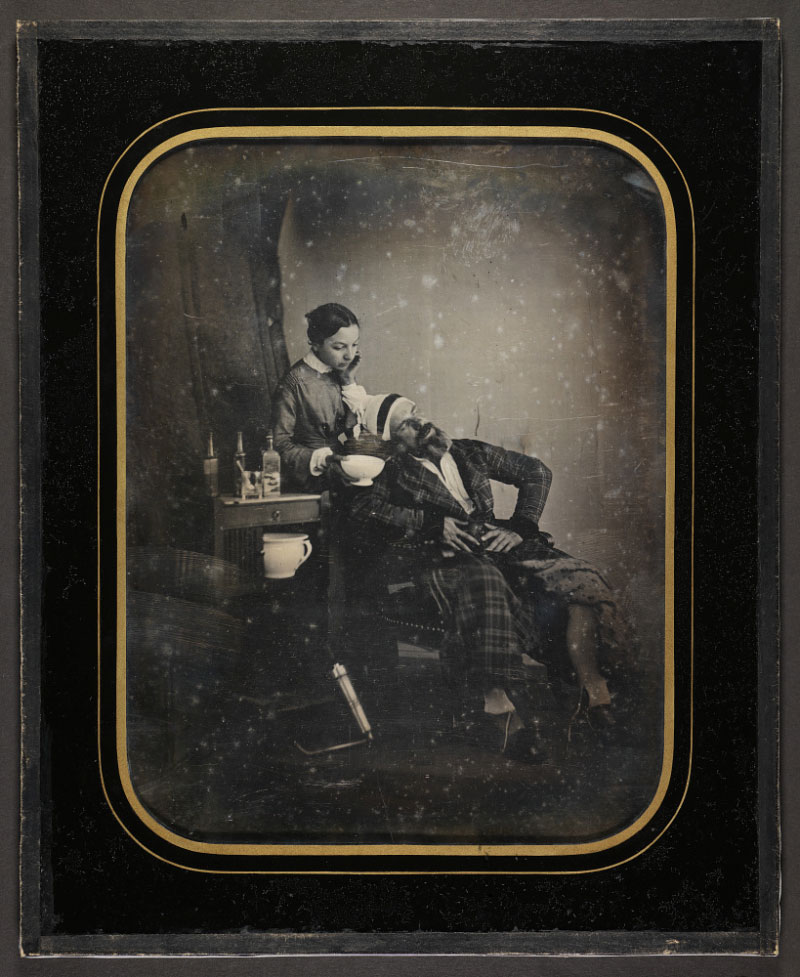
Exhibition: ‘In Light of the Past’ at the National Gallery of Art, Washington

Exhibition dates: 3rd May – 26th July 2015

Curators: The curators of In Light of the Past: Celebrating 25 Years of Photography at the National Gallery of Art are Sarah Greenough, senior curator and head of the department of photographs, and Diane Waggoner, associate curator, department of photographs, National Gallery of Art.


Charles Nègre (French, 1820-1880) 'Market Scene at the Port of the Hotel de Ville, Paris' before February 1852


Charles Nègre (French, 1820-1880)
Market Scene at the Port of the Hotel de Ville, Paris
before February 1852
Salted paper print
14.7 x 19.9cm
National Gallery of Art, Washington, Patrons’ Permanent Fund, 2003


What a great title for an exhibition. Photography always evidences light of the past, we live in light of the past (the light of the Sun takes just over 8 minutes to reach Earth) and, for whatever reason, human beings never seem to learn from mistakes, in light of the past history of the human race.

My favourites in this postings are the 19th century photographs, to which I am becoming further attuned the more I look at them. There is almost a point when you become psychologically enmeshed with their light, with the serenity of the images, a quality that most contemporary photographs seem to have lost. There is a quietness to their presence, a contemplation on the nature of the world through the pencil of nature that is captivating. You only have to look at Gustave Le Gray’s The Pont du Carrousel, Paris: View to the West from the Pont des Arts (1856-1858, below) to understand the everlasting, transcendent charisma of these images. Light, space, time, eternity.

Dr Marcus Bunyan


Many thankx to the National Gallery of Art for allowing me to publish the photographs in the posting. Please click on the photographs for a larger version of the image.

The Collection of Photographs at the National Gallery of Art, Washington (110kb Word doc)


William Henry Fox Talbot (English, 1800-1877) 'A Scene in York: York Minster from Lop Lane' 1845


William Henry Fox Talbot (English, 1800-1877)
A Scene in York: York Minster from Lop Lane
1845
Salted paper print
16.2 x 20.4cm
National Gallery of Art, Washington, Edward J. Lenkin Fund, Melvin and Thelma Lenkin Fund and Stephen G. Stein Fund, 2011


A British polymath equally adept in astronomy, chemistry, Egyptology, physics, and philosophy, Talbot spent years inventing a photographic process that created paper negatives, which were then used to make positive prints – the conceptual basis of nearly all photography until the digital age. Calotypes, as he came to call them, are softer in effect than daguerreotypes, the other process announced in 1839. Though steeped in the sciences, Talbot understood the ability of his invention to make striking works of art. Here the partially obstructed view of the cathedral rising from the confines of the city gives a sense of discovery, of having just turned the corner and encountered this scene.


Carleton E. Watkins (American, 1829-1916) 'Piwac, Vernal Falls, 300 feet, Yosemite' 1861


Carleton E. Watkins (American, 1829-1916)
Piwac, Vernal Falls, 300 feet, Yosemite
1861
Albumen print
39.9 x 52.3cm
National Gallery of Art, Washington, Gift of Mary and David Robinson, 1995


The westward expansion of America opened up new opportunities for photographers such as Watkins and William Bell. Joining government survey expeditions, hired by railroad companies, or catering to tourists and the growing demand for grand views of nature, they created photographic landscapes that reached a broad audience of scientists, businessmen, and engineers, as well as curious members of the middle class. Watkins’s photographs of the sublime Yosemite Valley, which often recall landscape paintings of similar majestic subjects, helped convince Congress to pass a bill in 1864 protecting the area from development and commercial exploitation.


Eugène Cuvelier (French, 1837-1900) 'Belle-Croix' 1860s


Eugène Cuvelier (French, 1837-1900)
Belle-Croix
1860s
Albumen print
25.4 x 34.3cm
National Gallery of Art, Washington, Gail and Benjamin Jacobs for the Millennium Fund, 2007


In the second half of the nineteenth century, some photographers in France, hired by governmental agencies to make photographic inventories or simply catering to the growing demand for pictures of Paris, drew on the medium’s documentary abilities to record the nation’s architectural patrimony and the modernisation of Paris. Others explored the camera’s artistic potential by capturing the ephemeral moods of nature in the French countryside. Though photographers faced difficulties in carting around heavy equipment and operating in the field, they learned how to master the elements that directly affected their pictures, from securing the right vantage point to dealing with movement, light, and changing atmospheric conditions during long exposure times.


Gustave Le Gray (French, 1820-1884) 'The Pont du Carrousel, Paris: View to the West from the Pont des Arts' 1856-1858


Gustave Le Gray (French, 1820-1884)
The Pont du Carrousel, Paris: View to the West from the Pont des Arts
1856-1858
Albumen print
37.8 x 48.8cm
National Gallery of Art, Washington, Patrons’ Permanent Fund, 1995


Édouard-Denis Baldus (French, 1813-1889) 'Toulon, Train Station' c. 1861


Édouard-Denis Baldus (French, 1813-1889)
Toulon, Train Station
c. 1861
Albumen print
27.4 x 43.1cm
National Gallery of Art, Washington, Patrons’ Permanent Fund, 1995


In Light of the Past: Celebrating 25 Years of Photography at the National Gallery of Art, on view in the West Building from May 3 through July 26, 2015, will commemorate more than two decades of the Gallery’s robust photography program. Some 175 of the collection’s most exemplary holdings will reveal the evolution of the art of photography, from its birth in 1839 to the late 1970s. In Light of the Past is one of three stellar exhibitions that will commemorate the 25th anniversary of the National Gallery of Art’s commitment to photography acquisitions, exhibitions, scholarly catalogues, and programs.

In Light of the Past includes some of the rarest and most compelling photographs ever created,” said Earl A. Powell III, director, National Gallery of Art, Washington. “It also honours the generous support of our donors who have enabled us to achieve this new place of prominence for photography at the Gallery.

About the exhibition

In Light of the Past begins with exceptional 19th-century salted paper prints, daguerreotypes, and albumen prints by acclaimed early practitioners such as William Henry Fox Talbot (1800-1877), Gustave Le Gray (1820-1884), Roger Fenton (1819-1869), Julia Margaret Cameron (1815-1879), Albert Sands Southworth (1811-1894), and Josiah Johnson Hawes (1808-1901). It also displays works by American expeditionary photographers, including William Bell (1830-1910) and Carleton E. Watkins (1829-1916).

The exhibition continues with late 19th- and early 20th-century American Pictorialist photographs by Alfred Stieglitz (1864-1946), Clarence H. White (1871-1925), Gertrude Käsebier (1852-1934), and Alvin Langdon Coburn (1882-1966), among others, as well as European masters such as Eugène Atget (1857-1927). The exhibition also examines the international photographic modernism of artists such as Paul Strand (1890-1976), André Kertész (1894-1985), Marianne Brandt (1893-1983), László Moholy-Nagy (1895-1946), and Ilse Bing (1899-1998) before turning to the mid-20th century, where exceptional work by Walker Evans (1903-1975), Robert Frank (b. 1924), Harry Callahan (1912-1999), Irving Penn (1917-2009), Lee Friedlander (b. 1934), and Diane Arbus (1923-1971) will be on view.

The exhibition concludes with pictures from the 1960s and 1970s, showcasing works by photographers such as Robert Adams (b. 1937), Lewis Baltz (1945-2014), and William Eggleston (b. 1939), as well as Mel Bochner (b. 1940) and Sol LeWitt (1928-2007), which demonstrate the diverse practices that invigorated photography during these decades.

Press release from the National Gallery of Art


Albert Sands Southworth (American, 1811-1894) and Josiah Johnson Hawes (American, 1808-1901) 'The Letter' c. 1850


Albert Sands Southworth (American, 1811-1894) and Josiah Johnson Hawes (American, 1808-1901)
The Letter
c. 1850
Daguerreotype
Plate: 20.3 x 15.2cm
National Gallery of Art, Washington, Patrons’ Permanent Fund, 1999


Working together in Boston, the portrait photographers Southworth and Hawes aimed to capture the character of their subjects using the daguerreotype process. Invented in France and one of the two photographic processes introduced to the public in early 1839, the daguerreotype is made by exposing a silver-coated copper plate to light and then treating it with chemicals to bring out the image. The heyday of the technique was the 1840s and 1850s, when it was used primarily for making portraits. The daguerreotype’s long exposure time usually resulted in frontal, frozen postures and stern facial expressions; this picture’s pyramidal composition and strong sentiments of friendship and companionship are characteristic of Southworth and Hawes’s innovative approach.


Clarence H. White (American, 1871-1925) 'The Hillside' c. 1898


Clarence H. White (American, 1871-1925)
The Hillside
c. 1898
Gum dichromate print
20.8 x 15.88cm
National Gallery of Art, Washington, Patrons’ Permanent Fund, 2008


The Photo-Secession

At the turn of the century in America, Alfred Stieglitz and his colleague Edward Steichen led the movement to establish photography’s status as a fine art. In 1902 Stieglitz founded an organisation called the Photo-Secession, consisting of young artists who shared his belief in the creative potential of the medium. Many of the photographers featured here were members of the group, including Gertrude Käsebier, Clarence White, and Alvin Langdon Coburn. Through the exhibitions Stieglitz organised in his New York gallery, called 291, and the essays he published in his influential quarterly, Camera Work, he and the Photo-Secession promoted the Pictorialist aesthetic of softly textured, painterly pictures that elicit emotion and appeal to the imagination. Occasionally the photographers’ compositions refer to other works of art, such as Steichen’s portrait of his friend Auguste Rodin, whose pose recalls one of the sculptor’s most famous works, The Thinker. Influenced by the modern European and American painting, sculpture, and drawing he exhibited at 291, Stieglitz lost interest in the Photo-Secession in the early 1910s and began to explore a more straightforward expression.


Eugène Atget (French, 1857-1927) 'Saint-Cloud' 1926


Eugène Atget (French, 1857-1927)
Saint-Cloud
1926
Albumen print
22.2 x 18.1cm
National Gallery of Art, Washington, Gift of Mary and Dan Solomon and Patrons’ Permanent Fund, 2006


Using a cumbersome camera mounted on a tripod, Atget recorded the myriad facets of Paris and its environs at the turn of the century. Transforming ordinary scenes into poetic evocations, he created a visual compendium of the objects, architecture, and landscapes that were expressive of French culture and its history. He sold his photographs to artists, architects, and craftsmen, as well as to libraries and museums interested in the vanishing old city. Throughout his career he returned repeatedly to certain subjects and discovered that the variations caused by changing light, atmosphere, and season provided inexhaustible subjects for the perceptive photographer.


Julia Margaret Cameron (British, 1815-1879) 'The Mountain Nymph, Sweet Liberty' June 1866


Julia Margaret Cameron (British, 1815-1879)
The Mountain Nymph, Sweet Liberty
June 1866
Albumen print
36.1 x 26.7cm
National Gallery of Art, Washington, New Century Fund, 1997


Ensconced in the intellectual and artistic circles of midcentury England, Cameron manipulated focus and light to create poetic pictures rich in references to literature, mythology, and history. Her monumental views of life-sized heads were unprecedented, and with them she hoped to define a new mode of photography that would rival the expressive power of painting and sculpture. The title of this work alludes to John Milton’s mid-seventeenth-century poem L’Allegro. Describing the happy life of one who finds pleasure and beauty in the countryside, the poem includes the lines:

Come, and trip it as ye go
On the light fantastic toe;
And in thy right hand lead with thee,
The mountain nymph, sweet Liberty.


Dr Guillaume-Benjamin-Amant Duchenne (de Boulogne) (French, 1806-1875) 'Figure 63, "Fright" from "Mécanisme de la physionomie humaine (Mechanism of human physiognomy)" (1862)' 1854-1855


Dr Guillaume-Benjamin-Amant Duchenne (de Boulogne) (French, 1806-1875)
Figure 63, “Fright” from “Mécanisme de la physionomie humaine (Mechanism of human physiognomy)” (1862)
1854-1855
Albumen print
21.5 × 16cm
National Gallery of Art, Washington, Pepita Milmore Memorial Fund, 2015


A neurologist, physiologist, and photographer, Duchenne de Boulogne conducted a series of experiments in the mid-1850s in which he applied electrical currents to various facial muscles to study how they produce expressions of emotion. Convinced that these electrically-induced expressions accurately rendered internal feelings, he then photographed his subjects to establish a precise visual lexicon of human emotions, such as pain, surprise, fear, and sadness. In 1862 he included this photograph representing fright in a treatise on physiognomy (a pseudoscience that assumes a relationship between external appearance and internal character), which enjoyed broad popularity among artists and scientists.


Lewis Hine (American, 1874-1940) 'An Anaemic Little Spinner in a New England Cotton Mill (North Pownal, Vermont)' 1910


Lewis Hine (American, 1874-1940)
An Anaemic Little Spinner in a New England Cotton Mill (North Pownal, Vermont)
1910
Gelatin silver print
24.1 × 19.2cm
National Gallery of Art, Washington, Pepita Milmore Memorial Fund, 2015


Trained as a sociologist and initially employed as a teacher, Hine used the camera both as a research tool and an instrument of social reform. One of the earliest and most influential social documentary photographers of his time, he made many pictures under the auspices of the National Child Labor Committee, an organisation formed in 1904 to promote better working conditions for children. Hine’s focus on the thin, frail body of this barefoot twelve-year-old spinner, who stands before rows of bobbins in the mill where she worked, was meant to illustrate the unhealthy effects of her employment. Photographs like this one were crucial to the campaign to change American child labor laws in the early twentieth century.


In Light of the Past: Twenty-Five Years of Photography at the National Gallery of Art

Georgia O’Keeffe and the Alfred Stieglitz Estate laid the foundation of the photography collection of the National Gallery of Art in 1949 with their donation of 1,650 Stieglitz photographs, an unparalleled group known as the Key Set. Yet the Gallery did not start actively acquiring photographs until 1990, when it launched an initiative to build a collection of works by European and American photographers from throughout the history of the medium and mount major exhibitions with scholarly publications. Now including nearly fifteen thousand prints, the collection encompasses the rich diversity of photographic practice from fine art to scientific and amateur photography, as well as photojournalism. It is distinguished by its large holdings of works by many of the medium’s most acclaimed masters, such as Paul Strand, Walker Evans, André Kertész, Ilse Bing, Robert Frank, Harry Callahan, Lee Friedlander, Gordon Parks, Irving Penn, and Robert Adams, among others.

In Light of the Past celebrates the twenty-fifth anniversary of the 1990 initiative by presenting some of the Gallery’s finest photographs made from the early 1840s to the late 1970s. It is divided into four sections arranged chronologically. The first traces the evolution of the art of photography during its first decades in the work of early British, French, and American practitioners. The second looks at the contributions of late nineteenth and early twentieth-century photographers, from Stieglitz and the American Pictorialists to European masters such as Eugène Atget. The third section examines the international photographic modernism of the 1920s and 1930s, and the fourth features seminal mid-twentieth-century photographers. The exhibition concludes with pictures representing the varied practices of those working in the late 1960s and 1970s.

The Nineteenth Century: The Invention of Photography

In 1839 a new means of visual representation was announced to a startled world: photography. Although the medium was immediately and enthusiastically embraced by the public at large, photographers themselves spent the ensuing decades experimenting with techniques and debating the nature of this new invention. The works in this section suggest the range of questions addressed by these earliest practitioners. Was photography best understood as an art or a science? What subjects should photographs depict, what purpose should they serve, and what should they look like? Should photographers work within the aesthetics established in other arts, such as painting, or explore characteristics that seemed unique to the medium? This first generation of photographers became part scientists as they mastered a baffling array of new processes and learned how to handle their equipment and material. Yet they also grappled with aesthetic issues, such as how to convey the tone, texture, and detail of multicoloured reality in a monochrome medium. They often explored the same subjects that had fascinated artists for centuries – portraits, landscapes, genre scenes, and still lifes – but they also discovered and exploited the distinctive ways in which the camera frames and presents the world.

Photography at the Turn of the Twentieth Century

In the late nineteenth century, improvements in technology and processing, along with the invention of small handheld cameras such as the Kodak, suddenly made it possible for anyone of middle-class means to take photographs. Many amateurs took up the camera to commemorate family, friends, and special events. Others, such as the sociologist Lewis Hine, used it as a tool for social and political change. Partially in response to the new ease of photography, more serious practitioners in America and Europe banded together to assert the artistic merit of the medium. Called Pictorialists, they sought to prove that photography was just as capable of poetic, subjective expression as painting. They freely manipulated their prints to reveal their authorial control, often resulting in painterly effects, and consciously separated themselves from amateur photographers and mechanised processes.

Photography Between the Wars

In the aftermath of World War I – the first modern, mechanised conflict – sweeping changes transformed photography. Avant-garde painters, graphic designers, and journalists turned to the medium, seeing it as the most effective tool to express the fractured, fast-paced nature of modernity and the new technological culture of the twentieth century. A wide variety of new approaches and techniques flourished during these years, especially in Europe. Photographers adopted radical cropping, unusual angles, disorienting vantage points, abstraction, collage, and darkroom alchemy to achieve what the influential Hungarian teacher László Moholy-Nagy celebrated as the “new vision.” Other photographers, such as the German August Sander or the Americans Alfred Stieglitz, Edward Weston, and Walker Evans, sought a more rigorous objectivity grounded in a precise examination of the world.

Postwar Photography

Photography thrived in the decades after World War II, invigorated by new ideas, practices, and expanding venues for circulating and displaying pictures. Immediately after the war, many photographers sought to publish their pictures in illustrated magazines, which prospered during these years. Some, such as Gordon Parks, made photographs highlighting racial, economic, and social disparities. Others, such as Louis Faurer, Sid Grossman, and Robert Frank, turned to the street to address the conditions of modern life in pictures that expose both its beauty and brutality. Using handheld cameras and available light, they focused on the random choreography of sidewalks, making pictures that are often blurred, out of focus, or off-kilter.

In the later 1950s and 1960s a number of photographers pushed these ideas further, mining the intricate social interactions of urban environments. Unlike photographers from the 1930s, these practitioners, such as Garry Winogrand, Lee Friedlander, and Diane Arbus, sought not to reform American society but to record it in all its complexity, absurdity, and chaos. By the late 1960s and 1970s, other photographers, such as Robert Adams and Lewis Baltz, looked beyond conventional notions of natural beauty to explore the despoliation of the urban and suburban landscape. Their pictures of tract houses, highways, and motels are stripped of any artistic frills, yet they are exquisitely rendered and replete with telling details. Also starting in the 1960s, many conceptual or performance artists working in a variety of media embraced what they perceived to be photography’s neutrality and turned to it as an essential part of their experiments to expand traditional notions of art. In the late 1960s, improvements in colour printing techniques led others, such as William Eggleston, to explore the artistic potential of colour photography.


Edward Steichen (American, 1879-1973) 'An Apple, A Boulder, A Mountain' 1921


Edward Steichen (American, 1879-1973)
An Apple, A Boulder, A Mountain
1921
Platinum print
National Gallery of Art, Washington, Patrons’ Permanent Fund, 2014


After World War I, Steichen became disillusioned with the painterly aesthetic of his earlier work and embarked on a series of experiments to study light, form, and texture. Inverting an apple, he demonstrated how a small object, when seen in a new way, can assume the monumentality and significance of a much larger one. His close-up scrutiny of a natural form closely links this photograph with works by other American modernists of the 1920s, such as Edward Weston, Paul Strand, and Georgia O’Keeffe.


Paul Strand (American, 1890-1976) 'People, Streets of New York, 83rd and West End Avenue' 1916


Paul Strand (American, 1890-1976)
People, Streets of New York, 83rd and West End Avenue
1916
Platinum print
24.2 x 33cm
National Gallery of Art, Washington, Patrons’ Permanent Fund, 1990


Strand was introduced to photography in high school by his teacher Lewis Hine, who instilled in him a strong interest in social issues. In 1907, Hine took his pupil to Alfred Stieglitz’s 291 gallery in New York, which launched Strand’s desire to become a fine art photographer. By the early 1910s, influenced by Stieglitz, he began to make clearly delineated portraits, pictures of New York, and nearly abstract still lifes. Strand came to believe that photography was a gift of science to the arts, that it was an art of selection, not translation, and that objectivity was its very essence.


American 20th Century. 'Untitled' c. 1930


American 20th Century
Untitled
c. 1930
Gelatin silver print
5.7 x 10cm
National Gallery of Art, Washington, Gift of Robert E. Jackson, 2007


Snapshots

After World War I, a parade of technological improvements transformed the practice of photography. With smaller cameras, faster shutter speeds, and more sensitive film emulsions, both amateurs and more serious practitioners could now easily record motion, investigate unexpected angles and points of view, and work in dim light and inclement weather. The amateur’s less staid, more casual approach began to play an important role in the work of modernist photographers as they explored spontaneity and instantaneity, seeking to capture the cacophony and energy of modern life. Blurriness, distorted perspectives, and seemingly haphazard cropping-once considered typical amateur mistakes-were increasingly embraced as part of the modern, vibrant way of picturing the world.


Robert Frank (Swiss, 1924-2019) 'City of London' 1951


Robert Frank (Swiss, 1924-2019)
City of London
1951
Gelatin silver print
23 x 33.6cm
National Gallery of Art, Washington, Robert Frank Collection, Purchased as a Gift of The Howard Gilman Foundation, in Honor of the 50th Anniversary of the National Gallery of Art, 1991


Robert Frank (Swiss, 1924-2019) 'Woman/Paris' 1952


Robert Frank (Swiss, 1924-2019)
Woman/Paris
1952
Gelatin silver print in bound volume
Image: 35.1 x 25.4cm
National Gallery of Art, Washington, Robert Frank Collection, Gift (Partial and Promised) of Robert Frank, in Honor of the 50th Anniversary of the National Gallery of Art, 1990


In the late 1940s and early 1950s, Frank made several handbound volumes of photographs, exploring different ways to link his pictures through non-narrative sequences. While in Zurich in October 1952, he assembled pictures taken in Europe, South America, and the United States in a book called Black White and Things. With a brief introductory quote from Antoine de Saint-Exupéry – “it is only with the heart that one can see rightly; what is essential is invisible to the eye” – the photographs are arranged in a sophisticated sequence that uses formal repetition, conceptual contrasts, and, as here, witty juxtapositions to evoke a range of ideas …

While in Zurich in October of 1952, Frank assembled photographs taken in Europe, South America, and the United States in the preceding years into a bound book called Black White and Things. Designed by Frank’s friend Werner Zryd, and with only a brief introductory statement describing the three sections, the photographs appear in a sophisticated sequence that relies on subtle, witty juxtapositions and powerful visual formal arrangements to evoke a wide range of emotions.

Frank made three copies of this book, all identical in size, construction, and sequence. He gave one copy to his father, gave one to Edward Steichen, and kept one. The book that belonged to his father is now in a private collection; Steichen’s copy resides at the Museum of Modern Art, New York; and in 1990 Frank gave his copy to the Robert Frank Collection at the National Gallery of Art.


Robert Frank (Swiss, 1924-2019) 'Trolley - New Orleans' 1955


Robert Frank (Swiss, 1924-2019)
Trolley – New Orleans
1955
Gelatin silver print
Sheet: 21 x 31.6cm
National Gallery of Art, Washington, Gift of Maria and Lee Friedlander, 2001


Roy DeCarava (American, 1919-2009) 'Mississippi Freedom Marcher, Washington, D.C.' 1963


Roy DeCarava (American, 1919-2009)
Mississippi Freedom Marcher, Washington, D.C.
1963
Gelatin silver print
25.5 x 33cm
National Gallery of Art, Washington, Horace W. Goldsmith Foundation through Robert and Joyce Menschel, 1999


Lee Friedlander (American, b. 1934) 'New York City' 1966


Lee Friedlander (American, b. 1934)
New York City
1966
Gelatin silver print
Image: 13.3 x 20.6 cm
National Gallery of Art, Washington, Trellis Fund, 2001


Heir to the tradition of documentary photography established by Eugène Atget, Walker Evans, and Robert Frank, Friedlander focuses on the American social landscape in photographs that can seem absurd, comical, and even bleak. In dense, complex compositions, he frequently depicts surprising juxtapositions that make the viewer look twice. He has made numerous self-portraits, yet he appears in these pictures in oblique and unexpected ways, for example reflected in a mirror or window. The startling intrusion of Friedlander’s shadow onto the back of a pedestrian’s coat, at once threatening and humorous, slyly exposes the predatory nature of street photography.


Giovanni Anselmo (Italian, 1934-2023) 'Entering the Work' 1971


Giovanni Anselmo (Italian, 1934-2023)
Entering the Work
1971
Photographic emulsion on canvas
49 x 63.5cm
National Gallery of Art, Washington, Glenstone in honor of Eileen and Michael Cohen, 2008


Conceptual Photography

In the 1960s, many painters and sculptors questioned the traditional emphasis on aesthetics and turned to creating art driven by ideas. Photography’s association with mechanical reproduction appealed to them as they sought to downplay the hand of the artist while promoting his or her role as idea maker. Some conceptual artists, such as Sol Lewitt and Mel Bochner, used photographs to explore an interest in perspective, scale, and mathematics. Others turned to photography as a tool to record performances and artistic undertakings, the resulting pictures acting as an integral part of those projects.

Anselmo was a member of the Italian Arte Povera group, which sought to break down the separation of art and life through experimental performances and the use of natural materials such as trees and leaves. To make this work, Anselmo set his camera up with a timed shutter release, and raced into view so that his running figure creates a modest yet heroic impression on the landscape.


Robert Adams (American, b. 1937) 'Colorado Springs, Colorado' 1974


Robert Adams (American, b. 1937)
Colorado Springs, Colorado
1974
Gelatin silver print, printed 1983
15.2 x 15.2cm
National Gallery of Art, Washington, Gift of Mary and Dan Solomon and Patrons’ Permanent Fund, 2006


For more than forty years, Adams has recorded the changing American landscape, especially the ongoing settlement of the West. Although he has photographed roads, tract houses, and strip malls that have utterly transformed the landscape, he has also captured the beauty that remains and indeed, that refuses to die, as in his poetic picture of morning fog over California hills. He is convinced, as he wrote in 1974, that “all land, no matter what has happened to it, has over it a grace, an absolutely persistent beauty.”


Margaret Bourke-White (American, 1904-1971) 'Fort Peck Dam, Montana' 1936


Margaret Bourke-White (American, 1904-1971)
Fort Peck Dam, Montana
1936
Gelatin silver print
33.02 × 27.31cm
National Gallery of Art, Washington, Patrons’ Permanent Fund, 2014


One of the most iconic photographs by the pioneering photojournalist Bourke-White, Fort Peck Dam, Montana was published on the cover of the inaugural issue of Life magazine on November 23, 1936. A striking representation of the machine age, the photograph depicts the stark, massive piers for an elevated highway over the spillway near the dam. The two men at the bottom of the print indicate the piers’ massive scale while revealing the vulnerable position of the worker in the modern industrial landscape.


György Kepes (American born Hungary, 1906-2001) 'Juliet with Peacock Feather and Red Leaf' 1937-1938


György Kepes (American born Hungary, 1906-2001)
Juliet with Peacock Feather and Red Leaf
1937-1938
Gelatin silver print with gouache
15.7 × 11.6cm
National Gallery of Art, Washington, Pepita Milmore Memorial Fund, 2014


Trained as a painter at the Academy of Fine Arts in Budapest, Kepes was an influential designer, educator, aesthetic theorist, and photographer. In 1930 he moved to Berlin, where he worked with László Moholy-Nagy, but eventually settled in Chicago and later Cambridge, Massachusetts. Created soon after his arrival in America, this startling photograph is both an intimate depiction of Kepes’s wife and a study of visual perception. Like the red leaf that seems to float above the image, the peacock feather – its eye carefully lined up with Juliet’s – obscures not only her vision but also the viewer’s ability to see her clearly.


Irving Penn (American, 1917-2009) 'Woman with Roses (Lisa Fonssagrives-Penn in Lafaurie Dress), Paris' 1950


Irving Penn (American, 1917-2009)
Woman with Roses (Lisa Fonssagrives-Penn in Lafaurie Dress), Paris
1950
Platinum/palladium print, 1977
55.1 x 37cm
National Gallery of Art, Washington, Gift of Irving Penn, 2002


One of the most influential fashion and portrait photographers of his time, Penn made pictures marked by refinement, elegance, and clarity. Trained as a painter and designer, he began to photograph in the early 1940s while working at Vogue; more than 150 of his photographs appeared on the cover of the magazine during his long career. A perfectionist, Penn explored earlier printing techniques, such as a late nineteenth-century process that used paper coated with solutions of platinum or palladium rather than silver, to achieve the subtle tonal range he desired.


National Gallery of Art
National Mall between 3rd and 7th Streets
Constitution Avenue NW, Washington

Opening hours:
Open daily 10.00 am – 5.00pm

National Gallery of Art website

LIKE ART BLART ON FACEBOOK

Back to top
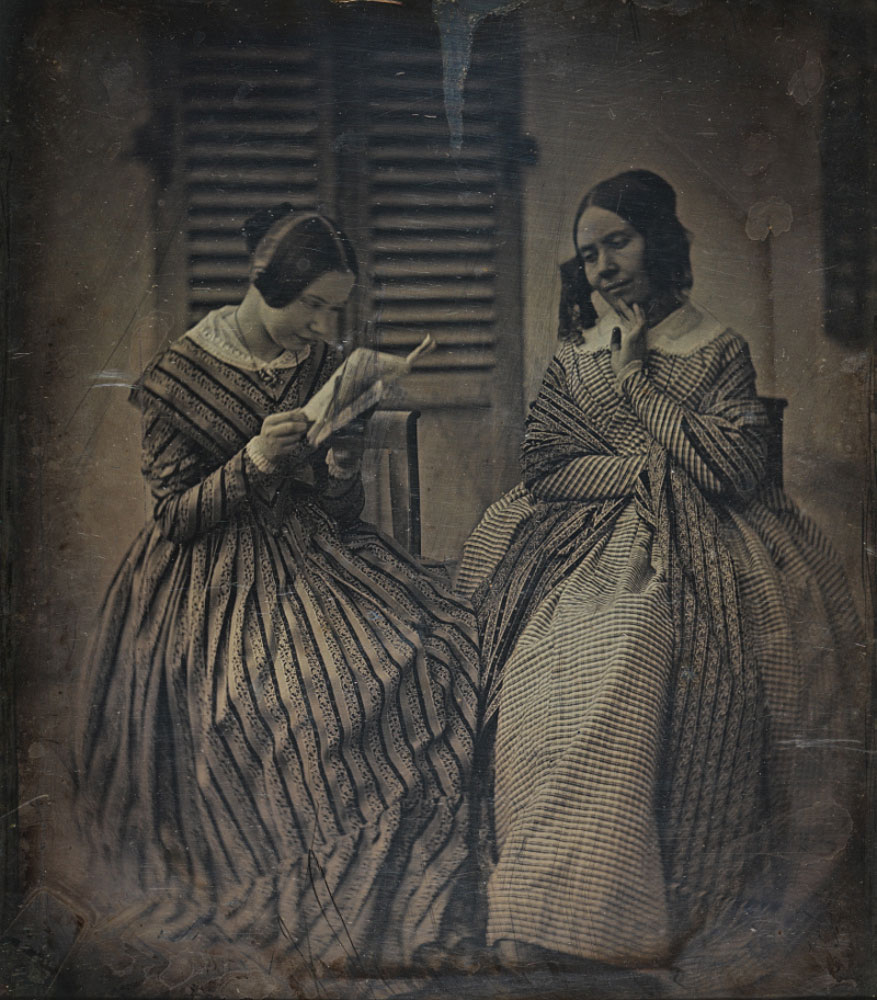
Exhibition: ‘In the Darkroom: Photographic Processes before the Digital Age’ at the National Gallery of Art, Washington, D.C.

Exhibition dates: 25th October, 2009 – 14th March, 2010


William Henry Fox Talbot (British, 1800-1877) 'Lace' 1839-1844 from the exhibition 'In the Darkroom: Photographic Processes before the Digital Age' at the National Gallery of Art, Washington, D.C., October 2009 - March, 2010
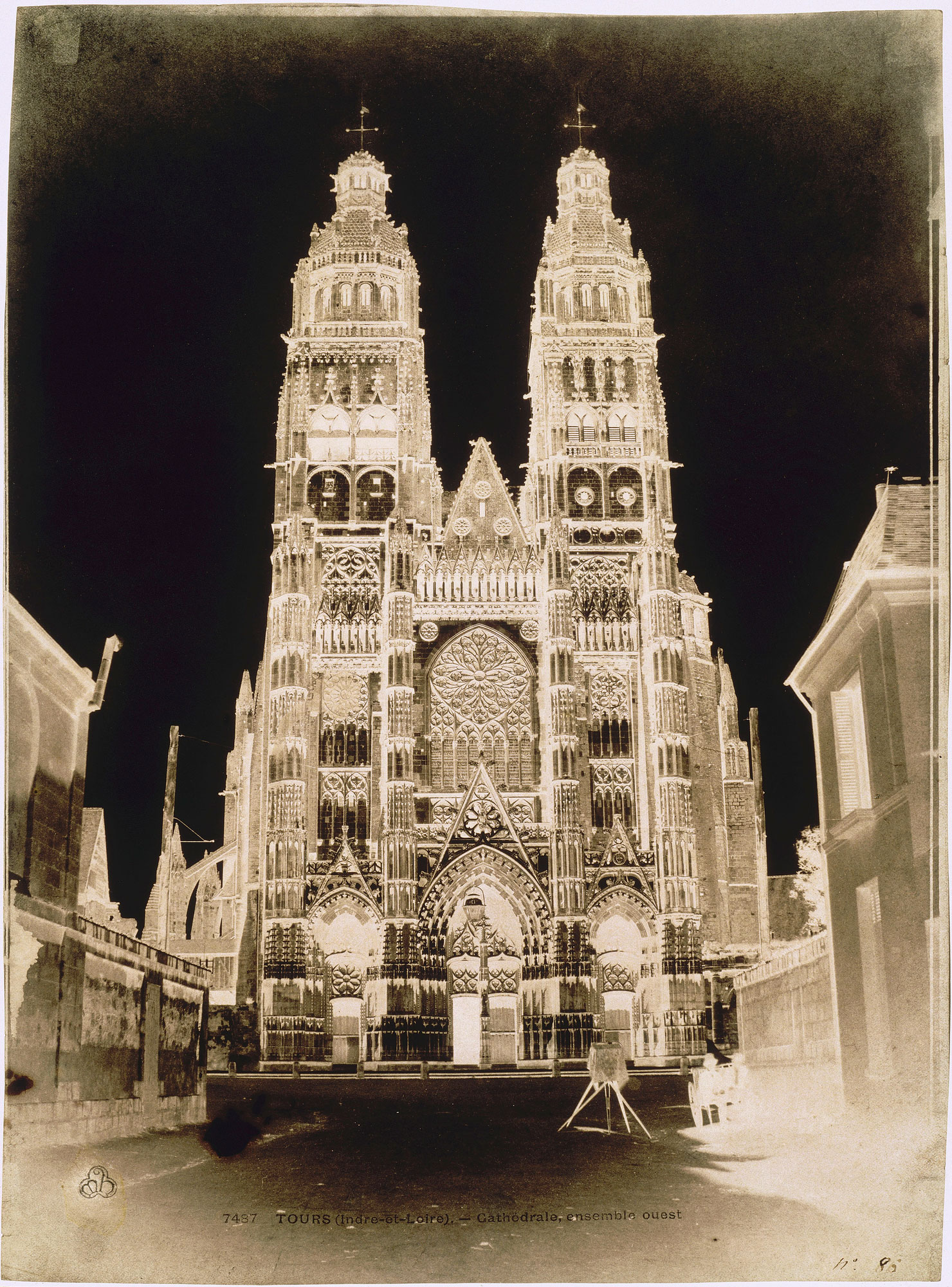
 

William Henry Fox Talbot (British, 1800-1877)
Lace
1839-1844
Photogenic drawing (salted paper print)
Sheet (trimmed to image): 17.1 x 22cm (6 3/4 x 8 11/16 in.)
Support: 24.8 x 31.1cm (9 3/4 x 12 1/4 in.)
National Gallery of Art, Washington
Patrons’ Permanent Fund
Public domain


Many thankx to Kate Afanasyeva and the National Gallery of Art for allowing me to reproduce the photographs from the exhibition below. Please click on the photographs for a larger version of the image.

Dr Marcus Bunyan


Anna Atkins (British, 1799-1871) 'Ferns, Specimen of Cyanotype' 1840s from the exhibition 'In the Darkroom: Photographic Processes before the Digital Age' at the National Gallery of Art, Washington, D.C., October 2009 - March, 2010


Anna Atkins (British, 1799-1871)
Ferns, Specimen of Cyanotype
1840s
cyanotype
National Gallery of Art, Washington
R.K. Mellon Family Foundation Fund


Albert Sands Southworth and Josiah Johnson Hawes. 'The Letter' c. 1850  from the exhibition 'In the Darkroom: Photographic Processes before the Digital Age' at the National Gallery of Art, Washington, D.C., October 2009 - March, 2010


Albert Sands Southworth and Josiah Johnson Hawes
The Letter
c. 1850
daguerreotype
National Gallery of Art, Washington
Patrons’ Permanent Fund


Southworth and Hawes’ aspirations for their portraits went far beyond those of the average photographer of their day. Whereas most daguerreotypists, simply concerned with rendering a likeness, used stock poses, painted backdrops, and even head restraints to firmly fix their subjects, Southworth and Hawes were celebrated not just for their technical expertise, but also for their penetrating studies, innovative style, and creative use of natural light. They sought to elevate their subjects “far beyond common nature” and embody their “genius and spirit of poetry,” as Southworth wrote in 1871. “What is to be done is obliged to be done quickly. The whole character of the sitter is to be read at first sight; the whole likeness, as it shall appear when finished, is to be seen at first, in each and all its details, and in their unity and combination.”2

Among Southworth and Hawes’ most accomplished studies, The Letter is exceptional in its composition and mood. Most American daguerreotype portraits made in the 1840s and 1850s were frontal, bust-length studies of single figures who rarely show any kind of facial expression because of the often long exposure times. The Letter, however, is a highly evocative study. With its carefully constructed composition and tight pyramidal structure, it presents two thoughtful young women contemplating a letter. Through their posture and expression, these women seem to gain not only physical support from each other, but also emotional strength. Although the identity of the women is unknown, as is the content of the letter, this large and distinguished daguerreotype reflects Southworth and Hawes’ aspiration to capture “the life, the feeling, the mind, and the soul” of their subjects.3

(Text by Sarah Greenough, published in the National Gallery of Art exhibition catalogue, Art for the Nation, 2000)

Text from the National Gallery of Art website


Charles Nègre (French, 1820-1880)
'Saint John the Evangelist, Chartres Cathedral' c. 1854


Charles Nègre (French, 1820-1880)
Saint John the Evangelist, Chartres Cathedral
c. 1854
Salted paper print from a paper negative
National Gallery of Art, Washington
Eugene L. and Marie-Louise Garbaty Fund, Pepita Milmore Memorial Fund and New Century Fund
Public domain


In 1851 the French government’s Commission des Monuments Historiques selected five photographers to document architectural treasures throughout the country. Nègre was not included, perhaps because he was a member of the opposition party, but he took it upon himself to photograph extensively in Marseilles, Arles, Avignon, and Aix-en-Provence in the early 1850s, and in 1854 he made many photographs of Chartres Cathedral.

Nègre applied his growing understanding of light, shadow, line, and form in Saint John the Evangelist, Chartres Cathedral, and the photograph beautifully illustrates his willingness to sacrifice “a few details,” as he wrote, to capture “an imposing effect.” In addition, unlike photographers associated with the Commission des Monuments Historiques, who were asked to provide general studies of a building’s façade, Nègre was free to explore more unusual views. The statue of Saint John the Evangelist is situated high in the north spire of Chartres, several feet above a nearby balcony. Although difficult to see and even harder for Nègre to record (he most likely perched his camera on a platform), the view in his photograph succinctly captured what he called the cathedral’s “real character” and “preserved the poetic charm that surrounded it.”

Text from the National Gallery of Art website


Unknown photographer (American 19th Century) 'George E. Lane, Jr.' c. 1855


Unknown photographer (American 19th Century)
George E. Lane, Jr.
c. 1855
Ambrotype
National Gallery of Art, Washington
Gift of Kathleen, Melissa, and Pamela Stegeman
Public domain


Étienne Carjat (French, 1828-1906)
'Charles Baudelaire' 1861, printed 1877


Étienne Carjat (French, 1828-1906)
Charles Baudelaire
1861, printed 1877
Woodburytype
National Gallery of Art, Washington
Gift of Jacob Kainen
Public domain


William James Stillman (American, 1828-1901) 'The Acropolis of Athens'
1869/1870


William James Stillman (American, 1828-1901)
The Acropolis of Athens
1869/1870
Carbon print
National Gallery of Art, Washington
Horace W. Goldsmith Foundation through Robert and Joyce Menschel


J.G. Ellinwood (American, 1844-1924) 'Portrait of a Woman' c. 1870


J.G. Ellinwood (American, 1844-1924)
Portrait of a Woman
c. 1870
Tintype, hand-coloured
National Gallery of Art, Washington
Mary and Dan Solomon Fund


Clarence White (American, 1871-1925) 'Mrs. White - In the Studio' 1907


Clarence White (American, 1871-1925)
Mrs. White – In the Studio
1907
platinum print
National Gallery of Art, Washington
Horace W. Goldsmith Foundation through Robert and Joyce Menschel and R.K. Mellon Family Foundation Fund


Karl Struss (American, 1886-1981) 'Columbia University, Night' 1910


Karl Struss (American, 1886-1981)
Columbia University, Night
1910
Gum dichromate over platinum print
Image: 24.1 × 19.9cm (9 1/2 × 7 13/16 in.)
National Gallery of Art, Washington
Horace W. Goldsmith Foundation through Robert and Joyce Menschel


Laura Gilpin (American, 1891-1979) 'Ghost Rock, Colorado Springs' 1919


Laura Gilpin (American, 1891-1979)
Ghost Rock, Colorado Springs
1919
Platinum print
24.2 x 19.1cm (9 1/2 x 7 1/2 in.)
National Gallery of Art, Washington
Marvin Breckinridge Patterson Fund
© 1979 Amon Carter Museum, Fort Worth, Texas


László Moholy-Nagy (Hungarian, 1895-1946) 'Untitled (Positive)' c. 1922-1924


László Moholy-Nagy (Hungarian, 1895-1946)
Untitled (Positive)
c. 1922-1924
gelatin silver print
National Gallery of Art, Washington
Gift of The Circle of the National Gallery of Art


László Moholy-Nagy (Hungarian, 1895-1946) 'Untitled' c. 1922-1924


László Moholy-Nagy (Hungarian, 1895-1946)
Untitled
c. 1922-1924
gelatin silver print
National Gallery of Art, Washington
New Century Fund


Eugène Atget (French, 1857-1927)
'Magasin, Avenue des Gobelins' 1925


Eugène Atget (French, 1857-1927)
Magasin, Avenue des Gobelins
1925
gelatin silver print, printed-out
National Gallery of Art, Washington
Patrons’ Permanent Fund
Public domain


Aleksandr Rodchenko (Russian, 1891-1956) 'Pioneer with a Bugle' 1930


Aleksandr Rodchenko (Russian, 1891-1956)
Pioneer with a Bugle
1930
Gelatin silver print
National Gallery of Art, Washington
Patrons’ Permanent Fund


Sid Grossman (American, 1913-1955) 'San Gennaro Festival, New York City' 1948


Sid Grossman (American, 1913-1955)
San Gennaro Festival, New York City
1948
gelatin silver print
National Gallery of Art, Washington
Anonymous Gift


Saul Leiter (American, 1923-2013) 'Snow' 1960


Saul Leiter (American, 1923-2013)
Snow
1960, printed 2005
Chromogenic colour print
National Gallery of Art, Washington
Gift of Saul Leiter


Diane Arbus (American, 1923-1971) 'A young man in curlers at home on West 20th Street, N.Y.C. 1966' 1966


Diane Arbus (American, 1923-1971)
A Young Man in Curlers at Home on West 20th Street, N.Y.C., 1966
1966
Gelatin silver print
National Gallery of Art, Washington
Gift of the Collectors Committee


The extraordinary range and complexity of the photographic process is explored, from the origins of the medium in the 1840s up to the advent of digital photography at the end of the 20th century, in a comprehensive exhibition and its accompanying guidebook at the National Gallery of Art, Washington. On view in the West Building, from October 25, 2009 through March 14, 2010, In the Darkroom: Photographic Processes Before the Digital Age chronicles the major technological developments in the 170-year history of photography and presents the virtuosity of the medium’s practitioners. Drawn from the Gallery’s permanent collection are some 90 photographs – ranging from William Henry Fox Talbot’s images of the 1840s to Andy Warhol’s Polaroid prints of the 1980s.

“In the Darkroom and the accompanying guidebook provide a valuable overview of the medium as well as an introduction to the most commonly used photographic processes from its earliest days,” said Earl A. Powell III, director, National Gallery of Art.

In the Darkroom

Organised chronologically, the exhibition opens with Lace (1839-1844), a photogenic drawing by William Henry Fox Talbot. Made without the aid of a camera, the image was produced by placing a swath of lace onto a sheet of sensitised paper and then exposing it to light to yield a tonally reversed image.

Talbot’s greatest achievement – the invention of the first negative-positive photographic process – is also celebrated in this section with paper negatives by Charles Nègre and Baron Louis-Adolphe Humbert de Molard as well as salted paper prints made from paper negatives by Nègre, partners David Octavius Hill and Robert Adamson, and others.

The daguerreotype, the first publicly introduced photographic process and the most popular form of photography during the medium’s first decade, is represented by a selection of British and American works, including an exquisite large-plate work by the American photographers Albert Sands Southworth and Josiah Johnson Hawes (see photograph above). By the mid-1850s, the daguerreotype’s popularity was eclipsed by two new processes, the ambrotype and the tintype. These portable photographs on glass or metal were relatively inexpensive to produce and were especially popular for portraiture.

The year 1851 marked a turning point in photographic history with the introduction of the collodion negative on glass and the albumen print process. Most often paired together, this negative-print combination yielded lustrous prints with a subtle gradation of tones from dark to light and became the most common form of photography in the 19th century, seen here in works by Julia Margaret Cameron, Roger Fenton, and Gustave Le Gray.

Near the turn of the 20th century, a number of new, complex print processes emerged, such as platinum and palladium, gum dichromate, and bromoil. Often requiring significant manipulation by the hand of the artist, these processes were favoured by photographers such as Gertrude Käsebier, Alfred Stieglitz, and Edward Weston.

One of the most significant developments of the late 19th century was the introduction of gelatin into photographic processes, which led to the invention of the film negative and the gelatin silver print. These became the standard for 20th-century black-and-white photography. A chronological selection of gelatin silver prints, including a contact print made by André Kertész in 1912; a grainy, blurred image of Little Italy’s San Gennaro festival at night by Sid Grossman from 1948 (see photograph above); and a coolly precise industrial landscape by Frank Gohlke from 1975, reveals how the introduction of the film negative and changes in the gelatin silver print process profoundly shaped the direction of modern photography. This section also explores the development of ink-based, photomechanical processes such as photogravure, Woodburytype, and halftone that enabled the large-scale, high-quality reproduction of photographs in books and magazines.

The final section of the exhibition explores the rise of colour photography in the 20th century. Although the introduction of chromogenic colour processes made colour photography commercially viable by the 1930s, it was not widely employed by artists until the 1970s. The exhibition celebrates the pioneers of colour photography, including Harry Callahan and William Eggleston, who made exceptional work using the complicated dye transfer process. The exhibition also explores the range of processes developed by the Polaroid Corporation that provided instant gratification to the user, from Andy Warhol’s small SX-70 prints to the large-scale Polaroid prints represented by the work of contemporary photographer David Levinthal.

Press release from the National Gallery of Art website [Online] Cited 15/02/2010 no longer available online


Roger Fenton (British, 1819-1869) 'The Cloisters, Tintern Abbey' 1854  from the exhibition 'In the Darkroom: Photographic Processes before the Digital Age' at the National Gallery of Art, Washington, D.C., October 2009 - March, 2010


Roger Fenton (British, 1819-1869)
The Cloisters, Tintern Abbey
1854
Salted paper print from a collodion negative
18.3 x 22.1cm (7 3/16 x 8 11/16 in.)
National Gallery of Art, Washington
Horace W. Goldsmith Foundation through Robert and Joyce Menschel
Public domain


Although Roger Fenton’s photographic career lasted for only 11 years, he exerted a profound influence on the medium. Trained as a lawyer, he began to paint in the early 1840s, studying in Paris with Michel-Martin Drölling and later in London with Charles Lucy. But in 1851 he took up photography and produced a distinguished and varied body of work. He was a pivotal figure in the formation of the Photographic Society (later known as the Royal Photographic Society), garnering support from Queen Victoria and Prince Albert. He is best known for his 1855 photographs made during the Crimean War, among the first to document war. But he also made ambitious studies of English cathedrals, country houses, and landscapes as well as portraits of the royal family, a series of still lifes, and studies of figures in Asian costume.

When Fenton first began to make photographs, he generally posed figures in a fairly stiff, even anecdotal manner. But in 1854 he began to use figures to create a sense of tension at once intriguing and compelling. The Cloisters, Tintern Abbey shows this more dynamic approach. Fenton placed people in three groups, not interacting with one another but engaging in silent and solitary dialogue with their decaying surroundings. Tintern Abbey had, of course, inspired many artists and poets to reflect on both “the life of things” – as William Wordsworth wrote in his 1798 poem, “Lines Composed a Few Miles above Tintern Abbey” – and on the transitory nature of life itself.

Text from the National Gallery of Art website


Charles Nègre (French, 1820-1880)
'Cathédrale de Chartres - Portique du Midi XIIe Siècle (Chartres Cathedral, South Portal, 12th Century)' c. 1854, printed c. 1857


Charles Nègre (French, 1820-1880)
Cathédrale de Chartres – Portique du Midi XIIe Siècle (Chartres Cathedral, South Portal, 12th Century)
c. 1854, printed c. 1857
photogravure
National Gallery of Art, Washington
William and Sarah Walton Fund


Roger Fenton (British, 1819-1869)
'Fruit and Flowers' 1860


Roger Fenton (British, 1819-1869)
Fruit and Flowers
1860
Albumen print from a collodion negative
National Gallery of Art, Washington
Paul Mellon Fund
public domain


In the summer of 1860 Fenton made his most deliberate and exacting photographs to date: a series of still lifes. Although the subject obviously had its roots in painting, his densely packed compositions are far removed from the renditions of everyday life by the Dutch masters. Instead, Fenton extravagantly piled luscious fruits and intricately patterned flowers on top of one another and pushed them to the front of his composition so that they seem almost ready to tumble out of the photograph into the viewer’s space. It is that very immediacy – the precarious composition, the lush sensuousness of the objects, and our knowledge of their imminent decay – that makes these photographs so striking.

Text from the National Gallery of Art website


Gustave Le Gray (French, 1820-1884) 'Cavalry Maneuvers behind barrier, Camp de Châlons' 1857


Gustave Le Gray (French, 1820-1884)
Cavalry Maneuvers behind barrier, Camp de Châlons
1857
Albumen silver print from glass negative
National Gallery of Art, Washington


Platt D. Babbitt (American, 1822-1879) 'Niagara Falls' c. 1860


Platt D. Babbitt (American, 1822-1879)
Niagara Falls
c. 1860
Ambrotype
National Gallery of Art, Washington
Vital Projects Fund


Alfred Stieglitz (American, 1864-1946) 'The Terminal' 1893


Alfred Stieglitz (American, 1864-1946)
The Terminal
1893, printed 1920s/1930s
Gelatin silver print
National Gallery of Art, Washington
Alfred Stieglitz Collection


Aaron Siskind (American, 1903-1991) 'Martha's Vineyard 108' 1954


Aaron Siskind (American, 1903-1991)
Martha’s Vineyard 108
1954
Gelatin silver print
National Gallery of Art, Washington
Diana and Mallory Walker Fund


Dave Heath (Canadian, born United States, 1931-2016) 'Hastings-on-Hudson, New York' 1963


Dave Heath (Canadian, born United States, 1931-2016)
Hastings-on-Hudson, New York
1963
Gelatin silver print
National Gallery of Art, Washington
Gift of Howard Greenberg


William Eggleston (American, b. 1939) 'Untitled (Car in Parking Lot)' 1973


William Eggleston (American, b. 1939)
Untitled (Car in Parking Lot)
1973
Dye imbibition print
National Gallery of Art, Washington
Anonymous Gift


Harry Callahan (American, 1912-1999) 'Providence' 1977


Harry Callahan (American, 1912-1999)
Providence
1977
Dye transfer print


Robert Adams (American, b. 1937) 'Summer Nights #2 (Longmont, Colorado)' 1979


Robert Adams (American, b. 1937)
Summer Nights #2 (Longmont, Colorado)
1979
Gelatin silver print
National Gallery of Art, Washington
Gift of Mary and David Robinson


Richard Misrach (American, b. 1949)
'Dead Fish, Salton Sea, California' 1983, printed 1997


Richard Misrach (American, b. 1949)
Dead Fish, Salton Sea, California
1983, printed 1997
Chromogenic colour print
National Gallery of Art, Washington
Anonymous Gift


Mark Klett (American, b. 1952) 'Under the Dark Cloth, Monument Valley, May 27' 1989


Mark Klett (American, b. 1952)
Under the Dark Cloth, Monument Valley, May 27
1989
Gelatin silver print from Polaroid instant film negative
National Gallery of Art, Washington
Gift of the Collectors Committee


Edward Burtynsky (Canadian, b. 1955) 'Shipbreaking #10, Chittagong, Bangladesh' 2000, printed 2001


Edward Burtynsky (Canadian, b. 1955)
Shipbreaking #10, Chittagong, Bangladesh
2000, printed 2001
Chromogenic colour print
National Gallery of Art, Washington
Fund for Living Photographers


The National Gallery of Art, Washington, DC

The National Gallery of Art, located on the National Mall between 3rd and 7th Streets at Constitution Avenue NW.

Opening hours:
Daily 10.00am – 5.00pm

National Gallery of Art website

LIKE ART BLART ON FACEBOOK

Back to top