“Young heart, old soul.” And then the vulnerability in those eyes… that burn right through you.
Such sensitivity, such presence. Glorious. All of them!
Dr Marcus Bunyan
Many thankx to Fundación Mapfre for allowing me to publish the photographs in the posting. Please click on the photographs for a larger version of the image.
Fundación Mapfre opens its new photography gallery at Paseo de Recoletos 27 with the first retrospective exhibition dedicated to the work of British photographer Vanessa Winship. Curated by Carlos Martín García, the show offers visitors a complete overview of Winship’s work, featuring a broad selection of photographs from all of her series, starting with her initial project in the Balkans and ending with her work in Almería this year, produced by Fundación Mapfre and due to receive its first public showing at this exhibition.
Vanessa Winship (Barton-upon-Humber, United Kingdom, 1960) studied at the Polytechnic of Central London during the 1980s at the time when postmodern theory was beginning to permeate the practice of photography and cultural studies. These ideas are reflected in the artist’s deliberate remove of all potential documentary content from her photography in order to concentrate instead on notions more related to identity, vulnerability and the body. Accordingly, since the 1990s Vanessa Winship has worked in regions which, in the collective imaginary, are associated with the instability and darkness of a recent past and with the volatile nature of borders and identities. Her images, in black and white, challenge the perception of photography’s immovable truth. Meanwhile, the formal choice of black and while reflects a deliberate shift from the photograph as narrative and constitutes, in the words of the artist herself, a “marvellous instrument of abstraction that enables us to move between time and memory.”
Vanessa Winship is one of the most renowned photographers on the contemporary international scene. In 2011 she was the first woman to win the prestigious Henri Cartier-Bresson (HCB) award. Her other distinctions include winning first prize in the Stories category of the World Press Photo awards in 1998 and 2008, the Descubrimientos award at PhotoEspaña in 2010, and the Godfrey Argent Prize in 2008, bestowed by the National Portrait Gallery in London.
A tour of the exhibition
“I lived and worked in the region of the Balkans, Turkey and the Caucasus for more than a decade. My work focuses on the junction between chronicle and fiction, exploring ideas around concepts of borders, land, memory, desire, identity and history. I am interested in the telling of history, and in notions around periphery and edge. For me photography is a process of literacy, a journey of understanding.”
Vanessa Winship
The Vanessa Winship exhibition adopts the form of a chronological journey through each of the series that make up her oeuvre, featuring a selection of 188 photographs.
Between 1999 and 2003 Vanessa Winship traveled through the regions of Albania, Serbia, Kosovo and Athens, coinciding with the armed conflict in the former Yugoslavia and resulting in her series Imagined States and Desires. A Balkan Journey. This project was a fundamental step in defining her photographic vision and in her decision to break with contemporary reportage and the traditional concept of the photojournalist. The images that make up this series mostly center on the tragedy of the exodus of Kosovar Albanian refugees from Serbia to neighbouring countries. They are a collection of snapshots that reflect the volatile nature of borders, ethnic groups and creeds while asserting that identity is not bestowed by territory but is ingrained in individuals, wherever they go. The fragmentary nature of the series, its condensation into micro-stories, lays the foundations for her future practice.
In 2002 Vanessa Winship moved to the Black Sea region and over the next eight years traveled through Turkey, Georgia, Russia, Ukraine, Romania and Bulgaria. Her work in this area gave rise to one of her most renowned series, Black Sea: Between Chronicle and Fiction. In this series, she presents her vision of the area and the residents of the regions around the shores of the Black Sea, which she presents as a natural border – challenging all notions of geopolitical or historically established limits – of the vital space of each nation, and even of the distinction between public and private space. Winship’s work therefore focuses on the aspects that endure beyond the action of politics: collective rituals, modes of transportation, recreational spaces, and the movement of human beings up and down the coastlines.
In Black Sea, portraits of Turkish wrestlers and Ukrainian wedding guests allow Winship to elaborate on her reflections and explore the concepts of sexual differentiation governing societies: on one hand, Turkish wrestling, a direct descendant of Greco-Roman wrestling and an icon of masculinity in the country; on the other, participation in a wedding ceremony as a means of self-presentation in society for young Ukrainian women.
In both of these series, the images are accompanied by brief notes written by the artist, either expressing a single thought or a short description, which create a deliberately incomplete narrative. For Winship, these notes are meant to remind us of the power of text to evoke an image.
Sweet Nothings: Schoolgirls of Eastern Anatolia (2007), produced during her travels through Eastern Europe, is a key project in Vanessa Winship’s evolution as a photographer. It is an almost serial collection of portraits of schoolgirls from the rural area of Eastern Anatolia, a region bordering with Georgia, Armenia, Azerbaijan and Iran where the plurality of ethnic groups is silenced by the proliferation of uniforms, of both schoolchildren and military personnel. On a certain level, the school uniforms recall the tools used by states to classify the population, to “mark” their territory and neutralise the plurality of areas, as in Eastern Anatolia where the ethnic and geographic borders are not as clearly defined as they are on maps. This fact – the presence of uniforms – represents a framework for action, a boundary for the project, and allows Winship to further develop her interest in faces, gestures, and the sense of belonging to a group or community.
Georgia, another region on the shores of the Black Sea, is the setting for the series produced by between 2008 and 2010, in which she mostly focuses on portraits. Georgia. Seeds Carried by the Wind is a detailed study of the faces the photographer came across. These are portraits of youths and children, mostly individuals who, when grouped together, appear almost without variation as same-sex pairs. The collection suggests an energetic, survivor country. These images are combined with a series of coloured photographs (the only ones in Winship’s entire output) that accompany tombstones in a cemetery. The two collections establish an interesting dialogue between different generations of Georgians and, simultaneously, between the artist herself and the original anonymous photographer. Meanwhile, the landscapes and stones that complete the series evoke a premature death. By combining landscape and portrait as places where the traces of identity, history and present are imprinted, this series is a key project in Winship’s work as it prompts a debate about her practice and the issues posed by the two genres.
In 2011 Vanessa Winship received the prestigious Henri Cartier-Bresson (HCB) photography award. The project for she won the prize led to the series she Dances on Jackson. United States (2011-2012), produced in the United States, a country which she represents as of great uncertainty, where the weight of the recent past is manifested through public works and constructions which are either underused or have fallen into disuse, and where the faces of anonymous individuals and groups reveal their disillusionment with the promises of the American dream. This series also constitutes Winship’s definitive approach to landscape photography, a genre which has gained increasing prominence in her output. Short texts written by the author replace the gradual disappearance of the portrait, operating as narratives of the missing photographs. In she Dances on Jackson. United States the geographic leap to the other side of the Atlantic defines the characters that people Winship’s earlier photography.
Before embarking on her trip to the United States, Winship worked in her home town on the estuary of the Humber river (2010), for which this series is titled. In this project, we again witness the growing preeminence of landscape in her work. This process culminates masterfully in her most recent series, produced in Almería, which represents the reaffirmation of her work as a landscapist and the total absence of the human figure. In January 2014, for the purposes of this exhibition, the artist moved to Almería, a place marked by rootlessness and its border nature and geological diversity, to carry out her latest project. Winship has focused on photographing the geological formations along the coastline of Cabo de Gata and the devastation of the area following the proliferation of intensive agriculture based on greenhouse production. The land of gold, Spaghetti westerns and marble now appears as a land of plastic and, like all other places Winship has photographed, seems to be located in a place suspended in space and time. All of the images in this section of the show reflect the rapid transformation of the region following the introduction of greenhouses, a radical systemic change and altered coexistence brought about by the arrival of communities of immigrants and their access to consumer society customs. Almería, as Winship’s photographs clearly show, continues to be a fragmented landscape in which urban and rural collide and where the “non-place” that is the greenhouse acts as a metaphor for the area’s instability and vulnerability.
Catalogue
The exhibition will be accompanied by a catalogue featuring all the images on display and specially commissioned essays about the work of Vanessa Winship by Neil Ascherson, Stanley Wolukau-Wanambwa and Carlos Martín García. The catalog will also include two excerpts from Campos de Níjar (Níjar Country) and Coto Vedado (Forbidden Territory) by Juan Goytisolo, as well as a biography-timeline, an updated bibliography, and a selection of the texts the photographer uses to complement her series, in the manner of a “travel diary”. To date there are only two monographs on Winship, one devoted to the Black Sea series and one to Sweet Nothings, which means that this catalog will be the first and most incisive historiographical approximation to her entire oeuvre.”
The act of looking and the gaze through the eye of a photographer’s camera are the central motifs of Blow-Up.
“Don McCullin created the iconographic photographs that in the film are blown up by Thomas to discover something about the alleged crime. However, the blow-ups only offer ambivalent proof as they become more and more blurred and abstract by the continuous enlarging. Even photography that supposedly represents reality like no other form of media cannot help in shedding any light on the mysterious events in the park. Pictorial reality – thus Antonioni’s conclusion – is only ever constructed by the medium itself.” (Press release)
Then, look at Don Mcullin’s photograph British Butcher, East London (c. 1965, below). The Union Jack hat, the knife being sharpened and the contrast of the image. Savage. Not home grown but “Home killed”. Pictorial reality constructed by the medium but not just by the medium – but also by the aesthetic choices and the imagination of the photographer.
Dr Marcus Bunyan
Many thankx to the Albertina for allowing me to publish the photographs in the posting. Please click on the photographs for a larger version of the image.
Arthur Evans (British, 1908-1994) David Hemmings in “Blow Up” (directed by Michelangelo Antonioni) 1966 Film still Private collection Vienna Courtesy: New Visions Film Distribution GmbH
Arthur Evans (British, 1908-1994) David Hemmings in “Blow Up” (directed by Michelangelo Antonioni) 1966 Film still Private collection Vienna Courtesy: New Visions Film Distribution GmbH
Arthur Evans (British, 1908-1994) David Hemmings in “Blow Up” (directed by Michelangelo Antonioni) 1966 Film still Private collection Vienna Courtesy: New Visions Film Distribution GmbH
The cult film Blow-Up by Michelangelo Antonioni (1966) occupies a central position in the history of film as well as that of art and photography. No other film has shown and sounded out the diverse areas of photography in such a differentiated way. Shot in London, this film, which tells the story of a fashion photographer who happens to photograph a murder in a park, has become a classic. Its relevance and the unabated fascination it evokes are partially due to the remarkable range of themes it deals with. While Antonioni’s description of the social and artistic environment of his protagonist in 1960’s London can be understood as a visual document of the Swinging Sixties, the eponymous photographic blow-ups meticulously examined by the photographer to find something out about an alleged crime prompted a theoretical discourse on the representation and ambiguity of pictures from the first showing of the film. Both themes, the historical outline as well as the media reflexions, concern the main focus of the film: photography.
For the first time the exhibition in the Albertina presents in several chapters the diverse and differentiated connections between film and photography, thus allowing a trenchant profile of the photographic trends of the 1960s.
Photography in Blow-Up
The photographic range of Blow-Up is highly diversified and ranges from fashion photography and social reportage to abstract photography. Film stills are shown next to works that can actually be seen in Blow-Up, as well as pictures that illuminate the cultural and artistic frame of the film production, London in the Swinging Sixties.
The meaning of photography for the film Blow-Up is most apparent when Antonioni uses it to characterise his main character Thomas. Played by David Hemmings, the protagonist is not only a fashion photographer, but is also working on an illustrated book with photographs of social reportage. In order to depict both the main figure and its two areas of work in an authentic way, Antonioni is guided by real photographers of the time; before starting to shoot the film he meticulously researched the work as well as environment of the British fashion (photography) scene.
In the course of his preparations Antonioni sent out questionnaires to fashion photographers and visited them in their studios. Thus the main character is modelled after various photographers like David Bailey, John Cowan and Don McCullin; some of them Antonioni asked to cooperate on his film. He also integrated their works, for example Don McCullin’s reportage photographs that the protagonist browses through in the film, or fashion photographs by John Cowan that in the film can be seen in the protagonist’s studio.
In addition Don McCullin created the iconographic photographs that in the film are blown up by Thomas to discover something about the alleged crime. However, the blow-ups only offer ambivalent proof as they become more and more blurred and abstract by the continuous enlarging. Even photography that supposedly represents reality like no other form of media cannot help in shedding any light on the mysterious events in the park. Pictorial reality – thus Antonioni’s conclusion – is only ever constructed by the medium itself.
Antonioni used the photographs seen in the film for media-theoretical reflections and thus set stills and moving pictures in a differentiated context. This complex connection between film and photography is made very clear by the film stills that were created for Blow-Up. These still photographs are based on an elaborate process whereby the photographer has certain scenes re-enacted for the photo camera thus transforming the film from moving images into something static. The manifold references of Blow-Up are once more condensed into photographs in the film stills, as the pictures reflect the real context of fashion photography in 1960’s London through the depiction of the photographer, of well-known fashion models and the use of clothes to match.
Artistic references
The photographic references in Blow-Up are also set in relation to other art forms. This contextualisation is essential for Antonioni’s understanding of photography. Antonioni was, unlike most other film directors, committed to the applied arts which he showed already in 1964 with his film Deserto Rosso, its abstract compositions based on Mark Rothko’s paintings. In Blow-Up an artistic reference of this nature becomes apparent in the character of the protagonist’s neighbour, an abstract painter named Bill, who is modelled on British artist Ian Stephenson. Also the oil paintings in the film were created by Ian Stephenson. They show abstract motifs that in the film are compared with the stylistically related ‘blow-ups’.
The Swinging Sixties
Michelangelo Antonioni filmed Blow-Up at the height of the Swinging Sixties, the social and artistic trends of which are rendered in the film. The agitation of youth culture so characteristic of this time í and not least of all initiated by the Beatles í is shown as well as its trendsetting figures. Thus a concert by the British band The Yardbirds, with Jimmy Page, the subsequent founder of Led Zeppelin, served as a filming location. The scene of the infamous Pot-Party in the film was shot in the apartment of the art and antique dealer Christopher Gibbs, who shaped the fashion look of the Swinging Sixties.
British art of the 1960s was also essential for Antonioni as it anticipated many of those abstract tendencies that set the tone for Blow-Up. There was, for instance, the pop art artist Richard Hamilton who created blow-ups from ordinary postcards, thus reducing motifs to dots. Or Nigel Henderson, a member of the Independent Group, who had already produced photos in the 1950s, in which he pointed out their material qualities by creasing them and using special procedures for the negatives.
As much as Antonioni’s work is rooted in the 1960s, it is nevertheless a timeless classic that is still relevant for today’s art. This becomes apparent in the exhibition by means of selectively chosen contemporary works that refer to Blow-Up. Particularly the filmic outline on the representation of images and their ambiguity serves as the artistic basis for the creations of various contemporary photographers. Blow-Up has lost none of its relevance for art since its creation in 1966.
Patrick Hunt David Bailey on the set of G.G. Passion 1966 Courtesy Philippe Garner
Arthur Evans (British, 1908-1994) Veruschka von Lehndorff with David Hemmings in “Blow Up” (directed by Michelangelo Antonioni) 1966 Film still Private collection Vienna Courtesy: New Visions Film Distribution GmbH
Shot in London in 1966, Michelangelo Antonioni’s masterpiece Blow-Up confronts its audience with the manifold genres of photography and their different social references with a precision like no other feature film. The director involved some of the most interesting photographers of the day in the production of the film. The photojournalist Don McCullin was on set as were the fashion photographers John Cowan and David Montgomery as well as the paparazzo Tazio Secchiaroli. They served as models for Antonioni’s protagonist, took photographs for Blow-Up, and, not least, made their work available to the filmmaker.
Set against the social and artistic backdrop of London’s Swinging Sixties, Blow-Up tells us about a fashion photographer by the name of Thomas (David Hemmings) who secretly photographs two lovers in a park. He later enlarges these pictures and believes that he has coincidentally documented a murder. The blow-ups reveal a man lurking in the trees with a gun and, as Thomas supposes, a corpse. Fashion shootings and Thomas’s work on a book with reportage photographs featuring homeless people in London provide two further strands of reference in the film.
Presenting these contexts in five thematic sections, the exhibition in the Albertina offers a pointed cross-section of tendencies in the photography of the 1960s. The show not only explores the photo-historical circumstances under which Blow-Up was made but also presents real works of art Antonioni integrated into his film, as well as photographs he commissioned for the story. The visual translation of the film into stills constitutes another important field thematised in the exhibition. A selection of more recent works of art highlights the timelessness of Antonioni’s film.
Making film stills
Making film stills involves a complex production process in the course of which scenes of a film are specially reenacted in front of the still photographer’s camera. The difficulties the photographer is faced with result from the difference between film and photography as media. He has to transform the contents of a medium that renders movements and sequences of events in time into a photograph that freezes them in a single static moment.
Arthur Evans’s stills for Blow-Up go far beyond the genre’s traditional function of promoting a film. Evans created series of pictures which allow us to reconstruct certain sequences of movement and depict scenes not shown in the film. Hence his stills for Blow-Up are meta-pictures that shed light on the film from another perspective.
Voyeurism
The act of looking and the gaze through the eye of a photographer’s camera are the central motifs of Blow-Up, which becomes particularly evident in the famous scene in the park. This part of the film depicts the dynamics resulting from a camera focusing on persons and capturing them in a picture. Antonioni presents his protagonist as a paparazzo and voyeur secretly photographing people in the tradition of Alfred Hitchcock’s Rear Window (1954). Hidden behind shrubs, trees, and a fence, he watches a pair of lovers. The camera serves as an instrument for peeping through the keyhole, as it were. The dialogic dimension between photographer and model is revealed when the woman (Vanessa Redgrave) spots the photographer. She defends herself against Thomas’s invasive gaze, bites his hand, and runs away. The aesthetic of Thomas’s photographs shot in the park corresponds to the situation of their taking. The pictures are imbued with the instantaneousness and spontaneity deriving from the photographers wish to wrest a single picture from a dynamic context in a fraction of a second.
It is no coincidence that the photographer Tazio Secchiaroli was present on set in the very hours this scene was shot. Secchiaroli was an Italian paparazzo who had been after the suspects in a still unresolved murder case, the Montesi scandal, with his camera. Made against the background of this political scandal, Federico Fellini’s film La dolce vita (1960) features pushy photo reporters modelled after Secchiaroli.
Blow-Ups
The blow-ups of Thomas’s photographs shot in the park are the most famous pictures featured in Antonioni’s film. The filmmaker entrusted the renowned photojournalist Don McCullin with taking them. Following Antonioni’s instructions, McCullin had to position himself in the same places as Thomas in the film to reproduce his perspectives. He also used the same Nikon F camera the protagonist works with in Blow-Up. In order to ensure that the process of taking the pictures we see in the film corresponds with the photographer’s results, McCullin advised the actor David Hemmings on how to proceed. The actor learned how to handle the 35-mm camera correctly and was instructed about the body language connected with using it.
Fashion photography
The metropolis of London was the center of a new kind of fashion photography in the 1960s – a renown inseparably bound up with three names to this day: David Bailey, Terence Donovan, and Brian Duffy, also known as Black Trinity. Relying on 35-mm cameras, which had hitherto mainly been used for reportage photographs and ensured a supposedly spontaneous and dynamic pictorial language, these three photographers staged their models in unusual places outside their studios.
In preparing his film, Antonioni had meticulously researched the photographer’s living and working conditions by means of a several-page questionnaire in which he even inquired into their love relationships and eating habits. It was David Bailey who served as a model for the protagonist of Blow-Up. For his dynamic body language in the fashion shootings, for instance, Thomas took the cue from him. The style of clothes Thomas wears is indebted to that of the British fashion photographer John Cowan. Cowan made his studio available to Antonioni for the studio shots and acted as the filmmaker’s adviser. The photographs seen on the studio wall in Blow-Up are fashion photographs by Cowan which Antonioni chose for the film.
David Montgomery
David Montgomery is a US-American fashion photographer living in London. Before shooting his film, Antonioni visited him in his studio to watch him working with Veruschka, Jill Kennington, and Peggy Moffitt – the models he would subsequently cast for Blow-Up. David Montgomery has a cameo appearance in the beginning of the film: we see him taking pictures of the model Donyale Luna on Hoxton Market in London’s East End. When this scene was shot, he actually made the fashion photographs featuring Luna which he pretends to take in the film. Since Montgomery was no actor by his own account, he had to really take pictures in order to be able to play the scene in a convincing manner.
Arthur Evan’s fashion photographs
Arthur Evans, the still photographer, depicted the models appearing in Blow-Up in groups and in individual portraits. These pictures taken on set are very unusual for a still photographer, because they do not show scenes of the film, but are independently staged fashion photographs. The models’ costumes were designed by Jocelyn Rickards, the hats were made by James Wedge. Evans translated the linear patterns characteristic of both designers into graphic compositions in his photos.
Social reportage
Michelangelo Antonioni characterises his film’s protagonist also as a social reportage photographer who, for a book project on London he is working on, secretly takes pictures in a homeless shelter. A scene of the film has Thomas showing his publisher a dummy of the volume. The portraits in it were made by the photojournalist Don McCullin; their originals are presented in the exhibition for the very first time.
The pictures were taken in London’s East End in the early 1960s, when the area was notorious for its residents’ poverty, miserable housing conditions, and racial unrest. The photographer provides a cross-section of its inhabitants whom he mainly characterises through their occupation. The two-fold orientation of the film’s protagonist as fashion and reportage photographer is based on fact, as illustrated by both David Bailey and David Montgomery. The stylistic boundaries between the two genres blur in their works. The strategy of picturing models in urban surroundings with a 35-mm camera, for example, is clearly rooted in reportage photography.
Swinging London: Art and Life
Michelangelo Antonioni filmed Blow-Up in the heyday of London’s Swinging Sixties whose social and artistic trends are depicted in the film. He captured the youth culture and its agitation so characteristic of these years – which was not least triggered by the Beatles – as well as the protagonists of the scene. One location he chose was a concert of the Yardbirds, a British band counting Jimmy Page, who would found Led Zeppelin, among its players. The famous pot-party in Blow-Up was shot in the art and antique dealer Christopher Gibbs’ flat, who determined the fashion look of the Swinging Sixties to a remarkable degree.
The British art of the 1960s was also very important to Antonioni, as it already anticipated many of the abstract tendencies informing Blow-Up. The Pop artist Richard Hamilton, for example, used to enlarge everyday picture postcards, reducing their motifs to an abstract dot matrix. Nigel Henderson, a member of the Independent Group, had already emphasised the material qualities of his photos in the 1950s by folding his prints and employing negative techniques. Antonioni integrated works by British artists: for example a picture by Peter Sedgley, a representative of Op art, and oil paintings by Ian Stephenson into his film.
Ian Stephenson
Antonioni’s understanding of photography was informed by painting í an influence that becomes manifest in the character of the protagonist’s neighbour, in Blow-Up a painter named Bill. Antonioni compares the neighbour’s abstract paintings with the photographer’s blow-ups. When Thomas and his neighbour talk about the paintings, Bill maintains that he does not see much in them while painting them and only finds meaning in them later on. This form of reception tallies with Thomas’s attempt to determine the meaning of his similarly abstract enlargements.
The character of the painter is based on the British artist Ian Stephenson. Antonioni visited the artist in his studio before he started shooting Blow-Up. He watched the painter at work and selected the paintings he wanted to use in the film.
Blow-Up
The photographs central to Antonioniés film are the blow-ups of the pictures which the protagonist has taken in the park and which he examines meticulously. The enlargements reveal a man with a pistol lurking in the trees and a mass in the grass, which Thomas interprets as a lifeless body. To make the presumed corpse more visible Thomas enlarges the photograph again and again until it shows nothing but its grain and materiality, despite the photographs inherent relation to reality.
Antonioni uses the blow-ups to question the representation of reality by media and their specific modes of perception. He interlinks these considerations with the film. The final scene of Blow-Up shows Thomas coming upon a group of mimes playing an imaginary game of tennis. When the (invisible) ball lands behind the fence, Thomas joins in the mimes’ game, picks up the ball from the lawn and throws it back to the players. A camera pan traces the trajectory of the invisible ball. In evoking the ball without showing it, Antonioni confronts us with the most radical abstraction: the motif is not rendered as an abstract or blurry form like in the enlargements, but is altogether absent. The media-theoretical implications of Blow-Up are still the subject of conceptual photographs today. Like Antonioni, the Italian Ugo Mulas and the American Allan McCollum, for example, question photography’s relation to reality in their blow-ups.
Le montagne incantate
The nucleus for the blow-ups in the film is to be found in a series of artworks titled Le montagne incantate (The Enchanted Mountains), which Antonioni started working on in the mid-1950s. The filmmaker photographically enlarged his small-format abstract watercolours, making the material qualities of the paper and the application of the paint visible. Consequentially, Antonioni recommended the use of a magnifying glass – as used by the protagonist in Blow-Up – as the ideal instrument for viewing these pictures.
Like the my earlier posting on the exhibition ‘Caravaggio – Bacon’ at Gallery Borghese, Rome, what an inspired curatorial decision this is. I would have never have thought to have brought Bacon and Moore together, but the synergy between the two artists work is undeniable.
Personally, I don’t think that Moore is as immobile and measurable as Radoslaw Kudlinski states in the quotation below: while rooted in anthropological concerns his anthropomorphic “nightmares” have a heft and gravitas that move you, not physically, but in the pit of your stomach. Look at the open mouth of Reclining Figure (1951, below) and tell me you are not drawn down into the bowls of the soul through the pointed tit of mother earth. Tactile, yes. Immobile and measurable, NO!
Moore moves you from within. His roots are from an ancient and emotional landscape, one of decay, time and change. His works are like embryonic sacs, pushing out at you from different points. The holes in his work are like looking into a black hole. The spaces he creates with his sculptures DENY a perfect formal economy, for they are really awkward images that impinge on a space. Never stationary, his sculptures move you from within in the most powerful way. A perfect counterbalance to the external, cinematic rambunctiousness of Bacon.
Dr Marcus Bunyan
Many thankx to the Art Gallery of Ontario for allowing me to publish the photographs in the posting. Please click on the photographs for a larger version of the image.
“While Moore’s figures are sustaining themselves entirely from within, Bacon’s are disengaged fugitives from history. Bacon is already “after” when Moore is still “before.”
And while Moore’s nightmares are still rooted in anthropological concerns – corporeal and measurable – Bacon’s subject is a phantom without a name, without a past, because a collectivised subject is only and always an abstract fragment of a person.
But we need Moore’s confrontation with Bacon. Moore is a guardian of our sanity. His forms are stationary – despite the refined movement of all their structural lines, and their impeccable pronunciation of architectural tempo, as well as their perfect formal economy, they are going nowhere.
And because of Moore’s immobility, tactility and measurability, I welcome his presence with relief. He defends us from Bacon’s radical, cinematic mobility, forever escaping our grasp.
Bacon’s state of convulsive stasis is an illusion, because looking at his canvas you have an impression that between the two or three takes, there are more frames, as in a movie, trapped in the same space. There is also a sense that this trapping of multiplicity is not a conscious choice, but the consequence of there being nowhere else to go.
Bacon is the scandal of the flesh, the existential strip-tease – even a post-flesh, post-body concept of a person. He is a fugitive, and his natural state is motion, appearance and disappearance. He belongs to non-materiality, to cyberspace – and this is his paradox, because together with the sensuality of his pictorial matter, the materiality of subject is gone. That’s why Bacon is so relevant today.”
Radoslaw Kudlinski. “Serious Scary: Francis Bacon and Henry Moore in Toronto,” on the Canadian Art website, May 7, 2014 [Online] Cited 05/07/2014. No longer available online. Used under fair use conditions for the purposes of education and research
The tortured British painter Francis Bacon, whose triptych recently set a new record for the most expensive artwork ever sold at auction, makes his Canadian debut this spring at the Art Gallery of Ontario (AGO) alongside rarely-seen works by the British sculptor Henry Moore in the exhibition Francis Bacon & Henry Moore: Terror and Beauty. Featuring more than 130 artworks, including paintings, sculptures, drawings, photographs and archival materials, the exhibition explores the two artists’ shared fascination with the human form in relation to the violence of the Second World War and other key events of the 20th century.
Although they were neither friends nor collaborators, Bacon (b. 1909) and Moore (b. 1898) were contemporaries who shared an obsession with expressing themes of violence, trauma and conflict, both social and personal. Drawing on the artists’ personal experiences during the London Blitz and other conflicts, the exhibition examines how confinement and angst fostered their extraordinary creativity and unique visions. Bacon, whose dark depictions of human torment have inspired several characters in popular culture, including the appearance of Heath Ledger’s Joker in The Dark Knight, was a sado-masochist who sought to process the trials of humanity through his canvases. Moore, a British war artist, was one of the most renowned sculptors of his time. His works evoke endurance and stability, but when considered in light of his wartime experience, they read as an effort to rebuild and redeem the fragile human psyche and body.
Curated for the AGO by Dan Adler, associate professor of art history at York University, Francis Bacon and Henry Moore: Terror and Beauty is the first Canadian exhibition of Bacon’s work and includes rarely seen Moore pieces, from both the AGO collection and elsewhere. Moore’s works are a cornerstone of the AGO collection, and pairing them with those by Francis Bacon sets them in a new light. The exhibition also presents more than 30 archival photographs by acclaimed German-born British photographer Bill Brandt. Loans for the exhibition have also been secured from several institutions, including MoMA, Tate Britain and the Museum of Contemporary Art, Chicago.
Curator: Gael Newton, Senior Curator of Photography at the NGA
Woodbury & Page (established Jakarta 1857-1900) Batavia roadstead c. 1865 Albumen silver photograph 19.4 x 24.5cm Collection National Gallery of Australia
Dutch East Indies and Indonesian photography, and more broadly Asia-Pacific photography, has been a burgeoning area of interest, research and collecting for some time now. Although this is far from my area of expertise, with the quality of the work shown in this posting, you can understand why. Since 2005, “the National Gallery of Australia’s Asian photographs collection has grown to nearly 8000 and in excess of 6500 prints are from Indonesia.”
Absolutely beautiful tonality to the prints. They seem to have a wonderful stillness to them as well.
On a personal note, Gael Newton, Senior Curator, Photography at the National Gallery of Australia is retiring. I would like to thank her for promoting, researching and writing about all forms of photography over the years and to congratulate her on significantly extending the NGA’s photography collection. A job well done.
Dr Marcus Bunyan
Many thankx to Gael Newton and the National Gallery of Australia for allowing me to publish the photographs in the posting. Please click on the photographs for a larger version of the image.
Dirk Huppe (Indonesia, 1867-1931) O Kurkdjian & Co (Established Surabaya, Java 1903-1935) Mature canes, fertilised with artificial guano, Java Fertilizer Co., Semarang 1914 Carbon print photograph 74.6 x 99.6cm Collection National Gallery of Australia
Atelier O Kurkdjian & Co (Established Surabaya, Java 1903-1935) Bromo eruption of December 1915 Gelatin silver photograph 17.7 x 24cm Collection National Gallery of Australia Purchased 2007
S. Satake (Japanese, working Indonesia 1902 – c. 1937) Eruption Java c. 1930 Gelatin silver photograph 16.2 x 21.8cm Collection National Gallery of Australia
While Indonesia might be the second most popular destination for outbound Aussies, the history of the Indonesian archipelago’s diverse peoples and the colonial era Dutch East Indies, remains unfamiliar. In particular the rich heritage of photographic images made by the nearly 500 listed photographers at work across the archipelago in the mid 19th – mid 20th century, is poorly known, both in the region and internationally.
The Gallery began building its Indonesian photographic collection in 2006. It is unique in the region: the largest and most comprehensive collection excluding the archives of the Dutch East Indies in the Netherlands. It was not until the late 1850s with the arrival of photographs printed on paper from a master glass negative, that images of Indonesia – the origin of nutmeg, pepper and cloves, much desired in the West – began circulating worldwide.
Australia had a minor role in the history of photography in Indonesia. A pair of young British photographers, Walter Woodbury and James Page (operators of the Woodbury & Page studios located in the Victorian goldfields and Melbourne) arrived in Jakarta in 1857. From around 1900 a trend toward more picturesque views and sympathetic portrayals of indigenous people appeared. Old images were given new life as souvenir prints and sold through hotels and resorts or used for cruise ship brochures.
A particular feature of Garden of the East is the display of family albums. Both amateur and professional images in the Indies were bound in distinctive Japanese or Batik-patterned cloth boards as records of a colonial lifestyle. Hundreds of these once-treasured narratives of now lost people ended up in the Netherlands in the 1970s and 80s in estate sales of former Dutch colonial and Indo (mixed race) family members who had returned or immigrated after the establishment of the Republic of Indonesia in 1945.
Text from the National Gallery of Australia website
S. Satake (Japanese, working Indonesia 1902 – c. 1937) Women on road to Buleleng Bali c. 1928 Gelatin silver photograph 16.2 x 22.0cm Collection National Gallery of Australia
Woodbury & Page (established Jakarta 1857-1900) Gusti Ngurah Ketut Jelantik, Prince of Buleleng with his entourage in Jakarta in 1864 on the visit of Governor-General LAJW Sloet van de Beele 1864 Albumen silver photograph Collection National Gallery of Australia
Garden of the East: Photography in Indonesia 1850s-1940s is the first major survey in the southern hemisphere of the photographic art from the period spanning the last century of colonial rule until just prior to the establishment of the Republic of Indonesia in 1945. The exhibition provides the opportunity to view over two hundred and fifty photographs, albums and illustrated books of the photography of this era and provides a unique insight into the people, life and culture of Indonesia. The exhibition and accompanying catalogue reveals much new research and information regarding the rich photographic history of Indonesia. Garden of the East is on display in Canberra only.
The exhibition is comprised of images created by more than one hundred photographers and the majority have never been exhibited publicly before. The works were captured by photographers of all races, making images of the beauty, bounty, antiquities and elaborate cultures of the diverse lands and peoples of the former Dutch East Indies. Among these photographers is the Javanese artist Kassian Céphas, whose genius as a photographer is not widely known at this time, a situation which the National Gallery of Australia hopes to address by growing the collection of holdings from this period and by continuing to stage focused exhibitions such as Garden of the East.
As was the case in other Southeast Asian ports, the most prominent professional photographers at work in colonial Indonesia came from a wide range of European backgrounds until the 1890s, when Chinese photography studios began to dominate. The exhibition focuses on the leading foreign studios of the time, in particular Walter B Woodbury, one of the earliest photographers at work in Australia in the 1850s as well as the Dutch East Indies. However Garden of the East also includes images created by lesser known figures whose work embraced the new art photography styles of the early twentieth century including: George Lewis, the British chief photographer at the Surabaya studio founded by Armenian Ohannes Kurkdjian, the remarkable German amateur photographer Dr Gregor Krause; American adventurer and filmmaker André Roosevelt; and the only woman professional known to have worked in the period, Thilly Weissenborn, whose works were intertwined with the tourist promotion of Java and Bali in the 1930s. Chinese studios are well-represented, although little is known of their founders and many employed foreign photographers.
Frank Hurley is the sole Australian photographer represented in the exhibition. Hurley is noted as the only Australian known to have worked in Indonesia before the Second World War and toured Java in mid-1913, on commission to promote tourist cruises from Australia to the Indies for the Royal Packet Navigation Company.
“We are delighted to host this exhibition and believe that Australia’s geographic, political and cultural position in the Asia-Pacific region makes it very appropriate that the National Gallery of Australia should celebrate the rich and diverse arts of our region,” said Ron Radford AM, Director, National Gallery of Australia. “A dedicated Asia-Pacific focused policy has been long-held by the Gallery, but it was not until 2005 that we focused on early photographic art of the region. Progress, however, has been rapid and all the photographs in Garden of the East have been recently acquired for the National Gallery’s permanent collection,” he said.
“From a small holding in 2005 of less than two hundred photographs from anywhere in Asia, of which only half a dozen were by any Asian-born photographers, the National Gallery of Australia’s Asian photographs collection has grown to nearly 8000 and in excess of 6500 prints are from Indonesia,” Ron Radford said.
“Garden of the East presents images, both historic and homely and is a ‘time travel’ opportunity to visit the Indies through more than two hundred and fifty works on show, made by both professional and amateur family photographers. Images as diverse as the Indonesian archipelago itself, which was once described by nineteenth century travel writers as the Garden of the East,” said Gael Newton, Senior Curator of Photography, National Gallery of Australia and exhibition Curator.
Garden of the East: Photography in Indonesia 1850s-1940s follows the large 2008 survey exhibition Picture Paradise: Asia-Pacific photography 1840s-1940s. This was the first of the new Asia-Pacific collection focus exhibitions. In 2010, the Gallery staged an early photographic portrait exhibition to coincide with a conference hosted in partnership with the Australian National University entitled Facing Asia. A number of other small Asian collection shows have also been held since 2011.
The National Gallery of Australia is delighted to stage this exhibition to coincide with the Focus Country Program, an initiative organised by the Australian Government’s key cultural diplomacy body, the Australia International Cultural Council. The AICC has chosen Indonesia as its Focus Country for 2014 and will organise a series of events across the Indonesian archipelago to promote Australian arts and culture, as well as our credentials in sport, science, education and industry. This exhibition will also mark the 40th anniversary of dialogue relations between Australia and the Association of South East Asian Nations. The National Gallery of Australia is proud to be presenting an exhibition of Indonesian photography in celebration of Australia’s close cultural relations with Indonesia and the Asia-Pacific region.
Press release from the National Gallery of Australia website
Kassian Céphas (Javanese, 1845-1912) Man climbing the front entrance to Borobudur Central Java 1872 Albumen silver photograph 22.2 x 16.1cm Collection National Gallery of Australia
Kassian Cephas or Kassian Céphas was a Javanese photographer of the court of the Yogyakarta Sultanate. He was the first indigenous person from Indonesia to become a professional photographer and was trained at the request of Sultan Hamengkubuwana VI. After becoming a court photographer in as early 1871, he began working on portrait photography for members of the royal family, as well as documentary work for the Dutch Archaeological Union. Cephas was recognised for his contributions to preserving Java’s cultural heritage through membership in the Royal Netherlands Institute of Southeast Asian and Caribbean Studies and an honorary gold medal of the Order of Orange-Nassau. Cephas and his wife Dina Rakijah raised four children. Their eldest son Sem Cephas continued the family’s photography business until his own death in 1918.
Kassian Céphas (Javanese, 1845-1912) Young Javanese woman c. 1885 Albumen silver photograph 13.7 x 9.8cm Collection National Gallery of Australia
Garden of the East: photography in Indonesia 1850s-1940s offers the chance to see images from the last century of colonial rule in the former Dutch East Indies. It includes over two hundred photographs, albums and illustrated books from the Gallery’s extensive collection of photographic art from our nearest Asian neighbour.
Most of the daguerreotype images from the 1840s, the first decade of photography in Indonesia, are lost and can only be glimpsed in reproductions in books and magazines of the mid nineteenth century. It was not until the late 1850s that photographic images of Indonesia – famed origin of exotic spices much desired in the West – began circulating worldwide. British photographers Walter Woodbury and James Page, who arrived in Batavia (Jakarta) from Australia in 1857, established the first studio to disseminate large numbers of views of the country’s lush tropical landscapes and fruits, bustling port cities, indigenous people, exotic dancers, sultans and the then still poorly known Buddhist and Hindu Javanese antiquities of Central Java.
The studios established in the 1870s tended to offer a similar inventory of products, mostly for the resident Europeans, tourists and international markets. The only Javanese photographer of note was Kassian Céphas who began work for the Sultan in Yogyakarta in the early 1870s. In late life, Céphas was widely honoured for his record of Javanese antiquities and Kraton performances, and his full genius can be seen in Garden of the East.
Most of the best known studios at the turn of the century, including those of Armenian O Kurkdjian and German CJ Kleingrothe, were owned and run by Europeans. Chinese-run studios appeared in the 1890s but concentrated on portraiture. Curiously, relatively few photographers in Indonesia were Dutch. From the 1890s onward, the largest studios increasingly served corporate customers in documenting the massive scale of agribusiness, particularly in the golden economic years of the Indies in the early to mid twentieth century. From around 1900, a trend toward more picturesque views and sympathetic portrayals of indigenous people appeared. This was intimately linked to a government sponsored tourist bureau and to styles of Pictorialist art photography that had just emerged as an international movement in Europe and America. As photographic studios passed from owner to owner, old images were given new life as souvenir prints sold at hotels and resorts and as reproductions in cruise-ship brochures.
Amateur camera clubs and Pictorialist photography salons common in Western countries by the 1920s were slower to develop in Asia and largely date to the postwar era. Locals, however, took up elements of art photography. Professionals George Lewis and Thilly Weissenborn (the only woman known from the period) and amateurs Dr Gregor Krause and Arthur de Carvalho put their names on their prints and employed the moody effects and storytelling scenarios of Pictorialist photography. Krause was one of the most influential photographers. He extensively published his 1912 Bali and Borneo images in magazines and in two books in the 1920s and 1930s, inspiring interest in the indigenous life and landscape as well as the sensuous physical beauty of the Balinese people.
Postwar artists and celebrities – including American André Roosevelt, who used smaller handheld cameras – flocked to the country to capture spontaneity and daily life around them, to affirm their view of Bali as a ‘last paradise’ , where art and life were one. In 1941, Gotthard Schuh published Inseln der Götter (Islands of the gods), the first modern large-format photo-essay on Indonesia. While romantic, the collage of images and text in Schuh’s book presented a vital image of the diverse islands, peoples and cultures that were to be united under the flag of the Republic of Indonesia in 1949.
A particular feature of Garden of the East is a selection of family albums bound in distinctive Japanese or Batik patterned cloth boards as records of a colonial lifestyle (for the affluent) in the Indies. Hundreds of these once treasured narratives of now lost people ended up in the Netherlands in the 1970s and 1980s in estate sales of former Dutch colonial and Indo (mixed race) family members who had returned or immigrated after the establishment of the Republic of Indonesia.
Gael Newton. “Princes, Portraits and Panoramas,” in the National Gallery of Australia Artonview 76 Summer 2013, pp. 20-22 [Online] Cited 12/06/2014. Used under fair use conditions for the purposes of education and research
Sem Céphas (Indonesia, 1870-1918) Portrait of a Javanese woman c. 1900 Gelatin silver photograph, colour pigment hand painted photograph image 38.5 x 23.8cm Purchased 2007 National Gallery of Australia, Canberra
Gotthard Schuh (Swiss, 1897-1969) Inseln der Götter (Islands of the gods) [book cover] 1941 Hardcover w/dust jacket 154pp, text in German Plates in photogravure 28.5 x 22.5cm
Gotthard Schuh (Swiss, 1897-1969)
Gotthard Schuh (December 22, 1897 in Schöneberg near Berlin – December 29, 1969 in Küsnacht, Zurich) was a Swiss photographer, painter and graphic artist.
Photographer
In 1931 his first photos were published in a Zurich magazine and in 1932 he held a photography exhibition in Paris, where he met Picasso, Léger and Braque.
From 1932 he joined the Zürcher Illustrierte under Arnold Kübler, working with Hans Staub and Paul Senn, and until 1937 Schuh also worked freelance for Berliner Illustrirte Zeitung, Paris Match and Life. His assignments during 1938/1939 took him all over Europe and to Indonesia. He and Marga divorced in 1939.
After about ten years as a reporter he became the first picture editor for the Neue Zürcher Zeitung. He and Edwin Arnet created the NZZ supplement Das Wochenende, which showcased Swiss and international photography in addition to his own reportage.
From this period a significant part of his own photographic work illustrated books, of which the most successful was Inseln der Götter published in 1941, the result of his almost 11-month journey through Singapore, Java, Sumatra and Bali, undertaken just before the war. It was a mixture of reportage and self-reflection, with a poetic quality that, though individual images may be read either way, Schuh sometimes valued over documentary authenticity:
“Everyone just depicts what he sees, and everyone just sees what corresponds to his being.”
This is evident in the book Begegnungen which Schuh published in 1956, in which he combined older and more recent images in free association, in accord with the objectives of the ‘Kollegium Schweizerischer Photographen’, the Academy of Swiss Photographers which he founded together with Paul Senn, Walter Läubli, Werner Bischof and Jakob Tuggener, a loose group that promoted an ‘auteur’ emphasis. Their first exhibition in 1951 marked a renewal of photography in Switzerland after the conservatism and nationalism of the war years. Critic Edwin Arnet identified the ethos of the group:
“Their photography has abandoned the sphere of technical experimentation … , the abstract and the avant-garde. It has become more wholesome, concentrating again more on the poetry of real things.”
In 1955 Edward Steichen selected two of Schuh’s photographs for the world-touring Museum of Modern Art exhibition The Family of Man seen by an audience of 9 million. One, taken in Italy, is a stolen image of lovers resting beside their discarded bicycles amongst long summer grass in an olive grove, while the other, taken in Java, shows a boy stretching balletically across the pavement as he plays marbles.
Thilly Weissenborn (Javanese / Indonesian, 1883-1964) Indonesia 1902 – Netherlands 1964 A dancing-girl of Bali, resting c. 1925 Photogravure 21.1 x 15.9cm Collection National Gallery of Australia
Thilly Weissenborn (1883-1964) was the first professional woman photographer of the former Dutch East Indies and one of the few photographers working in the early 20th century in the area who were Indonesian born. Her works were widely used to expand the newly developed tourism industry of the East Indies.
Early life
Margarethe Mathilde Weissenborn was born on 22 March 1883 or 1889, to Cornelia Emma Angely Lina da Paula (née Roessner) and Hermann Theodor Weissenborn in either Surabaya, or Kediri, on East Java of the Dutch East Indies (now Indonesia). Her parents were German-born, naturalized Dutch citizens and operated a coffee plantation in Kediri. In 1892, her mother returned with Thilly and her siblings to the Netherlands and took up residence in The Hague. They were joined by their father the following year. After five years, the oldest son and the father left for Tanganyika in German East Africa to become planters there. Else, one of Thilly’s older sisters, who had studied photography in Paris, opened a photographic studio in The Hague in 1903, where Thilly began working. In 1912, she left the Netherlands and returned to Java, in the company of her brother Theo to join their brother Oscar, who was living in Bandung.
Career
In 1913, Weissenborn found employment in a prestigious photographic studio in Surabaya which was founded by Onnes Kurkdjian, an Armenian, called Atelier Kurkdjian. The studio was the only agent for Kodak in East Java. Kurkdjian had died by the time Weissenborn arrived and the studio, which employed thirty photographers, was managed by an Englishman, GP Lewis. Weissenborn honed her craft under Lewis’ tutelage learning both photographic and retouching techniques. In 1917, she moved to Garut in West Java and managed a photographic studio GAH Lux in the Garoetsche Apotheek en Handelsvereeniging Company, a pharmacy owned by Denis G. Mulder. Mulder moved to Bandung in 1920 and turned over his property to Weissenborn, who changed the firm name to Foto Lux. In 1930, she established Lux Fotograaf Atelier NV, which she operated for a decade in Garut.
Weissenborn became the first significant woman photographer in Indonesia and was one of the few photographers working in the era who were Indonesian-born. Her works were marked by a lyrical quality and her attempt to capture the idyllic nature of the landscape. She is most known for her photographs of architectural interiors, landscapes, and portraits, which were produced for the burgeoning tourist industry. Some of her works were featured in Dutch tourism guide published in 1922, as Come to Java. Her photographs also made up the majority of the images in Louis Couperus’ work Oostwaarts (Eastward, 1923). Weissenborn travelled throughout the East Indies, and particularly worked in Bali, trying to capture the exotic nature of the islands, while at the same time, retaining the dignity of locals she photographed. Ironically, her images were at times appropriated and used in prurient manners, such as a photograph of two women on a road carrying water, one who has a pot on her head, which was used for a French novel titled L’Île des seins nus (Island of Bare Breasts). In time, her portrait images changed from partially-clad images to the more artistic images of dancing girls. These were featured in such magazines as Inter-Ocean, Sluyter’s Monthly and Tropical Netherlands, which marketed a more civilised Bali to international tourists.
Later life
During World War II, the 16th Army of Japan landed in West Java at the end of February, 1942. After subduing the population, around 30,000 American, Australian, British, Dutch, and Indo-European civilians were transported to civilian internment camps. In 1943, Weissenborn was interned in the Japanese prisoner of war camp Kareës in Bandung. Women and children were kept in the camp until 1945. The town of Garut was destroyed by fire and then in the aftermath of the Indonesian National Revolution, Weissenborn’s studio was completely destroyed and all of her glass negatives were lost in 1947. That same year, she married Nico Wijnmalen and the couple moved to Bandung.
In 1956, the Indonesian government repudiated the remaining terms of the Hague Round Table Conference forcing Weissenborn and Wijnmalen to return to Holland. Weissenborn died 28 October 1964 at Baarn, in Utrecht Province, The Netherlands and is buried in the Baarn New General Cemetery.
Thilly Weissenborn (Javanese / Indonesian, 1883-1964) (attributed to) I Goesti Agoeng Bagoes Djelantik, Anakagoeng Agoeng Negara, Karang Asem 1931 Gelatin silver photograph 14 x 9.7cm Collection National Gallery of Australia Purchased 2006
Unknown photographer Working Bali 1930s I Goesti Agoeng Bagoes Djelantik, Anakagoeng Agoeng Negara, Karang Asem Bali 1931 Gelatin silver photograph 14.0 x 9.7cm Collection National Gallery of Australia
National Gallery of Australia Parkes Place, Canberra Australian Capital Territory 2600 Phone: (02) 6240 6411
Opening hours: Open daily 10.00 am – 5.00 pm (closed Christmas day)
Exhibition includes major loans from Royal Collection Trust
Curator: Anne M. Lyden, international photography curator at the National Galleries of Scotland and former Associate Curator of Photographs at The J. Paul Getty Museum
There are some glorious photographs in this posting. The serene Buckingham Palace with open gates; Crystal Palace with enclosed tree and ghostly figures; Nelson’s Column with wooden scaffolding and posters (nothing changes – a shop is knocked down in Chapel Street and within half a day the hoarding is covered in posters); atmospheric tugboat by Gustave Le Gray; the very famous, staged, Valley of the Shadow of Death by Roger Fenton; the “attitude” of the melange of men (if you like) in their stovepipe hats in I.K. Brunel and Others Observing by Robert Howlett, with everyone looking in different directions; and the serenity, beauty, grandeur and suppressed sense of power in Queen Victoria Diamond Jubilee Portrait by W. & D. Downey. To name but a few.
Dr Marcus Bunyan
Many thankx to the J. Paul Getty Museum for allowing me to publish the photographs in the posting. Please click on the photographs for a larger version of the image.
William Henry Fox Talbot (English, 1800-1877) Nelson’s Column under Construction in Trafalgar Square, London April 1844 Salted paper print from a paper negative 17.1 x 21.1cm (6 3/4 x 8 5/16 in.) The J. Paul Getty Museum, Los Angeles
Roger Fenton (English, 1819-1869) Manchester Art Treasures 1857 Albumen silver print 18.6 x 24.4cm (7 5/16 x 9 5/8 in.) The J. Paul Getty Museum, Los Angeles
John Jabez Edwin Mayall (British, 1810-1901) The Crystal Palace at Hyde Park, London 1851 Daguerreotype Image: 30.5 x 24.6cm (12 x 9 11/16 in.) The J. Paul Getty Museum, Los Angeles
William Edward Kilburn (English, 1818-1891) Portrait of Lt. Robert Horsely Cockerell 1852-1855 Daguerreotype, hand-coloured 8.9 x 6.5cm (3 1/2 x 2 9/16 in.) The J. Paul Getty Museum, Los Angeles
Gustave Le Gray (French, 1820-1884) The Tugboat 1857 Albumen silver print Image: 30 x 41.3cm (11 13/16 x 16 1/4 in.) The J. Paul Getty Museum, Los Angeles
Roger Fenton (English, 1819-1869) Valley of the Shadow of Death April 23, 1855 Salted paper print 27.6 x 34.9cm (10 7/8 x 13 3/4 in.) The J. Paul Getty Museum, Los Angeles
Queen Victoria’s devotion to photography will be on display in A Royal Passion: Queen Victoria and Photography, February 4 – June 8, 2014 at the J. Paul Getty Museum, Getty Center. With important loans held in the Royal Collection, generously lent by Her Majesty The Queen, shown alongside masterpieces from the Getty Museum, the exhibition displays rare daguerreotypes, private portraits of the royal family, and a selection of prints by early masters such as William Henry Fox Talbot, Roger Fenton, and Julia Margaret Cameron.
At the age of 18, Queen Victoria (1819-1901) ascended the throne of Great Britain and Ireland and was about to turn 20 when the invention of photography was announced – first in Paris, then in London – at the beginning of 1839. The queen and her husband Prince Albert fully embraced the new medium early on, and by 1842 the royal family was collecting photographs. Through their patronage and support, they contributed to the dialogue on photography and were integral to its rise in popularity.
“As the first British monarch to have her life fully recorded by the camera, Victoria’s image became synonymous with an entire age,” explains Timothy Potts, director of the J. Paul Getty Museum. “Now, 175 years later, we take this opportunity to celebrate both the anniversary of photography and the queen’s relationship with it, through a rich collection of images that portray both the evolution of the medium and the monarchy.”
Birth of Photography and Royal Patronage
Queen Victoria and Prince Albert took an interest in photography in the 1840s, which is remarkable given its limited application and dissemination at the time. The first royal photographic portrait – of Albert – was made by William Constable in 1842. While Victoria enjoyed seeing Albert photographed, she was initially apprehensive about being photographed herself. A pair of key images in the exhibition feature Victoria with her children in 1852, sitting for photographer William Edward Kilburn. In the first portrait, the long exposure time created an image in which Victoria’s eyes were closed. Writing in her diary entry for that day, she described her image as “horrid.” She disliked the portrait so much that she scratched the daguerreotype to remove her face. However two days later the queen repeated the exercise and sat before Kilburn’s camera again, only this time she chose to sit in profile wearing a large brimmed bonnet to hide her face.
For many people, the first opportunity of viewing an actual photograph took place in 1851 at the Great Exhibition of the Industry of Works of All Nations, which opened in London at an event presided over by Queen Victoria and Prince Albert. Among its 13,000 exhibits were 700 photographs housed in a massive iron and glass structure in Hyde Park. The Crystal Palace, as it was known, was documented in a series of daguerreotypes by John Jabez Edwin Mayall. The royal family would continue to support similar displays of photography that took place during the 1850s; in addition, they became patrons of the Photographic Society of London. Queen Victoria’s interest in the medium was effectively a royal seal of approval and her interest facilitated its growing popularity.
During her reign, a number of conflicts were also captured on camera, including the Crimean War and Sepoy Rebellion. The camera, although unable to record live battle, was able to record the before and after effects of conflict, and its images revealed both the tedium and horrors of war in these far off lands. Roger Fenton’s Valley of the Shadow of Death (1855) shows a stretch of land that was frequently attacked by the Russian Army, strewn with cannonballs. Formal military portraits, such as William Edward Kilburn’s Portrait of Lt. Robert Horsely Cockerell (1854) took on a memorial quality for families who lost loved ones.
As the application of photography developed through the course of the 19th century, so too did the medium itself. Many photographic innovations and experimentations occurred, particularly in the first thirty years. From early daguerreotypes and paper negatives, to the popular carte de visite and stereoscopic photography, the latter a technique that gave photographs the illusion of depth through binocular vision, the exhibition surveys these many innovations and accomplishments. Visitors will be able to look through reproductions of stereoscopic devices in the exhibition.
Private Photographs of the Royal Family
Victoria and Albert shared their passion for photography, not only in exchanging gifts at birthdays and Christmas, but in collecting, organising, and mounting the family portraits in albums, and would frequently spend evenings working together on assembling these volumes. Victoria would often bring albums and small framed portraits of her family along on her travels. The Getty will display a custom-made bracelet she wore that features photographs of her grandchildren.
“As the medium of photography evolved over the years, so did Victoria’s photographic image: she was the camera-shy young mother before she became an internationally recognisable sovereign,” explains Anne Lyden, curator of the exhibition.
In a rare glimpse of these private photographs, the exhibition includes scenes of young royals at play and images in which the royal family appears informal and almost middle-class in their appearance. In an 1854 portrait by Roger Fenton, the casual attire of the queen is disarming. She is wrapped in a tartan shawl and surrounded by four of her children (she would bear nine children in the span of seventeen years). This is not the image of a bejewelled monarch reigning over her empire, but an intimate view of family life. A pair of scissors and a key visible on the chain on her chatelaine suggests practicality and hints at routine household rituals.
Public Photographs, Public Mourning, and State Portraits
Public photographs of the royal family were incredibly popular – the majority of the population would never see a royal in person, and photographs offered a connection to nobility. However, it was not until 1860 that such photographs were available to the public, when John Jabez Edwin Mayall made the first photograph of the queen available for purchase. The event coincided with the rise in popularity of cartes de visite, thin paper photographs mounted on a thick paper card, which, given their small size, were popular for trading and were easily transported. Within days of Mayall’s portrait being issued, over 60,000 orders had been placed, as people were eager to have a glimpse into the private life of the sovereign. Interest in the royal family extended to views of their various royal residences, such as Buckingham Palace, Windsor Castle, Balmoral Castle, and Osborne House, which will also be included in the exhibition.
When Albert died suddenly on December 14, 1861, Victoria became a widow at the age of 42 and was in deep mourning for the rest of her life. While she retreated from public life, photographs of her as the bereaved wife were widely available, becoming in effect the queen’s public presence. While the tableau of a grieving widow remained prevalent for the remainder of Victoria’s reign, in the 1870s and 1880s she sat for a number of extremely popular state portraits that preserved her powerful position as monarch. The exhibition includes portraits taken by W. & D. Downey and Gunn & Stewart on the occasion of her Diamond Jubilee in 1897, as well as other portraits in which she is seen in full regal attire, complete with royal jewels and crown.
A Royal Passion: Queen Victoria and Photography, is on view February 4 – June 8, 2014 at the J. Paul Getty Museum, Getty Center. The exhibition was curated by Anne Lyden, international photography curator at the National Galleries of Scotland and former associate curator of photographs at the J. Paul Getty Museum. Getty Publications will issue the accompanying book A Royal Passion: Queen Victoria and Photography by Anne Lyden. Concurrently on view in the Center for Photographs is Hiroshi Sugimoto: Past Tense, which includes Sugimoto’s wax figure portrait of Queen Victoria.”
Press release from the J. Paul Getty Museum website
Robert Howlett (British, 1831-1858) I.K. Brunel and Others Observing the “Great Eastern” Launch Attempt November 1857 Albumen silver print Image (arched top): 24.8 x 21.4cm (9 3/4 x 8 7/16 in.) The J. Paul Getty Museum, Los Angeles
Roger Fenton (English, 1819-1869) Queen Victoria June 30, 1854 Salted paper print, hand-coloured 19.1 x 15.6cm (7 1/2 x 6 1/8 in.) The J. Paul Getty Museum, Los Angeles
Ghémar Frères Portrait of Queen Victoria Seated, Gazing at a Photograph of Prince Albert About 1862 Albumen silver print 8.4 x 5.4cm (3 5/16 x 2 1/8 in.) The J. Paul Getty Museum, Los Angeles
Traveller Homes, a film about Dave Fawcett made by Tom Hunter and Robin Christian in France in 2013.
“Sadly a large part of this activity has become transformed into a nostalgic archive for a lifestyle that has largely disappeared from the highways & byways of England.” (Dave Fawcett, 2013)
Dave Fawcett’s archive of converted buses and trucks is a unique photographic record which formed the basis for his Traveller Homes website. His topographic studies record a segment of English social history, which still struggles to survive.
Since graduating from Leicester University in 1984 ‘Traveller’ Dave Fawcett has embraced the bender lifestyle. His first ‘mobile home’ was an ex-British Telecom Bedford TK. In 1992 he bought a 1966 Albion Chieftain furniture lorry and drove it on a one-way trip to Europe. He survives as a fruit picker during the summer months and still lives on his bus.
A selection from Dave Fawcett’s ‘Traveller Homes’ series is showing in Life on the Road, a Photography and the Archive Research Centre (PARC) project, made in partnership with London College of Communication as part of Green Week, 2014.
The exhibition features photography by Tom Hunter and Dave Fawcett and films by Andrew Gaston, at London College of Communication from 6 – 26 February 2014.
2 November 1875 – steamer Aksai (Russia) sailed into White Island, St Martin’s in thick fog while bound for Odessa from Cardiff with coal. The captain and crew of thirty-nine were saved by the Lady of the Isles.Citation: Larn, Richard (1992). Shipwrecks of the Isles of Scilly. Nairn: Thomas & Lochar.
“Other men have taken fine shipwreck photographs, but nowhere else in the world can one family have produced such a consistently high and poetic standard of work.”
John Fowles
“This is the greatest archive of the drama and mechanics of shipwreck we will ever see – a thousand images stretching over 130 years, of such power, insight and nostalgia that even the most passive observer cannot fail to feel the excitement or pathos of the events they depict.”
Rex Cowan
Dear readers, this gem of a posting will have to last you all of this week as it took such a long time to research, clean the images and assemble the post. I hope you enjoy the fruits of my labour.
These are superb photographs obtained in the most trying of conditions, forming an artistic practice that spans generations and epochs.
As the text below notes, “At the very forefront of early photojournalism, John Gibson and his descendants were determined to be first on the scene when these shipwrecks struck. Each and every wreck had its own story to tell with unfolding drama, heroics, tragedies and triumphs to be photographed and recorded – the news of which the Gibsons would disseminate to the British mainland and beyond.”
This is the most glorious archive of shipwreck photographs that the world has even known and this posting brings together the largest selection of these photographs available on the Internet at the moment, in one place. I have to send a big thank you to the Press Office of the Royal Museums Greenwich (RMG) for sending me all these photographs and allowing me to post them on Art Blart.
Unfortunately, because they had just been purchased from the auction house Sotheby’s, there was no information about each image, just the title of the ship. So I have spent hours researching the ships in this posting and cleaning up the scans that were sent to me, some of which were in a poor state. All the text comes from the Internet and if I have forgotten to credit someone I apologise in advance. I have included detailed close-ups of certain images to emphasise the drama, the calamity and the presence and inherent curiosity of onlookers.
The hours spent researching has all be worthwhile because the photographs are magnificent. Atmospheric, ghostly, tinged with loss, tragedy, heroism and the “presence” of these (mostly) sailing ships, these photographs are both memorials and romantic photographic ruins to the age of steam and sail. My favourite has to be the ghostly Flying Dutchman-esque The Glenbervie (1902, below), but for tragedy and poignancy you can’t go past the recumbent body of The Jeanne Gougy (1962, below), framed so beautifully by the artist in the horizontal, by just seen rocks.
But how can you pick just one or two? Each photograph has its own mystery, its own fiction, for as Susan Sontag observes, “Photographs, which cannot themselves explain anything, are inexhaustible invitations to deduction, speculation and fantasy.” In the case of these photographs we can only speculate as to the specific circumstances that led to the occurrence of each wreck (decisions made, or not), the set of circumstances and actions which are evidenced by the time freeze of these photographs, one end product of the performative act. Although they deny interconnectedness and continuity in the actual (conferring on each moment the character of a mystery), they enable interconnectedness and continuity in the imagination of the viewer for we can vividly imagine being on these ships as they are wrecked at sea.
What was interesting with this posting is that the images did not come with captions, just the name of the ship. My imagination was left free to roam, to scour the image for clues, to make up stories about what had happened until I did the research and the text based, “real” story emerged – the words becoming a means by which the viewer can decode the photographic evidence before them. Even though they were rushed to newspapers and magazines to impart news of the accident, I still prefer the fantasy of the image over the informational addendum, for this is what gives these images their power. Here, technology and the mistakes of man yield to the power of nature and you can only imagine how it would have been.
While the back story may add context of time, place, loss and heroism it is the beautiful isolation of these wrecked ships of the sea and their paradoxical nestling close in to the bosom of the earth, holding them fast, that will forever provide intimate fascination.
Dr Marcus Bunyan
Many thankx to the Royal Museums Greenwich (RMG) for allowing me to publish the photographs in the posting. Please click on the photographs for a larger version of the image.
The Gibsons of Scilly The Bay of Panama
1891
SV Bay of Panama (British): The sailing ship was wrecked under Nare Head, near St Keverne, Cornwall, United Kingdom, during a great blizzard. The ship carried jute from Calcutta; 18 of those on board died but 19 were saved. Noall, C. (1969?) Cornish Shipwrecks Illustrated. Truro: Tor Mark Press; p. 15
Barque, built in 1883, 4 masts (equipped with floors and lower deck beams of iron. The forecastle was 37 ft long and the poop 54 ft. Rigged with double top- and top gallant sails and royal sails)
Built by the Belfast shipping firm of Hartland and Wolff in 1883, the Bay of Panama was described by everyone who saw her as probably the finest sailing ship afloat. With her steel hull, and four square-rigged masts, she was a very fast and beautiful ship of 2282 tons. But strength and good looks are no guarantee, and during March 1891 the Bay of Panama met up with the worst blizzard Cornwall had suffered for over two hundred years. It was to prove no contest. Because of her speed, the Bay of Panama was used on the Calcutta run, and on November 18th 1890 she left that port bound for Dundee loaded with a cargo of 13000 bales of jute.
For four months she sailed swiftly towards England until one morning during the early part of March 1891, she approached the Cornish coast in rapidly deteriorating weather. The Captain knew all about the dangers of a lee shore, but because of the bad visibility he was uncertain as to his exact position. He could see that the weather was unlikely to get any better, and he even thought that there might be some snow. After weighing up all the risks he decided to heave to, take some depth soundings, and generally take stock of his position. It was a decision that was to cost him his ship, and his life. Only a few hours later, in the early afternoon, a blizzard, the worst for over two centuries, swept into the West Country and engulfed the Bay of Panama.
Bay of Panama Posted on July 4, 2007 Peter Mitchell Used under fair use conditions for the purposes of education and research
The Gibsons of Scilly SS Blue Jacket 1898
SS Blue Jacket (United Kingdom) November 1898: She was unaccountably wrecked on a clear night a few yards from the Longships lighthouse, Lands End, Cornwall. The crew were saved by the Sennen lifeboat. Noall, C. (1969?) Cornish Shipwrecks Illustrated. Truro: Tor Mark Press; p. 21.
Stuck fast – and surely a classic example of the expression – on the Longships lighthouse rocks off Land’s End, December 9th, 1898. This tramp was in ballast from Plymouth to Cardiff. The captain went below to his cabin – and his wife – at 9.30 p.m., leaving the mate on watch. He was woken near midnight by a tremendous crash, and came on deck to find his listing ship brilliantly illuminated by the lighthouse only a few yards away. Captain, wife and crew took to their boats and were picked up by the Sennen lifeboat. How the mate managed to play moth to this gigantic candle – the weather was poor, but provided at least two miles’ visibility – has remained a mystery. The Blue Jacket sat perched in this ludicrous position for over a year.
John Fowles. Shipwreck. 1975
The Gibsons of Scilly The Minnehaha 1874
The Gibsons of Scilly The Minnehaha 1874
The Minnehaha was shipwrecked in 1874 as it travelled from Peru to Dublin. It was carrying guano to be used as fertiliser and struck Peninnis Head rocks when the captain lost his way. The ship sank so quickly that some men were drowned in their berths, ten died in total including the captain.
On 18 January 1874, while travelling from Callao, Peru to Dublin, the 845-ton four-masted barque Minnehaha carrying guano was wrecked off Peninnis Head, St Mary’s, Isles of Scilly. Her pilot mistook the St Agnes light for the Wolf Rock and thought they were passing between the Isles of Scilly and the Wolf. Shortly after she struck a rock off Peninnis Head and the vessel sunk at once with some of the crew being drowned in their berths. Those on deck climbed into the rigging, and as the tide rose the ship was driven closer to land, and some managed to climb onto the shore over the jib boom. The master, pilot and eight crew drowned.
The Gibsons of Scilly The Mohegan 1898
The Mohegan struck the Manacles, October 14th, 1898. One of the most dreaded of all reefs, the Manacles (from the Cornish ‘maen eglos’, rocks of the church, a reference to the landmark of St Keverne’s tower) stand east of the Lizard promontory, in a perfect position to catch shipping on the way into Falmouth – and before Marconi ‘Falmouth for orders’ (as to final North European destination) was the commonest of all instructions to masters abroad. But the Mohegan was outward bound, and hers is one of the most mysterious of all Victorian sea-disasters. She was a luxury liner on only her second voyage, from Tilbury to New York. Somewhere off Plymouth a wrong course was given. A number of people on shore realised the ship was sailing full speed (13 knots) for catastrophe; a coastguard even fired a warning rocket, but it came too late. The great ship struck just as the passengers were sitting down to dinner. She sank in less than ten minutes, and 106 people were drowned, including the captain and every single deck officer, so we shall never know how the extraordinary mistake, in good visibility, was made. The captain’s body was washed up headless in Caernarvon Bay three months later. Most of the dead were buried in a mass grave at St. Keverne.
John Fowles. Shipwreck. 1975
The Gibsons of Scilly MV Poleire 1970
The MV Poleire was a Cypriot motor vessel of some 2300 tons. In April 1970 she was on a voyage from Ireland to Gdynia in Poland carrying a cargo of zinc ore when she struck the Little Kettle Rock, which lies just north west of Tresco. There was a thick fog when she struck, and although less than a mile from the Round Island light house, her master failed to hear the fog signal. The sea was flat calm so all the crew managed to get off safely. Within a week the Poleire broke in two and sank.
MV Poleire Posted on July 4, 2007 Peter Mitchell Used under fair use conditions for the purposes of education and research
The Gibsons of Scilly The Jeanne Gougy 1962
The Jeanne Gougy, a French fishing trawler (built 1948) ran aground on the 3rd November 1962. Several crew were rescued by Sergeant Eric Smith from a Whirlwind Mk 10 helicopter when he was winched down to the wheelhouse despite it being submerged by breaking waves. He was awarded a George Medal for his rescues.
“The dramatic but tragic shipwreck in which eleven men died and the rescue of the rest of the crew of the Jean Gougy, occurred on November 3rd 1962. The French trawler out of Dieppe, was bound for the fishing grounds of the southern Irish coast when it went aground on the north side of Lands End. At 05.20h, the Sennen Coxswain was contacted by the coastguard who informed him of the trawler’s situation. The firing of the maroons at Sennen Cove awoke two young Royal Marines from their deep sleep, bivouacking as they were, on the flat concrete platform that then existed not far from the lifeboat station at Sennen Cove. The reserve lifeboat on temporary duty at the station was launched as the two marines slowly dozed off back to sleep.
The lifeboat took approximately one hour to reach the scene at Lands End. A parachute flare was fired and the trawler could be seen lying on her side on rocks at the foot of the cliff. A very heavy swell prevailed after the storm. It was impossible for the lifeboat to get any closer than a hundred yards. An L.S.A team at the top of the cliff had fired several lines over the trawler, but the crew could not secure them as the trawler was completely submerged by the heavy swell. Several men were washed out of the wheelhouse. At 8.15h a helicopter from Chivener arrived and, together with the lifeboat, carried out a search of the area. The lifeboat found two seamen and the helicopter one. They were all dead. At 9.00h the helicopter left for Penzance to land a body and to then refuel at Culdrose Naval Air Base near Helston.
“I had awoken with a start at the explosions around me, mistakenly in my stupor believing it was already bonfire night, which of course was two days away. I went back to sleep. Waking sometime later my climbing partner and I packed our equipment and proceeded to walk from Sennen Cove where we had been climbing the previous day, over to Lands End for another days climbing. As we approached Lands End, we noticed people standing on the northern headland. On arriving at approximately midday, we walked over to the zawn beneath us, into which a policeman was peering. There on it’s side was a trawler and looking up at us and waving were many trapped people in the wheelhouse.
Turning to the policeman I said “If my mate and I rope down this side of the zawn (there is a tidal platform, a ledge there), we can set up a belay station, throw our other rope in through the broken wheelhouse window and one by one pull those guys to the cliff below us” (the tide was going out). “Go away” was his curt reply. And so we walked away. In the next four hours, eight more fisherman lost their lives. The outcome could have been so very different.”
As there appeared to be no one left alive on the Jean Gougy the lifeboat had made for Newlyn to land two bodies, it being impossible to return to Sennen Cove due to the tide. At noon however a woman watching from the top of the cliff top saw a man’s hand waving inside the wheelhouse and heard him calling. The coastguards fired a line over the trawler and a man, clinging to the edge of the wheelhouse as the vessel was now completely on her side, struggled to grasp it. He was prevented by heavy waves. Eventually he secured the line and was hauled to safety in the breeches buoy. Three others being rescued afterwards by the same means. The helicopter, on being recalled, hovered over the ship and lowered a crewman who saved two more seamen. These six had survived by breathing trapped air in pockets at the wheelhouse and forecastle. On learning of these developments, the Penlee lifeboat Soloman Browne launched at 12.45h and arrived three-quarters of an hour later. The Sennen lifeboat also returned to the scene at 15.45h. With the helicopter they again searched the area but with no success. It was later learned that the trawler carried a crew of 18, 11 of whom lost their lives, including the skipper.
Sergeant E.C. Smith of the R.A.F who was lowered to the trawler to save the two injured men received the George Medal and also the Silver Medal of the Societe Nationale des Hospitaliers Sauveteurs Bretons. The stirring events connected with this shipwreck, which received extensive press and television coverage, provided an excellent illustration for the public of the manner of work the three principle sea rescue services provided in this country, and of the cooperation existing between them.”
Millenium Moments – The Jean Gougy – A personalrecollection by Dennis Morrod on the guidinglight.org.uk website [Online] Cited 25/02/2014. No longer available online. Used under fair use conditions for the purposes of education and research
The Gibsons of Scilly Jeune Hortense 1888
The French brigantine Jeune Hortense was swept on to the beach when she came into Mount’s Bay to land the body of a Fowey man who had died in France. The schooner wrecked at Long Rock, Cornwall. The Penzance lifeboat, having been brought by carriage to the beach near Marazion, rescued four crew.
Stranded near St Michael’s Mount, May lyth, 1888. The foreground carriage is for the Penzance lifeboat
The Gibsons of Scilly The Mildred 1912
The Mildred was traveling from Newport to London when it got stuck in dense fog and hit rocks at Gurnards Head at midnight on the 6th April 1912. Captain Larcombe and his crew of two Irishmen, one Welshman and a Mexican rowed into St. Ives as their ship was destroyed by the waves.
“The British barquentine Mildred, Newport for London with basic slag, struck under Gurnards Head at midnight on the 6th April 1912, whilst in dense fog. She swung broadside and was pounding heavily when Captain Larcombe, the mate, two Irishmen, one Welshman and a Mexican from Vera Cruz rowed into St. Ives at 6am. They later returned in a pilot gig but the Mildred was already going to pieces. The Mildred, Cornish built and owned, was launched in 1889.”
The Gibsons of Scilly SS Tripolitania 1912
SS TripolitaniaItalian cargo ship (built 1897) ran aground on the 26th December 1912. Driven ashore in a Westerly gale, she beached and attempts were made to refloat her over the coming months on a spring tide. This was unsuccessful and she was eventually scrapped.
“Boxing Day 1912 was remembered by the advent of a south westerly gale, the full force of which was experienced at the Loe Bar, the stretch of shingle and sand separating the Loe Pool from the sea near Porthleven. This Italian Steamer Tripolitania was 2,297 tons. She became firmly embedded and despite strenuous efforts to release her from this perilous position, she was broken up and shipped as scrap from local Porthleven. It has been stated that about £8,000 had been expended on trying to save her. Many tons of sand and shingle were removed in an attempt to free the Tripolitania in the Loe Bar Sands and a great expense was incurred to try and salvage the ship. Tugs stood by for the attempt on the full tide on the morrow, but a storm arose during the night and embedded the vessel even firmer than before. After this incident hopes for refloating her were abandoned and she was broken up for scrap iron. One man was drowned and his body was never recovered.”
Anon. “Tripolitania,” on the Helston History website Nd [Online] Cited 29/03/2014. Used under fair use conditions for the purposes of education and research
Royal Museums Greenwich (RMG) today acquired a world renowned and nationally significant collection of photographic and archive material. The Gibson archive presents one of the most graphic and emotive depictions of shipwrecks, lifesaving and its aftermath produced in the nineteenth and twentieth centuries. The material was acquired at the Sotheby’s Travel, Atlases, Maps and Natural History Sale.
The archive of dramatic and often haunting images, assembled over 125 years (1872 to 1997) by four generations of the Gibson family, records over 200 wrecks – the ships, heroic rescues, survivors, burials and salvage scenes – off the treacherous coastline of Cornwall and the Isles of Scilly. The acquisition of this collection comprising of over 1360 glass and film negatives, complements the Museum’s existing, extensive historic photography collection, and creates an unprecedented opportunity for the Museum to further examine and explore the story of life at sea and the dangers experienced by seafarers through research, education and display projects.
John Gibson (1827-1920) founded the family photographic business in the 1860s and took his first photograph of a wreck in 1869. He apprenticed his two sons Alexander (1857-1944) and Herbert (1861-1937), who perfected the art of photographing wrecks, creating perhaps some of the most remarkable and evocative images of misadventure at sea. Among the items included in the collection is the ledger the Gibson brothers kept when taking the photographs, which contains records of the telegraph messages sent from Scilly and is full of human stories of disaster, courage and survival. Having secured the archive RMG will initially conserve, research and digitize the collection, leading to a number of exhibitions to tour regional museums and galleries, especially those in the South West of England.
Lord Sterling of Plaistow, Chairman of the Royal Museums Greenwich, said: “The acquisition of this remarkable archive will enable us to create a series of exhibitions that will travel across the country, starting with the South West. I am very pleased that the National Maritime Museum has been able to secure this wonderful collection for the nation, and I know that the Gibson family are delighted that their family archive will remain and be displayed in this country.”
Items acquired today at auction:
~ 585 Glass plate negatives (214: 12 x 10 in: 8 x 6 in) housed in 16 original wooden boxes and one cardboard box ~ 407 Glass plate copy negatives (6½ x 4¾ in) in 4 cardboard boxes ~ 179 Glass plate negatives (4¼ x 3¼ in) ~ 198 film negatives (5 x 4 in) in three boxes ~ 335 cut film negatives (various sizes) and 39 (35mm) film negatives ~ 97 original photographs of shipwrecks (silver prints, 12 x 10 in) ~ Manuscript ledger by Alexander and Herbert Gibson on the shipwrecks of Cornwall and the Isles of Scilly ~ A collection of books by John Fowles, John Arlott, John Le Carré, and Rex Cowan on the Gibsons of Scilly, together with newspaper and magazine articles
Text from the Royal Museums Greenwich (RMG) website
Founder John Gibson bought his first camera 150 years ago
Alexander Gibson was invited by his father John into the business in 1865
Apprentice: Herbert Gibson was taken on by his father as an apprentice and went on to run the business
James Gibson took over the business after the death of his father Herbert
Frank Gibson spent time learning about new technology and techniques to help advance the family business
“The Gibson family originated from the Isle of Scilly and have 300 years of family history. John Gibson acquired his first camera whilst abroad around 150 years ago when photography was still mainly reserved for the wealthiest members of society. He had to go to sea from a young age to supplement the income from a small shop on St Mary’s run by his widowed mother. Making ends meet on St Mary’s was a constant struggle and he learned to use the camera and set up a photography studio in Penzance.
Around 1866 he returned to St Mary’s with his family and he was assisted in his photography by his sons Alexander and Herbert in the studio shed in the back garden of their home. Both Herbert and Alexander learned the art of photography at their father’s knee and Alexander was to become one of the most remarkable characters in Scilly. He had a passion for archaeology, architecture and folk history. He took endless pictures of ruins, prehistoric remains, and artefacts not just in Scilly but all over Cornwall.
Herbert by contrast was a quiet man, a competent photographer and a sound businessman. There can be no doubt that without his steadying influence, the business aspect of their photography might not have survived Alexander’s more flamboyant approach. Frank spent some time working for photographers in Cornwall learning about new technology. But Frank returned to Scilly in 1957 and worked in partnership with his father for two years.
After this time it was apparent that they could not work together and James retired to Cornwall and sold the business to Frank. Under Frank’s stewardship the business expanded. He produced postcards and sold souvenirs to supplement the photography, and opened another shop. Scilly is always in the news and there is always demand for pictures by the press.
James Gibson was, in fact, the most qualified of all the photographers. He was an Associate of the Royal Photographic Society and won various medals and awards through his lifetime. He was an adventurous photojournalist as well as a jobbing photographer. Today, the family runs a souvenir shop which sells books and postcards and they are currently digitising 150 years of photographs.”
“The family’s famous shipwreck photography began in 1869, on the historic occasion of the arrival of the first Telegraph on the Isles of Scilly. At a time when it could take a week for word to reach the mainland from the islands, the Telegraph transformed the pace at which news could travel. At the forefront of early photojournalism, John became the islands’ local news correspondent, and Alexander the telegraphist – and it is little surprise that the shipwrecks were often major news.
On the occasion of the wreck of the 3500-ton German steamer, Schiller in 1876 when over 300 people died, the two worked together for days – John preparing newspaper reports, and Alexander transmitting them across the world, until he collapsed with exhaustion. Although they often worked in the harshest conditions, travelling with hand carts to reach the shipwrecks – scrambling over treacherous coastline with a portable dark room, carrying glass plates and heavy equipment – they produced some of the most arresting and emotive photographic works of the nineteenth and twentieth centuries.”
21 March – City of Cardiff (United Kingdom) wrecked at Nanjizal, two miles south of Land’s End. The Sennen Life-Saving Apparatus Team took the crew off by breeches buoy. Citation: Corin, J.; Farr, G. (1983). Penlee Lifeboat. Penzance: Penlee & Penzance Branch of the Royal National Lifeboat Institution. p. 120.
The steamer City of Cardiff pictured trapped on rocks with steam still coming out of the chimney, it was washed ashore by a strong gale in March 1912 at Nanjizel. The Captain, his wife and son, and the crew were all rescued but the vessel was left a total wreck. British ship built 1906, the City of Cardiff was en route from Le Havre, France, to Wales in 1912 when it was wrecked in Mill Bay near Land’s End. All of the crew were rescued.
The Gibsons of Scilly SS City of Cardiff 1912
The Gibsons of Scilly SS City of Cardiff 1912
The Gibsons of Scilly SS City of Cardiff 1912
The Gibsons of Scilly SS City of Cardiff (detail) 1912
The Gibsons of Scilly Brinkburn 1898
“The steamer Brinkburn, belonging to Messrs. Harris and Dixon, of London, from Galverton for Havre, with cotton, ran ashore on the Maiden Bower, Isles of Scilly, on Thursday at midnight during dense fog. The crew of 30 took to their lifeboats and landed in safety. The Brinkburn is a total wreck.” 15/12/1898
Bales of cotton were hauled onto the quayside at Hugh Town, St Mary’s from the wrecked cargo steamer Brinkburn in December 1898. It was travelling from Galveston, USA, to Le Havre when it grounded on the Maiden Bower rocks. The salvage ship Hyaena is alongside the pier on the left. The crew abandoned the ship and were guided to Bryher by islanders. The ship was submerged at high water and cotton was salvaged and landed at St Mary’s over several months.
The Gibsons of Scilly SS Schiller 1875
SS Schiller was a 3,421 ton German ocean liner, one of the largest vessels of her time. Launched in 1873 she plied her trade across the Atlantic Ocean, carrying passengers between New York and Hamburg for the German Transatlantic Steam Navigation Line. She became notorious on 7 May 1875, when while operating on her normal route she hit the Retarrier Ledges in the Isles of Scilly, causing her to sink with the loss of most of her crew and passengers, totalling 335 fatalities.
Captain Thomas needed to slow due to poor visibility in thick sea fog as she entered the English Channel, and was able to calculate that his ship was in the region of the Isles of Scilly, and thus within range of the Bishop Rock lighthouse which would provide him with information about his position. To facilitate finding the islands and the reefs which surround them, volunteers from the passengers were brought on deck to try to find the light. These lookouts unfortunately failed to see the light, which they were expecting on the starboard quarter, when in fact it was well to port (nautical). This meant that the Schiller was sailing straight between the islands on the inside of the lighthouse, leaving the ship heading towards the Retarrier Ledges.
The Schiller grounded on the reef at 10pm, sustained significant damage, but not enough in itself to sink the large ship. The captain attempted to reverse off the rocks, pulling the ship free but exposing it to the heavy seas which were brewing, which flung the liner onto the rocks by its broadside three times, stoving in the hull and making the ship list dangerously as the lights died and pandemonium broke out on deck as passengers fought to get into the lifeboats.
It was at these boats that the real disaster began, as several were not seaworthy due to poor maintenance and others were destroyed, crushed by the ship’s funnels which fell amongst the panicked passengers. The captain attempted to restore order with his pistol and sword, but as he did so, the only two serviceable lifeboats were launched, carrying 27 people, far less than their full capacity. These boats eventually made it to shore, carrying 26 men and one woman.
On board the ship the situation only became worse, as breakers washed completely over the wreck. All the women and children on board, over 50 people, were hurried into the deck house to escape the worst of the storm. It was there that the greatest tragedy happened, when before the eyes of the horrified crew and male passengers, a huge wave ripped off the deck house roof and swept the occupants into the sea, killing all inside. The wreck continued to be pounded all night, and gradually those remaining on board were swept away or died from exposure to cold seas, wind and resulting hypothermia, until the morning light brought rescue for a handful of survivors.
The recognised manner of signalling disaster at sea was by the firing of minute guns, carried on all ships for signalling purposes. Unfortunately, it had become the custom in the islands to fire a minute gun as your ship passed safely through the area, and so the firing of the Schiller’s guns failed to produce hoped for rescue. Such an operation at night and in the dark would have been near impossible anyway with such high seas, and thus it was not until the first light that rescue craft began arriving.
St Agnes pilot gig, the O and M, was summoned to investigate multiple cannon shots. Her crew discovered the mast of the sinking Schiller. The O and M rowed to pick up five survivors before returning to St Agnes for assistance. Steamers and ferries from as far away as Newlyn, Cornwall, assisted the rescue operation.
Of her original 254 passengers and 118 crew, there were 37 survivors. The death toll, 335, made the disaster one of the worst in British history.
“An exceptional collection of shipwreck photographs taken by four generations of the Gibson family was bought at a Sotheby’s auction yesterday by the Royal Museums Greenwich (RMG) for £122,500 ($195,645) including buyer’s premium. The archive contains more than 1,100 glass plate negatives, more than 500 film negatives and 97 original print photographs of shipwrecks off the coasts of Cornwall and the Isles of Scilly. They make the perfect complement to the RMG’s pre-existing collection of historic maritime photography.
For 125 years, starting with patriarch John Gibson, a seaman who became a professional photographer in 1860, the Gibson family braved shoals, waves and sand to capture haunting scenes of shredded ships, dramatic rescues, cargo salvage and burials of people who fell victim to the treacherous coastal waters of southwest England. John’s sons Herbert and Alexander joined the business in 1865 and their talents would come to define the Gibson archive and its exceptional high quality. The first wreck they photographed was in 1869 when the telegraph had just arrived on the Isles of Scilly.
These were not simple point and shoot operations. It was dangerous, highly physical labour. On the occasion of the wreck of the 3500-ton German steamer, Schiller, in 1876 when over 300 people died, the two brothers worked together for days – [Herbert] preparing newspaper reports, and Alexander transmitting them across the world, until he collapsed with exhaustion. Although they were working in difficult conditions, travelling with a cart or boat to reach the shipwrecks – and scrambling over rocky crags and sand dunes with a portable dark room, carrying fragile glass plates and heavy equipment – they produced some of the most arresting and emotive photographic images of shipwrecks produced in the nineteenth and twentieth centuries.
They were pioneers. This was at a time when most photography was still firmly wedded to the studio portrait. The equipment was so bulky and fragile that climbing over crags hauling not just the camera and plates but a freaking dark room would be inconceivable to most people. That the Gibsons pulled it off is amazing in and of itself; that they also created images of such beauty and emotional resonance makes the archive little short of miraculous.
The Gibson family business is still going strong on the Isles of Scilly, although they’ve added souvenir and wholesale postcard sales to the professional photography. Sandra Gibson, John’s great-great granddaughter, runs it now with her husband Pete. The family decided it was time to sell the archive rather than let it continue to languish in boxes.”
Author John Le Carré, who used some Gibson photographs in his books, visited the business, then run by Frank, Sandra’s father, in 1997. I love his description of the archive:
“We are standing in an Aladdin’s cave where the Gibson treasure is stored, and Frank is its keeper. It is half shed, half amateur laboratory, a litter of cluttered shelves, ancient equipment, boxes, printer’s blocks and books. Many hundreds of plates and thousands of photographs are still waiting an inventory. Most have never seen the light of day. Any agent, publisher or accountant would go into free fall at the very sight of them.”
Now that National Maritime Museum has the pictures, we can all go into free fall at the very sight of them, and the family can be sure it will be archived properly and shared with the world. The museum plans to use the archive to study the dangers of the seafaring life and to display this invaluable record as widely as possible.”
Press release from the Royal Museums Greenwich (RMG)
The Gibsons of Scilly River Lune 1879
River Lune struck in fog and at night just south of Annet (Scillies), July 27th, 1879 – the same day as the Maipu. The master later blamed a faulty chronometer, since he had believed himself fifteen miles to the west. The ship heeled and sunk aft in the first ten minutes. The crew took to their boats, but returned in daylight to collect their belongings. This barque was only eleven years old. She broke up soon afterwards.
John Fowles. Shipwreck. 1975
The Gibsons of Scilly The Punta 1955
The Gibsons of Scilly SV Seine 1900
The Gibsons of Scilly SV Seine (detail) 1900
The French ship, the barque SV Seine (built in 1899) was on her way to Falmouth with a cargo of nitrate when she ran into a gale off Scilly on Decermber 28, 1900. She ran ashore in Perran Bay, Perranporth, Cornwall, but thankfully all crew members were rescued with Captain Guimper reported as the last man to leave the ship before she was broken up in the next flood tide.
Ran ashore in Perran Bay (Perranporth), December 28th, 1900. This beautiful ship was a French ‘bounty clipper’ – so called because a government subsidy to French ship-owners allowed them to build for elegance rather than more mundane qualities. The crew got off in heavy seas. By dawn the next day she was dismasted and on her beam-ends, and broke up on the next flood-tide. Two weeks later the hulk of this celebrated barque was bought for only £42.
The Gibsons of Scilly SV Albert Wilhelm 1886
SV Albert Wilhelm 1886, a German brig was lost 16 October 1886 Lelant. The Albert Wilhelm, Lelant, 1886, a 202 ton German Brig travelling from the Isle of Man to Fowey.
The Gibsons of Scilly MV Cita 1997
The German owned 300ft merchant vessel the Cita, sunk after it pierced its hull and ran aground in gale-force winds en route from Southampton to Belfast in March 1997. The mainly Polish crew of the stricken vessel were rescued a few hours after the incident by the RNLI and the wreck remained on the rock ledge for several days before slipping off into deeper water.
On 26 March 1997, the 300-ft merchant vessel MV Cita pierced its hull when running aground on rocks off the south coast of the Isles of Scilly in gale-force winds en route from Southampton to Belfast. The incident happened just after 3 am when the German-owned, Antiguan-registered 3,000 tonne vessel hit Newfoundland Point, St Mary’s. The mainly Polish crew of the stricken vessel were rescued a few hours after the incident by St Mary’s Lifeboat, RNLB Robert Edgar with the support of a H-3 Sea King rescue helicopter from RNAS Culdrose. They sailed to the UK mainland on board the Scillonian III later that afternoon. Many containers were washed up on the rocks and beaches of the Isles of Scilly, and many were found in the Celtic Sea, travelling as far as Cornwall.
The Glenbervie, which was carrying a consignment of pianos and high quality spirits crashed into rocks Lowland Point near Coverack, Cornwall, in January 1902 after losing her way in bad weather. The British owned barque was laden with 600 barrels of whisky, 400 barrels of brandy and barrels of rum. All 16 crewmen were saved by lifeboat.
The Glenbervie, The Lizard, 1902, travelling from the Thames to West Africa spirits and pianos. Struck on the Manacles and went aground near Lowland Point, December 1901. The crew were saved in heavy seas by the Coverack lifeboat. The old wreckers must have groaned in their uneasy graves when they heard that this cargo was officially salvaged, since it contained over a thousand cases and barrels of spirits. There was also a valuable consignment of grand pianos on board, which were all ruined. The Glenbervie was launched in 1866; she was first a tea-clipper, then had many years in the Canada trade. She normally made three trips a year, between the thawing and the freezing of the St Lawrence, on this latter run.
The Gibsons of Scilly SV Granite State / Slate 1895
American three-masted sailing ship built in 1877 ran aground near Porthcurno 4th November 1895.
On 3rd November 1895 this American sailing ship arrived in Falmouth with a cargo of wheat from the River Plate. Given orders to discharge in Swansea she sailed on the 4th November and whilst attempting to round Lands End, struck the Lee Ore rock of the Runnel Stone. Taken in tow by the Cardiff tug Elliot and Jeffrey she was beached in the shallows of Porthcurno. She rapidly settled, and when the wheat began to swell and the hatches burst under the pressure, she was abandoned. She broke up soon afterwards in a winter gale.
Struck on the Runnel Stone, three miles south-east of Land’s End, November 4, 1895. This fine Yankee windjammer was making for Swansea from Falmouth. A navigation error by the mate seems to have been the cause of disaster. She was hauled off by a tug, but had to be towed to the nearest sandy bay, Porthcurno. She settled rapidly, and when the cargo of wheat began to swell the crew took to boats. The Granite Slate was soon afterwards destroyed completely by a gale.
The Gibsons of Scilly SV Granite State / Slate (detail) 1895
The Gibsons of Scilly Hansy 1911 Glass negative Gibson’s of Scilly Shipwreck Collection
Wreck of the Norwegian full-rigger Hansy, Housel Bay, The Lizard, Cornwall, November 1911.
3 November – 1497 ton sailing ship Hansy (Norway) of Fredrikstad was wrecked at Housel Bay on the eastern side of the Lizard. Three men were saved by the Lizard lifeboat (Royal National Lifeboat Institution) and the rest along with the Captain’s family were taken off by rocket apparatus. She was bound for Sydney with building material and her cargo of steel and timber was washed up for weeks afterwards and used in many of the local cottages. One in Church Cove now bears her name. (Wikipedia)
“Wrecked in Housel Bay near the Lizard Point, November 13th, 1911. Sailing from Sweden to Melbourne with timber and pig-iron, she missed stays while trying to come about in a gale. The crew were brought ashore by breeches-buoy. Two days later a salvage party boarded – to find a pair of goats lying happily in a seaman’s bunk. Local fishermen did a thriving trade in timber for weeks afterwards; and the iron pigs are fished up for ballast to this day. The Scottish-built Hansy (formerly Aberfoyle) had had an unhappy history. In 1890 the bulk of the crew jumped ship in Australia, after a bad voyage out – only to be returned on board following a fortnight in jail. Jail must have been more agreeable, for eight men jumped ship again at the next port of call. In 1896 a steamer found the Aberfoyle drifting helplessly off Tasmania. The captain had been swept overboard, the first mate had committed suicide by leaping into the sea and the rest had given up hope. Similar stories of low morale – and often of insane bitterness between officers and crew – are manifold.”
John Fowles. Shipwreck. 1975
The Gibsons of Scilly Voorspoed 1901 Glass negative Gibson’s of Scilly Shipwreck Collection
Horses and carts and a big crowd surround the Dutch three-masted schooner Voorspoed which ran aground in heavy weather on Perranporth Beach in March 1901. It was on passage from Cardiff to Bahia, Brazil, heavily laden with coal and machinery. The rocket brigade rescued the seven crew and one cabin boy. The captain was reluctant to leave but did so eventually. The cargo was salvaged during the afternoon although the captain thought it was more like looting. He is reputed to have said: ‘I have been wrecked in different parts of the globe, even in the Fiji Islands, but never among such savages as those of Perranporth.’ The ship was refloated on the next tide.
The Gibsons of Scilly Hampton 1909 Glass negative Gibson’s of Scilly Shipwreck Collection
Steam cargo ship Plympton ran aground at Lethegus Rocks, off St Agnes, Isles of Scilly, in foggy weather in August 1909. Islanders in seven gigs are salvaging cargo. The ship, on passage from Rosario to Falmouth with a cargo of maize, slipped off the rocks and rolled over onto its port side and two islanders were drowned.
The 2869-ton steamer Plympton was built by Furness Withy in West Hartlepool. The single-screw ship was powered by three-cylinder triple-expansion engines with two boilers giving her 256hp. She was 314ft long with a beam of 40ft.
She was captained by Alexander Stewart with a crew of 24 and one passenger when she called at Falmouth from Rosario, Argentina. There she received orders to take her cargo of 4100 tons of maize in bags on to Dublin and discharge it there.
At midnight on 13 August, 1909, she ran into dense fog that lasted throughout the following day. Stewart knew he was in trouble. The lead was used at short intervals and the siren sounded almost continuously. From 4am on 14 August, Captain Stewart set up a listening watch, with all hands on deck striving to hear the Bishop Rock foghorn. They still hadn’t heard it when the Plympton ran on to Lethegus Reef, filled with water and was abandoned. The crew and passengers landed safely on St Agnes.
Once the islanders were satisfied that all were safe, they set about the ancient Scilly practice of stripping the wreck, which they found hard aground by the bow. However, while they worked the Plympton rose with the flood tide and, without warning, capsized and sank. Two men who were below were drowned.
Anonymous. “The Hathor & The Plympton (Wrecks),” on the Wikimapia website [Online] Cited 21/10/2022. Used under fair use conditions for the purposes of education and research
The Gibsons of Scilly King Cadwallon July 22, 1906 Glass negative Gibson’s of Scilly Shipwreck Collection
On the foggy morning of July 22, 1906, King Cadwallon struck rocks off the coast of St Martin’s Island. A photographer from the Gibson family boarded a rowboat to get this image before the ship sank completely beneath the waves.
The Gibsons of Scilly SS Archangelos 1929 Glass negative Gibson’s of Scilly Shipwreck Collection
A port bow view of the stranded cargo ship Archangelos (built 1918) with tugs in attendance and people watching from the shore.
The Greek cargo, Archangelos, owned by Livanos, ran aground in heavy fog at Coverack on April 22nd, 1929. Many attempts were made in vain to tow her off the rocks. Eventually they succeeded and the vessel was repaired and became the SS K. Sadikoglu.
The Gibsons of Scilly Maurice Bernard 1921 Glass negative Gibson’s of Scilly Shipwreck Collection
A starboard bow view from the beach of the French general cargo vessel Maurice Bernard (1921) aground, with crowds watching the rescue of a man suspended from the wire leading from the ship to the shore. On passage Le Havre to Barry in ballast, went aground during a south-west gale. Later refloated with the aid of tugs.
The Gibsons of Scilly Jebba 1907 Glass negative Gibson’s of Scilly Shipwreck Collection
The Jebba, seen from the cliffs of Bolt Tail, near Hope Cove, Devon, was on its way from Nigeria and the Gold Coast when it ran aground in thick fog in March, 1907. Lines stretch from the ship to the cliffs where the Breeches Buoy system was used to rescue 155 passengers and crew, at least one chimpanzee and three monkeys.
Built originally as the Albertville in 1896 by Sir Robert Dixon and Company, she was later taken over by the Elder Dempster line and renamed the Jebba. 302 feet long and 3813 tons gross, the Jebba was homeward bound from Sierra Leone carrying a cargo of rubber, ivory and fresh fruit worth over ?00,000. Besides this cargo she was also carrying 155 passengers and crew, and the Royal Mail.
In the early hours of 18 March 1907 the Jebba overshot the Eddystone in dense fog and ran aground under the steep cliffs at Whitchurch, just a few yards away from Bolt Tail. The ship immediately started to take in water, and after sending up distress rockets, the Captain ordered all the boiler fires to be doused to prevent the risk of an explosion. Being broadside onto the rocks, waves soon started breaking over the liner’s decks, but instead of the usual panic, the passengers and crew remained exceptionally calm, and all went dutifully to their lifeboat stations to await the Captains orders. Very quickly the Hope Cove lifeboat, which was literally around the corner, came upon the scene and because it could not get into the comparatively sheltered water between the Jebba and the shore, it was considered too dangerous to attempt to take people off from the weather side as it would mean cragging all 155 people through the rough seas. However, with the aid of a rocket apparatus and the extraordinary bravery of two local men all the passengers and crew were eventually saved.
In order to get the rescue started, Issac Jarvis and John Argeat climbed down the treacherous 200 foot cliffs in complete darkness to set up a bosun’s chair, with which they rescued over a hundred persons. So impressed was everybody by their selfless bravery that King Edward VII personally approved that the men be awarded the Board of Trade Bronze Medal. They were also awarded the Liverpool Shipwreck and Humane Society Silver Medal…
Soon after the rescue the Jebba filled with water, and although most of the cargo was eventually salvaged, it was obvious that the liner was a complete write off. Once again Bolt Tail had claimed another victim.
Peter Mitchell. “The Wreck of the Jebba,” on the Submerged website Nd [Online] Cited 22/10/2022. Used under fair use conditions for the purposes of education and research
The Gibsons of Scilly Horsa 1893 Glass negative Gibson’s of Scilly Shipwreck Collection
Three-masted cargo ship Horsa ran aground in Bread and Cheese Cove (Loop Hole), St Martin’s in April 1893. Two RNLI lifeboats are alongside the ship with rowing gigs, transferring people to or from the ship which was on passage from New Zealand with a cargo of tinned meat, wool and grain and picked up a pilot off Round Island, Scilly. The ship was towed out of the cove by the packet steamer Lyonesse but it rolled over and the crew were rescued before Horsa sank.
An elevated starboard bow view of the three-masted cargo ship Horsa (1860) aground in Bread and Cheese Cove (Loop Hole), St. Martin’s, Isle of Scilly. The tide has dropped enough for the waterline of the ship to be exposed and water can be seen being pumped out. The RNLI lifeboat (possibly the Henry Dundas or James & Caroline) is off the starboard side under oar. Four rowing gigs are alongside the hull. People are standing on the upper deck leaning over the bulwarks. The photographer was standing on the cliffs above the cove looking northeast towards St. Martin’s Head and the red and white striped 17th Century day marker on the headland.
The Horsa (built 1860) was on passage from New Zealand with a cargo of tinned meat, wool and grain and picked up a pilot off Round Island, Scilly. According to the report in the newspaper after the Board of Inquiry, the pilot allowed the ship to stand on port tack too long before deciding that they would not pass Hard Lewis Rocks. The attempt to tack northward failed as the light winds and the tide caused the ship to miss her stays (i.e. could not get the bow through the wind quick enough). The ship was run aground in Bread and Cheese Cove to save it and the crew [Liverpool Mercury, 27 April 1893]. The ship was towed out of the cove by the packet steamer Lyonesse and eventually the captain sailed Horsa after three tow lines snapped. The ship rolled over and sank in the early hours of 5 April 1893. The Lyonesse rescued the remaining crew before Horsa sank.
Text from the Royal Museums Greenwich website
The Gibsons of Scilly Renwick 1903 Glass negative Gibson’s of Scilly Shipwreck Collection
NB. The shutter speed must have been between a quarter and a half a second to get the movement of the people on the beach.
In February 1903, the Renwick was in ballast when it was dragged onto Castle Beach in Falmouth Bay during a south-westerly gale. A month later the ship was floated off and towed into Falmouth Harbour and later was sold after temporary repairs.
An elevated starboard bow view of the cargo steamer Renwick (1890) stranded on Castle Beach in Falmouth Bay. A large number of people are on the beach and rocks off the ship’s starboard side as the tide is out. The rudder has broken away from the stern post at the bottom. The photographer was standing near Cliff Road looking across the wreck to the southeast towards Pendennis Castle and Pendennis Point in the background.
On 26 February 1903, the Renwick was in ballast when it dragged ashore on Castle Beach in Falmouth Bay during a south-westerly gale. On 11 March 1903 the ship was floated off and towed into Falmouth Harbour [Dundee Courier, 12 March 1903]. The ship later was sold and after temporary repairs was taken to Cardiff to be repaired in Mount Stuart Dry Dock, arriving on Monday 6 April 1903 [Western Mail, 7 April 1903].
Text from the Royal Museums Greenwich website
The Gibsons of Scilly Busby 1894 Glass negative Gibson’s of Scilly Shipwreck Collection
Busby left Newport on its maiden voyage for Civita Vecchia on June 22, 1894 with a cargo of 4,600 tons of coal and 26 crew. It ran aground two days later in thick fog at Pendeen Cove.
A port quarter view of the general cargo steamer Busby (1894) aground with a slight list to starboard in Pendeen Cove (near Portheras Cove). The photographer was standing on the cliffs above Pendeen Cove looking north-west towards The Wra or Three Stone Oar rocks in the background. A man dressed in white with his back to the camera is standing on the rocky shoreline holding a line that is attached to a pulley block on the guardrail of the Busby. A small rowing boat is tied alongside the ship near a rope ladder.
Busby left Newport on its maiden voyage for Civita Vecchia on 22 June with a cargo of 4,600 tons of coal and 26 crew. It ran aground on 24 June 1894 in thick fog. However, after the cargo was removed, and pumps installed the ship was refloated, only to founder under tow on 16 July 1894.
Text from the Royal Museums Greenwich website
The Gibsons of Scilly Ravonia 1911 Glass negative Gibson’s of Scilly Shipwreck Collection
Sightseers turn out to see the three-masted schooner Ravonia aground off St Ives Head in 1908. She was later re-floated and towed to Liverpool for repairs
A port side view, fine of the port bow, of the steel screw three-masted collier Ravonia (1908) stranded on shore near St Ives Head. A number of men and children are around the bows of the ship. The tide is out, so water is washing around the stern to the funnel area of the hull only. The Ravonia was stranded near St Ives Head on 1 July 1911. The master was found to be responsible for steaming too close to land in foggy weather and not using the lead [The Times report, 17 July 1911].
Text from the Royal Museums Greenwich website
The Gibsons of Scilly Cviet 1884 Glass negative Gibson’s of Scilly Shipwreck Collection
A large group gathers to see Austrian wooden sailing barque Cviet, aground on Porthleven beach in January 1884. The vessel was bound from St Domingo to Falmouth with a cargo of about 600 tons of logwood when it was caught in hurricane force winds. Rocket lines were fired to reach the crew, but eventually a fisherman swam through the surf and threw a line. The captain and one of the crew were washed overboard and drowned. The rest of the crew were saved.
An elevated starboard quarter view of the Austrian wooden sailing barque Cviet (1870) aground on Porthleven beach listing to port. The tide is out and the waves are breaking lower down on the beach. The top masts are missing and the rigging is a mess. A large group of people are off the starboard side on the beach close to the stern and quarter, many looking at the camera. Part of the Porthleven pier is in the background.
The Cviet was bound from St. Domingo to Falmouth for orders with a cargo of about 600 tons of logwood. On 26 January 1884 the ship was caught in hurricane force winds that blew most of her sails. Cviet was driven ashore on Porthleven beach broadside to the waves. Rocket lines were fired to reach the crew, but eventually a fisherman swam through the surf and threw a line. The captain and one of the crew were washed overboard and drowned. The rest of the crew were saved. The rigging was taken down on 27 January at low water and the salvage operations continued under the direction of the Receiver of Wreck. [Royal Cornwall Gazette, 1 February 1884]
Curator: Britt Salvesen, Department Head and Curator of the Wallis Annenberg Photography Department and Prints and Drawings at LACMA
William Henry Fox Talbot (English, 1800-1877) Articles of China c. 1844 Calotype 5 3/8 x 7 1/8 in. (13.65 x 18.1cm) The Marjorie and Leonard Vernon Collection, gift of The Annenberg Foundation, acquired from Carol Vernon and Robert Turbin
It is a real joy to bring these beautiful images to you!
Frederick H. Evans A Sea Of Steps – Wells Cathedral(England, 1903, below) is one of my favourite photographs of all time, up there in my top 20 or so. But you wouldn’t knock back any of these for your collection, especially Imogen Cunningham’s Magnolia Blossom(1925, below) and Edward Steichen’s Three Pears & An Apple(1921, below).
Dr Marcus Bunyan
Many thankx to The Los Angeles County Museum of Art for allowing me to publish the photographs in the posting. Please click on the photographs for a larger version of the image.
Linnaeus Tripe (English, 1822-1902) The Elliot Marbles, Central Museum, Madras India, 1858 Albumen photograph 10 1/2 × 13 in. (26.67 × 33.02cm) The Marjorie and Leonard Vernon Collection, gift of The Annenberg Foundation, acquired from Carol Vernon and Robert Turbin
The Los Angeles County Museum of Art (LACMA) presents See the Light – Photography, Perception, Cognition: The Marjorie and Leonard Vernon Collection, an exhibition celebrating an extraordinary collection and exploring parallels between photography and the science of vision. Since the invention of photography in the late 1830s, the medium has evolved in relation to theories about vision, perception, and cognition. The exhibition takes a historical perspective, identifying correlations between photography and the science of vision during four chronological periods. See the Light is comprised of 220 works by more than 150 artists, including Ansel Adams, Julia Margaret Cameron, Imogen Cunningham, William Henry Fox Talbot, Edward Steichen, Edward Weston, Minor White, and many more.
The exhibition draws entirely from the Marjorie and Leonard Vernon Collection, a key collection within LACMA’s Wallis Annenberg Photography Department. Acquired in 2008, the collection represents the diversity of photographic processes from the medium’s invention in 1839 to the 21st century. See the Light is accompanied by a free mobile-phone multimedia tour featured on mobile.lacma.org with commentary by the Vernons’ daughter, Carol Vernon; curator Britt Salvesen; artist James Welling; expert in computational vision Pietro Perona; and others. A 208-page catalogue, published by LACMA and DelMonico Books / Prestel, includes an essay by Britt Salvesen with contributions from Todd Cronan, Antonio Damasio, Alan Gilchrist, Pietro Perona, Barbara Maria Stafford, and James Welling. A new web page features excerpts from LACMA’s Vernon Oral History Project, an ongoing series of interviews with prominent artists, curators, dealers, and scholars who worked closely with the Vernons.
“Photography is often approached from either the artistic or the technological point of view, but these two aspects of the medium have been intertwined since its invention,” said Britt Salvesen, Department Head and Curator of the Wallis Annenberg Photography Department. “As a scientific instrument, the camera operates as an infallible eye, augmenting physiological vision, and as an artist’s tool, it channels the imagination, recording creative vision. The Marjorie and Leonard Vernon Collection offers unparalleled scope to the spirit of both science and art.”
The Marjorie and Leonard Vernon Collection
Through a groundbreaking gift from Wallis Annenberg and the Annenberg Foundation, and with the support of Carol Vernon and Robert Turbin, LACMA acquired the Marjorie and Leonard Vernon Collection in 2008. Comprising of more than 3,600 prints by almost 700 artists, the Marjorie and Leonard Vernon Collection at LACMA constitutes one of the finest collections of photography spanning the 19th and 20th centuries. LACMA’s acquisition of this collection makes it possible for the museum to represent photography’s breadth in the context of its encyclopaedic collections.
Marjorie and Leonard Vernon were avid collectors in the Los Angeles and Southern California communities. The Vernons built their collection beginning around 1975, cultivating a group of works with global significance, with a special emphasis on West Coast photography of the early and mid-20th century. The collection grew over the years to include works by international photographers, with the earliest photographs dating from the 1840s and the latest to 2001.
Exhibition organisation
See the Light is organised thematically and traces the trajectory of advanced research on cognition and perception in relation to the art of photography. Four approaches within photography are identified: descriptive naturalism, subjective naturalism, experimental modernism, and romantic modernism.
Descriptive naturalism
Early advocates of photography (from the 1840s through around 1880) were eager to recruit the authority of science without sacrificing the romance of art. The notion that the camera could make a pure transcription of nature, undistorted by human error, took hold at precisely the moment with research in physiological optics revealed the complexities of the human visual system. The depiction of far-off landscapes was one of photography’s key functions in its descriptive naturalist phase, as in Carleton Watkins’s commanding views of the American West, which recorded the natural splendour of the landscape and its settlement.
Subjective naturalism
In the late 19th century, experimental psychology, a newly defined scientific discipline, addressed the progression of sensation into interpretation. At the same time, champions of artistic photography introduced the possibilities of expression, ambiguous form, and abstraction into a medium previously valued for its descriptive functions. Heinrich Kühn’s mastery of painterly techniques, for example, led to the creation of photographs on par with paintings or charcoal drawings. Ultimately Kühn’s photographs depict dreams or memories as much as physical reality.
Experimental Modernism
After World War I, photography became a key tool for avant-garde artists determined to deploy technology in a positive rather than destructive manner, thus restoring balance within the individual psyche and within society at large. The abstract works of György Kepes, influenced by Gestalt psychology, represent a European version of this tendency, which he and other emigrés brought to the United States. A later heir to this tradition is Barbara Kasten, who uses photography to explore key interests including transparency, colour, light, and structure.
Romantic Modernism
Inspired by nature, romantic modernism isolated moments of direct personal contact with the world, and explored the specific capabilities of photography. Despite an apparent divergence of art and science following World War II, photography was a site of connection. Ansel Adams believed in the artist’s unique vision, while also advocating technical precision to realise it. Concurrently, scientists were focusing on contrast perception, the neurological mechanisms by which we distinguish objects and make sense of spatial arrangements. Scientists and photographers alike had to understand the visual system and its responses to black and white.”
William Henry Fox Talbot (England, 1800-1877) Lace 1841 Calotype 7 1/2 × 9 1/4 in. (19.05 × 23.5cm) The Marjorie and Leonard Vernon Collection, gift of The Annenberg Foundation and promised gift of Carol Vernon and Robert Turbin
Andrew Young (English, active 1870-1879) Plane at Aberdour, in Old Avenue Scotland, late 1870s Woodbury type 9 1/8 × 7 3/8 in. (23.18 × 18.73cm) The Marjorie and Leonard Vernon Collection, gift of The Annenberg Foundation, acquired from Carol Vernon and Robert Turbin
Jaroslav Rössler (Bohemia, Havlíčkův Brod, 1902-1990) Still Life with Small Bowl Czechoslovakia (now Czech Republic), 1923 Gelatin silver print 8 7/8 × 9 3/8 in. (22.54 × 23.81cm) The Marjorie and Leonard Vernon Collection, gift of The Annenberg Foundation and promised gift of Carol Vernon and Robert Turbin
Growing up in the 1960s we used to get taken to Butlins holiday camps (Billy Butlin founded the company, a chain of large holiday camps in the United Kingdom, to provide affordable holidays for ordinary British families). It was a great treat to be away from the farm, to be by the sea, even if the beach was made of stones. Looking back on it now you realise how seedy it was, how working class… but as a kid it was oh, so much fun!
Tony Ray-Jones photographed these environments (mainly the British at play by the sea) and their opposites – afternoon tea taken at Glyndebourne opera festival for example (Glyndebourne, 1967, below) – drawing on the tradition of great British social documentary photography by artists such as Bill Brandt. TRJ even pays homage to Brandt in one of his photographs, Dickens Festival, Broadstairs, c. 1967 (below) which echoes Brandt’s famous photograph Parlourmaid and Under-parlourmaid Ready to Serve Dinner, 1933 by changing “point of view” from up close, personal, oppressive and interior to distance, isolation, leisure/work and exterior.
Through his photographs Ray-Jones adds his own style and humour, using “a new conception of photography as a means of expression, over and above its accepted role as a recorder.” He does it all as an intimate expression of his own personality, his maverick, outsider, non-conformist self. I feel – and that is the key word with his art – that he had a real empathy with his subject matter. There is a twinkle in his eye that becomes embedded in his photographs. There is an honesty, integrity and respect for the people he is photographing, coupled with a wicked sense of humour and the most amazing photographic eye. What an eye he had!
To be able to sum up a scene in a split second, to previsualise (think), intuitively compose, frame and shoot in that twinkle of an eye, and to balance the images as he does is truly the most incredible gift, the quintessential British “decisive moment”. Look at the structural analysis of Location unknown, possibly Worthing (1967-1968, below) that I have presented in a slide show. This will give you a good idea of the visual complexity of Ray-Jones’ images… and yet he makes the sum of all components seem grounded (in this case by the man’s feet) and effortless. Devon Caranicas has observed that TRJ possessed a quick wit and adeptness for reducing a complex narrative into a single frame, the photographed subjects transformed into social actors of supreme stereotypes. The first part is insightful, but social actors of supreme stereotypes? I think not, because these people are not acting, this is their life, their humanity, their time out from the hum-drum of everyday working class life. They do not pose for TRJ, it’s just how they are. Look at the musicality of the first five images in the posting – how the line rises and falls, moves towards you and away from you. Only a great artist can do that, instinctively.
I cannot express to you enough the utmost admiration I have for this man’s art. In my opinion he is one of greatest British photographers that has ever lived (Julia Margaret Cameron, William Henry Fox Talbot, Roger Fenton, Francis Bedford, Frederick H. Evans, Cecil Beaton, Peter Henry Emerson and Herbert Ponting would be but a few others that spring to mind). He photographed British customs and values at a time of change and pictured a real affection for the lives of ordinary working class people. Being one of the them, he will always hold a special place in my heart.
Dr Marcus Bunyan
Many thankx to Media Space at Science Museum for allowing me to publish the photographs in the posting. Please click on the photographs for a larger version of the image.
“Although the entirety of the images from Only in England were shot throughout the politically and socially turbulent late 60’s and early 70’s both artists shy away from depicting the culture clashes that so often visually defined this period. Instead, they each opted to turn their lens onto the quintessential country side, and in doing so, pay homage to a traditional type of English life that was becoming a sort of sub-culture in itself – a way of living that was not yet touched by the encroaching globalisation, or “americanisation,” of the UK.”
Anonymous text on the ART WEDNESDAY website September 26th, 2013 [Online] Cited 05/03/2014. No longer available online
“Ray-Jones printed his black and white pictures small, in a dark register of tonally very dense prints. The National Media Museum has lots of these, and perhaps to devote the cavernous new space only to such small pictures would have been a mistake. Even backed up with a mass of supporting material, including the fascinating pages from Ray-Jones’ diaries, the prints would struggle to fill the space. So only the first section is devoted to about 50 beautiful little Ray-Jones vintage prints. Two whole sections have been added to the exhibition to flesh it out…
[Parr] has unfortunately chosen to print them [Ray-Jones prints] in a way quite alien to anything Ray-Jones ever made: they are printed in Parr’s own way, as larger, paler, more diffuse things in mid-tones that Ray-Jones would never have countenanced. They are printed, inevitably, by digital process…
Sadly, these Ray-Jones by Parr prints add up to an appropriation of the former by the latter: they are Martin Parr pictures taken from Tony-Ray Jones negatives, and it would have been better not to have shown them so. They are fine images, but they should have been seen in some other way: on digital screens, perhaps, or as modern post-cards. Anything to make quite explicit the clear break with Ray-Jones’ own prints. That the images they contain are very fine is not in doubt. But I take leave to question whether they “present a new way of thinking through creative use of the collections”. They are well labelled and for specialists there will be no difficulty in knowing that they are not by Ray-Jones. But for the public I am not so sure. Suddenly two-thirds of the show are in this larger, modern, digitally printed form, either by Parr himself or by Ray-Jones-through-Parr. It looks as if that is the dominant group…”
Extract from Francis Hodgson. “Two Exhibitions of Tony Ray-Jones – Two Ways of Giving Context to Photographs,” on the Photomonitor website, September 2013 Cited 05/03/2014. No longer available online. Used under fair use conditions for the purposes of education and research
Tony Ray Jones ‘Possibly Worthing’ picture analysis – horizontal linesTony Ray Jones ‘Possibly Worthing’ picture analysis – curved linesTony Ray Jones ‘Possibly Worthing’ picture analysis – ascending triangle with verticalsTony Ray Jones ‘Possibly Worthing’ picture analysis – scooter structureTony Ray Jones ‘Possibly Worthing’ picture analysis – car bonnet triangleTony Ray Jones ‘Possibly Worthing’ picture analysis – locus of imageTony Ray Jones ‘Possibly Worthing’ picture analysis – how it all comes together…
Tony Ray-JonesLocation unknown, possibly Worthing (1967-68) picture analysis by Dr Marcus Bunyan. Please click on the images to see the sequence
Fascinated by the eccentricities of English social customs, Tony Ray-Jones spent the latter half of the 1960s travelling across England, photographing what he saw as a disappearing way of life. Humorous yet melancholy, these works had a profound influence on photographer Martin Parr, who has now made a new selection including over 50 previously unseen works from the National Media Museum’s Ray-Jones archive. Shown alongside The Non-Conformists, Parr’s rarely seen work from the 1970s, this selection forms a major new exhibition which demonstrates the close relationships between the work of these two important photographers.
The first ever major London exhibition of work by British Photographer, Tony Ray-Jones (1941-1972) will open at Media Space on 21 September 2013. The exhibition will feature over 100 works drawn from the Tony Ray-Jones archive at the National Media Museum alongside 50 rarely seen early black and white photographs, The Non-Conformists, by Martin Parr (1952).
Between 1966 and 1969 Tony Ray-Jones created a body of photographic work documenting English customs and identity. Humorous yet melancholy, these photographs were a departure from anything else being produced at the time. They quickly attracted the attention of the Institute of Contemporary Arts (ICA), London where they were exhibited in 1969. Tragically, in 1972, Ray-Jones died from Leukaemia aged just 30. However, his short but prolific career had a lasting influence on the development of British photography from the 1970s through to the present.
In 1970, Martin Parr, a photography student at Manchester Polytechnic, had been introduced to Ray-Jones. Inspired by him, Parr produced The Non-Conformists, shot in black and white in Hebden Bridge and the surrounding Calder Valley. This project started within two years of Ray-Jones death and demonstrates his legacy and influence.
The exhibition will draw from the Tony Ray-Jones archive, held by the National Media Museum. Around 50 vintage prints will be on display alongside an equal number of photographs which have never previously been printed. Martin Parr has been invited to select these new works from the 2700 contact sheets and negatives in the archive. Shown alongside these are Parr’s early black and white work, unfamiliar to many, which has only ever previously been exhibited in Hebden Bridge itself and at Camerawork Gallery, London in 1981.
Tony Ray-Jones was born in Somerset in 1941. He studied graphic design at the London School of Printing before leaving the UK in 1961 to study on a scholarship at Yale University in Connecticut, US. He followed this with a year long stay in New York during which he attended classes by the influential art director Alexey Brodovitch, and became friends with photographers Joel Meyerowitz and Garry Winogrand. In 1966 he returned to find a Britain still divided by class and tradition. A Day Off – An English Journal, a collection of photographs he took between 1967-1970 was published posthumously in 1974 and in 2004 the National Media Museum held a major exhibition, A Gentle Madness: The Photographs of Tony Ray-Jones.
Martin Parr was born in Epsom, Surry in 1952. He graduated from Manchester Polytechnic in 1974 and moved to Hebden Bridge in West Yorkshire, where he established the ‘Albert Street Workshop’, a hub for artistic activity in the town. Fascinated by the variety of non-conformist chapels and the communities he encountered in the town he produced The Non-Conformists. In 1984 Parr began to work in colour and his breakthrough publication The Last Resort was published in 1986. A Magnum photographer, Parr is now an internationally renowned photographer, filmmaker, collector and curator, best-known for his highly saturated colour photographs critiquing modern life.
Only in England: Photographs by Tony Ray-Jones and Martin Parr will run at Media Space, Science Museum from 21 September 2013 – 16 March 2014. The exhibition will then be on display at the National Media Museum from 22 March – 29 June 2014. The exhibition is curated by Greg Hobson, curator of Photographs at the National Media Museum, and Martin Parr has been invited to select works from the Tony Ray-Jones archives.
Greg Hobson, curator of Photographs at the National Media Museum says, “The combination of Martin Parr and Tony Ray-Jones’ work will allow the viewer to trace an important trajectory through the history of British photography, and present new ways of thinking about photographic histories through creative use of our collections.” Martin Parr says, “Tony Ray-Jones’ pictures were about England. They had that contrast, that seedy eccentricity, but they showed it in a very subtle way. They have an ambiguity, a visual anarchy. They showed me what was possible.”
The Tony Ray-Jones archivecomprises of approximately 700 photographic prints, 1700 negative sheets, 2700 contact sheets, 600 boxes of Ektachrome / Kodachrome transparencies. It also includes ephemera such as notebooks, diary pages, and a maquette of England by the Sea made by Tony Ray-Jones.
Media Space is a collaboration between the Science Museum (London) and the National Media Museum (Bradford). Media Space will showcase the National Photography Collection of the National Media Museum through a series of exhibitions. Alongside this, photographers, artists and the creative industries will respond to the wider collections of the Science Museum Group to explore visual media, technology and science.
Curator: Amanda Maddox, Assistant Curator of Photographs
William Henry Fox Talbot (English, 1800-1877) Boulevard des Italiens, Paris
1843
Salted paper print from a Calotype negative
16.8 x 17.3cm
The J. Paul Getty Museum, Los Angeles
Another gem of a photography exhibition from the Getty. These In Focus exhibitions are just a treasure: from Making a Scene, Still LifeandThe Sky to Los Angeles, Picturing the Landscape and now Architecture. All fabulous. To have a photography collection such as the Getty possesses, and to use it. To put on these fantastic exhibitions…
I like observing the transition between epochs (or, in more architectural terms, ‘spans’ of time), photographers and their styles. From the directness and frontality of Fox Talbot’s Boulevard des Italiens, Paris (1843, below) to the atmospheric ethereality of Atget’s angular The Panthéon (1924, below) taken just three years before he died; from the lambent light imbued in Frederick Evans’ architectural study of the attic at Kelmscott Manor (1896, below) to the blocked, colour, geometric facade of William Christenberry’s Red Building in Forest, Hale County, Alabama (1964, below).
I love architecture, I love photography. Put the two together and I am in heaven.
Dr Marcus Bunyan
Many thankx to the J. Paul Getty Museum for allowing me to publish the photographs in the posting. Please click on the photographs for a larger version of the image.
Eugéne Atget (French, 1857-1927) The Panthéon 1924 Gelatin silver chloride print on printing-out paper Image: 17.8 x 22.6cm The J. Paul Getty Museum, Los Angeles
Eugène Atget made this atmospheric study across the place Sainte-Geneviève toward the back of the Panthéon, a church boldly designed to combine the splendour of Greece with the lightness of Gothic churches. The church’s powerful colonnaded dome, Atget’s primary point of interest, hovers in the background, truncated by the building in the left foreground.
In order to make the fog-veiled Panthéon visible when printing this negative, Atget had to expose the paper for a long period of time. As a consequence of the long printing, the two buildings in the foreground are overexposed, appearing largely as black silhouettes. Together they frame the Panthéon, rendered entirely in muted greys. This photograph exceeds documentation to become more a study of mood and atmospheric conditions than of architecture.
Frederick Evans’s architectural study of the attic at Kelmscott Manor, a medieval house, part of which dates from 1280, is a visual geometry lesson. The composition is all angles and intersections, formed not only by the actual structure but also by the graphic definition of light within the space. Soft illumination bathes the area near the stairs, while the photograph’s foreground plunges into murky darkness. The sharp angles of intersecting planes are mediated by the rough-hewn craftsmanship of the beams and posts, almost sensuous in their sinewy imperfection and plainly wrought by hand. The platinum print medium favoured by Evans provides softened tonalities that further unify the triangles, squares, and diagonal lines of the dynamic composition.
William Christenberry began photographing this makeshift wooden structure in his native Alabama in 1974. Since that time, he has made nearly annual trips to document the facade of this isolated dwelling, located deep in the Talladega National Forest. Such vernacular structures were uncommon photographic subjects until Walker Evans, Ed Ruscha, William Eggleston, and other twentieth-century photographers elevated their stature. Like the edifices photographed by Eugène Atget, Bernd and HIlla Becher, and others, the buildings Christenberry recorded in the southern United States were often in disrepair and in danger of disappearing altogether.
Soon after its invention in 1839, photography surpassed drawing as the preferred artistic medium for recording and presenting architecture. Novel photographic techniques have kept pace with innovations in architecture, as both media continue to push artistic boundaries. In Focus: Architecture, on view October 15, 2013 – March 2, 2014 at the J. Paul Getty Museum, Getty Center, traces the long, interdependent relationship between architecture and photography through a selection of more than twenty works from the Museum’s permanent collection, including recently acquired photographs by Andreas Feininger, Ryuji Miyamoto, and Peter Wegner.
“Architectural photography was an integral part of the early days of the medium, with the construction of many of the world’s most important and magnificent structures documented from start to finish with the camera,” explains Timothy Potts, director of the J. Paul Getty Museum. “This exhibition demonstrates how architectural photography has grown from straightforward documentary style photographs in its early days to genre-bending works like those of Peter Wegner from 2009.”
Beginnings of Architectural Photography
Recognised for their accuracy and precision, photographs could render architectural details as never before and show the built environment during construction, after completion, or in ruin. Nineteenth-century photographers were eager to utilise the new medium to document historic sites and structures, as well as buildings that rose alongside them, or in their place. In 1859, Gustave Le Gray photographed the Mollien Pavilion, a structure that constituted part of the “New Louvre,” a museum expansion completed during the reign of Napoleon III. Le Gray’s picturesque composition highlighted the Pavilion’s ornamented façade and other intricate details that could inform the work of future architects. Louis-Auguste Bisson, a trained architect, worked with his brother Auguste-Rosalie to photograph grand architectural spaces such as Interior of Saint-Ouen Church in Rouen (1857). The Bisson brothers produced a monumental print, derived from a glass negative of the same size, to feature the nave of the structure in an interior view rarely depicted in 19th century photographs.
A burgeoning commercial market for tourist photographs emerged toward the end of the nineteenth century. Views of architectural landmarks and foreign ruins became popular souvenirs and tokens of the ancient world. Artists such as J.B. Greene, who ventured to exotic destinations, provided visions of historic sites in Egypt, while Louis-Émile Durandelle took a series of photographs that documented the construction of the Eiffel Tower in the years before it became a symbol of the modern era at the World’s Exposition of 1889. Durandelle’s frontal view of the structure underscored its perfect geometric form, and his photographs were the earliest of what became a popular motif for amateur and professional photographers. Other noted photographers of this period included Eugène Atget, who obsessively documented the streets and buildings of Paris before its modernisation, and Frederick H. Evans, who created poetic photographs of Romanesque and Gothic cathedrals.
The Rise of Modern Architectural Photography
As the commercial market for photographs expanded and technologies advanced, representations of architectural forms began to evolve as well. In the twentieth century, images of buildings developed in conjunction with the rise of avant-garde, experimental, documentary, and conceptual modes of photographic expression.
Andreas Feininger, who studied architecture in Weimar, followed what Bauhaus instructor László Moholy-Nagy called a “new vision” of photography as an autonomous artistic practice with its own laws of composition and lighting. In Portal in Greifswald (1928), Feininger created a negative print, or a photograph with reversed tonalities, resulting in a high contrast image that enhanced the mystery of the architectural subject and removed it from its ecclesiastical context.
“The experimental spirit that permeated photography in the first half of the twentieth century inspired new ways to look at architectural forms,” says Amanda Maddox, assistant curator of photographs at the J. Paul Getty Museum and curator of the exhibition. “As photographs could present buildings in abstracted, close-up, or fragmented views, they encouraged viewers to see the built environment around them as never before.”
At the same time the Bauhaus was influencing photographers throughout Europe, Walker Evans was at the forefront of vernacular photography in the United States, which elevated ordinary objects and events to photographic subjects. In keeping with this trend, architectural photography shifted its focus to ordinary domestic and functional buildings. Derelict and isolated dwellings feature prominently in the work of William Christenberry, whose photograph and “building construction” of Red Building in Forest, Hale County, Alabama (1994) will be on display in the exhibition.
Architecture as a photographic subject became more malleable at the end of the twentieth century, as artists continued to explore the symbolism and vitality of the modern cityscape. This transition is exemplified in Peter Wegner’s 32-part Building Made of Sky III (2009), in which the spaces between skyscrapers in New York, San Francisco and Chicago create buildings of their own. Wegner described the series as “the architecture of air, the space defined by the edges of everything else.” When presented as a grid, the works form a new, imaginary city.
Press release from the J. Paul Getty website
Gustave Le Gray (French, 1820-1884) Mollien Pavilion, the Louvre 1859 Albumen silver print Image: 36.7 x 47.9cm The J. Paul Getty Museum, Los Angeles
Standing opposite a newly built pavilion of the Louvre, Gustave Le Gray made this photograph when the sun’s position allowed him to best capture the details of the heavily ornamented facade, from the fluted columns on the ground level to the figurative group on the nearest gable. Paving stones lead the viewer’s eye directly to the corner of the pavilion, where the sunlit facade is further highlighted beside an area blanketed in shadow.
Though the extensive art collections of the Louvre had first been opened to the public in 1793, after the French Revolution, it was not until 1848 that the museum became the property of the state. Le Gray’s image shows the exuberance of the architecture undertaken shortly thereafter, during the reign of Napoléon III, when large sections of the building housed government offices.
The long, interdependent relationship between photography and architecture is the subject of this survey drawn from the Getty Museum’s collection. Spanning the history of the medium, the exhibition features twenty-four works by such diverse practitioners as William Henry Fox Talbot, Eugène Atget, Walker Evans, Bernd and Hilla Becher, and Ryuji Miyamoto. Seen together, the varied photographic representations of secular and sacred structures on display reveal how the medium has impacted our understanding and perception of architecture.
In the nineteenth century, photography surpassed drawing as the preferred artistic medium for recording and presenting architecture. Recognised for their accuracy and precision, photographs could render architectural elements as never before. The intricate ornamented facade, the sprawling sunlit Napoléon Courtyard, and the classical design of the Louvre appear in magnificent detail in Gustave Le Gray’s picturesque image of the Mollien Pavilion, a structure completed in the 1850s during the reign of Napoléon III.
Photographers working in the nineteenth century documented historic structures on the verge of disappearance as well as contemporary buildings erected before their eyes. They also captured the built environment during construction, after completion, and in ruin. This photograph by Louis-Émile Durandelle shows the Eiffel Tower, the centrepiece of the 1889 World Exposition, in November 1888 when only its four columns, piers, and first two platforms were in place.
With the advancement of photographic technologies and the modernisation of the built environment around the turn of the twentieth century came innovative representations of architecture. Compositions and photographic processes began to reflect the avant-garde and modernist sensibilities of the time, and photographs of buildings, churches, homes, and other structures often showcased these developments. Andreas Feininger, who trained as an architect, utilised an experimental printing technique to depict gothic St. Nikolai cathedral in Greifswald in a nontraditional way.
Images of architecture by contemporary photographers Robert Adams, William Christenberry, and others working in the documentary tradition often underscore the temporality of buildings. Vernacular structures found in his native Alabama are among the subjects Christenberry has systematically recorded for the past six decades. By returning year-after-year to photograph the same places, such as the red building shown above, Christenberry chronicles the decay (and sometimes the ultimate disappearance) of stores, tenant houses, churches, juke joints, and other rural buildings.
Experimental and conceptual approaches toward the representation of architecture have been embraced by photographers. Peter Wegner used skyscrapers in New York, San Francisco, and Chicago as his framing devices to feature the spaces between high rises that form buildings of their own. By upending images of these canyons, he created buildings made of sky. When presented as a grid, they form a new, imaginary city.
Text from the J. Paul Getty website
Henri Le Secq (French, 1818-1882) Tour de Rois à Rheims (Tower of the Kings at Rheims Cathedral) 1851 Salted paper print 35.1 x 25.9cm The J. Paul Getty Museum, Los Angeles
Louis-Émille Durandelle (French, 1839-1917) The Eiffel Rower: State of Construction 1888 Albumen silver print 43.2 x 34.6cm The J. Paul Getty Museum, Los Angeles
The Centennial Exposition of 1889 was organised by the French government to commemorate the French Revolution. Bridge engineer Gustave Eiffel’s 984-foot (300-meter) tower of open-lattice wrought iron was selected in a competition to erect a memorial at the exposition. Twice as high as the dome of St. Peter’s in Rome or the Great Pyramid of Giza, nothing like it had ever been built before. This view was made about four months short of the tower’s completion. Louis-Émile Durandelle photographed the tower from a low vantage point to emphasise its monumentality. The massive building barely visible in the far distance is dwarfed under the tower’s arches. Incidentally, the tower’s innovative glass-cage elevators, engineered to ascend on a curve, were designed by the Otis Elevator Company of New York, the same company that designed the Getty Center’s diagonally ascending tram.


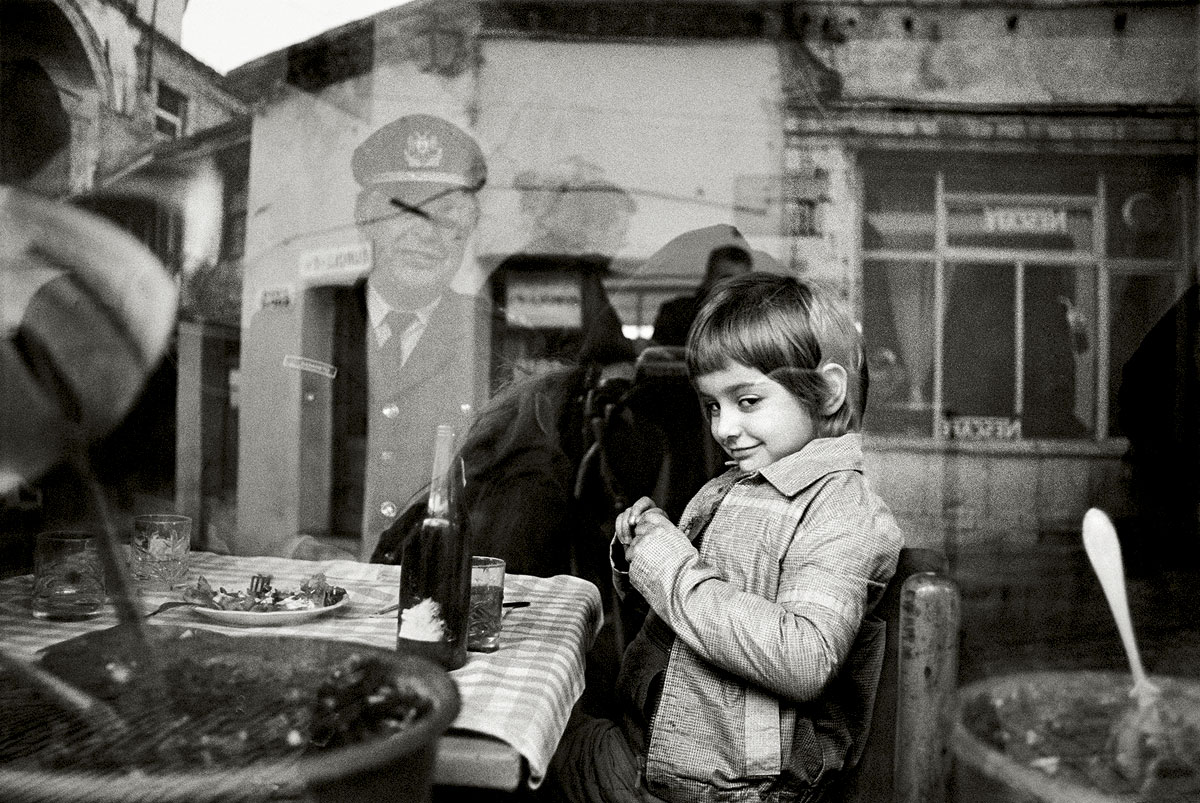


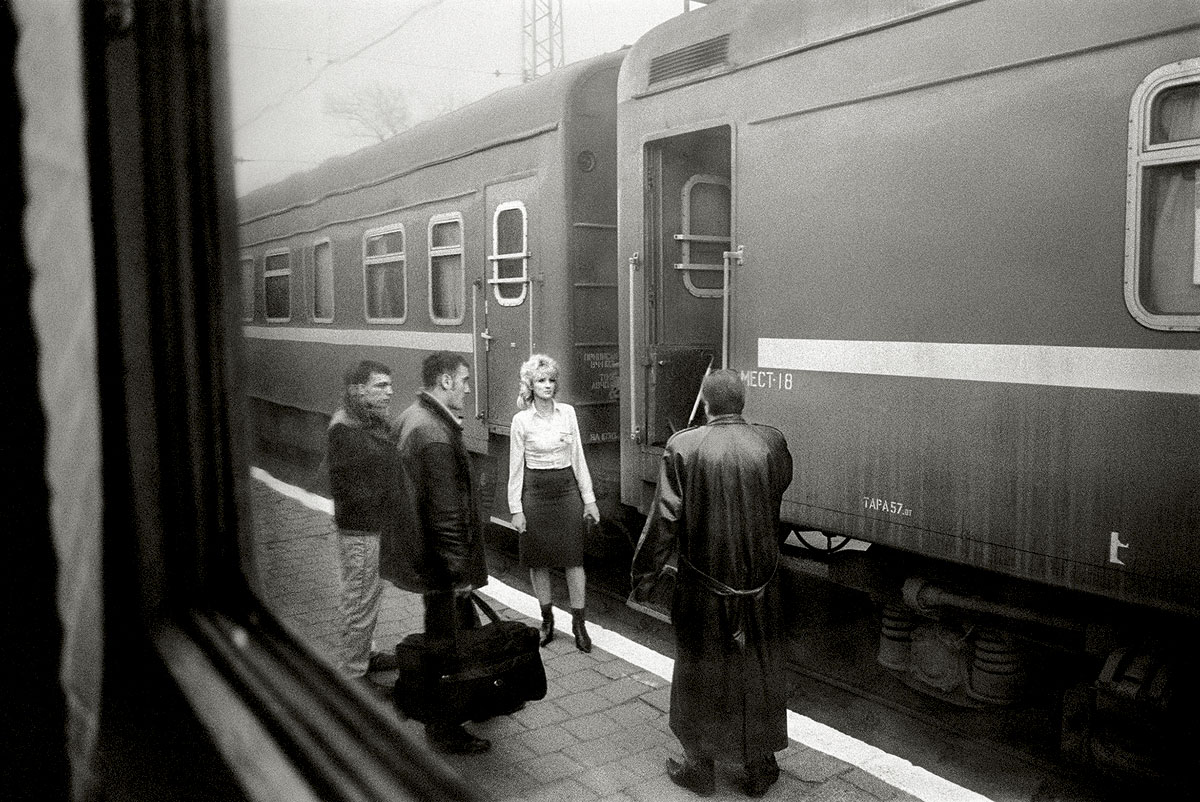
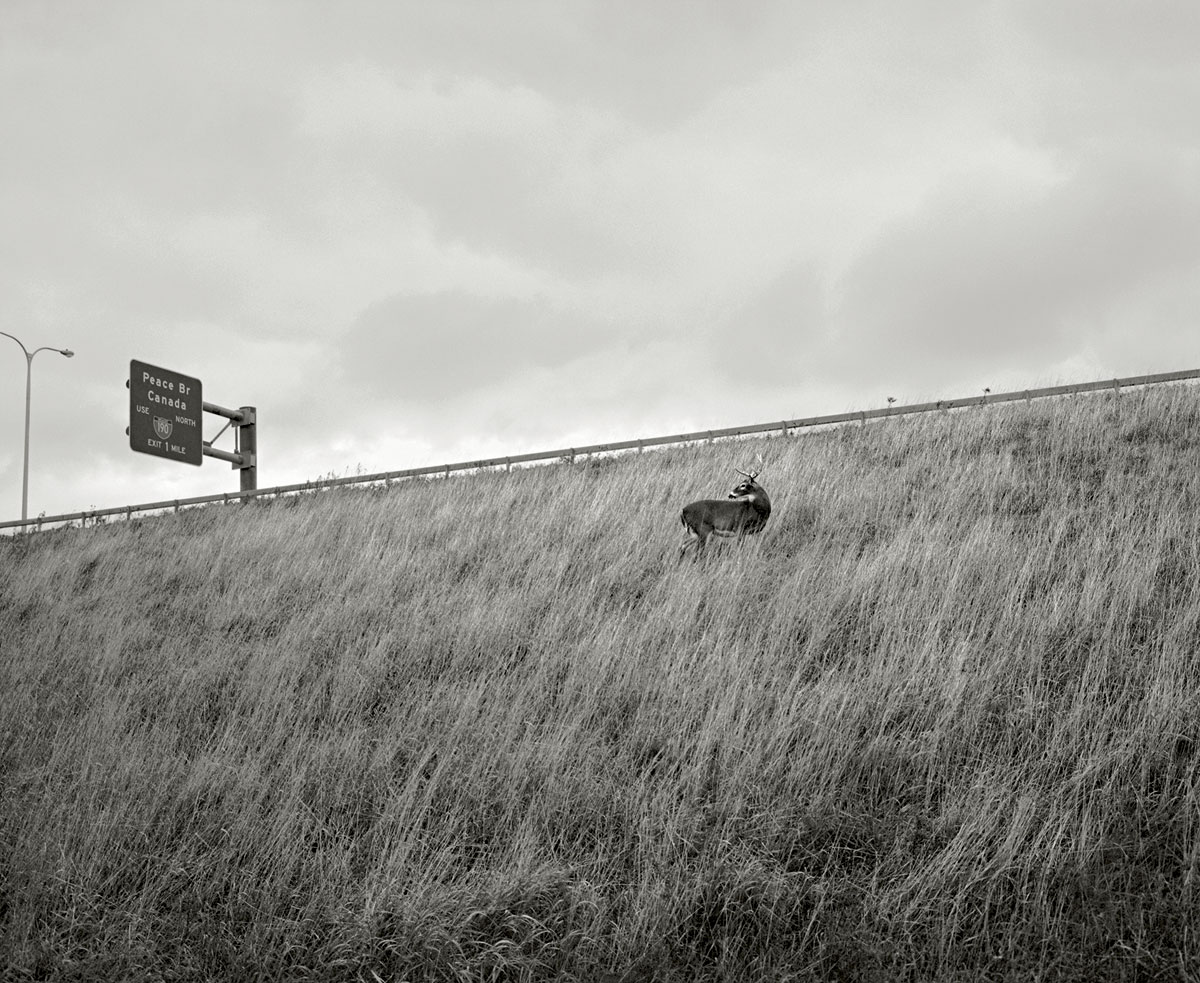
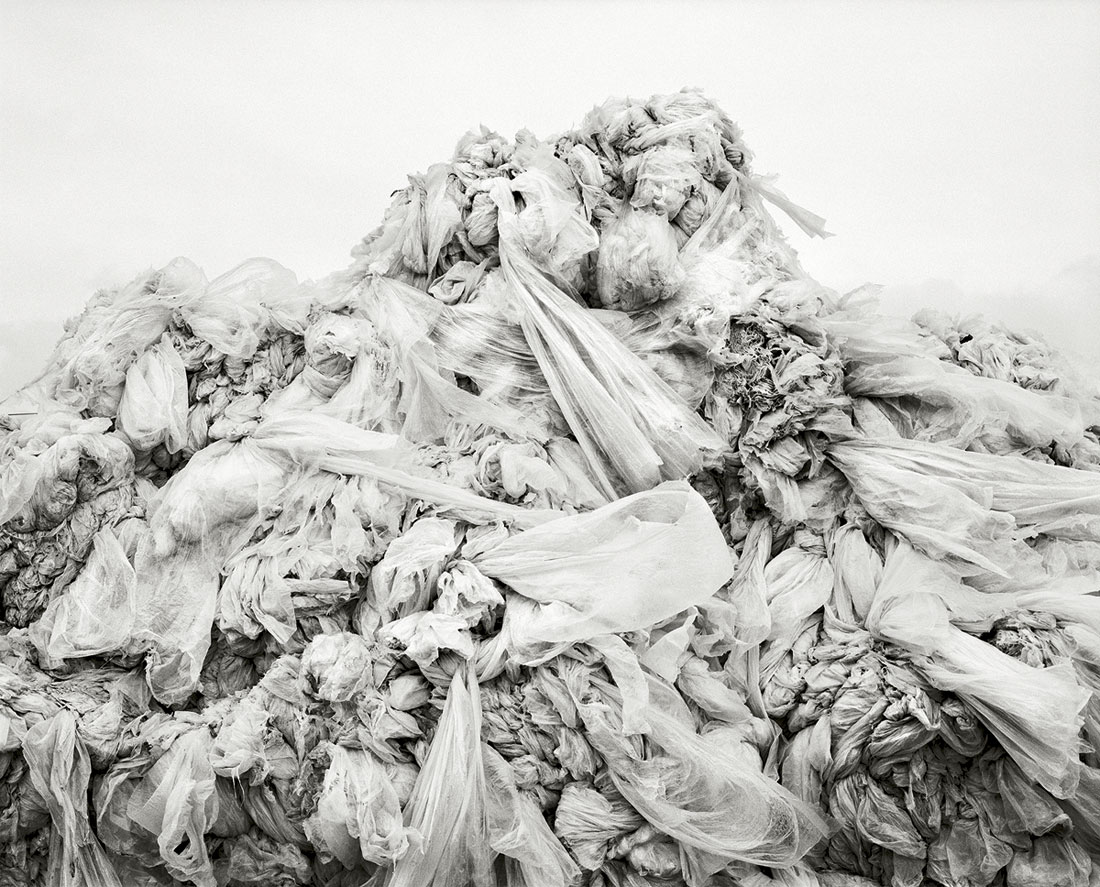




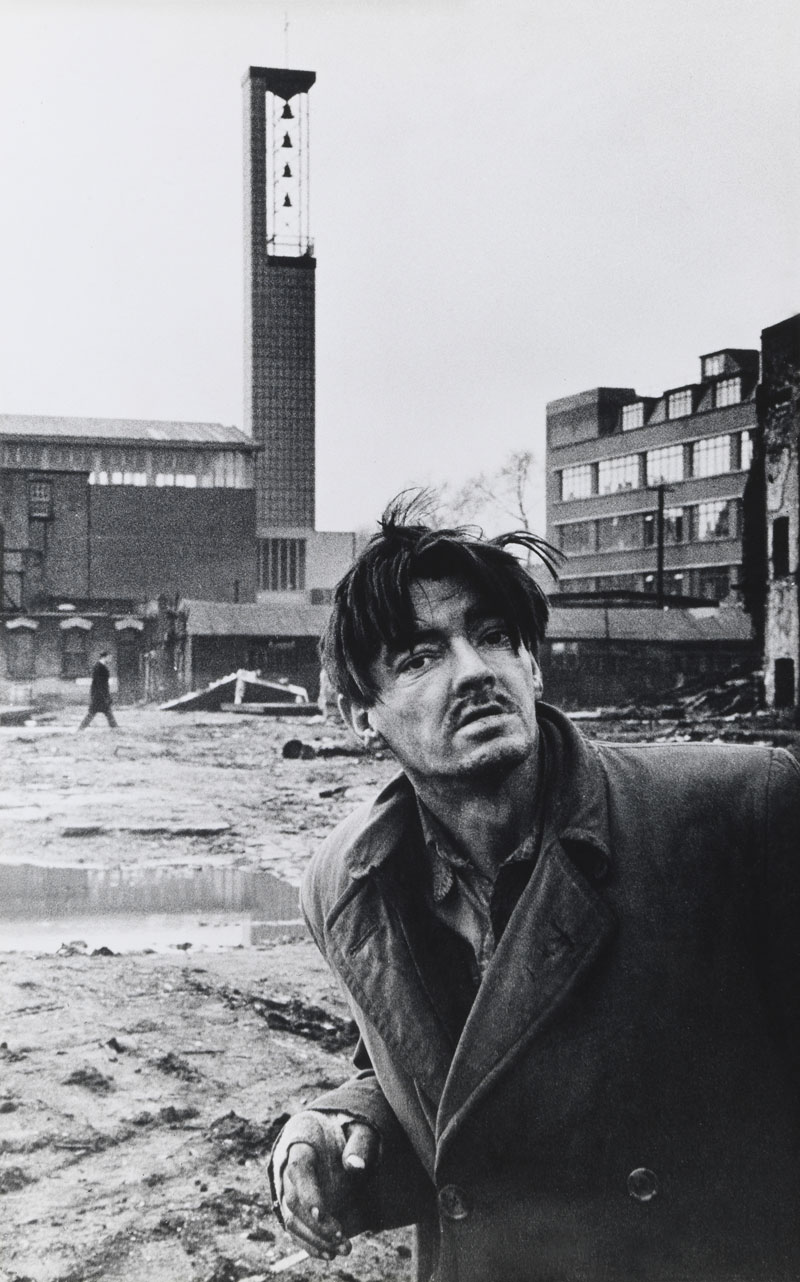


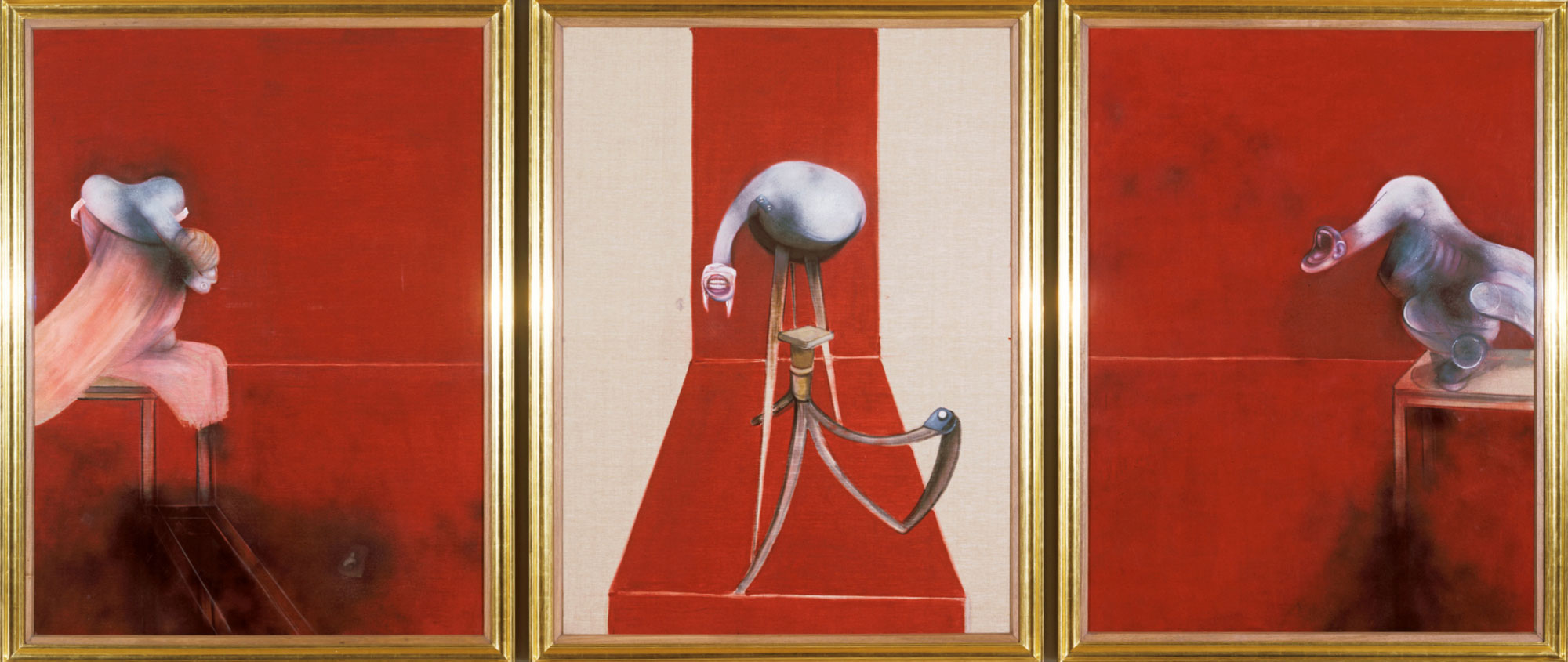
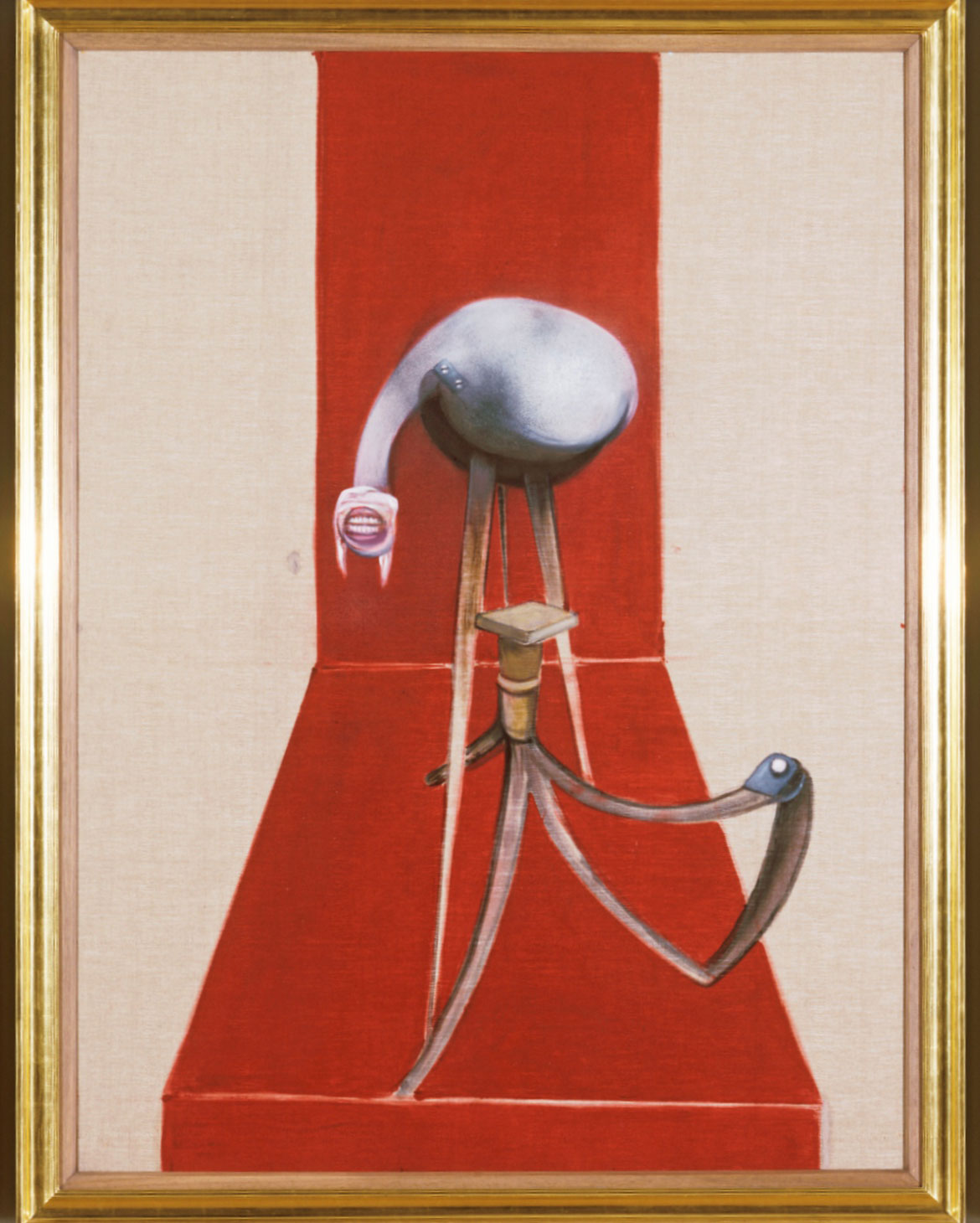

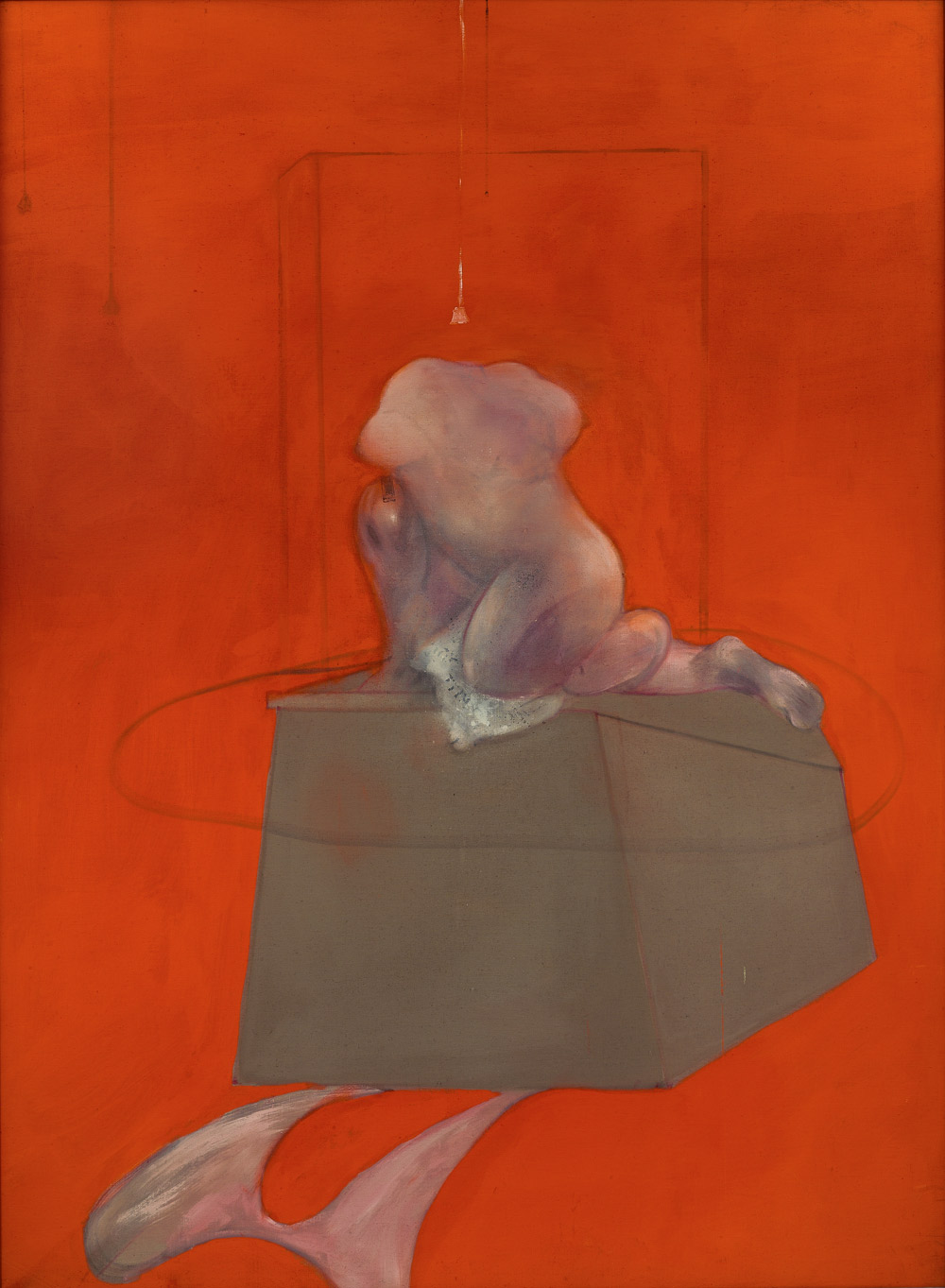
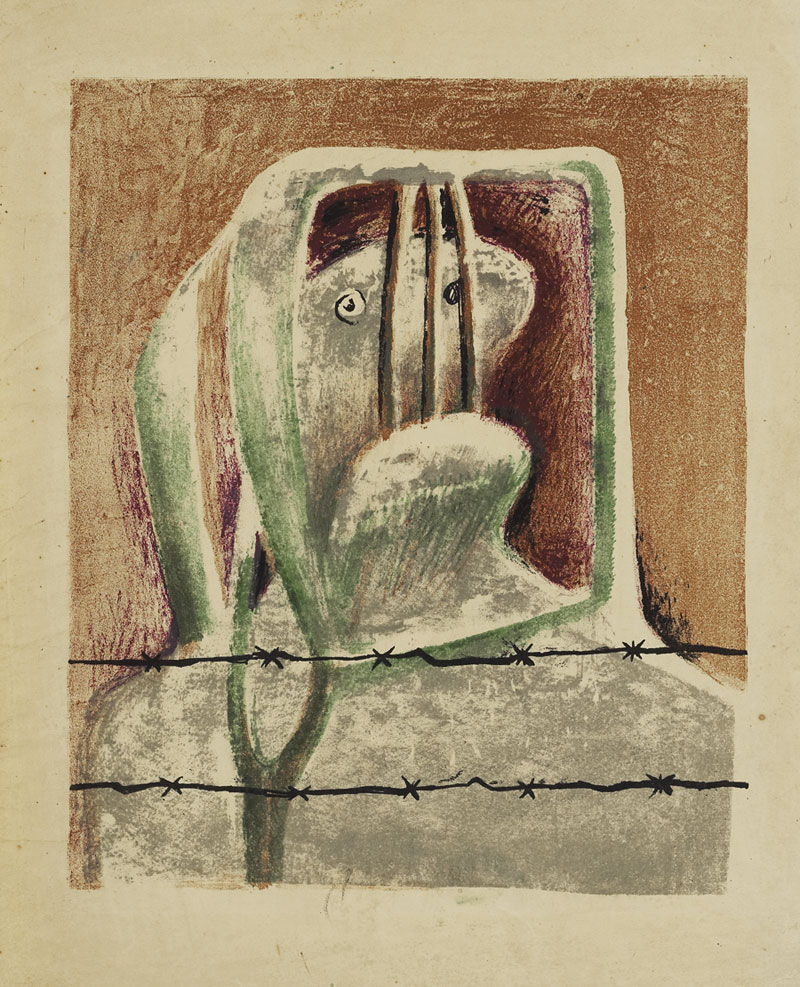
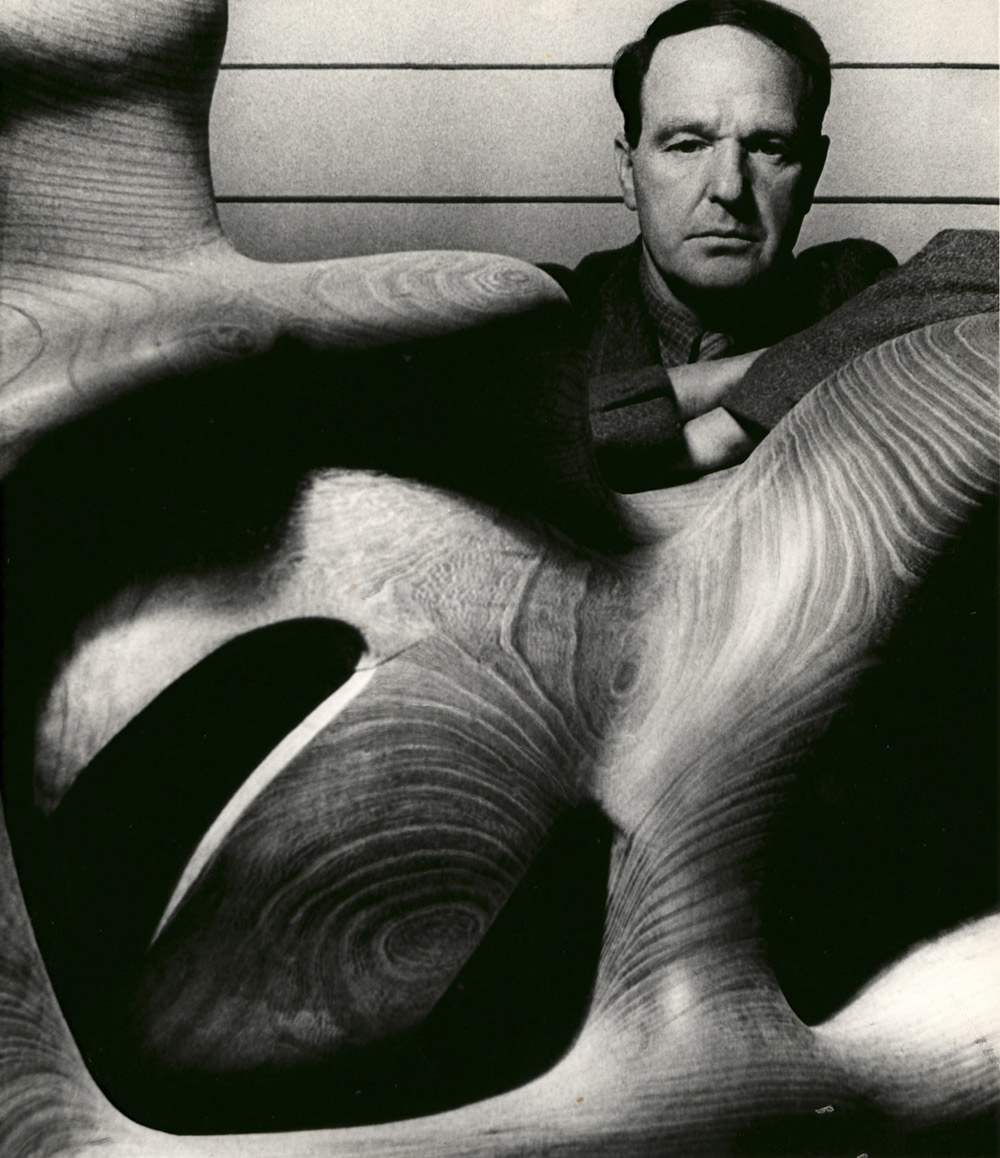
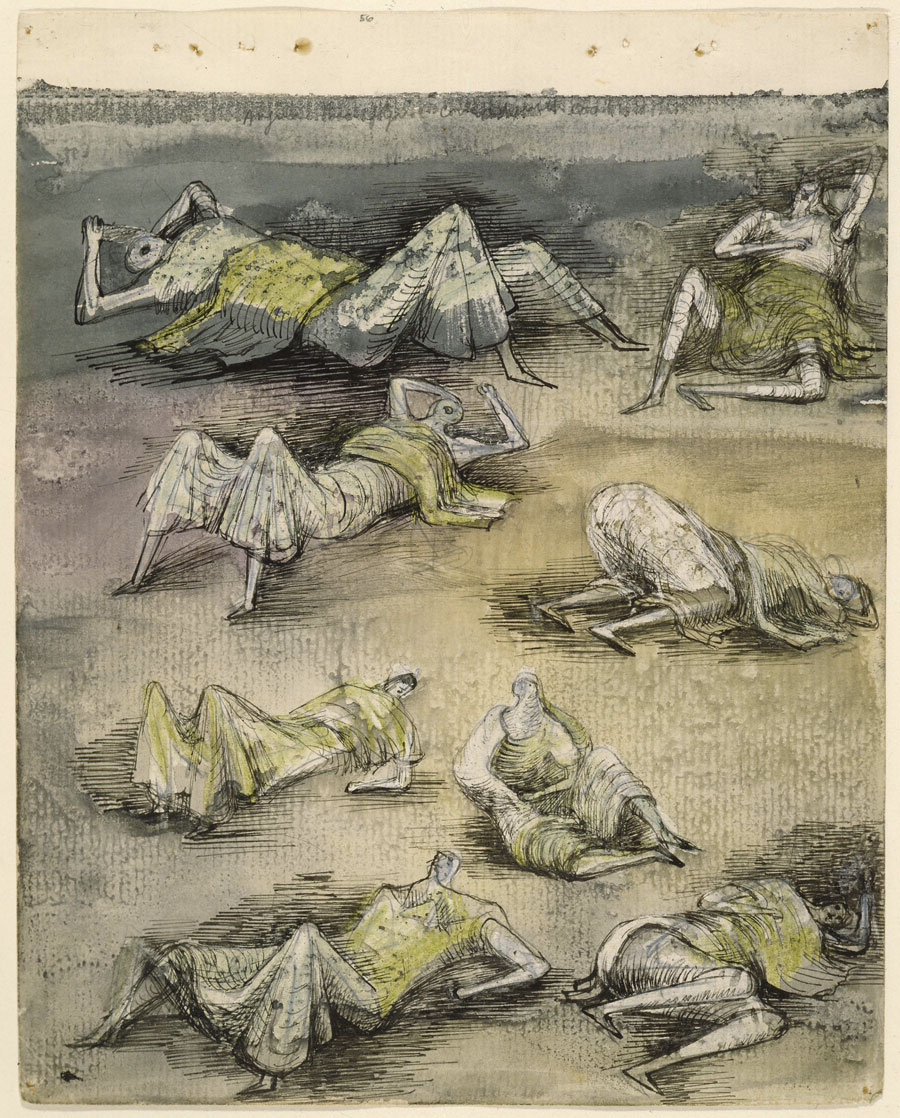
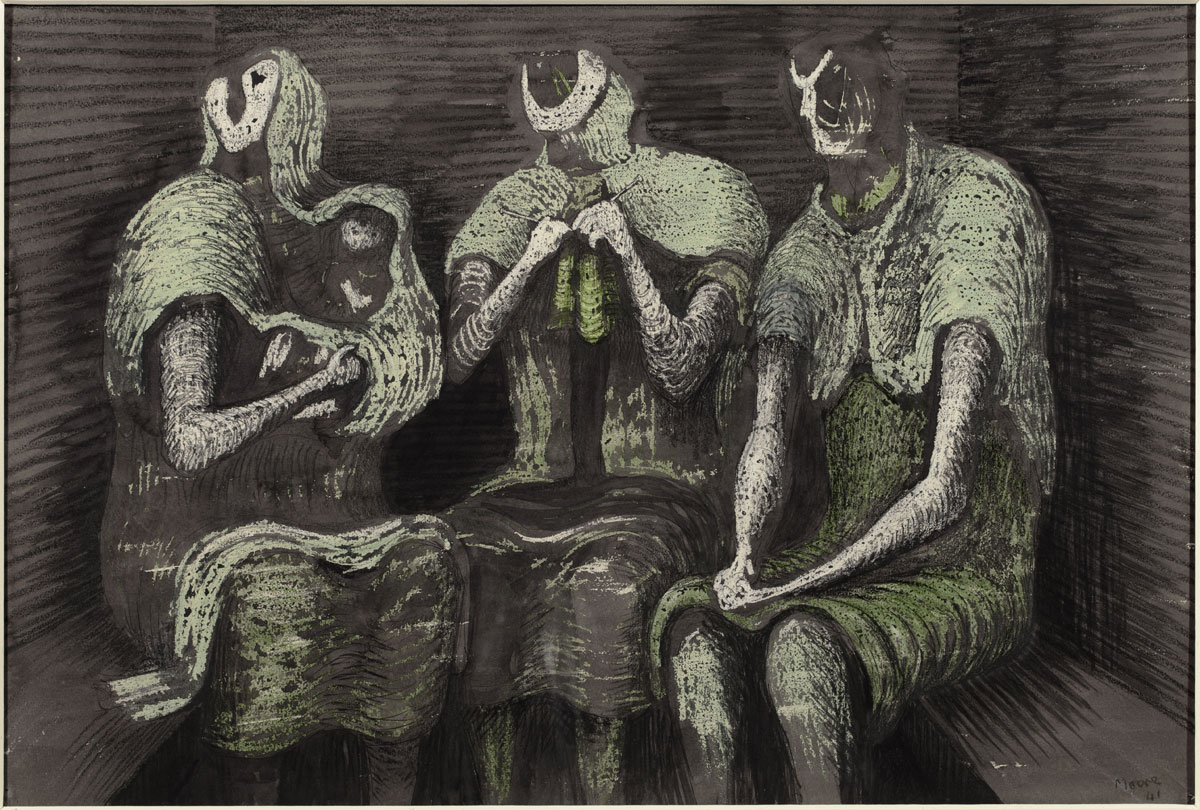
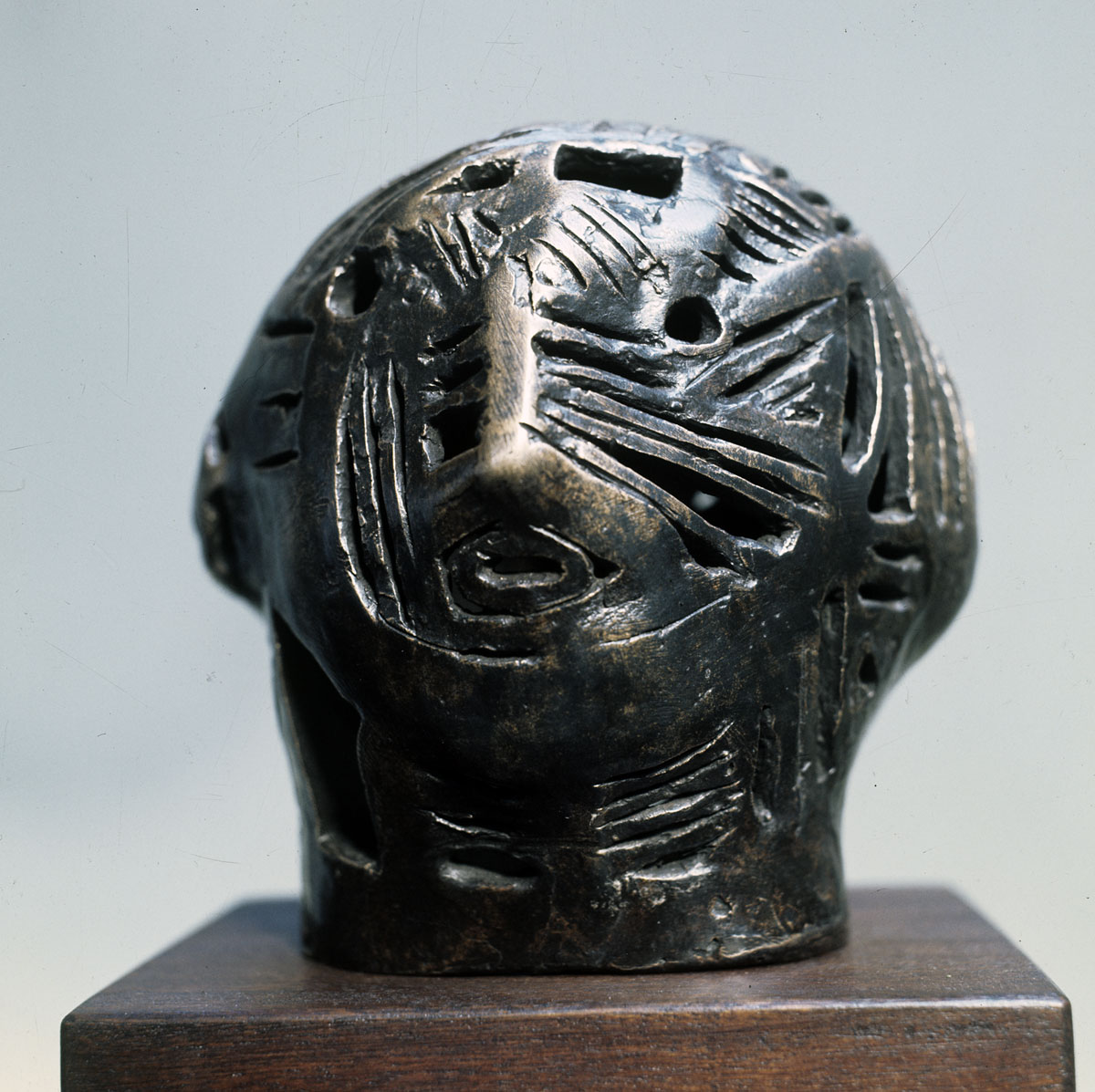
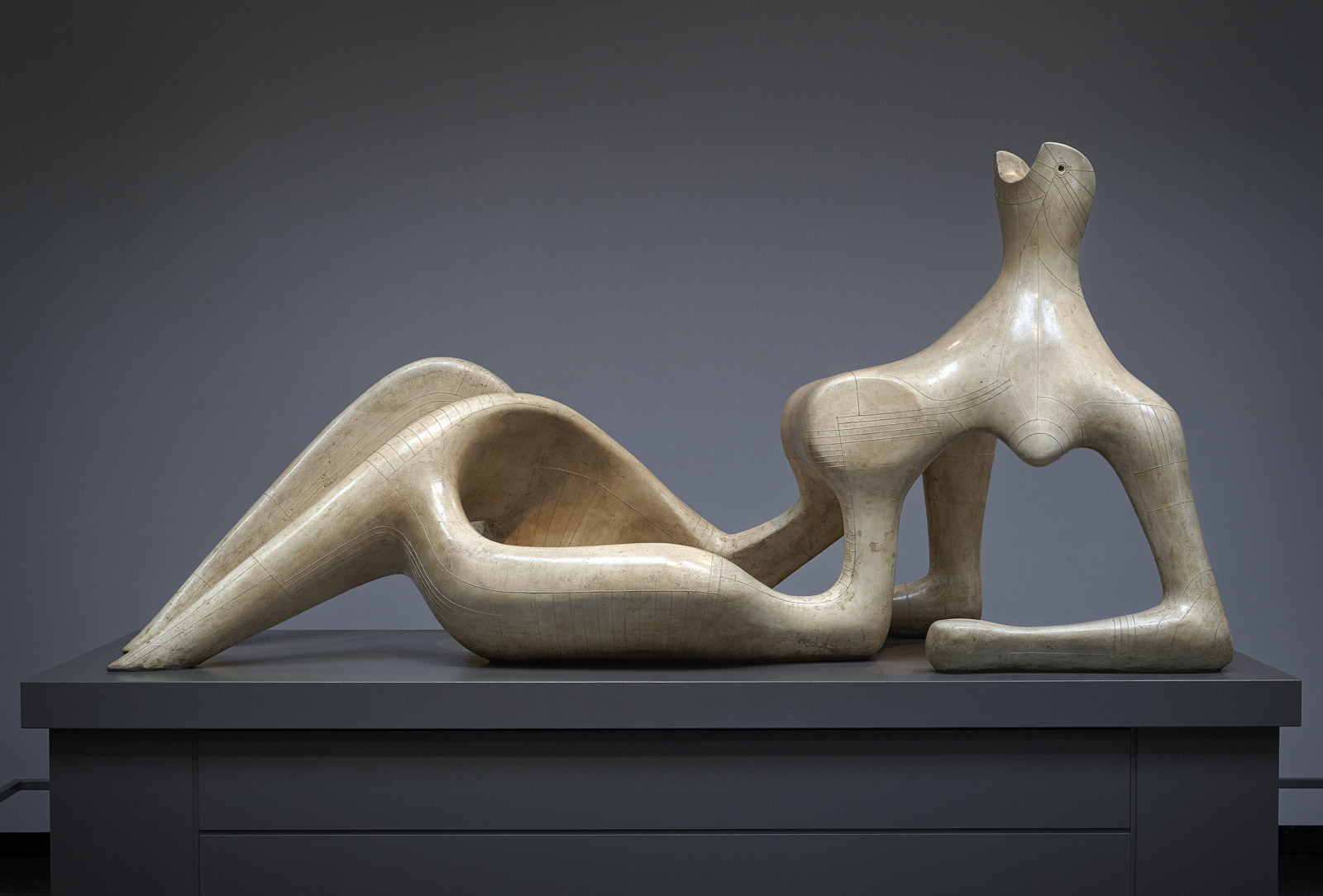
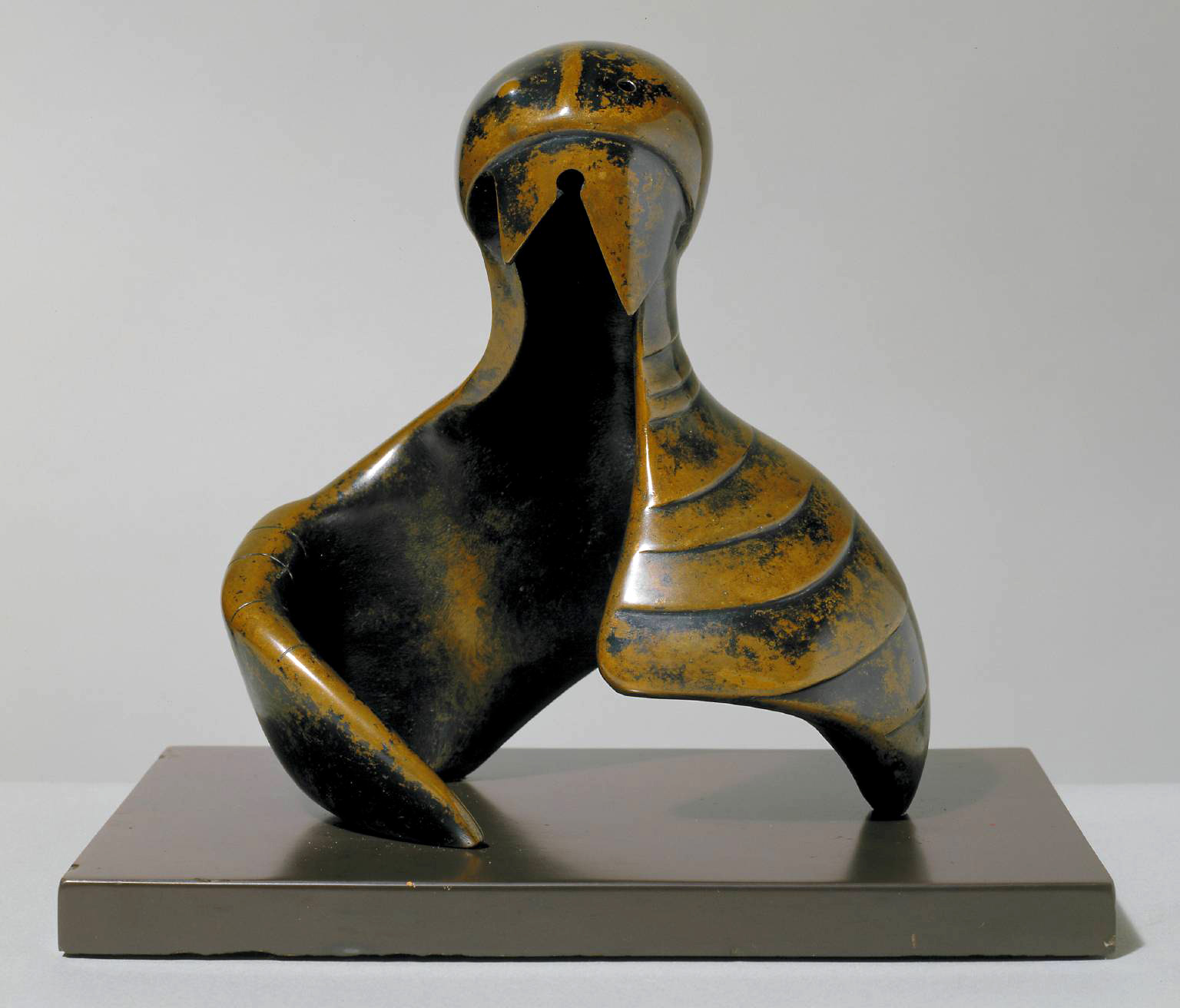
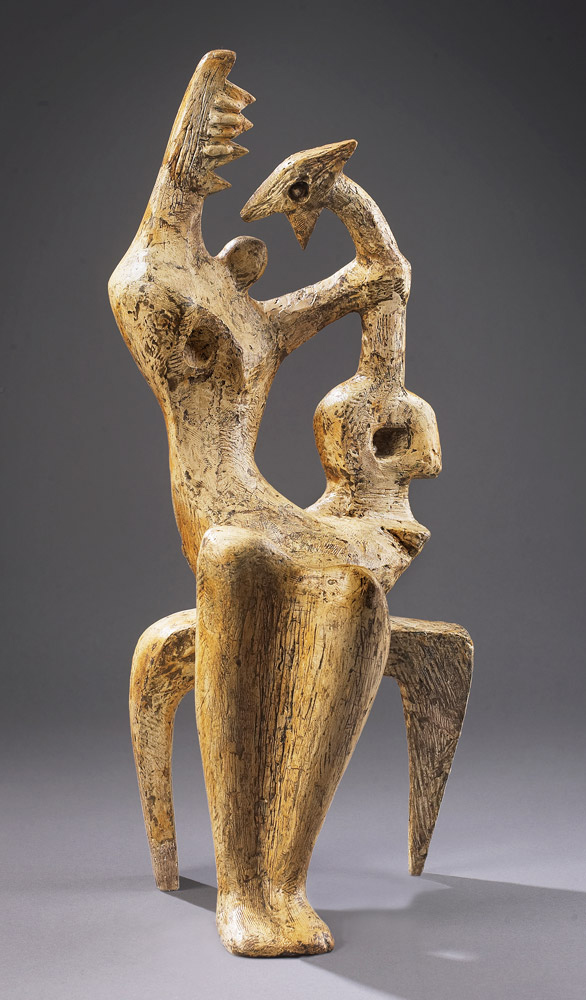
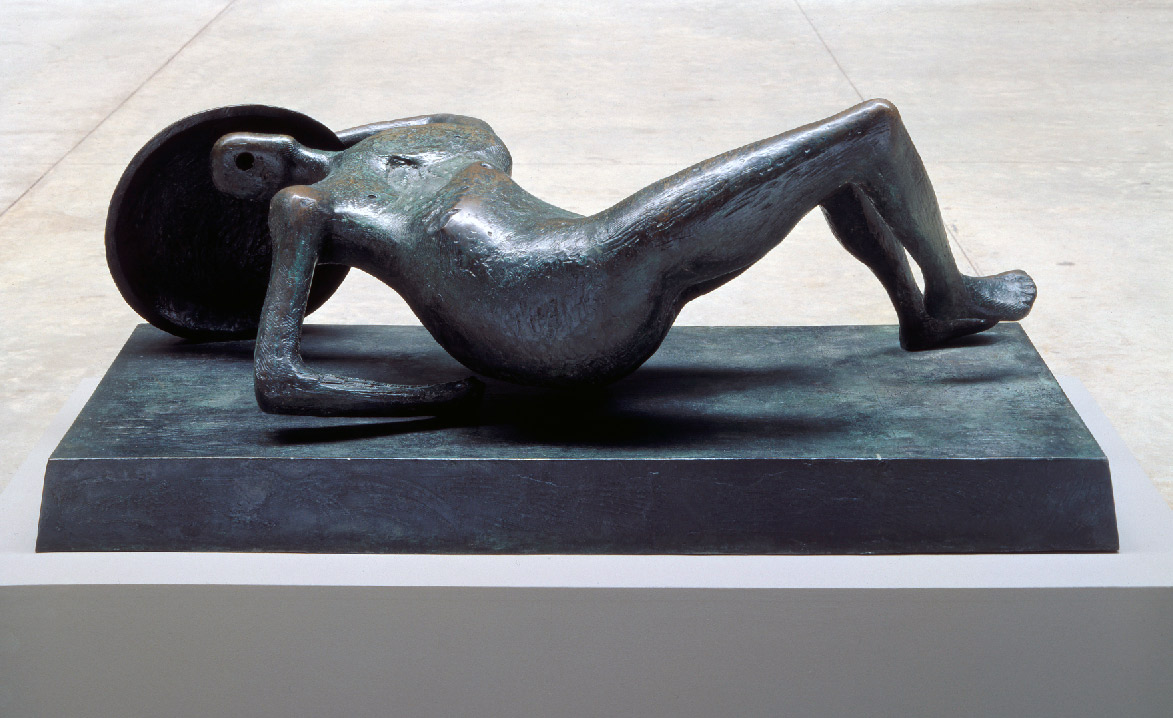
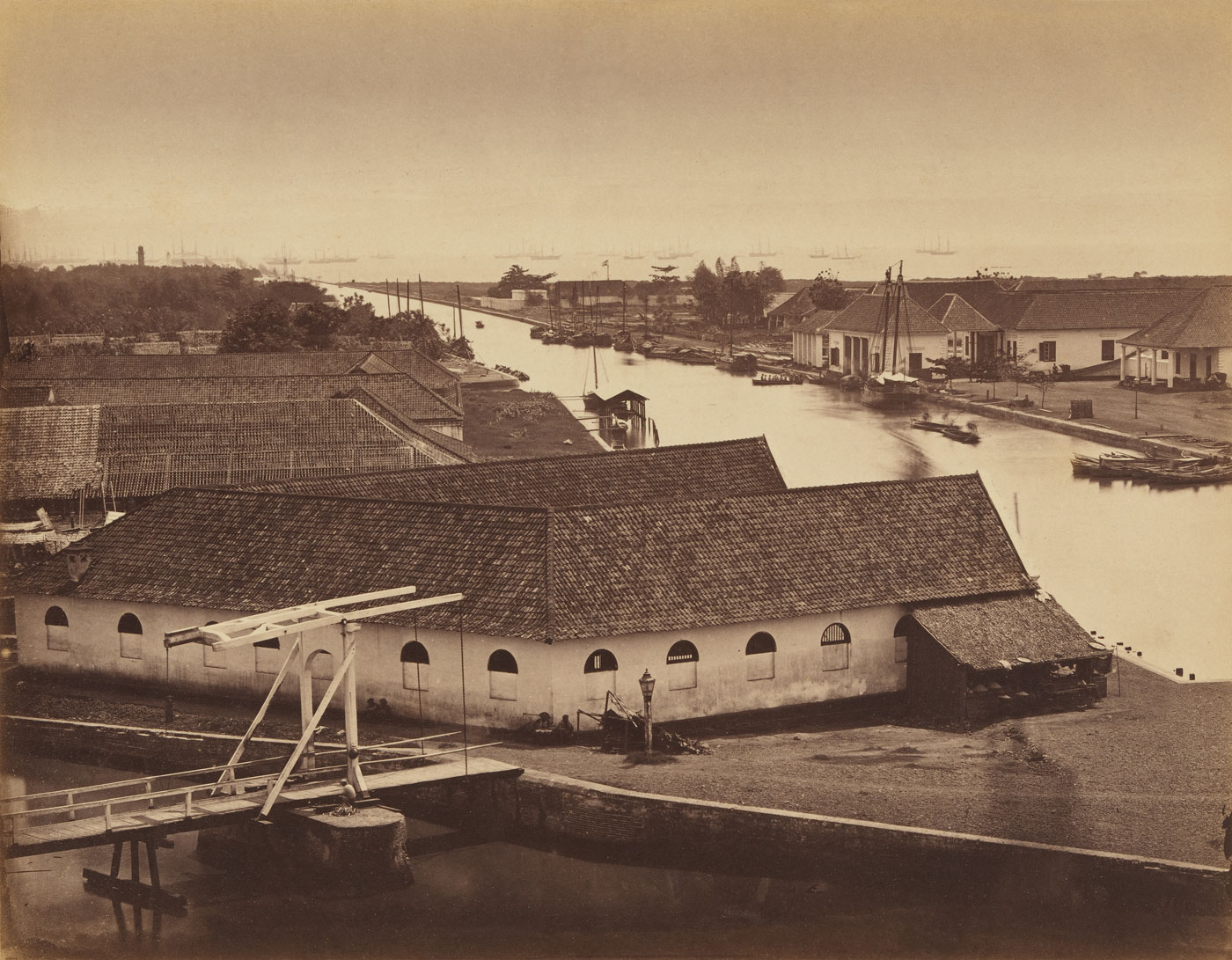
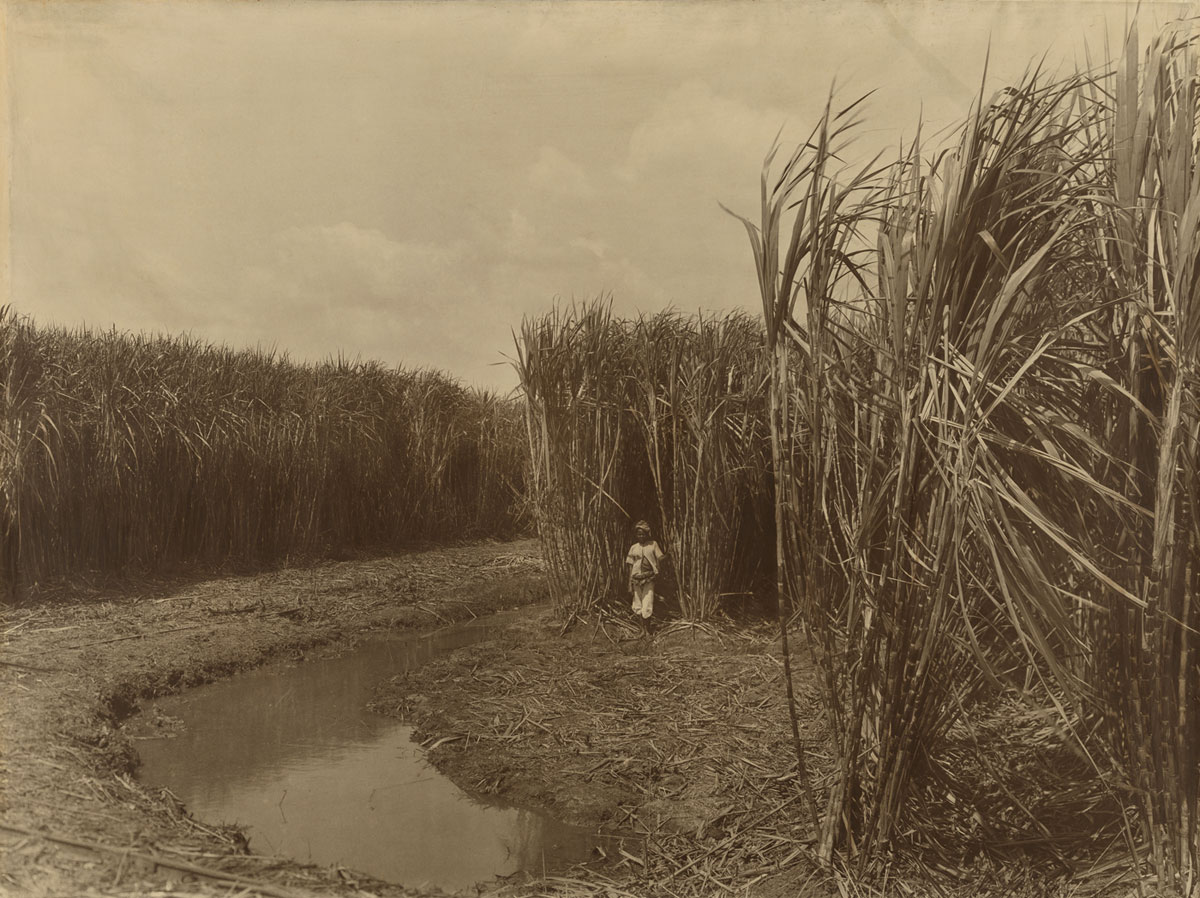
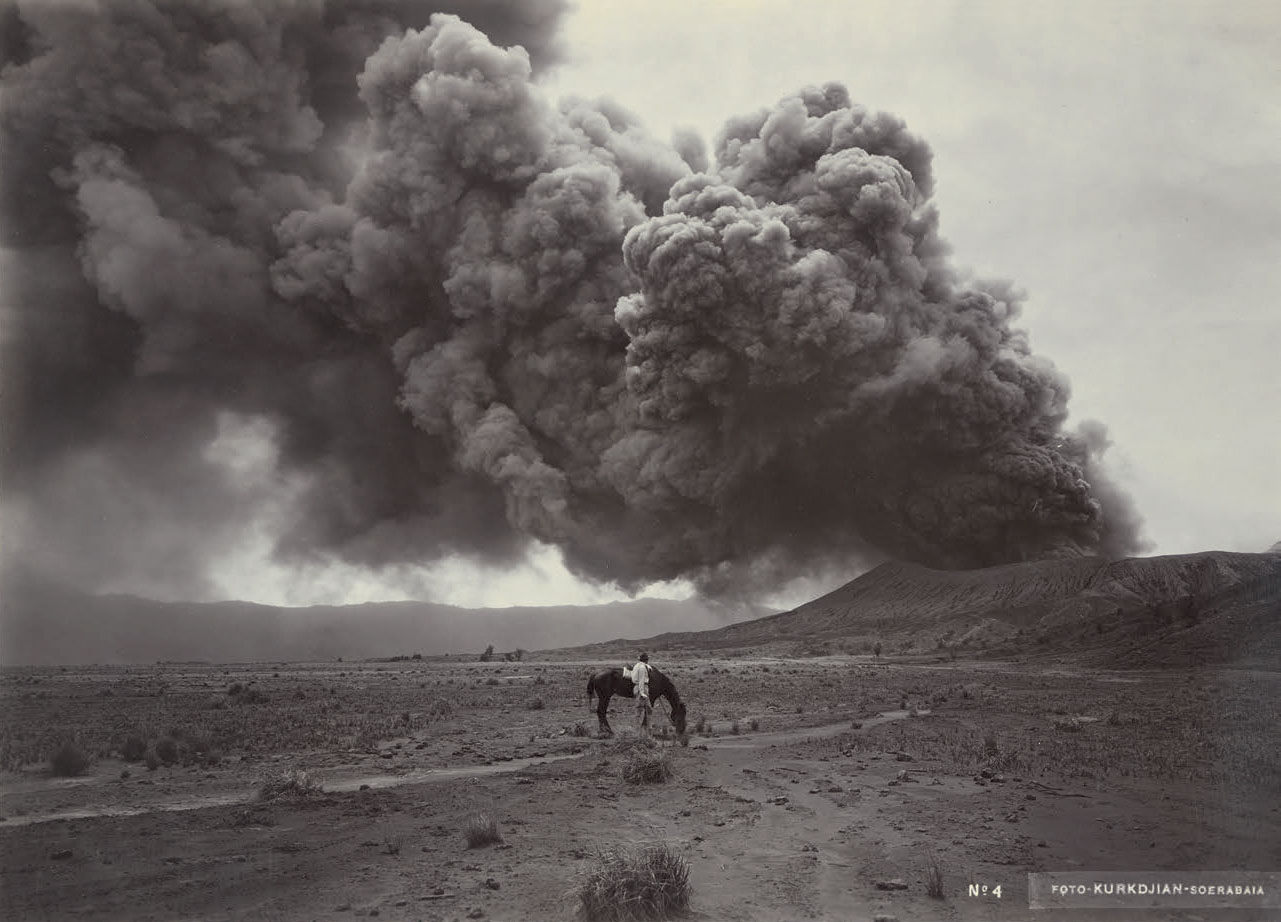
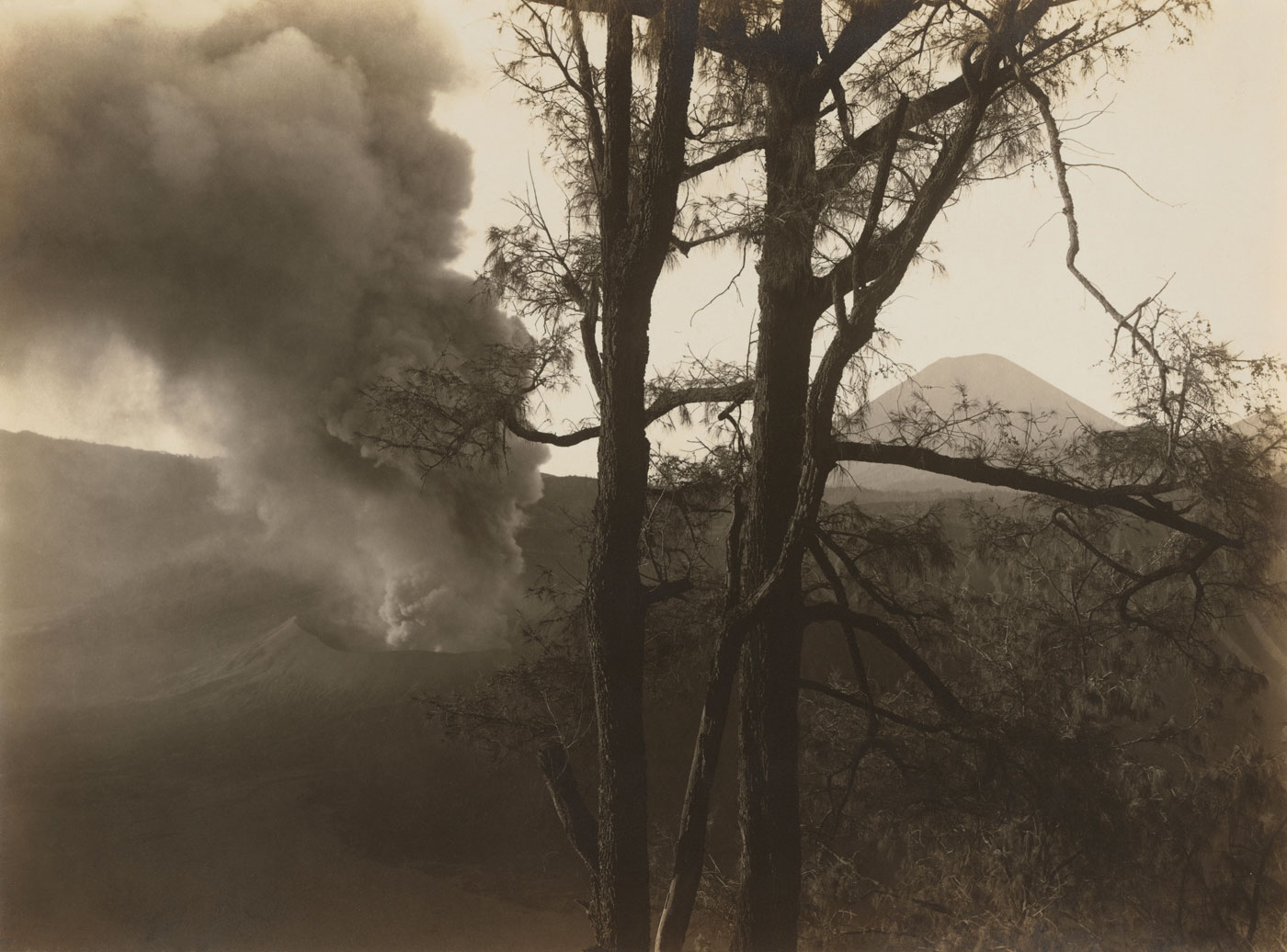
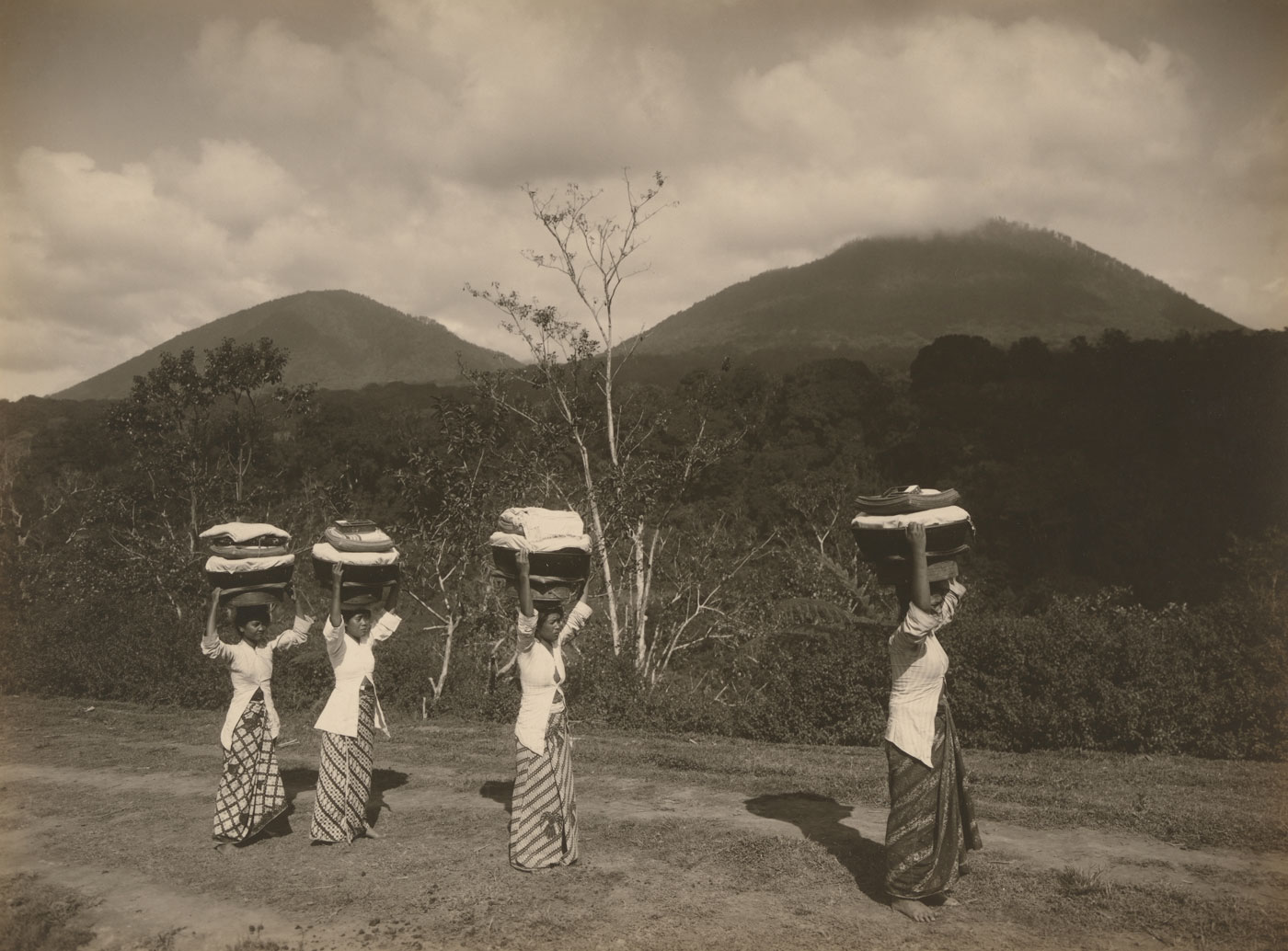
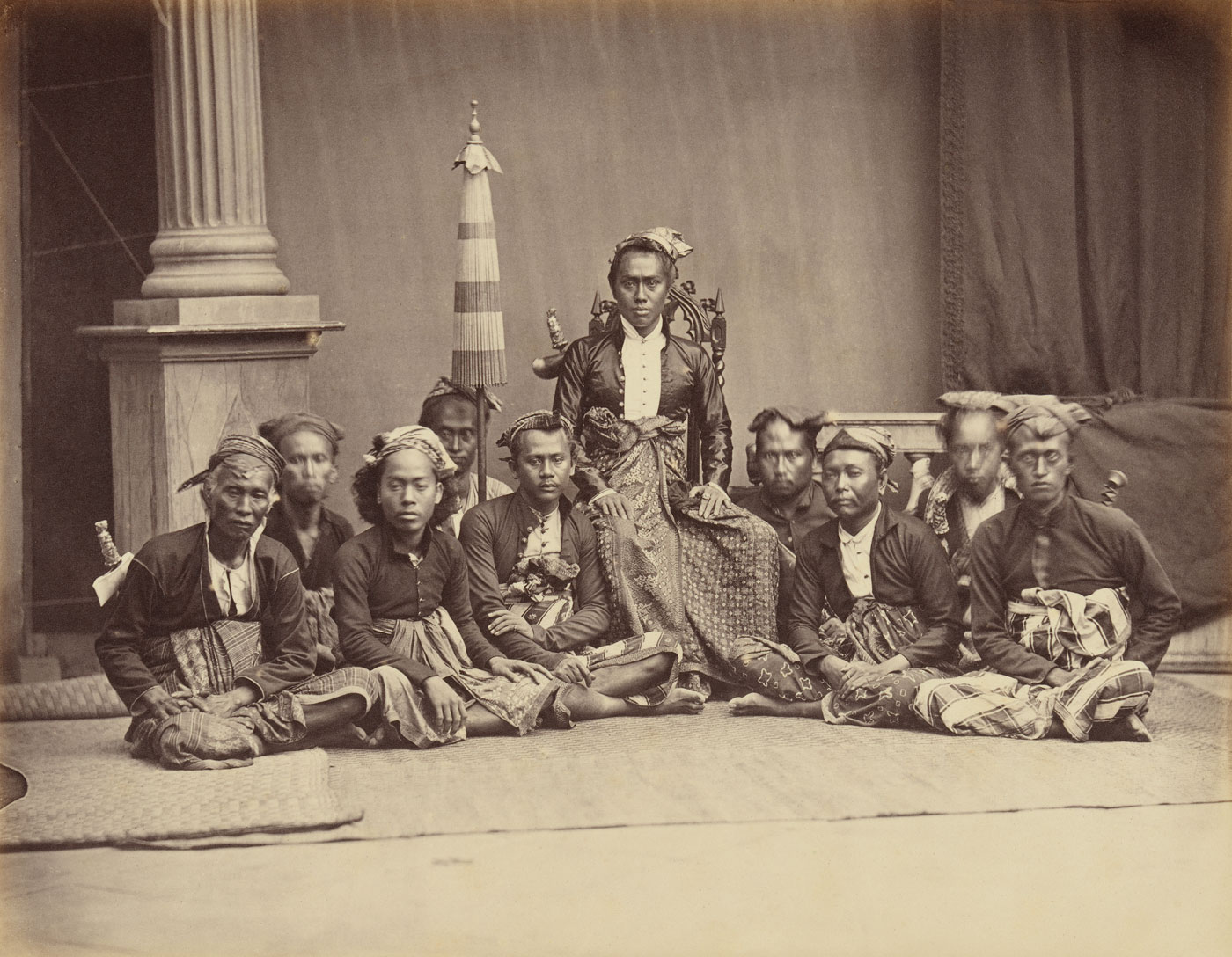
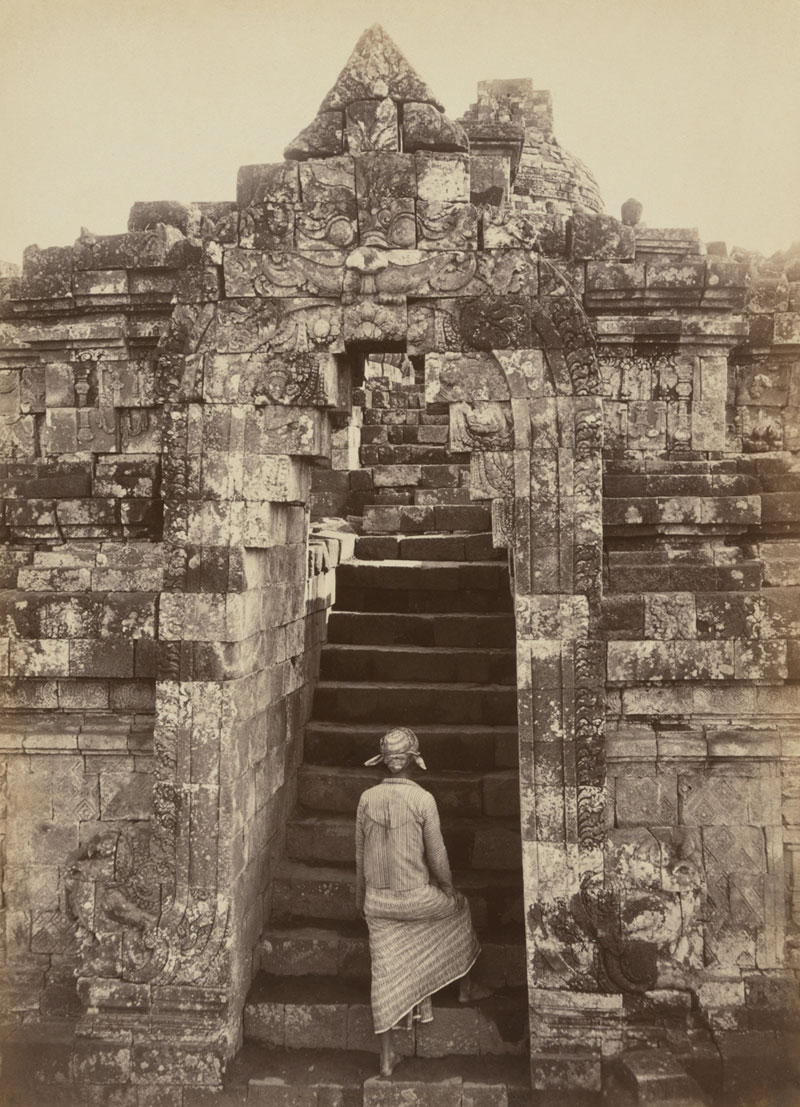
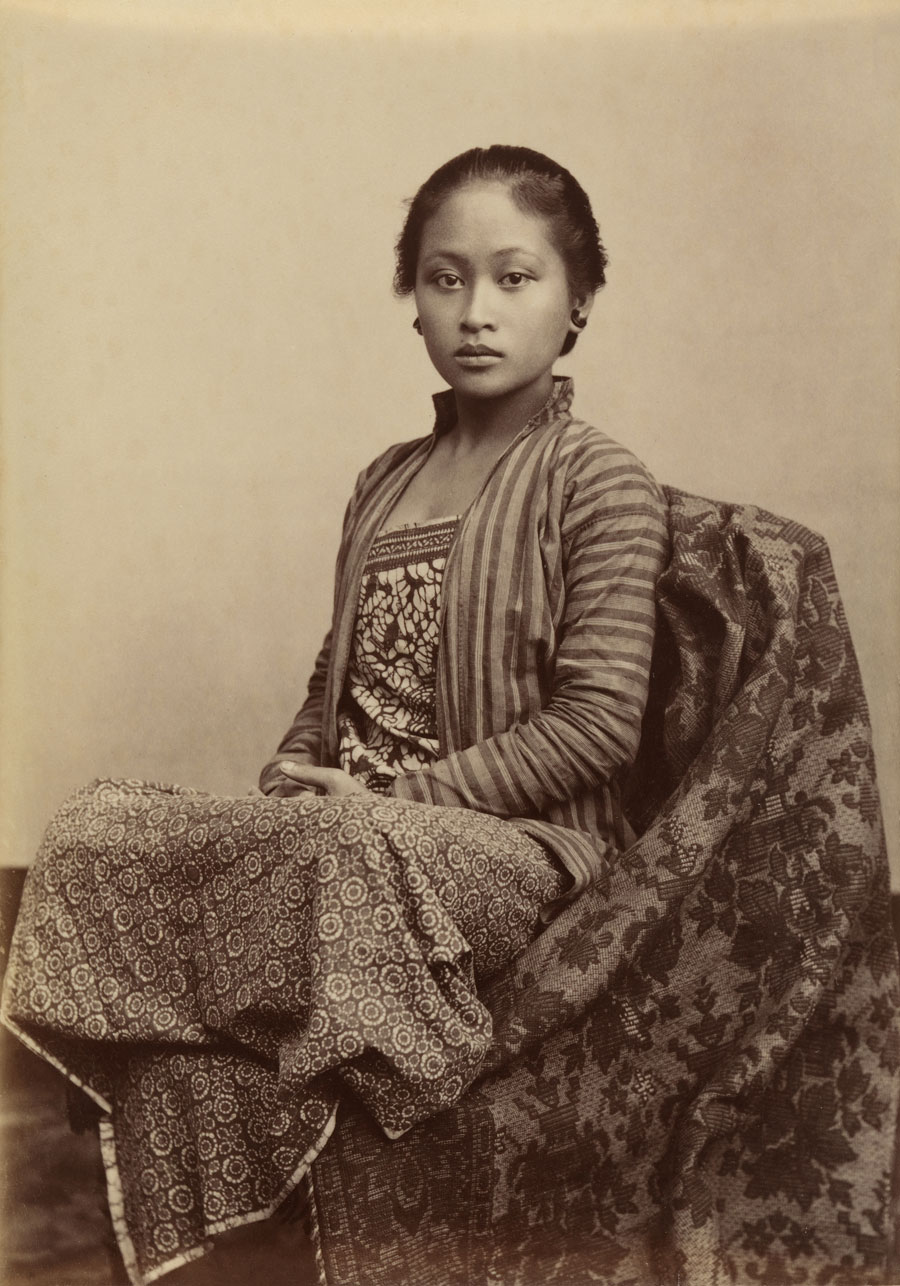
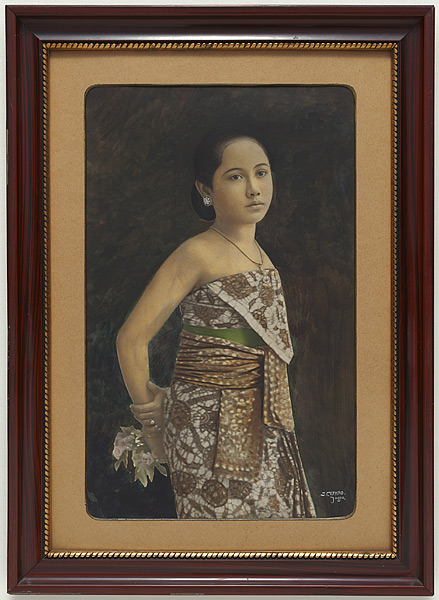
![Gotthard Schuh (Swiss, 1897-1969) 'Inseln der Götter' (Islands of the gods) [book cover] 1941](https://artblart.com/wp-content/uploads/2014/06/insel-de-gotter.jpg "Gotthard Schuh (Swiss, 1897-1969) 'Inseln der Götter' (Islands of the gods) [book cover] 1941")
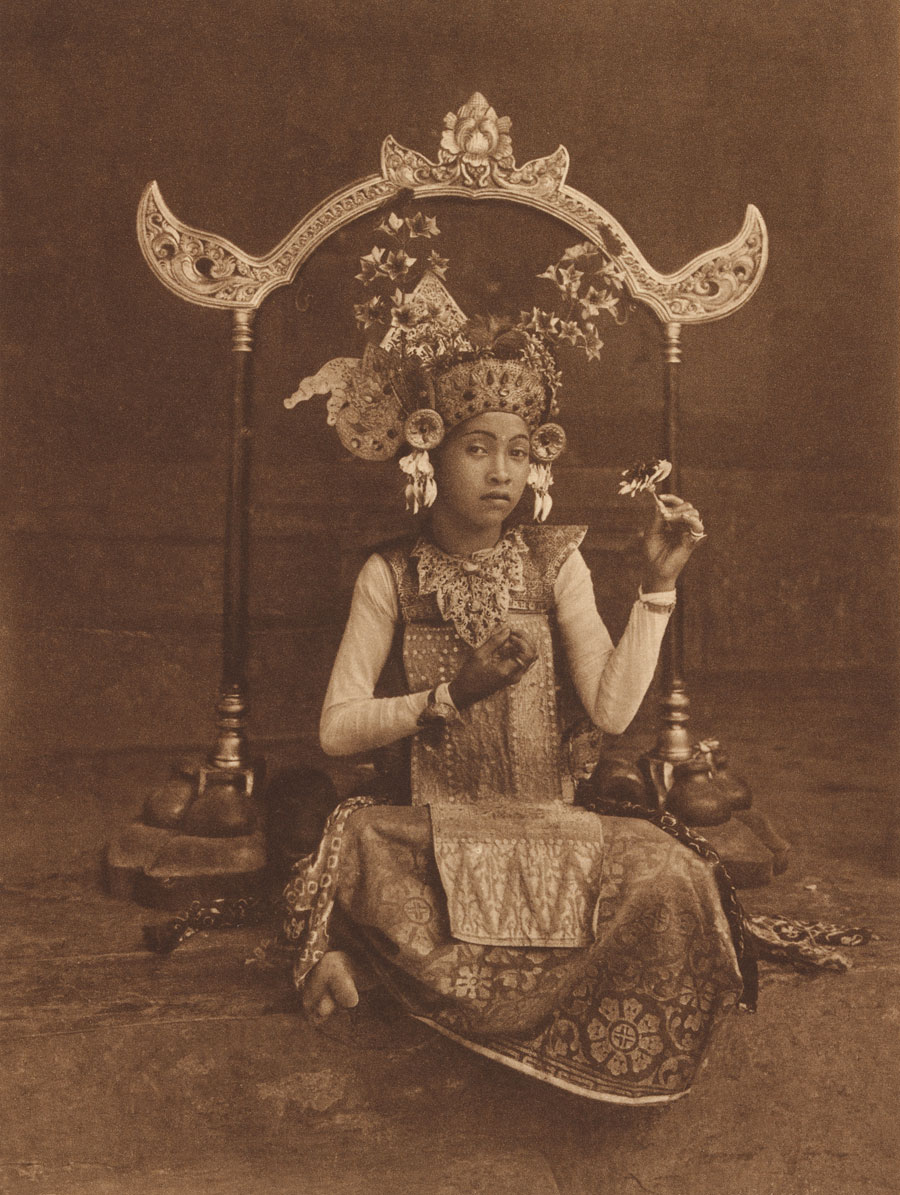

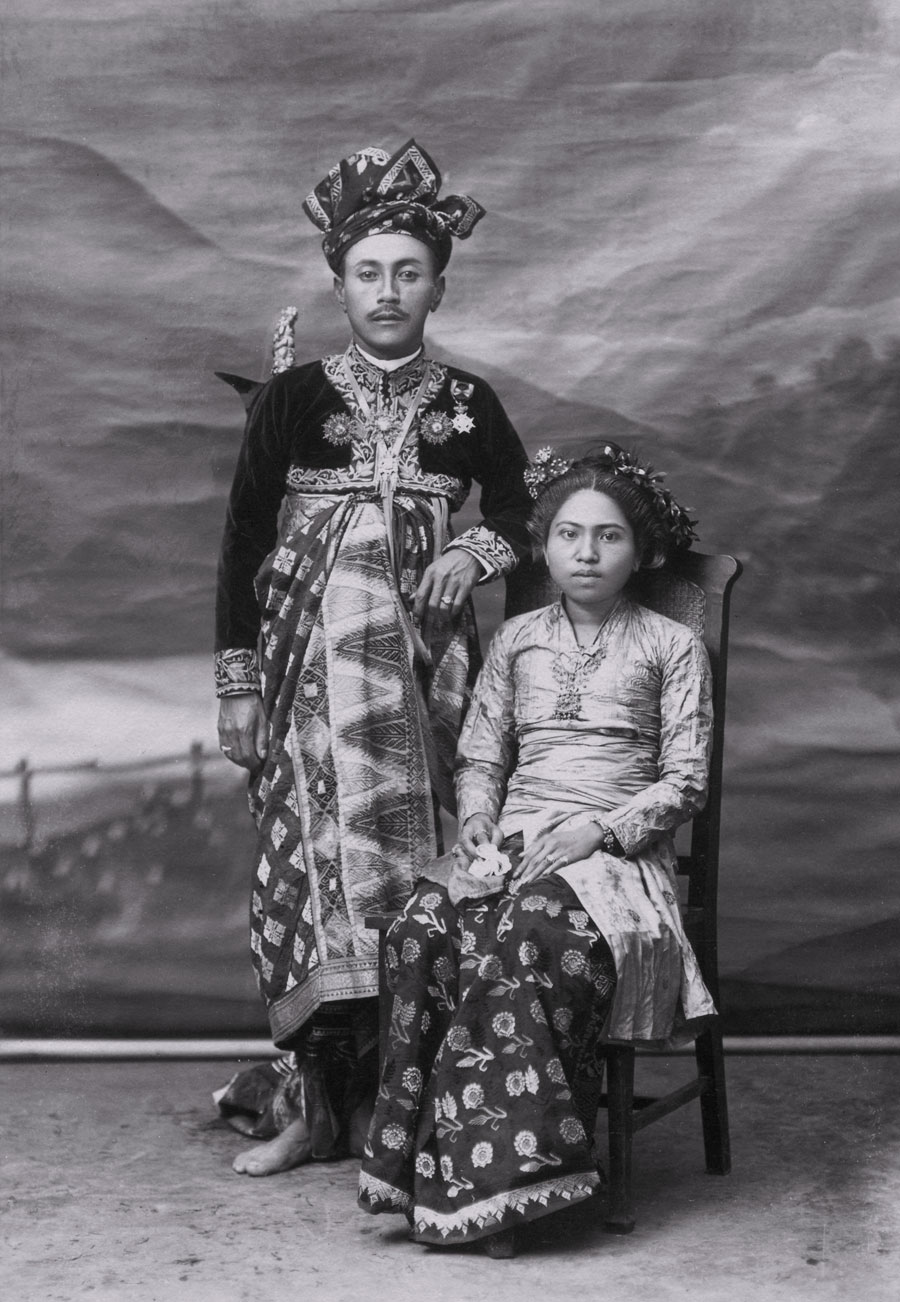


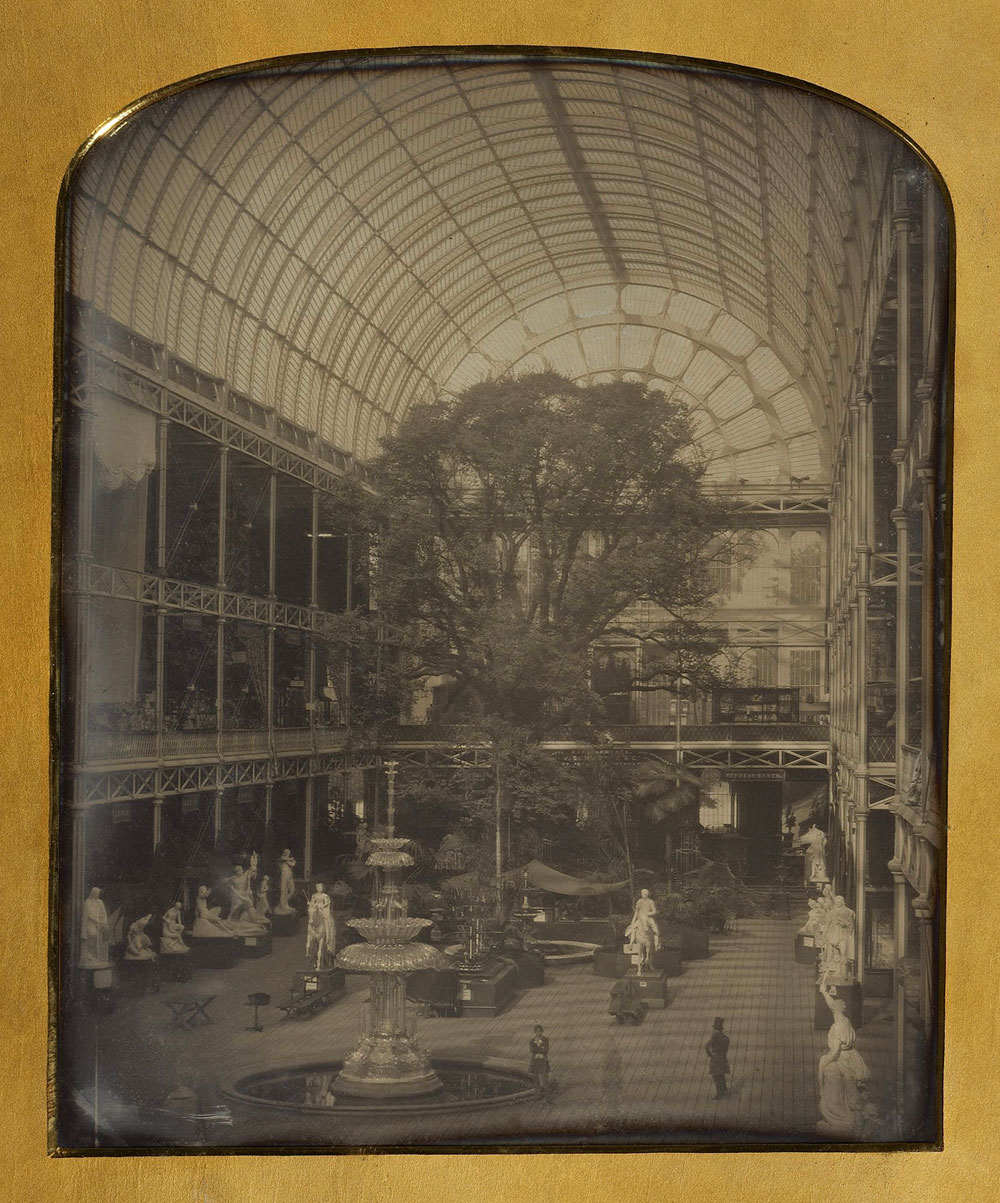
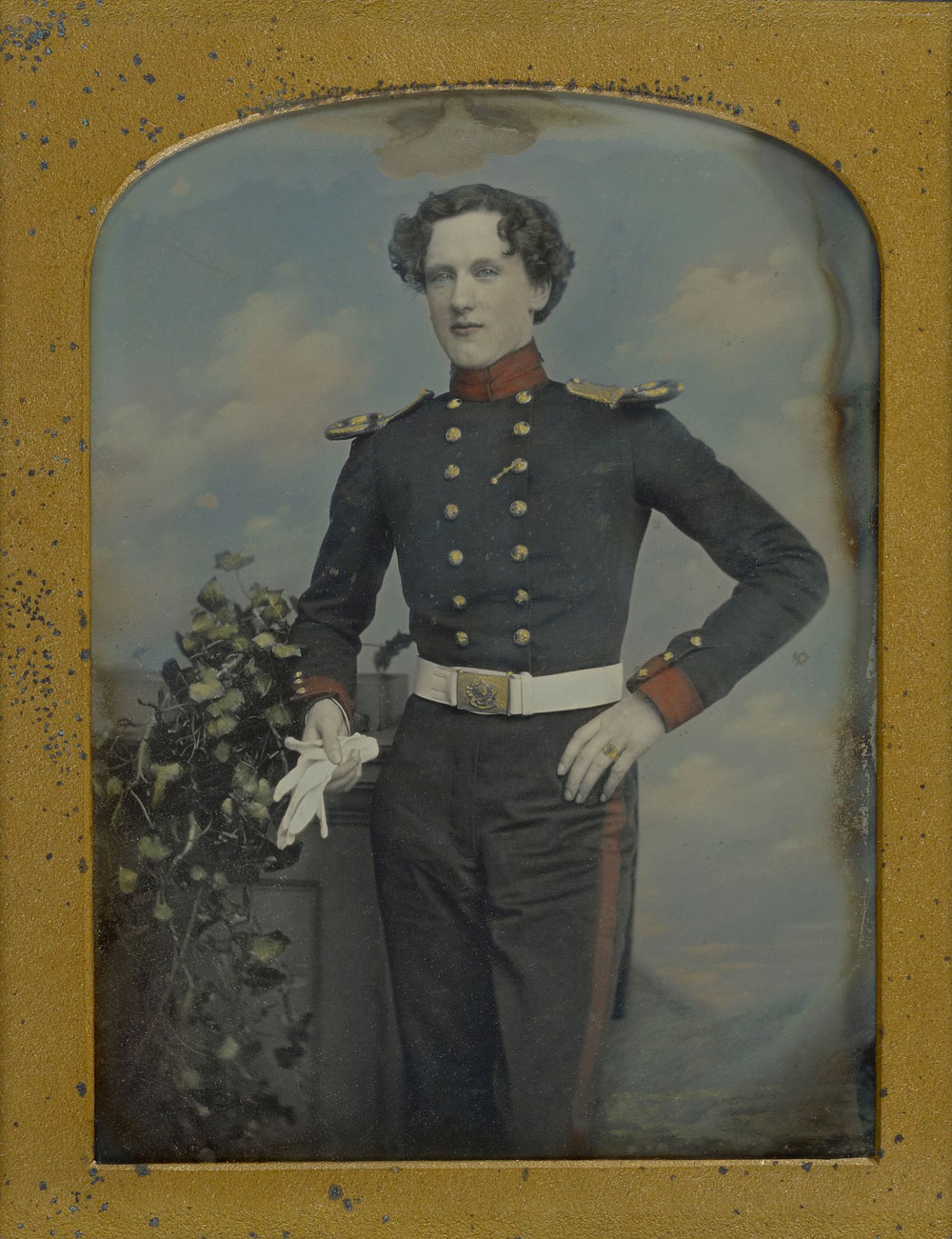
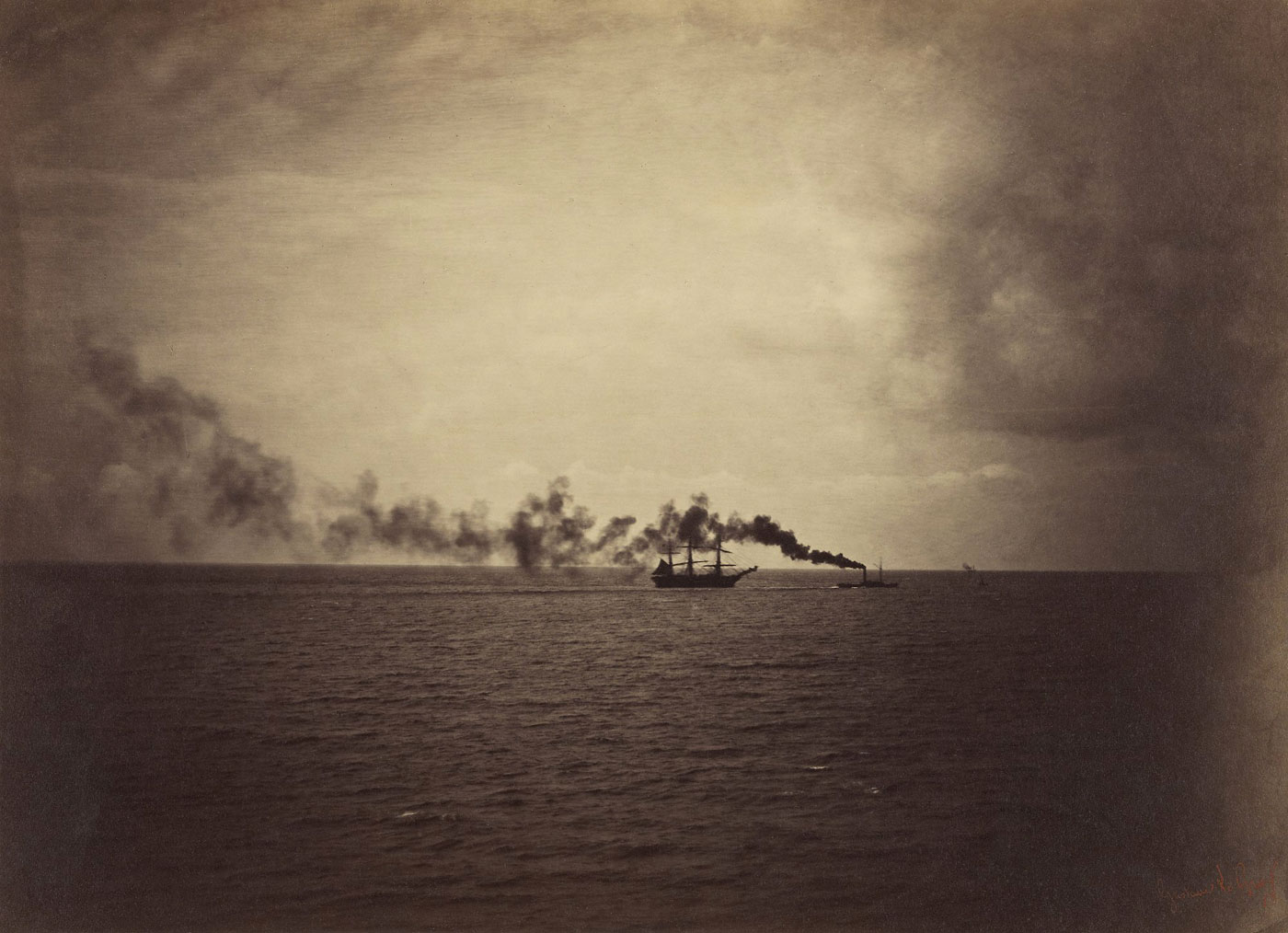
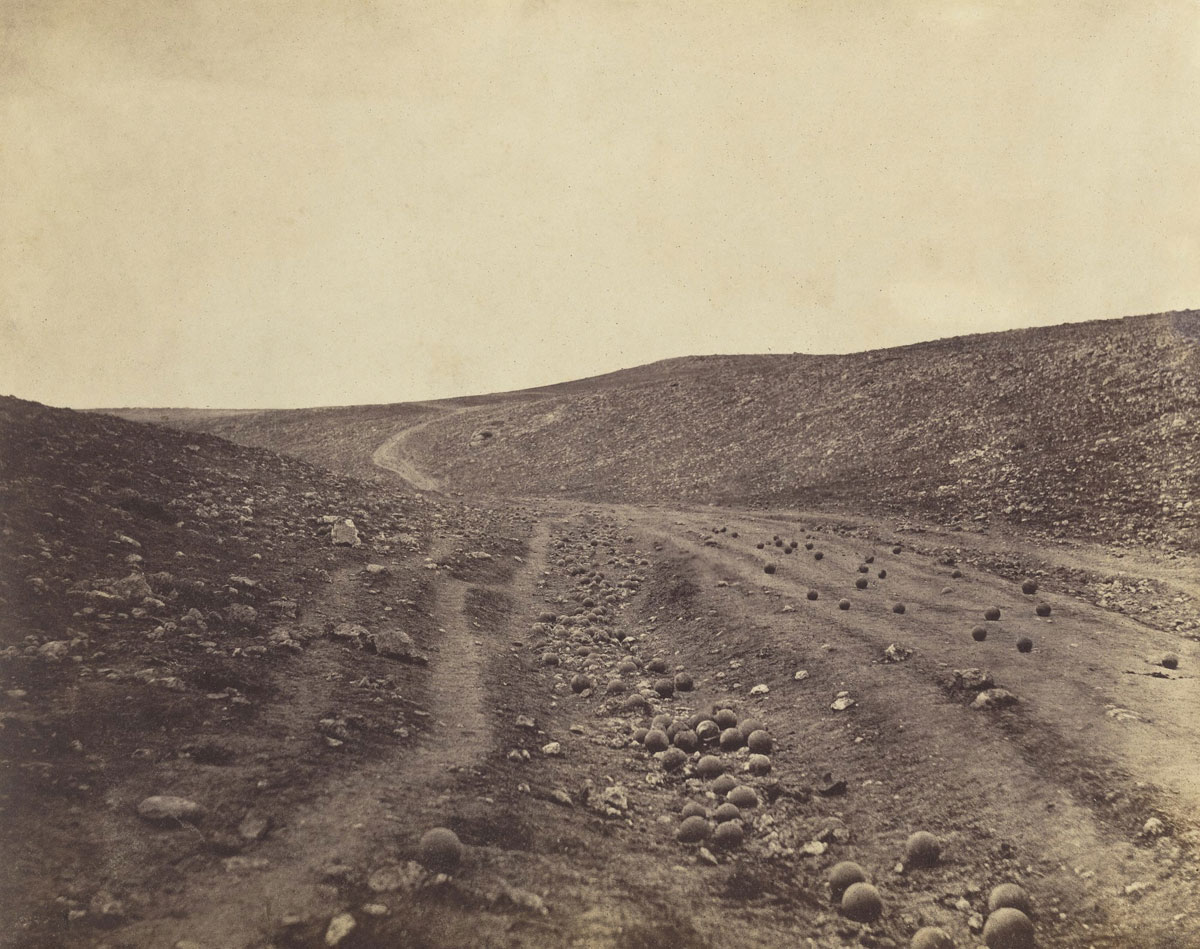

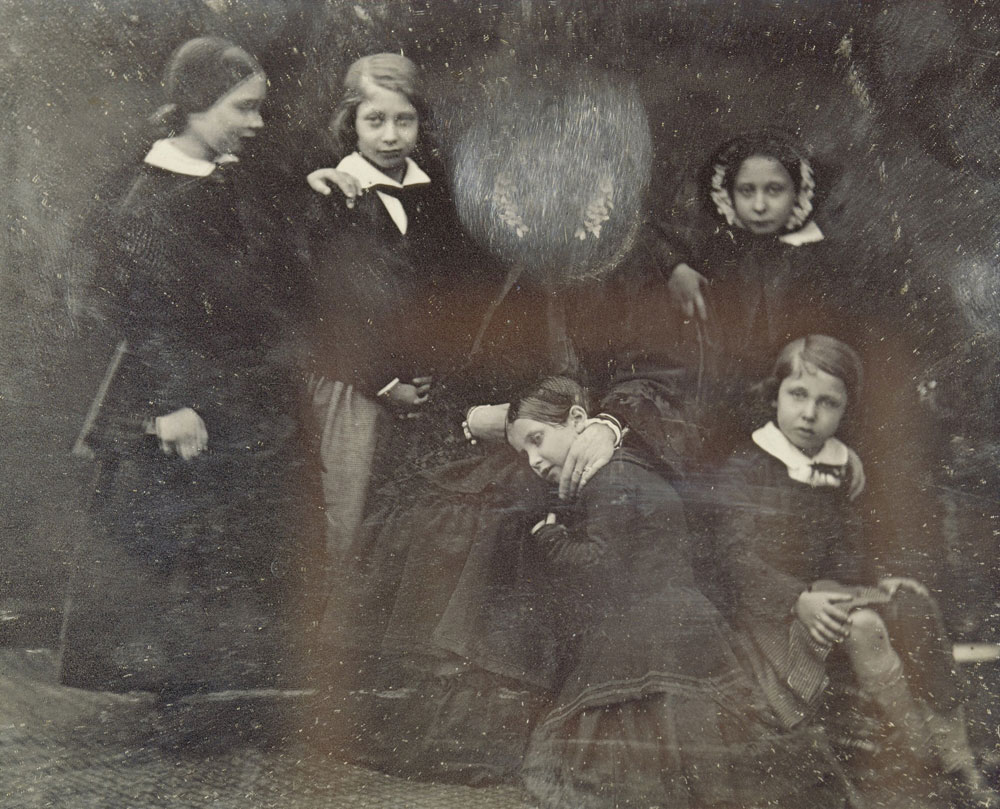

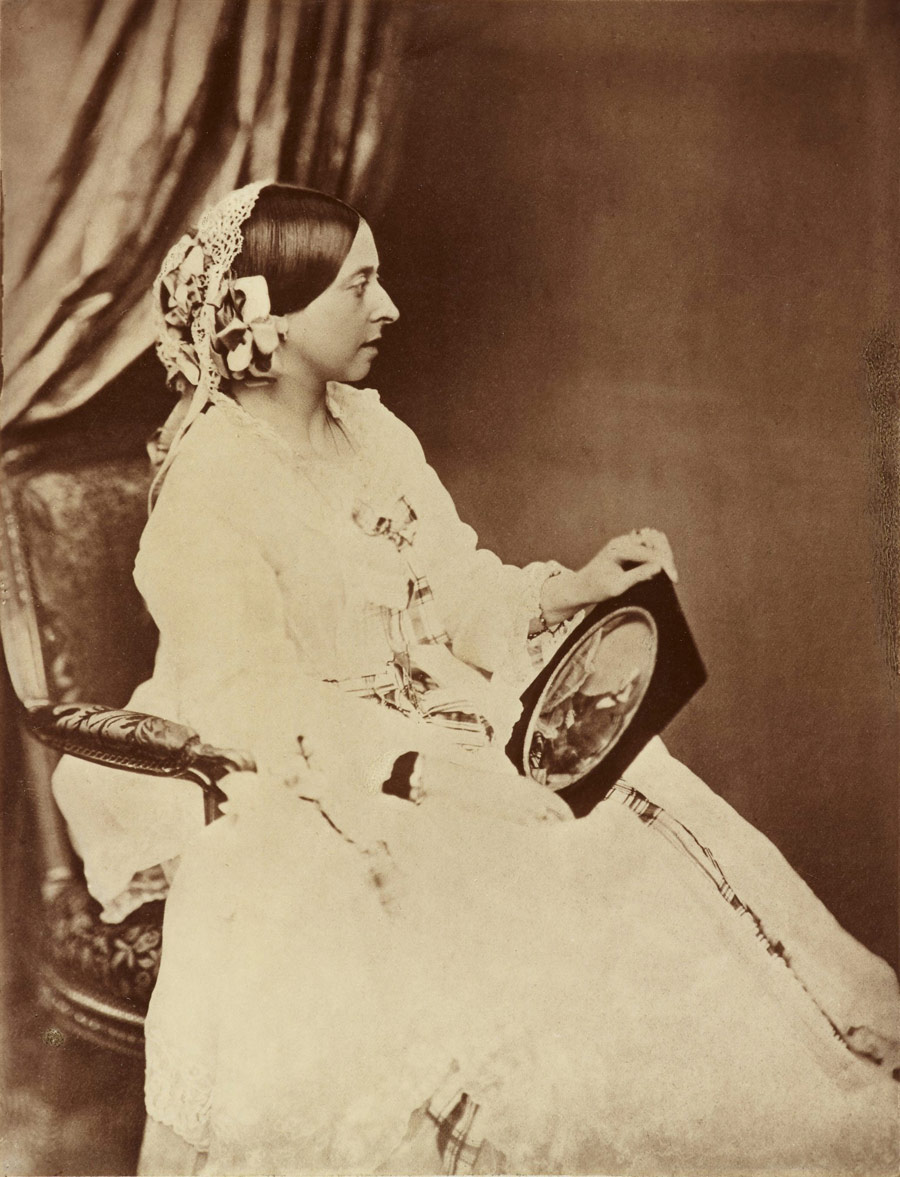


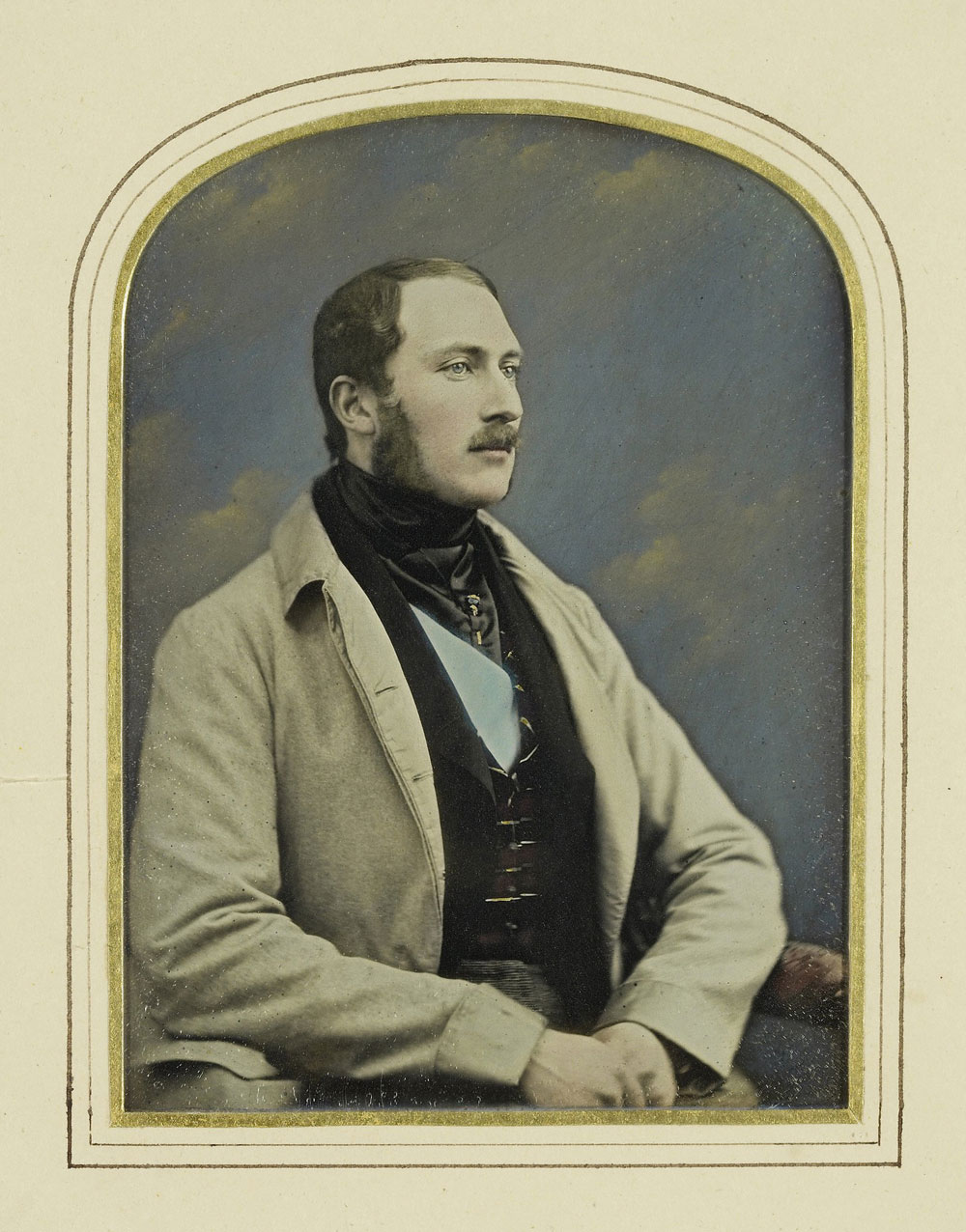

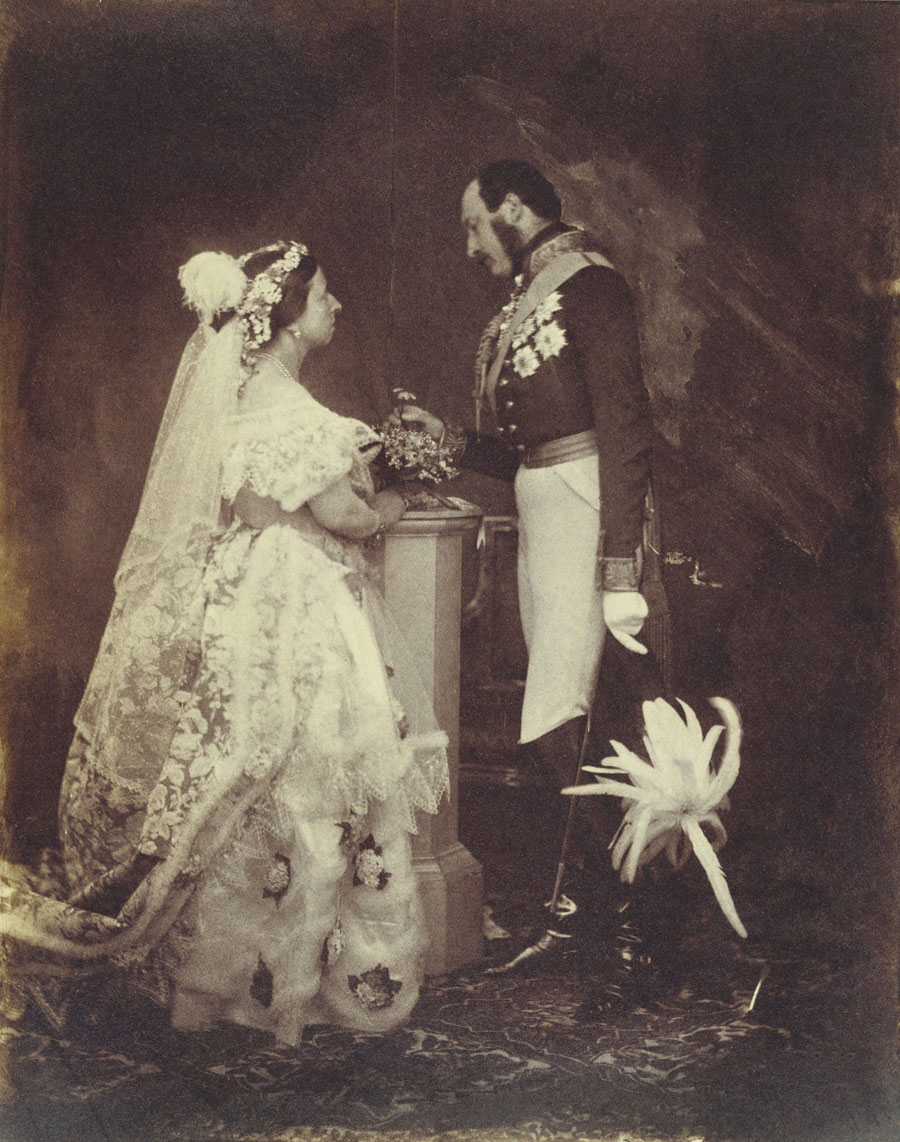


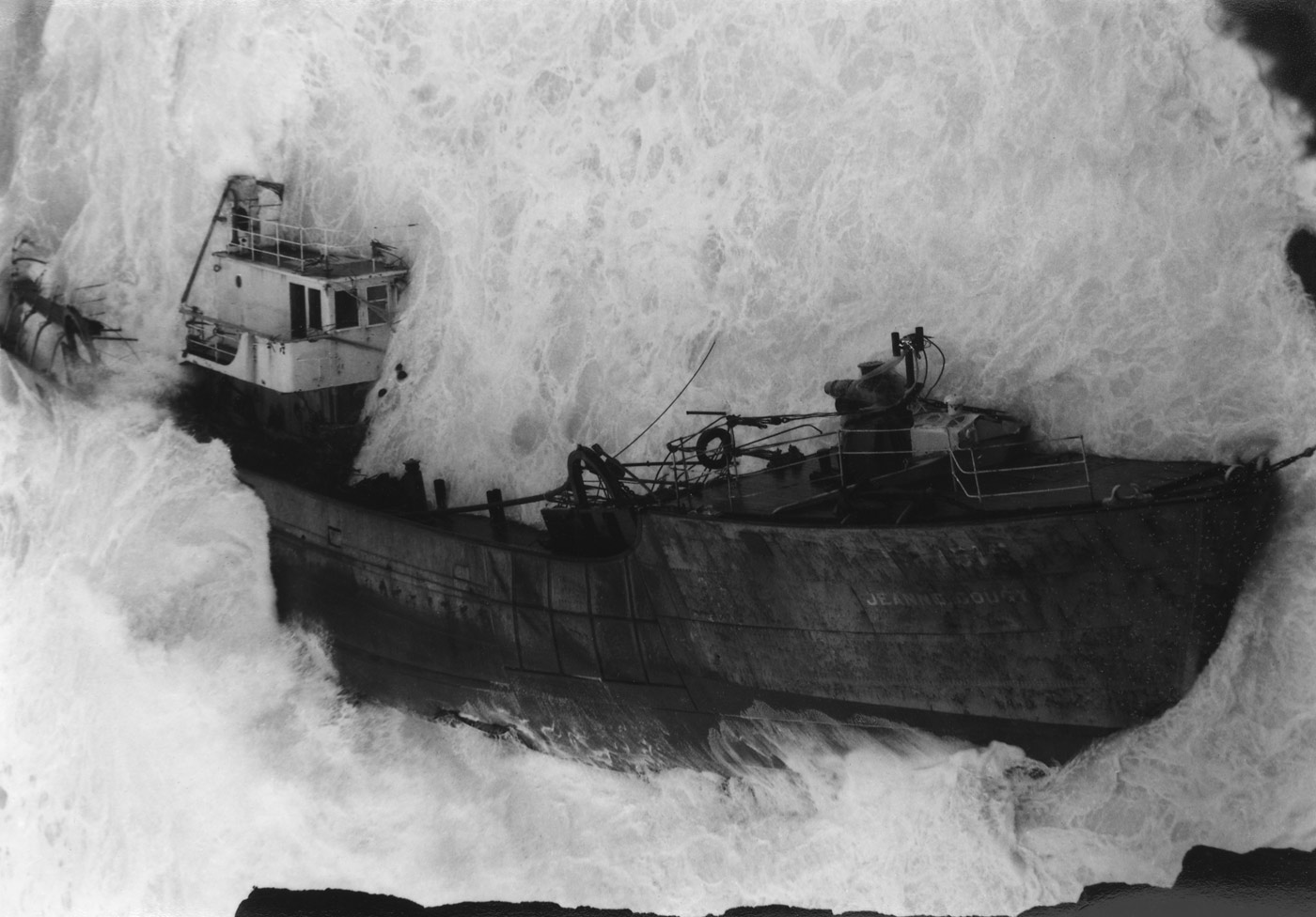




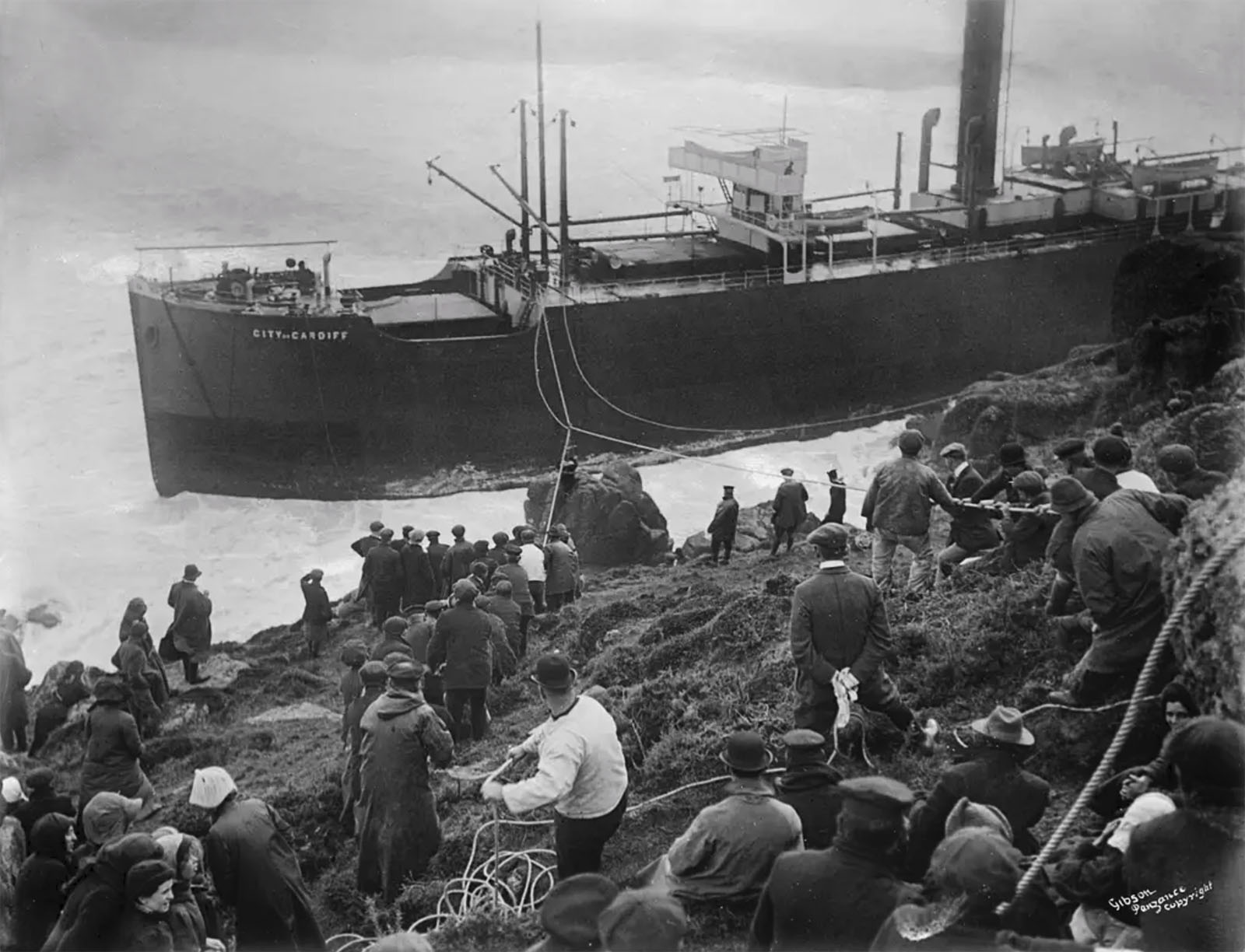


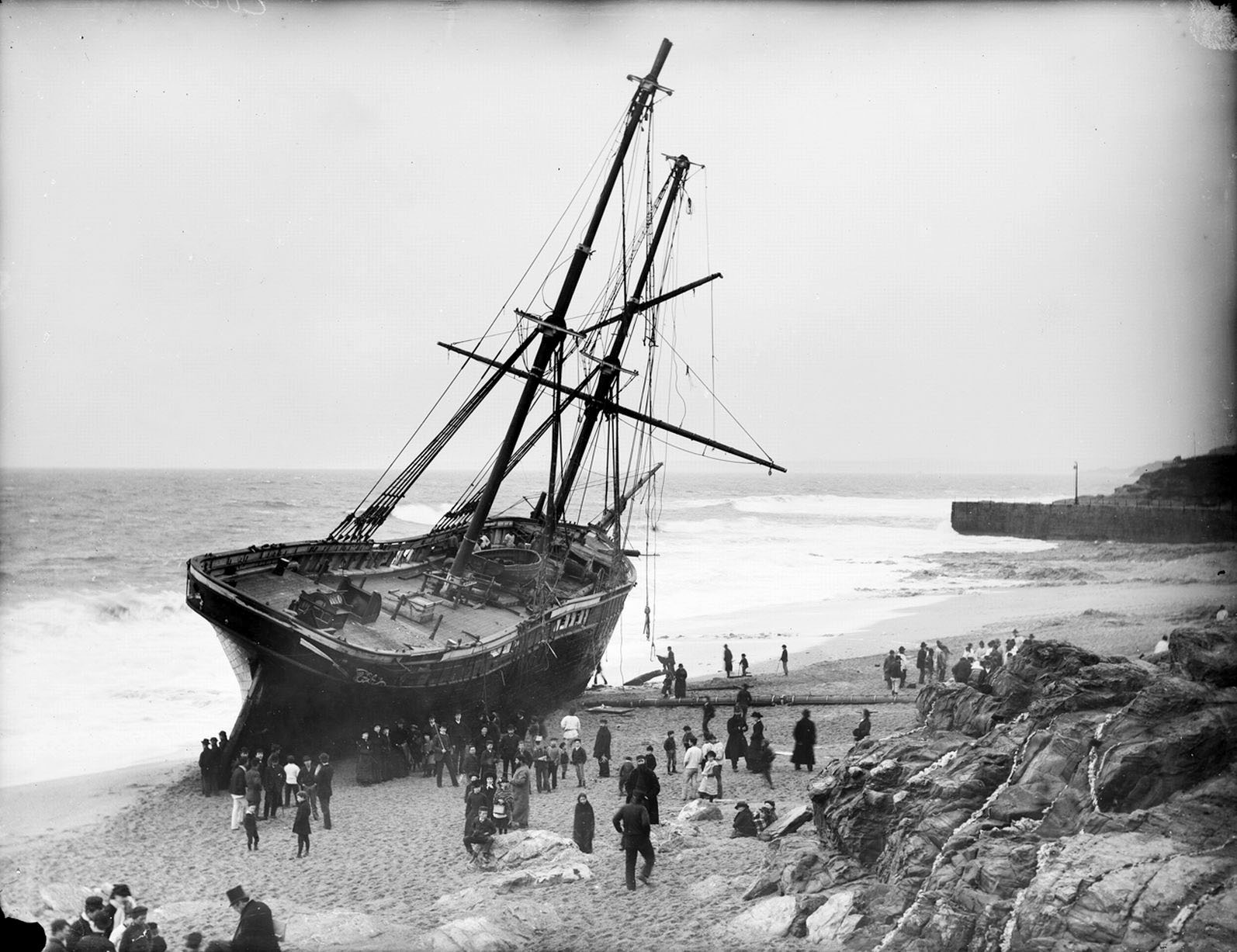


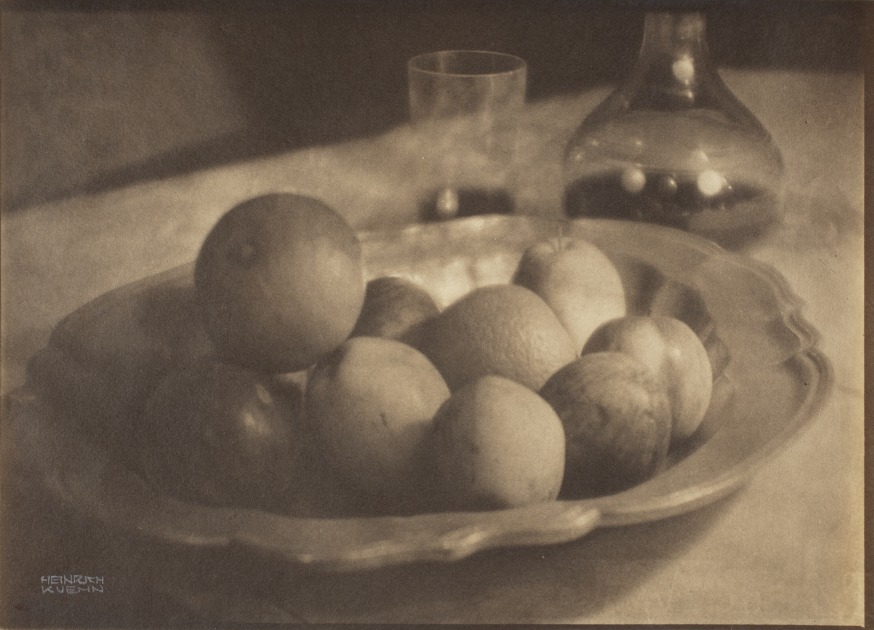


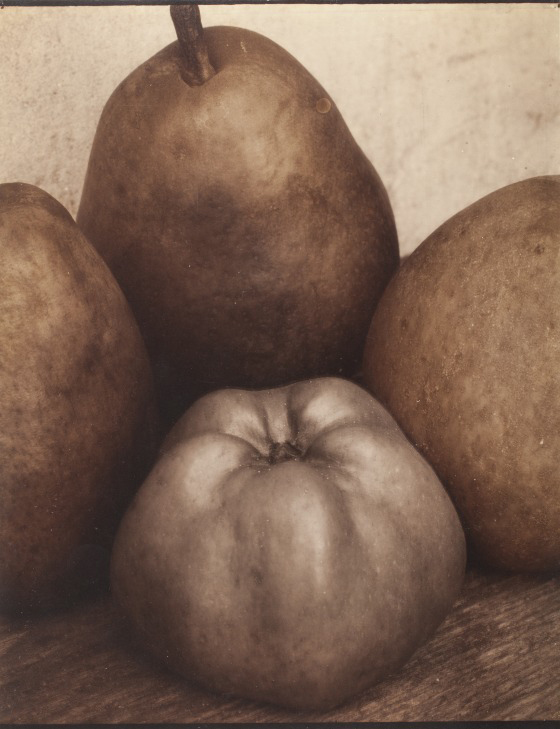


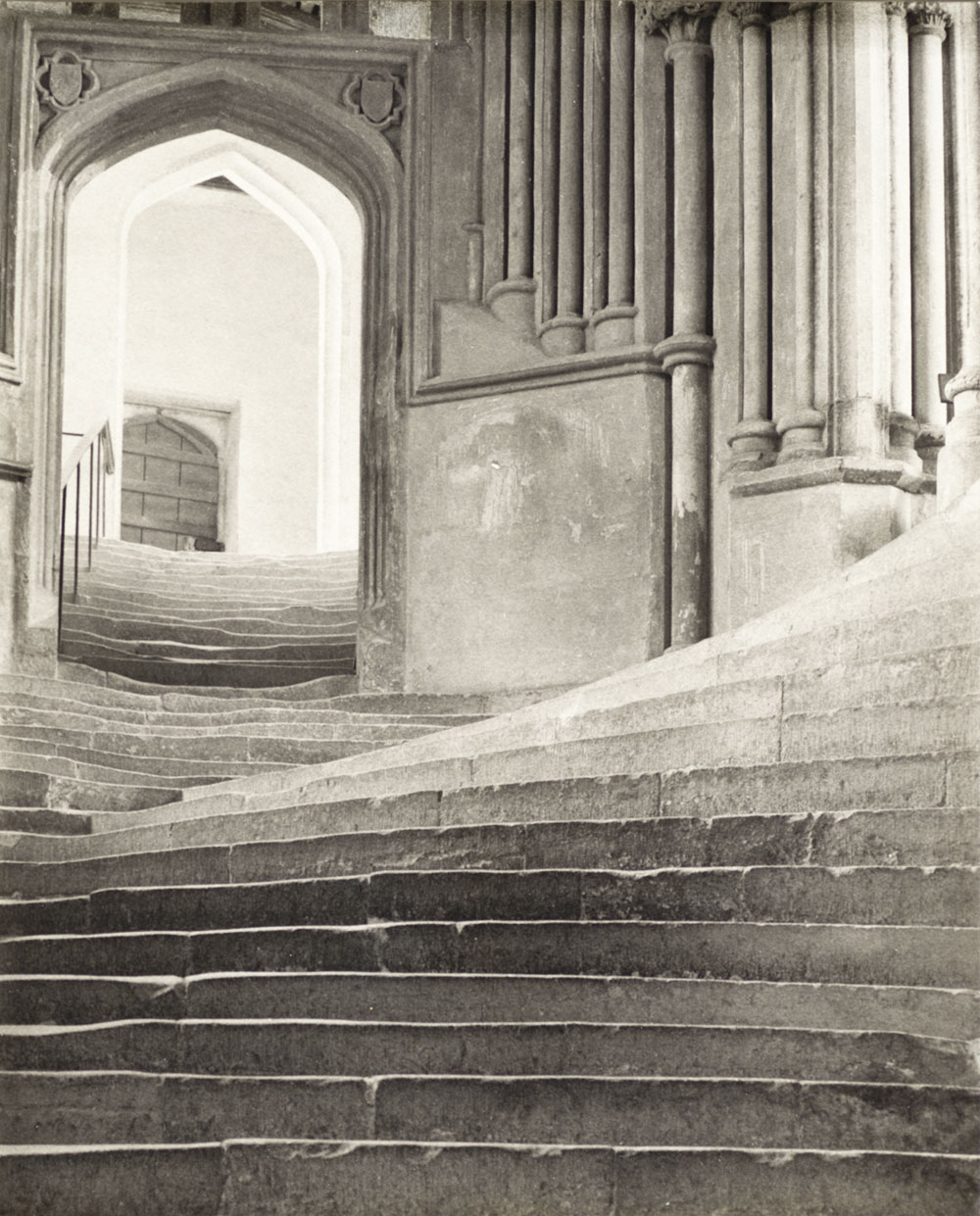

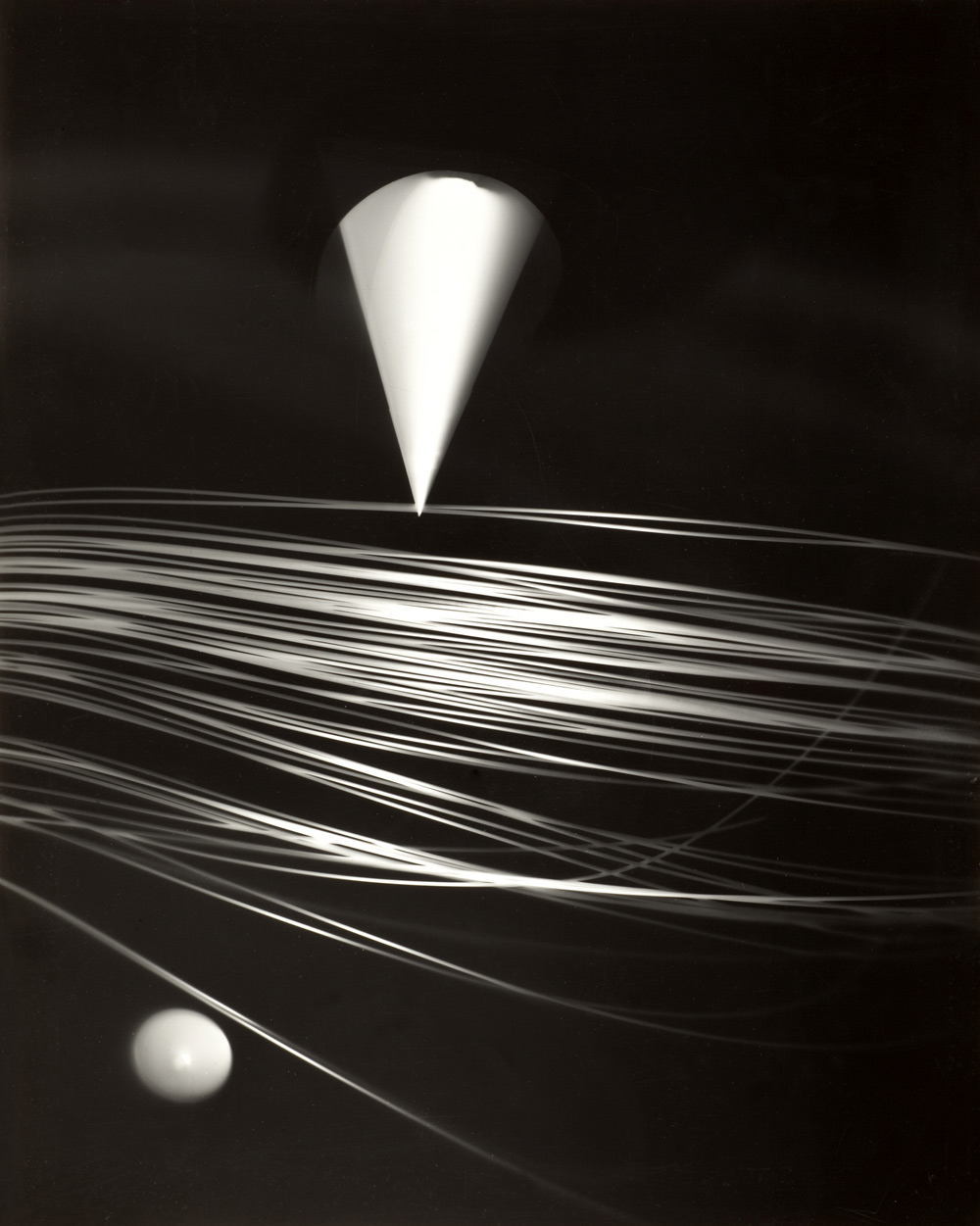
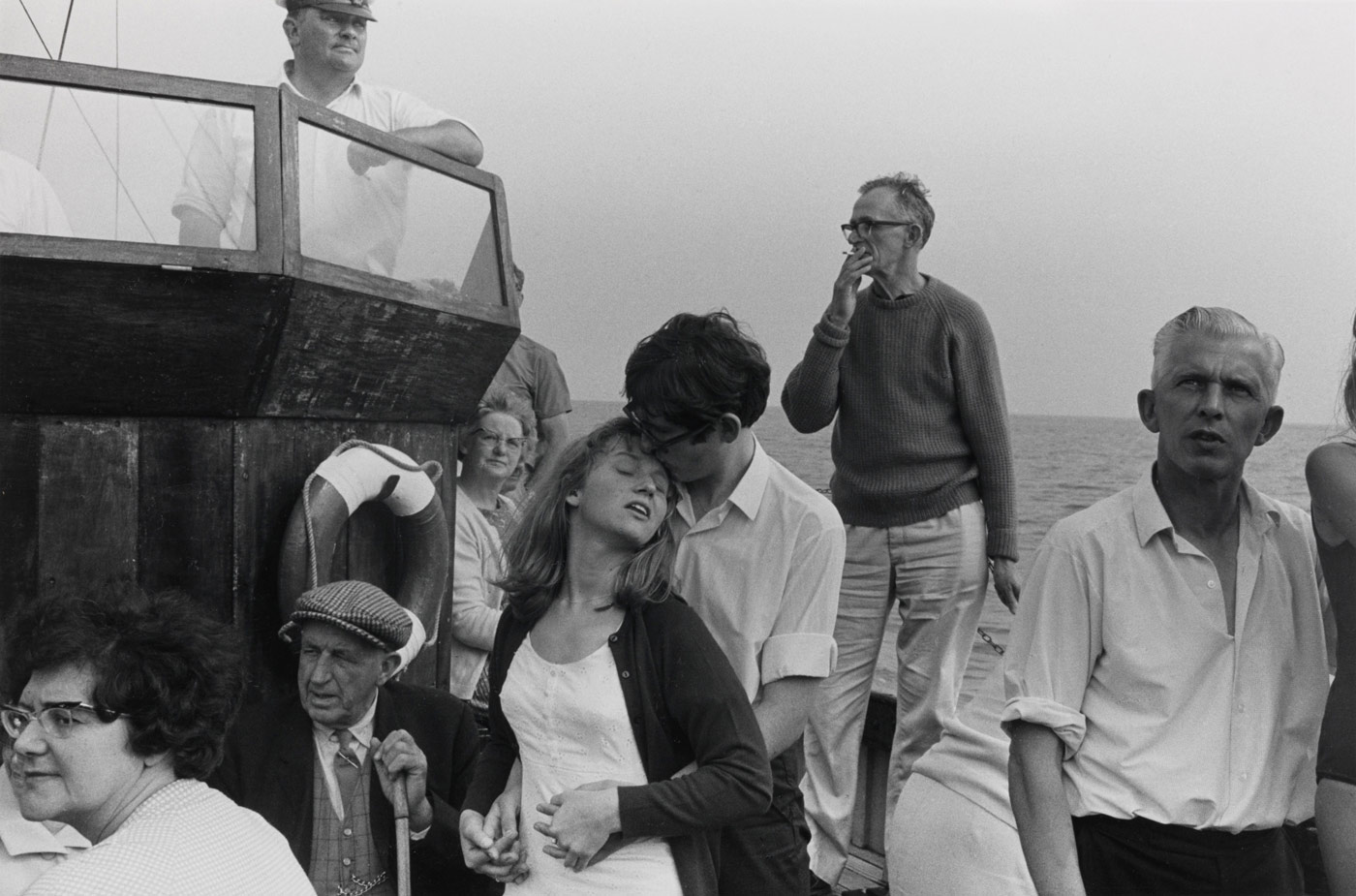
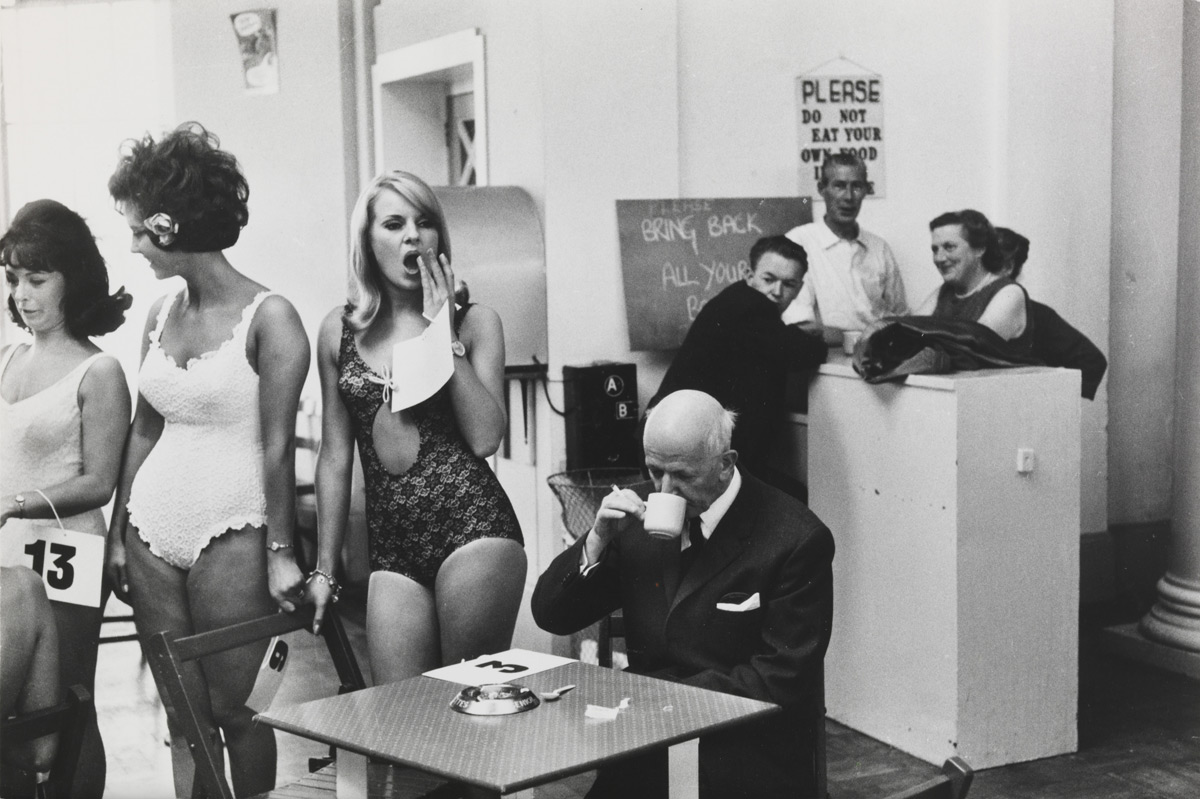

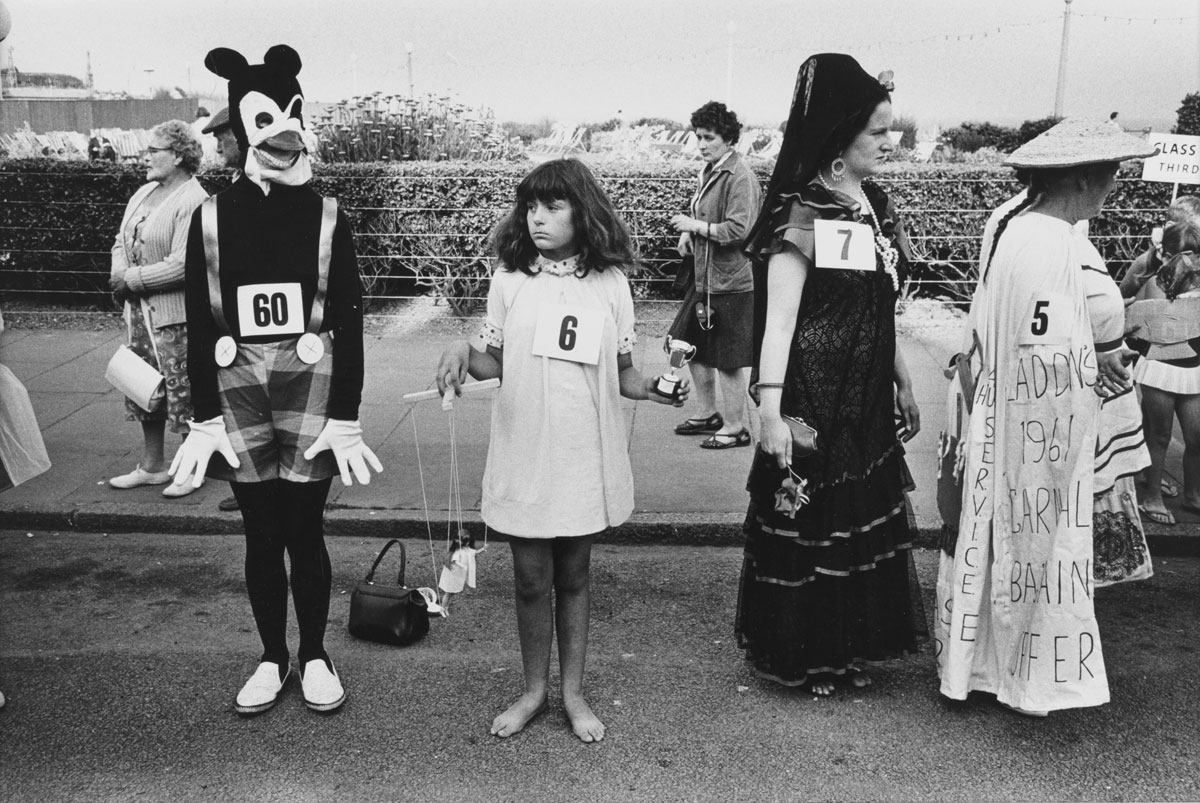


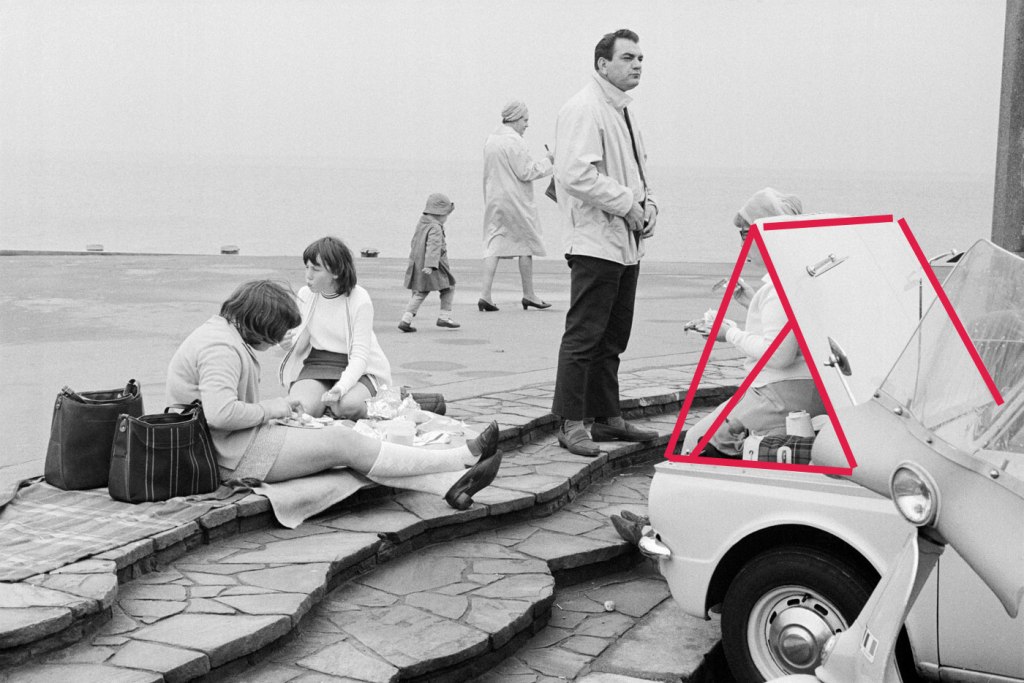
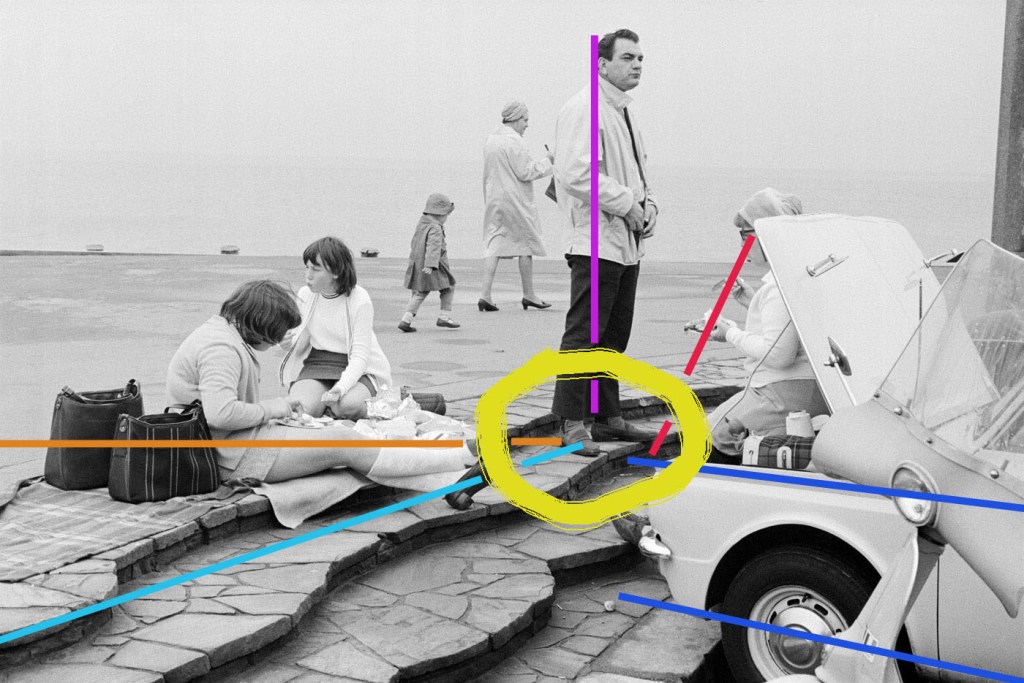
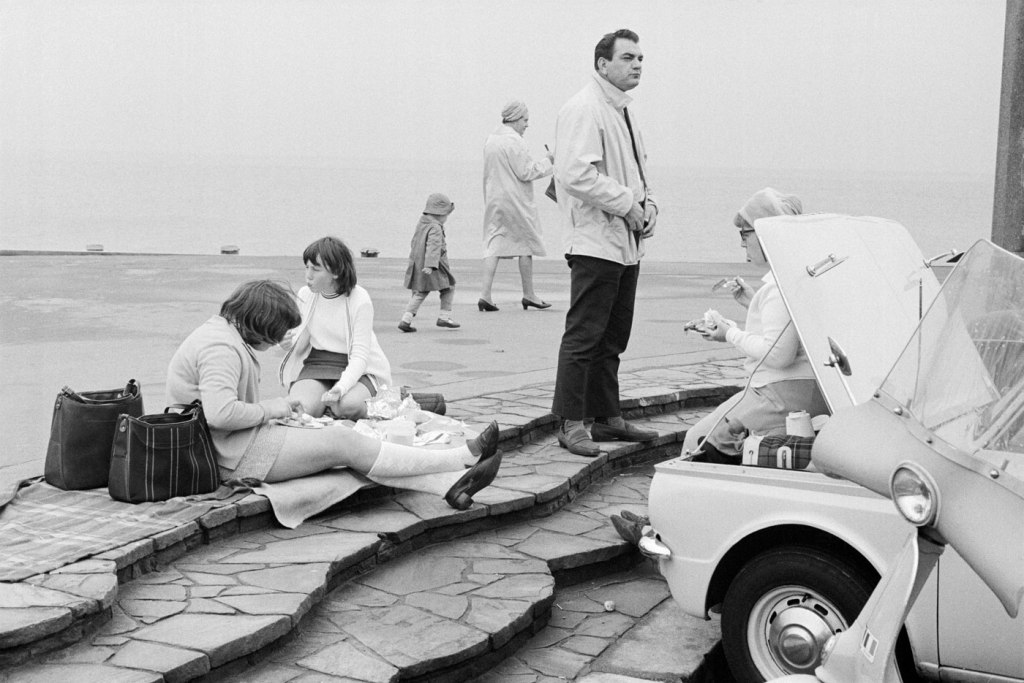


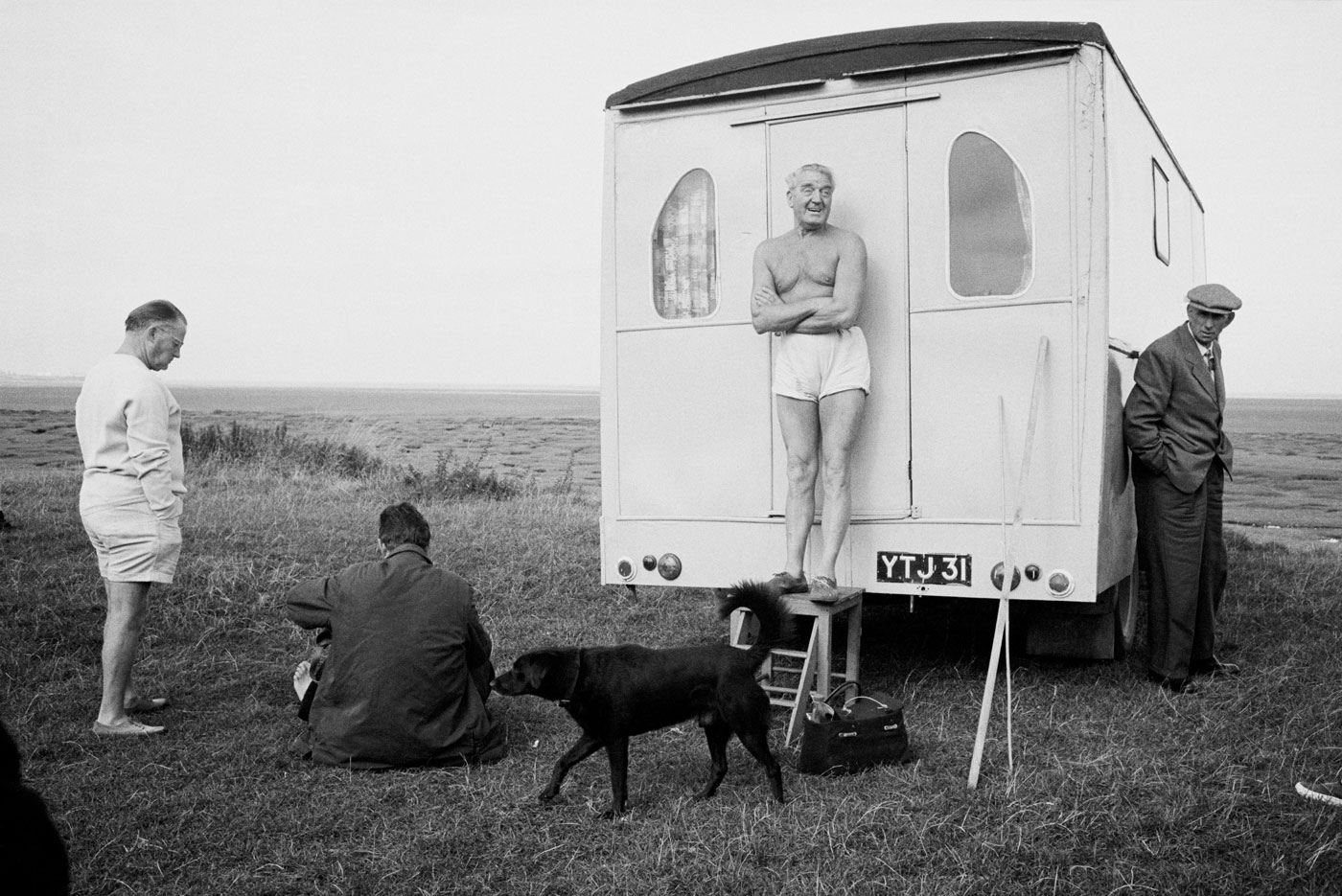

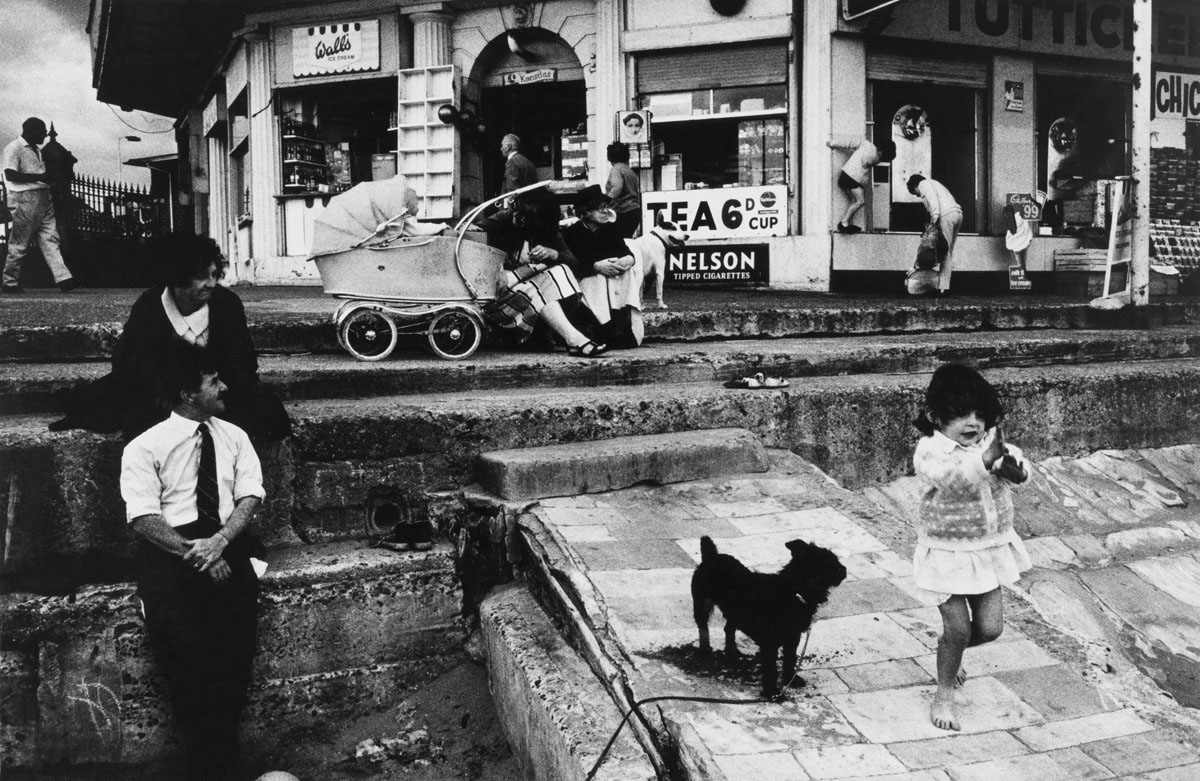


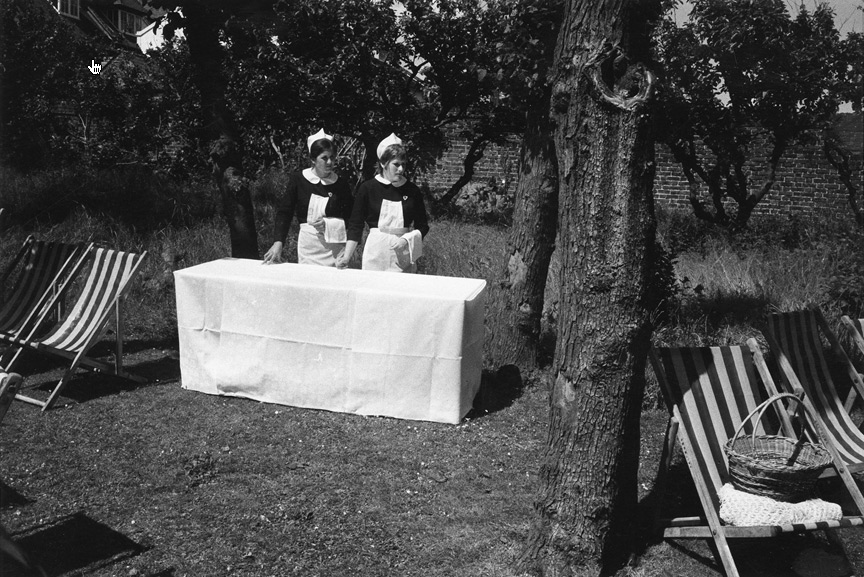
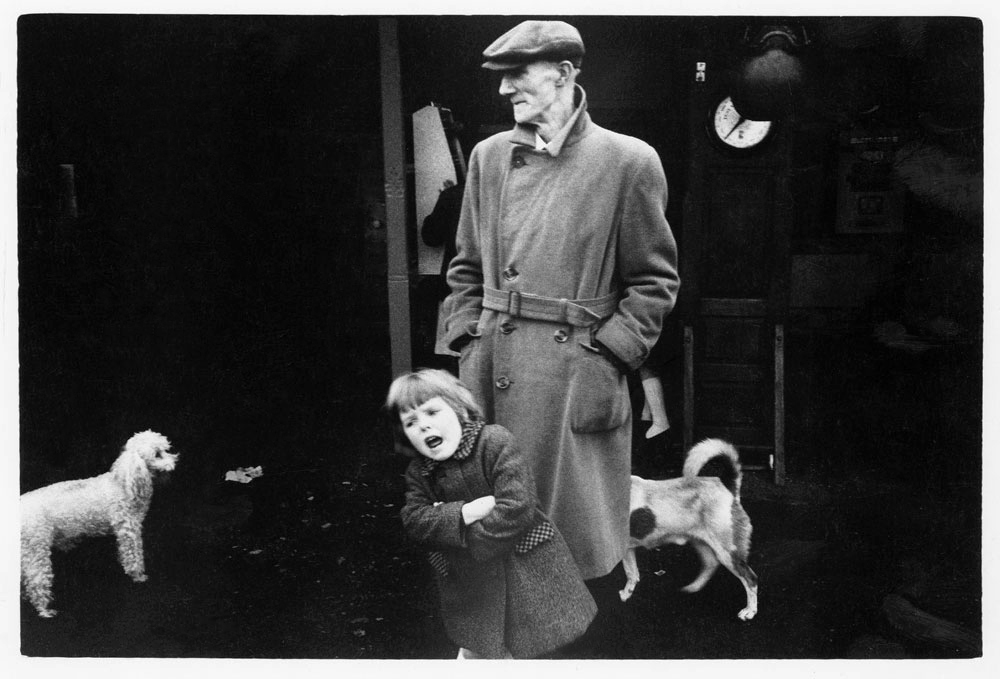


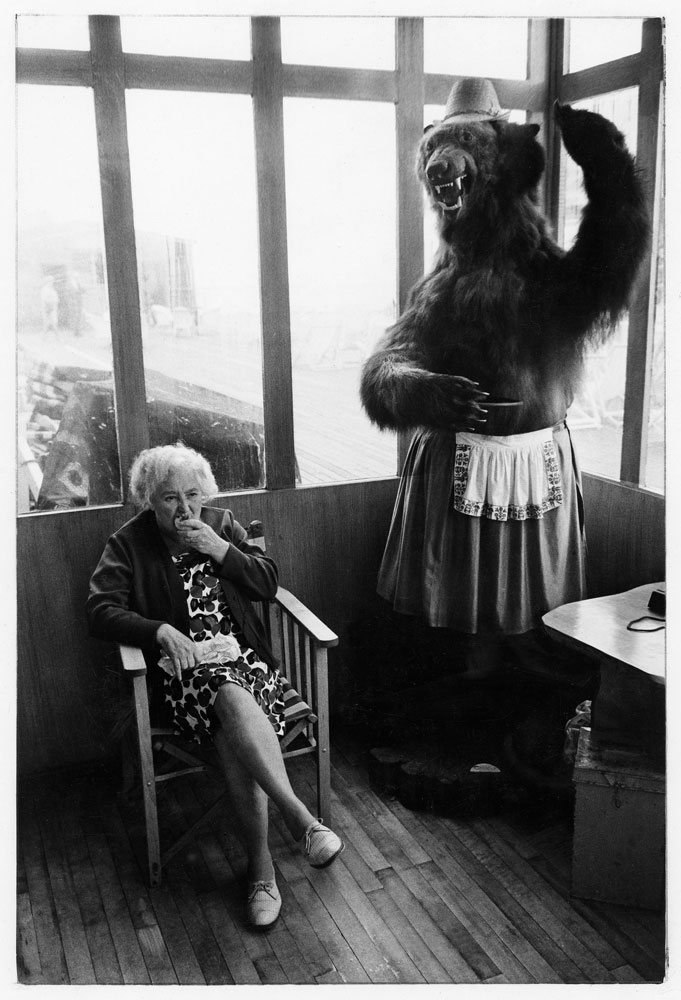

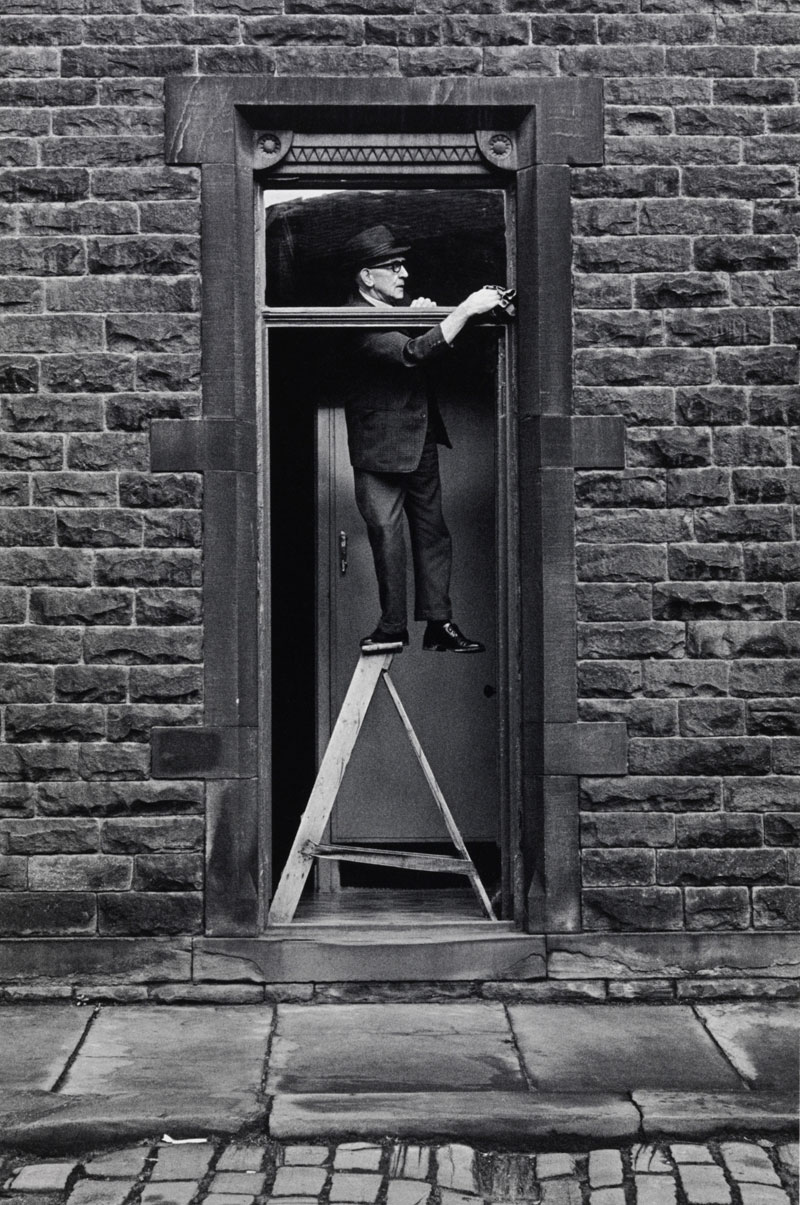


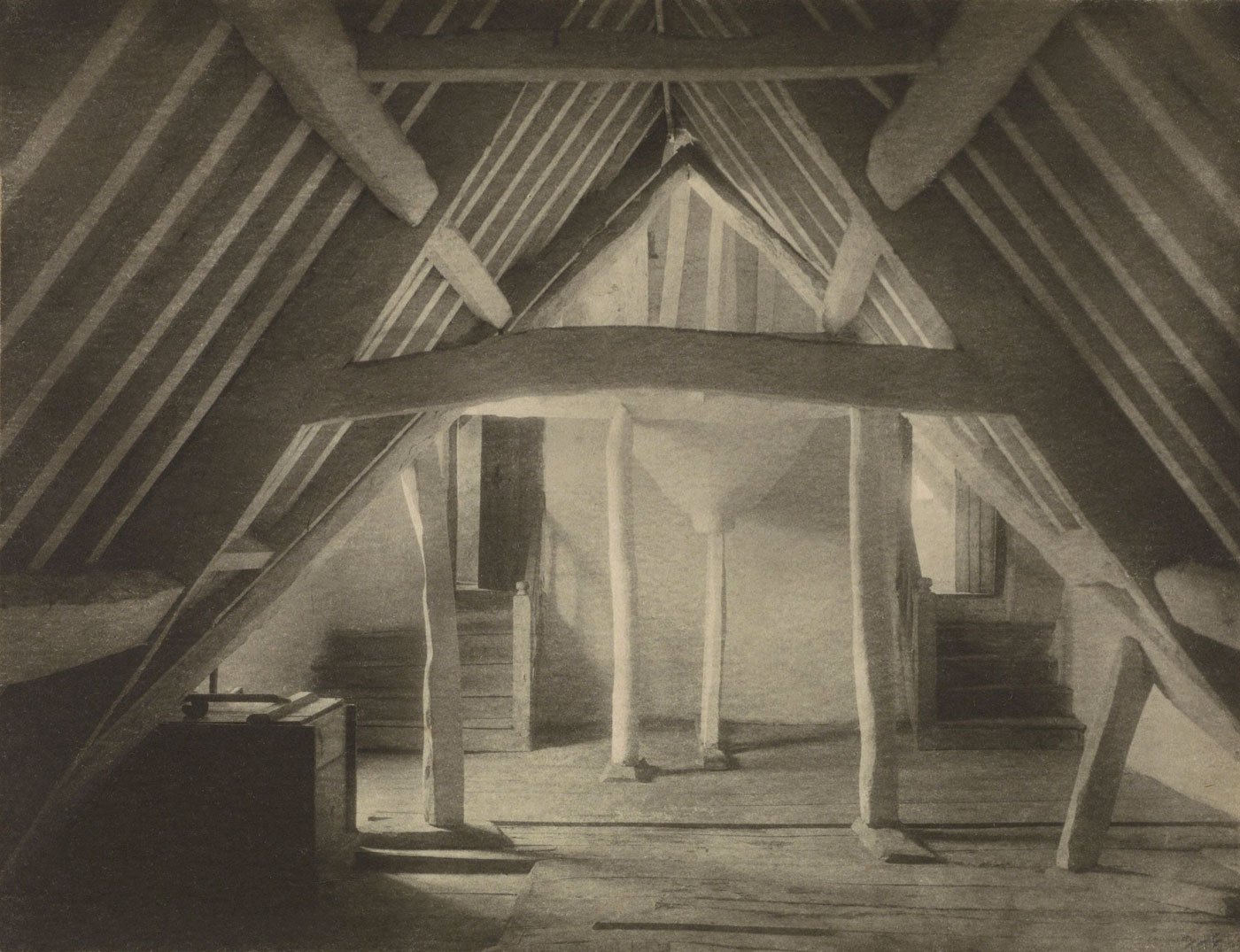


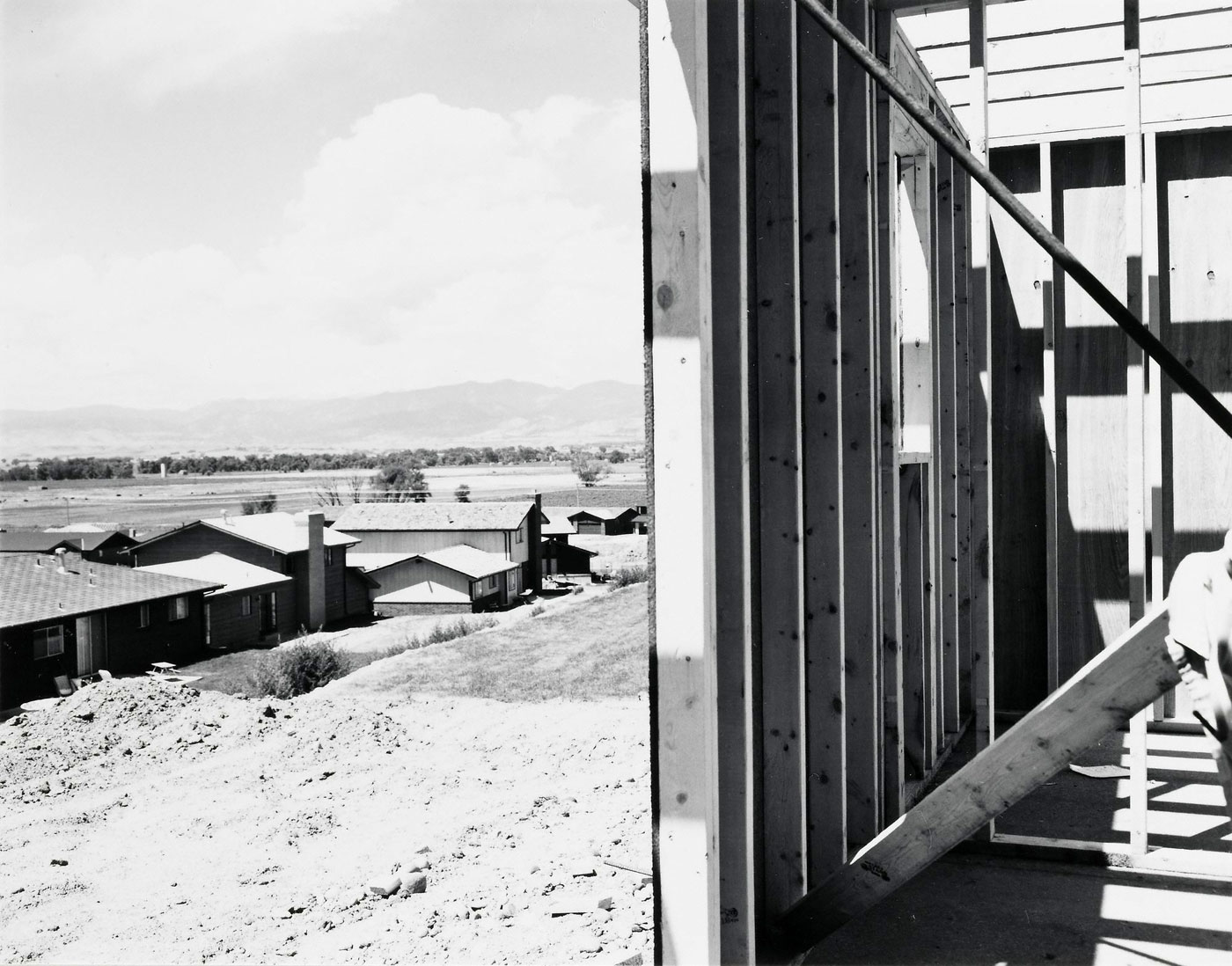


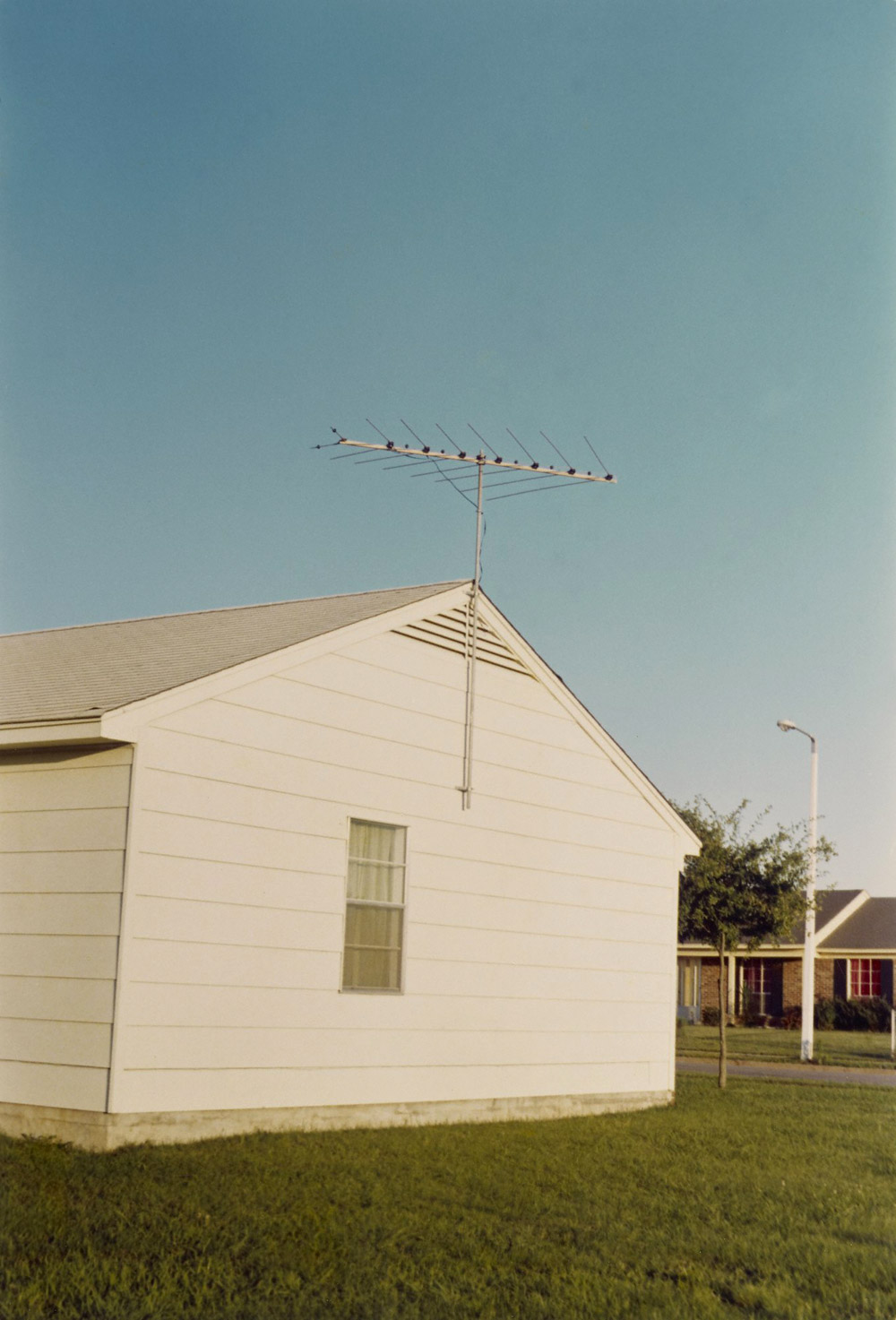
 Art Blart _ art and cultural memory archive
You must be logged in to post a comment.